window.__IS_SSR__=true
window.__INITIAL_STATE__={
"attachmentsReducer": {
"audio_0": {
"type": "attachments",
"id": "audio_0",
"imgSizes": {
"kqedFullSize": {
"file": "https://ww2.kqed.org/news/wp-content/themes/KQED-unified/img/audio_bgs/background0.jpg"
}
}
},
"audio_1": {
"type": "attachments",
"id": "audio_1",
"imgSizes": {
"kqedFullSize": {
"file": "https://ww2.kqed.org/news/wp-content/themes/KQED-unified/img/audio_bgs/background1.jpg"
}
}
},
"audio_2": {
"type": "attachments",
"id": "audio_2",
"imgSizes": {
"kqedFullSize": {
"file": "https://ww2.kqed.org/news/wp-content/themes/KQED-unified/img/audio_bgs/background2.jpg"
}
}
},
"audio_3": {
"type": "attachments",
"id": "audio_3",
"imgSizes": {
"kqedFullSize": {
"file": "https://ww2.kqed.org/news/wp-content/themes/KQED-unified/img/audio_bgs/background3.jpg"
}
}
},
"audio_4": {
"type": "attachments",
"id": "audio_4",
"imgSizes": {
"kqedFullSize": {
"file": "https://ww2.kqed.org/news/wp-content/themes/KQED-unified/img/audio_bgs/background4.jpg"
}
}
},
"placeholder": {
"type": "attachments",
"id": "placeholder",
"imgSizes": {
"thumbnail": {
"file": "https://cdn.kqed.org/wp-content/uploads/2024/12/KQED-Default-Image-816638274-2000x1333-1-160x107.jpg",
"width": 160,
"height": 107,
"mimeType": "image/jpeg"
},
"medium": {
"file": "https://cdn.kqed.org/wp-content/uploads/2024/12/KQED-Default-Image-816638274-2000x1333-1-800x533.jpg",
"width": 800,
"height": 533,
"mimeType": "image/jpeg"
},
"medium_large": {
"file": "https://cdn.kqed.org/wp-content/uploads/2024/12/KQED-Default-Image-816638274-2000x1333-1-768x512.jpg",
"width": 768,
"height": 512,
"mimeType": "image/jpeg"
},
"large": {
"file": "https://cdn.kqed.org/wp-content/uploads/2024/12/KQED-Default-Image-816638274-2000x1333-1-1020x680.jpg",
"width": 1020,
"height": 680,
"mimeType": "image/jpeg"
},
"1536x1536": {
"file": "https://cdn.kqed.org/wp-content/uploads/2024/12/KQED-Default-Image-816638274-2000x1333-1-1536x1024.jpg",
"width": 1536,
"height": 1024,
"mimeType": "image/jpeg"
},
"fd-lrg": {
"file": "https://cdn.kqed.org/wp-content/uploads/2024/12/KQED-Default-Image-816638274-2000x1333-1-1536x1024.jpg",
"width": 1536,
"height": 1024,
"mimeType": "image/jpeg"
},
"fd-med": {
"file": "https://cdn.kqed.org/wp-content/uploads/2024/12/KQED-Default-Image-816638274-2000x1333-1-1020x680.jpg",
"width": 1020,
"height": 680,
"mimeType": "image/jpeg"
},
"fd-sm": {
"file": "https://cdn.kqed.org/wp-content/uploads/2024/12/KQED-Default-Image-816638274-2000x1333-1-800x533.jpg",
"width": 800,
"height": 533,
"mimeType": "image/jpeg"
},
"post-thumbnail": {
"file": "https://cdn.kqed.org/wp-content/uploads/2024/12/KQED-Default-Image-816638274-2000x1333-1-672x372.jpg",
"width": 672,
"height": 372,
"mimeType": "image/jpeg"
},
"twentyfourteen-full-width": {
"file": "https://cdn.kqed.org/wp-content/uploads/2024/12/KQED-Default-Image-816638274-2000x1333-1-1038x576.jpg",
"width": 1038,
"height": 576,
"mimeType": "image/jpeg"
},
"xxsmall": {
"file": "https://cdn.kqed.org/wp-content/uploads/2024/12/KQED-Default-Image-816638274-2000x1333-1-160x107.jpg",
"width": 160,
"height": 107,
"mimeType": "image/jpeg"
},
"xsmall": {
"file": "https://cdn.kqed.org/wp-content/uploads/2024/12/KQED-Default-Image-816638274-2000x1333-1-672x372.jpg",
"width": 672,
"height": 372,
"mimeType": "image/jpeg"
},
"small": {
"file": "https://cdn.kqed.org/wp-content/uploads/2024/12/KQED-Default-Image-816638274-2000x1333-1-672x372.jpg",
"width": 672,
"height": 372,
"mimeType": "image/jpeg"
},
"xlarge": {
"file": "https://cdn.kqed.org/wp-content/uploads/2024/12/KQED-Default-Image-816638274-2000x1333-1-1020x680.jpg",
"width": 1020,
"height": 680,
"mimeType": "image/jpeg"
},
"full-width": {
"file": "https://cdn.kqed.org/wp-content/uploads/2024/12/KQED-Default-Image-816638274-2000x1333-1-1920x1280.jpg",
"width": 1920,
"height": 1280,
"mimeType": "image/jpeg"
},
"guest-author-32": {
"file": "https://cdn.kqed.org/wp-content/uploads/2025/01/KQED-Default-Image-816638274-1333x1333-1-160x160.jpg",
"width": 32,
"height": 32,
"mimeType": "image/jpeg"
},
"guest-author-50": {
"file": "https://cdn.kqed.org/wp-content/uploads/2025/01/KQED-Default-Image-816638274-1333x1333-1-160x160.jpg",
"width": 50,
"height": 50,
"mimeType": "image/jpeg"
},
"guest-author-64": {
"file": "https://cdn.kqed.org/wp-content/uploads/2025/01/KQED-Default-Image-816638274-1333x1333-1-160x160.jpg",
"width": 64,
"height": 64,
"mimeType": "image/jpeg"
},
"guest-author-96": {
"file": "https://cdn.kqed.org/wp-content/uploads/2025/01/KQED-Default-Image-816638274-1333x1333-1-160x160.jpg",
"width": 96,
"height": 96,
"mimeType": "image/jpeg"
},
"guest-author-128": {
"file": "https://cdn.kqed.org/wp-content/uploads/2025/01/KQED-Default-Image-816638274-1333x1333-1-160x160.jpg",
"width": 128,
"height": 128,
"mimeType": "image/jpeg"
},
"detail": {
"file": "https://cdn.kqed.org/wp-content/uploads/2025/01/KQED-Default-Image-816638274-1333x1333-1-160x160.jpg",
"width": 160,
"height": 160,
"mimeType": "image/jpeg"
},
"kqedFullSize": {
"file": "https://cdn.kqed.org/wp-content/uploads/2024/12/KQED-Default-Image-816638274-2000x1333-1.jpg",
"width": 2000,
"height": 1333
}
}
},
"news_11988686": {
"type": "attachments",
"id": "news_11988686",
"meta": {
"index": "attachments_1716263798",
"site": "news",
"id": "11988686",
"found": true
},
"title": "050324_School-AI-San-Diego_AH_CM_17",
"publishDate": 1717433976,
"status": "inherit",
"parent": 11988681,
"modified": 1717434353,
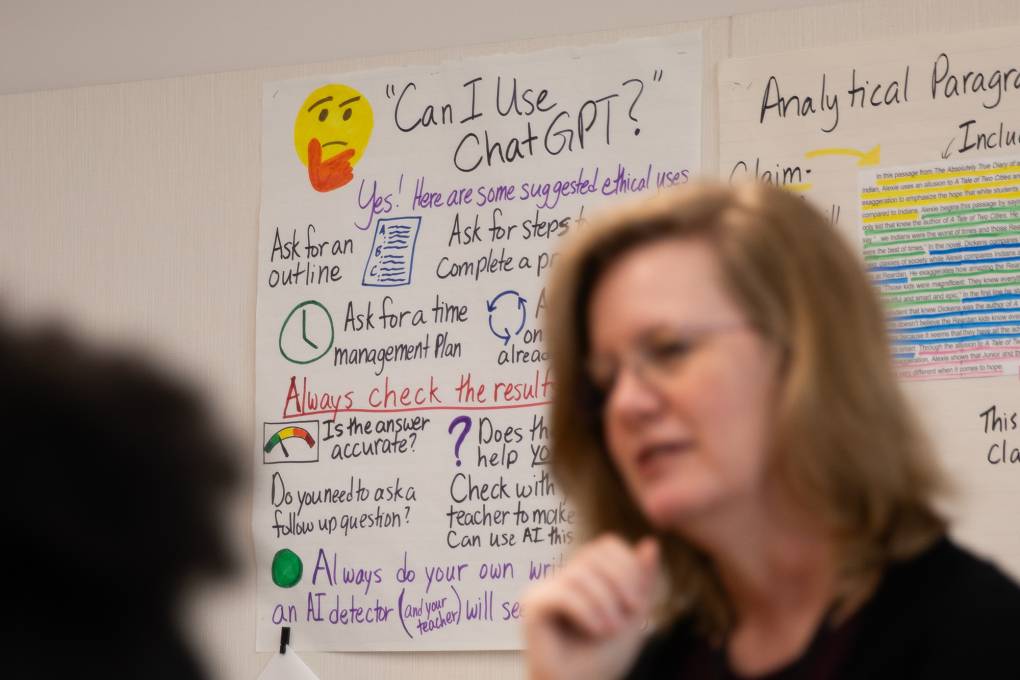
"caption": "A poster with information for students on using ChatGPT, an AI platform, in English teacher Jen Roberts' class at Point Loma High School in San Diego on May 3, 2024. ",
"credit": "Adriana Heldiz/CalMatters",
"altTag": "A sign that reads \"Can I Use ChatGPT?\" is posted on the wall behind a white woman with glasses.",
"description": null,
"imgSizes": {
"medium": {
"file": "https://cdn.kqed.org/wp-content/uploads/sites/10/2024/06/050324_School-AI-San-Diego_AH_CM_17-800x533.jpg",
"width": 800,
"height": 533,
"mimeType": "image/jpeg"
},
"large": {
"file": "https://cdn.kqed.org/wp-content/uploads/sites/10/2024/06/050324_School-AI-San-Diego_AH_CM_17-1020x680.jpg",
"width": 1020,
"height": 680,
"mimeType": "image/jpeg"
},
"thumbnail": {
"file": "https://cdn.kqed.org/wp-content/uploads/sites/10/2024/06/050324_School-AI-San-Diego_AH_CM_17-160x107.jpg",
"width": 160,
"height": 107,
"mimeType": "image/jpeg"
},
"1536x1536": {
"file": "https://cdn.kqed.org/wp-content/uploads/sites/10/2024/06/050324_School-AI-San-Diego_AH_CM_17-1536x1024.jpg",
"width": 1536,
"height": 1024,
"mimeType": "image/jpeg"
},
"post-thumbnail": {
"file": "https://cdn.kqed.org/wp-content/uploads/sites/10/2024/06/050324_School-AI-San-Diego_AH_CM_17-672x372.jpg",
"width": 672,
"height": 372,
"mimeType": "image/jpeg"
},
"twentyfourteen-full-width": {
"file": "https://cdn.kqed.org/wp-content/uploads/sites/10/2024/06/050324_School-AI-San-Diego_AH_CM_17-1038x576.jpg",
"width": 1038,
"height": 576,
"mimeType": "image/jpeg"
},
"full-width": {
"file": "https://cdn.kqed.org/wp-content/uploads/sites/10/2024/06/050324_School-AI-San-Diego_AH_CM_17-1920x1280.jpg",
"width": 1920,
"height": 1280,
"mimeType": "image/jpeg"
},
"kqedFullSize": {
"file": "https://cdn.kqed.org/wp-content/uploads/sites/10/2024/06/050324_School-AI-San-Diego_AH_CM_17.jpg",
"width": 2000,
"height": 1333
}
},
"isLoading": false,
"fetchFailed": false
},
"news_11988247": {
"type": "attachments",
"id": "news_11988247",
"meta": {
"index": "attachments_1716263798",
"site": "news",
"id": "11988247",
"found": true
},
"title": "Screenshot 2024-05-30 at 1.01.54 PM",
"publishDate": 1717099326,
"status": "inherit",
"parent": 11988245,
"modified": 1717099379,
"caption": "OpenAI, the company behind generative artificial intelligence tools such as ChatGPT, announced Thursday that it had taken down influence operations tied to Russia, China and Iran.",
"credit": "Stefani Reynolds/AFP via Getty Images",
"altTag": "A smartphone screen reflects the image and logo of OpenAI.",
"description": null,
"imgSizes": {
"medium": {
"file": "https://cdn.kqed.org/wp-content/uploads/sites/10/2024/05/Screenshot-2024-05-30-at-1.01.54 PM-800x601.png",
"width": 800,
"height": 601,
"mimeType": "image/png"
},
"large": {
"file": "https://cdn.kqed.org/wp-content/uploads/sites/10/2024/05/Screenshot-2024-05-30-at-1.01.54 PM-1020x767.png",
"width": 1020,
"height": 767,
"mimeType": "image/png"
},
"thumbnail": {
"file": "https://cdn.kqed.org/wp-content/uploads/sites/10/2024/05/Screenshot-2024-05-30-at-1.01.54 PM-160x120.png",
"width": 160,
"height": 120,
"mimeType": "image/png"
},
"post-thumbnail": {
"file": "https://cdn.kqed.org/wp-content/uploads/sites/10/2024/05/Screenshot-2024-05-30-at-1.01.54 PM-672x372.png",
"width": 672,
"height": 372,
"mimeType": "image/png"
},
"twentyfourteen-full-width": {
"file": "https://cdn.kqed.org/wp-content/uploads/sites/10/2024/05/Screenshot-2024-05-30-at-1.01.54 PM-1038x576.png",
"width": 1038,
"height": 576,
"mimeType": "image/png"
},
"kqedFullSize": {
"file": "https://cdn.kqed.org/wp-content/uploads/sites/10/2024/05/Screenshot-2024-05-30-at-1.01.54 PM.png",
"width": 1288,
"height": 968
}
},
"isLoading": false,
"fetchFailed": false
},
"news_11988035": {
"type": "attachments",
"id": "news_11988035",
"meta": {
"index": "attachments_1716263798",
"site": "news",
"id": "11988035",
"found": true
},
"title": "OpenAi - Sora Release - Photo Illustration",
"publishDate": 1717002843,
"status": "inherit",
"parent": 11988031,
"modified": 1717008295,
"caption": "In this photo illustration, the OpenAI webpage is displayed on a smartphone with the OpenAI logo visible in the background, taken in Brussels, Belgium, on Feb. 16, 2024.",
"credit": "Jonathan Raa/NurPhoto via Getty Images",
"altTag": null,
"description": null,
"imgSizes": {
"medium": {
"file": "https://cdn.kqed.org/wp-content/uploads/sites/10/2024/05/GettyImages-2008743507-800x534.jpg",
"width": 800,
"height": 534,
"mimeType": "image/jpeg"
},
"large": {
"file": "https://cdn.kqed.org/wp-content/uploads/sites/10/2024/05/GettyImages-2008743507-1020x680.jpg",
"width": 1020,
"height": 680,
"mimeType": "image/jpeg"
},
"thumbnail": {
"file": "https://cdn.kqed.org/wp-content/uploads/sites/10/2024/05/GettyImages-2008743507-160x107.jpg",
"width": 160,
"height": 107,
"mimeType": "image/jpeg"
},
"post-thumbnail": {
"file": "https://cdn.kqed.org/wp-content/uploads/sites/10/2024/05/GettyImages-2008743507-672x372.jpg",
"width": 672,
"height": 372,
"mimeType": "image/jpeg"
},
"twentyfourteen-full-width": {
"file": "https://cdn.kqed.org/wp-content/uploads/sites/10/2024/05/GettyImages-2008743507-1024x576.jpg",
"width": 1024,
"height": 576,
"mimeType": "image/jpeg"
},
"kqedFullSize": {
"file": "https://cdn.kqed.org/wp-content/uploads/sites/10/2024/05/GettyImages-2008743507.jpg",
"width": 1024,
"height": 683
}
},
"isLoading": false,
"fetchFailed": false
},
"news_11987956": {
"type": "attachments",
"id": "news_11987956",
"meta": {
"index": "attachments_1716263798",
"site": "news",
"id": "11987956",
"found": true
},
"title": "012224_Assembly-Floor_FG_CM_02-ezgif.com-webp-to-jpg-converter",
"publishDate": 1716929556,
"status": "inherit",
"parent": 0,
"modified": 1756405354,
"caption": "Assemblymember Jacqui Irwin (right) talks to colleagues Eloise Gómez Reyes and Christopher Ward during a floor session of the Assembly on Jan. 22, 2024. ",
"credit": "Fred Greaves/CalMatters",
"altTag": "Assemblymember Jacqui Irwin stands over two colleagues who are sitting behind desks.",
"description": null,
"imgSizes": {
"medium": {
"file": "https://cdn.kqed.org/wp-content/uploads/sites/10/2024/05/012224_Assembly-Floor_FG_CM_02-ezgif.com-webp-to-jpg-converter-800x533.jpg",
"width": 800,
"height": 533,
"mimeType": "image/jpeg"
},
"large": {
"file": "https://cdn.kqed.org/wp-content/uploads/sites/10/2024/05/012224_Assembly-Floor_FG_CM_02-ezgif.com-webp-to-jpg-converter-1020x680.jpg",
"width": 1020,
"height": 680,
"mimeType": "image/jpeg"
},
"thumbnail": {
"file": "https://cdn.kqed.org/wp-content/uploads/sites/10/2024/05/012224_Assembly-Floor_FG_CM_02-ezgif.com-webp-to-jpg-converter-160x107.jpg",
"width": 160,
"height": 107,
"mimeType": "image/jpeg"
},
"1536x1536": {
"file": "https://cdn.kqed.org/wp-content/uploads/sites/10/2024/05/012224_Assembly-Floor_FG_CM_02-ezgif.com-webp-to-jpg-converter-1536x1024.jpg",
"width": 1536,
"height": 1024,
"mimeType": "image/jpeg"
},
"post-thumbnail": {
"file": "https://cdn.kqed.org/wp-content/uploads/sites/10/2024/05/012224_Assembly-Floor_FG_CM_02-ezgif.com-webp-to-jpg-converter-672x372.jpg",
"width": 672,
"height": 372,
"mimeType": "image/jpeg"
},
"twentyfourteen-full-width": {
"file": "https://cdn.kqed.org/wp-content/uploads/sites/10/2024/05/012224_Assembly-Floor_FG_CM_02-ezgif.com-webp-to-jpg-converter-1038x576.jpg",
"width": 1038,
"height": 576,
"mimeType": "image/jpeg"
},
"kqedFullSize": {
"file": "https://cdn.kqed.org/wp-content/uploads/sites/10/2024/05/012224_Assembly-Floor_FG_CM_02-ezgif.com-webp-to-jpg-converter.jpg",
"width": 1568,
"height": 1045
}
},
"isLoading": false,
"fetchFailed": false
},
"news_11987805": {
"type": "attachments",
"id": "news_11987805",
"meta": {
"index": "attachments_1716263798",
"site": "news",
"id": "11987805",
"found": true
},
"title": "European-Coordination_AH_CM_01 copy",
"publishDate": 1716663442,
"status": "inherit",
"parent": 11987803,
"modified": 1716663481,
"caption": null,
"credit": "Illustration by Adriana Heldiz/CalMatters/iStock",
"altTag": null,
"description": null,
"imgSizes": {
"medium": {
"file": "https://cdn.kqed.org/wp-content/uploads/sites/10/2024/05/European-Coordination_AH_CM_01-copy-800x533.jpg",
"width": 800,
"height": 533,
"mimeType": "image/jpeg"
},
"large": {
"file": "https://cdn.kqed.org/wp-content/uploads/sites/10/2024/05/European-Coordination_AH_CM_01-copy-1020x680.jpg",
"width": 1020,
"height": 680,
"mimeType": "image/jpeg"
},
"thumbnail": {
"file": "https://cdn.kqed.org/wp-content/uploads/sites/10/2024/05/European-Coordination_AH_CM_01-copy-160x107.jpg",
"width": 160,
"height": 107,
"mimeType": "image/jpeg"
},
"1536x1536": {
"file": "https://cdn.kqed.org/wp-content/uploads/sites/10/2024/05/European-Coordination_AH_CM_01-copy-1536x1024.jpg",
"width": 1536,
"height": 1024,
"mimeType": "image/jpeg"
},
"post-thumbnail": {
"file": "https://cdn.kqed.org/wp-content/uploads/sites/10/2024/05/European-Coordination_AH_CM_01-copy-672x372.jpg",
"width": 672,
"height": 372,
"mimeType": "image/jpeg"
},
"twentyfourteen-full-width": {
"file": "https://cdn.kqed.org/wp-content/uploads/sites/10/2024/05/European-Coordination_AH_CM_01-copy-1038x576.jpg",
"width": 1038,
"height": 576,
"mimeType": "image/jpeg"
},
"full-width": {
"file": "https://cdn.kqed.org/wp-content/uploads/sites/10/2024/05/European-Coordination_AH_CM_01-copy-1920x1280.jpg",
"width": 1920,
"height": 1280,
"mimeType": "image/jpeg"
},
"kqedFullSize": {
"file": "https://cdn.kqed.org/wp-content/uploads/sites/10/2024/05/European-Coordination_AH_CM_01-copy.jpg",
"width": 2000,
"height": 1333
}
},
"isLoading": false,
"fetchFailed": false
},
"news_11986187": {
"type": "attachments",
"id": "news_11986187",
"meta": {
"index": "attachments_1716263798",
"site": "news",
"id": "11986187",
"found": true
},
"parent": 11986133,
"imgSizes": {
"twentyfourteen-full-width": {
"file": "https://cdn.kqed.org/wp-content/uploads/sites/10/2024/05/AP24135653220235-1038x576.jpg",
"width": 1038,
"mimeType": "image/jpeg",
"height": 576
},
"thumbnail": {
"file": "https://cdn.kqed.org/wp-content/uploads/sites/10/2024/05/AP24135653220235-160x107.jpg",
"width": 160,
"mimeType": "image/jpeg",
"height": 107
},
"post-thumbnail": {
"file": "https://cdn.kqed.org/wp-content/uploads/sites/10/2024/05/AP24135653220235-672x372.jpg",
"width": 672,
"mimeType": "image/jpeg",
"height": 372
},
"kqedFullSize": {
"file": "https://cdn.kqed.org/wp-content/uploads/sites/10/2024/05/AP24135653220235-scaled.jpg",
"width": 2560,
"height": 1707
},
"2048x2048": {
"file": "https://cdn.kqed.org/wp-content/uploads/sites/10/2024/05/AP24135653220235-2048x1365.jpg",
"width": 2048,
"mimeType": "image/jpeg",
"height": 1365
},
"large": {
"file": "https://cdn.kqed.org/wp-content/uploads/sites/10/2024/05/AP24135653220235-1020x680.jpg",
"width": 1020,
"mimeType": "image/jpeg",
"height": 680
},
"1536x1536": {
"file": "https://cdn.kqed.org/wp-content/uploads/sites/10/2024/05/AP24135653220235-1536x1024.jpg",
"width": 1536,
"mimeType": "image/jpeg",
"height": 1024
},
"full-width": {
"file": "https://cdn.kqed.org/wp-content/uploads/sites/10/2024/05/AP24135653220235-1920x1280.jpg",
"width": 1920,
"mimeType": "image/jpeg",
"height": 1280
},
"medium": {
"file": "https://cdn.kqed.org/wp-content/uploads/sites/10/2024/05/AP24135653220235-800x533.jpg",
"width": 800,
"mimeType": "image/jpeg",
"height": 533
}
},
"publishDate": 1715722755,
"modified": 1715731201,
"caption": "Alphabet CEO Sundar Pichai speaks at a Google I/O event in Mountain View on Tuesday, May 14, 2024. ",
"description": null,
"title": "Sundar Pichai",
"credit": "Jeff Chiu/The Associated Press",
"status": "inherit",
"altTag": "Hundreds of people sit at an amphitheater, looking at one person on stage.",
"isLoading": false,
"fetchFailed": false
},
"news_11985952": {
"type": "attachments",
"id": "news_11985952",
"meta": {
"index": "attachments_1716263798",
"site": "news",
"id": "11985952",
"found": true
},
"title": "Open AI ChatGPT Update",
"publishDate": 1715640590,
"status": "inherit",
"parent": 11985949,
"modified": 1783528918,
"caption": "The OpenAI logo is seen on a mobile phone in front of a computer screen displaying output from ChatGPT, March 21, 2023, in Boston, Massachusetts. ",
"credit": "Michael Dwyer/Associated Press",
"altTag": null,
"description": null,
"imgSizes": {
"medium": {
"file": "https://cdn.kqed.org/wp-content/uploads/sites/10/2024/05/AP24134775174210-800x533.jpg",
"width": 800,
"height": 533,
"mimeType": "image/jpeg"
},
"large": {
"file": "https://cdn.kqed.org/wp-content/uploads/sites/10/2024/05/AP24134775174210-1020x680.jpg",
"width": 1020,
"height": 680,
"mimeType": "image/jpeg"
},
"thumbnail": {
"file": "https://cdn.kqed.org/wp-content/uploads/sites/10/2024/05/AP24134775174210-160x107.jpg",
"width": 160,
"height": 107,
"mimeType": "image/jpeg"
},
"1536x1536": {
"file": "https://cdn.kqed.org/wp-content/uploads/sites/10/2024/05/AP24134775174210-1536x1024.jpg",
"width": 1536,
"height": 1024,
"mimeType": "image/jpeg"
},
"2048x2048": {
"file": "https://cdn.kqed.org/wp-content/uploads/sites/10/2024/05/AP24134775174210-2048x1365.jpg",
"width": 2048,
"height": 1365,
"mimeType": "image/jpeg"
},
"post-thumbnail": {
"file": "https://cdn.kqed.org/wp-content/uploads/sites/10/2024/05/AP24134775174210-672x372.jpg",
"width": 672,
"height": 372,
"mimeType": "image/jpeg"
},
"twentyfourteen-full-width": {
"file": "https://cdn.kqed.org/wp-content/uploads/sites/10/2024/05/AP24134775174210-1038x576.jpg",
"width": 1038,
"height": 576,
"mimeType": "image/jpeg"
},
"full-width": {
"file": "https://cdn.kqed.org/wp-content/uploads/sites/10/2024/05/AP24134775174210-1920x1280.jpg",
"width": 1920,
"height": 1280,
"mimeType": "image/jpeg"
},
"kqedFullSize": {
"file": "https://cdn.kqed.org/wp-content/uploads/sites/10/2024/05/AP24134775174210-scaled-e1770337042768.jpg",
"width": 2000,
"height": 1334
}
},
"isLoading": false,
"fetchFailed": false
},
"news_11984357": {
"type": "attachments",
"id": "news_11984357",
"meta": {
"index": "attachments_1716263798",
"site": "news",
"id": "11984357",
"found": true
},
"parent": 11984339,
"imgSizes": {
"twentyfourteen-full-width": {
"file": "https://cdn.kqed.org/wp-content/uploads/sites/10/2024/04/Newsom01-1038x576.jpg",
"width": 1038,
"mimeType": "image/jpeg",
"height": 576
},
"thumbnail": {
"file": "https://cdn.kqed.org/wp-content/uploads/sites/10/2024/04/Newsom01-160x107.jpg",
"width": 160,
"mimeType": "image/jpeg",
"height": 107
},
"post-thumbnail": {
"file": "https://cdn.kqed.org/wp-content/uploads/sites/10/2024/04/Newsom01-672x372.jpg",
"width": 672,
"mimeType": "image/jpeg",
"height": 372
},
"kqedFullSize": {
"file": "https://cdn.kqed.org/wp-content/uploads/sites/10/2024/04/Newsom01.jpg",
"width": 1920,
"height": 1280
},
"large": {
"file": "https://cdn.kqed.org/wp-content/uploads/sites/10/2024/04/Newsom01-1020x680.jpg",
"width": 1020,
"mimeType": "image/jpeg",
"height": 680
},
"1536x1536": {
"file": "https://cdn.kqed.org/wp-content/uploads/sites/10/2024/04/Newsom01-1536x1024.jpg",
"width": 1536,
"mimeType": "image/jpeg",
"height": 1024
},
"medium": {
"file": "https://cdn.kqed.org/wp-content/uploads/sites/10/2024/04/Newsom01-800x533.jpg",
"width": 800,
"mimeType": "image/jpeg",
"height": 533
}
},
"publishDate": 1714413029,
"modified": 1715390630,
"caption": "California Gov. Gavin Newsom speaks during a press conference in Sacramento, on Feb. 1, 2023.",
"description": null,
"title": "California Governor Newsom Announces New Gun Safety Legislation After String Of Mass Shootings In The State",
"credit": "Justin Sullivan/Getty Images",
"status": "inherit",
"altTag": null,
"isLoading": false,
"fetchFailed": false
},
"news_11985621": {
"type": "attachments",
"id": "news_11985621",
"meta": {
"index": "attachments_1716263798",
"site": "news",
"id": "11985621",
"found": true
},
"parent": 11985619,
"imgSizes": {
"twentyfourteen-full-width": {
"file": "https://cdn.kqed.org/wp-content/uploads/sites/10/2024/05/AP24130599594139-1038x576.jpg",
"width": 1038,
"mimeType": "image/jpeg",
"height": 576
},
"thumbnail": {
"file": "https://cdn.kqed.org/wp-content/uploads/sites/10/2024/05/AP24130599594139-160x107.jpg",
"width": 160,
"mimeType": "image/jpeg",
"height": 107
},
"post-thumbnail": {
"file": "https://cdn.kqed.org/wp-content/uploads/sites/10/2024/05/AP24130599594139-672x372.jpg",
"width": 672,
"mimeType": "image/jpeg",
"height": 372
},
"kqedFullSize": {
"file": "https://cdn.kqed.org/wp-content/uploads/sites/10/2024/05/AP24130599594139-scaled.jpg",
"width": 2560,
"height": 1707
},
"2048x2048": {
"file": "https://cdn.kqed.org/wp-content/uploads/sites/10/2024/05/AP24130599594139-2048x1365.jpg",
"width": 2048,
"mimeType": "image/jpeg",
"height": 1365
},
"large": {
"file": "https://cdn.kqed.org/wp-content/uploads/sites/10/2024/05/AP24130599594139-1020x680.jpg",
"width": 1020,
"mimeType": "image/jpeg",
"height": 680
},
"1536x1536": {
"file": "https://cdn.kqed.org/wp-content/uploads/sites/10/2024/05/AP24130599594139-1536x1024.jpg",
"width": 1536,
"mimeType": "image/jpeg",
"height": 1024
},
"full-width": {
"file": "https://cdn.kqed.org/wp-content/uploads/sites/10/2024/05/AP24130599594139-1920x1280.jpg",
"width": 1920,
"mimeType": "image/jpeg",
"height": 1280
},
"medium": {
"file": "https://cdn.kqed.org/wp-content/uploads/sites/10/2024/05/AP24130599594139-800x533.jpg",
"width": 800,
"mimeType": "image/jpeg",
"height": 533
}
},
"publishDate": 1715296159,
"modified": 1715297420,
"caption": "California Gov. Gavin Newsom speaks in Larkspur, Marin County, on April 16, 2024. California could soon deploy generative artificial intelligence tools to help reduce traffic jams, make roads safer and provide tax guidance, among other things, under new agreements announced on May 9, 2024, as part of Gov. Gavin Newsom's efforts to harness the power of new technologies for public services. ",
"description": null,
"title": "Gavin Newsom",
"credit": "Jeff Chiu/AP Photo",
"status": "inherit",
"altTag": "A white, middle-aged man in a suit and white shirt with no tie gestures to his right while speaking into a microphone outdoors.",
"isLoading": false,
"fetchFailed": false
},
"news_11983729": {
"type": "attachments",
"id": "news_11983729",
"meta": {
"index": "attachments_1716263798",
"site": "news",
"id": "11983729",
"found": true
},
"title": "240422-NursesAI-29-BL",
"publishDate": 1713822684,
"status": "inherit",
"parent": 0,
"modified": 1760140505,
"caption": "Claire Siegel rallies alongside fellow nurses from across California at Kaiser Permanente on Geary Boulevard in San Francisco on April 22, 2024, to advocate for patient safety in the face of artificial intelligence technology.",
"credit": "Beth LaBerge/KQED",
"altTag": "A woman with glasses holds a sign above her head that reads 'Patients are NOT algorithms' in front of a Kaiser Permanente building.",
"description": null,
"imgSizes": {
"medium": {
"file": "https://cdn.kqed.org/wp-content/uploads/sites/10/2024/04/240422-NursesAI-29-BL-800x533.jpg",
"width": 800,
"height": 533,
"mimeType": "image/jpeg"
},
"large": {
"file": "https://cdn.kqed.org/wp-content/uploads/sites/10/2024/04/240422-NursesAI-29-BL-1020x680.jpg",
"width": 1020,
"height": 680,
"mimeType": "image/jpeg"
},
"thumbnail": {
"file": "https://cdn.kqed.org/wp-content/uploads/sites/10/2024/04/240422-NursesAI-29-BL-160x107.jpg",
"width": 160,
"height": 107,
"mimeType": "image/jpeg"
},
"1536x1536": {
"file": "https://cdn.kqed.org/wp-content/uploads/sites/10/2024/04/240422-NursesAI-29-BL-1536x1024.jpg",
"width": 1536,
"height": 1024,
"mimeType": "image/jpeg"
},
"2048x2048": {
"file": "https://cdn.kqed.org/wp-content/uploads/sites/10/2024/04/240422-NursesAI-29-BL-2048x1366.jpg",
"width": 2048,
"height": 1366,
"mimeType": "image/jpeg"
},
"post-thumbnail": {
"file": "https://cdn.kqed.org/wp-content/uploads/sites/10/2024/04/240422-NursesAI-29-BL-672x372.jpg",
"width": 672,
"height": 372,
"mimeType": "image/jpeg"
},
"twentyfourteen-full-width": {
"file": "https://cdn.kqed.org/wp-content/uploads/sites/10/2024/04/240422-NursesAI-29-BL-1038x576.jpg",
"width": 1038,
"height": 576,
"mimeType": "image/jpeg"
},
"full-width": {
"file": "https://cdn.kqed.org/wp-content/uploads/sites/10/2024/04/240422-NursesAI-29-BL-1920x1280.jpg",
"width": 1920,
"height": 1280,
"mimeType": "image/jpeg"
},
"kqedFullSize": {
"file": "https://cdn.kqed.org/wp-content/uploads/sites/10/2024/04/240422-NursesAI-29-BL-scaled.jpg",
"width": 2560,
"height": 1707
}
},
"isLoading": false,
"fetchFailed": false
},
"news_11983393": {
"type": "attachments",
"id": "news_11983393",
"meta": {
"index": "attachments_1716263798",
"site": "news",
"id": "11983393",
"found": true
},
"title": "California Governor Gavin Newsom",
"publishDate": 1713477886,
"status": "inherit",
"parent": 11983391,
"modified": 1760120893,
"caption": "California State Sen. Tom Umberg during the opening of Hope Center in Fullerton, California, on Oct. 27, 2022. ",
"credit": "Jeff Gritchen/MediaNews Group/Orange County Register via Getty Images",
"altTag": null,
"description": null,
"imgSizes": {
"medium": {
"file": "https://cdn.kqed.org/wp-content/uploads/sites/10/2024/04/GettyImages-1244278587-800x533.jpg",
"width": 800,
"height": 533,
"mimeType": "image/jpeg"
},
"large": {
"file": "https://cdn.kqed.org/wp-content/uploads/sites/10/2024/04/GettyImages-1244278587-1020x680.jpg",
"width": 1020,
"height": 680,
"mimeType": "image/jpeg"
},
"thumbnail": {
"file": "https://cdn.kqed.org/wp-content/uploads/sites/10/2024/04/GettyImages-1244278587-160x107.jpg",
"width": 160,
"height": 107,
"mimeType": "image/jpeg"
},
"1536x1536": {
"file": "https://cdn.kqed.org/wp-content/uploads/sites/10/2024/04/GettyImages-1244278587-1536x1024.jpg",
"width": 1536,
"height": 1024,
"mimeType": "image/jpeg"
},
"2048x2048": {
"file": "https://cdn.kqed.org/wp-content/uploads/sites/10/2024/04/GettyImages-1244278587-2048x1365.jpg",
"width": 2048,
"height": 1365,
"mimeType": "image/jpeg"
},
"post-thumbnail": {
"file": "https://cdn.kqed.org/wp-content/uploads/sites/10/2024/04/GettyImages-1244278587-672x372.jpg",
"width": 672,
"height": 372,
"mimeType": "image/jpeg"
},
"twentyfourteen-full-width": {
"file": "https://cdn.kqed.org/wp-content/uploads/sites/10/2024/04/GettyImages-1244278587-1038x576.jpg",
"width": 1038,
"height": 576,
"mimeType": "image/jpeg"
},
"full-width": {
"file": "https://cdn.kqed.org/wp-content/uploads/sites/10/2024/04/GettyImages-1244278587-1920x1280.jpg",
"width": 1920,
"height": 1280,
"mimeType": "image/jpeg"
},
"kqedFullSize": {
"file": "https://cdn.kqed.org/wp-content/uploads/sites/10/2024/04/GettyImages-1244278587-scaled-e1713477910867.jpg",
"width": 1980,
"height": 1319
}
},
"isLoading": false,
"fetchFailed": false
},
"news_11982461": {
"type": "attachments",
"id": "news_11982461",
"meta": {
"index": "attachments_1716263798",
"site": "news",
"id": "11982461",
"found": true
},
"parent": 11982374,
"imgSizes": {
"twentyfourteen-full-width": {
"file": "https://cdn.kqed.org/wp-content/uploads/sites/10/2024/04/Headshot-974x576.png",
"width": 974,
"mimeType": "image/png",
"height": 576
},
"thumbnail": {
"file": "https://cdn.kqed.org/wp-content/uploads/sites/10/2024/04/Headshot-160x144.png",
"width": 160,
"mimeType": "image/png",
"height": 144
},
"post-thumbnail": {
"file": "https://cdn.kqed.org/wp-content/uploads/sites/10/2024/04/Headshot-672x372.png",
"width": 672,
"mimeType": "image/png",
"height": 372
},
"kqedFullSize": {
"file": "https://cdn.kqed.org/wp-content/uploads/sites/10/2024/04/Headshot.png",
"width": 974,
"height": 876
},
"medium": {
"file": "https://cdn.kqed.org/wp-content/uploads/sites/10/2024/04/Headshot-800x720.png",
"width": 800,
"mimeType": "image/png",
"height": 720
}
},
"publishDate": 1712705931,
"modified": 1712706083,
"caption": "Sneha Revanur, founder of Encode Justice, outside the U.S. Capitol. Photo courtesy of Sneha Revanur. ",
"description": null,
"title": "Headshot",
"credit": null,
"status": "inherit",
"altTag": null,
"isLoading": false,
"fetchFailed": false
}
},
"audioPlayerReducer": {
"postId": "stream_live",
"isPaused": true,
"isPlaying": false,
"pfsActive": false,
"pledgeModalIsOpen": true,
"playerDrawerIsOpen": false,
"liveAudioPlayStartedAt": 0,
"liveAudioPlayContext": ""
},
"authorsReducer": {
"byline_news_11988681": {
"type": "authors",
"id": "byline_news_11988681",
"meta": {
"override": true
},
"slug": "byline_news_11988681",
"name": "Khari Johnson, CalMatters",
"isLoading": false
},
"byline_news_11988245": {
"type": "authors",
"id": "byline_news_11988245",
"meta": {
"override": true
},
"slug": "byline_news_11988245",
"name": "Shannon Bond, NPR",
"isLoading": false
},
"byline_news_11988031": {
"type": "authors",
"id": "byline_news_11988031",
"meta": {
"override": true
},
"slug": "byline_news_11988031",
"name": "Trân Nguyễn, The Associated Press",
"isLoading": false
},
"byline_news_11987884": {
"type": "authors",
"id": "byline_news_11987884",
"meta": {
"override": true
},
"slug": "byline_news_11987884",
"name": "Ryan Sabalow",
"isLoading": false
},
"byline_news_11987803": {
"type": "authors",
"id": "byline_news_11987803",
"meta": {
"override": true
},
"slug": "byline_news_11987803",
"name": "\u003ca href=\"https://calmatters.org/author/khari-johnson/\">Khari Johnson\u003c/a>, CalMatters",
"isLoading": false
},
"byline_news_11986133": {
"type": "authors",
"id": "byline_news_11986133",
"meta": {
"override": true
},
"slug": "byline_news_11986133",
"name": "Michael Liedtke, The Associated Press",
"isLoading": false
},
"byline_news_11985769": {
"type": "authors",
"id": "byline_news_11985769",
"meta": {
"override": true
},
"slug": "byline_news_11985769",
"name": "Trân Nguyễn\u003cbr>Associated Press",
"isLoading": false
},
"byline_news_11985619": {
"type": "authors",
"id": "byline_news_11985619",
"meta": {
"override": true
},
"slug": "byline_news_11985619",
"name": "Trân Nguyễn\u003cbr>Associated Press",
"isLoading": false
},
"scottshafer": {
"type": "authors",
"id": "255",
"meta": {
"index": "authors_1716337520",
"id": "255",
"found": true
},
"name": "Scott Shafer",
"firstName": "Scott",
"lastName": "Shafer",
"slug": "scottshafer",
"email": "sshafer@kqed.org",
"display_author_email": false,
"staff_mastheads": [
"news"
],
"title": "KQED Contributor",
"bio": "Scott Shafer is the senior politics correspondent with the KQED Politics and Government desk. He is co-host of \u003cem>Political Breakdown\u003c/em>, the award-winning radio show and podcast with a personal take on the world of politics. Scott came to KQED in 1998 to host the statewide \u003cem>California Report\u003c/em>. Prior to that he had extended stints in politics and government. He uses that inside experience at KQED in his, reporting, hosting and analysis for the politics desk. Scott recently completed a 5-part podcast titled \u003cem>The Speaker\u003c/em>, examining Rep. Nancy Pelosi's life and legacy. Previously he collaborated on \u003cem>Political Breakdown\u003c/em> and on \u003cem>The Political Mind of Jerry Brown\u003c/em>, an eight-part series about the life and extraordinary political career of the former governor. For fun, he plays water polo and swims with the San Francisco Tsunami.",
"avatar": "https://secure.gravatar.com/avatar/a269f2db8e99b39bacd3dfb517e1aea56c8d9706cde1d375abfd9fba57eede2c?s=600&d=blank&r=g",
"twitter": "scottshafer",
"bluesky": null,
"facebook": null,
"instagram": null,
"linkedin": null,
"sites": [
{
"site": "news",
"roles": [
"editor"
]
},
{
"site": "stateofhealth",
"roles": [
"author"
]
},
{
"site": "science",
"roles": [
"author"
]
},
{
"site": "forum",
"roles": [
"subscriber"
]
},
{
"site": "liveblog",
"roles": [
"author"
]
}
],
"headData": {
"title": "Scott Shafer | KQED",
"description": "KQED Contributor",
"ogImgSrc": "https://secure.gravatar.com/avatar/a269f2db8e99b39bacd3dfb517e1aea56c8d9706cde1d375abfd9fba57eede2c?s=600&d=blank&r=g",
"twImgSrc": "https://secure.gravatar.com/avatar/a269f2db8e99b39bacd3dfb517e1aea56c8d9706cde1d375abfd9fba57eede2c?s=600&d=blank&r=g"
},
"isLoading": false,
"link": "/author/scottshafer"
},
"mlagos": {
"type": "authors",
"id": "3239",
"meta": {
"index": "authors_1716337520",
"id": "3239",
"found": true
},
"name": "Marisa Lagos",
"firstName": "Marisa",
"lastName": "Lagos",
"slug": "mlagos",
"email": "mlagos@kqed.org",
"display_author_email": false,
"staff_mastheads": [
"news"
],
"title": "KQED Contributor",
"bio": "Marisa Lagos is a correspondent for KQED’s California Politics and Government Desk and co-hosts the award-winning show and podcast, Political Breakdown. At KQED, Lagos also conducts reporting, analysis and investigations into state, local and national politics for radio, TV, online and onstage. In 2022, she and co-host, Scott Shafer, moderated the only gubernatorial debate in California. In 2020, the \u003ci>Washington Post\u003c/i> named her one of the top political journalists in California; she was nominated for a Peabody and won several other awards for her work investigating the 2017 California wildfires. She has worked at the \u003ci>San Francisco Chronicle\u003c/i>, \u003ci>San Francisco Examiner\u003c/i> and \u003ci>Los Angeles Times\u003c/i>. A UC Santa Barbara graduate, she lives in San Francisco with her two sons and husband.",
"avatar": "https://secure.gravatar.com/avatar/a261a0d3696fc066871ef96b85b5e7d2?s=600&d=blank&r=g",
"twitter": "@mlagos",
"facebook": null,
"instagram": null,
"linkedin": null,
"sites": [
{
"site": "arts",
"roles": [
"author"
]
},
{
"site": "news",
"roles": [
"editor"
]
},
{
"site": "science",
"roles": [
"editor"
]
},
{
"site": "forum",
"roles": [
"author"
]
},
{
"site": "liveblog",
"roles": [
"author"
]
}
],
"headData": {
"title": "Marisa Lagos | KQED",
"description": "KQED Contributor",
"ogImgSrc": "https://secure.gravatar.com/avatar/a261a0d3696fc066871ef96b85b5e7d2?s=600&d=blank&r=g",
"twImgSrc": "https://secure.gravatar.com/avatar/a261a0d3696fc066871ef96b85b5e7d2?s=600&d=blank&r=g"
},
"isLoading": false,
"link": "/author/mlagos"
},
"fjhabvala": {
"type": "authors",
"id": "8659",
"meta": {
"index": "authors_1716337520",
"id": "8659",
"found": true
},
"name": "Farida Jhabvala Romero",
"firstName": "Farida",
"lastName": "Jhabvala Romero",
"slug": "fjhabvala",
"email": "fjhabvala@kqed.org",
"display_author_email": true,
"staff_mastheads": [
"news"
],
"title": "KQED Contributor",
"bio": "Farida Jhabvala Romero is a Labor Correspondent for KQED. She previously covered immigration. Farida was \u003ca href=\"https://www.ccnma.org/2022-most-influential-latina-journalists\">named\u003c/a> one of the 10 Most Influential Latina Journalists in California in 2022 by the California Chicano News Media Association. Her work has won awards from the Society of Professional Journalists (Northern California), as well as a national and regional Edward M. Murrow Award for the collaborative reporting projects “Dangerous Air” and “Graying California.” Before joining KQED, Farida worked as a producer at Radio Bilingüe, a national public radio network. Farida earned her master’s degree in journalism from Stanford University.",
"avatar": "https://secure.gravatar.com/avatar/f9f022d4e2609741874222a1e9d41f48fea74011aa7c615eef91d9a50c944ebe?s=600&d=blank&r=g",
"twitter": "FaridaJhabvala",
"bluesky": null,
"facebook": null,
"instagram": null,
"linkedin": "https://www.linkedin.com/in/faridajhabvala/",
"sites": [
{
"site": "news",
"roles": [
"editor"
]
},
{
"site": "stateofhealth",
"roles": [
"author"
]
},
{
"site": "liveblog",
"roles": [
"author"
]
}
],
"headData": {
"title": "Farida Jhabvala Romero | KQED",
"description": "KQED Contributor",
"ogImgSrc": "https://secure.gravatar.com/avatar/f9f022d4e2609741874222a1e9d41f48fea74011aa7c615eef91d9a50c944ebe?s=600&d=blank&r=g",
"twImgSrc": "https://secure.gravatar.com/avatar/f9f022d4e2609741874222a1e9d41f48fea74011aa7c615eef91d9a50c944ebe?s=600&d=blank&r=g"
},
"isLoading": false,
"link": "/author/fjhabvala"
},
"jrodriguez": {
"type": "authors",
"id": "11690",
"meta": {
"index": "authors_1716337520",
"id": "11690",
"found": true
},
"name": "Joe Fitzgerald Rodriguez",
"firstName": "Joe",
"lastName": "Fitzgerald Rodriguez",
"slug": "jrodriguez",
"email": "jrodriguez@kqed.org",
"display_author_email": true,
"staff_mastheads": [
"news"
],
"title": "Reporter and Producer",
"bio": "Joe Fitzgerald Rodriguez is a reporter and digital producer for KQED covering politics. Joe most recently wrote for the \u003cem>San Francisco Examiner\u003c/em> as a political columnist covering The City. He was raised in San Francisco and has spent his reporting career in his beloved, foggy, city by the bay. Joe was 12-years-old when he conducted his first interview in journalism, grilling former San Francisco Mayor Willie Brown for the Marina Middle School newspaper, \u003cem>The Penguin Press, \u003c/em>and he continues to report on the San Francisco Bay Area to this day.",
"avatar": "https://secure.gravatar.com/avatar/2247beb0564c1e9c62228d5649d2edac?s=600&d=blank&r=g",
"twitter": "FitztheReporter",
"facebook": null,
"instagram": "https://www.instagram.com/fitzthereporter/",
"linkedin": null,
"sites": [
{
"site": "",
"roles": [
"editor"
]
},
{
"site": "arts",
"roles": [
"editor"
]
},
{
"site": "news",
"roles": [
"editor"
]
},
{
"site": "science",
"roles": [
"editor"
]
},
{
"site": "elections",
"roles": [
"editor"
]
},
{
"site": "liveblog",
"roles": [
"editor"
]
}
],
"headData": {
"title": "Joe Fitzgerald Rodriguez | KQED",
"description": "Reporter and Producer",
"ogImgSrc": "https://secure.gravatar.com/avatar/2247beb0564c1e9c62228d5649d2edac?s=600&d=blank&r=g",
"twImgSrc": "https://secure.gravatar.com/avatar/2247beb0564c1e9c62228d5649d2edac?s=600&d=blank&r=g"
},
"isLoading": false,
"link": "/author/jrodriguez"
}
},
"pagesReducer": {
"news_tag_ai": {
"type": "terms",
"id": "news_25184",
"meta": {
"index": "terms_1716263798",
"site": "news",
"id": "25184",
"score": 9.308199
},
"featImg": null,
"name": "AI",
"description": null,
"taxonomy": "tag",
"headData": {
"twImgId": null,
"twTitle": null,
"ogTitle": null,
"ogImgId": null,
"twDescription": null,
"description": null,
"title": "AI Archives | KQED News",
"ogDescription": null
},
"ttid": 25201,
"slug": "ai",
"isLoading": false,
"title": "AI",
"pageMeta": {
"site": "news",
"WpPageTemplate": "page-topic-editorial",
"currentPage": 15
},
"blocks": [
{
"blockName": "kqed/post-list",
"attrs": {
"layout": "cardArticle2",
"query": "posts/news?tag=ai",
"seeMore": false,
"paginated": true,
"page": 15
}
},
{
"blockName": "kqed/ad"
}
]
}
},
"pfsSessionReducer": {},
"postsReducer": {
"stream_live": {
"type": "live",
"id": "stream_live",
"audioUrl": "https://hls.kqed.org/hls/kqed_app/playlist.m3u8",
"title": "Live Stream",
"excerpt": "Live Stream information currently unavailable.",
"link": "/radio",
"featImg": "",
"label": {
"name": "KQED Live",
"link": "/"
}
},
"stream_kqedNewscast": {
"type": "posts",
"id": "stream_kqedNewscast",
"audioUrl": "https://www.kqed.org/.stream/anon/radio/RDnews/newscast.mp3?_=1",
"title": "KQED Newscast",
"featImg": "",
"label": {
"name": "88.5 FM",
"link": "/"
}
},
"news_11988681": {
"type": "posts",
"id": "news_11988681",
"meta": {
"index": "posts_1716263798",
"site": "news",
"id": "11988681",
"score": null,
"sort": [
1717441254000
]
},
"guestAuthors": [],
"slug": "california-teachers-utilize-ai-for-paper-grading-but-who-evaluates-the-ai",
"title": "California Teachers Utilize AI for Paper Grading, But Who Evaluates the AI?",
"publishDate": 1717441254,
"format": "standard",
"headTitle": "California Teachers Utilize AI for Paper Grading, But Who Evaluates the AI? | KQED",
"labelTerm": {
"term": 18481,
"site": "news"
},
"content": "\u003cp>Your children could be some of a growing number of California kids having their writing graded by software instead of a teacher.\u003c/p>\n\u003cp>California school districts are signing more contracts for artificial intelligence tools, from automated grading in San Diego to chatbots in central California, Los Angeles, and the San Francisco Bay Area.\u003c/p>\n\u003cp>English teachers say AI tools can help them grade papers faster, get students more feedback, and improve their learning experience. However, guidelines are vague, and adoption by teachers and districts is spotty.\u003c/p>\n\u003cp>The California Department of Education can’t tell you which schools use AI or how much they pay for it. The state doesn’t track AI use by school districts, said Katherine Goyette, computer science coordinator for the California Department of Education.\u003c/p>\n\u003cp>While Goyette said chatbots are the most common form of AI she’s encountered in schools, more and more California teachers are using AI tools to help grade student work. That’s consistent with surveys that have found \u003ca href=\"https://www.waltonfamilyfoundation.org/chatgpt-used-by-teachers-more-than-students-new-survey-from-walton-family-foundation-finds\">teachers use AI as often, if not more than students\u003c/a>, news that contrasts sharply with headlines about fears of students cheating with AI.\u003c/p>\n\u003cp>[ad fullwidth]\u003c/p>\n\u003cp>Teachers use AI to do things like personalize reading material, create lesson plans, and other tasks in order to \u003ca href=\"https://www.wired.com/story/teachers-are-going-all-in-on-generative-ai/\">save time and and reduce burnout\u003c/a>. A report issued last fall in response to an \u003ca href=\"https://calmatters.org/economy/technology/2024/03/california-ai-purchasing-guidelines/\">AI executive order by Gov. Gavin Newsom\u003c/a> mentions opportunities to use AI for tutoring, summarization, and personalized content generation but also labels education a risky use case. Generative AI tools have been known to create convincing but inaccurate answers to questions and use\u003ca href=\"https://www.wired.com/story/efforts-make-text-ai-less-racist-terrible/\"> toxic language\u003c/a> or imagery laden with racism or sexism.\u003c/p>\n\u003cp>California \u003ca href=\"https://www.cde.ca.gov/pd/ca/cs/aiincalifornia.asp\">issued guidance\u003c/a> for how educators should use the technology last fall, one of seven states to do so. It encourages critical analysis of text and imagery created by AI models and conversations between teachers and students about what amounts to ethical or appropriate use of AI in the classroom.\u003c/p>\n\u003cp>But no specific mention is made of how teachers should treat AI that grades assignments. Additionally, the \u003ca href=\"https://leginfo.legislature.ca.gov/faces/codes_displaySection.xhtml?sectionNum=33308.5&lawCode=EDC\">California education code\u003c/a> states that guidance from the state is “merely exemplary and that compliance with the guidelines is not mandatory.”\u003c/p>\n\u003cfigure id=\"attachment_11988689\" class=\"wp-caption aligncenter\" style=\"max-width: 1600px\">\u003ca href=\"https://cdn.kqed.org/wp-content/uploads/sites/10/2024/06/050324_School-AI-San-Diego_AH_CM_29.jpg\">\u003cimg loading=\"lazy\" decoding=\"async\" class=\"size-full wp-image-11988689\" src=\"https://cdn.kqed.org/wp-content/uploads/sites/10/2024/06/050324_School-AI-San-Diego_AH_CM_29.jpg\" alt=\"A closeup of a laptop screen.\" width=\"1600\" height=\"2000\" srcset=\"https://cdn.kqed.org/wp-content/uploads/sites/10/2024/06/050324_School-AI-San-Diego_AH_CM_29.jpg 1600w, https://cdn.kqed.org/wp-content/uploads/sites/10/2024/06/050324_School-AI-San-Diego_AH_CM_29-800x1000.jpg 800w, https://cdn.kqed.org/wp-content/uploads/sites/10/2024/06/050324_School-AI-San-Diego_AH_CM_29-1020x1275.jpg 1020w, https://cdn.kqed.org/wp-content/uploads/sites/10/2024/06/050324_School-AI-San-Diego_AH_CM_29-160x200.jpg 160w, https://cdn.kqed.org/wp-content/uploads/sites/10/2024/06/050324_School-AI-San-Diego_AH_CM_29-1229x1536.jpg 1229w\" sizes=\"(max-width: 1600px) 100vw, 1600px\">\u003c/a>\u003cfigcaption class=\"wp-caption-text\">English teacher Jen Roberts uses Writeable, an AI platform, to grade students’ work at Point Loma High School in San Diego on May 3, 2024. \u003ccite>(Adriana Heldiz/CalMatters)\u003c/cite>\u003c/figcaption>\u003c/figure>\n\u003cp>Goyette said she’s waiting to see if the California Legislature passes \u003ca href=\"https://digitaldemocracy.calmatters.org/bills/ca_202320240sb1288?slug=CA_202320240SB1288\">Senate Bill 1288\u003c/a>, which would require state Superintendent Tony Thurmond to create an AI working group to issue further guidance to local school districts on how to safely use AI. Cosponsored by Thurmond, the bill also calls for an assessment of the current state of AI in education and for the identification of forms of AI that can harm students and educators by 2026.\u003c/p>\n\u003cp>Nobody tracks what AI tools school districts are adopting or the policy they use to enforce standards, said Alix Gallagher, head of strategic partnerships at the Policy Analysis for California Education center at Stanford University. Since the state does not track curriculum that school districts adopt or software in use, it would be highly unusual for them to track AI contracts, she said.\u003c/p>\n\u003cp>[aside postID=\"news_11988031,news_11987803,mindshift_63809\" label=\"Related Stories\"]Amid AI hype, Gallagher thinks people can lose sight of the fact that the technology is just a tool and it will only be as good or problematic as the decisions of the humans using that tool, which is why she repeatedly urges investments in helping teachers understand AI tools and how to be thoughtful about their use and making space for communities are given voice about how to best meet their kid’s needs.\u003c/p>\n\u003cp>“Some people will probably make some pretty bad decisions that are not in the best interests of kids, and some other people might find ways to use maybe even the same tools to enrich student experiences,” she said.\u003c/p>\n\u003ch2>Teachers use AI to grade English papers\u003c/h2>\n\u003cp>Last summer, Jen Roberts, an English teacher at Point Loma High School in San Diego, went to a training session to learn how to use Writable, an AI tool that automates grading writing assignments and gives students feedback powered by OpenAI. For the past school year, Roberts used Writable and other AI tools in the classroom, and she said it’s been the best year yet of nearly three decades of teaching. Roberts said it has made her students better writers, not because AI did the writing for them, but because automated feedback can tell her students faster than she can how to improve, which in turn allows her to hand out more writing assignments.\u003c/p>\n\u003cp>“At this point last year, a lot of students were still struggling to write a paragraph, let alone an essay with evidence and claims and reasoning and explanation and elaboration and all of that,” Roberts said. “This year, they’re just getting there faster.”\u003c/p>\n\u003cp>Roberts feels Writable is “very accurate” when grading her students of average aptitude. But, she said, there’s a downside: It sometimes assigns high-performing students lower grades than merited and struggling students higher grades. She said she routinely checks answers when the AI grades assignments but only checks the feedback it gives students occasionally.\u003c/p>\n\u003cp>“In actual practicality, I do not look at the feedback it gives every single student,” she said. “That’s just not a great use of my time. But I do a lot of spot checking, and I see what’s going on, and if I see a student that I’m worried about get feedback, (I’m like) ‘Let me go look at what his feedback is and then go talk to him about that.’”\u003c/p>\n\u003cfigure id=\"attachment_11988687\" class=\"wp-caption aligncenter\" style=\"max-width: 2000px\">\u003ca href=\"https://cdn.kqed.org/wp-content/uploads/sites/10/2024/06/050324_School-AI-San-Diego_AH_CM_18.jpg\">\u003cimg loading=\"lazy\" decoding=\"async\" class=\"size-full wp-image-11988687\" src=\"https://cdn.kqed.org/wp-content/uploads/sites/10/2024/06/050324_School-AI-San-Diego_AH_CM_18.jpg\" alt=\"Students sit at desks with laptops in front of them in a classroom.\" width=\"2000\" height=\"1333\" srcset=\"https://cdn.kqed.org/wp-content/uploads/sites/10/2024/06/050324_School-AI-San-Diego_AH_CM_18.jpg 2000w, https://cdn.kqed.org/wp-content/uploads/sites/10/2024/06/050324_School-AI-San-Diego_AH_CM_18-800x533.jpg 800w, https://cdn.kqed.org/wp-content/uploads/sites/10/2024/06/050324_School-AI-San-Diego_AH_CM_18-1020x680.jpg 1020w, https://cdn.kqed.org/wp-content/uploads/sites/10/2024/06/050324_School-AI-San-Diego_AH_CM_18-160x107.jpg 160w, https://cdn.kqed.org/wp-content/uploads/sites/10/2024/06/050324_School-AI-San-Diego_AH_CM_18-1536x1024.jpg 1536w, https://cdn.kqed.org/wp-content/uploads/sites/10/2024/06/050324_School-AI-San-Diego_AH_CM_18-1920x1280.jpg 1920w\" sizes=\"(max-width: 2000px) 100vw, 2000px\">\u003c/a>\u003cfigcaption class=\"wp-caption-text\">Students read during Jen Roberts’ English class at Point Loma High School in San Diego on May 3, 2024. Roberts uses AI platforms for classroom exercises and grading. \u003ccite>(Adriana Heldiz/CalMatters)\u003c/cite>\u003c/figcaption>\u003c/figure>\n\u003cp>Alex Rainey teaches English to fourth graders at Chico Country Day School in northern California. She used GPT-4, a language model made by OpenAI which costs $20 a month, to grade papers and provide feedback. After uploading her grading rubric and examples of her written feedback, she used AI to grade assignments about animal defense mechanisms, allowing GPT-4 to analyze students’ grammar and sentence structure while she focused on assessing creativity.\u003c/p>\n\u003cfigure id=\"attachment_11988685\" class=\"wp-caption aligncenter\" style=\"max-width: 2000px\">\u003ca href=\"https://cdn.kqed.org/wp-content/uploads/sites/10/2024/06/050324_School-AI-San-Diego_AH_CM_12.jpg\">\u003cimg loading=\"lazy\" decoding=\"async\" class=\"size-full wp-image-11988685\" src=\"https://cdn.kqed.org/wp-content/uploads/sites/10/2024/06/050324_School-AI-San-Diego_AH_CM_12.jpg\" alt=\"A closeup of a laptop screen.\" width=\"2000\" height=\"1333\" srcset=\"https://cdn.kqed.org/wp-content/uploads/sites/10/2024/06/050324_School-AI-San-Diego_AH_CM_12.jpg 2000w, https://cdn.kqed.org/wp-content/uploads/sites/10/2024/06/050324_School-AI-San-Diego_AH_CM_12-800x533.jpg 800w, https://cdn.kqed.org/wp-content/uploads/sites/10/2024/06/050324_School-AI-San-Diego_AH_CM_12-1020x680.jpg 1020w, https://cdn.kqed.org/wp-content/uploads/sites/10/2024/06/050324_School-AI-San-Diego_AH_CM_12-160x107.jpg 160w, https://cdn.kqed.org/wp-content/uploads/sites/10/2024/06/050324_School-AI-San-Diego_AH_CM_12-1536x1024.jpg 1536w, https://cdn.kqed.org/wp-content/uploads/sites/10/2024/06/050324_School-AI-San-Diego_AH_CM_12-1920x1280.jpg 1920w\" sizes=\"(max-width: 2000px) 100vw, 2000px\">\u003c/a>\u003cfigcaption class=\"wp-caption-text\">A student uses Magic School, an AI platform, to help generate ideas for a classroom writing prompt at Point Loma High School in San Diego on May 3, 2024. \u003ccite>(Adriana Heldiz/CalMatters)\u003c/cite>\u003c/figcaption>\u003c/figure>\n\u003cp>“I feel like the feedback it gave was very similar to how I grade my kids like my brain was tapped into it,” she said.\u003c/p>\n\u003cp>Like Roberts, she found that it saves time, transforming work that took hours into less than an hour, but she also found that sometimes GPT-4 is a tougher grader than she is. She agrees that quicker feedback and the ability to dole out more writing assignments produces better writers. A teacher can assign more writing before delivering feedback, but “then kids have nothing to grow from.”\u003c/p>\n\u003cp>Rainey said her experience grading with GPT-4 left her in agreement with Roberts, that more feedback and writing more often produces better writers. She feels strongly that teachers still need to oversee grading and feedback by AI, “but I think it’s amazing. I couldn’t go backwards now.”\u003c/p>\n\u003ch2>The cost of using AI in the classroom\u003c/h2>\n\u003cp>Contracts involving artificial intelligence can be lucrative.\u003c/p>\n\u003cp>To launch a chatbot named Ed, the Los Angeles Unified School District signed a $6.2 million contract for two years with the option of renewing for three additional years. Educators in Los Angeles use magic School AI and costs $100 per teacher per year.\u003c/p>\n\u003cp>Despite repeated calls and emails over the span of roughly a month, Writable and the San Diego Unified School District declined to share pricing details with CalMatters. A district spokesperson said teachers got access to Writeable through a contract with Houghton Mifflin Harcourt for English language learners.\u003c/p>\n\u003cp>QuillBot is an AI-powered writing tool for students in grades 4-12 made by the company Quill. Quill says its tool is currently used at 1,000 schools in California and has more than 13,000 student and educator users in San Diego alone. An annual Quill Premium subscription costs $80 per teacher or $1800 per school.\u003c/p>\n\u003cp>QuillBot does not generate writing for students like ChatGPT or grade writing assignments but gives students feedback on their writing. Quill is a nonprofit that’s raised $20 million from groups like Google’s charitable foundation and the Bill and Melinda Gates Foundation over the past 10 years.\u003c/p>\n\u003cfigure id=\"attachment_11988683\" class=\"wp-caption aligncenter\" style=\"max-width: 2000px\">\u003ca href=\"https://cdn.kqed.org/wp-content/uploads/sites/10/2024/06/050324_School-AI-San-Diego_AH_CM_09.jpg\">\u003cimg loading=\"lazy\" decoding=\"async\" class=\"size-full wp-image-11988683\" src=\"https://cdn.kqed.org/wp-content/uploads/sites/10/2024/06/050324_School-AI-San-Diego_AH_CM_09.jpg\" alt=\"A white woman wearing glasses and a black seater with a a dark red shirt points at a board while students at desks with laptops look.\" width=\"2000\" height=\"1333\" srcset=\"https://cdn.kqed.org/wp-content/uploads/sites/10/2024/06/050324_School-AI-San-Diego_AH_CM_09.jpg 2000w, https://cdn.kqed.org/wp-content/uploads/sites/10/2024/06/050324_School-AI-San-Diego_AH_CM_09-800x533.jpg 800w, https://cdn.kqed.org/wp-content/uploads/sites/10/2024/06/050324_School-AI-San-Diego_AH_CM_09-1020x680.jpg 1020w, https://cdn.kqed.org/wp-content/uploads/sites/10/2024/06/050324_School-AI-San-Diego_AH_CM_09-160x107.jpg 160w, https://cdn.kqed.org/wp-content/uploads/sites/10/2024/06/050324_School-AI-San-Diego_AH_CM_09-1536x1024.jpg 1536w, https://cdn.kqed.org/wp-content/uploads/sites/10/2024/06/050324_School-AI-San-Diego_AH_CM_09-1920x1280.jpg 1920w\" sizes=\"(max-width: 2000px) 100vw, 2000px\">\u003c/a>\u003cfigcaption class=\"wp-caption-text\">English teacher Jen Roberts explains to her students how she uses Magic School, an AI platform, at Point Loma High School in San Diego on May 3, 2024. Roberts uses AI platforms for classroom exercises and grading. \u003ccite>(Adriana Heldiz/CalMatters)\u003c/cite>\u003c/figcaption>\u003c/figure>\n\u003cp>Even if a teacher or district wants to shell out for an AI tool, guidance for safe and responsible use is still getting worked out.\u003c/p>\n\u003cp>Governments are placing high-risk labels on forms of AI with the power to make critical decisions about \u003ca href=\"https://calmatters.org/economy/technology/2024/05/ca-eu-ai-regulation/\">whether a person gets a job or rents an apartment or receives government benefits\u003c/a>. California Federation of Teachers President Jeff Freitas said he hasn’t considered whether AI for grading is moderate or high risk, but “it definitely is a risk to use for grading.”\u003c/p>\n\u003cp>The California Federation of Teachers is a union with 120,000 members. Freitas told CalMatters he’s concerned about AI having a number of consequences in the classroom. He’s worried administrators may use it to justify increasing classroom sizes or adding to teacher workloads; he’s worried about climate change and the amount of energy needed to train and deploy AI models’ he’s worried about protecting students’ privacy, and he’s worried about automation bias.\u003c/p>\n\u003cp>Regulators around the world are wrestling with AI praise approaches where it is used to \u003cem>augment \u003c/em>human decision-making instead of replacing it. But it’s difficult for laws to account for automation bias and humans becoming placing too much trust in machines.\u003c/p>\n\u003cp>The American Federation of Teachers created an AI working group in October 2023 to propose guidance on how educators should use the technology or talk about it in collective bargaining contract negotiations. Freitas said those guidelines are due out in the coming weeks.\u003c/p>\n\u003cp>“We’re trying to provide guidelines for educators to not solely rely on (AI), he said. “It should be used as a tool, and you should not lose your critical analysis of what it’s producing for you.”\u003c/p>\n\u003ch2>State AI guidelines for teachers\u003c/h2>\n\u003cp>Goyette, the computer science coordinator for the education department, helped create state AI guidelines and speaks to county offices of education for in-person training on AI for educators. She also helped create an online AI training series for educators. She said the \u003ca href=\"https://www.youtube.com/watch?v=0QXvYEjGKbI\">most popular online course is about workflow and efficiency\u003c/a>, which shows teachers how to automate lesson planning and grading.\u003c/p>\n\u003cp>“Teachers have an incredibly important and tough job, and what’s most important is that they’re building relationships with their students,” she said. “There’s decades of research that speaks to the power of that, so if they can save time on mundane tasks so that they can spend more time with their students, that’s a win.”\u003c/p>\n\u003cfigure id=\"attachment_11988684\" class=\"wp-caption aligncenter\" style=\"max-width: 2000px\">\u003ca href=\"https://cdn.kqed.org/wp-content/uploads/sites/10/2024/06/050324_School-AI-San-Diego_AH_CM_11.jpg\">\u003cimg loading=\"lazy\" decoding=\"async\" class=\"size-full wp-image-11988684\" src=\"https://cdn.kqed.org/wp-content/uploads/sites/10/2024/06/050324_School-AI-San-Diego_AH_CM_11.jpg\" alt=\"A white woman wearing glasses and a black seater with a a dark red shirt stand behind students sitting at desks in a classroom. \" width=\"2000\" height=\"1333\" srcset=\"https://cdn.kqed.org/wp-content/uploads/sites/10/2024/06/050324_School-AI-San-Diego_AH_CM_11.jpg 2000w, https://cdn.kqed.org/wp-content/uploads/sites/10/2024/06/050324_School-AI-San-Diego_AH_CM_11-800x533.jpg 800w, https://cdn.kqed.org/wp-content/uploads/sites/10/2024/06/050324_School-AI-San-Diego_AH_CM_11-1020x680.jpg 1020w, https://cdn.kqed.org/wp-content/uploads/sites/10/2024/06/050324_School-AI-San-Diego_AH_CM_11-160x107.jpg 160w, https://cdn.kqed.org/wp-content/uploads/sites/10/2024/06/050324_School-AI-San-Diego_AH_CM_11-1536x1024.jpg 1536w, https://cdn.kqed.org/wp-content/uploads/sites/10/2024/06/050324_School-AI-San-Diego_AH_CM_11-1920x1280.jpg 1920w\" sizes=\"(max-width: 2000px) 100vw, 2000px\">\u003c/a>\u003cfigcaption class=\"wp-caption-text\">English teacher Jen Roberts checks on her student’s work at Point Loma High School in San Diego on May 3, 2024. Roberts uses AI platforms for classroom exercises and grading. \u003ccite>(Adriana Heldiz/CalMatters)\u003c/cite>\u003c/figcaption>\u003c/figure>\n\u003cp>Alex Kotran, chief executive of an education nonprofit that’s supported by Google and OpenAI, said they found that it’s hard to design a language model to predictably match how a teacher grades papers.\u003c/p>\n\u003cp>He spoke with teachers willing to accept a model that’s accurate 80% of the time in order to reap the reward of time saved, but he thinks it’s probably safe to say that a student or parent would want to make sure an AI model used for grading is even more accurate.\u003c/p>\n\u003cp>Kotran of the AI Education Project thinks it makes sense for school districts to adopt a policy that says teachers should be wary any time they use AI tools that can have disparate effects on student’s lives.\u003c/p>\n\u003cp>Even with such a policy, teachers can still fall victim to trusting AI without question. And even if the state kept track of AI used by school districts, there’s still the possibility that teachers will purchase technology for use on their personal computers.\u003c/p>\n\u003cp>Kotran said he routinely speaks with educators across the U.S. and is not aware of any systematic studies to verify the effectiveness and consistency of AI for grading English papers.\u003c/p>\n\u003ch3 id=\"h-when-teachers-can-t-tell-if-they-re-cheating\" class=\"wp-block-heading\">When teachers can’t tell if they’re cheating\u003c/h3>\n\u003cp>Roberts, the Point Loma High School teacher, describes herself as pro technology.\u003c/p>\n\u003cp>She \u003ca href=\"http://www.litandtech.com/\">regularly writes\u003c/a> and speaks about AI. Her experiences have led her to the opinion that grading with AI is what’s best for her students, but she didn’t arrive at that conclusion easily.\u003c/p>\n\u003cp>At first, she questioned whether using AI for grading and feedback could hurt her understanding of her students. Today, she views using AI as the cross-country coach who rides alongside student-athletes in a golf cart, like an aid that helps her assist her students better.\u003c/p>\n\u003cfigure id=\"attachment_11988688\" class=\"wp-caption aligncenter\" style=\"max-width: 2000px\">\u003ca href=\"https://cdn.kqed.org/wp-content/uploads/sites/10/2024/06/050324_School-AI-San-Diego_AH_CM_20.jpg\">\u003cimg loading=\"lazy\" decoding=\"async\" class=\"size-full wp-image-11988688\" src=\"https://cdn.kqed.org/wp-content/uploads/sites/10/2024/06/050324_School-AI-San-Diego_AH_CM_20.jpg\" alt=\"A hand rests on a laptop keyboard with a book beside it.\" width=\"2000\" height=\"1333\" srcset=\"https://cdn.kqed.org/wp-content/uploads/sites/10/2024/06/050324_School-AI-San-Diego_AH_CM_20.jpg 2000w, https://cdn.kqed.org/wp-content/uploads/sites/10/2024/06/050324_School-AI-San-Diego_AH_CM_20-800x533.jpg 800w, https://cdn.kqed.org/wp-content/uploads/sites/10/2024/06/050324_School-AI-San-Diego_AH_CM_20-1020x680.jpg 1020w, https://cdn.kqed.org/wp-content/uploads/sites/10/2024/06/050324_School-AI-San-Diego_AH_CM_20-160x107.jpg 160w, https://cdn.kqed.org/wp-content/uploads/sites/10/2024/06/050324_School-AI-San-Diego_AH_CM_20-1536x1024.jpg 1536w, https://cdn.kqed.org/wp-content/uploads/sites/10/2024/06/050324_School-AI-San-Diego_AH_CM_20-1920x1280.jpg 1920w\" sizes=\"(max-width: 2000px) 100vw, 2000px\">\u003c/a>\u003cfigcaption class=\"wp-caption-text\">A student scrolls through their laptop during class at Point Loma High School in San Diego on May 3, 2024. \u003ccite>(Adriana Heldiz/CalMatters)\u003c/cite>\u003c/figcaption>\u003c/figure>\n\u003cp>Roberts says the average high school English teacher in her district has roughly 180 students. Grading and feedback can take between five to 10 minutes per assignment, she says, so between teaching, meetings, and other duties, it can take two to three weeks to get feedback back into the hands of students unless a teacher decides to give up large chunks of their weekends. With AI, it takes Roberts a day or two.\u003c/p>\n\u003cp>Ultimately, she concluded, “If my students are growing as writers, then I don’t think I’m cheating.” She says AI reduces her fatigue, giving her more time to focus on struggling students and giving them more detailed feedback.\u003c/p>\n\u003cp>“My job is to make sure you grow and that you’re a healthy, happy, literate adult by the time you graduate from high school, and I will use any tool that helps me do that, and I’m not going to get hung up on the moral aspects of that,” she said. “My job is not to spend every Saturday reading essays. Way too many English teachers work way too many hours a week because they are grading students the old-fashioned way.”\u003c/p>\n\u003cp>Roberts also thinks AI might be a less biased grader in some instances than human teachers, who can adjust their grading for students sometimes to give them the benefit of the doubt or be punitive if they were particularly annoying in class recently.\u003c/p>\n\u003cp>She isn’t worried about students cheating with AI, a concern she characterizes as a moral panic. She points to a \u003ca href=\"https://ed.stanford.edu/news/what-do-ai-chatbots-really-mean-students-and-cheating\">Stanford University study\u003c/a> released last fall, which found that students cheated just as much before the advent of ChatGPT as they did a year after the release of the AI.\u003c/p>\n\u003cp>Goyette said she understands why students question whether some AI use by teachers is like cheating. Education department AI guidelines encourage teachers and students to use the technology more. What’s essential, Goyette said, is that teachers discuss what ethical use of AI looks like in their classroom and convey that — like using a calculator in math class — using AI is accepted or encouraged for some assignments and not others.\u003c/p>\n\u003cp>For the last assignment of the year, Robers has one final experiment to run: Edit an essay written entirely by AI. However, they must change at least 50% of the text, make it 25% longer, write their own thesis, and add quotes from classroom reading material. The idea, she said, is to prepare them for a future where AI writes the first draft and humans edit the results to fit their needs.\u003c/p>\n\u003cp>[ad floatright]\u003c/p>\n\u003cp>“It used to be you weren’t allowed to bring a calculator into the SATs, and now you’re supposed to bring your calculator, so things change,” she said. “It’s just moral panic. Things change, and people freak out, and that’s what’s happening.”\u003c/p>\n\n",
"blocks": [],
"excerpt": "California schools are using more chatbots, and teachers are using them to grade papers and give students feedback.",
"status": "publish",
"parent": 0,
"modified": 1726245067,
"stats": {
"hasAudio": false,
"hasVideo": false,
"hasChartOrMap": false,
"iframeSrcs": [],
"hasGoogleForm": false,
"hasGallery": false,
"hasHearkenModule": false,
"hasPolis": false,
"paragraphCount": 51,
"wordCount": 2836
},
"headData": {
"title": "California Teachers Utilize AI for Paper Grading, But Who Evaluates the AI? | KQED",
"description": "California schools are using more chatbots, and teachers are using them to grade papers and give students feedback.",
"ogTitle": "",
"ogDescription": "",
"ogImgId": "",
"twTitle": "",
"twDescription": "",
"twImgId": "",
"schema": {
"@context": "https://schema.org",
"@type": "NewsArticle",
"headline": "California Teachers Utilize AI for Paper Grading, But Who Evaluates the AI?",
"datePublished": "2024-06-03T12:00:54-07:00",
"dateModified": "2024-09-13T09:31:07-07:00",
"image": "https://cdn.kqed.org/wp-content/uploads/2020/02/KQED-OG-Image@1x.png",
"isAccessibleForFree": "True",
"publisher": {
"@type": "NewsMediaOrganization",
"@id": "https://www.kqed.org/#organization",
"name": "KQED",
"logo": "https://cdn.kqed.org/wp-content/uploads/2020/02/KQED-OG-Image@1x.png",
"url": "https://www.kqed.org",
"sameAs": [
"https://www.facebook.com/KQED",
"https://twitter.com/KQED",
"https://www.instagram.com/kqed/",
"https://www.tiktok.com/@kqedofficial",
"https://www.linkedin.com/company/kqed",
"https://www.youtube.com/channel/UCeC0IOo7i1P_61zVUWbJ4nw"
]
}
}
},
"sticky": false,
"nprByline": "Khari Johnson, CalMatters",
"nprStoryId": "kqed-11988681",
"excludeFromSiteSearch": "Include",
"showOnAuthorArchivePages": "No",
"articleAge": "0",
"path": "/news/11988681/california-teachers-utilize-ai-for-paper-grading-but-who-evaluates-the-ai",
"audioTrackLength": null,
"parsedContent": [
{
"type": "contentString",
"content": "\u003cdiv class=\"post-body\">\u003cp>\u003cp>Your children could be some of a growing number of California kids having their writing graded by software instead of a teacher.\u003c/p>\n\u003cp>California school districts are signing more contracts for artificial intelligence tools, from automated grading in San Diego to chatbots in central California, Los Angeles, and the San Francisco Bay Area.\u003c/p>\n\u003cp>English teachers say AI tools can help them grade papers faster, get students more feedback, and improve their learning experience. However, guidelines are vague, and adoption by teachers and districts is spotty.\u003c/p>\n\u003cp>The California Department of Education can’t tell you which schools use AI or how much they pay for it. The state doesn’t track AI use by school districts, said Katherine Goyette, computer science coordinator for the California Department of Education.\u003c/p>\n\u003cp>While Goyette said chatbots are the most common form of AI she’s encountered in schools, more and more California teachers are using AI tools to help grade student work. That’s consistent with surveys that have found \u003ca href=\"https://www.waltonfamilyfoundation.org/chatgpt-used-by-teachers-more-than-students-new-survey-from-walton-family-foundation-finds\">teachers use AI as often, if not more than students\u003c/a>, news that contrasts sharply with headlines about fears of students cheating with AI.\u003c/p>\n\u003cp>\u003c/p>\u003c/div>",
"attributes": {
"named": {},
"numeric": []
}
},
{
"type": "component",
"content": "",
"name": "ad",
"attributes": {
"named": {
"label": "fullwidth"
},
"numeric": [
"fullwidth"
]
}
},
{
"type": "contentString",
"content": "\u003cdiv class=\"post-body\">\u003cp>\u003c/p>\n\u003cp>Teachers use AI to do things like personalize reading material, create lesson plans, and other tasks in order to \u003ca href=\"https://www.wired.com/story/teachers-are-going-all-in-on-generative-ai/\">save time and and reduce burnout\u003c/a>. A report issued last fall in response to an \u003ca href=\"https://calmatters.org/economy/technology/2024/03/california-ai-purchasing-guidelines/\">AI executive order by Gov. Gavin Newsom\u003c/a> mentions opportunities to use AI for tutoring, summarization, and personalized content generation but also labels education a risky use case. Generative AI tools have been known to create convincing but inaccurate answers to questions and use\u003ca href=\"https://www.wired.com/story/efforts-make-text-ai-less-racist-terrible/\"> toxic language\u003c/a> or imagery laden with racism or sexism.\u003c/p>\n\u003cp>California \u003ca href=\"https://www.cde.ca.gov/pd/ca/cs/aiincalifornia.asp\">issued guidance\u003c/a> for how educators should use the technology last fall, one of seven states to do so. It encourages critical analysis of text and imagery created by AI models and conversations between teachers and students about what amounts to ethical or appropriate use of AI in the classroom.\u003c/p>\n\u003cp>But no specific mention is made of how teachers should treat AI that grades assignments. Additionally, the \u003ca href=\"https://leginfo.legislature.ca.gov/faces/codes_displaySection.xhtml?sectionNum=33308.5&lawCode=EDC\">California education code\u003c/a> states that guidance from the state is “merely exemplary and that compliance with the guidelines is not mandatory.”\u003c/p>\n\u003cfigure id=\"attachment_11988689\" class=\"wp-caption aligncenter\" style=\"max-width: 1600px\">\u003ca href=\"https://cdn.kqed.org/wp-content/uploads/sites/10/2024/06/050324_School-AI-San-Diego_AH_CM_29.jpg\">\u003cimg loading=\"lazy\" decoding=\"async\" class=\"size-full wp-image-11988689\" src=\"https://cdn.kqed.org/wp-content/uploads/sites/10/2024/06/050324_School-AI-San-Diego_AH_CM_29.jpg\" alt=\"A closeup of a laptop screen.\" width=\"1600\" height=\"2000\" srcset=\"https://cdn.kqed.org/wp-content/uploads/sites/10/2024/06/050324_School-AI-San-Diego_AH_CM_29.jpg 1600w, https://cdn.kqed.org/wp-content/uploads/sites/10/2024/06/050324_School-AI-San-Diego_AH_CM_29-800x1000.jpg 800w, https://cdn.kqed.org/wp-content/uploads/sites/10/2024/06/050324_School-AI-San-Diego_AH_CM_29-1020x1275.jpg 1020w, https://cdn.kqed.org/wp-content/uploads/sites/10/2024/06/050324_School-AI-San-Diego_AH_CM_29-160x200.jpg 160w, https://cdn.kqed.org/wp-content/uploads/sites/10/2024/06/050324_School-AI-San-Diego_AH_CM_29-1229x1536.jpg 1229w\" sizes=\"(max-width: 1600px) 100vw, 1600px\">\u003c/a>\u003cfigcaption class=\"wp-caption-text\">English teacher Jen Roberts uses Writeable, an AI platform, to grade students’ work at Point Loma High School in San Diego on May 3, 2024. \u003ccite>(Adriana Heldiz/CalMatters)\u003c/cite>\u003c/figcaption>\u003c/figure>\n\u003cp>Goyette said she’s waiting to see if the California Legislature passes \u003ca href=\"https://digitaldemocracy.calmatters.org/bills/ca_202320240sb1288?slug=CA_202320240SB1288\">Senate Bill 1288\u003c/a>, which would require state Superintendent Tony Thurmond to create an AI working group to issue further guidance to local school districts on how to safely use AI. Cosponsored by Thurmond, the bill also calls for an assessment of the current state of AI in education and for the identification of forms of AI that can harm students and educators by 2026.\u003c/p>\n\u003cp>Nobody tracks what AI tools school districts are adopting or the policy they use to enforce standards, said Alix Gallagher, head of strategic partnerships at the Policy Analysis for California Education center at Stanford University. Since the state does not track curriculum that school districts adopt or software in use, it would be highly unusual for them to track AI contracts, she said.\u003c/p>\n\u003cp>\u003c/p>\u003c/div>",
"attributes": {
"named": {},
"numeric": []
}
},
{
"type": "component",
"content": "",
"name": "aside",
"attributes": {
"named": {
"postid": "news_11988031,news_11987803,mindshift_63809",
"label": "Related Stories "
},
"numeric": []
}
},
{
"type": "contentString",
"content": "\u003cdiv class=\"post-body\">\u003cp>Amid AI hype, Gallagher thinks people can lose sight of the fact that the technology is just a tool and it will only be as good or problematic as the decisions of the humans using that tool, which is why she repeatedly urges investments in helping teachers understand AI tools and how to be thoughtful about their use and making space for communities are given voice about how to best meet their kid’s needs.\u003c/p>\n\u003cp>“Some people will probably make some pretty bad decisions that are not in the best interests of kids, and some other people might find ways to use maybe even the same tools to enrich student experiences,” she said.\u003c/p>\n\u003ch2>Teachers use AI to grade English papers\u003c/h2>\n\u003cp>Last summer, Jen Roberts, an English teacher at Point Loma High School in San Diego, went to a training session to learn how to use Writable, an AI tool that automates grading writing assignments and gives students feedback powered by OpenAI. For the past school year, Roberts used Writable and other AI tools in the classroom, and she said it’s been the best year yet of nearly three decades of teaching. Roberts said it has made her students better writers, not because AI did the writing for them, but because automated feedback can tell her students faster than she can how to improve, which in turn allows her to hand out more writing assignments.\u003c/p>\n\u003cp>“At this point last year, a lot of students were still struggling to write a paragraph, let alone an essay with evidence and claims and reasoning and explanation and elaboration and all of that,” Roberts said. “This year, they’re just getting there faster.”\u003c/p>\n\u003cp>Roberts feels Writable is “very accurate” when grading her students of average aptitude. But, she said, there’s a downside: It sometimes assigns high-performing students lower grades than merited and struggling students higher grades. She said she routinely checks answers when the AI grades assignments but only checks the feedback it gives students occasionally.\u003c/p>\n\u003cp>“In actual practicality, I do not look at the feedback it gives every single student,” she said. “That’s just not a great use of my time. But I do a lot of spot checking, and I see what’s going on, and if I see a student that I’m worried about get feedback, (I’m like) ‘Let me go look at what his feedback is and then go talk to him about that.’”\u003c/p>\n\u003cfigure id=\"attachment_11988687\" class=\"wp-caption aligncenter\" style=\"max-width: 2000px\">\u003ca href=\"https://cdn.kqed.org/wp-content/uploads/sites/10/2024/06/050324_School-AI-San-Diego_AH_CM_18.jpg\">\u003cimg loading=\"lazy\" decoding=\"async\" class=\"size-full wp-image-11988687\" src=\"https://cdn.kqed.org/wp-content/uploads/sites/10/2024/06/050324_School-AI-San-Diego_AH_CM_18.jpg\" alt=\"Students sit at desks with laptops in front of them in a classroom.\" width=\"2000\" height=\"1333\" srcset=\"https://cdn.kqed.org/wp-content/uploads/sites/10/2024/06/050324_School-AI-San-Diego_AH_CM_18.jpg 2000w, https://cdn.kqed.org/wp-content/uploads/sites/10/2024/06/050324_School-AI-San-Diego_AH_CM_18-800x533.jpg 800w, https://cdn.kqed.org/wp-content/uploads/sites/10/2024/06/050324_School-AI-San-Diego_AH_CM_18-1020x680.jpg 1020w, https://cdn.kqed.org/wp-content/uploads/sites/10/2024/06/050324_School-AI-San-Diego_AH_CM_18-160x107.jpg 160w, https://cdn.kqed.org/wp-content/uploads/sites/10/2024/06/050324_School-AI-San-Diego_AH_CM_18-1536x1024.jpg 1536w, https://cdn.kqed.org/wp-content/uploads/sites/10/2024/06/050324_School-AI-San-Diego_AH_CM_18-1920x1280.jpg 1920w\" sizes=\"(max-width: 2000px) 100vw, 2000px\">\u003c/a>\u003cfigcaption class=\"wp-caption-text\">Students read during Jen Roberts’ English class at Point Loma High School in San Diego on May 3, 2024. Roberts uses AI platforms for classroom exercises and grading. \u003ccite>(Adriana Heldiz/CalMatters)\u003c/cite>\u003c/figcaption>\u003c/figure>\n\u003cp>Alex Rainey teaches English to fourth graders at Chico Country Day School in northern California. She used GPT-4, a language model made by OpenAI which costs $20 a month, to grade papers and provide feedback. After uploading her grading rubric and examples of her written feedback, she used AI to grade assignments about animal defense mechanisms, allowing GPT-4 to analyze students’ grammar and sentence structure while she focused on assessing creativity.\u003c/p>\n\u003cfigure id=\"attachment_11988685\" class=\"wp-caption aligncenter\" style=\"max-width: 2000px\">\u003ca href=\"https://cdn.kqed.org/wp-content/uploads/sites/10/2024/06/050324_School-AI-San-Diego_AH_CM_12.jpg\">\u003cimg loading=\"lazy\" decoding=\"async\" class=\"size-full wp-image-11988685\" src=\"https://cdn.kqed.org/wp-content/uploads/sites/10/2024/06/050324_School-AI-San-Diego_AH_CM_12.jpg\" alt=\"A closeup of a laptop screen.\" width=\"2000\" height=\"1333\" srcset=\"https://cdn.kqed.org/wp-content/uploads/sites/10/2024/06/050324_School-AI-San-Diego_AH_CM_12.jpg 2000w, https://cdn.kqed.org/wp-content/uploads/sites/10/2024/06/050324_School-AI-San-Diego_AH_CM_12-800x533.jpg 800w, https://cdn.kqed.org/wp-content/uploads/sites/10/2024/06/050324_School-AI-San-Diego_AH_CM_12-1020x680.jpg 1020w, https://cdn.kqed.org/wp-content/uploads/sites/10/2024/06/050324_School-AI-San-Diego_AH_CM_12-160x107.jpg 160w, https://cdn.kqed.org/wp-content/uploads/sites/10/2024/06/050324_School-AI-San-Diego_AH_CM_12-1536x1024.jpg 1536w, https://cdn.kqed.org/wp-content/uploads/sites/10/2024/06/050324_School-AI-San-Diego_AH_CM_12-1920x1280.jpg 1920w\" sizes=\"(max-width: 2000px) 100vw, 2000px\">\u003c/a>\u003cfigcaption class=\"wp-caption-text\">A student uses Magic School, an AI platform, to help generate ideas for a classroom writing prompt at Point Loma High School in San Diego on May 3, 2024. \u003ccite>(Adriana Heldiz/CalMatters)\u003c/cite>\u003c/figcaption>\u003c/figure>\n\u003cp>“I feel like the feedback it gave was very similar to how I grade my kids like my brain was tapped into it,” she said.\u003c/p>\n\u003cp>Like Roberts, she found that it saves time, transforming work that took hours into less than an hour, but she also found that sometimes GPT-4 is a tougher grader than she is. She agrees that quicker feedback and the ability to dole out more writing assignments produces better writers. A teacher can assign more writing before delivering feedback, but “then kids have nothing to grow from.”\u003c/p>\n\u003cp>Rainey said her experience grading with GPT-4 left her in agreement with Roberts, that more feedback and writing more often produces better writers. She feels strongly that teachers still need to oversee grading and feedback by AI, “but I think it’s amazing. I couldn’t go backwards now.”\u003c/p>\n\u003ch2>The cost of using AI in the classroom\u003c/h2>\n\u003cp>Contracts involving artificial intelligence can be lucrative.\u003c/p>\n\u003cp>To launch a chatbot named Ed, the Los Angeles Unified School District signed a $6.2 million contract for two years with the option of renewing for three additional years. Educators in Los Angeles use magic School AI and costs $100 per teacher per year.\u003c/p>\n\u003cp>Despite repeated calls and emails over the span of roughly a month, Writable and the San Diego Unified School District declined to share pricing details with CalMatters. A district spokesperson said teachers got access to Writeable through a contract with Houghton Mifflin Harcourt for English language learners.\u003c/p>\n\u003cp>QuillBot is an AI-powered writing tool for students in grades 4-12 made by the company Quill. Quill says its tool is currently used at 1,000 schools in California and has more than 13,000 student and educator users in San Diego alone. An annual Quill Premium subscription costs $80 per teacher or $1800 per school.\u003c/p>\n\u003cp>QuillBot does not generate writing for students like ChatGPT or grade writing assignments but gives students feedback on their writing. Quill is a nonprofit that’s raised $20 million from groups like Google’s charitable foundation and the Bill and Melinda Gates Foundation over the past 10 years.\u003c/p>\n\u003cfigure id=\"attachment_11988683\" class=\"wp-caption aligncenter\" style=\"max-width: 2000px\">\u003ca href=\"https://cdn.kqed.org/wp-content/uploads/sites/10/2024/06/050324_School-AI-San-Diego_AH_CM_09.jpg\">\u003cimg loading=\"lazy\" decoding=\"async\" class=\"size-full wp-image-11988683\" src=\"https://cdn.kqed.org/wp-content/uploads/sites/10/2024/06/050324_School-AI-San-Diego_AH_CM_09.jpg\" alt=\"A white woman wearing glasses and a black seater with a a dark red shirt points at a board while students at desks with laptops look.\" width=\"2000\" height=\"1333\" srcset=\"https://cdn.kqed.org/wp-content/uploads/sites/10/2024/06/050324_School-AI-San-Diego_AH_CM_09.jpg 2000w, https://cdn.kqed.org/wp-content/uploads/sites/10/2024/06/050324_School-AI-San-Diego_AH_CM_09-800x533.jpg 800w, https://cdn.kqed.org/wp-content/uploads/sites/10/2024/06/050324_School-AI-San-Diego_AH_CM_09-1020x680.jpg 1020w, https://cdn.kqed.org/wp-content/uploads/sites/10/2024/06/050324_School-AI-San-Diego_AH_CM_09-160x107.jpg 160w, https://cdn.kqed.org/wp-content/uploads/sites/10/2024/06/050324_School-AI-San-Diego_AH_CM_09-1536x1024.jpg 1536w, https://cdn.kqed.org/wp-content/uploads/sites/10/2024/06/050324_School-AI-San-Diego_AH_CM_09-1920x1280.jpg 1920w\" sizes=\"(max-width: 2000px) 100vw, 2000px\">\u003c/a>\u003cfigcaption class=\"wp-caption-text\">English teacher Jen Roberts explains to her students how she uses Magic School, an AI platform, at Point Loma High School in San Diego on May 3, 2024. Roberts uses AI platforms for classroom exercises and grading. \u003ccite>(Adriana Heldiz/CalMatters)\u003c/cite>\u003c/figcaption>\u003c/figure>\n\u003cp>Even if a teacher or district wants to shell out for an AI tool, guidance for safe and responsible use is still getting worked out.\u003c/p>\n\u003cp>Governments are placing high-risk labels on forms of AI with the power to make critical decisions about \u003ca href=\"https://calmatters.org/economy/technology/2024/05/ca-eu-ai-regulation/\">whether a person gets a job or rents an apartment or receives government benefits\u003c/a>. California Federation of Teachers President Jeff Freitas said he hasn’t considered whether AI for grading is moderate or high risk, but “it definitely is a risk to use for grading.”\u003c/p>\n\u003cp>The California Federation of Teachers is a union with 120,000 members. Freitas told CalMatters he’s concerned about AI having a number of consequences in the classroom. He’s worried administrators may use it to justify increasing classroom sizes or adding to teacher workloads; he’s worried about climate change and the amount of energy needed to train and deploy AI models’ he’s worried about protecting students’ privacy, and he’s worried about automation bias.\u003c/p>\n\u003cp>Regulators around the world are wrestling with AI praise approaches where it is used to \u003cem>augment \u003c/em>human decision-making instead of replacing it. But it’s difficult for laws to account for automation bias and humans becoming placing too much trust in machines.\u003c/p>\n\u003cp>The American Federation of Teachers created an AI working group in October 2023 to propose guidance on how educators should use the technology or talk about it in collective bargaining contract negotiations. Freitas said those guidelines are due out in the coming weeks.\u003c/p>\n\u003cp>“We’re trying to provide guidelines for educators to not solely rely on (AI), he said. “It should be used as a tool, and you should not lose your critical analysis of what it’s producing for you.”\u003c/p>\n\u003ch2>State AI guidelines for teachers\u003c/h2>\n\u003cp>Goyette, the computer science coordinator for the education department, helped create state AI guidelines and speaks to county offices of education for in-person training on AI for educators. She also helped create an online AI training series for educators. She said the \u003ca href=\"https://www.youtube.com/watch?v=0QXvYEjGKbI\">most popular online course is about workflow and efficiency\u003c/a>, which shows teachers how to automate lesson planning and grading.\u003c/p>\n\u003cp>“Teachers have an incredibly important and tough job, and what’s most important is that they’re building relationships with their students,” she said. “There’s decades of research that speaks to the power of that, so if they can save time on mundane tasks so that they can spend more time with their students, that’s a win.”\u003c/p>\n\u003cfigure id=\"attachment_11988684\" class=\"wp-caption aligncenter\" style=\"max-width: 2000px\">\u003ca href=\"https://cdn.kqed.org/wp-content/uploads/sites/10/2024/06/050324_School-AI-San-Diego_AH_CM_11.jpg\">\u003cimg loading=\"lazy\" decoding=\"async\" class=\"size-full wp-image-11988684\" src=\"https://cdn.kqed.org/wp-content/uploads/sites/10/2024/06/050324_School-AI-San-Diego_AH_CM_11.jpg\" alt=\"A white woman wearing glasses and a black seater with a a dark red shirt stand behind students sitting at desks in a classroom. \" width=\"2000\" height=\"1333\" srcset=\"https://cdn.kqed.org/wp-content/uploads/sites/10/2024/06/050324_School-AI-San-Diego_AH_CM_11.jpg 2000w, https://cdn.kqed.org/wp-content/uploads/sites/10/2024/06/050324_School-AI-San-Diego_AH_CM_11-800x533.jpg 800w, https://cdn.kqed.org/wp-content/uploads/sites/10/2024/06/050324_School-AI-San-Diego_AH_CM_11-1020x680.jpg 1020w, https://cdn.kqed.org/wp-content/uploads/sites/10/2024/06/050324_School-AI-San-Diego_AH_CM_11-160x107.jpg 160w, https://cdn.kqed.org/wp-content/uploads/sites/10/2024/06/050324_School-AI-San-Diego_AH_CM_11-1536x1024.jpg 1536w, https://cdn.kqed.org/wp-content/uploads/sites/10/2024/06/050324_School-AI-San-Diego_AH_CM_11-1920x1280.jpg 1920w\" sizes=\"(max-width: 2000px) 100vw, 2000px\">\u003c/a>\u003cfigcaption class=\"wp-caption-text\">English teacher Jen Roberts checks on her student’s work at Point Loma High School in San Diego on May 3, 2024. Roberts uses AI platforms for classroom exercises and grading. \u003ccite>(Adriana Heldiz/CalMatters)\u003c/cite>\u003c/figcaption>\u003c/figure>\n\u003cp>Alex Kotran, chief executive of an education nonprofit that’s supported by Google and OpenAI, said they found that it’s hard to design a language model to predictably match how a teacher grades papers.\u003c/p>\n\u003cp>He spoke with teachers willing to accept a model that’s accurate 80% of the time in order to reap the reward of time saved, but he thinks it’s probably safe to say that a student or parent would want to make sure an AI model used for grading is even more accurate.\u003c/p>\n\u003cp>Kotran of the AI Education Project thinks it makes sense for school districts to adopt a policy that says teachers should be wary any time they use AI tools that can have disparate effects on student’s lives.\u003c/p>\n\u003cp>Even with such a policy, teachers can still fall victim to trusting AI without question. And even if the state kept track of AI used by school districts, there’s still the possibility that teachers will purchase technology for use on their personal computers.\u003c/p>\n\u003cp>Kotran said he routinely speaks with educators across the U.S. and is not aware of any systematic studies to verify the effectiveness and consistency of AI for grading English papers.\u003c/p>\n\u003ch3 id=\"h-when-teachers-can-t-tell-if-they-re-cheating\" class=\"wp-block-heading\">When teachers can’t tell if they’re cheating\u003c/h3>\n\u003cp>Roberts, the Point Loma High School teacher, describes herself as pro technology.\u003c/p>\n\u003cp>She \u003ca href=\"http://www.litandtech.com/\">regularly writes\u003c/a> and speaks about AI. Her experiences have led her to the opinion that grading with AI is what’s best for her students, but she didn’t arrive at that conclusion easily.\u003c/p>\n\u003cp>At first, she questioned whether using AI for grading and feedback could hurt her understanding of her students. Today, she views using AI as the cross-country coach who rides alongside student-athletes in a golf cart, like an aid that helps her assist her students better.\u003c/p>\n\u003cfigure id=\"attachment_11988688\" class=\"wp-caption aligncenter\" style=\"max-width: 2000px\">\u003ca href=\"https://cdn.kqed.org/wp-content/uploads/sites/10/2024/06/050324_School-AI-San-Diego_AH_CM_20.jpg\">\u003cimg loading=\"lazy\" decoding=\"async\" class=\"size-full wp-image-11988688\" src=\"https://cdn.kqed.org/wp-content/uploads/sites/10/2024/06/050324_School-AI-San-Diego_AH_CM_20.jpg\" alt=\"A hand rests on a laptop keyboard with a book beside it.\" width=\"2000\" height=\"1333\" srcset=\"https://cdn.kqed.org/wp-content/uploads/sites/10/2024/06/050324_School-AI-San-Diego_AH_CM_20.jpg 2000w, https://cdn.kqed.org/wp-content/uploads/sites/10/2024/06/050324_School-AI-San-Diego_AH_CM_20-800x533.jpg 800w, https://cdn.kqed.org/wp-content/uploads/sites/10/2024/06/050324_School-AI-San-Diego_AH_CM_20-1020x680.jpg 1020w, https://cdn.kqed.org/wp-content/uploads/sites/10/2024/06/050324_School-AI-San-Diego_AH_CM_20-160x107.jpg 160w, https://cdn.kqed.org/wp-content/uploads/sites/10/2024/06/050324_School-AI-San-Diego_AH_CM_20-1536x1024.jpg 1536w, https://cdn.kqed.org/wp-content/uploads/sites/10/2024/06/050324_School-AI-San-Diego_AH_CM_20-1920x1280.jpg 1920w\" sizes=\"(max-width: 2000px) 100vw, 2000px\">\u003c/a>\u003cfigcaption class=\"wp-caption-text\">A student scrolls through their laptop during class at Point Loma High School in San Diego on May 3, 2024. \u003ccite>(Adriana Heldiz/CalMatters)\u003c/cite>\u003c/figcaption>\u003c/figure>\n\u003cp>Roberts says the average high school English teacher in her district has roughly 180 students. Grading and feedback can take between five to 10 minutes per assignment, she says, so between teaching, meetings, and other duties, it can take two to three weeks to get feedback back into the hands of students unless a teacher decides to give up large chunks of their weekends. With AI, it takes Roberts a day or two.\u003c/p>\n\u003cp>Ultimately, she concluded, “If my students are growing as writers, then I don’t think I’m cheating.” She says AI reduces her fatigue, giving her more time to focus on struggling students and giving them more detailed feedback.\u003c/p>\n\u003cp>“My job is to make sure you grow and that you’re a healthy, happy, literate adult by the time you graduate from high school, and I will use any tool that helps me do that, and I’m not going to get hung up on the moral aspects of that,” she said. “My job is not to spend every Saturday reading essays. Way too many English teachers work way too many hours a week because they are grading students the old-fashioned way.”\u003c/p>\n\u003cp>Roberts also thinks AI might be a less biased grader in some instances than human teachers, who can adjust their grading for students sometimes to give them the benefit of the doubt or be punitive if they were particularly annoying in class recently.\u003c/p>\n\u003cp>She isn’t worried about students cheating with AI, a concern she characterizes as a moral panic. She points to a \u003ca href=\"https://ed.stanford.edu/news/what-do-ai-chatbots-really-mean-students-and-cheating\">Stanford University study\u003c/a> released last fall, which found that students cheated just as much before the advent of ChatGPT as they did a year after the release of the AI.\u003c/p>\n\u003cp>Goyette said she understands why students question whether some AI use by teachers is like cheating. Education department AI guidelines encourage teachers and students to use the technology more. What’s essential, Goyette said, is that teachers discuss what ethical use of AI looks like in their classroom and convey that — like using a calculator in math class — using AI is accepted or encouraged for some assignments and not others.\u003c/p>\n\u003cp>For the last assignment of the year, Robers has one final experiment to run: Edit an essay written entirely by AI. However, they must change at least 50% of the text, make it 25% longer, write their own thesis, and add quotes from classroom reading material. The idea, she said, is to prepare them for a future where AI writes the first draft and humans edit the results to fit their needs.\u003c/p>\n\u003cp>\u003c/p>\u003c/div>",
"attributes": {
"named": {},
"numeric": []
}
},
{
"type": "component",
"content": "",
"name": "ad",
"attributes": {
"named": {
"label": "floatright"
},
"numeric": [
"floatright"
]
}
},
{
"type": "contentString",
"content": "\u003cdiv class=\"post-body\">\u003cp>\u003c/p>\n\u003cp>“It used to be you weren’t allowed to bring a calculator into the SATs, and now you’re supposed to bring your calculator, so things change,” she said. “It’s just moral panic. Things change, and people freak out, and that’s what’s happening.”\u003c/p>\n\n\u003c/div>\u003c/p>",
"attributes": {
"named": {},
"numeric": []
}
}
],
"link": "/news/11988681/california-teachers-utilize-ai-for-paper-grading-but-who-evaluates-the-ai",
"authors": [
"byline_news_11988681"
],
"categories": [
"news_8"
],
"tags": [
"news_25184",
"news_30911",
"news_3457",
"news_2044"
],
"affiliates": [
"news_18481"
],
"featImg": "news_11988686",
"label": "news_18481"
},
"news_11988245": {
"type": "posts",
"id": "news_11988245",
"meta": {
"index": "posts_1716263798",
"site": "news",
"id": "11988245",
"score": null,
"sort": [
1717099948000
]
},
"guestAuthors": [],
"slug": "openai-thwarts-influence-operations-by-russia-china-and-israel",
"title": "OpenAI Thwarts Influence Operations by Russia, China and Israel",
"publishDate": 1717099948,
"format": "standard",
"headTitle": "OpenAI Thwarts Influence Operations by Russia, China and Israel | KQED",
"labelTerm": {
"term": 253,
"site": "news"
},
"content": "\u003cp>Online influence operations based in Russia, \u003ca href=\"https://www.npr.org/2024/04/26/1247347363/china-tiktok-national-security\">China\u003c/a>, Iran and Israel are using artificial intelligence in their efforts to manipulate the public, according to a new report from OpenAI.\u003c/p>\n\u003cp>Bad actors have used OpenAI’s tools, which include ChatGPT, to generate social media comments in multiple languages, make up names and bios for fake accounts, create cartoons and other images and debug code.\u003c/p>\n\u003cp>[aside postID=\"news_11985949,news_11988031,news_11985769\" label=\"Related Stories\"]OpenAI’s \u003ca href=\"http://openai.com/index/disrupting-deceptive-uses-of-AI-by-covert-influence-operations\">report\u003c/a> is the first of its kind from the company, which has swiftly become one of the leading players in AI. ChatGPT has gained more than 100 million users since its public launch in November 2022.\u003c/p>\n\u003cp>But even though AI tools have helped the people behind influence operations produce more content, make fewer errors and create the appearance of engagement with their posts, OpenAI said the operations it found didn’t gain significant traction with real people or reach large audiences. In some cases, the little authentic engagement their posts got was from users calling them out as fake.\u003c/p>\n\u003cp>“These operations may be using new technology, but they’re still struggling with the old problem of how to get people to fall for it,” said Ben Nimmo, principal investigator on OpenAI’s intelligence and investigations team.\u003c/p>\n\u003cp>[ad fullwidth]\u003c/p>\n\u003cp>That echoes Facebook owner Meta’s \u003ca href=\"https://scontent-sjc3-1.xx.fbcdn.net/v/t39.8562-6/445235204_402858536059630_7403303878106178024_n.pdf?_nc_cat=100&ccb=1-7&_nc_sid=b8d81d&_nc_ohc=rLBTJHhbAdkQ7kNvgHJT95G&_nc_ht=scontent-sjc3-1.xx&oh=00_AYCX-M6MawEAAaBIxVvn69EvhyDvrhIEgYPgGBk9I0B1QA&oe=665DC5BF\">quarterly threat report\u003c/a> published on Wednesday. Meta’s report said that several of the covert operations it recently took down used AI to generate images, video and text but that the use of the cutting-edge technology hasn’t affected the company’s ability to disrupt efforts to manipulate people.\u003c/p>\n\u003cp>The boom in generative artificial intelligence, which can quickly and easily produce realistic audio, video, images and text, is creating new avenues for fraud, scams and \u003ca href=\"https://www.npr.org/2024/02/08/1229641751/ai-deepfakes-election-risks-lawmakers-tech-companies-artificial-intelligence\">manipulation\u003c/a>. In particular, the potential for AI fakes to \u003ca href=\"https://www.npr.org/2024/02/16/1232001889/ai-deepfakes-election-tech-accord\">disrupt elections\u003c/a> is fueling fears as billions of people around the world \u003ca href=\"https://www.npr.org/2023/12/29/1220087754/2024-elections-targets-foes-democracy-disinformation\">head to the polls\u003c/a> this year, including in the \u003ca href=\"https://www.npr.org/2024/05/15/1251684195/election-interference-russia-china-senate-aritifical-intelligence\">U.S.\u003c/a>, India and the European Union.\u003c/p>\n\u003cp>In the past three months, OpenAI banned accounts linked to five covert influence operations, which it defines as “attempt[s] to manipulate public opinion or influence political outcomes without revealing the true identity or intentions of the actors behind them.”\u003c/p>\n\u003cp>That includes two operations well known to social media companies and researchers: Russia’s Doppelganger and a sprawling Chinese network dubbed \u003ca href=\"https://www.npr.org/2023/08/29/1196117574/meta-says-chinese-russian-influence-operations-are-among-the-biggest-its-taken-d\">Spamouflage\u003c/a>.\u003c/p>\n\u003cp>Doppelganger, which has been \u003ca href=\"https://therecord.media/russians-sanctioned-disinformation-social-design-agency-company-group-structura\">linked to the Kremlin\u003c/a> by the U.S. Treasury Department, is known for \u003ca href=\"https://www.npr.org/2022/09/27/1125217316/facebook-takes-down-russian-network-impersonating-european-news-outlets\">spoofing legitimate news websites\u003c/a> to undermine support for Ukraine. Spamouflage operates across a wide range of social media platforms and internet forums, pushing pro-China messages and attacking critics of Beijing. Last year, Facebook owner Meta said Spamouflage is the largest covert influence operation it’s ever disrupted and linked it to Chinese law enforcement.\u003c/p>\n\u003cp>Both Doppelganger and Spamouflage used OpenAI tools to generate comments in multiple languages that were posted across social media sites. The Russian network also used AI to translate articles from Russian into English and French and to turn website articles into Facebook posts.\u003c/p>\n\u003cp>The Spamouflage accounts used AI to debug code for a website targeting Chinese dissidents, to analyze social media posts, and to research news and current events. Some posts from fake Spamouflage accounts only received replies from other fake accounts in the same network.\u003c/p>\n\u003cp>Another previously unreported Russian network banned by OpenAI focused its efforts on spamming \u003ca href=\"https://www.npr.org/2022/03/14/1086483703/telegram-ukraine-war-russia\">the messaging app Telegram\u003c/a>. It used OpenAI tools to debug code for a program that automatically posted on Telegram and used AI to generate the comments its accounts posted on the app. Like Doppelganger, the operation’s efforts were broadly aimed at undermining support for Ukraine via posts that weighed in on politics in the U.S. and Moldova.\u003c/p>\n\u003cp>Another campaign that both OpenAI and Meta said they disrupted in recent months traced back to a political marketing firm in Tel Aviv called Stoic. Fake accounts posed as Jewish students, African Americans and concerned citizens. They posted about the war in Gaza, praised Israel’s military and criticized college antisemitism and the U.N. relief agency for Palestinian refugees in the Gaza Strip, according to Meta. The posts were aimed at audiences in the U.S., Canada and Israel. Meta banned Stoic from its platforms and sent the company a cease and desist letter.\u003c/p>\n\u003cp>OpenAI said the Israeli operation used AI to generate and edit articles and comments posted across Instagram, Facebook and X, formerly Twitter, as well as to create fictitious personas and bios for fake accounts. It also found some activity from the network targeting elections in India.\u003c/p>\n\u003cp>None of the operations OpenAI disrupted only used AI-generated content. “This wasn’t a case of giving up on human generation and shifting to AI but of mixing the two,” Nimmo said.\u003c/p>\n\u003cp>He said that while AI does offer threat actors some benefits, including boosting the volume of what they can produce and improving translations across languages, it doesn’t help them overcome the main challenge of distribution.\u003c/p>\n\u003cp>“You can generate the content, but if you don’t have the distribution systems to land it in front of people in a way that seems credible, then you’re going to struggle getting it across,” Nimmo said. “And really, what we’re seeing here is that dynamic playing out.”\u003c/p>\n\u003cp>\u003c/p>\n\u003cp>But companies like OpenAI must stay vigilant, he added. “This is not the time for complacency. History shows that influence operations which spent years failing to get anywhere can suddenly break out if nobody’s looking for them.”\u003c/p>\n\n",
"blocks": [],
"excerpt": "AI tools have helped the people behind influence operations produce more content, but OpenAI says the operations it disrupted didn’t gain traction with real people or reach large audiences.",
"status": "publish",
"parent": 0,
"modified": 1726245077,
"stats": {
"hasAudio": false,
"hasVideo": false,
"hasChartOrMap": false,
"iframeSrcs": [],
"hasGoogleForm": false,
"hasGallery": false,
"hasHearkenModule": false,
"hasPolis": false,
"paragraphCount": 21,
"wordCount": 950
},
"headData": {
"title": "OpenAI Thwarts Influence Operations by Russia, China and Israel | KQED",
"description": "AI tools have helped the people behind influence operations produce more content, but OpenAI says the operations it disrupted didn’t gain traction with real people or reach large audiences.",
"ogTitle": "",
"ogDescription": "",
"ogImgId": "",
"twTitle": "",
"twDescription": "",
"twImgId": "",
"schema": {
"@context": "https://schema.org",
"@type": "NewsArticle",
"headline": "OpenAI Thwarts Influence Operations by Russia, China and Israel",
"datePublished": "2024-05-30T13:12:28-07:00",
"dateModified": "2024-09-13T09:31:17-07:00",
"image": "https://cdn.kqed.org/wp-content/uploads/2020/02/KQED-OG-Image@1x.png",
"isAccessibleForFree": "True",
"publisher": {
"@type": "NewsMediaOrganization",
"@id": "https://www.kqed.org/#organization",
"name": "KQED",
"logo": "https://cdn.kqed.org/wp-content/uploads/2020/02/KQED-OG-Image@1x.png",
"url": "https://www.kqed.org",
"sameAs": [
"https://www.facebook.com/KQED",
"https://twitter.com/KQED",
"https://www.instagram.com/kqed/",
"https://www.tiktok.com/@kqedofficial",
"https://www.linkedin.com/company/kqed",
"https://www.youtube.com/channel/UCeC0IOo7i1P_61zVUWbJ4nw"
]
}
}
},
"sticky": false,
"nprByline": "Shannon Bond, NPR",
"nprStoryId": "g-s1-1670",
"nprHtmlLink": "https://www.npr.org/2024/05/30/g-s1-1670/openai-influence-operations-china-russia-israel",
"nprRetrievedStory": "1",
"nprPubDate": "2024-05-30T13:02:47.059-04:00",
"nprStoryDate": "2024-05-30T13:02:47.059-04:00",
"nprLastModifiedDate": "2024-05-30T14:54:22.842-04:00",
"excludeFromSiteSearch": "Include",
"showOnAuthorArchivePages": "No",
"articleAge": "0",
"path": "/news/11988245/openai-thwarts-influence-operations-by-russia-china-and-israel",
"audioTrackLength": null,
"parsedContent": [
{
"type": "contentString",
"content": "\u003cdiv class=\"post-body\">\u003cp>\u003cp>Online influence operations based in Russia, \u003ca href=\"https://www.npr.org/2024/04/26/1247347363/china-tiktok-national-security\">China\u003c/a>, Iran and Israel are using artificial intelligence in their efforts to manipulate the public, according to a new report from OpenAI.\u003c/p>\n\u003cp>Bad actors have used OpenAI’s tools, which include ChatGPT, to generate social media comments in multiple languages, make up names and bios for fake accounts, create cartoons and other images and debug code.\u003c/p>\n\u003cp>\u003c/p>\u003c/div>",
"attributes": {
"named": {},
"numeric": []
}
},
{
"type": "component",
"content": "",
"name": "aside",
"attributes": {
"named": {
"postid": "news_11985949,news_11988031,news_11985769",
"label": "Related Stories "
},
"numeric": []
}
},
{
"type": "contentString",
"content": "\u003cdiv class=\"post-body\">\u003cp>OpenAI’s \u003ca href=\"http://openai.com/index/disrupting-deceptive-uses-of-AI-by-covert-influence-operations\">report\u003c/a> is the first of its kind from the company, which has swiftly become one of the leading players in AI. ChatGPT has gained more than 100 million users since its public launch in November 2022.\u003c/p>\n\u003cp>But even though AI tools have helped the people behind influence operations produce more content, make fewer errors and create the appearance of engagement with their posts, OpenAI said the operations it found didn’t gain significant traction with real people or reach large audiences. In some cases, the little authentic engagement their posts got was from users calling them out as fake.\u003c/p>\n\u003cp>“These operations may be using new technology, but they’re still struggling with the old problem of how to get people to fall for it,” said Ben Nimmo, principal investigator on OpenAI’s intelligence and investigations team.\u003c/p>\n\u003cp>\u003c/p>\u003c/div>",
"attributes": {
"named": {},
"numeric": []
}
},
{
"type": "component",
"content": "",
"name": "ad",
"attributes": {
"named": {
"label": "fullwidth"
},
"numeric": [
"fullwidth"
]
}
},
{
"type": "contentString",
"content": "\u003cdiv class=\"post-body\">\u003cp>\u003c/p>\n\u003cp>That echoes Facebook owner Meta’s \u003ca href=\"https://scontent-sjc3-1.xx.fbcdn.net/v/t39.8562-6/445235204_402858536059630_7403303878106178024_n.pdf?_nc_cat=100&ccb=1-7&_nc_sid=b8d81d&_nc_ohc=rLBTJHhbAdkQ7kNvgHJT95G&_nc_ht=scontent-sjc3-1.xx&oh=00_AYCX-M6MawEAAaBIxVvn69EvhyDvrhIEgYPgGBk9I0B1QA&oe=665DC5BF\">quarterly threat report\u003c/a> published on Wednesday. Meta’s report said that several of the covert operations it recently took down used AI to generate images, video and text but that the use of the cutting-edge technology hasn’t affected the company’s ability to disrupt efforts to manipulate people.\u003c/p>\n\u003cp>The boom in generative artificial intelligence, which can quickly and easily produce realistic audio, video, images and text, is creating new avenues for fraud, scams and \u003ca href=\"https://www.npr.org/2024/02/08/1229641751/ai-deepfakes-election-risks-lawmakers-tech-companies-artificial-intelligence\">manipulation\u003c/a>. In particular, the potential for AI fakes to \u003ca href=\"https://www.npr.org/2024/02/16/1232001889/ai-deepfakes-election-tech-accord\">disrupt elections\u003c/a> is fueling fears as billions of people around the world \u003ca href=\"https://www.npr.org/2023/12/29/1220087754/2024-elections-targets-foes-democracy-disinformation\">head to the polls\u003c/a> this year, including in the \u003ca href=\"https://www.npr.org/2024/05/15/1251684195/election-interference-russia-china-senate-aritifical-intelligence\">U.S.\u003c/a>, India and the European Union.\u003c/p>\n\u003cp>In the past three months, OpenAI banned accounts linked to five covert influence operations, which it defines as “attempt[s] to manipulate public opinion or influence political outcomes without revealing the true identity or intentions of the actors behind them.”\u003c/p>\n\u003cp>That includes two operations well known to social media companies and researchers: Russia’s Doppelganger and a sprawling Chinese network dubbed \u003ca href=\"https://www.npr.org/2023/08/29/1196117574/meta-says-chinese-russian-influence-operations-are-among-the-biggest-its-taken-d\">Spamouflage\u003c/a>.\u003c/p>\n\u003cp>Doppelganger, which has been \u003ca href=\"https://therecord.media/russians-sanctioned-disinformation-social-design-agency-company-group-structura\">linked to the Kremlin\u003c/a> by the U.S. Treasury Department, is known for \u003ca href=\"https://www.npr.org/2022/09/27/1125217316/facebook-takes-down-russian-network-impersonating-european-news-outlets\">spoofing legitimate news websites\u003c/a> to undermine support for Ukraine. Spamouflage operates across a wide range of social media platforms and internet forums, pushing pro-China messages and attacking critics of Beijing. Last year, Facebook owner Meta said Spamouflage is the largest covert influence operation it’s ever disrupted and linked it to Chinese law enforcement.\u003c/p>\n\u003cp>Both Doppelganger and Spamouflage used OpenAI tools to generate comments in multiple languages that were posted across social media sites. The Russian network also used AI to translate articles from Russian into English and French and to turn website articles into Facebook posts.\u003c/p>\n\u003cp>The Spamouflage accounts used AI to debug code for a website targeting Chinese dissidents, to analyze social media posts, and to research news and current events. Some posts from fake Spamouflage accounts only received replies from other fake accounts in the same network.\u003c/p>\n\u003cp>Another previously unreported Russian network banned by OpenAI focused its efforts on spamming \u003ca href=\"https://www.npr.org/2022/03/14/1086483703/telegram-ukraine-war-russia\">the messaging app Telegram\u003c/a>. It used OpenAI tools to debug code for a program that automatically posted on Telegram and used AI to generate the comments its accounts posted on the app. Like Doppelganger, the operation’s efforts were broadly aimed at undermining support for Ukraine via posts that weighed in on politics in the U.S. and Moldova.\u003c/p>\n\u003cp>Another campaign that both OpenAI and Meta said they disrupted in recent months traced back to a political marketing firm in Tel Aviv called Stoic. Fake accounts posed as Jewish students, African Americans and concerned citizens. They posted about the war in Gaza, praised Israel’s military and criticized college antisemitism and the U.N. relief agency for Palestinian refugees in the Gaza Strip, according to Meta. The posts were aimed at audiences in the U.S., Canada and Israel. Meta banned Stoic from its platforms and sent the company a cease and desist letter.\u003c/p>\n\u003cp>OpenAI said the Israeli operation used AI to generate and edit articles and comments posted across Instagram, Facebook and X, formerly Twitter, as well as to create fictitious personas and bios for fake accounts. It also found some activity from the network targeting elections in India.\u003c/p>\n\u003cp>None of the operations OpenAI disrupted only used AI-generated content. “This wasn’t a case of giving up on human generation and shifting to AI but of mixing the two,” Nimmo said.\u003c/p>\n\u003cp>He said that while AI does offer threat actors some benefits, including boosting the volume of what they can produce and improving translations across languages, it doesn’t help them overcome the main challenge of distribution.\u003c/p>\n\u003cp>“You can generate the content, but if you don’t have the distribution systems to land it in front of people in a way that seems credible, then you’re going to struggle getting it across,” Nimmo said. “And really, what we’re seeing here is that dynamic playing out.”\u003c/p>\n\u003cp>\u003c/p>\n\u003cp>But companies like OpenAI must stay vigilant, he added. “This is not the time for complacency. History shows that influence operations which spent years failing to get anywhere can suddenly break out if nobody’s looking for them.”\u003c/p>\n\n\u003c/div>\u003c/p>",
"attributes": {
"named": {},
"numeric": []
}
}
],
"link": "/news/11988245/openai-thwarts-influence-operations-by-russia-china-and-israel",
"authors": [
"byline_news_11988245"
],
"categories": [
"news_8",
"news_248"
],
"tags": [
"news_25184",
"news_18378",
"news_33542",
"news_20279"
],
"affiliates": [
"news_253"
],
"featImg": "news_11988247",
"label": "news_253"
},
"news_11988031": {
"type": "posts",
"id": "news_11988031",
"meta": {
"index": "posts_1716263798",
"site": "news",
"id": "11988031",
"score": null,
"sort": [
1717005838000
]
},
"guestAuthors": [],
"slug": "california-lawmakers-introduce-measures-to-fight-ai-discrimination-deepfakes",
"title": "California Lawmakers Introduce Measures to Fight AI Discrimination, Deepfakes",
"publishDate": 1717005838,
"format": "standard",
"headTitle": "California Lawmakers Introduce Measures to Fight AI Discrimination, Deepfakes | KQED",
"labelTerm": {
"site": "news"
},
"content": "\u003cp>As corporations increasingly weave artificial intelligence technologies into the daily lives of Americans, California lawmakers want to build public trust, fight algorithmic discrimination and outlaw deepfakes that involve elections or pornography.\u003c/p>\n\u003cp>The efforts in California — home to many of the world’s biggest AI companies — could pave the way for AI regulations across the country. The United States is already behind Europe in regulating AI to limit risks, lawmakers and experts say, and the rapidly growing technology is raising concerns about job loss, misinformation, invasions of privacy and \u003ca href=\"https://apnews.com/article/artificial-intelligence-ai-explained-policy-technology-regulations-discrimination-d3226c9139d3d06af263e7ff467d0666\">automation bias\u003c/a>.\u003c/p>\n\u003cp>A slew of proposals aimed at addressing those concerns advanced last week but must win the other chamber’s approval before arriving at Gov. Gavin Newsom’s desk. The Democratic governor has promoted California as an early adopter as well as regulator, saying the state \u003ca href=\"https://apnews.com/article/california-ai-generative-artificial-intelligence-contracts-c178a60b679193ca03168d053f3b811b\">could soon deploy generative AI tools\u003c/a> to address highway congestion, make roads safer and provide tax guidance, even as his administration considers \u003ca href=\"https://calcivilrights.ca.gov/2024/05/17/civil-rights-council-releases-proposed-regulations-to-protect-against-employment-discrimination-in-automated-decision-making-systems/\">new rules\u003c/a> against AI discrimination in hiring practices.\u003c/p>\n\u003cp>[ad fullwidth]\u003c/p>\n\u003cp>With strong privacy laws already in place, California is in a better position to enact impactful regulations than other states with large AI interests, such as New York, said Tatiana Rice, deputy director of the Future of Privacy Forum, a nonprofit that works with lawmakers on technology and privacy proposals.\u003c/p>\n\u003cp>“You need a data privacy law to be able to pass an AI law,” Rice said. “We’re still kind of paying attention to what New York is doing, but I would put more bets on California.”\u003c/p>\n\u003cp>California lawmakers said they could not wait to act, citing hard lessons they learned from failing to reign in social media companies when they might have had a chance. However, they also want to continue attracting AI companies to the state.\u003c/p>\n\u003cp>Here’s a closer look at California’s proposals:\u003c/p>\n\u003ch2>Fighting AI discrimination and building public trust\u003c/h2>\n\u003cp>Some companies, including hospitals, already use AI models to define decisions about hiring, housing and medical options for millions of Americans \u003ca href=\"https://apnews.com/article/artificial-intelligence-ai-explained-policy-technology-regulations-discrimination-d3226c9139d3d06af263e7ff467d0666\">without much oversight\u003c/a>. Up to 83% of employers are using AI to help in hiring, according to the U.S. Equal Employment Opportunity Commission. How those algorithms work largely remains a mystery.\u003c/p>\n\u003cp>One of the most ambitious AI measures in California this year would pull back the curtains on these models by establishing an oversight framework to prevent bias and discrimination. It would require companies to use AI tools to participate in decisions that determine results and to inform people affected when AI is used. AI developers would have to routinely make internal assessments of their models for bias. And the state attorney general would have the authority to investigate reports of discriminating models and impose fines of $10,000 per violation.\u003c/p>\n\u003cp>AI companies also might soon be required to start disclosing what data they’re using to train their models.\u003c/p>\n\u003ch2>Protecting jobs and likeness\u003c/h2>\n\u003cp>Inspired by \u003ca href=\"https://apnews.com/article/actors-strike-contract-a7a529acaf6b5b38aac93722db54c193\">the monthslong Hollywood actors’ strike\u003c/a> last year, a California lawmaker wants to protect workers from being replaced by their AI-generated clones — \u003ca href=\"https://apnews.com/article/hollywood-ai-strike-wga-artificial-intelligence-39ab72582c3a15f77510c9c30a45ffc8\">a major point of contention\u003c/a> in contract negotiations.\u003c/p>\n\u003cp>The proposal, backed by the California Labor Federation, would let performers back out of existing contracts if vague language might allow studios to freely use AI to digitally clone their voices and likenesses. It would also require that performers be represented by an attorney or union representative when signing new “voice and likeness” contracts.\u003c/p>\n\u003cp>California may also create penalties for digitally cloning dead people without the consent of their estate, citing the case of a media company that produced a \u003ca href=\"https://apnews.com/article/george-carlin-artificial-intelligence-special-lawsuit-39d64f728f7a6a621f25d3f4789acadd\">fake, AI-generated hourlong comedy special\u003c/a> to recreate the late comedian George Carlin’s style and material without his estate’s permission.\u003c/p>\n\u003ch2>Regulating powerful generative AI systems\u003c/h2>\n\u003cp>Real-world risks abound as generative AI creates new content such as text, audio and photos in response to prompts. So lawmakers are considering requiring guardrails around “extremely large” AI systems that have the potential to spit out instructions for creating disasters — such as building chemical weapons or assisting in cyberattacks — that could cause at least $500 million in damages. Such models would require a built-in “kill switch,” among other things.\u003c/p>\n\u003cp>The measure, supported by some of the most renowned AI researchers, would also create a new state agency to oversee developers and provide best practices, including for still more powerful models that don’t yet exist. The state attorney general would also be able to pursue legal actions in case of violations.\u003c/p>\n\u003ch2>Banning deepfakes involving politics or pornography\u003c/h2>\n\u003cp>[aside label=\"Related Stories\" postID=\"news_11987803,news_11985949,news_11985769\"]A bipartisan coalition seeks to facilitate prosecuting people who use AI tools to create \u003ca href=\"https://apnews.com/article/ai-artificial-intelligence-child-sexual-abuse-c8f17de56d41f05f55286eb6177138d2\">images of child sexual abuse\u003c/a>. Current law does not allow district attorneys to go after people who possess or distribute AI-generated child sexual abuse images if the materials do not depict a real person, law enforcement said.\u003c/p>\n\u003cp>A host of Democratic lawmakers are also backing a bill tackling election deepfakes, citing concerns after \u003ca href=\"https://apnews.com/article/biden-robocalls-artificial-intelligence-new-hampshire-texas-a8665277d43d05380d2c7594edf27617\">AI-generated robocalls\u003c/a> mimicked President Joe Biden’s voice ahead of New Hampshire’s recent presidential primary. The proposal would ban “materially deceptive” deepfakes related to elections in political mailers, robocalls and TV ads 120 days before Election Day and 60 days thereafter. Another proposal would require social media platforms to label any election-related posts created by AI.\u003c/p>\n\u003cp>\u003c/p>\n",
"blocks": [],
"excerpt": "California lawmakers have advanced a host of artificial intelligence proposals that would protect jobs, build public trust, fight algorithmic discrimination, and outlaw deepfakes involving elections or pornography. ",
"status": "publish",
"parent": 0,
"modified": 1726245080,
"stats": {
"hasAudio": false,
"hasVideo": false,
"hasChartOrMap": false,
"iframeSrcs": [],
"hasGoogleForm": false,
"hasGallery": false,
"hasHearkenModule": false,
"hasPolis": false,
"paragraphCount": 19,
"wordCount": 925
},
"headData": {
"title": "California Lawmakers Introduce Measures to Fight AI Discrimination, Deepfakes | KQED",
"description": "California lawmakers have advanced a host of artificial intelligence proposals that would protect jobs, build public trust, fight algorithmic discrimination, and outlaw deepfakes involving elections or pornography. ",
"ogTitle": "",
"ogDescription": "",
"ogImgId": "",
"twTitle": "",
"twDescription": "",
"twImgId": "",
"schema": {
"@context": "https://schema.org",
"@type": "NewsArticle",
"headline": "California Lawmakers Introduce Measures to Fight AI Discrimination, Deepfakes",
"datePublished": "2024-05-29T11:03:58-07:00",
"dateModified": "2024-09-13T09:31:20-07:00",
"image": "https://cdn.kqed.org/wp-content/uploads/2020/02/KQED-OG-Image@1x.png",
"isAccessibleForFree": "True",
"publisher": {
"@type": "NewsMediaOrganization",
"@id": "https://www.kqed.org/#organization",
"name": "KQED",
"logo": "https://cdn.kqed.org/wp-content/uploads/2020/02/KQED-OG-Image@1x.png",
"url": "https://www.kqed.org",
"sameAs": [
"https://www.facebook.com/KQED",
"https://twitter.com/KQED",
"https://www.instagram.com/kqed/",
"https://www.tiktok.com/@kqedofficial",
"https://www.linkedin.com/company/kqed",
"https://www.youtube.com/channel/UCeC0IOo7i1P_61zVUWbJ4nw"
]
}
}
},
"sticky": false,
"nprByline": "Trân Nguyễn, The Associated Press",
"nprStoryId": "kqed-11988031",
"excludeFromSiteSearch": "Include",
"showOnAuthorArchivePages": "No",
"articleAge": "0",
"path": "/news/11988031/california-lawmakers-introduce-measures-to-fight-ai-discrimination-deepfakes",
"audioTrackLength": null,
"parsedContent": [
{
"type": "contentString",
"content": "\u003cdiv class=\"post-body\">\u003cp>\u003cp>As corporations increasingly weave artificial intelligence technologies into the daily lives of Americans, California lawmakers want to build public trust, fight algorithmic discrimination and outlaw deepfakes that involve elections or pornography.\u003c/p>\n\u003cp>The efforts in California — home to many of the world’s biggest AI companies — could pave the way for AI regulations across the country. The United States is already behind Europe in regulating AI to limit risks, lawmakers and experts say, and the rapidly growing technology is raising concerns about job loss, misinformation, invasions of privacy and \u003ca href=\"https://apnews.com/article/artificial-intelligence-ai-explained-policy-technology-regulations-discrimination-d3226c9139d3d06af263e7ff467d0666\">automation bias\u003c/a>.\u003c/p>\n\u003cp>A slew of proposals aimed at addressing those concerns advanced last week but must win the other chamber’s approval before arriving at Gov. Gavin Newsom’s desk. The Democratic governor has promoted California as an early adopter as well as regulator, saying the state \u003ca href=\"https://apnews.com/article/california-ai-generative-artificial-intelligence-contracts-c178a60b679193ca03168d053f3b811b\">could soon deploy generative AI tools\u003c/a> to address highway congestion, make roads safer and provide tax guidance, even as his administration considers \u003ca href=\"https://calcivilrights.ca.gov/2024/05/17/civil-rights-council-releases-proposed-regulations-to-protect-against-employment-discrimination-in-automated-decision-making-systems/\">new rules\u003c/a> against AI discrimination in hiring practices.\u003c/p>\n\u003cp>\u003c/p>\u003c/div>",
"attributes": {
"named": {},
"numeric": []
}
},
{
"type": "component",
"content": "",
"name": "ad",
"attributes": {
"named": {
"label": "fullwidth"
},
"numeric": [
"fullwidth"
]
}
},
{
"type": "contentString",
"content": "\u003cdiv class=\"post-body\">\u003cp>\u003c/p>\n\u003cp>With strong privacy laws already in place, California is in a better position to enact impactful regulations than other states with large AI interests, such as New York, said Tatiana Rice, deputy director of the Future of Privacy Forum, a nonprofit that works with lawmakers on technology and privacy proposals.\u003c/p>\n\u003cp>“You need a data privacy law to be able to pass an AI law,” Rice said. “We’re still kind of paying attention to what New York is doing, but I would put more bets on California.”\u003c/p>\n\u003cp>California lawmakers said they could not wait to act, citing hard lessons they learned from failing to reign in social media companies when they might have had a chance. However, they also want to continue attracting AI companies to the state.\u003c/p>\n\u003cp>Here’s a closer look at California’s proposals:\u003c/p>\n\u003ch2>Fighting AI discrimination and building public trust\u003c/h2>\n\u003cp>Some companies, including hospitals, already use AI models to define decisions about hiring, housing and medical options for millions of Americans \u003ca href=\"https://apnews.com/article/artificial-intelligence-ai-explained-policy-technology-regulations-discrimination-d3226c9139d3d06af263e7ff467d0666\">without much oversight\u003c/a>. Up to 83% of employers are using AI to help in hiring, according to the U.S. Equal Employment Opportunity Commission. How those algorithms work largely remains a mystery.\u003c/p>\n\u003cp>One of the most ambitious AI measures in California this year would pull back the curtains on these models by establishing an oversight framework to prevent bias and discrimination. It would require companies to use AI tools to participate in decisions that determine results and to inform people affected when AI is used. AI developers would have to routinely make internal assessments of their models for bias. And the state attorney general would have the authority to investigate reports of discriminating models and impose fines of $10,000 per violation.\u003c/p>\n\u003cp>AI companies also might soon be required to start disclosing what data they’re using to train their models.\u003c/p>\n\u003ch2>Protecting jobs and likeness\u003c/h2>\n\u003cp>Inspired by \u003ca href=\"https://apnews.com/article/actors-strike-contract-a7a529acaf6b5b38aac93722db54c193\">the monthslong Hollywood actors’ strike\u003c/a> last year, a California lawmaker wants to protect workers from being replaced by their AI-generated clones — \u003ca href=\"https://apnews.com/article/hollywood-ai-strike-wga-artificial-intelligence-39ab72582c3a15f77510c9c30a45ffc8\">a major point of contention\u003c/a> in contract negotiations.\u003c/p>\n\u003cp>The proposal, backed by the California Labor Federation, would let performers back out of existing contracts if vague language might allow studios to freely use AI to digitally clone their voices and likenesses. It would also require that performers be represented by an attorney or union representative when signing new “voice and likeness” contracts.\u003c/p>\n\u003cp>California may also create penalties for digitally cloning dead people without the consent of their estate, citing the case of a media company that produced a \u003ca href=\"https://apnews.com/article/george-carlin-artificial-intelligence-special-lawsuit-39d64f728f7a6a621f25d3f4789acadd\">fake, AI-generated hourlong comedy special\u003c/a> to recreate the late comedian George Carlin’s style and material without his estate’s permission.\u003c/p>\n\u003ch2>Regulating powerful generative AI systems\u003c/h2>\n\u003cp>Real-world risks abound as generative AI creates new content such as text, audio and photos in response to prompts. So lawmakers are considering requiring guardrails around “extremely large” AI systems that have the potential to spit out instructions for creating disasters — such as building chemical weapons or assisting in cyberattacks — that could cause at least $500 million in damages. Such models would require a built-in “kill switch,” among other things.\u003c/p>\n\u003cp>The measure, supported by some of the most renowned AI researchers, would also create a new state agency to oversee developers and provide best practices, including for still more powerful models that don’t yet exist. The state attorney general would also be able to pursue legal actions in case of violations.\u003c/p>\n\u003ch2>Banning deepfakes involving politics or pornography\u003c/h2>\n\u003cp>\u003c/p>\u003c/div>",
"attributes": {
"named": {},
"numeric": []
}
},
{
"type": "component",
"content": "",
"name": "aside",
"attributes": {
"named": {
"label": "Related Stories ",
"postid": "news_11987803,news_11985949,news_11985769"
},
"numeric": []
}
},
{
"type": "contentString",
"content": "\u003cdiv class=\"post-body\">\u003cp>A bipartisan coalition seeks to facilitate prosecuting people who use AI tools to create \u003ca href=\"https://apnews.com/article/ai-artificial-intelligence-child-sexual-abuse-c8f17de56d41f05f55286eb6177138d2\">images of child sexual abuse\u003c/a>. Current law does not allow district attorneys to go after people who possess or distribute AI-generated child sexual abuse images if the materials do not depict a real person, law enforcement said.\u003c/p>\n\u003cp>A host of Democratic lawmakers are also backing a bill tackling election deepfakes, citing concerns after \u003ca href=\"https://apnews.com/article/biden-robocalls-artificial-intelligence-new-hampshire-texas-a8665277d43d05380d2c7594edf27617\">AI-generated robocalls\u003c/a> mimicked President Joe Biden’s voice ahead of New Hampshire’s recent presidential primary. The proposal would ban “materially deceptive” deepfakes related to elections in political mailers, robocalls and TV ads 120 days before Election Day and 60 days thereafter. Another proposal would require social media platforms to label any election-related posts created by AI.\u003c/p>\n\u003cp>\u003c/p>\n\u003c/div>\u003c/p>",
"attributes": {
"named": {},
"numeric": []
}
}
],
"link": "/news/11988031/california-lawmakers-introduce-measures-to-fight-ai-discrimination-deepfakes",
"authors": [
"byline_news_11988031"
],
"categories": [
"news_8",
"news_248"
],
"tags": [
"news_25184",
"news_18538"
],
"featImg": "news_11988035",
"label": "news"
},
"news_11987884": {
"type": "posts",
"id": "news_11987884",
"meta": {
"index": "posts_1716263798",
"site": "news",
"id": "11987884",
"score": null,
"sort": [
1716993048000
]
},
"guestAuthors": [],
"slug": "the-legislatures-top-expert-on-tech-is-taking-on-the-industry",
"title": "The Legislature’s Top Expert on Tech is Taking on the Industry",
"publishDate": 1716993048,
"format": "standard",
"headTitle": "The Legislature’s Top Expert on Tech is Taking on the Industry | KQED",
"labelTerm": {},
"content": "\u003cp>Democratic Assemblymember \u003ca href=\"https://digitaldemocracy.calmatters.org/legislators/jacqui-irwin-16\">Jacqui Irwin\u003c/a>, a former tech insider, is taking on the industry with a far-reaching bill that would require artificial intelligence developers to disclose what data they use to “train” their systems.\u003c/p>\n\u003cp>“Consumer confidence in AI systems has not grown at the same rapid pace as industry adoption,” \u003ca href=\"https://digitaldemocracy.calmatters.org/hearings/257881?t=597&f=41ff0fc7f744f28b7d0aeddc0a89b026\">Irwin said at a hearing last month\u003c/a>. “Many consumers have valid questions about how these AI systems and services are created.”\u003c/p>\n\u003cp>The concern from Irwin about AI is notable since she may be the Legislature’s top expert on the tech industry and, occasionally, its champion.\u003c/p>\n\u003cp>As a young engineer at Johns Hopkins University’s applied physics lab, she was assigned to troubleshoot launches of the U.S. Navy’s Trident II nuclear missiles — making her the Legislature’s only actual rocket scientist.\u003c/p>\n\u003cp>She’s a former engineer for \u003ca href=\"https://www.teledyne.com/who-we-are/about-us\">Teledyne Technologies\u003c/a>, a global aerospace and tech conglomerate headquartered in Irwin’s hometown of Thousand Oaks.\u003c/p>\n\u003cp>[ad fullwidth]\u003c/p>\n\u003cp>She co-chairs the \u003ca href=\"https://catechcaucus.legislature.ca.gov/about-us\">California Legislative Technology and Innovation Caucus\u003c/a> and a \u003ca href=\"https://www.ncsl.org/in-dc/task-forces/task-force-on-artificial-intelligence-cybersecurity-and-privacy\">national legislative task force on AI, cybersecurity and privacy\u003c/a>.\u003c/p>\n\u003cp>She has also been a favorite of Big Tech, once authoring legislation \u003ca href=\"https://www.politico.com/story/2019/09/15/california-tech-privacy-ring-1496125\">that critics accused\u003c/a> of weakening California’s digital privacy protections on behalf of the tech industry, to which she had close family ties. At the time, her husband was the chief operating officer of Amazon-owned Ring.\u003c/p>\n\u003cp>The prominent lobbying group \u003ca href=\"https://insider.govtech.com/california/news/technet-honoring-2017-legislators-of-the-year.html\">TechNet in 2017\u003c/a> declared her “Legislator of the Year.”\u003c/p>\n\u003cp>But now, \u003ca href=\"https://digitaldemocracy.calmatters.org/organizations/-11317\">TechNet\u003c/a> and nearly every other lobbying group representing major tech companies oppose her latest legislation, \u003ca href=\"https://digitaldemocracy.calmatters.org/bills/ca_202320240ab2013\">Assembly Bill 2013\u003c/a>. The influential \u003ca href=\"https://digitaldemocracy.calmatters.org/organizations/-4\">California Chamber of Commerce\u003c/a> is also opposed to the bill, which the state Assembly voted 56-8 to move to the Senate last week.\u003c/p>\n\u003cp>Last month, the Chamber’s \u003ca href=\"https://advocacy.calchamber.com/bios/ronak-daylami/\">Ronak Daylami\u003c/a> told the Assembly Privacy and Consumer Protection Committee, on which Irwin sits, that Irwin’s bill could expose tech firms’ carefully guarded trade secrets.\u003c/p>\n\u003cp>[ad floatright]\u003c/p>\n\u003cp>“While it may not be obvious on its face,” \u003ca href=\"https://digitaldemocracy.calmatters.org/hearings/257881?t=863&f=41ff0fc7f744f28b7d0aeddc0a89b026\">Daylami said\u003c/a>, “the expertise and judgment, as well as the actual selection of data and datasets chosen to train a specific AI model, is itself proprietary.”\u003c/p>\n\u003cdiv class=\"cm-leg-card cm-leg-card-padding\">\n\u003ch3 id=\"h-would-disclosure-fend-off-ai-bias\" class=\"wp-block-heading\">Would disclosure fend off AI bias?\u003c/h3>\n\u003cp>But Irwin said her bill would give consumers a powerful tool to better understand the emerging technology, which has raised privacy alarms after it was revealed that tech firms used \u003ca href=\"https://www.washingtonpost.com/technology/2024/01/22/facial-recognition-wrongful-identification-assault/\">facial recognition\u003c/a>, \u003ca href=\"https://therecord.media/ftc-investigating-reddit-selling-user-data-ai\">social media posts \u003c/a>and copyrighted material such as \u003ca href=\"https://siliconangle.com/2023/10/31/judge-dismisses-copyright-claims-artists-generative-ai-art-providers/\">artwork\u003c/a> and \u003ca href=\"https://apnews.com/article/chatgpt-newspaper-copyright-lawsuit-openai-microsoft-2d5f52d1a720e0a8fa6910dfd59584a9\">news articles\u003c/a> to train their artificial intelligence software.\u003c/p>\n\u003cp>Irwin said the requirement to disclose training data could also help ward against potential biases in the AI software’s decision-making.\u003c/p>\n\u003cp>She said the issue piqued her interest at a recent meeting of the \u003ca href=\"https://www.ncsl.org/\">National Conference of State Legislatures,\u003c/a> where she heard a doctors’ group discuss using AI in dispensing medication. The problem, she said, was that it wasn’t clear whether such systems had inherent biases since the companies aren’t required to disclose the data they used to train their systems.\u003c/p>\n\u003cp>She wondered: What if it was like a clinical drug trial that only tested the medication on white suburban men instead of a diverse group of patients whose bodies might react differently?\u003c/p>\n\u003cp>“With these AI medical devices, you really should know what is the group that it was trained on,” she said.\u003c/p>\n\u003cp>Putting it more broadly, \u003ca href=\"https://www.eff.org/about/staff/hayley-tsukayama\">Hayley Tsukayama\u003c/a>, a legislative advocate for the \u003ca href=\"https://digitaldemocracy.calmatters.org/organizations/-4953\">Electronic Frontier Foundation\u003c/a>, likened the disclosure requirements to being able to read a list of ingredients that go into a meal.\u003c/p>\n\u003cp>“The ingredients list is occasionally much easier to parse than trying to taste a dish at the end and trying to figure out what’s in it,” she said.\u003c/p>\n\u003ch3 id=\"h-irwin-owns-amazon-and-tech-stocks-nbsp\" class=\"wp-block-heading\">Irwin owns Amazon and tech stocks\u003c/h3>\n\u003cp>The AI disclosure bill is hardly Irwin’s first foray into regulating tech since she joined the Assembly in 2014.\u003c/p>\n\u003cp>Her office provided what it called a “non-exhaustive” list of 13 other tech and cybersecurity bills Irwin has authored, most of which passed. Some of them were also opposed by the tech industry, which has donated at least $288,000 to her campaigns over the years, according to the \u003ca href=\"https://digitaldemocracy.calmatters.org/legislators/jacqui-irwin-16\">Digital Democracy database\u003c/a>.\u003c/p>\n\u003cp>Since 2015, Irwin’s votes have aligned with TechNet’s position on bills 28% of the time, according to a \u003ca href=\"https://digitaldemocracy.calmatters.org/\">Digital Democracy\u003c/a> analysis.\u003c/p>\n\u003cp>Her most controversial tech legislation, though, was a 2019 bill that critics said would have weakened the state’s landmark California Consumer Privacy Act. The law gives \u003ca href=\"https://oag.ca.gov/privacy/ccpa\">Californians legal authority\u003c/a> to order tech companies to tell them what personal information they have collected, and customers can tell the companies to delete it and not to sell it.\u003c/p>\n\u003cp>At the time, Irwin’s husband, Jon, was the chief operating officer of Amazon-owned Ring, which raised the appearance of a conflict of interest given that the Privacy Act regulated the company.\u003c/p>\n\u003cp>Irwin insisted there wasn’t one. She told \u003ca href=\"https://www.politico.com/story/2019/09/15/california-tech-privacy-ring-1496125\">Politico at the time\u003c/a> it was offensive to assume she was working on behalf of her husband’s company, given her professional background and expertise. [aside label=\"RELATED STORIES\" tag=\"ai\"]Jon Irwin has since left Amazon to become COO of \u003ca href=\"https://www.centegix.com/\">CENTEGIX\u003c/a>, a tech company that makes wearable emergency alert devices and security systems for schools and other institutions, \u003ca href=\"https://www.linkedin.com/in/irwinjon/\">according to his LinkedIn page\u003c/a>.\u003c/p>\n\u003cp>The Assembly member reported to state ethics officials that last year, the family sold Amazon stock valued at between $300,000 and $3 million. State ethics officials allow lawmakers to report wide ranges of their stock portfolio value when filing annual financial disclosure statements.\u003c/p>\n\u003cp>Irwin’s disclosure filings show she also acquired at least $60,000 in cryptocurrency, AI and semiconductor investments last year.\u003c/p>\n\u003cp>In her interview last week with CalMatters, Irwin declined to provide a more precise figure for the Amazon stock sales or address her other recent investments in tech. She said she complied with the state’s ethics disclosure requirements and that her and her husband’s investments don’t factor into her decision-making process.\u003c/p>\n\u003cp>“I make every decision based on what’s best for my constituents,” she said. “I don’t need anybody questioning anything that I do, so we are always very careful about every decision.”\u003c/p>\n\u003cp>Rather, she said she became interested in tech and cybersecurity legislation because her background made her a natural fit for it. And she’s even made it a point to educate her fellow legislators on cybersecurity.\u003c/p>\n\u003cp>“You can talk to any of my colleagues; most of them, I’ve grabbed their phones and told them, ‘Oh, my God, you know, your phone is tracking you; these apps are tracking you. Let’s turn off location devices and do a two-step authentication,’ ” she said. “In caucus, I get up and tell people how to make their phones more secure.” ’\u003c/p>\n\u003cp>Tsukayama, the legislative advocate for the Electronic Frontier Foundation, said Irwin definitely knows complicated tech issues as well or better than anyone in the Legislature, even if the digital consumer rights group sometimes opposes her legislation.\u003c/p>\n\u003cp>“We haven’t always agreed with her,” Tsukayama said, “but it’s rarely, you know, over her misunderstanding how the technology works.”\u003c/p>\n\u003cp>\u003cem>CalMatters economy reporter \u003c/em>\u003ca href=\"https://calmatters.org/author/levi-sumagaysay/\">\u003cem>Levi Sumagaysay\u003c/em>\u003c/a>\u003cem> and data reporter \u003c/em>\u003ca href=\"https://calmatters.org/author/jeremia-kimelman/\">\u003cem>Jeremia Kimelman\u003c/em>\u003c/a>\u003cem> contributed to this story.\u003c/em>\u003c/p>\n\u003c/div>\n\n",
"blocks": [],
"excerpt": "Assemblymember Jacqui Irwin may be the Legislature’s top tech industry expert and its occasional champion. Now, she’s taking on tech over artificial intelligence.",
"status": "publish",
"parent": 0,
"modified": 1726245088,
"stats": {
"hasAudio": false,
"hasVideo": false,
"hasChartOrMap": false,
"iframeSrcs": [],
"hasGoogleForm": false,
"hasGallery": false,
"hasHearkenModule": false,
"hasPolis": false,
"paragraphCount": 35,
"wordCount": 1299
},
"headData": {
"title": "The Legislature’s Top Expert on Tech is Taking on the Industry | KQED",
"description": "Assemblymember Jacqui Irwin may be the Legislature’s top tech industry expert and its occasional champion. Now, she’s taking on tech over artificial intelligence.",
"ogTitle": "",
"ogDescription": "",
"ogImgId": "",
"twTitle": "",
"twDescription": "",
"twImgId": "",
"schema": {
"@context": "https://schema.org",
"@type": "NewsArticle",
"headline": "The Legislature’s Top Expert on Tech is Taking on the Industry",
"datePublished": "2024-05-29T07:30:48-07:00",
"dateModified": "2024-09-13T09:31:28-07:00",
"image": "https://cdn.kqed.org/wp-content/uploads/2020/02/KQED-OG-Image@1x.png",
"isAccessibleForFree": "True",
"publisher": {
"@type": "NewsMediaOrganization",
"@id": "https://www.kqed.org/#organization",
"name": "KQED",
"logo": "https://cdn.kqed.org/wp-content/uploads/2020/02/KQED-OG-Image@1x.png",
"url": "https://www.kqed.org",
"sameAs": [
"https://www.facebook.com/KQED",
"https://twitter.com/KQED",
"https://www.instagram.com/kqed/",
"https://www.tiktok.com/@kqedofficial",
"https://www.linkedin.com/company/kqed",
"https://www.youtube.com/channel/UCeC0IOo7i1P_61zVUWbJ4nw"
]
}
}
},
"source": "CalMatters",
"sourceUrl": "https://calmatters.org/",
"sticky": false,
"nprByline": "Ryan Sabalow",
"excludeFromSiteSearch": "Include",
"showOnAuthorArchivePages": "No",
"articleAge": "0",
"path": "/news/11987884/the-legislatures-top-expert-on-tech-is-taking-on-the-industry",
"audioTrackLength": null,
"parsedContent": [
{
"type": "contentString",
"content": "\u003cdiv class=\"post-body\">\u003cp>\u003cp>Democratic Assemblymember \u003ca href=\"https://digitaldemocracy.calmatters.org/legislators/jacqui-irwin-16\">Jacqui Irwin\u003c/a>, a former tech insider, is taking on the industry with a far-reaching bill that would require artificial intelligence developers to disclose what data they use to “train” their systems.\u003c/p>\n\u003cp>“Consumer confidence in AI systems has not grown at the same rapid pace as industry adoption,” \u003ca href=\"https://digitaldemocracy.calmatters.org/hearings/257881?t=597&f=41ff0fc7f744f28b7d0aeddc0a89b026\">Irwin said at a hearing last month\u003c/a>. “Many consumers have valid questions about how these AI systems and services are created.”\u003c/p>\n\u003cp>The concern from Irwin about AI is notable since she may be the Legislature’s top expert on the tech industry and, occasionally, its champion.\u003c/p>\n\u003cp>As a young engineer at Johns Hopkins University’s applied physics lab, she was assigned to troubleshoot launches of the U.S. Navy’s Trident II nuclear missiles — making her the Legislature’s only actual rocket scientist.\u003c/p>\n\u003cp>She’s a former engineer for \u003ca href=\"https://www.teledyne.com/who-we-are/about-us\">Teledyne Technologies\u003c/a>, a global aerospace and tech conglomerate headquartered in Irwin’s hometown of Thousand Oaks.\u003c/p>\n\u003cp>\u003c/p>\u003c/div>",
"attributes": {
"named": {},
"numeric": []
}
},
{
"type": "component",
"content": "",
"name": "ad",
"attributes": {
"named": {
"label": "fullwidth"
},
"numeric": [
"fullwidth"
]
}
},
{
"type": "contentString",
"content": "\u003cdiv class=\"post-body\">\u003cp>\u003c/p>\n\u003cp>She co-chairs the \u003ca href=\"https://catechcaucus.legislature.ca.gov/about-us\">California Legislative Technology and Innovation Caucus\u003c/a> and a \u003ca href=\"https://www.ncsl.org/in-dc/task-forces/task-force-on-artificial-intelligence-cybersecurity-and-privacy\">national legislative task force on AI, cybersecurity and privacy\u003c/a>.\u003c/p>\n\u003cp>She has also been a favorite of Big Tech, once authoring legislation \u003ca href=\"https://www.politico.com/story/2019/09/15/california-tech-privacy-ring-1496125\">that critics accused\u003c/a> of weakening California’s digital privacy protections on behalf of the tech industry, to which she had close family ties. At the time, her husband was the chief operating officer of Amazon-owned Ring.\u003c/p>\n\u003cp>The prominent lobbying group \u003ca href=\"https://insider.govtech.com/california/news/technet-honoring-2017-legislators-of-the-year.html\">TechNet in 2017\u003c/a> declared her “Legislator of the Year.”\u003c/p>\n\u003cp>But now, \u003ca href=\"https://digitaldemocracy.calmatters.org/organizations/-11317\">TechNet\u003c/a> and nearly every other lobbying group representing major tech companies oppose her latest legislation, \u003ca href=\"https://digitaldemocracy.calmatters.org/bills/ca_202320240ab2013\">Assembly Bill 2013\u003c/a>. The influential \u003ca href=\"https://digitaldemocracy.calmatters.org/organizations/-4\">California Chamber of Commerce\u003c/a> is also opposed to the bill, which the state Assembly voted 56-8 to move to the Senate last week.\u003c/p>\n\u003cp>Last month, the Chamber’s \u003ca href=\"https://advocacy.calchamber.com/bios/ronak-daylami/\">Ronak Daylami\u003c/a> told the Assembly Privacy and Consumer Protection Committee, on which Irwin sits, that Irwin’s bill could expose tech firms’ carefully guarded trade secrets.\u003c/p>\n\u003cp>\u003c/p>\u003c/div>",
"attributes": {
"named": {},
"numeric": []
}
},
{
"type": "component",
"content": "",
"name": "ad",
"attributes": {
"named": {
"label": "floatright"
},
"numeric": [
"floatright"
]
}
},
{
"type": "contentString",
"content": "\u003cdiv class=\"post-body\">\u003cp>\u003c/p>\n\u003cp>“While it may not be obvious on its face,” \u003ca href=\"https://digitaldemocracy.calmatters.org/hearings/257881?t=863&f=41ff0fc7f744f28b7d0aeddc0a89b026\">Daylami said\u003c/a>, “the expertise and judgment, as well as the actual selection of data and datasets chosen to train a specific AI model, is itself proprietary.”\u003c/p>\n\u003cdiv class=\"cm-leg-card cm-leg-card-padding\">\n\u003ch3 id=\"h-would-disclosure-fend-off-ai-bias\" class=\"wp-block-heading\">Would disclosure fend off AI bias?\u003c/h3>\n\u003cp>But Irwin said her bill would give consumers a powerful tool to better understand the emerging technology, which has raised privacy alarms after it was revealed that tech firms used \u003ca href=\"https://www.washingtonpost.com/technology/2024/01/22/facial-recognition-wrongful-identification-assault/\">facial recognition\u003c/a>, \u003ca href=\"https://therecord.media/ftc-investigating-reddit-selling-user-data-ai\">social media posts \u003c/a>and copyrighted material such as \u003ca href=\"https://siliconangle.com/2023/10/31/judge-dismisses-copyright-claims-artists-generative-ai-art-providers/\">artwork\u003c/a> and \u003ca href=\"https://apnews.com/article/chatgpt-newspaper-copyright-lawsuit-openai-microsoft-2d5f52d1a720e0a8fa6910dfd59584a9\">news articles\u003c/a> to train their artificial intelligence software.\u003c/p>\n\u003cp>Irwin said the requirement to disclose training data could also help ward against potential biases in the AI software’s decision-making.\u003c/p>\n\u003cp>She said the issue piqued her interest at a recent meeting of the \u003ca href=\"https://www.ncsl.org/\">National Conference of State Legislatures,\u003c/a> where she heard a doctors’ group discuss using AI in dispensing medication. The problem, she said, was that it wasn’t clear whether such systems had inherent biases since the companies aren’t required to disclose the data they used to train their systems.\u003c/p>\n\u003cp>She wondered: What if it was like a clinical drug trial that only tested the medication on white suburban men instead of a diverse group of patients whose bodies might react differently?\u003c/p>\n\u003cp>“With these AI medical devices, you really should know what is the group that it was trained on,” she said.\u003c/p>\n\u003cp>Putting it more broadly, \u003ca href=\"https://www.eff.org/about/staff/hayley-tsukayama\">Hayley Tsukayama\u003c/a>, a legislative advocate for the \u003ca href=\"https://digitaldemocracy.calmatters.org/organizations/-4953\">Electronic Frontier Foundation\u003c/a>, likened the disclosure requirements to being able to read a list of ingredients that go into a meal.\u003c/p>\n\u003cp>“The ingredients list is occasionally much easier to parse than trying to taste a dish at the end and trying to figure out what’s in it,” she said.\u003c/p>\n\u003ch3 id=\"h-irwin-owns-amazon-and-tech-stocks-nbsp\" class=\"wp-block-heading\">Irwin owns Amazon and tech stocks\u003c/h3>\n\u003cp>The AI disclosure bill is hardly Irwin’s first foray into regulating tech since she joined the Assembly in 2014.\u003c/p>\n\u003cp>Her office provided what it called a “non-exhaustive” list of 13 other tech and cybersecurity bills Irwin has authored, most of which passed. Some of them were also opposed by the tech industry, which has donated at least $288,000 to her campaigns over the years, according to the \u003ca href=\"https://digitaldemocracy.calmatters.org/legislators/jacqui-irwin-16\">Digital Democracy database\u003c/a>.\u003c/p>\n\u003cp>Since 2015, Irwin’s votes have aligned with TechNet’s position on bills 28% of the time, according to a \u003ca href=\"https://digitaldemocracy.calmatters.org/\">Digital Democracy\u003c/a> analysis.\u003c/p>\n\u003cp>Her most controversial tech legislation, though, was a 2019 bill that critics said would have weakened the state’s landmark California Consumer Privacy Act. The law gives \u003ca href=\"https://oag.ca.gov/privacy/ccpa\">Californians legal authority\u003c/a> to order tech companies to tell them what personal information they have collected, and customers can tell the companies to delete it and not to sell it.\u003c/p>\n\u003cp>At the time, Irwin’s husband, Jon, was the chief operating officer of Amazon-owned Ring, which raised the appearance of a conflict of interest given that the Privacy Act regulated the company.\u003c/p>\n\u003cp>Irwin insisted there wasn’t one. She told \u003ca href=\"https://www.politico.com/story/2019/09/15/california-tech-privacy-ring-1496125\">Politico at the time\u003c/a> it was offensive to assume she was working on behalf of her husband’s company, given her professional background and expertise. \u003c/p>\u003c/div>",
"attributes": {
"named": {},
"numeric": []
}
},
{
"type": "component",
"content": "",
"name": "aside",
"attributes": {
"named": {
"label": "RELATED STORIES ",
"tag": "ai"
},
"numeric": []
}
},
{
"type": "contentString",
"content": "\u003cdiv class=\"post-body\">\u003cp>Jon Irwin has since left Amazon to become COO of \u003ca href=\"https://www.centegix.com/\">CENTEGIX\u003c/a>, a tech company that makes wearable emergency alert devices and security systems for schools and other institutions, \u003ca href=\"https://www.linkedin.com/in/irwinjon/\">according to his LinkedIn page\u003c/a>.\u003c/p>\n\u003cp>The Assembly member reported to state ethics officials that last year, the family sold Amazon stock valued at between $300,000 and $3 million. State ethics officials allow lawmakers to report wide ranges of their stock portfolio value when filing annual financial disclosure statements.\u003c/p>\n\u003cp>Irwin’s disclosure filings show she also acquired at least $60,000 in cryptocurrency, AI and semiconductor investments last year.\u003c/p>\n\u003cp>In her interview last week with CalMatters, Irwin declined to provide a more precise figure for the Amazon stock sales or address her other recent investments in tech. She said she complied with the state’s ethics disclosure requirements and that her and her husband’s investments don’t factor into her decision-making process.\u003c/p>\n\u003cp>“I make every decision based on what’s best for my constituents,” she said. “I don’t need anybody questioning anything that I do, so we are always very careful about every decision.”\u003c/p>\n\u003cp>Rather, she said she became interested in tech and cybersecurity legislation because her background made her a natural fit for it. And she’s even made it a point to educate her fellow legislators on cybersecurity.\u003c/p>\n\u003cp>“You can talk to any of my colleagues; most of them, I’ve grabbed their phones and told them, ‘Oh, my God, you know, your phone is tracking you; these apps are tracking you. Let’s turn off location devices and do a two-step authentication,’ ” she said. “In caucus, I get up and tell people how to make their phones more secure.” ’\u003c/p>\n\u003cp>Tsukayama, the legislative advocate for the Electronic Frontier Foundation, said Irwin definitely knows complicated tech issues as well or better than anyone in the Legislature, even if the digital consumer rights group sometimes opposes her legislation.\u003c/p>\n\u003cp>“We haven’t always agreed with her,” Tsukayama said, “but it’s rarely, you know, over her misunderstanding how the technology works.”\u003c/p>\n\u003cp>\u003cem>CalMatters economy reporter \u003c/em>\u003ca href=\"https://calmatters.org/author/levi-sumagaysay/\">\u003cem>Levi Sumagaysay\u003c/em>\u003c/a>\u003cem> and data reporter \u003c/em>\u003ca href=\"https://calmatters.org/author/jeremia-kimelman/\">\u003cem>Jeremia Kimelman\u003c/em>\u003c/a>\u003cem> contributed to this story.\u003c/em>\u003c/p>\n\u003c/div>\n\n\u003c/div>\u003c/p>",
"attributes": {
"named": {},
"numeric": []
}
}
],
"link": "/news/11987884/the-legislatures-top-expert-on-tech-is-taking-on-the-industry",
"authors": [
"byline_news_11987884"
],
"categories": [
"news_8"
],
"tags": [
"news_25184",
"news_2704",
"news_34116"
],
"featImg": "news_11987956",
"label": "source_news_11987884"
},
"news_11987803": {
"type": "posts",
"id": "news_11987803",
"meta": {
"index": "posts_1716263798",
"site": "news",
"id": "11987803",
"score": null,
"sort": [
1716721209000
]
},
"guestAuthors": [],
"slug": "how-california-and-the-eu-work-together-to-regulate-artificial-intelligence",
"title": "How California and the EU Work Together to Regulate Artificial Intelligence",
"publishDate": 1716721209,
"format": "standard",
"headTitle": "How California and the EU Work Together to Regulate Artificial Intelligence | KQED",
"labelTerm": {
"term": 18481,
"site": "news"
},
"content": "\u003cp>While the federal government appears content to sit back and wait, more than 40 U.S. states are \u003ca href=\"https://www.ncsl.org/technology-and-communication/artificial-intelligence-2024-legislation\">considering hundreds of AI regulation bills\u003c/a>.\u003c/p>\n\u003cp>California, with its status as a tech-forward state and huge economy, has a chance to lead the way. So much so, in fact, that the European Union is trying to coordinate with the state on AI laws. The EU opened an office in San Francisco in 2022 and dispatched a tech envoy, Gerard de Graaf, to better communicate about laws and regulations around AI.\u003c/p>\n\u003cp>We are living through what de Graaf calls “the year of AI.” De Graaf and deputy head of the EU office in San Francisco Joanna Smolinska told CalMatters that if California lawmakers pass AI regulation in the coming months, the state can emerge as a standard bearer for the regulation of AI in the United States. In other words: California’s laws could influence the future of AI as we know it.\u003c/p>\n\u003cp>[ad fullwidth]\u003c/p>\n\u003cp>Last month, de Graaf \u003ca href=\"https://x.com/euinsf/status/1782583754227089819?s=46&t=Wgm0bsQsE3C1xGwJEnt30w\">traveled to Sacramento\u003c/a> to speak with several state lawmakers key to AI regulation:\u003c/p>\n\u003cul>\n\u003cli>Assemblymember Rebecca Bauer-Kahan, a San Ramon Democrat, is author of a bill that \u003ca href=\"https://digitaldemocracy.calmatters.org/bills/ca_202320240ab2930?slug=CA_202320240AB2930\">requires businesses and state agencies report results of AI model tests\u003c/a> in an effort to prohibit automated discrimination.\u003c/li>\n\u003cli>Democratic state Sen. Scott Wiener from San Francisco is author of a \u003ca href=\"https://digitaldemocracy.calmatters.org/bills/ca_202320240sb1047?slug=CA_202320240SB1047\">bill to regulate generative AI\u003c/a>.\u003c/li>\n\u003cli>Assemblymember Buffy Wicks, an East Bay Democrat, is author of a bill that would require online platforms put \u003ca href=\"https://digitaldemocracy.calmatters.org/bills/ca_202320240ab3211?slug=CA_202320240AB3211\">watermarks on images and videos generated by AI\u003c/a> — sometimes referred to as “deepfakes” — ahead of elections this fall.\u003c/li>\n\u003cli>And state Sen. Tom Umberg, chair of the Senate Judiciary Committee, who was referred to \u003ca href=\"https://www.politico.com/newsletters/california-playbook/2024/04/15/meet-californias-chief-gatekeeper-for-ai-rules-00152184\">by Politico\u003c/a> as “California’s chief gatekeeper for AI rules.”\u003cstrong> \u003c/strong>\u003c/li>\n\u003c/ul>\n\u003cp>The meeting to discuss the bills was at least the sixth trip de Graaf or other EU officials made to Sacramento in two months. EU officials who helped write the AI Act and EU Commission Vice President Josep Fontelles also made trips to Sacramento and Silicon Valley in recent weeks.\u003c/p>\n\u003cp>This week, EU leaders ended a years-long process with the \u003ca href=\"https://www.consilium.europa.eu/en/press/press-releases/2024/05/21/artificial-intelligence-ai-act-council-gives-final-green-light-to-the-first-worldwide-rules-on-ai/\">passage of the AI Act\u003c/a>, which regulates use of artificial intelligence in 27 nations. It bans emotion recognition at school and in the workplace, prohibits \u003ca href=\"https://www.technologyreview.com/2022/11/22/1063605/china-announced-a-new-social-credit-law-what-does-it-mean/\">social credit scores\u003c/a> such as the kind used in China to reward or punish certain kinds of behavior and some instances of predictive policing. The AI Act applies high risk labels for AI in health care, hiring, and issuing government benefits.\u003c/p>\n\u003cp>There are some notable differences between the EU law and what California lawmakers are considering. The AI Act addresses how law enforcement agencies can use AI, while Bauer-Kahan’s bill does not, and Wicks’ watermarking bill could end up stronger than AI Act requirements. But the California bills and the AI Act both take a risk-based approach to regulation, both advise continued testing and assessment of forms of AI deemed high risk, and both call for watermarking generative AI outputs.\u003c/p>\n\u003cp>“If you take these three bills together, you’re probably at 70%–80% of what we cover in the AI Act,” de Graaf said. “It’s a very solid relationship that we both benefit from.”\u003c/p>\n\u003cp>In the meeting, de Graaf said they discussed draft AI bills, AI bias and risk assessments, advanced AI models, the state of watermarking images and videos made by AI, and which issues to prioritize. The San Francisco office works under the authority of the EU delegation in Washington, D.C., to promote EU tech policy and strengthen cooperation with influential tech and policy figures in the United States.\u003c/p>\n\u003cp>Artificial intelligence can make predictions about people including what movies they want to watch on Netflix or the next words in a sentence, but without high standards and continuous testing, AI that makes critical decisions about people’s lives can automate discrimination. AI has a history of harming people of color, such as \u003ca href=\"https://www.wired.com/story/face-recognition-software-led-to-his-arrest-it-was-dead-wrong/\">police use of face recognition\u003c/a>, \u003ca href=\"https://themarkup.org/locked-out/2021/01/11/the-obscure-yet-powerful-tenant-screening-industry-is-finally-getting-some-scrutiny\">deciding whether to grant an apartment\u003c/a> or \u003ca href=\"https://themarkup.org/denied/2021/08/25/the-secret-bias-hidden-in-mortgage-approval-algorithms\">home mortgage application\u003c/a>. The technology has a demonstrated ability to adversely affect the lives of most people, including women, people with disabilities, the young, the old, and \u003ca href=\"https://calmatters.org/economy/technology/2024/03/california-ai-purchasing-guidelines/\">people who apply for government benefits\u003c/a>.\u003c/p>\n\u003cp>In a recent \u003ca href=\"https://www.kqed.org/news/11983391/meet-the-o-c-state-senator-guiding-californias-ai-regulations\">interview with KQED\u003c/a>, Umberg talked about the importance of striking a balance, insisting “We could get this wrong.” Too little regulation could lead to catastrophic consequences for society, and too much could “strangle the AI industry” that calls California home.\u003c/p>\n\u003cp>Coordination between California and EU officials attempts to combine regulatory initiatives in two uniquely influential markets.\u003c/p>\n\u003cfigure id=\"attachment_11987807\" class=\"wp-caption alignnone\" style=\"max-width: 1568px\">\u003cimg loading=\"lazy\" decoding=\"async\" class=\"size-full wp-image-11987807\" src=\"https://cdn.kqed.org/wp-content/uploads/sites/10/2024/05/Gerard-de-Graaf_AH_CM_01-copy.jpg\" alt=\"\" width=\"1568\" height=\"1045\" srcset=\"https://cdn.kqed.org/wp-content/uploads/sites/10/2024/05/Gerard-de-Graaf_AH_CM_01-copy.jpg 1568w, https://cdn.kqed.org/wp-content/uploads/sites/10/2024/05/Gerard-de-Graaf_AH_CM_01-copy-800x533.jpg 800w, https://cdn.kqed.org/wp-content/uploads/sites/10/2024/05/Gerard-de-Graaf_AH_CM_01-copy-1020x680.jpg 1020w, https://cdn.kqed.org/wp-content/uploads/sites/10/2024/05/Gerard-de-Graaf_AH_CM_01-copy-160x107.jpg 160w, https://cdn.kqed.org/wp-content/uploads/sites/10/2024/05/Gerard-de-Graaf_AH_CM_01-copy-1536x1024.jpg 1536w\" sizes=\"auto, (max-width: 1568px) 100vw, 1568px\">\u003cfigcaption class=\"wp-caption-text\">Gerard de Graaf, senior envoy for digital to the US and head of the European Union office in San Francisco. Photo via Graaf’s X account. \u003ccite>(Illustration by Adriana Heldiz/CalMatters/iStock)\u003c/cite>\u003c/figcaption>\u003c/figure>\n\u003cp>The majority of the top AI companies are \u003ca href=\"https://www.forbes.com.au/news/innovation/ai-50-the-top-artificial-intelligence-startups/\">based in California\u003c/a>, and according to startup tracker Crunchbase, for the past eight months, companies in \u003ca href=\"https://news.crunchbase.com/ai/sf-bay-area-leads-tech-startup-funding\">the San Francisco Bay Area raised more AI investment money than the rest of the world combined\u003c/a>.\u003c/p>\n\u003cp>The General Data Protection Regulation, better known as GDPR, is the European Union’s best known legislation for privacy protection. It also led to coinage of the term “the Brussels effect,” when enforcement of a single law leads to outsized influence in other countries. In this case, the EU law forced tech companies to adopt stricter user protections if they wanted access to the region’s 450 million residents. That law went into effect in 2018, the same year that California passed a similar law. \u003ca href=\"https://techpolicy.unc.edu/wp-content/uploads/2023/12/CTP_state-tech-policy-2023.pdf\">More than a dozen U.S. states followed suit (PDF)\u003c/a>.\u003c/p>\n\u003ch2 id=\"h-defining-ai\" class=\"wp-block-heading\">Defining AI\u003c/h2>\n\u003cp>Coordination is necessary, de Graaf said, because technology is a global industry and it’s important to avoid policy that makes it complicated for businesses to comply with rules around the world.\u003c/p>\n\u003cp>One of the first steps to working together is a shared definition of how to define artificial intelligence so you agree on what technology is covered under a law. De Graaf said his office worked with Bauer-Kahan and Umberg on how to define AI “because if you have very different definitions to start with then convergence or harmonization is almost impossible.”\u003c/p>\n\u003cp>Given the recent passage of the AI Act, the absence of federal action, and the complexity of regulating AI, the Senate Judiciary staff lawyers held numerous meetings with EU officials and staff, Umberg told CalMatters in a statement. The definition of AI used by the California Senate Judiciary committee is informed by a number of voices including federal agencies, the Organization for Economic Co-operation and Development, and the EU.\u003c/p>\n\u003cp>“I strongly believe that we can learn from each other’s work and responsibly regulate AI without harming innovation in this dynamic and quickly-changing environment” Umberg told CalMatters in a written statement.\u003c/p>\n\u003cp>The trio of bills discussed with de Graaf in April passed their respective houses this week. He suspects questions from California lawmakers will get more specific as bills move closer to adoption.\u003c/p>\n\u003cp>California lawmakers\u003ca href=\"https://leginfo.legislature.ca.gov/faces/billSearchClient.xhtml?session_year=20232024&keyword=artificial%20intelligence&house=Both&author=All&lawCode=All\"> proposed more than 100 bills\u003c/a> to regulate AI in the current legislative session.\u003c/p>\n\u003cp>“I think what is now the imperative for the Legislature is to whittle the bills down to a more manageable number,” he said. “I mean, there’s over 50 so that we focused particularly on the bills to these Assembly members or senators themselves.”\u003c/p>\n\u003ch2 id=\"h-state-agency-also-seeks-to-protect-californians-privacy\" class=\"wp-block-heading\">State agency also seeks to protect Californians’ privacy\u003c/h2>\n\u003cp>Elected officials and their staff aren’t the only ones speaking with EU officials. The California Privacy Protection Agency — a state agency made to protect people’s privacy and \u003ca href=\"https://calmatters.org/economy/technology/2024/04/data-broker-registry/\">require businesses comply with data deletion requests\u003c/a> — also speaks regularly with EU officials, including de Graaf.\u003c/p>\n\u003cp>[aside label=\"Related Stories\" postID=\"news_11979306,news_11976097,news_11986133\"]Most states with privacy protection laws rely on state attorneys general for enforcement. California is the only state with an independent agency with enforcement authority to audit businesses, levy fines, or bring businesses to court, said agency executive director Ashkan Soltanti, because key elements of the EU’s privacy protection law influenced the formation of California’s privacy law. De Graaf and Soltani testified about similarities between definitions of AI in California and the EU in \u003ca href=\"https://digitaldemocracy.calmatters.org/hearings/257521?t=3&f=0036d9e555a8bb5dbad0926ac136f3b7\">an assembly privacy committee hearing in February\u003c/a>.\u003c/p>\n\u003cp>“The roots of the agency were inspired at great length by the General Data Protection Regulation (GDPR),” Soltani said. “There’s an interest and a goal, and in fact \u003ca href=\"https://thecpra.org/#1798.199.40(i)\">our statute directs us\u003c/a> to, where possible, make sure that our approach is harmonious with frameworks in other jurisdictions, not just states but internationally as well.”\u003c/p>\n\u003cp>Soltani was hired when the agency was created in 2021. He told CalMatters international coordination is a big part of the job. After hiring staff and attorneys, one of his first orders of business was joining the Global Privacy Assembly, a group of 140 data privacy authorities from around the world. California is the only U.S. state that is a member of the group.\u003c/p>\n\u003cp>Alignment is important for setting the rules of the road for businesses but also for consumers to protect themselves and their communities in a digital world where borders blur.\u003c/p>\n\u003cp>“They don’t think whether they’re doing business with a California company or a European company or an Asian company, particularly if it’s all in English, they just think they’re interacting online, so having consistent frameworks for protection ultimately benefits consumers,” Soltani said.\u003c/p>\n\u003cp>Like California lawmakers, \u003ca href=\"https://calmatters.org/economy/technology/2024/03/california-ai-rules-business/\">the California Privacy Protection Agency is in the process of writing rules for how businesses use AI\u003c/a> and protections for consumers, students and workers. And like the AI Act, draft rules call for impact assessments. Its five-member board will consider passing rules into law in July.\u003c/p>\n\u003cp>The last day of the legislative calendar year for California lawmakers to pass a bill into law is Aug. 31.\u003c/p>\n\u003cp>[ad floatright]\u003c/p>\n",
"blocks": [],
"excerpt": "California policies could have a huge effect on AI going forward. The EU wants to advise and coordinate.",
"status": "publish",
"parent": 0,
"modified": 1740699699,
"stats": {
"hasAudio": false,
"hasVideo": false,
"hasChartOrMap": false,
"iframeSrcs": [],
"hasGoogleForm": false,
"hasGallery": false,
"hasHearkenModule": false,
"hasPolis": false,
"paragraphCount": 31,
"wordCount": 1709
},
"headData": {
"title": "How California and the EU Work Together to Regulate Artificial Intelligence | KQED",
"description": "California policies could have a huge effect on AI going forward. The EU wants to advise and coordinate.",
"ogTitle": "",
"ogDescription": "",
"ogImgId": "",
"twTitle": "",
"twDescription": "",
"twImgId": "",
"schema": {
"@context": "https://schema.org",
"@type": "NewsArticle",
"headline": "How California and the EU Work Together to Regulate Artificial Intelligence",
"datePublished": "2024-05-26T04:00:09-07:00",
"dateModified": "2025-02-27T15:41:39-08:00",
"image": "https://cdn.kqed.org/wp-content/uploads/2020/02/KQED-OG-Image@1x.png",
"isAccessibleForFree": "True",
"publisher": {
"@type": "NewsMediaOrganization",
"@id": "https://www.kqed.org/#organization",
"name": "KQED",
"logo": "https://cdn.kqed.org/wp-content/uploads/2020/02/KQED-OG-Image@1x.png",
"url": "https://www.kqed.org",
"sameAs": [
"https://www.facebook.com/KQED",
"https://twitter.com/KQED",
"https://www.instagram.com/kqed/",
"https://www.tiktok.com/@kqedofficial",
"https://www.linkedin.com/company/kqed",
"https://www.youtube.com/channel/UCeC0IOo7i1P_61zVUWbJ4nw"
]
}
}
},
"sticky": false,
"nprByline": "\u003ca href=\"https://calmatters.org/author/khari-johnson/\">Khari Johnson\u003c/a>, CalMatters",
"nprStoryId": "kqed-11987803",
"excludeFromSiteSearch": "Include",
"showOnAuthorArchivePages": "No",
"articleAge": "0",
"path": "/news/11987803/how-california-and-the-eu-work-together-to-regulate-artificial-intelligence",
"audioTrackLength": null,
"parsedContent": [
{
"type": "contentString",
"content": "\u003cdiv class=\"post-body\">\u003cp>\u003cp>While the federal government appears content to sit back and wait, more than 40 U.S. states are \u003ca href=\"https://www.ncsl.org/technology-and-communication/artificial-intelligence-2024-legislation\">considering hundreds of AI regulation bills\u003c/a>.\u003c/p>\n\u003cp>California, with its status as a tech-forward state and huge economy, has a chance to lead the way. So much so, in fact, that the European Union is trying to coordinate with the state on AI laws. The EU opened an office in San Francisco in 2022 and dispatched a tech envoy, Gerard de Graaf, to better communicate about laws and regulations around AI.\u003c/p>\n\u003cp>We are living through what de Graaf calls “the year of AI.” De Graaf and deputy head of the EU office in San Francisco Joanna Smolinska told CalMatters that if California lawmakers pass AI regulation in the coming months, the state can emerge as a standard bearer for the regulation of AI in the United States. In other words: California’s laws could influence the future of AI as we know it.\u003c/p>\n\u003cp>\u003c/p>\u003c/div>",
"attributes": {
"named": {},
"numeric": []
}
},
{
"type": "component",
"content": "",
"name": "ad",
"attributes": {
"named": {
"label": "fullwidth"
},
"numeric": [
"fullwidth"
]
}
},
{
"type": "contentString",
"content": "\u003cdiv class=\"post-body\">\u003cp>\u003c/p>\n\u003cp>Last month, de Graaf \u003ca href=\"https://x.com/euinsf/status/1782583754227089819?s=46&t=Wgm0bsQsE3C1xGwJEnt30w\">traveled to Sacramento\u003c/a> to speak with several state lawmakers key to AI regulation:\u003c/p>\n\u003cul>\n\u003cli>Assemblymember Rebecca Bauer-Kahan, a San Ramon Democrat, is author of a bill that \u003ca href=\"https://digitaldemocracy.calmatters.org/bills/ca_202320240ab2930?slug=CA_202320240AB2930\">requires businesses and state agencies report results of AI model tests\u003c/a> in an effort to prohibit automated discrimination.\u003c/li>\n\u003cli>Democratic state Sen. Scott Wiener from San Francisco is author of a \u003ca href=\"https://digitaldemocracy.calmatters.org/bills/ca_202320240sb1047?slug=CA_202320240SB1047\">bill to regulate generative AI\u003c/a>.\u003c/li>\n\u003cli>Assemblymember Buffy Wicks, an East Bay Democrat, is author of a bill that would require online platforms put \u003ca href=\"https://digitaldemocracy.calmatters.org/bills/ca_202320240ab3211?slug=CA_202320240AB3211\">watermarks on images and videos generated by AI\u003c/a> — sometimes referred to as “deepfakes” — ahead of elections this fall.\u003c/li>\n\u003cli>And state Sen. Tom Umberg, chair of the Senate Judiciary Committee, who was referred to \u003ca href=\"https://www.politico.com/newsletters/california-playbook/2024/04/15/meet-californias-chief-gatekeeper-for-ai-rules-00152184\">by Politico\u003c/a> as “California’s chief gatekeeper for AI rules.”\u003cstrong> \u003c/strong>\u003c/li>\n\u003c/ul>\n\u003cp>The meeting to discuss the bills was at least the sixth trip de Graaf or other EU officials made to Sacramento in two months. EU officials who helped write the AI Act and EU Commission Vice President Josep Fontelles also made trips to Sacramento and Silicon Valley in recent weeks.\u003c/p>\n\u003cp>This week, EU leaders ended a years-long process with the \u003ca href=\"https://www.consilium.europa.eu/en/press/press-releases/2024/05/21/artificial-intelligence-ai-act-council-gives-final-green-light-to-the-first-worldwide-rules-on-ai/\">passage of the AI Act\u003c/a>, which regulates use of artificial intelligence in 27 nations. It bans emotion recognition at school and in the workplace, prohibits \u003ca href=\"https://www.technologyreview.com/2022/11/22/1063605/china-announced-a-new-social-credit-law-what-does-it-mean/\">social credit scores\u003c/a> such as the kind used in China to reward or punish certain kinds of behavior and some instances of predictive policing. The AI Act applies high risk labels for AI in health care, hiring, and issuing government benefits.\u003c/p>\n\u003cp>There are some notable differences between the EU law and what California lawmakers are considering. The AI Act addresses how law enforcement agencies can use AI, while Bauer-Kahan’s bill does not, and Wicks’ watermarking bill could end up stronger than AI Act requirements. But the California bills and the AI Act both take a risk-based approach to regulation, both advise continued testing and assessment of forms of AI deemed high risk, and both call for watermarking generative AI outputs.\u003c/p>\n\u003cp>“If you take these three bills together, you’re probably at 70%–80% of what we cover in the AI Act,” de Graaf said. “It’s a very solid relationship that we both benefit from.”\u003c/p>\n\u003cp>In the meeting, de Graaf said they discussed draft AI bills, AI bias and risk assessments, advanced AI models, the state of watermarking images and videos made by AI, and which issues to prioritize. The San Francisco office works under the authority of the EU delegation in Washington, D.C., to promote EU tech policy and strengthen cooperation with influential tech and policy figures in the United States.\u003c/p>\n\u003cp>Artificial intelligence can make predictions about people including what movies they want to watch on Netflix or the next words in a sentence, but without high standards and continuous testing, AI that makes critical decisions about people’s lives can automate discrimination. AI has a history of harming people of color, such as \u003ca href=\"https://www.wired.com/story/face-recognition-software-led-to-his-arrest-it-was-dead-wrong/\">police use of face recognition\u003c/a>, \u003ca href=\"https://themarkup.org/locked-out/2021/01/11/the-obscure-yet-powerful-tenant-screening-industry-is-finally-getting-some-scrutiny\">deciding whether to grant an apartment\u003c/a> or \u003ca href=\"https://themarkup.org/denied/2021/08/25/the-secret-bias-hidden-in-mortgage-approval-algorithms\">home mortgage application\u003c/a>. The technology has a demonstrated ability to adversely affect the lives of most people, including women, people with disabilities, the young, the old, and \u003ca href=\"https://calmatters.org/economy/technology/2024/03/california-ai-purchasing-guidelines/\">people who apply for government benefits\u003c/a>.\u003c/p>\n\u003cp>In a recent \u003ca href=\"https://www.kqed.org/news/11983391/meet-the-o-c-state-senator-guiding-californias-ai-regulations\">interview with KQED\u003c/a>, Umberg talked about the importance of striking a balance, insisting “We could get this wrong.” Too little regulation could lead to catastrophic consequences for society, and too much could “strangle the AI industry” that calls California home.\u003c/p>\n\u003cp>Coordination between California and EU officials attempts to combine regulatory initiatives in two uniquely influential markets.\u003c/p>\n\u003cfigure id=\"attachment_11987807\" class=\"wp-caption alignnone\" style=\"max-width: 1568px\">\u003cimg loading=\"lazy\" decoding=\"async\" class=\"size-full wp-image-11987807\" src=\"https://cdn.kqed.org/wp-content/uploads/sites/10/2024/05/Gerard-de-Graaf_AH_CM_01-copy.jpg\" alt=\"\" width=\"1568\" height=\"1045\" srcset=\"https://cdn.kqed.org/wp-content/uploads/sites/10/2024/05/Gerard-de-Graaf_AH_CM_01-copy.jpg 1568w, https://cdn.kqed.org/wp-content/uploads/sites/10/2024/05/Gerard-de-Graaf_AH_CM_01-copy-800x533.jpg 800w, https://cdn.kqed.org/wp-content/uploads/sites/10/2024/05/Gerard-de-Graaf_AH_CM_01-copy-1020x680.jpg 1020w, https://cdn.kqed.org/wp-content/uploads/sites/10/2024/05/Gerard-de-Graaf_AH_CM_01-copy-160x107.jpg 160w, https://cdn.kqed.org/wp-content/uploads/sites/10/2024/05/Gerard-de-Graaf_AH_CM_01-copy-1536x1024.jpg 1536w\" sizes=\"auto, (max-width: 1568px) 100vw, 1568px\">\u003cfigcaption class=\"wp-caption-text\">Gerard de Graaf, senior envoy for digital to the US and head of the European Union office in San Francisco. Photo via Graaf’s X account. \u003ccite>(Illustration by Adriana Heldiz/CalMatters/iStock)\u003c/cite>\u003c/figcaption>\u003c/figure>\n\u003cp>The majority of the top AI companies are \u003ca href=\"https://www.forbes.com.au/news/innovation/ai-50-the-top-artificial-intelligence-startups/\">based in California\u003c/a>, and according to startup tracker Crunchbase, for the past eight months, companies in \u003ca href=\"https://news.crunchbase.com/ai/sf-bay-area-leads-tech-startup-funding\">the San Francisco Bay Area raised more AI investment money than the rest of the world combined\u003c/a>.\u003c/p>\n\u003cp>The General Data Protection Regulation, better known as GDPR, is the European Union’s best known legislation for privacy protection. It also led to coinage of the term “the Brussels effect,” when enforcement of a single law leads to outsized influence in other countries. In this case, the EU law forced tech companies to adopt stricter user protections if they wanted access to the region’s 450 million residents. That law went into effect in 2018, the same year that California passed a similar law. \u003ca href=\"https://techpolicy.unc.edu/wp-content/uploads/2023/12/CTP_state-tech-policy-2023.pdf\">More than a dozen U.S. states followed suit (PDF)\u003c/a>.\u003c/p>\n\u003ch2 id=\"h-defining-ai\" class=\"wp-block-heading\">Defining AI\u003c/h2>\n\u003cp>Coordination is necessary, de Graaf said, because technology is a global industry and it’s important to avoid policy that makes it complicated for businesses to comply with rules around the world.\u003c/p>\n\u003cp>One of the first steps to working together is a shared definition of how to define artificial intelligence so you agree on what technology is covered under a law. De Graaf said his office worked with Bauer-Kahan and Umberg on how to define AI “because if you have very different definitions to start with then convergence or harmonization is almost impossible.”\u003c/p>\n\u003cp>Given the recent passage of the AI Act, the absence of federal action, and the complexity of regulating AI, the Senate Judiciary staff lawyers held numerous meetings with EU officials and staff, Umberg told CalMatters in a statement. The definition of AI used by the California Senate Judiciary committee is informed by a number of voices including federal agencies, the Organization for Economic Co-operation and Development, and the EU.\u003c/p>\n\u003cp>“I strongly believe that we can learn from each other’s work and responsibly regulate AI without harming innovation in this dynamic and quickly-changing environment” Umberg told CalMatters in a written statement.\u003c/p>\n\u003cp>The trio of bills discussed with de Graaf in April passed their respective houses this week. He suspects questions from California lawmakers will get more specific as bills move closer to adoption.\u003c/p>\n\u003cp>California lawmakers\u003ca href=\"https://leginfo.legislature.ca.gov/faces/billSearchClient.xhtml?session_year=20232024&keyword=artificial%20intelligence&house=Both&author=All&lawCode=All\"> proposed more than 100 bills\u003c/a> to regulate AI in the current legislative session.\u003c/p>\n\u003cp>“I think what is now the imperative for the Legislature is to whittle the bills down to a more manageable number,” he said. “I mean, there’s over 50 so that we focused particularly on the bills to these Assembly members or senators themselves.”\u003c/p>\n\u003ch2 id=\"h-state-agency-also-seeks-to-protect-californians-privacy\" class=\"wp-block-heading\">State agency also seeks to protect Californians’ privacy\u003c/h2>\n\u003cp>Elected officials and their staff aren’t the only ones speaking with EU officials. The California Privacy Protection Agency — a state agency made to protect people’s privacy and \u003ca href=\"https://calmatters.org/economy/technology/2024/04/data-broker-registry/\">require businesses comply with data deletion requests\u003c/a> — also speaks regularly with EU officials, including de Graaf.\u003c/p>\n\u003cp>\u003c/p>\u003c/div>",
"attributes": {
"named": {},
"numeric": []
}
},
{
"type": "component",
"content": "",
"name": "aside",
"attributes": {
"named": {
"label": "Related Stories ",
"postid": "news_11979306,news_11976097,news_11986133"
},
"numeric": []
}
},
{
"type": "contentString",
"content": "\u003cdiv class=\"post-body\">\u003cp>Most states with privacy protection laws rely on state attorneys general for enforcement. California is the only state with an independent agency with enforcement authority to audit businesses, levy fines, or bring businesses to court, said agency executive director Ashkan Soltanti, because key elements of the EU’s privacy protection law influenced the formation of California’s privacy law. De Graaf and Soltani testified about similarities between definitions of AI in California and the EU in \u003ca href=\"https://digitaldemocracy.calmatters.org/hearings/257521?t=3&f=0036d9e555a8bb5dbad0926ac136f3b7\">an assembly privacy committee hearing in February\u003c/a>.\u003c/p>\n\u003cp>“The roots of the agency were inspired at great length by the General Data Protection Regulation (GDPR),” Soltani said. “There’s an interest and a goal, and in fact \u003ca href=\"https://thecpra.org/#1798.199.40(i)\">our statute directs us\u003c/a> to, where possible, make sure that our approach is harmonious with frameworks in other jurisdictions, not just states but internationally as well.”\u003c/p>\n\u003cp>Soltani was hired when the agency was created in 2021. He told CalMatters international coordination is a big part of the job. After hiring staff and attorneys, one of his first orders of business was joining the Global Privacy Assembly, a group of 140 data privacy authorities from around the world. California is the only U.S. state that is a member of the group.\u003c/p>\n\u003cp>Alignment is important for setting the rules of the road for businesses but also for consumers to protect themselves and their communities in a digital world where borders blur.\u003c/p>\n\u003cp>“They don’t think whether they’re doing business with a California company or a European company or an Asian company, particularly if it’s all in English, they just think they’re interacting online, so having consistent frameworks for protection ultimately benefits consumers,” Soltani said.\u003c/p>\n\u003cp>Like California lawmakers, \u003ca href=\"https://calmatters.org/economy/technology/2024/03/california-ai-rules-business/\">the California Privacy Protection Agency is in the process of writing rules for how businesses use AI\u003c/a> and protections for consumers, students and workers. And like the AI Act, draft rules call for impact assessments. Its five-member board will consider passing rules into law in July.\u003c/p>\n\u003cp>The last day of the legislative calendar year for California lawmakers to pass a bill into law is Aug. 31.\u003c/p>\n\u003cp>\u003c/p>\u003c/div>",
"attributes": {
"named": {},
"numeric": []
}
},
{
"type": "component",
"content": "",
"name": "ad",
"attributes": {
"named": {
"label": "floatright"
},
"numeric": [
"floatright"
]
}
},
{
"type": "contentString",
"content": "\u003cdiv class=\"post-body\">\u003cp>\u003c/p>\n\u003c/div>\u003c/p>",
"attributes": {
"named": {},
"numeric": []
}
}
],
"link": "/news/11987803/how-california-and-the-eu-work-together-to-regulate-artificial-intelligence",
"authors": [
"byline_news_11987803"
],
"categories": [
"news_31795",
"news_8",
"news_356",
"news_248"
],
"tags": [
"news_25184",
"news_18538",
"news_27626",
"news_1631"
],
"affiliates": [
"news_18481"
],
"featImg": "news_11987805",
"label": "news_18481"
},
"news_11986133": {
"type": "posts",
"id": "news_11986133",
"meta": {
"index": "posts_1716263798",
"site": "news",
"id": "11986133",
"score": null,
"sort": [
1715724009000
]
},
"guestAuthors": [],
"slug": "ai-takes-center-stage-in-googles-revamped-search-engine",
"title": "Google Unleashes Retooled Search Engine Featuring AI-Generated Responses",
"publishDate": 1715724009,
"format": "standard",
"headTitle": "Google Unleashes Retooled Search Engine Featuring AI-Generated Responses | KQED",
"labelTerm": {
"site": "news"
},
"content": "\u003cp>Google rolled out a retooled search engine on Tuesday that will frequently favor responses crafted by artificial intelligence over website links, a shift promising to quicken the quest for information while also potentially disrupting the flow of money-making internet traffic.\u003c/p>\n\u003cp>The makeover announced at Google’s annual developers conference will begin this week in the U.S. when hundreds of millions of people will start to periodically see conversational summaries generated by the company’s AI technology at the top of the search engine’s results page.\u003c/p>\n\u003cp>[aside postID=\"news_11981551,news_11983333,news_11979306\" label=\"Related Stories\"]The AI overviews are supposed to only crop up when Google’s technology determines they will be the quickest and most effective way to satisfy a user’s curiosity — a solution mostly likely to happen with complex subjects or when people are brainstorming, or planning. People will likely still see Google’s traditional website links and ads for simple searches for things like store recommendations or weather forecasts.\u003c/p>\n\u003cp>Google began testing AI overviews with \u003ca href=\"https://apnews.com/article/google-artificial-intelligence-search-engine-chatgpt-microsoft-fd0538018df958388991772ced6e693d\">a small subset of selected users a year ago\u003c/a>, but the company is now making it one of the staples in its search results in the U.S. before introducing the feature in other parts of the world. By the end of the year, Google expects the recurring AI overviews to be part of its search results for about 1 billion people.\u003c/p>\n\u003cp>Besides infusing more AI into its dominant search engine, Google also used the packed conference held at a Mountain View amphitheater near its headquarters to showcase advances in a technology that is reshaping business and society.\u003c/p>\n\u003cp>[ad fullwidth]\u003c/p>\n\u003cp>The next AI steps included more sophisticated analysis powered by Gemini — \u003ca href=\"https://apnews.com/article/google-gemini-artificial-intelligence-launch-95d05d02051e75e20b574614ae720b8b\">a technology unveiled\u003c/a> five months ago — and smarter assistants, or “agents,” including a still-nascent version dubbed “Astra” that will be able to understand, explain and remember things it is shown through a smartphone’s camera lens. Google underscored its commitment to AI by bringing in Demis Hassabis, the executive who oversees the technology, to appear on stage at its marquee conference for the first time.\u003c/p>\n\u003cp>The injection of more AI into Google’s search engine marks one of the most dramatic changes the company has made in its foundation since its inception in the late 1990s. It’s a move that opens the door for more growth and innovation but also threatens to trigger a sea change in web surfing habits.\u003c/p>\n\u003cp>“This bold and responsible approach is fundamental to delivering on our mission and making AI more helpful for everyone,” Google CEO Sundar Pichai told a group of reporters.\u003c/p>\n\u003cp>It also will bring new risks to an internet ecosystem that depends heavily on digital advertising as its financial lifeblood.\u003c/p>\n\u003cp>Google stands to suffer if the AI overviews undercut ads tied to its search engine — a business that reeled in $175 billion in revenue last year alone. And website publishers — ranging from major media outlets to entrepreneurs and startups that focus on more narrow subjects — will be hurt if the AI overviews are so informative that they result in fewer clicks on the website links that will still appear lower on the results page.\u003c/p>\n\u003cp>Based on habits that emerged during the past year’s testing phase of Google’s AI overviews, about 25% of the traffic could be negatively affected by the de-emphasis on website links, said Marc McCollum, chief innovation officer at Raptive, which helps about 5,000 website publishers make money from their content.\u003c/p>\n\u003cp>A decline in traffic of that magnitude could translate into billions of dollars in lost ad revenue, a devastating blow that would be delivered by a form of AI technology that culls information plucked from many of the websites that stand to lose revenue.\u003c/p>\n\u003cp>“The relationship between Google and publishers has been pretty symbiotic, but enter AI, and what has essentially happened is the Big Tech companies have taken this creative content and used it to train their AI models,” McCollum said. “We are now seeing that being used for their own commercial purposes in what is effectively a transfer of wealth from small, independent businesses to Big Tech.”\u003c/p>\n\u003cp>But Google found that the AI overviews resulted in people conducting even more searches during the technology’s testing “because they suddenly can ask questions that were too hard before,” Liz Reid, who oversees the company’s search operations, told \u003cem>The Associated Press\u003c/em> during an interview. She declined to provide any specific numbers about link-clicking volume during the tests of AI overviews.\u003c/p>\n\u003cp>“In reality, people do want to click to the web, even when they have an AI overview,” Reid said. “They start with the AI overview, and then they want to dig in deeper. We will continue to innovate on the AI overview and also on how do we send the most useful traffic to the web.”\u003c/p>\n\u003cp>The increasing use of AI technology to summarize information in chatbots such as Google’s Gemini and OpenAI’s ChatGPT during the past 18 months has already raised legal questions about whether the companies behind the services are illegally pulling from copyrighted material to advance their services. It’s an allegation at the heart of a high-profile lawsuit that \u003ca href=\"https://apnews.com/article/nyt-new-york-times-openai-microsoft-6ea53a8ad3efa06ee4643b697df0ba57\">\u003cem>The New York Times\u003c/em> filed late last year\u003c/a> against OpenAI and its biggest backer, Microsoft.\u003c/p>\n\u003cp>Google’s AI overviews could also provoke lawsuits, especially if they siphon away traffic and ad sales from websites that believe the company is unfairly profiting from their content. But it’s a risk that the company had to take as the technology advances and is used in rival services such as ChatGPT and upstart search engines such as \u003ca href=\"https://www.perplexity.ai/\">Perplexity,\u003c/a> said Jim Yu, executive chairman of BrightEdge, which helps websites rank higher in Google’s search results.\u003c/p>\n\u003cp>[ad floatright]\u003c/p>\n\u003cp>“This is definitely the next chapter in search,” Yu said. “It’s almost like they are tuning three major variables at once: the search quality, the flow of traffic in the ecosystem and then the monetization of that traffic. There hasn’t been a moment in search that is bigger than this for a long time.”\u003c/p>\n\n",
"blocks": [],
"excerpt": "The makeover begins this week in the U.S. when hundreds of millions of people will start to periodically see conversational summaries generated by the company’s AI technology at the top of the search engine’s results page.",
"status": "publish",
"parent": 0,
"modified": 1726245105,
"stats": {
"hasAudio": false,
"hasVideo": false,
"hasChartOrMap": false,
"iframeSrcs": [],
"hasGoogleForm": false,
"hasGallery": false,
"hasHearkenModule": false,
"hasPolis": false,
"paragraphCount": 20,
"wordCount": 1063
},
"headData": {
"title": "Google Unleashes Retooled Search Engine Featuring AI-Generated Responses | KQED",
"description": "The makeover begins this week in the U.S. when hundreds of millions of people will start to periodically see conversational summaries generated by the company’s AI technology at the top of the search engine’s results page.",
"ogTitle": "",
"ogDescription": "",
"ogImgId": "",
"twTitle": "",
"twDescription": "",
"twImgId": "",
"schema": {
"@context": "https://schema.org",
"@type": "NewsArticle",
"headline": "Google Unleashes Retooled Search Engine Featuring AI-Generated Responses",
"datePublished": "2024-05-14T15:00:09-07:00",
"dateModified": "2024-09-13T09:31:45-07:00",
"image": "https://cdn.kqed.org/wp-content/uploads/2020/02/KQED-OG-Image@1x.png",
"isAccessibleForFree": "True",
"publisher": {
"@type": "NewsMediaOrganization",
"@id": "https://www.kqed.org/#organization",
"name": "KQED",
"logo": "https://cdn.kqed.org/wp-content/uploads/2020/02/KQED-OG-Image@1x.png",
"url": "https://www.kqed.org",
"sameAs": [
"https://www.facebook.com/KQED",
"https://twitter.com/KQED",
"https://www.instagram.com/kqed/",
"https://www.tiktok.com/@kqedofficial",
"https://www.linkedin.com/company/kqed",
"https://www.youtube.com/channel/UCeC0IOo7i1P_61zVUWbJ4nw"
]
}
}
},
"sticky": false,
"nprByline": "Michael Liedtke, The Associated Press",
"nprStoryId": "kqed-11986133",
"excludeFromSiteSearch": "Include",
"showOnAuthorArchivePages": "No",
"articleAge": "0",
"path": "/news/11986133/ai-takes-center-stage-in-googles-revamped-search-engine",
"audioTrackLength": null,
"parsedContent": [
{
"type": "contentString",
"content": "\u003cdiv class=\"post-body\">\u003cp>\u003cp>Google rolled out a retooled search engine on Tuesday that will frequently favor responses crafted by artificial intelligence over website links, a shift promising to quicken the quest for information while also potentially disrupting the flow of money-making internet traffic.\u003c/p>\n\u003cp>The makeover announced at Google’s annual developers conference will begin this week in the U.S. when hundreds of millions of people will start to periodically see conversational summaries generated by the company’s AI technology at the top of the search engine’s results page.\u003c/p>\n\u003cp>\u003c/p>\u003c/div>",
"attributes": {
"named": {},
"numeric": []
}
},
{
"type": "component",
"content": "",
"name": "aside",
"attributes": {
"named": {
"postid": "news_11981551,news_11983333,news_11979306",
"label": "Related Stories "
},
"numeric": []
}
},
{
"type": "contentString",
"content": "\u003cdiv class=\"post-body\">\u003cp>The AI overviews are supposed to only crop up when Google’s technology determines they will be the quickest and most effective way to satisfy a user’s curiosity — a solution mostly likely to happen with complex subjects or when people are brainstorming, or planning. People will likely still see Google’s traditional website links and ads for simple searches for things like store recommendations or weather forecasts.\u003c/p>\n\u003cp>Google began testing AI overviews with \u003ca href=\"https://apnews.com/article/google-artificial-intelligence-search-engine-chatgpt-microsoft-fd0538018df958388991772ced6e693d\">a small subset of selected users a year ago\u003c/a>, but the company is now making it one of the staples in its search results in the U.S. before introducing the feature in other parts of the world. By the end of the year, Google expects the recurring AI overviews to be part of its search results for about 1 billion people.\u003c/p>\n\u003cp>Besides infusing more AI into its dominant search engine, Google also used the packed conference held at a Mountain View amphitheater near its headquarters to showcase advances in a technology that is reshaping business and society.\u003c/p>\n\u003cp>\u003c/p>\u003c/div>",
"attributes": {
"named": {},
"numeric": []
}
},
{
"type": "component",
"content": "",
"name": "ad",
"attributes": {
"named": {
"label": "fullwidth"
},
"numeric": [
"fullwidth"
]
}
},
{
"type": "contentString",
"content": "\u003cdiv class=\"post-body\">\u003cp>\u003c/p>\n\u003cp>The next AI steps included more sophisticated analysis powered by Gemini — \u003ca href=\"https://apnews.com/article/google-gemini-artificial-intelligence-launch-95d05d02051e75e20b574614ae720b8b\">a technology unveiled\u003c/a> five months ago — and smarter assistants, or “agents,” including a still-nascent version dubbed “Astra” that will be able to understand, explain and remember things it is shown through a smartphone’s camera lens. Google underscored its commitment to AI by bringing in Demis Hassabis, the executive who oversees the technology, to appear on stage at its marquee conference for the first time.\u003c/p>\n\u003cp>The injection of more AI into Google’s search engine marks one of the most dramatic changes the company has made in its foundation since its inception in the late 1990s. It’s a move that opens the door for more growth and innovation but also threatens to trigger a sea change in web surfing habits.\u003c/p>\n\u003cp>“This bold and responsible approach is fundamental to delivering on our mission and making AI more helpful for everyone,” Google CEO Sundar Pichai told a group of reporters.\u003c/p>\n\u003cp>It also will bring new risks to an internet ecosystem that depends heavily on digital advertising as its financial lifeblood.\u003c/p>\n\u003cp>Google stands to suffer if the AI overviews undercut ads tied to its search engine — a business that reeled in $175 billion in revenue last year alone. And website publishers — ranging from major media outlets to entrepreneurs and startups that focus on more narrow subjects — will be hurt if the AI overviews are so informative that they result in fewer clicks on the website links that will still appear lower on the results page.\u003c/p>\n\u003cp>Based on habits that emerged during the past year’s testing phase of Google’s AI overviews, about 25% of the traffic could be negatively affected by the de-emphasis on website links, said Marc McCollum, chief innovation officer at Raptive, which helps about 5,000 website publishers make money from their content.\u003c/p>\n\u003cp>A decline in traffic of that magnitude could translate into billions of dollars in lost ad revenue, a devastating blow that would be delivered by a form of AI technology that culls information plucked from many of the websites that stand to lose revenue.\u003c/p>\n\u003cp>“The relationship between Google and publishers has been pretty symbiotic, but enter AI, and what has essentially happened is the Big Tech companies have taken this creative content and used it to train their AI models,” McCollum said. “We are now seeing that being used for their own commercial purposes in what is effectively a transfer of wealth from small, independent businesses to Big Tech.”\u003c/p>\n\u003cp>But Google found that the AI overviews resulted in people conducting even more searches during the technology’s testing “because they suddenly can ask questions that were too hard before,” Liz Reid, who oversees the company’s search operations, told \u003cem>The Associated Press\u003c/em> during an interview. She declined to provide any specific numbers about link-clicking volume during the tests of AI overviews.\u003c/p>\n\u003cp>“In reality, people do want to click to the web, even when they have an AI overview,” Reid said. “They start with the AI overview, and then they want to dig in deeper. We will continue to innovate on the AI overview and also on how do we send the most useful traffic to the web.”\u003c/p>\n\u003cp>The increasing use of AI technology to summarize information in chatbots such as Google’s Gemini and OpenAI’s ChatGPT during the past 18 months has already raised legal questions about whether the companies behind the services are illegally pulling from copyrighted material to advance their services. It’s an allegation at the heart of a high-profile lawsuit that \u003ca href=\"https://apnews.com/article/nyt-new-york-times-openai-microsoft-6ea53a8ad3efa06ee4643b697df0ba57\">\u003cem>The New York Times\u003c/em> filed late last year\u003c/a> against OpenAI and its biggest backer, Microsoft.\u003c/p>\n\u003cp>Google’s AI overviews could also provoke lawsuits, especially if they siphon away traffic and ad sales from websites that believe the company is unfairly profiting from their content. But it’s a risk that the company had to take as the technology advances and is used in rival services such as ChatGPT and upstart search engines such as \u003ca href=\"https://www.perplexity.ai/\">Perplexity,\u003c/a> said Jim Yu, executive chairman of BrightEdge, which helps websites rank higher in Google’s search results.\u003c/p>\n\u003cp>\u003c/p>\u003c/div>",
"attributes": {
"named": {},
"numeric": []
}
},
{
"type": "component",
"content": "",
"name": "ad",
"attributes": {
"named": {
"label": "floatright"
},
"numeric": [
"floatright"
]
}
},
{
"type": "contentString",
"content": "\u003cdiv class=\"post-body\">\u003cp>\u003c/p>\n\u003cp>“This is definitely the next chapter in search,” Yu said. “It’s almost like they are tuning three major variables at once: the search quality, the flow of traffic in the ecosystem and then the monetization of that traffic. There hasn’t been a moment in search that is bigger than this for a long time.”\u003c/p>\n\n\u003c/div>\u003c/p>",
"attributes": {
"named": {},
"numeric": []
}
}
],
"link": "/news/11986133/ai-takes-center-stage-in-googles-revamped-search-engine",
"authors": [
"byline_news_11986133"
],
"categories": [
"news_8",
"news_248"
],
"tags": [
"news_25184",
"news_32668",
"news_93",
"news_33171"
],
"featImg": "news_11986187",
"label": "news"
},
"news_11985949": {
"type": "posts",
"id": "news_11985949",
"meta": {
"index": "posts_1716263798",
"site": "news",
"id": "11985949",
"score": null,
"sort": [
1715641435000
]
},
"guestAuthors": [],
"slug": "as-openai-unveils-big-update-protesters-call-for-pause-in-risky-frontier-tech",
"title": "As OpenAI Unveils Big Update, Protesters Call for Pause in Risky 'Frontier' Tech",
"publishDate": 1715641435,
"format": "standard",
"headTitle": "As OpenAI Unveils Big Update, Protesters Call for Pause in Risky ‘Frontier’ Tech | KQED",
"labelTerm": {
"site": "news"
},
"content": "\u003cp>About a dozen protesters rallied outside OpenAI’s San Francisco headquarters on Monday morning, calling for a measured pause in the development of the next generation of artificial intelligence ahead of a global policy meeting in Seoul.\u003c/p>\n\u003cp>The Microsoft-backed maker of ChatGPT is expected to take part in next week’s AI Seoul Summit, where industry leaders will discuss commitments made last year in a declaration on AI risks \u003ca href=\"https://www.nytimes.com/2023/11/01/world/europe/uk-ai-summit-sunak.html\">that promised technology transparency\u003c/a> and human oversight to mitigate human rights impacts, privacy harms and unwanted bias in AI models.\u003c/p>\n\u003cp>The protesters outside OpenAI urged engineers to go farther in lessening the risks of their technology, carrying signs that read “Quit your job at OpenAI. Trust your conscience,” and “When in doubt, pause.”\u003c/p>\n\u003cp>At the same time, OpenAI announced \u003ca href=\"https://www.youtube.com/watch?v=DQacCB9tDaw\">in a YouTube livecast\u003c/a> a more advanced version of its large language model and chatbot, which it touted as “a step towards much more natural human-computer interaction.” The updates boast faster response times and new audio and video capabilities — including the ability to read a person’s mood from their face — for the flagship product from OpenAI, which is valued at more than $80 billion, \u003ca href=\"https://www.cnbc.com/2024/05/13/openai-launches-new-ai-model-and-desktop-version-of-chatgpt.html\">according to CNBC\u003c/a>.\u003c/p>\n\u003cp>Representatives for the company did not return a request for comment.\u003c/p>\n\u003cp>[ad fullwidth]\u003c/p>\n\u003cp>\u003ca href=\"https://twitter.com/liron\">Liron Shapira\u003c/a>, a spokesperson for PauseAI, said the nonprofit group hopes regulators at the Seoul summit set a precedent that companies don’t have the right to unilaterally unleash increasingly advanced artificial intelligence.\u003c/p>\n\u003cp>“We think that we’re entering a regime of AI capabilities that nobody understands and nobody knows how to control, and there’s no turning back once we get there,” Shapira said. “And so we’re advocating for more research and more understanding before we plow ahead.”\u003c/p>\n\u003cp>PauseAI is advocating for a pause in the development of advanced AI systems that are more powerful than ChatGPT, called “frontier models,” which it argues could become a threat to humanity. The organization is not asking for a pause in more routine AI products.\u003c/p>\n\u003cp>“There’s only a few more steps of progress that these AI companies can take in making the AI smarter before it basically exceeds the intelligence level of humanity, which is something that nobody knows how to control,” Shapira said.\u003c/p>\n\u003cp>[aside label=\"related coverage\" tag=\"artificial-intelligence\"]PauseAI is not alone in its concerns. This year, California lawmakers have \u003ca href=\"https://leginfo.legislature.ca.gov/faces/billHistoryClient.xhtml?bill_id=202320240SB1047\">advanced roughly 30 AI-related bills\u003c/a>, some aimed at safeguarding the public, that may be seen as legal landmarks. And the declaration published at last November’s summit at Britain’s Bletchley Park, which commits world leaders to mitigating cybersecurity risks, was signed by 28 governments.\u003c/p>\n\u003cp>“There is potential for serious, even catastrophic, harm, either deliberate or unintentional, stemming from the most significant capabilities of these AI models,” the agreement notes. “Given the rapid and uncertain rate of change of AI, and in the context of the acceleration of investment in technology, we affirm that deepening our understanding of these potential risks and of actions to address them is especially urgent.”\u003c/p>\n\u003cp>Among those who signed the policy paper, which also noted AI systems have the potential to “transform and enhance human wellbeing, peace and prosperity,” were representatives of the United States, Japan, China and the Republic of Korea.\u003c/p>\n\u003cp>However, next week’s Seoul summit has far fewer attendees than the previous meetup in Bletchley Park, \u003ca href=\"https://www.reuters.com/technology/second-global-ai-safety-summit-faces-tough-questions-lower-turnout-2024-04-29/\">according to Reuters\u003c/a>, with governments like Brazil and companies like Mozilla opting out, raising concerns from PauseAI that the gathering will fall flat.\u003c/p>\n\u003cp>\u003c/p>\n\u003cp>“We need an international treaty,” PauseAI founder Joep Meindertsma said in a statement. “The 22 people inside that room in Seoul need to realize that they are the only ones who have the power to stop this race.”\u003c/p>\n\n",
"blocks": [],
"excerpt": "Protesters in San Francisco urged 'more research and more understanding before we plow ahead' on advanced artificial intelligence.",
"status": "publish",
"parent": 0,
"modified": 1729027218,
"stats": {
"hasAudio": false,
"hasVideo": false,
"hasChartOrMap": false,
"iframeSrcs": [],
"hasGoogleForm": false,
"hasGallery": false,
"hasHearkenModule": false,
"hasPolis": false,
"paragraphCount": 16,
"wordCount": 657
},
"headData": {
"title": "As OpenAI Unveils Big Update, Protesters Call for Pause in Risky 'Frontier' Tech | KQED",
"description": "Protesters in San Francisco urged 'more research and more understanding before we plow ahead' on advanced artificial intelligence.",
"ogTitle": "",
"ogDescription": "",
"ogImgId": "",
"twTitle": "",
"twDescription": "",
"twImgId": "",
"schema": {
"@context": "https://schema.org",
"@type": "NewsArticle",
"headline": "As OpenAI Unveils Big Update, Protesters Call for Pause in Risky 'Frontier' Tech",
"datePublished": "2024-05-13T16:03:55-07:00",
"dateModified": "2024-10-15T14:20:18-07:00",
"image": "https://cdn.kqed.org/wp-content/uploads/2020/02/KQED-OG-Image@1x.png",
"isAccessibleForFree": "True",
"publisher": {
"@type": "NewsMediaOrganization",
"@id": "https://www.kqed.org/#organization",
"name": "KQED",
"logo": "https://cdn.kqed.org/wp-content/uploads/2020/02/KQED-OG-Image@1x.png",
"url": "https://www.kqed.org",
"sameAs": [
"https://www.facebook.com/KQED",
"https://twitter.com/KQED",
"https://www.instagram.com/kqed/",
"https://www.tiktok.com/@kqedofficial",
"https://www.linkedin.com/company/kqed",
"https://www.youtube.com/channel/UCeC0IOo7i1P_61zVUWbJ4nw"
]
}
}
},
"sticky": false,
"nprStoryId": "kqed-11985949",
"excludeFromSiteSearch": "Include",
"articleAge": "0",
"path": "/news/11985949/as-openai-unveils-big-update-protesters-call-for-pause-in-risky-frontier-tech",
"audioTrackLength": null,
"parsedContent": [
{
"type": "contentString",
"content": "\u003cdiv class=\"post-body\">\u003cp>\u003cp>About a dozen protesters rallied outside OpenAI’s San Francisco headquarters on Monday morning, calling for a measured pause in the development of the next generation of artificial intelligence ahead of a global policy meeting in Seoul.\u003c/p>\n\u003cp>The Microsoft-backed maker of ChatGPT is expected to take part in next week’s AI Seoul Summit, where industry leaders will discuss commitments made last year in a declaration on AI risks \u003ca href=\"https://www.nytimes.com/2023/11/01/world/europe/uk-ai-summit-sunak.html\">that promised technology transparency\u003c/a> and human oversight to mitigate human rights impacts, privacy harms and unwanted bias in AI models.\u003c/p>\n\u003cp>The protesters outside OpenAI urged engineers to go farther in lessening the risks of their technology, carrying signs that read “Quit your job at OpenAI. Trust your conscience,” and “When in doubt, pause.”\u003c/p>\n\u003cp>At the same time, OpenAI announced \u003ca href=\"https://www.youtube.com/watch?v=DQacCB9tDaw\">in a YouTube livecast\u003c/a> a more advanced version of its large language model and chatbot, which it touted as “a step towards much more natural human-computer interaction.” The updates boast faster response times and new audio and video capabilities — including the ability to read a person’s mood from their face — for the flagship product from OpenAI, which is valued at more than $80 billion, \u003ca href=\"https://www.cnbc.com/2024/05/13/openai-launches-new-ai-model-and-desktop-version-of-chatgpt.html\">according to CNBC\u003c/a>.\u003c/p>\n\u003cp>Representatives for the company did not return a request for comment.\u003c/p>\n\u003cp>\u003c/p>\u003c/div>",
"attributes": {
"named": {},
"numeric": []
}
},
{
"type": "component",
"content": "",
"name": "ad",
"attributes": {
"named": {
"label": "fullwidth"
},
"numeric": [
"fullwidth"
]
}
},
{
"type": "contentString",
"content": "\u003cdiv class=\"post-body\">\u003cp>\u003c/p>\n\u003cp>\u003ca href=\"https://twitter.com/liron\">Liron Shapira\u003c/a>, a spokesperson for PauseAI, said the nonprofit group hopes regulators at the Seoul summit set a precedent that companies don’t have the right to unilaterally unleash increasingly advanced artificial intelligence.\u003c/p>\n\u003cp>“We think that we’re entering a regime of AI capabilities that nobody understands and nobody knows how to control, and there’s no turning back once we get there,” Shapira said. “And so we’re advocating for more research and more understanding before we plow ahead.”\u003c/p>\n\u003cp>PauseAI is advocating for a pause in the development of advanced AI systems that are more powerful than ChatGPT, called “frontier models,” which it argues could become a threat to humanity. The organization is not asking for a pause in more routine AI products.\u003c/p>\n\u003cp>“There’s only a few more steps of progress that these AI companies can take in making the AI smarter before it basically exceeds the intelligence level of humanity, which is something that nobody knows how to control,” Shapira said.\u003c/p>\n\u003cp>\u003c/p>\u003c/div>",
"attributes": {
"named": {},
"numeric": []
}
},
{
"type": "component",
"content": "",
"name": "aside",
"attributes": {
"named": {
"label": "related coverage ",
"tag": "artificial-intelligence"
},
"numeric": []
}
},
{
"type": "contentString",
"content": "\u003cdiv class=\"post-body\">\u003cp>PauseAI is not alone in its concerns. This year, California lawmakers have \u003ca href=\"https://leginfo.legislature.ca.gov/faces/billHistoryClient.xhtml?bill_id=202320240SB1047\">advanced roughly 30 AI-related bills\u003c/a>, some aimed at safeguarding the public, that may be seen as legal landmarks. And the declaration published at last November’s summit at Britain’s Bletchley Park, which commits world leaders to mitigating cybersecurity risks, was signed by 28 governments.\u003c/p>\n\u003cp>“There is potential for serious, even catastrophic, harm, either deliberate or unintentional, stemming from the most significant capabilities of these AI models,” the agreement notes. “Given the rapid and uncertain rate of change of AI, and in the context of the acceleration of investment in technology, we affirm that deepening our understanding of these potential risks and of actions to address them is especially urgent.”\u003c/p>\n\u003cp>Among those who signed the policy paper, which also noted AI systems have the potential to “transform and enhance human wellbeing, peace and prosperity,” were representatives of the United States, Japan, China and the Republic of Korea.\u003c/p>\n\u003cp>However, next week’s Seoul summit has far fewer attendees than the previous meetup in Bletchley Park, \u003ca href=\"https://www.reuters.com/technology/second-global-ai-safety-summit-faces-tough-questions-lower-turnout-2024-04-29/\">according to Reuters\u003c/a>, with governments like Brazil and companies like Mozilla opting out, raising concerns from PauseAI that the gathering will fall flat.\u003c/p>\n\u003cp>\u003c/p>\n\u003cp>“We need an international treaty,” PauseAI founder Joep Meindertsma said in a statement. “The 22 people inside that room in Seoul need to realize that they are the only ones who have the power to stop this race.”\u003c/p>\n\n\u003c/div>\u003c/p>",
"attributes": {
"named": {},
"numeric": []
}
}
],
"link": "/news/11985949/as-openai-unveils-big-update-protesters-call-for-pause-in-risky-frontier-tech",
"authors": [
"11690"
],
"categories": [
"news_8",
"news_248"
],
"tags": [
"news_25184",
"news_33542",
"news_38",
"news_1631"
],
"featImg": "news_11985952",
"label": "news"
},
"news_11985769": {
"type": "posts",
"id": "news_11985769",
"meta": {
"index": "posts_1716263798",
"site": "news",
"id": "11985769",
"score": null,
"sort": [
1715446838000
]
},
"guestAuthors": [],
"slug": "california-is-testing-new-generative-ai-tools-heres-what-to-know",
"title": "California Is Testing New Generative AI Tools. Here's What to Know",
"publishDate": 1715446838,
"format": "standard",
"headTitle": "California Is Testing New Generative AI Tools. Here’s What to Know | KQED",
"labelTerm": {
"site": "news"
},
"content": "\u003cp>California’s government will soon use generative artificial intelligence tools.\u003c/p>\n\u003cp>Democratic Gov. Gavin Newsom’s administration announced Thursday the state will partner with five companies to develop and test generative AI tools that could improve public service.\u003c/p>\n\u003cp>California is among the first states to roll out guidelines on when and how state agencies can buy AI tools as lawmakers across the country grapple with how to regulate the emerging technology.\u003c/p>\n\u003cp>Here’s a closer look at the details:\u003c/p>\n\u003ch2>What is generative AI?\u003c/h2>\n\u003cp>Generative AI is a branch of artificial intelligence that can create new content, such as text, audio and photos, in response to prompts. It’s the technology behind ChatGPT, the controversial writing tool launched by Microsoft-backed OpenAI. The San Francisco-based company Anthropic — backed by Google and Amazon — is also in the generative AI game.\u003c/p>\n\u003ch2>How might California use it?\u003c/h2>\n\u003cp>California envisions using this type of technology to help cut down on customer call wait times at state agencies and to improve traffic and road safety, among other things.\u003c/p>\n\u003cp>Four state departments — the Department of Tax and Fee Administration, the California Department of Transportation, the Department of Public Health, and the Health and Human Services Department — will initially test generative AI tools.\u003c/p>\n\u003cp>The tax and fee agency administers more than 40 programs and took more than 660,000 calls from businesses last year, Director Nick Maduros said. The state hopes to deploy AI to listen in on those calls and pull up key information on state tax codes in real time, allowing the workers to answer questions more quickly because they don’t have to look up the information themselves.\u003c/p>\n\u003cp>In another example, the state wants to use the technology to provide people with information about health and social service benefits in languages other than English.\u003c/p>\n\u003cp>[ad fullwidth]\u003c/p>\n\u003ch2>Who will use these AI tools?\u003c/h2>\n\u003cp>The public doesn’t have access to these tools quite yet, but possibly will in the future. The state will start a six-month trial, during which state workers will test the tools internally. In the tax example, the state plans to have the technology analyze recordings of calls from businesses and see how the AI handles them afterward — rather than have it run in real time, Maduros said.\u003c/p>\n\u003cp>However, not all the tools are designed to interact with the public. For instance, the tools designed to help improve highway congestion and road safety would only be used by state officials to analyze traffic data and brainstorm potential solutions.\u003c/p>\n\u003cp>State workers will test and evaluate their effectiveness and risks. If the tests go well, the state will consider deploying the technology more broadly.[aside label=\"Related Stories\" tag=\"artificial-intelligence\"]\u003c/p>\n\u003ch2>How much does it cost?\u003c/h2>\n\u003cp>The ultimate cost is unclear. For now, the state will pay each of the five companies $1 to start a six-month internal trial. Then, the state can assess whether to sign new contracts for long-term use of the tools.\u003c/p>\n\u003cp>“If it turns out it doesn’t serve the public better, then we’re out a dollar,” Maduros said. “And I think that’s a pretty good deal for the citizens of California.”\u003c/p>\n\u003cp>The state currently has a massive budget deficit, which could make it harder for Newsom to make the case that such technology is worth deploying.\u003c/p>\n\u003cp>Administration officials said they didn’t have an estimate on what such tools would eventually cost the state, and they did not immediately release copies of the agreements with the five companies that will test the technology on a trial basis. Those companies are: Deloitte Consulting, LLP, INRIX, Inc., Accenture, LLP, Ignyte Group, LLC, SymSoft Solutions LLC.\u003c/p>\n\u003ch2>What could go wrong?\u003c/h2>\n\u003cp>The rapidly growing technology has also raised concerns about job loss, misinformation, privacy and automation bias.\u003c/p>\n\u003cp>State officials and academic experts said generative AI has significant potential to help government agencies become more efficient, but safeguards and oversight are also urgently needed.\u003c/p>\n\u003cp>Testing the tools on a limited basis is one way to limit potential risks, said Meredith Lee, chief technical adviser for UC Berkeley’s College of Computing, Data Science, and Society.\u003c/p>\n\u003cp>But, she added, the testing can’t stop after six months. The state must have a consistent process for testing and learning about the tools’ potential risks if it decides to deploy them on a wider scale.\u003c/p>\n\u003cp>\u003c/p>\n",
"blocks": [],
"excerpt": "Democratic Gov. Gavin Newsom's administration announced Thursday the state will partner with five companies to develop and test generative AI tools that could improve public service.",
"status": "publish",
"parent": 0,
"modified": 1726245120,
"stats": {
"hasAudio": false,
"hasVideo": false,
"hasChartOrMap": false,
"iframeSrcs": [],
"hasGoogleForm": false,
"hasGallery": false,
"hasHearkenModule": false,
"hasPolis": false,
"paragraphCount": 22,
"wordCount": 744
},
"headData": {
"title": "California Is Testing New Generative AI Tools. Here's What to Know | KQED",
"description": "Democratic Gov. Gavin Newsom's administration announced Thursday the state will partner with five companies to develop and test generative AI tools that could improve public service.",
"ogTitle": "",
"ogDescription": "",
"ogImgId": "",
"twTitle": "",
"twDescription": "",
"twImgId": "",
"schema": {
"@context": "https://schema.org",
"@type": "NewsArticle",
"headline": "California Is Testing New Generative AI Tools. Here's What to Know",
"datePublished": "2024-05-11T10:00:38-07:00",
"dateModified": "2024-09-13T09:32:00-07:00",
"image": "https://cdn.kqed.org/wp-content/uploads/2020/02/KQED-OG-Image@1x.png",
"isAccessibleForFree": "True",
"publisher": {
"@type": "NewsMediaOrganization",
"@id": "https://www.kqed.org/#organization",
"name": "KQED",
"logo": "https://cdn.kqed.org/wp-content/uploads/2020/02/KQED-OG-Image@1x.png",
"url": "https://www.kqed.org",
"sameAs": [
"https://www.facebook.com/KQED",
"https://twitter.com/KQED",
"https://www.instagram.com/kqed/",
"https://www.tiktok.com/@kqedofficial",
"https://www.linkedin.com/company/kqed",
"https://www.youtube.com/channel/UCeC0IOo7i1P_61zVUWbJ4nw"
]
}
}
},
"sticky": false,
"nprByline": "Trân Nguyễn\u003cbr>Associated Press",
"nprStoryId": "kqed-11985769",
"excludeFromSiteSearch": "Include",
"showOnAuthorArchivePages": "No",
"articleAge": "0",
"path": "/news/11985769/california-is-testing-new-generative-ai-tools-heres-what-to-know",
"audioTrackLength": null,
"parsedContent": [
{
"type": "contentString",
"content": "\u003cdiv class=\"post-body\">\u003cp>\u003cp>California’s government will soon use generative artificial intelligence tools.\u003c/p>\n\u003cp>Democratic Gov. Gavin Newsom’s administration announced Thursday the state will partner with five companies to develop and test generative AI tools that could improve public service.\u003c/p>\n\u003cp>California is among the first states to roll out guidelines on when and how state agencies can buy AI tools as lawmakers across the country grapple with how to regulate the emerging technology.\u003c/p>\n\u003cp>Here’s a closer look at the details:\u003c/p>\n\u003ch2>What is generative AI?\u003c/h2>\n\u003cp>Generative AI is a branch of artificial intelligence that can create new content, such as text, audio and photos, in response to prompts. It’s the technology behind ChatGPT, the controversial writing tool launched by Microsoft-backed OpenAI. The San Francisco-based company Anthropic — backed by Google and Amazon — is also in the generative AI game.\u003c/p>\n\u003ch2>How might California use it?\u003c/h2>\n\u003cp>California envisions using this type of technology to help cut down on customer call wait times at state agencies and to improve traffic and road safety, among other things.\u003c/p>\n\u003cp>Four state departments — the Department of Tax and Fee Administration, the California Department of Transportation, the Department of Public Health, and the Health and Human Services Department — will initially test generative AI tools.\u003c/p>\n\u003cp>The tax and fee agency administers more than 40 programs and took more than 660,000 calls from businesses last year, Director Nick Maduros said. The state hopes to deploy AI to listen in on those calls and pull up key information on state tax codes in real time, allowing the workers to answer questions more quickly because they don’t have to look up the information themselves.\u003c/p>\n\u003cp>In another example, the state wants to use the technology to provide people with information about health and social service benefits in languages other than English.\u003c/p>\n\u003cp>\u003c/p>\u003c/div>",
"attributes": {
"named": {},
"numeric": []
}
},
{
"type": "component",
"content": "",
"name": "ad",
"attributes": {
"named": {
"label": "fullwidth"
},
"numeric": [
"fullwidth"
]
}
},
{
"type": "contentString",
"content": "\u003cdiv class=\"post-body\">\u003cp>\u003c/p>\n\u003ch2>Who will use these AI tools?\u003c/h2>\n\u003cp>The public doesn’t have access to these tools quite yet, but possibly will in the future. The state will start a six-month trial, during which state workers will test the tools internally. In the tax example, the state plans to have the technology analyze recordings of calls from businesses and see how the AI handles them afterward — rather than have it run in real time, Maduros said.\u003c/p>\n\u003cp>However, not all the tools are designed to interact with the public. For instance, the tools designed to help improve highway congestion and road safety would only be used by state officials to analyze traffic data and brainstorm potential solutions.\u003c/p>\n\u003cp>State workers will test and evaluate their effectiveness and risks. If the tests go well, the state will consider deploying the technology more broadly.\u003c/p>\u003c/div>",
"attributes": {
"named": {},
"numeric": []
}
},
{
"type": "component",
"content": "",
"name": "aside",
"attributes": {
"named": {
"label": "Related Stories ",
"tag": "artificial-intelligence"
},
"numeric": []
}
},
{
"type": "contentString",
"content": "\u003cdiv class=\"post-body\">\u003cp>\u003c/p>\n\u003ch2>How much does it cost?\u003c/h2>\n\u003cp>The ultimate cost is unclear. For now, the state will pay each of the five companies $1 to start a six-month internal trial. Then, the state can assess whether to sign new contracts for long-term use of the tools.\u003c/p>\n\u003cp>“If it turns out it doesn’t serve the public better, then we’re out a dollar,” Maduros said. “And I think that’s a pretty good deal for the citizens of California.”\u003c/p>\n\u003cp>The state currently has a massive budget deficit, which could make it harder for Newsom to make the case that such technology is worth deploying.\u003c/p>\n\u003cp>Administration officials said they didn’t have an estimate on what such tools would eventually cost the state, and they did not immediately release copies of the agreements with the five companies that will test the technology on a trial basis. Those companies are: Deloitte Consulting, LLP, INRIX, Inc., Accenture, LLP, Ignyte Group, LLC, SymSoft Solutions LLC.\u003c/p>\n\u003ch2>What could go wrong?\u003c/h2>\n\u003cp>The rapidly growing technology has also raised concerns about job loss, misinformation, privacy and automation bias.\u003c/p>\n\u003cp>State officials and academic experts said generative AI has significant potential to help government agencies become more efficient, but safeguards and oversight are also urgently needed.\u003c/p>\n\u003cp>Testing the tools on a limited basis is one way to limit potential risks, said Meredith Lee, chief technical adviser for UC Berkeley’s College of Computing, Data Science, and Society.\u003c/p>\n\u003cp>But, she added, the testing can’t stop after six months. The state must have a consistent process for testing and learning about the tools’ potential risks if it decides to deploy them on a wider scale.\u003c/p>\n\u003cp>\u003c/p>\n\u003c/div>\u003c/p>",
"attributes": {
"named": {},
"numeric": []
}
}
],
"link": "/news/11985769/california-is-testing-new-generative-ai-tools-heres-what-to-know",
"authors": [
"byline_news_11985769"
],
"categories": [
"news_8",
"news_248"
],
"tags": [
"news_25184",
"news_1153",
"news_32668",
"news_23556",
"news_16"
],
"featImg": "news_11984357",
"label": "news"
},
"news_11985619": {
"type": "posts",
"id": "news_11985619",
"meta": {
"index": "posts_1716263798",
"site": "news",
"id": "11985619",
"score": null,
"sort": [
1715299435000
]
},
"guestAuthors": [],
"slug": "newsom-seeks-to-harness-ai-tools-for-public-services-and-infrastructure",
"title": "Newsom Seeks to Harness AI Tools for Public Services and Infrastructure",
"publishDate": 1715299435,
"format": "standard",
"headTitle": "Newsom Seeks to Harness AI Tools for Public Services and Infrastructure | KQED",
"labelTerm": {
"site": "news"
},
"content": "\u003cp>California could soon deploy generative artificial intelligence tools to help reduce traffic jams, make roads safer and provide tax guidance, among other things, under new agreements announced Thursday as part of Gov. Gavin Newsom’s efforts to harness the power of new technologies for public services.\u003c/p>\n\u003cp>The state is partnering with five companies to create generative AI tools using technologies developed by tech giants such as Microsoft-backed OpenAI and Google-backed Anthropic that would ultimately help the state provide better services to the public, administration officials said.\u003c/p>\n\u003cp>“It is a very good sign that a lot of these companies are putting their focus on using GenAI for governmental service delivery,” said Amy Tong, secretary of government operations for California.\u003c/p>\n\u003cp>The companies will start a six-month internal trial during which state workers test and evaluate the tools. The companies will be paid $1 for their proposals. The state, which faces a significant budget deficit, can then reassess whether any tools could be fully implemented under new contracts. All the tools are considered low risk, meaning they don’t interact with confidential data or personal information, an administration spokesperson said.\u003c/p>\n\u003cp>[ad fullwidth]\u003c/p>\n\u003cp>Newsom, a Democrat, touts California as a global hub for AI technology, noting that 35 of the world’s top 50 AI companies are in the state. He signed an executive order last year requiring the state to start exploring responsible ways to incorporate generative AI by this summer, with the goal of positioning California as an AI leader. In January, the state started asking technology companies to come up with generative AI tools for public services. Last month, California was among the first states to roll out guidelines on when and how state agencies could buy such tools.\u003c/p>\n\u003cp>Generative AI, a branch of AI that can create new content such as text, audio and photos, has significant potential to help government agencies become more efficient, but there’s also an urgent need for safeguards and oversight to limit risks, state officials and experts said. In New York City, \u003ca href=\"https://apnews.com/article/new-york-city-chatbot-misinformation-6ebc71db5b770b9969c906a7ee4fae21\">an AI-powered chatbot\u003c/a> created by the city to help small businesses was found to dole out false guidance and advise companies to violate the law. The rapidly growing technology has also raised concerns about job loss, misinformation, privacy and \u003ca href=\"https://apnews.com/article/artificial-intelligence-ai-explained-policy-technology-regulations-discrimination-d3226c9139d3d06af263e7ff467d0666\">automation bias\u003c/a>.\u003c/p>\n\u003cp>While state governments \u003ca href=\"https://apnews.com/article/lobbying-artificial-intelligence-regulation-bias-discrimination-58eab95d279648e759f9099ca4249f00\">struggle to regulate AI in private sectors\u003c/a>, many are exploring how public agencies can leverage the powerful technology for the public good. California’s approach, which also requires companies to disclose what large language models they use to develop AI tools, is meant to build public trust, officials said.\u003c/p>\n\u003cp>The state’s efforts of testing the tools extensively and allowing state workers to provide feedback are some of the best practices to limit potential risks, said Meredith Lee, chief technical advisor for UC Berkeley’s College of Computing, Data Science, and Society. The challenge is ensuring the state continues testing and learning the tools’ potential risks after deployment.\u003c/p>\n\u003cp>“This is not something where you just work on testing for some small amount of time, and that’s it,” Lee said. “Putting in the structures for people to be able to revisit and better understand the deployments further down the line is really crucial.”\u003c/p>\n\u003cp>[aside label=\"Related Stories\" postID=\"news_11976097,news_11983752,news_11979306\"]The California Department of Transportation is looking for tools that would analyze traffic data and come up with solutions to reduce highway traffic and make roads safer. The state’s Department of Tax and Fee Administration, which administers more than 40 programs, wants an AI tool to help its call center cut wait times and call length. The state is also seeking technologies to provide non-English speakers information about health and social services benefits in their language and to streamline the inspection process for health care facilities.\u003c/p>\n\u003cp>The tool is designed to assist state workers, not replace them, said Nick Maduros, director of the Department of Tax and Fee Administration.\u003c/p>\n\u003cp>Call center workers there took more than 660,000 calls last year. The state envisions AI technology listening to those calls and pulling up specific tax code information associated with the problem the caller is describing. The worker could decide whether to use the information. Currently, call center workers must simultaneously listen to the call and manually look up the code, Maduros said.\u003c/p>\n\u003cp>“If it turns out it doesn’t serve the public better, then we’re out $1,” Maduros said. “And I think that’s a pretty good deal for the citizens of California.”\u003c/p>\n\u003cp>Tong wouldn’t say when a successfully vetted tool would be deployed but added that the state is moving as fast as it can.\u003c/p>\n\u003cp>“The whole essence of using GenAI is it doesn’t take years,” Tong said. “GenAI doesn’t wait for you.”\u003c/p>\n\u003cp>\u003c/p>\n",
"blocks": [],
"excerpt": "The governor said the state is partnering with 5 companies to create artificial intelligence tools to help reduce traffic jams, make roads safer and provide tax guidance, among other things.",
"status": "publish",
"parent": 0,
"modified": 1726245127,
"stats": {
"hasAudio": false,
"hasVideo": false,
"hasChartOrMap": false,
"iframeSrcs": [],
"hasGoogleForm": false,
"hasGallery": false,
"hasHearkenModule": false,
"hasPolis": false,
"paragraphCount": 17,
"wordCount": 829
},
"headData": {
"title": "Newsom Seeks to Harness AI Tools for Public Services and Infrastructure | KQED",
"description": "The governor said the state is partnering with 5 companies to create artificial intelligence tools to help reduce traffic jams, make roads safer and provide tax guidance, among other things.",
"ogTitle": "",
"ogDescription": "",
"ogImgId": "",
"twTitle": "",
"twDescription": "",
"twImgId": "",
"schema": {
"@context": "https://schema.org",
"@type": "NewsArticle",
"headline": "Newsom Seeks to Harness AI Tools for Public Services and Infrastructure",
"datePublished": "2024-05-09T17:03:55-07:00",
"dateModified": "2024-09-13T09:32:07-07:00",
"image": "https://cdn.kqed.org/wp-content/uploads/2020/02/KQED-OG-Image@1x.png",
"isAccessibleForFree": "True",
"publisher": {
"@type": "NewsMediaOrganization",
"@id": "https://www.kqed.org/#organization",
"name": "KQED",
"logo": "https://cdn.kqed.org/wp-content/uploads/2020/02/KQED-OG-Image@1x.png",
"url": "https://www.kqed.org",
"sameAs": [
"https://www.facebook.com/KQED",
"https://twitter.com/KQED",
"https://www.instagram.com/kqed/",
"https://www.tiktok.com/@kqedofficial",
"https://www.linkedin.com/company/kqed",
"https://www.youtube.com/channel/UCeC0IOo7i1P_61zVUWbJ4nw"
]
}
}
},
"sticky": false,
"nprByline": "Trân Nguyễn\u003cbr>Associated Press",
"nprStoryId": "kqed-11985619",
"excludeFromSiteSearch": "Include",
"showOnAuthorArchivePages": "No",
"articleAge": "0",
"path": "/news/11985619/newsom-seeks-to-harness-ai-tools-for-public-services-and-infrastructure",
"audioTrackLength": null,
"parsedContent": [
{
"type": "contentString",
"content": "\u003cdiv class=\"post-body\">\u003cp>\u003cp>California could soon deploy generative artificial intelligence tools to help reduce traffic jams, make roads safer and provide tax guidance, among other things, under new agreements announced Thursday as part of Gov. Gavin Newsom’s efforts to harness the power of new technologies for public services.\u003c/p>\n\u003cp>The state is partnering with five companies to create generative AI tools using technologies developed by tech giants such as Microsoft-backed OpenAI and Google-backed Anthropic that would ultimately help the state provide better services to the public, administration officials said.\u003c/p>\n\u003cp>“It is a very good sign that a lot of these companies are putting their focus on using GenAI for governmental service delivery,” said Amy Tong, secretary of government operations for California.\u003c/p>\n\u003cp>The companies will start a six-month internal trial during which state workers test and evaluate the tools. The companies will be paid $1 for their proposals. The state, which faces a significant budget deficit, can then reassess whether any tools could be fully implemented under new contracts. All the tools are considered low risk, meaning they don’t interact with confidential data or personal information, an administration spokesperson said.\u003c/p>\n\u003cp>\u003c/p>\u003c/div>",
"attributes": {
"named": {},
"numeric": []
}
},
{
"type": "component",
"content": "",
"name": "ad",
"attributes": {
"named": {
"label": "fullwidth"
},
"numeric": [
"fullwidth"
]
}
},
{
"type": "contentString",
"content": "\u003cdiv class=\"post-body\">\u003cp>\u003c/p>\n\u003cp>Newsom, a Democrat, touts California as a global hub for AI technology, noting that 35 of the world’s top 50 AI companies are in the state. He signed an executive order last year requiring the state to start exploring responsible ways to incorporate generative AI by this summer, with the goal of positioning California as an AI leader. In January, the state started asking technology companies to come up with generative AI tools for public services. Last month, California was among the first states to roll out guidelines on when and how state agencies could buy such tools.\u003c/p>\n\u003cp>Generative AI, a branch of AI that can create new content such as text, audio and photos, has significant potential to help government agencies become more efficient, but there’s also an urgent need for safeguards and oversight to limit risks, state officials and experts said. In New York City, \u003ca href=\"https://apnews.com/article/new-york-city-chatbot-misinformation-6ebc71db5b770b9969c906a7ee4fae21\">an AI-powered chatbot\u003c/a> created by the city to help small businesses was found to dole out false guidance and advise companies to violate the law. The rapidly growing technology has also raised concerns about job loss, misinformation, privacy and \u003ca href=\"https://apnews.com/article/artificial-intelligence-ai-explained-policy-technology-regulations-discrimination-d3226c9139d3d06af263e7ff467d0666\">automation bias\u003c/a>.\u003c/p>\n\u003cp>While state governments \u003ca href=\"https://apnews.com/article/lobbying-artificial-intelligence-regulation-bias-discrimination-58eab95d279648e759f9099ca4249f00\">struggle to regulate AI in private sectors\u003c/a>, many are exploring how public agencies can leverage the powerful technology for the public good. California’s approach, which also requires companies to disclose what large language models they use to develop AI tools, is meant to build public trust, officials said.\u003c/p>\n\u003cp>The state’s efforts of testing the tools extensively and allowing state workers to provide feedback are some of the best practices to limit potential risks, said Meredith Lee, chief technical advisor for UC Berkeley’s College of Computing, Data Science, and Society. The challenge is ensuring the state continues testing and learning the tools’ potential risks after deployment.\u003c/p>\n\u003cp>“This is not something where you just work on testing for some small amount of time, and that’s it,” Lee said. “Putting in the structures for people to be able to revisit and better understand the deployments further down the line is really crucial.”\u003c/p>\n\u003cp>\u003c/p>\u003c/div>",
"attributes": {
"named": {},
"numeric": []
}
},
{
"type": "component",
"content": "",
"name": "aside",
"attributes": {
"named": {
"label": "Related Stories ",
"postid": "news_11976097,news_11983752,news_11979306"
},
"numeric": []
}
},
{
"type": "contentString",
"content": "\u003cdiv class=\"post-body\">\u003cp>The California Department of Transportation is looking for tools that would analyze traffic data and come up with solutions to reduce highway traffic and make roads safer. The state’s Department of Tax and Fee Administration, which administers more than 40 programs, wants an AI tool to help its call center cut wait times and call length. The state is also seeking technologies to provide non-English speakers information about health and social services benefits in their language and to streamline the inspection process for health care facilities.\u003c/p>\n\u003cp>The tool is designed to assist state workers, not replace them, said Nick Maduros, director of the Department of Tax and Fee Administration.\u003c/p>\n\u003cp>Call center workers there took more than 660,000 calls last year. The state envisions AI technology listening to those calls and pulling up specific tax code information associated with the problem the caller is describing. The worker could decide whether to use the information. Currently, call center workers must simultaneously listen to the call and manually look up the code, Maduros said.\u003c/p>\n\u003cp>“If it turns out it doesn’t serve the public better, then we’re out $1,” Maduros said. “And I think that’s a pretty good deal for the citizens of California.”\u003c/p>\n\u003cp>Tong wouldn’t say when a successfully vetted tool would be deployed but added that the state is moving as fast as it can.\u003c/p>\n\u003cp>“The whole essence of using GenAI is it doesn’t take years,” Tong said. “GenAI doesn’t wait for you.”\u003c/p>\n\u003cp>\u003c/p>\n\u003c/div>\u003c/p>",
"attributes": {
"named": {},
"numeric": []
}
}
],
"link": "/news/11985619/newsom-seeks-to-harness-ai-tools-for-public-services-and-infrastructure",
"authors": [
"byline_news_11985619"
],
"categories": [
"news_31795",
"news_8",
"news_248",
"news_1397"
],
"tags": [
"news_25184",
"news_16"
],
"featImg": "news_11985621",
"label": "news"
},
"news_11983752": {
"type": "posts",
"id": "news_11983752",
"meta": {
"index": "posts_1716263798",
"site": "news",
"id": "11983752",
"score": null,
"sort": [
1713832725000
]
},
"guestAuthors": [],
"slug": "nurses-warn-patient-safety-at-risk-as-ai-use-spreads-in-health-care",
"title": "Nurses Warn Patient Safety at Risk as AI Use Spreads in Health Care",
"publishDate": 1713832725,
"format": "standard",
"headTitle": "Nurses Warn Patient Safety at Risk as AI Use Spreads in Health Care | KQED",
"labelTerm": {
"site": "news"
},
"content": "\u003cp>As the use of artificial intelligence proliferates in the health care industry, Bay Area unionized nurses call for greater transparency and say in how the technologies are deployed to minimize risks to patients.\u003c/p>\n\u003cp>At a protest on Monday outside of Kaiser Permanente’s San Francisco Medical Center, many in the estimated crowd of about 200 members of the California Nurses Association held red signs that read “Patients are not algorithms” and “Trust nurses, not AI.”\u003c/p>\n\u003cp>“All health care corporations need to make sure that the technology is tested, it’s valid, and it’s not harmful to patients,” said Michelle Gutierrez Vo, a president at CNA, representing 24,000 nurses at Kaiser Permanente. “And before they deploy it, they need to sit down with nurses so that the nurses can review and make sure it’s congruent with patient safety.”\u003c/p>\n\u003cfigure id=\"attachment_11983730\" class=\"wp-caption aligncenter\" style=\"max-width: 2560px\">\u003ca href=\"https://cdn.kqed.org/wp-content/uploads/sites/10/2024/04/240422-NursesAI-33-BL-scaled.jpg\">\u003cimg loading=\"lazy\" decoding=\"async\" class=\"size-full wp-image-11983730\" src=\"https://cdn.kqed.org/wp-content/uploads/sites/10/2024/04/240422-NursesAI-33-BL-scaled.jpg\" alt=\"A woman wearing sun glasses and a red shirt holds a microphone in front of people while she stands behind a podium with a red sign in the background.\" width=\"2560\" height=\"1707\" srcset=\"https://cdn.kqed.org/wp-content/uploads/sites/10/2024/04/240422-NursesAI-33-BL-scaled.jpg 2560w, https://cdn.kqed.org/wp-content/uploads/sites/10/2024/04/240422-NursesAI-33-BL-800x533.jpg 800w, https://cdn.kqed.org/wp-content/uploads/sites/10/2024/04/240422-NursesAI-33-BL-1020x680.jpg 1020w, https://cdn.kqed.org/wp-content/uploads/sites/10/2024/04/240422-NursesAI-33-BL-160x107.jpg 160w, https://cdn.kqed.org/wp-content/uploads/sites/10/2024/04/240422-NursesAI-33-BL-1536x1024.jpg 1536w, https://cdn.kqed.org/wp-content/uploads/sites/10/2024/04/240422-NursesAI-33-BL-2048x1366.jpg 2048w, https://cdn.kqed.org/wp-content/uploads/sites/10/2024/04/240422-NursesAI-33-BL-1920x1280.jpg 1920w\" sizes=\"(max-width: 2560px) 100vw, 2560px\">\u003c/a>\u003cfigcaption class=\"wp-caption-text\">Michelle Gutierrez Vo, a registered nurse at Kaiser Permanente Medical Center in Fremont and a California Nurses Association president, speaks during a rally alongside fellow nurses from across California at Kaiser Permanente on Geary Blvd in San Francisco on April 22, 2024, to advocate for patient safety in the face of artificial intelligence technology. \u003ccite>(Beth LaBerge/KQED)\u003c/cite>\u003c/figcaption>\u003c/figure>\n\u003cp>Gutierrez Vo and other nurses worry that without proper oversight and accountability, health care employers will use AI to replace nurses and other medical professionals for profit, to the detriment of patient care. The nurses are calling for health care organizations to hit pause on the rollout of new AI technologies.\u003c/p>\n\u003cp>This comes as state and federal regulators race to catch up with the explosive growth of generative AI tools, which experts say also have great potential to improve health care delivery.\u003c/p>\n\u003cp>[ad fullwidth]\u003c/p>\n\u003cp>[aside postID=\"news_11976097,news_11980719,news_11982218\" label=\"Related Stories\"]Kaiser Permanente, one of the largest employers in San Francisco, Alameda and other Bay Area counties, has been an early adopter of AI. Company officials \u003ca href=\"https://about.kaiserpermanente.org/news/fostering-responsible-ai-in-health-care\">have said\u003c/a> they rigorously test the tools they use for safety, accuracy and equity.\u003c/p>\n\u003cp>“Our physicians and care teams are always at the center of decision-making with our patients,” a Kaiser Permanente statement said in response to a KQED request for comment. “We believe that AI may be able to help our physicians and employees and enhance our members’ experience. As an organization dedicated to inclusiveness and health equity, we ensure the results from AI tools are correct and unbiased; AI does not replace human assessment.”\u003c/p>\n\u003cp>One program in use at 21 Kaiser hospitals in Northern California is the Advance Alert Monitor, which analyzes electronic health data to notify a nursing team when a patient’s health is at risk of serious decline. The program saves about 500 lives per year, according to the company.\u003c/p>\n\u003cfigure id=\"attachment_11983733\" class=\"wp-caption aligncenter\" style=\"max-width: 2560px\">\u003ca href=\"https://cdn.kqed.org/wp-content/uploads/sites/10/2024/04/240422-NursesAI-02-BL-scaled.jpg\">\u003cimg loading=\"lazy\" decoding=\"async\" class=\"size-full wp-image-11983733\" src=\"https://cdn.kqed.org/wp-content/uploads/sites/10/2024/04/240422-NursesAI-02-BL-scaled.jpg\" alt='Many people dressed in scrubs hold red signs that say \"Trust Nurses Not AI\" in the street.' width=\"2560\" height=\"1707\" srcset=\"https://cdn.kqed.org/wp-content/uploads/sites/10/2024/04/240422-NursesAI-02-BL-scaled.jpg 2560w, https://cdn.kqed.org/wp-content/uploads/sites/10/2024/04/240422-NursesAI-02-BL-800x533.jpg 800w, https://cdn.kqed.org/wp-content/uploads/sites/10/2024/04/240422-NursesAI-02-BL-1020x680.jpg 1020w, https://cdn.kqed.org/wp-content/uploads/sites/10/2024/04/240422-NursesAI-02-BL-160x107.jpg 160w, https://cdn.kqed.org/wp-content/uploads/sites/10/2024/04/240422-NursesAI-02-BL-1536x1024.jpg 1536w, https://cdn.kqed.org/wp-content/uploads/sites/10/2024/04/240422-NursesAI-02-BL-2048x1366.jpg 2048w, https://cdn.kqed.org/wp-content/uploads/sites/10/2024/04/240422-NursesAI-02-BL-1920x1280.jpg 1920w\" sizes=\"(max-width: 2560px) 100vw, 2560px\">\u003c/a>\u003cfigcaption class=\"wp-caption-text\">Nurses from across California rally at Kaiser Permanente on Geary Blvd in San Francisco on April 22, 2024, to advocate for patient safety in the face of artificial intelligence technology. \u003ccite>(Beth LaBerge/KQED)\u003c/cite>\u003c/figcaption>\u003c/figure>\n\u003cp>But Gutierrez Vo said nurses have flagged problems with the tool, such as producing inaccurate alarms or failing to detect all patients whose health is quickly deteriorating.\u003c/p>\n\u003cp>“There’s just so much buzz right now that this is the future of health care. These health care corporations are using this as a shortcut, as a way to handle patient load. And we’re saying ‘No. You cannot do that without making sure these systems are safe,’” said Gutierrez Vo, a nurse with 25 years of experience at the company’s Fremont Adult Family Medicine clinic. “Our patients are not lab rats.”\u003c/p>\n\u003cp>The U.S. Food and Drug Administration has authorized some AI-generated services before they go to market, but mostly \u003ca href=\"https://www.politico.com/news/2023/10/28/ai-doctors-healthcare-regulation-00124051\">without the comprehensive data\u003c/a> required for new medicines. Last fall, President Joe Biden issued an \u003ca class=\"c-link\" href=\"https://www.whitehouse.gov/briefing-room/presidential-actions/2023/10/30/executive-order-on-the-safe-secure-and-trustworthy-development-and-use-of-artificial-intelligence/\" target=\"_blank\" rel=\"noopener noreferrer\" data-stringify-link=\"https://www.whitehouse.gov/briefing-room/presidential-actions/2023/10/30/executive-order-on-the-safe-secure-and-trustworthy-development-and-use-of-artificial-intelligence/\" data-sk=\"tooltip_parent\">executive order\u003c/a> on the safe use of AI, which includes a directive to develop policies for AI-enabled technologies in health services that promote “the welfare of patients and workers.”\u003c/p>\n\u003cp>“It’s very good to have open discussions because the technology is moving at such a fast pace, and everyone is at a different level of understanding of what it can do and [what] it is,” said Dr. Ashish Atreja, Chief Information and Digital Health Officer at UC Davis Health. “Many health systems and organizations do have guardrails in place, but perhaps they haven’t been shared that widely. That’s why there’s a knowledge gap.”\u003c/p>\n\u003cfigure id=\"attachment_11983727\" class=\"wp-caption aligncenter\" style=\"max-width: 2560px\">\u003ca href=\"https://cdn.kqed.org/wp-content/uploads/sites/10/2024/04/240422-NursesAI-19-BL-scaled.jpg\">\u003cimg loading=\"lazy\" decoding=\"async\" class=\"size-full wp-image-11983727\" src=\"https://cdn.kqed.org/wp-content/uploads/sites/10/2024/04/240422-NursesAI-19-BL-scaled.jpg\" alt=\"A woman wearing sun glasses and a red shirt stands in a crowd with red signs in the background.\" width=\"2560\" height=\"1707\" srcset=\"https://cdn.kqed.org/wp-content/uploads/sites/10/2024/04/240422-NursesAI-19-BL-scaled.jpg 2560w, https://cdn.kqed.org/wp-content/uploads/sites/10/2024/04/240422-NursesAI-19-BL-800x533.jpg 800w, https://cdn.kqed.org/wp-content/uploads/sites/10/2024/04/240422-NursesAI-19-BL-1020x680.jpg 1020w, https://cdn.kqed.org/wp-content/uploads/sites/10/2024/04/240422-NursesAI-19-BL-160x107.jpg 160w, https://cdn.kqed.org/wp-content/uploads/sites/10/2024/04/240422-NursesAI-19-BL-1536x1024.jpg 1536w, https://cdn.kqed.org/wp-content/uploads/sites/10/2024/04/240422-NursesAI-19-BL-2048x1366.jpg 2048w, https://cdn.kqed.org/wp-content/uploads/sites/10/2024/04/240422-NursesAI-19-BL-1920x1280.jpg 1920w\" sizes=\"(max-width: 2560px) 100vw, 2560px\">\u003c/a>\u003cfigcaption class=\"wp-caption-text\">Sandra Larkin listens to speakers alongside fellow nurses from across California during a rally at Kaiser Permanente on Geary Blvd in San Francisco on April 22, 2024, to advocate for patient safety in the face of artificial intelligence technology. \u003ccite>(Beth LaBerge/KQED)\u003c/cite>\u003c/figcaption>\u003c/figure>\n\u003cp>UC Davis Health is part of a \u003ca href=\"https://health.ucdavis.edu/news/headlines/uc-davis-health-and-leading-health-systems-launch-valid-ai/2023/10\">collaboration\u003c/a> with other health systems to implement generative and other types of AI with what Atreja referred to as “intentionality” to support their workforce and improve patient care.\u003c/p>\n\u003cp>“We have this mission that no patient, no clinician, no researcher, no employee gets left behind in getting advantage from the latest technologies,” Atreja said.\u003c/p>\n\u003cp>Dr. Robert Pearl, a lecturer at the Stanford Graduate Business School and a former CEO of The Permanente Medical Group (Kaiser Permanente), told KQED he agreed with the nurses’ concerns about the use of AI at their workplace.\u003c/p>\n\u003cp>“Generative AI is a threatening technology but also a positive one. What is the best for the patient? That has to be the number one concern,” said Pearl, author of “ChatGPT, MD: How AI-Empowered Patients & Doctors Can Take Back Control of American Medicine,” which he said he co-wrote with the AI system.\u003c/p>\n\u003cp>\u003c/p>\n\u003cp>“I’m optimistic about what it can do for patients,” he said. “I often tell people that generative AI is like the iPhone. It’s not going away.”\u003c/p>\n\n",
"blocks": [],
"excerpt": "At a protest in San Francisco, nurses say health care employers must ensure the artificial intelligence tools they use do not harm patients.",
"status": "publish",
"parent": 0,
"modified": 1726245131,
"stats": {
"hasAudio": false,
"hasVideo": false,
"hasChartOrMap": false,
"iframeSrcs": [],
"hasGoogleForm": false,
"hasGallery": false,
"hasHearkenModule": false,
"hasPolis": false,
"paragraphCount": 19,
"wordCount": 1003
},
"headData": {
"title": "Nurses Warn Patient Safety at Risk as AI Use Spreads in Health Care | KQED",
"description": "At a protest in San Francisco, nurses say health care employers must ensure the artificial intelligence tools they use do not harm patients.",
"ogTitle": "",
"ogDescription": "",
"ogImgId": "",
"twTitle": "",
"twDescription": "",
"twImgId": "",
"schema": {
"@context": "https://schema.org",
"@type": "NewsArticle",
"headline": "Nurses Warn Patient Safety at Risk as AI Use Spreads in Health Care",
"datePublished": "2024-04-22T17:38:45-07:00",
"dateModified": "2024-09-13T09:32:11-07:00",
"image": "https://cdn.kqed.org/wp-content/uploads/2020/02/KQED-OG-Image@1x.png",
"isAccessibleForFree": "True",
"publisher": {
"@type": "NewsMediaOrganization",
"@id": "https://www.kqed.org/#organization",
"name": "KQED",
"logo": "https://cdn.kqed.org/wp-content/uploads/2020/02/KQED-OG-Image@1x.png",
"url": "https://www.kqed.org",
"sameAs": [
"https://www.facebook.com/KQED",
"https://twitter.com/KQED",
"https://www.instagram.com/kqed/",
"https://www.tiktok.com/@kqedofficial",
"https://www.linkedin.com/company/kqed",
"https://www.youtube.com/channel/UCeC0IOo7i1P_61zVUWbJ4nw"
]
}
}
},
"audioUrl": "https://traffic.omny.fm/d/clips/0af137ef-751e-4b19-a055-aaef00d2d578/ffca7e9f-6831-41c5-bcaf-aaef00f5a073/e3b20744-d3b1-4e9c-9fbe-b15b0013eafd/audio.mp3?download=true",
"sticky": false,
"excludeFromSiteSearch": "Include",
"articleAge": "0",
"path": "/news/11983752/nurses-warn-patient-safety-at-risk-as-ai-use-spreads-in-health-care",
"audioTrackLength": null,
"parsedContent": [
{
"type": "contentString",
"content": "\u003cdiv class=\"post-body\">\u003cp>\u003cp>As the use of artificial intelligence proliferates in the health care industry, Bay Area unionized nurses call for greater transparency and say in how the technologies are deployed to minimize risks to patients.\u003c/p>\n\u003cp>At a protest on Monday outside of Kaiser Permanente’s San Francisco Medical Center, many in the estimated crowd of about 200 members of the California Nurses Association held red signs that read “Patients are not algorithms” and “Trust nurses, not AI.”\u003c/p>\n\u003cp>“All health care corporations need to make sure that the technology is tested, it’s valid, and it’s not harmful to patients,” said Michelle Gutierrez Vo, a president at CNA, representing 24,000 nurses at Kaiser Permanente. “And before they deploy it, they need to sit down with nurses so that the nurses can review and make sure it’s congruent with patient safety.”\u003c/p>\n\u003cfigure id=\"attachment_11983730\" class=\"wp-caption aligncenter\" style=\"max-width: 2560px\">\u003ca href=\"https://cdn.kqed.org/wp-content/uploads/sites/10/2024/04/240422-NursesAI-33-BL-scaled.jpg\">\u003cimg loading=\"lazy\" decoding=\"async\" class=\"size-full wp-image-11983730\" src=\"https://cdn.kqed.org/wp-content/uploads/sites/10/2024/04/240422-NursesAI-33-BL-scaled.jpg\" alt=\"A woman wearing sun glasses and a red shirt holds a microphone in front of people while she stands behind a podium with a red sign in the background.\" width=\"2560\" height=\"1707\" srcset=\"https://cdn.kqed.org/wp-content/uploads/sites/10/2024/04/240422-NursesAI-33-BL-scaled.jpg 2560w, https://cdn.kqed.org/wp-content/uploads/sites/10/2024/04/240422-NursesAI-33-BL-800x533.jpg 800w, https://cdn.kqed.org/wp-content/uploads/sites/10/2024/04/240422-NursesAI-33-BL-1020x680.jpg 1020w, https://cdn.kqed.org/wp-content/uploads/sites/10/2024/04/240422-NursesAI-33-BL-160x107.jpg 160w, https://cdn.kqed.org/wp-content/uploads/sites/10/2024/04/240422-NursesAI-33-BL-1536x1024.jpg 1536w, https://cdn.kqed.org/wp-content/uploads/sites/10/2024/04/240422-NursesAI-33-BL-2048x1366.jpg 2048w, https://cdn.kqed.org/wp-content/uploads/sites/10/2024/04/240422-NursesAI-33-BL-1920x1280.jpg 1920w\" sizes=\"(max-width: 2560px) 100vw, 2560px\">\u003c/a>\u003cfigcaption class=\"wp-caption-text\">Michelle Gutierrez Vo, a registered nurse at Kaiser Permanente Medical Center in Fremont and a California Nurses Association president, speaks during a rally alongside fellow nurses from across California at Kaiser Permanente on Geary Blvd in San Francisco on April 22, 2024, to advocate for patient safety in the face of artificial intelligence technology. \u003ccite>(Beth LaBerge/KQED)\u003c/cite>\u003c/figcaption>\u003c/figure>\n\u003cp>Gutierrez Vo and other nurses worry that without proper oversight and accountability, health care employers will use AI to replace nurses and other medical professionals for profit, to the detriment of patient care. The nurses are calling for health care organizations to hit pause on the rollout of new AI technologies.\u003c/p>\n\u003cp>This comes as state and federal regulators race to catch up with the explosive growth of generative AI tools, which experts say also have great potential to improve health care delivery.\u003c/p>\n\u003cp>\u003c/p>\u003c/div>",
"attributes": {
"named": {},
"numeric": []
}
},
{
"type": "component",
"content": "",
"name": "ad",
"attributes": {
"named": {
"label": "fullwidth"
},
"numeric": [
"fullwidth"
]
}
},
{
"type": "contentString",
"content": "\u003cdiv class=\"post-body\">\u003cp>\u003c/p>\n\u003cp>\u003c/p>\u003c/div>",
"attributes": {
"named": {},
"numeric": []
}
},
{
"type": "component",
"content": "",
"name": "aside",
"attributes": {
"named": {
"postid": "news_11976097,news_11980719,news_11982218",
"label": "Related Stories "
},
"numeric": []
}
},
{
"type": "contentString",
"content": "\u003cdiv class=\"post-body\">\u003cp>Kaiser Permanente, one of the largest employers in San Francisco, Alameda and other Bay Area counties, has been an early adopter of AI. Company officials \u003ca href=\"https://about.kaiserpermanente.org/news/fostering-responsible-ai-in-health-care\">have said\u003c/a> they rigorously test the tools they use for safety, accuracy and equity.\u003c/p>\n\u003cp>“Our physicians and care teams are always at the center of decision-making with our patients,” a Kaiser Permanente statement said in response to a KQED request for comment. “We believe that AI may be able to help our physicians and employees and enhance our members’ experience. As an organization dedicated to inclusiveness and health equity, we ensure the results from AI tools are correct and unbiased; AI does not replace human assessment.”\u003c/p>\n\u003cp>One program in use at 21 Kaiser hospitals in Northern California is the Advance Alert Monitor, which analyzes electronic health data to notify a nursing team when a patient’s health is at risk of serious decline. The program saves about 500 lives per year, according to the company.\u003c/p>\n\u003cfigure id=\"attachment_11983733\" class=\"wp-caption aligncenter\" style=\"max-width: 2560px\">\u003ca href=\"https://cdn.kqed.org/wp-content/uploads/sites/10/2024/04/240422-NursesAI-02-BL-scaled.jpg\">\u003cimg loading=\"lazy\" decoding=\"async\" class=\"size-full wp-image-11983733\" src=\"https://cdn.kqed.org/wp-content/uploads/sites/10/2024/04/240422-NursesAI-02-BL-scaled.jpg\" alt='Many people dressed in scrubs hold red signs that say \"Trust Nurses Not AI\" in the street.' width=\"2560\" height=\"1707\" srcset=\"https://cdn.kqed.org/wp-content/uploads/sites/10/2024/04/240422-NursesAI-02-BL-scaled.jpg 2560w, https://cdn.kqed.org/wp-content/uploads/sites/10/2024/04/240422-NursesAI-02-BL-800x533.jpg 800w, https://cdn.kqed.org/wp-content/uploads/sites/10/2024/04/240422-NursesAI-02-BL-1020x680.jpg 1020w, https://cdn.kqed.org/wp-content/uploads/sites/10/2024/04/240422-NursesAI-02-BL-160x107.jpg 160w, https://cdn.kqed.org/wp-content/uploads/sites/10/2024/04/240422-NursesAI-02-BL-1536x1024.jpg 1536w, https://cdn.kqed.org/wp-content/uploads/sites/10/2024/04/240422-NursesAI-02-BL-2048x1366.jpg 2048w, https://cdn.kqed.org/wp-content/uploads/sites/10/2024/04/240422-NursesAI-02-BL-1920x1280.jpg 1920w\" sizes=\"(max-width: 2560px) 100vw, 2560px\">\u003c/a>\u003cfigcaption class=\"wp-caption-text\">Nurses from across California rally at Kaiser Permanente on Geary Blvd in San Francisco on April 22, 2024, to advocate for patient safety in the face of artificial intelligence technology. \u003ccite>(Beth LaBerge/KQED)\u003c/cite>\u003c/figcaption>\u003c/figure>\n\u003cp>But Gutierrez Vo said nurses have flagged problems with the tool, such as producing inaccurate alarms or failing to detect all patients whose health is quickly deteriorating.\u003c/p>\n\u003cp>“There’s just so much buzz right now that this is the future of health care. These health care corporations are using this as a shortcut, as a way to handle patient load. And we’re saying ‘No. You cannot do that without making sure these systems are safe,’” said Gutierrez Vo, a nurse with 25 years of experience at the company’s Fremont Adult Family Medicine clinic. “Our patients are not lab rats.”\u003c/p>\n\u003cp>The U.S. Food and Drug Administration has authorized some AI-generated services before they go to market, but mostly \u003ca href=\"https://www.politico.com/news/2023/10/28/ai-doctors-healthcare-regulation-00124051\">without the comprehensive data\u003c/a> required for new medicines. Last fall, President Joe Biden issued an \u003ca class=\"c-link\" href=\"https://www.whitehouse.gov/briefing-room/presidential-actions/2023/10/30/executive-order-on-the-safe-secure-and-trustworthy-development-and-use-of-artificial-intelligence/\" target=\"_blank\" rel=\"noopener noreferrer\" data-stringify-link=\"https://www.whitehouse.gov/briefing-room/presidential-actions/2023/10/30/executive-order-on-the-safe-secure-and-trustworthy-development-and-use-of-artificial-intelligence/\" data-sk=\"tooltip_parent\">executive order\u003c/a> on the safe use of AI, which includes a directive to develop policies for AI-enabled technologies in health services that promote “the welfare of patients and workers.”\u003c/p>\n\u003cp>“It’s very good to have open discussions because the technology is moving at such a fast pace, and everyone is at a different level of understanding of what it can do and [what] it is,” said Dr. Ashish Atreja, Chief Information and Digital Health Officer at UC Davis Health. “Many health systems and organizations do have guardrails in place, but perhaps they haven’t been shared that widely. That’s why there’s a knowledge gap.”\u003c/p>\n\u003cfigure id=\"attachment_11983727\" class=\"wp-caption aligncenter\" style=\"max-width: 2560px\">\u003ca href=\"https://cdn.kqed.org/wp-content/uploads/sites/10/2024/04/240422-NursesAI-19-BL-scaled.jpg\">\u003cimg loading=\"lazy\" decoding=\"async\" class=\"size-full wp-image-11983727\" src=\"https://cdn.kqed.org/wp-content/uploads/sites/10/2024/04/240422-NursesAI-19-BL-scaled.jpg\" alt=\"A woman wearing sun glasses and a red shirt stands in a crowd with red signs in the background.\" width=\"2560\" height=\"1707\" srcset=\"https://cdn.kqed.org/wp-content/uploads/sites/10/2024/04/240422-NursesAI-19-BL-scaled.jpg 2560w, https://cdn.kqed.org/wp-content/uploads/sites/10/2024/04/240422-NursesAI-19-BL-800x533.jpg 800w, https://cdn.kqed.org/wp-content/uploads/sites/10/2024/04/240422-NursesAI-19-BL-1020x680.jpg 1020w, https://cdn.kqed.org/wp-content/uploads/sites/10/2024/04/240422-NursesAI-19-BL-160x107.jpg 160w, https://cdn.kqed.org/wp-content/uploads/sites/10/2024/04/240422-NursesAI-19-BL-1536x1024.jpg 1536w, https://cdn.kqed.org/wp-content/uploads/sites/10/2024/04/240422-NursesAI-19-BL-2048x1366.jpg 2048w, https://cdn.kqed.org/wp-content/uploads/sites/10/2024/04/240422-NursesAI-19-BL-1920x1280.jpg 1920w\" sizes=\"(max-width: 2560px) 100vw, 2560px\">\u003c/a>\u003cfigcaption class=\"wp-caption-text\">Sandra Larkin listens to speakers alongside fellow nurses from across California during a rally at Kaiser Permanente on Geary Blvd in San Francisco on April 22, 2024, to advocate for patient safety in the face of artificial intelligence technology. \u003ccite>(Beth LaBerge/KQED)\u003c/cite>\u003c/figcaption>\u003c/figure>\n\u003cp>UC Davis Health is part of a \u003ca href=\"https://health.ucdavis.edu/news/headlines/uc-davis-health-and-leading-health-systems-launch-valid-ai/2023/10\">collaboration\u003c/a> with other health systems to implement generative and other types of AI with what Atreja referred to as “intentionality” to support their workforce and improve patient care.\u003c/p>\n\u003cp>“We have this mission that no patient, no clinician, no researcher, no employee gets left behind in getting advantage from the latest technologies,” Atreja said.\u003c/p>\n\u003cp>Dr. Robert Pearl, a lecturer at the Stanford Graduate Business School and a former CEO of The Permanente Medical Group (Kaiser Permanente), told KQED he agreed with the nurses’ concerns about the use of AI at their workplace.\u003c/p>\n\u003cp>“Generative AI is a threatening technology but also a positive one. What is the best for the patient? That has to be the number one concern,” said Pearl, author of “ChatGPT, MD: How AI-Empowered Patients & Doctors Can Take Back Control of American Medicine,” which he said he co-wrote with the AI system.\u003c/p>\n\u003cp>\u003c/p>\n\u003cp>“I’m optimistic about what it can do for patients,” he said. “I often tell people that generative AI is like the iPhone. It’s not going away.”\u003c/p>\n\n\u003c/div>\u003c/p>",
"attributes": {
"named": {},
"numeric": []
}
}
],
"link": "/news/11983752/nurses-warn-patient-safety-at-risk-as-ai-use-spreads-in-health-care",
"authors": [
"8659"
],
"categories": [
"news_457",
"news_8",
"news_248"
],
"tags": [
"news_25184",
"news_27626",
"news_18543",
"news_18659",
"news_421",
"news_30933",
"news_794"
],
"featImg": "news_11983729",
"label": "news"
},
"news_11983391": {
"type": "posts",
"id": "news_11983391",
"meta": {
"index": "posts_1716263798",
"site": "news",
"id": "11983391",
"score": null,
"sort": [
1713486628000
]
},
"guestAuthors": [],
"slug": "meet-the-o-c-state-senator-guiding-californias-ai-regulations",
"title": "Meet the OC State Senator Guiding California's AI Regulations",
"publishDate": 1713486628,
"format": "audio",
"headTitle": "Meet the OC State Senator Guiding California’s AI Regulations | KQED",
"labelTerm": {},
"content": "\u003cp>State Sen. Tom Umberg (D-Santa Ana) is a retired Army colonel, a former federal prosecutor and he once served as a deputy drug czar under President Bill Clinton. He’s known for his pragmatism, his ability to reach across the aisle and now, in his position of senate judiciary committee chair, as a gatekeeper of artificial intelligence regulations being proposed in Sacramento.\u003c/p>\n\u003cp>Umberg joins Marisa and Scott to talk about those regulations, the state’s drug crisis and a political sea change in Orange County.\u003c/p>\n\u003cp>[ad fullwidth]\u003c/p>\u003cp>\u003c/p>\n",
"blocks": [],
"excerpt": null,
"status": "publish",
"parent": 0,
"modified": 1729027249,
"stats": {
"hasAudio": false,
"hasVideo": false,
"hasChartOrMap": false,
"iframeSrcs": [],
"hasGoogleForm": false,
"hasGallery": false,
"hasHearkenModule": false,
"hasPolis": false,
"paragraphCount": 4,
"wordCount": 90
},
"headData": {
"title": "Meet the OC State Senator Guiding California's AI Regulations | KQED",
"description": "State Sen. Tom Umberg (D-Santa Ana) is a retired Army colonel, a former federal prosecutor and he once served as a deputy drug czar under President Bill Clinton. He’s known for his pragmatism, his ability to reach across the aisle and now, in his position of senate judiciary committee chair, as a gatekeeper of artificial intelligence regulations being proposed in Sacramento. Umberg joins Marisa and Scott to talk about those regulations, the state's drug crisis and a political sea change in Orange County.",
"ogTitle": "",
"ogDescription": "",
"ogImgId": "",
"twTitle": "",
"twDescription": "",
"twImgId": "",
"schema": {
"@context": "https://schema.org",
"@type": "NewsArticle",
"headline": "Meet the OC State Senator Guiding California's AI Regulations",
"datePublished": "2024-04-18T17:30:28-07:00",
"dateModified": "2024-10-15T14:20:49-07:00",
"image": "https://cdn.kqed.org/wp-content/uploads/2020/02/KQED-OG-Image@1x.png",
"isAccessibleForFree": "True",
"publisher": {
"@type": "NewsMediaOrganization",
"@id": "https://www.kqed.org/#organization",
"name": "KQED",
"logo": "https://cdn.kqed.org/wp-content/uploads/2020/02/KQED-OG-Image@1x.png",
"url": "https://www.kqed.org",
"sameAs": [
"https://www.facebook.com/KQED",
"https://twitter.com/KQED",
"https://www.instagram.com/kqed/",
"https://www.tiktok.com/@kqedofficial",
"https://www.linkedin.com/company/kqed",
"https://www.youtube.com/channel/UCeC0IOo7i1P_61zVUWbJ4nw"
]
}
}
},
"source": "Political Breakdown",
"sourceUrl": "https://www.kqed.org/podcasts/politicalbreakdown",
"audioUrl": "https://www.podtrac.com/pts/redirect.mp3/chrt.fm/track/G6C7C3/traffic.megaphone.fm/KQINC4044622027.mp3?updated=1713483431",
"sticky": false,
"excludeFromSiteSearch": "Include",
"articleAge": "0",
"path": "/news/11983391/meet-the-o-c-state-senator-guiding-californias-ai-regulations",
"audioTrackLength": null,
"parsedContent": [
{
"type": "contentString",
"content": "\u003cdiv class=\"post-body\">\u003cp>\u003cp>State Sen. Tom Umberg (D-Santa Ana) is a retired Army colonel, a former federal prosecutor and he once served as a deputy drug czar under President Bill Clinton. He’s known for his pragmatism, his ability to reach across the aisle and now, in his position of senate judiciary committee chair, as a gatekeeper of artificial intelligence regulations being proposed in Sacramento.\u003c/p>\n\u003cp>Umberg joins Marisa and Scott to talk about those regulations, the state’s drug crisis and a political sea change in Orange County.\u003c/p>\n\u003cp>\u003c/p>\u003c/div>",
"attributes": {
"named": {},
"numeric": []
}
},
{
"type": "component",
"content": "",
"name": "ad",
"attributes": {
"named": {
"label": "fullwidth"
},
"numeric": [
"fullwidth"
]
}
},
{
"type": "contentString",
"content": "\u003cdiv class=\"post-body\">\u003cp>\u003c/p>\u003cp>\u003c/p>\n\u003c/div>\u003c/p>",
"attributes": {
"named": {},
"numeric": []
}
}
],
"link": "/news/11983391/meet-the-o-c-state-senator-guiding-californias-ai-regulations",
"authors": [
"255",
"3239"
],
"programs": [
"news_33544"
],
"categories": [
"news_8",
"news_33520",
"news_248"
],
"tags": [
"news_25184",
"news_32839",
"news_22235",
"news_17968",
"news_1631"
],
"featImg": "news_11983393",
"label": "source_news_11983391"
},
"news_11982374": {
"type": "posts",
"id": "news_11982374",
"meta": {
"index": "posts_1716263798",
"site": "news",
"id": "11982374",
"score": null,
"sort": [
1712709036000
]
},
"guestAuthors": [],
"slug": "meet-the-19-year-old-from-silicon-valley-leading-the-youth-led-charge-on-ai",
"title": "Meet the 19-year-old From Silicon Valley Leading the Youth-Led Charge on AI",
"publishDate": 1712709036,
"format": "audio",
"headTitle": "Meet the 19-year-old From Silicon Valley Leading the Youth-Led Charge on AI | KQED",
"labelTerm": {},
"content": "\u003cp>Sneha Revanur is quickly establishing herself as the leading Gen Z voice on generative AI. In 2020, at the age of 15, the San Jos\u003cspan style=\"font-weight: 400\">é\u003c/span> native founded Encode Justice, a youth-led group pushing policymakers and AI companies to put people at the center of the AI revolution.\u003c/p>\n\u003cp>Plus, a package of bills introduced Tuesday in Sacramento aims to target large scale retail theft operations. KQED’s Guy Marzorati joins to explain the bills, how they would change theft prosecutions and how they fit within the context of California’s Proposition 47.\u003c/p>\n\u003cp>[ad fullwidth]\u003c/p>\u003cp>\u003c/p>\n",
"blocks": [],
"excerpt": null,
"status": "publish",
"parent": 0,
"modified": 1729027262,
"stats": {
"hasAudio": false,
"hasVideo": false,
"hasChartOrMap": false,
"iframeSrcs": [],
"hasGoogleForm": false,
"hasGallery": false,
"hasHearkenModule": false,
"hasPolis": false,
"paragraphCount": 4,
"wordCount": 98
},
"headData": {
"title": "Meet the 19-year-old From Silicon Valley Leading the Youth-Led Charge on AI | KQED",
"description": "Sneha Revanur is quickly establishing herself as the leading Gen Z voice on generative AI. In 2020, at the age of 15, the San José native founded Encode Justice, a youth-led group pushing policymakers and AI companies to put people at the center of the AI revolution. Plus, a package of bills introduced Tuesday in Sacramento aims to target large scale retail theft operations. KQED's Guy Marzorati joins to explain the bills, how they would change theft prosecutions and how they fit within the context of California's Proposition 47.",
"ogTitle": "",
"ogDescription": "",
"ogImgId": "",
"twTitle": "",
"twDescription": "",
"twImgId": "",
"schema": {
"@context": "https://schema.org",
"@type": "NewsArticle",
"headline": "Meet the 19-year-old From Silicon Valley Leading the Youth-Led Charge on AI",
"datePublished": "2024-04-09T17:30:36-07:00",
"dateModified": "2024-10-15T14:21:02-07:00",
"image": "https://cdn.kqed.org/wp-content/uploads/2020/02/KQED-OG-Image@1x.png",
"isAccessibleForFree": "True",
"publisher": {
"@type": "NewsMediaOrganization",
"@id": "https://www.kqed.org/#organization",
"name": "KQED",
"logo": "https://cdn.kqed.org/wp-content/uploads/2020/02/KQED-OG-Image@1x.png",
"url": "https://www.kqed.org",
"sameAs": [
"https://www.facebook.com/KQED",
"https://twitter.com/KQED",
"https://www.instagram.com/kqed/",
"https://www.tiktok.com/@kqedofficial",
"https://www.linkedin.com/company/kqed",
"https://www.youtube.com/channel/UCeC0IOo7i1P_61zVUWbJ4nw"
]
}
}
},
"source": "Political Breakdown",
"audioUrl": "https://www.podtrac.com/pts/redirect.mp3/chrt.fm/track/G6C7C3/traffic.megaphone.fm/KQINC7225972200.mp3?updated=1712708040",
"sticky": false,
"excludeFromSiteSearch": "Include",
"articleAge": "0",
"path": "/news/11982374/meet-the-19-year-old-from-silicon-valley-leading-the-youth-led-charge-on-ai",
"audioTrackLength": null,
"parsedContent": [
{
"type": "contentString",
"content": "\u003cdiv class=\"post-body\">\u003cp>\u003cp>Sneha Revanur is quickly establishing herself as the leading Gen Z voice on generative AI. In 2020, at the age of 15, the San Jos\u003cspan style=\"font-weight: 400\">é\u003c/span> native founded Encode Justice, a youth-led group pushing policymakers and AI companies to put people at the center of the AI revolution.\u003c/p>\n\u003cp>Plus, a package of bills introduced Tuesday in Sacramento aims to target large scale retail theft operations. KQED’s Guy Marzorati joins to explain the bills, how they would change theft prosecutions and how they fit within the context of California’s Proposition 47.\u003c/p>\n\u003cp>\u003c/p>\u003c/div>",
"attributes": {
"named": {},
"numeric": []
}
},
{
"type": "component",
"content": "",
"name": "ad",
"attributes": {
"named": {
"label": "fullwidth"
},
"numeric": [
"fullwidth"
]
}
},
{
"type": "contentString",
"content": "\u003cdiv class=\"post-body\">\u003cp>\u003c/p>\u003cp>\u003c/p>\n\u003c/div>\u003c/p>",
"attributes": {
"named": {},
"numeric": []
}
}
],
"link": "/news/11982374/meet-the-19-year-old-from-silicon-valley-leading-the-youth-led-charge-on-ai",
"authors": [
"255"
],
"programs": [
"news_33544"
],
"categories": [
"news_8",
"news_33520",
"news_248"
],
"tags": [
"news_25184",
"news_22235",
"news_17968",
"news_1631"
],
"featImg": "news_11982461",
"label": "source_news_11982374"
}
},
"podcastsReducer": {
"isFetching": false,
"fetchFailed": false,
"hasFetched": false,
"podcasts": {}
},
"radioProgramsReducer": {
"isFetching": false,
"fetchFailed": false,
"hasFetched": false,
"radioPrograms": {}
},
"radioSearchSegmentsReducer": {},
"programsReducer": {
"all-things-considered": {
"id": "all-things-considered",
"title": "All Things Considered",
"info": "Every weekday, \u003cem>All Things Considered\u003c/em> hosts Robert Siegel, Audie Cornish, Ari Shapiro, and Kelly McEvers present the program's trademark mix of news, interviews, commentaries, reviews, and offbeat features. Michel Martin hosts on the weekends.",
"airtime": "MON-FRI 1pm-2pm, 4:30pm-6:30pm\u003cbr />SAT-SUN 5pm-6pm",
"imageSrc": "https://cdn.kqed.org/wp-content/uploads/2024/04/All-Things-Considered-Podcast-Tile-360x360-1.jpg",
"officialWebsiteLink": "https://www.npr.org/programs/all-things-considered/",
"meta": {
"site": "news",
"source": "npr"
},
"link": "/radio/program/all-things-considered"
},
"american-suburb-podcast": {
"id": "american-suburb-podcast",
"title": "American Suburb: The Podcast",
"tagline": "The flip side of gentrification, told through one town",
"info": "Gentrification is changing cities across America, forcing people from neighborhoods they have long called home. Call them the displaced. Now those priced out of the Bay Area are looking for a better life in an unlikely place. American Suburb follows this migration to one California town along the Delta, 45 miles from San Francisco. But is this once sleepy suburb ready for them?",
"imageSrc": "https://cdn.kqed.org/wp-content/uploads/2024/04/American-Suburb-Podcast-Tile-703x703-1.jpg",
"officialWebsiteLink": "/news/series/american-suburb-podcast",
"meta": {
"site": "news",
"source": "kqed",
"order": 19
},
"link": "/news/series/american-suburb-podcast/",
"subscribe": {
"npr": "https://rpb3r.app.goo.gl/RBrW",
"apple": "https://itunes.apple.com/WebObjects/MZStore.woa/wa/viewPodcast?mt=2&id=1287748328",
"tuneIn": "https://tunein.com/radio/American-Suburb-p1086805/",
"rss": "https://ww2.kqed.org/news/series/american-suburb-podcast/feed/podcast",
"google": "https://podcasts.google.com/feed/aHR0cHM6Ly9mZWVkcy5tZWdhcGhvbmUuZm0vS1FJTkMzMDExODgxNjA5"
}
},
"baycurious": {
"id": "baycurious",
"title": "Bay Curious",
"tagline": "Exploring the Bay Area, one question at a time",
"info": "KQED’s new podcast, Bay Curious, gets to the bottom of the mysteries — both profound and peculiar — that give the Bay Area its unique identity. And we’ll do it with your help! You ask the questions. You decide what Bay Curious investigates. And you join us on the journey to find the answers.",
"imageSrc": "https://cdn.kqed.org/wp-content/uploads/2024/04/Bay-Curious-Podcast-Tile-703x703-1.jpg",
"imageAlt": "KQED Bay Curious",
"officialWebsiteLink": "/news/series/baycurious",
"meta": {
"site": "news",
"source": "kqed",
"order": 3
},
"link": "/podcasts/baycurious",
"subscribe": {
"apple": "https://podcasts.apple.com/us/podcast/bay-curious/id1172473406",
"npr": "https://www.npr.org/podcasts/500557090/bay-curious",
"rss": "https://ww2.kqed.org/news/category/bay-curious-podcast/feed/podcast",
"amazon": "https://music.amazon.com/podcasts/9a90d476-aa04-455d-9a4c-0871ed6216d4/bay-curious",
"stitcher": "https://www.stitcher.com/podcast/kqed/bay-curious",
"spotify": "https://open.spotify.com/show/6O76IdmhixfijmhTZLIJ8k"
}
},
"bbc-world-service": {
"id": "bbc-world-service",
"title": "BBC World Service",
"info": "The day's top stories from BBC News compiled twice daily in the week, once at weekends.",
"airtime": "MON-FRI 9pm-10pm, TUE-FRI 1am-2am",
"imageSrc": "https://cdn.kqed.org/wp-content/uploads/2024/04/BBC-World-Service-Podcast-Tile-360x360-1.jpg",
"officialWebsiteLink": "https://www.bbc.co.uk/sounds/play/live:bbc_world_service",
"meta": {
"site": "news",
"source": "BBC World Service"
},
"link": "/radio/program/bbc-world-service",
"subscribe": {
"apple": "https://itunes.apple.com/us/podcast/global-news-podcast/id135067274?mt=2",
"tuneIn": "https://tunein.com/radio/BBC-World-Service-p455581/",
"rss": "https://podcasts.files.bbci.co.uk/p02nq0gn.rss"
}
},
"californiareport": {
"id": "californiareport",
"title": "The California Report",
"tagline": "California, day by day",
"info": "KQED’s statewide radio news program providing daily coverage of issues, trends and public policy decisions.",
"imageSrc": "https://cdn.kqed.org/wp-content/uploads/2024/04/The-California-Report-Podcast-Tile-703x703-1.jpg",
"imageAlt": "KQED The California Report",
"officialWebsiteLink": "/californiareport",
"meta": {
"site": "news",
"source": "kqed",
"order": 8
},
"link": "/californiareport",
"subscribe": {
"apple": "https://podcasts.apple.com/us/podcast/kqeds-the-california-report/id79681292",
"amazon": "https://music.amazon.com/podcasts/26099305-72af-4542-9dde-ac1807fe36d5/kqed-s-the-california-report",
"npr": "https://www.npr.org/podcasts/432285393/the-california-report",
"stitcher": "https://www.stitcher.com/podcast/kqedfm-kqeds-the-california-report-podcast-8838",
"rss": "https://ww2.kqed.org/news/tag/tcram/feed/podcast"
}
},
"californiareportmagazine": {
"id": "californiareportmagazine",
"title": "The California Report Magazine",
"tagline": "Your state, your stories",
"info": "Every week, The California Report Magazine takes you on a road trip for the ears: to visit the places and meet the people who make California unique. The in-depth storytelling podcast from the California Report.",
"airtime": "FRI 4:30pm-5pm, 6:30pm-7pm, 11pm-11:30pm",
"imageSrc": "https://cdn.kqed.org/wp-content/uploads/2024/04/The-California-Report-Magazine-Podcast-Tile-703x703-1.jpg",
"imageAlt": "KQED The California Report Magazine",
"officialWebsiteLink": "/californiareportmagazine",
"meta": {
"site": "news",
"source": "kqed",
"order": 10
},
"link": "/californiareportmagazine",
"subscribe": {
"apple": "https://podcasts.apple.com/us/podcast/the-california-report-magazine/id1314750545",
"google": "https://podcasts.google.com/feed/aHR0cHM6Ly9mZWVkcy5tZWdhcGhvbmUuZm0vS1FJTkM3NjkwNjk1OTAz",
"npr": "https://www.npr.org/podcasts/564733126/the-california-report-magazine",
"stitcher": "https://www.stitcher.com/podcast/kqed/the-california-report-magazine",
"rss": "https://ww2.kqed.org/news/tag/tcrmag/feed/podcast"
}
},
"city-arts": {
"id": "city-arts",
"title": "City Arts & Lectures",
"info": "A one-hour radio program to hear celebrated writers, artists and thinkers address contemporary ideas and values, often discussing the creative process. Please note: tapes or transcripts are not available",
"imageSrc": "https://ww2.kqed.org/radio/wp-content/uploads/sites/50/2018/05/cityartsandlecture-300x300.jpg",
"officialWebsiteLink": "https://www.cityarts.net/",
"airtime": "SUN 1pm-2pm, TUE 10pm, WED 1am",
"meta": {
"site": "news",
"source": "City Arts & Lectures"
},
"link": "https://www.cityarts.net",
"subscribe": {
"tuneIn": "https://tunein.com/radio/City-Arts-and-Lectures-p692/",
"rss": "https://www.cityarts.net/feed/"
}
},
"closealltabs": {
"id": "closealltabs",
"title": "Close All Tabs",
"tagline": "Your irreverent guide to the trends redefining our world",
"info": "Close All Tabs breaks down how digital culture shapes our world through thoughtful insights and irreverent humor.",
"imageSrc": "https://cdn.kqed.org/wp-content/uploads/2025/02/CAT_2_Tile-scaled.jpg",
"imageAlt": "KQED Close All Tabs",
"officialWebsiteLink": "/podcasts/closealltabs",
"meta": {
"site": "news",
"source": "kqed",
"order": 1
},
"link": "/podcasts/closealltabs",
"subscribe": {
"apple": "https://podcasts.apple.com/us/podcast/close-all-tabs/id214663465",
"rss": "https://feeds.megaphone.fm/KQINC6993880386",
"amazon": "https://music.amazon.com/podcasts/92d9d4ac-67a3-4eed-b10a-fb45d45b1ef2/close-all-tabs",
"spotify": "https://open.spotify.com/show/6LAJFHnGK1pYXYzv6SIol6?si=deb0cae19813417c"
}
},
"code-switch-life-kit": {
"id": "code-switch-life-kit",
"title": "Code Switch / Life Kit",
"info": "\u003cem>Code Switch\u003c/em>, which listeners will hear in the first part of the hour, has fearless and much-needed conversations about race. Hosted by journalists of color, the show tackles the subject of race head-on, exploring how it impacts every part of society — from politics and pop culture to history, sports and more.\u003cbr />\u003cbr />\u003cem>Life Kit\u003c/em>, which will be in the second part of the hour, guides you through spaces and feelings no one prepares you for — from finances to mental health, from workplace microaggressions to imposter syndrome, from relationships to parenting. The show features experts with real world experience and shares their knowledge. Because everyone needs a little help being human.\u003cbr />\u003cbr />\u003ca href=\"https://www.npr.org/podcasts/510312/codeswitch\">\u003cem>Code Switch\u003c/em> offical site and podcast\u003c/a>\u003cbr />\u003ca href=\"https://www.npr.org/lifekit\">\u003cem>Life Kit\u003c/em> offical site and podcast\u003c/a>\u003cbr />",
"airtime": "SUN 9pm-10pm",
"imageSrc": "https://cdn.kqed.org/wp-content/uploads/2024/04/Code-Switch-Life-Kit-Podcast-Tile-360x360-1.jpg",
"meta": {
"site": "radio",
"source": "npr"
},
"link": "/radio/program/code-switch-life-kit",
"subscribe": {
"apple": "https://podcasts.apple.com/podcast/1112190608?mt=2&at=11l79Y&ct=nprdirectory",
"google": "https://podcasts.google.com/feed/aHR0cHM6Ly93d3cubnByLm9yZy9yc3MvcG9kY2FzdC5waHA_aWQ9NTEwMzEy",
"spotify": "https://open.spotify.com/show/3bExJ9JQpkwNhoHvaIIuyV",
"rss": "https://feeds.npr.org/510312/podcast.xml"
}
},
"commonwealth-club": {
"id": "commonwealth-club",
"title": "Commonwealth Club of California Podcast",
"info": "The Commonwealth Club of California is the nation's oldest and largest public affairs forum. As a non-partisan forum, The Club brings to the public airwaves diverse viewpoints on important topics. The Club's weekly radio broadcast - the oldest in the U.S., dating back to 1924 - is carried across the nation on public radio stations and is now podcasting. Our website archive features audio of our recent programs, as well as selected speeches from our long and distinguished history. This podcast feed is usually updated twice a week and is always un-edited.",
"airtime": "THU 10pm, FRI 1am",
"imageSrc": "https://cdn.kqed.org/wp-content/uploads/2024/04/Commonwealth-Club-Podcast-Tile-360x360-1.jpg",
"officialWebsiteLink": "https://www.commonwealthclub.org/podcasts",
"meta": {
"site": "news",
"source": "Commonwealth Club of California"
},
"link": "/radio/program/commonwealth-club",
"subscribe": {
"apple": "https://itunes.apple.com/us/podcast/commonwealth-club-of-california-podcast/id976334034?mt=2",
"google": "https://podcasts.google.com/feed/aHR0cDovL3d3dy5jb21tb253ZWFsdGhjbHViLm9yZy9hdWRpby9wb2RjYXN0L3dlZWtseS54bWw",
"tuneIn": "https://tunein.com/radio/Commonwealth-Club-of-California-p1060/"
}
},
"forum": {
"id": "forum",
"title": "Forum",
"tagline": "The conversation starts here",
"info": "KQED’s live call-in program discussing local, state, national and international issues, as well as in-depth interviews.",
"airtime": "MON-FRI 9am-11am, 10pm-11pm",
"imageSrc": "https://cdn.kqed.org/wp-content/uploads/2024/04/Forum-Podcast-Tile-703x703-1.jpg",
"imageAlt": "KQED Forum with Mina Kim and Alexis Madrigal",
"officialWebsiteLink": "/forum",
"meta": {
"site": "news",
"source": "kqed",
"order": 9
},
"link": "/forum",
"subscribe": {
"apple": "https://podcasts.apple.com/us/podcast/kqeds-forum/id73329719",
"google": "https://podcasts.google.com/feed/aHR0cHM6Ly9mZWVkcy5tZWdhcGhvbmUuZm0vS1FJTkM5NTU3MzgxNjMz",
"npr": "https://www.npr.org/podcasts/432307980/forum",
"stitcher": "https://www.stitcher.com/podcast/kqedfm-kqeds-forum-podcast",
"rss": "https://feeds.megaphone.fm/KQINC9557381633"
}
},
"freakonomics-radio": {
"id": "freakonomics-radio",
"title": "Freakonomics Radio",
"info": "Freakonomics Radio is a one-hour award-winning podcast and public-radio project hosted by Stephen Dubner, with co-author Steve Levitt as a regular guest. It is produced in partnership with WNYC.",
"imageSrc": "https://ww2.kqed.org/news/wp-content/uploads/sites/10/2018/05/freakonomicsRadio.png",
"officialWebsiteLink": "http://freakonomics.com/",
"airtime": "SUN 1am-2am, SAT 3pm-4pm",
"meta": {
"site": "radio",
"source": "WNYC"
},
"link": "/radio/program/freakonomics-radio",
"subscribe": {
"npr": "https://rpb3r.app.goo.gl/4s8b",
"apple": "https://itunes.apple.com/us/podcast/freakonomics-radio/id354668519",
"tuneIn": "https://tunein.com/podcasts/WNYC-Podcasts/Freakonomics-Radio-p272293/",
"rss": "https://feeds.feedburner.com/freakonomicsradio"
}
},
"fresh-air": {
"id": "fresh-air",
"title": "Fresh Air",
"info": "Hosted by Terry Gross, \u003cem>Fresh Air from WHYY\u003c/em> is the Peabody Award-winning weekday magazine of contemporary arts and issues. One of public radio's most popular programs, Fresh Air features intimate conversations with today's biggest luminaries.",
"airtime": "MON-FRI 7pm-8pm",
"imageSrc": "https://cdn.kqed.org/wp-content/uploads/2024/04/Fresh-Air-Podcast-Tile-360x360-1.jpg",
"officialWebsiteLink": "https://www.npr.org/programs/fresh-air/",
"meta": {
"site": "radio",
"source": "npr"
},
"link": "/radio/program/fresh-air",
"subscribe": {
"npr": "https://rpb3r.app.goo.gl/4s8b",
"apple": "https://itunes.apple.com/WebObjects/MZStore.woa/wa/viewPodcast?s=143441&mt=2&id=214089682&at=11l79Y&ct=nprdirectory",
"tuneIn": "https://tunein.com/radio/Fresh-Air-p17/",
"rss": "https://feeds.npr.org/381444908/podcast.xml"
}
},
"here-and-now": {
"id": "here-and-now",
"title": "Here & Now",
"info": "A live production of NPR and WBUR Boston, in collaboration with stations across the country, Here & Now reflects the fluid world of news as it's happening in the middle of the day, with timely, in-depth news, interviews and conversation. Hosted by Robin Young, Jeremy Hobson and Tonya Mosley.",
"airtime": "MON-THU 11am-12pm",
"imageSrc": "https://cdn.kqed.org/wp-content/uploads/2024/04/Here-And-Now-Podcast-Tile-360x360-1.jpg",
"officialWebsiteLink": "http://www.wbur.org/hereandnow",
"meta": {
"site": "news",
"source": "npr"
},
"link": "/radio/program/here-and-now",
"subsdcribe": {
"apple": "https://itunes.apple.com/WebObjects/MZStore.woa/wa/viewPodcast?mt=2&id=426698661",
"tuneIn": "https://tunein.com/radio/Here--Now-p211/",
"rss": "https://feeds.npr.org/510051/podcast.xml"
}
},
"hidden-brain": {
"id": "hidden-brain",
"title": "Hidden Brain",
"info": "Shankar Vedantam uses science and storytelling to reveal the unconscious patterns that drive human behavior, shape our choices and direct our relationships.",
"imageSrc": "https://ww2.kqed.org/radio/wp-content/uploads/sites/50/2018/05/hiddenbrain.jpg",
"officialWebsiteLink": "https://www.npr.org/series/423302056/hidden-brain",
"airtime": "SUN 7pm-8pm",
"meta": {
"site": "news",
"source": "NPR"
},
"link": "/radio/program/hidden-brain",
"subscribe": {
"apple": "https://itunes.apple.com/us/podcast/hidden-brain/id1028908750?mt=2",
"tuneIn": "https://tunein.com/podcasts/Science-Podcasts/Hidden-Brain-p787503/",
"rss": "https://feeds.npr.org/510308/podcast.xml"
}
},
"how-i-built-this": {
"id": "how-i-built-this",
"title": "How I Built This with Guy Raz",
"info": "Guy Raz dives into the stories behind some of the world's best known companies. How I Built This weaves a narrative journey about innovators, entrepreneurs and idealists—and the movements they built.",
"imageSrc": "https://ww2.kqed.org/news/wp-content/uploads/sites/10/2018/05/howIBuiltThis.png",
"officialWebsiteLink": "https://www.npr.org/podcasts/510313/how-i-built-this",
"airtime": "SUN 7:30pm-8pm",
"meta": {
"site": "news",
"source": "npr"
},
"link": "/radio/program/how-i-built-this",
"subscribe": {
"npr": "https://rpb3r.app.goo.gl/3zxy",
"apple": "https://itunes.apple.com/us/podcast/how-i-built-this-with-guy-raz/id1150510297?mt=2",
"tuneIn": "https://tunein.com/podcasts/Arts--Culture-Podcasts/How-I-Built-This-p910896/",
"rss": "https://feeds.npr.org/510313/podcast.xml"
}
},
"hyphenacion": {
"id": "hyphenacion",
"title": "Hyphenación",
"tagline": "Where conversation and cultura meet",
"info": "What kind of no sabo word is Hyphenación? For us, it’s about living within a hyphenation. Like being a third-gen Mexican-American from the Texas border now living that Bay Area Chicano life. Like Xorje! Each week we bring together a couple of hyphenated Latinos to talk all about personal life choices: family, careers, relationships, belonging … everything is on the table. ",
"imageSrc": "https://cdn.kqed.org/wp-content/uploads/2025/03/Hyphenacion_FinalAssets_PodcastTile.png",
"imageAlt": "KQED Hyphenación",
"officialWebsiteLink": "/podcasts/hyphenacion",
"meta": {
"site": "news",
"source": "kqed",
"order": 15
},
"link": "/podcasts/hyphenacion",
"subscribe": {
"apple": "https://podcasts.apple.com/us/podcast/hyphenaci%C3%B3n/id1191591838",
"spotify": "https://open.spotify.com/show/2p3Fifq96nw9BPcmFdIq0o?si=39209f7b25774f38",
"youtube": "https://www.youtube.com/c/kqedarts",
"amazon": "https://music.amazon.com/podcasts/6c3dd23c-93fb-4aab-97ba-1725fa6315f1/hyphenaci%C3%B3n",
"rss": "https://feeds.megaphone.fm/KQINC2275451163"
}
},
"jerrybrown": {
"id": "jerrybrown",
"title": "The Political Mind of Jerry Brown",
"tagline": "Lessons from a lifetime in politics",
"info": "The Political Mind of Jerry Brown brings listeners the wisdom of the former Governor, Mayor, and presidential candidate. Scott Shafer interviewed Brown for more than 40 hours, covering the former governor's life and half-century in the political game – and Brown has some lessons he'd like to share. ",
"imageSrc": "https://cdn.kqed.org/wp-content/uploads/2024/04/The-Political-Mind-of-Jerry-Brown-Podcast-Tile-703x703-1.jpg",
"imageAlt": "KQED The Political Mind of Jerry Brown",
"officialWebsiteLink": "/podcasts/jerrybrown",
"meta": {
"site": "news",
"source": "kqed",
"order": 18
},
"link": "/podcasts/jerrybrown",
"subscribe": {
"npr": "https://www.npr.org/podcasts/790253322/the-political-mind-of-jerry-brown",
"apple": "https://itunes.apple.com/us/podcast/id1492194549",
"rss": "https://ww2.kqed.org/news/series/jerrybrown/feed/podcast/",
"tuneIn": "http://tun.in/pjGcK",
"stitcher": "https://www.stitcher.com/podcast/kqed/the-political-mind-of-jerry-brown",
"spotify": "https://open.spotify.com/show/54C1dmuyFyKMFttY6X2j6r?si=K8SgRCoISNK6ZbjpXrX5-w",
"amazon": "https://music.amazon.com/podcasts/44420f75-3b0e-4301-ab3b-16da6b09e543/the-political-mind-of-jerry-brown"
}
},
"latino-usa": {
"id": "latino-usa",
"title": "Latino USA",
"airtime": "MON 1am-2am, SUN 6pm-7pm",
"info": "Latino USA, the radio journal of news and culture, is the only national, English-language radio program produced from a Latino perspective.",
"imageSrc": "https://ww2.kqed.org/radio/wp-content/uploads/sites/50/2018/04/latinoUsa.jpg",
"officialWebsiteLink": "http://latinousa.org/",
"meta": {
"site": "news",
"source": "npr"
},
"link": "/radio/program/latino-usa",
"subscribe": {
"npr": "https://rpb3r.app.goo.gl/xtTd",
"apple": "https://itunes.apple.com/WebObjects/MZStore.woa/wa/viewPodcast?s=143441&mt=2&id=79681317&at=11l79Y&ct=nprdirectory",
"tuneIn": "https://tunein.com/radio/Latino-USA-p621/",
"rss": "https://feeds.npr.org/510016/podcast.xml"
}
},
"marketplace": {
"id": "marketplace",
"title": "Marketplace",
"info": "Our flagship program, helmed by Kai Ryssdal, examines what the day in money delivered, through stories, conversations, newsworthy numbers and more. Updated Monday through Friday at about 3:30 p.m. PT.",
"airtime": "MON-FRI 4pm-4:30pm, MON-WED 6:30pm-7pm",
"imageSrc": "https://cdn.kqed.org/wp-content/uploads/2024/04/Marketplace-Podcast-Tile-360x360-1.jpg",
"officialWebsiteLink": "https://www.marketplace.org/",
"meta": {
"site": "news",
"source": "American Public Media"
},
"link": "/radio/program/marketplace",
"subscribe": {
"apple": "https://itunes.apple.com/WebObjects/MZStore.woa/wa/viewPodcast?s=143441&mt=2&id=201853034&at=11l79Y&ct=nprdirectory",
"tuneIn": "https://tunein.com/radio/APM-Marketplace-p88/",
"rss": "https://feeds.publicradio.org/public_feeds/marketplace-pm/rss/rss"
}
},
"masters-of-scale": {
"id": "masters-of-scale",
"title": "Masters of Scale",
"info": "Masters of Scale is an original podcast in which LinkedIn co-founder and Greylock Partner Reid Hoffman sets out to describe and prove theories that explain how great entrepreneurs take their companies from zero to a gazillion in ingenious fashion.",
"airtime": "Every other Wednesday June 12 through October 16 at 8pm (repeats Thursdays at 2am)",
"imageSrc": "https://cdn.kqed.org/wp-content/uploads/2024/04/Masters-of-Scale-Podcast-Tile-360x360-1.jpg",
"officialWebsiteLink": "https://mastersofscale.com/",
"meta": {
"site": "radio",
"source": "WaitWhat"
},
"link": "/radio/program/masters-of-scale",
"subscribe": {
"apple": "http://mastersofscale.app.link/",
"rss": "https://rss.art19.com/masters-of-scale"
}
},
"mindshift": {
"id": "mindshift",
"title": "MindShift",
"tagline": "A podcast about the future of learning and how we raise our kids",
"info": "The MindShift podcast explores the innovations in education that are shaping how kids learn. Hosts Ki Sung and Katrina Schwartz introduce listeners to educators, researchers, parents and students who are developing effective ways to improve how kids learn. We cover topics like how fed-up administrators are developing surprising tactics to deal with classroom disruptions; how listening to podcasts are helping kids develop reading skills; the consequences of overparenting; and why interdisciplinary learning can engage students on all ends of the traditional achievement spectrum. This podcast is part of the MindShift education site, a division of KQED News. KQED is an NPR/PBS member station based in San Francisco. You can also visit the MindShift website for episodes and supplemental blog posts or tweet us \u003ca href=\"https://twitter.com/MindShiftKQED\">@MindShiftKQED\u003c/a> or visit us at \u003ca href=\"/mindshift\">MindShift.KQED.org\u003c/a>",
"imageSrc": "https://cdn.kqed.org/wp-content/uploads/2024/04/Mindshift-Podcast-Tile-703x703-1.jpg",
"imageAlt": "KQED MindShift: How We Will Learn",
"officialWebsiteLink": "/mindshift/",
"meta": {
"site": "news",
"source": "kqed",
"order": 12
},
"link": "/podcasts/mindshift",
"subscribe": {
"apple": "https://podcasts.apple.com/us/podcast/mindshift-podcast/id1078765985",
"google": "https://podcasts.google.com/feed/aHR0cHM6Ly9mZWVkcy5tZWdhcGhvbmUuZm0vS1FJTkM1NzY0NjAwNDI5",
"npr": "https://www.npr.org/podcasts/464615685/mind-shift-podcast",
"stitcher": "https://www.stitcher.com/podcast/kqed/stories-teachers-share",
"spotify": "https://open.spotify.com/show/0MxSpNYZKNprFLCl7eEtyx"
}
},
"morning-edition": {
"id": "morning-edition",
"title": "Morning Edition",
"info": "\u003cem>Morning Edition\u003c/em> takes listeners around the country and the world with multi-faceted stories and commentaries every weekday. Hosts Steve Inskeep, David Greene and Rachel Martin bring you the latest breaking news and features to prepare you for the day.",
"airtime": "MON-FRI 3am-9am",
"imageSrc": "https://cdn.kqed.org/wp-content/uploads/2024/04/Morning-Edition-Podcast-Tile-360x360-1.jpg",
"officialWebsiteLink": "https://www.npr.org/programs/morning-edition/",
"meta": {
"site": "news",
"source": "npr"
},
"link": "/radio/program/morning-edition"
},
"onourwatch": {
"id": "onourwatch",
"title": "On Our Watch",
"tagline": "Deeply-reported investigative journalism",
"info": "For decades, the process for how police police themselves has been inconsistent – if not opaque. In some states, like California, these proceedings were completely hidden. After a new police transparency law unsealed scores of internal affairs files, our reporters set out to examine these cases and the shadow world of police discipline. On Our Watch brings listeners into the rooms where officers are questioned and witnesses are interrogated to find out who this system is really protecting. Is it the officers, or the public they've sworn to serve?",
"imageSrc": "https://cdn.kqed.org/wp-content/uploads/2024/04/On-Our-Watch-Podcast-Tile-703x703-1.jpg",
"imageAlt": "On Our Watch from NPR and KQED",
"officialWebsiteLink": "/podcasts/onourwatch",
"meta": {
"site": "news",
"source": "kqed",
"order": 11
},
"link": "/podcasts/onourwatch",
"subscribe": {
"apple": "https://podcasts.apple.com/podcast/id1567098962",
"google": "https://podcasts.google.com/feed/aHR0cHM6Ly9mZWVkcy5ucHIub3JnLzUxMDM2MC9wb2RjYXN0LnhtbD9zYz1nb29nbGVwb2RjYXN0cw",
"npr": "https://rpb3r.app.goo.gl/onourwatch",
"spotify": "https://open.spotify.com/show/0OLWoyizopu6tY1XiuX70x",
"tuneIn": "https://tunein.com/radio/On-Our-Watch-p1436229/",
"stitcher": "https://www.stitcher.com/show/on-our-watch",
"rss": "https://feeds.npr.org/510360/podcast.xml"
}
},
"on-the-media": {
"id": "on-the-media",
"title": "On The Media",
"info": "Our weekly podcast explores how the media 'sausage' is made, casts an incisive eye on fluctuations in the marketplace of ideas, and examines threats to the freedom of information and expression in America and abroad. For one hour a week, the show tries to lift the veil from the process of \"making media,\" especially news media, because it's through that lens that we see the world and the world sees us",
"airtime": "SUN 2pm-3pm, MON 12am-1am",
"imageSrc": "https://ww2.kqed.org/radio/wp-content/uploads/sites/50/2018/04/onTheMedia.png",
"officialWebsiteLink": "https://www.wnycstudios.org/shows/otm",
"meta": {
"site": "news",
"source": "wnyc"
},
"link": "/radio/program/on-the-media",
"subscribe": {
"apple": "https://itunes.apple.com/us/podcast/on-the-media/id73330715?mt=2",
"tuneIn": "https://tunein.com/radio/On-the-Media-p69/",
"rss": "http://feeds.wnyc.org/onthemedia"
}
},
"pbs-newshour": {
"id": "pbs-newshour",
"title": "PBS NewsHour",
"info": "Analysis, background reports and updates from the PBS NewsHour putting today's news in context.",
"airtime": "MON-FRI 3pm-4pm",
"imageSrc": "https://cdn.kqed.org/wp-content/uploads/2024/04/PBS-News-Hour-Podcast-Tile-360x360-1.jpg",
"officialWebsiteLink": "https://www.pbs.org/newshour/",
"meta": {
"site": "news",
"source": "pbs"
},
"link": "/radio/program/pbs-newshour",
"subscribe": {
"apple": "https://itunes.apple.com/us/podcast/pbs-newshour-full-show/id394432287?mt=2",
"tuneIn": "https://tunein.com/radio/PBS-NewsHour---Full-Show-p425698/",
"rss": "https://www.pbs.org/newshour/feeds/rss/podcasts/show"
}
},
"perspectives": {
"id": "perspectives",
"title": "Perspectives",
"tagline": "KQED's series of daily listener commentaries since 1991",
"info": "KQED's series of daily listener commentaries since 1991.",
"imageSrc": "https://cdn.kqed.org/wp-content/uploads/2025/01/Perspectives_Tile_Final.jpg",
"imageAlt": "KQED Perspectives",
"officialWebsiteLink": "/perspectives/",
"meta": {
"site": "radio",
"source": "kqed",
"order": 14
},
"link": "/perspectives",
"subscribe": {
"apple": "https://podcasts.apple.com/us/podcast/id73801135",
"npr": "https://www.npr.org/podcasts/432309616/perspectives",
"rss": "https://ww2.kqed.org/perspectives/category/perspectives/feed/",
"google": "https://podcasts.google.com/feed/aHR0cHM6Ly93dzIua3FlZC5vcmcvcGVyc3BlY3RpdmVzL2NhdGVnb3J5L3BlcnNwZWN0aXZlcy9mZWVkLw"
}
},
"planet-money": {
"id": "planet-money",
"title": "Planet Money",
"info": "The economy explained. Imagine you could call up a friend and say, Meet me at the bar and tell me what's going on with the economy. Now imagine that's actually a fun evening.",
"airtime": "SUN 3pm-4pm",
"imageSrc": "https://ww2.kqed.org/radio/wp-content/uploads/sites/50/2018/04/planetmoney.jpg",
"officialWebsiteLink": "https://www.npr.org/sections/money/",
"meta": {
"site": "news",
"source": "npr"
},
"link": "/radio/program/planet-money",
"subscribe": {
"npr": "https://rpb3r.app.goo.gl/M4f5",
"apple": "https://itunes.apple.com/us/podcast/planet-money/id290783428?mt=2",
"tuneIn": "https://tunein.com/podcasts/Business--Economics-Podcasts/Planet-Money-p164680/",
"rss": "https://feeds.npr.org/510289/podcast.xml"
}
},
"politicalbreakdown": {
"id": "politicalbreakdown",
"title": "Political Breakdown",
"tagline": "Politics from a personal perspective",
"info": "Political Breakdown is a new series that explores the political intersection of California and the nation. Each week hosts Scott Shafer and Marisa Lagos are joined with a new special guest to unpack politics -- with personality — and offer an insider’s glimpse at how politics happens.",
"airtime": "THU 6:30pm-7pm",
"imageSrc": "https://cdn.kqed.org/wp-content/uploads/2024/04/Political-Breakdown-2024-Podcast-Tile-703x703-1.jpg",
"imageAlt": "KQED Political Breakdown",
"officialWebsiteLink": "/podcasts/politicalbreakdown",
"meta": {
"site": "radio",
"source": "kqed",
"order": 5
},
"link": "/podcasts/politicalbreakdown",
"subscribe": {
"apple": "https://podcasts.apple.com/us/podcast/political-breakdown/id1327641087",
"amazon": "https://music.amazon.com/podcasts/e0c2d153-ad36-4c8d-901d-f1da6a724824/political-breakdown",
"npr": "https://www.npr.org/podcasts/572155894/political-breakdown",
"stitcher": "https://www.stitcher.com/podcast/kqed/political-breakdown",
"spotify": "https://open.spotify.com/show/07RVyIjIdk2WDuVehvBMoN",
"rss": "https://ww2.kqed.org/news/tag/political-breakdown/feed/podcast"
}
},
"possible": {
"id": "possible",
"title": "Possible",
"info": "Possible is hosted by entrepreneur Reid Hoffman and writer Aria Finger. Together in Possible, Hoffman and Finger lead enlightening discussions about building a brighter collective future. The show features interviews with visionary guests like Trevor Noah, Sam Altman and Janette Sadik-Khan. Possible paints an optimistic portrait of the world we can create through science, policy, business, art and our shared humanity. It asks: What if everything goes right for once? How can we get there? Each episode also includes a short fiction story generated by advanced AI GPT-4, serving as a thought-provoking springboard to speculate how humanity could leverage technology for good.",
"airtime": "SUN 2pm",
"imageSrc": "https://cdn.kqed.org/wp-content/uploads/2024/04/Possible-Podcast-Tile-360x360-1.jpg",
"officialWebsiteLink": "https://www.possible.fm/",
"meta": {
"site": "news",
"source": "Possible"
},
"link": "/radio/program/possible",
"subscribe": {
"apple": "https://podcasts.apple.com/us/podcast/possible/id1677184070",
"spotify": "https://open.spotify.com/show/730YpdUSNlMyPQwNnyjp4k"
}
},
"pri-the-world": {
"id": "pri-the-world",
"title": "PRI's The World: Latest Edition",
"info": "Each weekday, host Marco Werman and his team of producers bring you the world's most interesting stories in an hour of radio that reminds us just how small our planet really is.",
"airtime": "MON-FRI 2pm-3pm",
"imageSrc": "https://cdn.kqed.org/wp-content/uploads/2024/04/The-World-Podcast-Tile-360x360-1.jpg",
"officialWebsiteLink": "https://www.pri.org/programs/the-world",
"meta": {
"site": "news",
"source": "PRI"
},
"link": "/radio/program/pri-the-world",
"subscribe": {
"apple": "https://itunes.apple.com/us/podcast/pris-the-world-latest-edition/id278196007?mt=2",
"tuneIn": "https://tunein.com/podcasts/News--Politics-Podcasts/PRIs-The-World-p24/",
"rss": "http://feeds.feedburner.com/pri/theworld"
}
},
"radiolab": {
"id": "radiolab",
"title": "Radiolab",
"info": "A two-time Peabody Award-winner, Radiolab is an investigation told through sounds and stories, and centered around one big idea. In the Radiolab world, information sounds like music and science and culture collide. Hosted by Jad Abumrad and Robert Krulwich, the show is designed for listeners who demand skepticism, but appreciate wonder. WNYC Studios is the producer of other leading podcasts including Freakonomics Radio, Death, Sex & Money, On the Media and many more.",
"airtime": "SUN 12am-1am, SAT 2pm-3pm",
"imageSrc": "https://ww2.kqed.org/radio/wp-content/uploads/sites/50/2018/04/radiolab1400.png",
"officialWebsiteLink": "https://www.wnycstudios.org/shows/radiolab/",
"meta": {
"site": "science",
"source": "WNYC"
},
"link": "/radio/program/radiolab",
"subscribe": {
"apple": "https://itunes.apple.com/us/podcast/radiolab/id152249110?mt=2",
"tuneIn": "https://tunein.com/radio/RadioLab-p68032/",
"rss": "https://feeds.wnyc.org/radiolab"
}
},
"reveal": {
"id": "reveal",
"title": "Reveal",
"info": "Created by The Center for Investigative Reporting and PRX, Reveal is public radios first one-hour weekly radio show and podcast dedicated to investigative reporting. Credible, fact based and without a partisan agenda, Reveal combines the power and artistry of driveway moment storytelling with data-rich reporting on critically important issues. The result is stories that inform and inspire, arming our listeners with information to right injustices, hold the powerful accountable and improve lives.Reveal is hosted by Al Letson and showcases the award-winning work of CIR and newsrooms large and small across the nation. In a radio and podcast market crowded with choices, Reveal focuses on important and often surprising stories that illuminate the world for our listeners.",
"airtime": "SAT 4pm-5pm",
"imageSrc": "https://ww2.kqed.org/radio/wp-content/uploads/sites/50/2018/04/reveal300px.png",
"officialWebsiteLink": "https://www.revealnews.org/episodes/",
"meta": {
"site": "news",
"source": "npr"
},
"link": "/radio/program/reveal",
"subscribe": {
"apple": "https://itunes.apple.com/us/podcast/reveal/id886009669",
"tuneIn": "https://tunein.com/radio/Reveal-p679597/",
"rss": "http://feeds.revealradio.org/revealpodcast"
}
},
"rightnowish": {
"id": "rightnowish",
"title": "Rightnowish",
"tagline": "Art is where you find it",
"info": "Rightnowish digs into life in the Bay Area right now… ish. Journalist Pendarvis Harshaw takes us to galleries painted on the sides of liquor stores in West Oakland. We'll dance in warehouses in the Bayview, make smoothies with kids in South Berkeley, and listen to classical music in a 1984 Cutlass Supreme in Richmond. Every week, Pen talks to movers and shakers about how the Bay Area shapes what they create, and how they shape the place we call home.",
"imageSrc": "https://cdn.kqed.org/wp-content/uploads/2024/04/Rightnowish-Podcast-Tile-500x500-1.jpg",
"imageAlt": "KQED Rightnowish with Pendarvis Harshaw",
"officialWebsiteLink": "/podcasts/rightnowish",
"meta": {
"site": "arts",
"source": "kqed",
"order": 16
},
"link": "/podcasts/rightnowish",
"subscribe": {
"npr": "https://www.npr.org/podcasts/721590300/rightnowish",
"rss": "https://ww2.kqed.org/arts/programs/rightnowish/feed/podcast",
"apple": "https://podcasts.apple.com/us/podcast/rightnowish/id1482187648",
"stitcher": "https://www.stitcher.com/podcast/kqed/rightnowish",
"google": "https://podcasts.google.com/feed/aHR0cHM6Ly9mZWVkcy5tZWdhcGhvbmUuZm0vS1FJTkMxMjU5MTY3NDc4",
"spotify": "https://open.spotify.com/show/7kEJuafTzTVan7B78ttz1I"
}
},
"science-friday": {
"id": "science-friday",
"title": "Science Friday",
"info": "Science Friday is a weekly science talk show, broadcast live over public radio stations nationwide. Each week, the show focuses on science topics that are in the news and tries to bring an educated, balanced discussion to bear on the scientific issues at hand. Panels of expert guests join host Ira Flatow, a veteran science journalist, to discuss science and to take questions from listeners during the call-in portion of the program.",
"airtime": "FRI 11am-1pm",
"imageSrc": "https://cdn.kqed.org/wp-content/uploads/2024/04/Science-Friday-Podcast-Tile-360x360-1.jpg",
"officialWebsiteLink": "https://www.wnycstudios.org/shows/science-friday",
"meta": {
"site": "news",
"source": "npr"
},
"link": "/radio/program/science-friday",
"subscribe": {
"apple": "https://itunes.apple.com/WebObjects/MZStore.woa/wa/viewPodcast?s=143441&mt=2&id=73329284&at=11l79Y&ct=nprdirectory",
"tuneIn": "https://tunein.com/radio/Science-Friday-p394/",
"rss": "http://feeds.wnyc.org/science-friday"
}
},
"snap-judgment": {
"id": "snap-judgment",
"title": "Snap Judgment",
"tagline": "Real stories with killer beats",
"info": "The Snap Judgment radio show and podcast mixes real stories with killer beats to produce cinematic, dramatic radio. Snap's musical brand of storytelling dares listeners to see the world through the eyes of another. This is storytelling... with a BEAT!! Snap first aired on public radio stations nationwide in July 2010. Today, Snap Judgment airs on over 450 public radio stations and is brought to the airwaves by KQED & PRX.",
"airtime": "SAT 1pm-2pm, 9pm-10pm",
"imageSrc": "https://cdn.kqed.org/wp-content/uploads/2024/05/Snap-Judgment-Podcast-Tile-703x703-1.jpg",
"imageAlt": "KQED Snap Judgment",
"officialWebsiteLink": "https://snapjudgment.org",
"meta": {
"site": "arts",
"source": "kqed",
"order": 4
},
"link": "https://snapjudgment.org",
"subscribe": {
"apple": "https://podcasts.apple.com/us/podcast/snap-judgment/id283657561",
"npr": "https://www.npr.org/podcasts/449018144/snap-judgment",
"stitcher": "https://www.pandora.com/podcast/snap-judgment/PC:241?source=stitcher-sunset",
"spotify": "https://open.spotify.com/show/3Cct7ZWmxHNAtLgBTqjC5v",
"rss": "https://snap.feed.snapjudgment.org/"
}
},
"soldout": {
"id": "soldout",
"title": "SOLD OUT: Rethinking Housing in America",
"tagline": "A new future for housing",
"info": "Sold Out: Rethinking Housing in America",
"imageSrc": "https://cdn.kqed.org/wp-content/uploads/2024/04/Sold-Out-Podcast-Tile-703x703-1.jpg",
"imageAlt": "KQED Sold Out: Rethinking Housing in America",
"officialWebsiteLink": "/podcasts/soldout",
"meta": {
"site": "news",
"source": "kqed",
"order": 13
},
"link": "/podcasts/soldout",
"subscribe": {
"npr": "https://www.npr.org/podcasts/911586047/s-o-l-d-o-u-t-a-new-future-for-housing",
"apple": "https://podcasts.apple.com/us/podcast/introducing-sold-out-rethinking-housing-in-america/id1531354937",
"rss": "https://feeds.megaphone.fm/soldout",
"spotify": "https://open.spotify.com/show/38dTBSk2ISFoPiyYNoKn1X",
"stitcher": "https://www.stitcher.com/podcast/kqed/sold-out-rethinking-housing-in-america",
"tunein": "https://tunein.com/radio/SOLD-OUT-Rethinking-Housing-in-America-p1365871/"
}
},
"spooked": {
"id": "spooked",
"title": "Spooked",
"tagline": "True-life supernatural stories",
"info": "",
"imageSrc": "https://cdn.kqed.org/wp-content/uploads/2024/10/Spooked-Podcast-Tile-703x703-1.jpg",
"imageAlt": "KQED Spooked",
"officialWebsiteLink": "https://spookedpodcast.org/",
"meta": {
"site": "news",
"source": "kqed",
"order": 7
},
"link": "https://spookedpodcast.org/",
"subscribe": {
"apple": "https://podcasts.apple.com/us/podcast/spooked/id1279361017",
"npr": "https://www.npr.org/podcasts/549547848/snap-judgment-presents-spooked",
"spotify": "https://open.spotify.com/show/76571Rfl3m7PLJQZKQIGCT",
"rss": "https://feeds.simplecast.com/TBotaapn"
}
},
"tech-nation": {
"id": "tech-nation",
"title": "Tech Nation Radio Podcast",
"info": "Tech Nation is a weekly public radio program, hosted by Dr. Moira Gunn. Founded in 1993, it has grown from a simple interview show to a multi-faceted production, featuring conversations with noted technology and science leaders, and a weekly science and technology-related commentary.",
"airtime": "FRI 10pm",
"imageSrc": "https://cdn.kqed.org/wp-content/uploads/2024/04/Tech-Nation-Radio-Podcast-Tile-360x360-1.jpg",
"officialWebsiteLink": "http://technation.podomatic.com/",
"meta": {
"site": "science",
"source": "Tech Nation Media"
},
"link": "/radio/program/tech-nation",
"subscribe": {
"rss": "https://technation.podomatic.com/rss2.xml"
}
},
"ted-radio-hour": {
"id": "ted-radio-hour",
"title": "TED Radio Hour",
"info": "The TED Radio Hour is a journey through fascinating ideas, astonishing inventions, fresh approaches to old problems, and new ways to think and create.",
"airtime": "SUN 3pm-4pm, SAT 10pm-11pm",
"imageSrc": "https://ww2.kqed.org/radio/wp-content/uploads/sites/50/2018/04/tedRadioHour.jpg",
"officialWebsiteLink": "https://www.npr.org/programs/ted-radio-hour/?showDate=2018-06-22",
"meta": {
"site": "news",
"source": "npr"
},
"link": "/radio/program/ted-radio-hour",
"subscribe": {
"npr": "https://rpb3r.app.goo.gl/8vsS",
"apple": "https://itunes.apple.com/WebObjects/MZStore.woa/wa/viewPodcast?s=143441&mt=2&id=523121474&at=11l79Y&ct=nprdirectory",
"tuneIn": "https://tunein.com/radio/TED-Radio-Hour-p418021/",
"rss": "https://feeds.npr.org/510298/podcast.xml"
}
},
"thebay": {
"id": "thebay",
"title": "The Bay",
"tagline": "Local news to keep you rooted",
"info": "Host Devin Katayama walks you through the biggest story of the day with reporters and newsmakers.",
"imageSrc": "https://cdn.kqed.org/wp-content/uploads/2024/04/The-Bay-Podcast-Tile-703x703-1.jpg",
"imageAlt": "KQED The Bay",
"officialWebsiteLink": "/podcasts/thebay",
"meta": {
"site": "radio",
"source": "kqed",
"order": 2
},
"link": "/podcasts/thebay",
"subscribe": {
"apple": "https://podcasts.apple.com/us/podcast/the-bay/id1350043452",
"amazon": "https://music.amazon.com/podcasts/d800ea4c-7a2c-42f2-b861-edaf78a5db0b/the-bay",
"npr": "https://www.npr.org/podcasts/586725995/the-bay",
"stitcher": "https://www.stitcher.com/podcast/kqed/the-bay",
"spotify": "https://open.spotify.com/show/4BIKBKIujizLHlIlBNaAqQ",
"rss": "https://feeds.megaphone.fm/KQINC8259786327"
}
},
"thelatest": {
"id": "thelatest",
"title": "The Latest",
"tagline": "Trusted local news in real time",
"info": "",
"imageSrc": "https://cdn.kqed.org/wp-content/uploads/2025/05/The-Latest-2025-Podcast-Tile-703x703-1.jpg",
"imageAlt": "KQED The Latest",
"officialWebsiteLink": "/thelatest",
"meta": {
"site": "news",
"source": "kqed",
"order": 6
},
"link": "/thelatest",
"subscribe": {
"apple": "https://podcasts.apple.com/us/podcast/the-latest-from-kqed/id1197721799",
"npr": "https://www.npr.org/podcasts/1257949365/the-latest-from-k-q-e-d",
"spotify": "https://open.spotify.com/show/5KIIXMgM9GTi5AepwOYvIZ?si=bd3053fec7244dba",
"rss": "https://feeds.megaphone.fm/KQINC9137121918"
}
},
"theleap": {
"id": "theleap",
"title": "The Leap",
"tagline": "What if you closed your eyes, and jumped?",
"info": "Stories about people making dramatic, risky changes, told by award-winning public radio reporter Judy Campbell.",
"imageSrc": "https://cdn.kqed.org/wp-content/uploads/2024/04/The-Leap-Podcast-Tile-703x703-1.jpg",
"imageAlt": "KQED The Leap",
"officialWebsiteLink": "/podcasts/theleap",
"meta": {
"site": "news",
"source": "kqed",
"order": 17
},
"link": "/podcasts/theleap",
"subscribe": {
"apple": "https://podcasts.apple.com/us/podcast/the-leap/id1046668171",
"npr": "https://www.npr.org/podcasts/447248267/the-leap",
"stitcher": "https://www.stitcher.com/podcast/kqed/the-leap",
"spotify": "https://open.spotify.com/show/3sSlVHHzU0ytLwuGs1SD1U",
"rss": "https://ww2.kqed.org/news/programs/the-leap/feed/podcast"
}
},
"the-moth-radio-hour": {
"id": "the-moth-radio-hour",
"title": "The Moth Radio Hour",
"info": "Since its launch in 1997, The Moth has presented thousands of true stories, told live and without notes, to standing-room-only crowds worldwide. Moth storytellers stand alone, under a spotlight, with only a microphone and a roomful of strangers. The storyteller and the audience embark on a high-wire act of shared experience which is both terrifying and exhilarating. Since 2008, The Moth podcast has featured many of our favorite stories told live on Moth stages around the country. For information on all of our programs and live events, visit themoth.org.",
"airtime": "SAT 8pm-9pm and SUN 11am-12pm",
"imageSrc": "https://ww2.kqed.org/radio/wp-content/uploads/sites/50/2018/04/theMoth.jpg",
"officialWebsiteLink": "https://themoth.org/",
"meta": {
"site": "arts",
"source": "prx"
},
"link": "/radio/program/the-moth-radio-hour",
"subscribe": {
"apple": "https://itunes.apple.com/us/podcast/the-moth-podcast/id275699983?mt=2",
"tuneIn": "https://tunein.com/radio/The-Moth-p273888/",
"rss": "http://feeds.themoth.org/themothpodcast"
}
},
"the-new-yorker-radio-hour": {
"id": "the-new-yorker-radio-hour",
"title": "The New Yorker Radio Hour",
"info": "The New Yorker Radio Hour is a weekly program presented by the magazine's editor, David Remnick, and produced by WNYC Studios and The New Yorker. Each episode features a diverse mix of interviews, profiles, storytelling, and an occasional burst of humor inspired by the magazine, and shaped by its writers, artists, and editors. This isn't a radio version of a magazine, but something all its own, reflecting the rich possibilities of audio storytelling and conversation. Theme music for the show was composed and performed by Merrill Garbus of tUnE-YArDs.",
"airtime": "SAT 10am-11am",
"imageSrc": "https://cdn.kqed.org/wp-content/uploads/2024/04/The-New-Yorker-Podcast-Tile-360x360-1.jpg",
"officialWebsiteLink": "https://www.wnycstudios.org/shows/tnyradiohour",
"meta": {
"site": "arts",
"source": "WNYC"
},
"link": "/radio/program/the-new-yorker-radio-hour",
"subscribe": {
"apple": "https://itunes.apple.com/us/podcast/id1050430296",
"tuneIn": "https://tunein.com/podcasts/WNYC-Podcasts/New-Yorker-Radio-Hour-p803804/",
"rss": "https://feeds.feedburner.com/newyorkerradiohour"
}
},
"the-sam-sanders-show": {
"id": "the-sam-sanders-show",
"title": "The Sam Sanders Show",
"info": "One of public radio's most dynamic voices, Sam Sanders helped launch The NPR Politics Podcast and hosted NPR's hit show It's Been A Minute. Now, the award-winning host returns with something brand new, The Sam Sanders Show. Every week, Sam Sanders and friends dig into the culture that shapes our lives: what's driving the biggest trends, how artists really think, and even the memes you can't stop scrolling past. Sam is beloved for his way of unpacking the world and bringing you up close to fresh currents and engaging conversations. The Sam Sanders Show is smart, funny and always a good time.",
"airtime": "FRI 12-1pm AND SAT 11am-12pm",
"imageSrc": "https://cdn.kqed.org/wp-content/uploads/2025/11/The-Sam-Sanders-Show-Podcast-Tile-400x400-1.jpg",
"officialWebsiteLink": "https://www.kcrw.com/shows/the-sam-sanders-show/latest",
"meta": {
"site": "arts",
"source": "KCRW"
},
"link": "https://www.kcrw.com/shows/the-sam-sanders-show/latest",
"subscribe": {
"rss": "https://feed.cdnstream1.com/zjb/feed/download/ac/28/59/ac28594c-e1d0-4231-8728-61865cdc80e8.xml"
}
},
"the-splendid-table": {
"id": "the-splendid-table",
"title": "The Splendid Table",
"info": "\u003cem>The Splendid Table\u003c/em> hosts our nation's conversations about cooking, sustainability and food culture.",
"imageSrc": "https://cdn.kqed.org/wp-content/uploads/2024/04/The-Splendid-Table-Podcast-Tile-360x360-1.jpg",
"officialWebsiteLink": "https://www.splendidtable.org/",
"airtime": "SUN 10-11 pm",
"meta": {
"site": "radio",
"source": "npr"
},
"link": "/radio/program/the-splendid-table"
},
"this-american-life": {
"id": "this-american-life",
"title": "This American Life",
"info": "This American Life is a weekly public radio show, heard by 2.2 million people on more than 500 stations. Another 2.5 million people download the weekly podcast. It is hosted by Ira Glass, produced in collaboration with Chicago Public Media, delivered to stations by PRX The Public Radio Exchange, and has won all of the major broadcasting awards.",
"airtime": "SAT 12pm-1pm, 7pm-8pm",
"imageSrc": "https://ww2.kqed.org/radio/wp-content/uploads/sites/50/2018/04/thisAmericanLife.png",
"officialWebsiteLink": "https://www.thisamericanlife.org/",
"meta": {
"site": "news",
"source": "wbez"
},
"link": "/radio/program/this-american-life",
"subscribe": {
"apple": "https://itunes.apple.com/WebObjects/MZStore.woa/wa/viewPodcast?s=143441&mt=2&id=201671138&at=11l79Y&ct=nprdirectory",
"rss": "https://www.thisamericanlife.org/podcast/rss.xml"
}
},
"tinydeskradio": {
"id": "tinydeskradio",
"title": "Tiny Desk Radio",
"info": "We're bringing the best of Tiny Desk to the airwaves, only on public radio.",
"airtime": "SUN 8pm and SAT 9pm",
"imageSrc": "https://cdn.kqed.org/wp-content/uploads/2025/04/300x300-For-Member-Station-Logo-Tiny-Desk-Radio-@2x.png",
"officialWebsiteLink": "https://www.npr.org/series/g-s1-52030/tiny-desk-radio",
"meta": {
"site": "news",
"source": "npr"
},
"link": "/radio/program/tinydeskradio",
"subscribe": {
"rss": "https://feeds.npr.org/g-s1-52030/rss.xml"
}
},
"wait-wait-dont-tell-me": {
"id": "wait-wait-dont-tell-me",
"title": "Wait Wait... Don't Tell Me!",
"info": "Peter Sagal and Bill Kurtis host the weekly NPR News quiz show alongside some of the best and brightest news and entertainment personalities.",
"airtime": "SUN 10am-11am, SAT 11am-12pm, SAT 6pm-7pm",
"imageSrc": "https://cdn.kqed.org/wp-content/uploads/2024/04/Wait-Wait-Podcast-Tile-300x300-1.jpg",
"officialWebsiteLink": "https://www.npr.org/programs/wait-wait-dont-tell-me/",
"meta": {
"site": "news",
"source": "npr"
},
"link": "/radio/program/wait-wait-dont-tell-me",
"subscribe": {
"npr": "https://rpb3r.app.goo.gl/Xogv",
"apple": "https://itunes.apple.com/WebObjects/MZStore.woa/wa/viewPodcast?s=143441&mt=2&id=121493804&at=11l79Y&ct=nprdirectory",
"tuneIn": "https://tunein.com/radio/Wait-Wait-Dont-Tell-Me-p46/",
"rss": "https://feeds.npr.org/344098539/podcast.xml"
}
},
"weekend-edition-saturday": {
"id": "weekend-edition-saturday",
"title": "Weekend Edition Saturday",
"info": "Weekend Edition Saturday wraps up the week's news and offers a mix of analysis and features on a wide range of topics, including arts, sports, entertainment, and human interest stories. The two-hour program is hosted by NPR's Peabody Award-winning Scott Simon.",
"airtime": "SAT 5am-10am",
"imageSrc": "https://cdn.kqed.org/wp-content/uploads/2024/04/Weekend-Edition-Podcast-Tile-360x360-1.jpg",
"officialWebsiteLink": "https://www.npr.org/programs/weekend-edition-saturday/",
"meta": {
"site": "news",
"source": "npr"
},
"link": "/radio/program/weekend-edition-saturday"
},
"weekend-edition-sunday": {
"id": "weekend-edition-sunday",
"title": "Weekend Edition Sunday",
"info": "Weekend Edition Sunday features interviews with newsmakers, artists, scientists, politicians, musicians, writers, theologians and historians. The program has covered news events from Nelson Mandela's 1990 release from a South African prison to the capture of Saddam Hussein.",
"airtime": "SUN 5am-10am",
"imageSrc": "https://cdn.kqed.org/wp-content/uploads/2024/04/Weekend-Edition-Podcast-Tile-360x360-1.jpg",
"officialWebsiteLink": "https://www.npr.org/programs/weekend-edition-sunday/",
"meta": {
"site": "news",
"source": "npr"
},
"link": "/radio/program/weekend-edition-sunday"
}
},
"racesReducer": {},
"racesGenElectionReducer": {},
"racesGenElection2026Reducer": {},
"racesGenElection2026PresidentialReducer": {},
"radioSchedulesReducer": {},
"listsReducer": {
"posts/news?tag=ai": {
"isFetching": false,
"latestQuery": {
"from": 168,
"size": 12
},
"vitalsOnly": false,
"totalRequested": 12,
"isLoading": false,
"isLoadingMore": true,
"total": {
"value": 204,
"relation": "eq"
},
"items": [
"news_11988681",
"news_11988245",
"news_11988031",
"news_11987884",
"news_11987803",
"news_11986133",
"news_11985949",
"news_11985769",
"news_11985619",
"news_11983752",
"news_11983391",
"news_11982374"
],
"complete": true
}
},
"recallGuideReducer": {
"intros": {},
"policy": {},
"candidates": {}
},
"savedArticleReducer": {
"articles": [],
"status": {}
},
"newslettersReducer": {
"isFetching": false,
"fetchFailed": false,
"hasFetched": false,
"newsletters": {},
"isSubscribing": false,
"isUnsubscribing": false,
"subscribedNewsletters": {}
},
"termsReducer": {
"about": {
"name": "About",
"type": "terms",
"id": "about",
"slug": "about",
"link": "/about",
"taxonomy": "site"
},
"arts": {
"name": "Arts & Culture",
"grouping": [
"arts",
"pop",
"trulyca"
],
"description": "KQED Arts provides daily in-depth coverage of the Bay Area's music, art, film, performing arts, literature and arts news, as well as cultural commentary and criticism.",
"type": "terms",
"id": "arts",
"slug": "arts",
"link": "/arts",
"taxonomy": "site"
},
"artschool": {
"name": "Art School",
"parent": "arts",
"type": "terms",
"id": "artschool",
"slug": "artschool",
"link": "/artschool",
"taxonomy": "site"
},
"bayareabites": {
"name": "KQED food",
"grouping": [
"food",
"bayareabites",
"checkplease"
],
"parent": "food",
"type": "terms",
"id": "bayareabites",
"slug": "bayareabites",
"link": "/food",
"taxonomy": "site"
},
"bayareahiphop": {
"name": "Bay Area Hiphop",
"type": "terms",
"id": "bayareahiphop",
"slug": "bayareahiphop",
"link": "/bayareahiphop",
"taxonomy": "site"
},
"campaign21": {
"name": "Campaign 21",
"type": "terms",
"id": "campaign21",
"slug": "campaign21",
"link": "/campaign21",
"taxonomy": "site"
},
"careers": {
"name": "Careers",
"type": "terms",
"id": "careers",
"slug": "careers",
"link": "/careers",
"taxonomy": "site"
},
"checkplease": {
"name": "KQED food",
"grouping": [
"food",
"bayareabites",
"checkplease"
],
"parent": "food",
"type": "terms",
"id": "checkplease",
"slug": "checkplease",
"link": "/food",
"taxonomy": "site"
},
"education": {
"name": "Education",
"grouping": [
"education"
],
"type": "terms",
"id": "education",
"slug": "education",
"link": "/education",
"taxonomy": "site"
},
"elections": {
"name": "Elections",
"type": "terms",
"id": "elections",
"slug": "elections",
"link": "/elections",
"taxonomy": "site"
},
"events": {
"name": "Events",
"type": "terms",
"id": "events",
"slug": "events",
"link": "/events",
"taxonomy": "site"
},
"event": {
"name": "Event",
"alias": "events",
"type": "terms",
"id": "event",
"slug": "event",
"link": "/event",
"taxonomy": "site"
},
"filmschoolshorts": {
"name": "Film School Shorts",
"type": "terms",
"id": "filmschoolshorts",
"slug": "filmschoolshorts",
"link": "/filmschoolshorts",
"taxonomy": "site"
},
"food": {
"name": "KQED food",
"grouping": [
"food",
"bayareabites",
"checkplease"
],
"type": "terms",
"id": "food",
"slug": "food",
"link": "/food",
"taxonomy": "site"
},
"forum": {
"name": "Forum",
"relatedContentQuery": "posts/forum?",
"parent": "news",
"type": "terms",
"id": "forum",
"slug": "forum",
"link": "/forum",
"taxonomy": "site"
},
"futureofyou": {
"name": "Future of You",
"grouping": [
"science",
"futureofyou"
],
"parent": "science",
"type": "terms",
"id": "futureofyou",
"slug": "futureofyou",
"link": "/futureofyou",
"taxonomy": "site"
},
"jpepinheart": {
"name": "KQED food",
"relatedContentQuery": "posts/food,bayareabites,checkplease",
"parent": "food",
"type": "terms",
"id": "jpepinheart",
"slug": "jpepinheart",
"link": "/food",
"taxonomy": "site"
},
"liveblog": {
"name": "Live Blog",
"type": "terms",
"id": "liveblog",
"slug": "liveblog",
"link": "/liveblog",
"taxonomy": "site"
},
"livetv": {
"name": "Live TV",
"parent": "tv",
"type": "terms",
"id": "livetv",
"slug": "livetv",
"link": "/livetv",
"taxonomy": "site"
},
"lowdown": {
"name": "The Lowdown",
"relatedContentQuery": "posts/lowdown?",
"parent": "news",
"type": "terms",
"id": "lowdown",
"slug": "lowdown",
"link": "/lowdown",
"taxonomy": "site"
},
"mindshift": {
"name": "Mindshift",
"parent": "news",
"description": "MindShift explores the future of education by highlighting the innovative – and sometimes counterintuitive – ways educators and parents are helping all children succeed.",
"type": "terms",
"id": "mindshift",
"slug": "mindshift",
"link": "/mindshift",
"taxonomy": "site"
},
"news": {
"name": "News",
"grouping": [
"news",
"forum"
],
"type": "terms",
"id": "news",
"slug": "news",
"link": "/news",
"taxonomy": "site"
},
"newsletters": {
"name": "newsletters",
"type": "terms",
"id": "newsletters",
"slug": "newsletters",
"link": "/newsletters",
"taxonomy": "site"
},
"perspectives": {
"name": "Perspectives",
"parent": "radio",
"type": "terms",
"id": "perspectives",
"slug": "perspectives",
"link": "/perspectives",
"taxonomy": "site"
},
"podcasts": {
"name": "Podcasts",
"type": "terms",
"id": "podcasts",
"slug": "podcasts",
"link": "/podcasts",
"taxonomy": "site"
},
"pop": {
"name": "Pop",
"parent": "arts",
"type": "terms",
"id": "pop",
"slug": "pop",
"link": "/pop",
"taxonomy": "site"
},
"pressroom": {
"name": "Pressroom",
"type": "terms",
"id": "pressroom",
"slug": "pressroom",
"link": "/pressroom",
"taxonomy": "site"
},
"quest": {
"name": "Quest",
"parent": "science",
"type": "terms",
"id": "quest",
"slug": "quest",
"link": "/quest",
"taxonomy": "site"
},
"radio": {
"name": "Radio",
"grouping": [
"forum",
"perspectives"
],
"description": "Listen to KQED Public Radio – home of Forum and The California Report – on 88.5 FM in San Francisco, 89.3 FM in Sacramento, 88.3 FM in Santa Rosa and 88.1 FM in Martinez.",
"type": "terms",
"id": "radio",
"slug": "radio",
"link": "/radio",
"taxonomy": "site"
},
"root": {
"name": "KQED",
"image": "https://ww2.kqed.org/app/uploads/2020/02/KQED-OG-Image@1x.png",
"imageWidth": 1200,
"imageHeight": 630,
"headData": {
"title": "KQED | News, Radio, Podcasts, TV | Public Media for Northern California",
"description": "KQED provides public radio, television, and independent reporting on issues that matter to the Bay Area. We’re the NPR and PBS member station for Northern California."
},
"type": "terms",
"id": "root",
"slug": "root",
"link": "/root",
"taxonomy": "site"
},
"science": {
"name": "Science",
"grouping": [
"science",
"futureofyou"
],
"description": "KQED Science brings you award-winning science and environment coverage from the Bay Area and beyond.",
"type": "terms",
"id": "science",
"slug": "science",
"link": "/science",
"taxonomy": "site"
},
"stateofhealth": {
"name": "State of Health",
"parent": "science",
"type": "terms",
"id": "stateofhealth",
"slug": "stateofhealth",
"link": "/stateofhealth",
"taxonomy": "site"
},
"support": {
"name": "Support",
"type": "terms",
"id": "support",
"slug": "support",
"link": "/support",
"taxonomy": "site"
},
"thedolist": {
"name": "The Do List",
"parent": "arts",
"type": "terms",
"id": "thedolist",
"slug": "thedolist",
"link": "/thedolist",
"taxonomy": "site"
},
"trulyca": {
"name": "Truly CA",
"grouping": [
"arts",
"pop",
"trulyca"
],
"parent": "arts",
"type": "terms",
"id": "trulyca",
"slug": "trulyca",
"link": "/trulyca",
"taxonomy": "site"
},
"tv": {
"name": "TV",
"type": "terms",
"id": "tv",
"slug": "tv",
"link": "/tv",
"taxonomy": "site"
},
"voterguide": {
"name": "Voter Guide",
"parent": "elections",
"alias": "elections",
"type": "terms",
"id": "voterguide",
"slug": "voterguide",
"link": "/voterguide",
"taxonomy": "site"
},
"guiaelectoral": {
"name": "Guia Electoral",
"parent": "elections",
"alias": "elections",
"type": "terms",
"id": "guiaelectoral",
"slug": "guiaelectoral",
"link": "/guiaelectoral",
"taxonomy": "site"
},
"news_tag_ai": {
"isLoading": true
},
"news_25184": {
"type": "terms",
"id": "news_25184",
"meta": {
"index": "terms_1716263798",
"site": "news",
"id": "25184",
"found": true
},
"relationships": {},
"featImg": null,
"name": "AI",
"description": null,
"taxonomy": "tag",
"headData": {
"twImgId": null,
"twTitle": null,
"ogTitle": null,
"ogImgId": null,
"twDescription": null,
"description": null,
"title": "AI Archives | KQED News",
"ogDescription": null
},
"ttid": 25201,
"slug": "ai",
"isLoading": false,
"link": "/news/tag/ai"
},
"source_news_11987884": {
"type": "terms",
"id": "source_news_11987884",
"meta": {
"override": true
},
"name": "CalMatters",
"link": "https://calmatters.org/",
"isLoading": false
},
"source_news_11983391": {
"type": "terms",
"id": "source_news_11983391",
"meta": {
"override": true
},
"name": "Political Breakdown",
"link": "https://www.kqed.org/podcasts/politicalbreakdown",
"isLoading": false
},
"source_news_11982374": {
"type": "terms",
"id": "source_news_11982374",
"meta": {
"override": true
},
"name": "Political Breakdown",
"isLoading": false
},
"news_8": {
"type": "terms",
"id": "news_8",
"meta": {
"index": "terms_1716263798",
"site": "news",
"id": "8",
"found": true
},
"relationships": {},
"featImg": null,
"name": "News",
"description": null,
"taxonomy": "category",
"headData": {
"twImgId": null,
"twTitle": null,
"ogTitle": null,
"ogImgId": null,
"twDescription": null,
"description": null,
"title": "News Archives | KQED News",
"ogDescription": null
},
"ttid": 8,
"slug": "news",
"isLoading": false,
"link": "/news/category/news"
},
"news_30911": {
"type": "terms",
"id": "news_30911",
"meta": {
"index": "terms_1716263798",
"site": "news",
"id": "30911",
"found": true
},
"relationships": {},
"featImg": null,
"name": "california schools",
"description": null,
"taxonomy": "tag",
"headData": {
"twImgId": null,
"twTitle": null,
"ogTitle": null,
"ogImgId": null,
"twDescription": null,
"description": null,
"title": "california schools Archives | KQED News",
"ogDescription": null
},
"ttid": 30928,
"slug": "california-schools",
"isLoading": false,
"link": "/news/tag/california-schools"
},
"news_3457": {
"type": "terms",
"id": "news_3457",
"meta": {
"index": "terms_1716263798",
"site": "news",
"id": "3457",
"found": true
},
"relationships": {},
"name": "Students",
"slug": "students",
"taxonomy": "tag",
"description": null,
"featImg": null,
"headData": {
"title": "Students | KQED News",
"description": null,
"ogTitle": null,
"ogDescription": null,
"ogImgId": null,
"twTitle": null,
"twDescription": null,
"twImgId": null
},
"ttid": 3475,
"isLoading": false,
"link": "/news/tag/students"
},
"news_2044": {
"type": "terms",
"id": "news_2044",
"meta": {
"index": "terms_1716263798",
"site": "news",
"id": "2044",
"found": true
},
"relationships": {},
"featImg": null,
"name": "teachers",
"description": null,
"taxonomy": "tag",
"headData": {
"twImgId": null,
"twTitle": null,
"ogTitle": null,
"ogImgId": null,
"twDescription": null,
"description": null,
"title": "teachers Archives | KQED News",
"ogDescription": null
},
"ttid": 2059,
"slug": "teachers",
"isLoading": false,
"link": "/news/tag/teachers"
},
"news_18481": {
"type": "terms",
"id": "news_18481",
"meta": {
"index": "terms_1716263798",
"site": "news",
"id": "18481",
"found": true
},
"relationships": {},
"featImg": null,
"name": "CALmatters",
"description": null,
"taxonomy": "affiliate",
"headData": {
"twImgId": null,
"twTitle": null,
"ogTitle": null,
"ogImgId": null,
"twDescription": null,
"description": null,
"title": "CALmatters Archives | KQED Arts",
"ogDescription": null
},
"ttid": 18515,
"slug": "calmatters",
"isLoading": false,
"link": "/news/affiliate/calmatters"
},
"news_33746": {
"type": "terms",
"id": "news_33746",
"meta": {
"index": "terms_1716263798",
"site": "news",
"id": "33746",
"found": true
},
"relationships": {},
"featImg": null,
"name": "Education",
"description": null,
"taxonomy": "interest",
"headData": {
"twImgId": null,
"twTitle": null,
"ogTitle": null,
"ogImgId": null,
"twDescription": null,
"description": null,
"title": "Education Archives | KQED News",
"ogDescription": null
},
"ttid": 33763,
"slug": "education",
"isLoading": false,
"link": "/news/interest/education"
},
"news_33732": {
"type": "terms",
"id": "news_33732",
"meta": {
"index": "terms_1716263798",
"site": "news",
"id": "33732",
"found": true
},
"relationships": {},
"featImg": null,
"name": "Technology",
"description": null,
"taxonomy": "interest",
"headData": {
"twImgId": null,
"twTitle": null,
"ogTitle": null,
"ogImgId": null,
"twDescription": null,
"description": null,
"title": "Technology Archives | KQED News",
"ogDescription": null
},
"ttid": 33749,
"slug": "technology",
"isLoading": false,
"link": "/news/interest/technology"
},
"news_248": {
"type": "terms",
"id": "news_248",
"meta": {
"index": "terms_1716263798",
"site": "news",
"id": "248",
"found": true
},
"relationships": {},
"featImg": null,
"name": "Technology",
"description": null,
"taxonomy": "category",
"headData": {
"twImgId": null,
"twTitle": null,
"ogTitle": null,
"ogImgId": null,
"twDescription": null,
"description": null,
"title": "Technology Archives | KQED News",
"ogDescription": null
},
"ttid": 256,
"slug": "technology",
"isLoading": false,
"link": "/news/category/technology"
},
"news_18378": {
"type": "terms",
"id": "news_18378",
"meta": {
"index": "terms_1716263798",
"site": "news",
"id": "18378",
"found": true
},
"relationships": {},
"featImg": null,
"name": "China",
"description": null,
"taxonomy": "tag",
"headData": {
"twImgId": null,
"twTitle": null,
"ogTitle": null,
"ogImgId": null,
"twDescription": null,
"description": null,
"title": "China Archives | KQED News",
"ogDescription": null
},
"ttid": 18412,
"slug": "china",
"isLoading": false,
"link": "/news/tag/china"
},
"news_33542": {
"type": "terms",
"id": "news_33542",
"meta": {
"index": "terms_1716263798",
"site": "news",
"id": "33542",
"found": true
},
"relationships": {},
"featImg": null,
"name": "OpenAI",
"description": null,
"taxonomy": "tag",
"headData": {
"twImgId": null,
"twTitle": null,
"ogTitle": null,
"ogImgId": null,
"twDescription": null,
"description": null,
"title": "OpenAI Archives | KQED News",
"ogDescription": null
},
"ttid": 33559,
"slug": "openai",
"isLoading": false,
"link": "/news/tag/openai"
},
"news_20279": {
"type": "terms",
"id": "news_20279",
"meta": {
"index": "terms_1716263798",
"site": "news",
"id": "20279",
"found": true
},
"relationships": {},
"featImg": null,
"name": "Russia",
"description": null,
"taxonomy": "tag",
"headData": {
"twImgId": null,
"twTitle": null,
"ogTitle": null,
"ogImgId": null,
"twDescription": null,
"description": null,
"title": "Russia Archives | KQED News",
"ogDescription": null
},
"ttid": 20296,
"slug": "russia",
"isLoading": false,
"link": "/news/tag/russia"
},
"news_253": {
"type": "terms",
"id": "news_253",
"meta": {
"index": "terms_1716263798",
"site": "news",
"id": "253",
"found": true
},
"relationships": {},
"featImg": null,
"name": "NPR",
"description": null,
"taxonomy": "affiliate",
"headData": {
"twImgId": null,
"twTitle": null,
"ogTitle": null,
"ogImgId": null,
"twDescription": null,
"description": "KQED is the NPR station for the Bay Area, providing award-winning news, programming, and community engagement.",
"title": "NPR Archives - Get the Latest News and Reports from California | KQED",
"ogDescription": null
},
"ttid": 7083,
"slug": "npr",
"isLoading": false,
"link": "/news/affiliate/npr"
},
"news_18538": {
"type": "terms",
"id": "news_18538",
"meta": {
"index": "terms_1716263798",
"site": "news",
"id": "18538",
"found": true
},
"relationships": {},
"featImg": null,
"name": "California",
"description": null,
"taxonomy": "tag",
"headData": {
"twImgId": null,
"twTitle": null,
"ogTitle": null,
"ogImgId": null,
"twDescription": null,
"description": null,
"title": "California Archives | KQED News",
"ogDescription": null
},
"ttid": 31,
"slug": "california",
"isLoading": false,
"link": "/news/tag/california"
},
"news_33738": {
"type": "terms",
"id": "news_33738",
"meta": {
"index": "terms_1716263798",
"site": "news",
"id": "33738",
"found": true
},
"relationships": {},
"featImg": null,
"name": "California",
"description": null,
"taxonomy": "interest",
"headData": {
"twImgId": null,
"twTitle": null,
"ogTitle": null,
"ogImgId": null,
"twDescription": null,
"description": null,
"title": "California Archives | KQED News",
"ogDescription": null
},
"ttid": 33755,
"slug": "california",
"isLoading": false,
"link": "/news/interest/california"
},
"news_33733": {
"type": "terms",
"id": "news_33733",
"meta": {
"index": "terms_1716263798",
"site": "news",
"id": "33733",
"found": true
},
"relationships": {},
"featImg": null,
"name": "News",
"description": null,
"taxonomy": "interest",
"headData": {
"twImgId": null,
"twTitle": null,
"ogTitle": null,
"ogImgId": null,
"twDescription": null,
"description": null,
"title": "News Archives | KQED News",
"ogDescription": null
},
"ttid": 33750,
"slug": "news",
"isLoading": false,
"link": "/news/interest/news"
},
"news_2704": {
"type": "terms",
"id": "news_2704",
"meta": {
"index": "terms_1716263798",
"site": "news",
"id": "2704",
"found": true
},
"relationships": {},
"featImg": null,
"name": "California Legislature",
"description": null,
"taxonomy": "tag",
"headData": {
"twImgId": null,
"twTitle": null,
"ogTitle": null,
"ogImgId": null,
"twDescription": null,
"description": null,
"title": "California Legislature Archives | KQED News",
"ogDescription": null
},
"ttid": 2722,
"slug": "california-legislature",
"isLoading": false,
"link": "/news/tag/california-legislature"
},
"news_34116": {
"type": "terms",
"id": "news_34116",
"meta": {
"index": "terms_1716263798",
"site": "news",
"id": "34116",
"found": true
},
"relationships": {},
"name": "Jacqui Irwin",
"slug": "jacqui-irwin",
"taxonomy": "tag",
"description": null,
"featImg": null,
"headData": {
"title": "Jacqui Irwin | KQED News",
"description": null,
"ogTitle": null,
"ogDescription": null,
"ogImgId": null,
"twTitle": null,
"twDescription": null,
"twImgId": null,
"metaRobotsNoIndex": "noindex"
},
"ttid": 34133,
"isLoading": false,
"link": "/news/tag/jacqui-irwin"
},
"news_31795": {
"type": "terms",
"id": "news_31795",
"meta": {
"index": "terms_1716263798",
"site": "news",
"id": "31795",
"found": true
},
"relationships": {},
"featImg": null,
"name": "California",
"description": null,
"taxonomy": "category",
"headData": {
"twImgId": null,
"twTitle": null,
"ogTitle": null,
"ogImgId": null,
"twDescription": null,
"description": null,
"title": "California Archives | KQED News",
"ogDescription": null
},
"ttid": 31812,
"slug": "california",
"isLoading": false,
"link": "/news/category/california"
},
"news_356": {
"type": "terms",
"id": "news_356",
"meta": {
"index": "terms_1716263798",
"site": "news",
"id": "356",
"found": true
},
"relationships": {},
"featImg": null,
"name": "Science",
"description": null,
"taxonomy": "category",
"headData": {
"twImgId": null,
"twTitle": null,
"ogTitle": null,
"ogImgId": null,
"twDescription": null,
"description": null,
"title": "Science Archives | KQED News",
"ogDescription": null
},
"ttid": 364,
"slug": "science",
"isLoading": false,
"link": "/news/category/science"
},
"news_27626": {
"type": "terms",
"id": "news_27626",
"meta": {
"index": "terms_1716263798",
"site": "news",
"id": "27626",
"found": true
},
"relationships": {},
"featImg": null,
"name": "featured-news",
"description": null,
"taxonomy": "tag",
"headData": {
"twImgId": null,
"twTitle": null,
"ogTitle": null,
"ogImgId": null,
"twDescription": null,
"description": null,
"title": "featured-news Archives | KQED News",
"ogDescription": null
},
"ttid": 27643,
"slug": "featured-news",
"isLoading": false,
"link": "/news/tag/featured-news"
},
"news_1631": {
"type": "terms",
"id": "news_1631",
"meta": {
"index": "terms_1716263798",
"site": "news",
"id": "1631",
"found": true
},
"relationships": {},
"name": "Technology",
"slug": "technology",
"taxonomy": "tag",
"description": null,
"featImg": null,
"headData": {
"title": "Technology | KQED News",
"description": null,
"ogTitle": null,
"ogDescription": null,
"ogImgId": null,
"twTitle": null,
"twDescription": null,
"twImgId": null
},
"ttid": 1643,
"isLoading": false,
"link": "/news/tag/technology"
},
"news_33737": {
"type": "terms",
"id": "news_33737",
"meta": {
"index": "terms_1716263798",
"site": "news",
"id": "33737",
"found": true
},
"relationships": {},
"featImg": null,
"name": "Science",
"description": null,
"taxonomy": "interest",
"headData": {
"twImgId": null,
"twTitle": null,
"ogTitle": null,
"ogImgId": null,
"twDescription": null,
"description": null,
"title": "Science Archives | KQED News",
"ogDescription": null
},
"ttid": 33754,
"slug": "science",
"isLoading": false,
"link": "/news/interest/science"
},
"news_32668": {
"type": "terms",
"id": "news_32668",
"meta": {
"index": "terms_1716263798",
"site": "news",
"id": "32668",
"found": true
},
"relationships": {},
"featImg": null,
"name": "ChatGPT",
"description": null,
"taxonomy": "tag",
"headData": {
"twImgId": null,
"twTitle": null,
"ogTitle": null,
"ogImgId": null,
"twDescription": null,
"description": null,
"title": "ChatGPT Archives | KQED News",
"ogDescription": null
},
"ttid": 32685,
"slug": "chatgpt",
"isLoading": false,
"link": "/news/tag/chatgpt"
},
"news_93": {
"type": "terms",
"id": "news_93",
"meta": {
"index": "terms_1716263798",
"site": "news",
"id": "93",
"found": true
},
"relationships": {},
"featImg": null,
"name": "Google",
"description": null,
"taxonomy": "tag",
"headData": {
"twImgId": null,
"twTitle": null,
"ogTitle": null,
"ogImgId": null,
"twDescription": null,
"description": null,
"title": "Google Archives | KQED News",
"ogDescription": null
},
"ttid": 96,
"slug": "google",
"isLoading": false,
"link": "/news/tag/google"
},
"news_33171": {
"type": "terms",
"id": "news_33171",
"meta": {
"index": "terms_1716263798",
"site": "news",
"id": "33171",
"found": true
},
"relationships": {},
"featImg": null,
"name": "search engine business",
"description": null,
"taxonomy": "tag",
"headData": {
"twImgId": null,
"twTitle": null,
"ogTitle": null,
"ogImgId": null,
"twDescription": null,
"description": null,
"title": "search engine business Archives | KQED News",
"ogDescription": null
},
"ttid": 33188,
"slug": "search-engine-business",
"isLoading": false,
"link": "/news/tag/search-engine-business"
},
"news_38": {
"type": "terms",
"id": "news_38",
"meta": {
"index": "terms_1716263798",
"site": "news",
"id": "38",
"found": true
},
"relationships": {},
"featImg": null,
"name": "San Francisco",
"description": null,
"taxonomy": "tag",
"headData": {
"twImgId": null,
"twTitle": null,
"ogTitle": null,
"ogImgId": null,
"twDescription": null,
"description": null,
"title": "San Francisco Archives | KQED News",
"ogDescription": null
},
"ttid": 58,
"slug": "san-francisco",
"isLoading": false,
"link": "/news/tag/san-francisco"
},
"news_33729": {
"type": "terms",
"id": "news_33729",
"meta": {
"index": "terms_1716263798",
"site": "news",
"id": "33729",
"found": true
},
"relationships": {},
"featImg": null,
"name": "San Francisco",
"description": null,
"taxonomy": "interest",
"headData": {
"twImgId": null,
"twTitle": null,
"ogTitle": null,
"ogImgId": null,
"twDescription": null,
"description": null,
"title": "San Francisco Archives | KQED News",
"ogDescription": null
},
"ttid": 33746,
"slug": "san-francisco",
"isLoading": false,
"link": "/news/interest/san-francisco"
},
"news_1153": {
"type": "terms",
"id": "news_1153",
"meta": {
"index": "terms_1716263798",
"site": "news",
"id": "1153",
"found": true
},
"relationships": {},
"featImg": null,
"name": "California Department of Public Health",
"description": null,
"taxonomy": "tag",
"headData": {
"twImgId": null,
"twTitle": null,
"ogTitle": null,
"ogImgId": null,
"twDescription": null,
"description": null,
"title": "California Department of Public Health Archives | KQED News",
"ogDescription": null
},
"ttid": 1164,
"slug": "california-department-of-public-health",
"isLoading": false,
"link": "/news/tag/california-department-of-public-health"
},
"news_23556": {
"type": "terms",
"id": "news_23556",
"meta": {
"index": "terms_1716263798",
"site": "news",
"id": "23556",
"found": true
},
"relationships": {},
"featImg": null,
"name": "Department of Health and Human Services",
"description": null,
"taxonomy": "tag",
"headData": {
"twImgId": null,
"twTitle": null,
"ogTitle": null,
"ogImgId": null,
"twDescription": null,
"description": null,
"title": "Department of Health and Human Services Archives | KQED News",
"ogDescription": null
},
"ttid": 23573,
"slug": "department-of-health-and-human-services",
"isLoading": false,
"link": "/news/tag/department-of-health-and-human-services"
},
"news_16": {
"type": "terms",
"id": "news_16",
"meta": {
"index": "terms_1716263798",
"site": "news",
"id": "16",
"found": true
},
"relationships": {},
"featImg": null,
"name": "Gavin Newsom",
"description": null,
"taxonomy": "tag",
"headData": {
"twImgId": null,
"twTitle": null,
"ogTitle": null,
"ogImgId": null,
"twDescription": null,
"description": null,
"title": "Gavin Newsom Archives | KQED News",
"ogDescription": null
},
"ttid": 16,
"slug": "gavin-newsom",
"isLoading": false,
"link": "/news/tag/gavin-newsom"
},
"news_1397": {
"type": "terms",
"id": "news_1397",
"meta": {
"index": "terms_1716263798",
"site": "news",
"id": "1397",
"found": true
},
"relationships": {},
"featImg": null,
"name": "Transportation",
"description": null,
"taxonomy": "category",
"headData": {
"twImgId": null,
"twTitle": null,
"ogTitle": null,
"ogImgId": null,
"twDescription": null,
"description": null,
"title": "Transportation Archives | KQED News",
"ogDescription": null
},
"ttid": 1409,
"slug": "transportation",
"isLoading": false,
"link": "/news/category/transportation"
},
"news_457": {
"type": "terms",
"id": "news_457",
"meta": {
"index": "terms_1716263798",
"site": "news",
"id": "457",
"found": true
},
"relationships": {},
"featImg": null,
"name": "Health",
"description": null,
"taxonomy": "category",
"headData": {
"twImgId": null,
"twTitle": null,
"ogTitle": null,
"ogImgId": null,
"twDescription": null,
"description": null,
"title": "Health Archives | KQED News",
"ogDescription": null
},
"ttid": 16998,
"slug": "health",
"isLoading": false,
"link": "/news/category/health"
},
"news_18543": {
"type": "terms",
"id": "news_18543",
"meta": {
"index": "terms_1716263798",
"site": "news",
"id": "18543",
"found": true
},
"relationships": {},
"featImg": null,
"name": "Health",
"description": null,
"taxonomy": "tag",
"headData": {
"twImgId": null,
"twTitle": null,
"ogTitle": null,
"ogImgId": null,
"twDescription": null,
"description": null,
"title": "Health Archives | KQED News",
"ogDescription": null
},
"ttid": 466,
"slug": "health",
"isLoading": false,
"link": "/news/tag/health"
},
"news_18659": {
"type": "terms",
"id": "news_18659",
"meta": {
"index": "terms_1716263798",
"site": "news",
"id": "18659",
"found": true
},
"relationships": {},
"featImg": null,
"name": "hospitals",
"description": null,
"taxonomy": "tag",
"headData": {
"twImgId": null,
"twTitle": null,
"ogTitle": null,
"ogImgId": null,
"twDescription": null,
"description": null,
"title": "hospitals Archives | KQED News",
"ogDescription": null
},
"ttid": 18676,
"slug": "hospitals",
"isLoading": false,
"link": "/news/tag/hospitals"
},
"news_421": {
"type": "terms",
"id": "news_421",
"meta": {
"index": "terms_1716263798",
"site": "news",
"id": "421",
"found": true
},
"relationships": {},
"featImg": null,
"name": "Kaiser Permanente",
"description": null,
"taxonomy": "tag",
"headData": {
"twImgId": null,
"twTitle": null,
"ogTitle": null,
"ogImgId": null,
"twDescription": null,
"description": null,
"title": "Kaiser Permanente Archives | KQED News",
"ogDescription": null
},
"ttid": 430,
"slug": "kaiser-permanente",
"isLoading": false,
"link": "/news/tag/kaiser-permanente"
},
"news_30933": {
"type": "terms",
"id": "news_30933",
"meta": {
"index": "terms_1716263798",
"site": "news",
"id": "30933",
"found": true
},
"relationships": {},
"name": "transparency",
"slug": "transparency",
"taxonomy": "tag",
"description": null,
"featImg": null,
"headData": {
"title": "transparency | KQED News",
"description": null,
"ogTitle": null,
"ogDescription": null,
"ogImgId": null,
"twTitle": null,
"twDescription": null,
"twImgId": null,
"metaRobotsNoIndex": "noindex"
},
"ttid": 30950,
"isLoading": false,
"link": "/news/tag/transparency"
},
"news_794": {
"type": "terms",
"id": "news_794",
"meta": {
"index": "terms_1716263798",
"site": "news",
"id": "794",
"found": true
},
"relationships": {},
"name": "Unions",
"slug": "unions",
"taxonomy": "tag",
"description": null,
"featImg": null,
"headData": {
"title": "Unions | KQED News",
"description": null,
"ogTitle": null,
"ogDescription": null,
"ogImgId": null,
"twTitle": null,
"twDescription": null,
"twImgId": null
},
"ttid": 804,
"isLoading": false,
"link": "/news/tag/unions"
},
"news_33747": {
"type": "terms",
"id": "news_33747",
"meta": {
"index": "terms_1716263798",
"site": "news",
"id": "33747",
"found": true
},
"relationships": {},
"featImg": null,
"name": "Health",
"description": null,
"taxonomy": "interest",
"headData": {
"twImgId": null,
"twTitle": null,
"ogTitle": null,
"ogImgId": null,
"twDescription": null,
"description": null,
"title": "Health Archives | KQED News",
"ogDescription": null
},
"ttid": 33764,
"slug": "health",
"isLoading": false,
"link": "/news/interest/health"
},
"news_33544": {
"type": "terms",
"id": "news_33544",
"meta": {
"index": "terms_1716263798",
"site": "news",
"id": "33544",
"found": true
},
"relationships": {},
"featImg": null,
"name": "Political Breakdown",
"description": null,
"taxonomy": "program",
"headData": {
"twImgId": null,
"twTitle": null,
"ogTitle": null,
"ogImgId": null,
"twDescription": null,
"description": null,
"title": "Political Breakdown Archives | KQED News",
"ogDescription": null
},
"ttid": 33561,
"slug": "political-breakdown",
"isLoading": false,
"link": "/news/program/political-breakdown"
},
"news_33520": {
"type": "terms",
"id": "news_33520",
"meta": {
"index": "terms_1716263798",
"site": "news",
"id": "33520",
"found": true
},
"relationships": {},
"featImg": null,
"name": "Podcast",
"description": null,
"taxonomy": "category",
"headData": {
"twImgId": null,
"twTitle": null,
"ogTitle": null,
"ogImgId": null,
"twDescription": null,
"description": null,
"title": "Podcast Archives | KQED News",
"ogDescription": null
},
"ttid": 33537,
"slug": "podcast",
"isLoading": false,
"link": "/news/category/podcast"
},
"news_32839": {
"type": "terms",
"id": "news_32839",
"meta": {
"index": "terms_1716263798",
"site": "news",
"id": "32839",
"found": true
},
"relationships": {},
"featImg": null,
"name": "Election 2024",
"description": null,
"taxonomy": "tag",
"headData": {
"twImgId": null,
"twTitle": null,
"ogTitle": null,
"ogImgId": null,
"twDescription": null,
"description": null,
"title": "Election 2024 Archives | KQED News",
"ogDescription": null
},
"ttid": 32856,
"slug": "election-2024",
"isLoading": false,
"link": "/news/tag/election-2024"
},
"news_22235": {
"type": "terms",
"id": "news_22235",
"meta": {
"index": "terms_1716263798",
"site": "news",
"id": "22235",
"found": true
},
"relationships": {},
"featImg": null,
"name": "Political Breakdown",
"description": "\u003cimg class=\"alignnone size-medium wp-image-11638190\" src=\"https://ww2.kqed.org/news/wp-content/uploads/sites/10/2018/01/PB-for-FB-links.png\" alt=\"\" />\r\n\r\nJoin hosts\u003cstrong> Scott Shafer\u003c/strong> and \u003cstrong>Marisa Lagos\u003c/strong> as they unpack the week in politics with a California perspective. Featuring interviews with reporters and other insiders involved in the craft of politics—including elected officials, candidates, pollsters, campaign managers, fundraisers, and other political players—\u003ci>Political Breakdown \u003c/i>pulls back the curtain to offer an insider’s glimpse at how politics works today.\r\n\r\n\u003ca href=\"https://itunes.apple.com/us/podcast/political-breakdown/id1327641087?mt=2\">\u003cimg src=\"https://ww2.kqed.org/news/wp-content/uploads/sites/10/2018/01/Listen_on_Apple_Podcasts_sRGB_US-e1515635079510.png\" />\u003c/a>",
"taxonomy": "tag",
"headData": {
"twImgId": null,
"twTitle": null,
"ogTitle": null,
"ogImgId": null,
"twDescription": null,
"description": "Join hosts Scott Shafer and Marisa Lagos as they unpack the week in politics with a California perspective. Featuring interviews with reporters and other insiders involved in the craft of politics—including elected officials, candidates, pollsters, campaign managers, fundraisers, and other political players—Political Breakdown pulls back the curtain to offer an insider’s glimpse at how politics works today.",
"title": "Political Breakdown Archives | KQED News",
"ogDescription": null
},
"ttid": 22252,
"slug": "political-breakdown",
"isLoading": false,
"link": "/news/tag/political-breakdown"
},
"news_17968": {
"type": "terms",
"id": "news_17968",
"meta": {
"index": "terms_1716263798",
"site": "news",
"id": "17968",
"found": true
},
"relationships": {},
"name": "Politics",
"slug": "politics",
"taxonomy": "tag",
"description": null,
"featImg": null,
"headData": {
"title": "Politics | KQED News",
"description": null,
"ogTitle": null,
"ogDescription": null,
"ogImgId": null,
"twTitle": null,
"twDescription": null,
"twImgId": null
},
"ttid": 18002,
"isLoading": false,
"link": "/news/tag/politics"
}
},
"userPermissionsReducer": {
"wpLoggedIn": false
},
"eventsReducer": {},
"fssReducer": {},
"tvDailyScheduleReducer": {},
"tvWeeklyScheduleReducer": {},
"tvPrimetimeScheduleReducer": {},
"tvMonthlyScheduleReducer": {},
"userAccountReducer": {
"user": {
"email": null,
"emailStatus": "EMAIL_UNVALIDATED",
"loggedStatus": "LOGGED_OUT",
"loggingChecked": false,
"articles": [],
"firstName": null,
"lastName": null,
"phoneNumber": null,
"fetchingMembership": false,
"membershipError": false,
"memberships": [
{
"id": null,
"startDate": null,
"firstName": null,
"lastName": null,
"familyNumber": null,
"memberNumber": null,
"memberSince": null,
"expirationDate": null,
"pfsEligible": false,
"isSustaining": false,
"membershipLevel": "Prospect",
"membershipStatus": "Non Member",
"lastGiftDate": null,
"renewalDate": null,
"lastDonationAmount": null
}
]
},
"authModal": {
"isOpen": false,
"view": "LANDING_VIEW"
},
"error": null
},
"youthMediaReducer": {},
"checkPleaseReducer": {
"filterData": {
"region": {
"key": "Restaurant Region",
"filters": [
"Any Region"
]
},
"cuisine": {
"key": "Restaurant Cuisine",
"filters": [
"Any Cuisine"
]
}
},
"restaurantDataById": {},
"restaurantIdsSorted": [],
"error": null
},
"userAgentReducer": {
"userAgent": "Mozilla/5.0 AppleWebKit/537.36 (KHTML, like Gecko; compatible; ClaudeBot/1.0; +claudebot@anthropic.com)",
"isBot": true
},
"requestOutcomesReducer": {
"notFound": []
},
"navPromosReducer": {
"isFetching": false,
"fetchFailed": false,
"hasFetched": true,
"promos": {
"news": {
"name": "2026 Voter Guide",
"link": "/voterguide",
"imageURL": "https://cdn.kqed.org/wp-content/uploads/2026/10/Nav-News-Nov2026ElectionCoverage@2x-7bd4aad4.png",
"description": "Get informed in minutes with our Voter Guide for California’s November 3 election."
},
"podcasts-radio": {},
"video-tv": {},
"events": {},
"support": {}
}
}
}