window.__IS_SSR__=true
window.__INITIAL_STATE__={
"attachmentsReducer": {
"audio_0": {
"type": "attachments",
"id": "audio_0",
"imgSizes": {
"kqedFullSize": {
"file": "https://ww2.kqed.org/news/wp-content/themes/KQED-unified/img/audio_bgs/background0.jpg"
}
}
},
"audio_1": {
"type": "attachments",
"id": "audio_1",
"imgSizes": {
"kqedFullSize": {
"file": "https://ww2.kqed.org/news/wp-content/themes/KQED-unified/img/audio_bgs/background1.jpg"
}
}
},
"audio_2": {
"type": "attachments",
"id": "audio_2",
"imgSizes": {
"kqedFullSize": {
"file": "https://ww2.kqed.org/news/wp-content/themes/KQED-unified/img/audio_bgs/background2.jpg"
}
}
},
"audio_3": {
"type": "attachments",
"id": "audio_3",
"imgSizes": {
"kqedFullSize": {
"file": "https://ww2.kqed.org/news/wp-content/themes/KQED-unified/img/audio_bgs/background3.jpg"
}
}
},
"audio_4": {
"type": "attachments",
"id": "audio_4",
"imgSizes": {
"kqedFullSize": {
"file": "https://ww2.kqed.org/news/wp-content/themes/KQED-unified/img/audio_bgs/background4.jpg"
}
}
},
"placeholder": {
"type": "attachments",
"id": "placeholder",
"imgSizes": {
"thumbnail": {
"file": "https://cdn.kqed.org/wp-content/uploads/2024/12/KQED-Default-Image-816638274-2000x1333-1-160x107.jpg",
"width": 160,
"height": 107,
"mimeType": "image/jpeg"
},
"medium": {
"file": "https://cdn.kqed.org/wp-content/uploads/2024/12/KQED-Default-Image-816638274-2000x1333-1-800x533.jpg",
"width": 800,
"height": 533,
"mimeType": "image/jpeg"
},
"medium_large": {
"file": "https://cdn.kqed.org/wp-content/uploads/2024/12/KQED-Default-Image-816638274-2000x1333-1-768x512.jpg",
"width": 768,
"height": 512,
"mimeType": "image/jpeg"
},
"large": {
"file": "https://cdn.kqed.org/wp-content/uploads/2024/12/KQED-Default-Image-816638274-2000x1333-1-1020x680.jpg",
"width": 1020,
"height": 680,
"mimeType": "image/jpeg"
},
"1536x1536": {
"file": "https://cdn.kqed.org/wp-content/uploads/2024/12/KQED-Default-Image-816638274-2000x1333-1-1536x1024.jpg",
"width": 1536,
"height": 1024,
"mimeType": "image/jpeg"
},
"fd-lrg": {
"file": "https://cdn.kqed.org/wp-content/uploads/2024/12/KQED-Default-Image-816638274-2000x1333-1-1536x1024.jpg",
"width": 1536,
"height": 1024,
"mimeType": "image/jpeg"
},
"fd-med": {
"file": "https://cdn.kqed.org/wp-content/uploads/2024/12/KQED-Default-Image-816638274-2000x1333-1-1020x680.jpg",
"width": 1020,
"height": 680,
"mimeType": "image/jpeg"
},
"fd-sm": {
"file": "https://cdn.kqed.org/wp-content/uploads/2024/12/KQED-Default-Image-816638274-2000x1333-1-800x533.jpg",
"width": 800,
"height": 533,
"mimeType": "image/jpeg"
},
"post-thumbnail": {
"file": "https://cdn.kqed.org/wp-content/uploads/2024/12/KQED-Default-Image-816638274-2000x1333-1-672x372.jpg",
"width": 672,
"height": 372,
"mimeType": "image/jpeg"
},
"twentyfourteen-full-width": {
"file": "https://cdn.kqed.org/wp-content/uploads/2024/12/KQED-Default-Image-816638274-2000x1333-1-1038x576.jpg",
"width": 1038,
"height": 576,
"mimeType": "image/jpeg"
},
"xxsmall": {
"file": "https://cdn.kqed.org/wp-content/uploads/2024/12/KQED-Default-Image-816638274-2000x1333-1-160x107.jpg",
"width": 160,
"height": 107,
"mimeType": "image/jpeg"
},
"xsmall": {
"file": "https://cdn.kqed.org/wp-content/uploads/2024/12/KQED-Default-Image-816638274-2000x1333-1-672x372.jpg",
"width": 672,
"height": 372,
"mimeType": "image/jpeg"
},
"small": {
"file": "https://cdn.kqed.org/wp-content/uploads/2024/12/KQED-Default-Image-816638274-2000x1333-1-672x372.jpg",
"width": 672,
"height": 372,
"mimeType": "image/jpeg"
},
"xlarge": {
"file": "https://cdn.kqed.org/wp-content/uploads/2024/12/KQED-Default-Image-816638274-2000x1333-1-1020x680.jpg",
"width": 1020,
"height": 680,
"mimeType": "image/jpeg"
},
"full-width": {
"file": "https://cdn.kqed.org/wp-content/uploads/2024/12/KQED-Default-Image-816638274-2000x1333-1-1920x1280.jpg",
"width": 1920,
"height": 1280,
"mimeType": "image/jpeg"
},
"guest-author-32": {
"file": "https://cdn.kqed.org/wp-content/uploads/2025/01/KQED-Default-Image-816638274-1333x1333-1-160x160.jpg",
"width": 32,
"height": 32,
"mimeType": "image/jpeg"
},
"guest-author-50": {
"file": "https://cdn.kqed.org/wp-content/uploads/2025/01/KQED-Default-Image-816638274-1333x1333-1-160x160.jpg",
"width": 50,
"height": 50,
"mimeType": "image/jpeg"
},
"guest-author-64": {
"file": "https://cdn.kqed.org/wp-content/uploads/2025/01/KQED-Default-Image-816638274-1333x1333-1-160x160.jpg",
"width": 64,
"height": 64,
"mimeType": "image/jpeg"
},
"guest-author-96": {
"file": "https://cdn.kqed.org/wp-content/uploads/2025/01/KQED-Default-Image-816638274-1333x1333-1-160x160.jpg",
"width": 96,
"height": 96,
"mimeType": "image/jpeg"
},
"guest-author-128": {
"file": "https://cdn.kqed.org/wp-content/uploads/2025/01/KQED-Default-Image-816638274-1333x1333-1-160x160.jpg",
"width": 128,
"height": 128,
"mimeType": "image/jpeg"
},
"detail": {
"file": "https://cdn.kqed.org/wp-content/uploads/2025/01/KQED-Default-Image-816638274-1333x1333-1-160x160.jpg",
"width": 160,
"height": 160,
"mimeType": "image/jpeg"
},
"kqedFullSize": {
"file": "https://cdn.kqed.org/wp-content/uploads/2024/12/KQED-Default-Image-816638274-2000x1333-1.jpg",
"width": 2000,
"height": 1333
}
}
},
"news_12002257": {
"type": "attachments",
"id": "news_12002257",
"meta": {
"index": "attachments_1716263798",
"site": "news",
"id": "12002257",
"found": true
},
"title": "California AI Regulations",
"publishDate": 1724886851,
"status": "inherit",
"parent": 12002254,
"modified": 1724960738,
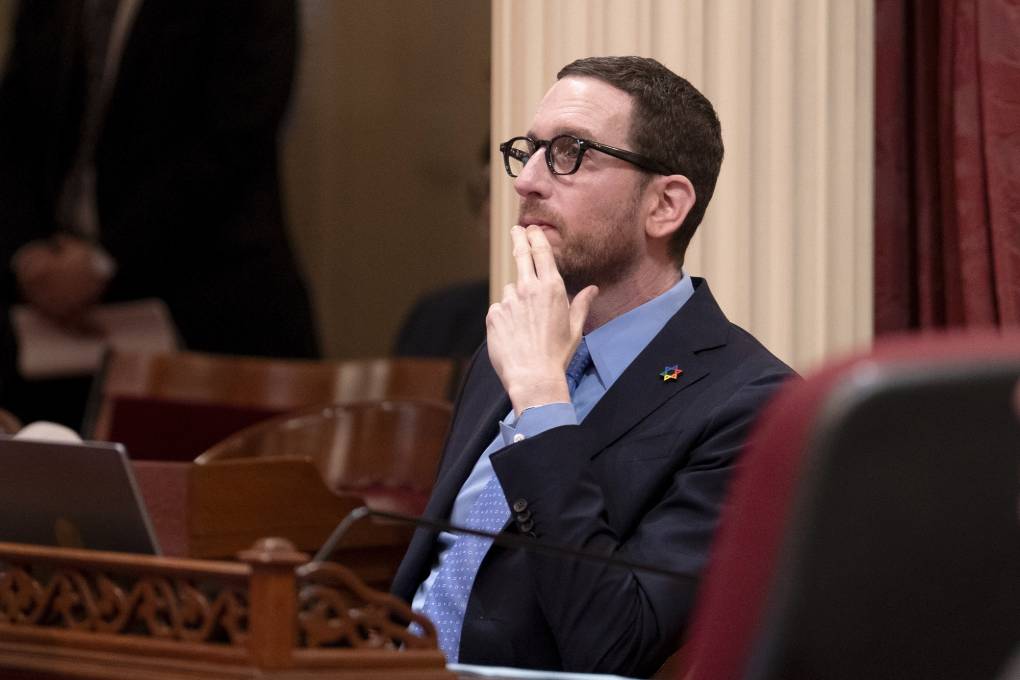
"caption": "Sen. Scott Wiener watches as the Senate votes on a measure at the Capitol in Sacramento, California, on April 11, 2024. On Wednesday, SB 1047, a bill he authored, passed 41–9.",
"credit": "Rich Pedroncelli/AP Photo",
"altTag": null,
"description": null,
"imgSizes": {
"medium": {
"file": "https://cdn.kqed.org/wp-content/uploads/sites/10/2024/08/ScottWienerAP1-800x533.jpg",
"width": 800,
"height": 533,
"mimeType": "image/jpeg"
},
"large": {
"file": "https://cdn.kqed.org/wp-content/uploads/sites/10/2024/08/ScottWienerAP1-1020x680.jpg",
"width": 1020,
"height": 680,
"mimeType": "image/jpeg"
},
"thumbnail": {
"file": "https://cdn.kqed.org/wp-content/uploads/sites/10/2024/08/ScottWienerAP1-160x107.jpg",
"width": 160,
"height": 107,
"mimeType": "image/jpeg"
},
"1536x1536": {
"file": "https://cdn.kqed.org/wp-content/uploads/sites/10/2024/08/ScottWienerAP1-1536x1024.jpg",
"width": 1536,
"height": 1024,
"mimeType": "image/jpeg"
},
"post-thumbnail": {
"file": "https://cdn.kqed.org/wp-content/uploads/sites/10/2024/08/ScottWienerAP1-672x372.jpg",
"width": 672,
"height": 372,
"mimeType": "image/jpeg"
},
"twentyfourteen-full-width": {
"file": "https://cdn.kqed.org/wp-content/uploads/sites/10/2024/08/ScottWienerAP1-1038x576.jpg",
"width": 1038,
"height": 576,
"mimeType": "image/jpeg"
},
"full-width": {
"file": "https://cdn.kqed.org/wp-content/uploads/sites/10/2024/08/ScottWienerAP1-1920x1280.jpg",
"width": 1920,
"height": 1280,
"mimeType": "image/jpeg"
},
"kqedFullSize": {
"file": "https://cdn.kqed.org/wp-content/uploads/sites/10/2024/08/ScottWienerAP1.jpg",
"width": 2000,
"height": 1333
}
},
"isLoading": false,
"fetchFailed": false
},
"news_12001694": {
"type": "attachments",
"id": "news_12001694",
"meta": {
"index": "attachments_1716263798",
"site": "news",
"id": "12001694",
"found": true
},
"title": "Merrick Garland",
"publishDate": 1724447235,
"status": "inherit",
"parent": 12001652,
"modified": 1724452577,
"caption": "Attorney General Merrick Garland, center, speaks with reporters about an antitrust lawsuit against real estate software company RealPage during a news conference at the Department of Justice, Friday, Aug. 23, 2024, in Washington, D.C.",
"credit": "Mark Schiefelbein/AP Photo",
"altTag": null,
"description": null,
"imgSizes": {
"medium": {
"file": "https://cdn.kqed.org/wp-content/uploads/sites/10/2024/08/MerrickGarlandAntiTrustLawsuitAP-800x533.jpg",
"width": 800,
"height": 533,
"mimeType": "image/jpeg"
},
"large": {
"file": "https://cdn.kqed.org/wp-content/uploads/sites/10/2024/08/MerrickGarlandAntiTrustLawsuitAP-1020x680.jpg",
"width": 1020,
"height": 680,
"mimeType": "image/jpeg"
},
"thumbnail": {
"file": "https://cdn.kqed.org/wp-content/uploads/sites/10/2024/08/MerrickGarlandAntiTrustLawsuitAP-160x107.jpg",
"width": 160,
"height": 107,
"mimeType": "image/jpeg"
},
"1536x1536": {
"file": "https://cdn.kqed.org/wp-content/uploads/sites/10/2024/08/MerrickGarlandAntiTrustLawsuitAP-1536x1024.jpg",
"width": 1536,
"height": 1024,
"mimeType": "image/jpeg"
},
"post-thumbnail": {
"file": "https://cdn.kqed.org/wp-content/uploads/sites/10/2024/08/MerrickGarlandAntiTrustLawsuitAP-672x372.jpg",
"width": 672,
"height": 372,
"mimeType": "image/jpeg"
},
"twentyfourteen-full-width": {
"file": "https://cdn.kqed.org/wp-content/uploads/sites/10/2024/08/MerrickGarlandAntiTrustLawsuitAP-1038x576.jpg",
"width": 1038,
"height": 576,
"mimeType": "image/jpeg"
},
"full-width": {
"file": "https://cdn.kqed.org/wp-content/uploads/sites/10/2024/08/MerrickGarlandAntiTrustLawsuitAP-1920x1280.jpg",
"width": 1920,
"height": 1280,
"mimeType": "image/jpeg"
},
"kqedFullSize": {
"file": "https://cdn.kqed.org/wp-content/uploads/sites/10/2024/08/MerrickGarlandAntiTrustLawsuitAP.jpg",
"width": 2000,
"height": 1333
}
},
"isLoading": false,
"fetchFailed": false
},
"news_12001180": {
"type": "attachments",
"id": "news_12001180",
"meta": {
"index": "attachments_1716263798",
"site": "news",
"id": "12001180",
"found": true
},
"title": "California State Senator Scott Wiener adddresses the SF Chronicle Editorial Board on Thursday, Jan. 18, 2018 in San Francisco, Calif.",
"publishDate": 1724269970,
"status": "inherit",
"parent": 0,
"modified": 1724270090,
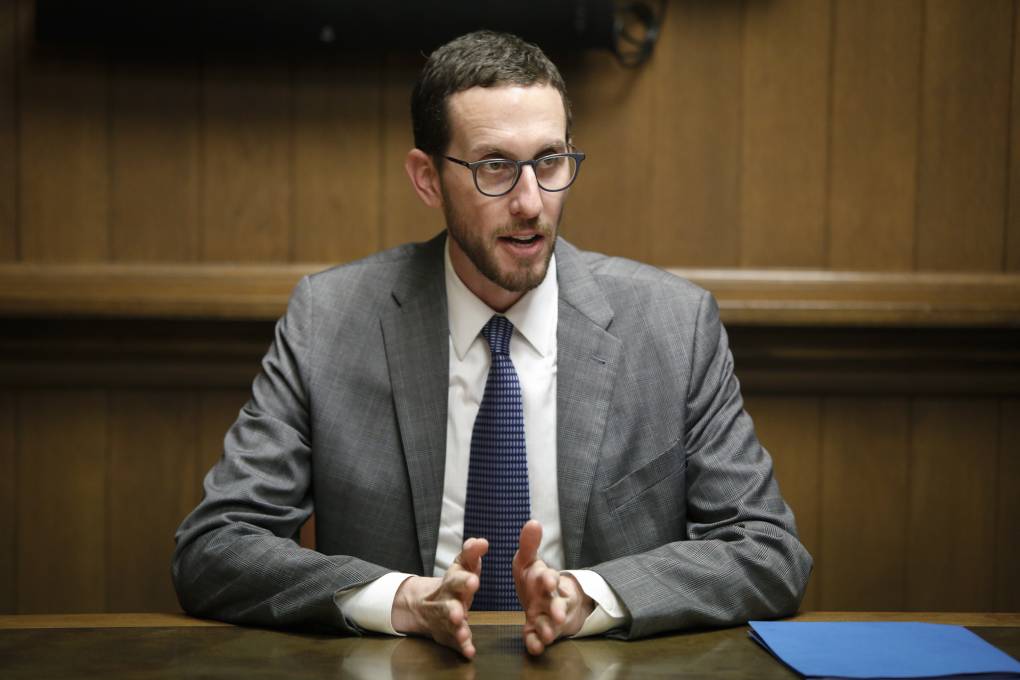
"caption": "Senator Scott Wiener introduced SB 1047, a bill that would mandate safety testing for developers of the largest AI models.",
"credit": "Russell Yip/San Francisco Chronicle via Getty Images",
"altTag": null,
"description": null,
"imgSizes": {
"medium": {
"file": "https://cdn.kqed.org/wp-content/uploads/sites/10/2024/08/GETTYIMAGES-1298883374-KQED-800x533.jpg",
"width": 800,
"height": 533,
"mimeType": "image/jpeg"
},
"large": {
"file": "https://cdn.kqed.org/wp-content/uploads/sites/10/2024/08/GETTYIMAGES-1298883374-KQED-1020x680.jpg",
"width": 1020,
"height": 680,
"mimeType": "image/jpeg"
},
"thumbnail": {
"file": "https://cdn.kqed.org/wp-content/uploads/sites/10/2024/08/GETTYIMAGES-1298883374-KQED-160x107.jpg",
"width": 160,
"height": 107,
"mimeType": "image/jpeg"
},
"1536x1536": {
"file": "https://cdn.kqed.org/wp-content/uploads/sites/10/2024/08/GETTYIMAGES-1298883374-KQED-1536x1024.jpg",
"width": 1536,
"height": 1024,
"mimeType": "image/jpeg"
},
"post-thumbnail": {
"file": "https://cdn.kqed.org/wp-content/uploads/sites/10/2024/08/GETTYIMAGES-1298883374-KQED-672x372.jpg",
"width": 672,
"height": 372,
"mimeType": "image/jpeg"
},
"twentyfourteen-full-width": {
"file": "https://cdn.kqed.org/wp-content/uploads/sites/10/2024/08/GETTYIMAGES-1298883374-KQED-1038x576.jpg",
"width": 1038,
"height": 576,
"mimeType": "image/jpeg"
},
"full-width": {
"file": "https://cdn.kqed.org/wp-content/uploads/sites/10/2024/08/GETTYIMAGES-1298883374-KQED-1920x1280.jpg",
"width": 1920,
"height": 1280,
"mimeType": "image/jpeg"
},
"kqedFullSize": {
"file": "https://cdn.kqed.org/wp-content/uploads/sites/10/2024/08/GETTYIMAGES-1298883374-KQED.jpg",
"width": 2000,
"height": 1333
}
},
"isLoading": false,
"fetchFailed": false
},
"news_12000413": {
"type": "attachments",
"id": "news_12000413",
"meta": {
"index": "attachments_1716263798",
"site": "news",
"id": "12000413",
"found": true
},
"title": "240815-CITYATTORNEYDEEPFAKES-06-BL-KQED",
"publishDate": 1723748842,
"status": "inherit",
"parent": 12046379,
"modified": 1751062554,
"caption": "City Attorney David Chiu speaks during a press conference at City Hall in San Francisco on Aug. 15, 2024.",
"credit": "Beth LaBerge/KQED",
"altTag": null,
"description": null,
"imgSizes": {
"medium": {
"file": "https://cdn.kqed.org/wp-content/uploads/sites/10/2024/08/240815-CITYATTORNEYDEEPFAKES-06-BL-KQED-800x533.jpg",
"width": 800,
"height": 533,
"mimeType": "image/jpeg"
},
"large": {
"file": "https://cdn.kqed.org/wp-content/uploads/sites/10/2024/08/240815-CITYATTORNEYDEEPFAKES-06-BL-KQED-1020x680.jpg",
"width": 1020,
"height": 680,
"mimeType": "image/jpeg"
},
"thumbnail": {
"file": "https://cdn.kqed.org/wp-content/uploads/sites/10/2024/08/240815-CITYATTORNEYDEEPFAKES-06-BL-KQED-160x107.jpg",
"width": 160,
"height": 107,
"mimeType": "image/jpeg"
},
"1536x1536": {
"file": "https://cdn.kqed.org/wp-content/uploads/sites/10/2024/08/240815-CITYATTORNEYDEEPFAKES-06-BL-KQED-1536x1024.jpg",
"width": 1536,
"height": 1024,
"mimeType": "image/jpeg"
},
"post-thumbnail": {
"file": "https://cdn.kqed.org/wp-content/uploads/sites/10/2024/08/240815-CITYATTORNEYDEEPFAKES-06-BL-KQED-672x372.jpg",
"width": 672,
"height": 372,
"mimeType": "image/jpeg"
},
"twentyfourteen-full-width": {
"file": "https://cdn.kqed.org/wp-content/uploads/sites/10/2024/08/240815-CITYATTORNEYDEEPFAKES-06-BL-KQED-1038x576.jpg",
"width": 1038,
"height": 576,
"mimeType": "image/jpeg"
},
"full-width": {
"file": "https://cdn.kqed.org/wp-content/uploads/sites/10/2024/08/240815-CITYATTORNEYDEEPFAKES-06-BL-KQED-1920x1280.jpg",
"width": 1920,
"height": 1280,
"mimeType": "image/jpeg"
},
"kqedFullSize": {
"file": "https://cdn.kqed.org/wp-content/uploads/sites/10/2024/08/240815-CITYATTORNEYDEEPFAKES-06-BL-KQED.jpg",
"width": 2000,
"height": 1333
}
},
"isLoading": false,
"fetchFailed": false
},
"news_11998856": {
"type": "attachments",
"id": "news_11998856",
"meta": {
"index": "attachments_1716263798",
"site": "news",
"id": "11998856",
"found": true
},
"title": "In this photo illustration, the ChatGPT logo is displayed on",
"publishDate": 1722890738,
"status": "inherit",
"parent": 11998817,
"modified": 1722890828,
"caption": "Several bills addressing generative artificial intelligence are moving through the state Legislature in California’s piecemeal approach to regulation.",
"credit": "Jaque Silva/SOPA Images/LightRocket via Getty Images",
"altTag": null,
"description": null,
"imgSizes": {
"medium": {
"file": "https://cdn.kqed.org/wp-content/uploads/sites/10/2024/08/ChatGPTGetty-800x533.jpg",
"width": 800,
"height": 533,
"mimeType": "image/jpeg"
},
"large": {
"file": "https://cdn.kqed.org/wp-content/uploads/sites/10/2024/08/ChatGPTGetty-1020x680.jpg",
"width": 1020,
"height": 680,
"mimeType": "image/jpeg"
},
"thumbnail": {
"file": "https://cdn.kqed.org/wp-content/uploads/sites/10/2024/08/ChatGPTGetty-160x107.jpg",
"width": 160,
"height": 107,
"mimeType": "image/jpeg"
},
"1536x1536": {
"file": "https://cdn.kqed.org/wp-content/uploads/sites/10/2024/08/ChatGPTGetty-1536x1024.jpg",
"width": 1536,
"height": 1024,
"mimeType": "image/jpeg"
},
"post-thumbnail": {
"file": "https://cdn.kqed.org/wp-content/uploads/sites/10/2024/08/ChatGPTGetty-672x372.jpg",
"width": 672,
"height": 372,
"mimeType": "image/jpeg"
},
"twentyfourteen-full-width": {
"file": "https://cdn.kqed.org/wp-content/uploads/sites/10/2024/08/ChatGPTGetty-1038x576.jpg",
"width": 1038,
"height": 576,
"mimeType": "image/jpeg"
},
"full-width": {
"file": "https://cdn.kqed.org/wp-content/uploads/sites/10/2024/08/ChatGPTGetty-1920x1280.jpg",
"width": 1920,
"height": 1280,
"mimeType": "image/jpeg"
},
"kqedFullSize": {
"file": "https://cdn.kqed.org/wp-content/uploads/sites/10/2024/08/ChatGPTGetty.jpg",
"width": 2000,
"height": 1333
}
},
"isLoading": false,
"fetchFailed": false
},
"news_11981873": {
"type": "attachments",
"id": "news_11981873",
"meta": {
"index": "attachments_1716263798",
"site": "news",
"id": "11981873",
"found": true
},
"title": "240403-AARONPESKIN-003-BL-KQED",
"publishDate": 1712247440,
"status": "inherit",
"parent": 0,
"modified": 1722383571,
"caption": "Aaron Peskin, President of the Board of Supervisors, sits in his office in San Francisco on April 3, 2024.",
"credit": "Beth LaBerge/KQED",
"altTag": null,
"description": null,
"imgSizes": {
"medium": {
"file": "https://cdn.kqed.org/wp-content/uploads/sites/10/2024/04/240403-AARONPESKIN-003-BL-KQED-800x533.jpg",
"width": 800,
"height": 533,
"mimeType": "image/jpeg"
},
"large": {
"file": "https://cdn.kqed.org/wp-content/uploads/sites/10/2024/04/240403-AARONPESKIN-003-BL-KQED-1020x680.jpg",
"width": 1020,
"height": 680,
"mimeType": "image/jpeg"
},
"thumbnail": {
"file": "https://cdn.kqed.org/wp-content/uploads/sites/10/2024/04/240403-AARONPESKIN-003-BL-KQED-160x107.jpg",
"width": 160,
"height": 107,
"mimeType": "image/jpeg"
},
"1536x1536": {
"file": "https://cdn.kqed.org/wp-content/uploads/sites/10/2024/04/240403-AARONPESKIN-003-BL-KQED-1536x1024.jpg",
"width": 1536,
"height": 1024,
"mimeType": "image/jpeg"
},
"post-thumbnail": {
"file": "https://cdn.kqed.org/wp-content/uploads/sites/10/2024/04/240403-AARONPESKIN-003-BL-KQED-672x372.jpg",
"width": 672,
"height": 372,
"mimeType": "image/jpeg"
},
"twentyfourteen-full-width": {
"file": "https://cdn.kqed.org/wp-content/uploads/sites/10/2024/04/240403-AARONPESKIN-003-BL-KQED-1038x576.jpg",
"width": 1038,
"height": 576,
"mimeType": "image/jpeg"
},
"full-width": {
"file": "https://cdn.kqed.org/wp-content/uploads/sites/10/2024/04/240403-AARONPESKIN-003-BL-KQED-1920x1280.jpg",
"width": 1920,
"height": 1280,
"mimeType": "image/jpeg"
},
"kqedFullSize": {
"file": "https://cdn.kqed.org/wp-content/uploads/sites/10/2024/04/240403-AARONPESKIN-003-BL-KQED.jpg",
"width": 2000,
"height": 1333
}
},
"isLoading": false,
"fetchFailed": false
},
"news_11997842": {
"type": "attachments",
"id": "news_11997842",
"meta": {
"index": "attachments_1716263798",
"site": "news",
"id": "11997842",
"found": true
},
"title": "GettyImages-2158244120",
"publishDate": 1722279466,
"status": "inherit",
"parent": 11997819,
"modified": 1722281528,
"caption": "Elon Musk at an event on June 19, 2024, in Cannes, France. ",
"credit": "Marc Piasecki/Getty Images",
"altTag": null,
"description": null,
"imgSizes": {
"medium": {
"file": "https://cdn.kqed.org/wp-content/uploads/sites/10/2024/07/GettyImages-2158244120-800x534.jpg",
"width": 800,
"height": 534,
"mimeType": "image/jpeg"
},
"large": {
"file": "https://cdn.kqed.org/wp-content/uploads/sites/10/2024/07/GettyImages-2158244120-1020x681.jpg",
"width": 1020,
"height": 681,
"mimeType": "image/jpeg"
},
"thumbnail": {
"file": "https://cdn.kqed.org/wp-content/uploads/sites/10/2024/07/GettyImages-2158244120-160x107.jpg",
"width": 160,
"height": 107,
"mimeType": "image/jpeg"
},
"1536x1536": {
"file": "https://cdn.kqed.org/wp-content/uploads/sites/10/2024/07/GettyImages-2158244120-1536x1025.jpg",
"width": 1536,
"height": 1025,
"mimeType": "image/jpeg"
},
"post-thumbnail": {
"file": "https://cdn.kqed.org/wp-content/uploads/sites/10/2024/07/GettyImages-2158244120-672x372.jpg",
"width": 672,
"height": 372,
"mimeType": "image/jpeg"
},
"twentyfourteen-full-width": {
"file": "https://cdn.kqed.org/wp-content/uploads/sites/10/2024/07/GettyImages-2158244120-1038x576.jpg",
"width": 1038,
"height": 576,
"mimeType": "image/jpeg"
},
"kqedFullSize": {
"file": "https://cdn.kqed.org/wp-content/uploads/sites/10/2024/07/GettyImages-2158244120.jpg",
"width": 1920,
"height": 1281
}
},
"isLoading": false,
"fetchFailed": false
},
"news_11995891": {
"type": "attachments",
"id": "news_11995891",
"meta": {
"index": "attachments_1716263798",
"site": "news",
"id": "11995891",
"found": true
},
"title": "008_SanFrancisco_Housing_07292021_qed",
"publishDate": 1721162333,
"status": "inherit",
"parent": 11995878,
"modified": 1721162472,
"caption": "A 'For Rent' sign hangs in the window of an apartment building in Nob Hill in San Francisco on July 29, 2021.",
"credit": "Beth LaBerge/KQED",
"altTag": null,
"description": null,
"imgSizes": {
"medium": {
"file": "https://cdn.kqed.org/wp-content/uploads/sites/10/2024/07/008_SanFrancisco_Housing_07292021_qed-800x533.jpg",
"width": 800,
"height": 533,
"mimeType": "image/jpeg"
},
"large": {
"file": "https://cdn.kqed.org/wp-content/uploads/sites/10/2024/07/008_SanFrancisco_Housing_07292021_qed-1020x680.jpg",
"width": 1020,
"height": 680,
"mimeType": "image/jpeg"
},
"thumbnail": {
"file": "https://cdn.kqed.org/wp-content/uploads/sites/10/2024/07/008_SanFrancisco_Housing_07292021_qed-160x107.jpg",
"width": 160,
"height": 107,
"mimeType": "image/jpeg"
},
"1536x1536": {
"file": "https://cdn.kqed.org/wp-content/uploads/sites/10/2024/07/008_SanFrancisco_Housing_07292021_qed-1536x1024.jpg",
"width": 1536,
"height": 1024,
"mimeType": "image/jpeg"
},
"post-thumbnail": {
"file": "https://cdn.kqed.org/wp-content/uploads/sites/10/2024/07/008_SanFrancisco_Housing_07292021_qed-672x372.jpg",
"width": 672,
"height": 372,
"mimeType": "image/jpeg"
},
"twentyfourteen-full-width": {
"file": "https://cdn.kqed.org/wp-content/uploads/sites/10/2024/07/008_SanFrancisco_Housing_07292021_qed-1038x576.jpg",
"width": 1038,
"height": 576,
"mimeType": "image/jpeg"
},
"full-width": {
"file": "https://cdn.kqed.org/wp-content/uploads/sites/10/2024/07/008_SanFrancisco_Housing_07292021_qed-1920x1280.jpg",
"width": 1920,
"height": 1280,
"mimeType": "image/jpeg"
},
"kqedFullSize": {
"file": "https://cdn.kqed.org/wp-content/uploads/sites/10/2024/07/008_SanFrancisco_Housing_07292021_qed.jpg",
"width": 2000,
"height": 1333
}
},
"isLoading": false,
"fetchFailed": false
},
"news_11993512": {
"type": "attachments",
"id": "news_11993512",
"meta": {
"index": "attachments_1716263798",
"site": "news",
"id": "11993512",
"found": true
},
"title": "Bee On An Almond Flower",
"publishDate": 1720637841,
"status": "inherit",
"parent": 11993475,
"modified": 1720637841,
"caption": "A bee pollinates an almond flower in an orchard. Photographer: David Paul Morris/Bloomberg",
"credit": null,
"altTag": null,
"description": null,
"imgSizes": {
"medium": {
"file": "https://cdn.kqed.org/wp-content/uploads/sites/10/2024/07/GettyImages-1312770286-800x533.jpg",
"width": 800,
"height": 533,
"mimeType": "image/jpeg"
},
"large": {
"file": "https://cdn.kqed.org/wp-content/uploads/sites/10/2024/07/GettyImages-1312770286-1020x680.jpg",
"width": 1020,
"height": 680,
"mimeType": "image/jpeg"
},
"thumbnail": {
"file": "https://cdn.kqed.org/wp-content/uploads/sites/10/2024/07/GettyImages-1312770286-160x107.jpg",
"width": 160,
"height": 107,
"mimeType": "image/jpeg"
},
"1536x1536": {
"file": "https://cdn.kqed.org/wp-content/uploads/sites/10/2024/07/GettyImages-1312770286-1536x1024.jpg",
"width": 1536,
"height": 1024,
"mimeType": "image/jpeg"
},
"2048x2048": {
"file": "https://cdn.kqed.org/wp-content/uploads/sites/10/2024/07/GettyImages-1312770286-2048x1365.jpg",
"width": 2048,
"height": 1365,
"mimeType": "image/jpeg"
},
"post-thumbnail": {
"file": "https://cdn.kqed.org/wp-content/uploads/sites/10/2024/07/GettyImages-1312770286-672x372.jpg",
"width": 672,
"height": 372,
"mimeType": "image/jpeg"
},
"twentyfourteen-full-width": {
"file": "https://cdn.kqed.org/wp-content/uploads/sites/10/2024/07/GettyImages-1312770286-1038x576.jpg",
"width": 1038,
"height": 576,
"mimeType": "image/jpeg"
},
"full-width": {
"file": "https://cdn.kqed.org/wp-content/uploads/sites/10/2024/07/GettyImages-1312770286-1920x1280.jpg",
"width": 1920,
"height": 1280,
"mimeType": "image/jpeg"
},
"kqedFullSize": {
"file": "https://cdn.kqed.org/wp-content/uploads/sites/10/2024/07/GettyImages-1312770286-scaled.jpg",
"width": 2560,
"height": 1706
}
},
"isLoading": false,
"fetchFailed": false
},
"news_11992720": {
"type": "attachments",
"id": "news_11992720",
"meta": {
"index": "attachments_1716263798",
"site": "news",
"id": "11992720",
"found": true
},
"title": "speech recognition concept. hands-free communication. machine translation.",
"publishDate": 1719866946,
"status": "inherit",
"parent": 11992707,
"modified": 1719867226,
"caption": null,
"credit": "Metamorworks via iStock/Getty Images Plus",
"altTag": "A man holds a hand to his ear while the other hand holds a smartphone close to his face with a microphone logo and connected dots.",
"description": null,
"imgSizes": {
"medium": {
"file": "https://cdn.kqed.org/wp-content/uploads/sites/10/2024/07/GettyImages-861092546-800x533.jpg",
"width": 800,
"height": 533,
"mimeType": "image/jpeg"
},
"large": {
"file": "https://cdn.kqed.org/wp-content/uploads/sites/10/2024/07/GettyImages-861092546-1020x680.jpg",
"width": 1020,
"height": 680,
"mimeType": "image/jpeg"
},
"thumbnail": {
"file": "https://cdn.kqed.org/wp-content/uploads/sites/10/2024/07/GettyImages-861092546-160x107.jpg",
"width": 160,
"height": 107,
"mimeType": "image/jpeg"
},
"1536x1536": {
"file": "https://cdn.kqed.org/wp-content/uploads/sites/10/2024/07/GettyImages-861092546-1536x1024.jpg",
"width": 1536,
"height": 1024,
"mimeType": "image/jpeg"
},
"2048x2048": {
"file": "https://cdn.kqed.org/wp-content/uploads/sites/10/2024/07/GettyImages-861092546-2048x1365.jpg",
"width": 2048,
"height": 1365,
"mimeType": "image/jpeg"
},
"post-thumbnail": {
"file": "https://cdn.kqed.org/wp-content/uploads/sites/10/2024/07/GettyImages-861092546-672x372.jpg",
"width": 672,
"height": 372,
"mimeType": "image/jpeg"
},
"twentyfourteen-full-width": {
"file": "https://cdn.kqed.org/wp-content/uploads/sites/10/2024/07/GettyImages-861092546-1038x576.jpg",
"width": 1038,
"height": 576,
"mimeType": "image/jpeg"
},
"full-width": {
"file": "https://cdn.kqed.org/wp-content/uploads/sites/10/2024/07/GettyImages-861092546-1920x1280.jpg",
"width": 1920,
"height": 1280,
"mimeType": "image/jpeg"
},
"kqedFullSize": {
"file": "https://cdn.kqed.org/wp-content/uploads/sites/10/2024/07/GettyImages-861092546.jpg",
"width": 2121,
"height": 1414
}
},
"isLoading": false,
"fetchFailed": false
},
"news_11991236": {
"type": "attachments",
"id": "news_11991236",
"meta": {
"index": "attachments_1716263798",
"site": "news",
"id": "11991236",
"found": true
},
"title": "AI-Worplace-Discrimination_AH_CM_01",
"publishDate": 1718902045,
"status": "inherit",
"parent": 11991230,
"modified": 1718902141,
"caption": null,
"credit": "Adriana Heldiz/CalMatters; iStock",
"altTag": "A graphic image of a gavel, computer mouse hand, and folders with a personnel logo above the state on California.",
"description": null,
"imgSizes": {
"medium": {
"file": "https://cdn.kqed.org/wp-content/uploads/sites/10/2024/06/AI-Worplace-Discrimination_AH_CM_01-800x533.jpg",
"width": 800,
"height": 533,
"mimeType": "image/jpeg"
},
"large": {
"file": "https://cdn.kqed.org/wp-content/uploads/sites/10/2024/06/AI-Worplace-Discrimination_AH_CM_01-1020x680.jpg",
"width": 1020,
"height": 680,
"mimeType": "image/jpeg"
},
"thumbnail": {
"file": "https://cdn.kqed.org/wp-content/uploads/sites/10/2024/06/AI-Worplace-Discrimination_AH_CM_01-160x107.jpg",
"width": 160,
"height": 107,
"mimeType": "image/jpeg"
},
"1536x1536": {
"file": "https://cdn.kqed.org/wp-content/uploads/sites/10/2024/06/AI-Worplace-Discrimination_AH_CM_01-1536x1024.jpg",
"width": 1536,
"height": 1024,
"mimeType": "image/jpeg"
},
"post-thumbnail": {
"file": "https://cdn.kqed.org/wp-content/uploads/sites/10/2024/06/AI-Worplace-Discrimination_AH_CM_01-672x372.jpg",
"width": 672,
"height": 372,
"mimeType": "image/jpeg"
},
"twentyfourteen-full-width": {
"file": "https://cdn.kqed.org/wp-content/uploads/sites/10/2024/06/AI-Worplace-Discrimination_AH_CM_01-1038x576.jpg",
"width": 1038,
"height": 576,
"mimeType": "image/jpeg"
},
"full-width": {
"file": "https://cdn.kqed.org/wp-content/uploads/sites/10/2024/06/AI-Worplace-Discrimination_AH_CM_01-1920x1280.jpg",
"width": 1920,
"height": 1280,
"mimeType": "image/jpeg"
},
"kqedFullSize": {
"file": "https://cdn.kqed.org/wp-content/uploads/sites/10/2024/06/AI-Worplace-Discrimination_AH_CM_01.jpg",
"width": 2000,
"height": 1333
}
},
"isLoading": false,
"fetchFailed": false
},
"news_11989313": {
"type": "attachments",
"id": "news_11989313",
"meta": {
"index": "attachments_1716263798",
"site": "news",
"id": "11989313",
"found": true
},
"title": "Tech AI Illustrations",
"publishDate": 1717711326,
"status": "inherit",
"parent": 11989308,
"modified": 1787170163,
"caption": "The ChatGPT logo is displayed on an iPhone in New York, May 18, 2023. ",
"credit": "Jaap Arriens/NurPhoto via Getty Images",
"altTag": null,
"description": null,
"imgSizes": {
"medium": {
"file": "https://cdn.kqed.org/wp-content/uploads/sites/10/2024/06/GettyImages-2155035557-800x533.jpg",
"width": 800,
"height": 533,
"mimeType": "image/jpeg"
},
"large": {
"file": "https://cdn.kqed.org/wp-content/uploads/sites/10/2024/06/GettyImages-2155035557-1020x680.jpg",
"width": 1020,
"height": 680,
"mimeType": "image/jpeg"
},
"thumbnail": {
"file": "https://cdn.kqed.org/wp-content/uploads/sites/10/2024/06/GettyImages-2155035557-160x107.jpg",
"width": 160,
"height": 107,
"mimeType": "image/jpeg"
},
"1536x1536": {
"file": "https://cdn.kqed.org/wp-content/uploads/sites/10/2024/06/GettyImages-2155035557-1536x1024.jpg",
"width": 1536,
"height": 1024,
"mimeType": "image/jpeg"
},
"2048x2048": {
"file": "https://cdn.kqed.org/wp-content/uploads/sites/10/2024/06/GettyImages-2155035557-2048x1365.jpg",
"width": 2048,
"height": 1365,
"mimeType": "image/jpeg"
},
"post-thumbnail": {
"file": "https://cdn.kqed.org/wp-content/uploads/sites/10/2024/06/GettyImages-2155035557-672x372.jpg",
"width": 672,
"height": 372,
"mimeType": "image/jpeg"
},
"twentyfourteen-full-width": {
"file": "https://cdn.kqed.org/wp-content/uploads/sites/10/2024/06/GettyImages-2155035557-1038x576.jpg",
"width": 1038,
"height": 576,
"mimeType": "image/jpeg"
},
"full-width": {
"file": "https://cdn.kqed.org/wp-content/uploads/sites/10/2024/06/GettyImages-2155035557-1920x1280.jpg",
"width": 1920,
"height": 1280,
"mimeType": "image/jpeg"
},
"kqedFullSize": {
"file": "https://cdn.kqed.org/wp-content/uploads/sites/10/2024/06/GettyImages-2155035557-scaled-e1760733694503.jpg",
"width": 2000,
"height": 1334
}
},
"isLoading": false,
"fetchFailed": false
}
},
"audioPlayerReducer": {
"postId": "stream_live",
"isPaused": true,
"isPlaying": false,
"pfsActive": false,
"pledgeModalIsOpen": true,
"playerDrawerIsOpen": false,
"liveAudioPlayStartedAt": 0,
"liveAudioPlayContext": ""
},
"authorsReducer": {
"byline_news_11997819": {
"type": "authors",
"id": "byline_news_11997819",
"meta": {
"override": true
},
"slug": "byline_news_11997819",
"name": "Ali Swenson, Associated Press",
"isLoading": false
},
"byline_news_11991230": {
"type": "authors",
"id": "byline_news_11991230",
"meta": {
"override": true
},
"slug": "byline_news_11991230",
"name": "Khari Johnson, CalMatters",
"isLoading": false
},
"byline_news_11989308": {
"type": "authors",
"id": "byline_news_11989308",
"meta": {
"override": true
},
"slug": "byline_news_11989308",
"name": "Ericka Cruz Guevarra, Tamuna Chkareuli, Ellie Prickett-Morgan and Alan Montecillo",
"isLoading": false
},
"rachael-myrow": {
"type": "authors",
"id": "251",
"meta": {
"index": "authors_1716337520",
"id": "251",
"found": true
},
"name": "Rachael Myrow",
"firstName": "Rachael",
"lastName": "Myrow",
"slug": "rachael-myrow",
"email": "rmyrow@kqed.org",
"display_author_email": true,
"staff_mastheads": [
"news"
],
"title": "Senior Editor of KQED's Silicon Valley News Desk",
"bio": "• I write and edit stories about how Silicon Valley power and policies shape everyday life in California. I’m also passionate about making Bay Area history and culture more accessible to a broad public. • I’ve been a journalist for most of my life, starting in high school with The Franklin Press in Los Angeles, where I grew up. While earning my first degree in English at UC Berkeley, I got my start in public radio at KALX-FM. After completing a second degree in journalism at Cal, I landed my first professional job at Marketplace, then moved on to KPCC (now LAist), and then KQED, where I hosted The California Report for more than seven years. • My reporting has appeared on NPR, The World, WBUR’s \u003ci>Here & Now\u003c/i>, and the BBC. I also guest host for KQED’s \u003ci>Forum\u003c/i>, as well as the Commonwealth Club in San Francisco. • I speak periodically on media, democracy and technology issues, and do voiceover work for documentaries and educational video projects. • Outside of the studio, you'll find me hiking Bay Area trails and whipping up Insta-ready meals in my kitchen. • I do not accept gifts, money, or favors from anyone connected to my reporting, I don't pay people for information, and I do not support or donate to political causes. • I strive to treat the people I report on with fairness, honesty, and respect. I also recognize there are often multiple sides to a story and work to verify information through multiple sources and documentation. If I get something wrong, I correct it.",
"avatar": "https://secure.gravatar.com/avatar/3ed8a3c5f26025e4a805ba634cda8cd764906b97438a6d9ce216b044e340da4e?s=600&d=blank&r=g",
"twitter": "rachaelmyrow",
"bluesky": null,
"facebook": null,
"instagram": null,
"linkedin": "https://www.linkedin.com/in/rachaelmyrow/",
"sites": [
{
"site": "arts",
"roles": [
"administrator"
]
},
{
"site": "news",
"roles": [
"edit_others_posts",
"editor"
]
},
{
"site": "futureofyou",
"roles": [
"editor"
]
},
{
"site": "bayareabites",
"roles": [
"editor"
]
},
{
"site": "stateofhealth",
"roles": [
"editor"
]
},
{
"site": "science",
"roles": [
"editor"
]
},
{
"site": "food",
"roles": [
"editor"
]
},
{
"site": "forum",
"roles": [
"editor"
]
},
{
"site": "liveblog",
"roles": [
"author"
]
}
],
"headData": {
"title": "Rachael Myrow | KQED",
"description": "Senior Editor of KQED's Silicon Valley News Desk",
"ogImgSrc": "https://secure.gravatar.com/avatar/3ed8a3c5f26025e4a805ba634cda8cd764906b97438a6d9ce216b044e340da4e?s=600&d=blank&r=g",
"twImgSrc": "https://secure.gravatar.com/avatar/3ed8a3c5f26025e4a805ba634cda8cd764906b97438a6d9ce216b044e340da4e?s=600&d=blank&r=g"
},
"isLoading": false,
"link": "/author/rachael-myrow"
},
"ebaldassari": {
"type": "authors",
"id": "11652",
"meta": {
"index": "authors_1716337520",
"id": "11652",
"found": true
},
"name": "Erin Baldassari",
"firstName": "Erin",
"lastName": "Baldassari",
"slug": "ebaldassari",
"email": "ebaldassari@KQED.org",
"display_author_email": true,
"staff_mastheads": [
"news"
],
"title": "Senior Editor",
"bio": "Erin Baldassari oversees the housing and early childhood education and care desks, as well as several of the station’s enterprise and accountability reporters. She joined KQED in 2020 to cover housing and co-host its housing podcast, \u003cem>SOLD OUT: Rethinking Housing in America\u003c/em>. Prior to that, she worked as a print journalist for roughly a decade, most recently at the \u003cem>Mercury News\u003c/em> and \u003cem>East Bay Times\u003c/em>, where she served on its 2017 Pulitzer Prize-winning team for coverage of the Ghost Ship Fire in Oakland. A Tufts University alumna, Erin grew up in the foothills of the Sierra Nevada mountains and in Sonoma County.",
"avatar": "https://secure.gravatar.com/avatar/5e95cad64a8ca08288082212e199d2b0cbeb4fd8e8ef5339395f361032bbe005?s=600&d=blank&r=g",
"twitter": null,
"bluesky": null,
"facebook": null,
"instagram": null,
"linkedin": null,
"sites": [
{
"site": "news",
"roles": [
"edit_others_posts",
"editor"
]
},
{
"site": "science",
"roles": [
"editor"
]
},
{
"site": "liveblog",
"roles": [
"editor"
]
}
],
"headData": {
"title": "Erin Baldassari | KQED",
"description": "Senior Editor",
"ogImgSrc": "https://secure.gravatar.com/avatar/5e95cad64a8ca08288082212e199d2b0cbeb4fd8e8ef5339395f361032bbe005?s=600&d=blank&r=g",
"twImgSrc": "https://secure.gravatar.com/avatar/5e95cad64a8ca08288082212e199d2b0cbeb4fd8e8ef5339395f361032bbe005?s=600&d=blank&r=g"
},
"isLoading": false,
"link": "/author/ebaldassari"
},
"sjohnson": {
"type": "authors",
"id": "11840",
"meta": {
"index": "authors_1716337520",
"id": "11840",
"found": true
},
"name": "Sydney Johnson",
"firstName": "Sydney",
"lastName": "Johnson",
"slug": "sjohnson",
"email": "sjohnson@kqed.org",
"display_author_email": false,
"staff_mastheads": [
"news"
],
"title": "KQED Reporter",
"bio": "Sydney Johnson is a general assignment reporter at KQED. She previously reported on public health and city government at the San Francisco Examiner, and before that, she covered statewide education policy for EdSource. Her reporting has won multiple local, state and national awards. Sydney is a graduate of the University of California, Berkeley and lives in San Francisco.",
"avatar": "https://secure.gravatar.com/avatar/97855f2719b72ad6190b7c535fe642c8?s=600&d=blank&r=g",
"twitter": "sydneyfjohnson",
"facebook": null,
"instagram": null,
"linkedin": null,
"sites": [
{
"site": "news",
"roles": [
"editor"
]
}
],
"headData": {
"title": "Sydney Johnson | KQED",
"description": "KQED Reporter",
"ogImgSrc": "https://secure.gravatar.com/avatar/97855f2719b72ad6190b7c535fe642c8?s=600&d=blank&r=g",
"twImgSrc": "https://secure.gravatar.com/avatar/97855f2719b72ad6190b7c535fe642c8?s=600&d=blank&r=g"
},
"isLoading": false,
"link": "/author/sjohnson"
},
"bsiavoshy": {
"type": "authors",
"id": "11890",
"meta": {
"index": "authors_1716337520",
"id": "11890",
"found": true
},
"name": "Bejan Siavoshy",
"firstName": "Bejan",
"lastName": "Siavoshy",
"slug": "bsiavoshy",
"email": "bsiavoshy@kqed.org",
"display_author_email": false,
"staff_mastheads": [],
"title": "KQED Contributor",
"bio": null,
"avatar": "https://secure.gravatar.com/avatar/ead3e7c509634b37a73b1f57677e49f9?s=600&d=blank&r=g",
"twitter": null,
"facebook": null,
"instagram": null,
"linkedin": null,
"sites": [
{
"site": "news",
"roles": [
"editor"
]
}
],
"headData": {
"title": "Bejan Siavoshy | KQED",
"description": "KQED Contributor",
"ogImgSrc": "https://secure.gravatar.com/avatar/ead3e7c509634b37a73b1f57677e49f9?s=600&d=blank&r=g",
"twImgSrc": "https://secure.gravatar.com/avatar/ead3e7c509634b37a73b1f57677e49f9?s=600&d=blank&r=g"
},
"isLoading": false,
"link": "/author/bsiavoshy"
},
"kdebenedetti": {
"type": "authors",
"id": "11913",
"meta": {
"index": "authors_1716337520",
"id": "11913",
"found": true
},
"name": "Katie DeBenedetti",
"firstName": "Katie",
"lastName": "DeBenedetti",
"slug": "kdebenedetti",
"email": "kdebenedetti@kqed.org",
"display_author_email": false,
"staff_mastheads": [
"news",
"science"
],
"title": "KQED Contributor",
"bio": "Katie DeBenedetti is a digital reporter covering daily news for the Express Desk. Prior to joining KQED as a culture reporting intern in January 2024, she covered education and city government for the Napa Valley Register.",
"avatar": "https://secure.gravatar.com/avatar/6e31073cb8f7e4214ab03f42771d0f45?s=600&d=blank&r=g",
"twitter": null,
"facebook": null,
"instagram": null,
"linkedin": null,
"sites": [
{
"site": "news",
"roles": [
"author"
]
},
{
"site": "science",
"roles": [
"author"
]
},
{
"site": "liveblog",
"roles": [
"author"
]
}
],
"headData": {
"title": "Katie DeBenedetti | KQED",
"description": "KQED Contributor",
"ogImgSrc": "https://secure.gravatar.com/avatar/6e31073cb8f7e4214ab03f42771d0f45?s=600&d=blank&r=g",
"twImgSrc": "https://secure.gravatar.com/avatar/6e31073cb8f7e4214ab03f42771d0f45?s=600&d=blank&r=g"
},
"isLoading": false,
"link": "/author/kdebenedetti"
}
},
"pagesReducer": {
"news_tag_ai": {
"type": "terms",
"id": "news_25184",
"meta": {
"index": "terms_1716263798",
"site": "news",
"id": "25184",
"score": 9.308199
},
"featImg": null,
"name": "AI",
"description": null,
"taxonomy": "tag",
"headData": {
"twImgId": null,
"twTitle": null,
"ogTitle": null,
"ogImgId": null,
"twDescription": null,
"description": null,
"title": "AI Archives | KQED News",
"ogDescription": null
},
"ttid": 25201,
"slug": "ai",
"isLoading": false,
"title": "AI",
"pageMeta": {
"site": "news",
"WpPageTemplate": "page-topic-editorial",
"currentPage": 14
},
"blocks": [
{
"blockName": "kqed/post-list",
"attrs": {
"layout": "cardArticle2",
"query": "posts/news?tag=ai",
"seeMore": false,
"paginated": true,
"page": 14
}
},
{
"blockName": "kqed/ad"
}
]
}
},
"pfsSessionReducer": {},
"postsReducer": {
"stream_live": {
"type": "live",
"id": "stream_live",
"audioUrl": "https://hls.kqed.org/hls/kqed_app/playlist.m3u8",
"title": "Live Stream",
"excerpt": "Live Stream information currently unavailable.",
"link": "/radio",
"featImg": "",
"label": {
"name": "KQED Live",
"link": "/"
}
},
"stream_kqedNewscast": {
"type": "posts",
"id": "stream_kqedNewscast",
"audioUrl": "https://www.kqed.org/.stream/anon/radio/RDnews/newscast.mp3?_=1",
"title": "KQED Newscast",
"featImg": "",
"label": {
"name": "88.5 FM",
"link": "/"
}
},
"news_12002254": {
"type": "posts",
"id": "news_12002254",
"meta": {
"index": "posts_1716263798",
"site": "news",
"id": "12002254",
"score": null,
"sort": [
1724957580000
]
},
"guestAuthors": [],
"slug": "california-bill-to-regulate-catastrophic-effects-of-ai-heads-to-newsoms-desk",
"title": "Pelosi Blasts California AI Bill Heading to Newsom’s Desk as ‘Ill-Informed’",
"publishDate": 1724957580,
"format": "standard",
"headTitle": "Pelosi Blasts California AI Bill Heading to Newsom’s Desk as ‘Ill-Informed’ | KQED",
"labelTerm": {
"site": "news"
},
"content": "\u003cp>\u003cem>Updated 11:50 a.m. Thursday\u003c/em>\u003c/p>\n\u003cp>A bill that would mandate safety testing for companies that develop the largest generative AI models has passed the state Assembly by a \u003ca href=\"https://leginfo.legislature.ca.gov/faces/billVotesClient.xhtml?bill_id=202320240SB1047\">vote of 41 to 16\u003c/a>. \u003cspan style=\"font-weight: 400\">But critics, including Speaker Emerita Nancy Pelosi, continue to raise objections as the bill makes its way to Gov. Gavin Newsom’s desk.\u003c/span>\u003c/p>\n\u003cp>“It’s been an enormous amount of work and collaboration and working with people who like the bill and people who don’t like the bill,” said state Sen. Scott Wiener (D-San Francisco), who introduced \u003ca href=\"https://leginfo.legislature.ca.gov/faces/billNavClient.xhtml?bill_id=202320240SB1047\">SB 1047\u003c/a>. “I’m really, really proud of our coalition and grateful to my colleagues for understanding that, when it comes to technology, innovation and safety are not mutually exclusive. They complement each other.”\u003c/p>\n\u003cp>\u003cspan style=\"font-weight: 400\">The bill would enact safeguards to prevent AI from being used to conduct cyberattacks on critical infrastructure or develop chemical, nuclear or biological weapons. After passing the assembly and getting another stamp of approval from the senate, the bill goes to Gov. Gavin Newsom, who has until Sept. 30 to sign or veto it. \u003c/span>\u003c/p>\n\u003cp>Wiener has spent the last year in a \u003ca href=\"https://www.kqed.org/news/12000892/ai-safety-testing-bill-heads-for-a-floor-vote-in-sacramento-taking-heavy-fire-from-silicon-valley\">pitched battle\u003c/a> with some of the most prominent figures in the AI industry, including many who warned the measure could stifle the growth of the technology in California.\u003c/p>\n\u003cp>[ad fullwidth]\u003c/p>\n\u003cp>Three Silicon Valley Congress members — Rep. Zoe Lofgren, Rep. Ro Khanna and Pelosi — also spoke out in an effort to kill the bill. Even Wiener’s longtime ally, San Francisco Mayor London Breed, wrote in an \u003ca href=\"https://x.com/martin_casado/status/1828467847720509652\">open letter\u003c/a> that “more work needs to be done to bring together industry, government, and community stakeholders before moving forward with a legislative solution that doesn’t add unnecessary bureaucracy.”\u003c/p>\n\u003cp>\u003cspan style=\"font-weight: 400\">Speaking on \u003c/span>\u003ca href=\"https://www.kqed.org/forum/2010101906876/nancy-pelosi-explains-the-art-of-power\">\u003cspan style=\"font-weight: 400\">KQED’s Forum\u003c/span>\u003c/a>\u003cspan style=\"font-weight: 400\"> on Thursday, Pelosi criticized the bill again.\u003c/span>\u003c/p>\n\u003cp>\u003cspan style=\"font-weight: 400\">“California is the home, the birthplace of AI. In our view. It has the knowledge, the technological knowledge, it has the entrepreneurship, and it has the responsibility to do the right thing, not to pass a bill that does not do the job because it is as well-intentioned as it is ill-informed.”\u003c/span>\u003c/p>\n\u003cp>\u003cspan style=\"font-weight: 400\">She also pushed back against the idea that she was speaking out against Wiener’s bill because he might face Pelosi’s daughter in a run for her seat once she leaves office. \u003c/span>\u003c/p>\n\u003cp>\u003cspan style=\"font-weight: 400\">“They don’t know what they’re talking about,” she said about \u003c/span>\u003ca href=\"https://www.politico.com/newsletters/california-playbook/2024/08/19/ai-pelosi-house-seat-00174542\">\u003cspan style=\"font-weight: 400\">Politico\u003c/span>\u003c/a>\u003cspan style=\"font-weight: 400\">, which first reported the story. “I don’t want California going down a bad path on something this serious and has nothing to do with elections.\u003c/span>\u003ci>\u003cspan style=\"font-weight: 400\">”\u003c/span>\u003c/i>\u003c/p>\n\u003cp>SB 1047 has also attracted high-profile supporters, including Elon Musk, who on Monday \u003ca href=\"https://x.com/elonmusk/status/1828205685386936567?ref_src=twsrc%5Etfw%7Ctwcamp%5Etweetembed%7Ctwterm%5E1828205685386936567%7Ctwgr%5Eefeda0f975043ebdda2707011f803c34424e4ba0%7Ctwcon%5Es1_&ref_url=https%3A%2F%2Fsfstandard.com%2F2024%2F08%2F26%2Felon-musk-openai-scott-wiener-sb1046%2F\">posted on social media site X,\u003c/a> “This is a tough call and will make some people upset, but, all things considered, I think California should probably pass the SB 1047 AI safety bill. For over 20 years, I have been an advocate for AI regulation, just as we regulate any product/technology that is a potential risk to the public.”\u003c/p>\n\u003cp>Wiener acknowledged his unlikely ally. “Elon Musk is not a fan of me, and I’m not a fan of Elon Musk,” Wiener said. “But even people who have very strong disagreements can still find common ground. And, in this area, Elon and I have common ground. He has long, long been an advocate for AI safety. And so this position is very consistent with his long history.”\u003c/p>\n\u003cp>Wiener said he amended the measure to reflect counsel from leaders in the AI space, including safety groups, academics, startups and developers like Amazon-backed Anthropic. The bill no longer allows California’s attorney general to sue AI companies for negligent safety practices before a catastrophic event has occurred. Also, the original text, which would have established a division within the California Department of Technology “to ensure continuous oversight and enforcement,” is gone.\u003c/p>\n\u003cp>Wiener, who heads the Senate Budget Committee, told KQED the changes were made in large part to improve the bill’s chances with lawmakers and Gov. Gavin Newsom, given that California is facing a \u003ca href=\"https://www.kqed.org/news/11985932/newsoms-solution-to-a-45-billion-budget-deficit\">massive budget deficit\u003c/a>. “My experience with Gov. Newsom is he gives bills a fair shake and he listens to arguments. He speaks to people who support and people who oppose, and he makes an informed choice. And I’m confident he will do that here.”\u003c/p>\n\u003cp>SB 1047 would only affect companies building AI systems that cost more than $100 million to train. However, critics argue the mere threat of legal action from the state attorney general will stifle innovation by discouraging big tech companies from sharing open-source software with smaller ones.\u003c/p>\n\u003cp>Last month, Anthropic warned in an open letter addressed to Wiener that it could not support the bill unless it was amended to “respect the evolving nature of risk reduction practices while minimizing rigid, ambiguous, or burdensome rules.” Anthropic was the first major generative AI developer to publicly signal a willingness to work with Wiener on SB 1047.\u003c/p>\n\u003cp>“SB 1047 establishes clear, predictable, common sense legal standards for the developers of the biggest, most powerful AI systems to efficiently build in safety across the AI ecosystem startups build on,” wrote Nathan Calvin, Senior Policy Counsel at the Center for AI Safety Action Fund, the lobbying arm of the Center for AI Safety, which is one of SB 1047’s co-sponsors.\u003c/p>\n\u003cp>Critics of the bill, however, sounded another alarm, including Andrew Ng, the Stanford professor and former Google executive who detailed his concerns in a \u003ca href=\"https://www.deeplearning.ai/the-batch/issue-252/\">post\u003c/a> viewed by more than 1 million people on \u003ca href=\"https://x.com/andrewyng/status/1798753608974139779?s=61\">X\u003c/a>. “SB 1047 will stifle open source AI and hinder AI innovation,” Ng wrote KQED. “It makes a fundamental mistake of trying to regulate AI technology rather than address harmful applications. Worse, by making it harder for developers to release open AI models, it will hamper researchers’ ability to study cutting-edge AI and spot problems, and therefore will make AI less safe.”\u003c/p>\n\u003cp>When asked why California lawmakers have pursued dozens of AI bills focused on discrete issues, compared to the European Union and the state of Colorado, which opted for comprehensive legislation, Wiener said, “California’s system is different than these other jurisdictions. We don’t tend to pick a subject matter and do ten different issues combined. We introduce individual bills. We work very hard to harmonize them,”\u003c/p>\n\u003cp>He acknowledged the pros and cons of this approach.\u003c/p>\n\u003cp>[ad floatright]\u003c/p>\n\u003cp>“But doing it this way does allow us to take a more methodical approach, in terms of not having to solve everything all at once, but addressing specific issues.”\u003c/p>\n\n",
"blocks": [],
"excerpt": "The AI safety bill, authored by state Sen. Scott Wiener, has divided tech leaders and high-profile California politicians, including Pelosi.",
"status": "publish",
"parent": 0,
"modified": 1729027010,
"stats": {
"hasAudio": false,
"hasVideo": false,
"hasChartOrMap": false,
"iframeSrcs": [],
"hasGoogleForm": false,
"hasGallery": false,
"hasHearkenModule": false,
"hasPolis": false,
"paragraphCount": 23,
"wordCount": 1145
},
"headData": {
"title": "Pelosi Blasts California AI Bill Heading to Newsom’s Desk as ‘Ill-Informed’ | KQED",
"description": "The AI safety bill, authored by state Sen. Scott Wiener, has divided tech leaders and high-profile California politicians, including Pelosi.",
"ogTitle": "",
"ogDescription": "",
"ogImgId": "",
"twTitle": "",
"twDescription": "",
"twImgId": "",
"schema": {
"@context": "https://schema.org",
"@type": "NewsArticle",
"headline": "Pelosi Blasts California AI Bill Heading to Newsom’s Desk as ‘Ill-Informed’",
"datePublished": "2024-08-29T11:53:00-07:00",
"dateModified": "2024-10-15T14:16:50-07:00",
"image": "https://cdn.kqed.org/wp-content/uploads/2020/02/KQED-OG-Image@1x.png",
"isAccessibleForFree": "True",
"publisher": {
"@type": "NewsMediaOrganization",
"@id": "https://www.kqed.org/#organization",
"name": "KQED",
"logo": "https://cdn.kqed.org/wp-content/uploads/2020/02/KQED-OG-Image@1x.png",
"url": "https://www.kqed.org",
"sameAs": [
"https://www.facebook.com/KQED",
"https://twitter.com/KQED",
"https://www.instagram.com/kqed/",
"https://www.tiktok.com/@kqedofficial",
"https://www.linkedin.com/company/kqed",
"https://www.youtube.com/channel/UCeC0IOo7i1P_61zVUWbJ4nw"
]
}
}
},
"sticky": false,
"nprStoryId": "kqed-12002254",
"excludeFromSiteSearch": "Include",
"articleAge": "0",
"path": "/news/12002254/california-bill-to-regulate-catastrophic-effects-of-ai-heads-to-newsoms-desk",
"audioTrackLength": null,
"parsedContent": [
{
"type": "contentString",
"content": "\u003cdiv class=\"post-body\">\u003cp>\u003cp>\u003cem>Updated 11:50 a.m. Thursday\u003c/em>\u003c/p>\n\u003cp>A bill that would mandate safety testing for companies that develop the largest generative AI models has passed the state Assembly by a \u003ca href=\"https://leginfo.legislature.ca.gov/faces/billVotesClient.xhtml?bill_id=202320240SB1047\">vote of 41 to 16\u003c/a>. \u003cspan style=\"font-weight: 400\">But critics, including Speaker Emerita Nancy Pelosi, continue to raise objections as the bill makes its way to Gov. Gavin Newsom’s desk.\u003c/span>\u003c/p>\n\u003cp>“It’s been an enormous amount of work and collaboration and working with people who like the bill and people who don’t like the bill,” said state Sen. Scott Wiener (D-San Francisco), who introduced \u003ca href=\"https://leginfo.legislature.ca.gov/faces/billNavClient.xhtml?bill_id=202320240SB1047\">SB 1047\u003c/a>. “I’m really, really proud of our coalition and grateful to my colleagues for understanding that, when it comes to technology, innovation and safety are not mutually exclusive. They complement each other.”\u003c/p>\n\u003cp>\u003cspan style=\"font-weight: 400\">The bill would enact safeguards to prevent AI from being used to conduct cyberattacks on critical infrastructure or develop chemical, nuclear or biological weapons. After passing the assembly and getting another stamp of approval from the senate, the bill goes to Gov. Gavin Newsom, who has until Sept. 30 to sign or veto it. \u003c/span>\u003c/p>\n\u003cp>Wiener has spent the last year in a \u003ca href=\"https://www.kqed.org/news/12000892/ai-safety-testing-bill-heads-for-a-floor-vote-in-sacramento-taking-heavy-fire-from-silicon-valley\">pitched battle\u003c/a> with some of the most prominent figures in the AI industry, including many who warned the measure could stifle the growth of the technology in California.\u003c/p>\n\u003cp>\u003c/p>\u003c/div>",
"attributes": {
"named": {},
"numeric": []
}
},
{
"type": "component",
"content": "",
"name": "ad",
"attributes": {
"named": {
"label": "fullwidth"
},
"numeric": [
"fullwidth"
]
}
},
{
"type": "contentString",
"content": "\u003cdiv class=\"post-body\">\u003cp>\u003c/p>\n\u003cp>Three Silicon Valley Congress members — Rep. Zoe Lofgren, Rep. Ro Khanna and Pelosi — also spoke out in an effort to kill the bill. Even Wiener’s longtime ally, San Francisco Mayor London Breed, wrote in an \u003ca href=\"https://x.com/martin_casado/status/1828467847720509652\">open letter\u003c/a> that “more work needs to be done to bring together industry, government, and community stakeholders before moving forward with a legislative solution that doesn’t add unnecessary bureaucracy.”\u003c/p>\n\u003cp>\u003cspan style=\"font-weight: 400\">Speaking on \u003c/span>\u003ca href=\"https://www.kqed.org/forum/2010101906876/nancy-pelosi-explains-the-art-of-power\">\u003cspan style=\"font-weight: 400\">KQED’s Forum\u003c/span>\u003c/a>\u003cspan style=\"font-weight: 400\"> on Thursday, Pelosi criticized the bill again.\u003c/span>\u003c/p>\n\u003cp>\u003cspan style=\"font-weight: 400\">“California is the home, the birthplace of AI. In our view. It has the knowledge, the technological knowledge, it has the entrepreneurship, and it has the responsibility to do the right thing, not to pass a bill that does not do the job because it is as well-intentioned as it is ill-informed.”\u003c/span>\u003c/p>\n\u003cp>\u003cspan style=\"font-weight: 400\">She also pushed back against the idea that she was speaking out against Wiener’s bill because he might face Pelosi’s daughter in a run for her seat once she leaves office. \u003c/span>\u003c/p>\n\u003cp>\u003cspan style=\"font-weight: 400\">“They don’t know what they’re talking about,” she said about \u003c/span>\u003ca href=\"https://www.politico.com/newsletters/california-playbook/2024/08/19/ai-pelosi-house-seat-00174542\">\u003cspan style=\"font-weight: 400\">Politico\u003c/span>\u003c/a>\u003cspan style=\"font-weight: 400\">, which first reported the story. “I don’t want California going down a bad path on something this serious and has nothing to do with elections.\u003c/span>\u003ci>\u003cspan style=\"font-weight: 400\">”\u003c/span>\u003c/i>\u003c/p>\n\u003cp>SB 1047 has also attracted high-profile supporters, including Elon Musk, who on Monday \u003ca href=\"https://x.com/elonmusk/status/1828205685386936567?ref_src=twsrc%5Etfw%7Ctwcamp%5Etweetembed%7Ctwterm%5E1828205685386936567%7Ctwgr%5Eefeda0f975043ebdda2707011f803c34424e4ba0%7Ctwcon%5Es1_&ref_url=https%3A%2F%2Fsfstandard.com%2F2024%2F08%2F26%2Felon-musk-openai-scott-wiener-sb1046%2F\">posted on social media site X,\u003c/a> “This is a tough call and will make some people upset, but, all things considered, I think California should probably pass the SB 1047 AI safety bill. For over 20 years, I have been an advocate for AI regulation, just as we regulate any product/technology that is a potential risk to the public.”\u003c/p>\n\u003cp>Wiener acknowledged his unlikely ally. “Elon Musk is not a fan of me, and I’m not a fan of Elon Musk,” Wiener said. “But even people who have very strong disagreements can still find common ground. And, in this area, Elon and I have common ground. He has long, long been an advocate for AI safety. And so this position is very consistent with his long history.”\u003c/p>\n\u003cp>Wiener said he amended the measure to reflect counsel from leaders in the AI space, including safety groups, academics, startups and developers like Amazon-backed Anthropic. The bill no longer allows California’s attorney general to sue AI companies for negligent safety practices before a catastrophic event has occurred. Also, the original text, which would have established a division within the California Department of Technology “to ensure continuous oversight and enforcement,” is gone.\u003c/p>\n\u003cp>Wiener, who heads the Senate Budget Committee, told KQED the changes were made in large part to improve the bill’s chances with lawmakers and Gov. Gavin Newsom, given that California is facing a \u003ca href=\"https://www.kqed.org/news/11985932/newsoms-solution-to-a-45-billion-budget-deficit\">massive budget deficit\u003c/a>. “My experience with Gov. Newsom is he gives bills a fair shake and he listens to arguments. He speaks to people who support and people who oppose, and he makes an informed choice. And I’m confident he will do that here.”\u003c/p>\n\u003cp>SB 1047 would only affect companies building AI systems that cost more than $100 million to train. However, critics argue the mere threat of legal action from the state attorney general will stifle innovation by discouraging big tech companies from sharing open-source software with smaller ones.\u003c/p>\n\u003cp>Last month, Anthropic warned in an open letter addressed to Wiener that it could not support the bill unless it was amended to “respect the evolving nature of risk reduction practices while minimizing rigid, ambiguous, or burdensome rules.” Anthropic was the first major generative AI developer to publicly signal a willingness to work with Wiener on SB 1047.\u003c/p>\n\u003cp>“SB 1047 establishes clear, predictable, common sense legal standards for the developers of the biggest, most powerful AI systems to efficiently build in safety across the AI ecosystem startups build on,” wrote Nathan Calvin, Senior Policy Counsel at the Center for AI Safety Action Fund, the lobbying arm of the Center for AI Safety, which is one of SB 1047’s co-sponsors.\u003c/p>\n\u003cp>Critics of the bill, however, sounded another alarm, including Andrew Ng, the Stanford professor and former Google executive who detailed his concerns in a \u003ca href=\"https://www.deeplearning.ai/the-batch/issue-252/\">post\u003c/a> viewed by more than 1 million people on \u003ca href=\"https://x.com/andrewyng/status/1798753608974139779?s=61\">X\u003c/a>. “SB 1047 will stifle open source AI and hinder AI innovation,” Ng wrote KQED. “It makes a fundamental mistake of trying to regulate AI technology rather than address harmful applications. Worse, by making it harder for developers to release open AI models, it will hamper researchers’ ability to study cutting-edge AI and spot problems, and therefore will make AI less safe.”\u003c/p>\n\u003cp>When asked why California lawmakers have pursued dozens of AI bills focused on discrete issues, compared to the European Union and the state of Colorado, which opted for comprehensive legislation, Wiener said, “California’s system is different than these other jurisdictions. We don’t tend to pick a subject matter and do ten different issues combined. We introduce individual bills. We work very hard to harmonize them,”\u003c/p>\n\u003cp>He acknowledged the pros and cons of this approach.\u003c/p>\n\u003cp>\u003c/p>\u003c/div>",
"attributes": {
"named": {},
"numeric": []
}
},
{
"type": "component",
"content": "",
"name": "ad",
"attributes": {
"named": {
"label": "floatright"
},
"numeric": [
"floatright"
]
}
},
{
"type": "contentString",
"content": "\u003cdiv class=\"post-body\">\u003cp>\u003c/p>\n\u003cp>“But doing it this way does allow us to take a more methodical approach, in terms of not having to solve everything all at once, but addressing specific issues.”\u003c/p>\n\n\u003c/div>\u003c/p>",
"attributes": {
"named": {},
"numeric": []
}
}
],
"link": "/news/12002254/california-bill-to-regulate-catastrophic-effects-of-ai-heads-to-newsoms-desk",
"authors": [
"251"
],
"categories": [
"news_31795",
"news_8",
"news_248"
],
"tags": [
"news_25184",
"news_32664",
"news_18538",
"news_22307",
"news_6931",
"news_177",
"news_1217",
"news_1631"
],
"featImg": "news_12002257",
"label": "news"
},
"news_12001652": {
"type": "posts",
"id": "news_12001652",
"meta": {
"index": "posts_1716263798",
"site": "news",
"id": "12001652",
"score": null,
"sort": [
1724447499000
]
},
"guestAuthors": [],
"slug": "california-joins-doj-antitrust-lawsuit-alleges-price-fixing-software-drives-up-rent",
"title": "California Joins DOJ Antitrust Lawsuit, Alleges Price-Fixing Software Drives Up Rent",
"publishDate": 1724447499,
"format": "standard",
"headTitle": "California Joins DOJ Antitrust Lawsuit, Alleges Price-Fixing Software Drives Up Rent | KQED",
"labelTerm": {
"site": "news"
},
"content": "\u003cp>California joined seven other states and the U.S. Department of Justice on Friday in a federal antitrust lawsuit against the real estate software company, RealPage Inc., accusing it of enabling landlords to illegally drive up rents.\u003c/p>\n\u003cp>The software lets property management companies and landlords voluntarily input rent prices and other lease terms and then provides “recommendations” for how much to charge tenants, \u003ca href=\"https://www.justice.gov/opa/media/1364976/dl?inline\">according to the complaint\u003c/a>. That allows landlords to “move in unison versus against each other,” as RealPage’s vice president of Revenue Management Advisory Services allegedly described it, according to the suit, which stifles competition and artificially inflates prices.\u003c/p>\n\u003cp>“Americans should not have to pay more in rent because a company has found a new way to scheme with landlords to break the law,” Attorney General Merrick Garland \u003ca href=\"https://www.justice.gov/opa/pr/justice-department-sues-realpage-algorithmic-pricing-scheme-harms-millions-american-renters\">said in a statement\u003c/a> on Friday.\u003c/p>\n\u003cp>[ad fullwidth]\u003c/p>\n\u003cp>RealPage did not respond to KQED’s request for comment, but it has \u003ca href=\"https://www.reuters.com/legal/litigation/first-settlements-reached-realpage-rental-price-fixing-lawsuits-2024-02-05/\">denied wrongdoing\u003c/a> in other class action suits.\u003c/p>\n\u003cp>Nationally, some 16 million renters live in properties controlled by companies that use RealPage’s software, according to RealPage’s own estimates, as detailed in the lawsuit. The suit comes as shelter costs have continued to drive up total household costs, contributing to nearly \u003ca href=\"https://www.bls.gov/news.release/cpi.nr0.htm\">90% of the increase\u003c/a> last month, even as \u003ca href=\"https://ycharts.com/indicators/us_inflation_rate#:~:text=US%20Inflation%20Rate%20(I%3AUSIR)&text=US%20Inflation%20Rate%20is%20at,in%20price%20over%20a%20year.\">inflation overall has ebbed\u003c/a>, according to the U.S. Bureau of Labor Statistics.\u003c/p>\n\u003cp>[aside postID=news_11999481 hero='https://cdn.kqed.org/wp-content/uploads/sites/10/2024/08/020_KQED_OneLoveBlackCommunity_11132022_qed-1020x680.jpg']\u003c/p>\n\u003cp>Meanwhile, corporate landlords are under pressure to lower rents nationally. Last month, President Joe Biden called on Congress to pass new legislation to force landlords with 50 or more units to \u003ca href=\"https://www.whitehouse.gov/briefing-room/statements-releases/2024/07/16/fact-sheet-president-biden-announces-major-new-actions-to-lower-housing-costs-by-limiting-rent-increases-and-building-more-homes/\">cap annual rent increases at 5%\u003c/a> or risk losing certain federal tax breaks. In her first major campaign event, Vice President and Democratic presidential nominee Kamala Harris \u003ca href=\"https://x.com/KamalaHQ/status/1818428966559944924\">pledged\u003c/a> to “take on corporate landlords and cap unfair rent increases.”\u003c/p>\n\u003cp>Liz Zelnick, director of the Economic Security & Corporate Power Program at the consumer watchdog group, Accountable.us, said her organization \u003ca href=\"https://accountable.us/report-top-corporate-landlords-see-profits-soar-amid-rent-hikes-and-fees/\">has been investigating\u003c/a> RealPage for years after it began noticing a pattern: Corporate landlords were posting record profits while raising rents, not just in high-priced cities like Boston and San Francisco, but across the country.\u003c/p>\n\u003cp>“We recognized that it wasn’t just plain corporate greed; it was corporate greed meets price fixing,” she said. “This is really artificially raising rates across the country in different cities and towns and making it nearly impossible for tenants to find a cheaper building in the city in which they were looking because a lot of these landlords were colluding with one another, within those same cities.”\u003c/p>\n\u003cp>In California, Attorney General Rob Bonta said in a statement on Friday that renters in Southern California are particularly impacted by companies that use RealPage. As home prices and rents rise, he said, renters have “no other choice” but to pay.\u003c/p>\n\u003cp>“This means that even if rental home supply was high, rent prices stayed the same, and in some cases, rents went up,” Bonta said. “This conduct is unacceptable and illegal.”\u003c/p>\n\u003cp>The National Apartment Association declined to comment on the case, citing the pending litigation. For its part, the California Apartment Association said it remains committed to educating its members “about compliance with all relevant laws and regulations.”\u003c/p>\n\u003cp>[aside postID=news_11998121 hero='https://cdn.kqed.org/wp-content/uploads/sites/10/2024/04/240403-AARONPESKIN-003-BL-KQED-1020x680.jpg']\u003c/p>\n\u003cp>“We believe in fair competition and responsible practices in the rental market,” Mike Nemeth, a spokesperson for the association, said in an email to KQED. “We’re aware of the lawsuit filed by the DOJ and Attorney General Bonta against RealPage, and we’ll be monitoring the case closely to assess its impact on California’s housing providers and renters.”\u003c/p>\n\u003cp>In the Bay Area, a \u003ca href=\"https://accountable.us/report-top-corporate-landlords-see-profits-soar-amid-rent-hikes-and-fees/\">study\u003c/a> by Accountable.us \u003ca href=\"https://accountable.us/wp-content/uploads/2024/06/2024-06-13-Housing-Location-Tracking-Spreadsheet-Sheet1.pdf\">found\u003c/a> that six real estate companies that use RealPage’s software controlled more than 18,300 units in San Francisco; over 8,600 units in Santa Clara County; nearly 4,000 units in Alameda County; and more than 2,600 units in Contra Costa County.\u003c/p>\n\u003cp>San Francisco Board of Supervisors President and mayoral candidate Aaron Peskin \u003ca href=\"https://www.kqed.org/news/11995878/ai-raising-the-rent-san-francisco-could-be-the-first-city-to-ban-the-practice\">recently introduced legislation\u003c/a> prohibiting property owners and managers from using algorithm-based tools. In a statement Friday to KQED, he lauded the federal antitrust lawsuit.\u003c/p>\n\u003cp>“Once again, San Francisco is a model for the nation,” he said. “The rent’s too high, and that’s why I’m banning the corporate software that enables tenant price gouging here in San Francisco.”\u003c/p>\n\u003cp>While California has its \u003ca href=\"https://www.kqed.org/news/11773508/california-senate-approves-bill-to-cap-rent-increases\">own laws\u003c/a> prohibiting rental increases of more than 10% annually, Leah Simon-Weisberg, an attorney with the nonprofit California Center for Movement Legal Services, said this suit is evidence more regulation is needed. Her organization is advocating for a measure on the Berkeley ballot that would \u003ca href=\"https://www.kqed.org/news/11980492/berkeley-voters-could-face-competing-tenant-protection-measures-in-november\">strengthen tenant protections\u003c/a>.\u003c/p>\n\u003cp>“We need to stop pretending that there is a free market and stop pretending that a free market is going to solve anything,” she said. “We need regulation.”\u003c/p>\n\u003cp>\u003c/p>\n",
"blocks": [],
"excerpt": "In a federal antitrust lawsuit filed Friday, attorneys from the U.S. Department of Justice allege RealPage and its software, YieldStar, allow landlords to indirectly cooperate to maintain high rents and maximize profits.",
"status": "publish",
"parent": 0,
"modified": 1738787233,
"stats": {
"hasAudio": false,
"hasVideo": false,
"hasChartOrMap": false,
"iframeSrcs": [],
"hasGoogleForm": false,
"hasGallery": false,
"hasHearkenModule": false,
"hasPolis": false,
"paragraphCount": 21,
"wordCount": 877
},
"headData": {
"title": "California Joins DOJ Antitrust Lawsuit, Alleges Price-Fixing Software Drives Up Rent | KQED",
"description": "In a federal antitrust lawsuit filed Friday, attorneys from the U.S. Department of Justice allege RealPage and its software, YieldStar, allow landlords to indirectly cooperate to maintain high rents and maximize profits.",
"ogTitle": "",
"ogDescription": "",
"ogImgId": "",
"twTitle": "",
"twDescription": "",
"twImgId": "",
"schema": {
"@context": "https://schema.org",
"@type": "NewsArticle",
"headline": "California Joins DOJ Antitrust Lawsuit, Alleges Price-Fixing Software Drives Up Rent",
"datePublished": "2024-08-23T14:11:39-07:00",
"dateModified": "2025-02-05T12:27:13-08:00",
"image": "https://cdn.kqed.org/wp-content/uploads/2020/02/KQED-OG-Image@1x.png",
"isAccessibleForFree": "True",
"publisher": {
"@type": "NewsMediaOrganization",
"@id": "https://www.kqed.org/#organization",
"name": "KQED",
"logo": "https://cdn.kqed.org/wp-content/uploads/2020/02/KQED-OG-Image@1x.png",
"url": "https://www.kqed.org",
"sameAs": [
"https://www.facebook.com/KQED",
"https://twitter.com/KQED",
"https://www.instagram.com/kqed/",
"https://www.tiktok.com/@kqedofficial",
"https://www.linkedin.com/company/kqed",
"https://www.youtube.com/channel/UCeC0IOo7i1P_61zVUWbJ4nw"
]
}
}
},
"sticky": false,
"nprStoryId": "kqed-12001652",
"excludeFromSiteSearch": "Include",
"articleAge": "0",
"path": "/news/12001652/california-joins-doj-antitrust-lawsuit-alleges-price-fixing-software-drives-up-rent",
"audioTrackLength": null,
"parsedContent": [
{
"type": "contentString",
"content": "\u003cdiv class=\"post-body\">\u003cp>\u003cp>California joined seven other states and the U.S. Department of Justice on Friday in a federal antitrust lawsuit against the real estate software company, RealPage Inc., accusing it of enabling landlords to illegally drive up rents.\u003c/p>\n\u003cp>The software lets property management companies and landlords voluntarily input rent prices and other lease terms and then provides “recommendations” for how much to charge tenants, \u003ca href=\"https://www.justice.gov/opa/media/1364976/dl?inline\">according to the complaint\u003c/a>. That allows landlords to “move in unison versus against each other,” as RealPage’s vice president of Revenue Management Advisory Services allegedly described it, according to the suit, which stifles competition and artificially inflates prices.\u003c/p>\n\u003cp>“Americans should not have to pay more in rent because a company has found a new way to scheme with landlords to break the law,” Attorney General Merrick Garland \u003ca href=\"https://www.justice.gov/opa/pr/justice-department-sues-realpage-algorithmic-pricing-scheme-harms-millions-american-renters\">said in a statement\u003c/a> on Friday.\u003c/p>\n\u003cp>\u003c/p>\u003c/div>",
"attributes": {
"named": {},
"numeric": []
}
},
{
"type": "component",
"content": "",
"name": "ad",
"attributes": {
"named": {
"label": "fullwidth"
},
"numeric": [
"fullwidth"
]
}
},
{
"type": "contentString",
"content": "\u003cdiv class=\"post-body\">\u003cp>\u003c/p>\n\u003cp>RealPage did not respond to KQED’s request for comment, but it has \u003ca href=\"https://www.reuters.com/legal/litigation/first-settlements-reached-realpage-rental-price-fixing-lawsuits-2024-02-05/\">denied wrongdoing\u003c/a> in other class action suits.\u003c/p>\n\u003cp>Nationally, some 16 million renters live in properties controlled by companies that use RealPage’s software, according to RealPage’s own estimates, as detailed in the lawsuit. The suit comes as shelter costs have continued to drive up total household costs, contributing to nearly \u003ca href=\"https://www.bls.gov/news.release/cpi.nr0.htm\">90% of the increase\u003c/a> last month, even as \u003ca href=\"https://ycharts.com/indicators/us_inflation_rate#:~:text=US%20Inflation%20Rate%20(I%3AUSIR)&text=US%20Inflation%20Rate%20is%20at,in%20price%20over%20a%20year.\">inflation overall has ebbed\u003c/a>, according to the U.S. Bureau of Labor Statistics.\u003c/p>\n\u003cp>\u003c/p>\u003c/div>",
"attributes": {
"named": {},
"numeric": []
}
},
{
"type": "component",
"content": "",
"name": "aside",
"attributes": {
"named": {
"postid": "news_11999481",
"hero": "https://cdn.kqed.org/wp-content/uploads/sites/10/2024/08/020_KQED_OneLoveBlackCommunity_11132022_qed-1020x680.jpg",
"label": ""
},
"numeric": []
}
},
{
"type": "contentString",
"content": "\u003cdiv class=\"post-body\">\u003cp>\u003c/p>\n\u003cp>Meanwhile, corporate landlords are under pressure to lower rents nationally. Last month, President Joe Biden called on Congress to pass new legislation to force landlords with 50 or more units to \u003ca href=\"https://www.whitehouse.gov/briefing-room/statements-releases/2024/07/16/fact-sheet-president-biden-announces-major-new-actions-to-lower-housing-costs-by-limiting-rent-increases-and-building-more-homes/\">cap annual rent increases at 5%\u003c/a> or risk losing certain federal tax breaks. In her first major campaign event, Vice President and Democratic presidential nominee Kamala Harris \u003ca href=\"https://x.com/KamalaHQ/status/1818428966559944924\">pledged\u003c/a> to “take on corporate landlords and cap unfair rent increases.”\u003c/p>\n\u003cp>Liz Zelnick, director of the Economic Security & Corporate Power Program at the consumer watchdog group, Accountable.us, said her organization \u003ca href=\"https://accountable.us/report-top-corporate-landlords-see-profits-soar-amid-rent-hikes-and-fees/\">has been investigating\u003c/a> RealPage for years after it began noticing a pattern: Corporate landlords were posting record profits while raising rents, not just in high-priced cities like Boston and San Francisco, but across the country.\u003c/p>\n\u003cp>“We recognized that it wasn’t just plain corporate greed; it was corporate greed meets price fixing,” she said. “This is really artificially raising rates across the country in different cities and towns and making it nearly impossible for tenants to find a cheaper building in the city in which they were looking because a lot of these landlords were colluding with one another, within those same cities.”\u003c/p>\n\u003cp>In California, Attorney General Rob Bonta said in a statement on Friday that renters in Southern California are particularly impacted by companies that use RealPage. As home prices and rents rise, he said, renters have “no other choice” but to pay.\u003c/p>\n\u003cp>“This means that even if rental home supply was high, rent prices stayed the same, and in some cases, rents went up,” Bonta said. “This conduct is unacceptable and illegal.”\u003c/p>\n\u003cp>The National Apartment Association declined to comment on the case, citing the pending litigation. For its part, the California Apartment Association said it remains committed to educating its members “about compliance with all relevant laws and regulations.”\u003c/p>\n\u003cp>\u003c/p>\u003c/div>",
"attributes": {
"named": {},
"numeric": []
}
},
{
"type": "component",
"content": "",
"name": "aside",
"attributes": {
"named": {
"postid": "news_11998121",
"hero": "https://cdn.kqed.org/wp-content/uploads/sites/10/2024/04/240403-AARONPESKIN-003-BL-KQED-1020x680.jpg",
"label": ""
},
"numeric": []
}
},
{
"type": "contentString",
"content": "\u003cdiv class=\"post-body\">\u003cp>\u003c/p>\n\u003cp>“We believe in fair competition and responsible practices in the rental market,” Mike Nemeth, a spokesperson for the association, said in an email to KQED. “We’re aware of the lawsuit filed by the DOJ and Attorney General Bonta against RealPage, and we’ll be monitoring the case closely to assess its impact on California’s housing providers and renters.”\u003c/p>\n\u003cp>In the Bay Area, a \u003ca href=\"https://accountable.us/report-top-corporate-landlords-see-profits-soar-amid-rent-hikes-and-fees/\">study\u003c/a> by Accountable.us \u003ca href=\"https://accountable.us/wp-content/uploads/2024/06/2024-06-13-Housing-Location-Tracking-Spreadsheet-Sheet1.pdf\">found\u003c/a> that six real estate companies that use RealPage’s software controlled more than 18,300 units in San Francisco; over 8,600 units in Santa Clara County; nearly 4,000 units in Alameda County; and more than 2,600 units in Contra Costa County.\u003c/p>\n\u003cp>San Francisco Board of Supervisors President and mayoral candidate Aaron Peskin \u003ca href=\"https://www.kqed.org/news/11995878/ai-raising-the-rent-san-francisco-could-be-the-first-city-to-ban-the-practice\">recently introduced legislation\u003c/a> prohibiting property owners and managers from using algorithm-based tools. In a statement Friday to KQED, he lauded the federal antitrust lawsuit.\u003c/p>\n\u003cp>“Once again, San Francisco is a model for the nation,” he said. “The rent’s too high, and that’s why I’m banning the corporate software that enables tenant price gouging here in San Francisco.”\u003c/p>\n\u003cp>While California has its \u003ca href=\"https://www.kqed.org/news/11773508/california-senate-approves-bill-to-cap-rent-increases\">own laws\u003c/a> prohibiting rental increases of more than 10% annually, Leah Simon-Weisberg, an attorney with the nonprofit California Center for Movement Legal Services, said this suit is evidence more regulation is needed. Her organization is advocating for a measure on the Berkeley ballot that would \u003ca href=\"https://www.kqed.org/news/11980492/berkeley-voters-could-face-competing-tenant-protection-measures-in-november\">strengthen tenant protections\u003c/a>.\u003c/p>\n\u003cp>“We need to stop pretending that there is a free market and stop pretending that a free market is going to solve anything,” she said. “We need regulation.”\u003c/p>\n\u003cp>\u003c/p>\n\u003c/div>\u003c/p>",
"attributes": {
"named": {},
"numeric": []
}
}
],
"link": "/news/12001652/california-joins-doj-antitrust-lawsuit-alleges-price-fixing-software-drives-up-rent",
"authors": [
"11652"
],
"categories": [
"news_6266",
"news_8"
],
"tags": [
"news_3921",
"news_25184",
"news_32664",
"news_1386",
"news_18538",
"news_1775",
"news_20967",
"news_3924",
"news_38",
"news_1631"
],
"featImg": "news_12001694",
"label": "news"
},
"news_12000892": {
"type": "posts",
"id": "news_12000892",
"meta": {
"index": "posts_1716263798",
"site": "news",
"id": "12000892",
"score": null,
"sort": [
1724250640000
]
},
"guestAuthors": [],
"slug": "ai-safety-testing-bill-heads-for-a-floor-vote-in-sacramento-taking-heavy-fire-from-silicon-valley",
"title": "California's Most Contested AI Bill Is Up for a Vote",
"publishDate": 1724250640,
"format": "standard",
"headTitle": "California’s Most Contested AI Bill Is Up for a Vote | KQED",
"labelTerm": {
"site": "news"
},
"content": "\u003cp>Remember when, in March of 2023, more than a thousand technology leaders and researchers warned that generative AI could pose “profound risks to society and humanity”? Two months later, some of the industry’s biggest backers promised international leaders they’d be game to build necessary safeguards. A similar pledge was made last month at the White House.\u003c/p>\n\u003cp>Now, some prominent figures in the AI industry, including many who have raised safety concerns, are dismissing those worries as science fiction as they pitch an open battle against \u003ca href=\"https://leginfo.legislature.ca.gov/faces/billNavClient.xhtml?bill_id=202320240SB1047\">SB 1047\u003c/a>, a bill that would mandate safety testing for developers of the largest AI models. That measure is on the state Assembly floor for a vote after passing through the Assembly Appropriations Committee along party lines.\u003c/p>\n\u003cp>Proponents of AI have warned that SB 1047 could stifle the growth of the technology in California. And they’ve rallied three Silicon Valley Congress members — Rep. Zoe Lofgren, Rep. Ro Khanna and Speaker Emerita Nancy Pelosi — to aid their efforts to kill the bill.\u003c/p>\n\u003cp>“The view of many of us in Congress is that SB 1047 is well-intentioned but ill informed,” Pelosi wrote in an \u003ca href=\"https://pelosi.house.gov/news/press-releases/pelosi-statement-opposition-california-senate-bill-1047\">open letter\u003c/a> published last week.\u003c/p>\n\u003cp>“We’re simply requiring these labs to perform the safety testing that they have repeatedly and publicly committed to perform,” said state Sen. Scott Wiener (D-San Francisco), who\u003ca href=\"https://www.kqed.org/news/11976097/california-lawmakers-take-on-ai-regulation-with-a-host-of-bills\"> introduced\u003c/a> the bill and is expected to run to fill Pelosi’s seat once she retires, possibly against her daughter Christine Pelosi.\u003c/p>\n\u003cp>[ad fullwidth]\u003c/p>\n\u003cp>Wiener said he amended the measure to reflect counsel from leaders in the AI space, including safety groups, academics, startups and developers like Amazon-backed Anthropic. A key amendment is that the bill no longer allows California’s attorney general to sue AI companies for negligent safety practices before a catastrophic event has occurred. Also, the original text, which would have established a division within the California Department of Technology “to ensure continuous oversight and enforcement,” is gone.\u003c/p>\n\u003cp>Wiener, who heads the Senate Budget Committee, told KQED the changes were made in large part to improve the bill’s chances with lawmakers and Gov. Gavin Newsom, given that California is facing a\u003ca href=\"https://www.kqed.org/news/11985932/newsoms-solution-to-a-45-billion-budget-deficit\"> massive budget deficit\u003c/a>.\u003c/p>\n\u003cp>But, he added, “I’m not interested in passing a symbolic bill. I would not agree to amendments that would make it weak.”\u003c/p>\n\u003cp>Last month, Anthropic warned in an open letter addressed to Wiener that it could not support the bill unless it was amended to “respect the evolving nature of risk reduction practices while minimizing rigid, ambiguous, or burdensome rules.” Anthropic is the first major generative AI developer to publicly signal a willingness to work with Wiener on SB 1047.[aside label=\"Related Stories\" tag=\"ai\"]\u003c/p>\n\u003cp>Microsoft told KQED it has not taken a position on the bill. Robyn Hines, senior director of state government affairs, wrote that the company would prefer federal legislation but “will continue to work with Senator Wiener and others on legislation that will help harness AI’s full potential and advance sensible safety and security protections.”\u003c/p>\n\u003cp>In recent months, Wiener’s measure has received public criticism from respected industry voices like Andrew Ng, the Stanford professor and former Google executive who detailed his concerns in a\u003ca href=\"https://www.deeplearning.ai/the-batch/issue-252/\"> post\u003c/a> viewed by more than 1 million people\u003ca href=\"https://x.com/andrewyng/status/1798753608974139779?s=61\"> on X\u003c/a>, the social media app formerly known as Twitter.\u003c/p>\n\u003cp>“I’m glad that we’re exploring paths to the make the bill less bad because a bad bill is better than a very bad bill, but I feel that fundamentally, by regulating hypothetical risks of the technology rather than concrete risks of actual applications, I don’t think this bill will make AI safer,” Ng told KQED.\u003c/p>\n\u003cp>SB 1047 would only affect companies building the next generation of AI systems that cost more than $100 million to train. However, critics like Ng, who is the managing general partner of AI Funds, argue the mere threat of legal action from the state attorney general will discourage big tech companies from sharing open-source software with smaller ones.\u003c/p>\n\u003cp>“Here in Silicon Valley, do we want startups spending money to write code and build products for people? Or do we want those startups hiring lawyers and hiring auditors and hiring consultants to clarify legal ambiguity to guard against purely hypothetical risks?” Ng said.\u003c/p>\n\u003cp>There is a substantial faction of the AI community, though, that is concerned about hypothetical risks. In an\u003ca href=\"https://safesecureai.org/experts\"> open letter\u003c/a>, four prominent tech policy thinkers praised SB 1047. “Relative to the scale of risks we are facing, this is a remarkably light-touch piece of legislation,” they wrote.[aside label=\"Technology Coverage\" tag=\"technology\"]\u003c/p>\n\u003cp>“We have a lot of really eminent scientists who are worried and are taking these risks seriously,” said Nathan Calvin, senior policy counsel at the Center for AI Safety Action Fund, the lobbying arm of the Center for AI Safety, which is one of SB 1047’s co-sponsors.\u003c/p>\n\u003cp>People don’t need to believe the “AI-terminator-wakes-up-and-kills-everyone scenarios are plausible in order to support this bill,” Calvin said, adding that generative AI is capable of relatively banal catastrophic impacts, like enabling hackers and foreign states to take down critical infrastructure or designing and deploying bio-weapons.\u003c/p>\n\u003cp>Supporters of Wiener’s bill say opponents are asking Californians to trust Silicon Valley to self-regulate despite a demonstrated history of failing to do so, especially in regard to \u003ca href=\"https://www.kqed.org/news/11844163/proposition-24-californians-say-yes-to-expanding-on-nations-toughest-data-privacy-law\" target=\"_blank\" rel=\"noopener\">data privacy\u003c/a> and monitoring hate speech on \u003ca href=\"https://www.kqed.org/news/11702239/why-its-so-hard-to-scrub-hate-speech-off-social-media\" target=\"_blank\" rel=\"noopener\">social media\u003c/a>.\u003c/p>\n\u003cp>\u003c/p>\n\u003cp>“Innovation and safety are not mutually exclusive,” Wiener said. “We can do both, and the public wants us to do both. The public wants the benefits of AI and wants to reduce the risks of AI, and that is exactly what SB 1047 does.”\u003c/p>\n\n",
"blocks": [],
"excerpt": "As the state Assembly prepares to weigh a bill that would require safety training for AI models, prominent industry figures warn it could stifle growth.\r\n",
"status": "publish",
"parent": 0,
"modified": 1729027026,
"stats": {
"hasAudio": false,
"hasVideo": false,
"hasChartOrMap": false,
"iframeSrcs": [],
"hasGoogleForm": false,
"hasGallery": false,
"hasHearkenModule": false,
"hasPolis": false,
"paragraphCount": 21,
"wordCount": 1003
},
"headData": {
"title": "California's Most Contested AI Bill Is Up for a Vote | KQED",
"description": "As the state Assembly prepares to weigh a bill that would require safety training for AI models, prominent industry figures warn it could stifle growth.\r\n",
"ogTitle": "",
"ogDescription": "",
"ogImgId": "",
"twTitle": "",
"twDescription": "",
"twImgId": "",
"schema": {
"@context": "https://schema.org",
"@type": "NewsArticle",
"headline": "California's Most Contested AI Bill Is Up for a Vote",
"datePublished": "2024-08-21T07:30:40-07:00",
"dateModified": "2024-10-15T14:17:06-07:00",
"image": "https://cdn.kqed.org/wp-content/uploads/2020/02/KQED-OG-Image@1x.png",
"isAccessibleForFree": "True",
"publisher": {
"@type": "NewsMediaOrganization",
"@id": "https://www.kqed.org/#organization",
"name": "KQED",
"logo": "https://cdn.kqed.org/wp-content/uploads/2020/02/KQED-OG-Image@1x.png",
"url": "https://www.kqed.org",
"sameAs": [
"https://www.facebook.com/KQED",
"https://twitter.com/KQED",
"https://www.instagram.com/kqed/",
"https://www.tiktok.com/@kqedofficial",
"https://www.linkedin.com/company/kqed",
"https://www.youtube.com/channel/UCeC0IOo7i1P_61zVUWbJ4nw"
]
}
}
},
"sticky": false,
"nprStoryId": "kqed-12000892",
"excludeFromSiteSearch": "Include",
"articleAge": "0",
"path": "/news/12000892/ai-safety-testing-bill-heads-for-a-floor-vote-in-sacramento-taking-heavy-fire-from-silicon-valley",
"audioTrackLength": null,
"parsedContent": [
{
"type": "contentString",
"content": "\u003cdiv class=\"post-body\">\u003cp>\u003cp>Remember when, in March of 2023, more than a thousand technology leaders and researchers warned that generative AI could pose “profound risks to society and humanity”? Two months later, some of the industry’s biggest backers promised international leaders they’d be game to build necessary safeguards. A similar pledge was made last month at the White House.\u003c/p>\n\u003cp>Now, some prominent figures in the AI industry, including many who have raised safety concerns, are dismissing those worries as science fiction as they pitch an open battle against \u003ca href=\"https://leginfo.legislature.ca.gov/faces/billNavClient.xhtml?bill_id=202320240SB1047\">SB 1047\u003c/a>, a bill that would mandate safety testing for developers of the largest AI models. That measure is on the state Assembly floor for a vote after passing through the Assembly Appropriations Committee along party lines.\u003c/p>\n\u003cp>Proponents of AI have warned that SB 1047 could stifle the growth of the technology in California. And they’ve rallied three Silicon Valley Congress members — Rep. Zoe Lofgren, Rep. Ro Khanna and Speaker Emerita Nancy Pelosi — to aid their efforts to kill the bill.\u003c/p>\n\u003cp>“The view of many of us in Congress is that SB 1047 is well-intentioned but ill informed,” Pelosi wrote in an \u003ca href=\"https://pelosi.house.gov/news/press-releases/pelosi-statement-opposition-california-senate-bill-1047\">open letter\u003c/a> published last week.\u003c/p>\n\u003cp>“We’re simply requiring these labs to perform the safety testing that they have repeatedly and publicly committed to perform,” said state Sen. Scott Wiener (D-San Francisco), who\u003ca href=\"https://www.kqed.org/news/11976097/california-lawmakers-take-on-ai-regulation-with-a-host-of-bills\"> introduced\u003c/a> the bill and is expected to run to fill Pelosi’s seat once she retires, possibly against her daughter Christine Pelosi.\u003c/p>\n\u003cp>\u003c/p>\u003c/div>",
"attributes": {
"named": {},
"numeric": []
}
},
{
"type": "component",
"content": "",
"name": "ad",
"attributes": {
"named": {
"label": "fullwidth"
},
"numeric": [
"fullwidth"
]
}
},
{
"type": "contentString",
"content": "\u003cdiv class=\"post-body\">\u003cp>\u003c/p>\n\u003cp>Wiener said he amended the measure to reflect counsel from leaders in the AI space, including safety groups, academics, startups and developers like Amazon-backed Anthropic. A key amendment is that the bill no longer allows California’s attorney general to sue AI companies for negligent safety practices before a catastrophic event has occurred. Also, the original text, which would have established a division within the California Department of Technology “to ensure continuous oversight and enforcement,” is gone.\u003c/p>\n\u003cp>Wiener, who heads the Senate Budget Committee, told KQED the changes were made in large part to improve the bill’s chances with lawmakers and Gov. Gavin Newsom, given that California is facing a\u003ca href=\"https://www.kqed.org/news/11985932/newsoms-solution-to-a-45-billion-budget-deficit\"> massive budget deficit\u003c/a>.\u003c/p>\n\u003cp>But, he added, “I’m not interested in passing a symbolic bill. I would not agree to amendments that would make it weak.”\u003c/p>\n\u003cp>Last month, Anthropic warned in an open letter addressed to Wiener that it could not support the bill unless it was amended to “respect the evolving nature of risk reduction practices while minimizing rigid, ambiguous, or burdensome rules.” Anthropic is the first major generative AI developer to publicly signal a willingness to work with Wiener on SB 1047.\u003c/p>\u003c/div>",
"attributes": {
"named": {},
"numeric": []
}
},
{
"type": "component",
"content": "",
"name": "aside",
"attributes": {
"named": {
"label": "Related Stories ",
"tag": "ai"
},
"numeric": []
}
},
{
"type": "contentString",
"content": "\u003cdiv class=\"post-body\">\u003cp>\u003c/p>\n\u003cp>Microsoft told KQED it has not taken a position on the bill. Robyn Hines, senior director of state government affairs, wrote that the company would prefer federal legislation but “will continue to work with Senator Wiener and others on legislation that will help harness AI’s full potential and advance sensible safety and security protections.”\u003c/p>\n\u003cp>In recent months, Wiener’s measure has received public criticism from respected industry voices like Andrew Ng, the Stanford professor and former Google executive who detailed his concerns in a\u003ca href=\"https://www.deeplearning.ai/the-batch/issue-252/\"> post\u003c/a> viewed by more than 1 million people\u003ca href=\"https://x.com/andrewyng/status/1798753608974139779?s=61\"> on X\u003c/a>, the social media app formerly known as Twitter.\u003c/p>\n\u003cp>“I’m glad that we’re exploring paths to the make the bill less bad because a bad bill is better than a very bad bill, but I feel that fundamentally, by regulating hypothetical risks of the technology rather than concrete risks of actual applications, I don’t think this bill will make AI safer,” Ng told KQED.\u003c/p>\n\u003cp>SB 1047 would only affect companies building the next generation of AI systems that cost more than $100 million to train. However, critics like Ng, who is the managing general partner of AI Funds, argue the mere threat of legal action from the state attorney general will discourage big tech companies from sharing open-source software with smaller ones.\u003c/p>\n\u003cp>“Here in Silicon Valley, do we want startups spending money to write code and build products for people? Or do we want those startups hiring lawyers and hiring auditors and hiring consultants to clarify legal ambiguity to guard against purely hypothetical risks?” Ng said.\u003c/p>\n\u003cp>There is a substantial faction of the AI community, though, that is concerned about hypothetical risks. In an\u003ca href=\"https://safesecureai.org/experts\"> open letter\u003c/a>, four prominent tech policy thinkers praised SB 1047. “Relative to the scale of risks we are facing, this is a remarkably light-touch piece of legislation,” they wrote.\u003c/p>\u003c/div>",
"attributes": {
"named": {},
"numeric": []
}
},
{
"type": "component",
"content": "",
"name": "aside",
"attributes": {
"named": {
"label": "Technology Coverage ",
"tag": "technology"
},
"numeric": []
}
},
{
"type": "contentString",
"content": "\u003cdiv class=\"post-body\">\u003cp>\u003c/p>\n\u003cp>“We have a lot of really eminent scientists who are worried and are taking these risks seriously,” said Nathan Calvin, senior policy counsel at the Center for AI Safety Action Fund, the lobbying arm of the Center for AI Safety, which is one of SB 1047’s co-sponsors.\u003c/p>\n\u003cp>People don’t need to believe the “AI-terminator-wakes-up-and-kills-everyone scenarios are plausible in order to support this bill,” Calvin said, adding that generative AI is capable of relatively banal catastrophic impacts, like enabling hackers and foreign states to take down critical infrastructure or designing and deploying bio-weapons.\u003c/p>\n\u003cp>Supporters of Wiener’s bill say opponents are asking Californians to trust Silicon Valley to self-regulate despite a demonstrated history of failing to do so, especially in regard to \u003ca href=\"https://www.kqed.org/news/11844163/proposition-24-californians-say-yes-to-expanding-on-nations-toughest-data-privacy-law\" target=\"_blank\" rel=\"noopener\">data privacy\u003c/a> and monitoring hate speech on \u003ca href=\"https://www.kqed.org/news/11702239/why-its-so-hard-to-scrub-hate-speech-off-social-media\" target=\"_blank\" rel=\"noopener\">social media\u003c/a>.\u003c/p>\n\u003cp>\u003c/p>\n\u003cp>“Innovation and safety are not mutually exclusive,” Wiener said. “We can do both, and the public wants us to do both. The public wants the benefits of AI and wants to reduce the risks of AI, and that is exactly what SB 1047 does.”\u003c/p>\n\n\u003c/div>\u003c/p>",
"attributes": {
"named": {},
"numeric": []
}
}
],
"link": "/news/12000892/ai-safety-testing-bill-heads-for-a-floor-vote-in-sacramento-taking-heavy-fire-from-silicon-valley",
"authors": [
"251"
],
"categories": [
"news_31795",
"news_8",
"news_248"
],
"tags": [
"news_25184",
"news_27626",
"news_177",
"news_1217",
"news_1631",
"news_2013"
],
"featImg": "news_12001180",
"label": "news"
},
"news_12000310": {
"type": "posts",
"id": "news_12000310",
"meta": {
"index": "posts_1716263798",
"site": "news",
"id": "12000310",
"score": null,
"sort": [
1723736193000
]
},
"guestAuthors": [],
"slug": "san-francisco-takes-on-makers-ai-generated-deepfake-pornography-landmark-lawsuit",
"title": "San Francisco Takes on Makers of AI-Generated ‘Deepfake’ Pornography in Landmark Lawsuit",
"publishDate": 1723736193,
"format": "standard",
"headTitle": "San Francisco Takes on Makers of AI-Generated ‘Deepfake’ Pornography in Landmark Lawsuit | KQED",
"labelTerm": {
"site": "news"
},
"content": "\u003cp>\u003cem>Updated 1:55 p.m. Thursday\u003c/em>\u003c/p>\n\u003cp>As \u003ca href=\"https://www.kqed.org/news/tag/artificial-intelligence\">artificial intelligence\u003c/a> booms, the technology has also given rise to “deepfake” pictures, including manipulated images of young, nude women and children.\u003c/p>\n\u003cp>Nonconsensual pornographic photos of anyone, including celebrities like Taylor Swift and pre-teens in California, can be generated in a few clicks. In February, faked nude pictures of 16 eighth-grade girls went around a Beverly Hills middle school, prompting expulsions of five fellow students accused of making them.\u003c/p>\n\u003cp>The movement has left many people, including San Francisco City Attorney David Chiu, “horrified.” On Wednesday, he announced that his office had filed a groundbreaking lawsuit against 16 of the largest websites that create and distribute nonconsensual AI-generated pornography, setting up a major test of the laws that currently govern the burgeoning technology.\u003c/p>\n\u003cp>[ad fullwidth]\u003c/p>\n\u003cp>“We have to be very clear that this is not innovation — this is sexual abuse,” Chiu said in a statement shared with KQED. “This is a big, multi-faceted problem that we, as a society, need to solve as soon as possible. We all need to do our part to crack down on bad actors using AI to exploit and abuse real people, including children.”\u003c/p>\n\u003cp>Chief Deputy City Attorney Yvonne Meré first brought the issue to Chiu this year after seeing news coverage of young girls who were targeted by these deepfake images.\u003c/p>\n\u003cp>She was “horrified and fearful thinking of my own 15-year-old daughter and how she would feel if her autonomy was stripped from her, her image distorted, her privacy wholly disregarded,” Meré said during a press conference Wednesday. “And as a lawyer I was frustrated. How can it be that this pernicious practice can go on?”\u003c/p>\n\u003cfigure id=\"attachment_12000417\" class=\"wp-caption aligncenter\" style=\"max-width: 2000px\">\u003cimg loading=\"lazy\" decoding=\"async\" class=\"size-full wp-image-12000417\" src=\"https://cdn.kqed.org/wp-content/uploads/sites/10/2024/08/240815-CityAttorneyDeepfakes-13-BL_qed.jpg\" alt=\"\" width=\"2000\" height=\"1333\" srcset=\"https://cdn.kqed.org/wp-content/uploads/sites/10/2024/08/240815-CityAttorneyDeepfakes-13-BL_qed.jpg 2000w, https://cdn.kqed.org/wp-content/uploads/sites/10/2024/08/240815-CityAttorneyDeepfakes-13-BL_qed-800x533.jpg 800w, https://cdn.kqed.org/wp-content/uploads/sites/10/2024/08/240815-CityAttorneyDeepfakes-13-BL_qed-1020x680.jpg 1020w, https://cdn.kqed.org/wp-content/uploads/sites/10/2024/08/240815-CityAttorneyDeepfakes-13-BL_qed-160x107.jpg 160w, https://cdn.kqed.org/wp-content/uploads/sites/10/2024/08/240815-CityAttorneyDeepfakes-13-BL_qed-1536x1024.jpg 1536w, https://cdn.kqed.org/wp-content/uploads/sites/10/2024/08/240815-CityAttorneyDeepfakes-13-BL_qed-1920x1280.jpg 1920w\" sizes=\"(max-width: 2000px) 100vw, 2000px\">\u003cfigcaption class=\"wp-caption-text\">Deputy City Attorney Yvonne Meré speaks during a press conference at City Hall in San Francisco on Aug. 15, 2024, about a lawsuit against websites that create and distribute nonconsensual AI-generated pornography. \u003ccite>(Beth LaBerge/KQED)\u003c/cite>\u003c/figcaption>\u003c/figure>\n\u003cp>The suit, which Chiu’s team believes is the first government lawsuit of its kind, hopes to stamp out websites that allow users to create “nonconsensual sexually explicit images” or “undress” women — and, in some cases, children.\u003c/p>\n\u003cp>“The real novelty here is that they’re focusing on the companies that create this stuff and not individuals,” Jennifer King, the privacy and data policy fellow at the Stanford Institute for Human-Centered Artificial Intelligence, told KQED.\u003c/p>\n\u003cp>While individuals targeted by falsified nude images have pursued legal action before, the goal is generally to get the images scrubbed from the internet or hold the person who created them accountable.\u003c/p>\n\u003cp>“The real difference here is that San Francisco’s going after the actual companies that enable the creation of the material,” King said.\u003c/p>\n\u003cp>The companies being sued by San Francisco took no effort to hide the nonconsensual nature of the explicit material their users could create, according to the city attorney’s office. One of the websites says: “Imagine wasting time taking her out on dates when you can just use [website] to get her nudes.” Another asks users: “Have someone to undress?”\u003c/p>\n\u003cp>The sites make use of open-source generative AI models that are available to the public to adapt and train on specific content, according to the city attorney’s office.\u003c/p>\n\u003cp>“Even where the creators of these open-source models subsequently incorporate safeguards into new releases of the model, earlier releases — and fine-tuned versions trained to generate pornographic content — continue to circulate online,” the complaint reads.\u003c/p>\n\u003cp>Chiu’s office alleges the companies violate state and federal laws against deepfake, revenge and child pornography. While several states have proposed or enacted legislation to criminalize such nonconsensual AI-generated images, the lawsuit asks the San Francisco Superior Court to order the sites to shut down.\u003c/p>\n\u003cp>[aside postID=news_11998817 hero='https://cdn.kqed.org/wp-content/uploads/sites/10/2024/08/ChatGPTGetty-1020x680.jpg']\u003c/p>\n\u003cp>Whether this is possible remains to be seen, said professor Colleen Chien, co-director of the Berkeley Center for Law and Technology.\u003c/p>\n\u003cp>In bringing the complaint in state court, the city attorney’s office alleges that the website operators engaged in unlawful and unfair business practices in San Francisco and elsewhere in California. Chien expects the defendants to fight the notion that their violation of laws in San Francisco’s jurisdiction can force them to shutter worldwide.\u003c/p>\n\u003cp>Even if the suit is successful, King said, it likely cannot prevent the creation of this kind of material by private users, since the technology already exists. But it could set a new legal framework for fighting the issue. The design of the suit will test how effective existing laws surrounding AI are at blocking the companies that make this technology.\u003c/p>\n\u003cp>“What this highlights is that though there have been a flurry of new laws, what it might actually need is more law enforcement,” Chien said. “These laws that they’re drawing upon have been out there, but it’s not proven how much they will actually provide protection.”\u003c/p>\n\u003cp>California was one of the first states to pass anti-deepfake legislation in 2019, before the current frenzy over AI: one bill dealing with pornography and the other with political elections. Currently, state lawmakers are set to decide Thursday whether \u003ca href=\"https://leginfo.legislature.ca.gov/faces/billTextClient.xhtml?bill_id=202320240AB1831\">Assembly Bill 1831\u003c/a>, which would expand the scope of these provisions to include material altered or generated with AI, lives to face a floor vote in the Senate or dies. They’ll also decide if Senate Bill 1047, a far-reaching proposal that would require developers of the largest AI models to safety test their technology, will go to an Assembly floor vote or be killed.\u003c/p>\n\u003cp>The San Francisco complaint targets two U.S. companies, one based in England and two based in Estonia, as well as a resident of Estonia and 50 unnamed John Doe defendants whose true identities are not yet known. All operate websites that produce nonconsensual AI-generated images; the entities have been visited a combined 200 million times through the end of June, according to the city attorney’s office.\u003c/p>\n\u003cp>“While the defendants are all over the place — they’re in England, they’re in Estonia and they’re in other places — the plaintiffs are in California,” Chien said. “And you also obviously have the biggest platforms sort of releasing the open source tools that are underlying these businesses in California.”\u003c/p>\n\u003cp>In addition to shutting down the sites, the city attorney’s office is seeking a court order for the defendants to pay the cost of the lawsuit and a civil penalty of $2,500 for each violation of state law against unfair business acts and practices.\u003c/p>\n\u003cp>“It’s really tough and it’s really unfair. It just shouldn’t be possible,” King said. “This is being done to teenage girls at school. … It impacts them in real life in a very focused way. It’s not just like, ‘random people think I’m naked on the internet.’ It’s my entire peer group.”\u003c/p>\n\u003cp>\u003cem>KQED’s \u003ca href=\"https://www.kqed.org/author/rachael-myrow\">Rachael Myrow\u003c/a> contributed to this report.\u003c/em>\u003c/p>\n\u003cp>[ad floatright]\u003c/p>\n",
"blocks": [],
"excerpt": "The lawsuit, believed to be the first of its kind, targets websites that have been used to make nonconsensual images of women and young girls.",
"status": "publish",
"parent": 0,
"modified": 1726245009,
"stats": {
"hasAudio": false,
"hasVideo": false,
"hasChartOrMap": false,
"iframeSrcs": [],
"hasGoogleForm": false,
"hasGallery": false,
"hasHearkenModule": false,
"hasPolis": false,
"paragraphCount": 28,
"wordCount": 1238
},
"headData": {
"title": "San Francisco Takes on Makers of AI-Generated ‘Deepfake’ Pornography in Landmark Lawsuit | KQED",
"description": "The lawsuit, believed to be the first of its kind, targets websites that have been used to make nonconsensual images of women and young girls.",
"ogTitle": "",
"ogDescription": "",
"ogImgId": "",
"twTitle": "",
"twDescription": "",
"twImgId": "",
"schema": {
"@context": "https://schema.org",
"@type": "NewsArticle",
"headline": "San Francisco Takes on Makers of AI-Generated ‘Deepfake’ Pornography in Landmark Lawsuit",
"datePublished": "2024-08-15T08:36:33-07:00",
"dateModified": "2024-09-13T09:30:09-07:00",
"image": "https://cdn.kqed.org/wp-content/uploads/2020/02/KQED-OG-Image@1x.png",
"isAccessibleForFree": "True",
"publisher": {
"@type": "NewsMediaOrganization",
"@id": "https://www.kqed.org/#organization",
"name": "KQED",
"logo": "https://cdn.kqed.org/wp-content/uploads/2020/02/KQED-OG-Image@1x.png",
"url": "https://www.kqed.org",
"sameAs": [
"https://www.facebook.com/KQED",
"https://twitter.com/KQED",
"https://www.instagram.com/kqed/",
"https://www.tiktok.com/@kqedofficial",
"https://www.linkedin.com/company/kqed",
"https://www.youtube.com/channel/UCeC0IOo7i1P_61zVUWbJ4nw"
]
}
}
},
"sticky": false,
"WpOldSlug": "san-francisco-sues-makers-of-ai-generated-deepfake-pornography",
"nprStoryId": "kqed-12000310",
"excludeFromSiteSearch": "Include",
"articleAge": "0",
"path": "/news/12000310/san-francisco-takes-on-makers-ai-generated-deepfake-pornography-landmark-lawsuit",
"audioTrackLength": null,
"parsedContent": [
{
"type": "contentString",
"content": "\u003cdiv class=\"post-body\">\u003cp>\u003cp>\u003cem>Updated 1:55 p.m. Thursday\u003c/em>\u003c/p>\n\u003cp>As \u003ca href=\"https://www.kqed.org/news/tag/artificial-intelligence\">artificial intelligence\u003c/a> booms, the technology has also given rise to “deepfake” pictures, including manipulated images of young, nude women and children.\u003c/p>\n\u003cp>Nonconsensual pornographic photos of anyone, including celebrities like Taylor Swift and pre-teens in California, can be generated in a few clicks. In February, faked nude pictures of 16 eighth-grade girls went around a Beverly Hills middle school, prompting expulsions of five fellow students accused of making them.\u003c/p>\n\u003cp>The movement has left many people, including San Francisco City Attorney David Chiu, “horrified.” On Wednesday, he announced that his office had filed a groundbreaking lawsuit against 16 of the largest websites that create and distribute nonconsensual AI-generated pornography, setting up a major test of the laws that currently govern the burgeoning technology.\u003c/p>\n\u003cp>\u003c/p>\u003c/div>",
"attributes": {
"named": {},
"numeric": []
}
},
{
"type": "component",
"content": "",
"name": "ad",
"attributes": {
"named": {
"label": "fullwidth"
},
"numeric": [
"fullwidth"
]
}
},
{
"type": "contentString",
"content": "\u003cdiv class=\"post-body\">\u003cp>\u003c/p>\n\u003cp>“We have to be very clear that this is not innovation — this is sexual abuse,” Chiu said in a statement shared with KQED. “This is a big, multi-faceted problem that we, as a society, need to solve as soon as possible. We all need to do our part to crack down on bad actors using AI to exploit and abuse real people, including children.”\u003c/p>\n\u003cp>Chief Deputy City Attorney Yvonne Meré first brought the issue to Chiu this year after seeing news coverage of young girls who were targeted by these deepfake images.\u003c/p>\n\u003cp>She was “horrified and fearful thinking of my own 15-year-old daughter and how she would feel if her autonomy was stripped from her, her image distorted, her privacy wholly disregarded,” Meré said during a press conference Wednesday. “And as a lawyer I was frustrated. How can it be that this pernicious practice can go on?”\u003c/p>\n\u003cfigure id=\"attachment_12000417\" class=\"wp-caption aligncenter\" style=\"max-width: 2000px\">\u003cimg loading=\"lazy\" decoding=\"async\" class=\"size-full wp-image-12000417\" src=\"https://cdn.kqed.org/wp-content/uploads/sites/10/2024/08/240815-CityAttorneyDeepfakes-13-BL_qed.jpg\" alt=\"\" width=\"2000\" height=\"1333\" srcset=\"https://cdn.kqed.org/wp-content/uploads/sites/10/2024/08/240815-CityAttorneyDeepfakes-13-BL_qed.jpg 2000w, https://cdn.kqed.org/wp-content/uploads/sites/10/2024/08/240815-CityAttorneyDeepfakes-13-BL_qed-800x533.jpg 800w, https://cdn.kqed.org/wp-content/uploads/sites/10/2024/08/240815-CityAttorneyDeepfakes-13-BL_qed-1020x680.jpg 1020w, https://cdn.kqed.org/wp-content/uploads/sites/10/2024/08/240815-CityAttorneyDeepfakes-13-BL_qed-160x107.jpg 160w, https://cdn.kqed.org/wp-content/uploads/sites/10/2024/08/240815-CityAttorneyDeepfakes-13-BL_qed-1536x1024.jpg 1536w, https://cdn.kqed.org/wp-content/uploads/sites/10/2024/08/240815-CityAttorneyDeepfakes-13-BL_qed-1920x1280.jpg 1920w\" sizes=\"(max-width: 2000px) 100vw, 2000px\">\u003cfigcaption class=\"wp-caption-text\">Deputy City Attorney Yvonne Meré speaks during a press conference at City Hall in San Francisco on Aug. 15, 2024, about a lawsuit against websites that create and distribute nonconsensual AI-generated pornography. \u003ccite>(Beth LaBerge/KQED)\u003c/cite>\u003c/figcaption>\u003c/figure>\n\u003cp>The suit, which Chiu’s team believes is the first government lawsuit of its kind, hopes to stamp out websites that allow users to create “nonconsensual sexually explicit images” or “undress” women — and, in some cases, children.\u003c/p>\n\u003cp>“The real novelty here is that they’re focusing on the companies that create this stuff and not individuals,” Jennifer King, the privacy and data policy fellow at the Stanford Institute for Human-Centered Artificial Intelligence, told KQED.\u003c/p>\n\u003cp>While individuals targeted by falsified nude images have pursued legal action before, the goal is generally to get the images scrubbed from the internet or hold the person who created them accountable.\u003c/p>\n\u003cp>“The real difference here is that San Francisco’s going after the actual companies that enable the creation of the material,” King said.\u003c/p>\n\u003cp>The companies being sued by San Francisco took no effort to hide the nonconsensual nature of the explicit material their users could create, according to the city attorney’s office. One of the websites says: “Imagine wasting time taking her out on dates when you can just use [website] to get her nudes.” Another asks users: “Have someone to undress?”\u003c/p>\n\u003cp>The sites make use of open-source generative AI models that are available to the public to adapt and train on specific content, according to the city attorney’s office.\u003c/p>\n\u003cp>“Even where the creators of these open-source models subsequently incorporate safeguards into new releases of the model, earlier releases — and fine-tuned versions trained to generate pornographic content — continue to circulate online,” the complaint reads.\u003c/p>\n\u003cp>Chiu’s office alleges the companies violate state and federal laws against deepfake, revenge and child pornography. While several states have proposed or enacted legislation to criminalize such nonconsensual AI-generated images, the lawsuit asks the San Francisco Superior Court to order the sites to shut down.\u003c/p>\n\u003cp>\u003c/p>\u003c/div>",
"attributes": {
"named": {},
"numeric": []
}
},
{
"type": "component",
"content": "",
"name": "aside",
"attributes": {
"named": {
"postid": "news_11998817",
"hero": "https://cdn.kqed.org/wp-content/uploads/sites/10/2024/08/ChatGPTGetty-1020x680.jpg",
"label": ""
},
"numeric": []
}
},
{
"type": "contentString",
"content": "\u003cdiv class=\"post-body\">\u003cp>\u003c/p>\n\u003cp>Whether this is possible remains to be seen, said professor Colleen Chien, co-director of the Berkeley Center for Law and Technology.\u003c/p>\n\u003cp>In bringing the complaint in state court, the city attorney’s office alleges that the website operators engaged in unlawful and unfair business practices in San Francisco and elsewhere in California. Chien expects the defendants to fight the notion that their violation of laws in San Francisco’s jurisdiction can force them to shutter worldwide.\u003c/p>\n\u003cp>Even if the suit is successful, King said, it likely cannot prevent the creation of this kind of material by private users, since the technology already exists. But it could set a new legal framework for fighting the issue. The design of the suit will test how effective existing laws surrounding AI are at blocking the companies that make this technology.\u003c/p>\n\u003cp>“What this highlights is that though there have been a flurry of new laws, what it might actually need is more law enforcement,” Chien said. “These laws that they’re drawing upon have been out there, but it’s not proven how much they will actually provide protection.”\u003c/p>\n\u003cp>California was one of the first states to pass anti-deepfake legislation in 2019, before the current frenzy over AI: one bill dealing with pornography and the other with political elections. Currently, state lawmakers are set to decide Thursday whether \u003ca href=\"https://leginfo.legislature.ca.gov/faces/billTextClient.xhtml?bill_id=202320240AB1831\">Assembly Bill 1831\u003c/a>, which would expand the scope of these provisions to include material altered or generated with AI, lives to face a floor vote in the Senate or dies. They’ll also decide if Senate Bill 1047, a far-reaching proposal that would require developers of the largest AI models to safety test their technology, will go to an Assembly floor vote or be killed.\u003c/p>\n\u003cp>The San Francisco complaint targets two U.S. companies, one based in England and two based in Estonia, as well as a resident of Estonia and 50 unnamed John Doe defendants whose true identities are not yet known. All operate websites that produce nonconsensual AI-generated images; the entities have been visited a combined 200 million times through the end of June, according to the city attorney’s office.\u003c/p>\n\u003cp>“While the defendants are all over the place — they’re in England, they’re in Estonia and they’re in other places — the plaintiffs are in California,” Chien said. “And you also obviously have the biggest platforms sort of releasing the open source tools that are underlying these businesses in California.”\u003c/p>\n\u003cp>In addition to shutting down the sites, the city attorney’s office is seeking a court order for the defendants to pay the cost of the lawsuit and a civil penalty of $2,500 for each violation of state law against unfair business acts and practices.\u003c/p>\n\u003cp>“It’s really tough and it’s really unfair. It just shouldn’t be possible,” King said. “This is being done to teenage girls at school. … It impacts them in real life in a very focused way. It’s not just like, ‘random people think I’m naked on the internet.’ It’s my entire peer group.”\u003c/p>\n\u003cp>\u003cem>KQED’s \u003ca href=\"https://www.kqed.org/author/rachael-myrow\">Rachael Myrow\u003c/a> contributed to this report.\u003c/em>\u003c/p>\n\u003cp>\u003c/p>\u003c/div>",
"attributes": {
"named": {},
"numeric": []
}
},
{
"type": "component",
"content": "",
"name": "ad",
"attributes": {
"named": {
"label": "floatright"
},
"numeric": [
"floatright"
]
}
},
{
"type": "contentString",
"content": "\u003cdiv class=\"post-body\">\u003cp>\u003c/p>\n\u003c/div>\u003c/p>",
"attributes": {
"named": {},
"numeric": []
}
}
],
"link": "/news/12000310/san-francisco-takes-on-makers-ai-generated-deepfake-pornography-landmark-lawsuit",
"authors": [
"11913"
],
"categories": [
"news_34167",
"news_8",
"news_248"
],
"tags": [
"news_25184",
"news_17725",
"news_167",
"news_4837",
"news_38",
"news_1631"
],
"featImg": "news_12000413",
"label": "news"
},
"news_11998817": {
"type": "posts",
"id": "news_11998817",
"meta": {
"index": "posts_1716263798",
"site": "news",
"id": "11998817",
"score": null,
"sort": [
1722891175000
]
},
"guestAuthors": [],
"slug": "ai-regulation-still-in-the-mix-as-california-legislature-returns-to-session",
"title": "AI Regulation Still in the Mix as California Legislature Returns to Session",
"publishDate": 1722891175,
"format": "standard",
"headTitle": "AI Regulation Still in the Mix as California Legislature Returns to Session | KQED",
"labelTerm": {
"site": "news"
},
"content": "\u003cp>California legislators return from summer recess on Monday, and among the bills they’re considering are several that, piece by piece, aim to regulate generative \u003ca href=\"https://www.kqed.org/news/tag/artificial-intelligence\">artificial intelligence\u003c/a>.\u003c/p>\n\u003cp>Six such bills go before the crucial \u003ca href=\"https://sapro.senate.ca.gov/agenda\">Senate Appropriations Committee\u003c/a> on Monday, and all are expected to be moved to the “suspense file,” meaning the committee will take up their fates on Aug. 15. Lawmakers are optimistic about their chances; none have inspired the same level of industry backlash as SB 1047 by Sen. Scott Wiener (D-San Francisco), which is headed to the Assembly Appropriations Committee later this week.\u003c/p>\n\u003cp>“We just need to do the right thing,” said \u003ca href=\"https://a16.asmdc.org/2024-legislation\">Assemblymember Rebecca Bauer-Kahan\u003c/a> (D-Orinda), who chairs the Assembly’s Privacy and Consumer Protection Committee. She is pushing four AI bills this year, including \u003ca href=\"https://leginfo.legislature.ca.gov/faces/billNavClient.xhtml?bill_id=202320240AB1836\">AB 1836\u003c/a>, which would prohibit using “digital replicas” of a dead person in an expressive audiovisual work or sound recording without prior consent, and \u003ca href=\"https://leginfo.legislature.ca.gov/faces/billNavClient.xhtml?bill_id=202320240AB2930\">AB 2930\u003c/a>, which would prohibit the use of automated decision tools that pose a “reasonable risk” of algorithmic discrimination.\u003c/p>\n\u003cp>“I think the lawmakers are there. The public is there. This is polling at astronomical rates. Communities want to be protected from the risks of AI. And so we’re going to do it,” Bauer-Kahan said.\u003c/p>\n\u003cp>[ad fullwidth]\u003c/p>\n\u003cp>A recent poll by the Pew Research Center found\u003ca href=\"https://www.pewresearch.org/short-reads/2023/08/28/most-americans-havent-used-chatgpt-few-think-it-will-have-a-major-impact-on-their-job/\"> that 67% of Americans familiar with chatbots like ChatGPT\u003c/a> are more worried that government regulations will not go far enough than that they will go too far.\u003c/p>\n\u003cp>Bauer-Kahan added that California lawmakers are open to industry input on their bills and that Silicon Valley knows \u003cem>something\u003c/em> is likely to hit Gov. Gavin Newsom’s desk before this legislative session is over. It’s just a question of what, exactly.\u003c/p>\n\u003cp>“I think they understand that the public and lawmakers are not going to go for another go-round of no regulation,” Bauer-Kahan said.\u003c/p>\n\u003ch2>Industry responses to California bills are all over the place\u003c/h2>\n\u003cp>California dominates the\u003ca href=\"https://www.forbes.com/lists/ai50/?sh=555db8aa290f\"> Forbes AI 50 list\u003c/a>. San Francisco alone is home to 20 of what Forbes considers the most promising privately held AI companies.\u003c/p>\n\u003cp>For the most part, Silicon Valley lobbying groups have not aired their concerns about the California bills outside of Sacramento — with one notable exception: Wiener’s \u003ca href=\"https://www.kqed.org/news/11976097/california-lawmakers-take-on-ai-regulation-with-a-host-of-bills\">SB 1047\u003c/a>, which has inspired\u003ca href=\"https://static.politico.com/95/0a/a317efe44616af436ce6a4f32647/founder-led-statement-on-sb1047-june-20-2024-2.pdf\"> open letters\u003c/a> warning gravely that it “could inadvertently threaten the vibrancy of California’s technology economy.” Regardless, that bill is still in the running.\u003c/p>\n\u003cp>Some of the bills enjoy strong or qualified tech industry group support, including \u003ca href=\"https://leginfo.legislature.ca.gov/faces/billNavClient.xhtml?bill_id=202320240AB2355\">AB 2355\u003c/a>, which would require labeling of political ads made with generative AI, and \u003ca href=\"https://leginfo.legislature.ca.gov/faces/billNavClient.xhtml?bill_id=202320240AB2839\">AB 2839\u003c/a>, which would prohibit misleading election season communications.\u003c/p>\n\u003cp>Big-name venture capitalists fighting AI regulation at the state and national levels have claimed they’re\u003ca href=\"https://www.politico.com/news/2024/05/30/little-tech-startup-washington-00160815\"> worried about the little guys\u003c/a> in the AI ecosystem. But AI Tech is not a monolith.\u003c/p>\n\u003cp>“The AI revolution is already underway, and it’s as likely to be happening at your local bike store as it is with the Microsoft products on your desk,” said Morgan Reed, president of the App Association, which represents the companies that make smartphone apps.\u003c/p>\n\u003cp>In the absence of federal regulation, Reed said state lawmakers are attempting to flood the field. Something on the order of 500 bills is pending across the country, he estimated, and he said lawmakers of all stripes need to think about the tiny AI tech deployers as well as the big developers like Google, Apple and Meta.\u003c/p>\n\u003cp>“Tiny companies can have millions of records. And in that case, they’re handling millions of Californians’ data. And they need to take that just as seriously as a really large company,” Reed added.\u003c/p>\n\u003ch2>California is not in the lead vis-a-vis AI legislation\u003c/h2>\n\u003cp>While California has historically taken the global lead in some forms of comprehensive regulation, such as with air pollution and privacy, the same can’t be said when it comes to AI regulation. Other states, like Colorado, and regions, like the European Union, have moved ahead.\u003c/p>\n\u003cp>\u003cspan style=\"font-weight: 400\">[aside postID=news_11995878 hero='https://cdn.kqed.org/wp-content/uploads/sites/10/2024/07/008_SanFrancisco_Housing_07292021_qed-1020x680.jpg']\u003c/span>\u003c/p>\n\u003cp>“In light of federal inaction, we have a piecemeal approach because each state is moving legislation along separately,” said Stanford professor Daniel Ho, who focuses on the intersection of law, political science and computer science. Even at the state level in California, he said, the “attempts to plug all sorts of different holes … are not quite the kind of comprehensive approach that you’re seeing in something like the EU AI act.”\u003c/p>\n\u003cp>Colorado, experts say, tried to model its state legislation after the European Union’s AI Act. The state’s new law, which is set to go into effect in 2026, aims to protect the public from bias or discrimination embedded in AI systems and to set guardrails to make sure the technology is used ethically. The law also addresses many of the issues individual bills in California attempt to address one by one.\u003c/p>\n\u003ch2>The philosophical approach underpinning most attempts at regulation\u003c/h2>\n\u003cp>“AI is not a thing like a train or even a railway system, right?” said Ryan Calo, a professor at the University of Washington School of Law who is co-director of the UW Tech Policy Lab. “It’s best understood as a set of techniques that are aimed at approximating some aspect of human or animal cognition using machines. So you can’t regulate AI as such.”\u003c/p>\n\u003cp>Whether the legislation is comprehensive, like Colorado’s, or piecemeal, like California’s, Calo explained, lawmakers are looking to dial in on how the use of the software impacts consumers and citizens.\u003c/p>\n\u003cp>“So there may be certain things like \u003ca href=\"https://www.digitalinformationworld.com/2024/05/researchers-from-google-deepmind-found.html\">emotional manipulation\u003c/a>, or trampling on human rights, that are just not allowed,” Calo said, explaining the kind of harm or impact that lawmakers could explicitly prohibit. A second tier of legislation could focus on closely regulating software uses that have the potential to damage consumers, perhaps reducing their access to employment or healthcare.\u003c/p>\n\u003cp>Finally, Calo said, “There may be a third tier of things like spell check, Spotify playlists that may be subject to very little regulation at all.”\u003c/p>\n\u003cp>[ad floatright]\u003c/p>\n",
"blocks": [],
"excerpt": "Several bills addressing generative artificial intelligence are moving through the state Legislature in California’s piecemeal approach to regulation.",
"status": "publish",
"parent": 0,
"modified": 1729027071,
"stats": {
"hasAudio": false,
"hasVideo": false,
"hasChartOrMap": false,
"iframeSrcs": [],
"hasGoogleForm": false,
"hasGallery": false,
"hasHearkenModule": false,
"hasPolis": false,
"paragraphCount": 24,
"wordCount": 1078
},
"headData": {
"title": "AI Regulation Still in the Mix as California Legislature Returns to Session | KQED",
"description": "Several bills addressing generative artificial intelligence are moving through the state Legislature in California’s piecemeal approach to regulation.",
"ogTitle": "",
"ogDescription": "",
"ogImgId": "",
"twTitle": "",
"twDescription": "",
"twImgId": "",
"schema": {
"@context": "https://schema.org",
"@type": "NewsArticle",
"headline": "AI Regulation Still in the Mix as California Legislature Returns to Session",
"datePublished": "2024-08-05T13:52:55-07:00",
"dateModified": "2024-10-15T14:17:51-07:00",
"image": "https://cdn.kqed.org/wp-content/uploads/2020/02/KQED-OG-Image@1x.png",
"isAccessibleForFree": "True",
"publisher": {
"@type": "NewsMediaOrganization",
"@id": "https://www.kqed.org/#organization",
"name": "KQED",
"logo": "https://cdn.kqed.org/wp-content/uploads/2020/02/KQED-OG-Image@1x.png",
"url": "https://www.kqed.org",
"sameAs": [
"https://www.facebook.com/KQED",
"https://twitter.com/KQED",
"https://www.instagram.com/kqed/",
"https://www.tiktok.com/@kqedofficial",
"https://www.linkedin.com/company/kqed",
"https://www.youtube.com/channel/UCeC0IOo7i1P_61zVUWbJ4nw"
]
}
}
},
"sticky": false,
"nprStoryId": "kqed-11998817",
"excludeFromSiteSearch": "Include",
"articleAge": "0",
"path": "/news/11998817/ai-regulation-still-in-the-mix-as-california-legislature-returns-to-session",
"audioTrackLength": null,
"parsedContent": [
{
"type": "contentString",
"content": "\u003cdiv class=\"post-body\">\u003cp>\u003cp>California legislators return from summer recess on Monday, and among the bills they’re considering are several that, piece by piece, aim to regulate generative \u003ca href=\"https://www.kqed.org/news/tag/artificial-intelligence\">artificial intelligence\u003c/a>.\u003c/p>\n\u003cp>Six such bills go before the crucial \u003ca href=\"https://sapro.senate.ca.gov/agenda\">Senate Appropriations Committee\u003c/a> on Monday, and all are expected to be moved to the “suspense file,” meaning the committee will take up their fates on Aug. 15. Lawmakers are optimistic about their chances; none have inspired the same level of industry backlash as SB 1047 by Sen. Scott Wiener (D-San Francisco), which is headed to the Assembly Appropriations Committee later this week.\u003c/p>\n\u003cp>“We just need to do the right thing,” said \u003ca href=\"https://a16.asmdc.org/2024-legislation\">Assemblymember Rebecca Bauer-Kahan\u003c/a> (D-Orinda), who chairs the Assembly’s Privacy and Consumer Protection Committee. She is pushing four AI bills this year, including \u003ca href=\"https://leginfo.legislature.ca.gov/faces/billNavClient.xhtml?bill_id=202320240AB1836\">AB 1836\u003c/a>, which would prohibit using “digital replicas” of a dead person in an expressive audiovisual work or sound recording without prior consent, and \u003ca href=\"https://leginfo.legislature.ca.gov/faces/billNavClient.xhtml?bill_id=202320240AB2930\">AB 2930\u003c/a>, which would prohibit the use of automated decision tools that pose a “reasonable risk” of algorithmic discrimination.\u003c/p>\n\u003cp>“I think the lawmakers are there. The public is there. This is polling at astronomical rates. Communities want to be protected from the risks of AI. And so we’re going to do it,” Bauer-Kahan said.\u003c/p>\n\u003cp>\u003c/p>\u003c/div>",
"attributes": {
"named": {},
"numeric": []
}
},
{
"type": "component",
"content": "",
"name": "ad",
"attributes": {
"named": {
"label": "fullwidth"
},
"numeric": [
"fullwidth"
]
}
},
{
"type": "contentString",
"content": "\u003cdiv class=\"post-body\">\u003cp>\u003c/p>\n\u003cp>A recent poll by the Pew Research Center found\u003ca href=\"https://www.pewresearch.org/short-reads/2023/08/28/most-americans-havent-used-chatgpt-few-think-it-will-have-a-major-impact-on-their-job/\"> that 67% of Americans familiar with chatbots like ChatGPT\u003c/a> are more worried that government regulations will not go far enough than that they will go too far.\u003c/p>\n\u003cp>Bauer-Kahan added that California lawmakers are open to industry input on their bills and that Silicon Valley knows \u003cem>something\u003c/em> is likely to hit Gov. Gavin Newsom’s desk before this legislative session is over. It’s just a question of what, exactly.\u003c/p>\n\u003cp>“I think they understand that the public and lawmakers are not going to go for another go-round of no regulation,” Bauer-Kahan said.\u003c/p>\n\u003ch2>Industry responses to California bills are all over the place\u003c/h2>\n\u003cp>California dominates the\u003ca href=\"https://www.forbes.com/lists/ai50/?sh=555db8aa290f\"> Forbes AI 50 list\u003c/a>. San Francisco alone is home to 20 of what Forbes considers the most promising privately held AI companies.\u003c/p>\n\u003cp>For the most part, Silicon Valley lobbying groups have not aired their concerns about the California bills outside of Sacramento — with one notable exception: Wiener’s \u003ca href=\"https://www.kqed.org/news/11976097/california-lawmakers-take-on-ai-regulation-with-a-host-of-bills\">SB 1047\u003c/a>, which has inspired\u003ca href=\"https://static.politico.com/95/0a/a317efe44616af436ce6a4f32647/founder-led-statement-on-sb1047-june-20-2024-2.pdf\"> open letters\u003c/a> warning gravely that it “could inadvertently threaten the vibrancy of California’s technology economy.” Regardless, that bill is still in the running.\u003c/p>\n\u003cp>Some of the bills enjoy strong or qualified tech industry group support, including \u003ca href=\"https://leginfo.legislature.ca.gov/faces/billNavClient.xhtml?bill_id=202320240AB2355\">AB 2355\u003c/a>, which would require labeling of political ads made with generative AI, and \u003ca href=\"https://leginfo.legislature.ca.gov/faces/billNavClient.xhtml?bill_id=202320240AB2839\">AB 2839\u003c/a>, which would prohibit misleading election season communications.\u003c/p>\n\u003cp>Big-name venture capitalists fighting AI regulation at the state and national levels have claimed they’re\u003ca href=\"https://www.politico.com/news/2024/05/30/little-tech-startup-washington-00160815\"> worried about the little guys\u003c/a> in the AI ecosystem. But AI Tech is not a monolith.\u003c/p>\n\u003cp>“The AI revolution is already underway, and it’s as likely to be happening at your local bike store as it is with the Microsoft products on your desk,” said Morgan Reed, president of the App Association, which represents the companies that make smartphone apps.\u003c/p>\n\u003cp>In the absence of federal regulation, Reed said state lawmakers are attempting to flood the field. Something on the order of 500 bills is pending across the country, he estimated, and he said lawmakers of all stripes need to think about the tiny AI tech deployers as well as the big developers like Google, Apple and Meta.\u003c/p>\n\u003cp>“Tiny companies can have millions of records. And in that case, they’re handling millions of Californians’ data. And they need to take that just as seriously as a really large company,” Reed added.\u003c/p>\n\u003ch2>California is not in the lead vis-a-vis AI legislation\u003c/h2>\n\u003cp>While California has historically taken the global lead in some forms of comprehensive regulation, such as with air pollution and privacy, the same can’t be said when it comes to AI regulation. Other states, like Colorado, and regions, like the European Union, have moved ahead.\u003c/p>\n\u003cp>\u003cspan style=\"font-weight: 400\">\u003c/p>\u003c/div>",
"attributes": {
"named": {},
"numeric": []
}
},
{
"type": "component",
"content": "",
"name": "aside",
"attributes": {
"named": {
"postid": "news_11995878",
"hero": "https://cdn.kqed.org/wp-content/uploads/sites/10/2024/07/008_SanFrancisco_Housing_07292021_qed-1020x680.jpg",
"label": ""
},
"numeric": []
}
},
{
"type": "contentString",
"content": "\u003cdiv class=\"post-body\">\u003cp>\u003c/span>\u003c/p>\n\u003cp>“In light of federal inaction, we have a piecemeal approach because each state is moving legislation along separately,” said Stanford professor Daniel Ho, who focuses on the intersection of law, political science and computer science. Even at the state level in California, he said, the “attempts to plug all sorts of different holes … are not quite the kind of comprehensive approach that you’re seeing in something like the EU AI act.”\u003c/p>\n\u003cp>Colorado, experts say, tried to model its state legislation after the European Union’s AI Act. The state’s new law, which is set to go into effect in 2026, aims to protect the public from bias or discrimination embedded in AI systems and to set guardrails to make sure the technology is used ethically. The law also addresses many of the issues individual bills in California attempt to address one by one.\u003c/p>\n\u003ch2>The philosophical approach underpinning most attempts at regulation\u003c/h2>\n\u003cp>“AI is not a thing like a train or even a railway system, right?” said Ryan Calo, a professor at the University of Washington School of Law who is co-director of the UW Tech Policy Lab. “It’s best understood as a set of techniques that are aimed at approximating some aspect of human or animal cognition using machines. So you can’t regulate AI as such.”\u003c/p>\n\u003cp>Whether the legislation is comprehensive, like Colorado’s, or piecemeal, like California’s, Calo explained, lawmakers are looking to dial in on how the use of the software impacts consumers and citizens.\u003c/p>\n\u003cp>“So there may be certain things like \u003ca href=\"https://www.digitalinformationworld.com/2024/05/researchers-from-google-deepmind-found.html\">emotional manipulation\u003c/a>, or trampling on human rights, that are just not allowed,” Calo said, explaining the kind of harm or impact that lawmakers could explicitly prohibit. A second tier of legislation could focus on closely regulating software uses that have the potential to damage consumers, perhaps reducing their access to employment or healthcare.\u003c/p>\n\u003cp>Finally, Calo said, “There may be a third tier of things like spell check, Spotify playlists that may be subject to very little regulation at all.”\u003c/p>\n\u003cp>\u003c/p>\u003c/div>",
"attributes": {
"named": {},
"numeric": []
}
},
{
"type": "component",
"content": "",
"name": "ad",
"attributes": {
"named": {
"label": "floatright"
},
"numeric": [
"floatright"
]
}
},
{
"type": "contentString",
"content": "\u003cdiv class=\"post-body\">\u003cp>\u003c/p>\n\u003c/div>\u003c/p>",
"attributes": {
"named": {},
"numeric": []
}
}
],
"link": "/news/11998817/ai-regulation-still-in-the-mix-as-california-legislature-returns-to-session",
"authors": [
"251"
],
"categories": [
"news_8",
"news_248"
],
"tags": [
"news_25184",
"news_32664",
"news_1386",
"news_1631"
],
"featImg": "news_11998856",
"label": "news"
},
"news_11998121": {
"type": "posts",
"id": "news_11998121",
"meta": {
"index": "posts_1716263798",
"site": "news",
"id": "11998121",
"score": null,
"sort": [
1722434448000
]
},
"guestAuthors": [],
"slug": "sf-moves-to-ban-ai-housing-tools-linked-to-price-fixing-in-thousands-of-rentals",
"title": "SF Moves to Ban AI Housing Tools Linked to Price Fixing in Thousands of Rentals",
"publishDate": 1722434448,
"format": "standard",
"headTitle": "SF Moves to Ban AI Housing Tools Linked to Price Fixing in Thousands of Rentals | KQED",
"labelTerm": {
"site": "news"
},
"content": "\u003cp>San Francisco is poised to become the first city in the country to \u003ca href=\"https://www.kqed.org/news/11995878/ai-raising-the-rent-san-francisco-could-be-the-first-city-to-ban-the-practice\">ban algorithmic software\u003c/a> used to set and raise rental prices.\u003c/p>\n\u003cp>The Board of Supervisors on Tuesday unanimously adopted an ordinance blocking the use and sale of artificial intelligence tools that allegedly enable price fixing by large corporate landlords.\u003c/p>\n\u003cp>The city’s ordinance comes as the U.S. Department of Justice is \u003ca href=\"https://www.politico.com/news/2024/03/20/rental-housing-market-doj-investigation-00147333\">investigating RealPage\u003c/a>, a revenue management company whose software is used by landlords to maximize rents. Attorney generals across the country have filed \u003ca href=\"https://url.us.m.mimecastprotect.com/s/wPwFCwpkPvsy6WkvSKomPN?domain=reuters.com\">lawsuits\u003c/a> alleging RealPage’s tools empower collusion and price-gouging among large corporate property owners.\u003c/p>\n\u003cp>“Banning algorithmic price gouging is pro-housing policy, and it’s entirely consistent with our shared goal of a functioning housing market that meets our real housing needs,” Board President Aaron Peskin, who introduced the legislation, said at Tuesday’s meeting. “Wall Street has gotten into the housing business, and it’s a phenomenon we have seen here locally.”\u003c/p>\n\u003cp>Tens of thousands of units in San Francisco are estimated to be owned by companies that use AI technology, according to Lee Hepner, senior legal counsel at the American Economic Liberties Project.\u003c/p>\n\u003cp>[ad fullwidth]\u003c/p>\n\u003cp>“Landlords, who should be ordinarily competing against each other, are instead adopting the price recommendations of this third-party revenue management software. And the effect of that is an old-fashioned price-fixing scheme,” Hepner said. “It is not unlike the kind of price fixing that antitrust laws have addressed for well over a century.”\u003c/p>\n\u003cp>Tenant advocates have similarly raised concerns about rent hikes coordinated by property owners using software to artificially inflate rents and vacancy rates.\u003c/p>\n\u003cp>“Tenants experience the effects of RealPage in the form of rent hikes, miscellaneous fees to get around rent control and arbitrary evictions. It’s a dangerous tool in the hands of well-resourced corporate landlords,” Lenea Maibaum, a tenant organizer for the Housing Rights Committee and a member of the Veritas Tenants Association, said in a statement. “Since Veritas, then Brookfield (Properties), took over my apartment building and the management of thousands of other rental units in San Francisco, we’ve noticed dramatic increases in rent for new tenants and new tactics to harass and displace long-term tenants.”\u003c/p>\n\u003cp>The legislation will go before the board for final approval on Sept. 3.\u003c/p>\n\u003cp>Peskin said he hopes the legislation will be a model for other local governments around the country, comparing the urgency around the ordinance to the city’s early regulation of Airbnb.\u003c/p>\n\u003cp>\u003c/p>\n\u003cp>“Let’s build housing for renters, not real estate investors,” he said.\u003c/p>\n\n",
"blocks": [],
"excerpt": "Thousands of homes in San Francisco are estimated to be owned by landlords who use artificial intelligence-based revenue management companies. ",
"status": "publish",
"parent": 0,
"modified": 1726245023,
"stats": {
"hasAudio": false,
"hasVideo": false,
"hasChartOrMap": false,
"iframeSrcs": [],
"hasGoogleForm": false,
"hasGallery": false,
"hasHearkenModule": false,
"hasPolis": false,
"paragraphCount": 13,
"wordCount": 449
},
"headData": {
"title": "SF Moves to Ban AI Housing Tools Linked to Price Fixing in Thousands of Rentals | KQED",
"description": "Thousands of homes in San Francisco are estimated to be owned by landlords who use artificial intelligence-based revenue management companies. ",
"ogTitle": "",
"ogDescription": "",
"ogImgId": "",
"twTitle": "",
"twDescription": "",
"twImgId": "",
"schema": {
"@context": "https://schema.org",
"@type": "NewsArticle",
"headline": "SF Moves to Ban AI Housing Tools Linked to Price Fixing in Thousands of Rentals",
"datePublished": "2024-07-31T07:00:48-07:00",
"dateModified": "2024-09-13T09:30:23-07:00",
"image": "https://cdn.kqed.org/wp-content/uploads/2020/02/KQED-OG-Image@1x.png",
"isAccessibleForFree": "True",
"publisher": {
"@type": "NewsMediaOrganization",
"@id": "https://www.kqed.org/#organization",
"name": "KQED",
"logo": "https://cdn.kqed.org/wp-content/uploads/2020/02/KQED-OG-Image@1x.png",
"url": "https://www.kqed.org",
"sameAs": [
"https://www.facebook.com/KQED",
"https://twitter.com/KQED",
"https://www.instagram.com/kqed/",
"https://www.tiktok.com/@kqedofficial",
"https://www.linkedin.com/company/kqed",
"https://www.youtube.com/channel/UCeC0IOo7i1P_61zVUWbJ4nw"
]
}
}
},
"sticky": false,
"excludeFromSiteSearch": "Include",
"articleAge": "0",
"path": "/news/11998121/sf-moves-to-ban-ai-housing-tools-linked-to-price-fixing-in-thousands-of-rentals",
"audioTrackLength": null,
"parsedContent": [
{
"type": "contentString",
"content": "\u003cdiv class=\"post-body\">\u003cp>\u003cp>San Francisco is poised to become the first city in the country to \u003ca href=\"https://www.kqed.org/news/11995878/ai-raising-the-rent-san-francisco-could-be-the-first-city-to-ban-the-practice\">ban algorithmic software\u003c/a> used to set and raise rental prices.\u003c/p>\n\u003cp>The Board of Supervisors on Tuesday unanimously adopted an ordinance blocking the use and sale of artificial intelligence tools that allegedly enable price fixing by large corporate landlords.\u003c/p>\n\u003cp>The city’s ordinance comes as the U.S. Department of Justice is \u003ca href=\"https://www.politico.com/news/2024/03/20/rental-housing-market-doj-investigation-00147333\">investigating RealPage\u003c/a>, a revenue management company whose software is used by landlords to maximize rents. Attorney generals across the country have filed \u003ca href=\"https://url.us.m.mimecastprotect.com/s/wPwFCwpkPvsy6WkvSKomPN?domain=reuters.com\">lawsuits\u003c/a> alleging RealPage’s tools empower collusion and price-gouging among large corporate property owners.\u003c/p>\n\u003cp>“Banning algorithmic price gouging is pro-housing policy, and it’s entirely consistent with our shared goal of a functioning housing market that meets our real housing needs,” Board President Aaron Peskin, who introduced the legislation, said at Tuesday’s meeting. “Wall Street has gotten into the housing business, and it’s a phenomenon we have seen here locally.”\u003c/p>\n\u003cp>Tens of thousands of units in San Francisco are estimated to be owned by companies that use AI technology, according to Lee Hepner, senior legal counsel at the American Economic Liberties Project.\u003c/p>\n\u003cp>\u003c/p>\u003c/div>",
"attributes": {
"named": {},
"numeric": []
}
},
{
"type": "component",
"content": "",
"name": "ad",
"attributes": {
"named": {
"label": "fullwidth"
},
"numeric": [
"fullwidth"
]
}
},
{
"type": "contentString",
"content": "\u003cdiv class=\"post-body\">\u003cp>\u003c/p>\n\u003cp>“Landlords, who should be ordinarily competing against each other, are instead adopting the price recommendations of this third-party revenue management software. And the effect of that is an old-fashioned price-fixing scheme,” Hepner said. “It is not unlike the kind of price fixing that antitrust laws have addressed for well over a century.”\u003c/p>\n\u003cp>Tenant advocates have similarly raised concerns about rent hikes coordinated by property owners using software to artificially inflate rents and vacancy rates.\u003c/p>\n\u003cp>“Tenants experience the effects of RealPage in the form of rent hikes, miscellaneous fees to get around rent control and arbitrary evictions. It’s a dangerous tool in the hands of well-resourced corporate landlords,” Lenea Maibaum, a tenant organizer for the Housing Rights Committee and a member of the Veritas Tenants Association, said in a statement. “Since Veritas, then Brookfield (Properties), took over my apartment building and the management of thousands of other rental units in San Francisco, we’ve noticed dramatic increases in rent for new tenants and new tactics to harass and displace long-term tenants.”\u003c/p>\n\u003cp>The legislation will go before the board for final approval on Sept. 3.\u003c/p>\n\u003cp>Peskin said he hopes the legislation will be a model for other local governments around the country, comparing the urgency around the ordinance to the city’s early regulation of Airbnb.\u003c/p>\n\u003cp>\u003c/p>\n\u003cp>“Let’s build housing for renters, not real estate investors,” he said.\u003c/p>\n\n\u003c/div>\u003c/p>",
"attributes": {
"named": {},
"numeric": []
}
}
],
"link": "/news/11998121/sf-moves-to-ban-ai-housing-tools-linked-to-price-fixing-in-thousands-of-rentals",
"authors": [
"11840"
],
"categories": [
"news_6266",
"news_28250",
"news_8",
"news_13"
],
"tags": [
"news_195",
"news_3921",
"news_25184",
"news_1775",
"news_38"
],
"featImg": "news_11981873",
"label": "news"
},
"news_11997819": {
"type": "posts",
"id": "news_11997819",
"meta": {
"index": "posts_1716263798",
"site": "news",
"id": "11997819",
"score": null,
"sort": [
1722281455000
]
},
"guestAuthors": [],
"slug": "elon-musks-reposting-of-kamala-harris-parody-ad-draws-concerns-about-ai-in-politics",
"title": "Elon Musk Just Shared a Parody Ad With AI-Generated Clone of Kamala Harris' Voice. Here's Why That's Stoking Serious Concern",
"publishDate": 1722281455,
"format": "standard",
"headTitle": "Elon Musk Just Shared a Parody Ad With AI-Generated Clone of Kamala Harris’ Voice. Here’s Why That’s Stoking Serious Concern | KQED",
"labelTerm": {
"site": "news"
},
"content": "\u003cp>A video that uses an \u003ca href=\"https://apnews.com/article/artificial-intelligence-elections-disinformation-chatgpt-bc283e7426402f0b4baa7df280a4c3fd\">artificial intelligence\u003c/a> voice-cloning tool to mimic the voice of \u003ca href=\"https://apnews.com/article/harris-campaign-fundraising-200-million-5db5d7c5001c87377e4ba11250fff597\">Vice President Kamala Harris\u003c/a> saying things she did not say is raising concerns about the power of AI to mislead with Election Day about three months away.\u003c/p>\n\u003cp>The video gained attention after \u003ca href=\"https://apnews.com/hub/elon-musk\">tech billionaire Elon Musk\u003c/a> shared it on his social media platform X on Friday without explicitly noting it was originally released as a parody.\u003c/p>\n\u003cp>By late Sunday, Musk had clarified the video was intended as satire, pinning the original creator’s post to his profile and using a pun to make the point that parody is not a crime.\u003c/p>\n\u003cp>[ad fullwidth]\u003c/p>\n\u003cp>The video uses many of the same visuals as a real ad that Harris, \u003ca href=\"https://apnews.com/projects/election-results-2024/ap-dnc-delegate-survey/\">the likely Democratic presidential nominee\u003c/a>, released launching her campaign. But the fake ad swaps out Harris’ voice-over audio with an AI-generated voice that convincingly impersonates Harris.\u003c/p>\n\u003cp>“I, Kamala Harris, am your Democrat candidate for president because Joe Biden finally exposed his senility at the debate,” the AI voice said in the video. It claims Harris is a “diversity hire” because she is \u003ca href=\"https://apnews.com/article/kamala-harris-president-democrat-biden-96df4c46fab767269056511037776b15\">a woman and a person of color\u003c/a>, and it said she doesn’t know “the first thing about running the country.” The video retains “Harris for President” branding. It also adds in some authentic past clips of Harris.\u003c/p>\n\u003cp>Mia Ehrenberg, a Harris campaign spokesperson, said in an email to \u003cem>The Associated Press\u003c/em>: “We believe the American people want the real freedom, opportunity and security Vice President Harris is offering; not the fake, manipulated lies of Elon Musk and Donald Trump.”\u003c/p>\n\u003cp>The widely shared video is an example of how lifelike \u003ca href=\"https://apnews.com/article/one-tech-tip-spotting-deepfakes-ai-8f7403c7e5a738488d74cf2326382d8c\">AI-generated images, videos or audio clips\u003c/a> have been utilized both to poke fun and to mislead about politics as the United States draws closer to the presidential election. It exposes how, as high-quality AI tools have become far \u003ca href=\"https://apnews.com/article/ai-2023-artificial-intelligence-chatgpt-dangers-565ff5b817b5db0d4e74829ae3d68611\">more accessible\u003c/a>, there remains a lack of significant federal action to regulate their use, leaving rules guiding AI in politics largely to states and social media platforms.\u003c/p>\n\u003cp>The video also raises questions about how to best handle content that blurs the lines of what is considered an appropriate use of AI, particularly if it falls into the category of satire.\u003c/p>\n\u003cp>The original user who posted the video, a YouTuber known as Mr Reagan, disclosed from the beginning both on YouTube and on X that the manipulated video is a parody. Yet Musk’s initial post with the video, which had far wider reach with 130 million views on X, according to the platform, only included the caption “This is amazing” with a laughing emoji.\u003c/p>\n\u003cp>Over the weekend, before Musk clarified on his profile that the video was a joke, some participants in X’s “community note” feature suggested labeling his post as manipulated. No such label has been added to it, even as Musk has separately posted about the parody video.\u003c/p>\n\u003cp>Some users online have questioned whether his initial post might violate \u003ca href=\"https://help.x.com/en/rules-and-policies/manipulated-media\">X’s policies\u003c/a>, which say users “may not share synthetic, manipulated, or out-of-context media that may deceive or confuse people and lead to harm.”\u003c/p>\n\u003cp>The policy has an exception for memes and satire as long as they do not cause “significant confusion about the authenticity of the media.”\u003c/p>\n\u003cp>Chris Kohls, the man behind the Mr Reagan online persona, pointed an AP reporter to a YouTube video he posted early Monday responding to the ordeal. In the YouTube video, he confirmed he used AI to make the fake ad and argued that it was obviously parody, with or without a label.\u003c/p>\n\u003cp>Musk endorsed Trump, the Republican former president and current nominee, earlier this month. He didn’t respond to an emailed request for comment.\u003c/p>\n\u003cp>Two experts who specialize in AI-generated media reviewed the fake ad’s audio and confirmed that much of it was generated using AI technology.\u003c/p>\n\u003cp>One of them, University of California, Berkeley, digital forensics expert Hany Farid, said the video shows the power of generative AI and deepfakes.\u003c/p>\n\u003cp>“The AI-generated voice is very good,” he said in an email. “Even though most people won’t believe it is VP Harris’ voice, the video is that much more powerful when the words are in her voice.”\u003c/p>\n\u003cp>He said generative AI companies that make voice-cloning tools and other AI tools available to the public should do better to ensure their services are not used in ways that could harm people or democracy.\u003c/p>\n\u003cp>Rob Weissman, co-president of the advocacy group Public Citizen, disagreed with Farid, saying he thought many people would be fooled by the video.\u003c/p>\n\u003cp>“I’m certain that most people looking at it don’t assume it’s a joke,” Weissman said in an interview. “The quality isn’t great, but it’s good enough. And precisely because it feeds into preexisting themes that have circulated around her, most people will believe it to be real.”\u003c/p>\n\u003cp>Weissman, whose organization has advocated for Congress, federal agencies and states to regulate generative AI, said the video is “the kind of thing that we’ve been warning about.”\u003c/p>\n\u003cp>Other generative AI deepfakes in the U.S. and elsewhere have tried to influence voters with misinformation, humor or both. In Slovakia in 2023, \u003ca href=\"https://apnews.com/article/artificial-intelligence-elections-disinformation-chatgpt-bc283e7426402f0b4baa7df280a4c3fd\">fake audio clips\u003c/a> impersonated a candidate discussing plans to rig the election and raise the price of beer days before the vote. In Louisiana in 2022, a political action committee’s \u003ca href=\"https://apnews.com/article/artificial-intelligence-local-races-deepfakes-2024-1d5080a5c916d5ff10eadd1d81f43dfd?utm_source=copy&utm_medium=share\">satirical ad\u003c/a> superimposed a Louisiana mayoral candidate’s face onto an actor, portraying him as an underachieving high school student.\u003c/p>\n\u003cp>Congress has yet to pass legislation on AI in politics, and \u003ca href=\"https://apnews.com/article/artificial-intelligence-political-ads-fec-fcc-18080082b2a81b3aad4897b4c4b5c84b\">federal agencies\u003c/a> have only taken limited steps, leaving most existing U.S. regulations to the states. More than one-third of states have \u003ca href=\"https://www.ncsl.org/elections-and-campaigns/artificial-intelligence-ai-in-elections-and-campaigns\">created their own laws\u003c/a> regulating the use of AI in campaigns and elections, according to the National Conference of State Legislatures.\u003c/p>\n\u003cp>Beyond X, other social media companies have also created policies regarding synthetic and manipulated media shared on their platforms. Users on the video platform YouTube, for example, must reveal whether they have used generative artificial intelligence to create videos \u003ca href=\"https://apnews.com/article/youtube-artitifical-intelligence-deep-fake-ai-creaters-0513fd9fddbd93af327f0411dd29ff3d?utm_source=copy&utm_medium=share\">or face suspension.\u003c/a>\u003c/p>\n\u003cp>[ad floatright]\u003c/p>\n",
"blocks": [],
"excerpt": "The video raises questions about how to best handle content that blurs the lines of what is considered an appropriate use of AI, particularly if it falls into the category of satire.",
"status": "publish",
"parent": 0,
"modified": 1743617961,
"stats": {
"hasAudio": false,
"hasVideo": false,
"hasChartOrMap": false,
"iframeSrcs": [],
"hasGoogleForm": false,
"hasGallery": false,
"hasHearkenModule": false,
"hasPolis": false,
"paragraphCount": 26,
"wordCount": 1084
},
"headData": {
"title": "Elon Musk Just Shared a Parody Ad With AI-Generated Clone of Kamala Harris' Voice. Here's Why That's Stoking Serious Concern | KQED",
"description": "The video raises questions about how to best handle content that blurs the lines of what is considered an appropriate use of AI, particularly if it falls into the category of satire.",
"ogTitle": "",
"ogDescription": "",
"ogImgId": "",
"twTitle": "",
"twDescription": "",
"twImgId": "",
"schema": {
"@context": "https://schema.org",
"@type": "NewsArticle",
"headline": "Elon Musk Just Shared a Parody Ad With AI-Generated Clone of Kamala Harris' Voice. Here's Why That's Stoking Serious Concern",
"datePublished": "2024-07-29T12:30:55-07:00",
"dateModified": "2025-04-02T11:19:21-07:00",
"image": "https://cdn.kqed.org/wp-content/uploads/2020/02/KQED-OG-Image@1x.png",
"isAccessibleForFree": "True",
"publisher": {
"@type": "NewsMediaOrganization",
"@id": "https://www.kqed.org/#organization",
"name": "KQED",
"logo": "https://cdn.kqed.org/wp-content/uploads/2020/02/KQED-OG-Image@1x.png",
"url": "https://www.kqed.org",
"sameAs": [
"https://www.facebook.com/KQED",
"https://twitter.com/KQED",
"https://www.instagram.com/kqed/",
"https://www.tiktok.com/@kqedofficial",
"https://www.linkedin.com/company/kqed",
"https://www.youtube.com/channel/UCeC0IOo7i1P_61zVUWbJ4nw"
]
}
}
},
"sticky": false,
"nprByline": "Ali Swenson, Associated Press",
"nprStoryId": "kqed-11997819",
"templateType": "standard",
"featuredImageType": "standard",
"excludeFromSiteSearch": "Include",
"showOnAuthorArchivePages": "No",
"articleAge": "0",
"path": "/news/11997819/elon-musks-reposting-of-kamala-harris-parody-ad-draws-concerns-about-ai-in-politics",
"audioTrackLength": null,
"parsedContent": [
{
"type": "contentString",
"content": "\u003cdiv class=\"post-body\">\u003cp>\u003cp>A video that uses an \u003ca href=\"https://apnews.com/article/artificial-intelligence-elections-disinformation-chatgpt-bc283e7426402f0b4baa7df280a4c3fd\">artificial intelligence\u003c/a> voice-cloning tool to mimic the voice of \u003ca href=\"https://apnews.com/article/harris-campaign-fundraising-200-million-5db5d7c5001c87377e4ba11250fff597\">Vice President Kamala Harris\u003c/a> saying things she did not say is raising concerns about the power of AI to mislead with Election Day about three months away.\u003c/p>\n\u003cp>The video gained attention after \u003ca href=\"https://apnews.com/hub/elon-musk\">tech billionaire Elon Musk\u003c/a> shared it on his social media platform X on Friday without explicitly noting it was originally released as a parody.\u003c/p>\n\u003cp>By late Sunday, Musk had clarified the video was intended as satire, pinning the original creator’s post to his profile and using a pun to make the point that parody is not a crime.\u003c/p>\n\u003cp>\u003c/p>\u003c/div>",
"attributes": {
"named": {},
"numeric": []
}
},
{
"type": "component",
"content": "",
"name": "ad",
"attributes": {
"named": {
"label": "fullwidth"
},
"numeric": [
"fullwidth"
]
}
},
{
"type": "contentString",
"content": "\u003cdiv class=\"post-body\">\u003cp>\u003c/p>\n\u003cp>The video uses many of the same visuals as a real ad that Harris, \u003ca href=\"https://apnews.com/projects/election-results-2024/ap-dnc-delegate-survey/\">the likely Democratic presidential nominee\u003c/a>, released launching her campaign. But the fake ad swaps out Harris’ voice-over audio with an AI-generated voice that convincingly impersonates Harris.\u003c/p>\n\u003cp>“I, Kamala Harris, am your Democrat candidate for president because Joe Biden finally exposed his senility at the debate,” the AI voice said in the video. It claims Harris is a “diversity hire” because she is \u003ca href=\"https://apnews.com/article/kamala-harris-president-democrat-biden-96df4c46fab767269056511037776b15\">a woman and a person of color\u003c/a>, and it said she doesn’t know “the first thing about running the country.” The video retains “Harris for President” branding. It also adds in some authentic past clips of Harris.\u003c/p>\n\u003cp>Mia Ehrenberg, a Harris campaign spokesperson, said in an email to \u003cem>The Associated Press\u003c/em>: “We believe the American people want the real freedom, opportunity and security Vice President Harris is offering; not the fake, manipulated lies of Elon Musk and Donald Trump.”\u003c/p>\n\u003cp>The widely shared video is an example of how lifelike \u003ca href=\"https://apnews.com/article/one-tech-tip-spotting-deepfakes-ai-8f7403c7e5a738488d74cf2326382d8c\">AI-generated images, videos or audio clips\u003c/a> have been utilized both to poke fun and to mislead about politics as the United States draws closer to the presidential election. It exposes how, as high-quality AI tools have become far \u003ca href=\"https://apnews.com/article/ai-2023-artificial-intelligence-chatgpt-dangers-565ff5b817b5db0d4e74829ae3d68611\">more accessible\u003c/a>, there remains a lack of significant federal action to regulate their use, leaving rules guiding AI in politics largely to states and social media platforms.\u003c/p>\n\u003cp>The video also raises questions about how to best handle content that blurs the lines of what is considered an appropriate use of AI, particularly if it falls into the category of satire.\u003c/p>\n\u003cp>The original user who posted the video, a YouTuber known as Mr Reagan, disclosed from the beginning both on YouTube and on X that the manipulated video is a parody. Yet Musk’s initial post with the video, which had far wider reach with 130 million views on X, according to the platform, only included the caption “This is amazing” with a laughing emoji.\u003c/p>\n\u003cp>Over the weekend, before Musk clarified on his profile that the video was a joke, some participants in X’s “community note” feature suggested labeling his post as manipulated. No such label has been added to it, even as Musk has separately posted about the parody video.\u003c/p>\n\u003cp>Some users online have questioned whether his initial post might violate \u003ca href=\"https://help.x.com/en/rules-and-policies/manipulated-media\">X’s policies\u003c/a>, which say users “may not share synthetic, manipulated, or out-of-context media that may deceive or confuse people and lead to harm.”\u003c/p>\n\u003cp>The policy has an exception for memes and satire as long as they do not cause “significant confusion about the authenticity of the media.”\u003c/p>\n\u003cp>Chris Kohls, the man behind the Mr Reagan online persona, pointed an AP reporter to a YouTube video he posted early Monday responding to the ordeal. In the YouTube video, he confirmed he used AI to make the fake ad and argued that it was obviously parody, with or without a label.\u003c/p>\n\u003cp>Musk endorsed Trump, the Republican former president and current nominee, earlier this month. He didn’t respond to an emailed request for comment.\u003c/p>\n\u003cp>Two experts who specialize in AI-generated media reviewed the fake ad’s audio and confirmed that much of it was generated using AI technology.\u003c/p>\n\u003cp>One of them, University of California, Berkeley, digital forensics expert Hany Farid, said the video shows the power of generative AI and deepfakes.\u003c/p>\n\u003cp>“The AI-generated voice is very good,” he said in an email. “Even though most people won’t believe it is VP Harris’ voice, the video is that much more powerful when the words are in her voice.”\u003c/p>\n\u003cp>He said generative AI companies that make voice-cloning tools and other AI tools available to the public should do better to ensure their services are not used in ways that could harm people or democracy.\u003c/p>\n\u003cp>Rob Weissman, co-president of the advocacy group Public Citizen, disagreed with Farid, saying he thought many people would be fooled by the video.\u003c/p>\n\u003cp>“I’m certain that most people looking at it don’t assume it’s a joke,” Weissman said in an interview. “The quality isn’t great, but it’s good enough. And precisely because it feeds into preexisting themes that have circulated around her, most people will believe it to be real.”\u003c/p>\n\u003cp>Weissman, whose organization has advocated for Congress, federal agencies and states to regulate generative AI, said the video is “the kind of thing that we’ve been warning about.”\u003c/p>\n\u003cp>Other generative AI deepfakes in the U.S. and elsewhere have tried to influence voters with misinformation, humor or both. In Slovakia in 2023, \u003ca href=\"https://apnews.com/article/artificial-intelligence-elections-disinformation-chatgpt-bc283e7426402f0b4baa7df280a4c3fd\">fake audio clips\u003c/a> impersonated a candidate discussing plans to rig the election and raise the price of beer days before the vote. In Louisiana in 2022, a political action committee’s \u003ca href=\"https://apnews.com/article/artificial-intelligence-local-races-deepfakes-2024-1d5080a5c916d5ff10eadd1d81f43dfd?utm_source=copy&utm_medium=share\">satirical ad\u003c/a> superimposed a Louisiana mayoral candidate’s face onto an actor, portraying him as an underachieving high school student.\u003c/p>\n\u003cp>Congress has yet to pass legislation on AI in politics, and \u003ca href=\"https://apnews.com/article/artificial-intelligence-political-ads-fec-fcc-18080082b2a81b3aad4897b4c4b5c84b\">federal agencies\u003c/a> have only taken limited steps, leaving most existing U.S. regulations to the states. More than one-third of states have \u003ca href=\"https://www.ncsl.org/elections-and-campaigns/artificial-intelligence-ai-in-elections-and-campaigns\">created their own laws\u003c/a> regulating the use of AI in campaigns and elections, according to the National Conference of State Legislatures.\u003c/p>\n\u003cp>Beyond X, other social media companies have also created policies regarding synthetic and manipulated media shared on their platforms. Users on the video platform YouTube, for example, must reveal whether they have used generative artificial intelligence to create videos \u003ca href=\"https://apnews.com/article/youtube-artitifical-intelligence-deep-fake-ai-creaters-0513fd9fddbd93af327f0411dd29ff3d?utm_source=copy&utm_medium=share\">or face suspension.\u003c/a>\u003c/p>\n\u003cp>\u003c/p>\u003c/div>",
"attributes": {
"named": {},
"numeric": []
}
},
{
"type": "component",
"content": "",
"name": "ad",
"attributes": {
"named": {
"label": "floatright"
},
"numeric": [
"floatright"
]
}
},
{
"type": "contentString",
"content": "\u003cdiv class=\"post-body\">\u003cp>\u003c/p>\n\u003c/div>\u003c/p>",
"attributes": {
"named": {},
"numeric": []
}
}
],
"link": "/news/11997819/elon-musks-reposting-of-kamala-harris-parody-ad-draws-concerns-about-ai-in-politics",
"authors": [
"byline_news_11997819"
],
"categories": [
"news_8",
"news_13",
"news_248"
],
"tags": [
"news_25184",
"news_3897"
],
"featImg": "news_11997842",
"label": "news"
},
"news_11995878": {
"type": "posts",
"id": "news_11995878",
"meta": {
"index": "posts_1716263798",
"site": "news",
"id": "11995878",
"score": null,
"sort": [
1721167201000
]
},
"guestAuthors": [],
"slug": "ai-raising-the-rent-san-francisco-could-be-the-first-city-to-ban-the-practice",
"title": "AI Raising the Rent? San Francisco Could Be the First City to Ban the Practice",
"publishDate": 1721167201,
"format": "standard",
"headTitle": "AI Raising the Rent? San Francisco Could Be the First City to Ban the Practice | KQED",
"labelTerm": {
"site": "news"
},
"content": "\u003cp>San Francisco could soon be the first U.S. city to pull the plug on software designed to automate rent hikes.\u003c/p>\n\u003cp>Supervisor and mayoral candidate Aaron Peskin introduced \u003ca href=\"https://docs.google.com/document/d/1jc-g_SefmZ0alC1ZelhpmLgYCM081Ig8/edit#heading=h.gjdgxs\">legislation\u003c/a> on Tuesday that would ban property owners and managers from using algorithm-based tools that recommend or set rental prices.\u003c/p>\n\u003cp>“It’s been demonstrated to increase eviction rates, bogus fees and other pressure tactics on tenants,” Peskin told KQED of the software. “Indeed, there are large corporate real estate landlords in San Francisco who are using it and holding units vacant and using it to artificially increase rents beyond what the market demands.”\u003c/p>\n\u003cp>The legislation comes as attorneys general nationwide have filed multiple lawsuits against corporate landlords for alleged collusion by inflating rents. The Department of Justice is also \u003ca href=\"https://www.politico.com/news/2024/03/20/rental-housing-market-doj-investigation-00147333\">investigating RealPage\u003c/a>, which produces real estate management software that uses algorithms to suggest rental prices. The probe is looking into whether RealPage enables price-fixing among large residential landlords and property owners who use the product.\u003c/p>\n\u003cp>[ad fullwidth]\u003c/p>\n\u003cp>Tens of thousands of units in San Francisco are estimated to be owned by companies that use RealPage, including Brookfield, Greystar, and AvalonBay, according to Lee Hepner, a San Francisco-based antitrust lawyer and senior legal counsel for the American Economic Liberties Project, who has been following the RealPage investigation and similar lawsuits closely.\u003c/p>\n\u003cp>“This price-fixing scheme is being facilitated by a third-party algorithm, and the advent of this software means that it can facilitate those schemes across very large markets,” Hepner said.\u003c/p>\n\u003cp>A recent report from progressive research and advocacy organization, \u003ca href=\"http://accountable.us\">Accountable.US\u003c/a>, found that the six largest publicly traded apartment companies — all of which have been sued for their use of RealPage — made a combined $300 million in profits in the first quarter of the fiscal year, in many cases due to rent increases.\u003c/p>\n\u003cp>The San Francisco Apartment Association declined to comment before the legislation was presented on Tuesday at the Board of Supervisors.\u003c/p>\n\u003cp>Peskin’s proposal comes as President Joe Biden is \u003ca href=\"https://www.whitehouse.gov/briefing-room/statements-releases/2024/07/16/fact-sheet-president-biden-announces-major-new-actions-to-lower-housing-costs-by-limiting-rent-increases-and-building-more-homes/\">considering rent caps\u003c/a> on corporate landlords in a bid to slow rising rent prices and eviction rates nationwide. That plan, announced Tuesday, would require corporate landlords to cap rent increases on existing units at 5% — or risk missing out on federal tax breaks.\u003c/p>\n\u003cp>“A federal rent cap reflects what we’re seeing across the country: increasingly, cities, counties and states are turning to rent stabilization — recognizing its centrality to addressing the housing crisis and keeping people in their homes,” Tram Hoang, senior housing associate at the Oakland-based national research institute, PolicyLink, said in a statement. “Communities are grappling with record-high rent gouging and urgently need more elected leaders to step up and make it right.”\u003c/p>\n\u003cp>Nearly half of renters nationwide in 2022 spent more than a third of their income on rent, according to data from the Harvard Joint Center for Housing Studies. However, the lack of affordable rental units has simultaneously worsened across the country. The shortage of affordable and available homes for renters with extremely low incomes increased from approximately 6.8 million units needed in 2019 to 7.3 million in 2021, \u003ca href=\"https://housingmatters.urban.org/research-summary/addressing-americas-affordable-housing-crisis\">data from the nonprofit research organization Urban Institute show\u003c/a>. Many households feel the pinch caused by a combination of inflation and the end of much pandemic-era rental relief.\u003c/p>\n\u003cp>East Oakland renter Merika Goolsby has experienced the destabilizing effects of major rent hikes. When her two-year lease expired, she was given the choice of signing a one-year lease with an increase of $350 per month or paying month-to-month for an increase of $1,200.\u003c/p>\n\u003cp>“I couldn’t work any more hours. I was panicking. I called the office and said there’s no way I can afford an additional $350,” said Goolsby, who is a member of the Alliance of Californians for Community Empowerment Action, a statewide community organization that supports Peskin’s proposal. “I was told, ‘Maybe this isn’t the place for you; you should downsize.’ They weren’t willing to work with me at all.”\u003c/p>\n\u003cp>Biden’s plan is already being met with pushback from groups including the National Housing Conference — a coalition representing a broad range of interest groups including realtors, land trusts and banks — who argue that mandatory rent caps could limit capital needed to build new units, discourage investment in multifamily rental housing, and hinder the market.\u003c/p>\n\u003cp>“Our nation’s housing supply has not kept pace with the needs of our growing population,” said David M. Dworkin, president and CEO of the National Housing Conference. “The only way to address our affordable housing shortage is by building more affordable housing.”\u003c/p>\n\u003cp>He added: “Rent caps don’t work and will have a chilling effect on housing supply.”\u003c/p>\n\u003cp>Biden’s plan still requires congressional approval, which will almost certainly be a battle getting through the Republican-controlled House of Representatives.\u003c/p>\n\u003cp>Meanwhile, experts say it will take a combination of approaches to dig out of the housing affordability crisis.\u003c/p>\n\u003cp>In San Francisco, Hepner believes Peskin’s legislation aiming to control rents complements efforts to add more housing units across the city.\u003c/p>\n\u003cp>“Housing markets are very localized, and that’s why we think there is a significant role for not just state but even municipal lawmakers to take action,” Hepner said. “Hopefully, what San Francisco is doing joins momentum that’s been building for the better part of a year to tell the housing market across the country that this type of price-fixing scheme is not going to be tolerated.”\u003c/p>\n\u003cp>\u003c/p>\n",
"blocks": [],
"excerpt": "The legislation comes as President Biden is looking to curb rental increases at 5% for corporate landlords. ",
"status": "publish",
"parent": 0,
"modified": 1729027124,
"stats": {
"hasAudio": false,
"hasVideo": false,
"hasChartOrMap": false,
"iframeSrcs": [],
"hasGoogleForm": false,
"hasGallery": false,
"hasHearkenModule": false,
"hasPolis": false,
"paragraphCount": 22,
"wordCount": 965
},
"headData": {
"title": "AI Raising the Rent? San Francisco Could Be the First City to Ban the Practice | KQED",
"description": "The legislation comes as President Biden is looking to curb rental increases at 5% for corporate landlords. ",
"ogTitle": "",
"ogDescription": "",
"ogImgId": "",
"twTitle": "",
"twDescription": "",
"twImgId": "",
"schema": {
"@context": "https://schema.org",
"@type": "NewsArticle",
"headline": "AI Raising the Rent? San Francisco Could Be the First City to Ban the Practice",
"datePublished": "2024-07-16T15:00:01-07:00",
"dateModified": "2024-10-15T14:18:44-07:00",
"image": "https://cdn.kqed.org/wp-content/uploads/2020/02/KQED-OG-Image@1x.png",
"isAccessibleForFree": "True",
"publisher": {
"@type": "NewsMediaOrganization",
"@id": "https://www.kqed.org/#organization",
"name": "KQED",
"logo": "https://cdn.kqed.org/wp-content/uploads/2020/02/KQED-OG-Image@1x.png",
"url": "https://www.kqed.org",
"sameAs": [
"https://www.facebook.com/KQED",
"https://twitter.com/KQED",
"https://www.instagram.com/kqed/",
"https://www.tiktok.com/@kqedofficial",
"https://www.linkedin.com/company/kqed",
"https://www.youtube.com/channel/UCeC0IOo7i1P_61zVUWbJ4nw"
]
}
}
},
"sticky": false,
"nprStoryId": "kqed-11995878",
"excludeFromSiteSearch": "Include",
"articleAge": "0",
"path": "/news/11995878/ai-raising-the-rent-san-francisco-could-be-the-first-city-to-ban-the-practice",
"audioTrackLength": null,
"parsedContent": [
{
"type": "contentString",
"content": "\u003cdiv class=\"post-body\">\u003cp>\u003cp>San Francisco could soon be the first U.S. city to pull the plug on software designed to automate rent hikes.\u003c/p>\n\u003cp>Supervisor and mayoral candidate Aaron Peskin introduced \u003ca href=\"https://docs.google.com/document/d/1jc-g_SefmZ0alC1ZelhpmLgYCM081Ig8/edit#heading=h.gjdgxs\">legislation\u003c/a> on Tuesday that would ban property owners and managers from using algorithm-based tools that recommend or set rental prices.\u003c/p>\n\u003cp>“It’s been demonstrated to increase eviction rates, bogus fees and other pressure tactics on tenants,” Peskin told KQED of the software. “Indeed, there are large corporate real estate landlords in San Francisco who are using it and holding units vacant and using it to artificially increase rents beyond what the market demands.”\u003c/p>\n\u003cp>The legislation comes as attorneys general nationwide have filed multiple lawsuits against corporate landlords for alleged collusion by inflating rents. The Department of Justice is also \u003ca href=\"https://www.politico.com/news/2024/03/20/rental-housing-market-doj-investigation-00147333\">investigating RealPage\u003c/a>, which produces real estate management software that uses algorithms to suggest rental prices. The probe is looking into whether RealPage enables price-fixing among large residential landlords and property owners who use the product.\u003c/p>\n\u003cp>\u003c/p>\u003c/div>",
"attributes": {
"named": {},
"numeric": []
}
},
{
"type": "component",
"content": "",
"name": "ad",
"attributes": {
"named": {
"label": "fullwidth"
},
"numeric": [
"fullwidth"
]
}
},
{
"type": "contentString",
"content": "\u003cdiv class=\"post-body\">\u003cp>\u003c/p>\n\u003cp>Tens of thousands of units in San Francisco are estimated to be owned by companies that use RealPage, including Brookfield, Greystar, and AvalonBay, according to Lee Hepner, a San Francisco-based antitrust lawyer and senior legal counsel for the American Economic Liberties Project, who has been following the RealPage investigation and similar lawsuits closely.\u003c/p>\n\u003cp>“This price-fixing scheme is being facilitated by a third-party algorithm, and the advent of this software means that it can facilitate those schemes across very large markets,” Hepner said.\u003c/p>\n\u003cp>A recent report from progressive research and advocacy organization, \u003ca href=\"http://accountable.us\">Accountable.US\u003c/a>, found that the six largest publicly traded apartment companies — all of which have been sued for their use of RealPage — made a combined $300 million in profits in the first quarter of the fiscal year, in many cases due to rent increases.\u003c/p>\n\u003cp>The San Francisco Apartment Association declined to comment before the legislation was presented on Tuesday at the Board of Supervisors.\u003c/p>\n\u003cp>Peskin’s proposal comes as President Joe Biden is \u003ca href=\"https://www.whitehouse.gov/briefing-room/statements-releases/2024/07/16/fact-sheet-president-biden-announces-major-new-actions-to-lower-housing-costs-by-limiting-rent-increases-and-building-more-homes/\">considering rent caps\u003c/a> on corporate landlords in a bid to slow rising rent prices and eviction rates nationwide. That plan, announced Tuesday, would require corporate landlords to cap rent increases on existing units at 5% — or risk missing out on federal tax breaks.\u003c/p>\n\u003cp>“A federal rent cap reflects what we’re seeing across the country: increasingly, cities, counties and states are turning to rent stabilization — recognizing its centrality to addressing the housing crisis and keeping people in their homes,” Tram Hoang, senior housing associate at the Oakland-based national research institute, PolicyLink, said in a statement. “Communities are grappling with record-high rent gouging and urgently need more elected leaders to step up and make it right.”\u003c/p>\n\u003cp>Nearly half of renters nationwide in 2022 spent more than a third of their income on rent, according to data from the Harvard Joint Center for Housing Studies. However, the lack of affordable rental units has simultaneously worsened across the country. The shortage of affordable and available homes for renters with extremely low incomes increased from approximately 6.8 million units needed in 2019 to 7.3 million in 2021, \u003ca href=\"https://housingmatters.urban.org/research-summary/addressing-americas-affordable-housing-crisis\">data from the nonprofit research organization Urban Institute show\u003c/a>. Many households feel the pinch caused by a combination of inflation and the end of much pandemic-era rental relief.\u003c/p>\n\u003cp>East Oakland renter Merika Goolsby has experienced the destabilizing effects of major rent hikes. When her two-year lease expired, she was given the choice of signing a one-year lease with an increase of $350 per month or paying month-to-month for an increase of $1,200.\u003c/p>\n\u003cp>“I couldn’t work any more hours. I was panicking. I called the office and said there’s no way I can afford an additional $350,” said Goolsby, who is a member of the Alliance of Californians for Community Empowerment Action, a statewide community organization that supports Peskin’s proposal. “I was told, ‘Maybe this isn’t the place for you; you should downsize.’ They weren’t willing to work with me at all.”\u003c/p>\n\u003cp>Biden’s plan is already being met with pushback from groups including the National Housing Conference — a coalition representing a broad range of interest groups including realtors, land trusts and banks — who argue that mandatory rent caps could limit capital needed to build new units, discourage investment in multifamily rental housing, and hinder the market.\u003c/p>\n\u003cp>“Our nation’s housing supply has not kept pace with the needs of our growing population,” said David M. Dworkin, president and CEO of the National Housing Conference. “The only way to address our affordable housing shortage is by building more affordable housing.”\u003c/p>\n\u003cp>He added: “Rent caps don’t work and will have a chilling effect on housing supply.”\u003c/p>\n\u003cp>Biden’s plan still requires congressional approval, which will almost certainly be a battle getting through the Republican-controlled House of Representatives.\u003c/p>\n\u003cp>Meanwhile, experts say it will take a combination of approaches to dig out of the housing affordability crisis.\u003c/p>\n\u003cp>In San Francisco, Hepner believes Peskin’s legislation aiming to control rents complements efforts to add more housing units across the city.\u003c/p>\n\u003cp>“Housing markets are very localized, and that’s why we think there is a significant role for not just state but even municipal lawmakers to take action,” Hepner said. “Hopefully, what San Francisco is doing joins momentum that’s been building for the better part of a year to tell the housing market across the country that this type of price-fixing scheme is not going to be tolerated.”\u003c/p>\n\u003cp>\u003c/p>\n\u003c/div>\u003c/p>",
"attributes": {
"named": {},
"numeric": []
}
}
],
"link": "/news/11995878/ai-raising-the-rent-san-francisco-could-be-the-first-city-to-ban-the-practice",
"authors": [
"11840"
],
"categories": [
"news_6266",
"news_8",
"news_13",
"news_248"
],
"tags": [
"news_195",
"news_3921",
"news_25184",
"news_27626",
"news_20967",
"news_38"
],
"featImg": "news_11995891",
"label": "news"
},
"news_11993475": {
"type": "posts",
"id": "news_11993475",
"meta": {
"index": "posts_1716263798",
"site": "news",
"id": "11993475",
"score": null,
"sort": [
1720638740000
]
},
"guestAuthors": [],
"slug": "california-almond-growers-struggles-could-be-buzzkill-for-pnw-beekeepers",
"title": "California Almond Growers' Struggles Could be Buzzkill for PNW Beekeepers",
"publishDate": 1720638740,
"format": "audio",
"headTitle": "California Almond Growers’ Struggles Could be Buzzkill for PNW Beekeepers | KQED",
"labelTerm": {},
"content": "\u003cp>\u003cstrong>Here are the morning’s top stories on Wednesday, July 10, 2024…\u003c/strong>\u003c/p>\n\u003cul>\n\u003cli style=\"list-style-type: none\">\n\u003cul>\n\u003cli style=\"list-style-type: none\">\n\u003cul>\n\u003cli>In the face of a \u003ca href=\"https://www.almonds.com/about-us/press-room/usda-projects-larger-2024-almond-crop\">larger crop yield for California’s almond industry\u003c/a>, some growers are uprooting their trees to fight over-production. And that may have a big impact on \u003ca href=\"https://www.nwnewsnetwork.org/2024-06-07/fewer-northwest-bees-shipped-to-californias-almonds-could-be-a-buzzkill-for-washington-and-oregon-crops\">fruit trees in the Pacific Northwest\u003c/a>, which rely on bees that beef up on California almond trees.\u003c/li>\n\u003cli>State officials reveal the full impact of \u003ca href=\"https://www.kqed.org/news/11993089/firefighters-make-progress-against-oroville-thompson-fire-but-heat-and-fire-risks-grow\">a massive wildfire that broke out roughly a week ago\u003c/a> near the town of Oroville in Butte County, as firefighters get a handle on the blaze.\u003c/li>\n\u003cli>As artificial intelligence makes its way into more aspects of modern technology, the fears of how it can be abused are on the rise. California lawmakers have \u003ca href=\"https://www.kqed.org/news/11976097/california-lawmakers-take-on-ai-regulation-with-a-host-of-bills\">proposed a slate of bills that could mitigate the risks of AI misuse\u003c/a>, a number of which are on track to hit Governor Newsom’s desk.\u003c/li>\n\u003c/ul>\n\u003c/li>\n\u003c/ul>\n\u003c/li>\n\u003c/ul>\n\u003ch2>\u003ca href=\"https://www.nwnewsnetwork.org/2024-06-07/fewer-northwest-bees-shipped-to-californias-almonds-could-be-a-buzzkill-for-washington-and-oregon-crops\">\u003cstrong>Uprooting Almond Trees in California Could Impact Bees’ Ability to Pollinate Fruit Trees Further North\u003c/strong>\u003c/a>\u003c/h2>\n\u003cp>\u003cspan style=\"font-weight: 400\">On Tuesday, we told you how\u003ca href=\"https://www.kqed.org/news/11993284/many-california-almond-growers-struggling-to-stay-afloat\"> over-production in California’s almond industry was hurting local growers\u003c/a>, with some resorting to uprooting almond trees to maintain their livelihoods.\u003c/span>\u003c/p>\n\u003cp>\u003cspan style=\"font-weight: 400\">That’s been a buzzkill for some beekeepers in the Pacific Northwest. \u003c/span>\u003c/p>\n\u003cp>\u003cspan style=\"font-weight: 400\">In Washington and Oregon, bee populations rely on the nectar they get from California almonds trees, which ultimately help keep fruit trees productive at home, and hive populations thriving. \u003c/span>\u003c/p>\n\u003ch2>\u003cstrong>After Ripping Through Thousands of Northern California Acres, Thompson Fire 100 Percent Contained\u003c/strong>\u003c/h2>\n\u003cp>T\u003cspan style=\"font-weight: 400\">he toll of a wildfire that broke out last week near Oroville in Butte County \u003ca href=\"https://www.fire.ca.gov/incidents/2024/7/2/thompson-fire\">has been released\u003c/a>. \u003c/span>\u003c/p>\n\u003cp>[ad fullwidth]\u003c/p>\n\u003cp>\u003cspan style=\"font-weight: 400\">State fire officials say the Thompson Fire destroyed 13 single family homes and destroyed or damaged several other buildings. \u003c/span>\u003c/p>\n\u003cp>\u003cspan style=\"font-weight: 400\">The fire, which scorched nearly 4,000 acres was declared 100% contained on Monday.\u003c/span>\u003cb> \u003c/b>\u003c/p>\n\u003ch2>\u003cstrong>California Bills Aimed to Regulate Artificial Intelligence on Track for the Governor’s Desk\u003c/strong>\u003c/h2>\n\u003cp>\u003c/p>\n\u003cp>In Sacramento, a number of bills involving the regulation of artificial intelligence have a good chance of making it to Governor Newsom’s desk, \u003ca href=\"https://digitaldemocracy.calmatters.org/bills/ca_202320240ab1836\">including one that would limit what can be done with AI replicas\u003c/a>.\u003c/p>\n\n",
"blocks": [],
"excerpt": null,
"status": "publish",
"parent": 0,
"modified": 1726245038,
"stats": {
"hasAudio": false,
"hasVideo": false,
"hasChartOrMap": false,
"iframeSrcs": [],
"hasGoogleForm": false,
"hasGallery": false,
"hasHearkenModule": false,
"hasPolis": false,
"paragraphCount": 10,
"wordCount": 357
},
"headData": {
"title": "California Almond Growers' Struggles Could be Buzzkill for PNW Beekeepers | KQED",
"description": "Here are the morning’s top stories on Wednesday, July 10, 2024... In the face of a larger crop yield for California's almond industry, some growers are uprooting their trees to fight over-production. And that may have a big impact on fruit trees in the Pacific Northwest, which rely on bees that beef up on California almond trees. State officials reveal the full impact of a massive wildfire that broke out roughly a week ago near the town of Oroville in Butte County, as firefighters get a handle on the blaze. As artificial intelligence makes its way into more aspects of",
"ogTitle": "",
"ogDescription": "",
"ogImgId": "",
"twTitle": "",
"twDescription": "",
"twImgId": "",
"schema": {
"@context": "https://schema.org",
"@type": "NewsArticle",
"headline": "California Almond Growers' Struggles Could be Buzzkill for PNW Beekeepers",
"datePublished": "2024-07-10T12:12:20-07:00",
"dateModified": "2024-09-13T09:30:38-07:00",
"image": "https://cdn.kqed.org/wp-content/uploads/2020/02/KQED-OG-Image@1x.png",
"isAccessibleForFree": "True",
"publisher": {
"@type": "NewsMediaOrganization",
"@id": "https://www.kqed.org/#organization",
"name": "KQED",
"logo": "https://cdn.kqed.org/wp-content/uploads/2020/02/KQED-OG-Image@1x.png",
"url": "https://www.kqed.org",
"sameAs": [
"https://www.facebook.com/KQED",
"https://twitter.com/KQED",
"https://www.instagram.com/kqed/",
"https://www.tiktok.com/@kqedofficial",
"https://www.linkedin.com/company/kqed",
"https://www.youtube.com/channel/UCeC0IOo7i1P_61zVUWbJ4nw"
]
}
}
},
"source": "The California Report",
"sourceUrl": "https://www.kqed.org/news/tag/tcrarchive/",
"audioUrl": "https://www.podtrac.com/pts/redirect.mp3/chrt.fm/track/G6C7C3/traffic.megaphone.fm/KQINC7172454773.mp3?updated=1720662228",
"sticky": false,
"WpOldSlug": "california-almond-growers-efforts-to-boost-prices-could-be-buzzkill-for-pnw-beekeepers",
"nprStoryId": "kqed-11993475",
"excludeFromSiteSearch": "Include",
"episodeImage": "11993512",
"articleAge": "0",
"path": "/news/11993475/california-almond-growers-struggles-could-be-buzzkill-for-pnw-beekeepers",
"audioTrackLength": null,
"parsedContent": [
{
"type": "contentString",
"content": "\u003cdiv class=\"post-body\">\u003cp>\u003cp>\u003cstrong>Here are the morning’s top stories on Wednesday, July 10, 2024…\u003c/strong>\u003c/p>\n\u003cul>\n\u003cli style=\"list-style-type: none\">\n\u003cul>\n\u003cli style=\"list-style-type: none\">\n\u003cul>\n\u003cli>In the face of a \u003ca href=\"https://www.almonds.com/about-us/press-room/usda-projects-larger-2024-almond-crop\">larger crop yield for California’s almond industry\u003c/a>, some growers are uprooting their trees to fight over-production. And that may have a big impact on \u003ca href=\"https://www.nwnewsnetwork.org/2024-06-07/fewer-northwest-bees-shipped-to-californias-almonds-could-be-a-buzzkill-for-washington-and-oregon-crops\">fruit trees in the Pacific Northwest\u003c/a>, which rely on bees that beef up on California almond trees.\u003c/li>\n\u003cli>State officials reveal the full impact of \u003ca href=\"https://www.kqed.org/news/11993089/firefighters-make-progress-against-oroville-thompson-fire-but-heat-and-fire-risks-grow\">a massive wildfire that broke out roughly a week ago\u003c/a> near the town of Oroville in Butte County, as firefighters get a handle on the blaze.\u003c/li>\n\u003cli>As artificial intelligence makes its way into more aspects of modern technology, the fears of how it can be abused are on the rise. California lawmakers have \u003ca href=\"https://www.kqed.org/news/11976097/california-lawmakers-take-on-ai-regulation-with-a-host-of-bills\">proposed a slate of bills that could mitigate the risks of AI misuse\u003c/a>, a number of which are on track to hit Governor Newsom’s desk.\u003c/li>\n\u003c/ul>\n\u003c/li>\n\u003c/ul>\n\u003c/li>\n\u003c/ul>\n\u003ch2>\u003ca href=\"https://www.nwnewsnetwork.org/2024-06-07/fewer-northwest-bees-shipped-to-californias-almonds-could-be-a-buzzkill-for-washington-and-oregon-crops\">\u003cstrong>Uprooting Almond Trees in California Could Impact Bees’ Ability to Pollinate Fruit Trees Further North\u003c/strong>\u003c/a>\u003c/h2>\n\u003cp>\u003cspan style=\"font-weight: 400\">On Tuesday, we told you how\u003ca href=\"https://www.kqed.org/news/11993284/many-california-almond-growers-struggling-to-stay-afloat\"> over-production in California’s almond industry was hurting local growers\u003c/a>, with some resorting to uprooting almond trees to maintain their livelihoods.\u003c/span>\u003c/p>\n\u003cp>\u003cspan style=\"font-weight: 400\">That’s been a buzzkill for some beekeepers in the Pacific Northwest. \u003c/span>\u003c/p>\n\u003cp>\u003cspan style=\"font-weight: 400\">In Washington and Oregon, bee populations rely on the nectar they get from California almonds trees, which ultimately help keep fruit trees productive at home, and hive populations thriving. \u003c/span>\u003c/p>\n\u003ch2>\u003cstrong>After Ripping Through Thousands of Northern California Acres, Thompson Fire 100 Percent Contained\u003c/strong>\u003c/h2>\n\u003cp>T\u003cspan style=\"font-weight: 400\">he toll of a wildfire that broke out last week near Oroville in Butte County \u003ca href=\"https://www.fire.ca.gov/incidents/2024/7/2/thompson-fire\">has been released\u003c/a>. \u003c/span>\u003c/p>\n\u003cp>\u003c/p>\u003c/div>",
"attributes": {
"named": {},
"numeric": []
}
},
{
"type": "component",
"content": "",
"name": "ad",
"attributes": {
"named": {
"label": "fullwidth"
},
"numeric": [
"fullwidth"
]
}
},
{
"type": "contentString",
"content": "\u003cdiv class=\"post-body\">\u003cp>\u003c/p>\n\u003cp>\u003cspan style=\"font-weight: 400\">State fire officials say the Thompson Fire destroyed 13 single family homes and destroyed or damaged several other buildings. \u003c/span>\u003c/p>\n\u003cp>\u003cspan style=\"font-weight: 400\">The fire, which scorched nearly 4,000 acres was declared 100% contained on Monday.\u003c/span>\u003cb> \u003c/b>\u003c/p>\n\u003ch2>\u003cstrong>California Bills Aimed to Regulate Artificial Intelligence on Track for the Governor’s Desk\u003c/strong>\u003c/h2>\n\u003cp>\u003c/p>\n\u003cp>In Sacramento, a number of bills involving the regulation of artificial intelligence have a good chance of making it to Governor Newsom’s desk, \u003ca href=\"https://digitaldemocracy.calmatters.org/bills/ca_202320240ab1836\">including one that would limit what can be done with AI replicas\u003c/a>.\u003c/p>\n\n\u003c/div>\u003c/p>",
"attributes": {
"named": {},
"numeric": []
}
}
],
"link": "/news/11993475/california-almond-growers-struggles-could-be-buzzkill-for-pnw-beekeepers",
"authors": [
"11890"
],
"programs": [
"news_72"
],
"categories": [
"news_8"
],
"tags": [
"news_25184",
"news_34262",
"news_2199",
"news_20023",
"news_21998",
"news_21268",
"news_4463"
],
"featImg": "news_11993512",
"label": "source_news_11993475"
},
"news_11992707": {
"type": "posts",
"id": "news_11992707",
"meta": {
"index": "posts_1716263798",
"site": "news",
"id": "11992707",
"score": null,
"sort": [
1719918044000
]
},
"guestAuthors": [],
"slug": "why-does-my-bank-want-my-voice-to-login",
"title": "Why Does My Bank Want My Voice to Login?",
"publishDate": 1719918044,
"format": "standard",
"headTitle": "Why Does My Bank Want My Voice to Login? | KQED",
"labelTerm": {
"site": "news"
},
"content": "\u003cp>We’re all used to giving out a bit of personal data to get into our financial accounts: social security numbers, our birthdays and so on. However, a growing number of financial institutions are asking for a sample of our voices. Should we be concerned?\u003c/p>\n\u003ch2>What is Voice ID?\u003c/h2>\n\u003cp>Voice authentication systems are a form of biometric authentication, similar to a fingerprint. It relies on voice recognition software, which verifies customer identities by detecting the unique patterns in a small speaking sample.\u003c/p>\n\u003ch2>Why does my bank want my voice?\u003c/h2>\n\u003cp>Banks have to try something new because our personal data is no longer so private, according to \u003ca href=\"https://www.idtheftcenter.org/key-staff-and-board-of-directors/\">James Lee\u003c/a>, Chief Operating Officer of the non-profit Identity Theft Resource Center outside of San Diego. “All of that data’s been compromised. Our Social Security numbers, our driver’s license numbers, where we live, our phone numbers, you know. …That’s all readily available,” Lee said.\u003c/p>\n\u003cp>He and other cybersecurity experts \u003ca href=\"https://www.wsj.com/tech/cybersecurity/ai-is-helping-scammers-outsmart-youand-your-bank-23bbbced\">warn\u003c/a> that a readily available pool of personal data contributes to fraudulent logins and financial theft.\u003c/p>\n\u003ch2>Isn’t it easy for hackers to use AI to clone my voice?\u003c/h2>\n\u003cp>Recent advances in generative artificial intelligence have led to better, cheaper and publicly accessible AI voice cloning models.\u003c/p>\n\u003cp>[ad fullwidth]\u003c/p>\n\u003cp>And as we see and hear more deep fakes, it might feel like a bad idea to use our voices to access our accounts.\u003c/p>\n\u003cp>But Lee downplayed those concerns, saying that most of us don’t have a big enough vocal profile on the Internet to attract the attention of hackers or make it easy for them to develop effectively convincing clones.\u003c/p>\n\u003cp>What about celebrities? Podcasters? Or, really, is anybody who posts videos on social media? Lee argued that most hackers like to hack at scale, and most of us don’t have that much money in our financial accounts.\u003c/p>\n\u003cp>“For somebody to appropriate your voice, it’s a little more difficult, and identity criminals don’t like to do things that are difficult. They like to do things that are easy,” Lee said. “So the risk to any one individual is relatively low.”\u003c/p>\n\u003ch2>Reasons to think twice\u003c/h2>\n\u003cp>Your financial data is arguably your most sensitive data, even if you don’t have a lot of money in your accounts.\u003c/p>\n\u003cp>Also, publicly available generative AI tools are notoriously insecure. Most of the companies that produce the software make \u003ca href=\"https://www.proofnews.org/ai-tools-make-it-easy-to-clone-someones-voice-without-consent/\">little or no attempt to ensure\u003c/a> that the humans being copied have consented to the process.\u003c/p>\n\u003cp>“It seems like it’s fast becoming normalized insanity, where even questioning it is made to make you feel old,” said \u003ca href=\"https://consumerwatchdog.org/author/justin-kloczko/\">Justin Kloczko\u003c/a>, a tech and privacy advocate for Consumer Watchdog. “It’s not really safe, and you really shouldn’t feel crazy.”\u003c/p>\n\u003ch2>What are banks saying?\u003c/h2>\n\u003cp>KQED reached out to a number of financial institutions for this story, but only Wells Fargo responded:\u003c/p>\n\u003cp>\u003ci>“Wells Fargo uses a \u003c/i>\u003cb>\u003ci>layered approach to authentication\u003c/i>\u003c/b>\u003ci>. One such layer is a service called “Voice Verification,” which allows customers to use a unique voiceprint to access certain accounts. \u003c/i>\u003cb>\u003ci>This service must be paired with other identity verification methods to allow access to customer accounts.\u003c/i>\u003c/b>\u003ci> A customer’s voice ID by itself will not grant access to user accounts.”\u003c/i>\u003c/p>\n\u003cp>[aside postID=\"news_11988031,news_11985769,news_11987803\" label=\"Related Stories\"]Eva Velasquez, who heads the Identity Theft Resource Center outside of San Diego, explains that a layered approach means the bank is using multiple factors to determine whether a login attempt should be deemed credible. “They’re pinging for the location. Is that a known device to [the bank]?”\u003c/p>\n\u003cp>“I’m all for adding more [layers],” Velasquez said. “You pick up a single twig; you can break it with no effort. You bundle 20 or 30 of them, and you can’t.”\u003c/p>\n\u003ch2>What comes next?\u003c/h2>\n\u003cp>As AI becomes more powerful, the financial sector knows it’s in an arms race with hackers to keep our data and our money secure.\u003c/p>\n\u003cp>“We’re going to need AI to defend against AI,” Deborah Guild, chair of the Financial Services Sector Coordinating Council, said at a recent event that brought together representatives from government and industry to talk about threats from AI. “We as an industry need to mount a coordinated defense. We have to get better and faster at sharing actionable insights,” she said.\u003c/p>\n\u003cp>\u003c/p>\n\u003cp>In March, the U.S. Treasury Department released a report entitled \u003ca href=\"https://home.treasury.gov/news/press-releases/jy2212\">Managing Artificial Intelligence-Specific Cybersecurity Risks in the Financial Sector\u003c/a> after conducting in-depth interviews with 42 firms of all sizes, from global, too-big-to-fail financial institutions to local banks and credit unions. The report promises that industry-wide standards for generative AI-powered ID technology are coming soon.\u003c/p>\n\n",
"blocks": [],
"excerpt": "Financial institutions are increasingly encouraging customers to 'opt-in' to Voice ID powered by generative artificial intelligence. But the human voice is growing easier for AI to fake.",
"status": "publish",
"parent": 0,
"modified": 1726245043,
"stats": {
"hasAudio": false,
"hasVideo": false,
"hasChartOrMap": false,
"iframeSrcs": [],
"hasGoogleForm": false,
"hasGallery": false,
"hasHearkenModule": false,
"hasPolis": false,
"paragraphCount": 21,
"wordCount": 821
},
"headData": {
"title": "Why Does My Bank Want My Voice to Login? | KQED",
"description": "Financial institutions are increasingly encouraging customers to 'opt-in' to Voice ID powered by generative artificial intelligence. But the human voice is growing easier for AI to fake.",
"ogTitle": "",
"ogDescription": "",
"ogImgId": "",
"twTitle": "",
"twDescription": "",
"twImgId": "",
"schema": {
"@context": "https://schema.org",
"@type": "NewsArticle",
"headline": "Why Does My Bank Want My Voice to Login?",
"datePublished": "2024-07-02T04:00:44-07:00",
"dateModified": "2024-09-13T09:30:43-07:00",
"image": "https://cdn.kqed.org/wp-content/uploads/2020/02/KQED-OG-Image@1x.png",
"isAccessibleForFree": "True",
"publisher": {
"@type": "NewsMediaOrganization",
"@id": "https://www.kqed.org/#organization",
"name": "KQED",
"logo": "https://cdn.kqed.org/wp-content/uploads/2020/02/KQED-OG-Image@1x.png",
"url": "https://www.kqed.org",
"sameAs": [
"https://www.facebook.com/KQED",
"https://twitter.com/KQED",
"https://www.instagram.com/kqed/",
"https://www.tiktok.com/@kqedofficial",
"https://www.linkedin.com/company/kqed",
"https://www.youtube.com/channel/UCeC0IOo7i1P_61zVUWbJ4nw"
]
}
}
},
"audioUrl": "https://traffic.omny.fm/d/clips/0af137ef-751e-4b19-a055-aaef00d2d578/ffca7e9f-6831-41c5-bcaf-aaef00f5a073/6cbe6fc4-91aa-4ae2-839a-b178010c7538/audio.mp3",
"sticky": false,
"nprStoryId": "kqed-11992707",
"excludeFromSiteSearch": "Include",
"articleAge": "0",
"path": "/news/11992707/why-does-my-bank-want-my-voice-to-login",
"audioTrackLength": null,
"parsedContent": [
{
"type": "contentString",
"content": "\u003cdiv class=\"post-body\">\u003cp>\u003cp>We’re all used to giving out a bit of personal data to get into our financial accounts: social security numbers, our birthdays and so on. However, a growing number of financial institutions are asking for a sample of our voices. Should we be concerned?\u003c/p>\n\u003ch2>What is Voice ID?\u003c/h2>\n\u003cp>Voice authentication systems are a form of biometric authentication, similar to a fingerprint. It relies on voice recognition software, which verifies customer identities by detecting the unique patterns in a small speaking sample.\u003c/p>\n\u003ch2>Why does my bank want my voice?\u003c/h2>\n\u003cp>Banks have to try something new because our personal data is no longer so private, according to \u003ca href=\"https://www.idtheftcenter.org/key-staff-and-board-of-directors/\">James Lee\u003c/a>, Chief Operating Officer of the non-profit Identity Theft Resource Center outside of San Diego. “All of that data’s been compromised. Our Social Security numbers, our driver’s license numbers, where we live, our phone numbers, you know. …That’s all readily available,” Lee said.\u003c/p>\n\u003cp>He and other cybersecurity experts \u003ca href=\"https://www.wsj.com/tech/cybersecurity/ai-is-helping-scammers-outsmart-youand-your-bank-23bbbced\">warn\u003c/a> that a readily available pool of personal data contributes to fraudulent logins and financial theft.\u003c/p>\n\u003ch2>Isn’t it easy for hackers to use AI to clone my voice?\u003c/h2>\n\u003cp>Recent advances in generative artificial intelligence have led to better, cheaper and publicly accessible AI voice cloning models.\u003c/p>\n\u003cp>\u003c/p>\u003c/div>",
"attributes": {
"named": {},
"numeric": []
}
},
{
"type": "component",
"content": "",
"name": "ad",
"attributes": {
"named": {
"label": "fullwidth"
},
"numeric": [
"fullwidth"
]
}
},
{
"type": "contentString",
"content": "\u003cdiv class=\"post-body\">\u003cp>\u003c/p>\n\u003cp>And as we see and hear more deep fakes, it might feel like a bad idea to use our voices to access our accounts.\u003c/p>\n\u003cp>But Lee downplayed those concerns, saying that most of us don’t have a big enough vocal profile on the Internet to attract the attention of hackers or make it easy for them to develop effectively convincing clones.\u003c/p>\n\u003cp>What about celebrities? Podcasters? Or, really, is anybody who posts videos on social media? Lee argued that most hackers like to hack at scale, and most of us don’t have that much money in our financial accounts.\u003c/p>\n\u003cp>“For somebody to appropriate your voice, it’s a little more difficult, and identity criminals don’t like to do things that are difficult. They like to do things that are easy,” Lee said. “So the risk to any one individual is relatively low.”\u003c/p>\n\u003ch2>Reasons to think twice\u003c/h2>\n\u003cp>Your financial data is arguably your most sensitive data, even if you don’t have a lot of money in your accounts.\u003c/p>\n\u003cp>Also, publicly available generative AI tools are notoriously insecure. Most of the companies that produce the software make \u003ca href=\"https://www.proofnews.org/ai-tools-make-it-easy-to-clone-someones-voice-without-consent/\">little or no attempt to ensure\u003c/a> that the humans being copied have consented to the process.\u003c/p>\n\u003cp>“It seems like it’s fast becoming normalized insanity, where even questioning it is made to make you feel old,” said \u003ca href=\"https://consumerwatchdog.org/author/justin-kloczko/\">Justin Kloczko\u003c/a>, a tech and privacy advocate for Consumer Watchdog. “It’s not really safe, and you really shouldn’t feel crazy.”\u003c/p>\n\u003ch2>What are banks saying?\u003c/h2>\n\u003cp>KQED reached out to a number of financial institutions for this story, but only Wells Fargo responded:\u003c/p>\n\u003cp>\u003ci>“Wells Fargo uses a \u003c/i>\u003cb>\u003ci>layered approach to authentication\u003c/i>\u003c/b>\u003ci>. One such layer is a service called “Voice Verification,” which allows customers to use a unique voiceprint to access certain accounts. \u003c/i>\u003cb>\u003ci>This service must be paired with other identity verification methods to allow access to customer accounts.\u003c/i>\u003c/b>\u003ci> A customer’s voice ID by itself will not grant access to user accounts.”\u003c/i>\u003c/p>\n\u003cp>\u003c/p>\u003c/div>",
"attributes": {
"named": {},
"numeric": []
}
},
{
"type": "component",
"content": "",
"name": "aside",
"attributes": {
"named": {
"postid": "news_11988031,news_11985769,news_11987803",
"label": "Related Stories "
},
"numeric": []
}
},
{
"type": "contentString",
"content": "\u003cdiv class=\"post-body\">\u003cp>Eva Velasquez, who heads the Identity Theft Resource Center outside of San Diego, explains that a layered approach means the bank is using multiple factors to determine whether a login attempt should be deemed credible. “They’re pinging for the location. Is that a known device to [the bank]?”\u003c/p>\n\u003cp>“I’m all for adding more [layers],” Velasquez said. “You pick up a single twig; you can break it with no effort. You bundle 20 or 30 of them, and you can’t.”\u003c/p>\n\u003ch2>What comes next?\u003c/h2>\n\u003cp>As AI becomes more powerful, the financial sector knows it’s in an arms race with hackers to keep our data and our money secure.\u003c/p>\n\u003cp>“We’re going to need AI to defend against AI,” Deborah Guild, chair of the Financial Services Sector Coordinating Council, said at a recent event that brought together representatives from government and industry to talk about threats from AI. “We as an industry need to mount a coordinated defense. We have to get better and faster at sharing actionable insights,” she said.\u003c/p>\n\u003cp>\u003c/p>\n\u003cp>In March, the U.S. Treasury Department released a report entitled \u003ca href=\"https://home.treasury.gov/news/press-releases/jy2212\">Managing Artificial Intelligence-Specific Cybersecurity Risks in the Financial Sector\u003c/a> after conducting in-depth interviews with 42 firms of all sizes, from global, too-big-to-fail financial institutions to local banks and credit unions. The report promises that industry-wide standards for generative AI-powered ID technology are coming soon.\u003c/p>\n\n\u003c/div>\u003c/p>",
"attributes": {
"named": {},
"numeric": []
}
}
],
"link": "/news/11992707/why-does-my-bank-want-my-voice-to-login",
"authors": [
"251"
],
"categories": [
"news_8",
"news_248"
],
"tags": [
"news_25184",
"news_69",
"news_17619",
"news_22844",
"news_27626",
"news_1631"
],
"featImg": "news_11992720",
"label": "news"
},
"news_11991230": {
"type": "posts",
"id": "news_11991230",
"meta": {
"index": "posts_1716263798",
"site": "news",
"id": "11991230",
"score": null,
"sort": [
1718910048000
]
},
"guestAuthors": [],
"slug": "could-ai-reject-your-resume-california-takes-action-to-protect-job-applicants",
"title": "Could AI Reject Your Resume? California Takes Action to Protect Job Applicants",
"publishDate": 1718910048,
"format": "standard",
"headTitle": "Could AI Reject Your Resume? California Takes Action to Protect Job Applicants | KQED",
"labelTerm": {
"term": 18481,
"site": "news"
},
"content": "\u003cp>California regulators are moving to restrict how employers can use artificial intelligence to screen workers and job applicants — warning that using AI to measure tone of voice, facial expressions and reaction times may run afoul of the law.\u003c/p>\n\u003cp>The draft regulations say that if companies use automated systems to limit or prioritize applicants based on pregnancy, national origin, religion or criminal history, that’s discrimination.\u003c/p>\n\u003cp>Members of the public have until July 18 to comment on the \u003ca href=\"https://calcivilrights.ca.gov/wp-content/uploads/sites/32/2024/05/Automated-Decision-System-Regulations-Proposed-Text.pdf\">proposed rules\u003c/a>. After that, regulators in the California Civil Rights Department may amend and will eventually approve them, subject to final review by an administrative law judge, capping off a process that began three years ago.\u003c/p>\n\u003cp>The rules govern so-called “automated decision systems” — artificial intelligence and other computerized processes, including quizzes, games, resume screening, and even advertising placement. The regulations say using such systems to analyze physical characteristics or reaction times may constitute illegal discrimination. The systems may not be used at all, the new rules say, if they have an “adverse impact” on candidates based on certain protected characteristics.\u003c/p>\n\u003cp>The draft rules also require companies that sell predictive services to employers to keep records for four years in order to respond to discrimination claims.\u003c/p>\n\u003cp>[ad fullwidth]\u003c/p>\n\u003cp>A crackdown is necessary in part because while businesses want to automate parts of the hiring process, “this new technology can obscure responsibility and make it harder to discern who’s responsible when a person is subjected to discriminatory decision-making,” said Ken Wang, a policy associate with the California Employment Lawyers Association.\u003c/p>\n\u003cp>The draft regulations make it clear that third-party service providers are agents of the employer and hold employers responsible.\u003c/p>\n\u003cp>The California Civil Rights Department started exploring how algorithms, a type of automated decision system, can impact job opportunities and automate discrimination in the workplace \u003ca href=\"https://calcivilrights.ca.gov/2021/05/06/dfeh-holds-civil-rights-hearing-on-algorithms-and-bias/\">in April 2021\u003c/a>. Back then, \u003ca href=\"https://autismandrace.com/\">Autistic People of Color Fund\u003c/a> founder Lydia X. Z. Brown warned the agency about the harm that hiring algorithms can inflict on people with disabilities. Brown told CalMatters that whether the new draft rules offer meaningful protection depends on how they’re implemented and enforced.\u003c/p>\n\u003cp>Researchers, advocates and journalists have amassed a body of evidence that AI models can automate discrimination, including in the workplace. Last month, the American Civil Liberties Union filed a complaint with the Federal Trade Commission alleging that resume screening software made by the company \u003ca href=\"https://www.bloomberg.com/news/articles/2024-05-30/aclu-says-in-ftc-complaint-that-aon-s-ai-tools-discriminatory\">Aon discriminates against people based on race and disability \u003c/a>despite the company’s claim that its AI is “bias-free.” An evaluation of leading artificial intelligence firm OpenAI’s GPT-3.5 technology found that the large language model \u003ca href=\"https://www.bloomberg.com/graphics/2024-openai-gpt-hiring-racial-discrimination\">can exhibit racial bias when used to automatically sift through the resumes of job applicants\u003c/a>. Though the company uses filters to prevent the language model from producing toxic language, \u003ca href=\"https://venturebeat.com/ai/openai-debuts-gigantic-gpt-3-language-model-with-175-billion-parameters/\">internal tests of GPT-3\u003c/a> also surfaced race, gender, and religious bias.\u003c/p>\n\u003cp>[aside postID=\"news_11988031,news_11987803,news_11976097\" label=\"Related Stories\"]Protecting people from automated bias understandably attracts a lot of attention, but sometimes hiring software that’s marketed as smart makes dumb decisions. Wearing glasses or a headscarf or having a bookshelf in the background of a video job interview can \u003ca href=\"https://interaktiv.br.de/ki-bewerbung/en/\">skew personality predictions\u003c/a>, according to an investigative report by German public broadcast station Bayerischer Rundfunk. So can \u003ca href=\"https://www.wired.com/story/movement-hold-ai-accountable-gains-steam/\">the font a job applicant chooses\u003c/a> when submitting a resume, according to researchers at New York University.\u003c/p>\n\u003cp>California’s proposed regulations are the latest in a series of initiatives to protect workers from businesses using harmful forms of AI.\u003c/p>\n\u003cp>In 2021, New York City lawmakers passed a law to protect job applicants from algorithmic discrimination in hiring, although researchers from Cornell University and Consumer Reports recently concluded that the law \u003ca href=\"https://innovation.consumerreports.org/new-research-nyc-algorithmic-transparency-law-is-falling-short-of-its-goals/\">has been ineffective\u003c/a>. And in 2022, the Equal Employment Opportunity Commission and the U.S. Justice Department clarified that employers \u003ca href=\"https://www.wired.com/story/ai-hiring-bias-doj-eecc-guidance/\">must comply with the Americans with Disabilities Act when using automation during hiring\u003c/a>.\u003c/p>\n\u003cp>The California Privacy Protection Agency, meanwhile, is \u003ca href=\"https://calmatters.org/economy/technology/2024/03/california-ai-rules-business/\">considering draft rules\u003c/a> that, among other things, define what information employers can collect on contractors, job applicants, and workers, allowing them to see what data employers collect and to opt out from such collection or request human review.\u003c/p>\n\u003cp>Pending legislation would further empower the source of the draft revisions, the California Civil Rights Department. \u003ca href=\"https://calmatters.org/economy/technology/2024/05/ca-eu-ai-regulation/\">Assembly Bill 2930\u003c/a> would allow the department to demand impact assessments from businesses and state agencies that use AI in order to protect against automated discrimination.\u003c/p>\n\u003cp>\u003c/p>\n\u003cp>Outside of government, union leaders now increasingly argue that rank-and-file workers should be able to weigh in on the effectiveness and harms of AI in order to protect the public. Labor representatives have had conversations with California officials about specific projects as they \u003ca href=\"https://calmatters.org/economy/technology/2024/02/cdtfa-generative-ai/\">experiment with how to use AI\u003c/a>.\u003c/p>\n\n",
"blocks": [],
"excerpt": "State regulators propose rules on evaluating workers and job applicants with AI.",
"status": "publish",
"parent": 0,
"modified": 1740182221,
"stats": {
"hasAudio": false,
"hasVideo": false,
"hasChartOrMap": false,
"iframeSrcs": [],
"hasGoogleForm": false,
"hasGallery": false,
"hasHearkenModule": false,
"hasPolis": false,
"paragraphCount": 17,
"wordCount": 802
},
"headData": {
"title": "Could AI Reject Your Resume? California Takes Action to Protect Job Applicants | KQED",
"description": "State regulators propose rules on evaluating workers and job applicants with AI.",
"ogTitle": "",
"ogDescription": "",
"ogImgId": "",
"twTitle": "",
"twDescription": "",
"twImgId": "",
"schema": {
"@context": "https://schema.org",
"@type": "NewsArticle",
"headline": "Could AI Reject Your Resume? California Takes Action to Protect Job Applicants",
"datePublished": "2024-06-20T12:00:48-07:00",
"dateModified": "2025-02-21T15:57:01-08:00",
"image": "https://cdn.kqed.org/wp-content/uploads/2020/02/KQED-OG-Image@1x.png",
"isAccessibleForFree": "True",
"publisher": {
"@type": "NewsMediaOrganization",
"@id": "https://www.kqed.org/#organization",
"name": "KQED",
"logo": "https://cdn.kqed.org/wp-content/uploads/2020/02/KQED-OG-Image@1x.png",
"url": "https://www.kqed.org",
"sameAs": [
"https://www.facebook.com/KQED",
"https://twitter.com/KQED",
"https://www.instagram.com/kqed/",
"https://www.tiktok.com/@kqedofficial",
"https://www.linkedin.com/company/kqed",
"https://www.youtube.com/channel/UCeC0IOo7i1P_61zVUWbJ4nw"
]
}
}
},
"sticky": false,
"nprByline": "Khari Johnson, CalMatters",
"nprStoryId": "kqed-11991230",
"excludeFromSiteSearch": "Include",
"showOnAuthorArchivePages": "No",
"articleAge": "0",
"path": "/news/11991230/could-ai-reject-your-resume-california-takes-action-to-protect-job-applicants",
"audioTrackLength": null,
"parsedContent": [
{
"type": "contentString",
"content": "\u003cdiv class=\"post-body\">\u003cp>\u003cp>California regulators are moving to restrict how employers can use artificial intelligence to screen workers and job applicants — warning that using AI to measure tone of voice, facial expressions and reaction times may run afoul of the law.\u003c/p>\n\u003cp>The draft regulations say that if companies use automated systems to limit or prioritize applicants based on pregnancy, national origin, religion or criminal history, that’s discrimination.\u003c/p>\n\u003cp>Members of the public have until July 18 to comment on the \u003ca href=\"https://calcivilrights.ca.gov/wp-content/uploads/sites/32/2024/05/Automated-Decision-System-Regulations-Proposed-Text.pdf\">proposed rules\u003c/a>. After that, regulators in the California Civil Rights Department may amend and will eventually approve them, subject to final review by an administrative law judge, capping off a process that began three years ago.\u003c/p>\n\u003cp>The rules govern so-called “automated decision systems” — artificial intelligence and other computerized processes, including quizzes, games, resume screening, and even advertising placement. The regulations say using such systems to analyze physical characteristics or reaction times may constitute illegal discrimination. The systems may not be used at all, the new rules say, if they have an “adverse impact” on candidates based on certain protected characteristics.\u003c/p>\n\u003cp>The draft rules also require companies that sell predictive services to employers to keep records for four years in order to respond to discrimination claims.\u003c/p>\n\u003cp>\u003c/p>\u003c/div>",
"attributes": {
"named": {},
"numeric": []
}
},
{
"type": "component",
"content": "",
"name": "ad",
"attributes": {
"named": {
"label": "fullwidth"
},
"numeric": [
"fullwidth"
]
}
},
{
"type": "contentString",
"content": "\u003cdiv class=\"post-body\">\u003cp>\u003c/p>\n\u003cp>A crackdown is necessary in part because while businesses want to automate parts of the hiring process, “this new technology can obscure responsibility and make it harder to discern who’s responsible when a person is subjected to discriminatory decision-making,” said Ken Wang, a policy associate with the California Employment Lawyers Association.\u003c/p>\n\u003cp>The draft regulations make it clear that third-party service providers are agents of the employer and hold employers responsible.\u003c/p>\n\u003cp>The California Civil Rights Department started exploring how algorithms, a type of automated decision system, can impact job opportunities and automate discrimination in the workplace \u003ca href=\"https://calcivilrights.ca.gov/2021/05/06/dfeh-holds-civil-rights-hearing-on-algorithms-and-bias/\">in April 2021\u003c/a>. Back then, \u003ca href=\"https://autismandrace.com/\">Autistic People of Color Fund\u003c/a> founder Lydia X. Z. Brown warned the agency about the harm that hiring algorithms can inflict on people with disabilities. Brown told CalMatters that whether the new draft rules offer meaningful protection depends on how they’re implemented and enforced.\u003c/p>\n\u003cp>Researchers, advocates and journalists have amassed a body of evidence that AI models can automate discrimination, including in the workplace. Last month, the American Civil Liberties Union filed a complaint with the Federal Trade Commission alleging that resume screening software made by the company \u003ca href=\"https://www.bloomberg.com/news/articles/2024-05-30/aclu-says-in-ftc-complaint-that-aon-s-ai-tools-discriminatory\">Aon discriminates against people based on race and disability \u003c/a>despite the company’s claim that its AI is “bias-free.” An evaluation of leading artificial intelligence firm OpenAI’s GPT-3.5 technology found that the large language model \u003ca href=\"https://www.bloomberg.com/graphics/2024-openai-gpt-hiring-racial-discrimination\">can exhibit racial bias when used to automatically sift through the resumes of job applicants\u003c/a>. Though the company uses filters to prevent the language model from producing toxic language, \u003ca href=\"https://venturebeat.com/ai/openai-debuts-gigantic-gpt-3-language-model-with-175-billion-parameters/\">internal tests of GPT-3\u003c/a> also surfaced race, gender, and religious bias.\u003c/p>\n\u003cp>\u003c/p>\u003c/div>",
"attributes": {
"named": {},
"numeric": []
}
},
{
"type": "component",
"content": "",
"name": "aside",
"attributes": {
"named": {
"postid": "news_11988031,news_11987803,news_11976097",
"label": "Related Stories "
},
"numeric": []
}
},
{
"type": "contentString",
"content": "\u003cdiv class=\"post-body\">\u003cp>Protecting people from automated bias understandably attracts a lot of attention, but sometimes hiring software that’s marketed as smart makes dumb decisions. Wearing glasses or a headscarf or having a bookshelf in the background of a video job interview can \u003ca href=\"https://interaktiv.br.de/ki-bewerbung/en/\">skew personality predictions\u003c/a>, according to an investigative report by German public broadcast station Bayerischer Rundfunk. So can \u003ca href=\"https://www.wired.com/story/movement-hold-ai-accountable-gains-steam/\">the font a job applicant chooses\u003c/a> when submitting a resume, according to researchers at New York University.\u003c/p>\n\u003cp>California’s proposed regulations are the latest in a series of initiatives to protect workers from businesses using harmful forms of AI.\u003c/p>\n\u003cp>In 2021, New York City lawmakers passed a law to protect job applicants from algorithmic discrimination in hiring, although researchers from Cornell University and Consumer Reports recently concluded that the law \u003ca href=\"https://innovation.consumerreports.org/new-research-nyc-algorithmic-transparency-law-is-falling-short-of-its-goals/\">has been ineffective\u003c/a>. And in 2022, the Equal Employment Opportunity Commission and the U.S. Justice Department clarified that employers \u003ca href=\"https://www.wired.com/story/ai-hiring-bias-doj-eecc-guidance/\">must comply with the Americans with Disabilities Act when using automation during hiring\u003c/a>.\u003c/p>\n\u003cp>The California Privacy Protection Agency, meanwhile, is \u003ca href=\"https://calmatters.org/economy/technology/2024/03/california-ai-rules-business/\">considering draft rules\u003c/a> that, among other things, define what information employers can collect on contractors, job applicants, and workers, allowing them to see what data employers collect and to opt out from such collection or request human review.\u003c/p>\n\u003cp>Pending legislation would further empower the source of the draft revisions, the California Civil Rights Department. \u003ca href=\"https://calmatters.org/economy/technology/2024/05/ca-eu-ai-regulation/\">Assembly Bill 2930\u003c/a> would allow the department to demand impact assessments from businesses and state agencies that use AI in order to protect against automated discrimination.\u003c/p>\n\u003cp>\u003c/p>\n\u003cp>Outside of government, union leaders now increasingly argue that rank-and-file workers should be able to weigh in on the effectiveness and harms of AI in order to protect the public. Labor representatives have had conversations with California officials about specific projects as they \u003ca href=\"https://calmatters.org/economy/technology/2024/02/cdtfa-generative-ai/\">experiment with how to use AI\u003c/a>.\u003c/p>\n\n\u003c/div>\u003c/p>",
"attributes": {
"named": {},
"numeric": []
}
}
],
"link": "/news/11991230/could-ai-reject-your-resume-california-takes-action-to-protect-job-applicants",
"authors": [
"byline_news_11991230"
],
"categories": [
"news_8"
],
"tags": [
"news_25184",
"news_20228",
"news_1760",
"news_19904"
],
"affiliates": [
"news_18481"
],
"featImg": "news_11991236",
"label": "news_18481"
},
"news_11989308": {
"type": "posts",
"id": "news_11989308",
"meta": {
"index": "posts_1716263798",
"site": "news",
"id": "11989308",
"score": null,
"sort": [
1717754429000
]
},
"guestAuthors": [],
"slug": "what-should-california-do-about-ai",
"title": "What Should California Do About AI?",
"publishDate": 1717754429,
"format": "audio",
"headTitle": "What Should California Do About AI? | KQED",
"labelTerm": {},
"content": "\u003cp class=\"p1\">\u003ca href=\"#episode-transcript\">\u003ci>View the full episode transcript.\u003c/i>\u003c/a>\u003c/p>\n\u003cp>\u003cspan style=\"font-weight: 400\">California is in the middle of figuring out exactly how it wants to regulate artificial intelligence. CalMatters’ Khari Johnson joins us to explain how these efforts are going — and how AI could affect all of our lives soon.\u003c/span>\u003c/p>\n\u003cp>\u003c!-- iframe plugin v.4.3 wordpress.org/plugins/iframe/ -->\u003cbr>\n\u003ciframe loading=\"lazy\" frameborder=\"0\" height=\"200\" scrolling=\"no\" src=\"https://playlist.megaphone.fm/?e=KQINC9144086163\" width=\"100%\" class=\"iframe-class\">\u003c/iframe>\u003c/p>\n\u003cp>\u003cb>Links:\u003c/b>\u003c/p>\n\u003cul>\n\u003cli style=\"font-weight: 400\">\u003ca href=\"https://calmatters.org/economy/technology/2024/05/ca-eu-ai-regulation/\">\u003cspan style=\"font-weight: 400\">How California and the EU work together to regulate artificial intelligence\u003c/span>\u003c/a>\u003c/li>\n\u003cli style=\"font-weight: 400\">\u003ca href=\"https://kqed.applytojob.com/apply/SKBRzc5oyu/Producer-The-Bay\">\u003cspan style=\"font-weight: 400\">Apply to be The Bay’s Producer!\u003c/span>\u003c/a>\u003c/li>\n\u003c/ul>\n\u003ch2 id=\"episode-transcript\">Episode Transcript\u003c/h2>\n\u003cp class=\"p1\">\u003ci>This is a computer-generated transcript. While our team has reviewed it, there may be errors.\u003c/i>\u003c/p>\n\u003cp>[ad fullwidth]\u003c/p>\n\u003cp>\u003cstrong>Ericka Cruz Guevarra: \u003c/strong>I’m Ericka Cruz Guevarra and welcome to the bay. Local news to keep you rooted. Okay. I got ChatGPT open here. Do you think A.I. is good or bad?\u003c/p>\n\u003cp>\u003cstrong>ChatGPT: \u003c/strong>A.I. itself isn’t inherently good or bad. It depends on how it’s used. The key is to manage and regulate A.I. to maximize benefits while minimizing harm. What are your thoughts on that?\u003c/p>\n\u003cp>\u003cstrong>Ericka Cruz Guevarra: \u003c/strong>I kind of feel like that was like a politician answer. It’s kind of creepy how good you are at that.\u003c/p>\n\u003cp>\u003cstrong>ChatGPT: \u003c/strong>I get what you mean. Do you have any specific worries or hopes about A.I.?\u003c/p>\n\u003cp>\u003cstrong>Ericka Cruz Guevarra: \u003c/strong>Well, I guess I worry that maybe we’re not regulating the technology as fast as we should, given how quickly A.I. technology is growing.\u003c/p>\n\u003cp>\u003cstrong>ChatGPT: \u003c/strong>That’s a valid concern. The pace of A.I. development often outstrips the speed of regulatory measures. Many people worry about this gap. Governments and organizations are trying to catch up, but it can be challenging. What aspects of A.I. regulation? Where are you the most?\u003c/p>\n\u003cp>\u003cstrong>Ericka Cruz Guevarra: \u003c/strong>I mean, I feel like you just said it, but here we are. California is in the middle of deciding exactly how it wants to regulate artificial intelligence. It’s also getting help from the European Union, which just passed some of the strictest A.I. regulations anywhere. Today, how California is trying to regulate A.I. and how this technology could affect all of us.\u003c/p>\n\u003cp>\u003cstrong>Ericka Cruz Guevarra: \u003c/strong>Khari, let’s start very, very basic here. When we’re talking about air in this conversation, what exactly are we talking about? What kind of technology?\u003c/p>\n\u003cp>\u003cstrong>Khari Johnson: \u003c/strong>We’re talking about a system that has the ability to make predictions, recommendations or decisions.\u003c/p>\n\u003cp>\u003cstrong>Ericka Cruz Guevarra: \u003c/strong>Khari Johnson is a tech reporter for CalMatters.\u003c/p>\n\u003cp>\u003cstrong>Khari Johnson: \u003c/strong>That system is created through training data and that sort of used as the input in those recommendations or decisions or the output. Those decisions or recommendations or predictions can determine what, you know, shown to you on Netflix or on Spotify. But they can also determine more important things about your life.\u003c/p>\n\u003cp>\u003cstrong>Khari Johnson: \u003c/strong>Those systems can determine whether or not people will receive benefits. You know, businesses can use them to determine whether or not to extend your line of credit or rent you an apartment or mortgage. So there’s lots of different ways that it can show up.\u003c/p>\n\u003cp>\u003cstrong>Ericka Cruz Guevarra: \u003c/strong>I mean, what companies and institutions here in the Bay Area in particular have the biggest stake in the growth of this technology?\u003c/p>\n\u003cp>\u003cstrong>Khari Johnson: \u003c/strong>I’d say the stake for AI in the bay areas is just massive. The Bay Area outraised the rest of the world in AI investments. Quite often the Bay Area makes large contributions to the AI research community globally.\u003c/p>\n\u003cp>\u003cstrong>Khari Johnson: \u003c/strong>You know, the generative AI advances that really started with GPT three in fall of 2022 come from OpenAI, which is based in San Francisco. Nvidia is one of the largest companies by market cap in the world today and they’re here in the Bay Area. And Google and Apple are of course big parts of the conversation as well and.\u003c/p>\n\u003cp>\u003cstrong>Ericka Cruz Guevarra: \u003c/strong>In universities as well, right?\u003c/p>\n\u003cp>\u003cstrong>Khari Johnson: \u003c/strong>Absolutely. Stanford and UC Berkeley are a big part of the AI research community globally. You know, the machine learning community really looks to both of those schools in particular.\u003c/p>\n\u003cp>\u003cstrong>Ericka Cruz Guevarra: \u003c/strong>I mean, Khari, we’re talking about a really rapidly growing technology. What have the reactions been to this growing industry? I feel like I’ve seen a lot of excitement, but I’ve also seen a good amount of fear and concern as well.\u003c/p>\n\u003cp>\u003cstrong>Khari Johnson: \u003c/strong>You know, I think there are companies out there that would say that there are shortages in some places and that it’s helpful to have A.I. there to fill in the gap, you know, that it might improve people’s lives in different ways. There’s been a series of surveys of people’s feelings about artificial intelligence.\u003c/p>\n\u003cp>\u003cstrong>Khari Johnson: \u003c/strong>There is a Reuters one out last year that felt that I might have something to do with human extinction at some point. I think there’s been some studies that would show that, you know, the fear surrounding that might be a bit ahead of, you know, what people are concerned about.\u003c/p>\n\u003cp>\u003cstrong>Khari Johnson: \u003c/strong>But, you know, I think the it prompts fears of job loss that I worry most about people who are entry level or somebody that might apply for an internship and the sort of tutelage that they might have received a decade ago, you know, a generation ago might just disappear in a space where somebody says, we’ll catch up to you can do it for me instead. I worry about that a lot.\u003c/p>\n\u003cp>\u003cstrong>Khari Johnson: \u003c/strong>And there definitely are forms of this technology that are capable of doing things that might improve people’s lives. And there definitely are the instances where there might be bias within the model based on the data that it was, you know, that was used to train it.\u003c/p>\n\u003cp>\u003cstrong>Khari Johnson: \u003c/strong>But also sometimes it’s just snake oil, sometimes it’s just pseudoscience wrapped up in, you know, marketing and technology. And you can’t tell the difference because, you know, maybe you don’t have the immediate know how to tell that and then look under the hood and say, hey, wait a minute, there’s no there there.\u003c/p>\n\u003cp>\u003cstrong>Ericka Cruz Guevarra: \u003c/strong>I wonder, too, how leaders are reacting to the rapid growth of A.I..\u003c/p>\n\u003cp>\u003cstrong>Khari Johnson: \u003c/strong>I think there are some leaders who want to say artificial intelligence because they want to be associated with the word and see it in a headline and do the simple math of if they’re associated with a topic that a lot of people are talking about, then that might be beneficial to them. I think people should be wary of that. I know that lobbyists from large companies are busy in state houses.\u003c/p>\n\u003cp>\u003cstrong>Khari Johnson: \u003c/strong>More than 40 states are considering draft rules to regulate artificial intelligence. And I’m sure there are conversations that are taking place with business groups and industry to inform or influence those bills. But essentially, Congress hasn’t done much. States are attempting to regulate the technology in order to keep people safe. And so that’s what California is certainly doing.\u003c/p>\n\u003cp>\u003cstrong>Khari Johnson: \u003c/strong>And there’s a handful of bills that are under consideration that will be deliberated within the next few weeks, really to see how the state responds. And in doing so, there’s been some extensive conversations with members of the European Union, which just completed a long process to determine just how to regulate artificial intelligence.\u003c/p>\n\u003cp>\u003cstrong>Ericka Cruz Guevarra: \u003c/strong>Yeah, let’s get into that. You reported on this story on how the European Union is concerned about regulating AI and how it’s hoping California will adopt similar regulations. I mean, how would you characterize the European Union’s response to regulating AI, maybe even in comparison to the U.S.?\u003c/p>\n\u003cp>\u003cstrong>Khari Johnson: \u003c/strong>I think it’s fair to say that the European Union started regulating artificial intelligence well before we did in the United States, and they’ve completed a major comprehensive framework for that work on the European Air Act, started around 2017, 2018, and I believe concluded a couple of weeks ago. It’s a risk based approach to artificial intelligence regulation.\u003c/p>\n\u003cp>\u003cstrong>Khari Johnson: \u003c/strong>And so it requires governments to define certain uses of the technology as high risk. And those types of models are subject to higher levels of testing. And it’s the first comprehensive framework of its kind. I think it’s important to point out that the European Union looks at things like predictive policing as something that shouldn’t exist in society.\u003c/p>\n\u003cp>\u003cstrong>Khari Johnson: \u003c/strong>European Union bans emotion recognition at schools and in the workplace, and social credit scores like the kind that they use in China to reward or punish certain kinds of behavior. And those are exempt.\u003c/p>\n\u003cp>\u003cstrong>Khari Johnson: \u003c/strong>Other examples of these are the technology that they arrived at, the decision that certain forms of it deserve a ban, not just strict limits. But this should not exist in our society. And we have to deliberate on the same questions as well.\u003c/p>\n\u003cp>\u003cstrong>Ericka Cruz Guevarra: \u003c/strong>Coming up, how California and the EU are working together to regulate A.I.. Stay with us.\u003c/p>\n\u003cp>\u003cstrong>Ericka Cruz Guevarra: \u003c/strong>The EU has attempted to get California to pass similar regulations. How has the EU tried to do that? How have they tried to rope California in?\u003c/p>\n\u003cp>\u003cstrong>Khari Johnson: \u003c/strong>Well, I’d say that the European Union has been active in conversations with legislators, and one of the more recent meetings took place between Senator Tom Hamburg from Orange County, who’s the chair of the Senate Judiciary Committee.\u003c/p>\n\u003cp>\u003cstrong>Khari Johnson: \u003c/strong>Assembly member Rebecca Bauer-Kahan, who is the chair of the Privacy and Consumer Protection Committee and author of a 2930 a bill that would empower the Civil Rights Department within the state of California to demand businesses and state agencies respond to requests for impact assessments of A.I. models in order to attempt to prevent automated discrimination.\u003c/p>\n\u003cp>\u003cstrong>Khari Johnson: \u003c/strong>Senator Scott Wiener, who is author of a bill, puts stricter rules on the developers of foundation models or advanced A.I. models. And Assembly member Buffy Wicks offer AB 3211, which would require large online platforms to place watermarks on air generated content so people don’t get their belated or fall victim to misinformation.\u003c/p>\n\u003cp>\u003cstrong>Gerard de Graaf: \u003c/strong>Well, I visit Sacramento probably about once a week, at least 2 or 3 times a month. I mean, it’s not been as hot this year as it is today. So.\u003c/p>\n\u003cp>\u003cstrong>Khari Johnson: \u003c/strong>Gerard de Graaf, the director of the San Francisco office and the EU tech envoy to the United States met with all of these lawmakers in April and continues to be in conversation with them.\u003c/p>\n\u003cp>\u003cstrong>Gerard de Graaf: \u003c/strong>There’s a fruitful, constructive discussion going on between the EU and the state of California. I mean, you have the California effect in in the US, we have the Brussels effect globally. I mean, if the California effect can meet the Brussels effect, we can set the standard for the world democratic kind of.\u003c/p>\n\u003cp>\u003cstrong>Khari Johnson: \u003c/strong>It’s something that, you know, the European Union, in order to help businesses comply with the law, to coordinate and have a uniform approach, can get us closer to a point where a California and EU standard is becomes more of a global standard.\u003c/p>\n\u003cp>\u003cstrong>Ericka Cruz Guevarra: \u003c/strong>I mean, what should we make of these biggest series of bills in California, Carrie? Like, would you say that these together make for a pretty strong regulations on AI, especially compared to the EU? Or are they are they much weaker?\u003c/p>\n\u003cp>\u003cstrong>Khari Johnson: \u003c/strong>You know, in the interview that I had with Sherrod in in April, he mentioned that between the three, those bills would encompass the majority of the principles that you can find within the AI Act. But, you know, I think we got to wait basically until August to answer that question.\u003c/p>\n\u003cp>\u003cstrong>Khari Johnson: \u003c/strong>I think there’s going to be a series of amendments potentially within the next couple of weeks and months that will let us know just how strong or weak it is. But, you know, it’s it’s something that I think Senator Umberg mentioned in an interview with KQED that getting it right is a balance between protecting innovation for the series of companies here in California and the Bay Area that are building A.I.. And, you know, California is a center of this industry.\u003c/p>\n\u003cp>\u003cstrong>Tom Umberg \u003c/strong>We could get this wrong. And if we get it wrong and we bear on the side of allowing too much risk, the consequences could be catastrophic. And if we ere on the side of being too restrictive, we could strangle the A.I. industry. And in all places like San Francisco, that’s absolutely critical.\u003c/p>\n\u003cp>\u003cstrong>Ericka Cruz Guevarra: \u003c/strong>What are the stakes, I guess, of getting this right? How how important is it that we figure out the right regulations for AI as soon as possible?\u003c/p>\n\u003cp>\u003cstrong>Khari Johnson: \u003c/strong>It really is a matter of being able to protect yourself, protect your family, protect your community. The AI is a technology that can do things that seemed impossible before, you know, but it can also concentrate power. It can enable human rights abuses and it can do all of these things without their knowledge.\u003c/p>\n\u003cp>\u003cstrong>Khari Johnson: \u003c/strong>The risk of that happening falls largest on our most vulnerable people in our society. And I think that that’s the big takeaway for people is, you know, the consequences of of people’s, you know, essential liberties and human rights are at stake.\u003c/p>\n\u003cp>\u003cstrong>Ericka Cruz Guevarra: \u003c/strong>Khari, thanks so much for joining us.\u003c/p>\n\u003cp>\u003cstrong>Khari Johnson: \u003c/strong>Absolutely. Thanks for having me.\u003c/p>\n\u003cp>\u003cstrong>Ericka Cruz Guevarra: \u003c/strong>That was Khari Johnson, a tech reporter for Cal Matters. This 40 minute conversation with Khari was cut down and edited by Tamuna Chkareuli. Ellie Prickett-Morgan is our intern, they scored this episode and edited out the tape. Alan Montecillo is our senior editor. Additional production support from me Music courtesy of the audio network.\u003c/p>\n\u003cp>[ad floatright]\u003c/p>\n\u003cp>\u003cstrong>Ericka Cruz Guevarra: \u003c/strong>The Bay is made by me and Alan Montecillo, Ellie Prickett Morgan. With support from Jen Chien, Katie Sprenger, Cesar Saldana, Maha Sanad, Holly Kernan. We’re production of listeners supported KQED in San Francisco. I’m Ericka Cruz Guevarra talk to you next week.\u003c/p>\n\n",
"blocks": [],
"excerpt": "Khari Johnson with CalMatters joins us to talk about how California is trying to regulate AI.",
"status": "publish",
"parent": 0,
"modified": 1729291830,
"stats": {
"hasAudio": true,
"hasVideo": false,
"hasChartOrMap": false,
"iframeSrcs": [],
"hasGoogleForm": false,
"hasGallery": false,
"hasHearkenModule": false,
"hasPolis": false,
"paragraphCount": 57,
"wordCount": 2475
},
"headData": {
"title": "What Should California Do About AI? | KQED",
"description": "Khari Johnson with CalMatters joins us to talk about how California is trying to regulate AI.",
"ogTitle": "",
"ogDescription": "",
"ogImgId": "",
"twTitle": "",
"twDescription": "",
"twImgId": "",
"schema": {
"@context": "https://schema.org",
"@type": "NewsArticle",
"headline": "What Should California Do About AI?",
"datePublished": "2024-06-07T03:00:29-07:00",
"dateModified": "2024-10-18T15:50:30-07:00",
"image": "https://cdn.kqed.org/wp-content/uploads/2020/02/KQED-OG-Image@1x.png",
"isAccessibleForFree": "True",
"publisher": {
"@type": "NewsMediaOrganization",
"@id": "https://www.kqed.org/#organization",
"name": "KQED",
"logo": "https://cdn.kqed.org/wp-content/uploads/2020/02/KQED-OG-Image@1x.png",
"url": "https://www.kqed.org",
"sameAs": [
"https://www.facebook.com/KQED",
"https://twitter.com/KQED",
"https://www.instagram.com/kqed/",
"https://www.tiktok.com/@kqedofficial",
"https://www.linkedin.com/company/kqed",
"https://www.youtube.com/channel/UCeC0IOo7i1P_61zVUWbJ4nw"
]
}
}
},
"source": "The Bay",
"sourceUrl": "https://www.kqed.org/podcasts/thebay",
"audioUrl": "https://www.podtrac.com/pts/redirect.mp3/chrt.fm/track/G6C7C3/traffic.megaphone.fm/KQINC9144086163.mp3?updated=1717711750",
"sticky": false,
"nprByline": "Ericka Cruz Guevarra, Tamuna Chkareuli, Ellie Prickett-Morgan and Alan Montecillo",
"nprStoryId": "kqed-11989308",
"excludeFromSiteSearch": "Include",
"showOnAuthorArchivePages": "No",
"articleAge": "0",
"path": "/news/11989308/what-should-california-do-about-ai",
"audioTrackLength": null,
"parsedContent": [
{
"type": "contentString",
"content": "\u003cdiv class=\"post-body\">\u003cp>\u003cp class=\"p1\">\u003ca href=\"#episode-transcript\">\u003ci>View the full episode transcript.\u003c/i>\u003c/a>\u003c/p>\n\u003cp>\u003cspan style=\"font-weight: 400\">California is in the middle of figuring out exactly how it wants to regulate artificial intelligence. CalMatters’ Khari Johnson joins us to explain how these efforts are going — and how AI could affect all of our lives soon.\u003c/span>\u003c/p>\n\u003cp>\u003c!-- iframe plugin v.4.3 wordpress.org/plugins/iframe/ -->\u003cbr>\n\u003ciframe loading=\"lazy\" frameborder=\"0\" height=\"200\" scrolling=\"no\" src=\"https://playlist.megaphone.fm/?e=KQINC9144086163\" width=\"100%\" class=\"iframe-class\">\u003c/iframe>\u003c/p>\n\u003cp>\u003cb>Links:\u003c/b>\u003c/p>\n\u003cul>\n\u003cli style=\"font-weight: 400\">\u003ca href=\"https://calmatters.org/economy/technology/2024/05/ca-eu-ai-regulation/\">\u003cspan style=\"font-weight: 400\">How California and the EU work together to regulate artificial intelligence\u003c/span>\u003c/a>\u003c/li>\n\u003cli style=\"font-weight: 400\">\u003ca href=\"https://kqed.applytojob.com/apply/SKBRzc5oyu/Producer-The-Bay\">\u003cspan style=\"font-weight: 400\">Apply to be The Bay’s Producer!\u003c/span>\u003c/a>\u003c/li>\n\u003c/ul>\u003c/div>",
"attributes": {
"named": {},
"numeric": []
}
},
{
"type": "contentString",
"content": "\u003cdiv class=\"post-content post-body\">\u003ch2 id=\"episode-transcript\">Episode Transcript\u003c/h2>\n\u003cp class=\"p1\">\u003ci>This is a computer-generated transcript. While our team has reviewed it, there may be errors.\u003c/i>\u003c/p>\n\u003cp>\u003c/p>\n\u003cp>\u003cstrong>Ericka Cruz Guevarra: \u003c/strong>I’m Ericka Cruz Guevarra and welcome to the bay. Local news to keep you rooted. Okay. I got ChatGPT open here. Do you think A.I. is good or bad?\u003c/p>\n\u003cp>\u003cstrong>ChatGPT: \u003c/strong>A.I. itself isn’t inherently good or bad. It depends on how it’s used. The key is to manage and regulate A.I. to maximize benefits while minimizing harm. What are your thoughts on that?\u003c/p>\n\u003cp>\u003cstrong>Ericka Cruz Guevarra: \u003c/strong>I kind of feel like that was like a politician answer. It’s kind of creepy how good you are at that.\u003c/p>\n\u003cp>\u003cstrong>ChatGPT: \u003c/strong>I get what you mean. Do you have any specific worries or hopes about A.I.?\u003c/p>\n\u003cp>\u003cstrong>Ericka Cruz Guevarra: \u003c/strong>Well, I guess I worry that maybe we’re not regulating the technology as fast as we should, given how quickly A.I. technology is growing.\u003c/p>\n\u003cp>\u003cstrong>ChatGPT: \u003c/strong>That’s a valid concern. The pace of A.I. development often outstrips the speed of regulatory measures. Many people worry about this gap. Governments and organizations are trying to catch up, but it can be challenging. What aspects of A.I. regulation? Where are you the most?\u003c/p>\n\u003cp>\u003cstrong>Ericka Cruz Guevarra: \u003c/strong>I mean, I feel like you just said it, but here we are. California is in the middle of deciding exactly how it wants to regulate artificial intelligence. It’s also getting help from the European Union, which just passed some of the strictest A.I. regulations anywhere. Today, how California is trying to regulate A.I. and how this technology could affect all of us.\u003c/p>\n\u003cp>\u003cstrong>Ericka Cruz Guevarra: \u003c/strong>Khari, let’s start very, very basic here. When we’re talking about air in this conversation, what exactly are we talking about? What kind of technology?\u003c/p>\n\u003cp>\u003cstrong>Khari Johnson: \u003c/strong>We’re talking about a system that has the ability to make predictions, recommendations or decisions.\u003c/p>\n\u003cp>\u003cstrong>Ericka Cruz Guevarra: \u003c/strong>Khari Johnson is a tech reporter for CalMatters.\u003c/p>\n\u003cp>\u003cstrong>Khari Johnson: \u003c/strong>That system is created through training data and that sort of used as the input in those recommendations or decisions or the output. Those decisions or recommendations or predictions can determine what, you know, shown to you on Netflix or on Spotify. But they can also determine more important things about your life.\u003c/p>\n\u003cp>\u003cstrong>Khari Johnson: \u003c/strong>Those systems can determine whether or not people will receive benefits. You know, businesses can use them to determine whether or not to extend your line of credit or rent you an apartment or mortgage. So there’s lots of different ways that it can show up.\u003c/p>\n\u003cp>\u003cstrong>Ericka Cruz Guevarra: \u003c/strong>I mean, what companies and institutions here in the Bay Area in particular have the biggest stake in the growth of this technology?\u003c/p>\n\u003cp>\u003cstrong>Khari Johnson: \u003c/strong>I’d say the stake for AI in the bay areas is just massive. The Bay Area outraised the rest of the world in AI investments. Quite often the Bay Area makes large contributions to the AI research community globally.\u003c/p>\n\u003cp>\u003cstrong>Khari Johnson: \u003c/strong>You know, the generative AI advances that really started with GPT three in fall of 2022 come from OpenAI, which is based in San Francisco. Nvidia is one of the largest companies by market cap in the world today and they’re here in the Bay Area. And Google and Apple are of course big parts of the conversation as well and.\u003c/p>\n\u003cp>\u003cstrong>Ericka Cruz Guevarra: \u003c/strong>In universities as well, right?\u003c/p>\n\u003cp>\u003cstrong>Khari Johnson: \u003c/strong>Absolutely. Stanford and UC Berkeley are a big part of the AI research community globally. You know, the machine learning community really looks to both of those schools in particular.\u003c/p>\n\u003cp>\u003cstrong>Ericka Cruz Guevarra: \u003c/strong>I mean, Khari, we’re talking about a really rapidly growing technology. What have the reactions been to this growing industry? I feel like I’ve seen a lot of excitement, but I’ve also seen a good amount of fear and concern as well.\u003c/p>\n\u003cp>\u003cstrong>Khari Johnson: \u003c/strong>You know, I think there are companies out there that would say that there are shortages in some places and that it’s helpful to have A.I. there to fill in the gap, you know, that it might improve people’s lives in different ways. There’s been a series of surveys of people’s feelings about artificial intelligence.\u003c/p>\n\u003cp>\u003cstrong>Khari Johnson: \u003c/strong>There is a Reuters one out last year that felt that I might have something to do with human extinction at some point. I think there’s been some studies that would show that, you know, the fear surrounding that might be a bit ahead of, you know, what people are concerned about.\u003c/p>\n\u003cp>\u003cstrong>Khari Johnson: \u003c/strong>But, you know, I think the it prompts fears of job loss that I worry most about people who are entry level or somebody that might apply for an internship and the sort of tutelage that they might have received a decade ago, you know, a generation ago might just disappear in a space where somebody says, we’ll catch up to you can do it for me instead. I worry about that a lot.\u003c/p>\n\u003cp>\u003cstrong>Khari Johnson: \u003c/strong>And there definitely are forms of this technology that are capable of doing things that might improve people’s lives. And there definitely are the instances where there might be bias within the model based on the data that it was, you know, that was used to train it.\u003c/p>\n\u003cp>\u003cstrong>Khari Johnson: \u003c/strong>But also sometimes it’s just snake oil, sometimes it’s just pseudoscience wrapped up in, you know, marketing and technology. And you can’t tell the difference because, you know, maybe you don’t have the immediate know how to tell that and then look under the hood and say, hey, wait a minute, there’s no there there.\u003c/p>\n\u003cp>\u003cstrong>Ericka Cruz Guevarra: \u003c/strong>I wonder, too, how leaders are reacting to the rapid growth of A.I..\u003c/p>\n\u003cp>\u003cstrong>Khari Johnson: \u003c/strong>I think there are some leaders who want to say artificial intelligence because they want to be associated with the word and see it in a headline and do the simple math of if they’re associated with a topic that a lot of people are talking about, then that might be beneficial to them. I think people should be wary of that. I know that lobbyists from large companies are busy in state houses.\u003c/p>\n\u003cp>\u003cstrong>Khari Johnson: \u003c/strong>More than 40 states are considering draft rules to regulate artificial intelligence. And I’m sure there are conversations that are taking place with business groups and industry to inform or influence those bills. But essentially, Congress hasn’t done much. States are attempting to regulate the technology in order to keep people safe. And so that’s what California is certainly doing.\u003c/p>\n\u003cp>\u003cstrong>Khari Johnson: \u003c/strong>And there’s a handful of bills that are under consideration that will be deliberated within the next few weeks, really to see how the state responds. And in doing so, there’s been some extensive conversations with members of the European Union, which just completed a long process to determine just how to regulate artificial intelligence.\u003c/p>\n\u003cp>\u003cstrong>Ericka Cruz Guevarra: \u003c/strong>Yeah, let’s get into that. You reported on this story on how the European Union is concerned about regulating AI and how it’s hoping California will adopt similar regulations. I mean, how would you characterize the European Union’s response to regulating AI, maybe even in comparison to the U.S.?\u003c/p>\n\u003cp>\u003cstrong>Khari Johnson: \u003c/strong>I think it’s fair to say that the European Union started regulating artificial intelligence well before we did in the United States, and they’ve completed a major comprehensive framework for that work on the European Air Act, started around 2017, 2018, and I believe concluded a couple of weeks ago. It’s a risk based approach to artificial intelligence regulation.\u003c/p>\n\u003cp>\u003cstrong>Khari Johnson: \u003c/strong>And so it requires governments to define certain uses of the technology as high risk. And those types of models are subject to higher levels of testing. And it’s the first comprehensive framework of its kind. I think it’s important to point out that the European Union looks at things like predictive policing as something that shouldn’t exist in society.\u003c/p>\n\u003cp>\u003cstrong>Khari Johnson: \u003c/strong>European Union bans emotion recognition at schools and in the workplace, and social credit scores like the kind that they use in China to reward or punish certain kinds of behavior. And those are exempt.\u003c/p>\n\u003cp>\u003cstrong>Khari Johnson: \u003c/strong>Other examples of these are the technology that they arrived at, the decision that certain forms of it deserve a ban, not just strict limits. But this should not exist in our society. And we have to deliberate on the same questions as well.\u003c/p>\n\u003cp>\u003cstrong>Ericka Cruz Guevarra: \u003c/strong>Coming up, how California and the EU are working together to regulate A.I.. Stay with us.\u003c/p>\n\u003cp>\u003cstrong>Ericka Cruz Guevarra: \u003c/strong>The EU has attempted to get California to pass similar regulations. How has the EU tried to do that? How have they tried to rope California in?\u003c/p>\n\u003cp>\u003cstrong>Khari Johnson: \u003c/strong>Well, I’d say that the European Union has been active in conversations with legislators, and one of the more recent meetings took place between Senator Tom Hamburg from Orange County, who’s the chair of the Senate Judiciary Committee.\u003c/p>\n\u003cp>\u003cstrong>Khari Johnson: \u003c/strong>Assembly member Rebecca Bauer-Kahan, who is the chair of the Privacy and Consumer Protection Committee and author of a 2930 a bill that would empower the Civil Rights Department within the state of California to demand businesses and state agencies respond to requests for impact assessments of A.I. models in order to attempt to prevent automated discrimination.\u003c/p>\n\u003cp>\u003cstrong>Khari Johnson: \u003c/strong>Senator Scott Wiener, who is author of a bill, puts stricter rules on the developers of foundation models or advanced A.I. models. And Assembly member Buffy Wicks offer AB 3211, which would require large online platforms to place watermarks on air generated content so people don’t get their belated or fall victim to misinformation.\u003c/p>\n\u003cp>\u003cstrong>Gerard de Graaf: \u003c/strong>Well, I visit Sacramento probably about once a week, at least 2 or 3 times a month. I mean, it’s not been as hot this year as it is today. So.\u003c/p>\n\u003cp>\u003cstrong>Khari Johnson: \u003c/strong>Gerard de Graaf, the director of the San Francisco office and the EU tech envoy to the United States met with all of these lawmakers in April and continues to be in conversation with them.\u003c/p>\n\u003cp>\u003cstrong>Gerard de Graaf: \u003c/strong>There’s a fruitful, constructive discussion going on between the EU and the state of California. I mean, you have the California effect in in the US, we have the Brussels effect globally. I mean, if the California effect can meet the Brussels effect, we can set the standard for the world democratic kind of.\u003c/p>\n\u003cp>\u003cstrong>Khari Johnson: \u003c/strong>It’s something that, you know, the European Union, in order to help businesses comply with the law, to coordinate and have a uniform approach, can get us closer to a point where a California and EU standard is becomes more of a global standard.\u003c/p>\n\u003cp>\u003cstrong>Ericka Cruz Guevarra: \u003c/strong>I mean, what should we make of these biggest series of bills in California, Carrie? Like, would you say that these together make for a pretty strong regulations on AI, especially compared to the EU? Or are they are they much weaker?\u003c/p>\n\u003cp>\u003cstrong>Khari Johnson: \u003c/strong>You know, in the interview that I had with Sherrod in in April, he mentioned that between the three, those bills would encompass the majority of the principles that you can find within the AI Act. But, you know, I think we got to wait basically until August to answer that question.\u003c/p>\n\u003cp>\u003cstrong>Khari Johnson: \u003c/strong>I think there’s going to be a series of amendments potentially within the next couple of weeks and months that will let us know just how strong or weak it is. But, you know, it’s it’s something that I think Senator Umberg mentioned in an interview with KQED that getting it right is a balance between protecting innovation for the series of companies here in California and the Bay Area that are building A.I.. And, you know, California is a center of this industry.\u003c/p>\n\u003cp>\u003cstrong>Tom Umberg \u003c/strong>We could get this wrong. And if we get it wrong and we bear on the side of allowing too much risk, the consequences could be catastrophic. And if we ere on the side of being too restrictive, we could strangle the A.I. industry. And in all places like San Francisco, that’s absolutely critical.\u003c/p>\n\u003cp>\u003cstrong>Ericka Cruz Guevarra: \u003c/strong>What are the stakes, I guess, of getting this right? How how important is it that we figure out the right regulations for AI as soon as possible?\u003c/p>\n\u003cp>\u003cstrong>Khari Johnson: \u003c/strong>It really is a matter of being able to protect yourself, protect your family, protect your community. The AI is a technology that can do things that seemed impossible before, you know, but it can also concentrate power. It can enable human rights abuses and it can do all of these things without their knowledge.\u003c/p>\n\u003cp>\u003cstrong>Khari Johnson: \u003c/strong>The risk of that happening falls largest on our most vulnerable people in our society. And I think that that’s the big takeaway for people is, you know, the consequences of of people’s, you know, essential liberties and human rights are at stake.\u003c/p>\n\u003cp>\u003cstrong>Ericka Cruz Guevarra: \u003c/strong>Khari, thanks so much for joining us.\u003c/p>\n\u003cp>\u003cstrong>Khari Johnson: \u003c/strong>Absolutely. Thanks for having me.\u003c/p>\n\u003cp>\u003cstrong>Ericka Cruz Guevarra: \u003c/strong>That was Khari Johnson, a tech reporter for Cal Matters. This 40 minute conversation with Khari was cut down and edited by Tamuna Chkareuli. Ellie Prickett-Morgan is our intern, they scored this episode and edited out the tape. Alan Montecillo is our senior editor. Additional production support from me Music courtesy of the audio network.\u003c/p>\n\u003cp>\u003c/p>\n\u003cp>\u003cstrong>Ericka Cruz Guevarra: \u003c/strong>The Bay is made by me and Alan Montecillo, Ellie Prickett Morgan. With support from Jen Chien, Katie Sprenger, Cesar Saldana, Maha Sanad, Holly Kernan. We’re production of listeners supported KQED in San Francisco. I’m Ericka Cruz Guevarra talk to you next week.\u003c/p>\n\n\u003c/div>"
}
],
"link": "/news/11989308/what-should-california-do-about-ai",
"authors": [
"byline_news_11989308"
],
"categories": [
"news_8"
],
"tags": [
"news_25184",
"news_32664",
"news_93",
"news_33812",
"news_22598"
],
"featImg": "news_11989313",
"label": "source_news_11989308"
}
},
"podcastsReducer": {
"isFetching": false,
"fetchFailed": false,
"hasFetched": false,
"podcasts": {}
},
"radioProgramsReducer": {
"isFetching": false,
"fetchFailed": false,
"hasFetched": false,
"radioPrograms": {}
},
"radioSearchSegmentsReducer": {},
"programsReducer": {
"all-things-considered": {
"id": "all-things-considered",
"title": "All Things Considered",
"info": "Every weekday, \u003cem>All Things Considered\u003c/em> hosts Robert Siegel, Audie Cornish, Ari Shapiro, and Kelly McEvers present the program's trademark mix of news, interviews, commentaries, reviews, and offbeat features. Michel Martin hosts on the weekends.",
"airtime": "MON-FRI 1pm-2pm, 4:30pm-6:30pm\u003cbr />SAT-SUN 5pm-6pm",
"imageSrc": "https://cdn.kqed.org/wp-content/uploads/2024/04/All-Things-Considered-Podcast-Tile-360x360-1.jpg",
"officialWebsiteLink": "https://www.npr.org/programs/all-things-considered/",
"meta": {
"site": "news",
"source": "npr"
},
"link": "/radio/program/all-things-considered"
},
"american-suburb-podcast": {
"id": "american-suburb-podcast",
"title": "American Suburb: The Podcast",
"tagline": "The flip side of gentrification, told through one town",
"info": "Gentrification is changing cities across America, forcing people from neighborhoods they have long called home. Call them the displaced. Now those priced out of the Bay Area are looking for a better life in an unlikely place. American Suburb follows this migration to one California town along the Delta, 45 miles from San Francisco. But is this once sleepy suburb ready for them?",
"imageSrc": "https://cdn.kqed.org/wp-content/uploads/2024/04/American-Suburb-Podcast-Tile-703x703-1.jpg",
"officialWebsiteLink": "/news/series/american-suburb-podcast",
"meta": {
"site": "news",
"source": "kqed",
"order": 19
},
"link": "/news/series/american-suburb-podcast/",
"subscribe": {
"npr": "https://rpb3r.app.goo.gl/RBrW",
"apple": "https://itunes.apple.com/WebObjects/MZStore.woa/wa/viewPodcast?mt=2&id=1287748328",
"tuneIn": "https://tunein.com/radio/American-Suburb-p1086805/",
"rss": "https://ww2.kqed.org/news/series/american-suburb-podcast/feed/podcast",
"google": "https://podcasts.google.com/feed/aHR0cHM6Ly9mZWVkcy5tZWdhcGhvbmUuZm0vS1FJTkMzMDExODgxNjA5"
}
},
"baycurious": {
"id": "baycurious",
"title": "Bay Curious",
"tagline": "Exploring the Bay Area, one question at a time",
"info": "KQED’s new podcast, Bay Curious, gets to the bottom of the mysteries — both profound and peculiar — that give the Bay Area its unique identity. And we’ll do it with your help! You ask the questions. You decide what Bay Curious investigates. And you join us on the journey to find the answers.",
"imageSrc": "https://cdn.kqed.org/wp-content/uploads/2024/04/Bay-Curious-Podcast-Tile-703x703-1.jpg",
"imageAlt": "KQED Bay Curious",
"officialWebsiteLink": "/news/series/baycurious",
"meta": {
"site": "news",
"source": "kqed",
"order": 3
},
"link": "/podcasts/baycurious",
"subscribe": {
"apple": "https://podcasts.apple.com/us/podcast/bay-curious/id1172473406",
"npr": "https://www.npr.org/podcasts/500557090/bay-curious",
"rss": "https://ww2.kqed.org/news/category/bay-curious-podcast/feed/podcast",
"amazon": "https://music.amazon.com/podcasts/9a90d476-aa04-455d-9a4c-0871ed6216d4/bay-curious",
"stitcher": "https://www.stitcher.com/podcast/kqed/bay-curious",
"spotify": "https://open.spotify.com/show/6O76IdmhixfijmhTZLIJ8k"
}
},
"bbc-world-service": {
"id": "bbc-world-service",
"title": "BBC World Service",
"info": "The day's top stories from BBC News compiled twice daily in the week, once at weekends.",
"airtime": "MON-FRI 9pm-10pm, TUE-FRI 1am-2am",
"imageSrc": "https://cdn.kqed.org/wp-content/uploads/2024/04/BBC-World-Service-Podcast-Tile-360x360-1.jpg",
"officialWebsiteLink": "https://www.bbc.co.uk/sounds/play/live:bbc_world_service",
"meta": {
"site": "news",
"source": "BBC World Service"
},
"link": "/radio/program/bbc-world-service",
"subscribe": {
"apple": "https://itunes.apple.com/us/podcast/global-news-podcast/id135067274?mt=2",
"tuneIn": "https://tunein.com/radio/BBC-World-Service-p455581/",
"rss": "https://podcasts.files.bbci.co.uk/p02nq0gn.rss"
}
},
"californiareport": {
"id": "californiareport",
"title": "The California Report",
"tagline": "California, day by day",
"info": "KQED’s statewide radio news program providing daily coverage of issues, trends and public policy decisions.",
"imageSrc": "https://cdn.kqed.org/wp-content/uploads/2024/04/The-California-Report-Podcast-Tile-703x703-1.jpg",
"imageAlt": "KQED The California Report",
"officialWebsiteLink": "/californiareport",
"meta": {
"site": "news",
"source": "kqed",
"order": 8
},
"link": "/californiareport",
"subscribe": {
"apple": "https://podcasts.apple.com/us/podcast/kqeds-the-california-report/id79681292",
"amazon": "https://music.amazon.com/podcasts/26099305-72af-4542-9dde-ac1807fe36d5/kqed-s-the-california-report",
"npr": "https://www.npr.org/podcasts/432285393/the-california-report",
"stitcher": "https://www.stitcher.com/podcast/kqedfm-kqeds-the-california-report-podcast-8838",
"rss": "https://ww2.kqed.org/news/tag/tcram/feed/podcast"
}
},
"californiareportmagazine": {
"id": "californiareportmagazine",
"title": "The California Report Magazine",
"tagline": "Your state, your stories",
"info": "Every week, The California Report Magazine takes you on a road trip for the ears: to visit the places and meet the people who make California unique. The in-depth storytelling podcast from the California Report.",
"airtime": "FRI 4:30pm-5pm, 6:30pm-7pm, 11pm-11:30pm",
"imageSrc": "https://cdn.kqed.org/wp-content/uploads/2024/04/The-California-Report-Magazine-Podcast-Tile-703x703-1.jpg",
"imageAlt": "KQED The California Report Magazine",
"officialWebsiteLink": "/californiareportmagazine",
"meta": {
"site": "news",
"source": "kqed",
"order": 10
},
"link": "/californiareportmagazine",
"subscribe": {
"apple": "https://podcasts.apple.com/us/podcast/the-california-report-magazine/id1314750545",
"google": "https://podcasts.google.com/feed/aHR0cHM6Ly9mZWVkcy5tZWdhcGhvbmUuZm0vS1FJTkM3NjkwNjk1OTAz",
"npr": "https://www.npr.org/podcasts/564733126/the-california-report-magazine",
"stitcher": "https://www.stitcher.com/podcast/kqed/the-california-report-magazine",
"rss": "https://ww2.kqed.org/news/tag/tcrmag/feed/podcast"
}
},
"city-arts": {
"id": "city-arts",
"title": "City Arts & Lectures",
"info": "A one-hour radio program to hear celebrated writers, artists and thinkers address contemporary ideas and values, often discussing the creative process. Please note: tapes or transcripts are not available",
"imageSrc": "https://ww2.kqed.org/radio/wp-content/uploads/sites/50/2018/05/cityartsandlecture-300x300.jpg",
"officialWebsiteLink": "https://www.cityarts.net/",
"airtime": "SUN 1pm-2pm, TUE 10pm, WED 1am",
"meta": {
"site": "news",
"source": "City Arts & Lectures"
},
"link": "https://www.cityarts.net",
"subscribe": {
"tuneIn": "https://tunein.com/radio/City-Arts-and-Lectures-p692/",
"rss": "https://www.cityarts.net/feed/"
}
},
"closealltabs": {
"id": "closealltabs",
"title": "Close All Tabs",
"tagline": "Your irreverent guide to the trends redefining our world",
"info": "Close All Tabs breaks down how digital culture shapes our world through thoughtful insights and irreverent humor.",
"imageSrc": "https://cdn.kqed.org/wp-content/uploads/2025/02/CAT_2_Tile-scaled.jpg",
"imageAlt": "KQED Close All Tabs",
"officialWebsiteLink": "/podcasts/closealltabs",
"meta": {
"site": "news",
"source": "kqed",
"order": 1
},
"link": "/podcasts/closealltabs",
"subscribe": {
"apple": "https://podcasts.apple.com/us/podcast/close-all-tabs/id214663465",
"rss": "https://feeds.megaphone.fm/KQINC6993880386",
"amazon": "https://music.amazon.com/podcasts/92d9d4ac-67a3-4eed-b10a-fb45d45b1ef2/close-all-tabs",
"spotify": "https://open.spotify.com/show/6LAJFHnGK1pYXYzv6SIol6?si=deb0cae19813417c"
}
},
"code-switch-life-kit": {
"id": "code-switch-life-kit",
"title": "Code Switch / Life Kit",
"info": "\u003cem>Code Switch\u003c/em>, which listeners will hear in the first part of the hour, has fearless and much-needed conversations about race. Hosted by journalists of color, the show tackles the subject of race head-on, exploring how it impacts every part of society — from politics and pop culture to history, sports and more.\u003cbr />\u003cbr />\u003cem>Life Kit\u003c/em>, which will be in the second part of the hour, guides you through spaces and feelings no one prepares you for — from finances to mental health, from workplace microaggressions to imposter syndrome, from relationships to parenting. The show features experts with real world experience and shares their knowledge. Because everyone needs a little help being human.\u003cbr />\u003cbr />\u003ca href=\"https://www.npr.org/podcasts/510312/codeswitch\">\u003cem>Code Switch\u003c/em> offical site and podcast\u003c/a>\u003cbr />\u003ca href=\"https://www.npr.org/lifekit\">\u003cem>Life Kit\u003c/em> offical site and podcast\u003c/a>\u003cbr />",
"airtime": "SUN 9pm-10pm",
"imageSrc": "https://cdn.kqed.org/wp-content/uploads/2024/04/Code-Switch-Life-Kit-Podcast-Tile-360x360-1.jpg",
"meta": {
"site": "radio",
"source": "npr"
},
"link": "/radio/program/code-switch-life-kit",
"subscribe": {
"apple": "https://podcasts.apple.com/podcast/1112190608?mt=2&at=11l79Y&ct=nprdirectory",
"google": "https://podcasts.google.com/feed/aHR0cHM6Ly93d3cubnByLm9yZy9yc3MvcG9kY2FzdC5waHA_aWQ9NTEwMzEy",
"spotify": "https://open.spotify.com/show/3bExJ9JQpkwNhoHvaIIuyV",
"rss": "https://feeds.npr.org/510312/podcast.xml"
}
},
"commonwealth-club": {
"id": "commonwealth-club",
"title": "Commonwealth Club of California Podcast",
"info": "The Commonwealth Club of California is the nation's oldest and largest public affairs forum. As a non-partisan forum, The Club brings to the public airwaves diverse viewpoints on important topics. The Club's weekly radio broadcast - the oldest in the U.S., dating back to 1924 - is carried across the nation on public radio stations and is now podcasting. Our website archive features audio of our recent programs, as well as selected speeches from our long and distinguished history. This podcast feed is usually updated twice a week and is always un-edited.",
"airtime": "THU 10pm, FRI 1am",
"imageSrc": "https://cdn.kqed.org/wp-content/uploads/2024/04/Commonwealth-Club-Podcast-Tile-360x360-1.jpg",
"officialWebsiteLink": "https://www.commonwealthclub.org/podcasts",
"meta": {
"site": "news",
"source": "Commonwealth Club of California"
},
"link": "/radio/program/commonwealth-club",
"subscribe": {
"apple": "https://itunes.apple.com/us/podcast/commonwealth-club-of-california-podcast/id976334034?mt=2",
"google": "https://podcasts.google.com/feed/aHR0cDovL3d3dy5jb21tb253ZWFsdGhjbHViLm9yZy9hdWRpby9wb2RjYXN0L3dlZWtseS54bWw",
"tuneIn": "https://tunein.com/radio/Commonwealth-Club-of-California-p1060/"
}
},
"forum": {
"id": "forum",
"title": "Forum",
"tagline": "The conversation starts here",
"info": "KQED’s live call-in program discussing local, state, national and international issues, as well as in-depth interviews.",
"airtime": "MON-FRI 9am-11am, 10pm-11pm",
"imageSrc": "https://cdn.kqed.org/wp-content/uploads/2024/04/Forum-Podcast-Tile-703x703-1.jpg",
"imageAlt": "KQED Forum with Mina Kim and Alexis Madrigal",
"officialWebsiteLink": "/forum",
"meta": {
"site": "news",
"source": "kqed",
"order": 9
},
"link": "/forum",
"subscribe": {
"apple": "https://podcasts.apple.com/us/podcast/kqeds-forum/id73329719",
"google": "https://podcasts.google.com/feed/aHR0cHM6Ly9mZWVkcy5tZWdhcGhvbmUuZm0vS1FJTkM5NTU3MzgxNjMz",
"npr": "https://www.npr.org/podcasts/432307980/forum",
"stitcher": "https://www.stitcher.com/podcast/kqedfm-kqeds-forum-podcast",
"rss": "https://feeds.megaphone.fm/KQINC9557381633"
}
},
"freakonomics-radio": {
"id": "freakonomics-radio",
"title": "Freakonomics Radio",
"info": "Freakonomics Radio is a one-hour award-winning podcast and public-radio project hosted by Stephen Dubner, with co-author Steve Levitt as a regular guest. It is produced in partnership with WNYC.",
"imageSrc": "https://ww2.kqed.org/news/wp-content/uploads/sites/10/2018/05/freakonomicsRadio.png",
"officialWebsiteLink": "http://freakonomics.com/",
"airtime": "SUN 1am-2am, SAT 3pm-4pm",
"meta": {
"site": "radio",
"source": "WNYC"
},
"link": "/radio/program/freakonomics-radio",
"subscribe": {
"npr": "https://rpb3r.app.goo.gl/4s8b",
"apple": "https://itunes.apple.com/us/podcast/freakonomics-radio/id354668519",
"tuneIn": "https://tunein.com/podcasts/WNYC-Podcasts/Freakonomics-Radio-p272293/",
"rss": "https://feeds.feedburner.com/freakonomicsradio"
}
},
"fresh-air": {
"id": "fresh-air",
"title": "Fresh Air",
"info": "Hosted by Terry Gross, \u003cem>Fresh Air from WHYY\u003c/em> is the Peabody Award-winning weekday magazine of contemporary arts and issues. One of public radio's most popular programs, Fresh Air features intimate conversations with today's biggest luminaries.",
"airtime": "MON-FRI 7pm-8pm",
"imageSrc": "https://cdn.kqed.org/wp-content/uploads/2024/04/Fresh-Air-Podcast-Tile-360x360-1.jpg",
"officialWebsiteLink": "https://www.npr.org/programs/fresh-air/",
"meta": {
"site": "radio",
"source": "npr"
},
"link": "/radio/program/fresh-air",
"subscribe": {
"npr": "https://rpb3r.app.goo.gl/4s8b",
"apple": "https://itunes.apple.com/WebObjects/MZStore.woa/wa/viewPodcast?s=143441&mt=2&id=214089682&at=11l79Y&ct=nprdirectory",
"tuneIn": "https://tunein.com/radio/Fresh-Air-p17/",
"rss": "https://feeds.npr.org/381444908/podcast.xml"
}
},
"here-and-now": {
"id": "here-and-now",
"title": "Here & Now",
"info": "A live production of NPR and WBUR Boston, in collaboration with stations across the country, Here & Now reflects the fluid world of news as it's happening in the middle of the day, with timely, in-depth news, interviews and conversation. Hosted by Robin Young, Jeremy Hobson and Tonya Mosley.",
"airtime": "MON-THU 11am-12pm",
"imageSrc": "https://cdn.kqed.org/wp-content/uploads/2024/04/Here-And-Now-Podcast-Tile-360x360-1.jpg",
"officialWebsiteLink": "http://www.wbur.org/hereandnow",
"meta": {
"site": "news",
"source": "npr"
},
"link": "/radio/program/here-and-now",
"subsdcribe": {
"apple": "https://itunes.apple.com/WebObjects/MZStore.woa/wa/viewPodcast?mt=2&id=426698661",
"tuneIn": "https://tunein.com/radio/Here--Now-p211/",
"rss": "https://feeds.npr.org/510051/podcast.xml"
}
},
"hidden-brain": {
"id": "hidden-brain",
"title": "Hidden Brain",
"info": "Shankar Vedantam uses science and storytelling to reveal the unconscious patterns that drive human behavior, shape our choices and direct our relationships.",
"imageSrc": "https://ww2.kqed.org/radio/wp-content/uploads/sites/50/2018/05/hiddenbrain.jpg",
"officialWebsiteLink": "https://www.npr.org/series/423302056/hidden-brain",
"airtime": "SUN 7pm-8pm",
"meta": {
"site": "news",
"source": "NPR"
},
"link": "/radio/program/hidden-brain",
"subscribe": {
"apple": "https://itunes.apple.com/us/podcast/hidden-brain/id1028908750?mt=2",
"tuneIn": "https://tunein.com/podcasts/Science-Podcasts/Hidden-Brain-p787503/",
"rss": "https://feeds.npr.org/510308/podcast.xml"
}
},
"how-i-built-this": {
"id": "how-i-built-this",
"title": "How I Built This with Guy Raz",
"info": "Guy Raz dives into the stories behind some of the world's best known companies. How I Built This weaves a narrative journey about innovators, entrepreneurs and idealists—and the movements they built.",
"imageSrc": "https://ww2.kqed.org/news/wp-content/uploads/sites/10/2018/05/howIBuiltThis.png",
"officialWebsiteLink": "https://www.npr.org/podcasts/510313/how-i-built-this",
"airtime": "SUN 7:30pm-8pm",
"meta": {
"site": "news",
"source": "npr"
},
"link": "/radio/program/how-i-built-this",
"subscribe": {
"npr": "https://rpb3r.app.goo.gl/3zxy",
"apple": "https://itunes.apple.com/us/podcast/how-i-built-this-with-guy-raz/id1150510297?mt=2",
"tuneIn": "https://tunein.com/podcasts/Arts--Culture-Podcasts/How-I-Built-This-p910896/",
"rss": "https://feeds.npr.org/510313/podcast.xml"
}
},
"hyphenacion": {
"id": "hyphenacion",
"title": "Hyphenación",
"tagline": "Where conversation and cultura meet",
"info": "What kind of no sabo word is Hyphenación? For us, it’s about living within a hyphenation. Like being a third-gen Mexican-American from the Texas border now living that Bay Area Chicano life. Like Xorje! Each week we bring together a couple of hyphenated Latinos to talk all about personal life choices: family, careers, relationships, belonging … everything is on the table. ",
"imageSrc": "https://cdn.kqed.org/wp-content/uploads/2025/03/Hyphenacion_FinalAssets_PodcastTile.png",
"imageAlt": "KQED Hyphenación",
"officialWebsiteLink": "/podcasts/hyphenacion",
"meta": {
"site": "news",
"source": "kqed",
"order": 15
},
"link": "/podcasts/hyphenacion",
"subscribe": {
"apple": "https://podcasts.apple.com/us/podcast/hyphenaci%C3%B3n/id1191591838",
"spotify": "https://open.spotify.com/show/2p3Fifq96nw9BPcmFdIq0o?si=39209f7b25774f38",
"youtube": "https://www.youtube.com/c/kqedarts",
"amazon": "https://music.amazon.com/podcasts/6c3dd23c-93fb-4aab-97ba-1725fa6315f1/hyphenaci%C3%B3n",
"rss": "https://feeds.megaphone.fm/KQINC2275451163"
}
},
"jerrybrown": {
"id": "jerrybrown",
"title": "The Political Mind of Jerry Brown",
"tagline": "Lessons from a lifetime in politics",
"info": "The Political Mind of Jerry Brown brings listeners the wisdom of the former Governor, Mayor, and presidential candidate. Scott Shafer interviewed Brown for more than 40 hours, covering the former governor's life and half-century in the political game – and Brown has some lessons he'd like to share. ",
"imageSrc": "https://cdn.kqed.org/wp-content/uploads/2024/04/The-Political-Mind-of-Jerry-Brown-Podcast-Tile-703x703-1.jpg",
"imageAlt": "KQED The Political Mind of Jerry Brown",
"officialWebsiteLink": "/podcasts/jerrybrown",
"meta": {
"site": "news",
"source": "kqed",
"order": 18
},
"link": "/podcasts/jerrybrown",
"subscribe": {
"npr": "https://www.npr.org/podcasts/790253322/the-political-mind-of-jerry-brown",
"apple": "https://itunes.apple.com/us/podcast/id1492194549",
"rss": "https://ww2.kqed.org/news/series/jerrybrown/feed/podcast/",
"tuneIn": "http://tun.in/pjGcK",
"stitcher": "https://www.stitcher.com/podcast/kqed/the-political-mind-of-jerry-brown",
"spotify": "https://open.spotify.com/show/54C1dmuyFyKMFttY6X2j6r?si=K8SgRCoISNK6ZbjpXrX5-w",
"amazon": "https://music.amazon.com/podcasts/44420f75-3b0e-4301-ab3b-16da6b09e543/the-political-mind-of-jerry-brown"
}
},
"latino-usa": {
"id": "latino-usa",
"title": "Latino USA",
"airtime": "MON 1am-2am, SUN 6pm-7pm",
"info": "Latino USA, the radio journal of news and culture, is the only national, English-language radio program produced from a Latino perspective.",
"imageSrc": "https://ww2.kqed.org/radio/wp-content/uploads/sites/50/2018/04/latinoUsa.jpg",
"officialWebsiteLink": "http://latinousa.org/",
"meta": {
"site": "news",
"source": "npr"
},
"link": "/radio/program/latino-usa",
"subscribe": {
"npr": "https://rpb3r.app.goo.gl/xtTd",
"apple": "https://itunes.apple.com/WebObjects/MZStore.woa/wa/viewPodcast?s=143441&mt=2&id=79681317&at=11l79Y&ct=nprdirectory",
"tuneIn": "https://tunein.com/radio/Latino-USA-p621/",
"rss": "https://feeds.npr.org/510016/podcast.xml"
}
},
"marketplace": {
"id": "marketplace",
"title": "Marketplace",
"info": "Our flagship program, helmed by Kai Ryssdal, examines what the day in money delivered, through stories, conversations, newsworthy numbers and more. Updated Monday through Friday at about 3:30 p.m. PT.",
"airtime": "MON-FRI 4pm-4:30pm, MON-WED 6:30pm-7pm",
"imageSrc": "https://cdn.kqed.org/wp-content/uploads/2024/04/Marketplace-Podcast-Tile-360x360-1.jpg",
"officialWebsiteLink": "https://www.marketplace.org/",
"meta": {
"site": "news",
"source": "American Public Media"
},
"link": "/radio/program/marketplace",
"subscribe": {
"apple": "https://itunes.apple.com/WebObjects/MZStore.woa/wa/viewPodcast?s=143441&mt=2&id=201853034&at=11l79Y&ct=nprdirectory",
"tuneIn": "https://tunein.com/radio/APM-Marketplace-p88/",
"rss": "https://feeds.publicradio.org/public_feeds/marketplace-pm/rss/rss"
}
},
"masters-of-scale": {
"id": "masters-of-scale",
"title": "Masters of Scale",
"info": "Masters of Scale is an original podcast in which LinkedIn co-founder and Greylock Partner Reid Hoffman sets out to describe and prove theories that explain how great entrepreneurs take their companies from zero to a gazillion in ingenious fashion.",
"airtime": "Every other Wednesday June 12 through October 16 at 8pm (repeats Thursdays at 2am)",
"imageSrc": "https://cdn.kqed.org/wp-content/uploads/2024/04/Masters-of-Scale-Podcast-Tile-360x360-1.jpg",
"officialWebsiteLink": "https://mastersofscale.com/",
"meta": {
"site": "radio",
"source": "WaitWhat"
},
"link": "/radio/program/masters-of-scale",
"subscribe": {
"apple": "http://mastersofscale.app.link/",
"rss": "https://rss.art19.com/masters-of-scale"
}
},
"mindshift": {
"id": "mindshift",
"title": "MindShift",
"tagline": "A podcast about the future of learning and how we raise our kids",
"info": "The MindShift podcast explores the innovations in education that are shaping how kids learn. Hosts Ki Sung and Katrina Schwartz introduce listeners to educators, researchers, parents and students who are developing effective ways to improve how kids learn. We cover topics like how fed-up administrators are developing surprising tactics to deal with classroom disruptions; how listening to podcasts are helping kids develop reading skills; the consequences of overparenting; and why interdisciplinary learning can engage students on all ends of the traditional achievement spectrum. This podcast is part of the MindShift education site, a division of KQED News. KQED is an NPR/PBS member station based in San Francisco. You can also visit the MindShift website for episodes and supplemental blog posts or tweet us \u003ca href=\"https://twitter.com/MindShiftKQED\">@MindShiftKQED\u003c/a> or visit us at \u003ca href=\"/mindshift\">MindShift.KQED.org\u003c/a>",
"imageSrc": "https://cdn.kqed.org/wp-content/uploads/2024/04/Mindshift-Podcast-Tile-703x703-1.jpg",
"imageAlt": "KQED MindShift: How We Will Learn",
"officialWebsiteLink": "/mindshift/",
"meta": {
"site": "news",
"source": "kqed",
"order": 12
},
"link": "/podcasts/mindshift",
"subscribe": {
"apple": "https://podcasts.apple.com/us/podcast/mindshift-podcast/id1078765985",
"google": "https://podcasts.google.com/feed/aHR0cHM6Ly9mZWVkcy5tZWdhcGhvbmUuZm0vS1FJTkM1NzY0NjAwNDI5",
"npr": "https://www.npr.org/podcasts/464615685/mind-shift-podcast",
"stitcher": "https://www.stitcher.com/podcast/kqed/stories-teachers-share",
"spotify": "https://open.spotify.com/show/0MxSpNYZKNprFLCl7eEtyx"
}
},
"morning-edition": {
"id": "morning-edition",
"title": "Morning Edition",
"info": "\u003cem>Morning Edition\u003c/em> takes listeners around the country and the world with multi-faceted stories and commentaries every weekday. Hosts Steve Inskeep, David Greene and Rachel Martin bring you the latest breaking news and features to prepare you for the day.",
"airtime": "MON-FRI 3am-9am",
"imageSrc": "https://cdn.kqed.org/wp-content/uploads/2024/04/Morning-Edition-Podcast-Tile-360x360-1.jpg",
"officialWebsiteLink": "https://www.npr.org/programs/morning-edition/",
"meta": {
"site": "news",
"source": "npr"
},
"link": "/radio/program/morning-edition"
},
"onourwatch": {
"id": "onourwatch",
"title": "On Our Watch",
"tagline": "Deeply-reported investigative journalism",
"info": "For decades, the process for how police police themselves has been inconsistent – if not opaque. In some states, like California, these proceedings were completely hidden. After a new police transparency law unsealed scores of internal affairs files, our reporters set out to examine these cases and the shadow world of police discipline. On Our Watch brings listeners into the rooms where officers are questioned and witnesses are interrogated to find out who this system is really protecting. Is it the officers, or the public they've sworn to serve?",
"imageSrc": "https://cdn.kqed.org/wp-content/uploads/2024/04/On-Our-Watch-Podcast-Tile-703x703-1.jpg",
"imageAlt": "On Our Watch from NPR and KQED",
"officialWebsiteLink": "/podcasts/onourwatch",
"meta": {
"site": "news",
"source": "kqed",
"order": 11
},
"link": "/podcasts/onourwatch",
"subscribe": {
"apple": "https://podcasts.apple.com/podcast/id1567098962",
"google": "https://podcasts.google.com/feed/aHR0cHM6Ly9mZWVkcy5ucHIub3JnLzUxMDM2MC9wb2RjYXN0LnhtbD9zYz1nb29nbGVwb2RjYXN0cw",
"npr": "https://rpb3r.app.goo.gl/onourwatch",
"spotify": "https://open.spotify.com/show/0OLWoyizopu6tY1XiuX70x",
"tuneIn": "https://tunein.com/radio/On-Our-Watch-p1436229/",
"stitcher": "https://www.stitcher.com/show/on-our-watch",
"rss": "https://feeds.npr.org/510360/podcast.xml"
}
},
"on-the-media": {
"id": "on-the-media",
"title": "On The Media",
"info": "Our weekly podcast explores how the media 'sausage' is made, casts an incisive eye on fluctuations in the marketplace of ideas, and examines threats to the freedom of information and expression in America and abroad. For one hour a week, the show tries to lift the veil from the process of \"making media,\" especially news media, because it's through that lens that we see the world and the world sees us",
"airtime": "SUN 2pm-3pm, MON 12am-1am",
"imageSrc": "https://ww2.kqed.org/radio/wp-content/uploads/sites/50/2018/04/onTheMedia.png",
"officialWebsiteLink": "https://www.wnycstudios.org/shows/otm",
"meta": {
"site": "news",
"source": "wnyc"
},
"link": "/radio/program/on-the-media",
"subscribe": {
"apple": "https://itunes.apple.com/us/podcast/on-the-media/id73330715?mt=2",
"tuneIn": "https://tunein.com/radio/On-the-Media-p69/",
"rss": "http://feeds.wnyc.org/onthemedia"
}
},
"pbs-newshour": {
"id": "pbs-newshour",
"title": "PBS NewsHour",
"info": "Analysis, background reports and updates from the PBS NewsHour putting today's news in context.",
"airtime": "MON-FRI 3pm-4pm",
"imageSrc": "https://cdn.kqed.org/wp-content/uploads/2024/04/PBS-News-Hour-Podcast-Tile-360x360-1.jpg",
"officialWebsiteLink": "https://www.pbs.org/newshour/",
"meta": {
"site": "news",
"source": "pbs"
},
"link": "/radio/program/pbs-newshour",
"subscribe": {
"apple": "https://itunes.apple.com/us/podcast/pbs-newshour-full-show/id394432287?mt=2",
"tuneIn": "https://tunein.com/radio/PBS-NewsHour---Full-Show-p425698/",
"rss": "https://www.pbs.org/newshour/feeds/rss/podcasts/show"
}
},
"perspectives": {
"id": "perspectives",
"title": "Perspectives",
"tagline": "KQED's series of daily listener commentaries since 1991",
"info": "KQED's series of daily listener commentaries since 1991.",
"imageSrc": "https://cdn.kqed.org/wp-content/uploads/2025/01/Perspectives_Tile_Final.jpg",
"imageAlt": "KQED Perspectives",
"officialWebsiteLink": "/perspectives/",
"meta": {
"site": "radio",
"source": "kqed",
"order": 14
},
"link": "/perspectives",
"subscribe": {
"apple": "https://podcasts.apple.com/us/podcast/id73801135",
"npr": "https://www.npr.org/podcasts/432309616/perspectives",
"rss": "https://ww2.kqed.org/perspectives/category/perspectives/feed/",
"google": "https://podcasts.google.com/feed/aHR0cHM6Ly93dzIua3FlZC5vcmcvcGVyc3BlY3RpdmVzL2NhdGVnb3J5L3BlcnNwZWN0aXZlcy9mZWVkLw"
}
},
"planet-money": {
"id": "planet-money",
"title": "Planet Money",
"info": "The economy explained. Imagine you could call up a friend and say, Meet me at the bar and tell me what's going on with the economy. Now imagine that's actually a fun evening.",
"airtime": "SUN 3pm-4pm",
"imageSrc": "https://ww2.kqed.org/radio/wp-content/uploads/sites/50/2018/04/planetmoney.jpg",
"officialWebsiteLink": "https://www.npr.org/sections/money/",
"meta": {
"site": "news",
"source": "npr"
},
"link": "/radio/program/planet-money",
"subscribe": {
"npr": "https://rpb3r.app.goo.gl/M4f5",
"apple": "https://itunes.apple.com/us/podcast/planet-money/id290783428?mt=2",
"tuneIn": "https://tunein.com/podcasts/Business--Economics-Podcasts/Planet-Money-p164680/",
"rss": "https://feeds.npr.org/510289/podcast.xml"
}
},
"politicalbreakdown": {
"id": "politicalbreakdown",
"title": "Political Breakdown",
"tagline": "Politics from a personal perspective",
"info": "Political Breakdown is a new series that explores the political intersection of California and the nation. Each week hosts Scott Shafer and Marisa Lagos are joined with a new special guest to unpack politics -- with personality — and offer an insider’s glimpse at how politics happens.",
"airtime": "THU 6:30pm-7pm",
"imageSrc": "https://cdn.kqed.org/wp-content/uploads/2024/04/Political-Breakdown-2024-Podcast-Tile-703x703-1.jpg",
"imageAlt": "KQED Political Breakdown",
"officialWebsiteLink": "/podcasts/politicalbreakdown",
"meta": {
"site": "radio",
"source": "kqed",
"order": 5
},
"link": "/podcasts/politicalbreakdown",
"subscribe": {
"apple": "https://podcasts.apple.com/us/podcast/political-breakdown/id1327641087",
"amazon": "https://music.amazon.com/podcasts/e0c2d153-ad36-4c8d-901d-f1da6a724824/political-breakdown",
"npr": "https://www.npr.org/podcasts/572155894/political-breakdown",
"stitcher": "https://www.stitcher.com/podcast/kqed/political-breakdown",
"spotify": "https://open.spotify.com/show/07RVyIjIdk2WDuVehvBMoN",
"rss": "https://ww2.kqed.org/news/tag/political-breakdown/feed/podcast"
}
},
"possible": {
"id": "possible",
"title": "Possible",
"info": "Possible is hosted by entrepreneur Reid Hoffman and writer Aria Finger. Together in Possible, Hoffman and Finger lead enlightening discussions about building a brighter collective future. The show features interviews with visionary guests like Trevor Noah, Sam Altman and Janette Sadik-Khan. Possible paints an optimistic portrait of the world we can create through science, policy, business, art and our shared humanity. It asks: What if everything goes right for once? How can we get there? Each episode also includes a short fiction story generated by advanced AI GPT-4, serving as a thought-provoking springboard to speculate how humanity could leverage technology for good.",
"airtime": "SUN 2pm",
"imageSrc": "https://cdn.kqed.org/wp-content/uploads/2024/04/Possible-Podcast-Tile-360x360-1.jpg",
"officialWebsiteLink": "https://www.possible.fm/",
"meta": {
"site": "news",
"source": "Possible"
},
"link": "/radio/program/possible",
"subscribe": {
"apple": "https://podcasts.apple.com/us/podcast/possible/id1677184070",
"spotify": "https://open.spotify.com/show/730YpdUSNlMyPQwNnyjp4k"
}
},
"pri-the-world": {
"id": "pri-the-world",
"title": "PRI's The World: Latest Edition",
"info": "Each weekday, host Marco Werman and his team of producers bring you the world's most interesting stories in an hour of radio that reminds us just how small our planet really is.",
"airtime": "MON-FRI 2pm-3pm",
"imageSrc": "https://cdn.kqed.org/wp-content/uploads/2024/04/The-World-Podcast-Tile-360x360-1.jpg",
"officialWebsiteLink": "https://www.pri.org/programs/the-world",
"meta": {
"site": "news",
"source": "PRI"
},
"link": "/radio/program/pri-the-world",
"subscribe": {
"apple": "https://itunes.apple.com/us/podcast/pris-the-world-latest-edition/id278196007?mt=2",
"tuneIn": "https://tunein.com/podcasts/News--Politics-Podcasts/PRIs-The-World-p24/",
"rss": "http://feeds.feedburner.com/pri/theworld"
}
},
"radiolab": {
"id": "radiolab",
"title": "Radiolab",
"info": "A two-time Peabody Award-winner, Radiolab is an investigation told through sounds and stories, and centered around one big idea. In the Radiolab world, information sounds like music and science and culture collide. Hosted by Jad Abumrad and Robert Krulwich, the show is designed for listeners who demand skepticism, but appreciate wonder. WNYC Studios is the producer of other leading podcasts including Freakonomics Radio, Death, Sex & Money, On the Media and many more.",
"airtime": "SUN 12am-1am, SAT 2pm-3pm",
"imageSrc": "https://ww2.kqed.org/radio/wp-content/uploads/sites/50/2018/04/radiolab1400.png",
"officialWebsiteLink": "https://www.wnycstudios.org/shows/radiolab/",
"meta": {
"site": "science",
"source": "WNYC"
},
"link": "/radio/program/radiolab",
"subscribe": {
"apple": "https://itunes.apple.com/us/podcast/radiolab/id152249110?mt=2",
"tuneIn": "https://tunein.com/radio/RadioLab-p68032/",
"rss": "https://feeds.wnyc.org/radiolab"
}
},
"reveal": {
"id": "reveal",
"title": "Reveal",
"info": "Created by The Center for Investigative Reporting and PRX, Reveal is public radios first one-hour weekly radio show and podcast dedicated to investigative reporting. Credible, fact based and without a partisan agenda, Reveal combines the power and artistry of driveway moment storytelling with data-rich reporting on critically important issues. The result is stories that inform and inspire, arming our listeners with information to right injustices, hold the powerful accountable and improve lives.Reveal is hosted by Al Letson and showcases the award-winning work of CIR and newsrooms large and small across the nation. In a radio and podcast market crowded with choices, Reveal focuses on important and often surprising stories that illuminate the world for our listeners.",
"airtime": "SAT 4pm-5pm",
"imageSrc": "https://ww2.kqed.org/radio/wp-content/uploads/sites/50/2018/04/reveal300px.png",
"officialWebsiteLink": "https://www.revealnews.org/episodes/",
"meta": {
"site": "news",
"source": "npr"
},
"link": "/radio/program/reveal",
"subscribe": {
"apple": "https://itunes.apple.com/us/podcast/reveal/id886009669",
"tuneIn": "https://tunein.com/radio/Reveal-p679597/",
"rss": "http://feeds.revealradio.org/revealpodcast"
}
},
"rightnowish": {
"id": "rightnowish",
"title": "Rightnowish",
"tagline": "Art is where you find it",
"info": "Rightnowish digs into life in the Bay Area right now… ish. Journalist Pendarvis Harshaw takes us to galleries painted on the sides of liquor stores in West Oakland. We'll dance in warehouses in the Bayview, make smoothies with kids in South Berkeley, and listen to classical music in a 1984 Cutlass Supreme in Richmond. Every week, Pen talks to movers and shakers about how the Bay Area shapes what they create, and how they shape the place we call home.",
"imageSrc": "https://cdn.kqed.org/wp-content/uploads/2024/04/Rightnowish-Podcast-Tile-500x500-1.jpg",
"imageAlt": "KQED Rightnowish with Pendarvis Harshaw",
"officialWebsiteLink": "/podcasts/rightnowish",
"meta": {
"site": "arts",
"source": "kqed",
"order": 16
},
"link": "/podcasts/rightnowish",
"subscribe": {
"npr": "https://www.npr.org/podcasts/721590300/rightnowish",
"rss": "https://ww2.kqed.org/arts/programs/rightnowish/feed/podcast",
"apple": "https://podcasts.apple.com/us/podcast/rightnowish/id1482187648",
"stitcher": "https://www.stitcher.com/podcast/kqed/rightnowish",
"google": "https://podcasts.google.com/feed/aHR0cHM6Ly9mZWVkcy5tZWdhcGhvbmUuZm0vS1FJTkMxMjU5MTY3NDc4",
"spotify": "https://open.spotify.com/show/7kEJuafTzTVan7B78ttz1I"
}
},
"science-friday": {
"id": "science-friday",
"title": "Science Friday",
"info": "Science Friday is a weekly science talk show, broadcast live over public radio stations nationwide. Each week, the show focuses on science topics that are in the news and tries to bring an educated, balanced discussion to bear on the scientific issues at hand. Panels of expert guests join host Ira Flatow, a veteran science journalist, to discuss science and to take questions from listeners during the call-in portion of the program.",
"airtime": "FRI 11am-1pm",
"imageSrc": "https://cdn.kqed.org/wp-content/uploads/2024/04/Science-Friday-Podcast-Tile-360x360-1.jpg",
"officialWebsiteLink": "https://www.wnycstudios.org/shows/science-friday",
"meta": {
"site": "news",
"source": "npr"
},
"link": "/radio/program/science-friday",
"subscribe": {
"apple": "https://itunes.apple.com/WebObjects/MZStore.woa/wa/viewPodcast?s=143441&mt=2&id=73329284&at=11l79Y&ct=nprdirectory",
"tuneIn": "https://tunein.com/radio/Science-Friday-p394/",
"rss": "http://feeds.wnyc.org/science-friday"
}
},
"snap-judgment": {
"id": "snap-judgment",
"title": "Snap Judgment",
"tagline": "Real stories with killer beats",
"info": "The Snap Judgment radio show and podcast mixes real stories with killer beats to produce cinematic, dramatic radio. Snap's musical brand of storytelling dares listeners to see the world through the eyes of another. This is storytelling... with a BEAT!! Snap first aired on public radio stations nationwide in July 2010. Today, Snap Judgment airs on over 450 public radio stations and is brought to the airwaves by KQED & PRX.",
"airtime": "SAT 1pm-2pm, 9pm-10pm",
"imageSrc": "https://cdn.kqed.org/wp-content/uploads/2024/05/Snap-Judgment-Podcast-Tile-703x703-1.jpg",
"imageAlt": "KQED Snap Judgment",
"officialWebsiteLink": "https://snapjudgment.org",
"meta": {
"site": "arts",
"source": "kqed",
"order": 4
},
"link": "https://snapjudgment.org",
"subscribe": {
"apple": "https://podcasts.apple.com/us/podcast/snap-judgment/id283657561",
"npr": "https://www.npr.org/podcasts/449018144/snap-judgment",
"stitcher": "https://www.pandora.com/podcast/snap-judgment/PC:241?source=stitcher-sunset",
"spotify": "https://open.spotify.com/show/3Cct7ZWmxHNAtLgBTqjC5v",
"rss": "https://snap.feed.snapjudgment.org/"
}
},
"soldout": {
"id": "soldout",
"title": "SOLD OUT: Rethinking Housing in America",
"tagline": "A new future for housing",
"info": "Sold Out: Rethinking Housing in America",
"imageSrc": "https://cdn.kqed.org/wp-content/uploads/2024/04/Sold-Out-Podcast-Tile-703x703-1.jpg",
"imageAlt": "KQED Sold Out: Rethinking Housing in America",
"officialWebsiteLink": "/podcasts/soldout",
"meta": {
"site": "news",
"source": "kqed",
"order": 13
},
"link": "/podcasts/soldout",
"subscribe": {
"npr": "https://www.npr.org/podcasts/911586047/s-o-l-d-o-u-t-a-new-future-for-housing",
"apple": "https://podcasts.apple.com/us/podcast/introducing-sold-out-rethinking-housing-in-america/id1531354937",
"rss": "https://feeds.megaphone.fm/soldout",
"spotify": "https://open.spotify.com/show/38dTBSk2ISFoPiyYNoKn1X",
"stitcher": "https://www.stitcher.com/podcast/kqed/sold-out-rethinking-housing-in-america",
"tunein": "https://tunein.com/radio/SOLD-OUT-Rethinking-Housing-in-America-p1365871/"
}
},
"spooked": {
"id": "spooked",
"title": "Spooked",
"tagline": "True-life supernatural stories",
"info": "",
"imageSrc": "https://cdn.kqed.org/wp-content/uploads/2024/10/Spooked-Podcast-Tile-703x703-1.jpg",
"imageAlt": "KQED Spooked",
"officialWebsiteLink": "https://spookedpodcast.org/",
"meta": {
"site": "news",
"source": "kqed",
"order": 7
},
"link": "https://spookedpodcast.org/",
"subscribe": {
"apple": "https://podcasts.apple.com/us/podcast/spooked/id1279361017",
"npr": "https://www.npr.org/podcasts/549547848/snap-judgment-presents-spooked",
"spotify": "https://open.spotify.com/show/76571Rfl3m7PLJQZKQIGCT",
"rss": "https://feeds.simplecast.com/TBotaapn"
}
},
"tech-nation": {
"id": "tech-nation",
"title": "Tech Nation Radio Podcast",
"info": "Tech Nation is a weekly public radio program, hosted by Dr. Moira Gunn. Founded in 1993, it has grown from a simple interview show to a multi-faceted production, featuring conversations with noted technology and science leaders, and a weekly science and technology-related commentary.",
"airtime": "FRI 10pm",
"imageSrc": "https://cdn.kqed.org/wp-content/uploads/2024/04/Tech-Nation-Radio-Podcast-Tile-360x360-1.jpg",
"officialWebsiteLink": "http://technation.podomatic.com/",
"meta": {
"site": "science",
"source": "Tech Nation Media"
},
"link": "/radio/program/tech-nation",
"subscribe": {
"rss": "https://technation.podomatic.com/rss2.xml"
}
},
"ted-radio-hour": {
"id": "ted-radio-hour",
"title": "TED Radio Hour",
"info": "The TED Radio Hour is a journey through fascinating ideas, astonishing inventions, fresh approaches to old problems, and new ways to think and create.",
"airtime": "SUN 3pm-4pm, SAT 10pm-11pm",
"imageSrc": "https://ww2.kqed.org/radio/wp-content/uploads/sites/50/2018/04/tedRadioHour.jpg",
"officialWebsiteLink": "https://www.npr.org/programs/ted-radio-hour/?showDate=2018-06-22",
"meta": {
"site": "news",
"source": "npr"
},
"link": "/radio/program/ted-radio-hour",
"subscribe": {
"npr": "https://rpb3r.app.goo.gl/8vsS",
"apple": "https://itunes.apple.com/WebObjects/MZStore.woa/wa/viewPodcast?s=143441&mt=2&id=523121474&at=11l79Y&ct=nprdirectory",
"tuneIn": "https://tunein.com/radio/TED-Radio-Hour-p418021/",
"rss": "https://feeds.npr.org/510298/podcast.xml"
}
},
"thebay": {
"id": "thebay",
"title": "The Bay",
"tagline": "Local news to keep you rooted",
"info": "Host Devin Katayama walks you through the biggest story of the day with reporters and newsmakers.",
"imageSrc": "https://cdn.kqed.org/wp-content/uploads/2024/04/The-Bay-Podcast-Tile-703x703-1.jpg",
"imageAlt": "KQED The Bay",
"officialWebsiteLink": "/podcasts/thebay",
"meta": {
"site": "radio",
"source": "kqed",
"order": 2
},
"link": "/podcasts/thebay",
"subscribe": {
"apple": "https://podcasts.apple.com/us/podcast/the-bay/id1350043452",
"amazon": "https://music.amazon.com/podcasts/d800ea4c-7a2c-42f2-b861-edaf78a5db0b/the-bay",
"npr": "https://www.npr.org/podcasts/586725995/the-bay",
"stitcher": "https://www.stitcher.com/podcast/kqed/the-bay",
"spotify": "https://open.spotify.com/show/4BIKBKIujizLHlIlBNaAqQ",
"rss": "https://feeds.megaphone.fm/KQINC8259786327"
}
},
"thelatest": {
"id": "thelatest",
"title": "The Latest",
"tagline": "Trusted local news in real time",
"info": "",
"imageSrc": "https://cdn.kqed.org/wp-content/uploads/2025/05/The-Latest-2025-Podcast-Tile-703x703-1.jpg",
"imageAlt": "KQED The Latest",
"officialWebsiteLink": "/thelatest",
"meta": {
"site": "news",
"source": "kqed",
"order": 6
},
"link": "/thelatest",
"subscribe": {
"apple": "https://podcasts.apple.com/us/podcast/the-latest-from-kqed/id1197721799",
"npr": "https://www.npr.org/podcasts/1257949365/the-latest-from-k-q-e-d",
"spotify": "https://open.spotify.com/show/5KIIXMgM9GTi5AepwOYvIZ?si=bd3053fec7244dba",
"rss": "https://feeds.megaphone.fm/KQINC9137121918"
}
},
"theleap": {
"id": "theleap",
"title": "The Leap",
"tagline": "What if you closed your eyes, and jumped?",
"info": "Stories about people making dramatic, risky changes, told by award-winning public radio reporter Judy Campbell.",
"imageSrc": "https://cdn.kqed.org/wp-content/uploads/2024/04/The-Leap-Podcast-Tile-703x703-1.jpg",
"imageAlt": "KQED The Leap",
"officialWebsiteLink": "/podcasts/theleap",
"meta": {
"site": "news",
"source": "kqed",
"order": 17
},
"link": "/podcasts/theleap",
"subscribe": {
"apple": "https://podcasts.apple.com/us/podcast/the-leap/id1046668171",
"npr": "https://www.npr.org/podcasts/447248267/the-leap",
"stitcher": "https://www.stitcher.com/podcast/kqed/the-leap",
"spotify": "https://open.spotify.com/show/3sSlVHHzU0ytLwuGs1SD1U",
"rss": "https://ww2.kqed.org/news/programs/the-leap/feed/podcast"
}
},
"the-moth-radio-hour": {
"id": "the-moth-radio-hour",
"title": "The Moth Radio Hour",
"info": "Since its launch in 1997, The Moth has presented thousands of true stories, told live and without notes, to standing-room-only crowds worldwide. Moth storytellers stand alone, under a spotlight, with only a microphone and a roomful of strangers. The storyteller and the audience embark on a high-wire act of shared experience which is both terrifying and exhilarating. Since 2008, The Moth podcast has featured many of our favorite stories told live on Moth stages around the country. For information on all of our programs and live events, visit themoth.org.",
"airtime": "SAT 8pm-9pm and SUN 11am-12pm",
"imageSrc": "https://ww2.kqed.org/radio/wp-content/uploads/sites/50/2018/04/theMoth.jpg",
"officialWebsiteLink": "https://themoth.org/",
"meta": {
"site": "arts",
"source": "prx"
},
"link": "/radio/program/the-moth-radio-hour",
"subscribe": {
"apple": "https://itunes.apple.com/us/podcast/the-moth-podcast/id275699983?mt=2",
"tuneIn": "https://tunein.com/radio/The-Moth-p273888/",
"rss": "http://feeds.themoth.org/themothpodcast"
}
},
"the-new-yorker-radio-hour": {
"id": "the-new-yorker-radio-hour",
"title": "The New Yorker Radio Hour",
"info": "The New Yorker Radio Hour is a weekly program presented by the magazine's editor, David Remnick, and produced by WNYC Studios and The New Yorker. Each episode features a diverse mix of interviews, profiles, storytelling, and an occasional burst of humor inspired by the magazine, and shaped by its writers, artists, and editors. This isn't a radio version of a magazine, but something all its own, reflecting the rich possibilities of audio storytelling and conversation. Theme music for the show was composed and performed by Merrill Garbus of tUnE-YArDs.",
"airtime": "SAT 10am-11am",
"imageSrc": "https://cdn.kqed.org/wp-content/uploads/2024/04/The-New-Yorker-Podcast-Tile-360x360-1.jpg",
"officialWebsiteLink": "https://www.wnycstudios.org/shows/tnyradiohour",
"meta": {
"site": "arts",
"source": "WNYC"
},
"link": "/radio/program/the-new-yorker-radio-hour",
"subscribe": {
"apple": "https://itunes.apple.com/us/podcast/id1050430296",
"tuneIn": "https://tunein.com/podcasts/WNYC-Podcasts/New-Yorker-Radio-Hour-p803804/",
"rss": "https://feeds.feedburner.com/newyorkerradiohour"
}
},
"the-sam-sanders-show": {
"id": "the-sam-sanders-show",
"title": "The Sam Sanders Show",
"info": "One of public radio's most dynamic voices, Sam Sanders helped launch The NPR Politics Podcast and hosted NPR's hit show It's Been A Minute. Now, the award-winning host returns with something brand new, The Sam Sanders Show. Every week, Sam Sanders and friends dig into the culture that shapes our lives: what's driving the biggest trends, how artists really think, and even the memes you can't stop scrolling past. Sam is beloved for his way of unpacking the world and bringing you up close to fresh currents and engaging conversations. The Sam Sanders Show is smart, funny and always a good time.",
"airtime": "FRI 12-1pm AND SAT 11am-12pm",
"imageSrc": "https://cdn.kqed.org/wp-content/uploads/2025/11/The-Sam-Sanders-Show-Podcast-Tile-400x400-1.jpg",
"officialWebsiteLink": "https://www.kcrw.com/shows/the-sam-sanders-show/latest",
"meta": {
"site": "arts",
"source": "KCRW"
},
"link": "https://www.kcrw.com/shows/the-sam-sanders-show/latest",
"subscribe": {
"rss": "https://feed.cdnstream1.com/zjb/feed/download/ac/28/59/ac28594c-e1d0-4231-8728-61865cdc80e8.xml"
}
},
"the-splendid-table": {
"id": "the-splendid-table",
"title": "The Splendid Table",
"info": "\u003cem>The Splendid Table\u003c/em> hosts our nation's conversations about cooking, sustainability and food culture.",
"imageSrc": "https://cdn.kqed.org/wp-content/uploads/2024/04/The-Splendid-Table-Podcast-Tile-360x360-1.jpg",
"officialWebsiteLink": "https://www.splendidtable.org/",
"airtime": "SUN 10-11 pm",
"meta": {
"site": "radio",
"source": "npr"
},
"link": "/radio/program/the-splendid-table"
},
"this-american-life": {
"id": "this-american-life",
"title": "This American Life",
"info": "This American Life is a weekly public radio show, heard by 2.2 million people on more than 500 stations. Another 2.5 million people download the weekly podcast. It is hosted by Ira Glass, produced in collaboration with Chicago Public Media, delivered to stations by PRX The Public Radio Exchange, and has won all of the major broadcasting awards.",
"airtime": "SAT 12pm-1pm, 7pm-8pm",
"imageSrc": "https://ww2.kqed.org/radio/wp-content/uploads/sites/50/2018/04/thisAmericanLife.png",
"officialWebsiteLink": "https://www.thisamericanlife.org/",
"meta": {
"site": "news",
"source": "wbez"
},
"link": "/radio/program/this-american-life",
"subscribe": {
"apple": "https://itunes.apple.com/WebObjects/MZStore.woa/wa/viewPodcast?s=143441&mt=2&id=201671138&at=11l79Y&ct=nprdirectory",
"rss": "https://www.thisamericanlife.org/podcast/rss.xml"
}
},
"tinydeskradio": {
"id": "tinydeskradio",
"title": "Tiny Desk Radio",
"info": "We're bringing the best of Tiny Desk to the airwaves, only on public radio.",
"airtime": "SUN 8pm and SAT 9pm",
"imageSrc": "https://cdn.kqed.org/wp-content/uploads/2025/04/300x300-For-Member-Station-Logo-Tiny-Desk-Radio-@2x.png",
"officialWebsiteLink": "https://www.npr.org/series/g-s1-52030/tiny-desk-radio",
"meta": {
"site": "news",
"source": "npr"
},
"link": "/radio/program/tinydeskradio",
"subscribe": {
"rss": "https://feeds.npr.org/g-s1-52030/rss.xml"
}
},
"wait-wait-dont-tell-me": {
"id": "wait-wait-dont-tell-me",
"title": "Wait Wait... Don't Tell Me!",
"info": "Peter Sagal and Bill Kurtis host the weekly NPR News quiz show alongside some of the best and brightest news and entertainment personalities.",
"airtime": "SUN 10am-11am, SAT 11am-12pm, SAT 6pm-7pm",
"imageSrc": "https://cdn.kqed.org/wp-content/uploads/2024/04/Wait-Wait-Podcast-Tile-300x300-1.jpg",
"officialWebsiteLink": "https://www.npr.org/programs/wait-wait-dont-tell-me/",
"meta": {
"site": "news",
"source": "npr"
},
"link": "/radio/program/wait-wait-dont-tell-me",
"subscribe": {
"npr": "https://rpb3r.app.goo.gl/Xogv",
"apple": "https://itunes.apple.com/WebObjects/MZStore.woa/wa/viewPodcast?s=143441&mt=2&id=121493804&at=11l79Y&ct=nprdirectory",
"tuneIn": "https://tunein.com/radio/Wait-Wait-Dont-Tell-Me-p46/",
"rss": "https://feeds.npr.org/344098539/podcast.xml"
}
},
"weekend-edition-saturday": {
"id": "weekend-edition-saturday",
"title": "Weekend Edition Saturday",
"info": "Weekend Edition Saturday wraps up the week's news and offers a mix of analysis and features on a wide range of topics, including arts, sports, entertainment, and human interest stories. The two-hour program is hosted by NPR's Peabody Award-winning Scott Simon.",
"airtime": "SAT 5am-10am",
"imageSrc": "https://cdn.kqed.org/wp-content/uploads/2024/04/Weekend-Edition-Podcast-Tile-360x360-1.jpg",
"officialWebsiteLink": "https://www.npr.org/programs/weekend-edition-saturday/",
"meta": {
"site": "news",
"source": "npr"
},
"link": "/radio/program/weekend-edition-saturday"
},
"weekend-edition-sunday": {
"id": "weekend-edition-sunday",
"title": "Weekend Edition Sunday",
"info": "Weekend Edition Sunday features interviews with newsmakers, artists, scientists, politicians, musicians, writers, theologians and historians. The program has covered news events from Nelson Mandela's 1990 release from a South African prison to the capture of Saddam Hussein.",
"airtime": "SUN 5am-10am",
"imageSrc": "https://cdn.kqed.org/wp-content/uploads/2024/04/Weekend-Edition-Podcast-Tile-360x360-1.jpg",
"officialWebsiteLink": "https://www.npr.org/programs/weekend-edition-sunday/",
"meta": {
"site": "news",
"source": "npr"
},
"link": "/radio/program/weekend-edition-sunday"
}
},
"racesReducer": {},
"racesGenElectionReducer": {},
"racesGenElection2026Reducer": {},
"racesGenElection2026PresidentialReducer": {},
"radioSchedulesReducer": {},
"listsReducer": {
"posts/news?tag=ai": {
"isFetching": false,
"latestQuery": {
"from": 156,
"size": 12
},
"vitalsOnly": false,
"totalRequested": 12,
"isLoading": false,
"isLoadingMore": true,
"total": {
"value": 204,
"relation": "eq"
},
"items": [
"news_12002254",
"news_12001652",
"news_12000892",
"news_12000310",
"news_11998817",
"news_11998121",
"news_11997819",
"news_11995878",
"news_11993475",
"news_11992707",
"news_11991230",
"news_11989308"
],
"complete": true
}
},
"recallGuideReducer": {
"intros": {},
"policy": {},
"candidates": {}
},
"savedArticleReducer": {
"articles": [],
"status": {}
},
"newslettersReducer": {
"isFetching": false,
"fetchFailed": false,
"hasFetched": false,
"newsletters": {},
"isSubscribing": false,
"isUnsubscribing": false,
"subscribedNewsletters": {}
},
"termsReducer": {
"about": {
"name": "About",
"type": "terms",
"id": "about",
"slug": "about",
"link": "/about",
"taxonomy": "site"
},
"arts": {
"name": "Arts & Culture",
"grouping": [
"arts",
"pop",
"trulyca"
],
"description": "KQED Arts provides daily in-depth coverage of the Bay Area's music, art, film, performing arts, literature and arts news, as well as cultural commentary and criticism.",
"type": "terms",
"id": "arts",
"slug": "arts",
"link": "/arts",
"taxonomy": "site"
},
"artschool": {
"name": "Art School",
"parent": "arts",
"type": "terms",
"id": "artschool",
"slug": "artschool",
"link": "/artschool",
"taxonomy": "site"
},
"bayareabites": {
"name": "KQED food",
"grouping": [
"food",
"bayareabites",
"checkplease"
],
"parent": "food",
"type": "terms",
"id": "bayareabites",
"slug": "bayareabites",
"link": "/food",
"taxonomy": "site"
},
"bayareahiphop": {
"name": "Bay Area Hiphop",
"type": "terms",
"id": "bayareahiphop",
"slug": "bayareahiphop",
"link": "/bayareahiphop",
"taxonomy": "site"
},
"campaign21": {
"name": "Campaign 21",
"type": "terms",
"id": "campaign21",
"slug": "campaign21",
"link": "/campaign21",
"taxonomy": "site"
},
"careers": {
"name": "Careers",
"type": "terms",
"id": "careers",
"slug": "careers",
"link": "/careers",
"taxonomy": "site"
},
"checkplease": {
"name": "KQED food",
"grouping": [
"food",
"bayareabites",
"checkplease"
],
"parent": "food",
"type": "terms",
"id": "checkplease",
"slug": "checkplease",
"link": "/food",
"taxonomy": "site"
},
"education": {
"name": "Education",
"grouping": [
"education"
],
"type": "terms",
"id": "education",
"slug": "education",
"link": "/education",
"taxonomy": "site"
},
"elections": {
"name": "Elections",
"type": "terms",
"id": "elections",
"slug": "elections",
"link": "/elections",
"taxonomy": "site"
},
"events": {
"name": "Events",
"type": "terms",
"id": "events",
"slug": "events",
"link": "/events",
"taxonomy": "site"
},
"event": {
"name": "Event",
"alias": "events",
"type": "terms",
"id": "event",
"slug": "event",
"link": "/event",
"taxonomy": "site"
},
"filmschoolshorts": {
"name": "Film School Shorts",
"type": "terms",
"id": "filmschoolshorts",
"slug": "filmschoolshorts",
"link": "/filmschoolshorts",
"taxonomy": "site"
},
"food": {
"name": "KQED food",
"grouping": [
"food",
"bayareabites",
"checkplease"
],
"type": "terms",
"id": "food",
"slug": "food",
"link": "/food",
"taxonomy": "site"
},
"forum": {
"name": "Forum",
"relatedContentQuery": "posts/forum?",
"parent": "news",
"type": "terms",
"id": "forum",
"slug": "forum",
"link": "/forum",
"taxonomy": "site"
},
"futureofyou": {
"name": "Future of You",
"grouping": [
"science",
"futureofyou"
],
"parent": "science",
"type": "terms",
"id": "futureofyou",
"slug": "futureofyou",
"link": "/futureofyou",
"taxonomy": "site"
},
"jpepinheart": {
"name": "KQED food",
"relatedContentQuery": "posts/food,bayareabites,checkplease",
"parent": "food",
"type": "terms",
"id": "jpepinheart",
"slug": "jpepinheart",
"link": "/food",
"taxonomy": "site"
},
"liveblog": {
"name": "Live Blog",
"type": "terms",
"id": "liveblog",
"slug": "liveblog",
"link": "/liveblog",
"taxonomy": "site"
},
"livetv": {
"name": "Live TV",
"parent": "tv",
"type": "terms",
"id": "livetv",
"slug": "livetv",
"link": "/livetv",
"taxonomy": "site"
},
"lowdown": {
"name": "The Lowdown",
"relatedContentQuery": "posts/lowdown?",
"parent": "news",
"type": "terms",
"id": "lowdown",
"slug": "lowdown",
"link": "/lowdown",
"taxonomy": "site"
},
"mindshift": {
"name": "Mindshift",
"parent": "news",
"description": "MindShift explores the future of education by highlighting the innovative – and sometimes counterintuitive – ways educators and parents are helping all children succeed.",
"type": "terms",
"id": "mindshift",
"slug": "mindshift",
"link": "/mindshift",
"taxonomy": "site"
},
"news": {
"name": "News",
"grouping": [
"news",
"forum"
],
"type": "terms",
"id": "news",
"slug": "news",
"link": "/news",
"taxonomy": "site"
},
"newsletters": {
"name": "newsletters",
"type": "terms",
"id": "newsletters",
"slug": "newsletters",
"link": "/newsletters",
"taxonomy": "site"
},
"perspectives": {
"name": "Perspectives",
"parent": "radio",
"type": "terms",
"id": "perspectives",
"slug": "perspectives",
"link": "/perspectives",
"taxonomy": "site"
},
"podcasts": {
"name": "Podcasts",
"type": "terms",
"id": "podcasts",
"slug": "podcasts",
"link": "/podcasts",
"taxonomy": "site"
},
"pop": {
"name": "Pop",
"parent": "arts",
"type": "terms",
"id": "pop",
"slug": "pop",
"link": "/pop",
"taxonomy": "site"
},
"pressroom": {
"name": "Pressroom",
"type": "terms",
"id": "pressroom",
"slug": "pressroom",
"link": "/pressroom",
"taxonomy": "site"
},
"quest": {
"name": "Quest",
"parent": "science",
"type": "terms",
"id": "quest",
"slug": "quest",
"link": "/quest",
"taxonomy": "site"
},
"radio": {
"name": "Radio",
"grouping": [
"forum",
"perspectives"
],
"description": "Listen to KQED Public Radio – home of Forum and The California Report – on 88.5 FM in San Francisco, 89.3 FM in Sacramento, 88.3 FM in Santa Rosa and 88.1 FM in Martinez.",
"type": "terms",
"id": "radio",
"slug": "radio",
"link": "/radio",
"taxonomy": "site"
},
"root": {
"name": "KQED",
"image": "https://ww2.kqed.org/app/uploads/2020/02/KQED-OG-Image@1x.png",
"imageWidth": 1200,
"imageHeight": 630,
"headData": {
"title": "KQED | News, Radio, Podcasts, TV | Public Media for Northern California",
"description": "KQED provides public radio, television, and independent reporting on issues that matter to the Bay Area. We’re the NPR and PBS member station for Northern California."
},
"type": "terms",
"id": "root",
"slug": "root",
"link": "/root",
"taxonomy": "site"
},
"science": {
"name": "Science",
"grouping": [
"science",
"futureofyou"
],
"description": "KQED Science brings you award-winning science and environment coverage from the Bay Area and beyond.",
"type": "terms",
"id": "science",
"slug": "science",
"link": "/science",
"taxonomy": "site"
},
"stateofhealth": {
"name": "State of Health",
"parent": "science",
"type": "terms",
"id": "stateofhealth",
"slug": "stateofhealth",
"link": "/stateofhealth",
"taxonomy": "site"
},
"support": {
"name": "Support",
"type": "terms",
"id": "support",
"slug": "support",
"link": "/support",
"taxonomy": "site"
},
"thedolist": {
"name": "The Do List",
"parent": "arts",
"type": "terms",
"id": "thedolist",
"slug": "thedolist",
"link": "/thedolist",
"taxonomy": "site"
},
"trulyca": {
"name": "Truly CA",
"grouping": [
"arts",
"pop",
"trulyca"
],
"parent": "arts",
"type": "terms",
"id": "trulyca",
"slug": "trulyca",
"link": "/trulyca",
"taxonomy": "site"
},
"tv": {
"name": "TV",
"type": "terms",
"id": "tv",
"slug": "tv",
"link": "/tv",
"taxonomy": "site"
},
"voterguide": {
"name": "Voter Guide",
"parent": "elections",
"alias": "elections",
"type": "terms",
"id": "voterguide",
"slug": "voterguide",
"link": "/voterguide",
"taxonomy": "site"
},
"guiaelectoral": {
"name": "Guia Electoral",
"parent": "elections",
"alias": "elections",
"type": "terms",
"id": "guiaelectoral",
"slug": "guiaelectoral",
"link": "/guiaelectoral",
"taxonomy": "site"
},
"news_tag_ai": {
"isLoading": true
},
"news_25184": {
"type": "terms",
"id": "news_25184",
"meta": {
"index": "terms_1716263798",
"site": "news",
"id": "25184",
"found": true
},
"relationships": {},
"featImg": null,
"name": "AI",
"description": null,
"taxonomy": "tag",
"headData": {
"twImgId": null,
"twTitle": null,
"ogTitle": null,
"ogImgId": null,
"twDescription": null,
"description": null,
"title": "AI Archives | KQED News",
"ogDescription": null
},
"ttid": 25201,
"slug": "ai",
"isLoading": false,
"link": "/news/tag/ai"
},
"source_news_11993475": {
"type": "terms",
"id": "source_news_11993475",
"meta": {
"override": true
},
"name": "The California Report",
"link": "https://www.kqed.org/news/tag/tcrarchive/",
"isLoading": false
},
"source_news_11989308": {
"type": "terms",
"id": "source_news_11989308",
"meta": {
"override": true
},
"name": "The Bay",
"link": "https://www.kqed.org/podcasts/thebay",
"isLoading": false
},
"news_31795": {
"type": "terms",
"id": "news_31795",
"meta": {
"index": "terms_1716263798",
"site": "news",
"id": "31795",
"found": true
},
"relationships": {},
"featImg": null,
"name": "California",
"description": null,
"taxonomy": "category",
"headData": {
"twImgId": null,
"twTitle": null,
"ogTitle": null,
"ogImgId": null,
"twDescription": null,
"description": null,
"title": "California Archives | KQED News",
"ogDescription": null
},
"ttid": 31812,
"slug": "california",
"isLoading": false,
"link": "/news/category/california"
},
"news_8": {
"type": "terms",
"id": "news_8",
"meta": {
"index": "terms_1716263798",
"site": "news",
"id": "8",
"found": true
},
"relationships": {},
"featImg": null,
"name": "News",
"description": null,
"taxonomy": "category",
"headData": {
"twImgId": null,
"twTitle": null,
"ogTitle": null,
"ogImgId": null,
"twDescription": null,
"description": null,
"title": "News Archives | KQED News",
"ogDescription": null
},
"ttid": 8,
"slug": "news",
"isLoading": false,
"link": "/news/category/news"
},
"news_248": {
"type": "terms",
"id": "news_248",
"meta": {
"index": "terms_1716263798",
"site": "news",
"id": "248",
"found": true
},
"relationships": {},
"featImg": null,
"name": "Technology",
"description": null,
"taxonomy": "category",
"headData": {
"twImgId": null,
"twTitle": null,
"ogTitle": null,
"ogImgId": null,
"twDescription": null,
"description": null,
"title": "Technology Archives | KQED News",
"ogDescription": null
},
"ttid": 256,
"slug": "technology",
"isLoading": false,
"link": "/news/category/technology"
},
"news_32664": {
"type": "terms",
"id": "news_32664",
"meta": {
"index": "terms_1716263798",
"site": "news",
"id": "32664",
"found": true
},
"relationships": {},
"name": "AI software",
"slug": "ai-software",
"taxonomy": "tag",
"description": null,
"featImg": null,
"headData": {
"title": "AI software | KQED News",
"description": null,
"ogTitle": null,
"ogDescription": null,
"ogImgId": null,
"twTitle": null,
"twDescription": null,
"twImgId": null
},
"ttid": 32681,
"isLoading": false,
"link": "/news/tag/ai-software"
},
"news_18538": {
"type": "terms",
"id": "news_18538",
"meta": {
"index": "terms_1716263798",
"site": "news",
"id": "18538",
"found": true
},
"relationships": {},
"featImg": null,
"name": "California",
"description": null,
"taxonomy": "tag",
"headData": {
"twImgId": null,
"twTitle": null,
"ogTitle": null,
"ogImgId": null,
"twDescription": null,
"description": null,
"title": "California Archives | KQED News",
"ogDescription": null
},
"ttid": 31,
"slug": "california",
"isLoading": false,
"link": "/news/tag/california"
},
"news_22307": {
"type": "terms",
"id": "news_22307",
"meta": {
"index": "terms_1716263798",
"site": "news",
"id": "22307",
"found": true
},
"relationships": {},
"featImg": null,
"name": "california laws",
"description": null,
"taxonomy": "tag",
"headData": {
"twImgId": null,
"twTitle": null,
"ogTitle": null,
"ogImgId": null,
"twDescription": null,
"description": null,
"title": "california laws Archives | KQED News",
"ogDescription": null
},
"ttid": 22324,
"slug": "california-laws",
"isLoading": false,
"link": "/news/tag/california-laws"
},
"news_6931": {
"type": "terms",
"id": "news_6931",
"meta": {
"index": "terms_1716263798",
"site": "news",
"id": "6931",
"found": true
},
"relationships": {},
"featImg": null,
"name": "London Breed",
"description": null,
"taxonomy": "tag",
"headData": {
"twImgId": null,
"twTitle": null,
"ogTitle": null,
"ogImgId": null,
"twDescription": null,
"description": null,
"title": "London Breed Archives | KQED News",
"ogDescription": null
},
"ttid": 6955,
"slug": "london-breed",
"isLoading": false,
"link": "/news/tag/london-breed"
},
"news_177": {
"type": "terms",
"id": "news_177",
"meta": {
"index": "terms_1716263798",
"site": "news",
"id": "177",
"found": true
},
"relationships": {},
"featImg": null,
"name": "Nancy Pelosi",
"description": null,
"taxonomy": "tag",
"headData": {
"twImgId": null,
"twTitle": null,
"ogTitle": null,
"ogImgId": null,
"twDescription": null,
"description": null,
"title": "Nancy Pelosi Archives | KQED News",
"ogDescription": null
},
"ttid": 184,
"slug": "nancy-pelosi",
"isLoading": false,
"link": "/news/tag/nancy-pelosi"
},
"news_1217": {
"type": "terms",
"id": "news_1217",
"meta": {
"index": "terms_1716263798",
"site": "news",
"id": "1217",
"found": true
},
"relationships": {},
"featImg": null,
"name": "Scott Wiener",
"description": null,
"taxonomy": "tag",
"headData": {
"twImgId": null,
"twTitle": null,
"ogTitle": null,
"ogImgId": null,
"twDescription": null,
"description": null,
"title": "Scott Wiener Archives | KQED News",
"ogDescription": null
},
"ttid": 1229,
"slug": "scott-wiener",
"isLoading": false,
"link": "/news/tag/scott-wiener"
},
"news_1631": {
"type": "terms",
"id": "news_1631",
"meta": {
"index": "terms_1716263798",
"site": "news",
"id": "1631",
"found": true
},
"relationships": {},
"name": "Technology",
"slug": "technology",
"taxonomy": "tag",
"description": null,
"featImg": null,
"headData": {
"title": "Technology | KQED News",
"description": null,
"ogTitle": null,
"ogDescription": null,
"ogImgId": null,
"twTitle": null,
"twDescription": null,
"twImgId": null
},
"ttid": 1643,
"isLoading": false,
"link": "/news/tag/technology"
},
"news_33738": {
"type": "terms",
"id": "news_33738",
"meta": {
"index": "terms_1716263798",
"site": "news",
"id": "33738",
"found": true
},
"relationships": {},
"featImg": null,
"name": "California",
"description": null,
"taxonomy": "interest",
"headData": {
"twImgId": null,
"twTitle": null,
"ogTitle": null,
"ogImgId": null,
"twDescription": null,
"description": null,
"title": "California Archives | KQED News",
"ogDescription": null
},
"ttid": 33755,
"slug": "california",
"isLoading": false,
"link": "/news/interest/california"
},
"news_33733": {
"type": "terms",
"id": "news_33733",
"meta": {
"index": "terms_1716263798",
"site": "news",
"id": "33733",
"found": true
},
"relationships": {},
"featImg": null,
"name": "News",
"description": null,
"taxonomy": "interest",
"headData": {
"twImgId": null,
"twTitle": null,
"ogTitle": null,
"ogImgId": null,
"twDescription": null,
"description": null,
"title": "News Archives | KQED News",
"ogDescription": null
},
"ttid": 33750,
"slug": "news",
"isLoading": false,
"link": "/news/interest/news"
},
"news_33732": {
"type": "terms",
"id": "news_33732",
"meta": {
"index": "terms_1716263798",
"site": "news",
"id": "33732",
"found": true
},
"relationships": {},
"featImg": null,
"name": "Technology",
"description": null,
"taxonomy": "interest",
"headData": {
"twImgId": null,
"twTitle": null,
"ogTitle": null,
"ogImgId": null,
"twDescription": null,
"description": null,
"title": "Technology Archives | KQED News",
"ogDescription": null
},
"ttid": 33749,
"slug": "technology",
"isLoading": false,
"link": "/news/interest/technology"
},
"news_6266": {
"type": "terms",
"id": "news_6266",
"meta": {
"index": "terms_1716263798",
"site": "news",
"id": "6266",
"found": true
},
"relationships": {},
"featImg": null,
"name": "Housing",
"description": null,
"taxonomy": "category",
"headData": {
"twImgId": null,
"twTitle": null,
"ogTitle": null,
"ogImgId": null,
"twDescription": null,
"description": null,
"title": "Housing Archives | KQED News",
"ogDescription": null
},
"ttid": 6290,
"slug": "housing",
"isLoading": false,
"link": "/news/category/housing"
},
"news_3921": {
"type": "terms",
"id": "news_3921",
"meta": {
"index": "terms_1716263798",
"site": "news",
"id": "3921",
"found": true
},
"relationships": {},
"featImg": null,
"name": "affordable housing",
"description": null,
"taxonomy": "tag",
"headData": {
"twImgId": null,
"twTitle": null,
"ogTitle": null,
"ogImgId": null,
"twDescription": null,
"description": null,
"title": "affordable housing Archives | KQED News",
"ogDescription": null
},
"ttid": 3940,
"slug": "affordable-housing",
"isLoading": false,
"link": "/news/tag/affordable-housing"
},
"news_1386": {
"type": "terms",
"id": "news_1386",
"meta": {
"index": "terms_1716263798",
"site": "news",
"id": "1386",
"found": true
},
"relationships": {},
"featImg": null,
"name": "Bay Area",
"description": null,
"taxonomy": "tag",
"headData": {
"twImgId": null,
"twTitle": null,
"ogTitle": null,
"ogImgId": null,
"twDescription": null,
"description": null,
"title": "Bay Area Archives | KQED News",
"ogDescription": null
},
"ttid": 1398,
"slug": "bay-area",
"isLoading": false,
"link": "/news/tag/bay-area"
},
"news_1775": {
"type": "terms",
"id": "news_1775",
"meta": {
"index": "terms_1716263798",
"site": "news",
"id": "1775",
"found": true
},
"relationships": {},
"featImg": null,
"name": "housing",
"description": null,
"taxonomy": "tag",
"headData": {
"twImgId": null,
"twTitle": null,
"ogTitle": null,
"ogImgId": null,
"twDescription": null,
"description": null,
"title": "housing Archives | KQED News",
"ogDescription": null
},
"ttid": 1790,
"slug": "housing",
"isLoading": false,
"link": "/news/tag/housing"
},
"news_20967": {
"type": "terms",
"id": "news_20967",
"meta": {
"index": "terms_1716263798",
"site": "news",
"id": "20967",
"found": true
},
"relationships": {},
"featImg": null,
"name": "Rent",
"description": null,
"taxonomy": "tag",
"headData": {
"twImgId": null,
"twTitle": null,
"ogTitle": null,
"ogImgId": null,
"twDescription": null,
"description": null,
"title": "Rent Archives | KQED News",
"ogDescription": null
},
"ttid": 20984,
"slug": "rent",
"isLoading": false,
"link": "/news/tag/rent"
},
"news_3924": {
"type": "terms",
"id": "news_3924",
"meta": {
"index": "terms_1716263798",
"site": "news",
"id": "3924",
"found": true
},
"relationships": {},
"name": "Rent Control",
"slug": "rent-control",
"taxonomy": "tag",
"description": null,
"featImg": null,
"headData": {
"title": "Rent Control | KQED News",
"description": null,
"ogTitle": null,
"ogDescription": null,
"ogImgId": null,
"twTitle": null,
"twDescription": null,
"twImgId": null
},
"ttid": 3943,
"isLoading": false,
"link": "/news/tag/rent-control"
},
"news_38": {
"type": "terms",
"id": "news_38",
"meta": {
"index": "terms_1716263798",
"site": "news",
"id": "38",
"found": true
},
"relationships": {},
"featImg": null,
"name": "San Francisco",
"description": null,
"taxonomy": "tag",
"headData": {
"twImgId": null,
"twTitle": null,
"ogTitle": null,
"ogImgId": null,
"twDescription": null,
"description": null,
"title": "San Francisco Archives | KQED News",
"ogDescription": null
},
"ttid": 58,
"slug": "san-francisco",
"isLoading": false,
"link": "/news/tag/san-francisco"
},
"news_33739": {
"type": "terms",
"id": "news_33739",
"meta": {
"index": "terms_1716263798",
"site": "news",
"id": "33739",
"found": true
},
"relationships": {},
"featImg": null,
"name": "Housing",
"description": null,
"taxonomy": "interest",
"headData": {
"twImgId": null,
"twTitle": null,
"ogTitle": null,
"ogImgId": null,
"twDescription": null,
"description": null,
"title": "Housing Archives | KQED News",
"ogDescription": null
},
"ttid": 33756,
"slug": "housing",
"isLoading": false,
"link": "/news/interest/housing"
},
"news_27626": {
"type": "terms",
"id": "news_27626",
"meta": {
"index": "terms_1716263798",
"site": "news",
"id": "27626",
"found": true
},
"relationships": {},
"featImg": null,
"name": "featured-news",
"description": null,
"taxonomy": "tag",
"headData": {
"twImgId": null,
"twTitle": null,
"ogTitle": null,
"ogImgId": null,
"twDescription": null,
"description": null,
"title": "featured-news Archives | KQED News",
"ogDescription": null
},
"ttid": 27643,
"slug": "featured-news",
"isLoading": false,
"link": "/news/tag/featured-news"
},
"news_2013": {
"type": "terms",
"id": "news_2013",
"meta": {
"index": "terms_1716263798",
"site": "news",
"id": "2013",
"found": true
},
"relationships": {},
"featImg": null,
"name": "Zoe Lofgren",
"description": null,
"taxonomy": "tag",
"headData": {
"twImgId": null,
"twTitle": null,
"ogTitle": null,
"ogImgId": null,
"twDescription": null,
"description": null,
"title": "Zoe Lofgren Archives | KQED News",
"ogDescription": null
},
"ttid": 2028,
"slug": "zoe-lofgren",
"isLoading": false,
"link": "/news/tag/zoe-lofgren"
},
"news_34167": {
"type": "terms",
"id": "news_34167",
"meta": {
"index": "terms_1716263798",
"site": "news",
"id": "34167",
"found": true
},
"relationships": {},
"name": "Criminal Justice",
"slug": "criminal-justice",
"taxonomy": "category",
"description": null,
"featImg": null,
"headData": {
"title": "Criminal Justice Archives | KQED News",
"description": null,
"ogTitle": null,
"ogDescription": null,
"ogImgId": null,
"twTitle": null,
"twDescription": null,
"twImgId": null
},
"ttid": 34184,
"isLoading": false,
"link": "/news/category/criminal-justice"
},
"news_17725": {
"type": "terms",
"id": "news_17725",
"meta": {
"index": "terms_1716263798",
"site": "news",
"id": "17725",
"found": true
},
"relationships": {},
"featImg": null,
"name": "criminal justice",
"description": null,
"taxonomy": "tag",
"headData": {
"twImgId": null,
"twTitle": null,
"ogTitle": null,
"ogImgId": null,
"twDescription": null,
"description": null,
"title": "criminal justice Archives | KQED News",
"ogDescription": null
},
"ttid": 17759,
"slug": "criminal-justice",
"isLoading": false,
"link": "/news/tag/criminal-justice"
},
"news_167": {
"type": "terms",
"id": "news_167",
"meta": {
"index": "terms_1716263798",
"site": "news",
"id": "167",
"found": true
},
"relationships": {},
"featImg": null,
"name": "David Chiu",
"description": null,
"taxonomy": "tag",
"headData": {
"twImgId": null,
"twTitle": null,
"ogTitle": null,
"ogImgId": null,
"twDescription": null,
"description": null,
"title": "David Chiu Archives | KQED News",
"ogDescription": null
},
"ttid": 174,
"slug": "david-chiu",
"isLoading": false,
"link": "/news/tag/david-chiu"
},
"news_4837": {
"type": "terms",
"id": "news_4837",
"meta": {
"index": "terms_1716263798",
"site": "news",
"id": "4837",
"found": true
},
"relationships": {},
"featImg": null,
"name": "revenge porn",
"description": null,
"taxonomy": "tag",
"headData": {
"twImgId": null,
"twTitle": null,
"ogTitle": null,
"ogImgId": null,
"twDescription": null,
"description": null,
"title": "revenge porn Archives | KQED News",
"ogDescription": null
},
"ttid": 4856,
"slug": "revenge-porn",
"isLoading": false,
"link": "/news/tag/revenge-porn"
},
"news_33729": {
"type": "terms",
"id": "news_33729",
"meta": {
"index": "terms_1716263798",
"site": "news",
"id": "33729",
"found": true
},
"relationships": {},
"featImg": null,
"name": "San Francisco",
"description": null,
"taxonomy": "interest",
"headData": {
"twImgId": null,
"twTitle": null,
"ogTitle": null,
"ogImgId": null,
"twDescription": null,
"description": null,
"title": "San Francisco Archives | KQED News",
"ogDescription": null
},
"ttid": 33746,
"slug": "san-francisco",
"isLoading": false,
"link": "/news/interest/san-francisco"
},
"news_28250": {
"type": "terms",
"id": "news_28250",
"meta": {
"index": "terms_1716263798",
"site": "news",
"id": "28250",
"found": true
},
"relationships": {},
"featImg": null,
"name": "Local",
"description": null,
"taxonomy": "category",
"headData": {
"twImgId": null,
"twTitle": null,
"ogTitle": null,
"ogImgId": null,
"twDescription": null,
"description": null,
"title": "Local Archives | KQED News",
"ogDescription": null
},
"ttid": 28267,
"slug": "local",
"isLoading": false,
"link": "/news/category/local"
},
"news_13": {
"type": "terms",
"id": "news_13",
"meta": {
"index": "terms_1716263798",
"site": "news",
"id": "13",
"found": true
},
"relationships": {},
"name": "Politics",
"slug": "politics",
"taxonomy": "category",
"description": null,
"featImg": null,
"headData": {
"title": "Politics | KQED News",
"description": null,
"ogTitle": null,
"ogDescription": null,
"ogImgId": null,
"twTitle": null,
"twDescription": null,
"twImgId": null
},
"ttid": 13,
"isLoading": false,
"link": "/news/category/politics"
},
"news_195": {
"type": "terms",
"id": "news_195",
"meta": {
"index": "terms_1716263798",
"site": "news",
"id": "195",
"found": true
},
"relationships": {},
"featImg": null,
"name": "Aaron Peskin",
"description": null,
"taxonomy": "tag",
"headData": {
"twImgId": null,
"twTitle": null,
"ogTitle": null,
"ogImgId": null,
"twDescription": null,
"description": null,
"title": "Aaron Peskin Archives | KQED News",
"ogDescription": null
},
"ttid": 203,
"slug": "aaron-peskin",
"isLoading": false,
"link": "/news/tag/aaron-peskin"
},
"news_33734": {
"type": "terms",
"id": "news_33734",
"meta": {
"index": "terms_1716263798",
"site": "news",
"id": "33734",
"found": true
},
"relationships": {},
"featImg": null,
"name": "Local Politics",
"description": null,
"taxonomy": "interest",
"headData": {
"twImgId": null,
"twTitle": null,
"ogTitle": null,
"ogImgId": null,
"twDescription": null,
"description": null,
"title": "Local Politics Archives | KQED News",
"ogDescription": null
},
"ttid": 33751,
"slug": "local-politics",
"isLoading": false,
"link": "/news/interest/local-politics"
},
"news_3897": {
"type": "terms",
"id": "news_3897",
"meta": {
"index": "terms_1716263798",
"site": "news",
"id": "3897",
"found": true
},
"relationships": {},
"featImg": null,
"name": "Elon Musk",
"description": null,
"taxonomy": "tag",
"headData": {
"twImgId": null,
"twTitle": null,
"ogTitle": null,
"ogImgId": null,
"twDescription": null,
"description": null,
"title": "Elon Musk Archives | KQED News",
"ogDescription": null
},
"ttid": 3916,
"slug": "elon-musk",
"isLoading": false,
"link": "/news/tag/elon-musk"
},
"news_72": {
"type": "terms",
"id": "news_72",
"meta": {
"index": "terms_1716263798",
"site": "news",
"id": "72",
"found": true
},
"relationships": {},
"featImg": "https://ww2.kqed.org/app/uploads/sites/10/2014/10/TCR-2-Logo-Web-Banners-03.png",
"name": "The California Report",
"description": null,
"taxonomy": "program",
"headData": {
"twImgId": null,
"twTitle": null,
"ogTitle": null,
"ogImgId": null,
"twDescription": null,
"description": null,
"title": "The California Report Archives | KQED News",
"ogDescription": null
},
"ttid": 6969,
"slug": "the-california-report",
"isLoading": false,
"link": "/news/program/the-california-report"
},
"news_34262": {
"type": "terms",
"id": "news_34262",
"meta": {
"index": "terms_1716263798",
"site": "news",
"id": "34262",
"found": true
},
"relationships": {},
"name": "Almonds",
"slug": "almonds",
"taxonomy": "tag",
"description": null,
"featImg": null,
"headData": {
"title": "Almonds | KQED News",
"description": null,
"ogTitle": null,
"ogDescription": null,
"ogImgId": null,
"twTitle": null,
"twDescription": null,
"twImgId": null,
"metaRobotsNoIndex": "noindex"
},
"ttid": 34279,
"isLoading": false,
"link": "/news/tag/almonds"
},
"news_2199": {
"type": "terms",
"id": "news_2199",
"meta": {
"index": "terms_1716263798",
"site": "news",
"id": "2199",
"found": true
},
"relationships": {},
"featImg": null,
"name": "bees",
"description": null,
"taxonomy": "tag",
"headData": {
"twImgId": null,
"twTitle": null,
"ogTitle": null,
"ogImgId": null,
"twDescription": null,
"description": null,
"title": "bees Archives | KQED News",
"ogDescription": null
},
"ttid": 2214,
"slug": "bees",
"isLoading": false,
"link": "/news/tag/bees"
},
"news_20023": {
"type": "terms",
"id": "news_20023",
"meta": {
"index": "terms_1716263798",
"site": "news",
"id": "20023",
"found": true
},
"relationships": {},
"featImg": null,
"name": "environment",
"description": null,
"taxonomy": "tag",
"headData": {
"twImgId": null,
"twTitle": null,
"ogTitle": null,
"ogImgId": null,
"twDescription": null,
"description": null,
"title": "environment Archives | KQED News",
"ogDescription": null
},
"ttid": 20040,
"slug": "environment",
"isLoading": false,
"link": "/news/tag/environment"
},
"news_21998": {
"type": "terms",
"id": "news_21998",
"meta": {
"index": "terms_1716263798",
"site": "news",
"id": "21998",
"found": true
},
"relationships": {},
"featImg": null,
"name": "TCRAM",
"description": null,
"taxonomy": "tag",
"headData": {
"twImgId": null,
"twTitle": null,
"ogTitle": null,
"ogImgId": null,
"twDescription": null,
"description": null,
"title": "TCRAM Archives | KQED News",
"ogDescription": null
},
"ttid": 22015,
"slug": "tcram",
"isLoading": false,
"link": "/news/tag/tcram"
},
"news_21268": {
"type": "terms",
"id": "news_21268",
"meta": {
"index": "terms_1716263798",
"site": "news",
"id": "21268",
"found": true
},
"relationships": {},
"featImg": null,
"name": "tcrarchive",
"description": null,
"taxonomy": "tag",
"headData": {
"twImgId": null,
"twTitle": null,
"ogTitle": null,
"ogImgId": null,
"twDescription": null,
"description": null,
"title": "tcrarchive Archives | KQED News",
"ogDescription": null
},
"ttid": 21285,
"slug": "tcrarchive",
"isLoading": false,
"link": "/news/tag/tcrarchive"
},
"news_4463": {
"type": "terms",
"id": "news_4463",
"meta": {
"index": "terms_1716263798",
"site": "news",
"id": "4463",
"found": true
},
"relationships": {},
"featImg": null,
"name": "wildfires",
"description": null,
"taxonomy": "tag",
"headData": {
"twImgId": null,
"twTitle": null,
"ogTitle": null,
"ogImgId": null,
"twDescription": null,
"description": null,
"title": "wildfires Archives | KQED News",
"ogDescription": null
},
"ttid": 4482,
"slug": "wildfires",
"isLoading": false,
"link": "/news/tag/wildfires"
},
"news_69": {
"type": "terms",
"id": "news_69",
"meta": {
"index": "terms_1716263798",
"site": "news",
"id": "69",
"found": true
},
"relationships": {},
"name": "Banks",
"slug": "banks",
"taxonomy": "tag",
"description": null,
"featImg": null,
"headData": {
"title": "Banks | KQED News",
"description": null,
"ogTitle": null,
"ogDescription": null,
"ogImgId": null,
"twTitle": null,
"twDescription": null,
"twImgId": null
},
"ttid": 70,
"isLoading": false,
"link": "/news/tag/banks"
},
"news_17619": {
"type": "terms",
"id": "news_17619",
"meta": {
"index": "terms_1716263798",
"site": "news",
"id": "17619",
"found": true
},
"relationships": {},
"featImg": null,
"name": "cybersecurity",
"description": null,
"taxonomy": "tag",
"headData": {
"twImgId": null,
"twTitle": null,
"ogTitle": null,
"ogImgId": null,
"twDescription": null,
"description": null,
"title": "cybersecurity Archives | KQED News",
"ogDescription": null
},
"ttid": 17653,
"slug": "cybersecurity",
"isLoading": false,
"link": "/news/tag/cybersecurity"
},
"news_22844": {
"type": "terms",
"id": "news_22844",
"meta": {
"index": "terms_1716263798",
"site": "news",
"id": "22844",
"found": true
},
"relationships": {},
"featImg": null,
"name": "Data Privacy",
"description": null,
"taxonomy": "tag",
"headData": {
"twImgId": null,
"twTitle": null,
"ogTitle": null,
"ogImgId": null,
"twDescription": null,
"description": null,
"title": "Data Privacy Archives | KQED News",
"ogDescription": null
},
"ttid": 22861,
"slug": "data-privacy",
"isLoading": false,
"link": "/news/tag/data-privacy"
},
"news_20228": {
"type": "terms",
"id": "news_20228",
"meta": {
"index": "terms_1716263798",
"site": "news",
"id": "20228",
"found": true
},
"relationships": {},
"featImg": null,
"name": "discrimination",
"description": null,
"taxonomy": "tag",
"headData": {
"twImgId": null,
"twTitle": null,
"ogTitle": null,
"ogImgId": null,
"twDescription": null,
"description": null,
"title": "discrimination Archives | KQED News",
"ogDescription": null
},
"ttid": 20245,
"slug": "discrimination",
"isLoading": false,
"link": "/news/tag/discrimination"
},
"news_1760": {
"type": "terms",
"id": "news_1760",
"meta": {
"index": "terms_1716263798",
"site": "news",
"id": "1760",
"found": true
},
"relationships": {},
"featImg": null,
"name": "Jobs",
"description": null,
"taxonomy": "tag",
"headData": {
"twImgId": null,
"twTitle": null,
"ogTitle": null,
"ogImgId": null,
"twDescription": null,
"description": null,
"title": "Jobs Archives | KQED News",
"ogDescription": null
},
"ttid": 1773,
"slug": "jobs",
"isLoading": false,
"link": "/news/tag/jobs"
},
"news_19904": {
"type": "terms",
"id": "news_19904",
"meta": {
"index": "terms_1716263798",
"site": "news",
"id": "19904",
"found": true
},
"relationships": {},
"name": "Labor",
"slug": "labor",
"taxonomy": "tag",
"description": null,
"featImg": null,
"headData": {
"title": "Labor | KQED News",
"description": null,
"ogTitle": null,
"ogDescription": null,
"ogImgId": null,
"twTitle": null,
"twDescription": null,
"twImgId": null
},
"ttid": 19921,
"isLoading": false,
"link": "/news/tag/labor"
},
"news_18481": {
"type": "terms",
"id": "news_18481",
"meta": {
"index": "terms_1716263798",
"site": "news",
"id": "18481",
"found": true
},
"relationships": {},
"featImg": null,
"name": "CALmatters",
"description": null,
"taxonomy": "affiliate",
"headData": {
"twImgId": null,
"twTitle": null,
"ogTitle": null,
"ogImgId": null,
"twDescription": null,
"description": null,
"title": "CALmatters Archives | KQED Arts",
"ogDescription": null
},
"ttid": 18515,
"slug": "calmatters",
"isLoading": false,
"link": "/news/affiliate/calmatters"
},
"news_93": {
"type": "terms",
"id": "news_93",
"meta": {
"index": "terms_1716263798",
"site": "news",
"id": "93",
"found": true
},
"relationships": {},
"featImg": null,
"name": "Google",
"description": null,
"taxonomy": "tag",
"headData": {
"twImgId": null,
"twTitle": null,
"ogTitle": null,
"ogImgId": null,
"twDescription": null,
"description": null,
"title": "Google Archives | KQED News",
"ogDescription": null
},
"ttid": 96,
"slug": "google",
"isLoading": false,
"link": "/news/tag/google"
},
"news_33812": {
"type": "terms",
"id": "news_33812",
"meta": {
"index": "terms_1716263798",
"site": "news",
"id": "33812",
"found": true
},
"relationships": {},
"featImg": null,
"name": "Interests",
"description": null,
"taxonomy": "tag",
"headData": {
"twImgId": null,
"twTitle": null,
"ogTitle": null,
"ogImgId": null,
"twDescription": null,
"description": null,
"title": "Interests Archives | KQED News",
"ogDescription": null
},
"ttid": 33829,
"slug": "interests",
"isLoading": false,
"link": "/news/tag/interests"
},
"news_22598": {
"type": "terms",
"id": "news_22598",
"meta": {
"index": "terms_1716263798",
"site": "news",
"id": "22598",
"found": true
},
"relationships": {},
"featImg": null,
"name": "The Bay",
"description": "\u003cimg class=\"alignnone size-medium wp-image-11638190\" src=\"https://ww2.kqed.org/news/wp-content/uploads/sites/10/2018/02/TheBay_1200x6301.png\" alt=\"\" />\r\n\u003cbr/>\r\n\r\nEvery good story starts local. So that’s where we start. \u003ci>The Bay\u003c/i> is storytelling for daily news. KQED host Devin Katayama talks with reporters to help us make sense of what’s happening in the Bay Area. One story. One conversation. One idea.\r\n\r\n\u003cstrong>Subscribe to The Bay:\u003c/strong>\r\n\r\n\u003ca href=\"https://itunes.apple.com/us/podcast/the-bay/id1350043452?mt=2\">\u003cimg src=\"https://ww2.kqed.org/news/wp-content/uploads/sites/10/2018/01/Listen_on_Apple_Podcasts_sRGB_US-e1515635079510.png\" />\u003c/a>",
"taxonomy": "tag",
"headData": {
"twImgId": null,
"twTitle": null,
"ogTitle": null,
"ogImgId": null,
"twDescription": null,
"description": "Every good story starts local. So that’s where we start. The Bay is storytelling for daily news. KQED host Devin Katayama talks with reporters to help us make sense of what’s happening in the Bay Area. One story. One conversation. One idea. Subscribe to The Bay:",
"title": "The Bay Archives | KQED News",
"ogDescription": null
},
"ttid": 22615,
"slug": "the-bay",
"isLoading": false,
"link": "/news/tag/the-bay"
}
},
"userPermissionsReducer": {
"wpLoggedIn": false
},
"eventsReducer": {},
"fssReducer": {},
"tvDailyScheduleReducer": {},
"tvWeeklyScheduleReducer": {},
"tvPrimetimeScheduleReducer": {},
"tvMonthlyScheduleReducer": {},
"userAccountReducer": {
"user": {
"email": null,
"emailStatus": "EMAIL_UNVALIDATED",
"loggedStatus": "LOGGED_OUT",
"loggingChecked": false,
"articles": [],
"firstName": null,
"lastName": null,
"phoneNumber": null,
"fetchingMembership": false,
"membershipError": false,
"memberships": [
{
"id": null,
"startDate": null,
"firstName": null,
"lastName": null,
"familyNumber": null,
"memberNumber": null,
"memberSince": null,
"expirationDate": null,
"pfsEligible": false,
"isSustaining": false,
"membershipLevel": "Prospect",
"membershipStatus": "Non Member",
"lastGiftDate": null,
"renewalDate": null,
"lastDonationAmount": null
}
]
},
"authModal": {
"isOpen": false,
"view": "LANDING_VIEW"
},
"error": null
},
"youthMediaReducer": {},
"checkPleaseReducer": {
"filterData": {
"region": {
"key": "Restaurant Region",
"filters": [
"Any Region"
]
},
"cuisine": {
"key": "Restaurant Cuisine",
"filters": [
"Any Cuisine"
]
}
},
"restaurantDataById": {},
"restaurantIdsSorted": [],
"error": null
},
"userAgentReducer": {
"userAgent": "Mozilla/5.0 AppleWebKit/537.36 (KHTML, like Gecko; compatible; ClaudeBot/1.0; +claudebot@anthropic.com)",
"isBot": true
},
"requestOutcomesReducer": {
"notFound": []
},
"navPromosReducer": {
"isFetching": false,
"fetchFailed": false,
"hasFetched": true,
"promos": {
"news": {
"name": "2026 Voter Guide",
"link": "/voterguide",
"imageURL": "https://cdn.kqed.org/wp-content/uploads/2026/10/Nav-News-Nov2026ElectionCoverage@2x-7bd4aad4.png",
"description": "Get informed in minutes with our Voter Guide for California’s November 3 election."
},
"podcasts-radio": {},
"video-tv": {},
"events": {},
"support": {}
}
}
}