window.__IS_SSR__=true
window.__INITIAL_STATE__={
"attachmentsReducer": {
"audio_0": {
"type": "attachments",
"id": "audio_0",
"imgSizes": {
"kqedFullSize": {
"file": "https://ww2.kqed.org/news/wp-content/themes/KQED-unified/img/audio_bgs/background0.jpg"
}
}
},
"audio_1": {
"type": "attachments",
"id": "audio_1",
"imgSizes": {
"kqedFullSize": {
"file": "https://ww2.kqed.org/news/wp-content/themes/KQED-unified/img/audio_bgs/background1.jpg"
}
}
},
"audio_2": {
"type": "attachments",
"id": "audio_2",
"imgSizes": {
"kqedFullSize": {
"file": "https://ww2.kqed.org/news/wp-content/themes/KQED-unified/img/audio_bgs/background2.jpg"
}
}
},
"audio_3": {
"type": "attachments",
"id": "audio_3",
"imgSizes": {
"kqedFullSize": {
"file": "https://ww2.kqed.org/news/wp-content/themes/KQED-unified/img/audio_bgs/background3.jpg"
}
}
},
"audio_4": {
"type": "attachments",
"id": "audio_4",
"imgSizes": {
"kqedFullSize": {
"file": "https://ww2.kqed.org/news/wp-content/themes/KQED-unified/img/audio_bgs/background4.jpg"
}
}
},
"placeholder": {
"type": "attachments",
"id": "placeholder",
"imgSizes": {
"thumbnail": {
"file": "https://cdn.kqed.org/wp-content/uploads/2024/12/KQED-Default-Image-816638274-2000x1333-1-160x107.jpg",
"width": 160,
"height": 107,
"mimeType": "image/jpeg"
},
"medium": {
"file": "https://cdn.kqed.org/wp-content/uploads/2024/12/KQED-Default-Image-816638274-2000x1333-1-800x533.jpg",
"width": 800,
"height": 533,
"mimeType": "image/jpeg"
},
"medium_large": {
"file": "https://cdn.kqed.org/wp-content/uploads/2024/12/KQED-Default-Image-816638274-2000x1333-1-768x512.jpg",
"width": 768,
"height": 512,
"mimeType": "image/jpeg"
},
"large": {
"file": "https://cdn.kqed.org/wp-content/uploads/2024/12/KQED-Default-Image-816638274-2000x1333-1-1020x680.jpg",
"width": 1020,
"height": 680,
"mimeType": "image/jpeg"
},
"1536x1536": {
"file": "https://cdn.kqed.org/wp-content/uploads/2024/12/KQED-Default-Image-816638274-2000x1333-1-1536x1024.jpg",
"width": 1536,
"height": 1024,
"mimeType": "image/jpeg"
},
"fd-lrg": {
"file": "https://cdn.kqed.org/wp-content/uploads/2024/12/KQED-Default-Image-816638274-2000x1333-1-1536x1024.jpg",
"width": 1536,
"height": 1024,
"mimeType": "image/jpeg"
},
"fd-med": {
"file": "https://cdn.kqed.org/wp-content/uploads/2024/12/KQED-Default-Image-816638274-2000x1333-1-1020x680.jpg",
"width": 1020,
"height": 680,
"mimeType": "image/jpeg"
},
"fd-sm": {
"file": "https://cdn.kqed.org/wp-content/uploads/2024/12/KQED-Default-Image-816638274-2000x1333-1-800x533.jpg",
"width": 800,
"height": 533,
"mimeType": "image/jpeg"
},
"post-thumbnail": {
"file": "https://cdn.kqed.org/wp-content/uploads/2024/12/KQED-Default-Image-816638274-2000x1333-1-672x372.jpg",
"width": 672,
"height": 372,
"mimeType": "image/jpeg"
},
"twentyfourteen-full-width": {
"file": "https://cdn.kqed.org/wp-content/uploads/2024/12/KQED-Default-Image-816638274-2000x1333-1-1038x576.jpg",
"width": 1038,
"height": 576,
"mimeType": "image/jpeg"
},
"xxsmall": {
"file": "https://cdn.kqed.org/wp-content/uploads/2024/12/KQED-Default-Image-816638274-2000x1333-1-160x107.jpg",
"width": 160,
"height": 107,
"mimeType": "image/jpeg"
},
"xsmall": {
"file": "https://cdn.kqed.org/wp-content/uploads/2024/12/KQED-Default-Image-816638274-2000x1333-1-672x372.jpg",
"width": 672,
"height": 372,
"mimeType": "image/jpeg"
},
"small": {
"file": "https://cdn.kqed.org/wp-content/uploads/2024/12/KQED-Default-Image-816638274-2000x1333-1-672x372.jpg",
"width": 672,
"height": 372,
"mimeType": "image/jpeg"
},
"xlarge": {
"file": "https://cdn.kqed.org/wp-content/uploads/2024/12/KQED-Default-Image-816638274-2000x1333-1-1020x680.jpg",
"width": 1020,
"height": 680,
"mimeType": "image/jpeg"
},
"full-width": {
"file": "https://cdn.kqed.org/wp-content/uploads/2024/12/KQED-Default-Image-816638274-2000x1333-1-1920x1280.jpg",
"width": 1920,
"height": 1280,
"mimeType": "image/jpeg"
},
"guest-author-32": {
"file": "https://cdn.kqed.org/wp-content/uploads/2025/01/KQED-Default-Image-816638274-1333x1333-1-160x160.jpg",
"width": 32,
"height": 32,
"mimeType": "image/jpeg"
},
"guest-author-50": {
"file": "https://cdn.kqed.org/wp-content/uploads/2025/01/KQED-Default-Image-816638274-1333x1333-1-160x160.jpg",
"width": 50,
"height": 50,
"mimeType": "image/jpeg"
},
"guest-author-64": {
"file": "https://cdn.kqed.org/wp-content/uploads/2025/01/KQED-Default-Image-816638274-1333x1333-1-160x160.jpg",
"width": 64,
"height": 64,
"mimeType": "image/jpeg"
},
"guest-author-96": {
"file": "https://cdn.kqed.org/wp-content/uploads/2025/01/KQED-Default-Image-816638274-1333x1333-1-160x160.jpg",
"width": 96,
"height": 96,
"mimeType": "image/jpeg"
},
"guest-author-128": {
"file": "https://cdn.kqed.org/wp-content/uploads/2025/01/KQED-Default-Image-816638274-1333x1333-1-160x160.jpg",
"width": 128,
"height": 128,
"mimeType": "image/jpeg"
},
"detail": {
"file": "https://cdn.kqed.org/wp-content/uploads/2025/01/KQED-Default-Image-816638274-1333x1333-1-160x160.jpg",
"width": 160,
"height": 160,
"mimeType": "image/jpeg"
},
"kqedFullSize": {
"file": "https://cdn.kqed.org/wp-content/uploads/2024/12/KQED-Default-Image-816638274-2000x1333-1.jpg",
"width": 2000,
"height": 1333
}
}
},
"news_11811102": {
"type": "attachments",
"id": "news_11811102",
"meta": {
"index": "attachments_1716263798",
"site": "news",
"id": "11811102",
"found": true
},
"parent": 11811099,
"imgSizes": {
"apple_news_ca_landscape_5_5": {
"file": "https://ww2.kqed.org/app/uploads/sites/10/2020/04/RS42113_001_KQED_SanFrancisco_Coronavirus_03162020_8418-qut-1044x783.jpg",
"width": 1044,
"mimeType": "image/jpeg",
"height": 783
},
"apple_news_ca_square_4_0": {
"file": "https://ww2.kqed.org/app/uploads/sites/10/2020/04/RS42113_001_KQED_SanFrancisco_Coronavirus_03162020_8418-qut-470x470.jpg",
"width": 470,
"mimeType": "image/jpeg",
"height": 470
},
"twentyfourteen-full-width": {
"file": "https://ww2.kqed.org/app/uploads/sites/10/2020/04/RS42113_001_KQED_SanFrancisco_Coronavirus_03162020_8418-qut-1038x576.jpg",
"width": 1038,
"mimeType": "image/jpeg",
"height": 576
},
"thumbnail": {
"file": "https://ww2.kqed.org/app/uploads/sites/10/2020/04/RS42113_001_KQED_SanFrancisco_Coronavirus_03162020_8418-qut-160x107.jpg",
"width": 160,
"mimeType": "image/jpeg",
"height": 107
},
"post-thumbnail": {
"file": "https://ww2.kqed.org/app/uploads/sites/10/2020/04/RS42113_001_KQED_SanFrancisco_Coronavirus_03162020_8418-qut-672x372.jpg",
"width": 672,
"mimeType": "image/jpeg",
"height": 372
},
"kqedFullSize": {
"file": "https://ww2.kqed.org/app/uploads/sites/10/2020/04/RS42113_001_KQED_SanFrancisco_Coronavirus_03162020_8418-qut.jpg",
"width": 1920,
"height": 1280
},
"apple_news_ca_landscape_4_7": {
"file": "https://ww2.kqed.org/app/uploads/sites/10/2020/04/RS42113_001_KQED_SanFrancisco_Coronavirus_03162020_8418-qut-632x474.jpg",
"width": 632,
"mimeType": "image/jpeg",
"height": 474
},
"large": {
"file": "https://ww2.kqed.org/app/uploads/sites/10/2020/04/RS42113_001_KQED_SanFrancisco_Coronavirus_03162020_8418-qut-1020x680.jpg",
"width": 1020,
"mimeType": "image/jpeg",
"height": 680
},
"apple_news_ca_landscape_4_0": {
"file": "https://ww2.kqed.org/app/uploads/sites/10/2020/04/RS42113_001_KQED_SanFrancisco_Coronavirus_03162020_8418-qut-536x402.jpg",
"width": 536,
"mimeType": "image/jpeg",
"height": 402
},
"apple_news_ca_portrait_12_9": {
"file": "https://ww2.kqed.org/app/uploads/sites/10/2020/04/RS42113_001_KQED_SanFrancisco_Coronavirus_03162020_8418-qut-1122x1280.jpg",
"width": 1122,
"mimeType": "image/jpeg",
"height": 1280
},
"medium": {
"file": "https://ww2.kqed.org/app/uploads/sites/10/2020/04/RS42113_001_KQED_SanFrancisco_Coronavirus_03162020_8418-qut-800x533.jpg",
"width": 800,
"mimeType": "image/jpeg",
"height": 533
},
"apple_news_ca_portrait_4_0": {
"file": "https://ww2.kqed.org/app/uploads/sites/10/2020/04/RS42113_001_KQED_SanFrancisco_Coronavirus_03162020_8418-qut-354x472.jpg",
"width": 354,
"mimeType": "image/jpeg",
"height": 472
},
"apple_news_ca_portrait_9_7": {
"file": "https://ww2.kqed.org/app/uploads/sites/10/2020/04/RS42113_001_KQED_SanFrancisco_Coronavirus_03162020_8418-qut-840x1120.jpg",
"width": 840,
"mimeType": "image/jpeg",
"height": 1120
},
"apple_news_ca_landscape_12_9": {
"file": "https://ww2.kqed.org/app/uploads/sites/10/2020/04/RS42113_001_KQED_SanFrancisco_Coronavirus_03162020_8418-qut-1832x1280.jpg",
"width": 1832,
"mimeType": "image/jpeg",
"height": 1280
},
"apple_news_ca_square_9_7": {
"file": "https://ww2.kqed.org/app/uploads/sites/10/2020/04/RS42113_001_KQED_SanFrancisco_Coronavirus_03162020_8418-qut-1104x1104.jpg",
"width": 1104,
"mimeType": "image/jpeg",
"height": 1104
},
"apple_news_ca_portrait_4_7": {
"file": "https://ww2.kqed.org/app/uploads/sites/10/2020/04/RS42113_001_KQED_SanFrancisco_Coronavirus_03162020_8418-qut-414x552.jpg",
"width": 414,
"mimeType": "image/jpeg",
"height": 552
},
"apple_news_ca_square_12_9": {
"file": "https://ww2.kqed.org/app/uploads/sites/10/2020/04/RS42113_001_KQED_SanFrancisco_Coronavirus_03162020_8418-qut-1472x1280.jpg",
"width": 1472,
"mimeType": "image/jpeg",
"height": 1280
},
"apple_news_ca_portrait_5_5": {
"file": "https://ww2.kqed.org/app/uploads/sites/10/2020/04/RS42113_001_KQED_SanFrancisco_Coronavirus_03162020_8418-qut-687x916.jpg",
"width": 687,
"mimeType": "image/jpeg",
"height": 916
},
"full-width": {
"file": "https://ww2.kqed.org/app/uploads/sites/10/2020/04/RS42113_001_KQED_SanFrancisco_Coronavirus_03162020_8418-qut-1920x1280.jpg",
"width": 1920,
"mimeType": "image/jpeg",
"height": 1280
},
"apple_news_ca_square_4_7": {
"file": "https://ww2.kqed.org/app/uploads/sites/10/2020/04/RS42113_001_KQED_SanFrancisco_Coronavirus_03162020_8418-qut-550x550.jpg",
"width": 550,
"mimeType": "image/jpeg",
"height": 550
},
"apple_news_ca_landscape_9_7": {
"file": "https://ww2.kqed.org/app/uploads/sites/10/2020/04/RS42113_001_KQED_SanFrancisco_Coronavirus_03162020_8418-qut-1376x1032.jpg",
"width": 1376,
"mimeType": "image/jpeg",
"height": 1032
},
"apple_news_ca_square_5_5": {
"file": "https://ww2.kqed.org/app/uploads/sites/10/2020/04/RS42113_001_KQED_SanFrancisco_Coronavirus_03162020_8418-qut-912x912.jpg",
"width": 912,
"mimeType": "image/jpeg",
"height": 912
}
},
"publishDate": 1586289298,
"modified": 1586478119,
"caption": "A line extends the length of the frozen foods aisle at a Safeway grocery store on Market Street on March 16, 2020.",
"description": "A line extends the length of the frozen foods aisle at a Safeway grocery store on Market Street on Mar. 16, 2020.",
"title": "RS42113_001_KQED_SanFrancisco_Coronavirus_03162020_8418-qut",
"credit": "Beth LaBerge/KQED",
"status": "inherit",
"isLoading": false,
"fetchFailed": false
},
"news_11807793": {
"type": "attachments",
"id": "news_11807793",
"meta": {
"index": "attachments_1716263798",
"site": "news",
"id": "11807793",
"found": true
},
"parent": 11807751,
"imgSizes": {
"apple_news_ca_landscape_5_5": {
"file": "https://ww2.kqed.org/app/uploads/sites/10/2020/03/not-today-covid19-sign-on-wooden-stool-3952231-1044x783.jpg",
"width": 1044,
"mimeType": "image/jpeg",
"height": 783
},
"apple_news_ca_square_4_0": {
"file": "https://ww2.kqed.org/app/uploads/sites/10/2020/03/not-today-covid19-sign-on-wooden-stool-3952231-470x470.jpg",
"width": 470,
"mimeType": "image/jpeg",
"height": 470
},
"twentyfourteen-full-width": {
"file": "https://ww2.kqed.org/app/uploads/sites/10/2020/03/not-today-covid19-sign-on-wooden-stool-3952231-1038x576.jpg",
"width": 1038,
"mimeType": "image/jpeg",
"height": 576
},
"thumbnail": {
"file": "https://ww2.kqed.org/app/uploads/sites/10/2020/03/not-today-covid19-sign-on-wooden-stool-3952231-160x103.jpg",
"width": 160,
"mimeType": "image/jpeg",
"height": 103
},
"post-thumbnail": {
"file": "https://ww2.kqed.org/app/uploads/sites/10/2020/03/not-today-covid19-sign-on-wooden-stool-3952231-672x372.jpg",
"width": 672,
"mimeType": "image/jpeg",
"height": 372
},
"kqedFullSize": {
"file": "https://ww2.kqed.org/app/uploads/sites/10/2020/03/not-today-covid19-sign-on-wooden-stool-3952231.jpg",
"width": 4000,
"height": 2575
},
"apple_news_ca_landscape_4_7": {
"file": "https://ww2.kqed.org/app/uploads/sites/10/2020/03/not-today-covid19-sign-on-wooden-stool-3952231-632x474.jpg",
"width": 632,
"mimeType": "image/jpeg",
"height": 474
},
"large": {
"file": "https://ww2.kqed.org/app/uploads/sites/10/2020/03/not-today-covid19-sign-on-wooden-stool-3952231-1020x657.jpg",
"width": 1020,
"mimeType": "image/jpeg",
"height": 657
},
"apple_news_ca_landscape_4_0": {
"file": "https://ww2.kqed.org/app/uploads/sites/10/2020/03/not-today-covid19-sign-on-wooden-stool-3952231-536x402.jpg",
"width": 536,
"mimeType": "image/jpeg",
"height": 402
},
"apple_news_ca_portrait_12_9": {
"file": "https://ww2.kqed.org/app/uploads/sites/10/2020/03/not-today-covid19-sign-on-wooden-stool-3952231-1122x1496.jpg",
"width": 1122,
"mimeType": "image/jpeg",
"height": 1496
},
"medium": {
"file": "https://ww2.kqed.org/app/uploads/sites/10/2020/03/not-today-covid19-sign-on-wooden-stool-3952231-800x515.jpg",
"width": 800,
"mimeType": "image/jpeg",
"height": 515
},
"apple_news_ca_portrait_4_0": {
"file": "https://ww2.kqed.org/app/uploads/sites/10/2020/03/not-today-covid19-sign-on-wooden-stool-3952231-354x472.jpg",
"width": 354,
"mimeType": "image/jpeg",
"height": 472
},
"apple_news_ca_portrait_9_7": {
"file": "https://ww2.kqed.org/app/uploads/sites/10/2020/03/not-today-covid19-sign-on-wooden-stool-3952231-840x1120.jpg",
"width": 840,
"mimeType": "image/jpeg",
"height": 1120
},
"apple_news_ca_landscape_12_9": {
"file": "https://ww2.kqed.org/app/uploads/sites/10/2020/03/not-today-covid19-sign-on-wooden-stool-3952231-1832x1374.jpg",
"width": 1832,
"mimeType": "image/jpeg",
"height": 1374
},
"apple_news_ca_square_9_7": {
"file": "https://ww2.kqed.org/app/uploads/sites/10/2020/03/not-today-covid19-sign-on-wooden-stool-3952231-1104x1104.jpg",
"width": 1104,
"mimeType": "image/jpeg",
"height": 1104
},
"apple_news_ca_portrait_4_7": {
"file": "https://ww2.kqed.org/app/uploads/sites/10/2020/03/not-today-covid19-sign-on-wooden-stool-3952231-414x552.jpg",
"width": 414,
"mimeType": "image/jpeg",
"height": 552
},
"apple_news_ca_square_12_9": {
"file": "https://ww2.kqed.org/app/uploads/sites/10/2020/03/not-today-covid19-sign-on-wooden-stool-3952231-1472x1472.jpg",
"width": 1472,
"mimeType": "image/jpeg",
"height": 1472
},
"apple_news_ca_portrait_5_5": {
"file": "https://ww2.kqed.org/app/uploads/sites/10/2020/03/not-today-covid19-sign-on-wooden-stool-3952231-687x916.jpg",
"width": 687,
"mimeType": "image/jpeg",
"height": 916
},
"full-width": {
"file": "https://ww2.kqed.org/app/uploads/sites/10/2020/03/not-today-covid19-sign-on-wooden-stool-3952231-1920x1236.jpg",
"width": 1920,
"mimeType": "image/jpeg",
"height": 1236
},
"apple_news_ca_square_4_7": {
"file": "https://ww2.kqed.org/app/uploads/sites/10/2020/03/not-today-covid19-sign-on-wooden-stool-3952231-550x550.jpg",
"width": 550,
"mimeType": "image/jpeg",
"height": 550
},
"apple_news_ca_landscape_9_7": {
"file": "https://ww2.kqed.org/app/uploads/sites/10/2020/03/not-today-covid19-sign-on-wooden-stool-3952231-1376x1032.jpg",
"width": 1376,
"mimeType": "image/jpeg",
"height": 1032
},
"apple_news_ca_square_5_5": {
"file": "https://ww2.kqed.org/app/uploads/sites/10/2020/03/not-today-covid19-sign-on-wooden-stool-3952231-912x912.jpg",
"width": 912,
"mimeType": "image/jpeg",
"height": 912
}
},
"publishDate": 1584739124,
"modified": 1584739185,
"caption": null,
"description": "Sit back, take a breath, and hang with us.",
"title": "not-today-covid19-sign-on-wooden-stool-3952231",
"credit": null,
"status": "inherit",
"isLoading": false,
"fetchFailed": false
},
"news_11805526": {
"type": "attachments",
"id": "news_11805526",
"meta": {
"index": "attachments_1716263798",
"site": "news",
"id": "11805526",
"found": true
},
"parent": 11805469,
"imgSizes": {
"apple_news_ca_landscape_5_5": {
"file": "https://ww2.kqed.org/app/uploads/sites/10/2020/03/2813505147_42b47928b0_k-1044x783.jpg",
"width": 1044,
"mimeType": "image/jpeg",
"height": 783
},
"apple_news_ca_square_4_0": {
"file": "https://ww2.kqed.org/app/uploads/sites/10/2020/03/2813505147_42b47928b0_k-470x470.jpg",
"width": 470,
"mimeType": "image/jpeg",
"height": 470
},
"twentyfourteen-full-width": {
"file": "https://ww2.kqed.org/app/uploads/sites/10/2020/03/2813505147_42b47928b0_k-1038x576.jpg",
"width": 1038,
"mimeType": "image/jpeg",
"height": 576
},
"thumbnail": {
"file": "https://ww2.kqed.org/app/uploads/sites/10/2020/03/2813505147_42b47928b0_k-160x106.jpg",
"width": 160,
"mimeType": "image/jpeg",
"height": 106
},
"post-thumbnail": {
"file": "https://ww2.kqed.org/app/uploads/sites/10/2020/03/2813505147_42b47928b0_k-672x372.jpg",
"width": 672,
"mimeType": "image/jpeg",
"height": 372
},
"kqedFullSize": {
"file": "https://ww2.kqed.org/app/uploads/sites/10/2020/03/2813505147_42b47928b0_k.jpg",
"width": 1662,
"height": 1100
},
"apple_news_ca_landscape_4_7": {
"file": "https://ww2.kqed.org/app/uploads/sites/10/2020/03/2813505147_42b47928b0_k-632x474.jpg",
"width": 632,
"mimeType": "image/jpeg",
"height": 474
},
"large": {
"file": "https://ww2.kqed.org/app/uploads/sites/10/2020/03/2813505147_42b47928b0_k-1020x675.jpg",
"width": 1020,
"mimeType": "image/jpeg",
"height": 675
},
"apple_news_ca_landscape_4_0": {
"file": "https://ww2.kqed.org/app/uploads/sites/10/2020/03/2813505147_42b47928b0_k-536x402.jpg",
"width": 536,
"mimeType": "image/jpeg",
"height": 402
},
"apple_news_ca_portrait_12_9": {
"file": "https://ww2.kqed.org/app/uploads/sites/10/2020/03/2813505147_42b47928b0_k-1122x1100.jpg",
"width": 1122,
"mimeType": "image/jpeg",
"height": 1100
},
"medium": {
"file": "https://ww2.kqed.org/app/uploads/sites/10/2020/03/2813505147_42b47928b0_k-800x529.jpg",
"width": 800,
"mimeType": "image/jpeg",
"height": 529
},
"apple_news_ca_portrait_4_0": {
"file": "https://ww2.kqed.org/app/uploads/sites/10/2020/03/2813505147_42b47928b0_k-354x472.jpg",
"width": 354,
"mimeType": "image/jpeg",
"height": 472
},
"apple_news_ca_portrait_9_7": {
"file": "https://ww2.kqed.org/app/uploads/sites/10/2020/03/2813505147_42b47928b0_k-840x1100.jpg",
"width": 840,
"mimeType": "image/jpeg",
"height": 1100
},
"apple_news_ca_square_9_7": {
"file": "https://ww2.kqed.org/app/uploads/sites/10/2020/03/2813505147_42b47928b0_k-1104x1100.jpg",
"width": 1104,
"mimeType": "image/jpeg",
"height": 1100
},
"apple_news_ca_portrait_4_7": {
"file": "https://ww2.kqed.org/app/uploads/sites/10/2020/03/2813505147_42b47928b0_k-414x552.jpg",
"width": 414,
"mimeType": "image/jpeg",
"height": 552
},
"apple_news_ca_square_12_9": {
"file": "https://ww2.kqed.org/app/uploads/sites/10/2020/03/2813505147_42b47928b0_k-1472x1100.jpg",
"width": 1472,
"mimeType": "image/jpeg",
"height": 1100
},
"apple_news_ca_portrait_5_5": {
"file": "https://ww2.kqed.org/app/uploads/sites/10/2020/03/2813505147_42b47928b0_k-687x916.jpg",
"width": 687,
"mimeType": "image/jpeg",
"height": 916
},
"apple_news_ca_square_4_7": {
"file": "https://ww2.kqed.org/app/uploads/sites/10/2020/03/2813505147_42b47928b0_k-550x550.jpg",
"width": 550,
"mimeType": "image/jpeg",
"height": 550
},
"apple_news_ca_landscape_9_7": {
"file": "https://ww2.kqed.org/app/uploads/sites/10/2020/03/2813505147_42b47928b0_k-1376x1032.jpg",
"width": 1376,
"mimeType": "image/jpeg",
"height": 1032
},
"apple_news_ca_square_5_5": {
"file": "https://ww2.kqed.org/app/uploads/sites/10/2020/03/2813505147_42b47928b0_k-912x912.jpg",
"width": 912,
"mimeType": "image/jpeg",
"height": 912
}
},
"publishDate": 1583454901,
"modified": 1583456710,
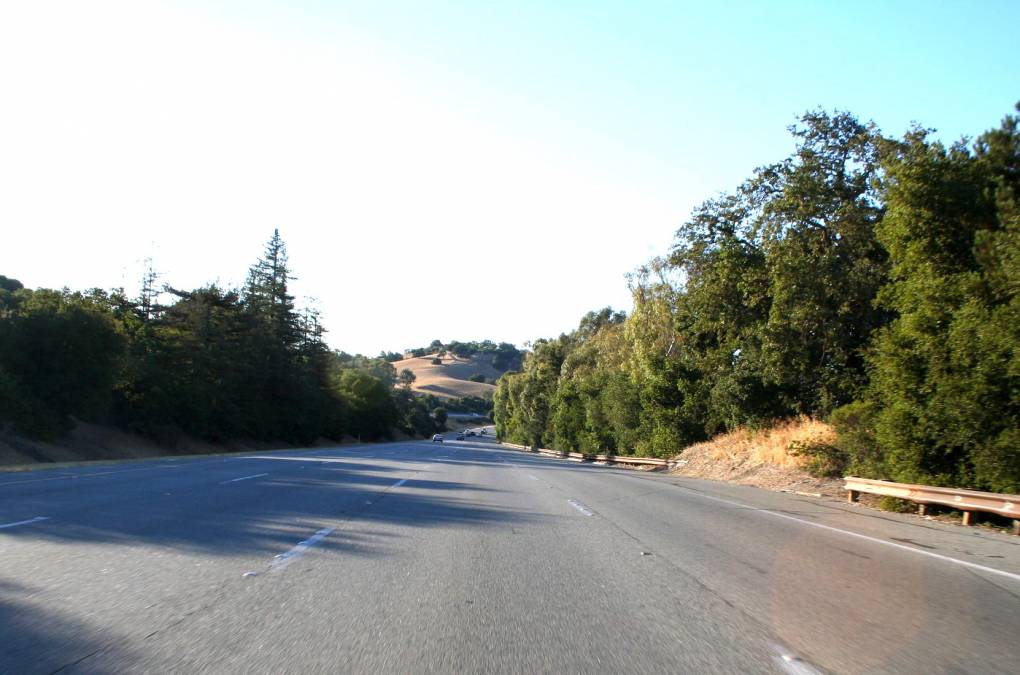
"caption": "\u003ca href=\"https://www.flickr.com/photos/melvinlewis/2813505147/in/photolist-5hBX4r-mAA2EM-gVvf1o-gVvdkS-8vbqQx-nQBpd-gVvcZm-8veu23-gVvrkD-q4KAsC-q6FfVx-yNSk86-oRAnzQ-nQW4t-gVvrRD-c2zz3w-gVvdnp-9RwPWE-gVv66j-gVvcDG-gVwjQF-q6QYt8-8vbr9r-9Ru2X6-pa78Wz-c2zyvG-gVv9T9-5hBWka-oRDrTH-pvXp2T-5vJWfK-gVvh2E-gVv6m9-nGSKQz-gVvmhU-8vbrx4-gVweY6-gVvcEx-nZ49Z8-nXiQab-c2znzN-gVvtbo-edFiga-o33CrZ-gVv7Lo-8vbrkZ-nGSJdM-yNLHAf-pPsGHd-pNweUq\">Highway 280's scenic view has no billboards and barely a building in sight.\u003c/a>",
"description": null,
"title": "2813505147_42b47928b0_k",
"credit": "Courtesy of iammeltron / Creative Commons - Flickr / Cropped",
"status": "inherit",
"isLoading": false,
"fetchFailed": false
},
"news_11803649": {
"type": "attachments",
"id": "news_11803649",
"meta": {
"index": "attachments_1716263798",
"site": "news",
"id": "11803649",
"found": true
},
"parent": 11803642,
"imgSizes": {
"apple_news_ca_landscape_5_5": {
"file": "https://ww2.kqed.org/app/uploads/sites/10/2020/02/RS30609_WindsorHotel-2-1044x783.jpg",
"width": 1044,
"mimeType": "image/jpeg",
"height": 783
},
"apple_news_ca_square_4_0": {
"file": "https://ww2.kqed.org/app/uploads/sites/10/2020/02/RS30609_WindsorHotel-2-470x470.jpg",
"width": 470,
"mimeType": "image/jpeg",
"height": 470
},
"twentyfourteen-full-width": {
"file": "https://ww2.kqed.org/app/uploads/sites/10/2020/02/RS30609_WindsorHotel-2-1038x576.jpg",
"width": 1038,
"mimeType": "image/jpeg",
"height": 576
},
"thumbnail": {
"file": "https://ww2.kqed.org/app/uploads/sites/10/2020/02/RS30609_WindsorHotel-2-160x106.jpg",
"width": 160,
"mimeType": "image/jpeg",
"height": 106
},
"post-thumbnail": {
"file": "https://ww2.kqed.org/app/uploads/sites/10/2020/02/RS30609_WindsorHotel-2-672x372.jpg",
"width": 672,
"mimeType": "image/jpeg",
"height": 372
},
"kqedFullSize": {
"file": "https://ww2.kqed.org/app/uploads/sites/10/2020/02/RS30609_WindsorHotel-2.jpg",
"width": 1480,
"height": 981
},
"apple_news_ca_landscape_4_7": {
"file": "https://ww2.kqed.org/app/uploads/sites/10/2020/02/RS30609_WindsorHotel-2-632x474.jpg",
"width": 632,
"mimeType": "image/jpeg",
"height": 474
},
"large": {
"file": "https://ww2.kqed.org/app/uploads/sites/10/2020/02/RS30609_WindsorHotel-2-1020x676.jpg",
"width": 1020,
"mimeType": "image/jpeg",
"height": 676
},
"apple_news_ca_landscape_4_0": {
"file": "https://ww2.kqed.org/app/uploads/sites/10/2020/02/RS30609_WindsorHotel-2-536x402.jpg",
"width": 536,
"mimeType": "image/jpeg",
"height": 402
},
"apple_news_ca_portrait_12_9": {
"file": "https://ww2.kqed.org/app/uploads/sites/10/2020/02/RS30609_WindsorHotel-2-1122x981.jpg",
"width": 1122,
"mimeType": "image/jpeg",
"height": 981
},
"medium": {
"file": "https://ww2.kqed.org/app/uploads/sites/10/2020/02/RS30609_WindsorHotel-2-800x530.jpg",
"width": 800,
"mimeType": "image/jpeg",
"height": 530
},
"apple_news_ca_portrait_4_0": {
"file": "https://ww2.kqed.org/app/uploads/sites/10/2020/02/RS30609_WindsorHotel-2-354x472.jpg",
"width": 354,
"mimeType": "image/jpeg",
"height": 472
},
"apple_news_ca_portrait_9_7": {
"file": "https://ww2.kqed.org/app/uploads/sites/10/2020/02/RS30609_WindsorHotel-2-840x981.jpg",
"width": 840,
"mimeType": "image/jpeg",
"height": 981
},
"apple_news_ca_square_9_7": {
"file": "https://ww2.kqed.org/app/uploads/sites/10/2020/02/RS30609_WindsorHotel-2-1104x981.jpg",
"width": 1104,
"mimeType": "image/jpeg",
"height": 981
},
"apple_news_ca_portrait_4_7": {
"file": "https://ww2.kqed.org/app/uploads/sites/10/2020/02/RS30609_WindsorHotel-2-414x552.jpg",
"width": 414,
"mimeType": "image/jpeg",
"height": 552
},
"apple_news_ca_square_12_9": {
"file": "https://ww2.kqed.org/app/uploads/sites/10/2020/02/RS30609_WindsorHotel-2-1472x981.jpg",
"width": 1472,
"mimeType": "image/jpeg",
"height": 981
},
"apple_news_ca_portrait_5_5": {
"file": "https://ww2.kqed.org/app/uploads/sites/10/2020/02/RS30609_WindsorHotel-2-687x916.jpg",
"width": 687,
"mimeType": "image/jpeg",
"height": 916
},
"apple_news_ca_square_4_7": {
"file": "https://ww2.kqed.org/app/uploads/sites/10/2020/02/RS30609_WindsorHotel-2-550x550.jpg",
"width": 550,
"mimeType": "image/jpeg",
"height": 550
},
"apple_news_ca_landscape_9_7": {
"file": "https://ww2.kqed.org/app/uploads/sites/10/2020/02/RS30609_WindsorHotel-2-1376x981.jpg",
"width": 1376,
"mimeType": "image/jpeg",
"height": 981
},
"apple_news_ca_square_5_5": {
"file": "https://ww2.kqed.org/app/uploads/sites/10/2020/02/RS30609_WindsorHotel-2-912x912.jpg",
"width": 912,
"mimeType": "image/jpeg",
"height": 912
}
},
"publishDate": 1582754194,
"modified": 1582754246,
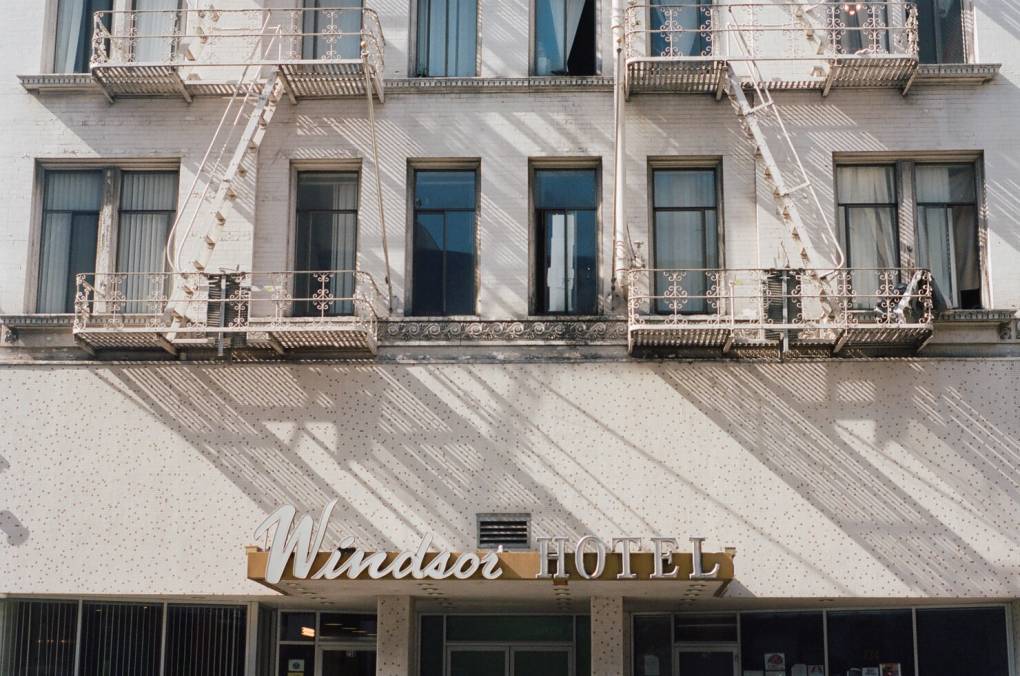
"caption": "The Windsor Hotel is a single resident occupancy hotel located at 344 Eddy St.",
"description": "The Windsor Hotel is a single resident occupancy hotel located at 344 Eddy St.",
"title": "RS30609_WindsorHotel-2",
"credit": "Samantha Shanahan/KQED",
"status": "inherit",
"isLoading": false,
"fetchFailed": false
},
"news_11801526": {
"type": "attachments",
"id": "news_11801526",
"meta": {
"index": "attachments_1716263798",
"site": "news",
"id": "11801526",
"found": true
},
"title": "RS41332_coyote skyline-qut",
"publishDate": 1581630109,
"status": "inherit",
"parent": 11799871,
"modified": 1747258407,
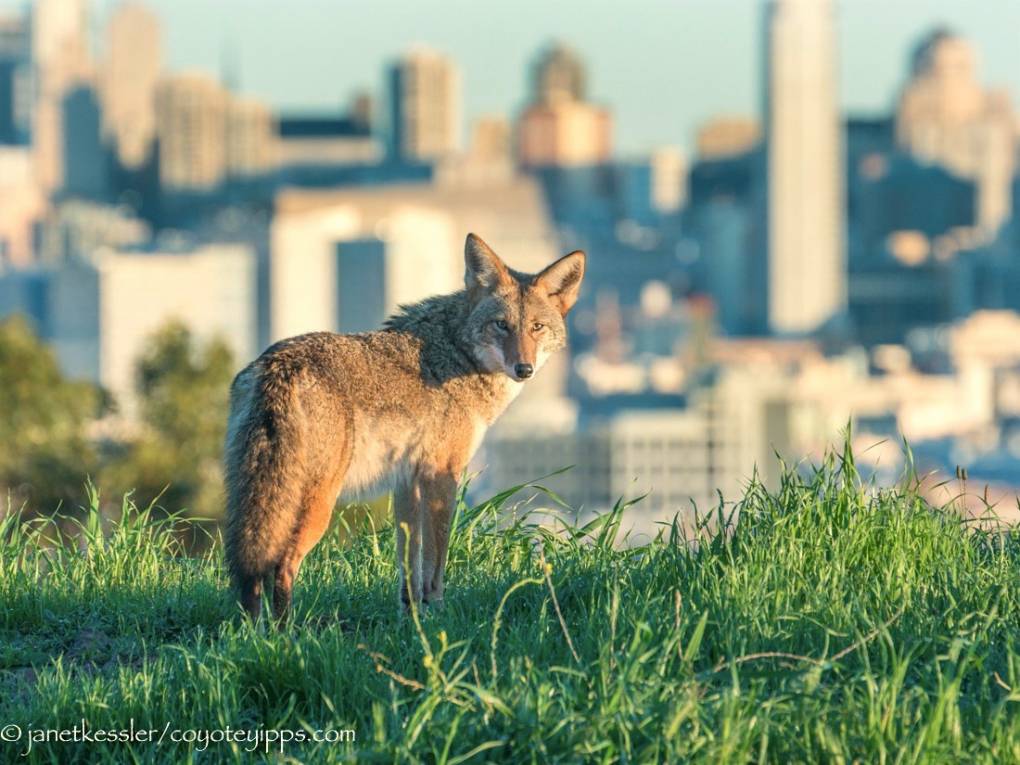
"caption": "Coyotes have repopulated San Francisco's green spaces.",
"credit": "Courtesy of Janet Kessler",
"altTag": null,
"description": null,
"imgSizes": {
"thumbnail": {
"file": "https://cdn.kqed.org/wp-content/uploads/sites/10/2020/02/RS41332_coyote-skyline-qut-160x120.jpg",
"width": 160,
"height": 120,
"mimeType": "image/jpeg"
},
"medium": {
"file": "https://cdn.kqed.org/wp-content/uploads/sites/10/2020/02/RS41332_coyote-skyline-qut-800x600.jpg",
"width": 800,
"height": 600,
"mimeType": "image/jpeg"
},
"large": {
"file": "https://cdn.kqed.org/wp-content/uploads/sites/10/2020/02/RS41332_coyote-skyline-qut-1020x765.jpg",
"width": 1020,
"height": 765,
"mimeType": "image/jpeg"
},
"post-thumbnail": {
"file": "https://cdn.kqed.org/wp-content/uploads/sites/10/2020/02/RS41332_coyote-skyline-qut-672x372.jpg",
"width": 672,
"height": 372,
"mimeType": "image/jpeg"
},
"twentyfourteen-full-width": {
"file": "https://cdn.kqed.org/wp-content/uploads/sites/10/2020/02/RS41332_coyote-skyline-qut-1038x576.jpg",
"width": 1038,
"height": 576,
"mimeType": "image/jpeg"
},
"apple_news_ca_landscape_5_5": {
"file": "https://cdn.kqed.org/wp-content/uploads/sites/10/2020/02/RS41332_coyote-skyline-qut-1044x783.jpg",
"width": 1044,
"height": 783,
"mimeType": "image/jpeg"
},
"apple_news_ca_landscape_4_7": {
"file": "https://cdn.kqed.org/wp-content/uploads/sites/10/2020/02/RS41332_coyote-skyline-qut-632x474.jpg",
"width": 632,
"height": 474,
"mimeType": "image/jpeg"
},
"apple_news_ca_landscape_4_0": {
"file": "https://cdn.kqed.org/wp-content/uploads/sites/10/2020/02/RS41332_coyote-skyline-qut-536x402.jpg",
"width": 536,
"height": 402,
"mimeType": "image/jpeg"
},
"apple_news_ca_portrait_9_7": {
"file": "https://cdn.kqed.org/wp-content/uploads/sites/10/2020/02/RS41332_coyote-skyline-qut-840x825.jpg",
"width": 840,
"height": 825,
"mimeType": "image/jpeg"
},
"apple_news_ca_portrait_5_5": {
"file": "https://cdn.kqed.org/wp-content/uploads/sites/10/2020/02/RS41332_coyote-skyline-qut-687x825.jpg",
"width": 687,
"height": 825,
"mimeType": "image/jpeg"
},
"apple_news_ca_portrait_4_7": {
"file": "https://cdn.kqed.org/wp-content/uploads/sites/10/2020/02/RS41332_coyote-skyline-qut-414x552.jpg",
"width": 414,
"height": 552,
"mimeType": "image/jpeg"
},
"apple_news_ca_portrait_4_0": {
"file": "https://cdn.kqed.org/wp-content/uploads/sites/10/2020/02/RS41332_coyote-skyline-qut-354x472.jpg",
"width": 354,
"height": 472,
"mimeType": "image/jpeg"
},
"apple_news_ca_square_5_5": {
"file": "https://cdn.kqed.org/wp-content/uploads/sites/10/2020/02/RS41332_coyote-skyline-qut-912x825.jpg",
"width": 912,
"height": 825,
"mimeType": "image/jpeg"
},
"apple_news_ca_square_4_7": {
"file": "https://cdn.kqed.org/wp-content/uploads/sites/10/2020/02/RS41332_coyote-skyline-qut-550x550.jpg",
"width": 550,
"height": 550,
"mimeType": "image/jpeg"
},
"apple_news_ca_square_4_0": {
"file": "https://cdn.kqed.org/wp-content/uploads/sites/10/2020/02/RS41332_coyote-skyline-qut-470x470.jpg",
"width": 470,
"height": 470,
"mimeType": "image/jpeg"
},
"kqedFullSize": {
"file": "https://cdn.kqed.org/wp-content/uploads/sites/10/2020/02/RS41332_coyote-skyline-qut.jpg",
"width": 1100,
"height": 825
}
},
"isLoading": false,
"fetchFailed": false
},
"news_11801388": {
"type": "attachments",
"id": "news_11801388",
"meta": {
"index": "attachments_1716263798",
"site": "news",
"id": "11801388",
"found": true
},
"parent": 11801360,
"imgSizes": {
"apple_news_ca_landscape_5_5": {
"file": "https://ww2.kqed.org/app/uploads/sites/10/2020/02/iStock-1137011633-1044x783.jpg",
"width": 1044,
"mimeType": "image/jpeg",
"height": 783
},
"apple_news_ca_square_4_0": {
"file": "https://ww2.kqed.org/app/uploads/sites/10/2020/02/iStock-1137011633-470x470.jpg",
"width": 470,
"mimeType": "image/jpeg",
"height": 470
},
"twentyfourteen-full-width": {
"file": "https://ww2.kqed.org/app/uploads/sites/10/2020/02/iStock-1137011633-1038x576.jpg",
"width": 1038,
"mimeType": "image/jpeg",
"height": 576
},
"thumbnail": {
"file": "https://ww2.kqed.org/app/uploads/sites/10/2020/02/iStock-1137011633-160x106.jpg",
"width": 160,
"mimeType": "image/jpeg",
"height": 106
},
"post-thumbnail": {
"file": "https://ww2.kqed.org/app/uploads/sites/10/2020/02/iStock-1137011633-672x372.jpg",
"width": 672,
"mimeType": "image/jpeg",
"height": 372
},
"kqedFullSize": {
"file": "https://ww2.kqed.org/app/uploads/sites/10/2020/02/iStock-1137011633.jpg",
"width": 2123,
"height": 1411
},
"apple_news_ca_landscape_4_7": {
"file": "https://ww2.kqed.org/app/uploads/sites/10/2020/02/iStock-1137011633-632x474.jpg",
"width": 632,
"mimeType": "image/jpeg",
"height": 474
},
"large": {
"file": "https://ww2.kqed.org/app/uploads/sites/10/2020/02/iStock-1137011633-1020x678.jpg",
"width": 1020,
"mimeType": "image/jpeg",
"height": 678
},
"apple_news_ca_landscape_4_0": {
"file": "https://ww2.kqed.org/app/uploads/sites/10/2020/02/iStock-1137011633-536x402.jpg",
"width": 536,
"mimeType": "image/jpeg",
"height": 402
},
"apple_news_ca_portrait_12_9": {
"file": "https://ww2.kqed.org/app/uploads/sites/10/2020/02/iStock-1137011633-1122x1411.jpg",
"width": 1122,
"mimeType": "image/jpeg",
"height": 1411
},
"medium": {
"file": "https://ww2.kqed.org/app/uploads/sites/10/2020/02/iStock-1137011633-800x532.jpg",
"width": 800,
"mimeType": "image/jpeg",
"height": 532
},
"apple_news_ca_portrait_4_0": {
"file": "https://ww2.kqed.org/app/uploads/sites/10/2020/02/iStock-1137011633-354x472.jpg",
"width": 354,
"mimeType": "image/jpeg",
"height": 472
},
"apple_news_ca_portrait_9_7": {
"file": "https://ww2.kqed.org/app/uploads/sites/10/2020/02/iStock-1137011633-840x1120.jpg",
"width": 840,
"mimeType": "image/jpeg",
"height": 1120
},
"apple_news_ca_landscape_12_9": {
"file": "https://ww2.kqed.org/app/uploads/sites/10/2020/02/iStock-1137011633-1832x1374.jpg",
"width": 1832,
"mimeType": "image/jpeg",
"height": 1374
},
"apple_news_ca_square_9_7": {
"file": "https://ww2.kqed.org/app/uploads/sites/10/2020/02/iStock-1137011633-1104x1104.jpg",
"width": 1104,
"mimeType": "image/jpeg",
"height": 1104
},
"apple_news_ca_portrait_4_7": {
"file": "https://ww2.kqed.org/app/uploads/sites/10/2020/02/iStock-1137011633-414x552.jpg",
"width": 414,
"mimeType": "image/jpeg",
"height": 552
},
"apple_news_ca_square_12_9": {
"file": "https://ww2.kqed.org/app/uploads/sites/10/2020/02/iStock-1137011633-1472x1411.jpg",
"width": 1472,
"mimeType": "image/jpeg",
"height": 1411
},
"apple_news_ca_portrait_5_5": {
"file": "https://ww2.kqed.org/app/uploads/sites/10/2020/02/iStock-1137011633-687x916.jpg",
"width": 687,
"mimeType": "image/jpeg",
"height": 916
},
"full-width": {
"file": "https://ww2.kqed.org/app/uploads/sites/10/2020/02/iStock-1137011633-1920x1276.jpg",
"width": 1920,
"mimeType": "image/jpeg",
"height": 1276
},
"apple_news_ca_square_4_7": {
"file": "https://ww2.kqed.org/app/uploads/sites/10/2020/02/iStock-1137011633-550x550.jpg",
"width": 550,
"mimeType": "image/jpeg",
"height": 550
},
"apple_news_ca_landscape_9_7": {
"file": "https://ww2.kqed.org/app/uploads/sites/10/2020/02/iStock-1137011633-1376x1032.jpg",
"width": 1376,
"mimeType": "image/jpeg",
"height": 1032
},
"apple_news_ca_square_5_5": {
"file": "https://ww2.kqed.org/app/uploads/sites/10/2020/02/iStock-1137011633-912x912.jpg",
"width": 912,
"mimeType": "image/jpeg",
"height": 912
}
},
"publishDate": 1581549701,
"modified": 1581549752,
"caption": null,
"description": null,
"title": "Wedding red lock with heart on a handrail.",
"credit": "iStock images",
"status": "inherit",
"isLoading": false,
"fetchFailed": false
},
"news_11801450": {
"type": "attachments",
"id": "news_11801450",
"meta": {
"index": "attachments_1716263798",
"site": "news",
"id": "11801450",
"found": true
},
"parent": 11801288,
"imgSizes": {
"apple_news_ca_landscape_5_5": {
"file": "https://ww2.kqed.org/app/uploads/sites/10/2020/02/iStock-1092042234-1044x783.jpg",
"width": 1044,
"mimeType": "image/jpeg",
"height": 783
},
"apple_news_ca_square_4_0": {
"file": "https://ww2.kqed.org/app/uploads/sites/10/2020/02/iStock-1092042234-470x470.jpg",
"width": 470,
"mimeType": "image/jpeg",
"height": 470
},
"twentyfourteen-full-width": {
"file": "https://ww2.kqed.org/app/uploads/sites/10/2020/02/iStock-1092042234-1038x576.jpg",
"width": 1038,
"mimeType": "image/jpeg",
"height": 576
},
"thumbnail": {
"file": "https://ww2.kqed.org/app/uploads/sites/10/2020/02/iStock-1092042234-160x107.jpg",
"width": 160,
"mimeType": "image/jpeg",
"height": 107
},
"post-thumbnail": {
"file": "https://ww2.kqed.org/app/uploads/sites/10/2020/02/iStock-1092042234-672x372.jpg",
"width": 672,
"mimeType": "image/jpeg",
"height": 372
},
"kqedFullSize": {
"file": "https://ww2.kqed.org/app/uploads/sites/10/2020/02/iStock-1092042234.jpg",
"width": 2121,
"height": 1414
},
"apple_news_ca_landscape_4_7": {
"file": "https://ww2.kqed.org/app/uploads/sites/10/2020/02/iStock-1092042234-632x474.jpg",
"width": 632,
"mimeType": "image/jpeg",
"height": 474
},
"large": {
"file": "https://ww2.kqed.org/app/uploads/sites/10/2020/02/iStock-1092042234-1020x680.jpg",
"width": 1020,
"mimeType": "image/jpeg",
"height": 680
},
"apple_news_ca_landscape_4_0": {
"file": "https://ww2.kqed.org/app/uploads/sites/10/2020/02/iStock-1092042234-536x402.jpg",
"width": 536,
"mimeType": "image/jpeg",
"height": 402
},
"apple_news_ca_portrait_12_9": {
"file": "https://ww2.kqed.org/app/uploads/sites/10/2020/02/iStock-1092042234-1122x1414.jpg",
"width": 1122,
"mimeType": "image/jpeg",
"height": 1414
},
"medium": {
"file": "https://ww2.kqed.org/app/uploads/sites/10/2020/02/iStock-1092042234-800x533.jpg",
"width": 800,
"mimeType": "image/jpeg",
"height": 533
},
"apple_news_ca_portrait_4_0": {
"file": "https://ww2.kqed.org/app/uploads/sites/10/2020/02/iStock-1092042234-354x472.jpg",
"width": 354,
"mimeType": "image/jpeg",
"height": 472
},
"apple_news_ca_portrait_9_7": {
"file": "https://ww2.kqed.org/app/uploads/sites/10/2020/02/iStock-1092042234-840x1120.jpg",
"width": 840,
"mimeType": "image/jpeg",
"height": 1120
},
"apple_news_ca_landscape_12_9": {
"file": "https://ww2.kqed.org/app/uploads/sites/10/2020/02/iStock-1092042234-1832x1374.jpg",
"width": 1832,
"mimeType": "image/jpeg",
"height": 1374
},
"apple_news_ca_square_9_7": {
"file": "https://ww2.kqed.org/app/uploads/sites/10/2020/02/iStock-1092042234-1104x1104.jpg",
"width": 1104,
"mimeType": "image/jpeg",
"height": 1104
},
"apple_news_ca_portrait_4_7": {
"file": "https://ww2.kqed.org/app/uploads/sites/10/2020/02/iStock-1092042234-414x552.jpg",
"width": 414,
"mimeType": "image/jpeg",
"height": 552
},
"apple_news_ca_square_12_9": {
"file": "https://ww2.kqed.org/app/uploads/sites/10/2020/02/iStock-1092042234-1472x1414.jpg",
"width": 1472,
"mimeType": "image/jpeg",
"height": 1414
},
"apple_news_ca_portrait_5_5": {
"file": "https://ww2.kqed.org/app/uploads/sites/10/2020/02/iStock-1092042234-687x916.jpg",
"width": 687,
"mimeType": "image/jpeg",
"height": 916
},
"full-width": {
"file": "https://ww2.kqed.org/app/uploads/sites/10/2020/02/iStock-1092042234-1920x1280.jpg",
"width": 1920,
"mimeType": "image/jpeg",
"height": 1280
},
"apple_news_ca_square_4_7": {
"file": "https://ww2.kqed.org/app/uploads/sites/10/2020/02/iStock-1092042234-550x550.jpg",
"width": 550,
"mimeType": "image/jpeg",
"height": 550
},
"apple_news_ca_landscape_9_7": {
"file": "https://ww2.kqed.org/app/uploads/sites/10/2020/02/iStock-1092042234-1376x1032.jpg",
"width": 1376,
"mimeType": "image/jpeg",
"height": 1032
},
"apple_news_ca_square_5_5": {
"file": "https://ww2.kqed.org/app/uploads/sites/10/2020/02/iStock-1092042234-912x912.jpg",
"width": 912,
"mimeType": "image/jpeg",
"height": 912
}
},
"publishDate": 1581578824,
"modified": 1581578867,
"caption": null,
"description": null,
"title": "Asian grandmother and little child girl making heart shape with hands together with love",
"credit": "iStock ",
"status": "inherit",
"isLoading": false,
"fetchFailed": false
},
"news_11799418": {
"type": "attachments",
"id": "news_11799418",
"meta": {
"index": "attachments_1716263798",
"site": "news",
"id": "11799418",
"found": true
},
"parent": 11799297,
"imgSizes": {
"apple_news_ca_landscape_5_5": {
"file": "https://ww2.kqed.org/app/uploads/sites/10/2020/01/GettyImages-1583045-1044x783.jpg",
"width": 1044,
"mimeType": "image/jpeg",
"height": 783
},
"apple_news_ca_square_4_0": {
"file": "https://ww2.kqed.org/app/uploads/sites/10/2020/01/GettyImages-1583045-470x470.jpg",
"width": 470,
"mimeType": "image/jpeg",
"height": 470
},
"twentyfourteen-full-width": {
"file": "https://ww2.kqed.org/app/uploads/sites/10/2020/01/GettyImages-1583045-1038x576.jpg",
"width": 1038,
"mimeType": "image/jpeg",
"height": 576
},
"thumbnail": {
"file": "https://ww2.kqed.org/app/uploads/sites/10/2020/01/GettyImages-1583045-160x108.jpg",
"width": 160,
"mimeType": "image/jpeg",
"height": 108
},
"post-thumbnail": {
"file": "https://ww2.kqed.org/app/uploads/sites/10/2020/01/GettyImages-1583045-672x372.jpg",
"width": 672,
"mimeType": "image/jpeg",
"height": 372
},
"kqedFullSize": {
"file": "https://ww2.kqed.org/app/uploads/sites/10/2020/01/GettyImages-1583045.jpg",
"width": 1920,
"height": 1294
},
"apple_news_ca_landscape_4_7": {
"file": "https://ww2.kqed.org/app/uploads/sites/10/2020/01/GettyImages-1583045-632x474.jpg",
"width": 632,
"mimeType": "image/jpeg",
"height": 474
},
"large": {
"file": "https://ww2.kqed.org/app/uploads/sites/10/2020/01/GettyImages-1583045-1020x687.jpg",
"width": 1020,
"mimeType": "image/jpeg",
"height": 687
},
"apple_news_ca_landscape_4_0": {
"file": "https://ww2.kqed.org/app/uploads/sites/10/2020/01/GettyImages-1583045-536x402.jpg",
"width": 536,
"mimeType": "image/jpeg",
"height": 402
},
"apple_news_ca_portrait_12_9": {
"file": "https://ww2.kqed.org/app/uploads/sites/10/2020/01/GettyImages-1583045-1122x1294.jpg",
"width": 1122,
"mimeType": "image/jpeg",
"height": 1294
},
"medium": {
"file": "https://ww2.kqed.org/app/uploads/sites/10/2020/01/GettyImages-1583045-800x539.jpg",
"width": 800,
"mimeType": "image/jpeg",
"height": 539
},
"apple_news_ca_portrait_4_0": {
"file": "https://ww2.kqed.org/app/uploads/sites/10/2020/01/GettyImages-1583045-354x472.jpg",
"width": 354,
"mimeType": "image/jpeg",
"height": 472
},
"apple_news_ca_portrait_9_7": {
"file": "https://ww2.kqed.org/app/uploads/sites/10/2020/01/GettyImages-1583045-840x1120.jpg",
"width": 840,
"mimeType": "image/jpeg",
"height": 1120
},
"apple_news_ca_landscape_12_9": {
"file": "https://ww2.kqed.org/app/uploads/sites/10/2020/01/GettyImages-1583045-1832x1294.jpg",
"width": 1832,
"mimeType": "image/jpeg",
"height": 1294
},
"apple_news_ca_square_9_7": {
"file": "https://ww2.kqed.org/app/uploads/sites/10/2020/01/GettyImages-1583045-1104x1104.jpg",
"width": 1104,
"mimeType": "image/jpeg",
"height": 1104
},
"apple_news_ca_portrait_4_7": {
"file": "https://ww2.kqed.org/app/uploads/sites/10/2020/01/GettyImages-1583045-414x552.jpg",
"width": 414,
"mimeType": "image/jpeg",
"height": 552
},
"apple_news_ca_square_12_9": {
"file": "https://ww2.kqed.org/app/uploads/sites/10/2020/01/GettyImages-1583045-1472x1294.jpg",
"width": 1472,
"mimeType": "image/jpeg",
"height": 1294
},
"apple_news_ca_portrait_5_5": {
"file": "https://ww2.kqed.org/app/uploads/sites/10/2020/01/GettyImages-1583045-687x916.jpg",
"width": 687,
"mimeType": "image/jpeg",
"height": 916
},
"full-width": {
"file": "https://ww2.kqed.org/app/uploads/sites/10/2020/01/GettyImages-1583045-1920x1294.jpg",
"width": 1920,
"mimeType": "image/jpeg",
"height": 1294
},
"apple_news_ca_square_4_7": {
"file": "https://ww2.kqed.org/app/uploads/sites/10/2020/01/GettyImages-1583045-550x550.jpg",
"width": 550,
"mimeType": "image/jpeg",
"height": 550
},
"apple_news_ca_landscape_9_7": {
"file": "https://ww2.kqed.org/app/uploads/sites/10/2020/01/GettyImages-1583045-1376x1032.jpg",
"width": 1376,
"mimeType": "image/jpeg",
"height": 1032
},
"apple_news_ca_square_5_5": {
"file": "https://ww2.kqed.org/app/uploads/sites/10/2020/01/GettyImages-1583045-912x912.jpg",
"width": 912,
"mimeType": "image/jpeg",
"height": 912
}
},
"publishDate": 1580509584,
"modified": 1581016448,
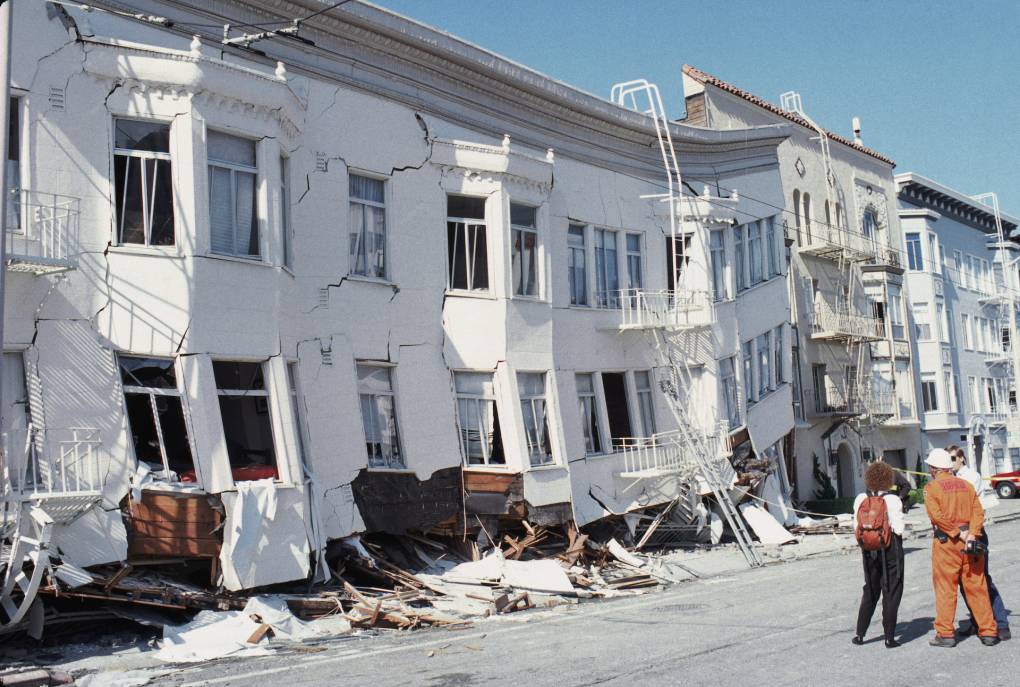
"caption": "Much of the Marina District is built on artificial fill and suffered widespread damage, including liquefaction, during the 1989 Loma Prieta earthquake.",
"description": null,
"title": "General view of the Marina district disaster zone",
"credit": "Otto Greule Jr./Getty Images",
"status": "inherit",
"isLoading": false,
"fetchFailed": false
},
"news_11687540": {
"type": "attachments",
"id": "news_11687540",
"meta": {
"index": "attachments_1716263798",
"site": "news",
"id": "11687540",
"found": true
},
"parent": 11687502,
"imgSizes": {
"small": {
"file": "https://ww2.kqed.org/app/uploads/sites/10/2018/08/27523684607_75ad9c4d83_k-520x340.jpg",
"width": 520,
"mimeType": "image/jpeg",
"height": 340
},
"twentyfourteen-full-width": {
"file": "https://ww2.kqed.org/app/uploads/sites/10/2018/08/27523684607_75ad9c4d83_k-1038x576.jpg",
"width": 1038,
"mimeType": "image/jpeg",
"height": 576
},
"thumbnail": {
"file": "https://ww2.kqed.org/app/uploads/sites/10/2018/08/27523684607_75ad9c4d83_k-160x105.jpg",
"width": 160,
"mimeType": "image/jpeg",
"height": 105
},
"fd-sm": {
"file": "https://ww2.kqed.org/app/uploads/sites/10/2018/08/27523684607_75ad9c4d83_k-960x627.jpg",
"width": 960,
"mimeType": "image/jpeg",
"height": 627
},
"post-thumbnail": {
"file": "https://ww2.kqed.org/app/uploads/sites/10/2018/08/27523684607_75ad9c4d83_k-672x372.jpg",
"width": 672,
"mimeType": "image/jpeg",
"height": 372
},
"xsmall": {
"file": "https://ww2.kqed.org/app/uploads/sites/10/2018/08/27523684607_75ad9c4d83_k-375x245.jpg",
"width": 375,
"mimeType": "image/jpeg",
"height": 245
},
"kqedFullSize": {
"file": "https://ww2.kqed.org/app/uploads/sites/10/2018/08/27523684607_75ad9c4d83_k-e1534549524523.jpg",
"width": 1920,
"height": 1254
},
"large": {
"file": "https://ww2.kqed.org/app/uploads/sites/10/2018/08/27523684607_75ad9c4d83_k-1020x666.jpg",
"width": 1020,
"mimeType": "image/jpeg",
"height": 666
},
"xlarge": {
"file": "https://ww2.kqed.org/app/uploads/sites/10/2018/08/27523684607_75ad9c4d83_k-1180x771.jpg",
"width": 1180,
"mimeType": "image/jpeg",
"height": 771
},
"complete_open_graph": {
"file": "https://ww2.kqed.org/app/uploads/sites/10/2018/08/27523684607_75ad9c4d83_k-1200x784.jpg",
"width": 1200,
"mimeType": "image/jpeg",
"height": 784
},
"guest-author-50": {
"file": "https://ww2.kqed.org/app/uploads/sites/10/2018/08/27523684607_75ad9c4d83_k-50x50.jpg",
"width": 50,
"mimeType": "image/jpeg",
"height": 50
},
"guest-author-96": {
"file": "https://ww2.kqed.org/app/uploads/sites/10/2018/08/27523684607_75ad9c4d83_k-96x96.jpg",
"width": 96,
"mimeType": "image/jpeg",
"height": 96
},
"medium": {
"file": "https://ww2.kqed.org/app/uploads/sites/10/2018/08/27523684607_75ad9c4d83_k-800x523.jpg",
"width": 800,
"mimeType": "image/jpeg",
"height": 523
},
"guest-author-64": {
"file": "https://ww2.kqed.org/app/uploads/sites/10/2018/08/27523684607_75ad9c4d83_k-64x64.jpg",
"width": 64,
"mimeType": "image/jpeg",
"height": 64
},
"guest-author-32": {
"file": "https://ww2.kqed.org/app/uploads/sites/10/2018/08/27523684607_75ad9c4d83_k-32x32.jpg",
"width": 32,
"mimeType": "image/jpeg",
"height": 32
},
"fd-lrg": {
"file": "https://ww2.kqed.org/app/uploads/sites/10/2018/08/27523684607_75ad9c4d83_k-1920x1254.jpg",
"width": 1920,
"mimeType": "image/jpeg",
"height": 1254
},
"fd-med": {
"file": "https://ww2.kqed.org/app/uploads/sites/10/2018/08/27523684607_75ad9c4d83_k-1180x771.jpg",
"width": 1180,
"mimeType": "image/jpeg",
"height": 771
},
"full-width": {
"file": "https://ww2.kqed.org/app/uploads/sites/10/2018/08/27523684607_75ad9c4d83_k-1920x1254.jpg",
"width": 1920,
"mimeType": "image/jpeg",
"height": 1254
},
"detail": {
"file": "https://ww2.kqed.org/app/uploads/sites/10/2018/08/27523684607_75ad9c4d83_k-150x150.jpg",
"width": 150,
"mimeType": "image/jpeg",
"height": 150
},
"guest-author-128": {
"file": "https://ww2.kqed.org/app/uploads/sites/10/2018/08/27523684607_75ad9c4d83_k-128x128.jpg",
"width": 128,
"mimeType": "image/jpeg",
"height": 128
},
"xxsmall": {
"file": "https://ww2.kqed.org/app/uploads/sites/10/2018/08/27523684607_75ad9c4d83_k-240x157.jpg",
"width": 240,
"mimeType": "image/jpeg",
"height": 157
}
},
"publishDate": 1534549435,
"modified": 1534549504,
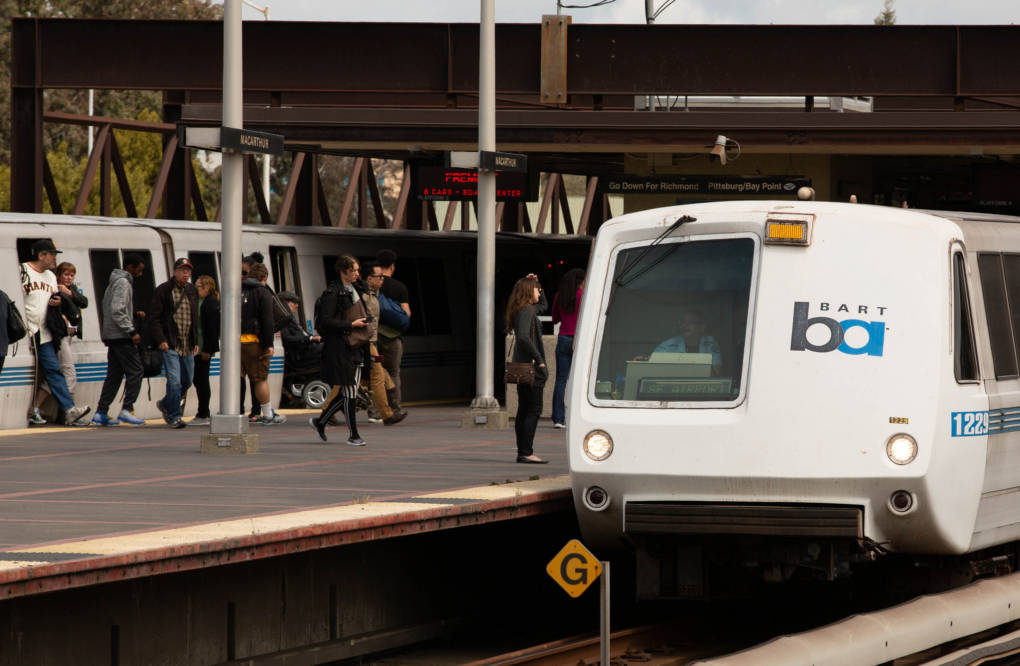
"caption": "Passengers transferring from Richmond-Warm Springs train to San Francisco International Airport Train.",
"description": null,
"title": "BART-MacArthur",
"credit": "Dan Brekke/KQED",
"status": "inherit",
"isLoading": false,
"fetchFailed": false
},
"news_11795015": {
"type": "attachments",
"id": "news_11795015",
"meta": {
"index": "attachments_1716263798",
"site": "news",
"id": "11795015",
"found": true
},
"parent": 11795009,
"imgSizes": {
"apple_news_ca_square_4_0": {
"file": "https://ww2.kqed.org/app/uploads/sites/10/2020/01/1024px-PedestrianSignalPushButton-470x470.jpg",
"width": 470,
"mimeType": "image/jpeg",
"height": 470
},
"twentyfourteen-full-width": {
"file": "https://ww2.kqed.org/app/uploads/sites/10/2020/01/1024px-PedestrianSignalPushButton-1024x576.jpg",
"width": 1024,
"mimeType": "image/jpeg",
"height": 576
},
"thumbnail": {
"file": "https://ww2.kqed.org/app/uploads/sites/10/2020/01/1024px-PedestrianSignalPushButton-160x106.jpg",
"width": 160,
"mimeType": "image/jpeg",
"height": 106
},
"post-thumbnail": {
"file": "https://ww2.kqed.org/app/uploads/sites/10/2020/01/1024px-PedestrianSignalPushButton-672x372.jpg",
"width": 672,
"mimeType": "image/jpeg",
"height": 372
},
"kqedFullSize": {
"file": "https://ww2.kqed.org/app/uploads/sites/10/2020/01/1024px-PedestrianSignalPushButton.jpg",
"width": 1024,
"height": 678
},
"apple_news_ca_landscape_4_7": {
"file": "https://ww2.kqed.org/app/uploads/sites/10/2020/01/1024px-PedestrianSignalPushButton-632x474.jpg",
"width": 632,
"mimeType": "image/jpeg",
"height": 474
},
"large": {
"file": "https://ww2.kqed.org/app/uploads/sites/10/2020/01/1024px-PedestrianSignalPushButton-1020x675.jpg",
"width": 1020,
"mimeType": "image/jpeg",
"height": 675
},
"apple_news_ca_landscape_4_0": {
"file": "https://ww2.kqed.org/app/uploads/sites/10/2020/01/1024px-PedestrianSignalPushButton-536x402.jpg",
"width": 536,
"mimeType": "image/jpeg",
"height": 402
},
"medium": {
"file": "https://ww2.kqed.org/app/uploads/sites/10/2020/01/1024px-PedestrianSignalPushButton-800x530.jpg",
"width": 800,
"mimeType": "image/jpeg",
"height": 530
},
"apple_news_ca_portrait_4_0": {
"file": "https://ww2.kqed.org/app/uploads/sites/10/2020/01/1024px-PedestrianSignalPushButton-354x472.jpg",
"width": 354,
"mimeType": "image/jpeg",
"height": 472
},
"apple_news_ca_portrait_9_7": {
"file": "https://ww2.kqed.org/app/uploads/sites/10/2020/01/1024px-PedestrianSignalPushButton-840x678.jpg",
"width": 840,
"mimeType": "image/jpeg",
"height": 678
},
"apple_news_ca_portrait_4_7": {
"file": "https://ww2.kqed.org/app/uploads/sites/10/2020/01/1024px-PedestrianSignalPushButton-414x552.jpg",
"width": 414,
"mimeType": "image/jpeg",
"height": 552
},
"apple_news_ca_portrait_5_5": {
"file": "https://ww2.kqed.org/app/uploads/sites/10/2020/01/1024px-PedestrianSignalPushButton-687x678.jpg",
"width": 687,
"mimeType": "image/jpeg",
"height": 678
},
"apple_news_ca_square_4_7": {
"file": "https://ww2.kqed.org/app/uploads/sites/10/2020/01/1024px-PedestrianSignalPushButton-550x550.jpg",
"width": 550,
"mimeType": "image/jpeg",
"height": 550
},
"apple_news_ca_square_5_5": {
"file": "https://ww2.kqed.org/app/uploads/sites/10/2020/01/1024px-PedestrianSignalPushButton-912x678.jpg",
"width": 912,
"mimeType": "image/jpeg",
"height": 678
}
},
"publishDate": 1578595091,
"modified": 1643396048,
"caption": "Many of the accessible pedestrian signals in San Francisco look like this. ",
"description": "Many of the accessible pedestrian signals in San Francisco look like this. ",
"title": "1024px-PedestrianSignalPushButton",
"credit": "Raysonho @ Open Grid Scheduler/Grid Engine",
"status": "inherit",
"altTag": null,
"isLoading": false,
"fetchFailed": false
},
"news_11793400": {
"type": "attachments",
"id": "news_11793400",
"meta": {
"index": "attachments_1716263798",
"site": "news",
"id": "11793400",
"found": true
},
"parent": 11791667,
"imgSizes": {
"apple_news_ca_landscape_5_5": {
"file": "https://ww2.kqed.org/app/uploads/sites/10/2020/01/11915634055_97bb3a859d_k-1044x783.jpg",
"width": 1044,
"mimeType": "image/jpeg",
"height": 783
},
"apple_news_ca_square_4_0": {
"file": "https://ww2.kqed.org/app/uploads/sites/10/2020/01/11915634055_97bb3a859d_k-470x470.jpg",
"width": 470,
"mimeType": "image/jpeg",
"height": 470
},
"twentyfourteen-full-width": {
"file": "https://ww2.kqed.org/app/uploads/sites/10/2020/01/11915634055_97bb3a859d_k-1038x576.jpg",
"width": 1038,
"mimeType": "image/jpeg",
"height": 576
},
"thumbnail": {
"file": "https://ww2.kqed.org/app/uploads/sites/10/2020/01/11915634055_97bb3a859d_k-160x107.jpg",
"width": 160,
"mimeType": "image/jpeg",
"height": 107
},
"post-thumbnail": {
"file": "https://ww2.kqed.org/app/uploads/sites/10/2020/01/11915634055_97bb3a859d_k-672x372.jpg",
"width": 672,
"mimeType": "image/jpeg",
"height": 372
},
"kqedFullSize": {
"file": "https://ww2.kqed.org/app/uploads/sites/10/2020/01/11915634055_97bb3a859d_k.jpg",
"width": 2048,
"height": 1364
},
"apple_news_ca_landscape_4_7": {
"file": "https://ww2.kqed.org/app/uploads/sites/10/2020/01/11915634055_97bb3a859d_k-632x474.jpg",
"width": 632,
"mimeType": "image/jpeg",
"height": 474
},
"large": {
"file": "https://ww2.kqed.org/app/uploads/sites/10/2020/01/11915634055_97bb3a859d_k-1020x679.jpg",
"width": 1020,
"mimeType": "image/jpeg",
"height": 679
},
"complete_open_graph": {
"file": "https://ww2.kqed.org/app/uploads/sites/10/2020/01/11915634055_97bb3a859d_k-1200x799.jpg",
"width": 1200,
"mimeType": "image/jpeg",
"height": 799
},
"apple_news_ca_landscape_4_0": {
"file": "https://ww2.kqed.org/app/uploads/sites/10/2020/01/11915634055_97bb3a859d_k-536x402.jpg",
"width": 536,
"mimeType": "image/jpeg",
"height": 402
},
"apple_news_ca_portrait_12_9": {
"file": "https://ww2.kqed.org/app/uploads/sites/10/2020/01/11915634055_97bb3a859d_k-1122x1364.jpg",
"width": 1122,
"mimeType": "image/jpeg",
"height": 1364
},
"medium": {
"file": "https://ww2.kqed.org/app/uploads/sites/10/2020/01/11915634055_97bb3a859d_k-800x533.jpg",
"width": 800,
"mimeType": "image/jpeg",
"height": 533
},
"apple_news_ca_portrait_4_0": {
"file": "https://ww2.kqed.org/app/uploads/sites/10/2020/01/11915634055_97bb3a859d_k-354x472.jpg",
"width": 354,
"mimeType": "image/jpeg",
"height": 472
},
"apple_news_ca_portrait_9_7": {
"file": "https://ww2.kqed.org/app/uploads/sites/10/2020/01/11915634055_97bb3a859d_k-840x1120.jpg",
"width": 840,
"mimeType": "image/jpeg",
"height": 1120
},
"apple_news_ca_landscape_12_9": {
"file": "https://ww2.kqed.org/app/uploads/sites/10/2020/01/11915634055_97bb3a859d_k-1832x1364.jpg",
"width": 1832,
"mimeType": "image/jpeg",
"height": 1364
},
"apple_news_ca_square_9_7": {
"file": "https://ww2.kqed.org/app/uploads/sites/10/2020/01/11915634055_97bb3a859d_k-1104x1104.jpg",
"width": 1104,
"mimeType": "image/jpeg",
"height": 1104
},
"apple_news_ca_portrait_4_7": {
"file": "https://ww2.kqed.org/app/uploads/sites/10/2020/01/11915634055_97bb3a859d_k-414x552.jpg",
"width": 414,
"mimeType": "image/jpeg",
"height": 552
},
"apple_news_ca_square_12_9": {
"file": "https://ww2.kqed.org/app/uploads/sites/10/2020/01/11915634055_97bb3a859d_k-1472x1364.jpg",
"width": 1472,
"mimeType": "image/jpeg",
"height": 1364
},
"apple_news_ca_portrait_5_5": {
"file": "https://ww2.kqed.org/app/uploads/sites/10/2020/01/11915634055_97bb3a859d_k-687x916.jpg",
"width": 687,
"mimeType": "image/jpeg",
"height": 916
},
"full-width": {
"file": "https://ww2.kqed.org/app/uploads/sites/10/2020/01/11915634055_97bb3a859d_k-1920x1279.jpg",
"width": 1920,
"mimeType": "image/jpeg",
"height": 1279
},
"apple_news_ca_square_4_7": {
"file": "https://ww2.kqed.org/app/uploads/sites/10/2020/01/11915634055_97bb3a859d_k-550x550.jpg",
"width": 550,
"mimeType": "image/jpeg",
"height": 550
},
"apple_news_ca_landscape_9_7": {
"file": "https://ww2.kqed.org/app/uploads/sites/10/2020/01/11915634055_97bb3a859d_k-1376x1032.jpg",
"width": 1376,
"mimeType": "image/jpeg",
"height": 1032
},
"apple_news_ca_square_5_5": {
"file": "https://ww2.kqed.org/app/uploads/sites/10/2020/01/11915634055_97bb3a859d_k-912x912.jpg",
"width": 912,
"mimeType": "image/jpeg",
"height": 912
}
},
"publishDate": 1577814605,
"modified": 1577814683,
"caption": "Walking around San Francisco and Oakland, you're likely to come across a grid of vault lights on the sidewalk.",
"description": "Walking around San Francisco and Oakland, you're likely to come across a grid of vault lights on the sidewalk.",
"title": "11915634055_97bb3a859d_k",
"credit": "\u003ca href=\"https://www.flickr.com/photos/squeakymarmot/11915634055/\">Mike\u003c/a>/flickr",
"status": "inherit",
"isLoading": false,
"fetchFailed": false
},
"science_1956214": {
"type": "attachments",
"id": "science_1956214",
"meta": {
"index": "attachments_1716263798",
"site": "science",
"id": "1956214",
"found": true
},
"title": "Treasure Island San Francisco",
"publishDate": 1579921639,
"status": "inherit",
"parent": 1952317,
"modified": 1748538340,
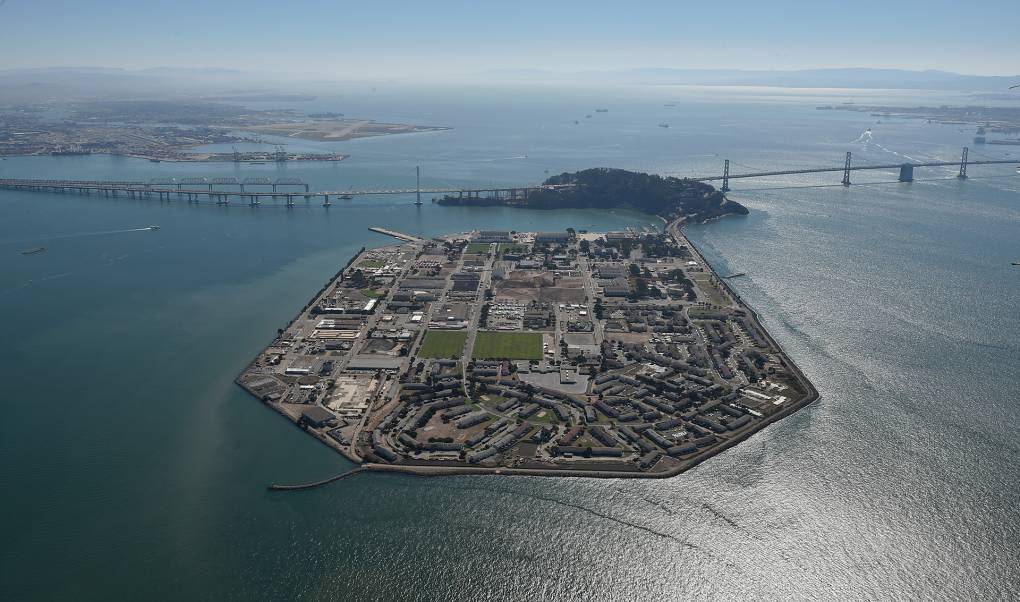
"caption": "Treasure Island and the Bay Bridge are seen in San Francisco, on Oct. 9, 2015.",
"credit": "Josh Edelson/AFP via Getty Images",
"altTag": "Treasure Island",
"description": null,
"imgSizes": {
"thumbnail": {
"file": "https://cdn.kqed.org/wp-content/uploads/sites/35/2019/12/Treasure-Island-San-Francisco-160x94.jpg",
"width": 160,
"height": 94,
"mimeType": "image/jpeg"
},
"medium": {
"file": "https://cdn.kqed.org/wp-content/uploads/sites/35/2019/12/Treasure-Island-San-Francisco-800x472.jpg",
"width": 800,
"height": 472,
"mimeType": "image/jpeg"
},
"medium_large": {
"file": "https://cdn.kqed.org/wp-content/uploads/sites/35/2019/12/Treasure-Island-San-Francisco-768x453.jpg",
"width": 768,
"height": 453,
"mimeType": "image/jpeg"
},
"large": {
"file": "https://cdn.kqed.org/wp-content/uploads/sites/35/2019/12/Treasure-Island-San-Francisco-1020x602.jpg",
"width": 1020,
"height": 602,
"mimeType": "image/jpeg"
},
"post-thumbnail": {
"file": "https://cdn.kqed.org/wp-content/uploads/sites/35/2019/12/Treasure-Island-San-Francisco-672x372.jpg",
"width": 672,
"height": 372,
"mimeType": "image/jpeg"
},
"twentyfourteen-full-width": {
"file": "https://cdn.kqed.org/wp-content/uploads/sites/35/2019/12/Treasure-Island-San-Francisco-1020x576.jpg",
"width": 1020,
"height": 576,
"mimeType": "image/jpeg"
},
"kqedFullSize": {
"file": "https://cdn.kqed.org/wp-content/uploads/sites/35/2019/12/Treasure-Island-San-Francisco.jpg",
"width": 1020,
"height": 602
}
},
"isLoading": false,
"fetchFailed": false
}
},
"audioPlayerReducer": {
"postId": "stream_live",
"isPaused": true,
"isPlaying": false,
"pfsActive": false,
"pledgeModalIsOpen": true,
"playerDrawerIsOpen": false,
"liveAudioPlayStartedAt": 0,
"liveAudioPlayContext": ""
},
"authorsReducer": {
"byline_news_11805469": {
"type": "authors",
"id": "byline_news_11805469",
"meta": {
"override": true
},
"slug": "byline_news_11805469",
"name": "Christopher Egusa",
"isLoading": false
},
"ohubertallen": {
"type": "authors",
"id": "102",
"meta": {
"index": "authors_1716337520",
"id": "102",
"found": true
},
"name": "Olivia Allen-Price",
"firstName": "Olivia",
"lastName": "Allen-Price",
"slug": "ohubertallen",
"email": "oallenprice@kqed.org",
"display_author_email": false,
"staff_mastheads": [
"news"
],
"title": "Senior Editor",
"bio": "Olivia Allen-Price is senior editor and host of the award-winning Bay Curious podcast. Prior to joining KQED in 2013, Olivia worked at The Baltimore Sun and The Virginian-Pilot in Norfolk, Va. She holds degrees in journalism and political science from Elon University. Her work has earned awards from the Society of Professional Journalists, the Hearst Foundation and Hearken. She loves to talk about running and curly hair.\r\n\r\nFollow: \u003ca href=\"https://twitter.com/oallenprice\">@oallenprice\u003c/a>\r\nEmail: \u003ca href=\"mailto:oallenprice@kqed.org\">oallenprice@kqed.org\u003c/a>",
"avatar": "https://secure.gravatar.com/avatar/07f7803c1f6be56f3be58ef276dfa64dce898502e0554408ef4858451a8294f7?s=600&d=blank&r=g",
"twitter": "oallenprice",
"bluesky": null,
"facebook": null,
"instagram": null,
"linkedin": null,
"sites": [
{
"site": "",
"roles": [
"editor"
]
},
{
"site": "arts",
"roles": [
"subscriber"
]
},
{
"site": "news",
"roles": [
"administrator"
]
},
{
"site": "pop",
"roles": [
"administrator"
]
},
{
"site": "bayareabites",
"roles": [
"contributor"
]
},
{
"site": "stateofhealth",
"roles": [
"administrator"
]
},
{
"site": "science",
"roles": [
"editor"
]
}
],
"headData": {
"title": "Olivia Allen-Price | KQED",
"description": "Senior Editor",
"ogImgSrc": "https://secure.gravatar.com/avatar/07f7803c1f6be56f3be58ef276dfa64dce898502e0554408ef4858451a8294f7?s=600&d=blank&r=g",
"twImgSrc": "https://secure.gravatar.com/avatar/07f7803c1f6be56f3be58ef276dfa64dce898502e0554408ef4858451a8294f7?s=600&d=blank&r=g"
},
"isLoading": false,
"link": "/author/ohubertallen"
},
"danbrekke": {
"type": "authors",
"id": "222",
"meta": {
"index": "authors_1716337520",
"id": "222",
"found": true
},
"name": "Dan Brekke",
"firstName": "Dan",
"lastName": "Brekke",
"slug": "danbrekke",
"email": "dbrekke@kqed.org",
"display_author_email": true,
"staff_mastheads": [
"news",
"science"
],
"title": "KQED Editor and Reporter",
"bio": "Dan Brekke is a reporter and editor for KQED News, responsible for coverage of topics ranging from California water issues to the Bay Area's transportation challenges. In a newsroom career that began in Chicago in 1972, Dan has worked for \u003cem>The San Francisco Examiner,\u003c/em> Wired and TechTV and has been published in The New York Times, The New York Times Magazine, Business 2.0, Salon and elsewhere.\r\n\r\nSince joining KQED in 2007, Dan has reported, edited and produced both radio and online features and breaking news pieces. He has shared as both editor and reporter in four Society of Professional Journalists Norcal Excellence in Journalism awards and one Edward R. Murrow regional award. He was chosen for a spring 2017 residency at the Mesa Refuge to advance his research on California salmon.\r\n\r\nEmail Dan at: \u003ca href=\"mailto:dbrekke@kqed.org\">dbrekke@kqed.org\u003c/a>\r\n\r\n\u003cstrong>Twitter:\u003c/strong> \u003ca href=\"https://twitter.com/danbrekke\" rel=\"noopener noreferrer\">twitter.com/danbrekke\u003c/a>\r\n\u003cstrong>Facebook:\u003c/strong> \u003ca href=\"https://www.facebook.com/danbrekke\" rel=\"noopener noreferrer\">www.facebook.com/danbrekke\u003c/a>\r\n\u003cstrong>LinkedIn:\u003c/strong> \u003ca href=\"https://www.linkedin.com/in/danbrekke\" rel=\"noopener noreferrer\">www.linkedin.com/in/danbrekke\u003c/a>",
"avatar": "https://secure.gravatar.com/avatar/8f1f0d2a978fb3b23426c922c7e2af558fa36905b49c4ce76a97dc3c72d27226?s=600&d=mm&r=g",
"twitter": "danbrekke",
"bluesky": null,
"facebook": null,
"instagram": "https://www.instagram.com/dan.brekke/",
"linkedin": "https://www.linkedin.com/in/danbrekke/",
"sites": [
{
"site": "news",
"roles": [
"administrator",
"create_posts"
]
},
{
"site": "stateofhealth",
"roles": [
"editor"
]
},
{
"site": "science",
"roles": [
"editor"
]
},
{
"site": "quest",
"roles": [
"contributor"
]
},
{
"site": "food",
"roles": [
"contributor"
]
},
{
"site": "forum",
"roles": [
"contributor"
]
},
{
"site": "elections",
"roles": [
"editor"
]
},
{
"site": "liveblog",
"roles": [
"editor"
]
}
],
"headData": {
"title": "Dan Brekke | KQED",
"description": "KQED Editor and Reporter",
"ogImgSrc": "https://secure.gravatar.com/avatar/8f1f0d2a978fb3b23426c922c7e2af558fa36905b49c4ce76a97dc3c72d27226?s=600&d=mm&r=g",
"twImgSrc": "https://secure.gravatar.com/avatar/8f1f0d2a978fb3b23426c922c7e2af558fa36905b49c4ce76a97dc3c72d27226?s=600&d=mm&r=g"
},
"isLoading": false,
"link": "/author/danbrekke"
},
"katrinaschwartz": {
"type": "authors",
"id": "234",
"meta": {
"index": "authors_1716337520",
"id": "234",
"found": true
},
"name": "Katrina Schwartz",
"firstName": "Katrina",
"lastName": "Schwartz",
"slug": "katrinaschwartz",
"email": "kschwartz@kqed.org",
"display_author_email": false,
"staff_mastheads": [
"news"
],
"title": "Producer",
"bio": "Katrina Schwartz is a journalist based in San Francisco. She's worked at KPCC public radio in LA and has reported on air and online for KQED since 2010. She covered how teaching and learning is changing for MindShift between 2012 and 2020. She is the co-host of the MindShift podcast and now produces KQED's Bay Curious podcast.",
"avatar": "https://secure.gravatar.com/avatar/edb4ee79070447a018538c9aae6eeecf28786515b8a0c30e43b6b7dce5aa44c8?s=600&d=blank&r=g",
"twitter": "kschwart",
"bluesky": null,
"facebook": null,
"instagram": null,
"linkedin": null,
"sites": [
{
"site": "",
"roles": [
"editor"
]
},
{
"site": "news",
"roles": [
"editor"
]
},
{
"site": "mindshift",
"roles": [
"administrator"
]
},
{
"site": "stateofhealth",
"roles": [
"author"
]
},
{
"site": "science",
"roles": [
"editor"
]
}
],
"headData": {
"title": "Katrina Schwartz | KQED",
"description": "Producer",
"ogImgSrc": "https://secure.gravatar.com/avatar/edb4ee79070447a018538c9aae6eeecf28786515b8a0c30e43b6b7dce5aa44c8?s=600&d=blank&r=g",
"twImgSrc": "https://secure.gravatar.com/avatar/edb4ee79070447a018538c9aae6eeecf28786515b8a0c30e43b6b7dce5aa44c8?s=600&d=blank&r=g"
},
"isLoading": false,
"link": "/author/katrinaschwartz"
},
"kdomara": {
"type": "authors",
"id": "1459",
"meta": {
"index": "authors_1716337520",
"id": "1459",
"found": true
},
"name": "Kelly O'Mara",
"firstName": "Kelly",
"lastName": "O'Mara",
"slug": "kdomara",
"email": "komara@kqed.org",
"display_author_email": false,
"staff_mastheads": [
"news"
],
"title": "KQED Contributor",
"bio": "Kelly O'Mara is a writer and reporter in the San Francisco Bay Area. She writes about food, health, sports, travel, business and California news. Her work has appeared on KQED, online for Outside Magazine, epsnW, VICE and in Competitor Magazine, among others. Follow Kelly on Twitter \u003ca href=\"https://twitter.com/kellydomara\">@kellydomara\u003c/a>.",
"avatar": "https://secure.gravatar.com/avatar/768fec7412028b72f13bdd0f5f9d8186?s=600&d=blank&r=g",
"twitter": null,
"facebook": null,
"instagram": null,
"linkedin": null,
"sites": [
{
"site": "arts",
"roles": []
},
{
"site": "news",
"roles": []
},
{
"site": "bayareabites",
"roles": []
},
{
"site": "stateofhealth",
"roles": []
},
{
"site": "science",
"roles": []
},
{
"site": "checkplease",
"roles": [
"editor"
]
},
{
"site": "food",
"roles": []
},
{
"site": "forum",
"roles": [
"editor"
]
},
{
"site": "liveblog",
"roles": [
"editor"
]
}
],
"headData": {
"title": "Kelly O'Mara | KQED",
"description": "KQED Contributor",
"ogImgSrc": "https://secure.gravatar.com/avatar/768fec7412028b72f13bdd0f5f9d8186?s=600&d=blank&r=g",
"twImgSrc": "https://secure.gravatar.com/avatar/768fec7412028b72f13bdd0f5f9d8186?s=600&d=blank&r=g"
},
"isLoading": false,
"link": "/author/kdomara"
},
"jplaczek": {
"type": "authors",
"id": "8606",
"meta": {
"index": "authors_1716337520",
"id": "8606",
"found": true
},
"name": "Jessica Placzek",
"firstName": "Jessica",
"lastName": "Placzek",
"slug": "jplaczek",
"email": "jessicalplaczek@gmail.com",
"display_author_email": false,
"staff_mastheads": [
"news"
],
"title": "KQED Contributor",
"bio": "Jessica Placzek is a former senior editor of podcasts at KQED where she served as the editorial lead of the podcast department. She worked with shows like MindShift, Rightnowish, Consider This, SOLD OUT, Bay Curious and The Bay. She’s also been a reporter and audio producer at KQED, KPFA, and KALW. She taught audio production to men incarcerated at California State Prison Solano and edited pieces they produced for the Uncuffed podcast through KALW. In 2018 she co-hosted and produced the third season of Raw Material for SFMOMA. In New Orleans she wrote for the Nola Defender. Her work has also appeared on Marketplace, All Things Considered, The California Report, and Vice. You can find more at jessicaplaczek.com",
"avatar": "https://secure.gravatar.com/avatar/5ead103b5880f672eceb84ce75eecd1b4b6f74a47edc457684a73ad5b8b158e9?s=600&d=blank&r=g",
"twitter": null,
"bluesky": null,
"facebook": null,
"instagram": null,
"linkedin": null,
"sites": [
{
"site": "arts",
"roles": [
"subscriber"
]
},
{
"site": "news",
"roles": [
"subscriber"
]
},
{
"site": "stateofhealth",
"roles": [
"editor"
]
},
{
"site": "forum",
"roles": [
"editor"
]
}
],
"headData": {
"title": "Jessica Placzek | KQED",
"description": "KQED Contributor",
"ogImgSrc": "https://secure.gravatar.com/avatar/5ead103b5880f672eceb84ce75eecd1b4b6f74a47edc457684a73ad5b8b158e9?s=600&d=blank&r=g",
"twImgSrc": "https://secure.gravatar.com/avatar/5ead103b5880f672eceb84ce75eecd1b4b6f74a47edc457684a73ad5b8b158e9?s=600&d=blank&r=g"
},
"isLoading": false,
"link": "/author/jplaczek"
},
"btaylor": {
"type": "authors",
"id": "11365",
"meta": {
"index": "authors_1716337520",
"id": "11365",
"found": true
},
"name": "Bianca Taylor",
"firstName": "Bianca",
"lastName": "Taylor",
"slug": "btaylor",
"email": "btaylor@KQED.org",
"display_author_email": false,
"staff_mastheads": [
"news"
],
"title": "Host and Producer ",
"bio": "Bianca Taylor is a news producer and host of KQED's The Latest podcast.\r\n\r\nHer work with KQED has been honored by the Society of Professional Journalists NorCal, the Webby's, the Regional Murrow Awards, and ONA. She has also worked with NPR, the BBC World Service, and the Washington Post Creative Group.\r\n\r\nBianca is represented by SAG-AFTRA.",
"avatar": "https://secure.gravatar.com/avatar/6b9d3f6552dd10470c5d1c2e58cfe717?s=600&d=blank&r=g",
"twitter": "SoundsLkeBianca",
"facebook": null,
"instagram": null,
"linkedin": null,
"sites": [
{
"site": "arts",
"roles": [
"editor"
]
},
{
"site": "news",
"roles": [
"edit_others_posts",
"editor"
]
},
{
"site": "pop",
"roles": [
"editor"
]
},
{
"site": "bayareabites",
"roles": [
"author"
]
},
{
"site": "science",
"roles": [
"editor"
]
},
{
"site": "forum",
"roles": [
"editor"
]
},
{
"site": "radio",
"roles": [
"editor"
]
},
{
"site": "podcasts",
"roles": [
"editor"
]
}
],
"headData": {
"title": "Bianca Taylor | KQED",
"description": "Host and Producer ",
"ogImgSrc": "https://secure.gravatar.com/avatar/6b9d3f6552dd10470c5d1c2e58cfe717?s=600&d=blank&r=g",
"twImgSrc": "https://secure.gravatar.com/avatar/6b9d3f6552dd10470c5d1c2e58cfe717?s=600&d=blank&r=g"
},
"isLoading": false,
"link": "/author/btaylor"
},
"nvoynovskaya": {
"type": "authors",
"id": "11387",
"meta": {
"index": "authors_1716337520",
"id": "11387",
"found": true
},
"name": "Nastia Voynovskaya",
"firstName": "Nastia",
"lastName": "Voynovskaya",
"slug": "nvoynovskaya",
"email": "nvoynovskaya@kqed.org",
"display_author_email": false,
"staff_mastheads": [
"arts"
],
"title": "Editor and reporter",
"bio": "Nastia Voynovskaya is a reporter, editor and host at KQED Arts & Culture. She's been covering the arts in the Bay Area for over a decade, with a focus on music, queer culture, labor issues and grassroots organizing. She has edited KQED story series such as Trans Bay: A History of San Francisco's Gender-Diverse Community, and co-created KQED's Bay Area hip-hop history project, That's My Word. Nastia's work has been recognized by the Society of Professional Journalists and San Francisco Press Club. She regularly appears on podcasts and radio programs, including NPR's All Songs Considered, and hosts live events where music, culture and conversation meet.",
"avatar": "https://secure.gravatar.com/avatar/5025ee460e5a85d69ca20ea6c6f2f80d7e17795c828f61ea3aecfcd924e9042e?s=600&d=blank&r=g",
"twitter": null,
"bluesky": null,
"facebook": null,
"instagram": "https://www.instagram.com/nananastia/",
"linkedin": null,
"sites": [
{
"site": "",
"roles": [
"editor"
]
},
{
"site": "arts",
"roles": [
"administrator"
]
},
{
"site": "news",
"roles": [
"editor"
]
},
{
"site": "pop",
"roles": [
"administrator"
]
},
{
"site": "bayareabites",
"roles": [
"editor"
]
},
{
"site": "podcasts",
"roles": [
"editor"
]
},
{
"site": "hiphop",
"roles": [
"editor"
]
}
],
"headData": {
"title": "Nastia Voynovskaya | KQED",
"description": "Editor and reporter",
"ogImgSrc": "https://secure.gravatar.com/avatar/5025ee460e5a85d69ca20ea6c6f2f80d7e17795c828f61ea3aecfcd924e9042e?s=600&d=blank&r=g",
"twImgSrc": "https://secure.gravatar.com/avatar/5025ee460e5a85d69ca20ea6c6f2f80d7e17795c828f61ea3aecfcd924e9042e?s=600&d=blank&r=g"
},
"isLoading": false,
"link": "/author/nvoynovskaya"
},
"aehsanipour": {
"type": "authors",
"id": "11580",
"meta": {
"index": "authors_1716337520",
"id": "11580",
"found": true
},
"name": "Asal Ehsanipour",
"firstName": "Asal",
"lastName": "Ehsanipour",
"slug": "aehsanipour",
"email": "aehsanipour@kqed.org",
"display_author_email": false,
"staff_mastheads": [],
"title": "Reporter and Producer",
"bio": "Asal Ehsanipour is a producer and reporter for Rightnowish, Bay Curious and The California Report Magazine. She is also a producer for \u003ca href=\"https://www.thedoubleshift.com/\">The Double Shift\u003c/a>, a podcast about a new generation of working mothers. In 2018, Asal was named an Emerging Journalist Fellow by the Journalism and Women’s Symposium. Her work has appeared on KQED, KALW, PRI’s The World, and in several food and travel publications.",
"avatar": "https://secure.gravatar.com/avatar/c0e210438f5dca1b76921ff9f0eada52?s=600&d=blank&r=g",
"twitter": null,
"facebook": null,
"instagram": null,
"linkedin": null,
"sites": [
{
"site": "arts",
"roles": []
},
{
"site": "news",
"roles": [
"author",
"edit_others_posts"
]
}
],
"headData": {
"title": "Asal Ehsanipour | KQED",
"description": "Reporter and Producer",
"ogImgSrc": "https://secure.gravatar.com/avatar/c0e210438f5dca1b76921ff9f0eada52?s=600&d=blank&r=g",
"twImgSrc": "https://secure.gravatar.com/avatar/c0e210438f5dca1b76921ff9f0eada52?s=600&d=blank&r=g"
},
"isLoading": false,
"link": "/author/aehsanipour"
},
"kevinstark": {
"type": "authors",
"id": "11608",
"meta": {
"index": "authors_1716337520",
"id": "11608",
"found": true
},
"name": "Kevin Stark",
"firstName": "Kevin",
"lastName": "Stark",
"slug": "kevinstark",
"email": "kstark@kqed.org",
"display_author_email": true,
"staff_mastheads": [
"science"
],
"title": "Senior Editor",
"bio": "Kevin is a senior editor for KQED Science, managing the station's health and climate desks. His journalism career began in the Pacific Northwest, and he later became a lead reporter for the San Francisco Public Press. His work has appeared in Pacific Standard magazine, the Energy News Network, the Center for Investigative Reporting's Reveal and WBEZ in Chicago. Kevin joined KQED in 2019, and has covered issues related to energy, wildfire, climate change and the environment.",
"avatar": "https://secure.gravatar.com/avatar/365aaa4b597d3a8374f67504ff0facd323d7906e8eb4be0a7efd2427408e802c?s=600&d=blank&r=g",
"twitter": "starkkev",
"bluesky": null,
"facebook": null,
"instagram": null,
"linkedin": null,
"sites": [
{
"site": "",
"roles": [
"editor"
]
},
{
"site": "news",
"roles": [
"editor"
]
},
{
"site": "science",
"roles": [
"administrator"
]
}
],
"headData": {
"title": "Kevin Stark | KQED",
"description": "Senior Editor",
"ogImgSrc": "https://secure.gravatar.com/avatar/365aaa4b597d3a8374f67504ff0facd323d7906e8eb4be0a7efd2427408e802c?s=600&d=blank&r=g",
"twImgSrc": "https://secure.gravatar.com/avatar/365aaa4b597d3a8374f67504ff0facd323d7906e8eb4be0a7efd2427408e802c?s=600&d=blank&r=g"
},
"isLoading": false,
"link": "/author/kevinstark"
}
},
"pagesReducer": {
"news_program_bay-curious": {
"type": "terms",
"id": "news_33523",
"meta": {
"index": "terms_1716263798",
"site": "news",
"id": "33523",
"score": 15.085659
},
"featImg": null,
"name": "Bay Curious",
"description": null,
"taxonomy": "program",
"headData": {
"twImgId": null,
"twTitle": null,
"ogTitle": null,
"ogImgId": null,
"twDescription": null,
"description": null,
"title": "Bay Curious Archives | KQED News",
"ogDescription": null
},
"ttid": 33540,
"slug": "bay-curious",
"isLoading": false,
"title": "Bay Curious",
"pageMeta": {
"site": "news",
"WpPageTemplate": "page-topic-editorial",
"currentPage": 29
},
"blocks": [
{
"blockName": "kqed/post-list",
"attrs": {
"layout": "cardArticle2",
"query": "posts/news?program=bay-curious",
"seeMore": false,
"paginated": true,
"page": 29
}
},
{
"blockName": "kqed/ad"
}
]
}
},
"pfsSessionReducer": {},
"postsReducer": {
"stream_live": {
"type": "live",
"id": "stream_live",
"audioUrl": "https://streams.kqed.org/kqedradio",
"title": "Live Stream",
"excerpt": "Live Stream information currently unavailable.",
"link": "/radio",
"featImg": "",
"label": {
"name": "KQED Live",
"link": "/"
}
},
"stream_kqedNewscast": {
"type": "posts",
"id": "stream_kqedNewscast",
"audioUrl": "https://www.kqed.org/.stream/anon/radio/RDnews/newscast.mp3?_=1",
"title": "KQED Newscast",
"featImg": "",
"label": {
"name": "88.5 FM",
"link": "/"
}
},
"news_11811099": {
"type": "posts",
"id": "news_11811099",
"meta": {
"index": "posts_1716263798",
"site": "news",
"id": "11811099",
"score": null,
"sort": [
1586426408000
]
},
"guestAuthors": [],
"slug": "how-to-safely-grocery-shop-during-coronavirus-shelter-in-place",
"title": "How to Safely Grocery Shop During Coronavirus Shelter in Place",
"publishDate": 1586426408,
"format": "standard",
"headTitle": "How to Safely Grocery Shop During Coronavirus Shelter in Place | KQED",
"labelTerm": {},
"content": "\u003cp>KQED audience members have sent in over 1,800 questions about the coronavirus and how to shelter in place. Our colleagues in the newsroom are answering as many as they can in this \u003ca href=\"https://www.kqed.org/news/11805625/coronavirus-in-the-bay-area-your-questions-answered\">coronavirus FAQ\u003c/a>, and the KQED Science team is keeping a running\u003ca href=\"https://www.kqed.org/science/1957877/live-updates-coronavirus-in-the-san-francisco-bay-area\"> live blog\u003c/a> of all the latest news.\u003c/p>\n\u003cp>While we all shelter in place to prevent the spread of the coronavirus, many of us aren’t getting out much. When we do, it’s probably to go grocery shopping. For some, a trip to the store may feel like a thrilling adventure, a chance to finally leave the house. But, going to a crowded public place carries risks. KQED has gotten a lot of questions about \u003ca href=\"https://www.kqed.org/news/11809265/doing-the-essential-grocery-shopping-in-the-bay-area-during-the-pandemic\">how to safely go grocery shopping\u003c/a> and bring that food into an already \u003ca href=\"https://www.kqed.org/science/1959172/coronavirus-how-and-when-to-clean-your-home-and-wash-your-hands\">carefully sanitized home\u003c/a>.\u003c/p>\n\u003cp>Keep in mind, public health officials have found no documented cases of COVID-19 transmission from food or food packaging. The exposure risks from grocery shopping are largely from getting too close to other shoppers or touching surfaces — like door handles or shopping carts — that many other people touch.\u003c/p>\n\u003cp>While lines outside grocery stores are a drag, they also indicate that management is taking the risk seriously and is managing capacity to ensure it doesn’t get too crowded. That’s a good thing and will make you safer when you shop. If a store isn’t staggering entrances, it may not be the best choice for your shopping expedition.\u003c/p>\n\u003cp>Here’s the latest guidance:\u003c/p>\n\u003col>\n\u003cli>Follow social distancing rules. Keep 6 feet between yourself and other shoppers at all times.\u003c/li>\n\u003cli>Wear a mask or face covering when in public (this is a \u003ca href=\"https://www.cdc.gov/coronavirus/2019-ncov/prevent-getting-sick/cloth-face-cover.html\">recent recommendation from the Centers for Disease Control and Prevention \u003c/a> as of April 3). A bandana, scarf or homemade mask is enough.\u003c/li>\n\u003cli>Use sterile wipes to sanitize the handle of the shopping cart, and generally be careful not to touch your face while shopping.\u003c/li>\n\u003cli>\u003ca href=\"https://www.kqed.org/science/1960866/why-washing-your-hands-works-so-well-and-how-to-do-it-right\">Wash your hands\u003c/a> before and after shopping, as well as before and after cooking.\u003c/li>\n\u003c/ol>\n\u003cp>Some people are concerned about the virus persisting on the surfaces of food brought home from the grocery store. That is possible, but unlikely. Check out this video for some tips on how to sanitize food brought into the home if you’d like to be extra safe.\u003c/p>\n\u003cp>[ad fullwidth]\u003c/p>\n\u003cp>https://www.youtube.com/watch?v=sjDuwc9KBps&=&feature=youtu.be\u003c/p>\n\u003cp>Lastly, it is \u003ca href=\"https://www.kqed.org/news/11809265/doing-the-essential-grocery-shopping-in-the-bay-area-during-the-pandemic\">safe to order takeout food\u003c/a> as long as everyone follows proper social distancing and hygiene guidelines. In fact, many local businesses are struggling during this pandemic, so patronizing favorite local spots could help ensure they’re still open when this is all over. Just be careful to keep 6 feet of distance between yourself and a restaurant worker or delivery person, wash your hands thoroughly, and if you can, tip well.\u003c/p>\n\u003cp>\u003c/p>\n\u003cp>[baycuriousquestion]\u003c/p>\n\n",
"blocks": [],
"excerpt": "For many, grocery shopping has become a fraught activity during the coronavirus pandemic. All the tips you need to navigate this chore safely.",
"status": "publish",
"parent": 0,
"modified": 1721155503,
"stats": {
"hasAudio": false,
"hasVideo": true,
"hasChartOrMap": false,
"iframeSrcs": [],
"hasGoogleForm": false,
"hasGallery": false,
"hasHearkenModule": true,
"hasPolis": false,
"paragraphCount": 10,
"wordCount": 483
},
"headData": {
"title": "How to Safely Grocery Shop During Coronavirus Shelter in Place | KQED",
"description": "For many, grocery shopping has become a fraught activity during the coronavirus pandemic. All the tips you need to navigate this chore safely.",
"ogTitle": "",
"ogDescription": "",
"ogImgId": "",
"twTitle": "",
"twDescription": "",
"twImgId": "",
"schema": {
"@context": "https://schema.org",
"@type": "NewsArticle",
"headline": "How to Safely Grocery Shop During Coronavirus Shelter in Place",
"datePublished": "2020-04-09T03:00:08-07:00",
"dateModified": "2024-07-16T11:45:03-07:00",
"image": "https://cdn.kqed.org/wp-content/uploads/2020/02/KQED-OG-Image@1x.png",
"isAccessibleForFree": "True",
"publisher": {
"@type": "NewsMediaOrganization",
"@id": "https://www.kqed.org/#organization",
"name": "KQED",
"logo": "https://cdn.kqed.org/wp-content/uploads/2020/02/KQED-OG-Image@1x.png",
"url": "https://www.kqed.org",
"sameAs": [
"https://www.facebook.com/KQED",
"https://twitter.com/KQED",
"https://www.instagram.com/kqed/",
"https://www.tiktok.com/@kqedofficial",
"https://www.linkedin.com/company/kqed",
"https://www.youtube.com/channel/UCeC0IOo7i1P_61zVUWbJ4nw"
]
}
}
},
"source": "Bay Curious",
"sourceUrl": "https://www.kqed.org/podcasts/baycurious",
"audioUrl": "https://traffic.megaphone.fm/KQINC6182473219.mp3",
"sticky": false,
"path": "/news/11811099/how-to-safely-grocery-shop-during-coronavirus-shelter-in-place",
"audioTrackLength": null,
"parsedContent": [
{
"type": "contentString",
"content": "\u003cdiv class=\"post-body\">\u003cp>\u003cp>KQED audience members have sent in over 1,800 questions about the coronavirus and how to shelter in place. Our colleagues in the newsroom are answering as many as they can in this \u003ca href=\"https://www.kqed.org/news/11805625/coronavirus-in-the-bay-area-your-questions-answered\">coronavirus FAQ\u003c/a>, and the KQED Science team is keeping a running\u003ca href=\"https://www.kqed.org/science/1957877/live-updates-coronavirus-in-the-san-francisco-bay-area\"> live blog\u003c/a> of all the latest news.\u003c/p>\n\u003cp>While we all shelter in place to prevent the spread of the coronavirus, many of us aren’t getting out much. When we do, it’s probably to go grocery shopping. For some, a trip to the store may feel like a thrilling adventure, a chance to finally leave the house. But, going to a crowded public place carries risks. KQED has gotten a lot of questions about \u003ca href=\"https://www.kqed.org/news/11809265/doing-the-essential-grocery-shopping-in-the-bay-area-during-the-pandemic\">how to safely go grocery shopping\u003c/a> and bring that food into an already \u003ca href=\"https://www.kqed.org/science/1959172/coronavirus-how-and-when-to-clean-your-home-and-wash-your-hands\">carefully sanitized home\u003c/a>.\u003c/p>\n\u003cp>Keep in mind, public health officials have found no documented cases of COVID-19 transmission from food or food packaging. The exposure risks from grocery shopping are largely from getting too close to other shoppers or touching surfaces — like door handles or shopping carts — that many other people touch.\u003c/p>\n\u003cp>While lines outside grocery stores are a drag, they also indicate that management is taking the risk seriously and is managing capacity to ensure it doesn’t get too crowded. That’s a good thing and will make you safer when you shop. If a store isn’t staggering entrances, it may not be the best choice for your shopping expedition.\u003c/p>\n\u003cp>Here’s the latest guidance:\u003c/p>\n\u003col>\n\u003cli>Follow social distancing rules. Keep 6 feet between yourself and other shoppers at all times.\u003c/li>\n\u003cli>Wear a mask or face covering when in public (this is a \u003ca href=\"https://www.cdc.gov/coronavirus/2019-ncov/prevent-getting-sick/cloth-face-cover.html\">recent recommendation from the Centers for Disease Control and Prevention \u003c/a> as of April 3). A bandana, scarf or homemade mask is enough.\u003c/li>\n\u003cli>Use sterile wipes to sanitize the handle of the shopping cart, and generally be careful not to touch your face while shopping.\u003c/li>\n\u003cli>\u003ca href=\"https://www.kqed.org/science/1960866/why-washing-your-hands-works-so-well-and-how-to-do-it-right\">Wash your hands\u003c/a> before and after shopping, as well as before and after cooking.\u003c/li>\n\u003c/ol>\n\u003cp>Some people are concerned about the virus persisting on the surfaces of food brought home from the grocery store. That is possible, but unlikely. Check out this video for some tips on how to sanitize food brought into the home if you’d like to be extra safe.\u003c/p>\n\u003cp>\u003c/p>\u003c/div>",
"attributes": {
"named": {},
"numeric": []
}
},
{
"type": "component",
"content": "",
"name": "ad",
"attributes": {
"named": {
"label": "fullwidth"
},
"numeric": [
"fullwidth"
]
}
},
{
"type": "contentString",
"content": "\u003cdiv class=\"post-body\">\u003cp>\u003c/p>\u003c/p>\u003cp>\u003cspan class='utils-parseShortcode-shortcodes-__youtubeShortcode__embedYoutube'>\n \u003cspan class='utils-parseShortcode-shortcodes-__youtubeShortcode__embedYoutubeInside'>\n \u003ciframe\n loading='lazy'\n class='utils-parseShortcode-shortcodes-__youtubeShortcode__youtubePlayer'\n type='text/html'\n src='//www.youtube.com/embed/sjDuwc9KBps'\n title='//www.youtube.com/embed/sjDuwc9KBps'\n allowfullscreen='true'\n style='border:0;'>\u003c/iframe>\n \u003c/span>\n \u003c/span>\u003c/p>\u003cp>\u003cp>Lastly, it is \u003ca href=\"https://www.kqed.org/news/11809265/doing-the-essential-grocery-shopping-in-the-bay-area-during-the-pandemic\">safe to order takeout food\u003c/a> as long as everyone follows proper social distancing and hygiene guidelines. In fact, many local businesses are struggling during this pandemic, so patronizing favorite local spots could help ensure they’re still open when this is all over. Just be careful to keep 6 feet of distance between yourself and a restaurant worker or delivery person, wash your hands thoroughly, and if you can, tip well.\u003c/p>\n\u003cp>\u003c/p>\n\u003cp>\u003c/p>\u003c/div>",
"attributes": {
"named": {},
"numeric": []
}
},
{
"type": "component",
"content": "",
"name": "baycuriousquestion",
"attributes": {
"named": {
"label": ""
},
"numeric": []
}
},
{
"type": "contentString",
"content": "\u003cdiv class=\"post-body\">\u003cp>\u003c/p>\n\n\u003c/div>\u003c/p>",
"attributes": {
"named": {},
"numeric": []
}
}
],
"link": "/news/11811099/how-to-safely-grocery-shop-during-coronavirus-shelter-in-place",
"authors": [
"234"
],
"programs": [
"news_33523"
],
"series": [
"news_17986"
],
"categories": [
"news_8",
"news_33520"
],
"tags": [
"news_27350",
"news_29029",
"news_27808"
],
"featImg": "news_11811102",
"label": "source_news_11811099"
},
"news_11807751": {
"type": "posts",
"id": "news_11807751",
"meta": {
"index": "posts_1716263798",
"site": "news",
"id": "11807751",
"score": null,
"sort": [
1584748816000
]
},
"parent": 0,
"labelTerm": {},
"blocks": [],
"publishDate": 1584748816,
"format": "standard",
"title": "A Coronavirus Care Package: Care For Yourself, Others and Still Have Fun",
"headTitle": "A Coronavirus Care Package: Care For Yourself, Others and Still Have Fun | KQED",
"content": "\u003cp>It has been a week, y’all.\u003c/p>\n\u003cp>The news is changing so fast that it’s pretty hard to put it into a podcast. So the Bay Curious team decided to focus on something a little bit different in these dark times: We’re bringing you an audio care package.\u003c/p>\n\u003cp>In this week’s episode (hit play button under the headline listen) we’ve got tips on how to care for yourself and others, an inspiring story about how one neighbor is helping another, and a tour through the creative world of digital gatherings to help you make the most of this challenging time.\u003c/p>\n\u003ch1>Tips on how to keep your chill\u003c/h1>\n\u003cp>KQED’s arts and culture editor \u003ca href=\"https://www.kqed.org/author/nvoynovskaya\">Nastia Voynovskaya\u003c/a> is a guiding light for how to keep chill during challenging times. Here are some of her tips.\u003c/p>\n\u003cp>\u003cstrong>On how to cope:\u003c/strong>\u003c/p>\n\u003cp>First, limit your exposure to the news. Read reliable fact-based reporting to keep yourself informed, but don’t feel like you have to read everything that’s out there — especially if it’s stressing you out and giving you anxiety. Feel free to take a walk. Read a book. Get off your phone or your computer. Turn off notifications and take a break.\u003c/p>\n\u003cp>\u003cstrong>On remembering to move your body: \u003c/strong>\u003c/p>\n\u003cp>There’s only so much time you can spend sitting down. Make sure to take walks outside. Run if you can. Hiking is still allowed as long as you stay at least six feet away from other people. There is also a wealth of free yoga and fitness classes on YouTube to take advantage of. These are really high anxiety times for people — there’s a free meditation app I really like to use called \u003ca href=\"https://insighttimer.com/\">Insight Timer\u003c/a>.\u003c/p>\n\u003cp>[ad fullwidth]\u003c/p>\n\u003cp>\u003cstrong>On keeping your mind stimulated:\u003c/strong>\u003c/p>\n\u003cp>Make sure you’re keeping yourself stimulated and occupying your brain. I personally love to listen to podcasts like \u003ca href=\"https://www.npr.org/podcasts/449018144/snap-judgment\">Snap Judgment\u003c/a>, a storytelling show that doesn’t have to do with today’s news.\u003c/p>\n\u003cp>It’s a great chance to learn a new skill or try a new craft. Crossword puzzles are great. There’s also a free app called \u003ca href=\"https://www.overdrive.com/apps/libby/\">Libby\u003c/a>, where you can use your library card to borrow books and audiobooks. A lot of artists are also using Instagram Live to livestream their concerts or classes.\u003c/p>\n\u003cp>\u003cstrong>On how to stay connected:\u003c/strong>\u003c/p>\n\u003cp>Don’t forget to schedule FaceTime and Zoom calls with your friends. Some of my friends have been getting creative by doing karaoke on Zoom. I want to do craft parties. You can also do a book or movie club over FaceTime.\u003c/p>\n\u003cp>Don’t forget to check in on people that might be isolated, whether they’re sick, elderly, or they have an immune disorder or another underlying condition that makes it especially risky for them to go outside right now.\u003c/p>\n\u003cp>More tips: \u003ca href=\"https://www.kqed.org/arts/13876619/self-care-tips-to-get-you-through-the-new-coronavirus-normal\" target=\"_blank\" rel=\"noopener noreferrer\">Self-Care Tips to Get You Through the New Coronavirus Normal\u003c/a>\u003c/p>\n\u003ch1>When helping others is the best self-care\u003c/h1>\n\u003cp>There are some really amazing stories of neighbors helping neighbors through this crisis already. \u003ca href=\"https://www.kqed.org/author/katrinaschwartz\">Katrina Schwartz\u003c/a> brings us a story from Berkeley of two people who have found that even in catastrophe, you can grow closer together.\u003c/p>\n\u003cp>\u003cem>Laura: I’m in my 80th year. I’m trying to ease into it gradually. Nothing is easy right now. Believe me.\u003c/em>\u003c/p>\n\u003cp>\u003cem>Igor: There was a general location that was provided in the spreadsheet, but it did not have an address. So I had to do a little bit of sleuthing.\u003c/em>\u003c/p>\n\u003cp>\u003cem>Laura: I’m Laura, from the Women’s History Library and the \u003ca href=\"https://ncmdr.org/\">National Clearinghouse on Marital and Date Rape\u003c/a>.\u003c/em>\u003c/p>\n\u003cp>\u003cem>Igor: Hi, I’m Igor Tregub in Berkeley.\u003c/em>\u003c/p>\n\u003cp>\u003cem>Laura: I’m also one of those folks with the compromised immune system.\u003c/em>\u003c/p>\n\u003cp>\u003cem>Igor: I was trying to figure out how I could be a net positive for my community. And I went through the list of neighbors who asked for various kinds of support. And just in case, I ended up sending each of them an email.\u003c/em>\u003c/p>\n\u003cp>\u003cem>Laura: I began to remember standing there in the eighth grade waiting to be chosen at a dance. And that’s the horror of that. All those terrible school girl memories were coming back, and then Igor stepped up.\u003c/em>\u003c/p>\n\u003cp>\u003cem>Igor: Turned out that she is quite a legend, and a telltale sign was that she had her own \u003ca href=\"https://en.wikipedia.org/wiki/Laura_X\">Wikipedia page\u003c/a>. She has been an icon of the feminist movement.\u003c/em>\u003c/p>\n\u003cp>\u003cem>Laura: I have been very moved by so many people. I just moved to tears by people’s offers to help.\u003c/em>\u003c/p>\n\u003cp>\u003cem>Igor: We ended up getting her about two weeks worth of supplies and we were able to still exercise the six feet of prescribed social distancing at the door. We ended up having a really great conversation on the porch of her house.\u003c/em>\u003c/p>\n\u003cp>\u003cem>Laura: I actually had been to where he was born in Ukraine. And so it was all kind of fun for me.\u003c/em>\u003c/p>\n\u003cp>\u003cem>Igor: It just goes to show sometimes small acts of kindness … you might end up meeting a lifelong friend.\u003c/em>\u003c/p>\n\u003cp>\u003cem>Laura: “What delightful people,” I thought to myself. Wow, a lot of people in Berkeley can meet this way. And it’s a great thing.\u003c/em>\u003c/p>\n\u003cp>\u003cem>Igor: It made me feel better. It gave me a sense of larger purpose.\u003c/em>\u003c/p>\n\u003cp>\u003cem>Laura: That was really, really special. And, you know, you don’t really quite know how to articulate the malaise until something different happens.\u003c/em>\u003c/p>\n\u003cp>\u003cem>Igor: There are hundreds, if not thousands of neighbors just like me.\u003c/em>\u003c/p>\n\u003ch1>Your guide to digital gatherings\u003c/h1>\n\u003cp>It seems like every hour, we’re seeing something new and cool that people are doing to create online community and offer something positive for others. We asked reporter \u003ca href=\"https://www.kqed.org/author/aehsanipour\">Asal Ehsanipour\u003c/a> to take us on a tour of what all is out there.\u003c/p>\n\u003cp>\u003cstrong>\u003ca href=\"https://www.facebook.com/groups/ourvirtualwellnessstudio\">Guided Meditations\u003c/a>\u003c/strong>: In a time of incredible anxiety, meditation is a great way to keep those feelings at bay. Sure, there’s YouTube. But some people find they want togetherness, even in a practice as solitary as this one. That’s why last week Chloe Tschanz decided to take her company’s guided meditations virtual. Chloe is leading these guided meditations on Zoom a few times a week. She hosts them from San Francisco’s Panhandle.\u003c/p>\n\u003cp>\u003cstrong>\u003ca href=\"https://www.facebook.com/urbanadamah/\">Prayer Circles\u003c/a>\u003c/strong>: \u003ca href=\"https://www.facebook.com/urbanadamah/\">Urban Adamah\u003c/a>, a Jewish farm in Berkeley, also recommends people take a moment to slow it down and breathe. They host what they call “Virtual Avodat Lev,” which means “Service of the Heart” in Hebrew. Participants join from around the country first thing in the morning and they say it’s a free way to connect with ourselves and each other through prayer and poetry.\u003c/p>\n\u003cp>\u003ca href=\"https://www.facebook.com/thefeelingsparade/?__tn__=%2Cd%2CP-R&eid=ARAB6cauVxZx0BjxZSfkxQO8dNWfytuZGKcVRlKTsZc7xNSnPPHk-gG9uZuLX5m2FLUxzDw9-3bI0-74\">\u003cstrong>Virtual Concerts\u003c/strong>\u003c/a>: A lot of people are finding creative ways to connect through song. You might have seen artists like John Legend and Coldplay host acoustic sessions on social media. Here in the Bay Area. Local musicians like San Francisco-based \u003ca href=\"https://www.facebook.com/thefeelingsparade/?__tn__=%2Cd%2CP-R&eid=ARAB6cauVxZx0BjxZSfkxQO8dNWfytuZGKcVRlKTsZc7xNSnPPHk-gG9uZuLX5m2FLUxzDw9-3bI0-74\">The Feelings Parade\u003c/a> are following suit on a much more intimate scale. On Tuesday, they held their first virtual concert they’re calling “Feelings Gatherings.\u003c/p>\n\u003cp>\u003ca href=\"https://www.instagram.com/wendymac/?hl=en\">\u003cstrong>Art Classes\u003c/strong>\u003c/a>: And there are dozens of other ways to stay inspired. For example, artist Wendy Macnaughton (\u003ca href=\"https://www.instagram.com/wendymac/?hl=en\">@wendymac\u003c/a>) is holding art classes on Instagram Live.\u003c/p>\n\u003cp>\u003ca href=\"https://www.youtube.com/watch?v=sBh7u2unHQE&feature=youtu.be\">\u003cstrong>Kids Singalongs\u003c/strong>\u003c/a>: Need help keeping your kids entertained? The local musician, \u003ca href=\"https://www.youtube.com/watch?v=sBh7u2unHQE&feature=youtu.be\">Alison Faith Levy\u003c/a>, has weekly sing alongs on YouTube for toddlers and preschoolers.\u003c/p>\n\u003cp>\u003ca href=\"https://www.facebook.com/groups/salonsf/\">\u003cstrong>Group Conversations\u003c/strong>\u003c/a>: Itching to make new friends? San Francisco’s \u003ca href=\"https://www.facebook.com/groups/salonsf/\">One Salon\u003c/a> is a weekly gathering for thoughtful conversations. This week they hosted their first digital salon, where they played improv games and each answered the question of the day: “Despite their current crisis, what is one thing that you’re grateful for?”\u003c/p>\n\u003cp>\u003ca href=\"https://www.instagram.com/mkik808\">\u003cstrong>Dance Parties\u003c/strong>\u003c/a>: Maybe some of you just want to let off some steam by dancing with 4,000 strangers. \u003ca href=\"https://www.instagram.com/mkik808/?hl=en\">Mark Kanemura\u003c/a>, one of Lady Gaga’s backup dancers, is hosting daily dance parties on Instagram Live, complete with body rolls, wigs and confetti he’s throwing around his living room. When life gets crazy, sometimes you just gotta dance it out.\u003c/p>\n\u003cp>[ad floatright]\u003c/p>\n",
"stats": {
"hasVideo": false,
"hasChartOrMap": false,
"hasAudio": false,
"hasPolis": false,
"wordCount": 1390,
"hasGoogleForm": false,
"hasGallery": false,
"hasHearkenModule": false,
"iframeSrcs": [],
"paragraphCount": 42
},
"modified": 1700590766,
"excerpt": "Tips on how to care for yourself, an inspiring story about how one neighbor his helping another, and a tour through the creative world of digital gatherings. ",
"headData": {
"twImgId": "",
"twTitle": "",
"ogTitle": "",
"ogImgId": "",
"twDescription": "",
"description": "Tips on how to care for yourself, an inspiring story about how one neighbor his helping another, and a tour through the creative world of digital gatherings. ",
"title": "A Coronavirus Care Package: Care For Yourself, Others and Still Have Fun | KQED",
"ogDescription": "",
"schema": {
"@context": "https://schema.org",
"@type": "NewsArticle",
"headline": "A Coronavirus Care Package: Care For Yourself, Others and Still Have Fun",
"datePublished": "2020-03-20T17:00:16-07:00",
"dateModified": "2023-11-21T10:19:26-08:00",
"image": "https://cdn.kqed.org/wp-content/uploads/2020/02/KQED-OG-Image@1x.png",
"isAccessibleForFree": "True",
"publisher": {
"@type": "NewsMediaOrganization",
"@id": "https://www.kqed.org/#organization",
"name": "KQED",
"logo": "https://cdn.kqed.org/wp-content/uploads/2020/02/KQED-OG-Image@1x.png",
"url": "https://www.kqed.org",
"sameAs": [
"https://www.facebook.com/KQED",
"https://twitter.com/KQED",
"https://www.instagram.com/kqed/",
"https://www.tiktok.com/@kqedofficial",
"https://www.linkedin.com/company/kqed",
"https://www.youtube.com/channel/UCeC0IOo7i1P_61zVUWbJ4nw"
]
}
}
},
"guestAuthors": [],
"slug": "a-coronavirus-care-package-care-for-yourself-others-and-still-have-fun",
"status": "publish",
"sourceUrl": "https://www.kqed.org/podcasts/baycurious",
"audioUrl": "https://traffic.megaphone.fm/KQINC3122501153.mp3",
"source": "Bay Curious",
"path": "/news/11807751/a-coronavirus-care-package-care-for-yourself-others-and-still-have-fun",
"audioTrackLength": null,
"parsedContent": [
{
"type": "contentString",
"content": "\u003cdiv class=\"post-body\">\u003cp>\u003cp>It has been a week, y’all.\u003c/p>\n\u003cp>The news is changing so fast that it’s pretty hard to put it into a podcast. So the Bay Curious team decided to focus on something a little bit different in these dark times: We’re bringing you an audio care package.\u003c/p>\n\u003cp>In this week’s episode (hit play button under the headline listen) we’ve got tips on how to care for yourself and others, an inspiring story about how one neighbor is helping another, and a tour through the creative world of digital gatherings to help you make the most of this challenging time.\u003c/p>\n\u003ch1>Tips on how to keep your chill\u003c/h1>\n\u003cp>KQED’s arts and culture editor \u003ca href=\"https://www.kqed.org/author/nvoynovskaya\">Nastia Voynovskaya\u003c/a> is a guiding light for how to keep chill during challenging times. Here are some of her tips.\u003c/p>\n\u003cp>\u003cstrong>On how to cope:\u003c/strong>\u003c/p>\n\u003cp>First, limit your exposure to the news. Read reliable fact-based reporting to keep yourself informed, but don’t feel like you have to read everything that’s out there — especially if it’s stressing you out and giving you anxiety. Feel free to take a walk. Read a book. Get off your phone or your computer. Turn off notifications and take a break.\u003c/p>\n\u003cp>\u003cstrong>On remembering to move your body: \u003c/strong>\u003c/p>\n\u003cp>There’s only so much time you can spend sitting down. Make sure to take walks outside. Run if you can. Hiking is still allowed as long as you stay at least six feet away from other people. There is also a wealth of free yoga and fitness classes on YouTube to take advantage of. These are really high anxiety times for people — there’s a free meditation app I really like to use called \u003ca href=\"https://insighttimer.com/\">Insight Timer\u003c/a>.\u003c/p>\n\u003cp>\u003c/p>\u003c/div>",
"attributes": {
"named": {},
"numeric": []
}
},
{
"type": "component",
"content": "",
"name": "ad",
"attributes": {
"named": {
"label": "fullwidth"
},
"numeric": [
"fullwidth"
]
}
},
{
"type": "contentString",
"content": "\u003cdiv class=\"post-body\">\u003cp>\u003c/p>\n\u003cp>\u003cstrong>On keeping your mind stimulated:\u003c/strong>\u003c/p>\n\u003cp>Make sure you’re keeping yourself stimulated and occupying your brain. I personally love to listen to podcasts like \u003ca href=\"https://www.npr.org/podcasts/449018144/snap-judgment\">Snap Judgment\u003c/a>, a storytelling show that doesn’t have to do with today’s news.\u003c/p>\n\u003cp>It’s a great chance to learn a new skill or try a new craft. Crossword puzzles are great. There’s also a free app called \u003ca href=\"https://www.overdrive.com/apps/libby/\">Libby\u003c/a>, where you can use your library card to borrow books and audiobooks. A lot of artists are also using Instagram Live to livestream their concerts or classes.\u003c/p>\n\u003cp>\u003cstrong>On how to stay connected:\u003c/strong>\u003c/p>\n\u003cp>Don’t forget to schedule FaceTime and Zoom calls with your friends. Some of my friends have been getting creative by doing karaoke on Zoom. I want to do craft parties. You can also do a book or movie club over FaceTime.\u003c/p>\n\u003cp>Don’t forget to check in on people that might be isolated, whether they’re sick, elderly, or they have an immune disorder or another underlying condition that makes it especially risky for them to go outside right now.\u003c/p>\n\u003cp>More tips: \u003ca href=\"https://www.kqed.org/arts/13876619/self-care-tips-to-get-you-through-the-new-coronavirus-normal\" target=\"_blank\" rel=\"noopener noreferrer\">Self-Care Tips to Get You Through the New Coronavirus Normal\u003c/a>\u003c/p>\n\u003ch1>When helping others is the best self-care\u003c/h1>\n\u003cp>There are some really amazing stories of neighbors helping neighbors through this crisis already. \u003ca href=\"https://www.kqed.org/author/katrinaschwartz\">Katrina Schwartz\u003c/a> brings us a story from Berkeley of two people who have found that even in catastrophe, you can grow closer together.\u003c/p>\n\u003cp>\u003cem>Laura: I’m in my 80th year. I’m trying to ease into it gradually. Nothing is easy right now. Believe me.\u003c/em>\u003c/p>\n\u003cp>\u003cem>Igor: There was a general location that was provided in the spreadsheet, but it did not have an address. So I had to do a little bit of sleuthing.\u003c/em>\u003c/p>\n\u003cp>\u003cem>Laura: I’m Laura, from the Women’s History Library and the \u003ca href=\"https://ncmdr.org/\">National Clearinghouse on Marital and Date Rape\u003c/a>.\u003c/em>\u003c/p>\n\u003cp>\u003cem>Igor: Hi, I’m Igor Tregub in Berkeley.\u003c/em>\u003c/p>\n\u003cp>\u003cem>Laura: I’m also one of those folks with the compromised immune system.\u003c/em>\u003c/p>\n\u003cp>\u003cem>Igor: I was trying to figure out how I could be a net positive for my community. And I went through the list of neighbors who asked for various kinds of support. And just in case, I ended up sending each of them an email.\u003c/em>\u003c/p>\n\u003cp>\u003cem>Laura: I began to remember standing there in the eighth grade waiting to be chosen at a dance. And that’s the horror of that. All those terrible school girl memories were coming back, and then Igor stepped up.\u003c/em>\u003c/p>\n\u003cp>\u003cem>Igor: Turned out that she is quite a legend, and a telltale sign was that she had her own \u003ca href=\"https://en.wikipedia.org/wiki/Laura_X\">Wikipedia page\u003c/a>. She has been an icon of the feminist movement.\u003c/em>\u003c/p>\n\u003cp>\u003cem>Laura: I have been very moved by so many people. I just moved to tears by people’s offers to help.\u003c/em>\u003c/p>\n\u003cp>\u003cem>Igor: We ended up getting her about two weeks worth of supplies and we were able to still exercise the six feet of prescribed social distancing at the door. We ended up having a really great conversation on the porch of her house.\u003c/em>\u003c/p>\n\u003cp>\u003cem>Laura: I actually had been to where he was born in Ukraine. And so it was all kind of fun for me.\u003c/em>\u003c/p>\n\u003cp>\u003cem>Igor: It just goes to show sometimes small acts of kindness … you might end up meeting a lifelong friend.\u003c/em>\u003c/p>\n\u003cp>\u003cem>Laura: “What delightful people,” I thought to myself. Wow, a lot of people in Berkeley can meet this way. And it’s a great thing.\u003c/em>\u003c/p>\n\u003cp>\u003cem>Igor: It made me feel better. It gave me a sense of larger purpose.\u003c/em>\u003c/p>\n\u003cp>\u003cem>Laura: That was really, really special. And, you know, you don’t really quite know how to articulate the malaise until something different happens.\u003c/em>\u003c/p>\n\u003cp>\u003cem>Igor: There are hundreds, if not thousands of neighbors just like me.\u003c/em>\u003c/p>\n\u003ch1>Your guide to digital gatherings\u003c/h1>\n\u003cp>It seems like every hour, we’re seeing something new and cool that people are doing to create online community and offer something positive for others. We asked reporter \u003ca href=\"https://www.kqed.org/author/aehsanipour\">Asal Ehsanipour\u003c/a> to take us on a tour of what all is out there.\u003c/p>\n\u003cp>\u003cstrong>\u003ca href=\"https://www.facebook.com/groups/ourvirtualwellnessstudio\">Guided Meditations\u003c/a>\u003c/strong>: In a time of incredible anxiety, meditation is a great way to keep those feelings at bay. Sure, there’s YouTube. But some people find they want togetherness, even in a practice as solitary as this one. That’s why last week Chloe Tschanz decided to take her company’s guided meditations virtual. Chloe is leading these guided meditations on Zoom a few times a week. She hosts them from San Francisco’s Panhandle.\u003c/p>\n\u003cp>\u003cstrong>\u003ca href=\"https://www.facebook.com/urbanadamah/\">Prayer Circles\u003c/a>\u003c/strong>: \u003ca href=\"https://www.facebook.com/urbanadamah/\">Urban Adamah\u003c/a>, a Jewish farm in Berkeley, also recommends people take a moment to slow it down and breathe. They host what they call “Virtual Avodat Lev,” which means “Service of the Heart” in Hebrew. Participants join from around the country first thing in the morning and they say it’s a free way to connect with ourselves and each other through prayer and poetry.\u003c/p>\n\u003cp>\u003ca href=\"https://www.facebook.com/thefeelingsparade/?__tn__=%2Cd%2CP-R&eid=ARAB6cauVxZx0BjxZSfkxQO8dNWfytuZGKcVRlKTsZc7xNSnPPHk-gG9uZuLX5m2FLUxzDw9-3bI0-74\">\u003cstrong>Virtual Concerts\u003c/strong>\u003c/a>: A lot of people are finding creative ways to connect through song. You might have seen artists like John Legend and Coldplay host acoustic sessions on social media. Here in the Bay Area. Local musicians like San Francisco-based \u003ca href=\"https://www.facebook.com/thefeelingsparade/?__tn__=%2Cd%2CP-R&eid=ARAB6cauVxZx0BjxZSfkxQO8dNWfytuZGKcVRlKTsZc7xNSnPPHk-gG9uZuLX5m2FLUxzDw9-3bI0-74\">The Feelings Parade\u003c/a> are following suit on a much more intimate scale. On Tuesday, they held their first virtual concert they’re calling “Feelings Gatherings.\u003c/p>\n\u003cp>\u003ca href=\"https://www.instagram.com/wendymac/?hl=en\">\u003cstrong>Art Classes\u003c/strong>\u003c/a>: And there are dozens of other ways to stay inspired. For example, artist Wendy Macnaughton (\u003ca href=\"https://www.instagram.com/wendymac/?hl=en\">@wendymac\u003c/a>) is holding art classes on Instagram Live.\u003c/p>\n\u003cp>\u003ca href=\"https://www.youtube.com/watch?v=sBh7u2unHQE&feature=youtu.be\">\u003cstrong>Kids Singalongs\u003c/strong>\u003c/a>: Need help keeping your kids entertained? The local musician, \u003ca href=\"https://www.youtube.com/watch?v=sBh7u2unHQE&feature=youtu.be\">Alison Faith Levy\u003c/a>, has weekly sing alongs on YouTube for toddlers and preschoolers.\u003c/p>\n\u003cp>\u003ca href=\"https://www.facebook.com/groups/salonsf/\">\u003cstrong>Group Conversations\u003c/strong>\u003c/a>: Itching to make new friends? San Francisco’s \u003ca href=\"https://www.facebook.com/groups/salonsf/\">One Salon\u003c/a> is a weekly gathering for thoughtful conversations. This week they hosted their first digital salon, where they played improv games and each answered the question of the day: “Despite their current crisis, what is one thing that you’re grateful for?”\u003c/p>\n\u003cp>\u003ca href=\"https://www.instagram.com/mkik808\">\u003cstrong>Dance Parties\u003c/strong>\u003c/a>: Maybe some of you just want to let off some steam by dancing with 4,000 strangers. \u003ca href=\"https://www.instagram.com/mkik808/?hl=en\">Mark Kanemura\u003c/a>, one of Lady Gaga’s backup dancers, is hosting daily dance parties on Instagram Live, complete with body rolls, wigs and confetti he’s throwing around his living room. When life gets crazy, sometimes you just gotta dance it out.\u003c/p>\n\u003cp>\u003c/p>\u003c/div>",
"attributes": {
"named": {},
"numeric": []
}
},
{
"type": "component",
"content": "",
"name": "ad",
"attributes": {
"named": {
"label": "floatright"
},
"numeric": [
"floatright"
]
}
},
{
"type": "contentString",
"content": "\u003cdiv class=\"post-body\">\u003cp>\u003c/p>\n\u003c/div>\u003c/p>",
"attributes": {
"named": {},
"numeric": []
}
}
],
"link": "/news/11807751/a-coronavirus-care-package-care-for-yourself-others-and-still-have-fun",
"authors": [
"11580",
"234",
"102",
"11387"
],
"programs": [
"news_33523"
],
"series": [
"news_17986"
],
"categories": [
"news_8",
"news_33520"
],
"tags": [
"news_27350",
"news_27808",
"news_27638",
"news_27637"
],
"featImg": "news_11807793",
"label": "source_news_11807751"
},
"news_11805469": {
"type": "posts",
"id": "news_11805469",
"meta": {
"index": "posts_1716263798",
"site": "news",
"id": "11805469",
"score": null,
"sort": [
1583457200000
]
},
"parent": 0,
"labelTerm": {},
"blocks": [],
"publishDate": 1583457200,
"format": "standard",
"title": "Why Aren't Any Billboards on 280?",
"headTitle": "Why Aren’t Any Billboards on 280? | KQED",
"content": "\u003cp>If there’s one thing listener David Shayer hates, it’s billboards.\u003c/p>\n\u003cp>“I wish there was a billboard liberation front that went out in the middle of the night and cut down all the billboards,” he says.\u003c/p>\n\u003cp>He’s noticed a discrepancy between two major highways on the San Francisco Peninsula.\u003c/p>\n\u003cp>Highway 101 is dense, industrial and chock full of billboards.\u003c/p>\n\u003cp>[baycuriouspodcastinfo]\u003c/p>\n\u003cp>“The worst are the electronic billboards that are bright at night, and the display keeps changing,” Shayer says.\u003c/p>\n\u003cp>[ad fullwidth]\u003c/p>\n\u003cp>Highway 280 is only a few miles west, but it feels a world away. Rolling green hills line the highway, and there’s not a billboard (or a building) in sight.\u003c/p>\n\u003cp>“It’s all beautiful and green,” Shayer exclaims, his relief almost palpable.\u003c/p>\n\u003cp>To find out why these two freeways look so different I talked with Lennie Roberts, who’s spent the past 50 years working to protect the Bay Area’s open spaces with an organization called \u003ca href=\"https://www.greenfoothills.org/\">Committee for Green Foothills\u003c/a>. She tells me that 280’s beauty is the result of hard-won protections.\u003c/p>\n\u003cp>“280 was designated as a scenic highway by the state of California, after a lot of work to get it included,” she says. “And billboards are not allowed on state scenic highways.”\u003c/p>\n\u003cp>The California Legislature passed the \u003ca href=\"https://dot.ca.gov/programs/design/lap-landscape-architecture-and-community-livability/lap-liv-i-scenic-highways\">Scenic Highway Program\u003c/a> into law in 1963. The state and counties work together to prevent development of anything that could make these routes look … well, less \u003cem>scenic.\u003c/em>\u003c/p>\n\u003cp>Roberts is often amused by the reaction of visitors to the Bay Area.\u003c/p>\n\u003cp>“They’ll fly to San Francisco airport, come up to 280, and they wonder, ‘This is a miracle, why is all this land still so beautiful?’ ” she says.\u003c/p>\n\u003ch2>A Stretch of Bliss … For Now\u003c/h2>\n\u003cp>About 1,300 miles of scenic highway crisscross the state. Each stretch is marked by a colorful sign featuring a bright orange California poppy, with a snow-capped mountain in the background.\u003c/p>\n\u003cp>But the scenic status of these roads isn’t guaranteed forever.\u003c/p>\n\u003cp>In 2016, the county of San Mateo put out a memo that hinted at studying locations for a few billboards along 280. That’s when Lennie jumped into action.\u003c/p>\n\u003cp>“So I started asking questions,” she remembers, “and did not get a very satisfactory answer. Yes, they were going to consider 280.”\u003c/p>\n\u003cp>Roberts went to the press, which led to a flurry of news stories about the issue. People freaked out. The county says it was a misunderstanding, and that the memo was really referring to Highway 101, but the backlash was loud and clear.\u003c/p>\n\u003cp>“I actually heard from people who would stop me at the grocery store and say, ‘I saw you on TV. How dare they think about putting billboards on 280!’ ” Roberts says.\u003c/p>\n\u003cp>Having a scenic highway designation is one of the few clear lines of defense highways have against billboards.\u003c/p>\n\u003cp>Remember those electronic billboards that Shayer hates so much? Since 2010, the number of those permitted by the state has nearly tripled. And for the first time ever, in 2013, a stretch of I-10 near Palm Springs was officially removed from the scenic highway program to allow for the construction of … a digital billboard.\u003c/p>\n\u003cp>For Lennie, the lesson from these events is clear. “We always need to stay vigilant and active to keep the protections we have, and hopefully gain more protections over time.”\u003c/p>\n\u003cp>\u003c/p>\n\u003cp>So I go back to Shayer to share everything I’ve learned, and ask him if he’d be on the lookout for those signs with the poppies on them. Excitedly, he replies, “Now I can’t ignore it! Now every time I see it I’ll know what it means.”\u003c/p>\n\n",
"stats": {
"hasVideo": false,
"hasChartOrMap": false,
"hasAudio": false,
"hasPolis": false,
"wordCount": 655,
"hasGoogleForm": false,
"hasGallery": false,
"hasHearkenModule": false,
"iframeSrcs": [],
"paragraphCount": 25
},
"modified": 1700590776,
"excerpt": null,
"headData": {
"twImgId": "",
"twTitle": "",
"ogTitle": "",
"ogImgId": "",
"twDescription": "",
"description": "If there's one thing listener David Shayer hates, it's billboards. "I wish there was a billboard liberation front that went out in the middle of the night and cut down all the billboards," he says. He's noticed a discrepancy between two major highways on the San Francisco Peninsula. Highway 101 is dense, industrial and chock",
"title": "Why Aren't Any Billboards on 280? | KQED",
"ogDescription": "",
"schema": {
"@context": "https://schema.org",
"@type": "NewsArticle",
"headline": "Why Aren't Any Billboards on 280?",
"datePublished": "2020-03-05T17:13:20-08:00",
"dateModified": "2023-11-21T10:19:36-08:00",
"image": "https://cdn.kqed.org/wp-content/uploads/2020/02/KQED-OG-Image@1x.png",
"isAccessibleForFree": "True",
"publisher": {
"@type": "NewsMediaOrganization",
"@id": "https://www.kqed.org/#organization",
"name": "KQED",
"logo": "https://cdn.kqed.org/wp-content/uploads/2020/02/KQED-OG-Image@1x.png",
"url": "https://www.kqed.org",
"sameAs": [
"https://www.facebook.com/KQED",
"https://twitter.com/KQED",
"https://www.instagram.com/kqed/",
"https://www.tiktok.com/@kqedofficial",
"https://www.linkedin.com/company/kqed",
"https://www.youtube.com/channel/UCeC0IOo7i1P_61zVUWbJ4nw"
]
}
}
},
"guestAuthors": [],
"slug": "why-arent-any-billboards-on-280",
"status": "publish",
"sourceUrl": "https://www.kqed.org/podcasts/baycurious",
"audioUrl": "https://traffic.megaphone.fm/KQINC1811109989.mp3",
"nprByline": "Christopher Egusa",
"source": "Bay Curious",
"path": "/news/11805469/why-arent-any-billboards-on-280",
"audioTrackLength": null,
"parsedContent": [
{
"type": "contentString",
"content": "\u003cdiv class=\"post-body\">\u003cp>\u003cp>If there’s one thing listener David Shayer hates, it’s billboards.\u003c/p>\n\u003cp>“I wish there was a billboard liberation front that went out in the middle of the night and cut down all the billboards,” he says.\u003c/p>\n\u003cp>He’s noticed a discrepancy between two major highways on the San Francisco Peninsula.\u003c/p>\n\u003cp>Highway 101 is dense, industrial and chock full of billboards.\u003c/p>\n\u003cp>\u003c/p>\u003cp>\u003caside class=\"alignleft utils-parseShortcode-shortcodes-__bayCuriousPodcastShortcode__bayCurious\">\u003cimg src=https://cdn.kqed.org/wp-content/uploads/2023/02/bayCuriousLogo.png alt=\"Bay Curious Podcast\" loading=\"lazy\" />\n \u003ca href=\"/news/series/baycurious\">Bay Curious\u003c/a> is a podcast that answers your questions about the Bay Area.\n Subscribe on \u003ca href=\"https://itunes.apple.com/us/podcast/bay-curious/id1172473406\" target=\"_blank\" rel=\"noopener noreferrer\">Apple Podcasts\u003c/a>,\n \u003ca href=\"http://www.npr.org/podcasts/500557090/bay-curious\" target=\"_blank\" rel=\"noopener noreferrer\">NPR One\u003c/a> or your favorite podcast platform.\u003c/aside>\u003c/p>\u003cp>\u003c/p>\n\u003cp>“The worst are the electronic billboards that are bright at night, and the display keeps changing,” Shayer says.\u003c/p>\n\u003cp>\u003c/p>\u003c/div>",
"attributes": {
"named": {},
"numeric": []
}
},
{
"type": "component",
"content": "",
"name": "ad",
"attributes": {
"named": {
"label": "fullwidth"
},
"numeric": [
"fullwidth"
]
}
},
{
"type": "contentString",
"content": "\u003cdiv class=\"post-body\">\u003cp>\u003c/p>\n\u003cp>Highway 280 is only a few miles west, but it feels a world away. Rolling green hills line the highway, and there’s not a billboard (or a building) in sight.\u003c/p>\n\u003cp>“It’s all beautiful and green,” Shayer exclaims, his relief almost palpable.\u003c/p>\n\u003cp>To find out why these two freeways look so different I talked with Lennie Roberts, who’s spent the past 50 years working to protect the Bay Area’s open spaces with an organization called \u003ca href=\"https://www.greenfoothills.org/\">Committee for Green Foothills\u003c/a>. She tells me that 280’s beauty is the result of hard-won protections.\u003c/p>\n\u003cp>“280 was designated as a scenic highway by the state of California, after a lot of work to get it included,” she says. “And billboards are not allowed on state scenic highways.”\u003c/p>\n\u003cp>The California Legislature passed the \u003ca href=\"https://dot.ca.gov/programs/design/lap-landscape-architecture-and-community-livability/lap-liv-i-scenic-highways\">Scenic Highway Program\u003c/a> into law in 1963. The state and counties work together to prevent development of anything that could make these routes look … well, less \u003cem>scenic.\u003c/em>\u003c/p>\n\u003cp>Roberts is often amused by the reaction of visitors to the Bay Area.\u003c/p>\n\u003cp>“They’ll fly to San Francisco airport, come up to 280, and they wonder, ‘This is a miracle, why is all this land still so beautiful?’ ” she says.\u003c/p>\n\u003ch2>A Stretch of Bliss … For Now\u003c/h2>\n\u003cp>About 1,300 miles of scenic highway crisscross the state. Each stretch is marked by a colorful sign featuring a bright orange California poppy, with a snow-capped mountain in the background.\u003c/p>\n\u003cp>But the scenic status of these roads isn’t guaranteed forever.\u003c/p>\n\u003cp>In 2016, the county of San Mateo put out a memo that hinted at studying locations for a few billboards along 280. That’s when Lennie jumped into action.\u003c/p>\n\u003cp>“So I started asking questions,” she remembers, “and did not get a very satisfactory answer. Yes, they were going to consider 280.”\u003c/p>\n\u003cp>Roberts went to the press, which led to a flurry of news stories about the issue. People freaked out. The county says it was a misunderstanding, and that the memo was really referring to Highway 101, but the backlash was loud and clear.\u003c/p>\n\u003cp>“I actually heard from people who would stop me at the grocery store and say, ‘I saw you on TV. How dare they think about putting billboards on 280!’ ” Roberts says.\u003c/p>\n\u003cp>Having a scenic highway designation is one of the few clear lines of defense highways have against billboards.\u003c/p>\n\u003cp>Remember those electronic billboards that Shayer hates so much? Since 2010, the number of those permitted by the state has nearly tripled. And for the first time ever, in 2013, a stretch of I-10 near Palm Springs was officially removed from the scenic highway program to allow for the construction of … a digital billboard.\u003c/p>\n\u003cp>For Lennie, the lesson from these events is clear. “We always need to stay vigilant and active to keep the protections we have, and hopefully gain more protections over time.”\u003c/p>\n\u003cp>\u003c/p>\n\u003cp>So I go back to Shayer to share everything I’ve learned, and ask him if he’d be on the lookout for those signs with the poppies on them. Excitedly, he replies, “Now I can’t ignore it! Now every time I see it I’ll know what it means.”\u003c/p>\n\n\u003c/div>\u003c/p>",
"attributes": {
"named": {},
"numeric": []
}
}
],
"link": "/news/11805469/why-arent-any-billboards-on-280",
"authors": [
"byline_news_11805469"
],
"programs": [
"news_33523"
],
"series": [
"news_17986"
],
"categories": [
"news_8",
"news_33520"
],
"tags": [
"news_22417"
],
"featImg": "news_11805526",
"label": "source_news_11805469"
},
"news_11803642": {
"type": "posts",
"id": "news_11803642",
"meta": {
"index": "posts_1716263798",
"site": "news",
"id": "11803642",
"score": null,
"sort": [
1582801258000
]
},
"parent": 0,
"labelTerm": {},
"blocks": [],
"publishDate": 1582801258,
"format": "image",
"title": "In a Changing City, How Does the Tenderloin Stay the Same?",
"headTitle": "In a Changing City, How Does the Tenderloin Stay the Same? | KQED",
"content": "\u003cp>\u003cem>This story first ran in 2018 and was republished February 2020. We’ve included an update at the bottom.\u003c/em>\u003c/p>\n\u003cp>San Francisco’s Tenderloin neighborhood is bordered by some of the wealthiest neighborhoods in the city, yet, it has a bad reputation. Tourists are told to avoid the area. You can often see drug dealing out in the open and garbage on the streets.\u003c/p>\n\u003cp>[baycuriouspodcastinfo]\u003c/p>\n\u003cp>“Growing up we always knew the Tenderloin’s kind of a more seedy place,” said this week’s question asker, Vy Nguyen, who we first spoke with in 2018. She’s lived in the Bay Area since she was a kid, but three years ago she moved to an apartment on the edge of the Tenderloin.\u003c/p>\n\u003cp>Since then, she’s gotten to know her new neighborhood. She loves the Vietnamese food, and she volunteers, serving the poor and homeless at St. Anthony’s. But she’s noticed one big thing: While the rest of San Francisco is getting fancier and more expensive, that isn’t really the case in the Tenderloin. There are a few new hip coffee shops and young people moving into the area, she said, but for the most part it hasn’t developed like the rest of the city. Nguyen wants to know why.\u003c/p>\n\u003ch3>‘Why is the Tenderloin so resistant to gentrification when the rest of San Francisco isn’t?’\u003c/h3>\n\u003cfigure id=\"attachment_11665590\" class=\"wp-caption alignnone\" style=\"max-width: 2014px\">\u003ca href=\"https://ww2.kqed.org/news/wp-content/uploads/sites/10/2018/04/Screen-Shot-2018-04-30-at-3.28.30-PM.png\">\u003cimg decoding=\"async\" loading=\"lazy\" class=\"wp-image-11665590 size-full\" src=\"https://ww2.kqed.org/app/uploads/sites/10/2018/04/Screen-Shot-2018-04-30-at-3.28.30-PM.png\" alt=\"\" width=\"2014\" height=\"1054\" srcset=\"https://ww2.kqed.org/app/uploads/sites/10/2018/04/Screen-Shot-2018-04-30-at-3.28.30-PM.png 2014w, https://ww2.kqed.org/app/uploads/sites/10/2018/04/Screen-Shot-2018-04-30-at-3.28.30-PM-160x84.png 160w, https://ww2.kqed.org/app/uploads/sites/10/2018/04/Screen-Shot-2018-04-30-at-3.28.30-PM-800x419.png 800w, https://ww2.kqed.org/app/uploads/sites/10/2018/04/Screen-Shot-2018-04-30-at-3.28.30-PM-1020x534.png 1020w, https://ww2.kqed.org/app/uploads/sites/10/2018/04/Screen-Shot-2018-04-30-at-3.28.30-PM-1200x628.png 1200w, https://ww2.kqed.org/app/uploads/sites/10/2018/04/Screen-Shot-2018-04-30-at-3.28.30-PM-1920x1005.png 1920w, https://ww2.kqed.org/app/uploads/sites/10/2018/04/Screen-Shot-2018-04-30-at-3.28.30-PM-1180x618.png 1180w, https://ww2.kqed.org/app/uploads/sites/10/2018/04/Screen-Shot-2018-04-30-at-3.28.30-PM-960x502.png 960w, https://ww2.kqed.org/app/uploads/sites/10/2018/04/Screen-Shot-2018-04-30-at-3.28.30-PM-240x126.png 240w, https://ww2.kqed.org/app/uploads/sites/10/2018/04/Screen-Shot-2018-04-30-at-3.28.30-PM-375x196.png 375w, https://ww2.kqed.org/app/uploads/sites/10/2018/04/Screen-Shot-2018-04-30-at-3.28.30-PM-520x272.png 520w\" sizes=\"(max-width: 2014px) 100vw, 2014px\">\u003c/a>\u003cfigcaption class=\"wp-caption-text\">The Tenderloin borders as defined by Coates.\u003c/figcaption>\u003c/figure>\n\u003cp>To answer the question, Nguyen and I took a tour of the Tenderloin with Pam Coates — a long-time resident who now leads \u003ca href=\"http://www.tlwalkingtours.com/\" target=\"_blank\" rel=\"noopener noreferrer\">Tenderloin Walking Tours\u003c/a>.\u003c/p>\n\u003cp>While the borders of the Tenderloin are generally agreed upon, not everyone defines the neighborhood the same way. “It’s nebulous,” Coates said. “I mean the Hilton up there is in the Tenderloin, but it calls itself the Union Square Hilton.”\u003c/p>\n\u003cp>To understand the Tenderloin now, we first have to understand what it was like before.\u003c/p>\n\u003ch3>How the Tenderloin of the past became the Tenderloin of today\u003c/h3>\n\u003cp>When prospectors and immigrants came to San Francisco in the 1800s, they started to develop the Tenderloin and nearby Chinatown, because they were flat. “The rich guys went up the hill, like they do, you know,” Coates said.\u003c/p>\n\u003cp>The neighborhood quickly became known as an entertainment district — of both the legal and illegal kind.\u003c/p>\n\u003cp>During the Gold Rush, the Tenderloin was the spot to spend your money on a night out: at brothels, theaters, restaurants and hotels. After the earthquake in 1906, many of the modern hotels were rebuilt closer to Union Square, but for decades visitors still flocked to the Tenderloin’s speakeasies, jazz clubs, billiard halls and especially the gambling parlors.\u003c/p>\n\u003cfigure id=\"attachment_11665957\" class=\"wp-caption alignnone\" style=\"max-width: 1024px\">\u003ca href=\"https://www.flickr.com/photos/sfplsanfranciscohistoricalphotographcollection/8000928739/\">\u003cimg decoding=\"async\" loading=\"lazy\" class=\"wp-image-11665957 size-full\" src=\"https://ww2.kqed.org/app/uploads/sites/10/2018/05/8000928739_c9955a67ab_b.jpg\" alt=\"\" width=\"1024\" height=\"841\" srcset=\"https://ww2.kqed.org/app/uploads/sites/10/2018/05/8000928739_c9955a67ab_b.jpg 1024w, https://ww2.kqed.org/app/uploads/sites/10/2018/05/8000928739_c9955a67ab_b-160x131.jpg 160w, https://ww2.kqed.org/app/uploads/sites/10/2018/05/8000928739_c9955a67ab_b-800x657.jpg 800w, https://ww2.kqed.org/app/uploads/sites/10/2018/05/8000928739_c9955a67ab_b-1020x838.jpg 1020w, https://ww2.kqed.org/app/uploads/sites/10/2018/05/8000928739_c9955a67ab_b-960x788.jpg 960w, https://ww2.kqed.org/app/uploads/sites/10/2018/05/8000928739_c9955a67ab_b-240x197.jpg 240w, https://ww2.kqed.org/app/uploads/sites/10/2018/05/8000928739_c9955a67ab_b-375x308.jpg 375w, https://ww2.kqed.org/app/uploads/sites/10/2018/05/8000928739_c9955a67ab_b-520x427.jpg 520w\" sizes=\"(max-width: 1024px) 100vw, 1024px\">\u003c/a>\u003cfigcaption class=\"wp-caption-text\">The Black Hawk on the corner of Turk and Hyde, the day after a raid for violation of liquor law in 1961. Front entrance has sign posted “Young Adults Under 21 Please Use 216 Hyde Entrance.” (SAN FRANCISCO HISTORY CENTER, SAN FRANCISCO PUBLIC LIBRARY) \u003ccite>(SAN FRANCISCO HISTORY CENTER, SAN FRANCISCO PUBLIC LIBRARY)\u003c/cite>\u003c/figcaption>\u003c/figure>\n\u003cp>“The Tenderloin from 1907 into the ’50s, was one of the most prosperous San Francisco neighborhoods,” said Randy Shaw, who has worked in the neighborhood since founding the \u003ca href=\"https://www.thclinic.org/\" target=\"_blank\" rel=\"noopener noreferrer\">Tenderloin Housing Clinic\u003c/a> in 1980. He also wrote \u003ca href=\"https://books.google.com/books/about/The_Tenderloin.html?id=r5bTrQEACAAJ\" target=\"_blank\" rel=\"noopener noreferrer\">“The Tenderloin: Sex, Crime, and Resistance in the Heart of San Francisco.”\u003c/a>\u003c/p>\n\u003cp>“People came to the movie theaters in mid-Market, and then they ate dinner or went to the bars in the Tenderloin,” Shaw said.\u003c/p>\n\u003cp>But then, in the middle of the 20th century, the movie industry collapsed in San Francisco, gutting the mid-Market area. Famous recording studios closed. And in the late 1950s, the city started cracking down on the Tenderloin’s \u003cem>quasi-legal\u003c/em> businesses.\u003c/p>\n\u003cp>“City Hall intentionally wrecked the Tenderloin. They eliminated our gambling operation, which they had to do. They changed our street configuration. They took away our cable cars,” Shaw said.\u003c/p>\n\u003cp>Without foot traffic or businesses, crime and drug dealing filled the void, and the Tenderloin became a pass-through neighborhood.\u003c/p>\n\u003cp>“Everything was geared to ‘how do we get people to Union Square, and we don’t care what happens between Union Square and the Civic Center,’ ” Shaw said.\u003c/p>\n\u003cp>https://www.youtube.com/watch?v=NE6PpolDjvQ\u003c/p>\n\u003ch3>A New Beginning\u003c/h3>\n\u003cp>But many of the residents found a community in this ignored neighborhood. In the 1960s and ’70s, the Tenderloin was a haven for gay and lesbian San Franciscans. They supported each other and started to speak out to gain political recognition. \u003ca href=\"https://www.youtube.com/watch?v=G-WASW9dRBU\" target=\"_blank\" rel=\"noopener noreferrer\">The riot at Compton’s Cafeteria in 1966\u003c/a> started when a police officer attempted to arrest a drag queen — predating the Stonewall riots in Manhattan in 1969.\u003c/p>\n\u003cp>Many people who couldn’t find a home elsewhere found affordable housing in the Tenderloin’s old hotels that had long ago been repurposed.\u003c/p>\n\u003cp>“People started renting them out to low-income people, or people who needed a week’s rent, so they became sort of low-income housing,” Coates said.\u003c/p>\n\u003cp>[baycuriousbug]\u003c/p>\n\u003cp>For nine years, Coates lived in an SRO — a single-room occupancy residential hotel.\u003c/p>\n\u003cp>“It’s a room, usually with a shared bathroom, and little washbasin in it, and that’s it. No cooking facilities. You have to sort of make your own,” she said.\u003c/p>\n\u003cp>Today, these SROs define the neighborhood. They might not be the nicest places and can sometimes have \u003ca href=\"https://www.sfdph.org/dph/files/opp/SFDPH-SROHIA-FinalDraftv3.pdf\" target=\"_blank\" rel=\"noopener noreferrer\">health and safety risks\u003c/a>, but they often offer a second chance for recovering addicts, domestic abuse survivors and people getting off the streets — people like Coates.\u003c/p>\n\u003cp>“I was on the street for 10 months. I’m a domestic violence survivor, but I had a good worker at the general assistance office, and I was a good worker. I got into the Tenderloin SRO, the Tenderloin Housing Clinic,” she said. “So that’s how I found peace. This neighborhood offers that. It’s new beginnings.”\u003c/p>\n\u003cp>That “new beginning” was what residents found themselves wanting to save — even if it had its problems. Tenderloin residents saw how redevelopment changed the Western Addition and Yerba Buena neighborhoods in the 1960s and ’70s and worried they would be next.\u003c/p>\n\u003cp>By the 1980s, they started to organize.\u003c/p>\n\u003cp>“The Tenderloin is really a model for how communities across the country can stop gentrification,” Shaw said.\u003c/p>\n\u003cfigure id=\"attachment_11665534\" class=\"wp-caption alignnone\" style=\"max-width: 5760px\">\u003cimg decoding=\"async\" loading=\"lazy\" class=\"wp-image-11665534 size-full\" src=\"https://ww2.kqed.org/app/uploads/sites/10/2018/04/RS30610_jeff-in-SRO.jpg\" alt=\"\" width=\"5760\" height=\"3840\" srcset=\"https://ww2.kqed.org/app/uploads/sites/10/2018/04/RS30610_jeff-in-SRO.jpg 5760w, https://ww2.kqed.org/app/uploads/sites/10/2018/04/RS30610_jeff-in-SRO-160x107.jpg 160w, https://ww2.kqed.org/app/uploads/sites/10/2018/04/RS30610_jeff-in-SRO-800x533.jpg 800w, https://ww2.kqed.org/app/uploads/sites/10/2018/04/RS30610_jeff-in-SRO-1020x680.jpg 1020w, https://ww2.kqed.org/app/uploads/sites/10/2018/04/RS30610_jeff-in-SRO-1200x800.jpg 1200w, https://ww2.kqed.org/app/uploads/sites/10/2018/04/RS30610_jeff-in-SRO-1920x1280.jpg 1920w, https://ww2.kqed.org/app/uploads/sites/10/2018/04/RS30610_jeff-in-SRO-1180x787.jpg 1180w, https://ww2.kqed.org/app/uploads/sites/10/2018/04/RS30610_jeff-in-SRO-960x640.jpg 960w, https://ww2.kqed.org/app/uploads/sites/10/2018/04/RS30610_jeff-in-SRO-240x160.jpg 240w, https://ww2.kqed.org/app/uploads/sites/10/2018/04/RS30610_jeff-in-SRO-375x250.jpg 375w, https://ww2.kqed.org/app/uploads/sites/10/2018/04/RS30610_jeff-in-SRO-520x347.jpg 520w\" sizes=\"(max-width: 5760px) 100vw, 5760px\">\u003cfigcaption class=\"wp-caption-text\">A resident in his SRO at the Boyd Hotel. (Samantha Shanahan/KQED) \u003ccite>(Samantha Shanahan/KQED)\u003c/cite>\u003c/figcaption>\u003c/figure>\n\u003cp>\u003cspan style=\"font-size: 22px;font-weight: bold\">What We Talk About When We Talk About Gentrification\u003c/span>\u003c/p>\n\u003cp>What do we mean by “gentrification?”\u003c/p>\n\u003cp>While the word means a lot of things to a lot of people, for our purposes here, we’re focusing on the cost of housing and the residents’ ability to stay in their homes.\u003c/p>\n\u003cp>And in terms of housing, the Tenderloin is \u003cem>relatively\u003c/em> affordable. \u003ca href=\"https://www.zumper.com/blog/2017/12/san-francisco-neighborhood-prices-mapped-this-winter-2017/\" target=\"_blank\" rel=\"noopener noreferrer\">According to the rental website Zumper\u003c/a>, the median one-bedroom in the Tenderloin cost $2,345 to rent this past winter. The median price for the city overall was significantly more: $3,390.\u003c/p>\n\u003cp>A rent-controlled SRO can cost as little as $200 to 300 per month. (Though that would be a \u003cem>find\u003c/em>.)\u003c/p>\n\u003cp>One-bedroom apartments, studios and SROs make up a large portion of the housing stock in the neighborhood. According to Shaw, there simply aren’t many single-family homes and fancier townhouses that would attract “the gentry.”\u003c/p>\n\u003cfigure id=\"attachment_11665533\" class=\"wp-caption alignnone\" style=\"max-width: 1024px\">\u003ca href=\"https://ww2.kqed.org/news/wp-content/uploads/sites/10/2018/04/RS30608_JeffersonHotel.jpg\">\u003cimg decoding=\"async\" loading=\"lazy\" class=\"wp-image-11665533 size-full\" src=\"https://ww2.kqed.org/app/uploads/sites/10/2018/04/RS30608_JeffersonHotel.jpg\" alt=\"\" width=\"1024\" height=\"1545\" srcset=\"https://ww2.kqed.org/app/uploads/sites/10/2018/04/RS30608_JeffersonHotel.jpg 1024w, https://ww2.kqed.org/app/uploads/sites/10/2018/04/RS30608_JeffersonHotel-160x241.jpg 160w, https://ww2.kqed.org/app/uploads/sites/10/2018/04/RS30608_JeffersonHotel-800x1207.jpg 800w, https://ww2.kqed.org/app/uploads/sites/10/2018/04/RS30608_JeffersonHotel-1020x1539.jpg 1020w, https://ww2.kqed.org/app/uploads/sites/10/2018/04/RS30608_JeffersonHotel-795x1200.jpg 795w, https://ww2.kqed.org/app/uploads/sites/10/2018/04/RS30608_JeffersonHotel-960x1448.jpg 960w, https://ww2.kqed.org/app/uploads/sites/10/2018/04/RS30608_JeffersonHotel-240x362.jpg 240w, https://ww2.kqed.org/app/uploads/sites/10/2018/04/RS30608_JeffersonHotel-375x566.jpg 375w, https://ww2.kqed.org/app/uploads/sites/10/2018/04/RS30608_JeffersonHotel-520x785.jpg 520w\" sizes=\"(max-width: 1024px) 100vw, 1024px\">\u003c/a>\u003cfigcaption class=\"wp-caption-text\">The Jefferson Hotel at 440 Eddy St., is a residential hotel managed by nonprofit Tenderloin Housing Clinic. The hotel has 108 units of affordable permanent housing for single occupants. (Samantha Shanahan/KQED) \u003ccite>(Samantha Shanahan/KQED)\u003c/cite>\u003c/figcaption>\u003c/figure>\n\u003cp> \u003c/p>\n\u003ch3>The Policies That Got Us Here\u003c/h3>\n\u003cp>There are actually specific policy reasons the Tenderloin has remained relatively affordable and hasn’t gentrified to the same degree as the rest of the city.\u003c/p>\n\u003cp>\u003cstrong>Nonprofit land acquisition\u003c/strong>\u003c/p>\n\u003cp>“There was an aggressive nonprofit acquisition of land when land was still cheap,” Shaw said.\u003c/p>\n\u003cp>Today, nonprofits have held onto much of that property, and many of them run affordable housing programs — preserving that land at below-market rates.\u003c/p>\n\u003cp>\u003cb>Zoning policies to prevent high-rise building\u003c/b>\u003c/p>\n\u003cp>Back when the Tenderloin residents organized in the early 1980s, one of the things they focused on was preventing luxury condos from coming in.\u003c/p>\n\u003cp>“In 1985, we rezoned the neighborhood to prevent any building over 13 stories, so someone could not pick up a piece of land and build a 35-story luxury condominium in the Tenderloin because the zoning prohibits it,” Shaw said. Non-residential uses above the second floor are also specifically regulated.\u003c/p>\n\u003cp>These limits make it unappealing for developers who have to weigh the costs of building with the potential for profit. While higher density could also lead to more affordable housing, residents considered the risk of luxury development to be more likely.\u003c/p>\n\u003cp>\u003cstrong>Protections for those SROs\u003c/strong>\u003c/p>\n\u003cp>The city also made it very hard to get rid of SROs and their tenants. The Tenderloin and nearby Chinatown have the most SROs of all the neighborhoods in San Francisco.\u003c/p>\n\u003cp>“So we now have all of this housing stock, which again is protected for low income,” Shaw said. “The gentry don’t want to move into a room without a kitchen or private bath, so SROs are pretty immune to gentrification.”\u003c/p>\n\u003cp>\u003cstrong>Historic protections\u003c/strong>\u003c/p>\n\u003cp>Much of the neighborhood is a historic district, and many of the buildings are protected. Many also predate the passage of the city’s rent-control ordinance, which comes with a number of its own protections.\u003c/p>\n\u003cp>“Their goal was to protect the neighborhood from the speculative real estate market,” said Jeff Buckley, the mayor’s senior adviser on housing policy. All of those policies add up and have made 25 to 29 percent of the housing units in the Tenderloin permanently affordable, he said.\u003c/p>\n\u003cfigure id=\"attachment_11665536\" class=\"wp-caption alignnone\" style=\"max-width: 1545px\">\u003ca href=\"https://ww2.kqed.org/news/wp-content/uploads/sites/10/2018/04/RS30603_BoedekkerPark.jpg\">\u003cimg decoding=\"async\" loading=\"lazy\" class=\"wp-image-11665536 size-full\" src=\"https://ww2.kqed.org/app/uploads/sites/10/2018/04/RS30603_BoedekkerPark.jpg\" alt=\"\" width=\"1545\" height=\"1024\" srcset=\"https://ww2.kqed.org/app/uploads/sites/10/2018/04/RS30603_BoedekkerPark.jpg 1545w, https://ww2.kqed.org/app/uploads/sites/10/2018/04/RS30603_BoedekkerPark-160x106.jpg 160w, https://ww2.kqed.org/app/uploads/sites/10/2018/04/RS30603_BoedekkerPark-800x530.jpg 800w, https://ww2.kqed.org/app/uploads/sites/10/2018/04/RS30603_BoedekkerPark-1020x676.jpg 1020w, https://ww2.kqed.org/app/uploads/sites/10/2018/04/RS30603_BoedekkerPark-1200x795.jpg 1200w, https://ww2.kqed.org/app/uploads/sites/10/2018/04/RS30603_BoedekkerPark-1180x782.jpg 1180w, https://ww2.kqed.org/app/uploads/sites/10/2018/04/RS30603_BoedekkerPark-960x636.jpg 960w, https://ww2.kqed.org/app/uploads/sites/10/2018/04/RS30603_BoedekkerPark-240x159.jpg 240w, https://ww2.kqed.org/app/uploads/sites/10/2018/04/RS30603_BoedekkerPark-375x249.jpg 375w, https://ww2.kqed.org/app/uploads/sites/10/2018/04/RS30603_BoedekkerPark-520x345.jpg 520w\" sizes=\"(max-width: 1545px) 100vw, 1545px\">\u003c/a>\u003cfigcaption class=\"wp-caption-text\">A kid plays at the renovated Boeddeker Park. (Samantha Shanahan/KQED) \u003ccite>(Samantha Shanahan/KQED)\u003c/cite>\u003c/figcaption>\u003c/figure>\n\u003cp>\u003cspan style=\"font-size: 22px;font-weight: bold\">Did It Work?\u003c/span>\u003c/p>\n\u003cp>For the most part, there haven’t been as many people forced out of their homes compared to other parts of the city.\u003c/p>\n\u003cp>“We have seen, whether it’s the Ellis Act or the owner move-in or the no-fault evictions that have occurred at fairly high rates throughout San Francisco in the last 20 years, they have not happened in Tenderloin,” Buckley said.\u003c/p>\n\u003cp>Still, the Tenderloin has some long-standing problems. Last year, the Tenderloin had more violent crime than almost any other neighborhood in San Francisco — though it \u003cem>is\u003c/em> dropping. And drug dealing is still common, especially on certain street corners. We certainly saw some while out in the neighborhood. In fact, when I was walking to meet Shaw, someone tried to sell me morphine.\u003c/p>\n\u003cp>Many of the residents are understandably unhappy about these issues and have been working to fix up their neighborhood, with a community benefit district and community programs.\u003c/p>\n\u003cp>“The first thing the business owners in the neighborhood wanted was clean streets, so they established a program called Clean City,” Coates said.\u003c/p>\n\u003cp>Coates’ historical walking tours are also part of the effort to show people what they’re missing in the Tenderloin. She’s seen signs of change: new murals, parks, clubs and bars — where, if you’re lucky, you might see her sing.\u003c/p>\n\u003cp>“For me that’s great, because I perform at PianoFight. I perform at the museum and the jazz club and various other places around here,” she said. And she argues that once people come in, they come back again.\u003c/p>\n\u003cfigure id=\"attachment_11665541\" class=\"wp-caption alignnone\" style=\"max-width: 1920px\">\u003ca href=\"https://ww2.kqed.org/news/wp-content/uploads/sites/10/2018/04/20171217_122920-e1525151195732.jpg\">\u003cimg decoding=\"async\" loading=\"lazy\" class=\"wp-image-11665541 size-full\" src=\"https://ww2.kqed.org/app/uploads/sites/10/2018/04/20171217_122920-e1525151195732.jpg\" alt=\"\" width=\"1920\" height=\"1440\">\u003c/a>\u003cfigcaption class=\"wp-caption-text\">Nguyen admires one of the new murals in the neighborhood. (Kelly O’Mara/KQED) \u003ccite>(Kelly O'Mara/KQED)\u003c/cite>\u003c/figcaption>\u003c/figure>\n\u003cp>The city is working on improvement projects, too.\u003c/p>\n\u003cp>“We’ve attracted over 40 new businesses to the neighborhood, 15 arts organizations, 10 existing arts organizations being stabilized,” said Joaquin Torres, deputy director at the city’s Office of Economic and Workforce Development.\u003c/p>\n\u003cp>The city’s installing a bunch of new street lights, and Boeddeker Park, the neighborhood’s main park, was remodeled. There’s a new history museum and after-school programs. Three major housing projects are coming in on Market Street in the next few years. Fancier restaurants are opening too, like the Black Cat Jazz Club.\u003c/p>\n\u003cp>Of course, that all starts to sound like gentrification. Can the neighborhood get nicer parks, new businesses and more housing, without pricing out existing residents?\u003c/p>\n\u003cp>“Absolutely. I mean that’s the vision that we’re implementing right now. It’s an opportunity to have a truly mixed and diverse neighborhood,” Torres said.\u003c/p>\n\u003cp>Shaw hears people say it’s not possible to get rid of crime and keep the neighborhood affordable.\u003c/p>\n\u003cp>“I’ve had people say to me, ‘Well, the drug dealing keeps gentrification away.’ That should be the price of it,” he said. But Shaw disagrees. He doesn’t think the 31,000 residents who live there should have to pay that price.\u003c/p>\n\u003cp>\u003cspan style=\"font-size: 22px;font-weight: bold\">February 2020 Update\u003c/span>\u003c/p>\n\u003cp>Since this story first ran in 2018, several of the projects that were mentioned faced setbacks or delays, leaving buildings unoccupied for longer than expected. Shaw thinks having these vacant buildings lead to more crime.\u003c/p>\n\u003cp>“I would say that if you interviewed random people in the Tenderloin, 99 percent would say the Tenderloin got worse in 2019,” says Shaw. “I think there’s pretty much a consensus. 2019 was the roughest year the Tenderloin has experienced for some time now.”\u003c/p>\n\u003cp>However some of those projects are expected to open this year. The City Department of Homelessness started moving into a formerly vacant building last month. Hastings Law Schools opens a spot in the TL this spring. A few non-profits and restaurants are now opening. And a housing project is set to open on Market Street.\u003c/p>\n\u003cp>Still, some residents fear new beginnings in the Tenderloin could ultimately displace long-time residents.\u003c/p>\n\u003cp>So we end this Bay Curious answer with another question: Can the TL get nicer parks, new developments and safer streets without forcing out current residents? Time will tell.\u003c/p>\n\u003cp>\u003cem>This story first ran in 2018.\u003c/em>\u003c/p>\n\u003cp>[ad fullwidth]\u003c/p>\n\u003cp>[baycuriousquestion]\u003c/p>\n\u003cp>[ad floatright]\u003c/p>\n",
"stats": {
"hasVideo": true,
"hasChartOrMap": false,
"hasAudio": false,
"hasPolis": false,
"wordCount": 2421,
"hasGoogleForm": false,
"hasGallery": false,
"hasHearkenModule": true,
"iframeSrcs": [],
"paragraphCount": 73
},
"modified": 1700590785,
"excerpt": "San Francisco's Tenderloin still has a high percentage of affordable homes compared to other neighborhoods.",
"headData": {
"twImgId": "",
"twTitle": "",
"ogTitle": "",
"ogImgId": "",
"twDescription": "",
"description": "San Francisco's Tenderloin still has a high percentage of affordable homes compared to other neighborhoods.",
"title": "In a Changing City, How Does the Tenderloin Stay the Same? | KQED",
"ogDescription": "",
"schema": {
"@context": "https://schema.org",
"@type": "NewsArticle",
"headline": "In a Changing City, How Does the Tenderloin Stay the Same?",
"datePublished": "2020-02-27T03:00:58-08:00",
"dateModified": "2023-11-21T10:19:45-08:00",
"image": "https://cdn.kqed.org/wp-content/uploads/2020/02/KQED-OG-Image@1x.png",
"isAccessibleForFree": "True",
"publisher": {
"@type": "NewsMediaOrganization",
"@id": "https://www.kqed.org/#organization",
"name": "KQED",
"logo": "https://cdn.kqed.org/wp-content/uploads/2020/02/KQED-OG-Image@1x.png",
"url": "https://www.kqed.org",
"sameAs": [
"https://www.facebook.com/KQED",
"https://twitter.com/KQED",
"https://www.instagram.com/kqed/",
"https://www.tiktok.com/@kqedofficial",
"https://www.linkedin.com/company/kqed",
"https://www.youtube.com/channel/UCeC0IOo7i1P_61zVUWbJ4nw"
]
}
}
},
"guestAuthors": [],
"slug": "in-a-changing-city-how-does-the-tenderloin-stay-the-same",
"status": "publish",
"sourceUrl": "https://www.kqed.org/podcasts/baycurious",
"audioUrl": "https://traffic.megaphone.fm/KQINC1990388169.mp3",
"source": "Bay Curious",
"path": "/news/11803642/in-a-changing-city-how-does-the-tenderloin-stay-the-same",
"audioTrackLength": null,
"parsedContent": [
{
"type": "contentString",
"content": "\u003cdiv class=\"post-body\">\u003cp>\u003cp>\u003cem>This story first ran in 2018 and was republished February 2020. We’ve included an update at the bottom.\u003c/em>\u003c/p>\n\u003cp>San Francisco’s Tenderloin neighborhood is bordered by some of the wealthiest neighborhoods in the city, yet, it has a bad reputation. Tourists are told to avoid the area. You can often see drug dealing out in the open and garbage on the streets.\u003c/p>\n\u003cp>\u003c/p>\u003cp>\u003caside class=\"alignleft utils-parseShortcode-shortcodes-__bayCuriousPodcastShortcode__bayCurious\">\u003cimg src=https://cdn.kqed.org/wp-content/uploads/2023/02/bayCuriousLogo.png alt=\"Bay Curious Podcast\" loading=\"lazy\" />\n \u003ca href=\"/news/series/baycurious\">Bay Curious\u003c/a> is a podcast that answers your questions about the Bay Area.\n Subscribe on \u003ca href=\"https://itunes.apple.com/us/podcast/bay-curious/id1172473406\" target=\"_blank\" rel=\"noopener noreferrer\">Apple Podcasts\u003c/a>,\n \u003ca href=\"http://www.npr.org/podcasts/500557090/bay-curious\" target=\"_blank\" rel=\"noopener noreferrer\">NPR One\u003c/a> or your favorite podcast platform.\u003c/aside>\u003c/p>\u003cp>\u003c/p>\n\u003cp>“Growing up we always knew the Tenderloin’s kind of a more seedy place,” said this week’s question asker, Vy Nguyen, who we first spoke with in 2018. She’s lived in the Bay Area since she was a kid, but three years ago she moved to an apartment on the edge of the Tenderloin.\u003c/p>\n\u003cp>Since then, she’s gotten to know her new neighborhood. She loves the Vietnamese food, and she volunteers, serving the poor and homeless at St. Anthony’s. But she’s noticed one big thing: While the rest of San Francisco is getting fancier and more expensive, that isn’t really the case in the Tenderloin. There are a few new hip coffee shops and young people moving into the area, she said, but for the most part it hasn’t developed like the rest of the city. Nguyen wants to know why.\u003c/p>\n\u003ch3>‘Why is the Tenderloin so resistant to gentrification when the rest of San Francisco isn’t?’\u003c/h3>\n\u003cfigure id=\"attachment_11665590\" class=\"wp-caption alignnone\" style=\"max-width: 2014px\">\u003ca href=\"https://ww2.kqed.org/news/wp-content/uploads/sites/10/2018/04/Screen-Shot-2018-04-30-at-3.28.30-PM.png\">\u003cimg decoding=\"async\" loading=\"lazy\" class=\"wp-image-11665590 size-full\" src=\"https://ww2.kqed.org/app/uploads/sites/10/2018/04/Screen-Shot-2018-04-30-at-3.28.30-PM.png\" alt=\"\" width=\"2014\" height=\"1054\" srcset=\"https://ww2.kqed.org/app/uploads/sites/10/2018/04/Screen-Shot-2018-04-30-at-3.28.30-PM.png 2014w, https://ww2.kqed.org/app/uploads/sites/10/2018/04/Screen-Shot-2018-04-30-at-3.28.30-PM-160x84.png 160w, https://ww2.kqed.org/app/uploads/sites/10/2018/04/Screen-Shot-2018-04-30-at-3.28.30-PM-800x419.png 800w, https://ww2.kqed.org/app/uploads/sites/10/2018/04/Screen-Shot-2018-04-30-at-3.28.30-PM-1020x534.png 1020w, https://ww2.kqed.org/app/uploads/sites/10/2018/04/Screen-Shot-2018-04-30-at-3.28.30-PM-1200x628.png 1200w, https://ww2.kqed.org/app/uploads/sites/10/2018/04/Screen-Shot-2018-04-30-at-3.28.30-PM-1920x1005.png 1920w, https://ww2.kqed.org/app/uploads/sites/10/2018/04/Screen-Shot-2018-04-30-at-3.28.30-PM-1180x618.png 1180w, https://ww2.kqed.org/app/uploads/sites/10/2018/04/Screen-Shot-2018-04-30-at-3.28.30-PM-960x502.png 960w, https://ww2.kqed.org/app/uploads/sites/10/2018/04/Screen-Shot-2018-04-30-at-3.28.30-PM-240x126.png 240w, https://ww2.kqed.org/app/uploads/sites/10/2018/04/Screen-Shot-2018-04-30-at-3.28.30-PM-375x196.png 375w, https://ww2.kqed.org/app/uploads/sites/10/2018/04/Screen-Shot-2018-04-30-at-3.28.30-PM-520x272.png 520w\" sizes=\"(max-width: 2014px) 100vw, 2014px\">\u003c/a>\u003cfigcaption class=\"wp-caption-text\">The Tenderloin borders as defined by Coates.\u003c/figcaption>\u003c/figure>\n\u003cp>To answer the question, Nguyen and I took a tour of the Tenderloin with Pam Coates — a long-time resident who now leads \u003ca href=\"http://www.tlwalkingtours.com/\" target=\"_blank\" rel=\"noopener noreferrer\">Tenderloin Walking Tours\u003c/a>.\u003c/p>\n\u003cp>While the borders of the Tenderloin are generally agreed upon, not everyone defines the neighborhood the same way. “It’s nebulous,” Coates said. “I mean the Hilton up there is in the Tenderloin, but it calls itself the Union Square Hilton.”\u003c/p>\n\u003cp>To understand the Tenderloin now, we first have to understand what it was like before.\u003c/p>\n\u003ch3>How the Tenderloin of the past became the Tenderloin of today\u003c/h3>\n\u003cp>When prospectors and immigrants came to San Francisco in the 1800s, they started to develop the Tenderloin and nearby Chinatown, because they were flat. “The rich guys went up the hill, like they do, you know,” Coates said.\u003c/p>\n\u003cp>The neighborhood quickly became known as an entertainment district — of both the legal and illegal kind.\u003c/p>\n\u003cp>During the Gold Rush, the Tenderloin was the spot to spend your money on a night out: at brothels, theaters, restaurants and hotels. After the earthquake in 1906, many of the modern hotels were rebuilt closer to Union Square, but for decades visitors still flocked to the Tenderloin’s speakeasies, jazz clubs, billiard halls and especially the gambling parlors.\u003c/p>\n\u003cfigure id=\"attachment_11665957\" class=\"wp-caption alignnone\" style=\"max-width: 1024px\">\u003ca href=\"https://www.flickr.com/photos/sfplsanfranciscohistoricalphotographcollection/8000928739/\">\u003cimg decoding=\"async\" loading=\"lazy\" class=\"wp-image-11665957 size-full\" src=\"https://ww2.kqed.org/app/uploads/sites/10/2018/05/8000928739_c9955a67ab_b.jpg\" alt=\"\" width=\"1024\" height=\"841\" srcset=\"https://ww2.kqed.org/app/uploads/sites/10/2018/05/8000928739_c9955a67ab_b.jpg 1024w, https://ww2.kqed.org/app/uploads/sites/10/2018/05/8000928739_c9955a67ab_b-160x131.jpg 160w, https://ww2.kqed.org/app/uploads/sites/10/2018/05/8000928739_c9955a67ab_b-800x657.jpg 800w, https://ww2.kqed.org/app/uploads/sites/10/2018/05/8000928739_c9955a67ab_b-1020x838.jpg 1020w, https://ww2.kqed.org/app/uploads/sites/10/2018/05/8000928739_c9955a67ab_b-960x788.jpg 960w, https://ww2.kqed.org/app/uploads/sites/10/2018/05/8000928739_c9955a67ab_b-240x197.jpg 240w, https://ww2.kqed.org/app/uploads/sites/10/2018/05/8000928739_c9955a67ab_b-375x308.jpg 375w, https://ww2.kqed.org/app/uploads/sites/10/2018/05/8000928739_c9955a67ab_b-520x427.jpg 520w\" sizes=\"(max-width: 1024px) 100vw, 1024px\">\u003c/a>\u003cfigcaption class=\"wp-caption-text\">The Black Hawk on the corner of Turk and Hyde, the day after a raid for violation of liquor law in 1961. Front entrance has sign posted “Young Adults Under 21 Please Use 216 Hyde Entrance.” (SAN FRANCISCO HISTORY CENTER, SAN FRANCISCO PUBLIC LIBRARY) \u003ccite>(SAN FRANCISCO HISTORY CENTER, SAN FRANCISCO PUBLIC LIBRARY)\u003c/cite>\u003c/figcaption>\u003c/figure>\n\u003cp>“The Tenderloin from 1907 into the ’50s, was one of the most prosperous San Francisco neighborhoods,” said Randy Shaw, who has worked in the neighborhood since founding the \u003ca href=\"https://www.thclinic.org/\" target=\"_blank\" rel=\"noopener noreferrer\">Tenderloin Housing Clinic\u003c/a> in 1980. He also wrote \u003ca href=\"https://books.google.com/books/about/The_Tenderloin.html?id=r5bTrQEACAAJ\" target=\"_blank\" rel=\"noopener noreferrer\">“The Tenderloin: Sex, Crime, and Resistance in the Heart of San Francisco.”\u003c/a>\u003c/p>\n\u003cp>“People came to the movie theaters in mid-Market, and then they ate dinner or went to the bars in the Tenderloin,” Shaw said.\u003c/p>\n\u003cp>But then, in the middle of the 20th century, the movie industry collapsed in San Francisco, gutting the mid-Market area. Famous recording studios closed. And in the late 1950s, the city started cracking down on the Tenderloin’s \u003cem>quasi-legal\u003c/em> businesses.\u003c/p>\n\u003cp>“City Hall intentionally wrecked the Tenderloin. They eliminated our gambling operation, which they had to do. They changed our street configuration. They took away our cable cars,” Shaw said.\u003c/p>\n\u003cp>Without foot traffic or businesses, crime and drug dealing filled the void, and the Tenderloin became a pass-through neighborhood.\u003c/p>\n\u003cp>“Everything was geared to ‘how do we get people to Union Square, and we don’t care what happens between Union Square and the Civic Center,’ ” Shaw said.\u003c/p>\u003c/p>\u003cp>\u003cspan class='utils-parseShortcode-shortcodes-__youtubeShortcode__embedYoutube'>\n \u003cspan class='utils-parseShortcode-shortcodes-__youtubeShortcode__embedYoutubeInside'>\n \u003ciframe\n loading='lazy'\n class='utils-parseShortcode-shortcodes-__youtubeShortcode__youtubePlayer'\n type='text/html'\n src='//www.youtube.com/embed/NE6PpolDjvQ'\n title='//www.youtube.com/embed/NE6PpolDjvQ'\n allowfullscreen='true'\n style='border:0;'>\u003c/iframe>\n \u003c/span>\n \u003c/span>\u003c/p>\u003cp>\u003ch3>A New Beginning\u003c/h3>\n\u003cp>But many of the residents found a community in this ignored neighborhood. In the 1960s and ’70s, the Tenderloin was a haven for gay and lesbian San Franciscans. They supported each other and started to speak out to gain political recognition. \u003ca href=\"https://www.youtube.com/watch?v=G-WASW9dRBU\" target=\"_blank\" rel=\"noopener noreferrer\">The riot at Compton’s Cafeteria in 1966\u003c/a> started when a police officer attempted to arrest a drag queen — predating the Stonewall riots in Manhattan in 1969.\u003c/p>\n\u003cp>Many people who couldn’t find a home elsewhere found affordable housing in the Tenderloin’s old hotels that had long ago been repurposed.\u003c/p>\n\u003cp>“People started renting them out to low-income people, or people who needed a week’s rent, so they became sort of low-income housing,” Coates said.\u003c/p>\n\u003cp>\u003c/p>\u003cp>\u003caside class=\"alignleft utils-parseShortcode-shortcodes-__bayCuriousPodcastShortcode__bayCurious\">\u003cimg src=https://cdn.kqed.org/wp-content/uploads/2023/02/bayCuriousLogo.png alt=\"Bay Curious Podcast\" loading=\"lazy\" />\n What do you wonder about the Bay Area, its culture or people that you want KQED to investigate?\n \u003ca href=\"/news/series/baycurious\">Ask Bay Curious.\u003c/a>\u003c/aside>\u003c/p>\u003cp>\u003c/p>\n\u003cp>For nine years, Coates lived in an SRO — a single-room occupancy residential hotel.\u003c/p>\n\u003cp>“It’s a room, usually with a shared bathroom, and little washbasin in it, and that’s it. No cooking facilities. You have to sort of make your own,” she said.\u003c/p>\n\u003cp>Today, these SROs define the neighborhood. They might not be the nicest places and can sometimes have \u003ca href=\"https://www.sfdph.org/dph/files/opp/SFDPH-SROHIA-FinalDraftv3.pdf\" target=\"_blank\" rel=\"noopener noreferrer\">health and safety risks\u003c/a>, but they often offer a second chance for recovering addicts, domestic abuse survivors and people getting off the streets — people like Coates.\u003c/p>\n\u003cp>“I was on the street for 10 months. I’m a domestic violence survivor, but I had a good worker at the general assistance office, and I was a good worker. I got into the Tenderloin SRO, the Tenderloin Housing Clinic,” she said. “So that’s how I found peace. This neighborhood offers that. It’s new beginnings.”\u003c/p>\n\u003cp>That “new beginning” was what residents found themselves wanting to save — even if it had its problems. Tenderloin residents saw how redevelopment changed the Western Addition and Yerba Buena neighborhoods in the 1960s and ’70s and worried they would be next.\u003c/p>\n\u003cp>By the 1980s, they started to organize.\u003c/p>\n\u003cp>“The Tenderloin is really a model for how communities across the country can stop gentrification,” Shaw said.\u003c/p>\n\u003cfigure id=\"attachment_11665534\" class=\"wp-caption alignnone\" style=\"max-width: 5760px\">\u003cimg decoding=\"async\" loading=\"lazy\" class=\"wp-image-11665534 size-full\" src=\"https://ww2.kqed.org/app/uploads/sites/10/2018/04/RS30610_jeff-in-SRO.jpg\" alt=\"\" width=\"5760\" height=\"3840\" srcset=\"https://ww2.kqed.org/app/uploads/sites/10/2018/04/RS30610_jeff-in-SRO.jpg 5760w, https://ww2.kqed.org/app/uploads/sites/10/2018/04/RS30610_jeff-in-SRO-160x107.jpg 160w, https://ww2.kqed.org/app/uploads/sites/10/2018/04/RS30610_jeff-in-SRO-800x533.jpg 800w, https://ww2.kqed.org/app/uploads/sites/10/2018/04/RS30610_jeff-in-SRO-1020x680.jpg 1020w, https://ww2.kqed.org/app/uploads/sites/10/2018/04/RS30610_jeff-in-SRO-1200x800.jpg 1200w, https://ww2.kqed.org/app/uploads/sites/10/2018/04/RS30610_jeff-in-SRO-1920x1280.jpg 1920w, https://ww2.kqed.org/app/uploads/sites/10/2018/04/RS30610_jeff-in-SRO-1180x787.jpg 1180w, https://ww2.kqed.org/app/uploads/sites/10/2018/04/RS30610_jeff-in-SRO-960x640.jpg 960w, https://ww2.kqed.org/app/uploads/sites/10/2018/04/RS30610_jeff-in-SRO-240x160.jpg 240w, https://ww2.kqed.org/app/uploads/sites/10/2018/04/RS30610_jeff-in-SRO-375x250.jpg 375w, https://ww2.kqed.org/app/uploads/sites/10/2018/04/RS30610_jeff-in-SRO-520x347.jpg 520w\" sizes=\"(max-width: 5760px) 100vw, 5760px\">\u003cfigcaption class=\"wp-caption-text\">A resident in his SRO at the Boyd Hotel. (Samantha Shanahan/KQED) \u003ccite>(Samantha Shanahan/KQED)\u003c/cite>\u003c/figcaption>\u003c/figure>\n\u003cp>\u003cspan style=\"font-size: 22px;font-weight: bold\">What We Talk About When We Talk About Gentrification\u003c/span>\u003c/p>\n\u003cp>What do we mean by “gentrification?”\u003c/p>\n\u003cp>While the word means a lot of things to a lot of people, for our purposes here, we’re focusing on the cost of housing and the residents’ ability to stay in their homes.\u003c/p>\n\u003cp>And in terms of housing, the Tenderloin is \u003cem>relatively\u003c/em> affordable. \u003ca href=\"https://www.zumper.com/blog/2017/12/san-francisco-neighborhood-prices-mapped-this-winter-2017/\" target=\"_blank\" rel=\"noopener noreferrer\">According to the rental website Zumper\u003c/a>, the median one-bedroom in the Tenderloin cost $2,345 to rent this past winter. The median price for the city overall was significantly more: $3,390.\u003c/p>\n\u003cp>A rent-controlled SRO can cost as little as $200 to 300 per month. (Though that would be a \u003cem>find\u003c/em>.)\u003c/p>\n\u003cp>One-bedroom apartments, studios and SROs make up a large portion of the housing stock in the neighborhood. According to Shaw, there simply aren’t many single-family homes and fancier townhouses that would attract “the gentry.”\u003c/p>\n\u003cfigure id=\"attachment_11665533\" class=\"wp-caption alignnone\" style=\"max-width: 1024px\">\u003ca href=\"https://ww2.kqed.org/news/wp-content/uploads/sites/10/2018/04/RS30608_JeffersonHotel.jpg\">\u003cimg decoding=\"async\" loading=\"lazy\" class=\"wp-image-11665533 size-full\" src=\"https://ww2.kqed.org/app/uploads/sites/10/2018/04/RS30608_JeffersonHotel.jpg\" alt=\"\" width=\"1024\" height=\"1545\" srcset=\"https://ww2.kqed.org/app/uploads/sites/10/2018/04/RS30608_JeffersonHotel.jpg 1024w, https://ww2.kqed.org/app/uploads/sites/10/2018/04/RS30608_JeffersonHotel-160x241.jpg 160w, https://ww2.kqed.org/app/uploads/sites/10/2018/04/RS30608_JeffersonHotel-800x1207.jpg 800w, https://ww2.kqed.org/app/uploads/sites/10/2018/04/RS30608_JeffersonHotel-1020x1539.jpg 1020w, https://ww2.kqed.org/app/uploads/sites/10/2018/04/RS30608_JeffersonHotel-795x1200.jpg 795w, https://ww2.kqed.org/app/uploads/sites/10/2018/04/RS30608_JeffersonHotel-960x1448.jpg 960w, https://ww2.kqed.org/app/uploads/sites/10/2018/04/RS30608_JeffersonHotel-240x362.jpg 240w, https://ww2.kqed.org/app/uploads/sites/10/2018/04/RS30608_JeffersonHotel-375x566.jpg 375w, https://ww2.kqed.org/app/uploads/sites/10/2018/04/RS30608_JeffersonHotel-520x785.jpg 520w\" sizes=\"(max-width: 1024px) 100vw, 1024px\">\u003c/a>\u003cfigcaption class=\"wp-caption-text\">The Jefferson Hotel at 440 Eddy St., is a residential hotel managed by nonprofit Tenderloin Housing Clinic. The hotel has 108 units of affordable permanent housing for single occupants. (Samantha Shanahan/KQED) \u003ccite>(Samantha Shanahan/KQED)\u003c/cite>\u003c/figcaption>\u003c/figure>\n\u003cp> \u003c/p>\n\u003ch3>The Policies That Got Us Here\u003c/h3>\n\u003cp>There are actually specific policy reasons the Tenderloin has remained relatively affordable and hasn’t gentrified to the same degree as the rest of the city.\u003c/p>\n\u003cp>\u003cstrong>Nonprofit land acquisition\u003c/strong>\u003c/p>\n\u003cp>“There was an aggressive nonprofit acquisition of land when land was still cheap,” Shaw said.\u003c/p>\n\u003cp>Today, nonprofits have held onto much of that property, and many of them run affordable housing programs — preserving that land at below-market rates.\u003c/p>\n\u003cp>\u003cb>Zoning policies to prevent high-rise building\u003c/b>\u003c/p>\n\u003cp>Back when the Tenderloin residents organized in the early 1980s, one of the things they focused on was preventing luxury condos from coming in.\u003c/p>\n\u003cp>“In 1985, we rezoned the neighborhood to prevent any building over 13 stories, so someone could not pick up a piece of land and build a 35-story luxury condominium in the Tenderloin because the zoning prohibits it,” Shaw said. Non-residential uses above the second floor are also specifically regulated.\u003c/p>\n\u003cp>These limits make it unappealing for developers who have to weigh the costs of building with the potential for profit. While higher density could also lead to more affordable housing, residents considered the risk of luxury development to be more likely.\u003c/p>\n\u003cp>\u003cstrong>Protections for those SROs\u003c/strong>\u003c/p>\n\u003cp>The city also made it very hard to get rid of SROs and their tenants. The Tenderloin and nearby Chinatown have the most SROs of all the neighborhoods in San Francisco.\u003c/p>\n\u003cp>“So we now have all of this housing stock, which again is protected for low income,” Shaw said. “The gentry don’t want to move into a room without a kitchen or private bath, so SROs are pretty immune to gentrification.”\u003c/p>\n\u003cp>\u003cstrong>Historic protections\u003c/strong>\u003c/p>\n\u003cp>Much of the neighborhood is a historic district, and many of the buildings are protected. Many also predate the passage of the city’s rent-control ordinance, which comes with a number of its own protections.\u003c/p>\n\u003cp>“Their goal was to protect the neighborhood from the speculative real estate market,” said Jeff Buckley, the mayor’s senior adviser on housing policy. All of those policies add up and have made 25 to 29 percent of the housing units in the Tenderloin permanently affordable, he said.\u003c/p>\n\u003cfigure id=\"attachment_11665536\" class=\"wp-caption alignnone\" style=\"max-width: 1545px\">\u003ca href=\"https://ww2.kqed.org/news/wp-content/uploads/sites/10/2018/04/RS30603_BoedekkerPark.jpg\">\u003cimg decoding=\"async\" loading=\"lazy\" class=\"wp-image-11665536 size-full\" src=\"https://ww2.kqed.org/app/uploads/sites/10/2018/04/RS30603_BoedekkerPark.jpg\" alt=\"\" width=\"1545\" height=\"1024\" srcset=\"https://ww2.kqed.org/app/uploads/sites/10/2018/04/RS30603_BoedekkerPark.jpg 1545w, https://ww2.kqed.org/app/uploads/sites/10/2018/04/RS30603_BoedekkerPark-160x106.jpg 160w, https://ww2.kqed.org/app/uploads/sites/10/2018/04/RS30603_BoedekkerPark-800x530.jpg 800w, https://ww2.kqed.org/app/uploads/sites/10/2018/04/RS30603_BoedekkerPark-1020x676.jpg 1020w, https://ww2.kqed.org/app/uploads/sites/10/2018/04/RS30603_BoedekkerPark-1200x795.jpg 1200w, https://ww2.kqed.org/app/uploads/sites/10/2018/04/RS30603_BoedekkerPark-1180x782.jpg 1180w, https://ww2.kqed.org/app/uploads/sites/10/2018/04/RS30603_BoedekkerPark-960x636.jpg 960w, https://ww2.kqed.org/app/uploads/sites/10/2018/04/RS30603_BoedekkerPark-240x159.jpg 240w, https://ww2.kqed.org/app/uploads/sites/10/2018/04/RS30603_BoedekkerPark-375x249.jpg 375w, https://ww2.kqed.org/app/uploads/sites/10/2018/04/RS30603_BoedekkerPark-520x345.jpg 520w\" sizes=\"(max-width: 1545px) 100vw, 1545px\">\u003c/a>\u003cfigcaption class=\"wp-caption-text\">A kid plays at the renovated Boeddeker Park. (Samantha Shanahan/KQED) \u003ccite>(Samantha Shanahan/KQED)\u003c/cite>\u003c/figcaption>\u003c/figure>\n\u003cp>\u003cspan style=\"font-size: 22px;font-weight: bold\">Did It Work?\u003c/span>\u003c/p>\n\u003cp>For the most part, there haven’t been as many people forced out of their homes compared to other parts of the city.\u003c/p>\n\u003cp>“We have seen, whether it’s the Ellis Act or the owner move-in or the no-fault evictions that have occurred at fairly high rates throughout San Francisco in the last 20 years, they have not happened in Tenderloin,” Buckley said.\u003c/p>\n\u003cp>Still, the Tenderloin has some long-standing problems. Last year, the Tenderloin had more violent crime than almost any other neighborhood in San Francisco — though it \u003cem>is\u003c/em> dropping. And drug dealing is still common, especially on certain street corners. We certainly saw some while out in the neighborhood. In fact, when I was walking to meet Shaw, someone tried to sell me morphine.\u003c/p>\n\u003cp>Many of the residents are understandably unhappy about these issues and have been working to fix up their neighborhood, with a community benefit district and community programs.\u003c/p>\n\u003cp>“The first thing the business owners in the neighborhood wanted was clean streets, so they established a program called Clean City,” Coates said.\u003c/p>\n\u003cp>Coates’ historical walking tours are also part of the effort to show people what they’re missing in the Tenderloin. She’s seen signs of change: new murals, parks, clubs and bars — where, if you’re lucky, you might see her sing.\u003c/p>\n\u003cp>“For me that’s great, because I perform at PianoFight. I perform at the museum and the jazz club and various other places around here,” she said. And she argues that once people come in, they come back again.\u003c/p>\n\u003cfigure id=\"attachment_11665541\" class=\"wp-caption alignnone\" style=\"max-width: 1920px\">\u003ca href=\"https://ww2.kqed.org/news/wp-content/uploads/sites/10/2018/04/20171217_122920-e1525151195732.jpg\">\u003cimg decoding=\"async\" loading=\"lazy\" class=\"wp-image-11665541 size-full\" src=\"https://ww2.kqed.org/app/uploads/sites/10/2018/04/20171217_122920-e1525151195732.jpg\" alt=\"\" width=\"1920\" height=\"1440\">\u003c/a>\u003cfigcaption class=\"wp-caption-text\">Nguyen admires one of the new murals in the neighborhood. (Kelly O’Mara/KQED) \u003ccite>(Kelly O'Mara/KQED)\u003c/cite>\u003c/figcaption>\u003c/figure>\n\u003cp>The city is working on improvement projects, too.\u003c/p>\n\u003cp>“We’ve attracted over 40 new businesses to the neighborhood, 15 arts organizations, 10 existing arts organizations being stabilized,” said Joaquin Torres, deputy director at the city’s Office of Economic and Workforce Development.\u003c/p>\n\u003cp>The city’s installing a bunch of new street lights, and Boeddeker Park, the neighborhood’s main park, was remodeled. There’s a new history museum and after-school programs. Three major housing projects are coming in on Market Street in the next few years. Fancier restaurants are opening too, like the Black Cat Jazz Club.\u003c/p>\n\u003cp>Of course, that all starts to sound like gentrification. Can the neighborhood get nicer parks, new businesses and more housing, without pricing out existing residents?\u003c/p>\n\u003cp>“Absolutely. I mean that’s the vision that we’re implementing right now. It’s an opportunity to have a truly mixed and diverse neighborhood,” Torres said.\u003c/p>\n\u003cp>Shaw hears people say it’s not possible to get rid of crime and keep the neighborhood affordable.\u003c/p>\n\u003cp>“I’ve had people say to me, ‘Well, the drug dealing keeps gentrification away.’ That should be the price of it,” he said. But Shaw disagrees. He doesn’t think the 31,000 residents who live there should have to pay that price.\u003c/p>\n\u003cp>\u003cspan style=\"font-size: 22px;font-weight: bold\">February 2020 Update\u003c/span>\u003c/p>\n\u003cp>Since this story first ran in 2018, several of the projects that were mentioned faced setbacks or delays, leaving buildings unoccupied for longer than expected. Shaw thinks having these vacant buildings lead to more crime.\u003c/p>\n\u003cp>“I would say that if you interviewed random people in the Tenderloin, 99 percent would say the Tenderloin got worse in 2019,” says Shaw. “I think there’s pretty much a consensus. 2019 was the roughest year the Tenderloin has experienced for some time now.”\u003c/p>\n\u003cp>However some of those projects are expected to open this year. The City Department of Homelessness started moving into a formerly vacant building last month. Hastings Law Schools opens a spot in the TL this spring. A few non-profits and restaurants are now opening. And a housing project is set to open on Market Street.\u003c/p>\n\u003cp>Still, some residents fear new beginnings in the Tenderloin could ultimately displace long-time residents.\u003c/p>\n\u003cp>So we end this Bay Curious answer with another question: Can the TL get nicer parks, new developments and safer streets without forcing out current residents? Time will tell.\u003c/p>\n\u003cp>\u003cem>This story first ran in 2018.\u003c/em>\u003c/p>\n\u003cp>\u003c/p>\u003c/div>",
"attributes": {
"named": {},
"numeric": []
}
},
{
"type": "component",
"content": "",
"name": "ad",
"attributes": {
"named": {
"label": "fullwidth"
},
"numeric": [
"fullwidth"
]
}
},
{
"type": "contentString",
"content": "\u003cdiv class=\"post-body\">\u003cp>\u003c/p>\n\u003cp>\u003c/p>\u003c/div>",
"attributes": {
"named": {},
"numeric": []
}
},
{
"type": "component",
"content": "",
"name": "baycuriousquestion",
"attributes": {
"named": {
"label": ""
},
"numeric": []
}
},
{
"type": "contentString",
"content": "\u003cdiv class=\"post-body\">\u003cp>\u003c/p>\n\u003cp>\u003c/p>\u003c/div>",
"attributes": {
"named": {},
"numeric": []
}
},
{
"type": "component",
"content": "",
"name": "ad",
"attributes": {
"named": {
"label": "floatright"
},
"numeric": [
"floatright"
]
}
},
{
"type": "contentString",
"content": "\u003cdiv class=\"post-body\">\u003cp>\u003c/p>\n\u003c/div>\u003c/p>",
"attributes": {
"named": {},
"numeric": []
}
}
],
"link": "/news/11803642/in-a-changing-city-how-does-the-tenderloin-stay-the-same",
"authors": [
"1459"
],
"programs": [
"news_33523"
],
"series": [
"news_17986"
],
"categories": [
"news_8",
"news_33520"
],
"tags": [
"news_3631",
"news_18426",
"news_4613",
"news_38",
"news_3181"
],
"featImg": "news_11803649",
"label": "source_news_11803642"
},
"news_11799871": {
"type": "posts",
"id": "news_11799871",
"meta": {
"index": "posts_1716263798",
"site": "news",
"id": "11799871",
"score": null,
"sort": [
1582196432000
]
},
"guestAuthors": [],
"slug": "bay-curious-coyotes",
"title": "San Francisco's Coyotes are Back, and They are Thriving",
"publishDate": 1582196432,
"format": "standard",
"headTitle": "San Francisco’s Coyotes are Back, and They are Thriving | KQED",
"labelTerm": {},
"content": "\u003cp>Janet Kessler will never forget the day she met her first coyote.\u003c/p>\n\u003cp>It was thirteen years ago, and she was walking her dog on Twin Peaks in San Francisco.\u003c/p>\n\u003cp>“We sat down and watched each other,” Kessler remembers. “[The coyote]’s enthusiasm, her interest, her excitement, her intelligence, all of that came to the fore. In the 10 to 20 minutes we were watching her, I decided that I had to find out more,” Kessler says.\u003c/p>\n\u003cfigure id=\"attachment_11800985\" class=\"wp-caption alignnone\" style=\"max-width: 800px\">\u003cimg loading=\"lazy\" decoding=\"async\" class=\"size-medium wp-image-11800985\" src=\"https://ww2.kqed.org/app/uploads/sites/10/2020/02/RS41109_Urban-Coyote-qut-1-800x600.jpg\" alt=\"\" width=\"800\" height=\"600\" srcset=\"https://cdn.kqed.org/wp-content/uploads/sites/10/2020/02/RS41109_Urban-Coyote-qut-1-800x600.jpg 800w, https://cdn.kqed.org/wp-content/uploads/sites/10/2020/02/RS41109_Urban-Coyote-qut-1-160x120.jpg 160w, https://cdn.kqed.org/wp-content/uploads/sites/10/2020/02/RS41109_Urban-Coyote-qut-1-1020x765.jpg 1020w, https://cdn.kqed.org/wp-content/uploads/sites/10/2020/02/RS41109_Urban-Coyote-qut-1-1044x783.jpg 1044w, https://cdn.kqed.org/wp-content/uploads/sites/10/2020/02/RS41109_Urban-Coyote-qut-1-632x474.jpg 632w, https://cdn.kqed.org/wp-content/uploads/sites/10/2020/02/RS41109_Urban-Coyote-qut-1-536x402.jpg 536w, https://cdn.kqed.org/wp-content/uploads/sites/10/2020/02/RS41109_Urban-Coyote-qut-1.jpg 1200w\" sizes=\"(max-width: 800px) 100vw, 800px\">\u003cfigcaption class=\"wp-caption-text\">In San Francisco, coyotes have claimed urban parks as their territories. \u003ccite>(Courtesy of Janet Kessler)\u003c/cite>\u003c/figcaption>\u003c/figure>\n\u003cp>Now Janet Kessler is known in the area as the “Coyote Lady” for her extensive field research and documentation of urban coyotes.\u003c/p>\n\u003cfigure id=\"attachment_11801503\" class=\"wp-caption alignnone\" style=\"max-width: 800px\">\u003cimg loading=\"lazy\" decoding=\"async\" class=\"size-medium wp-image-11801503\" src=\"https://ww2.kqed.org/app/uploads/sites/10/2020/02/RS41323_IMG_2363-qut-1-e1581623400283-800x1067.jpg\" alt=\"\" width=\"800\" height=\"1067\" srcset=\"https://cdn.kqed.org/wp-content/uploads/sites/10/2020/02/RS41323_IMG_2363-qut-1-e1581623400283-800x1067.jpg 800w, https://cdn.kqed.org/wp-content/uploads/sites/10/2020/02/RS41323_IMG_2363-qut-1-e1581623400283-160x213.jpg 160w, https://cdn.kqed.org/wp-content/uploads/sites/10/2020/02/RS41323_IMG_2363-qut-1-e1581623400283-1020x1360.jpg 1020w, https://cdn.kqed.org/wp-content/uploads/sites/10/2020/02/RS41323_IMG_2363-qut-1-e1581623400283-1122x1496.jpg 1122w, https://cdn.kqed.org/wp-content/uploads/sites/10/2020/02/RS41323_IMG_2363-qut-1-e1581623400283-840x1120.jpg 840w, https://cdn.kqed.org/wp-content/uploads/sites/10/2020/02/RS41323_IMG_2363-qut-1-e1581623400283-687x916.jpg 687w, https://cdn.kqed.org/wp-content/uploads/sites/10/2020/02/RS41323_IMG_2363-qut-1-e1581623400283-414x552.jpg 414w, https://cdn.kqed.org/wp-content/uploads/sites/10/2020/02/RS41323_IMG_2363-qut-1-e1581623400283-354x472.jpg 354w, https://cdn.kqed.org/wp-content/uploads/sites/10/2020/02/RS41323_IMG_2363-qut-1-e1581623400283.jpg 1440w\" sizes=\"(max-width: 800px) 100vw, 800px\">\u003cfigcaption class=\"wp-caption-text\">Janet Kessler (pictured here in Golden Gate Park) has been observing urban coyotes in San Francisco for 13 years. \u003ccite>(Bianca Taylor/KQED)\u003c/cite>\u003c/figcaption>\u003c/figure>\n\u003cp>Her daily routine is disciplined. She wakes up at 4 a.m., takes a walk, and is ready with her Canon camera by dawn.\u003c/p>\n\u003cp>[ad fullwidth]\u003c/p>\n\u003cp>“I’m out until 8, 9 or 10 a.m. … and then I go out again in the early evening. I’m out until dark when I can no longer see the coyotes,” she says.\u003c/p>\n\u003cp>To distinguish between the different coyotes, Kessler gives them names — although it’s something that she discourages other people from doing because “it puts them in the category of a pet.” She tells me about Silver (“for the silver eucalyptus trees”), Gum Nut, Acorn, Scout, Sparks, Scowl and Squirrel (“who waits around for squirrels.”)\u003c/p>\n\u003cp>It may feel like coyotes are popping up in San Francisco all of a sudden, but they are actually recolonizing the places they used to live abundantly. Coyotes are native to California and were found throughout the Bay Area — including in San Francisco — until the mid 1900s.\u003c/p>\n\u003cfigure id=\"attachment_11801525\" class=\"wp-caption alignnone\" style=\"max-width: 800px\">\u003cimg loading=\"lazy\" decoding=\"async\" class=\"size-medium wp-image-11801525\" src=\"https://ww2.kqed.org/app/uploads/sites/10/2020/02/RS41330_coyote-lounging-qut-800x600.jpg\" alt=\"\" width=\"800\" height=\"600\" srcset=\"https://cdn.kqed.org/wp-content/uploads/sites/10/2020/02/RS41330_coyote-lounging-qut-800x600.jpg 800w, https://cdn.kqed.org/wp-content/uploads/sites/10/2020/02/RS41330_coyote-lounging-qut-160x120.jpg 160w, https://cdn.kqed.org/wp-content/uploads/sites/10/2020/02/RS41330_coyote-lounging-qut-1020x765.jpg 1020w, https://cdn.kqed.org/wp-content/uploads/sites/10/2020/02/RS41330_coyote-lounging-qut-1044x783.jpg 1044w, https://cdn.kqed.org/wp-content/uploads/sites/10/2020/02/RS41330_coyote-lounging-qut-632x474.jpg 632w, https://cdn.kqed.org/wp-content/uploads/sites/10/2020/02/RS41330_coyote-lounging-qut-536x402.jpg 536w, https://cdn.kqed.org/wp-content/uploads/sites/10/2020/02/RS41330_coyote-lounging-qut.jpg 1100w\" sizes=\"(max-width: 800px) 100vw, 800px\">\u003cfigcaption class=\"wp-caption-text\">A coyote lounges on the edge of an open space next to a roadway with a constant stream of walkers, dog walkers, and traffic. \u003ccite>(Courtesy of Janet Kessler)\u003c/cite>\u003c/figcaption>\u003c/figure>\n\u003cp>It was during the 1940’s that people started killing coyotes en masse, using a powerful poison called Compound 1080 meant to keep “vermin” out of their ranching and farmlands. \u003ca href=\"https://www.nytimes.com/1985/05/12/us/epa-is-expected-to-end-a-poison-ban.html\">Compound 1080 was banned by President Nixon in 1972\u003c/a>, but people still feared and hated coyotes – hunting them, and even holding coyote killing contests.\u003c/p>\n\u003cp>Kessler, who’s 70 years old, says that people her age have told her that when they were kids, they were paid four dollars to bring in two coyote ears. This mistreatment nearly wiped coyotes out from the Bay Area completely. But in 2002, something amazing happened: a coyote was spotted walking in San Francisco’s Presidio. This was a big deal, and questions arose as to how and why coyotes were returning.\u003c/p>\n\u003cfigure id=\"attachment_11801498\" class=\"wp-caption alignright\" style=\"max-width: 350px\">\u003cimg loading=\"lazy\" decoding=\"async\" class=\"wp-image-11801498\" src=\"https://ww2.kqed.org/app/uploads/sites/10/2020/02/RS41331_coyote-sign-qut-800x1067.jpg\" alt=\"\" width=\"350\" height=\"467\" srcset=\"https://cdn.kqed.org/wp-content/uploads/sites/10/2020/02/RS41331_coyote-sign-qut-800x1067.jpg 800w, https://cdn.kqed.org/wp-content/uploads/sites/10/2020/02/RS41331_coyote-sign-qut-160x213.jpg 160w, https://cdn.kqed.org/wp-content/uploads/sites/10/2020/02/RS41331_coyote-sign-qut-687x916.jpg 687w, https://cdn.kqed.org/wp-content/uploads/sites/10/2020/02/RS41331_coyote-sign-qut-414x552.jpg 414w, https://cdn.kqed.org/wp-content/uploads/sites/10/2020/02/RS41331_coyote-sign-qut-354x472.jpg 354w, https://cdn.kqed.org/wp-content/uploads/sites/10/2020/02/RS41331_coyote-sign-qut.jpg 825w\" sizes=\"(max-width: 350px) 100vw, 350px\">\u003cfigcaption class=\"wp-caption-text\">A sign in Golden Gate Park. \u003ccite>(Courtesy of Janet Kessler)\u003c/cite>\u003c/figcaption>\u003c/figure>\n\u003cp>One theory was that coyotes walked here from Marin across the Golden Gate Bridge. While it sounds like the stuff of Disney movies, Kessler says it’s “very unlikely.”\u003c/p>\n\u003cp>“Most ecologists I’ve spoken to think it’s kind of a crazy idea,” she says.\u003c/p>\n\u003cp>Kessler explains that a much more likely theory is that a trapper brought coyotes over from the North Bay. Since then, coyotes have been busy repopulating San Francisco’s urban parks — places like the Presidio, Glen Canyon and Golden Gate Park. Each one of these “territories” has a coyote family living in it — or at least a coyote passing through.\u003c/p>\n\u003cp>According to \u003ca href=\"https://www.sfanimalcare.org/\">San Francisco Animal Care and Control\u003c/a>, the total number of coyotes living in San Francisco is estimated to be dozens. The reason this number isn’t more specific is because there hasn’t been a rigorous tracking program for coyotes.\u003c/p>\n\u003cp>Kessler says that over the 13 years she’s been studying them, the coyote population in San Francisco (at least within the areas she has studied) has basically remained the same. If you \u003cem>think\u003c/em> you’re seeing a lot of coyotes in an area, “you’re probably seeing the same ones over and over again.”\u003c/p>\n\u003cp>Even if the total number of coyotes isn’t growing, it is possible that there are more coyote \u003cem>sightings \u003c/em> — thanks to social media and platforms like Nextdoor where people can share photos and alert neighbors if they see a coyote in the park or while walking their dog.\u003c/p>\n\u003cp>\u003cimg loading=\"lazy\" decoding=\"async\" class=\"alignleft wp-image-11801493\" src=\"https://ww2.kqed.org/app/uploads/sites/10/2020/02/IMG_2493-e1581622564546-800x624.png\" alt=\"\" width=\"350\" height=\"273\" srcset=\"https://cdn.kqed.org/wp-content/uploads/sites/10/2020/02/IMG_2493-e1581622564546-800x624.png 800w, https://cdn.kqed.org/wp-content/uploads/sites/10/2020/02/IMG_2493-e1581622564546-160x125.png 160w, https://cdn.kqed.org/wp-content/uploads/sites/10/2020/02/IMG_2493-e1581622564546-1020x795.png 1020w, https://cdn.kqed.org/wp-content/uploads/sites/10/2020/02/IMG_2493-e1581622564546.png 1111w\" sizes=\"(max-width: 350px) 100vw, 350px\">\u003cimg loading=\"lazy\" decoding=\"async\" class=\"alignleft wp-image-11801494\" src=\"https://ww2.kqed.org/app/uploads/sites/10/2020/02/IMG_2491-e1581622713366-800x863.png\" alt=\"\" width=\"350\" height=\"378\" srcset=\"https://cdn.kqed.org/wp-content/uploads/sites/10/2020/02/IMG_2491-e1581622713366-800x863.png 800w, https://cdn.kqed.org/wp-content/uploads/sites/10/2020/02/IMG_2491-e1581622713366-160x173.png 160w, https://cdn.kqed.org/wp-content/uploads/sites/10/2020/02/IMG_2491-e1581622713366-1020x1101.png 1020w, https://cdn.kqed.org/wp-content/uploads/sites/10/2020/02/IMG_2491-e1581622713366.png 1100w\" sizes=\"(max-width: 350px) 100vw, 350px\">\u003c/p>\n\u003cp>Kessler says while coyotes are not interested in people, they might be interested in your pet. But, she adds, there is an easy way to avoid tragedy: “Whenever you see a coyote, pick up the dog and go in the opposition direction. That’s all you have to do.”\u003c/p>\n\u003cp>A big part of Janet’s work is teaching people about how to live with coyotes, and that starts with understanding them more.\u003c/p>\n\u003cp>“They’re just like you and I are,” she says. “These are social animals. They mate for life. Both parents raise the youngsters. They remain as a family for an extended length of time. They interact all the time with play, with fun, with teasing. They poke each other.”\u003c/p>\n\u003cfigure id=\"attachment_11801420\" class=\"wp-caption alignnone\" style=\"max-width: 800px\">\u003cimg loading=\"lazy\" decoding=\"async\" class=\"size-medium wp-image-11801420\" src=\"https://ww2.kqed.org/app/uploads/sites/10/2020/02/RS41111_Coyote-Hiker-qut-800x600.jpg\" alt=\"\" width=\"800\" height=\"600\" srcset=\"https://cdn.kqed.org/wp-content/uploads/sites/10/2020/02/RS41111_Coyote-Hiker-qut-800x600.jpg 800w, https://cdn.kqed.org/wp-content/uploads/sites/10/2020/02/RS41111_Coyote-Hiker-qut-160x120.jpg 160w, https://cdn.kqed.org/wp-content/uploads/sites/10/2020/02/RS41111_Coyote-Hiker-qut-1020x765.jpg 1020w, https://cdn.kqed.org/wp-content/uploads/sites/10/2020/02/RS41111_Coyote-Hiker-qut-1044x783.jpg 1044w, https://cdn.kqed.org/wp-content/uploads/sites/10/2020/02/RS41111_Coyote-Hiker-qut-632x474.jpg 632w, https://cdn.kqed.org/wp-content/uploads/sites/10/2020/02/RS41111_Coyote-Hiker-qut-536x402.jpg 536w, https://cdn.kqed.org/wp-content/uploads/sites/10/2020/02/RS41111_Coyote-Hiker-qut.jpg 1200w\" sizes=\"(max-width: 800px) 100vw, 800px\">\u003cfigcaption class=\"wp-caption-text\">In urban areas, coyotes become used to seeing people so they generally ignore us. Janet Kessler says it’s important we ignore them back. \u003ccite>(Courtesy of Janet Kessler)\u003c/cite>\u003c/figcaption>\u003c/figure>\n\u003cp>On her website, \u003ca href=\"https://coyoteyipps.com/\">CoyoteYipps.com\u003c/a>, Kessler posts videos of coyotes howling alongside sirens, snapping at their pups and frolicking with their siblings.\u003c/p>\n\u003cp>Ecologically speaking, coyotes coming back to the city is a good thing. They’re important predators, regulating populations of rodents and raccoons, and helping increase diversity of bird populations. According to Kessler, San Francisco is doing “a fine job” of moving us towards coyote coexistence.\u003c/p>\n\u003cp>It also helps that we are generally more open to living next to wild animals.\u003c/p>\n\u003cfigure id=\"attachment_11801419\" class=\"wp-caption alignnone\" style=\"max-width: 800px\">\u003cimg loading=\"lazy\" decoding=\"async\" class=\"size-medium wp-image-11801419\" src=\"https://ww2.kqed.org/app/uploads/sites/10/2020/02/RS41107_Coyote-Pair-qut-800x600.jpg\" alt=\"\" width=\"800\" height=\"600\" srcset=\"https://cdn.kqed.org/wp-content/uploads/sites/10/2020/02/RS41107_Coyote-Pair-qut-800x600.jpg 800w, https://cdn.kqed.org/wp-content/uploads/sites/10/2020/02/RS41107_Coyote-Pair-qut-160x120.jpg 160w, https://cdn.kqed.org/wp-content/uploads/sites/10/2020/02/RS41107_Coyote-Pair-qut-1020x765.jpg 1020w, https://cdn.kqed.org/wp-content/uploads/sites/10/2020/02/RS41107_Coyote-Pair-qut-1044x783.jpg 1044w, https://cdn.kqed.org/wp-content/uploads/sites/10/2020/02/RS41107_Coyote-Pair-qut-632x474.jpg 632w, https://cdn.kqed.org/wp-content/uploads/sites/10/2020/02/RS41107_Coyote-Pair-qut-536x402.jpg 536w, https://cdn.kqed.org/wp-content/uploads/sites/10/2020/02/RS41107_Coyote-Pair-qut.jpg 1200w\" sizes=\"(max-width: 800px) 100vw, 800px\">\u003cfigcaption class=\"wp-caption-text\">A coyote pair enjoying a relaxed afternoon in a secluded part of a San Francisco park. \u003ccite>(Courtesy of Janet Kessler)\u003c/cite>\u003c/figcaption>\u003c/figure>\n\u003cp>“There’s been a basic change in our attitudes towards the environment,” Kessler says. “I think we’re more open minded and environmentally concerned. And of course, coyotes are part of that environment.”\u003c/p>\n\u003cp>[ad floatright]\u003c/p>\n\u003cp>Being so close to nature is part of what makes living in the Bay Area so special. So next time you’re on a walk, keep your eyes peeled. You might get lucky and see something that you wouldn’t have just 20 years ago.\u003c/p>\n\n",
"blocks": [],
"excerpt": "It may feel like coyotes are popping up in San Francisco all of a sudden, but they've been here a lot longer than we have.",
"status": "publish",
"parent": 0,
"modified": 1721109447,
"stats": {
"hasAudio": false,
"hasVideo": false,
"hasChartOrMap": false,
"iframeSrcs": [],
"hasGoogleForm": false,
"hasGallery": false,
"hasHearkenModule": false,
"hasPolis": false,
"paragraphCount": 27,
"wordCount": 1113
},
"headData": {
"title": "San Francisco's Coyotes are Back, and They are Thriving | KQED",
"description": "It may feel like coyotes are popping up in San Francisco all of a sudden, but they've been here a lot longer than we have.",
"ogTitle": "",
"ogDescription": "",
"ogImgId": "",
"twTitle": "",
"twDescription": "",
"twImgId": "",
"schema": {
"@context": "https://schema.org",
"@type": "NewsArticle",
"headline": "San Francisco's Coyotes are Back, and They are Thriving",
"datePublished": "2020-02-20T03:00:32-08:00",
"dateModified": "2024-07-15T22:57:27-07:00",
"image": "https://cdn.kqed.org/wp-content/uploads/2020/02/KQED-OG-Image@1x.png",
"isAccessibleForFree": "True",
"publisher": {
"@type": "NewsMediaOrganization",
"@id": "https://www.kqed.org/#organization",
"name": "KQED",
"logo": "https://cdn.kqed.org/wp-content/uploads/2020/02/KQED-OG-Image@1x.png",
"url": "https://www.kqed.org",
"sameAs": [
"https://www.facebook.com/KQED",
"https://twitter.com/KQED",
"https://www.instagram.com/kqed/",
"https://www.tiktok.com/@kqedofficial",
"https://www.linkedin.com/company/kqed",
"https://www.youtube.com/channel/UCeC0IOo7i1P_61zVUWbJ4nw"
]
}
}
},
"source": "Bay Curious",
"sourceUrl": "https://www.kqed.org/podcasts/baycurious",
"audioUrl": "https://traffic.megaphone.fm/KQINC8126660380.mp3",
"sticky": false,
"audioTrackLength": 644,
"path": "/news/11799871/bay-curious-coyotes",
"parsedContent": [
{
"type": "contentString",
"content": "\u003cdiv class=\"post-body\">\u003cp>\u003cp>Janet Kessler will never forget the day she met her first coyote.\u003c/p>\n\u003cp>It was thirteen years ago, and she was walking her dog on Twin Peaks in San Francisco.\u003c/p>\n\u003cp>“We sat down and watched each other,” Kessler remembers. “[The coyote]’s enthusiasm, her interest, her excitement, her intelligence, all of that came to the fore. In the 10 to 20 minutes we were watching her, I decided that I had to find out more,” Kessler says.\u003c/p>\n\u003cfigure id=\"attachment_11800985\" class=\"wp-caption alignnone\" style=\"max-width: 800px\">\u003cimg loading=\"lazy\" decoding=\"async\" class=\"size-medium wp-image-11800985\" src=\"https://ww2.kqed.org/app/uploads/sites/10/2020/02/RS41109_Urban-Coyote-qut-1-800x600.jpg\" alt=\"\" width=\"800\" height=\"600\" srcset=\"https://cdn.kqed.org/wp-content/uploads/sites/10/2020/02/RS41109_Urban-Coyote-qut-1-800x600.jpg 800w, https://cdn.kqed.org/wp-content/uploads/sites/10/2020/02/RS41109_Urban-Coyote-qut-1-160x120.jpg 160w, https://cdn.kqed.org/wp-content/uploads/sites/10/2020/02/RS41109_Urban-Coyote-qut-1-1020x765.jpg 1020w, https://cdn.kqed.org/wp-content/uploads/sites/10/2020/02/RS41109_Urban-Coyote-qut-1-1044x783.jpg 1044w, https://cdn.kqed.org/wp-content/uploads/sites/10/2020/02/RS41109_Urban-Coyote-qut-1-632x474.jpg 632w, https://cdn.kqed.org/wp-content/uploads/sites/10/2020/02/RS41109_Urban-Coyote-qut-1-536x402.jpg 536w, https://cdn.kqed.org/wp-content/uploads/sites/10/2020/02/RS41109_Urban-Coyote-qut-1.jpg 1200w\" sizes=\"(max-width: 800px) 100vw, 800px\">\u003cfigcaption class=\"wp-caption-text\">In San Francisco, coyotes have claimed urban parks as their territories. \u003ccite>(Courtesy of Janet Kessler)\u003c/cite>\u003c/figcaption>\u003c/figure>\n\u003cp>Now Janet Kessler is known in the area as the “Coyote Lady” for her extensive field research and documentation of urban coyotes.\u003c/p>\n\u003cfigure id=\"attachment_11801503\" class=\"wp-caption alignnone\" style=\"max-width: 800px\">\u003cimg loading=\"lazy\" decoding=\"async\" class=\"size-medium wp-image-11801503\" src=\"https://ww2.kqed.org/app/uploads/sites/10/2020/02/RS41323_IMG_2363-qut-1-e1581623400283-800x1067.jpg\" alt=\"\" width=\"800\" height=\"1067\" srcset=\"https://cdn.kqed.org/wp-content/uploads/sites/10/2020/02/RS41323_IMG_2363-qut-1-e1581623400283-800x1067.jpg 800w, https://cdn.kqed.org/wp-content/uploads/sites/10/2020/02/RS41323_IMG_2363-qut-1-e1581623400283-160x213.jpg 160w, https://cdn.kqed.org/wp-content/uploads/sites/10/2020/02/RS41323_IMG_2363-qut-1-e1581623400283-1020x1360.jpg 1020w, https://cdn.kqed.org/wp-content/uploads/sites/10/2020/02/RS41323_IMG_2363-qut-1-e1581623400283-1122x1496.jpg 1122w, https://cdn.kqed.org/wp-content/uploads/sites/10/2020/02/RS41323_IMG_2363-qut-1-e1581623400283-840x1120.jpg 840w, https://cdn.kqed.org/wp-content/uploads/sites/10/2020/02/RS41323_IMG_2363-qut-1-e1581623400283-687x916.jpg 687w, https://cdn.kqed.org/wp-content/uploads/sites/10/2020/02/RS41323_IMG_2363-qut-1-e1581623400283-414x552.jpg 414w, https://cdn.kqed.org/wp-content/uploads/sites/10/2020/02/RS41323_IMG_2363-qut-1-e1581623400283-354x472.jpg 354w, https://cdn.kqed.org/wp-content/uploads/sites/10/2020/02/RS41323_IMG_2363-qut-1-e1581623400283.jpg 1440w\" sizes=\"(max-width: 800px) 100vw, 800px\">\u003cfigcaption class=\"wp-caption-text\">Janet Kessler (pictured here in Golden Gate Park) has been observing urban coyotes in San Francisco for 13 years. \u003ccite>(Bianca Taylor/KQED)\u003c/cite>\u003c/figcaption>\u003c/figure>\n\u003cp>Her daily routine is disciplined. She wakes up at 4 a.m., takes a walk, and is ready with her Canon camera by dawn.\u003c/p>\n\u003cp>\u003c/p>\u003c/div>",
"attributes": {
"named": {},
"numeric": []
}
},
{
"type": "component",
"content": "",
"name": "ad",
"attributes": {
"named": {
"label": "fullwidth"
},
"numeric": [
"fullwidth"
]
}
},
{
"type": "contentString",
"content": "\u003cdiv class=\"post-body\">\u003cp>\u003c/p>\n\u003cp>“I’m out until 8, 9 or 10 a.m. … and then I go out again in the early evening. I’m out until dark when I can no longer see the coyotes,” she says.\u003c/p>\n\u003cp>To distinguish between the different coyotes, Kessler gives them names — although it’s something that she discourages other people from doing because “it puts them in the category of a pet.” She tells me about Silver (“for the silver eucalyptus trees”), Gum Nut, Acorn, Scout, Sparks, Scowl and Squirrel (“who waits around for squirrels.”)\u003c/p>\n\u003cp>It may feel like coyotes are popping up in San Francisco all of a sudden, but they are actually recolonizing the places they used to live abundantly. Coyotes are native to California and were found throughout the Bay Area — including in San Francisco — until the mid 1900s.\u003c/p>\n\u003cfigure id=\"attachment_11801525\" class=\"wp-caption alignnone\" style=\"max-width: 800px\">\u003cimg loading=\"lazy\" decoding=\"async\" class=\"size-medium wp-image-11801525\" src=\"https://ww2.kqed.org/app/uploads/sites/10/2020/02/RS41330_coyote-lounging-qut-800x600.jpg\" alt=\"\" width=\"800\" height=\"600\" srcset=\"https://cdn.kqed.org/wp-content/uploads/sites/10/2020/02/RS41330_coyote-lounging-qut-800x600.jpg 800w, https://cdn.kqed.org/wp-content/uploads/sites/10/2020/02/RS41330_coyote-lounging-qut-160x120.jpg 160w, https://cdn.kqed.org/wp-content/uploads/sites/10/2020/02/RS41330_coyote-lounging-qut-1020x765.jpg 1020w, https://cdn.kqed.org/wp-content/uploads/sites/10/2020/02/RS41330_coyote-lounging-qut-1044x783.jpg 1044w, https://cdn.kqed.org/wp-content/uploads/sites/10/2020/02/RS41330_coyote-lounging-qut-632x474.jpg 632w, https://cdn.kqed.org/wp-content/uploads/sites/10/2020/02/RS41330_coyote-lounging-qut-536x402.jpg 536w, https://cdn.kqed.org/wp-content/uploads/sites/10/2020/02/RS41330_coyote-lounging-qut.jpg 1100w\" sizes=\"(max-width: 800px) 100vw, 800px\">\u003cfigcaption class=\"wp-caption-text\">A coyote lounges on the edge of an open space next to a roadway with a constant stream of walkers, dog walkers, and traffic. \u003ccite>(Courtesy of Janet Kessler)\u003c/cite>\u003c/figcaption>\u003c/figure>\n\u003cp>It was during the 1940’s that people started killing coyotes en masse, using a powerful poison called Compound 1080 meant to keep “vermin” out of their ranching and farmlands. \u003ca href=\"https://www.nytimes.com/1985/05/12/us/epa-is-expected-to-end-a-poison-ban.html\">Compound 1080 was banned by President Nixon in 1972\u003c/a>, but people still feared and hated coyotes – hunting them, and even holding coyote killing contests.\u003c/p>\n\u003cp>Kessler, who’s 70 years old, says that people her age have told her that when they were kids, they were paid four dollars to bring in two coyote ears. This mistreatment nearly wiped coyotes out from the Bay Area completely. But in 2002, something amazing happened: a coyote was spotted walking in San Francisco’s Presidio. This was a big deal, and questions arose as to how and why coyotes were returning.\u003c/p>\n\u003cfigure id=\"attachment_11801498\" class=\"wp-caption alignright\" style=\"max-width: 350px\">\u003cimg loading=\"lazy\" decoding=\"async\" class=\"wp-image-11801498\" src=\"https://ww2.kqed.org/app/uploads/sites/10/2020/02/RS41331_coyote-sign-qut-800x1067.jpg\" alt=\"\" width=\"350\" height=\"467\" srcset=\"https://cdn.kqed.org/wp-content/uploads/sites/10/2020/02/RS41331_coyote-sign-qut-800x1067.jpg 800w, https://cdn.kqed.org/wp-content/uploads/sites/10/2020/02/RS41331_coyote-sign-qut-160x213.jpg 160w, https://cdn.kqed.org/wp-content/uploads/sites/10/2020/02/RS41331_coyote-sign-qut-687x916.jpg 687w, https://cdn.kqed.org/wp-content/uploads/sites/10/2020/02/RS41331_coyote-sign-qut-414x552.jpg 414w, https://cdn.kqed.org/wp-content/uploads/sites/10/2020/02/RS41331_coyote-sign-qut-354x472.jpg 354w, https://cdn.kqed.org/wp-content/uploads/sites/10/2020/02/RS41331_coyote-sign-qut.jpg 825w\" sizes=\"(max-width: 350px) 100vw, 350px\">\u003cfigcaption class=\"wp-caption-text\">A sign in Golden Gate Park. \u003ccite>(Courtesy of Janet Kessler)\u003c/cite>\u003c/figcaption>\u003c/figure>\n\u003cp>One theory was that coyotes walked here from Marin across the Golden Gate Bridge. While it sounds like the stuff of Disney movies, Kessler says it’s “very unlikely.”\u003c/p>\n\u003cp>“Most ecologists I’ve spoken to think it’s kind of a crazy idea,” she says.\u003c/p>\n\u003cp>Kessler explains that a much more likely theory is that a trapper brought coyotes over from the North Bay. Since then, coyotes have been busy repopulating San Francisco’s urban parks — places like the Presidio, Glen Canyon and Golden Gate Park. Each one of these “territories” has a coyote family living in it — or at least a coyote passing through.\u003c/p>\n\u003cp>According to \u003ca href=\"https://www.sfanimalcare.org/\">San Francisco Animal Care and Control\u003c/a>, the total number of coyotes living in San Francisco is estimated to be dozens. The reason this number isn’t more specific is because there hasn’t been a rigorous tracking program for coyotes.\u003c/p>\n\u003cp>Kessler says that over the 13 years she’s been studying them, the coyote population in San Francisco (at least within the areas she has studied) has basically remained the same. If you \u003cem>think\u003c/em> you’re seeing a lot of coyotes in an area, “you’re probably seeing the same ones over and over again.”\u003c/p>\n\u003cp>Even if the total number of coyotes isn’t growing, it is possible that there are more coyote \u003cem>sightings \u003c/em> — thanks to social media and platforms like Nextdoor where people can share photos and alert neighbors if they see a coyote in the park or while walking their dog.\u003c/p>\n\u003cp>\u003cimg loading=\"lazy\" decoding=\"async\" class=\"alignleft wp-image-11801493\" src=\"https://ww2.kqed.org/app/uploads/sites/10/2020/02/IMG_2493-e1581622564546-800x624.png\" alt=\"\" width=\"350\" height=\"273\" srcset=\"https://cdn.kqed.org/wp-content/uploads/sites/10/2020/02/IMG_2493-e1581622564546-800x624.png 800w, https://cdn.kqed.org/wp-content/uploads/sites/10/2020/02/IMG_2493-e1581622564546-160x125.png 160w, https://cdn.kqed.org/wp-content/uploads/sites/10/2020/02/IMG_2493-e1581622564546-1020x795.png 1020w, https://cdn.kqed.org/wp-content/uploads/sites/10/2020/02/IMG_2493-e1581622564546.png 1111w\" sizes=\"(max-width: 350px) 100vw, 350px\">\u003cimg loading=\"lazy\" decoding=\"async\" class=\"alignleft wp-image-11801494\" src=\"https://ww2.kqed.org/app/uploads/sites/10/2020/02/IMG_2491-e1581622713366-800x863.png\" alt=\"\" width=\"350\" height=\"378\" srcset=\"https://cdn.kqed.org/wp-content/uploads/sites/10/2020/02/IMG_2491-e1581622713366-800x863.png 800w, https://cdn.kqed.org/wp-content/uploads/sites/10/2020/02/IMG_2491-e1581622713366-160x173.png 160w, https://cdn.kqed.org/wp-content/uploads/sites/10/2020/02/IMG_2491-e1581622713366-1020x1101.png 1020w, https://cdn.kqed.org/wp-content/uploads/sites/10/2020/02/IMG_2491-e1581622713366.png 1100w\" sizes=\"(max-width: 350px) 100vw, 350px\">\u003c/p>\n\u003cp>Kessler says while coyotes are not interested in people, they might be interested in your pet. But, she adds, there is an easy way to avoid tragedy: “Whenever you see a coyote, pick up the dog and go in the opposition direction. That’s all you have to do.”\u003c/p>\n\u003cp>A big part of Janet’s work is teaching people about how to live with coyotes, and that starts with understanding them more.\u003c/p>\n\u003cp>“They’re just like you and I are,” she says. “These are social animals. They mate for life. Both parents raise the youngsters. They remain as a family for an extended length of time. They interact all the time with play, with fun, with teasing. They poke each other.”\u003c/p>\n\u003cfigure id=\"attachment_11801420\" class=\"wp-caption alignnone\" style=\"max-width: 800px\">\u003cimg loading=\"lazy\" decoding=\"async\" class=\"size-medium wp-image-11801420\" src=\"https://ww2.kqed.org/app/uploads/sites/10/2020/02/RS41111_Coyote-Hiker-qut-800x600.jpg\" alt=\"\" width=\"800\" height=\"600\" srcset=\"https://cdn.kqed.org/wp-content/uploads/sites/10/2020/02/RS41111_Coyote-Hiker-qut-800x600.jpg 800w, https://cdn.kqed.org/wp-content/uploads/sites/10/2020/02/RS41111_Coyote-Hiker-qut-160x120.jpg 160w, https://cdn.kqed.org/wp-content/uploads/sites/10/2020/02/RS41111_Coyote-Hiker-qut-1020x765.jpg 1020w, https://cdn.kqed.org/wp-content/uploads/sites/10/2020/02/RS41111_Coyote-Hiker-qut-1044x783.jpg 1044w, https://cdn.kqed.org/wp-content/uploads/sites/10/2020/02/RS41111_Coyote-Hiker-qut-632x474.jpg 632w, https://cdn.kqed.org/wp-content/uploads/sites/10/2020/02/RS41111_Coyote-Hiker-qut-536x402.jpg 536w, https://cdn.kqed.org/wp-content/uploads/sites/10/2020/02/RS41111_Coyote-Hiker-qut.jpg 1200w\" sizes=\"(max-width: 800px) 100vw, 800px\">\u003cfigcaption class=\"wp-caption-text\">In urban areas, coyotes become used to seeing people so they generally ignore us. Janet Kessler says it’s important we ignore them back. \u003ccite>(Courtesy of Janet Kessler)\u003c/cite>\u003c/figcaption>\u003c/figure>\n\u003cp>On her website, \u003ca href=\"https://coyoteyipps.com/\">CoyoteYipps.com\u003c/a>, Kessler posts videos of coyotes howling alongside sirens, snapping at their pups and frolicking with their siblings.\u003c/p>\n\u003cp>Ecologically speaking, coyotes coming back to the city is a good thing. They’re important predators, regulating populations of rodents and raccoons, and helping increase diversity of bird populations. According to Kessler, San Francisco is doing “a fine job” of moving us towards coyote coexistence.\u003c/p>\n\u003cp>It also helps that we are generally more open to living next to wild animals.\u003c/p>\n\u003cfigure id=\"attachment_11801419\" class=\"wp-caption alignnone\" style=\"max-width: 800px\">\u003cimg loading=\"lazy\" decoding=\"async\" class=\"size-medium wp-image-11801419\" src=\"https://ww2.kqed.org/app/uploads/sites/10/2020/02/RS41107_Coyote-Pair-qut-800x600.jpg\" alt=\"\" width=\"800\" height=\"600\" srcset=\"https://cdn.kqed.org/wp-content/uploads/sites/10/2020/02/RS41107_Coyote-Pair-qut-800x600.jpg 800w, https://cdn.kqed.org/wp-content/uploads/sites/10/2020/02/RS41107_Coyote-Pair-qut-160x120.jpg 160w, https://cdn.kqed.org/wp-content/uploads/sites/10/2020/02/RS41107_Coyote-Pair-qut-1020x765.jpg 1020w, https://cdn.kqed.org/wp-content/uploads/sites/10/2020/02/RS41107_Coyote-Pair-qut-1044x783.jpg 1044w, https://cdn.kqed.org/wp-content/uploads/sites/10/2020/02/RS41107_Coyote-Pair-qut-632x474.jpg 632w, https://cdn.kqed.org/wp-content/uploads/sites/10/2020/02/RS41107_Coyote-Pair-qut-536x402.jpg 536w, https://cdn.kqed.org/wp-content/uploads/sites/10/2020/02/RS41107_Coyote-Pair-qut.jpg 1200w\" sizes=\"(max-width: 800px) 100vw, 800px\">\u003cfigcaption class=\"wp-caption-text\">A coyote pair enjoying a relaxed afternoon in a secluded part of a San Francisco park. \u003ccite>(Courtesy of Janet Kessler)\u003c/cite>\u003c/figcaption>\u003c/figure>\n\u003cp>“There’s been a basic change in our attitudes towards the environment,” Kessler says. “I think we’re more open minded and environmentally concerned. And of course, coyotes are part of that environment.”\u003c/p>\n\u003cp>\u003c/p>\u003c/div>",
"attributes": {
"named": {},
"numeric": []
}
},
{
"type": "component",
"content": "",
"name": "ad",
"attributes": {
"named": {
"label": "floatright"
},
"numeric": [
"floatright"
]
}
},
{
"type": "contentString",
"content": "\u003cdiv class=\"post-body\">\u003cp>\u003c/p>\n\u003cp>Being so close to nature is part of what makes living in the Bay Area so special. So next time you’re on a walk, keep your eyes peeled. You might get lucky and see something that you wouldn’t have just 20 years ago.\u003c/p>\n\n\u003c/div>\u003c/p>",
"attributes": {
"named": {},
"numeric": []
}
}
],
"link": "/news/11799871/bay-curious-coyotes",
"authors": [
"11365"
],
"programs": [
"news_33523"
],
"series": [
"news_17986"
],
"categories": [
"news_8",
"news_33520"
],
"tags": [
"news_18132",
"news_18426"
],
"featImg": "news_11801526",
"label": "source_news_11799871"
},
"news_11801360": {
"type": "posts",
"id": "news_11801360",
"meta": {
"index": "posts_1716263798",
"site": "news",
"id": "11801360",
"score": null,
"sort": [
1581591632000
]
},
"parent": 0,
"labelTerm": {},
"blocks": [],
"publishDate": 1581591632,
"format": "standard",
"title": "Your Stories: Why I Love the Bay Area",
"headTitle": "Your Stories: Why I Love the Bay Area | KQED",
"content": "\u003cp>The Bay Area has caught a lot of bad press lately.\u003c/p>\n\u003cp>A cable TV news network recently ran a five-part series called American Dystopia focusing on San Francisco. Headlines from other news outlets have read: “San Francisco City Streets Strewn With Trash, Needles and Human Feces”, “Bay Area Has the Highest Income Inequality in California” and “Bay Area Traffic Delays Rank Second Longest in Nation.”\u003c/p>\n\u003cp>[baycuriouspodcastinfo]\u003c/p>\n\u003cp>It’s true that this region has some \u003cem>serious\u003c/em> problems we need to come together to solve. But as the bad news rains down, a few of us on the \u003ca href=\"https://www.kqed.org/podcasts/baycurious\" target=\"_blank\" rel=\"noopener noreferrer\">Bay Curious\u003c/a> team started to worry, “What if we lose sight of what we’re fighting for? If we forget all the things that make this place wonderful — where does that leave us?”\u003c/p>\n\u003cp>So, we set out to capture your stories about when your Bay Area love began and pieced together many of them for our Feb. 13 episode. We want to keep the love fest going and will air more of your stories at the end of podcast episodes over the next few weeks. Want to contribute? \u003ca href=\"https://www.kqed.org/news/11801288/help-us-write-a-love-letter-to-the-bay-area\"> Learn how.\u003c/a>\u003c/p>\n\u003ch2>Your Stories\u003c/h2>\n\u003cp>\u003cstrong>“One of the first times I visited San Francisco\u003c/strong> I was walking on the waterfront by the Ferry Building. I looked down and saw a ray swimming along the sea wall! I took it as some kind of sign, and asked a friend if I could move in.”\u003cbr>\n\u003cem>– Judy Viertel\u003c/em>\u003c/p>\n\u003cp>[ad fullwidth]\u003c/p>\n\u003cp>\u003cstrong>“There was a day where I took my dog\u003c/strong> Matisse for a walk through Crissy Field. I looked all around me at the birds, people, dogs, and beautiful sky with the Golden Gate Bridge in view. I tried to appreciate how lucky I am to enjoy the bridge in view when so many come from all over to see it covered in fog.”\u003cbr>\n\u003cem>– Roger Huntsinger\u003c/em>\u003c/p>\n\u003cp>\u003cstrong>“I moved here from New Orleans\u003c/strong> in 2005. I love the fact I live in one of the most progressive areas of the world. Being from Louisiana, I always felt in the south my boundaries were set. Here I can run as fast as I can, fly as high as I could and be whatever I am destined to become.”\u003cbr>\n\u003cem>– Robin Patin\u003c/em>\u003c/p>\n\u003cp>\u003cstrong>“Packing the car to go to Giants games\u003c/strong> when I was a kid. I lived in San Jose, and it would be 80 degrees, but my mom would pack winter clothes so we could survive freezing cold Candlestick! Did that make me love it? I don’t know. But it’s a vivid memory!”\u003cbr>\n\u003cem>– Kateschat\u003c/em>\u003c/p>\n\u003cp>\u003cstrong>“I actually was walking Lake Merritt one day,\u003c/strong> and they were having a women’s march. It was seeing how a variety of women from all different backgrounds were coming together, not just women, there were also men there as well. It was powerful to see how passionate and deep people feel about equality, especially in our current political climate … how certain groups and certain people get marginalized. You want to be somewhere where people are powerful and they’re passionate about that.”\u003cbr>\n\u003cem>– Maurice\u003c/em>\u003c/p>\n\u003cp>\u003cstrong>“When we first came to America,\u003c/strong> you know, we left Nicaragua for political reasons, and we got a cheap apartment in the Mission. I didn’t know this was going on, but I woke up to all these sounds on Saturday morning. I looked outside, and my dad was already looking outside, and there’s all these beautiful girls, half naked. So he was like, ‘We made the right choice, coming to America.’ I was still too young to understand, but I saw how happy he was. I thought, ‘OK, This is a good thing.’ Every year now we go to Carnival. I haven’t missed one.”\u003cbr>\n\u003cem>– Juan Lopez\u003c/em>\u003c/p>\n\u003cp>\u003cstrong>“When I became a mom \u003c/strong>of two in one year I realized S.F. is a wonderful place to raise children.”\u003cbr>\n\u003cem>– Callen Taylor\u003c/em>\u003c/p>\n\u003cp>\u003cstrong>“I went all the way up to Nick’s Cove,\u003c/strong> went kayaking at night. It was pitch black. As we start going out more and more, as my eyes adjust to the dark, the water around my kayak starts glowing blue. The water up there is bioluminescent. And, you know, I’m just enjoying this amazing water that was literally radiating. And it made me think of all the times I’ve had that also were awe inspiring.”\u003cbr>\n\u003cem> – Alim\u003c/em>\u003c/p>\n\u003ch3>Want to add your voice to the mix?\u003c/h3>\n\u003cp>Tell us the story about a moment that made you love the Bay Area. (Pro tip: Be specific. Describe the scene. Explain how you felt, and why.)\u003c/p>\n\u003cp>\u003cstrong>Call us\u003c/strong>\u003cbr>\nLeave us a voice message at 415-547-0046.\u003c/p>\n\u003cp>\u003cstrong>Write us\u003c/strong>\u003cbr>\nSend an email with a written response to \u003ca href=\"mailto:baycurious@kqed.org\" target=\"_blank\" rel=\"noopener noreferrer\">baycurious@kqed.org\u003c/a>\u003c/p>\n\u003cp>\u003c/p>\n\u003cp>[baycuriousquestion]\u003c/p>\n\n",
"stats": {
"hasVideo": false,
"hasChartOrMap": false,
"hasAudio": false,
"hasPolis": false,
"wordCount": 828,
"hasGoogleForm": false,
"hasGallery": false,
"hasHearkenModule": true,
"iframeSrcs": [],
"paragraphCount": 19
},
"modified": 1700590809,
"excerpt": "It's been a tough few years. Let's take a moment to remember all the reasons to love the Bay Area.",
"headData": {
"twImgId": "",
"twTitle": "",
"ogTitle": "",
"ogImgId": "",
"twDescription": "",
"description": "It's been a tough few years. Let's take a moment to remember all the reasons to love the Bay Area.",
"title": "Your Stories: Why I Love the Bay Area | KQED",
"ogDescription": "",
"schema": {
"@context": "https://schema.org",
"@type": "NewsArticle",
"headline": "Your Stories: Why I Love the Bay Area",
"datePublished": "2020-02-13T03:00:32-08:00",
"dateModified": "2023-11-21T10:20:09-08:00",
"image": "https://cdn.kqed.org/wp-content/uploads/2020/02/KQED-OG-Image@1x.png",
"isAccessibleForFree": "True",
"publisher": {
"@type": "NewsMediaOrganization",
"@id": "https://www.kqed.org/#organization",
"name": "KQED",
"logo": "https://cdn.kqed.org/wp-content/uploads/2020/02/KQED-OG-Image@1x.png",
"url": "https://www.kqed.org",
"sameAs": [
"https://www.facebook.com/KQED",
"https://twitter.com/KQED",
"https://www.instagram.com/kqed/",
"https://www.tiktok.com/@kqedofficial",
"https://www.linkedin.com/company/kqed",
"https://www.youtube.com/channel/UCeC0IOo7i1P_61zVUWbJ4nw"
]
}
}
},
"guestAuthors": [],
"slug": "your-stories-why-i-love-the-bay-area",
"status": "publish",
"sourceUrl": "https://www.kqed.org/podcasts/baycurious",
"audioUrl": "https://traffic.megaphone.fm/KQINC4852798645.mp3",
"audioTrackLength": 782,
"source": "Bay Curious",
"path": "/news/11801360/your-stories-why-i-love-the-bay-area",
"parsedContent": [
{
"type": "contentString",
"content": "\u003cdiv class=\"post-body\">\u003cp>\u003cp>The Bay Area has caught a lot of bad press lately.\u003c/p>\n\u003cp>A cable TV news network recently ran a five-part series called American Dystopia focusing on San Francisco. Headlines from other news outlets have read: “San Francisco City Streets Strewn With Trash, Needles and Human Feces”, “Bay Area Has the Highest Income Inequality in California” and “Bay Area Traffic Delays Rank Second Longest in Nation.”\u003c/p>\n\u003cp>\u003c/p>\u003cp>\u003caside class=\"alignleft utils-parseShortcode-shortcodes-__bayCuriousPodcastShortcode__bayCurious\">\u003cimg src=https://cdn.kqed.org/wp-content/uploads/2023/02/bayCuriousLogo.png alt=\"Bay Curious Podcast\" loading=\"lazy\" />\n \u003ca href=\"/news/series/baycurious\">Bay Curious\u003c/a> is a podcast that answers your questions about the Bay Area.\n Subscribe on \u003ca href=\"https://itunes.apple.com/us/podcast/bay-curious/id1172473406\" target=\"_blank\" rel=\"noopener noreferrer\">Apple Podcasts\u003c/a>,\n \u003ca href=\"http://www.npr.org/podcasts/500557090/bay-curious\" target=\"_blank\" rel=\"noopener noreferrer\">NPR One\u003c/a> or your favorite podcast platform.\u003c/aside>\u003c/p>\u003cp>\u003c/p>\n\u003cp>It’s true that this region has some \u003cem>serious\u003c/em> problems we need to come together to solve. But as the bad news rains down, a few of us on the \u003ca href=\"https://www.kqed.org/podcasts/baycurious\" target=\"_blank\" rel=\"noopener noreferrer\">Bay Curious\u003c/a> team started to worry, “What if we lose sight of what we’re fighting for? If we forget all the things that make this place wonderful — where does that leave us?”\u003c/p>\n\u003cp>So, we set out to capture your stories about when your Bay Area love began and pieced together many of them for our Feb. 13 episode. We want to keep the love fest going and will air more of your stories at the end of podcast episodes over the next few weeks. Want to contribute? \u003ca href=\"https://www.kqed.org/news/11801288/help-us-write-a-love-letter-to-the-bay-area\"> Learn how.\u003c/a>\u003c/p>\n\u003ch2>Your Stories\u003c/h2>\n\u003cp>\u003cstrong>“One of the first times I visited San Francisco\u003c/strong> I was walking on the waterfront by the Ferry Building. I looked down and saw a ray swimming along the sea wall! I took it as some kind of sign, and asked a friend if I could move in.”\u003cbr>\n\u003cem>– Judy Viertel\u003c/em>\u003c/p>\n\u003cp>\u003c/p>\u003c/div>",
"attributes": {
"named": {},
"numeric": []
}
},
{
"type": "component",
"content": "",
"name": "ad",
"attributes": {
"named": {
"label": "fullwidth"
},
"numeric": [
"fullwidth"
]
}
},
{
"type": "contentString",
"content": "\u003cdiv class=\"post-body\">\u003cp>\u003c/p>\n\u003cp>\u003cstrong>“There was a day where I took my dog\u003c/strong> Matisse for a walk through Crissy Field. I looked all around me at the birds, people, dogs, and beautiful sky with the Golden Gate Bridge in view. I tried to appreciate how lucky I am to enjoy the bridge in view when so many come from all over to see it covered in fog.”\u003cbr>\n\u003cem>– Roger Huntsinger\u003c/em>\u003c/p>\n\u003cp>\u003cstrong>“I moved here from New Orleans\u003c/strong> in 2005. I love the fact I live in one of the most progressive areas of the world. Being from Louisiana, I always felt in the south my boundaries were set. Here I can run as fast as I can, fly as high as I could and be whatever I am destined to become.”\u003cbr>\n\u003cem>– Robin Patin\u003c/em>\u003c/p>\n\u003cp>\u003cstrong>“Packing the car to go to Giants games\u003c/strong> when I was a kid. I lived in San Jose, and it would be 80 degrees, but my mom would pack winter clothes so we could survive freezing cold Candlestick! Did that make me love it? I don’t know. But it’s a vivid memory!”\u003cbr>\n\u003cem>– Kateschat\u003c/em>\u003c/p>\n\u003cp>\u003cstrong>“I actually was walking Lake Merritt one day,\u003c/strong> and they were having a women’s march. It was seeing how a variety of women from all different backgrounds were coming together, not just women, there were also men there as well. It was powerful to see how passionate and deep people feel about equality, especially in our current political climate … how certain groups and certain people get marginalized. You want to be somewhere where people are powerful and they’re passionate about that.”\u003cbr>\n\u003cem>– Maurice\u003c/em>\u003c/p>\n\u003cp>\u003cstrong>“When we first came to America,\u003c/strong> you know, we left Nicaragua for political reasons, and we got a cheap apartment in the Mission. I didn’t know this was going on, but I woke up to all these sounds on Saturday morning. I looked outside, and my dad was already looking outside, and there’s all these beautiful girls, half naked. So he was like, ‘We made the right choice, coming to America.’ I was still too young to understand, but I saw how happy he was. I thought, ‘OK, This is a good thing.’ Every year now we go to Carnival. I haven’t missed one.”\u003cbr>\n\u003cem>– Juan Lopez\u003c/em>\u003c/p>\n\u003cp>\u003cstrong>“When I became a mom \u003c/strong>of two in one year I realized S.F. is a wonderful place to raise children.”\u003cbr>\n\u003cem>– Callen Taylor\u003c/em>\u003c/p>\n\u003cp>\u003cstrong>“I went all the way up to Nick’s Cove,\u003c/strong> went kayaking at night. It was pitch black. As we start going out more and more, as my eyes adjust to the dark, the water around my kayak starts glowing blue. The water up there is bioluminescent. And, you know, I’m just enjoying this amazing water that was literally radiating. And it made me think of all the times I’ve had that also were awe inspiring.”\u003cbr>\n\u003cem> – Alim\u003c/em>\u003c/p>\n\u003ch3>Want to add your voice to the mix?\u003c/h3>\n\u003cp>Tell us the story about a moment that made you love the Bay Area. (Pro tip: Be specific. Describe the scene. Explain how you felt, and why.)\u003c/p>\n\u003cp>\u003cstrong>Call us\u003c/strong>\u003cbr>\nLeave us a voice message at 415-547-0046.\u003c/p>\n\u003cp>\u003cstrong>Write us\u003c/strong>\u003cbr>\nSend an email with a written response to \u003ca href=\"mailto:baycurious@kqed.org\" target=\"_blank\" rel=\"noopener noreferrer\">baycurious@kqed.org\u003c/a>\u003c/p>\n\u003cp>\u003c/p>\n\u003cp>\u003c/p>\u003c/div>",
"attributes": {
"named": {},
"numeric": []
}
},
{
"type": "component",
"content": "",
"name": "baycuriousquestion",
"attributes": {
"named": {
"label": ""
},
"numeric": []
}
},
{
"type": "contentString",
"content": "\u003cdiv class=\"post-body\">\u003cp>\u003c/p>\n\n\u003c/div>\u003c/p>",
"attributes": {
"named": {},
"numeric": []
}
}
],
"link": "/news/11801360/your-stories-why-i-love-the-bay-area",
"authors": [
"8606",
"102"
],
"programs": [
"news_33523"
],
"series": [
"news_17986"
],
"categories": [
"news_8",
"news_33520"
],
"tags": [
"news_2301"
],
"featImg": "news_11801388",
"label": "source_news_11801360"
},
"news_11801288": {
"type": "posts",
"id": "news_11801288",
"meta": {
"index": "posts_1716263798",
"site": "news",
"id": "11801288",
"score": null,
"sort": [
1581591618000
]
},
"parent": 0,
"labelTerm": {},
"blocks": [],
"publishDate": 1581591618,
"format": "standard",
"title": "Help Us Write a Love Letter to the Bay Area",
"headTitle": "Help Us Write a Love Letter to the Bay Area | KQED",
"content": "\u003cp>We’re on a mission to write a collective love letter to the Bay Area. Throughout the month of February, Bay Curious will be collecting and sharing your stories about the moments that made you feel love, fulfillment, acceptance and joy. \u003c/p>\n\u003cp>Tell us your story about a moment that made you love the Bay Area.\u003c/p>\n\u003cp>\u003cstrong>Call us\u003c/strong>\u003cbr>\nLeave us a voice message at 415-547-0046\u003c/p>\n\u003cp>\u003cstrong>Write us\u003c/strong>\u003cbr>\nSend an email with a written response to \u003ca href=\"mailto:baycurious@kqed.org\" rel=\"noopener noreferrer\" target=\"_blank\">baycurious@kqed.org\u003c/a>\u003c/p>\n\u003cp>[ad fullwidth]\u003c/p>\u003cp>\u003c/p>\n",
"stats": {
"hasVideo": false,
"hasChartOrMap": false,
"hasAudio": false,
"hasPolis": false,
"wordCount": 82,
"hasGoogleForm": false,
"hasGallery": false,
"hasHearkenModule": false,
"iframeSrcs": [],
"paragraphCount": 6
},
"modified": 1700590818,
"excerpt": null,
"headData": {
"twImgId": "",
"twTitle": "",
"ogTitle": "",
"ogImgId": "",
"twDescription": "",
"description": "We're on a mission to write a collective love letter to the Bay Area. Throughout the month of February, Bay Curious will be collecting and sharing your stories about the moments that made you feel love, fulfillment, acceptance and joy. Tell us your story about a moment that made you love the Bay Area. Call",
"title": "Help Us Write a Love Letter to the Bay Area | KQED",
"ogDescription": "",
"schema": {
"@context": "https://schema.org",
"@type": "NewsArticle",
"headline": "Help Us Write a Love Letter to the Bay Area",
"datePublished": "2020-02-13T03:00:18-08:00",
"dateModified": "2023-11-21T10:20:18-08:00",
"image": "https://cdn.kqed.org/wp-content/uploads/2020/02/KQED-OG-Image@1x.png",
"isAccessibleForFree": "True",
"publisher": {
"@type": "NewsMediaOrganization",
"@id": "https://www.kqed.org/#organization",
"name": "KQED",
"logo": "https://cdn.kqed.org/wp-content/uploads/2020/02/KQED-OG-Image@1x.png",
"url": "https://www.kqed.org",
"sameAs": [
"https://www.facebook.com/KQED",
"https://twitter.com/KQED",
"https://www.instagram.com/kqed/",
"https://www.tiktok.com/@kqedofficial",
"https://www.linkedin.com/company/kqed",
"https://www.youtube.com/channel/UCeC0IOo7i1P_61zVUWbJ4nw"
]
}
}
},
"guestAuthors": [],
"slug": "help-us-write-a-love-letter-to-the-bay-area",
"status": "publish",
"sourceUrl": "https://www.kqed.org/podcasts/baycurious",
"audioUrl": "https://traffic.megaphone.fm/KQINC4852798645.mp3",
"audioTrackLength": 782,
"source": "Bay Curious",
"path": "/news/11801288/help-us-write-a-love-letter-to-the-bay-area",
"parsedContent": [
{
"type": "contentString",
"content": "\u003cdiv class=\"post-body\">\u003cp>\u003cp>We’re on a mission to write a collective love letter to the Bay Area. Throughout the month of February, Bay Curious will be collecting and sharing your stories about the moments that made you feel love, fulfillment, acceptance and joy. \u003c/p>\n\u003cp>Tell us your story about a moment that made you love the Bay Area.\u003c/p>\n\u003cp>\u003cstrong>Call us\u003c/strong>\u003cbr>\nLeave us a voice message at 415-547-0046\u003c/p>\n\u003cp>\u003cstrong>Write us\u003c/strong>\u003cbr>\nSend an email with a written response to \u003ca href=\"mailto:baycurious@kqed.org\" rel=\"noopener noreferrer\" target=\"_blank\">baycurious@kqed.org\u003c/a>\u003c/p>\n\u003cp>\u003c/p>\u003c/div>",
"attributes": {
"named": {},
"numeric": []
}
},
{
"type": "component",
"content": "",
"name": "ad",
"attributes": {
"named": {
"label": "fullwidth"
},
"numeric": [
"fullwidth"
]
}
},
{
"type": "contentString",
"content": "\u003cdiv class=\"post-body\">\u003cp>\u003c/p>\u003cp>\u003c/p>\n\u003c/div>\u003c/p>",
"attributes": {
"named": {},
"numeric": []
}
}
],
"link": "/news/11801288/help-us-write-a-love-letter-to-the-bay-area",
"authors": [
"102"
],
"programs": [
"news_33523"
],
"series": [
"news_17986"
],
"categories": [
"news_8",
"news_33520"
],
"featImg": "news_11801450",
"label": "source_news_11801288"
},
"news_11799297": {
"type": "posts",
"id": "news_11799297",
"meta": {
"index": "posts_1716263798",
"site": "news",
"id": "11799297",
"score": null,
"sort": [
1580986800000
]
},
"parent": 0,
"labelTerm": {},
"blocks": [],
"publishDate": 1580986800,
"format": "standard",
"title": "Large Parts of the Bay Area Are Built on Fill. Why and Where?",
"headTitle": "Large Parts of the Bay Area Are Built on Fill. Why and Where? | KQED",
"content": "\u003cp>When Nicole was growing up, her grandmother always told her: Don’t live anywhere built on artificial fill. Her uncle also had strong memories of watching the Marina District burn after the 1989 Loma Prieta earthquake, when parts of the ground liquefied, causing buildings to collapse and gas lines to break.\u003c/p>\n\u003cp>Nicole wants to follow her grandmother’s advice, but she needs to know a few things: \u003cstrong>“What neighborhoods and cities in the Bay Area are built on filled land? And what are those cities and neighborhoods doing to mitigate the risk of liquefaction?”\u003c/strong>\u003c/p>\n\u003cfigure id=\"attachment_11799336\" class=\"wp-caption aligncenter\" style=\"max-width: 980px\">\u003ca href=\"https://ww2.kqed.org/news/2020/02/06/large-parts-of-the-bay-area-are-built-on-fill-why-and-where/screen-shot-2020-01-31-at-11-31-01-am/\" rel=\"attachment wp-att-11799336\">\u003cimg decoding=\"async\" loading=\"lazy\" class=\"size-full wp-image-11799336\" src=\"https://ww2.kqed.org/app/uploads/sites/10/2020/01/Screen-Shot-2020-01-31-at-11.31.01-AM.jpg\" alt=\"\" width=\"980\" height=\"1228\" srcset=\"https://ww2.kqed.org/app/uploads/sites/10/2020/01/Screen-Shot-2020-01-31-at-11.31.01-AM.jpg 980w, https://ww2.kqed.org/app/uploads/sites/10/2020/01/Screen-Shot-2020-01-31-at-11.31.01-AM-160x200.jpg 160w, https://ww2.kqed.org/app/uploads/sites/10/2020/01/Screen-Shot-2020-01-31-at-11.31.01-AM-800x1002.jpg 800w\" sizes=\"(max-width: 980px) 100vw, 980px\">\u003c/a>\u003cfigcaption class=\"wp-caption-text\">The San Francisco shoreline from 1895. Pink shows areas of artificial fill; blue shows historical marshlands and creeks. \u003ccite>(Oakland Museum of California)\u003c/cite>\u003c/figcaption>\u003c/figure>\n\u003ch3>What is fill?\u003c/h3>\n\u003cp>Often, when we colloquially refer to fill around the Bay Area, we’re actually referring to two different things:\u003c/p>\n\u003col>\n\u003cli>Artificial fill \u003c/li>\n\u003cli>Former or “reclaimed” marshlands and wetlands.\u003c/li>\n\u003c/ol>\n\u003cp>\u003cem>Artificial fill\u003c/em> is land that was created by piling up soil, mud, rocks, rubble and dirt. In many cases, mud was pumped up from the bottom of the San Francisco Bay to fill in piles of rocks, then allowed to dry.\u003c/p>\n\u003cp>In most cases, this fill was put on top of low-lying areas or shallow wetlands and marshlands. For example, \u003ca href=\"https://www.kqed.org/news/11790693/magic-city-and-the-making-of-treasure-island\" target=\"_blank\" rel=\"noopener noreferrer\">Treasure Island was made\u003c/a> by piling rocks and mud on the shoals north of Yerba Buena Island. The land that is now the Marina neighborhood in San Francisco was originally filled in for the 1915 Panama-Pacific International Exposition — in some cases using debris and rubble from the 1906 earthquake.\u003c/p>\n\u003cfigure id=\"attachment_11799305\" class=\"wp-caption aligncenter\" style=\"max-width: 1200px\">\u003ca href=\"https://ww2.kqed.org/news/2020/02/06/large-parts-of-the-bay-area-are-built-on-fill-why-and-where/rs40412_sfpl-ti-construction-dredging-aad-3783_600dpi-qut-1200x885/\" rel=\"attachment wp-att-11799305\">\u003cimg decoding=\"async\" loading=\"lazy\" class=\"size-full wp-image-11799305\" src=\"https://ww2.kqed.org/app/uploads/sites/10/2020/01/RS40412_SFPL-TI-Construction-dredging-AAD-3783_600dpi-qut-1200x885.jpg\" alt=\"\" width=\"1200\" height=\"885\" srcset=\"https://ww2.kqed.org/app/uploads/sites/10/2020/01/RS40412_SFPL-TI-Construction-dredging-AAD-3783_600dpi-qut-1200x885.jpg 1200w, https://ww2.kqed.org/app/uploads/sites/10/2020/01/RS40412_SFPL-TI-Construction-dredging-AAD-3783_600dpi-qut-1200x885-160x118.jpg 160w, https://ww2.kqed.org/app/uploads/sites/10/2020/01/RS40412_SFPL-TI-Construction-dredging-AAD-3783_600dpi-qut-1200x885-800x590.jpg 800w, https://ww2.kqed.org/app/uploads/sites/10/2020/01/RS40412_SFPL-TI-Construction-dredging-AAD-3783_600dpi-qut-1200x885-1020x752.jpg 1020w\" sizes=\"(max-width: 1200px) 100vw, 1200px\">\u003c/a>\u003cfigcaption class=\"wp-caption-text\">The Army Corps of Engineers dredged up the equivalent of 2½ million dump trucks of bay mud and sand to construct Treasure Island. \u003ccite>(San Francisco History Center/San Francisco Public Library)\u003c/cite>\u003c/figcaption>\u003c/figure>\n\u003cp>\u003cem>Reclaimed marshlands and wetlands\u003c/em> are not technically fill. However, building levees and draining marshes did change the coastline of the bay, allowing for more development.\u003c/p>\n\u003cp>Hundreds of years ago, the coastline of the Bay Area looked very different. In many places, the edges of the bay were marshland or wetlands. During the late 1800s and early 1900s, lots of that got drained. People built levees and “reclaimed” the land for what they considered useful purposes, like agriculture. These days, some of those levees have been torn down and land is being returned to tidal marshes.\u003c/p>\n\u003cfigure id=\"attachment_11799307\" class=\"wp-caption aligncenter\" style=\"max-width: 1434px\">\u003ca href=\"https://ww2.kqed.org/news/2020/02/06/large-parts-of-the-bay-area-are-built-on-fill-why-and-where/screen-shot-2020-01-31-at-10-08-04-am/\" rel=\"attachment wp-att-11799307\">\u003cimg decoding=\"async\" loading=\"lazy\" class=\"size-full wp-image-11799307\" src=\"https://ww2.kqed.org/app/uploads/sites/10/2020/01/Screen-Shot-2020-01-31-at-10.08.04-AM.png\" alt=\"\" width=\"1434\" height=\"978\" srcset=\"https://ww2.kqed.org/app/uploads/sites/10/2020/01/Screen-Shot-2020-01-31-at-10.08.04-AM.png 1434w, https://ww2.kqed.org/app/uploads/sites/10/2020/01/Screen-Shot-2020-01-31-at-10.08.04-AM-160x109.png 160w, https://ww2.kqed.org/app/uploads/sites/10/2020/01/Screen-Shot-2020-01-31-at-10.08.04-AM-800x546.png 800w, https://ww2.kqed.org/app/uploads/sites/10/2020/01/Screen-Shot-2020-01-31-at-10.08.04-AM-1020x696.png 1020w\" sizes=\"(max-width: 1434px) 100vw, 1434px\">\u003c/a>\u003cfigcaption class=\"wp-caption-text\">These maps from the San Francisco Estuary Institute show what was tidal marshland back around 1800 (left) and what today is still marsh, what’s been restored to tidal bay lands and what is in the works (right). \u003ccite>(\u003ca href=\"https://www.sfbayjv.org/project-maps.php\">San Francisco Bay Joint Venture\u003c/a>)\u003c/cite>\u003c/figcaption>\u003c/figure>\n\u003ch3>Why did we use fill in the Bay Area?\u003c/h3>\n\u003cp>Because fill in the bay let us build, live and farm on land that was previously uninhabitable.\u003c/p>\n\u003cp>In the mid-1800s, \u003ca href=\"https://boomcalifornia.com/2017/09/27/californias-legacy-of-swamplands/\" target=\"_blank\" rel=\"noopener noreferrer\">the U.S. Congress passed the U.S. Swamp Land Acts\u003c/a>. These were originally designed to help Louisiana drain its swamp lands and build levees — but were quickly put to use in other states. The laws allowed people to claim wetlands or marshlands as their own property if they drained it and used it for an agricultural purpose. This led to a spree of building levees and draining wetlands.\u003c/p>\n\u003cp>In the late 1950s, the Army Corps of Engineers did a study on the development of the Bay Area. They found 243 square miles of land “available for reclamation” \u003cem>had been\u003c/em> reclaimed. That’s a lot of former marshlands, wetlands and tidal lands to have drained or filled.\u003c/p>\n\u003cp>\u003ca href=\"https://babel.hathitrust.org/cgi/pt?id=uc1.b4030153&view=1up&seq=112\" target=\"_blank\" rel=\"noopener noreferrer\">You can read the full study here. It’s wild.\u003c/a>\u003c/p>\n\u003ch3>What are the problems with artificial fill?\u003c/h3>\n\u003cp>By the 1960s, we mostly stopped filling in the Bay because of growing environmental concerns. After the Army Corps of Engineers did its study of the Bay Area, they published a map projecting what the bay would look like if we continued to fill it in. The picture so alarmed people that eventually the state Legislature put an end to bay fill.\u003c/p>\n\u003cfigure id=\"attachment_11799315\" class=\"wp-caption aligncenter\" style=\"max-width: 2430px\">\u003ca href=\"https://ww2.kqed.org/news/2020/02/06/large-parts-of-the-bay-area-are-built-on-fill-why-and-where/attachment/9494033/\" rel=\"attachment wp-att-11799315\">\u003cimg decoding=\"async\" loading=\"lazy\" class=\"size-full wp-image-11799315\" src=\"https://ww2.kqed.org/app/uploads/sites/10/2020/01/9494033.jpg\" alt=\"\" width=\"2430\" height=\"2735\" srcset=\"https://ww2.kqed.org/app/uploads/sites/10/2020/01/9494033.jpg 2430w, https://ww2.kqed.org/app/uploads/sites/10/2020/01/9494033-160x180.jpg 160w, https://ww2.kqed.org/app/uploads/sites/10/2020/01/9494033-800x900.jpg 800w, https://ww2.kqed.org/app/uploads/sites/10/2020/01/9494033-1020x1148.jpg 1020w, https://ww2.kqed.org/app/uploads/sites/10/2020/01/9494033-1920x2161.jpg 1920w\" sizes=\"(max-width: 2430px) 100vw, 2430px\">\u003c/a>\u003cfigcaption class=\"wp-caption-text\">The map showing projected plans to fill in more portions of the bay by 2020. \u003ccite>(U.S. Army Corp of Engineers)\u003c/cite>\u003c/figcaption>\u003c/figure>\n\u003cp>The other major problem with artificial fill, which wasn’t well known 100 years ago, is the earthquake danger.\u003c/p>\n\u003cp>According to Keith Knudsen of the U.S. Geological Survey, the fill built on top of bay mud or soft ground is at risk for ground failure or liquefaction during an earthquake. A lot of that old fill was not built with the best engineering practices. It was also frequently placed on top of mud or soft deposits, which amplify shaking. When you have high ground water, loose materials and heavy shaking, those deposits can stop behaving like a solid, and start behaving like a liquid, said Knudsen.\u003c/p>\n\u003cp>The ground turns into \u003ca href=\"https://www.youtube.com/watch?time_continue=57&v=Rd6W2aP2dkA&feature=emb_logo\" target=\"_blank\" rel=\"noopener noreferrer\">a sort of quicksand\u003c/a>. Buildings on top can sink and crack. Also things that are in the ground and filled with air, like sewage pipes, can float to the surface.\u003c/p>\n\u003cp>“Lots of bad things can happen if the ground liquefies,” Knudsen said.\u003c/p>\n\u003cp>https://www.youtube.com/watch?v=qmVYbjiNWds\u003c/p>\n\u003ch3>What’s being done to mitigate those issues?\u003c/h3>\n\u003cp>The best way to prevent liquefaction and ground failure is to take steps when you’re first creating the artificial fill.\u003c/p>\n\u003cp>[aside postID='news_11790693,science_1952317' label='The Building of Treasure Island']Treasure Island is one of few places in the Bay Area where a large new development is planned to go in on top of artificial fill. Developers there are able to test more intense mitigation techniques. Using things like wick drains and vibratory compaction, they’re draining the water out of the ground, shaking it to settle the loose materials and then pushing down on the fill with heavy dirt loads to compact it.\u003c/p>\n\u003cp>You can \u003ca href=\"https://www.kqed.org/science/1952317/rising-seas-and-sinking-land-the-precarious-future-of-treasure-island\" target=\"_blank\" rel=\"noopener noreferrer\">read more\u003c/a> about what’s happening there in our two-part series about \u003ca href=\"https://www.kqed.org/news/11790693/magic-city-and-the-making-of-treasure-island\" target=\"_blank\" rel=\"noopener noreferrer\">the artificial island\u003c/a>.\u003c/p>\n\u003cp>The bad news, though, for most of the Bay Area is that it’s hard to go back and re-engineer buildings that are already built. Once an entire neighborhood is constructed, options are even more limited. Anything done to mitigate the risk for one building could affect the others. For example, the San Francisco Transbay Terminal developers used “dewatering” techniques to suck the water out of the ground before they built the terminal. Now \u003ca href=\"https://www.sfchronicle.com/bayarea/article/Sinking-Millennium-Tower-s-developer-built-9278364.php#\" target=\"_blank\" rel=\"noopener noreferrer\">developers of the sinking Millennium Tower say\u003c/a> that affected their building. \u003c/p>\n\u003cp>We do have some standard practices for new buildings built on top of fill:\u003c/p>\n\u003cul>\n\u003cli>Slab or mat foundations — if part of the ground liquefies, then the whole building will sink or tilt in one piece instead of cracking\u003c/li>\n\u003cli>Friction piles — it’s a kind of pile foundation that goes deep down, through the fill, into the mud. Some buildings have piles that go all the way to the bedrock\u003c/li>\n\u003c/ul>\n\u003cp>[baycuriouspodcastinfo]\u003c/p>\n\u003cp>One of the biggest things that changed after the 1989 earthquake were new requirements to notify people who live in hazard zones. You can use \u003ca href=\"https://www.conservation.ca.gov/cgs/geohazards/eq-zapp\" rel=\"noopener noreferrer\" target=\"_blank\">the California Earthquake Hazard Zones App\u003c/a> to plug in your address and see if you live in an area at high risk for liquefaction or landslides in the event of an earthquake. The \u003ca href=\"https://earthquake.usgs.gov/hazards/urban/sfbay/liquefaction/sfbay/\" rel=\"noopener noreferrer\" target=\"_blank\">USGS also puts out updated hazard zone maps\u003c/a>.\u003c/p>\n\u003cp>But, just because you’re in a liquefaction hazard zone doesn’t necessarily mean you live on fill — or vice versa. And those former marshlands and tidal wetlands are not at high risk for liquefaction if the bay mud didn’t have artificial fill put on top of it.\u003c/p>\n\u003ch3>OK, so which parts of the Bay Area are fill?\u003c/h3>\n\u003cp>We have maps to show you!\u003c/p>\n\u003cp>The only way to know \u003cem>for sure\u003c/em> if you live on fill is to hire a geologist and do a boring into the ground. Short of that, the other way is to map the geological deposits the way the USGS does.\u003c/p>\n\u003cp>“We overlay them on current maps and then the boundary between what used to be the coastline and what is currently the coastline … that’s been filled,” Knudsen said. USGS also does additional topography work to put together \u003ca href=\"https://pubs.usgs.gov/of/2000/of00-444/of00-444_7b.pdf\" rel=\"noopener noreferrer\" target=\"_blank\">detailed maps of geological deposits\u003c/a>. While this can miss individual buildings or neighborhoods, it’s the most accurate record of the whole Bay Area.\u003c/p>\n\u003cp>Using that USGS data, we created this map showing artificial fill areas and former tidal marshlands or wetlands.\u003c/p>\n\u003cdiv>\n\u003cp>\u003c!-- iframe plugin v.4.3 wordpress.org/plugins/iframe/ -->\u003cbr>\n\u003ciframe loading=\"lazy\" width=\"100%\" height=\"700\" frameborder=\"0\" src=\"https://kqednews.carto.com/builder/b488870b-a8c4-43f4-803a-04691206c9e3/embed\" scrolling=\"yes\" class=\"iframe-class\">\u003c/iframe>\u003c/p>\n\u003cp>\u003cspan style=\"font-size: 0.6255em;\">Data from the US Geological Survey from \u003ca href=\"https://pubs.usgs.gov/of/2000/of00-444/\">2000\u003c/a> and \u003ca href=\"https://pubs.usgs.gov/of/2006/1037/\">2006\u003c/a>. \u003c/span>\u003cbr>\n\u003cspan style=\"font-size: 0.6255em;align:right\">Lisa Pickoff-White/KQED\u003c/span>\u003c/p>\u003c/div>\n\u003cp>\u003cem>Lisa Pickoff-White contributed to this story.\u003c/em>\u003c/p>\n\u003cp>[baycuriousquestion]\u003c/p>\n\u003cp>[ad fullwidth]\u003c/p>\n\u003cp>[ad floatright]\u003c/p>\n",
"stats": {
"hasVideo": true,
"hasChartOrMap": true,
"hasAudio": false,
"hasPolis": false,
"wordCount": 1437,
"hasGoogleForm": false,
"hasGallery": false,
"hasHearkenModule": true,
"iframeSrcs": [
"https://kqednews.carto.com/builder/b488870b-a8c4-43f4-803a-04691206c9e3/embed"
],
"paragraphCount": 34
},
"modified": 1700590826,
"excerpt": "The coastline of the Bay looked very different 200 years ago — and then we filled it in. ",
"headData": {
"twImgId": "",
"twTitle": "",
"ogTitle": "",
"ogImgId": "",
"twDescription": "",
"description": "The coastline of the Bay looked very different 200 years ago — and then we filled it in. ",
"title": "Large Parts of the Bay Area Are Built on Fill. Why and Where? | KQED",
"ogDescription": "",
"schema": {
"@context": "https://schema.org",
"@type": "NewsArticle",
"headline": "Large Parts of the Bay Area Are Built on Fill. Why and Where?",
"datePublished": "2020-02-06T03:00:00-08:00",
"dateModified": "2023-11-21T10:20:26-08:00",
"image": "https://cdn.kqed.org/wp-content/uploads/2020/02/KQED-OG-Image@1x.png",
"isAccessibleForFree": "True",
"publisher": {
"@type": "NewsMediaOrganization",
"@id": "https://www.kqed.org/#organization",
"name": "KQED",
"logo": "https://cdn.kqed.org/wp-content/uploads/2020/02/KQED-OG-Image@1x.png",
"url": "https://www.kqed.org",
"sameAs": [
"https://www.facebook.com/KQED",
"https://twitter.com/KQED",
"https://www.instagram.com/kqed/",
"https://www.tiktok.com/@kqedofficial",
"https://www.linkedin.com/company/kqed",
"https://www.youtube.com/channel/UCeC0IOo7i1P_61zVUWbJ4nw"
]
}
}
},
"guestAuthors": [],
"slug": "large-parts-of-the-bay-area-are-built-on-fill-why-and-where",
"status": "publish",
"sourceUrl": "https://www.kqed.org/podcasts/baycurious",
"audioUrl": "https://traffic.megaphone.fm/KQINC6462747372.mp3",
"audioTrackLength": 707,
"source": "Bay Curious",
"path": "/news/11799297/large-parts-of-the-bay-area-are-built-on-fill-why-and-where",
"parsedContent": [
{
"type": "contentString",
"content": "\u003cdiv class=\"post-body\">\u003cp>\u003cp>When Nicole was growing up, her grandmother always told her: Don’t live anywhere built on artificial fill. Her uncle also had strong memories of watching the Marina District burn after the 1989 Loma Prieta earthquake, when parts of the ground liquefied, causing buildings to collapse and gas lines to break.\u003c/p>\n\u003cp>Nicole wants to follow her grandmother’s advice, but she needs to know a few things: \u003cstrong>“What neighborhoods and cities in the Bay Area are built on filled land? And what are those cities and neighborhoods doing to mitigate the risk of liquefaction?”\u003c/strong>\u003c/p>\n\u003cfigure id=\"attachment_11799336\" class=\"wp-caption aligncenter\" style=\"max-width: 980px\">\u003ca href=\"https://ww2.kqed.org/news/2020/02/06/large-parts-of-the-bay-area-are-built-on-fill-why-and-where/screen-shot-2020-01-31-at-11-31-01-am/\" rel=\"attachment wp-att-11799336\">\u003cimg decoding=\"async\" loading=\"lazy\" class=\"size-full wp-image-11799336\" src=\"https://ww2.kqed.org/app/uploads/sites/10/2020/01/Screen-Shot-2020-01-31-at-11.31.01-AM.jpg\" alt=\"\" width=\"980\" height=\"1228\" srcset=\"https://ww2.kqed.org/app/uploads/sites/10/2020/01/Screen-Shot-2020-01-31-at-11.31.01-AM.jpg 980w, https://ww2.kqed.org/app/uploads/sites/10/2020/01/Screen-Shot-2020-01-31-at-11.31.01-AM-160x200.jpg 160w, https://ww2.kqed.org/app/uploads/sites/10/2020/01/Screen-Shot-2020-01-31-at-11.31.01-AM-800x1002.jpg 800w\" sizes=\"(max-width: 980px) 100vw, 980px\">\u003c/a>\u003cfigcaption class=\"wp-caption-text\">The San Francisco shoreline from 1895. Pink shows areas of artificial fill; blue shows historical marshlands and creeks. \u003ccite>(Oakland Museum of California)\u003c/cite>\u003c/figcaption>\u003c/figure>\n\u003ch3>What is fill?\u003c/h3>\n\u003cp>Often, when we colloquially refer to fill around the Bay Area, we’re actually referring to two different things:\u003c/p>\n\u003col>\n\u003cli>Artificial fill \u003c/li>\n\u003cli>Former or “reclaimed” marshlands and wetlands.\u003c/li>\n\u003c/ol>\n\u003cp>\u003cem>Artificial fill\u003c/em> is land that was created by piling up soil, mud, rocks, rubble and dirt. In many cases, mud was pumped up from the bottom of the San Francisco Bay to fill in piles of rocks, then allowed to dry.\u003c/p>\n\u003cp>In most cases, this fill was put on top of low-lying areas or shallow wetlands and marshlands. For example, \u003ca href=\"https://www.kqed.org/news/11790693/magic-city-and-the-making-of-treasure-island\" target=\"_blank\" rel=\"noopener noreferrer\">Treasure Island was made\u003c/a> by piling rocks and mud on the shoals north of Yerba Buena Island. The land that is now the Marina neighborhood in San Francisco was originally filled in for the 1915 Panama-Pacific International Exposition — in some cases using debris and rubble from the 1906 earthquake.\u003c/p>\n\u003cfigure id=\"attachment_11799305\" class=\"wp-caption aligncenter\" style=\"max-width: 1200px\">\u003ca href=\"https://ww2.kqed.org/news/2020/02/06/large-parts-of-the-bay-area-are-built-on-fill-why-and-where/rs40412_sfpl-ti-construction-dredging-aad-3783_600dpi-qut-1200x885/\" rel=\"attachment wp-att-11799305\">\u003cimg decoding=\"async\" loading=\"lazy\" class=\"size-full wp-image-11799305\" src=\"https://ww2.kqed.org/app/uploads/sites/10/2020/01/RS40412_SFPL-TI-Construction-dredging-AAD-3783_600dpi-qut-1200x885.jpg\" alt=\"\" width=\"1200\" height=\"885\" srcset=\"https://ww2.kqed.org/app/uploads/sites/10/2020/01/RS40412_SFPL-TI-Construction-dredging-AAD-3783_600dpi-qut-1200x885.jpg 1200w, https://ww2.kqed.org/app/uploads/sites/10/2020/01/RS40412_SFPL-TI-Construction-dredging-AAD-3783_600dpi-qut-1200x885-160x118.jpg 160w, https://ww2.kqed.org/app/uploads/sites/10/2020/01/RS40412_SFPL-TI-Construction-dredging-AAD-3783_600dpi-qut-1200x885-800x590.jpg 800w, https://ww2.kqed.org/app/uploads/sites/10/2020/01/RS40412_SFPL-TI-Construction-dredging-AAD-3783_600dpi-qut-1200x885-1020x752.jpg 1020w\" sizes=\"(max-width: 1200px) 100vw, 1200px\">\u003c/a>\u003cfigcaption class=\"wp-caption-text\">The Army Corps of Engineers dredged up the equivalent of 2½ million dump trucks of bay mud and sand to construct Treasure Island. \u003ccite>(San Francisco History Center/San Francisco Public Library)\u003c/cite>\u003c/figcaption>\u003c/figure>\n\u003cp>\u003cem>Reclaimed marshlands and wetlands\u003c/em> are not technically fill. However, building levees and draining marshes did change the coastline of the bay, allowing for more development.\u003c/p>\n\u003cp>Hundreds of years ago, the coastline of the Bay Area looked very different. In many places, the edges of the bay were marshland or wetlands. During the late 1800s and early 1900s, lots of that got drained. People built levees and “reclaimed” the land for what they considered useful purposes, like agriculture. These days, some of those levees have been torn down and land is being returned to tidal marshes.\u003c/p>\n\u003cfigure id=\"attachment_11799307\" class=\"wp-caption aligncenter\" style=\"max-width: 1434px\">\u003ca href=\"https://ww2.kqed.org/news/2020/02/06/large-parts-of-the-bay-area-are-built-on-fill-why-and-where/screen-shot-2020-01-31-at-10-08-04-am/\" rel=\"attachment wp-att-11799307\">\u003cimg decoding=\"async\" loading=\"lazy\" class=\"size-full wp-image-11799307\" src=\"https://ww2.kqed.org/app/uploads/sites/10/2020/01/Screen-Shot-2020-01-31-at-10.08.04-AM.png\" alt=\"\" width=\"1434\" height=\"978\" srcset=\"https://ww2.kqed.org/app/uploads/sites/10/2020/01/Screen-Shot-2020-01-31-at-10.08.04-AM.png 1434w, https://ww2.kqed.org/app/uploads/sites/10/2020/01/Screen-Shot-2020-01-31-at-10.08.04-AM-160x109.png 160w, https://ww2.kqed.org/app/uploads/sites/10/2020/01/Screen-Shot-2020-01-31-at-10.08.04-AM-800x546.png 800w, https://ww2.kqed.org/app/uploads/sites/10/2020/01/Screen-Shot-2020-01-31-at-10.08.04-AM-1020x696.png 1020w\" sizes=\"(max-width: 1434px) 100vw, 1434px\">\u003c/a>\u003cfigcaption class=\"wp-caption-text\">These maps from the San Francisco Estuary Institute show what was tidal marshland back around 1800 (left) and what today is still marsh, what’s been restored to tidal bay lands and what is in the works (right). \u003ccite>(\u003ca href=\"https://www.sfbayjv.org/project-maps.php\">San Francisco Bay Joint Venture\u003c/a>)\u003c/cite>\u003c/figcaption>\u003c/figure>\n\u003ch3>Why did we use fill in the Bay Area?\u003c/h3>\n\u003cp>Because fill in the bay let us build, live and farm on land that was previously uninhabitable.\u003c/p>\n\u003cp>In the mid-1800s, \u003ca href=\"https://boomcalifornia.com/2017/09/27/californias-legacy-of-swamplands/\" target=\"_blank\" rel=\"noopener noreferrer\">the U.S. Congress passed the U.S. Swamp Land Acts\u003c/a>. These were originally designed to help Louisiana drain its swamp lands and build levees — but were quickly put to use in other states. The laws allowed people to claim wetlands or marshlands as their own property if they drained it and used it for an agricultural purpose. This led to a spree of building levees and draining wetlands.\u003c/p>\n\u003cp>In the late 1950s, the Army Corps of Engineers did a study on the development of the Bay Area. They found 243 square miles of land “available for reclamation” \u003cem>had been\u003c/em> reclaimed. That’s a lot of former marshlands, wetlands and tidal lands to have drained or filled.\u003c/p>\n\u003cp>\u003ca href=\"https://babel.hathitrust.org/cgi/pt?id=uc1.b4030153&view=1up&seq=112\" target=\"_blank\" rel=\"noopener noreferrer\">You can read the full study here. It’s wild.\u003c/a>\u003c/p>\n\u003ch3>What are the problems with artificial fill?\u003c/h3>\n\u003cp>By the 1960s, we mostly stopped filling in the Bay because of growing environmental concerns. After the Army Corps of Engineers did its study of the Bay Area, they published a map projecting what the bay would look like if we continued to fill it in. The picture so alarmed people that eventually the state Legislature put an end to bay fill.\u003c/p>\n\u003cfigure id=\"attachment_11799315\" class=\"wp-caption aligncenter\" style=\"max-width: 2430px\">\u003ca href=\"https://ww2.kqed.org/news/2020/02/06/large-parts-of-the-bay-area-are-built-on-fill-why-and-where/attachment/9494033/\" rel=\"attachment wp-att-11799315\">\u003cimg decoding=\"async\" loading=\"lazy\" class=\"size-full wp-image-11799315\" src=\"https://ww2.kqed.org/app/uploads/sites/10/2020/01/9494033.jpg\" alt=\"\" width=\"2430\" height=\"2735\" srcset=\"https://ww2.kqed.org/app/uploads/sites/10/2020/01/9494033.jpg 2430w, https://ww2.kqed.org/app/uploads/sites/10/2020/01/9494033-160x180.jpg 160w, https://ww2.kqed.org/app/uploads/sites/10/2020/01/9494033-800x900.jpg 800w, https://ww2.kqed.org/app/uploads/sites/10/2020/01/9494033-1020x1148.jpg 1020w, https://ww2.kqed.org/app/uploads/sites/10/2020/01/9494033-1920x2161.jpg 1920w\" sizes=\"(max-width: 2430px) 100vw, 2430px\">\u003c/a>\u003cfigcaption class=\"wp-caption-text\">The map showing projected plans to fill in more portions of the bay by 2020. \u003ccite>(U.S. Army Corp of Engineers)\u003c/cite>\u003c/figcaption>\u003c/figure>\n\u003cp>The other major problem with artificial fill, which wasn’t well known 100 years ago, is the earthquake danger.\u003c/p>\n\u003cp>According to Keith Knudsen of the U.S. Geological Survey, the fill built on top of bay mud or soft ground is at risk for ground failure or liquefaction during an earthquake. A lot of that old fill was not built with the best engineering practices. It was also frequently placed on top of mud or soft deposits, which amplify shaking. When you have high ground water, loose materials and heavy shaking, those deposits can stop behaving like a solid, and start behaving like a liquid, said Knudsen.\u003c/p>\n\u003cp>The ground turns into \u003ca href=\"https://www.youtube.com/watch?time_continue=57&v=Rd6W2aP2dkA&feature=emb_logo\" target=\"_blank\" rel=\"noopener noreferrer\">a sort of quicksand\u003c/a>. Buildings on top can sink and crack. Also things that are in the ground and filled with air, like sewage pipes, can float to the surface.\u003c/p>\n\u003cp>“Lots of bad things can happen if the ground liquefies,” Knudsen said.\u003c/p>\u003c/p>\u003cp>\u003cspan class='utils-parseShortcode-shortcodes-__youtubeShortcode__embedYoutube'>\n \u003cspan class='utils-parseShortcode-shortcodes-__youtubeShortcode__embedYoutubeInside'>\n \u003ciframe\n loading='lazy'\n class='utils-parseShortcode-shortcodes-__youtubeShortcode__youtubePlayer'\n type='text/html'\n src='//www.youtube.com/embed/qmVYbjiNWds'\n title='//www.youtube.com/embed/qmVYbjiNWds'\n allowfullscreen='true'\n style='border:0;'>\u003c/iframe>\n \u003c/span>\n \u003c/span>\u003c/p>\u003cp>\u003ch3>What’s being done to mitigate those issues?\u003c/h3>\n\u003cp>The best way to prevent liquefaction and ground failure is to take steps when you’re first creating the artificial fill.\u003c/p>\n\u003cp>\u003c/p>\u003c/div>",
"attributes": {
"named": {},
"numeric": []
}
},
{
"type": "component",
"content": "",
"name": "aside",
"attributes": {
"named": {
"postid": "news_11790693,science_1952317",
"label": "The Building of Treasure Island "
},
"numeric": []
}
},
{
"type": "contentString",
"content": "\u003cdiv class=\"post-body\">\u003cp>Treasure Island is one of few places in the Bay Area where a large new development is planned to go in on top of artificial fill. Developers there are able to test more intense mitigation techniques. Using things like wick drains and vibratory compaction, they’re draining the water out of the ground, shaking it to settle the loose materials and then pushing down on the fill with heavy dirt loads to compact it.\u003c/p>\n\u003cp>You can \u003ca href=\"https://www.kqed.org/science/1952317/rising-seas-and-sinking-land-the-precarious-future-of-treasure-island\" target=\"_blank\" rel=\"noopener noreferrer\">read more\u003c/a> about what’s happening there in our two-part series about \u003ca href=\"https://www.kqed.org/news/11790693/magic-city-and-the-making-of-treasure-island\" target=\"_blank\" rel=\"noopener noreferrer\">the artificial island\u003c/a>.\u003c/p>\n\u003cp>The bad news, though, for most of the Bay Area is that it’s hard to go back and re-engineer buildings that are already built. Once an entire neighborhood is constructed, options are even more limited. Anything done to mitigate the risk for one building could affect the others. For example, the San Francisco Transbay Terminal developers used “dewatering” techniques to suck the water out of the ground before they built the terminal. Now \u003ca href=\"https://www.sfchronicle.com/bayarea/article/Sinking-Millennium-Tower-s-developer-built-9278364.php#\" target=\"_blank\" rel=\"noopener noreferrer\">developers of the sinking Millennium Tower say\u003c/a> that affected their building. \u003c/p>\n\u003cp>We do have some standard practices for new buildings built on top of fill:\u003c/p>\n\u003cul>\n\u003cli>Slab or mat foundations — if part of the ground liquefies, then the whole building will sink or tilt in one piece instead of cracking\u003c/li>\n\u003cli>Friction piles — it’s a kind of pile foundation that goes deep down, through the fill, into the mud. Some buildings have piles that go all the way to the bedrock\u003c/li>\n\u003c/ul>\n\u003cp>\u003c/p>\u003cp>\u003caside class=\"alignleft utils-parseShortcode-shortcodes-__bayCuriousPodcastShortcode__bayCurious\">\u003cimg src=https://cdn.kqed.org/wp-content/uploads/2023/02/bayCuriousLogo.png alt=\"Bay Curious Podcast\" loading=\"lazy\" />\n \u003ca href=\"/news/series/baycurious\">Bay Curious\u003c/a> is a podcast that answers your questions about the Bay Area.\n Subscribe on \u003ca href=\"https://itunes.apple.com/us/podcast/bay-curious/id1172473406\" target=\"_blank\" rel=\"noopener noreferrer\">Apple Podcasts\u003c/a>,\n \u003ca href=\"http://www.npr.org/podcasts/500557090/bay-curious\" target=\"_blank\" rel=\"noopener noreferrer\">NPR One\u003c/a> or your favorite podcast platform.\u003c/aside>\u003c/p>\u003cp>\u003c/p>\n\u003cp>One of the biggest things that changed after the 1989 earthquake were new requirements to notify people who live in hazard zones. You can use \u003ca href=\"https://www.conservation.ca.gov/cgs/geohazards/eq-zapp\" rel=\"noopener noreferrer\" target=\"_blank\">the California Earthquake Hazard Zones App\u003c/a> to plug in your address and see if you live in an area at high risk for liquefaction or landslides in the event of an earthquake. The \u003ca href=\"https://earthquake.usgs.gov/hazards/urban/sfbay/liquefaction/sfbay/\" rel=\"noopener noreferrer\" target=\"_blank\">USGS also puts out updated hazard zone maps\u003c/a>.\u003c/p>\n\u003cp>But, just because you’re in a liquefaction hazard zone doesn’t necessarily mean you live on fill — or vice versa. And those former marshlands and tidal wetlands are not at high risk for liquefaction if the bay mud didn’t have artificial fill put on top of it.\u003c/p>\n\u003ch3>OK, so which parts of the Bay Area are fill?\u003c/h3>\n\u003cp>We have maps to show you!\u003c/p>\n\u003cp>The only way to know \u003cem>for sure\u003c/em> if you live on fill is to hire a geologist and do a boring into the ground. Short of that, the other way is to map the geological deposits the way the USGS does.\u003c/p>\n\u003cp>“We overlay them on current maps and then the boundary between what used to be the coastline and what is currently the coastline … that’s been filled,” Knudsen said. USGS also does additional topography work to put together \u003ca href=\"https://pubs.usgs.gov/of/2000/of00-444/of00-444_7b.pdf\" rel=\"noopener noreferrer\" target=\"_blank\">detailed maps of geological deposits\u003c/a>. While this can miss individual buildings or neighborhoods, it’s the most accurate record of the whole Bay Area.\u003c/p>\n\u003cp>Using that USGS data, we created this map showing artificial fill areas and former tidal marshlands or wetlands.\u003c/p>\n\u003cdiv>\n\u003cp>\u003c!-- iframe plugin v.4.3 wordpress.org/plugins/iframe/ -->\u003cbr>\n\u003ciframe loading=\"lazy\" width=\"100%\" height=\"700\" frameborder=\"0\" src=\"https://kqednews.carto.com/builder/b488870b-a8c4-43f4-803a-04691206c9e3/embed\" scrolling=\"yes\" class=\"iframe-class\">\u003c/iframe>\u003c/p>\n\u003cp>\u003cspan style=\"font-size: 0.6255em;\">Data from the US Geological Survey from \u003ca href=\"https://pubs.usgs.gov/of/2000/of00-444/\">2000\u003c/a> and \u003ca href=\"https://pubs.usgs.gov/of/2006/1037/\">2006\u003c/a>. \u003c/span>\u003cbr>\n\u003cspan style=\"font-size: 0.6255em;align:right\">Lisa Pickoff-White/KQED\u003c/span>\u003c/p>\u003c/div>\n\u003cp>\u003cem>Lisa Pickoff-White contributed to this story.\u003c/em>\u003c/p>\n\u003cp>\u003c/p>\u003c/div>",
"attributes": {
"named": {},
"numeric": []
}
},
{
"type": "component",
"content": "",
"name": "baycuriousquestion",
"attributes": {
"named": {
"label": ""
},
"numeric": []
}
},
{
"type": "contentString",
"content": "\u003cdiv class=\"post-body\">\u003cp>\u003c/p>\n\u003cp>\u003c/p>\u003c/div>",
"attributes": {
"named": {},
"numeric": []
}
},
{
"type": "component",
"content": "",
"name": "ad",
"attributes": {
"named": {
"label": "fullwidth"
},
"numeric": [
"fullwidth"
]
}
},
{
"type": "contentString",
"content": "\u003cdiv class=\"post-body\">\u003cp>\u003c/p>\n\u003cp>\u003c/p>\u003c/div>",
"attributes": {
"named": {},
"numeric": []
}
},
{
"type": "component",
"content": "",
"name": "ad",
"attributes": {
"named": {
"label": "floatright"
},
"numeric": [
"floatright"
]
}
},
{
"type": "contentString",
"content": "\u003cdiv class=\"post-body\">\u003cp>\u003c/p>\n\u003c/div>\u003c/p>",
"attributes": {
"named": {},
"numeric": []
}
}
],
"link": "/news/11799297/large-parts-of-the-bay-area-are-built-on-fill-why-and-where",
"authors": [
"1459"
],
"programs": [
"news_33523"
],
"series": [
"news_17986"
],
"categories": [
"news_19906",
"news_8",
"news_33520",
"news_356"
],
"tags": [
"news_1012",
"news_664"
],
"featImg": "news_11799418",
"label": "source_news_11799297"
},
"news_11798346": {
"type": "posts",
"id": "news_11798346",
"meta": {
"index": "posts_1716263798",
"site": "news",
"id": "11798346",
"score": null,
"sort": [
1580382043000
]
},
"parent": 0,
"labelTerm": {},
"blocks": [],
"publishDate": 1580382043,
"format": "standard",
"title": "Why Are BART Escalators Nearly Always Broken? And How Did They Build Those Tunnels?",
"headTitle": "Why Are BART Escalators Nearly Always Broken? And How Did They Build Those Tunnels? | KQED",
"content": "\u003cp>This week Bay Curious host Olivia Allen-Price sat down with transit editor Dan Brekke to answer some audience questions about BART. Here goes!\u003c/p>\n\u003cp>\u003cstrong>How did they build the underwater tunnels for BART? \u003c/strong>\u003cem>Submitted by Briana\u003c/em>\u003c/p>\n\u003cp>Dan Brekke: So this is one of the great epics of the BART construction story.\u003c/p>\n\u003cp>It took about seven years, starting in 1959, to study the route and design the construction system for what we now call the Transbay Tube. The structure was built in sections — 57 in all, varying in length, but averaging about 335 feet. Contractors built the sections at a pier in San Francisco. When they were done with all that work, which included lining the tube section with concrete, they would tow it into the bay and then they would lower it, sealed at both ends, down to its location. Divers would join the sections of tube together one at a time; they were being welded together and bolted. The tube rests in a shallow trench that had been dug before the sections were brought out.\u003c/p>\n\u003cp>It took about three years of actual construction to get that all that in place after construction started in 1966 and another several years to do all the other electrical and finishing work. That’s the tube we have today.\u003c/p>\n\u003cp>[ad fullwidth]\u003c/p>\n\u003cp>The other aspect I find fascinating is that you’re actually going down pretty steeply on both sides of the bay when you’re in the tube. When you start on the Oakland side you’re above ground, say 50 feet, and then you you plunge under the bay, 130 feet below the surface. Then you have to come up on the San Francisco side to connect to the tunnel at Embarcadero — though you’re still about 100 below ground level at that point.\u003c/p>\n\u003cp>The experience as a passenger is that passage is pretty flat. You kind of feel like you’re just going straight across. But there are a couple places where you change elevation pretty significantly under the water.\u003c/p>\n\u003cp>\u003cstrong>In its nearly 50 years of existence, why has BART taken so long to extend into Santa Clara County? And only normally protruded into San Mateo County and never expanded into any of the North Bay counties? \u003c/strong>\u003cem>Submitted by Mark\u003c/em>\u003c/p>\n\u003cp>DB: The simple answer is that most Bay Area counties had the choice of opting into BART in the early ’60s, and some opted out, including Santa Clara and San Mateo.\u003c/p>\n\u003cp>There was some talk about going up to the North Bay, specifically Marin. There were engineering studies that showed it was feasible to go to put track below the roadway on the Golden Gate Bridge. Three engineering studies found that was fine, and one sponsored by the Golden Gate Bridge District did not support that idea. However, when San Mateo County opted out, the backers of BART no longer thought that the Marin idea would be feasible. On top of that, the Golden Gate Bridge District never really liked the idea because back then BART would have been competition for the service they were offering.\u003c/p>\n\u003cp>So BART has only gone into Santa Clara and San Mateo in relatively recent history — the 1990s in San Mateo County’s case, and soon in Santa Clara County, where the first extension there, to San Jose’s Berryessa neighborhood, is expected to finally open late this spring. That’s because people in those counties reconsidered and passed taxes that allowed BART to expand there.\u003c/p>\n\u003cp>\u003cstrong>Why are there news kiosks in the BART station that are closed? Why doesn’t BART let people run these news kiosks and what are their history? \u003c/strong>\u003cem>Submitted by Brad Meyer\u003c/em>\u003c/p>\n\u003cp>DB: Those were created for the San Francisco newspapers. It was really just the Chronicle and Examiner. It wasn’t like an old-fashioned newsstand like you might see outside of a subway station in New York or Chicago (or on the platforms of some stations in those cities). But guess what? Newspaper street sales, which used to be a big thing, have dried up because of this digital medium we’re using right now. Street vendors and newspaper boxes are a thing of the past. I think that the final nail in the coffin for the kiosks was the introduction of smartphones, because now people are carrying the news with them. Some of the kiosks are still there. but many have been removed.\u003c/p>\n\u003cp>There is a pretty good story connected to the old kiosks, though, where somebody discovered that at a couple of the stations (Montgomery Street is one of them) that there is a very odd acoustic effect. If you go to the place where the kiosk used to be and talk in a normal voice, there is an echo effect. And it was enough of a thing that I know that some local reporters went down there to demonstrate it.\u003c/p>\n\u003cp>\u003cstrong>At the West Oakland BART Station there are ads right next to the third rail. How on earth do they change those out without getting electrocuted? \u003c/strong>\u003cem>Submitted by Jay Quigley\u003c/em>\u003c/p>\n\u003cp>DB: The third rail is something you don’t want to touch under any circumstances. It’s very high voltage and coming into contact with it could mean instant death, or at least extremely serious injury.\u003c/p>\n\u003cp>BART is shut down for a part of every day. Trains stop running around 1 a.m. and then there is a window of time between 1 and 4 a.m. when a lot of maintenance takes place. So in the case of working on these ads, BART does that during that overnight closure and shuts down the third rail.\u003c/p>\n\u003cp>I was told by Jim Allison at BART that they call it “laying down a blanket,” as if you’re covering the rail with a blanket to make it safe. They’re not physically doing that, of course. Once the rail is de-energized, then the crews can work safely there.\u003c/p>\n\u003cp>\u003cstrong>Why does it seem like the escalators are constantly broken? \u003c/strong>\u003cem>Submitted by Dan\u003c/em>\u003c/p>\n\u003cp>DB: There are a variety of reasons that escalators fail. Some are exposed to weather. Some are exposed to abuse of various kinds. There were some escalators that were being used, essentially, as restrooms. Lots of garbage winds up dropped on certain escalators at some stations. The other thing is that they get a \u003cem>lot\u003c/em> of use, lots of wear and tear.\u003c/p>\n\u003cp>But many of the escalators at this point are also very old. That makes them harder to maintain and also creates a problem few people were thinking about when BART was new. In one case, the original manufacturer of many of the escalators in San Francisco’s downtown stations, and some others, has gone out of business. To do simple maintenance, BART has to go out and hunt for spare parts. And if things break down altogether and they have a serious mechanical failure, they have to find somebody to \u003cem>make\u003c/em> some of these major parts.\u003c/p>\n\u003cp>At San Francisco’s 16th Street/Mission Station a few years ago, which is one of the places that had these old escalators made by a defunct company, they put up a sign: “This unit will be out of service until …” and then there was a blank space. It was out of service so long that somebody came along and wrote “the rapture” in that blank space.\u003c/p>\n\u003cp>I started to \u003ca href=\"https://www.kqed.org/news/10969699/at-barts-16th-mission-station-the-rapture-is-nigh\" target=\"_blank\" rel=\"noopener noreferrer\">track how long\u003c/a> it was taking to get that escalator up and running, and it was out of service more than six months. It turned out that BART actually had to find somebody to make a part called a bull gear pillar block.\u003c/p>\n\u003cp>Looking ahead, a lot of these escalators are getting completely rebuilt. They’re not just getting overhauled — brand new escalators are being installed. It’s an expensive project and will be going on for years. BART just announced that it’s going to build protective canopies over all the escalators that have been open to the sky, so that they’ll at least be protected from the weather if not from other forms of abuse.\u003c/p>\n\u003cp>\u003cstrong>Why does BART announce elevator status all the time? \u003c/strong>\u003cem>Submitted by Eric\u003c/em>\u003c/p>\n\u003cp>DB: There is a large part of BART’s ridership that depends on elevators to get through the stations.\u003c/p>\n\u003cp>On one level, it’s just a courtesy announcement, but on another level, it’s sort of a crucial announcement for people who have no other way of accessing a BART station than using these elevators.\u003c/p>\n\u003cp>[ad floatright]\u003c/p>\n\u003cp>We have the Americans with Disabilities Act, the ADA, and this is part of the agency’s responsibility under the ADA to give people, at the very least, a heads up. But anybody will tell you actually having the elevators running is better.\u003c/p>\n\n",
"stats": {
"hasVideo": false,
"hasChartOrMap": false,
"hasAudio": false,
"hasPolis": false,
"wordCount": 1501,
"hasGoogleForm": false,
"hasGallery": false,
"hasHearkenModule": false,
"iframeSrcs": [],
"paragraphCount": 30
},
"modified": 1700590838,
"excerpt": "And four more of your burning BART questions, answered.",
"headData": {
"twImgId": "",
"twTitle": "",
"ogTitle": "",
"ogImgId": "",
"twDescription": "",
"description": "And four more of your burning BART questions, answered.",
"title": "Why Are BART Escalators Nearly Always Broken? And How Did They Build Those Tunnels? | KQED",
"ogDescription": "",
"schema": {
"@context": "https://schema.org",
"@type": "NewsArticle",
"headline": "Why Are BART Escalators Nearly Always Broken? And How Did They Build Those Tunnels?",
"datePublished": "2020-01-30T03:00:43-08:00",
"dateModified": "2023-11-21T10:20:38-08:00",
"image": "https://cdn.kqed.org/wp-content/uploads/2020/02/KQED-OG-Image@1x.png",
"isAccessibleForFree": "True",
"publisher": {
"@type": "NewsMediaOrganization",
"@id": "https://www.kqed.org/#organization",
"name": "KQED",
"logo": "https://cdn.kqed.org/wp-content/uploads/2020/02/KQED-OG-Image@1x.png",
"url": "https://www.kqed.org",
"sameAs": [
"https://www.facebook.com/KQED",
"https://twitter.com/KQED",
"https://www.instagram.com/kqed/",
"https://www.tiktok.com/@kqedofficial",
"https://www.linkedin.com/company/kqed",
"https://www.youtube.com/channel/UCeC0IOo7i1P_61zVUWbJ4nw"
]
}
}
},
"guestAuthors": [],
"slug": "why-are-bart-escalators-nearly-always-broken-and-how-did-they-build-those-tunnels",
"status": "publish",
"sourceUrl": "https://www.kqed.org/podcasts/baycurious",
"audioUrl": "https://traffic.megaphone.fm/KQINC5829395953.mp3",
"audioTrackLength": 874,
"source": "Bay Curious",
"path": "/news/11798346/why-are-bart-escalators-nearly-always-broken-and-how-did-they-build-those-tunnels",
"parsedContent": [
{
"type": "contentString",
"content": "\u003cdiv class=\"post-body\">\u003cp>\u003cp>This week Bay Curious host Olivia Allen-Price sat down with transit editor Dan Brekke to answer some audience questions about BART. Here goes!\u003c/p>\n\u003cp>\u003cstrong>How did they build the underwater tunnels for BART? \u003c/strong>\u003cem>Submitted by Briana\u003c/em>\u003c/p>\n\u003cp>Dan Brekke: So this is one of the great epics of the BART construction story.\u003c/p>\n\u003cp>It took about seven years, starting in 1959, to study the route and design the construction system for what we now call the Transbay Tube. The structure was built in sections — 57 in all, varying in length, but averaging about 335 feet. Contractors built the sections at a pier in San Francisco. When they were done with all that work, which included lining the tube section with concrete, they would tow it into the bay and then they would lower it, sealed at both ends, down to its location. Divers would join the sections of tube together one at a time; they were being welded together and bolted. The tube rests in a shallow trench that had been dug before the sections were brought out.\u003c/p>\n\u003cp>It took about three years of actual construction to get that all that in place after construction started in 1966 and another several years to do all the other electrical and finishing work. That’s the tube we have today.\u003c/p>\n\u003cp>\u003c/p>\u003c/div>",
"attributes": {
"named": {},
"numeric": []
}
},
{
"type": "component",
"content": "",
"name": "ad",
"attributes": {
"named": {
"label": "fullwidth"
},
"numeric": [
"fullwidth"
]
}
},
{
"type": "contentString",
"content": "\u003cdiv class=\"post-body\">\u003cp>\u003c/p>\n\u003cp>The other aspect I find fascinating is that you’re actually going down pretty steeply on both sides of the bay when you’re in the tube. When you start on the Oakland side you’re above ground, say 50 feet, and then you you plunge under the bay, 130 feet below the surface. Then you have to come up on the San Francisco side to connect to the tunnel at Embarcadero — though you’re still about 100 below ground level at that point.\u003c/p>\n\u003cp>The experience as a passenger is that passage is pretty flat. You kind of feel like you’re just going straight across. But there are a couple places where you change elevation pretty significantly under the water.\u003c/p>\n\u003cp>\u003cstrong>In its nearly 50 years of existence, why has BART taken so long to extend into Santa Clara County? And only normally protruded into San Mateo County and never expanded into any of the North Bay counties? \u003c/strong>\u003cem>Submitted by Mark\u003c/em>\u003c/p>\n\u003cp>DB: The simple answer is that most Bay Area counties had the choice of opting into BART in the early ’60s, and some opted out, including Santa Clara and San Mateo.\u003c/p>\n\u003cp>There was some talk about going up to the North Bay, specifically Marin. There were engineering studies that showed it was feasible to go to put track below the roadway on the Golden Gate Bridge. Three engineering studies found that was fine, and one sponsored by the Golden Gate Bridge District did not support that idea. However, when San Mateo County opted out, the backers of BART no longer thought that the Marin idea would be feasible. On top of that, the Golden Gate Bridge District never really liked the idea because back then BART would have been competition for the service they were offering.\u003c/p>\n\u003cp>So BART has only gone into Santa Clara and San Mateo in relatively recent history — the 1990s in San Mateo County’s case, and soon in Santa Clara County, where the first extension there, to San Jose’s Berryessa neighborhood, is expected to finally open late this spring. That’s because people in those counties reconsidered and passed taxes that allowed BART to expand there.\u003c/p>\n\u003cp>\u003cstrong>Why are there news kiosks in the BART station that are closed? Why doesn’t BART let people run these news kiosks and what are their history? \u003c/strong>\u003cem>Submitted by Brad Meyer\u003c/em>\u003c/p>\n\u003cp>DB: Those were created for the San Francisco newspapers. It was really just the Chronicle and Examiner. It wasn’t like an old-fashioned newsstand like you might see outside of a subway station in New York or Chicago (or on the platforms of some stations in those cities). But guess what? Newspaper street sales, which used to be a big thing, have dried up because of this digital medium we’re using right now. Street vendors and newspaper boxes are a thing of the past. I think that the final nail in the coffin for the kiosks was the introduction of smartphones, because now people are carrying the news with them. Some of the kiosks are still there. but many have been removed.\u003c/p>\n\u003cp>There is a pretty good story connected to the old kiosks, though, where somebody discovered that at a couple of the stations (Montgomery Street is one of them) that there is a very odd acoustic effect. If you go to the place where the kiosk used to be and talk in a normal voice, there is an echo effect. And it was enough of a thing that I know that some local reporters went down there to demonstrate it.\u003c/p>\n\u003cp>\u003cstrong>At the West Oakland BART Station there are ads right next to the third rail. How on earth do they change those out without getting electrocuted? \u003c/strong>\u003cem>Submitted by Jay Quigley\u003c/em>\u003c/p>\n\u003cp>DB: The third rail is something you don’t want to touch under any circumstances. It’s very high voltage and coming into contact with it could mean instant death, or at least extremely serious injury.\u003c/p>\n\u003cp>BART is shut down for a part of every day. Trains stop running around 1 a.m. and then there is a window of time between 1 and 4 a.m. when a lot of maintenance takes place. So in the case of working on these ads, BART does that during that overnight closure and shuts down the third rail.\u003c/p>\n\u003cp>I was told by Jim Allison at BART that they call it “laying down a blanket,” as if you’re covering the rail with a blanket to make it safe. They’re not physically doing that, of course. Once the rail is de-energized, then the crews can work safely there.\u003c/p>\n\u003cp>\u003cstrong>Why does it seem like the escalators are constantly broken? \u003c/strong>\u003cem>Submitted by Dan\u003c/em>\u003c/p>\n\u003cp>DB: There are a variety of reasons that escalators fail. Some are exposed to weather. Some are exposed to abuse of various kinds. There were some escalators that were being used, essentially, as restrooms. Lots of garbage winds up dropped on certain escalators at some stations. The other thing is that they get a \u003cem>lot\u003c/em> of use, lots of wear and tear.\u003c/p>\n\u003cp>But many of the escalators at this point are also very old. That makes them harder to maintain and also creates a problem few people were thinking about when BART was new. In one case, the original manufacturer of many of the escalators in San Francisco’s downtown stations, and some others, has gone out of business. To do simple maintenance, BART has to go out and hunt for spare parts. And if things break down altogether and they have a serious mechanical failure, they have to find somebody to \u003cem>make\u003c/em> some of these major parts.\u003c/p>\n\u003cp>At San Francisco’s 16th Street/Mission Station a few years ago, which is one of the places that had these old escalators made by a defunct company, they put up a sign: “This unit will be out of service until …” and then there was a blank space. It was out of service so long that somebody came along and wrote “the rapture” in that blank space.\u003c/p>\n\u003cp>I started to \u003ca href=\"https://www.kqed.org/news/10969699/at-barts-16th-mission-station-the-rapture-is-nigh\" target=\"_blank\" rel=\"noopener noreferrer\">track how long\u003c/a> it was taking to get that escalator up and running, and it was out of service more than six months. It turned out that BART actually had to find somebody to make a part called a bull gear pillar block.\u003c/p>\n\u003cp>Looking ahead, a lot of these escalators are getting completely rebuilt. They’re not just getting overhauled — brand new escalators are being installed. It’s an expensive project and will be going on for years. BART just announced that it’s going to build protective canopies over all the escalators that have been open to the sky, so that they’ll at least be protected from the weather if not from other forms of abuse.\u003c/p>\n\u003cp>\u003cstrong>Why does BART announce elevator status all the time? \u003c/strong>\u003cem>Submitted by Eric\u003c/em>\u003c/p>\n\u003cp>DB: There is a large part of BART’s ridership that depends on elevators to get through the stations.\u003c/p>\n\u003cp>On one level, it’s just a courtesy announcement, but on another level, it’s sort of a crucial announcement for people who have no other way of accessing a BART station than using these elevators.\u003c/p>\n\u003cp>\u003c/p>\u003c/div>",
"attributes": {
"named": {},
"numeric": []
}
},
{
"type": "component",
"content": "",
"name": "ad",
"attributes": {
"named": {
"label": "floatright"
},
"numeric": [
"floatright"
]
}
},
{
"type": "contentString",
"content": "\u003cdiv class=\"post-body\">\u003cp>\u003c/p>\n\u003cp>We have the Americans with Disabilities Act, the ADA, and this is part of the agency’s responsibility under the ADA to give people, at the very least, a heads up. But anybody will tell you actually having the elevators running is better.\u003c/p>\n\n\u003c/div>\u003c/p>",
"attributes": {
"named": {},
"numeric": []
}
}
],
"link": "/news/11798346/why-are-bart-escalators-nearly-always-broken-and-how-did-they-build-those-tunnels",
"authors": [
"222"
],
"programs": [
"news_33523"
],
"series": [
"news_17986"
],
"categories": [
"news_8",
"news_33520"
],
"tags": [
"news_269",
"news_18426"
],
"featImg": "news_11687540",
"label": "source_news_11798346"
},
"news_11795009": {
"type": "posts",
"id": "news_11795009",
"meta": {
"index": "posts_1716263798",
"site": "news",
"id": "11795009",
"score": null,
"sort": [
1578599715000
]
},
"parent": 0,
"labelTerm": {},
"blocks": [],
"publishDate": 1578599715,
"format": "standard",
"title": "Why Do Some Crosswalks Make a Machine Gun Sound?",
"headTitle": "Why Do Some Crosswalks Make a Machine Gun Sound? | KQED",
"content": "\u003cp>Whether you realize it or not, you’ve almost certainly interacted with an accessible pedestrian signal, or APS. These are the crosswalk systems designed with sonic and tactile cues to help blind and visually impaired pedestrians know when they can cross the street. The sounds and buttons tell them when the “walk” sign is lit up. You’ll find these APS systems installed at hundreds of intersections around San Francisco, and thousands more across the country. In San Francisco, most are framed in a yellow casing and have a raised arrow on the pedestrian crossing button.\u003c/p>\n\u003cp>[baycuriouspodcastinfo]\u003c/p>\n\u003cp>One \u003ca href=\"https://www.kqed.org/podcasts/baycurious\">Bay Curious \u003c/a>listener had some questions about why they sound the way they do and how they work. Here’s what we found.\u003c/p>\n\u003ch3>Why does San Francisco’s crosswalk system make a machine gun sound?\u003c/h3>\n\u003cp>That sound has an official name: the rapid tick. It’s the sound currently \u003ca href=\"https://acb.org/content/accessible-pedestrian-signals-aps\">recommended by federal and state guidelines.\u003c/a>\u003c/p>\n\u003cp>In the 1980s and ’90s, research was done on which APS signals were most effective. The overhead cuckoo-chirp signals, which are installed in many parts of the U.S., did not fare particularly well.\u003c/p>\n\u003cp>“People got confused and felt they needed to know the orientation of a cuckoo or chirp,” says Gene Lozano, a retired rehabilitation counselor from California State University, Sacramento, whose been involved in transportation accessibility for decades.\u003c/p>\n\u003cp>“Cuckoos” sounded for the north-south direction of travel. And the “chirp-chirp” was for east-west.\u003c/p>\n\u003cp>“People who were blind or had low vision felt they had to know the compass direction of an intersection, and people got intimidated by that,” Lozano says.\u003c/p>\n\u003cp>And there was another problem with the bird sounds.\u003c/p>\n\u003cp>“In some parts of the country there were reports that some birds, like mockingbirds, were able to replicate that sound,” he says.\u003c/p>\n\u003cp>The study found the rapid tick sound, instead, helped pedestrians make faster, more accurate decisions when at a crosswalk. It is now the recommended sound, except in certain cases. When the crosswalk heads are less than 10 feet apart — for example when the buttons for intersecting streets are mounted on a single pole — a verbal announcement is preferred to help people differentiate which street’s “walk” sign is lit. While the verbal announcement seems like it would be a superior option in all cases, it requires the pedestrian to speak the language in which the message is delivered.\u003c/p>\n\u003cp>If you come across an intersection with the cuckoos and chirps, it’s likely an older system that hasn’t been updated.\u003c/p>\n\u003ch3>What other features are built into San Francisco’s accessible pedestrian systems?\u003c/h3>\n\u003cp>To learn the ins and outs of how the system is used, we got a demonstration from Frank Welte, a senior braille and accessible media specialist at the\u003ca href=\"https://lighthouse-sf.org/\"> LightHouse for the Blind and Visually Impaired\u003c/a> in San Francisco.\u003c/p>\n\u003cp>We met outside a Civic Center BART entrance, on the south side of Market Street, between 7th and 8th streets.\u003c/p>\n\u003cp>“I’m walking up to the crosswalk here, and you’ll hear the locator tone,” Welte said as he approached the street pole where the crosswalk system was mounted. It was emitting a beeping sound about once per second.\u003c/p>\n\u003cp>“And I’m positioning myself so the signal is to my right,” he says, as he presses the crosswalk button. “On the button is a little arrow that points in the way that you’re supposed to cross. It’s a tactile arrow you can feel. When the signal goes off that tactile arrow starts to vibrate. So if I were deaf-blind or hard of hearing, by holding the tactile button I know when the signal goes off. I often do that anyway just because it’s a confirmation on a noisy day like today that I’m reading the signal correctly.”\u003c/p>\n\u003cp>The signal changes to “walk,” and the rapid tick sound plays. Welte walks through the intersection, listening for the speaker on the opposite side of the street to help guide him to where the curb is cut. In a matter of seconds, we’re across the street and in UN Plaza.\u003c/p>\n\u003cp>One final tip Welte shows me: If you press the crosswalk button for a few seconds, an announcement plays telling you what street you are set up to cross or the intersection you’re standing at.\u003c/p>\n\u003ch3>How do blind people cross the street without audible signals?\u003c/h3>\n\u003cp>“We follow the traffic patterns,” Welte says. “When one set of traffic goes, I go, and when that traffic isn’t going, I stay still. So when you come to a traffic light, that’s one more reason you don’t want to run a red light. It’s because I am assuming that if you’re not moving, the light is doing a certain thing.”\u003c/p>\n\u003cp>Still, Welte prefers the confirmation that an accessible pedestrian signal provides.\u003c/p>\n\u003cp>“When you have complicated intersections, for example all these angled streets we have coming into Market Street, that can make the pattern more complicated and harder to read. So having that accessible signal is a huge help.”\u003c/p>\n\u003cp>According to the \u003ca href=\"https://www.sfmta.com/getting-around/walk/accessible-pedestrian-signals\">San Francisco Municipal Transportation Agency website\u003c/a>, there are 283 APS intersections in San Francisco and 85 more that have been requested.\u003c/p>\n\u003cp>Further reading:\u003c/p>\n\u003cul>\n\u003cli>\u003ca href=\"https://files.eric.ed.gov/fulltext/EJ720653.pdf\" target=\"_blank\" rel=\"noopener noreferrer\">Crossroads: Modern Interactive Intersections and Accessible Pedestrian Signals\u003c/a>\u003c/li>\n\u003cli>\u003ca href=\"https://www.kqed.org/news/11771686/california-sounds-an-architect-who-listens-to-buildings\" target=\"_blank\" rel=\"noopener noreferrer\">An Architect Who Listens to Buildings\u003c/a>\u003c/li>\n\u003c/ul>\n\u003cp>\u003cem>Annika Cline contributed to this story.\u003c/em>\u003c/p>\n\u003cp>[baycuriousquestion]\u003c/p>\n\u003cp>[ad fullwidth]\u003c/p>\n\u003cp>\u003c/p>\n",
"stats": {
"hasVideo": false,
"hasChartOrMap": false,
"hasAudio": false,
"hasPolis": false,
"wordCount": 945,
"hasGoogleForm": false,
"hasGallery": false,
"hasHearkenModule": true,
"iframeSrcs": [],
"paragraphCount": 27
},
"modified": 1700590847,
"excerpt": "That sound has an official name: the rapid tick. And it's the new standard for crosswalks in the United States.",
"headData": {
"twImgId": "",
"twTitle": "",
"ogTitle": "",
"ogImgId": "",
"twDescription": "",
"description": "That sound has an official name: the rapid tick. And it's the new standard for crosswalks in the United States.",
"title": "Why Do Some Crosswalks Make a Machine Gun Sound? | KQED",
"ogDescription": "",
"schema": {
"@context": "https://schema.org",
"@type": "NewsArticle",
"headline": "Why Do Some Crosswalks Make a Machine Gun Sound?",
"datePublished": "2020-01-09T11:55:15-08:00",
"dateModified": "2023-11-21T10:20:47-08:00",
"image": "https://cdn.kqed.org/wp-content/uploads/2020/02/KQED-OG-Image@1x.png",
"isAccessibleForFree": "True",
"publisher": {
"@type": "NewsMediaOrganization",
"@id": "https://www.kqed.org/#organization",
"name": "KQED",
"logo": "https://cdn.kqed.org/wp-content/uploads/2020/02/KQED-OG-Image@1x.png",
"url": "https://www.kqed.org",
"sameAs": [
"https://www.facebook.com/KQED",
"https://twitter.com/KQED",
"https://www.instagram.com/kqed/",
"https://www.tiktok.com/@kqedofficial",
"https://www.linkedin.com/company/kqed",
"https://www.youtube.com/channel/UCeC0IOo7i1P_61zVUWbJ4nw"
]
}
}
},
"guestAuthors": [],
"slug": "why-do-some-crosswalks-make-a-machine-gun-sound",
"status": "publish",
"sourceUrl": "https://www.kqed.org/podcasts/baycurious",
"audioUrl": "https://traffic.megaphone.fm/KQINC9152550659.mp3",
"audioTrackLength": 637,
"source": "Bay Curious",
"path": "/news/11795009/why-do-some-crosswalks-make-a-machine-gun-sound",
"parsedContent": [
{
"type": "contentString",
"content": "\u003cdiv class=\"post-body\">\u003cp>\u003cp>Whether you realize it or not, you’ve almost certainly interacted with an accessible pedestrian signal, or APS. These are the crosswalk systems designed with sonic and tactile cues to help blind and visually impaired pedestrians know when they can cross the street. The sounds and buttons tell them when the “walk” sign is lit up. You’ll find these APS systems installed at hundreds of intersections around San Francisco, and thousands more across the country. In San Francisco, most are framed in a yellow casing and have a raised arrow on the pedestrian crossing button.\u003c/p>\n\u003cp>\u003c/p>\u003cp>\u003caside class=\"alignleft utils-parseShortcode-shortcodes-__bayCuriousPodcastShortcode__bayCurious\">\u003cimg src=https://cdn.kqed.org/wp-content/uploads/2023/02/bayCuriousLogo.png alt=\"Bay Curious Podcast\" loading=\"lazy\" />\n \u003ca href=\"/news/series/baycurious\">Bay Curious\u003c/a> is a podcast that answers your questions about the Bay Area.\n Subscribe on \u003ca href=\"https://itunes.apple.com/us/podcast/bay-curious/id1172473406\" target=\"_blank\" rel=\"noopener noreferrer\">Apple Podcasts\u003c/a>,\n \u003ca href=\"http://www.npr.org/podcasts/500557090/bay-curious\" target=\"_blank\" rel=\"noopener noreferrer\">NPR One\u003c/a> or your favorite podcast platform.\u003c/aside>\u003c/p>\u003cp>\u003c/p>\n\u003cp>One \u003ca href=\"https://www.kqed.org/podcasts/baycurious\">Bay Curious \u003c/a>listener had some questions about why they sound the way they do and how they work. Here’s what we found.\u003c/p>\n\u003ch3>Why does San Francisco’s crosswalk system make a machine gun sound?\u003c/h3>\n\u003cp>That sound has an official name: the rapid tick. It’s the sound currently \u003ca href=\"https://acb.org/content/accessible-pedestrian-signals-aps\">recommended by federal and state guidelines.\u003c/a>\u003c/p>\n\u003cp>In the 1980s and ’90s, research was done on which APS signals were most effective. The overhead cuckoo-chirp signals, which are installed in many parts of the U.S., did not fare particularly well.\u003c/p>\n\u003cp>“People got confused and felt they needed to know the orientation of a cuckoo or chirp,” says Gene Lozano, a retired rehabilitation counselor from California State University, Sacramento, whose been involved in transportation accessibility for decades.\u003c/p>\n\u003cp>“Cuckoos” sounded for the north-south direction of travel. And the “chirp-chirp” was for east-west.\u003c/p>\n\u003cp>“People who were blind or had low vision felt they had to know the compass direction of an intersection, and people got intimidated by that,” Lozano says.\u003c/p>\n\u003cp>And there was another problem with the bird sounds.\u003c/p>\n\u003cp>“In some parts of the country there were reports that some birds, like mockingbirds, were able to replicate that sound,” he says.\u003c/p>\n\u003cp>The study found the rapid tick sound, instead, helped pedestrians make faster, more accurate decisions when at a crosswalk. It is now the recommended sound, except in certain cases. When the crosswalk heads are less than 10 feet apart — for example when the buttons for intersecting streets are mounted on a single pole — a verbal announcement is preferred to help people differentiate which street’s “walk” sign is lit. While the verbal announcement seems like it would be a superior option in all cases, it requires the pedestrian to speak the language in which the message is delivered.\u003c/p>\n\u003cp>If you come across an intersection with the cuckoos and chirps, it’s likely an older system that hasn’t been updated.\u003c/p>\n\u003ch3>What other features are built into San Francisco’s accessible pedestrian systems?\u003c/h3>\n\u003cp>To learn the ins and outs of how the system is used, we got a demonstration from Frank Welte, a senior braille and accessible media specialist at the\u003ca href=\"https://lighthouse-sf.org/\"> LightHouse for the Blind and Visually Impaired\u003c/a> in San Francisco.\u003c/p>\n\u003cp>We met outside a Civic Center BART entrance, on the south side of Market Street, between 7th and 8th streets.\u003c/p>\n\u003cp>“I’m walking up to the crosswalk here, and you’ll hear the locator tone,” Welte said as he approached the street pole where the crosswalk system was mounted. It was emitting a beeping sound about once per second.\u003c/p>\n\u003cp>“And I’m positioning myself so the signal is to my right,” he says, as he presses the crosswalk button. “On the button is a little arrow that points in the way that you’re supposed to cross. It’s a tactile arrow you can feel. When the signal goes off that tactile arrow starts to vibrate. So if I were deaf-blind or hard of hearing, by holding the tactile button I know when the signal goes off. I often do that anyway just because it’s a confirmation on a noisy day like today that I’m reading the signal correctly.”\u003c/p>\n\u003cp>The signal changes to “walk,” and the rapid tick sound plays. Welte walks through the intersection, listening for the speaker on the opposite side of the street to help guide him to where the curb is cut. In a matter of seconds, we’re across the street and in UN Plaza.\u003c/p>\n\u003cp>One final tip Welte shows me: If you press the crosswalk button for a few seconds, an announcement plays telling you what street you are set up to cross or the intersection you’re standing at.\u003c/p>\n\u003ch3>How do blind people cross the street without audible signals?\u003c/h3>\n\u003cp>“We follow the traffic patterns,” Welte says. “When one set of traffic goes, I go, and when that traffic isn’t going, I stay still. So when you come to a traffic light, that’s one more reason you don’t want to run a red light. It’s because I am assuming that if you’re not moving, the light is doing a certain thing.”\u003c/p>\n\u003cp>Still, Welte prefers the confirmation that an accessible pedestrian signal provides.\u003c/p>\n\u003cp>“When you have complicated intersections, for example all these angled streets we have coming into Market Street, that can make the pattern more complicated and harder to read. So having that accessible signal is a huge help.”\u003c/p>\n\u003cp>According to the \u003ca href=\"https://www.sfmta.com/getting-around/walk/accessible-pedestrian-signals\">San Francisco Municipal Transportation Agency website\u003c/a>, there are 283 APS intersections in San Francisco and 85 more that have been requested.\u003c/p>\n\u003cp>Further reading:\u003c/p>\n\u003cul>\n\u003cli>\u003ca href=\"https://files.eric.ed.gov/fulltext/EJ720653.pdf\" target=\"_blank\" rel=\"noopener noreferrer\">Crossroads: Modern Interactive Intersections and Accessible Pedestrian Signals\u003c/a>\u003c/li>\n\u003cli>\u003ca href=\"https://www.kqed.org/news/11771686/california-sounds-an-architect-who-listens-to-buildings\" target=\"_blank\" rel=\"noopener noreferrer\">An Architect Who Listens to Buildings\u003c/a>\u003c/li>\n\u003c/ul>\n\u003cp>\u003cem>Annika Cline contributed to this story.\u003c/em>\u003c/p>\n\u003cp>\u003c/p>\u003c/div>",
"attributes": {
"named": {},
"numeric": []
}
},
{
"type": "component",
"content": "",
"name": "baycuriousquestion",
"attributes": {
"named": {
"label": ""
},
"numeric": []
}
},
{
"type": "contentString",
"content": "\u003cdiv class=\"post-body\">\u003cp>\u003c/p>\n\u003cp>\u003c/p>\u003c/div>",
"attributes": {
"named": {},
"numeric": []
}
},
{
"type": "component",
"content": "",
"name": "ad",
"attributes": {
"named": {
"label": "fullwidth"
},
"numeric": [
"fullwidth"
]
}
},
{
"type": "contentString",
"content": "\u003cdiv class=\"post-body\">\u003cp>\u003c/p>\n\u003cp>\u003c/p>\n\u003c/div>\u003c/p>",
"attributes": {
"named": {},
"numeric": []
}
}
],
"link": "/news/11795009/why-do-some-crosswalks-make-a-machine-gun-sound",
"authors": [
"102"
],
"programs": [
"news_33523"
],
"series": [
"news_17986"
],
"categories": [
"news_8",
"news_33520",
"news_1397"
],
"tags": [
"news_1730",
"news_38",
"news_20517"
],
"featImg": "news_11795015",
"label": "source_news_11795009"
},
"news_11791667": {
"type": "posts",
"id": "news_11791667",
"meta": {
"index": "posts_1716263798",
"site": "news",
"id": "11791667",
"score": null,
"sort": [
1577962805000
]
},
"parent": 0,
"labelTerm": {},
"blocks": [],
"publishDate": 1577962805,
"format": "standard",
"title": "What Are Those Grids of Glass in the Sidewalk — And Why Are They Purple?",
"headTitle": "What Are Those Grids of Glass in the Sidewalk — And Why Are They Purple? | KQED",
"content": "\u003cp>All over the city you can see glass squares and circles in big grid patterns covering a few feet of sidewalk. Sometimes the glass is clear, but often it’s a purple hue.\u003c/p>\n\u003cp>[baycuriouspodcastinfo]\u003c/p>\n\u003ch3>What are they?\u003c/h3>\n\u003cp>They’re vault lights, which are essentially skylights for below ground. The little glass pieces are projecting sunlight down into subterranean spaces.\u003c/p>\n\u003cp>While the top of the glass is flat, so it doesn’t trip anyone, underneath the glass can take a variety of shapes. Some are shaped into prism forms that diffuse and bend the light so it reaches the inner areas of underground spaces.\u003c/p>\n\u003cfigure id=\"attachment_11792094\" class=\"wp-caption alignnone\" style=\"max-width: 609px\">\u003cimg decoding=\"async\" loading=\"lazy\" class=\"size-full wp-image-11792094\" src=\"https://ww2.kqed.org/app/uploads/sites/10/2020/01/SidewalkLights.jpg\" alt=\"This is originally from a 1914 "Metal Building Materials" catalog, displaying "Berger's Raydiant Sidewalk Lights."\" width=\"609\" height=\"258\" srcset=\"https://ww2.kqed.org/app/uploads/sites/10/2020/01/SidewalkLights.jpg 609w, https://ww2.kqed.org/app/uploads/sites/10/2020/01/SidewalkLights-160x68.jpg 160w\" sizes=\"(max-width: 609px) 100vw, 609px\">\u003cfigcaption class=\"wp-caption-text\">This illustration appeared in a 1914 “Metal Building Materials” catalog, displaying “Berger’s Raydiant Sidewalk Lights.” \u003ccite>(Collection of Ian Macky /glassian.org)\u003c/cite>\u003c/figcaption>\u003c/figure>\n\u003cp>Across the country, vault lights are used to illuminate a variety of iconic and interesting projects.\u003c/p>\n\u003cp>Vault lights were used to light \u003ca href=\"https://www.nytimes.com/2002/05/19/realestate/streetscapes-subway-platforms-letting-the-sun-shine-in.html\">some of New York City’s first subway stations\u003c/a> and were placed in the ground of the opulent passenger concourse in the city’s original Pennsylvania Station. In that now destroyed icon, natural light would pour through the buildings arched glass canopy and would then spill down into the lower levels of the station through hundreds of vault lights in the ground.\u003c/p>\n\u003cfigure id=\"attachment_11791702\" class=\"wp-caption aligncenter\" style=\"max-width: 800px\">\u003cimg decoding=\"async\" loading=\"lazy\" class=\"size-medium wp-image-11791702\" src=\"https://ww2.kqed.org/app/uploads/sites/10/2019/12/PennStation-800x628.png\" alt=\"The passenger concourse at the original Pennsylvania Station in New York City, built in 1910. The floor is covered in vault lighting.\" width=\"800\" height=\"628\" srcset=\"https://ww2.kqed.org/app/uploads/sites/10/2019/12/PennStation-800x628.png 800w, https://ww2.kqed.org/app/uploads/sites/10/2019/12/PennStation-160x126.png 160w, https://ww2.kqed.org/app/uploads/sites/10/2019/12/PennStation-1020x801.png 1020w, https://ww2.kqed.org/app/uploads/sites/10/2019/12/PennStation.png 1190w\" sizes=\"(max-width: 800px) 100vw, 800px\">\u003cfigcaption class=\"wp-caption-text\">The passenger concourse at the original Pennsylvania Station in New York City, built in 1910. The ground is mostly made up of pieces of glass that provide vault lighting. \u003ccite>(Library of Congress)\u003c/cite>\u003c/figcaption>\u003c/figure>\n\u003cp>In 1862, parts of Sacramento were raised as much as 14 feet to protect against flooding. (That year, California’s newly elected governor, Leland Stanford, was brought to his inauguration in a rowboat.) In some places, instead of lifting the building, they simply built over the first floor. Which means below the sidewalk it’s now possible to walk between abandoned storefronts, bathed in the purple glow of vault lights. Similar projects have taken place in cities across the country.\u003c/p>\n\u003cfigure id=\"attachment_11792461\" class=\"wp-caption aligncenter\" style=\"max-width: 800px\">\u003cimg decoding=\"async\" loading=\"lazy\" class=\"size-medium wp-image-11792461\" src=\"https://ww2.kqed.org/app/uploads/sites/10/2020/01/8666275137_af6449709a_k-800x600.jpg\" alt=\"\" width=\"800\" height=\"600\" srcset=\"https://ww2.kqed.org/app/uploads/sites/10/2020/01/8666275137_af6449709a_k-800x600.jpg 800w, https://ww2.kqed.org/app/uploads/sites/10/2020/01/8666275137_af6449709a_k-160x120.jpg 160w, https://ww2.kqed.org/app/uploads/sites/10/2020/01/8666275137_af6449709a_k-1020x765.jpg 1020w, https://ww2.kqed.org/app/uploads/sites/10/2020/01/8666275137_af6449709a_k-1200x900.jpg 1200w, https://ww2.kqed.org/app/uploads/sites/10/2020/01/8666275137_af6449709a_k-1920x1440.jpg 1920w, https://ww2.kqed.org/app/uploads/sites/10/2020/01/8666275137_af6449709a_k-1832x1374.jpg 1832w, https://ww2.kqed.org/app/uploads/sites/10/2020/01/8666275137_af6449709a_k-1376x1032.jpg 1376w, https://ww2.kqed.org/app/uploads/sites/10/2020/01/8666275137_af6449709a_k-1044x783.jpg 1044w, https://ww2.kqed.org/app/uploads/sites/10/2020/01/8666275137_af6449709a_k-632x474.jpg 632w, https://ww2.kqed.org/app/uploads/sites/10/2020/01/8666275137_af6449709a_k-536x402.jpg 536w, https://ww2.kqed.org/app/uploads/sites/10/2020/01/8666275137_af6449709a_k.jpg 2048w\" sizes=\"(max-width: 800px) 100vw, 800px\">\u003cfigcaption class=\"wp-caption-text\">Old sidewalk prisms, many of which have broken. \u003ccite>(Britta Gustafson/flickr)\u003c/cite>\u003c/figcaption>\u003c/figure>\n\u003cp>In San Francisco, vault lights are mostly used to illuminate sub-sidewalk basements — ie. basements that extend under the sidewalk. Often, these are used as extra storage or work space.\u003c/p>\n\u003cfigure id=\"attachment_11791675\" class=\"wp-caption aligncenter\" style=\"max-width: 800px\">\u003cimg decoding=\"async\" loading=\"lazy\" class=\"size-medium wp-image-11791675\" src=\"https://ww2.kqed.org/app/uploads/sites/10/2019/12/IMG_5900-800x600.jpg\" alt=\"Beneath a vault light inside a sub-sidewalk basement.\" width=\"800\" height=\"600\" srcset=\"https://ww2.kqed.org/app/uploads/sites/10/2019/12/IMG_5900-800x600.jpg 800w, https://ww2.kqed.org/app/uploads/sites/10/2019/12/IMG_5900-160x120.jpg 160w, https://ww2.kqed.org/app/uploads/sites/10/2019/12/IMG_5900-1020x765.jpg 1020w, https://ww2.kqed.org/app/uploads/sites/10/2019/12/IMG_5900-1200x900.jpg 1200w, https://ww2.kqed.org/app/uploads/sites/10/2019/12/IMG_5900-1920x1440.jpg 1920w, https://ww2.kqed.org/app/uploads/sites/10/2019/12/IMG_5900-1832x1374.jpg 1832w, https://ww2.kqed.org/app/uploads/sites/10/2019/12/IMG_5900-1376x1032.jpg 1376w, https://ww2.kqed.org/app/uploads/sites/10/2019/12/IMG_5900-1044x783.jpg 1044w, https://ww2.kqed.org/app/uploads/sites/10/2019/12/IMG_5900-632x474.jpg 632w, https://ww2.kqed.org/app/uploads/sites/10/2019/12/IMG_5900-536x402.jpg 536w, https://ww2.kqed.org/app/uploads/sites/10/2019/12/IMG_5900.jpg 2016w\" sizes=\"(max-width: 800px) 100vw, 800px\">\u003cfigcaption class=\"wp-caption-text\">Beneath a vault light inside a sub-sidewalk basement. \u003ccite>(Jessica Placzek/KQED)\u003c/cite>\u003c/figcaption>\u003c/figure>\n\u003ch3>Why is the glass colored?\u003c/h3>\n\u003cp>Glass is made of silica, which can be found in sand. Often, though, sand will have other elements in it too. In order to clarify and stabilize the glass from these other elements, chemists could use manganese dioxide. When vault lights were first installed, much of the glass was clear. But when the manganese is exposed to UV rays for long periods of time, it photo-oxidizes and turns purple or pinkish. Hence, the reason so much of the glass is now purple.\u003c/p>\n\u003cp>This process can take decades. So when you see colored glass, it’s either really old or someone dyed it to mimic the old glass.\u003c/p>\n\u003ch3>Where were vault lights first used?\u003c/h3>\n\u003cp>This kind of technology was used on ships as deck lights.\u003c/p>\n\u003cp>“It’s long been the traditional way of lighting the interior of ships. While kerosene lamps were sometimes used, the smoke could make interior spaces uncomfortable. And candles could become a fire hazard on wooden ships,” says Diane Cooper, a museum technician at the San Francisco Maritime National Historic Park.\u003c/p>\n\u003cfigure id=\"attachment_11791720\" class=\"wp-caption alignnone\" style=\"max-width: 800px\">\u003cimg decoding=\"async\" loading=\"lazy\" class=\"size-medium wp-image-11791720\" src=\"https://ww2.kqed.org/app/uploads/sites/10/2019/12/DeckPrisms-800x572.jpg\" alt='The purple six-sided pointed prism has a flat bottom that would have been flush with the deck of a ship. The rectangular deck light has a series of \"ribs\" that run the length of the prism. ' width=\"800\" height=\"572\" srcset=\"https://ww2.kqed.org/app/uploads/sites/10/2019/12/DeckPrisms-800x572.jpg 800w, https://ww2.kqed.org/app/uploads/sites/10/2019/12/DeckPrisms-160x114.jpg 160w, https://ww2.kqed.org/app/uploads/sites/10/2019/12/DeckPrisms-1020x729.jpg 1020w, https://ww2.kqed.org/app/uploads/sites/10/2019/12/DeckPrisms-1200x858.jpg 1200w, https://ww2.kqed.org/app/uploads/sites/10/2019/12/DeckPrisms.jpg 1920w\" sizes=\"(max-width: 800px) 100vw, 800px\">\u003cfigcaption class=\"wp-caption-text\">The purple six-sided pointed prism has a flat bottom that would have been flush with the deck of a ship. The rectangular deck light has a series of “ribs” that run the length of the prism. \u003ccite>(Courtesy of San Francisco Maritime National Historical Park, photographed by Chris Wilhite)\u003c/cite>\u003c/figcaption>\u003c/figure>\n\u003cp>The prisms inlaid into the deck were intended to direct light both down and up. The daylight comes down to light potential sleeping areas where sailors might forget about a candle. And if a fire breaks out below, the prisms would glow with warning for the sailors above.\u003c/p>\n\u003cp>“If you had coal in your hold, you’d need to be able to see that there’s light down there,” says Cooper.\u003c/p>\n\u003cp>[ad fullwidth]\u003c/p>\n\u003cfigure id=\"attachment_11791721\" class=\"wp-caption alignnone\" style=\"max-width: 800px\">\u003cimg decoding=\"async\" loading=\"lazy\" class=\"size-medium wp-image-11791721\" src=\"https://ww2.kqed.org/app/uploads/sites/10/2019/12/DeckLights3-800x625.jpg\" alt=\"Two deck lights can be seen beneath the life ring on the steam tug Herculese. The lights shine into the crew's fo'c's'le.\" width=\"800\" height=\"625\" srcset=\"https://ww2.kqed.org/app/uploads/sites/10/2019/12/DeckLights3-800x625.jpg 800w, https://ww2.kqed.org/app/uploads/sites/10/2019/12/DeckLights3-160x125.jpg 160w, https://ww2.kqed.org/app/uploads/sites/10/2019/12/DeckLights3-1020x797.jpg 1020w, https://ww2.kqed.org/app/uploads/sites/10/2019/12/DeckLights3-1200x938.jpg 1200w, https://ww2.kqed.org/app/uploads/sites/10/2019/12/DeckLights3.jpg 1920w\" sizes=\"(max-width: 800px) 100vw, 800px\">\u003cfigcaption class=\"wp-caption-text\">Two deck lights can be seen beneath the life ring on the steam tug Herculese. The lights shine into the crew’s fo’c’s’le. \u003ccite>(Courtesy of San Francisco Maritime National Historical Park, photographed by Chris Wilhite)\u003c/cite>\u003c/figcaption>\u003c/figure>\n\u003cp>On land, it was also difficult to use a flame to light subterranean spaces due to smoke, fire hazard and expense. Instead they sometimes used open grates, which had the disadvantage of letting water seep through and could be difficult to walk atop when wearing heels.\u003c/p>\n\u003cp>In 1845, inventor Thaddeus Hyatt developed a vault cover with a series of glass lenses in big cast-iron panels. The panels were modular so you could use them over large areas.\u003c/p>\n\u003cp>Hyatt produced glass pieces that were both flat on the bottom, and “refracting” lenses that were prism shaped.\u003c/p>\n\u003cp>Hyatt’s innovation in subterranean lighting made him rich as his vault covers were used all over the country. With his newly acquired wealth he spent much of the rest of his time and money fighting for the abolition of slavery.\u003c/p>\n\u003cfigure id=\"attachment_11792091\" class=\"wp-caption alignnone\" style=\"max-width: 800px\">\u003cimg decoding=\"async\" loading=\"lazy\" class=\"size-medium wp-image-11792091\" src=\"https://ww2.kqed.org/app/uploads/sites/10/2020/01/Hyatt-800x700.jpg\" alt=\"A vault light designed by Thaddeus Hyatt.\" width=\"800\" height=\"700\" srcset=\"https://ww2.kqed.org/app/uploads/sites/10/2020/01/Hyatt-800x700.jpg 800w, https://ww2.kqed.org/app/uploads/sites/10/2020/01/Hyatt-160x140.jpg 160w, https://ww2.kqed.org/app/uploads/sites/10/2020/01/Hyatt-1020x893.jpg 1020w, https://ww2.kqed.org/app/uploads/sites/10/2020/01/Hyatt-1200x1050.jpg 1200w, https://ww2.kqed.org/app/uploads/sites/10/2020/01/Hyatt.jpg 1248w\" sizes=\"(max-width: 800px) 100vw, 800px\">\u003cfigcaption class=\"wp-caption-text\">A vault light designed by Thaddeus Hyatt. \u003ccite>(Collection of Ian Macky/glassian.org)\u003c/cite>\u003c/figcaption>\u003c/figure>\n\u003cp>[baycuriousquestion]\u003c/p>\n\u003cp>\u003c/p>\n",
"stats": {
"hasVideo": false,
"hasChartOrMap": false,
"hasAudio": false,
"hasPolis": false,
"wordCount": 895,
"hasGoogleForm": false,
"hasGallery": false,
"hasHearkenModule": true,
"iframeSrcs": [],
"paragraphCount": 21
},
"modified": 1700590856,
"excerpt": "They are called vault lights and they've been used to illuminate a lot of iconic architecture projects.",
"headData": {
"twImgId": "",
"twTitle": "",
"ogTitle": "",
"ogImgId": "",
"twDescription": "",
"description": "They are called vault lights and they've been used to illuminate a lot of iconic architecture projects.",
"title": "What Are Those Grids of Glass in the Sidewalk — And Why Are They Purple? | KQED",
"ogDescription": "",
"schema": {
"@context": "https://schema.org",
"@type": "NewsArticle",
"headline": "What Are Those Grids of Glass in the Sidewalk — And Why Are They Purple?",
"datePublished": "2020-01-02T03:00:05-08:00",
"dateModified": "2023-11-21T10:20:56-08:00",
"image": "https://cdn.kqed.org/wp-content/uploads/2020/02/KQED-OG-Image@1x.png",
"isAccessibleForFree": "True",
"publisher": {
"@type": "NewsMediaOrganization",
"@id": "https://www.kqed.org/#organization",
"name": "KQED",
"logo": "https://cdn.kqed.org/wp-content/uploads/2020/02/KQED-OG-Image@1x.png",
"url": "https://www.kqed.org",
"sameAs": [
"https://www.facebook.com/KQED",
"https://twitter.com/KQED",
"https://www.instagram.com/kqed/",
"https://www.tiktok.com/@kqedofficial",
"https://www.linkedin.com/company/kqed",
"https://www.youtube.com/channel/UCeC0IOo7i1P_61zVUWbJ4nw"
]
}
}
},
"guestAuthors": [],
"slug": "what-are-those-grids-of-glass-in-the-sidewalk-and-why-are-they-purple",
"status": "publish",
"sourceUrl": "https://www.kqed.org/podcasts/baycurious",
"audioUrl": "https://traffic.megaphone.fm/KQINC6667203092.mp3",
"audioTrackLength": 553,
"source": "Bay Curious",
"path": "/news/11791667/what-are-those-grids-of-glass-in-the-sidewalk-and-why-are-they-purple",
"parsedContent": [
{
"type": "contentString",
"content": "\u003cdiv class=\"post-body\">\u003cp>\u003cp>All over the city you can see glass squares and circles in big grid patterns covering a few feet of sidewalk. Sometimes the glass is clear, but often it’s a purple hue.\u003c/p>\n\u003cp>\u003c/p>\u003cp>\u003caside class=\"alignleft utils-parseShortcode-shortcodes-__bayCuriousPodcastShortcode__bayCurious\">\u003cimg src=https://cdn.kqed.org/wp-content/uploads/2023/02/bayCuriousLogo.png alt=\"Bay Curious Podcast\" loading=\"lazy\" />\n \u003ca href=\"/news/series/baycurious\">Bay Curious\u003c/a> is a podcast that answers your questions about the Bay Area.\n Subscribe on \u003ca href=\"https://itunes.apple.com/us/podcast/bay-curious/id1172473406\" target=\"_blank\" rel=\"noopener noreferrer\">Apple Podcasts\u003c/a>,\n \u003ca href=\"http://www.npr.org/podcasts/500557090/bay-curious\" target=\"_blank\" rel=\"noopener noreferrer\">NPR One\u003c/a> or your favorite podcast platform.\u003c/aside>\u003c/p>\u003cp>\u003c/p>\n\u003ch3>What are they?\u003c/h3>\n\u003cp>They’re vault lights, which are essentially skylights for below ground. The little glass pieces are projecting sunlight down into subterranean spaces.\u003c/p>\n\u003cp>While the top of the glass is flat, so it doesn’t trip anyone, underneath the glass can take a variety of shapes. Some are shaped into prism forms that diffuse and bend the light so it reaches the inner areas of underground spaces.\u003c/p>\n\u003cfigure id=\"attachment_11792094\" class=\"wp-caption alignnone\" style=\"max-width: 609px\">\u003cimg decoding=\"async\" loading=\"lazy\" class=\"size-full wp-image-11792094\" src=\"https://ww2.kqed.org/app/uploads/sites/10/2020/01/SidewalkLights.jpg\" alt=\"This is originally from a 1914 "Metal Building Materials" catalog, displaying "Berger's Raydiant Sidewalk Lights."\" width=\"609\" height=\"258\" srcset=\"https://ww2.kqed.org/app/uploads/sites/10/2020/01/SidewalkLights.jpg 609w, https://ww2.kqed.org/app/uploads/sites/10/2020/01/SidewalkLights-160x68.jpg 160w\" sizes=\"(max-width: 609px) 100vw, 609px\">\u003cfigcaption class=\"wp-caption-text\">This illustration appeared in a 1914 “Metal Building Materials” catalog, displaying “Berger’s Raydiant Sidewalk Lights.” \u003ccite>(Collection of Ian Macky /glassian.org)\u003c/cite>\u003c/figcaption>\u003c/figure>\n\u003cp>Across the country, vault lights are used to illuminate a variety of iconic and interesting projects.\u003c/p>\n\u003cp>Vault lights were used to light \u003ca href=\"https://www.nytimes.com/2002/05/19/realestate/streetscapes-subway-platforms-letting-the-sun-shine-in.html\">some of New York City’s first subway stations\u003c/a> and were placed in the ground of the opulent passenger concourse in the city’s original Pennsylvania Station. In that now destroyed icon, natural light would pour through the buildings arched glass canopy and would then spill down into the lower levels of the station through hundreds of vault lights in the ground.\u003c/p>\n\u003cfigure id=\"attachment_11791702\" class=\"wp-caption aligncenter\" style=\"max-width: 800px\">\u003cimg decoding=\"async\" loading=\"lazy\" class=\"size-medium wp-image-11791702\" src=\"https://ww2.kqed.org/app/uploads/sites/10/2019/12/PennStation-800x628.png\" alt=\"The passenger concourse at the original Pennsylvania Station in New York City, built in 1910. The floor is covered in vault lighting.\" width=\"800\" height=\"628\" srcset=\"https://ww2.kqed.org/app/uploads/sites/10/2019/12/PennStation-800x628.png 800w, https://ww2.kqed.org/app/uploads/sites/10/2019/12/PennStation-160x126.png 160w, https://ww2.kqed.org/app/uploads/sites/10/2019/12/PennStation-1020x801.png 1020w, https://ww2.kqed.org/app/uploads/sites/10/2019/12/PennStation.png 1190w\" sizes=\"(max-width: 800px) 100vw, 800px\">\u003cfigcaption class=\"wp-caption-text\">The passenger concourse at the original Pennsylvania Station in New York City, built in 1910. The ground is mostly made up of pieces of glass that provide vault lighting. \u003ccite>(Library of Congress)\u003c/cite>\u003c/figcaption>\u003c/figure>\n\u003cp>In 1862, parts of Sacramento were raised as much as 14 feet to protect against flooding. (That year, California’s newly elected governor, Leland Stanford, was brought to his inauguration in a rowboat.) In some places, instead of lifting the building, they simply built over the first floor. Which means below the sidewalk it’s now possible to walk between abandoned storefronts, bathed in the purple glow of vault lights. Similar projects have taken place in cities across the country.\u003c/p>\n\u003cfigure id=\"attachment_11792461\" class=\"wp-caption aligncenter\" style=\"max-width: 800px\">\u003cimg decoding=\"async\" loading=\"lazy\" class=\"size-medium wp-image-11792461\" src=\"https://ww2.kqed.org/app/uploads/sites/10/2020/01/8666275137_af6449709a_k-800x600.jpg\" alt=\"\" width=\"800\" height=\"600\" srcset=\"https://ww2.kqed.org/app/uploads/sites/10/2020/01/8666275137_af6449709a_k-800x600.jpg 800w, https://ww2.kqed.org/app/uploads/sites/10/2020/01/8666275137_af6449709a_k-160x120.jpg 160w, https://ww2.kqed.org/app/uploads/sites/10/2020/01/8666275137_af6449709a_k-1020x765.jpg 1020w, https://ww2.kqed.org/app/uploads/sites/10/2020/01/8666275137_af6449709a_k-1200x900.jpg 1200w, https://ww2.kqed.org/app/uploads/sites/10/2020/01/8666275137_af6449709a_k-1920x1440.jpg 1920w, https://ww2.kqed.org/app/uploads/sites/10/2020/01/8666275137_af6449709a_k-1832x1374.jpg 1832w, https://ww2.kqed.org/app/uploads/sites/10/2020/01/8666275137_af6449709a_k-1376x1032.jpg 1376w, https://ww2.kqed.org/app/uploads/sites/10/2020/01/8666275137_af6449709a_k-1044x783.jpg 1044w, https://ww2.kqed.org/app/uploads/sites/10/2020/01/8666275137_af6449709a_k-632x474.jpg 632w, https://ww2.kqed.org/app/uploads/sites/10/2020/01/8666275137_af6449709a_k-536x402.jpg 536w, https://ww2.kqed.org/app/uploads/sites/10/2020/01/8666275137_af6449709a_k.jpg 2048w\" sizes=\"(max-width: 800px) 100vw, 800px\">\u003cfigcaption class=\"wp-caption-text\">Old sidewalk prisms, many of which have broken. \u003ccite>(Britta Gustafson/flickr)\u003c/cite>\u003c/figcaption>\u003c/figure>\n\u003cp>In San Francisco, vault lights are mostly used to illuminate sub-sidewalk basements — ie. basements that extend under the sidewalk. Often, these are used as extra storage or work space.\u003c/p>\n\u003cfigure id=\"attachment_11791675\" class=\"wp-caption aligncenter\" style=\"max-width: 800px\">\u003cimg decoding=\"async\" loading=\"lazy\" class=\"size-medium wp-image-11791675\" src=\"https://ww2.kqed.org/app/uploads/sites/10/2019/12/IMG_5900-800x600.jpg\" alt=\"Beneath a vault light inside a sub-sidewalk basement.\" width=\"800\" height=\"600\" srcset=\"https://ww2.kqed.org/app/uploads/sites/10/2019/12/IMG_5900-800x600.jpg 800w, https://ww2.kqed.org/app/uploads/sites/10/2019/12/IMG_5900-160x120.jpg 160w, https://ww2.kqed.org/app/uploads/sites/10/2019/12/IMG_5900-1020x765.jpg 1020w, https://ww2.kqed.org/app/uploads/sites/10/2019/12/IMG_5900-1200x900.jpg 1200w, https://ww2.kqed.org/app/uploads/sites/10/2019/12/IMG_5900-1920x1440.jpg 1920w, https://ww2.kqed.org/app/uploads/sites/10/2019/12/IMG_5900-1832x1374.jpg 1832w, https://ww2.kqed.org/app/uploads/sites/10/2019/12/IMG_5900-1376x1032.jpg 1376w, https://ww2.kqed.org/app/uploads/sites/10/2019/12/IMG_5900-1044x783.jpg 1044w, https://ww2.kqed.org/app/uploads/sites/10/2019/12/IMG_5900-632x474.jpg 632w, https://ww2.kqed.org/app/uploads/sites/10/2019/12/IMG_5900-536x402.jpg 536w, https://ww2.kqed.org/app/uploads/sites/10/2019/12/IMG_5900.jpg 2016w\" sizes=\"(max-width: 800px) 100vw, 800px\">\u003cfigcaption class=\"wp-caption-text\">Beneath a vault light inside a sub-sidewalk basement. \u003ccite>(Jessica Placzek/KQED)\u003c/cite>\u003c/figcaption>\u003c/figure>\n\u003ch3>Why is the glass colored?\u003c/h3>\n\u003cp>Glass is made of silica, which can be found in sand. Often, though, sand will have other elements in it too. In order to clarify and stabilize the glass from these other elements, chemists could use manganese dioxide. When vault lights were first installed, much of the glass was clear. But when the manganese is exposed to UV rays for long periods of time, it photo-oxidizes and turns purple or pinkish. Hence, the reason so much of the glass is now purple.\u003c/p>\n\u003cp>This process can take decades. So when you see colored glass, it’s either really old or someone dyed it to mimic the old glass.\u003c/p>\n\u003ch3>Where were vault lights first used?\u003c/h3>\n\u003cp>This kind of technology was used on ships as deck lights.\u003c/p>\n\u003cp>“It’s long been the traditional way of lighting the interior of ships. While kerosene lamps were sometimes used, the smoke could make interior spaces uncomfortable. And candles could become a fire hazard on wooden ships,” says Diane Cooper, a museum technician at the San Francisco Maritime National Historic Park.\u003c/p>\n\u003cfigure id=\"attachment_11791720\" class=\"wp-caption alignnone\" style=\"max-width: 800px\">\u003cimg decoding=\"async\" loading=\"lazy\" class=\"size-medium wp-image-11791720\" src=\"https://ww2.kqed.org/app/uploads/sites/10/2019/12/DeckPrisms-800x572.jpg\" alt='The purple six-sided pointed prism has a flat bottom that would have been flush with the deck of a ship. The rectangular deck light has a series of \"ribs\" that run the length of the prism. ' width=\"800\" height=\"572\" srcset=\"https://ww2.kqed.org/app/uploads/sites/10/2019/12/DeckPrisms-800x572.jpg 800w, https://ww2.kqed.org/app/uploads/sites/10/2019/12/DeckPrisms-160x114.jpg 160w, https://ww2.kqed.org/app/uploads/sites/10/2019/12/DeckPrisms-1020x729.jpg 1020w, https://ww2.kqed.org/app/uploads/sites/10/2019/12/DeckPrisms-1200x858.jpg 1200w, https://ww2.kqed.org/app/uploads/sites/10/2019/12/DeckPrisms.jpg 1920w\" sizes=\"(max-width: 800px) 100vw, 800px\">\u003cfigcaption class=\"wp-caption-text\">The purple six-sided pointed prism has a flat bottom that would have been flush with the deck of a ship. The rectangular deck light has a series of “ribs” that run the length of the prism. \u003ccite>(Courtesy of San Francisco Maritime National Historical Park, photographed by Chris Wilhite)\u003c/cite>\u003c/figcaption>\u003c/figure>\n\u003cp>The prisms inlaid into the deck were intended to direct light both down and up. The daylight comes down to light potential sleeping areas where sailors might forget about a candle. And if a fire breaks out below, the prisms would glow with warning for the sailors above.\u003c/p>\n\u003cp>“If you had coal in your hold, you’d need to be able to see that there’s light down there,” says Cooper.\u003c/p>\n\u003cp>\u003c/p>\u003c/div>",
"attributes": {
"named": {},
"numeric": []
}
},
{
"type": "component",
"content": "",
"name": "ad",
"attributes": {
"named": {
"label": "fullwidth"
},
"numeric": [
"fullwidth"
]
}
},
{
"type": "contentString",
"content": "\u003cdiv class=\"post-body\">\u003cp>\u003c/p>\n\u003cfigure id=\"attachment_11791721\" class=\"wp-caption alignnone\" style=\"max-width: 800px\">\u003cimg decoding=\"async\" loading=\"lazy\" class=\"size-medium wp-image-11791721\" src=\"https://ww2.kqed.org/app/uploads/sites/10/2019/12/DeckLights3-800x625.jpg\" alt=\"Two deck lights can be seen beneath the life ring on the steam tug Herculese. The lights shine into the crew's fo'c's'le.\" width=\"800\" height=\"625\" srcset=\"https://ww2.kqed.org/app/uploads/sites/10/2019/12/DeckLights3-800x625.jpg 800w, https://ww2.kqed.org/app/uploads/sites/10/2019/12/DeckLights3-160x125.jpg 160w, https://ww2.kqed.org/app/uploads/sites/10/2019/12/DeckLights3-1020x797.jpg 1020w, https://ww2.kqed.org/app/uploads/sites/10/2019/12/DeckLights3-1200x938.jpg 1200w, https://ww2.kqed.org/app/uploads/sites/10/2019/12/DeckLights3.jpg 1920w\" sizes=\"(max-width: 800px) 100vw, 800px\">\u003cfigcaption class=\"wp-caption-text\">Two deck lights can be seen beneath the life ring on the steam tug Herculese. The lights shine into the crew’s fo’c’s’le. \u003ccite>(Courtesy of San Francisco Maritime National Historical Park, photographed by Chris Wilhite)\u003c/cite>\u003c/figcaption>\u003c/figure>\n\u003cp>On land, it was also difficult to use a flame to light subterranean spaces due to smoke, fire hazard and expense. Instead they sometimes used open grates, which had the disadvantage of letting water seep through and could be difficult to walk atop when wearing heels.\u003c/p>\n\u003cp>In 1845, inventor Thaddeus Hyatt developed a vault cover with a series of glass lenses in big cast-iron panels. The panels were modular so you could use them over large areas.\u003c/p>\n\u003cp>Hyatt produced glass pieces that were both flat on the bottom, and “refracting” lenses that were prism shaped.\u003c/p>\n\u003cp>Hyatt’s innovation in subterranean lighting made him rich as his vault covers were used all over the country. With his newly acquired wealth he spent much of the rest of his time and money fighting for the abolition of slavery.\u003c/p>\n\u003cfigure id=\"attachment_11792091\" class=\"wp-caption alignnone\" style=\"max-width: 800px\">\u003cimg decoding=\"async\" loading=\"lazy\" class=\"size-medium wp-image-11792091\" src=\"https://ww2.kqed.org/app/uploads/sites/10/2020/01/Hyatt-800x700.jpg\" alt=\"A vault light designed by Thaddeus Hyatt.\" width=\"800\" height=\"700\" srcset=\"https://ww2.kqed.org/app/uploads/sites/10/2020/01/Hyatt-800x700.jpg 800w, https://ww2.kqed.org/app/uploads/sites/10/2020/01/Hyatt-160x140.jpg 160w, https://ww2.kqed.org/app/uploads/sites/10/2020/01/Hyatt-1020x893.jpg 1020w, https://ww2.kqed.org/app/uploads/sites/10/2020/01/Hyatt-1200x1050.jpg 1200w, https://ww2.kqed.org/app/uploads/sites/10/2020/01/Hyatt.jpg 1248w\" sizes=\"(max-width: 800px) 100vw, 800px\">\u003cfigcaption class=\"wp-caption-text\">A vault light designed by Thaddeus Hyatt. \u003ccite>(Collection of Ian Macky/glassian.org)\u003c/cite>\u003c/figcaption>\u003c/figure>\n\u003cp>\u003c/p>\u003c/div>",
"attributes": {
"named": {},
"numeric": []
}
},
{
"type": "component",
"content": "",
"name": "baycuriousquestion",
"attributes": {
"named": {
"label": ""
},
"numeric": []
}
},
{
"type": "contentString",
"content": "\u003cdiv class=\"post-body\">\u003cp>\u003c/p>\n\u003cp>\u003c/p>\n\u003c/div>\u003c/p>",
"attributes": {
"named": {},
"numeric": []
}
}
],
"link": "/news/11791667/what-are-those-grids-of-glass-in-the-sidewalk-and-why-are-they-purple",
"authors": [
"8606"
],
"programs": [
"news_33523"
],
"series": [
"news_17986"
],
"categories": [
"news_223",
"news_8",
"news_33520"
],
"tags": [
"news_18426"
],
"featImg": "news_11793400",
"label": "source_news_11791667"
},
"science_1952317": {
"type": "posts",
"id": "science_1952317",
"meta": {
"index": "posts_1716263798",
"site": "science",
"id": "1952317",
"score": null,
"sort": [
1576753200000
]
},
"guestAuthors": [],
"slug": "rising-seas-and-sinking-land-the-precarious-future-of-treasure-island",
"title": "The Precarious Future of Treasure Island: Rising Seas and Sinking Land",
"publishDate": 1576753200,
"format": "standard",
"headTitle": "The Precarious Future of Treasure Island: Rising Seas and Sinking Land | KQED",
"labelTerm": {},
"content": "\u003cp>\u003cspan style=\"font-weight: 400;\">Treasure Island is a man-made polygon of 400 acres \u003ca href=\"https://www.kqed.org/news/11790693/magic-city-and-the-making-of-treasure-island\" target=\"_blank\" rel=\"noopener noreferrer\">constructed by engineers\u003c/a> on a shallow reef in the middle of San Francisco Bay. \u003c/span>\u003c/p>\n\u003cp>The low-lying island, as well as neighboring Yerba Buena island, are also the site of a multibillion-dollar neighborhood development. The project calls for 8,000 new homes and condos that could house more than 20,000 people, 500 new hotel rooms, and over 550,000 square feet of commercial space.\u003c/p>\n\u003cp>But how will climate change affect these plans?\u003c/p>\n\u003cfigure id=\"attachment_1952319\" class=\"wp-caption alignnone\" style=\"max-width: 720px\">\u003cimg loading=\"lazy\" decoding=\"async\" class=\"size-full wp-image-1952319\" src=\"https://ww2.kqed.org/app/uploads/sites/35/2019/12/RS40544_Shoal02.jpg\" alt=\"\" width=\"720\" height=\"410\" srcset=\"https://cdn.kqed.org/wp-content/uploads/sites/35/2019/12/RS40544_Shoal02.jpg 720w, https://cdn.kqed.org/wp-content/uploads/sites/35/2019/12/RS40544_Shoal02-160x91.jpg 160w\" sizes=\"(max-width: 720px) 100vw, 720px\">\u003cfigcaption class=\"wp-caption-text\">In the 1930s, federal engineers constructed Treasure Island with bay mud and sand. \u003ccite>(Treasure Island Development Authority)\u003c/cite>\u003c/figcaption>\u003c/figure>\n\u003cp>\u003cstrong>Rising Water, Sinking Land\u003c/strong>\u003c/p>\n\u003cp>This year, researchers with the U.S. Geological Survey \u003ca href=\"https://www.nature.com/articles/s41598-019-40742-z\" target=\"_blank\" rel=\"noopener noreferrer\">published\u003c/a> a comprehensive climate change study on the impact of rising sea levels, storms and erosion on the California coast.\u003c/p>\n\u003cp>The study found that the homes of hundreds of thousands of coastal residents and $150 billion worth of property in California are threatened by rising water levels.\u003c/p>\n\u003cp>“Treasure Island is one of the most vulnerable locations in the entire state,” said Patrick Barnard, lead author of the study and a coastal geologist with USGS. “Not only because it sits right above sea level; [the island] is all fill. The ground itself is sinking.”\u003c/p>\n\u003cp>He says Treasure Island faces several threats:\u003c/p>\n\u003cfigure id=\"attachment_1952334\" class=\"wp-caption alignright\" style=\"max-width: 1102px\">\u003cimg loading=\"lazy\" decoding=\"async\" class=\"size-full wp-image-1952334\" src=\"https://ww2.kqed.org/app/uploads/sites/35/2019/12/TI_OCOF.png\" alt=\"\" width=\"1102\" height=\"650\" srcset=\"https://cdn.kqed.org/wp-content/uploads/sites/35/2019/12/TI_OCOF.png 1102w, https://cdn.kqed.org/wp-content/uploads/sites/35/2019/12/TI_OCOF-160x94.png 160w, https://cdn.kqed.org/wp-content/uploads/sites/35/2019/12/TI_OCOF-800x472.png 800w, https://cdn.kqed.org/wp-content/uploads/sites/35/2019/12/TI_OCOF-768x453.png 768w, https://cdn.kqed.org/wp-content/uploads/sites/35/2019/12/TI_OCOF-1020x602.png 1020w\" sizes=\"(max-width: 1102px) 100vw, 1102px\">\u003cfigcaption class=\"wp-caption-text\">Researchers at U.S. Geologic Survey developed a flood map to help planners understand the impact of rising sea levels. The image shows Treasure Island after 3.3 feet of sea level rise and a ‘hundred year’ storm. \u003ccite>(Our Coast Our Future)\u003c/cite>\u003c/figcaption>\u003c/figure>\n\u003cp>\u003cstrong>The water in San Francisco Bay is rising.\u003c/strong> Average high tides could increase by about 3 feet by 2100 under mid-range sea level rise \u003ca href=\"http://data.pointblue.org/apps/ocof/cms/index.php?page=flood-map\" target=\"_blank\" rel=\"noopener noreferrer\">scenarios\u003c/a>, according to studies by the \u003ca href=\"https://www.nap.edu/catalog/13389/sea-level-rise-for-the-coasts-of-california-oregon-and-washington\" target=\"_blank\" rel=\"noopener noreferrer\">National Research Council\u003c/a> and the \u003ca href=\"https://www.ipcc.ch/site/assets/uploads/2018/02/WG1AR5_Chapter13_FINAL.pdf\" target=\"_blank\" rel=\"noopener noreferrer\">Intergovernmental Panel on Climate Change\u003c/a>.\u003c/p>\n\u003cp>\u003cstrong>Storm waves push water levels even higher.\u003c/strong> Severe weather with a 1% chance of occurring in any year, called a 100-year storm, can push tides an additional 3 feet higher.\u003c/p>\n\u003cp>\u003cstrong>Treasure Island’s own construction.\u003c/strong> Engineers built the island atop a bottom layer of mud. The weight of earth and buildings on this gooey muck compresses it like a sponge and over time causes the island to sink. Treasure Island is descending at about the same rate as the sea is rising, Barnard says. So, that equates to “about twice as much sea level rise as a static shoreline.”\u003c/p>\n\u003cp>\u003cstrong>Building High\u003c/strong>\u003c/p>\n\u003cp>In 2011 the San Francisco Board of Supervisors approved a \u003ca href=\"https://sftreasureisland.org/FinalEIR\" target=\"_blank\" rel=\"noopener noreferrer\">plan\u003c/a> to re-engineer Treasure Island in order to stabilize the land and stop it from sinking.\u003c/p>\n\u003cfigure id=\"attachment_1952321\" class=\"wp-caption alignleft\" style=\"max-width: 357px\">\u003cimg loading=\"lazy\" decoding=\"async\" class=\"size-full wp-image-1952321\" src=\"https://ww2.kqed.org/app/uploads/sites/35/2019/12/RS40545_Ibeam.jpg\" alt=\"\" width=\"357\" height=\"540\" srcset=\"https://cdn.kqed.org/wp-content/uploads/sites/35/2019/12/RS40545_Ibeam.jpg 357w, https://cdn.kqed.org/wp-content/uploads/sites/35/2019/12/RS40545_Ibeam-160x242.jpg 160w\" sizes=\"(max-width: 357px) 100vw, 357px\">\u003cfigcaption class=\"wp-caption-text\">The vibrating beam. \u003ccite>(Treasure Island Development Authority.)\u003c/cite>\u003c/figcaption>\u003c/figure>\n\u003cp>The first step: Using long straws, or what they call wick drains, engineers siphon off water from the mud as it compresses. When the water escapes from the straws onto the surface of the island, it evaporates. This speeds up the natural settlement of the land and prevent it from sinking.\u003c/p>\n\u003cp>Step two: Towering cranes slam long, vibrating beams into the ground. The vibrations cause the land to settle quicker.\u003c/p>\n\u003cp>Step three: Workers weigh the island down with mounds of earth. The weight compresses more water out of the bay mud.\u003c/p>\n\u003cp>To mitigate flooding damage from rising waters, the plan calls for raising the grade of the island and setting buildings back from the shoreline.\u003c/p>\n\u003cp>And, because the rise in the water level is projected to accelerate toward the end of the century, the plan asks Treasure Island residents to pay an annual fee toward future engineering work.\u003cbr>\n\u003cstrong>\u003cbr>\n\u003c/strong>“Build high. Monitor. Give yourself ample space and ample money to adapt as you go forward,” said Bob Beck, director of the \u003ca href=\"https://sftreasureisland.org/about-tida\" target=\"_blank\" rel=\"noopener noreferrer\">Treasure Island Development Authority\u003c/a>, summarizing the strategy.\u003cbr>\n\u003cstrong>\u003cbr>\n\u003c/strong>The development authority has finished several years of this geotechnical work. Developers began constructing condos on Yerba Buena Island this year, with more residential construction expected on Treasure Island in 2020.\u003c/p>\n\u003cp>[ad fullwidth]\u003c/p>\n\u003cp>\u003cstrong>Melting Ice Sheets\u003c/strong>\u003c/p>\n\u003cp>But in the years since the plan was approved, scientific studies show rising water levels have tracked at the upper bound of earlier projections.\u003c/p>\n\u003cp>[baycuriousbug]More troubling still, studies based on computer models, including one \u003ca href=\"https://www.nature.com/articles/nature17145\" target=\"_blank\" rel=\"noopener noreferrer\">published\u003c/a> in \u003cem>Nature \u003c/em>in 2017, show that melting ice sheets in Antarctica and Greenland could push the San Francisco Bay to a height more than double the latest calculation from the IPCC. The extreme estimates suggest that sea level could rise by as much as 10 feet, with storms roiling the water even higher.\u003c/p>\n\u003cp>“The Treasure Island case really reveals how vulnerable planning is to changes in the estimated magnitude of sea level rise,” said Kristina Hill, an environmental planner at UC Berkeley. “Seeing how much ice is melting in Greenland and Antarctica — [what was the] worst case turned out to be too low.”\u003c/p>\n\u003cp>In 2017, California convened a group of climate scientists to review the new research. They warned in a \u003ca href=\"http://www.opc.ca.gov/webmaster/ftp/pdf/docs/rising-seas-in-california-an-update-on-sea-level-rise-science.pdf\" target=\"_blank\" rel=\"noopener noreferrer\">report\u003c/a> that “Waiting for scientific certainty is neither a safe nor prudent option. … Consideration of high and even extreme sea levels in decisions with implications past 2050 is needed to safeguard the people and resources of coastal California.”\u003c/p>\n\u003cp>Beck acknowledges that the scientific projections are concerning, but he argues that Treasure Island has the space and the funding to adjust.\u003c/p>\n\u003cp>“The strategy to adapt to sea level rise is baked into the land use and the funding plan here,” Beck said. “We are well-positioned to adapt to even some of the worst-case scenarios.”\u003c/p>\n\u003cp>[baycuriousquestion]\u003c/p>\n\u003cp>\u003c/p>\n",
"blocks": [],
"excerpt": "The future of Treasure Island will be shaped by climate change. ",
"status": "publish",
"parent": 0,
"modified": 1727135543,
"stats": {
"hasAudio": false,
"hasVideo": false,
"hasChartOrMap": false,
"iframeSrcs": [],
"hasGoogleForm": false,
"hasGallery": false,
"hasHearkenModule": true,
"hasPolis": false,
"paragraphCount": 28,
"wordCount": 924
},
"headData": {
"title": "The Precarious Future of Treasure Island: Rising Seas and Sinking Land | KQED",
"description": "The future of Treasure Island will be shaped by climate change. ",
"ogTitle": "",
"ogDescription": "",
"ogImgId": "",
"twTitle": "",
"twDescription": "",
"twImgId": "",
"schema": {
"@context": "https://schema.org",
"@type": "Article",
"headline": "The Precarious Future of Treasure Island: Rising Seas and Sinking Land",
"datePublished": "2019-12-19T03:00:00-08:00",
"dateModified": "2024-09-23T16:52:23-07:00",
"image": "https://cdn.kqed.org/wp-content/uploads/2020/02/KQED-OG-Image@1x.png"
}
},
"source": "Bay Curious",
"sourceUrl": "https://www.kqed.org/podcasts/baycurious",
"audioUrl": "https://traffic.megaphone.fm/KQINC6651807456.mp3",
"sticky": false,
"audioTrackLength": 679,
"path": "/science/1952317/rising-seas-and-sinking-land-the-precarious-future-of-treasure-island",
"parsedContent": [
{
"type": "contentString",
"content": "\u003cdiv class=\"post-body\">\u003cp>\u003cp>\u003cspan style=\"font-weight: 400;\">Treasure Island is a man-made polygon of 400 acres \u003ca href=\"https://www.kqed.org/news/11790693/magic-city-and-the-making-of-treasure-island\" target=\"_blank\" rel=\"noopener noreferrer\">constructed by engineers\u003c/a> on a shallow reef in the middle of San Francisco Bay. \u003c/span>\u003c/p>\n\u003cp>The low-lying island, as well as neighboring Yerba Buena island, are also the site of a multibillion-dollar neighborhood development. The project calls for 8,000 new homes and condos that could house more than 20,000 people, 500 new hotel rooms, and over 550,000 square feet of commercial space.\u003c/p>\n\u003cp>But how will climate change affect these plans?\u003c/p>\n\u003cfigure id=\"attachment_1952319\" class=\"wp-caption alignnone\" style=\"max-width: 720px\">\u003cimg loading=\"lazy\" decoding=\"async\" class=\"size-full wp-image-1952319\" src=\"https://ww2.kqed.org/app/uploads/sites/35/2019/12/RS40544_Shoal02.jpg\" alt=\"\" width=\"720\" height=\"410\" srcset=\"https://cdn.kqed.org/wp-content/uploads/sites/35/2019/12/RS40544_Shoal02.jpg 720w, https://cdn.kqed.org/wp-content/uploads/sites/35/2019/12/RS40544_Shoal02-160x91.jpg 160w\" sizes=\"(max-width: 720px) 100vw, 720px\">\u003cfigcaption class=\"wp-caption-text\">In the 1930s, federal engineers constructed Treasure Island with bay mud and sand. \u003ccite>(Treasure Island Development Authority)\u003c/cite>\u003c/figcaption>\u003c/figure>\n\u003cp>\u003cstrong>Rising Water, Sinking Land\u003c/strong>\u003c/p>\n\u003cp>This year, researchers with the U.S. Geological Survey \u003ca href=\"https://www.nature.com/articles/s41598-019-40742-z\" target=\"_blank\" rel=\"noopener noreferrer\">published\u003c/a> a comprehensive climate change study on the impact of rising sea levels, storms and erosion on the California coast.\u003c/p>\n\u003cp>The study found that the homes of hundreds of thousands of coastal residents and $150 billion worth of property in California are threatened by rising water levels.\u003c/p>\n\u003cp>“Treasure Island is one of the most vulnerable locations in the entire state,” said Patrick Barnard, lead author of the study and a coastal geologist with USGS. “Not only because it sits right above sea level; [the island] is all fill. The ground itself is sinking.”\u003c/p>\n\u003cp>He says Treasure Island faces several threats:\u003c/p>\n\u003cfigure id=\"attachment_1952334\" class=\"wp-caption alignright\" style=\"max-width: 1102px\">\u003cimg loading=\"lazy\" decoding=\"async\" class=\"size-full wp-image-1952334\" src=\"https://ww2.kqed.org/app/uploads/sites/35/2019/12/TI_OCOF.png\" alt=\"\" width=\"1102\" height=\"650\" srcset=\"https://cdn.kqed.org/wp-content/uploads/sites/35/2019/12/TI_OCOF.png 1102w, https://cdn.kqed.org/wp-content/uploads/sites/35/2019/12/TI_OCOF-160x94.png 160w, https://cdn.kqed.org/wp-content/uploads/sites/35/2019/12/TI_OCOF-800x472.png 800w, https://cdn.kqed.org/wp-content/uploads/sites/35/2019/12/TI_OCOF-768x453.png 768w, https://cdn.kqed.org/wp-content/uploads/sites/35/2019/12/TI_OCOF-1020x602.png 1020w\" sizes=\"(max-width: 1102px) 100vw, 1102px\">\u003cfigcaption class=\"wp-caption-text\">Researchers at U.S. Geologic Survey developed a flood map to help planners understand the impact of rising sea levels. The image shows Treasure Island after 3.3 feet of sea level rise and a ‘hundred year’ storm. \u003ccite>(Our Coast Our Future)\u003c/cite>\u003c/figcaption>\u003c/figure>\n\u003cp>\u003cstrong>The water in San Francisco Bay is rising.\u003c/strong> Average high tides could increase by about 3 feet by 2100 under mid-range sea level rise \u003ca href=\"http://data.pointblue.org/apps/ocof/cms/index.php?page=flood-map\" target=\"_blank\" rel=\"noopener noreferrer\">scenarios\u003c/a>, according to studies by the \u003ca href=\"https://www.nap.edu/catalog/13389/sea-level-rise-for-the-coasts-of-california-oregon-and-washington\" target=\"_blank\" rel=\"noopener noreferrer\">National Research Council\u003c/a> and the \u003ca href=\"https://www.ipcc.ch/site/assets/uploads/2018/02/WG1AR5_Chapter13_FINAL.pdf\" target=\"_blank\" rel=\"noopener noreferrer\">Intergovernmental Panel on Climate Change\u003c/a>.\u003c/p>\n\u003cp>\u003cstrong>Storm waves push water levels even higher.\u003c/strong> Severe weather with a 1% chance of occurring in any year, called a 100-year storm, can push tides an additional 3 feet higher.\u003c/p>\n\u003cp>\u003cstrong>Treasure Island’s own construction.\u003c/strong> Engineers built the island atop a bottom layer of mud. The weight of earth and buildings on this gooey muck compresses it like a sponge and over time causes the island to sink. Treasure Island is descending at about the same rate as the sea is rising, Barnard says. So, that equates to “about twice as much sea level rise as a static shoreline.”\u003c/p>\n\u003cp>\u003cstrong>Building High\u003c/strong>\u003c/p>\n\u003cp>In 2011 the San Francisco Board of Supervisors approved a \u003ca href=\"https://sftreasureisland.org/FinalEIR\" target=\"_blank\" rel=\"noopener noreferrer\">plan\u003c/a> to re-engineer Treasure Island in order to stabilize the land and stop it from sinking.\u003c/p>\n\u003cfigure id=\"attachment_1952321\" class=\"wp-caption alignleft\" style=\"max-width: 357px\">\u003cimg loading=\"lazy\" decoding=\"async\" class=\"size-full wp-image-1952321\" src=\"https://ww2.kqed.org/app/uploads/sites/35/2019/12/RS40545_Ibeam.jpg\" alt=\"\" width=\"357\" height=\"540\" srcset=\"https://cdn.kqed.org/wp-content/uploads/sites/35/2019/12/RS40545_Ibeam.jpg 357w, https://cdn.kqed.org/wp-content/uploads/sites/35/2019/12/RS40545_Ibeam-160x242.jpg 160w\" sizes=\"(max-width: 357px) 100vw, 357px\">\u003cfigcaption class=\"wp-caption-text\">The vibrating beam. \u003ccite>(Treasure Island Development Authority.)\u003c/cite>\u003c/figcaption>\u003c/figure>\n\u003cp>The first step: Using long straws, or what they call wick drains, engineers siphon off water from the mud as it compresses. When the water escapes from the straws onto the surface of the island, it evaporates. This speeds up the natural settlement of the land and prevent it from sinking.\u003c/p>\n\u003cp>Step two: Towering cranes slam long, vibrating beams into the ground. The vibrations cause the land to settle quicker.\u003c/p>\n\u003cp>Step three: Workers weigh the island down with mounds of earth. The weight compresses more water out of the bay mud.\u003c/p>\n\u003cp>To mitigate flooding damage from rising waters, the plan calls for raising the grade of the island and setting buildings back from the shoreline.\u003c/p>\n\u003cp>And, because the rise in the water level is projected to accelerate toward the end of the century, the plan asks Treasure Island residents to pay an annual fee toward future engineering work.\u003cbr>\n\u003cstrong>\u003cbr>\n\u003c/strong>“Build high. Monitor. Give yourself ample space and ample money to adapt as you go forward,” said Bob Beck, director of the \u003ca href=\"https://sftreasureisland.org/about-tida\" target=\"_blank\" rel=\"noopener noreferrer\">Treasure Island Development Authority\u003c/a>, summarizing the strategy.\u003cbr>\n\u003cstrong>\u003cbr>\n\u003c/strong>The development authority has finished several years of this geotechnical work. Developers began constructing condos on Yerba Buena Island this year, with more residential construction expected on Treasure Island in 2020.\u003c/p>\n\u003cp>\u003c/p>\u003c/div>",
"attributes": {
"named": {},
"numeric": []
}
},
{
"type": "component",
"content": "",
"name": "ad",
"attributes": {
"named": {
"label": "fullwidth"
},
"numeric": [
"fullwidth"
]
}
},
{
"type": "contentString",
"content": "\u003cdiv class=\"post-body\">\u003cp>\u003c/p>\n\u003cp>\u003cstrong>Melting Ice Sheets\u003c/strong>\u003c/p>\n\u003cp>But in the years since the plan was approved, scientific studies show rising water levels have tracked at the upper bound of earlier projections.\u003c/p>\n\u003cp>\u003c/p>\u003cp>\u003caside class=\"alignleft utils-parseShortcode-shortcodes-__bayCuriousPodcastShortcode__bayCurious\">\u003cimg src=https://cdn.kqed.org/wp-content/uploads/2023/02/bayCuriousLogo.png alt=\"Bay Curious Podcast\" loading=\"lazy\" />\n What do you wonder about the Bay Area, its culture or people that you want KQED to investigate?\n \u003ca href=\"/news/series/baycurious\">Ask Bay Curious.\u003c/a>\u003c/aside>\u003c/p>\u003cp>More troubling still, studies based on computer models, including one \u003ca href=\"https://www.nature.com/articles/nature17145\" target=\"_blank\" rel=\"noopener noreferrer\">published\u003c/a> in \u003cem>Nature \u003c/em>in 2017, show that melting ice sheets in Antarctica and Greenland could push the San Francisco Bay to a height more than double the latest calculation from the IPCC. The extreme estimates suggest that sea level could rise by as much as 10 feet, with storms roiling the water even higher.\u003c/p>\n\u003cp>“The Treasure Island case really reveals how vulnerable planning is to changes in the estimated magnitude of sea level rise,” said Kristina Hill, an environmental planner at UC Berkeley. “Seeing how much ice is melting in Greenland and Antarctica — [what was the] worst case turned out to be too low.”\u003c/p>\n\u003cp>In 2017, California convened a group of climate scientists to review the new research. They warned in a \u003ca href=\"http://www.opc.ca.gov/webmaster/ftp/pdf/docs/rising-seas-in-california-an-update-on-sea-level-rise-science.pdf\" target=\"_blank\" rel=\"noopener noreferrer\">report\u003c/a> that “Waiting for scientific certainty is neither a safe nor prudent option. … Consideration of high and even extreme sea levels in decisions with implications past 2050 is needed to safeguard the people and resources of coastal California.”\u003c/p>\n\u003cp>Beck acknowledges that the scientific projections are concerning, but he argues that Treasure Island has the space and the funding to adjust.\u003c/p>\n\u003cp>“The strategy to adapt to sea level rise is baked into the land use and the funding plan here,” Beck said. “We are well-positioned to adapt to even some of the worst-case scenarios.”\u003c/p>\n\u003cp>\u003c/p>\u003c/div>",
"attributes": {
"named": {},
"numeric": []
}
},
{
"type": "component",
"content": "",
"name": "baycuriousquestion",
"attributes": {
"named": {
"label": ""
},
"numeric": []
}
},
{
"type": "contentString",
"content": "\u003cdiv class=\"post-body\">\u003cp>\u003c/p>\n\u003cp>\u003c/p>\n\u003c/div>\u003c/p>",
"attributes": {
"named": {},
"numeric": []
}
}
],
"link": "/science/1952317/rising-seas-and-sinking-land-the-precarious-future-of-treasure-island",
"authors": [
"11608"
],
"programs": [
"science_5376"
],
"categories": [
"science_33",
"science_89",
"science_38",
"science_40",
"science_5141",
"science_3423",
"science_98"
],
"tags": [
"science_460",
"science_206"
],
"featImg": "science_1956214",
"label": "source_science_1952317"
}
},
"podcastsReducer": {
"isFetching": false,
"fetchFailed": false,
"hasFetched": false,
"podcasts": {}
},
"radioProgramsReducer": {
"isFetching": false,
"fetchFailed": false,
"hasFetched": false,
"radioPrograms": {}
},
"radioSearchSegmentsReducer": {},
"programsReducer": {
"all-things-considered": {
"id": "all-things-considered",
"title": "All Things Considered",
"info": "Every weekday, \u003cem>All Things Considered\u003c/em> hosts Robert Siegel, Audie Cornish, Ari Shapiro, and Kelly McEvers present the program's trademark mix of news, interviews, commentaries, reviews, and offbeat features. Michel Martin hosts on the weekends.",
"airtime": "MON-FRI 1pm-2pm, 4:30pm-6:30pm\u003cbr />SAT-SUN 5pm-6pm",
"imageSrc": "https://cdn.kqed.org/wp-content/uploads/2024/04/All-Things-Considered-Podcast-Tile-360x360-1.jpg",
"officialWebsiteLink": "https://www.npr.org/programs/all-things-considered/",
"meta": {
"site": "news",
"source": "npr"
},
"link": "/radio/program/all-things-considered"
},
"american-suburb-podcast": {
"id": "american-suburb-podcast",
"title": "American Suburb: The Podcast",
"tagline": "The flip side of gentrification, told through one town",
"info": "Gentrification is changing cities across America, forcing people from neighborhoods they have long called home. Call them the displaced. Now those priced out of the Bay Area are looking for a better life in an unlikely place. American Suburb follows this migration to one California town along the Delta, 45 miles from San Francisco. But is this once sleepy suburb ready for them?",
"imageSrc": "https://cdn.kqed.org/wp-content/uploads/2024/04/American-Suburb-Podcast-Tile-703x703-1.jpg",
"officialWebsiteLink": "/news/series/american-suburb-podcast",
"meta": {
"site": "news",
"source": "kqed",
"order": 19
},
"link": "/news/series/american-suburb-podcast/",
"subscribe": {
"npr": "https://rpb3r.app.goo.gl/RBrW",
"apple": "https://itunes.apple.com/WebObjects/MZStore.woa/wa/viewPodcast?mt=2&id=1287748328",
"tuneIn": "https://tunein.com/radio/American-Suburb-p1086805/",
"rss": "https://ww2.kqed.org/news/series/american-suburb-podcast/feed/podcast",
"google": "https://podcasts.google.com/feed/aHR0cHM6Ly9mZWVkcy5tZWdhcGhvbmUuZm0vS1FJTkMzMDExODgxNjA5"
}
},
"baycurious": {
"id": "baycurious",
"title": "Bay Curious",
"tagline": "Exploring the Bay Area, one question at a time",
"info": "KQED’s new podcast, Bay Curious, gets to the bottom of the mysteries — both profound and peculiar — that give the Bay Area its unique identity. And we’ll do it with your help! You ask the questions. You decide what Bay Curious investigates. And you join us on the journey to find the answers.",
"imageSrc": "https://cdn.kqed.org/wp-content/uploads/2024/04/Bay-Curious-Podcast-Tile-703x703-1.jpg",
"imageAlt": "KQED Bay Curious",
"officialWebsiteLink": "/news/series/baycurious",
"meta": {
"site": "news",
"source": "kqed",
"order": 3
},
"link": "/podcasts/baycurious",
"subscribe": {
"apple": "https://podcasts.apple.com/us/podcast/bay-curious/id1172473406",
"npr": "https://www.npr.org/podcasts/500557090/bay-curious",
"rss": "https://ww2.kqed.org/news/category/bay-curious-podcast/feed/podcast",
"amazon": "https://music.amazon.com/podcasts/9a90d476-aa04-455d-9a4c-0871ed6216d4/bay-curious",
"stitcher": "https://www.stitcher.com/podcast/kqed/bay-curious",
"spotify": "https://open.spotify.com/show/6O76IdmhixfijmhTZLIJ8k"
}
},
"bbc-world-service": {
"id": "bbc-world-service",
"title": "BBC World Service",
"info": "The day's top stories from BBC News compiled twice daily in the week, once at weekends.",
"airtime": "MON-FRI 9pm-10pm, TUE-FRI 1am-2am",
"imageSrc": "https://cdn.kqed.org/wp-content/uploads/2024/04/BBC-World-Service-Podcast-Tile-360x360-1.jpg",
"officialWebsiteLink": "https://www.bbc.co.uk/sounds/play/live:bbc_world_service",
"meta": {
"site": "news",
"source": "BBC World Service"
},
"link": "/radio/program/bbc-world-service",
"subscribe": {
"apple": "https://itunes.apple.com/us/podcast/global-news-podcast/id135067274?mt=2",
"tuneIn": "https://tunein.com/radio/BBC-World-Service-p455581/",
"rss": "https://podcasts.files.bbci.co.uk/p02nq0gn.rss"
}
},
"californiareport": {
"id": "californiareport",
"title": "The California Report",
"tagline": "California, day by day",
"info": "KQED’s statewide radio news program providing daily coverage of issues, trends and public policy decisions.",
"imageSrc": "https://cdn.kqed.org/wp-content/uploads/2024/04/The-California-Report-Podcast-Tile-703x703-1.jpg",
"imageAlt": "KQED The California Report",
"officialWebsiteLink": "/californiareport",
"meta": {
"site": "news",
"source": "kqed",
"order": 8
},
"link": "/californiareport",
"subscribe": {
"apple": "https://podcasts.apple.com/us/podcast/kqeds-the-california-report/id79681292",
"amazon": "https://music.amazon.com/podcasts/26099305-72af-4542-9dde-ac1807fe36d5/kqed-s-the-california-report",
"npr": "https://www.npr.org/podcasts/432285393/the-california-report",
"stitcher": "https://www.stitcher.com/podcast/kqedfm-kqeds-the-california-report-podcast-8838",
"rss": "https://ww2.kqed.org/news/tag/tcram/feed/podcast"
}
},
"californiareportmagazine": {
"id": "californiareportmagazine",
"title": "The California Report Magazine",
"tagline": "Your state, your stories",
"info": "Every week, The California Report Magazine takes you on a road trip for the ears: to visit the places and meet the people who make California unique. The in-depth storytelling podcast from the California Report.",
"airtime": "FRI 4:30pm-5pm, 6:30pm-7pm, 11pm-11:30pm",
"imageSrc": "https://cdn.kqed.org/wp-content/uploads/2024/04/The-California-Report-Magazine-Podcast-Tile-703x703-1.jpg",
"imageAlt": "KQED The California Report Magazine",
"officialWebsiteLink": "/californiareportmagazine",
"meta": {
"site": "news",
"source": "kqed",
"order": 10
},
"link": "/californiareportmagazine",
"subscribe": {
"apple": "https://podcasts.apple.com/us/podcast/the-california-report-magazine/id1314750545",
"google": "https://podcasts.google.com/feed/aHR0cHM6Ly9mZWVkcy5tZWdhcGhvbmUuZm0vS1FJTkM3NjkwNjk1OTAz",
"npr": "https://www.npr.org/podcasts/564733126/the-california-report-magazine",
"stitcher": "https://www.stitcher.com/podcast/kqed/the-california-report-magazine",
"rss": "https://ww2.kqed.org/news/tag/tcrmag/feed/podcast"
}
},
"city-arts": {
"id": "city-arts",
"title": "City Arts & Lectures",
"info": "A one-hour radio program to hear celebrated writers, artists and thinkers address contemporary ideas and values, often discussing the creative process. Please note: tapes or transcripts are not available",
"imageSrc": "https://ww2.kqed.org/radio/wp-content/uploads/sites/50/2018/05/cityartsandlecture-300x300.jpg",
"officialWebsiteLink": "https://www.cityarts.net/",
"airtime": "SUN 1pm-2pm, TUE 10pm, WED 1am",
"meta": {
"site": "news",
"source": "City Arts & Lectures"
},
"link": "https://www.cityarts.net",
"subscribe": {
"tuneIn": "https://tunein.com/radio/City-Arts-and-Lectures-p692/",
"rss": "https://www.cityarts.net/feed/"
}
},
"closealltabs": {
"id": "closealltabs",
"title": "Close All Tabs",
"tagline": "Your irreverent guide to the trends redefining our world",
"info": "Close All Tabs breaks down how digital culture shapes our world through thoughtful insights and irreverent humor.",
"imageSrc": "https://cdn.kqed.org/wp-content/uploads/2025/02/CAT_2_Tile-scaled.jpg",
"imageAlt": "KQED Close All Tabs",
"officialWebsiteLink": "/podcasts/closealltabs",
"meta": {
"site": "news",
"source": "kqed",
"order": 1
},
"link": "/podcasts/closealltabs",
"subscribe": {
"apple": "https://podcasts.apple.com/us/podcast/close-all-tabs/id214663465",
"rss": "https://feeds.megaphone.fm/KQINC6993880386",
"amazon": "https://music.amazon.com/podcasts/92d9d4ac-67a3-4eed-b10a-fb45d45b1ef2/close-all-tabs",
"spotify": "https://open.spotify.com/show/6LAJFHnGK1pYXYzv6SIol6?si=deb0cae19813417c"
}
},
"code-switch-life-kit": {
"id": "code-switch-life-kit",
"title": "Code Switch / Life Kit",
"info": "\u003cem>Code Switch\u003c/em>, which listeners will hear in the first part of the hour, has fearless and much-needed conversations about race. Hosted by journalists of color, the show tackles the subject of race head-on, exploring how it impacts every part of society — from politics and pop culture to history, sports and more.\u003cbr />\u003cbr />\u003cem>Life Kit\u003c/em>, which will be in the second part of the hour, guides you through spaces and feelings no one prepares you for — from finances to mental health, from workplace microaggressions to imposter syndrome, from relationships to parenting. The show features experts with real world experience and shares their knowledge. Because everyone needs a little help being human.\u003cbr />\u003cbr />\u003ca href=\"https://www.npr.org/podcasts/510312/codeswitch\">\u003cem>Code Switch\u003c/em> offical site and podcast\u003c/a>\u003cbr />\u003ca href=\"https://www.npr.org/lifekit\">\u003cem>Life Kit\u003c/em> offical site and podcast\u003c/a>\u003cbr />",
"airtime": "SUN 9pm-10pm",
"imageSrc": "https://cdn.kqed.org/wp-content/uploads/2024/04/Code-Switch-Life-Kit-Podcast-Tile-360x360-1.jpg",
"meta": {
"site": "radio",
"source": "npr"
},
"link": "/radio/program/code-switch-life-kit",
"subscribe": {
"apple": "https://podcasts.apple.com/podcast/1112190608?mt=2&at=11l79Y&ct=nprdirectory",
"google": "https://podcasts.google.com/feed/aHR0cHM6Ly93d3cubnByLm9yZy9yc3MvcG9kY2FzdC5waHA_aWQ9NTEwMzEy",
"spotify": "https://open.spotify.com/show/3bExJ9JQpkwNhoHvaIIuyV",
"rss": "https://feeds.npr.org/510312/podcast.xml"
}
},
"commonwealth-club": {
"id": "commonwealth-club",
"title": "Commonwealth Club of California Podcast",
"info": "The Commonwealth Club of California is the nation's oldest and largest public affairs forum. As a non-partisan forum, The Club brings to the public airwaves diverse viewpoints on important topics. The Club's weekly radio broadcast - the oldest in the U.S., dating back to 1924 - is carried across the nation on public radio stations and is now podcasting. Our website archive features audio of our recent programs, as well as selected speeches from our long and distinguished history. This podcast feed is usually updated twice a week and is always un-edited.",
"airtime": "THU 10pm, FRI 1am",
"imageSrc": "https://cdn.kqed.org/wp-content/uploads/2024/04/Commonwealth-Club-Podcast-Tile-360x360-1.jpg",
"officialWebsiteLink": "https://www.commonwealthclub.org/podcasts",
"meta": {
"site": "news",
"source": "Commonwealth Club of California"
},
"link": "/radio/program/commonwealth-club",
"subscribe": {
"apple": "https://itunes.apple.com/us/podcast/commonwealth-club-of-california-podcast/id976334034?mt=2",
"google": "https://podcasts.google.com/feed/aHR0cDovL3d3dy5jb21tb253ZWFsdGhjbHViLm9yZy9hdWRpby9wb2RjYXN0L3dlZWtseS54bWw",
"tuneIn": "https://tunein.com/radio/Commonwealth-Club-of-California-p1060/"
}
},
"forum": {
"id": "forum",
"title": "Forum",
"tagline": "The conversation starts here",
"info": "KQED’s live call-in program discussing local, state, national and international issues, as well as in-depth interviews.",
"airtime": "MON-FRI 9am-11am, 10pm-11pm",
"imageSrc": "https://cdn.kqed.org/wp-content/uploads/2024/04/Forum-Podcast-Tile-703x703-1.jpg",
"imageAlt": "KQED Forum with Mina Kim and Alexis Madrigal",
"officialWebsiteLink": "/forum",
"meta": {
"site": "news",
"source": "kqed",
"order": 9
},
"link": "/forum",
"subscribe": {
"apple": "https://podcasts.apple.com/us/podcast/kqeds-forum/id73329719",
"google": "https://podcasts.google.com/feed/aHR0cHM6Ly9mZWVkcy5tZWdhcGhvbmUuZm0vS1FJTkM5NTU3MzgxNjMz",
"npr": "https://www.npr.org/podcasts/432307980/forum",
"stitcher": "https://www.stitcher.com/podcast/kqedfm-kqeds-forum-podcast",
"rss": "https://feeds.megaphone.fm/KQINC9557381633"
}
},
"freakonomics-radio": {
"id": "freakonomics-radio",
"title": "Freakonomics Radio",
"info": "Freakonomics Radio is a one-hour award-winning podcast and public-radio project hosted by Stephen Dubner, with co-author Steve Levitt as a regular guest. It is produced in partnership with WNYC.",
"imageSrc": "https://ww2.kqed.org/news/wp-content/uploads/sites/10/2018/05/freakonomicsRadio.png",
"officialWebsiteLink": "http://freakonomics.com/",
"airtime": "SUN 1am-2am, SAT 3pm-4pm",
"meta": {
"site": "radio",
"source": "WNYC"
},
"link": "/radio/program/freakonomics-radio",
"subscribe": {
"npr": "https://rpb3r.app.goo.gl/4s8b",
"apple": "https://itunes.apple.com/us/podcast/freakonomics-radio/id354668519",
"tuneIn": "https://tunein.com/podcasts/WNYC-Podcasts/Freakonomics-Radio-p272293/",
"rss": "https://feeds.feedburner.com/freakonomicsradio"
}
},
"fresh-air": {
"id": "fresh-air",
"title": "Fresh Air",
"info": "Hosted by Terry Gross, \u003cem>Fresh Air from WHYY\u003c/em> is the Peabody Award-winning weekday magazine of contemporary arts and issues. One of public radio's most popular programs, Fresh Air features intimate conversations with today's biggest luminaries.",
"airtime": "MON-FRI 7pm-8pm",
"imageSrc": "https://cdn.kqed.org/wp-content/uploads/2024/04/Fresh-Air-Podcast-Tile-360x360-1.jpg",
"officialWebsiteLink": "https://www.npr.org/programs/fresh-air/",
"meta": {
"site": "radio",
"source": "npr"
},
"link": "/radio/program/fresh-air",
"subscribe": {
"npr": "https://rpb3r.app.goo.gl/4s8b",
"apple": "https://itunes.apple.com/WebObjects/MZStore.woa/wa/viewPodcast?s=143441&mt=2&id=214089682&at=11l79Y&ct=nprdirectory",
"tuneIn": "https://tunein.com/radio/Fresh-Air-p17/",
"rss": "https://feeds.npr.org/381444908/podcast.xml"
}
},
"here-and-now": {
"id": "here-and-now",
"title": "Here & Now",
"info": "A live production of NPR and WBUR Boston, in collaboration with stations across the country, Here & Now reflects the fluid world of news as it's happening in the middle of the day, with timely, in-depth news, interviews and conversation. Hosted by Robin Young, Jeremy Hobson and Tonya Mosley.",
"airtime": "MON-THU 11am-12pm",
"imageSrc": "https://cdn.kqed.org/wp-content/uploads/2024/04/Here-And-Now-Podcast-Tile-360x360-1.jpg",
"officialWebsiteLink": "http://www.wbur.org/hereandnow",
"meta": {
"site": "news",
"source": "npr"
},
"link": "/radio/program/here-and-now",
"subsdcribe": {
"apple": "https://itunes.apple.com/WebObjects/MZStore.woa/wa/viewPodcast?mt=2&id=426698661",
"tuneIn": "https://tunein.com/radio/Here--Now-p211/",
"rss": "https://feeds.npr.org/510051/podcast.xml"
}
},
"hidden-brain": {
"id": "hidden-brain",
"title": "Hidden Brain",
"info": "Shankar Vedantam uses science and storytelling to reveal the unconscious patterns that drive human behavior, shape our choices and direct our relationships.",
"imageSrc": "https://ww2.kqed.org/radio/wp-content/uploads/sites/50/2018/05/hiddenbrain.jpg",
"officialWebsiteLink": "https://www.npr.org/series/423302056/hidden-brain",
"airtime": "SUN 7pm-8pm",
"meta": {
"site": "news",
"source": "NPR"
},
"link": "/radio/program/hidden-brain",
"subscribe": {
"apple": "https://itunes.apple.com/us/podcast/hidden-brain/id1028908750?mt=2",
"tuneIn": "https://tunein.com/podcasts/Science-Podcasts/Hidden-Brain-p787503/",
"rss": "https://feeds.npr.org/510308/podcast.xml"
}
},
"how-i-built-this": {
"id": "how-i-built-this",
"title": "How I Built This with Guy Raz",
"info": "Guy Raz dives into the stories behind some of the world's best known companies. How I Built This weaves a narrative journey about innovators, entrepreneurs and idealists—and the movements they built.",
"imageSrc": "https://ww2.kqed.org/news/wp-content/uploads/sites/10/2018/05/howIBuiltThis.png",
"officialWebsiteLink": "https://www.npr.org/podcasts/510313/how-i-built-this",
"airtime": "SUN 7:30pm-8pm",
"meta": {
"site": "news",
"source": "npr"
},
"link": "/radio/program/how-i-built-this",
"subscribe": {
"npr": "https://rpb3r.app.goo.gl/3zxy",
"apple": "https://itunes.apple.com/us/podcast/how-i-built-this-with-guy-raz/id1150510297?mt=2",
"tuneIn": "https://tunein.com/podcasts/Arts--Culture-Podcasts/How-I-Built-This-p910896/",
"rss": "https://feeds.npr.org/510313/podcast.xml"
}
},
"hyphenacion": {
"id": "hyphenacion",
"title": "Hyphenación",
"tagline": "Where conversation and cultura meet",
"info": "What kind of no sabo word is Hyphenación? For us, it’s about living within a hyphenation. Like being a third-gen Mexican-American from the Texas border now living that Bay Area Chicano life. Like Xorje! Each week we bring together a couple of hyphenated Latinos to talk all about personal life choices: family, careers, relationships, belonging … everything is on the table. ",
"imageSrc": "https://cdn.kqed.org/wp-content/uploads/2025/03/Hyphenacion_FinalAssets_PodcastTile.png",
"imageAlt": "KQED Hyphenación",
"officialWebsiteLink": "/podcasts/hyphenacion",
"meta": {
"site": "news",
"source": "kqed",
"order": 15
},
"link": "/podcasts/hyphenacion",
"subscribe": {
"apple": "https://podcasts.apple.com/us/podcast/hyphenaci%C3%B3n/id1191591838",
"spotify": "https://open.spotify.com/show/2p3Fifq96nw9BPcmFdIq0o?si=39209f7b25774f38",
"youtube": "https://www.youtube.com/c/kqedarts",
"amazon": "https://music.amazon.com/podcasts/6c3dd23c-93fb-4aab-97ba-1725fa6315f1/hyphenaci%C3%B3n",
"rss": "https://feeds.megaphone.fm/KQINC2275451163"
}
},
"jerrybrown": {
"id": "jerrybrown",
"title": "The Political Mind of Jerry Brown",
"tagline": "Lessons from a lifetime in politics",
"info": "The Political Mind of Jerry Brown brings listeners the wisdom of the former Governor, Mayor, and presidential candidate. Scott Shafer interviewed Brown for more than 40 hours, covering the former governor's life and half-century in the political game – and Brown has some lessons he'd like to share. ",
"imageSrc": "https://cdn.kqed.org/wp-content/uploads/2024/04/The-Political-Mind-of-Jerry-Brown-Podcast-Tile-703x703-1.jpg",
"imageAlt": "KQED The Political Mind of Jerry Brown",
"officialWebsiteLink": "/podcasts/jerrybrown",
"meta": {
"site": "news",
"source": "kqed",
"order": 18
},
"link": "/podcasts/jerrybrown",
"subscribe": {
"npr": "https://www.npr.org/podcasts/790253322/the-political-mind-of-jerry-brown",
"apple": "https://itunes.apple.com/us/podcast/id1492194549",
"rss": "https://ww2.kqed.org/news/series/jerrybrown/feed/podcast/",
"tuneIn": "http://tun.in/pjGcK",
"stitcher": "https://www.stitcher.com/podcast/kqed/the-political-mind-of-jerry-brown",
"spotify": "https://open.spotify.com/show/54C1dmuyFyKMFttY6X2j6r?si=K8SgRCoISNK6ZbjpXrX5-w",
"amazon": "https://music.amazon.com/podcasts/44420f75-3b0e-4301-ab3b-16da6b09e543/the-political-mind-of-jerry-brown"
}
},
"latino-usa": {
"id": "latino-usa",
"title": "Latino USA",
"airtime": "MON 1am-2am, SUN 6pm-7pm",
"info": "Latino USA, the radio journal of news and culture, is the only national, English-language radio program produced from a Latino perspective.",
"imageSrc": "https://ww2.kqed.org/radio/wp-content/uploads/sites/50/2018/04/latinoUsa.jpg",
"officialWebsiteLink": "http://latinousa.org/",
"meta": {
"site": "news",
"source": "npr"
},
"link": "/radio/program/latino-usa",
"subscribe": {
"npr": "https://rpb3r.app.goo.gl/xtTd",
"apple": "https://itunes.apple.com/WebObjects/MZStore.woa/wa/viewPodcast?s=143441&mt=2&id=79681317&at=11l79Y&ct=nprdirectory",
"tuneIn": "https://tunein.com/radio/Latino-USA-p621/",
"rss": "https://feeds.npr.org/510016/podcast.xml"
}
},
"marketplace": {
"id": "marketplace",
"title": "Marketplace",
"info": "Our flagship program, helmed by Kai Ryssdal, examines what the day in money delivered, through stories, conversations, newsworthy numbers and more. Updated Monday through Friday at about 3:30 p.m. PT.",
"airtime": "MON-FRI 4pm-4:30pm, MON-WED 6:30pm-7pm",
"imageSrc": "https://cdn.kqed.org/wp-content/uploads/2024/04/Marketplace-Podcast-Tile-360x360-1.jpg",
"officialWebsiteLink": "https://www.marketplace.org/",
"meta": {
"site": "news",
"source": "American Public Media"
},
"link": "/radio/program/marketplace",
"subscribe": {
"apple": "https://itunes.apple.com/WebObjects/MZStore.woa/wa/viewPodcast?s=143441&mt=2&id=201853034&at=11l79Y&ct=nprdirectory",
"tuneIn": "https://tunein.com/radio/APM-Marketplace-p88/",
"rss": "https://feeds.publicradio.org/public_feeds/marketplace-pm/rss/rss"
}
},
"masters-of-scale": {
"id": "masters-of-scale",
"title": "Masters of Scale",
"info": "Masters of Scale is an original podcast in which LinkedIn co-founder and Greylock Partner Reid Hoffman sets out to describe and prove theories that explain how great entrepreneurs take their companies from zero to a gazillion in ingenious fashion.",
"airtime": "Every other Wednesday June 12 through October 16 at 8pm (repeats Thursdays at 2am)",
"imageSrc": "https://cdn.kqed.org/wp-content/uploads/2024/04/Masters-of-Scale-Podcast-Tile-360x360-1.jpg",
"officialWebsiteLink": "https://mastersofscale.com/",
"meta": {
"site": "radio",
"source": "WaitWhat"
},
"link": "/radio/program/masters-of-scale",
"subscribe": {
"apple": "http://mastersofscale.app.link/",
"rss": "https://rss.art19.com/masters-of-scale"
}
},
"mindshift": {
"id": "mindshift",
"title": "MindShift",
"tagline": "A podcast about the future of learning and how we raise our kids",
"info": "The MindShift podcast explores the innovations in education that are shaping how kids learn. Hosts Ki Sung and Katrina Schwartz introduce listeners to educators, researchers, parents and students who are developing effective ways to improve how kids learn. We cover topics like how fed-up administrators are developing surprising tactics to deal with classroom disruptions; how listening to podcasts are helping kids develop reading skills; the consequences of overparenting; and why interdisciplinary learning can engage students on all ends of the traditional achievement spectrum. This podcast is part of the MindShift education site, a division of KQED News. KQED is an NPR/PBS member station based in San Francisco. You can also visit the MindShift website for episodes and supplemental blog posts or tweet us \u003ca href=\"https://twitter.com/MindShiftKQED\">@MindShiftKQED\u003c/a> or visit us at \u003ca href=\"/mindshift\">MindShift.KQED.org\u003c/a>",
"imageSrc": "https://cdn.kqed.org/wp-content/uploads/2024/04/Mindshift-Podcast-Tile-703x703-1.jpg",
"imageAlt": "KQED MindShift: How We Will Learn",
"officialWebsiteLink": "/mindshift/",
"meta": {
"site": "news",
"source": "kqed",
"order": 12
},
"link": "/podcasts/mindshift",
"subscribe": {
"apple": "https://podcasts.apple.com/us/podcast/mindshift-podcast/id1078765985",
"google": "https://podcasts.google.com/feed/aHR0cHM6Ly9mZWVkcy5tZWdhcGhvbmUuZm0vS1FJTkM1NzY0NjAwNDI5",
"npr": "https://www.npr.org/podcasts/464615685/mind-shift-podcast",
"stitcher": "https://www.stitcher.com/podcast/kqed/stories-teachers-share",
"spotify": "https://open.spotify.com/show/0MxSpNYZKNprFLCl7eEtyx"
}
},
"morning-edition": {
"id": "morning-edition",
"title": "Morning Edition",
"info": "\u003cem>Morning Edition\u003c/em> takes listeners around the country and the world with multi-faceted stories and commentaries every weekday. Hosts Steve Inskeep, David Greene and Rachel Martin bring you the latest breaking news and features to prepare you for the day.",
"airtime": "MON-FRI 3am-9am",
"imageSrc": "https://cdn.kqed.org/wp-content/uploads/2024/04/Morning-Edition-Podcast-Tile-360x360-1.jpg",
"officialWebsiteLink": "https://www.npr.org/programs/morning-edition/",
"meta": {
"site": "news",
"source": "npr"
},
"link": "/radio/program/morning-edition"
},
"onourwatch": {
"id": "onourwatch",
"title": "On Our Watch",
"tagline": "Deeply-reported investigative journalism",
"info": "For decades, the process for how police police themselves has been inconsistent – if not opaque. In some states, like California, these proceedings were completely hidden. After a new police transparency law unsealed scores of internal affairs files, our reporters set out to examine these cases and the shadow world of police discipline. On Our Watch brings listeners into the rooms where officers are questioned and witnesses are interrogated to find out who this system is really protecting. Is it the officers, or the public they've sworn to serve?",
"imageSrc": "https://cdn.kqed.org/wp-content/uploads/2024/04/On-Our-Watch-Podcast-Tile-703x703-1.jpg",
"imageAlt": "On Our Watch from NPR and KQED",
"officialWebsiteLink": "/podcasts/onourwatch",
"meta": {
"site": "news",
"source": "kqed",
"order": 11
},
"link": "/podcasts/onourwatch",
"subscribe": {
"apple": "https://podcasts.apple.com/podcast/id1567098962",
"google": "https://podcasts.google.com/feed/aHR0cHM6Ly9mZWVkcy5ucHIub3JnLzUxMDM2MC9wb2RjYXN0LnhtbD9zYz1nb29nbGVwb2RjYXN0cw",
"npr": "https://rpb3r.app.goo.gl/onourwatch",
"spotify": "https://open.spotify.com/show/0OLWoyizopu6tY1XiuX70x",
"tuneIn": "https://tunein.com/radio/On-Our-Watch-p1436229/",
"stitcher": "https://www.stitcher.com/show/on-our-watch",
"rss": "https://feeds.npr.org/510360/podcast.xml"
}
},
"on-the-media": {
"id": "on-the-media",
"title": "On The Media",
"info": "Our weekly podcast explores how the media 'sausage' is made, casts an incisive eye on fluctuations in the marketplace of ideas, and examines threats to the freedom of information and expression in America and abroad. For one hour a week, the show tries to lift the veil from the process of \"making media,\" especially news media, because it's through that lens that we see the world and the world sees us",
"airtime": "SUN 2pm-3pm, MON 12am-1am",
"imageSrc": "https://ww2.kqed.org/radio/wp-content/uploads/sites/50/2018/04/onTheMedia.png",
"officialWebsiteLink": "https://www.wnycstudios.org/shows/otm",
"meta": {
"site": "news",
"source": "wnyc"
},
"link": "/radio/program/on-the-media",
"subscribe": {
"apple": "https://itunes.apple.com/us/podcast/on-the-media/id73330715?mt=2",
"tuneIn": "https://tunein.com/radio/On-the-Media-p69/",
"rss": "http://feeds.wnyc.org/onthemedia"
}
},
"pbs-newshour": {
"id": "pbs-newshour",
"title": "PBS NewsHour",
"info": "Analysis, background reports and updates from the PBS NewsHour putting today's news in context.",
"airtime": "MON-FRI 3pm-4pm",
"imageSrc": "https://cdn.kqed.org/wp-content/uploads/2024/04/PBS-News-Hour-Podcast-Tile-360x360-1.jpg",
"officialWebsiteLink": "https://www.pbs.org/newshour/",
"meta": {
"site": "news",
"source": "pbs"
},
"link": "/radio/program/pbs-newshour",
"subscribe": {
"apple": "https://itunes.apple.com/us/podcast/pbs-newshour-full-show/id394432287?mt=2",
"tuneIn": "https://tunein.com/radio/PBS-NewsHour---Full-Show-p425698/",
"rss": "https://www.pbs.org/newshour/feeds/rss/podcasts/show"
}
},
"perspectives": {
"id": "perspectives",
"title": "Perspectives",
"tagline": "KQED's series of daily listener commentaries since 1991",
"info": "KQED's series of daily listener commentaries since 1991.",
"imageSrc": "https://cdn.kqed.org/wp-content/uploads/2025/01/Perspectives_Tile_Final.jpg",
"imageAlt": "KQED Perspectives",
"officialWebsiteLink": "/perspectives/",
"meta": {
"site": "radio",
"source": "kqed",
"order": 14
},
"link": "/perspectives",
"subscribe": {
"apple": "https://podcasts.apple.com/us/podcast/id73801135",
"npr": "https://www.npr.org/podcasts/432309616/perspectives",
"rss": "https://ww2.kqed.org/perspectives/category/perspectives/feed/",
"google": "https://podcasts.google.com/feed/aHR0cHM6Ly93dzIua3FlZC5vcmcvcGVyc3BlY3RpdmVzL2NhdGVnb3J5L3BlcnNwZWN0aXZlcy9mZWVkLw"
}
},
"planet-money": {
"id": "planet-money",
"title": "Planet Money",
"info": "The economy explained. Imagine you could call up a friend and say, Meet me at the bar and tell me what's going on with the economy. Now imagine that's actually a fun evening.",
"airtime": "SUN 3pm-4pm",
"imageSrc": "https://ww2.kqed.org/radio/wp-content/uploads/sites/50/2018/04/planetmoney.jpg",
"officialWebsiteLink": "https://www.npr.org/sections/money/",
"meta": {
"site": "news",
"source": "npr"
},
"link": "/radio/program/planet-money",
"subscribe": {
"npr": "https://rpb3r.app.goo.gl/M4f5",
"apple": "https://itunes.apple.com/us/podcast/planet-money/id290783428?mt=2",
"tuneIn": "https://tunein.com/podcasts/Business--Economics-Podcasts/Planet-Money-p164680/",
"rss": "https://feeds.npr.org/510289/podcast.xml"
}
},
"politicalbreakdown": {
"id": "politicalbreakdown",
"title": "Political Breakdown",
"tagline": "Politics from a personal perspective",
"info": "Political Breakdown is a new series that explores the political intersection of California and the nation. Each week hosts Scott Shafer and Marisa Lagos are joined with a new special guest to unpack politics -- with personality — and offer an insider’s glimpse at how politics happens.",
"airtime": "THU 6:30pm-7pm",
"imageSrc": "https://cdn.kqed.org/wp-content/uploads/2024/04/Political-Breakdown-2024-Podcast-Tile-703x703-1.jpg",
"imageAlt": "KQED Political Breakdown",
"officialWebsiteLink": "/podcasts/politicalbreakdown",
"meta": {
"site": "radio",
"source": "kqed",
"order": 5
},
"link": "/podcasts/politicalbreakdown",
"subscribe": {
"apple": "https://podcasts.apple.com/us/podcast/political-breakdown/id1327641087",
"amazon": "https://music.amazon.com/podcasts/e0c2d153-ad36-4c8d-901d-f1da6a724824/political-breakdown",
"npr": "https://www.npr.org/podcasts/572155894/political-breakdown",
"stitcher": "https://www.stitcher.com/podcast/kqed/political-breakdown",
"spotify": "https://open.spotify.com/show/07RVyIjIdk2WDuVehvBMoN",
"rss": "https://ww2.kqed.org/news/tag/political-breakdown/feed/podcast"
}
},
"possible": {
"id": "possible",
"title": "Possible",
"info": "Possible is hosted by entrepreneur Reid Hoffman and writer Aria Finger. Together in Possible, Hoffman and Finger lead enlightening discussions about building a brighter collective future. The show features interviews with visionary guests like Trevor Noah, Sam Altman and Janette Sadik-Khan. Possible paints an optimistic portrait of the world we can create through science, policy, business, art and our shared humanity. It asks: What if everything goes right for once? How can we get there? Each episode also includes a short fiction story generated by advanced AI GPT-4, serving as a thought-provoking springboard to speculate how humanity could leverage technology for good.",
"airtime": "SUN 2pm",
"imageSrc": "https://cdn.kqed.org/wp-content/uploads/2024/04/Possible-Podcast-Tile-360x360-1.jpg",
"officialWebsiteLink": "https://www.possible.fm/",
"meta": {
"site": "news",
"source": "Possible"
},
"link": "/radio/program/possible",
"subscribe": {
"apple": "https://podcasts.apple.com/us/podcast/possible/id1677184070",
"spotify": "https://open.spotify.com/show/730YpdUSNlMyPQwNnyjp4k"
}
},
"pri-the-world": {
"id": "pri-the-world",
"title": "PRI's The World: Latest Edition",
"info": "Each weekday, host Marco Werman and his team of producers bring you the world's most interesting stories in an hour of radio that reminds us just how small our planet really is.",
"airtime": "MON-FRI 2pm-3pm",
"imageSrc": "https://cdn.kqed.org/wp-content/uploads/2024/04/The-World-Podcast-Tile-360x360-1.jpg",
"officialWebsiteLink": "https://www.pri.org/programs/the-world",
"meta": {
"site": "news",
"source": "PRI"
},
"link": "/radio/program/pri-the-world",
"subscribe": {
"apple": "https://itunes.apple.com/us/podcast/pris-the-world-latest-edition/id278196007?mt=2",
"tuneIn": "https://tunein.com/podcasts/News--Politics-Podcasts/PRIs-The-World-p24/",
"rss": "http://feeds.feedburner.com/pri/theworld"
}
},
"radiolab": {
"id": "radiolab",
"title": "Radiolab",
"info": "A two-time Peabody Award-winner, Radiolab is an investigation told through sounds and stories, and centered around one big idea. In the Radiolab world, information sounds like music and science and culture collide. Hosted by Jad Abumrad and Robert Krulwich, the show is designed for listeners who demand skepticism, but appreciate wonder. WNYC Studios is the producer of other leading podcasts including Freakonomics Radio, Death, Sex & Money, On the Media and many more.",
"airtime": "SUN 12am-1am, SAT 2pm-3pm",
"imageSrc": "https://ww2.kqed.org/radio/wp-content/uploads/sites/50/2018/04/radiolab1400.png",
"officialWebsiteLink": "https://www.wnycstudios.org/shows/radiolab/",
"meta": {
"site": "science",
"source": "WNYC"
},
"link": "/radio/program/radiolab",
"subscribe": {
"apple": "https://itunes.apple.com/us/podcast/radiolab/id152249110?mt=2",
"tuneIn": "https://tunein.com/radio/RadioLab-p68032/",
"rss": "https://feeds.wnyc.org/radiolab"
}
},
"reveal": {
"id": "reveal",
"title": "Reveal",
"info": "Created by The Center for Investigative Reporting and PRX, Reveal is public radios first one-hour weekly radio show and podcast dedicated to investigative reporting. Credible, fact based and without a partisan agenda, Reveal combines the power and artistry of driveway moment storytelling with data-rich reporting on critically important issues. The result is stories that inform and inspire, arming our listeners with information to right injustices, hold the powerful accountable and improve lives.Reveal is hosted by Al Letson and showcases the award-winning work of CIR and newsrooms large and small across the nation. In a radio and podcast market crowded with choices, Reveal focuses on important and often surprising stories that illuminate the world for our listeners.",
"airtime": "SAT 4pm-5pm",
"imageSrc": "https://ww2.kqed.org/radio/wp-content/uploads/sites/50/2018/04/reveal300px.png",
"officialWebsiteLink": "https://www.revealnews.org/episodes/",
"meta": {
"site": "news",
"source": "npr"
},
"link": "/radio/program/reveal",
"subscribe": {
"apple": "https://itunes.apple.com/us/podcast/reveal/id886009669",
"tuneIn": "https://tunein.com/radio/Reveal-p679597/",
"rss": "http://feeds.revealradio.org/revealpodcast"
}
},
"rightnowish": {
"id": "rightnowish",
"title": "Rightnowish",
"tagline": "Art is where you find it",
"info": "Rightnowish digs into life in the Bay Area right now… ish. Journalist Pendarvis Harshaw takes us to galleries painted on the sides of liquor stores in West Oakland. We'll dance in warehouses in the Bayview, make smoothies with kids in South Berkeley, and listen to classical music in a 1984 Cutlass Supreme in Richmond. Every week, Pen talks to movers and shakers about how the Bay Area shapes what they create, and how they shape the place we call home.",
"imageSrc": "https://cdn.kqed.org/wp-content/uploads/2024/04/Rightnowish-Podcast-Tile-500x500-1.jpg",
"imageAlt": "KQED Rightnowish with Pendarvis Harshaw",
"officialWebsiteLink": "/podcasts/rightnowish",
"meta": {
"site": "arts",
"source": "kqed",
"order": 16
},
"link": "/podcasts/rightnowish",
"subscribe": {
"npr": "https://www.npr.org/podcasts/721590300/rightnowish",
"rss": "https://ww2.kqed.org/arts/programs/rightnowish/feed/podcast",
"apple": "https://podcasts.apple.com/us/podcast/rightnowish/id1482187648",
"stitcher": "https://www.stitcher.com/podcast/kqed/rightnowish",
"google": "https://podcasts.google.com/feed/aHR0cHM6Ly9mZWVkcy5tZWdhcGhvbmUuZm0vS1FJTkMxMjU5MTY3NDc4",
"spotify": "https://open.spotify.com/show/7kEJuafTzTVan7B78ttz1I"
}
},
"science-friday": {
"id": "science-friday",
"title": "Science Friday",
"info": "Science Friday is a weekly science talk show, broadcast live over public radio stations nationwide. Each week, the show focuses on science topics that are in the news and tries to bring an educated, balanced discussion to bear on the scientific issues at hand. Panels of expert guests join host Ira Flatow, a veteran science journalist, to discuss science and to take questions from listeners during the call-in portion of the program.",
"airtime": "FRI 11am-1pm",
"imageSrc": "https://cdn.kqed.org/wp-content/uploads/2024/04/Science-Friday-Podcast-Tile-360x360-1.jpg",
"officialWebsiteLink": "https://www.wnycstudios.org/shows/science-friday",
"meta": {
"site": "news",
"source": "npr"
},
"link": "/radio/program/science-friday",
"subscribe": {
"apple": "https://itunes.apple.com/WebObjects/MZStore.woa/wa/viewPodcast?s=143441&mt=2&id=73329284&at=11l79Y&ct=nprdirectory",
"tuneIn": "https://tunein.com/radio/Science-Friday-p394/",
"rss": "http://feeds.wnyc.org/science-friday"
}
},
"snap-judgment": {
"id": "snap-judgment",
"title": "Snap Judgment",
"tagline": "Real stories with killer beats",
"info": "The Snap Judgment radio show and podcast mixes real stories with killer beats to produce cinematic, dramatic radio. Snap's musical brand of storytelling dares listeners to see the world through the eyes of another. This is storytelling... with a BEAT!! Snap first aired on public radio stations nationwide in July 2010. Today, Snap Judgment airs on over 450 public radio stations and is brought to the airwaves by KQED & PRX.",
"airtime": "SAT 1pm-2pm, 9pm-10pm",
"imageSrc": "https://cdn.kqed.org/wp-content/uploads/2024/05/Snap-Judgment-Podcast-Tile-703x703-1.jpg",
"imageAlt": "KQED Snap Judgment",
"officialWebsiteLink": "https://snapjudgment.org",
"meta": {
"site": "arts",
"source": "kqed",
"order": 4
},
"link": "https://snapjudgment.org",
"subscribe": {
"apple": "https://podcasts.apple.com/us/podcast/snap-judgment/id283657561",
"npr": "https://www.npr.org/podcasts/449018144/snap-judgment",
"stitcher": "https://www.pandora.com/podcast/snap-judgment/PC:241?source=stitcher-sunset",
"spotify": "https://open.spotify.com/show/3Cct7ZWmxHNAtLgBTqjC5v",
"rss": "https://snap.feed.snapjudgment.org/"
}
},
"soldout": {
"id": "soldout",
"title": "SOLD OUT: Rethinking Housing in America",
"tagline": "A new future for housing",
"info": "Sold Out: Rethinking Housing in America",
"imageSrc": "https://cdn.kqed.org/wp-content/uploads/2024/04/Sold-Out-Podcast-Tile-703x703-1.jpg",
"imageAlt": "KQED Sold Out: Rethinking Housing in America",
"officialWebsiteLink": "/podcasts/soldout",
"meta": {
"site": "news",
"source": "kqed",
"order": 13
},
"link": "/podcasts/soldout",
"subscribe": {
"npr": "https://www.npr.org/podcasts/911586047/s-o-l-d-o-u-t-a-new-future-for-housing",
"apple": "https://podcasts.apple.com/us/podcast/introducing-sold-out-rethinking-housing-in-america/id1531354937",
"rss": "https://feeds.megaphone.fm/soldout",
"spotify": "https://open.spotify.com/show/38dTBSk2ISFoPiyYNoKn1X",
"stitcher": "https://www.stitcher.com/podcast/kqed/sold-out-rethinking-housing-in-america",
"tunein": "https://tunein.com/radio/SOLD-OUT-Rethinking-Housing-in-America-p1365871/"
}
},
"spooked": {
"id": "spooked",
"title": "Spooked",
"tagline": "True-life supernatural stories",
"info": "",
"imageSrc": "https://cdn.kqed.org/wp-content/uploads/2024/10/Spooked-Podcast-Tile-703x703-1.jpg",
"imageAlt": "KQED Spooked",
"officialWebsiteLink": "https://spookedpodcast.org/",
"meta": {
"site": "news",
"source": "kqed",
"order": 7
},
"link": "https://spookedpodcast.org/",
"subscribe": {
"apple": "https://podcasts.apple.com/us/podcast/spooked/id1279361017",
"npr": "https://www.npr.org/podcasts/549547848/snap-judgment-presents-spooked",
"spotify": "https://open.spotify.com/show/76571Rfl3m7PLJQZKQIGCT",
"rss": "https://feeds.simplecast.com/TBotaapn"
}
},
"tech-nation": {
"id": "tech-nation",
"title": "Tech Nation Radio Podcast",
"info": "Tech Nation is a weekly public radio program, hosted by Dr. Moira Gunn. Founded in 1993, it has grown from a simple interview show to a multi-faceted production, featuring conversations with noted technology and science leaders, and a weekly science and technology-related commentary.",
"airtime": "FRI 10pm",
"imageSrc": "https://cdn.kqed.org/wp-content/uploads/2024/04/Tech-Nation-Radio-Podcast-Tile-360x360-1.jpg",
"officialWebsiteLink": "http://technation.podomatic.com/",
"meta": {
"site": "science",
"source": "Tech Nation Media"
},
"link": "/radio/program/tech-nation",
"subscribe": {
"rss": "https://technation.podomatic.com/rss2.xml"
}
},
"ted-radio-hour": {
"id": "ted-radio-hour",
"title": "TED Radio Hour",
"info": "The TED Radio Hour is a journey through fascinating ideas, astonishing inventions, fresh approaches to old problems, and new ways to think and create.",
"airtime": "SUN 3pm-4pm, SAT 10pm-11pm",
"imageSrc": "https://ww2.kqed.org/radio/wp-content/uploads/sites/50/2018/04/tedRadioHour.jpg",
"officialWebsiteLink": "https://www.npr.org/programs/ted-radio-hour/?showDate=2018-06-22",
"meta": {
"site": "news",
"source": "npr"
},
"link": "/radio/program/ted-radio-hour",
"subscribe": {
"npr": "https://rpb3r.app.goo.gl/8vsS",
"apple": "https://itunes.apple.com/WebObjects/MZStore.woa/wa/viewPodcast?s=143441&mt=2&id=523121474&at=11l79Y&ct=nprdirectory",
"tuneIn": "https://tunein.com/radio/TED-Radio-Hour-p418021/",
"rss": "https://feeds.npr.org/510298/podcast.xml"
}
},
"thebay": {
"id": "thebay",
"title": "The Bay",
"tagline": "Local news to keep you rooted",
"info": "Host Devin Katayama walks you through the biggest story of the day with reporters and newsmakers.",
"imageSrc": "https://cdn.kqed.org/wp-content/uploads/2024/04/The-Bay-Podcast-Tile-703x703-1.jpg",
"imageAlt": "KQED The Bay",
"officialWebsiteLink": "/podcasts/thebay",
"meta": {
"site": "radio",
"source": "kqed",
"order": 2
},
"link": "/podcasts/thebay",
"subscribe": {
"apple": "https://podcasts.apple.com/us/podcast/the-bay/id1350043452",
"amazon": "https://music.amazon.com/podcasts/d800ea4c-7a2c-42f2-b861-edaf78a5db0b/the-bay",
"npr": "https://www.npr.org/podcasts/586725995/the-bay",
"stitcher": "https://www.stitcher.com/podcast/kqed/the-bay",
"spotify": "https://open.spotify.com/show/4BIKBKIujizLHlIlBNaAqQ",
"rss": "https://feeds.megaphone.fm/KQINC8259786327"
}
},
"thelatest": {
"id": "thelatest",
"title": "The Latest",
"tagline": "Trusted local news in real time",
"info": "",
"imageSrc": "https://cdn.kqed.org/wp-content/uploads/2025/05/The-Latest-2025-Podcast-Tile-703x703-1.jpg",
"imageAlt": "KQED The Latest",
"officialWebsiteLink": "/thelatest",
"meta": {
"site": "news",
"source": "kqed",
"order": 6
},
"link": "/thelatest",
"subscribe": {
"apple": "https://podcasts.apple.com/us/podcast/the-latest-from-kqed/id1197721799",
"npr": "https://www.npr.org/podcasts/1257949365/the-latest-from-k-q-e-d",
"spotify": "https://open.spotify.com/show/5KIIXMgM9GTi5AepwOYvIZ?si=bd3053fec7244dba",
"rss": "https://feeds.megaphone.fm/KQINC9137121918"
}
},
"theleap": {
"id": "theleap",
"title": "The Leap",
"tagline": "What if you closed your eyes, and jumped?",
"info": "Stories about people making dramatic, risky changes, told by award-winning public radio reporter Judy Campbell.",
"imageSrc": "https://cdn.kqed.org/wp-content/uploads/2024/04/The-Leap-Podcast-Tile-703x703-1.jpg",
"imageAlt": "KQED The Leap",
"officialWebsiteLink": "/podcasts/theleap",
"meta": {
"site": "news",
"source": "kqed",
"order": 17
},
"link": "/podcasts/theleap",
"subscribe": {
"apple": "https://podcasts.apple.com/us/podcast/the-leap/id1046668171",
"npr": "https://www.npr.org/podcasts/447248267/the-leap",
"stitcher": "https://www.stitcher.com/podcast/kqed/the-leap",
"spotify": "https://open.spotify.com/show/3sSlVHHzU0ytLwuGs1SD1U",
"rss": "https://ww2.kqed.org/news/programs/the-leap/feed/podcast"
}
},
"the-moth-radio-hour": {
"id": "the-moth-radio-hour",
"title": "The Moth Radio Hour",
"info": "Since its launch in 1997, The Moth has presented thousands of true stories, told live and without notes, to standing-room-only crowds worldwide. Moth storytellers stand alone, under a spotlight, with only a microphone and a roomful of strangers. The storyteller and the audience embark on a high-wire act of shared experience which is both terrifying and exhilarating. Since 2008, The Moth podcast has featured many of our favorite stories told live on Moth stages around the country. For information on all of our programs and live events, visit themoth.org.",
"airtime": "SAT 8pm-9pm and SUN 11am-12pm",
"imageSrc": "https://ww2.kqed.org/radio/wp-content/uploads/sites/50/2018/04/theMoth.jpg",
"officialWebsiteLink": "https://themoth.org/",
"meta": {
"site": "arts",
"source": "prx"
},
"link": "/radio/program/the-moth-radio-hour",
"subscribe": {
"apple": "https://itunes.apple.com/us/podcast/the-moth-podcast/id275699983?mt=2",
"tuneIn": "https://tunein.com/radio/The-Moth-p273888/",
"rss": "http://feeds.themoth.org/themothpodcast"
}
},
"the-new-yorker-radio-hour": {
"id": "the-new-yorker-radio-hour",
"title": "The New Yorker Radio Hour",
"info": "The New Yorker Radio Hour is a weekly program presented by the magazine's editor, David Remnick, and produced by WNYC Studios and The New Yorker. Each episode features a diverse mix of interviews, profiles, storytelling, and an occasional burst of humor inspired by the magazine, and shaped by its writers, artists, and editors. This isn't a radio version of a magazine, but something all its own, reflecting the rich possibilities of audio storytelling and conversation. Theme music for the show was composed and performed by Merrill Garbus of tUnE-YArDs.",
"airtime": "SAT 10am-11am",
"imageSrc": "https://cdn.kqed.org/wp-content/uploads/2024/04/The-New-Yorker-Podcast-Tile-360x360-1.jpg",
"officialWebsiteLink": "https://www.wnycstudios.org/shows/tnyradiohour",
"meta": {
"site": "arts",
"source": "WNYC"
},
"link": "/radio/program/the-new-yorker-radio-hour",
"subscribe": {
"apple": "https://itunes.apple.com/us/podcast/id1050430296",
"tuneIn": "https://tunein.com/podcasts/WNYC-Podcasts/New-Yorker-Radio-Hour-p803804/",
"rss": "https://feeds.feedburner.com/newyorkerradiohour"
}
},
"the-sam-sanders-show": {
"id": "the-sam-sanders-show",
"title": "The Sam Sanders Show",
"info": "One of public radio's most dynamic voices, Sam Sanders helped launch The NPR Politics Podcast and hosted NPR's hit show It's Been A Minute. Now, the award-winning host returns with something brand new, The Sam Sanders Show. Every week, Sam Sanders and friends dig into the culture that shapes our lives: what's driving the biggest trends, how artists really think, and even the memes you can't stop scrolling past. Sam is beloved for his way of unpacking the world and bringing you up close to fresh currents and engaging conversations. The Sam Sanders Show is smart, funny and always a good time.",
"airtime": "FRI 12-1pm AND SAT 11am-12pm",
"imageSrc": "https://cdn.kqed.org/wp-content/uploads/2025/11/The-Sam-Sanders-Show-Podcast-Tile-400x400-1.jpg",
"officialWebsiteLink": "https://www.kcrw.com/shows/the-sam-sanders-show/latest",
"meta": {
"site": "arts",
"source": "KCRW"
},
"link": "https://www.kcrw.com/shows/the-sam-sanders-show/latest",
"subscribe": {
"rss": "https://feed.cdnstream1.com/zjb/feed/download/ac/28/59/ac28594c-e1d0-4231-8728-61865cdc80e8.xml"
}
},
"the-splendid-table": {
"id": "the-splendid-table",
"title": "The Splendid Table",
"info": "\u003cem>The Splendid Table\u003c/em> hosts our nation's conversations about cooking, sustainability and food culture.",
"imageSrc": "https://cdn.kqed.org/wp-content/uploads/2024/04/The-Splendid-Table-Podcast-Tile-360x360-1.jpg",
"officialWebsiteLink": "https://www.splendidtable.org/",
"airtime": "SUN 10-11 pm",
"meta": {
"site": "radio",
"source": "npr"
},
"link": "/radio/program/the-splendid-table"
},
"this-american-life": {
"id": "this-american-life",
"title": "This American Life",
"info": "This American Life is a weekly public radio show, heard by 2.2 million people on more than 500 stations. Another 2.5 million people download the weekly podcast. It is hosted by Ira Glass, produced in collaboration with Chicago Public Media, delivered to stations by PRX The Public Radio Exchange, and has won all of the major broadcasting awards.",
"airtime": "SAT 12pm-1pm, 7pm-8pm",
"imageSrc": "https://ww2.kqed.org/radio/wp-content/uploads/sites/50/2018/04/thisAmericanLife.png",
"officialWebsiteLink": "https://www.thisamericanlife.org/",
"meta": {
"site": "news",
"source": "wbez"
},
"link": "/radio/program/this-american-life",
"subscribe": {
"apple": "https://itunes.apple.com/WebObjects/MZStore.woa/wa/viewPodcast?s=143441&mt=2&id=201671138&at=11l79Y&ct=nprdirectory",
"rss": "https://www.thisamericanlife.org/podcast/rss.xml"
}
},
"tinydeskradio": {
"id": "tinydeskradio",
"title": "Tiny Desk Radio",
"info": "We're bringing the best of Tiny Desk to the airwaves, only on public radio.",
"airtime": "SUN 8pm and SAT 9pm",
"imageSrc": "https://cdn.kqed.org/wp-content/uploads/2025/04/300x300-For-Member-Station-Logo-Tiny-Desk-Radio-@2x.png",
"officialWebsiteLink": "https://www.npr.org/series/g-s1-52030/tiny-desk-radio",
"meta": {
"site": "news",
"source": "npr"
},
"link": "/radio/program/tinydeskradio",
"subscribe": {
"rss": "https://feeds.npr.org/g-s1-52030/rss.xml"
}
},
"wait-wait-dont-tell-me": {
"id": "wait-wait-dont-tell-me",
"title": "Wait Wait... Don't Tell Me!",
"info": "Peter Sagal and Bill Kurtis host the weekly NPR News quiz show alongside some of the best and brightest news and entertainment personalities.",
"airtime": "SUN 10am-11am, SAT 11am-12pm, SAT 6pm-7pm",
"imageSrc": "https://cdn.kqed.org/wp-content/uploads/2024/04/Wait-Wait-Podcast-Tile-300x300-1.jpg",
"officialWebsiteLink": "https://www.npr.org/programs/wait-wait-dont-tell-me/",
"meta": {
"site": "news",
"source": "npr"
},
"link": "/radio/program/wait-wait-dont-tell-me",
"subscribe": {
"npr": "https://rpb3r.app.goo.gl/Xogv",
"apple": "https://itunes.apple.com/WebObjects/MZStore.woa/wa/viewPodcast?s=143441&mt=2&id=121493804&at=11l79Y&ct=nprdirectory",
"tuneIn": "https://tunein.com/radio/Wait-Wait-Dont-Tell-Me-p46/",
"rss": "https://feeds.npr.org/344098539/podcast.xml"
}
},
"weekend-edition-saturday": {
"id": "weekend-edition-saturday",
"title": "Weekend Edition Saturday",
"info": "Weekend Edition Saturday wraps up the week's news and offers a mix of analysis and features on a wide range of topics, including arts, sports, entertainment, and human interest stories. The two-hour program is hosted by NPR's Peabody Award-winning Scott Simon.",
"airtime": "SAT 5am-10am",
"imageSrc": "https://cdn.kqed.org/wp-content/uploads/2024/04/Weekend-Edition-Podcast-Tile-360x360-1.jpg",
"officialWebsiteLink": "https://www.npr.org/programs/weekend-edition-saturday/",
"meta": {
"site": "news",
"source": "npr"
},
"link": "/radio/program/weekend-edition-saturday"
},
"weekend-edition-sunday": {
"id": "weekend-edition-sunday",
"title": "Weekend Edition Sunday",
"info": "Weekend Edition Sunday features interviews with newsmakers, artists, scientists, politicians, musicians, writers, theologians and historians. The program has covered news events from Nelson Mandela's 1990 release from a South African prison to the capture of Saddam Hussein.",
"airtime": "SUN 5am-10am",
"imageSrc": "https://cdn.kqed.org/wp-content/uploads/2024/04/Weekend-Edition-Podcast-Tile-360x360-1.jpg",
"officialWebsiteLink": "https://www.npr.org/programs/weekend-edition-sunday/",
"meta": {
"site": "news",
"source": "npr"
},
"link": "/radio/program/weekend-edition-sunday"
}
},
"racesReducer": {},
"racesGenElectionReducer": {},
"racesGenElection2026Reducer": {},
"radioSchedulesReducer": {},
"listsReducer": {
"posts/news?program=bay-curious": {
"isFetching": false,
"latestQuery": {
"from": 336,
"size": 12
},
"vitalsOnly": false,
"totalRequested": 12,
"isLoading": false,
"isLoadingMore": true,
"total": {
"value": 497,
"relation": "eq"
},
"items": [
"news_11811099",
"news_11807751",
"news_11805469",
"news_11803642",
"news_11799871",
"news_11801360",
"news_11801288",
"news_11799297",
"news_11798346",
"news_11795009",
"news_11791667",
"science_1952317"
],
"complete": true
}
},
"recallGuideReducer": {
"intros": {},
"policy": {},
"candidates": {}
},
"savedArticleReducer": {
"articles": [],
"status": {}
},
"newslettersReducer": {
"isFetching": false,
"fetchFailed": false,
"hasFetched": false,
"newsletters": {},
"isSubscribing": false,
"isUnsubscribing": false,
"subscribedNewsletters": {}
},
"termsReducer": {
"about": {
"name": "About",
"type": "terms",
"id": "about",
"slug": "about",
"link": "/about",
"taxonomy": "site"
},
"arts": {
"name": "Arts & Culture",
"grouping": [
"arts",
"pop",
"trulyca"
],
"description": "KQED Arts provides daily in-depth coverage of the Bay Area's music, art, film, performing arts, literature and arts news, as well as cultural commentary and criticism.",
"type": "terms",
"id": "arts",
"slug": "arts",
"link": "/arts",
"taxonomy": "site"
},
"artschool": {
"name": "Art School",
"parent": "arts",
"type": "terms",
"id": "artschool",
"slug": "artschool",
"link": "/artschool",
"taxonomy": "site"
},
"bayareabites": {
"name": "KQED food",
"grouping": [
"food",
"bayareabites",
"checkplease"
],
"parent": "food",
"type": "terms",
"id": "bayareabites",
"slug": "bayareabites",
"link": "/food",
"taxonomy": "site"
},
"bayareahiphop": {
"name": "Bay Area Hiphop",
"type": "terms",
"id": "bayareahiphop",
"slug": "bayareahiphop",
"link": "/bayareahiphop",
"taxonomy": "site"
},
"campaign21": {
"name": "Campaign 21",
"type": "terms",
"id": "campaign21",
"slug": "campaign21",
"link": "/campaign21",
"taxonomy": "site"
},
"careers": {
"name": "Careers",
"type": "terms",
"id": "careers",
"slug": "careers",
"link": "/careers",
"taxonomy": "site"
},
"checkplease": {
"name": "KQED food",
"grouping": [
"food",
"bayareabites",
"checkplease"
],
"parent": "food",
"type": "terms",
"id": "checkplease",
"slug": "checkplease",
"link": "/food",
"taxonomy": "site"
},
"education": {
"name": "Education",
"grouping": [
"education"
],
"type": "terms",
"id": "education",
"slug": "education",
"link": "/education",
"taxonomy": "site"
},
"elections": {
"name": "Elections",
"type": "terms",
"id": "elections",
"slug": "elections",
"link": "/elections",
"taxonomy": "site"
},
"events": {
"name": "Events",
"type": "terms",
"id": "events",
"slug": "events",
"link": "/events",
"taxonomy": "site"
},
"event": {
"name": "Event",
"alias": "events",
"type": "terms",
"id": "event",
"slug": "event",
"link": "/event",
"taxonomy": "site"
},
"filmschoolshorts": {
"name": "Film School Shorts",
"type": "terms",
"id": "filmschoolshorts",
"slug": "filmschoolshorts",
"link": "/filmschoolshorts",
"taxonomy": "site"
},
"food": {
"name": "KQED food",
"grouping": [
"food",
"bayareabites",
"checkplease"
],
"type": "terms",
"id": "food",
"slug": "food",
"link": "/food",
"taxonomy": "site"
},
"forum": {
"name": "Forum",
"relatedContentQuery": "posts/forum?",
"parent": "news",
"type": "terms",
"id": "forum",
"slug": "forum",
"link": "/forum",
"taxonomy": "site"
},
"futureofyou": {
"name": "Future of You",
"grouping": [
"science",
"futureofyou"
],
"parent": "science",
"type": "terms",
"id": "futureofyou",
"slug": "futureofyou",
"link": "/futureofyou",
"taxonomy": "site"
},
"jpepinheart": {
"name": "KQED food",
"relatedContentQuery": "posts/food,bayareabites,checkplease",
"parent": "food",
"type": "terms",
"id": "jpepinheart",
"slug": "jpepinheart",
"link": "/food",
"taxonomy": "site"
},
"liveblog": {
"name": "Live Blog",
"type": "terms",
"id": "liveblog",
"slug": "liveblog",
"link": "/liveblog",
"taxonomy": "site"
},
"livetv": {
"name": "Live TV",
"parent": "tv",
"type": "terms",
"id": "livetv",
"slug": "livetv",
"link": "/livetv",
"taxonomy": "site"
},
"lowdown": {
"name": "The Lowdown",
"relatedContentQuery": "posts/lowdown?",
"parent": "news",
"type": "terms",
"id": "lowdown",
"slug": "lowdown",
"link": "/lowdown",
"taxonomy": "site"
},
"mindshift": {
"name": "Mindshift",
"parent": "news",
"description": "MindShift explores the future of education by highlighting the innovative – and sometimes counterintuitive – ways educators and parents are helping all children succeed.",
"type": "terms",
"id": "mindshift",
"slug": "mindshift",
"link": "/mindshift",
"taxonomy": "site"
},
"news": {
"name": "News",
"grouping": [
"news",
"forum"
],
"type": "terms",
"id": "news",
"slug": "news",
"link": "/news",
"taxonomy": "site"
},
"newsletters": {
"name": "newsletters",
"type": "terms",
"id": "newsletters",
"slug": "newsletters",
"link": "/newsletters",
"taxonomy": "site"
},
"perspectives": {
"name": "Perspectives",
"parent": "radio",
"type": "terms",
"id": "perspectives",
"slug": "perspectives",
"link": "/perspectives",
"taxonomy": "site"
},
"podcasts": {
"name": "Podcasts",
"type": "terms",
"id": "podcasts",
"slug": "podcasts",
"link": "/podcasts",
"taxonomy": "site"
},
"pop": {
"name": "Pop",
"parent": "arts",
"type": "terms",
"id": "pop",
"slug": "pop",
"link": "/pop",
"taxonomy": "site"
},
"pressroom": {
"name": "Pressroom",
"type": "terms",
"id": "pressroom",
"slug": "pressroom",
"link": "/pressroom",
"taxonomy": "site"
},
"quest": {
"name": "Quest",
"parent": "science",
"type": "terms",
"id": "quest",
"slug": "quest",
"link": "/quest",
"taxonomy": "site"
},
"radio": {
"name": "Radio",
"grouping": [
"forum",
"perspectives"
],
"description": "Listen to KQED Public Radio – home of Forum and The California Report – on 88.5 FM in San Francisco, 89.3 FM in Sacramento, 88.3 FM in Santa Rosa and 88.1 FM in Martinez.",
"type": "terms",
"id": "radio",
"slug": "radio",
"link": "/radio",
"taxonomy": "site"
},
"root": {
"name": "KQED",
"image": "https://ww2.kqed.org/app/uploads/2020/02/KQED-OG-Image@1x.png",
"imageWidth": 1200,
"imageHeight": 630,
"headData": {
"title": "KQED | News, Radio, Podcasts, TV | Public Media for Northern California",
"description": "KQED provides public radio, television, and independent reporting on issues that matter to the Bay Area. We’re the NPR and PBS member station for Northern California."
},
"type": "terms",
"id": "root",
"slug": "root",
"link": "/root",
"taxonomy": "site"
},
"science": {
"name": "Science",
"grouping": [
"science",
"futureofyou"
],
"description": "KQED Science brings you award-winning science and environment coverage from the Bay Area and beyond.",
"type": "terms",
"id": "science",
"slug": "science",
"link": "/science",
"taxonomy": "site"
},
"stateofhealth": {
"name": "State of Health",
"parent": "science",
"type": "terms",
"id": "stateofhealth",
"slug": "stateofhealth",
"link": "/stateofhealth",
"taxonomy": "site"
},
"support": {
"name": "Support",
"type": "terms",
"id": "support",
"slug": "support",
"link": "/support",
"taxonomy": "site"
},
"thedolist": {
"name": "The Do List",
"parent": "arts",
"type": "terms",
"id": "thedolist",
"slug": "thedolist",
"link": "/thedolist",
"taxonomy": "site"
},
"trulyca": {
"name": "Truly CA",
"grouping": [
"arts",
"pop",
"trulyca"
],
"parent": "arts",
"type": "terms",
"id": "trulyca",
"slug": "trulyca",
"link": "/trulyca",
"taxonomy": "site"
},
"tv": {
"name": "TV",
"type": "terms",
"id": "tv",
"slug": "tv",
"link": "/tv",
"taxonomy": "site"
},
"voterguide": {
"name": "Voter Guide",
"parent": "elections",
"alias": "elections",
"type": "terms",
"id": "voterguide",
"slug": "voterguide",
"link": "/voterguide",
"taxonomy": "site"
},
"guiaelectoral": {
"name": "Guia Electoral",
"parent": "elections",
"alias": "elections",
"type": "terms",
"id": "guiaelectoral",
"slug": "guiaelectoral",
"link": "/guiaelectoral",
"taxonomy": "site"
},
"news_program_bay-curious": {
"isLoading": true
},
"news_33523": {
"type": "terms",
"id": "news_33523",
"meta": {
"index": "terms_1716263798",
"site": "news",
"id": "33523",
"found": true
},
"relationships": {},
"featImg": null,
"name": "Bay Curious",
"description": null,
"taxonomy": "program",
"headData": {
"twImgId": null,
"twTitle": null,
"ogTitle": null,
"ogImgId": null,
"twDescription": null,
"description": null,
"title": "Bay Curious Archives | KQED News",
"ogDescription": null
},
"ttid": 33540,
"slug": "bay-curious",
"isLoading": false,
"link": "/news/program/bay-curious"
},
"source_news_11811099": {
"type": "terms",
"id": "source_news_11811099",
"meta": {
"override": true
},
"name": "Bay Curious",
"link": "https://www.kqed.org/podcasts/baycurious",
"isLoading": false
},
"source_news_11807751": {
"type": "terms",
"id": "source_news_11807751",
"meta": {
"override": true
},
"name": "Bay Curious",
"link": "https://www.kqed.org/podcasts/baycurious",
"isLoading": false
},
"source_news_11805469": {
"type": "terms",
"id": "source_news_11805469",
"meta": {
"override": true
},
"name": "Bay Curious",
"link": "https://www.kqed.org/podcasts/baycurious",
"isLoading": false
},
"source_news_11803642": {
"type": "terms",
"id": "source_news_11803642",
"meta": {
"override": true
},
"name": "Bay Curious",
"link": "https://www.kqed.org/podcasts/baycurious",
"isLoading": false
},
"source_news_11799871": {
"type": "terms",
"id": "source_news_11799871",
"meta": {
"override": true
},
"name": "Bay Curious",
"link": "https://www.kqed.org/podcasts/baycurious",
"isLoading": false
},
"source_news_11801360": {
"type": "terms",
"id": "source_news_11801360",
"meta": {
"override": true
},
"name": "Bay Curious",
"link": "https://www.kqed.org/podcasts/baycurious",
"isLoading": false
},
"source_news_11801288": {
"type": "terms",
"id": "source_news_11801288",
"meta": {
"override": true
},
"name": "Bay Curious",
"link": "https://www.kqed.org/podcasts/baycurious",
"isLoading": false
},
"source_news_11799297": {
"type": "terms",
"id": "source_news_11799297",
"meta": {
"override": true
},
"name": "Bay Curious",
"link": "https://www.kqed.org/podcasts/baycurious",
"isLoading": false
},
"source_news_11798346": {
"type": "terms",
"id": "source_news_11798346",
"meta": {
"override": true
},
"name": "Bay Curious",
"link": "https://www.kqed.org/podcasts/baycurious",
"isLoading": false
},
"source_news_11795009": {
"type": "terms",
"id": "source_news_11795009",
"meta": {
"override": true
},
"name": "Bay Curious",
"link": "https://www.kqed.org/podcasts/baycurious",
"isLoading": false
},
"source_news_11791667": {
"type": "terms",
"id": "source_news_11791667",
"meta": {
"override": true
},
"name": "Bay Curious",
"link": "https://www.kqed.org/podcasts/baycurious",
"isLoading": false
},
"source_science_1952317": {
"type": "terms",
"id": "source_science_1952317",
"meta": {
"override": true
},
"name": "Bay Curious",
"link": "https://www.kqed.org/podcasts/baycurious",
"isLoading": false
},
"news_17986": {
"type": "terms",
"id": "news_17986",
"meta": {
"index": "terms_1716263798",
"site": "news",
"id": "17986",
"found": true
},
"relationships": {},
"featImg": "https://ww2.kqed.org/app/uploads/sites/10/2016/11/BayCuriousLogoFinal01-e1493662037229.png",
"name": "Bay Curious",
"description": "\u003ch2>A podcast exploring the Bay Area one question at a time\u003c/h2>\r\n\r\n\u003caside>\r\n\u003cdiv style=\"width: 100%; padding-right: 20px;\">\r\n\r\nKQED’s \u003cstrong>Bay Curious\u003c/strong> gets to the bottom of the mysteries — both profound and peculiar — that give the Bay Area its unique identity. And we’ll do it with your help! You ask the questions. You decide what Bay Curious investigates. And you join us on the journey to find the answers.\r\n\u003cbr />\r\n\u003cspan class=\"alignleft\">\u003ca href=\"https://itunes.apple.com/us/podcast/id1172473406\">\u003cimg width=\"75px\" src=\"https://ww2.kqed.org/news/wp-content/uploads/sites/10/2016/11/DownloadOniTunes_100x100.png\">\u003c/a> \u003ca href=\"https://goo.gl/app/playmusic?ibi=com.google.PlayMusic&isi=691797987&ius=googleplaymusic&link=https://play.google.com/music/m/Ipi2mc5aqfen4nr2daayiziiyuy?t%3DBay_Curious\">\u003cimg width=\"75px\" src=\"https://ww2.kqed.org/news/wp-content/uploads/sites/10/2016/11/Google_Play_100x100.png\">\u003c/a>\u003c/span>\u003c/div>\r\n\u003c/aside> \r\n\u003ch2>What's your question?\u003c/h2>\r\n\u003cdiv id=\"huxq6\" class=\"curiosity-module\" data-pym-src=\"//modules.wearehearken.com/kqed/curiosity_modules/133\">\u003c/div>\r\n\u003cscript src=\"//assets.wearehearken.com/production/thirdparty/p.m.js\">\u003c/script>\r\n\u003ch2>Bay Curious monthly newsletter\u003c/h2>\r\nWe're launching it soon! \u003ca href=\"https://docs.google.com/forms/d/e/1FAIpQLSdEtzbyNbSQkRHCCAkKhoGiAl3Bd0zWxhk0ZseJ1KH_o_ZDjQ/viewform\" target=\"_blank\">Sign up\u003c/a> so you don't miss it when it drops.\r\n",
"taxonomy": "series",
"headData": {
"twImgId": null,
"twTitle": null,
"ogTitle": null,
"ogImgId": null,
"twDescription": null,
"description": "A podcast exploring the Bay Area one question at a time KQED’s Bay Curious gets to the bottom of the mysteries — both profound and peculiar — that give the Bay Area its unique identity. And we’ll do it with your help! You ask the questions. You decide what Bay Curious investigates. And you join us on the journey to find the answers. What's your question? Bay Curious monthly newsletter We're launching it soon! Sign up so you don't miss it when it drops.",
"title": "Bay Curious Archives | KQED News",
"ogDescription": null
},
"ttid": 18020,
"slug": "baycurious",
"isLoading": false,
"link": "/news/series/baycurious"
},
"news_8": {
"type": "terms",
"id": "news_8",
"meta": {
"index": "terms_1716263798",
"site": "news",
"id": "8",
"found": true
},
"relationships": {},
"featImg": null,
"name": "News",
"description": null,
"taxonomy": "category",
"headData": {
"twImgId": null,
"twTitle": null,
"ogTitle": null,
"ogImgId": null,
"twDescription": null,
"description": null,
"title": "News Archives | KQED News",
"ogDescription": null
},
"ttid": 8,
"slug": "news",
"isLoading": false,
"link": "/news/category/news"
},
"news_33520": {
"type": "terms",
"id": "news_33520",
"meta": {
"index": "terms_1716263798",
"site": "news",
"id": "33520",
"found": true
},
"relationships": {},
"featImg": null,
"name": "Podcast",
"description": null,
"taxonomy": "category",
"headData": {
"twImgId": null,
"twTitle": null,
"ogTitle": null,
"ogImgId": null,
"twDescription": null,
"description": null,
"title": "Podcast Archives | KQED News",
"ogDescription": null
},
"ttid": 33537,
"slug": "podcast",
"isLoading": false,
"link": "/news/category/podcast"
},
"news_27350": {
"type": "terms",
"id": "news_27350",
"meta": {
"index": "terms_1716263798",
"site": "news",
"id": "27350",
"found": true
},
"relationships": {},
"featImg": null,
"name": "coronavirus",
"description": null,
"taxonomy": "tag",
"headData": {
"twImgId": null,
"twTitle": null,
"ogTitle": null,
"ogImgId": null,
"twDescription": null,
"description": null,
"title": "coronavirus Archives | KQED News",
"ogDescription": null
},
"ttid": 27367,
"slug": "coronavirus",
"isLoading": false,
"link": "/news/tag/coronavirus"
},
"news_29029": {
"type": "terms",
"id": "news_29029",
"meta": {
"index": "terms_1716263798",
"site": "news",
"id": "29029",
"found": true
},
"relationships": {},
"featImg": null,
"name": "Coronavirus Resources and Explainers",
"description": null,
"taxonomy": "tag",
"headData": {
"twImgId": null,
"twTitle": null,
"ogTitle": null,
"ogImgId": null,
"twDescription": null,
"description": null,
"title": "Coronavirus Resources and Explainers Archives | KQED News",
"ogDescription": null
},
"ttid": 29046,
"slug": "coronavirus-resources-and-explainers",
"isLoading": false,
"link": "/news/tag/coronavirus-resources-and-explainers"
},
"news_27808": {
"type": "terms",
"id": "news_27808",
"meta": {
"index": "terms_1716263798",
"site": "news",
"id": "27808",
"found": true
},
"relationships": {},
"featImg": null,
"name": "resource",
"description": null,
"taxonomy": "tag",
"headData": {
"twImgId": null,
"twTitle": null,
"ogTitle": null,
"ogImgId": null,
"twDescription": null,
"description": null,
"title": "resource Archives | KQED News",
"ogDescription": null
},
"ttid": 27825,
"slug": "resource",
"isLoading": false,
"link": "/news/tag/resource"
},
"news_27638": {
"type": "terms",
"id": "news_27638",
"meta": {
"index": "terms_1716263798",
"site": "news",
"id": "27638",
"found": true
},
"relationships": {},
"featImg": null,
"name": "shelter-in-place",
"description": null,
"taxonomy": "tag",
"headData": {
"twImgId": null,
"twTitle": null,
"ogTitle": null,
"ogImgId": null,
"twDescription": null,
"description": null,
"title": "shelter-in-place Archives | KQED News",
"ogDescription": null
},
"ttid": 27655,
"slug": "shelter-in-place",
"isLoading": false,
"link": "/news/tag/shelter-in-place"
},
"news_27637": {
"type": "terms",
"id": "news_27637",
"meta": {
"index": "terms_1716263798",
"site": "news",
"id": "27637",
"found": true
},
"relationships": {},
"featImg": null,
"name": "social distancing",
"description": null,
"taxonomy": "tag",
"headData": {
"twImgId": null,
"twTitle": null,
"ogTitle": null,
"ogImgId": null,
"twDescription": null,
"description": null,
"title": "social distancing Archives | KQED News",
"ogDescription": null
},
"ttid": 27654,
"slug": "social-distancing",
"isLoading": false,
"link": "/news/tag/social-distancing"
},
"news_22417": {
"type": "terms",
"id": "news_22417",
"meta": {
"index": "terms_1716263798",
"site": "news",
"id": "22417",
"found": true
},
"relationships": {},
"name": "Highway 101",
"slug": "highway-101",
"taxonomy": "tag",
"description": null,
"featImg": null,
"headData": {
"title": "Highway 101 | KQED News",
"description": null,
"ogTitle": null,
"ogDescription": null,
"ogImgId": null,
"twTitle": null,
"twDescription": null,
"twImgId": null,
"metaRobotsNoIndex": "noindex"
},
"ttid": 22434,
"isLoading": false,
"link": "/news/tag/highway-101"
},
"news_3631": {
"type": "terms",
"id": "news_3631",
"meta": {
"index": "terms_1716263798",
"site": "news",
"id": "3631",
"found": true
},
"relationships": {},
"featImg": null,
"name": "Bay Area History",
"description": null,
"taxonomy": "tag",
"headData": {
"twImgId": null,
"twTitle": null,
"ogTitle": null,
"ogImgId": null,
"twDescription": null,
"description": null,
"title": "Bay Area History Archives | KQED News",
"ogDescription": null
},
"ttid": 3649,
"slug": "bay-area-history",
"isLoading": false,
"link": "/news/tag/bay-area-history"
},
"news_18426": {
"type": "terms",
"id": "news_18426",
"meta": {
"index": "terms_1716263798",
"site": "news",
"id": "18426",
"found": true
},
"relationships": {},
"featImg": null,
"name": "Bay Curious",
"description": null,
"taxonomy": "tag",
"headData": {
"twImgId": null,
"twTitle": null,
"ogTitle": null,
"ogImgId": null,
"twDescription": null,
"description": null,
"title": "Bay Curious Archives | KQED News",
"ogDescription": null
},
"ttid": 18460,
"slug": "bay-curious",
"isLoading": false,
"link": "/news/tag/bay-curious"
},
"news_4613": {
"type": "terms",
"id": "news_4613",
"meta": {
"index": "terms_1716263798",
"site": "news",
"id": "4613",
"found": true
},
"relationships": {},
"featImg": null,
"name": "gentrification",
"description": null,
"taxonomy": "tag",
"headData": {
"twImgId": null,
"twTitle": null,
"ogTitle": null,
"ogImgId": null,
"twDescription": null,
"description": null,
"title": "gentrification Archives | KQED News",
"ogDescription": null
},
"ttid": 4632,
"slug": "gentrification",
"isLoading": false,
"link": "/news/tag/gentrification"
},
"news_38": {
"type": "terms",
"id": "news_38",
"meta": {
"index": "terms_1716263798",
"site": "news",
"id": "38",
"found": true
},
"relationships": {},
"featImg": null,
"name": "San Francisco",
"description": null,
"taxonomy": "tag",
"headData": {
"twImgId": null,
"twTitle": null,
"ogTitle": null,
"ogImgId": null,
"twDescription": null,
"description": null,
"title": "San Francisco Archives | KQED News",
"ogDescription": null
},
"ttid": 58,
"slug": "san-francisco",
"isLoading": false,
"link": "/news/tag/san-francisco"
},
"news_3181": {
"type": "terms",
"id": "news_3181",
"meta": {
"index": "terms_1716263798",
"site": "news",
"id": "3181",
"found": true
},
"relationships": {},
"featImg": null,
"name": "Tenderloin",
"description": null,
"taxonomy": "tag",
"headData": {
"twImgId": null,
"twTitle": null,
"ogTitle": null,
"ogImgId": null,
"twDescription": null,
"description": null,
"title": "Tenderloin Archives | KQED News",
"ogDescription": null
},
"ttid": 3199,
"slug": "tenderloin",
"isLoading": false,
"link": "/news/tag/tenderloin"
},
"news_18132": {
"type": "terms",
"id": "news_18132",
"meta": {
"index": "terms_1716263798",
"site": "news",
"id": "18132",
"found": true
},
"relationships": {},
"featImg": null,
"name": "animals",
"description": null,
"taxonomy": "tag",
"headData": {
"twImgId": null,
"twTitle": null,
"ogTitle": null,
"ogImgId": null,
"twDescription": null,
"description": null,
"title": "animals Archives | KQED News",
"ogDescription": null
},
"ttid": 18166,
"slug": "animals",
"isLoading": false,
"link": "/news/tag/animals"
},
"news_2301": {
"type": "terms",
"id": "news_2301",
"meta": {
"index": "terms_1716263798",
"site": "news",
"id": "2301",
"found": true
},
"relationships": {},
"featImg": null,
"name": "Valentine's Day",
"description": null,
"taxonomy": "tag",
"headData": {
"twImgId": null,
"twTitle": null,
"ogTitle": null,
"ogImgId": null,
"twDescription": null,
"description": null,
"title": "Valentine's Day Archives | KQED News",
"ogDescription": null
},
"ttid": 2316,
"slug": "valentines-day",
"isLoading": false,
"link": "/news/tag/valentines-day"
},
"news_19906": {
"type": "terms",
"id": "news_19906",
"meta": {
"index": "terms_1716263798",
"site": "news",
"id": "19906",
"found": true
},
"relationships": {},
"featImg": null,
"name": "Environment",
"description": null,
"taxonomy": "category",
"headData": {
"twImgId": null,
"twTitle": null,
"ogTitle": null,
"ogImgId": null,
"twDescription": null,
"description": null,
"title": "Environment Archives | KQED News",
"ogDescription": null
},
"ttid": 19923,
"slug": "environment",
"isLoading": false,
"link": "/news/category/environment"
},
"news_356": {
"type": "terms",
"id": "news_356",
"meta": {
"index": "terms_1716263798",
"site": "news",
"id": "356",
"found": true
},
"relationships": {},
"featImg": null,
"name": "Science",
"description": null,
"taxonomy": "category",
"headData": {
"twImgId": null,
"twTitle": null,
"ogTitle": null,
"ogImgId": null,
"twDescription": null,
"description": null,
"title": "Science Archives | KQED News",
"ogDescription": null
},
"ttid": 364,
"slug": "science",
"isLoading": false,
"link": "/news/category/science"
},
"news_1012": {
"type": "terms",
"id": "news_1012",
"meta": {
"index": "terms_1716263798",
"site": "news",
"id": "1012",
"found": true
},
"relationships": {},
"featImg": null,
"name": "earthquake",
"description": null,
"taxonomy": "tag",
"headData": {
"twImgId": null,
"twTitle": null,
"ogTitle": null,
"ogImgId": null,
"twDescription": null,
"description": null,
"title": "earthquake Archives | KQED News",
"ogDescription": null
},
"ttid": 1022,
"slug": "earthquake",
"isLoading": false,
"link": "/news/tag/earthquake"
},
"news_664": {
"type": "terms",
"id": "news_664",
"meta": {
"index": "terms_1716263798",
"site": "news",
"id": "664",
"found": true
},
"relationships": {},
"featImg": null,
"name": "USGS",
"description": null,
"taxonomy": "tag",
"headData": {
"twImgId": null,
"twTitle": null,
"ogTitle": null,
"ogImgId": null,
"twDescription": null,
"description": null,
"title": "USGS Archives | KQED News",
"ogDescription": null
},
"ttid": 673,
"slug": "usgs",
"isLoading": false,
"link": "/news/tag/usgs"
},
"news_269": {
"type": "terms",
"id": "news_269",
"meta": {
"index": "terms_1716263798",
"site": "news",
"id": "269",
"found": true
},
"relationships": {},
"featImg": null,
"name": "BART",
"description": null,
"taxonomy": "tag",
"headData": {
"twImgId": null,
"twTitle": null,
"ogTitle": null,
"ogImgId": null,
"twDescription": null,
"description": null,
"title": "BART Archives | KQED News",
"ogDescription": null
},
"ttid": 277,
"slug": "bart",
"isLoading": false,
"link": "/news/tag/bart"
},
"news_1397": {
"type": "terms",
"id": "news_1397",
"meta": {
"index": "terms_1716263798",
"site": "news",
"id": "1397",
"found": true
},
"relationships": {},
"featImg": null,
"name": "Transportation",
"description": null,
"taxonomy": "category",
"headData": {
"twImgId": null,
"twTitle": null,
"ogTitle": null,
"ogImgId": null,
"twDescription": null,
"description": null,
"title": "Transportation Archives | KQED News",
"ogDescription": null
},
"ttid": 1409,
"slug": "transportation",
"isLoading": false,
"link": "/news/category/transportation"
},
"news_1730": {
"type": "terms",
"id": "news_1730",
"meta": {
"index": "terms_1716263798",
"site": "news",
"id": "1730",
"found": true
},
"relationships": {},
"featImg": null,
"name": "infrastructure",
"description": null,
"taxonomy": "tag",
"headData": {
"twImgId": null,
"twTitle": null,
"ogTitle": null,
"ogImgId": null,
"twDescription": null,
"description": null,
"title": "infrastructure Archives | KQED News",
"ogDescription": null
},
"ttid": 1742,
"slug": "infrastructure",
"isLoading": false,
"link": "/news/tag/infrastructure"
},
"news_20517": {
"type": "terms",
"id": "news_20517",
"meta": {
"index": "terms_1716263798",
"site": "news",
"id": "20517",
"found": true
},
"relationships": {},
"featImg": null,
"name": "transportation",
"description": null,
"taxonomy": "tag",
"headData": {
"twImgId": null,
"twTitle": null,
"ogTitle": null,
"ogImgId": null,
"twDescription": null,
"description": null,
"title": "transportation Archives | KQED News",
"ogDescription": null
},
"ttid": 20534,
"slug": "transportation",
"isLoading": false,
"link": "/news/tag/transportation"
},
"news_223": {
"type": "terms",
"id": "news_223",
"meta": {
"index": "terms_1716263798",
"site": "news",
"id": "223",
"found": true
},
"relationships": {},
"featImg": null,
"name": "Arts and Culture",
"description": null,
"taxonomy": "category",
"headData": {
"twImgId": null,
"twTitle": null,
"ogTitle": null,
"ogImgId": null,
"twDescription": null,
"description": null,
"title": "Arts and Culture Archives | KQED News",
"ogDescription": null
},
"ttid": 231,
"slug": "arts-and-culture",
"isLoading": false,
"link": "/news/category/arts-and-culture"
},
"science_5376": {
"type": "terms",
"id": "science_5376",
"meta": {
"index": "terms_1716263798",
"site": "science",
"id": "5376",
"found": true
},
"relationships": {},
"name": "Science Podcast",
"slug": "science-podcast",
"taxonomy": "program",
"description": null,
"featImg": null,
"headData": {
"title": "Science Podcast | KQED Science",
"description": null,
"ogTitle": null,
"ogDescription": null,
"ogImgId": null,
"twTitle": null,
"twDescription": null,
"twImgId": null
},
"ttid": 5376,
"isLoading": false,
"link": "/science/program/science-podcast"
},
"science_33": {
"type": "terms",
"id": "science_33",
"meta": {
"index": "terms_1716263798",
"site": "science",
"id": "33",
"found": true
},
"relationships": {},
"featImg": null,
"name": "Energy",
"description": null,
"taxonomy": "category",
"headData": {
"twImgId": null,
"twTitle": null,
"ogTitle": null,
"ogImgId": null,
"twDescription": null,
"description": null,
"title": "Energy Archives | KQED Science",
"ogDescription": null
},
"ttid": 35,
"slug": "energy",
"isLoading": false,
"link": "/science/category/energy"
},
"science_89": {
"type": "terms",
"id": "science_89",
"meta": {
"index": "terms_1716263798",
"site": "science",
"id": "89",
"found": true
},
"relationships": {},
"featImg": null,
"name": "Engineering",
"description": null,
"taxonomy": "category",
"headData": {
"twImgId": null,
"twTitle": null,
"ogTitle": null,
"ogImgId": null,
"twDescription": null,
"description": null,
"title": "Engineering Archives | KQED Science",
"ogDescription": null
},
"ttid": 92,
"slug": "engineering",
"isLoading": false,
"link": "/science/category/engineering"
},
"science_38": {
"type": "terms",
"id": "science_38",
"meta": {
"index": "terms_1716263798",
"site": "science",
"id": "38",
"found": true
},
"relationships": {},
"featImg": null,
"name": "Geology",
"description": null,
"taxonomy": "category",
"headData": {
"twImgId": null,
"twTitle": null,
"ogTitle": null,
"ogImgId": null,
"twDescription": null,
"description": null,
"title": "Geology Archives | KQED Science",
"ogDescription": null
},
"ttid": 40,
"slug": "geology",
"isLoading": false,
"link": "/science/category/geology"
},
"science_40": {
"type": "terms",
"id": "science_40",
"meta": {
"index": "terms_1716263798",
"site": "science",
"id": "40",
"found": true
},
"relationships": {},
"featImg": null,
"name": "News",
"description": null,
"taxonomy": "category",
"headData": {
"twImgId": null,
"twTitle": null,
"ogTitle": null,
"ogImgId": null,
"twDescription": null,
"description": null,
"title": "News Archives | KQED Science",
"ogDescription": null
},
"ttid": 42,
"slug": "news",
"isLoading": false,
"link": "/science/category/news"
},
"science_5141": {
"type": "terms",
"id": "science_5141",
"meta": {
"index": "terms_1716263798",
"site": "science",
"id": "5141",
"found": true
},
"relationships": {},
"featImg": null,
"name": "Podcast",
"description": null,
"taxonomy": "category",
"headData": {
"twImgId": null,
"twTitle": null,
"ogTitle": null,
"ogImgId": null,
"twDescription": null,
"description": null,
"title": "Podcast Archives | KQED Science",
"ogDescription": null
},
"ttid": 5141,
"slug": "podcast",
"isLoading": false,
"link": "/science/category/podcast"
},
"science_3423": {
"type": "terms",
"id": "science_3423",
"meta": {
"index": "terms_1716263798",
"site": "science",
"id": "3423",
"found": true
},
"relationships": {},
"featImg": null,
"name": "Science Podcast",
"description": null,
"taxonomy": "category",
"headData": {
"twImgId": null,
"twTitle": null,
"socialTitle": "Bay Area Science: Stories & Insights with KQED's Science Podcasts",
"ogTitle": null,
"ogImgId": null,
"twDescription": null,
"description": "Our captivating podcasts take you on a journey through the Bay Area's vibrant scientific landscape. Discover groundbreaking research & hear expert insights.",
"title": "Bay Area Science: Stories & Insights with KQED's Science Podcasts",
"ogDescription": null
},
"ttid": 3423,
"slug": "science-podcast",
"isLoading": false,
"link": "/science/category/science-podcast"
},
"science_98": {
"type": "terms",
"id": "science_98",
"meta": {
"index": "terms_1716263798",
"site": "science",
"id": "98",
"found": true
},
"relationships": {},
"featImg": null,
"name": "Water",
"description": null,
"taxonomy": "category",
"headData": {
"twImgId": null,
"twTitle": null,
"ogTitle": null,
"ogImgId": null,
"twDescription": null,
"description": null,
"title": "Water Archives | KQED Science",
"ogDescription": null
},
"ttid": 102,
"slug": "water",
"isLoading": false,
"link": "/science/category/water"
},
"science_460": {
"type": "terms",
"id": "science_460",
"meta": {
"index": "terms_1716263798",
"site": "science",
"id": "460",
"found": true
},
"relationships": {},
"featImg": null,
"name": "engineering",
"description": null,
"taxonomy": "tag",
"headData": {
"twImgId": null,
"twTitle": null,
"ogTitle": null,
"ogImgId": null,
"twDescription": null,
"description": null,
"title": "engineering Archives | KQED Science",
"ogDescription": null
},
"ttid": 466,
"slug": "engineering-2",
"isLoading": false,
"link": "/science/tag/engineering-2"
},
"science_206": {
"type": "terms",
"id": "science_206",
"meta": {
"index": "terms_1716263798",
"site": "science",
"id": "206",
"found": true
},
"relationships": {},
"featImg": null,
"name": "sea level rise",
"description": null,
"taxonomy": "tag",
"headData": {
"twImgId": null,
"twTitle": null,
"ogTitle": null,
"ogImgId": null,
"twDescription": null,
"description": null,
"title": "sea level rise Archives | KQED Science",
"ogDescription": null
},
"ttid": 210,
"slug": "sea-level-rise",
"isLoading": false,
"link": "/science/tag/sea-level-rise"
}
},
"userPermissionsReducer": {
"wpLoggedIn": false
},
"eventsReducer": {},
"fssReducer": {},
"tvDailyScheduleReducer": {},
"tvWeeklyScheduleReducer": {},
"tvPrimetimeScheduleReducer": {},
"tvMonthlyScheduleReducer": {},
"userAccountReducer": {
"user": {
"email": null,
"emailStatus": "EMAIL_UNVALIDATED",
"loggedStatus": "LOGGED_OUT",
"loggingChecked": false,
"articles": [],
"firstName": null,
"lastName": null,
"phoneNumber": null,
"fetchingMembership": false,
"membershipError": false,
"memberships": [
{
"id": null,
"startDate": null,
"firstName": null,
"lastName": null,
"familyNumber": null,
"memberNumber": null,
"memberSince": null,
"expirationDate": null,
"pfsEligible": false,
"isSustaining": false,
"membershipLevel": "Prospect",
"membershipStatus": "Non Member",
"lastGiftDate": null,
"renewalDate": null,
"lastDonationAmount": null
}
]
},
"authModal": {
"isOpen": false,
"view": "LANDING_VIEW"
},
"error": null
},
"youthMediaReducer": {},
"checkPleaseReducer": {
"filterData": {
"region": {
"key": "Restaurant Region",
"filters": [
"Any Region"
]
},
"cuisine": {
"key": "Restaurant Cuisine",
"filters": [
"Any Cuisine"
]
}
},
"restaurantDataById": {},
"restaurantIdsSorted": [],
"error": null
},
"userAgentReducer": {
"userAgent": "Mozilla/5.0 AppleWebKit/537.36 (KHTML, like Gecko; compatible; ClaudeBot/1.0; +claudebot@anthropic.com)",
"isBot": true
},
"requestOutcomesReducer": {
"notFound": []
}
}