window.__IS_SSR__=true
window.__INITIAL_STATE__={
"attachmentsReducer": {
"audio_0": {
"type": "attachments",
"id": "audio_0",
"imgSizes": {
"kqedFullSize": {
"file": "https://ww2.kqed.org/news/wp-content/themes/KQED-unified/img/audio_bgs/background0.jpg"
}
}
},
"audio_1": {
"type": "attachments",
"id": "audio_1",
"imgSizes": {
"kqedFullSize": {
"file": "https://ww2.kqed.org/news/wp-content/themes/KQED-unified/img/audio_bgs/background1.jpg"
}
}
},
"audio_2": {
"type": "attachments",
"id": "audio_2",
"imgSizes": {
"kqedFullSize": {
"file": "https://ww2.kqed.org/news/wp-content/themes/KQED-unified/img/audio_bgs/background2.jpg"
}
}
},
"audio_3": {
"type": "attachments",
"id": "audio_3",
"imgSizes": {
"kqedFullSize": {
"file": "https://ww2.kqed.org/news/wp-content/themes/KQED-unified/img/audio_bgs/background3.jpg"
}
}
},
"audio_4": {
"type": "attachments",
"id": "audio_4",
"imgSizes": {
"kqedFullSize": {
"file": "https://ww2.kqed.org/news/wp-content/themes/KQED-unified/img/audio_bgs/background4.jpg"
}
}
},
"placeholder": {
"type": "attachments",
"id": "placeholder",
"imgSizes": {
"thumbnail": {
"file": "https://cdn.kqed.org/wp-content/uploads/2024/12/KQED-Default-Image-816638274-2000x1333-1-160x107.jpg",
"width": 160,
"height": 107,
"mimeType": "image/jpeg"
},
"medium": {
"file": "https://cdn.kqed.org/wp-content/uploads/2024/12/KQED-Default-Image-816638274-2000x1333-1-800x533.jpg",
"width": 800,
"height": 533,
"mimeType": "image/jpeg"
},
"medium_large": {
"file": "https://cdn.kqed.org/wp-content/uploads/2024/12/KQED-Default-Image-816638274-2000x1333-1-768x512.jpg",
"width": 768,
"height": 512,
"mimeType": "image/jpeg"
},
"large": {
"file": "https://cdn.kqed.org/wp-content/uploads/2024/12/KQED-Default-Image-816638274-2000x1333-1-1020x680.jpg",
"width": 1020,
"height": 680,
"mimeType": "image/jpeg"
},
"1536x1536": {
"file": "https://cdn.kqed.org/wp-content/uploads/2024/12/KQED-Default-Image-816638274-2000x1333-1-1536x1024.jpg",
"width": 1536,
"height": 1024,
"mimeType": "image/jpeg"
},
"fd-lrg": {
"file": "https://cdn.kqed.org/wp-content/uploads/2024/12/KQED-Default-Image-816638274-2000x1333-1-1536x1024.jpg",
"width": 1536,
"height": 1024,
"mimeType": "image/jpeg"
},
"fd-med": {
"file": "https://cdn.kqed.org/wp-content/uploads/2024/12/KQED-Default-Image-816638274-2000x1333-1-1020x680.jpg",
"width": 1020,
"height": 680,
"mimeType": "image/jpeg"
},
"fd-sm": {
"file": "https://cdn.kqed.org/wp-content/uploads/2024/12/KQED-Default-Image-816638274-2000x1333-1-800x533.jpg",
"width": 800,
"height": 533,
"mimeType": "image/jpeg"
},
"post-thumbnail": {
"file": "https://cdn.kqed.org/wp-content/uploads/2024/12/KQED-Default-Image-816638274-2000x1333-1-672x372.jpg",
"width": 672,
"height": 372,
"mimeType": "image/jpeg"
},
"twentyfourteen-full-width": {
"file": "https://cdn.kqed.org/wp-content/uploads/2024/12/KQED-Default-Image-816638274-2000x1333-1-1038x576.jpg",
"width": 1038,
"height": 576,
"mimeType": "image/jpeg"
},
"xxsmall": {
"file": "https://cdn.kqed.org/wp-content/uploads/2024/12/KQED-Default-Image-816638274-2000x1333-1-160x107.jpg",
"width": 160,
"height": 107,
"mimeType": "image/jpeg"
},
"xsmall": {
"file": "https://cdn.kqed.org/wp-content/uploads/2024/12/KQED-Default-Image-816638274-2000x1333-1-672x372.jpg",
"width": 672,
"height": 372,
"mimeType": "image/jpeg"
},
"small": {
"file": "https://cdn.kqed.org/wp-content/uploads/2024/12/KQED-Default-Image-816638274-2000x1333-1-672x372.jpg",
"width": 672,
"height": 372,
"mimeType": "image/jpeg"
},
"xlarge": {
"file": "https://cdn.kqed.org/wp-content/uploads/2024/12/KQED-Default-Image-816638274-2000x1333-1-1020x680.jpg",
"width": 1020,
"height": 680,
"mimeType": "image/jpeg"
},
"full-width": {
"file": "https://cdn.kqed.org/wp-content/uploads/2024/12/KQED-Default-Image-816638274-2000x1333-1-1920x1280.jpg",
"width": 1920,
"height": 1280,
"mimeType": "image/jpeg"
},
"guest-author-32": {
"file": "https://cdn.kqed.org/wp-content/uploads/2025/01/KQED-Default-Image-816638274-1333x1333-1-160x160.jpg",
"width": 32,
"height": 32,
"mimeType": "image/jpeg"
},
"guest-author-50": {
"file": "https://cdn.kqed.org/wp-content/uploads/2025/01/KQED-Default-Image-816638274-1333x1333-1-160x160.jpg",
"width": 50,
"height": 50,
"mimeType": "image/jpeg"
},
"guest-author-64": {
"file": "https://cdn.kqed.org/wp-content/uploads/2025/01/KQED-Default-Image-816638274-1333x1333-1-160x160.jpg",
"width": 64,
"height": 64,
"mimeType": "image/jpeg"
},
"guest-author-96": {
"file": "https://cdn.kqed.org/wp-content/uploads/2025/01/KQED-Default-Image-816638274-1333x1333-1-160x160.jpg",
"width": 96,
"height": 96,
"mimeType": "image/jpeg"
},
"guest-author-128": {
"file": "https://cdn.kqed.org/wp-content/uploads/2025/01/KQED-Default-Image-816638274-1333x1333-1-160x160.jpg",
"width": 128,
"height": 128,
"mimeType": "image/jpeg"
},
"detail": {
"file": "https://cdn.kqed.org/wp-content/uploads/2025/01/KQED-Default-Image-816638274-1333x1333-1-160x160.jpg",
"width": 160,
"height": 160,
"mimeType": "image/jpeg"
},
"kqedFullSize": {
"file": "https://cdn.kqed.org/wp-content/uploads/2024/12/KQED-Default-Image-816638274-2000x1333-1.jpg",
"width": 2000,
"height": 1333
}
}
},
"news_11825842": {
"type": "attachments",
"id": "news_11825842",
"meta": {
"index": "attachments_1716263798",
"site": "news",
"id": "11825842",
"found": true
},
"parent": 11825401,
"imgSizes": {
"apple_news_ca_square_4_0": {
"file": "https://ww2.kqed.org/app/uploads/sites/10/2020/06/RS43798_MOR-0681-qut-470x400.jpg",
"width": 470,
"mimeType": "image/jpeg",
"height": 400
},
"thumbnail": {
"file": "https://ww2.kqed.org/app/uploads/sites/10/2020/06/RS43798_MOR-0681-qut-160x129.jpg",
"width": 160,
"mimeType": "image/jpeg",
"height": 129
},
"post-thumbnail": {
"file": "https://ww2.kqed.org/app/uploads/sites/10/2020/06/RS43798_MOR-0681-qut-497x372.jpg",
"width": 497,
"mimeType": "image/jpeg",
"height": 372
},
"kqedFullSize": {
"file": "https://ww2.kqed.org/app/uploads/sites/10/2020/06/RS43798_MOR-0681-qut.jpg",
"width": 497,
"height": 400
},
"apple_news_ca_portrait_4_7": {
"file": "https://ww2.kqed.org/app/uploads/sites/10/2020/06/RS43798_MOR-0681-qut-414x400.jpg",
"width": 414,
"mimeType": "image/jpeg",
"height": 400
},
"apple_news_ca_portrait_4_0": {
"file": "https://ww2.kqed.org/app/uploads/sites/10/2020/06/RS43798_MOR-0681-qut-354x400.jpg",
"width": 354,
"mimeType": "image/jpeg",
"height": 400
}
},
"publishDate": 1592950075,
"modified": 1593051517,
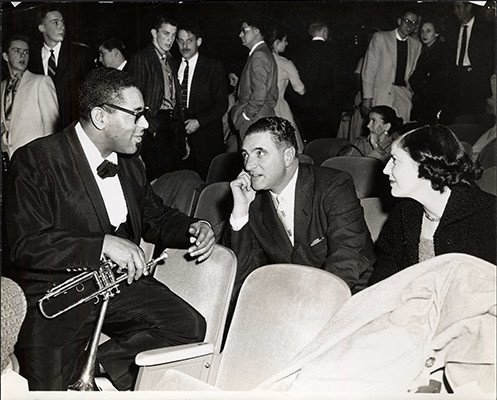
"caption": "Jazz musician Dizzy Gillespie with San Francisco Mayor George Christopher in 1957.",
"description": "Jazz musician Dizzy Gillespie with San Francisco Mayor George Christopher in 1957.",
"title": "RS43798_MOR-0681-qut",
"credit": "San Francisco History Center, San Francisco Public Library",
"status": "inherit",
"isLoading": false,
"fetchFailed": false
},
"news_11824733": {
"type": "attachments",
"id": "news_11824733",
"meta": {
"index": "attachments_1716263798",
"site": "news",
"id": "11824733",
"found": true
},
"parent": 11824731,
"imgSizes": {
"apple_news_ca_landscape_5_5": {
"file": "https://ww2.kqed.org/app/uploads/sites/10/2020/06/RS37728_IMG_5506-qut-1044x783.jpg",
"width": 1044,
"mimeType": "image/jpeg",
"height": 783
},
"apple_news_ca_square_4_0": {
"file": "https://ww2.kqed.org/app/uploads/sites/10/2020/06/RS37728_IMG_5506-qut-470x470.jpg",
"width": 470,
"mimeType": "image/jpeg",
"height": 470
},
"twentyfourteen-full-width": {
"file": "https://ww2.kqed.org/app/uploads/sites/10/2020/06/RS37728_IMG_5506-qut-1038x576.jpg",
"width": 1038,
"mimeType": "image/jpeg",
"height": 576
},
"thumbnail": {
"file": "https://ww2.kqed.org/app/uploads/sites/10/2020/06/RS37728_IMG_5506-qut-160x120.jpg",
"width": 160,
"mimeType": "image/jpeg",
"height": 120
},
"post-thumbnail": {
"file": "https://ww2.kqed.org/app/uploads/sites/10/2020/06/RS37728_IMG_5506-qut-672x372.jpg",
"width": 672,
"mimeType": "image/jpeg",
"height": 372
},
"kqedFullSize": {
"file": "https://ww2.kqed.org/app/uploads/sites/10/2020/06/RS37728_IMG_5506-qut.jpg",
"width": 1920,
"height": 1440
},
"apple_news_ca_landscape_4_7": {
"file": "https://ww2.kqed.org/app/uploads/sites/10/2020/06/RS37728_IMG_5506-qut-632x474.jpg",
"width": 632,
"mimeType": "image/jpeg",
"height": 474
},
"large": {
"file": "https://ww2.kqed.org/app/uploads/sites/10/2020/06/RS37728_IMG_5506-qut-1020x765.jpg",
"width": 1020,
"mimeType": "image/jpeg",
"height": 765
},
"apple_news_ca_landscape_4_0": {
"file": "https://ww2.kqed.org/app/uploads/sites/10/2020/06/RS37728_IMG_5506-qut-536x402.jpg",
"width": 536,
"mimeType": "image/jpeg",
"height": 402
},
"apple_news_ca_portrait_12_9": {
"file": "https://ww2.kqed.org/app/uploads/sites/10/2020/06/RS37728_IMG_5506-qut-1122x1440.jpg",
"width": 1122,
"mimeType": "image/jpeg",
"height": 1440
},
"medium": {
"file": "https://ww2.kqed.org/app/uploads/sites/10/2020/06/RS37728_IMG_5506-qut-800x600.jpg",
"width": 800,
"mimeType": "image/jpeg",
"height": 600
},
"apple_news_ca_portrait_4_0": {
"file": "https://ww2.kqed.org/app/uploads/sites/10/2020/06/RS37728_IMG_5506-qut-354x472.jpg",
"width": 354,
"mimeType": "image/jpeg",
"height": 472
},
"apple_news_ca_portrait_9_7": {
"file": "https://ww2.kqed.org/app/uploads/sites/10/2020/06/RS37728_IMG_5506-qut-840x1120.jpg",
"width": 840,
"mimeType": "image/jpeg",
"height": 1120
},
"apple_news_ca_landscape_12_9": {
"file": "https://ww2.kqed.org/app/uploads/sites/10/2020/06/RS37728_IMG_5506-qut-1832x1374.jpg",
"width": 1832,
"mimeType": "image/jpeg",
"height": 1374
},
"apple_news_ca_square_9_7": {
"file": "https://ww2.kqed.org/app/uploads/sites/10/2020/06/RS37728_IMG_5506-qut-1104x1104.jpg",
"width": 1104,
"mimeType": "image/jpeg",
"height": 1104
},
"apple_news_ca_portrait_4_7": {
"file": "https://ww2.kqed.org/app/uploads/sites/10/2020/06/RS37728_IMG_5506-qut-414x552.jpg",
"width": 414,
"mimeType": "image/jpeg",
"height": 552
},
"apple_news_ca_square_12_9": {
"file": "https://ww2.kqed.org/app/uploads/sites/10/2020/06/RS37728_IMG_5506-qut-1472x1440.jpg",
"width": 1472,
"mimeType": "image/jpeg",
"height": 1440
},
"apple_news_ca_portrait_5_5": {
"file": "https://ww2.kqed.org/app/uploads/sites/10/2020/06/RS37728_IMG_5506-qut-687x916.jpg",
"width": 687,
"mimeType": "image/jpeg",
"height": 916
},
"full-width": {
"file": "https://ww2.kqed.org/app/uploads/sites/10/2020/06/RS37728_IMG_5506-qut-1920x1440.jpg",
"width": 1920,
"mimeType": "image/jpeg",
"height": 1440
},
"apple_news_ca_square_4_7": {
"file": "https://ww2.kqed.org/app/uploads/sites/10/2020/06/RS37728_IMG_5506-qut-550x550.jpg",
"width": 550,
"mimeType": "image/jpeg",
"height": 550
},
"apple_news_ca_landscape_9_7": {
"file": "https://ww2.kqed.org/app/uploads/sites/10/2020/06/RS37728_IMG_5506-qut-1376x1032.jpg",
"width": 1376,
"mimeType": "image/jpeg",
"height": 1032
},
"apple_news_ca_square_5_5": {
"file": "https://ww2.kqed.org/app/uploads/sites/10/2020/06/RS37728_IMG_5506-qut-912x912.jpg",
"width": 912,
"mimeType": "image/jpeg",
"height": 912
}
},
"publishDate": 1592352657,
"modified": 1592433281,
"caption": "Members of the SambaFunk! collective dance and drum during the 2019 Berkeley Juneteenth Festival.",
"description": null,
"title": "RS37728_IMG_5506-qut",
"credit": "Liliana Michelena/KQED",
"status": "inherit",
"isLoading": false,
"fetchFailed": false
},
"news_11823867": {
"type": "attachments",
"id": "news_11823867",
"meta": {
"index": "attachments_1716263798",
"site": "news",
"id": "11823867",
"found": true
},
"parent": 11823859,
"imgSizes": {
"apple_news_ca_landscape_5_5": {
"file": "https://ww2.kqed.org/app/uploads/sites/10/2020/06/George-Floyd-Oakland-protests-1044x783.jpg",
"width": 1044,
"mimeType": "image/jpeg",
"height": 783
},
"apple_news_ca_square_4_0": {
"file": "https://ww2.kqed.org/app/uploads/sites/10/2020/06/George-Floyd-Oakland-protests-470x470.jpg",
"width": 470,
"mimeType": "image/jpeg",
"height": 470
},
"twentyfourteen-full-width": {
"file": "https://ww2.kqed.org/app/uploads/sites/10/2020/06/George-Floyd-Oakland-protests-1038x576.jpg",
"width": 1038,
"mimeType": "image/jpeg",
"height": 576
},
"thumbnail": {
"file": "https://ww2.kqed.org/app/uploads/sites/10/2020/06/George-Floyd-Oakland-protests-160x107.jpg",
"width": 160,
"mimeType": "image/jpeg",
"height": 107
},
"post-thumbnail": {
"file": "https://ww2.kqed.org/app/uploads/sites/10/2020/06/George-Floyd-Oakland-protests-672x372.jpg",
"width": 672,
"mimeType": "image/jpeg",
"height": 372
},
"kqedFullSize": {
"file": "https://ww2.kqed.org/app/uploads/sites/10/2020/06/George-Floyd-Oakland-protests.jpg",
"width": 1920,
"height": 1280
},
"apple_news_ca_landscape_4_7": {
"file": "https://ww2.kqed.org/app/uploads/sites/10/2020/06/George-Floyd-Oakland-protests-632x474.jpg",
"width": 632,
"mimeType": "image/jpeg",
"height": 474
},
"large": {
"file": "https://ww2.kqed.org/app/uploads/sites/10/2020/06/George-Floyd-Oakland-protests-1020x680.jpg",
"width": 1020,
"mimeType": "image/jpeg",
"height": 680
},
"apple_news_ca_landscape_4_0": {
"file": "https://ww2.kqed.org/app/uploads/sites/10/2020/06/George-Floyd-Oakland-protests-536x402.jpg",
"width": 536,
"mimeType": "image/jpeg",
"height": 402
},
"apple_news_ca_portrait_12_9": {
"file": "https://ww2.kqed.org/app/uploads/sites/10/2020/06/George-Floyd-Oakland-protests-1122x1280.jpg",
"width": 1122,
"mimeType": "image/jpeg",
"height": 1280
},
"medium": {
"file": "https://ww2.kqed.org/app/uploads/sites/10/2020/06/George-Floyd-Oakland-protests-800x533.jpg",
"width": 800,
"mimeType": "image/jpeg",
"height": 533
},
"apple_news_ca_portrait_4_0": {
"file": "https://ww2.kqed.org/app/uploads/sites/10/2020/06/George-Floyd-Oakland-protests-354x472.jpg",
"width": 354,
"mimeType": "image/jpeg",
"height": 472
},
"apple_news_ca_portrait_9_7": {
"file": "https://ww2.kqed.org/app/uploads/sites/10/2020/06/George-Floyd-Oakland-protests-840x1120.jpg",
"width": 840,
"mimeType": "image/jpeg",
"height": 1120
},
"apple_news_ca_landscape_12_9": {
"file": "https://ww2.kqed.org/app/uploads/sites/10/2020/06/George-Floyd-Oakland-protests-1832x1280.jpg",
"width": 1832,
"mimeType": "image/jpeg",
"height": 1280
},
"apple_news_ca_square_9_7": {
"file": "https://ww2.kqed.org/app/uploads/sites/10/2020/06/George-Floyd-Oakland-protests-1104x1104.jpg",
"width": 1104,
"mimeType": "image/jpeg",
"height": 1104
},
"apple_news_ca_portrait_4_7": {
"file": "https://ww2.kqed.org/app/uploads/sites/10/2020/06/George-Floyd-Oakland-protests-414x552.jpg",
"width": 414,
"mimeType": "image/jpeg",
"height": 552
},
"apple_news_ca_square_12_9": {
"file": "https://ww2.kqed.org/app/uploads/sites/10/2020/06/George-Floyd-Oakland-protests-1472x1280.jpg",
"width": 1472,
"mimeType": "image/jpeg",
"height": 1280
},
"apple_news_ca_portrait_5_5": {
"file": "https://ww2.kqed.org/app/uploads/sites/10/2020/06/George-Floyd-Oakland-protests-687x916.jpg",
"width": 687,
"mimeType": "image/jpeg",
"height": 916
},
"full-width": {
"file": "https://ww2.kqed.org/app/uploads/sites/10/2020/06/George-Floyd-Oakland-protests-1920x1280.jpg",
"width": 1920,
"mimeType": "image/jpeg",
"height": 1280
},
"apple_news_ca_square_4_7": {
"file": "https://ww2.kqed.org/app/uploads/sites/10/2020/06/George-Floyd-Oakland-protests-550x550.jpg",
"width": 550,
"mimeType": "image/jpeg",
"height": 550
},
"apple_news_ca_landscape_9_7": {
"file": "https://ww2.kqed.org/app/uploads/sites/10/2020/06/George-Floyd-Oakland-protests-1376x1032.jpg",
"width": 1376,
"mimeType": "image/jpeg",
"height": 1032
},
"apple_news_ca_square_5_5": {
"file": "https://ww2.kqed.org/app/uploads/sites/10/2020/06/George-Floyd-Oakland-protests-912x912.jpg",
"width": 912,
"mimeType": "image/jpeg",
"height": 912
}
},
"publishDate": 1591833433,
"modified": 1595292398,
"caption": "Tear gas is fired by the police on Broadway near Oakland Police headquarters on May 29, 2020 during a protest over the Minneapolis police killing of George Floyd.",
"description": null,
"title": "George-Floyd-Oakland-protests",
"credit": "Beth LaBerge/KQED",
"status": "inherit",
"isLoading": false,
"fetchFailed": false
},
"news_11812909": {
"type": "attachments",
"id": "news_11812909",
"meta": {
"index": "attachments_1716263798",
"site": "news",
"id": "11812909",
"found": true
},
"parent": 11812863,
"imgSizes": {
"apple_news_ca_square_4_0": {
"file": "https://ww2.kqed.org/app/uploads/sites/10/2020/04/GettyImages-1217248287-470x470.jpg",
"width": 470,
"mimeType": "image/jpeg",
"height": 470
},
"twentyfourteen-full-width": {
"file": "https://ww2.kqed.org/app/uploads/sites/10/2020/04/GettyImages-1217248287-1024x576.jpg",
"width": 1024,
"mimeType": "image/jpeg",
"height": 576
},
"thumbnail": {
"file": "https://ww2.kqed.org/app/uploads/sites/10/2020/04/GettyImages-1217248287-160x103.jpg",
"width": 160,
"mimeType": "image/jpeg",
"height": 103
},
"post-thumbnail": {
"file": "https://ww2.kqed.org/app/uploads/sites/10/2020/04/GettyImages-1217248287-672x372.jpg",
"width": 672,
"mimeType": "image/jpeg",
"height": 372
},
"kqedFullSize": {
"file": "https://ww2.kqed.org/app/uploads/sites/10/2020/04/GettyImages-1217248287.jpg",
"width": 1024,
"height": 661
},
"apple_news_ca_landscape_4_7": {
"file": "https://ww2.kqed.org/app/uploads/sites/10/2020/04/GettyImages-1217248287-632x474.jpg",
"width": 632,
"mimeType": "image/jpeg",
"height": 474
},
"large": {
"file": "https://ww2.kqed.org/app/uploads/sites/10/2020/04/GettyImages-1217248287-1020x658.jpg",
"width": 1020,
"mimeType": "image/jpeg",
"height": 658
},
"apple_news_ca_landscape_4_0": {
"file": "https://ww2.kqed.org/app/uploads/sites/10/2020/04/GettyImages-1217248287-536x402.jpg",
"width": 536,
"mimeType": "image/jpeg",
"height": 402
},
"medium": {
"file": "https://ww2.kqed.org/app/uploads/sites/10/2020/04/GettyImages-1217248287-800x516.jpg",
"width": 800,
"mimeType": "image/jpeg",
"height": 516
},
"apple_news_ca_portrait_4_0": {
"file": "https://ww2.kqed.org/app/uploads/sites/10/2020/04/GettyImages-1217248287-354x472.jpg",
"width": 354,
"mimeType": "image/jpeg",
"height": 472
},
"apple_news_ca_portrait_9_7": {
"file": "https://ww2.kqed.org/app/uploads/sites/10/2020/04/GettyImages-1217248287-840x661.jpg",
"width": 840,
"mimeType": "image/jpeg",
"height": 661
},
"apple_news_ca_portrait_4_7": {
"file": "https://ww2.kqed.org/app/uploads/sites/10/2020/04/GettyImages-1217248287-414x552.jpg",
"width": 414,
"mimeType": "image/jpeg",
"height": 552
},
"apple_news_ca_portrait_5_5": {
"file": "https://ww2.kqed.org/app/uploads/sites/10/2020/04/GettyImages-1217248287-687x661.jpg",
"width": 687,
"mimeType": "image/jpeg",
"height": 661
},
"apple_news_ca_square_4_7": {
"file": "https://ww2.kqed.org/app/uploads/sites/10/2020/04/GettyImages-1217248287-550x550.jpg",
"width": 550,
"mimeType": "image/jpeg",
"height": 550
},
"apple_news_ca_square_5_5": {
"file": "https://ww2.kqed.org/app/uploads/sites/10/2020/04/GettyImages-1217248287-912x661.jpg",
"width": 912,
"mimeType": "image/jpeg",
"height": 661
}
},
"publishDate": 1587158598,
"modified": 1590690538,
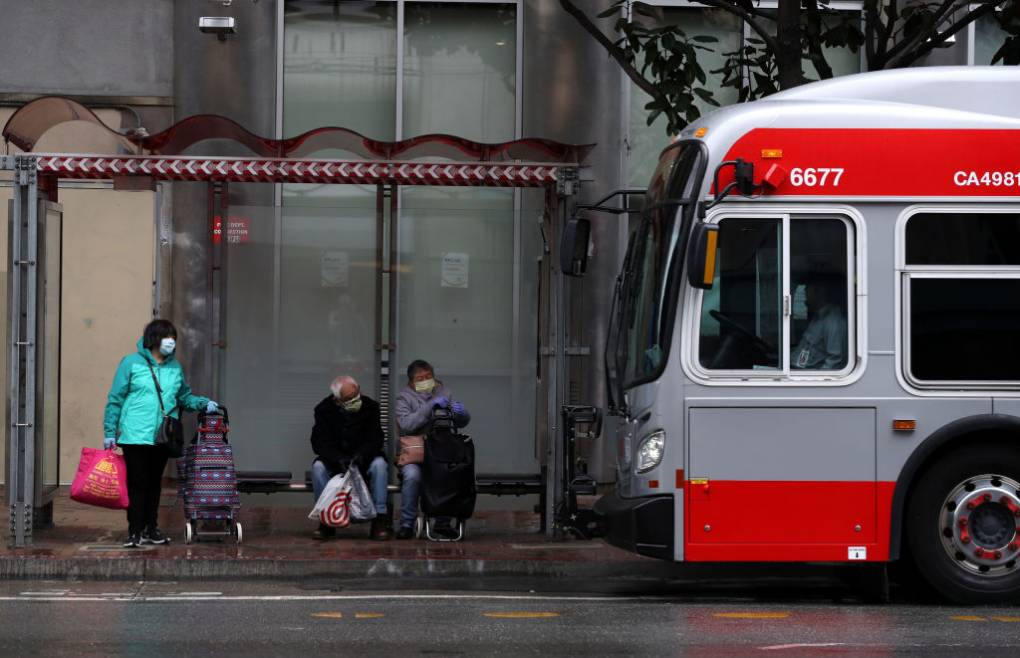
"caption": "San Francisco commuters wear masks as they wait for their bus on April 6, 2020.",
"description": null,
"title": "San Francisco's Muni To Cut Majority Of Service During Coronavirus Shutdown",
"credit": "Justin Sullivan/Getty Images",
"status": "inherit",
"isLoading": false,
"fetchFailed": false
},
"news_11821307": {
"type": "attachments",
"id": "news_11821307",
"meta": {
"index": "attachments_1716263798",
"site": "news",
"id": "11821307",
"found": true
},
"parent": 11821133,
"imgSizes": {
"apple_news_ca_landscape_5_5": {
"file": "https://ww2.kqed.org/app/uploads/sites/10/2020/05/Pages-from-Kakuro-Shigenaga-File-1-NARA-San-Bruno-1044x783.jpg",
"width": 1044,
"mimeType": "image/jpeg",
"height": 783
},
"apple_news_ca_square_4_0": {
"file": "https://ww2.kqed.org/app/uploads/sites/10/2020/05/Pages-from-Kakuro-Shigenaga-File-1-NARA-San-Bruno-470x470.jpg",
"width": 470,
"mimeType": "image/jpeg",
"height": 470
},
"twentyfourteen-full-width": {
"file": "https://ww2.kqed.org/app/uploads/sites/10/2020/05/Pages-from-Kakuro-Shigenaga-File-1-NARA-San-Bruno-1038x576.jpg",
"width": 1038,
"mimeType": "image/jpeg",
"height": 576
},
"thumbnail": {
"file": "https://ww2.kqed.org/app/uploads/sites/10/2020/05/Pages-from-Kakuro-Shigenaga-File-1-NARA-San-Bruno-160x74.jpg",
"width": 160,
"mimeType": "image/jpeg",
"height": 74
},
"post-thumbnail": {
"file": "https://ww2.kqed.org/app/uploads/sites/10/2020/05/Pages-from-Kakuro-Shigenaga-File-1-NARA-San-Bruno-672x372.jpg",
"width": 672,
"mimeType": "image/jpeg",
"height": 372
},
"kqedFullSize": {
"file": "https://ww2.kqed.org/app/uploads/sites/10/2020/05/Pages-from-Kakuro-Shigenaga-File-1-NARA-San-Bruno.jpg",
"width": 1755,
"height": 807
},
"apple_news_ca_landscape_4_7": {
"file": "https://ww2.kqed.org/app/uploads/sites/10/2020/05/Pages-from-Kakuro-Shigenaga-File-1-NARA-San-Bruno-632x474.jpg",
"width": 632,
"mimeType": "image/jpeg",
"height": 474
},
"large": {
"file": "https://ww2.kqed.org/app/uploads/sites/10/2020/05/Pages-from-Kakuro-Shigenaga-File-1-NARA-San-Bruno-1020x469.jpg",
"width": 1020,
"mimeType": "image/jpeg",
"height": 469
},
"apple_news_ca_landscape_4_0": {
"file": "https://ww2.kqed.org/app/uploads/sites/10/2020/05/Pages-from-Kakuro-Shigenaga-File-1-NARA-San-Bruno-536x402.jpg",
"width": 536,
"mimeType": "image/jpeg",
"height": 402
},
"apple_news_ca_portrait_12_9": {
"file": "https://ww2.kqed.org/app/uploads/sites/10/2020/05/Pages-from-Kakuro-Shigenaga-File-1-NARA-San-Bruno-1122x807.jpg",
"width": 1122,
"mimeType": "image/jpeg",
"height": 807
},
"medium": {
"file": "https://ww2.kqed.org/app/uploads/sites/10/2020/05/Pages-from-Kakuro-Shigenaga-File-1-NARA-San-Bruno-800x368.jpg",
"width": 800,
"mimeType": "image/jpeg",
"height": 368
},
"apple_news_ca_portrait_4_0": {
"file": "https://ww2.kqed.org/app/uploads/sites/10/2020/05/Pages-from-Kakuro-Shigenaga-File-1-NARA-San-Bruno-354x472.jpg",
"width": 354,
"mimeType": "image/jpeg",
"height": 472
},
"apple_news_ca_portrait_9_7": {
"file": "https://ww2.kqed.org/app/uploads/sites/10/2020/05/Pages-from-Kakuro-Shigenaga-File-1-NARA-San-Bruno-840x807.jpg",
"width": 840,
"mimeType": "image/jpeg",
"height": 807
},
"apple_news_ca_square_9_7": {
"file": "https://ww2.kqed.org/app/uploads/sites/10/2020/05/Pages-from-Kakuro-Shigenaga-File-1-NARA-San-Bruno-1104x807.jpg",
"width": 1104,
"mimeType": "image/jpeg",
"height": 807
},
"apple_news_ca_portrait_4_7": {
"file": "https://ww2.kqed.org/app/uploads/sites/10/2020/05/Pages-from-Kakuro-Shigenaga-File-1-NARA-San-Bruno-414x552.jpg",
"width": 414,
"mimeType": "image/jpeg",
"height": 552
},
"apple_news_ca_square_12_9": {
"file": "https://ww2.kqed.org/app/uploads/sites/10/2020/05/Pages-from-Kakuro-Shigenaga-File-1-NARA-San-Bruno-1472x807.jpg",
"width": 1472,
"mimeType": "image/jpeg",
"height": 807
},
"apple_news_ca_portrait_5_5": {
"file": "https://ww2.kqed.org/app/uploads/sites/10/2020/05/Pages-from-Kakuro-Shigenaga-File-1-NARA-San-Bruno-687x807.jpg",
"width": 687,
"mimeType": "image/jpeg",
"height": 807
},
"apple_news_ca_square_4_7": {
"file": "https://ww2.kqed.org/app/uploads/sites/10/2020/05/Pages-from-Kakuro-Shigenaga-File-1-NARA-San-Bruno-550x550.jpg",
"width": 550,
"mimeType": "image/jpeg",
"height": 550
},
"apple_news_ca_landscape_9_7": {
"file": "https://ww2.kqed.org/app/uploads/sites/10/2020/05/Pages-from-Kakuro-Shigenaga-File-1-NARA-San-Bruno-1376x807.jpg",
"width": 1376,
"mimeType": "image/jpeg",
"height": 807
},
"apple_news_ca_square_5_5": {
"file": "https://ww2.kqed.org/app/uploads/sites/10/2020/05/Pages-from-Kakuro-Shigenaga-File-1-NARA-San-Bruno-912x807.jpg",
"width": 912,
"mimeType": "image/jpeg",
"height": 807
}
},
"publishDate": 1590643349,
"modified": 1593030896,
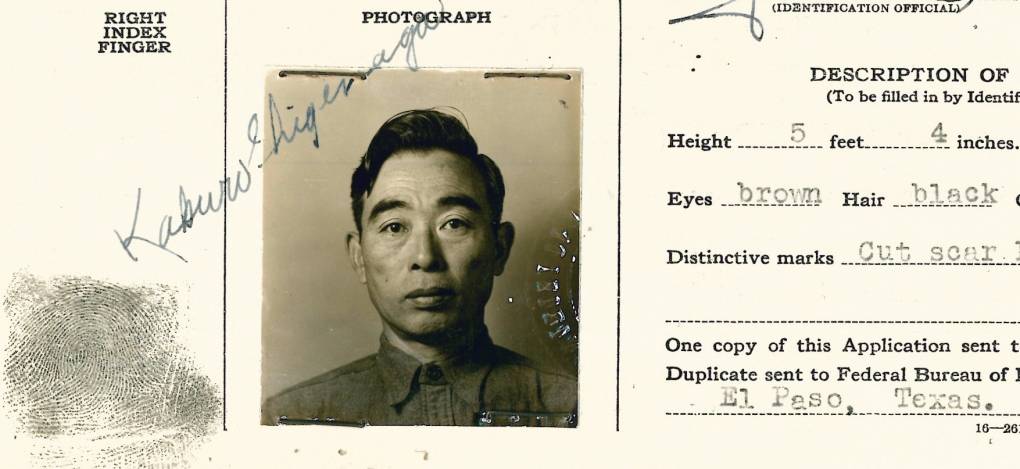
"caption": "Kakuro Shigenaga, aged 47, photographed and fingerprinted in an identification card. He was among the men who spent time on Angel Island before being sent to a number of inland internment camps. ",
"description": "Photograph and documents for Kakuro Shigenaga.",
"title": "Pages from Kakuro Shigenaga File 1 - NARA San Bruno",
"credit": "Courtesy of the Shigenaga family",
"status": "inherit",
"isLoading": false,
"fetchFailed": false
},
"news_11819693": {
"type": "attachments",
"id": "news_11819693",
"meta": {
"index": "attachments_1716263798",
"site": "news",
"id": "11819693",
"found": true
},
"parent": 11819661,
"imgSizes": {
"apple_news_ca_landscape_5_5": {
"file": "https://ww2.kqed.org/app/uploads/sites/10/2020/05/Arizmendi-bread-1044x783.jpg",
"width": 1044,
"mimeType": "image/jpeg",
"height": 783
},
"apple_news_ca_square_4_0": {
"file": "https://ww2.kqed.org/app/uploads/sites/10/2020/05/Arizmendi-bread-470x470.jpg",
"width": 470,
"mimeType": "image/jpeg",
"height": 470
},
"twentyfourteen-full-width": {
"file": "https://ww2.kqed.org/app/uploads/sites/10/2020/05/Arizmendi-bread-1038x576.jpg",
"width": 1038,
"mimeType": "image/jpeg",
"height": 576
},
"thumbnail": {
"file": "https://ww2.kqed.org/app/uploads/sites/10/2020/05/Arizmendi-bread-160x90.jpg",
"width": 160,
"mimeType": "image/jpeg",
"height": 90
},
"post-thumbnail": {
"file": "https://ww2.kqed.org/app/uploads/sites/10/2020/05/Arizmendi-bread-672x372.jpg",
"width": 672,
"mimeType": "image/jpeg",
"height": 372
},
"kqedFullSize": {
"file": "https://ww2.kqed.org/app/uploads/sites/10/2020/05/Arizmendi-bread.jpg",
"width": 1920,
"height": 1080
},
"apple_news_ca_landscape_4_7": {
"file": "https://ww2.kqed.org/app/uploads/sites/10/2020/05/Arizmendi-bread-632x474.jpg",
"width": 632,
"mimeType": "image/jpeg",
"height": 474
},
"large": {
"file": "https://ww2.kqed.org/app/uploads/sites/10/2020/05/Arizmendi-bread-1020x574.jpg",
"width": 1020,
"mimeType": "image/jpeg",
"height": 574
},
"apple_news_ca_landscape_4_0": {
"file": "https://ww2.kqed.org/app/uploads/sites/10/2020/05/Arizmendi-bread-536x402.jpg",
"width": 536,
"mimeType": "image/jpeg",
"height": 402
},
"apple_news_ca_portrait_12_9": {
"file": "https://ww2.kqed.org/app/uploads/sites/10/2020/05/Arizmendi-bread-1122x1080.jpg",
"width": 1122,
"mimeType": "image/jpeg",
"height": 1080
},
"medium": {
"file": "https://ww2.kqed.org/app/uploads/sites/10/2020/05/Arizmendi-bread-800x450.jpg",
"width": 800,
"mimeType": "image/jpeg",
"height": 450
},
"apple_news_ca_portrait_4_0": {
"file": "https://ww2.kqed.org/app/uploads/sites/10/2020/05/Arizmendi-bread-354x472.jpg",
"width": 354,
"mimeType": "image/jpeg",
"height": 472
},
"apple_news_ca_portrait_9_7": {
"file": "https://ww2.kqed.org/app/uploads/sites/10/2020/05/Arizmendi-bread-840x1080.jpg",
"width": 840,
"mimeType": "image/jpeg",
"height": 1080
},
"apple_news_ca_landscape_12_9": {
"file": "https://ww2.kqed.org/app/uploads/sites/10/2020/05/Arizmendi-bread-1832x1080.jpg",
"width": 1832,
"mimeType": "image/jpeg",
"height": 1080
},
"apple_news_ca_square_9_7": {
"file": "https://ww2.kqed.org/app/uploads/sites/10/2020/05/Arizmendi-bread-1104x1080.jpg",
"width": 1104,
"mimeType": "image/jpeg",
"height": 1080
},
"apple_news_ca_portrait_4_7": {
"file": "https://ww2.kqed.org/app/uploads/sites/10/2020/05/Arizmendi-bread-414x552.jpg",
"width": 414,
"mimeType": "image/jpeg",
"height": 552
},
"apple_news_ca_square_12_9": {
"file": "https://ww2.kqed.org/app/uploads/sites/10/2020/05/Arizmendi-bread-1472x1080.jpg",
"width": 1472,
"mimeType": "image/jpeg",
"height": 1080
},
"apple_news_ca_portrait_5_5": {
"file": "https://ww2.kqed.org/app/uploads/sites/10/2020/05/Arizmendi-bread-687x916.jpg",
"width": 687,
"mimeType": "image/jpeg",
"height": 916
},
"full-width": {
"file": "https://ww2.kqed.org/app/uploads/sites/10/2020/05/Arizmendi-bread-1920x1080.jpg",
"width": 1920,
"mimeType": "image/jpeg",
"height": 1080
},
"apple_news_ca_square_4_7": {
"file": "https://ww2.kqed.org/app/uploads/sites/10/2020/05/Arizmendi-bread-550x550.jpg",
"width": 550,
"mimeType": "image/jpeg",
"height": 550
},
"apple_news_ca_landscape_9_7": {
"file": "https://ww2.kqed.org/app/uploads/sites/10/2020/05/Arizmendi-bread-1376x1032.jpg",
"width": 1376,
"mimeType": "image/jpeg",
"height": 1032
},
"apple_news_ca_square_5_5": {
"file": "https://ww2.kqed.org/app/uploads/sites/10/2020/05/Arizmendi-bread-912x912.jpg",
"width": 912,
"mimeType": "image/jpeg",
"height": 912
}
},
"publishDate": 1590015010,
"modified": 1590015077,
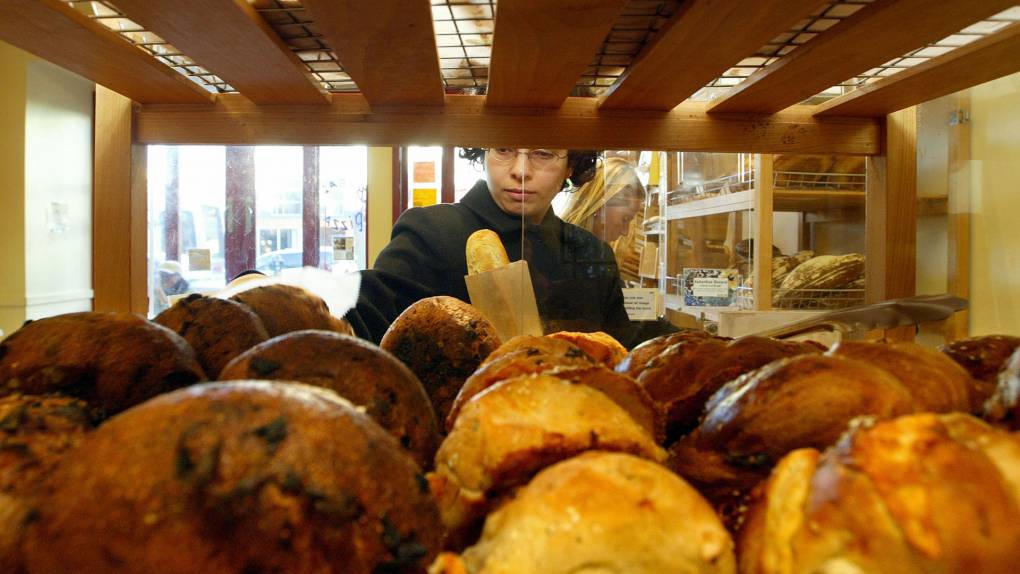
"caption": "A woman shops for bread at Arizmendi Bakery in San Francisco.",
"description": "A woman shops for bread at Arizmendi Bakery in San Francisco.",
"title": "Arizmendi-bread",
"credit": "Justin Sullivan/Getty Images",
"status": "inherit",
"isLoading": false,
"fetchFailed": false
},
"news_11817540": {
"type": "attachments",
"id": "news_11817540",
"meta": {
"index": "attachments_1716263798",
"site": "news",
"id": "11817540",
"found": true
},
"parent": 11819923,
"imgSizes": {
"apple_news_ca_square_4_0": {
"file": "https://ww2.kqed.org/app/uploads/sites/10/2020/05/Rice-A-Roni-470x470.jpg",
"width": 470,
"mimeType": "image/jpeg",
"height": 470
},
"twentyfourteen-full-width": {
"file": "https://ww2.kqed.org/app/uploads/sites/10/2020/05/Rice-A-Roni-774x576.jpg",
"width": 774,
"mimeType": "image/jpeg",
"height": 576
},
"thumbnail": {
"file": "https://ww2.kqed.org/app/uploads/sites/10/2020/05/Rice-A-Roni-160x126.jpg",
"width": 160,
"mimeType": "image/jpeg",
"height": 126
},
"post-thumbnail": {
"file": "https://ww2.kqed.org/app/uploads/sites/10/2020/05/Rice-A-Roni-672x372.jpg",
"width": 672,
"mimeType": "image/jpeg",
"height": 372
},
"kqedFullSize": {
"file": "https://ww2.kqed.org/app/uploads/sites/10/2020/05/Rice-A-Roni.jpg",
"width": 774,
"height": 608
},
"apple_news_ca_landscape_4_7": {
"file": "https://ww2.kqed.org/app/uploads/sites/10/2020/05/Rice-A-Roni-632x474.jpg",
"width": 632,
"mimeType": "image/jpeg",
"height": 474
},
"apple_news_ca_portrait_4_7": {
"file": "https://ww2.kqed.org/app/uploads/sites/10/2020/05/Rice-A-Roni-414x552.jpg",
"width": 414,
"mimeType": "image/jpeg",
"height": 552
},
"apple_news_ca_portrait_5_5": {
"file": "https://ww2.kqed.org/app/uploads/sites/10/2020/05/Rice-A-Roni-687x608.jpg",
"width": 687,
"mimeType": "image/jpeg",
"height": 608
},
"apple_news_ca_square_4_7": {
"file": "https://ww2.kqed.org/app/uploads/sites/10/2020/05/Rice-A-Roni-550x550.jpg",
"width": 550,
"mimeType": "image/jpeg",
"height": 550
},
"apple_news_ca_landscape_4_0": {
"file": "https://ww2.kqed.org/app/uploads/sites/10/2020/05/Rice-A-Roni-536x402.jpg",
"width": 536,
"mimeType": "image/jpeg",
"height": 402
},
"apple_news_ca_portrait_4_0": {
"file": "https://ww2.kqed.org/app/uploads/sites/10/2020/05/Rice-A-Roni-354x472.jpg",
"width": 354,
"mimeType": "image/jpeg",
"height": 472
}
},
"publishDate": 1589226869,
"modified": 1590086560,
"caption": "Rice-A-Roni is a common household item with a surprising San Francisco origin story.",
"description": null,
"title": "Rice-A-Roni",
"credit": "Boereck 13:27, 25 September 2006 (UTC) / CC BY-SA ",
"status": "inherit",
"isLoading": false,
"fetchFailed": false
},
"news_11816762": {
"type": "attachments",
"id": "news_11816762",
"meta": {
"index": "attachments_1716263798",
"site": "news",
"id": "11816762",
"found": true
},
"parent": 11816571,
"imgSizes": {
"apple_news_ca_landscape_5_5": {
"file": "https://ww2.kqed.org/app/uploads/sites/10/2020/05/Student-voices-composite-1044x783.jpg",
"width": 1044,
"mimeType": "image/jpeg",
"height": 783
},
"apple_news_ca_square_4_0": {
"file": "https://ww2.kqed.org/app/uploads/sites/10/2020/05/Student-voices-composite-470x470.jpg",
"width": 470,
"mimeType": "image/jpeg",
"height": 470
},
"twentyfourteen-full-width": {
"file": "https://ww2.kqed.org/app/uploads/sites/10/2020/05/Student-voices-composite-1038x576.jpg",
"width": 1038,
"mimeType": "image/jpeg",
"height": 576
},
"thumbnail": {
"file": "https://ww2.kqed.org/app/uploads/sites/10/2020/05/Student-voices-composite-160x90.jpg",
"width": 160,
"mimeType": "image/jpeg",
"height": 90
},
"post-thumbnail": {
"file": "https://ww2.kqed.org/app/uploads/sites/10/2020/05/Student-voices-composite-672x372.jpg",
"width": 672,
"mimeType": "image/jpeg",
"height": 372
},
"kqedFullSize": {
"file": "https://ww2.kqed.org/app/uploads/sites/10/2020/05/Student-voices-composite.jpg",
"width": 1920,
"height": 1080
},
"apple_news_ca_landscape_4_7": {
"file": "https://ww2.kqed.org/app/uploads/sites/10/2020/05/Student-voices-composite-632x474.jpg",
"width": 632,
"mimeType": "image/jpeg",
"height": 474
},
"large": {
"file": "https://ww2.kqed.org/app/uploads/sites/10/2020/05/Student-voices-composite-1020x574.jpg",
"width": 1020,
"mimeType": "image/jpeg",
"height": 574
},
"apple_news_ca_landscape_4_0": {
"file": "https://ww2.kqed.org/app/uploads/sites/10/2020/05/Student-voices-composite-536x402.jpg",
"width": 536,
"mimeType": "image/jpeg",
"height": 402
},
"apple_news_ca_portrait_12_9": {
"file": "https://ww2.kqed.org/app/uploads/sites/10/2020/05/Student-voices-composite-1122x1080.jpg",
"width": 1122,
"mimeType": "image/jpeg",
"height": 1080
},
"medium": {
"file": "https://ww2.kqed.org/app/uploads/sites/10/2020/05/Student-voices-composite-800x450.jpg",
"width": 800,
"mimeType": "image/jpeg",
"height": 450
},
"apple_news_ca_portrait_4_0": {
"file": "https://ww2.kqed.org/app/uploads/sites/10/2020/05/Student-voices-composite-354x472.jpg",
"width": 354,
"mimeType": "image/jpeg",
"height": 472
},
"apple_news_ca_portrait_9_7": {
"file": "https://ww2.kqed.org/app/uploads/sites/10/2020/05/Student-voices-composite-840x1080.jpg",
"width": 840,
"mimeType": "image/jpeg",
"height": 1080
},
"apple_news_ca_landscape_12_9": {
"file": "https://ww2.kqed.org/app/uploads/sites/10/2020/05/Student-voices-composite-1832x1080.jpg",
"width": 1832,
"mimeType": "image/jpeg",
"height": 1080
},
"apple_news_ca_square_9_7": {
"file": "https://ww2.kqed.org/app/uploads/sites/10/2020/05/Student-voices-composite-1104x1080.jpg",
"width": 1104,
"mimeType": "image/jpeg",
"height": 1080
},
"apple_news_ca_portrait_4_7": {
"file": "https://ww2.kqed.org/app/uploads/sites/10/2020/05/Student-voices-composite-414x552.jpg",
"width": 414,
"mimeType": "image/jpeg",
"height": 552
},
"apple_news_ca_square_12_9": {
"file": "https://ww2.kqed.org/app/uploads/sites/10/2020/05/Student-voices-composite-1472x1080.jpg",
"width": 1472,
"mimeType": "image/jpeg",
"height": 1080
},
"apple_news_ca_portrait_5_5": {
"file": "https://ww2.kqed.org/app/uploads/sites/10/2020/05/Student-voices-composite-687x916.jpg",
"width": 687,
"mimeType": "image/jpeg",
"height": 916
},
"full-width": {
"file": "https://ww2.kqed.org/app/uploads/sites/10/2020/05/Student-voices-composite-1920x1080.jpg",
"width": 1920,
"mimeType": "image/jpeg",
"height": 1080
},
"apple_news_ca_square_4_7": {
"file": "https://ww2.kqed.org/app/uploads/sites/10/2020/05/Student-voices-composite-550x550.jpg",
"width": 550,
"mimeType": "image/jpeg",
"height": 550
},
"apple_news_ca_landscape_9_7": {
"file": "https://ww2.kqed.org/app/uploads/sites/10/2020/05/Student-voices-composite-1376x1032.jpg",
"width": 1376,
"mimeType": "image/jpeg",
"height": 1032
},
"apple_news_ca_square_5_5": {
"file": "https://ww2.kqed.org/app/uploads/sites/10/2020/05/Student-voices-composite-912x912.jpg",
"width": 912,
"mimeType": "image/jpeg",
"height": 912
}
},
"publishDate": 1588828942,
"modified": 1588829134,
"caption": "Left to right: Taila Lee, Qadir Scott, Genevieve Schweitzer, Julisa Gomez Reyes.",
"description": "Left to right: Taila Lee, Qadir Scott, Genevieve Schweitzer, Julisa Gomez Reyes.",
"title": "Student-voices-composite",
"credit": "Beth LaBerge/KQED ",
"status": "inherit",
"isLoading": false,
"fetchFailed": false
},
"news_11814937": {
"type": "attachments",
"id": "news_11814937",
"meta": {
"index": "attachments_1716263798",
"site": "news",
"id": "11814937",
"found": true
},
"parent": 11814568,
"imgSizes": {
"apple_news_ca_landscape_5_5": {
"file": "https://ww2.kqed.org/app/uploads/sites/10/2020/04/hair-web-1044x783.jpg",
"width": 1044,
"mimeType": "image/jpeg",
"height": 783
},
"apple_news_ca_square_4_0": {
"file": "https://ww2.kqed.org/app/uploads/sites/10/2020/04/hair-web-470x470.jpg",
"width": 470,
"mimeType": "image/jpeg",
"height": 470
},
"twentyfourteen-full-width": {
"file": "https://ww2.kqed.org/app/uploads/sites/10/2020/04/hair-web-1038x576.jpg",
"width": 1038,
"mimeType": "image/jpeg",
"height": 576
},
"thumbnail": {
"file": "https://ww2.kqed.org/app/uploads/sites/10/2020/04/hair-web-160x90.jpg",
"width": 160,
"mimeType": "image/jpeg",
"height": 90
},
"post-thumbnail": {
"file": "https://ww2.kqed.org/app/uploads/sites/10/2020/04/hair-web-672x372.jpg",
"width": 672,
"mimeType": "image/jpeg",
"height": 372
},
"kqedFullSize": {
"file": "https://ww2.kqed.org/app/uploads/sites/10/2020/04/hair-web.jpg",
"width": 1920,
"height": 1080
},
"apple_news_ca_landscape_4_7": {
"file": "https://ww2.kqed.org/app/uploads/sites/10/2020/04/hair-web-632x474.jpg",
"width": 632,
"mimeType": "image/jpeg",
"height": 474
},
"large": {
"file": "https://ww2.kqed.org/app/uploads/sites/10/2020/04/hair-web-1020x574.jpg",
"width": 1020,
"mimeType": "image/jpeg",
"height": 574
},
"apple_news_ca_landscape_4_0": {
"file": "https://ww2.kqed.org/app/uploads/sites/10/2020/04/hair-web-536x402.jpg",
"width": 536,
"mimeType": "image/jpeg",
"height": 402
},
"apple_news_ca_portrait_12_9": {
"file": "https://ww2.kqed.org/app/uploads/sites/10/2020/04/hair-web-1122x1080.jpg",
"width": 1122,
"mimeType": "image/jpeg",
"height": 1080
},
"medium": {
"file": "https://ww2.kqed.org/app/uploads/sites/10/2020/04/hair-web-800x450.jpg",
"width": 800,
"mimeType": "image/jpeg",
"height": 450
},
"apple_news_ca_portrait_4_0": {
"file": "https://ww2.kqed.org/app/uploads/sites/10/2020/04/hair-web-354x472.jpg",
"width": 354,
"mimeType": "image/jpeg",
"height": 472
},
"apple_news_ca_portrait_9_7": {
"file": "https://ww2.kqed.org/app/uploads/sites/10/2020/04/hair-web-840x1080.jpg",
"width": 840,
"mimeType": "image/jpeg",
"height": 1080
},
"apple_news_ca_landscape_12_9": {
"file": "https://ww2.kqed.org/app/uploads/sites/10/2020/04/hair-web-1832x1080.jpg",
"width": 1832,
"mimeType": "image/jpeg",
"height": 1080
},
"apple_news_ca_square_9_7": {
"file": "https://ww2.kqed.org/app/uploads/sites/10/2020/04/hair-web-1104x1080.jpg",
"width": 1104,
"mimeType": "image/jpeg",
"height": 1080
},
"apple_news_ca_portrait_4_7": {
"file": "https://ww2.kqed.org/app/uploads/sites/10/2020/04/hair-web-414x552.jpg",
"width": 414,
"mimeType": "image/jpeg",
"height": 552
},
"apple_news_ca_square_12_9": {
"file": "https://ww2.kqed.org/app/uploads/sites/10/2020/04/hair-web-1472x1080.jpg",
"width": 1472,
"mimeType": "image/jpeg",
"height": 1080
},
"apple_news_ca_portrait_5_5": {
"file": "https://ww2.kqed.org/app/uploads/sites/10/2020/04/hair-web-687x916.jpg",
"width": 687,
"mimeType": "image/jpeg",
"height": 916
},
"full-width": {
"file": "https://ww2.kqed.org/app/uploads/sites/10/2020/04/hair-web-1920x1080.jpg",
"width": 1920,
"mimeType": "image/jpeg",
"height": 1080
},
"apple_news_ca_square_4_7": {
"file": "https://ww2.kqed.org/app/uploads/sites/10/2020/04/hair-web-550x550.jpg",
"width": 550,
"mimeType": "image/jpeg",
"height": 550
},
"apple_news_ca_landscape_9_7": {
"file": "https://ww2.kqed.org/app/uploads/sites/10/2020/04/hair-web-1376x1032.jpg",
"width": 1376,
"mimeType": "image/jpeg",
"height": 1032
},
"apple_news_ca_square_5_5": {
"file": "https://ww2.kqed.org/app/uploads/sites/10/2020/04/hair-web-912x912.jpg",
"width": 912,
"mimeType": "image/jpeg",
"height": 912
}
},
"publishDate": 1588177157,
"modified": 1588177262,
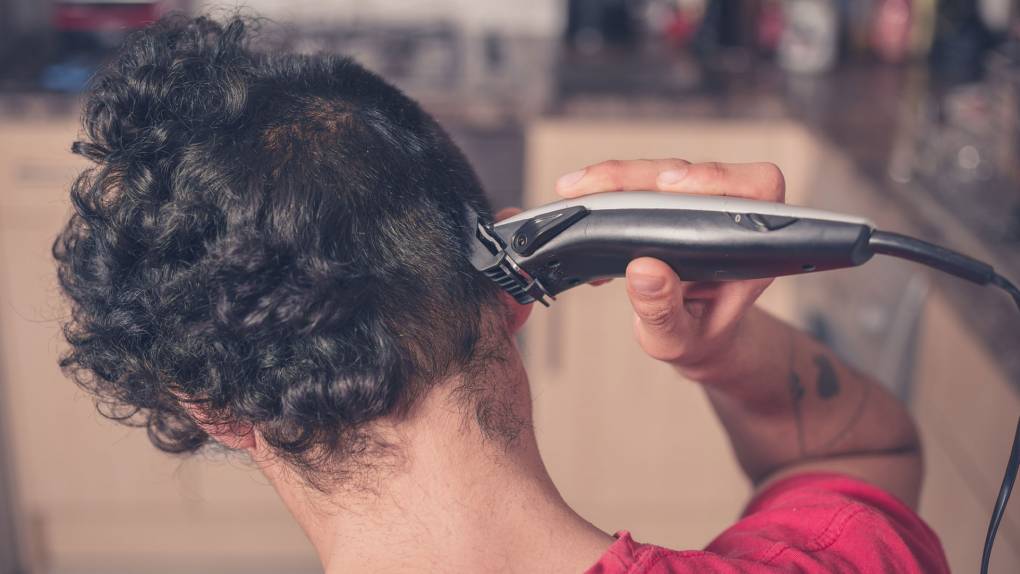
"caption": "With salons closed to reduce the spread of COVID-19, many people are cutting their own hair for the first time.",
"description": null,
"title": "hair-web",
"credit": "lolostock/iStock",
"status": "inherit",
"isLoading": false,
"fetchFailed": false
},
"news_11813717": {
"type": "attachments",
"id": "news_11813717",
"meta": {
"index": "attachments_1716263798",
"site": "news",
"id": "11813717",
"found": true
},
"parent": 11811205,
"imgSizes": {
"apple_news_ca_landscape_5_5": {
"file": "https://ww2.kqed.org/app/uploads/sites/10/2020/04/dreams-horizontal-1044x783.jpg",
"width": 1044,
"mimeType": "image/jpeg",
"height": 783
},
"apple_news_ca_square_4_0": {
"file": "https://ww2.kqed.org/app/uploads/sites/10/2020/04/dreams-horizontal-470x470.jpg",
"width": 470,
"mimeType": "image/jpeg",
"height": 470
},
"twentyfourteen-full-width": {
"file": "https://ww2.kqed.org/app/uploads/sites/10/2020/04/dreams-horizontal-1038x576.jpg",
"width": 1038,
"mimeType": "image/jpeg",
"height": 576
},
"thumbnail": {
"file": "https://ww2.kqed.org/app/uploads/sites/10/2020/04/dreams-horizontal-160x90.jpg",
"width": 160,
"mimeType": "image/jpeg",
"height": 90
},
"post-thumbnail": {
"file": "https://ww2.kqed.org/app/uploads/sites/10/2020/04/dreams-horizontal-672x372.jpg",
"width": 672,
"mimeType": "image/jpeg",
"height": 372
},
"kqedFullSize": {
"file": "https://ww2.kqed.org/app/uploads/sites/10/2020/04/dreams-horizontal.jpg",
"width": 1920,
"height": 1080
},
"apple_news_ca_landscape_4_7": {
"file": "https://ww2.kqed.org/app/uploads/sites/10/2020/04/dreams-horizontal-632x474.jpg",
"width": 632,
"mimeType": "image/jpeg",
"height": 474
},
"large": {
"file": "https://ww2.kqed.org/app/uploads/sites/10/2020/04/dreams-horizontal-1020x574.jpg",
"width": 1020,
"mimeType": "image/jpeg",
"height": 574
},
"apple_news_ca_landscape_4_0": {
"file": "https://ww2.kqed.org/app/uploads/sites/10/2020/04/dreams-horizontal-536x402.jpg",
"width": 536,
"mimeType": "image/jpeg",
"height": 402
},
"apple_news_ca_portrait_12_9": {
"file": "https://ww2.kqed.org/app/uploads/sites/10/2020/04/dreams-horizontal-1122x1080.jpg",
"width": 1122,
"mimeType": "image/jpeg",
"height": 1080
},
"medium": {
"file": "https://ww2.kqed.org/app/uploads/sites/10/2020/04/dreams-horizontal-800x450.jpg",
"width": 800,
"mimeType": "image/jpeg",
"height": 450
},
"apple_news_ca_portrait_4_0": {
"file": "https://ww2.kqed.org/app/uploads/sites/10/2020/04/dreams-horizontal-354x472.jpg",
"width": 354,
"mimeType": "image/jpeg",
"height": 472
},
"apple_news_ca_portrait_9_7": {
"file": "https://ww2.kqed.org/app/uploads/sites/10/2020/04/dreams-horizontal-840x1080.jpg",
"width": 840,
"mimeType": "image/jpeg",
"height": 1080
},
"apple_news_ca_landscape_12_9": {
"file": "https://ww2.kqed.org/app/uploads/sites/10/2020/04/dreams-horizontal-1832x1080.jpg",
"width": 1832,
"mimeType": "image/jpeg",
"height": 1080
},
"apple_news_ca_square_9_7": {
"file": "https://ww2.kqed.org/app/uploads/sites/10/2020/04/dreams-horizontal-1104x1080.jpg",
"width": 1104,
"mimeType": "image/jpeg",
"height": 1080
},
"apple_news_ca_portrait_4_7": {
"file": "https://ww2.kqed.org/app/uploads/sites/10/2020/04/dreams-horizontal-414x552.jpg",
"width": 414,
"mimeType": "image/jpeg",
"height": 552
},
"apple_news_ca_square_12_9": {
"file": "https://ww2.kqed.org/app/uploads/sites/10/2020/04/dreams-horizontal-1472x1080.jpg",
"width": 1472,
"mimeType": "image/jpeg",
"height": 1080
},
"apple_news_ca_portrait_5_5": {
"file": "https://ww2.kqed.org/app/uploads/sites/10/2020/04/dreams-horizontal-687x916.jpg",
"width": 687,
"mimeType": "image/jpeg",
"height": 916
},
"full-width": {
"file": "https://ww2.kqed.org/app/uploads/sites/10/2020/04/dreams-horizontal-1920x1080.jpg",
"width": 1920,
"mimeType": "image/jpeg",
"height": 1080
},
"apple_news_ca_square_4_7": {
"file": "https://ww2.kqed.org/app/uploads/sites/10/2020/04/dreams-horizontal-550x550.jpg",
"width": 550,
"mimeType": "image/jpeg",
"height": 550
},
"apple_news_ca_landscape_9_7": {
"file": "https://ww2.kqed.org/app/uploads/sites/10/2020/04/dreams-horizontal-1376x1032.jpg",
"width": 1376,
"mimeType": "image/jpeg",
"height": 1032
},
"apple_news_ca_square_5_5": {
"file": "https://ww2.kqed.org/app/uploads/sites/10/2020/04/dreams-horizontal-912x912.jpg",
"width": 912,
"mimeType": "image/jpeg",
"height": 912
}
},
"publishDate": 1587589030,
"modified": 1587664175,
"caption": "Terrible dreams? Can't sleep? Blame COVID-19.",
"description": "Terrible dreams? Can't sleep? Blame COVID-19.",
"title": "dreams - horizontal",
"credit": "Anna Vignet/KQED",
"status": "inherit",
"isLoading": false,
"fetchFailed": false
},
"news_11813820": {
"type": "attachments",
"id": "news_11813820",
"meta": {
"index": "attachments_1716263798",
"site": "news",
"id": "11813820",
"found": true
},
"parent": 11813760,
"imgSizes": {
"apple_news_ca_landscape_5_5": {
"file": "https://ww2.kqed.org/app/uploads/sites/10/2020/04/RS111_111207-041-1044x783.jpg",
"width": 1044,
"mimeType": "image/jpeg",
"height": 783
},
"apple_news_ca_square_4_0": {
"file": "https://ww2.kqed.org/app/uploads/sites/10/2020/04/RS111_111207-041-470x470.jpg",
"width": 470,
"mimeType": "image/jpeg",
"height": 470
},
"twentyfourteen-full-width": {
"file": "https://ww2.kqed.org/app/uploads/sites/10/2020/04/RS111_111207-041-1038x576.jpg",
"width": 1038,
"mimeType": "image/jpeg",
"height": 576
},
"thumbnail": {
"file": "https://ww2.kqed.org/app/uploads/sites/10/2020/04/RS111_111207-041-160x120.jpg",
"width": 160,
"mimeType": "image/jpeg",
"height": 120
},
"post-thumbnail": {
"file": "https://ww2.kqed.org/app/uploads/sites/10/2020/04/RS111_111207-041-672x372.jpg",
"width": 672,
"mimeType": "image/jpeg",
"height": 372
},
"kqedFullSize": {
"file": "https://ww2.kqed.org/app/uploads/sites/10/2020/04/RS111_111207-041.jpg",
"width": 1600,
"height": 1200
},
"apple_news_ca_landscape_4_7": {
"file": "https://ww2.kqed.org/app/uploads/sites/10/2020/04/RS111_111207-041-632x474.jpg",
"width": 632,
"mimeType": "image/jpeg",
"height": 474
},
"large": {
"file": "https://ww2.kqed.org/app/uploads/sites/10/2020/04/RS111_111207-041-1020x765.jpg",
"width": 1020,
"mimeType": "image/jpeg",
"height": 765
},
"apple_news_ca_landscape_4_0": {
"file": "https://ww2.kqed.org/app/uploads/sites/10/2020/04/RS111_111207-041-536x402.jpg",
"width": 536,
"mimeType": "image/jpeg",
"height": 402
},
"apple_news_ca_portrait_12_9": {
"file": "https://ww2.kqed.org/app/uploads/sites/10/2020/04/RS111_111207-041-1122x1200.jpg",
"width": 1122,
"mimeType": "image/jpeg",
"height": 1200
},
"medium": {
"file": "https://ww2.kqed.org/app/uploads/sites/10/2020/04/RS111_111207-041-800x600.jpg",
"width": 800,
"mimeType": "image/jpeg",
"height": 600
},
"apple_news_ca_portrait_4_0": {
"file": "https://ww2.kqed.org/app/uploads/sites/10/2020/04/RS111_111207-041-354x472.jpg",
"width": 354,
"mimeType": "image/jpeg",
"height": 472
},
"apple_news_ca_portrait_9_7": {
"file": "https://ww2.kqed.org/app/uploads/sites/10/2020/04/RS111_111207-041-840x1120.jpg",
"width": 840,
"mimeType": "image/jpeg",
"height": 1120
},
"apple_news_ca_square_9_7": {
"file": "https://ww2.kqed.org/app/uploads/sites/10/2020/04/RS111_111207-041-1104x1104.jpg",
"width": 1104,
"mimeType": "image/jpeg",
"height": 1104
},
"apple_news_ca_portrait_4_7": {
"file": "https://ww2.kqed.org/app/uploads/sites/10/2020/04/RS111_111207-041-414x552.jpg",
"width": 414,
"mimeType": "image/jpeg",
"height": 552
},
"apple_news_ca_square_12_9": {
"file": "https://ww2.kqed.org/app/uploads/sites/10/2020/04/RS111_111207-041-1472x1200.jpg",
"width": 1472,
"mimeType": "image/jpeg",
"height": 1200
},
"apple_news_ca_portrait_5_5": {
"file": "https://ww2.kqed.org/app/uploads/sites/10/2020/04/RS111_111207-041-687x916.jpg",
"width": 687,
"mimeType": "image/jpeg",
"height": 916
},
"apple_news_ca_square_4_7": {
"file": "https://ww2.kqed.org/app/uploads/sites/10/2020/04/RS111_111207-041-550x550.jpg",
"width": 550,
"mimeType": "image/jpeg",
"height": 550
},
"apple_news_ca_landscape_9_7": {
"file": "https://ww2.kqed.org/app/uploads/sites/10/2020/04/RS111_111207-041-1376x1032.jpg",
"width": 1376,
"mimeType": "image/jpeg",
"height": 1032
},
"apple_news_ca_square_5_5": {
"file": "https://ww2.kqed.org/app/uploads/sites/10/2020/04/RS111_111207-041-912x912.jpg",
"width": 912,
"mimeType": "image/jpeg",
"height": 912
}
},
"publishDate": 1587598499,
"modified": 1587598557,
"caption": "With fewer cars on the road, emissions are down. But will any of these gains last? ",
"description": "With fewer cars on the road, emissions are down. But will any of these gains last? ",
"title": "RS111_111207 041",
"credit": "Craig Miller/KQED",
"status": "inherit",
"isLoading": false,
"fetchFailed": false
},
"news_11812610": {
"type": "attachments",
"id": "news_11812610",
"meta": {
"index": "attachments_1716263798",
"site": "news",
"id": "11812610",
"found": true
},
"parent": 11812335,
"imgSizes": {
"apple_news_ca_landscape_5_5": {
"file": "https://ww2.kqed.org/app/uploads/sites/10/2020/04/20200229_115151-1044x783.jpg",
"width": 1044,
"mimeType": "image/jpeg",
"height": 783
},
"apple_news_ca_square_4_0": {
"file": "https://ww2.kqed.org/app/uploads/sites/10/2020/04/20200229_115151-470x470.jpg",
"width": 470,
"mimeType": "image/jpeg",
"height": 470
},
"twentyfourteen-full-width": {
"file": "https://ww2.kqed.org/app/uploads/sites/10/2020/04/20200229_115151-1038x576.jpg",
"width": 1038,
"mimeType": "image/jpeg",
"height": 576
},
"thumbnail": {
"file": "https://ww2.kqed.org/app/uploads/sites/10/2020/04/20200229_115151-160x90.jpg",
"width": 160,
"mimeType": "image/jpeg",
"height": 90
},
"post-thumbnail": {
"file": "https://ww2.kqed.org/app/uploads/sites/10/2020/04/20200229_115151-672x372.jpg",
"width": 672,
"mimeType": "image/jpeg",
"height": 372
},
"kqedFullSize": {
"file": "https://ww2.kqed.org/app/uploads/sites/10/2020/04/20200229_115151.jpg",
"width": 1920,
"height": 1080
},
"apple_news_ca_landscape_4_7": {
"file": "https://ww2.kqed.org/app/uploads/sites/10/2020/04/20200229_115151-632x474.jpg",
"width": 632,
"mimeType": "image/jpeg",
"height": 474
},
"large": {
"file": "https://ww2.kqed.org/app/uploads/sites/10/2020/04/20200229_115151-1020x574.jpg",
"width": 1020,
"mimeType": "image/jpeg",
"height": 574
},
"apple_news_ca_landscape_4_0": {
"file": "https://ww2.kqed.org/app/uploads/sites/10/2020/04/20200229_115151-536x402.jpg",
"width": 536,
"mimeType": "image/jpeg",
"height": 402
},
"apple_news_ca_portrait_12_9": {
"file": "https://ww2.kqed.org/app/uploads/sites/10/2020/04/20200229_115151-1122x1080.jpg",
"width": 1122,
"mimeType": "image/jpeg",
"height": 1080
},
"medium": {
"file": "https://ww2.kqed.org/app/uploads/sites/10/2020/04/20200229_115151-800x450.jpg",
"width": 800,
"mimeType": "image/jpeg",
"height": 450
},
"apple_news_ca_portrait_4_0": {
"file": "https://ww2.kqed.org/app/uploads/sites/10/2020/04/20200229_115151-354x472.jpg",
"width": 354,
"mimeType": "image/jpeg",
"height": 472
},
"apple_news_ca_portrait_9_7": {
"file": "https://ww2.kqed.org/app/uploads/sites/10/2020/04/20200229_115151-840x1080.jpg",
"width": 840,
"mimeType": "image/jpeg",
"height": 1080
},
"apple_news_ca_landscape_12_9": {
"file": "https://ww2.kqed.org/app/uploads/sites/10/2020/04/20200229_115151-1832x1080.jpg",
"width": 1832,
"mimeType": "image/jpeg",
"height": 1080
},
"apple_news_ca_square_9_7": {
"file": "https://ww2.kqed.org/app/uploads/sites/10/2020/04/20200229_115151-1104x1080.jpg",
"width": 1104,
"mimeType": "image/jpeg",
"height": 1080
},
"apple_news_ca_portrait_4_7": {
"file": "https://ww2.kqed.org/app/uploads/sites/10/2020/04/20200229_115151-414x552.jpg",
"width": 414,
"mimeType": "image/jpeg",
"height": 552
},
"apple_news_ca_square_12_9": {
"file": "https://ww2.kqed.org/app/uploads/sites/10/2020/04/20200229_115151-1472x1080.jpg",
"width": 1472,
"mimeType": "image/jpeg",
"height": 1080
},
"apple_news_ca_portrait_5_5": {
"file": "https://ww2.kqed.org/app/uploads/sites/10/2020/04/20200229_115151-687x916.jpg",
"width": 687,
"mimeType": "image/jpeg",
"height": 916
},
"full-width": {
"file": "https://ww2.kqed.org/app/uploads/sites/10/2020/04/20200229_115151-1920x1080.jpg",
"width": 1920,
"mimeType": "image/jpeg",
"height": 1080
},
"apple_news_ca_square_4_7": {
"file": "https://ww2.kqed.org/app/uploads/sites/10/2020/04/20200229_115151-550x550.jpg",
"width": 550,
"mimeType": "image/jpeg",
"height": 550
},
"apple_news_ca_landscape_9_7": {
"file": "https://ww2.kqed.org/app/uploads/sites/10/2020/04/20200229_115151-1376x1032.jpg",
"width": 1376,
"mimeType": "image/jpeg",
"height": 1032
},
"apple_news_ca_square_5_5": {
"file": "https://ww2.kqed.org/app/uploads/sites/10/2020/04/20200229_115151-912x912.jpg",
"width": 912,
"mimeType": "image/jpeg",
"height": 912
}
},
"publishDate": 1587018183,
"modified": 1587018280,
"caption": "In many early San Francisco homes, the sidewalls of each building butt up against each other. Bay windows bring more light into the home. ",
"description": "In many early San Francisco homes, the sidewalls of each building butt up against each other. Bay windows bring more light into the home. ",
"title": "20200229_115151",
"credit": "Christopher Beale/KQED",
"status": "inherit",
"isLoading": false,
"fetchFailed": false
}
},
"audioPlayerReducer": {
"postId": "stream_live",
"isPaused": true,
"isPlaying": false,
"pfsActive": false,
"pledgeModalIsOpen": true,
"playerDrawerIsOpen": false,
"liveAudioPlayStartedAt": 0,
"liveAudioPlayContext": ""
},
"authorsReducer": {
"byline_news_11819661": {
"type": "authors",
"id": "byline_news_11819661",
"meta": {
"override": true
},
"slug": "byline_news_11819661",
"name": "Kyana Moghadam",
"isLoading": false
},
"byline_news_11816328": {
"type": "authors",
"id": "byline_news_11816328",
"meta": {
"override": true
},
"slug": "byline_news_11816328",
"name": "The Kitchen Sisters, Asal Ehsanipour",
"isLoading": false
},
"ohubertallen": {
"type": "authors",
"id": "102",
"meta": {
"index": "authors_1716337520",
"id": "102",
"found": true
},
"name": "Olivia Allen-Price",
"firstName": "Olivia",
"lastName": "Allen-Price",
"slug": "ohubertallen",
"email": "oallenprice@kqed.org",
"display_author_email": false,
"staff_mastheads": [
"news"
],
"title": "Senior Editor",
"bio": "Olivia Allen-Price is senior editor and host of the award-winning Bay Curious podcast. Prior to joining KQED in 2013, Olivia worked at The Baltimore Sun and The Virginian-Pilot in Norfolk, Va. She holds degrees in journalism and political science from Elon University. Her work has earned awards from the Society of Professional Journalists, the Hearst Foundation and Hearken. She loves to talk about running and curly hair.\r\n\r\nFollow: \u003ca href=\"https://twitter.com/oallenprice\">@oallenprice\u003c/a>\r\nEmail: \u003ca href=\"mailto:oallenprice@kqed.org\">oallenprice@kqed.org\u003c/a>",
"avatar": "https://secure.gravatar.com/avatar/07f7803c1f6be56f3be58ef276dfa64dce898502e0554408ef4858451a8294f7?s=600&d=blank&r=g",
"twitter": "oallenprice",
"bluesky": null,
"facebook": null,
"instagram": null,
"linkedin": null,
"sites": [
{
"site": "",
"roles": [
"editor"
]
},
{
"site": "arts",
"roles": [
"subscriber"
]
},
{
"site": "news",
"roles": [
"administrator"
]
},
{
"site": "pop",
"roles": [
"administrator"
]
},
{
"site": "bayareabites",
"roles": [
"contributor"
]
},
{
"site": "stateofhealth",
"roles": [
"administrator"
]
},
{
"site": "science",
"roles": [
"editor"
]
}
],
"headData": {
"title": "Olivia Allen-Price | KQED",
"description": "Senior Editor",
"ogImgSrc": "https://secure.gravatar.com/avatar/07f7803c1f6be56f3be58ef276dfa64dce898502e0554408ef4858451a8294f7?s=600&d=blank&r=g",
"twImgSrc": "https://secure.gravatar.com/avatar/07f7803c1f6be56f3be58ef276dfa64dce898502e0554408ef4858451a8294f7?s=600&d=blank&r=g"
},
"isLoading": false,
"link": "/author/ohubertallen"
},
"katrinaschwartz": {
"type": "authors",
"id": "234",
"meta": {
"index": "authors_1716337520",
"id": "234",
"found": true
},
"name": "Katrina Schwartz",
"firstName": "Katrina",
"lastName": "Schwartz",
"slug": "katrinaschwartz",
"email": "kschwartz@kqed.org",
"display_author_email": false,
"staff_mastheads": [
"news"
],
"title": "Producer",
"bio": "Katrina Schwartz is a journalist based in San Francisco. She's worked at KPCC public radio in LA and has reported on air and online for KQED since 2010. She covered how teaching and learning is changing for MindShift between 2012 and 2020. She is the co-host of the MindShift podcast and now produces KQED's Bay Curious podcast.",
"avatar": "https://secure.gravatar.com/avatar/edb4ee79070447a018538c9aae6eeecf28786515b8a0c30e43b6b7dce5aa44c8?s=600&d=blank&r=g",
"twitter": "kschwart",
"bluesky": null,
"facebook": null,
"instagram": null,
"linkedin": null,
"sites": [
{
"site": "",
"roles": [
"editor"
]
},
{
"site": "news",
"roles": [
"editor"
]
},
{
"site": "mindshift",
"roles": [
"administrator"
]
},
{
"site": "stateofhealth",
"roles": [
"author"
]
},
{
"site": "science",
"roles": [
"editor"
]
}
],
"headData": {
"title": "Katrina Schwartz | KQED",
"description": "Producer",
"ogImgSrc": "https://secure.gravatar.com/avatar/edb4ee79070447a018538c9aae6eeecf28786515b8a0c30e43b6b7dce5aa44c8?s=600&d=blank&r=g",
"twImgSrc": "https://secure.gravatar.com/avatar/edb4ee79070447a018538c9aae6eeecf28786515b8a0c30e43b6b7dce5aa44c8?s=600&d=blank&r=g"
},
"isLoading": false,
"link": "/author/katrinaschwartz"
},
"kqed": {
"type": "authors",
"id": "236",
"meta": {
"index": "authors_1716337520",
"id": "236",
"found": true
},
"name": "KQED News Staff",
"firstName": "KQED News Staff",
"lastName": null,
"slug": "kqed",
"email": "faq@kqed.org",
"display_author_email": false,
"staff_mastheads": [],
"title": null,
"bio": null,
"avatar": "https://secure.gravatar.com/avatar/ef0e801a68c4c54afa9180db14084167?s=600&d=blank&r=g",
"twitter": null,
"facebook": null,
"instagram": null,
"linkedin": null,
"sites": [
{
"site": "arts",
"roles": [
"contributor"
]
},
{
"site": "news",
"roles": [
"editor"
]
},
{
"site": "futureofyou",
"roles": [
"author"
]
}
],
"headData": {
"title": "KQED News Staff | KQED",
"description": null,
"ogImgSrc": "https://secure.gravatar.com/avatar/ef0e801a68c4c54afa9180db14084167?s=600&d=blank&r=g",
"twImgSrc": "https://secure.gravatar.com/avatar/ef0e801a68c4c54afa9180db14084167?s=600&d=blank&r=g"
},
"isLoading": false,
"link": "/author/kqed"
},
"clei": {
"type": "authors",
"id": "8617",
"meta": {
"index": "authors_1716337520",
"id": "8617",
"found": true
},
"name": "Cecilia Lei",
"firstName": "Cecilia",
"lastName": "Lei",
"slug": "clei",
"email": "clei@KQED.org",
"display_author_email": false,
"staff_mastheads": [],
"title": "KQED Contributor",
"bio": "Cecilia Lei is an on-call host and producer for KQED News and Podcasts. Previously, she was the executive producer and host of the San Francisco Chronicle's daily news podcast, 'Fifth and Mission'. Cecilia is a graduate of UC Berkeley’s Graduate School of Journalism and the former president of the Asian American Journalists Association San Francisco Bay Area chapter.",
"avatar": "https://secure.gravatar.com/avatar/40975f1f88fccf628ee537bf6ffc2af8?s=600&d=blank&r=g",
"twitter": null,
"facebook": null,
"instagram": null,
"linkedin": null,
"sites": [
{
"site": "arts",
"roles": [
"contributor"
]
},
{
"site": "news",
"roles": [
"author",
"read_private_posts"
]
},
{
"site": "about",
"roles": [
"editor"
]
}
],
"headData": {
"title": "Cecilia Lei | KQED",
"description": "KQED Contributor",
"ogImgSrc": "https://secure.gravatar.com/avatar/40975f1f88fccf628ee537bf6ffc2af8?s=600&d=blank&r=g",
"twImgSrc": "https://secure.gravatar.com/avatar/40975f1f88fccf628ee537bf6ffc2af8?s=600&d=blank&r=g"
},
"isLoading": false,
"link": "/author/clei"
},
"btaylor": {
"type": "authors",
"id": "11365",
"meta": {
"index": "authors_1716337520",
"id": "11365",
"found": true
},
"name": "Bianca Taylor",
"firstName": "Bianca",
"lastName": "Taylor",
"slug": "btaylor",
"email": "btaylor@KQED.org",
"display_author_email": false,
"staff_mastheads": [
"news"
],
"title": "Host and Producer ",
"bio": "Bianca Taylor is a news producer and host of KQED's The Latest podcast.\r\n\r\nHer work with KQED has been honored by the Society of Professional Journalists NorCal, the Webby's, the Regional Murrow Awards, and ONA. She has also worked with NPR, the BBC World Service, and the Washington Post Creative Group.\r\n\r\nBianca is represented by SAG-AFTRA.",
"avatar": "https://secure.gravatar.com/avatar/6b9d3f6552dd10470c5d1c2e58cfe717?s=600&d=blank&r=g",
"twitter": "SoundsLkeBianca",
"facebook": null,
"instagram": null,
"linkedin": null,
"sites": [
{
"site": "arts",
"roles": [
"editor"
]
},
{
"site": "news",
"roles": [
"edit_others_posts",
"editor"
]
},
{
"site": "pop",
"roles": [
"editor"
]
},
{
"site": "bayareabites",
"roles": [
"author"
]
},
{
"site": "science",
"roles": [
"editor"
]
},
{
"site": "forum",
"roles": [
"editor"
]
},
{
"site": "radio",
"roles": [
"editor"
]
},
{
"site": "podcasts",
"roles": [
"editor"
]
}
],
"headData": {
"title": "Bianca Taylor | KQED",
"description": "Host and Producer ",
"ogImgSrc": "https://secure.gravatar.com/avatar/6b9d3f6552dd10470c5d1c2e58cfe717?s=600&d=blank&r=g",
"twImgSrc": "https://secure.gravatar.com/avatar/6b9d3f6552dd10470c5d1c2e58cfe717?s=600&d=blank&r=g"
},
"isLoading": false,
"link": "/author/btaylor"
},
"mwiley": {
"type": "authors",
"id": "11526",
"meta": {
"index": "authors_1716337520",
"id": "11526",
"found": true
},
"name": "Michelle Wiley",
"firstName": "Michelle",
"lastName": "Wiley",
"slug": "mwiley",
"email": "mwiley@KQED.org",
"display_author_email": true,
"staff_mastheads": [],
"title": null,
"bio": "Michelle Wiley was the senior editor of weekends.",
"avatar": "https://secure.gravatar.com/avatar/3b897d82a09e8587e8e73fa69fbcc635?s=600&d=blank&r=g",
"twitter": "michelleewiley",
"facebook": null,
"instagram": null,
"linkedin": null,
"sites": [
{
"site": "",
"roles": [
"editor"
]
},
{
"site": "arts",
"roles": [
"editor"
]
},
{
"site": "news",
"roles": [
"subscriber"
]
},
{
"site": "lowdown",
"roles": [
"editor"
]
},
{
"site": "science",
"roles": [
"editor"
]
},
{
"site": "podcasts",
"roles": [
"editor"
]
}
],
"headData": {
"title": "Michelle Wiley | KQED",
"description": null,
"ogImgSrc": "https://secure.gravatar.com/avatar/3b897d82a09e8587e8e73fa69fbcc635?s=600&d=blank&r=g",
"twImgSrc": "https://secure.gravatar.com/avatar/3b897d82a09e8587e8e73fa69fbcc635?s=600&d=blank&r=g"
},
"isLoading": false,
"link": "/author/mwiley"
},
"aehsanipour": {
"type": "authors",
"id": "11580",
"meta": {
"index": "authors_1716337520",
"id": "11580",
"found": true
},
"name": "Asal Ehsanipour",
"firstName": "Asal",
"lastName": "Ehsanipour",
"slug": "aehsanipour",
"email": "aehsanipour@kqed.org",
"display_author_email": false,
"staff_mastheads": [],
"title": "Reporter and Producer",
"bio": "Asal Ehsanipour is a producer and reporter for Rightnowish, Bay Curious and The California Report Magazine. She is also a producer for \u003ca href=\"https://www.thedoubleshift.com/\">The Double Shift\u003c/a>, a podcast about a new generation of working mothers. In 2018, Asal was named an Emerging Journalist Fellow by the Journalism and Women’s Symposium. Her work has appeared on KQED, KALW, PRI’s The World, and in several food and travel publications.",
"avatar": "https://secure.gravatar.com/avatar/c0e210438f5dca1b76921ff9f0eada52?s=600&d=blank&r=g",
"twitter": null,
"facebook": null,
"instagram": null,
"linkedin": null,
"sites": [
{
"site": "arts",
"roles": []
},
{
"site": "news",
"roles": [
"author",
"edit_others_posts"
]
}
],
"headData": {
"title": "Asal Ehsanipour | KQED",
"description": "Reporter and Producer",
"ogImgSrc": "https://secure.gravatar.com/avatar/c0e210438f5dca1b76921ff9f0eada52?s=600&d=blank&r=g",
"twImgSrc": "https://secure.gravatar.com/avatar/c0e210438f5dca1b76921ff9f0eada52?s=600&d=blank&r=g"
},
"isLoading": false,
"link": "/author/aehsanipour"
},
"kevinstark": {
"type": "authors",
"id": "11608",
"meta": {
"index": "authors_1716337520",
"id": "11608",
"found": true
},
"name": "Kevin Stark",
"firstName": "Kevin",
"lastName": "Stark",
"slug": "kevinstark",
"email": "kstark@kqed.org",
"display_author_email": true,
"staff_mastheads": [
"science"
],
"title": "Senior Editor",
"bio": "Kevin is a senior editor for KQED Science, managing the station's health and climate desks. His journalism career began in the Pacific Northwest, and he later became a lead reporter for the San Francisco Public Press. His work has appeared in Pacific Standard magazine, the Energy News Network, the Center for Investigative Reporting's Reveal and WBEZ in Chicago. Kevin joined KQED in 2019, and has covered issues related to energy, wildfire, climate change and the environment.",
"avatar": "https://secure.gravatar.com/avatar/365aaa4b597d3a8374f67504ff0facd323d7906e8eb4be0a7efd2427408e802c?s=600&d=blank&r=g",
"twitter": "starkkev",
"bluesky": null,
"facebook": null,
"instagram": null,
"linkedin": null,
"sites": [
{
"site": "",
"roles": [
"editor"
]
},
{
"site": "news",
"roles": [
"editor"
]
},
{
"site": "science",
"roles": [
"administrator"
]
}
],
"headData": {
"title": "Kevin Stark | KQED",
"description": "Senior Editor",
"ogImgSrc": "https://secure.gravatar.com/avatar/365aaa4b597d3a8374f67504ff0facd323d7906e8eb4be0a7efd2427408e802c?s=600&d=blank&r=g",
"twImgSrc": "https://secure.gravatar.com/avatar/365aaa4b597d3a8374f67504ff0facd323d7906e8eb4be0a7efd2427408e802c?s=600&d=blank&r=g"
},
"isLoading": false,
"link": "/author/kevinstark"
},
"cbeale": {
"type": "authors",
"id": "11749",
"meta": {
"index": "authors_1716337520",
"id": "11749",
"found": true
},
"name": "Christopher Beale",
"firstName": "Christopher",
"lastName": "Beale",
"slug": "cbeale",
"email": "cbeale@kqed.org",
"display_author_email": true,
"staff_mastheads": [
"news"
],
"title": "Engineer/Producer/Reporter",
"bio": "\u003ca href=\"https://linktr.ee/realchrisjbeale\" rel=\"noopener noreferrer\">Christopher J. Beale\u003c/a> is an award winning journalist, audio engineer, and media host living in San Francisco. \r\n\r\nChristopher works primarily as an audio engineer at KQED and serves as the sound designer for both the Bay Curious and Rightnowish podcasts. He is the host and producer of the LGBTQIA podcast and radio segment \u003ca href=\"https://stereotypespodcast.org\">Stereotypes\u003c/a>.",
"avatar": "https://secure.gravatar.com/avatar/dc485bf84788eb7e7414eb638e72407e?s=600&d=blank&r=g",
"twitter": "realchrisjbeale",
"facebook": null,
"instagram": "http://instagram.com/realchrisjbeale",
"linkedin": null,
"sites": [
{
"site": "arts",
"roles": [
"contributor"
]
},
{
"site": "news",
"roles": [
"editor"
]
},
{
"site": "forum",
"roles": [
"editor"
]
}
],
"headData": {
"title": "Christopher Beale | KQED",
"description": "Engineer/Producer/Reporter",
"ogImgSrc": "https://secure.gravatar.com/avatar/dc485bf84788eb7e7414eb638e72407e?s=600&d=blank&r=g",
"twImgSrc": "https://secure.gravatar.com/avatar/dc485bf84788eb7e7414eb638e72407e?s=600&d=blank&r=g"
},
"isLoading": false,
"link": "/author/cbeale"
}
},
"pagesReducer": {
"news_program_bay-curious": {
"type": "terms",
"id": "news_33523",
"meta": {
"index": "terms_1716263798",
"site": "news",
"id": "33523",
"score": 15.085743
},
"featImg": null,
"name": "Bay Curious",
"description": null,
"taxonomy": "program",
"headData": {
"twImgId": null,
"twTitle": null,
"ogTitle": null,
"ogImgId": null,
"twDescription": null,
"description": null,
"title": "Bay Curious Archives | KQED News",
"ogDescription": null
},
"ttid": 33540,
"slug": "bay-curious",
"isLoading": false,
"title": "Bay Curious",
"pageMeta": {
"site": "news",
"WpPageTemplate": "page-topic-editorial",
"currentPage": 28
},
"blocks": [
{
"blockName": "kqed/post-list",
"attrs": {
"layout": "cardArticle2",
"query": "posts/news?program=bay-curious",
"seeMore": false,
"paginated": true,
"page": 28
}
},
{
"blockName": "kqed/ad"
}
]
}
},
"pfsSessionReducer": {},
"postsReducer": {
"stream_live": {
"type": "live",
"id": "stream_live",
"audioUrl": "https://streams.kqed.org/kqedradio",
"title": "Live Stream",
"excerpt": "Live Stream information currently unavailable.",
"link": "/radio",
"featImg": "",
"label": {
"name": "KQED Live",
"link": "/"
}
},
"stream_kqedNewscast": {
"type": "posts",
"id": "stream_kqedNewscast",
"audioUrl": "https://www.kqed.org/.stream/anon/radio/RDnews/newscast.mp3?_=1",
"title": "KQED Newscast",
"featImg": "",
"label": {
"name": "88.5 FM",
"link": "/"
}
},
"news_11825401": {
"type": "posts",
"id": "news_11825401",
"meta": {
"index": "posts_1716263798",
"site": "news",
"id": "11825401",
"score": null,
"sort": [
1593079241000
]
},
"parent": 0,
"labelTerm": {},
"blocks": [],
"publishDate": 1593079241,
"format": "standard",
"title": "How ‘Urban Renewal’ Decimated the Fillmore District, and Took Jazz With It",
"headTitle": "How ‘Urban Renewal’ Decimated the Fillmore District, and Took Jazz With It | KQED",
"content": "\u003cp>If you were walking down San Francisco’s Fillmore Street in the 1950s, chances are you might run into Billie Holiday stepping out of a restaurant. Or Ella Fitzgerald trying on hats. Or Thelonious Monk smoking a cigarette.\u003c/p>\n\u003cp>[baycuriouspodcastinfo]\u003c/p>\n\u003cp>This wouldn’t be out of the ordinary in the “Harlem of the West.”\u003c/p>\n\u003cp>Musician \u003ca href=\"https://afm6.org/member-profile/the-legacy-series-terry-hilliard-bass-i-just-want-to-play/\">Terry Hilliard\u003c/a> started playing at venues in the Fillmore District when he was a student at San Francisco State.\u003c/p>\n\u003cfigure id=\"attachment_11825807\" class=\"wp-caption alignright\" style=\"max-width: 300px\">\u003cimg decoding=\"async\" loading=\"lazy\" class=\"wp-image-11825807\" src=\"https://ww2.kqed.org/app/uploads/sites/10/2020/06/RS43776_Terry-Hilliard-E.-PIPIN-SILVA-qut.jpg\" alt=\"\" width=\"300\" height=\"201\" srcset=\"https://ww2.kqed.org/app/uploads/sites/10/2020/06/RS43776_Terry-Hilliard-E.-PIPIN-SILVA-qut.jpg 533w, https://ww2.kqed.org/app/uploads/sites/10/2020/06/RS43776_Terry-Hilliard-E.-PIPIN-SILVA-qut-160x107.jpg 160w\" sizes=\"(max-width: 300px) 100vw, 300px\">\u003cfigcaption class=\"wp-caption-text\">Musician Terry Hilliard played bass in the house band at the famous Fillmore jazz venue, Jimbo’s Bop City. \u003ccite>(Elizabeth Pepin Silva)\u003c/cite>\u003c/figcaption>\u003c/figure>\n\u003cp>“[The Fillmore] was a place where talent could be developed, whether it be music, art, dancing or whatever it was … it was a place where you could express yourself and be accepted by others and you had an audience,” says Hilliard.\u003c/p>\n\u003cp>But, Hilliard says he doesn’t see that kind of culture anymore today.\u003c/p>\n\u003cp>To understand why the music scene in the Fillmore has changed, you have to go back to when so many of San Francisco’s stories begin: the 1906 earthquake.\u003c/p>\n\u003cp>The Fillmore District, today known as the area defined by Turk Street and Geary Boulevard (its boundaries have changed over the years), was one of the few neighborhoods in San Francisco that survived the earthquake and fire that leveled much of the city.\u003c/p>\n\u003cfigure id=\"attachment_11825808\" class=\"wp-caption alignnone\" style=\"max-width: 800px\">\u003cimg decoding=\"async\" loading=\"lazy\" class=\"size-medium wp-image-11825808\" src=\"https://ww2.kqed.org/app/uploads/sites/10/2020/06/RS43774_San_Francisco_Earthquake_of_1906_The_large_building_shown_in_this_picture_is_the_Albert_Pike_Memorial_Masonic_hall..._-_NARA_-_531017-qut-800x650.jpg\" alt=\"\" width=\"800\" height=\"650\" srcset=\"https://ww2.kqed.org/app/uploads/sites/10/2020/06/RS43774_San_Francisco_Earthquake_of_1906_The_large_building_shown_in_this_picture_is_the_Albert_Pike_Memorial_Masonic_hall..._-_NARA_-_531017-qut-800x650.jpg 800w, https://ww2.kqed.org/app/uploads/sites/10/2020/06/RS43774_San_Francisco_Earthquake_of_1906_The_large_building_shown_in_this_picture_is_the_Albert_Pike_Memorial_Masonic_hall..._-_NARA_-_531017-qut-1020x829.jpg 1020w, https://ww2.kqed.org/app/uploads/sites/10/2020/06/RS43774_San_Francisco_Earthquake_of_1906_The_large_building_shown_in_this_picture_is_the_Albert_Pike_Memorial_Masonic_hall..._-_NARA_-_531017-qut-160x130.jpg 160w, https://ww2.kqed.org/app/uploads/sites/10/2020/06/RS43774_San_Francisco_Earthquake_of_1906_The_large_building_shown_in_this_picture_is_the_Albert_Pike_Memorial_Masonic_hall..._-_NARA_-_531017-qut-1536x1248.jpg 1536w, https://ww2.kqed.org/app/uploads/sites/10/2020/06/RS43774_San_Francisco_Earthquake_of_1906_The_large_building_shown_in_this_picture_is_the_Albert_Pike_Memorial_Masonic_hall..._-_NARA_-_531017-qut.jpg 1920w\" sizes=\"(max-width: 800px) 100vw, 800px\">\u003cfigcaption class=\"wp-caption-text\">Buildings like this in the Fillmore District weren’t as damaged as other buildings in San Francisco after the earthquake and fire. \u003ccite>(National Archives at College Park / Public domain)\u003c/cite>\u003c/figcaption>\u003c/figure>\n\u003cp>In her book, \u003ca href=\"https://www.harlemofthewestsf.com/\">“Harlem of the West”, author and filmmaker Elizabeth Pepin Silva\u003c/a> describes how the Fillmore became the city’s shopping and political center while Market Street was rebuilt. Wanting to capitalize on the neighborhood’s new popularity, the Fillmore Neighborhood Merchants Association decided the district would also become an entertainment center. In 1909, the \u003ca href=\"https://hoodline.com/2015/12/the-chutes-of-fillmore-street\">Fillmore Chutes amusement park was built\u003c/a> and three years after that, the famous Fillmore Auditorium (which was the subject of \u003ca href=\"https://www.kqed.org/news/11731290/how-bill-grahams-nazi-escape-might-explain-his-fillmore-apples\">another Bay Curious episode\u003c/a> because they give free apples to their guests.)\u003c/p>\n\u003cfigure id=\"attachment_11825825\" class=\"wp-caption alignnone\" style=\"max-width: 800px\">\u003cimg decoding=\"async\" loading=\"lazy\" class=\"size-medium wp-image-11825825\" src=\"https://ww2.kqed.org/app/uploads/sites/10/2020/06/RS43794_U02710-qut-800x618.jpg\" alt=\"\" width=\"800\" height=\"618\" srcset=\"https://ww2.kqed.org/app/uploads/sites/10/2020/06/RS43794_U02710-qut-800x618.jpg 800w, https://ww2.kqed.org/app/uploads/sites/10/2020/06/RS43794_U02710-qut-1020x788.jpg 1020w, https://ww2.kqed.org/app/uploads/sites/10/2020/06/RS43794_U02710-qut-160x124.jpg 160w, https://ww2.kqed.org/app/uploads/sites/10/2020/06/RS43794_U02710-qut.jpg 1200w\" sizes=\"(max-width: 800px) 100vw, 800px\">\u003cfigcaption class=\"wp-caption-text\">A view of the rollercoaster at the Fillmore Chutes in 1910. \u003ccite>(Courtesy of SFMTA Photo Archive SFMTA.com/Photo)\u003c/cite>\u003c/figcaption>\u003c/figure>\n\u003cp>“It was a really fun, exciting place,” says Silva. “But it was mainly for white people.”\u003c/p>\n\u003cp>San Francisco in the early 1900’s was segregated, but in the Fillmore it was a bit different. The earthquake had damaged a lot of neighborhoods where people of color were “allowed” to live in the city, but the surviving Fillmore District had inexpensive real estate and a history of accepting immigrants. Through the early 1900s up until the 1940s, you had Filipinos, Mexicans, African Americans, Russians, Japanese Americans and Jewish people living next door to one another.\u003c/p>\n\u003cp>“It became known as one of the most integrated neighborhoods west of the Mississippi,” says Silva.\u003c/p>\n\u003cfigure id=\"attachment_11825875\" class=\"wp-caption alignnone\" style=\"max-width: 613px\">\u003cimg decoding=\"async\" loading=\"lazy\" class=\"size-full wp-image-11825875\" src=\"https://ww2.kqed.org/app/uploads/sites/10/2020/06/RS43802_SFP78-001-339-qut.jpg\" alt=\"\" width=\"613\" height=\"400\" srcset=\"https://ww2.kqed.org/app/uploads/sites/10/2020/06/RS43802_SFP78-001-339-qut.jpg 613w, https://ww2.kqed.org/app/uploads/sites/10/2020/06/RS43802_SFP78-001-339-qut-160x104.jpg 160w\" sizes=\"(max-width: 613px) 100vw, 613px\">\u003cfigcaption class=\"wp-caption-text\">Students in the Fillmore District. \u003ccite>(SAN FRANCISCO HISTORY CENTER, SAN FRANCISCO PUBLIC LIBRARY)\u003c/cite>\u003c/figcaption>\u003c/figure>\n\u003ch2>A Changing Neighborhood\u003c/h2>\n\u003cp>Then, Pearl Harbor was bombed on December 7, 1941. Japanese Americans were forced out of their homes and into concentration camps. Simultaneously, African Americans from the Midwest were given free train tickets to come work the shipyards in San Francisco and Richmond, Calif.\u003c/p>\n\u003cp>African Americans arriving in San Francisco moved into empty apartments the Japanese Americans had been forced out of. Between 1940 and 1950, the Black population of San Francisco grew tenfold. By 1945, some 30,000 African Americans were living in the city.\u003c/p>\n\u003cp>[ad fullwidth]\u003c/p>\n\u003cp>With this surge in population came an explosion in the Fillmore of Black-owned businesses, nightclubs, restaurants and bars.\u003c/p>\n\u003cp>According to Silva, “You could go out on Friday night and not come home until Sunday night because there is so much to do. And so that’s how Fillmore became ‘Harlem of the West.'”\u003c/p>\n\u003cfigure id=\"attachment_11825841\" class=\"wp-caption alignright\" style=\"max-width: 326px\">\u003cimg decoding=\"async\" loading=\"lazy\" class=\"size-full wp-image-11825841\" src=\"https://ww2.kqed.org/app/uploads/sites/10/2020/06/RS43799_MOR-0680-qut.jpg\" alt=\"\" width=\"326\" height=\"400\" srcset=\"https://ww2.kqed.org/app/uploads/sites/10/2020/06/RS43799_MOR-0680-qut.jpg 326w, https://ww2.kqed.org/app/uploads/sites/10/2020/06/RS43799_MOR-0680-qut-160x196.jpg 160w\" sizes=\"(max-width: 326px) 100vw, 326px\">\u003cfigcaption class=\"wp-caption-text\">Jazz vocalist Mary Stallings in 1963. \u003ccite>(SAN FRANCISCO HISTORY CENTER, SAN FRANCISCO PUBLIC LIBRARY)\u003c/cite>\u003c/figcaption>\u003c/figure>\n\u003cp>\u003ca href=\"https://www.harlemofthewestsf.com/gallery/\">\u003cem>\u003cstrong>Visit the “Harlem of the West” photo gallery for photos of Fillmore’s jazz scene and nightlife.\u003c/strong>\u003c/em>\u003c/a>\u003c/p>\n\u003cp>Reflecting on his time playing bass with house bands in the Fillmore, Terry Hilliard says: “We had great crowds. People dressed up nice. The places were very elegant. There was just a lot of joy.” The Fillmore was also one of the few places where, as a Black man, he could play a venue and enter through the front door: “At the Fillmore, they were Black clubs.”\u003c/p>\n\u003cp>\u003ca href=\"http://marystallingsjazz.com/\">Jazz singer Mary Stallings\u003c/a> was born in the Fillmore District in 1939. Her family came to San Francisco from the Midwest, and she was the first of her 11 siblings born in the city. She started singing gospel in her neighborhood church when she was eight years old and remembers the Fillmore as being full of music all the time.\u003c/p>\n\u003cp>Growing up, Stallings imitated her idols Dinah Washington and Billie Holiday. At jazz clubs in the Fillmore, she not only got to work with these women but got to know them personally.\u003c/p>\n\u003cp>“It was just an amazing experience … and I knew I was living something very special,” she says.\u003c/p>\n\u003cp>But Stallings and Hilliard both say it wasn’t just the music that made the Fillmore special.\u003c/p>\n\u003cfigure id=\"attachment_11825810\" class=\"wp-caption alignright\" style=\"max-width: 300px\">\u003cimg decoding=\"async\" loading=\"lazy\" class=\"wp-image-11825810 size-full\" src=\"https://ww2.kqed.org/app/uploads/sites/10/2020/06/RS43777_ap-sf-jazz-300x215-qut.jpg\" alt=\"\" width=\"300\" height=\"215\" srcset=\"https://ww2.kqed.org/app/uploads/sites/10/2020/06/RS43777_ap-sf-jazz-300x215-qut.jpg 300w, https://ww2.kqed.org/app/uploads/sites/10/2020/06/RS43777_ap-sf-jazz-300x215-qut-160x115.jpg 160w\" sizes=\"(max-width: 300px) 100vw, 300px\">\u003cfigcaption class=\"wp-caption-text\">Mary Stallings performing at SF Jazz. \u003ccite>(Courtesy of Mary Stallings)\u003c/cite>\u003c/figcaption>\u003c/figure>\n\u003cp>“You felt like you were cared for, you know? You had a home life but everybody else was your family too,” Stallings says.\u003c/p>\n\u003ch2>So what happened to the Fillmore?\u003c/h2>\n\u003cp>After World War II, President Truman signed the \u003ca href=\"https://www.loc.gov/law/help/statutes-at-large/81st-congress/session-1/c81s1ch338.pdf\">1949 Housing Act\u003c/a>, which authorized the demolition and reconstruction of urban neighborhoods that were considered slums. This policy — “redevelopment” — specifically targeted neighborhoods that were low income and not-white. In the 1960s, with its old Victorian houses and mostly Black population, the Fillmore became the focus of San Francisco’s urban renewal.\u003c/p>\n\u003cfigure id=\"attachment_11825811\" class=\"wp-caption aligncenter\" style=\"max-width: 631px\">\u003cimg decoding=\"async\" loading=\"lazy\" class=\"wp-image-11825811 size-full\" src=\"https://ww2.kqed.org/app/uploads/sites/10/2020/06/RS43778_kron_redev_map-qut.jpg\" alt=\"\" width=\"631\" height=\"477\" srcset=\"https://ww2.kqed.org/app/uploads/sites/10/2020/06/RS43778_kron_redev_map-qut.jpg 631w, https://ww2.kqed.org/app/uploads/sites/10/2020/06/RS43778_kron_redev_map-qut-160x121.jpg 160w\" sizes=\"(max-width: 631px) 100vw, 631px\">\u003cfigcaption class=\"wp-caption-text\">A map of redevelopment in the Fillmore District and Western Addition. \u003ccite>(KQED)\u003c/cite>\u003c/figcaption>\u003c/figure>\n\u003cp>Jazz clubs were shuttered. Businesses torn down. Two-lane Geary Street turned into a giant expressway, Geary Boulevard, slicing through the heart of the neighborhood. Residents were forced out of their homes, often without much warning or adequate compensation. To city planners, this was urban renewal, but to the residents of the Fillmore, it felt like something else.\u003c/p>\n\u003cp>In \u003ca href=\"https://diva.sfsu.edu/collections/sfbatv/bundles/216518\">James Baldwin’s 1963 documentary, Take This Hammer, (produced by KQED)\u003c/a> Baldwin comes to San Francisco to interview the city’s Black residents. Driving through neighborhoods like the Fillmore, he remarks that redevelopment is “removal of Negroes” and that despite San Francisco’s progressive image, it was no different from Birmingham, Alabama.\u003c/p>\n\u003cp>“I imagine it’d be easy for any white person walking through San Francisco to imagine everything was at peace,” Baldwin says. “Because it certainly looks that way on the surface. You’ve got the San Francisco legend too which is that it’s a cosmopolitan and forward looking. But it’s another American city.”\u003c/p>\n\u003cp>The redevelopment of the Fillmore was one of the largest projects of urban renewal on the West Coast. It impacted nearly 20,000 people. And by the time new housing and storefronts were finally completed in the 1980s, most of the former Fillmore residents couldn’t afford to move back in.\u003c/p>\n\u003cfigure id=\"attachment_11825846\" class=\"wp-caption alignnone\" style=\"max-width: 587px\">\u003cimg decoding=\"async\" loading=\"lazy\" class=\"size-full wp-image-11825846\" src=\"https://ww2.kqed.org/app/uploads/sites/10/2020/06/RS43796_AAZ-0828-qut.jpg\" alt=\"\" width=\"587\" height=\"400\" srcset=\"https://ww2.kqed.org/app/uploads/sites/10/2020/06/RS43796_AAZ-0828-qut.jpg 587w, https://ww2.kqed.org/app/uploads/sites/10/2020/06/RS43796_AAZ-0828-qut-160x109.jpg 160w\" sizes=\"(max-width: 587px) 100vw, 587px\">\u003cfigcaption class=\"wp-caption-text\">An aerial photo of the redevelopment site in the 1970’s shows how extensive the destruction of the Fillmore was. \u003ccite>(SAN FRANCISCO HISTORY CENTER, SAN FRANCISCO PUBLIC LIBRARY)\u003c/cite>\u003c/figcaption>\u003c/figure>\n\u003cp>According to the U.S. census, in the 1970s 10% of San Francisco’s population identified as Black. Today, that number is half. Mary Stallings still lives in San Francisco, but says going back to the Fillmore now breaks her heart.\u003c/p>\n\u003cp>“I was trying to explain that in another interview I didn’t get very far because I cried like a baby … I missed the community feeling, the feeling of family,” she explains.\u003c/p>\n\u003cp>Terry Hilliard lives in Oakland now. He kept playing music in the Bay Area, but says all the musicians he played with back then eventually left and went to New York. They couldn’t afford to live here.\u003c/p>\n\u003cfigure id=\"attachment_11825851\" class=\"wp-caption aligncenter\" style=\"max-width: 800px\">\u003cimg decoding=\"async\" loading=\"lazy\" class=\"wp-image-11825851 size-medium\" src=\"https://ww2.kqed.org/app/uploads/sites/10/2020/06/RS43800_38708170365_93f7120426_k-qut-800x450.jpg\" alt=\"\" width=\"800\" height=\"450\" srcset=\"https://ww2.kqed.org/app/uploads/sites/10/2020/06/RS43800_38708170365_93f7120426_k-qut-800x450.jpg 800w, https://ww2.kqed.org/app/uploads/sites/10/2020/06/RS43800_38708170365_93f7120426_k-qut-1020x574.jpg 1020w, https://ww2.kqed.org/app/uploads/sites/10/2020/06/RS43800_38708170365_93f7120426_k-qut-160x90.jpg 160w, https://ww2.kqed.org/app/uploads/sites/10/2020/06/RS43800_38708170365_93f7120426_k-qut-1536x864.jpg 1536w, https://ww2.kqed.org/app/uploads/sites/10/2020/06/RS43800_38708170365_93f7120426_k-qut.jpg 1920w\" sizes=\"(max-width: 800px) 100vw, 800px\">\u003cfigcaption class=\"wp-caption-text\">The Boom Boom Room on Geary and Fillmore. \u003ccite>(Flickr Creative Commons: Dale Cruse)\u003c/cite>\u003c/figcaption>\u003c/figure>\n\u003cp>Jazz in the Fillmore isn’t entirely dead. Before the COVID-19 pandemic, you could catch a live jazz show at the \u003ca href=\"https://boomboomroom.com/\">Boom Boom Room\u003c/a> on Fillmore and Geary. The \u003ca href=\"http://www.fillmorejazzfest.com/\">Fillmore Jazz Festival\u003c/a> draws big performers each summer (although as of now, it is postponed). And organizations like \u003ca href=\"https://fillmorejazzambassadors.org/\">Fillmore Jazz Ambassadors\u003c/a> are dedicated to reviving jazz in the city.\u003c/p>\n\u003cp>But to those who lived it, it is “Harlem of the West” no longer.\u003c/p>\n\u003ch3 id=\"playlist\">Listen to our Fillmore Jazz playlist\u003c/h3>\n\u003cp>Featuring a sampling of artists who played in the Fillmore during its heyday\u003c/p>\n\u003cp>\u003c!-- iframe plugin v.4.3 wordpress.org/plugins/iframe/ -->\u003cbr>\n\u003ciframe loading=\"lazy\" src=\"https://open.spotify.com/embed/playlist/50Sj6jVDUiUHgxSd95dSch\" width=\"800\" height=\"380\" frameborder=\"0\" allowtransparency=\"true\" allow=\"encrypted-media\" scrolling=\"yes\" class=\"iframe-class\">\u003c/iframe>\u003c/p>\n\u003cp>[ad floatright]\u003c/p>\n",
"stats": {
"hasVideo": false,
"hasChartOrMap": false,
"hasAudio": false,
"hasPolis": false,
"wordCount": 1493,
"hasGoogleForm": false,
"hasGallery": false,
"hasHearkenModule": false,
"iframeSrcs": [],
"paragraphCount": 37
},
"modified": 1700590307,
"excerpt": "To understand why the jazz music scene in the Fillmore has changed, you have to go back to when so many of San Francisco's stories begin: the 1906 earthquake.",
"headData": {
"twImgId": "",
"twTitle": "",
"ogTitle": "",
"ogImgId": "",
"twDescription": "",
"description": "To understand why the jazz music scene in the Fillmore has changed, you have to go back to when so many of San Francisco's stories begin: the 1906 earthquake.",
"title": "How ‘Urban Renewal’ Decimated the Fillmore District, and Took Jazz With It | KQED",
"ogDescription": "",
"schema": {
"@context": "https://schema.org",
"@type": "NewsArticle",
"headline": "How ‘Urban Renewal’ Decimated the Fillmore District, and Took Jazz With It",
"datePublished": "2020-06-25T03:00:41-07:00",
"dateModified": "2023-11-21T10:11:47-08:00",
"image": "https://cdn.kqed.org/wp-content/uploads/2020/02/KQED-OG-Image@1x.png",
"isAccessibleForFree": "True",
"publisher": {
"@type": "NewsMediaOrganization",
"@id": "https://www.kqed.org/#organization",
"name": "KQED",
"logo": "https://cdn.kqed.org/wp-content/uploads/2020/02/KQED-OG-Image@1x.png",
"url": "https://www.kqed.org",
"sameAs": [
"https://www.facebook.com/KQED",
"https://twitter.com/KQED",
"https://www.instagram.com/kqed/",
"https://www.tiktok.com/@kqedofficial",
"https://www.linkedin.com/company/kqed",
"https://www.youtube.com/channel/UCeC0IOo7i1P_61zVUWbJ4nw"
]
}
}
},
"guestAuthors": [],
"slug": "how-urban-renewal-decimated-the-fillmore-district-and-took-jazz-with-it",
"status": "publish",
"sourceUrl": "https://www.kqed.org/podcasts/baycurious",
"audioUrl": "https://traffic.megaphone.fm/KQINC5432141338.mp3",
"source": "Bay Curious",
"path": "/news/11825401/how-urban-renewal-decimated-the-fillmore-district-and-took-jazz-with-it",
"audioTrackLength": null,
"parsedContent": [
{
"type": "contentString",
"content": "\u003cdiv class=\"post-body\">\u003cp>\u003cp>If you were walking down San Francisco’s Fillmore Street in the 1950s, chances are you might run into Billie Holiday stepping out of a restaurant. Or Ella Fitzgerald trying on hats. Or Thelonious Monk smoking a cigarette.\u003c/p>\n\u003cp>\u003c/p>\u003cp>\u003caside class=\"alignleft utils-parseShortcode-shortcodes-__bayCuriousPodcastShortcode__bayCurious\">\u003cimg src=https://cdn.kqed.org/wp-content/uploads/2023/02/bayCuriousLogo.png alt=\"Bay Curious Podcast\" loading=\"lazy\" />\n \u003ca href=\"/news/series/baycurious\">Bay Curious\u003c/a> is a podcast that answers your questions about the Bay Area.\n Subscribe on \u003ca href=\"https://itunes.apple.com/us/podcast/bay-curious/id1172473406\" target=\"_blank\" rel=\"noopener noreferrer\">Apple Podcasts\u003c/a>,\n \u003ca href=\"http://www.npr.org/podcasts/500557090/bay-curious\" target=\"_blank\" rel=\"noopener noreferrer\">NPR One\u003c/a> or your favorite podcast platform.\u003c/aside>\u003c/p>\u003cp>\u003c/p>\n\u003cp>This wouldn’t be out of the ordinary in the “Harlem of the West.”\u003c/p>\n\u003cp>Musician \u003ca href=\"https://afm6.org/member-profile/the-legacy-series-terry-hilliard-bass-i-just-want-to-play/\">Terry Hilliard\u003c/a> started playing at venues in the Fillmore District when he was a student at San Francisco State.\u003c/p>\n\u003cfigure id=\"attachment_11825807\" class=\"wp-caption alignright\" style=\"max-width: 300px\">\u003cimg decoding=\"async\" loading=\"lazy\" class=\"wp-image-11825807\" src=\"https://ww2.kqed.org/app/uploads/sites/10/2020/06/RS43776_Terry-Hilliard-E.-PIPIN-SILVA-qut.jpg\" alt=\"\" width=\"300\" height=\"201\" srcset=\"https://ww2.kqed.org/app/uploads/sites/10/2020/06/RS43776_Terry-Hilliard-E.-PIPIN-SILVA-qut.jpg 533w, https://ww2.kqed.org/app/uploads/sites/10/2020/06/RS43776_Terry-Hilliard-E.-PIPIN-SILVA-qut-160x107.jpg 160w\" sizes=\"(max-width: 300px) 100vw, 300px\">\u003cfigcaption class=\"wp-caption-text\">Musician Terry Hilliard played bass in the house band at the famous Fillmore jazz venue, Jimbo’s Bop City. \u003ccite>(Elizabeth Pepin Silva)\u003c/cite>\u003c/figcaption>\u003c/figure>\n\u003cp>“[The Fillmore] was a place where talent could be developed, whether it be music, art, dancing or whatever it was … it was a place where you could express yourself and be accepted by others and you had an audience,” says Hilliard.\u003c/p>\n\u003cp>But, Hilliard says he doesn’t see that kind of culture anymore today.\u003c/p>\n\u003cp>To understand why the music scene in the Fillmore has changed, you have to go back to when so many of San Francisco’s stories begin: the 1906 earthquake.\u003c/p>\n\u003cp>The Fillmore District, today known as the area defined by Turk Street and Geary Boulevard (its boundaries have changed over the years), was one of the few neighborhoods in San Francisco that survived the earthquake and fire that leveled much of the city.\u003c/p>\n\u003cfigure id=\"attachment_11825808\" class=\"wp-caption alignnone\" style=\"max-width: 800px\">\u003cimg decoding=\"async\" loading=\"lazy\" class=\"size-medium wp-image-11825808\" src=\"https://ww2.kqed.org/app/uploads/sites/10/2020/06/RS43774_San_Francisco_Earthquake_of_1906_The_large_building_shown_in_this_picture_is_the_Albert_Pike_Memorial_Masonic_hall..._-_NARA_-_531017-qut-800x650.jpg\" alt=\"\" width=\"800\" height=\"650\" srcset=\"https://ww2.kqed.org/app/uploads/sites/10/2020/06/RS43774_San_Francisco_Earthquake_of_1906_The_large_building_shown_in_this_picture_is_the_Albert_Pike_Memorial_Masonic_hall..._-_NARA_-_531017-qut-800x650.jpg 800w, https://ww2.kqed.org/app/uploads/sites/10/2020/06/RS43774_San_Francisco_Earthquake_of_1906_The_large_building_shown_in_this_picture_is_the_Albert_Pike_Memorial_Masonic_hall..._-_NARA_-_531017-qut-1020x829.jpg 1020w, https://ww2.kqed.org/app/uploads/sites/10/2020/06/RS43774_San_Francisco_Earthquake_of_1906_The_large_building_shown_in_this_picture_is_the_Albert_Pike_Memorial_Masonic_hall..._-_NARA_-_531017-qut-160x130.jpg 160w, https://ww2.kqed.org/app/uploads/sites/10/2020/06/RS43774_San_Francisco_Earthquake_of_1906_The_large_building_shown_in_this_picture_is_the_Albert_Pike_Memorial_Masonic_hall..._-_NARA_-_531017-qut-1536x1248.jpg 1536w, https://ww2.kqed.org/app/uploads/sites/10/2020/06/RS43774_San_Francisco_Earthquake_of_1906_The_large_building_shown_in_this_picture_is_the_Albert_Pike_Memorial_Masonic_hall..._-_NARA_-_531017-qut.jpg 1920w\" sizes=\"(max-width: 800px) 100vw, 800px\">\u003cfigcaption class=\"wp-caption-text\">Buildings like this in the Fillmore District weren’t as damaged as other buildings in San Francisco after the earthquake and fire. \u003ccite>(National Archives at College Park / Public domain)\u003c/cite>\u003c/figcaption>\u003c/figure>\n\u003cp>In her book, \u003ca href=\"https://www.harlemofthewestsf.com/\">“Harlem of the West”, author and filmmaker Elizabeth Pepin Silva\u003c/a> describes how the Fillmore became the city’s shopping and political center while Market Street was rebuilt. Wanting to capitalize on the neighborhood’s new popularity, the Fillmore Neighborhood Merchants Association decided the district would also become an entertainment center. In 1909, the \u003ca href=\"https://hoodline.com/2015/12/the-chutes-of-fillmore-street\">Fillmore Chutes amusement park was built\u003c/a> and three years after that, the famous Fillmore Auditorium (which was the subject of \u003ca href=\"https://www.kqed.org/news/11731290/how-bill-grahams-nazi-escape-might-explain-his-fillmore-apples\">another Bay Curious episode\u003c/a> because they give free apples to their guests.)\u003c/p>\n\u003cfigure id=\"attachment_11825825\" class=\"wp-caption alignnone\" style=\"max-width: 800px\">\u003cimg decoding=\"async\" loading=\"lazy\" class=\"size-medium wp-image-11825825\" src=\"https://ww2.kqed.org/app/uploads/sites/10/2020/06/RS43794_U02710-qut-800x618.jpg\" alt=\"\" width=\"800\" height=\"618\" srcset=\"https://ww2.kqed.org/app/uploads/sites/10/2020/06/RS43794_U02710-qut-800x618.jpg 800w, https://ww2.kqed.org/app/uploads/sites/10/2020/06/RS43794_U02710-qut-1020x788.jpg 1020w, https://ww2.kqed.org/app/uploads/sites/10/2020/06/RS43794_U02710-qut-160x124.jpg 160w, https://ww2.kqed.org/app/uploads/sites/10/2020/06/RS43794_U02710-qut.jpg 1200w\" sizes=\"(max-width: 800px) 100vw, 800px\">\u003cfigcaption class=\"wp-caption-text\">A view of the rollercoaster at the Fillmore Chutes in 1910. \u003ccite>(Courtesy of SFMTA Photo Archive SFMTA.com/Photo)\u003c/cite>\u003c/figcaption>\u003c/figure>\n\u003cp>“It was a really fun, exciting place,” says Silva. “But it was mainly for white people.”\u003c/p>\n\u003cp>San Francisco in the early 1900’s was segregated, but in the Fillmore it was a bit different. The earthquake had damaged a lot of neighborhoods where people of color were “allowed” to live in the city, but the surviving Fillmore District had inexpensive real estate and a history of accepting immigrants. Through the early 1900s up until the 1940s, you had Filipinos, Mexicans, African Americans, Russians, Japanese Americans and Jewish people living next door to one another.\u003c/p>\n\u003cp>“It became known as one of the most integrated neighborhoods west of the Mississippi,” says Silva.\u003c/p>\n\u003cfigure id=\"attachment_11825875\" class=\"wp-caption alignnone\" style=\"max-width: 613px\">\u003cimg decoding=\"async\" loading=\"lazy\" class=\"size-full wp-image-11825875\" src=\"https://ww2.kqed.org/app/uploads/sites/10/2020/06/RS43802_SFP78-001-339-qut.jpg\" alt=\"\" width=\"613\" height=\"400\" srcset=\"https://ww2.kqed.org/app/uploads/sites/10/2020/06/RS43802_SFP78-001-339-qut.jpg 613w, https://ww2.kqed.org/app/uploads/sites/10/2020/06/RS43802_SFP78-001-339-qut-160x104.jpg 160w\" sizes=\"(max-width: 613px) 100vw, 613px\">\u003cfigcaption class=\"wp-caption-text\">Students in the Fillmore District. \u003ccite>(SAN FRANCISCO HISTORY CENTER, SAN FRANCISCO PUBLIC LIBRARY)\u003c/cite>\u003c/figcaption>\u003c/figure>\n\u003ch2>A Changing Neighborhood\u003c/h2>\n\u003cp>Then, Pearl Harbor was bombed on December 7, 1941. Japanese Americans were forced out of their homes and into concentration camps. Simultaneously, African Americans from the Midwest were given free train tickets to come work the shipyards in San Francisco and Richmond, Calif.\u003c/p>\n\u003cp>African Americans arriving in San Francisco moved into empty apartments the Japanese Americans had been forced out of. Between 1940 and 1950, the Black population of San Francisco grew tenfold. By 1945, some 30,000 African Americans were living in the city.\u003c/p>\n\u003cp>\u003c/p>\u003c/div>",
"attributes": {
"named": {},
"numeric": []
}
},
{
"type": "component",
"content": "",
"name": "ad",
"attributes": {
"named": {
"label": "fullwidth"
},
"numeric": [
"fullwidth"
]
}
},
{
"type": "contentString",
"content": "\u003cdiv class=\"post-body\">\u003cp>\u003c/p>\n\u003cp>With this surge in population came an explosion in the Fillmore of Black-owned businesses, nightclubs, restaurants and bars.\u003c/p>\n\u003cp>According to Silva, “You could go out on Friday night and not come home until Sunday night because there is so much to do. And so that’s how Fillmore became ‘Harlem of the West.'”\u003c/p>\n\u003cfigure id=\"attachment_11825841\" class=\"wp-caption alignright\" style=\"max-width: 326px\">\u003cimg decoding=\"async\" loading=\"lazy\" class=\"size-full wp-image-11825841\" src=\"https://ww2.kqed.org/app/uploads/sites/10/2020/06/RS43799_MOR-0680-qut.jpg\" alt=\"\" width=\"326\" height=\"400\" srcset=\"https://ww2.kqed.org/app/uploads/sites/10/2020/06/RS43799_MOR-0680-qut.jpg 326w, https://ww2.kqed.org/app/uploads/sites/10/2020/06/RS43799_MOR-0680-qut-160x196.jpg 160w\" sizes=\"(max-width: 326px) 100vw, 326px\">\u003cfigcaption class=\"wp-caption-text\">Jazz vocalist Mary Stallings in 1963. \u003ccite>(SAN FRANCISCO HISTORY CENTER, SAN FRANCISCO PUBLIC LIBRARY)\u003c/cite>\u003c/figcaption>\u003c/figure>\n\u003cp>\u003ca href=\"https://www.harlemofthewestsf.com/gallery/\">\u003cem>\u003cstrong>Visit the “Harlem of the West” photo gallery for photos of Fillmore’s jazz scene and nightlife.\u003c/strong>\u003c/em>\u003c/a>\u003c/p>\n\u003cp>Reflecting on his time playing bass with house bands in the Fillmore, Terry Hilliard says: “We had great crowds. People dressed up nice. The places were very elegant. There was just a lot of joy.” The Fillmore was also one of the few places where, as a Black man, he could play a venue and enter through the front door: “At the Fillmore, they were Black clubs.”\u003c/p>\n\u003cp>\u003ca href=\"http://marystallingsjazz.com/\">Jazz singer Mary Stallings\u003c/a> was born in the Fillmore District in 1939. Her family came to San Francisco from the Midwest, and she was the first of her 11 siblings born in the city. She started singing gospel in her neighborhood church when she was eight years old and remembers the Fillmore as being full of music all the time.\u003c/p>\n\u003cp>Growing up, Stallings imitated her idols Dinah Washington and Billie Holiday. At jazz clubs in the Fillmore, she not only got to work with these women but got to know them personally.\u003c/p>\n\u003cp>“It was just an amazing experience … and I knew I was living something very special,” she says.\u003c/p>\n\u003cp>But Stallings and Hilliard both say it wasn’t just the music that made the Fillmore special.\u003c/p>\n\u003cfigure id=\"attachment_11825810\" class=\"wp-caption alignright\" style=\"max-width: 300px\">\u003cimg decoding=\"async\" loading=\"lazy\" class=\"wp-image-11825810 size-full\" src=\"https://ww2.kqed.org/app/uploads/sites/10/2020/06/RS43777_ap-sf-jazz-300x215-qut.jpg\" alt=\"\" width=\"300\" height=\"215\" srcset=\"https://ww2.kqed.org/app/uploads/sites/10/2020/06/RS43777_ap-sf-jazz-300x215-qut.jpg 300w, https://ww2.kqed.org/app/uploads/sites/10/2020/06/RS43777_ap-sf-jazz-300x215-qut-160x115.jpg 160w\" sizes=\"(max-width: 300px) 100vw, 300px\">\u003cfigcaption class=\"wp-caption-text\">Mary Stallings performing at SF Jazz. \u003ccite>(Courtesy of Mary Stallings)\u003c/cite>\u003c/figcaption>\u003c/figure>\n\u003cp>“You felt like you were cared for, you know? You had a home life but everybody else was your family too,” Stallings says.\u003c/p>\n\u003ch2>So what happened to the Fillmore?\u003c/h2>\n\u003cp>After World War II, President Truman signed the \u003ca href=\"https://www.loc.gov/law/help/statutes-at-large/81st-congress/session-1/c81s1ch338.pdf\">1949 Housing Act\u003c/a>, which authorized the demolition and reconstruction of urban neighborhoods that were considered slums. This policy — “redevelopment” — specifically targeted neighborhoods that were low income and not-white. In the 1960s, with its old Victorian houses and mostly Black population, the Fillmore became the focus of San Francisco’s urban renewal.\u003c/p>\n\u003cfigure id=\"attachment_11825811\" class=\"wp-caption aligncenter\" style=\"max-width: 631px\">\u003cimg decoding=\"async\" loading=\"lazy\" class=\"wp-image-11825811 size-full\" src=\"https://ww2.kqed.org/app/uploads/sites/10/2020/06/RS43778_kron_redev_map-qut.jpg\" alt=\"\" width=\"631\" height=\"477\" srcset=\"https://ww2.kqed.org/app/uploads/sites/10/2020/06/RS43778_kron_redev_map-qut.jpg 631w, https://ww2.kqed.org/app/uploads/sites/10/2020/06/RS43778_kron_redev_map-qut-160x121.jpg 160w\" sizes=\"(max-width: 631px) 100vw, 631px\">\u003cfigcaption class=\"wp-caption-text\">A map of redevelopment in the Fillmore District and Western Addition. \u003ccite>(KQED)\u003c/cite>\u003c/figcaption>\u003c/figure>\n\u003cp>Jazz clubs were shuttered. Businesses torn down. Two-lane Geary Street turned into a giant expressway, Geary Boulevard, slicing through the heart of the neighborhood. Residents were forced out of their homes, often without much warning or adequate compensation. To city planners, this was urban renewal, but to the residents of the Fillmore, it felt like something else.\u003c/p>\n\u003cp>In \u003ca href=\"https://diva.sfsu.edu/collections/sfbatv/bundles/216518\">James Baldwin’s 1963 documentary, Take This Hammer, (produced by KQED)\u003c/a> Baldwin comes to San Francisco to interview the city’s Black residents. Driving through neighborhoods like the Fillmore, he remarks that redevelopment is “removal of Negroes” and that despite San Francisco’s progressive image, it was no different from Birmingham, Alabama.\u003c/p>\n\u003cp>“I imagine it’d be easy for any white person walking through San Francisco to imagine everything was at peace,” Baldwin says. “Because it certainly looks that way on the surface. You’ve got the San Francisco legend too which is that it’s a cosmopolitan and forward looking. But it’s another American city.”\u003c/p>\n\u003cp>The redevelopment of the Fillmore was one of the largest projects of urban renewal on the West Coast. It impacted nearly 20,000 people. And by the time new housing and storefronts were finally completed in the 1980s, most of the former Fillmore residents couldn’t afford to move back in.\u003c/p>\n\u003cfigure id=\"attachment_11825846\" class=\"wp-caption alignnone\" style=\"max-width: 587px\">\u003cimg decoding=\"async\" loading=\"lazy\" class=\"size-full wp-image-11825846\" src=\"https://ww2.kqed.org/app/uploads/sites/10/2020/06/RS43796_AAZ-0828-qut.jpg\" alt=\"\" width=\"587\" height=\"400\" srcset=\"https://ww2.kqed.org/app/uploads/sites/10/2020/06/RS43796_AAZ-0828-qut.jpg 587w, https://ww2.kqed.org/app/uploads/sites/10/2020/06/RS43796_AAZ-0828-qut-160x109.jpg 160w\" sizes=\"(max-width: 587px) 100vw, 587px\">\u003cfigcaption class=\"wp-caption-text\">An aerial photo of the redevelopment site in the 1970’s shows how extensive the destruction of the Fillmore was. \u003ccite>(SAN FRANCISCO HISTORY CENTER, SAN FRANCISCO PUBLIC LIBRARY)\u003c/cite>\u003c/figcaption>\u003c/figure>\n\u003cp>According to the U.S. census, in the 1970s 10% of San Francisco’s population identified as Black. Today, that number is half. Mary Stallings still lives in San Francisco, but says going back to the Fillmore now breaks her heart.\u003c/p>\n\u003cp>“I was trying to explain that in another interview I didn’t get very far because I cried like a baby … I missed the community feeling, the feeling of family,” she explains.\u003c/p>\n\u003cp>Terry Hilliard lives in Oakland now. He kept playing music in the Bay Area, but says all the musicians he played with back then eventually left and went to New York. They couldn’t afford to live here.\u003c/p>\n\u003cfigure id=\"attachment_11825851\" class=\"wp-caption aligncenter\" style=\"max-width: 800px\">\u003cimg decoding=\"async\" loading=\"lazy\" class=\"wp-image-11825851 size-medium\" src=\"https://ww2.kqed.org/app/uploads/sites/10/2020/06/RS43800_38708170365_93f7120426_k-qut-800x450.jpg\" alt=\"\" width=\"800\" height=\"450\" srcset=\"https://ww2.kqed.org/app/uploads/sites/10/2020/06/RS43800_38708170365_93f7120426_k-qut-800x450.jpg 800w, https://ww2.kqed.org/app/uploads/sites/10/2020/06/RS43800_38708170365_93f7120426_k-qut-1020x574.jpg 1020w, https://ww2.kqed.org/app/uploads/sites/10/2020/06/RS43800_38708170365_93f7120426_k-qut-160x90.jpg 160w, https://ww2.kqed.org/app/uploads/sites/10/2020/06/RS43800_38708170365_93f7120426_k-qut-1536x864.jpg 1536w, https://ww2.kqed.org/app/uploads/sites/10/2020/06/RS43800_38708170365_93f7120426_k-qut.jpg 1920w\" sizes=\"(max-width: 800px) 100vw, 800px\">\u003cfigcaption class=\"wp-caption-text\">The Boom Boom Room on Geary and Fillmore. \u003ccite>(Flickr Creative Commons: Dale Cruse)\u003c/cite>\u003c/figcaption>\u003c/figure>\n\u003cp>Jazz in the Fillmore isn’t entirely dead. Before the COVID-19 pandemic, you could catch a live jazz show at the \u003ca href=\"https://boomboomroom.com/\">Boom Boom Room\u003c/a> on Fillmore and Geary. The \u003ca href=\"http://www.fillmorejazzfest.com/\">Fillmore Jazz Festival\u003c/a> draws big performers each summer (although as of now, it is postponed). And organizations like \u003ca href=\"https://fillmorejazzambassadors.org/\">Fillmore Jazz Ambassadors\u003c/a> are dedicated to reviving jazz in the city.\u003c/p>\n\u003cp>But to those who lived it, it is “Harlem of the West” no longer.\u003c/p>\n\u003ch3 id=\"playlist\">Listen to our Fillmore Jazz playlist\u003c/h3>\n\u003cp>Featuring a sampling of artists who played in the Fillmore during its heyday\u003c/p>\n\u003cp>\u003c!-- iframe plugin v.4.3 wordpress.org/plugins/iframe/ -->\u003cbr>\n\u003ciframe loading=\"lazy\" src=\"https://open.spotify.com/embed/playlist/50Sj6jVDUiUHgxSd95dSch\" width=\"800\" height=\"380\" frameborder=\"0\" allowtransparency=\"true\" allow=\"encrypted-media\" scrolling=\"yes\" class=\"iframe-class\">\u003c/iframe>\u003c/p>\n\u003cp>\u003c/p>\u003c/div>",
"attributes": {
"named": {},
"numeric": []
}
},
{
"type": "component",
"content": "",
"name": "ad",
"attributes": {
"named": {
"label": "floatright"
},
"numeric": [
"floatright"
]
}
},
{
"type": "contentString",
"content": "\u003cdiv class=\"post-body\">\u003cp>\u003c/p>\n\u003c/div>\u003c/p>",
"attributes": {
"named": {},
"numeric": []
}
}
],
"link": "/news/11825401/how-urban-renewal-decimated-the-fillmore-district-and-took-jazz-with-it",
"authors": [
"11365"
],
"programs": [
"news_33523"
],
"series": [
"news_17986"
],
"categories": [
"news_223",
"news_8",
"news_33520"
],
"tags": [
"news_27626",
"news_22210",
"news_4613",
"news_160",
"news_3771",
"news_38"
],
"featImg": "news_11825842",
"label": "source_news_11825401"
},
"news_11824731": {
"type": "posts",
"id": "news_11824731",
"meta": {
"index": "posts_1716263798",
"site": "news",
"id": "11824731",
"score": null,
"sort": [
1592474459000
]
},
"parent": 0,
"labelTerm": {},
"blocks": [],
"publishDate": 1592474459,
"format": "standard",
"title": "How Berkeley's Juneteenth Festival Has Honored Black Pride for Decades",
"headTitle": "How Berkeley’s Juneteenth Festival Has Honored Black Pride for Decades | KQED",
"content": "\u003cp>Juneteenth is the yearly commemoration of the end of slavery in the United States on June 19 — and it’s been honored by community events here in the Bay Area for decades.\u003c/p>\n\u003cp>San Francisco’s \u003ca href=\"https://www.kqed.org/news/11755577/the-women-who-fought-to-keep-juneteenth-in-san-francisco\">Juneteenth Celebration\u003c/a> has traditionally been one of the largest gatherings of African Americans in California every year. And in the East Bay, thousands of people come together each year for \u003ca href=\"https://berkeleyjuneteenth.org/\">Berkeley’s annual Juneteenth Festival\u003c/a>, in South Berkeley.\u003c/p>\n\u003cp>“It celebrates the Black experience,” explains Delores Nochi Cooper, who has organized \u003ca href=\"https://berkeleyjuneteenth.org/\">Berkeley’s Juneteenth Festival\u003c/a> for the past 33 years. This huge annual festival places Black community and pride front and center — a gathering filled with music, street vendors, drum circles and exhibits showcasing local Black history.\u003c/p>\n\u003cp>Like so many planned Juneteenth celebrations in the Bay Area, the 2020 Berkeley Juneteenth event — which was due to take place on Sunday, June 21 — has been canceled to prevent the spread of COVID-19, and replaced by an online commemoration.\u003c/p>\n\u003cfigure id=\"attachment_11755107\" class=\"wp-caption alignnone\" style=\"max-width: 1920px\">\u003cimg decoding=\"async\" loading=\"lazy\" class=\"size-full wp-image-11755107\" src=\"https://ww2.kqed.org/app/uploads/sites/10/2019/06/RS37724_IMG_5525-qut.jpg\" alt=\"Dakh Jones and his son Enrico (and a Juneteenth photobomber) celebrate black pride in South Berkeley, where Jones was born and raised. 'It's significant that this celebration has not completely phased out, that it's still important for the Berkeley city,' he said.\" width=\"1920\" height=\"1440\" srcset=\"https://ww2.kqed.org/app/uploads/sites/10/2019/06/RS37724_IMG_5525-qut.jpg 1920w, https://ww2.kqed.org/app/uploads/sites/10/2019/06/RS37724_IMG_5525-qut-160x120.jpg 160w, https://ww2.kqed.org/app/uploads/sites/10/2019/06/RS37724_IMG_5525-qut-800x600.jpg 800w, https://ww2.kqed.org/app/uploads/sites/10/2019/06/RS37724_IMG_5525-qut-1020x765.jpg 1020w, https://ww2.kqed.org/app/uploads/sites/10/2019/06/RS37724_IMG_5525-qut-1200x900.jpg 1200w, https://ww2.kqed.org/app/uploads/sites/10/2019/06/RS37724_IMG_5525-qut-1832x1374.jpg 1832w, https://ww2.kqed.org/app/uploads/sites/10/2019/06/RS37724_IMG_5525-qut-1376x1032.jpg 1376w, https://ww2.kqed.org/app/uploads/sites/10/2019/06/RS37724_IMG_5525-qut-1044x783.jpg 1044w, https://ww2.kqed.org/app/uploads/sites/10/2019/06/RS37724_IMG_5525-qut-632x474.jpg 632w, https://ww2.kqed.org/app/uploads/sites/10/2019/06/RS37724_IMG_5525-qut-536x402.jpg 536w\" sizes=\"(max-width: 1920px) 100vw, 1920px\">\u003cfigcaption class=\"wp-caption-text\">Dakh Jones and his son Enrico (and a Juneteenth photobomber) celebrate Black pride in South Berkeley at the 2019 Berkeley Juneteenth Festival. \u003ccite>(Liliana Michelena/KQED)\u003c/cite>\u003c/figcaption>\u003c/figure>\n\u003cp>Juneteenth has since evolved into an annual holiday celebrated by African Americans around the country. According to Cooper, it’s a day to remember the horrors of slavery while also celebrating the resilience of the African American community.\u003c/p>\n\u003cp>[ad fullwidth]\u003c/p>\n\u003cp>“We have to toot our own horn and let people know that what we’ve done is significant,” said Cooper. “Without our contribution, America just simply would not be America.”\u003c/p>\n\u003cp>The city of Berkeley has commemorated Juneteenth almost every year since 1986, making it one of the longest running festivals in Northern California.\u003c/p>\n\u003cfigure id=\"attachment_11825031\" class=\"wp-caption alignnone\" style=\"max-width: 2048px\">\u003cimg decoding=\"async\" loading=\"lazy\" class=\"size-full wp-image-11825031\" src=\"https://ww2.kqed.org/app/uploads/sites/10/2020/06/delores.jpg\" alt=\"\" width=\"2048\" height=\"1600\" srcset=\"https://ww2.kqed.org/app/uploads/sites/10/2020/06/delores.jpg 2048w, https://ww2.kqed.org/app/uploads/sites/10/2020/06/delores-160x125.jpg 160w, https://ww2.kqed.org/app/uploads/sites/10/2020/06/delores-800x625.jpg 800w, https://ww2.kqed.org/app/uploads/sites/10/2020/06/delores-1020x797.jpg 1020w, https://ww2.kqed.org/app/uploads/sites/10/2020/06/delores-1920x1500.jpg 1920w\" sizes=\"(max-width: 2048px) 100vw, 2048px\">\u003cfigcaption class=\"wp-caption-text\">Delores Nochi Cooper, who has organized Berkeley’s Juneteenth Festival for the past 33 years. \u003ccite>(Courtesy Delores Nochi Cooper)\u003c/cite>\u003c/figcaption>\u003c/figure>\n\u003cp>Black joy and culture are elevated front and center, through food, writing, dance and music. The festival includes two main stages, where performers in recent years include Mike Marshall and H.E.R.\u003c/p>\n\u003cp>Berkeley’s celebration also features a historical exhibit — “to bring attention to people who have been significant in the history of Berkeley and in the history of California,” said Cooper.\u003c/p>\n\u003cp>But in addition to celebrating Black culture, Cooper said she hopes Juneteenth also offers non-Black folks a chance to understand the complexities and nuances of the Black experience.\u003c/p>\n\u003cfigure id=\"attachment_11824937\" class=\"wp-caption alignnone\" style=\"max-width: 1920px\">\u003cimg decoding=\"async\" loading=\"lazy\" class=\"size-full wp-image-11824937\" src=\"https://ww2.kqed.org/app/uploads/sites/10/2020/06/30171947_1649710271802476_8028756819938889810_o.jpg\" alt=\"\" width=\"1920\" height=\"1164\" srcset=\"https://ww2.kqed.org/app/uploads/sites/10/2020/06/30171947_1649710271802476_8028756819938889810_o.jpg 1920w, https://ww2.kqed.org/app/uploads/sites/10/2020/06/30171947_1649710271802476_8028756819938889810_o-160x97.jpg 160w, https://ww2.kqed.org/app/uploads/sites/10/2020/06/30171947_1649710271802476_8028756819938889810_o-800x485.jpg 800w, https://ww2.kqed.org/app/uploads/sites/10/2020/06/30171947_1649710271802476_8028756819938889810_o-1020x618.jpg 1020w\" sizes=\"(max-width: 1920px) 100vw, 1920px\">\u003cfigcaption class=\"wp-caption-text\">A performer at Berkeley’s 2017 Juneteenth Festival \u003ccite>(Via Berkeley Junteenth Festival/Facebook)\u003c/cite>\u003c/figcaption>\u003c/figure>\n\u003cp>“Other cultures don’t really get the opportunity to know who Black people \u003cem>are\u003c/em>,” said Cooper. “But the more familiar you are, the better you feel. It’s not just, ‘oh, I like that music,’ or ‘oh, I like that culture,’ but knowing Black people as \u003cem>individuals\u003c/em>. They have the same needs and wants as everybody else.”\u003c/p>\n\u003cp>Most years, Berkeley’s Juneteenth Festival hosts 1,000-5,000 people. In the wake of COVID-19 — and the widespread protests over the killing of George Floyd and other Black people at the hands of police — this year’s Juneteenth will look and feel very different.\u003c/p>\n\u003cp>Cooper is planning the 2020 commemoration as a virtual event entitled ‘No Justice, No Emancipation.’ She says it’ll take the form of “an online commentary with writings from writers and artists about the pandemic, civil unrest and the current status of Black lives.”\u003c/p>\n\u003cp>The organizers will publish daily commentaries by Black artists and thinkers on \u003ca href=\"https://www.facebook.com/BerkeleyCaliforniaJuneteenthfestival\">the Berkeley Juneteenth Festival Facebook Page\u003c/a> about how they’re processing this current moment in history. One article draws comparisons between protesters and comic book characters. Another is about running while Black, in response to the killing of Ahmaud Arbery. Cooper says that at the end of the celebration she’ll compile the writing into a magazine, so people have a keepsake by which to remember this particular, historic Juneteenth.\u003c/p>\n\u003cp>\u003c/p>\n\u003cp>“This civil unrest makes us hopeful about the future in America and the changes that potentially can come,” she says.\u003c/p>\n\n",
"stats": {
"hasVideo": false,
"hasChartOrMap": false,
"hasAudio": false,
"hasPolis": false,
"wordCount": 699,
"hasGoogleForm": false,
"hasGallery": false,
"hasHearkenModule": false,
"iframeSrcs": [],
"paragraphCount": 17
},
"modified": 1700590646,
"excerpt": "The city of Berkeley has commemorated Juneteenth is one of the longest running festivals in Northern California — and it'll look very different this year.",
"headData": {
"twImgId": "",
"twTitle": "",
"ogTitle": "",
"ogImgId": "",
"twDescription": "",
"description": "The city of Berkeley has commemorated Juneteenth is one of the longest running festivals in Northern California — and it'll look very different this year.",
"title": "How Berkeley's Juneteenth Festival Has Honored Black Pride for Decades | KQED",
"ogDescription": "",
"schema": {
"@context": "https://schema.org",
"@type": "NewsArticle",
"headline": "How Berkeley's Juneteenth Festival Has Honored Black Pride for Decades",
"datePublished": "2020-06-18T03:00:59-07:00",
"dateModified": "2023-11-21T10:17:26-08:00",
"image": "https://cdn.kqed.org/wp-content/uploads/2020/02/KQED-OG-Image@1x.png",
"isAccessibleForFree": "True",
"publisher": {
"@type": "NewsMediaOrganization",
"@id": "https://www.kqed.org/#organization",
"name": "KQED",
"logo": "https://cdn.kqed.org/wp-content/uploads/2020/02/KQED-OG-Image@1x.png",
"url": "https://www.kqed.org",
"sameAs": [
"https://www.facebook.com/KQED",
"https://twitter.com/KQED",
"https://www.instagram.com/kqed/",
"https://www.tiktok.com/@kqedofficial",
"https://www.linkedin.com/company/kqed",
"https://www.youtube.com/channel/UCeC0IOo7i1P_61zVUWbJ4nw"
]
}
}
},
"guestAuthors": [],
"slug": "berkeley-juneteenth-2020",
"status": "publish",
"sourceUrl": "https://www.kqed.org/podcasts/baycurious",
"audioUrl": "https://traffic.megaphone.fm/KQINC2375331779.mp3",
"source": "Bay Curious",
"path": "/news/11824731/berkeley-juneteenth-2020",
"audioTrackLength": null,
"parsedContent": [
{
"type": "contentString",
"content": "\u003cdiv class=\"post-body\">\u003cp>\u003cp>Juneteenth is the yearly commemoration of the end of slavery in the United States on June 19 — and it’s been honored by community events here in the Bay Area for decades.\u003c/p>\n\u003cp>San Francisco’s \u003ca href=\"https://www.kqed.org/news/11755577/the-women-who-fought-to-keep-juneteenth-in-san-francisco\">Juneteenth Celebration\u003c/a> has traditionally been one of the largest gatherings of African Americans in California every year. And in the East Bay, thousands of people come together each year for \u003ca href=\"https://berkeleyjuneteenth.org/\">Berkeley’s annual Juneteenth Festival\u003c/a>, in South Berkeley.\u003c/p>\n\u003cp>“It celebrates the Black experience,” explains Delores Nochi Cooper, who has organized \u003ca href=\"https://berkeleyjuneteenth.org/\">Berkeley’s Juneteenth Festival\u003c/a> for the past 33 years. This huge annual festival places Black community and pride front and center — a gathering filled with music, street vendors, drum circles and exhibits showcasing local Black history.\u003c/p>\n\u003cp>Like so many planned Juneteenth celebrations in the Bay Area, the 2020 Berkeley Juneteenth event — which was due to take place on Sunday, June 21 — has been canceled to prevent the spread of COVID-19, and replaced by an online commemoration.\u003c/p>\n\u003cfigure id=\"attachment_11755107\" class=\"wp-caption alignnone\" style=\"max-width: 1920px\">\u003cimg decoding=\"async\" loading=\"lazy\" class=\"size-full wp-image-11755107\" src=\"https://ww2.kqed.org/app/uploads/sites/10/2019/06/RS37724_IMG_5525-qut.jpg\" alt=\"Dakh Jones and his son Enrico (and a Juneteenth photobomber) celebrate black pride in South Berkeley, where Jones was born and raised. 'It's significant that this celebration has not completely phased out, that it's still important for the Berkeley city,' he said.\" width=\"1920\" height=\"1440\" srcset=\"https://ww2.kqed.org/app/uploads/sites/10/2019/06/RS37724_IMG_5525-qut.jpg 1920w, https://ww2.kqed.org/app/uploads/sites/10/2019/06/RS37724_IMG_5525-qut-160x120.jpg 160w, https://ww2.kqed.org/app/uploads/sites/10/2019/06/RS37724_IMG_5525-qut-800x600.jpg 800w, https://ww2.kqed.org/app/uploads/sites/10/2019/06/RS37724_IMG_5525-qut-1020x765.jpg 1020w, https://ww2.kqed.org/app/uploads/sites/10/2019/06/RS37724_IMG_5525-qut-1200x900.jpg 1200w, https://ww2.kqed.org/app/uploads/sites/10/2019/06/RS37724_IMG_5525-qut-1832x1374.jpg 1832w, https://ww2.kqed.org/app/uploads/sites/10/2019/06/RS37724_IMG_5525-qut-1376x1032.jpg 1376w, https://ww2.kqed.org/app/uploads/sites/10/2019/06/RS37724_IMG_5525-qut-1044x783.jpg 1044w, https://ww2.kqed.org/app/uploads/sites/10/2019/06/RS37724_IMG_5525-qut-632x474.jpg 632w, https://ww2.kqed.org/app/uploads/sites/10/2019/06/RS37724_IMG_5525-qut-536x402.jpg 536w\" sizes=\"(max-width: 1920px) 100vw, 1920px\">\u003cfigcaption class=\"wp-caption-text\">Dakh Jones and his son Enrico (and a Juneteenth photobomber) celebrate Black pride in South Berkeley at the 2019 Berkeley Juneteenth Festival. \u003ccite>(Liliana Michelena/KQED)\u003c/cite>\u003c/figcaption>\u003c/figure>\n\u003cp>Juneteenth has since evolved into an annual holiday celebrated by African Americans around the country. According to Cooper, it’s a day to remember the horrors of slavery while also celebrating the resilience of the African American community.\u003c/p>\n\u003cp>\u003c/p>\u003c/div>",
"attributes": {
"named": {},
"numeric": []
}
},
{
"type": "component",
"content": "",
"name": "ad",
"attributes": {
"named": {
"label": "fullwidth"
},
"numeric": [
"fullwidth"
]
}
},
{
"type": "contentString",
"content": "\u003cdiv class=\"post-body\">\u003cp>\u003c/p>\n\u003cp>“We have to toot our own horn and let people know that what we’ve done is significant,” said Cooper. “Without our contribution, America just simply would not be America.”\u003c/p>\n\u003cp>The city of Berkeley has commemorated Juneteenth almost every year since 1986, making it one of the longest running festivals in Northern California.\u003c/p>\n\u003cfigure id=\"attachment_11825031\" class=\"wp-caption alignnone\" style=\"max-width: 2048px\">\u003cimg decoding=\"async\" loading=\"lazy\" class=\"size-full wp-image-11825031\" src=\"https://ww2.kqed.org/app/uploads/sites/10/2020/06/delores.jpg\" alt=\"\" width=\"2048\" height=\"1600\" srcset=\"https://ww2.kqed.org/app/uploads/sites/10/2020/06/delores.jpg 2048w, https://ww2.kqed.org/app/uploads/sites/10/2020/06/delores-160x125.jpg 160w, https://ww2.kqed.org/app/uploads/sites/10/2020/06/delores-800x625.jpg 800w, https://ww2.kqed.org/app/uploads/sites/10/2020/06/delores-1020x797.jpg 1020w, https://ww2.kqed.org/app/uploads/sites/10/2020/06/delores-1920x1500.jpg 1920w\" sizes=\"(max-width: 2048px) 100vw, 2048px\">\u003cfigcaption class=\"wp-caption-text\">Delores Nochi Cooper, who has organized Berkeley’s Juneteenth Festival for the past 33 years. \u003ccite>(Courtesy Delores Nochi Cooper)\u003c/cite>\u003c/figcaption>\u003c/figure>\n\u003cp>Black joy and culture are elevated front and center, through food, writing, dance and music. The festival includes two main stages, where performers in recent years include Mike Marshall and H.E.R.\u003c/p>\n\u003cp>Berkeley’s celebration also features a historical exhibit — “to bring attention to people who have been significant in the history of Berkeley and in the history of California,” said Cooper.\u003c/p>\n\u003cp>But in addition to celebrating Black culture, Cooper said she hopes Juneteenth also offers non-Black folks a chance to understand the complexities and nuances of the Black experience.\u003c/p>\n\u003cfigure id=\"attachment_11824937\" class=\"wp-caption alignnone\" style=\"max-width: 1920px\">\u003cimg decoding=\"async\" loading=\"lazy\" class=\"size-full wp-image-11824937\" src=\"https://ww2.kqed.org/app/uploads/sites/10/2020/06/30171947_1649710271802476_8028756819938889810_o.jpg\" alt=\"\" width=\"1920\" height=\"1164\" srcset=\"https://ww2.kqed.org/app/uploads/sites/10/2020/06/30171947_1649710271802476_8028756819938889810_o.jpg 1920w, https://ww2.kqed.org/app/uploads/sites/10/2020/06/30171947_1649710271802476_8028756819938889810_o-160x97.jpg 160w, https://ww2.kqed.org/app/uploads/sites/10/2020/06/30171947_1649710271802476_8028756819938889810_o-800x485.jpg 800w, https://ww2.kqed.org/app/uploads/sites/10/2020/06/30171947_1649710271802476_8028756819938889810_o-1020x618.jpg 1020w\" sizes=\"(max-width: 1920px) 100vw, 1920px\">\u003cfigcaption class=\"wp-caption-text\">A performer at Berkeley’s 2017 Juneteenth Festival \u003ccite>(Via Berkeley Junteenth Festival/Facebook)\u003c/cite>\u003c/figcaption>\u003c/figure>\n\u003cp>“Other cultures don’t really get the opportunity to know who Black people \u003cem>are\u003c/em>,” said Cooper. “But the more familiar you are, the better you feel. It’s not just, ‘oh, I like that music,’ or ‘oh, I like that culture,’ but knowing Black people as \u003cem>individuals\u003c/em>. They have the same needs and wants as everybody else.”\u003c/p>\n\u003cp>Most years, Berkeley’s Juneteenth Festival hosts 1,000-5,000 people. In the wake of COVID-19 — and the widespread protests over the killing of George Floyd and other Black people at the hands of police — this year’s Juneteenth will look and feel very different.\u003c/p>\n\u003cp>Cooper is planning the 2020 commemoration as a virtual event entitled ‘No Justice, No Emancipation.’ She says it’ll take the form of “an online commentary with writings from writers and artists about the pandemic, civil unrest and the current status of Black lives.”\u003c/p>\n\u003cp>The organizers will publish daily commentaries by Black artists and thinkers on \u003ca href=\"https://www.facebook.com/BerkeleyCaliforniaJuneteenthfestival\">the Berkeley Juneteenth Festival Facebook Page\u003c/a> about how they’re processing this current moment in history. One article draws comparisons between protesters and comic book characters. Another is about running while Black, in response to the killing of Ahmaud Arbery. Cooper says that at the end of the celebration she’ll compile the writing into a magazine, so people have a keepsake by which to remember this particular, historic Juneteenth.\u003c/p>\n\u003cp>\u003c/p>\n\u003cp>“This civil unrest makes us hopeful about the future in America and the changes that potentially can come,” she says.\u003c/p>\n\n\u003c/div>\u003c/p>",
"attributes": {
"named": {},
"numeric": []
}
}
],
"link": "/news/11824731/berkeley-juneteenth-2020",
"authors": [
"11580"
],
"programs": [
"news_33523"
],
"series": [
"news_17986"
],
"categories": [
"news_8",
"news_33520"
],
"tags": [
"news_129",
"news_23528"
],
"featImg": "news_11824733",
"label": "source_news_11824731"
},
"news_11823859": {
"type": "posts",
"id": "news_11823859",
"meta": {
"index": "posts_1716263798",
"site": "news",
"id": "11823859",
"score": null,
"sort": [
1591869620000
]
},
"parent": 0,
"labelTerm": {
"site": "news",
"term": 33523
},
"blocks": [],
"publishDate": 1591869620,
"format": "standard",
"title": "What it Takes for Protests to Bring Change — Clues From History",
"headTitle": "What it Takes for Protests to Bring Change — Clues From History | KQED",
"content": "\u003cp>\u003cem>Web story by Katrina Schwartz.\u003c/em>\u003c/p>\n\u003cp>Massive \u003ca href=\"https://www.kqed.org/news/11821931/photos-oakland-takes-to-the-streets-for-george-floyd\">protests\u003c/a> over the police killing of George Floyd have spread across the nation and \u003ca href=\"https://www.kqed.org/news/11823403/george-floyd-anti-racism-and-protests-against-police-violence-echo-globally\">the world\u003c/a>. The protests have been largely non-violent demonstrations for accountability and justice, with some calling for city leaders to defund the police. \u003ca href=\"https://www.kqed.org/news/11822625/from-citations-to-dog-walking-what-you-need-to-know-about-bay-area-curfews\">Mayors issued curfews\u003c/a> and there have been numerous instances of police brutality against protesters.\u003c/p>\n\u003cp>For many people, it feels like the country has been here before. In the last decade, there have been countless protests over police killings of black people and even before that, activists have been calling attention to institutionalized racism, systemic oppression and inequality pervading American society. \u003ca href=\"https://www.kqed.org/news/11823616/police-violence-since-oscar-grant-has-anything-truly-changed\">Yet nothing seems to change\u003c/a>.\u003c/p>\n\u003cp>The current protests some people wondering whether demonstrating in the street actually changes anything. To help answer that question, we look to protest movements of the past and how they did, or didn’t, move public policy in ways the protesters wanted.\u003c/p>\n\u003ch3>\u003cstrong>The Civil Rights Movement Offers Clues\u003c/strong>\u003c/h3>\n\u003cp>“What we see in the early 1960s is a movement that uses non-violent tactics, often met with brutal state repression,” said \u003ca href=\"https://twitter.com/owasow?ref_src=twsrc%5Egoogle%7Ctwcamp%5Eserp%7Ctwgr%5Eauthor\">Omar Wasow\u003c/a>, a professor of politics at Princeton University. He’s spent the last 15 years doing statistical analysis of how different Civil Rights campaigns did or didn’t move public opinion.\u003c/p>\n\u003cp>[emailsignup newslettername=\"baycurious\" align=\"right\"]\u003c/p>\n\u003cp>Campaigns, like the March on Washington and the march from Selma to Montgomery, Alabama, captured the media’s attention and generated headlines featuring the words ‘civil rights,’ Wasow said. Dr. Martin Luther King Jr. intentionally used non-violent direct action to draw attention to the experiences of black people not predominantly covered in the media.\u003c/p>\n\u003cp>The result?\u003c/p>\n\u003cp>“Public opinion moves to thinking civil rights is the most important problem in America,” Wasow said.\u003c/p>\n\u003cp>His research shows that when people saw images of police attacking \u003ca href=\"https://twitter.com/michaelharriot/status/1270076281040797699?s=21\" target=\"_blank\" rel=\"noopener noreferrer\">largely peaceful\u003c/a> protesters, it triggered outrage and a shift in public opinion. Specifically white public opinion, because at the time almost 90% of the country was white.\u003c/p>\n\u003cblockquote class=\"twitter-tweet\">\n\u003cp dir=\"ltr\" lang=\"en\">Of course, sympathetic press might not be enough to move a bigoted mass public. Did nonviolent civil rights protests shift media coverage *and* public opinion? To test this I compared trends in protest activity, front page headlines that mention civil rights & public opinion. 12/ \u003ca href=\"https://t.co/fhZXb5MoQL\">pic.twitter.com/fhZXb5MoQL\u003c/a>\u003c/p>\n\u003cp>— Omar Wasow (@owasow) \u003ca href=\"https://twitter.com/owasow/status/1265709685400727552?ref_src=twsrc%5Etfw\">May 27, 2020\u003c/a>\u003c/p>\u003c/blockquote>\n\u003cp>Less than a year after Dr. Martin Luther King Jr. gave his “I Have A Dream” speech in Washington D.C., the Civil Rights Act passed in 1964. And five months after 25,000 people marched from Selma to Montgomery to bring attention to the fact that black Americans were being denied the right to vote, the Voting Rights Act passed in 1965.\u003c/p>\n\u003cp>Wasow points to these political victories as evidence that non-violent civil disobedience is an effective tactic for policy change. He also acknowledges how exhausting and difficult it is for activists to continually put their lives and bodies on the line in the way many black activists have done throughout history.\u003c/p>\n\u003cp>[ad fullwidth]\u003c/p>\n\u003cp>“Seeds of that tactic also laid the groundwork for what came later,” Wasow said on \u003ca href=\"https://www.kqed.org/forum/2010101877851/what-1968-can-teach-us-about-protest-and-upheaval-in-2020\">KQED Forum\u003c/a>. “The level of anger at that brutality by state actors, meant that there was a more militant wing of the Civil Rights Movement that emerged,” and they were more willing to use violence to defend themselves.\u003c/p>\n\u003cp>Then, like now, it was police violence against civilians that often started protests that would later become violent. In the summer of 1967, there were protests in more than a hundred cities in America. One of the most famous took place in Detroit after police raided a club. It sparked violent protests lasting five days. Forty-three people died.\u003c/p>\n\u003cblockquote class=\"twitter-tweet\">\n\u003cp dir=\"ltr\" lang=\"en\">Similarly, with significant protester-initiated violence (whether or not the police are violent), we see increases in protest activity associated with headlines that mention “riots” and more people answer that the “most important problem” in America is crime and riots. 14/ \u003ca href=\"https://t.co/Qi0GHG2EUw\">pic.twitter.com/Qi0GHG2EUw\u003c/a>\u003c/p>\n\u003cp>— Omar Wasow (@owasow) \u003ca href=\"https://twitter.com/owasow/status/1265709687976034305?ref_src=twsrc%5Etfw\">May 27, 2020\u003c/a>\u003c/p>\u003c/blockquote>\n\u003cp>As Matthew Green writes in his article, \u003ca href=\"https://www.kqed.org/news/11821827/opportunity-lost-the-radical-1968-report-on-white-racism-the-government-chose-to-ignore\">“Opportunity Lost: The 1968 Government Report on White Racism That America Chose to Ignore”\u003c/a>:\u003c/p>\n\u003cblockquote>\u003cp>The unrest stemmed from a deep-seated anger and hopelessness that had long simmered in many low-income, black and brown communities hobbled by systemic racism, where rates of poverty, police abuse, joblessness and crime were disproportionately high and opportunities for advancement few. Unlike in today’s demonstrations, those involved were almost unilaterally the black residents hardest hit.\u003c/p>\u003c/blockquote>\n\u003cp>“In the case of the [1960s] uprisings, and the case of the protests around the country today, the proximate cause is police violence,” said incoming Yale professor \u003ca href=\"https://twitter.com/elizabhinton?ref_src=twsrc%5Egoogle%7Ctwcamp%5Eserp%7Ctwgr%5Eauthor\" target=\"_blank\" rel=\"noopener noreferrer\">Elizabeth Hinton\u003c/a> on Forum. “But really, these demonstrations are rooted in a call for greater socioeconomic inclusion and that is really what the mainstream Civil Rights Movement was championing at this time.”\u003c/p>\n\u003cp>Hinton says in 1968, America \u003ca href=\"https://www.nytimes.com/2020/06/02/opinion/george-floyd-protests-1960s.html?referringSource=articleShare\" target=\"_blank\" rel=\"noopener noreferrer\">had a chance to do the right thing\u003c/a>, but President Lyndon B. Johnson and other liberal lawmakers balked at what it would take. Following what has been dubbed “the long hot summer” of 1967, Johnson appointed the Kerner Commission, whose job it was to understand the root causes of uprisings.\u003c/p>\n\u003cp>https://www.youtube.com/watch?time_continue=11&v=jevo0U3K9K8&feature=emb_logo\u003c/p>\n\u003cp>The resulting report — titled “\u003ca href=\"https://www.ncjrs.gov/pdffiles1/Digitization/8073NCJRS.pdf\">Report of the National Advisory Commission on Civil Disorders\u003c/a>” — was a New York Times bestseller and put the blame squarely on institutionalized racism, inequality and poverty.*\u003c/p>\n\u003cp>“They really drew the nation’s attention to the role of white racism in fostering discrimination and in compelling the kind of anger and despair that so many residents in low income urban communities of color expressed in these incidents of collective violence that characterized the 1960s,” Hinton said.\u003c/p>\n\u003cp>The \u003ca href=\"https://www.kqed.org/news/11821827/opportunity-lost-the-radical-1968-report-on-white-racism-the-government-chose-to-ignore\" target=\"_blank\" rel=\"noopener noreferrer\">Kerner Commission laid out recommendations\u003c/a> to prevent uprisings in the future, including massive investment in fundamental resources in urban communities. It said the root causes of civil unrest lay in unemployment, unequal access to education and systematic socioeconomic exclusion.\u003c/p>\n\u003cp>But those recommendations were largely ignored, the “War on Poverty” was inadequately funded and many of \u003ca href=\"https://www.theatlantic.com/politics/archive/2020/06/george-floyd-racism-police-brutality/612565/\" target=\"_blank\" rel=\"noopener noreferrer\">the problems the Kerner Commission laid out only got worse\u003c/a>. Public opinion also shifted after the nation watched on television as cities like Detroit burned and protesters clashed with police in the streets.\u003c/p>\n\u003cblockquote class=\"twitter-tweet\">\n\u003cp dir=\"ltr\" lang=\"en\">Listen to what this sister has to say.\u003c/p>\n\u003cp>I added captions to the video for anyone who needs it.\u003c/p>\n\u003cp>Credit: David Jones Media \u003ca href=\"https://t.co/W1yuk2aUen\">https://t.co/W1yuk2aUen\u003c/a> \u003ca href=\"https://t.co/tQ9VpuDHyd\">pic.twitter.com/tQ9VpuDHyd\u003c/a>\u003c/p>\n\u003cp>— Matthew A. Cherry (@MatthewACherry) \u003ca href=\"https://twitter.com/MatthewACherry/status/1268943581055606784?ref_src=twsrc%5Etfw\">June 5, 2020\u003c/a>\u003c/p>\u003c/blockquote>\n\u003cp>“A violent protest today predicts a headline about riots, predicts public opinion saying crime and riots are the most important problem,” Wasow said.\u003c/p>\n\u003cp>Wasow’s research shows that shift may have had a decisive effect on the 1968 election, in which Richard Nixon and Hubert Humphrey were in a close race. Nixon, the law and order candidate, won and ushered in decades of policy that pumped money into policing, surveillance and incarceration.\u003c/p>\n\u003cp>“The biggest lesson we can learn is that we made this decision to manage the problem of failing schools, unemployment and dilapidated housing with police and with new surveillance technologies and locking people up and that has not worked,” Hinton said. “Now it’s time to try something new.”\u003c/p>\n\u003cp>\u003cem>*This article has been updated to reflect that the name of the Kerner Commission’s report is “Report of the National Advisory Commission on Civil Disorders,” not “The Harvest of American Racism.” The “Harvest of American Racism” was the first draft the team of social scientists submitted to the commission, which was too radical for many lawmakers, and was actively suppressed until recently. We regret the error.\u003c/em>\u003c/p>\n\u003cp>[baycuriousquestion]\u003c/p>\n\u003cp>[ad floatright]\u003c/p>\n",
"stats": {
"hasVideo": true,
"hasChartOrMap": false,
"hasAudio": false,
"hasPolis": false,
"wordCount": 1324,
"hasGoogleForm": false,
"hasGallery": false,
"hasHearkenModule": true,
"iframeSrcs": [],
"paragraphCount": 34
},
"modified": 1700590655,
"excerpt": "The tidal wave of protests around the country demanding justice for George Floyd have many people wondering where things might go from here. Can protests effect change?",
"headData": {
"twImgId": "",
"twTitle": "",
"socialTitle": "What It Takes for Protests to Bring Change -- Clues From History %%page%% %%sep%% KQED",
"ogTitle": "",
"ogImgId": "",
"twDescription": "",
"description": "The tidal wave of protests around the country demanding justice for George Floyd have many people wondering where things might go from here. Can protests effect change?",
"title": "What It Takes for Protests to Bring Change -- Clues From History | KQED",
"ogDescription": "",
"schema": {
"@context": "https://schema.org",
"@type": "NewsArticle",
"headline": "What it Takes for Protests to Bring Change — Clues From History",
"datePublished": "2020-06-11T03:00:20-07:00",
"dateModified": "2023-11-21T10:17:35-08:00",
"image": "https://cdn.kqed.org/wp-content/uploads/2020/02/KQED-OG-Image@1x.png",
"isAccessibleForFree": "True",
"publisher": {
"@type": "NewsMediaOrganization",
"@id": "https://www.kqed.org/#organization",
"name": "KQED",
"logo": "https://cdn.kqed.org/wp-content/uploads/2020/02/KQED-OG-Image@1x.png",
"url": "https://www.kqed.org",
"sameAs": [
"https://www.facebook.com/KQED",
"https://twitter.com/KQED",
"https://www.instagram.com/kqed/",
"https://www.tiktok.com/@kqedofficial",
"https://www.linkedin.com/company/kqed",
"https://www.youtube.com/channel/UCeC0IOo7i1P_61zVUWbJ4nw"
]
}
}
},
"guestAuthors": [],
"slug": "what-it-takes-for-protests-to-bring-change-clues-from-history",
"status": "publish",
"templateType": "standard",
"audioUrl": "https://traffic.megaphone.fm/KQINC6886459343.mp3",
"featuredImageType": "standard",
"path": "/news/11823859/what-it-takes-for-protests-to-bring-change-clues-from-history",
"audioTrackLength": null,
"parsedContent": [
{
"type": "contentString",
"content": "\u003cdiv class=\"post-body\">\u003cp>\u003cp>\u003cem>Web story by Katrina Schwartz.\u003c/em>\u003c/p>\n\u003cp>Massive \u003ca href=\"https://www.kqed.org/news/11821931/photos-oakland-takes-to-the-streets-for-george-floyd\">protests\u003c/a> over the police killing of George Floyd have spread across the nation and \u003ca href=\"https://www.kqed.org/news/11823403/george-floyd-anti-racism-and-protests-against-police-violence-echo-globally\">the world\u003c/a>. The protests have been largely non-violent demonstrations for accountability and justice, with some calling for city leaders to defund the police. \u003ca href=\"https://www.kqed.org/news/11822625/from-citations-to-dog-walking-what-you-need-to-know-about-bay-area-curfews\">Mayors issued curfews\u003c/a> and there have been numerous instances of police brutality against protesters.\u003c/p>\n\u003cp>For many people, it feels like the country has been here before. In the last decade, there have been countless protests over police killings of black people and even before that, activists have been calling attention to institutionalized racism, systemic oppression and inequality pervading American society. \u003ca href=\"https://www.kqed.org/news/11823616/police-violence-since-oscar-grant-has-anything-truly-changed\">Yet nothing seems to change\u003c/a>.\u003c/p>\n\u003cp>The current protests some people wondering whether demonstrating in the street actually changes anything. To help answer that question, we look to protest movements of the past and how they did, or didn’t, move public policy in ways the protesters wanted.\u003c/p>\n\u003ch3>\u003cstrong>The Civil Rights Movement Offers Clues\u003c/strong>\u003c/h3>\n\u003cp>“What we see in the early 1960s is a movement that uses non-violent tactics, often met with brutal state repression,” said \u003ca href=\"https://twitter.com/owasow?ref_src=twsrc%5Egoogle%7Ctwcamp%5Eserp%7Ctwgr%5Eauthor\">Omar Wasow\u003c/a>, a professor of politics at Princeton University. He’s spent the last 15 years doing statistical analysis of how different Civil Rights campaigns did or didn’t move public opinion.\u003c/p>\n\u003cp>\u003c/p>\u003c/div>",
"attributes": {
"named": {},
"numeric": []
}
},
{
"type": "component",
"content": "",
"name": "emailsignup",
"attributes": {
"named": {
"newslettername": "baycurious",
"align": "right",
"label": ""
},
"numeric": []
}
},
{
"type": "contentString",
"content": "\u003cdiv class=\"post-body\">\u003cp>\u003c/p>\n\u003cp>Campaigns, like the March on Washington and the march from Selma to Montgomery, Alabama, captured the media’s attention and generated headlines featuring the words ‘civil rights,’ Wasow said. Dr. Martin Luther King Jr. intentionally used non-violent direct action to draw attention to the experiences of black people not predominantly covered in the media.\u003c/p>\n\u003cp>The result?\u003c/p>\n\u003cp>“Public opinion moves to thinking civil rights is the most important problem in America,” Wasow said.\u003c/p>\n\u003cp>His research shows that when people saw images of police attacking \u003ca href=\"https://twitter.com/michaelharriot/status/1270076281040797699?s=21\" target=\"_blank\" rel=\"noopener noreferrer\">largely peaceful\u003c/a> protesters, it triggered outrage and a shift in public opinion. Specifically white public opinion, because at the time almost 90% of the country was white.\u003c/p>\n\u003cblockquote class=\"twitter-tweet\">\n\u003cp dir=\"ltr\" lang=\"en\">Of course, sympathetic press might not be enough to move a bigoted mass public. Did nonviolent civil rights protests shift media coverage *and* public opinion? To test this I compared trends in protest activity, front page headlines that mention civil rights & public opinion. 12/ \u003ca href=\"https://t.co/fhZXb5MoQL\">pic.twitter.com/fhZXb5MoQL\u003c/a>\u003c/p>\n\u003cp>— Omar Wasow (@owasow) \u003ca href=\"https://twitter.com/owasow/status/1265709685400727552?ref_src=twsrc%5Etfw\">May 27, 2020\u003c/a>\u003c/p>\u003c/blockquote>\n\u003cp>Less than a year after Dr. Martin Luther King Jr. gave his “I Have A Dream” speech in Washington D.C., the Civil Rights Act passed in 1964. And five months after 25,000 people marched from Selma to Montgomery to bring attention to the fact that black Americans were being denied the right to vote, the Voting Rights Act passed in 1965.\u003c/p>\n\u003cp>Wasow points to these political victories as evidence that non-violent civil disobedience is an effective tactic for policy change. He also acknowledges how exhausting and difficult it is for activists to continually put their lives and bodies on the line in the way many black activists have done throughout history.\u003c/p>\n\u003cp>\u003c/p>\u003c/div>",
"attributes": {
"named": {},
"numeric": []
}
},
{
"type": "component",
"content": "",
"name": "ad",
"attributes": {
"named": {
"label": "fullwidth"
},
"numeric": [
"fullwidth"
]
}
},
{
"type": "contentString",
"content": "\u003cdiv class=\"post-body\">\u003cp>\u003c/p>\n\u003cp>“Seeds of that tactic also laid the groundwork for what came later,” Wasow said on \u003ca href=\"https://www.kqed.org/forum/2010101877851/what-1968-can-teach-us-about-protest-and-upheaval-in-2020\">KQED Forum\u003c/a>. “The level of anger at that brutality by state actors, meant that there was a more militant wing of the Civil Rights Movement that emerged,” and they were more willing to use violence to defend themselves.\u003c/p>\n\u003cp>Then, like now, it was police violence against civilians that often started protests that would later become violent. In the summer of 1967, there were protests in more than a hundred cities in America. One of the most famous took place in Detroit after police raided a club. It sparked violent protests lasting five days. Forty-three people died.\u003c/p>\n\u003cblockquote class=\"twitter-tweet\">\n\u003cp dir=\"ltr\" lang=\"en\">Similarly, with significant protester-initiated violence (whether or not the police are violent), we see increases in protest activity associated with headlines that mention “riots” and more people answer that the “most important problem” in America is crime and riots. 14/ \u003ca href=\"https://t.co/Qi0GHG2EUw\">pic.twitter.com/Qi0GHG2EUw\u003c/a>\u003c/p>\n\u003cp>— Omar Wasow (@owasow) \u003ca href=\"https://twitter.com/owasow/status/1265709687976034305?ref_src=twsrc%5Etfw\">May 27, 2020\u003c/a>\u003c/p>\u003c/blockquote>\n\u003cp>As Matthew Green writes in his article, \u003ca href=\"https://www.kqed.org/news/11821827/opportunity-lost-the-radical-1968-report-on-white-racism-the-government-chose-to-ignore\">“Opportunity Lost: The 1968 Government Report on White Racism That America Chose to Ignore”\u003c/a>:\u003c/p>\n\u003cblockquote>\u003cp>The unrest stemmed from a deep-seated anger and hopelessness that had long simmered in many low-income, black and brown communities hobbled by systemic racism, where rates of poverty, police abuse, joblessness and crime were disproportionately high and opportunities for advancement few. Unlike in today’s demonstrations, those involved were almost unilaterally the black residents hardest hit.\u003c/p>\u003c/blockquote>\n\u003cp>“In the case of the [1960s] uprisings, and the case of the protests around the country today, the proximate cause is police violence,” said incoming Yale professor \u003ca href=\"https://twitter.com/elizabhinton?ref_src=twsrc%5Egoogle%7Ctwcamp%5Eserp%7Ctwgr%5Eauthor\" target=\"_blank\" rel=\"noopener noreferrer\">Elizabeth Hinton\u003c/a> on Forum. “But really, these demonstrations are rooted in a call for greater socioeconomic inclusion and that is really what the mainstream Civil Rights Movement was championing at this time.”\u003c/p>\n\u003cp>Hinton says in 1968, America \u003ca href=\"https://www.nytimes.com/2020/06/02/opinion/george-floyd-protests-1960s.html?referringSource=articleShare\" target=\"_blank\" rel=\"noopener noreferrer\">had a chance to do the right thing\u003c/a>, but President Lyndon B. Johnson and other liberal lawmakers balked at what it would take. Following what has been dubbed “the long hot summer” of 1967, Johnson appointed the Kerner Commission, whose job it was to understand the root causes of uprisings.\u003c/p>\u003c/p>\u003cp>\u003cspan class='utils-parseShortcode-shortcodes-__youtubeShortcode__embedYoutube'>\n \u003cspan class='utils-parseShortcode-shortcodes-__youtubeShortcode__embedYoutubeInside'>\n \u003ciframe\n loading='lazy'\n class='utils-parseShortcode-shortcodes-__youtubeShortcode__youtubePlayer'\n type='text/html'\n src='//www.youtube.com/embed/jevo0U3K9K8'\n title='//www.youtube.com/embed/jevo0U3K9K8'\n allowfullscreen='true'\n style='border:0;'>\u003c/iframe>\n \u003c/span>\n \u003c/span>\u003c/p>\u003cp>\u003cp>The resulting report — titled “\u003ca href=\"https://www.ncjrs.gov/pdffiles1/Digitization/8073NCJRS.pdf\">Report of the National Advisory Commission on Civil Disorders\u003c/a>” — was a New York Times bestseller and put the blame squarely on institutionalized racism, inequality and poverty.*\u003c/p>\n\u003cp>“They really drew the nation’s attention to the role of white racism in fostering discrimination and in compelling the kind of anger and despair that so many residents in low income urban communities of color expressed in these incidents of collective violence that characterized the 1960s,” Hinton said.\u003c/p>\n\u003cp>The \u003ca href=\"https://www.kqed.org/news/11821827/opportunity-lost-the-radical-1968-report-on-white-racism-the-government-chose-to-ignore\" target=\"_blank\" rel=\"noopener noreferrer\">Kerner Commission laid out recommendations\u003c/a> to prevent uprisings in the future, including massive investment in fundamental resources in urban communities. It said the root causes of civil unrest lay in unemployment, unequal access to education and systematic socioeconomic exclusion.\u003c/p>\n\u003cp>But those recommendations were largely ignored, the “War on Poverty” was inadequately funded and many of \u003ca href=\"https://www.theatlantic.com/politics/archive/2020/06/george-floyd-racism-police-brutality/612565/\" target=\"_blank\" rel=\"noopener noreferrer\">the problems the Kerner Commission laid out only got worse\u003c/a>. Public opinion also shifted after the nation watched on television as cities like Detroit burned and protesters clashed with police in the streets.\u003c/p>\n\u003cblockquote class=\"twitter-tweet\">\n\u003cp dir=\"ltr\" lang=\"en\">Listen to what this sister has to say.\u003c/p>\n\u003cp>I added captions to the video for anyone who needs it.\u003c/p>\n\u003cp>Credit: David Jones Media \u003ca href=\"https://t.co/W1yuk2aUen\">https://t.co/W1yuk2aUen\u003c/a> \u003ca href=\"https://t.co/tQ9VpuDHyd\">pic.twitter.com/tQ9VpuDHyd\u003c/a>\u003c/p>\n\u003cp>— Matthew A. Cherry (@MatthewACherry) \u003ca href=\"https://twitter.com/MatthewACherry/status/1268943581055606784?ref_src=twsrc%5Etfw\">June 5, 2020\u003c/a>\u003c/p>\u003c/blockquote>\n\u003cp>“A violent protest today predicts a headline about riots, predicts public opinion saying crime and riots are the most important problem,” Wasow said.\u003c/p>\n\u003cp>Wasow’s research shows that shift may have had a decisive effect on the 1968 election, in which Richard Nixon and Hubert Humphrey were in a close race. Nixon, the law and order candidate, won and ushered in decades of policy that pumped money into policing, surveillance and incarceration.\u003c/p>\n\u003cp>“The biggest lesson we can learn is that we made this decision to manage the problem of failing schools, unemployment and dilapidated housing with police and with new surveillance technologies and locking people up and that has not worked,” Hinton said. “Now it’s time to try something new.”\u003c/p>\n\u003cp>\u003cem>*This article has been updated to reflect that the name of the Kerner Commission’s report is “Report of the National Advisory Commission on Civil Disorders,” not “The Harvest of American Racism.” The “Harvest of American Racism” was the first draft the team of social scientists submitted to the commission, which was too radical for many lawmakers, and was actively suppressed until recently. We regret the error.\u003c/em>\u003c/p>\n\u003cp>\u003c/p>\u003c/div>",
"attributes": {
"named": {},
"numeric": []
}
},
{
"type": "component",
"content": "",
"name": "baycuriousquestion",
"attributes": {
"named": {
"label": ""
},
"numeric": []
}
},
{
"type": "contentString",
"content": "\u003cdiv class=\"post-body\">\u003cp>\u003c/p>\n\u003cp>\u003c/p>\u003c/div>",
"attributes": {
"named": {},
"numeric": []
}
},
{
"type": "component",
"content": "",
"name": "ad",
"attributes": {
"named": {
"label": "floatright"
},
"numeric": [
"floatright"
]
}
},
{
"type": "contentString",
"content": "\u003cdiv class=\"post-body\">\u003cp>\u003c/p>\n\u003c/div>\u003c/p>",
"attributes": {
"named": {},
"numeric": []
}
}
],
"link": "/news/11823859/what-it-takes-for-protests-to-bring-change-clues-from-history",
"authors": [
"234",
"11580",
"102"
],
"programs": [
"news_33523"
],
"series": [
"news_17986"
],
"categories": [
"news_8",
"news_33520"
],
"tags": [
"news_28045",
"news_4750",
"news_28031",
"news_160"
],
"featImg": "news_11823867",
"label": "news_33523"
},
"news_11820991": {
"type": "posts",
"id": "news_11820991",
"meta": {
"index": "posts_1716263798",
"site": "news",
"id": "11820991",
"score": null,
"sort": [
1591016449000
]
},
"parent": 0,
"labelTerm": {},
"blocks": [],
"publishDate": 1591016449,
"format": "standard",
"title": "What Questions Do You Have About the Future of Transit in the Bay Area?",
"headTitle": "What Questions Do You Have About the Future of Transit in the Bay Area? | KQED",
"content": "\u003cp>Bay Area transit agencies have been hit hard by the coronavirus pandemic and resulting stay-at-home orders.\u003c/p>\n\u003cul>\n\u003cli>Muni has eliminated all metro and light-rail service, and suspended service on close to 70 of its 89 bus routes.\u003c/li>\n\u003cli>BART ridership is down 92%.\u003c/li>\n\u003cli>AC Transit is running a Sunday schedule all the time.\u003c/li>\n\u003c/ul>\n\u003cp>As stay-at home orders start to ease up, what do you want to know about how your commute will be impacted? Ask using the form below.\u003c/p>\n\u003cp>We’ll answer your questions on June 1 on \u003ca href=\"https://www.kqed.org/forum\">KQED Forum\u003c/a>, and online at \u003ca href=\"http://kqed.org/\">KQED.org\u003c/a>.\u003c/p>\n\u003cp>\u003cscript async src=\"https://modules.wearehearken.com/kqed/embed/5663.js\">\u003c/script>\u003c/p>\n\u003cp>\u003cem>If our question form doesn’t show up above \u003ca href=\"https://modules.wearehearken.com/kqed/embed/5663/share\">find it here.\u003c/a> \u003c/em>\u003c/p>\n\u003cp>[ad fullwidth]\u003c/p>\u003cp>\u003c/p>\n",
"stats": {
"hasVideo": false,
"hasChartOrMap": false,
"hasAudio": false,
"hasPolis": false,
"wordCount": 113,
"hasGoogleForm": false,
"hasGallery": false,
"hasHearkenModule": false,
"iframeSrcs": [],
"paragraphCount": 7
},
"modified": 1700590665,
"excerpt": "Public transit agencies took a big hit because of the coronavirus pandemic. Now they face ongoing challenges. ",
"headData": {
"twImgId": "",
"twTitle": "",
"ogTitle": "",
"ogImgId": "",
"twDescription": "",
"description": "Public transit agencies took a big hit because of the coronavirus pandemic. Now they face ongoing challenges. ",
"title": "What Questions Do You Have About the Future of Transit in the Bay Area? | KQED",
"ogDescription": "",
"schema": {
"@context": "https://schema.org",
"@type": "NewsArticle",
"headline": "What Questions Do You Have About the Future of Transit in the Bay Area?",
"datePublished": "2020-06-01T06:00:49-07:00",
"dateModified": "2023-11-21T10:17:45-08:00",
"image": "https://cdn.kqed.org/wp-content/uploads/2020/02/KQED-OG-Image@1x.png",
"isAccessibleForFree": "True",
"publisher": {
"@type": "NewsMediaOrganization",
"@id": "https://www.kqed.org/#organization",
"name": "KQED",
"logo": "https://cdn.kqed.org/wp-content/uploads/2020/02/KQED-OG-Image@1x.png",
"url": "https://www.kqed.org",
"sameAs": [
"https://www.facebook.com/KQED",
"https://twitter.com/KQED",
"https://www.instagram.com/kqed/",
"https://www.tiktok.com/@kqedofficial",
"https://www.linkedin.com/company/kqed",
"https://www.youtube.com/channel/UCeC0IOo7i1P_61zVUWbJ4nw"
]
}
}
},
"guestAuthors": [],
"slug": "what-questions-do-you-have-about-the-future-of-transit-in-the-bay-area",
"status": "publish",
"sourceUrl": "http://baycurious.org/",
"source": "Bay Curious",
"path": "/news/11820991/what-questions-do-you-have-about-the-future-of-transit-in-the-bay-area",
"audioTrackLength": null,
"parsedContent": [
{
"type": "contentString",
"content": "\u003cdiv class=\"post-body\">\u003cp>\u003cp>Bay Area transit agencies have been hit hard by the coronavirus pandemic and resulting stay-at-home orders.\u003c/p>\n\u003cul>\n\u003cli>Muni has eliminated all metro and light-rail service, and suspended service on close to 70 of its 89 bus routes.\u003c/li>\n\u003cli>BART ridership is down 92%.\u003c/li>\n\u003cli>AC Transit is running a Sunday schedule all the time.\u003c/li>\n\u003c/ul>\n\u003cp>As stay-at home orders start to ease up, what do you want to know about how your commute will be impacted? Ask using the form below.\u003c/p>\n\u003cp>We’ll answer your questions on June 1 on \u003ca href=\"https://www.kqed.org/forum\">KQED Forum\u003c/a>, and online at \u003ca href=\"http://kqed.org/\">KQED.org\u003c/a>.\u003c/p>\n\u003cp>\u003cscript async src=\"https://modules.wearehearken.com/kqed/embed/5663.js\">\u003c/script>\u003c/p>\n\u003cp>\u003cem>If our question form doesn’t show up above \u003ca href=\"https://modules.wearehearken.com/kqed/embed/5663/share\">find it here.\u003c/a> \u003c/em>\u003c/p>\n\u003cp>\u003c/p>\u003c/div>",
"attributes": {
"named": {},
"numeric": []
}
},
{
"type": "component",
"content": "",
"name": "ad",
"attributes": {
"named": {
"label": "fullwidth"
},
"numeric": [
"fullwidth"
]
}
},
{
"type": "contentString",
"content": "\u003cdiv class=\"post-body\">\u003cp>\u003c/p>\u003cp>\u003c/p>\n\u003c/div>\u003c/p>",
"attributes": {
"named": {},
"numeric": []
}
}
],
"link": "/news/11820991/what-questions-do-you-have-about-the-future-of-transit-in-the-bay-area",
"authors": [
"236"
],
"programs": [
"news_33523"
],
"series": [
"news_17986"
],
"categories": [
"news_8",
"news_33520",
"news_1397"
],
"tags": [
"news_2505",
"news_269",
"news_27350",
"news_27504",
"news_320"
],
"featImg": "news_11812909",
"label": "source_news_11820991"
},
"news_11821133": {
"type": "posts",
"id": "news_11821133",
"meta": {
"index": "posts_1716263798",
"site": "news",
"id": "11821133",
"score": null,
"sort": [
1590660059000
]
},
"parent": 0,
"labelTerm": {},
"blocks": [],
"publishDate": 1590660059,
"format": "image",
"title": "The Little-Known History of Japanese Internment on Angel Island",
"headTitle": "The Little-Known History of Japanese Internment on Angel Island | KQED",
"content": "\u003cp>Off the coast of Tiburon, jutting out of the San Francisco Bay, is Angel Island. Accessible only by a ferry, it’s a large, hilly state park that offers sweeping views and miles of hiking trails. But it’s most famous for something less picturesque: its history as an immigration processing and detention center during the early 20th century.\u003c/p>\n\u003cfigure id=\"attachment_11821181\" class=\"wp-caption alignright\" style=\"max-width: 300px\">\u003ca href=\"https://ww2.kqed.org/app/uploads/sites/10/2020/05/IMG_4471.jpg\">\u003cimg decoding=\"async\" loading=\"lazy\" class=\"wp-image-11821181\" src=\"https://ww2.kqed.org/app/uploads/sites/10/2020/05/IMG_4471-800x1067.jpg\" alt=\"\" width=\"300\" height=\"400\" srcset=\"https://ww2.kqed.org/app/uploads/sites/10/2020/05/IMG_4471.jpg 800w, https://ww2.kqed.org/app/uploads/sites/10/2020/05/IMG_4471-160x213.jpg 160w, https://ww2.kqed.org/app/uploads/sites/10/2020/05/IMG_4471-687x916.jpg 687w, https://ww2.kqed.org/app/uploads/sites/10/2020/05/IMG_4471-414x552.jpg 414w, https://ww2.kqed.org/app/uploads/sites/10/2020/05/IMG_4471-354x472.jpg 354w\" sizes=\"(max-width: 300px) 100vw, 300px\">\u003c/a>\u003cfigcaption class=\"wp-caption-text\">Japanese internees stayed in Angel Island’s immigration barracks where Chinese immigrants had carved poems of sadness and anguish on the walls decades earlier. \u003ccite>(Cecilia Lei/KQED)\u003c/cite>\u003c/figcaption>\u003c/figure>\n\u003cp>I grew up in the Bay Area and visited the island with my class in middle school. We learned about the \u003ca href=\"https://www.kqed.org/news/11443320/as-chinese-exclusion-act-turns-135-experts-point-to-parallels-today\">Chinese Exclusion Act of 1882\u003c/a> and the discrimination Chinese immigrants faced on Angel Island \u003ca href=\"https://www.aiisf.org/history\">from 1910-1940\u003c/a>. They were subjected to interrogations and invasive medical exams. Some were detained for months, or even years, in the crowded barracks. The poignant poems carved by Chinese immigrants onto the walls of Angel Island’s Immigration Station are still visible to visitors today.\u003c/p>\n\u003cp>[baycuriouspodcastinfo]\u003c/p>\n\u003cp>Recently, a Bay Curious listener mused about \u003cem>another\u003c/em> part of the island’s past — something I hadn’t heard of before: “I wonder about Angel Island and the history of Japanese internment camps.”\u003c/p>\n\u003cp>As a Chinese American, learning about the island’s immigration history had felt personally important, but this listener’s question about Japanese internees made me contemplate if I truly understood the full extent of Asian American history on the island.\u003c/p>\n\u003ch2>FBI Deems Those With Cultural Ties to Japan as ‘Enemy Aliens’\u003c/h2>\n\u003cp>Until very recently, Angel Island’s Japanese internment history eluded even the island’s park rangers and tour guides. I met with Grant Din, a researcher and former volunteer with the Angel Island Immigration Station Foundation, who is virtually the only expert on the topic.\u003c/p>\n\u003cp>Through a National Park Service grant, Din spent about five years digging into Angel Island’s role in the internment of Japanese people during World War II. Many are already familiar with this \u003ca href=\"https://www.kqed.org/news/10868581/photos-3-very-different-views-of-japanese-internment\">dark chapter of American history\u003c/a>, which remains to this day one of the most egregious examples of large-scale, federally sanctioned racial profiling.\u003c/p>\n\u003cfigure id=\"attachment_11821185\" class=\"wp-caption aligncenter\" style=\"max-width: 800px\">\u003cimg decoding=\"async\" loading=\"lazy\" class=\"wp-image-11821185 size-medium\" src=\"https://ww2.kqed.org/app/uploads/sites/10/2020/05/IMG_4473-800x571.jpg\" alt=\"\" width=\"800\" height=\"571\" srcset=\"https://ww2.kqed.org/app/uploads/sites/10/2020/05/IMG_4473-800x571.jpg 800w, https://ww2.kqed.org/app/uploads/sites/10/2020/05/IMG_4473-160x114.jpg 160w, https://ww2.kqed.org/app/uploads/sites/10/2020/05/IMG_4473-1020x729.jpg 1020w, https://ww2.kqed.org/app/uploads/sites/10/2020/05/IMG_4473.jpg 1782w\" sizes=\"(max-width: 800px) 100vw, 800px\">\u003cfigcaption class=\"wp-caption-text\">Grant Din (right), volunteer with the Angel Island Immigration Station Foundation, researched Angel Island’s Japanese internment history with the help of student researcher Marissa Shoji (left). \u003ccite>(Cecilia Lei/KQED)\u003c/cite>\u003c/figcaption>\u003c/figure>\n\u003cp>After Japan attacked Pearl Harbor in December 1941, the U.S. government arrested and detained more than 110,000 U.S. residents and citizens of Japanese descent along the West Coast. Authorized through \u003ca href=\"https://www.ourdocuments.gov/doc.php?flash=false&doc=74\">Executive Order 9066\u003c/a>, the decision was deemed a necessary precaution in case any people with Japanese ancestry living in the United States were secretly colluding with Japan’s war efforts.\u003c/p>\n\u003caside class=\"alignleft\">\u003ca href=\"https://www.pbs.org/show/asian-americans/\">\u003cbr>\n\u003cimg decoding=\"async\" loading=\"lazy\" class=\"aligncenter size-full wp-image-11821314\" src=\"https://ww2.kqed.org/app/uploads/sites/10/2020/05/asianamericans-1.jpg\" alt=\"\" width=\"500\" height=\"281\" srcset=\"https://ww2.kqed.org/app/uploads/sites/10/2020/05/asianamericans-1.jpg 500w, https://ww2.kqed.org/app/uploads/sites/10/2020/05/asianamericans-1-160x90.jpg 160w\" sizes=\"(max-width: 500px) 100vw, 500px\">\u003c/a>\u003cbr>\nPBS has a new documentary series called Asian Americans, about the identity, contributions and challenges experienced throughout American history. Watch it at \u003ca href=\"https://www.pbs.org/show/asian-americans/\">PBS.org\u003c/a>, using the PBS app or at \u003ca href=\"https://video.kqed.org/\">video.kqed.org\u003c/a>.\u003c/aside>\n\u003cp>Japanese civilians, including families with young children, were uprooted from their homes and businesses. They were relocated to internment camps in remote areas throughout the U.S. Close to two-thirds of them were American-born and thus legal U.S. citizens.\u003c/p>\n\u003cp>And then, there was the group that Din researched: another category of Japanese internees who had secretly been under close scrutiny by the Department of Justice and FBI for months, even years before Japan attacked Pearl Harbor.\u003c/p>\n\u003cp>About 17,000 Japanese issei immigrants (first generation residents born in Japan) were suspected of “subversive activities” and deemed the most “dangerous” threat to American security. The U.S. government called them “enemy aliens.”\u003c/p>\n\u003cp>[ad fullwidth]\u003c/p>\n\u003cp>After digging through national archives and researching historical accounts, Din compiled a database of these internees. About \u003ca href=\"https://www.aiisf.org/wwiidetainees\">700 West Coast Japanese residents\u003c/a>, mostly from Hawaii, were briefly interned on Angel Island beginning in February 1942. The island was one of several temporary locations — another Bay Area location includes \u003ca href=\"https://encyclopedia.densho.org/Sharp%20Park%20(detention%20facility)/\">Sharp Park in Pacifica\u003c/a> — where internees stayed for a week or so until being relocated to more permanent camps throughout the U.S.\u003c/p>\n\u003cfigure id=\"attachment_11821306\" class=\"wp-caption aligncenter\" style=\"max-width: 800px\">\u003cimg decoding=\"async\" loading=\"lazy\" class=\"size-medium wp-image-11821306\" src=\"https://ww2.kqed.org/app/uploads/sites/10/2020/05/download-800x601.jpeg\" alt=\"\" width=\"800\" height=\"601\" srcset=\"https://ww2.kqed.org/app/uploads/sites/10/2020/05/download.jpeg 800w, https://ww2.kqed.org/app/uploads/sites/10/2020/05/download-160x120.jpeg 160w, https://ww2.kqed.org/app/uploads/sites/10/2020/05/download-632x474.jpeg 632w, https://ww2.kqed.org/app/uploads/sites/10/2020/05/download-536x402.jpeg 536w\" sizes=\"(max-width: 800px) 100vw, 800px\">\u003cfigcaption class=\"wp-caption-text\">When Japanese internees arrived at Angel Island, they were housed in the same facilities where Chinese immigrants had been detained over previous decades. \u003ccite>(Courtesy of the National Archives)\u003c/cite>\u003c/figcaption>\u003c/figure>\n\u003cp>The U.S. government was suspicious of this group of people because of their perceived ties to Japan or Japanese culture. The FBI tracked their movements, collected intel from informants and kept secret dossiers. Some of these individuals were community leaders, Buddhist and Shinto ministers or members of kendo and other martial arts clubs. Others had contributed to organizations deemed “pro-Japan” by the U.S. government or worked in Japanese consulates.\u003c/p>\n\u003cp>Or sometimes, Din discovered, it was simply their hobbies: “I found that just the fact that one photographer had photographs of the Golden Gate Bridge, and a dam near Fresno under construction, was enough for them to label him a potential spy.”\u003c/p>\n\u003cp>In his research findings, Din adds: “I didn’t find any concrete examples of any sabotage by any Japanese immigrants or Japanese Americans.”\u003c/p>\n\u003ch2>Diary Entries Lead to Internment on Angel Island\u003c/h2>\n\u003cp>One of these “enemy aliens” was a 46-year-old Japanese immigrant named Kakuro Shigenaga. A father of four young children and a salesman at a general store in Maui, Shigenaga was arrested by the FBI on Jan. 7, 1942.\u003c/p>\n\u003cfigure id=\"attachment_11821228\" class=\"wp-caption aligncenter\" style=\"max-width: 800px\">\u003cimg decoding=\"async\" loading=\"lazy\" class=\"size-medium wp-image-11821228\" src=\"https://ww2.kqed.org/app/uploads/sites/10/2020/05/LorraineWInstonRuthSallyGreatgrandpaKakuroYoshie-1955-800x999.jpg\" alt=\"\" width=\"800\" height=\"999\" srcset=\"https://ww2.kqed.org/app/uploads/sites/10/2020/05/LorraineWInstonRuthSallyGreatgrandpaKakuroYoshie-1955-800x999.jpg 800w, https://ww2.kqed.org/app/uploads/sites/10/2020/05/LorraineWInstonRuthSallyGreatgrandpaKakuroYoshie-1955-160x200.jpg 160w, https://ww2.kqed.org/app/uploads/sites/10/2020/05/LorraineWInstonRuthSallyGreatgrandpaKakuroYoshie-1955-1020x1274.jpg 1020w, https://ww2.kqed.org/app/uploads/sites/10/2020/05/LorraineWInstonRuthSallyGreatgrandpaKakuroYoshie-1955-1920x2398.jpg 1920w\" sizes=\"(max-width: 800px) 100vw, 800px\">\u003cfigcaption class=\"wp-caption-text\">Kakuro Shigenaga (front, center) with his family in 1955. When he was arrested by the FBI, Kakuro was separated from his wife (front, right), father in law Toyokichi Kuwano (front, left) and four children (back row: Lorraine, Winston, Winston’s wife Ruth and Sally. Not pictured: Kakuro’s son Akira) for the duration of the war. \u003ccite>(Courtesy of Mark Shigenaga)\u003c/cite>\u003c/figcaption>\u003c/figure>\n\u003cp>Kakuro’s grandson, San Rafael resident Mark Shigenaga, discovered that both his grandfather and great uncle had passed through Angel Island while digging into his family history.\u003c/p>\n\u003cp>A month after Pearl Harbor was attacked, the FBI seized Kakuro’s diary during a sweep when Kakuro happened to be visiting his brother, Shigeo Shigenaga, in Honolulu. The FBI claimed the diary’s entries contained anti-American and pro-Japanese writings. They became the centerpiece of Kakuro’s hearing, in which he was interrogated about his potential allegiance to Japan.\u003c/p>\n\u003cp>In the \u003ca href=\"#transcript\">transcript of his hearing\u003c/a>, Kakuro expressed regret for writing sentiments that were perceived as anti-American. Through a Japanese translator, and without legal counsel, he insisted the writings were just a part of his daily, mindless exercise and that he was “earnestly desirous of peace” between Japan and the U.S.\u003c/p>\n\u003cfigure id=\"attachment_11821213\" class=\"wp-caption alignright\" style=\"max-width: 300px\">\u003ca href=\"https://ww2.kqed.org/app/uploads/sites/10/2020/05/Screen-Shot-2020-05-27-at-4.40.29-PM.png\">\u003cimg decoding=\"async\" loading=\"lazy\" class=\"wp-image-11821213\" src=\"https://ww2.kqed.org/app/uploads/sites/10/2020/05/Screen-Shot-2020-05-27-at-4.40.29-PM.png\" alt=\"\" width=\"300\" height=\"379\" srcset=\"https://ww2.kqed.org/app/uploads/sites/10/2020/05/Screen-Shot-2020-05-27-at-4.40.29-PM.png 536w, https://ww2.kqed.org/app/uploads/sites/10/2020/05/Screen-Shot-2020-05-27-at-4.40.29-PM-160x202.png 160w\" sizes=\"(max-width: 300px) 100vw, 300px\">\u003c/a>\u003cfigcaption class=\"wp-caption-text\">Kakuro Shigenaga’s internment card follows his journey to camps around the United States. \u003ccite>( Courtesy of Mark Shigenaga)\u003c/cite>\u003c/figcaption>\u003c/figure>\n\u003cp>In one critical round of questioning, Kakuro said he was not “for Japan,” but he also answered “no” when he was asked if he was against Japan.\u003c/p>\n\u003cp>“That answer may have gotten him interned. If he had said yes, it would have changed the fate of our whole family,” Mark said. He says his grandfather’s testimony reflects a radically honest assessment of what it meant to be a Japanese immigrant in the U.S. at that time.\u003c/p>\n\u003cp>“So here he was, this person that was born in Japan, who immigrated to Hawaii. And then having the country of where he was born start a war with his new home,” Mark said. “And I think a lot of Japanese at the time were conflicted that way. It’s like, how could the country we were born from, where our ancestors are from, attack us?”\u003c/p>\n\u003cp>Kakuro was found to be “a subject of the Japanese empire” and “disloyal to the U.S.” He was among the first group of 172 Japanese Hawaiian immigrants who boarded the USS Ulysses Grant in late February 1942 headed for Angel Island.\u003c/p>\n\u003cp>Kakuro Shigenaga endured an uncomfortable 10-day sea voyage crammed into compartments below sea level. Author Patsy Saiki described the trip Kakuro and the other internees took as “days of humiliation and suffering” in a historical account of the journey.\u003c/p>\n\u003cblockquote>\u003cp>“In all, about eight ships…formed a convoy which zigzagged its way to San Francisco. There were no portholes for they were below sea-level…What made the internees miserable was that they were locked, eight or ten in a room, for three hours at a time. At the end of three hours the door was unlocked and a guard escorted the men to a makeshift oil barrel latrine…It was continued days of humiliation and suffering…Transferred into small tugboats, they sailed … to Angel Island, which housed the Quarantine Station. Some of the men had never seen San Francisco, and this glimpse of the city and its environs reminded them of the misty hills of Japan.\u003c/p>\u003c/blockquote>\n\u003cp>Upon arrival to Angel Island, Kakuro and the other men were photographed, fingerprinted and examined in the nude for “infectious diseases.” Then they were each given two blankets and were told to go upstairs to rest.\u003c/p>\n\u003cp>“It was extremely crowded and the odors were pretty strong and just the fact that, you know, 150 to 200 people were in this room designed really to hold about 60 was pretty overwhelming,” Din said. The room is 36 feet by 70 feet, and was lined with three tiered bunk beds. Men also slept on the floor.\u003c/p>\n\u003cp>Most stays on the island were short, as men were quickly moved to inland internment camps.\u003c/p>\n\u003cp>Kakuro stayed on Angel Island from March 1-9 in 1942, and for the next three years, he moved to five different camps across the country, including in New Mexico, Louisiana, Wisconsin and Tennessee before being released when the war ended.\u003c/p>\n\u003cp>Unlike other civilian internees, Kakuro and other “enemy alien” internees were separated from their families for the entire duration of their internment.\u003c/p>\n\u003cfigure id=\"attachment_11821206\" class=\"wp-caption aligncenter\" style=\"max-width: 800px\">\u003cimg decoding=\"async\" loading=\"lazy\" class=\"size-medium wp-image-11821206\" src=\"https://ww2.kqed.org/app/uploads/sites/10/2020/05/Kakuro-Shigenaga-at-Santa-Fe-DOJ-Camp-1944-45-800x1200.jpg\" alt=\"\" width=\"800\" height=\"1200\" srcset=\"https://ww2.kqed.org/app/uploads/sites/10/2020/05/Kakuro-Shigenaga-at-Santa-Fe-DOJ-Camp-1944-45-800x1200.jpg 800w, https://ww2.kqed.org/app/uploads/sites/10/2020/05/Kakuro-Shigenaga-at-Santa-Fe-DOJ-Camp-1944-45-160x240.jpg 160w, https://ww2.kqed.org/app/uploads/sites/10/2020/05/Kakuro-Shigenaga-at-Santa-Fe-DOJ-Camp-1944-45-1020x1530.jpg 1020w, https://ww2.kqed.org/app/uploads/sites/10/2020/05/Kakuro-Shigenaga-at-Santa-Fe-DOJ-Camp-1944-45.jpg 1317w\" sizes=\"(max-width: 800px) 100vw, 800px\">\u003cfigcaption class=\"wp-caption-text\">Kakuro Shigenaga at the Department of Justice internment camp in Santa Fe, New Mexico, where he was held from 1944-1945. After leaving Angel Island, Kakuro Shigenaga was transferred to five different camps throughout the United States. \u003ccite>(Courtesy of the Shigenaga family)\u003c/cite>\u003c/figcaption>\u003c/figure>\n\u003ch2>A Legacy of Not Belonging\u003c/h2>\n\u003cp>Learning that his grandfather had been interned on Angel Island, just miles from where he lives now, was revelatory for Mark. “I take hikes on Angel Island! I had no idea that he was here, decades before I landed here,” he said.\u003c/p>\n\u003cp>Kakuro didn’t talk about his internment experience or the circumstances that led to his arrest when Mark was growing up. But discovering the way his grandfather navigated his cultural identity in the face of such high stakes added a new dimension to the man he remembers as a serious, yet gentle grandfather who he’d spend summers with as a child in Maui.\u003c/p>\n\u003cfigure id=\"attachment_11821198\" class=\"wp-caption aligncenter\" style=\"max-width: 711px\">\u003cimg decoding=\"async\" loading=\"lazy\" class=\"wp-image-11821198 size-full\" src=\"https://ww2.kqed.org/app/uploads/sites/10/2020/05/Kakuro-and-Mark-Kihei-Maui-1958.jpg\" alt=\"\" width=\"711\" height=\"888\" srcset=\"https://ww2.kqed.org/app/uploads/sites/10/2020/05/Kakuro-and-Mark-Kihei-Maui-1958.jpg 711w, https://ww2.kqed.org/app/uploads/sites/10/2020/05/Kakuro-and-Mark-Kihei-Maui-1958-160x200.jpg 160w\" sizes=\"(max-width: 711px) 100vw, 711px\">\u003cfigcaption class=\"wp-caption-text\">Mark Shigenaga with his grandfather Kakuro in Kihei, Maui, in 1958. As a first-born grandson, Mark spent summers in Hawaii with Kakuro, hanging out in the general store where he worked. Mark says he was “one of the hardest working people I’ve ever seen.” \u003ccite>(Courtesy of Mark Shigenaga)\u003c/cite>\u003c/figcaption>\u003c/figure>\n\u003cp>“The realization that my grandfather was on Angel Island sort of opens up this curiosity about what his experience was, not only Angel Island, but every other part of his experience and moving from camp to camp,” Mark said.\u003c/p>\n\u003cp>He says Kakuro urged his own kids to move off the island of Maui to the mainland to find new opportunities, despite the country’s imperfections.\u003c/p>\n\u003cfigure id=\"attachment_11821225\" class=\"wp-caption aligncenter\" style=\"max-width: 800px\">\u003cimg decoding=\"async\" loading=\"lazy\" class=\"size-medium wp-image-11821225\" src=\"https://ww2.kqed.org/app/uploads/sites/10/2020/05/MarkArleneLaurie-with-Grandpa-Kakuro-1962-800x802.jpg\" alt=\"\" width=\"800\" height=\"802\" srcset=\"https://ww2.kqed.org/app/uploads/sites/10/2020/05/MarkArleneLaurie-with-Grandpa-Kakuro-1962-800x802.jpg 800w, https://ww2.kqed.org/app/uploads/sites/10/2020/05/MarkArleneLaurie-with-Grandpa-Kakuro-1962-160x160.jpg 160w, https://ww2.kqed.org/app/uploads/sites/10/2020/05/MarkArleneLaurie-with-Grandpa-Kakuro-1962-1020x1022.jpg 1020w, https://ww2.kqed.org/app/uploads/sites/10/2020/05/MarkArleneLaurie-with-Grandpa-Kakuro-1962-1920x1925.jpg 1920w, https://ww2.kqed.org/app/uploads/sites/10/2020/05/MarkArleneLaurie-with-Grandpa-Kakuro-1962-550x550.jpg 550w, https://ww2.kqed.org/app/uploads/sites/10/2020/05/MarkArleneLaurie-with-Grandpa-Kakuro-1962-470x470.jpg 470w\" sizes=\"(max-width: 800px) 100vw, 800px\">\u003cfigcaption class=\"wp-caption-text\">Kakuro Shigenaga (right) with his grandson Mark (left) and other grandchildren Arlene and Laurie Naito in 1962. \u003ccite>(Courtesy of Mark Shigenaga)\u003c/cite>\u003c/figcaption>\u003c/figure>\n\u003cp>“I think about how the war experience shaped the way we were brought up,” Mark said. “Basically to be as American as possible, as American and apple pie as possible.”\u003c/p>\n\u003cp>Today, \u003ca href=\"http://www.asianpacificpolicyandplanningcouncil.org/wp-content/uploads/STOP_AAPI_HATE_MONTHLY_REPORT_4_23_20.pdf\">anti-Asian verbal and physical attacks\u003c/a> are taking place across the country as some people blame Asian Americans for the coronavirus pandemic. I think about how that longing to be perceived as simply American — not as foreigners, “enemy aliens” or pandemic starters — is a core part of the modern-day Asian American experience.\u003c/p>\n\u003cp>Perhaps the legacy of Angel Island isn’t only the important history it teaches us; it represents the persistent anxiety that many Asian Americans feel about belonging in America, and the high stakes of perpetually being perceived as “other.” It’s a feeling that’s lasted through generations, and it continues to inform how Asian Americans negotiate their identities today.\u003c/p>\n\u003cp>\u003cem>\u003cstrong>Additional Resources\u003c/strong>\u003c/em>\u003c/p>\n\u003cp>\u003cem>For more on Kakuro Shigenaga’s internment history, as well as profiles of other Japanese internees who stayed on Angel Island, check out Grant Din’s research \u003ca href=\"https://www.immigrant-voices.aiisf.org/?sfid=9152&_sf_s=JACS\">here\u003c/a>.\u003c/em>\u003c/p>\n\u003cp>\u003cem>To search through Department of Justice case files of “enemy aliens” during World War II, visit the \u003ca href=\"https://www.archives.gov/research/japanese-americans/internment-files\">National Archives website\u003c/a> where you can find documents including transcripts, FBI reports and other records. \u003c/em>\u003c/p>\n\u003cp>\u003cem>Think you may have had a family member who was interned on Angel Island during World War II? Check out this \u003ca href=\"https://www.aiisf.org/s/WWII-Detainees-on-Angel-Island-for-web.xlsx\">database of Angel Island Japanese internees\u003c/a> and contact Grant Din: \u003ca href=\"mailto:grant@tonaidin.net\">grant@tonaidin.net\u003c/a>\u003c/em>\u003c/p>\n\u003cp>\u003cem>\u003cstrong id=\"transcript\">Transcript of Kakuro Shigenaga Internment Hearing\u003c/strong>\u003cem>\u003cbr>\n[documentcloud url=“https://www.documentcloud.org/documents/6929486-KakuroShigenagaTestimonyTranscript.html” responsive=true]\u003c/em>\u003c/em>\u003c/p>\n\u003cp>[ad floatright]\u003c/p>\n",
"stats": {
"hasVideo": false,
"hasChartOrMap": false,
"hasAudio": false,
"hasPolis": false,
"wordCount": 2265,
"hasGoogleForm": false,
"hasGallery": false,
"hasHearkenModule": false,
"iframeSrcs": [],
"paragraphCount": 44
},
"modified": 1700590673,
"excerpt": null,
"headData": {
"twImgId": "",
"twTitle": "",
"ogTitle": "",
"ogImgId": "",
"twDescription": "",
"description": "Off the coast of Tiburon, jutting out of the San Francisco Bay, is Angel Island. Accessible only by a ferry, it’s a large, hilly state park that offers sweeping views and miles of hiking trails. But it’s most famous for something less picturesque: its history as an immigration processing and detention center during the early",
"title": "The Little-Known History of Japanese Internment on Angel Island | KQED",
"ogDescription": "",
"schema": {
"@context": "https://schema.org",
"@type": "NewsArticle",
"headline": "The Little-Known History of Japanese Internment on Angel Island",
"datePublished": "2020-05-28T03:00:59-07:00",
"dateModified": "2023-11-21T10:17:53-08:00",
"image": "https://cdn.kqed.org/wp-content/uploads/2020/02/KQED-OG-Image@1x.png",
"isAccessibleForFree": "True",
"publisher": {
"@type": "NewsMediaOrganization",
"@id": "https://www.kqed.org/#organization",
"name": "KQED",
"logo": "https://cdn.kqed.org/wp-content/uploads/2020/02/KQED-OG-Image@1x.png",
"url": "https://www.kqed.org",
"sameAs": [
"https://www.facebook.com/KQED",
"https://twitter.com/KQED",
"https://www.instagram.com/kqed/",
"https://www.tiktok.com/@kqedofficial",
"https://www.linkedin.com/company/kqed",
"https://www.youtube.com/channel/UCeC0IOo7i1P_61zVUWbJ4nw"
]
}
}
},
"guestAuthors": [],
"slug": "the-little-known-history-of-japanese-internment-on-angel-island",
"status": "publish",
"sourceUrl": "https://www.kqed.org/podcasts/baycurious",
"audioUrl": "https://traffic.megaphone.fm/KQINC2105243508.mp3",
"source": "Bay Curious",
"path": "/news/11821133/the-little-known-history-of-japanese-internment-on-angel-island",
"audioTrackLength": null,
"parsedContent": [
{
"type": "contentString",
"content": "\u003cdiv class=\"post-body\">\u003cp>\u003cp>Off the coast of Tiburon, jutting out of the San Francisco Bay, is Angel Island. Accessible only by a ferry, it’s a large, hilly state park that offers sweeping views and miles of hiking trails. But it’s most famous for something less picturesque: its history as an immigration processing and detention center during the early 20th century.\u003c/p>\n\u003cfigure id=\"attachment_11821181\" class=\"wp-caption alignright\" style=\"max-width: 300px\">\u003ca href=\"https://ww2.kqed.org/app/uploads/sites/10/2020/05/IMG_4471.jpg\">\u003cimg decoding=\"async\" loading=\"lazy\" class=\"wp-image-11821181\" src=\"https://ww2.kqed.org/app/uploads/sites/10/2020/05/IMG_4471-800x1067.jpg\" alt=\"\" width=\"300\" height=\"400\" srcset=\"https://ww2.kqed.org/app/uploads/sites/10/2020/05/IMG_4471.jpg 800w, https://ww2.kqed.org/app/uploads/sites/10/2020/05/IMG_4471-160x213.jpg 160w, https://ww2.kqed.org/app/uploads/sites/10/2020/05/IMG_4471-687x916.jpg 687w, https://ww2.kqed.org/app/uploads/sites/10/2020/05/IMG_4471-414x552.jpg 414w, https://ww2.kqed.org/app/uploads/sites/10/2020/05/IMG_4471-354x472.jpg 354w\" sizes=\"(max-width: 300px) 100vw, 300px\">\u003c/a>\u003cfigcaption class=\"wp-caption-text\">Japanese internees stayed in Angel Island’s immigration barracks where Chinese immigrants had carved poems of sadness and anguish on the walls decades earlier. \u003ccite>(Cecilia Lei/KQED)\u003c/cite>\u003c/figcaption>\u003c/figure>\n\u003cp>I grew up in the Bay Area and visited the island with my class in middle school. We learned about the \u003ca href=\"https://www.kqed.org/news/11443320/as-chinese-exclusion-act-turns-135-experts-point-to-parallels-today\">Chinese Exclusion Act of 1882\u003c/a> and the discrimination Chinese immigrants faced on Angel Island \u003ca href=\"https://www.aiisf.org/history\">from 1910-1940\u003c/a>. They were subjected to interrogations and invasive medical exams. Some were detained for months, or even years, in the crowded barracks. The poignant poems carved by Chinese immigrants onto the walls of Angel Island’s Immigration Station are still visible to visitors today.\u003c/p>\n\u003cp>\u003c/p>\u003cp>\u003caside class=\"alignleft utils-parseShortcode-shortcodes-__bayCuriousPodcastShortcode__bayCurious\">\u003cimg src=https://cdn.kqed.org/wp-content/uploads/2023/02/bayCuriousLogo.png alt=\"Bay Curious Podcast\" loading=\"lazy\" />\n \u003ca href=\"/news/series/baycurious\">Bay Curious\u003c/a> is a podcast that answers your questions about the Bay Area.\n Subscribe on \u003ca href=\"https://itunes.apple.com/us/podcast/bay-curious/id1172473406\" target=\"_blank\" rel=\"noopener noreferrer\">Apple Podcasts\u003c/a>,\n \u003ca href=\"http://www.npr.org/podcasts/500557090/bay-curious\" target=\"_blank\" rel=\"noopener noreferrer\">NPR One\u003c/a> or your favorite podcast platform.\u003c/aside>\u003c/p>\u003cp>\u003c/p>\n\u003cp>Recently, a Bay Curious listener mused about \u003cem>another\u003c/em> part of the island’s past — something I hadn’t heard of before: “I wonder about Angel Island and the history of Japanese internment camps.”\u003c/p>\n\u003cp>As a Chinese American, learning about the island’s immigration history had felt personally important, but this listener’s question about Japanese internees made me contemplate if I truly understood the full extent of Asian American history on the island.\u003c/p>\n\u003ch2>FBI Deems Those With Cultural Ties to Japan as ‘Enemy Aliens’\u003c/h2>\n\u003cp>Until very recently, Angel Island’s Japanese internment history eluded even the island’s park rangers and tour guides. I met with Grant Din, a researcher and former volunteer with the Angel Island Immigration Station Foundation, who is virtually the only expert on the topic.\u003c/p>\n\u003cp>Through a National Park Service grant, Din spent about five years digging into Angel Island’s role in the internment of Japanese people during World War II. Many are already familiar with this \u003ca href=\"https://www.kqed.org/news/10868581/photos-3-very-different-views-of-japanese-internment\">dark chapter of American history\u003c/a>, which remains to this day one of the most egregious examples of large-scale, federally sanctioned racial profiling.\u003c/p>\n\u003cfigure id=\"attachment_11821185\" class=\"wp-caption aligncenter\" style=\"max-width: 800px\">\u003cimg decoding=\"async\" loading=\"lazy\" class=\"wp-image-11821185 size-medium\" src=\"https://ww2.kqed.org/app/uploads/sites/10/2020/05/IMG_4473-800x571.jpg\" alt=\"\" width=\"800\" height=\"571\" srcset=\"https://ww2.kqed.org/app/uploads/sites/10/2020/05/IMG_4473-800x571.jpg 800w, https://ww2.kqed.org/app/uploads/sites/10/2020/05/IMG_4473-160x114.jpg 160w, https://ww2.kqed.org/app/uploads/sites/10/2020/05/IMG_4473-1020x729.jpg 1020w, https://ww2.kqed.org/app/uploads/sites/10/2020/05/IMG_4473.jpg 1782w\" sizes=\"(max-width: 800px) 100vw, 800px\">\u003cfigcaption class=\"wp-caption-text\">Grant Din (right), volunteer with the Angel Island Immigration Station Foundation, researched Angel Island’s Japanese internment history with the help of student researcher Marissa Shoji (left). \u003ccite>(Cecilia Lei/KQED)\u003c/cite>\u003c/figcaption>\u003c/figure>\n\u003cp>After Japan attacked Pearl Harbor in December 1941, the U.S. government arrested and detained more than 110,000 U.S. residents and citizens of Japanese descent along the West Coast. Authorized through \u003ca href=\"https://www.ourdocuments.gov/doc.php?flash=false&doc=74\">Executive Order 9066\u003c/a>, the decision was deemed a necessary precaution in case any people with Japanese ancestry living in the United States were secretly colluding with Japan’s war efforts.\u003c/p>\n\u003caside class=\"alignleft\">\u003ca href=\"https://www.pbs.org/show/asian-americans/\">\u003cbr>\n\u003cimg decoding=\"async\" loading=\"lazy\" class=\"aligncenter size-full wp-image-11821314\" src=\"https://ww2.kqed.org/app/uploads/sites/10/2020/05/asianamericans-1.jpg\" alt=\"\" width=\"500\" height=\"281\" srcset=\"https://ww2.kqed.org/app/uploads/sites/10/2020/05/asianamericans-1.jpg 500w, https://ww2.kqed.org/app/uploads/sites/10/2020/05/asianamericans-1-160x90.jpg 160w\" sizes=\"(max-width: 500px) 100vw, 500px\">\u003c/a>\u003cbr>\nPBS has a new documentary series called Asian Americans, about the identity, contributions and challenges experienced throughout American history. Watch it at \u003ca href=\"https://www.pbs.org/show/asian-americans/\">PBS.org\u003c/a>, using the PBS app or at \u003ca href=\"https://video.kqed.org/\">video.kqed.org\u003c/a>.\u003c/aside>\n\u003cp>Japanese civilians, including families with young children, were uprooted from their homes and businesses. They were relocated to internment camps in remote areas throughout the U.S. Close to two-thirds of them were American-born and thus legal U.S. citizens.\u003c/p>\n\u003cp>And then, there was the group that Din researched: another category of Japanese internees who had secretly been under close scrutiny by the Department of Justice and FBI for months, even years before Japan attacked Pearl Harbor.\u003c/p>\n\u003cp>About 17,000 Japanese issei immigrants (first generation residents born in Japan) were suspected of “subversive activities” and deemed the most “dangerous” threat to American security. The U.S. government called them “enemy aliens.”\u003c/p>\n\u003cp>\u003c/p>\u003c/div>",
"attributes": {
"named": {},
"numeric": []
}
},
{
"type": "component",
"content": "",
"name": "ad",
"attributes": {
"named": {
"label": "fullwidth"
},
"numeric": [
"fullwidth"
]
}
},
{
"type": "contentString",
"content": "\u003cdiv class=\"post-body\">\u003cp>\u003c/p>\n\u003cp>After digging through national archives and researching historical accounts, Din compiled a database of these internees. About \u003ca href=\"https://www.aiisf.org/wwiidetainees\">700 West Coast Japanese residents\u003c/a>, mostly from Hawaii, were briefly interned on Angel Island beginning in February 1942. The island was one of several temporary locations — another Bay Area location includes \u003ca href=\"https://encyclopedia.densho.org/Sharp%20Park%20(detention%20facility)/\">Sharp Park in Pacifica\u003c/a> — where internees stayed for a week or so until being relocated to more permanent camps throughout the U.S.\u003c/p>\n\u003cfigure id=\"attachment_11821306\" class=\"wp-caption aligncenter\" style=\"max-width: 800px\">\u003cimg decoding=\"async\" loading=\"lazy\" class=\"size-medium wp-image-11821306\" src=\"https://ww2.kqed.org/app/uploads/sites/10/2020/05/download-800x601.jpeg\" alt=\"\" width=\"800\" height=\"601\" srcset=\"https://ww2.kqed.org/app/uploads/sites/10/2020/05/download.jpeg 800w, https://ww2.kqed.org/app/uploads/sites/10/2020/05/download-160x120.jpeg 160w, https://ww2.kqed.org/app/uploads/sites/10/2020/05/download-632x474.jpeg 632w, https://ww2.kqed.org/app/uploads/sites/10/2020/05/download-536x402.jpeg 536w\" sizes=\"(max-width: 800px) 100vw, 800px\">\u003cfigcaption class=\"wp-caption-text\">When Japanese internees arrived at Angel Island, they were housed in the same facilities where Chinese immigrants had been detained over previous decades. \u003ccite>(Courtesy of the National Archives)\u003c/cite>\u003c/figcaption>\u003c/figure>\n\u003cp>The U.S. government was suspicious of this group of people because of their perceived ties to Japan or Japanese culture. The FBI tracked their movements, collected intel from informants and kept secret dossiers. Some of these individuals were community leaders, Buddhist and Shinto ministers or members of kendo and other martial arts clubs. Others had contributed to organizations deemed “pro-Japan” by the U.S. government or worked in Japanese consulates.\u003c/p>\n\u003cp>Or sometimes, Din discovered, it was simply their hobbies: “I found that just the fact that one photographer had photographs of the Golden Gate Bridge, and a dam near Fresno under construction, was enough for them to label him a potential spy.”\u003c/p>\n\u003cp>In his research findings, Din adds: “I didn’t find any concrete examples of any sabotage by any Japanese immigrants or Japanese Americans.”\u003c/p>\n\u003ch2>Diary Entries Lead to Internment on Angel Island\u003c/h2>\n\u003cp>One of these “enemy aliens” was a 46-year-old Japanese immigrant named Kakuro Shigenaga. A father of four young children and a salesman at a general store in Maui, Shigenaga was arrested by the FBI on Jan. 7, 1942.\u003c/p>\n\u003cfigure id=\"attachment_11821228\" class=\"wp-caption aligncenter\" style=\"max-width: 800px\">\u003cimg decoding=\"async\" loading=\"lazy\" class=\"size-medium wp-image-11821228\" src=\"https://ww2.kqed.org/app/uploads/sites/10/2020/05/LorraineWInstonRuthSallyGreatgrandpaKakuroYoshie-1955-800x999.jpg\" alt=\"\" width=\"800\" height=\"999\" srcset=\"https://ww2.kqed.org/app/uploads/sites/10/2020/05/LorraineWInstonRuthSallyGreatgrandpaKakuroYoshie-1955-800x999.jpg 800w, https://ww2.kqed.org/app/uploads/sites/10/2020/05/LorraineWInstonRuthSallyGreatgrandpaKakuroYoshie-1955-160x200.jpg 160w, https://ww2.kqed.org/app/uploads/sites/10/2020/05/LorraineWInstonRuthSallyGreatgrandpaKakuroYoshie-1955-1020x1274.jpg 1020w, https://ww2.kqed.org/app/uploads/sites/10/2020/05/LorraineWInstonRuthSallyGreatgrandpaKakuroYoshie-1955-1920x2398.jpg 1920w\" sizes=\"(max-width: 800px) 100vw, 800px\">\u003cfigcaption class=\"wp-caption-text\">Kakuro Shigenaga (front, center) with his family in 1955. When he was arrested by the FBI, Kakuro was separated from his wife (front, right), father in law Toyokichi Kuwano (front, left) and four children (back row: Lorraine, Winston, Winston’s wife Ruth and Sally. Not pictured: Kakuro’s son Akira) for the duration of the war. \u003ccite>(Courtesy of Mark Shigenaga)\u003c/cite>\u003c/figcaption>\u003c/figure>\n\u003cp>Kakuro’s grandson, San Rafael resident Mark Shigenaga, discovered that both his grandfather and great uncle had passed through Angel Island while digging into his family history.\u003c/p>\n\u003cp>A month after Pearl Harbor was attacked, the FBI seized Kakuro’s diary during a sweep when Kakuro happened to be visiting his brother, Shigeo Shigenaga, in Honolulu. The FBI claimed the diary’s entries contained anti-American and pro-Japanese writings. They became the centerpiece of Kakuro’s hearing, in which he was interrogated about his potential allegiance to Japan.\u003c/p>\n\u003cp>In the \u003ca href=\"#transcript\">transcript of his hearing\u003c/a>, Kakuro expressed regret for writing sentiments that were perceived as anti-American. Through a Japanese translator, and without legal counsel, he insisted the writings were just a part of his daily, mindless exercise and that he was “earnestly desirous of peace” between Japan and the U.S.\u003c/p>\n\u003cfigure id=\"attachment_11821213\" class=\"wp-caption alignright\" style=\"max-width: 300px\">\u003ca href=\"https://ww2.kqed.org/app/uploads/sites/10/2020/05/Screen-Shot-2020-05-27-at-4.40.29-PM.png\">\u003cimg decoding=\"async\" loading=\"lazy\" class=\"wp-image-11821213\" src=\"https://ww2.kqed.org/app/uploads/sites/10/2020/05/Screen-Shot-2020-05-27-at-4.40.29-PM.png\" alt=\"\" width=\"300\" height=\"379\" srcset=\"https://ww2.kqed.org/app/uploads/sites/10/2020/05/Screen-Shot-2020-05-27-at-4.40.29-PM.png 536w, https://ww2.kqed.org/app/uploads/sites/10/2020/05/Screen-Shot-2020-05-27-at-4.40.29-PM-160x202.png 160w\" sizes=\"(max-width: 300px) 100vw, 300px\">\u003c/a>\u003cfigcaption class=\"wp-caption-text\">Kakuro Shigenaga’s internment card follows his journey to camps around the United States. \u003ccite>( Courtesy of Mark Shigenaga)\u003c/cite>\u003c/figcaption>\u003c/figure>\n\u003cp>In one critical round of questioning, Kakuro said he was not “for Japan,” but he also answered “no” when he was asked if he was against Japan.\u003c/p>\n\u003cp>“That answer may have gotten him interned. If he had said yes, it would have changed the fate of our whole family,” Mark said. He says his grandfather’s testimony reflects a radically honest assessment of what it meant to be a Japanese immigrant in the U.S. at that time.\u003c/p>\n\u003cp>“So here he was, this person that was born in Japan, who immigrated to Hawaii. And then having the country of where he was born start a war with his new home,” Mark said. “And I think a lot of Japanese at the time were conflicted that way. It’s like, how could the country we were born from, where our ancestors are from, attack us?”\u003c/p>\n\u003cp>Kakuro was found to be “a subject of the Japanese empire” and “disloyal to the U.S.” He was among the first group of 172 Japanese Hawaiian immigrants who boarded the USS Ulysses Grant in late February 1942 headed for Angel Island.\u003c/p>\n\u003cp>Kakuro Shigenaga endured an uncomfortable 10-day sea voyage crammed into compartments below sea level. Author Patsy Saiki described the trip Kakuro and the other internees took as “days of humiliation and suffering” in a historical account of the journey.\u003c/p>\n\u003cblockquote>\u003cp>“In all, about eight ships…formed a convoy which zigzagged its way to San Francisco. There were no portholes for they were below sea-level…What made the internees miserable was that they were locked, eight or ten in a room, for three hours at a time. At the end of three hours the door was unlocked and a guard escorted the men to a makeshift oil barrel latrine…It was continued days of humiliation and suffering…Transferred into small tugboats, they sailed … to Angel Island, which housed the Quarantine Station. Some of the men had never seen San Francisco, and this glimpse of the city and its environs reminded them of the misty hills of Japan.\u003c/p>\u003c/blockquote>\n\u003cp>Upon arrival to Angel Island, Kakuro and the other men were photographed, fingerprinted and examined in the nude for “infectious diseases.” Then they were each given two blankets and were told to go upstairs to rest.\u003c/p>\n\u003cp>“It was extremely crowded and the odors were pretty strong and just the fact that, you know, 150 to 200 people were in this room designed really to hold about 60 was pretty overwhelming,” Din said. The room is 36 feet by 70 feet, and was lined with three tiered bunk beds. Men also slept on the floor.\u003c/p>\n\u003cp>Most stays on the island were short, as men were quickly moved to inland internment camps.\u003c/p>\n\u003cp>Kakuro stayed on Angel Island from March 1-9 in 1942, and for the next three years, he moved to five different camps across the country, including in New Mexico, Louisiana, Wisconsin and Tennessee before being released when the war ended.\u003c/p>\n\u003cp>Unlike other civilian internees, Kakuro and other “enemy alien” internees were separated from their families for the entire duration of their internment.\u003c/p>\n\u003cfigure id=\"attachment_11821206\" class=\"wp-caption aligncenter\" style=\"max-width: 800px\">\u003cimg decoding=\"async\" loading=\"lazy\" class=\"size-medium wp-image-11821206\" src=\"https://ww2.kqed.org/app/uploads/sites/10/2020/05/Kakuro-Shigenaga-at-Santa-Fe-DOJ-Camp-1944-45-800x1200.jpg\" alt=\"\" width=\"800\" height=\"1200\" srcset=\"https://ww2.kqed.org/app/uploads/sites/10/2020/05/Kakuro-Shigenaga-at-Santa-Fe-DOJ-Camp-1944-45-800x1200.jpg 800w, https://ww2.kqed.org/app/uploads/sites/10/2020/05/Kakuro-Shigenaga-at-Santa-Fe-DOJ-Camp-1944-45-160x240.jpg 160w, https://ww2.kqed.org/app/uploads/sites/10/2020/05/Kakuro-Shigenaga-at-Santa-Fe-DOJ-Camp-1944-45-1020x1530.jpg 1020w, https://ww2.kqed.org/app/uploads/sites/10/2020/05/Kakuro-Shigenaga-at-Santa-Fe-DOJ-Camp-1944-45.jpg 1317w\" sizes=\"(max-width: 800px) 100vw, 800px\">\u003cfigcaption class=\"wp-caption-text\">Kakuro Shigenaga at the Department of Justice internment camp in Santa Fe, New Mexico, where he was held from 1944-1945. After leaving Angel Island, Kakuro Shigenaga was transferred to five different camps throughout the United States. \u003ccite>(Courtesy of the Shigenaga family)\u003c/cite>\u003c/figcaption>\u003c/figure>\n\u003ch2>A Legacy of Not Belonging\u003c/h2>\n\u003cp>Learning that his grandfather had been interned on Angel Island, just miles from where he lives now, was revelatory for Mark. “I take hikes on Angel Island! I had no idea that he was here, decades before I landed here,” he said.\u003c/p>\n\u003cp>Kakuro didn’t talk about his internment experience or the circumstances that led to his arrest when Mark was growing up. But discovering the way his grandfather navigated his cultural identity in the face of such high stakes added a new dimension to the man he remembers as a serious, yet gentle grandfather who he’d spend summers with as a child in Maui.\u003c/p>\n\u003cfigure id=\"attachment_11821198\" class=\"wp-caption aligncenter\" style=\"max-width: 711px\">\u003cimg decoding=\"async\" loading=\"lazy\" class=\"wp-image-11821198 size-full\" src=\"https://ww2.kqed.org/app/uploads/sites/10/2020/05/Kakuro-and-Mark-Kihei-Maui-1958.jpg\" alt=\"\" width=\"711\" height=\"888\" srcset=\"https://ww2.kqed.org/app/uploads/sites/10/2020/05/Kakuro-and-Mark-Kihei-Maui-1958.jpg 711w, https://ww2.kqed.org/app/uploads/sites/10/2020/05/Kakuro-and-Mark-Kihei-Maui-1958-160x200.jpg 160w\" sizes=\"(max-width: 711px) 100vw, 711px\">\u003cfigcaption class=\"wp-caption-text\">Mark Shigenaga with his grandfather Kakuro in Kihei, Maui, in 1958. As a first-born grandson, Mark spent summers in Hawaii with Kakuro, hanging out in the general store where he worked. Mark says he was “one of the hardest working people I’ve ever seen.” \u003ccite>(Courtesy of Mark Shigenaga)\u003c/cite>\u003c/figcaption>\u003c/figure>\n\u003cp>“The realization that my grandfather was on Angel Island sort of opens up this curiosity about what his experience was, not only Angel Island, but every other part of his experience and moving from camp to camp,” Mark said.\u003c/p>\n\u003cp>He says Kakuro urged his own kids to move off the island of Maui to the mainland to find new opportunities, despite the country’s imperfections.\u003c/p>\n\u003cfigure id=\"attachment_11821225\" class=\"wp-caption aligncenter\" style=\"max-width: 800px\">\u003cimg decoding=\"async\" loading=\"lazy\" class=\"size-medium wp-image-11821225\" src=\"https://ww2.kqed.org/app/uploads/sites/10/2020/05/MarkArleneLaurie-with-Grandpa-Kakuro-1962-800x802.jpg\" alt=\"\" width=\"800\" height=\"802\" srcset=\"https://ww2.kqed.org/app/uploads/sites/10/2020/05/MarkArleneLaurie-with-Grandpa-Kakuro-1962-800x802.jpg 800w, https://ww2.kqed.org/app/uploads/sites/10/2020/05/MarkArleneLaurie-with-Grandpa-Kakuro-1962-160x160.jpg 160w, https://ww2.kqed.org/app/uploads/sites/10/2020/05/MarkArleneLaurie-with-Grandpa-Kakuro-1962-1020x1022.jpg 1020w, https://ww2.kqed.org/app/uploads/sites/10/2020/05/MarkArleneLaurie-with-Grandpa-Kakuro-1962-1920x1925.jpg 1920w, https://ww2.kqed.org/app/uploads/sites/10/2020/05/MarkArleneLaurie-with-Grandpa-Kakuro-1962-550x550.jpg 550w, https://ww2.kqed.org/app/uploads/sites/10/2020/05/MarkArleneLaurie-with-Grandpa-Kakuro-1962-470x470.jpg 470w\" sizes=\"(max-width: 800px) 100vw, 800px\">\u003cfigcaption class=\"wp-caption-text\">Kakuro Shigenaga (right) with his grandson Mark (left) and other grandchildren Arlene and Laurie Naito in 1962. \u003ccite>(Courtesy of Mark Shigenaga)\u003c/cite>\u003c/figcaption>\u003c/figure>\n\u003cp>“I think about how the war experience shaped the way we were brought up,” Mark said. “Basically to be as American as possible, as American and apple pie as possible.”\u003c/p>\n\u003cp>Today, \u003ca href=\"http://www.asianpacificpolicyandplanningcouncil.org/wp-content/uploads/STOP_AAPI_HATE_MONTHLY_REPORT_4_23_20.pdf\">anti-Asian verbal and physical attacks\u003c/a> are taking place across the country as some people blame Asian Americans for the coronavirus pandemic. I think about how that longing to be perceived as simply American — not as foreigners, “enemy aliens” or pandemic starters — is a core part of the modern-day Asian American experience.\u003c/p>\n\u003cp>Perhaps the legacy of Angel Island isn’t only the important history it teaches us; it represents the persistent anxiety that many Asian Americans feel about belonging in America, and the high stakes of perpetually being perceived as “other.” It’s a feeling that’s lasted through generations, and it continues to inform how Asian Americans negotiate their identities today.\u003c/p>\n\u003cp>\u003cem>\u003cstrong>Additional Resources\u003c/strong>\u003c/em>\u003c/p>\n\u003cp>\u003cem>For more on Kakuro Shigenaga’s internment history, as well as profiles of other Japanese internees who stayed on Angel Island, check out Grant Din’s research \u003ca href=\"https://www.immigrant-voices.aiisf.org/?sfid=9152&_sf_s=JACS\">here\u003c/a>.\u003c/em>\u003c/p>\n\u003cp>\u003cem>To search through Department of Justice case files of “enemy aliens” during World War II, visit the \u003ca href=\"https://www.archives.gov/research/japanese-americans/internment-files\">National Archives website\u003c/a> where you can find documents including transcripts, FBI reports and other records. \u003c/em>\u003c/p>\n\u003cp>\u003cem>Think you may have had a family member who was interned on Angel Island during World War II? Check out this \u003ca href=\"https://www.aiisf.org/s/WWII-Detainees-on-Angel-Island-for-web.xlsx\">database of Angel Island Japanese internees\u003c/a> and contact Grant Din: \u003ca href=\"mailto:grant@tonaidin.net\">grant@tonaidin.net\u003c/a>\u003c/em>\u003c/p>\n\u003cp>\u003cem>\u003cstrong id=\"transcript\">Transcript of Kakuro Shigenaga Internment Hearing\u003c/strong>\u003cem>\u003cbr>\n\u003c/p>\u003c/div>",
"attributes": {
"named": {},
"numeric": []
}
},
{
"type": "component",
"content": "",
"name": "documentcloud",
"attributes": {
"named": {
"url": "“https://www.documentcloud.org/documents/6929486-KakuroShigenagaTestimonyTranscript.html”",
"responsive": "true",
"label": ""
},
"numeric": []
}
},
{
"type": "contentString",
"content": "\u003cdiv class=\"post-body\">\u003cp>\u003c/em>\u003c/em>\u003c/p>\n\u003cp>\u003c/p>\u003c/div>",
"attributes": {
"named": {},
"numeric": []
}
},
{
"type": "component",
"content": "",
"name": "ad",
"attributes": {
"named": {
"label": "floatright"
},
"numeric": [
"floatright"
]
}
},
{
"type": "contentString",
"content": "\u003cdiv class=\"post-body\">\u003cp>\u003c/p>\n\u003c/div>\u003c/p>",
"attributes": {
"named": {},
"numeric": []
}
}
],
"link": "/news/11821133/the-little-known-history-of-japanese-internment-on-angel-island",
"authors": [
"8617"
],
"programs": [
"news_33523"
],
"series": [
"news_17986"
],
"categories": [
"news_8",
"news_33520"
],
"tags": [
"news_28025",
"news_24788",
"news_6431",
"news_17856",
"news_2267",
"news_236"
],
"featImg": "news_11821307",
"label": "source_news_11821133"
},
"news_11819661": {
"type": "posts",
"id": "news_11819661",
"meta": {
"index": "posts_1716263798",
"site": "news",
"id": "11819661",
"score": null,
"sort": [
1590055237000
]
},
"parent": 0,
"labelTerm": {},
"blocks": [],
"publishDate": 1590055237,
"format": "standard",
"title": "Why Are So Many East Bay Pizza Shops Cooperatively Owned?",
"headTitle": "Why Are So Many East Bay Pizza Shops Cooperatively Owned? | KQED",
"content": "\u003cp>Columbia Shafer lives in Oakland and has noticed there are a lot of employee-owned businesses near her. And not just any businesses – pizza shops. That got her wondering why pizza? And why here?\u003c/p>\n\u003cp>The answer to “Why pizza?” became obvious as soon as I started talking to people: “It’s delicious.” “Pizza never goes out of style.” “Why pizza? Pizza is the best!” All real answers I got.\u003c/p>\n\u003cp>But, aside from local love for the slice, this is a story that dates back to the late 1960s and early 1970s in Berkeley, when a small mom-and-pop cheese shop made a bold move into the world of worker-owned cooperatives. Yep, I’m talking about \u003ca href=\"https://cheeseboardcollective.coop/\">The Cheese Board Collective\u003c/a>.\u003cbr>\n\u003cstrong>\u003cbr>\nCollective Roots\u003c/strong>\u003c/p>\n\u003cp>The year was 1971, the cost of living in the Bay Area was on the rise and the previous decade had been one of mass protest, political upheaval and social change. Berkeley was the epicenter of a number of \u003ca href=\"https://www.theguardian.com/us-news/gallery/2014/nov/15/berkeley-a-history-of-disobedience-in-pictures\">social and political movements\u003c/a>.\u003c/p>\n\u003cp>It was in that context that Sahag and Elizabeth Avedisian collectivized their small cheese shop.\u003c/p>\n\u003cp>[ad fullwidth]\u003c/p>\n\u003cp>[baycuriouspodcastinfo]\u003c/p>\n\u003cp>“Instead of having exploited labor we wanted to equalize the situation, in that it’s the same kind of work conditions we would want to be in ourselves,” Sahag Avedisian said in an \u003ca href=\"https://www.youtube.com/watch?v=VID0e09SAak\">interview from 1977\u003c/a>.\u003c/p>\n\u003cp>The Avedisians distributed shares in the shop evenly among employees, decision making became a democratic process, wages were equal and the entire operation took off in a new way. A couple years in, The Cheese Board Collective started baking bread and pastries, and eventually – in the 1980s – pizza.\u003c/p>\n\u003cp>In the years since its inception, The Cheese Board Collective has grown a vast network of cooperative bakeries and pizza shops throughout the Bay Area. They are an example of a successful cooperative model and have helped start other employee-owned ventures, including the \u003ca href=\"http://arizmendi.coop/\">Arizmendi Association of Cooperatives\u003c/a> – named after the Spanish priest José María Arizmendiarrieta, who founded a famous cooperative movement, now known as the \u003ca href=\"https://www.mondragon-corporation.com/en/about-us/\">Mondragon Corporation. \u003c/a>\u003c/p>\n\u003cfigure id=\"attachment_11819698\" class=\"wp-caption alignright\" style=\"max-width: 640px\">\u003cimg loading=\"lazy\" decoding=\"async\" class=\"wp-image-11819698 size-large\" src=\"https://ww2.kqed.org/app/uploads/sites/10/2020/05/Courtesy-of-Arizmendi-Bakery-and-PizzeriaEmeryville_6-1020x1087.jpg\" alt=\"Arizmendi Bakery pizzas cool on a rack.\" width=\"640\" height=\"682\" srcset=\"https://cdn.kqed.org/wp-content/uploads/sites/10/2020/05/Courtesy-of-Arizmendi-Bakery-and-PizzeriaEmeryville_6-1020x1087.jpg 1020w, https://cdn.kqed.org/wp-content/uploads/sites/10/2020/05/Courtesy-of-Arizmendi-Bakery-and-PizzeriaEmeryville_6-160x171.jpg 160w, https://cdn.kqed.org/wp-content/uploads/sites/10/2020/05/Courtesy-of-Arizmendi-Bakery-and-PizzeriaEmeryville_6-800x853.jpg 800w, https://cdn.kqed.org/wp-content/uploads/sites/10/2020/05/Courtesy-of-Arizmendi-Bakery-and-PizzeriaEmeryville_6.jpg 1080w\" sizes=\"(max-width: 640px) 100vw, 640px\">\u003cfigcaption class=\"wp-caption-text\">Arizmendi Bakery pizzas cool on a rack. \u003ccite>(Courtesy of Arizmendi Bakery and Pizzeria, Emeryville)\u003c/cite>\u003c/figcaption>\u003c/figure>\n\u003cp>Aja Green, a baker and owner at the \u003ca href=\"http://www.arizmendi-bakery.org/\">Emeryville Arizmendi\u003c/a> location, joined the cooperative after many years working in the food and restaurant industry.\u003c/p>\n\u003cp>“When you’re in a kitchen, you kind of just feel like a cog sometimes,” Green said. “You’re just there. You’re easily replaceable.”\u003c/p>\n\u003cp>Green came to the bakery looking for a steady job, but said she found so much more in being an owner at Arizmendi.\u003c/p>\n\u003cp>“We control everything. We do payroll. We are in charge of HR,” she said. “The person who’s mopping the bathrooms with you also cuts your checks. And the person who helps you do pizza also designs all of our logos. So, we are controlling every single aspect of how to run a bakery.”\u003c/p>\n\u003cp>\u003cstrong>A Look at Employee Ownership\u003c/strong>\u003c/p>\n\u003cp>The Bay Area is a popular spot for employee ownership, and not just for cooperatives such as The Cheese Board and Arizmendi. Employee stock ownership plans (ESOPs) and equity compensation plans are two other prominent models of ownership in the area.\u003c/p>\n\u003cfigure id=\"attachment_11819710\" class=\"wp-caption aligncenter\" style=\"max-width: 640px\">\u003cimg loading=\"lazy\" decoding=\"async\" class=\"size-full wp-image-11819710\" src=\"https://ww2.kqed.org/app/uploads/sites/10/2020/05/emeryvillecrew_2.jpg\" alt=\"Employee-owners at Arizmendi in Emeryville enjoy the fruits of their labor.\" width=\"640\" height=\"640\" srcset=\"https://cdn.kqed.org/wp-content/uploads/sites/10/2020/05/emeryvillecrew_2.jpg 640w, https://cdn.kqed.org/wp-content/uploads/sites/10/2020/05/emeryvillecrew_2-160x160.jpg 160w, https://cdn.kqed.org/wp-content/uploads/sites/10/2020/05/emeryvillecrew_2-550x550.jpg 550w, https://cdn.kqed.org/wp-content/uploads/sites/10/2020/05/emeryvillecrew_2-470x470.jpg 470w\" sizes=\"(max-width: 640px) 100vw, 640px\">\u003cfigcaption class=\"wp-caption-text\">Employee-owners at Arizmendi in Emeryville enjoy the fruits of their labor. \u003ccite>(Courtesy Arizmendi Bakery and Pizzeria, Emeryville)\u003c/cite>\u003c/figcaption>\u003c/figure>\n\u003cp>“One of the really interesting things about worker ownership is that it’s a really good cross section of the workforce, and the companies involved are a really good cross section of the economy as a whole,” says Loren Rodgers, executive director of the \u003ca href=\"https://www.nceo.org/\">National Center for Employee Ownership (NCEO)\u003c/a> in downtown Oakland.\u003c/p>\n\u003cp>But what drives businesses to create an employee-owned model? At its most basic level, Rodgers said, it’s the redistribution of wealth and decision making.\u003c/p>\n\u003cp>“We’ve got an economy where most businesses are owned by a very small segment of the population, and I think we ought to be thinking about who we want to own our businesses,” Rodgers said. “Employee ownership is one good answer as a way to get more people owning a bigger part of the economy, so that more people share in the wealth that the economy produces.”\u003c/p>\n\u003cp>\u003cstrong>What Does Ownership Mean in a Changing City?\u003c/strong>\u003c/p>\n\u003cp>In the Bay Area, where the cost of living has skyrocketed in the past decade, Rodgers says research on participants in employee-owned business models revealed greater job stability – 53% more, according to \u003ca href=\"https://www.ownershipeconomy.org/research/\">data from the Bureau of Labor Statistics\u003c/a> – and 33% more income from wages, as compared to regular employees.\u003c/p>\n\u003cp>For Green, who grew up in Berkeley, being an owner has meant having more control over her life.\u003c/p>\n\u003cp>“I have no control over where I live,” Green said. “I rent and any minute my rent could go up, skyrocket, and I won’t be able to afford to live here. But I know I’ll have a job because being an owner means that you have some sense of job security.”\u003c/p>\n\u003cp>Unless a car hits your bakery.\u003c/p>\n\u003cp>In December 2018, Green and the rest of the Emeryville Arizmendi owners faced a catastrophe – a \u003ca href=\"https://evilleeye.com/news-commentary/fire-gas-leak-from-vehicle-collision-shuts-down-arizmendi-bakery/\">car crashed into the back of the bakery\u003c/a>, causing a gas leak and fire. The shop closed for a little over a year.\u003c/p>\n\u003cp>“One thing we learned is that when you have a fire, when you have some kind of disaster, you’re no longer just what you think of yourself,” Green said. “I thought of myself as just a baker who also happens to own a bakery. “But then I became, like, an insurance person. And I know all about insurance now.”\u003c/p>\n\u003cp>When the doors opened again in February 2020, the fans were waiting. The bakery sold out before closing.\u003c/p>\n\u003cfigure id=\"attachment_11819702\" class=\"wp-caption alignleft\" style=\"max-width: 800px\">\u003cimg loading=\"lazy\" decoding=\"async\" class=\"size-medium wp-image-11819702\" src=\"https://ww2.kqed.org/app/uploads/sites/10/2020/05/Emeryville-March_closingsign-800x800.jpg\" alt=\"A sign announcing Arizmendi in Emeryville would close do to coronavirus health concerns.\" width=\"800\" height=\"800\" srcset=\"https://cdn.kqed.org/wp-content/uploads/sites/10/2020/05/Emeryville-March_closingsign-800x800.jpg 800w, https://cdn.kqed.org/wp-content/uploads/sites/10/2020/05/Emeryville-March_closingsign-160x160.jpg 160w, https://cdn.kqed.org/wp-content/uploads/sites/10/2020/05/Emeryville-March_closingsign-1020x1020.jpg 1020w, https://cdn.kqed.org/wp-content/uploads/sites/10/2020/05/Emeryville-March_closingsign-1104x1104.jpg 1104w, https://cdn.kqed.org/wp-content/uploads/sites/10/2020/05/Emeryville-March_closingsign-912x912.jpg 912w, https://cdn.kqed.org/wp-content/uploads/sites/10/2020/05/Emeryville-March_closingsign-550x550.jpg 550w, https://cdn.kqed.org/wp-content/uploads/sites/10/2020/05/Emeryville-March_closingsign-470x470.jpg 470w, https://cdn.kqed.org/wp-content/uploads/sites/10/2020/05/Emeryville-March_closingsign.jpg 1440w\" sizes=\"(max-width: 800px) 100vw, 800px\">\u003cfigcaption class=\"wp-caption-text\">A sign announcing Arizmendi in Emeryville would close do to coronavirus health concerns. \u003ccite>(Courtesy Arizmendi Bakery and Pizzeria, Emeryville)\u003c/cite>\u003c/figcaption>\u003c/figure>\n\u003cp>Then, \u003ca href=\"https://www.kqed.org/coronavirusliveupdates\">COVID-19\u003c/a> and shelter-in-place regulations struck in March. Like many other restaurants, the Emeryville Arizmendi temporarily closed. The owners have all taken furlough.\u003c/p>\n\u003cp>“We’re all still owners,” Green said. “We know that our job is not going anywhere.” And since all owners have access to the finances of the business, they’re able to monitor their situation and meet on a regular basis to discuss next moves together.\u003c/p>\n\u003cp>Since shelter in place began the week of March 15, a number of restaurants have closed, and more continue to \u003ca href=\"https://www.sfchronicle.com/food/article/Bay-Area-restaurants-latest-updates-Food-15130419.php\">shutter their doors\u003c/a>.\u003c/p>\n\u003cp>For Green, the Emeryville Arizmendi owners have been a source of strength and comfort. Their solidarity has made it easier to weather this devastating blow.\u003c/p>\n\u003cp>“I’ve got meetings every Monday where everybody is able to make the time to check in,” Green said. “To say, how are you doing and what do you need? Where are you at? How’s your family doing? What do you need to get by?”\u003c/p>\n\u003cp>For some businesses, employee ownership models have provided relief and even \u003ca href=\"https://sf.eater.com/2020/3/27/21195630/worker-owned-restaurants-collectives-co-ops-covid-19-cheese-board-other-avenues-tamarack\">better preparedness\u003c/a> during the pandemic. But the future of Bay Area restaurants is still uncertain. For many, rebuilding their businesses will require \u003ca href=\"https://www.kqed.org/bayareabites/137260/the-bay-area-restaurant-system-was-always-broken-how-do-we-fix-it\">rethinking the entire industry model\u003c/a>. Green hopes moving forward, employee ownership will be a bigger part of the conversation.\u003c/p>\n\u003cp>\u003cstrong>A Few Open, Employee-Owned Restaurants\u003c/strong>\u003c/p>\n\u003cp>There are a number of employee-owned businesses open right now. Check out the list below for pizza shops and grocery stores providing takeout and delivery during shelter in place.\u003c/p>\n\u003cp>\u003ca href=\"http://arizmendi.coop/\">Arizmendi Bakery\u003c/a>\u003cbr>\nThere are six cooperative bakeries in the Bay Area. Almost all of the locations are open for takeout. Check out the \u003ca href=\"http://www.arizmendi.coop/\">Arizmendi Association of Cooperatives\u003c/a> for your individual location.\u003c/p>\n\u003cp>\u003ca href=\"https://www.asliceofny.com/\">A Slice of New York\u003c/a>\u003cbr>\nThe Sunnyvale and San Jose shops are both open for takeout – and they sell frozen pies with baking instructions.\u003c/p>\n\u003cp>\u003ca href=\"https://zacharys.com/\" target=\"_blank\" rel=\"noopener noreferrer\">Zachary’s Pizza \u003c/a>\u003cbr>\nThe Oakland, Berkeley, San Ramon, and Pleasant Hill locations are all open for takeout service. Check out their website for location hours.\u003c/p>\n\u003cp>\u003cstrong>Cooperative Grocery Stores\u003c/strong>\u003c/p>\n\u003cp>\u003ca href=\"http://www.mandelafoods.com/\">Mandela Foods Cooperative\u003c/a>\u003cbr>\nThe West Oakland cooperative is open Monday through Saturday from 9 a.m. to 6 p.m., with 9 a.m. to 10 a.m. reserved for senior citizens and high-risk or vulnerable shoppers. You can also place orders online for pickup.\u003c/p>\n\u003cp>\u003ca href=\"https://www.otheravenues.coop/\">Other Avenues \u003c/a>\u003cbr>\nLocated in San Francisco’s Outer Sunset, the cooperative grocery store is open daily from 9 a.m. to 9 p.m., with 9 a.m. to 10 a.m. reserved for senior citizens and high-risk or vulnerable shoppers.\u003c/p>\n\u003cp>\u003ca href=\"https://www.rainbow.coop/\">Rainbow Grocery\u003c/a>\u003cbr>\nThe San Francisco grocery cooperative is open from 9 a.m. to 7 p.m., with 9 a.m. to 10 a.m. reserved for senior citizens and high-risk or vulnerable shoppers.\u003c/p>\n\u003cp>\u003cstrong>Want More?\u003c/strong>\u003c/p>\n\u003cp>Check out \u003ca href=\"https://nobawc.org/\">The Network of Bay Area Cooperatives\u003c/a> and the \u003ca href=\"https://www.nceo.org/articles/employee-ownership-100\">NCEO Employee Ownership List\u003c/a> for more employee-owned businesses in the Bay Area.\u003c/p>\n\u003cp>Got a favorite restaurant that’s employee owned you want to tell us about? Tweet it to Olivia. She’s \u003ca href=\"https://twitter.com/oallenprice?lang=en\">@oallenprice\u003c/a>.\u003c/p>\n\u003cp>[baycuriousquestion]\u003c/p>\n\u003cp>[ad floatright]\u003c/p>\n\u003cp>\u003cem>This article was updated on May 26, 2020. \u003c/em>\u003c/p>\n\n",
"stats": {
"hasVideo": false,
"hasChartOrMap": false,
"hasAudio": false,
"hasPolis": false,
"wordCount": 1552,
"hasGoogleForm": false,
"hasGallery": false,
"hasHearkenModule": true,
"iframeSrcs": [],
"paragraphCount": 48
},
"modified": 1701976100,
"excerpt": "Why does the Bay Area have so many employee-owned pizza shops? Well, it all goes back to Berkeley in the 1960s.",
"headData": {
"twImgId": "",
"twTitle": "",
"ogTitle": "",
"ogImgId": "",
"twDescription": "",
"description": "Why does the Bay Area have so many employee-owned pizza shops? Well, it all goes back to Berkeley in the 1960s.",
"title": "Why Are So Many East Bay Pizza Shops Cooperatively Owned? | KQED",
"ogDescription": "",
"schema": {
"@context": "https://schema.org",
"@type": "NewsArticle",
"headline": "Why Are So Many East Bay Pizza Shops Cooperatively Owned?",
"datePublished": "2020-05-21T03:00:37-07:00",
"dateModified": "2023-12-07T11:08:20-08:00",
"image": "https://cdn.kqed.org/wp-content/uploads/2020/02/KQED-OG-Image@1x.png",
"isAccessibleForFree": "True",
"publisher": {
"@type": "NewsMediaOrganization",
"@id": "https://www.kqed.org/#organization",
"name": "KQED",
"logo": "https://cdn.kqed.org/wp-content/uploads/2020/02/KQED-OG-Image@1x.png",
"url": "https://www.kqed.org",
"sameAs": [
"https://www.facebook.com/KQED",
"https://twitter.com/KQED",
"https://www.instagram.com/kqed/",
"https://www.tiktok.com/@kqedofficial",
"https://www.linkedin.com/company/kqed",
"https://www.youtube.com/channel/UCeC0IOo7i1P_61zVUWbJ4nw"
]
}
}
},
"guestAuthors": [],
"slug": "why-are-so-many-east-bay-pizza-shops-cooperatively-owned",
"status": "publish",
"sourceUrl": "http://baycurious.org/",
"audioUrl": "https://traffic.megaphone.fm/KQINC8675101691.mp3",
"nprByline": "Kyana Moghadam",
"sticky": false,
"source": "Bay Curious",
"path": "/news/11819661/why-are-so-many-east-bay-pizza-shops-cooperatively-owned",
"audioTrackLength": null,
"parsedContent": [
{
"type": "contentString",
"content": "\u003cdiv class=\"post-body\">\u003cp>\u003cp>Columbia Shafer lives in Oakland and has noticed there are a lot of employee-owned businesses near her. And not just any businesses – pizza shops. That got her wondering why pizza? And why here?\u003c/p>\n\u003cp>The answer to “Why pizza?” became obvious as soon as I started talking to people: “It’s delicious.” “Pizza never goes out of style.” “Why pizza? Pizza is the best!” All real answers I got.\u003c/p>\n\u003cp>But, aside from local love for the slice, this is a story that dates back to the late 1960s and early 1970s in Berkeley, when a small mom-and-pop cheese shop made a bold move into the world of worker-owned cooperatives. Yep, I’m talking about \u003ca href=\"https://cheeseboardcollective.coop/\">The Cheese Board Collective\u003c/a>.\u003cbr>\n\u003cstrong>\u003cbr>\nCollective Roots\u003c/strong>\u003c/p>\n\u003cp>The year was 1971, the cost of living in the Bay Area was on the rise and the previous decade had been one of mass protest, political upheaval and social change. Berkeley was the epicenter of a number of \u003ca href=\"https://www.theguardian.com/us-news/gallery/2014/nov/15/berkeley-a-history-of-disobedience-in-pictures\">social and political movements\u003c/a>.\u003c/p>\n\u003cp>It was in that context that Sahag and Elizabeth Avedisian collectivized their small cheese shop.\u003c/p>\n\u003cp>\u003c/p>\u003c/div>",
"attributes": {
"named": {},
"numeric": []
}
},
{
"type": "component",
"content": "",
"name": "ad",
"attributes": {
"named": {
"label": "fullwidth"
},
"numeric": [
"fullwidth"
]
}
},
{
"type": "contentString",
"content": "\u003cdiv class=\"post-body\">\u003cp>\u003c/p>\n\u003cp>\u003c/p>\u003cp>\u003caside class=\"alignleft utils-parseShortcode-shortcodes-__bayCuriousPodcastShortcode__bayCurious\">\u003cimg src=https://cdn.kqed.org/wp-content/uploads/2023/02/bayCuriousLogo.png alt=\"Bay Curious Podcast\" loading=\"lazy\" />\n \u003ca href=\"/news/series/baycurious\">Bay Curious\u003c/a> is a podcast that answers your questions about the Bay Area.\n Subscribe on \u003ca href=\"https://itunes.apple.com/us/podcast/bay-curious/id1172473406\" target=\"_blank\" rel=\"noopener noreferrer\">Apple Podcasts\u003c/a>,\n \u003ca href=\"http://www.npr.org/podcasts/500557090/bay-curious\" target=\"_blank\" rel=\"noopener noreferrer\">NPR One\u003c/a> or your favorite podcast platform.\u003c/aside>\u003c/p>\u003cp>\u003c/p>\n\u003cp>“Instead of having exploited labor we wanted to equalize the situation, in that it’s the same kind of work conditions we would want to be in ourselves,” Sahag Avedisian said in an \u003ca href=\"https://www.youtube.com/watch?v=VID0e09SAak\">interview from 1977\u003c/a>.\u003c/p>\n\u003cp>The Avedisians distributed shares in the shop evenly among employees, decision making became a democratic process, wages were equal and the entire operation took off in a new way. A couple years in, The Cheese Board Collective started baking bread and pastries, and eventually – in the 1980s – pizza.\u003c/p>\n\u003cp>In the years since its inception, The Cheese Board Collective has grown a vast network of cooperative bakeries and pizza shops throughout the Bay Area. They are an example of a successful cooperative model and have helped start other employee-owned ventures, including the \u003ca href=\"http://arizmendi.coop/\">Arizmendi Association of Cooperatives\u003c/a> – named after the Spanish priest José María Arizmendiarrieta, who founded a famous cooperative movement, now known as the \u003ca href=\"https://www.mondragon-corporation.com/en/about-us/\">Mondragon Corporation. \u003c/a>\u003c/p>\n\u003cfigure id=\"attachment_11819698\" class=\"wp-caption alignright\" style=\"max-width: 640px\">\u003cimg loading=\"lazy\" decoding=\"async\" class=\"wp-image-11819698 size-large\" src=\"https://ww2.kqed.org/app/uploads/sites/10/2020/05/Courtesy-of-Arizmendi-Bakery-and-PizzeriaEmeryville_6-1020x1087.jpg\" alt=\"Arizmendi Bakery pizzas cool on a rack.\" width=\"640\" height=\"682\" srcset=\"https://cdn.kqed.org/wp-content/uploads/sites/10/2020/05/Courtesy-of-Arizmendi-Bakery-and-PizzeriaEmeryville_6-1020x1087.jpg 1020w, https://cdn.kqed.org/wp-content/uploads/sites/10/2020/05/Courtesy-of-Arizmendi-Bakery-and-PizzeriaEmeryville_6-160x171.jpg 160w, https://cdn.kqed.org/wp-content/uploads/sites/10/2020/05/Courtesy-of-Arizmendi-Bakery-and-PizzeriaEmeryville_6-800x853.jpg 800w, https://cdn.kqed.org/wp-content/uploads/sites/10/2020/05/Courtesy-of-Arizmendi-Bakery-and-PizzeriaEmeryville_6.jpg 1080w\" sizes=\"(max-width: 640px) 100vw, 640px\">\u003cfigcaption class=\"wp-caption-text\">Arizmendi Bakery pizzas cool on a rack. \u003ccite>(Courtesy of Arizmendi Bakery and Pizzeria, Emeryville)\u003c/cite>\u003c/figcaption>\u003c/figure>\n\u003cp>Aja Green, a baker and owner at the \u003ca href=\"http://www.arizmendi-bakery.org/\">Emeryville Arizmendi\u003c/a> location, joined the cooperative after many years working in the food and restaurant industry.\u003c/p>\n\u003cp>“When you’re in a kitchen, you kind of just feel like a cog sometimes,” Green said. “You’re just there. You’re easily replaceable.”\u003c/p>\n\u003cp>Green came to the bakery looking for a steady job, but said she found so much more in being an owner at Arizmendi.\u003c/p>\n\u003cp>“We control everything. We do payroll. We are in charge of HR,” she said. “The person who’s mopping the bathrooms with you also cuts your checks. And the person who helps you do pizza also designs all of our logos. So, we are controlling every single aspect of how to run a bakery.”\u003c/p>\n\u003cp>\u003cstrong>A Look at Employee Ownership\u003c/strong>\u003c/p>\n\u003cp>The Bay Area is a popular spot for employee ownership, and not just for cooperatives such as The Cheese Board and Arizmendi. Employee stock ownership plans (ESOPs) and equity compensation plans are two other prominent models of ownership in the area.\u003c/p>\n\u003cfigure id=\"attachment_11819710\" class=\"wp-caption aligncenter\" style=\"max-width: 640px\">\u003cimg loading=\"lazy\" decoding=\"async\" class=\"size-full wp-image-11819710\" src=\"https://ww2.kqed.org/app/uploads/sites/10/2020/05/emeryvillecrew_2.jpg\" alt=\"Employee-owners at Arizmendi in Emeryville enjoy the fruits of their labor.\" width=\"640\" height=\"640\" srcset=\"https://cdn.kqed.org/wp-content/uploads/sites/10/2020/05/emeryvillecrew_2.jpg 640w, https://cdn.kqed.org/wp-content/uploads/sites/10/2020/05/emeryvillecrew_2-160x160.jpg 160w, https://cdn.kqed.org/wp-content/uploads/sites/10/2020/05/emeryvillecrew_2-550x550.jpg 550w, https://cdn.kqed.org/wp-content/uploads/sites/10/2020/05/emeryvillecrew_2-470x470.jpg 470w\" sizes=\"(max-width: 640px) 100vw, 640px\">\u003cfigcaption class=\"wp-caption-text\">Employee-owners at Arizmendi in Emeryville enjoy the fruits of their labor. \u003ccite>(Courtesy Arizmendi Bakery and Pizzeria, Emeryville)\u003c/cite>\u003c/figcaption>\u003c/figure>\n\u003cp>“One of the really interesting things about worker ownership is that it’s a really good cross section of the workforce, and the companies involved are a really good cross section of the economy as a whole,” says Loren Rodgers, executive director of the \u003ca href=\"https://www.nceo.org/\">National Center for Employee Ownership (NCEO)\u003c/a> in downtown Oakland.\u003c/p>\n\u003cp>But what drives businesses to create an employee-owned model? At its most basic level, Rodgers said, it’s the redistribution of wealth and decision making.\u003c/p>\n\u003cp>“We’ve got an economy where most businesses are owned by a very small segment of the population, and I think we ought to be thinking about who we want to own our businesses,” Rodgers said. “Employee ownership is one good answer as a way to get more people owning a bigger part of the economy, so that more people share in the wealth that the economy produces.”\u003c/p>\n\u003cp>\u003cstrong>What Does Ownership Mean in a Changing City?\u003c/strong>\u003c/p>\n\u003cp>In the Bay Area, where the cost of living has skyrocketed in the past decade, Rodgers says research on participants in employee-owned business models revealed greater job stability – 53% more, according to \u003ca href=\"https://www.ownershipeconomy.org/research/\">data from the Bureau of Labor Statistics\u003c/a> – and 33% more income from wages, as compared to regular employees.\u003c/p>\n\u003cp>For Green, who grew up in Berkeley, being an owner has meant having more control over her life.\u003c/p>\n\u003cp>“I have no control over where I live,” Green said. “I rent and any minute my rent could go up, skyrocket, and I won’t be able to afford to live here. But I know I’ll have a job because being an owner means that you have some sense of job security.”\u003c/p>\n\u003cp>Unless a car hits your bakery.\u003c/p>\n\u003cp>In December 2018, Green and the rest of the Emeryville Arizmendi owners faced a catastrophe – a \u003ca href=\"https://evilleeye.com/news-commentary/fire-gas-leak-from-vehicle-collision-shuts-down-arizmendi-bakery/\">car crashed into the back of the bakery\u003c/a>, causing a gas leak and fire. The shop closed for a little over a year.\u003c/p>\n\u003cp>“One thing we learned is that when you have a fire, when you have some kind of disaster, you’re no longer just what you think of yourself,” Green said. “I thought of myself as just a baker who also happens to own a bakery. “But then I became, like, an insurance person. And I know all about insurance now.”\u003c/p>\n\u003cp>When the doors opened again in February 2020, the fans were waiting. The bakery sold out before closing.\u003c/p>\n\u003cfigure id=\"attachment_11819702\" class=\"wp-caption alignleft\" style=\"max-width: 800px\">\u003cimg loading=\"lazy\" decoding=\"async\" class=\"size-medium wp-image-11819702\" src=\"https://ww2.kqed.org/app/uploads/sites/10/2020/05/Emeryville-March_closingsign-800x800.jpg\" alt=\"A sign announcing Arizmendi in Emeryville would close do to coronavirus health concerns.\" width=\"800\" height=\"800\" srcset=\"https://cdn.kqed.org/wp-content/uploads/sites/10/2020/05/Emeryville-March_closingsign-800x800.jpg 800w, https://cdn.kqed.org/wp-content/uploads/sites/10/2020/05/Emeryville-March_closingsign-160x160.jpg 160w, https://cdn.kqed.org/wp-content/uploads/sites/10/2020/05/Emeryville-March_closingsign-1020x1020.jpg 1020w, https://cdn.kqed.org/wp-content/uploads/sites/10/2020/05/Emeryville-March_closingsign-1104x1104.jpg 1104w, https://cdn.kqed.org/wp-content/uploads/sites/10/2020/05/Emeryville-March_closingsign-912x912.jpg 912w, https://cdn.kqed.org/wp-content/uploads/sites/10/2020/05/Emeryville-March_closingsign-550x550.jpg 550w, https://cdn.kqed.org/wp-content/uploads/sites/10/2020/05/Emeryville-March_closingsign-470x470.jpg 470w, https://cdn.kqed.org/wp-content/uploads/sites/10/2020/05/Emeryville-March_closingsign.jpg 1440w\" sizes=\"(max-width: 800px) 100vw, 800px\">\u003cfigcaption class=\"wp-caption-text\">A sign announcing Arizmendi in Emeryville would close do to coronavirus health concerns. \u003ccite>(Courtesy Arizmendi Bakery and Pizzeria, Emeryville)\u003c/cite>\u003c/figcaption>\u003c/figure>\n\u003cp>Then, \u003ca href=\"https://www.kqed.org/coronavirusliveupdates\">COVID-19\u003c/a> and shelter-in-place regulations struck in March. Like many other restaurants, the Emeryville Arizmendi temporarily closed. The owners have all taken furlough.\u003c/p>\n\u003cp>“We’re all still owners,” Green said. “We know that our job is not going anywhere.” And since all owners have access to the finances of the business, they’re able to monitor their situation and meet on a regular basis to discuss next moves together.\u003c/p>\n\u003cp>Since shelter in place began the week of March 15, a number of restaurants have closed, and more continue to \u003ca href=\"https://www.sfchronicle.com/food/article/Bay-Area-restaurants-latest-updates-Food-15130419.php\">shutter their doors\u003c/a>.\u003c/p>\n\u003cp>For Green, the Emeryville Arizmendi owners have been a source of strength and comfort. Their solidarity has made it easier to weather this devastating blow.\u003c/p>\n\u003cp>“I’ve got meetings every Monday where everybody is able to make the time to check in,” Green said. “To say, how are you doing and what do you need? Where are you at? How’s your family doing? What do you need to get by?”\u003c/p>\n\u003cp>For some businesses, employee ownership models have provided relief and even \u003ca href=\"https://sf.eater.com/2020/3/27/21195630/worker-owned-restaurants-collectives-co-ops-covid-19-cheese-board-other-avenues-tamarack\">better preparedness\u003c/a> during the pandemic. But the future of Bay Area restaurants is still uncertain. For many, rebuilding their businesses will require \u003ca href=\"https://www.kqed.org/bayareabites/137260/the-bay-area-restaurant-system-was-always-broken-how-do-we-fix-it\">rethinking the entire industry model\u003c/a>. Green hopes moving forward, employee ownership will be a bigger part of the conversation.\u003c/p>\n\u003cp>\u003cstrong>A Few Open, Employee-Owned Restaurants\u003c/strong>\u003c/p>\n\u003cp>There are a number of employee-owned businesses open right now. Check out the list below for pizza shops and grocery stores providing takeout and delivery during shelter in place.\u003c/p>\n\u003cp>\u003ca href=\"http://arizmendi.coop/\">Arizmendi Bakery\u003c/a>\u003cbr>\nThere are six cooperative bakeries in the Bay Area. Almost all of the locations are open for takeout. Check out the \u003ca href=\"http://www.arizmendi.coop/\">Arizmendi Association of Cooperatives\u003c/a> for your individual location.\u003c/p>\n\u003cp>\u003ca href=\"https://www.asliceofny.com/\">A Slice of New York\u003c/a>\u003cbr>\nThe Sunnyvale and San Jose shops are both open for takeout – and they sell frozen pies with baking instructions.\u003c/p>\n\u003cp>\u003ca href=\"https://zacharys.com/\" target=\"_blank\" rel=\"noopener noreferrer\">Zachary’s Pizza \u003c/a>\u003cbr>\nThe Oakland, Berkeley, San Ramon, and Pleasant Hill locations are all open for takeout service. Check out their website for location hours.\u003c/p>\n\u003cp>\u003cstrong>Cooperative Grocery Stores\u003c/strong>\u003c/p>\n\u003cp>\u003ca href=\"http://www.mandelafoods.com/\">Mandela Foods Cooperative\u003c/a>\u003cbr>\nThe West Oakland cooperative is open Monday through Saturday from 9 a.m. to 6 p.m., with 9 a.m. to 10 a.m. reserved for senior citizens and high-risk or vulnerable shoppers. You can also place orders online for pickup.\u003c/p>\n\u003cp>\u003ca href=\"https://www.otheravenues.coop/\">Other Avenues \u003c/a>\u003cbr>\nLocated in San Francisco’s Outer Sunset, the cooperative grocery store is open daily from 9 a.m. to 9 p.m., with 9 a.m. to 10 a.m. reserved for senior citizens and high-risk or vulnerable shoppers.\u003c/p>\n\u003cp>\u003ca href=\"https://www.rainbow.coop/\">Rainbow Grocery\u003c/a>\u003cbr>\nThe San Francisco grocery cooperative is open from 9 a.m. to 7 p.m., with 9 a.m. to 10 a.m. reserved for senior citizens and high-risk or vulnerable shoppers.\u003c/p>\n\u003cp>\u003cstrong>Want More?\u003c/strong>\u003c/p>\n\u003cp>Check out \u003ca href=\"https://nobawc.org/\">The Network of Bay Area Cooperatives\u003c/a> and the \u003ca href=\"https://www.nceo.org/articles/employee-ownership-100\">NCEO Employee Ownership List\u003c/a> for more employee-owned businesses in the Bay Area.\u003c/p>\n\u003cp>Got a favorite restaurant that’s employee owned you want to tell us about? Tweet it to Olivia. She’s \u003ca href=\"https://twitter.com/oallenprice?lang=en\">@oallenprice\u003c/a>.\u003c/p>\n\u003cp>\u003c/p>\u003c/div>",
"attributes": {
"named": {},
"numeric": []
}
},
{
"type": "component",
"content": "",
"name": "baycuriousquestion",
"attributes": {
"named": {
"label": ""
},
"numeric": []
}
},
{
"type": "contentString",
"content": "\u003cdiv class=\"post-body\">\u003cp>\u003c/p>\n\u003cp>\u003c/p>\u003c/div>",
"attributes": {
"named": {},
"numeric": []
}
},
{
"type": "component",
"content": "",
"name": "ad",
"attributes": {
"named": {
"label": "floatright"
},
"numeric": [
"floatright"
]
}
},
{
"type": "contentString",
"content": "\u003cdiv class=\"post-body\">\u003cp>\u003c/p>\n\u003cp>\u003cem>This article was updated on May 26, 2020. \u003c/em>\u003c/p>\n\n\u003c/div>\u003c/p>",
"attributes": {
"named": {},
"numeric": []
}
}
],
"link": "/news/11819661/why-are-so-many-east-bay-pizza-shops-cooperatively-owned",
"authors": [
"byline_news_11819661"
],
"programs": [
"news_33523"
],
"series": [
"news_17986"
],
"categories": [
"news_8",
"news_33520"
],
"tags": [
"news_17611",
"news_333",
"news_20920"
],
"featImg": "news_11819693",
"label": "source_news_11819661"
},
"news_11816328": {
"type": "posts",
"id": "news_11816328",
"meta": {
"index": "posts_1716263798",
"site": "news",
"id": "11816328",
"score": null,
"sort": [
1589450444000
]
},
"parent": 0,
"labelTerm": {},
"blocks": [],
"publishDate": 1589450444,
"format": "image",
"title": "How Rice-A-Roni Became The San Francisco Treat",
"headTitle": "How Rice-A-Roni Became The San Francisco Treat | KQED",
"content": "\u003cp>\u003cem>This story was produced by Nikki Silva and Davia Nelson of The Kitchen Sisters and originally aired on NPR in 2008. Thank you to The Kitchen Sisters for allowing us to adapt that piece for Bay Curious. You can listen to the original \u003ca href=\"https://www.npr.org/2008/07/31/93067862/birth-of-rice-a-roni-the-armenian-italian-treat\">here\u003c/a>.\u003c/em>\u003c/p>\n\u003cp> \u003c/p>\n\u003cp>[dropcap]T[/dropcap]here was a time when you couldn’t go too long watching television without seeing a commercial for Rice-A-Roni. Many featured images of San Francisco and ended with a catchy jingle — “Rice-A-Roni. The San Francisco Treat!”\u003c/p>\n\u003cp>Bay Curious listener Kent Barnes has wondered if that advertising slogan is true. Was Rice-A-Roni actually created here in the Bay Area?\u003c/p>\n\u003cfigure id=\"attachment_11817521\" class=\"wp-caption alignleft\" style=\"max-width: 200px\">\u003cimg decoding=\"async\" loading=\"lazy\" src=\"https://ww2.kqed.org/app/uploads/sites/10/2020/05/ricearoni_TomLois200.jpg\" alt=\"Tom and Lois DeDomenico in San Francisco, shortly after their marriage.\" width=\"200\" height=\"266\" class=\"size-full wp-image-11817521\" srcset=\"https://ww2.kqed.org/app/uploads/sites/10/2020/05/ricearoni_TomLois200.jpg 200w, https://ww2.kqed.org/app/uploads/sites/10/2020/05/ricearoni_TomLois200-160x213.jpg 160w\" sizes=\"(max-width: 200px) 100vw, 200px\">\u003cfigcaption class=\"wp-caption-text\">Tom and Lois DeDomenico in San Francisco, shortly after their marriage. \u003ccite>(Courtesy of Lois DeDomenico)\u003c/cite>\u003c/figcaption>\u003c/figure>\n\u003cp>The short answer: yes. It was a clandestine convergence of cultures that ultimately led to the creation of “The San Francisco Treat.”\u003c/p>\n\u003cp>The story starts just after World War II. Soldiers were pouring into San Francisco, looking for a fresh start. The housing market was crowded as Lois DeDomenico and her husband, Tom, were on the hunt for a place to live. Lois grew up in Edmonton, Canada, and met Tom in San Francisco in 1944. Tom’s father, an immigrant from Italy, owned a pasta company in San Francisco where Tom worked with his brothers.\u003c/p>\n\u003cp>There was very little housing available in San Francisco at the time, as soldiers flooded into the city for a new start after the war. So when Lois and Tom found a room to rent in the home of Pailadzo Captanian, they jumped on it.\u003c/p>\n\u003cp>“Mrs. Captanian. I had a liking for her right away, so we moved in. Tommy would work until about 7 o’clock at the pasta factory and I was alone a lot,” Lois said. “I was only 18 and I was pregnant. And I had kitchen privileges. Well, I really wasn’t much of a cook. And here was this Armenian lady, probably about 70 years [old], making yogurt on the back of the stove, all day, every day. I didn’t even know what the word ‘yogurt’ meant.”\u003c/p>\n\u003cp>Captanian taught Lois how to make paklava (baklava), soups and her specialty, Armenian pilaf.\u003c/p>\n\u003cp>“We would bring her Golden Grain vermicelli from the factory,” Lois said. “She wanted us to break it as small as rice if we could.”\u003c/p>\n\u003cp>[ad fullwidth]\u003c/p>\n\u003cp>During those long afternoons in the kitchen, Lois listened as Captanian told her life story — about the Armenian genocide, her husband’s death and the separation from her two young boys. In 1915, she trekked from Turkey to Syria, while pregnant and with little food and water, along with thousands of other women and children who had been deported. Once in Syria, she gave birth, and was ultimately reunited with her two other sons.\u003c/p>\n\u003cp>Captanian chronicled these events in her 1919 book, “Memoires D’une Deportee.”\u003c/p>\n\u003cp>The family then moved to the United States, where she worked as a seamstress, sewing draperies for President Franklin D. Roosevelt’s Hyde Park home in New York. She put her boys through school, and after World War II, she moved to San Francisco, where one of her sons had settled.\u003c/p>\n\u003cfigure id=\"attachment_11818020\" class=\"wp-caption aligncenter\" style=\"max-width: 540px\">\u003cimg decoding=\"async\" loading=\"lazy\" class=\"wp-image-11818020 size-full\" src=\"https://ww2.kqed.org/app/uploads/sites/10/2020/05/rice_captanian540-86f59186faddc7574ffc62505c8a903e3894ba5e.jpg\" alt=\"\" width=\"540\" height=\"466\" srcset=\"https://ww2.kqed.org/app/uploads/sites/10/2020/05/rice_captanian540-86f59186faddc7574ffc62505c8a903e3894ba5e.jpg 540w, https://ww2.kqed.org/app/uploads/sites/10/2020/05/rice_captanian540-86f59186faddc7574ffc62505c8a903e3894ba5e-160x138.jpg 160w\" sizes=\"(max-width: 540px) 100vw, 540px\">\u003cfigcaption class=\"wp-caption-text\">The Captanian family in New York in 1921: Pailadzo, Gilbert, Aram and Herant. \u003ccite>(Courtesy of Captanian Family)\u003c/cite>\u003c/figcaption>\u003c/figure>\n\u003ch2>‘This Would Be Great in a Box’\u003c/h2>\n\u003cp>When the DeDomenicos moved into a place of their own, Lois often cooked Mrs. Captanian’s Armenian pilaf. At a family dinner one evening, after a long day at the pasta factory, Tom’s brother Vince stared at his dish of pilaf and said, “This would be great in a box.”\u003c/p>\n\u003cp>Golden Grain had a test kitchen at the factory. It took three or four years to adapt the recipe for one-pot cooking.\u003c/p>\n\u003cp>When Rice-A-Roni hit the market in the 1950s, people were desperate to make cooking easier and faster. Rice-A-Roni was a product that was preseasoned and didn’t require boiling water, which made cooking rice and pasta simpler than ever.\u003c/p>\n\u003cp>[baycuriouspodcastinfo]\u003c/p>\n\u003cp>“There were not many packaged side dishes in the market in 1955,” said Dennis DeDomenico, Tom and Lois’ son. “Everything was being geared toward less time in the kitchen. Major appliances like dishwashers and garbage disposals were starting to come in. The convenience factor was everything.”\u003c/p>\n\u003cp>All that was missing was a name.\u003c/p>\n\u003cp>“We said, ‘Well, what is the product? The product is rice and macaroni. Why don’t we call it Rice-A-Roni?’ Didn’t quite sound right. Who’d ever heard of rice and macaroni being together? Still, the name had a ring to it,” Tom DeDomenico said, in an oral history recorded by the Bancroft Library in 1988.\u003c/p>\n\u003ch2>A Culinary Melting Pot\u003c/h2>\n\u003cp>Rice-A-Roni was marketed as “A San Francisco Treat,” but it quickly became one of America’s favorite side dishes. Ted Captanian remembers seeing the commercials on television as a child.\u003c/p>\n\u003cp>“Every time we heard that jingle, my father would say, ‘You know your grandmother gave a rice recipe to the people who started that company. So every time you hear it, think of her,’ ” Ted said. “To be honest, we kind of thought — could that possibly be true? Could this iconic American dish actually be attributed to some recipe my grandmother gave years ago?”\u003c/p>\n\u003cp>https://www.youtube.com/watch?v=yzOR_Fal_SY\u003c/p>\n\u003cp>Lois says she still makes pilaf the way Pailadzo Captanian taught her.\u003c/p>\n\u003cp>“The impact she had on me and my life,” Lois said. “I only lived there for four months, but it was four months that brought all these things together: myself from Canada; Tommy, Italian; Mrs. Captanian, Armenian. All that converging in San Francisco in 1946, and out of that comes Rice-A-Roni.”\u003c/p>\n\u003ch2 id=\"recipe\">Pailadzo Captanian’s Rice Pilaf Recipe\u003c/h2>\n\u003cp>Pailadzo Captanian’s rice pilaf dish has been passed through the family over the years. They aren’t sure if Pailadzo included mushrooms or pine nuts in her version of the recipe, and there may have been adaptations as the recipe moved through the family. But to the best of everyone’s knowledge, this is it.\u003c/p>\n\u003cp>\u003cstrong>Ingredients\u003c/strong>\u003cbr>\n\u003cem>\u003cbr>\nRice Mixture:\u003c/em>\u003c/p>\n\u003cul>\n\u003cli>7/8 cup long grain white rice\u003c/li>\n\u003cli>1/8 cup fideo capellini crushed into small pieces\u003c/li>\n\u003cli>½ cube butter\u003c/li>\n\u003cli>½ large onion, chopped\u003c/li>\n\u003cli>½ 4.5 oz jar sliced “Green Giant” mushrooms packed in water and drained. (mushrooms can be substituted with any other canned mushrooms.)\u003c/li>\n\u003cli>1 tbsp pine nuts\u003c/li>\n\u003c/ul>\n\u003cp>\u003cem>Broth:\u003c/em>\u003c/p>\n\u003cul>\n\u003cli>2 ½ cups boiling water\u003c/li>\n\u003cli>2 ½ chicken bouillon cubes\u003c/li>\n\u003cli>½ tbsp dried parsley flakes\u003c/li>\n\u003cli>Salt and pepper to taste.\u003c/li>\n\u003c/ul>\n\u003cp>(The broth should taste somewhat salty before it is added to rice mixture.)\u003c/p>\n\u003cp>\u003cstrong>Directions:\u003c/strong>\u003c/p>\n\u003col>\n\u003cli>Melt the butter over medium high flame in a medium sauce pan and add rice and fideo cappellini and stir constantly, cooking until it starts to turn golden.\u003c/li>\n\u003cli>Add chopped onion and cook until almost clear.\u003c/li>\n\u003cli>Add mushrooms and pine nuts. Stir constantly over medium high flame, until the mixture is golden brown with dark flecks of fideo capellini.\u003c/li>\n\u003cli>Meanwhile, make broth by heating water to boiling and adding bouillon cubes, parsley flakes, salt and pepper (you can heat this in the microwave or on the stove). Stir to dissolve the bouillon.\u003c/li>\n\u003cli>Add boiling broth to browned rice mixture, (note: broth /rice mixture should taste slightly salty), return to a bowl, stir once, and cover, then turn down the hat to a low simmer. Do not lift the cover for 35 minutes.\u003c/li>\n\u003cli>Remove from the heat, fluff with a fork; let rest until ready to serve.\u003c/li>\n\u003c/ol>\n\u003cp>\u003cem>P.S.: Cover pan with a cloth to keep warm (If I am traveling with the rice over a period of several hours, I wrap the pan in several beach towels and it will stay nice and warm).\u003c/em>\u003c/p>\n\u003cp>\u003cem>P.P.S.: To double the recipe: Use 7/8 cube butter; 4 7/8 cups water and 5 chicken bouillon cubes and cook rice for 37 minutes. (You can double all the other ingredients).\u003c/em>\u003c/p>\n\u003cp>If you follow these directions exactly, you should have a perfect pilaf every time. But avoid the urge to peek at the cooking rice. Lifting the cover during cooking will affect the texture and fluffiness of the dish.\u003c/p>\n\u003cp>[baycuriousquestion]\u003c/p>\n\u003cdiv class=\"fullattribution\">Copyright 2020 NPR. To see more, visit https://www.npr.org.\u003cimg decoding=\"async\" src=\"https://www.google-analytics.com/__utm.gif?utmac=UA-5828686-4&utmdt=Birth+Of+Rice-A-Roni%3A+The+Armenian-Italian+Treat&utme=8(APIKey)9(MDAxOTAwOTE4MDEyMTkxMDAzNjczZDljZA004)\">\u003c/div>\n\u003cp>[ad floatright]\u003c/p>\n",
"stats": {
"hasVideo": true,
"hasChartOrMap": false,
"hasAudio": false,
"hasPolis": false,
"wordCount": 1448,
"hasGoogleForm": false,
"hasGallery": false,
"hasHearkenModule": true,
"iframeSrcs": [],
"paragraphCount": 34
},
"modified": 1700590693,
"excerpt": "The birth of Rice-A-Roni began with a friendship between a Canadian immigrant and a survivor of the Armenian genocide. ",
"headData": {
"twImgId": "",
"twTitle": "",
"ogTitle": "",
"ogImgId": "",
"twDescription": "",
"description": "The birth of Rice-A-Roni began with a friendship between a Canadian immigrant and a survivor of the Armenian genocide. ",
"title": "How Rice-A-Roni Became The San Francisco Treat | KQED",
"ogDescription": "",
"schema": {
"@context": "https://schema.org",
"@type": "NewsArticle",
"headline": "How Rice-A-Roni Became The San Francisco Treat",
"datePublished": "2020-05-14T03:00:44-07:00",
"dateModified": "2023-11-21T10:18:13-08:00",
"image": "https://cdn.kqed.org/wp-content/uploads/2020/02/KQED-OG-Image@1x.png",
"isAccessibleForFree": "True",
"publisher": {
"@type": "NewsMediaOrganization",
"@id": "https://www.kqed.org/#organization",
"name": "KQED",
"logo": "https://cdn.kqed.org/wp-content/uploads/2020/02/KQED-OG-Image@1x.png",
"url": "https://www.kqed.org",
"sameAs": [
"https://www.facebook.com/KQED",
"https://twitter.com/KQED",
"https://www.instagram.com/kqed/",
"https://www.tiktok.com/@kqedofficial",
"https://www.linkedin.com/company/kqed",
"https://www.youtube.com/channel/UCeC0IOo7i1P_61zVUWbJ4nw"
]
}
}
},
"guestAuthors": [],
"slug": "birth-of-rice-a-roni-the-armenian-italian-treat",
"status": "publish",
"nprApiLink": "http://api.npr.org/query?id=93067862&apiKey=MDAxOTAwOTE4MDEyMTkxMDAzNjczZDljZA004",
"templateType": "standard",
"nprStoryDate": "Thu, 31 Jul 2008 12:54:00 -0400",
"nprLastModifiedDate": "Tue, 06 Nov 2012 12:52:28 -0500",
"featuredImageType": "standard",
"nprHtmlLink": "https://www.npr.org/2008/07/31/93067862/birth-of-rice-a-roni-the-armenian-italian-treat?ft=nprml&f=93067862",
"nprAudio": "https://ondemand.npr.org/anon.npr-mp3/npr/me/2008/07/20080731_me_17.mp3?orgId=1&topicId=1053&aggIds=91851784&p=3&story=93067862&ft=nprml&f=93067862",
"source": "Bay Curious",
"nprAudioM3u": "http://api.npr.org/m3u/193111251-29de23.m3u?orgId=1&topicId=1053&aggIds=91851784&p=3&story=93067862&ft=nprml&f=93067862",
"nprStoryId": "93067862",
"sourceUrl": "https://www.kqed.org/podcasts/baycurious",
"audioUrl": "https://traffic.megaphone.fm/KQINC1349518787.mp3",
"nprByline": "The Kitchen Sisters, Asal Ehsanipour",
"nprRetrievedStory": "1",
"nprPubDate": "Tue, 06 Nov 2012 12:52:00 -0500",
"path": "/news/11816328/birth-of-rice-a-roni-the-armenian-italian-treat",
"audioTrackLength": null,
"parsedContent": [
{
"type": "contentString",
"content": "\u003cdiv class=\"post-body\">\u003cp>\u003cp>\u003cem>This story was produced by Nikki Silva and Davia Nelson of The Kitchen Sisters and originally aired on NPR in 2008. Thank you to The Kitchen Sisters for allowing us to adapt that piece for Bay Curious. You can listen to the original \u003ca href=\"https://www.npr.org/2008/07/31/93067862/birth-of-rice-a-roni-the-armenian-italian-treat\">here\u003c/a>.\u003c/em>\u003c/p>\n\u003cp> \u003c/p>\n\u003cp>\u003c/p>\u003cp>\u003cspan class=\"utils-parseShortcode-shortcodes-__dropcapShortcode__dropcap\">T\u003c/span>\u003c/p>\u003cp>here was a time when you couldn’t go too long watching television without seeing a commercial for Rice-A-Roni. Many featured images of San Francisco and ended with a catchy jingle — “Rice-A-Roni. The San Francisco Treat!”\u003c/p>\n\u003cp>Bay Curious listener Kent Barnes has wondered if that advertising slogan is true. Was Rice-A-Roni actually created here in the Bay Area?\u003c/p>\n\u003cfigure id=\"attachment_11817521\" class=\"wp-caption alignleft\" style=\"max-width: 200px\">\u003cimg decoding=\"async\" loading=\"lazy\" src=\"https://ww2.kqed.org/app/uploads/sites/10/2020/05/ricearoni_TomLois200.jpg\" alt=\"Tom and Lois DeDomenico in San Francisco, shortly after their marriage.\" width=\"200\" height=\"266\" class=\"size-full wp-image-11817521\" srcset=\"https://ww2.kqed.org/app/uploads/sites/10/2020/05/ricearoni_TomLois200.jpg 200w, https://ww2.kqed.org/app/uploads/sites/10/2020/05/ricearoni_TomLois200-160x213.jpg 160w\" sizes=\"(max-width: 200px) 100vw, 200px\">\u003cfigcaption class=\"wp-caption-text\">Tom and Lois DeDomenico in San Francisco, shortly after their marriage. \u003ccite>(Courtesy of Lois DeDomenico)\u003c/cite>\u003c/figcaption>\u003c/figure>\n\u003cp>The short answer: yes. It was a clandestine convergence of cultures that ultimately led to the creation of “The San Francisco Treat.”\u003c/p>\n\u003cp>The story starts just after World War II. Soldiers were pouring into San Francisco, looking for a fresh start. The housing market was crowded as Lois DeDomenico and her husband, Tom, were on the hunt for a place to live. Lois grew up in Edmonton, Canada, and met Tom in San Francisco in 1944. Tom’s father, an immigrant from Italy, owned a pasta company in San Francisco where Tom worked with his brothers.\u003c/p>\n\u003cp>There was very little housing available in San Francisco at the time, as soldiers flooded into the city for a new start after the war. So when Lois and Tom found a room to rent in the home of Pailadzo Captanian, they jumped on it.\u003c/p>\n\u003cp>“Mrs. Captanian. I had a liking for her right away, so we moved in. Tommy would work until about 7 o’clock at the pasta factory and I was alone a lot,” Lois said. “I was only 18 and I was pregnant. And I had kitchen privileges. Well, I really wasn’t much of a cook. And here was this Armenian lady, probably about 70 years [old], making yogurt on the back of the stove, all day, every day. I didn’t even know what the word ‘yogurt’ meant.”\u003c/p>\n\u003cp>Captanian taught Lois how to make paklava (baklava), soups and her specialty, Armenian pilaf.\u003c/p>\n\u003cp>“We would bring her Golden Grain vermicelli from the factory,” Lois said. “She wanted us to break it as small as rice if we could.”\u003c/p>\n\u003cp>\u003c/p>\u003c/div>",
"attributes": {
"named": {},
"numeric": []
}
},
{
"type": "component",
"content": "",
"name": "ad",
"attributes": {
"named": {
"label": "fullwidth"
},
"numeric": [
"fullwidth"
]
}
},
{
"type": "contentString",
"content": "\u003cdiv class=\"post-body\">\u003cp>\u003c/p>\n\u003cp>During those long afternoons in the kitchen, Lois listened as Captanian told her life story — about the Armenian genocide, her husband’s death and the separation from her two young boys. In 1915, she trekked from Turkey to Syria, while pregnant and with little food and water, along with thousands of other women and children who had been deported. Once in Syria, she gave birth, and was ultimately reunited with her two other sons.\u003c/p>\n\u003cp>Captanian chronicled these events in her 1919 book, “Memoires D’une Deportee.”\u003c/p>\n\u003cp>The family then moved to the United States, where she worked as a seamstress, sewing draperies for President Franklin D. Roosevelt’s Hyde Park home in New York. She put her boys through school, and after World War II, she moved to San Francisco, where one of her sons had settled.\u003c/p>\n\u003cfigure id=\"attachment_11818020\" class=\"wp-caption aligncenter\" style=\"max-width: 540px\">\u003cimg decoding=\"async\" loading=\"lazy\" class=\"wp-image-11818020 size-full\" src=\"https://ww2.kqed.org/app/uploads/sites/10/2020/05/rice_captanian540-86f59186faddc7574ffc62505c8a903e3894ba5e.jpg\" alt=\"\" width=\"540\" height=\"466\" srcset=\"https://ww2.kqed.org/app/uploads/sites/10/2020/05/rice_captanian540-86f59186faddc7574ffc62505c8a903e3894ba5e.jpg 540w, https://ww2.kqed.org/app/uploads/sites/10/2020/05/rice_captanian540-86f59186faddc7574ffc62505c8a903e3894ba5e-160x138.jpg 160w\" sizes=\"(max-width: 540px) 100vw, 540px\">\u003cfigcaption class=\"wp-caption-text\">The Captanian family in New York in 1921: Pailadzo, Gilbert, Aram and Herant. \u003ccite>(Courtesy of Captanian Family)\u003c/cite>\u003c/figcaption>\u003c/figure>\n\u003ch2>‘This Would Be Great in a Box’\u003c/h2>\n\u003cp>When the DeDomenicos moved into a place of their own, Lois often cooked Mrs. Captanian’s Armenian pilaf. At a family dinner one evening, after a long day at the pasta factory, Tom’s brother Vince stared at his dish of pilaf and said, “This would be great in a box.”\u003c/p>\n\u003cp>Golden Grain had a test kitchen at the factory. It took three or four years to adapt the recipe for one-pot cooking.\u003c/p>\n\u003cp>When Rice-A-Roni hit the market in the 1950s, people were desperate to make cooking easier and faster. Rice-A-Roni was a product that was preseasoned and didn’t require boiling water, which made cooking rice and pasta simpler than ever.\u003c/p>\n\u003cp>\u003c/p>\u003cp>\u003caside class=\"alignleft utils-parseShortcode-shortcodes-__bayCuriousPodcastShortcode__bayCurious\">\u003cimg src=https://cdn.kqed.org/wp-content/uploads/2023/02/bayCuriousLogo.png alt=\"Bay Curious Podcast\" loading=\"lazy\" />\n \u003ca href=\"/news/series/baycurious\">Bay Curious\u003c/a> is a podcast that answers your questions about the Bay Area.\n Subscribe on \u003ca href=\"https://itunes.apple.com/us/podcast/bay-curious/id1172473406\" target=\"_blank\" rel=\"noopener noreferrer\">Apple Podcasts\u003c/a>,\n \u003ca href=\"http://www.npr.org/podcasts/500557090/bay-curious\" target=\"_blank\" rel=\"noopener noreferrer\">NPR One\u003c/a> or your favorite podcast platform.\u003c/aside>\u003c/p>\u003cp>\u003c/p>\n\u003cp>“There were not many packaged side dishes in the market in 1955,” said Dennis DeDomenico, Tom and Lois’ son. “Everything was being geared toward less time in the kitchen. Major appliances like dishwashers and garbage disposals were starting to come in. The convenience factor was everything.”\u003c/p>\n\u003cp>All that was missing was a name.\u003c/p>\n\u003cp>“We said, ‘Well, what is the product? The product is rice and macaroni. Why don’t we call it Rice-A-Roni?’ Didn’t quite sound right. Who’d ever heard of rice and macaroni being together? Still, the name had a ring to it,” Tom DeDomenico said, in an oral history recorded by the Bancroft Library in 1988.\u003c/p>\n\u003ch2>A Culinary Melting Pot\u003c/h2>\n\u003cp>Rice-A-Roni was marketed as “A San Francisco Treat,” but it quickly became one of America’s favorite side dishes. Ted Captanian remembers seeing the commercials on television as a child.\u003c/p>\n\u003cp>“Every time we heard that jingle, my father would say, ‘You know your grandmother gave a rice recipe to the people who started that company. So every time you hear it, think of her,’ ” Ted said. “To be honest, we kind of thought — could that possibly be true? Could this iconic American dish actually be attributed to some recipe my grandmother gave years ago?”\u003c/p>\u003c/p>\u003cp>\u003cspan class='utils-parseShortcode-shortcodes-__youtubeShortcode__embedYoutube'>\n \u003cspan class='utils-parseShortcode-shortcodes-__youtubeShortcode__embedYoutubeInside'>\n \u003ciframe\n loading='lazy'\n class='utils-parseShortcode-shortcodes-__youtubeShortcode__youtubePlayer'\n type='text/html'\n src='//www.youtube.com/embed/yzOR_Fal_SY'\n title='//www.youtube.com/embed/yzOR_Fal_SY'\n allowfullscreen='true'\n style='border:0;'>\u003c/iframe>\n \u003c/span>\n \u003c/span>\u003c/p>\u003cp>\u003cp>Lois says she still makes pilaf the way Pailadzo Captanian taught her.\u003c/p>\n\u003cp>“The impact she had on me and my life,” Lois said. “I only lived there for four months, but it was four months that brought all these things together: myself from Canada; Tommy, Italian; Mrs. Captanian, Armenian. All that converging in San Francisco in 1946, and out of that comes Rice-A-Roni.”\u003c/p>\n\u003ch2 id=\"recipe\">Pailadzo Captanian’s Rice Pilaf Recipe\u003c/h2>\n\u003cp>Pailadzo Captanian’s rice pilaf dish has been passed through the family over the years. They aren’t sure if Pailadzo included mushrooms or pine nuts in her version of the recipe, and there may have been adaptations as the recipe moved through the family. But to the best of everyone’s knowledge, this is it.\u003c/p>\n\u003cp>\u003cstrong>Ingredients\u003c/strong>\u003cbr>\n\u003cem>\u003cbr>\nRice Mixture:\u003c/em>\u003c/p>\n\u003cul>\n\u003cli>7/8 cup long grain white rice\u003c/li>\n\u003cli>1/8 cup fideo capellini crushed into small pieces\u003c/li>\n\u003cli>½ cube butter\u003c/li>\n\u003cli>½ large onion, chopped\u003c/li>\n\u003cli>½ 4.5 oz jar sliced “Green Giant” mushrooms packed in water and drained. (mushrooms can be substituted with any other canned mushrooms.)\u003c/li>\n\u003cli>1 tbsp pine nuts\u003c/li>\n\u003c/ul>\n\u003cp>\u003cem>Broth:\u003c/em>\u003c/p>\n\u003cul>\n\u003cli>2 ½ cups boiling water\u003c/li>\n\u003cli>2 ½ chicken bouillon cubes\u003c/li>\n\u003cli>½ tbsp dried parsley flakes\u003c/li>\n\u003cli>Salt and pepper to taste.\u003c/li>\n\u003c/ul>\n\u003cp>(The broth should taste somewhat salty before it is added to rice mixture.)\u003c/p>\n\u003cp>\u003cstrong>Directions:\u003c/strong>\u003c/p>\n\u003col>\n\u003cli>Melt the butter over medium high flame in a medium sauce pan and add rice and fideo cappellini and stir constantly, cooking until it starts to turn golden.\u003c/li>\n\u003cli>Add chopped onion and cook until almost clear.\u003c/li>\n\u003cli>Add mushrooms and pine nuts. Stir constantly over medium high flame, until the mixture is golden brown with dark flecks of fideo capellini.\u003c/li>\n\u003cli>Meanwhile, make broth by heating water to boiling and adding bouillon cubes, parsley flakes, salt and pepper (you can heat this in the microwave or on the stove). Stir to dissolve the bouillon.\u003c/li>\n\u003cli>Add boiling broth to browned rice mixture, (note: broth /rice mixture should taste slightly salty), return to a bowl, stir once, and cover, then turn down the hat to a low simmer. Do not lift the cover for 35 minutes.\u003c/li>\n\u003cli>Remove from the heat, fluff with a fork; let rest until ready to serve.\u003c/li>\n\u003c/ol>\n\u003cp>\u003cem>P.S.: Cover pan with a cloth to keep warm (If I am traveling with the rice over a period of several hours, I wrap the pan in several beach towels and it will stay nice and warm).\u003c/em>\u003c/p>\n\u003cp>\u003cem>P.P.S.: To double the recipe: Use 7/8 cube butter; 4 7/8 cups water and 5 chicken bouillon cubes and cook rice for 37 minutes. (You can double all the other ingredients).\u003c/em>\u003c/p>\n\u003cp>If you follow these directions exactly, you should have a perfect pilaf every time. But avoid the urge to peek at the cooking rice. Lifting the cover during cooking will affect the texture and fluffiness of the dish.\u003c/p>\n\u003cp>\u003c/p>\u003c/div>",
"attributes": {
"named": {},
"numeric": []
}
},
{
"type": "component",
"content": "",
"name": "baycuriousquestion",
"attributes": {
"named": {
"label": ""
},
"numeric": []
}
},
{
"type": "contentString",
"content": "\u003cdiv class=\"post-body\">\u003cp>\u003c/p>\n\u003cdiv class=\"fullattribution\">Copyright 2020 NPR. To see more, visit https://www.npr.org.\u003cimg decoding=\"async\" src=\"https://www.google-analytics.com/__utm.gif?utmac=UA-5828686-4&utmdt=Birth+Of+Rice-A-Roni%3A+The+Armenian-Italian+Treat&utme=8(APIKey)9(MDAxOTAwOTE4MDEyMTkxMDAzNjczZDljZA004)\">\u003c/div>\n\u003cp>\u003c/p>\u003c/div>",
"attributes": {
"named": {},
"numeric": []
}
},
{
"type": "component",
"content": "",
"name": "ad",
"attributes": {
"named": {
"label": "floatright"
},
"numeric": [
"floatright"
]
}
},
{
"type": "contentString",
"content": "\u003cdiv class=\"post-body\">\u003cp>\u003c/p>\n\u003c/div>\u003c/p>",
"attributes": {
"named": {},
"numeric": []
}
}
],
"link": "/news/11816328/birth-of-rice-a-roni-the-armenian-italian-treat",
"authors": [
"byline_news_11816328"
],
"programs": [
"news_33523"
],
"series": [
"news_17986"
],
"categories": [
"news_8",
"news_33520"
],
"tags": [
"news_333",
"news_24116",
"news_27935",
"news_6627"
],
"featImg": "news_11817540",
"label": "source_news_11816328"
},
"news_11816571": {
"type": "posts",
"id": "news_11816571",
"meta": {
"index": "posts_1716263798",
"site": "news",
"id": "11816571",
"score": null,
"sort": [
1588845650000
]
},
"parent": 0,
"labelTerm": {},
"blocks": [],
"publishDate": 1588845650,
"format": "standard",
"title": "Prom? Canceled. Graduation? Canceled. High Schoolers Share Their Worlds With Us",
"headTitle": "Prom? Canceled. Graduation? Canceled. High Schoolers Share Their Worlds With Us | KQED",
"content": "\u003cp>Spring has an expectant air to it. The weather is getting warmer, the flowers are in bloom, everything is still green. I savor this time as an adult, but as a student, spring meant so much more. It meant the end of the school year was approaching, and for seniors, it meant the start of a whole new phase of life.\u003c/p>\n\u003cp>The coronavirus has made it a weird spring for everyone, but \u003ca href=\"https://www.kqed.org/youthtakeover\" target=\"_blank\" rel=\"noopener noreferrer\">young people may be feeling it more strongly\u003c/a>. Bay Area schools won’t be holding in-person classes for the rest of the school year, which means lots of seniors are finishing out their high school careers online. They aren’t going to prom, signing yearbooks, sharing the news of college acceptances with friends and teachers in person, or even walking across the graduation stage in front of their family and friends.\u003c/p>\n\u003cp>[baycuriouspodcastinfo]\u003c/p>\n\u003cp>I asked four students at schools around the Bay Area to record regular audio updates about how they’ve been feeling and what they’ve been doing over the past eight weeks. This week’s Bay Curious episode is dedicated to their voices.\u003c/p>\n\u003ch1>Taila Lee\u003c/h1>\n\u003cfigure id=\"attachment_11816763\" class=\"wp-caption aligncenter\" style=\"max-width: 1920px\">\u003cimg decoding=\"async\" loading=\"lazy\" class=\"size-full wp-image-11816763\" src=\"https://ww2.kqed.org/app/uploads/sites/10/2020/05/RS43075_010_KQED_BayCurious_TailaLee_05042020-qut.jpg\" alt=\"High school senior Taila Lee holds her prom dress at her home in San Carlos on April 4, 2020.\" width=\"1920\" height=\"1278\" srcset=\"https://ww2.kqed.org/app/uploads/sites/10/2020/05/RS43075_010_KQED_BayCurious_TailaLee_05042020-qut.jpg 1920w, https://ww2.kqed.org/app/uploads/sites/10/2020/05/RS43075_010_KQED_BayCurious_TailaLee_05042020-qut-160x107.jpg 160w, https://ww2.kqed.org/app/uploads/sites/10/2020/05/RS43075_010_KQED_BayCurious_TailaLee_05042020-qut-800x533.jpg 800w, https://ww2.kqed.org/app/uploads/sites/10/2020/05/RS43075_010_KQED_BayCurious_TailaLee_05042020-qut-1020x679.jpg 1020w\" sizes=\"(max-width: 1920px) 100vw, 1920px\">\u003cfigcaption class=\"wp-caption-text\">High school senior Taila Lee holds her prom dress at her home in San Carlos on April 4, 2020. \u003ccite>(Beth LaBerge/KQED)\u003c/cite>\u003c/figcaption>\u003c/figure>\n\u003cp>“I’m Taila Lee. I’m a senior at Woodside High School. I’m still taking a lot of time to adjust to online learning. This is only day 3 and I already feel a little bit behind. I think I’m really missing the structure of the school day. I’m also really missing face-to-face instruction and that social interaction with teachers and classmates.”\u003c/p>\n\u003cp>“It’s Tuesday, March 31 and just about two hours ago I found out I’m not going back to school. We’re continuing online learning for the rest of the year, until June. And that means March 13 was the last day of my senior year. And I’m really sad. I’m not going to be able to go prom. I’m not going to sign yearbooks with my friends. I’m not going to hug people goodbye at graduation, take photos. My first semester of college might even be online, which is really crazy to think about.”\u003c/p>\n\u003ch1>Qadir Scott\u003c/h1>\n\u003cfigure id=\"attachment_11816764\" class=\"wp-caption aligncenter\" style=\"max-width: 1920px\">\u003cimg decoding=\"async\" loading=\"lazy\" class=\"size-full wp-image-11816764\" src=\"https://ww2.kqed.org/app/uploads/sites/10/2020/05/RS43093_010_KQED_BayCurious_QadirScott_05062020-qut.jpg\" alt=\"Qadir Scott, a senior at Oakland Tech, in Alameda on April 6, 2020.\" width=\"1920\" height=\"1280\" srcset=\"https://ww2.kqed.org/app/uploads/sites/10/2020/05/RS43093_010_KQED_BayCurious_QadirScott_05062020-qut.jpg 1920w, https://ww2.kqed.org/app/uploads/sites/10/2020/05/RS43093_010_KQED_BayCurious_QadirScott_05062020-qut-160x107.jpg 160w, https://ww2.kqed.org/app/uploads/sites/10/2020/05/RS43093_010_KQED_BayCurious_QadirScott_05062020-qut-800x533.jpg 800w, https://ww2.kqed.org/app/uploads/sites/10/2020/05/RS43093_010_KQED_BayCurious_QadirScott_05062020-qut-1020x680.jpg 1020w\" sizes=\"(max-width: 1920px) 100vw, 1920px\">\u003cfigcaption class=\"wp-caption-text\">Qadir Scott, a senior at Oakland Tech, in Alameda on April 6, 2020. \u003ccite>(Beth LaBerge/KQED)\u003c/cite>\u003c/figcaption>\u003c/figure>\n\u003cp>“This is Qadir Scott. I’m a senior at Oakland Tech. A big thing with me, I listen to this band called \u003ca href=\"https://badbrains.com/\">Bad Brains\u003c/a>. Something they talk about is keeping that PMA. That’s positive mind and attitude. PMA. Control everything that you can control, you know. Everything else will kind of play out, but if you keep that positive attitude and mindset, you can achieve anything. That’s how I see it. That’s exactly how I’m thinking about it right now. Make the best out of it. The way I see it is like, class of 2020, the corona class, COVID-19. We’re part of a bigger moment in history.”\u003c/p>\n\u003cp>“I’m going to Morehouse [College] in the fall. I’m excited about that. But we’re going to do online school, I’m pretty sure, for the first month or two. I don’t really know how to feel about that. It kinda sucks because you kinda want to just jump right into your college experience. But it might make it easier, who knows. I’m kinda just playing it by ear, again trying to keep a positive mind attitude.”\u003c/p>\n\u003cp>[ad fullwidth]\u003c/p>\n\u003ch1>Genevieve Schweitzer\u003c/h1>\n\u003cfigure id=\"attachment_11816765\" class=\"wp-caption aligncenter\" style=\"max-width: 1920px\">\u003cimg decoding=\"async\" loading=\"lazy\" class=\"size-full wp-image-11816765\" src=\"https://ww2.kqed.org/app/uploads/sites/10/2020/05/RS43080_005_KQED_BayCurious_GenevieveSchweitzer_05062020-qut.jpg\" alt=\"Genevieve Schweitzer, a junior in high school, plays the flute in her backyard on April 6, 2020.\" width=\"1920\" height=\"1280\" srcset=\"https://ww2.kqed.org/app/uploads/sites/10/2020/05/RS43080_005_KQED_BayCurious_GenevieveSchweitzer_05062020-qut.jpg 1920w, https://ww2.kqed.org/app/uploads/sites/10/2020/05/RS43080_005_KQED_BayCurious_GenevieveSchweitzer_05062020-qut-160x107.jpg 160w, https://ww2.kqed.org/app/uploads/sites/10/2020/05/RS43080_005_KQED_BayCurious_GenevieveSchweitzer_05062020-qut-800x533.jpg 800w, https://ww2.kqed.org/app/uploads/sites/10/2020/05/RS43080_005_KQED_BayCurious_GenevieveSchweitzer_05062020-qut-1020x680.jpg 1020w\" sizes=\"(max-width: 1920px) 100vw, 1920px\">\u003cfigcaption class=\"wp-caption-text\">Genevieve Schweitzer, a junior in high school, plays the flute in her backyard on April 6, 2020. \u003ccite>(Beth LaBerge/KQED)\u003c/cite>\u003c/figcaption>\u003c/figure>\n\u003cp>“My name is Genevieve Schweitzer. I’m a junior at El Cerrito High School and I’m doing fine. I just miss my friends and doing normal things. It’s day 8. I’m sitting on my bed, basically in the position I’ve been in all day. I’m just thinking about all the things that have been canceled. Like concerts and trips to Disneyland with my band that we were planning, and prom. I already have my prom dress and it’s just hanging in my closet looking sad. But there’s definitely worse things going on right now so I don’t feel like I can complain too much.”\u003c/p>\n\u003cp>“I just got back from the school. They opened it for one afternoon so we could come get our stuff from our lockers and check out textbooks and things like that. There was a security guard sitting out front with hand sanitizer and wipes and you had to tell them where you were going and why. I didn’t expect it to feel so sad to see the school so empty and to be back. I already had my last day as a junior in high school. And when I come back, I’m going to be a senior.”\u003c/p>\n\u003ch1>Julisa Gomez Reyes\u003c/h1>\n\u003cfigure id=\"attachment_11816766\" class=\"wp-caption aligncenter\" style=\"max-width: 1920px\">\u003cimg decoding=\"async\" loading=\"lazy\" class=\"size-full wp-image-11816766\" src=\"https://ww2.kqed.org/app/uploads/sites/10/2020/05/RS43096_003_KQED_BayCurious_Julisa_05062020-qut.jpg\" alt=\"Julisa Gomez Reyes, a high school junior, at her home in San Jose on April 6.\" width=\"1920\" height=\"1280\" srcset=\"https://ww2.kqed.org/app/uploads/sites/10/2020/05/RS43096_003_KQED_BayCurious_Julisa_05062020-qut.jpg 1920w, https://ww2.kqed.org/app/uploads/sites/10/2020/05/RS43096_003_KQED_BayCurious_Julisa_05062020-qut-160x107.jpg 160w, https://ww2.kqed.org/app/uploads/sites/10/2020/05/RS43096_003_KQED_BayCurious_Julisa_05062020-qut-800x533.jpg 800w, https://ww2.kqed.org/app/uploads/sites/10/2020/05/RS43096_003_KQED_BayCurious_Julisa_05062020-qut-1020x680.jpg 1020w\" sizes=\"(max-width: 1920px) 100vw, 1920px\">\u003cfigcaption class=\"wp-caption-text\">Julisa Gomez Reyes, a high school junior, at her home in San Jose on April 6, 2020. \u003ccite>(Beth LaBerge/KQED)\u003c/cite>\u003c/figcaption>\u003c/figure>\n\u003cp>“My name is Julisa Reyes Gomez. I’m a junior at Independence High School in San Jose. I miss school. I miss my friends. I miss my teachers. I miss the classroom. And this is something that I never thought I would be saying.”\u003c/p>\n\u003cp>“My sleep schedule is really bad right now. The nights are where I’m awake and during the day I’m asleep. And I’m trying to fix that, especially with my family, we’re all doing it. My mom’s out of a job and we just don’t want to do anything because, I don’t know, we can’t go out and we’re usually a quiet family so it’s very difficult to get anything done.”\u003c/p>\n\u003cp>\u003cem>Read and listen to more student perspectives as part of \u003ca href=\"https://www.kqed.org/youthtakeover\">KQED’s Youth Takeover 2020\u003c/a>.\u003c/em>\u003c/p>\n\u003cp>\u003c/p>\n",
"stats": {
"hasVideo": false,
"hasChartOrMap": false,
"hasAudio": false,
"hasPolis": false,
"wordCount": 1057,
"hasGoogleForm": false,
"hasGallery": false,
"hasHearkenModule": false,
"iframeSrcs": [],
"paragraphCount": 15
},
"modified": 1700590702,
"excerpt": "Four Bay Area high schoolers take us inside their daily lives under stay-at-home orders.",
"headData": {
"twImgId": "",
"twTitle": "",
"ogTitle": "",
"ogImgId": "",
"twDescription": "",
"description": "Four Bay Area high schoolers take us inside their daily lives under stay-at-home orders.",
"title": "Prom? Canceled. Graduation? Canceled. High Schoolers Share Their Worlds With Us | KQED",
"ogDescription": "",
"schema": {
"@context": "https://schema.org",
"@type": "NewsArticle",
"headline": "Prom? Canceled. Graduation? Canceled. High Schoolers Share Their Worlds With Us",
"datePublished": "2020-05-07T03:00:50-07:00",
"dateModified": "2023-11-21T10:18:22-08:00",
"image": "https://cdn.kqed.org/wp-content/uploads/2020/02/KQED-OG-Image@1x.png",
"isAccessibleForFree": "True",
"publisher": {
"@type": "NewsMediaOrganization",
"@id": "https://www.kqed.org/#organization",
"name": "KQED",
"logo": "https://cdn.kqed.org/wp-content/uploads/2020/02/KQED-OG-Image@1x.png",
"url": "https://www.kqed.org",
"sameAs": [
"https://www.facebook.com/KQED",
"https://twitter.com/KQED",
"https://www.instagram.com/kqed/",
"https://www.tiktok.com/@kqedofficial",
"https://www.linkedin.com/company/kqed",
"https://www.youtube.com/channel/UCeC0IOo7i1P_61zVUWbJ4nw"
]
}
}
},
"guestAuthors": [],
"slug": "prom-canceled-graduation-canceled-high-schoolers-share-their-worlds-with-us",
"status": "publish",
"sourceUrl": "https://www.kqed.org/podcasts/baycurious",
"audioUrl": "https://traffic.megaphone.fm/KQINC5561380125.mp3",
"source": "Bay Curious",
"path": "/news/11816571/prom-canceled-graduation-canceled-high-schoolers-share-their-worlds-with-us",
"audioTrackLength": null,
"parsedContent": [
{
"type": "contentString",
"content": "\u003cdiv class=\"post-body\">\u003cp>\u003cp>Spring has an expectant air to it. The weather is getting warmer, the flowers are in bloom, everything is still green. I savor this time as an adult, but as a student, spring meant so much more. It meant the end of the school year was approaching, and for seniors, it meant the start of a whole new phase of life.\u003c/p>\n\u003cp>The coronavirus has made it a weird spring for everyone, but \u003ca href=\"https://www.kqed.org/youthtakeover\" target=\"_blank\" rel=\"noopener noreferrer\">young people may be feeling it more strongly\u003c/a>. Bay Area schools won’t be holding in-person classes for the rest of the school year, which means lots of seniors are finishing out their high school careers online. They aren’t going to prom, signing yearbooks, sharing the news of college acceptances with friends and teachers in person, or even walking across the graduation stage in front of their family and friends.\u003c/p>\n\u003cp>\u003c/p>\u003cp>\u003caside class=\"alignleft utils-parseShortcode-shortcodes-__bayCuriousPodcastShortcode__bayCurious\">\u003cimg src=https://cdn.kqed.org/wp-content/uploads/2023/02/bayCuriousLogo.png alt=\"Bay Curious Podcast\" loading=\"lazy\" />\n \u003ca href=\"/news/series/baycurious\">Bay Curious\u003c/a> is a podcast that answers your questions about the Bay Area.\n Subscribe on \u003ca href=\"https://itunes.apple.com/us/podcast/bay-curious/id1172473406\" target=\"_blank\" rel=\"noopener noreferrer\">Apple Podcasts\u003c/a>,\n \u003ca href=\"http://www.npr.org/podcasts/500557090/bay-curious\" target=\"_blank\" rel=\"noopener noreferrer\">NPR One\u003c/a> or your favorite podcast platform.\u003c/aside>\u003c/p>\u003cp>\u003c/p>\n\u003cp>I asked four students at schools around the Bay Area to record regular audio updates about how they’ve been feeling and what they’ve been doing over the past eight weeks. This week’s Bay Curious episode is dedicated to their voices.\u003c/p>\n\u003ch1>Taila Lee\u003c/h1>\n\u003cfigure id=\"attachment_11816763\" class=\"wp-caption aligncenter\" style=\"max-width: 1920px\">\u003cimg decoding=\"async\" loading=\"lazy\" class=\"size-full wp-image-11816763\" src=\"https://ww2.kqed.org/app/uploads/sites/10/2020/05/RS43075_010_KQED_BayCurious_TailaLee_05042020-qut.jpg\" alt=\"High school senior Taila Lee holds her prom dress at her home in San Carlos on April 4, 2020.\" width=\"1920\" height=\"1278\" srcset=\"https://ww2.kqed.org/app/uploads/sites/10/2020/05/RS43075_010_KQED_BayCurious_TailaLee_05042020-qut.jpg 1920w, https://ww2.kqed.org/app/uploads/sites/10/2020/05/RS43075_010_KQED_BayCurious_TailaLee_05042020-qut-160x107.jpg 160w, https://ww2.kqed.org/app/uploads/sites/10/2020/05/RS43075_010_KQED_BayCurious_TailaLee_05042020-qut-800x533.jpg 800w, https://ww2.kqed.org/app/uploads/sites/10/2020/05/RS43075_010_KQED_BayCurious_TailaLee_05042020-qut-1020x679.jpg 1020w\" sizes=\"(max-width: 1920px) 100vw, 1920px\">\u003cfigcaption class=\"wp-caption-text\">High school senior Taila Lee holds her prom dress at her home in San Carlos on April 4, 2020. \u003ccite>(Beth LaBerge/KQED)\u003c/cite>\u003c/figcaption>\u003c/figure>\n\u003cp>“I’m Taila Lee. I’m a senior at Woodside High School. I’m still taking a lot of time to adjust to online learning. This is only day 3 and I already feel a little bit behind. I think I’m really missing the structure of the school day. I’m also really missing face-to-face instruction and that social interaction with teachers and classmates.”\u003c/p>\n\u003cp>“It’s Tuesday, March 31 and just about two hours ago I found out I’m not going back to school. We’re continuing online learning for the rest of the year, until June. And that means March 13 was the last day of my senior year. And I’m really sad. I’m not going to be able to go prom. I’m not going to sign yearbooks with my friends. I’m not going to hug people goodbye at graduation, take photos. My first semester of college might even be online, which is really crazy to think about.”\u003c/p>\n\u003ch1>Qadir Scott\u003c/h1>\n\u003cfigure id=\"attachment_11816764\" class=\"wp-caption aligncenter\" style=\"max-width: 1920px\">\u003cimg decoding=\"async\" loading=\"lazy\" class=\"size-full wp-image-11816764\" src=\"https://ww2.kqed.org/app/uploads/sites/10/2020/05/RS43093_010_KQED_BayCurious_QadirScott_05062020-qut.jpg\" alt=\"Qadir Scott, a senior at Oakland Tech, in Alameda on April 6, 2020.\" width=\"1920\" height=\"1280\" srcset=\"https://ww2.kqed.org/app/uploads/sites/10/2020/05/RS43093_010_KQED_BayCurious_QadirScott_05062020-qut.jpg 1920w, https://ww2.kqed.org/app/uploads/sites/10/2020/05/RS43093_010_KQED_BayCurious_QadirScott_05062020-qut-160x107.jpg 160w, https://ww2.kqed.org/app/uploads/sites/10/2020/05/RS43093_010_KQED_BayCurious_QadirScott_05062020-qut-800x533.jpg 800w, https://ww2.kqed.org/app/uploads/sites/10/2020/05/RS43093_010_KQED_BayCurious_QadirScott_05062020-qut-1020x680.jpg 1020w\" sizes=\"(max-width: 1920px) 100vw, 1920px\">\u003cfigcaption class=\"wp-caption-text\">Qadir Scott, a senior at Oakland Tech, in Alameda on April 6, 2020. \u003ccite>(Beth LaBerge/KQED)\u003c/cite>\u003c/figcaption>\u003c/figure>\n\u003cp>“This is Qadir Scott. I’m a senior at Oakland Tech. A big thing with me, I listen to this band called \u003ca href=\"https://badbrains.com/\">Bad Brains\u003c/a>. Something they talk about is keeping that PMA. That’s positive mind and attitude. PMA. Control everything that you can control, you know. Everything else will kind of play out, but if you keep that positive attitude and mindset, you can achieve anything. That’s how I see it. That’s exactly how I’m thinking about it right now. Make the best out of it. The way I see it is like, class of 2020, the corona class, COVID-19. We’re part of a bigger moment in history.”\u003c/p>\n\u003cp>“I’m going to Morehouse [College] in the fall. I’m excited about that. But we’re going to do online school, I’m pretty sure, for the first month or two. I don’t really know how to feel about that. It kinda sucks because you kinda want to just jump right into your college experience. But it might make it easier, who knows. I’m kinda just playing it by ear, again trying to keep a positive mind attitude.”\u003c/p>\n\u003cp>\u003c/p>\u003c/div>",
"attributes": {
"named": {},
"numeric": []
}
},
{
"type": "component",
"content": "",
"name": "ad",
"attributes": {
"named": {
"label": "fullwidth"
},
"numeric": [
"fullwidth"
]
}
},
{
"type": "contentString",
"content": "\u003cdiv class=\"post-body\">\u003cp>\u003c/p>\n\u003ch1>Genevieve Schweitzer\u003c/h1>\n\u003cfigure id=\"attachment_11816765\" class=\"wp-caption aligncenter\" style=\"max-width: 1920px\">\u003cimg decoding=\"async\" loading=\"lazy\" class=\"size-full wp-image-11816765\" src=\"https://ww2.kqed.org/app/uploads/sites/10/2020/05/RS43080_005_KQED_BayCurious_GenevieveSchweitzer_05062020-qut.jpg\" alt=\"Genevieve Schweitzer, a junior in high school, plays the flute in her backyard on April 6, 2020.\" width=\"1920\" height=\"1280\" srcset=\"https://ww2.kqed.org/app/uploads/sites/10/2020/05/RS43080_005_KQED_BayCurious_GenevieveSchweitzer_05062020-qut.jpg 1920w, https://ww2.kqed.org/app/uploads/sites/10/2020/05/RS43080_005_KQED_BayCurious_GenevieveSchweitzer_05062020-qut-160x107.jpg 160w, https://ww2.kqed.org/app/uploads/sites/10/2020/05/RS43080_005_KQED_BayCurious_GenevieveSchweitzer_05062020-qut-800x533.jpg 800w, https://ww2.kqed.org/app/uploads/sites/10/2020/05/RS43080_005_KQED_BayCurious_GenevieveSchweitzer_05062020-qut-1020x680.jpg 1020w\" sizes=\"(max-width: 1920px) 100vw, 1920px\">\u003cfigcaption class=\"wp-caption-text\">Genevieve Schweitzer, a junior in high school, plays the flute in her backyard on April 6, 2020. \u003ccite>(Beth LaBerge/KQED)\u003c/cite>\u003c/figcaption>\u003c/figure>\n\u003cp>“My name is Genevieve Schweitzer. I’m a junior at El Cerrito High School and I’m doing fine. I just miss my friends and doing normal things. It’s day 8. I’m sitting on my bed, basically in the position I’ve been in all day. I’m just thinking about all the things that have been canceled. Like concerts and trips to Disneyland with my band that we were planning, and prom. I already have my prom dress and it’s just hanging in my closet looking sad. But there’s definitely worse things going on right now so I don’t feel like I can complain too much.”\u003c/p>\n\u003cp>“I just got back from the school. They opened it for one afternoon so we could come get our stuff from our lockers and check out textbooks and things like that. There was a security guard sitting out front with hand sanitizer and wipes and you had to tell them where you were going and why. I didn’t expect it to feel so sad to see the school so empty and to be back. I already had my last day as a junior in high school. And when I come back, I’m going to be a senior.”\u003c/p>\n\u003ch1>Julisa Gomez Reyes\u003c/h1>\n\u003cfigure id=\"attachment_11816766\" class=\"wp-caption aligncenter\" style=\"max-width: 1920px\">\u003cimg decoding=\"async\" loading=\"lazy\" class=\"size-full wp-image-11816766\" src=\"https://ww2.kqed.org/app/uploads/sites/10/2020/05/RS43096_003_KQED_BayCurious_Julisa_05062020-qut.jpg\" alt=\"Julisa Gomez Reyes, a high school junior, at her home in San Jose on April 6.\" width=\"1920\" height=\"1280\" srcset=\"https://ww2.kqed.org/app/uploads/sites/10/2020/05/RS43096_003_KQED_BayCurious_Julisa_05062020-qut.jpg 1920w, https://ww2.kqed.org/app/uploads/sites/10/2020/05/RS43096_003_KQED_BayCurious_Julisa_05062020-qut-160x107.jpg 160w, https://ww2.kqed.org/app/uploads/sites/10/2020/05/RS43096_003_KQED_BayCurious_Julisa_05062020-qut-800x533.jpg 800w, https://ww2.kqed.org/app/uploads/sites/10/2020/05/RS43096_003_KQED_BayCurious_Julisa_05062020-qut-1020x680.jpg 1020w\" sizes=\"(max-width: 1920px) 100vw, 1920px\">\u003cfigcaption class=\"wp-caption-text\">Julisa Gomez Reyes, a high school junior, at her home in San Jose on April 6, 2020. \u003ccite>(Beth LaBerge/KQED)\u003c/cite>\u003c/figcaption>\u003c/figure>\n\u003cp>“My name is Julisa Reyes Gomez. I’m a junior at Independence High School in San Jose. I miss school. I miss my friends. I miss my teachers. I miss the classroom. And this is something that I never thought I would be saying.”\u003c/p>\n\u003cp>“My sleep schedule is really bad right now. The nights are where I’m awake and during the day I’m asleep. And I’m trying to fix that, especially with my family, we’re all doing it. My mom’s out of a job and we just don’t want to do anything because, I don’t know, we can’t go out and we’re usually a quiet family so it’s very difficult to get anything done.”\u003c/p>\n\u003cp>\u003cem>Read and listen to more student perspectives as part of \u003ca href=\"https://www.kqed.org/youthtakeover\">KQED’s Youth Takeover 2020\u003c/a>.\u003c/em>\u003c/p>\n\u003cp>\u003c/p>\n\u003c/div>\u003c/p>",
"attributes": {
"named": {},
"numeric": []
}
}
],
"link": "/news/11816571/prom-canceled-graduation-canceled-high-schoolers-share-their-worlds-with-us",
"authors": [
"234"
],
"programs": [
"news_33523"
],
"series": [
"news_17986"
],
"categories": [
"news_8",
"news_33520"
],
"tags": [
"news_18426",
"news_27350",
"news_27504",
"news_4922",
"news_2081",
"news_23013"
],
"featImg": "news_11816762",
"label": "source_news_11816571"
},
"news_11814568": {
"type": "posts",
"id": "news_11814568",
"meta": {
"index": "posts_1716263798",
"site": "news",
"id": "11814568",
"score": null,
"sort": [
1588240841000
]
},
"guestAuthors": [],
"slug": "getting-through-coronavirus-blues-cute-gifs-and-weird-haircuts",
"title": "Getting Through Coronavirus Blues: Cute GIFs and Weird Haircuts",
"publishDate": 1588240841,
"format": "standard",
"headTitle": "Getting Through Coronavirus Blues: Cute GIFs and Weird Haircuts | KQED",
"labelTerm": {
"term": 33523,
"site": "news"
},
"content": "\u003cp>Here in the Bay Area, we’ve been sheltering in place for almost two months and it doesn’t look like it’s going to end soon. This week, six Bay Area counties announced they are \u003ca href=\"https://www.kqed.org/coronavirusliveupdates/news/11814508/bay-area-shelter-in-place-orders-to-be-extended-through-may\">extending shelter-in-place through May\u003c/a>. The COVID-19 pandemic and resulting impacts on the economy and people’s livelihoods are real and disturbing. KQED reporters have been \u003ca href=\"https://www.kqed.org/news/11805625/coronavirus-in-the-bay-area-your-questions-answered\">answering your questions about the pandemic\u003c/a> and what it will mean for the future of the Bay Area.\u003c/p>\n\u003cp>But plenty of people are struggling with more personal hardships during this time.\u003c/p>\n\u003cp>Reporter \u003ca href=\"https://twitter.com/aehsanipour?lang=en\">Asal Ehsanipour\u003c/a> has been dating Larry Jerome for two years. During normal times, they’d see each other almost every day. But Larry has \u003ca href=\"https://www.crohnscolitisfoundation.org/\">Crohn’s disease\u003c/a>, a chronic inflammatory illness where the body attacks itself. Larry’s disease is in remission, but only because he gets regular Remicade infusions — infusions that weaken his immune system.\u003c/p>\n\u003cp>[baycuriouspodcastinfo]\u003c/p>\n\u003cp>Normally, Asal lives with roommates in the Sunset District of San Francisco. One of her roommates is a hospital nurse, and is pretty sure she’s been exposed to the coronavirus, which means Asal has probably been exposed, too. To keep Larry safe, she’s decided to self-isolate at her parents house in San Mateo. She doesn’t interact with her parents or Larry, hoping that by being extra vigilant she won’t have to worry about getting Larry sick when they see each other again.\u003c/p>\n\u003cp>[ad fullwidth]\u003c/p>\n\u003cp>It’s tough to transition a relationship that has known daily intimacy into a long-distance one. To keep themselves going, Larry sends Asal cute GIFs every morning. A few of her favorites are an \u003ca href=\"https://www.reddit.com/r/aww/comments/fzqwgc/this_old_couple_dancing_like_theyre_in_their_20s/\">old couple dancing like there’s no tomorrow\u003c/a>, the \u003ca href=\"https://www.reddit.com/r/aww/comments/fo6q11/his_favorite_place_is_his_bed/\">cutest dog ever\u003c/a> and some \u003ca href=\"https://www.reddit.com/r/aww/comments/ftnlpk/one_way_to_play_fetch_and_while_keeping_your/?utm_source=share&utm_medium=web2x\">ingenious parenting\u003c/a>.\u003c/p>\n\u003cp>\u003ca href=\"https://imgur.com/gallery/fwyc3mp\">\u003cimg loading=\"lazy\" decoding=\"async\" class=\"aligncenter size-full wp-image-11815018\" src=\"https://ww2.kqed.org/app/uploads/sites/10/2020/04/ezgif.com-optimize.gif\" alt=\"\" width=\"240\" height=\"240\">\u003c/a>\u003c/p>\n\u003cp>Asal shared more of what it’s like to date an immunocompromised person right now in an \u003ca href=\"https://www.kqed.org/news/11811250/dating-while-immunocompromised\">article \u003c/a>for The California Report.\u003c/p>\n\u003cp>On a less serious note, two months is a long time for many to go without seeing a hair stylist. Undyed roots are showing, bangs are getting in eyes and a lot of men are taking on a distinctly puffy look.\u003c/p>\n\u003cp>Bay Curious listener Marcus Adams wanted to know: “Can hair stylists do home visits if they and their clients wear protective gear? If they do, are they subject to prosecution?”\u003c/p>\n\u003cp>The \u003ca href=\"https://www.kqed.org/news/11812458/under-stay-at-home-orders-bay-area-takes-hair-maintenance-into-own-hands\">short answer\u003c/a> to this question is: no. Hair stylists cannot do home visits during the pandemic.\u003c/p>\n\u003cp>“Violations of the health order can mean fines of up to $1,000, and, in rare cases, time in county jail,” said Sgt. Ray Kelly, spokesman for the \u003ca href=\"https://www.alamedacountysheriff.org/\">Alameda County Sheriff’s Office\u003c/a>, one of a number of Bay Area law enforcement agencies responsible for ensuring non-essential businesses remain shut during the pandemic.\u003c/p>\n\u003cp>While the vast majority of stylists are out of work, people bored at home have been busy doing a number on their own hair.\u003c/p>\n\u003cp>https://twitter.com/BBCBreakfast/status/1245033364370984960\u003c/p>\n\u003cp>Others are having fun with the trend.\u003c/p>\n\u003cp>https://twitter.com/Kschwart/status/1255575164114341890\u003c/p>\n\u003cp>https://twitter.com/Kschwart/status/1255573420114432000\u003c/p>\n\u003cp>Share your favorite quarantine GIF or hair style with us! We’re on Twitter \u003ca href=\"https://twitter.com/kqedbaycurious?lang=en\">@kqedbaycurious\u003c/a>.\u003c/p>\n\u003cp>\u003c/p>\n\u003cp>[baycuriousquestion]\u003c/p>\n\n",
"blocks": [],
"excerpt": "The COVID-19 pandemic and resulting shelter-in-place orders are invading every part of people's lives from their relationships, to their hair styles.",
"status": "publish",
"parent": 0,
"modified": 1721153063,
"stats": {
"hasAudio": false,
"hasVideo": false,
"hasChartOrMap": false,
"iframeSrcs": [],
"hasGoogleForm": false,
"hasGallery": false,
"hasHearkenModule": true,
"hasPolis": false,
"paragraphCount": 18,
"wordCount": 543
},
"headData": {
"title": "Getting Through Coronavirus Blues: Cute GIFs and Weird Haircuts | KQED",
"description": "The COVID-19 pandemic and resulting shelter-in-place orders are invading every part of people's lives from their relationships, to their hair styles.",
"ogTitle": "",
"ogDescription": "",
"ogImgId": "",
"twTitle": "",
"twDescription": "",
"twImgId": "",
"schema": {
"@context": "https://schema.org",
"@type": "NewsArticle",
"headline": "Getting Through Coronavirus Blues: Cute GIFs and Weird Haircuts",
"datePublished": "2020-04-30T03:00:41-07:00",
"dateModified": "2024-07-16T11:04:23-07:00",
"image": "https://cdn.kqed.org/wp-content/uploads/2020/02/KQED-OG-Image@1x.png",
"isAccessibleForFree": "True",
"publisher": {
"@type": "NewsMediaOrganization",
"@id": "https://www.kqed.org/#organization",
"name": "KQED",
"logo": "https://cdn.kqed.org/wp-content/uploads/2020/02/KQED-OG-Image@1x.png",
"url": "https://www.kqed.org",
"sameAs": [
"https://www.facebook.com/KQED",
"https://twitter.com/KQED",
"https://www.instagram.com/kqed/",
"https://www.tiktok.com/@kqedofficial",
"https://www.linkedin.com/company/kqed",
"https://www.youtube.com/channel/UCeC0IOo7i1P_61zVUWbJ4nw"
]
}
}
},
"audioUrl": "https://traffic.megaphone.fm/KQINC6031946200.mp3",
"sticky": false,
"path": "/news/11814568/getting-through-coronavirus-blues-cute-gifs-and-weird-haircuts",
"audioTrackLength": null,
"parsedContent": [
{
"type": "contentString",
"content": "\u003cdiv class=\"post-body\">\u003cp>\u003cp>Here in the Bay Area, we’ve been sheltering in place for almost two months and it doesn’t look like it’s going to end soon. This week, six Bay Area counties announced they are \u003ca href=\"https://www.kqed.org/coronavirusliveupdates/news/11814508/bay-area-shelter-in-place-orders-to-be-extended-through-may\">extending shelter-in-place through May\u003c/a>. The COVID-19 pandemic and resulting impacts on the economy and people’s livelihoods are real and disturbing. KQED reporters have been \u003ca href=\"https://www.kqed.org/news/11805625/coronavirus-in-the-bay-area-your-questions-answered\">answering your questions about the pandemic\u003c/a> and what it will mean for the future of the Bay Area.\u003c/p>\n\u003cp>But plenty of people are struggling with more personal hardships during this time.\u003c/p>\n\u003cp>Reporter \u003ca href=\"https://twitter.com/aehsanipour?lang=en\">Asal Ehsanipour\u003c/a> has been dating Larry Jerome for two years. During normal times, they’d see each other almost every day. But Larry has \u003ca href=\"https://www.crohnscolitisfoundation.org/\">Crohn’s disease\u003c/a>, a chronic inflammatory illness where the body attacks itself. Larry’s disease is in remission, but only because he gets regular Remicade infusions — infusions that weaken his immune system.\u003c/p>\n\u003cp>\u003c/p>\u003cp>\u003caside class=\"alignleft utils-parseShortcode-shortcodes-__bayCuriousPodcastShortcode__bayCurious\">\u003cimg src=https://cdn.kqed.org/wp-content/uploads/2023/02/bayCuriousLogo.png alt=\"Bay Curious Podcast\" loading=\"lazy\" />\n \u003ca href=\"/news/series/baycurious\">Bay Curious\u003c/a> is a podcast that answers your questions about the Bay Area.\n Subscribe on \u003ca href=\"https://itunes.apple.com/us/podcast/bay-curious/id1172473406\" target=\"_blank\" rel=\"noopener noreferrer\">Apple Podcasts\u003c/a>,\n \u003ca href=\"http://www.npr.org/podcasts/500557090/bay-curious\" target=\"_blank\" rel=\"noopener noreferrer\">NPR One\u003c/a> or your favorite podcast platform.\u003c/aside>\u003c/p>\u003cp>\u003c/p>\n\u003cp>Normally, Asal lives with roommates in the Sunset District of San Francisco. One of her roommates is a hospital nurse, and is pretty sure she’s been exposed to the coronavirus, which means Asal has probably been exposed, too. To keep Larry safe, she’s decided to self-isolate at her parents house in San Mateo. She doesn’t interact with her parents or Larry, hoping that by being extra vigilant she won’t have to worry about getting Larry sick when they see each other again.\u003c/p>\n\u003cp>\u003c/p>\u003c/div>",
"attributes": {
"named": {},
"numeric": []
}
},
{
"type": "component",
"content": "",
"name": "ad",
"attributes": {
"named": {
"label": "fullwidth"
},
"numeric": [
"fullwidth"
]
}
},
{
"type": "contentString",
"content": "\u003cdiv class=\"post-body\">\u003cp>\u003c/p>\n\u003cp>It’s tough to transition a relationship that has known daily intimacy into a long-distance one. To keep themselves going, Larry sends Asal cute GIFs every morning. A few of her favorites are an \u003ca href=\"https://www.reddit.com/r/aww/comments/fzqwgc/this_old_couple_dancing_like_theyre_in_their_20s/\">old couple dancing like there’s no tomorrow\u003c/a>, the \u003ca href=\"https://www.reddit.com/r/aww/comments/fo6q11/his_favorite_place_is_his_bed/\">cutest dog ever\u003c/a> and some \u003ca href=\"https://www.reddit.com/r/aww/comments/ftnlpk/one_way_to_play_fetch_and_while_keeping_your/?utm_source=share&utm_medium=web2x\">ingenious parenting\u003c/a>.\u003c/p>\n\u003cp>\u003ca href=\"https://imgur.com/gallery/fwyc3mp\">\u003cimg loading=\"lazy\" decoding=\"async\" class=\"aligncenter size-full wp-image-11815018\" src=\"https://ww2.kqed.org/app/uploads/sites/10/2020/04/ezgif.com-optimize.gif\" alt=\"\" width=\"240\" height=\"240\">\u003c/a>\u003c/p>\n\u003cp>Asal shared more of what it’s like to date an immunocompromised person right now in an \u003ca href=\"https://www.kqed.org/news/11811250/dating-while-immunocompromised\">article \u003c/a>for The California Report.\u003c/p>\n\u003cp>On a less serious note, two months is a long time for many to go without seeing a hair stylist. Undyed roots are showing, bangs are getting in eyes and a lot of men are taking on a distinctly puffy look.\u003c/p>\n\u003cp>Bay Curious listener Marcus Adams wanted to know: “Can hair stylists do home visits if they and their clients wear protective gear? If they do, are they subject to prosecution?”\u003c/p>\n\u003cp>The \u003ca href=\"https://www.kqed.org/news/11812458/under-stay-at-home-orders-bay-area-takes-hair-maintenance-into-own-hands\">short answer\u003c/a> to this question is: no. Hair stylists cannot do home visits during the pandemic.\u003c/p>\n\u003cp>“Violations of the health order can mean fines of up to $1,000, and, in rare cases, time in county jail,” said Sgt. Ray Kelly, spokesman for the \u003ca href=\"https://www.alamedacountysheriff.org/\">Alameda County Sheriff’s Office\u003c/a>, one of a number of Bay Area law enforcement agencies responsible for ensuring non-essential businesses remain shut during the pandemic.\u003c/p>\n\u003cp>While the vast majority of stylists are out of work, people bored at home have been busy doing a number on their own hair.\u003c/p>\u003c/p>\u003c/div>",
"attributes": {
"named": {},
"numeric": []
}
},
{
"type": "component",
"content": "",
"name": "singleTwitterStatus",
"attributes": {
"named": {
"id": "1245033364370984960"
},
"numeric": []
}
},
{
"type": "contentString",
"content": "\u003cdiv class=\"post-body\">\u003cp>\n\u003cp>Others are having fun with the trend.\u003c/p>\u003c/p>\u003c/div>",
"attributes": {
"named": {},
"numeric": []
}
},
{
"type": "component",
"content": "",
"name": "singleTwitterStatus",
"attributes": {
"named": {
"id": "1255575164114341890"
},
"numeric": []
}
},
{
"type": "contentString",
"content": "\u003cdiv class=\"post-body\">\u003cp>\u003c/p>\u003c/div>",
"attributes": {
"named": {},
"numeric": []
}
},
{
"type": "component",
"content": "",
"name": "singleTwitterStatus",
"attributes": {
"named": {
"id": "1255573420114432000"
},
"numeric": []
}
},
{
"type": "contentString",
"content": "\u003cdiv class=\"post-body\">\u003cp>\n\u003cp>Share your favorite quarantine GIF or hair style with us! We’re on Twitter \u003ca href=\"https://twitter.com/kqedbaycurious?lang=en\">@kqedbaycurious\u003c/a>.\u003c/p>\n\u003cp>\u003c/p>\n\u003cp>\u003c/p>\u003c/div>",
"attributes": {
"named": {},
"numeric": []
}
},
{
"type": "component",
"content": "",
"name": "baycuriousquestion",
"attributes": {
"named": {
"label": ""
},
"numeric": []
}
},
{
"type": "contentString",
"content": "\u003cdiv class=\"post-body\">\u003cp>\u003c/p>\n\n\u003c/div>\u003c/p>",
"attributes": {
"named": {},
"numeric": []
}
}
],
"link": "/news/11814568/getting-through-coronavirus-blues-cute-gifs-and-weird-haircuts",
"authors": [
"234"
],
"programs": [
"news_33523"
],
"series": [
"news_17986"
],
"categories": [
"news_8",
"news_33520"
],
"tags": [
"news_27350",
"news_25020"
],
"featImg": "news_11814937",
"label": "news_33523"
},
"news_11811205": {
"type": "posts",
"id": "news_11811205",
"meta": {
"index": "posts_1716263798",
"site": "news",
"id": "11811205",
"score": null,
"sort": [
1587636029000
]
},
"parent": 0,
"labelTerm": {},
"blocks": [],
"publishDate": 1587636029,
"format": "standard",
"title": "Feel Like COVID-19 Is Invading Your Dreams? You're Not Alone",
"headTitle": "Feel Like COVID-19 Is Invading Your Dreams? You’re Not Alone | KQED",
"content": "\u003cp>I’m standing in front of a stage, and right in front of me is country music superstar Dolly Parton. She’s performing a concert, and invites me on stage to sing her hit song \u003ca href=\"https://www.youtube.com/watch?v=Ixrje2rXLMA\">“Jolene”\u003c/a> with her.\u003c/p>\n\u003cp>Flattered by the offer, I joined her on stage prepared to show off my vocal talents when — to my surprise and horror — I can’t remember a single word.\u003c/p>\n\u003cp>Humiliated, I tried again. But no matter how many times I opened my mouth to sing, no sound comes out.\u003c/p>\n\u003cp>\u003cem>And then I woke up.\u003c/em>\u003c/p>\n\u003cp>Since the pandemic began, people around the world have taken to sites like \u003ca href=\"https://trends.google.com/trends/explore?date=today%201-m&geo=US&q=weird%20dreams\">Google\u003c/a> and Twitter saying they seem to be dreaming more frequently and remembering the dreams with acute detail.\u003c/p>\n\u003cp>https://twitter.com/MikeIsaac/status/1247233873886339074?s=20\u003c/p>\n\u003cp>For some, the dreams have unearthed long-forgotten places and experiences.\u003c/p>\n\u003cp>“I haven’t waited tables in maybe 30 years, but I’ve definitely been having waitressing dreams,” said Juliet Hope.\u003c/p>\n\u003cp>For others, the pandemic has brought on a wide variety of vivid nightmares.\u003c/p>\n\u003cp>“Recently, I had a dream that I traveled back in time to 2013 to warn a friend about the global pandemic occurring in 2020,” said Raymond Pun. “However, I also knew this friend would die, unexpectedly, in 2014 and would not live in the 2020 timeline.”\u003c/p>\n\u003cp>While the experience of increasingly vivid dreams and nightmares may add even more confusion and stress in uncertain times, don’t fret. Experts say that disrupted or unusual sleep patterns is to be expected right now.\u003c/p>\n\u003cp>“We’re in a unique time,” said Aric Prather, an associate professor of psychiatry at UCSF and the director of the behavioral sleep research program. “People are experiencing a level of stress and uncertainty that is fairly unprecedented … and that type of anxiety and angst doesn’t end when we close our eyes.”\u003cbr>\n[ad fullwidth]\u003c/p>\n\u003ch3>Where are these dreams coming from?\u003c/h3>\n\u003cp>It may feel like you’re dreaming more, but Prather said it’s more likely that you’re able to \u003cem>remember\u003c/em> the dreams with more clarity.\u003c/p>\n\u003cp>Most people experience dreaming-sleep in the second half of the night, when your sleep is less deep. “And so there’s a tendency to have more awakenings or intermittent light sleep,” he said.\u003c/p>\n\u003cp>If you wake up during this time — especially if you’re experiencing a “high-intense, negative, affective dream” — you may be more likely to remember it.\u003c/p>\n\u003cp>It may also be that our bodies are also responding to the coronavirus pandemic in unseen ways.\u003c/p>\n\u003cp>“We know that when people get acutely stressed, you can narrow your focus and remember things that are particularly relevant,” Prather said. “It could be that, during this time period, our brains are kind of on high alert and tagging [relevant] things more frequently. And this is resulting in remembering our dreams more vividly.”\u003c/p>\n\u003cp>And then, there’s just your mind trying to process everything that’s happening in this unprecedented time.\u003c/p>\n\u003cp>“Sleep serves a lot of different functions,” Prather said. “And one of [them] is trying to make sense of what happened during our day.”\u003c/p>\n\u003ch3>What if I can’t get to sleep at all?\u003c/h3>\n\u003cp>While some may be experiencing evenings full of evocative stories or horrifying nightmares, others say they’ve been experiencing prolonged periods of insomnia.\u003c/p>\n\u003cp>“Insomnia is already really prevalent in our population, but is only growing as a consequence of the amount of stress that people are experiencing,” Prather explained.\u003c/p>\n\u003cp>https://twitter.com/chriscoxrox/status/1248326855318372357?s=20\u003c/p>\n\u003cp>Prather said there are ways to take control of that stress and insomnia during these troubling times.\u003c/p>\n\u003ch3>How to get a better night’s sleep\u003c/h3>\n\u003cul>\n\u003cli>\u003cstrong>Unplug and unwind\u003c/strong>: Set aside a time each night for when you’re going to stop checking the news, stop checking social media and begin getting into your bedtime routine.\u003c/li>\n\u003cli>\u003cstrong>Practice relaxing activities\u003c/strong>: Stretching, taking a warm shower, watching TV that’s not \u003cem>too\u003c/em> engaging. “That will help your body and brain begin to kind of know that we’re moving into the night and starting to relax,” Prather said.\u003c/li>\n\u003cli>\u003cstrong>Sleep when you’re sleepy\u003c/strong>: This may seem obvious, but don’t go to bed until you’re actually tired. Don’t force yourself to try to fall asleep if you don’t \u003cem>feel\u003c/em> tired.\u003c/li>\n\u003cli>\u003cstrong>Don’t toss and turn\u003c/strong>: If you’ve been laying in bed for 30 minutes or more and you still can’t fall asleep, don’t force it. Prather recommends you get up and practice a quiet activity until you’re sleepy again.\u003c/li>\n\u003cli>\u003cstrong>Maintain a good relationship with your bed\u003c/strong>: “Oftentimes people with insomnia spend a lot of time tossing and turning in bed, and your body gets confused about what it’s supposed to be doing there,” Prather said. You want to make sure your brain associates your bed with sleep, not restlessness. So if you can’t sleep, get out of bed!\u003c/li>\n\u003cli>\u003cstrong>Find your routine\u003c/strong>: COVID-19 has upended our lives in numerous ways, including messing with our sleep cycle. Prather recommends that you “structure your day in a way that protects your night” by following general best practices: “being active, not napping, reducing caffeine use, reducing alcohol use in the evening.”\u003c/li>\n\u003c/ul>\n\u003cp>[baycuriousbug]\u003cbr>\nAnd if you’re still plagued by constant, stressful dreams? Here are a few things you can do:\u003c/p>\n\u003cul>\n\u003cli>\u003cstrong>Journal throughout the day\u003c/strong>: While it may be helpful to write down what you’re dreaming, it can also be cathartic to write down your worries and anxieties \u003cem>throughout\u003c/em> the day. That way you can get them out of your system before you go to bed and they have a place to live.\u003c/li>\n\u003cli>\u003cstrong>Schedule time to worry\u003c/strong>: “One of the things that most commonly happens to people with insomnia is that, for whatever reason, it seems like the middle of the night is the best time to try to solve all the world’s problems,” Prather said. Instead, he recommends setting aside some intentional time during the day to worry.\u003c/li>\n\u003cli>\u003cstrong>Meditate\u003c/strong>: Prather said meditation can be a great tool for increasing your parasympathetic nervous system, which is essential for falling asleep and staying asleep and may help combat negative dreams.\u003c/li>\n\u003c/ul>\n\u003cp>Last, whether you’re dreaming about Dolly Parton or the uncertainty of the COVID-19 pandemic, Prather said we shouldn’t place unnecessary weight or importance on the content of our dreams.\u003c/p>\n\u003cp>“People that have recurrent nightmares due to traumas and things like that, that’s certainly something that should be taken seriously. But, you know, the content of our dreams are fascinating and mystical and often random,” Prather said. “I think it’s better to just kind of reflect and maybe smile about the strange things that you dream, versus getting worked up and investing a lot of time and effort to try to uncover what is being held there under the subconscious level.”\u003c/p>\n\u003cp>[ad floatright]\u003c/p>\n",
"stats": {
"hasVideo": false,
"hasChartOrMap": false,
"hasAudio": false,
"hasPolis": false,
"wordCount": 1231,
"hasGoogleForm": false,
"hasGallery": false,
"hasHearkenModule": false,
"iframeSrcs": [],
"paragraphCount": 25
},
"modified": 1700590722,
"excerpt": "Since the pandemic began, people around the world have taken to sites like Google and Twitter saying they seem to be dreaming more frequently and remembering the dreams with acute detail.",
"headData": {
"twImgId": "",
"twTitle": "",
"ogTitle": "",
"ogImgId": "",
"twDescription": "",
"description": "Since the pandemic began, people around the world have taken to sites like Google and Twitter saying they seem to be dreaming more frequently and remembering the dreams with acute detail.",
"title": "Feel Like COVID-19 Is Invading Your Dreams? You're Not Alone | KQED",
"ogDescription": "",
"schema": {
"@context": "https://schema.org",
"@type": "NewsArticle",
"headline": "Feel Like COVID-19 Is Invading Your Dreams? You're Not Alone",
"datePublished": "2020-04-23T03:00:29-07:00",
"dateModified": "2023-11-21T10:18:42-08:00",
"image": "https://cdn.kqed.org/wp-content/uploads/2020/02/KQED-OG-Image@1x.png",
"isAccessibleForFree": "True",
"publisher": {
"@type": "NewsMediaOrganization",
"@id": "https://www.kqed.org/#organization",
"name": "KQED",
"logo": "https://cdn.kqed.org/wp-content/uploads/2020/02/KQED-OG-Image@1x.png",
"url": "https://www.kqed.org",
"sameAs": [
"https://www.facebook.com/KQED",
"https://twitter.com/KQED",
"https://www.instagram.com/kqed/",
"https://www.tiktok.com/@kqedofficial",
"https://www.linkedin.com/company/kqed",
"https://www.youtube.com/channel/UCeC0IOo7i1P_61zVUWbJ4nw"
]
}
}
},
"guestAuthors": [],
"slug": "feel-like-covid-19-is-invading-your-dreams-youre-not-alone",
"status": "publish",
"sourceUrl": "https://www.kqed.org/podcasts/baycurious",
"audioUrl": "https://traffic.megaphone.fm/KQINC3559038080.mp3",
"source": "Bay Curious",
"path": "/news/11811205/feel-like-covid-19-is-invading-your-dreams-youre-not-alone",
"audioTrackLength": null,
"parsedContent": [
{
"type": "contentString",
"content": "\u003cdiv class=\"post-body\">\u003cp>\u003cp>I’m standing in front of a stage, and right in front of me is country music superstar Dolly Parton. She’s performing a concert, and invites me on stage to sing her hit song \u003ca href=\"https://www.youtube.com/watch?v=Ixrje2rXLMA\">“Jolene”\u003c/a> with her.\u003c/p>\n\u003cp>Flattered by the offer, I joined her on stage prepared to show off my vocal talents when — to my surprise and horror — I can’t remember a single word.\u003c/p>\n\u003cp>Humiliated, I tried again. But no matter how many times I opened my mouth to sing, no sound comes out.\u003c/p>\n\u003cp>\u003cem>And then I woke up.\u003c/em>\u003c/p>\n\u003cp>Since the pandemic began, people around the world have taken to sites like \u003ca href=\"https://trends.google.com/trends/explore?date=today%201-m&geo=US&q=weird%20dreams\">Google\u003c/a> and Twitter saying they seem to be dreaming more frequently and remembering the dreams with acute detail.\u003c/p>\u003c/p>\u003c/div>",
"attributes": {
"named": {},
"numeric": []
}
},
{
"type": "component",
"content": "",
"name": "singleTwitterStatus",
"attributes": {
"named": {
"id": "1247233873886339074"
},
"numeric": []
}
},
{
"type": "contentString",
"content": "\u003cdiv class=\"post-body\">\u003cp>\n\u003cp>For some, the dreams have unearthed long-forgotten places and experiences.\u003c/p>\n\u003cp>“I haven’t waited tables in maybe 30 years, but I’ve definitely been having waitressing dreams,” said Juliet Hope.\u003c/p>\n\u003cp>For others, the pandemic has brought on a wide variety of vivid nightmares.\u003c/p>\n\u003cp>“Recently, I had a dream that I traveled back in time to 2013 to warn a friend about the global pandemic occurring in 2020,” said Raymond Pun. “However, I also knew this friend would die, unexpectedly, in 2014 and would not live in the 2020 timeline.”\u003c/p>\n\u003cp>While the experience of increasingly vivid dreams and nightmares may add even more confusion and stress in uncertain times, don’t fret. Experts say that disrupted or unusual sleep patterns is to be expected right now.\u003c/p>\n\u003cp>“We’re in a unique time,” said Aric Prather, an associate professor of psychiatry at UCSF and the director of the behavioral sleep research program. “People are experiencing a level of stress and uncertainty that is fairly unprecedented … and that type of anxiety and angst doesn’t end when we close our eyes.”\u003cbr>\n\u003c/p>\u003c/div>",
"attributes": {
"named": {},
"numeric": []
}
},
{
"type": "component",
"content": "",
"name": "ad",
"attributes": {
"named": {
"label": "fullwidth"
},
"numeric": [
"fullwidth"
]
}
},
{
"type": "contentString",
"content": "\u003cdiv class=\"post-body\">\u003cp>\u003c/p>\n\u003ch3>Where are these dreams coming from?\u003c/h3>\n\u003cp>It may feel like you’re dreaming more, but Prather said it’s more likely that you’re able to \u003cem>remember\u003c/em> the dreams with more clarity.\u003c/p>\n\u003cp>Most people experience dreaming-sleep in the second half of the night, when your sleep is less deep. “And so there’s a tendency to have more awakenings or intermittent light sleep,” he said.\u003c/p>\n\u003cp>If you wake up during this time — especially if you’re experiencing a “high-intense, negative, affective dream” — you may be more likely to remember it.\u003c/p>\n\u003cp>It may also be that our bodies are also responding to the coronavirus pandemic in unseen ways.\u003c/p>\n\u003cp>“We know that when people get acutely stressed, you can narrow your focus and remember things that are particularly relevant,” Prather said. “It could be that, during this time period, our brains are kind of on high alert and tagging [relevant] things more frequently. And this is resulting in remembering our dreams more vividly.”\u003c/p>\n\u003cp>And then, there’s just your mind trying to process everything that’s happening in this unprecedented time.\u003c/p>\n\u003cp>“Sleep serves a lot of different functions,” Prather said. “And one of [them] is trying to make sense of what happened during our day.”\u003c/p>\n\u003ch3>What if I can’t get to sleep at all?\u003c/h3>\n\u003cp>While some may be experiencing evenings full of evocative stories or horrifying nightmares, others say they’ve been experiencing prolonged periods of insomnia.\u003c/p>\n\u003cp>“Insomnia is already really prevalent in our population, but is only growing as a consequence of the amount of stress that people are experiencing,” Prather explained.\u003c/p>\u003c/p>\u003c/div>",
"attributes": {
"named": {},
"numeric": []
}
},
{
"type": "component",
"content": "",
"name": "singleTwitterStatus",
"attributes": {
"named": {
"id": "1248326855318372357"
},
"numeric": []
}
},
{
"type": "contentString",
"content": "\u003cdiv class=\"post-body\">\u003cp>\n\u003cp>Prather said there are ways to take control of that stress and insomnia during these troubling times.\u003c/p>\n\u003ch3>How to get a better night’s sleep\u003c/h3>\n\u003cul>\n\u003cli>\u003cstrong>Unplug and unwind\u003c/strong>: Set aside a time each night for when you’re going to stop checking the news, stop checking social media and begin getting into your bedtime routine.\u003c/li>\n\u003cli>\u003cstrong>Practice relaxing activities\u003c/strong>: Stretching, taking a warm shower, watching TV that’s not \u003cem>too\u003c/em> engaging. “That will help your body and brain begin to kind of know that we’re moving into the night and starting to relax,” Prather said.\u003c/li>\n\u003cli>\u003cstrong>Sleep when you’re sleepy\u003c/strong>: This may seem obvious, but don’t go to bed until you’re actually tired. Don’t force yourself to try to fall asleep if you don’t \u003cem>feel\u003c/em> tired.\u003c/li>\n\u003cli>\u003cstrong>Don’t toss and turn\u003c/strong>: If you’ve been laying in bed for 30 minutes or more and you still can’t fall asleep, don’t force it. Prather recommends you get up and practice a quiet activity until you’re sleepy again.\u003c/li>\n\u003cli>\u003cstrong>Maintain a good relationship with your bed\u003c/strong>: “Oftentimes people with insomnia spend a lot of time tossing and turning in bed, and your body gets confused about what it’s supposed to be doing there,” Prather said. You want to make sure your brain associates your bed with sleep, not restlessness. So if you can’t sleep, get out of bed!\u003c/li>\n\u003cli>\u003cstrong>Find your routine\u003c/strong>: COVID-19 has upended our lives in numerous ways, including messing with our sleep cycle. Prather recommends that you “structure your day in a way that protects your night” by following general best practices: “being active, not napping, reducing caffeine use, reducing alcohol use in the evening.”\u003c/li>\n\u003c/ul>\n\u003cp>\u003c/p>\u003cp>\u003caside class=\"alignleft utils-parseShortcode-shortcodes-__bayCuriousPodcastShortcode__bayCurious\">\u003cimg src=https://cdn.kqed.org/wp-content/uploads/2023/02/bayCuriousLogo.png alt=\"Bay Curious Podcast\" loading=\"lazy\" />\n What do you wonder about the Bay Area, its culture or people that you want KQED to investigate?\n \u003ca href=\"/news/series/baycurious\">Ask Bay Curious.\u003c/a>\u003c/aside>\u003c/p>\u003cp>\u003cbr>\nAnd if you’re still plagued by constant, stressful dreams? Here are a few things you can do:\u003c/p>\n\u003cul>\n\u003cli>\u003cstrong>Journal throughout the day\u003c/strong>: While it may be helpful to write down what you’re dreaming, it can also be cathartic to write down your worries and anxieties \u003cem>throughout\u003c/em> the day. That way you can get them out of your system before you go to bed and they have a place to live.\u003c/li>\n\u003cli>\u003cstrong>Schedule time to worry\u003c/strong>: “One of the things that most commonly happens to people with insomnia is that, for whatever reason, it seems like the middle of the night is the best time to try to solve all the world’s problems,” Prather said. Instead, he recommends setting aside some intentional time during the day to worry.\u003c/li>\n\u003cli>\u003cstrong>Meditate\u003c/strong>: Prather said meditation can be a great tool for increasing your parasympathetic nervous system, which is essential for falling asleep and staying asleep and may help combat negative dreams.\u003c/li>\n\u003c/ul>\n\u003cp>Last, whether you’re dreaming about Dolly Parton or the uncertainty of the COVID-19 pandemic, Prather said we shouldn’t place unnecessary weight or importance on the content of our dreams.\u003c/p>\n\u003cp>“People that have recurrent nightmares due to traumas and things like that, that’s certainly something that should be taken seriously. But, you know, the content of our dreams are fascinating and mystical and often random,” Prather said. “I think it’s better to just kind of reflect and maybe smile about the strange things that you dream, versus getting worked up and investing a lot of time and effort to try to uncover what is being held there under the subconscious level.”\u003c/p>\n\u003cp>\u003c/p>\u003c/div>",
"attributes": {
"named": {},
"numeric": []
}
},
{
"type": "component",
"content": "",
"name": "ad",
"attributes": {
"named": {
"label": "floatright"
},
"numeric": [
"floatright"
]
}
},
{
"type": "contentString",
"content": "\u003cdiv class=\"post-body\">\u003cp>\u003c/p>\n\u003c/div>\u003c/p>",
"attributes": {
"named": {},
"numeric": []
}
}
],
"link": "/news/11811205/feel-like-covid-19-is-invading-your-dreams-youre-not-alone",
"authors": [
"11526"
],
"programs": [
"news_33523"
],
"series": [
"news_17986"
],
"categories": [
"news_8",
"news_33520"
],
"tags": [
"news_27350",
"news_29029",
"news_27504"
],
"featImg": "news_11813717",
"label": "source_news_11811205"
},
"news_11813760": {
"type": "posts",
"id": "news_11813760",
"meta": {
"index": "posts_1716263798",
"site": "news",
"id": "11813760",
"score": null,
"sort": [
1587636007000
]
},
"parent": 0,
"labelTerm": {},
"blocks": [],
"publishDate": 1587636007,
"format": "standard",
"title": "Has Sheltering in Place Been Good for the Environment?",
"headTitle": "Has Sheltering in Place Been Good for the Environment? | KQED",
"content": "\u003cp>When shelter-in-place orders went into effect in California, human activity changed significantly. \u003c/p>\n\u003cp>That got listener Anne-Marie Roschè in Berkeley thinking: “What impact does this change in human behavior have on the rest of the ecosystem?”\u003c/p>\n\u003cp>It’s early yet, but scientists are starting to see some effects.\u003c/p>\n\u003cp>Bay Curious caught up with Kevin Stark, from KQED’s science team, who has been \u003ca href=\"https://www.kqed.org/science/1961488/bay-area-traffic-is-down-70-air-district-estimates\" target=\"_blank\" rel=\"noopener noreferrer\">following this story\u003c/a>.\u003c/p>\n\u003ch2>Emissions and Air Pollution\u003c/h2>\n\u003cp>Car traffic is the Bay Area’s main source of air pollution. One estimate found traffic over the Bay Area’s bridges during rush hour is down by 70%. Local air regulators say that decrease in traffic would result in a potential 20% reduction in fine particulates and a 38% drop in nitrogen oxides. Carbon dioxide emissions, the leading driver of climate change, would be down 26%.\u003c/p>\n\u003cp>[ad fullwidth]\u003c/p>\n\u003cp>According to Meg Thurlow, vice president of sensing systems and applied science at Aclima, a San Francisco-based air quality mapping startup, Bay Area pollution levels have continuously declined since March 17, when many counties initiated stay-at-home orders.\u003c/p>\n\u003cfigure id=\"attachment_11813798\" class=\"wp-caption alignright\" style=\"max-width: 800px\">\u003cimg decoding=\"async\" loading=\"lazy\" class=\"wp-image-11813798 size-medium\" src=\"https://ww2.kqed.org/app/uploads/sites/10/2020/04/1_6rxaFzSLUiSXZe9m0p4TXQ-800x599.jpeg\" alt=\"A graph showing air pollutant levels in the Bay Area. They are down when compared to averages from previous years. \" width=\"800\" height=\"599\" srcset=\"https://ww2.kqed.org/app/uploads/sites/10/2020/04/1_6rxaFzSLUiSXZe9m0p4TXQ-800x599.jpeg 800w, https://ww2.kqed.org/app/uploads/sites/10/2020/04/1_6rxaFzSLUiSXZe9m0p4TXQ-160x120.jpeg 160w, https://ww2.kqed.org/app/uploads/sites/10/2020/04/1_6rxaFzSLUiSXZe9m0p4TXQ-1020x764.jpeg 1020w, https://ww2.kqed.org/app/uploads/sites/10/2020/04/1_6rxaFzSLUiSXZe9m0p4TXQ-1376x1032.jpeg 1376w, https://ww2.kqed.org/app/uploads/sites/10/2020/04/1_6rxaFzSLUiSXZe9m0p4TXQ-1044x783.jpeg 1044w, https://ww2.kqed.org/app/uploads/sites/10/2020/04/1_6rxaFzSLUiSXZe9m0p4TXQ-632x474.jpeg 632w, https://ww2.kqed.org/app/uploads/sites/10/2020/04/1_6rxaFzSLUiSXZe9m0p4TXQ-536x402.jpeg 536w, https://ww2.kqed.org/app/uploads/sites/10/2020/04/1_6rxaFzSLUiSXZe9m0p4TXQ.jpeg 1400w\" sizes=\"(max-width: 800px) 100vw, 800px\">\u003cfigcaption class=\"wp-caption-text\">Graphic by Aclima.\u003c/figcaption>\u003c/figure>\n\u003cp>Shipping accounts for air quality problems in some parts of the Bay Area — specifically in West Oakland, where diesel smoke from semi-trucks picking up goods settles into the neighborhood. But with shipping traffic down by 11%, the air quality in that neighborhood has improved. Aclima has found West Oakland’s carbon dioxide levels have dipped under the Bay Area’s regional average.\u003c/p>\n\u003cp>Read more: \u003ca href=\"https://www.kqed.org/science/1961488/bay-area-traffic-is-down-70-air-district-estimates\" target=\"_blank\" rel=\"noopener noreferrer\">Bay Area Pollution Way Down, Air District Estimates\u003c/a>\u003c/p>\n\u003ch2>Global Trends\u003c/h2>\n\u003cp>We’re seeing an impact on carbon emissions on a global level, too. By one \u003ca href=\"https://www.carbonbrief.org/analysis-coronavirus-set-to-cause-largest-ever-annual-fall-in-co2-emissions\" target=\"_blank\" rel=\"noopener noreferrer\">estimate\u003c/a>, the pandemic could result in a 5.5% drop in worldwide carbon emissions this year. And the U.S. Energy Information Administration \u003ca href=\"https://www.eia.gov/outlooks/steo/\" target=\"_blank\" rel=\"noopener noreferrer\">projects\u003c/a> the country’s emissions from gas and energy could decrease by 7%.\u003c/p>\n\u003cp>But even with the pause in traffic and industry, scientists say it’s not enough to prevent the worst impacts of climate change. The United Nations has said emissions must be \u003ca href=\"https://www.unenvironment.org/news-and-stories/press-release/cut-global-emissions-76-percent-every-year-next-decade-meet-15degc\">reduced by about 7.6%\u003c/a> each year to pause the effects of climate change.\u003c/p>\n\u003cp>Read more: \u003ca href=\"https://www.kqed.org/science/1962524/coping-with-the-coronavirus-applying-it-to-climate-change\" target=\"_blank\" rel=\"noopener noreferrer\">After the Coronavirus, the Climate Crisis Will Remain. What Have We Learned?\u003c/a>\u003c/p>\n\u003ch2>Wildlife\u003c/h2>\n\u003cp>Animals also seem to be reaping some rewards during this time, pushing into areas they typically avoid because of human activity or noise. There has been an uptick of \u003ca href=\"https://sfist.com/2020/03/28/coyotes-are-taking-full-advantage-of-san-franciscos-empty-streets-while-the-city-shelters-in-place/\">coyote sightings\u003c/a> in San Francisco on social media. Yosemite National Park rangers say bears are coming out more frequently. In Australia, kangaroos have been \u003ca href=\"https://www.bbc.com/news/av/world-52350091/australia-coronavirus-lockdown-kangaroo-hops-through-empty-adelaide-streets\">caught on camera\u003c/a> hopping about on city streets.\u003c/p>\n\u003cp>https://twitter.com/YosemiteNPS/status/1249880050343784448\u003c/p>\n\u003cp>https://twitter.com/YosemiteNPS/status/1248748853177663488\u003c/p>\n\u003ch2>Capturing Gains\u003c/h2>\n\u003cp>While it’s promising to read about these environmental benefits, it’s important to recognize that these gains are likely temporary unless action is taken to either move toward cleaner energy or reduce our need for energy. Still, this period of time may provide insights that will help leaders at all levels map out a cleaner future.\u003c/p>\n\u003cp>\u003c/p>\n\u003cp>Read more:\u003c/p>\n\u003cul>\n\u003cli>\u003ca href=\"https://www.kqed.org/science/1962084/carbon-emissions-are-plummeting-but-researchers-say-its-still-not-enough\">Plummeting Carbon Emissions Are a Temporary Thing. Renewable Energy Could Make This the Future\u003c/a>\u003c/li>\n\u003cli>\u003ca href=\"https://www.kqed.org/science/1962524/coping-with-the-coronavirus-applying-it-to-climate-change\">After the Coronavirus, the Climate Crisis Will Remain. What Have We Learned?\u003c/a>\u003c/li>\n\u003c/ul>\n\n",
"stats": {
"hasVideo": false,
"hasChartOrMap": false,
"hasAudio": false,
"hasPolis": false,
"wordCount": 545,
"hasGoogleForm": false,
"hasGallery": false,
"hasHearkenModule": false,
"iframeSrcs": [],
"paragraphCount": 16
},
"modified": 1700590730,
"excerpt": "When shelter-in-place orders went into effect in California, human activity ground to a halt. What impact does this change in human behavior have on the rest of the ecosystem?",
"headData": {
"twImgId": "",
"twTitle": "",
"ogTitle": "",
"ogImgId": "",
"twDescription": "",
"description": "When shelter-in-place orders went into effect in California, human activity ground to a halt. What impact does this change in human behavior have on the rest of the ecosystem?",
"title": "Has Sheltering in Place Been Good for the Environment? | KQED",
"ogDescription": "",
"schema": {
"@context": "https://schema.org",
"@type": "NewsArticle",
"headline": "Has Sheltering in Place Been Good for the Environment?",
"datePublished": "2020-04-23T03:00:07-07:00",
"dateModified": "2023-11-21T10:18:50-08:00",
"image": "https://cdn.kqed.org/wp-content/uploads/2020/02/KQED-OG-Image@1x.png",
"isAccessibleForFree": "True",
"publisher": {
"@type": "NewsMediaOrganization",
"@id": "https://www.kqed.org/#organization",
"name": "KQED",
"logo": "https://cdn.kqed.org/wp-content/uploads/2020/02/KQED-OG-Image@1x.png",
"url": "https://www.kqed.org",
"sameAs": [
"https://www.facebook.com/KQED",
"https://twitter.com/KQED",
"https://www.instagram.com/kqed/",
"https://www.tiktok.com/@kqedofficial",
"https://www.linkedin.com/company/kqed",
"https://www.youtube.com/channel/UCeC0IOo7i1P_61zVUWbJ4nw"
]
}
}
},
"guestAuthors": [],
"slug": "has-sheltering-in-place-been-good-for-the-environment",
"status": "publish",
"sourceUrl": "https://www.kqed.org/podcasts/baycurious",
"audioUrl": "https://traffic.megaphone.fm/KQINC3559038080.mp3",
"source": "Bay Curious",
"path": "/news/11813760/has-sheltering-in-place-been-good-for-the-environment",
"audioTrackLength": null,
"parsedContent": [
{
"type": "contentString",
"content": "\u003cdiv class=\"post-body\">\u003cp>\u003cp>When shelter-in-place orders went into effect in California, human activity changed significantly. \u003c/p>\n\u003cp>That got listener Anne-Marie Roschè in Berkeley thinking: “What impact does this change in human behavior have on the rest of the ecosystem?”\u003c/p>\n\u003cp>It’s early yet, but scientists are starting to see some effects.\u003c/p>\n\u003cp>Bay Curious caught up with Kevin Stark, from KQED’s science team, who has been \u003ca href=\"https://www.kqed.org/science/1961488/bay-area-traffic-is-down-70-air-district-estimates\" target=\"_blank\" rel=\"noopener noreferrer\">following this story\u003c/a>.\u003c/p>\n\u003ch2>Emissions and Air Pollution\u003c/h2>\n\u003cp>Car traffic is the Bay Area’s main source of air pollution. One estimate found traffic over the Bay Area’s bridges during rush hour is down by 70%. Local air regulators say that decrease in traffic would result in a potential 20% reduction in fine particulates and a 38% drop in nitrogen oxides. Carbon dioxide emissions, the leading driver of climate change, would be down 26%.\u003c/p>\n\u003cp>\u003c/p>\u003c/div>",
"attributes": {
"named": {},
"numeric": []
}
},
{
"type": "component",
"content": "",
"name": "ad",
"attributes": {
"named": {
"label": "fullwidth"
},
"numeric": [
"fullwidth"
]
}
},
{
"type": "contentString",
"content": "\u003cdiv class=\"post-body\">\u003cp>\u003c/p>\n\u003cp>According to Meg Thurlow, vice president of sensing systems and applied science at Aclima, a San Francisco-based air quality mapping startup, Bay Area pollution levels have continuously declined since March 17, when many counties initiated stay-at-home orders.\u003c/p>\n\u003cfigure id=\"attachment_11813798\" class=\"wp-caption alignright\" style=\"max-width: 800px\">\u003cimg decoding=\"async\" loading=\"lazy\" class=\"wp-image-11813798 size-medium\" src=\"https://ww2.kqed.org/app/uploads/sites/10/2020/04/1_6rxaFzSLUiSXZe9m0p4TXQ-800x599.jpeg\" alt=\"A graph showing air pollutant levels in the Bay Area. They are down when compared to averages from previous years. \" width=\"800\" height=\"599\" srcset=\"https://ww2.kqed.org/app/uploads/sites/10/2020/04/1_6rxaFzSLUiSXZe9m0p4TXQ-800x599.jpeg 800w, https://ww2.kqed.org/app/uploads/sites/10/2020/04/1_6rxaFzSLUiSXZe9m0p4TXQ-160x120.jpeg 160w, https://ww2.kqed.org/app/uploads/sites/10/2020/04/1_6rxaFzSLUiSXZe9m0p4TXQ-1020x764.jpeg 1020w, https://ww2.kqed.org/app/uploads/sites/10/2020/04/1_6rxaFzSLUiSXZe9m0p4TXQ-1376x1032.jpeg 1376w, https://ww2.kqed.org/app/uploads/sites/10/2020/04/1_6rxaFzSLUiSXZe9m0p4TXQ-1044x783.jpeg 1044w, https://ww2.kqed.org/app/uploads/sites/10/2020/04/1_6rxaFzSLUiSXZe9m0p4TXQ-632x474.jpeg 632w, https://ww2.kqed.org/app/uploads/sites/10/2020/04/1_6rxaFzSLUiSXZe9m0p4TXQ-536x402.jpeg 536w, https://ww2.kqed.org/app/uploads/sites/10/2020/04/1_6rxaFzSLUiSXZe9m0p4TXQ.jpeg 1400w\" sizes=\"(max-width: 800px) 100vw, 800px\">\u003cfigcaption class=\"wp-caption-text\">Graphic by Aclima.\u003c/figcaption>\u003c/figure>\n\u003cp>Shipping accounts for air quality problems in some parts of the Bay Area — specifically in West Oakland, where diesel smoke from semi-trucks picking up goods settles into the neighborhood. But with shipping traffic down by 11%, the air quality in that neighborhood has improved. Aclima has found West Oakland’s carbon dioxide levels have dipped under the Bay Area’s regional average.\u003c/p>\n\u003cp>Read more: \u003ca href=\"https://www.kqed.org/science/1961488/bay-area-traffic-is-down-70-air-district-estimates\" target=\"_blank\" rel=\"noopener noreferrer\">Bay Area Pollution Way Down, Air District Estimates\u003c/a>\u003c/p>\n\u003ch2>Global Trends\u003c/h2>\n\u003cp>We’re seeing an impact on carbon emissions on a global level, too. By one \u003ca href=\"https://www.carbonbrief.org/analysis-coronavirus-set-to-cause-largest-ever-annual-fall-in-co2-emissions\" target=\"_blank\" rel=\"noopener noreferrer\">estimate\u003c/a>, the pandemic could result in a 5.5% drop in worldwide carbon emissions this year. And the U.S. Energy Information Administration \u003ca href=\"https://www.eia.gov/outlooks/steo/\" target=\"_blank\" rel=\"noopener noreferrer\">projects\u003c/a> the country’s emissions from gas and energy could decrease by 7%.\u003c/p>\n\u003cp>But even with the pause in traffic and industry, scientists say it’s not enough to prevent the worst impacts of climate change. The United Nations has said emissions must be \u003ca href=\"https://www.unenvironment.org/news-and-stories/press-release/cut-global-emissions-76-percent-every-year-next-decade-meet-15degc\">reduced by about 7.6%\u003c/a> each year to pause the effects of climate change.\u003c/p>\n\u003cp>Read more: \u003ca href=\"https://www.kqed.org/science/1962524/coping-with-the-coronavirus-applying-it-to-climate-change\" target=\"_blank\" rel=\"noopener noreferrer\">After the Coronavirus, the Climate Crisis Will Remain. What Have We Learned?\u003c/a>\u003c/p>\n\u003ch2>Wildlife\u003c/h2>\n\u003cp>Animals also seem to be reaping some rewards during this time, pushing into areas they typically avoid because of human activity or noise. There has been an uptick of \u003ca href=\"https://sfist.com/2020/03/28/coyotes-are-taking-full-advantage-of-san-franciscos-empty-streets-while-the-city-shelters-in-place/\">coyote sightings\u003c/a> in San Francisco on social media. Yosemite National Park rangers say bears are coming out more frequently. In Australia, kangaroos have been \u003ca href=\"https://www.bbc.com/news/av/world-52350091/australia-coronavirus-lockdown-kangaroo-hops-through-empty-adelaide-streets\">caught on camera\u003c/a> hopping about on city streets.\u003c/p>\u003c/p>\u003c/div>",
"attributes": {
"named": {},
"numeric": []
}
},
{
"type": "component",
"content": "",
"name": "singleTwitterStatus",
"attributes": {
"named": {
"id": "1249880050343784448"
},
"numeric": []
}
},
{
"type": "contentString",
"content": "\u003cdiv class=\"post-body\">\u003cp>\u003c/p>\u003c/div>",
"attributes": {
"named": {},
"numeric": []
}
},
{
"type": "component",
"content": "",
"name": "singleTwitterStatus",
"attributes": {
"named": {
"id": "1248748853177663488"
},
"numeric": []
}
},
{
"type": "contentString",
"content": "\u003cdiv class=\"post-body\">\u003cp>\n\u003ch2>Capturing Gains\u003c/h2>\n\u003cp>While it’s promising to read about these environmental benefits, it’s important to recognize that these gains are likely temporary unless action is taken to either move toward cleaner energy or reduce our need for energy. Still, this period of time may provide insights that will help leaders at all levels map out a cleaner future.\u003c/p>\n\u003cp>\u003c/p>\n\u003cp>Read more:\u003c/p>\n\u003cul>\n\u003cli>\u003ca href=\"https://www.kqed.org/science/1962084/carbon-emissions-are-plummeting-but-researchers-say-its-still-not-enough\">Plummeting Carbon Emissions Are a Temporary Thing. Renewable Energy Could Make This the Future\u003c/a>\u003c/li>\n\u003cli>\u003ca href=\"https://www.kqed.org/science/1962524/coping-with-the-coronavirus-applying-it-to-climate-change\">After the Coronavirus, the Climate Crisis Will Remain. What Have We Learned?\u003c/a>\u003c/li>\n\u003c/ul>\n\n\u003c/div>\u003c/p>",
"attributes": {
"named": {},
"numeric": []
}
}
],
"link": "/news/11813760/has-sheltering-in-place-been-good-for-the-environment",
"authors": [
"236",
"11608",
"11580"
],
"programs": [
"news_33523"
],
"series": [
"news_17986"
],
"categories": [
"news_8",
"news_33520"
],
"tags": [
"news_2928",
"news_20023",
"news_1421"
],
"featImg": "news_11813820",
"label": "source_news_11813760"
},
"news_11812335": {
"type": "posts",
"id": "news_11812335",
"meta": {
"index": "posts_1716263798",
"site": "news",
"id": "11812335",
"score": null,
"sort": [
1587031221000
]
},
"parent": 0,
"labelTerm": {
"site": "news",
"term": 33523
},
"blocks": [],
"publishDate": 1587031221,
"format": "standard",
"title": "Did San Francisco Put the 'Bay' in Bay Windows?",
"headTitle": "Did San Francisco Put the ‘Bay’ in Bay Windows? | KQED",
"content": "\u003cp>[dropcap]T[/dropcap]here are so many bay windows in San Francisco, Oakland and other cities around the Bay Area, it would be easy to assume they were invented here.\u003c/p>\n\u003cp>But were they?\u003c/p>\n\u003cp>Bay Curious listener Ayran Michaels wants to know, “Why are bay windows such a prominent architectural style here in the Bay Area?”\u003c/p>\n\u003cp>To answer this, we need to go back in time.\u003c/p>\n\u003ch2>Where Do Bay Windows Come From?\u003c/h2>\n\u003cp>The bay window has its roots in the 17th and 18th centuries. An architectural feature called an \u003ca href=\"https://en.wikipedia.org/wiki/Oriel_window\">oriel\u003c/a>, began to appear on the homes of British elite.\u003c/p>\n\u003cp>An oriel looks like a large stone bay window. It’s “…basically a three-sided or four-sided appendage to a building that cantilevers out over the ground beneath,” said \u003ca href=\"http://www.verplanckconsulting.com/index.html\">Christopher VerPlanck\u003c/a>, an independent architectural historian in San Francisco.\u003c/p>\n\u003cp>[baycuriouspodcastinfo]\u003c/p>\n\u003cp>Although the oriel started out as an embellishment on British manor houses — residents would often put a chapel or throne in them — the feature ultimately made its way into urban housing as well. Many working-class Brits live in what’s called terrace housing: identical homes built close together. These row houses were made of brick and were packed together so tightly that there were only two outward-facing walls. One at the front, and one at the back.\u003c/p>\n\u003cp>“If you have limited space to put the windows in the front of the house, if you’ve got a three-sided bay window, it lets a lot more light into the interior of the house,” said VerPlanck.\u003c/p>\n\u003cfigure id=\"attachment_11812612\" class=\"wp-caption aligncenter\" style=\"max-width: 1920px\">\u003cimg decoding=\"async\" loading=\"lazy\" class=\"wp-image-11812612 size-full\" src=\"https://ww2.kqed.org/app/uploads/sites/10/2020/04/KQED_BayCurious_BayWindows17.jpg\" alt=\"\" width=\"1920\" height=\"1280\" srcset=\"https://ww2.kqed.org/app/uploads/sites/10/2020/04/KQED_BayCurious_BayWindows17.jpg 1920w, https://ww2.kqed.org/app/uploads/sites/10/2020/04/KQED_BayCurious_BayWindows17-160x107.jpg 160w, https://ww2.kqed.org/app/uploads/sites/10/2020/04/KQED_BayCurious_BayWindows17-800x533.jpg 800w, https://ww2.kqed.org/app/uploads/sites/10/2020/04/KQED_BayCurious_BayWindows17-1020x680.jpg 1020w\" sizes=\"(max-width: 1920px) 100vw, 1920px\">\u003cfigcaption class=\"wp-caption-text\">Redwood was easy to work with, allowing local builders to create ornate embellishments around the bay windows. \u003ccite>(Christopher Beale/KQED)\u003c/cite>\u003c/figcaption>\u003c/figure>\n\u003cp>When Europeans immigrated to the East Coast of what became the United States, they brought the bay window with them. Dense cities like Boston, New York and others along the eastern seaboard all have bay windows because of this connection.\u003c/p>\n\u003cp>So, if the bay window came from Britain and then New England, how did it become so closely associated with San Francisco?\u003c/p>\n\u003cp>[ad fullwidth]\u003c/p>\n\u003cp>Fur traders had been visiting California for years, but the Gold Rush made it a destination for fortune-seekers. California officially became a state in 1850.\u003c/p>\n\u003cp>“San Francisco was really a maritime outpost of New England and New York,” VerPlanck said. “I mean, most of the early Anglo-American settlers came from those cities.” And those early settlers built some of the city’s first houses.\u003c/p>\n\u003cp>Housing lots in San Francisco were narrow, averaging 25 feet wide, and “in many cases the sidewalls butt up against each other,” said VerPlanck. The settlers already had a model to work with, inspired by those humble, brick row houses in Europe — the bay window.\u003c/p>\n\u003cp>[emailsignup newslettername=\"baycurious\" align=\"right\"]\u003c/p>\n\u003cp>A few people built bay windows onto their homes and before long, Christopher VerPlanck said, “everybody did them.”\u003c/p>\n\u003cp>“Now, back then, San Francisco was isolated,” said Jay Gifford, a San Francisco resident and tour guide for \u003ca href=\"https://www.victorianhomewalk.com/\">Victorian Home Walk\u003c/a>. “In other words, we had to build with what was local. And what was local was redwood.”\u003c/p>\n\u003cp>Redwood is a notoriously strong and easy to work construction material that, in the mid 1800s, was easy to find in places like Marin and the East Bay.\u003c/p>\n\u003cfigure id=\"attachment_11812609\" class=\"wp-caption aligncenter\" style=\"max-width: 2592px\">\u003cimg decoding=\"async\" loading=\"lazy\" class=\"wp-image-11812609 size-full\" src=\"https://ww2.kqed.org/app/uploads/sites/10/2020/04/KQED_BayCurious_BayWindows11.jpg\" alt=\"\" width=\"2592\" height=\"1728\" srcset=\"https://ww2.kqed.org/app/uploads/sites/10/2020/04/KQED_BayCurious_BayWindows11.jpg 2592w, https://ww2.kqed.org/app/uploads/sites/10/2020/04/KQED_BayCurious_BayWindows11-160x107.jpg 160w, https://ww2.kqed.org/app/uploads/sites/10/2020/04/KQED_BayCurious_BayWindows11-800x533.jpg 800w, https://ww2.kqed.org/app/uploads/sites/10/2020/04/KQED_BayCurious_BayWindows11-1020x680.jpg 1020w, https://ww2.kqed.org/app/uploads/sites/10/2020/04/KQED_BayCurious_BayWindows11-1920x1280.jpg 1920w\" sizes=\"(max-width: 2592px) 100vw, 2592px\">\u003cfigcaption class=\"wp-caption-text\">Jay Gifford leads a Victorian Home Walk tour. \u003ccite>(Christopher Beale/KQED)\u003c/cite>\u003c/figcaption>\u003c/figure>\n\u003cp>“The wood was cheap so all the houses were over-embellished, so the bay windows have so much detail,” Gifford said.\u003c/p>\n\u003cp>After World War II, bay windows became less common in new construction. According to VerPlanck, they started making a comeback in the 1980s when “people start to desire a return to this more traditional architecture, and you really start to see that get incorporated into apartment buildings in San Francisco in the last two decades of the twentieth century.”\u003c/p>\n\u003cp>But what about the name, “bay window,” surely that’s a reference to our glorious San Francisco Bay, right? Sorry, nope.\u003c/p>\n\u003cp>“It’s a reference to the physical shape of the bay window because it looks like a bay in [the] plan,” VerPlanck said.\u003c/p>\n\u003cp>While San Franciscans may have had nothing to do with inventing the bay window, our city has certainly become known for them. And that, in and of itself, is pretty cool.\u003c/p>\n\u003cp>[baycuriousquestion]\u003c/p>\n\u003cp>\u003c/p>\n",
"stats": {
"hasVideo": false,
"hasChartOrMap": false,
"hasAudio": false,
"hasPolis": false,
"wordCount": 742,
"hasGoogleForm": false,
"hasGallery": false,
"hasHearkenModule": true,
"iframeSrcs": [],
"paragraphCount": 26
},
"modified": 1700590739,
"excerpt": "Victorian homes are iconic to the San Francisco Bay Area. Think the Painted Ladies at Alamo Square. But how did bay windows, a defining feature of these homes, become so common here?",
"headData": {
"twImgId": "",
"twTitle": "",
"ogTitle": "",
"ogImgId": "",
"twDescription": "",
"description": "Victorian homes are iconic to the San Francisco Bay Area. Think the Painted Ladies at Alamo Square. But how did bay windows, a defining feature of these homes, become so common here?",
"title": "Did San Francisco Put the 'Bay' in Bay Windows? | KQED",
"ogDescription": "",
"schema": {
"@context": "https://schema.org",
"@type": "NewsArticle",
"headline": "Did San Francisco Put the 'Bay' in Bay Windows?",
"datePublished": "2020-04-16T03:00:21-07:00",
"dateModified": "2023-11-21T10:18:59-08:00",
"image": "https://cdn.kqed.org/wp-content/uploads/2020/02/KQED-OG-Image@1x.png",
"isAccessibleForFree": "True",
"publisher": {
"@type": "NewsMediaOrganization",
"@id": "https://www.kqed.org/#organization",
"name": "KQED",
"logo": "https://cdn.kqed.org/wp-content/uploads/2020/02/KQED-OG-Image@1x.png",
"url": "https://www.kqed.org",
"sameAs": [
"https://www.facebook.com/KQED",
"https://twitter.com/KQED",
"https://www.instagram.com/kqed/",
"https://www.tiktok.com/@kqedofficial",
"https://www.linkedin.com/company/kqed",
"https://www.youtube.com/channel/UCeC0IOo7i1P_61zVUWbJ4nw"
]
}
}
},
"guestAuthors": [],
"slug": "did-san-francisco-put-the-bay-in-bay-windows",
"status": "publish",
"audioUrl": "https://traffic.megaphone.fm/KQINC9472115261.mp3",
"path": "/news/11812335/did-san-francisco-put-the-bay-in-bay-windows",
"audioTrackLength": null,
"parsedContent": [
{
"type": "contentString",
"content": "\u003cdiv class=\"post-body\">\u003cp>\u003cp>\u003c/p>\u003cp>\u003cspan class=\"utils-parseShortcode-shortcodes-__dropcapShortcode__dropcap\">T\u003c/span>\u003c/p>\u003cp>here are so many bay windows in San Francisco, Oakland and other cities around the Bay Area, it would be easy to assume they were invented here.\u003c/p>\n\u003cp>But were they?\u003c/p>\n\u003cp>Bay Curious listener Ayran Michaels wants to know, “Why are bay windows such a prominent architectural style here in the Bay Area?”\u003c/p>\n\u003cp>To answer this, we need to go back in time.\u003c/p>\n\u003ch2>Where Do Bay Windows Come From?\u003c/h2>\n\u003cp>The bay window has its roots in the 17th and 18th centuries. An architectural feature called an \u003ca href=\"https://en.wikipedia.org/wiki/Oriel_window\">oriel\u003c/a>, began to appear on the homes of British elite.\u003c/p>\n\u003cp>An oriel looks like a large stone bay window. It’s “…basically a three-sided or four-sided appendage to a building that cantilevers out over the ground beneath,” said \u003ca href=\"http://www.verplanckconsulting.com/index.html\">Christopher VerPlanck\u003c/a>, an independent architectural historian in San Francisco.\u003c/p>\n\u003cp>\u003c/p>\u003cp>\u003caside class=\"alignleft utils-parseShortcode-shortcodes-__bayCuriousPodcastShortcode__bayCurious\">\u003cimg src=https://cdn.kqed.org/wp-content/uploads/2023/02/bayCuriousLogo.png alt=\"Bay Curious Podcast\" loading=\"lazy\" />\n \u003ca href=\"/news/series/baycurious\">Bay Curious\u003c/a> is a podcast that answers your questions about the Bay Area.\n Subscribe on \u003ca href=\"https://itunes.apple.com/us/podcast/bay-curious/id1172473406\" target=\"_blank\" rel=\"noopener noreferrer\">Apple Podcasts\u003c/a>,\n \u003ca href=\"http://www.npr.org/podcasts/500557090/bay-curious\" target=\"_blank\" rel=\"noopener noreferrer\">NPR One\u003c/a> or your favorite podcast platform.\u003c/aside>\u003c/p>\u003cp>\u003c/p>\n\u003cp>Although the oriel started out as an embellishment on British manor houses — residents would often put a chapel or throne in them — the feature ultimately made its way into urban housing as well. Many working-class Brits live in what’s called terrace housing: identical homes built close together. These row houses were made of brick and were packed together so tightly that there were only two outward-facing walls. One at the front, and one at the back.\u003c/p>\n\u003cp>“If you have limited space to put the windows in the front of the house, if you’ve got a three-sided bay window, it lets a lot more light into the interior of the house,” said VerPlanck.\u003c/p>\n\u003cfigure id=\"attachment_11812612\" class=\"wp-caption aligncenter\" style=\"max-width: 1920px\">\u003cimg decoding=\"async\" loading=\"lazy\" class=\"wp-image-11812612 size-full\" src=\"https://ww2.kqed.org/app/uploads/sites/10/2020/04/KQED_BayCurious_BayWindows17.jpg\" alt=\"\" width=\"1920\" height=\"1280\" srcset=\"https://ww2.kqed.org/app/uploads/sites/10/2020/04/KQED_BayCurious_BayWindows17.jpg 1920w, https://ww2.kqed.org/app/uploads/sites/10/2020/04/KQED_BayCurious_BayWindows17-160x107.jpg 160w, https://ww2.kqed.org/app/uploads/sites/10/2020/04/KQED_BayCurious_BayWindows17-800x533.jpg 800w, https://ww2.kqed.org/app/uploads/sites/10/2020/04/KQED_BayCurious_BayWindows17-1020x680.jpg 1020w\" sizes=\"(max-width: 1920px) 100vw, 1920px\">\u003cfigcaption class=\"wp-caption-text\">Redwood was easy to work with, allowing local builders to create ornate embellishments around the bay windows. \u003ccite>(Christopher Beale/KQED)\u003c/cite>\u003c/figcaption>\u003c/figure>\n\u003cp>When Europeans immigrated to the East Coast of what became the United States, they brought the bay window with them. Dense cities like Boston, New York and others along the eastern seaboard all have bay windows because of this connection.\u003c/p>\n\u003cp>So, if the bay window came from Britain and then New England, how did it become so closely associated with San Francisco?\u003c/p>\n\u003cp>\u003c/p>\u003c/div>",
"attributes": {
"named": {},
"numeric": []
}
},
{
"type": "component",
"content": "",
"name": "ad",
"attributes": {
"named": {
"label": "fullwidth"
},
"numeric": [
"fullwidth"
]
}
},
{
"type": "contentString",
"content": "\u003cdiv class=\"post-body\">\u003cp>\u003c/p>\n\u003cp>Fur traders had been visiting California for years, but the Gold Rush made it a destination for fortune-seekers. California officially became a state in 1850.\u003c/p>\n\u003cp>“San Francisco was really a maritime outpost of New England and New York,” VerPlanck said. “I mean, most of the early Anglo-American settlers came from those cities.” And those early settlers built some of the city’s first houses.\u003c/p>\n\u003cp>Housing lots in San Francisco were narrow, averaging 25 feet wide, and “in many cases the sidewalls butt up against each other,” said VerPlanck. The settlers already had a model to work with, inspired by those humble, brick row houses in Europe — the bay window.\u003c/p>\n\u003cp>\u003c/p>\u003c/div>",
"attributes": {
"named": {},
"numeric": []
}
},
{
"type": "component",
"content": "",
"name": "emailsignup",
"attributes": {
"named": {
"newslettername": "baycurious",
"align": "right",
"label": ""
},
"numeric": []
}
},
{
"type": "contentString",
"content": "\u003cdiv class=\"post-body\">\u003cp>\u003c/p>\n\u003cp>A few people built bay windows onto their homes and before long, Christopher VerPlanck said, “everybody did them.”\u003c/p>\n\u003cp>“Now, back then, San Francisco was isolated,” said Jay Gifford, a San Francisco resident and tour guide for \u003ca href=\"https://www.victorianhomewalk.com/\">Victorian Home Walk\u003c/a>. “In other words, we had to build with what was local. And what was local was redwood.”\u003c/p>\n\u003cp>Redwood is a notoriously strong and easy to work construction material that, in the mid 1800s, was easy to find in places like Marin and the East Bay.\u003c/p>\n\u003cfigure id=\"attachment_11812609\" class=\"wp-caption aligncenter\" style=\"max-width: 2592px\">\u003cimg decoding=\"async\" loading=\"lazy\" class=\"wp-image-11812609 size-full\" src=\"https://ww2.kqed.org/app/uploads/sites/10/2020/04/KQED_BayCurious_BayWindows11.jpg\" alt=\"\" width=\"2592\" height=\"1728\" srcset=\"https://ww2.kqed.org/app/uploads/sites/10/2020/04/KQED_BayCurious_BayWindows11.jpg 2592w, https://ww2.kqed.org/app/uploads/sites/10/2020/04/KQED_BayCurious_BayWindows11-160x107.jpg 160w, https://ww2.kqed.org/app/uploads/sites/10/2020/04/KQED_BayCurious_BayWindows11-800x533.jpg 800w, https://ww2.kqed.org/app/uploads/sites/10/2020/04/KQED_BayCurious_BayWindows11-1020x680.jpg 1020w, https://ww2.kqed.org/app/uploads/sites/10/2020/04/KQED_BayCurious_BayWindows11-1920x1280.jpg 1920w\" sizes=\"(max-width: 2592px) 100vw, 2592px\">\u003cfigcaption class=\"wp-caption-text\">Jay Gifford leads a Victorian Home Walk tour. \u003ccite>(Christopher Beale/KQED)\u003c/cite>\u003c/figcaption>\u003c/figure>\n\u003cp>“The wood was cheap so all the houses were over-embellished, so the bay windows have so much detail,” Gifford said.\u003c/p>\n\u003cp>After World War II, bay windows became less common in new construction. According to VerPlanck, they started making a comeback in the 1980s when “people start to desire a return to this more traditional architecture, and you really start to see that get incorporated into apartment buildings in San Francisco in the last two decades of the twentieth century.”\u003c/p>\n\u003cp>But what about the name, “bay window,” surely that’s a reference to our glorious San Francisco Bay, right? Sorry, nope.\u003c/p>\n\u003cp>“It’s a reference to the physical shape of the bay window because it looks like a bay in [the] plan,” VerPlanck said.\u003c/p>\n\u003cp>While San Franciscans may have had nothing to do with inventing the bay window, our city has certainly become known for them. And that, in and of itself, is pretty cool.\u003c/p>\n\u003cp>\u003c/p>\u003c/div>",
"attributes": {
"named": {},
"numeric": []
}
},
{
"type": "component",
"content": "",
"name": "baycuriousquestion",
"attributes": {
"named": {
"label": ""
},
"numeric": []
}
},
{
"type": "contentString",
"content": "\u003cdiv class=\"post-body\">\u003cp>\u003c/p>\n\u003cp>\u003c/p>\n\u003c/div>\u003c/p>",
"attributes": {
"named": {},
"numeric": []
}
}
],
"link": "/news/11812335/did-san-francisco-put-the-bay-in-bay-windows",
"authors": [
"234",
"11749"
],
"programs": [
"news_33523"
],
"series": [
"news_17986"
],
"categories": [
"news_8",
"news_33520"
],
"tags": [
"news_17657",
"news_3631",
"news_22761"
],
"featImg": "news_11812610",
"label": "news_33523"
}
},
"podcastsReducer": {
"isFetching": false,
"fetchFailed": false,
"hasFetched": false,
"podcasts": {}
},
"radioProgramsReducer": {
"isFetching": false,
"fetchFailed": false,
"hasFetched": false,
"radioPrograms": {}
},
"radioSearchSegmentsReducer": {},
"programsReducer": {
"all-things-considered": {
"id": "all-things-considered",
"title": "All Things Considered",
"info": "Every weekday, \u003cem>All Things Considered\u003c/em> hosts Robert Siegel, Audie Cornish, Ari Shapiro, and Kelly McEvers present the program's trademark mix of news, interviews, commentaries, reviews, and offbeat features. Michel Martin hosts on the weekends.",
"airtime": "MON-FRI 1pm-2pm, 4:30pm-6:30pm\u003cbr />SAT-SUN 5pm-6pm",
"imageSrc": "https://cdn.kqed.org/wp-content/uploads/2024/04/All-Things-Considered-Podcast-Tile-360x360-1.jpg",
"officialWebsiteLink": "https://www.npr.org/programs/all-things-considered/",
"meta": {
"site": "news",
"source": "npr"
},
"link": "/radio/program/all-things-considered"
},
"american-suburb-podcast": {
"id": "american-suburb-podcast",
"title": "American Suburb: The Podcast",
"tagline": "The flip side of gentrification, told through one town",
"info": "Gentrification is changing cities across America, forcing people from neighborhoods they have long called home. Call them the displaced. Now those priced out of the Bay Area are looking for a better life in an unlikely place. American Suburb follows this migration to one California town along the Delta, 45 miles from San Francisco. But is this once sleepy suburb ready for them?",
"imageSrc": "https://cdn.kqed.org/wp-content/uploads/2024/04/American-Suburb-Podcast-Tile-703x703-1.jpg",
"officialWebsiteLink": "/news/series/american-suburb-podcast",
"meta": {
"site": "news",
"source": "kqed",
"order": 19
},
"link": "/news/series/american-suburb-podcast/",
"subscribe": {
"npr": "https://rpb3r.app.goo.gl/RBrW",
"apple": "https://itunes.apple.com/WebObjects/MZStore.woa/wa/viewPodcast?mt=2&id=1287748328",
"tuneIn": "https://tunein.com/radio/American-Suburb-p1086805/",
"rss": "https://ww2.kqed.org/news/series/american-suburb-podcast/feed/podcast",
"google": "https://podcasts.google.com/feed/aHR0cHM6Ly9mZWVkcy5tZWdhcGhvbmUuZm0vS1FJTkMzMDExODgxNjA5"
}
},
"baycurious": {
"id": "baycurious",
"title": "Bay Curious",
"tagline": "Exploring the Bay Area, one question at a time",
"info": "KQED’s new podcast, Bay Curious, gets to the bottom of the mysteries — both profound and peculiar — that give the Bay Area its unique identity. And we’ll do it with your help! You ask the questions. You decide what Bay Curious investigates. And you join us on the journey to find the answers.",
"imageSrc": "https://cdn.kqed.org/wp-content/uploads/2024/04/Bay-Curious-Podcast-Tile-703x703-1.jpg",
"imageAlt": "KQED Bay Curious",
"officialWebsiteLink": "/news/series/baycurious",
"meta": {
"site": "news",
"source": "kqed",
"order": 3
},
"link": "/podcasts/baycurious",
"subscribe": {
"apple": "https://podcasts.apple.com/us/podcast/bay-curious/id1172473406",
"npr": "https://www.npr.org/podcasts/500557090/bay-curious",
"rss": "https://ww2.kqed.org/news/category/bay-curious-podcast/feed/podcast",
"amazon": "https://music.amazon.com/podcasts/9a90d476-aa04-455d-9a4c-0871ed6216d4/bay-curious",
"stitcher": "https://www.stitcher.com/podcast/kqed/bay-curious",
"spotify": "https://open.spotify.com/show/6O76IdmhixfijmhTZLIJ8k"
}
},
"bbc-world-service": {
"id": "bbc-world-service",
"title": "BBC World Service",
"info": "The day's top stories from BBC News compiled twice daily in the week, once at weekends.",
"airtime": "MON-FRI 9pm-10pm, TUE-FRI 1am-2am",
"imageSrc": "https://cdn.kqed.org/wp-content/uploads/2024/04/BBC-World-Service-Podcast-Tile-360x360-1.jpg",
"officialWebsiteLink": "https://www.bbc.co.uk/sounds/play/live:bbc_world_service",
"meta": {
"site": "news",
"source": "BBC World Service"
},
"link": "/radio/program/bbc-world-service",
"subscribe": {
"apple": "https://itunes.apple.com/us/podcast/global-news-podcast/id135067274?mt=2",
"tuneIn": "https://tunein.com/radio/BBC-World-Service-p455581/",
"rss": "https://podcasts.files.bbci.co.uk/p02nq0gn.rss"
}
},
"californiareport": {
"id": "californiareport",
"title": "The California Report",
"tagline": "California, day by day",
"info": "KQED’s statewide radio news program providing daily coverage of issues, trends and public policy decisions.",
"imageSrc": "https://cdn.kqed.org/wp-content/uploads/2024/04/The-California-Report-Podcast-Tile-703x703-1.jpg",
"imageAlt": "KQED The California Report",
"officialWebsiteLink": "/californiareport",
"meta": {
"site": "news",
"source": "kqed",
"order": 8
},
"link": "/californiareport",
"subscribe": {
"apple": "https://podcasts.apple.com/us/podcast/kqeds-the-california-report/id79681292",
"amazon": "https://music.amazon.com/podcasts/26099305-72af-4542-9dde-ac1807fe36d5/kqed-s-the-california-report",
"npr": "https://www.npr.org/podcasts/432285393/the-california-report",
"stitcher": "https://www.stitcher.com/podcast/kqedfm-kqeds-the-california-report-podcast-8838",
"rss": "https://ww2.kqed.org/news/tag/tcram/feed/podcast"
}
},
"californiareportmagazine": {
"id": "californiareportmagazine",
"title": "The California Report Magazine",
"tagline": "Your state, your stories",
"info": "Every week, The California Report Magazine takes you on a road trip for the ears: to visit the places and meet the people who make California unique. The in-depth storytelling podcast from the California Report.",
"airtime": "FRI 4:30pm-5pm, 6:30pm-7pm, 11pm-11:30pm",
"imageSrc": "https://cdn.kqed.org/wp-content/uploads/2024/04/The-California-Report-Magazine-Podcast-Tile-703x703-1.jpg",
"imageAlt": "KQED The California Report Magazine",
"officialWebsiteLink": "/californiareportmagazine",
"meta": {
"site": "news",
"source": "kqed",
"order": 10
},
"link": "/californiareportmagazine",
"subscribe": {
"apple": "https://podcasts.apple.com/us/podcast/the-california-report-magazine/id1314750545",
"google": "https://podcasts.google.com/feed/aHR0cHM6Ly9mZWVkcy5tZWdhcGhvbmUuZm0vS1FJTkM3NjkwNjk1OTAz",
"npr": "https://www.npr.org/podcasts/564733126/the-california-report-magazine",
"stitcher": "https://www.stitcher.com/podcast/kqed/the-california-report-magazine",
"rss": "https://ww2.kqed.org/news/tag/tcrmag/feed/podcast"
}
},
"city-arts": {
"id": "city-arts",
"title": "City Arts & Lectures",
"info": "A one-hour radio program to hear celebrated writers, artists and thinkers address contemporary ideas and values, often discussing the creative process. Please note: tapes or transcripts are not available",
"imageSrc": "https://ww2.kqed.org/radio/wp-content/uploads/sites/50/2018/05/cityartsandlecture-300x300.jpg",
"officialWebsiteLink": "https://www.cityarts.net/",
"airtime": "SUN 1pm-2pm, TUE 10pm, WED 1am",
"meta": {
"site": "news",
"source": "City Arts & Lectures"
},
"link": "https://www.cityarts.net",
"subscribe": {
"tuneIn": "https://tunein.com/radio/City-Arts-and-Lectures-p692/",
"rss": "https://www.cityarts.net/feed/"
}
},
"closealltabs": {
"id": "closealltabs",
"title": "Close All Tabs",
"tagline": "Your irreverent guide to the trends redefining our world",
"info": "Close All Tabs breaks down how digital culture shapes our world through thoughtful insights and irreverent humor.",
"imageSrc": "https://cdn.kqed.org/wp-content/uploads/2025/02/CAT_2_Tile-scaled.jpg",
"imageAlt": "KQED Close All Tabs",
"officialWebsiteLink": "/podcasts/closealltabs",
"meta": {
"site": "news",
"source": "kqed",
"order": 1
},
"link": "/podcasts/closealltabs",
"subscribe": {
"apple": "https://podcasts.apple.com/us/podcast/close-all-tabs/id214663465",
"rss": "https://feeds.megaphone.fm/KQINC6993880386",
"amazon": "https://music.amazon.com/podcasts/92d9d4ac-67a3-4eed-b10a-fb45d45b1ef2/close-all-tabs",
"spotify": "https://open.spotify.com/show/6LAJFHnGK1pYXYzv6SIol6?si=deb0cae19813417c"
}
},
"code-switch-life-kit": {
"id": "code-switch-life-kit",
"title": "Code Switch / Life Kit",
"info": "\u003cem>Code Switch\u003c/em>, which listeners will hear in the first part of the hour, has fearless and much-needed conversations about race. Hosted by journalists of color, the show tackles the subject of race head-on, exploring how it impacts every part of society — from politics and pop culture to history, sports and more.\u003cbr />\u003cbr />\u003cem>Life Kit\u003c/em>, which will be in the second part of the hour, guides you through spaces and feelings no one prepares you for — from finances to mental health, from workplace microaggressions to imposter syndrome, from relationships to parenting. The show features experts with real world experience and shares their knowledge. Because everyone needs a little help being human.\u003cbr />\u003cbr />\u003ca href=\"https://www.npr.org/podcasts/510312/codeswitch\">\u003cem>Code Switch\u003c/em> offical site and podcast\u003c/a>\u003cbr />\u003ca href=\"https://www.npr.org/lifekit\">\u003cem>Life Kit\u003c/em> offical site and podcast\u003c/a>\u003cbr />",
"airtime": "SUN 9pm-10pm",
"imageSrc": "https://cdn.kqed.org/wp-content/uploads/2024/04/Code-Switch-Life-Kit-Podcast-Tile-360x360-1.jpg",
"meta": {
"site": "radio",
"source": "npr"
},
"link": "/radio/program/code-switch-life-kit",
"subscribe": {
"apple": "https://podcasts.apple.com/podcast/1112190608?mt=2&at=11l79Y&ct=nprdirectory",
"google": "https://podcasts.google.com/feed/aHR0cHM6Ly93d3cubnByLm9yZy9yc3MvcG9kY2FzdC5waHA_aWQ9NTEwMzEy",
"spotify": "https://open.spotify.com/show/3bExJ9JQpkwNhoHvaIIuyV",
"rss": "https://feeds.npr.org/510312/podcast.xml"
}
},
"commonwealth-club": {
"id": "commonwealth-club",
"title": "Commonwealth Club of California Podcast",
"info": "The Commonwealth Club of California is the nation's oldest and largest public affairs forum. As a non-partisan forum, The Club brings to the public airwaves diverse viewpoints on important topics. The Club's weekly radio broadcast - the oldest in the U.S., dating back to 1924 - is carried across the nation on public radio stations and is now podcasting. Our website archive features audio of our recent programs, as well as selected speeches from our long and distinguished history. This podcast feed is usually updated twice a week and is always un-edited.",
"airtime": "THU 10pm, FRI 1am",
"imageSrc": "https://cdn.kqed.org/wp-content/uploads/2024/04/Commonwealth-Club-Podcast-Tile-360x360-1.jpg",
"officialWebsiteLink": "https://www.commonwealthclub.org/podcasts",
"meta": {
"site": "news",
"source": "Commonwealth Club of California"
},
"link": "/radio/program/commonwealth-club",
"subscribe": {
"apple": "https://itunes.apple.com/us/podcast/commonwealth-club-of-california-podcast/id976334034?mt=2",
"google": "https://podcasts.google.com/feed/aHR0cDovL3d3dy5jb21tb253ZWFsdGhjbHViLm9yZy9hdWRpby9wb2RjYXN0L3dlZWtseS54bWw",
"tuneIn": "https://tunein.com/radio/Commonwealth-Club-of-California-p1060/"
}
},
"forum": {
"id": "forum",
"title": "Forum",
"tagline": "The conversation starts here",
"info": "KQED’s live call-in program discussing local, state, national and international issues, as well as in-depth interviews.",
"airtime": "MON-FRI 9am-11am, 10pm-11pm",
"imageSrc": "https://cdn.kqed.org/wp-content/uploads/2024/04/Forum-Podcast-Tile-703x703-1.jpg",
"imageAlt": "KQED Forum with Mina Kim and Alexis Madrigal",
"officialWebsiteLink": "/forum",
"meta": {
"site": "news",
"source": "kqed",
"order": 9
},
"link": "/forum",
"subscribe": {
"apple": "https://podcasts.apple.com/us/podcast/kqeds-forum/id73329719",
"google": "https://podcasts.google.com/feed/aHR0cHM6Ly9mZWVkcy5tZWdhcGhvbmUuZm0vS1FJTkM5NTU3MzgxNjMz",
"npr": "https://www.npr.org/podcasts/432307980/forum",
"stitcher": "https://www.stitcher.com/podcast/kqedfm-kqeds-forum-podcast",
"rss": "https://feeds.megaphone.fm/KQINC9557381633"
}
},
"freakonomics-radio": {
"id": "freakonomics-radio",
"title": "Freakonomics Radio",
"info": "Freakonomics Radio is a one-hour award-winning podcast and public-radio project hosted by Stephen Dubner, with co-author Steve Levitt as a regular guest. It is produced in partnership with WNYC.",
"imageSrc": "https://ww2.kqed.org/news/wp-content/uploads/sites/10/2018/05/freakonomicsRadio.png",
"officialWebsiteLink": "http://freakonomics.com/",
"airtime": "SUN 1am-2am, SAT 3pm-4pm",
"meta": {
"site": "radio",
"source": "WNYC"
},
"link": "/radio/program/freakonomics-radio",
"subscribe": {
"npr": "https://rpb3r.app.goo.gl/4s8b",
"apple": "https://itunes.apple.com/us/podcast/freakonomics-radio/id354668519",
"tuneIn": "https://tunein.com/podcasts/WNYC-Podcasts/Freakonomics-Radio-p272293/",
"rss": "https://feeds.feedburner.com/freakonomicsradio"
}
},
"fresh-air": {
"id": "fresh-air",
"title": "Fresh Air",
"info": "Hosted by Terry Gross, \u003cem>Fresh Air from WHYY\u003c/em> is the Peabody Award-winning weekday magazine of contemporary arts and issues. One of public radio's most popular programs, Fresh Air features intimate conversations with today's biggest luminaries.",
"airtime": "MON-FRI 7pm-8pm",
"imageSrc": "https://cdn.kqed.org/wp-content/uploads/2024/04/Fresh-Air-Podcast-Tile-360x360-1.jpg",
"officialWebsiteLink": "https://www.npr.org/programs/fresh-air/",
"meta": {
"site": "radio",
"source": "npr"
},
"link": "/radio/program/fresh-air",
"subscribe": {
"npr": "https://rpb3r.app.goo.gl/4s8b",
"apple": "https://itunes.apple.com/WebObjects/MZStore.woa/wa/viewPodcast?s=143441&mt=2&id=214089682&at=11l79Y&ct=nprdirectory",
"tuneIn": "https://tunein.com/radio/Fresh-Air-p17/",
"rss": "https://feeds.npr.org/381444908/podcast.xml"
}
},
"here-and-now": {
"id": "here-and-now",
"title": "Here & Now",
"info": "A live production of NPR and WBUR Boston, in collaboration with stations across the country, Here & Now reflects the fluid world of news as it's happening in the middle of the day, with timely, in-depth news, interviews and conversation. Hosted by Robin Young, Jeremy Hobson and Tonya Mosley.",
"airtime": "MON-THU 11am-12pm",
"imageSrc": "https://cdn.kqed.org/wp-content/uploads/2024/04/Here-And-Now-Podcast-Tile-360x360-1.jpg",
"officialWebsiteLink": "http://www.wbur.org/hereandnow",
"meta": {
"site": "news",
"source": "npr"
},
"link": "/radio/program/here-and-now",
"subsdcribe": {
"apple": "https://itunes.apple.com/WebObjects/MZStore.woa/wa/viewPodcast?mt=2&id=426698661",
"tuneIn": "https://tunein.com/radio/Here--Now-p211/",
"rss": "https://feeds.npr.org/510051/podcast.xml"
}
},
"hidden-brain": {
"id": "hidden-brain",
"title": "Hidden Brain",
"info": "Shankar Vedantam uses science and storytelling to reveal the unconscious patterns that drive human behavior, shape our choices and direct our relationships.",
"imageSrc": "https://ww2.kqed.org/radio/wp-content/uploads/sites/50/2018/05/hiddenbrain.jpg",
"officialWebsiteLink": "https://www.npr.org/series/423302056/hidden-brain",
"airtime": "SUN 7pm-8pm",
"meta": {
"site": "news",
"source": "NPR"
},
"link": "/radio/program/hidden-brain",
"subscribe": {
"apple": "https://itunes.apple.com/us/podcast/hidden-brain/id1028908750?mt=2",
"tuneIn": "https://tunein.com/podcasts/Science-Podcasts/Hidden-Brain-p787503/",
"rss": "https://feeds.npr.org/510308/podcast.xml"
}
},
"how-i-built-this": {
"id": "how-i-built-this",
"title": "How I Built This with Guy Raz",
"info": "Guy Raz dives into the stories behind some of the world's best known companies. How I Built This weaves a narrative journey about innovators, entrepreneurs and idealists—and the movements they built.",
"imageSrc": "https://ww2.kqed.org/news/wp-content/uploads/sites/10/2018/05/howIBuiltThis.png",
"officialWebsiteLink": "https://www.npr.org/podcasts/510313/how-i-built-this",
"airtime": "SUN 7:30pm-8pm",
"meta": {
"site": "news",
"source": "npr"
},
"link": "/radio/program/how-i-built-this",
"subscribe": {
"npr": "https://rpb3r.app.goo.gl/3zxy",
"apple": "https://itunes.apple.com/us/podcast/how-i-built-this-with-guy-raz/id1150510297?mt=2",
"tuneIn": "https://tunein.com/podcasts/Arts--Culture-Podcasts/How-I-Built-This-p910896/",
"rss": "https://feeds.npr.org/510313/podcast.xml"
}
},
"hyphenacion": {
"id": "hyphenacion",
"title": "Hyphenación",
"tagline": "Where conversation and cultura meet",
"info": "What kind of no sabo word is Hyphenación? For us, it’s about living within a hyphenation. Like being a third-gen Mexican-American from the Texas border now living that Bay Area Chicano life. Like Xorje! Each week we bring together a couple of hyphenated Latinos to talk all about personal life choices: family, careers, relationships, belonging … everything is on the table. ",
"imageSrc": "https://cdn.kqed.org/wp-content/uploads/2025/03/Hyphenacion_FinalAssets_PodcastTile.png",
"imageAlt": "KQED Hyphenación",
"officialWebsiteLink": "/podcasts/hyphenacion",
"meta": {
"site": "news",
"source": "kqed",
"order": 15
},
"link": "/podcasts/hyphenacion",
"subscribe": {
"apple": "https://podcasts.apple.com/us/podcast/hyphenaci%C3%B3n/id1191591838",
"spotify": "https://open.spotify.com/show/2p3Fifq96nw9BPcmFdIq0o?si=39209f7b25774f38",
"youtube": "https://www.youtube.com/c/kqedarts",
"amazon": "https://music.amazon.com/podcasts/6c3dd23c-93fb-4aab-97ba-1725fa6315f1/hyphenaci%C3%B3n",
"rss": "https://feeds.megaphone.fm/KQINC2275451163"
}
},
"jerrybrown": {
"id": "jerrybrown",
"title": "The Political Mind of Jerry Brown",
"tagline": "Lessons from a lifetime in politics",
"info": "The Political Mind of Jerry Brown brings listeners the wisdom of the former Governor, Mayor, and presidential candidate. Scott Shafer interviewed Brown for more than 40 hours, covering the former governor's life and half-century in the political game – and Brown has some lessons he'd like to share. ",
"imageSrc": "https://cdn.kqed.org/wp-content/uploads/2024/04/The-Political-Mind-of-Jerry-Brown-Podcast-Tile-703x703-1.jpg",
"imageAlt": "KQED The Political Mind of Jerry Brown",
"officialWebsiteLink": "/podcasts/jerrybrown",
"meta": {
"site": "news",
"source": "kqed",
"order": 18
},
"link": "/podcasts/jerrybrown",
"subscribe": {
"npr": "https://www.npr.org/podcasts/790253322/the-political-mind-of-jerry-brown",
"apple": "https://itunes.apple.com/us/podcast/id1492194549",
"rss": "https://ww2.kqed.org/news/series/jerrybrown/feed/podcast/",
"tuneIn": "http://tun.in/pjGcK",
"stitcher": "https://www.stitcher.com/podcast/kqed/the-political-mind-of-jerry-brown",
"spotify": "https://open.spotify.com/show/54C1dmuyFyKMFttY6X2j6r?si=K8SgRCoISNK6ZbjpXrX5-w",
"amazon": "https://music.amazon.com/podcasts/44420f75-3b0e-4301-ab3b-16da6b09e543/the-political-mind-of-jerry-brown"
}
},
"latino-usa": {
"id": "latino-usa",
"title": "Latino USA",
"airtime": "MON 1am-2am, SUN 6pm-7pm",
"info": "Latino USA, the radio journal of news and culture, is the only national, English-language radio program produced from a Latino perspective.",
"imageSrc": "https://ww2.kqed.org/radio/wp-content/uploads/sites/50/2018/04/latinoUsa.jpg",
"officialWebsiteLink": "http://latinousa.org/",
"meta": {
"site": "news",
"source": "npr"
},
"link": "/radio/program/latino-usa",
"subscribe": {
"npr": "https://rpb3r.app.goo.gl/xtTd",
"apple": "https://itunes.apple.com/WebObjects/MZStore.woa/wa/viewPodcast?s=143441&mt=2&id=79681317&at=11l79Y&ct=nprdirectory",
"tuneIn": "https://tunein.com/radio/Latino-USA-p621/",
"rss": "https://feeds.npr.org/510016/podcast.xml"
}
},
"marketplace": {
"id": "marketplace",
"title": "Marketplace",
"info": "Our flagship program, helmed by Kai Ryssdal, examines what the day in money delivered, through stories, conversations, newsworthy numbers and more. Updated Monday through Friday at about 3:30 p.m. PT.",
"airtime": "MON-FRI 4pm-4:30pm, MON-WED 6:30pm-7pm",
"imageSrc": "https://cdn.kqed.org/wp-content/uploads/2024/04/Marketplace-Podcast-Tile-360x360-1.jpg",
"officialWebsiteLink": "https://www.marketplace.org/",
"meta": {
"site": "news",
"source": "American Public Media"
},
"link": "/radio/program/marketplace",
"subscribe": {
"apple": "https://itunes.apple.com/WebObjects/MZStore.woa/wa/viewPodcast?s=143441&mt=2&id=201853034&at=11l79Y&ct=nprdirectory",
"tuneIn": "https://tunein.com/radio/APM-Marketplace-p88/",
"rss": "https://feeds.publicradio.org/public_feeds/marketplace-pm/rss/rss"
}
},
"masters-of-scale": {
"id": "masters-of-scale",
"title": "Masters of Scale",
"info": "Masters of Scale is an original podcast in which LinkedIn co-founder and Greylock Partner Reid Hoffman sets out to describe and prove theories that explain how great entrepreneurs take their companies from zero to a gazillion in ingenious fashion.",
"airtime": "Every other Wednesday June 12 through October 16 at 8pm (repeats Thursdays at 2am)",
"imageSrc": "https://cdn.kqed.org/wp-content/uploads/2024/04/Masters-of-Scale-Podcast-Tile-360x360-1.jpg",
"officialWebsiteLink": "https://mastersofscale.com/",
"meta": {
"site": "radio",
"source": "WaitWhat"
},
"link": "/radio/program/masters-of-scale",
"subscribe": {
"apple": "http://mastersofscale.app.link/",
"rss": "https://rss.art19.com/masters-of-scale"
}
},
"mindshift": {
"id": "mindshift",
"title": "MindShift",
"tagline": "A podcast about the future of learning and how we raise our kids",
"info": "The MindShift podcast explores the innovations in education that are shaping how kids learn. Hosts Ki Sung and Katrina Schwartz introduce listeners to educators, researchers, parents and students who are developing effective ways to improve how kids learn. We cover topics like how fed-up administrators are developing surprising tactics to deal with classroom disruptions; how listening to podcasts are helping kids develop reading skills; the consequences of overparenting; and why interdisciplinary learning can engage students on all ends of the traditional achievement spectrum. This podcast is part of the MindShift education site, a division of KQED News. KQED is an NPR/PBS member station based in San Francisco. You can also visit the MindShift website for episodes and supplemental blog posts or tweet us \u003ca href=\"https://twitter.com/MindShiftKQED\">@MindShiftKQED\u003c/a> or visit us at \u003ca href=\"/mindshift\">MindShift.KQED.org\u003c/a>",
"imageSrc": "https://cdn.kqed.org/wp-content/uploads/2024/04/Mindshift-Podcast-Tile-703x703-1.jpg",
"imageAlt": "KQED MindShift: How We Will Learn",
"officialWebsiteLink": "/mindshift/",
"meta": {
"site": "news",
"source": "kqed",
"order": 12
},
"link": "/podcasts/mindshift",
"subscribe": {
"apple": "https://podcasts.apple.com/us/podcast/mindshift-podcast/id1078765985",
"google": "https://podcasts.google.com/feed/aHR0cHM6Ly9mZWVkcy5tZWdhcGhvbmUuZm0vS1FJTkM1NzY0NjAwNDI5",
"npr": "https://www.npr.org/podcasts/464615685/mind-shift-podcast",
"stitcher": "https://www.stitcher.com/podcast/kqed/stories-teachers-share",
"spotify": "https://open.spotify.com/show/0MxSpNYZKNprFLCl7eEtyx"
}
},
"morning-edition": {
"id": "morning-edition",
"title": "Morning Edition",
"info": "\u003cem>Morning Edition\u003c/em> takes listeners around the country and the world with multi-faceted stories and commentaries every weekday. Hosts Steve Inskeep, David Greene and Rachel Martin bring you the latest breaking news and features to prepare you for the day.",
"airtime": "MON-FRI 3am-9am",
"imageSrc": "https://cdn.kqed.org/wp-content/uploads/2024/04/Morning-Edition-Podcast-Tile-360x360-1.jpg",
"officialWebsiteLink": "https://www.npr.org/programs/morning-edition/",
"meta": {
"site": "news",
"source": "npr"
},
"link": "/radio/program/morning-edition"
},
"onourwatch": {
"id": "onourwatch",
"title": "On Our Watch",
"tagline": "Deeply-reported investigative journalism",
"info": "For decades, the process for how police police themselves has been inconsistent – if not opaque. In some states, like California, these proceedings were completely hidden. After a new police transparency law unsealed scores of internal affairs files, our reporters set out to examine these cases and the shadow world of police discipline. On Our Watch brings listeners into the rooms where officers are questioned and witnesses are interrogated to find out who this system is really protecting. Is it the officers, or the public they've sworn to serve?",
"imageSrc": "https://cdn.kqed.org/wp-content/uploads/2024/04/On-Our-Watch-Podcast-Tile-703x703-1.jpg",
"imageAlt": "On Our Watch from NPR and KQED",
"officialWebsiteLink": "/podcasts/onourwatch",
"meta": {
"site": "news",
"source": "kqed",
"order": 11
},
"link": "/podcasts/onourwatch",
"subscribe": {
"apple": "https://podcasts.apple.com/podcast/id1567098962",
"google": "https://podcasts.google.com/feed/aHR0cHM6Ly9mZWVkcy5ucHIub3JnLzUxMDM2MC9wb2RjYXN0LnhtbD9zYz1nb29nbGVwb2RjYXN0cw",
"npr": "https://rpb3r.app.goo.gl/onourwatch",
"spotify": "https://open.spotify.com/show/0OLWoyizopu6tY1XiuX70x",
"tuneIn": "https://tunein.com/radio/On-Our-Watch-p1436229/",
"stitcher": "https://www.stitcher.com/show/on-our-watch",
"rss": "https://feeds.npr.org/510360/podcast.xml"
}
},
"on-the-media": {
"id": "on-the-media",
"title": "On The Media",
"info": "Our weekly podcast explores how the media 'sausage' is made, casts an incisive eye on fluctuations in the marketplace of ideas, and examines threats to the freedom of information and expression in America and abroad. For one hour a week, the show tries to lift the veil from the process of \"making media,\" especially news media, because it's through that lens that we see the world and the world sees us",
"airtime": "SUN 2pm-3pm, MON 12am-1am",
"imageSrc": "https://ww2.kqed.org/radio/wp-content/uploads/sites/50/2018/04/onTheMedia.png",
"officialWebsiteLink": "https://www.wnycstudios.org/shows/otm",
"meta": {
"site": "news",
"source": "wnyc"
},
"link": "/radio/program/on-the-media",
"subscribe": {
"apple": "https://itunes.apple.com/us/podcast/on-the-media/id73330715?mt=2",
"tuneIn": "https://tunein.com/radio/On-the-Media-p69/",
"rss": "http://feeds.wnyc.org/onthemedia"
}
},
"pbs-newshour": {
"id": "pbs-newshour",
"title": "PBS NewsHour",
"info": "Analysis, background reports and updates from the PBS NewsHour putting today's news in context.",
"airtime": "MON-FRI 3pm-4pm",
"imageSrc": "https://cdn.kqed.org/wp-content/uploads/2024/04/PBS-News-Hour-Podcast-Tile-360x360-1.jpg",
"officialWebsiteLink": "https://www.pbs.org/newshour/",
"meta": {
"site": "news",
"source": "pbs"
},
"link": "/radio/program/pbs-newshour",
"subscribe": {
"apple": "https://itunes.apple.com/us/podcast/pbs-newshour-full-show/id394432287?mt=2",
"tuneIn": "https://tunein.com/radio/PBS-NewsHour---Full-Show-p425698/",
"rss": "https://www.pbs.org/newshour/feeds/rss/podcasts/show"
}
},
"perspectives": {
"id": "perspectives",
"title": "Perspectives",
"tagline": "KQED's series of daily listener commentaries since 1991",
"info": "KQED's series of daily listener commentaries since 1991.",
"imageSrc": "https://cdn.kqed.org/wp-content/uploads/2025/01/Perspectives_Tile_Final.jpg",
"imageAlt": "KQED Perspectives",
"officialWebsiteLink": "/perspectives/",
"meta": {
"site": "radio",
"source": "kqed",
"order": 14
},
"link": "/perspectives",
"subscribe": {
"apple": "https://podcasts.apple.com/us/podcast/id73801135",
"npr": "https://www.npr.org/podcasts/432309616/perspectives",
"rss": "https://ww2.kqed.org/perspectives/category/perspectives/feed/",
"google": "https://podcasts.google.com/feed/aHR0cHM6Ly93dzIua3FlZC5vcmcvcGVyc3BlY3RpdmVzL2NhdGVnb3J5L3BlcnNwZWN0aXZlcy9mZWVkLw"
}
},
"planet-money": {
"id": "planet-money",
"title": "Planet Money",
"info": "The economy explained. Imagine you could call up a friend and say, Meet me at the bar and tell me what's going on with the economy. Now imagine that's actually a fun evening.",
"airtime": "SUN 3pm-4pm",
"imageSrc": "https://ww2.kqed.org/radio/wp-content/uploads/sites/50/2018/04/planetmoney.jpg",
"officialWebsiteLink": "https://www.npr.org/sections/money/",
"meta": {
"site": "news",
"source": "npr"
},
"link": "/radio/program/planet-money",
"subscribe": {
"npr": "https://rpb3r.app.goo.gl/M4f5",
"apple": "https://itunes.apple.com/us/podcast/planet-money/id290783428?mt=2",
"tuneIn": "https://tunein.com/podcasts/Business--Economics-Podcasts/Planet-Money-p164680/",
"rss": "https://feeds.npr.org/510289/podcast.xml"
}
},
"politicalbreakdown": {
"id": "politicalbreakdown",
"title": "Political Breakdown",
"tagline": "Politics from a personal perspective",
"info": "Political Breakdown is a new series that explores the political intersection of California and the nation. Each week hosts Scott Shafer and Marisa Lagos are joined with a new special guest to unpack politics -- with personality — and offer an insider’s glimpse at how politics happens.",
"airtime": "THU 6:30pm-7pm",
"imageSrc": "https://cdn.kqed.org/wp-content/uploads/2024/04/Political-Breakdown-2024-Podcast-Tile-703x703-1.jpg",
"imageAlt": "KQED Political Breakdown",
"officialWebsiteLink": "/podcasts/politicalbreakdown",
"meta": {
"site": "radio",
"source": "kqed",
"order": 5
},
"link": "/podcasts/politicalbreakdown",
"subscribe": {
"apple": "https://podcasts.apple.com/us/podcast/political-breakdown/id1327641087",
"amazon": "https://music.amazon.com/podcasts/e0c2d153-ad36-4c8d-901d-f1da6a724824/political-breakdown",
"npr": "https://www.npr.org/podcasts/572155894/political-breakdown",
"stitcher": "https://www.stitcher.com/podcast/kqed/political-breakdown",
"spotify": "https://open.spotify.com/show/07RVyIjIdk2WDuVehvBMoN",
"rss": "https://ww2.kqed.org/news/tag/political-breakdown/feed/podcast"
}
},
"possible": {
"id": "possible",
"title": "Possible",
"info": "Possible is hosted by entrepreneur Reid Hoffman and writer Aria Finger. Together in Possible, Hoffman and Finger lead enlightening discussions about building a brighter collective future. The show features interviews with visionary guests like Trevor Noah, Sam Altman and Janette Sadik-Khan. Possible paints an optimistic portrait of the world we can create through science, policy, business, art and our shared humanity. It asks: What if everything goes right for once? How can we get there? Each episode also includes a short fiction story generated by advanced AI GPT-4, serving as a thought-provoking springboard to speculate how humanity could leverage technology for good.",
"airtime": "SUN 2pm",
"imageSrc": "https://cdn.kqed.org/wp-content/uploads/2024/04/Possible-Podcast-Tile-360x360-1.jpg",
"officialWebsiteLink": "https://www.possible.fm/",
"meta": {
"site": "news",
"source": "Possible"
},
"link": "/radio/program/possible",
"subscribe": {
"apple": "https://podcasts.apple.com/us/podcast/possible/id1677184070",
"spotify": "https://open.spotify.com/show/730YpdUSNlMyPQwNnyjp4k"
}
},
"pri-the-world": {
"id": "pri-the-world",
"title": "PRI's The World: Latest Edition",
"info": "Each weekday, host Marco Werman and his team of producers bring you the world's most interesting stories in an hour of radio that reminds us just how small our planet really is.",
"airtime": "MON-FRI 2pm-3pm",
"imageSrc": "https://cdn.kqed.org/wp-content/uploads/2024/04/The-World-Podcast-Tile-360x360-1.jpg",
"officialWebsiteLink": "https://www.pri.org/programs/the-world",
"meta": {
"site": "news",
"source": "PRI"
},
"link": "/radio/program/pri-the-world",
"subscribe": {
"apple": "https://itunes.apple.com/us/podcast/pris-the-world-latest-edition/id278196007?mt=2",
"tuneIn": "https://tunein.com/podcasts/News--Politics-Podcasts/PRIs-The-World-p24/",
"rss": "http://feeds.feedburner.com/pri/theworld"
}
},
"radiolab": {
"id": "radiolab",
"title": "Radiolab",
"info": "A two-time Peabody Award-winner, Radiolab is an investigation told through sounds and stories, and centered around one big idea. In the Radiolab world, information sounds like music and science and culture collide. Hosted by Jad Abumrad and Robert Krulwich, the show is designed for listeners who demand skepticism, but appreciate wonder. WNYC Studios is the producer of other leading podcasts including Freakonomics Radio, Death, Sex & Money, On the Media and many more.",
"airtime": "SUN 12am-1am, SAT 2pm-3pm",
"imageSrc": "https://ww2.kqed.org/radio/wp-content/uploads/sites/50/2018/04/radiolab1400.png",
"officialWebsiteLink": "https://www.wnycstudios.org/shows/radiolab/",
"meta": {
"site": "science",
"source": "WNYC"
},
"link": "/radio/program/radiolab",
"subscribe": {
"apple": "https://itunes.apple.com/us/podcast/radiolab/id152249110?mt=2",
"tuneIn": "https://tunein.com/radio/RadioLab-p68032/",
"rss": "https://feeds.wnyc.org/radiolab"
}
},
"reveal": {
"id": "reveal",
"title": "Reveal",
"info": "Created by The Center for Investigative Reporting and PRX, Reveal is public radios first one-hour weekly radio show and podcast dedicated to investigative reporting. Credible, fact based and without a partisan agenda, Reveal combines the power and artistry of driveway moment storytelling with data-rich reporting on critically important issues. The result is stories that inform and inspire, arming our listeners with information to right injustices, hold the powerful accountable and improve lives.Reveal is hosted by Al Letson and showcases the award-winning work of CIR and newsrooms large and small across the nation. In a radio and podcast market crowded with choices, Reveal focuses on important and often surprising stories that illuminate the world for our listeners.",
"airtime": "SAT 4pm-5pm",
"imageSrc": "https://ww2.kqed.org/radio/wp-content/uploads/sites/50/2018/04/reveal300px.png",
"officialWebsiteLink": "https://www.revealnews.org/episodes/",
"meta": {
"site": "news",
"source": "npr"
},
"link": "/radio/program/reveal",
"subscribe": {
"apple": "https://itunes.apple.com/us/podcast/reveal/id886009669",
"tuneIn": "https://tunein.com/radio/Reveal-p679597/",
"rss": "http://feeds.revealradio.org/revealpodcast"
}
},
"rightnowish": {
"id": "rightnowish",
"title": "Rightnowish",
"tagline": "Art is where you find it",
"info": "Rightnowish digs into life in the Bay Area right now… ish. Journalist Pendarvis Harshaw takes us to galleries painted on the sides of liquor stores in West Oakland. We'll dance in warehouses in the Bayview, make smoothies with kids in South Berkeley, and listen to classical music in a 1984 Cutlass Supreme in Richmond. Every week, Pen talks to movers and shakers about how the Bay Area shapes what they create, and how they shape the place we call home.",
"imageSrc": "https://cdn.kqed.org/wp-content/uploads/2024/04/Rightnowish-Podcast-Tile-500x500-1.jpg",
"imageAlt": "KQED Rightnowish with Pendarvis Harshaw",
"officialWebsiteLink": "/podcasts/rightnowish",
"meta": {
"site": "arts",
"source": "kqed",
"order": 16
},
"link": "/podcasts/rightnowish",
"subscribe": {
"npr": "https://www.npr.org/podcasts/721590300/rightnowish",
"rss": "https://ww2.kqed.org/arts/programs/rightnowish/feed/podcast",
"apple": "https://podcasts.apple.com/us/podcast/rightnowish/id1482187648",
"stitcher": "https://www.stitcher.com/podcast/kqed/rightnowish",
"google": "https://podcasts.google.com/feed/aHR0cHM6Ly9mZWVkcy5tZWdhcGhvbmUuZm0vS1FJTkMxMjU5MTY3NDc4",
"spotify": "https://open.spotify.com/show/7kEJuafTzTVan7B78ttz1I"
}
},
"science-friday": {
"id": "science-friday",
"title": "Science Friday",
"info": "Science Friday is a weekly science talk show, broadcast live over public radio stations nationwide. Each week, the show focuses on science topics that are in the news and tries to bring an educated, balanced discussion to bear on the scientific issues at hand. Panels of expert guests join host Ira Flatow, a veteran science journalist, to discuss science and to take questions from listeners during the call-in portion of the program.",
"airtime": "FRI 11am-1pm",
"imageSrc": "https://cdn.kqed.org/wp-content/uploads/2024/04/Science-Friday-Podcast-Tile-360x360-1.jpg",
"officialWebsiteLink": "https://www.wnycstudios.org/shows/science-friday",
"meta": {
"site": "news",
"source": "npr"
},
"link": "/radio/program/science-friday",
"subscribe": {
"apple": "https://itunes.apple.com/WebObjects/MZStore.woa/wa/viewPodcast?s=143441&mt=2&id=73329284&at=11l79Y&ct=nprdirectory",
"tuneIn": "https://tunein.com/radio/Science-Friday-p394/",
"rss": "http://feeds.wnyc.org/science-friday"
}
},
"snap-judgment": {
"id": "snap-judgment",
"title": "Snap Judgment",
"tagline": "Real stories with killer beats",
"info": "The Snap Judgment radio show and podcast mixes real stories with killer beats to produce cinematic, dramatic radio. Snap's musical brand of storytelling dares listeners to see the world through the eyes of another. This is storytelling... with a BEAT!! Snap first aired on public radio stations nationwide in July 2010. Today, Snap Judgment airs on over 450 public radio stations and is brought to the airwaves by KQED & PRX.",
"airtime": "SAT 1pm-2pm, 9pm-10pm",
"imageSrc": "https://cdn.kqed.org/wp-content/uploads/2024/05/Snap-Judgment-Podcast-Tile-703x703-1.jpg",
"imageAlt": "KQED Snap Judgment",
"officialWebsiteLink": "https://snapjudgment.org",
"meta": {
"site": "arts",
"source": "kqed",
"order": 4
},
"link": "https://snapjudgment.org",
"subscribe": {
"apple": "https://podcasts.apple.com/us/podcast/snap-judgment/id283657561",
"npr": "https://www.npr.org/podcasts/449018144/snap-judgment",
"stitcher": "https://www.pandora.com/podcast/snap-judgment/PC:241?source=stitcher-sunset",
"spotify": "https://open.spotify.com/show/3Cct7ZWmxHNAtLgBTqjC5v",
"rss": "https://snap.feed.snapjudgment.org/"
}
},
"soldout": {
"id": "soldout",
"title": "SOLD OUT: Rethinking Housing in America",
"tagline": "A new future for housing",
"info": "Sold Out: Rethinking Housing in America",
"imageSrc": "https://cdn.kqed.org/wp-content/uploads/2024/04/Sold-Out-Podcast-Tile-703x703-1.jpg",
"imageAlt": "KQED Sold Out: Rethinking Housing in America",
"officialWebsiteLink": "/podcasts/soldout",
"meta": {
"site": "news",
"source": "kqed",
"order": 13
},
"link": "/podcasts/soldout",
"subscribe": {
"npr": "https://www.npr.org/podcasts/911586047/s-o-l-d-o-u-t-a-new-future-for-housing",
"apple": "https://podcasts.apple.com/us/podcast/introducing-sold-out-rethinking-housing-in-america/id1531354937",
"rss": "https://feeds.megaphone.fm/soldout",
"spotify": "https://open.spotify.com/show/38dTBSk2ISFoPiyYNoKn1X",
"stitcher": "https://www.stitcher.com/podcast/kqed/sold-out-rethinking-housing-in-america",
"tunein": "https://tunein.com/radio/SOLD-OUT-Rethinking-Housing-in-America-p1365871/"
}
},
"spooked": {
"id": "spooked",
"title": "Spooked",
"tagline": "True-life supernatural stories",
"info": "",
"imageSrc": "https://cdn.kqed.org/wp-content/uploads/2024/10/Spooked-Podcast-Tile-703x703-1.jpg",
"imageAlt": "KQED Spooked",
"officialWebsiteLink": "https://spookedpodcast.org/",
"meta": {
"site": "news",
"source": "kqed",
"order": 7
},
"link": "https://spookedpodcast.org/",
"subscribe": {
"apple": "https://podcasts.apple.com/us/podcast/spooked/id1279361017",
"npr": "https://www.npr.org/podcasts/549547848/snap-judgment-presents-spooked",
"spotify": "https://open.spotify.com/show/76571Rfl3m7PLJQZKQIGCT",
"rss": "https://feeds.simplecast.com/TBotaapn"
}
},
"tech-nation": {
"id": "tech-nation",
"title": "Tech Nation Radio Podcast",
"info": "Tech Nation is a weekly public radio program, hosted by Dr. Moira Gunn. Founded in 1993, it has grown from a simple interview show to a multi-faceted production, featuring conversations with noted technology and science leaders, and a weekly science and technology-related commentary.",
"airtime": "FRI 10pm",
"imageSrc": "https://cdn.kqed.org/wp-content/uploads/2024/04/Tech-Nation-Radio-Podcast-Tile-360x360-1.jpg",
"officialWebsiteLink": "http://technation.podomatic.com/",
"meta": {
"site": "science",
"source": "Tech Nation Media"
},
"link": "/radio/program/tech-nation",
"subscribe": {
"rss": "https://technation.podomatic.com/rss2.xml"
}
},
"ted-radio-hour": {
"id": "ted-radio-hour",
"title": "TED Radio Hour",
"info": "The TED Radio Hour is a journey through fascinating ideas, astonishing inventions, fresh approaches to old problems, and new ways to think and create.",
"airtime": "SUN 3pm-4pm, SAT 10pm-11pm",
"imageSrc": "https://ww2.kqed.org/radio/wp-content/uploads/sites/50/2018/04/tedRadioHour.jpg",
"officialWebsiteLink": "https://www.npr.org/programs/ted-radio-hour/?showDate=2018-06-22",
"meta": {
"site": "news",
"source": "npr"
},
"link": "/radio/program/ted-radio-hour",
"subscribe": {
"npr": "https://rpb3r.app.goo.gl/8vsS",
"apple": "https://itunes.apple.com/WebObjects/MZStore.woa/wa/viewPodcast?s=143441&mt=2&id=523121474&at=11l79Y&ct=nprdirectory",
"tuneIn": "https://tunein.com/radio/TED-Radio-Hour-p418021/",
"rss": "https://feeds.npr.org/510298/podcast.xml"
}
},
"thebay": {
"id": "thebay",
"title": "The Bay",
"tagline": "Local news to keep you rooted",
"info": "Host Devin Katayama walks you through the biggest story of the day with reporters and newsmakers.",
"imageSrc": "https://cdn.kqed.org/wp-content/uploads/2024/04/The-Bay-Podcast-Tile-703x703-1.jpg",
"imageAlt": "KQED The Bay",
"officialWebsiteLink": "/podcasts/thebay",
"meta": {
"site": "radio",
"source": "kqed",
"order": 2
},
"link": "/podcasts/thebay",
"subscribe": {
"apple": "https://podcasts.apple.com/us/podcast/the-bay/id1350043452",
"amazon": "https://music.amazon.com/podcasts/d800ea4c-7a2c-42f2-b861-edaf78a5db0b/the-bay",
"npr": "https://www.npr.org/podcasts/586725995/the-bay",
"stitcher": "https://www.stitcher.com/podcast/kqed/the-bay",
"spotify": "https://open.spotify.com/show/4BIKBKIujizLHlIlBNaAqQ",
"rss": "https://feeds.megaphone.fm/KQINC8259786327"
}
},
"thelatest": {
"id": "thelatest",
"title": "The Latest",
"tagline": "Trusted local news in real time",
"info": "",
"imageSrc": "https://cdn.kqed.org/wp-content/uploads/2025/05/The-Latest-2025-Podcast-Tile-703x703-1.jpg",
"imageAlt": "KQED The Latest",
"officialWebsiteLink": "/thelatest",
"meta": {
"site": "news",
"source": "kqed",
"order": 6
},
"link": "/thelatest",
"subscribe": {
"apple": "https://podcasts.apple.com/us/podcast/the-latest-from-kqed/id1197721799",
"npr": "https://www.npr.org/podcasts/1257949365/the-latest-from-k-q-e-d",
"spotify": "https://open.spotify.com/show/5KIIXMgM9GTi5AepwOYvIZ?si=bd3053fec7244dba",
"rss": "https://feeds.megaphone.fm/KQINC9137121918"
}
},
"theleap": {
"id": "theleap",
"title": "The Leap",
"tagline": "What if you closed your eyes, and jumped?",
"info": "Stories about people making dramatic, risky changes, told by award-winning public radio reporter Judy Campbell.",
"imageSrc": "https://cdn.kqed.org/wp-content/uploads/2024/04/The-Leap-Podcast-Tile-703x703-1.jpg",
"imageAlt": "KQED The Leap",
"officialWebsiteLink": "/podcasts/theleap",
"meta": {
"site": "news",
"source": "kqed",
"order": 17
},
"link": "/podcasts/theleap",
"subscribe": {
"apple": "https://podcasts.apple.com/us/podcast/the-leap/id1046668171",
"npr": "https://www.npr.org/podcasts/447248267/the-leap",
"stitcher": "https://www.stitcher.com/podcast/kqed/the-leap",
"spotify": "https://open.spotify.com/show/3sSlVHHzU0ytLwuGs1SD1U",
"rss": "https://ww2.kqed.org/news/programs/the-leap/feed/podcast"
}
},
"the-moth-radio-hour": {
"id": "the-moth-radio-hour",
"title": "The Moth Radio Hour",
"info": "Since its launch in 1997, The Moth has presented thousands of true stories, told live and without notes, to standing-room-only crowds worldwide. Moth storytellers stand alone, under a spotlight, with only a microphone and a roomful of strangers. The storyteller and the audience embark on a high-wire act of shared experience which is both terrifying and exhilarating. Since 2008, The Moth podcast has featured many of our favorite stories told live on Moth stages around the country. For information on all of our programs and live events, visit themoth.org.",
"airtime": "SAT 8pm-9pm and SUN 11am-12pm",
"imageSrc": "https://ww2.kqed.org/radio/wp-content/uploads/sites/50/2018/04/theMoth.jpg",
"officialWebsiteLink": "https://themoth.org/",
"meta": {
"site": "arts",
"source": "prx"
},
"link": "/radio/program/the-moth-radio-hour",
"subscribe": {
"apple": "https://itunes.apple.com/us/podcast/the-moth-podcast/id275699983?mt=2",
"tuneIn": "https://tunein.com/radio/The-Moth-p273888/",
"rss": "http://feeds.themoth.org/themothpodcast"
}
},
"the-new-yorker-radio-hour": {
"id": "the-new-yorker-radio-hour",
"title": "The New Yorker Radio Hour",
"info": "The New Yorker Radio Hour is a weekly program presented by the magazine's editor, David Remnick, and produced by WNYC Studios and The New Yorker. Each episode features a diverse mix of interviews, profiles, storytelling, and an occasional burst of humor inspired by the magazine, and shaped by its writers, artists, and editors. This isn't a radio version of a magazine, but something all its own, reflecting the rich possibilities of audio storytelling and conversation. Theme music for the show was composed and performed by Merrill Garbus of tUnE-YArDs.",
"airtime": "SAT 10am-11am",
"imageSrc": "https://cdn.kqed.org/wp-content/uploads/2024/04/The-New-Yorker-Podcast-Tile-360x360-1.jpg",
"officialWebsiteLink": "https://www.wnycstudios.org/shows/tnyradiohour",
"meta": {
"site": "arts",
"source": "WNYC"
},
"link": "/radio/program/the-new-yorker-radio-hour",
"subscribe": {
"apple": "https://itunes.apple.com/us/podcast/id1050430296",
"tuneIn": "https://tunein.com/podcasts/WNYC-Podcasts/New-Yorker-Radio-Hour-p803804/",
"rss": "https://feeds.feedburner.com/newyorkerradiohour"
}
},
"the-sam-sanders-show": {
"id": "the-sam-sanders-show",
"title": "The Sam Sanders Show",
"info": "One of public radio's most dynamic voices, Sam Sanders helped launch The NPR Politics Podcast and hosted NPR's hit show It's Been A Minute. Now, the award-winning host returns with something brand new, The Sam Sanders Show. Every week, Sam Sanders and friends dig into the culture that shapes our lives: what's driving the biggest trends, how artists really think, and even the memes you can't stop scrolling past. Sam is beloved for his way of unpacking the world and bringing you up close to fresh currents and engaging conversations. The Sam Sanders Show is smart, funny and always a good time.",
"airtime": "FRI 12-1pm AND SAT 11am-12pm",
"imageSrc": "https://cdn.kqed.org/wp-content/uploads/2025/11/The-Sam-Sanders-Show-Podcast-Tile-400x400-1.jpg",
"officialWebsiteLink": "https://www.kcrw.com/shows/the-sam-sanders-show/latest",
"meta": {
"site": "arts",
"source": "KCRW"
},
"link": "https://www.kcrw.com/shows/the-sam-sanders-show/latest",
"subscribe": {
"rss": "https://feed.cdnstream1.com/zjb/feed/download/ac/28/59/ac28594c-e1d0-4231-8728-61865cdc80e8.xml"
}
},
"the-splendid-table": {
"id": "the-splendid-table",
"title": "The Splendid Table",
"info": "\u003cem>The Splendid Table\u003c/em> hosts our nation's conversations about cooking, sustainability and food culture.",
"imageSrc": "https://cdn.kqed.org/wp-content/uploads/2024/04/The-Splendid-Table-Podcast-Tile-360x360-1.jpg",
"officialWebsiteLink": "https://www.splendidtable.org/",
"airtime": "SUN 10-11 pm",
"meta": {
"site": "radio",
"source": "npr"
},
"link": "/radio/program/the-splendid-table"
},
"this-american-life": {
"id": "this-american-life",
"title": "This American Life",
"info": "This American Life is a weekly public radio show, heard by 2.2 million people on more than 500 stations. Another 2.5 million people download the weekly podcast. It is hosted by Ira Glass, produced in collaboration with Chicago Public Media, delivered to stations by PRX The Public Radio Exchange, and has won all of the major broadcasting awards.",
"airtime": "SAT 12pm-1pm, 7pm-8pm",
"imageSrc": "https://ww2.kqed.org/radio/wp-content/uploads/sites/50/2018/04/thisAmericanLife.png",
"officialWebsiteLink": "https://www.thisamericanlife.org/",
"meta": {
"site": "news",
"source": "wbez"
},
"link": "/radio/program/this-american-life",
"subscribe": {
"apple": "https://itunes.apple.com/WebObjects/MZStore.woa/wa/viewPodcast?s=143441&mt=2&id=201671138&at=11l79Y&ct=nprdirectory",
"rss": "https://www.thisamericanlife.org/podcast/rss.xml"
}
},
"tinydeskradio": {
"id": "tinydeskradio",
"title": "Tiny Desk Radio",
"info": "We're bringing the best of Tiny Desk to the airwaves, only on public radio.",
"airtime": "SUN 8pm and SAT 9pm",
"imageSrc": "https://cdn.kqed.org/wp-content/uploads/2025/04/300x300-For-Member-Station-Logo-Tiny-Desk-Radio-@2x.png",
"officialWebsiteLink": "https://www.npr.org/series/g-s1-52030/tiny-desk-radio",
"meta": {
"site": "news",
"source": "npr"
},
"link": "/radio/program/tinydeskradio",
"subscribe": {
"rss": "https://feeds.npr.org/g-s1-52030/rss.xml"
}
},
"wait-wait-dont-tell-me": {
"id": "wait-wait-dont-tell-me",
"title": "Wait Wait... Don't Tell Me!",
"info": "Peter Sagal and Bill Kurtis host the weekly NPR News quiz show alongside some of the best and brightest news and entertainment personalities.",
"airtime": "SUN 10am-11am, SAT 11am-12pm, SAT 6pm-7pm",
"imageSrc": "https://cdn.kqed.org/wp-content/uploads/2024/04/Wait-Wait-Podcast-Tile-300x300-1.jpg",
"officialWebsiteLink": "https://www.npr.org/programs/wait-wait-dont-tell-me/",
"meta": {
"site": "news",
"source": "npr"
},
"link": "/radio/program/wait-wait-dont-tell-me",
"subscribe": {
"npr": "https://rpb3r.app.goo.gl/Xogv",
"apple": "https://itunes.apple.com/WebObjects/MZStore.woa/wa/viewPodcast?s=143441&mt=2&id=121493804&at=11l79Y&ct=nprdirectory",
"tuneIn": "https://tunein.com/radio/Wait-Wait-Dont-Tell-Me-p46/",
"rss": "https://feeds.npr.org/344098539/podcast.xml"
}
},
"weekend-edition-saturday": {
"id": "weekend-edition-saturday",
"title": "Weekend Edition Saturday",
"info": "Weekend Edition Saturday wraps up the week's news and offers a mix of analysis and features on a wide range of topics, including arts, sports, entertainment, and human interest stories. The two-hour program is hosted by NPR's Peabody Award-winning Scott Simon.",
"airtime": "SAT 5am-10am",
"imageSrc": "https://cdn.kqed.org/wp-content/uploads/2024/04/Weekend-Edition-Podcast-Tile-360x360-1.jpg",
"officialWebsiteLink": "https://www.npr.org/programs/weekend-edition-saturday/",
"meta": {
"site": "news",
"source": "npr"
},
"link": "/radio/program/weekend-edition-saturday"
},
"weekend-edition-sunday": {
"id": "weekend-edition-sunday",
"title": "Weekend Edition Sunday",
"info": "Weekend Edition Sunday features interviews with newsmakers, artists, scientists, politicians, musicians, writers, theologians and historians. The program has covered news events from Nelson Mandela's 1990 release from a South African prison to the capture of Saddam Hussein.",
"airtime": "SUN 5am-10am",
"imageSrc": "https://cdn.kqed.org/wp-content/uploads/2024/04/Weekend-Edition-Podcast-Tile-360x360-1.jpg",
"officialWebsiteLink": "https://www.npr.org/programs/weekend-edition-sunday/",
"meta": {
"site": "news",
"source": "npr"
},
"link": "/radio/program/weekend-edition-sunday"
}
},
"racesReducer": {},
"racesGenElectionReducer": {},
"racesGenElection2026Reducer": {},
"radioSchedulesReducer": {},
"listsReducer": {
"posts/news?program=bay-curious": {
"isFetching": false,
"latestQuery": {
"from": 324,
"size": 12
},
"vitalsOnly": false,
"totalRequested": 12,
"isLoading": false,
"isLoadingMore": true,
"total": {
"value": 497,
"relation": "eq"
},
"items": [
"news_11825401",
"news_11824731",
"news_11823859",
"news_11820991",
"news_11821133",
"news_11819661",
"news_11816328",
"news_11816571",
"news_11814568",
"news_11811205",
"news_11813760",
"news_11812335"
],
"complete": true
}
},
"recallGuideReducer": {
"intros": {},
"policy": {},
"candidates": {}
},
"savedArticleReducer": {
"articles": [],
"status": {}
},
"newslettersReducer": {
"isFetching": false,
"fetchFailed": false,
"hasFetched": false,
"newsletters": {},
"isSubscribing": false,
"isUnsubscribing": false,
"subscribedNewsletters": {}
},
"termsReducer": {
"about": {
"name": "About",
"type": "terms",
"id": "about",
"slug": "about",
"link": "/about",
"taxonomy": "site"
},
"arts": {
"name": "Arts & Culture",
"grouping": [
"arts",
"pop",
"trulyca"
],
"description": "KQED Arts provides daily in-depth coverage of the Bay Area's music, art, film, performing arts, literature and arts news, as well as cultural commentary and criticism.",
"type": "terms",
"id": "arts",
"slug": "arts",
"link": "/arts",
"taxonomy": "site"
},
"artschool": {
"name": "Art School",
"parent": "arts",
"type": "terms",
"id": "artschool",
"slug": "artschool",
"link": "/artschool",
"taxonomy": "site"
},
"bayareabites": {
"name": "KQED food",
"grouping": [
"food",
"bayareabites",
"checkplease"
],
"parent": "food",
"type": "terms",
"id": "bayareabites",
"slug": "bayareabites",
"link": "/food",
"taxonomy": "site"
},
"bayareahiphop": {
"name": "Bay Area Hiphop",
"type": "terms",
"id": "bayareahiphop",
"slug": "bayareahiphop",
"link": "/bayareahiphop",
"taxonomy": "site"
},
"campaign21": {
"name": "Campaign 21",
"type": "terms",
"id": "campaign21",
"slug": "campaign21",
"link": "/campaign21",
"taxonomy": "site"
},
"careers": {
"name": "Careers",
"type": "terms",
"id": "careers",
"slug": "careers",
"link": "/careers",
"taxonomy": "site"
},
"checkplease": {
"name": "KQED food",
"grouping": [
"food",
"bayareabites",
"checkplease"
],
"parent": "food",
"type": "terms",
"id": "checkplease",
"slug": "checkplease",
"link": "/food",
"taxonomy": "site"
},
"education": {
"name": "Education",
"grouping": [
"education"
],
"type": "terms",
"id": "education",
"slug": "education",
"link": "/education",
"taxonomy": "site"
},
"elections": {
"name": "Elections",
"type": "terms",
"id": "elections",
"slug": "elections",
"link": "/elections",
"taxonomy": "site"
},
"events": {
"name": "Events",
"type": "terms",
"id": "events",
"slug": "events",
"link": "/events",
"taxonomy": "site"
},
"event": {
"name": "Event",
"alias": "events",
"type": "terms",
"id": "event",
"slug": "event",
"link": "/event",
"taxonomy": "site"
},
"filmschoolshorts": {
"name": "Film School Shorts",
"type": "terms",
"id": "filmschoolshorts",
"slug": "filmschoolshorts",
"link": "/filmschoolshorts",
"taxonomy": "site"
},
"food": {
"name": "KQED food",
"grouping": [
"food",
"bayareabites",
"checkplease"
],
"type": "terms",
"id": "food",
"slug": "food",
"link": "/food",
"taxonomy": "site"
},
"forum": {
"name": "Forum",
"relatedContentQuery": "posts/forum?",
"parent": "news",
"type": "terms",
"id": "forum",
"slug": "forum",
"link": "/forum",
"taxonomy": "site"
},
"futureofyou": {
"name": "Future of You",
"grouping": [
"science",
"futureofyou"
],
"parent": "science",
"type": "terms",
"id": "futureofyou",
"slug": "futureofyou",
"link": "/futureofyou",
"taxonomy": "site"
},
"jpepinheart": {
"name": "KQED food",
"relatedContentQuery": "posts/food,bayareabites,checkplease",
"parent": "food",
"type": "terms",
"id": "jpepinheart",
"slug": "jpepinheart",
"link": "/food",
"taxonomy": "site"
},
"liveblog": {
"name": "Live Blog",
"type": "terms",
"id": "liveblog",
"slug": "liveblog",
"link": "/liveblog",
"taxonomy": "site"
},
"livetv": {
"name": "Live TV",
"parent": "tv",
"type": "terms",
"id": "livetv",
"slug": "livetv",
"link": "/livetv",
"taxonomy": "site"
},
"lowdown": {
"name": "The Lowdown",
"relatedContentQuery": "posts/lowdown?",
"parent": "news",
"type": "terms",
"id": "lowdown",
"slug": "lowdown",
"link": "/lowdown",
"taxonomy": "site"
},
"mindshift": {
"name": "Mindshift",
"parent": "news",
"description": "MindShift explores the future of education by highlighting the innovative – and sometimes counterintuitive – ways educators and parents are helping all children succeed.",
"type": "terms",
"id": "mindshift",
"slug": "mindshift",
"link": "/mindshift",
"taxonomy": "site"
},
"news": {
"name": "News",
"grouping": [
"news",
"forum"
],
"type": "terms",
"id": "news",
"slug": "news",
"link": "/news",
"taxonomy": "site"
},
"newsletters": {
"name": "newsletters",
"type": "terms",
"id": "newsletters",
"slug": "newsletters",
"link": "/newsletters",
"taxonomy": "site"
},
"perspectives": {
"name": "Perspectives",
"parent": "radio",
"type": "terms",
"id": "perspectives",
"slug": "perspectives",
"link": "/perspectives",
"taxonomy": "site"
},
"podcasts": {
"name": "Podcasts",
"type": "terms",
"id": "podcasts",
"slug": "podcasts",
"link": "/podcasts",
"taxonomy": "site"
},
"pop": {
"name": "Pop",
"parent": "arts",
"type": "terms",
"id": "pop",
"slug": "pop",
"link": "/pop",
"taxonomy": "site"
},
"pressroom": {
"name": "Pressroom",
"type": "terms",
"id": "pressroom",
"slug": "pressroom",
"link": "/pressroom",
"taxonomy": "site"
},
"quest": {
"name": "Quest",
"parent": "science",
"type": "terms",
"id": "quest",
"slug": "quest",
"link": "/quest",
"taxonomy": "site"
},
"radio": {
"name": "Radio",
"grouping": [
"forum",
"perspectives"
],
"description": "Listen to KQED Public Radio – home of Forum and The California Report – on 88.5 FM in San Francisco, 89.3 FM in Sacramento, 88.3 FM in Santa Rosa and 88.1 FM in Martinez.",
"type": "terms",
"id": "radio",
"slug": "radio",
"link": "/radio",
"taxonomy": "site"
},
"root": {
"name": "KQED",
"image": "https://ww2.kqed.org/app/uploads/2020/02/KQED-OG-Image@1x.png",
"imageWidth": 1200,
"imageHeight": 630,
"headData": {
"title": "KQED | News, Radio, Podcasts, TV | Public Media for Northern California",
"description": "KQED provides public radio, television, and independent reporting on issues that matter to the Bay Area. We’re the NPR and PBS member station for Northern California."
},
"type": "terms",
"id": "root",
"slug": "root",
"link": "/root",
"taxonomy": "site"
},
"science": {
"name": "Science",
"grouping": [
"science",
"futureofyou"
],
"description": "KQED Science brings you award-winning science and environment coverage from the Bay Area and beyond.",
"type": "terms",
"id": "science",
"slug": "science",
"link": "/science",
"taxonomy": "site"
},
"stateofhealth": {
"name": "State of Health",
"parent": "science",
"type": "terms",
"id": "stateofhealth",
"slug": "stateofhealth",
"link": "/stateofhealth",
"taxonomy": "site"
},
"support": {
"name": "Support",
"type": "terms",
"id": "support",
"slug": "support",
"link": "/support",
"taxonomy": "site"
},
"thedolist": {
"name": "The Do List",
"parent": "arts",
"type": "terms",
"id": "thedolist",
"slug": "thedolist",
"link": "/thedolist",
"taxonomy": "site"
},
"trulyca": {
"name": "Truly CA",
"grouping": [
"arts",
"pop",
"trulyca"
],
"parent": "arts",
"type": "terms",
"id": "trulyca",
"slug": "trulyca",
"link": "/trulyca",
"taxonomy": "site"
},
"tv": {
"name": "TV",
"type": "terms",
"id": "tv",
"slug": "tv",
"link": "/tv",
"taxonomy": "site"
},
"voterguide": {
"name": "Voter Guide",
"parent": "elections",
"alias": "elections",
"type": "terms",
"id": "voterguide",
"slug": "voterguide",
"link": "/voterguide",
"taxonomy": "site"
},
"guiaelectoral": {
"name": "Guia Electoral",
"parent": "elections",
"alias": "elections",
"type": "terms",
"id": "guiaelectoral",
"slug": "guiaelectoral",
"link": "/guiaelectoral",
"taxonomy": "site"
},
"news_program_bay-curious": {
"isLoading": true
},
"news_33523": {
"type": "terms",
"id": "news_33523",
"meta": {
"index": "terms_1716263798",
"site": "news",
"id": "33523",
"found": true
},
"relationships": {},
"featImg": null,
"name": "Bay Curious",
"description": null,
"taxonomy": "program",
"headData": {
"twImgId": null,
"twTitle": null,
"ogTitle": null,
"ogImgId": null,
"twDescription": null,
"description": null,
"title": "Bay Curious Archives | KQED News",
"ogDescription": null
},
"ttid": 33540,
"slug": "bay-curious",
"isLoading": false,
"link": "/news/program/bay-curious"
},
"source_news_11825401": {
"type": "terms",
"id": "source_news_11825401",
"meta": {
"override": true
},
"name": "Bay Curious",
"link": "https://www.kqed.org/podcasts/baycurious",
"isLoading": false
},
"source_news_11824731": {
"type": "terms",
"id": "source_news_11824731",
"meta": {
"override": true
},
"name": "Bay Curious",
"link": "https://www.kqed.org/podcasts/baycurious",
"isLoading": false
},
"source_news_11820991": {
"type": "terms",
"id": "source_news_11820991",
"meta": {
"override": true
},
"name": "Bay Curious",
"link": "http://baycurious.org/",
"isLoading": false
},
"source_news_11821133": {
"type": "terms",
"id": "source_news_11821133",
"meta": {
"override": true
},
"name": "Bay Curious",
"link": "https://www.kqed.org/podcasts/baycurious",
"isLoading": false
},
"source_news_11819661": {
"type": "terms",
"id": "source_news_11819661",
"meta": {
"override": true
},
"name": "Bay Curious",
"link": "http://baycurious.org/",
"isLoading": false
},
"source_news_11816328": {
"type": "terms",
"id": "source_news_11816328",
"meta": {
"override": true
},
"name": "Bay Curious",
"link": "https://www.kqed.org/podcasts/baycurious",
"isLoading": false
},
"source_news_11816571": {
"type": "terms",
"id": "source_news_11816571",
"meta": {
"override": true
},
"name": "Bay Curious",
"link": "https://www.kqed.org/podcasts/baycurious",
"isLoading": false
},
"source_news_11811205": {
"type": "terms",
"id": "source_news_11811205",
"meta": {
"override": true
},
"name": "Bay Curious",
"link": "https://www.kqed.org/podcasts/baycurious",
"isLoading": false
},
"source_news_11813760": {
"type": "terms",
"id": "source_news_11813760",
"meta": {
"override": true
},
"name": "Bay Curious",
"link": "https://www.kqed.org/podcasts/baycurious",
"isLoading": false
},
"news_17986": {
"type": "terms",
"id": "news_17986",
"meta": {
"index": "terms_1716263798",
"site": "news",
"id": "17986",
"found": true
},
"relationships": {},
"featImg": "https://ww2.kqed.org/app/uploads/sites/10/2016/11/BayCuriousLogoFinal01-e1493662037229.png",
"name": "Bay Curious",
"description": "\u003ch2>A podcast exploring the Bay Area one question at a time\u003c/h2>\r\n\r\n\u003caside>\r\n\u003cdiv style=\"width: 100%; padding-right: 20px;\">\r\n\r\nKQED’s \u003cstrong>Bay Curious\u003c/strong> gets to the bottom of the mysteries — both profound and peculiar — that give the Bay Area its unique identity. And we’ll do it with your help! You ask the questions. You decide what Bay Curious investigates. And you join us on the journey to find the answers.\r\n\u003cbr />\r\n\u003cspan class=\"alignleft\">\u003ca href=\"https://itunes.apple.com/us/podcast/id1172473406\">\u003cimg width=\"75px\" src=\"https://ww2.kqed.org/news/wp-content/uploads/sites/10/2016/11/DownloadOniTunes_100x100.png\">\u003c/a> \u003ca href=\"https://goo.gl/app/playmusic?ibi=com.google.PlayMusic&isi=691797987&ius=googleplaymusic&link=https://play.google.com/music/m/Ipi2mc5aqfen4nr2daayiziiyuy?t%3DBay_Curious\">\u003cimg width=\"75px\" src=\"https://ww2.kqed.org/news/wp-content/uploads/sites/10/2016/11/Google_Play_100x100.png\">\u003c/a>\u003c/span>\u003c/div>\r\n\u003c/aside> \r\n\u003ch2>What's your question?\u003c/h2>\r\n\u003cdiv id=\"huxq6\" class=\"curiosity-module\" data-pym-src=\"//modules.wearehearken.com/kqed/curiosity_modules/133\">\u003c/div>\r\n\u003cscript src=\"//assets.wearehearken.com/production/thirdparty/p.m.js\">\u003c/script>\r\n\u003ch2>Bay Curious monthly newsletter\u003c/h2>\r\nWe're launching it soon! \u003ca href=\"https://docs.google.com/forms/d/e/1FAIpQLSdEtzbyNbSQkRHCCAkKhoGiAl3Bd0zWxhk0ZseJ1KH_o_ZDjQ/viewform\" target=\"_blank\">Sign up\u003c/a> so you don't miss it when it drops.\r\n",
"taxonomy": "series",
"headData": {
"twImgId": null,
"twTitle": null,
"ogTitle": null,
"ogImgId": null,
"twDescription": null,
"description": "A podcast exploring the Bay Area one question at a time KQED’s Bay Curious gets to the bottom of the mysteries — both profound and peculiar — that give the Bay Area its unique identity. And we’ll do it with your help! You ask the questions. You decide what Bay Curious investigates. And you join us on the journey to find the answers. What's your question? Bay Curious monthly newsletter We're launching it soon! Sign up so you don't miss it when it drops.",
"title": "Bay Curious Archives | KQED News",
"ogDescription": null
},
"ttid": 18020,
"slug": "baycurious",
"isLoading": false,
"link": "/news/series/baycurious"
},
"news_223": {
"type": "terms",
"id": "news_223",
"meta": {
"index": "terms_1716263798",
"site": "news",
"id": "223",
"found": true
},
"relationships": {},
"featImg": null,
"name": "Arts and Culture",
"description": null,
"taxonomy": "category",
"headData": {
"twImgId": null,
"twTitle": null,
"ogTitle": null,
"ogImgId": null,
"twDescription": null,
"description": null,
"title": "Arts and Culture Archives | KQED News",
"ogDescription": null
},
"ttid": 231,
"slug": "arts-and-culture",
"isLoading": false,
"link": "/news/category/arts-and-culture"
},
"news_8": {
"type": "terms",
"id": "news_8",
"meta": {
"index": "terms_1716263798",
"site": "news",
"id": "8",
"found": true
},
"relationships": {},
"featImg": null,
"name": "News",
"description": null,
"taxonomy": "category",
"headData": {
"twImgId": null,
"twTitle": null,
"ogTitle": null,
"ogImgId": null,
"twDescription": null,
"description": null,
"title": "News Archives | KQED News",
"ogDescription": null
},
"ttid": 8,
"slug": "news",
"isLoading": false,
"link": "/news/category/news"
},
"news_33520": {
"type": "terms",
"id": "news_33520",
"meta": {
"index": "terms_1716263798",
"site": "news",
"id": "33520",
"found": true
},
"relationships": {},
"featImg": null,
"name": "Podcast",
"description": null,
"taxonomy": "category",
"headData": {
"twImgId": null,
"twTitle": null,
"ogTitle": null,
"ogImgId": null,
"twDescription": null,
"description": null,
"title": "Podcast Archives | KQED News",
"ogDescription": null
},
"ttid": 33537,
"slug": "podcast",
"isLoading": false,
"link": "/news/category/podcast"
},
"news_27626": {
"type": "terms",
"id": "news_27626",
"meta": {
"index": "terms_1716263798",
"site": "news",
"id": "27626",
"found": true
},
"relationships": {},
"featImg": null,
"name": "featured-news",
"description": null,
"taxonomy": "tag",
"headData": {
"twImgId": null,
"twTitle": null,
"ogTitle": null,
"ogImgId": null,
"twDescription": null,
"description": null,
"title": "featured-news Archives | KQED News",
"ogDescription": null
},
"ttid": 27643,
"slug": "featured-news",
"isLoading": false,
"link": "/news/tag/featured-news"
},
"news_22210": {
"type": "terms",
"id": "news_22210",
"meta": {
"index": "terms_1716263798",
"site": "news",
"id": "22210",
"found": true
},
"relationships": {},
"featImg": null,
"name": "Fillmore District",
"description": null,
"taxonomy": "tag",
"headData": {
"twImgId": null,
"twTitle": null,
"ogTitle": null,
"ogImgId": null,
"twDescription": null,
"description": null,
"title": "Fillmore District Archives | KQED News",
"ogDescription": null
},
"ttid": 22227,
"slug": "fillmore-district",
"isLoading": false,
"link": "/news/tag/fillmore-district"
},
"news_4613": {
"type": "terms",
"id": "news_4613",
"meta": {
"index": "terms_1716263798",
"site": "news",
"id": "4613",
"found": true
},
"relationships": {},
"featImg": null,
"name": "gentrification",
"description": null,
"taxonomy": "tag",
"headData": {
"twImgId": null,
"twTitle": null,
"ogTitle": null,
"ogImgId": null,
"twDescription": null,
"description": null,
"title": "gentrification Archives | KQED News",
"ogDescription": null
},
"ttid": 4632,
"slug": "gentrification",
"isLoading": false,
"link": "/news/tag/gentrification"
},
"news_160": {
"type": "terms",
"id": "news_160",
"meta": {
"index": "terms_1716263798",
"site": "news",
"id": "160",
"found": true
},
"relationships": {},
"featImg": null,
"name": "history",
"description": null,
"taxonomy": "tag",
"headData": {
"twImgId": null,
"twTitle": null,
"ogTitle": null,
"ogImgId": null,
"twDescription": null,
"description": null,
"title": "history Archives | KQED News",
"ogDescription": null
},
"ttid": 167,
"slug": "history",
"isLoading": false,
"link": "/news/tag/history"
},
"news_3771": {
"type": "terms",
"id": "news_3771",
"meta": {
"index": "terms_1716263798",
"site": "news",
"id": "3771",
"found": true
},
"relationships": {},
"featImg": null,
"name": "jazz",
"description": null,
"taxonomy": "tag",
"headData": {
"twImgId": null,
"twTitle": null,
"ogTitle": null,
"ogImgId": null,
"twDescription": null,
"description": null,
"title": "jazz Archives | KQED News",
"ogDescription": null
},
"ttid": 3789,
"slug": "jazz",
"isLoading": false,
"link": "/news/tag/jazz"
},
"news_38": {
"type": "terms",
"id": "news_38",
"meta": {
"index": "terms_1716263798",
"site": "news",
"id": "38",
"found": true
},
"relationships": {},
"featImg": null,
"name": "San Francisco",
"description": null,
"taxonomy": "tag",
"headData": {
"twImgId": null,
"twTitle": null,
"ogTitle": null,
"ogImgId": null,
"twDescription": null,
"description": null,
"title": "San Francisco Archives | KQED News",
"ogDescription": null
},
"ttid": 58,
"slug": "san-francisco",
"isLoading": false,
"link": "/news/tag/san-francisco"
},
"news_129": {
"type": "terms",
"id": "news_129",
"meta": {
"index": "terms_1716263798",
"site": "news",
"id": "129",
"found": true
},
"relationships": {},
"featImg": null,
"name": "Berkeley",
"description": null,
"taxonomy": "tag",
"headData": {
"twImgId": null,
"twTitle": null,
"ogTitle": null,
"ogImgId": null,
"twDescription": null,
"description": null,
"title": "Berkeley Archives | KQED News",
"ogDescription": null
},
"ttid": 133,
"slug": "berkeley",
"isLoading": false,
"link": "/news/tag/berkeley"
},
"news_23528": {
"type": "terms",
"id": "news_23528",
"meta": {
"index": "terms_1716263798",
"site": "news",
"id": "23528",
"found": true
},
"relationships": {},
"featImg": null,
"name": "Juneteenth",
"description": null,
"taxonomy": "tag",
"headData": {
"twImgId": null,
"twTitle": null,
"ogTitle": null,
"ogImgId": null,
"twDescription": null,
"description": null,
"title": "Juneteenth Archives | KQED News",
"ogDescription": null
},
"ttid": 23545,
"slug": "juneteenth",
"isLoading": false,
"link": "/news/tag/juneteenth"
},
"news_28045": {
"type": "terms",
"id": "news_28045",
"meta": {
"index": "terms_1716263798",
"site": "news",
"id": "28045",
"found": true
},
"relationships": {},
"name": "2020protest",
"slug": "2020protest",
"taxonomy": "tag",
"description": null,
"featImg": null,
"headData": {
"title": "2020protest | KQED News",
"description": null,
"ogTitle": null,
"ogDescription": null,
"ogImgId": null,
"twTitle": null,
"twDescription": null,
"twImgId": null,
"metaRobotsNoIndex": "noindex"
},
"ttid": 28062,
"isLoading": false,
"link": "/news/tag/2020protest"
},
"news_4750": {
"type": "terms",
"id": "news_4750",
"meta": {
"index": "terms_1716263798",
"site": "news",
"id": "4750",
"found": true
},
"relationships": {},
"featImg": null,
"name": "civil rights",
"description": null,
"taxonomy": "tag",
"headData": {
"twImgId": null,
"twTitle": null,
"ogTitle": null,
"ogImgId": null,
"twDescription": null,
"description": null,
"title": "civil rights Archives | KQED News",
"ogDescription": null
},
"ttid": 4769,
"slug": "civil-rights",
"isLoading": false,
"link": "/news/tag/civil-rights"
},
"news_28031": {
"type": "terms",
"id": "news_28031",
"meta": {
"index": "terms_1716263798",
"site": "news",
"id": "28031",
"found": true
},
"relationships": {},
"featImg": null,
"name": "George Floyd",
"description": null,
"taxonomy": "tag",
"headData": {
"twImgId": null,
"twTitle": null,
"ogTitle": null,
"ogImgId": null,
"twDescription": null,
"description": null,
"title": "George Floyd Archives | KQED News",
"ogDescription": null
},
"ttid": 28048,
"slug": "george-floyd",
"isLoading": false,
"link": "/news/tag/george-floyd"
},
"news_1397": {
"type": "terms",
"id": "news_1397",
"meta": {
"index": "terms_1716263798",
"site": "news",
"id": "1397",
"found": true
},
"relationships": {},
"featImg": null,
"name": "Transportation",
"description": null,
"taxonomy": "category",
"headData": {
"twImgId": null,
"twTitle": null,
"ogTitle": null,
"ogImgId": null,
"twDescription": null,
"description": null,
"title": "Transportation Archives | KQED News",
"ogDescription": null
},
"ttid": 1409,
"slug": "transportation",
"isLoading": false,
"link": "/news/category/transportation"
},
"news_2505": {
"type": "terms",
"id": "news_2505",
"meta": {
"index": "terms_1716263798",
"site": "news",
"id": "2505",
"found": true
},
"relationships": {},
"featImg": null,
"name": "AC Transit",
"description": null,
"taxonomy": "tag",
"headData": {
"twImgId": null,
"twTitle": null,
"ogTitle": null,
"ogImgId": null,
"twDescription": null,
"description": null,
"title": "AC Transit Archives | KQED News",
"ogDescription": null
},
"ttid": 2520,
"slug": "ac-transit",
"isLoading": false,
"link": "/news/tag/ac-transit"
},
"news_269": {
"type": "terms",
"id": "news_269",
"meta": {
"index": "terms_1716263798",
"site": "news",
"id": "269",
"found": true
},
"relationships": {},
"featImg": null,
"name": "BART",
"description": null,
"taxonomy": "tag",
"headData": {
"twImgId": null,
"twTitle": null,
"ogTitle": null,
"ogImgId": null,
"twDescription": null,
"description": null,
"title": "BART Archives | KQED News",
"ogDescription": null
},
"ttid": 277,
"slug": "bart",
"isLoading": false,
"link": "/news/tag/bart"
},
"news_27350": {
"type": "terms",
"id": "news_27350",
"meta": {
"index": "terms_1716263798",
"site": "news",
"id": "27350",
"found": true
},
"relationships": {},
"featImg": null,
"name": "coronavirus",
"description": null,
"taxonomy": "tag",
"headData": {
"twImgId": null,
"twTitle": null,
"ogTitle": null,
"ogImgId": null,
"twDescription": null,
"description": null,
"title": "coronavirus Archives | KQED News",
"ogDescription": null
},
"ttid": 27367,
"slug": "coronavirus",
"isLoading": false,
"link": "/news/tag/coronavirus"
},
"news_27504": {
"type": "terms",
"id": "news_27504",
"meta": {
"index": "terms_1716263798",
"site": "news",
"id": "27504",
"found": true
},
"relationships": {},
"featImg": null,
"name": "covid-19",
"description": null,
"taxonomy": "tag",
"headData": {
"twImgId": null,
"twTitle": null,
"ogTitle": null,
"ogImgId": null,
"twDescription": null,
"description": null,
"title": "covid-19 Archives | KQED News",
"ogDescription": null
},
"ttid": 27521,
"slug": "covid-19",
"isLoading": false,
"link": "/news/tag/covid-19"
},
"news_320": {
"type": "terms",
"id": "news_320",
"meta": {
"index": "terms_1716263798",
"site": "news",
"id": "320",
"found": true
},
"relationships": {},
"featImg": null,
"name": "Muni",
"description": null,
"taxonomy": "tag",
"headData": {
"twImgId": null,
"twTitle": null,
"ogTitle": null,
"ogImgId": null,
"twDescription": null,
"description": null,
"title": "Muni Archives | KQED News",
"ogDescription": null
},
"ttid": 328,
"slug": "muni",
"isLoading": false,
"link": "/news/tag/muni"
},
"news_28025": {
"type": "terms",
"id": "news_28025",
"meta": {
"index": "terms_1716263798",
"site": "news",
"id": "28025",
"found": true
},
"relationships": {},
"featImg": null,
"name": "Angel Island",
"description": null,
"taxonomy": "tag",
"headData": {
"twImgId": null,
"twTitle": null,
"ogTitle": null,
"ogImgId": null,
"twDescription": null,
"description": null,
"title": "Angel Island Archives | KQED News",
"ogDescription": null
},
"ttid": 28042,
"slug": "angel-island",
"isLoading": false,
"link": "/news/tag/angel-island"
},
"news_24788": {
"type": "terms",
"id": "news_24788",
"meta": {
"index": "terms_1716263798",
"site": "news",
"id": "24788",
"found": true
},
"relationships": {},
"featImg": null,
"name": "Asian American",
"description": null,
"taxonomy": "tag",
"headData": {
"twImgId": null,
"twTitle": null,
"ogTitle": null,
"ogImgId": null,
"twDescription": null,
"description": null,
"title": "Asian American Archives | KQED News",
"ogDescription": null
},
"ttid": 24805,
"slug": "asian-american",
"isLoading": false,
"link": "/news/tag/asian-american"
},
"news_6431": {
"type": "terms",
"id": "news_6431",
"meta": {
"index": "terms_1716263798",
"site": "news",
"id": "6431",
"found": true
},
"relationships": {},
"featImg": null,
"name": "Japanese American internment",
"description": null,
"taxonomy": "tag",
"headData": {
"twImgId": null,
"twTitle": null,
"ogTitle": null,
"ogImgId": null,
"twDescription": null,
"description": null,
"title": "Japanese American internment Archives | KQED News",
"ogDescription": null
},
"ttid": 6455,
"slug": "japanese-american-internment",
"isLoading": false,
"link": "/news/tag/japanese-american-internment"
},
"news_17856": {
"type": "terms",
"id": "news_17856",
"meta": {
"index": "terms_1716263798",
"site": "news",
"id": "17856",
"found": true
},
"relationships": {},
"featImg": null,
"name": "Japanese Americans",
"description": null,
"taxonomy": "tag",
"headData": {
"twImgId": null,
"twTitle": null,
"ogTitle": null,
"ogImgId": null,
"twDescription": null,
"description": null,
"title": "Japanese Americans Archives | KQED News",
"ogDescription": null
},
"ttid": 17890,
"slug": "japanese-americans",
"isLoading": false,
"link": "/news/tag/japanese-americans"
},
"news_2267": {
"type": "terms",
"id": "news_2267",
"meta": {
"index": "terms_1716263798",
"site": "news",
"id": "2267",
"found": true
},
"relationships": {},
"featImg": null,
"name": "Japanese internment",
"description": null,
"taxonomy": "tag",
"headData": {
"twImgId": null,
"twTitle": null,
"ogTitle": null,
"ogImgId": null,
"twDescription": null,
"description": null,
"title": "Japanese internment Archives | KQED News",
"ogDescription": null
},
"ttid": 2282,
"slug": "japanese-internment",
"isLoading": false,
"link": "/news/tag/japanese-internment"
},
"news_236": {
"type": "terms",
"id": "news_236",
"meta": {
"index": "terms_1716263798",
"site": "news",
"id": "236",
"found": true
},
"relationships": {},
"featImg": null,
"name": "World War II",
"description": null,
"taxonomy": "tag",
"headData": {
"twImgId": null,
"twTitle": null,
"ogTitle": null,
"ogImgId": null,
"twDescription": null,
"description": null,
"title": "World War II Archives | KQED News",
"ogDescription": null
},
"ttid": 244,
"slug": "world-war-ii",
"isLoading": false,
"link": "/news/tag/world-war-ii"
},
"news_17611": {
"type": "terms",
"id": "news_17611",
"meta": {
"index": "terms_1716263798",
"site": "news",
"id": "17611",
"found": true
},
"relationships": {},
"featImg": null,
"name": "business",
"description": null,
"taxonomy": "tag",
"headData": {
"twImgId": null,
"twTitle": null,
"ogTitle": null,
"ogImgId": null,
"twDescription": null,
"description": null,
"title": "business Archives | KQED News",
"ogDescription": null
},
"ttid": 17645,
"slug": "business",
"isLoading": false,
"link": "/news/tag/business"
},
"news_333": {
"type": "terms",
"id": "news_333",
"meta": {
"index": "terms_1716263798",
"site": "news",
"id": "333",
"found": true
},
"relationships": {},
"featImg": null,
"name": "Food",
"description": null,
"taxonomy": "tag",
"headData": {
"twImgId": null,
"twTitle": null,
"ogTitle": null,
"ogImgId": null,
"twDescription": null,
"description": null,
"title": "Food Archives | KQED News",
"ogDescription": null
},
"ttid": 341,
"slug": "food",
"isLoading": false,
"link": "/news/tag/food"
},
"news_20920": {
"type": "terms",
"id": "news_20920",
"meta": {
"index": "terms_1716263798",
"site": "news",
"id": "20920",
"found": true
},
"relationships": {},
"featImg": null,
"name": "small business",
"description": null,
"taxonomy": "tag",
"headData": {
"twImgId": null,
"twTitle": null,
"ogTitle": null,
"ogImgId": null,
"twDescription": null,
"description": null,
"title": "small business Archives | KQED News",
"ogDescription": null
},
"ttid": 20937,
"slug": "small-business",
"isLoading": false,
"link": "/news/tag/small-business"
},
"news_24116": {
"type": "terms",
"id": "news_24116",
"meta": {
"index": "terms_1716263798",
"site": "news",
"id": "24116",
"found": true
},
"relationships": {},
"featImg": null,
"name": "Golden State Plate",
"description": null,
"taxonomy": "tag",
"headData": {
"twImgId": null,
"twTitle": null,
"ogTitle": null,
"ogImgId": null,
"twDescription": null,
"description": null,
"title": "Golden State Plate Archives | KQED News",
"ogDescription": null
},
"ttid": 24133,
"slug": "golden-state-plate",
"isLoading": false,
"link": "/news/tag/golden-state-plate"
},
"news_6627": {
"type": "terms",
"id": "news_6627",
"meta": {
"index": "terms_1716263798",
"site": "news",
"id": "6627",
"found": true
},
"relationships": {},
"featImg": null,
"name": "San Francisco history",
"description": null,
"taxonomy": "tag",
"headData": {
"twImgId": null,
"twTitle": null,
"ogTitle": null,
"ogImgId": null,
"twDescription": null,
"description": null,
"title": "San Francisco history Archives | KQED News",
"ogDescription": null
},
"ttid": 6651,
"slug": "san-francisco-history",
"isLoading": false,
"link": "/news/tag/san-francisco-history"
},
"news_18426": {
"type": "terms",
"id": "news_18426",
"meta": {
"index": "terms_1716263798",
"site": "news",
"id": "18426",
"found": true
},
"relationships": {},
"featImg": null,
"name": "Bay Curious",
"description": null,
"taxonomy": "tag",
"headData": {
"twImgId": null,
"twTitle": null,
"ogTitle": null,
"ogImgId": null,
"twDescription": null,
"description": null,
"title": "Bay Curious Archives | KQED News",
"ogDescription": null
},
"ttid": 18460,
"slug": "bay-curious",
"isLoading": false,
"link": "/news/tag/bay-curious"
},
"news_4922": {
"type": "terms",
"id": "news_4922",
"meta": {
"index": "terms_1716263798",
"site": "news",
"id": "4922",
"found": true
},
"relationships": {},
"featImg": null,
"name": "high school",
"description": null,
"taxonomy": "tag",
"headData": {
"twImgId": null,
"twTitle": null,
"ogTitle": null,
"ogImgId": null,
"twDescription": null,
"description": null,
"title": "high school Archives | KQED News",
"ogDescription": null
},
"ttid": 4941,
"slug": "high-school",
"isLoading": false,
"link": "/news/tag/high-school"
},
"news_2081": {
"type": "terms",
"id": "news_2081",
"meta": {
"index": "terms_1716263798",
"site": "news",
"id": "2081",
"found": true
},
"relationships": {},
"featImg": null,
"name": "Seniors",
"description": null,
"taxonomy": "tag",
"headData": {
"twImgId": null,
"twTitle": null,
"ogTitle": null,
"ogImgId": null,
"twDescription": null,
"description": null,
"title": "Seniors Archives | KQED News",
"ogDescription": null
},
"ttid": 2096,
"slug": "seniors",
"isLoading": false,
"link": "/news/tag/seniors"
},
"news_23013": {
"type": "terms",
"id": "news_23013",
"meta": {
"index": "terms_1716263798",
"site": "news",
"id": "23013",
"found": true
},
"relationships": {},
"featImg": null,
"name": "Youth Takeover",
"description": null,
"taxonomy": "tag",
"headData": {
"twImgId": null,
"twTitle": null,
"ogTitle": null,
"ogImgId": null,
"twDescription": null,
"description": null,
"title": "Youth Takeover Archives | KQED News",
"ogDescription": null
},
"ttid": 23030,
"slug": "youth-takeover",
"isLoading": false,
"link": "/news/tag/youth-takeover"
},
"news_25020": {
"type": "terms",
"id": "news_25020",
"meta": {
"index": "terms_1716263798",
"site": "news",
"id": "25020",
"found": true
},
"relationships": {},
"featImg": null,
"name": "relationships",
"description": null,
"taxonomy": "tag",
"headData": {
"twImgId": null,
"twTitle": null,
"ogTitle": null,
"ogImgId": null,
"twDescription": null,
"description": null,
"title": "relationships Archives | KQED News",
"ogDescription": null
},
"ttid": 25037,
"slug": "relationships",
"isLoading": false,
"link": "/news/tag/relationships"
},
"news_29029": {
"type": "terms",
"id": "news_29029",
"meta": {
"index": "terms_1716263798",
"site": "news",
"id": "29029",
"found": true
},
"relationships": {},
"featImg": null,
"name": "Coronavirus Resources and Explainers",
"description": null,
"taxonomy": "tag",
"headData": {
"twImgId": null,
"twTitle": null,
"ogTitle": null,
"ogImgId": null,
"twDescription": null,
"description": null,
"title": "Coronavirus Resources and Explainers Archives | KQED News",
"ogDescription": null
},
"ttid": 29046,
"slug": "coronavirus-resources-and-explainers",
"isLoading": false,
"link": "/news/tag/coronavirus-resources-and-explainers"
},
"news_2928": {
"type": "terms",
"id": "news_2928",
"meta": {
"index": "terms_1716263798",
"site": "news",
"id": "2928",
"found": true
},
"relationships": {},
"featImg": null,
"name": "air quality",
"description": null,
"taxonomy": "tag",
"headData": {
"twImgId": null,
"twTitle": null,
"ogTitle": null,
"ogImgId": null,
"twDescription": null,
"description": null,
"title": "air quality Archives | KQED News",
"ogDescription": null
},
"ttid": 2946,
"slug": "air-quality",
"isLoading": false,
"link": "/news/tag/air-quality"
},
"news_20023": {
"type": "terms",
"id": "news_20023",
"meta": {
"index": "terms_1716263798",
"site": "news",
"id": "20023",
"found": true
},
"relationships": {},
"featImg": null,
"name": "environment",
"description": null,
"taxonomy": "tag",
"headData": {
"twImgId": null,
"twTitle": null,
"ogTitle": null,
"ogImgId": null,
"twDescription": null,
"description": null,
"title": "environment Archives | KQED News",
"ogDescription": null
},
"ttid": 20040,
"slug": "environment",
"isLoading": false,
"link": "/news/tag/environment"
},
"news_1421": {
"type": "terms",
"id": "news_1421",
"meta": {
"index": "terms_1716263798",
"site": "news",
"id": "1421",
"found": true
},
"relationships": {},
"featImg": null,
"name": "wildlife",
"description": null,
"taxonomy": "tag",
"headData": {
"twImgId": null,
"twTitle": null,
"ogTitle": null,
"ogImgId": null,
"twDescription": null,
"description": null,
"title": "wildlife Archives | KQED News",
"ogDescription": null
},
"ttid": 1433,
"slug": "wildlife",
"isLoading": false,
"link": "/news/tag/wildlife"
},
"news_17657": {
"type": "terms",
"id": "news_17657",
"meta": {
"index": "terms_1716263798",
"site": "news",
"id": "17657",
"found": true
},
"relationships": {},
"featImg": null,
"name": "architecture",
"description": null,
"taxonomy": "tag",
"headData": {
"twImgId": null,
"twTitle": null,
"ogTitle": null,
"ogImgId": null,
"twDescription": null,
"description": null,
"title": "architecture Archives | KQED News",
"ogDescription": null
},
"ttid": 17691,
"slug": "architecture",
"isLoading": false,
"link": "/news/tag/architecture"
},
"news_3631": {
"type": "terms",
"id": "news_3631",
"meta": {
"index": "terms_1716263798",
"site": "news",
"id": "3631",
"found": true
},
"relationships": {},
"featImg": null,
"name": "Bay Area History",
"description": null,
"taxonomy": "tag",
"headData": {
"twImgId": null,
"twTitle": null,
"ogTitle": null,
"ogImgId": null,
"twDescription": null,
"description": null,
"title": "Bay Area History Archives | KQED News",
"ogDescription": null
},
"ttid": 3649,
"slug": "bay-area-history",
"isLoading": false,
"link": "/news/tag/bay-area-history"
},
"news_22761": {
"type": "terms",
"id": "news_22761",
"meta": {
"index": "terms_1716263798",
"site": "news",
"id": "22761",
"found": true
},
"relationships": {},
"featImg": null,
"name": "The Gold Rush",
"description": null,
"taxonomy": "tag",
"headData": {
"twImgId": null,
"twTitle": null,
"ogTitle": null,
"ogImgId": null,
"twDescription": null,
"description": null,
"title": "The Gold Rush Archives | KQED News",
"ogDescription": null
},
"ttid": 22778,
"slug": "the-gold-rush",
"isLoading": false,
"link": "/news/tag/the-gold-rush"
}
},
"userPermissionsReducer": {
"wpLoggedIn": false
},
"eventsReducer": {},
"fssReducer": {},
"tvDailyScheduleReducer": {},
"tvWeeklyScheduleReducer": {},
"tvPrimetimeScheduleReducer": {},
"tvMonthlyScheduleReducer": {},
"userAccountReducer": {
"user": {
"email": null,
"emailStatus": "EMAIL_UNVALIDATED",
"loggedStatus": "LOGGED_OUT",
"loggingChecked": false,
"articles": [],
"firstName": null,
"lastName": null,
"phoneNumber": null,
"fetchingMembership": false,
"membershipError": false,
"memberships": [
{
"id": null,
"startDate": null,
"firstName": null,
"lastName": null,
"familyNumber": null,
"memberNumber": null,
"memberSince": null,
"expirationDate": null,
"pfsEligible": false,
"isSustaining": false,
"membershipLevel": "Prospect",
"membershipStatus": "Non Member",
"lastGiftDate": null,
"renewalDate": null,
"lastDonationAmount": null
}
]
},
"authModal": {
"isOpen": false,
"view": "LANDING_VIEW"
},
"error": null
},
"youthMediaReducer": {},
"checkPleaseReducer": {
"filterData": {
"region": {
"key": "Restaurant Region",
"filters": [
"Any Region"
]
},
"cuisine": {
"key": "Restaurant Cuisine",
"filters": [
"Any Cuisine"
]
}
},
"restaurantDataById": {},
"restaurantIdsSorted": [],
"error": null
},
"userAgentReducer": {
"userAgent": "Mozilla/5.0 AppleWebKit/537.36 (KHTML, like Gecko; compatible; ClaudeBot/1.0; +claudebot@anthropic.com)",
"isBot": true
},
"requestOutcomesReducer": {
"notFound": []
}
}