window.__IS_SSR__=true
window.__INITIAL_STATE__={
"attachmentsReducer": {
"audio_0": {
"type": "attachments",
"id": "audio_0",
"imgSizes": {
"kqedFullSize": {
"file": "https://ww2.kqed.org/news/wp-content/themes/KQED-unified/img/audio_bgs/background0.jpg"
}
}
},
"audio_1": {
"type": "attachments",
"id": "audio_1",
"imgSizes": {
"kqedFullSize": {
"file": "https://ww2.kqed.org/news/wp-content/themes/KQED-unified/img/audio_bgs/background1.jpg"
}
}
},
"audio_2": {
"type": "attachments",
"id": "audio_2",
"imgSizes": {
"kqedFullSize": {
"file": "https://ww2.kqed.org/news/wp-content/themes/KQED-unified/img/audio_bgs/background2.jpg"
}
}
},
"audio_3": {
"type": "attachments",
"id": "audio_3",
"imgSizes": {
"kqedFullSize": {
"file": "https://ww2.kqed.org/news/wp-content/themes/KQED-unified/img/audio_bgs/background3.jpg"
}
}
},
"audio_4": {
"type": "attachments",
"id": "audio_4",
"imgSizes": {
"kqedFullSize": {
"file": "https://ww2.kqed.org/news/wp-content/themes/KQED-unified/img/audio_bgs/background4.jpg"
}
}
},
"placeholder": {
"type": "attachments",
"id": "placeholder",
"imgSizes": {
"thumbnail": {
"file": "https://cdn.kqed.org/wp-content/uploads/2024/12/KQED-Default-Image-816638274-2000x1333-1-160x107.jpg",
"width": 160,
"height": 107,
"mimeType": "image/jpeg"
},
"medium": {
"file": "https://cdn.kqed.org/wp-content/uploads/2024/12/KQED-Default-Image-816638274-2000x1333-1-800x533.jpg",
"width": 800,
"height": 533,
"mimeType": "image/jpeg"
},
"medium_large": {
"file": "https://cdn.kqed.org/wp-content/uploads/2024/12/KQED-Default-Image-816638274-2000x1333-1-768x512.jpg",
"width": 768,
"height": 512,
"mimeType": "image/jpeg"
},
"large": {
"file": "https://cdn.kqed.org/wp-content/uploads/2024/12/KQED-Default-Image-816638274-2000x1333-1-1020x680.jpg",
"width": 1020,
"height": 680,
"mimeType": "image/jpeg"
},
"1536x1536": {
"file": "https://cdn.kqed.org/wp-content/uploads/2024/12/KQED-Default-Image-816638274-2000x1333-1-1536x1024.jpg",
"width": 1536,
"height": 1024,
"mimeType": "image/jpeg"
},
"fd-lrg": {
"file": "https://cdn.kqed.org/wp-content/uploads/2024/12/KQED-Default-Image-816638274-2000x1333-1-1536x1024.jpg",
"width": 1536,
"height": 1024,
"mimeType": "image/jpeg"
},
"fd-med": {
"file": "https://cdn.kqed.org/wp-content/uploads/2024/12/KQED-Default-Image-816638274-2000x1333-1-1020x680.jpg",
"width": 1020,
"height": 680,
"mimeType": "image/jpeg"
},
"fd-sm": {
"file": "https://cdn.kqed.org/wp-content/uploads/2024/12/KQED-Default-Image-816638274-2000x1333-1-800x533.jpg",
"width": 800,
"height": 533,
"mimeType": "image/jpeg"
},
"post-thumbnail": {
"file": "https://cdn.kqed.org/wp-content/uploads/2024/12/KQED-Default-Image-816638274-2000x1333-1-672x372.jpg",
"width": 672,
"height": 372,
"mimeType": "image/jpeg"
},
"twentyfourteen-full-width": {
"file": "https://cdn.kqed.org/wp-content/uploads/2024/12/KQED-Default-Image-816638274-2000x1333-1-1038x576.jpg",
"width": 1038,
"height": 576,
"mimeType": "image/jpeg"
},
"xxsmall": {
"file": "https://cdn.kqed.org/wp-content/uploads/2024/12/KQED-Default-Image-816638274-2000x1333-1-160x107.jpg",
"width": 160,
"height": 107,
"mimeType": "image/jpeg"
},
"xsmall": {
"file": "https://cdn.kqed.org/wp-content/uploads/2024/12/KQED-Default-Image-816638274-2000x1333-1-672x372.jpg",
"width": 672,
"height": 372,
"mimeType": "image/jpeg"
},
"small": {
"file": "https://cdn.kqed.org/wp-content/uploads/2024/12/KQED-Default-Image-816638274-2000x1333-1-672x372.jpg",
"width": 672,
"height": 372,
"mimeType": "image/jpeg"
},
"xlarge": {
"file": "https://cdn.kqed.org/wp-content/uploads/2024/12/KQED-Default-Image-816638274-2000x1333-1-1020x680.jpg",
"width": 1020,
"height": 680,
"mimeType": "image/jpeg"
},
"full-width": {
"file": "https://cdn.kqed.org/wp-content/uploads/2024/12/KQED-Default-Image-816638274-2000x1333-1-1920x1280.jpg",
"width": 1920,
"height": 1280,
"mimeType": "image/jpeg"
},
"guest-author-32": {
"file": "https://cdn.kqed.org/wp-content/uploads/2025/01/KQED-Default-Image-816638274-1333x1333-1-160x160.jpg",
"width": 32,
"height": 32,
"mimeType": "image/jpeg"
},
"guest-author-50": {
"file": "https://cdn.kqed.org/wp-content/uploads/2025/01/KQED-Default-Image-816638274-1333x1333-1-160x160.jpg",
"width": 50,
"height": 50,
"mimeType": "image/jpeg"
},
"guest-author-64": {
"file": "https://cdn.kqed.org/wp-content/uploads/2025/01/KQED-Default-Image-816638274-1333x1333-1-160x160.jpg",
"width": 64,
"height": 64,
"mimeType": "image/jpeg"
},
"guest-author-96": {
"file": "https://cdn.kqed.org/wp-content/uploads/2025/01/KQED-Default-Image-816638274-1333x1333-1-160x160.jpg",
"width": 96,
"height": 96,
"mimeType": "image/jpeg"
},
"guest-author-128": {
"file": "https://cdn.kqed.org/wp-content/uploads/2025/01/KQED-Default-Image-816638274-1333x1333-1-160x160.jpg",
"width": 128,
"height": 128,
"mimeType": "image/jpeg"
},
"detail": {
"file": "https://cdn.kqed.org/wp-content/uploads/2025/01/KQED-Default-Image-816638274-1333x1333-1-160x160.jpg",
"width": 160,
"height": 160,
"mimeType": "image/jpeg"
},
"kqedFullSize": {
"file": "https://cdn.kqed.org/wp-content/uploads/2024/12/KQED-Default-Image-816638274-2000x1333-1.jpg",
"width": 2000,
"height": 1333
}
}
},
"news_11840462": {
"type": "attachments",
"id": "news_11840462",
"meta": {
"index": "attachments_1716263798",
"site": "news",
"id": "11840462",
"found": true
},
"parent": 11840438,
"imgSizes": {
"apple_news_ca_landscape_5_5": {
"file": "https://ww2.kqed.org/app/uploads/sites/10/2020/09/GettyImages-138665473-1044x783.jpg",
"width": 1044,
"mimeType": "image/jpeg",
"height": 783
},
"apple_news_ca_square_4_0": {
"file": "https://ww2.kqed.org/app/uploads/sites/10/2020/09/GettyImages-138665473-470x470.jpg",
"width": 470,
"mimeType": "image/jpeg",
"height": 470
},
"twentyfourteen-full-width": {
"file": "https://ww2.kqed.org/app/uploads/sites/10/2020/09/GettyImages-138665473-1038x576.jpg",
"width": 1038,
"mimeType": "image/jpeg",
"height": 576
},
"thumbnail": {
"file": "https://ww2.kqed.org/app/uploads/sites/10/2020/09/GettyImages-138665473-160x106.jpg",
"width": 160,
"mimeType": "image/jpeg",
"height": 106
},
"post-thumbnail": {
"file": "https://ww2.kqed.org/app/uploads/sites/10/2020/09/GettyImages-138665473-672x372.jpg",
"width": 672,
"mimeType": "image/jpeg",
"height": 372
},
"kqedFullSize": {
"file": "https://ww2.kqed.org/app/uploads/sites/10/2020/09/GettyImages-138665473-scaled.jpg",
"width": 2560,
"height": 1703
},
"2048x2048": {
"file": "https://ww2.kqed.org/app/uploads/sites/10/2020/09/GettyImages-138665473-2048x1363.jpg",
"width": 2048,
"mimeType": "image/jpeg",
"height": 1363
},
"apple_news_ca_landscape_4_7": {
"file": "https://ww2.kqed.org/app/uploads/sites/10/2020/09/GettyImages-138665473-632x474.jpg",
"width": 632,
"mimeType": "image/jpeg",
"height": 474
},
"large": {
"file": "https://ww2.kqed.org/app/uploads/sites/10/2020/09/GettyImages-138665473-1020x679.jpg",
"width": 1020,
"mimeType": "image/jpeg",
"height": 679
},
"apple_news_ca_landscape_4_0": {
"file": "https://ww2.kqed.org/app/uploads/sites/10/2020/09/GettyImages-138665473-536x402.jpg",
"width": 536,
"mimeType": "image/jpeg",
"height": 402
},
"apple_news_ca_portrait_12_9": {
"file": "https://ww2.kqed.org/app/uploads/sites/10/2020/09/GettyImages-138665473-1122x1496.jpg",
"width": 1122,
"mimeType": "image/jpeg",
"height": 1496
},
"medium": {
"file": "https://ww2.kqed.org/app/uploads/sites/10/2020/09/GettyImages-138665473-800x532.jpg",
"width": 800,
"mimeType": "image/jpeg",
"height": 532
},
"apple_news_ca_portrait_4_0": {
"file": "https://ww2.kqed.org/app/uploads/sites/10/2020/09/GettyImages-138665473-354x472.jpg",
"width": 354,
"mimeType": "image/jpeg",
"height": 472
},
"apple_news_ca_portrait_9_7": {
"file": "https://ww2.kqed.org/app/uploads/sites/10/2020/09/GettyImages-138665473-840x1120.jpg",
"width": 840,
"mimeType": "image/jpeg",
"height": 1120
},
"apple_news_ca_landscape_12_9": {
"file": "https://ww2.kqed.org/app/uploads/sites/10/2020/09/GettyImages-138665473-1832x1374.jpg",
"width": 1832,
"mimeType": "image/jpeg",
"height": 1374
},
"apple_news_ca_square_9_7": {
"file": "https://ww2.kqed.org/app/uploads/sites/10/2020/09/GettyImages-138665473-1104x1104.jpg",
"width": 1104,
"mimeType": "image/jpeg",
"height": 1104
},
"1536x1536": {
"file": "https://ww2.kqed.org/app/uploads/sites/10/2020/09/GettyImages-138665473-1536x1022.jpg",
"width": 1536,
"mimeType": "image/jpeg",
"height": 1022
},
"apple_news_ca_portrait_4_7": {
"file": "https://ww2.kqed.org/app/uploads/sites/10/2020/09/GettyImages-138665473-414x552.jpg",
"width": 414,
"mimeType": "image/jpeg",
"height": 552
},
"apple_news_ca_square_12_9": {
"file": "https://ww2.kqed.org/app/uploads/sites/10/2020/09/GettyImages-138665473-1472x1472.jpg",
"width": 1472,
"mimeType": "image/jpeg",
"height": 1472
},
"apple_news_ca_portrait_5_5": {
"file": "https://ww2.kqed.org/app/uploads/sites/10/2020/09/GettyImages-138665473-687x916.jpg",
"width": 687,
"mimeType": "image/jpeg",
"height": 916
},
"full-width": {
"file": "https://ww2.kqed.org/app/uploads/sites/10/2020/09/GettyImages-138665473-1920x1278.jpg",
"width": 1920,
"mimeType": "image/jpeg",
"height": 1278
},
"apple_news_ca_square_4_7": {
"file": "https://ww2.kqed.org/app/uploads/sites/10/2020/09/GettyImages-138665473-550x550.jpg",
"width": 550,
"mimeType": "image/jpeg",
"height": 550
},
"apple_news_ca_landscape_9_7": {
"file": "https://ww2.kqed.org/app/uploads/sites/10/2020/09/GettyImages-138665473-1376x1032.jpg",
"width": 1376,
"mimeType": "image/jpeg",
"height": 1032
},
"apple_news_ca_square_5_5": {
"file": "https://ww2.kqed.org/app/uploads/sites/10/2020/09/GettyImages-138665473-912x912.jpg",
"width": 912,
"mimeType": "image/jpeg",
"height": 912
}
},
"publishDate": 1601509666,
"modified": 1601509811,
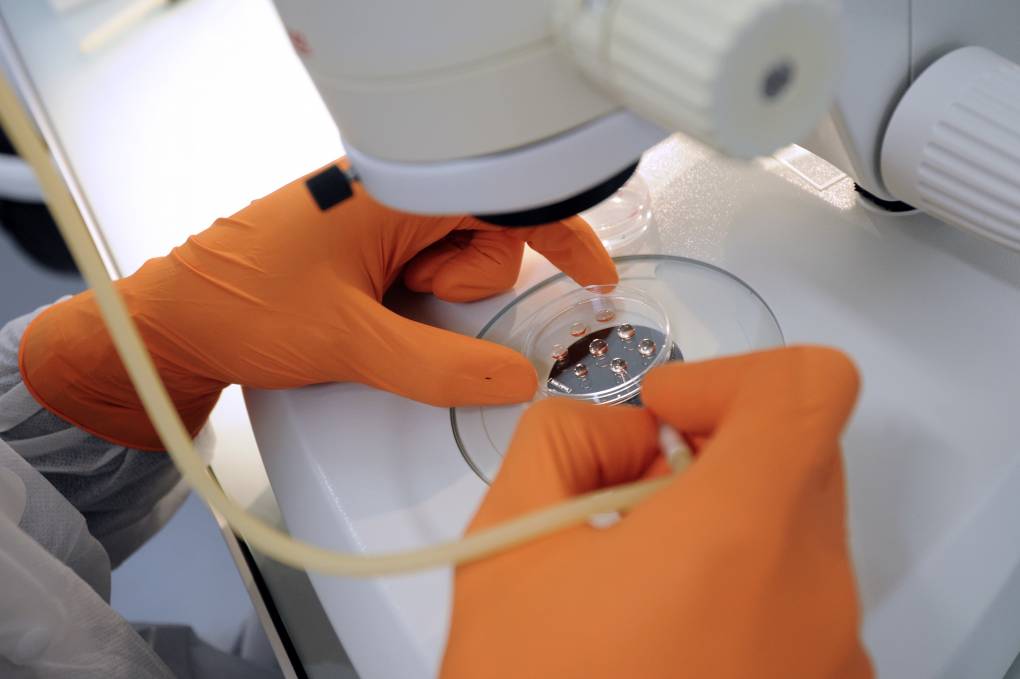
"caption": "A scientist introduces embryonic stem cells into a mouse embryo. (Anne-Christine Poujoulat/AFP via Getty Images)",
"description": "A scientist wearing orange gloves introduces embryonic stem cells into a mouse embryo under a microscope. ",
"title": "French Fabien Danjan of CNRS (French Res",
"credit": "Anne-Christine Poujoulat/AFP via Getty Images",
"status": "inherit",
"isLoading": false,
"fetchFailed": false
},
"news_11839199": {
"type": "attachments",
"id": "news_11839199",
"meta": {
"index": "attachments_1716263798",
"site": "news",
"id": "11839199",
"found": true
},
"parent": 11839198,
"imgSizes": {
"apple_news_ca_landscape_5_5": {
"file": "https://ww2.kqed.org/app/uploads/sites/10/2020/09/NorthAmerPleistocene-1044x783.jpg",
"width": 1044,
"mimeType": "image/jpeg",
"height": 783
},
"apple_news_ca_square_4_0": {
"file": "https://ww2.kqed.org/app/uploads/sites/10/2020/09/NorthAmerPleistocene-470x470.jpg",
"width": 470,
"mimeType": "image/jpeg",
"height": 470
},
"twentyfourteen-full-width": {
"file": "https://ww2.kqed.org/app/uploads/sites/10/2020/09/NorthAmerPleistocene-1038x576.jpg",
"width": 1038,
"mimeType": "image/jpeg",
"height": 576
},
"thumbnail": {
"file": "https://ww2.kqed.org/app/uploads/sites/10/2020/09/NorthAmerPleistocene-160x133.jpg",
"width": 160,
"mimeType": "image/jpeg",
"height": 133
},
"post-thumbnail": {
"file": "https://ww2.kqed.org/app/uploads/sites/10/2020/09/NorthAmerPleistocene-672x372.jpg",
"width": 672,
"mimeType": "image/jpeg",
"height": 372
},
"kqedFullSize": {
"file": "https://ww2.kqed.org/app/uploads/sites/10/2020/09/NorthAmerPleistocene-scaled.jpg",
"width": 2560,
"height": 2133
},
"2048x2048": {
"file": "https://ww2.kqed.org/app/uploads/sites/10/2020/09/NorthAmerPleistocene-2048x1707.jpg",
"width": 2048,
"mimeType": "image/jpeg",
"height": 1707
},
"apple_news_ca_landscape_4_7": {
"file": "https://ww2.kqed.org/app/uploads/sites/10/2020/09/NorthAmerPleistocene-632x474.jpg",
"width": 632,
"mimeType": "image/jpeg",
"height": 474
},
"large": {
"file": "https://ww2.kqed.org/app/uploads/sites/10/2020/09/NorthAmerPleistocene-1020x850.jpg",
"width": 1020,
"mimeType": "image/jpeg",
"height": 850
},
"apple_news_ca_landscape_4_0": {
"file": "https://ww2.kqed.org/app/uploads/sites/10/2020/09/NorthAmerPleistocene-536x402.jpg",
"width": 536,
"mimeType": "image/jpeg",
"height": 402
},
"apple_news_ca_portrait_12_9": {
"file": "https://ww2.kqed.org/app/uploads/sites/10/2020/09/NorthAmerPleistocene-1122x1496.jpg",
"width": 1122,
"mimeType": "image/jpeg",
"height": 1496
},
"medium": {
"file": "https://ww2.kqed.org/app/uploads/sites/10/2020/09/NorthAmerPleistocene-800x667.jpg",
"width": 800,
"mimeType": "image/jpeg",
"height": 667
},
"apple_news_ca_portrait_4_0": {
"file": "https://ww2.kqed.org/app/uploads/sites/10/2020/09/NorthAmerPleistocene-354x472.jpg",
"width": 354,
"mimeType": "image/jpeg",
"height": 472
},
"apple_news_ca_portrait_9_7": {
"file": "https://ww2.kqed.org/app/uploads/sites/10/2020/09/NorthAmerPleistocene-840x1120.jpg",
"width": 840,
"mimeType": "image/jpeg",
"height": 1120
},
"apple_news_ca_landscape_12_9": {
"file": "https://ww2.kqed.org/app/uploads/sites/10/2020/09/NorthAmerPleistocene-1832x1374.jpg",
"width": 1832,
"mimeType": "image/jpeg",
"height": 1374
},
"apple_news_ca_square_9_7": {
"file": "https://ww2.kqed.org/app/uploads/sites/10/2020/09/NorthAmerPleistocene-1104x1104.jpg",
"width": 1104,
"mimeType": "image/jpeg",
"height": 1104
},
"1536x1536": {
"file": "https://ww2.kqed.org/app/uploads/sites/10/2020/09/NorthAmerPleistocene-1536x1280.jpg",
"width": 1536,
"mimeType": "image/jpeg",
"height": 1280
},
"apple_news_ca_portrait_4_7": {
"file": "https://ww2.kqed.org/app/uploads/sites/10/2020/09/NorthAmerPleistocene-414x552.jpg",
"width": 414,
"mimeType": "image/jpeg",
"height": 552
},
"apple_news_ca_square_12_9": {
"file": "https://ww2.kqed.org/app/uploads/sites/10/2020/09/NorthAmerPleistocene-1472x1472.jpg",
"width": 1472,
"mimeType": "image/jpeg",
"height": 1472
},
"apple_news_ca_portrait_5_5": {
"file": "https://ww2.kqed.org/app/uploads/sites/10/2020/09/NorthAmerPleistocene-687x916.jpg",
"width": 687,
"mimeType": "image/jpeg",
"height": 916
},
"full-width": {
"file": "https://ww2.kqed.org/app/uploads/sites/10/2020/09/NorthAmerPleistocene-1920x1600.jpg",
"width": 1920,
"mimeType": "image/jpeg",
"height": 1600
},
"apple_news_ca_square_4_7": {
"file": "https://ww2.kqed.org/app/uploads/sites/10/2020/09/NorthAmerPleistocene-550x550.jpg",
"width": 550,
"mimeType": "image/jpeg",
"height": 550
},
"apple_news_ca_landscape_9_7": {
"file": "https://ww2.kqed.org/app/uploads/sites/10/2020/09/NorthAmerPleistocene-1376x1032.jpg",
"width": 1376,
"mimeType": "image/jpeg",
"height": 1032
},
"apple_news_ca_square_5_5": {
"file": "https://ww2.kqed.org/app/uploads/sites/10/2020/09/NorthAmerPleistocene-912x912.jpg",
"width": 912,
"mimeType": "image/jpeg",
"height": 912
}
},
"publishDate": 1600819392,
"modified": 1600819458,
"caption": "Creatures that would have been seen in the Bay Area at the tail end of the last ice age.",
"description": "Creatures that would have been seen in the Bay Area at the tail end of the last ice age.",
"title": "NorthAmerPleistocene",
"credit": "Illustration by Karen Carr",
"status": "inherit",
"isLoading": false,
"fetchFailed": false
},
"news_11838197": {
"type": "attachments",
"id": "news_11838197",
"meta": {
"index": "attachments_1716263798",
"site": "news",
"id": "11838197",
"found": true
},
"parent": 11838178,
"imgSizes": {
"apple_news_ca_landscape_5_5": {
"file": "https://ww2.kqed.org/app/uploads/sites/10/2020/09/Napa-Valley-CB-1044x783.jpg",
"width": 1044,
"mimeType": "image/jpeg",
"height": 783
},
"apple_news_ca_square_4_0": {
"file": "https://ww2.kqed.org/app/uploads/sites/10/2020/09/Napa-Valley-CB-470x470.jpg",
"width": 470,
"mimeType": "image/jpeg",
"height": 470
},
"twentyfourteen-full-width": {
"file": "https://ww2.kqed.org/app/uploads/sites/10/2020/09/Napa-Valley-CB-1038x576.jpg",
"width": 1038,
"mimeType": "image/jpeg",
"height": 576
},
"thumbnail": {
"file": "https://ww2.kqed.org/app/uploads/sites/10/2020/09/Napa-Valley-CB-160x90.jpg",
"width": 160,
"mimeType": "image/jpeg",
"height": 90
},
"post-thumbnail": {
"file": "https://ww2.kqed.org/app/uploads/sites/10/2020/09/Napa-Valley-CB-672x372.jpg",
"width": 672,
"mimeType": "image/jpeg",
"height": 372
},
"kqedFullSize": {
"file": "https://ww2.kqed.org/app/uploads/sites/10/2020/09/Napa-Valley-CB.jpg",
"width": 1920,
"height": 1080
},
"apple_news_ca_landscape_4_7": {
"file": "https://ww2.kqed.org/app/uploads/sites/10/2020/09/Napa-Valley-CB-632x474.jpg",
"width": 632,
"mimeType": "image/jpeg",
"height": 474
},
"large": {
"file": "https://ww2.kqed.org/app/uploads/sites/10/2020/09/Napa-Valley-CB-1020x574.jpg",
"width": 1020,
"mimeType": "image/jpeg",
"height": 574
},
"apple_news_ca_landscape_4_0": {
"file": "https://ww2.kqed.org/app/uploads/sites/10/2020/09/Napa-Valley-CB-536x402.jpg",
"width": 536,
"mimeType": "image/jpeg",
"height": 402
},
"apple_news_ca_portrait_12_9": {
"file": "https://ww2.kqed.org/app/uploads/sites/10/2020/09/Napa-Valley-CB-1122x1080.jpg",
"width": 1122,
"mimeType": "image/jpeg",
"height": 1080
},
"medium": {
"file": "https://ww2.kqed.org/app/uploads/sites/10/2020/09/Napa-Valley-CB-800x450.jpg",
"width": 800,
"mimeType": "image/jpeg",
"height": 450
},
"apple_news_ca_portrait_4_0": {
"file": "https://ww2.kqed.org/app/uploads/sites/10/2020/09/Napa-Valley-CB-354x472.jpg",
"width": 354,
"mimeType": "image/jpeg",
"height": 472
},
"apple_news_ca_portrait_9_7": {
"file": "https://ww2.kqed.org/app/uploads/sites/10/2020/09/Napa-Valley-CB-840x1080.jpg",
"width": 840,
"mimeType": "image/jpeg",
"height": 1080
},
"apple_news_ca_landscape_12_9": {
"file": "https://ww2.kqed.org/app/uploads/sites/10/2020/09/Napa-Valley-CB-1832x1080.jpg",
"width": 1832,
"mimeType": "image/jpeg",
"height": 1080
},
"apple_news_ca_square_9_7": {
"file": "https://ww2.kqed.org/app/uploads/sites/10/2020/09/Napa-Valley-CB-1104x1080.jpg",
"width": 1104,
"mimeType": "image/jpeg",
"height": 1080
},
"1536x1536": {
"file": "https://ww2.kqed.org/app/uploads/sites/10/2020/09/Napa-Valley-CB-1536x864.jpg",
"width": 1536,
"mimeType": "image/jpeg",
"height": 864
},
"apple_news_ca_portrait_4_7": {
"file": "https://ww2.kqed.org/app/uploads/sites/10/2020/09/Napa-Valley-CB-414x552.jpg",
"width": 414,
"mimeType": "image/jpeg",
"height": 552
},
"apple_news_ca_square_12_9": {
"file": "https://ww2.kqed.org/app/uploads/sites/10/2020/09/Napa-Valley-CB-1472x1080.jpg",
"width": 1472,
"mimeType": "image/jpeg",
"height": 1080
},
"apple_news_ca_portrait_5_5": {
"file": "https://ww2.kqed.org/app/uploads/sites/10/2020/09/Napa-Valley-CB-687x916.jpg",
"width": 687,
"mimeType": "image/jpeg",
"height": 916
},
"apple_news_ca_square_4_7": {
"file": "https://ww2.kqed.org/app/uploads/sites/10/2020/09/Napa-Valley-CB-550x550.jpg",
"width": 550,
"mimeType": "image/jpeg",
"height": 550
},
"apple_news_ca_landscape_9_7": {
"file": "https://ww2.kqed.org/app/uploads/sites/10/2020/09/Napa-Valley-CB-1376x1032.jpg",
"width": 1376,
"mimeType": "image/jpeg",
"height": 1032
},
"apple_news_ca_square_5_5": {
"file": "https://ww2.kqed.org/app/uploads/sites/10/2020/09/Napa-Valley-CB-912x912.jpg",
"width": 912,
"mimeType": "image/jpeg",
"height": 912
}
},
"publishDate": 1600280795,
"modified": 1600291377,
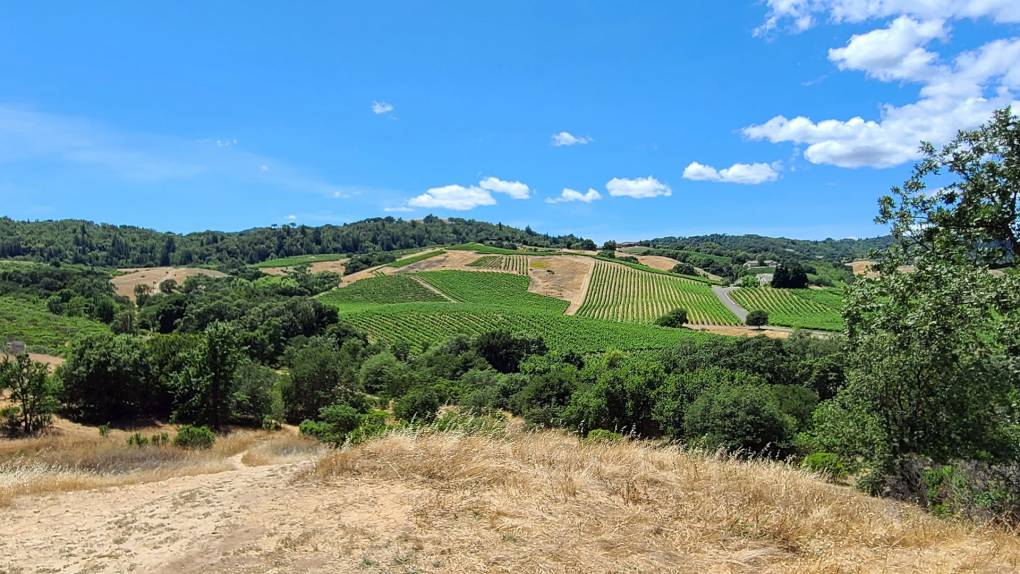
"caption": "Napa Valley today is covered in vineyards. But it wasn't always that way.",
"description": null,
"title": "Napa-Valley-CB",
"credit": "Christopher Beale/KQED",
"status": "inherit",
"isLoading": false,
"fetchFailed": false
},
"news_11837060": {
"type": "attachments",
"id": "news_11837060",
"meta": {
"index": "attachments_1716263798",
"site": "news",
"id": "11837060",
"found": true
},
"parent": 11837051,
"imgSizes": {
"apple_news_ca_landscape_5_5": {
"file": "https://ww2.kqed.org/app/uploads/sites/10/2020/09/GoldenGateBridge-1044x783.jpg",
"width": 1044,
"mimeType": "image/jpeg",
"height": 783
},
"apple_news_ca_square_4_0": {
"file": "https://ww2.kqed.org/app/uploads/sites/10/2020/09/GoldenGateBridge-470x470.jpg",
"width": 470,
"mimeType": "image/jpeg",
"height": 470
},
"twentyfourteen-full-width": {
"file": "https://ww2.kqed.org/app/uploads/sites/10/2020/09/GoldenGateBridge-1038x576.jpg",
"width": 1038,
"mimeType": "image/jpeg",
"height": 576
},
"thumbnail": {
"file": "https://ww2.kqed.org/app/uploads/sites/10/2020/09/GoldenGateBridge-160x112.jpg",
"width": 160,
"mimeType": "image/jpeg",
"height": 112
},
"post-thumbnail": {
"file": "https://ww2.kqed.org/app/uploads/sites/10/2020/09/GoldenGateBridge-672x372.jpg",
"width": 672,
"mimeType": "image/jpeg",
"height": 372
},
"kqedFullSize": {
"file": "https://ww2.kqed.org/app/uploads/sites/10/2020/09/GoldenGateBridge.jpg",
"width": 1920,
"height": 1349
},
"apple_news_ca_landscape_4_7": {
"file": "https://ww2.kqed.org/app/uploads/sites/10/2020/09/GoldenGateBridge-632x474.jpg",
"width": 632,
"mimeType": "image/jpeg",
"height": 474
},
"large": {
"file": "https://ww2.kqed.org/app/uploads/sites/10/2020/09/GoldenGateBridge-1020x717.jpg",
"width": 1020,
"mimeType": "image/jpeg",
"height": 717
},
"apple_news_ca_landscape_4_0": {
"file": "https://ww2.kqed.org/app/uploads/sites/10/2020/09/GoldenGateBridge-536x402.jpg",
"width": 536,
"mimeType": "image/jpeg",
"height": 402
},
"apple_news_ca_portrait_12_9": {
"file": "https://ww2.kqed.org/app/uploads/sites/10/2020/09/GoldenGateBridge-1122x1349.jpg",
"width": 1122,
"mimeType": "image/jpeg",
"height": 1349
},
"medium": {
"file": "https://ww2.kqed.org/app/uploads/sites/10/2020/09/GoldenGateBridge-800x562.jpg",
"width": 800,
"mimeType": "image/jpeg",
"height": 562
},
"apple_news_ca_portrait_4_0": {
"file": "https://ww2.kqed.org/app/uploads/sites/10/2020/09/GoldenGateBridge-354x472.jpg",
"width": 354,
"mimeType": "image/jpeg",
"height": 472
},
"apple_news_ca_portrait_9_7": {
"file": "https://ww2.kqed.org/app/uploads/sites/10/2020/09/GoldenGateBridge-840x1120.jpg",
"width": 840,
"mimeType": "image/jpeg",
"height": 1120
},
"apple_news_ca_landscape_12_9": {
"file": "https://ww2.kqed.org/app/uploads/sites/10/2020/09/GoldenGateBridge-1832x1349.jpg",
"width": 1832,
"mimeType": "image/jpeg",
"height": 1349
},
"apple_news_ca_square_9_7": {
"file": "https://ww2.kqed.org/app/uploads/sites/10/2020/09/GoldenGateBridge-1104x1104.jpg",
"width": 1104,
"mimeType": "image/jpeg",
"height": 1104
},
"1536x1536": {
"file": "https://ww2.kqed.org/app/uploads/sites/10/2020/09/GoldenGateBridge-1536x1079.jpg",
"width": 1536,
"mimeType": "image/jpeg",
"height": 1079
},
"apple_news_ca_portrait_4_7": {
"file": "https://ww2.kqed.org/app/uploads/sites/10/2020/09/GoldenGateBridge-414x552.jpg",
"width": 414,
"mimeType": "image/jpeg",
"height": 552
},
"apple_news_ca_square_12_9": {
"file": "https://ww2.kqed.org/app/uploads/sites/10/2020/09/GoldenGateBridge-1472x1349.jpg",
"width": 1472,
"mimeType": "image/jpeg",
"height": 1349
},
"apple_news_ca_portrait_5_5": {
"file": "https://ww2.kqed.org/app/uploads/sites/10/2020/09/GoldenGateBridge-687x916.jpg",
"width": 687,
"mimeType": "image/jpeg",
"height": 916
},
"apple_news_ca_square_4_7": {
"file": "https://ww2.kqed.org/app/uploads/sites/10/2020/09/GoldenGateBridge-550x550.jpg",
"width": 550,
"mimeType": "image/jpeg",
"height": 550
},
"apple_news_ca_landscape_9_7": {
"file": "https://ww2.kqed.org/app/uploads/sites/10/2020/09/GoldenGateBridge-1376x1032.jpg",
"width": 1376,
"mimeType": "image/jpeg",
"height": 1032
},
"apple_news_ca_square_5_5": {
"file": "https://ww2.kqed.org/app/uploads/sites/10/2020/09/GoldenGateBridge-912x912.jpg",
"width": 912,
"mimeType": "image/jpeg",
"height": 912
}
},
"publishDate": 1599602597,
"modified": 1599602661,
"caption": "After a wind retrofit the slats along the pedestrian walkway make a howling noise when the wind hits them just right.",
"description": null,
"title": "GoldenGateBridge",
"credit": "Lindsey Moore/KQED",
"status": "inherit",
"isLoading": false,
"fetchFailed": false
},
"news_11836416": {
"type": "attachments",
"id": "news_11836416",
"meta": {
"index": "attachments_1716263798",
"site": "news",
"id": "11836416",
"found": true
},
"parent": 11836117,
"imgSizes": {
"apple_news_ca_landscape_5_5": {
"file": "https://ww2.kqed.org/app/uploads/sites/10/2020/09/Big-Basin-3.jpg-1044x783.png",
"width": 1044,
"mimeType": "image/png",
"height": 783
},
"apple_news_ca_square_4_0": {
"file": "https://ww2.kqed.org/app/uploads/sites/10/2020/09/Big-Basin-3.jpg-470x470.png",
"width": 470,
"mimeType": "image/png",
"height": 470
},
"twentyfourteen-full-width": {
"file": "https://ww2.kqed.org/app/uploads/sites/10/2020/09/Big-Basin-3.jpg-1038x576.png",
"width": 1038,
"mimeType": "image/png",
"height": 576
},
"thumbnail": {
"file": "https://ww2.kqed.org/app/uploads/sites/10/2020/09/Big-Basin-3.jpg-160x108.png",
"width": 160,
"mimeType": "image/png",
"height": 108
},
"post-thumbnail": {
"file": "https://ww2.kqed.org/app/uploads/sites/10/2020/09/Big-Basin-3.jpg-672x372.png",
"width": 672,
"mimeType": "image/png",
"height": 372
},
"kqedFullSize": {
"file": "https://ww2.kqed.org/app/uploads/sites/10/2020/09/Big-Basin-3.jpg.png",
"width": 1900,
"height": 1280
},
"apple_news_ca_landscape_4_7": {
"file": "https://ww2.kqed.org/app/uploads/sites/10/2020/09/Big-Basin-3.jpg-632x474.png",
"width": 632,
"mimeType": "image/png",
"height": 474
},
"large": {
"file": "https://ww2.kqed.org/app/uploads/sites/10/2020/09/Big-Basin-3.jpg-1020x687.png",
"width": 1020,
"mimeType": "image/png",
"height": 687
},
"apple_news_ca_landscape_4_0": {
"file": "https://ww2.kqed.org/app/uploads/sites/10/2020/09/Big-Basin-3.jpg-536x402.png",
"width": 536,
"mimeType": "image/png",
"height": 402
},
"apple_news_ca_portrait_12_9": {
"file": "https://ww2.kqed.org/app/uploads/sites/10/2020/09/Big-Basin-3.jpg-1122x1280.png",
"width": 1122,
"mimeType": "image/png",
"height": 1280
},
"medium": {
"file": "https://ww2.kqed.org/app/uploads/sites/10/2020/09/Big-Basin-3.jpg-800x539.png",
"width": 800,
"mimeType": "image/png",
"height": 539
},
"apple_news_ca_portrait_4_0": {
"file": "https://ww2.kqed.org/app/uploads/sites/10/2020/09/Big-Basin-3.jpg-354x472.png",
"width": 354,
"mimeType": "image/png",
"height": 472
},
"apple_news_ca_portrait_9_7": {
"file": "https://ww2.kqed.org/app/uploads/sites/10/2020/09/Big-Basin-3.jpg-840x1120.png",
"width": 840,
"mimeType": "image/png",
"height": 1120
},
"apple_news_ca_landscape_12_9": {
"file": "https://ww2.kqed.org/app/uploads/sites/10/2020/09/Big-Basin-3.jpg-1832x1280.png",
"width": 1832,
"mimeType": "image/png",
"height": 1280
},
"apple_news_ca_square_9_7": {
"file": "https://ww2.kqed.org/app/uploads/sites/10/2020/09/Big-Basin-3.jpg-1104x1104.png",
"width": 1104,
"mimeType": "image/png",
"height": 1104
},
"1536x1536": {
"file": "https://ww2.kqed.org/app/uploads/sites/10/2020/09/Big-Basin-3.jpg-1536x1035.png",
"width": 1536,
"mimeType": "image/png",
"height": 1035
},
"apple_news_ca_portrait_4_7": {
"file": "https://ww2.kqed.org/app/uploads/sites/10/2020/09/Big-Basin-3.jpg-414x552.png",
"width": 414,
"mimeType": "image/png",
"height": 552
},
"apple_news_ca_square_12_9": {
"file": "https://ww2.kqed.org/app/uploads/sites/10/2020/09/Big-Basin-3.jpg-1472x1280.png",
"width": 1472,
"mimeType": "image/png",
"height": 1280
},
"apple_news_ca_portrait_5_5": {
"file": "https://ww2.kqed.org/app/uploads/sites/10/2020/09/Big-Basin-3.jpg-687x916.png",
"width": 687,
"mimeType": "image/png",
"height": 916
},
"apple_news_ca_square_4_7": {
"file": "https://ww2.kqed.org/app/uploads/sites/10/2020/09/Big-Basin-3.jpg-550x550.png",
"width": 550,
"mimeType": "image/png",
"height": 550
},
"apple_news_ca_landscape_9_7": {
"file": "https://ww2.kqed.org/app/uploads/sites/10/2020/09/Big-Basin-3.jpg-1376x1032.png",
"width": 1376,
"mimeType": "image/png",
"height": 1032
},
"apple_news_ca_square_5_5": {
"file": "https://ww2.kqed.org/app/uploads/sites/10/2020/09/Big-Basin-3.jpg-912x912.png",
"width": 912,
"mimeType": "image/png",
"height": 912
}
},
"publishDate": 1599084008,
"modified": 1599084050,
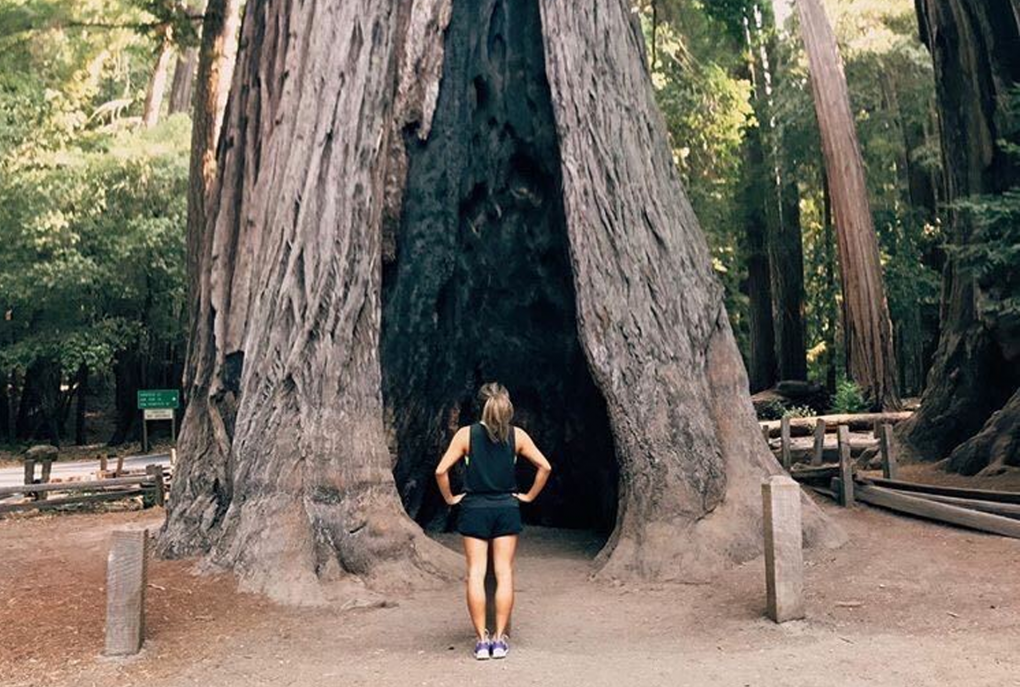
"caption": "Big Basin Redwoods State Park, captured by Stephanie Wu ",
"description": null,
"title": "bigbasin",
"credit": "Stephanie Wu",
"status": "inherit",
"isLoading": false,
"fetchFailed": false
},
"news_11834975": {
"type": "attachments",
"id": "news_11834975",
"meta": {
"index": "attachments_1716263798",
"site": "news",
"id": "11834975",
"found": true
},
"parent": 11834961,
"imgSizes": {
"apple_news_ca_landscape_5_5": {
"file": "https://ww2.kqed.org/app/uploads/sites/10/2020/08/PalaceFineArts-DavidYu-1044x783.jpg",
"width": 1044,
"mimeType": "image/jpeg",
"height": 783
},
"apple_news_ca_square_4_0": {
"file": "https://ww2.kqed.org/app/uploads/sites/10/2020/08/PalaceFineArts-DavidYu-470x470.jpg",
"width": 470,
"mimeType": "image/jpeg",
"height": 470
},
"twentyfourteen-full-width": {
"file": "https://ww2.kqed.org/app/uploads/sites/10/2020/08/PalaceFineArts-DavidYu-1038x576.jpg",
"width": 1038,
"mimeType": "image/jpeg",
"height": 576
},
"thumbnail": {
"file": "https://ww2.kqed.org/app/uploads/sites/10/2020/08/PalaceFineArts-DavidYu-160x107.jpg",
"width": 160,
"mimeType": "image/jpeg",
"height": 107
},
"post-thumbnail": {
"file": "https://ww2.kqed.org/app/uploads/sites/10/2020/08/PalaceFineArts-DavidYu-672x372.jpg",
"width": 672,
"mimeType": "image/jpeg",
"height": 372
},
"kqedFullSize": {
"file": "https://ww2.kqed.org/app/uploads/sites/10/2020/08/PalaceFineArts-DavidYu.jpg",
"width": 1500,
"height": 1001
},
"apple_news_ca_landscape_4_7": {
"file": "https://ww2.kqed.org/app/uploads/sites/10/2020/08/PalaceFineArts-DavidYu-632x474.jpg",
"width": 632,
"mimeType": "image/jpeg",
"height": 474
},
"large": {
"file": "https://ww2.kqed.org/app/uploads/sites/10/2020/08/PalaceFineArts-DavidYu-1020x681.jpg",
"width": 1020,
"mimeType": "image/jpeg",
"height": 681
},
"apple_news_ca_landscape_4_0": {
"file": "https://ww2.kqed.org/app/uploads/sites/10/2020/08/PalaceFineArts-DavidYu-536x402.jpg",
"width": 536,
"mimeType": "image/jpeg",
"height": 402
},
"apple_news_ca_portrait_12_9": {
"file": "https://ww2.kqed.org/app/uploads/sites/10/2020/08/PalaceFineArts-DavidYu-1122x1001.jpg",
"width": 1122,
"mimeType": "image/jpeg",
"height": 1001
},
"medium": {
"file": "https://ww2.kqed.org/app/uploads/sites/10/2020/08/PalaceFineArts-DavidYu-800x534.jpg",
"width": 800,
"mimeType": "image/jpeg",
"height": 534
},
"apple_news_ca_portrait_4_0": {
"file": "https://ww2.kqed.org/app/uploads/sites/10/2020/08/PalaceFineArts-DavidYu-354x472.jpg",
"width": 354,
"mimeType": "image/jpeg",
"height": 472
},
"apple_news_ca_portrait_9_7": {
"file": "https://ww2.kqed.org/app/uploads/sites/10/2020/08/PalaceFineArts-DavidYu-840x1001.jpg",
"width": 840,
"mimeType": "image/jpeg",
"height": 1001
},
"apple_news_ca_square_9_7": {
"file": "https://ww2.kqed.org/app/uploads/sites/10/2020/08/PalaceFineArts-DavidYu-1104x1001.jpg",
"width": 1104,
"mimeType": "image/jpeg",
"height": 1001
},
"apple_news_ca_portrait_4_7": {
"file": "https://ww2.kqed.org/app/uploads/sites/10/2020/08/PalaceFineArts-DavidYu-414x552.jpg",
"width": 414,
"mimeType": "image/jpeg",
"height": 552
},
"apple_news_ca_square_12_9": {
"file": "https://ww2.kqed.org/app/uploads/sites/10/2020/08/PalaceFineArts-DavidYu-1472x1001.jpg",
"width": 1472,
"mimeType": "image/jpeg",
"height": 1001
},
"apple_news_ca_portrait_5_5": {
"file": "https://ww2.kqed.org/app/uploads/sites/10/2020/08/PalaceFineArts-DavidYu-687x916.jpg",
"width": 687,
"mimeType": "image/jpeg",
"height": 916
},
"apple_news_ca_square_4_7": {
"file": "https://ww2.kqed.org/app/uploads/sites/10/2020/08/PalaceFineArts-DavidYu-550x550.jpg",
"width": 550,
"mimeType": "image/jpeg",
"height": 550
},
"apple_news_ca_landscape_9_7": {
"file": "https://ww2.kqed.org/app/uploads/sites/10/2020/08/PalaceFineArts-DavidYu-1376x1001.jpg",
"width": 1376,
"mimeType": "image/jpeg",
"height": 1001
},
"apple_news_ca_square_5_5": {
"file": "https://ww2.kqed.org/app/uploads/sites/10/2020/08/PalaceFineArts-DavidYu-912x912.jpg",
"width": 912,
"mimeType": "image/jpeg",
"height": 912
}
},
"publishDate": 1598312264,
"modified": 1642110807,
"caption": "The Palace of Fine Arts lagoon has been home to many swans throughout the years.",
"description": null,
"title": "PalaceFineArts-DavidYu",
"credit": "\u003ca href=\"https://www.flickr.com/photos/davidyuweb/9450013295/\">David Yu\u003c/a>/Flickr",
"status": "inherit",
"altTag": null,
"isLoading": false,
"fetchFailed": false
},
"news_11831244": {
"type": "attachments",
"id": "news_11831244",
"meta": {
"index": "attachments_1716263798",
"site": "news",
"id": "11831244",
"found": true
},
"parent": 11831229,
"imgSizes": {
"apple_news_ca_landscape_5_5": {
"file": "https://ww2.kqed.org/app/uploads/sites/10/2020/07/Tepco-beach-1044x783.jpg",
"width": 1044,
"mimeType": "image/jpeg",
"height": 783
},
"apple_news_ca_square_4_0": {
"file": "https://ww2.kqed.org/app/uploads/sites/10/2020/07/Tepco-beach-470x470.jpg",
"width": 470,
"mimeType": "image/jpeg",
"height": 470
},
"twentyfourteen-full-width": {
"file": "https://ww2.kqed.org/app/uploads/sites/10/2020/07/Tepco-beach-1038x576.jpg",
"width": 1038,
"mimeType": "image/jpeg",
"height": 576
},
"thumbnail": {
"file": "https://ww2.kqed.org/app/uploads/sites/10/2020/07/Tepco-beach-160x90.jpg",
"width": 160,
"mimeType": "image/jpeg",
"height": 90
},
"post-thumbnail": {
"file": "https://ww2.kqed.org/app/uploads/sites/10/2020/07/Tepco-beach-672x372.jpg",
"width": 672,
"mimeType": "image/jpeg",
"height": 372
},
"kqedFullSize": {
"file": "https://ww2.kqed.org/app/uploads/sites/10/2020/07/Tepco-beach.jpg",
"width": 1920,
"height": 1080
},
"apple_news_ca_landscape_4_7": {
"file": "https://ww2.kqed.org/app/uploads/sites/10/2020/07/Tepco-beach-632x474.jpg",
"width": 632,
"mimeType": "image/jpeg",
"height": 474
},
"large": {
"file": "https://ww2.kqed.org/app/uploads/sites/10/2020/07/Tepco-beach-1020x574.jpg",
"width": 1020,
"mimeType": "image/jpeg",
"height": 574
},
"apple_news_ca_landscape_4_0": {
"file": "https://ww2.kqed.org/app/uploads/sites/10/2020/07/Tepco-beach-536x402.jpg",
"width": 536,
"mimeType": "image/jpeg",
"height": 402
},
"apple_news_ca_portrait_12_9": {
"file": "https://ww2.kqed.org/app/uploads/sites/10/2020/07/Tepco-beach-1122x1080.jpg",
"width": 1122,
"mimeType": "image/jpeg",
"height": 1080
},
"medium": {
"file": "https://ww2.kqed.org/app/uploads/sites/10/2020/07/Tepco-beach-800x450.jpg",
"width": 800,
"mimeType": "image/jpeg",
"height": 450
},
"apple_news_ca_portrait_4_0": {
"file": "https://ww2.kqed.org/app/uploads/sites/10/2020/07/Tepco-beach-354x472.jpg",
"width": 354,
"mimeType": "image/jpeg",
"height": 472
},
"apple_news_ca_portrait_9_7": {
"file": "https://ww2.kqed.org/app/uploads/sites/10/2020/07/Tepco-beach-840x1080.jpg",
"width": 840,
"mimeType": "image/jpeg",
"height": 1080
},
"apple_news_ca_landscape_12_9": {
"file": "https://ww2.kqed.org/app/uploads/sites/10/2020/07/Tepco-beach-1832x1080.jpg",
"width": 1832,
"mimeType": "image/jpeg",
"height": 1080
},
"apple_news_ca_square_9_7": {
"file": "https://ww2.kqed.org/app/uploads/sites/10/2020/07/Tepco-beach-1104x1080.jpg",
"width": 1104,
"mimeType": "image/jpeg",
"height": 1080
},
"1536x1536": {
"file": "https://ww2.kqed.org/app/uploads/sites/10/2020/07/Tepco-beach-1536x864.jpg",
"width": 1536,
"mimeType": "image/jpeg",
"height": 864
},
"apple_news_ca_portrait_4_7": {
"file": "https://ww2.kqed.org/app/uploads/sites/10/2020/07/Tepco-beach-414x552.jpg",
"width": 414,
"mimeType": "image/jpeg",
"height": 552
},
"apple_news_ca_square_12_9": {
"file": "https://ww2.kqed.org/app/uploads/sites/10/2020/07/Tepco-beach-1472x1080.jpg",
"width": 1472,
"mimeType": "image/jpeg",
"height": 1080
},
"apple_news_ca_portrait_5_5": {
"file": "https://ww2.kqed.org/app/uploads/sites/10/2020/07/Tepco-beach-687x916.jpg",
"width": 687,
"mimeType": "image/jpeg",
"height": 916
},
"apple_news_ca_square_4_7": {
"file": "https://ww2.kqed.org/app/uploads/sites/10/2020/07/Tepco-beach-550x550.jpg",
"width": 550,
"mimeType": "image/jpeg",
"height": 550
},
"apple_news_ca_landscape_9_7": {
"file": "https://ww2.kqed.org/app/uploads/sites/10/2020/07/Tepco-beach-1376x1032.jpg",
"width": 1376,
"mimeType": "image/jpeg",
"height": 1032
},
"apple_news_ca_square_5_5": {
"file": "https://ww2.kqed.org/app/uploads/sites/10/2020/07/Tepco-beach-912x912.jpg",
"width": 912,
"mimeType": "image/jpeg",
"height": 912
}
},
"publishDate": 1596134315,
"modified": 1596134383,
"caption": "Tepco beach is strewn with broken pieces of TEPCO pottery, dumped there when the factory was operating in El Cerrito.",
"description": null,
"title": "Tepco-beach",
"credit": "Katrina Schwartz/KQED",
"status": "inherit",
"isLoading": false,
"fetchFailed": false
},
"news_11613631": {
"type": "attachments",
"id": "news_11613631",
"meta": {
"index": "attachments_1716263798",
"site": "news",
"id": "11613631",
"found": true
},
"parent": 11613510,
"imgSizes": {
"small": {
"file": "https://ww2.kqed.org/app/uploads/sites/10/2017/08/GettyImages-160488757-e1503597287892-520x314.jpg",
"width": 520,
"mimeType": "image/jpeg",
"height": 314
},
"twentyfourteen-full-width": {
"file": "https://ww2.kqed.org/app/uploads/sites/10/2017/08/GettyImages-160488757-e1503597287892-1038x576.jpg",
"width": 1038,
"mimeType": "image/jpeg",
"height": 576
},
"thumbnail": {
"file": "https://ww2.kqed.org/app/uploads/sites/10/2017/08/GettyImages-160488757-e1503597287892-160x97.jpg",
"width": 160,
"mimeType": "image/jpeg",
"height": 97
},
"fd-sm": {
"file": "https://ww2.kqed.org/app/uploads/sites/10/2017/08/GettyImages-160488757-e1503597287892-960x580.jpg",
"width": 960,
"mimeType": "image/jpeg",
"height": 580
},
"post-thumbnail": {
"file": "https://ww2.kqed.org/app/uploads/sites/10/2017/08/GettyImages-160488757-e1503597287892-672x372.jpg",
"width": 672,
"mimeType": "image/jpeg",
"height": 372
},
"xsmall": {
"file": "https://ww2.kqed.org/app/uploads/sites/10/2017/08/GettyImages-160488757-e1503597287892-375x227.jpg",
"width": 375,
"mimeType": "image/jpeg",
"height": 227
},
"kqedFullSize": {
"file": "https://ww2.kqed.org/app/uploads/sites/10/2017/08/GettyImages-160488757-e1503597287892.jpg",
"width": 2880,
"height": 1740
},
"large": {
"file": "https://ww2.kqed.org/app/uploads/sites/10/2017/08/GettyImages-160488757-e1503597287892-1020x616.jpg",
"width": 1020,
"mimeType": "image/jpeg",
"height": 616
},
"xlarge": {
"file": "https://ww2.kqed.org/app/uploads/sites/10/2017/08/GettyImages-160488757-e1503597287892-1180x713.jpg",
"width": 1180,
"mimeType": "image/jpeg",
"height": 713
},
"guest-author-50": {
"file": "https://ww2.kqed.org/app/uploads/sites/10/2017/08/GettyImages-160488757-e1503597287892-50x50.jpg",
"width": 50,
"mimeType": "image/jpeg",
"height": 50
},
"guest-author-96": {
"file": "https://ww2.kqed.org/app/uploads/sites/10/2017/08/GettyImages-160488757-e1503597287892-96x96.jpg",
"width": 96,
"mimeType": "image/jpeg",
"height": 96
},
"medium": {
"file": "https://ww2.kqed.org/app/uploads/sites/10/2017/08/GettyImages-160488757-e1503597287892-800x483.jpg",
"width": 800,
"mimeType": "image/jpeg",
"height": 483
},
"guest-author-64": {
"file": "https://ww2.kqed.org/app/uploads/sites/10/2017/08/GettyImages-160488757-e1503597287892-64x64.jpg",
"width": 64,
"mimeType": "image/jpeg",
"height": 64
},
"guest-author-32": {
"file": "https://ww2.kqed.org/app/uploads/sites/10/2017/08/GettyImages-160488757-e1503597287892-32x32.jpg",
"width": 32,
"mimeType": "image/jpeg",
"height": 32
},
"fd-lrg": {
"file": "https://ww2.kqed.org/app/uploads/sites/10/2017/08/GettyImages-160488757-e1503597287892-1920x1160.jpg",
"width": 1920,
"mimeType": "image/jpeg",
"height": 1160
},
"fd-med": {
"file": "https://ww2.kqed.org/app/uploads/sites/10/2017/08/GettyImages-160488757-e1503597287892-1180x713.jpg",
"width": 1180,
"mimeType": "image/jpeg",
"height": 713
},
"full-width": {
"file": "https://ww2.kqed.org/app/uploads/sites/10/2017/08/GettyImages-160488757-e1503597287892-1920x1160.jpg",
"width": 1920,
"mimeType": "image/jpeg",
"height": 1160
},
"detail": {
"file": "https://ww2.kqed.org/app/uploads/sites/10/2017/08/GettyImages-160488757-e1503597287892-150x150.jpg",
"width": 150,
"mimeType": "image/jpeg",
"height": 150
},
"guest-author-128": {
"file": "https://ww2.kqed.org/app/uploads/sites/10/2017/08/GettyImages-160488757-e1503597287892-128x128.jpg",
"width": 128,
"mimeType": "image/jpeg",
"height": 128
},
"xxsmall": {
"file": "https://ww2.kqed.org/app/uploads/sites/10/2017/08/GettyImages-160488757-e1503597287892-240x145.jpg",
"width": 240,
"mimeType": "image/jpeg",
"height": 145
}
},
"publishDate": 1503593464,
"modified": 1503593549,
"caption": "Nude activist Trey Allen stands nude in front of San Francisco police officers as he protests San Francisco's ban on nudity.",
"description": "Nude activist Trey Allen stands nude in front of San Francisco police officers as he protests San Francisco's ban on nudity.",
"title": "Nude Activists Protest City's Ban On Nudity",
"credit": "Justin Sullivan/Getty Images",
"status": "inherit",
"isLoading": false,
"fetchFailed": false
},
"news_11830449": {
"type": "attachments",
"id": "news_11830449",
"meta": {
"index": "attachments_1716263798",
"site": "news",
"id": "11830449",
"found": true
},
"parent": 11830384,
"imgSizes": {
"apple_news_ca_square_4_0": {
"file": "https://ww2.kqed.org/app/uploads/sites/10/2020/07/1495678.750x-470x470.png",
"width": 470,
"mimeType": "image/png",
"height": 470
},
"thumbnail": {
"file": "https://ww2.kqed.org/app/uploads/sites/10/2020/07/1495678.750x-160x102.png",
"width": 160,
"mimeType": "image/png",
"height": 102
},
"post-thumbnail": {
"file": "https://ww2.kqed.org/app/uploads/sites/10/2020/07/1495678.750x-672x372.png",
"width": 672,
"mimeType": "image/png",
"height": 372
},
"kqedFullSize": {
"file": "https://ww2.kqed.org/app/uploads/sites/10/2020/07/1495678.750x.png",
"width": 750,
"height": 480
},
"apple_news_ca_landscape_4_7": {
"file": "https://ww2.kqed.org/app/uploads/sites/10/2020/07/1495678.750x-632x474.png",
"width": 632,
"mimeType": "image/png",
"height": 474
},
"apple_news_ca_portrait_4_7": {
"file": "https://ww2.kqed.org/app/uploads/sites/10/2020/07/1495678.750x-414x480.png",
"width": 414,
"mimeType": "image/png",
"height": 480
},
"apple_news_ca_portrait_5_5": {
"file": "https://ww2.kqed.org/app/uploads/sites/10/2020/07/1495678.750x-687x480.png",
"width": 687,
"mimeType": "image/png",
"height": 480
},
"apple_news_ca_square_4_7": {
"file": "https://ww2.kqed.org/app/uploads/sites/10/2020/07/1495678.750x-550x480.png",
"width": 550,
"mimeType": "image/png",
"height": 480
},
"apple_news_ca_landscape_4_0": {
"file": "https://ww2.kqed.org/app/uploads/sites/10/2020/07/1495678.750x-536x402.png",
"width": 536,
"mimeType": "image/png",
"height": 402
},
"apple_news_ca_portrait_4_0": {
"file": "https://ww2.kqed.org/app/uploads/sites/10/2020/07/1495678.750x-354x472.png",
"width": 354,
"mimeType": "image/png",
"height": 472
}
},
"publishDate": 1595564467,
"modified": 1595614959,
"caption": "Police arrest Black Student Union member John Cleveland during the student strike at San Francisco State College 1968-1969, which resulted in the creation of a College of Ethnic Studies.",
"description": null,
"title": "1495678.750x",
"credit": "Courtesy of San Francisco State University Photographic Timeline Project",
"status": "inherit",
"isLoading": false,
"fetchFailed": false
},
"news_11829826": {
"type": "attachments",
"id": "news_11829826",
"meta": {
"index": "attachments_1716263798",
"site": "news",
"id": "11829826",
"found": true
},
"parent": 11829690,
"imgSizes": {
"apple_news_ca_landscape_5_5": {
"file": "https://ww2.kqed.org/app/uploads/sites/10/2020/07/the-butchers-son-1044x783.jpg",
"width": 1044,
"mimeType": "image/jpeg",
"height": 783
},
"apple_news_ca_square_4_0": {
"file": "https://ww2.kqed.org/app/uploads/sites/10/2020/07/the-butchers-son-470x470.jpg",
"width": 470,
"mimeType": "image/jpeg",
"height": 470
},
"twentyfourteen-full-width": {
"file": "https://ww2.kqed.org/app/uploads/sites/10/2020/07/the-butchers-son-1038x576.jpg",
"width": 1038,
"mimeType": "image/jpeg",
"height": 576
},
"thumbnail": {
"file": "https://ww2.kqed.org/app/uploads/sites/10/2020/07/the-butchers-son-160x120.jpg",
"width": 160,
"mimeType": "image/jpeg",
"height": 120
},
"post-thumbnail": {
"file": "https://ww2.kqed.org/app/uploads/sites/10/2020/07/the-butchers-son-672x372.jpg",
"width": 672,
"mimeType": "image/jpeg",
"height": 372
},
"kqedFullSize": {
"file": "https://ww2.kqed.org/app/uploads/sites/10/2020/07/the-butchers-son.jpg",
"width": 1920,
"height": 1440
},
"apple_news_ca_landscape_4_7": {
"file": "https://ww2.kqed.org/app/uploads/sites/10/2020/07/the-butchers-son-632x474.jpg",
"width": 632,
"mimeType": "image/jpeg",
"height": 474
},
"large": {
"file": "https://ww2.kqed.org/app/uploads/sites/10/2020/07/the-butchers-son-1020x765.jpg",
"width": 1020,
"mimeType": "image/jpeg",
"height": 765
},
"apple_news_ca_landscape_4_0": {
"file": "https://ww2.kqed.org/app/uploads/sites/10/2020/07/the-butchers-son-536x402.jpg",
"width": 536,
"mimeType": "image/jpeg",
"height": 402
},
"apple_news_ca_portrait_12_9": {
"file": "https://ww2.kqed.org/app/uploads/sites/10/2020/07/the-butchers-son-1122x1440.jpg",
"width": 1122,
"mimeType": "image/jpeg",
"height": 1440
},
"medium": {
"file": "https://ww2.kqed.org/app/uploads/sites/10/2020/07/the-butchers-son-800x600.jpg",
"width": 800,
"mimeType": "image/jpeg",
"height": 600
},
"apple_news_ca_portrait_4_0": {
"file": "https://ww2.kqed.org/app/uploads/sites/10/2020/07/the-butchers-son-354x472.jpg",
"width": 354,
"mimeType": "image/jpeg",
"height": 472
},
"apple_news_ca_portrait_9_7": {
"file": "https://ww2.kqed.org/app/uploads/sites/10/2020/07/the-butchers-son-840x1120.jpg",
"width": 840,
"mimeType": "image/jpeg",
"height": 1120
},
"apple_news_ca_landscape_12_9": {
"file": "https://ww2.kqed.org/app/uploads/sites/10/2020/07/the-butchers-son-1832x1374.jpg",
"width": 1832,
"mimeType": "image/jpeg",
"height": 1374
},
"apple_news_ca_square_9_7": {
"file": "https://ww2.kqed.org/app/uploads/sites/10/2020/07/the-butchers-son-1104x1104.jpg",
"width": 1104,
"mimeType": "image/jpeg",
"height": 1104
},
"1536x1536": {
"file": "https://ww2.kqed.org/app/uploads/sites/10/2020/07/the-butchers-son-1536x1152.jpg",
"width": 1536,
"mimeType": "image/jpeg",
"height": 1152
},
"apple_news_ca_portrait_4_7": {
"file": "https://ww2.kqed.org/app/uploads/sites/10/2020/07/the-butchers-son-414x552.jpg",
"width": 414,
"mimeType": "image/jpeg",
"height": 552
},
"apple_news_ca_square_12_9": {
"file": "https://ww2.kqed.org/app/uploads/sites/10/2020/07/the-butchers-son-1472x1440.jpg",
"width": 1472,
"mimeType": "image/jpeg",
"height": 1440
},
"apple_news_ca_portrait_5_5": {
"file": "https://ww2.kqed.org/app/uploads/sites/10/2020/07/the-butchers-son-687x916.jpg",
"width": 687,
"mimeType": "image/jpeg",
"height": 916
},
"apple_news_ca_square_4_7": {
"file": "https://ww2.kqed.org/app/uploads/sites/10/2020/07/the-butchers-son-550x550.jpg",
"width": 550,
"mimeType": "image/jpeg",
"height": 550
},
"apple_news_ca_landscape_9_7": {
"file": "https://ww2.kqed.org/app/uploads/sites/10/2020/07/the-butchers-son-1376x1032.jpg",
"width": 1376,
"mimeType": "image/jpeg",
"height": 1032
},
"apple_news_ca_square_5_5": {
"file": "https://ww2.kqed.org/app/uploads/sites/10/2020/07/the-butchers-son-912x912.jpg",
"width": 912,
"mimeType": "image/jpeg",
"height": 912
}
},
"publishDate": 1595288269,
"modified": 1595288336,
"caption": "Customers lining up to get takeout for lunch at The Butcher's Son, a meat-and-dairy-free deli in downtown Berkeley.",
"description": "Customers lining up to get takeout for lunch at The Butcher's Son, a meat-and-dairy-free deli in downtown Berkeley.",
"title": "the butchers son",
"credit": "Chloe Veltman/KQED",
"status": "inherit",
"isLoading": false,
"fetchFailed": false
},
"news_11829038": {
"type": "attachments",
"id": "news_11829038",
"meta": {
"index": "attachments_1716263798",
"site": "news",
"id": "11829038",
"found": true
},
"parent": 11829017,
"imgSizes": {
"apple_news_ca_landscape_5_5": {
"file": "https://ww2.kqed.org/app/uploads/sites/10/2020/07/murphybed-1044x783.jpg",
"width": 1044,
"mimeType": "image/jpeg",
"height": 783
},
"apple_news_ca_square_4_0": {
"file": "https://ww2.kqed.org/app/uploads/sites/10/2020/07/murphybed-470x470.jpg",
"width": 470,
"mimeType": "image/jpeg",
"height": 470
},
"twentyfourteen-full-width": {
"file": "https://ww2.kqed.org/app/uploads/sites/10/2020/07/murphybed-1038x576.jpg",
"width": 1038,
"mimeType": "image/jpeg",
"height": 576
},
"thumbnail": {
"file": "https://ww2.kqed.org/app/uploads/sites/10/2020/07/murphybed-160x90.jpg",
"width": 160,
"mimeType": "image/jpeg",
"height": 90
},
"post-thumbnail": {
"file": "https://ww2.kqed.org/app/uploads/sites/10/2020/07/murphybed-672x372.jpg",
"width": 672,
"mimeType": "image/jpeg",
"height": 372
},
"kqedFullSize": {
"file": "https://ww2.kqed.org/app/uploads/sites/10/2020/07/murphybed.jpg",
"width": 1920,
"height": 1080
},
"apple_news_ca_landscape_4_7": {
"file": "https://ww2.kqed.org/app/uploads/sites/10/2020/07/murphybed-632x474.jpg",
"width": 632,
"mimeType": "image/jpeg",
"height": 474
},
"large": {
"file": "https://ww2.kqed.org/app/uploads/sites/10/2020/07/murphybed-1020x574.jpg",
"width": 1020,
"mimeType": "image/jpeg",
"height": 574
},
"apple_news_ca_landscape_4_0": {
"file": "https://ww2.kqed.org/app/uploads/sites/10/2020/07/murphybed-536x402.jpg",
"width": 536,
"mimeType": "image/jpeg",
"height": 402
},
"apple_news_ca_portrait_12_9": {
"file": "https://ww2.kqed.org/app/uploads/sites/10/2020/07/murphybed-1122x1080.jpg",
"width": 1122,
"mimeType": "image/jpeg",
"height": 1080
},
"medium": {
"file": "https://ww2.kqed.org/app/uploads/sites/10/2020/07/murphybed-800x450.jpg",
"width": 800,
"mimeType": "image/jpeg",
"height": 450
},
"apple_news_ca_portrait_4_0": {
"file": "https://ww2.kqed.org/app/uploads/sites/10/2020/07/murphybed-354x472.jpg",
"width": 354,
"mimeType": "image/jpeg",
"height": 472
},
"apple_news_ca_portrait_9_7": {
"file": "https://ww2.kqed.org/app/uploads/sites/10/2020/07/murphybed-840x1080.jpg",
"width": 840,
"mimeType": "image/jpeg",
"height": 1080
},
"apple_news_ca_landscape_12_9": {
"file": "https://ww2.kqed.org/app/uploads/sites/10/2020/07/murphybed-1832x1080.jpg",
"width": 1832,
"mimeType": "image/jpeg",
"height": 1080
},
"apple_news_ca_square_9_7": {
"file": "https://ww2.kqed.org/app/uploads/sites/10/2020/07/murphybed-1104x1080.jpg",
"width": 1104,
"mimeType": "image/jpeg",
"height": 1080
},
"1536x1536": {
"file": "https://ww2.kqed.org/app/uploads/sites/10/2020/07/murphybed-1536x864.jpg",
"width": 1536,
"mimeType": "image/jpeg",
"height": 864
},
"apple_news_ca_portrait_4_7": {
"file": "https://ww2.kqed.org/app/uploads/sites/10/2020/07/murphybed-414x552.jpg",
"width": 414,
"mimeType": "image/jpeg",
"height": 552
},
"apple_news_ca_square_12_9": {
"file": "https://ww2.kqed.org/app/uploads/sites/10/2020/07/murphybed-1472x1080.jpg",
"width": 1472,
"mimeType": "image/jpeg",
"height": 1080
},
"apple_news_ca_portrait_5_5": {
"file": "https://ww2.kqed.org/app/uploads/sites/10/2020/07/murphybed-687x916.jpg",
"width": 687,
"mimeType": "image/jpeg",
"height": 916
},
"apple_news_ca_square_4_7": {
"file": "https://ww2.kqed.org/app/uploads/sites/10/2020/07/murphybed-550x550.jpg",
"width": 550,
"mimeType": "image/jpeg",
"height": 550
},
"apple_news_ca_landscape_9_7": {
"file": "https://ww2.kqed.org/app/uploads/sites/10/2020/07/murphybed-1376x1032.jpg",
"width": 1376,
"mimeType": "image/jpeg",
"height": 1032
},
"apple_news_ca_square_5_5": {
"file": "https://ww2.kqed.org/app/uploads/sites/10/2020/07/murphybed-912x912.jpg",
"width": 912,
"mimeType": "image/jpeg",
"height": 912
}
},
"publishDate": 1594769542,
"modified": 1594769909,
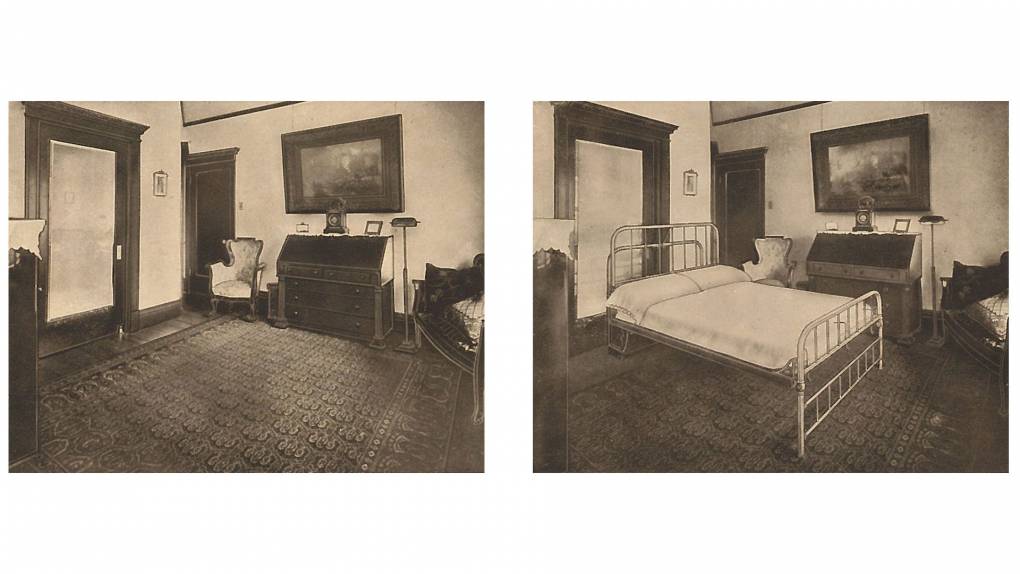
"caption": "The Murphy bed invention allowed its inventor, William Lawrence Murphy, to turn his bedroom into a parlor.",
"description": null,
"title": "murphybed",
"credit": "\u003ca href=\"https://www.smithsonianmag.com/smithsonian-institution/curator-finds-murphy-beds-place-in-american-history-48350873/#ixzz2RxmYda53\">Trade Literature Collection/Smithsonian Libraries\u003c/a>",
"status": "inherit",
"isLoading": false,
"fetchFailed": false
},
"news_11829149": {
"type": "attachments",
"id": "news_11829149",
"meta": {
"index": "attachments_1716263798",
"site": "news",
"id": "11829149",
"found": true
},
"parent": 11828932,
"imgSizes": {
"apple_news_ca_landscape_5_5": {
"file": "https://ww2.kqed.org/app/uploads/sites/10/2020/07/GettyImages-1142032802-1044x783.jpg",
"width": 1044,
"mimeType": "image/jpeg",
"height": 783
},
"apple_news_ca_square_4_0": {
"file": "https://ww2.kqed.org/app/uploads/sites/10/2020/07/GettyImages-1142032802-470x470.jpg",
"width": 470,
"mimeType": "image/jpeg",
"height": 470
},
"twentyfourteen-full-width": {
"file": "https://ww2.kqed.org/app/uploads/sites/10/2020/07/GettyImages-1142032802-1038x576.jpg",
"width": 1038,
"mimeType": "image/jpeg",
"height": 576
},
"thumbnail": {
"file": "https://ww2.kqed.org/app/uploads/sites/10/2020/07/GettyImages-1142032802-160x107.jpg",
"width": 160,
"mimeType": "image/jpeg",
"height": 107
},
"post-thumbnail": {
"file": "https://ww2.kqed.org/app/uploads/sites/10/2020/07/GettyImages-1142032802-672x372.jpg",
"width": 672,
"mimeType": "image/jpeg",
"height": 372
},
"kqedFullSize": {
"file": "https://ww2.kqed.org/app/uploads/sites/10/2020/07/GettyImages-1142032802.jpg",
"width": 1920,
"height": 1280
},
"apple_news_ca_landscape_4_7": {
"file": "https://ww2.kqed.org/app/uploads/sites/10/2020/07/GettyImages-1142032802-632x474.jpg",
"width": 632,
"mimeType": "image/jpeg",
"height": 474
},
"large": {
"file": "https://ww2.kqed.org/app/uploads/sites/10/2020/07/GettyImages-1142032802-1020x680.jpg",
"width": 1020,
"mimeType": "image/jpeg",
"height": 680
},
"apple_news_ca_landscape_4_0": {
"file": "https://ww2.kqed.org/app/uploads/sites/10/2020/07/GettyImages-1142032802-536x402.jpg",
"width": 536,
"mimeType": "image/jpeg",
"height": 402
},
"apple_news_ca_portrait_12_9": {
"file": "https://ww2.kqed.org/app/uploads/sites/10/2020/07/GettyImages-1142032802-1122x1280.jpg",
"width": 1122,
"mimeType": "image/jpeg",
"height": 1280
},
"medium": {
"file": "https://ww2.kqed.org/app/uploads/sites/10/2020/07/GettyImages-1142032802-800x533.jpg",
"width": 800,
"mimeType": "image/jpeg",
"height": 533
},
"apple_news_ca_portrait_4_0": {
"file": "https://ww2.kqed.org/app/uploads/sites/10/2020/07/GettyImages-1142032802-354x472.jpg",
"width": 354,
"mimeType": "image/jpeg",
"height": 472
},
"apple_news_ca_portrait_9_7": {
"file": "https://ww2.kqed.org/app/uploads/sites/10/2020/07/GettyImages-1142032802-840x1120.jpg",
"width": 840,
"mimeType": "image/jpeg",
"height": 1120
},
"apple_news_ca_landscape_12_9": {
"file": "https://ww2.kqed.org/app/uploads/sites/10/2020/07/GettyImages-1142032802-1832x1280.jpg",
"width": 1832,
"mimeType": "image/jpeg",
"height": 1280
},
"apple_news_ca_square_9_7": {
"file": "https://ww2.kqed.org/app/uploads/sites/10/2020/07/GettyImages-1142032802-1104x1104.jpg",
"width": 1104,
"mimeType": "image/jpeg",
"height": 1104
},
"1536x1536": {
"file": "https://ww2.kqed.org/app/uploads/sites/10/2020/07/GettyImages-1142032802-1536x1024.jpg",
"width": 1536,
"mimeType": "image/jpeg",
"height": 1024
},
"apple_news_ca_portrait_4_7": {
"file": "https://ww2.kqed.org/app/uploads/sites/10/2020/07/GettyImages-1142032802-414x552.jpg",
"width": 414,
"mimeType": "image/jpeg",
"height": 552
},
"apple_news_ca_square_12_9": {
"file": "https://ww2.kqed.org/app/uploads/sites/10/2020/07/GettyImages-1142032802-1472x1280.jpg",
"width": 1472,
"mimeType": "image/jpeg",
"height": 1280
},
"apple_news_ca_portrait_5_5": {
"file": "https://ww2.kqed.org/app/uploads/sites/10/2020/07/GettyImages-1142032802-687x916.jpg",
"width": 687,
"mimeType": "image/jpeg",
"height": 916
},
"apple_news_ca_square_4_7": {
"file": "https://ww2.kqed.org/app/uploads/sites/10/2020/07/GettyImages-1142032802-550x550.jpg",
"width": 550,
"mimeType": "image/jpeg",
"height": 550
},
"apple_news_ca_landscape_9_7": {
"file": "https://ww2.kqed.org/app/uploads/sites/10/2020/07/GettyImages-1142032802-1376x1032.jpg",
"width": 1376,
"mimeType": "image/jpeg",
"height": 1032
},
"apple_news_ca_square_5_5": {
"file": "https://ww2.kqed.org/app/uploads/sites/10/2020/07/GettyImages-1142032802-912x912.jpg",
"width": 912,
"mimeType": "image/jpeg",
"height": 912
}
},
"publishDate": 1594848496,
"modified": 1594848561,
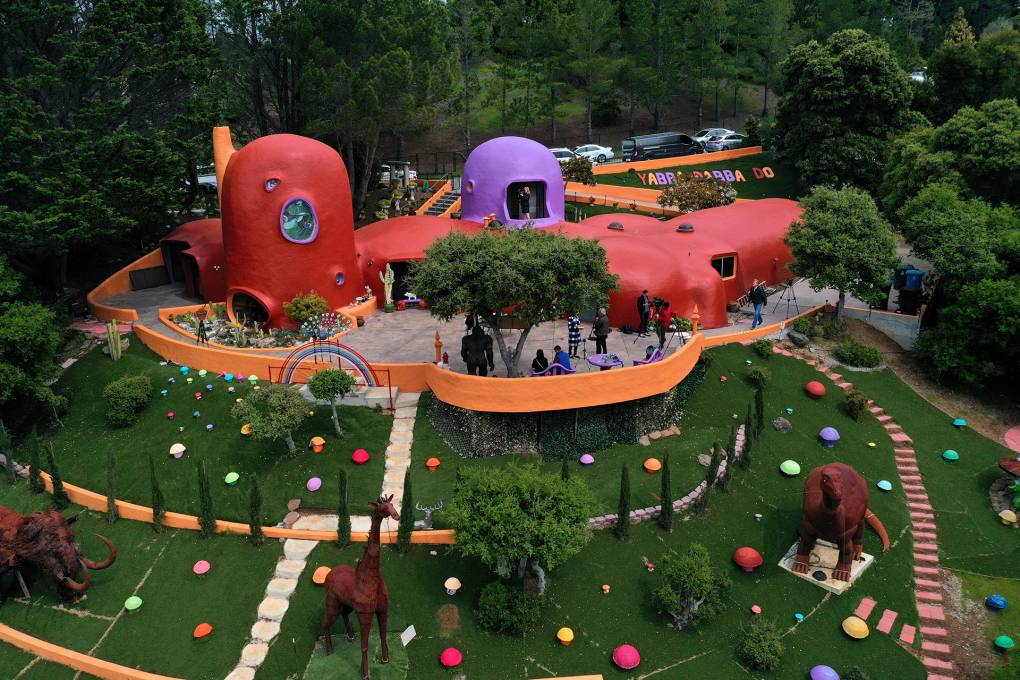
"caption": "The Flintstone House was born from a young architect's dreams of revolutionizing how we built homes. ",
"description": "The Flintstone House was born from a young architect's dreams of revolutionizing how we built homes. ",
"title": "Owners Of \"Flintstones\" Themed House In California In Legal Fight With Town Over Construction Permits",
"credit": "Justin Sullivan/Getty Images",
"status": "inherit",
"isLoading": false,
"fetchFailed": false
}
},
"audioPlayerReducer": {
"postId": "stream_live",
"isPaused": true,
"isPlaying": false,
"pfsActive": false,
"pledgeModalIsOpen": true,
"playerDrawerIsOpen": false,
"liveAudioPlayStartedAt": 0,
"liveAudioPlayContext": ""
},
"authorsReducer": {
"byline_news_11839198": {
"type": "authors",
"id": "byline_news_11839198",
"meta": {
"override": true
},
"slug": "byline_news_11839198",
"name": "Daniel Potter",
"isLoading": false
},
"byline_news_11837051": {
"type": "authors",
"id": "byline_news_11837051",
"meta": {
"override": true
},
"slug": "byline_news_11837051",
"name": "Katrina Schwartz and Rob Speight",
"isLoading": false
},
"byline_news_11836117": {
"type": "authors",
"id": "byline_news_11836117",
"meta": {
"override": true
},
"slug": "byline_news_11836117",
"name": "Carly Severn and Katrina Schwartz",
"isLoading": false
},
"ohubertallen": {
"type": "authors",
"id": "102",
"meta": {
"index": "authors_1716337520",
"id": "102",
"found": true
},
"name": "Olivia Allen-Price",
"firstName": "Olivia",
"lastName": "Allen-Price",
"slug": "ohubertallen",
"email": "oallenprice@kqed.org",
"display_author_email": false,
"staff_mastheads": [
"news"
],
"title": "Senior Editor",
"bio": "Olivia Allen-Price is senior editor and host of the award-winning Bay Curious podcast. Prior to joining KQED in 2013, Olivia worked at The Baltimore Sun and The Virginian-Pilot in Norfolk, Va. She holds degrees in journalism and political science from Elon University. Her work has earned awards from the Society of Professional Journalists, the Hearst Foundation and Hearken. She loves to talk about running and curly hair.\r\n\r\nFollow: \u003ca href=\"https://twitter.com/oallenprice\">@oallenprice\u003c/a>\r\nEmail: \u003ca href=\"mailto:oallenprice@kqed.org\">oallenprice@kqed.org\u003c/a>",
"avatar": "https://secure.gravatar.com/avatar/07f7803c1f6be56f3be58ef276dfa64dce898502e0554408ef4858451a8294f7?s=600&d=blank&r=g",
"twitter": "oallenprice",
"bluesky": null,
"facebook": null,
"instagram": null,
"linkedin": null,
"sites": [
{
"site": "",
"roles": [
"editor"
]
},
{
"site": "arts",
"roles": [
"subscriber"
]
},
{
"site": "news",
"roles": [
"administrator"
]
},
{
"site": "pop",
"roles": [
"administrator"
]
},
{
"site": "bayareabites",
"roles": [
"contributor"
]
},
{
"site": "stateofhealth",
"roles": [
"administrator"
]
},
{
"site": "science",
"roles": [
"editor"
]
}
],
"headData": {
"title": "Olivia Allen-Price | KQED",
"description": "Senior Editor",
"ogImgSrc": "https://secure.gravatar.com/avatar/07f7803c1f6be56f3be58ef276dfa64dce898502e0554408ef4858451a8294f7?s=600&d=blank&r=g",
"twImgSrc": "https://secure.gravatar.com/avatar/07f7803c1f6be56f3be58ef276dfa64dce898502e0554408ef4858451a8294f7?s=600&d=blank&r=g"
},
"isLoading": false,
"link": "/author/ohubertallen"
},
"katrinaschwartz": {
"type": "authors",
"id": "234",
"meta": {
"index": "authors_1716337520",
"id": "234",
"found": true
},
"name": "Katrina Schwartz",
"firstName": "Katrina",
"lastName": "Schwartz",
"slug": "katrinaschwartz",
"email": "kschwartz@kqed.org",
"display_author_email": false,
"staff_mastheads": [
"news"
],
"title": "Producer",
"bio": "Katrina Schwartz is a journalist based in San Francisco. She's worked at KPCC public radio in LA and has reported on air and online for KQED since 2010. She covered how teaching and learning is changing for MindShift between 2012 and 2020. She is the co-host of the MindShift podcast and now produces KQED's Bay Curious podcast.",
"avatar": "https://secure.gravatar.com/avatar/edb4ee79070447a018538c9aae6eeecf28786515b8a0c30e43b6b7dce5aa44c8?s=600&d=blank&r=g",
"twitter": "kschwart",
"bluesky": null,
"facebook": null,
"instagram": null,
"linkedin": null,
"sites": [
{
"site": "",
"roles": [
"editor"
]
},
{
"site": "news",
"roles": [
"editor"
]
},
{
"site": "mindshift",
"roles": [
"administrator"
]
},
{
"site": "stateofhealth",
"roles": [
"author"
]
},
{
"site": "science",
"roles": [
"editor"
]
}
],
"headData": {
"title": "Katrina Schwartz | KQED",
"description": "Producer",
"ogImgSrc": "https://secure.gravatar.com/avatar/edb4ee79070447a018538c9aae6eeecf28786515b8a0c30e43b6b7dce5aa44c8?s=600&d=blank&r=g",
"twImgSrc": "https://secure.gravatar.com/avatar/edb4ee79070447a018538c9aae6eeecf28786515b8a0c30e43b6b7dce5aa44c8?s=600&d=blank&r=g"
},
"isLoading": false,
"link": "/author/katrinaschwartz"
},
"rachael-myrow": {
"type": "authors",
"id": "251",
"meta": {
"index": "authors_1716337520",
"id": "251",
"found": true
},
"name": "Rachael Myrow",
"firstName": "Rachael",
"lastName": "Myrow",
"slug": "rachael-myrow",
"email": "rmyrow@kqed.org",
"display_author_email": true,
"staff_mastheads": [
"news"
],
"title": "Senior Editor of KQED's Silicon Valley News Desk",
"bio": "• I write and edit stories about how Silicon Valley power and policies shape everyday life in California. I’m also passionate about making Bay Area history and culture more accessible to a broad public. • I’ve been a journalist for most of my life, starting in high school with The Franklin Press in Los Angeles, where I grew up. While earning my first degree in English at UC Berkeley, I got my start in public radio at KALX-FM. After completing a second degree in journalism at Cal, I landed my first professional job at Marketplace, then moved on to KPCC (now LAist), and then KQED, where I hosted The California Report for more than seven years. • My reporting has appeared on NPR, The World, WBUR’s \u003ci>Here & Now\u003c/i>, and the BBC. I also guest host for KQED’s \u003ci>Forum\u003c/i>, as well as the Commonwealth Club in San Francisco. • I speak periodically on media, democracy and technology issues, and do voiceover work for documentaries and educational video projects. • Outside of the studio, you'll find me hiking Bay Area trails and whipping up Insta-ready meals in my kitchen. • I do not accept gifts, money, or favors from anyone connected to my reporting, I don't pay people for information, and I do not support or donate to political causes. • I strive to treat the people I report on with fairness, honesty, and respect. I also recognize there are often multiple sides to a story and work to verify information through multiple sources and documentation. If I get something wrong, I correct it.",
"avatar": "https://secure.gravatar.com/avatar/3ed8a3c5f26025e4a805ba634cda8cd764906b97438a6d9ce216b044e340da4e?s=600&d=blank&r=g",
"twitter": "rachaelmyrow",
"bluesky": null,
"facebook": null,
"instagram": null,
"linkedin": "https://www.linkedin.com/in/rachaelmyrow/",
"sites": [
{
"site": "arts",
"roles": [
"administrator"
]
},
{
"site": "news",
"roles": [
"edit_others_posts",
"editor"
]
},
{
"site": "futureofyou",
"roles": [
"editor"
]
},
{
"site": "bayareabites",
"roles": [
"editor"
]
},
{
"site": "stateofhealth",
"roles": [
"editor"
]
},
{
"site": "science",
"roles": [
"editor"
]
},
{
"site": "food",
"roles": [
"editor"
]
},
{
"site": "forum",
"roles": [
"editor"
]
},
{
"site": "liveblog",
"roles": [
"author"
]
}
],
"headData": {
"title": "Rachael Myrow | KQED",
"description": "Senior Editor of KQED's Silicon Valley News Desk",
"ogImgSrc": "https://secure.gravatar.com/avatar/3ed8a3c5f26025e4a805ba634cda8cd764906b97438a6d9ce216b044e340da4e?s=600&d=blank&r=g",
"twImgSrc": "https://secure.gravatar.com/avatar/3ed8a3c5f26025e4a805ba634cda8cd764906b97438a6d9ce216b044e340da4e?s=600&d=blank&r=g"
},
"isLoading": false,
"link": "/author/rachael-myrow"
},
"jplaczek": {
"type": "authors",
"id": "8606",
"meta": {
"index": "authors_1716337520",
"id": "8606",
"found": true
},
"name": "Jessica Placzek",
"firstName": "Jessica",
"lastName": "Placzek",
"slug": "jplaczek",
"email": "jessicalplaczek@gmail.com",
"display_author_email": false,
"staff_mastheads": [
"news"
],
"title": "KQED Contributor",
"bio": "Jessica Placzek is a former senior editor of podcasts at KQED where she served as the editorial lead of the podcast department. She worked with shows like MindShift, Rightnowish, Consider This, SOLD OUT, Bay Curious and The Bay. She’s also been a reporter and audio producer at KQED, KPFA, and KALW. She taught audio production to men incarcerated at California State Prison Solano and edited pieces they produced for the Uncuffed podcast through KALW. In 2018 she co-hosted and produced the third season of Raw Material for SFMOMA. In New Orleans she wrote for the Nola Defender. Her work has also appeared on Marketplace, All Things Considered, The California Report, and Vice. You can find more at jessicaplaczek.com",
"avatar": "https://secure.gravatar.com/avatar/5ead103b5880f672eceb84ce75eecd1b4b6f74a47edc457684a73ad5b8b158e9?s=600&d=blank&r=g",
"twitter": null,
"bluesky": null,
"facebook": null,
"instagram": null,
"linkedin": null,
"sites": [
{
"site": "arts",
"roles": [
"subscriber"
]
},
{
"site": "news",
"roles": [
"subscriber"
]
},
{
"site": "stateofhealth",
"roles": [
"editor"
]
},
{
"site": "forum",
"roles": [
"editor"
]
}
],
"headData": {
"title": "Jessica Placzek | KQED",
"description": "KQED Contributor",
"ogImgSrc": "https://secure.gravatar.com/avatar/5ead103b5880f672eceb84ce75eecd1b4b6f74a47edc457684a73ad5b8b158e9?s=600&d=blank&r=g",
"twImgSrc": "https://secure.gravatar.com/avatar/5ead103b5880f672eceb84ce75eecd1b4b6f74a47edc457684a73ad5b8b158e9?s=600&d=blank&r=g"
},
"isLoading": false,
"link": "/author/jplaczek"
},
"cveltman": {
"type": "authors",
"id": "8608",
"meta": {
"index": "authors_1716337520",
"id": "8608",
"found": true
},
"name": "Chloe Veltman",
"firstName": "Chloe",
"lastName": "Veltman",
"slug": "cveltman",
"email": "cveltman@kqed.org",
"display_author_email": true,
"staff_mastheads": [],
"title": "Arts and Culture Reporter",
"bio": "Chloe Veltman is a former arts and culture reporter for KQED. Prior to joining the organization, she launched and led the arts bureau at Colorado Public Radio, served as the Bay Area's culture columnist for the New York Times, and was the founder, host and executive producer of VoiceBox, a national award-winning weekly podcast/radio show and live events series all about the human voice. Chloe is the recipient of numerous prizes, grants and fellowships including a Webby Award for her work on interactive storytelling, both the John S Knight Journalism Fellowship and Humanities Center Fellowship at Stanford University, the Sundance Arts Writing Fellowship and a Library of Congress Research Fellowship. She is the author of the book \"On Acting\" and has appeared as a guest lecturer at Yale University and the San Francisco Conservatory of Music among other institutions. She holds a BA in english literature from King's College, Cambridge, and a Masters in Dramaturgy from the Central School of Speech and Drama/Harvard Institute for Advanced Theater Training.\r\n\u003ca href=\"https://www.chloeveltman.com\">www.chloeveltman.com\u003c/a>",
"avatar": "https://secure.gravatar.com/avatar/55403394b00a1ddab683952c2eb2cf85?s=600&d=blank&r=g",
"twitter": "chloeveltman",
"facebook": null,
"instagram": null,
"linkedin": null,
"sites": [
{
"site": "arts",
"roles": []
},
{
"site": "news",
"roles": [
"author"
]
},
{
"site": "pop",
"roles": [
"editor"
]
},
{
"site": "science",
"roles": []
}
],
"headData": {
"title": "Chloe Veltman | KQED",
"description": "Arts and Culture Reporter",
"ogImgSrc": "https://secure.gravatar.com/avatar/55403394b00a1ddab683952c2eb2cf85?s=600&d=blank&r=g",
"twImgSrc": "https://secure.gravatar.com/avatar/55403394b00a1ddab683952c2eb2cf85?s=600&d=blank&r=g"
},
"isLoading": false,
"link": "/author/cveltman"
},
"dventon": {
"type": "authors",
"id": "11088",
"meta": {
"index": "authors_1716337520",
"id": "11088",
"found": true
},
"name": "Danielle Venton",
"firstName": "Danielle",
"lastName": "Venton",
"slug": "dventon",
"email": "dventon@kqed.org",
"display_author_email": true,
"staff_mastheads": [
"science"
],
"title": "Science reporter",
"bio": "Danielle Venton is a reporter for KQED Science. She covers wildfires, space and oceans (though she is prone to sea sickness).\r\n\r\nBefore joining KQED in 2015, Danielle was a staff reporter at KRCB in Sonoma County and a freelancer. She studied science communication at UC Santa Cruz and formerly worked at CERN in Geneva, Switzerland where she wrote about computing. She lives in Sonoma County and enjoys backpacking.",
"avatar": "https://secure.gravatar.com/avatar/37b292b5c40c8d93959c4f48d73b5286f41b7abd8588277e941905a3ed4c801c?s=600&d=blank&r=g",
"twitter": "DanielleVenton",
"bluesky": null,
"facebook": null,
"instagram": null,
"linkedin": null,
"sites": [
{
"site": "arts",
"roles": [
"contributor"
]
},
{
"site": "news",
"roles": [
"editor"
]
},
{
"site": "futureofyou",
"roles": [
"editor"
]
},
{
"site": "science",
"roles": [
"editor"
]
},
{
"site": "liveblog",
"roles": [
"contributor"
]
}
],
"headData": {
"title": "Danielle Venton | KQED",
"description": "Science reporter",
"ogImgSrc": "https://secure.gravatar.com/avatar/37b292b5c40c8d93959c4f48d73b5286f41b7abd8588277e941905a3ed4c801c?s=600&d=blank&r=g",
"twImgSrc": "https://secure.gravatar.com/avatar/37b292b5c40c8d93959c4f48d73b5286f41b7abd8588277e941905a3ed4c801c?s=600&d=blank&r=g"
},
"isLoading": false,
"link": "/author/dventon"
},
"aehsanipour": {
"type": "authors",
"id": "11580",
"meta": {
"index": "authors_1716337520",
"id": "11580",
"found": true
},
"name": "Asal Ehsanipour",
"firstName": "Asal",
"lastName": "Ehsanipour",
"slug": "aehsanipour",
"email": "aehsanipour@kqed.org",
"display_author_email": false,
"staff_mastheads": [],
"title": "Reporter and Producer",
"bio": "Asal Ehsanipour is a producer and reporter for Rightnowish, Bay Curious and The California Report Magazine. She is also a producer for \u003ca href=\"https://www.thedoubleshift.com/\">The Double Shift\u003c/a>, a podcast about a new generation of working mothers. In 2018, Asal was named an Emerging Journalist Fellow by the Journalism and Women’s Symposium. Her work has appeared on KQED, KALW, PRI’s The World, and in several food and travel publications.",
"avatar": "https://secure.gravatar.com/avatar/c0e210438f5dca1b76921ff9f0eada52?s=600&d=blank&r=g",
"twitter": null,
"facebook": null,
"instagram": null,
"linkedin": null,
"sites": [
{
"site": "arts",
"roles": []
},
{
"site": "news",
"roles": [
"author",
"edit_others_posts"
]
}
],
"headData": {
"title": "Asal Ehsanipour | KQED",
"description": "Reporter and Producer",
"ogImgSrc": "https://secure.gravatar.com/avatar/c0e210438f5dca1b76921ff9f0eada52?s=600&d=blank&r=g",
"twImgSrc": "https://secure.gravatar.com/avatar/c0e210438f5dca1b76921ff9f0eada52?s=600&d=blank&r=g"
},
"isLoading": false,
"link": "/author/aehsanipour"
},
"cbeale": {
"type": "authors",
"id": "11749",
"meta": {
"index": "authors_1716337520",
"id": "11749",
"found": true
},
"name": "Christopher Beale",
"firstName": "Christopher",
"lastName": "Beale",
"slug": "cbeale",
"email": "cbeale@kqed.org",
"display_author_email": true,
"staff_mastheads": [
"news"
],
"title": "Engineer/Producer/Reporter",
"bio": "\u003ca href=\"https://linktr.ee/realchrisjbeale\" rel=\"noopener noreferrer\">Christopher J. Beale\u003c/a> is an award winning journalist, audio engineer, and media host living in San Francisco. \r\n\r\nChristopher works primarily as an audio engineer at KQED and serves as the sound designer for both the Bay Curious and Rightnowish podcasts. He is the host and producer of the LGBTQIA podcast and radio segment \u003ca href=\"https://stereotypespodcast.org\">Stereotypes\u003c/a>.",
"avatar": "https://secure.gravatar.com/avatar/dc485bf84788eb7e7414eb638e72407e?s=600&d=blank&r=g",
"twitter": "realchrisjbeale",
"facebook": null,
"instagram": "http://instagram.com/realchrisjbeale",
"linkedin": null,
"sites": [
{
"site": "arts",
"roles": [
"contributor"
]
},
{
"site": "news",
"roles": [
"editor"
]
},
{
"site": "forum",
"roles": [
"editor"
]
}
],
"headData": {
"title": "Christopher Beale | KQED",
"description": "Engineer/Producer/Reporter",
"ogImgSrc": "https://secure.gravatar.com/avatar/dc485bf84788eb7e7414eb638e72407e?s=600&d=blank&r=g",
"twImgSrc": "https://secure.gravatar.com/avatar/dc485bf84788eb7e7414eb638e72407e?s=600&d=blank&r=g"
},
"isLoading": false,
"link": "/author/cbeale"
}
},
"pagesReducer": {
"news_program_bay-curious": {
"type": "terms",
"id": "news_33523",
"meta": {
"index": "terms_1716263798",
"site": "news",
"id": "33523",
"score": 15.085743
},
"featImg": null,
"name": "Bay Curious",
"description": null,
"taxonomy": "program",
"headData": {
"twImgId": null,
"twTitle": null,
"ogTitle": null,
"ogImgId": null,
"twDescription": null,
"description": null,
"title": "Bay Curious Archives | KQED News",
"ogDescription": null
},
"ttid": 33540,
"slug": "bay-curious",
"isLoading": false,
"title": "Bay Curious",
"pageMeta": {
"site": "news",
"WpPageTemplate": "page-topic-editorial",
"currentPage": 27
},
"blocks": [
{
"blockName": "kqed/post-list",
"attrs": {
"layout": "cardArticle2",
"query": "posts/news?program=bay-curious",
"seeMore": false,
"paginated": true,
"page": 27
}
},
{
"blockName": "kqed/ad"
}
]
}
},
"pfsSessionReducer": {},
"postsReducer": {
"stream_live": {
"type": "live",
"id": "stream_live",
"audioUrl": "https://streams.kqed.org/kqedradio",
"title": "Live Stream",
"excerpt": "Live Stream information currently unavailable.",
"link": "/radio",
"featImg": "",
"label": {
"name": "KQED Live",
"link": "/"
}
},
"stream_kqedNewscast": {
"type": "posts",
"id": "stream_kqedNewscast",
"audioUrl": "https://www.kqed.org/.stream/anon/radio/RDnews/newscast.mp3?_=1",
"title": "KQED Newscast",
"featImg": "",
"label": {
"name": "88.5 FM",
"link": "/"
}
},
"news_11840438": {
"type": "posts",
"id": "news_11840438",
"meta": {
"index": "posts_1716263798",
"site": "news",
"id": "11840438",
"score": null,
"sort": [
1601546409000
]
},
"guestAuthors": [],
"slug": "everything-you-need-to-know-about-prop-14-the-stem-cell-research-bond",
"title": "What You Need to Know About Prop. 14, The Stem Cell Research Bond (Transcript)",
"publishDate": 1601546409,
"format": "standard",
"headTitle": "What You Need to Know About Prop. 14, The Stem Cell Research Bond (Transcript) | KQED",
"labelTerm": {},
"content": "\u003cp>If reading through the statewide ballot propositions has made your head spin, you are in the right place! From Oct. 1 – 16, \u003ca href=\"https://www.kqed.org/podcasts/baycurious\">Bay Curious\u003c/a> is exploring the 12 statewide ballot propositions in our \u003ca href=\"https://www.kqed.org/propfest\">Prop Fest\u003c/a> series. This episode tackles Prop 14, the stem cell research bond.\u003c/p>\n\u003cp>\u003ciframe loading=\"lazy\" frameborder=\"0\" height=\"200\" scrolling=\"no\" src=\"https://playlist.megaphone.fm?e=KQINC6474746408&light=true\" width=\"100%\">\u003c/iframe>\u003c/p>\n\u003ch2>Transcript\u003c/h2>\n\u003cp>\u003ca href=\"https://bit.ly/2G50GU4\">Printable version\u003c/a>\u003c/p>\n\u003cp>\u003cem>Theme music\u003c/em>\u003c/p>\n\u003cp>\u003cstrong>Olivia Allen-Price\u003c/strong> [00:00:37] Today, we take on \u003ca href=\"https://voterguide.sos.ca.gov/propositions/14/index.htm\">Proposition 14\u003c/a>. It’s a bond that would fund stem cell research in the state. On your ballot will read in part like this…\u003c/p>\n\u003cp>\u003cstrong>Voice 1\u003c/strong> [00:00:46] Proposition 14 authorizes $5.5 billion in state general obligation bonds to fund grants from the California Institute of Regenerative Medicine, educational, nonprofit and private entities for stem cell and other medical research.\u003c/p>\n\u003cp>\u003cstrong>Olivia Allen-Price\u003c/strong> [00:01:03] We’ll explain what all that means, who’s for it, who’s against it, and what else you need to know, all in today’s show. I’m Olivia Allen-Price and this is Bay Curious Prop Fest, Proposition 14.\u003c/p>\n\u003cp>\u003cem>End theme music\u003c/em>\u003c/p>\n\u003cp>\u003cstrong>Olivia Allen-Price\u003c/strong> [00:01:20] KQED science reporter \u003ca href=\"https://www.kqed.org/author/dventon\">Danielle Venton\u003c/a> has been covering Prop 14, The stem cell research bond. Welcome, Danielle.\u003c/p>\n\u003cp>\u003cstrong>Danielle Venton\u003c/strong> [00:01:27] Hello, Olivia.\u003c/p>\n\u003cp>\u003cstrong>Olivia Allen-Price\u003c/strong> [00:01:28] So let’s start with, what is a bond in general? How do they work?\u003c/p>\n\u003cp>\u003cstrong>Danielle Venton\u003c/strong> [00:01:32] Government bonds are a way to raise money for projects that a government wants to do now, but pay for over time. Think of them as a loan. So, for this particular bond, the state of California would pay that loan back with interest over 30 years out of the general fund, which is supported by taxpayers. So, essentially, when you vote yes on a bond, you’re saying, yes, let’s use public funds for this project.\u003c/p>\n\u003cp>[ad fullwidth]\u003c/p>\n\u003cp>\u003cstrong>Olivia Allen-Price\u003c/strong> [00:01:55] OK, so what exactly does this bond fund?\u003c/p>\n\u003cp>\u003cstrong>Danielle Venton\u003c/strong> [00:01:59] This would fund $5.5 billion in stem cell research and treatments in California. Some of the diseases that stem cell research is seeking to cure or treat include cancer, Alzheimer’s disease, diabetes, spinal cord injuries, blindness, and even COVID-19. I spoke recently with a guy named Jake Javier. He supports this bond initiative because he knows firsthand how life changing stem cell research can be.\u003c/p>\n\u003cp>\u003cstrong>Jake Javier\u003c/strong> [00:02:25] I am in my last year at Cal Poly.\u003c/p>\n\u003cp>\u003cstrong>Danielle Venton\u003c/strong> [00:02:28] So, Jake grew up locally in Danville and was just graduating high school when he suffered a life altering injury.\u003c/p>\n\u003cp>\u003cstrong>Jake Javier\u003c/strong> [00:02:35] On the last day of high school, I drove in to a pool and hit my head on the bottom and broke my neck and was immediately paralyzed.\u003c/p>\n\u003cp>\u003cstrong>Danielle Venton\u003c/strong> [00:02:47] He says his injury was complete, with very little hope of recovery. But a doctor at Stanford reached out to Jake and his family and said, you can be part of this clinical trial where we, with a one time surgery, will inject stem cells into the damaged area and you may possibly see some benefits.\u003c/p>\n\u003cp>\u003cstrong>Danielle Venton\u003c/strong> [00:03:07] Now, Jake is still injured.\u003c/p>\n\u003cp>\u003cstrong>Jake Javier\u003c/strong> [00:03:09] I’m a quadriplegic. I use a wheelchair.\u003c/p>\n\u003cp>\u003cstrong>Danielle Venton\u003c/strong> [00:03:11] But he says after the surgery, he noticed more movement in his arms, in his hands.\u003c/p>\n\u003cp>\u003cstrong>Jake Javier\u003c/strong> [00:03:17] So, I mean, with my injury, I’m at a level where I would normally not have any function at all in my hands and very, very little function like in my triceps and things like that. Muscles that are really important for functionality and, you know, being able to get through day to day activities that could help me push myself around more, help me transfer in and out of my chair independently. And then also, I notice, you know, I got some some finger movement. It doesn’t seem like much, but even that little movement has helped me so much with picking things up and things like that. So it was really, I was really blessed to see that happen.\u003c/p>\n\u003cp>\u003cstrong>Danielle Venton\u003c/strong> [00:03:51] So he doesn’t know how much of his recovery is due to the stem cells. How much is natural, or how much is due to physical therapy. But today he’s able to live independently, to go to college – and he wants to pursue a career in medicine. And he is a big believer in stem cell research, regenerative medicine, and is really hoping that California voters will support this proposition.\u003c/p>\n\u003cp>\u003cstrong>Olivia Allen-Price\u003c/strong> [00:04:20] Now, what exactly are stem cells and how do they work, I guess?\u003c/p>\n\u003cp>\u003cstrong>Danielle Venton\u003c/strong> [00:04:25] Yeah, stem cells are types of cells that can be turned into any type of specialized cell. Scientists have known about them since the eighteen hundreds, but it wasn’t until the late 90s that researchers developed a method to derive them from human embryos and grow them in a laboratory. And then people really began to get excited about their potential for medicine. Now these cells came from unused embryos created for in vitro fertilization, and they were donated with informed consent. But many anti-abortion groups felt that using the cells were tantamount to taking a human life. So in 2001, then President George W. Bush banned federal funding for any research using newly created stem cell lines.\u003c/p>\n\u003cp>\u003cstrong>Olivia Allen-Price\u003c/strong> [00:05:09] OK. And how does that get us now to bonds in California?\u003c/p>\n\u003cp>\u003cstrong>Danielle Venton\u003c/strong> [00:05:13] Well, Californians wanted to circumvent these federal restrictions, and in 2004 voted for a bond that gave the state $3 billion to create a research agency called the California Institute of Regenerative Medicine, or CIRM. There was a lot of public support for it. And it just felt like these wonderful cures could be right around the corner. Celebrities like Michael J. Fox appeared in TV commercials.\u003c/p>\n\u003cp>\u003cstrong>\u003ca href=\"https://www.youtube.com/watch?time_continue=4&v=fK9Eg0GVl7Q&feature=emb_title\">Michael J. Fox TV commercia\u003c/a>l\u003c/strong> [00:05:36] My most important role lately is as an advocate for patients, and for finding new cures for diseases. That’s why I’m asking you to vote yes on Proposition 71, Stem Cell Research Initiative.\u003c/p>\n\u003cp>\u003cstrong>Danielle Venton\u003c/strong> [00:05:48] And the money for that research, that $3 billion, has now run out. And to continue their work, the stem cell advocacy group, Americans for Cures, is asking voters for more money.\u003c/p>\n\u003cp>\u003cstrong>Olivia Allen-Price\u003c/strong> [00:06:00] So we’re basically voting on whether we want to refill the stem cell research piggy bank here.\u003c/p>\n\u003cp>\u003cstrong>Danielle Venton\u003c/strong> [00:06:05] Yeah, exactly. Some question if the state can afford this at this time when budgets are going to be so tight. Others have been disappointed by the slow pace of cures coming out of the field. Now, there are people who credit this research, such as Jake, with improving or restoring their health or the health of their loved ones. Or maybe they hope that one day it will, and they would balk at the idea that this is not worthy research. They point to achievements that the agency has funded. That includes effectively a cure for bubble baby disease. This is when someone is born without a functioning immune system. That mutation can now be corrected with genetically modified stem cells. And recently, just within the last year or so, the FDA approved two new treatments for blood cancer, developed with CIRM support. These achievements are what the agency points to when they’re criticized for not having accomplished more. And they say the process of scientific discovery is long and unpredictable.\u003c/p>\n\u003cp>\u003cstrong>Olivia Allen-Price\u003c/strong> [00:07:04] Now, wasn’t that Bush-era ban on stem cell research that you were talking about earlier – wasn’t that overturned?\u003c/p>\n\u003cp>\u003cstrong>Danielle Venton\u003c/strong> [00:07:11] Yes, that was overturned by President Obama. However, there are current members of Congress who are lobbying President Trump to ban the research again. And if that happens, then California would be the only major player in stemcell research once again in the United States.\u003c/p>\n\u003cp>\u003cstrong>Olivia Allen-Price\u003c/strong> [00:07:30] All right, so who is supporting Prop 14?\u003c/p>\n\u003cp>\u003cstrong>Danielle Venton\u003c/strong> [00:07:32] Governor Gavin Newsom, for one. Many patient advocacy organizations and medical and research institutions, including the California Board of Regents. These people don’t want to see the pace of this research slow. They want it to accelerate. The political action committee supporting this proposition is reporting more than six million dollars in contributions.\u003c/p>\n\u003cp>\u003cstrong>Olivia Allen-Price\u003c/strong> [00:07:53] All right. And what about the opposition? Who’s against it?\u003c/p>\n\u003cp>\u003cstrong>Danielle Venton\u003c/strong> [00:07:55] Well, so far, there’s no organized, funded opposition. There have been several newspaper editorials coming out against it, including locally, the Mercury News and the Santa Rosa Press Democrat. They basically say state bonds aren’t the way to fund research and the situation isn’t like it was in 2004 and that the institute should now seek other sources of funding and move forward as a nonprofit.\u003c/p>\n\u003cp>\u003cstrong>Olivia Allen-Price\u003c/strong> [00:08:19] All right, Danielle. Well, thanks, as always for your help.\u003c/p>\n\u003cp>\u003cstrong>Danielle Venton\u003c/strong> [00:08:21] My pleasure. Thanks.\u003c/p>\n\u003cp>\u003cstrong>Olivia Allen-Price\u003c/strong> [00:08:28] In a nutshell, a vote yes on Proposition 14 says you think Californians should give $5.5 billion to the state’s stem cell research institute. That money will be raised by selling bonds, which the state would pay back, with interest, out of\u003cbr>\nthe general fund over the next 30 years. A vote no means you think we shouldn’t spend public money on this research.\u003c/p>\n\u003cp>\u003cstrong>Olivia Allen-Price\u003c/strong> [00:08:54] That’s it on Proposition 14. We’ll be back tomorrow with an episode on Prop 15. And oh, it is a doozy. Commercial property tax! A partial rollback of one of California’s most controversial propositions! It’s going to be fire. In the meantime, you can find more of KQED election coverage at KQED.org/elections. Two reminders on the way out: October 19th is the last day to register to vote and mail in ballots must be postmarked on or before November 3rd.\u003c/p>\n\u003cp>\u003cstrong>Olivia Allen-Price\u003c/strong> [00:09:28] Bay Curious is made in San Francisco at member supported KQED. I’m Olivia Allen-Price. See you tomorrow.\u003c/p>\n\u003cp>[ad floatright]\u003c/p>\n",
"blocks": [],
"excerpt": null,
"status": "publish",
"parent": 0,
"modified": 1722891883,
"stats": {
"hasAudio": true,
"hasVideo": false,
"hasChartOrMap": false,
"iframeSrcs": [],
"hasGoogleForm": false,
"hasGallery": false,
"hasHearkenModule": false,
"hasPolis": false,
"paragraphCount": 44,
"wordCount": 1790
},
"headData": {
"title": "What You Need to Know About Prop. 14, The Stem Cell Research Bond (Transcript) | KQED",
"description": "If reading through the statewide ballot propositions has made your head spin, you are in the right place! From Oct. 1 - 16, Bay Curious is exploring the 12 statewide ballot propositions in our Prop Fest series. This episode tackles Prop 14, the stem cell research bond. Transcript Printable version Theme music Olivia Allen-Price Today, we take on Proposition 14. It's a bond that would fund stem cell research in the state. On your ballot will read in part like this... Voice 1 Proposition 14 authorizes $5.5 billion in state general obligation bonds to fund grants from the",
"ogTitle": "",
"ogDescription": "",
"ogImgId": "",
"twTitle": "",
"twDescription": "",
"twImgId": "",
"schema": {
"@context": "https://schema.org",
"@type": "NewsArticle",
"headline": "What You Need to Know About Prop. 14, The Stem Cell Research Bond (Transcript)",
"datePublished": "2020-10-01T03:00:09-07:00",
"dateModified": "2024-08-05T14:04:43-07:00",
"image": "https://cdn.kqed.org/wp-content/uploads/2020/02/KQED-OG-Image@1x.png",
"isAccessibleForFree": "True",
"publisher": {
"@type": "NewsMediaOrganization",
"@id": "https://www.kqed.org/#organization",
"name": "KQED",
"logo": "https://cdn.kqed.org/wp-content/uploads/2020/02/KQED-OG-Image@1x.png",
"url": "https://www.kqed.org",
"sameAs": [
"https://www.facebook.com/KQED",
"https://twitter.com/KQED",
"https://www.instagram.com/kqed/",
"https://www.tiktok.com/@kqedofficial",
"https://www.linkedin.com/company/kqed",
"https://www.youtube.com/channel/UCeC0IOo7i1P_61zVUWbJ4nw"
]
}
}
},
"source": "Bay Curious Prop Fest",
"sourceUrl": "https://www.kqed.org/propfest",
"audioUrl": "https://dcs.megaphone.fm/KQINC6474746408.mp3?key=7d5ed65d6395ae575656a35a7439176a",
"sticky": false,
"path": "/news/11840438/everything-you-need-to-know-about-prop-14-the-stem-cell-research-bond",
"audioTrackLength": null,
"parsedContent": [
{
"type": "contentString",
"content": "\u003cdiv class=\"post-body\">\u003cp>\u003cp>If reading through the statewide ballot propositions has made your head spin, you are in the right place! From Oct. 1 – 16, \u003ca href=\"https://www.kqed.org/podcasts/baycurious\">Bay Curious\u003c/a> is exploring the 12 statewide ballot propositions in our \u003ca href=\"https://www.kqed.org/propfest\">Prop Fest\u003c/a> series. This episode tackles Prop 14, the stem cell research bond.\u003c/p>\n\u003cp>\u003ciframe loading=\"lazy\" frameborder=\"0\" height=\"200\" scrolling=\"no\" src=\"https://playlist.megaphone.fm?e=KQINC6474746408&light=true\" width=\"100%\">\u003c/iframe>\u003c/p>\n\u003ch2>Transcript\u003c/h2>\n\u003cp>\u003ca href=\"https://bit.ly/2G50GU4\">Printable version\u003c/a>\u003c/p>\n\u003cp>\u003cem>Theme music\u003c/em>\u003c/p>\n\u003cp>\u003cstrong>Olivia Allen-Price\u003c/strong> [00:00:37] Today, we take on \u003ca href=\"https://voterguide.sos.ca.gov/propositions/14/index.htm\">Proposition 14\u003c/a>. It’s a bond that would fund stem cell research in the state. On your ballot will read in part like this…\u003c/p>\n\u003cp>\u003cstrong>Voice 1\u003c/strong> [00:00:46] Proposition 14 authorizes $5.5 billion in state general obligation bonds to fund grants from the California Institute of Regenerative Medicine, educational, nonprofit and private entities for stem cell and other medical research.\u003c/p>\n\u003cp>\u003cstrong>Olivia Allen-Price\u003c/strong> [00:01:03] We’ll explain what all that means, who’s for it, who’s against it, and what else you need to know, all in today’s show. I’m Olivia Allen-Price and this is Bay Curious Prop Fest, Proposition 14.\u003c/p>\n\u003cp>\u003cem>End theme music\u003c/em>\u003c/p>\n\u003cp>\u003cstrong>Olivia Allen-Price\u003c/strong> [00:01:20] KQED science reporter \u003ca href=\"https://www.kqed.org/author/dventon\">Danielle Venton\u003c/a> has been covering Prop 14, The stem cell research bond. Welcome, Danielle.\u003c/p>\n\u003cp>\u003cstrong>Danielle Venton\u003c/strong> [00:01:27] Hello, Olivia.\u003c/p>\n\u003cp>\u003cstrong>Olivia Allen-Price\u003c/strong> [00:01:28] So let’s start with, what is a bond in general? How do they work?\u003c/p>\n\u003cp>\u003cstrong>Danielle Venton\u003c/strong> [00:01:32] Government bonds are a way to raise money for projects that a government wants to do now, but pay for over time. Think of them as a loan. So, for this particular bond, the state of California would pay that loan back with interest over 30 years out of the general fund, which is supported by taxpayers. So, essentially, when you vote yes on a bond, you’re saying, yes, let’s use public funds for this project.\u003c/p>\n\u003cp>\u003c/p>\u003c/div>",
"attributes": {
"named": {},
"numeric": []
}
},
{
"type": "component",
"content": "",
"name": "ad",
"attributes": {
"named": {
"label": "fullwidth"
},
"numeric": [
"fullwidth"
]
}
},
{
"type": "contentString",
"content": "\u003cdiv class=\"post-body\">\u003cp>\u003c/p>\n\u003cp>\u003cstrong>Olivia Allen-Price\u003c/strong> [00:01:55] OK, so what exactly does this bond fund?\u003c/p>\n\u003cp>\u003cstrong>Danielle Venton\u003c/strong> [00:01:59] This would fund $5.5 billion in stem cell research and treatments in California. Some of the diseases that stem cell research is seeking to cure or treat include cancer, Alzheimer’s disease, diabetes, spinal cord injuries, blindness, and even COVID-19. I spoke recently with a guy named Jake Javier. He supports this bond initiative because he knows firsthand how life changing stem cell research can be.\u003c/p>\n\u003cp>\u003cstrong>Jake Javier\u003c/strong> [00:02:25] I am in my last year at Cal Poly.\u003c/p>\n\u003cp>\u003cstrong>Danielle Venton\u003c/strong> [00:02:28] So, Jake grew up locally in Danville and was just graduating high school when he suffered a life altering injury.\u003c/p>\n\u003cp>\u003cstrong>Jake Javier\u003c/strong> [00:02:35] On the last day of high school, I drove in to a pool and hit my head on the bottom and broke my neck and was immediately paralyzed.\u003c/p>\n\u003cp>\u003cstrong>Danielle Venton\u003c/strong> [00:02:47] He says his injury was complete, with very little hope of recovery. But a doctor at Stanford reached out to Jake and his family and said, you can be part of this clinical trial where we, with a one time surgery, will inject stem cells into the damaged area and you may possibly see some benefits.\u003c/p>\n\u003cp>\u003cstrong>Danielle Venton\u003c/strong> [00:03:07] Now, Jake is still injured.\u003c/p>\n\u003cp>\u003cstrong>Jake Javier\u003c/strong> [00:03:09] I’m a quadriplegic. I use a wheelchair.\u003c/p>\n\u003cp>\u003cstrong>Danielle Venton\u003c/strong> [00:03:11] But he says after the surgery, he noticed more movement in his arms, in his hands.\u003c/p>\n\u003cp>\u003cstrong>Jake Javier\u003c/strong> [00:03:17] So, I mean, with my injury, I’m at a level where I would normally not have any function at all in my hands and very, very little function like in my triceps and things like that. Muscles that are really important for functionality and, you know, being able to get through day to day activities that could help me push myself around more, help me transfer in and out of my chair independently. And then also, I notice, you know, I got some some finger movement. It doesn’t seem like much, but even that little movement has helped me so much with picking things up and things like that. So it was really, I was really blessed to see that happen.\u003c/p>\n\u003cp>\u003cstrong>Danielle Venton\u003c/strong> [00:03:51] So he doesn’t know how much of his recovery is due to the stem cells. How much is natural, or how much is due to physical therapy. But today he’s able to live independently, to go to college – and he wants to pursue a career in medicine. And he is a big believer in stem cell research, regenerative medicine, and is really hoping that California voters will support this proposition.\u003c/p>\n\u003cp>\u003cstrong>Olivia Allen-Price\u003c/strong> [00:04:20] Now, what exactly are stem cells and how do they work, I guess?\u003c/p>\n\u003cp>\u003cstrong>Danielle Venton\u003c/strong> [00:04:25] Yeah, stem cells are types of cells that can be turned into any type of specialized cell. Scientists have known about them since the eighteen hundreds, but it wasn’t until the late 90s that researchers developed a method to derive them from human embryos and grow them in a laboratory. And then people really began to get excited about their potential for medicine. Now these cells came from unused embryos created for in vitro fertilization, and they were donated with informed consent. But many anti-abortion groups felt that using the cells were tantamount to taking a human life. So in 2001, then President George W. Bush banned federal funding for any research using newly created stem cell lines.\u003c/p>\n\u003cp>\u003cstrong>Olivia Allen-Price\u003c/strong> [00:05:09] OK. And how does that get us now to bonds in California?\u003c/p>\n\u003cp>\u003cstrong>Danielle Venton\u003c/strong> [00:05:13] Well, Californians wanted to circumvent these federal restrictions, and in 2004 voted for a bond that gave the state $3 billion to create a research agency called the California Institute of Regenerative Medicine, or CIRM. There was a lot of public support for it. And it just felt like these wonderful cures could be right around the corner. Celebrities like Michael J. Fox appeared in TV commercials.\u003c/p>\n\u003cp>\u003cstrong>\u003ca href=\"https://www.youtube.com/watch?time_continue=4&v=fK9Eg0GVl7Q&feature=emb_title\">Michael J. Fox TV commercia\u003c/a>l\u003c/strong> [00:05:36] My most important role lately is as an advocate for patients, and for finding new cures for diseases. That’s why I’m asking you to vote yes on Proposition 71, Stem Cell Research Initiative.\u003c/p>\n\u003cp>\u003cstrong>Danielle Venton\u003c/strong> [00:05:48] And the money for that research, that $3 billion, has now run out. And to continue their work, the stem cell advocacy group, Americans for Cures, is asking voters for more money.\u003c/p>\n\u003cp>\u003cstrong>Olivia Allen-Price\u003c/strong> [00:06:00] So we’re basically voting on whether we want to refill the stem cell research piggy bank here.\u003c/p>\n\u003cp>\u003cstrong>Danielle Venton\u003c/strong> [00:06:05] Yeah, exactly. Some question if the state can afford this at this time when budgets are going to be so tight. Others have been disappointed by the slow pace of cures coming out of the field. Now, there are people who credit this research, such as Jake, with improving or restoring their health or the health of their loved ones. Or maybe they hope that one day it will, and they would balk at the idea that this is not worthy research. They point to achievements that the agency has funded. That includes effectively a cure for bubble baby disease. This is when someone is born without a functioning immune system. That mutation can now be corrected with genetically modified stem cells. And recently, just within the last year or so, the FDA approved two new treatments for blood cancer, developed with CIRM support. These achievements are what the agency points to when they’re criticized for not having accomplished more. And they say the process of scientific discovery is long and unpredictable.\u003c/p>\n\u003cp>\u003cstrong>Olivia Allen-Price\u003c/strong> [00:07:04] Now, wasn’t that Bush-era ban on stem cell research that you were talking about earlier – wasn’t that overturned?\u003c/p>\n\u003cp>\u003cstrong>Danielle Venton\u003c/strong> [00:07:11] Yes, that was overturned by President Obama. However, there are current members of Congress who are lobbying President Trump to ban the research again. And if that happens, then California would be the only major player in stemcell research once again in the United States.\u003c/p>\n\u003cp>\u003cstrong>Olivia Allen-Price\u003c/strong> [00:07:30] All right, so who is supporting Prop 14?\u003c/p>\n\u003cp>\u003cstrong>Danielle Venton\u003c/strong> [00:07:32] Governor Gavin Newsom, for one. Many patient advocacy organizations and medical and research institutions, including the California Board of Regents. These people don’t want to see the pace of this research slow. They want it to accelerate. The political action committee supporting this proposition is reporting more than six million dollars in contributions.\u003c/p>\n\u003cp>\u003cstrong>Olivia Allen-Price\u003c/strong> [00:07:53] All right. And what about the opposition? Who’s against it?\u003c/p>\n\u003cp>\u003cstrong>Danielle Venton\u003c/strong> [00:07:55] Well, so far, there’s no organized, funded opposition. There have been several newspaper editorials coming out against it, including locally, the Mercury News and the Santa Rosa Press Democrat. They basically say state bonds aren’t the way to fund research and the situation isn’t like it was in 2004 and that the institute should now seek other sources of funding and move forward as a nonprofit.\u003c/p>\n\u003cp>\u003cstrong>Olivia Allen-Price\u003c/strong> [00:08:19] All right, Danielle. Well, thanks, as always for your help.\u003c/p>\n\u003cp>\u003cstrong>Danielle Venton\u003c/strong> [00:08:21] My pleasure. Thanks.\u003c/p>\n\u003cp>\u003cstrong>Olivia Allen-Price\u003c/strong> [00:08:28] In a nutshell, a vote yes on Proposition 14 says you think Californians should give $5.5 billion to the state’s stem cell research institute. That money will be raised by selling bonds, which the state would pay back, with interest, out of\u003cbr>\nthe general fund over the next 30 years. A vote no means you think we shouldn’t spend public money on this research.\u003c/p>\n\u003cp>\u003cstrong>Olivia Allen-Price\u003c/strong> [00:08:54] That’s it on Proposition 14. We’ll be back tomorrow with an episode on Prop 15. And oh, it is a doozy. Commercial property tax! A partial rollback of one of California’s most controversial propositions! It’s going to be fire. In the meantime, you can find more of KQED election coverage at KQED.org/elections. Two reminders on the way out: October 19th is the last day to register to vote and mail in ballots must be postmarked on or before November 3rd.\u003c/p>\n\u003cp>\u003cstrong>Olivia Allen-Price\u003c/strong> [00:09:28] Bay Curious is made in San Francisco at member supported KQED. I’m Olivia Allen-Price. See you tomorrow.\u003c/p>\n\u003cp>\u003c/p>\u003c/div>",
"attributes": {
"named": {},
"numeric": []
}
},
{
"type": "component",
"content": "",
"name": "ad",
"attributes": {
"named": {
"label": "floatright"
},
"numeric": [
"floatright"
]
}
},
{
"type": "contentString",
"content": "\u003cdiv class=\"post-body\">\u003cp>\u003c/p>\n\u003c/div>\u003c/p>",
"attributes": {
"named": {},
"numeric": []
}
}
],
"link": "/news/11840438/everything-you-need-to-know-about-prop-14-the-stem-cell-research-bond",
"authors": [
"11088",
"234",
"102"
],
"programs": [
"news_33523"
],
"series": [
"news_17986"
],
"categories": [
"news_8",
"news_33520",
"news_356"
],
"tags": [
"news_28606",
"news_28756",
"news_1340"
],
"featImg": "news_11840462",
"label": "source_news_11840438"
},
"news_11839198": {
"type": "posts",
"id": "news_11839198",
"meta": {
"index": "posts_1716263798",
"site": "news",
"id": "11839198",
"score": null,
"sort": [
1600941613000
]
},
"guestAuthors": [],
"slug": "the-bay-area-during-the-ice-age-think-saber-tooth-cats-and-mammoths",
"title": "The Bay Area During the Ice Age (Think Saber-Tooth Cats and Mammoths)",
"publishDate": 1600941613,
"format": "standard",
"headTitle": "The Bay Area During the Ice Age (Think Saber-Tooth Cats and Mammoths) | KQED",
"labelTerm": {
"term": 28779,
"site": "news"
},
"content": "\u003cp>Sometimes one great question begets another, and then another. Such was the case when Bronwyn Pidgeon, an eighth-grader from Half Moon Bay, began wondering what the Bay Area was like during the last ice age.\u003c/p>\n\u003cp>An avowed cat aficionado — she has two, shouts to Molly and Coraline — Bronwyn especially wanted to know what large felines once roamed here. And she didn’t stop there. What about other animals — or for that matter, people? Was the coastline different? Was the landscape covered in ice, or were there many plants?\u003c/p>\n\u003cp>[baycuriouspodcastinfo]\u003c/p>\n\u003cp>We at Bay Curious live for lists of questions such as these. Thank you, Bronwyn.\u003c/p>\n\u003cp>It turns out there have been several ice ages throughout our planet’s long history. We’ll concern ourselves with the most recent, and specifically what the Bay Area was like around 12,000 years ago, near the end of a \u003ca href=\"https://stratigraphy.org/timescale/\">geological period\u003c/a> called the Pleistocene, which started more than 2.5 million years ago.\u003c/p>\n\u003cp>[ad fullwidth]\u003c/p>\n\u003cp>What causes ice ages, you ask? In a word, gravity. Not every circle the Earth makes as it revolves ceaselessly around the sun is exactly the same. Over thousands of years, our planet sometimes wobbles a bit due to gravitational nudges from the sun and the moon. Also, sometimes those circles are stretched slightly by the gravitational pull of Jupiter and Saturn.\u003c/p>\n\u003cp>Over time, these patterns, called \u003ca href=\"https://climate.nasa.gov/news/2948/milankovitch-orbital-cycles-and-their-role-in-earths-climate/\">Milankovitch cycles\u003c/a>, change how much solar radiation the Earth gets, which affects our long-term climate.\u003c/p>\n\u003ch2>Neat. So what was the landscape like?\u003c/h2>\n\u003cp>If your mental picture of the ice age involves a frozen wasteland, you’re thinking of someplace besides the Bay Area.\u003c/p>\n\u003cp>“The Bay Area during the peak of the ice age was not covered with snow and ice. In fact, not much of California was,” says Doris Sloan, a retired UC Berkeley geologist and author of \u003ca href=\"https://www.ucpress.edu/book.php?isbn=9780520241268\">\u003cem>Geology of the San Francisco Bay Region\u003c/em>\u003c/a>. “The main ice sheets covered Canada and the northern parts of the states in the midwest. Here in California, the ice sheet covered the Sierra Nevada.”\u003c/p>\n\u003cp>[aside postID='news_11487363' label='You might also like']\u003c/p>\n\u003cp>By contrast, the Bay Area would have been lush, verdant, and grassy, with several species of oak and perhaps more annual rainfall. Also, in place of the Bay, picture a valley, with a river flowing through what’s now known as Raccoon Strait, in between Angel Island and Tiburon. Also, \u003ca href=\"https://www.kqed.org/quest/7788/the-importance-of-studying-the-history-of-sea-level-change-in-san-francisco-bay\">the Pacific coastline is not where you remember leaving it\u003c/a>.\u003c/p>\n\u003cp>“Sea level went down about 400 feet because so much of the Earth’s water was tied up on land in glaciers and ice sheets. Ocean level dropped. And that put the shoreline out past the Farallones, which is really quite amazing,” Sloan says.\u003c/p>\n\u003cp>If you’ve ever squinted west out over the ocean on a clear day at Land’s End, you may have seen the Farallon Islands. Or, maybe you’ve been lucky enough to go whale watching out there. During the last ice age, Sloan says, there wouldn’t have been all that pesky water between you and what she refers to as the Farallon Ridge — just a 20-odd-mile hike slightly downhill along a coastal plain.\u003c/p>\n\u003cp>“You could have ridden your bicycle out to the Farallones and had a picnic on the mountaintops,” she says.\u003c/p>\n\u003ch2>Rad. What about those prehistoric beasts?\u003c/h2>\n\u003cp>Pat Holroyd, the scientist in charge of Vertebrate Collections at the University of California Museum of Paleontology in Berkeley, says a non-exhaustive list of the remarkable creatures that roamed the Bay Area during the last ice age would include: mammoths, mastodons, camels, sloths, a muskox relative called a shrub-ox, short-faced bears, dire wolves, and, much to Bronwyn’s delight, \u003ca href=\"https://igws.indiana.edu/FossilsAndTime/Sabertooth\">saber-toothed cats\u003c/a>.\u003c/p>\n\u003cp>https://youtu.be/GqNmG1NUKdY\u003c/p>\n\u003cp>Those cats would have preyed on herding animals like horses, Holroyd says, not necessarily mammoths or mastodons, except perhaps young ones. But wait, you ask, mammoths and mastodons weren’t the same thing? Nope — the Bay Area was graced by two different extinct elephant relatives.\u003c/p>\n\u003cp>“The way they differ is they have different types of teeth, and that made it possible for them to eat different things,” Holroyd says. Mastodon teeth have big cusps suited to crushing whatever. “They would have been eating shrubs, parts of trees, even fruit. It gives them the ability to eat quite a bit of food,” she says.\u003c/p>\n\u003cp>Mammoths, on the other hand, were grass specialists, with teeth more like flat grinding surfaces.\u003c/p>\n\u003cp>There were other cats here as well, including the cougars, or mountain lions, still present today. Also perhaps lynx, which we associate with cooler climates. And maybe one called the American lion, the bones of which have appeared elsewhere in California; Holroyd says it wouldn’t be a shock for some to turn up in the Bay Area.\u003c/p>\n\u003cblockquote class=\"twitter-tweet\">\n\u003cp dir=\"ltr\" lang=\"en\">Ayo big shouts goin out to the good folks at Indiana University’s Alumni Magazine for commissioning this 2 page spread about their \u003ca href=\"https://twitter.com/hashtag/Megalonyx?src=hash&ref_src=twsrc%5Etfw\">#Megalonyx\u003c/a> giant ground \u003ca href=\"https://twitter.com/hashtag/sloth?src=hash&ref_src=twsrc%5Etfw\">#sloth\u003c/a> restoration project \u003ca href=\"https://twitter.com/hashtag/MEGAJEFF?src=hash&ref_src=twsrc%5Etfw\">#MEGAJEFF\u003c/a>! I also owe a big thanks (& a print 😉 to \u003ca href=\"https://twitter.com/eawilloughby?ref_src=twsrc%5Etfw\">@Eawilloughby\u003c/a> for linking me with this client. \u003ca href=\"https://t.co/SHM9KqT0md\">pic.twitter.com/SHM9KqT0md\u003c/a>\u003c/p>\n\u003cp>— Brian Engh (@BrianEngh_Art) \u003ca href=\"https://twitter.com/BrianEngh_Art/status/1172561569164791808?ref_src=twsrc%5Etfw\">September 13, 2019\u003c/a>\u003c/p>\u003c/blockquote>\n\u003cp>As it happens, ice age bones turn up here \u003cem>all the time\u003c/em>. People have found mammoth teeth and bones while doing construction or out walking the dog. There was even a sloth femur a short walk from Holroyd’s work, in what’s now the Downtown Berkeley BART station.\u003c/p>\n\u003cp>“What I tell people who call and ask about the likelihood of finding a fossil when they’re doing construction work in the Bay Area is that if you dig a big enough hole, you’ll probably find a fossil,” Holroyd says.\u003c/p>\n\u003ch2>Were people here during the ice age?\u003c/h2>\n\u003cp>“When people got to California is very controversial,” Holroyd says. “There’s no doubt that people were here by 12,000 years ago, and would have overlapped with some of these megafauna.” (Megafauna is a slightly more dignified term for “terrific beasts.” Tomayto, tomahto.)\u003c/p>\n\u003cp>There are signs of people here much earlier, she says, but it’s not easy to say exactly when — at least yet. Another problem is a lot of their early sites may now be underwater, “because just like today, the coastline is a great place to travel along. And so there were probably many coastal archaeological sites of the first peopling of North America that are now underwater out in the Bay.”\u003c/p>\n\u003cp>Alas.\u003c/p>\n\u003cp>As for Bronwyn, she was quite pleased to hear about the Bay Area’s prehistoric cats, as well as the mammoths and mastodons:\u003c/p>\n\u003cp>“I think the most interesting thing was probably the fact that there were two different kinds of very large hairy elephants in this area,” she said. “And it’s really interesting that you used to be able to walk out to the Farallones.”\u003c/p>\n\u003cp>It turns out she can see the islands from her house in Half Moon Bay.\u003c/p>\n\u003cp>[ad floatright]\u003c/p>\n\u003cp>[baycuriousquestion]\u003c/p>\n\n",
"blocks": [],
"excerpt": "Ever wonder what the ice age looked like during the last ice age? Eighth grader Bronwyn Pidgeon does. And she's particularly fascinated by the strange creatures that roamed our region back then.",
"status": "publish",
"parent": 0,
"modified": 1727905593,
"stats": {
"hasAudio": false,
"hasVideo": false,
"hasChartOrMap": false,
"iframeSrcs": [],
"hasGoogleForm": false,
"hasGallery": false,
"hasHearkenModule": true,
"hasPolis": false,
"paragraphCount": 31,
"wordCount": 1212
},
"headData": {
"title": "The Bay Area During the Ice Age (Think Saber-Tooth Cats and Mammoths) | KQED",
"description": "Ever wonder what the ice age looked like during the last ice age? Eighth grader Bronwyn Pidgeon does. And she's particularly fascinated by the strange creatures that roamed our region back then.",
"ogTitle": "",
"ogDescription": "",
"ogImgId": "",
"twTitle": "",
"twDescription": "",
"twImgId": "",
"schema": {
"@context": "https://schema.org",
"@type": "NewsArticle",
"headline": "The Bay Area During the Ice Age (Think Saber-Tooth Cats and Mammoths)",
"datePublished": "2020-09-24T03:00:13-07:00",
"dateModified": "2024-10-02T14:46:33-07:00",
"image": "https://cdn.kqed.org/wp-content/uploads/2020/02/KQED-OG-Image@1x.png",
"isAccessibleForFree": "True",
"publisher": {
"@type": "NewsMediaOrganization",
"@id": "https://www.kqed.org/#organization",
"name": "KQED",
"logo": "https://cdn.kqed.org/wp-content/uploads/2020/02/KQED-OG-Image@1x.png",
"url": "https://www.kqed.org",
"sameAs": [
"https://www.facebook.com/KQED",
"https://twitter.com/KQED",
"https://www.instagram.com/kqed/",
"https://www.tiktok.com/@kqedofficial",
"https://www.linkedin.com/company/kqed",
"https://www.youtube.com/channel/UCeC0IOo7i1P_61zVUWbJ4nw"
]
}
}
},
"audioUrl": "https://dcs.megaphone.fm/KQINC1531495713.mp3?key=ddf750b14354f514a8a95919c1c20755",
"sticky": false,
"nprByline": "Daniel Potter",
"path": "/news/11839198/the-bay-area-during-the-ice-age-think-saber-tooth-cats-and-mammoths",
"audioTrackLength": null,
"parsedContent": [
{
"type": "contentString",
"content": "\u003cdiv class=\"post-body\">\u003cp>\u003cp>Sometimes one great question begets another, and then another. Such was the case when Bronwyn Pidgeon, an eighth-grader from Half Moon Bay, began wondering what the Bay Area was like during the last ice age.\u003c/p>\n\u003cp>An avowed cat aficionado — she has two, shouts to Molly and Coraline — Bronwyn especially wanted to know what large felines once roamed here. And she didn’t stop there. What about other animals — or for that matter, people? Was the coastline different? Was the landscape covered in ice, or were there many plants?\u003c/p>\n\u003cp>\u003c/p>\u003cp>\u003caside class=\"alignleft utils-parseShortcode-shortcodes-__bayCuriousPodcastShortcode__bayCurious\">\u003cimg src=https://cdn.kqed.org/wp-content/uploads/2023/02/bayCuriousLogo.png alt=\"Bay Curious Podcast\" loading=\"lazy\" />\n \u003ca href=\"/news/series/baycurious\">Bay Curious\u003c/a> is a podcast that answers your questions about the Bay Area.\n Subscribe on \u003ca href=\"https://itunes.apple.com/us/podcast/bay-curious/id1172473406\" target=\"_blank\" rel=\"noopener noreferrer\">Apple Podcasts\u003c/a>,\n \u003ca href=\"http://www.npr.org/podcasts/500557090/bay-curious\" target=\"_blank\" rel=\"noopener noreferrer\">NPR One\u003c/a> or your favorite podcast platform.\u003c/aside>\u003c/p>\u003cp>\u003c/p>\n\u003cp>We at Bay Curious live for lists of questions such as these. Thank you, Bronwyn.\u003c/p>\n\u003cp>It turns out there have been several ice ages throughout our planet’s long history. We’ll concern ourselves with the most recent, and specifically what the Bay Area was like around 12,000 years ago, near the end of a \u003ca href=\"https://stratigraphy.org/timescale/\">geological period\u003c/a> called the Pleistocene, which started more than 2.5 million years ago.\u003c/p>\n\u003cp>\u003c/p>\u003c/div>",
"attributes": {
"named": {},
"numeric": []
}
},
{
"type": "component",
"content": "",
"name": "ad",
"attributes": {
"named": {
"label": "fullwidth"
},
"numeric": [
"fullwidth"
]
}
},
{
"type": "contentString",
"content": "\u003cdiv class=\"post-body\">\u003cp>\u003c/p>\n\u003cp>What causes ice ages, you ask? In a word, gravity. Not every circle the Earth makes as it revolves ceaselessly around the sun is exactly the same. Over thousands of years, our planet sometimes wobbles a bit due to gravitational nudges from the sun and the moon. Also, sometimes those circles are stretched slightly by the gravitational pull of Jupiter and Saturn.\u003c/p>\n\u003cp>Over time, these patterns, called \u003ca href=\"https://climate.nasa.gov/news/2948/milankovitch-orbital-cycles-and-their-role-in-earths-climate/\">Milankovitch cycles\u003c/a>, change how much solar radiation the Earth gets, which affects our long-term climate.\u003c/p>\n\u003ch2>Neat. So what was the landscape like?\u003c/h2>\n\u003cp>If your mental picture of the ice age involves a frozen wasteland, you’re thinking of someplace besides the Bay Area.\u003c/p>\n\u003cp>“The Bay Area during the peak of the ice age was not covered with snow and ice. In fact, not much of California was,” says Doris Sloan, a retired UC Berkeley geologist and author of \u003ca href=\"https://www.ucpress.edu/book.php?isbn=9780520241268\">\u003cem>Geology of the San Francisco Bay Region\u003c/em>\u003c/a>. “The main ice sheets covered Canada and the northern parts of the states in the midwest. Here in California, the ice sheet covered the Sierra Nevada.”\u003c/p>\n\u003cp>\u003c/p>\u003c/div>",
"attributes": {
"named": {},
"numeric": []
}
},
{
"type": "component",
"content": "",
"name": "aside",
"attributes": {
"named": {
"postid": "news_11487363",
"label": "You might also like "
},
"numeric": []
}
},
{
"type": "contentString",
"content": "\u003cdiv class=\"post-body\">\u003cp>\u003c/p>\n\u003cp>By contrast, the Bay Area would have been lush, verdant, and grassy, with several species of oak and perhaps more annual rainfall. Also, in place of the Bay, picture a valley, with a river flowing through what’s now known as Raccoon Strait, in between Angel Island and Tiburon. Also, \u003ca href=\"https://www.kqed.org/quest/7788/the-importance-of-studying-the-history-of-sea-level-change-in-san-francisco-bay\">the Pacific coastline is not where you remember leaving it\u003c/a>.\u003c/p>\n\u003cp>“Sea level went down about 400 feet because so much of the Earth’s water was tied up on land in glaciers and ice sheets. Ocean level dropped. And that put the shoreline out past the Farallones, which is really quite amazing,” Sloan says.\u003c/p>\n\u003cp>If you’ve ever squinted west out over the ocean on a clear day at Land’s End, you may have seen the Farallon Islands. Or, maybe you’ve been lucky enough to go whale watching out there. During the last ice age, Sloan says, there wouldn’t have been all that pesky water between you and what she refers to as the Farallon Ridge — just a 20-odd-mile hike slightly downhill along a coastal plain.\u003c/p>\n\u003cp>“You could have ridden your bicycle out to the Farallones and had a picnic on the mountaintops,” she says.\u003c/p>\n\u003ch2>Rad. What about those prehistoric beasts?\u003c/h2>\n\u003cp>Pat Holroyd, the scientist in charge of Vertebrate Collections at the University of California Museum of Paleontology in Berkeley, says a non-exhaustive list of the remarkable creatures that roamed the Bay Area during the last ice age would include: mammoths, mastodons, camels, sloths, a muskox relative called a shrub-ox, short-faced bears, dire wolves, and, much to Bronwyn’s delight, \u003ca href=\"https://igws.indiana.edu/FossilsAndTime/Sabertooth\">saber-toothed cats\u003c/a>.\u003c/p>\u003c/p>\u003cp>\u003cspan class='utils-parseShortcode-shortcodes-__youtubeShortcode__embedYoutube'>\n \u003cspan class='utils-parseShortcode-shortcodes-__youtubeShortcode__embedYoutubeInside'>\n \u003ciframe\n loading='lazy'\n class='utils-parseShortcode-shortcodes-__youtubeShortcode__youtubePlayer'\n type='text/html'\n src='//www.youtube.com/embed/GqNmG1NUKdY'\n title='//www.youtube.com/embed/GqNmG1NUKdY'\n allowfullscreen='true'\n style='border:0;'>\u003c/iframe>\n \u003c/span>\n \u003c/span>\u003c/p>\u003cp>\u003cp>Those cats would have preyed on herding animals like horses, Holroyd says, not necessarily mammoths or mastodons, except perhaps young ones. But wait, you ask, mammoths and mastodons weren’t the same thing? Nope — the Bay Area was graced by two different extinct elephant relatives.\u003c/p>\n\u003cp>“The way they differ is they have different types of teeth, and that made it possible for them to eat different things,” Holroyd says. Mastodon teeth have big cusps suited to crushing whatever. “They would have been eating shrubs, parts of trees, even fruit. It gives them the ability to eat quite a bit of food,” she says.\u003c/p>\n\u003cp>Mammoths, on the other hand, were grass specialists, with teeth more like flat grinding surfaces.\u003c/p>\n\u003cp>There were other cats here as well, including the cougars, or mountain lions, still present today. Also perhaps lynx, which we associate with cooler climates. And maybe one called the American lion, the bones of which have appeared elsewhere in California; Holroyd says it wouldn’t be a shock for some to turn up in the Bay Area.\u003c/p>\n\u003cblockquote class=\"twitter-tweet\">\n\u003cp dir=\"ltr\" lang=\"en\">Ayo big shouts goin out to the good folks at Indiana University’s Alumni Magazine for commissioning this 2 page spread about their \u003ca href=\"https://twitter.com/hashtag/Megalonyx?src=hash&ref_src=twsrc%5Etfw\">#Megalonyx\u003c/a> giant ground \u003ca href=\"https://twitter.com/hashtag/sloth?src=hash&ref_src=twsrc%5Etfw\">#sloth\u003c/a> restoration project \u003ca href=\"https://twitter.com/hashtag/MEGAJEFF?src=hash&ref_src=twsrc%5Etfw\">#MEGAJEFF\u003c/a>! I also owe a big thanks (& a print 😉 to \u003ca href=\"https://twitter.com/eawilloughby?ref_src=twsrc%5Etfw\">@Eawilloughby\u003c/a> for linking me with this client. \u003ca href=\"https://t.co/SHM9KqT0md\">pic.twitter.com/SHM9KqT0md\u003c/a>\u003c/p>\n\u003cp>— Brian Engh (@BrianEngh_Art) \u003ca href=\"https://twitter.com/BrianEngh_Art/status/1172561569164791808?ref_src=twsrc%5Etfw\">September 13, 2019\u003c/a>\u003c/p>\u003c/blockquote>\n\u003cp>As it happens, ice age bones turn up here \u003cem>all the time\u003c/em>. People have found mammoth teeth and bones while doing construction or out walking the dog. There was even a sloth femur a short walk from Holroyd’s work, in what’s now the Downtown Berkeley BART station.\u003c/p>\n\u003cp>“What I tell people who call and ask about the likelihood of finding a fossil when they’re doing construction work in the Bay Area is that if you dig a big enough hole, you’ll probably find a fossil,” Holroyd says.\u003c/p>\n\u003ch2>Were people here during the ice age?\u003c/h2>\n\u003cp>“When people got to California is very controversial,” Holroyd says. “There’s no doubt that people were here by 12,000 years ago, and would have overlapped with some of these megafauna.” (Megafauna is a slightly more dignified term for “terrific beasts.” Tomayto, tomahto.)\u003c/p>\n\u003cp>There are signs of people here much earlier, she says, but it’s not easy to say exactly when — at least yet. Another problem is a lot of their early sites may now be underwater, “because just like today, the coastline is a great place to travel along. And so there were probably many coastal archaeological sites of the first peopling of North America that are now underwater out in the Bay.”\u003c/p>\n\u003cp>Alas.\u003c/p>\n\u003cp>As for Bronwyn, she was quite pleased to hear about the Bay Area’s prehistoric cats, as well as the mammoths and mastodons:\u003c/p>\n\u003cp>“I think the most interesting thing was probably the fact that there were two different kinds of very large hairy elephants in this area,” she said. “And it’s really interesting that you used to be able to walk out to the Farallones.”\u003c/p>\n\u003cp>It turns out she can see the islands from her house in Half Moon Bay.\u003c/p>\n\u003cp>\u003c/p>\u003c/div>",
"attributes": {
"named": {},
"numeric": []
}
},
{
"type": "component",
"content": "",
"name": "ad",
"attributes": {
"named": {
"label": "floatright"
},
"numeric": [
"floatright"
]
}
},
{
"type": "contentString",
"content": "\u003cdiv class=\"post-body\">\u003cp>\u003c/p>\n\u003cp>\u003c/p>\u003c/div>",
"attributes": {
"named": {},
"numeric": []
}
},
{
"type": "component",
"content": "",
"name": "baycuriousquestion",
"attributes": {
"named": {
"label": ""
},
"numeric": []
}
},
{
"type": "contentString",
"content": "\u003cdiv class=\"post-body\">\u003cp>\u003c/p>\n\n\u003c/div>\u003c/p>",
"attributes": {
"named": {},
"numeric": []
}
}
],
"link": "/news/11839198/the-bay-area-during-the-ice-age-think-saber-tooth-cats-and-mammoths",
"authors": [
"byline_news_11839198"
],
"programs": [
"news_33523",
"news_34552",
"news_28779"
],
"series": [
"news_17986"
],
"categories": [
"news_34165",
"news_28250",
"news_33520",
"news_356"
],
"tags": [
"news_3631",
"news_19204",
"news_28582"
],
"featImg": "news_11839199",
"label": "news_28779"
},
"news_11838178": {
"type": "posts",
"id": "news_11838178",
"meta": {
"index": "posts_1716263798",
"site": "news",
"id": "11838178",
"score": null,
"sort": [
1600336854000
]
},
"parent": 0,
"labelTerm": {
"site": "news",
"term": 33523
},
"blocks": [],
"publishDate": 1600336854,
"format": "image",
"title": "The Birth of 'Wine Country' Is a Story of Bugs, Taxes and War",
"headTitle": "The Birth of ‘Wine Country’ Is a Story of Bugs, Taxes and War | KQED",
"content": "\u003cp>Nestled in the hills just north of San Francisco is one of the most famous wine-producing regions in the world. Visitors come from all over to sip wine at bucolic wineries overlooking thousands of acres of grapes. But how did this region become famous for wine? That’s what Bay Curious listener Michael Viray wanted to know. The temperate Mediterranean climate would be good for growing all types of crops. How did wine come to dominate here?\u003c/p>\n\u003ch3>The First Wine\u003c/h3>\n\u003cp>Catholic priests planted the first wine grapes in Sonoma County in the early 1820s at the \u003ca href=\"https://missionscalifornia.com/san-francisco-solano-mission/key-facts\">Mission San Francisco Solano\u003c/a>. And just a decade later, in the 1830s, when European settlers began making their homes in the Napa Valley, wine grapes would have been one of their crops. Commercial winemaking in what we now know as “wine country,” however, traces its roots back to a German immigrant named Charles Krug.\u003c/p>\n\u003cfigure id=\"attachment_11838201\" class=\"wp-caption aligncenter\" style=\"max-width: 400px\">\u003cimg decoding=\"async\" loading=\"lazy\" class=\"wp-image-11838201\" src=\"https://ww2.kqed.org/app/uploads/sites/10/2020/09/CharlesKrug-1020x1541.jpg\" alt=\"Charles Krug started one of the oldest wineries in Napa Valley back in 1861.\" width=\"400\" height=\"604\" srcset=\"https://ww2.kqed.org/app/uploads/sites/10/2020/09/CharlesKrug-1020x1541.jpg 1020w, https://ww2.kqed.org/app/uploads/sites/10/2020/09/CharlesKrug-800x1208.jpg 800w, https://ww2.kqed.org/app/uploads/sites/10/2020/09/CharlesKrug-160x242.jpg 160w, https://ww2.kqed.org/app/uploads/sites/10/2020/09/CharlesKrug-1017x1536.jpg 1017w, https://ww2.kqed.org/app/uploads/sites/10/2020/09/CharlesKrug.jpg 1350w\" sizes=\"(max-width: 400px) 100vw, 400px\">\u003cfigcaption class=\"wp-caption-text\">Charles Krug started one of the oldest wineries in Napa Valley back in 1861. \u003ccite>(Peter Mondavi Family Winery/\u003ca href=\"https://commons.wikimedia.org/wiki/File:CharlesKrug.jpg\">Wikimedia Commons\u003c/a>)\u003c/cite>\u003c/figcaption>\u003c/figure>\n\u003cp>While living in San Francisco, Krug managed a German language newspaper and \u003ca href=\"https://napavalleyregister.com/wine/columnists/allison-levine/allison-levine-please-the-palate-mondavis-celebrate-75-years-at-krug-winery-in-napa-valley/article_249afd84-cabf-5a4e-a730-3b3c9b5e9a1b.html\">is said to have experimented with winemaking\u003c/a> as a hobby. When Krug married Carolina Bale in 1860, her family offered land just north of St. Helena for her dowry, says \u003ca href=\"https://gsm.ucdavis.edu/profile/dr-james-t-lapsley\">Jim Lapsley\u003c/a>, professor of viticulture and enology at UC Davis. The Charles Krug Winery opened there in 1861 and is considered to be the first commercial winery in Napa Valley.\u003c/p>\n\u003ch3>\u003cstrong>The Gold Rush\u003cbr>\n\u003c/strong>\u003c/h3>\n\u003cp>The Gold Rush \u003ca href=\"https://www.sfgenealogy.org/sf/history/hgpop.htm\">rapidly increased \u003c/a>California’s population, and the state joined the union in 1850. In 1840, California had about 8,000 people. Just 10 years later, the population had grown to roughly 100,000. Meanwhile, San Francisco was booming. In July 1849, 5,000 people called it home. Six months later, the population was five times that. By 1870, the population of the city had reached 100,000 people.\u003c/p>\n\u003cp>[baycuriouspodcastinfo]\u003c/p>\n\u003cp>In reaction to this population boom, more and more grape growers began to plant grapes in what we now know as wine country, an area that stretches through Napa, Sonoma, Mendocino, Lake and Solano counties. But California wines only represented a fraction of the wine consumed in the United States. California had no bottling plants, so grapes were shipped east on trains for bottling. And it was cheaper for consumers on the East Coast to import wine from Europe by boat.\u003c/p>\n\u003cp>[ad fullwidth]\u003c/p>\n\u003cp>In 1875, the federal government stepped in and increased import taxes on European wines. That made shipping wine from California more financially competitive, and California began to dominate the domestic table wine market. The more expensive wines still tended to come from Europe.\u003c/p>\n\u003ch3>\u003cstrong>Booms and Busts\u003cbr>\n\u003c/strong>\u003c/h3>\n\u003cp>By the 1880s, a small bug related to an aphid \u003ca href=\"https://www.nytimes.com/1999/05/05/dining/wine-talk-after-phylloxera-the-first-taste-of-a-better-grape.html\">arrived in the Napa Valley\u003c/a>. Phylloxera ate the roots of European grape varieties like Vitis Vinifera. Jim Lapsley says that when phylloxera arrived in wine country, “It killed the vineyards. And the only way you could really come up with a solution was to plant on grafted vines. The bottom, the rootstock would be a native variety,” which the bugs didn’t like, “And then on the top we have a graft with the European vinifera.”\u003c/p>\n\u003cfigure id=\"attachment_11838202\" class=\"wp-caption aligncenter\" style=\"max-width: 640px\">\u003cimg decoding=\"async\" loading=\"lazy\" class=\"size-large wp-image-11838202\" src=\"https://ww2.kqed.org/app/uploads/sites/10/2020/09/PhylloxeraGallsOnLeaf-1020x677.jpg\" alt=\"Phylloxera galls on a leaf.\" width=\"640\" height=\"425\" srcset=\"https://ww2.kqed.org/app/uploads/sites/10/2020/09/PhylloxeraGallsOnLeaf-1020x677.jpg 1020w, https://ww2.kqed.org/app/uploads/sites/10/2020/09/PhylloxeraGallsOnLeaf-800x531.jpg 800w, https://ww2.kqed.org/app/uploads/sites/10/2020/09/PhylloxeraGallsOnLeaf-160x106.jpg 160w, https://ww2.kqed.org/app/uploads/sites/10/2020/09/PhylloxeraGallsOnLeaf-1536x1020.jpg 1536w, https://ww2.kqed.org/app/uploads/sites/10/2020/09/PhylloxeraGallsOnLeaf-1920x1275.jpg 1920w, https://ww2.kqed.org/app/uploads/sites/10/2020/09/PhylloxeraGallsOnLeaf.jpg 2048w\" sizes=\"(max-width: 640px) 100vw, 640px\">\u003cfigcaption class=\"wp-caption-text\">Phylloxera galls on a grape leaf. This aphid-like insect decimated North Bay vineyards between 1870-1890, although probably due to the regions dry climate it never went into its winged form, as pictured here. In California, Phylloxera stayed underground, eating the roots. \u003ccite>(\u003ca href=\"https://www.flickr.com/photos/28061028@N07/35287648956\">Candiru\u003c/a>/Flickr)\u003c/cite>\u003c/figcaption>\u003c/figure>\n\u003cp>Grape growers also tried a few other solutions, including pumping poisonous gas into the soil and flooding entire vineyards. But the grafted rootstocks worked best, and they are still used widely on vineyards in Sonoma, Napa and surrounding counties today.\u003c/p>\n\u003cp>The 1920s brought another rough patch to California winemakers. The U.S. Congress passed the 18th Amendment — better known as Prohibition — in 1919. Prohibition outlawed the production and sale of alcoholic beverages. Many wineries went out of business, and Lapsley says those that survived took advantage of a loophole in the law that allowed people to produce wine at home.\u003c/p>\n\u003cp>“The grape industry in California switched from producing wine grapes to be sold to wineries, to grapes that could be shipped back east to home wine producers,” Lapsley said.\u003c/p>\n\u003cp>Despite Prohibition, \u003ca href=\"https://theconversation.com/how-prohibition-changed-the-way-americans-drink-100-years-ago-129854\">by the end of 1921 Americans were drinking again\u003c/a> at almost two-thirds the level they had before the law was passed. And eventually lawmakers gave in, overturning the 18th Amendment in 1933, and making alcohol of all types legal again in the United States.\u003c/p>\n\u003ch3>\u003cstrong>The War Years Changed Everything\u003cbr>\n\u003c/strong>\u003c/h3>\n\u003cp>Before World War II, the wine produced in the North Bay still \u003ca href=\"https://www.kqed.org/bayareabites/111499/distilling-the-story-of-california-wine-one-label-at-a-time\">didn’t look much like what we see today\u003c/a>.\u003c/p>\n\u003cp>“California wineries were producing bulk wine and shipping it out of state to bottlers,” Lapsley says. ”So most of the wine that was produced in California was not bottled under a California label.”\u003c/p>\n\u003cfigure id=\"attachment_11838206\" class=\"wp-caption aligncenter\" style=\"max-width: 640px\">\u003cimg decoding=\"async\" loading=\"lazy\" class=\"size-large wp-image-11838206\" src=\"https://ww2.kqed.org/app/uploads/sites/10/2020/09/GrapesToKalonVineyard-CB-1020x574.jpg\" alt=\"Bunch of green wine grapes.\" width=\"640\" height=\"360\" srcset=\"https://ww2.kqed.org/app/uploads/sites/10/2020/09/GrapesToKalonVineyard-CB-1020x574.jpg 1020w, https://ww2.kqed.org/app/uploads/sites/10/2020/09/GrapesToKalonVineyard-CB-800x450.jpg 800w, https://ww2.kqed.org/app/uploads/sites/10/2020/09/GrapesToKalonVineyard-CB-160x90.jpg 160w, https://ww2.kqed.org/app/uploads/sites/10/2020/09/GrapesToKalonVineyard-CB-1536x864.jpg 1536w, https://ww2.kqed.org/app/uploads/sites/10/2020/09/GrapesToKalonVineyard-CB.jpg 1920w\" sizes=\"(max-width: 640px) 100vw, 640px\">\u003cfigcaption class=\"wp-caption-text\">A bunch of green wine grapes on the vine at To-Kalon Vineyard. \u003ccite>(Christopher Beale/KQED)\u003c/cite>\u003c/figcaption>\u003c/figure>\n\u003cp>This would change as the government took over various parts of American industry for the war effort. The railroad cars that used to send wine east for bottling, were commandeered, leaving the wine industry with one solution — move their operation to California. So, Lapsley says, “In ‘43 bottlers start bottling in California for the first time.” And, those new bottles printed the locale on the label — making California wine a bottled and branded commodity.\u003c/p>\n\u003cp>The popularity of wine produced in the North Bay \u003ca href=\"https://www.wsetglobal.com/media/3010/changing-face-of-the-us-consumer.pdf\">exploded in the 1970s\u003c/a> thanks to the millions of baby boomers coming of age. They loved white wine. Around this time, new innovations were arriving at wineries around the region. Things like refrigeration and stainless steel tanks not only helped sterilize and streamline the winemaking process, but also made it taste better.\u003c/p>\n\u003cp>“When we ferment grapes, and especially white grapes, at lower temperatures, the fruity characteristics that are inherent in the grapes are enhanced and maintained,” Lapsley says.\u003c/p>\n\u003ch3>\u003cstrong>Judgement of Paris Brings Respectability and Renown\u003cbr>\n\u003c/strong>\u003c/h3>\n\u003cfigure id=\"attachment_11838203\" class=\"wp-caption aligncenter\" style=\"max-width: 640px\">\u003cimg decoding=\"async\" loading=\"lazy\" class=\"size-large wp-image-11838203\" src=\"https://ww2.kqed.org/app/uploads/sites/10/2020/09/GrapevinesJuddsHillWinery-CB-1020x574.jpg\" alt=\"Grapevines at Judds Hill Winery\" width=\"640\" height=\"360\" srcset=\"https://ww2.kqed.org/app/uploads/sites/10/2020/09/GrapevinesJuddsHillWinery-CB-1020x574.jpg 1020w, https://ww2.kqed.org/app/uploads/sites/10/2020/09/GrapevinesJuddsHillWinery-CB-800x450.jpg 800w, https://ww2.kqed.org/app/uploads/sites/10/2020/09/GrapevinesJuddsHillWinery-CB-160x90.jpg 160w, https://ww2.kqed.org/app/uploads/sites/10/2020/09/GrapevinesJuddsHillWinery-CB-1536x864.jpg 1536w, https://ww2.kqed.org/app/uploads/sites/10/2020/09/GrapevinesJuddsHillWinery-CB.jpg 1920w\" sizes=\"(max-width: 640px) 100vw, 640px\">\u003cfigcaption class=\"wp-caption-text\">Grapevines at Judds Hill Winery. \u003ccite>(Christopher Beale/KQED)\u003c/cite>\u003c/figcaption>\u003c/figure>\n\u003cp>The real turning point for the respectability of California wines came in 1975 at the so-called \u003ca href=\"https://www.kqed.org/bayareabites/109705/the-judgment-of-paris-the-blind-taste-test-that-decanted-the-wine-world\">“Judgement of Paris.”\u003c/a> California wines went head-to-head with European favorites and won a blind-taste test by French judges. The results sent a shockwave through the wine industry.\u003c/p>\n\u003cp>“It was a feature article [in] \u003ca href=\"http://content.time.com/time/magazine/article/0,9171,947719,00.html\">Time Magazine\u003c/a>,” Lapsley says. “And basically it was a shot in the arm for the industry. It was validation. And we had even more people coming in and wanting to start wineries or plant vineyards.”\u003c/p>\n\u003cp>Today, wineries and grape growing operations work side by side in wine country. The industry has survived a lot in the past 160 years, but its challenges aren’t over. Climate change has led to \u003ca href=\"https://ww2.kqed.org/climatewatch/2011/08/15/climate-change-offers-up-a-new-wine-list/\">hotter, drier weather\u003c/a> and is forcing the industry to \u003ca href=\"https://www.kqed.org/science/1926662/wineries-hedge-against-climate-change-move-to-cool-climates\">plan for and adapt to\u003c/a> an uncertain future.\u003c/p>\n\u003cp>But don’t worry. People in the know say with absolute confidence that wine country — and its spirit of innovation — are here to stay. Cheers!\u003c/p>\n\u003cp>[ad floatright]\u003c/p>\n\u003cp>[baycuriousquestion]\u003c/p>\n\n",
"stats": {
"hasVideo": false,
"hasChartOrMap": false,
"hasAudio": false,
"hasPolis": false,
"wordCount": 1208,
"hasGoogleForm": false,
"hasGallery": false,
"hasHearkenModule": true,
"iframeSrcs": [],
"paragraphCount": 24
},
"modified": 1700590196,
"excerpt": "The story of Bay Area wine country spans 160 years and features an aphid-like bug that nearly ruined it all. Learn how Napa and Sonoma counties came to be world famous for wine.",
"headData": {
"twImgId": "",
"twTitle": "",
"ogTitle": "",
"ogImgId": "",
"twDescription": "",
"description": "The story of Bay Area wine country spans 160 years and features an aphid-like bug that nearly ruined it all. Learn how Napa and Sonoma counties came to be world famous for wine.",
"title": "The Birth of 'Wine Country' Is a Story of Bugs, Taxes and War | KQED",
"ogDescription": "",
"schema": {
"@context": "https://schema.org",
"@type": "NewsArticle",
"headline": "The Birth of 'Wine Country' Is a Story of Bugs, Taxes and War",
"datePublished": "2020-09-17T03:00:54-07:00",
"dateModified": "2023-11-21T10:09:56-08:00",
"image": "https://cdn.kqed.org/wp-content/uploads/2020/02/KQED-OG-Image@1x.png",
"isAccessibleForFree": "True",
"publisher": {
"@type": "NewsMediaOrganization",
"@id": "https://www.kqed.org/#organization",
"name": "KQED",
"logo": "https://cdn.kqed.org/wp-content/uploads/2020/02/KQED-OG-Image@1x.png",
"url": "https://www.kqed.org",
"sameAs": [
"https://www.facebook.com/KQED",
"https://twitter.com/KQED",
"https://www.instagram.com/kqed/",
"https://www.tiktok.com/@kqedofficial",
"https://www.linkedin.com/company/kqed",
"https://www.youtube.com/channel/UCeC0IOo7i1P_61zVUWbJ4nw"
]
}
}
},
"guestAuthors": [],
"slug": "the-birth-of-wine-country-is-a-story-of-bugs-taxes-and-war",
"status": "publish",
"audioUrl": "https://dcs.megaphone.fm/KQINC5717055541.mp3?key=58cf7b02eaa5560c5685b71ec9c8aa91",
"subhead": "The History of Wine Country: How Sonoma and Napa Became World Famous For Wine",
"path": "/news/11838178/the-birth-of-wine-country-is-a-story-of-bugs-taxes-and-war",
"audioTrackLength": null,
"parsedContent": [
{
"type": "contentString",
"content": "\u003cdiv class=\"post-body\">\u003cp>\u003cp>Nestled in the hills just north of San Francisco is one of the most famous wine-producing regions in the world. Visitors come from all over to sip wine at bucolic wineries overlooking thousands of acres of grapes. But how did this region become famous for wine? That’s what Bay Curious listener Michael Viray wanted to know. The temperate Mediterranean climate would be good for growing all types of crops. How did wine come to dominate here?\u003c/p>\n\u003ch3>The First Wine\u003c/h3>\n\u003cp>Catholic priests planted the first wine grapes in Sonoma County in the early 1820s at the \u003ca href=\"https://missionscalifornia.com/san-francisco-solano-mission/key-facts\">Mission San Francisco Solano\u003c/a>. And just a decade later, in the 1830s, when European settlers began making their homes in the Napa Valley, wine grapes would have been one of their crops. Commercial winemaking in what we now know as “wine country,” however, traces its roots back to a German immigrant named Charles Krug.\u003c/p>\n\u003cfigure id=\"attachment_11838201\" class=\"wp-caption aligncenter\" style=\"max-width: 400px\">\u003cimg decoding=\"async\" loading=\"lazy\" class=\"wp-image-11838201\" src=\"https://ww2.kqed.org/app/uploads/sites/10/2020/09/CharlesKrug-1020x1541.jpg\" alt=\"Charles Krug started one of the oldest wineries in Napa Valley back in 1861.\" width=\"400\" height=\"604\" srcset=\"https://ww2.kqed.org/app/uploads/sites/10/2020/09/CharlesKrug-1020x1541.jpg 1020w, https://ww2.kqed.org/app/uploads/sites/10/2020/09/CharlesKrug-800x1208.jpg 800w, https://ww2.kqed.org/app/uploads/sites/10/2020/09/CharlesKrug-160x242.jpg 160w, https://ww2.kqed.org/app/uploads/sites/10/2020/09/CharlesKrug-1017x1536.jpg 1017w, https://ww2.kqed.org/app/uploads/sites/10/2020/09/CharlesKrug.jpg 1350w\" sizes=\"(max-width: 400px) 100vw, 400px\">\u003cfigcaption class=\"wp-caption-text\">Charles Krug started one of the oldest wineries in Napa Valley back in 1861. \u003ccite>(Peter Mondavi Family Winery/\u003ca href=\"https://commons.wikimedia.org/wiki/File:CharlesKrug.jpg\">Wikimedia Commons\u003c/a>)\u003c/cite>\u003c/figcaption>\u003c/figure>\n\u003cp>While living in San Francisco, Krug managed a German language newspaper and \u003ca href=\"https://napavalleyregister.com/wine/columnists/allison-levine/allison-levine-please-the-palate-mondavis-celebrate-75-years-at-krug-winery-in-napa-valley/article_249afd84-cabf-5a4e-a730-3b3c9b5e9a1b.html\">is said to have experimented with winemaking\u003c/a> as a hobby. When Krug married Carolina Bale in 1860, her family offered land just north of St. Helena for her dowry, says \u003ca href=\"https://gsm.ucdavis.edu/profile/dr-james-t-lapsley\">Jim Lapsley\u003c/a>, professor of viticulture and enology at UC Davis. The Charles Krug Winery opened there in 1861 and is considered to be the first commercial winery in Napa Valley.\u003c/p>\n\u003ch3>\u003cstrong>The Gold Rush\u003cbr>\n\u003c/strong>\u003c/h3>\n\u003cp>The Gold Rush \u003ca href=\"https://www.sfgenealogy.org/sf/history/hgpop.htm\">rapidly increased \u003c/a>California’s population, and the state joined the union in 1850. In 1840, California had about 8,000 people. Just 10 years later, the population had grown to roughly 100,000. Meanwhile, San Francisco was booming. In July 1849, 5,000 people called it home. Six months later, the population was five times that. By 1870, the population of the city had reached 100,000 people.\u003c/p>\n\u003cp>\u003c/p>\u003cp>\u003caside class=\"alignleft utils-parseShortcode-shortcodes-__bayCuriousPodcastShortcode__bayCurious\">\u003cimg src=https://cdn.kqed.org/wp-content/uploads/2023/02/bayCuriousLogo.png alt=\"Bay Curious Podcast\" loading=\"lazy\" />\n \u003ca href=\"/news/series/baycurious\">Bay Curious\u003c/a> is a podcast that answers your questions about the Bay Area.\n Subscribe on \u003ca href=\"https://itunes.apple.com/us/podcast/bay-curious/id1172473406\" target=\"_blank\" rel=\"noopener noreferrer\">Apple Podcasts\u003c/a>,\n \u003ca href=\"http://www.npr.org/podcasts/500557090/bay-curious\" target=\"_blank\" rel=\"noopener noreferrer\">NPR One\u003c/a> or your favorite podcast platform.\u003c/aside>\u003c/p>\u003cp>\u003c/p>\n\u003cp>In reaction to this population boom, more and more grape growers began to plant grapes in what we now know as wine country, an area that stretches through Napa, Sonoma, Mendocino, Lake and Solano counties. But California wines only represented a fraction of the wine consumed in the United States. California had no bottling plants, so grapes were shipped east on trains for bottling. And it was cheaper for consumers on the East Coast to import wine from Europe by boat.\u003c/p>\n\u003cp>\u003c/p>\u003c/div>",
"attributes": {
"named": {},
"numeric": []
}
},
{
"type": "component",
"content": "",
"name": "ad",
"attributes": {
"named": {
"label": "fullwidth"
},
"numeric": [
"fullwidth"
]
}
},
{
"type": "contentString",
"content": "\u003cdiv class=\"post-body\">\u003cp>\u003c/p>\n\u003cp>In 1875, the federal government stepped in and increased import taxes on European wines. That made shipping wine from California more financially competitive, and California began to dominate the domestic table wine market. The more expensive wines still tended to come from Europe.\u003c/p>\n\u003ch3>\u003cstrong>Booms and Busts\u003cbr>\n\u003c/strong>\u003c/h3>\n\u003cp>By the 1880s, a small bug related to an aphid \u003ca href=\"https://www.nytimes.com/1999/05/05/dining/wine-talk-after-phylloxera-the-first-taste-of-a-better-grape.html\">arrived in the Napa Valley\u003c/a>. Phylloxera ate the roots of European grape varieties like Vitis Vinifera. Jim Lapsley says that when phylloxera arrived in wine country, “It killed the vineyards. And the only way you could really come up with a solution was to plant on grafted vines. The bottom, the rootstock would be a native variety,” which the bugs didn’t like, “And then on the top we have a graft with the European vinifera.”\u003c/p>\n\u003cfigure id=\"attachment_11838202\" class=\"wp-caption aligncenter\" style=\"max-width: 640px\">\u003cimg decoding=\"async\" loading=\"lazy\" class=\"size-large wp-image-11838202\" src=\"https://ww2.kqed.org/app/uploads/sites/10/2020/09/PhylloxeraGallsOnLeaf-1020x677.jpg\" alt=\"Phylloxera galls on a leaf.\" width=\"640\" height=\"425\" srcset=\"https://ww2.kqed.org/app/uploads/sites/10/2020/09/PhylloxeraGallsOnLeaf-1020x677.jpg 1020w, https://ww2.kqed.org/app/uploads/sites/10/2020/09/PhylloxeraGallsOnLeaf-800x531.jpg 800w, https://ww2.kqed.org/app/uploads/sites/10/2020/09/PhylloxeraGallsOnLeaf-160x106.jpg 160w, https://ww2.kqed.org/app/uploads/sites/10/2020/09/PhylloxeraGallsOnLeaf-1536x1020.jpg 1536w, https://ww2.kqed.org/app/uploads/sites/10/2020/09/PhylloxeraGallsOnLeaf-1920x1275.jpg 1920w, https://ww2.kqed.org/app/uploads/sites/10/2020/09/PhylloxeraGallsOnLeaf.jpg 2048w\" sizes=\"(max-width: 640px) 100vw, 640px\">\u003cfigcaption class=\"wp-caption-text\">Phylloxera galls on a grape leaf. This aphid-like insect decimated North Bay vineyards between 1870-1890, although probably due to the regions dry climate it never went into its winged form, as pictured here. In California, Phylloxera stayed underground, eating the roots. \u003ccite>(\u003ca href=\"https://www.flickr.com/photos/28061028@N07/35287648956\">Candiru\u003c/a>/Flickr)\u003c/cite>\u003c/figcaption>\u003c/figure>\n\u003cp>Grape growers also tried a few other solutions, including pumping poisonous gas into the soil and flooding entire vineyards. But the grafted rootstocks worked best, and they are still used widely on vineyards in Sonoma, Napa and surrounding counties today.\u003c/p>\n\u003cp>The 1920s brought another rough patch to California winemakers. The U.S. Congress passed the 18th Amendment — better known as Prohibition — in 1919. Prohibition outlawed the production and sale of alcoholic beverages. Many wineries went out of business, and Lapsley says those that survived took advantage of a loophole in the law that allowed people to produce wine at home.\u003c/p>\n\u003cp>“The grape industry in California switched from producing wine grapes to be sold to wineries, to grapes that could be shipped back east to home wine producers,” Lapsley said.\u003c/p>\n\u003cp>Despite Prohibition, \u003ca href=\"https://theconversation.com/how-prohibition-changed-the-way-americans-drink-100-years-ago-129854\">by the end of 1921 Americans were drinking again\u003c/a> at almost two-thirds the level they had before the law was passed. And eventually lawmakers gave in, overturning the 18th Amendment in 1933, and making alcohol of all types legal again in the United States.\u003c/p>\n\u003ch3>\u003cstrong>The War Years Changed Everything\u003cbr>\n\u003c/strong>\u003c/h3>\n\u003cp>Before World War II, the wine produced in the North Bay still \u003ca href=\"https://www.kqed.org/bayareabites/111499/distilling-the-story-of-california-wine-one-label-at-a-time\">didn’t look much like what we see today\u003c/a>.\u003c/p>\n\u003cp>“California wineries were producing bulk wine and shipping it out of state to bottlers,” Lapsley says. ”So most of the wine that was produced in California was not bottled under a California label.”\u003c/p>\n\u003cfigure id=\"attachment_11838206\" class=\"wp-caption aligncenter\" style=\"max-width: 640px\">\u003cimg decoding=\"async\" loading=\"lazy\" class=\"size-large wp-image-11838206\" src=\"https://ww2.kqed.org/app/uploads/sites/10/2020/09/GrapesToKalonVineyard-CB-1020x574.jpg\" alt=\"Bunch of green wine grapes.\" width=\"640\" height=\"360\" srcset=\"https://ww2.kqed.org/app/uploads/sites/10/2020/09/GrapesToKalonVineyard-CB-1020x574.jpg 1020w, https://ww2.kqed.org/app/uploads/sites/10/2020/09/GrapesToKalonVineyard-CB-800x450.jpg 800w, https://ww2.kqed.org/app/uploads/sites/10/2020/09/GrapesToKalonVineyard-CB-160x90.jpg 160w, https://ww2.kqed.org/app/uploads/sites/10/2020/09/GrapesToKalonVineyard-CB-1536x864.jpg 1536w, https://ww2.kqed.org/app/uploads/sites/10/2020/09/GrapesToKalonVineyard-CB.jpg 1920w\" sizes=\"(max-width: 640px) 100vw, 640px\">\u003cfigcaption class=\"wp-caption-text\">A bunch of green wine grapes on the vine at To-Kalon Vineyard. \u003ccite>(Christopher Beale/KQED)\u003c/cite>\u003c/figcaption>\u003c/figure>\n\u003cp>This would change as the government took over various parts of American industry for the war effort. The railroad cars that used to send wine east for bottling, were commandeered, leaving the wine industry with one solution — move their operation to California. So, Lapsley says, “In ‘43 bottlers start bottling in California for the first time.” And, those new bottles printed the locale on the label — making California wine a bottled and branded commodity.\u003c/p>\n\u003cp>The popularity of wine produced in the North Bay \u003ca href=\"https://www.wsetglobal.com/media/3010/changing-face-of-the-us-consumer.pdf\">exploded in the 1970s\u003c/a> thanks to the millions of baby boomers coming of age. They loved white wine. Around this time, new innovations were arriving at wineries around the region. Things like refrigeration and stainless steel tanks not only helped sterilize and streamline the winemaking process, but also made it taste better.\u003c/p>\n\u003cp>“When we ferment grapes, and especially white grapes, at lower temperatures, the fruity characteristics that are inherent in the grapes are enhanced and maintained,” Lapsley says.\u003c/p>\n\u003ch3>\u003cstrong>Judgement of Paris Brings Respectability and Renown\u003cbr>\n\u003c/strong>\u003c/h3>\n\u003cfigure id=\"attachment_11838203\" class=\"wp-caption aligncenter\" style=\"max-width: 640px\">\u003cimg decoding=\"async\" loading=\"lazy\" class=\"size-large wp-image-11838203\" src=\"https://ww2.kqed.org/app/uploads/sites/10/2020/09/GrapevinesJuddsHillWinery-CB-1020x574.jpg\" alt=\"Grapevines at Judds Hill Winery\" width=\"640\" height=\"360\" srcset=\"https://ww2.kqed.org/app/uploads/sites/10/2020/09/GrapevinesJuddsHillWinery-CB-1020x574.jpg 1020w, https://ww2.kqed.org/app/uploads/sites/10/2020/09/GrapevinesJuddsHillWinery-CB-800x450.jpg 800w, https://ww2.kqed.org/app/uploads/sites/10/2020/09/GrapevinesJuddsHillWinery-CB-160x90.jpg 160w, https://ww2.kqed.org/app/uploads/sites/10/2020/09/GrapevinesJuddsHillWinery-CB-1536x864.jpg 1536w, https://ww2.kqed.org/app/uploads/sites/10/2020/09/GrapevinesJuddsHillWinery-CB.jpg 1920w\" sizes=\"(max-width: 640px) 100vw, 640px\">\u003cfigcaption class=\"wp-caption-text\">Grapevines at Judds Hill Winery. \u003ccite>(Christopher Beale/KQED)\u003c/cite>\u003c/figcaption>\u003c/figure>\n\u003cp>The real turning point for the respectability of California wines came in 1975 at the so-called \u003ca href=\"https://www.kqed.org/bayareabites/109705/the-judgment-of-paris-the-blind-taste-test-that-decanted-the-wine-world\">“Judgement of Paris.”\u003c/a> California wines went head-to-head with European favorites and won a blind-taste test by French judges. The results sent a shockwave through the wine industry.\u003c/p>\n\u003cp>“It was a feature article [in] \u003ca href=\"http://content.time.com/time/magazine/article/0,9171,947719,00.html\">Time Magazine\u003c/a>,” Lapsley says. “And basically it was a shot in the arm for the industry. It was validation. And we had even more people coming in and wanting to start wineries or plant vineyards.”\u003c/p>\n\u003cp>Today, wineries and grape growing operations work side by side in wine country. The industry has survived a lot in the past 160 years, but its challenges aren’t over. Climate change has led to \u003ca href=\"https://ww2.kqed.org/climatewatch/2011/08/15/climate-change-offers-up-a-new-wine-list/\">hotter, drier weather\u003c/a> and is forcing the industry to \u003ca href=\"https://www.kqed.org/science/1926662/wineries-hedge-against-climate-change-move-to-cool-climates\">plan for and adapt to\u003c/a> an uncertain future.\u003c/p>\n\u003cp>But don’t worry. People in the know say with absolute confidence that wine country — and its spirit of innovation — are here to stay. Cheers!\u003c/p>\n\u003cp>\u003c/p>\u003c/div>",
"attributes": {
"named": {},
"numeric": []
}
},
{
"type": "component",
"content": "",
"name": "ad",
"attributes": {
"named": {
"label": "floatright"
},
"numeric": [
"floatright"
]
}
},
{
"type": "contentString",
"content": "\u003cdiv class=\"post-body\">\u003cp>\u003c/p>\n\u003cp>\u003c/p>\u003c/div>",
"attributes": {
"named": {},
"numeric": []
}
},
{
"type": "component",
"content": "",
"name": "baycuriousquestion",
"attributes": {
"named": {
"label": ""
},
"numeric": []
}
},
{
"type": "contentString",
"content": "\u003cdiv class=\"post-body\">\u003cp>\u003c/p>\n\n\u003c/div>\u003c/p>",
"attributes": {
"named": {},
"numeric": []
}
}
],
"link": "/news/11838178/the-birth-of-wine-country-is-a-story-of-bugs-taxes-and-war",
"authors": [
"234",
"11749"
],
"programs": [
"news_33523"
],
"series": [
"news_17986"
],
"categories": [
"news_28250",
"news_8",
"news_33520"
],
"tags": [
"news_6565",
"news_4981",
"news_21765",
"news_6926"
],
"featImg": "news_11838197",
"label": "news_33523"
},
"news_11837051": {
"type": "posts",
"id": "news_11837051",
"meta": {
"index": "posts_1716263798",
"site": "news",
"id": "11837051",
"score": null,
"sort": [
1599732041000
]
},
"parent": 0,
"labelTerm": {
"site": "news",
"term": 33523
},
"blocks": [],
"publishDate": 1599732041,
"format": "standard",
"title": "The Story Behind the Golden Gate Bridge's New Howl",
"headTitle": "The Story Behind the Golden Gate Bridge’s New Howl | KQED",
"content": "\u003cp>If you’ve driven across the Golden Gate Bridge in the last couple of months, you may have heard a startlingly loud humming noise coming from the bridge itself. Bay Curious listener Ryan heard it one day while driving his motorcycle across the bridge.\u003c/p>\n\u003cp>“Once COVID started it was just fun to go on 20-minute rides,” Ryan said. “It was a pretty easy way to get out of the house and not talk to people.”\u003c/p>\n\u003cp>[baycuriouspodcastinfo]\u003c/p>\n\u003cp>Ryan normally avoids crossing the bridge on windy days, but had no choice one day after missing his exit. That’s when he heard it.\u003c/p>\n\u003cp>“It made this really really loud noise, it sounded like, I don’t know, like a howl or a whistle or something like that,” he said. “It kinda sounded like when you blow into a beer bottle.”\u003c/p>\n\u003cp>Ryan is not the only person wondering what’s going on with the bridge. Residents report hearing it across the bay, at Lands End, and from other points miles away.\u003c/p>\n\u003cblockquote class=\"twitter-tweet\">\n\u003cp dir=\"ltr\" lang=\"en\">As much as I would‘ve loved this eerie sound to be aliens coming for us, apparently it’s the installation of new wind resistance railing that has turned the Golden Gate Bridge into a huge instrument that can be heard all around the Bay! Hypnotizing! \u003ca href=\"https://twitter.com/hashtag/goldengatebridge?src=hash&ref_src=twsrc%5Etfw\">#goldengatebridge\u003c/a> \u003ca href=\"https://twitter.com/hashtag/SanFrancisco?src=hash&ref_src=twsrc%5Etfw\">#SanFrancisco\u003c/a> \u003ca href=\"https://t.co/DhWEnttp2X\">pic.twitter.com/DhWEnttp2X\u003c/a>\u003c/p>\n\u003cp>— Shirin (@Shirin_Jnk) \u003ca href=\"https://twitter.com/Shirin_Jnk/status/1269143410268467200?ref_src=twsrc%5Etfw\">June 6, 2020\u003c/a>\u003c/p>\u003c/blockquote>\n\u003cp>KQED’s senior editor for Arts, Gabe Meline, \u003ca href=\"https://www.kqed.org/arts/13881451/the-golden-gate-bridge-sounds-like-a-david-lynch-movie-now\">looked into the strange phenomenon\u003c/a> back in June. The sound is coming from new sidewalk railing slats installed as part of a wind retrofit meant to make the bridge safer and more resilient.\u003c/p>\n\u003cp>But Bay Curious’ sound engineer, Rob Speight, wanted to know a lot more. He dug into the issue further, wondering why bridge engineers decided to change the slats in the first place.\u003c/p>\n\u003cp>[ad fullwidth]\u003c/p>\n\u003cp>“When bridge engineers were designing the original railings, they wanted to provide pedestrians a sense of safety while allowing drivers to take in views of San Francisco to the east and the Pacific Ocean to the west, while on the roadway,” says Paolo Cosulich-Schwartz, spokesperson for the Golden Gate Bridge, Highway and Transportation District.\u003c/p>\n\u003cp>The slats used to be fairly big, like two-by-fours, but in the recent retrofit the engineers made them thinner. They noticed that when the wind hit the slats just right, it made a sound. But they were unprepared for how distinctive — and loud — the howling would be. They also may have underestimated how much people would hate it.\u003c/p>\n\u003cfigure id=\"attachment_11837053\" class=\"wp-caption aligncenter\" style=\"max-width: 640px\">\u003cimg decoding=\"async\" loading=\"lazy\" class=\"size-large wp-image-11837053\" src=\"https://ww2.kqed.org/app/uploads/sites/10/2020/09/Screen-Shot-2020-09-08-at-2.47.05-PM-1020x421.png\" alt=\"\" width=\"640\" height=\"264\" srcset=\"https://ww2.kqed.org/app/uploads/sites/10/2020/09/Screen-Shot-2020-09-08-at-2.47.05-PM-1020x421.png 1020w, https://ww2.kqed.org/app/uploads/sites/10/2020/09/Screen-Shot-2020-09-08-at-2.47.05-PM-800x330.png 800w, https://ww2.kqed.org/app/uploads/sites/10/2020/09/Screen-Shot-2020-09-08-at-2.47.05-PM-160x66.png 160w, https://ww2.kqed.org/app/uploads/sites/10/2020/09/Screen-Shot-2020-09-08-at-2.47.05-PM.png 1448w\" sizes=\"(max-width: 640px) 100vw, 640px\">\u003cfigcaption class=\"wp-caption-text\">Screenshot of a Reddit discussion about the Golden Gate Bridge’s new howl. The \u003ca href=\"https://www.reddit.com/r/engineering/comments/gxvg7i/golden_gate_bridge_side_path_redesign/\">whole thread\u003c/a> is interesting. \u003ccite>(\u003ca href=\"https://www.reddit.com/r/engineering/comments/gxvg7i/golden_gate_bridge_side_path_redesign/\">Reddit\u003c/a>)\u003c/cite>\u003c/figcaption>\u003c/figure>\n\u003cp>“In order to create the effect, we do need to see winds with a little bit of northwest or southwest [direction to them],” says Cosulich-Schwartz. “We’re only hearing it when there’s a bit of an angle to it.”\u003c/p>\n\u003cp>Wind speeds have to be fairly high, too, although engineers are still looking into the specifics. So, the bridge definitely isn’t making this sound all the time, one reason why it can be so eerie when it does.\u003c/p>\n\u003cp>One other cool thing about the howl is its frequency — 440Hz. As any musician will know, A440 is the tuning standard for the musical note A above C. In general, all western instruments use this frequency as the basis of a standard tuning.\u003c/p>\n\u003cblockquote class=\"twitter-tweet\">\n\u003cp dir=\"ltr\" lang=\"en\">Golden Gate Bridge be like \u003ca href=\"https://t.co/VQD0f9jcHg\">pic.twitter.com/VQD0f9jcHg\u003c/a>\u003c/p>\n\u003cp>— Gina Linetti (@GinaLin88822273) \u003ca href=\"https://twitter.com/GinaLin88822273/status/1269136844689559552?ref_src=twsrc%5Etfw\">June 6, 2020\u003c/a>\u003c/p>\u003c/blockquote>\n\u003cp>“It’s a happy coincidence that the bridge making a new noise is a musical feature,” Cosulich-Schwartz says. “[It’s] certainly not something we designed for, which is why we’re doing testing. And we’ll be evaluating mitigation measures to dampen or eliminate the noise based on feedback we’ve heard from the community.”\u003c/p>\n\u003cp>That means you have a short window to hear the bridge singing it’s mysterious song across the bay before the district implements a fix. Keep an eye on the forecast for north-westerly or south-westerly winds and then go listen.\u003c/p>\n\u003cp>[baycuriousquestion]\u003c/p>\n\u003cp>\u003c/p>\n",
"stats": {
"hasVideo": false,
"hasChartOrMap": false,
"hasAudio": false,
"hasPolis": false,
"wordCount": 713,
"hasGoogleForm": false,
"hasGallery": false,
"hasHearkenModule": true,
"iframeSrcs": [],
"paragraphCount": 20
},
"modified": 1700590206,
"excerpt": "Have you heard the strange, ethereal noise coming from the Golden Gate Bridge?",
"headData": {
"twImgId": "",
"twTitle": "",
"ogTitle": "",
"ogImgId": "",
"twDescription": "",
"description": "Have you heard the strange, ethereal noise coming from the Golden Gate Bridge?",
"title": "The Story Behind the Golden Gate Bridge's New Howl | KQED",
"ogDescription": "",
"schema": {
"@context": "https://schema.org",
"@type": "NewsArticle",
"headline": "The Story Behind the Golden Gate Bridge's New Howl",
"datePublished": "2020-09-10T03:00:41-07:00",
"dateModified": "2023-11-21T10:10:06-08:00",
"image": "https://cdn.kqed.org/wp-content/uploads/2020/02/KQED-OG-Image@1x.png",
"isAccessibleForFree": "True",
"publisher": {
"@type": "NewsMediaOrganization",
"@id": "https://www.kqed.org/#organization",
"name": "KQED",
"logo": "https://cdn.kqed.org/wp-content/uploads/2020/02/KQED-OG-Image@1x.png",
"url": "https://www.kqed.org",
"sameAs": [
"https://www.facebook.com/KQED",
"https://twitter.com/KQED",
"https://www.instagram.com/kqed/",
"https://www.tiktok.com/@kqedofficial",
"https://www.linkedin.com/company/kqed",
"https://www.youtube.com/channel/UCeC0IOo7i1P_61zVUWbJ4nw"
]
}
}
},
"guestAuthors": [],
"slug": "the-story-behind-the-golden-gate-bridges-new-howl",
"status": "publish",
"audioUrl": "https://dcs.megaphone.fm/KQINC7759503830.mp3?key=fa21997cc66491ccb310e82ef423da83",
"nprByline": "Katrina Schwartz and Rob Speight",
"path": "/news/11837051/the-story-behind-the-golden-gate-bridges-new-howl",
"audioTrackLength": null,
"parsedContent": [
{
"type": "contentString",
"content": "\u003cdiv class=\"post-body\">\u003cp>\u003cp>If you’ve driven across the Golden Gate Bridge in the last couple of months, you may have heard a startlingly loud humming noise coming from the bridge itself. Bay Curious listener Ryan heard it one day while driving his motorcycle across the bridge.\u003c/p>\n\u003cp>“Once COVID started it was just fun to go on 20-minute rides,” Ryan said. “It was a pretty easy way to get out of the house and not talk to people.”\u003c/p>\n\u003cp>\u003c/p>\u003cp>\u003caside class=\"alignleft utils-parseShortcode-shortcodes-__bayCuriousPodcastShortcode__bayCurious\">\u003cimg src=https://cdn.kqed.org/wp-content/uploads/2023/02/bayCuriousLogo.png alt=\"Bay Curious Podcast\" loading=\"lazy\" />\n \u003ca href=\"/news/series/baycurious\">Bay Curious\u003c/a> is a podcast that answers your questions about the Bay Area.\n Subscribe on \u003ca href=\"https://itunes.apple.com/us/podcast/bay-curious/id1172473406\" target=\"_blank\" rel=\"noopener noreferrer\">Apple Podcasts\u003c/a>,\n \u003ca href=\"http://www.npr.org/podcasts/500557090/bay-curious\" target=\"_blank\" rel=\"noopener noreferrer\">NPR One\u003c/a> or your favorite podcast platform.\u003c/aside>\u003c/p>\u003cp>\u003c/p>\n\u003cp>Ryan normally avoids crossing the bridge on windy days, but had no choice one day after missing his exit. That’s when he heard it.\u003c/p>\n\u003cp>“It made this really really loud noise, it sounded like, I don’t know, like a howl or a whistle or something like that,” he said. “It kinda sounded like when you blow into a beer bottle.”\u003c/p>\n\u003cp>Ryan is not the only person wondering what’s going on with the bridge. Residents report hearing it across the bay, at Lands End, and from other points miles away.\u003c/p>\n\u003cblockquote class=\"twitter-tweet\">\n\u003cp dir=\"ltr\" lang=\"en\">As much as I would‘ve loved this eerie sound to be aliens coming for us, apparently it’s the installation of new wind resistance railing that has turned the Golden Gate Bridge into a huge instrument that can be heard all around the Bay! Hypnotizing! \u003ca href=\"https://twitter.com/hashtag/goldengatebridge?src=hash&ref_src=twsrc%5Etfw\">#goldengatebridge\u003c/a> \u003ca href=\"https://twitter.com/hashtag/SanFrancisco?src=hash&ref_src=twsrc%5Etfw\">#SanFrancisco\u003c/a> \u003ca href=\"https://t.co/DhWEnttp2X\">pic.twitter.com/DhWEnttp2X\u003c/a>\u003c/p>\n\u003cp>— Shirin (@Shirin_Jnk) \u003ca href=\"https://twitter.com/Shirin_Jnk/status/1269143410268467200?ref_src=twsrc%5Etfw\">June 6, 2020\u003c/a>\u003c/p>\u003c/blockquote>\n\u003cp>KQED’s senior editor for Arts, Gabe Meline, \u003ca href=\"https://www.kqed.org/arts/13881451/the-golden-gate-bridge-sounds-like-a-david-lynch-movie-now\">looked into the strange phenomenon\u003c/a> back in June. The sound is coming from new sidewalk railing slats installed as part of a wind retrofit meant to make the bridge safer and more resilient.\u003c/p>\n\u003cp>But Bay Curious’ sound engineer, Rob Speight, wanted to know a lot more. He dug into the issue further, wondering why bridge engineers decided to change the slats in the first place.\u003c/p>\n\u003cp>\u003c/p>\u003c/div>",
"attributes": {
"named": {},
"numeric": []
}
},
{
"type": "component",
"content": "",
"name": "ad",
"attributes": {
"named": {
"label": "fullwidth"
},
"numeric": [
"fullwidth"
]
}
},
{
"type": "contentString",
"content": "\u003cdiv class=\"post-body\">\u003cp>\u003c/p>\n\u003cp>“When bridge engineers were designing the original railings, they wanted to provide pedestrians a sense of safety while allowing drivers to take in views of San Francisco to the east and the Pacific Ocean to the west, while on the roadway,” says Paolo Cosulich-Schwartz, spokesperson for the Golden Gate Bridge, Highway and Transportation District.\u003c/p>\n\u003cp>The slats used to be fairly big, like two-by-fours, but in the recent retrofit the engineers made them thinner. They noticed that when the wind hit the slats just right, it made a sound. But they were unprepared for how distinctive — and loud — the howling would be. They also may have underestimated how much people would hate it.\u003c/p>\n\u003cfigure id=\"attachment_11837053\" class=\"wp-caption aligncenter\" style=\"max-width: 640px\">\u003cimg decoding=\"async\" loading=\"lazy\" class=\"size-large wp-image-11837053\" src=\"https://ww2.kqed.org/app/uploads/sites/10/2020/09/Screen-Shot-2020-09-08-at-2.47.05-PM-1020x421.png\" alt=\"\" width=\"640\" height=\"264\" srcset=\"https://ww2.kqed.org/app/uploads/sites/10/2020/09/Screen-Shot-2020-09-08-at-2.47.05-PM-1020x421.png 1020w, https://ww2.kqed.org/app/uploads/sites/10/2020/09/Screen-Shot-2020-09-08-at-2.47.05-PM-800x330.png 800w, https://ww2.kqed.org/app/uploads/sites/10/2020/09/Screen-Shot-2020-09-08-at-2.47.05-PM-160x66.png 160w, https://ww2.kqed.org/app/uploads/sites/10/2020/09/Screen-Shot-2020-09-08-at-2.47.05-PM.png 1448w\" sizes=\"(max-width: 640px) 100vw, 640px\">\u003cfigcaption class=\"wp-caption-text\">Screenshot of a Reddit discussion about the Golden Gate Bridge’s new howl. The \u003ca href=\"https://www.reddit.com/r/engineering/comments/gxvg7i/golden_gate_bridge_side_path_redesign/\">whole thread\u003c/a> is interesting. \u003ccite>(\u003ca href=\"https://www.reddit.com/r/engineering/comments/gxvg7i/golden_gate_bridge_side_path_redesign/\">Reddit\u003c/a>)\u003c/cite>\u003c/figcaption>\u003c/figure>\n\u003cp>“In order to create the effect, we do need to see winds with a little bit of northwest or southwest [direction to them],” says Cosulich-Schwartz. “We’re only hearing it when there’s a bit of an angle to it.”\u003c/p>\n\u003cp>Wind speeds have to be fairly high, too, although engineers are still looking into the specifics. So, the bridge definitely isn’t making this sound all the time, one reason why it can be so eerie when it does.\u003c/p>\n\u003cp>One other cool thing about the howl is its frequency — 440Hz. As any musician will know, A440 is the tuning standard for the musical note A above C. In general, all western instruments use this frequency as the basis of a standard tuning.\u003c/p>\n\u003cblockquote class=\"twitter-tweet\">\n\u003cp dir=\"ltr\" lang=\"en\">Golden Gate Bridge be like \u003ca href=\"https://t.co/VQD0f9jcHg\">pic.twitter.com/VQD0f9jcHg\u003c/a>\u003c/p>\n\u003cp>— Gina Linetti (@GinaLin88822273) \u003ca href=\"https://twitter.com/GinaLin88822273/status/1269136844689559552?ref_src=twsrc%5Etfw\">June 6, 2020\u003c/a>\u003c/p>\u003c/blockquote>\n\u003cp>“It’s a happy coincidence that the bridge making a new noise is a musical feature,” Cosulich-Schwartz says. “[It’s] certainly not something we designed for, which is why we’re doing testing. And we’ll be evaluating mitigation measures to dampen or eliminate the noise based on feedback we’ve heard from the community.”\u003c/p>\n\u003cp>That means you have a short window to hear the bridge singing it’s mysterious song across the bay before the district implements a fix. Keep an eye on the forecast for north-westerly or south-westerly winds and then go listen.\u003c/p>\n\u003cp>\u003c/p>\u003c/div>",
"attributes": {
"named": {},
"numeric": []
}
},
{
"type": "component",
"content": "",
"name": "baycuriousquestion",
"attributes": {
"named": {
"label": ""
},
"numeric": []
}
},
{
"type": "contentString",
"content": "\u003cdiv class=\"post-body\">\u003cp>\u003c/p>\n\u003cp>\u003c/p>\n\u003c/div>\u003c/p>",
"attributes": {
"named": {},
"numeric": []
}
}
],
"link": "/news/11837051/the-story-behind-the-golden-gate-bridges-new-howl",
"authors": [
"byline_news_11837051"
],
"programs": [
"news_33523"
],
"series": [
"news_17986"
],
"categories": [
"news_28250",
"news_33520",
"news_1397"
],
"tags": [
"news_1276"
],
"featImg": "news_11837060",
"label": "news_33523"
},
"news_11836117": {
"type": "posts",
"id": "news_11836117",
"meta": {
"index": "posts_1716263798",
"site": "news",
"id": "11836117",
"score": null,
"sort": [
1599127235000
]
},
"guestAuthors": [],
"slug": "what-big-basins-redwoods-mean-to-you-and-why-theyll-be-ok",
"title": "What Big Basin's Redwoods Mean to You (and Why They'll Be OK)",
"publishDate": 1599127235,
"format": "standard",
"headTitle": "What Big Basin’s Redwoods Mean to You (and Why They’ll Be OK) | KQED",
"labelTerm": {
"term": 33523,
"site": "news"
},
"content": "\u003cp>Big Basin Redwoods State Park was California’s first ever state park, established in 1902. And for many of us in the Bay Area, it’s a beloved place.\u003c/p>\n\u003cp>So when the CZU Lightning Complex fires raged through the Santa Cruz mountains, scarring the trees and razing the historic Visitor’s Center, there were a \u003cem>lot\u003c/em> of feelings \u003cem>— \u003c/em>even though it looks like the majority of those majestic trees are\u003ca href=\"https://www.kqed.org/news/11835124/some-good-news-many-of-big-basins-ancient-redwoods-appear-to-have-survived\"> going to be just fine\u003c/a>.\u003c/p>\n\u003cp>Some of Big Basin’s redwoods are over 300 feet tall, and potentially as ancient as 2,500 years old. Those big, beautiful trees witnessed weddings, family reunions, first camping trips and so much more. So we asked you for your treasured memories and photographs of Big Basin on \u003ca href=\"https://www.instagram.com/kqednews/\">KQED News’ Instagram\u003c/a>, so we could showcase them here.\u003c/p>\n\u003cp>Scroll down for more, and to read about how California’s increasingly devastating wildfires might affect special places like Big Basin.\u003cem> (Some submissions have been lightly edited for length and clarity.)\u003c/em>\u003c/p>\n\u003cfigure id=\"attachment_11836129\" class=\"wp-caption alignnone\" style=\"max-width: 750px\">\u003cimg loading=\"lazy\" decoding=\"async\" class=\"size-full wp-image-11836129\" src=\"https://ww2.kqed.org/app/uploads/sites/10/2020/08/Image-from-iOS-66.jpg\" alt=\"\" width=\"750\" height=\"929\" srcset=\"https://cdn.kqed.org/wp-content/uploads/sites/10/2020/08/Image-from-iOS-66.jpg 750w, https://cdn.kqed.org/wp-content/uploads/sites/10/2020/08/Image-from-iOS-66-160x198.jpg 160w\" sizes=\"(max-width: 750px) 100vw, 750px\">\u003cfigcaption class=\"wp-caption-text\">Jessica Vans’ son in Big Basin Redwoods State Park \u003ccite>(Jessica Vans via Instagram)\u003c/cite>\u003c/figcaption>\u003c/figure>\n\u003cblockquote>\u003cp>\u003cem>Big Basin is so near and dear to our family’s hearts. Exposing nature to our boys of color is our way of breaking social barriers and constructs. They’ve learned to love and respect nature which in turn they can apply to their fellow human. \u003c/em>\u003cem>—Jessica Vans (Instagram: @cocovans123)\u003c/em>\u003c/p>\u003c/blockquote>\n\u003cp>The wildfires pouring smoke into the Bay Area are a painful reminder of our state’s relationship to wildfire. The redwood trees have survived hundreds of fires \u003cem>—\u003c/em> forestry experts estimate there was a fire every nine to 25 years based on samples from the trees themselves \u003cem>—\u003c/em> but the \u003ca href=\"https://www.kqed.org/news/11834759/from-fighting-fires-to-evacuating-the-week-in-photos\">effect of these fires on humans is often painful and scary\u003c/a>.\u003c/p>\n\u003cfigure id=\"attachment_11836131\" class=\"wp-caption alignnone\" style=\"max-width: 750px\">\u003cimg loading=\"lazy\" decoding=\"async\" class=\"size-full wp-image-11836131\" src=\"https://ww2.kqed.org/app/uploads/sites/10/2020/08/Image-from-iOS-67.jpg\" alt=\"\" width=\"750\" height=\"1000\" srcset=\"https://cdn.kqed.org/wp-content/uploads/sites/10/2020/08/Image-from-iOS-67.jpg 750w, https://cdn.kqed.org/wp-content/uploads/sites/10/2020/08/Image-from-iOS-67-160x213.jpg 160w, https://cdn.kqed.org/wp-content/uploads/sites/10/2020/08/Image-from-iOS-67-687x916.jpg 687w, https://cdn.kqed.org/wp-content/uploads/sites/10/2020/08/Image-from-iOS-67-414x552.jpg 414w, https://cdn.kqed.org/wp-content/uploads/sites/10/2020/08/Image-from-iOS-67-354x472.jpg 354w\" sizes=\"(max-width: 750px) 100vw, 750px\">\u003cfigcaption class=\"wp-caption-text\">“This was shot from our campsite at Sempervirens Campground the day before the park was evacuated,” says Nicole Haddenham \u003ccite>(Nicole Haddenham)\u003c/cite>\u003c/figcaption>\u003c/figure>\n\u003cblockquote>\u003cp>\u003cem>We have always loved the power of the California redwoods, but there was something special about that park. [On our first visit] my mom also invited one of my friends to join us camping. My friend took my mom up on that offer … We had a great time just being in the beauty, walking the trails, sipping coffee by the fire under the redwoods. She and I were married four years later. Big Basin will always have a special place in my heart.\u003c/em>\u003c/p>\n\u003cp>\u003cem>— Nick (Instagram: @minusnick)\u003c/em>\u003c/p>\u003c/blockquote>\n\u003cfigure id=\"attachment_11836518\" class=\"wp-caption alignnone\" style=\"max-width: 750px\">\u003cimg loading=\"lazy\" decoding=\"async\" class=\"size-full wp-image-11836518\" src=\"https://ww2.kqed.org/app/uploads/sites/10/2020/09/Image-from-iOS-71.jpg\" alt=\"\" width=\"750\" height=\"1000\" srcset=\"https://cdn.kqed.org/wp-content/uploads/sites/10/2020/09/Image-from-iOS-71.jpg 750w, https://cdn.kqed.org/wp-content/uploads/sites/10/2020/09/Image-from-iOS-71-160x213.jpg 160w, https://cdn.kqed.org/wp-content/uploads/sites/10/2020/09/Image-from-iOS-71-687x916.jpg 687w, https://cdn.kqed.org/wp-content/uploads/sites/10/2020/09/Image-from-iOS-71-414x552.jpg 414w, https://cdn.kqed.org/wp-content/uploads/sites/10/2020/09/Image-from-iOS-71-354x472.jpg 354w\" sizes=\"(max-width: 750px) 100vw, 750px\">\u003cfigcaption class=\"wp-caption-text\">Ariane Luzano in Big Basin Redwoods State Park \u003ccite>(Ariane Luzano (@arianalovelle on Instagram))\u003c/cite>\u003c/figcaption>\u003c/figure>\n\u003cp>And these fires \u003cem>are\u003c/em> different from what California saw historically.\u003c/p>\n\u003cp>[ad fullwidth]\u003c/p>\n\u003cp>Before, fires were frequent and low intensity. They actually help keep the forest healthy, cleaning out the understory — the underlying layer of vegetation\u003cem>— \u003c/em>and helping redwoods and sequoias to sprout new seeds.\u003c/p>\n\u003cfigure id=\"attachment_11836139\" class=\"wp-caption alignnone\" style=\"max-width: 750px\">\u003cimg loading=\"lazy\" decoding=\"async\" class=\"size-full wp-image-11836139\" src=\"https://ww2.kqed.org/app/uploads/sites/10/2020/08/Image-from-iOS-68.jpg\" alt=\"\" width=\"750\" height=\"1380\" srcset=\"https://cdn.kqed.org/wp-content/uploads/sites/10/2020/08/Image-from-iOS-68.jpg 750w, https://cdn.kqed.org/wp-content/uploads/sites/10/2020/08/Image-from-iOS-68-160x294.jpg 160w\" sizes=\"(max-width: 750px) 100vw, 750px\">\u003cfigcaption class=\"wp-caption-text\">Big Basin Redwoods State Park, captured by Stephanie Wu \u003ccite>(Stephanie Wu)\u003c/cite>\u003c/figcaption>\u003c/figure>\n\u003cblockquote>\u003cp>\u003cem>I’m 55 years old and I have been going to Big Basin for as long as I can remember. I remember playing and climbing on the redwood logs with my brother as a little girl. This is a picture of my fiancé (now husband) in 1990, when we got engaged [below]. — Lynette Purves (Instagram: @tea4netta)\u003c/em>\u003c/p>\n\u003cfigure id=\"attachment_11836519\" class=\"wp-caption alignnone\" style=\"max-width: 750px\">\u003cimg loading=\"lazy\" decoding=\"async\" class=\"size-full wp-image-11836519\" src=\"https://ww2.kqed.org/app/uploads/sites/10/2020/09/IMG_2928.jpg\" alt=\"\" width=\"750\" height=\"527\" srcset=\"https://cdn.kqed.org/wp-content/uploads/sites/10/2020/09/IMG_2928.jpg 750w, https://cdn.kqed.org/wp-content/uploads/sites/10/2020/09/IMG_2928-160x112.jpg 160w\" sizes=\"(max-width: 750px) 100vw, 750px\">\u003cfigcaption class=\"wp-caption-text\">Lynette Purves’ husband pictured in Big Basin in 1990 \u003ccite>(Lynette Purves (@tea4netta on Instagram))\u003c/cite>\u003c/figcaption>\u003c/figure>\n\u003cp>\u003cem>Big Basin was the first place I recall going camping as a kid nearly 60 years ago. It was a favorite hiking and courting spot as a young adult. The smell of redwood is magical! It’s also where I learned about poison oak the hard way. So grateful that some its ancient giants survived! —\u003c/em>\u003cem> Lisa (Instagram: @technicolor.kid)\u003c/em>\u003c/p>\u003c/blockquote>\n\u003cp>After decades of fire suppression, fuel has built up in many forests, making current fires burn hotter and more intensely. To make matters worse, climate change has dried out the land, and led to hotter, drier summers.\u003c/p>\n\u003cfigure id=\"attachment_11836141\" class=\"wp-caption alignnone\" style=\"max-width: 750px\">\u003cimg loading=\"lazy\" decoding=\"async\" class=\"size-full wp-image-11836141\" src=\"https://ww2.kqed.org/app/uploads/sites/10/2020/08/Image-from-iOS-69.jpg\" alt=\"\" width=\"750\" height=\"563\" srcset=\"https://cdn.kqed.org/wp-content/uploads/sites/10/2020/08/Image-from-iOS-69.jpg 750w, https://cdn.kqed.org/wp-content/uploads/sites/10/2020/08/Image-from-iOS-69-160x120.jpg 160w, https://cdn.kqed.org/wp-content/uploads/sites/10/2020/08/Image-from-iOS-69-632x474.jpg 632w, https://cdn.kqed.org/wp-content/uploads/sites/10/2020/08/Image-from-iOS-69-536x402.jpg 536w\" sizes=\"(max-width: 750px) 100vw, 750px\">\u003cfigcaption class=\"wp-caption-text\">“Big Basin means so much to me,” says Jennifer Lynn Sharpe. \u003ccite>(Jennifer Lynn Sharpe)\u003c/cite>\u003c/figcaption>\u003c/figure>\n\u003cblockquote>\u003cp>\u003cem>Big Basin means so much to me. I’ve gone solo camping and forgotten my sleeping bag. I met a little girl there while hiking with my now husband who inspired us to have a child of our own. I’ve hiked from the general store to the Pacific Ocean. I’ve had to hike from Hollow Tree Trail back to Huckleberry campsite in the dark because we were having too much fun and lost track of time. I learned there that I could use Fritos as a fire starter. Not to mention the endless epic conversations that go on and on at night around the fire. Ecstatic to hear the redwoods survived. —\u003c/em>\u003cem>Jennifer Lynn Sharpe\u003c/em>\u003c/p>\u003c/blockquote>\n\u003cp>Even though the CZU Lightning Complex wildfire was devastating, don’t despair! It looks like most of \u003ca href=\"https://www.kqed.org/news/11835124/some-good-news-many-of-big-basins-ancient-redwoods-appear-to-have-survived\">Big Basin’s trees survived\u003c/a>. They’ll be sprouting new green foliage in a few months and over time the charred bark will get absorbed.\u003c/p>\n\u003cfigure id=\"attachment_11836143\" class=\"wp-caption alignnone\" style=\"max-width: 750px\">\u003cimg loading=\"lazy\" decoding=\"async\" class=\"size-full wp-image-11836143\" src=\"https://ww2.kqed.org/app/uploads/sites/10/2020/08/Image-from-iOS-70.jpg\" alt=\"\" width=\"750\" height=\"562\" srcset=\"https://cdn.kqed.org/wp-content/uploads/sites/10/2020/08/Image-from-iOS-70.jpg 750w, https://cdn.kqed.org/wp-content/uploads/sites/10/2020/08/Image-from-iOS-70-160x120.jpg 160w, https://cdn.kqed.org/wp-content/uploads/sites/10/2020/08/Image-from-iOS-70-632x474.jpg 632w, https://cdn.kqed.org/wp-content/uploads/sites/10/2020/08/Image-from-iOS-70-536x402.jpg 536w\" sizes=\"(max-width: 750px) 100vw, 750px\">\u003cfigcaption class=\"wp-caption-text\">Big Basin Redwoods State Park, captured by Lety (@blackisthesoul.17 on Instagram) \u003ccite>(Lety (@blackisthesoul.17 on Instagram)\u003c/cite>\u003c/figcaption>\u003c/figure>\n\u003cp>\u003ca href=\"https://www.kqed.org/science/1941376/we-can-make-california-wildfires-less-horrific-will-we\">There are solutions\u003c/a> to the state’s wildfire problems, but some of them are difficult to talk about. There may be places that aren’t safe to build or rebuild homes, for one. Another is to strengthen building codes to make new homes more fire resistant.\u003c/p>\n\u003cp>\u003c/p>\n\u003cp>Finally, state and federal land managers are starting to partner with California’s native tribes, who practice \u003ca href=\"https://www.kqed.org/news/11835084/to-manage-wildfire-california-looks-to-what-tribes-have-known-all-along\">cultural burning\u003c/a> at low fire danger times of the year, to help introduce more controlled burning to the land.\u003c/p>\n\u003cblockquote>\u003cp>\u003cem>Big Basin State Park has always been such a special place to our family. Seeing the size of the majestic redwoods has a very interesting way of putting life into perspective. They were here before us and our hope is that they will be here long after us. \u003c/em>\u003cem>—Jennifer (Instagram: @ourfinehouse)\u003c/em>\u003c/p>\u003c/blockquote>\n\u003cfigure id=\"attachment_11836128\" class=\"wp-caption alignnone\" style=\"max-width: 750px\">\u003cimg loading=\"lazy\" decoding=\"async\" class=\"size-full wp-image-11836128\" src=\"https://ww2.kqed.org/app/uploads/sites/10/2020/08/Image-from-iOS-65.jpg\" alt=\"\" width=\"750\" height=\"750\" srcset=\"https://cdn.kqed.org/wp-content/uploads/sites/10/2020/08/Image-from-iOS-65.jpg 750w, https://cdn.kqed.org/wp-content/uploads/sites/10/2020/08/Image-from-iOS-65-160x160.jpg 160w, https://cdn.kqed.org/wp-content/uploads/sites/10/2020/08/Image-from-iOS-65-550x550.jpg 550w, https://cdn.kqed.org/wp-content/uploads/sites/10/2020/08/Image-from-iOS-65-470x470.jpg 470w\" sizes=\"(max-width: 750px) 100vw, 750px\">\u003cfigcaption class=\"wp-caption-text\">Big Basin Redwoods State Park \u003ccite>(Jennifer (@ourfinehouse) via Instagram)\u003c/cite>\u003c/figcaption>\u003c/figure>\n\n",
"blocks": [],
"excerpt": "We asked for your special memories and photos of Big Basin Redwoods State Park, in celebration of these resilient redwoods. ",
"status": "publish",
"parent": 0,
"modified": 1722632304,
"stats": {
"hasAudio": false,
"hasVideo": false,
"hasChartOrMap": false,
"iframeSrcs": [],
"hasGoogleForm": false,
"hasGallery": false,
"hasHearkenModule": false,
"hasPolis": false,
"paragraphCount": 20,
"wordCount": 999
},
"headData": {
"title": "What Big Basin's Redwoods Mean to You (and Why They'll Be OK) | KQED",
"description": "We asked for your special memories and photos of Big Basin Redwoods State Park, in celebration of these resilient redwoods.",
"ogTitle": "",
"ogDescription": "",
"ogImgId": "",
"twTitle": "",
"twDescription": "",
"twImgId": "",
"socialDescription": "We asked for your special memories and photos of Big Basin Redwoods State Park, in celebration of these resilient redwoods.",
"schema": {
"@context": "https://schema.org",
"@type": "NewsArticle",
"headline": "What Big Basin's Redwoods Mean to You (and Why They'll Be OK)",
"datePublished": "2020-09-03T03:00:35-07:00",
"dateModified": "2024-08-02T13:58:24-07:00",
"image": "https://cdn.kqed.org/wp-content/uploads/2020/02/KQED-OG-Image@1x.png",
"isAccessibleForFree": "True",
"publisher": {
"@type": "NewsMediaOrganization",
"@id": "https://www.kqed.org/#organization",
"name": "KQED",
"logo": "https://cdn.kqed.org/wp-content/uploads/2020/02/KQED-OG-Image@1x.png",
"url": "https://www.kqed.org",
"sameAs": [
"https://www.facebook.com/KQED",
"https://twitter.com/KQED",
"https://www.instagram.com/kqed/",
"https://www.tiktok.com/@kqedofficial",
"https://www.linkedin.com/company/kqed",
"https://www.youtube.com/channel/UCeC0IOo7i1P_61zVUWbJ4nw"
]
}
}
},
"audioUrl": "https://www.podtrac.com/pts/redirect.mp3/traffic.megaphone.fm/KQINC6909932551.mp3",
"sticky": false,
"nprByline": "Carly Severn and Katrina Schwartz",
"path": "/news/11836117/what-big-basins-redwoods-mean-to-you-and-why-theyll-be-ok",
"audioTrackLength": null,
"parsedContent": [
{
"type": "contentString",
"content": "\u003cdiv class=\"post-body\">\u003cp>\u003cp>Big Basin Redwoods State Park was California’s first ever state park, established in 1902. And for many of us in the Bay Area, it’s a beloved place.\u003c/p>\n\u003cp>So when the CZU Lightning Complex fires raged through the Santa Cruz mountains, scarring the trees and razing the historic Visitor’s Center, there were a \u003cem>lot\u003c/em> of feelings \u003cem>— \u003c/em>even though it looks like the majority of those majestic trees are\u003ca href=\"https://www.kqed.org/news/11835124/some-good-news-many-of-big-basins-ancient-redwoods-appear-to-have-survived\"> going to be just fine\u003c/a>.\u003c/p>\n\u003cp>Some of Big Basin’s redwoods are over 300 feet tall, and potentially as ancient as 2,500 years old. Those big, beautiful trees witnessed weddings, family reunions, first camping trips and so much more. So we asked you for your treasured memories and photographs of Big Basin on \u003ca href=\"https://www.instagram.com/kqednews/\">KQED News’ Instagram\u003c/a>, so we could showcase them here.\u003c/p>\n\u003cp>Scroll down for more, and to read about how California’s increasingly devastating wildfires might affect special places like Big Basin.\u003cem> (Some submissions have been lightly edited for length and clarity.)\u003c/em>\u003c/p>\n\u003cfigure id=\"attachment_11836129\" class=\"wp-caption alignnone\" style=\"max-width: 750px\">\u003cimg loading=\"lazy\" decoding=\"async\" class=\"size-full wp-image-11836129\" src=\"https://ww2.kqed.org/app/uploads/sites/10/2020/08/Image-from-iOS-66.jpg\" alt=\"\" width=\"750\" height=\"929\" srcset=\"https://cdn.kqed.org/wp-content/uploads/sites/10/2020/08/Image-from-iOS-66.jpg 750w, https://cdn.kqed.org/wp-content/uploads/sites/10/2020/08/Image-from-iOS-66-160x198.jpg 160w\" sizes=\"(max-width: 750px) 100vw, 750px\">\u003cfigcaption class=\"wp-caption-text\">Jessica Vans’ son in Big Basin Redwoods State Park \u003ccite>(Jessica Vans via Instagram)\u003c/cite>\u003c/figcaption>\u003c/figure>\n\u003cblockquote>\u003cp>\u003cem>Big Basin is so near and dear to our family’s hearts. Exposing nature to our boys of color is our way of breaking social barriers and constructs. They’ve learned to love and respect nature which in turn they can apply to their fellow human. \u003c/em>\u003cem>—Jessica Vans (Instagram: @cocovans123)\u003c/em>\u003c/p>\u003c/blockquote>\n\u003cp>The wildfires pouring smoke into the Bay Area are a painful reminder of our state’s relationship to wildfire. The redwood trees have survived hundreds of fires \u003cem>—\u003c/em> forestry experts estimate there was a fire every nine to 25 years based on samples from the trees themselves \u003cem>—\u003c/em> but the \u003ca href=\"https://www.kqed.org/news/11834759/from-fighting-fires-to-evacuating-the-week-in-photos\">effect of these fires on humans is often painful and scary\u003c/a>.\u003c/p>\n\u003cfigure id=\"attachment_11836131\" class=\"wp-caption alignnone\" style=\"max-width: 750px\">\u003cimg loading=\"lazy\" decoding=\"async\" class=\"size-full wp-image-11836131\" src=\"https://ww2.kqed.org/app/uploads/sites/10/2020/08/Image-from-iOS-67.jpg\" alt=\"\" width=\"750\" height=\"1000\" srcset=\"https://cdn.kqed.org/wp-content/uploads/sites/10/2020/08/Image-from-iOS-67.jpg 750w, https://cdn.kqed.org/wp-content/uploads/sites/10/2020/08/Image-from-iOS-67-160x213.jpg 160w, https://cdn.kqed.org/wp-content/uploads/sites/10/2020/08/Image-from-iOS-67-687x916.jpg 687w, https://cdn.kqed.org/wp-content/uploads/sites/10/2020/08/Image-from-iOS-67-414x552.jpg 414w, https://cdn.kqed.org/wp-content/uploads/sites/10/2020/08/Image-from-iOS-67-354x472.jpg 354w\" sizes=\"(max-width: 750px) 100vw, 750px\">\u003cfigcaption class=\"wp-caption-text\">“This was shot from our campsite at Sempervirens Campground the day before the park was evacuated,” says Nicole Haddenham \u003ccite>(Nicole Haddenham)\u003c/cite>\u003c/figcaption>\u003c/figure>\n\u003cblockquote>\u003cp>\u003cem>We have always loved the power of the California redwoods, but there was something special about that park. [On our first visit] my mom also invited one of my friends to join us camping. My friend took my mom up on that offer … We had a great time just being in the beauty, walking the trails, sipping coffee by the fire under the redwoods. She and I were married four years later. Big Basin will always have a special place in my heart.\u003c/em>\u003c/p>\n\u003cp>\u003cem>— Nick (Instagram: @minusnick)\u003c/em>\u003c/p>\u003c/blockquote>\n\u003cfigure id=\"attachment_11836518\" class=\"wp-caption alignnone\" style=\"max-width: 750px\">\u003cimg loading=\"lazy\" decoding=\"async\" class=\"size-full wp-image-11836518\" src=\"https://ww2.kqed.org/app/uploads/sites/10/2020/09/Image-from-iOS-71.jpg\" alt=\"\" width=\"750\" height=\"1000\" srcset=\"https://cdn.kqed.org/wp-content/uploads/sites/10/2020/09/Image-from-iOS-71.jpg 750w, https://cdn.kqed.org/wp-content/uploads/sites/10/2020/09/Image-from-iOS-71-160x213.jpg 160w, https://cdn.kqed.org/wp-content/uploads/sites/10/2020/09/Image-from-iOS-71-687x916.jpg 687w, https://cdn.kqed.org/wp-content/uploads/sites/10/2020/09/Image-from-iOS-71-414x552.jpg 414w, https://cdn.kqed.org/wp-content/uploads/sites/10/2020/09/Image-from-iOS-71-354x472.jpg 354w\" sizes=\"(max-width: 750px) 100vw, 750px\">\u003cfigcaption class=\"wp-caption-text\">Ariane Luzano in Big Basin Redwoods State Park \u003ccite>(Ariane Luzano (@arianalovelle on Instagram))\u003c/cite>\u003c/figcaption>\u003c/figure>\n\u003cp>And these fires \u003cem>are\u003c/em> different from what California saw historically.\u003c/p>\n\u003cp>\u003c/p>\u003c/div>",
"attributes": {
"named": {},
"numeric": []
}
},
{
"type": "component",
"content": "",
"name": "ad",
"attributes": {
"named": {
"label": "fullwidth"
},
"numeric": [
"fullwidth"
]
}
},
{
"type": "contentString",
"content": "\u003cdiv class=\"post-body\">\u003cp>\u003c/p>\n\u003cp>Before, fires were frequent and low intensity. They actually help keep the forest healthy, cleaning out the understory — the underlying layer of vegetation\u003cem>— \u003c/em>and helping redwoods and sequoias to sprout new seeds.\u003c/p>\n\u003cfigure id=\"attachment_11836139\" class=\"wp-caption alignnone\" style=\"max-width: 750px\">\u003cimg loading=\"lazy\" decoding=\"async\" class=\"size-full wp-image-11836139\" src=\"https://ww2.kqed.org/app/uploads/sites/10/2020/08/Image-from-iOS-68.jpg\" alt=\"\" width=\"750\" height=\"1380\" srcset=\"https://cdn.kqed.org/wp-content/uploads/sites/10/2020/08/Image-from-iOS-68.jpg 750w, https://cdn.kqed.org/wp-content/uploads/sites/10/2020/08/Image-from-iOS-68-160x294.jpg 160w\" sizes=\"(max-width: 750px) 100vw, 750px\">\u003cfigcaption class=\"wp-caption-text\">Big Basin Redwoods State Park, captured by Stephanie Wu \u003ccite>(Stephanie Wu)\u003c/cite>\u003c/figcaption>\u003c/figure>\n\u003cblockquote>\u003cp>\u003cem>I’m 55 years old and I have been going to Big Basin for as long as I can remember. I remember playing and climbing on the redwood logs with my brother as a little girl. This is a picture of my fiancé (now husband) in 1990, when we got engaged [below]. — Lynette Purves (Instagram: @tea4netta)\u003c/em>\u003c/p>\n\u003cfigure id=\"attachment_11836519\" class=\"wp-caption alignnone\" style=\"max-width: 750px\">\u003cimg loading=\"lazy\" decoding=\"async\" class=\"size-full wp-image-11836519\" src=\"https://ww2.kqed.org/app/uploads/sites/10/2020/09/IMG_2928.jpg\" alt=\"\" width=\"750\" height=\"527\" srcset=\"https://cdn.kqed.org/wp-content/uploads/sites/10/2020/09/IMG_2928.jpg 750w, https://cdn.kqed.org/wp-content/uploads/sites/10/2020/09/IMG_2928-160x112.jpg 160w\" sizes=\"(max-width: 750px) 100vw, 750px\">\u003cfigcaption class=\"wp-caption-text\">Lynette Purves’ husband pictured in Big Basin in 1990 \u003ccite>(Lynette Purves (@tea4netta on Instagram))\u003c/cite>\u003c/figcaption>\u003c/figure>\n\u003cp>\u003cem>Big Basin was the first place I recall going camping as a kid nearly 60 years ago. It was a favorite hiking and courting spot as a young adult. The smell of redwood is magical! It’s also where I learned about poison oak the hard way. So grateful that some its ancient giants survived! —\u003c/em>\u003cem> Lisa (Instagram: @technicolor.kid)\u003c/em>\u003c/p>\u003c/blockquote>\n\u003cp>After decades of fire suppression, fuel has built up in many forests, making current fires burn hotter and more intensely. To make matters worse, climate change has dried out the land, and led to hotter, drier summers.\u003c/p>\n\u003cfigure id=\"attachment_11836141\" class=\"wp-caption alignnone\" style=\"max-width: 750px\">\u003cimg loading=\"lazy\" decoding=\"async\" class=\"size-full wp-image-11836141\" src=\"https://ww2.kqed.org/app/uploads/sites/10/2020/08/Image-from-iOS-69.jpg\" alt=\"\" width=\"750\" height=\"563\" srcset=\"https://cdn.kqed.org/wp-content/uploads/sites/10/2020/08/Image-from-iOS-69.jpg 750w, https://cdn.kqed.org/wp-content/uploads/sites/10/2020/08/Image-from-iOS-69-160x120.jpg 160w, https://cdn.kqed.org/wp-content/uploads/sites/10/2020/08/Image-from-iOS-69-632x474.jpg 632w, https://cdn.kqed.org/wp-content/uploads/sites/10/2020/08/Image-from-iOS-69-536x402.jpg 536w\" sizes=\"(max-width: 750px) 100vw, 750px\">\u003cfigcaption class=\"wp-caption-text\">“Big Basin means so much to me,” says Jennifer Lynn Sharpe. \u003ccite>(Jennifer Lynn Sharpe)\u003c/cite>\u003c/figcaption>\u003c/figure>\n\u003cblockquote>\u003cp>\u003cem>Big Basin means so much to me. I’ve gone solo camping and forgotten my sleeping bag. I met a little girl there while hiking with my now husband who inspired us to have a child of our own. I’ve hiked from the general store to the Pacific Ocean. I’ve had to hike from Hollow Tree Trail back to Huckleberry campsite in the dark because we were having too much fun and lost track of time. I learned there that I could use Fritos as a fire starter. Not to mention the endless epic conversations that go on and on at night around the fire. Ecstatic to hear the redwoods survived. —\u003c/em>\u003cem>Jennifer Lynn Sharpe\u003c/em>\u003c/p>\u003c/blockquote>\n\u003cp>Even though the CZU Lightning Complex wildfire was devastating, don’t despair! It looks like most of \u003ca href=\"https://www.kqed.org/news/11835124/some-good-news-many-of-big-basins-ancient-redwoods-appear-to-have-survived\">Big Basin’s trees survived\u003c/a>. They’ll be sprouting new green foliage in a few months and over time the charred bark will get absorbed.\u003c/p>\n\u003cfigure id=\"attachment_11836143\" class=\"wp-caption alignnone\" style=\"max-width: 750px\">\u003cimg loading=\"lazy\" decoding=\"async\" class=\"size-full wp-image-11836143\" src=\"https://ww2.kqed.org/app/uploads/sites/10/2020/08/Image-from-iOS-70.jpg\" alt=\"\" width=\"750\" height=\"562\" srcset=\"https://cdn.kqed.org/wp-content/uploads/sites/10/2020/08/Image-from-iOS-70.jpg 750w, https://cdn.kqed.org/wp-content/uploads/sites/10/2020/08/Image-from-iOS-70-160x120.jpg 160w, https://cdn.kqed.org/wp-content/uploads/sites/10/2020/08/Image-from-iOS-70-632x474.jpg 632w, https://cdn.kqed.org/wp-content/uploads/sites/10/2020/08/Image-from-iOS-70-536x402.jpg 536w\" sizes=\"(max-width: 750px) 100vw, 750px\">\u003cfigcaption class=\"wp-caption-text\">Big Basin Redwoods State Park, captured by Lety (@blackisthesoul.17 on Instagram) \u003ccite>(Lety (@blackisthesoul.17 on Instagram)\u003c/cite>\u003c/figcaption>\u003c/figure>\n\u003cp>\u003ca href=\"https://www.kqed.org/science/1941376/we-can-make-california-wildfires-less-horrific-will-we\">There are solutions\u003c/a> to the state’s wildfire problems, but some of them are difficult to talk about. There may be places that aren’t safe to build or rebuild homes, for one. Another is to strengthen building codes to make new homes more fire resistant.\u003c/p>\n\u003cp>\u003c/p>\n\u003cp>Finally, state and federal land managers are starting to partner with California’s native tribes, who practice \u003ca href=\"https://www.kqed.org/news/11835084/to-manage-wildfire-california-looks-to-what-tribes-have-known-all-along\">cultural burning\u003c/a> at low fire danger times of the year, to help introduce more controlled burning to the land.\u003c/p>\n\u003cblockquote>\u003cp>\u003cem>Big Basin State Park has always been such a special place to our family. Seeing the size of the majestic redwoods has a very interesting way of putting life into perspective. They were here before us and our hope is that they will be here long after us. \u003c/em>\u003cem>—Jennifer (Instagram: @ourfinehouse)\u003c/em>\u003c/p>\u003c/blockquote>\n\u003cfigure id=\"attachment_11836128\" class=\"wp-caption alignnone\" style=\"max-width: 750px\">\u003cimg loading=\"lazy\" decoding=\"async\" class=\"size-full wp-image-11836128\" src=\"https://ww2.kqed.org/app/uploads/sites/10/2020/08/Image-from-iOS-65.jpg\" alt=\"\" width=\"750\" height=\"750\" srcset=\"https://cdn.kqed.org/wp-content/uploads/sites/10/2020/08/Image-from-iOS-65.jpg 750w, https://cdn.kqed.org/wp-content/uploads/sites/10/2020/08/Image-from-iOS-65-160x160.jpg 160w, https://cdn.kqed.org/wp-content/uploads/sites/10/2020/08/Image-from-iOS-65-550x550.jpg 550w, https://cdn.kqed.org/wp-content/uploads/sites/10/2020/08/Image-from-iOS-65-470x470.jpg 470w\" sizes=\"(max-width: 750px) 100vw, 750px\">\u003cfigcaption class=\"wp-caption-text\">Big Basin Redwoods State Park \u003ccite>(Jennifer (@ourfinehouse) via Instagram)\u003c/cite>\u003c/figcaption>\u003c/figure>\n\n\u003c/div>\u003c/p>",
"attributes": {
"named": {},
"numeric": []
}
}
],
"link": "/news/11836117/what-big-basins-redwoods-mean-to-you-and-why-theyll-be-ok",
"authors": [
"byline_news_11836117"
],
"programs": [
"news_33523"
],
"series": [
"news_17986"
],
"categories": [
"news_8",
"news_33520"
],
"tags": [
"news_27626",
"news_21176",
"news_4463"
],
"featImg": "news_11836416",
"label": "news_33523"
},
"news_11834961": {
"type": "posts",
"id": "news_11834961",
"meta": {
"index": "posts_1716263798",
"site": "news",
"id": "11834961",
"score": null,
"sort": [
1598522453000
]
},
"guestAuthors": [],
"slug": "the-swans-at-san-franciscos-palace-of-fine-arts-have-attitude",
"title": "The Secret Lives of the Palace of Fine Arts Swans",
"publishDate": 1598522453,
"format": "standard",
"headTitle": "The Secret Lives of the Palace of Fine Arts Swans | KQED",
"labelTerm": {
"term": 33523,
"site": "news"
},
"content": "\u003cp>When it comes to local landmarks, the Palace of Fine Arts in San Francisco is for the romantics among us. It’s an art installation leftover from the \u003ca href=\"https://www.nps.gov/goga/learn/historyculture/ppie.html\">1915 Panama-Pacific International Exhibition\u003c/a> — one of the world’s fairs held in San Francisco. The architect \u003ca href=\"http://www.maybeck.org/maybeck.html\">Bernard Maybeck \u003c/a>designed the Palace of Fine Arts to look like a decaying ruin in Ancient Rome, including a large rotunda with colonnades on each side. Maybeck also originally intended for swans to grace the serene lagoon out front.\u003c/p>\n\u003cp>This historic and beautiful architectural gem tucked into a corner of the Marina district is a lovely green space for a walk. Bay Curious listener Mishi Nova thinks it’s one of the most beautiful places in the Bay Area. She visits frequently, often channeling on its calm to meditate or draw.\u003c/p>\n\u003cp>[baycuriouspodcastinfo]\u003c/p>\n\u003cp>Lately Mishi has noticed there are a lot of birds that hang out in the Palace lagoon. She’s particularly taken with two swans.\u003c/p>\n\u003cp>“They’re just really elegant and beautiful from a distance and up close they’re kind of quirky and they have a little comedy to them,” Mishi said.\u003c/p>\n\u003cp>[ad fullwidth]\u003c/p>\n\u003cp>Hanging out with the swans got Mishi wondering: \u003cstrong>“Are they protected at night to prevent coyotes from eating them?”\u003c/strong>\u003c/p>\n\u003cfigure id=\"attachment_11834980\" class=\"wp-caption aligncenter\" style=\"max-width: 640px\">\u003cimg loading=\"lazy\" decoding=\"async\" class=\"size-large wp-image-11834980\" src=\"https://ww2.kqed.org/app/uploads/sites/10/2020/08/7984114855_23d47852e9_k-1020x765.jpg\" alt=\"Swan at the Palace of Fine Arts\" width=\"640\" height=\"480\" srcset=\"https://cdn.kqed.org/wp-content/uploads/sites/10/2020/08/7984114855_23d47852e9_k-1020x765.jpg 1020w, https://cdn.kqed.org/wp-content/uploads/sites/10/2020/08/7984114855_23d47852e9_k-800x600.jpg 800w, https://cdn.kqed.org/wp-content/uploads/sites/10/2020/08/7984114855_23d47852e9_k-160x120.jpg 160w, https://cdn.kqed.org/wp-content/uploads/sites/10/2020/08/7984114855_23d47852e9_k-1536x1152.jpg 1536w, https://cdn.kqed.org/wp-content/uploads/sites/10/2020/08/7984114855_23d47852e9_k-1920x1440.jpg 1920w, https://cdn.kqed.org/wp-content/uploads/sites/10/2020/08/7984114855_23d47852e9_k-1832x1374.jpg 1832w, https://cdn.kqed.org/wp-content/uploads/sites/10/2020/08/7984114855_23d47852e9_k-1376x1032.jpg 1376w, https://cdn.kqed.org/wp-content/uploads/sites/10/2020/08/7984114855_23d47852e9_k-1044x783.jpg 1044w, https://cdn.kqed.org/wp-content/uploads/sites/10/2020/08/7984114855_23d47852e9_k-632x474.jpg 632w, https://cdn.kqed.org/wp-content/uploads/sites/10/2020/08/7984114855_23d47852e9_k-536x402.jpg 536w, https://cdn.kqed.org/wp-content/uploads/sites/10/2020/08/7984114855_23d47852e9_k.jpg 2048w\" sizes=\"(max-width: 640px) 100vw, 640px\">\u003cfigcaption class=\"wp-caption-text\">One of the swans at the Palace of Fine Arts in San Francisco. \u003ccite>(\u003ca href=\"https://www.flickr.com/photos/jasontho/7984114855/in/photolist-dawFbF-dQim3j-7pRZus-6RdUub-4xeUJK-TKz9yu-6R9TGV-6R9MGF-6RdSEG-ij3Vv-wDA17y-6WpZDU-b76S2g-AUFCu-6Wq3gE-eyfZv-6Wmana-9W6KEf-nNnE2i-5LD1GD-5LHjsq-6Wm2yg-eBgK6B-PZzmK-9W3W7i-9W3WMr-56PXb-9W6Lq5-2zCEqN-9W6L7G-9W3WrK-9W3WAZ-9W6KY9-9W3Wjg-9W3Xak-9W3Wbv-9W3WnD-5j8jip-9W6LjY-9W3WS6-MBFw-9W6LAh-9W6KT3-jHc8Lx-5LHh79-9W6Lby-rMwYX-9W6Ldj-9W6Lr1-9W3WKR\">Jason Thompson\u003c/a>/Flickr)\u003c/cite>\u003c/figcaption>\u003c/figure>\n\u003cp>Mishi’s also curious about some of the other birds that hang out here, and why the place is such a bird haven.\u003c/p>\n\u003ch2>Meet the Swan Lady\u003c/h2>\n\u003cp>If you want to know about the swans, there’s only one person to ask: The Swan Lady — Gayle Haggerty.\u003c/p>\n\u003cp>“I can tell who they are across the water. And people say to me, well, how can you tell? And I said, well, because I’ve been taking care of them for so long!”\u003c/p>\n\u003cfigure id=\"attachment_11835201\" class=\"wp-caption aligncenter\" style=\"max-width: 1005px\">\u003cimg loading=\"lazy\" decoding=\"async\" class=\"size-full wp-image-11835201\" src=\"https://ww2.kqed.org/app/uploads/sites/10/2020/08/PFA-SAN-FRANCISCO-HISTORY-CENTER-SAN-FRANCISCO-PUBLIC-LIBRARY.jpg\" alt=\"Palace of Fine Arts\" width=\"1005\" height=\"400\" srcset=\"https://cdn.kqed.org/wp-content/uploads/sites/10/2020/08/PFA-SAN-FRANCISCO-HISTORY-CENTER-SAN-FRANCISCO-PUBLIC-LIBRARY.jpg 1005w, https://cdn.kqed.org/wp-content/uploads/sites/10/2020/08/PFA-SAN-FRANCISCO-HISTORY-CENTER-SAN-FRANCISCO-PUBLIC-LIBRARY-800x318.jpg 800w, https://cdn.kqed.org/wp-content/uploads/sites/10/2020/08/PFA-SAN-FRANCISCO-HISTORY-CENTER-SAN-FRANCISCO-PUBLIC-LIBRARY-160x64.jpg 160w\" sizes=\"(max-width: 1005px) 100vw, 1005px\">\u003cfigcaption class=\"wp-caption-text\">The Palace of Fine Arts as it looked during the Pacific-Panama International Exhibition in 1915. \u003ccite>(San Francisco History Center/San Francisco Public Library)\u003c/cite>\u003c/figcaption>\u003c/figure>\n\u003cp>For 25 years, Gayle has visited the swans daily and managed their diet, which is mostly lettuce and a swan feed, but sometimes a little canned corn and dandelion greens too.\u003c/p>\n\u003cp>“For dessert they get Cheez-Its, which they love. They just go berserk for those,” Gayle said.\u003c/p>\n\u003cp>These swans, affectionately known as Blanche and Blue Boy, are mute swans. They’re called mute swans because they are naturally not very vocal.\u003c/p>\n\u003cp>“Blanche is very sweet and very forgiving,” Gayle said. “If I have to handle her she will forgive me right away.”\u003c/p>\n\u003cp>Blanche is a 24-year-old white-footed Polish mute. Blue Boy is quite a bit younger at 14, and he’s from New York. He’s a black-footed English mute. The most visible difference between the two is the color of their feet.\u003c/p>\n\u003cp>“Blue Boy — he’s the man of the lagoon. He doesn’t like geese there, he doesn’t like me. He’s a very large swan. And he’s always on a patrol. He’s always like, ‘who are you? Who let you in?’”\u003c/p>\n\u003cp>Difficult personalities aside, these swans are graceful, majestic.\u003c/p>\n\u003cp>“When I see them on the water, it makes something in my soul feel whole. And it’s always been that way,” Gayle said.\u003c/p>\n\u003cfigure id=\"attachment_11835205\" class=\"wp-caption aligncenter\" style=\"max-width: 503px\">\u003cimg loading=\"lazy\" decoding=\"async\" class=\"size-full wp-image-11835205\" src=\"https://ww2.kqed.org/app/uploads/sites/10/2020/08/Palace-of-Fine-Arts-SAN-FRANCISCO-HISTORY-CENTER-SAN-FRANCISCO-PUBLIC-LIBRARY.jpg\" alt=\"Arial shot of the Palace of Fine Arts in 1915\" width=\"503\" height=\"400\" srcset=\"https://cdn.kqed.org/wp-content/uploads/sites/10/2020/08/Palace-of-Fine-Arts-SAN-FRANCISCO-HISTORY-CENTER-SAN-FRANCISCO-PUBLIC-LIBRARY.jpg 503w, https://cdn.kqed.org/wp-content/uploads/sites/10/2020/08/Palace-of-Fine-Arts-SAN-FRANCISCO-HISTORY-CENTER-SAN-FRANCISCO-PUBLIC-LIBRARY-160x127.jpg 160w\" sizes=\"(max-width: 503px) 100vw, 503px\">\u003cfigcaption class=\"wp-caption-text\">Arial shot of the Palace of Fine Arts thought to have been taken in 1915. \u003ccite>(San Francisco History Center, San Francisco Public Library)\u003c/cite>\u003c/figcaption>\u003c/figure>\n\u003cp>Swans have lived at the Palace of Fine Arts since it first opened during the 1915 Panama-Pacific International Exhibition. The 1906 earthquake and fire had recently ravaged the city, and San Franciscans wanted to show the world they rebuilt better than ever.\u003c/p>\n\u003cp>One thing the designers of the Palace of Fine Arts didn’t think about, or design for, was where the swans could safely pass the night. According to Gayle, the swans sleep out in the open.\u003c/p>\n\u003cp>“They are not put in any compound or any protective area in the evening,” Gayle said.\u003c/p>\n\u003cp>But the swans are smart — they’ve found themselves some protection by going into a fenced-off area where the gardeners have a nursery. The swans can access it from the water.\u003c/p>\n\u003cp>Gayle said coyotes haven’t been a big problem for adult swans.\u003c/p>\n\u003cp>“The swans are so big and so fast — even on land, they’re fast. I know because I’ve had to run from \u003cem>him \u003c/em>especially. But we’ve had swans for a long time, it’s never been an issue for the adults,” Gayle said.\u003c/p>\n\u003cfigure id=\"attachment_11835199\" class=\"wp-caption aligncenter\" style=\"max-width: 325px\">\u003cimg loading=\"lazy\" decoding=\"async\" class=\"size-full wp-image-11835199\" src=\"https://ww2.kqed.org/app/uploads/sites/10/2020/08/black-swan-SAN-FRANCISCO-HISTORY-CENTER-SAN-FRANCISCO-PUBLIC-LIBRARY.jpg\" alt=\"A ballerina poses as a black swan is released into the lagoon at the San Francisco Palace of Fine Arts in 1937.\" width=\"325\" height=\"400\" srcset=\"https://cdn.kqed.org/wp-content/uploads/sites/10/2020/08/black-swan-SAN-FRANCISCO-HISTORY-CENTER-SAN-FRANCISCO-PUBLIC-LIBRARY.jpg 325w, https://cdn.kqed.org/wp-content/uploads/sites/10/2020/08/black-swan-SAN-FRANCISCO-HISTORY-CENTER-SAN-FRANCISCO-PUBLIC-LIBRARY-160x197.jpg 160w\" sizes=\"(max-width: 325px) 100vw, 325px\">\u003cfigcaption class=\"wp-caption-text\">A ballerina poses as a black swan is released into the lagoon at the San Francisco Palace of Fine Arts in 1937. \u003ccite>(San Francisco History Center, San Francisco Public Library)\u003c/cite>\u003c/figcaption>\u003c/figure>\n\u003cp>But in the past, it has been an issue for the babie, called signets, which are usually cared for on the lawn, not in the gardener’s nursery. Gayle says a few years ago, the coyotes got to them and ate them onsite. Due to some health issues, Gayle says Blanche won’t be having any more babies, so hopefully coyotes won’t be an issue anymore.\u003c/p>\n\u003ch2>What Other Birds Can You Find at the Palace of Fine Arts?\u003c/h2>\n\u003cp>Since this lagoon is the closest freshwater habitat to the San Francisco Bay, it attracts all kinds of birds migrating the Pacific Flyway, from Alaska to Patagonia. And, like the swans, there are some permanent residents too.\u003c/p>\n\u003cp>At any given moment, you might spot …\u003c/p>\n\u003cp>Seagulls, of course.\u003c/p>\n\u003cp>But also: “We’ve got some horned owls in there. I won’t see them, normally. You might hear them,” Gayle said.\u003c/p>\n\u003cp>“We have one night heron named Morty. I always carry a can of tuna for him.”\u003c/p>\n\u003cp>Great blue herons and black-crowned herons are often hanging around too.\u003c/p>\n\u003cp>Then there are the ducks — both mallard and muscovy.\u003c/p>\n\u003cp>Gayle remembers one muscovy duck in particular: “He kind of \u003cem>thought\u003c/em> he was a swan,” she says.\u003c/p>\n\u003cp>\u003cspan style=\"font-weight: 400\">And really, when you can \u003c/span>\u003cspan style=\"font-weight: 400\">glide\u003c/span>\u003cspan style=\"font-weight: 400\"> like a swan, in a \u003c/span>\u003cspan style=\"font-weight: 400\">place\u003c/span>\u003cspan style=\"font-weight: 400\"> like the Palace of Fine Arts — plus eat the occasional Cheez-It — who wouldn’t want to be like Blanche and Blue Boy?\u003c/span>\u003c/p>\n\u003cp>\u003c/p>\n\u003cp>[baycuriousquestion]\u003c/p>\n\n",
"blocks": [],
"excerpt": "Bernard Maybeck designed the Palace of Fine Arts for the 1915 Pacific-Panama International Exhibition. He always intended for swans to grace the lagoon in front, but didn't plan for a way to keep them safe.",
"status": "publish",
"parent": 0,
"modified": 1721126162,
"stats": {
"hasAudio": false,
"hasVideo": false,
"hasChartOrMap": false,
"iframeSrcs": [],
"hasGoogleForm": false,
"hasGallery": false,
"hasHearkenModule": true,
"hasPolis": false,
"paragraphCount": 36,
"wordCount": 1089
},
"headData": {
"title": "The Secret Lives of the Palace of Fine Arts Swans | KQED",
"description": "Bernard Maybeck designed the Palace of Fine Arts for the 1915 Pacific-Panama International Exhibition. He always intended for swans to grace the lagoon in front, but didn't plan for a way to keep them safe.",
"ogTitle": "",
"ogDescription": "",
"ogImgId": "",
"twTitle": "",
"twDescription": "",
"twImgId": "",
"schema": {
"@context": "https://schema.org",
"@type": "NewsArticle",
"headline": "The Secret Lives of the Palace of Fine Arts Swans",
"datePublished": "2020-08-27T03:00:53-07:00",
"dateModified": "2024-07-16T03:36:02-07:00",
"image": "https://cdn.kqed.org/wp-content/uploads/2020/02/KQED-OG-Image@1x.png",
"isAccessibleForFree": "True",
"publisher": {
"@type": "NewsMediaOrganization",
"@id": "https://www.kqed.org/#organization",
"name": "KQED",
"logo": "https://cdn.kqed.org/wp-content/uploads/2020/02/KQED-OG-Image@1x.png",
"url": "https://www.kqed.org",
"sameAs": [
"https://www.facebook.com/KQED",
"https://twitter.com/KQED",
"https://www.instagram.com/kqed/",
"https://www.tiktok.com/@kqedofficial",
"https://www.linkedin.com/company/kqed",
"https://www.youtube.com/channel/UCeC0IOo7i1P_61zVUWbJ4nw"
]
}
}
},
"audioUrl": "https://dcs.megaphone.fm/KQINC6688584607.mp3?key=c2f1ccb09bb6c027ef8b719425c012c5",
"sticky": false,
"subhead": "The Francisco swans' size and moxy have kept them safe from coyotes. They're fast — not easy prey.",
"path": "/news/11834961/the-swans-at-san-franciscos-palace-of-fine-arts-have-attitude",
"audioTrackLength": null,
"parsedContent": [
{
"type": "contentString",
"content": "\u003cdiv class=\"post-body\">\u003cp>\u003cp>When it comes to local landmarks, the Palace of Fine Arts in San Francisco is for the romantics among us. It’s an art installation leftover from the \u003ca href=\"https://www.nps.gov/goga/learn/historyculture/ppie.html\">1915 Panama-Pacific International Exhibition\u003c/a> — one of the world’s fairs held in San Francisco. The architect \u003ca href=\"http://www.maybeck.org/maybeck.html\">Bernard Maybeck \u003c/a>designed the Palace of Fine Arts to look like a decaying ruin in Ancient Rome, including a large rotunda with colonnades on each side. Maybeck also originally intended for swans to grace the serene lagoon out front.\u003c/p>\n\u003cp>This historic and beautiful architectural gem tucked into a corner of the Marina district is a lovely green space for a walk. Bay Curious listener Mishi Nova thinks it’s one of the most beautiful places in the Bay Area. She visits frequently, often channeling on its calm to meditate or draw.\u003c/p>\n\u003cp>\u003c/p>\u003cp>\u003caside class=\"alignleft utils-parseShortcode-shortcodes-__bayCuriousPodcastShortcode__bayCurious\">\u003cimg src=https://cdn.kqed.org/wp-content/uploads/2023/02/bayCuriousLogo.png alt=\"Bay Curious Podcast\" loading=\"lazy\" />\n \u003ca href=\"/news/series/baycurious\">Bay Curious\u003c/a> is a podcast that answers your questions about the Bay Area.\n Subscribe on \u003ca href=\"https://itunes.apple.com/us/podcast/bay-curious/id1172473406\" target=\"_blank\" rel=\"noopener noreferrer\">Apple Podcasts\u003c/a>,\n \u003ca href=\"http://www.npr.org/podcasts/500557090/bay-curious\" target=\"_blank\" rel=\"noopener noreferrer\">NPR One\u003c/a> or your favorite podcast platform.\u003c/aside>\u003c/p>\u003cp>\u003c/p>\n\u003cp>Lately Mishi has noticed there are a lot of birds that hang out in the Palace lagoon. She’s particularly taken with two swans.\u003c/p>\n\u003cp>“They’re just really elegant and beautiful from a distance and up close they’re kind of quirky and they have a little comedy to them,” Mishi said.\u003c/p>\n\u003cp>\u003c/p>\u003c/div>",
"attributes": {
"named": {},
"numeric": []
}
},
{
"type": "component",
"content": "",
"name": "ad",
"attributes": {
"named": {
"label": "fullwidth"
},
"numeric": [
"fullwidth"
]
}
},
{
"type": "contentString",
"content": "\u003cdiv class=\"post-body\">\u003cp>\u003c/p>\n\u003cp>Hanging out with the swans got Mishi wondering: \u003cstrong>“Are they protected at night to prevent coyotes from eating them?”\u003c/strong>\u003c/p>\n\u003cfigure id=\"attachment_11834980\" class=\"wp-caption aligncenter\" style=\"max-width: 640px\">\u003cimg loading=\"lazy\" decoding=\"async\" class=\"size-large wp-image-11834980\" src=\"https://ww2.kqed.org/app/uploads/sites/10/2020/08/7984114855_23d47852e9_k-1020x765.jpg\" alt=\"Swan at the Palace of Fine Arts\" width=\"640\" height=\"480\" srcset=\"https://cdn.kqed.org/wp-content/uploads/sites/10/2020/08/7984114855_23d47852e9_k-1020x765.jpg 1020w, https://cdn.kqed.org/wp-content/uploads/sites/10/2020/08/7984114855_23d47852e9_k-800x600.jpg 800w, https://cdn.kqed.org/wp-content/uploads/sites/10/2020/08/7984114855_23d47852e9_k-160x120.jpg 160w, https://cdn.kqed.org/wp-content/uploads/sites/10/2020/08/7984114855_23d47852e9_k-1536x1152.jpg 1536w, https://cdn.kqed.org/wp-content/uploads/sites/10/2020/08/7984114855_23d47852e9_k-1920x1440.jpg 1920w, https://cdn.kqed.org/wp-content/uploads/sites/10/2020/08/7984114855_23d47852e9_k-1832x1374.jpg 1832w, https://cdn.kqed.org/wp-content/uploads/sites/10/2020/08/7984114855_23d47852e9_k-1376x1032.jpg 1376w, https://cdn.kqed.org/wp-content/uploads/sites/10/2020/08/7984114855_23d47852e9_k-1044x783.jpg 1044w, https://cdn.kqed.org/wp-content/uploads/sites/10/2020/08/7984114855_23d47852e9_k-632x474.jpg 632w, https://cdn.kqed.org/wp-content/uploads/sites/10/2020/08/7984114855_23d47852e9_k-536x402.jpg 536w, https://cdn.kqed.org/wp-content/uploads/sites/10/2020/08/7984114855_23d47852e9_k.jpg 2048w\" sizes=\"(max-width: 640px) 100vw, 640px\">\u003cfigcaption class=\"wp-caption-text\">One of the swans at the Palace of Fine Arts in San Francisco. \u003ccite>(\u003ca href=\"https://www.flickr.com/photos/jasontho/7984114855/in/photolist-dawFbF-dQim3j-7pRZus-6RdUub-4xeUJK-TKz9yu-6R9TGV-6R9MGF-6RdSEG-ij3Vv-wDA17y-6WpZDU-b76S2g-AUFCu-6Wq3gE-eyfZv-6Wmana-9W6KEf-nNnE2i-5LD1GD-5LHjsq-6Wm2yg-eBgK6B-PZzmK-9W3W7i-9W3WMr-56PXb-9W6Lq5-2zCEqN-9W6L7G-9W3WrK-9W3WAZ-9W6KY9-9W3Wjg-9W3Xak-9W3Wbv-9W3WnD-5j8jip-9W6LjY-9W3WS6-MBFw-9W6LAh-9W6KT3-jHc8Lx-5LHh79-9W6Lby-rMwYX-9W6Ldj-9W6Lr1-9W3WKR\">Jason Thompson\u003c/a>/Flickr)\u003c/cite>\u003c/figcaption>\u003c/figure>\n\u003cp>Mishi’s also curious about some of the other birds that hang out here, and why the place is such a bird haven.\u003c/p>\n\u003ch2>Meet the Swan Lady\u003c/h2>\n\u003cp>If you want to know about the swans, there’s only one person to ask: The Swan Lady — Gayle Haggerty.\u003c/p>\n\u003cp>“I can tell who they are across the water. And people say to me, well, how can you tell? And I said, well, because I’ve been taking care of them for so long!”\u003c/p>\n\u003cfigure id=\"attachment_11835201\" class=\"wp-caption aligncenter\" style=\"max-width: 1005px\">\u003cimg loading=\"lazy\" decoding=\"async\" class=\"size-full wp-image-11835201\" src=\"https://ww2.kqed.org/app/uploads/sites/10/2020/08/PFA-SAN-FRANCISCO-HISTORY-CENTER-SAN-FRANCISCO-PUBLIC-LIBRARY.jpg\" alt=\"Palace of Fine Arts\" width=\"1005\" height=\"400\" srcset=\"https://cdn.kqed.org/wp-content/uploads/sites/10/2020/08/PFA-SAN-FRANCISCO-HISTORY-CENTER-SAN-FRANCISCO-PUBLIC-LIBRARY.jpg 1005w, https://cdn.kqed.org/wp-content/uploads/sites/10/2020/08/PFA-SAN-FRANCISCO-HISTORY-CENTER-SAN-FRANCISCO-PUBLIC-LIBRARY-800x318.jpg 800w, https://cdn.kqed.org/wp-content/uploads/sites/10/2020/08/PFA-SAN-FRANCISCO-HISTORY-CENTER-SAN-FRANCISCO-PUBLIC-LIBRARY-160x64.jpg 160w\" sizes=\"(max-width: 1005px) 100vw, 1005px\">\u003cfigcaption class=\"wp-caption-text\">The Palace of Fine Arts as it looked during the Pacific-Panama International Exhibition in 1915. \u003ccite>(San Francisco History Center/San Francisco Public Library)\u003c/cite>\u003c/figcaption>\u003c/figure>\n\u003cp>For 25 years, Gayle has visited the swans daily and managed their diet, which is mostly lettuce and a swan feed, but sometimes a little canned corn and dandelion greens too.\u003c/p>\n\u003cp>“For dessert they get Cheez-Its, which they love. They just go berserk for those,” Gayle said.\u003c/p>\n\u003cp>These swans, affectionately known as Blanche and Blue Boy, are mute swans. They’re called mute swans because they are naturally not very vocal.\u003c/p>\n\u003cp>“Blanche is very sweet and very forgiving,” Gayle said. “If I have to handle her she will forgive me right away.”\u003c/p>\n\u003cp>Blanche is a 24-year-old white-footed Polish mute. Blue Boy is quite a bit younger at 14, and he’s from New York. He’s a black-footed English mute. The most visible difference between the two is the color of their feet.\u003c/p>\n\u003cp>“Blue Boy — he’s the man of the lagoon. He doesn’t like geese there, he doesn’t like me. He’s a very large swan. And he’s always on a patrol. He’s always like, ‘who are you? Who let you in?’”\u003c/p>\n\u003cp>Difficult personalities aside, these swans are graceful, majestic.\u003c/p>\n\u003cp>“When I see them on the water, it makes something in my soul feel whole. And it’s always been that way,” Gayle said.\u003c/p>\n\u003cfigure id=\"attachment_11835205\" class=\"wp-caption aligncenter\" style=\"max-width: 503px\">\u003cimg loading=\"lazy\" decoding=\"async\" class=\"size-full wp-image-11835205\" src=\"https://ww2.kqed.org/app/uploads/sites/10/2020/08/Palace-of-Fine-Arts-SAN-FRANCISCO-HISTORY-CENTER-SAN-FRANCISCO-PUBLIC-LIBRARY.jpg\" alt=\"Arial shot of the Palace of Fine Arts in 1915\" width=\"503\" height=\"400\" srcset=\"https://cdn.kqed.org/wp-content/uploads/sites/10/2020/08/Palace-of-Fine-Arts-SAN-FRANCISCO-HISTORY-CENTER-SAN-FRANCISCO-PUBLIC-LIBRARY.jpg 503w, https://cdn.kqed.org/wp-content/uploads/sites/10/2020/08/Palace-of-Fine-Arts-SAN-FRANCISCO-HISTORY-CENTER-SAN-FRANCISCO-PUBLIC-LIBRARY-160x127.jpg 160w\" sizes=\"(max-width: 503px) 100vw, 503px\">\u003cfigcaption class=\"wp-caption-text\">Arial shot of the Palace of Fine Arts thought to have been taken in 1915. \u003ccite>(San Francisco History Center, San Francisco Public Library)\u003c/cite>\u003c/figcaption>\u003c/figure>\n\u003cp>Swans have lived at the Palace of Fine Arts since it first opened during the 1915 Panama-Pacific International Exhibition. The 1906 earthquake and fire had recently ravaged the city, and San Franciscans wanted to show the world they rebuilt better than ever.\u003c/p>\n\u003cp>One thing the designers of the Palace of Fine Arts didn’t think about, or design for, was where the swans could safely pass the night. According to Gayle, the swans sleep out in the open.\u003c/p>\n\u003cp>“They are not put in any compound or any protective area in the evening,” Gayle said.\u003c/p>\n\u003cp>But the swans are smart — they’ve found themselves some protection by going into a fenced-off area where the gardeners have a nursery. The swans can access it from the water.\u003c/p>\n\u003cp>Gayle said coyotes haven’t been a big problem for adult swans.\u003c/p>\n\u003cp>“The swans are so big and so fast — even on land, they’re fast. I know because I’ve had to run from \u003cem>him \u003c/em>especially. But we’ve had swans for a long time, it’s never been an issue for the adults,” Gayle said.\u003c/p>\n\u003cfigure id=\"attachment_11835199\" class=\"wp-caption aligncenter\" style=\"max-width: 325px\">\u003cimg loading=\"lazy\" decoding=\"async\" class=\"size-full wp-image-11835199\" src=\"https://ww2.kqed.org/app/uploads/sites/10/2020/08/black-swan-SAN-FRANCISCO-HISTORY-CENTER-SAN-FRANCISCO-PUBLIC-LIBRARY.jpg\" alt=\"A ballerina poses as a black swan is released into the lagoon at the San Francisco Palace of Fine Arts in 1937.\" width=\"325\" height=\"400\" srcset=\"https://cdn.kqed.org/wp-content/uploads/sites/10/2020/08/black-swan-SAN-FRANCISCO-HISTORY-CENTER-SAN-FRANCISCO-PUBLIC-LIBRARY.jpg 325w, https://cdn.kqed.org/wp-content/uploads/sites/10/2020/08/black-swan-SAN-FRANCISCO-HISTORY-CENTER-SAN-FRANCISCO-PUBLIC-LIBRARY-160x197.jpg 160w\" sizes=\"(max-width: 325px) 100vw, 325px\">\u003cfigcaption class=\"wp-caption-text\">A ballerina poses as a black swan is released into the lagoon at the San Francisco Palace of Fine Arts in 1937. \u003ccite>(San Francisco History Center, San Francisco Public Library)\u003c/cite>\u003c/figcaption>\u003c/figure>\n\u003cp>But in the past, it has been an issue for the babie, called signets, which are usually cared for on the lawn, not in the gardener’s nursery. Gayle says a few years ago, the coyotes got to them and ate them onsite. Due to some health issues, Gayle says Blanche won’t be having any more babies, so hopefully coyotes won’t be an issue anymore.\u003c/p>\n\u003ch2>What Other Birds Can You Find at the Palace of Fine Arts?\u003c/h2>\n\u003cp>Since this lagoon is the closest freshwater habitat to the San Francisco Bay, it attracts all kinds of birds migrating the Pacific Flyway, from Alaska to Patagonia. And, like the swans, there are some permanent residents too.\u003c/p>\n\u003cp>At any given moment, you might spot …\u003c/p>\n\u003cp>Seagulls, of course.\u003c/p>\n\u003cp>But also: “We’ve got some horned owls in there. I won’t see them, normally. You might hear them,” Gayle said.\u003c/p>\n\u003cp>“We have one night heron named Morty. I always carry a can of tuna for him.”\u003c/p>\n\u003cp>Great blue herons and black-crowned herons are often hanging around too.\u003c/p>\n\u003cp>Then there are the ducks — both mallard and muscovy.\u003c/p>\n\u003cp>Gayle remembers one muscovy duck in particular: “He kind of \u003cem>thought\u003c/em> he was a swan,” she says.\u003c/p>\n\u003cp>\u003cspan style=\"font-weight: 400\">And really, when you can \u003c/span>\u003cspan style=\"font-weight: 400\">glide\u003c/span>\u003cspan style=\"font-weight: 400\"> like a swan, in a \u003c/span>\u003cspan style=\"font-weight: 400\">place\u003c/span>\u003cspan style=\"font-weight: 400\"> like the Palace of Fine Arts — plus eat the occasional Cheez-It — who wouldn’t want to be like Blanche and Blue Boy?\u003c/span>\u003c/p>\n\u003cp>\u003c/p>\n\u003cp>\u003c/p>\u003c/div>",
"attributes": {
"named": {},
"numeric": []
}
},
{
"type": "component",
"content": "",
"name": "baycuriousquestion",
"attributes": {
"named": {
"label": ""
},
"numeric": []
}
},
{
"type": "contentString",
"content": "\u003cdiv class=\"post-body\">\u003cp>\u003c/p>\n\n\u003c/div>\u003c/p>",
"attributes": {
"named": {},
"numeric": []
}
}
],
"link": "/news/11834961/the-swans-at-san-franciscos-palace-of-fine-arts-have-attitude",
"authors": [
"234",
"11580"
],
"programs": [
"news_33523"
],
"series": [
"news_17986"
],
"categories": [
"news_8",
"news_33520"
],
"tags": [
"news_19133"
],
"featImg": "news_11834975",
"label": "news_33523"
},
"news_11831229": {
"type": "posts",
"id": "news_11831229",
"meta": {
"index": "posts_1716263798",
"site": "news",
"id": "11831229",
"score": null,
"sort": [
1597319277000
]
},
"parent": 0,
"labelTerm": {},
"blocks": [],
"publishDate": 1597319277,
"format": "standard",
"title": "The Unassuming East Bay Beach Strewn With Ceramic Treasures",
"headTitle": "The Unassuming East Bay Beach Strewn With Ceramic Treasures | KQED",
"content": "\u003cp>There’s something special about the little beach off the southern side of Point Isabel in Richmond, California.\u003c/p>\n\u003cp>It’s easy to miss — tucked in below the Costco and hidden from the bike path that runs around the point jutting out into the bay. I’ve passed it dozens of times and never thought much about it.\u003c/p>\n\u003cp>If you walk down onto the beach, you’ll notice shards of broken pottery, not sand or rocks. It’s an odd feeling, like you’ve stumbled on some kind of archaeological site right next to the Costco.\u003c/p>\n\u003cp>Locals affectionately call this place TEPCO beach after the Technical Porcelain and Chinaware Company that used to operate in nearby El Cerrito.\u003c/p>\n\u003cp>[baycuriouspodcastinfo]\u003c/p>\n\u003cp>Bay Curious listener Jo Anne Yada visited TEPCO beach for the first time a few months ago with a friend. She soon found some treasures.\u003c/p>\n\u003cp>[ad fullwidth]\u003c/p>\n\u003cp>“I found some pieces that I took home with me and one of the pieces was a mug that said Papagayo Room,” Yada said. She looked it up when she got home, and discovered that the Papagayo Room was a \u003ca href=\"https://www.sfgate.com/bayarea/article/Katharine-Hyde-Williams-ran-famous-Papagayo-2610408.php\">restaurant located in San Francisco’s Fairmont Hotel\u003c/a>. Famous people like Frank Sinatra, Marilyn Monroe and Nat King Cole used to hang out there.\u003c/p>\n\u003cp>The whole experience of visiting TEPCO beach and finding some local lore there got Jo Ann wondering about the history of this bizarre ceramic-strewn beach.\u003c/p>\n\u003ch3>What is TEPCO?\u003c/h3>\n\u003cfigure id=\"attachment_11831236\" class=\"wp-caption aligncenter\" style=\"max-width: 600px\">\u003cimg decoding=\"async\" loading=\"lazy\" class=\"size-full wp-image-11831236\" src=\"https://ww2.kqed.org/app/uploads/sites/10/2020/07/TEPCO-4.jpg\" alt=\"TEPCO Factory Production Line circa 1955.\" width=\"600\" height=\"593\" srcset=\"https://ww2.kqed.org/app/uploads/sites/10/2020/07/TEPCO-4.jpg 600w, https://ww2.kqed.org/app/uploads/sites/10/2020/07/TEPCO-4-160x158.jpg 160w\" sizes=\"(max-width: 600px) 100vw, 600px\">\u003cfigcaption class=\"wp-caption-text\">TEPCO Factory Production Line circa 1955. A worker airbrushes rim pattern design on plates in the upstairs decorating shop, with 12 spray booths. \u003ccite>(Flickr/\u003ca href=\"https://www.flickr.com/photos/12820606@N04/sets/72157612445162322/with/3187948249/\">r_leontiev\u003c/a>)\u003c/cite>\u003c/figcaption>\u003c/figure>\n\u003cp>The Technical Porcelain and Chinaware Company ran a factory that pumped out tens of thousands of pieces of handmade pottery every day. At one point, it was the largest employer in El Cerrito, employing more than 200 people.\u003c/p>\n\u003cp>An Italian immigrant by the name of John Pagliero started the company in 1918 in his backyard as a side project. Eventually he quit his “day job” to devote all his time to the new company, moving it to El Cerrito, near the Santa Fe Railroad tracks, in 1930. When the factory was first built, there wasn’t much else nearby.\u003c/p>\n\u003cfigure id=\"attachment_11831233\" class=\"wp-caption aligncenter\" style=\"max-width: 800px\">\u003cimg decoding=\"async\" loading=\"lazy\" class=\"size-medium wp-image-11831233\" src=\"https://ww2.kqed.org/app/uploads/sites/10/2020/07/TEPCO-1-800x496.jpg\" alt=\"The front of the TEPCO factory, taken in 1955.\" width=\"800\" height=\"496\" srcset=\"https://ww2.kqed.org/app/uploads/sites/10/2020/07/TEPCO-1-800x496.jpg 800w, https://ww2.kqed.org/app/uploads/sites/10/2020/07/TEPCO-1-1020x632.jpg 1020w, https://ww2.kqed.org/app/uploads/sites/10/2020/07/TEPCO-1-160x99.jpg 160w, https://ww2.kqed.org/app/uploads/sites/10/2020/07/TEPCO-1.jpg 1200w\" sizes=\"(max-width: 800px) 100vw, 800px\">\u003cfigcaption class=\"wp-caption-text\">Built in 1947, this TEPCO factory building, located in El Cerrito, California, consisted of a brick front office (shown) and a barrel-vaulted, concrete-reinforced production factory. \u003ccite>(Flickr/\u003ca href=\"https://www.flickr.com/photos/12820606@N04/3187948249/in/album-72157612445162322/\">r_leontiev\u003c/a>)\u003c/cite>\u003c/figcaption>\u003c/figure>\n\u003cp>Pagliero originally made porcelain appliances like sinks and toilets, but soon discovered he could make more money manufacturing everyday items like plates and mugs.\u003c/p>\n\u003cp>Joseph Heaven talked to John Pagliero’s nephew, Eddie Pagliero, and another longtime TEPCO worker for an American Craft \u003ca href=\"http://www.elcerritohistoricalsociety.org/ecprintfiles/Tepco1.pdf\">article\u003c/a> about the company. They described John Pagliero this way:\u003c/p>\n\u003cblockquote>\u003cp>“They all described John Pagliero as an energetic, good-natured ‘hands-on’ potter with a strong back and sure hands. He spent his workday on the production line, and left the paperwork to his family. ‘The old man could do any job,’ Eckman told me, ‘and do it right.’ Eddie agreed. ‘He came from a time when potters did everything by hand from start to finish.’”\u003c/p>\u003c/blockquote>\n\u003cp>Many local Bay Area restaurants like Louie’s Restaurant Club, Doggie Diner and Spenger’s Fish Grotto used TEPCO dishes in their restaurants. They were thick, glossy and durable. Pagliero would make custom designs for restaurants he liked.\u003c/p>\n\u003cp>Victor Bergeron — \u003ca href=\"https://www.kqed.org/news/11755932/an-island-drink-with-california-roots-the-mai-tai-turns-75\">inventor of the Mai Tai\u003c/a> — ordered his original ware for Trader Vic’s from TEPCO, and in honor of Mark Twain, a Calaveras County hotel ordered custom tableware with jumping frogs on them.\u003c/p>\n\u003cp>By all accounts, John Pagliero was a good salesman because TEPCO plates were all over California. During World War II, TEPCO sold its dishes to the U.S. Army and Navy, who used full sets of TEPCO dishes in their mess halls and on ships.\u003c/p>\n\u003cp>Tom Panas at the \u003ca href=\"http://www.elcerritohistoricalsociety.org/\">El Cerrito Historical Society\u003c/a> has a particular interest in what happened to the area’s Japanese community during World War II. Most Japanese Americans living in West Contra Costa County were sent to Topaz internment camp in Utah. Panas has visited the site of the camp, where very little remains. However, near a garbage site, Panas found a piece of TEPCO pottery.\u003c/p>\n\u003ch3>If TEPCO dishes were so popular, what happened to the company?\u003c/h3>\n\u003cfigure id=\"attachment_11831238\" class=\"wp-caption aligncenter\" style=\"max-width: 600px\">\u003cimg decoding=\"async\" loading=\"lazy\" class=\"wp-image-11831238 size-full\" src=\"https://ww2.kqed.org/app/uploads/sites/10/2020/07/TEPCO-3.jpg\" alt=\"\" width=\"600\" height=\"591\" srcset=\"https://ww2.kqed.org/app/uploads/sites/10/2020/07/TEPCO-3.jpg 600w, https://ww2.kqed.org/app/uploads/sites/10/2020/07/TEPCO-3-160x158.jpg 160w\" sizes=\"(max-width: 600px) 100vw, 600px\">\u003cfigcaption class=\"wp-caption-text\">TEPCO Factory – Production Line – 1955. Sanding wares. \u003ccite>(Flickr/\u003ca href=\"https://www.flickr.com/photos/12820606@N04/sets/72157612445162322/with/3187948249/\">r_leontiev\u003c/a>)\u003c/cite>\u003c/figcaption>\u003c/figure>\n\u003cp>TEPCO suffered several fires over the course of its history. A \u003ca href=\"http://www.elcerritohistoricalsociety.org/ecprintfiles/Tepco1.pdf\">big one in 1946\u003c/a> burned the original factory down, but Pagliero replaced it and kept pumping out pottery. John Pagliero died in 1968, and Panas says rumor has it that his two sons couldn’t decide who would take over the company. Also, El Cerrito was changing rapidly by then. It was becoming more residential, and the TEPCO factory sat right in the middle of the town. Panas thinks some neighbors were ready to have a less noisy and intrusive neighbor. Whatever the reason, the factory closed in 1968.\u003c/p>\n\u003ch3>But why does the beach have so much pottery on it?\u003c/h3>\n\u003cfigure id=\"attachment_11831259\" class=\"wp-caption aligncenter\" style=\"max-width: 799px\">\u003cimg decoding=\"async\" loading=\"lazy\" class=\"size-full wp-image-11831259\" src=\"https://ww2.kqed.org/app/uploads/sites/10/2020/07/10320782876_b1a59d0eea_c.jpg\" alt=\"\" width=\"799\" height=\"533\" srcset=\"https://ww2.kqed.org/app/uploads/sites/10/2020/07/10320782876_b1a59d0eea_c.jpg 799w, https://ww2.kqed.org/app/uploads/sites/10/2020/07/10320782876_b1a59d0eea_c-160x107.jpg 160w\" sizes=\"(max-width: 799px) 100vw, 799px\">\u003cfigcaption class=\"wp-caption-text\">The beach is a treasure trove of broken plates, mugs and bowls. \u003ccite>(\u003ca href=\"https://www.flickr.com/photos/tjgehling/10320782876/in/photolist-gJ1Hbm-kmuDyy-kpqTAb-kmt63n-kmsdhM-kmt5Cz-kmscSP-kmt4mr-kmt536-kmt4zH-e2eNHV-5RMoFG-9PJAo6-9vX4Vu-giWhHx-aa5hv-ktTMMi-giWh6R-kvMM18-aa5hw\">TJ Gehling/Flickr\u003c/a>)\u003c/cite>\u003c/figcaption>\u003c/figure>\n\u003cp>TEPCO used to dump its chipped and damaged dishes on the beach off Point Isabel. That may seem crazy now, but back then there weren’t many environment regulations. Even Point Isabel itself looked different. It was a hill with trees on it! The shoreline was owned by Santa Fe Railroad and its development arm was considering filling in part of the bay near Point Isabel to build an industrial park. A little bit of pottery most likely didn’t bother them.\u003c/p>\n\u003cp>It wasn’t until the late 1960s, through the advocacy of the organization \u003ca href=\"https://savesfbay.org/who-we-are/a-brief-history\">Save The Bay\u003c/a>, that lawmakers began considering what should and shouldn’t be dumped in the Bay. The organization’s founders — Sylvia McLaughlin, Kay Kerr and Esther Gulick — were concerned about the amount of infill going on around the Bay and fought to stop it.\u003c/p>\n\u003ch3>What happened to the Pagliero family?\u003c/h3>\n\u003cfigure id=\"attachment_11831240\" class=\"wp-caption aligncenter\" style=\"max-width: 600px\">\u003cimg decoding=\"async\" loading=\"lazy\" class=\"size-full wp-image-11831240\" src=\"https://ww2.kqed.org/app/uploads/sites/10/2020/07/TEPCO-2.jpg\" alt=\"John Pagliero & Crew - 1955\" width=\"600\" height=\"433\" srcset=\"https://ww2.kqed.org/app/uploads/sites/10/2020/07/TEPCO-2.jpg 600w, https://ww2.kqed.org/app/uploads/sites/10/2020/07/TEPCO-2-160x115.jpg 160w\" sizes=\"(max-width: 600px) 100vw, 600px\">\u003cfigcaption class=\"wp-caption-text\">John Pagliero and crew – 1955. \u003ccite>(Flickr/\u003ca href=\"https://www.flickr.com/photos/12820606@N04/sets/72157612445162322/with/3187948249/\">r_leontiev\u003c/a>)\u003c/cite>\u003c/figcaption>\u003c/figure>\n\u003cp>Tom Panas at the El Cerrito Historical Society didn’t know much about what happened to Pagliero’s children after he died. A few relatives came to an exhibit of TEPCO pottery the historical society put on a few years back, and a cousin made an \u003ca href=\"https://www.youtube.com/watch?v=9jhZdoFyEbQ&feature=youtu.be\">amateur documentary\u003c/a> about TEPCO, but that’s about it.\u003c/p>\n\u003cp>https://www.youtube.com/watch?v=9jhZdoFyEbQ&feature=youtu.be\u003c/p>\n\u003ch3>Why are we still talking about TEPCO if it hasn’t existed since the 1960s?\u003c/h3>\n\u003cfigure id=\"attachment_11679711\" class=\"wp-caption aligncenter\" style=\"max-width: 640px\">\u003cimg decoding=\"async\" loading=\"lazy\" class=\"size-large wp-image-11679711\" src=\"https://ww2.kqed.org/app/uploads/sites/10/2018/06/RS31277_Plotnick_SandiLynn_TEPCO-qut-1200x748-1020x636.jpg\" alt=\"Lynn Maack and his late wife Sandi Genser Maack pose with their TEPCO collection at the Richmond Museum's TEPCO exhibition in 2011.\" width=\"640\" height=\"399\" srcset=\"https://ww2.kqed.org/app/uploads/sites/10/2018/06/RS31277_Plotnick_SandiLynn_TEPCO-qut-1200x748-1020x636.jpg 1020w, https://ww2.kqed.org/app/uploads/sites/10/2018/06/RS31277_Plotnick_SandiLynn_TEPCO-qut-1200x748-160x100.jpg 160w, https://ww2.kqed.org/app/uploads/sites/10/2018/06/RS31277_Plotnick_SandiLynn_TEPCO-qut-1200x748-800x499.jpg 800w, https://ww2.kqed.org/app/uploads/sites/10/2018/06/RS31277_Plotnick_SandiLynn_TEPCO-qut-1200x748.jpg 1200w, https://ww2.kqed.org/app/uploads/sites/10/2018/06/RS31277_Plotnick_SandiLynn_TEPCO-qut-1200x748-1180x736.jpg 1180w, https://ww2.kqed.org/app/uploads/sites/10/2018/06/RS31277_Plotnick_SandiLynn_TEPCO-qut-1200x748-960x598.jpg 960w, https://ww2.kqed.org/app/uploads/sites/10/2018/06/RS31277_Plotnick_SandiLynn_TEPCO-qut-1200x748-240x150.jpg 240w, https://ww2.kqed.org/app/uploads/sites/10/2018/06/RS31277_Plotnick_SandiLynn_TEPCO-qut-1200x748-375x234.jpg 375w, https://ww2.kqed.org/app/uploads/sites/10/2018/06/RS31277_Plotnick_SandiLynn_TEPCO-qut-1200x748-520x324.jpg 520w\" sizes=\"(max-width: 640px) 100vw, 640px\">\u003cfigcaption class=\"wp-caption-text\">Lynn Maack and his late wife Sandi Genser Maack pose with their TEPCO collection at the Richmond Museum’s TEPCO exhibition in 2011. \u003ccite>(Courtesy of Lynn Maack)\u003c/cite>\u003c/figcaption>\u003c/figure>\n\u003cp>There’s an \u003ca href=\"https://www.kqed.org/news/11673009/tepco-the-defunct-ceramics-factory-that-still-dishes-out-nostalgia\">avid community of TEPCO collectors\u003c/a> out there. It’s fairly easy to find dishes at flea markets around the state, although less common to see the dishes used “in the wild,” at real diners. But, every once in a while, you can spot them. Look for the telltale green stamp on the bottom.\u003c/p>\n\u003cp>Our question asker, Jo Anne Yada, may now count herself among those collectors. She and her friends like to cook vintage dishes around Christmas time and serve them up on authentic cookware. This Christmas dinner just might be served on TEPCO.\u003c/p>\n\u003cp>[ad floatright]\u003c/p>\n\u003cp>[baycuriousquestion]\u003c/p>\n\n",
"stats": {
"hasVideo": true,
"hasChartOrMap": false,
"hasAudio": false,
"hasPolis": false,
"wordCount": 1253,
"hasGoogleForm": false,
"hasGallery": false,
"hasHearkenModule": true,
"iframeSrcs": [],
"paragraphCount": 26
},
"modified": 1700590236,
"excerpt": "A local beach strewn with shards of pottery is the last vestige of the Technical Porcelain and Chinaware Company, at one time El Cerrito's largest employer, that pumped out tableware for famous local restaurants for 50 years. ",
"headData": {
"twImgId": "",
"twTitle": "",
"ogTitle": "",
"ogImgId": "",
"twDescription": "",
"description": "A local beach strewn with shards of pottery is the last vestige of the Technical Porcelain and Chinaware Company, at one time El Cerrito's largest employer, that pumped out tableware for famous local restaurants for 50 years. ",
"title": "The Unassuming East Bay Beach Strewn With Ceramic Treasures | KQED",
"ogDescription": "",
"schema": {
"@context": "https://schema.org",
"@type": "NewsArticle",
"headline": "The Unassuming East Bay Beach Strewn With Ceramic Treasures",
"datePublished": "2020-08-13T04:47:57-07:00",
"dateModified": "2023-11-21T10:10:36-08:00",
"image": "https://cdn.kqed.org/wp-content/uploads/2020/02/KQED-OG-Image@1x.png",
"isAccessibleForFree": "True",
"publisher": {
"@type": "NewsMediaOrganization",
"@id": "https://www.kqed.org/#organization",
"name": "KQED",
"logo": "https://cdn.kqed.org/wp-content/uploads/2020/02/KQED-OG-Image@1x.png",
"url": "https://www.kqed.org",
"sameAs": [
"https://www.facebook.com/KQED",
"https://twitter.com/KQED",
"https://www.instagram.com/kqed/",
"https://www.tiktok.com/@kqedofficial",
"https://www.linkedin.com/company/kqed",
"https://www.youtube.com/channel/UCeC0IOo7i1P_61zVUWbJ4nw"
]
}
}
},
"guestAuthors": [],
"slug": "the-unassuming-east-bay-beach-with-hidden-ceramic-treasures",
"status": "publish",
"sourceUrl": "https://www.kqed.org/podcasts/baycurious",
"audioUrl": "https://www.podtrac.com/pts/redirect.mp3/traffic.megaphone.fm/KQINC4424700583.mp3",
"source": "Bay Curious",
"path": "/news/11831229/the-unassuming-east-bay-beach-with-hidden-ceramic-treasures",
"audioTrackLength": null,
"parsedContent": [
{
"type": "contentString",
"content": "\u003cdiv class=\"post-body\">\u003cp>\u003cp>There’s something special about the little beach off the southern side of Point Isabel in Richmond, California.\u003c/p>\n\u003cp>It’s easy to miss — tucked in below the Costco and hidden from the bike path that runs around the point jutting out into the bay. I’ve passed it dozens of times and never thought much about it.\u003c/p>\n\u003cp>If you walk down onto the beach, you’ll notice shards of broken pottery, not sand or rocks. It’s an odd feeling, like you’ve stumbled on some kind of archaeological site right next to the Costco.\u003c/p>\n\u003cp>Locals affectionately call this place TEPCO beach after the Technical Porcelain and Chinaware Company that used to operate in nearby El Cerrito.\u003c/p>\n\u003cp>\u003c/p>\u003cp>\u003caside class=\"alignleft utils-parseShortcode-shortcodes-__bayCuriousPodcastShortcode__bayCurious\">\u003cimg src=https://cdn.kqed.org/wp-content/uploads/2023/02/bayCuriousLogo.png alt=\"Bay Curious Podcast\" loading=\"lazy\" />\n \u003ca href=\"/news/series/baycurious\">Bay Curious\u003c/a> is a podcast that answers your questions about the Bay Area.\n Subscribe on \u003ca href=\"https://itunes.apple.com/us/podcast/bay-curious/id1172473406\" target=\"_blank\" rel=\"noopener noreferrer\">Apple Podcasts\u003c/a>,\n \u003ca href=\"http://www.npr.org/podcasts/500557090/bay-curious\" target=\"_blank\" rel=\"noopener noreferrer\">NPR One\u003c/a> or your favorite podcast platform.\u003c/aside>\u003c/p>\u003cp>\u003c/p>\n\u003cp>Bay Curious listener Jo Anne Yada visited TEPCO beach for the first time a few months ago with a friend. She soon found some treasures.\u003c/p>\n\u003cp>\u003c/p>\u003c/div>",
"attributes": {
"named": {},
"numeric": []
}
},
{
"type": "component",
"content": "",
"name": "ad",
"attributes": {
"named": {
"label": "fullwidth"
},
"numeric": [
"fullwidth"
]
}
},
{
"type": "contentString",
"content": "\u003cdiv class=\"post-body\">\u003cp>\u003c/p>\n\u003cp>“I found some pieces that I took home with me and one of the pieces was a mug that said Papagayo Room,” Yada said. She looked it up when she got home, and discovered that the Papagayo Room was a \u003ca href=\"https://www.sfgate.com/bayarea/article/Katharine-Hyde-Williams-ran-famous-Papagayo-2610408.php\">restaurant located in San Francisco’s Fairmont Hotel\u003c/a>. Famous people like Frank Sinatra, Marilyn Monroe and Nat King Cole used to hang out there.\u003c/p>\n\u003cp>The whole experience of visiting TEPCO beach and finding some local lore there got Jo Ann wondering about the history of this bizarre ceramic-strewn beach.\u003c/p>\n\u003ch3>What is TEPCO?\u003c/h3>\n\u003cfigure id=\"attachment_11831236\" class=\"wp-caption aligncenter\" style=\"max-width: 600px\">\u003cimg decoding=\"async\" loading=\"lazy\" class=\"size-full wp-image-11831236\" src=\"https://ww2.kqed.org/app/uploads/sites/10/2020/07/TEPCO-4.jpg\" alt=\"TEPCO Factory Production Line circa 1955.\" width=\"600\" height=\"593\" srcset=\"https://ww2.kqed.org/app/uploads/sites/10/2020/07/TEPCO-4.jpg 600w, https://ww2.kqed.org/app/uploads/sites/10/2020/07/TEPCO-4-160x158.jpg 160w\" sizes=\"(max-width: 600px) 100vw, 600px\">\u003cfigcaption class=\"wp-caption-text\">TEPCO Factory Production Line circa 1955. A worker airbrushes rim pattern design on plates in the upstairs decorating shop, with 12 spray booths. \u003ccite>(Flickr/\u003ca href=\"https://www.flickr.com/photos/12820606@N04/sets/72157612445162322/with/3187948249/\">r_leontiev\u003c/a>)\u003c/cite>\u003c/figcaption>\u003c/figure>\n\u003cp>The Technical Porcelain and Chinaware Company ran a factory that pumped out tens of thousands of pieces of handmade pottery every day. At one point, it was the largest employer in El Cerrito, employing more than 200 people.\u003c/p>\n\u003cp>An Italian immigrant by the name of John Pagliero started the company in 1918 in his backyard as a side project. Eventually he quit his “day job” to devote all his time to the new company, moving it to El Cerrito, near the Santa Fe Railroad tracks, in 1930. When the factory was first built, there wasn’t much else nearby.\u003c/p>\n\u003cfigure id=\"attachment_11831233\" class=\"wp-caption aligncenter\" style=\"max-width: 800px\">\u003cimg decoding=\"async\" loading=\"lazy\" class=\"size-medium wp-image-11831233\" src=\"https://ww2.kqed.org/app/uploads/sites/10/2020/07/TEPCO-1-800x496.jpg\" alt=\"The front of the TEPCO factory, taken in 1955.\" width=\"800\" height=\"496\" srcset=\"https://ww2.kqed.org/app/uploads/sites/10/2020/07/TEPCO-1-800x496.jpg 800w, https://ww2.kqed.org/app/uploads/sites/10/2020/07/TEPCO-1-1020x632.jpg 1020w, https://ww2.kqed.org/app/uploads/sites/10/2020/07/TEPCO-1-160x99.jpg 160w, https://ww2.kqed.org/app/uploads/sites/10/2020/07/TEPCO-1.jpg 1200w\" sizes=\"(max-width: 800px) 100vw, 800px\">\u003cfigcaption class=\"wp-caption-text\">Built in 1947, this TEPCO factory building, located in El Cerrito, California, consisted of a brick front office (shown) and a barrel-vaulted, concrete-reinforced production factory. \u003ccite>(Flickr/\u003ca href=\"https://www.flickr.com/photos/12820606@N04/3187948249/in/album-72157612445162322/\">r_leontiev\u003c/a>)\u003c/cite>\u003c/figcaption>\u003c/figure>\n\u003cp>Pagliero originally made porcelain appliances like sinks and toilets, but soon discovered he could make more money manufacturing everyday items like plates and mugs.\u003c/p>\n\u003cp>Joseph Heaven talked to John Pagliero’s nephew, Eddie Pagliero, and another longtime TEPCO worker for an American Craft \u003ca href=\"http://www.elcerritohistoricalsociety.org/ecprintfiles/Tepco1.pdf\">article\u003c/a> about the company. They described John Pagliero this way:\u003c/p>\n\u003cblockquote>\u003cp>“They all described John Pagliero as an energetic, good-natured ‘hands-on’ potter with a strong back and sure hands. He spent his workday on the production line, and left the paperwork to his family. ‘The old man could do any job,’ Eckman told me, ‘and do it right.’ Eddie agreed. ‘He came from a time when potters did everything by hand from start to finish.’”\u003c/p>\u003c/blockquote>\n\u003cp>Many local Bay Area restaurants like Louie’s Restaurant Club, Doggie Diner and Spenger’s Fish Grotto used TEPCO dishes in their restaurants. They were thick, glossy and durable. Pagliero would make custom designs for restaurants he liked.\u003c/p>\n\u003cp>Victor Bergeron — \u003ca href=\"https://www.kqed.org/news/11755932/an-island-drink-with-california-roots-the-mai-tai-turns-75\">inventor of the Mai Tai\u003c/a> — ordered his original ware for Trader Vic’s from TEPCO, and in honor of Mark Twain, a Calaveras County hotel ordered custom tableware with jumping frogs on them.\u003c/p>\n\u003cp>By all accounts, John Pagliero was a good salesman because TEPCO plates were all over California. During World War II, TEPCO sold its dishes to the U.S. Army and Navy, who used full sets of TEPCO dishes in their mess halls and on ships.\u003c/p>\n\u003cp>Tom Panas at the \u003ca href=\"http://www.elcerritohistoricalsociety.org/\">El Cerrito Historical Society\u003c/a> has a particular interest in what happened to the area’s Japanese community during World War II. Most Japanese Americans living in West Contra Costa County were sent to Topaz internment camp in Utah. Panas has visited the site of the camp, where very little remains. However, near a garbage site, Panas found a piece of TEPCO pottery.\u003c/p>\n\u003ch3>If TEPCO dishes were so popular, what happened to the company?\u003c/h3>\n\u003cfigure id=\"attachment_11831238\" class=\"wp-caption aligncenter\" style=\"max-width: 600px\">\u003cimg decoding=\"async\" loading=\"lazy\" class=\"wp-image-11831238 size-full\" src=\"https://ww2.kqed.org/app/uploads/sites/10/2020/07/TEPCO-3.jpg\" alt=\"\" width=\"600\" height=\"591\" srcset=\"https://ww2.kqed.org/app/uploads/sites/10/2020/07/TEPCO-3.jpg 600w, https://ww2.kqed.org/app/uploads/sites/10/2020/07/TEPCO-3-160x158.jpg 160w\" sizes=\"(max-width: 600px) 100vw, 600px\">\u003cfigcaption class=\"wp-caption-text\">TEPCO Factory – Production Line – 1955. Sanding wares. \u003ccite>(Flickr/\u003ca href=\"https://www.flickr.com/photos/12820606@N04/sets/72157612445162322/with/3187948249/\">r_leontiev\u003c/a>)\u003c/cite>\u003c/figcaption>\u003c/figure>\n\u003cp>TEPCO suffered several fires over the course of its history. A \u003ca href=\"http://www.elcerritohistoricalsociety.org/ecprintfiles/Tepco1.pdf\">big one in 1946\u003c/a> burned the original factory down, but Pagliero replaced it and kept pumping out pottery. John Pagliero died in 1968, and Panas says rumor has it that his two sons couldn’t decide who would take over the company. Also, El Cerrito was changing rapidly by then. It was becoming more residential, and the TEPCO factory sat right in the middle of the town. Panas thinks some neighbors were ready to have a less noisy and intrusive neighbor. Whatever the reason, the factory closed in 1968.\u003c/p>\n\u003ch3>But why does the beach have so much pottery on it?\u003c/h3>\n\u003cfigure id=\"attachment_11831259\" class=\"wp-caption aligncenter\" style=\"max-width: 799px\">\u003cimg decoding=\"async\" loading=\"lazy\" class=\"size-full wp-image-11831259\" src=\"https://ww2.kqed.org/app/uploads/sites/10/2020/07/10320782876_b1a59d0eea_c.jpg\" alt=\"\" width=\"799\" height=\"533\" srcset=\"https://ww2.kqed.org/app/uploads/sites/10/2020/07/10320782876_b1a59d0eea_c.jpg 799w, https://ww2.kqed.org/app/uploads/sites/10/2020/07/10320782876_b1a59d0eea_c-160x107.jpg 160w\" sizes=\"(max-width: 799px) 100vw, 799px\">\u003cfigcaption class=\"wp-caption-text\">The beach is a treasure trove of broken plates, mugs and bowls. \u003ccite>(\u003ca href=\"https://www.flickr.com/photos/tjgehling/10320782876/in/photolist-gJ1Hbm-kmuDyy-kpqTAb-kmt63n-kmsdhM-kmt5Cz-kmscSP-kmt4mr-kmt536-kmt4zH-e2eNHV-5RMoFG-9PJAo6-9vX4Vu-giWhHx-aa5hv-ktTMMi-giWh6R-kvMM18-aa5hw\">TJ Gehling/Flickr\u003c/a>)\u003c/cite>\u003c/figcaption>\u003c/figure>\n\u003cp>TEPCO used to dump its chipped and damaged dishes on the beach off Point Isabel. That may seem crazy now, but back then there weren’t many environment regulations. Even Point Isabel itself looked different. It was a hill with trees on it! The shoreline was owned by Santa Fe Railroad and its development arm was considering filling in part of the bay near Point Isabel to build an industrial park. A little bit of pottery most likely didn’t bother them.\u003c/p>\n\u003cp>It wasn’t until the late 1960s, through the advocacy of the organization \u003ca href=\"https://savesfbay.org/who-we-are/a-brief-history\">Save The Bay\u003c/a>, that lawmakers began considering what should and shouldn’t be dumped in the Bay. The organization’s founders — Sylvia McLaughlin, Kay Kerr and Esther Gulick — were concerned about the amount of infill going on around the Bay and fought to stop it.\u003c/p>\n\u003ch3>What happened to the Pagliero family?\u003c/h3>\n\u003cfigure id=\"attachment_11831240\" class=\"wp-caption aligncenter\" style=\"max-width: 600px\">\u003cimg decoding=\"async\" loading=\"lazy\" class=\"size-full wp-image-11831240\" src=\"https://ww2.kqed.org/app/uploads/sites/10/2020/07/TEPCO-2.jpg\" alt=\"John Pagliero & Crew - 1955\" width=\"600\" height=\"433\" srcset=\"https://ww2.kqed.org/app/uploads/sites/10/2020/07/TEPCO-2.jpg 600w, https://ww2.kqed.org/app/uploads/sites/10/2020/07/TEPCO-2-160x115.jpg 160w\" sizes=\"(max-width: 600px) 100vw, 600px\">\u003cfigcaption class=\"wp-caption-text\">John Pagliero and crew – 1955. \u003ccite>(Flickr/\u003ca href=\"https://www.flickr.com/photos/12820606@N04/sets/72157612445162322/with/3187948249/\">r_leontiev\u003c/a>)\u003c/cite>\u003c/figcaption>\u003c/figure>\n\u003cp>Tom Panas at the El Cerrito Historical Society didn’t know much about what happened to Pagliero’s children after he died. A few relatives came to an exhibit of TEPCO pottery the historical society put on a few years back, and a cousin made an \u003ca href=\"https://www.youtube.com/watch?v=9jhZdoFyEbQ&feature=youtu.be\">amateur documentary\u003c/a> about TEPCO, but that’s about it.\u003c/p>\u003c/p>\u003cp>\u003cspan class='utils-parseShortcode-shortcodes-__youtubeShortcode__embedYoutube'>\n \u003cspan class='utils-parseShortcode-shortcodes-__youtubeShortcode__embedYoutubeInside'>\n \u003ciframe\n loading='lazy'\n class='utils-parseShortcode-shortcodes-__youtubeShortcode__youtubePlayer'\n type='text/html'\n src='//www.youtube.com/embed/9jhZdoFyEbQ'\n title='//www.youtube.com/embed/9jhZdoFyEbQ'\n allowfullscreen='true'\n style='border:0;'>\u003c/iframe>\n \u003c/span>\n \u003c/span>\u003c/p>\u003cp>\u003ch3>Why are we still talking about TEPCO if it hasn’t existed since the 1960s?\u003c/h3>\n\u003cfigure id=\"attachment_11679711\" class=\"wp-caption aligncenter\" style=\"max-width: 640px\">\u003cimg decoding=\"async\" loading=\"lazy\" class=\"size-large wp-image-11679711\" src=\"https://ww2.kqed.org/app/uploads/sites/10/2018/06/RS31277_Plotnick_SandiLynn_TEPCO-qut-1200x748-1020x636.jpg\" alt=\"Lynn Maack and his late wife Sandi Genser Maack pose with their TEPCO collection at the Richmond Museum's TEPCO exhibition in 2011.\" width=\"640\" height=\"399\" srcset=\"https://ww2.kqed.org/app/uploads/sites/10/2018/06/RS31277_Plotnick_SandiLynn_TEPCO-qut-1200x748-1020x636.jpg 1020w, https://ww2.kqed.org/app/uploads/sites/10/2018/06/RS31277_Plotnick_SandiLynn_TEPCO-qut-1200x748-160x100.jpg 160w, https://ww2.kqed.org/app/uploads/sites/10/2018/06/RS31277_Plotnick_SandiLynn_TEPCO-qut-1200x748-800x499.jpg 800w, https://ww2.kqed.org/app/uploads/sites/10/2018/06/RS31277_Plotnick_SandiLynn_TEPCO-qut-1200x748.jpg 1200w, https://ww2.kqed.org/app/uploads/sites/10/2018/06/RS31277_Plotnick_SandiLynn_TEPCO-qut-1200x748-1180x736.jpg 1180w, https://ww2.kqed.org/app/uploads/sites/10/2018/06/RS31277_Plotnick_SandiLynn_TEPCO-qut-1200x748-960x598.jpg 960w, https://ww2.kqed.org/app/uploads/sites/10/2018/06/RS31277_Plotnick_SandiLynn_TEPCO-qut-1200x748-240x150.jpg 240w, https://ww2.kqed.org/app/uploads/sites/10/2018/06/RS31277_Plotnick_SandiLynn_TEPCO-qut-1200x748-375x234.jpg 375w, https://ww2.kqed.org/app/uploads/sites/10/2018/06/RS31277_Plotnick_SandiLynn_TEPCO-qut-1200x748-520x324.jpg 520w\" sizes=\"(max-width: 640px) 100vw, 640px\">\u003cfigcaption class=\"wp-caption-text\">Lynn Maack and his late wife Sandi Genser Maack pose with their TEPCO collection at the Richmond Museum’s TEPCO exhibition in 2011. \u003ccite>(Courtesy of Lynn Maack)\u003c/cite>\u003c/figcaption>\u003c/figure>\n\u003cp>There’s an \u003ca href=\"https://www.kqed.org/news/11673009/tepco-the-defunct-ceramics-factory-that-still-dishes-out-nostalgia\">avid community of TEPCO collectors\u003c/a> out there. It’s fairly easy to find dishes at flea markets around the state, although less common to see the dishes used “in the wild,” at real diners. But, every once in a while, you can spot them. Look for the telltale green stamp on the bottom.\u003c/p>\n\u003cp>Our question asker, Jo Anne Yada, may now count herself among those collectors. She and her friends like to cook vintage dishes around Christmas time and serve them up on authentic cookware. This Christmas dinner just might be served on TEPCO.\u003c/p>\n\u003cp>\u003c/p>\u003c/div>",
"attributes": {
"named": {},
"numeric": []
}
},
{
"type": "component",
"content": "",
"name": "ad",
"attributes": {
"named": {
"label": "floatright"
},
"numeric": [
"floatright"
]
}
},
{
"type": "contentString",
"content": "\u003cdiv class=\"post-body\">\u003cp>\u003c/p>\n\u003cp>\u003c/p>\u003c/div>",
"attributes": {
"named": {},
"numeric": []
}
},
{
"type": "component",
"content": "",
"name": "baycuriousquestion",
"attributes": {
"named": {
"label": ""
},
"numeric": []
}
},
{
"type": "contentString",
"content": "\u003cdiv class=\"post-body\">\u003cp>\u003c/p>\n\n\u003c/div>\u003c/p>",
"attributes": {
"named": {},
"numeric": []
}
}
],
"link": "/news/11831229/the-unassuming-east-bay-beach-with-hidden-ceramic-treasures",
"authors": [
"234"
],
"programs": [
"news_33523"
],
"series": [
"news_17986"
],
"categories": [
"news_28250",
"news_8",
"news_33520"
],
"tags": [
"news_3631"
],
"featImg": "news_11831244",
"label": "source_news_11831229"
},
"news_11613510": {
"type": "posts",
"id": "news_11613510",
"meta": {
"index": "posts_1716263798",
"site": "news",
"id": "11613510",
"score": null,
"sort": [
1596621652000
]
},
"guestAuthors": [],
"slug": "the-history-of-nudity-in-san-francisco-uncovered",
"title": "The History of Nudity in San Francisco Uncovered",
"publishDate": 1596621652,
"format": "audio",
"headTitle": "The History of Nudity in San Francisco Uncovered | KQED",
"labelTerm": {
"term": 33523,
"site": "news"
},
"content": "\u003cp>\u003cem>This story was first published on Aug. 24, 2017.\u003c/em>\u003c/p>\n\u003cp>In San Francisco you’ll see naked people on bike rides, lounging on Baker Beach, running in the Bay to Breakers or walking around at the Folsom Street Fair.\u003c/p>\n\u003cp>A few years ago Bay Curious listener Kelly Hardesty was walking in the Castro with her daughter when they saw a naked man, who wore nothing but white tennis shoes. Her daughter said, “Mommy, Mommy he’s naked.” She replied, “Yeah, he is.”\u003c/p>\n\u003cp>[baycuriouspodcastinfo]\u003c/p>\n\u003cp>Kelly didn’t want to make a big deal about it, since it wasn’t exactly the most unusual sight in the city, but then a mailman looked at her and said, “I remember when I first started my route, and that used to shock me, too, but now I don’t think anything of it.”\u003c/p>\n\u003cp>That got Kelly wondering:\u003c/p>\n\u003cp>\u003cstrong>“Is it legal to be naked in San Francisco … and if so, has it always been that way?”\u003c/strong>\u003c/p>\n\u003cp>The state of California has indecent exposure laws, making it illegal if someone is naked with the intent of being sexual (like masturbating in public), or intentionally offensive (like flashing someone). If you’re just hanging out naked minding your own business, California leaves that up to local governments.\u003c/p>\n\u003cp>[ad fullwidth]\u003c/p>\n\u003ch3>Getting Closer to Nature\u003c/h3>\n\u003cp>For the first half of the 20th century, San Francisco didn’t have public nudity laws. In that era, local people weren’t walking around nude much, so it was a non-issue. But then the ’60s arrived, and many saw nudity as a form of political, artistic or personal expression.\u003c/p>\n\u003cp>College students streaked across the nation. In San Francisco, hippie culture was thriving, and Golden Gate Park became a favorite spot for nudists looking to get closer to nature. According to police patrolling the area, there was also a decent amount of public sex.\u003c/p>\n\u003cp>[contextly_sidebar id=”AAAlF27iNlymAdOrEv6mbB1WrTiqe13Y”]\u003c/p>\n\u003cp>“It wasn’t uncommon for a gal to come out of the bushes there in the Panhandle without a damn stitch and stand right in front of you with her hands up,” said Thomas J. Cahill, who was chief of police at the time. “I was out in the park and two started going to it on the lawn beside me.”\u003c/p>\n\u003cp>Of course, sex is \u003cem>sexual\u003c/em>, and thus already illegal according to California law. But conservative San Franciscans wanted tougher laws to prevent this kind of behavior, and they eventually got public nudity banned in the parks.\u003c/p>\n\u003cp>Outside of the parks, nudity wasn’t regulated and considered fair game.\u003c/p>\n\u003ch3>Bans Up and Down the Bay\u003c/h3>\n\u003cp>As time passed, nearby cities made public nudity illegal — among them, San Jose and Berkeley.\u003c/p>\n\u003cp>Berkeley is interesting because its ban is mostly due to one naked guy — \u003ca href=\"http://www.nytimes.com/2006/12/31/magazine/31naked.t.html?mcubz=1\">Andrew Martinez\u003c/a> was a student at UC Berkeley. He believed that society was sexually repressed and, to address this, he decided to undress. He went to classes, parties and did errands wearing nothing but a pair of sandals and a backpack.\u003c/p>\n\u003cp>Among his fellow students he was known as “the Naked Guy.” In 1992, the university implemented a dress code policy and found Martinez in violation of it. When he showed up naked to his disciplinary hearing, he was expelled.\u003c/p>\n\u003cp>Martinez stayed in Berkeley, continuing to walk around nude. But then in 1993, the City Council decided to discuss whether public nudity should be allowed. When Martinez showed up naked to speak against it, he was flanked by nude friends. The council was sufficiently offended and voted to make public nudity a misdemeanor crime.\u003c/p>\n\u003ch3>San Francisco in the Buff\u003c/h3>\n\u003cp>Back in San Francisco, nudists were enjoying their time in the sun. The city developed a reputation for bodies in the buff. Especially at certain public events like the Folsom Street Fair, a leather fetish festival, and the Bay To Breakers, a rambunctious 12K race.\u003c/p>\n\u003cp>Rich Pasco, coordinator of the Bay Area Naturists, a nudist group, has been running in the race since 1998.\u003c/p>\n\u003cfigure id=\"attachment_11613525\" class=\"wp-caption aligncenter\" style=\"max-width: 640px\">\u003cimg loading=\"lazy\" decoding=\"async\" class=\"size-large wp-image-11613525\" src=\"https://ww2.kqed.org/news/wp-content/uploads/sites/10/2017/08/IMG_6311-1020x765.jpg\" alt=\"Rich Pasco\" width=\"640\" height=\"480\" srcset=\"https://cdn.kqed.org/wp-content/uploads/sites/10/2017/08/IMG_6311-1020x765.jpg 1020w, https://cdn.kqed.org/wp-content/uploads/sites/10/2017/08/IMG_6311-160x120.jpg 160w, https://cdn.kqed.org/wp-content/uploads/sites/10/2017/08/IMG_6311-800x600.jpg 800w, https://cdn.kqed.org/wp-content/uploads/sites/10/2017/08/IMG_6311-1920x1440.jpg 1920w, https://cdn.kqed.org/wp-content/uploads/sites/10/2017/08/IMG_6311-1180x885.jpg 1180w, https://cdn.kqed.org/wp-content/uploads/sites/10/2017/08/IMG_6311-960x720.jpg 960w, https://cdn.kqed.org/wp-content/uploads/sites/10/2017/08/IMG_6311-240x180.jpg 240w, https://cdn.kqed.org/wp-content/uploads/sites/10/2017/08/IMG_6311-375x281.jpg 375w, https://cdn.kqed.org/wp-content/uploads/sites/10/2017/08/IMG_6311-520x390.jpg 520w\" sizes=\"(max-width: 640px) 100vw, 640px\">\u003cfigcaption class=\"wp-caption-text\">Rich Pasco \u003ccite>(Jessica Placzek/KQED)\u003c/cite>\u003c/figcaption>\u003c/figure>\n\u003cp>“We are a group of people who believe that the human body is God’s divine creation, nothing to be ashamed of, and that our interaction with Mother Nature is enhanced by removing the barrier of clothing,” Pasco says.\u003c/p>\n\u003cp>He says it wasn’t just public events where people could let it all hang out. There were nudity-approved beaches, and certain neighborhoods where nudists would congregate.\u003c/p>\n\u003cp>“There were a group of people in San Francisco who thought going to Jane Warner Plaza would be a good idea. It’s a little urban park, and this urban park became an urban nude beach,” he says.\u003c/p>\n\u003cfigure id=\"attachment_11613636\" class=\"wp-caption aligncenter\" style=\"max-width: 400px\">\u003cimg loading=\"lazy\" decoding=\"async\" class=\"wp-image-11613636\" src=\"https://ww2.kqed.org/news/wp-content/uploads/sites/10/2017/08/warner-800x571.jpg\" alt=\"Jane Warner Plaza in The Castro became a popular spot for nudists.\" width=\"400\" height=\"286\" srcset=\"https://cdn.kqed.org/wp-content/uploads/sites/10/2017/08/warner-800x571.jpg 800w, https://cdn.kqed.org/wp-content/uploads/sites/10/2017/08/warner-160x114.jpg 160w, https://cdn.kqed.org/wp-content/uploads/sites/10/2017/08/warner-240x171.jpg 240w, https://cdn.kqed.org/wp-content/uploads/sites/10/2017/08/warner-375x268.jpg 375w, https://cdn.kqed.org/wp-content/uploads/sites/10/2017/08/warner-520x371.jpg 520w, https://cdn.kqed.org/wp-content/uploads/sites/10/2017/08/warner.jpg 913w\" sizes=\"(max-width: 400px) 100vw, 400px\">\u003cfigcaption class=\"wp-caption-text\">Jane Warner Plaza in the Castro became a popular spot for nudists. \u003ccite>(Emeritus Professor Max Kirkeberg, Department of Geography, San Francisco State University)\u003c/cite>\u003c/figcaption>\u003c/figure>\n\u003ch3>The Wiener Bill\u003c/h3>\n\u003cp>But the tides of the urban nude beach began to change in 2011 when then-Supervisor Scott Wiener began focusing on “quality of life” issues.\u003c/p>\n\u003cp>Wiener started off by trying to ban nudity in restaurants and requiring naked people to put a buffer between themselves and public seating — like sitting on a newspaper when riding the bus.\u003c/p>\n\u003cp>But Wiener didn’t stop there. He felt the men in Jane Warner Plaza were still taking it too far by wearing genital jewelry designed to maintain erections.\u003c/p>\n\u003cp>“I just don’t buy the freedom of expression argument here,” said Wiener in an \u003ca href=\"https://ww2.kqed.org/forum/2012/10/18/banning-nudity-in-san-francisco/\" target=\"_blank\" rel=\"noopener noreferrer\">interview with KQED Forum\u003c/a> at the time. “Freedom of expression is not about taking your pants off at Castro and Market and showing your genitals to passing traffic and pedestrians. That’s not freedom of expression.”\u003c/p>\n\u003cp>To prevent this, Wiener wrote up a bill banning public nudity on streets, plazas, sidewalks and on public transit, though there was a blanket exemption for street fairs and festivals, and no impact on nude beaches.\u003c/p>\n\u003cp>Wiener’s campaign received coverage from national news outlets. While some people supported the ban, others felt it was unnecessary.\u003c/p>\n\u003cfigure id=\"attachment_11613515\" class=\"wp-caption aligncenter\" style=\"max-width: 800px\">\u003cimg loading=\"lazy\" decoding=\"async\" class=\"size-medium wp-image-11613515\" src=\"https://ww2.kqed.org/news/wp-content/uploads/sites/10/2017/08/GettyImages-478933874-800x558.jpg\" alt=\"Nudists in San Francisco, California.\" width=\"800\" height=\"558\" srcset=\"https://cdn.kqed.org/wp-content/uploads/sites/10/2017/08/GettyImages-478933874-800x558.jpg 800w, https://cdn.kqed.org/wp-content/uploads/sites/10/2017/08/GettyImages-478933874-160x112.jpg 160w, https://cdn.kqed.org/wp-content/uploads/sites/10/2017/08/GettyImages-478933874-1020x711.jpg 1020w, https://cdn.kqed.org/wp-content/uploads/sites/10/2017/08/GettyImages-478933874-960x669.jpg 960w, https://cdn.kqed.org/wp-content/uploads/sites/10/2017/08/GettyImages-478933874-240x167.jpg 240w, https://cdn.kqed.org/wp-content/uploads/sites/10/2017/08/GettyImages-478933874-375x261.jpg 375w, https://cdn.kqed.org/wp-content/uploads/sites/10/2017/08/GettyImages-478933874-520x363.jpg 520w, https://cdn.kqed.org/wp-content/uploads/sites/10/2017/08/GettyImages-478933874.jpg 1024w\" sizes=\"(max-width: 800px) 100vw, 800px\">\u003cfigcaption class=\"wp-caption-text\">Nudists in San Francisco, California. \u003ccite>(Josh Edelson/AFP/Getty Images)\u003c/cite>\u003c/figcaption>\u003c/figure>\n\u003cp>A KQED listener at the time said, “We do have laws already that enforce lewd behavior. Castro has always been an adult neighborhood. We have smoke shops, porn stores, probably 15 gay bars alone …”\u003c/p>\n\u003cp>Longtime residents felt the proposed nudity ban was due to demographic shifts and catered to the new wealthier residents, some who had children and wanted a more family-friendly atmosphere.\u003c/p>\n\u003cp>Obviously, the nudists were not fans of Wiener’s proposal. There were a number of public meetings about the ban, where nudists made their thoughts known, sometimes by taking their clothes off in opposition. Among the most vocal was longtime nudist Oxane “Gypsy” Taub.\u003c/p>\n\u003cfigure id=\"attachment_11613519\" class=\"wp-caption aligncenter\" style=\"max-width: 640px\">\u003cimg loading=\"lazy\" decoding=\"async\" class=\"size-large wp-image-11613519\" src=\"https://ww2.kqed.org/news/wp-content/uploads/sites/10/2017/08/GettyImages-156776034-1020x712.jpg\" alt=\"Gypsy Taub who disrobed inside City Hall during a meeting is escorted away on November 20, 2012 in San Francisco.\" width=\"640\" height=\"447\" srcset=\"https://cdn.kqed.org/wp-content/uploads/sites/10/2017/08/GettyImages-156776034-1020x712.jpg 1020w, https://cdn.kqed.org/wp-content/uploads/sites/10/2017/08/GettyImages-156776034-160x112.jpg 160w, https://cdn.kqed.org/wp-content/uploads/sites/10/2017/08/GettyImages-156776034-800x559.jpg 800w, https://cdn.kqed.org/wp-content/uploads/sites/10/2017/08/GettyImages-156776034-960x670.jpg 960w, https://cdn.kqed.org/wp-content/uploads/sites/10/2017/08/GettyImages-156776034-240x168.jpg 240w, https://cdn.kqed.org/wp-content/uploads/sites/10/2017/08/GettyImages-156776034-375x262.jpg 375w, https://cdn.kqed.org/wp-content/uploads/sites/10/2017/08/GettyImages-156776034-520x363.jpg 520w, https://cdn.kqed.org/wp-content/uploads/sites/10/2017/08/GettyImages-156776034.jpg 1024w\" sizes=\"(max-width: 640px) 100vw, 640px\">\u003cfigcaption class=\"wp-caption-text\">Gypsy Taub, who disrobed inside City Hall during a meeting, is escorted away on Nov. 20, 2012, in San Francisco. \u003ccite>(Josh Edelson/AFP/Getty Images)\u003c/cite>\u003c/figcaption>\u003c/figure>\n\u003cp>Taub had a public access television show where she and her interviewees were always naked.\u003c/p>\n\u003cp>“People say that somehow public nudity hurts children. I would say to the contrary. Because children who grew up without ever seeing a naked body grow up extremely insecure about their own body because all they see is commercials and porn,” Taub said.\u003c/p>\n\u003ch3>Life After the Ban\u003c/h3>\n\u003cp>Despite nudist activists like Taub, the anti-nudity bill, also called the Wiener bill, was passed in November 2012 by a 6-5 vote. It became illegal to show your genitals, perineum or anal region in public.\u003c/p>\n\u003cp>According to the new law, the first violation is a $100 fine, the second a $200 fine and the third violation results in either jail time “not to exceed one year” or a fine “not to exceed $500”.\u003c/p>\n\u003cp>There were some loopholes. To appease people concerned about events like the Bay to Breakers and the Folsom Street Fair, the bill says that the ban does not apply to permitted events like parades, fairs and festivals. So as long as the event organizers don’t mind, you should be able to be nude at any permitted event.\u003c/p>\n\u003cp>[baycuriousbug]\u003c/p>\n\u003cp>However, it didn’t exactly work out like that. Taub says she ran into trouble when she applied to get permits for nude-specific events after the ban took place.\u003c/p>\n\u003cp>“When we went and applied for parade permits, we were denied over 20 times,” Taub says. “Every single one of them was either ignored or denied, every time with a new flimsy excuse.”\u003c/p>\n\u003cp>Taub and other nudists lawyered up, and filed a complaint against the San Francisco Police Department for infringing on their First Amendment rights.\u003c/p>\n\u003cp>The nudists also held nude protests against the ban, and Taub even got married nude on the steps of City Hall, after which she was arrested. She says she was arrested about seven or eight times in the first year of the ban. The district attorney never imprisoned Taub for her nude protests. In 2015, a federal judge ordered the city to give a permit to the nudists for a parade.\u003c/p>\n\u003cfigure id=\"attachment_11613635\" class=\"wp-caption alignnone\" style=\"max-width: 800px\">\u003cimg loading=\"lazy\" decoding=\"async\" class=\"size-medium wp-image-11613635\" src=\"https://ww2.kqed.org/news/wp-content/uploads/sites/10/2017/08/gypsy-800x540.jpg\" alt=\"Nude activist Gypsy Taub is arrested by San Francisco police officers as he protests San Francisco's new ban on nudity at San Francisco City Hall on February 1, 2013.\" width=\"800\" height=\"540\" srcset=\"https://cdn.kqed.org/wp-content/uploads/sites/10/2017/08/gypsy-800x540.jpg 800w, https://cdn.kqed.org/wp-content/uploads/sites/10/2017/08/gypsy-160x108.jpg 160w, https://cdn.kqed.org/wp-content/uploads/sites/10/2017/08/gypsy-1020x688.jpg 1020w, https://cdn.kqed.org/wp-content/uploads/sites/10/2017/08/gypsy-1920x1296.jpg 1920w, https://cdn.kqed.org/wp-content/uploads/sites/10/2017/08/gypsy-1180x796.jpg 1180w, https://cdn.kqed.org/wp-content/uploads/sites/10/2017/08/gypsy-960x648.jpg 960w, https://cdn.kqed.org/wp-content/uploads/sites/10/2017/08/gypsy-240x162.jpg 240w, https://cdn.kqed.org/wp-content/uploads/sites/10/2017/08/gypsy-375x253.jpg 375w, https://cdn.kqed.org/wp-content/uploads/sites/10/2017/08/gypsy-520x351.jpg 520w\" sizes=\"(max-width: 800px) 100vw, 800px\">\u003cfigcaption class=\"wp-caption-text\">Nude activist Gypsy Taub is arrested by San Francisco police officers as she protests San Francisco’s new ban on nudity at San Francisco City Hall on Feb. 1, 2013. \u003ccite>(Justin Sullivan/Getty Images)\u003c/cite>\u003c/figcaption>\u003c/figure>\n\u003cp>“I mean it’s still not as good as having public nudity be legal, which is our goal, but it’s way better than what we had before, where we couldn’t even have an event without everybody being arrested or cited,” Taub says.\u003c/p>\n\u003cp>Today, you need a permit to get fully naked in San Francisco. Or, if you’re not into paperwork, you can always go to a nude-approved park, like the north end of Baker Beach, where the National Park Service has said it’s legal to be naked.\u003c/p>\n\u003cp>[baycuriousquestion]\u003c/p>\n\u003cp>[ad floatright]\u003c/p>\n",
"blocks": [],
"excerpt": "Whether at Baker Beach or the Bay to Breakers, it’s not unusual to see public nudity in San Francisco.",
"status": "publish",
"parent": 0,
"modified": 1721104232,
"stats": {
"hasAudio": false,
"hasVideo": false,
"hasChartOrMap": false,
"iframeSrcs": [],
"hasGoogleForm": false,
"hasGallery": false,
"hasHearkenModule": true,
"hasPolis": false,
"paragraphCount": 47,
"wordCount": 1688
},
"headData": {
"title": "The History of Nudity in San Francisco Uncovered | KQED",
"description": "Whether at Baker Beach or the Bay to Breakers, it’s not unusual to see public nudity in San Francisco.",
"ogTitle": "",
"ogDescription": "",
"ogImgId": "",
"twTitle": "",
"twDescription": "",
"twImgId": "",
"schema": {
"@context": "https://schema.org",
"@type": "NewsArticle",
"headline": "The History of Nudity in San Francisco Uncovered",
"datePublished": "2020-08-05T03:00:52-07:00",
"dateModified": "2024-07-15T21:30:32-07:00",
"image": "https://cdn.kqed.org/wp-content/uploads/2020/02/KQED-OG-Image@1x.png",
"isAccessibleForFree": "True",
"publisher": {
"@type": "NewsMediaOrganization",
"@id": "https://www.kqed.org/#organization",
"name": "KQED",
"logo": "https://cdn.kqed.org/wp-content/uploads/2020/02/KQED-OG-Image@1x.png",
"url": "https://www.kqed.org",
"sameAs": [
"https://www.facebook.com/KQED",
"https://twitter.com/KQED",
"https://www.instagram.com/kqed/",
"https://www.tiktok.com/@kqedofficial",
"https://www.linkedin.com/company/kqed",
"https://www.youtube.com/channel/UCeC0IOo7i1P_61zVUWbJ4nw"
]
}
}
},
"audioUrl": "https://www.kqed.org/.stream/anon/radio/bay-curious/2017/08/nudity-in-san-francisco.mp3",
"sticky": false,
"path": "/news/11613510/the-history-of-nudity-in-san-francisco-uncovered",
"audioDuration": 681000,
"audioTrackLength": null,
"parsedContent": [
{
"type": "contentString",
"content": "\u003cdiv class=\"post-body\">\u003cp>\u003cp>\u003cem>This story was first published on Aug. 24, 2017.\u003c/em>\u003c/p>\n\u003cp>In San Francisco you’ll see naked people on bike rides, lounging on Baker Beach, running in the Bay to Breakers or walking around at the Folsom Street Fair.\u003c/p>\n\u003cp>A few years ago Bay Curious listener Kelly Hardesty was walking in the Castro with her daughter when they saw a naked man, who wore nothing but white tennis shoes. Her daughter said, “Mommy, Mommy he’s naked.” She replied, “Yeah, he is.”\u003c/p>\n\u003cp>\u003c/p>\u003cp>\u003caside class=\"alignleft utils-parseShortcode-shortcodes-__bayCuriousPodcastShortcode__bayCurious\">\u003cimg src=https://cdn.kqed.org/wp-content/uploads/2023/02/bayCuriousLogo.png alt=\"Bay Curious Podcast\" loading=\"lazy\" />\n \u003ca href=\"/news/series/baycurious\">Bay Curious\u003c/a> is a podcast that answers your questions about the Bay Area.\n Subscribe on \u003ca href=\"https://itunes.apple.com/us/podcast/bay-curious/id1172473406\" target=\"_blank\" rel=\"noopener noreferrer\">Apple Podcasts\u003c/a>,\n \u003ca href=\"http://www.npr.org/podcasts/500557090/bay-curious\" target=\"_blank\" rel=\"noopener noreferrer\">NPR One\u003c/a> or your favorite podcast platform.\u003c/aside>\u003c/p>\u003cp>\u003c/p>\n\u003cp>Kelly didn’t want to make a big deal about it, since it wasn’t exactly the most unusual sight in the city, but then a mailman looked at her and said, “I remember when I first started my route, and that used to shock me, too, but now I don’t think anything of it.”\u003c/p>\n\u003cp>That got Kelly wondering:\u003c/p>\n\u003cp>\u003cstrong>“Is it legal to be naked in San Francisco … and if so, has it always been that way?”\u003c/strong>\u003c/p>\n\u003cp>The state of California has indecent exposure laws, making it illegal if someone is naked with the intent of being sexual (like masturbating in public), or intentionally offensive (like flashing someone). If you’re just hanging out naked minding your own business, California leaves that up to local governments.\u003c/p>\n\u003cp>\u003c/p>\u003c/div>",
"attributes": {
"named": {},
"numeric": []
}
},
{
"type": "component",
"content": "",
"name": "ad",
"attributes": {
"named": {
"label": "fullwidth"
},
"numeric": [
"fullwidth"
]
}
},
{
"type": "contentString",
"content": "\u003cdiv class=\"post-body\">\u003cp>\u003c/p>\n\u003ch3>Getting Closer to Nature\u003c/h3>\n\u003cp>For the first half of the 20th century, San Francisco didn’t have public nudity laws. In that era, local people weren’t walking around nude much, so it was a non-issue. But then the ’60s arrived, and many saw nudity as a form of political, artistic or personal expression.\u003c/p>\n\u003cp>College students streaked across the nation. In San Francisco, hippie culture was thriving, and Golden Gate Park became a favorite spot for nudists looking to get closer to nature. According to police patrolling the area, there was also a decent amount of public sex.\u003c/p>\n\u003cp>\u003c/p>\u003cp>\u003c/p>\u003cp>\u003c/p>\n\u003cp>“It wasn’t uncommon for a gal to come out of the bushes there in the Panhandle without a damn stitch and stand right in front of you with her hands up,” said Thomas J. Cahill, who was chief of police at the time. “I was out in the park and two started going to it on the lawn beside me.”\u003c/p>\n\u003cp>Of course, sex is \u003cem>sexual\u003c/em>, and thus already illegal according to California law. But conservative San Franciscans wanted tougher laws to prevent this kind of behavior, and they eventually got public nudity banned in the parks.\u003c/p>\n\u003cp>Outside of the parks, nudity wasn’t regulated and considered fair game.\u003c/p>\n\u003ch3>Bans Up and Down the Bay\u003c/h3>\n\u003cp>As time passed, nearby cities made public nudity illegal — among them, San Jose and Berkeley.\u003c/p>\n\u003cp>Berkeley is interesting because its ban is mostly due to one naked guy — \u003ca href=\"http://www.nytimes.com/2006/12/31/magazine/31naked.t.html?mcubz=1\">Andrew Martinez\u003c/a> was a student at UC Berkeley. He believed that society was sexually repressed and, to address this, he decided to undress. He went to classes, parties and did errands wearing nothing but a pair of sandals and a backpack.\u003c/p>\n\u003cp>Among his fellow students he was known as “the Naked Guy.” In 1992, the university implemented a dress code policy and found Martinez in violation of it. When he showed up naked to his disciplinary hearing, he was expelled.\u003c/p>\n\u003cp>Martinez stayed in Berkeley, continuing to walk around nude. But then in 1993, the City Council decided to discuss whether public nudity should be allowed. When Martinez showed up naked to speak against it, he was flanked by nude friends. The council was sufficiently offended and voted to make public nudity a misdemeanor crime.\u003c/p>\n\u003ch3>San Francisco in the Buff\u003c/h3>\n\u003cp>Back in San Francisco, nudists were enjoying their time in the sun. The city developed a reputation for bodies in the buff. Especially at certain public events like the Folsom Street Fair, a leather fetish festival, and the Bay To Breakers, a rambunctious 12K race.\u003c/p>\n\u003cp>Rich Pasco, coordinator of the Bay Area Naturists, a nudist group, has been running in the race since 1998.\u003c/p>\n\u003cfigure id=\"attachment_11613525\" class=\"wp-caption aligncenter\" style=\"max-width: 640px\">\u003cimg loading=\"lazy\" decoding=\"async\" class=\"size-large wp-image-11613525\" src=\"https://ww2.kqed.org/news/wp-content/uploads/sites/10/2017/08/IMG_6311-1020x765.jpg\" alt=\"Rich Pasco\" width=\"640\" height=\"480\" srcset=\"https://cdn.kqed.org/wp-content/uploads/sites/10/2017/08/IMG_6311-1020x765.jpg 1020w, https://cdn.kqed.org/wp-content/uploads/sites/10/2017/08/IMG_6311-160x120.jpg 160w, https://cdn.kqed.org/wp-content/uploads/sites/10/2017/08/IMG_6311-800x600.jpg 800w, https://cdn.kqed.org/wp-content/uploads/sites/10/2017/08/IMG_6311-1920x1440.jpg 1920w, https://cdn.kqed.org/wp-content/uploads/sites/10/2017/08/IMG_6311-1180x885.jpg 1180w, https://cdn.kqed.org/wp-content/uploads/sites/10/2017/08/IMG_6311-960x720.jpg 960w, https://cdn.kqed.org/wp-content/uploads/sites/10/2017/08/IMG_6311-240x180.jpg 240w, https://cdn.kqed.org/wp-content/uploads/sites/10/2017/08/IMG_6311-375x281.jpg 375w, https://cdn.kqed.org/wp-content/uploads/sites/10/2017/08/IMG_6311-520x390.jpg 520w\" sizes=\"(max-width: 640px) 100vw, 640px\">\u003cfigcaption class=\"wp-caption-text\">Rich Pasco \u003ccite>(Jessica Placzek/KQED)\u003c/cite>\u003c/figcaption>\u003c/figure>\n\u003cp>“We are a group of people who believe that the human body is God’s divine creation, nothing to be ashamed of, and that our interaction with Mother Nature is enhanced by removing the barrier of clothing,” Pasco says.\u003c/p>\n\u003cp>He says it wasn’t just public events where people could let it all hang out. There were nudity-approved beaches, and certain neighborhoods where nudists would congregate.\u003c/p>\n\u003cp>“There were a group of people in San Francisco who thought going to Jane Warner Plaza would be a good idea. It’s a little urban park, and this urban park became an urban nude beach,” he says.\u003c/p>\n\u003cfigure id=\"attachment_11613636\" class=\"wp-caption aligncenter\" style=\"max-width: 400px\">\u003cimg loading=\"lazy\" decoding=\"async\" class=\"wp-image-11613636\" src=\"https://ww2.kqed.org/news/wp-content/uploads/sites/10/2017/08/warner-800x571.jpg\" alt=\"Jane Warner Plaza in The Castro became a popular spot for nudists.\" width=\"400\" height=\"286\" srcset=\"https://cdn.kqed.org/wp-content/uploads/sites/10/2017/08/warner-800x571.jpg 800w, https://cdn.kqed.org/wp-content/uploads/sites/10/2017/08/warner-160x114.jpg 160w, https://cdn.kqed.org/wp-content/uploads/sites/10/2017/08/warner-240x171.jpg 240w, https://cdn.kqed.org/wp-content/uploads/sites/10/2017/08/warner-375x268.jpg 375w, https://cdn.kqed.org/wp-content/uploads/sites/10/2017/08/warner-520x371.jpg 520w, https://cdn.kqed.org/wp-content/uploads/sites/10/2017/08/warner.jpg 913w\" sizes=\"(max-width: 400px) 100vw, 400px\">\u003cfigcaption class=\"wp-caption-text\">Jane Warner Plaza in the Castro became a popular spot for nudists. \u003ccite>(Emeritus Professor Max Kirkeberg, Department of Geography, San Francisco State University)\u003c/cite>\u003c/figcaption>\u003c/figure>\n\u003ch3>The Wiener Bill\u003c/h3>\n\u003cp>But the tides of the urban nude beach began to change in 2011 when then-Supervisor Scott Wiener began focusing on “quality of life” issues.\u003c/p>\n\u003cp>Wiener started off by trying to ban nudity in restaurants and requiring naked people to put a buffer between themselves and public seating — like sitting on a newspaper when riding the bus.\u003c/p>\n\u003cp>But Wiener didn’t stop there. He felt the men in Jane Warner Plaza were still taking it too far by wearing genital jewelry designed to maintain erections.\u003c/p>\n\u003cp>“I just don’t buy the freedom of expression argument here,” said Wiener in an \u003ca href=\"https://ww2.kqed.org/forum/2012/10/18/banning-nudity-in-san-francisco/\" target=\"_blank\" rel=\"noopener noreferrer\">interview with KQED Forum\u003c/a> at the time. “Freedom of expression is not about taking your pants off at Castro and Market and showing your genitals to passing traffic and pedestrians. That’s not freedom of expression.”\u003c/p>\n\u003cp>To prevent this, Wiener wrote up a bill banning public nudity on streets, plazas, sidewalks and on public transit, though there was a blanket exemption for street fairs and festivals, and no impact on nude beaches.\u003c/p>\n\u003cp>Wiener’s campaign received coverage from national news outlets. While some people supported the ban, others felt it was unnecessary.\u003c/p>\n\u003cfigure id=\"attachment_11613515\" class=\"wp-caption aligncenter\" style=\"max-width: 800px\">\u003cimg loading=\"lazy\" decoding=\"async\" class=\"size-medium wp-image-11613515\" src=\"https://ww2.kqed.org/news/wp-content/uploads/sites/10/2017/08/GettyImages-478933874-800x558.jpg\" alt=\"Nudists in San Francisco, California.\" width=\"800\" height=\"558\" srcset=\"https://cdn.kqed.org/wp-content/uploads/sites/10/2017/08/GettyImages-478933874-800x558.jpg 800w, https://cdn.kqed.org/wp-content/uploads/sites/10/2017/08/GettyImages-478933874-160x112.jpg 160w, https://cdn.kqed.org/wp-content/uploads/sites/10/2017/08/GettyImages-478933874-1020x711.jpg 1020w, https://cdn.kqed.org/wp-content/uploads/sites/10/2017/08/GettyImages-478933874-960x669.jpg 960w, https://cdn.kqed.org/wp-content/uploads/sites/10/2017/08/GettyImages-478933874-240x167.jpg 240w, https://cdn.kqed.org/wp-content/uploads/sites/10/2017/08/GettyImages-478933874-375x261.jpg 375w, https://cdn.kqed.org/wp-content/uploads/sites/10/2017/08/GettyImages-478933874-520x363.jpg 520w, https://cdn.kqed.org/wp-content/uploads/sites/10/2017/08/GettyImages-478933874.jpg 1024w\" sizes=\"(max-width: 800px) 100vw, 800px\">\u003cfigcaption class=\"wp-caption-text\">Nudists in San Francisco, California. \u003ccite>(Josh Edelson/AFP/Getty Images)\u003c/cite>\u003c/figcaption>\u003c/figure>\n\u003cp>A KQED listener at the time said, “We do have laws already that enforce lewd behavior. Castro has always been an adult neighborhood. We have smoke shops, porn stores, probably 15 gay bars alone …”\u003c/p>\n\u003cp>Longtime residents felt the proposed nudity ban was due to demographic shifts and catered to the new wealthier residents, some who had children and wanted a more family-friendly atmosphere.\u003c/p>\n\u003cp>Obviously, the nudists were not fans of Wiener’s proposal. There were a number of public meetings about the ban, where nudists made their thoughts known, sometimes by taking their clothes off in opposition. Among the most vocal was longtime nudist Oxane “Gypsy” Taub.\u003c/p>\n\u003cfigure id=\"attachment_11613519\" class=\"wp-caption aligncenter\" style=\"max-width: 640px\">\u003cimg loading=\"lazy\" decoding=\"async\" class=\"size-large wp-image-11613519\" src=\"https://ww2.kqed.org/news/wp-content/uploads/sites/10/2017/08/GettyImages-156776034-1020x712.jpg\" alt=\"Gypsy Taub who disrobed inside City Hall during a meeting is escorted away on November 20, 2012 in San Francisco.\" width=\"640\" height=\"447\" srcset=\"https://cdn.kqed.org/wp-content/uploads/sites/10/2017/08/GettyImages-156776034-1020x712.jpg 1020w, https://cdn.kqed.org/wp-content/uploads/sites/10/2017/08/GettyImages-156776034-160x112.jpg 160w, https://cdn.kqed.org/wp-content/uploads/sites/10/2017/08/GettyImages-156776034-800x559.jpg 800w, https://cdn.kqed.org/wp-content/uploads/sites/10/2017/08/GettyImages-156776034-960x670.jpg 960w, https://cdn.kqed.org/wp-content/uploads/sites/10/2017/08/GettyImages-156776034-240x168.jpg 240w, https://cdn.kqed.org/wp-content/uploads/sites/10/2017/08/GettyImages-156776034-375x262.jpg 375w, https://cdn.kqed.org/wp-content/uploads/sites/10/2017/08/GettyImages-156776034-520x363.jpg 520w, https://cdn.kqed.org/wp-content/uploads/sites/10/2017/08/GettyImages-156776034.jpg 1024w\" sizes=\"(max-width: 640px) 100vw, 640px\">\u003cfigcaption class=\"wp-caption-text\">Gypsy Taub, who disrobed inside City Hall during a meeting, is escorted away on Nov. 20, 2012, in San Francisco. \u003ccite>(Josh Edelson/AFP/Getty Images)\u003c/cite>\u003c/figcaption>\u003c/figure>\n\u003cp>Taub had a public access television show where she and her interviewees were always naked.\u003c/p>\n\u003cp>“People say that somehow public nudity hurts children. I would say to the contrary. Because children who grew up without ever seeing a naked body grow up extremely insecure about their own body because all they see is commercials and porn,” Taub said.\u003c/p>\n\u003ch3>Life After the Ban\u003c/h3>\n\u003cp>Despite nudist activists like Taub, the anti-nudity bill, also called the Wiener bill, was passed in November 2012 by a 6-5 vote. It became illegal to show your genitals, perineum or anal region in public.\u003c/p>\n\u003cp>According to the new law, the first violation is a $100 fine, the second a $200 fine and the third violation results in either jail time “not to exceed one year” or a fine “not to exceed $500”.\u003c/p>\n\u003cp>There were some loopholes. To appease people concerned about events like the Bay to Breakers and the Folsom Street Fair, the bill says that the ban does not apply to permitted events like parades, fairs and festivals. So as long as the event organizers don’t mind, you should be able to be nude at any permitted event.\u003c/p>\n\u003cp>\u003c/p>\u003cp>\u003caside class=\"alignleft utils-parseShortcode-shortcodes-__bayCuriousPodcastShortcode__bayCurious\">\u003cimg src=https://cdn.kqed.org/wp-content/uploads/2023/02/bayCuriousLogo.png alt=\"Bay Curious Podcast\" loading=\"lazy\" />\n What do you wonder about the Bay Area, its culture or people that you want KQED to investigate?\n \u003ca href=\"/news/series/baycurious\">Ask Bay Curious.\u003c/a>\u003c/aside>\u003c/p>\u003cp>\u003c/p>\n\u003cp>However, it didn’t exactly work out like that. Taub says she ran into trouble when she applied to get permits for nude-specific events after the ban took place.\u003c/p>\n\u003cp>“When we went and applied for parade permits, we were denied over 20 times,” Taub says. “Every single one of them was either ignored or denied, every time with a new flimsy excuse.”\u003c/p>\n\u003cp>Taub and other nudists lawyered up, and filed a complaint against the San Francisco Police Department for infringing on their First Amendment rights.\u003c/p>\n\u003cp>The nudists also held nude protests against the ban, and Taub even got married nude on the steps of City Hall, after which she was arrested. She says she was arrested about seven or eight times in the first year of the ban. The district attorney never imprisoned Taub for her nude protests. In 2015, a federal judge ordered the city to give a permit to the nudists for a parade.\u003c/p>\n\u003cfigure id=\"attachment_11613635\" class=\"wp-caption alignnone\" style=\"max-width: 800px\">\u003cimg loading=\"lazy\" decoding=\"async\" class=\"size-medium wp-image-11613635\" src=\"https://ww2.kqed.org/news/wp-content/uploads/sites/10/2017/08/gypsy-800x540.jpg\" alt=\"Nude activist Gypsy Taub is arrested by San Francisco police officers as he protests San Francisco's new ban on nudity at San Francisco City Hall on February 1, 2013.\" width=\"800\" height=\"540\" srcset=\"https://cdn.kqed.org/wp-content/uploads/sites/10/2017/08/gypsy-800x540.jpg 800w, https://cdn.kqed.org/wp-content/uploads/sites/10/2017/08/gypsy-160x108.jpg 160w, https://cdn.kqed.org/wp-content/uploads/sites/10/2017/08/gypsy-1020x688.jpg 1020w, https://cdn.kqed.org/wp-content/uploads/sites/10/2017/08/gypsy-1920x1296.jpg 1920w, https://cdn.kqed.org/wp-content/uploads/sites/10/2017/08/gypsy-1180x796.jpg 1180w, https://cdn.kqed.org/wp-content/uploads/sites/10/2017/08/gypsy-960x648.jpg 960w, https://cdn.kqed.org/wp-content/uploads/sites/10/2017/08/gypsy-240x162.jpg 240w, https://cdn.kqed.org/wp-content/uploads/sites/10/2017/08/gypsy-375x253.jpg 375w, https://cdn.kqed.org/wp-content/uploads/sites/10/2017/08/gypsy-520x351.jpg 520w\" sizes=\"(max-width: 800px) 100vw, 800px\">\u003cfigcaption class=\"wp-caption-text\">Nude activist Gypsy Taub is arrested by San Francisco police officers as she protests San Francisco’s new ban on nudity at San Francisco City Hall on Feb. 1, 2013. \u003ccite>(Justin Sullivan/Getty Images)\u003c/cite>\u003c/figcaption>\u003c/figure>\n\u003cp>“I mean it’s still not as good as having public nudity be legal, which is our goal, but it’s way better than what we had before, where we couldn’t even have an event without everybody being arrested or cited,” Taub says.\u003c/p>\n\u003cp>Today, you need a permit to get fully naked in San Francisco. Or, if you’re not into paperwork, you can always go to a nude-approved park, like the north end of Baker Beach, where the National Park Service has said it’s legal to be naked.\u003c/p>\n\u003cp>\u003c/p>\u003c/div>",
"attributes": {
"named": {},
"numeric": []
}
},
{
"type": "component",
"content": "",
"name": "baycuriousquestion",
"attributes": {
"named": {
"label": ""
},
"numeric": []
}
},
{
"type": "contentString",
"content": "\u003cdiv class=\"post-body\">\u003cp>\u003c/p>\n\u003cp>\u003c/p>\u003c/div>",
"attributes": {
"named": {},
"numeric": []
}
},
{
"type": "component",
"content": "",
"name": "ad",
"attributes": {
"named": {
"label": "floatright"
},
"numeric": [
"floatright"
]
}
},
{
"type": "contentString",
"content": "\u003cdiv class=\"post-body\">\u003cp>\u003c/p>\n\u003c/div>\u003c/p>",
"attributes": {
"named": {},
"numeric": []
}
}
],
"link": "/news/11613510/the-history-of-nudity-in-san-francisco-uncovered",
"authors": [
"8606"
],
"programs": [
"news_33523"
],
"series": [
"news_17986"
],
"categories": [
"news_223",
"news_28250",
"news_8",
"news_33520"
],
"tags": [
"news_3250"
],
"featImg": "news_11613631",
"label": "news_33523"
},
"news_11830384": {
"type": "posts",
"id": "news_11830384",
"meta": {
"index": "posts_1716263798",
"site": "news",
"id": "11830384",
"score": null,
"sort": [
1596103248000
]
},
"guestAuthors": [],
"slug": "how-the-longest-student-strike-in-u-s-history-created-ethnic-studies",
"title": "Ethnic Studies: Born in the Bay Area from History's Biggest Student Strike",
"publishDate": 1596103248,
"format": "image",
"headTitle": "Ethnic Studies: Born in the Bay Area from History’s Biggest Student Strike | KQED",
"labelTerm": {},
"content": "\u003cp>Earlier this summer, education advocates scored a major win in the California state Assembly.\u003c/p>\n\u003cp>Legislation passed \u003ca href=\"https://www.kqed.org/news/11825573/ethnic-studies-to-be-required-for-cal-state-university-students\">requiring all California State University students to take courses in ethnic studies\u003c/a>, including African American, Asian American, Latinx and Native American studies. Gov. Gavin Newsom is expected to sign the bill later this summer.\u003c/p>\n\u003cp>[baycuriouspodcastinfo]\u003c/p>\n\u003cp>Bay Curious received a question about ethnic studies from 23-year-old Michael Viray: “I’ve heard from one of my professors of ethnic studies at UC Davis that there was actually a revolution in the Bay Area for an ethnic studies field. Is this true? And how did it happen?”\u003c/p>\n\u003cp>Viray minored in Asian American Studies, fascinated by coursework that revealed the history and contributions of Filipino Americans, Asian Americans and Latinx Americans.\u003c/p>\n\u003cp>[ad fullwidth]\u003c/p>\n\u003cp>“It’s not being taught in classrooms,” he said. “I didn’t know my own history.”\u003c/p>\n\u003cp>Michael’s professor was right. Ethnic studies was born from a revolution that began at San Francisco State in 1968. How it happened, is a fascinating story.\u003c/p>\n\u003cp>\u003cstrong>The Origins of Black Activism on Campus\u003c/strong>\u003c/p>\n\u003cp>November of 1968 was a tumultuous time. The United States was 13 years into the Vietnam War, Martin Luther King Jr. had been assassinated and the Black Panther Party was demanding systemic change for Black communities plagued by poverty and police brutality.\u003c/p>\n\u003cp>“There were members of the Black Student Union who were also members of the Black Panther Party,” said Nesbit Crutchfield, who started his studies at San Francisco State as a business school student in 1967. Crutchfield — who considered himself an “aspiring revolutionary” — soon joined San Francisco State’s Black Student Union, the very first in the country.\u003c/p>\n\u003cfigure id=\"attachment_11830386\" class=\"wp-caption alignnone\" style=\"max-width: 750px\">\u003cimg loading=\"lazy\" decoding=\"async\" class=\"wp-image-11830386 size-full\" src=\"https://ww2.kqed.org/app/uploads/sites/10/2020/07/1515532.750x.png\" alt=\"\" width=\"750\" height=\"521\" srcset=\"https://cdn.kqed.org/wp-content/uploads/sites/10/2020/07/1515532.750x.png 750w, https://cdn.kqed.org/wp-content/uploads/sites/10/2020/07/1515532.750x-160x111.png 160w\" sizes=\"(max-width: 750px) 100vw, 750px\">\u003cfigcaption class=\"wp-caption-text\">Nesbit Crutchfield in a crowd at a San Francisco State College strike. \u003ccite>(Courtesy of Labor Archives and Research Center, San Francisco State University)\u003c/cite>\u003c/figcaption>\u003c/figure>\n\u003cp>“I felt very privileged to be a member of the Black Student Union,” Crutchfield said. “It was clear to me that the Black Student Union represented a very progressive energy and thought among Black students in the Bay Area.”\u003c/p>\n\u003cp>However, just a small percentage of Black students attended San Francisco State. Enrollment rates for minority students had dwindled down to just 4%, even though 70% of students in the San Francisco Unified School District were from minority backgrounds. Black students were just a fraction of that 4%. Crutchfield remembers it as a time when “white supremacy was the norm of the day.”\u003c/p>\n\u003cp>“It was very unusual to see Black people in any positive positions,” Crutchfield said. “As a Black person, you expected to be one of the very few Black people in any classroom, laboratory or auditorium. [The campus] was overwhelmingly white.”\u003c/p>\n\u003cp>Meanwhile, Black students were hungry to study their own history. The Black Student Union had been pushing the university to create a Black studies department for nearly three years, but administrators resisted the idea.\u003c/p>\n\u003cp>“Even though ethnic studies was not validated by the university, it doesn’t mean that that study wasn’t taking place,” said \u003ca href=\"https://faculty.sfsu.edu/~cheo/\">Jason Ferreira\u003c/a>, a professor in the Department of Race and Resistance Studies at San Francisco State’s College of Ethnic Studies.\u003c/p>\n\u003cp>Ferreira has spent years collecting oral histories on the student strike. Back in 1968, he said, students had to create their own spaces to learn about their history.\u003c/p>\n\u003cfigure id=\"attachment_11830387\" class=\"wp-caption alignleft\" style=\"max-width: 293px\">\u003cimg loading=\"lazy\" decoding=\"async\" class=\"wp-image-11830387\" src=\"https://ww2.kqed.org/app/uploads/sites/10/2020/07/IMG_4106.jpeg\" alt=\"\" width=\"293\" height=\"391\" srcset=\"https://cdn.kqed.org/wp-content/uploads/sites/10/2020/07/IMG_4106.jpeg 480w, https://cdn.kqed.org/wp-content/uploads/sites/10/2020/07/IMG_4106-160x213.jpeg 160w, https://cdn.kqed.org/wp-content/uploads/sites/10/2020/07/IMG_4106-414x552.jpeg 414w, https://cdn.kqed.org/wp-content/uploads/sites/10/2020/07/IMG_4106-354x472.jpeg 354w\" sizes=\"(max-width: 293px) 100vw, 293px\">\u003cfigcaption class=\"wp-caption-text\">Historian Jason Ferreira. \u003ccite>(Courtesy of Jason Ferreira)\u003c/cite>\u003c/figcaption>\u003c/figure>\n\u003cp>“There was something called the Experimental College, which was a student-run initiative for them to teach their own classes,” Ferreira said. “The Black Student Union had its own classes, so that was another space.”\u003c/p>\n\u003cp>But students didn’t just learn untold histories, they connected them to the ongoing struggle against systemic issues plaguing their communities, including poverty, police brutality and lack of affordable housing.\u003c/p>\n\u003cp>“It was an era of young people asking questions and wanting to transform their communities,” Ferreira explained. “That impulse, that hunger to transform one’s community is actually what forms the basis of ethnic studies.”\u003c/p>\n\u003ch2>Students of Color Create the Third World Liberation Front\u003c/h2>\n\u003cp>In fall 1968, Penny Nakatsu — originally from San Francisco’s Western Addition neighborhood — was grappling with her own questions about race and identity. At San Francisco State, she pursued a self-directed degree in Asian American studies.\u003c/p>\n\u003cp>“We weren’t ‘Asian Americans’ then, we were ‘Orientals,’ ” Nakatsu said. “ ‘Oriental’ is a term that was imposed on us by the larger society. Starting to use the term ‘Asian American’ was a way of taking back our own destiny.”\u003c/p>\n\u003cfigure id=\"attachment_11830398\" class=\"wp-caption alignnone\" style=\"max-width: 800px\">\u003cimg loading=\"lazy\" decoding=\"async\" class=\"size-medium wp-image-11830398\" src=\"https://ww2.kqed.org/app/uploads/sites/10/2020/07/Screen-Shot-2020-07-23-at-4.26.06-PM-800x449.png\" alt=\"\" width=\"800\" height=\"449\" srcset=\"https://cdn.kqed.org/wp-content/uploads/sites/10/2020/07/Screen-Shot-2020-07-23-at-4.26.06-PM-800x449.png 800w, https://cdn.kqed.org/wp-content/uploads/sites/10/2020/07/Screen-Shot-2020-07-23-at-4.26.06-PM-160x90.png 160w, https://cdn.kqed.org/wp-content/uploads/sites/10/2020/07/Screen-Shot-2020-07-23-at-4.26.06-PM.png 973w\" sizes=\"(max-width: 800px) 100vw, 800px\">\u003cfigcaption class=\"wp-caption-text\">A KTVU News report from November 1968 at San Francisco State College in which Roger Alvarado (center) and Penny Nakatsu (right) announce the Third World Liberation Front’s support of the Black Student Union. \u003ccite>(Courtesy of Penny Nakatsu)\u003c/cite>\u003c/figcaption>\u003c/figure>\n\u003cp>At San Francisco State, Nakatsu found herself gravitating toward people with like-minded values and who were involved in the anti-war movement. She became a member of a student organization called the Asian American Political Alliance, which was one of many ethnic student organizations on campus. In early Fall of 1968, these organizations banded together and formed a coalition called \u003ca href=\"https://en.wikipedia.org/wiki/Third_World_Liberation_Front\">the Third World Liberation Front.\u003c/a>\u003c/p>\n\u003cp>“At that particular time, ‘Third World’ referred to the nonaligned countries or cultures in Asia, Africa and Latin America,” Nakatsu explained.\u003c/p>\n\u003cp>Though students in the Third World Liberation Front came from different cultures, they believed they were united in their shared history of colonial and imperial oppression. The students saw parallels between their tension with the school and what they viewed as the oppression of the Vietnamese by the United States military.\u003c/p>\n\u003ch2>The Firing of a Beloved Teacher Sparks Protest\u003c/h2>\n\u003cfigure id=\"attachment_11830392\" class=\"wp-caption alignnone\" style=\"max-width: 750px\">\u003cimg loading=\"lazy\" decoding=\"async\" class=\"wp-image-11830392\" src=\"https://ww2.kqed.org/app/uploads/sites/10/2020/07/681438b78e080128a0ca3c065b53176b.jpeg\" alt=\"\" width=\"750\" height=\"492\" srcset=\"https://cdn.kqed.org/wp-content/uploads/sites/10/2020/07/681438b78e080128a0ca3c065b53176b.jpeg 500w, https://cdn.kqed.org/wp-content/uploads/sites/10/2020/07/681438b78e080128a0ca3c065b53176b-160x105.jpeg 160w\" sizes=\"(max-width: 750px) 100vw, 750px\">\u003cfigcaption class=\"wp-caption-text\">George Murray, Minister of Education for the Black Panthers, teaching English at San Francisco State College. \u003ccite>(Courtesy of the California State Library)\u003c/cite>\u003c/figcaption>\u003c/figure>\n\u003cp>One of San Francisco State’s most influential anti-Vietnam War organizers was a popular English instructor named George Mason Murray. He also happened to be the minister of education for the \u003ca href=\"https://www.kqed.org/arts/tag/black-panthers\">Black Panther Party\u003c/a>. Students loved Murray, but his outspoken politics were not tolerated by San Francisco State administrators.\u003c/p>\n\u003cp>“The war in Vietnam is racist,” Murray said in a \u003ca href=\"https://diva.sfsu.edu/collections/sfbatv/bundles/187251?searchOffset=0\">televised press conference\u003c/a>. “It is the war that crackers like Johnson are using Black soldiers and poor white soldiers and Mexican soldiers as dupes and fools to fight against people of color in Vietnam.”\u003c/p>\n\u003cp>The board of trustees forced San Francisco State’s president, Robert Smith, to fire Murray on Nov. 1, 1968. Five days later, the Black Student Union and the Third World Liberation Front joined together and went on strike.\u003c/p>\n\u003cp>Murray’s suspension was like setting fire to kindling.\u003c/p>\n\u003cp>Student strikers wanted the right to define their own educational experience. Together they drafted \u003ca href=\"https://diva.sfsu.edu/collections/strike/bundles/187915\">15 demands\u003c/a>, including a \u003ca href=\"https://diva.sfsu.edu/collections/strike/bundles/187979?searchOffset=88\">school of Third World studies\u003c/a>, and a Black studies degree and department.\u003c/p>\n\u003cfigure id=\"attachment_11830393\" class=\"wp-caption aligncenter\" style=\"max-width: 750px\">\u003cimg loading=\"lazy\" decoding=\"async\" class=\"wp-image-11830393 size-full\" src=\"https://ww2.kqed.org/app/uploads/sites/10/2020/07/1515517.750x.png\" alt=\"\" width=\"750\" height=\"522\" srcset=\"https://cdn.kqed.org/wp-content/uploads/sites/10/2020/07/1515517.750x.png 750w, https://cdn.kqed.org/wp-content/uploads/sites/10/2020/07/1515517.750x-160x111.png 160w\" sizes=\"(max-width: 750px) 100vw, 750px\">\u003cfigcaption class=\"wp-caption-text\">Nesbit Crutchfield during the San Francisco State College strike. \u003ccite>(Courtesy of Labor Archives and Research Center, San Francisco State University)\u003c/cite>\u003c/figcaption>\u003c/figure>\n\u003cp>“In 1968, the vast majority of white people, a whole lot of Black people, and other people of color did not feel that it was reasonable to know more about themselves,” Crutchfield explained.\u003c/p>\n\u003cp>He disagreed. He and the other strikers felt it was vital.\u003c/p>\n\u003cp>“We knew that geniuses were falling by the wayside,” he said. “I’m talking about geniuses in education, in literature, in drama, in art … geniuses, in politics.”\u003c/p>\n\u003cp>The strikers also wanted to raise admission rates for students of color. At the time, a special admissions program intended to prioritize marginalized students continued to allocate spots to white students. Meanwhile, the United States military was disproportionately drafting Black and brown men to fight in the Vietnam War. They weren’t eligible for student exemption if they weren’t in school, which meant that their right to an education was a matter of life or death.\u003c/p>\n\u003cp>Strikers vowed to boycott all classes until the school met their demands.\u003c/p>\n\u003cp>“We wanted to find out and be educated about ourselves,” Crutchfield said. “If we could not get that, then nobody could get an education.”\u003c/p>\n\u003ch2>Five Months of Striking\u003c/h2>\n\u003cp>Initially, strikers engaged in acts of disruption known as the “War of the Flea,” a campaign to disrupt the normal operations of the school. Students put cherry bombs in toilets and checked out huge quantities of books to overwhelm the school’s library system.\u003c/p>\n\u003cp>Almost immediately, administrators invited police on campus. They swarmed San Francisco State, dressed in full riot gear and armed with five-foot batons. Students responded by throwing rocks and yelling obscenities at police and administrators.\u003c/p>\n\u003cfigure id=\"attachment_11830426\" class=\"wp-caption alignnone\" style=\"max-width: 750px\">\u003cimg loading=\"lazy\" decoding=\"async\" class=\"wp-image-11830426 size-full\" src=\"https://ww2.kqed.org/app/uploads/sites/10/2020/07/1515826.750x.png\" alt=\"\" width=\"750\" height=\"609\" srcset=\"https://cdn.kqed.org/wp-content/uploads/sites/10/2020/07/1515826.750x.png 750w, https://cdn.kqed.org/wp-content/uploads/sites/10/2020/07/1515826.750x-160x130.png 160w\" sizes=\"(max-width: 750px) 100vw, 750px\">\u003cfigcaption class=\"wp-caption-text\">Police officers in riot gear marching in formation. \u003ccite>(Courtesy of University Archives, J. Paul Leonard Library, San Francisco State University)\u003c/cite>\u003c/figcaption>\u003c/figure>\n\u003cp>By this time, Crutchfield had become a leader of the strike, often \u003ca href=\"https://www.youtube.com/watch?v=0QtlxIPNiQ0\">speaking to huge crowds of protesters\u003c/a>. He said his involvement put a target on his back.\u003c/p>\n\u003cp>“I’m quite sure they wouldn’t have cared if some of us had died. They definitely wanted some of us to go to prison. Some of us went to prison,” he said.\u003c/p>\n\u003cp>One day early on in the strike, police surrounded the Black Student Union office. Crutchfield said police were looking to arrest its members.\u003c/p>\n\u003cfigure id=\"attachment_11830444\" class=\"wp-caption alignleft\" style=\"max-width: 214px\">\u003cimg loading=\"lazy\" decoding=\"async\" class=\"wp-image-11830444\" src=\"https://ww2.kqed.org/app/uploads/sites/10/2020/07/1495646.750x.png\" alt=\"\" width=\"214\" height=\"334\" srcset=\"https://cdn.kqed.org/wp-content/uploads/sites/10/2020/07/1495646.750x.png 750w, https://cdn.kqed.org/wp-content/uploads/sites/10/2020/07/1495646.750x-160x250.png 160w\" sizes=\"(max-width: 214px) 100vw, 214px\">\u003cfigcaption class=\"wp-caption-text\">An unidentified, bloody-faced student is taken away in handcuffs during a protest. \u003ccite>(Courtesy of San Francisco State University Photographic Timeline Project)\u003c/cite>\u003c/figcaption>\u003c/figure>\n\u003cp>“I volunteered to leave the Black Student Union first,” Crutchfield said. “The police started running at me. I got beat up with nightsticks and boots and fists.”\u003c/p>\n\u003cp>The police arrested Crutchfield and escorted him off campus. He faced charges for illegal assembly, resisting arrest and intent to injure and maim, resulting in more than a year in jail. At 80 years old, Crutchfield, now a mental health administrator in Richmond, said he is still dealing with the trauma of that time.\u003c/p>\n\u003cp>“I don’t think you can talk to anyone who was at S.F. State, who participated [in the strike], who ran from the police and can say that they’re the same person,” he said.\u003c/p>\n\u003cp>He said he has no regrets.\u003c/p>\n\u003cp>“I was the great, great grandson of Africans who were made slaves,” he said. “I realized the things I got arrested for were really important to me.”\u003c/p>\n\u003cp>Many white students, especially white radicals, followed the lead of strike leaders like Crutchfield. They believed that without ethnic studies, they themselves had been denied a proper education. Their support intensified as the strike dragged on and the violence continued.\u003c/p>\n\u003cp>About a month into the strike, teachers joined with demands of their own. As tensions escalated, President Smith shut down the school indefinitely. However, Gov. Ronald Reagan and the California State University Board of Trustees demanded he reopen the campus. Smith resigned in December 1968.\u003c/p>\n\u003cp>In his place, the board appointed \u003ca href=\"https://en.wikipedia.org/wiki/S._I._Hayakawa\">S.I. Hayakawa\u003c/a>, an English professor.\u003c/p>\n\u003cp>Hayakawa was popular with conservatives in Sacramento, but extremely unpopular with strikers. Their confrontations were heated and frequent.\u003c/p>\n\u003cp>Early on in his role as interim president, Hayakawa famously climbed aboard a sound truck and yanked the wires from a loud speaker during a student protest. Strikers, in return, called Hayakawa “The Puppet.”\u003c/p>\n\u003cfigure id=\"attachment_11830442\" class=\"wp-caption alignnone\" style=\"max-width: 750px\">\u003cimg loading=\"lazy\" decoding=\"async\" class=\"wp-image-11830442 size-full\" src=\"https://ww2.kqed.org/app/uploads/sites/10/2020/07/1495648.750x.png\" alt=\"\" width=\"750\" height=\"483\" srcset=\"https://cdn.kqed.org/wp-content/uploads/sites/10/2020/07/1495648.750x.png 750w, https://cdn.kqed.org/wp-content/uploads/sites/10/2020/07/1495648.750x-160x103.png 160w\" sizes=\"(max-width: 750px) 100vw, 750px\">\u003cfigcaption class=\"wp-caption-text\">San Francisco State College acting-President S. I. Hayakawa holds press conference after violent demonstrations in December 1968. \u003ccite>(Courtesy of San Francisco State University Photographic Timeline Project)\u003c/cite>\u003c/figcaption>\u003c/figure>\n\u003cp>In early January, Hayakawa declared an end to student gatherings on campus. In a press conference he said he believed in the right to free speech, but that “freedom of speech does not mean freedom to incite riot.”\u003c/p>\n\u003ch2>The Mass Bust\u003c/h2>\n\u003cp>Strikers ignored Hayakawa’s ban on gatherings. Penny Nakatsu was protesting on Jan. 23, 1969 in what many call “the mass bust.”\u003c/p>\n\u003cp>“Two lines of police came up,” Nakatsu said. “They surrounded over 500 people who were there for the rally and trapped all of the individuals who were caught within a human net.”\u003c/p>\n\u003cp>Police charged at the students. Nakatsu said it was one of the bloodiest and most frightening days of the entire strike.\u003c/p>\n\u003cp>“The power of the state was trying to literally beat down the strike and strikers,” she said. “It was literally a practiced, orchestrated, military movement.”\u003c/p>\n\u003cp>Hundreds of protesters were arrested, backing up San Francisco’s court system for months. Students, faculty and members of the community were affected, Nakatsu said.\u003c/p>\n\u003cp>“Many people suffered. Virtually all of the individuals who were arrested had to spend some jail time. A lot of those folks were blacklisted. University lecturers or teachers lost their jobs. There were real consequences to having participated in that event,” she said.\u003c/p>\n\u003ch2>Strikers Prevail\u003c/h2>\n\u003cp>After two more months of striking, Hayakawa and strikers negotiated a deal on March 20, 1969.\u003c/p>\n\u003cp>The school agreed to accept virtually all nonwhite applicants for the fall 1969 semester, and establish a College of Ethnic Studies, the first in the country, with classes geared towards communities of color. Hayakawa gave Nakatsu and her peers the job of designing a curriculum from scratch in a matter of months.\u003c/p>\n\u003cfigure id=\"attachment_11830484\" class=\"wp-caption alignnone\" style=\"max-width: 750px\">\u003cimg loading=\"lazy\" decoding=\"async\" class=\"wp-image-11830484 size-full\" src=\"https://ww2.kqed.org/app/uploads/sites/10/2020/07/1515751.750x.png\" alt=\"\" width=\"750\" height=\"612\" srcset=\"https://cdn.kqed.org/wp-content/uploads/sites/10/2020/07/1515751.750x.png 750w, https://cdn.kqed.org/wp-content/uploads/sites/10/2020/07/1515751.750x-160x131.png 160w\" sizes=\"(max-width: 750px) 100vw, 750px\">\u003cfigcaption class=\"wp-caption-text\">Protesters in action during the San Francisco State College strike. \u003ccite>(Courtesy of San Francisco State College Strike Collection)\u003c/cite>\u003c/figcaption>\u003c/figure>\n\u003cp>“I have a feeling that one of the reasons why the administration agreed to that was I don’t think they thought we could pull it off,” Nakatsu said.\u003c/p>\n\u003cp>The College of Ethnic Studies was ready by fall of 1969. Today, Nakatsu is a civil rights lawyer in San Francisco and believes in the importance of ethnic studies as much as ever.\u003c/p>\n\u003cp>“Ethnic studies is a way of embracing all of the cultures that make up the world,” she said. “If we don’t understand each other, how are we going to get along? Ethnic studies is something that’s important, not just for people of color so we know about our histories and cultures and destinies, but for all people.”\u003c/p>\n\u003cp>Like many strikers, Ferreira believes ethnic studies should be required in K-12 schools, as well as universities.\u003c/p>\n\u003cp>“The demand for ethnic studies is as important today as it ever was, if not more,” he said. “The inability of this country to come to terms with the ongoing practices of racism and white supremacy speaks to the demands of the Third World Liberation Front and the Black Student Union for an education that was relevant and transformative. It’s still an uphill battle. But we’ll win.”\u003c/p>\n\u003cp>[ad floatright]\u003c/p>\n\u003cp>[baycuriousquestion]\u003c/p>\n\n",
"blocks": [],
"excerpt": "San Francisco State students went on strike for five months in 1968-69 to demand the creation of the first College of Ethnic Studies in the U.S.",
"status": "publish",
"parent": 0,
"modified": 1729712899,
"stats": {
"hasAudio": false,
"hasVideo": false,
"hasChartOrMap": false,
"iframeSrcs": [],
"hasGoogleForm": false,
"hasGallery": false,
"hasHearkenModule": true,
"hasPolis": false,
"paragraphCount": 67,
"wordCount": 2499
},
"headData": {
"title": "Ethnic Studies: Born in the Bay Area from History's Biggest Student Strike | KQED",
"description": "San Francisco State students went on strike for five months in 1968-69 to demand the creation of the first College of Ethnic Studies in the U.S.",
"ogTitle": "",
"ogDescription": "",
"ogImgId": "",
"twTitle": "",
"twDescription": "",
"twImgId": "",
"schema": {
"@context": "https://schema.org",
"@type": "NewsArticle",
"headline": "Ethnic Studies: Born in the Bay Area from History's Biggest Student Strike",
"datePublished": "2020-07-30T03:00:48-07:00",
"dateModified": "2024-10-23T12:48:19-07:00",
"image": "https://cdn.kqed.org/wp-content/uploads/2020/02/KQED-OG-Image@1x.png",
"isAccessibleForFree": "True",
"publisher": {
"@type": "NewsMediaOrganization",
"@id": "https://www.kqed.org/#organization",
"name": "KQED",
"logo": "https://cdn.kqed.org/wp-content/uploads/2020/02/KQED-OG-Image@1x.png",
"url": "https://www.kqed.org",
"sameAs": [
"https://www.facebook.com/KQED",
"https://twitter.com/KQED",
"https://www.instagram.com/kqed/",
"https://www.tiktok.com/@kqedofficial",
"https://www.linkedin.com/company/kqed",
"https://www.youtube.com/channel/UCeC0IOo7i1P_61zVUWbJ4nw"
]
}
}
},
"source": "Bay Curious",
"sourceUrl": "https://www.kqed.org/podcasts/baycurious",
"audioUrl": "https://www.podtrac.com/pts/redirect.mp3/traffic.megaphone.fm/KQINC1386887319.mp3",
"sticky": false,
"excludeFromSiteSearch": "Include",
"articleAge": "0",
"path": "/news/11830384/how-the-longest-student-strike-in-u-s-history-created-ethnic-studies",
"audioTrackLength": null,
"parsedContent": [
{
"type": "contentString",
"content": "\u003cdiv class=\"post-body\">\u003cp>\u003cp>Earlier this summer, education advocates scored a major win in the California state Assembly.\u003c/p>\n\u003cp>Legislation passed \u003ca href=\"https://www.kqed.org/news/11825573/ethnic-studies-to-be-required-for-cal-state-university-students\">requiring all California State University students to take courses in ethnic studies\u003c/a>, including African American, Asian American, Latinx and Native American studies. Gov. Gavin Newsom is expected to sign the bill later this summer.\u003c/p>\n\u003cp>\u003c/p>\u003cp>\u003caside class=\"alignleft utils-parseShortcode-shortcodes-__bayCuriousPodcastShortcode__bayCurious\">\u003cimg src=https://cdn.kqed.org/wp-content/uploads/2023/02/bayCuriousLogo.png alt=\"Bay Curious Podcast\" loading=\"lazy\" />\n \u003ca href=\"/news/series/baycurious\">Bay Curious\u003c/a> is a podcast that answers your questions about the Bay Area.\n Subscribe on \u003ca href=\"https://itunes.apple.com/us/podcast/bay-curious/id1172473406\" target=\"_blank\" rel=\"noopener noreferrer\">Apple Podcasts\u003c/a>,\n \u003ca href=\"http://www.npr.org/podcasts/500557090/bay-curious\" target=\"_blank\" rel=\"noopener noreferrer\">NPR One\u003c/a> or your favorite podcast platform.\u003c/aside>\u003c/p>\u003cp>\u003c/p>\n\u003cp>Bay Curious received a question about ethnic studies from 23-year-old Michael Viray: “I’ve heard from one of my professors of ethnic studies at UC Davis that there was actually a revolution in the Bay Area for an ethnic studies field. Is this true? And how did it happen?”\u003c/p>\n\u003cp>Viray minored in Asian American Studies, fascinated by coursework that revealed the history and contributions of Filipino Americans, Asian Americans and Latinx Americans.\u003c/p>\n\u003cp>\u003c/p>\u003c/div>",
"attributes": {
"named": {},
"numeric": []
}
},
{
"type": "component",
"content": "",
"name": "ad",
"attributes": {
"named": {
"label": "fullwidth"
},
"numeric": [
"fullwidth"
]
}
},
{
"type": "contentString",
"content": "\u003cdiv class=\"post-body\">\u003cp>\u003c/p>\n\u003cp>“It’s not being taught in classrooms,” he said. “I didn’t know my own history.”\u003c/p>\n\u003cp>Michael’s professor was right. Ethnic studies was born from a revolution that began at San Francisco State in 1968. How it happened, is a fascinating story.\u003c/p>\n\u003cp>\u003cstrong>The Origins of Black Activism on Campus\u003c/strong>\u003c/p>\n\u003cp>November of 1968 was a tumultuous time. The United States was 13 years into the Vietnam War, Martin Luther King Jr. had been assassinated and the Black Panther Party was demanding systemic change for Black communities plagued by poverty and police brutality.\u003c/p>\n\u003cp>“There were members of the Black Student Union who were also members of the Black Panther Party,” said Nesbit Crutchfield, who started his studies at San Francisco State as a business school student in 1967. Crutchfield — who considered himself an “aspiring revolutionary” — soon joined San Francisco State’s Black Student Union, the very first in the country.\u003c/p>\n\u003cfigure id=\"attachment_11830386\" class=\"wp-caption alignnone\" style=\"max-width: 750px\">\u003cimg loading=\"lazy\" decoding=\"async\" class=\"wp-image-11830386 size-full\" src=\"https://ww2.kqed.org/app/uploads/sites/10/2020/07/1515532.750x.png\" alt=\"\" width=\"750\" height=\"521\" srcset=\"https://cdn.kqed.org/wp-content/uploads/sites/10/2020/07/1515532.750x.png 750w, https://cdn.kqed.org/wp-content/uploads/sites/10/2020/07/1515532.750x-160x111.png 160w\" sizes=\"(max-width: 750px) 100vw, 750px\">\u003cfigcaption class=\"wp-caption-text\">Nesbit Crutchfield in a crowd at a San Francisco State College strike. \u003ccite>(Courtesy of Labor Archives and Research Center, San Francisco State University)\u003c/cite>\u003c/figcaption>\u003c/figure>\n\u003cp>“I felt very privileged to be a member of the Black Student Union,” Crutchfield said. “It was clear to me that the Black Student Union represented a very progressive energy and thought among Black students in the Bay Area.”\u003c/p>\n\u003cp>However, just a small percentage of Black students attended San Francisco State. Enrollment rates for minority students had dwindled down to just 4%, even though 70% of students in the San Francisco Unified School District were from minority backgrounds. Black students were just a fraction of that 4%. Crutchfield remembers it as a time when “white supremacy was the norm of the day.”\u003c/p>\n\u003cp>“It was very unusual to see Black people in any positive positions,” Crutchfield said. “As a Black person, you expected to be one of the very few Black people in any classroom, laboratory or auditorium. [The campus] was overwhelmingly white.”\u003c/p>\n\u003cp>Meanwhile, Black students were hungry to study their own history. The Black Student Union had been pushing the university to create a Black studies department for nearly three years, but administrators resisted the idea.\u003c/p>\n\u003cp>“Even though ethnic studies was not validated by the university, it doesn’t mean that that study wasn’t taking place,” said \u003ca href=\"https://faculty.sfsu.edu/~cheo/\">Jason Ferreira\u003c/a>, a professor in the Department of Race and Resistance Studies at San Francisco State’s College of Ethnic Studies.\u003c/p>\n\u003cp>Ferreira has spent years collecting oral histories on the student strike. Back in 1968, he said, students had to create their own spaces to learn about their history.\u003c/p>\n\u003cfigure id=\"attachment_11830387\" class=\"wp-caption alignleft\" style=\"max-width: 293px\">\u003cimg loading=\"lazy\" decoding=\"async\" class=\"wp-image-11830387\" src=\"https://ww2.kqed.org/app/uploads/sites/10/2020/07/IMG_4106.jpeg\" alt=\"\" width=\"293\" height=\"391\" srcset=\"https://cdn.kqed.org/wp-content/uploads/sites/10/2020/07/IMG_4106.jpeg 480w, https://cdn.kqed.org/wp-content/uploads/sites/10/2020/07/IMG_4106-160x213.jpeg 160w, https://cdn.kqed.org/wp-content/uploads/sites/10/2020/07/IMG_4106-414x552.jpeg 414w, https://cdn.kqed.org/wp-content/uploads/sites/10/2020/07/IMG_4106-354x472.jpeg 354w\" sizes=\"(max-width: 293px) 100vw, 293px\">\u003cfigcaption class=\"wp-caption-text\">Historian Jason Ferreira. \u003ccite>(Courtesy of Jason Ferreira)\u003c/cite>\u003c/figcaption>\u003c/figure>\n\u003cp>“There was something called the Experimental College, which was a student-run initiative for them to teach their own classes,” Ferreira said. “The Black Student Union had its own classes, so that was another space.”\u003c/p>\n\u003cp>But students didn’t just learn untold histories, they connected them to the ongoing struggle against systemic issues plaguing their communities, including poverty, police brutality and lack of affordable housing.\u003c/p>\n\u003cp>“It was an era of young people asking questions and wanting to transform their communities,” Ferreira explained. “That impulse, that hunger to transform one’s community is actually what forms the basis of ethnic studies.”\u003c/p>\n\u003ch2>Students of Color Create the Third World Liberation Front\u003c/h2>\n\u003cp>In fall 1968, Penny Nakatsu — originally from San Francisco’s Western Addition neighborhood — was grappling with her own questions about race and identity. At San Francisco State, she pursued a self-directed degree in Asian American studies.\u003c/p>\n\u003cp>“We weren’t ‘Asian Americans’ then, we were ‘Orientals,’ ” Nakatsu said. “ ‘Oriental’ is a term that was imposed on us by the larger society. Starting to use the term ‘Asian American’ was a way of taking back our own destiny.”\u003c/p>\n\u003cfigure id=\"attachment_11830398\" class=\"wp-caption alignnone\" style=\"max-width: 800px\">\u003cimg loading=\"lazy\" decoding=\"async\" class=\"size-medium wp-image-11830398\" src=\"https://ww2.kqed.org/app/uploads/sites/10/2020/07/Screen-Shot-2020-07-23-at-4.26.06-PM-800x449.png\" alt=\"\" width=\"800\" height=\"449\" srcset=\"https://cdn.kqed.org/wp-content/uploads/sites/10/2020/07/Screen-Shot-2020-07-23-at-4.26.06-PM-800x449.png 800w, https://cdn.kqed.org/wp-content/uploads/sites/10/2020/07/Screen-Shot-2020-07-23-at-4.26.06-PM-160x90.png 160w, https://cdn.kqed.org/wp-content/uploads/sites/10/2020/07/Screen-Shot-2020-07-23-at-4.26.06-PM.png 973w\" sizes=\"(max-width: 800px) 100vw, 800px\">\u003cfigcaption class=\"wp-caption-text\">A KTVU News report from November 1968 at San Francisco State College in which Roger Alvarado (center) and Penny Nakatsu (right) announce the Third World Liberation Front’s support of the Black Student Union. \u003ccite>(Courtesy of Penny Nakatsu)\u003c/cite>\u003c/figcaption>\u003c/figure>\n\u003cp>At San Francisco State, Nakatsu found herself gravitating toward people with like-minded values and who were involved in the anti-war movement. She became a member of a student organization called the Asian American Political Alliance, which was one of many ethnic student organizations on campus. In early Fall of 1968, these organizations banded together and formed a coalition called \u003ca href=\"https://en.wikipedia.org/wiki/Third_World_Liberation_Front\">the Third World Liberation Front.\u003c/a>\u003c/p>\n\u003cp>“At that particular time, ‘Third World’ referred to the nonaligned countries or cultures in Asia, Africa and Latin America,” Nakatsu explained.\u003c/p>\n\u003cp>Though students in the Third World Liberation Front came from different cultures, they believed they were united in their shared history of colonial and imperial oppression. The students saw parallels between their tension with the school and what they viewed as the oppression of the Vietnamese by the United States military.\u003c/p>\n\u003ch2>The Firing of a Beloved Teacher Sparks Protest\u003c/h2>\n\u003cfigure id=\"attachment_11830392\" class=\"wp-caption alignnone\" style=\"max-width: 750px\">\u003cimg loading=\"lazy\" decoding=\"async\" class=\"wp-image-11830392\" src=\"https://ww2.kqed.org/app/uploads/sites/10/2020/07/681438b78e080128a0ca3c065b53176b.jpeg\" alt=\"\" width=\"750\" height=\"492\" srcset=\"https://cdn.kqed.org/wp-content/uploads/sites/10/2020/07/681438b78e080128a0ca3c065b53176b.jpeg 500w, https://cdn.kqed.org/wp-content/uploads/sites/10/2020/07/681438b78e080128a0ca3c065b53176b-160x105.jpeg 160w\" sizes=\"(max-width: 750px) 100vw, 750px\">\u003cfigcaption class=\"wp-caption-text\">George Murray, Minister of Education for the Black Panthers, teaching English at San Francisco State College. \u003ccite>(Courtesy of the California State Library)\u003c/cite>\u003c/figcaption>\u003c/figure>\n\u003cp>One of San Francisco State’s most influential anti-Vietnam War organizers was a popular English instructor named George Mason Murray. He also happened to be the minister of education for the \u003ca href=\"https://www.kqed.org/arts/tag/black-panthers\">Black Panther Party\u003c/a>. Students loved Murray, but his outspoken politics were not tolerated by San Francisco State administrators.\u003c/p>\n\u003cp>“The war in Vietnam is racist,” Murray said in a \u003ca href=\"https://diva.sfsu.edu/collections/sfbatv/bundles/187251?searchOffset=0\">televised press conference\u003c/a>. “It is the war that crackers like Johnson are using Black soldiers and poor white soldiers and Mexican soldiers as dupes and fools to fight against people of color in Vietnam.”\u003c/p>\n\u003cp>The board of trustees forced San Francisco State’s president, Robert Smith, to fire Murray on Nov. 1, 1968. Five days later, the Black Student Union and the Third World Liberation Front joined together and went on strike.\u003c/p>\n\u003cp>Murray’s suspension was like setting fire to kindling.\u003c/p>\n\u003cp>Student strikers wanted the right to define their own educational experience. Together they drafted \u003ca href=\"https://diva.sfsu.edu/collections/strike/bundles/187915\">15 demands\u003c/a>, including a \u003ca href=\"https://diva.sfsu.edu/collections/strike/bundles/187979?searchOffset=88\">school of Third World studies\u003c/a>, and a Black studies degree and department.\u003c/p>\n\u003cfigure id=\"attachment_11830393\" class=\"wp-caption aligncenter\" style=\"max-width: 750px\">\u003cimg loading=\"lazy\" decoding=\"async\" class=\"wp-image-11830393 size-full\" src=\"https://ww2.kqed.org/app/uploads/sites/10/2020/07/1515517.750x.png\" alt=\"\" width=\"750\" height=\"522\" srcset=\"https://cdn.kqed.org/wp-content/uploads/sites/10/2020/07/1515517.750x.png 750w, https://cdn.kqed.org/wp-content/uploads/sites/10/2020/07/1515517.750x-160x111.png 160w\" sizes=\"(max-width: 750px) 100vw, 750px\">\u003cfigcaption class=\"wp-caption-text\">Nesbit Crutchfield during the San Francisco State College strike. \u003ccite>(Courtesy of Labor Archives and Research Center, San Francisco State University)\u003c/cite>\u003c/figcaption>\u003c/figure>\n\u003cp>“In 1968, the vast majority of white people, a whole lot of Black people, and other people of color did not feel that it was reasonable to know more about themselves,” Crutchfield explained.\u003c/p>\n\u003cp>He disagreed. He and the other strikers felt it was vital.\u003c/p>\n\u003cp>“We knew that geniuses were falling by the wayside,” he said. “I’m talking about geniuses in education, in literature, in drama, in art … geniuses, in politics.”\u003c/p>\n\u003cp>The strikers also wanted to raise admission rates for students of color. At the time, a special admissions program intended to prioritize marginalized students continued to allocate spots to white students. Meanwhile, the United States military was disproportionately drafting Black and brown men to fight in the Vietnam War. They weren’t eligible for student exemption if they weren’t in school, which meant that their right to an education was a matter of life or death.\u003c/p>\n\u003cp>Strikers vowed to boycott all classes until the school met their demands.\u003c/p>\n\u003cp>“We wanted to find out and be educated about ourselves,” Crutchfield said. “If we could not get that, then nobody could get an education.”\u003c/p>\n\u003ch2>Five Months of Striking\u003c/h2>\n\u003cp>Initially, strikers engaged in acts of disruption known as the “War of the Flea,” a campaign to disrupt the normal operations of the school. Students put cherry bombs in toilets and checked out huge quantities of books to overwhelm the school’s library system.\u003c/p>\n\u003cp>Almost immediately, administrators invited police on campus. They swarmed San Francisco State, dressed in full riot gear and armed with five-foot batons. Students responded by throwing rocks and yelling obscenities at police and administrators.\u003c/p>\n\u003cfigure id=\"attachment_11830426\" class=\"wp-caption alignnone\" style=\"max-width: 750px\">\u003cimg loading=\"lazy\" decoding=\"async\" class=\"wp-image-11830426 size-full\" src=\"https://ww2.kqed.org/app/uploads/sites/10/2020/07/1515826.750x.png\" alt=\"\" width=\"750\" height=\"609\" srcset=\"https://cdn.kqed.org/wp-content/uploads/sites/10/2020/07/1515826.750x.png 750w, https://cdn.kqed.org/wp-content/uploads/sites/10/2020/07/1515826.750x-160x130.png 160w\" sizes=\"(max-width: 750px) 100vw, 750px\">\u003cfigcaption class=\"wp-caption-text\">Police officers in riot gear marching in formation. \u003ccite>(Courtesy of University Archives, J. Paul Leonard Library, San Francisco State University)\u003c/cite>\u003c/figcaption>\u003c/figure>\n\u003cp>By this time, Crutchfield had become a leader of the strike, often \u003ca href=\"https://www.youtube.com/watch?v=0QtlxIPNiQ0\">speaking to huge crowds of protesters\u003c/a>. He said his involvement put a target on his back.\u003c/p>\n\u003cp>“I’m quite sure they wouldn’t have cared if some of us had died. They definitely wanted some of us to go to prison. Some of us went to prison,” he said.\u003c/p>\n\u003cp>One day early on in the strike, police surrounded the Black Student Union office. Crutchfield said police were looking to arrest its members.\u003c/p>\n\u003cfigure id=\"attachment_11830444\" class=\"wp-caption alignleft\" style=\"max-width: 214px\">\u003cimg loading=\"lazy\" decoding=\"async\" class=\"wp-image-11830444\" src=\"https://ww2.kqed.org/app/uploads/sites/10/2020/07/1495646.750x.png\" alt=\"\" width=\"214\" height=\"334\" srcset=\"https://cdn.kqed.org/wp-content/uploads/sites/10/2020/07/1495646.750x.png 750w, https://cdn.kqed.org/wp-content/uploads/sites/10/2020/07/1495646.750x-160x250.png 160w\" sizes=\"(max-width: 214px) 100vw, 214px\">\u003cfigcaption class=\"wp-caption-text\">An unidentified, bloody-faced student is taken away in handcuffs during a protest. \u003ccite>(Courtesy of San Francisco State University Photographic Timeline Project)\u003c/cite>\u003c/figcaption>\u003c/figure>\n\u003cp>“I volunteered to leave the Black Student Union first,” Crutchfield said. “The police started running at me. I got beat up with nightsticks and boots and fists.”\u003c/p>\n\u003cp>The police arrested Crutchfield and escorted him off campus. He faced charges for illegal assembly, resisting arrest and intent to injure and maim, resulting in more than a year in jail. At 80 years old, Crutchfield, now a mental health administrator in Richmond, said he is still dealing with the trauma of that time.\u003c/p>\n\u003cp>“I don’t think you can talk to anyone who was at S.F. State, who participated [in the strike], who ran from the police and can say that they’re the same person,” he said.\u003c/p>\n\u003cp>He said he has no regrets.\u003c/p>\n\u003cp>“I was the great, great grandson of Africans who were made slaves,” he said. “I realized the things I got arrested for were really important to me.”\u003c/p>\n\u003cp>Many white students, especially white radicals, followed the lead of strike leaders like Crutchfield. They believed that without ethnic studies, they themselves had been denied a proper education. Their support intensified as the strike dragged on and the violence continued.\u003c/p>\n\u003cp>About a month into the strike, teachers joined with demands of their own. As tensions escalated, President Smith shut down the school indefinitely. However, Gov. Ronald Reagan and the California State University Board of Trustees demanded he reopen the campus. Smith resigned in December 1968.\u003c/p>\n\u003cp>In his place, the board appointed \u003ca href=\"https://en.wikipedia.org/wiki/S._I._Hayakawa\">S.I. Hayakawa\u003c/a>, an English professor.\u003c/p>\n\u003cp>Hayakawa was popular with conservatives in Sacramento, but extremely unpopular with strikers. Their confrontations were heated and frequent.\u003c/p>\n\u003cp>Early on in his role as interim president, Hayakawa famously climbed aboard a sound truck and yanked the wires from a loud speaker during a student protest. Strikers, in return, called Hayakawa “The Puppet.”\u003c/p>\n\u003cfigure id=\"attachment_11830442\" class=\"wp-caption alignnone\" style=\"max-width: 750px\">\u003cimg loading=\"lazy\" decoding=\"async\" class=\"wp-image-11830442 size-full\" src=\"https://ww2.kqed.org/app/uploads/sites/10/2020/07/1495648.750x.png\" alt=\"\" width=\"750\" height=\"483\" srcset=\"https://cdn.kqed.org/wp-content/uploads/sites/10/2020/07/1495648.750x.png 750w, https://cdn.kqed.org/wp-content/uploads/sites/10/2020/07/1495648.750x-160x103.png 160w\" sizes=\"(max-width: 750px) 100vw, 750px\">\u003cfigcaption class=\"wp-caption-text\">San Francisco State College acting-President S. I. Hayakawa holds press conference after violent demonstrations in December 1968. \u003ccite>(Courtesy of San Francisco State University Photographic Timeline Project)\u003c/cite>\u003c/figcaption>\u003c/figure>\n\u003cp>In early January, Hayakawa declared an end to student gatherings on campus. In a press conference he said he believed in the right to free speech, but that “freedom of speech does not mean freedom to incite riot.”\u003c/p>\n\u003ch2>The Mass Bust\u003c/h2>\n\u003cp>Strikers ignored Hayakawa’s ban on gatherings. Penny Nakatsu was protesting on Jan. 23, 1969 in what many call “the mass bust.”\u003c/p>\n\u003cp>“Two lines of police came up,” Nakatsu said. “They surrounded over 500 people who were there for the rally and trapped all of the individuals who were caught within a human net.”\u003c/p>\n\u003cp>Police charged at the students. Nakatsu said it was one of the bloodiest and most frightening days of the entire strike.\u003c/p>\n\u003cp>“The power of the state was trying to literally beat down the strike and strikers,” she said. “It was literally a practiced, orchestrated, military movement.”\u003c/p>\n\u003cp>Hundreds of protesters were arrested, backing up San Francisco’s court system for months. Students, faculty and members of the community were affected, Nakatsu said.\u003c/p>\n\u003cp>“Many people suffered. Virtually all of the individuals who were arrested had to spend some jail time. A lot of those folks were blacklisted. University lecturers or teachers lost their jobs. There were real consequences to having participated in that event,” she said.\u003c/p>\n\u003ch2>Strikers Prevail\u003c/h2>\n\u003cp>After two more months of striking, Hayakawa and strikers negotiated a deal on March 20, 1969.\u003c/p>\n\u003cp>The school agreed to accept virtually all nonwhite applicants for the fall 1969 semester, and establish a College of Ethnic Studies, the first in the country, with classes geared towards communities of color. Hayakawa gave Nakatsu and her peers the job of designing a curriculum from scratch in a matter of months.\u003c/p>\n\u003cfigure id=\"attachment_11830484\" class=\"wp-caption alignnone\" style=\"max-width: 750px\">\u003cimg loading=\"lazy\" decoding=\"async\" class=\"wp-image-11830484 size-full\" src=\"https://ww2.kqed.org/app/uploads/sites/10/2020/07/1515751.750x.png\" alt=\"\" width=\"750\" height=\"612\" srcset=\"https://cdn.kqed.org/wp-content/uploads/sites/10/2020/07/1515751.750x.png 750w, https://cdn.kqed.org/wp-content/uploads/sites/10/2020/07/1515751.750x-160x131.png 160w\" sizes=\"(max-width: 750px) 100vw, 750px\">\u003cfigcaption class=\"wp-caption-text\">Protesters in action during the San Francisco State College strike. \u003ccite>(Courtesy of San Francisco State College Strike Collection)\u003c/cite>\u003c/figcaption>\u003c/figure>\n\u003cp>“I have a feeling that one of the reasons why the administration agreed to that was I don’t think they thought we could pull it off,” Nakatsu said.\u003c/p>\n\u003cp>The College of Ethnic Studies was ready by fall of 1969. Today, Nakatsu is a civil rights lawyer in San Francisco and believes in the importance of ethnic studies as much as ever.\u003c/p>\n\u003cp>“Ethnic studies is a way of embracing all of the cultures that make up the world,” she said. “If we don’t understand each other, how are we going to get along? Ethnic studies is something that’s important, not just for people of color so we know about our histories and cultures and destinies, but for all people.”\u003c/p>\n\u003cp>Like many strikers, Ferreira believes ethnic studies should be required in K-12 schools, as well as universities.\u003c/p>\n\u003cp>“The demand for ethnic studies is as important today as it ever was, if not more,” he said. “The inability of this country to come to terms with the ongoing practices of racism and white supremacy speaks to the demands of the Third World Liberation Front and the Black Student Union for an education that was relevant and transformative. It’s still an uphill battle. But we’ll win.”\u003c/p>\n\u003cp>\u003c/p>\u003c/div>",
"attributes": {
"named": {},
"numeric": []
}
},
{
"type": "component",
"content": "",
"name": "ad",
"attributes": {
"named": {
"label": "floatright"
},
"numeric": [
"floatright"
]
}
},
{
"type": "contentString",
"content": "\u003cdiv class=\"post-body\">\u003cp>\u003c/p>\n\u003cp>\u003c/p>\u003c/div>",
"attributes": {
"named": {},
"numeric": []
}
},
{
"type": "component",
"content": "",
"name": "baycuriousquestion",
"attributes": {
"named": {
"label": ""
},
"numeric": []
}
},
{
"type": "contentString",
"content": "\u003cdiv class=\"post-body\">\u003cp>\u003c/p>\n\n\u003c/div>\u003c/p>",
"attributes": {
"named": {},
"numeric": []
}
}
],
"link": "/news/11830384/how-the-longest-student-strike-in-u-s-history-created-ethnic-studies",
"authors": [
"11580"
],
"programs": [
"news_28779",
"news_34552",
"news_33523"
],
"series": [
"news_17986"
],
"categories": [
"news_18540",
"news_8",
"news_33520"
],
"tags": [
"news_20013",
"news_19203",
"news_27626",
"news_20219",
"news_1260",
"news_2200"
],
"featImg": "news_11830449",
"label": "source_news_11830384"
},
"news_11829690": {
"type": "posts",
"id": "news_11829690",
"meta": {
"index": "posts_1716263798",
"site": "news",
"id": "11829690",
"score": null,
"sort": [
1595498429000
]
},
"guestAuthors": [],
"slug": "vegan-food-is-big-in-s-f-but-will-the-scene-survive-covid-19",
"title": "Vegan Food Is Big In SF — But Will the Scene Survive COVID-19?",
"publishDate": 1595498429,
"format": "standard",
"headTitle": "Vegan Food Is Big In SF — But Will the Scene Survive COVID-19? | KQED",
"labelTerm": {
"term": 33523,
"site": "news"
},
"content": "\u003cp>Eating a vegan diet used to be the opposite of cool, and vegans were often the butt of jokes. The classic line from the November 2000 episode of “The Simpsons” — “I’m a Level Five Vegan. I won’t eat anything that casts a shadow” — pretty much captures widely held beliefs about the misplaced militancy of the meat-and-dairy-eschewing crowd.\u003c/p>\n\u003cp>\u003ciframe loading=\"lazy\" title=\"Level 5 Vegan (Lisa the tree hugger)\" width=\"640\" height=\"480\" src=\"https://www.youtube.com/embed/RtuMIaOGRy8?feature=oembed\" frameborder=\"0\" allow=\"accelerometer; autoplay; clipboard-write; encrypted-media; gyroscope; picture-in-picture; web-share\" referrerpolicy=\"strict-origin-when-cross-origin\" allowfullscreen>\u003c/iframe>\u003c/p>\n\u003cp>But over the past few years, veganism has gone mainstream. Celebrities like Beyoncé and former President Bill Clinton have talked publicly about the benefits of eating a meat- and dairy-free diet.\u003c/p>\n\u003cp>“I live on beans, legumes, vegetables, fruit,” Clinton said in an interview on CNN. “And it changed my whole metabolism.”\u003c/p>\n\u003cp>\u003ciframe loading=\"lazy\" title=\"bill clinton on eating a plant based, whole foods diet\" width=\"640\" height=\"360\" src=\"https://www.youtube.com/embed/sNh1ICGNpbA?feature=oembed\" frameborder=\"0\" allow=\"accelerometer; autoplay; clipboard-write; encrypted-media; gyroscope; picture-in-picture; web-share\" referrerpolicy=\"strict-origin-when-cross-origin\" allowfullscreen>\u003c/iframe>\u003c/p>\n\u003cp>[ad fullwidth]\u003c/p>\n\u003cp>In the Bay Area, vegan eating habits have been popular for a long time. There are vegan caterers who will feed your wedding guests and vegan chefs who will deliver meals right to your door. Companies like \u003ca href=\"https://buy.impossiblefoods.com/\" target=\"_blank\" rel=\"noopener noreferrer\">Impossible Foods\u003c/a> and \u003ca href=\"https://www.memphismeats.com/\" target=\"_blank\" rel=\"noopener noreferrer\">Memphis Meats\u003c/a> — both big names in the meatless protein business — are headquartered here. And just last year, San Francisco came out as the nation’s most vegan-friendly city, \u003ca href=\"https://sanfrancisco.cbslocal.com/2019/11/15/peta-san-francisco-most-vegan-friendly-city/\" target=\"_blank\" rel=\"noopener noreferrer\">according to People for the Ethical Treatment of Animals, or PETA\u003c/a>.\u003c/p>\n\u003cp>But lately, as you can imagine, things have been pretty challenging for the Bay Area’s vegan businesses.\u003c/p>\n\u003cp>“Before coronavirus happened, business was fantastic. And that has obviously changed very significantly,” said Christina Stobing, co-owner of the Berkeley vegan deli \u003ca href=\"https://www.thebutchersveganson.com/\" target=\"_blank\" rel=\"noopener noreferrer\">The Butcher’s Son\u003c/a>.\u003c/p>\n\u003cp>[baycuriouspodcastinfo]\u003c/p>\n\u003cp>“Right now, I’m just trying to hang in there,” said Samuel Wong, the owner of \u003ca href=\"https://www.yelp.com/biz/layonna-vegetarian-health-food-market-oakland\" target=\"_blank\" rel=\"noopener noreferrer\">Layonna Vegetarian Health Food Market, \u003c/a> a vegan market in downtown Oakland.\u003c/p>\n\u003cp>“These times are about surviving,” said Alejandro Morgan, head of culinary of the Bay Area restaurant group \u003ca href=\"https://backofthehouseinc.com/\" target=\"_blank\" rel=\"noopener noreferrer\">Back of the House\u003c/a>, which owns the plant-based eatery \u003ca href=\"https://www.wildseedsf.com/\" target=\"_blank\" rel=\"noopener noreferrer\">Wildseed\u003c/a> in San Francisco’s Cow Hollow neighborhood. “These times are about being able to keep as many people you can employed, and pay the bills.”\u003c/p>\n\u003cp>KQED listener Mishi Ramos’ question, “What is the vegan food scene in the Bay Area like today?” came across the Bay Curious desk not long before the pandemic hit. Since then, the story of how vegan food businesses are faring today has become one that’s very much aligned with the fate of \u003cem>most\u003c/em> small, local restaurants during COVID-19 times. So, while we tackled the question by focusing on Bay Area vegan businesses, the answer applies more broadly.\u003c/p>\n\u003cp>\u003cstrong>The Growth of Vegan Culture\u003c/strong>\u003c/p>\n\u003cp>Though vegans only make up about 5-6% of the U.S. population, their numbers are growing, and more and more omnivores are starting to take an interest in vegan foods.\u003c/p>\n\u003cp>One reason for the trend is the perception that eating a plant-based diet is healthy. People claim cutting out meat and dairy cleared their skin, upped their energy levels and helped them lose weight.\u003c/p>\n\u003cp>Then there’s growing public awareness around the meat industry’s treatment of animals and its environmental footprint. A \u003ca href=\"https://josephpoore.com/Science%20360%206392%20987%20-%20Accepted%20Manuscript.pdf\" target=\"_blank\" rel=\"noopener noreferrer\">recent analysis from the journal Science\u003c/a> shows 60% of agriculture’s greenhouse gas emissions comes from meat and dairy production.\u003c/p>\n\u003cp>\u003ciframe loading=\"lazy\" title=\"Inside Meat Processing Plant Linked To Nearly 900 Coronavirus Cases | NBC Nightly News\" width=\"640\" height=\"360\" src=\"https://www.youtube.com/embed/cZOT9YOtl0U?feature=oembed\" frameborder=\"0\" allow=\"accelerometer; autoplay; clipboard-write; encrypted-media; gyroscope; picture-in-picture; web-share\" referrerpolicy=\"strict-origin-when-cross-origin\" allowfullscreen>\u003c/iframe>\u003c/p>\n\u003cp>Also, recent news headlines about the heavy impact of COVID-19 on the meat production industry have made more \u003ca href=\"https://www.npr.org/local/305/2020/05/04/850066429/the-pandemic-has-people-rethinking-their-relationship-with-food-especially-meat\">people question how much meat they should have in their diet\u003c/a> — even though meat scandals in the past haven’t had long-term sticking power, and the overwhelming majority of Americans will continue to eat meat.\u003c/p>\n\u003cp>It also helps the plant-based cause that vegan foods have become ubiquitous at grocery stores, restaurants and cafes, especially in the Bay Area, and that the region is well-known for its year-round abundance of produce.\u003c/p>\n\u003cp>Finally, non-vegans in particular are gravitating towards the new, high-tech wave of meatless proteins, from companies like Impossible Foods and \u003ca href=\"https://www.beyondmeat.com/\" target=\"_blank\" rel=\"noopener noreferrer\">Beyond Meat\u003c/a>.\u003c/p>\n\u003cp>\u003ca href=\"https://www.fooddive.com/news/study-consumers-try-plant-based-meat-because-theyre-curious/571615/\" target=\"_blank\" rel=\"noopener noreferrer\">A recent study from the food industry publication Food Dive\u003c/a> shows the number one factor driving non-vegans to eat products like meatless burgers is that they’re starting to taste more like meat. (Traditional veggie patties, which many vegans still prefer, taste more like nuts, grains and seeds.)\u003c/p>\n\u003cp>\u003cstrong>Vegan Food Businesses Struggle in the Pandemic\u003c/strong>\u003c/p>\n\u003cp>The growing popularity of meatless proteins is what’s driving business at many of the newer vegan eateries in the Bay Area, like \u003ca href=\"https://www.thebutchersveganson.com/\" target=\"_blank\" rel=\"noopener noreferrer\">The Butcher’s Son\u003c/a> in downtown Berkeley.\u003c/p>\n\u003cfigure id=\"attachment_11829827\" class=\"wp-caption aligncenter\" style=\"max-width: 640px\">\u003cimg loading=\"lazy\" decoding=\"async\" class=\"wp-image-11829827 size-large\" src=\"https://ww2.kqed.org/app/uploads/sites/10/2020/07/chicken-and-bacon-sandwich-1020x765.jpg\" alt=\"\" width=\"640\" height=\"480\" srcset=\"https://cdn.kqed.org/wp-content/uploads/sites/10/2020/07/chicken-and-bacon-sandwich-1020x765.jpg 1020w, https://cdn.kqed.org/wp-content/uploads/sites/10/2020/07/chicken-and-bacon-sandwich-800x600.jpg 800w, https://cdn.kqed.org/wp-content/uploads/sites/10/2020/07/chicken-and-bacon-sandwich-160x120.jpg 160w, https://cdn.kqed.org/wp-content/uploads/sites/10/2020/07/chicken-and-bacon-sandwich-1536x1152.jpg 1536w, https://cdn.kqed.org/wp-content/uploads/sites/10/2020/07/chicken-and-bacon-sandwich-1832x1374.jpg 1832w, https://cdn.kqed.org/wp-content/uploads/sites/10/2020/07/chicken-and-bacon-sandwich-1376x1032.jpg 1376w, https://cdn.kqed.org/wp-content/uploads/sites/10/2020/07/chicken-and-bacon-sandwich-1044x783.jpg 1044w, https://cdn.kqed.org/wp-content/uploads/sites/10/2020/07/chicken-and-bacon-sandwich-632x474.jpg 632w, https://cdn.kqed.org/wp-content/uploads/sites/10/2020/07/chicken-and-bacon-sandwich-536x402.jpg 536w, https://cdn.kqed.org/wp-content/uploads/sites/10/2020/07/chicken-and-bacon-sandwich.jpg 1920w\" sizes=\"(max-width: 640px) 100vw, 640px\">\u003cfigcaption class=\"wp-caption-text\">The Butcher’s Son’s take on a chicken and bacon sandwich — without meat. \u003ccite>(Chloe Veltman/KQED)\u003c/cite>\u003c/figcaption>\u003c/figure>\n\u003cp>The restaurant opened early in 2016, and co-owner Christina Stobing said it was an immediate hit with vegans and non-vegans alike.\u003c/p>\n\u003cp>“Going vegan, there’s not a lot of options,” Stobing said, who’s also vegan. “Like, you can’t just go and get a Philly cheesesteak sandwich or a Reuben. We wanted to provide all those things that we were missing in a restaurant.”\u003c/p>\n\u003cp>Stobing said business was going so well, and they were planning to expand. But when the coronavirus pandemic hit, they were forced to shrink. The restaurant let go of roughly two-thirds of its employees. A small business loan from the federal government has helped tide them over.\u003c/p>\n\u003cp>“We’ve had to to step back and say, ‘OK, can we stay open this week? Can we stay open next week?’ ” Stobing said. “Because things are changing.”\u003c/p>\n\u003cp>It’s not just popular vegan restaurants that now find themselves facing an unpredictable future. Vegan grocery stores are also having a hard time.\u003c/p>\n\u003cp>\u003ca href=\"https://www.yelp.com/biz/layonna-vegetarian-health-food-market-oakland\" target=\"_blank\" rel=\"noopener noreferrer\">Layonna\u003c/a> Vegetarian Health Food Market in Oakland’s Chinatown has been around since the 1990s. The store’s owner, Samuel Wong, said the market has a loyal following. He counts meat-abstaining members of the nearby Buddhist temple among his customers, as well as people who drive in from places like Santa Rosa.\u003c/p>\n\u003cfigure id=\"attachment_11829830\" class=\"wp-caption aligncenter\" style=\"max-width: 640px\">\u003cimg loading=\"lazy\" decoding=\"async\" class=\"wp-image-11829830 size-large\" src=\"https://ww2.kqed.org/app/uploads/sites/10/2020/07/Layonna-crew-1020x765.jpg\" alt=\"\" width=\"640\" height=\"480\" srcset=\"https://cdn.kqed.org/wp-content/uploads/sites/10/2020/07/Layonna-crew-1020x765.jpg 1020w, https://cdn.kqed.org/wp-content/uploads/sites/10/2020/07/Layonna-crew-800x600.jpg 800w, https://cdn.kqed.org/wp-content/uploads/sites/10/2020/07/Layonna-crew-160x120.jpg 160w, https://cdn.kqed.org/wp-content/uploads/sites/10/2020/07/Layonna-crew-1536x1152.jpg 1536w, https://cdn.kqed.org/wp-content/uploads/sites/10/2020/07/Layonna-crew-1832x1374.jpg 1832w, https://cdn.kqed.org/wp-content/uploads/sites/10/2020/07/Layonna-crew-1376x1032.jpg 1376w, https://cdn.kqed.org/wp-content/uploads/sites/10/2020/07/Layonna-crew-1044x783.jpg 1044w, https://cdn.kqed.org/wp-content/uploads/sites/10/2020/07/Layonna-crew-632x474.jpg 632w, https://cdn.kqed.org/wp-content/uploads/sites/10/2020/07/Layonna-crew-536x402.jpg 536w, https://cdn.kqed.org/wp-content/uploads/sites/10/2020/07/Layonna-crew.jpg 1920w\" sizes=\"(max-width: 640px) 100vw, 640px\">\u003cfigcaption class=\"wp-caption-text\">Original Layonna owner Layonna Wang (left), present owner Samuel Wong, and store employee Jenny Liang pose outside the front of Layonna, a vegan market in Oakland’s Chinatown neighborhood. \u003ccite>(Chloe Veltman/KQED)\u003c/cite>\u003c/figcaption>\u003c/figure>\n\u003cp>Layonna’s customers include other vegan businesses, such as restaurants. Wong said the margins are normally pretty good. But that’s changed lately.\u003c/p>\n\u003cp>“The business, it dropped a lot,” Wong said.\u003c/p>\n\u003cp>The store laid off three of its seven workers and is operating at reduced hours. Wong said he’s had to make some adjustments to survive, like delivering to restaurant clients himself, and signing up for a food delivery service to get Layonna’s products out to individual customers.\u003c/p>\n\u003cp>“A lot of people don’t want to go out,” Wong said. “So I have to sign up for this kind of service, even though they charge 30%.”\u003c/p>\n\u003cp>\u003cstrong>The Challenge of Running \u003cem>Any\u003c/em> Small Food Business Right Now\u003c/strong>\u003c/p>\n\u003cp>Even at the best of times, the restaurant industry — no matter the cuisine — is a hard game.\u003c/p>\n\u003cp>Longtime Bay Area food writer \u003ca href=\"http://www.theperfectspotsf.com/\" target=\"_blank\" rel=\"noopener noreferrer\">Virginia Miller\u003c/a> said the margins are almost always on the thin side, and that’s particularly the case for independent businesses and small local chains.\u003c/p>\n\u003cfigure id=\"attachment_11829864\" class=\"wp-caption aligncenter\" style=\"max-width: 720px\">\u003cimg loading=\"lazy\" decoding=\"async\" class=\"wp-image-11829864 size-full\" src=\"https://ww2.kqed.org/app/uploads/sites/10/2020/07/Virginia-Miller.jpg\" alt=\"\" width=\"720\" height=\"480\" srcset=\"https://cdn.kqed.org/wp-content/uploads/sites/10/2020/07/Virginia-Miller.jpg 720w, https://cdn.kqed.org/wp-content/uploads/sites/10/2020/07/Virginia-Miller-160x107.jpg 160w\" sizes=\"(max-width: 720px) 100vw, 720px\">\u003cfigcaption class=\"wp-caption-text\">Bay Area food and drink journalist Virginia Miller. \u003ccite>(Daniel Stumpf)\u003c/cite>\u003c/figcaption>\u003c/figure>\n\u003cp>“If they have any profit at all, usually 10% max, is the best most restaurants do,” Miller said.\u003c/p>\n\u003cp>Between line items like rent, labor and sourcing high-quality produce, Miller said the cost of feeding people in the Bay Area is especially high. Vegan outlets are no different from other kinds of small food businesses. They’ve all been hit by the pandemic in similar ways and are all trying to figure out how to come back.\u003c/p>\n\u003cp>“I’ve heard predictions of anywhere from 30% to 80% of our restaurants will not reopen,” Miller said.\u003c/p>\n\u003cp>Laurie Thomas, the executive director of the \u003ca href=\"http://ggra.org/\" target=\"_blank\" rel=\"noopener noreferrer\">Golden Gate Restaurant Association\u003c/a>, a San Francisco restaurant industry advocacy group, said reopening a restaurant is a long and complex process. Restaurant owners have to weigh many different factors as they consider how and when to reopen — or whether it’s worth reopening at all.\u003c/p>\n\u003cp>“People think restaurants can turn on a dime,” Thomas said. “It doesn’t work that way. You’ve got to get your employees. You’ve got to pay back your vendors. You’ve got about a week to two weeks of ordering the food and getting everything going again.”\u003c/p>\n\u003cp>If they do decide to fully reopen, restaurants are having to come to grips with a bunch of unforeseen factors to do with COVID-19.\u003c/p>\n\u003cfigure id=\"attachment_11829832\" class=\"wp-caption alignright\" style=\"max-width: 800px\">\u003cimg loading=\"lazy\" decoding=\"async\" class=\"wp-image-11829832 size-medium\" src=\"https://ww2.kqed.org/app/uploads/sites/10/2020/07/wildseed-window-e1595288832681-800x1067.jpg\" alt=\"\" width=\"800\" height=\"1067\" srcset=\"https://cdn.kqed.org/wp-content/uploads/sites/10/2020/07/wildseed-window-e1595288832681-800x1067.jpg 800w, https://cdn.kqed.org/wp-content/uploads/sites/10/2020/07/wildseed-window-e1595288832681-1020x1360.jpg 1020w, https://cdn.kqed.org/wp-content/uploads/sites/10/2020/07/wildseed-window-e1595288832681-160x213.jpg 160w, https://cdn.kqed.org/wp-content/uploads/sites/10/2020/07/wildseed-window-e1595288832681-1152x1536.jpg 1152w, https://cdn.kqed.org/wp-content/uploads/sites/10/2020/07/wildseed-window-e1595288832681-1122x1496.jpg 1122w, https://cdn.kqed.org/wp-content/uploads/sites/10/2020/07/wildseed-window-e1595288832681-840x1120.jpg 840w, https://cdn.kqed.org/wp-content/uploads/sites/10/2020/07/wildseed-window-e1595288832681-687x916.jpg 687w, https://cdn.kqed.org/wp-content/uploads/sites/10/2020/07/wildseed-window-e1595288832681-414x552.jpg 414w, https://cdn.kqed.org/wp-content/uploads/sites/10/2020/07/wildseed-window-e1595288832681-354x472.jpg 354w, https://cdn.kqed.org/wp-content/uploads/sites/10/2020/07/wildseed-window-e1595288832681.jpg 1440w\" sizes=\"(max-width: 800px) 100vw, 800px\">\u003cfigcaption class=\"wp-caption-text\">The walk-up window at Wildseed in San Francisco’s Cow Hollow neighborhood. \u003ccite>(Chloe Veltman/KQED)\u003c/cite>\u003c/figcaption>\u003c/figure>\n\u003cp>At \u003ca href=\"https://www.wildseedsf.com/\" target=\"_blank\" rel=\"noopener noreferrer\">Wildseed\u003c/a>, an upscale, plant-based restaurant in San Francisco’s Cow Hollow neighborhood, director of culinary Alejandro Morgan said it’s been tough to entice workers back at a time when many are making more money claiming unemployment benefits than from working their old jobs. Plus, they’re staying safer.\u003c/p>\n\u003cp>“If I got my job back, then I would have to weigh things, you know, and say, ‘OK, well, do I risk getting sick and getting my family sick for a job that probably won’t pay as much as before?’ ” Morgan said.\u003c/p>\n\u003cp>Then there’s navigating all the new health and safety restrictions, such as limiting the seating capacity to allow for physical distancing. Morgan said Wildseed has applied for a permit to put in extra outdoor seating. But even with the additional outdoor seating, they’ll still be operating at around 30% capacity.\u003c/p>\n\u003cp>There’s only so long that it makes sense to carry on that way, and many Bay Area counties have put reopening plans on hold for indoor dining. Given all the variables, Morgan said it’s hard to predict what it will take to reopen properly.\u003c/p>\n\u003cp>“We’ve made plans, but, you know, usually we scratch those plans and restart,” Morgan said. “There could be something tomorrow, like, ‘You guys gotta close back again.’ I’m really hoping that’s not the case, because that would be very devastating.”\u003c/p>\n\u003cp>\u003cstrong>Getting Creative in Order to Survive\u003c/strong>\u003c/p>\n\u003cp>With profits disappearing and things being so unpredictable right now, restaurants are having to get creative if they want to survive.\u003c/p>\n\u003cp>Takeout has obviously taken on a much larger role in restaurants’ core business as a result of the pandemic. That’s true for many high-end restaurants that would never have dreamed of boxing up their fancy dishes in the past.\u003c/p>\n\u003cp>The trend towards takeout means adjusting — not everything travels well in a box — and figuring out more efficient ways to work in the kitchen so restaurants can meet the demand for takeout as well as serve customers on-site.\u003c/p>\n\u003cp>With people preferring to eat at home, delivery services like \u003ca href=\"https://www.doordash.com/\" target=\"_blank\" rel=\"noopener noreferrer\">DoorDash\u003c/a> and \u003ca href=\"https://www.grubhub.com/\" target=\"_blank\" rel=\"noopener noreferrer\">Grubhub\u003c/a> are also becoming a must for restaurants, even though several owners interviewed for this story complained about the high fees.\u003c/p>\n\u003cp>And then there are the new advances in technology, which allow diners to do things like order meals from their tables using their phones. Wildseed’s Morgan said these systems appeal to restaurants because they reduce labor costs.\u003c/p>\n\u003cp>“And maybe for the guests, too, right, to feel comfortable,” he added. “They want to limit the amount of interaction they have with another person at this time.”\u003c/p>\n\u003cp>But he’s wary of going with the technology because he said human interaction is still a key part of good hospitality.\u003c/p>\n\u003cp>“One of the big problems with this whole COVID-19 era is that we are going to lose a lot of human elements to everything that we do,” Morgan said. “I have passion for hospitality. And that’s something that is going to hurt.”\u003c/p>\n\u003cp>\u003cstrong>Not to Be Underestimated: The Human Element\u003c/strong>\u003c/p>\n\u003cp>Some chefs are making personal connections the cornerstone of their new business model, even if it means lowering production.\u003c/p>\n\u003cp>One small food business KQED spoke with for this story, \u003ca href=\"https://www.facebook.com/pages/category/Vegetarian-Vegan-Restaurant/The-Presumptuous-Pepita-101321621272290/\" target=\"_blank\" rel=\"noopener noreferrer\">The Presumptuous Pepita, \u003c/a>relies entirely on building long-term, one-on-one relationships with customers — and it seems to be flourishing in spite of the pandemic.\u003c/p>\n\u003cfigure id=\"attachment_11829833\" class=\"wp-caption aligncenter\" style=\"max-width: 640px\">\u003cimg loading=\"lazy\" decoding=\"async\" class=\"wp-image-11829833 size-large\" src=\"https://ww2.kqed.org/app/uploads/sites/10/2020/07/Victoria-and-Mary-1020x765.jpg\" alt=\"\" width=\"640\" height=\"480\" srcset=\"https://cdn.kqed.org/wp-content/uploads/sites/10/2020/07/Victoria-and-Mary-1020x765.jpg 1020w, https://cdn.kqed.org/wp-content/uploads/sites/10/2020/07/Victoria-and-Mary-800x600.jpg 800w, https://cdn.kqed.org/wp-content/uploads/sites/10/2020/07/Victoria-and-Mary-160x120.jpg 160w, https://cdn.kqed.org/wp-content/uploads/sites/10/2020/07/Victoria-and-Mary-1536x1152.jpg 1536w, https://cdn.kqed.org/wp-content/uploads/sites/10/2020/07/Victoria-and-Mary-1832x1374.jpg 1832w, https://cdn.kqed.org/wp-content/uploads/sites/10/2020/07/Victoria-and-Mary-1376x1032.jpg 1376w, https://cdn.kqed.org/wp-content/uploads/sites/10/2020/07/Victoria-and-Mary-1044x783.jpg 1044w, https://cdn.kqed.org/wp-content/uploads/sites/10/2020/07/Victoria-and-Mary-632x474.jpg 632w, https://cdn.kqed.org/wp-content/uploads/sites/10/2020/07/Victoria-and-Mary-536x402.jpg 536w, https://cdn.kqed.org/wp-content/uploads/sites/10/2020/07/Victoria-and-Mary.jpg 1920w\" sizes=\"(max-width: 640px) 100vw, 640px\">\u003cfigcaption class=\"wp-caption-text\">Vegan personal chef Victoria Aguilar of the Presumptuous Pepita (left) delivers lunch to San Francisco resident Mary Samson. \u003ccite>(Chloe Veltman/KQED)\u003c/cite>\u003c/figcaption>\u003c/figure>\n\u003cp>The force behind The Presumptuous Pepita is personal vegan chef Victoria Aguilar, who describes themself as a “queer, non-binary, brown business owner who was born and raised on Ohlone Land.”\u003c/p>\n\u003cp>Aguilar said they launched The Presumptuous Pepita last December after tiring of the fixed hours and limited menus that usually come with restaurant work.\u003c/p>\n\u003cp>“I like the intimacy of being able to cook for folks and then to bring it to them, especially during this time when folks really can’t see many people,” Aguilar said. “And so we’ve already built relationships.”\u003c/p>\n\u003cp>Aguilar is The Presumptuous Pepita’s sole employee. So their overhead is low. And the chef said business has been booming since the stay-at-home orders went into place.\u003c/p>\n\u003cp>“I’m making a good amount of money,” they said. “I’m profiting more than I thought I would.”\u003c/p>\n\u003cp>Aguilar is proud of the fact that small, niche businesses like The Presumptuous Pepita are building community, even in the middle of a global pandemic. During the recent Black Lives Matter protests, Aguilar said they delivered free meals to protesters.\u003c/p>\n\u003cp>“A lot of small businesses like myself, and other vegan small businesses, are doing the work of supporting protesters who are on the front lines,” they said. “We’re feeding compassionately and giving the best that we can right now.”\u003c/p>\n\u003cp>[ad floatright]\u003c/p>\n\u003cp>[baycuriousquestion]\u003c/p>\n\n",
"blocks": [],
"excerpt": "San Francisco is the nation's most vegan-friendly city, according to PETA. But does that mean niche businesses like vegan ones are faring better during the coronavirus pandemic?",
"status": "publish",
"parent": 0,
"modified": 1726006900,
"stats": {
"hasAudio": false,
"hasVideo": true,
"hasChartOrMap": false,
"iframeSrcs": [],
"hasGoogleForm": false,
"hasGallery": false,
"hasHearkenModule": true,
"hasPolis": false,
"paragraphCount": 69,
"wordCount": 2362
},
"headData": {
"title": "Vegan Food Is Big In SF — But Will the Scene Survive COVID-19? | KQED",
"description": "San Francisco is the nation's most vegan-friendly city, according to PETA. But does that mean niche businesses like vegan ones are faring better during the coronavirus pandemic?",
"ogTitle": "",
"ogDescription": "",
"ogImgId": "",
"twTitle": "",
"twDescription": "",
"twImgId": "",
"schema": {
"@context": "https://schema.org",
"@type": "NewsArticle",
"headline": "Vegan Food Is Big In SF — But Will the Scene Survive COVID-19?",
"datePublished": "2020-07-23T03:00:29-07:00",
"dateModified": "2024-09-10T15:21:40-07:00",
"image": "https://cdn.kqed.org/wp-content/uploads/2020/02/KQED-OG-Image@1x.png",
"isAccessibleForFree": "True",
"publisher": {
"@type": "NewsMediaOrganization",
"@id": "https://www.kqed.org/#organization",
"name": "KQED",
"logo": "https://cdn.kqed.org/wp-content/uploads/2020/02/KQED-OG-Image@1x.png",
"url": "https://www.kqed.org",
"sameAs": [
"https://www.facebook.com/KQED",
"https://twitter.com/KQED",
"https://www.instagram.com/kqed/",
"https://www.tiktok.com/@kqedofficial",
"https://www.linkedin.com/company/kqed",
"https://www.youtube.com/channel/UCeC0IOo7i1P_61zVUWbJ4nw"
]
}
}
},
"audioUrl": "https://www.podtrac.com/pts/redirect.mp3/traffic.megaphone.fm/KQINC6531824910.mp3",
"sticky": false,
"path": "/news/11829690/vegan-food-is-big-in-s-f-but-will-the-scene-survive-covid-19",
"audioTrackLength": null,
"parsedContent": [
{
"type": "contentString",
"content": "\u003cdiv class=\"post-body\">\u003cp>\u003cp>Eating a vegan diet used to be the opposite of cool, and vegans were often the butt of jokes. The classic line from the November 2000 episode of “The Simpsons” — “I’m a Level Five Vegan. I won’t eat anything that casts a shadow” — pretty much captures widely held beliefs about the misplaced militancy of the meat-and-dairy-eschewing crowd.\u003c/p>\n\u003cp>\u003ciframe loading=\"lazy\" title=\"Level 5 Vegan (Lisa the tree hugger)\" width=\"640\" height=\"480\" src=\"https://www.youtube.com/embed/RtuMIaOGRy8?feature=oembed\" frameborder=\"0\" allow=\"accelerometer; autoplay; clipboard-write; encrypted-media; gyroscope; picture-in-picture; web-share\" referrerpolicy=\"strict-origin-when-cross-origin\" allowfullscreen>\u003c/iframe>\u003c/p>\n\u003cp>But over the past few years, veganism has gone mainstream. Celebrities like Beyoncé and former President Bill Clinton have talked publicly about the benefits of eating a meat- and dairy-free diet.\u003c/p>\n\u003cp>“I live on beans, legumes, vegetables, fruit,” Clinton said in an interview on CNN. “And it changed my whole metabolism.”\u003c/p>\n\u003cp>\u003ciframe loading=\"lazy\" title=\"bill clinton on eating a plant based, whole foods diet\" width=\"640\" height=\"360\" src=\"https://www.youtube.com/embed/sNh1ICGNpbA?feature=oembed\" frameborder=\"0\" allow=\"accelerometer; autoplay; clipboard-write; encrypted-media; gyroscope; picture-in-picture; web-share\" referrerpolicy=\"strict-origin-when-cross-origin\" allowfullscreen>\u003c/iframe>\u003c/p>\n\u003cp>\u003c/p>\u003c/div>",
"attributes": {
"named": {},
"numeric": []
}
},
{
"type": "component",
"content": "",
"name": "ad",
"attributes": {
"named": {
"label": "fullwidth"
},
"numeric": [
"fullwidth"
]
}
},
{
"type": "contentString",
"content": "\u003cdiv class=\"post-body\">\u003cp>\u003c/p>\n\u003cp>In the Bay Area, vegan eating habits have been popular for a long time. There are vegan caterers who will feed your wedding guests and vegan chefs who will deliver meals right to your door. Companies like \u003ca href=\"https://buy.impossiblefoods.com/\" target=\"_blank\" rel=\"noopener noreferrer\">Impossible Foods\u003c/a> and \u003ca href=\"https://www.memphismeats.com/\" target=\"_blank\" rel=\"noopener noreferrer\">Memphis Meats\u003c/a> — both big names in the meatless protein business — are headquartered here. And just last year, San Francisco came out as the nation’s most vegan-friendly city, \u003ca href=\"https://sanfrancisco.cbslocal.com/2019/11/15/peta-san-francisco-most-vegan-friendly-city/\" target=\"_blank\" rel=\"noopener noreferrer\">according to People for the Ethical Treatment of Animals, or PETA\u003c/a>.\u003c/p>\n\u003cp>But lately, as you can imagine, things have been pretty challenging for the Bay Area’s vegan businesses.\u003c/p>\n\u003cp>“Before coronavirus happened, business was fantastic. And that has obviously changed very significantly,” said Christina Stobing, co-owner of the Berkeley vegan deli \u003ca href=\"https://www.thebutchersveganson.com/\" target=\"_blank\" rel=\"noopener noreferrer\">The Butcher’s Son\u003c/a>.\u003c/p>\n\u003cp>\u003c/p>\u003cp>\u003caside class=\"alignleft utils-parseShortcode-shortcodes-__bayCuriousPodcastShortcode__bayCurious\">\u003cimg src=https://cdn.kqed.org/wp-content/uploads/2023/02/bayCuriousLogo.png alt=\"Bay Curious Podcast\" loading=\"lazy\" />\n \u003ca href=\"/news/series/baycurious\">Bay Curious\u003c/a> is a podcast that answers your questions about the Bay Area.\n Subscribe on \u003ca href=\"https://itunes.apple.com/us/podcast/bay-curious/id1172473406\" target=\"_blank\" rel=\"noopener noreferrer\">Apple Podcasts\u003c/a>,\n \u003ca href=\"http://www.npr.org/podcasts/500557090/bay-curious\" target=\"_blank\" rel=\"noopener noreferrer\">NPR One\u003c/a> or your favorite podcast platform.\u003c/aside>\u003c/p>\u003cp>\u003c/p>\n\u003cp>“Right now, I’m just trying to hang in there,” said Samuel Wong, the owner of \u003ca href=\"https://www.yelp.com/biz/layonna-vegetarian-health-food-market-oakland\" target=\"_blank\" rel=\"noopener noreferrer\">Layonna Vegetarian Health Food Market, \u003c/a> a vegan market in downtown Oakland.\u003c/p>\n\u003cp>“These times are about surviving,” said Alejandro Morgan, head of culinary of the Bay Area restaurant group \u003ca href=\"https://backofthehouseinc.com/\" target=\"_blank\" rel=\"noopener noreferrer\">Back of the House\u003c/a>, which owns the plant-based eatery \u003ca href=\"https://www.wildseedsf.com/\" target=\"_blank\" rel=\"noopener noreferrer\">Wildseed\u003c/a> in San Francisco’s Cow Hollow neighborhood. “These times are about being able to keep as many people you can employed, and pay the bills.”\u003c/p>\n\u003cp>KQED listener Mishi Ramos’ question, “What is the vegan food scene in the Bay Area like today?” came across the Bay Curious desk not long before the pandemic hit. Since then, the story of how vegan food businesses are faring today has become one that’s very much aligned with the fate of \u003cem>most\u003c/em> small, local restaurants during COVID-19 times. So, while we tackled the question by focusing on Bay Area vegan businesses, the answer applies more broadly.\u003c/p>\n\u003cp>\u003cstrong>The Growth of Vegan Culture\u003c/strong>\u003c/p>\n\u003cp>Though vegans only make up about 5-6% of the U.S. population, their numbers are growing, and more and more omnivores are starting to take an interest in vegan foods.\u003c/p>\n\u003cp>One reason for the trend is the perception that eating a plant-based diet is healthy. People claim cutting out meat and dairy cleared their skin, upped their energy levels and helped them lose weight.\u003c/p>\n\u003cp>Then there’s growing public awareness around the meat industry’s treatment of animals and its environmental footprint. A \u003ca href=\"https://josephpoore.com/Science%20360%206392%20987%20-%20Accepted%20Manuscript.pdf\" target=\"_blank\" rel=\"noopener noreferrer\">recent analysis from the journal Science\u003c/a> shows 60% of agriculture’s greenhouse gas emissions comes from meat and dairy production.\u003c/p>\n\u003cp>\u003ciframe loading=\"lazy\" title=\"Inside Meat Processing Plant Linked To Nearly 900 Coronavirus Cases | NBC Nightly News\" width=\"640\" height=\"360\" src=\"https://www.youtube.com/embed/cZOT9YOtl0U?feature=oembed\" frameborder=\"0\" allow=\"accelerometer; autoplay; clipboard-write; encrypted-media; gyroscope; picture-in-picture; web-share\" referrerpolicy=\"strict-origin-when-cross-origin\" allowfullscreen>\u003c/iframe>\u003c/p>\n\u003cp>Also, recent news headlines about the heavy impact of COVID-19 on the meat production industry have made more \u003ca href=\"https://www.npr.org/local/305/2020/05/04/850066429/the-pandemic-has-people-rethinking-their-relationship-with-food-especially-meat\">people question how much meat they should have in their diet\u003c/a> — even though meat scandals in the past haven’t had long-term sticking power, and the overwhelming majority of Americans will continue to eat meat.\u003c/p>\n\u003cp>It also helps the plant-based cause that vegan foods have become ubiquitous at grocery stores, restaurants and cafes, especially in the Bay Area, and that the region is well-known for its year-round abundance of produce.\u003c/p>\n\u003cp>Finally, non-vegans in particular are gravitating towards the new, high-tech wave of meatless proteins, from companies like Impossible Foods and \u003ca href=\"https://www.beyondmeat.com/\" target=\"_blank\" rel=\"noopener noreferrer\">Beyond Meat\u003c/a>.\u003c/p>\n\u003cp>\u003ca href=\"https://www.fooddive.com/news/study-consumers-try-plant-based-meat-because-theyre-curious/571615/\" target=\"_blank\" rel=\"noopener noreferrer\">A recent study from the food industry publication Food Dive\u003c/a> shows the number one factor driving non-vegans to eat products like meatless burgers is that they’re starting to taste more like meat. (Traditional veggie patties, which many vegans still prefer, taste more like nuts, grains and seeds.)\u003c/p>\n\u003cp>\u003cstrong>Vegan Food Businesses Struggle in the Pandemic\u003c/strong>\u003c/p>\n\u003cp>The growing popularity of meatless proteins is what’s driving business at many of the newer vegan eateries in the Bay Area, like \u003ca href=\"https://www.thebutchersveganson.com/\" target=\"_blank\" rel=\"noopener noreferrer\">The Butcher’s Son\u003c/a> in downtown Berkeley.\u003c/p>\n\u003cfigure id=\"attachment_11829827\" class=\"wp-caption aligncenter\" style=\"max-width: 640px\">\u003cimg loading=\"lazy\" decoding=\"async\" class=\"wp-image-11829827 size-large\" src=\"https://ww2.kqed.org/app/uploads/sites/10/2020/07/chicken-and-bacon-sandwich-1020x765.jpg\" alt=\"\" width=\"640\" height=\"480\" srcset=\"https://cdn.kqed.org/wp-content/uploads/sites/10/2020/07/chicken-and-bacon-sandwich-1020x765.jpg 1020w, https://cdn.kqed.org/wp-content/uploads/sites/10/2020/07/chicken-and-bacon-sandwich-800x600.jpg 800w, https://cdn.kqed.org/wp-content/uploads/sites/10/2020/07/chicken-and-bacon-sandwich-160x120.jpg 160w, https://cdn.kqed.org/wp-content/uploads/sites/10/2020/07/chicken-and-bacon-sandwich-1536x1152.jpg 1536w, https://cdn.kqed.org/wp-content/uploads/sites/10/2020/07/chicken-and-bacon-sandwich-1832x1374.jpg 1832w, https://cdn.kqed.org/wp-content/uploads/sites/10/2020/07/chicken-and-bacon-sandwich-1376x1032.jpg 1376w, https://cdn.kqed.org/wp-content/uploads/sites/10/2020/07/chicken-and-bacon-sandwich-1044x783.jpg 1044w, https://cdn.kqed.org/wp-content/uploads/sites/10/2020/07/chicken-and-bacon-sandwich-632x474.jpg 632w, https://cdn.kqed.org/wp-content/uploads/sites/10/2020/07/chicken-and-bacon-sandwich-536x402.jpg 536w, https://cdn.kqed.org/wp-content/uploads/sites/10/2020/07/chicken-and-bacon-sandwich.jpg 1920w\" sizes=\"(max-width: 640px) 100vw, 640px\">\u003cfigcaption class=\"wp-caption-text\">The Butcher’s Son’s take on a chicken and bacon sandwich — without meat. \u003ccite>(Chloe Veltman/KQED)\u003c/cite>\u003c/figcaption>\u003c/figure>\n\u003cp>The restaurant opened early in 2016, and co-owner Christina Stobing said it was an immediate hit with vegans and non-vegans alike.\u003c/p>\n\u003cp>“Going vegan, there’s not a lot of options,” Stobing said, who’s also vegan. “Like, you can’t just go and get a Philly cheesesteak sandwich or a Reuben. We wanted to provide all those things that we were missing in a restaurant.”\u003c/p>\n\u003cp>Stobing said business was going so well, and they were planning to expand. But when the coronavirus pandemic hit, they were forced to shrink. The restaurant let go of roughly two-thirds of its employees. A small business loan from the federal government has helped tide them over.\u003c/p>\n\u003cp>“We’ve had to to step back and say, ‘OK, can we stay open this week? Can we stay open next week?’ ” Stobing said. “Because things are changing.”\u003c/p>\n\u003cp>It’s not just popular vegan restaurants that now find themselves facing an unpredictable future. Vegan grocery stores are also having a hard time.\u003c/p>\n\u003cp>\u003ca href=\"https://www.yelp.com/biz/layonna-vegetarian-health-food-market-oakland\" target=\"_blank\" rel=\"noopener noreferrer\">Layonna\u003c/a> Vegetarian Health Food Market in Oakland’s Chinatown has been around since the 1990s. The store’s owner, Samuel Wong, said the market has a loyal following. He counts meat-abstaining members of the nearby Buddhist temple among his customers, as well as people who drive in from places like Santa Rosa.\u003c/p>\n\u003cfigure id=\"attachment_11829830\" class=\"wp-caption aligncenter\" style=\"max-width: 640px\">\u003cimg loading=\"lazy\" decoding=\"async\" class=\"wp-image-11829830 size-large\" src=\"https://ww2.kqed.org/app/uploads/sites/10/2020/07/Layonna-crew-1020x765.jpg\" alt=\"\" width=\"640\" height=\"480\" srcset=\"https://cdn.kqed.org/wp-content/uploads/sites/10/2020/07/Layonna-crew-1020x765.jpg 1020w, https://cdn.kqed.org/wp-content/uploads/sites/10/2020/07/Layonna-crew-800x600.jpg 800w, https://cdn.kqed.org/wp-content/uploads/sites/10/2020/07/Layonna-crew-160x120.jpg 160w, https://cdn.kqed.org/wp-content/uploads/sites/10/2020/07/Layonna-crew-1536x1152.jpg 1536w, https://cdn.kqed.org/wp-content/uploads/sites/10/2020/07/Layonna-crew-1832x1374.jpg 1832w, https://cdn.kqed.org/wp-content/uploads/sites/10/2020/07/Layonna-crew-1376x1032.jpg 1376w, https://cdn.kqed.org/wp-content/uploads/sites/10/2020/07/Layonna-crew-1044x783.jpg 1044w, https://cdn.kqed.org/wp-content/uploads/sites/10/2020/07/Layonna-crew-632x474.jpg 632w, https://cdn.kqed.org/wp-content/uploads/sites/10/2020/07/Layonna-crew-536x402.jpg 536w, https://cdn.kqed.org/wp-content/uploads/sites/10/2020/07/Layonna-crew.jpg 1920w\" sizes=\"(max-width: 640px) 100vw, 640px\">\u003cfigcaption class=\"wp-caption-text\">Original Layonna owner Layonna Wang (left), present owner Samuel Wong, and store employee Jenny Liang pose outside the front of Layonna, a vegan market in Oakland’s Chinatown neighborhood. \u003ccite>(Chloe Veltman/KQED)\u003c/cite>\u003c/figcaption>\u003c/figure>\n\u003cp>Layonna’s customers include other vegan businesses, such as restaurants. Wong said the margins are normally pretty good. But that’s changed lately.\u003c/p>\n\u003cp>“The business, it dropped a lot,” Wong said.\u003c/p>\n\u003cp>The store laid off three of its seven workers and is operating at reduced hours. Wong said he’s had to make some adjustments to survive, like delivering to restaurant clients himself, and signing up for a food delivery service to get Layonna’s products out to individual customers.\u003c/p>\n\u003cp>“A lot of people don’t want to go out,” Wong said. “So I have to sign up for this kind of service, even though they charge 30%.”\u003c/p>\n\u003cp>\u003cstrong>The Challenge of Running \u003cem>Any\u003c/em> Small Food Business Right Now\u003c/strong>\u003c/p>\n\u003cp>Even at the best of times, the restaurant industry — no matter the cuisine — is a hard game.\u003c/p>\n\u003cp>Longtime Bay Area food writer \u003ca href=\"http://www.theperfectspotsf.com/\" target=\"_blank\" rel=\"noopener noreferrer\">Virginia Miller\u003c/a> said the margins are almost always on the thin side, and that’s particularly the case for independent businesses and small local chains.\u003c/p>\n\u003cfigure id=\"attachment_11829864\" class=\"wp-caption aligncenter\" style=\"max-width: 720px\">\u003cimg loading=\"lazy\" decoding=\"async\" class=\"wp-image-11829864 size-full\" src=\"https://ww2.kqed.org/app/uploads/sites/10/2020/07/Virginia-Miller.jpg\" alt=\"\" width=\"720\" height=\"480\" srcset=\"https://cdn.kqed.org/wp-content/uploads/sites/10/2020/07/Virginia-Miller.jpg 720w, https://cdn.kqed.org/wp-content/uploads/sites/10/2020/07/Virginia-Miller-160x107.jpg 160w\" sizes=\"(max-width: 720px) 100vw, 720px\">\u003cfigcaption class=\"wp-caption-text\">Bay Area food and drink journalist Virginia Miller. \u003ccite>(Daniel Stumpf)\u003c/cite>\u003c/figcaption>\u003c/figure>\n\u003cp>“If they have any profit at all, usually 10% max, is the best most restaurants do,” Miller said.\u003c/p>\n\u003cp>Between line items like rent, labor and sourcing high-quality produce, Miller said the cost of feeding people in the Bay Area is especially high. Vegan outlets are no different from other kinds of small food businesses. They’ve all been hit by the pandemic in similar ways and are all trying to figure out how to come back.\u003c/p>\n\u003cp>“I’ve heard predictions of anywhere from 30% to 80% of our restaurants will not reopen,” Miller said.\u003c/p>\n\u003cp>Laurie Thomas, the executive director of the \u003ca href=\"http://ggra.org/\" target=\"_blank\" rel=\"noopener noreferrer\">Golden Gate Restaurant Association\u003c/a>, a San Francisco restaurant industry advocacy group, said reopening a restaurant is a long and complex process. Restaurant owners have to weigh many different factors as they consider how and when to reopen — or whether it’s worth reopening at all.\u003c/p>\n\u003cp>“People think restaurants can turn on a dime,” Thomas said. “It doesn’t work that way. You’ve got to get your employees. You’ve got to pay back your vendors. You’ve got about a week to two weeks of ordering the food and getting everything going again.”\u003c/p>\n\u003cp>If they do decide to fully reopen, restaurants are having to come to grips with a bunch of unforeseen factors to do with COVID-19.\u003c/p>\n\u003cfigure id=\"attachment_11829832\" class=\"wp-caption alignright\" style=\"max-width: 800px\">\u003cimg loading=\"lazy\" decoding=\"async\" class=\"wp-image-11829832 size-medium\" src=\"https://ww2.kqed.org/app/uploads/sites/10/2020/07/wildseed-window-e1595288832681-800x1067.jpg\" alt=\"\" width=\"800\" height=\"1067\" srcset=\"https://cdn.kqed.org/wp-content/uploads/sites/10/2020/07/wildseed-window-e1595288832681-800x1067.jpg 800w, https://cdn.kqed.org/wp-content/uploads/sites/10/2020/07/wildseed-window-e1595288832681-1020x1360.jpg 1020w, https://cdn.kqed.org/wp-content/uploads/sites/10/2020/07/wildseed-window-e1595288832681-160x213.jpg 160w, https://cdn.kqed.org/wp-content/uploads/sites/10/2020/07/wildseed-window-e1595288832681-1152x1536.jpg 1152w, https://cdn.kqed.org/wp-content/uploads/sites/10/2020/07/wildseed-window-e1595288832681-1122x1496.jpg 1122w, https://cdn.kqed.org/wp-content/uploads/sites/10/2020/07/wildseed-window-e1595288832681-840x1120.jpg 840w, https://cdn.kqed.org/wp-content/uploads/sites/10/2020/07/wildseed-window-e1595288832681-687x916.jpg 687w, https://cdn.kqed.org/wp-content/uploads/sites/10/2020/07/wildseed-window-e1595288832681-414x552.jpg 414w, https://cdn.kqed.org/wp-content/uploads/sites/10/2020/07/wildseed-window-e1595288832681-354x472.jpg 354w, https://cdn.kqed.org/wp-content/uploads/sites/10/2020/07/wildseed-window-e1595288832681.jpg 1440w\" sizes=\"(max-width: 800px) 100vw, 800px\">\u003cfigcaption class=\"wp-caption-text\">The walk-up window at Wildseed in San Francisco’s Cow Hollow neighborhood. \u003ccite>(Chloe Veltman/KQED)\u003c/cite>\u003c/figcaption>\u003c/figure>\n\u003cp>At \u003ca href=\"https://www.wildseedsf.com/\" target=\"_blank\" rel=\"noopener noreferrer\">Wildseed\u003c/a>, an upscale, plant-based restaurant in San Francisco’s Cow Hollow neighborhood, director of culinary Alejandro Morgan said it’s been tough to entice workers back at a time when many are making more money claiming unemployment benefits than from working their old jobs. Plus, they’re staying safer.\u003c/p>\n\u003cp>“If I got my job back, then I would have to weigh things, you know, and say, ‘OK, well, do I risk getting sick and getting my family sick for a job that probably won’t pay as much as before?’ ” Morgan said.\u003c/p>\n\u003cp>Then there’s navigating all the new health and safety restrictions, such as limiting the seating capacity to allow for physical distancing. Morgan said Wildseed has applied for a permit to put in extra outdoor seating. But even with the additional outdoor seating, they’ll still be operating at around 30% capacity.\u003c/p>\n\u003cp>There’s only so long that it makes sense to carry on that way, and many Bay Area counties have put reopening plans on hold for indoor dining. Given all the variables, Morgan said it’s hard to predict what it will take to reopen properly.\u003c/p>\n\u003cp>“We’ve made plans, but, you know, usually we scratch those plans and restart,” Morgan said. “There could be something tomorrow, like, ‘You guys gotta close back again.’ I’m really hoping that’s not the case, because that would be very devastating.”\u003c/p>\n\u003cp>\u003cstrong>Getting Creative in Order to Survive\u003c/strong>\u003c/p>\n\u003cp>With profits disappearing and things being so unpredictable right now, restaurants are having to get creative if they want to survive.\u003c/p>\n\u003cp>Takeout has obviously taken on a much larger role in restaurants’ core business as a result of the pandemic. That’s true for many high-end restaurants that would never have dreamed of boxing up their fancy dishes in the past.\u003c/p>\n\u003cp>The trend towards takeout means adjusting — not everything travels well in a box — and figuring out more efficient ways to work in the kitchen so restaurants can meet the demand for takeout as well as serve customers on-site.\u003c/p>\n\u003cp>With people preferring to eat at home, delivery services like \u003ca href=\"https://www.doordash.com/\" target=\"_blank\" rel=\"noopener noreferrer\">DoorDash\u003c/a> and \u003ca href=\"https://www.grubhub.com/\" target=\"_blank\" rel=\"noopener noreferrer\">Grubhub\u003c/a> are also becoming a must for restaurants, even though several owners interviewed for this story complained about the high fees.\u003c/p>\n\u003cp>And then there are the new advances in technology, which allow diners to do things like order meals from their tables using their phones. Wildseed’s Morgan said these systems appeal to restaurants because they reduce labor costs.\u003c/p>\n\u003cp>“And maybe for the guests, too, right, to feel comfortable,” he added. “They want to limit the amount of interaction they have with another person at this time.”\u003c/p>\n\u003cp>But he’s wary of going with the technology because he said human interaction is still a key part of good hospitality.\u003c/p>\n\u003cp>“One of the big problems with this whole COVID-19 era is that we are going to lose a lot of human elements to everything that we do,” Morgan said. “I have passion for hospitality. And that’s something that is going to hurt.”\u003c/p>\n\u003cp>\u003cstrong>Not to Be Underestimated: The Human Element\u003c/strong>\u003c/p>\n\u003cp>Some chefs are making personal connections the cornerstone of their new business model, even if it means lowering production.\u003c/p>\n\u003cp>One small food business KQED spoke with for this story, \u003ca href=\"https://www.facebook.com/pages/category/Vegetarian-Vegan-Restaurant/The-Presumptuous-Pepita-101321621272290/\" target=\"_blank\" rel=\"noopener noreferrer\">The Presumptuous Pepita, \u003c/a>relies entirely on building long-term, one-on-one relationships with customers — and it seems to be flourishing in spite of the pandemic.\u003c/p>\n\u003cfigure id=\"attachment_11829833\" class=\"wp-caption aligncenter\" style=\"max-width: 640px\">\u003cimg loading=\"lazy\" decoding=\"async\" class=\"wp-image-11829833 size-large\" src=\"https://ww2.kqed.org/app/uploads/sites/10/2020/07/Victoria-and-Mary-1020x765.jpg\" alt=\"\" width=\"640\" height=\"480\" srcset=\"https://cdn.kqed.org/wp-content/uploads/sites/10/2020/07/Victoria-and-Mary-1020x765.jpg 1020w, https://cdn.kqed.org/wp-content/uploads/sites/10/2020/07/Victoria-and-Mary-800x600.jpg 800w, https://cdn.kqed.org/wp-content/uploads/sites/10/2020/07/Victoria-and-Mary-160x120.jpg 160w, https://cdn.kqed.org/wp-content/uploads/sites/10/2020/07/Victoria-and-Mary-1536x1152.jpg 1536w, https://cdn.kqed.org/wp-content/uploads/sites/10/2020/07/Victoria-and-Mary-1832x1374.jpg 1832w, https://cdn.kqed.org/wp-content/uploads/sites/10/2020/07/Victoria-and-Mary-1376x1032.jpg 1376w, https://cdn.kqed.org/wp-content/uploads/sites/10/2020/07/Victoria-and-Mary-1044x783.jpg 1044w, https://cdn.kqed.org/wp-content/uploads/sites/10/2020/07/Victoria-and-Mary-632x474.jpg 632w, https://cdn.kqed.org/wp-content/uploads/sites/10/2020/07/Victoria-and-Mary-536x402.jpg 536w, https://cdn.kqed.org/wp-content/uploads/sites/10/2020/07/Victoria-and-Mary.jpg 1920w\" sizes=\"(max-width: 640px) 100vw, 640px\">\u003cfigcaption class=\"wp-caption-text\">Vegan personal chef Victoria Aguilar of the Presumptuous Pepita (left) delivers lunch to San Francisco resident Mary Samson. \u003ccite>(Chloe Veltman/KQED)\u003c/cite>\u003c/figcaption>\u003c/figure>\n\u003cp>The force behind The Presumptuous Pepita is personal vegan chef Victoria Aguilar, who describes themself as a “queer, non-binary, brown business owner who was born and raised on Ohlone Land.”\u003c/p>\n\u003cp>Aguilar said they launched The Presumptuous Pepita last December after tiring of the fixed hours and limited menus that usually come with restaurant work.\u003c/p>\n\u003cp>“I like the intimacy of being able to cook for folks and then to bring it to them, especially during this time when folks really can’t see many people,” Aguilar said. “And so we’ve already built relationships.”\u003c/p>\n\u003cp>Aguilar is The Presumptuous Pepita’s sole employee. So their overhead is low. And the chef said business has been booming since the stay-at-home orders went into place.\u003c/p>\n\u003cp>“I’m making a good amount of money,” they said. “I’m profiting more than I thought I would.”\u003c/p>\n\u003cp>Aguilar is proud of the fact that small, niche businesses like The Presumptuous Pepita are building community, even in the middle of a global pandemic. During the recent Black Lives Matter protests, Aguilar said they delivered free meals to protesters.\u003c/p>\n\u003cp>“A lot of small businesses like myself, and other vegan small businesses, are doing the work of supporting protesters who are on the front lines,” they said. “We’re feeding compassionately and giving the best that we can right now.”\u003c/p>\n\u003cp>\u003c/p>\u003c/div>",
"attributes": {
"named": {},
"numeric": []
}
},
{
"type": "component",
"content": "",
"name": "ad",
"attributes": {
"named": {
"label": "floatright"
},
"numeric": [
"floatright"
]
}
},
{
"type": "contentString",
"content": "\u003cdiv class=\"post-body\">\u003cp>\u003c/p>\n\u003cp>\u003c/p>\u003c/div>",
"attributes": {
"named": {},
"numeric": []
}
},
{
"type": "component",
"content": "",
"name": "baycuriousquestion",
"attributes": {
"named": {
"label": ""
},
"numeric": []
}
},
{
"type": "contentString",
"content": "\u003cdiv class=\"post-body\">\u003cp>\u003c/p>\n\n\u003c/div>\u003c/p>",
"attributes": {
"named": {},
"numeric": []
}
}
],
"link": "/news/11829690/vegan-food-is-big-in-s-f-but-will-the-scene-survive-covid-19",
"authors": [
"8608"
],
"programs": [
"news_33523"
],
"series": [
"news_17986"
],
"categories": [
"news_457",
"news_28250",
"news_8",
"news_33520"
],
"tags": [
"news_24312",
"news_27350",
"news_18543"
],
"featImg": "news_11829826",
"label": "news_33523"
},
"news_11829017": {
"type": "posts",
"id": "news_11829017",
"meta": {
"index": "posts_1716263798",
"site": "news",
"id": "11829017",
"score": null,
"sort": [
1594893636000
]
},
"guestAuthors": [],
"slug": "how-a-san-francisco-love-story-inspired-the-invention-of-the-murphy-bed",
"title": "How A San Francisco Love Story Inspired the Invention of the Murphy Bed",
"publishDate": 1594893636,
"format": "standard",
"headTitle": "How A San Francisco Love Story Inspired the Invention of the Murphy Bed | KQED",
"labelTerm": {},
"content": "\u003cp>With Bay Area housing the way it is, many of us are on the lookout for ways to save space. When you don’t have a lot to work with it’s imperative to maximize the usefulness of every overpriced square foot. To do that, some people are turning to the Murphy bed — you know, those beds that fold up into a cabinet or wall when you’re not using them. What you may not know is that the Murphy bed was invented right here in San Francisco.\u003c/p>\n\u003cp>[baycuriouspodcastinfo]\u003c/p>\n\u003cp>The story of the Murphy bed starts in an unlikely place — a gold mining town near Stockton, California. That’s where William Lawrence Murphy was born in 1876. He grew up on a farm with his parents and five younger siblings. His parents died when Murphy was 18-years-old, and the family farmhouse burned down soon after. Murphy needed a way to make money so he could support his siblings.\u003c/p>\n\u003cp>[emailsignup newslettername=\"baycurious\" align=\"right\"]\u003c/p>\n\u003cp>He tried all kinds of colorful jobs: stage coach operator, horse trainer, football coach, even small town sheriff. It was while living in the countryside that Murphy met and fell in love with Miss Gladys Kaighin, who was vacationing with her family in the mountains. Miss Kaighin was the opposite of rough and tumble Murphy. She grew up in San Francisco and sang soprano in operas. Her father was an executive in the railroad company; and her mother was a member of the California Club. Murphy was smitten.\u003c/p>\n\u003cp>[ad fullwidth]\u003c/p>\n\u003cp>He soon moved to San Francisco to prove to his crush that he could handle city living. He took a studio apartment at 625 Bush Street in downtown San Francisco.\u003c/p>\n\u003cp>Murphy was likely accustomed to more space than his new studio apartment afforded him, so he started tinkering with ideas to save space. He developed a bed attached to the doorjamb of his closet so it could fold inwards.\u003c/p>\n\u003cp>Family legend goes, he had a strong ulterior motive for this invention. At the turn of the 20th century, a young woman would never enter a man’s bedroom. That was a problem for Murphy who really \u003cem>only had a bedroom\u003c/em>. In order to entertain Miss Kaighin at home, Murphy needed a parlor.\u003c/p>\n\u003cp>His “In-A-Dor” bed idea was the perfect solution. With one simple maneuver his bedroom became a parlor. Problem solved!\u003c/p>\n\u003cp>He soon patented the idea and married Miss Kaighin. Their wedding announcement in the July 28, 1912 edition of the San Francisco Examiner described the bride and groom this way:\u003c/p>\n\u003cblockquote>\u003cp>“She is well known in social, club and musical circles, where her statuesque beauty has been considered typical of our most attractive California women. Mr. Murphy owns a large ranch in the northern part of the State.”\u003c/p>\u003c/blockquote>\n\u003cp>The couple stayed in San Francisco for several years, but eventually moved to New York City — another place known for tiny apartments. What started out as an idea to save space for working men like Murphy living in small quarters, became \u003ca href=\"https://www.cbsnews.com/news/flipping-for-the-murphy-bed/\">a status symbol\u003c/a> in the 1920s. Apartments would advertise their Murphy beds and fancy hotels touted them as luxuries.\u003c/p>\n\u003cp>\u003ca style=\"text-decoration: none;\" href=\"https://www.newspapers.com/clip/55310302/\" target=\"_parent\" rel=\"noopener noreferrer\">\u003cimg decoding=\"async\" class=\"aligncenter\" style=\"max-width: 100%;\" src=\"https://img.newspapers.com/img/thumbnail/460963188/400/300/0_181_3835_3572.jpg\" alt=\"\">\u003cspan style=\"font: 13px helvetica, sans-serif; color: #747474; padding: 4px 0; max-width: 400px;\"> Tue, Nov 28, 1978 – 69 · \u003cem>The San Francisco Examiner (San Francisco, California)\u003c/em> · Newspapers.com\u003c/span>\u003c/a>\u003c/p>\n\u003cp>The folding beds also caught the eye of Hollywood studio executives who saw comic potential in the invention. Murphy beds have been featured in everything from Charlie Chaplin sketches, to Who Framed Roger Rabbit and Family Guy.\u003c/p>\n\u003cp>https://www.youtube.com/watch?v=nt2551woo0Q\u003c/p>\n\u003cp>Despite (or maybe because of) all the screen time, bed sales started to fade in the 1930s and 40s. That’s when the Murphy Bed Door Company began expanding into efficiency kitchenettes, once again investing in products that save urban dwellers space.\u003c/p>\n\u003cp>https://www.youtube.com/watch?v=cJWl2J6ZV2s\u003c/p>\n\u003cp>Murphy beds aren’t nearly the big deal they were in the 1920s, but they have made comebacks at various moments in history. Whenever city living is popular, people want \u003ca href=\"https://99percentinvisible.org/article/the-making-of-murphys-bed-urbanization-and-the-rise-of-fold-down-furniture/\">to save space\u003c/a>. And Murphy’s original idea has led to some pretty cool designs. The Brooklyn Museum even has a \u003ca href=\"https://www.brooklynmuseum.org/opencollection/objects/1808\">bed that folds into a piano\u003c/a>.\u003c/p>\n\u003cp>The museum description reads: “The amusing idea of sleeping in a piano (or a fancy parlor cabinet, in the case of the parlor bedstead) must have been part of the furniture’s appeal.”\u003c/p>\n\u003cp>\u003c/p>\n\u003cp>[baycuriousquestion]\u003c/p>\n\n",
"blocks": [],
"excerpt": "According to family legend, the bed's inventor, William Lawrence Murphy, was inspired by love.",
"status": "publish",
"parent": 0,
"modified": 1721125641,
"stats": {
"hasAudio": false,
"hasVideo": true,
"hasChartOrMap": false,
"iframeSrcs": [],
"hasGoogleForm": false,
"hasGallery": false,
"hasHearkenModule": true,
"hasPolis": false,
"paragraphCount": 20,
"wordCount": 744
},
"headData": {
"title": "How A San Francisco Love Story Inspired the Invention of the Murphy Bed | KQED",
"description": "According to family legend, the bed's inventor, William Lawrence Murphy, was inspired by love.",
"ogTitle": "",
"ogDescription": "",
"ogImgId": "",
"twTitle": "",
"twDescription": "",
"twImgId": "",
"schema": {
"@context": "https://schema.org",
"@type": "NewsArticle",
"headline": "How A San Francisco Love Story Inspired the Invention of the Murphy Bed",
"datePublished": "2020-07-16T03:00:36-07:00",
"dateModified": "2024-07-16T03:27:21-07:00",
"image": "https://cdn.kqed.org/wp-content/uploads/2020/02/KQED-OG-Image@1x.png",
"isAccessibleForFree": "True",
"publisher": {
"@type": "NewsMediaOrganization",
"@id": "https://www.kqed.org/#organization",
"name": "KQED",
"logo": "https://cdn.kqed.org/wp-content/uploads/2020/02/KQED-OG-Image@1x.png",
"url": "https://www.kqed.org",
"sameAs": [
"https://www.facebook.com/KQED",
"https://twitter.com/KQED",
"https://www.instagram.com/kqed/",
"https://www.tiktok.com/@kqedofficial",
"https://www.linkedin.com/company/kqed",
"https://www.youtube.com/channel/UCeC0IOo7i1P_61zVUWbJ4nw"
]
}
}
},
"source": "Bay Curious",
"sourceUrl": "https://www.kqed.org/podcasts/baycurious",
"audioUrl": "https://www.podtrac.com/pts/redirect.mp3/traffic.megaphone.fm/KQINC9500084473.mp3",
"sticky": false,
"path": "/news/11829017/how-a-san-francisco-love-story-inspired-the-invention-of-the-murphy-bed",
"audioTrackLength": null,
"parsedContent": [
{
"type": "contentString",
"content": "\u003cdiv class=\"post-body\">\u003cp>\u003cp>With Bay Area housing the way it is, many of us are on the lookout for ways to save space. When you don’t have a lot to work with it’s imperative to maximize the usefulness of every overpriced square foot. To do that, some people are turning to the Murphy bed — you know, those beds that fold up into a cabinet or wall when you’re not using them. What you may not know is that the Murphy bed was invented right here in San Francisco.\u003c/p>\n\u003cp>\u003c/p>\u003cp>\u003caside class=\"alignleft utils-parseShortcode-shortcodes-__bayCuriousPodcastShortcode__bayCurious\">\u003cimg src=https://cdn.kqed.org/wp-content/uploads/2023/02/bayCuriousLogo.png alt=\"Bay Curious Podcast\" loading=\"lazy\" />\n \u003ca href=\"/news/series/baycurious\">Bay Curious\u003c/a> is a podcast that answers your questions about the Bay Area.\n Subscribe on \u003ca href=\"https://itunes.apple.com/us/podcast/bay-curious/id1172473406\" target=\"_blank\" rel=\"noopener noreferrer\">Apple Podcasts\u003c/a>,\n \u003ca href=\"http://www.npr.org/podcasts/500557090/bay-curious\" target=\"_blank\" rel=\"noopener noreferrer\">NPR One\u003c/a> or your favorite podcast platform.\u003c/aside>\u003c/p>\u003cp>\u003c/p>\n\u003cp>The story of the Murphy bed starts in an unlikely place — a gold mining town near Stockton, California. That’s where William Lawrence Murphy was born in 1876. He grew up on a farm with his parents and five younger siblings. His parents died when Murphy was 18-years-old, and the family farmhouse burned down soon after. Murphy needed a way to make money so he could support his siblings.\u003c/p>\n\u003cp>\u003c/p>\u003c/div>",
"attributes": {
"named": {},
"numeric": []
}
},
{
"type": "component",
"content": "",
"name": "emailsignup",
"attributes": {
"named": {
"newslettername": "baycurious",
"align": "right",
"label": ""
},
"numeric": []
}
},
{
"type": "contentString",
"content": "\u003cdiv class=\"post-body\">\u003cp>\u003c/p>\n\u003cp>He tried all kinds of colorful jobs: stage coach operator, horse trainer, football coach, even small town sheriff. It was while living in the countryside that Murphy met and fell in love with Miss Gladys Kaighin, who was vacationing with her family in the mountains. Miss Kaighin was the opposite of rough and tumble Murphy. She grew up in San Francisco and sang soprano in operas. Her father was an executive in the railroad company; and her mother was a member of the California Club. Murphy was smitten.\u003c/p>\n\u003cp>\u003c/p>\u003c/div>",
"attributes": {
"named": {},
"numeric": []
}
},
{
"type": "component",
"content": "",
"name": "ad",
"attributes": {
"named": {
"label": "fullwidth"
},
"numeric": [
"fullwidth"
]
}
},
{
"type": "contentString",
"content": "\u003cdiv class=\"post-body\">\u003cp>\u003c/p>\n\u003cp>He soon moved to San Francisco to prove to his crush that he could handle city living. He took a studio apartment at 625 Bush Street in downtown San Francisco.\u003c/p>\n\u003cp>Murphy was likely accustomed to more space than his new studio apartment afforded him, so he started tinkering with ideas to save space. He developed a bed attached to the doorjamb of his closet so it could fold inwards.\u003c/p>\n\u003cp>Family legend goes, he had a strong ulterior motive for this invention. At the turn of the 20th century, a young woman would never enter a man’s bedroom. That was a problem for Murphy who really \u003cem>only had a bedroom\u003c/em>. In order to entertain Miss Kaighin at home, Murphy needed a parlor.\u003c/p>\n\u003cp>His “In-A-Dor” bed idea was the perfect solution. With one simple maneuver his bedroom became a parlor. Problem solved!\u003c/p>\n\u003cp>He soon patented the idea and married Miss Kaighin. Their wedding announcement in the July 28, 1912 edition of the San Francisco Examiner described the bride and groom this way:\u003c/p>\n\u003cblockquote>\u003cp>“She is well known in social, club and musical circles, where her statuesque beauty has been considered typical of our most attractive California women. Mr. Murphy owns a large ranch in the northern part of the State.”\u003c/p>\u003c/blockquote>\n\u003cp>The couple stayed in San Francisco for several years, but eventually moved to New York City — another place known for tiny apartments. What started out as an idea to save space for working men like Murphy living in small quarters, became \u003ca href=\"https://www.cbsnews.com/news/flipping-for-the-murphy-bed/\">a status symbol\u003c/a> in the 1920s. Apartments would advertise their Murphy beds and fancy hotels touted them as luxuries.\u003c/p>\n\u003cp>\u003ca style=\"text-decoration: none;\" href=\"https://www.newspapers.com/clip/55310302/\" target=\"_parent\" rel=\"noopener noreferrer\">\u003cimg decoding=\"async\" class=\"aligncenter\" style=\"max-width: 100%;\" src=\"https://img.newspapers.com/img/thumbnail/460963188/400/300/0_181_3835_3572.jpg\" alt=\"\">\u003cspan style=\"font: 13px helvetica, sans-serif; color: #747474; padding: 4px 0; max-width: 400px;\"> Tue, Nov 28, 1978 – 69 · \u003cem>The San Francisco Examiner (San Francisco, California)\u003c/em> · Newspapers.com\u003c/span>\u003c/a>\u003c/p>\n\u003cp>The folding beds also caught the eye of Hollywood studio executives who saw comic potential in the invention. Murphy beds have been featured in everything from Charlie Chaplin sketches, to Who Framed Roger Rabbit and Family Guy.\u003c/p>\u003c/p>\u003cp>\u003cspan class='utils-parseShortcode-shortcodes-__youtubeShortcode__embedYoutube'>\n \u003cspan class='utils-parseShortcode-shortcodes-__youtubeShortcode__embedYoutubeInside'>\n \u003ciframe\n loading='lazy'\n class='utils-parseShortcode-shortcodes-__youtubeShortcode__youtubePlayer'\n type='text/html'\n src='//www.youtube.com/embed/nt2551woo0Q'\n title='//www.youtube.com/embed/nt2551woo0Q'\n allowfullscreen='true'\n style='border:0;'>\u003c/iframe>\n \u003c/span>\n \u003c/span>\u003c/p>\u003cp>\u003cp>Despite (or maybe because of) all the screen time, bed sales started to fade in the 1930s and 40s. That’s when the Murphy Bed Door Company began expanding into efficiency kitchenettes, once again investing in products that save urban dwellers space.\u003c/p>\u003c/p>\u003cp>\u003cspan class='utils-parseShortcode-shortcodes-__youtubeShortcode__embedYoutube'>\n \u003cspan class='utils-parseShortcode-shortcodes-__youtubeShortcode__embedYoutubeInside'>\n \u003ciframe\n loading='lazy'\n class='utils-parseShortcode-shortcodes-__youtubeShortcode__youtubePlayer'\n type='text/html'\n src='//www.youtube.com/embed/cJWl2J6ZV2s'\n title='//www.youtube.com/embed/cJWl2J6ZV2s'\n allowfullscreen='true'\n style='border:0;'>\u003c/iframe>\n \u003c/span>\n \u003c/span>\u003c/p>\u003cp>\u003cp>Murphy beds aren’t nearly the big deal they were in the 1920s, but they have made comebacks at various moments in history. Whenever city living is popular, people want \u003ca href=\"https://99percentinvisible.org/article/the-making-of-murphys-bed-urbanization-and-the-rise-of-fold-down-furniture/\">to save space\u003c/a>. And Murphy’s original idea has led to some pretty cool designs. The Brooklyn Museum even has a \u003ca href=\"https://www.brooklynmuseum.org/opencollection/objects/1808\">bed that folds into a piano\u003c/a>.\u003c/p>\n\u003cp>The museum description reads: “The amusing idea of sleeping in a piano (or a fancy parlor cabinet, in the case of the parlor bedstead) must have been part of the furniture’s appeal.”\u003c/p>\n\u003cp>\u003c/p>\n\u003cp>\u003c/p>\u003c/div>",
"attributes": {
"named": {},
"numeric": []
}
},
{
"type": "component",
"content": "",
"name": "baycuriousquestion",
"attributes": {
"named": {
"label": ""
},
"numeric": []
}
},
{
"type": "contentString",
"content": "\u003cdiv class=\"post-body\">\u003cp>\u003c/p>\n\n\u003c/div>\u003c/p>",
"attributes": {
"named": {},
"numeric": []
}
}
],
"link": "/news/11829017/how-a-san-francisco-love-story-inspired-the-invention-of-the-murphy-bed",
"authors": [
"234"
],
"programs": [
"news_33523"
],
"series": [
"news_17986"
],
"categories": [
"news_28250",
"news_8",
"news_33520"
],
"tags": [
"news_160"
],
"featImg": "news_11829038",
"label": "source_news_11829017"
},
"news_11828932": {
"type": "posts",
"id": "news_11828932",
"meta": {
"index": "posts_1716263798",
"site": "news",
"id": "11828932",
"score": null,
"sort": [
1594893600000
]
},
"guestAuthors": [],
"slug": "the-architect-who-built-the-flintstone-house-explains-its-origin-story",
"title": "The Architect Who Built the Flintstone House Explains Its Origin Story",
"publishDate": 1594893600,
"format": "image",
"headTitle": "The Architect Who Built the Flintstone House Explains Its Origin Story | KQED",
"labelTerm": {},
"content": "\u003cp>It’s one of the most iconic pieces of domestic architecture in the Bay Area — the Flintstone House! You may have noticed the bright orange and purple structure while driving northbound on 280 in Hillsborough.\u003c/p>\n\u003cp>[baycuriouspodcastinfo]\u003c/p>\n\u003cp>I first visited this place a few years ago for a \u003ca href=\"https://www.kqed.org/news/11350365/whats-that-thing-off-280-the-flintstone-house\" target=\"_blank\" rel=\"noopener noreferrer\">Bay Curious podcast episode\u003c/a> that remains one of their most-popular episodes of all time. But back then, the architect wasn’t available. So when the chance came to tour the house with its architect, I pounced.\u003c/p>\n\u003cp>Here’s some of our conversation, edited for coherency and aesthetic enjoyment.\u003c/p>\n\u003cp>NN: My name’s William Nicholson, but people call me Nick.\u003c/p>\n\u003cp>\u003cstrong>RM: Which do you prefer?\u003c/strong>\u003c/p>\n\u003cp>NN: Nick. Probably.\u003c/p>\n\u003cp>\u003cstrong>RM: How do you feel about your creation?\u003c/strong>\u003c/p>\n\u003cp>NN: This was a big failure. You know, I was going to revolutionize architecture when I got out of school and I didn’t. People like the places, especially once they get inside. But nobody bought them. So I felt like such a failure. But I’ve talked to so many people driving along (280, and they say the sight of the Flintstone House) brings a smile to your face. Now, why shouldn’t a house be fun? I mean, that’s fantastic. So many people drive by and at least subconsciously realize that, ‘Hey, there’s something other than a box!’\u003c/p>\n\u003cfigure id=\"attachment_11828960\" class=\"wp-caption aligncenter\" style=\"max-width: 1024px\">\u003cimg loading=\"lazy\" decoding=\"async\" class=\"wp-image-11828960 size-full\" src=\"https://ww2.kqed.org/app/uploads/sites/10/2020/07/50f3db7f-b285-4c7a-a196-d82c2b2dd793.jpeg\" alt=\"The current owner Florence Fang didn't come up with the nickname "Flintstone House," but she's run with it, installing all kinds of cartoonish tchotchkes inside and out. \" width=\"1024\" height=\"768\" srcset=\"https://cdn.kqed.org/wp-content/uploads/sites/10/2020/07/50f3db7f-b285-4c7a-a196-d82c2b2dd793.jpeg 1024w, https://cdn.kqed.org/wp-content/uploads/sites/10/2020/07/50f3db7f-b285-4c7a-a196-d82c2b2dd793-800x600.jpeg 800w, https://cdn.kqed.org/wp-content/uploads/sites/10/2020/07/50f3db7f-b285-4c7a-a196-d82c2b2dd793-1020x765.jpeg 1020w, https://cdn.kqed.org/wp-content/uploads/sites/10/2020/07/50f3db7f-b285-4c7a-a196-d82c2b2dd793-160x120.jpeg 160w, https://cdn.kqed.org/wp-content/uploads/sites/10/2020/07/50f3db7f-b285-4c7a-a196-d82c2b2dd793-632x474.jpeg 632w, https://cdn.kqed.org/wp-content/uploads/sites/10/2020/07/50f3db7f-b285-4c7a-a196-d82c2b2dd793-536x402.jpeg 536w\" sizes=\"(max-width: 1024px) 100vw, 1024px\">\u003cfigcaption class=\"wp-caption-text\">The current owner Florence Fang didn’t come up with the nickname “Flintstone House,” but she’s run with it, to the \u003ca href=\"https://www.kqed.org/arts/13854843/flintstone-house-owner-hires-lawyers-to-fight-hillsborough-lawsuit\" target=\"_blank\" rel=\"noopener noreferrer\">dismay of local officials\u003c/a>, installing all kinds of cartoon-inspired touches inside and out.\u003c/figcaption>\u003c/figure>\n\u003cp>\u003cstrong>RM: Take us back to the very first conversation you had with the original owners. What was the culture like then?\u003c/strong>\u003c/p>\n\u003cp>NN: They were into computer programming. I’d built the first house out in Apple Valley, Calif., and they came and went through that house. That was an era that was a little hippie. You know? Everyone was looking at accepting something new.\u003c/p>\n\u003cp>\u003cstrong>RM: When you said you really wanted to revolutionize architecture, what was it you had in mind?\u003c/strong>\u003c/p>\n\u003cp>NN: Well, I had this idea of blowing up balloons. I developed a material that was plaster with fiberglass in it. There was this machine that you could spray that on and it would hydrate at the nozzle. So you sprayed (the plaster/fiberglass mix) on these balloons and then let the air out, and you’d have this dome structure. Then I would put the electrical elements, spray it with foam and then put wire and and steel on and then gunite it, like a swimming pool.\u003c/p>\n\u003cp>[ad fullwidth]\u003c/p>\n\u003cp>I came up with the original thought in Istanbul. I went to the \u003ca href=\"https://www.youtube.com/watch?v=ocyyxHkCvm8\" target=\"_blank\" rel=\"noopener noreferrer\">Blue Mosque\u003c/a>. There was hardly anybody in there at the time, so I laid down on the floor, and I looked up at the (domed) ceiling. That was the germination of the thing.\u003c/p>\n\u003cfigure id=\"attachment_11828963\" class=\"wp-caption aligncenter\" style=\"max-width: 1024px\">\u003cimg loading=\"lazy\" decoding=\"async\" class=\"wp-image-11828963 size-full\" src=\"https://ww2.kqed.org/app/uploads/sites/10/2020/07/59c0e338-876f-43f7-ae35-d3458c38aeb6.jpeg\" alt=\"So many people drive by and at least subconsciously realize that, 'Hey, there's something other than a box!' - Flintstone House architect Nick Nicholson\" width=\"1024\" height=\"768\" srcset=\"https://cdn.kqed.org/wp-content/uploads/sites/10/2020/07/59c0e338-876f-43f7-ae35-d3458c38aeb6.jpeg 1024w, https://cdn.kqed.org/wp-content/uploads/sites/10/2020/07/59c0e338-876f-43f7-ae35-d3458c38aeb6-800x600.jpeg 800w, https://cdn.kqed.org/wp-content/uploads/sites/10/2020/07/59c0e338-876f-43f7-ae35-d3458c38aeb6-1020x765.jpeg 1020w, https://cdn.kqed.org/wp-content/uploads/sites/10/2020/07/59c0e338-876f-43f7-ae35-d3458c38aeb6-160x120.jpeg 160w, https://cdn.kqed.org/wp-content/uploads/sites/10/2020/07/59c0e338-876f-43f7-ae35-d3458c38aeb6-632x474.jpeg 632w, https://cdn.kqed.org/wp-content/uploads/sites/10/2020/07/59c0e338-876f-43f7-ae35-d3458c38aeb6-536x402.jpeg 536w\" sizes=\"(max-width: 1024px) 100vw, 1024px\">\u003cfigcaption class=\"wp-caption-text\">So many people drive by and at least subconsciously realize that, ‘Hey, there’s something other than a box!’ – Flintstone House architect Nick Nicholson \u003ccite>(Polly Stryker/KQED)\u003c/cite>\u003c/figcaption>\u003c/figure>\n\u003cp>\u003cstrong>RM: How many of these (homes) did you build?\u003c/strong>\u003c/p>\n\u003cp>NN: Four. The last one in \u003ca href=\"https://www.palmspringslife.com/palm-springs-house/\" target=\"_blank\" rel=\"noopener noreferrer\">Palm Springs\u003c/a>.\u003c/p>\n\u003cp>\u003cstrong>RM: Now that one looks a little bit like an elf’s home, or a hobbit’s home. Does it have a nickname like the Flintstone House?\u003c/strong>\u003c/p>\n\u003cp>NN: Yeah. This was the Santorini, because it’s kind of like the Greek island Santorini.\u003c/p>\n\u003cp>\u003cstrong>RM: Do you want to show me some of your favorite parts of the Flintstone House?\u003c/strong>\u003c/p>\n\u003cp>NN: My favorite room is this room here.\u003c/p>\n\u003cfigure id=\"attachment_11828955\" class=\"wp-caption aligncenter\" style=\"max-width: 1024px\">\u003cimg loading=\"lazy\" decoding=\"async\" class=\"wp-image-11828955 size-full\" src=\"https://ww2.kqed.org/app/uploads/sites/10/2020/07/803f779b-27ac-44ee-8902-e7458c7ca171.jpeg\" alt=\"KQED's Rachael Myrow interviews Flintstone House architect Nick Nicholson as they stare upwards in the tubular lounge.\" width=\"1024\" height=\"768\" srcset=\"https://cdn.kqed.org/wp-content/uploads/sites/10/2020/07/803f779b-27ac-44ee-8902-e7458c7ca171.jpeg 1024w, https://cdn.kqed.org/wp-content/uploads/sites/10/2020/07/803f779b-27ac-44ee-8902-e7458c7ca171-800x600.jpeg 800w, https://cdn.kqed.org/wp-content/uploads/sites/10/2020/07/803f779b-27ac-44ee-8902-e7458c7ca171-1020x765.jpeg 1020w, https://cdn.kqed.org/wp-content/uploads/sites/10/2020/07/803f779b-27ac-44ee-8902-e7458c7ca171-160x120.jpeg 160w, https://cdn.kqed.org/wp-content/uploads/sites/10/2020/07/803f779b-27ac-44ee-8902-e7458c7ca171-632x474.jpeg 632w, https://cdn.kqed.org/wp-content/uploads/sites/10/2020/07/803f779b-27ac-44ee-8902-e7458c7ca171-536x402.jpeg 536w\" sizes=\"(max-width: 1024px) 100vw, 1024px\">\u003cfigcaption class=\"wp-caption-text\">KQED’s Rachael Myrow interviews Flintstone House architect Nick Nicholson as they stare upwards in the tubular lounge. \u003ccite>(Polly Stryker/KQED)\u003c/cite>\u003c/figcaption>\u003c/figure>\n\u003cp>\u003cstrong>RM: It’s almost like being on the the inside of cotton candy. \u003c/strong>\u003c/p>\n\u003cp>NN: That’s a great line I’ve never heard that before. May I use that?\u003c/p>\n\u003cp>\u003cstrong>RM: Absolutely! You know, I can’t get over the fact that, if you’re standing outside the house, the (280) freeway is roaring. It’s really loud. But in here, you hear nothing.\u003c/strong>\u003c/p>\n\u003cp>NN: Yeah, right, and it saves about 30 percent on heating and cooling: a function of how thick the walls are, and the fact they don’t have any seams like a square house has.\u003c/p>\n\u003cp>Just kind of lean back. This is very much like the feeling I had in the mosque.\u003c/p>\n\u003cp>\u003cstrong>RM: You’ve been an architect for many years now. How come only four houses of this type?\u003c/strong>\u003c/p>\n\u003cp>NN: Burned me out. I spent several years developing the material and everything. It became a passion. I was beating this tambourine. You know, we’ve only lived in boxes for about three or four thousand years.\u003c/p>\n\u003cp>Hundreds of thousands of years before that, we lived in soft structures. Our psychological, our cellular makeup, is that we’re a little more comfortable in soft structures than we are in a box. But also, we have this tribal instinct. The reason we survive is that we follow the tribe, and so we want to live in something like the rest of the tribe lives in. The rest of the tribe lives in boxes now.\u003c/p>\n\u003cfigure id=\"attachment_11350460\" class=\"wp-caption aligncenter\" style=\"max-width: 1920px\">\u003cimg loading=\"lazy\" decoding=\"async\" class=\"wp-image-11350460 size-full\" src=\"https://ww2.kqed.org/app/uploads/sites/10/2017/03/RS23951_170127_FlintstonesHouse_bhs14-qut.jpg\" alt=\"Wherever you stand or sit in the Flintstone House, you’re looking into other rooms.\" width=\"1920\" height=\"2880\" srcset=\"https://cdn.kqed.org/wp-content/uploads/sites/10/2017/03/RS23951_170127_FlintstonesHouse_bhs14-qut.jpg 1920w, https://cdn.kqed.org/wp-content/uploads/sites/10/2017/03/RS23951_170127_FlintstonesHouse_bhs14-qut-160x240.jpg 160w, https://cdn.kqed.org/wp-content/uploads/sites/10/2017/03/RS23951_170127_FlintstonesHouse_bhs14-qut-800x1200.jpg 800w, https://cdn.kqed.org/wp-content/uploads/sites/10/2017/03/RS23951_170127_FlintstonesHouse_bhs14-qut-1020x1530.jpg 1020w, https://cdn.kqed.org/wp-content/uploads/sites/10/2017/03/RS23951_170127_FlintstonesHouse_bhs14-qut-1180x1770.jpg 1180w, https://cdn.kqed.org/wp-content/uploads/sites/10/2017/03/RS23951_170127_FlintstonesHouse_bhs14-qut-960x1440.jpg 960w, https://cdn.kqed.org/wp-content/uploads/sites/10/2017/03/RS23951_170127_FlintstonesHouse_bhs14-qut-240x360.jpg 240w, https://cdn.kqed.org/wp-content/uploads/sites/10/2017/03/RS23951_170127_FlintstonesHouse_bhs14-qut-375x563.jpg 375w, https://cdn.kqed.org/wp-content/uploads/sites/10/2017/03/RS23951_170127_FlintstonesHouse_bhs14-qut-520x780.jpg 520w\" sizes=\"(max-width: 1920px) 100vw, 1920px\">\u003cfigcaption class=\"wp-caption-text\">Wherever you stand or sit in the Flintstone House, you’re looking into other rooms. \u003ccite>(Brittany Hosea-Small/KQED)\u003c/cite>\u003c/figcaption>\u003c/figure>\n\u003cp>\u003cstrong>RM: You’re supposed to build a box!\u003c/strong>\u003c/p>\n\u003cp>NN: People are really afraid to be different.\u003c/p>\n\u003cp>\u003cstrong>RM: So you decided to build more conventional homes?\u003c/strong>\u003c/p>\n\u003cp>NN: No. I went into land development. I made back all the money that I lost over eight years in a year and a half.\u003c/p>\n\u003cp>\u003cstrong>RM: So I have to ask you about one of the many controversies surrounding this home. Some people likes the outdoor paint being a kind of neutral cream (like it was in the past). Others prefer the purple and orange. What about you?\u003c/strong>\u003c/p>\n\u003cp>NN: I was shocked the first time I saw it. Then I got into the fact that, hey, it’s got to be fun! Anybody should be able to paint their house any color they want. Frankly, I was shocked when they nicknamed this the Flintstone House. And now it’s a landmark!\u003c/p>\n\u003cp>[baycuriousquestion]\u003c/p>\n\u003cp>[ad floatright]\u003c/p>\n",
"blocks": [],
"excerpt": "Hear from the architect who designed the beloved — and bemoaned — Flintstone House. ",
"status": "publish",
"parent": 0,
"modified": 1729028118,
"stats": {
"hasAudio": false,
"hasVideo": false,
"hasChartOrMap": false,
"iframeSrcs": [],
"hasGoogleForm": false,
"hasGallery": false,
"hasHearkenModule": true,
"hasPolis": false,
"paragraphCount": 37,
"wordCount": 1068
},
"headData": {
"title": "The Architect Who Built the Flintstone House Explains Its Origin Story | KQED",
"description": "Hear from the architect who designed the beloved — and bemoaned — Flintstone House. ",
"ogTitle": "",
"ogDescription": "",
"ogImgId": "",
"twTitle": "",
"twDescription": "",
"twImgId": "",
"schema": {
"@context": "https://schema.org",
"@type": "NewsArticle",
"headline": "The Architect Who Built the Flintstone House Explains Its Origin Story",
"datePublished": "2020-07-16T03:00:00-07:00",
"dateModified": "2024-10-15T14:35:18-07:00",
"image": "https://cdn.kqed.org/wp-content/uploads/2020/02/KQED-OG-Image@1x.png",
"isAccessibleForFree": "True",
"publisher": {
"@type": "NewsMediaOrganization",
"@id": "https://www.kqed.org/#organization",
"name": "KQED",
"logo": "https://cdn.kqed.org/wp-content/uploads/2020/02/KQED-OG-Image@1x.png",
"url": "https://www.kqed.org",
"sameAs": [
"https://www.facebook.com/KQED",
"https://twitter.com/KQED",
"https://www.instagram.com/kqed/",
"https://www.tiktok.com/@kqedofficial",
"https://www.linkedin.com/company/kqed",
"https://www.youtube.com/channel/UCeC0IOo7i1P_61zVUWbJ4nw"
]
}
}
},
"source": "Bay Curious",
"sourceUrl": "https://www.kqed.org/podcasts/baycurious",
"audioUrl": "https://www.podtrac.com/pts/redirect.mp3/traffic.megaphone.fm/KQINC9500084473.mp3",
"sticky": false,
"path": "/news/11828932/the-architect-who-built-the-flintstone-house-explains-its-origin-story",
"audioTrackLength": null,
"parsedContent": [
{
"type": "contentString",
"content": "\u003cdiv class=\"post-body\">\u003cp>\u003cp>It’s one of the most iconic pieces of domestic architecture in the Bay Area — the Flintstone House! You may have noticed the bright orange and purple structure while driving northbound on 280 in Hillsborough.\u003c/p>\n\u003cp>\u003c/p>\u003cp>\u003caside class=\"alignleft utils-parseShortcode-shortcodes-__bayCuriousPodcastShortcode__bayCurious\">\u003cimg src=https://cdn.kqed.org/wp-content/uploads/2023/02/bayCuriousLogo.png alt=\"Bay Curious Podcast\" loading=\"lazy\" />\n \u003ca href=\"/news/series/baycurious\">Bay Curious\u003c/a> is a podcast that answers your questions about the Bay Area.\n Subscribe on \u003ca href=\"https://itunes.apple.com/us/podcast/bay-curious/id1172473406\" target=\"_blank\" rel=\"noopener noreferrer\">Apple Podcasts\u003c/a>,\n \u003ca href=\"http://www.npr.org/podcasts/500557090/bay-curious\" target=\"_blank\" rel=\"noopener noreferrer\">NPR One\u003c/a> or your favorite podcast platform.\u003c/aside>\u003c/p>\u003cp>\u003c/p>\n\u003cp>I first visited this place a few years ago for a \u003ca href=\"https://www.kqed.org/news/11350365/whats-that-thing-off-280-the-flintstone-house\" target=\"_blank\" rel=\"noopener noreferrer\">Bay Curious podcast episode\u003c/a> that remains one of their most-popular episodes of all time. But back then, the architect wasn’t available. So when the chance came to tour the house with its architect, I pounced.\u003c/p>\n\u003cp>Here’s some of our conversation, edited for coherency and aesthetic enjoyment.\u003c/p>\n\u003cp>NN: My name’s William Nicholson, but people call me Nick.\u003c/p>\n\u003cp>\u003cstrong>RM: Which do you prefer?\u003c/strong>\u003c/p>\n\u003cp>NN: Nick. Probably.\u003c/p>\n\u003cp>\u003cstrong>RM: How do you feel about your creation?\u003c/strong>\u003c/p>\n\u003cp>NN: This was a big failure. You know, I was going to revolutionize architecture when I got out of school and I didn’t. People like the places, especially once they get inside. But nobody bought them. So I felt like such a failure. But I’ve talked to so many people driving along (280, and they say the sight of the Flintstone House) brings a smile to your face. Now, why shouldn’t a house be fun? I mean, that’s fantastic. So many people drive by and at least subconsciously realize that, ‘Hey, there’s something other than a box!’\u003c/p>\n\u003cfigure id=\"attachment_11828960\" class=\"wp-caption aligncenter\" style=\"max-width: 1024px\">\u003cimg loading=\"lazy\" decoding=\"async\" class=\"wp-image-11828960 size-full\" src=\"https://ww2.kqed.org/app/uploads/sites/10/2020/07/50f3db7f-b285-4c7a-a196-d82c2b2dd793.jpeg\" alt=\"The current owner Florence Fang didn't come up with the nickname "Flintstone House," but she's run with it, installing all kinds of cartoonish tchotchkes inside and out. \" width=\"1024\" height=\"768\" srcset=\"https://cdn.kqed.org/wp-content/uploads/sites/10/2020/07/50f3db7f-b285-4c7a-a196-d82c2b2dd793.jpeg 1024w, https://cdn.kqed.org/wp-content/uploads/sites/10/2020/07/50f3db7f-b285-4c7a-a196-d82c2b2dd793-800x600.jpeg 800w, https://cdn.kqed.org/wp-content/uploads/sites/10/2020/07/50f3db7f-b285-4c7a-a196-d82c2b2dd793-1020x765.jpeg 1020w, https://cdn.kqed.org/wp-content/uploads/sites/10/2020/07/50f3db7f-b285-4c7a-a196-d82c2b2dd793-160x120.jpeg 160w, https://cdn.kqed.org/wp-content/uploads/sites/10/2020/07/50f3db7f-b285-4c7a-a196-d82c2b2dd793-632x474.jpeg 632w, https://cdn.kqed.org/wp-content/uploads/sites/10/2020/07/50f3db7f-b285-4c7a-a196-d82c2b2dd793-536x402.jpeg 536w\" sizes=\"(max-width: 1024px) 100vw, 1024px\">\u003cfigcaption class=\"wp-caption-text\">The current owner Florence Fang didn’t come up with the nickname “Flintstone House,” but she’s run with it, to the \u003ca href=\"https://www.kqed.org/arts/13854843/flintstone-house-owner-hires-lawyers-to-fight-hillsborough-lawsuit\" target=\"_blank\" rel=\"noopener noreferrer\">dismay of local officials\u003c/a>, installing all kinds of cartoon-inspired touches inside and out.\u003c/figcaption>\u003c/figure>\n\u003cp>\u003cstrong>RM: Take us back to the very first conversation you had with the original owners. What was the culture like then?\u003c/strong>\u003c/p>\n\u003cp>NN: They were into computer programming. I’d built the first house out in Apple Valley, Calif., and they came and went through that house. That was an era that was a little hippie. You know? Everyone was looking at accepting something new.\u003c/p>\n\u003cp>\u003cstrong>RM: When you said you really wanted to revolutionize architecture, what was it you had in mind?\u003c/strong>\u003c/p>\n\u003cp>NN: Well, I had this idea of blowing up balloons. I developed a material that was plaster with fiberglass in it. There was this machine that you could spray that on and it would hydrate at the nozzle. So you sprayed (the plaster/fiberglass mix) on these balloons and then let the air out, and you’d have this dome structure. Then I would put the electrical elements, spray it with foam and then put wire and and steel on and then gunite it, like a swimming pool.\u003c/p>\n\u003cp>\u003c/p>\u003c/div>",
"attributes": {
"named": {},
"numeric": []
}
},
{
"type": "component",
"content": "",
"name": "ad",
"attributes": {
"named": {
"label": "fullwidth"
},
"numeric": [
"fullwidth"
]
}
},
{
"type": "contentString",
"content": "\u003cdiv class=\"post-body\">\u003cp>\u003c/p>\n\u003cp>I came up with the original thought in Istanbul. I went to the \u003ca href=\"https://www.youtube.com/watch?v=ocyyxHkCvm8\" target=\"_blank\" rel=\"noopener noreferrer\">Blue Mosque\u003c/a>. There was hardly anybody in there at the time, so I laid down on the floor, and I looked up at the (domed) ceiling. That was the germination of the thing.\u003c/p>\n\u003cfigure id=\"attachment_11828963\" class=\"wp-caption aligncenter\" style=\"max-width: 1024px\">\u003cimg loading=\"lazy\" decoding=\"async\" class=\"wp-image-11828963 size-full\" src=\"https://ww2.kqed.org/app/uploads/sites/10/2020/07/59c0e338-876f-43f7-ae35-d3458c38aeb6.jpeg\" alt=\"So many people drive by and at least subconsciously realize that, 'Hey, there's something other than a box!' - Flintstone House architect Nick Nicholson\" width=\"1024\" height=\"768\" srcset=\"https://cdn.kqed.org/wp-content/uploads/sites/10/2020/07/59c0e338-876f-43f7-ae35-d3458c38aeb6.jpeg 1024w, https://cdn.kqed.org/wp-content/uploads/sites/10/2020/07/59c0e338-876f-43f7-ae35-d3458c38aeb6-800x600.jpeg 800w, https://cdn.kqed.org/wp-content/uploads/sites/10/2020/07/59c0e338-876f-43f7-ae35-d3458c38aeb6-1020x765.jpeg 1020w, https://cdn.kqed.org/wp-content/uploads/sites/10/2020/07/59c0e338-876f-43f7-ae35-d3458c38aeb6-160x120.jpeg 160w, https://cdn.kqed.org/wp-content/uploads/sites/10/2020/07/59c0e338-876f-43f7-ae35-d3458c38aeb6-632x474.jpeg 632w, https://cdn.kqed.org/wp-content/uploads/sites/10/2020/07/59c0e338-876f-43f7-ae35-d3458c38aeb6-536x402.jpeg 536w\" sizes=\"(max-width: 1024px) 100vw, 1024px\">\u003cfigcaption class=\"wp-caption-text\">So many people drive by and at least subconsciously realize that, ‘Hey, there’s something other than a box!’ – Flintstone House architect Nick Nicholson \u003ccite>(Polly Stryker/KQED)\u003c/cite>\u003c/figcaption>\u003c/figure>\n\u003cp>\u003cstrong>RM: How many of these (homes) did you build?\u003c/strong>\u003c/p>\n\u003cp>NN: Four. The last one in \u003ca href=\"https://www.palmspringslife.com/palm-springs-house/\" target=\"_blank\" rel=\"noopener noreferrer\">Palm Springs\u003c/a>.\u003c/p>\n\u003cp>\u003cstrong>RM: Now that one looks a little bit like an elf’s home, or a hobbit’s home. Does it have a nickname like the Flintstone House?\u003c/strong>\u003c/p>\n\u003cp>NN: Yeah. This was the Santorini, because it’s kind of like the Greek island Santorini.\u003c/p>\n\u003cp>\u003cstrong>RM: Do you want to show me some of your favorite parts of the Flintstone House?\u003c/strong>\u003c/p>\n\u003cp>NN: My favorite room is this room here.\u003c/p>\n\u003cfigure id=\"attachment_11828955\" class=\"wp-caption aligncenter\" style=\"max-width: 1024px\">\u003cimg loading=\"lazy\" decoding=\"async\" class=\"wp-image-11828955 size-full\" src=\"https://ww2.kqed.org/app/uploads/sites/10/2020/07/803f779b-27ac-44ee-8902-e7458c7ca171.jpeg\" alt=\"KQED's Rachael Myrow interviews Flintstone House architect Nick Nicholson as they stare upwards in the tubular lounge.\" width=\"1024\" height=\"768\" srcset=\"https://cdn.kqed.org/wp-content/uploads/sites/10/2020/07/803f779b-27ac-44ee-8902-e7458c7ca171.jpeg 1024w, https://cdn.kqed.org/wp-content/uploads/sites/10/2020/07/803f779b-27ac-44ee-8902-e7458c7ca171-800x600.jpeg 800w, https://cdn.kqed.org/wp-content/uploads/sites/10/2020/07/803f779b-27ac-44ee-8902-e7458c7ca171-1020x765.jpeg 1020w, https://cdn.kqed.org/wp-content/uploads/sites/10/2020/07/803f779b-27ac-44ee-8902-e7458c7ca171-160x120.jpeg 160w, https://cdn.kqed.org/wp-content/uploads/sites/10/2020/07/803f779b-27ac-44ee-8902-e7458c7ca171-632x474.jpeg 632w, https://cdn.kqed.org/wp-content/uploads/sites/10/2020/07/803f779b-27ac-44ee-8902-e7458c7ca171-536x402.jpeg 536w\" sizes=\"(max-width: 1024px) 100vw, 1024px\">\u003cfigcaption class=\"wp-caption-text\">KQED’s Rachael Myrow interviews Flintstone House architect Nick Nicholson as they stare upwards in the tubular lounge. \u003ccite>(Polly Stryker/KQED)\u003c/cite>\u003c/figcaption>\u003c/figure>\n\u003cp>\u003cstrong>RM: It’s almost like being on the the inside of cotton candy. \u003c/strong>\u003c/p>\n\u003cp>NN: That’s a great line I’ve never heard that before. May I use that?\u003c/p>\n\u003cp>\u003cstrong>RM: Absolutely! You know, I can’t get over the fact that, if you’re standing outside the house, the (280) freeway is roaring. It’s really loud. But in here, you hear nothing.\u003c/strong>\u003c/p>\n\u003cp>NN: Yeah, right, and it saves about 30 percent on heating and cooling: a function of how thick the walls are, and the fact they don’t have any seams like a square house has.\u003c/p>\n\u003cp>Just kind of lean back. This is very much like the feeling I had in the mosque.\u003c/p>\n\u003cp>\u003cstrong>RM: You’ve been an architect for many years now. How come only four houses of this type?\u003c/strong>\u003c/p>\n\u003cp>NN: Burned me out. I spent several years developing the material and everything. It became a passion. I was beating this tambourine. You know, we’ve only lived in boxes for about three or four thousand years.\u003c/p>\n\u003cp>Hundreds of thousands of years before that, we lived in soft structures. Our psychological, our cellular makeup, is that we’re a little more comfortable in soft structures than we are in a box. But also, we have this tribal instinct. The reason we survive is that we follow the tribe, and so we want to live in something like the rest of the tribe lives in. The rest of the tribe lives in boxes now.\u003c/p>\n\u003cfigure id=\"attachment_11350460\" class=\"wp-caption aligncenter\" style=\"max-width: 1920px\">\u003cimg loading=\"lazy\" decoding=\"async\" class=\"wp-image-11350460 size-full\" src=\"https://ww2.kqed.org/app/uploads/sites/10/2017/03/RS23951_170127_FlintstonesHouse_bhs14-qut.jpg\" alt=\"Wherever you stand or sit in the Flintstone House, you’re looking into other rooms.\" width=\"1920\" height=\"2880\" srcset=\"https://cdn.kqed.org/wp-content/uploads/sites/10/2017/03/RS23951_170127_FlintstonesHouse_bhs14-qut.jpg 1920w, https://cdn.kqed.org/wp-content/uploads/sites/10/2017/03/RS23951_170127_FlintstonesHouse_bhs14-qut-160x240.jpg 160w, https://cdn.kqed.org/wp-content/uploads/sites/10/2017/03/RS23951_170127_FlintstonesHouse_bhs14-qut-800x1200.jpg 800w, https://cdn.kqed.org/wp-content/uploads/sites/10/2017/03/RS23951_170127_FlintstonesHouse_bhs14-qut-1020x1530.jpg 1020w, https://cdn.kqed.org/wp-content/uploads/sites/10/2017/03/RS23951_170127_FlintstonesHouse_bhs14-qut-1180x1770.jpg 1180w, https://cdn.kqed.org/wp-content/uploads/sites/10/2017/03/RS23951_170127_FlintstonesHouse_bhs14-qut-960x1440.jpg 960w, https://cdn.kqed.org/wp-content/uploads/sites/10/2017/03/RS23951_170127_FlintstonesHouse_bhs14-qut-240x360.jpg 240w, https://cdn.kqed.org/wp-content/uploads/sites/10/2017/03/RS23951_170127_FlintstonesHouse_bhs14-qut-375x563.jpg 375w, https://cdn.kqed.org/wp-content/uploads/sites/10/2017/03/RS23951_170127_FlintstonesHouse_bhs14-qut-520x780.jpg 520w\" sizes=\"(max-width: 1920px) 100vw, 1920px\">\u003cfigcaption class=\"wp-caption-text\">Wherever you stand or sit in the Flintstone House, you’re looking into other rooms. \u003ccite>(Brittany Hosea-Small/KQED)\u003c/cite>\u003c/figcaption>\u003c/figure>\n\u003cp>\u003cstrong>RM: You’re supposed to build a box!\u003c/strong>\u003c/p>\n\u003cp>NN: People are really afraid to be different.\u003c/p>\n\u003cp>\u003cstrong>RM: So you decided to build more conventional homes?\u003c/strong>\u003c/p>\n\u003cp>NN: No. I went into land development. I made back all the money that I lost over eight years in a year and a half.\u003c/p>\n\u003cp>\u003cstrong>RM: So I have to ask you about one of the many controversies surrounding this home. Some people likes the outdoor paint being a kind of neutral cream (like it was in the past). Others prefer the purple and orange. What about you?\u003c/strong>\u003c/p>\n\u003cp>NN: I was shocked the first time I saw it. Then I got into the fact that, hey, it’s got to be fun! Anybody should be able to paint their house any color they want. Frankly, I was shocked when they nicknamed this the Flintstone House. And now it’s a landmark!\u003c/p>\n\u003cp>\u003c/p>\u003c/div>",
"attributes": {
"named": {},
"numeric": []
}
},
{
"type": "component",
"content": "",
"name": "baycuriousquestion",
"attributes": {
"named": {
"label": ""
},
"numeric": []
}
},
{
"type": "contentString",
"content": "\u003cdiv class=\"post-body\">\u003cp>\u003c/p>\n\u003cp>\u003c/p>\u003c/div>",
"attributes": {
"named": {},
"numeric": []
}
},
{
"type": "component",
"content": "",
"name": "ad",
"attributes": {
"named": {
"label": "floatright"
},
"numeric": [
"floatright"
]
}
},
{
"type": "contentString",
"content": "\u003cdiv class=\"post-body\">\u003cp>\u003c/p>\n\u003c/div>\u003c/p>",
"attributes": {
"named": {},
"numeric": []
}
}
],
"link": "/news/11828932/the-architect-who-built-the-flintstone-house-explains-its-origin-story",
"authors": [
"251"
],
"programs": [
"news_28779",
"news_34552",
"news_33523"
],
"series": [
"news_17986"
],
"categories": [
"news_223",
"news_28250",
"news_8",
"news_33520",
"news_248"
],
"tags": [
"news_17657",
"news_2011",
"news_1631"
],
"featImg": "news_11829149",
"label": "source_news_11828932"
}
},
"podcastsReducer": {
"isFetching": false,
"fetchFailed": false,
"hasFetched": false,
"podcasts": {}
},
"radioProgramsReducer": {
"isFetching": false,
"fetchFailed": false,
"hasFetched": false,
"radioPrograms": {}
},
"radioSearchSegmentsReducer": {},
"programsReducer": {
"all-things-considered": {
"id": "all-things-considered",
"title": "All Things Considered",
"info": "Every weekday, \u003cem>All Things Considered\u003c/em> hosts Robert Siegel, Audie Cornish, Ari Shapiro, and Kelly McEvers present the program's trademark mix of news, interviews, commentaries, reviews, and offbeat features. Michel Martin hosts on the weekends.",
"airtime": "MON-FRI 1pm-2pm, 4:30pm-6:30pm\u003cbr />SAT-SUN 5pm-6pm",
"imageSrc": "https://cdn.kqed.org/wp-content/uploads/2024/04/All-Things-Considered-Podcast-Tile-360x360-1.jpg",
"officialWebsiteLink": "https://www.npr.org/programs/all-things-considered/",
"meta": {
"site": "news",
"source": "npr"
},
"link": "/radio/program/all-things-considered"
},
"american-suburb-podcast": {
"id": "american-suburb-podcast",
"title": "American Suburb: The Podcast",
"tagline": "The flip side of gentrification, told through one town",
"info": "Gentrification is changing cities across America, forcing people from neighborhoods they have long called home. Call them the displaced. Now those priced out of the Bay Area are looking for a better life in an unlikely place. American Suburb follows this migration to one California town along the Delta, 45 miles from San Francisco. But is this once sleepy suburb ready for them?",
"imageSrc": "https://cdn.kqed.org/wp-content/uploads/2024/04/American-Suburb-Podcast-Tile-703x703-1.jpg",
"officialWebsiteLink": "/news/series/american-suburb-podcast",
"meta": {
"site": "news",
"source": "kqed",
"order": 19
},
"link": "/news/series/american-suburb-podcast/",
"subscribe": {
"npr": "https://rpb3r.app.goo.gl/RBrW",
"apple": "https://itunes.apple.com/WebObjects/MZStore.woa/wa/viewPodcast?mt=2&id=1287748328",
"tuneIn": "https://tunein.com/radio/American-Suburb-p1086805/",
"rss": "https://ww2.kqed.org/news/series/american-suburb-podcast/feed/podcast",
"google": "https://podcasts.google.com/feed/aHR0cHM6Ly9mZWVkcy5tZWdhcGhvbmUuZm0vS1FJTkMzMDExODgxNjA5"
}
},
"baycurious": {
"id": "baycurious",
"title": "Bay Curious",
"tagline": "Exploring the Bay Area, one question at a time",
"info": "KQED’s new podcast, Bay Curious, gets to the bottom of the mysteries — both profound and peculiar — that give the Bay Area its unique identity. And we’ll do it with your help! You ask the questions. You decide what Bay Curious investigates. And you join us on the journey to find the answers.",
"imageSrc": "https://cdn.kqed.org/wp-content/uploads/2024/04/Bay-Curious-Podcast-Tile-703x703-1.jpg",
"imageAlt": "KQED Bay Curious",
"officialWebsiteLink": "/news/series/baycurious",
"meta": {
"site": "news",
"source": "kqed",
"order": 3
},
"link": "/podcasts/baycurious",
"subscribe": {
"apple": "https://podcasts.apple.com/us/podcast/bay-curious/id1172473406",
"npr": "https://www.npr.org/podcasts/500557090/bay-curious",
"rss": "https://ww2.kqed.org/news/category/bay-curious-podcast/feed/podcast",
"amazon": "https://music.amazon.com/podcasts/9a90d476-aa04-455d-9a4c-0871ed6216d4/bay-curious",
"stitcher": "https://www.stitcher.com/podcast/kqed/bay-curious",
"spotify": "https://open.spotify.com/show/6O76IdmhixfijmhTZLIJ8k"
}
},
"bbc-world-service": {
"id": "bbc-world-service",
"title": "BBC World Service",
"info": "The day's top stories from BBC News compiled twice daily in the week, once at weekends.",
"airtime": "MON-FRI 9pm-10pm, TUE-FRI 1am-2am",
"imageSrc": "https://cdn.kqed.org/wp-content/uploads/2024/04/BBC-World-Service-Podcast-Tile-360x360-1.jpg",
"officialWebsiteLink": "https://www.bbc.co.uk/sounds/play/live:bbc_world_service",
"meta": {
"site": "news",
"source": "BBC World Service"
},
"link": "/radio/program/bbc-world-service",
"subscribe": {
"apple": "https://itunes.apple.com/us/podcast/global-news-podcast/id135067274?mt=2",
"tuneIn": "https://tunein.com/radio/BBC-World-Service-p455581/",
"rss": "https://podcasts.files.bbci.co.uk/p02nq0gn.rss"
}
},
"californiareport": {
"id": "californiareport",
"title": "The California Report",
"tagline": "California, day by day",
"info": "KQED’s statewide radio news program providing daily coverage of issues, trends and public policy decisions.",
"imageSrc": "https://cdn.kqed.org/wp-content/uploads/2024/04/The-California-Report-Podcast-Tile-703x703-1.jpg",
"imageAlt": "KQED The California Report",
"officialWebsiteLink": "/californiareport",
"meta": {
"site": "news",
"source": "kqed",
"order": 8
},
"link": "/californiareport",
"subscribe": {
"apple": "https://podcasts.apple.com/us/podcast/kqeds-the-california-report/id79681292",
"amazon": "https://music.amazon.com/podcasts/26099305-72af-4542-9dde-ac1807fe36d5/kqed-s-the-california-report",
"npr": "https://www.npr.org/podcasts/432285393/the-california-report",
"stitcher": "https://www.stitcher.com/podcast/kqedfm-kqeds-the-california-report-podcast-8838",
"rss": "https://ww2.kqed.org/news/tag/tcram/feed/podcast"
}
},
"californiareportmagazine": {
"id": "californiareportmagazine",
"title": "The California Report Magazine",
"tagline": "Your state, your stories",
"info": "Every week, The California Report Magazine takes you on a road trip for the ears: to visit the places and meet the people who make California unique. The in-depth storytelling podcast from the California Report.",
"airtime": "FRI 4:30pm-5pm, 6:30pm-7pm, 11pm-11:30pm",
"imageSrc": "https://cdn.kqed.org/wp-content/uploads/2024/04/The-California-Report-Magazine-Podcast-Tile-703x703-1.jpg",
"imageAlt": "KQED The California Report Magazine",
"officialWebsiteLink": "/californiareportmagazine",
"meta": {
"site": "news",
"source": "kqed",
"order": 10
},
"link": "/californiareportmagazine",
"subscribe": {
"apple": "https://podcasts.apple.com/us/podcast/the-california-report-magazine/id1314750545",
"google": "https://podcasts.google.com/feed/aHR0cHM6Ly9mZWVkcy5tZWdhcGhvbmUuZm0vS1FJTkM3NjkwNjk1OTAz",
"npr": "https://www.npr.org/podcasts/564733126/the-california-report-magazine",
"stitcher": "https://www.stitcher.com/podcast/kqed/the-california-report-magazine",
"rss": "https://ww2.kqed.org/news/tag/tcrmag/feed/podcast"
}
},
"city-arts": {
"id": "city-arts",
"title": "City Arts & Lectures",
"info": "A one-hour radio program to hear celebrated writers, artists and thinkers address contemporary ideas and values, often discussing the creative process. Please note: tapes or transcripts are not available",
"imageSrc": "https://ww2.kqed.org/radio/wp-content/uploads/sites/50/2018/05/cityartsandlecture-300x300.jpg",
"officialWebsiteLink": "https://www.cityarts.net/",
"airtime": "SUN 1pm-2pm, TUE 10pm, WED 1am",
"meta": {
"site": "news",
"source": "City Arts & Lectures"
},
"link": "https://www.cityarts.net",
"subscribe": {
"tuneIn": "https://tunein.com/radio/City-Arts-and-Lectures-p692/",
"rss": "https://www.cityarts.net/feed/"
}
},
"closealltabs": {
"id": "closealltabs",
"title": "Close All Tabs",
"tagline": "Your irreverent guide to the trends redefining our world",
"info": "Close All Tabs breaks down how digital culture shapes our world through thoughtful insights and irreverent humor.",
"imageSrc": "https://cdn.kqed.org/wp-content/uploads/2025/02/CAT_2_Tile-scaled.jpg",
"imageAlt": "KQED Close All Tabs",
"officialWebsiteLink": "/podcasts/closealltabs",
"meta": {
"site": "news",
"source": "kqed",
"order": 1
},
"link": "/podcasts/closealltabs",
"subscribe": {
"apple": "https://podcasts.apple.com/us/podcast/close-all-tabs/id214663465",
"rss": "https://feeds.megaphone.fm/KQINC6993880386",
"amazon": "https://music.amazon.com/podcasts/92d9d4ac-67a3-4eed-b10a-fb45d45b1ef2/close-all-tabs",
"spotify": "https://open.spotify.com/show/6LAJFHnGK1pYXYzv6SIol6?si=deb0cae19813417c"
}
},
"code-switch-life-kit": {
"id": "code-switch-life-kit",
"title": "Code Switch / Life Kit",
"info": "\u003cem>Code Switch\u003c/em>, which listeners will hear in the first part of the hour, has fearless and much-needed conversations about race. Hosted by journalists of color, the show tackles the subject of race head-on, exploring how it impacts every part of society — from politics and pop culture to history, sports and more.\u003cbr />\u003cbr />\u003cem>Life Kit\u003c/em>, which will be in the second part of the hour, guides you through spaces and feelings no one prepares you for — from finances to mental health, from workplace microaggressions to imposter syndrome, from relationships to parenting. The show features experts with real world experience and shares their knowledge. Because everyone needs a little help being human.\u003cbr />\u003cbr />\u003ca href=\"https://www.npr.org/podcasts/510312/codeswitch\">\u003cem>Code Switch\u003c/em> offical site and podcast\u003c/a>\u003cbr />\u003ca href=\"https://www.npr.org/lifekit\">\u003cem>Life Kit\u003c/em> offical site and podcast\u003c/a>\u003cbr />",
"airtime": "SUN 9pm-10pm",
"imageSrc": "https://cdn.kqed.org/wp-content/uploads/2024/04/Code-Switch-Life-Kit-Podcast-Tile-360x360-1.jpg",
"meta": {
"site": "radio",
"source": "npr"
},
"link": "/radio/program/code-switch-life-kit",
"subscribe": {
"apple": "https://podcasts.apple.com/podcast/1112190608?mt=2&at=11l79Y&ct=nprdirectory",
"google": "https://podcasts.google.com/feed/aHR0cHM6Ly93d3cubnByLm9yZy9yc3MvcG9kY2FzdC5waHA_aWQ9NTEwMzEy",
"spotify": "https://open.spotify.com/show/3bExJ9JQpkwNhoHvaIIuyV",
"rss": "https://feeds.npr.org/510312/podcast.xml"
}
},
"commonwealth-club": {
"id": "commonwealth-club",
"title": "Commonwealth Club of California Podcast",
"info": "The Commonwealth Club of California is the nation's oldest and largest public affairs forum. As a non-partisan forum, The Club brings to the public airwaves diverse viewpoints on important topics. The Club's weekly radio broadcast - the oldest in the U.S., dating back to 1924 - is carried across the nation on public radio stations and is now podcasting. Our website archive features audio of our recent programs, as well as selected speeches from our long and distinguished history. This podcast feed is usually updated twice a week and is always un-edited.",
"airtime": "THU 10pm, FRI 1am",
"imageSrc": "https://cdn.kqed.org/wp-content/uploads/2024/04/Commonwealth-Club-Podcast-Tile-360x360-1.jpg",
"officialWebsiteLink": "https://www.commonwealthclub.org/podcasts",
"meta": {
"site": "news",
"source": "Commonwealth Club of California"
},
"link": "/radio/program/commonwealth-club",
"subscribe": {
"apple": "https://itunes.apple.com/us/podcast/commonwealth-club-of-california-podcast/id976334034?mt=2",
"google": "https://podcasts.google.com/feed/aHR0cDovL3d3dy5jb21tb253ZWFsdGhjbHViLm9yZy9hdWRpby9wb2RjYXN0L3dlZWtseS54bWw",
"tuneIn": "https://tunein.com/radio/Commonwealth-Club-of-California-p1060/"
}
},
"forum": {
"id": "forum",
"title": "Forum",
"tagline": "The conversation starts here",
"info": "KQED’s live call-in program discussing local, state, national and international issues, as well as in-depth interviews.",
"airtime": "MON-FRI 9am-11am, 10pm-11pm",
"imageSrc": "https://cdn.kqed.org/wp-content/uploads/2024/04/Forum-Podcast-Tile-703x703-1.jpg",
"imageAlt": "KQED Forum with Mina Kim and Alexis Madrigal",
"officialWebsiteLink": "/forum",
"meta": {
"site": "news",
"source": "kqed",
"order": 9
},
"link": "/forum",
"subscribe": {
"apple": "https://podcasts.apple.com/us/podcast/kqeds-forum/id73329719",
"google": "https://podcasts.google.com/feed/aHR0cHM6Ly9mZWVkcy5tZWdhcGhvbmUuZm0vS1FJTkM5NTU3MzgxNjMz",
"npr": "https://www.npr.org/podcasts/432307980/forum",
"stitcher": "https://www.stitcher.com/podcast/kqedfm-kqeds-forum-podcast",
"rss": "https://feeds.megaphone.fm/KQINC9557381633"
}
},
"freakonomics-radio": {
"id": "freakonomics-radio",
"title": "Freakonomics Radio",
"info": "Freakonomics Radio is a one-hour award-winning podcast and public-radio project hosted by Stephen Dubner, with co-author Steve Levitt as a regular guest. It is produced in partnership with WNYC.",
"imageSrc": "https://ww2.kqed.org/news/wp-content/uploads/sites/10/2018/05/freakonomicsRadio.png",
"officialWebsiteLink": "http://freakonomics.com/",
"airtime": "SUN 1am-2am, SAT 3pm-4pm",
"meta": {
"site": "radio",
"source": "WNYC"
},
"link": "/radio/program/freakonomics-radio",
"subscribe": {
"npr": "https://rpb3r.app.goo.gl/4s8b",
"apple": "https://itunes.apple.com/us/podcast/freakonomics-radio/id354668519",
"tuneIn": "https://tunein.com/podcasts/WNYC-Podcasts/Freakonomics-Radio-p272293/",
"rss": "https://feeds.feedburner.com/freakonomicsradio"
}
},
"fresh-air": {
"id": "fresh-air",
"title": "Fresh Air",
"info": "Hosted by Terry Gross, \u003cem>Fresh Air from WHYY\u003c/em> is the Peabody Award-winning weekday magazine of contemporary arts and issues. One of public radio's most popular programs, Fresh Air features intimate conversations with today's biggest luminaries.",
"airtime": "MON-FRI 7pm-8pm",
"imageSrc": "https://cdn.kqed.org/wp-content/uploads/2024/04/Fresh-Air-Podcast-Tile-360x360-1.jpg",
"officialWebsiteLink": "https://www.npr.org/programs/fresh-air/",
"meta": {
"site": "radio",
"source": "npr"
},
"link": "/radio/program/fresh-air",
"subscribe": {
"npr": "https://rpb3r.app.goo.gl/4s8b",
"apple": "https://itunes.apple.com/WebObjects/MZStore.woa/wa/viewPodcast?s=143441&mt=2&id=214089682&at=11l79Y&ct=nprdirectory",
"tuneIn": "https://tunein.com/radio/Fresh-Air-p17/",
"rss": "https://feeds.npr.org/381444908/podcast.xml"
}
},
"here-and-now": {
"id": "here-and-now",
"title": "Here & Now",
"info": "A live production of NPR and WBUR Boston, in collaboration with stations across the country, Here & Now reflects the fluid world of news as it's happening in the middle of the day, with timely, in-depth news, interviews and conversation. Hosted by Robin Young, Jeremy Hobson and Tonya Mosley.",
"airtime": "MON-THU 11am-12pm",
"imageSrc": "https://cdn.kqed.org/wp-content/uploads/2024/04/Here-And-Now-Podcast-Tile-360x360-1.jpg",
"officialWebsiteLink": "http://www.wbur.org/hereandnow",
"meta": {
"site": "news",
"source": "npr"
},
"link": "/radio/program/here-and-now",
"subsdcribe": {
"apple": "https://itunes.apple.com/WebObjects/MZStore.woa/wa/viewPodcast?mt=2&id=426698661",
"tuneIn": "https://tunein.com/radio/Here--Now-p211/",
"rss": "https://feeds.npr.org/510051/podcast.xml"
}
},
"hidden-brain": {
"id": "hidden-brain",
"title": "Hidden Brain",
"info": "Shankar Vedantam uses science and storytelling to reveal the unconscious patterns that drive human behavior, shape our choices and direct our relationships.",
"imageSrc": "https://ww2.kqed.org/radio/wp-content/uploads/sites/50/2018/05/hiddenbrain.jpg",
"officialWebsiteLink": "https://www.npr.org/series/423302056/hidden-brain",
"airtime": "SUN 7pm-8pm",
"meta": {
"site": "news",
"source": "NPR"
},
"link": "/radio/program/hidden-brain",
"subscribe": {
"apple": "https://itunes.apple.com/us/podcast/hidden-brain/id1028908750?mt=2",
"tuneIn": "https://tunein.com/podcasts/Science-Podcasts/Hidden-Brain-p787503/",
"rss": "https://feeds.npr.org/510308/podcast.xml"
}
},
"how-i-built-this": {
"id": "how-i-built-this",
"title": "How I Built This with Guy Raz",
"info": "Guy Raz dives into the stories behind some of the world's best known companies. How I Built This weaves a narrative journey about innovators, entrepreneurs and idealists—and the movements they built.",
"imageSrc": "https://ww2.kqed.org/news/wp-content/uploads/sites/10/2018/05/howIBuiltThis.png",
"officialWebsiteLink": "https://www.npr.org/podcasts/510313/how-i-built-this",
"airtime": "SUN 7:30pm-8pm",
"meta": {
"site": "news",
"source": "npr"
},
"link": "/radio/program/how-i-built-this",
"subscribe": {
"npr": "https://rpb3r.app.goo.gl/3zxy",
"apple": "https://itunes.apple.com/us/podcast/how-i-built-this-with-guy-raz/id1150510297?mt=2",
"tuneIn": "https://tunein.com/podcasts/Arts--Culture-Podcasts/How-I-Built-This-p910896/",
"rss": "https://feeds.npr.org/510313/podcast.xml"
}
},
"hyphenacion": {
"id": "hyphenacion",
"title": "Hyphenación",
"tagline": "Where conversation and cultura meet",
"info": "What kind of no sabo word is Hyphenación? For us, it’s about living within a hyphenation. Like being a third-gen Mexican-American from the Texas border now living that Bay Area Chicano life. Like Xorje! Each week we bring together a couple of hyphenated Latinos to talk all about personal life choices: family, careers, relationships, belonging … everything is on the table. ",
"imageSrc": "https://cdn.kqed.org/wp-content/uploads/2025/03/Hyphenacion_FinalAssets_PodcastTile.png",
"imageAlt": "KQED Hyphenación",
"officialWebsiteLink": "/podcasts/hyphenacion",
"meta": {
"site": "news",
"source": "kqed",
"order": 15
},
"link": "/podcasts/hyphenacion",
"subscribe": {
"apple": "https://podcasts.apple.com/us/podcast/hyphenaci%C3%B3n/id1191591838",
"spotify": "https://open.spotify.com/show/2p3Fifq96nw9BPcmFdIq0o?si=39209f7b25774f38",
"youtube": "https://www.youtube.com/c/kqedarts",
"amazon": "https://music.amazon.com/podcasts/6c3dd23c-93fb-4aab-97ba-1725fa6315f1/hyphenaci%C3%B3n",
"rss": "https://feeds.megaphone.fm/KQINC2275451163"
}
},
"jerrybrown": {
"id": "jerrybrown",
"title": "The Political Mind of Jerry Brown",
"tagline": "Lessons from a lifetime in politics",
"info": "The Political Mind of Jerry Brown brings listeners the wisdom of the former Governor, Mayor, and presidential candidate. Scott Shafer interviewed Brown for more than 40 hours, covering the former governor's life and half-century in the political game – and Brown has some lessons he'd like to share. ",
"imageSrc": "https://cdn.kqed.org/wp-content/uploads/2024/04/The-Political-Mind-of-Jerry-Brown-Podcast-Tile-703x703-1.jpg",
"imageAlt": "KQED The Political Mind of Jerry Brown",
"officialWebsiteLink": "/podcasts/jerrybrown",
"meta": {
"site": "news",
"source": "kqed",
"order": 18
},
"link": "/podcasts/jerrybrown",
"subscribe": {
"npr": "https://www.npr.org/podcasts/790253322/the-political-mind-of-jerry-brown",
"apple": "https://itunes.apple.com/us/podcast/id1492194549",
"rss": "https://ww2.kqed.org/news/series/jerrybrown/feed/podcast/",
"tuneIn": "http://tun.in/pjGcK",
"stitcher": "https://www.stitcher.com/podcast/kqed/the-political-mind-of-jerry-brown",
"spotify": "https://open.spotify.com/show/54C1dmuyFyKMFttY6X2j6r?si=K8SgRCoISNK6ZbjpXrX5-w",
"amazon": "https://music.amazon.com/podcasts/44420f75-3b0e-4301-ab3b-16da6b09e543/the-political-mind-of-jerry-brown"
}
},
"latino-usa": {
"id": "latino-usa",
"title": "Latino USA",
"airtime": "MON 1am-2am, SUN 6pm-7pm",
"info": "Latino USA, the radio journal of news and culture, is the only national, English-language radio program produced from a Latino perspective.",
"imageSrc": "https://ww2.kqed.org/radio/wp-content/uploads/sites/50/2018/04/latinoUsa.jpg",
"officialWebsiteLink": "http://latinousa.org/",
"meta": {
"site": "news",
"source": "npr"
},
"link": "/radio/program/latino-usa",
"subscribe": {
"npr": "https://rpb3r.app.goo.gl/xtTd",
"apple": "https://itunes.apple.com/WebObjects/MZStore.woa/wa/viewPodcast?s=143441&mt=2&id=79681317&at=11l79Y&ct=nprdirectory",
"tuneIn": "https://tunein.com/radio/Latino-USA-p621/",
"rss": "https://feeds.npr.org/510016/podcast.xml"
}
},
"marketplace": {
"id": "marketplace",
"title": "Marketplace",
"info": "Our flagship program, helmed by Kai Ryssdal, examines what the day in money delivered, through stories, conversations, newsworthy numbers and more. Updated Monday through Friday at about 3:30 p.m. PT.",
"airtime": "MON-FRI 4pm-4:30pm, MON-WED 6:30pm-7pm",
"imageSrc": "https://cdn.kqed.org/wp-content/uploads/2024/04/Marketplace-Podcast-Tile-360x360-1.jpg",
"officialWebsiteLink": "https://www.marketplace.org/",
"meta": {
"site": "news",
"source": "American Public Media"
},
"link": "/radio/program/marketplace",
"subscribe": {
"apple": "https://itunes.apple.com/WebObjects/MZStore.woa/wa/viewPodcast?s=143441&mt=2&id=201853034&at=11l79Y&ct=nprdirectory",
"tuneIn": "https://tunein.com/radio/APM-Marketplace-p88/",
"rss": "https://feeds.publicradio.org/public_feeds/marketplace-pm/rss/rss"
}
},
"masters-of-scale": {
"id": "masters-of-scale",
"title": "Masters of Scale",
"info": "Masters of Scale is an original podcast in which LinkedIn co-founder and Greylock Partner Reid Hoffman sets out to describe and prove theories that explain how great entrepreneurs take their companies from zero to a gazillion in ingenious fashion.",
"airtime": "Every other Wednesday June 12 through October 16 at 8pm (repeats Thursdays at 2am)",
"imageSrc": "https://cdn.kqed.org/wp-content/uploads/2024/04/Masters-of-Scale-Podcast-Tile-360x360-1.jpg",
"officialWebsiteLink": "https://mastersofscale.com/",
"meta": {
"site": "radio",
"source": "WaitWhat"
},
"link": "/radio/program/masters-of-scale",
"subscribe": {
"apple": "http://mastersofscale.app.link/",
"rss": "https://rss.art19.com/masters-of-scale"
}
},
"mindshift": {
"id": "mindshift",
"title": "MindShift",
"tagline": "A podcast about the future of learning and how we raise our kids",
"info": "The MindShift podcast explores the innovations in education that are shaping how kids learn. Hosts Ki Sung and Katrina Schwartz introduce listeners to educators, researchers, parents and students who are developing effective ways to improve how kids learn. We cover topics like how fed-up administrators are developing surprising tactics to deal with classroom disruptions; how listening to podcasts are helping kids develop reading skills; the consequences of overparenting; and why interdisciplinary learning can engage students on all ends of the traditional achievement spectrum. This podcast is part of the MindShift education site, a division of KQED News. KQED is an NPR/PBS member station based in San Francisco. You can also visit the MindShift website for episodes and supplemental blog posts or tweet us \u003ca href=\"https://twitter.com/MindShiftKQED\">@MindShiftKQED\u003c/a> or visit us at \u003ca href=\"/mindshift\">MindShift.KQED.org\u003c/a>",
"imageSrc": "https://cdn.kqed.org/wp-content/uploads/2024/04/Mindshift-Podcast-Tile-703x703-1.jpg",
"imageAlt": "KQED MindShift: How We Will Learn",
"officialWebsiteLink": "/mindshift/",
"meta": {
"site": "news",
"source": "kqed",
"order": 12
},
"link": "/podcasts/mindshift",
"subscribe": {
"apple": "https://podcasts.apple.com/us/podcast/mindshift-podcast/id1078765985",
"google": "https://podcasts.google.com/feed/aHR0cHM6Ly9mZWVkcy5tZWdhcGhvbmUuZm0vS1FJTkM1NzY0NjAwNDI5",
"npr": "https://www.npr.org/podcasts/464615685/mind-shift-podcast",
"stitcher": "https://www.stitcher.com/podcast/kqed/stories-teachers-share",
"spotify": "https://open.spotify.com/show/0MxSpNYZKNprFLCl7eEtyx"
}
},
"morning-edition": {
"id": "morning-edition",
"title": "Morning Edition",
"info": "\u003cem>Morning Edition\u003c/em> takes listeners around the country and the world with multi-faceted stories and commentaries every weekday. Hosts Steve Inskeep, David Greene and Rachel Martin bring you the latest breaking news and features to prepare you for the day.",
"airtime": "MON-FRI 3am-9am",
"imageSrc": "https://cdn.kqed.org/wp-content/uploads/2024/04/Morning-Edition-Podcast-Tile-360x360-1.jpg",
"officialWebsiteLink": "https://www.npr.org/programs/morning-edition/",
"meta": {
"site": "news",
"source": "npr"
},
"link": "/radio/program/morning-edition"
},
"onourwatch": {
"id": "onourwatch",
"title": "On Our Watch",
"tagline": "Deeply-reported investigative journalism",
"info": "For decades, the process for how police police themselves has been inconsistent – if not opaque. In some states, like California, these proceedings were completely hidden. After a new police transparency law unsealed scores of internal affairs files, our reporters set out to examine these cases and the shadow world of police discipline. On Our Watch brings listeners into the rooms where officers are questioned and witnesses are interrogated to find out who this system is really protecting. Is it the officers, or the public they've sworn to serve?",
"imageSrc": "https://cdn.kqed.org/wp-content/uploads/2024/04/On-Our-Watch-Podcast-Tile-703x703-1.jpg",
"imageAlt": "On Our Watch from NPR and KQED",
"officialWebsiteLink": "/podcasts/onourwatch",
"meta": {
"site": "news",
"source": "kqed",
"order": 11
},
"link": "/podcasts/onourwatch",
"subscribe": {
"apple": "https://podcasts.apple.com/podcast/id1567098962",
"google": "https://podcasts.google.com/feed/aHR0cHM6Ly9mZWVkcy5ucHIub3JnLzUxMDM2MC9wb2RjYXN0LnhtbD9zYz1nb29nbGVwb2RjYXN0cw",
"npr": "https://rpb3r.app.goo.gl/onourwatch",
"spotify": "https://open.spotify.com/show/0OLWoyizopu6tY1XiuX70x",
"tuneIn": "https://tunein.com/radio/On-Our-Watch-p1436229/",
"stitcher": "https://www.stitcher.com/show/on-our-watch",
"rss": "https://feeds.npr.org/510360/podcast.xml"
}
},
"on-the-media": {
"id": "on-the-media",
"title": "On The Media",
"info": "Our weekly podcast explores how the media 'sausage' is made, casts an incisive eye on fluctuations in the marketplace of ideas, and examines threats to the freedom of information and expression in America and abroad. For one hour a week, the show tries to lift the veil from the process of \"making media,\" especially news media, because it's through that lens that we see the world and the world sees us",
"airtime": "SUN 2pm-3pm, MON 12am-1am",
"imageSrc": "https://ww2.kqed.org/radio/wp-content/uploads/sites/50/2018/04/onTheMedia.png",
"officialWebsiteLink": "https://www.wnycstudios.org/shows/otm",
"meta": {
"site": "news",
"source": "wnyc"
},
"link": "/radio/program/on-the-media",
"subscribe": {
"apple": "https://itunes.apple.com/us/podcast/on-the-media/id73330715?mt=2",
"tuneIn": "https://tunein.com/radio/On-the-Media-p69/",
"rss": "http://feeds.wnyc.org/onthemedia"
}
},
"pbs-newshour": {
"id": "pbs-newshour",
"title": "PBS NewsHour",
"info": "Analysis, background reports and updates from the PBS NewsHour putting today's news in context.",
"airtime": "MON-FRI 3pm-4pm",
"imageSrc": "https://cdn.kqed.org/wp-content/uploads/2024/04/PBS-News-Hour-Podcast-Tile-360x360-1.jpg",
"officialWebsiteLink": "https://www.pbs.org/newshour/",
"meta": {
"site": "news",
"source": "pbs"
},
"link": "/radio/program/pbs-newshour",
"subscribe": {
"apple": "https://itunes.apple.com/us/podcast/pbs-newshour-full-show/id394432287?mt=2",
"tuneIn": "https://tunein.com/radio/PBS-NewsHour---Full-Show-p425698/",
"rss": "https://www.pbs.org/newshour/feeds/rss/podcasts/show"
}
},
"perspectives": {
"id": "perspectives",
"title": "Perspectives",
"tagline": "KQED's series of daily listener commentaries since 1991",
"info": "KQED's series of daily listener commentaries since 1991.",
"imageSrc": "https://cdn.kqed.org/wp-content/uploads/2025/01/Perspectives_Tile_Final.jpg",
"imageAlt": "KQED Perspectives",
"officialWebsiteLink": "/perspectives/",
"meta": {
"site": "radio",
"source": "kqed",
"order": 14
},
"link": "/perspectives",
"subscribe": {
"apple": "https://podcasts.apple.com/us/podcast/id73801135",
"npr": "https://www.npr.org/podcasts/432309616/perspectives",
"rss": "https://ww2.kqed.org/perspectives/category/perspectives/feed/",
"google": "https://podcasts.google.com/feed/aHR0cHM6Ly93dzIua3FlZC5vcmcvcGVyc3BlY3RpdmVzL2NhdGVnb3J5L3BlcnNwZWN0aXZlcy9mZWVkLw"
}
},
"planet-money": {
"id": "planet-money",
"title": "Planet Money",
"info": "The economy explained. Imagine you could call up a friend and say, Meet me at the bar and tell me what's going on with the economy. Now imagine that's actually a fun evening.",
"airtime": "SUN 3pm-4pm",
"imageSrc": "https://ww2.kqed.org/radio/wp-content/uploads/sites/50/2018/04/planetmoney.jpg",
"officialWebsiteLink": "https://www.npr.org/sections/money/",
"meta": {
"site": "news",
"source": "npr"
},
"link": "/radio/program/planet-money",
"subscribe": {
"npr": "https://rpb3r.app.goo.gl/M4f5",
"apple": "https://itunes.apple.com/us/podcast/planet-money/id290783428?mt=2",
"tuneIn": "https://tunein.com/podcasts/Business--Economics-Podcasts/Planet-Money-p164680/",
"rss": "https://feeds.npr.org/510289/podcast.xml"
}
},
"politicalbreakdown": {
"id": "politicalbreakdown",
"title": "Political Breakdown",
"tagline": "Politics from a personal perspective",
"info": "Political Breakdown is a new series that explores the political intersection of California and the nation. Each week hosts Scott Shafer and Marisa Lagos are joined with a new special guest to unpack politics -- with personality — and offer an insider’s glimpse at how politics happens.",
"airtime": "THU 6:30pm-7pm",
"imageSrc": "https://cdn.kqed.org/wp-content/uploads/2024/04/Political-Breakdown-2024-Podcast-Tile-703x703-1.jpg",
"imageAlt": "KQED Political Breakdown",
"officialWebsiteLink": "/podcasts/politicalbreakdown",
"meta": {
"site": "radio",
"source": "kqed",
"order": 5
},
"link": "/podcasts/politicalbreakdown",
"subscribe": {
"apple": "https://podcasts.apple.com/us/podcast/political-breakdown/id1327641087",
"amazon": "https://music.amazon.com/podcasts/e0c2d153-ad36-4c8d-901d-f1da6a724824/political-breakdown",
"npr": "https://www.npr.org/podcasts/572155894/political-breakdown",
"stitcher": "https://www.stitcher.com/podcast/kqed/political-breakdown",
"spotify": "https://open.spotify.com/show/07RVyIjIdk2WDuVehvBMoN",
"rss": "https://ww2.kqed.org/news/tag/political-breakdown/feed/podcast"
}
},
"possible": {
"id": "possible",
"title": "Possible",
"info": "Possible is hosted by entrepreneur Reid Hoffman and writer Aria Finger. Together in Possible, Hoffman and Finger lead enlightening discussions about building a brighter collective future. The show features interviews with visionary guests like Trevor Noah, Sam Altman and Janette Sadik-Khan. Possible paints an optimistic portrait of the world we can create through science, policy, business, art and our shared humanity. It asks: What if everything goes right for once? How can we get there? Each episode also includes a short fiction story generated by advanced AI GPT-4, serving as a thought-provoking springboard to speculate how humanity could leverage technology for good.",
"airtime": "SUN 2pm",
"imageSrc": "https://cdn.kqed.org/wp-content/uploads/2024/04/Possible-Podcast-Tile-360x360-1.jpg",
"officialWebsiteLink": "https://www.possible.fm/",
"meta": {
"site": "news",
"source": "Possible"
},
"link": "/radio/program/possible",
"subscribe": {
"apple": "https://podcasts.apple.com/us/podcast/possible/id1677184070",
"spotify": "https://open.spotify.com/show/730YpdUSNlMyPQwNnyjp4k"
}
},
"pri-the-world": {
"id": "pri-the-world",
"title": "PRI's The World: Latest Edition",
"info": "Each weekday, host Marco Werman and his team of producers bring you the world's most interesting stories in an hour of radio that reminds us just how small our planet really is.",
"airtime": "MON-FRI 2pm-3pm",
"imageSrc": "https://cdn.kqed.org/wp-content/uploads/2024/04/The-World-Podcast-Tile-360x360-1.jpg",
"officialWebsiteLink": "https://www.pri.org/programs/the-world",
"meta": {
"site": "news",
"source": "PRI"
},
"link": "/radio/program/pri-the-world",
"subscribe": {
"apple": "https://itunes.apple.com/us/podcast/pris-the-world-latest-edition/id278196007?mt=2",
"tuneIn": "https://tunein.com/podcasts/News--Politics-Podcasts/PRIs-The-World-p24/",
"rss": "http://feeds.feedburner.com/pri/theworld"
}
},
"radiolab": {
"id": "radiolab",
"title": "Radiolab",
"info": "A two-time Peabody Award-winner, Radiolab is an investigation told through sounds and stories, and centered around one big idea. In the Radiolab world, information sounds like music and science and culture collide. Hosted by Jad Abumrad and Robert Krulwich, the show is designed for listeners who demand skepticism, but appreciate wonder. WNYC Studios is the producer of other leading podcasts including Freakonomics Radio, Death, Sex & Money, On the Media and many more.",
"airtime": "SUN 12am-1am, SAT 2pm-3pm",
"imageSrc": "https://ww2.kqed.org/radio/wp-content/uploads/sites/50/2018/04/radiolab1400.png",
"officialWebsiteLink": "https://www.wnycstudios.org/shows/radiolab/",
"meta": {
"site": "science",
"source": "WNYC"
},
"link": "/radio/program/radiolab",
"subscribe": {
"apple": "https://itunes.apple.com/us/podcast/radiolab/id152249110?mt=2",
"tuneIn": "https://tunein.com/radio/RadioLab-p68032/",
"rss": "https://feeds.wnyc.org/radiolab"
}
},
"reveal": {
"id": "reveal",
"title": "Reveal",
"info": "Created by The Center for Investigative Reporting and PRX, Reveal is public radios first one-hour weekly radio show and podcast dedicated to investigative reporting. Credible, fact based and without a partisan agenda, Reveal combines the power and artistry of driveway moment storytelling with data-rich reporting on critically important issues. The result is stories that inform and inspire, arming our listeners with information to right injustices, hold the powerful accountable and improve lives.Reveal is hosted by Al Letson and showcases the award-winning work of CIR and newsrooms large and small across the nation. In a radio and podcast market crowded with choices, Reveal focuses on important and often surprising stories that illuminate the world for our listeners.",
"airtime": "SAT 4pm-5pm",
"imageSrc": "https://ww2.kqed.org/radio/wp-content/uploads/sites/50/2018/04/reveal300px.png",
"officialWebsiteLink": "https://www.revealnews.org/episodes/",
"meta": {
"site": "news",
"source": "npr"
},
"link": "/radio/program/reveal",
"subscribe": {
"apple": "https://itunes.apple.com/us/podcast/reveal/id886009669",
"tuneIn": "https://tunein.com/radio/Reveal-p679597/",
"rss": "http://feeds.revealradio.org/revealpodcast"
}
},
"rightnowish": {
"id": "rightnowish",
"title": "Rightnowish",
"tagline": "Art is where you find it",
"info": "Rightnowish digs into life in the Bay Area right now… ish. Journalist Pendarvis Harshaw takes us to galleries painted on the sides of liquor stores in West Oakland. We'll dance in warehouses in the Bayview, make smoothies with kids in South Berkeley, and listen to classical music in a 1984 Cutlass Supreme in Richmond. Every week, Pen talks to movers and shakers about how the Bay Area shapes what they create, and how they shape the place we call home.",
"imageSrc": "https://cdn.kqed.org/wp-content/uploads/2024/04/Rightnowish-Podcast-Tile-500x500-1.jpg",
"imageAlt": "KQED Rightnowish with Pendarvis Harshaw",
"officialWebsiteLink": "/podcasts/rightnowish",
"meta": {
"site": "arts",
"source": "kqed",
"order": 16
},
"link": "/podcasts/rightnowish",
"subscribe": {
"npr": "https://www.npr.org/podcasts/721590300/rightnowish",
"rss": "https://ww2.kqed.org/arts/programs/rightnowish/feed/podcast",
"apple": "https://podcasts.apple.com/us/podcast/rightnowish/id1482187648",
"stitcher": "https://www.stitcher.com/podcast/kqed/rightnowish",
"google": "https://podcasts.google.com/feed/aHR0cHM6Ly9mZWVkcy5tZWdhcGhvbmUuZm0vS1FJTkMxMjU5MTY3NDc4",
"spotify": "https://open.spotify.com/show/7kEJuafTzTVan7B78ttz1I"
}
},
"science-friday": {
"id": "science-friday",
"title": "Science Friday",
"info": "Science Friday is a weekly science talk show, broadcast live over public radio stations nationwide. Each week, the show focuses on science topics that are in the news and tries to bring an educated, balanced discussion to bear on the scientific issues at hand. Panels of expert guests join host Ira Flatow, a veteran science journalist, to discuss science and to take questions from listeners during the call-in portion of the program.",
"airtime": "FRI 11am-1pm",
"imageSrc": "https://cdn.kqed.org/wp-content/uploads/2024/04/Science-Friday-Podcast-Tile-360x360-1.jpg",
"officialWebsiteLink": "https://www.wnycstudios.org/shows/science-friday",
"meta": {
"site": "news",
"source": "npr"
},
"link": "/radio/program/science-friday",
"subscribe": {
"apple": "https://itunes.apple.com/WebObjects/MZStore.woa/wa/viewPodcast?s=143441&mt=2&id=73329284&at=11l79Y&ct=nprdirectory",
"tuneIn": "https://tunein.com/radio/Science-Friday-p394/",
"rss": "http://feeds.wnyc.org/science-friday"
}
},
"snap-judgment": {
"id": "snap-judgment",
"title": "Snap Judgment",
"tagline": "Real stories with killer beats",
"info": "The Snap Judgment radio show and podcast mixes real stories with killer beats to produce cinematic, dramatic radio. Snap's musical brand of storytelling dares listeners to see the world through the eyes of another. This is storytelling... with a BEAT!! Snap first aired on public radio stations nationwide in July 2010. Today, Snap Judgment airs on over 450 public radio stations and is brought to the airwaves by KQED & PRX.",
"airtime": "SAT 1pm-2pm, 9pm-10pm",
"imageSrc": "https://cdn.kqed.org/wp-content/uploads/2024/05/Snap-Judgment-Podcast-Tile-703x703-1.jpg",
"imageAlt": "KQED Snap Judgment",
"officialWebsiteLink": "https://snapjudgment.org",
"meta": {
"site": "arts",
"source": "kqed",
"order": 4
},
"link": "https://snapjudgment.org",
"subscribe": {
"apple": "https://podcasts.apple.com/us/podcast/snap-judgment/id283657561",
"npr": "https://www.npr.org/podcasts/449018144/snap-judgment",
"stitcher": "https://www.pandora.com/podcast/snap-judgment/PC:241?source=stitcher-sunset",
"spotify": "https://open.spotify.com/show/3Cct7ZWmxHNAtLgBTqjC5v",
"rss": "https://snap.feed.snapjudgment.org/"
}
},
"soldout": {
"id": "soldout",
"title": "SOLD OUT: Rethinking Housing in America",
"tagline": "A new future for housing",
"info": "Sold Out: Rethinking Housing in America",
"imageSrc": "https://cdn.kqed.org/wp-content/uploads/2024/04/Sold-Out-Podcast-Tile-703x703-1.jpg",
"imageAlt": "KQED Sold Out: Rethinking Housing in America",
"officialWebsiteLink": "/podcasts/soldout",
"meta": {
"site": "news",
"source": "kqed",
"order": 13
},
"link": "/podcasts/soldout",
"subscribe": {
"npr": "https://www.npr.org/podcasts/911586047/s-o-l-d-o-u-t-a-new-future-for-housing",
"apple": "https://podcasts.apple.com/us/podcast/introducing-sold-out-rethinking-housing-in-america/id1531354937",
"rss": "https://feeds.megaphone.fm/soldout",
"spotify": "https://open.spotify.com/show/38dTBSk2ISFoPiyYNoKn1X",
"stitcher": "https://www.stitcher.com/podcast/kqed/sold-out-rethinking-housing-in-america",
"tunein": "https://tunein.com/radio/SOLD-OUT-Rethinking-Housing-in-America-p1365871/"
}
},
"spooked": {
"id": "spooked",
"title": "Spooked",
"tagline": "True-life supernatural stories",
"info": "",
"imageSrc": "https://cdn.kqed.org/wp-content/uploads/2024/10/Spooked-Podcast-Tile-703x703-1.jpg",
"imageAlt": "KQED Spooked",
"officialWebsiteLink": "https://spookedpodcast.org/",
"meta": {
"site": "news",
"source": "kqed",
"order": 7
},
"link": "https://spookedpodcast.org/",
"subscribe": {
"apple": "https://podcasts.apple.com/us/podcast/spooked/id1279361017",
"npr": "https://www.npr.org/podcasts/549547848/snap-judgment-presents-spooked",
"spotify": "https://open.spotify.com/show/76571Rfl3m7PLJQZKQIGCT",
"rss": "https://feeds.simplecast.com/TBotaapn"
}
},
"tech-nation": {
"id": "tech-nation",
"title": "Tech Nation Radio Podcast",
"info": "Tech Nation is a weekly public radio program, hosted by Dr. Moira Gunn. Founded in 1993, it has grown from a simple interview show to a multi-faceted production, featuring conversations with noted technology and science leaders, and a weekly science and technology-related commentary.",
"airtime": "FRI 10pm",
"imageSrc": "https://cdn.kqed.org/wp-content/uploads/2024/04/Tech-Nation-Radio-Podcast-Tile-360x360-1.jpg",
"officialWebsiteLink": "http://technation.podomatic.com/",
"meta": {
"site": "science",
"source": "Tech Nation Media"
},
"link": "/radio/program/tech-nation",
"subscribe": {
"rss": "https://technation.podomatic.com/rss2.xml"
}
},
"ted-radio-hour": {
"id": "ted-radio-hour",
"title": "TED Radio Hour",
"info": "The TED Radio Hour is a journey through fascinating ideas, astonishing inventions, fresh approaches to old problems, and new ways to think and create.",
"airtime": "SUN 3pm-4pm, SAT 10pm-11pm",
"imageSrc": "https://ww2.kqed.org/radio/wp-content/uploads/sites/50/2018/04/tedRadioHour.jpg",
"officialWebsiteLink": "https://www.npr.org/programs/ted-radio-hour/?showDate=2018-06-22",
"meta": {
"site": "news",
"source": "npr"
},
"link": "/radio/program/ted-radio-hour",
"subscribe": {
"npr": "https://rpb3r.app.goo.gl/8vsS",
"apple": "https://itunes.apple.com/WebObjects/MZStore.woa/wa/viewPodcast?s=143441&mt=2&id=523121474&at=11l79Y&ct=nprdirectory",
"tuneIn": "https://tunein.com/radio/TED-Radio-Hour-p418021/",
"rss": "https://feeds.npr.org/510298/podcast.xml"
}
},
"thebay": {
"id": "thebay",
"title": "The Bay",
"tagline": "Local news to keep you rooted",
"info": "Host Devin Katayama walks you through the biggest story of the day with reporters and newsmakers.",
"imageSrc": "https://cdn.kqed.org/wp-content/uploads/2024/04/The-Bay-Podcast-Tile-703x703-1.jpg",
"imageAlt": "KQED The Bay",
"officialWebsiteLink": "/podcasts/thebay",
"meta": {
"site": "radio",
"source": "kqed",
"order": 2
},
"link": "/podcasts/thebay",
"subscribe": {
"apple": "https://podcasts.apple.com/us/podcast/the-bay/id1350043452",
"amazon": "https://music.amazon.com/podcasts/d800ea4c-7a2c-42f2-b861-edaf78a5db0b/the-bay",
"npr": "https://www.npr.org/podcasts/586725995/the-bay",
"stitcher": "https://www.stitcher.com/podcast/kqed/the-bay",
"spotify": "https://open.spotify.com/show/4BIKBKIujizLHlIlBNaAqQ",
"rss": "https://feeds.megaphone.fm/KQINC8259786327"
}
},
"thelatest": {
"id": "thelatest",
"title": "The Latest",
"tagline": "Trusted local news in real time",
"info": "",
"imageSrc": "https://cdn.kqed.org/wp-content/uploads/2025/05/The-Latest-2025-Podcast-Tile-703x703-1.jpg",
"imageAlt": "KQED The Latest",
"officialWebsiteLink": "/thelatest",
"meta": {
"site": "news",
"source": "kqed",
"order": 6
},
"link": "/thelatest",
"subscribe": {
"apple": "https://podcasts.apple.com/us/podcast/the-latest-from-kqed/id1197721799",
"npr": "https://www.npr.org/podcasts/1257949365/the-latest-from-k-q-e-d",
"spotify": "https://open.spotify.com/show/5KIIXMgM9GTi5AepwOYvIZ?si=bd3053fec7244dba",
"rss": "https://feeds.megaphone.fm/KQINC9137121918"
}
},
"theleap": {
"id": "theleap",
"title": "The Leap",
"tagline": "What if you closed your eyes, and jumped?",
"info": "Stories about people making dramatic, risky changes, told by award-winning public radio reporter Judy Campbell.",
"imageSrc": "https://cdn.kqed.org/wp-content/uploads/2024/04/The-Leap-Podcast-Tile-703x703-1.jpg",
"imageAlt": "KQED The Leap",
"officialWebsiteLink": "/podcasts/theleap",
"meta": {
"site": "news",
"source": "kqed",
"order": 17
},
"link": "/podcasts/theleap",
"subscribe": {
"apple": "https://podcasts.apple.com/us/podcast/the-leap/id1046668171",
"npr": "https://www.npr.org/podcasts/447248267/the-leap",
"stitcher": "https://www.stitcher.com/podcast/kqed/the-leap",
"spotify": "https://open.spotify.com/show/3sSlVHHzU0ytLwuGs1SD1U",
"rss": "https://ww2.kqed.org/news/programs/the-leap/feed/podcast"
}
},
"the-moth-radio-hour": {
"id": "the-moth-radio-hour",
"title": "The Moth Radio Hour",
"info": "Since its launch in 1997, The Moth has presented thousands of true stories, told live and without notes, to standing-room-only crowds worldwide. Moth storytellers stand alone, under a spotlight, with only a microphone and a roomful of strangers. The storyteller and the audience embark on a high-wire act of shared experience which is both terrifying and exhilarating. Since 2008, The Moth podcast has featured many of our favorite stories told live on Moth stages around the country. For information on all of our programs and live events, visit themoth.org.",
"airtime": "SAT 8pm-9pm and SUN 11am-12pm",
"imageSrc": "https://ww2.kqed.org/radio/wp-content/uploads/sites/50/2018/04/theMoth.jpg",
"officialWebsiteLink": "https://themoth.org/",
"meta": {
"site": "arts",
"source": "prx"
},
"link": "/radio/program/the-moth-radio-hour",
"subscribe": {
"apple": "https://itunes.apple.com/us/podcast/the-moth-podcast/id275699983?mt=2",
"tuneIn": "https://tunein.com/radio/The-Moth-p273888/",
"rss": "http://feeds.themoth.org/themothpodcast"
}
},
"the-new-yorker-radio-hour": {
"id": "the-new-yorker-radio-hour",
"title": "The New Yorker Radio Hour",
"info": "The New Yorker Radio Hour is a weekly program presented by the magazine's editor, David Remnick, and produced by WNYC Studios and The New Yorker. Each episode features a diverse mix of interviews, profiles, storytelling, and an occasional burst of humor inspired by the magazine, and shaped by its writers, artists, and editors. This isn't a radio version of a magazine, but something all its own, reflecting the rich possibilities of audio storytelling and conversation. Theme music for the show was composed and performed by Merrill Garbus of tUnE-YArDs.",
"airtime": "SAT 10am-11am",
"imageSrc": "https://cdn.kqed.org/wp-content/uploads/2024/04/The-New-Yorker-Podcast-Tile-360x360-1.jpg",
"officialWebsiteLink": "https://www.wnycstudios.org/shows/tnyradiohour",
"meta": {
"site": "arts",
"source": "WNYC"
},
"link": "/radio/program/the-new-yorker-radio-hour",
"subscribe": {
"apple": "https://itunes.apple.com/us/podcast/id1050430296",
"tuneIn": "https://tunein.com/podcasts/WNYC-Podcasts/New-Yorker-Radio-Hour-p803804/",
"rss": "https://feeds.feedburner.com/newyorkerradiohour"
}
},
"the-sam-sanders-show": {
"id": "the-sam-sanders-show",
"title": "The Sam Sanders Show",
"info": "One of public radio's most dynamic voices, Sam Sanders helped launch The NPR Politics Podcast and hosted NPR's hit show It's Been A Minute. Now, the award-winning host returns with something brand new, The Sam Sanders Show. Every week, Sam Sanders and friends dig into the culture that shapes our lives: what's driving the biggest trends, how artists really think, and even the memes you can't stop scrolling past. Sam is beloved for his way of unpacking the world and bringing you up close to fresh currents and engaging conversations. The Sam Sanders Show is smart, funny and always a good time.",
"airtime": "FRI 12-1pm AND SAT 11am-12pm",
"imageSrc": "https://cdn.kqed.org/wp-content/uploads/2025/11/The-Sam-Sanders-Show-Podcast-Tile-400x400-1.jpg",
"officialWebsiteLink": "https://www.kcrw.com/shows/the-sam-sanders-show/latest",
"meta": {
"site": "arts",
"source": "KCRW"
},
"link": "https://www.kcrw.com/shows/the-sam-sanders-show/latest",
"subscribe": {
"rss": "https://feed.cdnstream1.com/zjb/feed/download/ac/28/59/ac28594c-e1d0-4231-8728-61865cdc80e8.xml"
}
},
"the-splendid-table": {
"id": "the-splendid-table",
"title": "The Splendid Table",
"info": "\u003cem>The Splendid Table\u003c/em> hosts our nation's conversations about cooking, sustainability and food culture.",
"imageSrc": "https://cdn.kqed.org/wp-content/uploads/2024/04/The-Splendid-Table-Podcast-Tile-360x360-1.jpg",
"officialWebsiteLink": "https://www.splendidtable.org/",
"airtime": "SUN 10-11 pm",
"meta": {
"site": "radio",
"source": "npr"
},
"link": "/radio/program/the-splendid-table"
},
"this-american-life": {
"id": "this-american-life",
"title": "This American Life",
"info": "This American Life is a weekly public radio show, heard by 2.2 million people on more than 500 stations. Another 2.5 million people download the weekly podcast. It is hosted by Ira Glass, produced in collaboration with Chicago Public Media, delivered to stations by PRX The Public Radio Exchange, and has won all of the major broadcasting awards.",
"airtime": "SAT 12pm-1pm, 7pm-8pm",
"imageSrc": "https://ww2.kqed.org/radio/wp-content/uploads/sites/50/2018/04/thisAmericanLife.png",
"officialWebsiteLink": "https://www.thisamericanlife.org/",
"meta": {
"site": "news",
"source": "wbez"
},
"link": "/radio/program/this-american-life",
"subscribe": {
"apple": "https://itunes.apple.com/WebObjects/MZStore.woa/wa/viewPodcast?s=143441&mt=2&id=201671138&at=11l79Y&ct=nprdirectory",
"rss": "https://www.thisamericanlife.org/podcast/rss.xml"
}
},
"tinydeskradio": {
"id": "tinydeskradio",
"title": "Tiny Desk Radio",
"info": "We're bringing the best of Tiny Desk to the airwaves, only on public radio.",
"airtime": "SUN 8pm and SAT 9pm",
"imageSrc": "https://cdn.kqed.org/wp-content/uploads/2025/04/300x300-For-Member-Station-Logo-Tiny-Desk-Radio-@2x.png",
"officialWebsiteLink": "https://www.npr.org/series/g-s1-52030/tiny-desk-radio",
"meta": {
"site": "news",
"source": "npr"
},
"link": "/radio/program/tinydeskradio",
"subscribe": {
"rss": "https://feeds.npr.org/g-s1-52030/rss.xml"
}
},
"wait-wait-dont-tell-me": {
"id": "wait-wait-dont-tell-me",
"title": "Wait Wait... Don't Tell Me!",
"info": "Peter Sagal and Bill Kurtis host the weekly NPR News quiz show alongside some of the best and brightest news and entertainment personalities.",
"airtime": "SUN 10am-11am, SAT 11am-12pm, SAT 6pm-7pm",
"imageSrc": "https://cdn.kqed.org/wp-content/uploads/2024/04/Wait-Wait-Podcast-Tile-300x300-1.jpg",
"officialWebsiteLink": "https://www.npr.org/programs/wait-wait-dont-tell-me/",
"meta": {
"site": "news",
"source": "npr"
},
"link": "/radio/program/wait-wait-dont-tell-me",
"subscribe": {
"npr": "https://rpb3r.app.goo.gl/Xogv",
"apple": "https://itunes.apple.com/WebObjects/MZStore.woa/wa/viewPodcast?s=143441&mt=2&id=121493804&at=11l79Y&ct=nprdirectory",
"tuneIn": "https://tunein.com/radio/Wait-Wait-Dont-Tell-Me-p46/",
"rss": "https://feeds.npr.org/344098539/podcast.xml"
}
},
"weekend-edition-saturday": {
"id": "weekend-edition-saturday",
"title": "Weekend Edition Saturday",
"info": "Weekend Edition Saturday wraps up the week's news and offers a mix of analysis and features on a wide range of topics, including arts, sports, entertainment, and human interest stories. The two-hour program is hosted by NPR's Peabody Award-winning Scott Simon.",
"airtime": "SAT 5am-10am",
"imageSrc": "https://cdn.kqed.org/wp-content/uploads/2024/04/Weekend-Edition-Podcast-Tile-360x360-1.jpg",
"officialWebsiteLink": "https://www.npr.org/programs/weekend-edition-saturday/",
"meta": {
"site": "news",
"source": "npr"
},
"link": "/radio/program/weekend-edition-saturday"
},
"weekend-edition-sunday": {
"id": "weekend-edition-sunday",
"title": "Weekend Edition Sunday",
"info": "Weekend Edition Sunday features interviews with newsmakers, artists, scientists, politicians, musicians, writers, theologians and historians. The program has covered news events from Nelson Mandela's 1990 release from a South African prison to the capture of Saddam Hussein.",
"airtime": "SUN 5am-10am",
"imageSrc": "https://cdn.kqed.org/wp-content/uploads/2024/04/Weekend-Edition-Podcast-Tile-360x360-1.jpg",
"officialWebsiteLink": "https://www.npr.org/programs/weekend-edition-sunday/",
"meta": {
"site": "news",
"source": "npr"
},
"link": "/radio/program/weekend-edition-sunday"
}
},
"racesReducer": {},
"racesGenElectionReducer": {},
"racesGenElection2026Reducer": {},
"radioSchedulesReducer": {},
"listsReducer": {
"posts/news?program=bay-curious": {
"isFetching": false,
"latestQuery": {
"from": 312,
"size": 12
},
"vitalsOnly": false,
"totalRequested": 12,
"isLoading": false,
"isLoadingMore": true,
"total": {
"value": 497,
"relation": "eq"
},
"items": [
"news_11840438",
"news_11839198",
"news_11838178",
"news_11837051",
"news_11836117",
"news_11834961",
"news_11831229",
"news_11613510",
"news_11830384",
"news_11829690",
"news_11829017",
"news_11828932"
],
"complete": true
}
},
"recallGuideReducer": {
"intros": {},
"policy": {},
"candidates": {}
},
"savedArticleReducer": {
"articles": [],
"status": {}
},
"newslettersReducer": {
"isFetching": false,
"fetchFailed": false,
"hasFetched": false,
"newsletters": {},
"isSubscribing": false,
"isUnsubscribing": false,
"subscribedNewsletters": {}
},
"termsReducer": {
"about": {
"name": "About",
"type": "terms",
"id": "about",
"slug": "about",
"link": "/about",
"taxonomy": "site"
},
"arts": {
"name": "Arts & Culture",
"grouping": [
"arts",
"pop",
"trulyca"
],
"description": "KQED Arts provides daily in-depth coverage of the Bay Area's music, art, film, performing arts, literature and arts news, as well as cultural commentary and criticism.",
"type": "terms",
"id": "arts",
"slug": "arts",
"link": "/arts",
"taxonomy": "site"
},
"artschool": {
"name": "Art School",
"parent": "arts",
"type": "terms",
"id": "artschool",
"slug": "artschool",
"link": "/artschool",
"taxonomy": "site"
},
"bayareabites": {
"name": "KQED food",
"grouping": [
"food",
"bayareabites",
"checkplease"
],
"parent": "food",
"type": "terms",
"id": "bayareabites",
"slug": "bayareabites",
"link": "/food",
"taxonomy": "site"
},
"bayareahiphop": {
"name": "Bay Area Hiphop",
"type": "terms",
"id": "bayareahiphop",
"slug": "bayareahiphop",
"link": "/bayareahiphop",
"taxonomy": "site"
},
"campaign21": {
"name": "Campaign 21",
"type": "terms",
"id": "campaign21",
"slug": "campaign21",
"link": "/campaign21",
"taxonomy": "site"
},
"careers": {
"name": "Careers",
"type": "terms",
"id": "careers",
"slug": "careers",
"link": "/careers",
"taxonomy": "site"
},
"checkplease": {
"name": "KQED food",
"grouping": [
"food",
"bayareabites",
"checkplease"
],
"parent": "food",
"type": "terms",
"id": "checkplease",
"slug": "checkplease",
"link": "/food",
"taxonomy": "site"
},
"education": {
"name": "Education",
"grouping": [
"education"
],
"type": "terms",
"id": "education",
"slug": "education",
"link": "/education",
"taxonomy": "site"
},
"elections": {
"name": "Elections",
"type": "terms",
"id": "elections",
"slug": "elections",
"link": "/elections",
"taxonomy": "site"
},
"events": {
"name": "Events",
"type": "terms",
"id": "events",
"slug": "events",
"link": "/events",
"taxonomy": "site"
},
"event": {
"name": "Event",
"alias": "events",
"type": "terms",
"id": "event",
"slug": "event",
"link": "/event",
"taxonomy": "site"
},
"filmschoolshorts": {
"name": "Film School Shorts",
"type": "terms",
"id": "filmschoolshorts",
"slug": "filmschoolshorts",
"link": "/filmschoolshorts",
"taxonomy": "site"
},
"food": {
"name": "KQED food",
"grouping": [
"food",
"bayareabites",
"checkplease"
],
"type": "terms",
"id": "food",
"slug": "food",
"link": "/food",
"taxonomy": "site"
},
"forum": {
"name": "Forum",
"relatedContentQuery": "posts/forum?",
"parent": "news",
"type": "terms",
"id": "forum",
"slug": "forum",
"link": "/forum",
"taxonomy": "site"
},
"futureofyou": {
"name": "Future of You",
"grouping": [
"science",
"futureofyou"
],
"parent": "science",
"type": "terms",
"id": "futureofyou",
"slug": "futureofyou",
"link": "/futureofyou",
"taxonomy": "site"
},
"jpepinheart": {
"name": "KQED food",
"relatedContentQuery": "posts/food,bayareabites,checkplease",
"parent": "food",
"type": "terms",
"id": "jpepinheart",
"slug": "jpepinheart",
"link": "/food",
"taxonomy": "site"
},
"liveblog": {
"name": "Live Blog",
"type": "terms",
"id": "liveblog",
"slug": "liveblog",
"link": "/liveblog",
"taxonomy": "site"
},
"livetv": {
"name": "Live TV",
"parent": "tv",
"type": "terms",
"id": "livetv",
"slug": "livetv",
"link": "/livetv",
"taxonomy": "site"
},
"lowdown": {
"name": "The Lowdown",
"relatedContentQuery": "posts/lowdown?",
"parent": "news",
"type": "terms",
"id": "lowdown",
"slug": "lowdown",
"link": "/lowdown",
"taxonomy": "site"
},
"mindshift": {
"name": "Mindshift",
"parent": "news",
"description": "MindShift explores the future of education by highlighting the innovative – and sometimes counterintuitive – ways educators and parents are helping all children succeed.",
"type": "terms",
"id": "mindshift",
"slug": "mindshift",
"link": "/mindshift",
"taxonomy": "site"
},
"news": {
"name": "News",
"grouping": [
"news",
"forum"
],
"type": "terms",
"id": "news",
"slug": "news",
"link": "/news",
"taxonomy": "site"
},
"newsletters": {
"name": "newsletters",
"type": "terms",
"id": "newsletters",
"slug": "newsletters",
"link": "/newsletters",
"taxonomy": "site"
},
"perspectives": {
"name": "Perspectives",
"parent": "radio",
"type": "terms",
"id": "perspectives",
"slug": "perspectives",
"link": "/perspectives",
"taxonomy": "site"
},
"podcasts": {
"name": "Podcasts",
"type": "terms",
"id": "podcasts",
"slug": "podcasts",
"link": "/podcasts",
"taxonomy": "site"
},
"pop": {
"name": "Pop",
"parent": "arts",
"type": "terms",
"id": "pop",
"slug": "pop",
"link": "/pop",
"taxonomy": "site"
},
"pressroom": {
"name": "Pressroom",
"type": "terms",
"id": "pressroom",
"slug": "pressroom",
"link": "/pressroom",
"taxonomy": "site"
},
"quest": {
"name": "Quest",
"parent": "science",
"type": "terms",
"id": "quest",
"slug": "quest",
"link": "/quest",
"taxonomy": "site"
},
"radio": {
"name": "Radio",
"grouping": [
"forum",
"perspectives"
],
"description": "Listen to KQED Public Radio – home of Forum and The California Report – on 88.5 FM in San Francisco, 89.3 FM in Sacramento, 88.3 FM in Santa Rosa and 88.1 FM in Martinez.",
"type": "terms",
"id": "radio",
"slug": "radio",
"link": "/radio",
"taxonomy": "site"
},
"root": {
"name": "KQED",
"image": "https://ww2.kqed.org/app/uploads/2020/02/KQED-OG-Image@1x.png",
"imageWidth": 1200,
"imageHeight": 630,
"headData": {
"title": "KQED | News, Radio, Podcasts, TV | Public Media for Northern California",
"description": "KQED provides public radio, television, and independent reporting on issues that matter to the Bay Area. We’re the NPR and PBS member station for Northern California."
},
"type": "terms",
"id": "root",
"slug": "root",
"link": "/root",
"taxonomy": "site"
},
"science": {
"name": "Science",
"grouping": [
"science",
"futureofyou"
],
"description": "KQED Science brings you award-winning science and environment coverage from the Bay Area and beyond.",
"type": "terms",
"id": "science",
"slug": "science",
"link": "/science",
"taxonomy": "site"
},
"stateofhealth": {
"name": "State of Health",
"parent": "science",
"type": "terms",
"id": "stateofhealth",
"slug": "stateofhealth",
"link": "/stateofhealth",
"taxonomy": "site"
},
"support": {
"name": "Support",
"type": "terms",
"id": "support",
"slug": "support",
"link": "/support",
"taxonomy": "site"
},
"thedolist": {
"name": "The Do List",
"parent": "arts",
"type": "terms",
"id": "thedolist",
"slug": "thedolist",
"link": "/thedolist",
"taxonomy": "site"
},
"trulyca": {
"name": "Truly CA",
"grouping": [
"arts",
"pop",
"trulyca"
],
"parent": "arts",
"type": "terms",
"id": "trulyca",
"slug": "trulyca",
"link": "/trulyca",
"taxonomy": "site"
},
"tv": {
"name": "TV",
"type": "terms",
"id": "tv",
"slug": "tv",
"link": "/tv",
"taxonomy": "site"
},
"voterguide": {
"name": "Voter Guide",
"parent": "elections",
"alias": "elections",
"type": "terms",
"id": "voterguide",
"slug": "voterguide",
"link": "/voterguide",
"taxonomy": "site"
},
"guiaelectoral": {
"name": "Guia Electoral",
"parent": "elections",
"alias": "elections",
"type": "terms",
"id": "guiaelectoral",
"slug": "guiaelectoral",
"link": "/guiaelectoral",
"taxonomy": "site"
},
"news_program_bay-curious": {
"isLoading": true
},
"news_33523": {
"type": "terms",
"id": "news_33523",
"meta": {
"index": "terms_1716263798",
"site": "news",
"id": "33523",
"found": true
},
"relationships": {},
"featImg": null,
"name": "Bay Curious",
"description": null,
"taxonomy": "program",
"headData": {
"twImgId": null,
"twTitle": null,
"ogTitle": null,
"ogImgId": null,
"twDescription": null,
"description": null,
"title": "Bay Curious Archives | KQED News",
"ogDescription": null
},
"ttid": 33540,
"slug": "bay-curious",
"isLoading": false,
"link": "/news/program/bay-curious"
},
"source_news_11840438": {
"type": "terms",
"id": "source_news_11840438",
"meta": {
"override": true
},
"name": "Bay Curious Prop Fest",
"link": "https://www.kqed.org/propfest",
"isLoading": false
},
"source_news_11831229": {
"type": "terms",
"id": "source_news_11831229",
"meta": {
"override": true
},
"name": "Bay Curious",
"link": "https://www.kqed.org/podcasts/baycurious",
"isLoading": false
},
"source_news_11830384": {
"type": "terms",
"id": "source_news_11830384",
"meta": {
"override": true
},
"name": "Bay Curious",
"link": "https://www.kqed.org/podcasts/baycurious",
"isLoading": false
},
"source_news_11829017": {
"type": "terms",
"id": "source_news_11829017",
"meta": {
"override": true
},
"name": "Bay Curious",
"link": "https://www.kqed.org/podcasts/baycurious",
"isLoading": false
},
"source_news_11828932": {
"type": "terms",
"id": "source_news_11828932",
"meta": {
"override": true
},
"name": "Bay Curious",
"link": "https://www.kqed.org/podcasts/baycurious",
"isLoading": false
},
"news_17986": {
"type": "terms",
"id": "news_17986",
"meta": {
"index": "terms_1716263798",
"site": "news",
"id": "17986",
"found": true
},
"relationships": {},
"featImg": "https://ww2.kqed.org/app/uploads/sites/10/2016/11/BayCuriousLogoFinal01-e1493662037229.png",
"name": "Bay Curious",
"description": "\u003ch2>A podcast exploring the Bay Area one question at a time\u003c/h2>\r\n\r\n\u003caside>\r\n\u003cdiv style=\"width: 100%; padding-right: 20px;\">\r\n\r\nKQED’s \u003cstrong>Bay Curious\u003c/strong> gets to the bottom of the mysteries — both profound and peculiar — that give the Bay Area its unique identity. And we’ll do it with your help! You ask the questions. You decide what Bay Curious investigates. And you join us on the journey to find the answers.\r\n\u003cbr />\r\n\u003cspan class=\"alignleft\">\u003ca href=\"https://itunes.apple.com/us/podcast/id1172473406\">\u003cimg width=\"75px\" src=\"https://ww2.kqed.org/news/wp-content/uploads/sites/10/2016/11/DownloadOniTunes_100x100.png\">\u003c/a> \u003ca href=\"https://goo.gl/app/playmusic?ibi=com.google.PlayMusic&isi=691797987&ius=googleplaymusic&link=https://play.google.com/music/m/Ipi2mc5aqfen4nr2daayiziiyuy?t%3DBay_Curious\">\u003cimg width=\"75px\" src=\"https://ww2.kqed.org/news/wp-content/uploads/sites/10/2016/11/Google_Play_100x100.png\">\u003c/a>\u003c/span>\u003c/div>\r\n\u003c/aside> \r\n\u003ch2>What's your question?\u003c/h2>\r\n\u003cdiv id=\"huxq6\" class=\"curiosity-module\" data-pym-src=\"//modules.wearehearken.com/kqed/curiosity_modules/133\">\u003c/div>\r\n\u003cscript src=\"//assets.wearehearken.com/production/thirdparty/p.m.js\">\u003c/script>\r\n\u003ch2>Bay Curious monthly newsletter\u003c/h2>\r\nWe're launching it soon! \u003ca href=\"https://docs.google.com/forms/d/e/1FAIpQLSdEtzbyNbSQkRHCCAkKhoGiAl3Bd0zWxhk0ZseJ1KH_o_ZDjQ/viewform\" target=\"_blank\">Sign up\u003c/a> so you don't miss it when it drops.\r\n",
"taxonomy": "series",
"headData": {
"twImgId": null,
"twTitle": null,
"ogTitle": null,
"ogImgId": null,
"twDescription": null,
"description": "A podcast exploring the Bay Area one question at a time KQED’s Bay Curious gets to the bottom of the mysteries — both profound and peculiar — that give the Bay Area its unique identity. And we’ll do it with your help! You ask the questions. You decide what Bay Curious investigates. And you join us on the journey to find the answers. What's your question? Bay Curious monthly newsletter We're launching it soon! Sign up so you don't miss it when it drops.",
"title": "Bay Curious Archives | KQED News",
"ogDescription": null
},
"ttid": 18020,
"slug": "baycurious",
"isLoading": false,
"link": "/news/series/baycurious"
},
"news_8": {
"type": "terms",
"id": "news_8",
"meta": {
"index": "terms_1716263798",
"site": "news",
"id": "8",
"found": true
},
"relationships": {},
"featImg": null,
"name": "News",
"description": null,
"taxonomy": "category",
"headData": {
"twImgId": null,
"twTitle": null,
"ogTitle": null,
"ogImgId": null,
"twDescription": null,
"description": null,
"title": "News Archives | KQED News",
"ogDescription": null
},
"ttid": 8,
"slug": "news",
"isLoading": false,
"link": "/news/category/news"
},
"news_33520": {
"type": "terms",
"id": "news_33520",
"meta": {
"index": "terms_1716263798",
"site": "news",
"id": "33520",
"found": true
},
"relationships": {},
"featImg": null,
"name": "Podcast",
"description": null,
"taxonomy": "category",
"headData": {
"twImgId": null,
"twTitle": null,
"ogTitle": null,
"ogImgId": null,
"twDescription": null,
"description": null,
"title": "Podcast Archives | KQED News",
"ogDescription": null
},
"ttid": 33537,
"slug": "podcast",
"isLoading": false,
"link": "/news/category/podcast"
},
"news_356": {
"type": "terms",
"id": "news_356",
"meta": {
"index": "terms_1716263798",
"site": "news",
"id": "356",
"found": true
},
"relationships": {},
"featImg": null,
"name": "Science",
"description": null,
"taxonomy": "category",
"headData": {
"twImgId": null,
"twTitle": null,
"ogTitle": null,
"ogImgId": null,
"twDescription": null,
"description": null,
"title": "Science Archives | KQED News",
"ogDescription": null
},
"ttid": 364,
"slug": "science",
"isLoading": false,
"link": "/news/category/science"
},
"news_28606": {
"type": "terms",
"id": "news_28606",
"meta": {
"index": "terms_1716263798",
"site": "news",
"id": "28606",
"found": true
},
"relationships": {},
"featImg": null,
"name": "Bay Curious Prop Fest",
"description": null,
"taxonomy": "tag",
"headData": {
"twImgId": null,
"twTitle": null,
"ogTitle": null,
"ogImgId": null,
"twDescription": null,
"description": null,
"title": "Bay Curious Prop Fest Archives | KQED News",
"ogDescription": null
},
"ttid": 28623,
"slug": "bay-curious-prop-fest",
"isLoading": false,
"link": "/news/tag/bay-curious-prop-fest"
},
"news_28756": {
"type": "terms",
"id": "news_28756",
"meta": {
"index": "terms_1716263798",
"site": "news",
"id": "28756",
"found": true
},
"relationships": {},
"name": "Election 2020",
"slug": "election-2020",
"taxonomy": "tag",
"description": null,
"featImg": null,
"headData": {
"title": "Election 2020 | KQED News",
"description": null,
"ogTitle": null,
"ogDescription": null,
"ogImgId": null,
"twTitle": null,
"twDescription": null,
"twImgId": null
},
"ttid": 28773,
"isLoading": false,
"link": "/news/tag/election-2020"
},
"news_1340": {
"type": "terms",
"id": "news_1340",
"meta": {
"index": "terms_1716263798",
"site": "news",
"id": "1340",
"found": true
},
"relationships": {},
"featImg": null,
"name": "stem cells",
"description": null,
"taxonomy": "tag",
"headData": {
"twImgId": null,
"twTitle": null,
"ogTitle": null,
"ogImgId": null,
"twDescription": null,
"description": null,
"title": "stem cells Archives | KQED News",
"ogDescription": null
},
"ttid": 1352,
"slug": "stem-cells",
"isLoading": false,
"link": "/news/tag/stem-cells"
},
"news_34552": {
"type": "terms",
"id": "news_34552",
"meta": {
"index": "terms_1716263798",
"site": "news",
"id": "34552",
"found": true
},
"relationships": {},
"name": "baycurious",
"slug": "baycurious",
"taxonomy": "program",
"description": null,
"featImg": null,
"headData": {
"title": "baycurious | KQED News",
"description": null,
"ogTitle": null,
"ogDescription": null,
"ogImgId": null,
"twTitle": null,
"twDescription": null,
"twImgId": null
},
"ttid": 34569,
"isLoading": false,
"link": "/news/program/baycurious"
},
"news_28779": {
"type": "terms",
"id": "news_28779",
"meta": {
"index": "terms_1716263798",
"site": "news",
"id": "28779",
"found": true
},
"relationships": {},
"featImg": null,
"name": "The Bay",
"description": null,
"taxonomy": "program",
"headData": {
"twImgId": null,
"twTitle": null,
"ogTitle": null,
"ogImgId": null,
"twDescription": null,
"description": "The Bay is a daily news and culture program from KQED that covers the latest headlines, trends, and stories that matter to the Bay Area.",
"title": "The Bay Area Archives | KQED",
"ogDescription": null
},
"ttid": 28796,
"slug": "the-bay",
"isLoading": false,
"link": "/news/program/the-bay"
},
"news_34165": {
"type": "terms",
"id": "news_34165",
"meta": {
"index": "terms_1716263798",
"site": "news",
"id": "34165",
"found": true
},
"relationships": {},
"name": "Climate",
"slug": "climate",
"taxonomy": "category",
"description": null,
"featImg": null,
"headData": {
"title": "Climate Archives | KQED News",
"description": null,
"ogTitle": null,
"ogDescription": null,
"ogImgId": null,
"twTitle": null,
"twDescription": null,
"twImgId": null
},
"ttid": 34182,
"isLoading": false,
"link": "/news/category/climate"
},
"news_28250": {
"type": "terms",
"id": "news_28250",
"meta": {
"index": "terms_1716263798",
"site": "news",
"id": "28250",
"found": true
},
"relationships": {},
"featImg": null,
"name": "Local",
"description": null,
"taxonomy": "category",
"headData": {
"twImgId": null,
"twTitle": null,
"ogTitle": null,
"ogImgId": null,
"twDescription": null,
"description": null,
"title": "Local Archives | KQED News",
"ogDescription": null
},
"ttid": 28267,
"slug": "local",
"isLoading": false,
"link": "/news/category/local"
},
"news_3631": {
"type": "terms",
"id": "news_3631",
"meta": {
"index": "terms_1716263798",
"site": "news",
"id": "3631",
"found": true
},
"relationships": {},
"featImg": null,
"name": "Bay Area History",
"description": null,
"taxonomy": "tag",
"headData": {
"twImgId": null,
"twTitle": null,
"ogTitle": null,
"ogImgId": null,
"twDescription": null,
"description": null,
"title": "Bay Area History Archives | KQED News",
"ogDescription": null
},
"ttid": 3649,
"slug": "bay-area-history",
"isLoading": false,
"link": "/news/tag/bay-area-history"
},
"news_19204": {
"type": "terms",
"id": "news_19204",
"meta": {
"index": "terms_1716263798",
"site": "news",
"id": "19204",
"found": true
},
"relationships": {},
"featImg": null,
"name": "climate",
"description": null,
"taxonomy": "tag",
"headData": {
"twImgId": null,
"twTitle": null,
"ogTitle": null,
"ogImgId": null,
"twDescription": null,
"description": null,
"title": "climate Archives | KQED News",
"ogDescription": null
},
"ttid": 19221,
"slug": "climate",
"isLoading": false,
"link": "/news/tag/climate"
},
"news_28582": {
"type": "terms",
"id": "news_28582",
"meta": {
"index": "terms_1716263798",
"site": "news",
"id": "28582",
"found": true
},
"relationships": {},
"name": "Paleontology",
"slug": "paleontology",
"taxonomy": "tag",
"description": null,
"featImg": null,
"headData": {
"title": "Paleontology | KQED News",
"description": null,
"ogTitle": null,
"ogDescription": null,
"ogImgId": null,
"twTitle": null,
"twDescription": null,
"twImgId": null,
"metaRobotsNoIndex": "noindex"
},
"ttid": 28599,
"isLoading": false,
"link": "/news/tag/paleontology"
},
"news_6565": {
"type": "terms",
"id": "news_6565",
"meta": {
"index": "terms_1716263798",
"site": "news",
"id": "6565",
"found": true
},
"relationships": {},
"featImg": null,
"name": "Napa County",
"description": null,
"taxonomy": "tag",
"headData": {
"twImgId": null,
"twTitle": null,
"ogTitle": null,
"ogImgId": null,
"twDescription": null,
"description": null,
"title": "Napa County Archives | KQED News",
"ogDescription": null
},
"ttid": 6589,
"slug": "napa-county",
"isLoading": false,
"link": "/news/tag/napa-county"
},
"news_4981": {
"type": "terms",
"id": "news_4981",
"meta": {
"index": "terms_1716263798",
"site": "news",
"id": "4981",
"found": true
},
"relationships": {},
"featImg": null,
"name": "Sonoma County",
"description": null,
"taxonomy": "tag",
"headData": {
"twImgId": null,
"twTitle": null,
"ogTitle": null,
"ogImgId": null,
"twDescription": null,
"description": null,
"title": "Sonoma County Archives | KQED News",
"ogDescription": null
},
"ttid": 5000,
"slug": "sonoma-county",
"isLoading": false,
"link": "/news/tag/sonoma-county"
},
"news_21765": {
"type": "terms",
"id": "news_21765",
"meta": {
"index": "terms_1716263798",
"site": "news",
"id": "21765",
"found": true
},
"relationships": {},
"featImg": null,
"name": "wine country",
"description": null,
"taxonomy": "tag",
"headData": {
"twImgId": null,
"twTitle": null,
"ogTitle": null,
"ogImgId": null,
"twDescription": null,
"description": null,
"title": "wine country Archives | KQED News",
"ogDescription": null
},
"ttid": 21782,
"slug": "wine-country",
"isLoading": false,
"link": "/news/tag/wine-country"
},
"news_6926": {
"type": "terms",
"id": "news_6926",
"meta": {
"index": "terms_1716263798",
"site": "news",
"id": "6926",
"found": true
},
"relationships": {},
"featImg": null,
"name": "wine industry",
"description": null,
"taxonomy": "tag",
"headData": {
"twImgId": null,
"twTitle": null,
"ogTitle": null,
"ogImgId": null,
"twDescription": null,
"description": null,
"title": "wine industry Archives | KQED News",
"ogDescription": null
},
"ttid": 6950,
"slug": "wine-industry",
"isLoading": false,
"link": "/news/tag/wine-industry"
},
"news_1397": {
"type": "terms",
"id": "news_1397",
"meta": {
"index": "terms_1716263798",
"site": "news",
"id": "1397",
"found": true
},
"relationships": {},
"featImg": null,
"name": "Transportation",
"description": null,
"taxonomy": "category",
"headData": {
"twImgId": null,
"twTitle": null,
"ogTitle": null,
"ogImgId": null,
"twDescription": null,
"description": null,
"title": "Transportation Archives | KQED News",
"ogDescription": null
},
"ttid": 1409,
"slug": "transportation",
"isLoading": false,
"link": "/news/category/transportation"
},
"news_1276": {
"type": "terms",
"id": "news_1276",
"meta": {
"index": "terms_1716263798",
"site": "news",
"id": "1276",
"found": true
},
"relationships": {},
"featImg": null,
"name": "Golden Gate Bridge",
"description": null,
"taxonomy": "tag",
"headData": {
"twImgId": null,
"twTitle": null,
"ogTitle": null,
"ogImgId": null,
"twDescription": null,
"description": null,
"title": "Golden Gate Bridge Archives | KQED News",
"ogDescription": null
},
"ttid": 1288,
"slug": "golden-gate-bridge",
"isLoading": false,
"link": "/news/tag/golden-gate-bridge"
},
"news_27626": {
"type": "terms",
"id": "news_27626",
"meta": {
"index": "terms_1716263798",
"site": "news",
"id": "27626",
"found": true
},
"relationships": {},
"featImg": null,
"name": "featured-news",
"description": null,
"taxonomy": "tag",
"headData": {
"twImgId": null,
"twTitle": null,
"ogTitle": null,
"ogImgId": null,
"twDescription": null,
"description": null,
"title": "featured-news Archives | KQED News",
"ogDescription": null
},
"ttid": 27643,
"slug": "featured-news",
"isLoading": false,
"link": "/news/tag/featured-news"
},
"news_21176": {
"type": "terms",
"id": "news_21176",
"meta": {
"index": "terms_1716263798",
"site": "news",
"id": "21176",
"found": true
},
"relationships": {},
"featImg": null,
"name": "redwoods",
"description": null,
"taxonomy": "tag",
"headData": {
"twImgId": null,
"twTitle": null,
"ogTitle": null,
"ogImgId": null,
"twDescription": null,
"description": null,
"title": "redwoods Archives | KQED News",
"ogDescription": null
},
"ttid": 21193,
"slug": "redwoods",
"isLoading": false,
"link": "/news/tag/redwoods"
},
"news_4463": {
"type": "terms",
"id": "news_4463",
"meta": {
"index": "terms_1716263798",
"site": "news",
"id": "4463",
"found": true
},
"relationships": {},
"featImg": null,
"name": "wildfires",
"description": null,
"taxonomy": "tag",
"headData": {
"twImgId": null,
"twTitle": null,
"ogTitle": null,
"ogImgId": null,
"twDescription": null,
"description": null,
"title": "wildfires Archives | KQED News",
"ogDescription": null
},
"ttid": 4482,
"slug": "wildfires",
"isLoading": false,
"link": "/news/tag/wildfires"
},
"news_19133": {
"type": "terms",
"id": "news_19133",
"meta": {
"index": "terms_1716263798",
"site": "news",
"id": "19133",
"found": true
},
"relationships": {},
"featImg": null,
"name": "Arts",
"description": null,
"taxonomy": "tag",
"headData": {
"twImgId": null,
"twTitle": null,
"ogTitle": null,
"ogImgId": null,
"twDescription": null,
"description": null,
"title": "Arts Archives | KQED News",
"ogDescription": null
},
"ttid": 19150,
"slug": "arts",
"isLoading": false,
"link": "/news/tag/arts"
},
"news_223": {
"type": "terms",
"id": "news_223",
"meta": {
"index": "terms_1716263798",
"site": "news",
"id": "223",
"found": true
},
"relationships": {},
"featImg": null,
"name": "Arts and Culture",
"description": null,
"taxonomy": "category",
"headData": {
"twImgId": null,
"twTitle": null,
"ogTitle": null,
"ogImgId": null,
"twDescription": null,
"description": null,
"title": "Arts and Culture Archives | KQED News",
"ogDescription": null
},
"ttid": 231,
"slug": "arts-and-culture",
"isLoading": false,
"link": "/news/category/arts-and-culture"
},
"news_3250": {
"type": "terms",
"id": "news_3250",
"meta": {
"index": "terms_1716263798",
"site": "news",
"id": "3250",
"found": true
},
"relationships": {},
"name": "nudity",
"slug": "nudity",
"taxonomy": "tag",
"description": null,
"featImg": null,
"headData": {
"title": "nudity | KQED News",
"description": null,
"ogTitle": null,
"ogDescription": null,
"ogImgId": null,
"twTitle": null,
"twDescription": null,
"twImgId": null,
"metaRobotsNoIndex": "noindex"
},
"ttid": 3268,
"isLoading": false,
"link": "/news/tag/nudity"
},
"news_18540": {
"type": "terms",
"id": "news_18540",
"meta": {
"index": "terms_1716263798",
"site": "news",
"id": "18540",
"found": true
},
"relationships": {},
"featImg": null,
"name": "Education",
"description": null,
"taxonomy": "category",
"headData": {
"twImgId": null,
"twTitle": null,
"ogTitle": null,
"ogImgId": null,
"twDescription": null,
"description": null,
"title": "Education Archives | KQED News",
"ogDescription": null
},
"ttid": 2595,
"slug": "education",
"isLoading": false,
"link": "/news/category/education"
},
"news_20013": {
"type": "terms",
"id": "news_20013",
"meta": {
"index": "terms_1716263798",
"site": "news",
"id": "20013",
"found": true
},
"relationships": {},
"featImg": null,
"name": "education",
"description": null,
"taxonomy": "tag",
"headData": {
"twImgId": null,
"twTitle": null,
"ogTitle": null,
"ogImgId": null,
"twDescription": null,
"description": null,
"title": "education Archives | KQED News",
"ogDescription": null
},
"ttid": 20030,
"slug": "education",
"isLoading": false,
"link": "/news/tag/education"
},
"news_19203": {
"type": "terms",
"id": "news_19203",
"meta": {
"index": "terms_1716263798",
"site": "news",
"id": "19203",
"found": true
},
"relationships": {},
"featImg": null,
"name": "ethnic studies",
"description": null,
"taxonomy": "tag",
"headData": {
"twImgId": null,
"twTitle": null,
"ogTitle": null,
"ogImgId": null,
"twDescription": null,
"description": null,
"title": "ethnic studies Archives | KQED News",
"ogDescription": null
},
"ttid": 19220,
"slug": "ethnic-studies",
"isLoading": false,
"link": "/news/tag/ethnic-studies"
},
"news_20219": {
"type": "terms",
"id": "news_20219",
"meta": {
"index": "terms_1716263798",
"site": "news",
"id": "20219",
"found": true
},
"relationships": {},
"featImg": null,
"name": "race",
"description": null,
"taxonomy": "tag",
"headData": {
"twImgId": null,
"twTitle": null,
"ogTitle": null,
"ogImgId": null,
"twDescription": null,
"description": null,
"title": "race Archives | KQED News",
"ogDescription": null
},
"ttid": 20236,
"slug": "race",
"isLoading": false,
"link": "/news/tag/race"
},
"news_1260": {
"type": "terms",
"id": "news_1260",
"meta": {
"index": "terms_1716263798",
"site": "news",
"id": "1260",
"found": true
},
"relationships": {},
"featImg": null,
"name": "San Francisco State",
"description": null,
"taxonomy": "tag",
"headData": {
"twImgId": null,
"twTitle": null,
"ogTitle": null,
"ogImgId": null,
"twDescription": null,
"description": null,
"title": "San Francisco State Archives | KQED News",
"ogDescription": null
},
"ttid": 1272,
"slug": "san-francisco-state",
"isLoading": false,
"link": "/news/tag/san-francisco-state"
},
"news_2200": {
"type": "terms",
"id": "news_2200",
"meta": {
"index": "terms_1716263798",
"site": "news",
"id": "2200",
"found": true
},
"relationships": {},
"featImg": null,
"name": "San Francisco State University",
"description": null,
"taxonomy": "tag",
"headData": {
"twImgId": null,
"twTitle": null,
"ogTitle": null,
"ogImgId": null,
"twDescription": null,
"description": null,
"title": "San Francisco State University Archives | KQED News",
"ogDescription": null
},
"ttid": 2215,
"slug": "san-francisco-state-university",
"isLoading": false,
"link": "/news/tag/san-francisco-state-university"
},
"news_457": {
"type": "terms",
"id": "news_457",
"meta": {
"index": "terms_1716263798",
"site": "news",
"id": "457",
"found": true
},
"relationships": {},
"featImg": null,
"name": "Health",
"description": null,
"taxonomy": "category",
"headData": {
"twImgId": null,
"twTitle": null,
"ogTitle": null,
"ogImgId": null,
"twDescription": null,
"description": null,
"title": "Health Archives | KQED News",
"ogDescription": null
},
"ttid": 16998,
"slug": "health",
"isLoading": false,
"link": "/news/category/health"
},
"news_24312": {
"type": "terms",
"id": "news_24312",
"meta": {
"index": "terms_1716263798",
"site": "news",
"id": "24312",
"found": true
},
"relationships": {},
"featImg": null,
"name": "Bay Area Food",
"description": null,
"taxonomy": "tag",
"headData": {
"twImgId": null,
"twTitle": null,
"ogTitle": null,
"ogImgId": null,
"twDescription": null,
"description": null,
"title": "Bay Area Food Archives | KQED News",
"ogDescription": null
},
"ttid": 24329,
"slug": "bay-area-food",
"isLoading": false,
"link": "/news/tag/bay-area-food"
},
"news_27350": {
"type": "terms",
"id": "news_27350",
"meta": {
"index": "terms_1716263798",
"site": "news",
"id": "27350",
"found": true
},
"relationships": {},
"featImg": null,
"name": "coronavirus",
"description": null,
"taxonomy": "tag",
"headData": {
"twImgId": null,
"twTitle": null,
"ogTitle": null,
"ogImgId": null,
"twDescription": null,
"description": null,
"title": "coronavirus Archives | KQED News",
"ogDescription": null
},
"ttid": 27367,
"slug": "coronavirus",
"isLoading": false,
"link": "/news/tag/coronavirus"
},
"news_18543": {
"type": "terms",
"id": "news_18543",
"meta": {
"index": "terms_1716263798",
"site": "news",
"id": "18543",
"found": true
},
"relationships": {},
"featImg": null,
"name": "Health",
"description": null,
"taxonomy": "tag",
"headData": {
"twImgId": null,
"twTitle": null,
"ogTitle": null,
"ogImgId": null,
"twDescription": null,
"description": null,
"title": "Health Archives | KQED News",
"ogDescription": null
},
"ttid": 466,
"slug": "health",
"isLoading": false,
"link": "/news/tag/health"
},
"news_160": {
"type": "terms",
"id": "news_160",
"meta": {
"index": "terms_1716263798",
"site": "news",
"id": "160",
"found": true
},
"relationships": {},
"featImg": null,
"name": "history",
"description": null,
"taxonomy": "tag",
"headData": {
"twImgId": null,
"twTitle": null,
"ogTitle": null,
"ogImgId": null,
"twDescription": null,
"description": null,
"title": "history Archives | KQED News",
"ogDescription": null
},
"ttid": 167,
"slug": "history",
"isLoading": false,
"link": "/news/tag/history"
},
"news_248": {
"type": "terms",
"id": "news_248",
"meta": {
"index": "terms_1716263798",
"site": "news",
"id": "248",
"found": true
},
"relationships": {},
"featImg": null,
"name": "Technology",
"description": null,
"taxonomy": "category",
"headData": {
"twImgId": null,
"twTitle": null,
"ogTitle": null,
"ogImgId": null,
"twDescription": null,
"description": null,
"title": "Technology Archives | KQED News",
"ogDescription": null
},
"ttid": 256,
"slug": "technology",
"isLoading": false,
"link": "/news/category/technology"
},
"news_17657": {
"type": "terms",
"id": "news_17657",
"meta": {
"index": "terms_1716263798",
"site": "news",
"id": "17657",
"found": true
},
"relationships": {},
"featImg": null,
"name": "architecture",
"description": null,
"taxonomy": "tag",
"headData": {
"twImgId": null,
"twTitle": null,
"ogTitle": null,
"ogImgId": null,
"twDescription": null,
"description": null,
"title": "architecture Archives | KQED News",
"ogDescription": null
},
"ttid": 17691,
"slug": "architecture",
"isLoading": false,
"link": "/news/tag/architecture"
},
"news_2011": {
"type": "terms",
"id": "news_2011",
"meta": {
"index": "terms_1716263798",
"site": "news",
"id": "2011",
"found": true
},
"relationships": {},
"featImg": null,
"name": "Rachael Myrow",
"description": null,
"taxonomy": "tag",
"headData": {
"twImgId": null,
"twTitle": null,
"ogTitle": null,
"ogImgId": null,
"twDescription": null,
"description": null,
"title": "Rachael Myrow Archives | KQED News",
"ogDescription": null
},
"ttid": 2026,
"slug": "rachael-myrow-2",
"isLoading": false,
"link": "/news/tag/rachael-myrow-2"
},
"news_1631": {
"type": "terms",
"id": "news_1631",
"meta": {
"index": "terms_1716263798",
"site": "news",
"id": "1631",
"found": true
},
"relationships": {},
"name": "Technology",
"slug": "technology",
"taxonomy": "tag",
"description": null,
"featImg": null,
"headData": {
"title": "Technology | KQED News",
"description": null,
"ogTitle": null,
"ogDescription": null,
"ogImgId": null,
"twTitle": null,
"twDescription": null,
"twImgId": null
},
"ttid": 1643,
"isLoading": false,
"link": "/news/tag/technology"
}
},
"userPermissionsReducer": {
"wpLoggedIn": false
},
"eventsReducer": {},
"fssReducer": {},
"tvDailyScheduleReducer": {},
"tvWeeklyScheduleReducer": {},
"tvPrimetimeScheduleReducer": {},
"tvMonthlyScheduleReducer": {},
"userAccountReducer": {
"user": {
"email": null,
"emailStatus": "EMAIL_UNVALIDATED",
"loggedStatus": "LOGGED_OUT",
"loggingChecked": false,
"articles": [],
"firstName": null,
"lastName": null,
"phoneNumber": null,
"fetchingMembership": false,
"membershipError": false,
"memberships": [
{
"id": null,
"startDate": null,
"firstName": null,
"lastName": null,
"familyNumber": null,
"memberNumber": null,
"memberSince": null,
"expirationDate": null,
"pfsEligible": false,
"isSustaining": false,
"membershipLevel": "Prospect",
"membershipStatus": "Non Member",
"lastGiftDate": null,
"renewalDate": null,
"lastDonationAmount": null
}
]
},
"authModal": {
"isOpen": false,
"view": "LANDING_VIEW"
},
"error": null
},
"youthMediaReducer": {},
"checkPleaseReducer": {
"filterData": {
"region": {
"key": "Restaurant Region",
"filters": [
"Any Region"
]
},
"cuisine": {
"key": "Restaurant Cuisine",
"filters": [
"Any Cuisine"
]
}
},
"restaurantDataById": {},
"restaurantIdsSorted": [],
"error": null
},
"userAgentReducer": {
"userAgent": "Mozilla/5.0 AppleWebKit/537.36 (KHTML, like Gecko; compatible; ClaudeBot/1.0; +claudebot@anthropic.com)",
"isBot": true
},
"requestOutcomesReducer": {
"notFound": []
}
}