window.__IS_SSR__=true
window.__INITIAL_STATE__={
"attachmentsReducer": {
"audio_0": {
"type": "attachments",
"id": "audio_0",
"imgSizes": {
"kqedFullSize": {
"file": "https://ww2.kqed.org/news/wp-content/themes/KQED-unified/img/audio_bgs/background0.jpg"
}
}
},
"audio_1": {
"type": "attachments",
"id": "audio_1",
"imgSizes": {
"kqedFullSize": {
"file": "https://ww2.kqed.org/news/wp-content/themes/KQED-unified/img/audio_bgs/background1.jpg"
}
}
},
"audio_2": {
"type": "attachments",
"id": "audio_2",
"imgSizes": {
"kqedFullSize": {
"file": "https://ww2.kqed.org/news/wp-content/themes/KQED-unified/img/audio_bgs/background2.jpg"
}
}
},
"audio_3": {
"type": "attachments",
"id": "audio_3",
"imgSizes": {
"kqedFullSize": {
"file": "https://ww2.kqed.org/news/wp-content/themes/KQED-unified/img/audio_bgs/background3.jpg"
}
}
},
"audio_4": {
"type": "attachments",
"id": "audio_4",
"imgSizes": {
"kqedFullSize": {
"file": "https://ww2.kqed.org/news/wp-content/themes/KQED-unified/img/audio_bgs/background4.jpg"
}
}
},
"placeholder": {
"type": "attachments",
"id": "placeholder",
"imgSizes": {
"thumbnail": {
"file": "https://cdn.kqed.org/wp-content/uploads/2024/12/KQED-Default-Image-816638274-2000x1333-1-160x107.jpg",
"width": 160,
"height": 107,
"mimeType": "image/jpeg"
},
"medium": {
"file": "https://cdn.kqed.org/wp-content/uploads/2024/12/KQED-Default-Image-816638274-2000x1333-1-800x533.jpg",
"width": 800,
"height": 533,
"mimeType": "image/jpeg"
},
"medium_large": {
"file": "https://cdn.kqed.org/wp-content/uploads/2024/12/KQED-Default-Image-816638274-2000x1333-1-768x512.jpg",
"width": 768,
"height": 512,
"mimeType": "image/jpeg"
},
"large": {
"file": "https://cdn.kqed.org/wp-content/uploads/2024/12/KQED-Default-Image-816638274-2000x1333-1-1020x680.jpg",
"width": 1020,
"height": 680,
"mimeType": "image/jpeg"
},
"1536x1536": {
"file": "https://cdn.kqed.org/wp-content/uploads/2024/12/KQED-Default-Image-816638274-2000x1333-1-1536x1024.jpg",
"width": 1536,
"height": 1024,
"mimeType": "image/jpeg"
},
"fd-lrg": {
"file": "https://cdn.kqed.org/wp-content/uploads/2024/12/KQED-Default-Image-816638274-2000x1333-1-1536x1024.jpg",
"width": 1536,
"height": 1024,
"mimeType": "image/jpeg"
},
"fd-med": {
"file": "https://cdn.kqed.org/wp-content/uploads/2024/12/KQED-Default-Image-816638274-2000x1333-1-1020x680.jpg",
"width": 1020,
"height": 680,
"mimeType": "image/jpeg"
},
"fd-sm": {
"file": "https://cdn.kqed.org/wp-content/uploads/2024/12/KQED-Default-Image-816638274-2000x1333-1-800x533.jpg",
"width": 800,
"height": 533,
"mimeType": "image/jpeg"
},
"post-thumbnail": {
"file": "https://cdn.kqed.org/wp-content/uploads/2024/12/KQED-Default-Image-816638274-2000x1333-1-672x372.jpg",
"width": 672,
"height": 372,
"mimeType": "image/jpeg"
},
"twentyfourteen-full-width": {
"file": "https://cdn.kqed.org/wp-content/uploads/2024/12/KQED-Default-Image-816638274-2000x1333-1-1038x576.jpg",
"width": 1038,
"height": 576,
"mimeType": "image/jpeg"
},
"xxsmall": {
"file": "https://cdn.kqed.org/wp-content/uploads/2024/12/KQED-Default-Image-816638274-2000x1333-1-160x107.jpg",
"width": 160,
"height": 107,
"mimeType": "image/jpeg"
},
"xsmall": {
"file": "https://cdn.kqed.org/wp-content/uploads/2024/12/KQED-Default-Image-816638274-2000x1333-1-672x372.jpg",
"width": 672,
"height": 372,
"mimeType": "image/jpeg"
},
"small": {
"file": "https://cdn.kqed.org/wp-content/uploads/2024/12/KQED-Default-Image-816638274-2000x1333-1-672x372.jpg",
"width": 672,
"height": 372,
"mimeType": "image/jpeg"
},
"xlarge": {
"file": "https://cdn.kqed.org/wp-content/uploads/2024/12/KQED-Default-Image-816638274-2000x1333-1-1020x680.jpg",
"width": 1020,
"height": 680,
"mimeType": "image/jpeg"
},
"full-width": {
"file": "https://cdn.kqed.org/wp-content/uploads/2024/12/KQED-Default-Image-816638274-2000x1333-1-1920x1280.jpg",
"width": 1920,
"height": 1280,
"mimeType": "image/jpeg"
},
"guest-author-32": {
"file": "https://cdn.kqed.org/wp-content/uploads/2025/01/KQED-Default-Image-816638274-1333x1333-1-160x160.jpg",
"width": 32,
"height": 32,
"mimeType": "image/jpeg"
},
"guest-author-50": {
"file": "https://cdn.kqed.org/wp-content/uploads/2025/01/KQED-Default-Image-816638274-1333x1333-1-160x160.jpg",
"width": 50,
"height": 50,
"mimeType": "image/jpeg"
},
"guest-author-64": {
"file": "https://cdn.kqed.org/wp-content/uploads/2025/01/KQED-Default-Image-816638274-1333x1333-1-160x160.jpg",
"width": 64,
"height": 64,
"mimeType": "image/jpeg"
},
"guest-author-96": {
"file": "https://cdn.kqed.org/wp-content/uploads/2025/01/KQED-Default-Image-816638274-1333x1333-1-160x160.jpg",
"width": 96,
"height": 96,
"mimeType": "image/jpeg"
},
"guest-author-128": {
"file": "https://cdn.kqed.org/wp-content/uploads/2025/01/KQED-Default-Image-816638274-1333x1333-1-160x160.jpg",
"width": 128,
"height": 128,
"mimeType": "image/jpeg"
},
"detail": {
"file": "https://cdn.kqed.org/wp-content/uploads/2025/01/KQED-Default-Image-816638274-1333x1333-1-160x160.jpg",
"width": 160,
"height": 160,
"mimeType": "image/jpeg"
},
"kqedFullSize": {
"file": "https://cdn.kqed.org/wp-content/uploads/2024/12/KQED-Default-Image-816638274-2000x1333-1.jpg",
"width": 2000,
"height": 1333
}
}
},
"news_11964123": {
"type": "attachments",
"id": "news_11964123",
"meta": {
"index": "attachments_1716263798",
"site": "news",
"id": "11964123",
"found": true
},
"parent": 11964119,
"imgSizes": {
"twentyfourteen-full-width": {
"file": "https://ww2.kqed.org/app/uploads/sites/10/2023/10/29453895034_66004c1b14_k-1038x576.jpg",
"width": 1038,
"mimeType": "image/jpeg",
"height": 576
},
"thumbnail": {
"file": "https://ww2.kqed.org/app/uploads/sites/10/2023/10/29453895034_66004c1b14_k-160x106.jpg",
"width": 160,
"mimeType": "image/jpeg",
"height": 106
},
"post-thumbnail": {
"file": "https://ww2.kqed.org/app/uploads/sites/10/2023/10/29453895034_66004c1b14_k-672x372.jpg",
"width": 672,
"mimeType": "image/jpeg",
"height": 372
},
"kqedFullSize": {
"file": "https://ww2.kqed.org/app/uploads/sites/10/2023/10/29453895034_66004c1b14_k.jpg",
"width": 2047,
"height": 1356
},
"large": {
"file": "https://ww2.kqed.org/app/uploads/sites/10/2023/10/29453895034_66004c1b14_k-1020x676.jpg",
"width": 1020,
"mimeType": "image/jpeg",
"height": 676
},
"1536x1536": {
"file": "https://ww2.kqed.org/app/uploads/sites/10/2023/10/29453895034_66004c1b14_k-1536x1017.jpg",
"width": 1536,
"mimeType": "image/jpeg",
"height": 1017
},
"full-width": {
"file": "https://ww2.kqed.org/app/uploads/sites/10/2023/10/29453895034_66004c1b14_k-1920x1272.jpg",
"width": 1920,
"mimeType": "image/jpeg",
"height": 1272
},
"medium": {
"file": "https://ww2.kqed.org/app/uploads/sites/10/2023/10/29453895034_66004c1b14_k-800x530.jpg",
"width": 800,
"mimeType": "image/jpeg",
"height": 530
}
},
"publishDate": 1697054380,
"modified": 1697055934,
"caption": "The Dunsmuir Hellman Historic Estate has been a backdrop for many scary films, including 'Phantasm' and 'Burnt Offerings.' ",
"description": "The Dunsmuir Hellman Historic Estate has been a backdrop for many scary films, including \"Phantasm\" and \"Burnt Offerings.\" ",
"title": "29453895034_66004c1b14_k",
"credit": "Wayne Hsieh/Flickr",
"status": "inherit",
"altTag": "A large neoclassical white house sits behind a large lawn and in front of a stand of trees.",
"isLoading": false,
"fetchFailed": false
},
"news_11963325": {
"type": "attachments",
"id": "news_11963325",
"meta": {
"index": "attachments_1716263798",
"site": "news",
"id": "11963325",
"found": true
},
"parent": 0,
"imgSizes": {
"twentyfourteen-full-width": {
"file": "https://ww2.kqed.org/app/uploads/sites/10/2023/10/WMH_Front-at-Sunset-1038x576.jpg",
"width": 1038,
"mimeType": "image/jpeg",
"height": 576
},
"thumbnail": {
"file": "https://ww2.kqed.org/app/uploads/sites/10/2023/10/WMH_Front-at-Sunset-160x106.jpg",
"width": 160,
"mimeType": "image/jpeg",
"height": 106
},
"post-thumbnail": {
"file": "https://ww2.kqed.org/app/uploads/sites/10/2023/10/WMH_Front-at-Sunset-672x372.jpg",
"width": 672,
"mimeType": "image/jpeg",
"height": 372
},
"kqedFullSize": {
"file": "https://ww2.kqed.org/app/uploads/sites/10/2023/10/WMH_Front-at-Sunset-scaled.jpg",
"width": 2560,
"height": 1695
},
"2048x2048": {
"file": "https://ww2.kqed.org/app/uploads/sites/10/2023/10/WMH_Front-at-Sunset-2048x1356.jpg",
"width": 2048,
"mimeType": "image/jpeg",
"height": 1356
},
"large": {
"file": "https://ww2.kqed.org/app/uploads/sites/10/2023/10/WMH_Front-at-Sunset-1020x675.jpg",
"width": 1020,
"mimeType": "image/jpeg",
"height": 675
},
"1536x1536": {
"file": "https://ww2.kqed.org/app/uploads/sites/10/2023/10/WMH_Front-at-Sunset-1536x1017.jpg",
"width": 1536,
"mimeType": "image/jpeg",
"height": 1017
},
"full-width": {
"file": "https://ww2.kqed.org/app/uploads/sites/10/2023/10/WMH_Front-at-Sunset-1920x1272.jpg",
"width": 1920,
"mimeType": "image/jpeg",
"height": 1272
},
"medium": {
"file": "https://ww2.kqed.org/app/uploads/sites/10/2023/10/WMH_Front-at-Sunset-800x530.jpg",
"width": 800,
"mimeType": "image/jpeg",
"height": 530
}
},
"publishDate": 1696377027,
"modified": 1696447013,
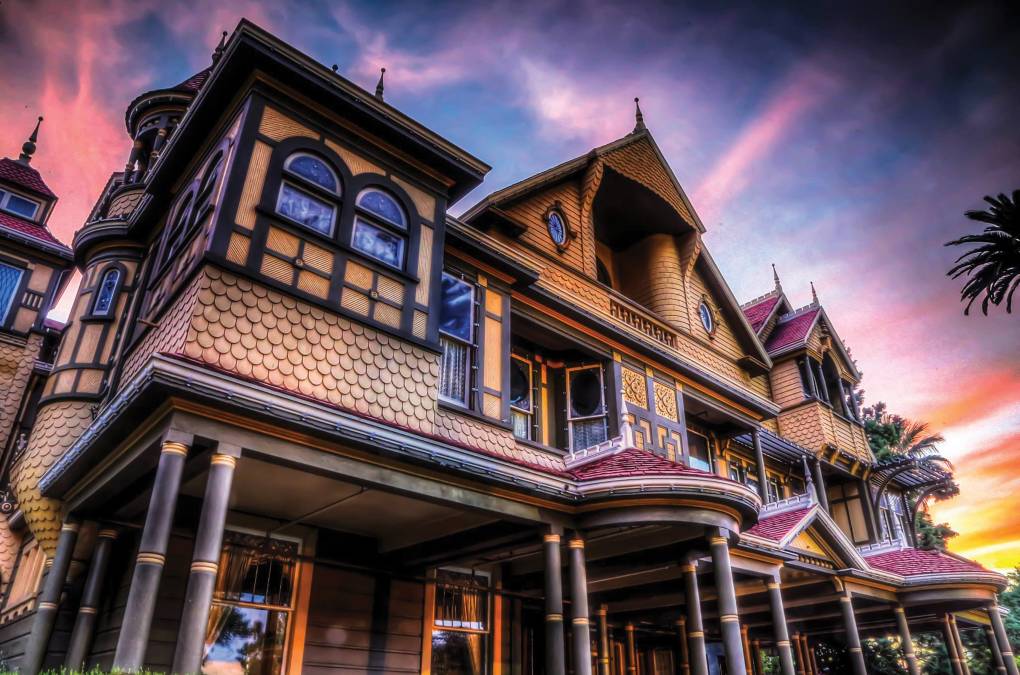
"caption": "The Winchester Mystery House at sunset.",
"description": null,
"title": "WMH_Front at Sunset",
"credit": "Courtesy of the Winchester Mystery House",
"status": "inherit",
"altTag": "Looking up at an elaborate Victorian mansion with yellow, black and purple detailing. The sky behind the house is lit with the colors of a sunset.",
"isLoading": false,
"fetchFailed": false
},
"news_11962645": {
"type": "attachments",
"id": "news_11962645",
"meta": {
"index": "attachments_1716263798",
"site": "news",
"id": "11962645",
"found": true
},
"parent": 11962628,
"imgSizes": {
"twentyfourteen-full-width": {
"file": "https://ww2.kqed.org/app/uploads/sites/10/2023/09/Ghost-in-classroom-1038x576.jpg",
"width": 1038,
"mimeType": "image/jpeg",
"height": 576
},
"thumbnail": {
"file": "https://ww2.kqed.org/app/uploads/sites/10/2023/09/Ghost-in-classroom-160x96.jpg",
"width": 160,
"mimeType": "image/jpeg",
"height": 96
},
"post-thumbnail": {
"file": "https://ww2.kqed.org/app/uploads/sites/10/2023/09/Ghost-in-classroom-672x372.jpg",
"width": 672,
"mimeType": "image/jpeg",
"height": 372
},
"kqedFullSize": {
"file": "https://ww2.kqed.org/app/uploads/sites/10/2023/09/Ghost-in-classroom.jpg",
"width": 1920,
"height": 1152
},
"large": {
"file": "https://ww2.kqed.org/app/uploads/sites/10/2023/09/Ghost-in-classroom-1020x612.jpg",
"width": 1020,
"mimeType": "image/jpeg",
"height": 612
},
"1536x1536": {
"file": "https://ww2.kqed.org/app/uploads/sites/10/2023/09/Ghost-in-classroom-1536x922.jpg",
"width": 1536,
"mimeType": "image/jpeg",
"height": 922
},
"medium": {
"file": "https://ww2.kqed.org/app/uploads/sites/10/2023/09/Ghost-in-classroom-800x480.jpg",
"width": 800,
"mimeType": "image/jpeg",
"height": 480
}
},
"publishDate": 1695854856,
"modified": 1695854856,
"caption": null,
"description": null,
"title": "Ghost in classroom",
"credit": null,
"status": "inherit",
"altTag": null,
"isLoading": false,
"fetchFailed": false
},
"news_11961978": {
"type": "attachments",
"id": "news_11961978",
"meta": {
"index": "attachments_1716263798",
"site": "news",
"id": "11961978",
"found": true
},
"parent": 0,
"imgSizes": {
"twentyfourteen-full-width": {
"file": "https://ww2.kqed.org/app/uploads/sites/10/2023/09/230920-BOTTLE-BANK-01-KQED-1038x576.jpg",
"width": 1038,
"mimeType": "image/jpeg",
"height": 576
},
"thumbnail": {
"file": "https://ww2.kqed.org/app/uploads/sites/10/2023/09/230920-BOTTLE-BANK-01-KQED-160x107.jpg",
"width": 160,
"mimeType": "image/jpeg",
"height": 107
},
"post-thumbnail": {
"file": "https://ww2.kqed.org/app/uploads/sites/10/2023/09/230920-BOTTLE-BANK-01-KQED-672x372.jpg",
"width": 672,
"mimeType": "image/jpeg",
"height": 372
},
"kqedFullSize": {
"file": "https://ww2.kqed.org/app/uploads/sites/10/2023/09/230920-BOTTLE-BANK-01-KQED.jpg",
"width": 2000,
"height": 1333
},
"large": {
"file": "https://ww2.kqed.org/app/uploads/sites/10/2023/09/230920-BOTTLE-BANK-01-KQED-1020x680.jpg",
"width": 1020,
"mimeType": "image/jpeg",
"height": 680
},
"1536x1536": {
"file": "https://ww2.kqed.org/app/uploads/sites/10/2023/09/230920-BOTTLE-BANK-01-KQED-1536x1024.jpg",
"width": 1536,
"mimeType": "image/jpeg",
"height": 1024
},
"full-width": {
"file": "https://ww2.kqed.org/app/uploads/sites/10/2023/09/230920-BOTTLE-BANK-01-KQED-1920x1280.jpg",
"width": 1920,
"mimeType": "image/jpeg",
"height": 1280
},
"medium": {
"file": "https://ww2.kqed.org/app/uploads/sites/10/2023/09/230920-BOTTLE-BANK-01-KQED-800x533.jpg",
"width": 800,
"mimeType": "image/jpeg",
"height": 533
}
},
"publishDate": 1695251703,
"modified": 1695252573,
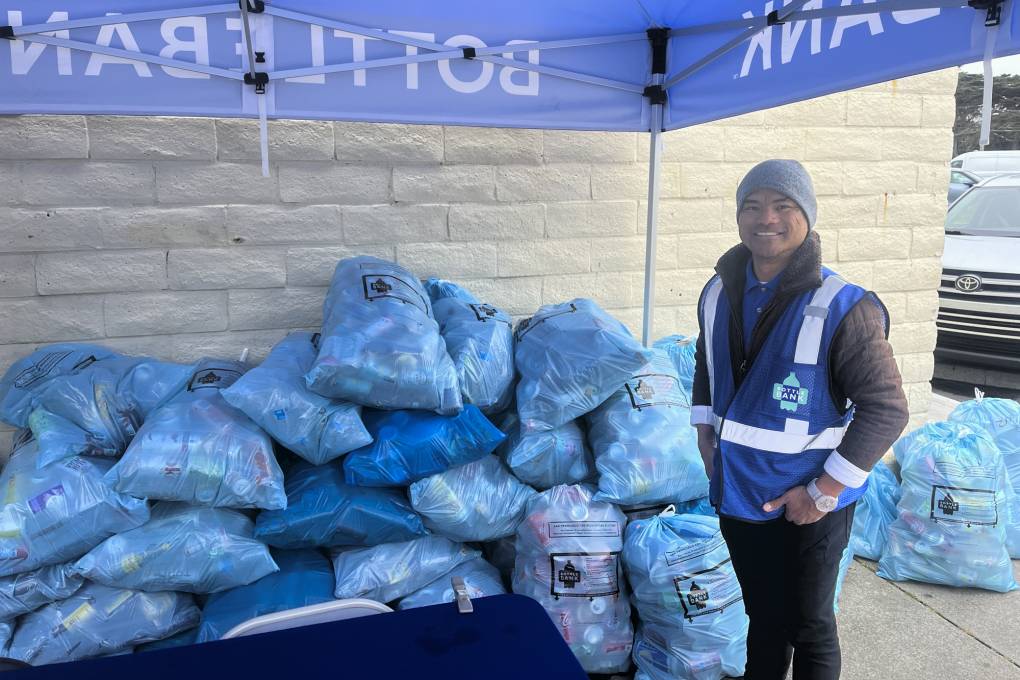
"caption": "BottleBank attendant John Ramos stands behind bags from the afternoon shift.",
"description": null,
"title": "230920-BOTTLE BANK-01-KQED",
"credit": "Steven Rascon/KQED",
"status": "inherit",
"altTag": "A man stands with blue bags full of aluminum cans ready to be recycled.",
"isLoading": false,
"fetchFailed": false
},
"news_11961193": {
"type": "attachments",
"id": "news_11961193",
"meta": {
"index": "attachments_1716263798",
"site": "news",
"id": "11961193",
"found": true
},
"parent": 11961178,
"imgSizes": {
"twentyfourteen-full-width": {
"file": "https://ww2.kqed.org/app/uploads/sites/10/2023/09/La-Taqueria-e1694719808236-1038x576.jpg",
"width": 1038,
"mimeType": "image/jpeg",
"height": 576
},
"thumbnail": {
"file": "https://ww2.kqed.org/app/uploads/sites/10/2023/09/La-Taqueria-e1694719808236-160x120.jpg",
"width": 160,
"mimeType": "image/jpeg",
"height": 120
},
"post-thumbnail": {
"file": "https://ww2.kqed.org/app/uploads/sites/10/2023/09/La-Taqueria-e1694719808236-672x372.jpg",
"width": 672,
"mimeType": "image/jpeg",
"height": 372
},
"kqedFullSize": {
"file": "https://ww2.kqed.org/app/uploads/sites/10/2023/09/La-Taqueria-e1694719808236.jpg",
"width": 1920,
"height": 1440
},
"large": {
"file": "https://ww2.kqed.org/app/uploads/sites/10/2023/09/La-Taqueria-e1694719808236-1020x765.jpg",
"width": 1020,
"mimeType": "image/jpeg",
"height": 765
},
"1536x1536": {
"file": "https://ww2.kqed.org/app/uploads/sites/10/2023/09/La-Taqueria-e1694719808236-1536x1152.jpg",
"width": 1536,
"mimeType": "image/jpeg",
"height": 1152
},
"full-width": {
"file": "https://ww2.kqed.org/app/uploads/sites/10/2023/09/La-Taqueria-1920x1440.jpg",
"width": 1920,
"mimeType": "image/jpeg",
"height": 1440
},
"medium": {
"file": "https://ww2.kqed.org/app/uploads/sites/10/2023/09/La-Taqueria-e1694719808236-800x600.jpg",
"width": 800,
"mimeType": "image/jpeg",
"height": 600
}
},
"publishDate": 1694719789,
"modified": 1694719994,
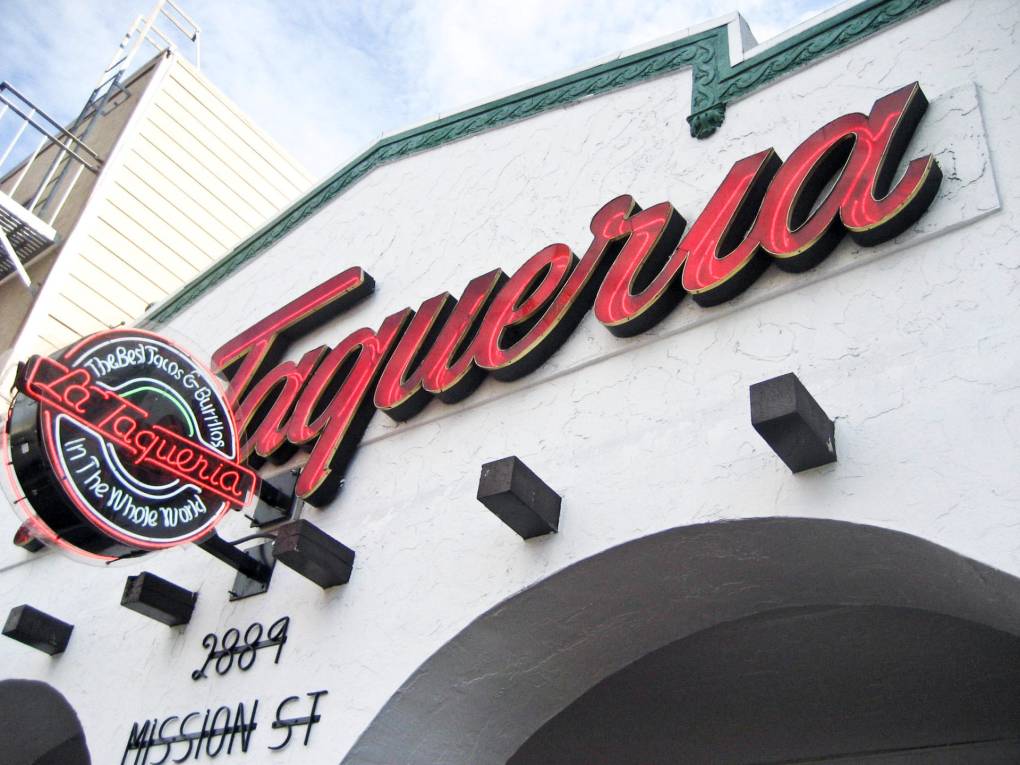
"caption": "La Taqueria, in San Francisco's Mission District, has been serving up tacos and burritos for 50 years. ",
"description": null,
"title": "La Taqueria",
"credit": "Todd Lappin/flickr",
"status": "inherit",
"altTag": "Facade of a building in white stucco. A large red sign reads \"La Taqueria,\" and a smaller neon sign says \"La Taqueria. The best tacos and burritos in the whole world.\"",
"isLoading": false,
"fetchFailed": false
},
"news_11959598": {
"type": "attachments",
"id": "news_11959598",
"meta": {
"index": "attachments_1716263798",
"site": "news",
"id": "11959598",
"found": true
},
"parent": 11959595,
"imgSizes": {
"twentyfourteen-full-width": {
"file": "https://ww2.kqed.org/app/uploads/sites/10/2023/08/RS68439_GettyImages-1490753691-qut-1038x576.jpg",
"width": 1038,
"mimeType": "image/jpeg",
"height": 576
},
"thumbnail": {
"file": "https://ww2.kqed.org/app/uploads/sites/10/2023/08/RS68439_GettyImages-1490753691-qut-160x104.jpg",
"width": 160,
"mimeType": "image/jpeg",
"height": 104
},
"post-thumbnail": {
"file": "https://ww2.kqed.org/app/uploads/sites/10/2023/08/RS68439_GettyImages-1490753691-qut-672x372.jpg",
"width": 672,
"mimeType": "image/jpeg",
"height": 372
},
"kqedFullSize": {
"file": "https://ww2.kqed.org/app/uploads/sites/10/2023/08/RS68439_GettyImages-1490753691-qut.jpg",
"width": 1920,
"height": 1253
},
"large": {
"file": "https://ww2.kqed.org/app/uploads/sites/10/2023/08/RS68439_GettyImages-1490753691-qut-1020x666.jpg",
"width": 1020,
"mimeType": "image/jpeg",
"height": 666
},
"1536x1536": {
"file": "https://ww2.kqed.org/app/uploads/sites/10/2023/08/RS68439_GettyImages-1490753691-qut-1536x1002.jpg",
"width": 1536,
"mimeType": "image/jpeg",
"height": 1002
},
"medium": {
"file": "https://ww2.kqed.org/app/uploads/sites/10/2023/08/RS68439_GettyImages-1490753691-qut-800x522.jpg",
"width": 800,
"mimeType": "image/jpeg",
"height": 522
}
},
"publishDate": 1693420486,
"modified": 1693497013,
"caption": "The Claremont Club and Spa is seen from a drone view in Berkeley on May 15, 2023.",
"description": null,
"title": "The Claremont Club & Spa",
"credit": "Jane Tyska/Digital First Media/East Bay Times via Getty Images",
"status": "inherit",
"altTag": "Aerial image of a large, bright white hotel set against a green, tree-covered hillside. The hotel has a castle-like appearance, and there are tennis courts to the left of it.",
"isLoading": false,
"fetchFailed": false
},
"news_11958900": {
"type": "attachments",
"id": "news_11958900",
"meta": {
"index": "attachments_1716263798",
"site": "news",
"id": "11958900",
"found": true
},
"parent": 0,
"imgSizes": {
"twentyfourteen-full-width": {
"file": "https://ww2.kqed.org/app/uploads/sites/10/2023/08/144335702_10225877516548081_8897135066574356579_n-1038x576.jpg",
"width": 1038,
"mimeType": "image/jpeg",
"height": 576
},
"thumbnail": {
"file": "https://ww2.kqed.org/app/uploads/sites/10/2023/08/144335702_10225877516548081_8897135066574356579_n-160x112.jpg",
"width": 160,
"mimeType": "image/jpeg",
"height": 112
},
"post-thumbnail": {
"file": "https://ww2.kqed.org/app/uploads/sites/10/2023/08/144335702_10225877516548081_8897135066574356579_n-672x372.jpg",
"width": 672,
"mimeType": "image/jpeg",
"height": 372
},
"kqedFullSize": {
"file": "https://ww2.kqed.org/app/uploads/sites/10/2023/08/144335702_10225877516548081_8897135066574356579_n.jpg",
"width": 1605,
"height": 1122
},
"large": {
"file": "https://ww2.kqed.org/app/uploads/sites/10/2023/08/144335702_10225877516548081_8897135066574356579_n-1020x713.jpg",
"width": 1020,
"mimeType": "image/jpeg",
"height": 713
},
"1536x1536": {
"file": "https://ww2.kqed.org/app/uploads/sites/10/2023/08/144335702_10225877516548081_8897135066574356579_n-1536x1074.jpg",
"width": 1536,
"mimeType": "image/jpeg",
"height": 1074
},
"medium": {
"file": "https://ww2.kqed.org/app/uploads/sites/10/2023/08/144335702_10225877516548081_8897135066574356579_n-800x559.jpg",
"width": 800,
"mimeType": "image/jpeg",
"height": 559
}
},
"publishDate": 1692820322,
"modified": 1692820626,
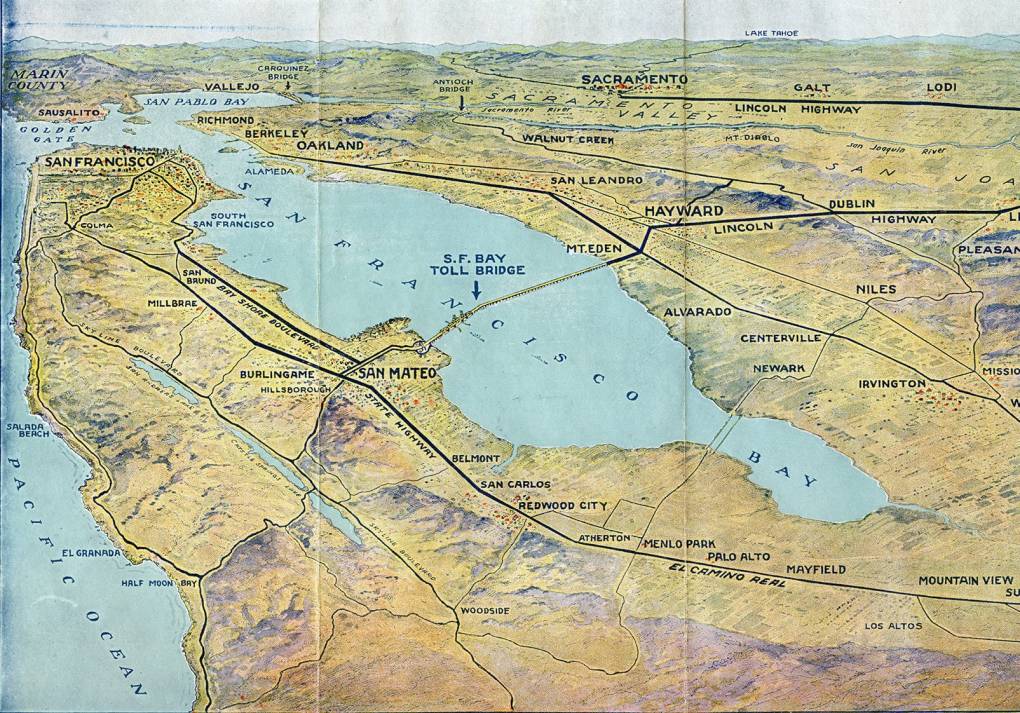
"caption": "A 1929 map shows what a big deal the bridge was at the time. ",
"description": null,
"title": "San Mateo Bridge Map",
"credit": "Source Unknown, Public Domain",
"status": "inherit",
"altTag": "Printed map of the San Francisco Bay highlighting the location of the San Mateo-Hayward Bridge.",
"isLoading": false,
"fetchFailed": false
},
"news_11957762": {
"type": "attachments",
"id": "news_11957762",
"meta": {
"index": "attachments_1716263798",
"site": "news",
"id": "11957762",
"found": true
},
"parent": 11957757,
"imgSizes": {
"twentyfourteen-full-width": {
"file": "https://ww2.kqed.org/app/uploads/sites/10/2023/08/GettyImages-1408881472-for-wp-1038x576.jpg",
"width": 1038,
"mimeType": "image/jpeg",
"height": 576
},
"thumbnail": {
"file": "https://ww2.kqed.org/app/uploads/sites/10/2023/08/GettyImages-1408881472-for-wp-160x119.jpg",
"width": 160,
"mimeType": "image/jpeg",
"height": 119
},
"post-thumbnail": {
"file": "https://ww2.kqed.org/app/uploads/sites/10/2023/08/GettyImages-1408881472-for-wp-672x372.jpg",
"width": 672,
"mimeType": "image/jpeg",
"height": 372
},
"kqedFullSize": {
"file": "https://ww2.kqed.org/app/uploads/sites/10/2023/08/GettyImages-1408881472-for-wp.jpg",
"width": 1920,
"height": 1431
},
"large": {
"file": "https://ww2.kqed.org/app/uploads/sites/10/2023/08/GettyImages-1408881472-for-wp-1020x760.jpg",
"width": 1020,
"mimeType": "image/jpeg",
"height": 760
},
"1536x1536": {
"file": "https://ww2.kqed.org/app/uploads/sites/10/2023/08/GettyImages-1408881472-for-wp-1536x1145.jpg",
"width": 1536,
"mimeType": "image/jpeg",
"height": 1145
},
"medium": {
"file": "https://ww2.kqed.org/app/uploads/sites/10/2023/08/GettyImages-1408881472-for-wp-800x596.jpg",
"width": 800,
"mimeType": "image/jpeg",
"height": 596
}
},
"publishDate": 1691602670,
"modified": 1691602868,
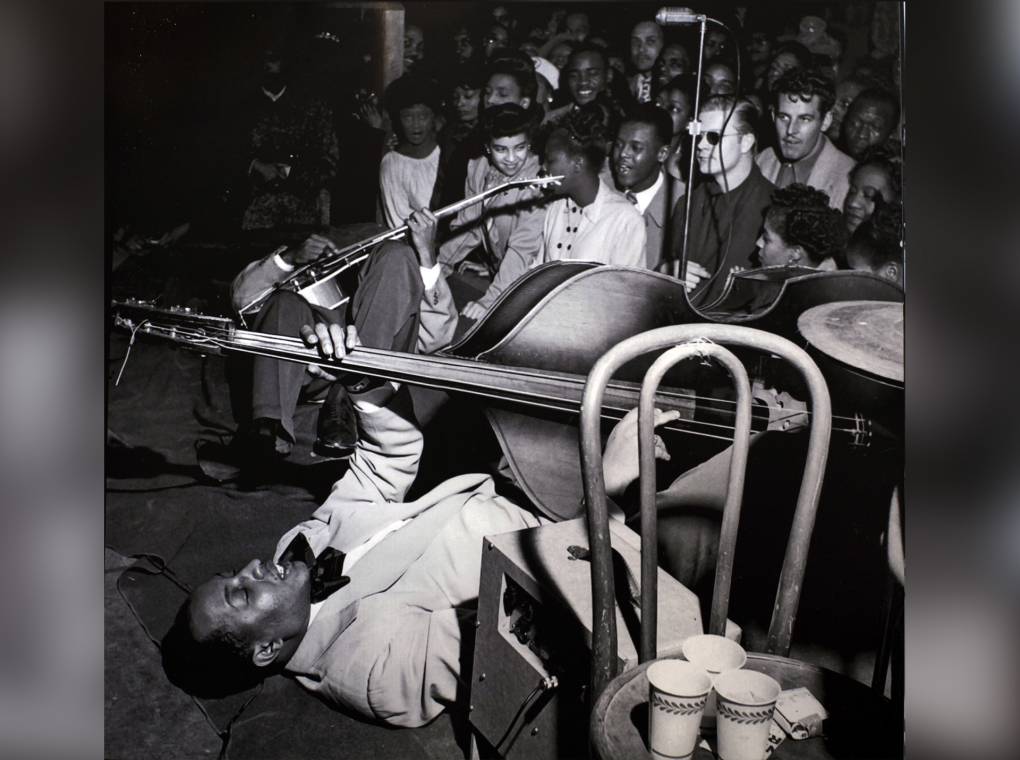
"caption": "Vernon Alley playing the bass at the Primalon Ballroom in San Francisco, 1952. ",
"description": null,
"title": "GettyImages-1408881472 for wp",
"credit": "David Johnson",
"status": "inherit",
"altTag": "Black and white image of a man in a light color tuxedo playing upright bass while laying down on a stage. A crowd of people stand listening just in front of the stage. A chair with cups sitting on it is visible in the foreground.",
"isLoading": false,
"fetchFailed": false
},
"news_11957195": {
"type": "attachments",
"id": "news_11957195",
"meta": {
"index": "attachments_1716263798",
"site": "news",
"id": "11957195",
"found": true
},
"parent": 0,
"imgSizes": {
"twentyfourteen-full-width": {
"file": "https://ww2.kqed.org/app/uploads/sites/10/2023/08/RS681_IMG_0523-1038x576.jpg",
"width": 1038,
"mimeType": "image/jpeg",
"height": 576
},
"thumbnail": {
"file": "https://ww2.kqed.org/app/uploads/sites/10/2023/08/RS681_IMG_0523-160x120.jpg",
"width": 160,
"mimeType": "image/jpeg",
"height": 120
},
"post-thumbnail": {
"file": "https://ww2.kqed.org/app/uploads/sites/10/2023/08/RS681_IMG_0523-672x372.jpg",
"width": 672,
"mimeType": "image/jpeg",
"height": 372
},
"kqedFullSize": {
"file": "https://ww2.kqed.org/app/uploads/sites/10/2023/08/RS681_IMG_0523.jpg",
"width": 2272,
"height": 1704
},
"2048x2048": {
"file": "https://ww2.kqed.org/app/uploads/sites/10/2023/08/RS681_IMG_0523-2048x1536.jpg",
"width": 2048,
"mimeType": "image/jpeg",
"height": 1536
},
"large": {
"file": "https://ww2.kqed.org/app/uploads/sites/10/2023/08/RS681_IMG_0523-1020x765.jpg",
"width": 1020,
"mimeType": "image/jpeg",
"height": 765
},
"1536x1536": {
"file": "https://ww2.kqed.org/app/uploads/sites/10/2023/08/RS681_IMG_0523-1536x1152.jpg",
"width": 1536,
"mimeType": "image/jpeg",
"height": 1152
},
"full-width": {
"file": "https://ww2.kqed.org/app/uploads/sites/10/2023/08/RS681_IMG_0523-1920x1440.jpg",
"width": 1920,
"mimeType": "image/jpeg",
"height": 1440
},
"medium": {
"file": "https://ww2.kqed.org/app/uploads/sites/10/2023/08/RS681_IMG_0523-800x600.jpg",
"width": 800,
"mimeType": "image/jpeg",
"height": 600
}
},
"publishDate": 1691002833,
"modified": 1691015549,
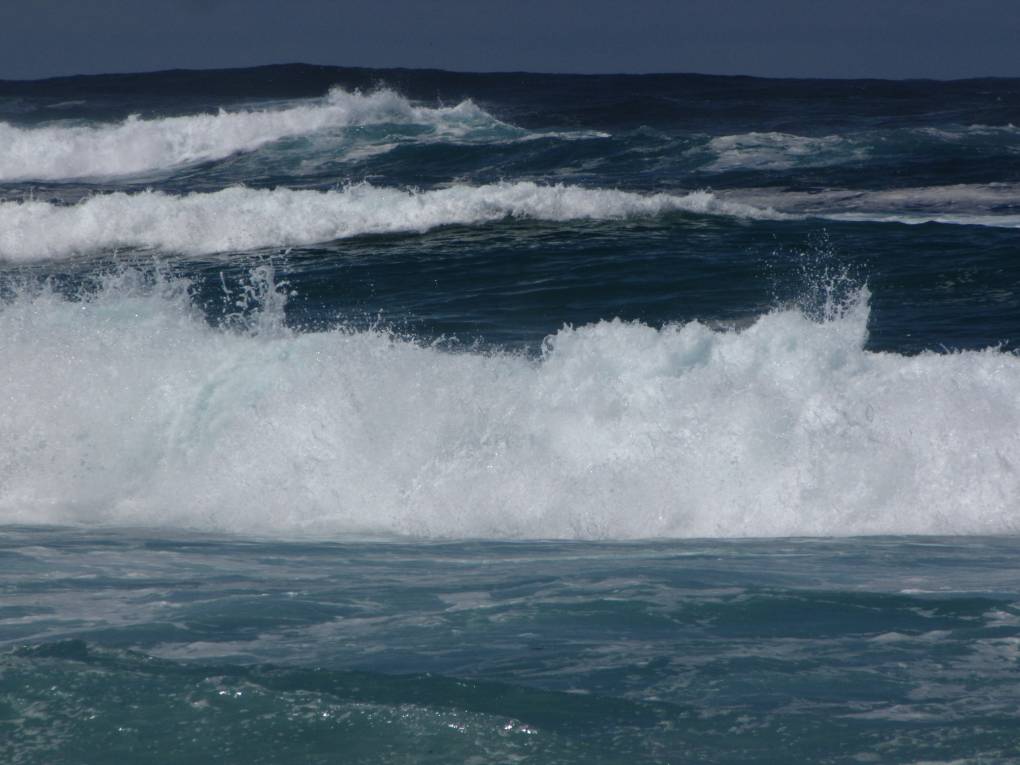
"caption": "The ocean could provide us with an unlimited source of power, if we can figure out how to tap it. ",
"description": null,
"title": "RS681_IMG_0523",
"credit": "Courtesy of Craig Miller",
"status": "inherit",
"altTag": "Deep blue ocean waves crashing",
"isLoading": false,
"fetchFailed": false
},
"news_11956659": {
"type": "attachments",
"id": "news_11956659",
"meta": {
"index": "attachments_1716263798",
"site": "news",
"id": "11956659",
"found": true
},
"parent": 11956649,
"imgSizes": {
"twentyfourteen-full-width": {
"file": "https://ww2.kqed.org/app/uploads/sites/10/2023/07/RS66031_06032023_bayfc-364-qut-1038x576.jpg",
"width": 1038,
"mimeType": "image/jpeg",
"height": 576
},
"thumbnail": {
"file": "https://ww2.kqed.org/app/uploads/sites/10/2023/07/RS66031_06032023_bayfc-364-qut-160x107.jpg",
"width": 160,
"mimeType": "image/jpeg",
"height": 107
},
"post-thumbnail": {
"file": "https://ww2.kqed.org/app/uploads/sites/10/2023/07/RS66031_06032023_bayfc-364-qut-672x372.jpg",
"width": 672,
"mimeType": "image/jpeg",
"height": 372
},
"kqedFullSize": {
"file": "https://ww2.kqed.org/app/uploads/sites/10/2023/07/RS66031_06032023_bayfc-364-qut.jpg",
"width": 1920,
"height": 1278
},
"large": {
"file": "https://ww2.kqed.org/app/uploads/sites/10/2023/07/RS66031_06032023_bayfc-364-qut-1020x679.jpg",
"width": 1020,
"mimeType": "image/jpeg",
"height": 679
},
"1536x1536": {
"file": "https://ww2.kqed.org/app/uploads/sites/10/2023/07/RS66031_06032023_bayfc-364-qut-1536x1022.jpg",
"width": 1536,
"mimeType": "image/jpeg",
"height": 1022
},
"medium": {
"file": "https://ww2.kqed.org/app/uploads/sites/10/2023/07/RS66031_06032023_bayfc-364-qut-800x533.jpg",
"width": 800,
"mimeType": "image/jpeg",
"height": 533
}
},
"publishDate": 1690435591,
"modified": 1690586193,
"caption": "Members of the Alameda Islanders at the Bay FC kickoff event.",
"description": null,
"title": "RS66031_06032023_bayfc 364-qut",
"credit": "Kori Suzuki/KQED",
"status": "inherit",
"altTag": "Four your girls in gray sweatshirts stand in a row on a soccer field. Two of them are holding soccer balls under their feet.",
"isLoading": false,
"fetchFailed": false
},
"news_11956628": {
"type": "attachments",
"id": "news_11956628",
"meta": {
"index": "attachments_1716263798",
"site": "news",
"id": "11956628",
"found": true
},
"parent": 0,
"imgSizes": {
"twentyfourteen-full-width": {
"file": "https://ww2.kqed.org/app/uploads/sites/10/2023/07/Portrait-with-Blur-1-1038x576.jpg",
"width": 1038,
"mimeType": "image/jpeg",
"height": 576
},
"thumbnail": {
"file": "https://ww2.kqed.org/app/uploads/sites/10/2023/07/Portrait-with-Blur-1-160x115.jpg",
"width": 160,
"mimeType": "image/jpeg",
"height": 115
},
"post-thumbnail": {
"file": "https://ww2.kqed.org/app/uploads/sites/10/2023/07/Portrait-with-Blur-1-672x372.jpg",
"width": 672,
"mimeType": "image/jpeg",
"height": 372
},
"kqedFullSize": {
"file": "https://ww2.kqed.org/app/uploads/sites/10/2023/07/Portrait-with-Blur-1.jpg",
"width": 1920,
"height": 1378
},
"large": {
"file": "https://ww2.kqed.org/app/uploads/sites/10/2023/07/Portrait-with-Blur-1-1020x732.jpg",
"width": 1020,
"mimeType": "image/jpeg",
"height": 732
},
"1536x1536": {
"file": "https://ww2.kqed.org/app/uploads/sites/10/2023/07/Portrait-with-Blur-1-1536x1102.jpg",
"width": 1536,
"mimeType": "image/jpeg",
"height": 1102
},
"medium": {
"file": "https://ww2.kqed.org/app/uploads/sites/10/2023/07/Portrait-with-Blur-1-800x574.jpg",
"width": 800,
"mimeType": "image/jpeg",
"height": 574
}
},
"publishDate": 1690415095,
"modified": 1690418099,
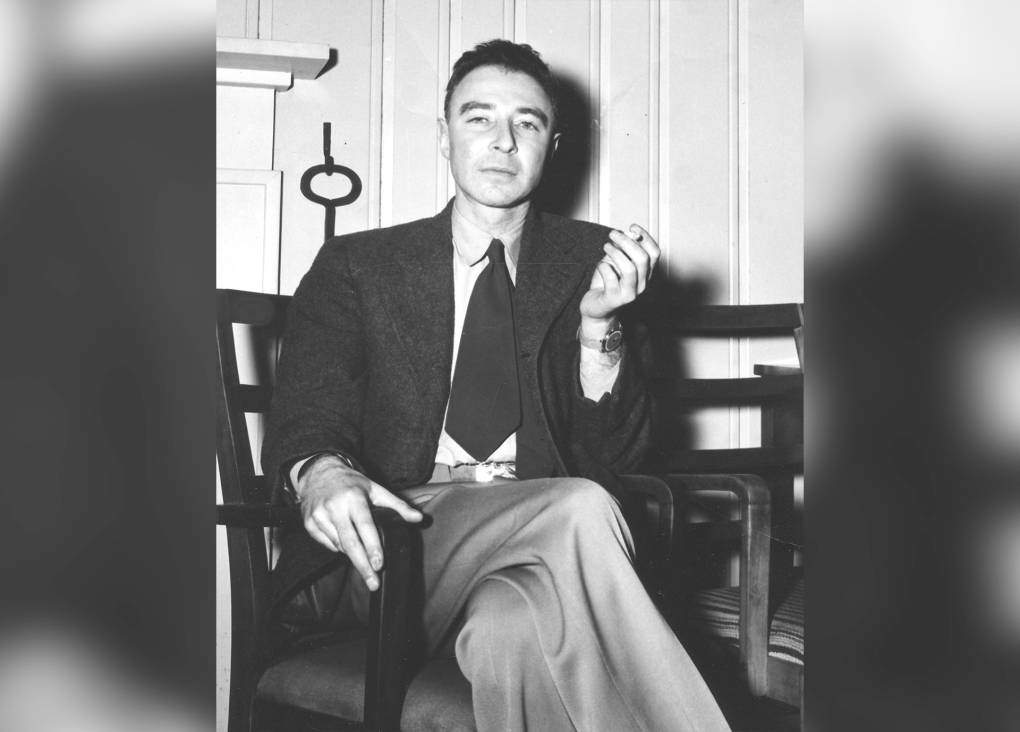
"caption": "American theoretical physicist Dr. J. Robert Oppenheimer (1904–1967) smokes a cigarette as he sits in a chair, 1945.",
"description": null,
"title": "Portrait with Blur",
"credit": "PhotoQuest/Getty Images",
"status": "inherit",
"altTag": "Black and white image of a man sitting in a chair smoking a cigarette.",
"isLoading": false,
"fetchFailed": false
},
"news_11954853": {
"type": "attachments",
"id": "news_11954853",
"meta": {
"index": "attachments_1716263798",
"site": "news",
"id": "11954853",
"found": true
},
"parent": 0,
"imgSizes": {
"twentyfourteen-full-width": {
"file": "https://ww2.kqed.org/app/uploads/sites/10/2023/06/230630100-Van-Ness-MB-KQED-1038x576.jpg",
"width": 1038,
"mimeType": "image/jpeg",
"height": 576
},
"thumbnail": {
"file": "https://ww2.kqed.org/app/uploads/sites/10/2023/06/230630100-Van-Ness-MB-KQED-160x71.jpg",
"width": 160,
"mimeType": "image/jpeg",
"height": 71
},
"post-thumbnail": {
"file": "https://ww2.kqed.org/app/uploads/sites/10/2023/06/230630100-Van-Ness-MB-KQED-672x372.jpg",
"width": 672,
"mimeType": "image/jpeg",
"height": 372
},
"kqedFullSize": {
"file": "https://ww2.kqed.org/app/uploads/sites/10/2023/06/230630100-Van-Ness-MB-KQED.jpg",
"width": 2500,
"height": 1111
},
"2048x2048": {
"file": "https://ww2.kqed.org/app/uploads/sites/10/2023/06/230630100-Van-Ness-MB-KQED-2048x910.jpg",
"width": 2048,
"mimeType": "image/jpeg",
"height": 910
},
"large": {
"file": "https://ww2.kqed.org/app/uploads/sites/10/2023/06/230630100-Van-Ness-MB-KQED-1020x453.jpg",
"width": 1020,
"mimeType": "image/jpeg",
"height": 453
},
"1536x1536": {
"file": "https://ww2.kqed.org/app/uploads/sites/10/2023/06/230630100-Van-Ness-MB-KQED-1536x683.jpg",
"width": 1536,
"mimeType": "image/jpeg",
"height": 683
},
"full-width": {
"file": "https://ww2.kqed.org/app/uploads/sites/10/2023/06/230630100-Van-Ness-MB-KQED-1920x853.jpg",
"width": 1920,
"mimeType": "image/jpeg",
"height": 853
},
"medium": {
"file": "https://ww2.kqed.org/app/uploads/sites/10/2023/06/230630100-Van-Ness-MB-KQED-800x356.jpg",
"width": 800,
"mimeType": "image/jpeg",
"height": 356
}
},
"publishDate": 1688166476,
"modified": 1689272499,
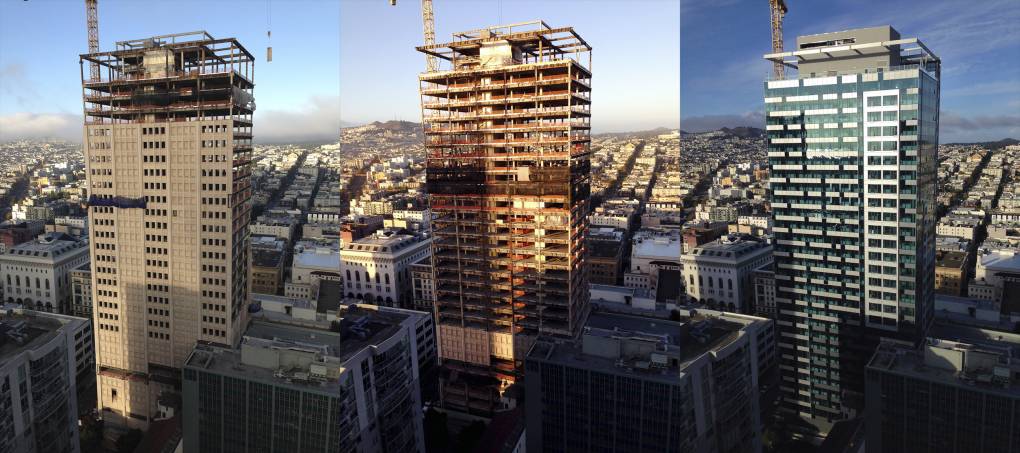
"caption": "In 2012, the 100 Van Ness building was converted from office space to residential apartment units and the building's concrete facade was replaced by glass.",
"description": null,
"title": "230630100 Van Ness-MB-KQED",
"credit": "Courtesy of Marc Babsin",
"status": "inherit",
"altTag": "Three images of the same building at different points in construction. In the first, it has a concrete facade. In the second, the building has no facade. In the third, it has a modern glass facade.",
"isLoading": false,
"fetchFailed": false
}
},
"audioPlayerReducer": {
"postId": "stream_live",
"isPaused": true,
"isPlaying": false,
"pfsActive": false,
"pledgeModalIsOpen": true,
"playerDrawerIsOpen": false,
"liveAudioPlayStartedAt": 0,
"liveAudioPlayContext": ""
},
"authorsReducer": {
"rachael-myrow": {
"type": "authors",
"id": "251",
"meta": {
"index": "authors_1716337520",
"id": "251",
"found": true
},
"name": "Rachael Myrow",
"firstName": "Rachael",
"lastName": "Myrow",
"slug": "rachael-myrow",
"email": "rmyrow@kqed.org",
"display_author_email": true,
"staff_mastheads": [
"news"
],
"title": "Senior Editor of KQED's Silicon Valley News Desk",
"bio": "• I write and edit stories about how Silicon Valley power and policies shape everyday life in California. I’m also passionate about making Bay Area history and culture more accessible to a broad public. • I’ve been a journalist for most of my life, starting in high school with The Franklin Press in Los Angeles, where I grew up. While earning my first degree in English at UC Berkeley, I got my start in public radio at KALX-FM. After completing a second degree in journalism at Cal, I landed my first professional job at Marketplace, then moved on to KPCC (now LAist), and then KQED, where I hosted The California Report for more than seven years. • My reporting has appeared on NPR, The World, WBUR’s \u003ci>Here & Now\u003c/i>, and the BBC. I also guest host for KQED’s \u003ci>Forum\u003c/i>, as well as the Commonwealth Club in San Francisco. • I speak periodically on media, democracy and technology issues, and do voiceover work for documentaries and educational video projects. • Outside of the studio, you'll find me hiking Bay Area trails and whipping up Insta-ready meals in my kitchen. • I do not accept gifts, money, or favors from anyone connected to my reporting, I don't pay people for information, and I do not support or donate to political causes. • I strive to treat the people I report on with fairness, honesty, and respect. I also recognize there are often multiple sides to a story and work to verify information through multiple sources and documentation. If I get something wrong, I correct it.",
"avatar": "https://secure.gravatar.com/avatar/3ed8a3c5f26025e4a805ba634cda8cd764906b97438a6d9ce216b044e340da4e?s=600&d=blank&r=g",
"twitter": "rachaelmyrow",
"bluesky": null,
"facebook": null,
"instagram": null,
"linkedin": "https://www.linkedin.com/in/rachaelmyrow/",
"sites": [
{
"site": "arts",
"roles": [
"administrator"
]
},
{
"site": "news",
"roles": [
"edit_others_posts",
"editor"
]
},
{
"site": "futureofyou",
"roles": [
"editor"
]
},
{
"site": "bayareabites",
"roles": [
"editor"
]
},
{
"site": "stateofhealth",
"roles": [
"editor"
]
},
{
"site": "science",
"roles": [
"editor"
]
},
{
"site": "food",
"roles": [
"editor"
]
},
{
"site": "forum",
"roles": [
"editor"
]
},
{
"site": "liveblog",
"roles": [
"author"
]
}
],
"headData": {
"title": "Rachael Myrow | KQED",
"description": "Senior Editor of KQED's Silicon Valley News Desk",
"ogImgSrc": "https://secure.gravatar.com/avatar/3ed8a3c5f26025e4a805ba634cda8cd764906b97438a6d9ce216b044e340da4e?s=600&d=blank&r=g",
"twImgSrc": "https://secure.gravatar.com/avatar/3ed8a3c5f26025e4a805ba634cda8cd764906b97438a6d9ce216b044e340da4e?s=600&d=blank&r=g"
},
"isLoading": false,
"link": "/author/rachael-myrow"
},
"kdomara": {
"type": "authors",
"id": "1459",
"meta": {
"index": "authors_1716337520",
"id": "1459",
"found": true
},
"name": "Kelly O'Mara",
"firstName": "Kelly",
"lastName": "O'Mara",
"slug": "kdomara",
"email": "komara@kqed.org",
"display_author_email": false,
"staff_mastheads": [
"news"
],
"title": "KQED Contributor",
"bio": "Kelly O'Mara is a writer and reporter in the San Francisco Bay Area. She writes about food, health, sports, travel, business and California news. Her work has appeared on KQED, online for Outside Magazine, epsnW, VICE and in Competitor Magazine, among others. Follow Kelly on Twitter \u003ca href=\"https://twitter.com/kellydomara\">@kellydomara\u003c/a>.",
"avatar": "https://secure.gravatar.com/avatar/768fec7412028b72f13bdd0f5f9d8186?s=600&d=blank&r=g",
"twitter": null,
"facebook": null,
"instagram": null,
"linkedin": null,
"sites": [
{
"site": "arts",
"roles": []
},
{
"site": "news",
"roles": []
},
{
"site": "bayareabites",
"roles": []
},
{
"site": "stateofhealth",
"roles": []
},
{
"site": "science",
"roles": []
},
{
"site": "checkplease",
"roles": [
"editor"
]
},
{
"site": "food",
"roles": []
},
{
"site": "forum",
"roles": [
"editor"
]
},
{
"site": "liveblog",
"roles": [
"editor"
]
}
],
"headData": {
"title": "Kelly O'Mara | KQED",
"description": "KQED Contributor",
"ogImgSrc": "https://secure.gravatar.com/avatar/768fec7412028b72f13bdd0f5f9d8186?s=600&d=blank&r=g",
"twImgSrc": "https://secure.gravatar.com/avatar/768fec7412028b72f13bdd0f5f9d8186?s=600&d=blank&r=g"
},
"isLoading": false,
"link": "/author/kdomara"
},
"carlysevern": {
"type": "authors",
"id": "3243",
"meta": {
"index": "authors_1716337520",
"id": "3243",
"found": true
},
"name": "Carly Severn",
"firstName": "Carly",
"lastName": "Severn",
"slug": "carlysevern",
"email": "csevern@kqed.org",
"display_author_email": false,
"staff_mastheads": [
"news"
],
"title": "Senior Editor, Audience News ",
"bio": "Carly is KQED's Senior Editor of Audience News on the Digital News team, and has reported for the California Report Magazine, Bay Curious and KQED Arts. She's formerly the host of \u003ca href=\"http://ww2.kqed.org/pop/category/the-cooler/\" rel=\"noopener noreferrer\">The Cooler\u003c/a> podcast.",
"avatar": "https://secure.gravatar.com/avatar/54037bf5c128fe678f0ef26cec97a93f2e7f220a22d7285703328f12c42c1b1d?s=600&d=blank&r=g",
"twitter": "teacupinthebay",
"bluesky": null,
"facebook": null,
"instagram": null,
"linkedin": null,
"sites": [
{
"site": "",
"roles": [
"editor"
]
},
{
"site": "arts",
"roles": [
"editor"
]
},
{
"site": "news",
"roles": [
"administrator"
]
},
{
"site": "pop",
"roles": [
"editor"
]
},
{
"site": "futureofyou",
"roles": [
"editor"
]
},
{
"site": "about",
"roles": [
"administrator"
]
},
{
"site": "mindshift",
"roles": [
"editor"
]
},
{
"site": "bayareabites",
"roles": [
"editor"
]
},
{
"site": "stateofhealth",
"roles": [
"editor"
]
},
{
"site": "science",
"roles": [
"editor"
]
},
{
"site": "food",
"roles": [
"contributor"
]
},
{
"site": "forum",
"roles": [
"editor"
]
},
{
"site": "perspectives",
"roles": [
"administrator"
]
},
{
"site": "liveblog",
"roles": [
"editor"
]
}
],
"headData": {
"title": "Carly Severn | KQED",
"description": "Senior Editor, Audience News ",
"ogImgSrc": "https://secure.gravatar.com/avatar/54037bf5c128fe678f0ef26cec97a93f2e7f220a22d7285703328f12c42c1b1d?s=600&d=blank&r=g",
"twImgSrc": "https://secure.gravatar.com/avatar/54037bf5c128fe678f0ef26cec97a93f2e7f220a22d7285703328f12c42c1b1d?s=600&d=blank&r=g"
},
"isLoading": false,
"link": "/author/carlysevern"
},
"afont": {
"type": "authors",
"id": "8637",
"meta": {
"index": "authors_1716337520",
"id": "8637",
"found": true
},
"name": "Amanda Font",
"firstName": "Amanda",
"lastName": "Font",
"slug": "afont",
"email": "afont@kqed.org",
"display_author_email": false,
"staff_mastheads": [],
"title": "KQED Contributor",
"bio": "Amanda Font is a producer on \u003cem>The Latest\u003c/em> podcast, and the host and co-producer of the series \u003cem>Audible Cosmos\u003c/em>. She has previously worked as a producer and reporter on the \u003cem>Bay Curious\u003c/em> podcast, and director of \u003cem>The California Report Magazine\u003c/em>. She grew up in the deserts of Southern California and moved north for the trees. Amanda earned a B.A. from the BECA program at San Francisco State, where she worked in the university's radio station. Amanda Font is represented by SAG-AFTRA.",
"avatar": "https://secure.gravatar.com/avatar/d9e81cf0117d5849b9cfb7ab4b1422f1?s=600&d=blank&r=g",
"twitter": null,
"facebook": null,
"instagram": null,
"linkedin": null,
"sites": [
{
"site": "news",
"roles": [
"add_users",
"create_users"
]
},
{
"site": "science",
"roles": []
},
{
"site": "forum",
"roles": [
"administrator"
]
},
{
"site": "perspectives",
"roles": [
"administrator"
]
},
{
"site": "radio",
"roles": [
"administrator"
]
}
],
"headData": {
"title": "Amanda Font | KQED",
"description": "KQED Contributor",
"ogImgSrc": "https://secure.gravatar.com/avatar/d9e81cf0117d5849b9cfb7ab4b1422f1?s=600&d=blank&r=g",
"twImgSrc": "https://secure.gravatar.com/avatar/d9e81cf0117d5849b9cfb7ab4b1422f1?s=600&d=blank&r=g"
},
"isLoading": false,
"link": "/author/afont"
},
"lesleymcclurg": {
"type": "authors",
"id": "11229",
"meta": {
"index": "authors_1716337520",
"id": "11229",
"found": true
},
"name": "Lesley McClurg",
"firstName": "Lesley",
"lastName": "McClurg",
"slug": "lesleymcclurg",
"email": "lmcclurg@KQED.org",
"display_author_email": false,
"staff_mastheads": [
"news",
"science"
],
"title": "KQED Health Correspondent",
"bio": "Lesley McClurg is a health correspondent and fill-in host whose work is regularly rebroadcast on NPR and PBS programs. She’s earned multiple regional Emmy awards, a national and a regional Edward R. Murrow award, and was named Best Beat Reporter by the Association of Health Care Journalists. The Society of Professional Journalists has recognized her work several times, and the Society of Environmental Journalists spotlighted her coverage of California’s historic drought.\r\n\r\nBefore joining KQED in 2016, Lesley covered food and sustainability for Capital Public Radio, environmental issues for Colorado Public Radio, and reported for KUOW and KCTS 9 in Seattle. Away from the newsroom, she loves skiing with her daughter, mountain biking with her partner, and playing with Ollie, the family’s goldendoodle. On deadline, she runs almost entirely on chocolate chips.\r\n\r\n ",
"avatar": "https://secure.gravatar.com/avatar/bab49e972ea10c774fe0f5e29dba1722b158f7c0d58a360923d1389d380b2978?s=600&d=blank&r=g",
"twitter": "lesleywmcclurg",
"bluesky": null,
"facebook": null,
"instagram": null,
"linkedin": null,
"sites": [
{
"site": "arts",
"roles": [
"author"
]
},
{
"site": "news",
"roles": [
"editor"
]
},
{
"site": "futureofyou",
"roles": [
"editor"
]
},
{
"site": "stateofhealth",
"roles": [
"author"
]
},
{
"site": "science",
"roles": [
"editor"
]
},
{
"site": "quest",
"roles": [
"subscriber"
]
},
{
"site": "forum",
"roles": [
"administrator"
]
},
{
"site": "liveblog",
"roles": [
"author"
]
}
],
"headData": {
"title": "Lesley McClurg | KQED",
"description": "KQED Health Correspondent",
"ogImgSrc": "https://secure.gravatar.com/avatar/bab49e972ea10c774fe0f5e29dba1722b158f7c0d58a360923d1389d380b2978?s=600&d=blank&r=g",
"twImgSrc": "https://secure.gravatar.com/avatar/bab49e972ea10c774fe0f5e29dba1722b158f7c0d58a360923d1389d380b2978?s=600&d=blank&r=g"
},
"isLoading": false,
"link": "/author/lesleymcclurg"
},
"csaldana": {
"type": "authors",
"id": "11301",
"meta": {
"index": "authors_1716337520",
"id": "11301",
"found": true
},
"name": "Cesar Saldaña",
"firstName": "Cesar",
"lastName": "Saldaña",
"slug": "csaldana",
"email": "csaldana@kqed.org",
"display_author_email": false,
"staff_mastheads": [
"news"
],
"title": "KQED Contributor",
"bio": null,
"avatar": "https://secure.gravatar.com/avatar/04e89425007fe7102f750c79e76274bc?s=600&d=mm&r=g",
"twitter": null,
"facebook": null,
"instagram": null,
"linkedin": null,
"sites": [
{
"site": "news",
"roles": []
},
{
"site": "perspectives",
"roles": []
}
],
"headData": {
"title": "Cesar Saldaña | KQED",
"description": "KQED Contributor",
"ogImgSrc": "https://secure.gravatar.com/avatar/04e89425007fe7102f750c79e76274bc?s=600&d=mm&r=g",
"twImgSrc": "https://secure.gravatar.com/avatar/04e89425007fe7102f750c79e76274bc?s=600&d=mm&r=g"
},
"isLoading": false,
"link": "/author/csaldana"
},
"btaylor": {
"type": "authors",
"id": "11365",
"meta": {
"index": "authors_1716337520",
"id": "11365",
"found": true
},
"name": "Bianca Taylor",
"firstName": "Bianca",
"lastName": "Taylor",
"slug": "btaylor",
"email": "btaylor@KQED.org",
"display_author_email": false,
"staff_mastheads": [
"news"
],
"title": "Host and Producer ",
"bio": "Bianca Taylor is a news producer and host of KQED's The Latest podcast.\r\n\r\nHer work with KQED has been honored by the Society of Professional Journalists NorCal, the Webby's, the Regional Murrow Awards, and ONA. She has also worked with NPR, the BBC World Service, and the Washington Post Creative Group.\r\n\r\nBianca is represented by SAG-AFTRA.",
"avatar": "https://secure.gravatar.com/avatar/6b9d3f6552dd10470c5d1c2e58cfe717?s=600&d=blank&r=g",
"twitter": "SoundsLkeBianca",
"facebook": null,
"instagram": null,
"linkedin": null,
"sites": [
{
"site": "arts",
"roles": [
"editor"
]
},
{
"site": "news",
"roles": [
"edit_others_posts",
"editor"
]
},
{
"site": "pop",
"roles": [
"editor"
]
},
{
"site": "bayareabites",
"roles": [
"author"
]
},
{
"site": "science",
"roles": [
"editor"
]
},
{
"site": "forum",
"roles": [
"editor"
]
},
{
"site": "radio",
"roles": [
"editor"
]
},
{
"site": "podcasts",
"roles": [
"editor"
]
}
],
"headData": {
"title": "Bianca Taylor | KQED",
"description": "Host and Producer ",
"ogImgSrc": "https://secure.gravatar.com/avatar/6b9d3f6552dd10470c5d1c2e58cfe717?s=600&d=blank&r=g",
"twImgSrc": "https://secure.gravatar.com/avatar/6b9d3f6552dd10470c5d1c2e58cfe717?s=600&d=blank&r=g"
},
"isLoading": false,
"link": "/author/btaylor"
},
"hmcdede": {
"type": "authors",
"id": "11635",
"meta": {
"index": "authors_1716337520",
"id": "11635",
"found": true
},
"name": "Holly McDede",
"firstName": "Holly",
"lastName": "McDede",
"slug": "hmcdede",
"email": "hmcdede@KQED.org",
"display_author_email": false,
"staff_mastheads": [],
"title": "KQED Contributor",
"bio": null,
"avatar": "https://secure.gravatar.com/avatar/999d9bf31bb3a2f0511932d99526cb3e?s=600&d=blank&r=g",
"twitter": null,
"facebook": null,
"instagram": null,
"linkedin": null,
"sites": [
{
"site": "arts",
"roles": [
"editor"
]
},
{
"site": "news",
"roles": [
"edit_others_posts",
"editor"
]
},
{
"site": "science",
"roles": [
"editor"
]
},
{
"site": "forum",
"roles": [
"editor"
]
},
{
"site": "perspectives",
"roles": [
"administrator"
]
}
],
"headData": {
"title": "Holly McDede | KQED",
"description": "KQED Contributor",
"ogImgSrc": "https://secure.gravatar.com/avatar/999d9bf31bb3a2f0511932d99526cb3e?s=600&d=blank&r=g",
"twImgSrc": "https://secure.gravatar.com/avatar/999d9bf31bb3a2f0511932d99526cb3e?s=600&d=blank&r=g"
},
"isLoading": false,
"link": "/author/hmcdede"
},
"srascon": {
"type": "authors",
"id": "11816",
"meta": {
"index": "authors_1716337520",
"id": "11816",
"found": true
},
"name": "Steven Rascón",
"firstName": "Steven",
"lastName": "Rascón",
"slug": "srascon",
"email": "srascon@kqed.org",
"display_author_email": false,
"staff_mastheads": [],
"title": "KQED Contributor",
"bio": "Steven Rascón is a journalist and an audio producer from Northeast Los Angeles. He's a producer in the KQED news and podcast department. He was a producer for the KQED investigative series \u003cem>\u003ca href=\"https://www.kqed.org/news/11974730/1-welcome-to-the-family-s2-new-folsom/\">On Our Watch: New Folsom\u003c/a>.\u003c/em> His reporting has been featured in Cal Matters, KCRW, and WHYY. He's also the production manager for the radio show and podcast \u003cem>Reveal\u003c/em> from the Center for Investigative Reporting and PRX. He was part of the team that produced the Peabody nominated 7-part series \u003cem>\u003ca href=\"https://revealnews.org/mississippi-goddam/\">Mississippi Goddamn: The Ballad of Billey Joe\u003c/a>.\u003c/em> He's a graduate from the UC Berkeley Graduate School of Journalism.",
"avatar": "https://secure.gravatar.com/avatar/37610a357b875db673c4b0d1bdcd9db1?s=600&d=blank&r=g",
"twitter": "hola_rascon",
"facebook": null,
"instagram": null,
"linkedin": null,
"sites": [
{
"site": "arts",
"roles": [
"editor"
]
},
{
"site": "news",
"roles": [
"editor"
]
}
],
"headData": {
"title": "Steven Rascón | KQED",
"description": "KQED Contributor",
"ogImgSrc": "https://secure.gravatar.com/avatar/37610a357b875db673c4b0d1bdcd9db1?s=600&d=blank&r=g",
"twImgSrc": "https://secure.gravatar.com/avatar/37610a357b875db673c4b0d1bdcd9db1?s=600&d=blank&r=g"
},
"isLoading": false,
"link": "/author/srascon"
},
"kmonahan": {
"type": "authors",
"id": "11842",
"meta": {
"index": "authors_1716337520",
"id": "11842",
"found": true
},
"name": "Katherine Monahan",
"firstName": "Katherine",
"lastName": "Monahan",
"slug": "kmonahan",
"email": "kmonahan@kqed.org",
"display_author_email": true,
"staff_mastheads": [],
"title": "Reporter / Sound Engineer",
"bio": "I cover state and local news. I’m also a sound engineer at the station, mixing stories and running live broadcasts. I link to source materials so that readers can draw their own conclusions, and seek comment from a range of perspectives, including from people directly affected by events. Awards received include from the Society of Professional Journalists, Northern California chapter and the Alaska Press Club. I speak multiple languages and have reported and engineered in the Bay Area, Alaska, West Africa and Latin America.",
"avatar": "https://secure.gravatar.com/avatar/ff257b3a5da88893781a3d3266904b2d2f91c7f0e1bbf728f61f5fb81b74a669?s=600&d=blank&r=g",
"twitter": null,
"bluesky": null,
"facebook": null,
"instagram": null,
"linkedin": null,
"sites": [
{
"site": "news",
"roles": [
"editor"
]
},
{
"site": "science",
"roles": [
"contributor"
]
}
],
"headData": {
"title": "Katherine Monahan | KQED",
"description": "Reporter / Sound Engineer",
"ogImgSrc": "https://secure.gravatar.com/avatar/ff257b3a5da88893781a3d3266904b2d2f91c7f0e1bbf728f61f5fb81b74a669?s=600&d=blank&r=g",
"twImgSrc": "https://secure.gravatar.com/avatar/ff257b3a5da88893781a3d3266904b2d2f91c7f0e1bbf728f61f5fb81b74a669?s=600&d=blank&r=g"
},
"isLoading": false,
"link": "/author/kmonahan"
},
"pbartolone": {
"type": "authors",
"id": "11879",
"meta": {
"index": "authors_1716337520",
"id": "11879",
"found": true
},
"name": "Pauline Bartolone",
"firstName": "Pauline",
"lastName": "Bartolone",
"slug": "pbartolone",
"email": "pbartolone@kqed.org",
"display_author_email": false,
"staff_mastheads": [],
"title": "KQED Contributor",
"bio": "Pauline Bartolone has been a journalist for two decades, specializing in longform audio storytelling. Before editing and producing for podcasts like Bay Curious, she was a health care journalist for public radio and print outlets such as CalMatters and Kaiser Health News. Her reporting has won several regional Edward R. Murrow awards, national recognition from the Society of Professional Journalists and a first-place prize from the Association of Health Care Journalists.\r\n\r\nPauline’s work has aired frequently on National Public Radio, and bylines have appeared in The Los Angeles Times, CNN.com, Washingtonpost.com, USA Today and Scientific American.\r\n\r\nPauline has lived in Northern California for 20 years. Her other passions are crafts (now done in collaboration with her daughter) and the Brazilian martial art of capoeira.",
"avatar": "https://secure.gravatar.com/avatar/95001c30374b0d3878007af9cf1e120a?s=600&d=blank&r=g",
"twitter": "pbartolone",
"facebook": null,
"instagram": null,
"linkedin": null,
"sites": [
{
"site": "news",
"roles": [
"editor"
]
},
{
"site": "podcasts",
"roles": [
"subscriber"
]
}
],
"headData": {
"title": "Pauline Bartolone | KQED",
"description": "KQED Contributor",
"ogImgSrc": "https://secure.gravatar.com/avatar/95001c30374b0d3878007af9cf1e120a?s=600&d=blank&r=g",
"twImgSrc": "https://secure.gravatar.com/avatar/95001c30374b0d3878007af9cf1e120a?s=600&d=blank&r=g"
},
"isLoading": false,
"link": "/author/pbartolone"
}
},
"pagesReducer": {
"news_program_bay-curious": {
"type": "terms",
"id": "news_33523",
"meta": {
"index": "terms_1716263798",
"site": "news",
"id": "33523",
"score": 15.085659
},
"featImg": null,
"name": "Bay Curious",
"description": null,
"taxonomy": "program",
"headData": {
"twImgId": null,
"twTitle": null,
"ogTitle": null,
"ogImgId": null,
"twDescription": null,
"description": null,
"title": "Bay Curious Archives | KQED News",
"ogDescription": null
},
"ttid": 33540,
"slug": "bay-curious",
"isLoading": false,
"title": "Bay Curious",
"pageMeta": {
"site": "news",
"WpPageTemplate": "page-topic-editorial",
"currentPage": 14
},
"blocks": [
{
"blockName": "kqed/post-list",
"attrs": {
"layout": "cardArticle2",
"query": "posts/news?program=bay-curious",
"seeMore": false,
"paginated": true,
"page": 14
}
},
{
"blockName": "kqed/ad"
}
]
}
},
"pfsSessionReducer": {},
"postsReducer": {
"stream_live": {
"type": "live",
"id": "stream_live",
"audioUrl": "https://streams.kqed.org/kqedradio",
"title": "Live Stream",
"excerpt": "Live Stream information currently unavailable.",
"link": "/radio",
"featImg": "",
"label": {
"name": "KQED Live",
"link": "/"
}
},
"stream_kqedNewscast": {
"type": "posts",
"id": "stream_kqedNewscast",
"audioUrl": "https://www.kqed.org/.stream/anon/radio/RDnews/newscast.mp3?_=1",
"title": "KQED Newscast",
"featImg": "",
"label": {
"name": "88.5 FM",
"link": "/"
}
},
"news_11964119": {
"type": "posts",
"id": "news_11964119",
"meta": {
"index": "posts_1716263798",
"site": "news",
"id": "11964119",
"score": null,
"sort": [
1697104836000
]
},
"parent": 0,
"labelTerm": {},
"blocks": [],
"publishDate": 1697104836,
"format": "standard",
"title": "Dunsmuir: The Oakland Mansion That Inspired Hollywood Nightmares",
"headTitle": "Dunsmuir: The Oakland Mansion That Inspired Hollywood Nightmares | KQED",
"content": "\u003cp>\u003cem>\u003ca href=\"#episode-transcript\">Read a transcript of this episode.\u003c/a>\u003c/em>\u003c/p>\n\u003cp>The \u003ca href=\"https://www.oaklandca.gov/topics/dunsmuir-historic-estate\">Dunsmuir Hellman Historic Estate\u003c/a> sits on 50 landscaped acres just south of the Oakland zoo. As you walk up to the massive Neoclassical Revival mansion, painted a crisp, almost blinding white, its looming immensity cuts a dramatic line against a backdrop of giant eucalyptus trees. Out in front, a vast, rolling green lawn. Three giant columns in the portico are so big, they appear to hold up the house.\u003c/p>\n\u003cp>Scary? That depends on whether you’ve seen the movie \u003cem>\u003ca href=\"https://www.imdb.com/title/tt0074258/\">Burnt Offerings.\u003c/a>\u003cbr>\n\u003c/em>\u003cbr>\nThis 1976 horror movie starred a host of then-famous actors like Karen Black, Burgess Meredith, Oliver Reed — and Bette Davis in her final role. Burnt Offerings terrified generations with its tale of a possessed Victorian mansion that feeds on the life force of its guests, driving them mad — or worse.\u003cem>\u003cbr>\n\u003c/em>\u003c/p>\n\u003cp>https://www.youtube.com/watch?v=Oo_6Fb5k2lo&t=74s\u003c/p>\n\u003ch2>A hidden gem in Oakland\u003c/h2>\n\u003cp>Half a century later, the Dunsmuir house is locked up, the interior unavailable to the public, unless you get a special tour like I did. You’d have to know what you were looking for to find the property, tucked away inside a sleepy residential neighborhood to the east of I-580.\u003c/p>\n\u003cp>Unlike other Victorian mansions that have been renovated or repurposed, the insides of Dunsmuir are frozen in time.\u003c/p>\n\u003cfigure id=\"attachment_11964137\" class=\"wp-caption aligncenter\" style=\"max-width: 800px\">\u003cimg decoding=\"async\" loading=\"lazy\" class=\"wp-image-11964137 size-medium\" src=\"https://ww2.kqed.org/app/uploads/sites/10/2023/10/D2BAB5B4-4E9B-4C0D-8873-C4D7012AFF17_1_201_a-800x450.jpg\" alt=\"A room featuring a broken bed and a dresser in the corner. There are signs of neglect and debris littered around the floor.\" width=\"800\" height=\"450\" srcset=\"https://ww2.kqed.org/app/uploads/sites/10/2023/10/D2BAB5B4-4E9B-4C0D-8873-C4D7012AFF17_1_201_a-800x450.jpg 800w, https://ww2.kqed.org/app/uploads/sites/10/2023/10/D2BAB5B4-4E9B-4C0D-8873-C4D7012AFF17_1_201_a-1020x574.jpg 1020w, https://ww2.kqed.org/app/uploads/sites/10/2023/10/D2BAB5B4-4E9B-4C0D-8873-C4D7012AFF17_1_201_a-160x90.jpg 160w, https://ww2.kqed.org/app/uploads/sites/10/2023/10/D2BAB5B4-4E9B-4C0D-8873-C4D7012AFF17_1_201_a-1536x864.jpg 1536w, https://ww2.kqed.org/app/uploads/sites/10/2023/10/D2BAB5B4-4E9B-4C0D-8873-C4D7012AFF17_1_201_a.jpg 1920w\" sizes=\"(max-width: 800px) 100vw, 800px\">\u003cfigcaption class=\"wp-caption-text\">Most of the rooms in the mansion haven’t been touched in years. \u003ccite>(Rachael Myrow/KQED)\u003c/cite>\u003c/figcaption>\u003c/figure>\n\u003cp>The wallpaper is peeling from the ceiling upstairs and broken pieces of furniture sag onto the carpet in the nursery. The house is littered with old Christmas decorations from party preparations years ago. There are four floors from the basement on up, including everything you’d expect in a mansion, like a wine cellar and servants’ quarters.\u003c/p>\n\u003cp>The couple that built this place in 1899, the Dunsmuirs, barely lived in it. Talk about bad luck: Alexander, the son of a Canadian coal baron, died on their honeymoon. Josephine died about a year later. Other families took up residence, like the Hellman family five years later, but the 37-rooms were barely used before this estate was sold to the city of Oakland in the 1950s. In the years since, a nonprofit rented Dunsmuir out for weddings, concerts and other events.\u003c/p>\n\u003cp>[ad fullwidth]\u003c/p>\n\u003cp>Historian Christopher Pollock wrote \u003cem>\u003ca href=\"https://www.amazon.com/Reel-San-Francisco-Stories-Filmography/dp/0578130424#:~:text=Book%20overview&text=More%20than%20600%20movies%2C%20from,your%20curiosity%20and%20identify%20locations.\">Reel San Francisco Stories: An Annotated Filmography of the Bay Area\u003c/a>\u003c/em>. Dunsmuir appears several times in the book, because \u003cem>Burnt Offerings\u003c/em> was just the first of several horror movies shot here, at least in part.\u003c/p>\n\u003cp>“We have today here a piece of preservation that happened by accident, more than anything,” he said. “But it helped set the stage for these movies that have been filmed here, and gives you kind of a creep factor.”\u003c/p>\n\u003cfigure id=\"attachment_11964139\" class=\"wp-caption aligncenter\" style=\"max-width: 800px\">\u003cimg decoding=\"async\" loading=\"lazy\" class=\"size-medium wp-image-11964139\" src=\"https://ww2.kqed.org/app/uploads/sites/10/2023/10/A19EF36F-50AD-4418-9C5F-45B4354F0544_1_201_a-800x450.jpg\" alt=\"An attic space with one small window. Scattered around the large room are folding chairs, Christmas decorations, and lots of boxes.\" width=\"800\" height=\"450\" srcset=\"https://ww2.kqed.org/app/uploads/sites/10/2023/10/A19EF36F-50AD-4418-9C5F-45B4354F0544_1_201_a-800x450.jpg 800w, https://ww2.kqed.org/app/uploads/sites/10/2023/10/A19EF36F-50AD-4418-9C5F-45B4354F0544_1_201_a-1020x574.jpg 1020w, https://ww2.kqed.org/app/uploads/sites/10/2023/10/A19EF36F-50AD-4418-9C5F-45B4354F0544_1_201_a-160x90.jpg 160w, https://ww2.kqed.org/app/uploads/sites/10/2023/10/A19EF36F-50AD-4418-9C5F-45B4354F0544_1_201_a-1536x864.jpg 1536w, https://ww2.kqed.org/app/uploads/sites/10/2023/10/A19EF36F-50AD-4418-9C5F-45B4354F0544_1_201_a.jpg 1920w\" sizes=\"(max-width: 800px) 100vw, 800px\">\u003cfigcaption class=\"wp-caption-text\">Peeling walls and old Christmas decorations are found in an upper floor of the home. \u003ccite>(Rachael Myrow/KQED)\u003c/cite>\u003c/figcaption>\u003c/figure>\n\u003ch2>Why Victorian mansions strike us as spooky\u003c/h2>\n\u003cp>Dunsmuir wasn’t the first or last Victorian to play the haunted house. There’s been something about these aging mansions that haunt the recesses of our fevered imaginations, pretty much since they went out of fashion as living spaces in the late 1920s.\u003c/p>\n\u003cp>[baycuriouspodcastinfo]\u003c/p>\n\u003cp>“Around the time of the Great Depression, people no longer wanted them. They were dark and dingy-feeling to people. They rambled all over the place,” Pollock said.\u003c/p>\n\u003cp>All those dusty nooks and crannies, creaky wood floors, musty, moth-eaten carpets, and the spooky sense that people lived — and died — there before you walked in. So when a young filmmaker named Don Coscarelli saw \u003cem>Burnt Offerings\u003c/em> in 1976, Dunsmuir struck him as the perfect place to film what would become a cult classic: \u003cem>\u003ca href=\"https://www.imdb.com/title/tt0079714/?ref_=fn_al_tt_1\">Phantasm\u003c/a>\u003c/em>.\u003c/p>\n\u003cp>Dunsmuir, used in the movie as “Morningside Mortuary,” is the setting for a story about an extra-dimensional grave robber, the Tall Man.\u003c/p>\n\u003cp>Fun fact: \u003ca href=\"https://www.kqed.org/arts/13813192/phantasm-fred-myrow\">my dad co-wrote the music\u003c/a>.\u003c/p>\n\u003cp>https://www.youtube.com/watch?v=RIRVOepV9Ik\u003c/p>\n\u003ch2>‘This massive, white, Neocolonial mansion, you know, on a hill.’\u003c/h2>\n\u003cp>Coscarelli grew up in Southern California, where Forest Lawn in the Hollywood Hills features a building with \u003ca href=\"https://forestlawn.com/parks/hollywood-hills/park-hollywood/\">striking visual similarity to Dunsmuir\u003c/a>.\u003c/p>\n\u003cp>“Forest Lawn has this massive, white, Neocolonial mansion, you know, on a hill,” said Coscarelli.\u003c/p>\n\u003cp>After \u003cem>Burnt Offerings\u003c/em>, Dunsmuir wouldn’t let Coscarelli film inside, for fear the shoot might cause more damage to an already crumbling house. His movie’s massive mausoleum, ostensibly inside the massive white mansion, was shot on a set in Hollywood. But Dunsmuir’s exterior and the lawn outside effectively set the scene for \u003cem>Phantasm\u003c/em>, which came out in 1979.\u003c/p>\n\u003cp>“We had a lot of action out there. You know, we had a 1968 Cadillac hearse that had to speed across the grass at night. At night we had a Plymouth muscle car that came racing out of the thing. And then the finale of \u003cem>Phantasm\u003c/em> required this cataclysmic wind storm as the dimensions were shifting,” Coscarelli said.\u003c/p>\n\u003cp>Multiple films followed featuring Dunsmuir, including \u003cem>The Vineyard\u003c/em> (1989), \u003cem>So I Married an Axe Murderer\u003c/em> (1993), and \u003cem>True Crime\u003c/em> (1999). But when tourists post videos on social media from Dunsmuir, they talk about \u003cem>Burnt Offerings\u003c/em> and \u003cem>Phantasm\u003c/em>.\u003c/p>\n\u003cp>“Actually, a fan sent me a photo,” Coscarelli said. “They had their wedding at Dunsmuir, and I think they drove off in a hearse!”\u003c/p>\n\u003cp>So it comes full circle. Dunsmuir’s notoriety in the movies helps goose the local special events business, run for the last year by the city of Oakland directly.\u003c/p>\n\u003cp>Historian Christopher Pollock thinks a little TLC — well, a lot, really — could restore the mansion to the extent it might open the interior to the public, like Filoli in Woodside. Not that there are any imminent plans, but one can hope.\u003c/p>\n\u003cp>Come see the outside for yourself. It’s a nice walk around the grounds … during the daytime.\u003c/p>\n\u003cp>[baycuriousquestion]\u003c/p>\n\u003ch2 id=\"episode-transcript\">Episode Transcript\u003c/h2>\n\u003cp>\u003ci>This is a computer-generated transcript. While our team has reviewed it, there may be errors.\u003c/i>\u003c/p>\n\u003cp>\u003cb>Olivia Allen-Price: \u003c/b>\u003cspan style=\"font-weight: 400\">I’ll never forget my first horror film. I was probably 7 or 8, spending the night at a friend’s house down the street. She pressed a tape into the VHS player – a movie her dad had rented from the 48 Hour video store that I’m pretty sure we weren’t meant to be watching. We hit play and for the next two hours, we sat … still a stone … taken in by the story of a house so haunted, nobody would make it out alive. \u003c/span>\u003cspan style=\"font-weight: 400\">\u003cbr>\n\u003c/span>\u003cspan style=\"font-weight: 400\">\u003cbr>\n\u003c/span>\u003ci>\u003cspan style=\"font-weight: 400\">Music from “Burnt Offerings” fades up\u003c/span>\u003c/i>\u003cspan style=\"font-weight: 400\">\u003cbr>\n\u003c/span>\u003cspan style=\"font-weight: 400\">\u003cbr>\n\u003c/span>\u003cb>Olivia Allen-Price: \u003c/b>\u003cspan style=\"font-weight: 400\">The film was Burnt Offerings. I didn’t sleep well for weeks. \u003c/span>\u003cspan style=\"font-weight: 400\">\u003cbr>\n\u003c/span>\u003cspan style=\"font-weight: 400\">\u003cbr>\n\u003c/span>\u003ci>\u003cspan style=\"font-weight: 400\">Music fades into the Boo Curious theme song, Hip Hop Halloween\u003c/span>\u003c/i>\u003cspan style=\"font-weight: 400\">\u003cbr>\n\u003c/span>\u003c/p>\n\u003cp>\u003cb>Olivia Allen-Price: \u003c/b>\u003cspan style=\"font-weight: 400\">It was only recently that I learned the house in the movie, the one that consumes it’s occupants, is lurking in the Oakland Hills…\u003c/span>\u003c/p>\n\u003cp>\u003cb>Olivia Allen-Price: \u003c/b>\u003cspan style=\"font-weight: 400\">This is Boo Curious. Your eerie tour of the San Francisco Bay Area. Today we have a double feature for you. Part 1 takes you inside the Dunsmuir House, the dusty mansion at the center of several renowned horror films. Then we’ll head to Hayward for a centuries-old legend of love, betrayal … and gruesome murder. I’m Olivia Allen-Price. Now stay close. You don’t want to get lost.\u003c/span>\u003cspan style=\"font-weight: 400\">\u003cbr>\n\u003c/span>\u003cspan style=\"font-weight: 400\">\u003cbr>\n\u003c/span>\u003ci>\u003cspan style=\"font-weight: 400\">Music ends\u003c/span>\u003c/i>\u003c/p>\n\u003cp>\u003cspan style=\"font-weight: 400\">SPONSORSHIP MESSAGE\u003c/span>\u003ci>\u003c/i>\u003c/p>\n\u003cp>\u003cb>Olivia Allen-Price:\u003c/b>\u003cspan style=\"font-weight: 400\"> Hiding away in the East Bay Hills is a home that has haunted the imaginations of decades of movie-goers … myself included. KQED’s Rachael Myrow went to see what hides within its crumbling walls…\u003c/span>\u003cspan style=\"font-weight: 400\">\u003cbr>\n\u003c/span>\u003c/p>\n\u003cp>\u003ci>\u003cspan style=\"font-weight: 400\">Crunch of feet on gravel\u003c/span>\u003c/i>\u003ci>\u003c/i>\u003c/p>\n\u003cp>\u003cb>Rachael Myrow: \u003c/b>\u003cspan style=\"font-weight: 400\">The Dunsmuir Hellman Historic Estate sits on 50 landscaped acres just south of the Oakland zoo, and as you walk up to the massive Neoclassical Revival Mansion, painted a crisp, almost blinding white, its looming immensity cuts a dramatic line against a backdrop of giant eucalyptus trees and out in front, a vast, rolling green lawn. Three giant columns in front of the front door are so big, they appear to hold up the house. Scary? That depends on whether you’ve seen the movie “Burnt Offerings.”\u003c/span>\u003c/p>\n\u003cp>\u003cb>Movie Trailer clip:\u003c/b>\u003cspan style=\"font-weight: 400\"> A young family, found a beautiful old house. They thought it was the answer to their dreams, but it was the beginning of a nightmare. \u003c/span>\u003ci>\u003c/i>\u003c/p>\n\u003cp>\u003cb>Rachael Myrow: \u003c/b>\u003cspan style=\"font-weight: 400\">This 1976 horror movie starred a host of then famous actors like Karen Black, Burgess Meredith, Oliver Reed … and Betty Davis in her final role. “Burnt Offerings” terrified generations with its tale of a possessed Victorian mansion that feeds on the life force of its guests, driving them mad, or worse.\u003c/span>\u003c/p>\n\u003cp>\u003cb>Movie trailer clip:\u003c/b>\u003cspan style=\"font-weight: 400\"> Bong bong bong. Oh God! Oh God! In this old house, up this staircase, behind this locked door, something lives. Something strange. Something powerful. Something evil! (:15 then fade down and under) \u003c/span>\u003ci>\u003c/i>\u003c/p>\n\u003cp>\u003ci>\u003cspan style=\"font-weight: 400\">Footsteps, low voices moving through the house.\u003c/span>\u003c/i>\u003ci>\u003c/i>\u003c/p>\n\u003cp>\u003cb>Rachael Myrow: \u003c/b>\u003cspan style=\"font-weight: 400\">Half a century later, Dunsmuir is locked up, the interior unavailable to the public … unless you get a special tour…like we did. You’d have to know what you were looking for to find the property, tucked away inside a sleepy residential neighborhood to the east of 580.\u003c/span>\u003ci>\u003c/i>\u003c/p>\n\u003cp>\u003cb>Rachael Myrow, in scene: \u003c/b>\u003cspan style=\"font-weight: 400\">Wow, that looks like a torture device! Not a shower.\u003c/span>\u003ci>\u003c/i>\u003c/p>\n\u003cp>\u003cb>Rachael Myrow: \u003c/b>\u003cspan style=\"font-weight: 400\">Unlike other Victorian mansions that have been renovated or repurposed, the insides of Dunsmuir are frozen in time. \u003c/span>\u003ci>\u003c/i>\u003c/p>\n\u003cp>\u003ci>\u003cspan style=\"font-weight: 400\">Ominous piano music begins, mashed up with a demented version of The Sugar Plum Fairy\u003c/span>\u003c/i>\u003ci>\u003c/i>\u003c/p>\n\u003cp>\u003cb>Rachael Myrow: \u003c/b>\u003cspan style=\"font-weight: 400\">The wallpaper is peeling from the ceiling upstairs and broken pieces of furniture sag onto the carpet in the nursery. The house is littered with old Christmas decorations from party preparations years ago. There are four floors from the basement on up, including everything you’d expect in a mansion, like a wine cellar and servants’ quarters. \u003c/span>\u003ci>\u003c/i>\u003c/p>\n\u003cp>\u003cb>Rachael Myrow: \u003c/b>\u003cspan style=\"font-weight: 400\">The couple that built this place in 1899, the Dunsmuirs, barely lived in it. Talk about bad luck: Alexander, the son of a Canadian coal baron, died ON their honeymoon. Josephine, long sick with lung cancer, died about a year later. Other families took up residence, like the Hellmans, but the 37-rooms were barely used before this estate was sold to the city of Oakland in the 1950s. In the years since, a non-profit rented it out for weddings, concerts and other events. But a giant house like this…it’s a lot to take care of.\u003c/span>\u003ci>\u003c/i>\u003c/p>\n\u003cp>\u003cb>Burnt Offerings clip of “Ben” speaking to a woman:\u003c/b>\u003cspan style=\"font-weight: 400\"> I don’t know, with a house this size and only my wife, I don’t know that we can—\u003c/span>\u003c/p>\n\u003cp>\u003cb>Woman: \u003c/b>\u003cspan style=\"font-weight: 400\">The house… takes care of itself, Mr. Roth. Believe me. \u003c/span>\u003ci>\u003c/i>\u003c/p>\n\u003cp>\u003cb>Rachael Myrow: \u003c/b>\u003cspan style=\"font-weight: 400\">Historian Christopher Pollock wrote Reel San Francisco Stories: An Annotated Filmography of the Bay Area. Dunsmuir appears several times in the book, because “Burnt Offerings” was just the first of several horror movies shot here, at least in part. \u003c/span>\u003ci>\u003c/i>\u003c/p>\n\u003cp>\u003cb>Christopher Pollock: \u003c/b>\u003cspan style=\"font-weight: 400\">We have here a piece of preservation that happened by accident, more than anything. But it helped set the stage for these movies that have been filmed here and give you kind of a creep factor.\u003c/span>\u003ci>\u003c/i>\u003c/p>\n\u003cp>\u003cb>Rachael Myrow: \u003c/b>\u003cspan style=\"font-weight: 400\">Dunsmuir wasn’t the first or last Victorian to play the haunted house. There’s been something about these aging mansions that haunt the recesses of our fevered imaginations … pretty much since they went out of fashion as living spaces in the late 1920s.\u003c/span>\u003ci>\u003c/i>\u003c/p>\n\u003cp>\u003cb>Christopher Pollock: \u003c/b>\u003cspan style=\"font-weight: 400\">Around the time of the Great Depression. People no longer wanted them. They were dark and dingy to people. They rambled all over the place.\u003c/span>\u003ci>\u003c/i>\u003c/p>\n\u003cp>\u003cb>Rachael Myrow: \u003c/b>\u003cspan style=\"font-weight: 400\">All those dusty nooks and crannies, creaky wood floors, musty, moth eaten carpets, and the spooky sense that people lived — and died — there before you walked in. So when a young filmmaker named Don Coscarelli saw “Burnt Offerings” in 1976, Dunsmuir struck him as the perfect place to film what would become a cult classic … “Phantasm.”\u003c/span>\u003ci>\u003c/i>\u003c/p>\n\u003cp>\u003ci>\u003cspan style=\"font-weight: 400\">Phantasm theme song\u003c/span>\u003c/i>\u003c/p>\n\u003cp>\u003cb>Rachael Myrow: \u003c/b>\u003cspan style=\"font-weight: 400\">Dunsmuir, used in the movie as “Morningside Mortuary,” is the setting for a story about an extra-dimensional grave robber, the Tall Man. \u003c/span>\u003ci>\u003c/i>\u003c/p>\n\u003cp>\u003cb>Clip from Phantasm: \u003c/b>\u003cspan style=\"font-weight: 400\">Boyyyyyy!\u003c/span>\u003ci>\u003c/i>\u003c/p>\n\u003cp>\u003cb>Rachael Myrow: \u003c/b>\u003cspan style=\"font-weight: 400\">Fun fact: my dad co-wrote the music.\u003c/span>\u003ci>\u003c/i>\u003c/p>\n\u003cp>\u003cb>Don Coscarelli:\u003c/b>\u003cspan style=\"font-weight: 400\"> When I met you, I must have been like 19/20, and you were about 5.\u003c/span>\u003ci>\u003c/i>\u003c/p>\n\u003cp>\u003cb>Rachael Myrow: \u003c/b>\u003cspan style=\"font-weight: 400\">Coscarelli grew up, as I did, in Southern California, where a certain cemetery holds a lot of the region’s dead people, and there are striking visual similarities with Dunsmuir. \u003c/span>\u003ci>\u003c/i>\u003c/p>\n\u003cp>\u003cb>Don Coscarelli:\u003c/b>\u003cspan style=\"font-weight: 400\"> Forest Lawn which has this massive, white, NeoColonial mansion, you know, on a hill.\u003c/span>\u003ci>\u003c/i>\u003c/p>\n\u003cp>\u003cb>Rachael Myrow: \u003c/b>\u003cspan style=\"font-weight: 400\">After “Burnt Offerings,” Dunsmuir wouldn’t let Coscarelli film inside, for fear the shoot might cause more damage to an already crumbling house. And his movie’s massive mausoleum, ostensibly inside the massive white mansion, was shot on a set in Hollywood. But Dunsmuir’s exterior and the lawn outside effectively set the scene for Phantasm, which came out in 1979.\u003c/span>\u003ci>\u003c/i>\u003c/p>\n\u003cp>\u003cb>Don Coscarelli:\u003c/b>\u003cspan style=\"font-weight: 400\"> We had a lot of action out there. You know, we had a 1968 Cadillac hearse that had to speed across the grass at night. At night we had a Plymouth muscle car that came racing out of the thing. And then the finale of Phantasm required this cataclysmic wind storm as the dimensions were shifting.\u003c/span>\u003c/p>\n\u003cp>\u003ci>\u003cspan style=\"font-weight: 400\">Clip of the windstorm from the film\u003c/span>\u003c/i>\u003ci>\u003c/i>\u003c/p>\n\u003cp>\u003cb>Clip from Phantasm:\u003c/b>\u003cspan style=\"font-weight: 400\"> What ever it is, if this one doesn’t scare you, you’re already dead.\u003c/span>\u003ci>\u003c/i>\u003c/p>\n\u003cp>\u003cb>Rachael Myrow: \u003c/b>\u003cspan style=\"font-weight: 400\">Multiple films followed featuring Dunsmuir, including “The Vineyard” (1989), “So I Married an Axe Murderer” (1993), and “True Crime” (1999). But when tourists post videos on social media from Dunsmuir, they talk about “Burnt Offerings” and “Phantasm.”\u003c/span>\u003ci>\u003c/i>\u003c/p>\n\u003cp>\u003cb>Don Coscarelli:\u003c/b>\u003cspan style=\"font-weight: 400\"> Actually, a fan sent me a photo. They had their wedding at Dunsmuir, and I think they drove off in a hearse!\u003c/span>\u003c/p>\n\u003cp>\u003cb>Rachael Myrow: \u003c/b>\u003cspan style=\"font-weight: 400\">So it comes full circle. Dunsmuir’s notoriety in the movies helps goose the local special events business, run for the last year by the city of Oakland directly. Historian Chris Pollock thinks a little TLC – well, a lot, really – could restore the mansion to the extent it might open the interior to the public, like Filoli in Woodside. Not that there are any imminent plans, but one can hope, given that the Dunsmuir House is listed in the U.S. National Register of Historic Places. And it’s pretty cool. \u003c/span>\u003ci>\u003c/i>\u003c/p>\n\u003cp>\u003cb>Christopher Pollock: \u003c/b>\u003cspan style=\"font-weight: 400\">I’m hoping Oakland can spend, find the funding in order to do some preservation on this house.\u003c/span>\u003ci>\u003c/i>\u003c/p>\n\u003cp>\u003cb>Rachael Myrow: \u003c/b>\u003cspan style=\"font-weight: 400\">Come see the outside for yourself. It’s a nice walk around the grounds…during daytime… Or treat yourself to a spooky movie tonight. \u003c/span>\u003ci>\u003c/i>\u003c/p>\n\u003cp>\u003ci>\u003cspan style=\"font-weight: 400\">Phantasm Theme\u003c/span>\u003c/i>\u003c/p>\n\u003cp>\u003cb>Olivia Allen-Price: \u003c/b>\u003cspan style=\"font-weight: 400\">That was KQED’s Rachael Myrow. \u003c/span>\u003c/p>\n\u003cp>\u003cb>Olivia Allen-Price: \u003c/b>\u003cspan style=\"font-weight: 400\">Next up, we’re staying in the East Bay, but heading about 10 miles south, to Hayward, where a story of bloody betrayal has been a part of community lore since … before Hayward was even a city. It’s called the Legend of Lone Tree … A Bay Curious listener wrote in asking about it and reporter Pauline Bartolone got intrigued…\u003c/span>\u003c/p>\n\u003cp>\u003cb>Pauline Bartolone: \u003c/b>\u003cspan style=\"font-weight: 400\">This East Bay legend is something of a Romeo and Juliet story… Iterations of the tale have been appearing in newspapers and local history books for almost one hundred and fifty years…Each account has its own flair, with its own set of details…dates, names, even locations. But they all go a little something like this…\u003c/span>\u003c/p>\n\u003cp>\u003ci>\u003cspan style=\"font-weight: 400\">Western music begins\u003c/span>\u003c/i>\u003c/p>\n\u003cp>\u003cb>Voice reading 1897 newspaper clip:\u003c/b>\u003cspan style=\"font-weight: 400\"> It was in the spring of 1830, \u003c/span>\u003c/p>\n\u003cp>\u003cb>Voice reading archival material:\u003c/b>\u003cspan style=\"font-weight: 400\"> “One warm summer morning, some four score years ago,\u003c/span>\u003c/p>\n\u003cp>\u003cb>Voice reading 1874 newspaper clip: \u003c/b>\u003cspan style=\"font-weight: 400\">There lived in Southern California a gentleman who had a bastard son…\u003c/span>\u003c/p>\n\u003cp>\u003cb>Voice reading 1897 newspaper clip:\u003c/b>\u003cspan style=\"font-weight: 400\"> he was one for a father to be proud of…although compelled by adverse circumstances to a second place in caste or society.\u003c/span>\u003c/p>\n\u003cp>\u003cb>Pauline Bartolone: \u003c/b>\u003cspan style=\"font-weight: 400\">And who did this illegitimate son love? An aristocratic young Spanish woman. \u003c/span>\u003c/p>\n\u003cp>\u003cb>Voice reading 1897 newspaper clip:\u003c/b>\u003cspan style=\"font-weight: 400\"> …Don Pedro was blessed with a daughter whose appearance caused the admiration of all who knew her,/// none could excel her in the dance or song of the country… \u003c/span>\u003c/p>\n\u003cp>\u003cb>Pauline Bartolone: \u003c/b>\u003cspan style=\"font-weight: 400\">Their names? Juan and Isabel, at least in one retelling. And they were in love. \u003c/span>\u003cspan style=\"font-weight: 400\">\u003cbr>\n\u003c/span>\u003cspan style=\"font-weight: 400\">\u003cbr>\n\u003c/span>\u003ci>\u003cspan style=\"font-weight: 400\">Music ends with a flourish\u003c/span>\u003c/i>\u003ci>\u003c/i>\u003c/p>\n\u003cp>\u003cb>Voice reading 1874 newspaper clip: \u003c/b>\u003cspan style=\"font-weight: 400\">Without the knowledge of the parents the young people had plighted their troth and pledged unchanging love.\u003c/span>\u003c/p>\n\u003cp>\u003cb>Pauline Bartolone: \u003c/b>\u003cspan style=\"font-weight: 400\">The problem was, Isabel’s father would never allow her marriage to an illegitimate man… And he promised his daughter to a Spaniard. So in the dark of night, with her arranged wedding imminent, Isabel and her lover escaped on horseback.\u003c/span>\u003c/p>\n\u003cp>\u003cb>Voice reading 1874 newspaper clip: \u003c/b>\u003cspan style=\"font-weight: 400\">when inquiry was made for the bride, she could no- where be found, and it was dis- covered that the two swiftest horses were missing from the corral…\u003c/span>\u003ci>\u003c/i>\u003c/p>\n\u003cp>\u003cb>Voice reading 1897 newspaper clip:\u003c/b>\u003cspan style=\"font-weight: 400\"> the two lovers had abandoned home, family and friends, for each other,\u003c/span>\u003ci>\u003c/i>\u003c/p>\n\u003cp>\u003cb>Voice reading 1874 newspaper clip: \u003c/b>\u003cspan style=\"font-weight: 400\">An elopement was of course understood.. \u003c/span>\u003ci>\u003c/i>\u003c/p>\n\u003cp>\u003cb>Pauline Bartolone: \u003c/b>\u003cspan style=\"font-weight: 400\">As the story goes, a chase ensues… Isabel’s father tails the couple with his own band of horse-riding henchmen. And they make it all the way up to modern day Hayward…\u003c/span>\u003ci>\u003c/i>\u003c/p>\n\u003cp>\u003cb>Pauline Bartolone: \u003c/b>\u003cspan style=\"font-weight: 400\">In one version, they encounter an important figure in Hayward history… Guillermo Castro. He owned what is now Hayward and Castro Valley … and apparently, Senor Castro’s was the place for any weary traveler.\u003c/span>\u003c/p>\n\u003cp>\u003cb>Caroline Sandoval:\u003c/b>\u003cspan style=\"font-weight: 400\"> Guillermo Castro had his hacienda and he was known for being incredibly hospitable. \u003c/span>\u003c/p>\n\u003cp>\u003cb>Pauline Bartolone: \u003c/b>\u003cspan style=\"font-weight: 400\">Caroline Sandoval is with the Hayward Area Historical Society recounts the most recent adaptation of the tale.\u003c/span>\u003c/p>\n\u003cp>\u003cb>Caroline Sandoval:\u003c/b>\u003cspan style=\"font-weight: 400\"> So this couple actually stopped to water their horses, get supplies, and to just get a little bit of rest after they got what they needed, they were sent on their way. And Mr. Castro started to notice that they were going in the direction of what was called the the old lone tree. \u003c/span>\u003c/p>\n\u003cp>\u003cb>Pauline Bartolone: \u003c/b>\u003cspan style=\"font-weight: 400\">The Old Lone Tree is an Oak with winding, gnarly branches that would have stood out on an otherwise grassy hillside.\u003c/span>\u003cspan style=\"font-weight: 400\">\u003cbr>\n\u003c/span>\u003cspan style=\"font-weight: 400\">\u003cbr>\n\u003c/span>\u003cb>Caroline Sandoval:\u003c/b>\u003cspan style=\"font-weight: 400\"> Because it was one of the only ones of the trees in the areas, it would have been used as a landmark for people on the property. \u003c/span>\u003c/p>\n\u003cp>\u003cb>Pauline Bartolone: \u003c/b>\u003cspan style=\"font-weight: 400\">Hayward Public Library’s Hector Villasenor is a local, and first heard this tale as a child.\u003c/span>\u003c/p>\n\u003cp>\u003cb>Hector Villasenor:\u003c/b>\u003cspan style=\"font-weight: 400\"> So what happened was they went out to the lone tree and they didn’t come back. And then in a meantime, somebody stopped looking for the young couple. Older man. \u003c/span>\u003c/p>\n\u003cp>\u003cb>Caroline Sandoval:\u003c/b>\u003cspan style=\"font-weight: 400\"> an older gentleman,\u003c/span>\u003c/p>\n\u003cp>\u003cb>Hector Villasenor:\u003c/b>\u003cspan style=\"font-weight: 400\"> They don’t really know his name. Lost to history. \u003c/span>\u003c/p>\n\u003cp>\u003cb>Caroline Sandoval:\u003c/b>\u003cspan style=\"font-weight: 400\"> and he asks about the direction of the couple. Have you seen the couple? Where is the couple representing himself to be the young woman’s father.\u003c/span>\u003c/p>\n\u003cp>\u003cb>Hector Villasenor:\u003c/b>\u003cspan style=\"font-weight: 400\"> Saying that, he needed to look for them to give them some news. So they pointed him in the way to where the lone tree was. \u003c/span>\u003c/p>\n\u003cp>\u003ci>\u003cspan style=\"font-weight: 400\">Dramatic music begins\u003c/span>\u003c/i>\u003c/p>\n\u003cp>\u003cb>Pauline Bartolone: \u003c/b>\u003cspan style=\"font-weight: 400\">The father finally catches up to the young couple at the Lone Tree. This is where the newspaper writers of the late 19th century let their imaginations run amok.\u003c/span>\u003c/p>\n\u003cp>\u003cb>Voice reading 1897 newspaper clip:\u003c/b>\u003cspan style=\"font-weight: 400\"> the pair dismounted and placed themselves side by side, and calmly and anxiously awaited their doom.\u003c/span>\u003ci>\u003c/i>\u003c/p>\n\u003cp>\u003cb>Voice reading 1874 newspaper clip: \u003c/b>\u003cspan style=\"font-weight: 400\">When the parties met, not a word was spoken. \u003c/span>\u003ci>\u003c/i>\u003c/p>\n\u003cp>\u003cb>Voice reading 1897 newspaper clip:\u003c/b>\u003cspan style=\"font-weight: 400\"> The stern Spanish Don Pascual…approached his daughter and her lover and his face gave evidence of the conflicting emotions…Scorn, pity and rage were depicted and his whole frame shook. (6:04)\u003c/span>\u003ci>\u003c/i>\u003c/p>\n\u003cp>\u003cb>Voice reading 1874 newspaper clip: \u003c/b>\u003cspan style=\"font-weight: 400\">The father/// drawing his stiletto, sprang to her side and buried it in her heart.\u003c/span>\u003c/p>\n\u003cp>\u003cb>Voice reading 1897 newspaper clip:\u003c/b>\u003cspan style=\"font-weight: 400\"> … plunged the cruel blade deeply into the bosom of his only child.\u003c/span>\u003ci>\u003c/i>\u003c/p>\n\u003cp>\u003cb>Voice reading 1874 newspaper clip: \u003c/b>\u003cspan style=\"font-weight: 400\">She fell and died without a word of outcry, her blood staining his hands. \u003c/span>\u003ci>\u003c/i>\u003c/p>\n\u003cp>\u003cb>Voice reading 1897 newspaper clip:\u003c/b>\u003cspan style=\"font-weight: 400\"> Quickly the daggers of his followers were struck into the body of the lover, who expired with scarcely a shudder. \u003c/span>\u003ci>\u003c/i>\u003c/p>\n\u003cp>\u003cb>Pauline Bartolone: \u003c/b>\u003cspan style=\"font-weight: 400\">The bodies of the lovers were supposedly buried at the lone tree, or at least nearby, and a cemetery took root around them. \u003c/span>\u003ci>\u003c/i>\u003c/p>\n\u003cp>\u003ci>\u003cspan style=\"font-weight: 400\">Music ends\u003c/span>\u003c/i>\u003c/p>\n\u003cp>\u003cb>Olivia Allen-Price: \u003c/b>\u003cspan style=\"font-weight: 400\"> Wow. Dramatic! A Hayward twist on star-crossed love. \u003c/span>\u003cspan style=\"font-weight: 400\">\u003cbr>\n\u003c/span>\u003cspan style=\"font-weight: 400\">\u003cbr>\n\u003c/span>\u003cb>Pauline Bartolone: \u003c/b>\u003cspan style=\"font-weight: 400\">I know right?\u003c/span>\u003cspan style=\"font-weight: 400\">\u003cbr>\n\u003c/span>\u003cspan style=\"font-weight: 400\">\u003cbr>\n\u003c/span>\u003cb>Olivia Allen-Price: \u003c/b>\u003cspan style=\"font-weight: 400\">Ok do we know how much of this story really true or is it just a tall tale? \u003c/span>\u003c/p>\n\u003cp>\u003cb>Pauline Bartolone: \u003c/b>\u003cspan style=\"font-weight: 400\">There are some puzzling discrepancies between the stories that make me doubt the tale. One version has the murder taking place back in the late 1700s, another in the 1830s. The later versions play up Don Guillermo Castro’s role in the whole ordeal, but he wasn’t in the area until 1839 at the earliest. \u003c/span>\u003c/p>\n\u003cp>\u003cb>Pauline Bartolone: \u003c/b>\u003cspan style=\"font-weight: 400\">In one version, the lovers started their escape from Southern California, in another, a coastal town in Mexico. Either way, that’s a long way to go by horse. Lastly, one of the original trustees of Lone Tree Cemetery takes credit for writing and publishing the tale. He said the story \u003c/span>\u003cspan style=\"font-weight: 400\">was \u003c/span>\u003cspan style=\"font-weight: 400\">based on facts, but who knows what his embellishments were…. \u003c/span>\u003cspan style=\"font-weight: 400\">\u003cbr>\n\u003c/span>\u003cspan style=\"font-weight: 400\">\u003cbr>\n\u003c/span>\u003cb>Pauline Bartolone: \u003c/b>\u003cspan style=\"font-weight: 400\">I will say that Caroline Sandoval with the historical society agrees that there are some discrepancies, but she thinks the stories are too detailed to be a complete fabrication. \u003c/span>\u003c/p>\n\u003cp>\u003cb>Olivia Allen-Price: \u003c/b>\u003cspan style=\"font-weight: 400\">True or not – why does a story like this keep getting told time and time and time again? \u003c/span>\u003c/p>\n\u003cp>\u003cb>Pauline Bartolone: \u003c/b>\u003cspan style=\"font-weight: 400\">Well like any local legend, stories like this help us learn about history. And that’s exactly what Sandoval says about Lone Tree. \u003c/span>\u003cspan style=\"font-weight: 400\">\u003cbr>\n\u003c/span>\u003cspan style=\"font-weight: 400\">\u003cbr>\n\u003c/span>\u003cb>Caroline Sandoval:\u003c/b>\u003cspan style=\"font-weight: 400\"> Such a huge population of people living in this area are not even native to the state. And so there’s lots of ways that people are really kind of looking to connect to, you know, the space that they’re moving into. And the easiest way to find history is by going to a cemetery. \u003c/span>\u003c/p>\n\u003cp>\u003ci>\u003cspan style=\"font-weight: 400\">Ambi of area around tree and music begins\u003c/span>\u003c/i>\u003c/p>\n\u003cp>\u003cb>Pauline Bartolone: \u003c/b>\u003cspan style=\"font-weight: 400\">I of course ventured out to the Lone Tree for this story, which still stands today, next to a small creek at the Lone Tree Cemetery. A headstone nearby dates it back to the 1700s. The tree’s gnarly branches make it look wise. Whether or not young love was brutally stolen here, this tree has lived through decades of history. And its legend… will no doubt continue to ignite people’s imagination and give us all a story to share. \u003c/span>\u003cspan style=\"font-weight: 400\">\u003cbr>\n\u003c/span>\u003cspan style=\"font-weight: 400\">\u003cbr>\n\u003c/span>\u003ci>\u003cspan style=\"font-weight: 400\">Music fades but continues playing softly through the end of episode\u003c/span>\u003c/i>\u003c/p>\n\u003cp>\u003cb>Olivia Allen-Price: \u003c/b>\u003cspan style=\"font-weight: 400\">Pauline Bartolone – thank you!\u003c/span>\u003c/p>\n\u003cp>\u003cb>Pauline Bartolone: \u003c/b>\u003cspan style=\"font-weight: 400\">Thank you, I was happy to do it.\u003c/span>\u003c/p>\n\u003cp>\u003cb>Olivia Allen-Price: \u003c/b>\u003cspan style=\"font-weight: 400\">That’s it for today’s installment in our Boo Curious series. If you’ve been digging it, please share with a friend, or leave us a five star rating or review on Apple Podcasts or wherever you listen. \u003c/span>\u003cspan style=\"font-weight: 400\">\u003cbr>\n\u003c/span>\u003cspan style=\"font-weight: 400\">\u003cbr>\n\u003c/span>\u003cb>Olivia Allen-Price: \u003c/b>\u003cspan style=\"font-weight: 400\">We’re gearing up for our next event, a walking tour of the AIDS Memorial Grove in Golden Gate Park. Featuring live dance, music and a performance from the Sisters of Perpetual Indulgence – I think it’s going to be a unique way to connect to the space, and learn about our history along the way. Tickets are limited – get yours today at KQED.org/live.\u003c/span>\u003c/p>\n\u003cp>\u003cb>Olivia Allen-Price: \u003c/b>\u003cspan style=\"font-weight: 400\">Bay Curious is made in San Francisco by Amanda Font, Christopher Beale, and me, Olivia-Allen Price. We got extra help this week from Brendan Willard and Pauline Bartolone. Thanks also to Jen Chien, Katie Sprenger, Cesar Saldana, Maha Sanad, Holly Kernan and the whole KQED Family. I’m Olivia Allen-Price. Have a wonderful week!\u003c/span>\u003c/p>\n\u003cp>[ad floatright]\u003c/p>\n",
"stats": {
"hasVideo": true,
"hasChartOrMap": false,
"hasAudio": false,
"hasPolis": false,
"wordCount": 4177,
"hasGoogleForm": false,
"hasGallery": false,
"hasHearkenModule": true,
"iframeSrcs": [],
"paragraphCount": 119
},
"modified": 1700531246,
"excerpt": "How did a 19th century estate in Oakland become the undisputed star of spooky films dating back to the 1970s? ",
"headData": {
"twImgId": "",
"twTitle": "",
"ogTitle": "",
"ogImgId": "",
"twDescription": "",
"description": "How did a 19th century estate in Oakland become the undisputed star of spooky films dating back to the 1970s? ",
"title": "Dunsmuir: The Oakland Mansion That Inspired Hollywood Nightmares | KQED",
"ogDescription": "",
"schema": {
"@context": "https://schema.org",
"@type": "NewsArticle",
"headline": "Dunsmuir: The Oakland Mansion That Inspired Hollywood Nightmares",
"datePublished": "2023-10-12T03:00:36-07:00",
"dateModified": "2023-11-20T17:47:26-08:00",
"image": "https://cdn.kqed.org/wp-content/uploads/2020/02/KQED-OG-Image@1x.png",
"isAccessibleForFree": "True",
"publisher": {
"@type": "NewsMediaOrganization",
"@id": "https://www.kqed.org/#organization",
"name": "KQED",
"logo": "https://cdn.kqed.org/wp-content/uploads/2020/02/KQED-OG-Image@1x.png",
"url": "https://www.kqed.org",
"sameAs": [
"https://www.facebook.com/KQED",
"https://twitter.com/KQED",
"https://www.instagram.com/kqed/",
"https://www.tiktok.com/@kqedofficial",
"https://www.linkedin.com/company/kqed",
"https://www.youtube.com/channel/UCeC0IOo7i1P_61zVUWbJ4nw"
]
}
}
},
"guestAuthors": [],
"slug": "dunsmuir-the-oakland-mansion-that-inspired-hollywood-nightmares",
"status": "publish",
"sourceUrl": "https://baycurious.org/",
"audioUrl": "https://www.podtrac.com/pts/redirect.mp3/pdst.fm/e/chrt.fm/track/G6C7C3/traffic.megaphone.fm/KQINC4776197381.mp3?updated=1697057682",
"excludeFromSiteSearch": "Include",
"source": "Bay Curious",
"articleAge": "0",
"path": "/news/11964119/dunsmuir-the-oakland-mansion-that-inspired-hollywood-nightmares",
"audioTrackLength": null,
"parsedContent": [
{
"type": "contentString",
"content": "\u003cdiv class=\"post-body\">\u003cp>\u003cp>\u003cem>\u003ca href=\"#episode-transcript\">Read a transcript of this episode.\u003c/a>\u003c/em>\u003c/p>\n\u003cp>The \u003ca href=\"https://www.oaklandca.gov/topics/dunsmuir-historic-estate\">Dunsmuir Hellman Historic Estate\u003c/a> sits on 50 landscaped acres just south of the Oakland zoo. As you walk up to the massive Neoclassical Revival mansion, painted a crisp, almost blinding white, its looming immensity cuts a dramatic line against a backdrop of giant eucalyptus trees. Out in front, a vast, rolling green lawn. Three giant columns in the portico are so big, they appear to hold up the house.\u003c/p>\n\u003cp>Scary? That depends on whether you’ve seen the movie \u003cem>\u003ca href=\"https://www.imdb.com/title/tt0074258/\">Burnt Offerings.\u003c/a>\u003cbr>\n\u003c/em>\u003cbr>\nThis 1976 horror movie starred a host of then-famous actors like Karen Black, Burgess Meredith, Oliver Reed — and Bette Davis in her final role. Burnt Offerings terrified generations with its tale of a possessed Victorian mansion that feeds on the life force of its guests, driving them mad — or worse.\u003cem>\u003cbr>\n\u003c/em>\u003c/p>\u003c/p>\u003cp>\u003cspan class='utils-parseShortcode-shortcodes-__youtubeShortcode__embedYoutube'>\n \u003cspan class='utils-parseShortcode-shortcodes-__youtubeShortcode__embedYoutubeInside'>\n \u003ciframe\n loading='lazy'\n class='utils-parseShortcode-shortcodes-__youtubeShortcode__youtubePlayer'\n type='text/html'\n src='//www.youtube.com/embed/Oo_6Fb5k2lo'\n title='//www.youtube.com/embed/Oo_6Fb5k2lo'\n allowfullscreen='true'\n style='border:0;'>\u003c/iframe>\n \u003c/span>\n \u003c/span>\u003c/p>\u003cp>\u003ch2>A hidden gem in Oakland\u003c/h2>\n\u003cp>Half a century later, the Dunsmuir house is locked up, the interior unavailable to the public, unless you get a special tour like I did. You’d have to know what you were looking for to find the property, tucked away inside a sleepy residential neighborhood to the east of I-580.\u003c/p>\n\u003cp>Unlike other Victorian mansions that have been renovated or repurposed, the insides of Dunsmuir are frozen in time.\u003c/p>\n\u003cfigure id=\"attachment_11964137\" class=\"wp-caption aligncenter\" style=\"max-width: 800px\">\u003cimg decoding=\"async\" loading=\"lazy\" class=\"wp-image-11964137 size-medium\" src=\"https://ww2.kqed.org/app/uploads/sites/10/2023/10/D2BAB5B4-4E9B-4C0D-8873-C4D7012AFF17_1_201_a-800x450.jpg\" alt=\"A room featuring a broken bed and a dresser in the corner. There are signs of neglect and debris littered around the floor.\" width=\"800\" height=\"450\" srcset=\"https://ww2.kqed.org/app/uploads/sites/10/2023/10/D2BAB5B4-4E9B-4C0D-8873-C4D7012AFF17_1_201_a-800x450.jpg 800w, https://ww2.kqed.org/app/uploads/sites/10/2023/10/D2BAB5B4-4E9B-4C0D-8873-C4D7012AFF17_1_201_a-1020x574.jpg 1020w, https://ww2.kqed.org/app/uploads/sites/10/2023/10/D2BAB5B4-4E9B-4C0D-8873-C4D7012AFF17_1_201_a-160x90.jpg 160w, https://ww2.kqed.org/app/uploads/sites/10/2023/10/D2BAB5B4-4E9B-4C0D-8873-C4D7012AFF17_1_201_a-1536x864.jpg 1536w, https://ww2.kqed.org/app/uploads/sites/10/2023/10/D2BAB5B4-4E9B-4C0D-8873-C4D7012AFF17_1_201_a.jpg 1920w\" sizes=\"(max-width: 800px) 100vw, 800px\">\u003cfigcaption class=\"wp-caption-text\">Most of the rooms in the mansion haven’t been touched in years. \u003ccite>(Rachael Myrow/KQED)\u003c/cite>\u003c/figcaption>\u003c/figure>\n\u003cp>The wallpaper is peeling from the ceiling upstairs and broken pieces of furniture sag onto the carpet in the nursery. The house is littered with old Christmas decorations from party preparations years ago. There are four floors from the basement on up, including everything you’d expect in a mansion, like a wine cellar and servants’ quarters.\u003c/p>\n\u003cp>The couple that built this place in 1899, the Dunsmuirs, barely lived in it. Talk about bad luck: Alexander, the son of a Canadian coal baron, died on their honeymoon. Josephine died about a year later. Other families took up residence, like the Hellman family five years later, but the 37-rooms were barely used before this estate was sold to the city of Oakland in the 1950s. In the years since, a nonprofit rented Dunsmuir out for weddings, concerts and other events.\u003c/p>\n\u003cp>\u003c/p>\u003c/div>",
"attributes": {
"named": {},
"numeric": []
}
},
{
"type": "component",
"content": "",
"name": "ad",
"attributes": {
"named": {
"label": "fullwidth"
},
"numeric": [
"fullwidth"
]
}
},
{
"type": "contentString",
"content": "\u003cdiv class=\"post-body\">\u003cp>\u003c/p>\n\u003cp>Historian Christopher Pollock wrote \u003cem>\u003ca href=\"https://www.amazon.com/Reel-San-Francisco-Stories-Filmography/dp/0578130424#:~:text=Book%20overview&text=More%20than%20600%20movies%2C%20from,your%20curiosity%20and%20identify%20locations.\">Reel San Francisco Stories: An Annotated Filmography of the Bay Area\u003c/a>\u003c/em>. Dunsmuir appears several times in the book, because \u003cem>Burnt Offerings\u003c/em> was just the first of several horror movies shot here, at least in part.\u003c/p>\n\u003cp>“We have today here a piece of preservation that happened by accident, more than anything,” he said. “But it helped set the stage for these movies that have been filmed here, and gives you kind of a creep factor.”\u003c/p>\n\u003cfigure id=\"attachment_11964139\" class=\"wp-caption aligncenter\" style=\"max-width: 800px\">\u003cimg decoding=\"async\" loading=\"lazy\" class=\"size-medium wp-image-11964139\" src=\"https://ww2.kqed.org/app/uploads/sites/10/2023/10/A19EF36F-50AD-4418-9C5F-45B4354F0544_1_201_a-800x450.jpg\" alt=\"An attic space with one small window. Scattered around the large room are folding chairs, Christmas decorations, and lots of boxes.\" width=\"800\" height=\"450\" srcset=\"https://ww2.kqed.org/app/uploads/sites/10/2023/10/A19EF36F-50AD-4418-9C5F-45B4354F0544_1_201_a-800x450.jpg 800w, https://ww2.kqed.org/app/uploads/sites/10/2023/10/A19EF36F-50AD-4418-9C5F-45B4354F0544_1_201_a-1020x574.jpg 1020w, https://ww2.kqed.org/app/uploads/sites/10/2023/10/A19EF36F-50AD-4418-9C5F-45B4354F0544_1_201_a-160x90.jpg 160w, https://ww2.kqed.org/app/uploads/sites/10/2023/10/A19EF36F-50AD-4418-9C5F-45B4354F0544_1_201_a-1536x864.jpg 1536w, https://ww2.kqed.org/app/uploads/sites/10/2023/10/A19EF36F-50AD-4418-9C5F-45B4354F0544_1_201_a.jpg 1920w\" sizes=\"(max-width: 800px) 100vw, 800px\">\u003cfigcaption class=\"wp-caption-text\">Peeling walls and old Christmas decorations are found in an upper floor of the home. \u003ccite>(Rachael Myrow/KQED)\u003c/cite>\u003c/figcaption>\u003c/figure>\n\u003ch2>Why Victorian mansions strike us as spooky\u003c/h2>\n\u003cp>Dunsmuir wasn’t the first or last Victorian to play the haunted house. There’s been something about these aging mansions that haunt the recesses of our fevered imaginations, pretty much since they went out of fashion as living spaces in the late 1920s.\u003c/p>\n\u003cp>\u003c/p>\u003cp>\u003caside class=\"alignleft utils-parseShortcode-shortcodes-__bayCuriousPodcastShortcode__bayCurious\">\u003cimg src=https://cdn.kqed.org/wp-content/uploads/2023/02/bayCuriousLogo.png alt=\"Bay Curious Podcast\" loading=\"lazy\" />\n \u003ca href=\"/news/series/baycurious\">Bay Curious\u003c/a> is a podcast that answers your questions about the Bay Area.\n Subscribe on \u003ca href=\"https://itunes.apple.com/us/podcast/bay-curious/id1172473406\" target=\"_blank\" rel=\"noopener noreferrer\">Apple Podcasts\u003c/a>,\n \u003ca href=\"http://www.npr.org/podcasts/500557090/bay-curious\" target=\"_blank\" rel=\"noopener noreferrer\">NPR One\u003c/a> or your favorite podcast platform.\u003c/aside>\u003c/p>\u003cp>\u003c/p>\n\u003cp>“Around the time of the Great Depression, people no longer wanted them. They were dark and dingy-feeling to people. They rambled all over the place,” Pollock said.\u003c/p>\n\u003cp>All those dusty nooks and crannies, creaky wood floors, musty, moth-eaten carpets, and the spooky sense that people lived — and died — there before you walked in. So when a young filmmaker named Don Coscarelli saw \u003cem>Burnt Offerings\u003c/em> in 1976, Dunsmuir struck him as the perfect place to film what would become a cult classic: \u003cem>\u003ca href=\"https://www.imdb.com/title/tt0079714/?ref_=fn_al_tt_1\">Phantasm\u003c/a>\u003c/em>.\u003c/p>\n\u003cp>Dunsmuir, used in the movie as “Morningside Mortuary,” is the setting for a story about an extra-dimensional grave robber, the Tall Man.\u003c/p>\n\u003cp>Fun fact: \u003ca href=\"https://www.kqed.org/arts/13813192/phantasm-fred-myrow\">my dad co-wrote the music\u003c/a>.\u003c/p>\u003c/p>\u003cp>\u003cspan class='utils-parseShortcode-shortcodes-__youtubeShortcode__embedYoutube'>\n \u003cspan class='utils-parseShortcode-shortcodes-__youtubeShortcode__embedYoutubeInside'>\n \u003ciframe\n loading='lazy'\n class='utils-parseShortcode-shortcodes-__youtubeShortcode__youtubePlayer'\n type='text/html'\n src='//www.youtube.com/embed/RIRVOepV9Ik'\n title='//www.youtube.com/embed/RIRVOepV9Ik'\n allowfullscreen='true'\n style='border:0;'>\u003c/iframe>\n \u003c/span>\n \u003c/span>\u003c/p>\u003cp>\u003ch2>‘This massive, white, Neocolonial mansion, you know, on a hill.’\u003c/h2>\n\u003cp>Coscarelli grew up in Southern California, where Forest Lawn in the Hollywood Hills features a building with \u003ca href=\"https://forestlawn.com/parks/hollywood-hills/park-hollywood/\">striking visual similarity to Dunsmuir\u003c/a>.\u003c/p>\n\u003cp>“Forest Lawn has this massive, white, Neocolonial mansion, you know, on a hill,” said Coscarelli.\u003c/p>\n\u003cp>After \u003cem>Burnt Offerings\u003c/em>, Dunsmuir wouldn’t let Coscarelli film inside, for fear the shoot might cause more damage to an already crumbling house. His movie’s massive mausoleum, ostensibly inside the massive white mansion, was shot on a set in Hollywood. But Dunsmuir’s exterior and the lawn outside effectively set the scene for \u003cem>Phantasm\u003c/em>, which came out in 1979.\u003c/p>\n\u003cp>“We had a lot of action out there. You know, we had a 1968 Cadillac hearse that had to speed across the grass at night. At night we had a Plymouth muscle car that came racing out of the thing. And then the finale of \u003cem>Phantasm\u003c/em> required this cataclysmic wind storm as the dimensions were shifting,” Coscarelli said.\u003c/p>\n\u003cp>Multiple films followed featuring Dunsmuir, including \u003cem>The Vineyard\u003c/em> (1989), \u003cem>So I Married an Axe Murderer\u003c/em> (1993), and \u003cem>True Crime\u003c/em> (1999). But when tourists post videos on social media from Dunsmuir, they talk about \u003cem>Burnt Offerings\u003c/em> and \u003cem>Phantasm\u003c/em>.\u003c/p>\n\u003cp>“Actually, a fan sent me a photo,” Coscarelli said. “They had their wedding at Dunsmuir, and I think they drove off in a hearse!”\u003c/p>\n\u003cp>So it comes full circle. Dunsmuir’s notoriety in the movies helps goose the local special events business, run for the last year by the city of Oakland directly.\u003c/p>\n\u003cp>Historian Christopher Pollock thinks a little TLC — well, a lot, really — could restore the mansion to the extent it might open the interior to the public, like Filoli in Woodside. Not that there are any imminent plans, but one can hope.\u003c/p>\n\u003cp>Come see the outside for yourself. It’s a nice walk around the grounds … during the daytime.\u003c/p>\n\u003cp>\u003c/p>\u003c/div>",
"attributes": {
"named": {},
"numeric": []
}
},
{
"type": "component",
"content": "",
"name": "baycuriousquestion",
"attributes": {
"named": {
"label": ""
},
"numeric": []
}
},
{
"type": "contentString",
"content": "\u003cdiv class=\"post-body\">\u003c/div>",
"attributes": {
"named": {},
"numeric": []
}
},
{
"type": "contentString",
"content": "\u003cdiv class=\"post-content post-body\">\u003ch2 id=\"episode-transcript\">Episode Transcript\u003c/h2>\n\u003cp>\u003ci>This is a computer-generated transcript. While our team has reviewed it, there may be errors.\u003c/i>\u003c/p>\n\u003cp>\u003cb>Olivia Allen-Price: \u003c/b>\u003cspan style=\"font-weight: 400\">I’ll never forget my first horror film. I was probably 7 or 8, spending the night at a friend’s house down the street. She pressed a tape into the VHS player – a movie her dad had rented from the 48 Hour video store that I’m pretty sure we weren’t meant to be watching. We hit play and for the next two hours, we sat … still a stone … taken in by the story of a house so haunted, nobody would make it out alive. \u003c/span>\u003cspan style=\"font-weight: 400\">\u003cbr>\n\u003c/span>\u003cspan style=\"font-weight: 400\">\u003cbr>\n\u003c/span>\u003ci>\u003cspan style=\"font-weight: 400\">Music from “Burnt Offerings” fades up\u003c/span>\u003c/i>\u003cspan style=\"font-weight: 400\">\u003cbr>\n\u003c/span>\u003cspan style=\"font-weight: 400\">\u003cbr>\n\u003c/span>\u003cb>Olivia Allen-Price: \u003c/b>\u003cspan style=\"font-weight: 400\">The film was Burnt Offerings. I didn’t sleep well for weeks. \u003c/span>\u003cspan style=\"font-weight: 400\">\u003cbr>\n\u003c/span>\u003cspan style=\"font-weight: 400\">\u003cbr>\n\u003c/span>\u003ci>\u003cspan style=\"font-weight: 400\">Music fades into the Boo Curious theme song, Hip Hop Halloween\u003c/span>\u003c/i>\u003cspan style=\"font-weight: 400\">\u003cbr>\n\u003c/span>\u003c/p>\n\u003cp>\u003cb>Olivia Allen-Price: \u003c/b>\u003cspan style=\"font-weight: 400\">It was only recently that I learned the house in the movie, the one that consumes it’s occupants, is lurking in the Oakland Hills…\u003c/span>\u003c/p>\n\u003cp>\u003cb>Olivia Allen-Price: \u003c/b>\u003cspan style=\"font-weight: 400\">This is Boo Curious. Your eerie tour of the San Francisco Bay Area. Today we have a double feature for you. Part 1 takes you inside the Dunsmuir House, the dusty mansion at the center of several renowned horror films. Then we’ll head to Hayward for a centuries-old legend of love, betrayal … and gruesome murder. I’m Olivia Allen-Price. Now stay close. You don’t want to get lost.\u003c/span>\u003cspan style=\"font-weight: 400\">\u003cbr>\n\u003c/span>\u003cspan style=\"font-weight: 400\">\u003cbr>\n\u003c/span>\u003ci>\u003cspan style=\"font-weight: 400\">Music ends\u003c/span>\u003c/i>\u003c/p>\n\u003cp>\u003cspan style=\"font-weight: 400\">SPONSORSHIP MESSAGE\u003c/span>\u003ci>\u003c/i>\u003c/p>\n\u003cp>\u003cb>Olivia Allen-Price:\u003c/b>\u003cspan style=\"font-weight: 400\"> Hiding away in the East Bay Hills is a home that has haunted the imaginations of decades of movie-goers … myself included. KQED’s Rachael Myrow went to see what hides within its crumbling walls…\u003c/span>\u003cspan style=\"font-weight: 400\">\u003cbr>\n\u003c/span>\u003c/p>\n\u003cp>\u003ci>\u003cspan style=\"font-weight: 400\">Crunch of feet on gravel\u003c/span>\u003c/i>\u003ci>\u003c/i>\u003c/p>\n\u003cp>\u003cb>Rachael Myrow: \u003c/b>\u003cspan style=\"font-weight: 400\">The Dunsmuir Hellman Historic Estate sits on 50 landscaped acres just south of the Oakland zoo, and as you walk up to the massive Neoclassical Revival Mansion, painted a crisp, almost blinding white, its looming immensity cuts a dramatic line against a backdrop of giant eucalyptus trees and out in front, a vast, rolling green lawn. Three giant columns in front of the front door are so big, they appear to hold up the house. Scary? That depends on whether you’ve seen the movie “Burnt Offerings.”\u003c/span>\u003c/p>\n\u003cp>\u003cb>Movie Trailer clip:\u003c/b>\u003cspan style=\"font-weight: 400\"> A young family, found a beautiful old house. They thought it was the answer to their dreams, but it was the beginning of a nightmare. \u003c/span>\u003ci>\u003c/i>\u003c/p>\n\u003cp>\u003cb>Rachael Myrow: \u003c/b>\u003cspan style=\"font-weight: 400\">This 1976 horror movie starred a host of then famous actors like Karen Black, Burgess Meredith, Oliver Reed … and Betty Davis in her final role. “Burnt Offerings” terrified generations with its tale of a possessed Victorian mansion that feeds on the life force of its guests, driving them mad, or worse.\u003c/span>\u003c/p>\n\u003cp>\u003cb>Movie trailer clip:\u003c/b>\u003cspan style=\"font-weight: 400\"> Bong bong bong. Oh God! Oh God! In this old house, up this staircase, behind this locked door, something lives. Something strange. Something powerful. Something evil! (:15 then fade down and under) \u003c/span>\u003ci>\u003c/i>\u003c/p>\n\u003cp>\u003ci>\u003cspan style=\"font-weight: 400\">Footsteps, low voices moving through the house.\u003c/span>\u003c/i>\u003ci>\u003c/i>\u003c/p>\n\u003cp>\u003cb>Rachael Myrow: \u003c/b>\u003cspan style=\"font-weight: 400\">Half a century later, Dunsmuir is locked up, the interior unavailable to the public … unless you get a special tour…like we did. You’d have to know what you were looking for to find the property, tucked away inside a sleepy residential neighborhood to the east of 580.\u003c/span>\u003ci>\u003c/i>\u003c/p>\n\u003cp>\u003cb>Rachael Myrow, in scene: \u003c/b>\u003cspan style=\"font-weight: 400\">Wow, that looks like a torture device! Not a shower.\u003c/span>\u003ci>\u003c/i>\u003c/p>\n\u003cp>\u003cb>Rachael Myrow: \u003c/b>\u003cspan style=\"font-weight: 400\">Unlike other Victorian mansions that have been renovated or repurposed, the insides of Dunsmuir are frozen in time. \u003c/span>\u003ci>\u003c/i>\u003c/p>\n\u003cp>\u003ci>\u003cspan style=\"font-weight: 400\">Ominous piano music begins, mashed up with a demented version of The Sugar Plum Fairy\u003c/span>\u003c/i>\u003ci>\u003c/i>\u003c/p>\n\u003cp>\u003cb>Rachael Myrow: \u003c/b>\u003cspan style=\"font-weight: 400\">The wallpaper is peeling from the ceiling upstairs and broken pieces of furniture sag onto the carpet in the nursery. The house is littered with old Christmas decorations from party preparations years ago. There are four floors from the basement on up, including everything you’d expect in a mansion, like a wine cellar and servants’ quarters. \u003c/span>\u003ci>\u003c/i>\u003c/p>\n\u003cp>\u003cb>Rachael Myrow: \u003c/b>\u003cspan style=\"font-weight: 400\">The couple that built this place in 1899, the Dunsmuirs, barely lived in it. Talk about bad luck: Alexander, the son of a Canadian coal baron, died ON their honeymoon. Josephine, long sick with lung cancer, died about a year later. Other families took up residence, like the Hellmans, but the 37-rooms were barely used before this estate was sold to the city of Oakland in the 1950s. In the years since, a non-profit rented it out for weddings, concerts and other events. But a giant house like this…it’s a lot to take care of.\u003c/span>\u003ci>\u003c/i>\u003c/p>\n\u003cp>\u003cb>Burnt Offerings clip of “Ben” speaking to a woman:\u003c/b>\u003cspan style=\"font-weight: 400\"> I don’t know, with a house this size and only my wife, I don’t know that we can—\u003c/span>\u003c/p>\n\u003cp>\u003cb>Woman: \u003c/b>\u003cspan style=\"font-weight: 400\">The house… takes care of itself, Mr. Roth. Believe me. \u003c/span>\u003ci>\u003c/i>\u003c/p>\n\u003cp>\u003cb>Rachael Myrow: \u003c/b>\u003cspan style=\"font-weight: 400\">Historian Christopher Pollock wrote Reel San Francisco Stories: An Annotated Filmography of the Bay Area. Dunsmuir appears several times in the book, because “Burnt Offerings” was just the first of several horror movies shot here, at least in part. \u003c/span>\u003ci>\u003c/i>\u003c/p>\n\u003cp>\u003cb>Christopher Pollock: \u003c/b>\u003cspan style=\"font-weight: 400\">We have here a piece of preservation that happened by accident, more than anything. But it helped set the stage for these movies that have been filmed here and give you kind of a creep factor.\u003c/span>\u003ci>\u003c/i>\u003c/p>\n\u003cp>\u003cb>Rachael Myrow: \u003c/b>\u003cspan style=\"font-weight: 400\">Dunsmuir wasn’t the first or last Victorian to play the haunted house. There’s been something about these aging mansions that haunt the recesses of our fevered imaginations … pretty much since they went out of fashion as living spaces in the late 1920s.\u003c/span>\u003ci>\u003c/i>\u003c/p>\n\u003cp>\u003cb>Christopher Pollock: \u003c/b>\u003cspan style=\"font-weight: 400\">Around the time of the Great Depression. People no longer wanted them. They were dark and dingy to people. They rambled all over the place.\u003c/span>\u003ci>\u003c/i>\u003c/p>\n\u003cp>\u003cb>Rachael Myrow: \u003c/b>\u003cspan style=\"font-weight: 400\">All those dusty nooks and crannies, creaky wood floors, musty, moth eaten carpets, and the spooky sense that people lived — and died — there before you walked in. So when a young filmmaker named Don Coscarelli saw “Burnt Offerings” in 1976, Dunsmuir struck him as the perfect place to film what would become a cult classic … “Phantasm.”\u003c/span>\u003ci>\u003c/i>\u003c/p>\n\u003cp>\u003ci>\u003cspan style=\"font-weight: 400\">Phantasm theme song\u003c/span>\u003c/i>\u003c/p>\n\u003cp>\u003cb>Rachael Myrow: \u003c/b>\u003cspan style=\"font-weight: 400\">Dunsmuir, used in the movie as “Morningside Mortuary,” is the setting for a story about an extra-dimensional grave robber, the Tall Man. \u003c/span>\u003ci>\u003c/i>\u003c/p>\n\u003cp>\u003cb>Clip from Phantasm: \u003c/b>\u003cspan style=\"font-weight: 400\">Boyyyyyy!\u003c/span>\u003ci>\u003c/i>\u003c/p>\n\u003cp>\u003cb>Rachael Myrow: \u003c/b>\u003cspan style=\"font-weight: 400\">Fun fact: my dad co-wrote the music.\u003c/span>\u003ci>\u003c/i>\u003c/p>\n\u003cp>\u003cb>Don Coscarelli:\u003c/b>\u003cspan style=\"font-weight: 400\"> When I met you, I must have been like 19/20, and you were about 5.\u003c/span>\u003ci>\u003c/i>\u003c/p>\n\u003cp>\u003cb>Rachael Myrow: \u003c/b>\u003cspan style=\"font-weight: 400\">Coscarelli grew up, as I did, in Southern California, where a certain cemetery holds a lot of the region’s dead people, and there are striking visual similarities with Dunsmuir. \u003c/span>\u003ci>\u003c/i>\u003c/p>\n\u003cp>\u003cb>Don Coscarelli:\u003c/b>\u003cspan style=\"font-weight: 400\"> Forest Lawn which has this massive, white, NeoColonial mansion, you know, on a hill.\u003c/span>\u003ci>\u003c/i>\u003c/p>\n\u003cp>\u003cb>Rachael Myrow: \u003c/b>\u003cspan style=\"font-weight: 400\">After “Burnt Offerings,” Dunsmuir wouldn’t let Coscarelli film inside, for fear the shoot might cause more damage to an already crumbling house. And his movie’s massive mausoleum, ostensibly inside the massive white mansion, was shot on a set in Hollywood. But Dunsmuir’s exterior and the lawn outside effectively set the scene for Phantasm, which came out in 1979.\u003c/span>\u003ci>\u003c/i>\u003c/p>\n\u003cp>\u003cb>Don Coscarelli:\u003c/b>\u003cspan style=\"font-weight: 400\"> We had a lot of action out there. You know, we had a 1968 Cadillac hearse that had to speed across the grass at night. At night we had a Plymouth muscle car that came racing out of the thing. And then the finale of Phantasm required this cataclysmic wind storm as the dimensions were shifting.\u003c/span>\u003c/p>\n\u003cp>\u003ci>\u003cspan style=\"font-weight: 400\">Clip of the windstorm from the film\u003c/span>\u003c/i>\u003ci>\u003c/i>\u003c/p>\n\u003cp>\u003cb>Clip from Phantasm:\u003c/b>\u003cspan style=\"font-weight: 400\"> What ever it is, if this one doesn’t scare you, you’re already dead.\u003c/span>\u003ci>\u003c/i>\u003c/p>\n\u003cp>\u003cb>Rachael Myrow: \u003c/b>\u003cspan style=\"font-weight: 400\">Multiple films followed featuring Dunsmuir, including “The Vineyard” (1989), “So I Married an Axe Murderer” (1993), and “True Crime” (1999). But when tourists post videos on social media from Dunsmuir, they talk about “Burnt Offerings” and “Phantasm.”\u003c/span>\u003ci>\u003c/i>\u003c/p>\n\u003cp>\u003cb>Don Coscarelli:\u003c/b>\u003cspan style=\"font-weight: 400\"> Actually, a fan sent me a photo. They had their wedding at Dunsmuir, and I think they drove off in a hearse!\u003c/span>\u003c/p>\n\u003cp>\u003cb>Rachael Myrow: \u003c/b>\u003cspan style=\"font-weight: 400\">So it comes full circle. Dunsmuir’s notoriety in the movies helps goose the local special events business, run for the last year by the city of Oakland directly. Historian Chris Pollock thinks a little TLC – well, a lot, really – could restore the mansion to the extent it might open the interior to the public, like Filoli in Woodside. Not that there are any imminent plans, but one can hope, given that the Dunsmuir House is listed in the U.S. National Register of Historic Places. And it’s pretty cool. \u003c/span>\u003ci>\u003c/i>\u003c/p>\n\u003cp>\u003cb>Christopher Pollock: \u003c/b>\u003cspan style=\"font-weight: 400\">I’m hoping Oakland can spend, find the funding in order to do some preservation on this house.\u003c/span>\u003ci>\u003c/i>\u003c/p>\n\u003cp>\u003cb>Rachael Myrow: \u003c/b>\u003cspan style=\"font-weight: 400\">Come see the outside for yourself. It’s a nice walk around the grounds…during daytime… Or treat yourself to a spooky movie tonight. \u003c/span>\u003ci>\u003c/i>\u003c/p>\n\u003cp>\u003ci>\u003cspan style=\"font-weight: 400\">Phantasm Theme\u003c/span>\u003c/i>\u003c/p>\n\u003cp>\u003cb>Olivia Allen-Price: \u003c/b>\u003cspan style=\"font-weight: 400\">That was KQED’s Rachael Myrow. \u003c/span>\u003c/p>\n\u003cp>\u003cb>Olivia Allen-Price: \u003c/b>\u003cspan style=\"font-weight: 400\">Next up, we’re staying in the East Bay, but heading about 10 miles south, to Hayward, where a story of bloody betrayal has been a part of community lore since … before Hayward was even a city. It’s called the Legend of Lone Tree … A Bay Curious listener wrote in asking about it and reporter Pauline Bartolone got intrigued…\u003c/span>\u003c/p>\n\u003cp>\u003cb>Pauline Bartolone: \u003c/b>\u003cspan style=\"font-weight: 400\">This East Bay legend is something of a Romeo and Juliet story… Iterations of the tale have been appearing in newspapers and local history books for almost one hundred and fifty years…Each account has its own flair, with its own set of details…dates, names, even locations. But they all go a little something like this…\u003c/span>\u003c/p>\n\u003cp>\u003ci>\u003cspan style=\"font-weight: 400\">Western music begins\u003c/span>\u003c/i>\u003c/p>\n\u003cp>\u003cb>Voice reading 1897 newspaper clip:\u003c/b>\u003cspan style=\"font-weight: 400\"> It was in the spring of 1830, \u003c/span>\u003c/p>\n\u003cp>\u003cb>Voice reading archival material:\u003c/b>\u003cspan style=\"font-weight: 400\"> “One warm summer morning, some four score years ago,\u003c/span>\u003c/p>\n\u003cp>\u003cb>Voice reading 1874 newspaper clip: \u003c/b>\u003cspan style=\"font-weight: 400\">There lived in Southern California a gentleman who had a bastard son…\u003c/span>\u003c/p>\n\u003cp>\u003cb>Voice reading 1897 newspaper clip:\u003c/b>\u003cspan style=\"font-weight: 400\"> he was one for a father to be proud of…although compelled by adverse circumstances to a second place in caste or society.\u003c/span>\u003c/p>\n\u003cp>\u003cb>Pauline Bartolone: \u003c/b>\u003cspan style=\"font-weight: 400\">And who did this illegitimate son love? An aristocratic young Spanish woman. \u003c/span>\u003c/p>\n\u003cp>\u003cb>Voice reading 1897 newspaper clip:\u003c/b>\u003cspan style=\"font-weight: 400\"> …Don Pedro was blessed with a daughter whose appearance caused the admiration of all who knew her,/// none could excel her in the dance or song of the country… \u003c/span>\u003c/p>\n\u003cp>\u003cb>Pauline Bartolone: \u003c/b>\u003cspan style=\"font-weight: 400\">Their names? Juan and Isabel, at least in one retelling. And they were in love. \u003c/span>\u003cspan style=\"font-weight: 400\">\u003cbr>\n\u003c/span>\u003cspan style=\"font-weight: 400\">\u003cbr>\n\u003c/span>\u003ci>\u003cspan style=\"font-weight: 400\">Music ends with a flourish\u003c/span>\u003c/i>\u003ci>\u003c/i>\u003c/p>\n\u003cp>\u003cb>Voice reading 1874 newspaper clip: \u003c/b>\u003cspan style=\"font-weight: 400\">Without the knowledge of the parents the young people had plighted their troth and pledged unchanging love.\u003c/span>\u003c/p>\n\u003cp>\u003cb>Pauline Bartolone: \u003c/b>\u003cspan style=\"font-weight: 400\">The problem was, Isabel’s father would never allow her marriage to an illegitimate man… And he promised his daughter to a Spaniard. So in the dark of night, with her arranged wedding imminent, Isabel and her lover escaped on horseback.\u003c/span>\u003c/p>\n\u003cp>\u003cb>Voice reading 1874 newspaper clip: \u003c/b>\u003cspan style=\"font-weight: 400\">when inquiry was made for the bride, she could no- where be found, and it was dis- covered that the two swiftest horses were missing from the corral…\u003c/span>\u003ci>\u003c/i>\u003c/p>\n\u003cp>\u003cb>Voice reading 1897 newspaper clip:\u003c/b>\u003cspan style=\"font-weight: 400\"> the two lovers had abandoned home, family and friends, for each other,\u003c/span>\u003ci>\u003c/i>\u003c/p>\n\u003cp>\u003cb>Voice reading 1874 newspaper clip: \u003c/b>\u003cspan style=\"font-weight: 400\">An elopement was of course understood.. \u003c/span>\u003ci>\u003c/i>\u003c/p>\n\u003cp>\u003cb>Pauline Bartolone: \u003c/b>\u003cspan style=\"font-weight: 400\">As the story goes, a chase ensues… Isabel’s father tails the couple with his own band of horse-riding henchmen. And they make it all the way up to modern day Hayward…\u003c/span>\u003ci>\u003c/i>\u003c/p>\n\u003cp>\u003cb>Pauline Bartolone: \u003c/b>\u003cspan style=\"font-weight: 400\">In one version, they encounter an important figure in Hayward history… Guillermo Castro. He owned what is now Hayward and Castro Valley … and apparently, Senor Castro’s was the place for any weary traveler.\u003c/span>\u003c/p>\n\u003cp>\u003cb>Caroline Sandoval:\u003c/b>\u003cspan style=\"font-weight: 400\"> Guillermo Castro had his hacienda and he was known for being incredibly hospitable. \u003c/span>\u003c/p>\n\u003cp>\u003cb>Pauline Bartolone: \u003c/b>\u003cspan style=\"font-weight: 400\">Caroline Sandoval is with the Hayward Area Historical Society recounts the most recent adaptation of the tale.\u003c/span>\u003c/p>\n\u003cp>\u003cb>Caroline Sandoval:\u003c/b>\u003cspan style=\"font-weight: 400\"> So this couple actually stopped to water their horses, get supplies, and to just get a little bit of rest after they got what they needed, they were sent on their way. And Mr. Castro started to notice that they were going in the direction of what was called the the old lone tree. \u003c/span>\u003c/p>\n\u003cp>\u003cb>Pauline Bartolone: \u003c/b>\u003cspan style=\"font-weight: 400\">The Old Lone Tree is an Oak with winding, gnarly branches that would have stood out on an otherwise grassy hillside.\u003c/span>\u003cspan style=\"font-weight: 400\">\u003cbr>\n\u003c/span>\u003cspan style=\"font-weight: 400\">\u003cbr>\n\u003c/span>\u003cb>Caroline Sandoval:\u003c/b>\u003cspan style=\"font-weight: 400\"> Because it was one of the only ones of the trees in the areas, it would have been used as a landmark for people on the property. \u003c/span>\u003c/p>\n\u003cp>\u003cb>Pauline Bartolone: \u003c/b>\u003cspan style=\"font-weight: 400\">Hayward Public Library’s Hector Villasenor is a local, and first heard this tale as a child.\u003c/span>\u003c/p>\n\u003cp>\u003cb>Hector Villasenor:\u003c/b>\u003cspan style=\"font-weight: 400\"> So what happened was they went out to the lone tree and they didn’t come back. And then in a meantime, somebody stopped looking for the young couple. Older man. \u003c/span>\u003c/p>\n\u003cp>\u003cb>Caroline Sandoval:\u003c/b>\u003cspan style=\"font-weight: 400\"> an older gentleman,\u003c/span>\u003c/p>\n\u003cp>\u003cb>Hector Villasenor:\u003c/b>\u003cspan style=\"font-weight: 400\"> They don’t really know his name. Lost to history. \u003c/span>\u003c/p>\n\u003cp>\u003cb>Caroline Sandoval:\u003c/b>\u003cspan style=\"font-weight: 400\"> and he asks about the direction of the couple. Have you seen the couple? Where is the couple representing himself to be the young woman’s father.\u003c/span>\u003c/p>\n\u003cp>\u003cb>Hector Villasenor:\u003c/b>\u003cspan style=\"font-weight: 400\"> Saying that, he needed to look for them to give them some news. So they pointed him in the way to where the lone tree was. \u003c/span>\u003c/p>\n\u003cp>\u003ci>\u003cspan style=\"font-weight: 400\">Dramatic music begins\u003c/span>\u003c/i>\u003c/p>\n\u003cp>\u003cb>Pauline Bartolone: \u003c/b>\u003cspan style=\"font-weight: 400\">The father finally catches up to the young couple at the Lone Tree. This is where the newspaper writers of the late 19th century let their imaginations run amok.\u003c/span>\u003c/p>\n\u003cp>\u003cb>Voice reading 1897 newspaper clip:\u003c/b>\u003cspan style=\"font-weight: 400\"> the pair dismounted and placed themselves side by side, and calmly and anxiously awaited their doom.\u003c/span>\u003ci>\u003c/i>\u003c/p>\n\u003cp>\u003cb>Voice reading 1874 newspaper clip: \u003c/b>\u003cspan style=\"font-weight: 400\">When the parties met, not a word was spoken. \u003c/span>\u003ci>\u003c/i>\u003c/p>\n\u003cp>\u003cb>Voice reading 1897 newspaper clip:\u003c/b>\u003cspan style=\"font-weight: 400\"> The stern Spanish Don Pascual…approached his daughter and her lover and his face gave evidence of the conflicting emotions…Scorn, pity and rage were depicted and his whole frame shook. (6:04)\u003c/span>\u003ci>\u003c/i>\u003c/p>\n\u003cp>\u003cb>Voice reading 1874 newspaper clip: \u003c/b>\u003cspan style=\"font-weight: 400\">The father/// drawing his stiletto, sprang to her side and buried it in her heart.\u003c/span>\u003c/p>\n\u003cp>\u003cb>Voice reading 1897 newspaper clip:\u003c/b>\u003cspan style=\"font-weight: 400\"> … plunged the cruel blade deeply into the bosom of his only child.\u003c/span>\u003ci>\u003c/i>\u003c/p>\n\u003cp>\u003cb>Voice reading 1874 newspaper clip: \u003c/b>\u003cspan style=\"font-weight: 400\">She fell and died without a word of outcry, her blood staining his hands. \u003c/span>\u003ci>\u003c/i>\u003c/p>\n\u003cp>\u003cb>Voice reading 1897 newspaper clip:\u003c/b>\u003cspan style=\"font-weight: 400\"> Quickly the daggers of his followers were struck into the body of the lover, who expired with scarcely a shudder. \u003c/span>\u003ci>\u003c/i>\u003c/p>\n\u003cp>\u003cb>Pauline Bartolone: \u003c/b>\u003cspan style=\"font-weight: 400\">The bodies of the lovers were supposedly buried at the lone tree, or at least nearby, and a cemetery took root around them. \u003c/span>\u003ci>\u003c/i>\u003c/p>\n\u003cp>\u003ci>\u003cspan style=\"font-weight: 400\">Music ends\u003c/span>\u003c/i>\u003c/p>\n\u003cp>\u003cb>Olivia Allen-Price: \u003c/b>\u003cspan style=\"font-weight: 400\"> Wow. Dramatic! A Hayward twist on star-crossed love. \u003c/span>\u003cspan style=\"font-weight: 400\">\u003cbr>\n\u003c/span>\u003cspan style=\"font-weight: 400\">\u003cbr>\n\u003c/span>\u003cb>Pauline Bartolone: \u003c/b>\u003cspan style=\"font-weight: 400\">I know right?\u003c/span>\u003cspan style=\"font-weight: 400\">\u003cbr>\n\u003c/span>\u003cspan style=\"font-weight: 400\">\u003cbr>\n\u003c/span>\u003cb>Olivia Allen-Price: \u003c/b>\u003cspan style=\"font-weight: 400\">Ok do we know how much of this story really true or is it just a tall tale? \u003c/span>\u003c/p>\n\u003cp>\u003cb>Pauline Bartolone: \u003c/b>\u003cspan style=\"font-weight: 400\">There are some puzzling discrepancies between the stories that make me doubt the tale. One version has the murder taking place back in the late 1700s, another in the 1830s. The later versions play up Don Guillermo Castro’s role in the whole ordeal, but he wasn’t in the area until 1839 at the earliest. \u003c/span>\u003c/p>\n\u003cp>\u003cb>Pauline Bartolone: \u003c/b>\u003cspan style=\"font-weight: 400\">In one version, the lovers started their escape from Southern California, in another, a coastal town in Mexico. Either way, that’s a long way to go by horse. Lastly, one of the original trustees of Lone Tree Cemetery takes credit for writing and publishing the tale. He said the story \u003c/span>\u003cspan style=\"font-weight: 400\">was \u003c/span>\u003cspan style=\"font-weight: 400\">based on facts, but who knows what his embellishments were…. \u003c/span>\u003cspan style=\"font-weight: 400\">\u003cbr>\n\u003c/span>\u003cspan style=\"font-weight: 400\">\u003cbr>\n\u003c/span>\u003cb>Pauline Bartolone: \u003c/b>\u003cspan style=\"font-weight: 400\">I will say that Caroline Sandoval with the historical society agrees that there are some discrepancies, but she thinks the stories are too detailed to be a complete fabrication. \u003c/span>\u003c/p>\n\u003cp>\u003cb>Olivia Allen-Price: \u003c/b>\u003cspan style=\"font-weight: 400\">True or not – why does a story like this keep getting told time and time and time again? \u003c/span>\u003c/p>\n\u003cp>\u003cb>Pauline Bartolone: \u003c/b>\u003cspan style=\"font-weight: 400\">Well like any local legend, stories like this help us learn about history. And that’s exactly what Sandoval says about Lone Tree. \u003c/span>\u003cspan style=\"font-weight: 400\">\u003cbr>\n\u003c/span>\u003cspan style=\"font-weight: 400\">\u003cbr>\n\u003c/span>\u003cb>Caroline Sandoval:\u003c/b>\u003cspan style=\"font-weight: 400\"> Such a huge population of people living in this area are not even native to the state. And so there’s lots of ways that people are really kind of looking to connect to, you know, the space that they’re moving into. And the easiest way to find history is by going to a cemetery. \u003c/span>\u003c/p>\n\u003cp>\u003ci>\u003cspan style=\"font-weight: 400\">Ambi of area around tree and music begins\u003c/span>\u003c/i>\u003c/p>\n\u003cp>\u003cb>Pauline Bartolone: \u003c/b>\u003cspan style=\"font-weight: 400\">I of course ventured out to the Lone Tree for this story, which still stands today, next to a small creek at the Lone Tree Cemetery. A headstone nearby dates it back to the 1700s. The tree’s gnarly branches make it look wise. Whether or not young love was brutally stolen here, this tree has lived through decades of history. And its legend… will no doubt continue to ignite people’s imagination and give us all a story to share. \u003c/span>\u003cspan style=\"font-weight: 400\">\u003cbr>\n\u003c/span>\u003cspan style=\"font-weight: 400\">\u003cbr>\n\u003c/span>\u003ci>\u003cspan style=\"font-weight: 400\">Music fades but continues playing softly through the end of episode\u003c/span>\u003c/i>\u003c/p>\n\u003cp>\u003cb>Olivia Allen-Price: \u003c/b>\u003cspan style=\"font-weight: 400\">Pauline Bartolone – thank you!\u003c/span>\u003c/p>\n\u003cp>\u003cb>Pauline Bartolone: \u003c/b>\u003cspan style=\"font-weight: 400\">Thank you, I was happy to do it.\u003c/span>\u003c/p>\n\u003cp>\u003cb>Olivia Allen-Price: \u003c/b>\u003cspan style=\"font-weight: 400\">That’s it for today’s installment in our Boo Curious series. If you’ve been digging it, please share with a friend, or leave us a five star rating or review on Apple Podcasts or wherever you listen. \u003c/span>\u003cspan style=\"font-weight: 400\">\u003cbr>\n\u003c/span>\u003cspan style=\"font-weight: 400\">\u003cbr>\n\u003c/span>\u003cb>Olivia Allen-Price: \u003c/b>\u003cspan style=\"font-weight: 400\">We’re gearing up for our next event, a walking tour of the AIDS Memorial Grove in Golden Gate Park. Featuring live dance, music and a performance from the Sisters of Perpetual Indulgence – I think it’s going to be a unique way to connect to the space, and learn about our history along the way. Tickets are limited – get yours today at KQED.org/live.\u003c/span>\u003c/p>\n\u003cp>\u003cb>Olivia Allen-Price: \u003c/b>\u003cspan style=\"font-weight: 400\">Bay Curious is made in San Francisco by Amanda Font, Christopher Beale, and me, Olivia-Allen Price. We got extra help this week from Brendan Willard and Pauline Bartolone. Thanks also to Jen Chien, Katie Sprenger, Cesar Saldana, Maha Sanad, Holly Kernan and the whole KQED Family. I’m Olivia Allen-Price. Have a wonderful week!\u003c/span>\u003c/p>\n\u003cp>\u003c/p>\n\u003c/div>"
}
],
"link": "/news/11964119/dunsmuir-the-oakland-mansion-that-inspired-hollywood-nightmares",
"authors": [
"251"
],
"programs": [
"news_33523"
],
"series": [
"news_17986"
],
"categories": [
"news_8",
"news_33520"
],
"tags": [
"news_33318",
"news_33317",
"news_27626",
"news_33320",
"news_18",
"news_33319"
],
"featImg": "news_11964123",
"label": "source_news_11964119"
},
"news_11963206": {
"type": "posts",
"id": "news_11963206",
"meta": {
"index": "posts_1716263798",
"site": "news",
"id": "11963206",
"score": null,
"sort": [
1696500016000
]
},
"guestAuthors": [],
"slug": "after-100-years-the-mysteries-of-the-winchester-house-endure",
"title": "After 100 Years, the Mysteries of the Winchester House Endure",
"publishDate": 1696500016,
"format": "audio",
"headTitle": "After 100 Years, the Mysteries of the Winchester House Endure | KQED",
"labelTerm": {},
"content": "\u003cp>\u003cem>\u003ca href=\"#episode-transcript\">Read a transcript of this episode.\u003c/a>\u003c/em>\u003c/p>\n\u003cp>Not everyone in the Bay Area has visited the Winchester Mystery House. But even those who’ve never set foot inside it know at least a little about the shadowy legends that surround it.\u003c/p>\n\u003cp>This vast, sprawling mansion in San José dating from 1886, set among lush gardens, is primarily infamous for the bizarre architectural features that greet visitors within its walls — staircases that lead to nowhere … mysteriously placed doors and windows … [baycuriousbug]\u003c/p>\n\u003cp>But the Mystery House, which opened its doors to the public one hundred years ago, is also famous for the apparent strangeness of its Victorian creator. This house-like-no-other was the home and brainchild of Sarah Winchester, the widowed heiress to one of the biggest, most successful weapons manufacturers of the time: the Winchester Repeating Arms Company.\u003c/p>\n\u003cp>Sarah, so the legend goes, moved from the East Coast to California to build this home after a psychic told her that doing so would appease the angry ghosts of all the people killed by Winchester rifles.\u003c/p>\n\u003cp>[ad fullwidth]\u003c/p>\n\u003cp>At 24,000 square feet, the resulting 160-room mansion boasts 10,000 windows, 2,000 doors, 47 stairways, 17 chimneys and 13 bathrooms. In today’s money, the Mystery House’s construction costs would have totaled $71 million.\u003c/p>\n\u003cp>As a tourist attraction, much is made of the Mystery House’s innate spookiness. And when you’re inside it, on one of the House’s daily public tours, it feels plausible that this mansion was designed by someone who perhaps wasn’t fully operating on this astral plane. But to understand the house — and how it came to be — you have to understand the human behind the legend.\u003c/p>\n\u003ch2>A move out West\u003c/h2>\n\u003cp>Sarah Winchester was born Sarah Lockwood Pardee in 1839 in Connecticut. After marrying William Winchester, she suffered two waves of devastating loss in her life. The first, in her late twenties, was the death of her only child, Annie, at 5 weeks old.\u003c/p>\n\u003cp>Fourteen years later, in 1880, her father-in-law Oliver Winchester died, followed within a matter of months by her husband William. Then Sarah’s elder sister passed away too.\u003c/p>\n\u003cp>This was the turning point at which, according to the legend, Sarah heeded a medium’s warning that she must move to the West Coast. But according to Sarah’s biographer, Bay Area writer Mary Jo Ignoffo, “It’s not so much that a psychic told her to go, as family circumstances and life led her to California.”\u003c/p>\n\u003cfigure id=\"attachment_11963323\" class=\"wp-caption aligncenter\" style=\"max-width: 800px\">\u003ca href=\"https://ww2.kqed.org/app/uploads/sites/10/2023/10/Sarah-Winchester-in-Carriage.jpg\">\u003cimg loading=\"lazy\" decoding=\"async\" class=\"size-medium wp-image-11963323\" src=\"https://ww2.kqed.org/app/uploads/sites/10/2023/10/Sarah-Winchester-in-Carriage-800x569.jpg\" alt=\"Black and white archival image of a woman sitting in the back of a horse drawn carriage. The man at the front of the carriage is wearing a top hat, and it is pulled by 2 horses. It sits unmoving in front of a house, with trees to either side of the image.\" width=\"800\" height=\"569\" srcset=\"https://cdn.kqed.org/wp-content/uploads/sites/10/2023/10/Sarah-Winchester-in-Carriage-800x569.jpg 800w, https://cdn.kqed.org/wp-content/uploads/sites/10/2023/10/Sarah-Winchester-in-Carriage-1020x726.jpg 1020w, https://cdn.kqed.org/wp-content/uploads/sites/10/2023/10/Sarah-Winchester-in-Carriage-160x114.jpg 160w, https://cdn.kqed.org/wp-content/uploads/sites/10/2023/10/Sarah-Winchester-in-Carriage-1536x1093.jpg 1536w, https://cdn.kqed.org/wp-content/uploads/sites/10/2023/10/Sarah-Winchester-in-Carriage.jpg 1920w\" sizes=\"(max-width: 800px) 100vw, 800px\">\u003c/a>\u003cfigcaption class=\"wp-caption-text\">Sarah Winchester in a horse-drawn carriage. \u003ccite>(Courtesy of the Winchester Mystery House)\u003c/cite>\u003c/figcaption>\u003c/figure>\n\u003cp>Ignoffo says Sarah’s own doctor was urging her to seek out warmer climes that would be better for her health and her grief. What’s more, says Ignoffo, one of Sarah’s surviving sisters was planning her own move out West to Oakland — a relocation that spurred the rest of the family, including Sarah, to join her and make the huge move together. This account sees Sarah move to the Bay Area not as a lone widow hell-bent on a pact with the dead, but as a family — the only family she really had left.\u003c/p>\n\u003cp>But to examine the legend further, is it still possible that Sarah may have felt a creeping worry that the victims of Winchester guns could come back to haunt her? For Ignoffo, the snag with this theory is the extent to which Sarah chose to remain involved with the Winchester Repeating Arms Company after her husband’s death.\u003c/p>\n\u003cp>Even as a rich heiress, Sarah stayed on as an active, engaged member on the company’s board when perhaps she really didn’t have to. “If she felt so guilty about money coming from guns, would she have spent so much time, literally years and reams … of paper analyzing the books and investing the money?” asks Ignoffo.\u003c/p>\n\u003ch2>Building a mystery\u003c/h2>\n\u003cp>Already keenly interested in architecture, in 1886 Sarah purchased the modest two-story farmhouse in the San José area that she would turn into her giant mansion over more than three decades of construction.\u003c/p>\n\u003cp>“She kind of unleashed her interior design, artistic talents, her desire to be an architect on that house,” said Ignoffo, and this place “was her canvas.” Sarah, the aspiring designer who certainly wasn’t held back by lack of funds, “Would say, ‘Oh, try it this way. No, I don’t like that. Rip it down, let’s try it again. Oh, I like this wood better,’” imagined Ignoffo.\u003c/p>\n\u003cp>Sarah’s new San José neighbors were baffled, and the local press became fascinated. And they weren’t just intrigued by the scale of her ever-expanding compound. They were also mystified by the Winchester widow herself.\u003c/p>\n\u003cp>She was a hyper-private outsider, who shunned the aristocrats of the South Bay social scene. And despite all that interest, Sarah stayed silent as the grave about what on Earth — or maybe elsewhere — was driving her to keep expanding and transforming her strange, increasingly vast home.\u003c/p>\n\u003cfigure id=\"attachment_11963313\" class=\"wp-caption aligncenter\" style=\"max-width: 800px\">\u003ca href=\"https://ww2.kqed.org/app/uploads/sites/10/2023/10/Pre-1906-View-from-Water-Tower-cmyk-BW-scaled-e1696376606137.jpg\">\u003cimg loading=\"lazy\" decoding=\"async\" class=\"size-medium wp-image-11963313\" src=\"https://ww2.kqed.org/app/uploads/sites/10/2023/10/Pre-1906-View-from-Water-Tower-cmyk-BW-scaled-e1696376606137-800x489.jpg\" alt=\"Black and white archival image of a large and sprawling mansion with many pointed towers\" width=\"800\" height=\"489\" srcset=\"https://cdn.kqed.org/wp-content/uploads/sites/10/2023/10/Pre-1906-View-from-Water-Tower-cmyk-BW-scaled-e1696376606137-800x489.jpg 800w, https://cdn.kqed.org/wp-content/uploads/sites/10/2023/10/Pre-1906-View-from-Water-Tower-cmyk-BW-scaled-e1696376606137-1020x623.jpg 1020w, https://cdn.kqed.org/wp-content/uploads/sites/10/2023/10/Pre-1906-View-from-Water-Tower-cmyk-BW-scaled-e1696376606137-160x98.jpg 160w, https://cdn.kqed.org/wp-content/uploads/sites/10/2023/10/Pre-1906-View-from-Water-Tower-cmyk-BW-scaled-e1696376606137-1536x938.jpg 1536w, https://cdn.kqed.org/wp-content/uploads/sites/10/2023/10/Pre-1906-View-from-Water-Tower-cmyk-BW-scaled-e1696376606137.jpg 1920w\" sizes=\"(max-width: 800px) 100vw, 800px\">\u003c/a>\u003cfigcaption class=\"wp-caption-text\">A photo of the Winchester House prior to the 1906 earthquake. Several stories of the house were badly damaged in the quake. \u003ccite>(Courtesy of the Winchester Mystery House)\u003c/cite>\u003c/figcaption>\u003c/figure>\n\u003cp>She was also one of those most unfathomable creatures: a single woman, who had no interest in making other people comfortable with explanations. And because she wouldn’t engage with the press, they simply, “started creating stories,” said Ignoffo.\u003c/p>\n\u003cp>One rumor claimed that Sarah believed eternally remodeling the house would keep her alive. Others said she obsessively tried to contact the spirit world through seances in the house. Many of these myths took hold in Sarah’s own lifetime, fueled by her silence and withdrawal from public life, but also onlookers’ feelings about the grandeur and expense of her seemingly inexplicable mission.\u003c/p>\n\u003cp>“The earliest references about her and her house are about how outlandishly large it was,” notes Ignoffo.\u003c/p>\n\u003cp>By the last decade of her life, Sarah owned many homes over the South Bay — not just the Winchester Mystery House. It was in one of these other houses that she actually chose to spend most of her final years.\u003c/p>\n\u003cp>But in the very end, something drew her back — and it was to the Winchester Mystery House that Sarah returned to see out her last days on earth, alone. She died inside the house of heart failure in 1922: A Victorian from another era in the Roaring Twenties, who lived long enough to see the first airplane fly and the Titanic sink. She’d survived the so-called “Spanish Flu” pandemic, and had no idea the World War she’d just lived through wouldn’t be the last.\u003c/p>\n\u003cp>Sarah’s house had fallen silent, but not for long.\u003c/p>\n\u003cfigure id=\"attachment_11963332\" class=\"wp-caption aligncenter\" style=\"max-width: 800px\">\u003ca href=\"https://ww2.kqed.org/app/uploads/sites/10/2023/10/Sarah-WInchesters-Bedroom.jpg\">\u003cimg loading=\"lazy\" decoding=\"async\" class=\"size-medium wp-image-11963332\" src=\"https://ww2.kqed.org/app/uploads/sites/10/2023/10/Sarah-WInchesters-Bedroom-800x600.jpg\" alt=\"A preserved Victorian era bedroom with an ornately carved wooden headboard, sitting area, and lace curtains.\" width=\"800\" height=\"600\" srcset=\"https://cdn.kqed.org/wp-content/uploads/sites/10/2023/10/Sarah-WInchesters-Bedroom-800x600.jpg 800w, https://cdn.kqed.org/wp-content/uploads/sites/10/2023/10/Sarah-WInchesters-Bedroom-1020x765.jpg 1020w, https://cdn.kqed.org/wp-content/uploads/sites/10/2023/10/Sarah-WInchesters-Bedroom-160x120.jpg 160w, https://cdn.kqed.org/wp-content/uploads/sites/10/2023/10/Sarah-WInchesters-Bedroom-1536x1152.jpg 1536w, https://cdn.kqed.org/wp-content/uploads/sites/10/2023/10/Sarah-WInchesters-Bedroom.jpg 1920w\" sizes=\"(max-width: 800px) 100vw, 800px\">\u003c/a>\u003cfigcaption class=\"wp-caption-text\">Sarah Winchester’s bedroom, preserved. \u003ccite>(Carly Severn/KQED)\u003c/cite>\u003c/figcaption>\u003c/figure>\n\u003ch2>Opening the doors\u003c/h2>\n\u003cp>The next year, in the spring of 1923, the mansion was leased by John and Mayme Brown who apparently planned to build an amusement park on the site, but pivoted to public tours of the house, given the existing interest and intrigue that had taken root locally during Sarah’s lifetime. Her home, says Ignoffo, “was turned into a haunted house to attract tourists within months of her death.”\u003c/p>\n\u003cp>That year, the doors of Sarah’s house were opened to the general public, who thrilled to finally see the place about which they’d heard so many wild rumors. They were egged on by breathless promotion, like in a 1929 advertisement from the \u003cem>Oakland Tribune\u003c/em> that read: “World’s most marvelous and oddest house; Under construction 36 years; Cost: millions; Builder guided by the spirits … Open every day 9 a.m. to 6 p.m.”\u003c/p>\n\u003cp>The official legend has it that the name, “Mystery House” was allegedly bestowed by Harry Houdini himself after he visited on Halloween night 1924. But considering the name appears in a local newspaper article in May that year, we can probably attribute that one to a little more early myth-making too.\u003c/p>\n\u003cp>But still, the question remains: Why does this place look so odd? According to the legend, Sarah intended these strange features by design to either confuse the spirits in her house or as a way to pay homage to them. But when it came to architectural design, remember that Sarah was an enthusiastic amateur learning as she went, and a lot of the apparent “mysteries” might simply betray those false starts. They might also be add-ons to the bones of the original farmhouse, says Ignoffo.\u003c/p>\n\u003cfigure id=\"attachment_11963333\" class=\"wp-caption aligncenter\" style=\"max-width: 800px\">\u003ca href=\"https://ww2.kqed.org/app/uploads/sites/10/2023/10/Staricase-to-nowhere-sign.jpg\">\u003cimg loading=\"lazy\" decoding=\"async\" class=\"size-medium wp-image-11963333\" src=\"https://ww2.kqed.org/app/uploads/sites/10/2023/10/Staricase-to-nowhere-sign-800x597.jpg\" alt='A sign on a cream colored wood paneled wall that says \"Staircase to nowhere.\" The sign also includes an illustration of a hand pointing to the right.' width=\"800\" height=\"597\" srcset=\"https://cdn.kqed.org/wp-content/uploads/sites/10/2023/10/Staricase-to-nowhere-sign-800x597.jpg 800w, https://cdn.kqed.org/wp-content/uploads/sites/10/2023/10/Staricase-to-nowhere-sign-1020x761.jpg 1020w, https://cdn.kqed.org/wp-content/uploads/sites/10/2023/10/Staricase-to-nowhere-sign-160x119.jpg 160w, https://cdn.kqed.org/wp-content/uploads/sites/10/2023/10/Staricase-to-nowhere-sign-1536x1146.jpg 1536w, https://cdn.kqed.org/wp-content/uploads/sites/10/2023/10/Staricase-to-nowhere-sign.jpg 1920w\" sizes=\"(max-width: 800px) 100vw, 800px\">\u003c/a>\u003cfigcaption class=\"wp-caption-text\">Staircases and doors that lead to nowhere are a hallmark of what makes the Winchester House ‘mysterious.’ \u003ccite>(Carly Severn/KQED)\u003c/cite>\u003c/figcaption>\u003c/figure>\n\u003cp>There’s also the question of the Great Earthquake of 1906. Sarah’s house, like countless homes across the Bay Area, suffered severe damage from these shockwaves — so much so that the quake actually reduced the building’s height by several stories, says Ignoffo. Which means all those weird doors, all those “stairs to nowhere” could have led somewhere very real when they were first built.\u003c/p>\n\u003ch2>Touching the spirit world\u003c/h2>\n\u003cp>And what of the ghosts?\u003c/p>\n\u003cp>Since it first opened its doors, much of the Mystery House’s supernatural appeal has been fueled by the image of Sarah as a devoted Spiritualist, uniquely vulnerable to notions of vengeful spirits, and obsessed with inviting in the denizens of the netherworld through seances held in the Mystery House itself.\u003c/p>\n\u003cp>Spiritualism — a belief system that hinged on attempting contact with the dead — was absolutely popular among upper-crust women like Sarah. Less than 20 miles away from the Mystery House, Jane Stanford, co-founder of Stanford University, was herself experimenting with seances following the death of her son.\u003c/p>\n\u003cp>But Ignoffo says she’s been unable to find any record that Sarah ever attended those Spiritualist gatherings that were going on locally. And what’s more, this picture of Sarah the recluse, shut away in her scary house communing solo with the dead, runs fundamentally contrary to the whole point of Spiritualism, says Ignoffo. “If you were to have a seance, you would not do it in a closet in the middle of your house. You would invite other like-minded people,” she said.\u003c/p>\n\u003cp>“At its very most basic level, Spiritualism is a social enterprise,” notes Ignoffo. And Sarah had a well-documented aversion to visitors in her house.\u003c/p>\n\u003cp>Despite this, the longstanding suggestion of an otherworldly connection has still made the Winchester Mystery House famous worldwide among ghost-hunters and supernatural enthusiasts alike, who report unearthly sightings and unexplained sensed presences in its corridors and rooms. Many who arrive for the Mystery House’s public tours today are visiting in the hope of experiencing just that.\u003c/p>\n\u003cfigure id=\"attachment_11963334\" class=\"wp-caption aligncenter\" style=\"max-width: 800px\">\u003ca href=\"https://ww2.kqed.org/app/uploads/sites/10/2023/10/GettyImages-1236199193-scaled.jpg\">\u003cimg loading=\"lazy\" decoding=\"async\" class=\"size-medium wp-image-11963334\" src=\"https://ww2.kqed.org/app/uploads/sites/10/2023/10/GettyImages-1236199193-800x533.jpg\" alt=\"An ornately decorated Victorian dining room with a table in the center. Around the table are seating 4 fake ghosts, covered in white sheets. There are two large candelabras on the table as well as a fake dinner.\" width=\"800\" height=\"533\" srcset=\"https://cdn.kqed.org/wp-content/uploads/sites/10/2023/10/GettyImages-1236199193-800x533.jpg 800w, https://cdn.kqed.org/wp-content/uploads/sites/10/2023/10/GettyImages-1236199193-1020x680.jpg 1020w, https://cdn.kqed.org/wp-content/uploads/sites/10/2023/10/GettyImages-1236199193-160x107.jpg 160w, https://cdn.kqed.org/wp-content/uploads/sites/10/2023/10/GettyImages-1236199193-1536x1024.jpg 1536w, https://cdn.kqed.org/wp-content/uploads/sites/10/2023/10/GettyImages-1236199193-2048x1365.jpg 2048w, https://cdn.kqed.org/wp-content/uploads/sites/10/2023/10/GettyImages-1236199193-1920x1280.jpg 1920w\" sizes=\"(max-width: 800px) 100vw, 800px\">\u003c/a>\u003cfigcaption class=\"wp-caption-text\">The Winchester Mystery House holds a special All Hallows Eve event in October 2021, where they really lean into the idea of the house being haunted. \u003ccite>(Tayfun Coskun/Anadolu Agency via Getty Images)\u003c/cite>\u003c/figcaption>\u003c/figure>\n\u003cp>And regardless of your personal threshold for belief in the supernatural, there is something about the claustrophobic proportions of this place — its rabbit-warren feeling, its curious darkness even in the bright San José sunshine — that, combined with the knowledge that you’re deep within a building that has been giving people the shivers for 100 years now, could give even skeptical visitors a shiver down their spine.\u003c/p>\n\u003ch2>A century of mystery\u003c/h2>\n\u003cp>In many ways, the Mystery House legends represent all the things that feel like they should be true, especially when you think of how you yourself might feel, placed into Sarah Winchester’s shoes. How could a person get rich from making new instruments of death and not feel guilty? How could a lonely woman suffer such tragedy and never once feel the impulse to see if her lost loved ones could talk back?\u003c/p>\n\u003cp>Ghosts aside, the hard facts of Sarah’s life might actually leave us with a far more recognizable story about how people react to overwhelming change and loss — and how they can alienate themselves from the world in the process.\u003c/p>\n\u003cp>But let’s face it: When we talk about death through ghosts and ghouls, we’re offered straightforward, even pleasurable scares. It’s death in the real world, and what it does to the humans left living, that’s truly unsettling to dwell on.\u003c/p>\n\u003cp>So, faced with that choice, if you go to the Mystery House and feel a sudden chill down your spine, perhaps it’s hard not to feel your thoughts drawn to the supernatural in the right settings. Especially at this time of year.\u003c/p>\n\u003cp>Because sometimes even when we know the facts, it’s just far more appealing to indulge in a little mystery.\u003c/p>\n\u003cp>[baycuriousquestion]\u003c/p>\n\u003cp> \u003c/p>\n\u003ch2 id=\"episode-transcript\">Episode Transcript\u003c/h2>\n\u003cp>\u003ci>\u003cspan style=\"font-weight: 400\">This is a computer-generated transcript. While our team has reviewed it, there may be errors.\u003c/span>\u003c/i>\u003c/p>\n\u003cp>\u003cb>Carly Severn (in scene): \u003c/b>\u003cspan style=\"font-weight: 400\">Where are we, Olivia?\u003c/span>\u003c/p>\n\u003cp>\u003cb>Olivia Allen-Price (in scene): \u003c/b>\u003cspan style=\"font-weight: 400\">We are just outside the entrance to the mansion tour at the Winchester Mystery House in San Jose. And I’m so excited to be here. I have been here before, but it’s been a really long time. \u003c/span>\u003c/p>\n\u003cp>\u003cb>Olivia Allen-Price:\u003c/b> \u003cspan style=\"font-weight: 400\">The Winchester Mystery House is one of those places that’s in all the tourist guidebooks. A spooky historic attraction that’s kinda like Alcatraz, or riding a cable car, in that many people who grew up here know about it — but have never visited. \u003c/span>\u003c/p>\n\u003cp>\u003cb>Announcement (in scene): \u003c/b>\u003cspan style=\"font-weight: 400\">The Walk of the Spirits tour at 12:10 is departing at the front of the house on the front porch.\u003c/span>\u003c/p>\n\u003cp>\u003cb>Olivia: \u003c/b>\u003cspan style=\"font-weight: 400\">One crisp fall day in the South Bay, with Halloween just around the corner, reporter Carly Severn and I braved a tour of the sprawling house.\u003c/span>\u003cb>\u003cbr>\n\u003c/b>\u003cb>\u003cbr>\n\u003c/b>\u003ci>\u003cspan style=\"font-weight: 400\">Music begins\u003c/span>\u003c/i>\u003c/p>\n\u003cp>\u003cb>Olivia:\u003c/b>\u003cspan style=\"font-weight: 400\"> It’s a disorienting maze of rooms. Staircases leading to nowhere. And then, there are the ghosts … This is Boo Curious. Your tour of the Bay Area’s creepiest places. Today on the show, to kick off our month-long series, we’re taking you inside the eerie Winchester Mystery House … and unpacking the ghostly legend that’s apparently behind it all. I’m Olivia Allen-Price. Now stay close. You don’t want to get lost..\u003c/span>\u003c/p>\n\u003cp>\u003ci>\u003cspan style=\"font-weight: 400\">Sponsor message\u003c/span>\u003c/i>\u003c/p>\n\u003cp>\u003cb>Olivia: \u003c/b>\u003cspan style=\"font-weight: 400\">The Winchester Mystery House may be internationally famous for its bizarre, otherworldly architecture — and stories about the ghosts who still stalk its corridors. But almost 140 years after its construction, the real mystery of this place is actually about the woman who lived … and died … within these walls: Sarah Winchester. Let’s go over the threshold with reporter Carly Severn.\u003c/span>\u003c/p>\n\u003cp>\u003cb>Alexis, our tour guide:\u003c/b>\u003cspan style=\"font-weight: 400\"> Welcome to the Winchester Mystery House. My name is Alexis. I’ll be your guide today for your hour-long tour of Mrs. Winchester’s beautiful yet slightly unusual mansion. \u003c/span>\u003c/p>\n\u003cp>\u003cb>Carly Severn: \u003c/b>\u003cspan style=\"font-weight: 400\">The Mystery House is so confusing, so labyrinthine, that one of the first things our tour guide tells us is: \u003c/span>\u003ci>\u003cspan style=\"font-weight: 400\">don’t \u003c/span>\u003c/i>\u003cspan style=\"font-weight: 400\">go wandering off alone.\u003c/span>\u003c/p>\n\u003cp>\u003cb>Alexis: \u003c/b>\u003cspan style=\"font-weight: 400\">Just stick with me at all times. It’s really easy to get lost inside this home. So I’m your only way out of here alive. \u003c/span>\u003c/p>\n\u003cp>\u003cb>Carly: \u003c/b>\u003cspan style=\"font-weight: 400\">And if the name of this place sounds familiar to you, that’s because it’s “Winchester” as in “Winchester Rifle” — one of the most notorious guns in history. Death was right there in Sarah Winchester’s name.\u003c/span>\u003c/p>\n\u003cp>\u003ci>\u003cspan style=\"font-weight: 400\">Start slow but propulsive by lonesome piano music\u003c/span>\u003c/i>\u003c/p>\n\u003cp>\u003cb>Carly:\u003c/b>\u003cspan style=\"font-weight: 400\"> The Winchester Repeating Arms Company was one of the biggest, most profitable weapons manufacturers of the 19th century. And by marrying into the family that owned it, Sarah Winchester was the heiress to that fortune. \u003c/span>\u003c/p>\n\u003cp>\u003cb>Carly: \u003c/b>\u003cspan style=\"font-weight: 400\">The legend goes that Sarah moved from the East Coast to California after a psychic told her that building this bizarre place would appease the angry ghosts of \u003c/span>\u003ci>\u003cspan style=\"font-weight: 400\">all \u003c/span>\u003c/i>\u003cspan style=\"font-weight: 400\">those people killed by Winchester rifles.\u003c/span>\u003cspan style=\"font-weight: 400\">\u003cbr>\n\u003c/span>\u003cspan style=\"font-weight: 400\">\u003cbr>\n\u003c/span>\u003ci>\u003cspan style=\"font-weight: 400\">Sound Effect: Ghost moan\u003c/span>\u003c/i>\u003cspan style=\"font-weight: 400\">\u003cbr>\n\u003c/span>\u003cspan style=\"font-weight: 400\">\u003cbr>\n\u003c/span>\u003cb>Carly: \u003c/b>\u003cspan style=\"font-weight: 400\">Ghosts she spoke to in seances, sequestered inside her house of mystery.\u003c/span>\u003c/p>\n\u003cp>\u003ci>\u003cspan style=\"font-weight: 400\">Music out\u003c/span>\u003c/i>\u003c/p>\n\u003cp>\u003cb>Carly: \u003c/b>\u003cspan style=\"font-weight: 400\">This is also the version of this story that’s repeated in the 2018 horror movie “Winchester,” which stars Helen Mirren \u003c/span>\u003ci>\u003cspan style=\"font-weight: 400\">as \u003c/span>\u003c/i>\u003cspan style=\"font-weight: 400\">Sarah. \u003c/span>\u003c/p>\n\u003cp>\u003cb>Helen Mirren Clip from Film: \u003c/b>\u003cspan style=\"font-weight: 400\">The spirits… killed by the rifle…. They guide me. The bells summon them… They communicate through plans, drawings … they want me to reconstruct the rooms they died in … then they can enter our world.\u003c/span>\u003c/p>\n\u003cp>\u003cb>Carly: \u003c/b>\u003cspan style=\"font-weight: 400\">And when you’re inside it, on one of their public tours, it’s kinda plausible that this mansion \u003c/span>\u003ci>\u003cspan style=\"font-weight: 400\">was \u003c/span>\u003c/i>\u003cspan style=\"font-weight: 400\">designed by someone who wasn’t, shall we say … \u003c/span>\u003ci>\u003cspan style=\"font-weight: 400\">fully \u003c/span>\u003c/i>\u003cspan style=\"font-weight: 400\">operating on this astral plane?\u003c/span>\u003c/p>\n\u003cp>\u003cb>Olivia (in scene): \u003c/b>\u003cspan style=\"font-weight: 400\">I don’t know what floor we’re on. Like, we could be on the seventh floor. We could be on the third floor, like with the staircases being strangely sized and shaped. It’s very disorienting. Yeah.\u003c/span>\u003cb>\u003cbr>\n\u003c/b>\u003c/p>\n\u003cp>\u003cb>Carly (in scene): \u003c/b>\u003cspan style=\"font-weight: 400\">This place, you kind of get lost the minute you step through the door. \u003c/span>\u003c/p>\n\u003cp>\u003ci>\u003cspan style=\"font-weight: 400\">Start weird, slightly campy, mysterious music\u003c/span>\u003c/i>\u003c/p>\n\u003cp>\u003cb>Carly: \u003c/b>\u003cspan style=\"font-weight: 400\">The Winchester Mystery House sprawls across 24,000 square feet. It has 160 rooms, including 13 bathrooms. There are 17 chimneys, 47 stairways – many of which lead nowhere — 2,000 doors and 10,000 windows. If you built the Mystery House today, construction costs would come to $71 million. \u003c/span>\u003c/p>\n\u003cp>\u003ci>\u003cspan style=\"font-weight: 400\">End music\u003c/span>\u003c/i>\u003c/p>\n\u003cp>\u003cb>Carly: \u003c/b>\u003cspan style=\"font-weight: 400\">The house itself \u003c/span>\u003ci>\u003cspan style=\"font-weight: 400\">is\u003c/span>\u003c/i>\u003cspan style=\"font-weight: 400\"> fascinating. Yet as the tour makes clear, the woman behind it — the one who locked herself away in this \u003c/span>\u003ci>\u003cspan style=\"font-weight: 400\">dark\u003c/span>\u003c/i>\u003cspan style=\"font-weight: 400\">, doom-laded place — is even more so. \u003c/span>\u003c/p>\n\u003cp>\u003cb>Alexis:\u003c/b>\u003cspan style=\"font-weight: 400\"> I really love this house and the history behind it, but mainly I love Sarah more than anything. \u003c/span>\u003c/p>\n\u003cp>\u003cb>Carly: \u003c/b>\u003cspan style=\"font-weight: 400\">But with so much rumor and legend, what do we really know about Sarah Winchester? \u003c/span>\u003c/p>\n\u003cp>\u003ci>\u003cspan style=\"font-weight: 400\">Start lonesome percussive string music with swells and quiet\u003c/span>\u003c/i>\u003c/p>\n\u003cp>\u003cb>Alexis:\u003c/b>\u003cspan style=\"font-weight: 400\"> Now, everyone knows Sarah as Sarah Winchester, but she was originally born as Sarah Lockwood Pardee. She was born in 1839, New Haven, Connecticut. And she grew up very well-educated in life.\u003c/span>\u003c/p>\n\u003cp>\u003cb>Carly: \u003c/b>\u003cspan style=\"font-weight: 400\">Sarah married the Winchester heir, William, in 1862. But she was then fated to suffer multiple waves of devastating loss in her life. \u003c/span>\u003c/p>\n\u003cp>\u003cb>Carly: \u003c/b>\u003cspan style=\"font-weight: 400\">In her twenties, she lost her only child when they were just 5 weeks old. Fourteen years later, in 1880, her father-in-law died. Followed closely by her own husband, and then, her sister. And the legend goes, it was at that point that Sarah decided to move out to California — on a desperate quest at the behest of a psychic. Right?\u003c/span>\u003cspan style=\"font-weight: 400\">\u003cbr>\n\u003c/span>\u003cspan style=\"font-weight: 400\">\u003cbr>\n\u003c/span>\u003ci>\u003cspan style=\"font-weight: 400\">Music end\u003c/span>\u003c/i>\u003c/p>\n\u003cp>\u003cb>Mary Jo Ignoffo:\u003c/b>\u003cspan style=\"font-weight: 400\"> I don’t hold the general public responsible for misperceptions. It’s really a 100-year-old marketing campaign.\u003c/span>\u003c/p>\n\u003cp>\u003cb>Carly: \u003c/b>\u003cspan style=\"font-weight: 400\">This is Sarah Winchester’s biographer, Bay Area writer Mary Jo Ignoffo. And she says that first off, this spooky relocation theory just doesn’t check out.\u003c/span>\u003c/p>\n\u003cp>\u003cb>Carly: \u003c/b>\u003cspan style=\"font-weight: 400\">Mary Jo says Sarah’s own \u003c/span>\u003ci>\u003cspan style=\"font-weight: 400\">doctor \u003c/span>\u003c/i>\u003cspan style=\"font-weight: 400\">was urging her to seek out warmer climes that would be better for her health, and grief. What’s more, Sarah didn’t move out here alone. One of her surviving sisters was \u003c/span>\u003ci>\u003cspan style=\"font-weight: 400\">already \u003c/span>\u003c/i>\u003cspan style=\"font-weight: 400\">planning to leave the East Coast for Oakland. \u003c/span>\u003c/p>\n\u003cp>\u003cb>Mary Jo Ignoffo:\u003c/b>\u003cspan style=\"font-weight: 400\"> It’s not so much that a psychic told her to go as family circumstances and life led her to California.\u003c/span>\u003c/p>\n\u003cp>\u003cb>Carly: \u003c/b>\u003cspan style=\"font-weight: 400\">But \u003c/span>\u003ci>\u003cspan style=\"font-weight: 400\">could\u003c/span>\u003c/i>\u003cspan style=\"font-weight: 400\"> Sarah have felt that creeping worry that the victims of Winchester guns might come back to haunt her? For Mary Jo, the big problem with \u003c/span>\u003ci>\u003cspan style=\"font-weight: 400\">this \u003c/span>\u003c/i>\u003cspan style=\"font-weight: 400\">theory is how much Sarah chose to remain involved with the Winchester Repeating Arms company even after her husband’s death. Sarah stayed on as an active, highly engaged member on the company’s board for years — when she could have just … cut loose with her money.\u003c/span>\u003cspan style=\"font-weight: 400\">\u003cbr>\n\u003c/span>\u003cspan style=\"font-weight: 400\">\u003cbr>\n\u003c/span>\u003ci>\u003cspan style=\"font-weight: 400\">Music beings: piano, inspired, forward moving, but still lonely\u003c/span>\u003c/i>\u003c/p>\n\u003cp>\u003cb>Carly: \u003c/b>\u003cspan style=\"font-weight: 400\">Sarah landed in the Bay Area already a keen amateur architect. And in 1886, she purchased a modest two-story farmhouse in the San José area — and converted it into her giant mansion. \u003c/span>\u003c/p>\n\u003cp>\u003cb>Mary Jo:\u003c/b>\u003cspan style=\"font-weight: 400\"> It was her canvas. She would say, oh, try it this way. No, I don’t like that. Rip it down. Let’s try it again. Oh, I like this wood better. \u003c/span>\u003c/p>\n\u003cp>\u003cb>Carly: \u003c/b>\u003cspan style=\"font-weight: 400\">The construction consumed her for over three decades. \u003c/span>\u003c/p>\n\u003cp>\u003cb>Mary Jo:\u003c/b>\u003cspan style=\"font-weight: 400\"> She kind of unleashed her interior design, artistic talents, her desire to be an architect on that house.\u003c/span>\u003cb>\u003cbr>\n\u003c/b>\u003cb>\u003cbr>\n\u003c/b>\u003ci>\u003cspan style=\"font-weight: 400\">Music end\u003c/span>\u003c/i>\u003c/p>\n\u003cp>\u003cb>Carly: \u003c/b>\u003cspan style=\"font-weight: 400\">Sarah’s new San Jose neighbors were baffled, and the local press became fascinated. And they weren’t just intrigued by the scale of her ever-expanding compound. They were also mystified by the Winchester widow herself. \u003c/span>\u003c/p>\n\u003cp>\u003cb>Carly: \u003c/b>\u003cspan style=\"font-weight: 400\">She was a hyper-private outsider, who shunned the aristocrats of the South Bay social scene. And despite all that interest, Sarah stayed silent as the grave about what on earth — or maybe elsewhere — was driving her to keep expanding and transforming her strange, sprawling home. \u003c/span>\u003c/p>\n\u003cp>\u003cb>Carly: \u003c/b>\u003cspan style=\"font-weight: 400\">She was also one of those most unfathomable creatures: a single woman, who had no interest in making other people comfortable with explanations.\u003c/span>\u003c/p>\n\u003cp>\u003cb>Mary Jo:\u003c/b>\u003cspan style=\"font-weight: 400\"> She would not talk to the press. And so they started creating stories.\u003c/span>\u003c/p>\n\u003cp>\u003cb>Carly: \u003c/b>\u003cspan style=\"font-weight: 400\">One rumor at the time claimed that Sarah believed eternally re-modelling the house would keep \u003c/span>\u003ci>\u003cspan style=\"font-weight: 400\">her \u003c/span>\u003c/i>\u003cspan style=\"font-weight: 400\">alive. Others said that Sarah was obsessively trying to contact the spirit world through those seances of hers.\u003c/span>\u003c/p>\n\u003cp>\u003cb>Mary Jo: \u003c/b>\u003cspan style=\"font-weight: 400\">And then finally, the last iteration is: she’s crazy. \u003c/span>\u003c/p>\n\u003cp>\u003ci>\u003cspan style=\"font-weight: 400\">Music enter: cinematic, ambient, matter of fact not too sad\u003c/span>\u003c/i>\u003c/p>\n\u003cp>\u003cb>Carly: \u003c/b>\u003cspan style=\"font-weight: 400\">The new century arrived. Sarah grew older, and older still. By the last decade of her life, she owned many homes around the South Bay — not just the Winchester Mystery House. It was in one of these other houses that she actually chose to spend\u003c/span> \u003cspan style=\"font-weight: 400\">most of her final years. \u003c/span>\u003c/p>\n\u003cp>\u003cb>Carly: \u003c/b>\u003cspan style=\"font-weight: 400\">But in the very end, something drew her back – and it was to the Winchester Mystery House that Sarah returned to see out her last days on earth, alone. She died inside the house of heart failure in 1922: A Victorian from another era in the Roaring Twenties, who lived long enough to see the first airplane fly … and the Titanic sink. After all those years of construction, Sarah’s house finally fell silent…\u003c/span>\u003cspan style=\"font-weight: 400\">\u003cbr>\n\u003c/span>\u003cspan style=\"font-weight: 400\">\u003cbr>\n\u003c/span>\u003ci>\u003cspan style=\"font-weight: 400\">A few seconds of silence…\u003c/span>\u003c/i>\u003c/p>\n\u003cp>\u003cb>Carly: \u003c/b>\u003cspan style=\"font-weight: 400\">But … it did not stay silent for long.\u003c/span>\u003cspan style=\"font-weight: 400\">\u003cbr>\n\u003c/span>\u003ci>\u003cspan style=\"font-weight: 400\">\u003cbr>\n\u003c/span>\u003c/i>\u003ci>\u003cspan style=\"font-weight: 400\">Music begins: Busy, opening, ’50s-era sounding, faster paced\u003c/span>\u003c/i>\u003c/p>\n\u003cp>\u003cb>Carly: \u003c/b>\u003cspan style=\"font-weight: 400\">Just months after Sarah died, in the spring of 1923, the mansion was leased by a couple who apparently planned to build an amusement park on the site, complete with a \u003c/span>\u003ci>\u003cspan style=\"font-weight: 400\">rollercoaster\u003c/span>\u003c/i>\u003cspan style=\"font-weight: 400\">, but they pivoted to offering public tours of the place. \u003c/span>\u003c/p>\n\u003cp>\u003cb>Mary Jo: \u003c/b>\u003cspan style=\"font-weight: 400\">Her house was turned into a haunted house to attract tourists within months of her death. \u003c/span>\u003c/p>\n\u003cp>\u003cb>Carly: \u003c/b>\u003cspan style=\"font-weight: 400\">The public thrilled to finally see inside Mrs Winchester’s house of intrigue, egged on by breathless promotion … like this 1929 advert from the \u003cem>Oakland Tribune\u003c/em>:\u003c/span>\u003c/p>\n\u003cp>\u003cb>Booming male voice reading newspaper clip: \u003c/b>\u003cspan style=\"font-weight: 400\">World’s most marvelous and oddest house. Under construction 36 years. Cost: millions. Builder guided by the spirits … Open every day 9 a.m. to 6 p.m.\u003c/span>\u003cb>\u003cbr>\n\u003c/b>\u003cb>\u003cbr>\n\u003c/b>\u003ci>\u003cspan style=\"font-weight: 400\">Music out\u003c/span>\u003c/i>\u003c/p>\n\u003cp>\u003cb>Carly: \u003c/b>\u003cspan style=\"font-weight: 400\">But still, the question remains: Why \u003c/span>\u003ci>\u003cspan style=\"font-weight: 400\">does\u003c/span>\u003c/i>\u003cspan style=\"font-weight: 400\"> this place look so odd? According to the legend, Sarah intended these strange features by design to either confuse the spirits in her house — or as a way to pay homage to them, like decorating your home for Halloween.\u003c/span>\u003c/p>\n\u003cp>\u003cb>Carly: \u003c/b>\u003cspan style=\"font-weight: 400\">But remember that when it came to architectural design, Sarah was an enthusiastic amateur learning as she went — and a lot of the apparent “mysteries” might simply betray those false starts. And then … there’s what happened in 1906.\u003c/span>\u003c/p>\n\u003cp>\u003cb>Mary Jo:\u003c/b>\u003cspan style=\"font-weight: 400\"> The house at its peak literally was seven stories. And in the earthquake of 1096, the top floors collapsed in on themselves. \u003c/span>\u003c/p>\n\u003cp>\u003cb>Carly: \u003c/b>\u003ci>\u003cspan style=\"font-weight: 400\">This \u003c/span>\u003c/i>\u003cspan style=\"font-weight: 400\">means all those weird doors, all those “stairs to nowhere” … might have led somewhere very real when they were first built. \u003c/span>\u003c/p>\n\u003cp>\u003ci>\u003cspan style=\"font-weight: 400\">Music begins: ghostly whaling\u003c/span>\u003c/i>\u003c/p>\n\u003cp>\u003cb>Carly: \u003c/b>\u003cspan style=\"font-weight: 400\">So now, we come to it. What about the \u003c/span>\u003ci>\u003cspan style=\"font-weight: 400\">ghosts\u003c/span>\u003c/i>\u003cspan style=\"font-weight: 400\">? So much of this place’s appeal has been fueled by this legend of Sarah as a devoted Spiritualist. A lonely widow obsessed with \u003c/span>\u003ci>\u003cspan style=\"font-weight: 400\">inviting in the netherworld \u003c/span>\u003c/i>\u003cspan style=\"font-weight: 400\">through her seances. \u003c/span>\u003c/p>\n\u003cp>\u003cb>Carly: \u003c/b>\u003cspan style=\"font-weight: 400\">On the Mystery House tour, you can even place your hands on the table and hear the sounds of a seance echo around you:\u003c/span>\u003c/p>\n\u003cp>\u003cb>Clip from seance demonstration in house:\u003c/b>\u003cspan style=\"font-weight: 400\"> Sing all spirits hearken all souls. We gather to offer a clarion call to the spirit world as we seek to open a window for those who still reside here in the Winchester mansion.\u003c/span>\u003c/p>\n\u003cp>\u003cb>Carly: \u003c/b>\u003cspan style=\"font-weight: 400\">Spiritualism was technically a belief system that hinged on attempting contact with the dead. And it \u003c/span>\u003ci>\u003cspan style=\"font-weight: 400\">was \u003c/span>\u003c/i>\u003cspan style=\"font-weight: 400\">popular among upper-crust women like Sarah at this time.\u003c/span> \u003cspan style=\"font-weight: 400\">But Mary Jo says there’s no record that Sarah ever attended the local Spiritualist gatherings.\u003c/span>\u003c/p>\n\u003cp>\u003cb>Carly: \u003c/b>\u003cspan style=\"font-weight: 400\">And this image of Sarah the recluse, shut away in her scary house communing solo with the dead, runs contrary to the whole point of Spiritualism:\u003c/span>\u003c/p>\n\u003cp>\u003cb>Mary Jo: \u003c/b>\u003cspan style=\"font-weight: 400\">If you were to have a seance, you would not do it in a closet in the middle of your house. You would invite other like minded people. At its very most basic level, Spiritualism is a social enterprise. \u003c/span>\u003c/p>\n\u003cp>\u003cb>Carly: \u003c/b>\u003cspan style=\"font-weight: 400\">… and \u003c/span>\u003ci>\u003cspan style=\"font-weight: 400\">Sarah \u003c/span>\u003c/i>\u003cspan style=\"font-weight: 400\">had a well documented aversion to visitors in her house.\u003c/span>\u003c/p>\n\u003cp>\u003ci>\u003cspan style=\"font-weight: 400\">Music begin: playful, harpsichord, percussive\u003c/span>\u003c/i>\u003c/p>\n\u003cp>\u003cb>Carly: \u003c/b>\u003cspan style=\"font-weight: 400\">Of course, this hasn’t stopped over a century of rumors about an “otherworldly connection” making the Winchester Mystery House famous worldwide. Ghost hunters and supernatural enthusiasts report unearthly sightings and unexplained presences sensed in its winding corridors and infinite rooms. \u003c/span>\u003c/p>\n\u003cp>\u003cb>Carly: \u003c/b>\u003cspan style=\"font-weight: 400\">And let’s face it, visitors who arrive at the Mystery House for its public tours today are coming in the hope of \u003c/span>\u003ci>\u003cspan style=\"font-weight: 400\">experiencing just that\u003c/span>\u003c/i>\u003cspan style=\"font-weight: 400\"> — as our tour guide Alexis can attest to.\u003c/span>\u003cspan style=\"font-weight: 400\">\u003cbr>\n\u003c/span>\u003c/p>\n\u003cp>\u003cb>Alexis: \u003c/b>\u003cspan style=\"font-weight: 400\">We sit down in certain areas on the Spirit tour, and I have had people ask me, what’s the most possessed seat? And I never know what to say to them. And I say, You know what? That one. \u003c/span>\u003c/p>\n\u003cp>\u003cb>Carly: \u003c/b>\u003cspan style=\"font-weight: 400\">Even a total skeptic has to admit it, in that bright San José sunshine, this place \u003c/span>\u003ci>\u003cspan style=\"font-weight: 400\">is \u003c/span>\u003c/i>\u003cspan style=\"font-weight: 400\">disorienting and claustrophobic enough to \u003c/span>\u003ci>\u003cspan style=\"font-weight: 400\">really \u003c/span>\u003c/i>\u003cspan style=\"font-weight: 400\">give you the creeps. \u003c/span>\u003cspan style=\"font-weight: 400\">\u003cbr>\n\u003c/span>\u003cspan style=\"font-weight: 400\">\u003cbr>\n\u003c/span>\u003ci>\u003cspan style=\"font-weight: 400\">Music end\u003c/span>\u003c/i>\u003c/p>\n\u003cp>\u003cb>Carly: \u003c/b>\u003cspan style=\"font-weight: 400\">In many ways, the Mystery House legends represent all the things that feel like they \u003c/span>\u003ci>\u003cspan style=\"font-weight: 400\">should \u003c/span>\u003c/i>\u003cspan style=\"font-weight: 400\">be true — especially when you think of how you’d feel in Sarah Winchester’s shoes. How could a person get rich from making new instruments of death and \u003c/span>\u003ci>\u003cspan style=\"font-weight: 400\">not \u003c/span>\u003c/i>\u003cspan style=\"font-weight: 400\">feel guilty? How \u003c/span>\u003ci>\u003cspan style=\"font-weight: 400\">could\u003c/span>\u003c/i>\u003cspan style=\"font-weight: 400\"> a lonely woman \u003c/span>\u003ci>\u003cspan style=\"font-weight: 400\">s\u003c/span>\u003c/i>\u003cspan style=\"font-weight: 400\">uffer such tragedy and never once feel the impulse to see if her lost loved ones could … talk back? \u003c/span>\u003c/p>\n\u003cp>\u003cb>Carly: \u003c/b>\u003cspan style=\"font-weight: 400\">But what if the hard facts of Sarah’s life actually leave us with a far more recognizable story about how people react to overwhelming change and loss? How they can alienate themselves from the world in the process? \u003c/span>\u003c/p>\n\u003cp>\u003cb>Carly: \u003c/b>\u003cspan style=\"font-weight: 400\">And let’s face it: When we talk about death through ghosts and ghouls, we’re offered straightforward, even pleasurable scares. It’s death in the real world, and what it does to the humans left living, that’s truly unsettling to dwell on.\u003c/span>\u003c/p>\n\u003cp>\u003cb>Carly: \u003c/b>\u003cspan style=\"font-weight: 400\">So faced with \u003c/span>\u003ci>\u003cspan style=\"font-weight: 400\">that \u003c/span>\u003c/i>\u003cspan style=\"font-weight: 400\">choice? Listen, if you go to the Mystery House and feel a sudden chill down your spine … well, maybe it’s hard \u003c/span>\u003ci>\u003cspan style=\"font-weight: 400\">not\u003c/span>\u003c/i>\u003cspan style=\"font-weight: 400\"> to feel your thoughts drawn to the supernatural in the right settings. \u003c/span>\u003ci>\u003cspan style=\"font-weight: 400\">Especially\u003c/span>\u003c/i>\u003cspan style=\"font-weight: 400\"> at \u003c/span>\u003ci>\u003cspan style=\"font-weight: 400\">this \u003c/span>\u003c/i>\u003cspan style=\"font-weight: 400\">time of year. \u003c/span>\u003c/p>\n\u003cp>\u003cb>Carly: \u003c/b>\u003cspan style=\"font-weight: 400\">On \u003c/span>\u003ci>\u003cspan style=\"font-weight: 400\">our\u003c/span>\u003c/i>\u003cspan style=\"font-weight: 400\"> tour, being led into the Mystery House’s dark, cold basement, we certainly weren’t immune from just that:\u003c/span>\u003c/p>\n\u003cp>\u003cb>Carly (in scene): \u003c/b>\u003cspan style=\"font-weight: 400\">Okay … Descending stairs into the darkness. Okay. [Olivia heard muffled in background: “This is very dark!”] This is the thing; you can come in with all this, you know, “I’ve got my factual hat on”, and then you come into a dark room that’s cold, and you’re like, “Well .. Who’s to say? Who’s to say?!” \u003c/span>\u003c/p>\n\u003cp>\u003cb>Carly: \u003c/b>\u003cspan style=\"font-weight: 400\">Because sometimes … even when we \u003c/span>\u003ci>\u003cspan style=\"font-weight: 400\">know \u003c/span>\u003c/i>\u003cspan style=\"font-weight: 400\">the \u003c/span>\u003ci>\u003cspan style=\"font-weight: 400\">facts\u003c/span>\u003c/i>\u003cspan style=\"font-weight: 400\">, it’s just far more appealing to indulge … in a little mystery.\u003c/span>\u003c/p>\n\u003cp>\u003ci>\u003cspan style=\"font-weight: 400\">Boo Curious theme music begins\u003c/span>\u003c/i>\u003c/p>\n\u003cp>\u003cb>OLIVIA: \u003c/b>\u003cspan style=\"font-weight: 400\">That was KQED’s Carly Severn.\u003c/span>\u003c/p>\n\u003cp>\u003cb>OLIVIA: \u003c/b>\u003cspan style=\"font-weight: 400\">This is the first in our four part Boo Curious series this year. That’s right, the whole month of October we’ll be bringing out eerie stories, with a Bay Curious twist. Be sure you’re subscribed so you don’t miss the fun.\u003c/span>\u003cspan style=\"font-weight: 400\">\u003cbr>\n\u003c/span>\u003cspan style=\"font-weight: 400\">\u003cbr>\n\u003c/span>\u003cb>OLIVIA: \u003c/b>\u003cspan style=\"font-weight: 400\">This just in: Bay Curious is up for a Signal Award. That’s a listeners choice award for podcasts. We’d love if you could give us a vote. Find a link in our show notes or at BayCurious.org.\u003c/span>\u003cspan style=\"font-weight: 400\">\u003cbr>\n\u003c/span>\u003cspan style=\"font-weight: 400\">\u003cbr>\n\u003c/span>\u003cb>OLIVIA: \u003c/b>\u003cspan style=\"font-weight: 400\">Tickets are now available for our upcoming theatrical walking tour of the AIDS Memorial Grove in Golden Gate Park. Come Learn about the history of this amazing space from the people who helped create it. Plus live music, dance and The Sisters of Perpetual Indulgence. Space is limited. Learn more at KQED.org/live.\u003c/span>\u003c/p>\n\u003cp>\u003cb>OLIVIA: \u003c/b>\u003cspan style=\"font-weight: 400\">This episode was produced by Amanda Font, Christopher Beale and me, Olivia Allen-Price. Shout out to Dan Brekke, for his voice work. Additional support from Jen Chien, Katie Sprenger, Cesar Saldana, Maha Sanad, Holly Kernan and the whole KQED family. Have a good one, everybody!\u003c/span>\u003c/p>\n\u003cp>[ad floatright]\u003c/p>\n\u003cp>\u003ci>\u003cspan style=\"font-weight: 400\">Music ends\u003c/span>\u003c/i>\u003c/p>\n\n",
"blocks": [],
"excerpt": "The Winchester Mystery has been thrilling visitors for a century now with its bizarre architecture and ghostly tales about its Victorian creator, Sarah Winchester. Can we ever know the truth behind the legends?",
"status": "publish",
"parent": 0,
"modified": 1721157976,
"stats": {
"hasAudio": false,
"hasVideo": false,
"hasChartOrMap": false,
"iframeSrcs": [],
"hasGoogleForm": false,
"hasGallery": false,
"hasHearkenModule": true,
"hasPolis": false,
"paragraphCount": 127,
"wordCount": 5143
},
"headData": {
"title": "After 100 Years, the Mysteries of the Winchester House Endure | KQED",
"description": "The Winchester Mystery has been thrilling visitors for a century now with its bizarre architecture and ghostly tales about its Victorian creator, Sarah Winchester. Can we ever know the truth behind the legends?",
"ogTitle": "",
"ogDescription": "",
"ogImgId": "",
"twTitle": "",
"twDescription": "",
"twImgId": "",
"schema": {
"@context": "https://schema.org",
"@type": "NewsArticle",
"headline": "After 100 Years, the Mysteries of the Winchester House Endure",
"datePublished": "2023-10-05T03:00:16-07:00",
"dateModified": "2024-07-16T12:26:16-07:00",
"image": "https://cdn.kqed.org/wp-content/uploads/2020/02/KQED-OG-Image@1x.png",
"isAccessibleForFree": "True",
"publisher": {
"@type": "NewsMediaOrganization",
"@id": "https://www.kqed.org/#organization",
"name": "KQED",
"logo": "https://cdn.kqed.org/wp-content/uploads/2020/02/KQED-OG-Image@1x.png",
"url": "https://www.kqed.org",
"sameAs": [
"https://www.facebook.com/KQED",
"https://twitter.com/KQED",
"https://www.instagram.com/kqed/",
"https://www.tiktok.com/@kqedofficial",
"https://www.linkedin.com/company/kqed",
"https://www.youtube.com/channel/UCeC0IOo7i1P_61zVUWbJ4nw"
]
}
}
},
"source": "Bay Curious",
"sourceUrl": "https://www.kqed.org/podcasts/baycurious",
"audioUrl": "https://www.podtrac.com/pts/redirect.mp3/pdst.fm/e/chrt.fm/track/G6C7C3/traffic.megaphone.fm/KQINC2060127727.mp3?updated=1696456826",
"sticky": false,
"excludeFromSiteSearch": "Include",
"articleAge": "0",
"path": "/news/11963206/after-100-years-the-mysteries-of-the-winchester-house-endure",
"audioTrackLength": null,
"parsedContent": [
{
"type": "contentString",
"content": "\u003cdiv class=\"post-body\">\u003cp>\u003cp>\u003cem>\u003ca href=\"#episode-transcript\">Read a transcript of this episode.\u003c/a>\u003c/em>\u003c/p>\n\u003cp>Not everyone in the Bay Area has visited the Winchester Mystery House. But even those who’ve never set foot inside it know at least a little about the shadowy legends that surround it.\u003c/p>\n\u003cp>This vast, sprawling mansion in San José dating from 1886, set among lush gardens, is primarily infamous for the bizarre architectural features that greet visitors within its walls — staircases that lead to nowhere … mysteriously placed doors and windows … \u003c/p>\u003cp>\u003caside class=\"alignleft utils-parseShortcode-shortcodes-__bayCuriousPodcastShortcode__bayCurious\">\u003cimg src=https://cdn.kqed.org/wp-content/uploads/2023/02/bayCuriousLogo.png alt=\"Bay Curious Podcast\" loading=\"lazy\" />\n What do you wonder about the Bay Area, its culture or people that you want KQED to investigate?\n \u003ca href=\"/news/series/baycurious\">Ask Bay Curious.\u003c/a>\u003c/aside>\u003c/p>\u003cp>\u003c/p>\n\u003cp>But the Mystery House, which opened its doors to the public one hundred years ago, is also famous for the apparent strangeness of its Victorian creator. This house-like-no-other was the home and brainchild of Sarah Winchester, the widowed heiress to one of the biggest, most successful weapons manufacturers of the time: the Winchester Repeating Arms Company.\u003c/p>\n\u003cp>Sarah, so the legend goes, moved from the East Coast to California to build this home after a psychic told her that doing so would appease the angry ghosts of all the people killed by Winchester rifles.\u003c/p>\n\u003cp>\u003c/p>\u003c/div>",
"attributes": {
"named": {},
"numeric": []
}
},
{
"type": "component",
"content": "",
"name": "ad",
"attributes": {
"named": {
"label": "fullwidth"
},
"numeric": [
"fullwidth"
]
}
},
{
"type": "contentString",
"content": "\u003cdiv class=\"post-body\">\u003cp>\u003c/p>\n\u003cp>At 24,000 square feet, the resulting 160-room mansion boasts 10,000 windows, 2,000 doors, 47 stairways, 17 chimneys and 13 bathrooms. In today’s money, the Mystery House’s construction costs would have totaled $71 million.\u003c/p>\n\u003cp>As a tourist attraction, much is made of the Mystery House’s innate spookiness. And when you’re inside it, on one of the House’s daily public tours, it feels plausible that this mansion was designed by someone who perhaps wasn’t fully operating on this astral plane. But to understand the house — and how it came to be — you have to understand the human behind the legend.\u003c/p>\n\u003ch2>A move out West\u003c/h2>\n\u003cp>Sarah Winchester was born Sarah Lockwood Pardee in 1839 in Connecticut. After marrying William Winchester, she suffered two waves of devastating loss in her life. The first, in her late twenties, was the death of her only child, Annie, at 5 weeks old.\u003c/p>\n\u003cp>Fourteen years later, in 1880, her father-in-law Oliver Winchester died, followed within a matter of months by her husband William. Then Sarah’s elder sister passed away too.\u003c/p>\n\u003cp>This was the turning point at which, according to the legend, Sarah heeded a medium’s warning that she must move to the West Coast. But according to Sarah’s biographer, Bay Area writer Mary Jo Ignoffo, “It’s not so much that a psychic told her to go, as family circumstances and life led her to California.”\u003c/p>\n\u003cfigure id=\"attachment_11963323\" class=\"wp-caption aligncenter\" style=\"max-width: 800px\">\u003ca href=\"https://ww2.kqed.org/app/uploads/sites/10/2023/10/Sarah-Winchester-in-Carriage.jpg\">\u003cimg loading=\"lazy\" decoding=\"async\" class=\"size-medium wp-image-11963323\" src=\"https://ww2.kqed.org/app/uploads/sites/10/2023/10/Sarah-Winchester-in-Carriage-800x569.jpg\" alt=\"Black and white archival image of a woman sitting in the back of a horse drawn carriage. The man at the front of the carriage is wearing a top hat, and it is pulled by 2 horses. It sits unmoving in front of a house, with trees to either side of the image.\" width=\"800\" height=\"569\" srcset=\"https://cdn.kqed.org/wp-content/uploads/sites/10/2023/10/Sarah-Winchester-in-Carriage-800x569.jpg 800w, https://cdn.kqed.org/wp-content/uploads/sites/10/2023/10/Sarah-Winchester-in-Carriage-1020x726.jpg 1020w, https://cdn.kqed.org/wp-content/uploads/sites/10/2023/10/Sarah-Winchester-in-Carriage-160x114.jpg 160w, https://cdn.kqed.org/wp-content/uploads/sites/10/2023/10/Sarah-Winchester-in-Carriage-1536x1093.jpg 1536w, https://cdn.kqed.org/wp-content/uploads/sites/10/2023/10/Sarah-Winchester-in-Carriage.jpg 1920w\" sizes=\"(max-width: 800px) 100vw, 800px\">\u003c/a>\u003cfigcaption class=\"wp-caption-text\">Sarah Winchester in a horse-drawn carriage. \u003ccite>(Courtesy of the Winchester Mystery House)\u003c/cite>\u003c/figcaption>\u003c/figure>\n\u003cp>Ignoffo says Sarah’s own doctor was urging her to seek out warmer climes that would be better for her health and her grief. What’s more, says Ignoffo, one of Sarah’s surviving sisters was planning her own move out West to Oakland — a relocation that spurred the rest of the family, including Sarah, to join her and make the huge move together. This account sees Sarah move to the Bay Area not as a lone widow hell-bent on a pact with the dead, but as a family — the only family she really had left.\u003c/p>\n\u003cp>But to examine the legend further, is it still possible that Sarah may have felt a creeping worry that the victims of Winchester guns could come back to haunt her? For Ignoffo, the snag with this theory is the extent to which Sarah chose to remain involved with the Winchester Repeating Arms Company after her husband’s death.\u003c/p>\n\u003cp>Even as a rich heiress, Sarah stayed on as an active, engaged member on the company’s board when perhaps she really didn’t have to. “If she felt so guilty about money coming from guns, would she have spent so much time, literally years and reams … of paper analyzing the books and investing the money?” asks Ignoffo.\u003c/p>\n\u003ch2>Building a mystery\u003c/h2>\n\u003cp>Already keenly interested in architecture, in 1886 Sarah purchased the modest two-story farmhouse in the San José area that she would turn into her giant mansion over more than three decades of construction.\u003c/p>\n\u003cp>“She kind of unleashed her interior design, artistic talents, her desire to be an architect on that house,” said Ignoffo, and this place “was her canvas.” Sarah, the aspiring designer who certainly wasn’t held back by lack of funds, “Would say, ‘Oh, try it this way. No, I don’t like that. Rip it down, let’s try it again. Oh, I like this wood better,’” imagined Ignoffo.\u003c/p>\n\u003cp>Sarah’s new San José neighbors were baffled, and the local press became fascinated. And they weren’t just intrigued by the scale of her ever-expanding compound. They were also mystified by the Winchester widow herself.\u003c/p>\n\u003cp>She was a hyper-private outsider, who shunned the aristocrats of the South Bay social scene. And despite all that interest, Sarah stayed silent as the grave about what on Earth — or maybe elsewhere — was driving her to keep expanding and transforming her strange, increasingly vast home.\u003c/p>\n\u003cfigure id=\"attachment_11963313\" class=\"wp-caption aligncenter\" style=\"max-width: 800px\">\u003ca href=\"https://ww2.kqed.org/app/uploads/sites/10/2023/10/Pre-1906-View-from-Water-Tower-cmyk-BW-scaled-e1696376606137.jpg\">\u003cimg loading=\"lazy\" decoding=\"async\" class=\"size-medium wp-image-11963313\" src=\"https://ww2.kqed.org/app/uploads/sites/10/2023/10/Pre-1906-View-from-Water-Tower-cmyk-BW-scaled-e1696376606137-800x489.jpg\" alt=\"Black and white archival image of a large and sprawling mansion with many pointed towers\" width=\"800\" height=\"489\" srcset=\"https://cdn.kqed.org/wp-content/uploads/sites/10/2023/10/Pre-1906-View-from-Water-Tower-cmyk-BW-scaled-e1696376606137-800x489.jpg 800w, https://cdn.kqed.org/wp-content/uploads/sites/10/2023/10/Pre-1906-View-from-Water-Tower-cmyk-BW-scaled-e1696376606137-1020x623.jpg 1020w, https://cdn.kqed.org/wp-content/uploads/sites/10/2023/10/Pre-1906-View-from-Water-Tower-cmyk-BW-scaled-e1696376606137-160x98.jpg 160w, https://cdn.kqed.org/wp-content/uploads/sites/10/2023/10/Pre-1906-View-from-Water-Tower-cmyk-BW-scaled-e1696376606137-1536x938.jpg 1536w, https://cdn.kqed.org/wp-content/uploads/sites/10/2023/10/Pre-1906-View-from-Water-Tower-cmyk-BW-scaled-e1696376606137.jpg 1920w\" sizes=\"(max-width: 800px) 100vw, 800px\">\u003c/a>\u003cfigcaption class=\"wp-caption-text\">A photo of the Winchester House prior to the 1906 earthquake. Several stories of the house were badly damaged in the quake. \u003ccite>(Courtesy of the Winchester Mystery House)\u003c/cite>\u003c/figcaption>\u003c/figure>\n\u003cp>She was also one of those most unfathomable creatures: a single woman, who had no interest in making other people comfortable with explanations. And because she wouldn’t engage with the press, they simply, “started creating stories,” said Ignoffo.\u003c/p>\n\u003cp>One rumor claimed that Sarah believed eternally remodeling the house would keep her alive. Others said she obsessively tried to contact the spirit world through seances in the house. Many of these myths took hold in Sarah’s own lifetime, fueled by her silence and withdrawal from public life, but also onlookers’ feelings about the grandeur and expense of her seemingly inexplicable mission.\u003c/p>\n\u003cp>“The earliest references about her and her house are about how outlandishly large it was,” notes Ignoffo.\u003c/p>\n\u003cp>By the last decade of her life, Sarah owned many homes over the South Bay — not just the Winchester Mystery House. It was in one of these other houses that she actually chose to spend most of her final years.\u003c/p>\n\u003cp>But in the very end, something drew her back — and it was to the Winchester Mystery House that Sarah returned to see out her last days on earth, alone. She died inside the house of heart failure in 1922: A Victorian from another era in the Roaring Twenties, who lived long enough to see the first airplane fly and the Titanic sink. She’d survived the so-called “Spanish Flu” pandemic, and had no idea the World War she’d just lived through wouldn’t be the last.\u003c/p>\n\u003cp>Sarah’s house had fallen silent, but not for long.\u003c/p>\n\u003cfigure id=\"attachment_11963332\" class=\"wp-caption aligncenter\" style=\"max-width: 800px\">\u003ca href=\"https://ww2.kqed.org/app/uploads/sites/10/2023/10/Sarah-WInchesters-Bedroom.jpg\">\u003cimg loading=\"lazy\" decoding=\"async\" class=\"size-medium wp-image-11963332\" src=\"https://ww2.kqed.org/app/uploads/sites/10/2023/10/Sarah-WInchesters-Bedroom-800x600.jpg\" alt=\"A preserved Victorian era bedroom with an ornately carved wooden headboard, sitting area, and lace curtains.\" width=\"800\" height=\"600\" srcset=\"https://cdn.kqed.org/wp-content/uploads/sites/10/2023/10/Sarah-WInchesters-Bedroom-800x600.jpg 800w, https://cdn.kqed.org/wp-content/uploads/sites/10/2023/10/Sarah-WInchesters-Bedroom-1020x765.jpg 1020w, https://cdn.kqed.org/wp-content/uploads/sites/10/2023/10/Sarah-WInchesters-Bedroom-160x120.jpg 160w, https://cdn.kqed.org/wp-content/uploads/sites/10/2023/10/Sarah-WInchesters-Bedroom-1536x1152.jpg 1536w, https://cdn.kqed.org/wp-content/uploads/sites/10/2023/10/Sarah-WInchesters-Bedroom.jpg 1920w\" sizes=\"(max-width: 800px) 100vw, 800px\">\u003c/a>\u003cfigcaption class=\"wp-caption-text\">Sarah Winchester’s bedroom, preserved. \u003ccite>(Carly Severn/KQED)\u003c/cite>\u003c/figcaption>\u003c/figure>\n\u003ch2>Opening the doors\u003c/h2>\n\u003cp>The next year, in the spring of 1923, the mansion was leased by John and Mayme Brown who apparently planned to build an amusement park on the site, but pivoted to public tours of the house, given the existing interest and intrigue that had taken root locally during Sarah’s lifetime. Her home, says Ignoffo, “was turned into a haunted house to attract tourists within months of her death.”\u003c/p>\n\u003cp>That year, the doors of Sarah’s house were opened to the general public, who thrilled to finally see the place about which they’d heard so many wild rumors. They were egged on by breathless promotion, like in a 1929 advertisement from the \u003cem>Oakland Tribune\u003c/em> that read: “World’s most marvelous and oddest house; Under construction 36 years; Cost: millions; Builder guided by the spirits … Open every day 9 a.m. to 6 p.m.”\u003c/p>\n\u003cp>The official legend has it that the name, “Mystery House” was allegedly bestowed by Harry Houdini himself after he visited on Halloween night 1924. But considering the name appears in a local newspaper article in May that year, we can probably attribute that one to a little more early myth-making too.\u003c/p>\n\u003cp>But still, the question remains: Why does this place look so odd? According to the legend, Sarah intended these strange features by design to either confuse the spirits in her house or as a way to pay homage to them. But when it came to architectural design, remember that Sarah was an enthusiastic amateur learning as she went, and a lot of the apparent “mysteries” might simply betray those false starts. They might also be add-ons to the bones of the original farmhouse, says Ignoffo.\u003c/p>\n\u003cfigure id=\"attachment_11963333\" class=\"wp-caption aligncenter\" style=\"max-width: 800px\">\u003ca href=\"https://ww2.kqed.org/app/uploads/sites/10/2023/10/Staricase-to-nowhere-sign.jpg\">\u003cimg loading=\"lazy\" decoding=\"async\" class=\"size-medium wp-image-11963333\" src=\"https://ww2.kqed.org/app/uploads/sites/10/2023/10/Staricase-to-nowhere-sign-800x597.jpg\" alt='A sign on a cream colored wood paneled wall that says \"Staircase to nowhere.\" The sign also includes an illustration of a hand pointing to the right.' width=\"800\" height=\"597\" srcset=\"https://cdn.kqed.org/wp-content/uploads/sites/10/2023/10/Staricase-to-nowhere-sign-800x597.jpg 800w, https://cdn.kqed.org/wp-content/uploads/sites/10/2023/10/Staricase-to-nowhere-sign-1020x761.jpg 1020w, https://cdn.kqed.org/wp-content/uploads/sites/10/2023/10/Staricase-to-nowhere-sign-160x119.jpg 160w, https://cdn.kqed.org/wp-content/uploads/sites/10/2023/10/Staricase-to-nowhere-sign-1536x1146.jpg 1536w, https://cdn.kqed.org/wp-content/uploads/sites/10/2023/10/Staricase-to-nowhere-sign.jpg 1920w\" sizes=\"(max-width: 800px) 100vw, 800px\">\u003c/a>\u003cfigcaption class=\"wp-caption-text\">Staircases and doors that lead to nowhere are a hallmark of what makes the Winchester House ‘mysterious.’ \u003ccite>(Carly Severn/KQED)\u003c/cite>\u003c/figcaption>\u003c/figure>\n\u003cp>There’s also the question of the Great Earthquake of 1906. Sarah’s house, like countless homes across the Bay Area, suffered severe damage from these shockwaves — so much so that the quake actually reduced the building’s height by several stories, says Ignoffo. Which means all those weird doors, all those “stairs to nowhere” could have led somewhere very real when they were first built.\u003c/p>\n\u003ch2>Touching the spirit world\u003c/h2>\n\u003cp>And what of the ghosts?\u003c/p>\n\u003cp>Since it first opened its doors, much of the Mystery House’s supernatural appeal has been fueled by the image of Sarah as a devoted Spiritualist, uniquely vulnerable to notions of vengeful spirits, and obsessed with inviting in the denizens of the netherworld through seances held in the Mystery House itself.\u003c/p>\n\u003cp>Spiritualism — a belief system that hinged on attempting contact with the dead — was absolutely popular among upper-crust women like Sarah. Less than 20 miles away from the Mystery House, Jane Stanford, co-founder of Stanford University, was herself experimenting with seances following the death of her son.\u003c/p>\n\u003cp>But Ignoffo says she’s been unable to find any record that Sarah ever attended those Spiritualist gatherings that were going on locally. And what’s more, this picture of Sarah the recluse, shut away in her scary house communing solo with the dead, runs fundamentally contrary to the whole point of Spiritualism, says Ignoffo. “If you were to have a seance, you would not do it in a closet in the middle of your house. You would invite other like-minded people,” she said.\u003c/p>\n\u003cp>“At its very most basic level, Spiritualism is a social enterprise,” notes Ignoffo. And Sarah had a well-documented aversion to visitors in her house.\u003c/p>\n\u003cp>Despite this, the longstanding suggestion of an otherworldly connection has still made the Winchester Mystery House famous worldwide among ghost-hunters and supernatural enthusiasts alike, who report unearthly sightings and unexplained sensed presences in its corridors and rooms. Many who arrive for the Mystery House’s public tours today are visiting in the hope of experiencing just that.\u003c/p>\n\u003cfigure id=\"attachment_11963334\" class=\"wp-caption aligncenter\" style=\"max-width: 800px\">\u003ca href=\"https://ww2.kqed.org/app/uploads/sites/10/2023/10/GettyImages-1236199193-scaled.jpg\">\u003cimg loading=\"lazy\" decoding=\"async\" class=\"size-medium wp-image-11963334\" src=\"https://ww2.kqed.org/app/uploads/sites/10/2023/10/GettyImages-1236199193-800x533.jpg\" alt=\"An ornately decorated Victorian dining room with a table in the center. Around the table are seating 4 fake ghosts, covered in white sheets. There are two large candelabras on the table as well as a fake dinner.\" width=\"800\" height=\"533\" srcset=\"https://cdn.kqed.org/wp-content/uploads/sites/10/2023/10/GettyImages-1236199193-800x533.jpg 800w, https://cdn.kqed.org/wp-content/uploads/sites/10/2023/10/GettyImages-1236199193-1020x680.jpg 1020w, https://cdn.kqed.org/wp-content/uploads/sites/10/2023/10/GettyImages-1236199193-160x107.jpg 160w, https://cdn.kqed.org/wp-content/uploads/sites/10/2023/10/GettyImages-1236199193-1536x1024.jpg 1536w, https://cdn.kqed.org/wp-content/uploads/sites/10/2023/10/GettyImages-1236199193-2048x1365.jpg 2048w, https://cdn.kqed.org/wp-content/uploads/sites/10/2023/10/GettyImages-1236199193-1920x1280.jpg 1920w\" sizes=\"(max-width: 800px) 100vw, 800px\">\u003c/a>\u003cfigcaption class=\"wp-caption-text\">The Winchester Mystery House holds a special All Hallows Eve event in October 2021, where they really lean into the idea of the house being haunted. \u003ccite>(Tayfun Coskun/Anadolu Agency via Getty Images)\u003c/cite>\u003c/figcaption>\u003c/figure>\n\u003cp>And regardless of your personal threshold for belief in the supernatural, there is something about the claustrophobic proportions of this place — its rabbit-warren feeling, its curious darkness even in the bright San José sunshine — that, combined with the knowledge that you’re deep within a building that has been giving people the shivers for 100 years now, could give even skeptical visitors a shiver down their spine.\u003c/p>\n\u003ch2>A century of mystery\u003c/h2>\n\u003cp>In many ways, the Mystery House legends represent all the things that feel like they should be true, especially when you think of how you yourself might feel, placed into Sarah Winchester’s shoes. How could a person get rich from making new instruments of death and not feel guilty? How could a lonely woman suffer such tragedy and never once feel the impulse to see if her lost loved ones could talk back?\u003c/p>\n\u003cp>Ghosts aside, the hard facts of Sarah’s life might actually leave us with a far more recognizable story about how people react to overwhelming change and loss — and how they can alienate themselves from the world in the process.\u003c/p>\n\u003cp>But let’s face it: When we talk about death through ghosts and ghouls, we’re offered straightforward, even pleasurable scares. It’s death in the real world, and what it does to the humans left living, that’s truly unsettling to dwell on.\u003c/p>\n\u003cp>So, faced with that choice, if you go to the Mystery House and feel a sudden chill down your spine, perhaps it’s hard not to feel your thoughts drawn to the supernatural in the right settings. Especially at this time of year.\u003c/p>\n\u003cp>Because sometimes even when we know the facts, it’s just far more appealing to indulge in a little mystery.\u003c/p>\n\u003cp>\u003c/p>\u003c/div>",
"attributes": {
"named": {},
"numeric": []
}
},
{
"type": "component",
"content": "",
"name": "baycuriousquestion",
"attributes": {
"named": {
"label": ""
},
"numeric": []
}
},
{
"type": "contentString",
"content": "\u003cdiv class=\"post-body\">\u003c/div>",
"attributes": {
"named": {},
"numeric": []
}
},
{
"type": "contentString",
"content": "\u003cdiv class=\"post-content post-body\">\u003ch2 id=\"episode-transcript\">Episode Transcript\u003c/h2>\n\u003cp>\u003ci>\u003cspan style=\"font-weight: 400\">This is a computer-generated transcript. While our team has reviewed it, there may be errors.\u003c/span>\u003c/i>\u003c/p>\n\u003cp>\u003cb>Carly Severn (in scene): \u003c/b>\u003cspan style=\"font-weight: 400\">Where are we, Olivia?\u003c/span>\u003c/p>\n\u003cp>\u003cb>Olivia Allen-Price (in scene): \u003c/b>\u003cspan style=\"font-weight: 400\">We are just outside the entrance to the mansion tour at the Winchester Mystery House in San Jose. And I’m so excited to be here. I have been here before, but it’s been a really long time. \u003c/span>\u003c/p>\n\u003cp>\u003cb>Olivia Allen-Price:\u003c/b> \u003cspan style=\"font-weight: 400\">The Winchester Mystery House is one of those places that’s in all the tourist guidebooks. A spooky historic attraction that’s kinda like Alcatraz, or riding a cable car, in that many people who grew up here know about it — but have never visited. \u003c/span>\u003c/p>\n\u003cp>\u003cb>Announcement (in scene): \u003c/b>\u003cspan style=\"font-weight: 400\">The Walk of the Spirits tour at 12:10 is departing at the front of the house on the front porch.\u003c/span>\u003c/p>\n\u003cp>\u003cb>Olivia: \u003c/b>\u003cspan style=\"font-weight: 400\">One crisp fall day in the South Bay, with Halloween just around the corner, reporter Carly Severn and I braved a tour of the sprawling house.\u003c/span>\u003cb>\u003cbr>\n\u003c/b>\u003cb>\u003cbr>\n\u003c/b>\u003ci>\u003cspan style=\"font-weight: 400\">Music begins\u003c/span>\u003c/i>\u003c/p>\n\u003cp>\u003cb>Olivia:\u003c/b>\u003cspan style=\"font-weight: 400\"> It’s a disorienting maze of rooms. Staircases leading to nowhere. And then, there are the ghosts … This is Boo Curious. Your tour of the Bay Area’s creepiest places. Today on the show, to kick off our month-long series, we’re taking you inside the eerie Winchester Mystery House … and unpacking the ghostly legend that’s apparently behind it all. I’m Olivia Allen-Price. Now stay close. You don’t want to get lost..\u003c/span>\u003c/p>\n\u003cp>\u003ci>\u003cspan style=\"font-weight: 400\">Sponsor message\u003c/span>\u003c/i>\u003c/p>\n\u003cp>\u003cb>Olivia: \u003c/b>\u003cspan style=\"font-weight: 400\">The Winchester Mystery House may be internationally famous for its bizarre, otherworldly architecture — and stories about the ghosts who still stalk its corridors. But almost 140 years after its construction, the real mystery of this place is actually about the woman who lived … and died … within these walls: Sarah Winchester. Let’s go over the threshold with reporter Carly Severn.\u003c/span>\u003c/p>\n\u003cp>\u003cb>Alexis, our tour guide:\u003c/b>\u003cspan style=\"font-weight: 400\"> Welcome to the Winchester Mystery House. My name is Alexis. I’ll be your guide today for your hour-long tour of Mrs. Winchester’s beautiful yet slightly unusual mansion. \u003c/span>\u003c/p>\n\u003cp>\u003cb>Carly Severn: \u003c/b>\u003cspan style=\"font-weight: 400\">The Mystery House is so confusing, so labyrinthine, that one of the first things our tour guide tells us is: \u003c/span>\u003ci>\u003cspan style=\"font-weight: 400\">don’t \u003c/span>\u003c/i>\u003cspan style=\"font-weight: 400\">go wandering off alone.\u003c/span>\u003c/p>\n\u003cp>\u003cb>Alexis: \u003c/b>\u003cspan style=\"font-weight: 400\">Just stick with me at all times. It’s really easy to get lost inside this home. So I’m your only way out of here alive. \u003c/span>\u003c/p>\n\u003cp>\u003cb>Carly: \u003c/b>\u003cspan style=\"font-weight: 400\">And if the name of this place sounds familiar to you, that’s because it’s “Winchester” as in “Winchester Rifle” — one of the most notorious guns in history. Death was right there in Sarah Winchester’s name.\u003c/span>\u003c/p>\n\u003cp>\u003ci>\u003cspan style=\"font-weight: 400\">Start slow but propulsive by lonesome piano music\u003c/span>\u003c/i>\u003c/p>\n\u003cp>\u003cb>Carly:\u003c/b>\u003cspan style=\"font-weight: 400\"> The Winchester Repeating Arms Company was one of the biggest, most profitable weapons manufacturers of the 19th century. And by marrying into the family that owned it, Sarah Winchester was the heiress to that fortune. \u003c/span>\u003c/p>\n\u003cp>\u003cb>Carly: \u003c/b>\u003cspan style=\"font-weight: 400\">The legend goes that Sarah moved from the East Coast to California after a psychic told her that building this bizarre place would appease the angry ghosts of \u003c/span>\u003ci>\u003cspan style=\"font-weight: 400\">all \u003c/span>\u003c/i>\u003cspan style=\"font-weight: 400\">those people killed by Winchester rifles.\u003c/span>\u003cspan style=\"font-weight: 400\">\u003cbr>\n\u003c/span>\u003cspan style=\"font-weight: 400\">\u003cbr>\n\u003c/span>\u003ci>\u003cspan style=\"font-weight: 400\">Sound Effect: Ghost moan\u003c/span>\u003c/i>\u003cspan style=\"font-weight: 400\">\u003cbr>\n\u003c/span>\u003cspan style=\"font-weight: 400\">\u003cbr>\n\u003c/span>\u003cb>Carly: \u003c/b>\u003cspan style=\"font-weight: 400\">Ghosts she spoke to in seances, sequestered inside her house of mystery.\u003c/span>\u003c/p>\n\u003cp>\u003ci>\u003cspan style=\"font-weight: 400\">Music out\u003c/span>\u003c/i>\u003c/p>\n\u003cp>\u003cb>Carly: \u003c/b>\u003cspan style=\"font-weight: 400\">This is also the version of this story that’s repeated in the 2018 horror movie “Winchester,” which stars Helen Mirren \u003c/span>\u003ci>\u003cspan style=\"font-weight: 400\">as \u003c/span>\u003c/i>\u003cspan style=\"font-weight: 400\">Sarah. \u003c/span>\u003c/p>\n\u003cp>\u003cb>Helen Mirren Clip from Film: \u003c/b>\u003cspan style=\"font-weight: 400\">The spirits… killed by the rifle…. They guide me. The bells summon them… They communicate through plans, drawings … they want me to reconstruct the rooms they died in … then they can enter our world.\u003c/span>\u003c/p>\n\u003cp>\u003cb>Carly: \u003c/b>\u003cspan style=\"font-weight: 400\">And when you’re inside it, on one of their public tours, it’s kinda plausible that this mansion \u003c/span>\u003ci>\u003cspan style=\"font-weight: 400\">was \u003c/span>\u003c/i>\u003cspan style=\"font-weight: 400\">designed by someone who wasn’t, shall we say … \u003c/span>\u003ci>\u003cspan style=\"font-weight: 400\">fully \u003c/span>\u003c/i>\u003cspan style=\"font-weight: 400\">operating on this astral plane?\u003c/span>\u003c/p>\n\u003cp>\u003cb>Olivia (in scene): \u003c/b>\u003cspan style=\"font-weight: 400\">I don’t know what floor we’re on. Like, we could be on the seventh floor. We could be on the third floor, like with the staircases being strangely sized and shaped. It’s very disorienting. Yeah.\u003c/span>\u003cb>\u003cbr>\n\u003c/b>\u003c/p>\n\u003cp>\u003cb>Carly (in scene): \u003c/b>\u003cspan style=\"font-weight: 400\">This place, you kind of get lost the minute you step through the door. \u003c/span>\u003c/p>\n\u003cp>\u003ci>\u003cspan style=\"font-weight: 400\">Start weird, slightly campy, mysterious music\u003c/span>\u003c/i>\u003c/p>\n\u003cp>\u003cb>Carly: \u003c/b>\u003cspan style=\"font-weight: 400\">The Winchester Mystery House sprawls across 24,000 square feet. It has 160 rooms, including 13 bathrooms. There are 17 chimneys, 47 stairways – many of which lead nowhere — 2,000 doors and 10,000 windows. If you built the Mystery House today, construction costs would come to $71 million. \u003c/span>\u003c/p>\n\u003cp>\u003ci>\u003cspan style=\"font-weight: 400\">End music\u003c/span>\u003c/i>\u003c/p>\n\u003cp>\u003cb>Carly: \u003c/b>\u003cspan style=\"font-weight: 400\">The house itself \u003c/span>\u003ci>\u003cspan style=\"font-weight: 400\">is\u003c/span>\u003c/i>\u003cspan style=\"font-weight: 400\"> fascinating. Yet as the tour makes clear, the woman behind it — the one who locked herself away in this \u003c/span>\u003ci>\u003cspan style=\"font-weight: 400\">dark\u003c/span>\u003c/i>\u003cspan style=\"font-weight: 400\">, doom-laded place — is even more so. \u003c/span>\u003c/p>\n\u003cp>\u003cb>Alexis:\u003c/b>\u003cspan style=\"font-weight: 400\"> I really love this house and the history behind it, but mainly I love Sarah more than anything. \u003c/span>\u003c/p>\n\u003cp>\u003cb>Carly: \u003c/b>\u003cspan style=\"font-weight: 400\">But with so much rumor and legend, what do we really know about Sarah Winchester? \u003c/span>\u003c/p>\n\u003cp>\u003ci>\u003cspan style=\"font-weight: 400\">Start lonesome percussive string music with swells and quiet\u003c/span>\u003c/i>\u003c/p>\n\u003cp>\u003cb>Alexis:\u003c/b>\u003cspan style=\"font-weight: 400\"> Now, everyone knows Sarah as Sarah Winchester, but she was originally born as Sarah Lockwood Pardee. She was born in 1839, New Haven, Connecticut. And she grew up very well-educated in life.\u003c/span>\u003c/p>\n\u003cp>\u003cb>Carly: \u003c/b>\u003cspan style=\"font-weight: 400\">Sarah married the Winchester heir, William, in 1862. But she was then fated to suffer multiple waves of devastating loss in her life. \u003c/span>\u003c/p>\n\u003cp>\u003cb>Carly: \u003c/b>\u003cspan style=\"font-weight: 400\">In her twenties, she lost her only child when they were just 5 weeks old. Fourteen years later, in 1880, her father-in-law died. Followed closely by her own husband, and then, her sister. And the legend goes, it was at that point that Sarah decided to move out to California — on a desperate quest at the behest of a psychic. Right?\u003c/span>\u003cspan style=\"font-weight: 400\">\u003cbr>\n\u003c/span>\u003cspan style=\"font-weight: 400\">\u003cbr>\n\u003c/span>\u003ci>\u003cspan style=\"font-weight: 400\">Music end\u003c/span>\u003c/i>\u003c/p>\n\u003cp>\u003cb>Mary Jo Ignoffo:\u003c/b>\u003cspan style=\"font-weight: 400\"> I don’t hold the general public responsible for misperceptions. It’s really a 100-year-old marketing campaign.\u003c/span>\u003c/p>\n\u003cp>\u003cb>Carly: \u003c/b>\u003cspan style=\"font-weight: 400\">This is Sarah Winchester’s biographer, Bay Area writer Mary Jo Ignoffo. And she says that first off, this spooky relocation theory just doesn’t check out.\u003c/span>\u003c/p>\n\u003cp>\u003cb>Carly: \u003c/b>\u003cspan style=\"font-weight: 400\">Mary Jo says Sarah’s own \u003c/span>\u003ci>\u003cspan style=\"font-weight: 400\">doctor \u003c/span>\u003c/i>\u003cspan style=\"font-weight: 400\">was urging her to seek out warmer climes that would be better for her health, and grief. What’s more, Sarah didn’t move out here alone. One of her surviving sisters was \u003c/span>\u003ci>\u003cspan style=\"font-weight: 400\">already \u003c/span>\u003c/i>\u003cspan style=\"font-weight: 400\">planning to leave the East Coast for Oakland. \u003c/span>\u003c/p>\n\u003cp>\u003cb>Mary Jo Ignoffo:\u003c/b>\u003cspan style=\"font-weight: 400\"> It’s not so much that a psychic told her to go as family circumstances and life led her to California.\u003c/span>\u003c/p>\n\u003cp>\u003cb>Carly: \u003c/b>\u003cspan style=\"font-weight: 400\">But \u003c/span>\u003ci>\u003cspan style=\"font-weight: 400\">could\u003c/span>\u003c/i>\u003cspan style=\"font-weight: 400\"> Sarah have felt that creeping worry that the victims of Winchester guns might come back to haunt her? For Mary Jo, the big problem with \u003c/span>\u003ci>\u003cspan style=\"font-weight: 400\">this \u003c/span>\u003c/i>\u003cspan style=\"font-weight: 400\">theory is how much Sarah chose to remain involved with the Winchester Repeating Arms company even after her husband’s death. Sarah stayed on as an active, highly engaged member on the company’s board for years — when she could have just … cut loose with her money.\u003c/span>\u003cspan style=\"font-weight: 400\">\u003cbr>\n\u003c/span>\u003cspan style=\"font-weight: 400\">\u003cbr>\n\u003c/span>\u003ci>\u003cspan style=\"font-weight: 400\">Music beings: piano, inspired, forward moving, but still lonely\u003c/span>\u003c/i>\u003c/p>\n\u003cp>\u003cb>Carly: \u003c/b>\u003cspan style=\"font-weight: 400\">Sarah landed in the Bay Area already a keen amateur architect. And in 1886, she purchased a modest two-story farmhouse in the San José area — and converted it into her giant mansion. \u003c/span>\u003c/p>\n\u003cp>\u003cb>Mary Jo:\u003c/b>\u003cspan style=\"font-weight: 400\"> It was her canvas. She would say, oh, try it this way. No, I don’t like that. Rip it down. Let’s try it again. Oh, I like this wood better. \u003c/span>\u003c/p>\n\u003cp>\u003cb>Carly: \u003c/b>\u003cspan style=\"font-weight: 400\">The construction consumed her for over three decades. \u003c/span>\u003c/p>\n\u003cp>\u003cb>Mary Jo:\u003c/b>\u003cspan style=\"font-weight: 400\"> She kind of unleashed her interior design, artistic talents, her desire to be an architect on that house.\u003c/span>\u003cb>\u003cbr>\n\u003c/b>\u003cb>\u003cbr>\n\u003c/b>\u003ci>\u003cspan style=\"font-weight: 400\">Music end\u003c/span>\u003c/i>\u003c/p>\n\u003cp>\u003cb>Carly: \u003c/b>\u003cspan style=\"font-weight: 400\">Sarah’s new San Jose neighbors were baffled, and the local press became fascinated. And they weren’t just intrigued by the scale of her ever-expanding compound. They were also mystified by the Winchester widow herself. \u003c/span>\u003c/p>\n\u003cp>\u003cb>Carly: \u003c/b>\u003cspan style=\"font-weight: 400\">She was a hyper-private outsider, who shunned the aristocrats of the South Bay social scene. And despite all that interest, Sarah stayed silent as the grave about what on earth — or maybe elsewhere — was driving her to keep expanding and transforming her strange, sprawling home. \u003c/span>\u003c/p>\n\u003cp>\u003cb>Carly: \u003c/b>\u003cspan style=\"font-weight: 400\">She was also one of those most unfathomable creatures: a single woman, who had no interest in making other people comfortable with explanations.\u003c/span>\u003c/p>\n\u003cp>\u003cb>Mary Jo:\u003c/b>\u003cspan style=\"font-weight: 400\"> She would not talk to the press. And so they started creating stories.\u003c/span>\u003c/p>\n\u003cp>\u003cb>Carly: \u003c/b>\u003cspan style=\"font-weight: 400\">One rumor at the time claimed that Sarah believed eternally re-modelling the house would keep \u003c/span>\u003ci>\u003cspan style=\"font-weight: 400\">her \u003c/span>\u003c/i>\u003cspan style=\"font-weight: 400\">alive. Others said that Sarah was obsessively trying to contact the spirit world through those seances of hers.\u003c/span>\u003c/p>\n\u003cp>\u003cb>Mary Jo: \u003c/b>\u003cspan style=\"font-weight: 400\">And then finally, the last iteration is: she’s crazy. \u003c/span>\u003c/p>\n\u003cp>\u003ci>\u003cspan style=\"font-weight: 400\">Music enter: cinematic, ambient, matter of fact not too sad\u003c/span>\u003c/i>\u003c/p>\n\u003cp>\u003cb>Carly: \u003c/b>\u003cspan style=\"font-weight: 400\">The new century arrived. Sarah grew older, and older still. By the last decade of her life, she owned many homes around the South Bay — not just the Winchester Mystery House. It was in one of these other houses that she actually chose to spend\u003c/span> \u003cspan style=\"font-weight: 400\">most of her final years. \u003c/span>\u003c/p>\n\u003cp>\u003cb>Carly: \u003c/b>\u003cspan style=\"font-weight: 400\">But in the very end, something drew her back – and it was to the Winchester Mystery House that Sarah returned to see out her last days on earth, alone. She died inside the house of heart failure in 1922: A Victorian from another era in the Roaring Twenties, who lived long enough to see the first airplane fly … and the Titanic sink. After all those years of construction, Sarah’s house finally fell silent…\u003c/span>\u003cspan style=\"font-weight: 400\">\u003cbr>\n\u003c/span>\u003cspan style=\"font-weight: 400\">\u003cbr>\n\u003c/span>\u003ci>\u003cspan style=\"font-weight: 400\">A few seconds of silence…\u003c/span>\u003c/i>\u003c/p>\n\u003cp>\u003cb>Carly: \u003c/b>\u003cspan style=\"font-weight: 400\">But … it did not stay silent for long.\u003c/span>\u003cspan style=\"font-weight: 400\">\u003cbr>\n\u003c/span>\u003ci>\u003cspan style=\"font-weight: 400\">\u003cbr>\n\u003c/span>\u003c/i>\u003ci>\u003cspan style=\"font-weight: 400\">Music begins: Busy, opening, ’50s-era sounding, faster paced\u003c/span>\u003c/i>\u003c/p>\n\u003cp>\u003cb>Carly: \u003c/b>\u003cspan style=\"font-weight: 400\">Just months after Sarah died, in the spring of 1923, the mansion was leased by a couple who apparently planned to build an amusement park on the site, complete with a \u003c/span>\u003ci>\u003cspan style=\"font-weight: 400\">rollercoaster\u003c/span>\u003c/i>\u003cspan style=\"font-weight: 400\">, but they pivoted to offering public tours of the place. \u003c/span>\u003c/p>\n\u003cp>\u003cb>Mary Jo: \u003c/b>\u003cspan style=\"font-weight: 400\">Her house was turned into a haunted house to attract tourists within months of her death. \u003c/span>\u003c/p>\n\u003cp>\u003cb>Carly: \u003c/b>\u003cspan style=\"font-weight: 400\">The public thrilled to finally see inside Mrs Winchester’s house of intrigue, egged on by breathless promotion … like this 1929 advert from the \u003cem>Oakland Tribune\u003c/em>:\u003c/span>\u003c/p>\n\u003cp>\u003cb>Booming male voice reading newspaper clip: \u003c/b>\u003cspan style=\"font-weight: 400\">World’s most marvelous and oddest house. Under construction 36 years. Cost: millions. Builder guided by the spirits … Open every day 9 a.m. to 6 p.m.\u003c/span>\u003cb>\u003cbr>\n\u003c/b>\u003cb>\u003cbr>\n\u003c/b>\u003ci>\u003cspan style=\"font-weight: 400\">Music out\u003c/span>\u003c/i>\u003c/p>\n\u003cp>\u003cb>Carly: \u003c/b>\u003cspan style=\"font-weight: 400\">But still, the question remains: Why \u003c/span>\u003ci>\u003cspan style=\"font-weight: 400\">does\u003c/span>\u003c/i>\u003cspan style=\"font-weight: 400\"> this place look so odd? According to the legend, Sarah intended these strange features by design to either confuse the spirits in her house — or as a way to pay homage to them, like decorating your home for Halloween.\u003c/span>\u003c/p>\n\u003cp>\u003cb>Carly: \u003c/b>\u003cspan style=\"font-weight: 400\">But remember that when it came to architectural design, Sarah was an enthusiastic amateur learning as she went — and a lot of the apparent “mysteries” might simply betray those false starts. And then … there’s what happened in 1906.\u003c/span>\u003c/p>\n\u003cp>\u003cb>Mary Jo:\u003c/b>\u003cspan style=\"font-weight: 400\"> The house at its peak literally was seven stories. And in the earthquake of 1096, the top floors collapsed in on themselves. \u003c/span>\u003c/p>\n\u003cp>\u003cb>Carly: \u003c/b>\u003ci>\u003cspan style=\"font-weight: 400\">This \u003c/span>\u003c/i>\u003cspan style=\"font-weight: 400\">means all those weird doors, all those “stairs to nowhere” … might have led somewhere very real when they were first built. \u003c/span>\u003c/p>\n\u003cp>\u003ci>\u003cspan style=\"font-weight: 400\">Music begins: ghostly whaling\u003c/span>\u003c/i>\u003c/p>\n\u003cp>\u003cb>Carly: \u003c/b>\u003cspan style=\"font-weight: 400\">So now, we come to it. What about the \u003c/span>\u003ci>\u003cspan style=\"font-weight: 400\">ghosts\u003c/span>\u003c/i>\u003cspan style=\"font-weight: 400\">? So much of this place’s appeal has been fueled by this legend of Sarah as a devoted Spiritualist. A lonely widow obsessed with \u003c/span>\u003ci>\u003cspan style=\"font-weight: 400\">inviting in the netherworld \u003c/span>\u003c/i>\u003cspan style=\"font-weight: 400\">through her seances. \u003c/span>\u003c/p>\n\u003cp>\u003cb>Carly: \u003c/b>\u003cspan style=\"font-weight: 400\">On the Mystery House tour, you can even place your hands on the table and hear the sounds of a seance echo around you:\u003c/span>\u003c/p>\n\u003cp>\u003cb>Clip from seance demonstration in house:\u003c/b>\u003cspan style=\"font-weight: 400\"> Sing all spirits hearken all souls. We gather to offer a clarion call to the spirit world as we seek to open a window for those who still reside here in the Winchester mansion.\u003c/span>\u003c/p>\n\u003cp>\u003cb>Carly: \u003c/b>\u003cspan style=\"font-weight: 400\">Spiritualism was technically a belief system that hinged on attempting contact with the dead. And it \u003c/span>\u003ci>\u003cspan style=\"font-weight: 400\">was \u003c/span>\u003c/i>\u003cspan style=\"font-weight: 400\">popular among upper-crust women like Sarah at this time.\u003c/span> \u003cspan style=\"font-weight: 400\">But Mary Jo says there’s no record that Sarah ever attended the local Spiritualist gatherings.\u003c/span>\u003c/p>\n\u003cp>\u003cb>Carly: \u003c/b>\u003cspan style=\"font-weight: 400\">And this image of Sarah the recluse, shut away in her scary house communing solo with the dead, runs contrary to the whole point of Spiritualism:\u003c/span>\u003c/p>\n\u003cp>\u003cb>Mary Jo: \u003c/b>\u003cspan style=\"font-weight: 400\">If you were to have a seance, you would not do it in a closet in the middle of your house. You would invite other like minded people. At its very most basic level, Spiritualism is a social enterprise. \u003c/span>\u003c/p>\n\u003cp>\u003cb>Carly: \u003c/b>\u003cspan style=\"font-weight: 400\">… and \u003c/span>\u003ci>\u003cspan style=\"font-weight: 400\">Sarah \u003c/span>\u003c/i>\u003cspan style=\"font-weight: 400\">had a well documented aversion to visitors in her house.\u003c/span>\u003c/p>\n\u003cp>\u003ci>\u003cspan style=\"font-weight: 400\">Music begin: playful, harpsichord, percussive\u003c/span>\u003c/i>\u003c/p>\n\u003cp>\u003cb>Carly: \u003c/b>\u003cspan style=\"font-weight: 400\">Of course, this hasn’t stopped over a century of rumors about an “otherworldly connection” making the Winchester Mystery House famous worldwide. Ghost hunters and supernatural enthusiasts report unearthly sightings and unexplained presences sensed in its winding corridors and infinite rooms. \u003c/span>\u003c/p>\n\u003cp>\u003cb>Carly: \u003c/b>\u003cspan style=\"font-weight: 400\">And let’s face it, visitors who arrive at the Mystery House for its public tours today are coming in the hope of \u003c/span>\u003ci>\u003cspan style=\"font-weight: 400\">experiencing just that\u003c/span>\u003c/i>\u003cspan style=\"font-weight: 400\"> — as our tour guide Alexis can attest to.\u003c/span>\u003cspan style=\"font-weight: 400\">\u003cbr>\n\u003c/span>\u003c/p>\n\u003cp>\u003cb>Alexis: \u003c/b>\u003cspan style=\"font-weight: 400\">We sit down in certain areas on the Spirit tour, and I have had people ask me, what’s the most possessed seat? And I never know what to say to them. And I say, You know what? That one. \u003c/span>\u003c/p>\n\u003cp>\u003cb>Carly: \u003c/b>\u003cspan style=\"font-weight: 400\">Even a total skeptic has to admit it, in that bright San José sunshine, this place \u003c/span>\u003ci>\u003cspan style=\"font-weight: 400\">is \u003c/span>\u003c/i>\u003cspan style=\"font-weight: 400\">disorienting and claustrophobic enough to \u003c/span>\u003ci>\u003cspan style=\"font-weight: 400\">really \u003c/span>\u003c/i>\u003cspan style=\"font-weight: 400\">give you the creeps. \u003c/span>\u003cspan style=\"font-weight: 400\">\u003cbr>\n\u003c/span>\u003cspan style=\"font-weight: 400\">\u003cbr>\n\u003c/span>\u003ci>\u003cspan style=\"font-weight: 400\">Music end\u003c/span>\u003c/i>\u003c/p>\n\u003cp>\u003cb>Carly: \u003c/b>\u003cspan style=\"font-weight: 400\">In many ways, the Mystery House legends represent all the things that feel like they \u003c/span>\u003ci>\u003cspan style=\"font-weight: 400\">should \u003c/span>\u003c/i>\u003cspan style=\"font-weight: 400\">be true — especially when you think of how you’d feel in Sarah Winchester’s shoes. How could a person get rich from making new instruments of death and \u003c/span>\u003ci>\u003cspan style=\"font-weight: 400\">not \u003c/span>\u003c/i>\u003cspan style=\"font-weight: 400\">feel guilty? How \u003c/span>\u003ci>\u003cspan style=\"font-weight: 400\">could\u003c/span>\u003c/i>\u003cspan style=\"font-weight: 400\"> a lonely woman \u003c/span>\u003ci>\u003cspan style=\"font-weight: 400\">s\u003c/span>\u003c/i>\u003cspan style=\"font-weight: 400\">uffer such tragedy and never once feel the impulse to see if her lost loved ones could … talk back? \u003c/span>\u003c/p>\n\u003cp>\u003cb>Carly: \u003c/b>\u003cspan style=\"font-weight: 400\">But what if the hard facts of Sarah’s life actually leave us with a far more recognizable story about how people react to overwhelming change and loss? How they can alienate themselves from the world in the process? \u003c/span>\u003c/p>\n\u003cp>\u003cb>Carly: \u003c/b>\u003cspan style=\"font-weight: 400\">And let’s face it: When we talk about death through ghosts and ghouls, we’re offered straightforward, even pleasurable scares. It’s death in the real world, and what it does to the humans left living, that’s truly unsettling to dwell on.\u003c/span>\u003c/p>\n\u003cp>\u003cb>Carly: \u003c/b>\u003cspan style=\"font-weight: 400\">So faced with \u003c/span>\u003ci>\u003cspan style=\"font-weight: 400\">that \u003c/span>\u003c/i>\u003cspan style=\"font-weight: 400\">choice? Listen, if you go to the Mystery House and feel a sudden chill down your spine … well, maybe it’s hard \u003c/span>\u003ci>\u003cspan style=\"font-weight: 400\">not\u003c/span>\u003c/i>\u003cspan style=\"font-weight: 400\"> to feel your thoughts drawn to the supernatural in the right settings. \u003c/span>\u003ci>\u003cspan style=\"font-weight: 400\">Especially\u003c/span>\u003c/i>\u003cspan style=\"font-weight: 400\"> at \u003c/span>\u003ci>\u003cspan style=\"font-weight: 400\">this \u003c/span>\u003c/i>\u003cspan style=\"font-weight: 400\">time of year. \u003c/span>\u003c/p>\n\u003cp>\u003cb>Carly: \u003c/b>\u003cspan style=\"font-weight: 400\">On \u003c/span>\u003ci>\u003cspan style=\"font-weight: 400\">our\u003c/span>\u003c/i>\u003cspan style=\"font-weight: 400\"> tour, being led into the Mystery House’s dark, cold basement, we certainly weren’t immune from just that:\u003c/span>\u003c/p>\n\u003cp>\u003cb>Carly (in scene): \u003c/b>\u003cspan style=\"font-weight: 400\">Okay … Descending stairs into the darkness. Okay. [Olivia heard muffled in background: “This is very dark!”] This is the thing; you can come in with all this, you know, “I’ve got my factual hat on”, and then you come into a dark room that’s cold, and you’re like, “Well .. Who’s to say? Who’s to say?!” \u003c/span>\u003c/p>\n\u003cp>\u003cb>Carly: \u003c/b>\u003cspan style=\"font-weight: 400\">Because sometimes … even when we \u003c/span>\u003ci>\u003cspan style=\"font-weight: 400\">know \u003c/span>\u003c/i>\u003cspan style=\"font-weight: 400\">the \u003c/span>\u003ci>\u003cspan style=\"font-weight: 400\">facts\u003c/span>\u003c/i>\u003cspan style=\"font-weight: 400\">, it’s just far more appealing to indulge … in a little mystery.\u003c/span>\u003c/p>\n\u003cp>\u003ci>\u003cspan style=\"font-weight: 400\">Boo Curious theme music begins\u003c/span>\u003c/i>\u003c/p>\n\u003cp>\u003cb>OLIVIA: \u003c/b>\u003cspan style=\"font-weight: 400\">That was KQED’s Carly Severn.\u003c/span>\u003c/p>\n\u003cp>\u003cb>OLIVIA: \u003c/b>\u003cspan style=\"font-weight: 400\">This is the first in our four part Boo Curious series this year. That’s right, the whole month of October we’ll be bringing out eerie stories, with a Bay Curious twist. Be sure you’re subscribed so you don’t miss the fun.\u003c/span>\u003cspan style=\"font-weight: 400\">\u003cbr>\n\u003c/span>\u003cspan style=\"font-weight: 400\">\u003cbr>\n\u003c/span>\u003cb>OLIVIA: \u003c/b>\u003cspan style=\"font-weight: 400\">This just in: Bay Curious is up for a Signal Award. That’s a listeners choice award for podcasts. We’d love if you could give us a vote. Find a link in our show notes or at BayCurious.org.\u003c/span>\u003cspan style=\"font-weight: 400\">\u003cbr>\n\u003c/span>\u003cspan style=\"font-weight: 400\">\u003cbr>\n\u003c/span>\u003cb>OLIVIA: \u003c/b>\u003cspan style=\"font-weight: 400\">Tickets are now available for our upcoming theatrical walking tour of the AIDS Memorial Grove in Golden Gate Park. Come Learn about the history of this amazing space from the people who helped create it. Plus live music, dance and The Sisters of Perpetual Indulgence. Space is limited. Learn more at KQED.org/live.\u003c/span>\u003c/p>\n\u003cp>\u003cb>OLIVIA: \u003c/b>\u003cspan style=\"font-weight: 400\">This episode was produced by Amanda Font, Christopher Beale and me, Olivia Allen-Price. Shout out to Dan Brekke, for his voice work. Additional support from Jen Chien, Katie Sprenger, Cesar Saldana, Maha Sanad, Holly Kernan and the whole KQED family. Have a good one, everybody!\u003c/span>\u003c/p>\n\u003cp>\u003c/p>\n\u003cp>\u003ci>\u003cspan style=\"font-weight: 400\">Music ends\u003c/span>\u003c/i>\u003c/p>\n\n\u003c/div>"
}
],
"link": "/news/11963206/after-100-years-the-mysteries-of-the-winchester-house-endure",
"authors": [
"3243"
],
"programs": [
"news_33523"
],
"series": [
"news_17986"
],
"categories": [
"news_8",
"news_33520"
],
"tags": [
"news_27626",
"news_18816",
"news_18541",
"news_146"
],
"featImg": "news_11963325",
"label": "source_news_11963206"
},
"news_11962628": {
"type": "posts",
"id": "news_11962628",
"meta": {
"index": "posts_1716263798",
"site": "news",
"id": "11962628",
"score": null,
"sort": [
1695895211000
]
},
"guestAuthors": [],
"slug": "bay-curious-presents-spooked-teachers-pet",
"title": "Bay Curious Presents Spooked: Teacher's Pet",
"publishDate": 1695895211,
"format": "audio",
"headTitle": "Bay Curious Presents Spooked: Teacher’s Pet | KQED",
"labelTerm": {},
"content": "\u003cp>\u003cem>\u003ca href=\"#episode-transcript\">Read a transcript of this episode.\u003c/a>\u003c/em>\u003c/p>\n\u003cp>Starting next week, we’ve got a whole month of stories about creepy, eerie and potentially haunted places in the Bay Area planned for you, as part of a series we’re calling BOO Curious! To get you in the mood for spooky season, we thought we’d share a ghost story from our friends over at the \u003ca href=\"https://snapjudgment.org/spooked/\">Spooked\u003c/a> podcast, from Snap Judgment Studios and KQED. [baycuriousbug]\u003c/p>\n\u003cp>The show is hosted by Glynn Washington, and if you’re one of those people who really enjoys feeling the goosebumps then Spooked has got you covered with year-round chills.\u003c/p>\n\u003cp>Kristen Cortez is a new teacher in beautiful Los Gatos, California. From her classroom window, she can see rolling, golden hills. Redwood trees. The sun is almost always shining. And yet … something lurks.\u003c/p>\n\u003cp>[baycuriousquestion]\u003c/p>\n\u003ch2 id=\"episode-transcript\">Episode Transcript\u003c/h2>\n\u003cp>\u003ci>This is a computer-generated transcript. While our team has reviewed it, there may be errors.\u003c/i>\u003c/p>\n\u003cp>[ad fullwidth]\u003c/p>\n\u003cp>\u003cb>Olivia Allen-Price: \u003c/b>Have you been to the grocery store in the last week or two? There are pumpkins out front as you walk in. Brown jugs of apple cider are hanging out in the produce aisle, pretending to be nutritious. And it seems like at the end of every aisle is a display of pumpkin spice something or another. Happy Pumpkin Spice season to those of you who celebrate.\u003c/p>\n\u003cp>For us here at Bay Curious, the change of the seasons means it’s time to start preparing for our annual Halloween episode. And this year, we just had too many ideas. We couldn’t decide what to do. So we did them all! We’re taking over the entire month of October for a series we’re calling … Wait for it … Boo Curious. It will be an eerie tour of the San Francisco Bay Area, made with love by your friends at Bay Curious.\u003c/p>\n\u003cp>To get you in that spooky season spirit, today we’re going to share an episode from the Spooked podcast. If you like scary stories — the kind you might hear around a campfire — Spooked will be a year-round delight for your listening pleasure. The episode we’ll hear today, takes place right here in the Bay Area.\u003c/p>\n\u003cp>I’m Olivia Allen-Price. Today, Bay Curious presents: Spooked. We’ll be right back.\u003c/p>\n\u003cp>\u003cb>\u003c/b>If you want to lean into this listening experience. Turn off the lights. And turn up the sound.\u003c/p>\n\u003cp>\u003cb>Kristin Cortez:\u003c/b> I had just got my first teaching job as an 11th grade English teacher, and I was really excited about it. The building was a two story old fashioned building with rolling green lawns in the front. I was put in a room in the main building which overlooked the front lawn, and it was in a room upstairs that you could see from the street. I also was going to graduate school in the evenings so I would stay late and work until after dark and then I would leave to go to my night class.\u003c/p>\n\u003cp>When I was working in my classroom in the evenings, sometimes I would be overwhelmed with a feeling of melancholy and sadness.\u003c/p>\n\u003cp>I started getting the sensation that somebody was watching me. The little hairs on the back of my neck would stand up like sort of a feeling of static.\u003c/p>\n\u003cp>And I would feel like I could see something out of the periphery of my vision, like a shadow, like a smoky shadow. And then whenever I looked, there would be nothing there. But I kept having this sense that someone was standing there hovering over me at my desk.\u003c/p>\n\u003cp>It would give me this feeling of wanting to leave the room as fast as possible. But I would often convince myself that I must be delusional or I must be tired. It was under a lot of stress as a new teacher, then, I definitely wasn’t getting enough sleep. So when I began to notice strange things happening in the classroom, I tended to discount what was going on.\u003c/p>\n\u003cp>I would go into the classroom early in the morning and I started to notice things that were out of place. In particular, the chalk from the chalkboard tray, this is back when we had blackboards that covered the wall, the chalk would be removed and in a pile in the middle of the room and sometimes look like somebody had stepped on them and crushed them. The chalkboard erasers would be in different places than where I had left them in the chalkboard tray.\u003c/p>\n\u003cp>As a new teacher, kids play pranks on you. And I just assumed that maybe I hadn’t noticed the night before that kids had messed with my classroom. One morning, I walked in and again the chalk was on the floor in the middle of the room, there was a message written on the board. It was in the lower right corner and it was somewhat small in kind of a cryptic old fashioned handwriting.\u003c/p>\n\u003cp>Was the word help written in chalk? Even though I was sure I had raised it the night before, I convinced myself that maybe I hadn’t noticed it the night before and maybe the kids had done it, but it didn’t look like a typical student’s handwriting. It was cursive, like old fashioned cursive. I couldn’t think of any student who had that kind of handwriting. I had a rowdy seventh period class, they were notorious for blurting out and asking questions and try to side rail, whatever it was that I was talking about, they used to call me by my last name.\u003c/p>\n\u003cp>One day, one of them said, “Hey Sandoval, what were you doing here last night, like, so late?”\u003c/p>\n\u003cp>And I said, What are you talking about?\u003c/p>\n\u003cp>And the student said, “I was walking my dog by the school right out on Main Street. And I looked up and I saw that you were still in your classroom. What were you doing?”\u003c/p>\n\u003cp>And I said, well, I was working.\u003c/p>\n\u003cp>And then the student said, “Well, if you’re working, why were you standing at the window and staring out?” I said, I don’t remember standing at the window and looking out. They said that they couldn’t see my face or my facial expressions, but they tried to wave to me to get my attention. But I was just standing there. Stock still, staring out the window. Again, I discounted it, I didn’t think too much of it, but then one night I had night class and I didn’t have time to pick up dinner and my husband had offered to swing by the high school to drop off food.\u003c/p>\n\u003cp>We picked a time for him to meet me down in this court. That was right next to the corner of the front of the school. And from that court, you could see the window of my classroom. I went downstairs and I went up to the side of his car on the driver’s side, and his back was turned to me because he was looking up at the building where my classroom was. And so I knocked on the window. And when he turned to look at me, he jumped and he looked so startled.\u003c/p>\n\u003cp>So he rolled down the window and he said, I could have sworn I just saw you in the window looking down. And I was wondering why you weren’t coming down to meet me and why you were standing there staring at me in the window. And we both looked back up together and there was nothing there. At that point, I was getting scared to be in the classroom, that very oppressive feeling, the classroom started to grow heavier and heavier with time, I began to sense that somebody was in the room with me.\u003c/p>\n\u003cp>And that must be the figure that other people have seen standing in the window. I was really nervous about asking around or reporting the feelings that I had because it was a new teacher.\u003c/p>\n\u003cp>I wasn’t sure, you know, if people would think I was crazy and I just — I didn’t want to destroy people’s confidence in me. It was working on a Friday night, it was mid-October. I realized that it was Friday the 13th. I was working very late grading papers and trying to get my work done. I noticed the scent of smoke like a campfire, and at that moment I started to hear whispers. It sounded like they were coming from the vents up above in the ceiling.\u003c/p>\n\u003cp>I heard the whisper get louder and it started to build up.\u003c/p>\n\u003cp>And then all of a sudden I heard get. I could feel my whole body just clam up with tension, I could feel my heart thudding, I felt a combination of both dread and absolute terror and the feeling of urgency that I needed to just drop everything that I was doing and get out of that room. Nothing was as important as getting out of that room. I left without taking the papers home with me. They were scattered and spread out on my desk and I wasn’t about to take the time to gather them up and get them organized.\u003c/p>\n\u003cp>I just left the room. I decided at that point I wasn’t going to stay and work in my classroom late anymore and I wasn’t going to get there early. I was just going to figure out ways to get my work done, go home in between, or go to a coffee shop.\u003c/p>\n\u003cp>There was an older teacher who had been there for decades, she had been there so long that she had taught some of the teachers that I was teaching with. So I asked her, has there ever been a fire in the school? I didn’t have the courage to tell her why I was asking. I just told her it smelled like something burning in my room. And she said, oh, well, there was a fire that devastated the entire town way back when.\u003c/p>\n\u003cp>And it was so big that it burned pretty much everything on Main Street where the high school is located. When I looked up the fire that the senior teacher had told me about, I learned that the fire had occurred on October 13th. This building wasn’t even here when it happened, even though the fire had never touched the walls of this building. I started to wonder if maybe there was something, some residue of some kind of tragedy or something that was left over from that time.\u003c/p>\n\u003cp>So the school year went by in the spring, we had our annual Sadie Hawkins dance, the dances where the girls asked the boys to the dance. I, of course, was assigned to chaperone and it involved me staying late until after the dance shut down at like midnight. I realized after I’d finished chaperoning the dance that I needed to go back to my room to grab my things. You know, most of the teachers, as soon as the administrators release us from our chaperone duties, everybody makes themselves scarce and they take off as fast as they can.\u003c/p>\n\u003cp>So I couldn’t find anybody to go back up there with me. When I went back into the building, it was dark. The only light was the green and red exit signs near each of the main double doors. It felt as if once I entered that building, I was sort of cut off from the rest of the world and cut off from other human contact. I was scared. I was really nervous. And if I didn’t have to get my purse, I would not go back into that building or into my room.\u003c/p>\n\u003cp>I opened up my classroom door. It was dark in the room and the only light that was coming in was from the front windows which faced the street. I looked to the right of the door and in front of the blackboard there was a woman. She was standing with her face, almost touching the blackboard, and all I could see was her back. Her hair was pulled up in an old fashioned kind of hairdo and she had a high color, dark dress.\u003c/p>\n\u003cp>It was kind of like a charcoal gray color and it looked like an old period dress. I could not see her shoes because the bottom half was faded out, almost as if her feet had disappeared. At that moment when I saw her, I felt a shot of cold going through the core of me, I knew it was whoever I had felt in that room. I was trying to talk myself into believing that it was somebody who had gotten into the room and not what I thought it was.\u003c/p>\n\u003cp>And so very tentatively, I said, excuse me, you’re not supposed to be in my room. You need to leave now.\u003c/p>\n\u003cp>And there was this weird, awkward pause and the woman didn’t move at first. And then all of a sudden she started to turn her head. And I saw the side of her face looked like her face was burnt. She looked at me out of the corner of her eyes when they locked with mine. It was a strange and overwhelming feeling of recognition, as if I knew her and she knew me. I was just filled with that sense of dread, mixed with terror, mixed with sorrow.\u003c/p>\n\u003cp>It was a horrible feeling. I just turned and I left as fast as I could. I started calling to see if anybody was in the building. Is anybody here? Is anybody still here? Help me help. I needed to be with another human being and I did not want to be alone. I found the janitor locking up the theater in the main building downstairs. I said, I think there’s somebody in my room. Can you come with me?\u003c/p>\n\u003cp>When we went back in the room, there was nothing there. I was shaking all over. I grabbed my purse and my keys and whatever papers I was going to great over the weekend and I bolted from the room. I had trouble getting my work done that weekend. I had trouble sleeping, I couldn’t stop thinking about that, that vision, that face — the side of her face, the way she looked at me out of the corner of her eye.\u003c/p>\n\u003cp>I really tried hard not to go or stay in my classroom after the bell rang, I didn’t go there in the early morning anymore. I just avoided being in the room as much as possible. Years went by, and I never told that story to anybody until 12 or 13 years later. A lot of things that happened between those years, there wasn’t a new teacher anymore. I had had babies. I had gone through life. It was just a much better, happier time.\u003c/p>\n\u003cp>I felt safe enough and confident enough to start researching, I went to the library and I went through all the historical photo files of Los Gatos and read some of the stories about the fire that destroyed all of the buildings that were on Main Street. I looked at lots and lots of old photos. I searched and searched for a face that might have matched the one that I saw. I became kind of obsessed for a while. I found this old photo of a teacher at an old desk with a blackboard behind her.\u003c/p>\n\u003cp>And to the left of the desk was a window that looked very much like the windows of my classroom. I felt like that picture wanted me to find it. The woman looked just like the woman that I saw. I think that woman who I saw was an old school marm, old in the sense that she had been a school teacher maybe a century prior. I feel like she might have died in that location by fire. When I think of a schoolmarm, I think of a woman whose entire life is devoted to teaching children. Maybe she had spent too long working too long, late at night at school. And maybe that’s why, you know, if there had been a fire in that location and took her life, maybe it was because she was there when she wasn’t teaching. Maybe she had spent extra hours there and had subjected herself to something that could have been avoided if she had been working only the hours that she should be working.\u003c/p>\n\u003cp>During my first year of teaching, I was easily working 16 hour days. I didn’t have any free time. I didn’t even see my new husband very much.\u003c/p>\n\u003cp>I felt very alone. Maybe whatever was there was commiserating with me, it was less of like scaring me out, more of protecting me. I thought maybe there was a warning in there that I shouldn’t be working that much or that late in the building. But maybe that’s why she had decided to show herself to me. And, you know, I think that later on in life, maybe one of the reasons why I didn’t get the same feeling in that room was because I had learned more of a work life balance.\u003c/p>\n\u003cp>I used to have students always ask me for stories about the school, and eventually I decided to tell that story of the presence in the room that I had come face to face with. By about the third year of telling this story, I started thinking about the woman and how she looked, and what was odd is that she looked like me, a little bit. She was about the same size, very similar stature. Her coloring was very similar. She had dark hair, dark eyes.\u003c/p>\n\u003cp>And I started thinking it would be fun to dress up as her and show my students what she looked like. So I went down to the Haight-Ashbury district in San Francisco and went to my favorite vintage clothing store, where they have clothes from every single era. I described to the owner what I was looking for. And of course, I didn’t want to tell her. This was the dress that I thought I saw on a ghost, but I described exactly what it was.\u003c/p>\n\u003cp>And she pulled out a dress out of the back that looked exactly like the one that I had seen on the woman in my classroom. I went and looked at some hair tutorials and did my hair exactly like that, that era. And I remember when my students walked in the door, my back was facing them. When they came in the room, they kind of freaked out because they said it looked so realistic. I worried around all day, and then I started to get kind of creeped out about wearing it because it smells a 100 years old.\u003c/p>\n\u003cp>It smells like history. I think I might have worn it twice, two different years in a row. I have not worn it for a few years, but I will keep it forever. When I retire from teaching, I should probably leave the dress in the room.\u003c/p>\n\u003cp>\u003cb>Glynn Washington: \u003c/b>Thank you, Kristin, for sharing your story with Spooked but you should know that Kristin is a Spooked listener, she reached out to tell us her story and we want you to do the same thing if you have a truly terrifying tale.\u003c/p>\n\u003cp>Be sure to drop us a line at spooked@snapjudgement.org. The original score for that story was by Richard Haig. Was produced by Zoë Ferrigno.\u003c/p>\n\u003cp>\u003cb>Olivia Allen-Price:\u003c/b> That was an episode of Spooked, hosted by Glynn Washington. If you love what you just heard, be sure to subscribe to Spooked wherever you listen.\u003c/p>\n\u003cp>You can also come out to Spooked Live, Presented by Snap Judgement and KQED Live. It’s a night of true-life supernatural stories from people who can scarcely believe they lived them. And it all comes to life on stage at the Fox Theatre in Oakland on, of course, Friday the 13th. More details and tickets at KQED.org/live.\u003c/p>\n\u003cp>Another event coming up, this one by Bay Curious. We’re doing a theatrical walking tour of the AIDS Memorial Grove in Golden Gate Park. Learn about the history of this amazing space from the people who helped create it. Plus live music, dance and The Sisters of Perpetual Indulgence. Space is limited. Learn more at KQED.org/live.\u003c/p>\n\u003cp>Bay Curious is made in San Francisco at member-supported KQED. Our show is made by Amanda Font, Christopher Beale and me, Olivia Allen-Price. Additional support from Jen Chien, Katie Sprenger, Cesar Saldana, Maha Sanad and Holly Kernan.\u003c/p>\n\u003cp>[ad floatright]\u003c/p>\n\u003cp>I’m Olivia Allen-Price. Have a great week.\u003c/p>\n\n",
"blocks": [],
"excerpt": "Kristen Cortez is a teacher in beautiful Los Gatos, California. From her classroom window, she can see rolling, golden hills. And yet… something lurks.",
"status": "publish",
"parent": 0,
"modified": 1721157985,
"stats": {
"hasAudio": false,
"hasVideo": false,
"hasChartOrMap": false,
"iframeSrcs": [],
"hasGoogleForm": false,
"hasGallery": false,
"hasHearkenModule": true,
"hasPolis": false,
"paragraphCount": 59,
"wordCount": 3588
},
"headData": {
"title": "Bay Curious Presents Spooked: Teacher's Pet | KQED",
"description": "Kristen Cortez is a teacher in beautiful Los Gatos, California. From her classroom window, she can see rolling, golden hills. And yet… something lurks.",
"ogTitle": "",
"ogDescription": "",
"ogImgId": "",
"twTitle": "",
"twDescription": "",
"twImgId": "",
"schema": {
"@context": "https://schema.org",
"@type": "NewsArticle",
"headline": "Bay Curious Presents Spooked: Teacher's Pet",
"datePublished": "2023-09-28T03:00:11-07:00",
"dateModified": "2024-07-16T12:26:25-07:00",
"image": "https://cdn.kqed.org/wp-content/uploads/2020/02/KQED-OG-Image@1x.png",
"isAccessibleForFree": "True",
"publisher": {
"@type": "NewsMediaOrganization",
"@id": "https://www.kqed.org/#organization",
"name": "KQED",
"logo": "https://cdn.kqed.org/wp-content/uploads/2020/02/KQED-OG-Image@1x.png",
"url": "https://www.kqed.org",
"sameAs": [
"https://www.facebook.com/KQED",
"https://twitter.com/KQED",
"https://www.instagram.com/kqed/",
"https://www.tiktok.com/@kqedofficial",
"https://www.linkedin.com/company/kqed",
"https://www.youtube.com/channel/UCeC0IOo7i1P_61zVUWbJ4nw"
]
}
}
},
"source": "Bay Curious",
"audioUrl": "https://www.podtrac.com/pts/redirect.mp3/pdst.fm/e/chrt.fm/track/G6C7C3/traffic.megaphone.fm/KQINC8753698940.mp3?updated=1695856163",
"sticky": false,
"excludeFromSiteSearch": "Include",
"articleAge": "0",
"path": "/news/11962628/bay-curious-presents-spooked-teachers-pet",
"audioTrackLength": null,
"parsedContent": [
{
"type": "contentString",
"content": "\u003cdiv class=\"post-body\">\u003cp>\u003cp>\u003cem>\u003ca href=\"#episode-transcript\">Read a transcript of this episode.\u003c/a>\u003c/em>\u003c/p>\n\u003cp>Starting next week, we’ve got a whole month of stories about creepy, eerie and potentially haunted places in the Bay Area planned for you, as part of a series we’re calling BOO Curious! To get you in the mood for spooky season, we thought we’d share a ghost story from our friends over at the \u003ca href=\"https://snapjudgment.org/spooked/\">Spooked\u003c/a> podcast, from Snap Judgment Studios and KQED. \u003c/p>\u003cp>\u003caside class=\"alignleft utils-parseShortcode-shortcodes-__bayCuriousPodcastShortcode__bayCurious\">\u003cimg src=https://cdn.kqed.org/wp-content/uploads/2023/02/bayCuriousLogo.png alt=\"Bay Curious Podcast\" loading=\"lazy\" />\n What do you wonder about the Bay Area, its culture or people that you want KQED to investigate?\n \u003ca href=\"/news/series/baycurious\">Ask Bay Curious.\u003c/a>\u003c/aside>\u003c/p>\u003cp>\u003c/p>\n\u003cp>The show is hosted by Glynn Washington, and if you’re one of those people who really enjoys feeling the goosebumps then Spooked has got you covered with year-round chills.\u003c/p>\n\u003cp>Kristen Cortez is a new teacher in beautiful Los Gatos, California. From her classroom window, she can see rolling, golden hills. Redwood trees. The sun is almost always shining. And yet … something lurks.\u003c/p>\n\u003cp>\u003c/p>\u003c/div>",
"attributes": {
"named": {},
"numeric": []
}
},
{
"type": "component",
"content": "",
"name": "baycuriousquestion",
"attributes": {
"named": {
"label": ""
},
"numeric": []
}
},
{
"type": "contentString",
"content": "\u003cdiv class=\"post-body\">\u003c/div>",
"attributes": {
"named": {},
"numeric": []
}
},
{
"type": "contentString",
"content": "\u003cdiv class=\"post-content post-body\">\u003ch2 id=\"episode-transcript\">Episode Transcript\u003c/h2>\n\u003cp>\u003ci>This is a computer-generated transcript. While our team has reviewed it, there may be errors.\u003c/i>\u003c/p>\n\u003cp>\u003c/p>\n\u003cp>\u003cb>Olivia Allen-Price: \u003c/b>Have you been to the grocery store in the last week or two? There are pumpkins out front as you walk in. Brown jugs of apple cider are hanging out in the produce aisle, pretending to be nutritious. And it seems like at the end of every aisle is a display of pumpkin spice something or another. Happy Pumpkin Spice season to those of you who celebrate.\u003c/p>\n\u003cp>For us here at Bay Curious, the change of the seasons means it’s time to start preparing for our annual Halloween episode. And this year, we just had too many ideas. We couldn’t decide what to do. So we did them all! We’re taking over the entire month of October for a series we’re calling … Wait for it … Boo Curious. It will be an eerie tour of the San Francisco Bay Area, made with love by your friends at Bay Curious.\u003c/p>\n\u003cp>To get you in that spooky season spirit, today we’re going to share an episode from the Spooked podcast. If you like scary stories — the kind you might hear around a campfire — Spooked will be a year-round delight for your listening pleasure. The episode we’ll hear today, takes place right here in the Bay Area.\u003c/p>\n\u003cp>I’m Olivia Allen-Price. Today, Bay Curious presents: Spooked. We’ll be right back.\u003c/p>\n\u003cp>\u003cb>\u003c/b>If you want to lean into this listening experience. Turn off the lights. And turn up the sound.\u003c/p>\n\u003cp>\u003cb>Kristin Cortez:\u003c/b> I had just got my first teaching job as an 11th grade English teacher, and I was really excited about it. The building was a two story old fashioned building with rolling green lawns in the front. I was put in a room in the main building which overlooked the front lawn, and it was in a room upstairs that you could see from the street. I also was going to graduate school in the evenings so I would stay late and work until after dark and then I would leave to go to my night class.\u003c/p>\n\u003cp>When I was working in my classroom in the evenings, sometimes I would be overwhelmed with a feeling of melancholy and sadness.\u003c/p>\n\u003cp>I started getting the sensation that somebody was watching me. The little hairs on the back of my neck would stand up like sort of a feeling of static.\u003c/p>\n\u003cp>And I would feel like I could see something out of the periphery of my vision, like a shadow, like a smoky shadow. And then whenever I looked, there would be nothing there. But I kept having this sense that someone was standing there hovering over me at my desk.\u003c/p>\n\u003cp>It would give me this feeling of wanting to leave the room as fast as possible. But I would often convince myself that I must be delusional or I must be tired. It was under a lot of stress as a new teacher, then, I definitely wasn’t getting enough sleep. So when I began to notice strange things happening in the classroom, I tended to discount what was going on.\u003c/p>\n\u003cp>I would go into the classroom early in the morning and I started to notice things that were out of place. In particular, the chalk from the chalkboard tray, this is back when we had blackboards that covered the wall, the chalk would be removed and in a pile in the middle of the room and sometimes look like somebody had stepped on them and crushed them. The chalkboard erasers would be in different places than where I had left them in the chalkboard tray.\u003c/p>\n\u003cp>As a new teacher, kids play pranks on you. And I just assumed that maybe I hadn’t noticed the night before that kids had messed with my classroom. One morning, I walked in and again the chalk was on the floor in the middle of the room, there was a message written on the board. It was in the lower right corner and it was somewhat small in kind of a cryptic old fashioned handwriting.\u003c/p>\n\u003cp>Was the word help written in chalk? Even though I was sure I had raised it the night before, I convinced myself that maybe I hadn’t noticed it the night before and maybe the kids had done it, but it didn’t look like a typical student’s handwriting. It was cursive, like old fashioned cursive. I couldn’t think of any student who had that kind of handwriting. I had a rowdy seventh period class, they were notorious for blurting out and asking questions and try to side rail, whatever it was that I was talking about, they used to call me by my last name.\u003c/p>\n\u003cp>One day, one of them said, “Hey Sandoval, what were you doing here last night, like, so late?”\u003c/p>\n\u003cp>And I said, What are you talking about?\u003c/p>\n\u003cp>And the student said, “I was walking my dog by the school right out on Main Street. And I looked up and I saw that you were still in your classroom. What were you doing?”\u003c/p>\n\u003cp>And I said, well, I was working.\u003c/p>\n\u003cp>And then the student said, “Well, if you’re working, why were you standing at the window and staring out?” I said, I don’t remember standing at the window and looking out. They said that they couldn’t see my face or my facial expressions, but they tried to wave to me to get my attention. But I was just standing there. Stock still, staring out the window. Again, I discounted it, I didn’t think too much of it, but then one night I had night class and I didn’t have time to pick up dinner and my husband had offered to swing by the high school to drop off food.\u003c/p>\n\u003cp>We picked a time for him to meet me down in this court. That was right next to the corner of the front of the school. And from that court, you could see the window of my classroom. I went downstairs and I went up to the side of his car on the driver’s side, and his back was turned to me because he was looking up at the building where my classroom was. And so I knocked on the window. And when he turned to look at me, he jumped and he looked so startled.\u003c/p>\n\u003cp>So he rolled down the window and he said, I could have sworn I just saw you in the window looking down. And I was wondering why you weren’t coming down to meet me and why you were standing there staring at me in the window. And we both looked back up together and there was nothing there. At that point, I was getting scared to be in the classroom, that very oppressive feeling, the classroom started to grow heavier and heavier with time, I began to sense that somebody was in the room with me.\u003c/p>\n\u003cp>And that must be the figure that other people have seen standing in the window. I was really nervous about asking around or reporting the feelings that I had because it was a new teacher.\u003c/p>\n\u003cp>I wasn’t sure, you know, if people would think I was crazy and I just — I didn’t want to destroy people’s confidence in me. It was working on a Friday night, it was mid-October. I realized that it was Friday the 13th. I was working very late grading papers and trying to get my work done. I noticed the scent of smoke like a campfire, and at that moment I started to hear whispers. It sounded like they were coming from the vents up above in the ceiling.\u003c/p>\n\u003cp>I heard the whisper get louder and it started to build up.\u003c/p>\n\u003cp>And then all of a sudden I heard get. I could feel my whole body just clam up with tension, I could feel my heart thudding, I felt a combination of both dread and absolute terror and the feeling of urgency that I needed to just drop everything that I was doing and get out of that room. Nothing was as important as getting out of that room. I left without taking the papers home with me. They were scattered and spread out on my desk and I wasn’t about to take the time to gather them up and get them organized.\u003c/p>\n\u003cp>I just left the room. I decided at that point I wasn’t going to stay and work in my classroom late anymore and I wasn’t going to get there early. I was just going to figure out ways to get my work done, go home in between, or go to a coffee shop.\u003c/p>\n\u003cp>There was an older teacher who had been there for decades, she had been there so long that she had taught some of the teachers that I was teaching with. So I asked her, has there ever been a fire in the school? I didn’t have the courage to tell her why I was asking. I just told her it smelled like something burning in my room. And she said, oh, well, there was a fire that devastated the entire town way back when.\u003c/p>\n\u003cp>And it was so big that it burned pretty much everything on Main Street where the high school is located. When I looked up the fire that the senior teacher had told me about, I learned that the fire had occurred on October 13th. This building wasn’t even here when it happened, even though the fire had never touched the walls of this building. I started to wonder if maybe there was something, some residue of some kind of tragedy or something that was left over from that time.\u003c/p>\n\u003cp>So the school year went by in the spring, we had our annual Sadie Hawkins dance, the dances where the girls asked the boys to the dance. I, of course, was assigned to chaperone and it involved me staying late until after the dance shut down at like midnight. I realized after I’d finished chaperoning the dance that I needed to go back to my room to grab my things. You know, most of the teachers, as soon as the administrators release us from our chaperone duties, everybody makes themselves scarce and they take off as fast as they can.\u003c/p>\n\u003cp>So I couldn’t find anybody to go back up there with me. When I went back into the building, it was dark. The only light was the green and red exit signs near each of the main double doors. It felt as if once I entered that building, I was sort of cut off from the rest of the world and cut off from other human contact. I was scared. I was really nervous. And if I didn’t have to get my purse, I would not go back into that building or into my room.\u003c/p>\n\u003cp>I opened up my classroom door. It was dark in the room and the only light that was coming in was from the front windows which faced the street. I looked to the right of the door and in front of the blackboard there was a woman. She was standing with her face, almost touching the blackboard, and all I could see was her back. Her hair was pulled up in an old fashioned kind of hairdo and she had a high color, dark dress.\u003c/p>\n\u003cp>It was kind of like a charcoal gray color and it looked like an old period dress. I could not see her shoes because the bottom half was faded out, almost as if her feet had disappeared. At that moment when I saw her, I felt a shot of cold going through the core of me, I knew it was whoever I had felt in that room. I was trying to talk myself into believing that it was somebody who had gotten into the room and not what I thought it was.\u003c/p>\n\u003cp>And so very tentatively, I said, excuse me, you’re not supposed to be in my room. You need to leave now.\u003c/p>\n\u003cp>And there was this weird, awkward pause and the woman didn’t move at first. And then all of a sudden she started to turn her head. And I saw the side of her face looked like her face was burnt. She looked at me out of the corner of her eyes when they locked with mine. It was a strange and overwhelming feeling of recognition, as if I knew her and she knew me. I was just filled with that sense of dread, mixed with terror, mixed with sorrow.\u003c/p>\n\u003cp>It was a horrible feeling. I just turned and I left as fast as I could. I started calling to see if anybody was in the building. Is anybody here? Is anybody still here? Help me help. I needed to be with another human being and I did not want to be alone. I found the janitor locking up the theater in the main building downstairs. I said, I think there’s somebody in my room. Can you come with me?\u003c/p>\n\u003cp>When we went back in the room, there was nothing there. I was shaking all over. I grabbed my purse and my keys and whatever papers I was going to great over the weekend and I bolted from the room. I had trouble getting my work done that weekend. I had trouble sleeping, I couldn’t stop thinking about that, that vision, that face — the side of her face, the way she looked at me out of the corner of her eye.\u003c/p>\n\u003cp>I really tried hard not to go or stay in my classroom after the bell rang, I didn’t go there in the early morning anymore. I just avoided being in the room as much as possible. Years went by, and I never told that story to anybody until 12 or 13 years later. A lot of things that happened between those years, there wasn’t a new teacher anymore. I had had babies. I had gone through life. It was just a much better, happier time.\u003c/p>\n\u003cp>I felt safe enough and confident enough to start researching, I went to the library and I went through all the historical photo files of Los Gatos and read some of the stories about the fire that destroyed all of the buildings that were on Main Street. I looked at lots and lots of old photos. I searched and searched for a face that might have matched the one that I saw. I became kind of obsessed for a while. I found this old photo of a teacher at an old desk with a blackboard behind her.\u003c/p>\n\u003cp>And to the left of the desk was a window that looked very much like the windows of my classroom. I felt like that picture wanted me to find it. The woman looked just like the woman that I saw. I think that woman who I saw was an old school marm, old in the sense that she had been a school teacher maybe a century prior. I feel like she might have died in that location by fire. When I think of a schoolmarm, I think of a woman whose entire life is devoted to teaching children. Maybe she had spent too long working too long, late at night at school. And maybe that’s why, you know, if there had been a fire in that location and took her life, maybe it was because she was there when she wasn’t teaching. Maybe she had spent extra hours there and had subjected herself to something that could have been avoided if she had been working only the hours that she should be working.\u003c/p>\n\u003cp>During my first year of teaching, I was easily working 16 hour days. I didn’t have any free time. I didn’t even see my new husband very much.\u003c/p>\n\u003cp>I felt very alone. Maybe whatever was there was commiserating with me, it was less of like scaring me out, more of protecting me. I thought maybe there was a warning in there that I shouldn’t be working that much or that late in the building. But maybe that’s why she had decided to show herself to me. And, you know, I think that later on in life, maybe one of the reasons why I didn’t get the same feeling in that room was because I had learned more of a work life balance.\u003c/p>\n\u003cp>I used to have students always ask me for stories about the school, and eventually I decided to tell that story of the presence in the room that I had come face to face with. By about the third year of telling this story, I started thinking about the woman and how she looked, and what was odd is that she looked like me, a little bit. She was about the same size, very similar stature. Her coloring was very similar. She had dark hair, dark eyes.\u003c/p>\n\u003cp>And I started thinking it would be fun to dress up as her and show my students what she looked like. So I went down to the Haight-Ashbury district in San Francisco and went to my favorite vintage clothing store, where they have clothes from every single era. I described to the owner what I was looking for. And of course, I didn’t want to tell her. This was the dress that I thought I saw on a ghost, but I described exactly what it was.\u003c/p>\n\u003cp>And she pulled out a dress out of the back that looked exactly like the one that I had seen on the woman in my classroom. I went and looked at some hair tutorials and did my hair exactly like that, that era. And I remember when my students walked in the door, my back was facing them. When they came in the room, they kind of freaked out because they said it looked so realistic. I worried around all day, and then I started to get kind of creeped out about wearing it because it smells a 100 years old.\u003c/p>\n\u003cp>It smells like history. I think I might have worn it twice, two different years in a row. I have not worn it for a few years, but I will keep it forever. When I retire from teaching, I should probably leave the dress in the room.\u003c/p>\n\u003cp>\u003cb>Glynn Washington: \u003c/b>Thank you, Kristin, for sharing your story with Spooked but you should know that Kristin is a Spooked listener, she reached out to tell us her story and we want you to do the same thing if you have a truly terrifying tale.\u003c/p>\n\u003cp>Be sure to drop us a line at spooked@snapjudgement.org. The original score for that story was by Richard Haig. Was produced by Zoë Ferrigno.\u003c/p>\n\u003cp>\u003cb>Olivia Allen-Price:\u003c/b> That was an episode of Spooked, hosted by Glynn Washington. If you love what you just heard, be sure to subscribe to Spooked wherever you listen.\u003c/p>\n\u003cp>You can also come out to Spooked Live, Presented by Snap Judgement and KQED Live. It’s a night of true-life supernatural stories from people who can scarcely believe they lived them. And it all comes to life on stage at the Fox Theatre in Oakland on, of course, Friday the 13th. More details and tickets at KQED.org/live.\u003c/p>\n\u003cp>Another event coming up, this one by Bay Curious. We’re doing a theatrical walking tour of the AIDS Memorial Grove in Golden Gate Park. Learn about the history of this amazing space from the people who helped create it. Plus live music, dance and The Sisters of Perpetual Indulgence. Space is limited. Learn more at KQED.org/live.\u003c/p>\n\u003cp>Bay Curious is made in San Francisco at member-supported KQED. Our show is made by Amanda Font, Christopher Beale and me, Olivia Allen-Price. Additional support from Jen Chien, Katie Sprenger, Cesar Saldana, Maha Sanad and Holly Kernan.\u003c/p>\n\u003cp>\u003c/p>\n\u003cp>I’m Olivia Allen-Price. Have a great week.\u003c/p>\n\n\u003c/div>"
}
],
"link": "/news/11962628/bay-curious-presents-spooked-teachers-pet",
"authors": [
"8637"
],
"programs": [
"news_33523"
],
"series": [
"news_17986"
],
"categories": [
"news_8",
"news_33520"
],
"tags": [
"news_18816",
"news_32749"
],
"featImg": "news_11962645",
"label": "source_news_11962628"
},
"news_11961915": {
"type": "posts",
"id": "news_11961915",
"meta": {
"index": "posts_1716263798",
"site": "news",
"id": "11961915",
"score": null,
"sort": [
1695290662000
]
},
"guestAuthors": [],
"slug": "cashing-in-on-californias-broken-bottle-deposit-system",
"title": "Cashing In on the Future of California's Bottle Deposit System",
"publishDate": 1695290662,
"format": "standard",
"headTitle": "Cashing In on the Future of California’s Bottle Deposit System | KQED",
"labelTerm": {
"term": 33523,
"site": "news"
},
"content": "\u003cp>\u003ca href=\"#episode-transcript\">\u003cem>Read a transcript of this episode\u003c/em>\u003c/a>\u003c/p>\n\u003cp>When Paul Beach was a kid growing up in Maine, he remembers going to a recycling center that was part of a grocery store. He watched people walk into this large space with garbage bags full of bottles and cans. And when he noticed they were walking out with cash, he wanted in on the hustle.\u003c/p>\n\u003cp>“I would have like $50 in cans. It took me a while to get that much, but it was pretty good income for, like, a 10-year-old,” Beach said.\u003c/p>\n\u003cp>Maine and California are two states with \u003ca href=\"https://www.bottlebill.org/index.php/current-and-proposed-laws/usa/california\">a Bottle Bill\u003c/a>, a law that encourages recycling for money. When Beach moved to California, where he’s lived for the past 25 years, he looked up the closest redemption center to him in Oakland and discovered it was 5 miles away. A place called Cash for Cans.\u003c/p>\n\u003cp>For Beach, it’s not worth storing several bags of containers in his apartment for a single trip. Instead, he puts his recyclables in the blue bin on the street.\u003c/p>\n\u003cp>[ad fullwidth]\u003c/p>\n\u003cp>This experience had him wondering: Where does the money go for bottle-and-can redemption if residents don’t turn them into a recycling center? And why is it so hard to recycle them in the first place?\u003c/p>\n\u003ch2>The Bottle Bill\u003c/h2>\n\u003cp>The money Beach is talking about is the California Redemption Value, or CRV — and it’s not exactly free. Whenever someone buys a drink from the store with the letters CRV printed on the label, they’re paying a 5-to-10-cent deposit at the checkout line. To get that deposit back, they have to recycle those containers.\u003c/p>\n\u003cp>This applies mostly to beverages that come in aluminum cans and plastic bottles. The whole point is to encourage recycling and reduce litter.\u003c/p>\n\u003cp>In 1986, the state passed the California Beverage Container Recycling and Litter Reduction Act, also known as the Bottle Bill. The law created the recycling deposit system many use today. California is also one of 10 states in the country with a Bottle Bill.\u003c/p>\n\u003cp>Susan V. Collins, president of the Container Recycling Institute in Culver City, calls Bottle Bills “the rock stars of recycling” because of the financial incentive behind them.\u003c/p>\n\u003cp>[baycuriouspodcastinfo]“People either hold onto their bottle and turn it in for the 5 cents, or if they do litter it, someone else picks it up and takes it in for recycling,” Collins said.\u003c/p>\n\u003cp>Since passing its Bottle Bill, California has had a good track record with the number of recycled and redeemed containers. One out of five beverage containers recycled in the U.S. \u003ca href=\"https://www.bottlebill.org/index.php/current-and-proposed-laws/usa/california\">are recycled in California\u003c/a>, according to the Container Recycling Institute.\u003c/p>\n\u003cp>But recycling containers isn’t the same as redeeming them for cash. As redemption centers closed across the state, Californians were left with fewer options to redeem their bottles and cans. According to CRI, the state’s redemption rates have fallen from 74% to 60% in the past decade.\u003c/p>\n\u003cfigure id=\"attachment_11962004\" class=\"wp-caption aligncenter\" style=\"max-width: 2560px\">\u003ca href=\"https://ww2.kqed.org/news/2023/09/21/cashing-in-on-californias-broken-bottle-deposit-system/bottles-ready-to-be-recycled-at-the-recycling-center-at-church-on-market-streets-in-san-francisco-calif-on-friday-august-9-2013-safeway-is-going-to-shut-down-its-recyling-center-here-by-septemb/\" rel=\"attachment wp-att-11962004\">\u003cimg loading=\"lazy\" decoding=\"async\" class=\"size-full wp-image-11962004\" src=\"https://ww2.kqed.org/app/uploads/sites/10/2023/09/GettyImages-1321630841-scaled.jpg\" alt=\"two bins of glass bottles and cans\" width=\"2560\" height=\"1707\" srcset=\"https://cdn.kqed.org/wp-content/uploads/sites/10/2023/09/GettyImages-1321630841-scaled.jpg 2560w, https://cdn.kqed.org/wp-content/uploads/sites/10/2023/09/GettyImages-1321630841-800x533.jpg 800w, https://cdn.kqed.org/wp-content/uploads/sites/10/2023/09/GettyImages-1321630841-1020x680.jpg 1020w, https://cdn.kqed.org/wp-content/uploads/sites/10/2023/09/GettyImages-1321630841-160x107.jpg 160w, https://cdn.kqed.org/wp-content/uploads/sites/10/2023/09/GettyImages-1321630841-1536x1024.jpg 1536w, https://cdn.kqed.org/wp-content/uploads/sites/10/2023/09/GettyImages-1321630841-2048x1365.jpg 2048w, https://cdn.kqed.org/wp-content/uploads/sites/10/2023/09/GettyImages-1321630841-1920x1280.jpg 1920w\" sizes=\"(max-width: 2560px) 100vw, 2560px\">\u003c/a>\u003cfigcaption class=\"wp-caption-text\">Bottles ready to be recycled at the recycling center at Church and Market streets in San Francisco. \u003ccite>(Liz Hafalia/The San Francisco Chronicle via Getty Images)\u003c/cite>\u003c/figcaption>\u003c/figure>\n\u003ch2>Redemption center deserts\u003c/h2>\n\u003cp>When the Bottle Bill was passed in the 1980s it depended on California’s current recycling center infrastructure. Recycling centers were now obligated to give people back their money for bottles and cans.\u003c/p>\n\u003cp>Most of these businesses created partnerships with grocery stores to establish convenience for consumers looking for a place to recycle. They set up shop in the parking lots of a store much like the one from Beach’s childhood.\u003c/p>\n\u003cp>But when revenue started to plummet at these locations because of the falling price of scrap material, many shuttered.\u003c/p>\n\u003cp>Since 2013, more than 40% of \u003ca href=\"https://www.nbcbayarea.com/news/local/cash-in-the-can-californias-recycling-run-around/2055057/\">these recycling centers\u003c/a> have closed across the state. Collins said the Bay Area is the epicenter of these closures affecting a majority of people who depend on these centers for extra income.\u003c/p>\n\u003cp>“California has the least convenient system in the world right now because of these redemption deserts,” Collins said.\u003c/p>\n\u003cp>In the ’90s, San Francisco once had about 35 redemption centers scattered throughout the city. Today, there are only two and both are located in the Bayview District. CalRecycle \u003ca href=\"https://www2.calrecycle.ca.gov/BevContainer/RecyclingCenters/\">lists about 1,200 redemption centers\u003c/a> left in the state.\u003c/p>\n\u003ch2>Abandoned deposits\u003c/h2>\n\u003cp>When bottles and cans end up in landfills and not redeemed, those deposits are considered “unclaimed” by the state. This unclaimed money sits in the Beverage Container Fund, which is managed by CalRecycle. About 400 people in the state agency who work in the beverage container program are paid out of unclaimed deposits.\u003c/p>\n\u003cp>The money is supposed to be used to subsidize the state’s recycling infrastructure to help people get their money back. But for the most part, it stays untouched in the beverage container fund.\u003c/p>\n\u003cp>[pullquote size=\"medium\" align=\"right\" citation=\"Susan V. Collins, president, Container Recycling Institute\"]‘California has the least convenient system in the world right now because of these redemption deserts.’[/pullquote]Some of the unclaimed deposits are paid out to redemption centers, but not a whole lot.\u003c/p>\n\u003cp>In California, where many rely on blue recycling bins, waste hauling companies get to cash in on the CRV money attached to those bottles and cans thrown out. Collins said only a small percentage of those recyclables are redeemed because waste haulers don’t always do a perfect job of sorting through the recycling. Inevitably, a lot of it ends up in landfill. Last year, only 13% were redeemed for CRV.\u003c/p>\n\u003cp>Collins said, as of last summer, the beverage container fund accumulated $672 million. She indicated that the high balance was a partial failure on behalf of the program.\u003c/p>\n\u003cp>Consumer advocates argue that redemption center closures and allowing waste haulers to take residents’ CRV is hurting consumers.\u003c/p>\n\u003cp>“It’s turned into a tax because we don’t have any place to take those bottles and cans to get those dimes and nickels back. That’s the fundamental problem,” said Liza Tucker, consumer advocate for Consumer Watchdog.\u003c/p>\n\u003cp>She added that working-class communities who \u003ca href=\"https://www.kqed.org/news/11714223/when-recycling-pays-and-when-it-doesnt\">depend on recycling to pay bills\u003c/a> are hurting the most.\u003c/p>\n\u003cp>“They actually need cash. They need to fill their tanks with gas. They need to buy food,” Tucker said.\u003c/p>\n\u003ch2>The in-lieu-fee loophole\u003c/h2>\n\u003cp>Under the Bottle Bill, retailers that sell beverages are required to recycle those beverages if there’s no recycling center nearby. The law was designed for the sake of convenience. But California’s Bottle Bill gives stores the option of paying out of their responsibility to recycle and redeem drink containers. This is known as the “in-lieu fee,” a penalty in lieu of redeeming empty containers — a $100 fee for each day the store is not taking back recyclables.\u003c/p>\n\u003cp>In some cases, stores \u003ca href=\"https://www.cnn.com/2019/12/10/business/cvs-3-6-million-fine-california-recycling-trnd/index.html#:~:text=California%20is%20slapping%20CVS%20with,its%20residents%2C%20the%20state%20said\">try to get away with not paying the in-lieu fees at all\u003c/a>. In response, CalRecycle Director Rachel Machi Wagoner said, “It’s incredibly hard to ensure that retailers who say they are taking back in store or are paying the in-lieu fee, are doing exactly what they’re saying.”\u003c/p>\n\u003cfigure id=\"attachment_11962006\" class=\"wp-caption aligncenter\" style=\"max-width: 2560px\">\u003ca href=\"https://ww2.kqed.org/news/2023/09/21/cashing-in-on-californias-broken-bottle-deposit-system/customers-line-up-to-have-bottles-and-cans-weighed-before-they-receive-a-cash-payment-at-the-our-planet-recycling-collection-center-on-bayshore-boulevard-in-san-francisco-calif-on-thursday-aug-3-2/\" rel=\"attachment wp-att-11962006\">\u003cimg loading=\"lazy\" decoding=\"async\" class=\"size-full wp-image-11962006\" src=\"https://ww2.kqed.org/app/uploads/sites/10/2023/09/GettyImages-1408767999-1-scaled.jpg\" alt=\"people lined up outside a recycling center with trash bags full of recyclable bottles and cans\" width=\"2560\" height=\"1722\" srcset=\"https://cdn.kqed.org/wp-content/uploads/sites/10/2023/09/GettyImages-1408767999-1-scaled.jpg 2560w, https://cdn.kqed.org/wp-content/uploads/sites/10/2023/09/GettyImages-1408767999-1-800x538.jpg 800w, https://cdn.kqed.org/wp-content/uploads/sites/10/2023/09/GettyImages-1408767999-1-1020x686.jpg 1020w, https://cdn.kqed.org/wp-content/uploads/sites/10/2023/09/GettyImages-1408767999-1-160x108.jpg 160w, https://cdn.kqed.org/wp-content/uploads/sites/10/2023/09/GettyImages-1408767999-1-1536x1033.jpg 1536w, https://cdn.kqed.org/wp-content/uploads/sites/10/2023/09/GettyImages-1408767999-1-2048x1377.jpg 2048w, https://cdn.kqed.org/wp-content/uploads/sites/10/2023/09/GettyImages-1408767999-1-1920x1291.jpg 1920w\" sizes=\"(max-width: 2560px) 100vw, 2560px\">\u003c/a>\u003cfigcaption class=\"wp-caption-text\">Customers line up to have bottles and cans weighed before they receive a cash payment at the Our Planet Recycling collection center on Bayshore Boulevard in San Francisco in 2017. Independent recycling centers are struggling to stay open saying the state subsidies aren’t enough to keep them in business. \u003ccite>(Paul Chinn/The San Francisco Chronicle via Getty Images)\u003c/cite>\u003c/figcaption>\u003c/figure>\n\u003ch2>Lawmakers know the system isn’t working\u003c/h2>\n\u003cp>In 2019, the state put aside $5 million to pilot new ways to recycle and redeem our bottles and cans.\u003c/p>\n\u003cp>One of those pilot programs is called \u003ca href=\"https://sfbottlebank.org/\">BottleBank\u003c/a> in San Francisco. After downloading the app, consumers drop off their containers to any BottleBank mobile drop-off location and then their recyclables get taken to an offsite recycling center for sorting. The CRV is tallied up and the money is electronically delivered to the person’s bank account.\u003c/p>\n\u003cp>“Our ultimate goal for CRV is to rapidly increase how many people are redeeming. … getting more money back into people’s pockets,” said Charles Sheehan, chief policy and public affairs officer with San Francisco’s Department of the Environment.\u003c/p>\n\u003cp>Since the program kicked off last year, Sheehan said the department recycled more than 3 million bottles and cans and paid out about $190,000 in CRV as of this summer. There are currently \u003ca href=\"https://sfbottlebank.org/locations/\">20 BottleBank sites\u003c/a> set up around the city with many found parked outside Safeway, Whole Foods and Grocery Outlet.\u003c/p>\n\u003cp>[baycuriousbug]Consumer advocates, however, aren’t happy with the program, saying the pilot is benefiting supermarkets more than consumers. CalRecycle lists the BottleBank sites on its website as certified recycling centers. Under the Bottle Bill, grocery stores within a certain mile radius of a recycling center don’t have to pay in-lieu fees or take back in store.\u003c/p>\n\u003cp>“So the minute that they approved this particular pilot, 400 stores got off the hook,” Tucker of Consumer Watchdog said.\u003c/p>\n\u003cp>Consumer Watchdog added that BottleBank is not recycling enough, because the sites are only open one day out of the week for several hours a day and the program is costing taxpayers too much to operate.\u003c/p>\n\u003cp>After analyzing BottleBank’s expenses, Consumer Watchdog asked the state’s Department of Finance to no longer fund the program.\u003c/p>\n\u003cp>“It is costing 79 cents to return a nickel to consumers. And it will never be sustainable,” it said in \u003ca href=\"https://consumerwatchdog.org/wp-content/uploads/2023/06/LtrBottleBankStephenshaw6-19-23.pdf\">a statement (PDF)\u003c/a>.\u003c/p>\n\u003cp>In defense of the program, Sheehan stressed that it’s still in the pilot phase, which means making improvements while incurring costs.\u003c/p>\n\u003cp>“We’re growing, and as we grow we will continue to kind of bring in more revenues and bring our revenues in line with our costs,” Sheehan said.\u003c/p>\n\u003cp>BottleBank’s costs include renting the grocery store parking lot space for its operations, plus labor, marketing materials and transportation for the bottles and cans to the recycling facility.\u003c/p>\n\u003cp>According to CalRecycle, the state awarded the program $500,000 to expand their services to last until the end of the year. Sheehan said the goal is to get a total of 30 locations running with longer operating hours.\u003c/p>\n\u003ch2>A new law could change it all\u003c/h2>\n\u003cp>Other Bottle Bill states like Oregon have a higher redemption rate of 85%. The state has multiple ways to redeem items using reverse vending machines, bag drop programs and in-store take back. The state also utilizes the same app-based technology as BottleBank for consumers to receive their CRV electronically. They can also get a voucher to use at their local grocery store.\u003c/p>\n\u003cp>Starting in 2025, it’s possible that California can start looking more like Oregon. SB 1013 passed last year and it will require grocery stores with no nearby recycling centers to be responsible for taking back empty beverage containers starting in January 2025. It also removes the optional $100-a-day in-lieu fee and adds wine and spirits to the list of redemption items.\u003c/p>\n\u003cp>It’s considered one of the biggest improvements to the Bottle Bill ever. CalRecycle’s Director, Rachel Wagoner, added that the machinery to build this infrastructure will not be cheap.\u003c/p>\n\u003cp>“So if the state’s gonna purchase it, we wanna make sure that that is a long-term investment that we’re making in the recycling system,” Wagoner said.\u003c/p>\n\u003cp>CalRecycle is giving out more than $70 million in grant money to large grocery store chains to create this infrastructure. The agency is currently having public workshops with retailers to answer questions about the grant process. The idea is to create large-scale redemption centers with multiple ways to recycle items, while increasing the state’s redemption rate.\u003c/p>\n\u003cp>Still, Wagoner is optimistic that the new law will make a real difference in the number of redeemed containers. And she’s hopeful for 100% redemption.\u003c/p>\n\u003cp>“And even if I don’t hit 100%, let’s see how close we can get,” Wagoner said.\u003c/p>\n\u003cp>Collins said her organization, the Container Recycling Institute, first advocated for these changes in 2009. She added that if everything goes according to plan California could have a good system in place.\u003c/p>\n\u003cp>Yet Collins is skeptical about how fast those changes will come. She pointed out that multiple spending programs, and an additional budget bill, passed along with the new law may exceed the resources in the Beverage Container Fund to create the redemption infrastructure.\u003c/p>\n\u003cp>\u003ca href=\"https://www.container-recycling.org/images/2023/CRI_CalRecycle_budget_questions_Sen_06132023.pdf\">In a letter (PDF)\u003c/a> asking the state’s Senate Budget Committee to reconsider how they spend the money, Collins wrote, “The complete implementation of AB 179 and SB 1013 over 6 years will cost the beverage container fund and other accounts roughly $1.3 billion.”\u003c/p>\n\u003cp>“We can’t have money going outta the fund to pay for things that are not bottles and cans when that money is needed to give people their nickels and dimes back,” said Collins.\u003c/p>\n\u003cp>[baycuriousquestion]\u003c/p>\n\u003ch2 id=\"episode-transcript\">Episode Transcript\u003c/h2>\n\u003cp>\u003ci>This is a computer-generated transcript. While our team has reviewed it, there may be errors.\u003c/i>\u003c/p>\n\u003cp>\u003cb>Olivia Allen-Price:\u003c/b>\u003cspan style=\"font-weight: 400\"> When Paul Beach was a kid growing up in Maine, he would go to this recycling center that was part of a grocery store. \u003c/span>\u003ci>\u003c/i>\u003c/p>\n\u003cp>\u003cb>Paul Beach:\u003c/b>\u003cspan style=\"font-weight: 400\"> It was a pretty big space in the grocery store. And you just bring your bottles and cans in. and they sorted them, like green bottles went here, white bottles went there, brown bottles went here.\u003c/span>\u003ci>\u003c/i>\u003c/p>\n\u003cp>\u003cb>Olivia:\u003c/b>\u003cspan style=\"font-weight: 400\"> Paul noticed that people would walk into the recycling center with a bag of … well, garbage, essentially. And they would walk out with \u003c/span>\u003ci>\u003cspan style=\"font-weight: 400\">cash\u003c/span>\u003c/i>\u003cspan style=\"font-weight: 400\">. He wanted in on the hustle.\u003c/span>\u003cspan style=\"font-weight: 400\">\u003cbr>\n\u003c/span>\u003c/p>\n\u003cp>\u003cb>Paul:\u003c/b>\u003cspan style=\"font-weight: 400\"> And I would have, like $50 in cans. It took me a while to get that much, but it was pretty good income for like a 10 year old.\u003c/span>\u003c/p>\n\u003cp>\u003cb>Olivia:\u003c/b>\u003cspan style=\"font-weight: 400\"> That experience taught Paul the literal value of recycling. Every bottle or can was worth up to fifteen cents in Maine because of the state’s\u003c/span>\u003ci>\u003cspan style=\"font-weight: 400\"> bottle bill\u003c/span>\u003c/i>\u003cspan style=\"font-weight: 400\">. That’s a law designed to encourage recycling. When Paul moved to California, where we \u003c/span>\u003ci>\u003cspan style=\"font-weight: 400\">also\u003c/span>\u003c/i>\u003cspan style=\"font-weight: 400\"> have a bottle bill, he thought things would work about the same…but his nearest redemption center was far, so he never went … Now, he puts his items on the curb where they’re whisked away by a waste hauling company.\u003c/span>\u003ci>\u003c/i>\u003c/p>\n\u003cp>\u003cb>Paul: \u003c/b>\u003cspan style=\"font-weight: 400\">I am pretty sure that the company that I pay to take the recycling fishes through and gets all the cans and they get the money for the cans and bottles. // like, you’re getting paid on both sides. It’s like, this just doesn’t seem fair.\u003c/span>\u003cb>\u003cbr>\n\u003c/b>\u003c/p>\n\u003cp>\u003cb>Olivia:\u003c/b>\u003cspan style=\"font-weight: 400\"> This has all left him wondering about a few things…\u003c/span>\u003ci>\u003c/i>\u003c/p>\n\u003cp>\u003cb>Paul:\u003c/b>\u003cspan style=\"font-weight: 400\"> Where does the money go for bottle and can redemption if we don’t bring the bottles and cans back?\u003c/span>\u003c/p>\n\u003cp>\u003cb>Olivia:\u003c/b>\u003cspan style=\"font-weight: 400\"> And why is it so hard to find a place to recycle them in the first place?\u003c/span>\u003cspan style=\"font-weight: 400\">\u003cbr>\n\u003c/span>\u003cspan style=\"font-weight: 400\">\u003cbr>\n\u003c/span>\u003ci>\u003cspan style=\"font-weight: 400\">Music change\u003c/span>\u003c/i>\u003ci>\u003c/i>\u003c/p>\n\u003cp>\u003cb>Olivia:\u003c/b>\u003cspan style=\"font-weight: 400\"> In today’s episode of Bay Curious we dig into how this recycling system works and why some argue it’s seriously broken. Plus: Who’s pocketing the CRV money from California’s unclaimed bottles and cans? I’m Olivia Allen-Price. This is Bay Curious. We’ll be right back.\u003c/span>\u003ci>\u003c/i>\u003c/p>\n\u003cp>\u003cb>\u003ci>SPONSOR MESSAGE\u003c/i>\u003c/b>\u003ci>\u003c/i>\u003c/p>\n\u003cp>\u003cb>Olivia:\u003c/b>\u003cspan style=\"font-weight: 400\"> To answer Paul’s questions about bottle and can redemption in California … KQED’s Steven Rascón has been following the money. Hey Steven!\u003c/span>\u003ci>\u003c/i>\u003c/p>\n\u003cp>\u003cb>Steven Rascón:\u003c/b>\u003cspan style=\"font-weight: 400\"> Hey Olivia.\u003c/span>\u003ci>\u003c/i>\u003c/p>\n\u003cp>\u003cb>Olivia: \u003c/b>\u003cspan style=\"font-weight: 400\">So Paul’s question is all about CRV. Can you explain what exactly that is?\u003c/span>\u003c/p>\n\u003cp>\u003cb>Steven:\u003c/b>\u003cspan style=\"font-weight: 400\"> Sure. CRV stands for California Redemption Value. And it applies to certain bottled and canned drinks you buy from the store. Anytime you buy one of these beverages with the letters CRV engraved on the lid or printed on the label, you’re paying 5-10 cents extra at the checkout line. Paying this extra charge is supposed to work like a deposit. Because once we’re done with that drink, we’re supposed to recycle it and get back those 10 cents.\u003c/span>\u003ci>\u003c/i>\u003c/p>\n\u003cp>\u003cb>Olivia:\u003c/b>\u003cspan style=\"font-weight: 400\"> And this applies specifically to store-bought beverages… so containers of juice, coffee, water, soda …?\u003c/span>\u003ci>\u003c/i>\u003c/p>\n\u003cp>\u003cb>Steven: \u003c/b>\u003cspan style=\"font-weight: 400\">Exactly. This recycling system is part of a law that’s colloquially known as the \u003c/span>\u003ci>\u003cspan style=\"font-weight: 400\">Bottle Bill\u003c/span>\u003c/i>\u003cspan style=\"font-weight: 400\">. We are one of ten states in the country with a Bottle Bill. Beverage containers specifically, continue to make up roughly half of roadside litter across the country. And so in the 80’s, environmentalists and lawmakers decided to do something about it in California… and pass the Bottle Bill. And recycling experts say this system works.\u003c/span>\u003cspan style=\"font-weight: 400\">\u003cbr>\n\u003c/span>\u003c/p>\n\u003cp>\u003cb>Susan Collins:\u003c/b>\u003cspan style=\"font-weight: 400\"> We know that bottle bills on average, reduce beverage container litter by 50%. So we can keep some of those plastics outta the ocean if we have bottle bills in place. \u003c/span>\u003ci>\u003c/i>\u003c/p>\n\u003cp>\u003cb>Steven:\u003c/b>\u003cspan style=\"font-weight: 400\"> That’s Susan Collins, she’s the head of the \u003c/span>\u003ci>\u003cspan style=\"font-weight: 400\">Container Recycling Institute\u003c/span>\u003c/i>\u003cspan style=\"font-weight: 400\"> in Culver City California. \u003c/span>\u003ci>\u003c/i>\u003c/p>\n\u003cp>\u003cb>Susan: \u003c/b>\u003cspan style=\"font-weight: 400\">The whole reason bottle bills work like magic, why I call them the rock stars of recycling, is because of the incentive that’s attached to it. because people either hold onto their bottle and turn it in for the 5 cents, or if they do litter it, someone else picks it up and takes it in for recycling.\u003c/span>\u003ci>\u003c/i>\u003c/p>\n\u003cp>\u003cb>Steven:\u003c/b>\u003cspan style=\"font-weight: 400\"> Since California passed its Bottle Bill, the number of recycled containers has shot up. The Container Recycling Institute says one out of five beverage containers recycled in the US are being recycled in California. But…not all of those bottles and cans are getting redeemed for cash. \u003c/span>\u003ci>\u003c/i>\u003c/p>\n\u003cp>\u003cb>Steven: \u003c/b>\u003cspan style=\"font-weight: 400\">And when that happens…that money just stays in what’s called the beverage container fund. A fund that’s owned by the state.\u003c/span>\u003cb> \u003c/b>\u003ci>\u003c/i>\u003c/p>\n\u003cp>\u003cb>Olivia: \u003c/b>\u003cspan style=\"font-weight: 400\">What is the unclaimed money in that fund used for? \u003c/span>\u003ci>\u003c/i>\u003c/p>\n\u003cp>\u003cb>Steven:\u003c/b>\u003cspan style=\"font-weight: 400\"> So the unclaimed deposits from those containers, the money \u003c/span>\u003ci>\u003cspan style=\"font-weight: 400\">that no one’s getting\u003c/span>\u003c/i>\u003cspan style=\"font-weight: 400\"> belongs to the state. CalRecycle is the state agency that manages the fund and the program. Susan says there’s a lot of work that goes into it that we don’t see. \u003c/span>\u003ci>\u003c/i>\u003c/p>\n\u003cp>\u003cb>Susan: \u003c/b>\u003cspan style=\"font-weight: 400\">Cal Recycle has about 400 people who work on this program, and those people are paid out of the unclaimed deposits. That money is also supposed to be used to create more ways for recycling our items. CalRecycle gives some of that money to recycling centers who redeem our bottles and cans. Some of it goes to waste hauling companies who pick up our blue bins of recyclables.\u003c/span>\u003ci>\u003c/i>\u003c/p>\n\u003cp>\u003cb>Olivia:\u003c/b>\u003cspan style=\"font-weight: 400\"> I know a lot of people, like our question asker Paul and myself, put our bottles and cans in the blue bin on the curb. But who gets the money for those items? Because I know it’s not me! \u003c/span>\u003ci>\u003c/i>\u003c/p>\n\u003cp>\u003cb>Steven: \u003c/b>\u003cspan style=\"font-weight: 400\">According to CalRecycle, the waste hauling companies that pick up our recycling like Recology get to cash in on the bottles and cans we put in them. We’re actually the only state with a Bottle Bill where this is the case. So Paul’s right when he says waste haulers are getting paid twice. Consumer advocates, by the way, are not happy with this arrangement…\u003c/span>\u003ci>\u003c/i>\u003c/p>\n\u003cp>\u003cb>Steven: \u003c/b>\u003cspan style=\"font-weight: 400\">Another issue with the blue bin….is waste haulers don’t do a perfect job of sorting all the recycling. Oftentimes, food and trash will mix with the bottles and cans…and those containers that don’t get redeemed inevitably end up in the landfill.\u003c/span>\u003cspan style=\"font-weight: 400\"> The Container Recycling Institute says only 13 percent of those bottles and cans being recycled are being redeemed for cash.\u003c/span>\u003ci>\u003c/i>\u003c/p>\n\u003cp>\u003cb>Olivia: \u003c/b>\u003cspan style=\"font-weight: 400\">So to recap, we’re not getting the money we throw out in blue bins and not all of it is even being recycled. It sounds like everything would be better if took things to the redemption center?\u003c/span>\u003ci>\u003c/i>\u003c/p>\n\u003cp>\u003cb>Steven: \u003c/b>\u003cspan style=\"font-weight: 400\">Right but \u003c/span>\u003ci>\u003cspan style=\"font-weight: 400\">If only\u003c/span>\u003c/i>\u003cspan style=\"font-weight: 400\"> it were that easy! Yes, redemption centers are the ideal way to recycle our bottles and cans and get our money back. But good luck finding one…\u003c/span>\u003ci>\u003c/i>\u003c/p>\n\u003cp>\u003cb>Susan:\u003c/b>\u003cspan style=\"font-weight: 400\"> The Bay Area is like the epicenter of redemption center closures, and it’s the area of the state that has the least availability of centers and the more people dependent on each and every center.\u003cbr>\n\u003c/span>\u003cb>\u003cbr>\n\u003c/b>\u003cb>Steven:\u003c/b>\u003cspan style=\"font-weight: 400\"> In the 90’s, San Francisco once had about 35 of these centers scattered throughout the city, \u003c/span>\u003ci>\u003cspan style=\"font-weight: 400\">today there are only two\u003c/span>\u003c/i>\u003cspan style=\"font-weight: 400\">…both located in the Bayview District. Since 2013 more than forty percent of these centers have closed across the state. \u003c/span>\u003ci>\u003c/i>\u003c/p>\n\u003cp>\u003cb>Susan: \u003c/b>\u003cspan style=\"font-weight: 400\">California has the least convenient system in the world right now because of these redemption deserts. Why they’ve had to close is a whole other story, but in short – prices for recycled materials dropped so much…these businesses couldn’t survive.\u003c/span>\u003cb>\u003c/b>\u003c/p>\n\u003cp>\u003ci>\u003cspan style=\"font-weight: 400\">Music out\u003c/span>\u003c/i>\u003cb>\u003c/b>\u003c/p>\n\u003cp>\u003cb>Olivia: \u003c/b>\u003cspan style=\"font-weight: 400\">This is all pretty frustrating, and it’s about to get downright infuriating because Californians should, in theory, be able to take our recyclable beverage containers to the grocery store, just like our question asker Paul did when he was growing up in Maine.\u003c/span>\u003ci>\u003c/i>\u003c/p>\n\u003cp>\u003cb>Steven: \u003c/b>\u003cspan style=\"font-weight: 400\">Right\u003c/span>\u003cb>. \u003c/b>\u003cspan style=\"font-weight: 400\">And technically it’s the law. Under the Bottle Bill supermarkets and retailers that sell beverages \u003c/span>\u003ci>\u003cspan style=\"font-weight: 400\">are required\u003c/span>\u003c/i>\u003cspan style=\"font-weight: 400\"> to recycle them and give us back our money. \u003c/span>\u003ci>\u003c/i>\u003c/p>\n\u003cp>\u003cb>Susan: \u003c/b>\u003cspan style=\"font-weight: 400\">It should be just as easy to return your bottle or can for redemption as it was to purchase the bottle in the first place. \u003c/span>\u003ci>\u003c/i>\u003c/p>\n\u003cp>\u003cb>Steven\u003c/b>\u003cspan style=\"font-weight: 400\">: But the problem is most supermarkets don’t take our bottles and cans. \u003c/span>\u003cspan style=\"font-weight: 400\">Only a small handful actually do. And so if a supermarket refuses to take your empty cans…then they have to pay what’s called…an “in lieu fee.” A penalty in lieu of redeeming empty containers. It’s a hundred dollar fine per day. But this \u003c/span>\u003ci>\u003cspan style=\"font-weight: 400\">penalty\u003c/span>\u003c/i>\u003cspan style=\"font-weight: 400\"> has become a \u003c/span>\u003ci>\u003cspan style=\"font-weight: 400\">loophole. \u003c/span>\u003c/i>\u003cspan style=\"font-weight: 400\">For a lot of these stores, $100 a day is a bargain to not have to deal with CRV redemption.\u003c/span>\u003ci>\u003c/i>\u003c/p>\n\u003cp>\u003cb>Steven:\u003c/b>\u003cspan style=\"font-weight: 400\"> Some stores try \u003c/span>\u003ci>\u003cspan style=\"font-weight: 400\">to get away\u003c/span>\u003c/i>\u003cspan style=\"font-weight: 400\"> without paying the in lieu fees at all. I brought this up to CalRecycle and they said “it’s incredibly hard to ensure that retailers who says they are taking back in store or are paying the in lieu fee, are doing exactly what they’re saying.”\u003c/span>\u003cspan style=\"font-weight: 400\"> \u003c/span>\u003ci>\u003c/i>\u003c/p>\n\u003cp>\u003cb>Olivia:\u003c/b>\u003cspan style=\"font-weight: 400\"> It sounds like this system is very broken… \u003c/span>\u003ci>\u003c/i>\u003c/p>\n\u003cp>\u003cb>Steven:\u003c/b>\u003cspan style=\"font-weight: 400\"> That’s what a lot of people I spoke to have said…And as a result, with fewer ways to redeem our bottles and cans, the pot of nickels and dimes in the state’s fund just keeps growing. \u003c/span>\u003ci>\u003c/i>\u003c/p>\n\u003cp>\u003cb>Susan:\u003c/b> \u003cspan style=\"font-weight: 400\">As of the end of June last year, the beverage container fund had accumulated 672 million dollars. \u003c/span>\u003cspan style=\"font-weight: 400\">Susan says you need some of that money to keep the program going but… \u003c/span>\u003ci>\u003c/i>\u003c/p>\n\u003cp>\u003cb>Susan:\u003c/b>\u003cspan style=\"font-weight: 400\"> You certainly do not wanna have a fund balance that’s close to 700 million that indicates a program partial failure. \u003c/span>\u003cb>\u003c/b>\u003c/p>\n\u003cp>\u003cb>Steven: \u003c/b>\u003cspan style=\"font-weight: 400\">And that …five or ten cents… extra you pay. Consumer advocates say this might not seem like a big deal for some people.\u003c/span>\u003c/p>\n\u003cp>\u003cb>Liza: \u003c/b>\u003cspan style=\"font-weight: 400\">The sort of middle class, upper middle class. You know, a lot of them aren’t even aware they’re paying bottle deposits when they go through the line. Um, you know, they’re not even aware.\u003c/span>\u003ci>\u003cspan style=\"font-weight: 400\"> \u003c/span>\u003c/i>\u003ci>\u003c/i>\u003c/p>\n\u003cp>\u003cb>Steven:\u003c/b>\u003cspan style=\"font-weight: 400\"> That’s Liza Tucker, an advocate \u003c/span>\u003ci>\u003cspan style=\"font-weight: 400\">with Consumer Watchdog\u003c/span>\u003c/i>\u003cspan style=\"font-weight: 400\"> who’s written several reports on the state’s recycling and redemption system. \u003c/span>\u003cspan style=\"font-weight: 400\">\u003cbr>\n\u003cb>\u003cbr>\nLiza: \u003c/b>There are a lot of people in the state of California who actually depend on that money. They actually need cash. They need to fill their tanks with gas. They need to buy food. \u003c/span>\u003c/p>\n\u003cp>\u003cb>Steven: \u003c/b>\u003cspan style=\"font-weight: 400\">But if we can’t redeem, we lose money.\u003c/span>\u003ci>\u003c/i>\u003c/p>\n\u003cp>\u003cb>Liza: \u003c/b>\u003cspan style=\"font-weight: 400\">It’s called a refundable deposit because that’s what it’s supposed to be. It’s not supposed to be a tax, but it’s turned into a tax because we don’t have any place to take those bottles and cans to get those dimes and nickels back. That’s the fundamental problem. And so we’re looking at a situation where the system. Is imploding.\u003c/span>\u003ci>\u003c/i>\u003c/p>\n\u003cp>\u003cb>Olivia: \u003c/b>\u003cspan style=\"font-weight: 400\">This sounds like a huge mess. Has anyone tried to fix this?\u003c/span>\u003ci>\u003c/i>\u003c/p>\n\u003cp>\u003cb>Steven: \u003c/b>\u003cspan style=\"font-weight: 400\">Lawmakers know the system isn’t working like it’s supposed to…So in 2019, the state put aside 5 million dollars to pilot new ways to recycle and redeem our bottles and cans. \u003c/span>\u003ci>\u003c/i>\u003c/p>\n\u003cp>\u003cb>Steven:\u003c/b>\u003cspan style=\"font-weight: 400\"> One of those pilots is now operating in San Francisco. It’s called Bottle Bank. \u003c/span>\u003cspan style=\"font-weight: 400\">It works through an app on your phone. And you have to have an account in order to recycle with them. The app lists their locations and hours. \u003c/span>\u003cspan style=\"font-weight: 400\">So I grabbed whatever bottles and cans I could find in my apartment…\u003c/span>\u003ci>\u003c/i>\u003c/p>\n\u003cp>\u003ci>\u003cspan style=\"font-weight: 400\">Sound of collecting of bottles and cans\u003c/span>\u003c/i>\u003ci>\u003cspan style=\"font-weight: 400\">\u003cbr>\n\u003c/span>\u003c/i>\u003ci>\u003cspan style=\"font-weight: 400\">Steven in scene: There’s probably like 35 cents in here. \u003c/span>\u003c/i>\u003ci>\u003c/i>\u003c/p>\n\u003cp>\u003cb>Steven:\u003c/b>\u003cspan style=\"font-weight: 400\"> And I went to one of their busiest locations outside a Safeway by the beach…to see how their operation works and if I could get some CRV.\u003c/span>\u003c/p>\n\u003cp>\u003cb>\u003ci>\u003c/i>\u003c/b>\u003ci>\u003cspan style=\"font-weight: 400\">Steven: “Hello? Hi. How’s it going? Good. Good…Look at all these bags.”\u003cbr>\n\u003c/span>\u003c/i>\u003ci>\u003cspan style=\"font-weight: 400\">Jon Jon: Yeah. Bottles and cans.\u003cbr>\n\u003c/span>\u003c/i>\u003ci>\u003cspan style=\"font-weight: 400\">Steven: Are these all, all, all from today?\u003cbr>\n\u003c/span>\u003c/i>\u003ci>Jon Jon: Yes. the morning shift already got about 50, 30, 50 bags.\u003c/i>\u003c/p>\n\u003cp>\u003cb>Steven: \u003c/b>\u003cspan style=\"font-weight: 400\">That’s a Bottle Bank attendant, his name is Jon Jon, he’s collecting bags…. But these aren’t just your typical trash bags… these blue colored garbage bags have a QR code on them that connect to your Bottle Bank account on your phone. Jon Jon takes my bottles and cans and throws them into one of these bags. \u003c/span>\u003c/p>\n\u003cp>\u003cspan style=\"font-weight: 400\"> \u003c/span>\u003cb>Jon Jon\u003ci>:\u003c/i>\u003c/b> \u003cspan style=\"font-weight: 400\">And then scan every bag\u003c/span>\u003ci>\u003c/i>\u003c/p>\n\u003cp>\u003cb>Steven:\u003c/b>\u003cspan style=\"font-weight: 400\"> He scans the QR code on the bag…\u003c/span>\u003c/p>\n\u003cp>\u003cem>\u003cspan style=\"font-weight: 400\">Sound of machine beeping\u003c/span>\u003c/em>\u003ci>\u003c/i>\u003c/p>\n\u003cp>\u003cb>Steven: \u003c/b>\u003cspan style=\"font-weight: 400\">Then he scans the app on my phone. The bag of cans is now linked to my Bottle Bank account. \u003c/span>\u003ci>\u003c/i>\u003c/p>\n\u003cp>\u003cb>Jon Jon: \u003c/b>\u003cspan style=\"font-weight: 400\">After this day we bring it to the facility and they will process it.\u003c/span>\u003c/p>\n\u003cp>\u003cb>Steven: \u003c/b>\u003cspan style=\"font-weight: 400\">My bag along with the other bags of the day will be taken to an offsite recycling center for sorting. This is Jim, he’s another Bottle Bank attendant.\u003c/span>\u003c/p>\n\u003cp>\u003cb>Jim:\u003c/b>\u003cspan style=\"font-weight: 400\"> It distinguishes the material type as well as the size of the container and its value. When we process the bottles and cans. The money goes electronically into the Bottle Bank account. \u003c/span>\u003c/p>\n\u003cp>\u003cb>Steven: \u003c/b>\u003cspan style=\"font-weight: 400\">And after three days, I had about a dollar in my account…\u003c/span>\u003c/p>\n\u003cp>\u003cb>Steven:\u003c/b>\u003cspan style=\"font-weight: 400\"> San Francisco officials who run the program are proud of it. Here is Charles Sheehan, He’s with San Francisco’s Department of the Environment and head of the program.\u003c/span>\u003c/p>\n\u003cp>\u003cb>Charles:\u003c/b>\u003cspan style=\"font-weight: 400\"> I think it’s kind of brought bottle and canned recycling into the modern age, if you will.\u003c/span>\u003c/p>\n\u003cp>\u003cb>Steven: \u003c/b>\u003cspan style=\"font-weight: 400\">As of this past summer, the department said it recycled more than three million bottles and cans and given out about $190,000 in CRV.\u003c/span>\u003c/p>\n\u003cp>\u003cb>Charles: \u003c/b>\u003cspan style=\"font-weight: 400\">When we think about what our ultimate goal is for CRV, is like, to rapidly increase how many people are redeeming, you know, who is redeeming, getting more money back into people’s pockets.\u003c/span>\u003c/p>\n\u003cp>\u003cb>Steven:\u003c/b>\u003cspan style=\"font-weight: 400\"> But Liza from Consumer Watchdog says the pilot is not recycling enough because the Bottle Bank sites are only open-one-day-a-week…only several hours a day in select locations. And it’s …costing taxpayers too much to operate. \u003c/span>\u003c/p>\n\u003cp>\u003cb>Liza: \u003c/b>\u003cspan style=\"font-weight: 400\">We are advocating strongly not to finance the mobile experiments because they aren’t penciling out.\u003cbr>\n\u003c/span>\u003cb>\u003cbr>\n\u003c/b>\u003cb>Steven: \u003c/b>\u003cspan style=\"font-weight: 400\">After analyzing Bottle Bank’s expenses, Consumer Watchdog asked the state’s Department of Finance to no longer fund the program. Saying, quote: “It is costing 79 cents to return a nickel to consumers. And it will never be sustainable.”\u003c/span>\u003ci>\u003c/i>\u003c/p>\n\u003cp>\u003cb>Steven:\u003c/b>\u003cspan style=\"font-weight: 400\"> These costs include renting out the grocery store parking lots where they’re taking bags. Labor, materials, and transporting the bottes to the facility. But Liza says the biggest problem with Bottle Bank is it’s allowing grocery stores in the city \u003c/span>\u003ci>\u003cspan style=\"font-weight: 400\">to refuse\u003c/span>\u003c/i>\u003cspan style=\"font-weight: 400\"> people’s empty bottles and cans… benefiting supermarkets more than consumers.\u003cbr>\n\u003c/span>\u003cspan style=\"font-weight: 400\">\u003cbr>\n\u003c/span>\u003cb>Liza: \u003c/b>\u003cspan style=\"font-weight: 400\">So the minute that they approved this particular pilot, 400 stores got off the hook.\u003c/span>\u003c/p>\n\u003cp>\u003cb>Steven:\u003c/b>\u003cspan style=\"font-weight: 400\"> That’s cause under the Bottle Bill…if a grocery store is within a certain mile radius of \u003c/span>\u003cspan style=\"font-weight: 400\">a recycling center then, the store doesn’t have to recycle or redeem any of our bottles and cans…and they don’t have to pay the in lieu fee. \u003c/span>\u003c/p>\n\u003cp>\u003cb>Liza: \u003c/b>\u003cspan style=\"font-weight: 400\">Because a stipulation behind all of these pilot programs is that when they say yes to a pilot is in an underserved location it automatically absolves all the supermarkets in the area from either having to take back in store because there’s no redemption center or pay that a hundred dollars a day.\u003c/span>\u003c/p>\n\u003cp>\u003cb>Steven:\u003c/b>\u003cspan style=\"font-weight: 400\"> In defense of the program, Charles Sheehan stresses they’re still in the pilot phase, which means making revisions while incurring costs. \u003c/span>\u003c/p>\n\u003cp>\u003cb>Charles: \u003c/b>\u003cspan style=\"font-weight: 400\">We’re growing. Um, and as we grow, you know, we will continue to kind of bring in more revenues and bring our revenues in line with our costs. \u003c/span>\u003c/p>\n\u003cp>\u003cb>Steven:\u003c/b>\u003cspan style=\"font-weight: 400\"> According to CalRecycle, the state just awarded 500 thousand dollars to expand the program. Sheehan says the goal is to get up to 30 locations running with longer operating hours. Meanwhile, Liza says, the tech Bottle Bank is using isn’t new.\u003cbr>\n\u003c/span>\u003cspan style=\"font-weight: 400\"> \u003c/span>\u003cb>\u003cbr>\n\u003c/b>\u003cb>Liza: \u003c/b>\u003cspan style=\"font-weight: 400\">It’s already proven technology. This is not innovation, quote unquote. \u003c/span>\u003cspan style=\"font-weight: 400\">All of this is about access to redemption. The more convenient it is, the bigger the volume is of what you take in, and then you’re covering costs and making some money.\u003c/span>\u003c/p>\n\u003cp>\u003cb>Olivia: \u003c/b>We’re one of ten states with bottle bills. Are other states having more success with their programs?\u003c/p>\n\u003cp>\u003cb>Steven: \u003c/b>Absolutely. According to the Container Recycling Institute…we have a redemption rate of 60 percent. In comparison, Maine and Oregon have redemption rates of 80 to 90 percent. In Oregon there are supermarket sized redemption centers near grocery stores with multiple ways to recycle…seven days a week sometimes 24 hours a day. Here’s Susan Collins again.\u003c/p>\n\u003cp>\u003cb>Susan: \u003c/b>\u003cspan style=\"font-weight: 400\">You can take your containers inside and they have banks of RVMs. \u003c/span>\u003ci>\u003c/i>\u003c/p>\n\u003cp>\u003cb>Steven: \u003c/b>\u003cspan style=\"font-weight: 400\">RVMs or reverse vending machines…are kiosks with slots in them for you to drop your items. \u003c/span>\u003ci>\u003c/i>\u003c/p>\n\u003cp>\u003cb>Susan: \u003c/b>\u003cspan style=\"font-weight: 400\">Or if you have a small number of containers, I think if it’s under 50, you just go straight to the front counter and say, count my containers and give me my money. \u003c/span>\u003ci>\u003c/i>\u003c/p>\n\u003cp>\u003cb>Steven: \u003c/b>\u003cspan style=\"font-weight: 400\">You can also drop your items off in a bag where they’re counted later…and Oregon uses the same technology as Bottle Bank…so if you want the money delivered electronically on your phone you can do that too or get a voucher and use it towards your groceries.\u003c/span>\u003ci>\u003c/i>\u003c/p>\n\u003cp>\u003cb>Susan: \u003c/b>\u003cspan style=\"font-weight: 400\">So that’s why there’s a contrast between what’s going on in San Francisco. San Francisco does not have all of those locations, does not have all of those layers. And does not have locations that are open for a huge number of hours every week.\u003c/span>\u003ci>\u003c/i>\u003c/p>\n\u003cp>\u003cb>Steven: \u003c/b>\u003cspan style=\"font-weight: 400\">But it’s possible…that we could start looking a little like Oregon. A law passed last year says that starting in 2025…large grocery stores will no longer have $100 a day\u003c/span> \u003cspan style=\"font-weight: 400\">in lieu fee option. So they will \u003c/span>\u003ci>\u003cspan style=\"font-weight: 400\">truly\u003c/span>\u003c/i>\u003cspan style=\"font-weight: 400\"> be responsible for redeeming our bottles and cans. The idea is to create large scale redemption centers with multiple ways to recycle and redeem items.\u003c/span>\u003c/p>\n\u003cp>\u003cb>Susan: \u003c/b>\u003cspan style=\"font-weight: 400\">The retailers have to establish a convenience infrastructure that is equivalent to what it would be if they had, you know, in-store takeback.\u003c/span>\u003ci>\u003c/i>\u003c/p>\n\u003cp>\u003cb>Steven: \u003c/b>\u003cspan style=\"font-weight: 400\">CalRecycle is giving out more than 70 million dollars in grant money to large grocery store chains \u003c/span>\u003ci>\u003cspan style=\"font-weight: 400\">to create\u003c/span>\u003c/i>\u003cspan style=\"font-weight: 400\"> this infrastructure.\u003c/span> \u003cspan style=\"font-weight: 400\">It’s considered one of the biggest improvements to the Bottle Bill ever, and CalRecycle’s director Rachel Wagoner says this is a serious investment.\u003c/span>\u003c/p>\n\u003cp>\u003cb>Wagoner: \u003c/b>\u003cspan style=\"font-weight: 400\">This machinery isn’t inexpensive to buy upfront. Right. So if the state’s gonna purchase it, we wanna make sure that that is a long-term investment that we’re making in the recycling system. In addition to the new infrastructure, the new law will be adding wine and spirits to the list of redemption options for 25 cents a bottle.\u003c/span>\u003ci>\u003c/i>\u003c/p>\n\u003cp>\u003cb>Steven:\u003c/b>\u003cspan style=\"font-weight: 400\"> Wagoner is optimistic that the new law will make a real difference in the number of redeemed containers, taking our current redemption rate from 60 percent to a hundred.\u003c/span>\u003ci>\u003c/i>\u003c/p>\n\u003cp>\u003cb>Wagoner: \u003c/b>\u003cspan style=\"font-weight: 400\">And, uh, even if I don’t hit a hundred percent, let’s see how close we can get.\u003c/span>\u003ci>\u003c/i>\u003c/p>\n\u003cp>\u003cb>Steven: \u003c/b>\u003cspan style=\"font-weight: 400\">And Susan is also optimistic…\u003c/span>\u003c/p>\n\u003cp>\u003cb>Susan:\u003c/b>\u003cspan style=\"font-weight: 400\"> If everything goes according to plan. We could have a really good system in California.\u003c/span>\u003c/p>\n\u003cp>\u003cb>Steven:\u003c/b>\u003cspan style=\"font-weight: 400\"> But she is skeptical about how fast the changes will come. She says her organization first advocated for these changes back in 2009.\u003c/span>\u003cspan style=\"font-weight: 400\"> \u003c/span>\u003c/p>\n\u003cp>\u003cb>Susan: \u003c/b>\u003cspan style=\"font-weight: 400\">And it happened in 2022. \u003c/span>\u003cspan style=\"font-weight: 400\">I also know that if we advocate for something strongly enough and long enough that eventually it will come to pass. \u003c/span>\u003c/p>\n\u003cp>\u003cb>Steven: \u003c/b>\u003cspan style=\"font-weight: 400\">I reached out to Paul, our question asker, and told him how most of the money from unredeemed deposits just sits in the beverage container fund…because most of the redemption centers have closed. We pulled up a map of Oakland and found that the nearest redemption center to his home was more than five miles away. \u003c/span>\u003c/p>\n\u003cp>\u003ci>\u003cspan style=\"font-weight: 400\">Steven: I’m curious, I wanna get your thoughts on that. Is that feasible? What do you think?\u003c/span>\u003c/i>\u003c/p>\n\u003cp>\u003ci>\u003cspan style=\"font-weight: 400\">Paul: I live in a small condo and for me there’s a headache associated with storing a whole separate bag full of cans, like, I’m not gonna go for like two or three cans.\u003c/span>\u003c/i>\u003ci>\u003c/i>\u003c/p>\n\u003cp>\u003cb>Steven: \u003c/b>\u003cspan style=\"font-weight: 400\">But Paul likes the idea of redeeming bottles and cans at supermarkets… \u003c/span>\u003c/p>\n\u003cp>\u003cb>Paul: \u003c/b>\u003cspan style=\"font-weight: 400\">I would go to the grocery store to go shopping where I could return my can. So for me it’s an incentive to go shop at their store. \u003c/span>\u003c/p>\n\u003cp>\u003cb>Steven: \u003c/b>\u003cspan style=\"font-weight: 400\">Maybe someday soon Paul will once again be able to head to the grocery store with a bag of cans, and come home with a little cash in his pocket.\u003c/span>\u003c/p>\n\u003cp>\u003cb>OUTRO\u003c/b>\u003c/p>\n\u003cp>\u003cb>Olivia: \u003c/b>\u003cspan style=\"font-weight: 400\">That was producer and reporter Steven Rascon.\u003c/span>\u003c/p>\n\u003cp>\u003cb>Olivia: \u003c/b>\u003cspan style=\"font-weight: 400\">Longtime listeners will know this isn’t our first rodeo talking about how recycling works and sometimes doesn’t. Find links to more episodes in our show notes. \u003c/span>\u003c/p>\n\u003cp>\u003cb>Olivia: \u003c/b>\u003cspan style=\"font-weight: 400\">As you probably know by now, we are in a fundraising period, but I wanted to point something out… \u003c/span>\u003cspan style=\"font-weight: 400\">People ask me all the time how they can get their hands on some Bay Curious swag. And usually the answer is: You have to get on the show and we send you a thank you item for participating. But right now, you can get your hands on one of our thick, luxurious, Bay Curious beanies — which I’ll add are legendary among the question askers who’ve received them. All it takes is becoming a KQED member. Visit \u003c/span>\u003ca href=\"http://donate.kqed.org/podcasts\">\u003cspan style=\"font-weight: 400\">donate.kqed.org/podcasts\u003c/span>\u003c/a>\u003cspan style=\"font-weight: 400\"> to learn how and stay toasty with us all winter long. Or, if you don’t need a new hat, you can choose from lots of other great gifts at \u003c/span>\u003ca href=\"http://donate.kqed.org/\">\u003cspan style=\"font-weight: 400\">donate.kqed.org\u003c/span>\u003c/a>\u003cspan style=\"font-weight: 400\">/podcasts. Thank you. Seriously! Thank you.\u003c/span>\u003c/p>\n\u003cp>[ad floatright]\u003c/p>\n\u003cp>\u003cb>Olivia: \u003c/b>\u003cspan style=\"font-weight: 400\">Bay Curious is made by Amanda Font, Christopher Beale, and me, Olivia-Allen Price. Additional support from Jen Chien, Katie Sprenger, Cesar Saldana, Maha Sanad, Holly Kernan and the entire KQED family. Have a wonderful week.\u003c/span>\u003ci>\u003c/i>\u003c/p>\n\n",
"blocks": [],
"excerpt": "Where does all of our bottle deposit money go given that most Californians do not bring their bottles back for redemption?",
"status": "publish",
"parent": 0,
"modified": 1721115738,
"stats": {
"hasAudio": false,
"hasVideo": false,
"hasChartOrMap": false,
"iframeSrcs": [],
"hasGoogleForm": false,
"hasGallery": false,
"hasHearkenModule": true,
"hasPolis": false,
"paragraphCount": 159,
"wordCount": 6164
},
"headData": {
"title": "Cashing In on the Future of California's Bottle Deposit System | KQED",
"description": "Where does all of our bottle deposit money go given that most Californians do not bring their bottles back for redemption?",
"ogTitle": "",
"ogDescription": "",
"ogImgId": "",
"twTitle": "",
"twDescription": "",
"twImgId": "",
"schema": {
"@context": "https://schema.org",
"@type": "NewsArticle",
"headline": "Cashing In on the Future of California's Bottle Deposit System",
"datePublished": "2023-09-21T03:04:22-07:00",
"dateModified": "2024-07-16T00:42:18-07:00",
"image": "https://cdn.kqed.org/wp-content/uploads/2020/02/KQED-OG-Image@1x.png",
"isAccessibleForFree": "True",
"publisher": {
"@type": "NewsMediaOrganization",
"@id": "https://www.kqed.org/#organization",
"name": "KQED",
"logo": "https://cdn.kqed.org/wp-content/uploads/2020/02/KQED-OG-Image@1x.png",
"url": "https://www.kqed.org",
"sameAs": [
"https://www.facebook.com/KQED",
"https://twitter.com/KQED",
"https://www.instagram.com/kqed/",
"https://www.tiktok.com/@kqedofficial",
"https://www.linkedin.com/company/kqed",
"https://www.youtube.com/channel/UCeC0IOo7i1P_61zVUWbJ4nw"
]
}
}
},
"audioUrl": "https://www.podtrac.com/pts/redirect.mp3/pdst.fm/e/chrt.fm/track/G6C7C3/traffic.megaphone.fm/KQINC7061057653.mp3?updated=1695311169",
"sticky": false,
"excludeFromSiteSearch": "Include",
"articleAge": "0",
"path": "/news/11961915/cashing-in-on-californias-broken-bottle-deposit-system",
"audioTrackLength": null,
"parsedContent": [
{
"type": "contentString",
"content": "\u003cdiv class=\"post-body\">\u003cp>\u003cp>\u003ca href=\"#episode-transcript\">\u003cem>Read a transcript of this episode\u003c/em>\u003c/a>\u003c/p>\n\u003cp>When Paul Beach was a kid growing up in Maine, he remembers going to a recycling center that was part of a grocery store. He watched people walk into this large space with garbage bags full of bottles and cans. And when he noticed they were walking out with cash, he wanted in on the hustle.\u003c/p>\n\u003cp>“I would have like $50 in cans. It took me a while to get that much, but it was pretty good income for, like, a 10-year-old,” Beach said.\u003c/p>\n\u003cp>Maine and California are two states with \u003ca href=\"https://www.bottlebill.org/index.php/current-and-proposed-laws/usa/california\">a Bottle Bill\u003c/a>, a law that encourages recycling for money. When Beach moved to California, where he’s lived for the past 25 years, he looked up the closest redemption center to him in Oakland and discovered it was 5 miles away. A place called Cash for Cans.\u003c/p>\n\u003cp>For Beach, it’s not worth storing several bags of containers in his apartment for a single trip. Instead, he puts his recyclables in the blue bin on the street.\u003c/p>\n\u003cp>\u003c/p>\u003c/div>",
"attributes": {
"named": {},
"numeric": []
}
},
{
"type": "component",
"content": "",
"name": "ad",
"attributes": {
"named": {
"label": "fullwidth"
},
"numeric": [
"fullwidth"
]
}
},
{
"type": "contentString",
"content": "\u003cdiv class=\"post-body\">\u003cp>\u003c/p>\n\u003cp>This experience had him wondering: Where does the money go for bottle-and-can redemption if residents don’t turn them into a recycling center? And why is it so hard to recycle them in the first place?\u003c/p>\n\u003ch2>The Bottle Bill\u003c/h2>\n\u003cp>The money Beach is talking about is the California Redemption Value, or CRV — and it’s not exactly free. Whenever someone buys a drink from the store with the letters CRV printed on the label, they’re paying a 5-to-10-cent deposit at the checkout line. To get that deposit back, they have to recycle those containers.\u003c/p>\n\u003cp>This applies mostly to beverages that come in aluminum cans and plastic bottles. The whole point is to encourage recycling and reduce litter.\u003c/p>\n\u003cp>In 1986, the state passed the California Beverage Container Recycling and Litter Reduction Act, also known as the Bottle Bill. The law created the recycling deposit system many use today. California is also one of 10 states in the country with a Bottle Bill.\u003c/p>\n\u003cp>Susan V. Collins, president of the Container Recycling Institute in Culver City, calls Bottle Bills “the rock stars of recycling” because of the financial incentive behind them.\u003c/p>\n\u003cp>\u003c/p>\u003cp>\u003caside class=\"alignleft utils-parseShortcode-shortcodes-__bayCuriousPodcastShortcode__bayCurious\">\u003cimg src=https://cdn.kqed.org/wp-content/uploads/2023/02/bayCuriousLogo.png alt=\"Bay Curious Podcast\" loading=\"lazy\" />\n \u003ca href=\"/news/series/baycurious\">Bay Curious\u003c/a> is a podcast that answers your questions about the Bay Area.\n Subscribe on \u003ca href=\"https://itunes.apple.com/us/podcast/bay-curious/id1172473406\" target=\"_blank\" rel=\"noopener noreferrer\">Apple Podcasts\u003c/a>,\n \u003ca href=\"http://www.npr.org/podcasts/500557090/bay-curious\" target=\"_blank\" rel=\"noopener noreferrer\">NPR One\u003c/a> or your favorite podcast platform.\u003c/aside>\u003c/p>\u003cp>“People either hold onto their bottle and turn it in for the 5 cents, or if they do litter it, someone else picks it up and takes it in for recycling,” Collins said.\u003c/p>\n\u003cp>Since passing its Bottle Bill, California has had a good track record with the number of recycled and redeemed containers. One out of five beverage containers recycled in the U.S. \u003ca href=\"https://www.bottlebill.org/index.php/current-and-proposed-laws/usa/california\">are recycled in California\u003c/a>, according to the Container Recycling Institute.\u003c/p>\n\u003cp>But recycling containers isn’t the same as redeeming them for cash. As redemption centers closed across the state, Californians were left with fewer options to redeem their bottles and cans. According to CRI, the state’s redemption rates have fallen from 74% to 60% in the past decade.\u003c/p>\n\u003cfigure id=\"attachment_11962004\" class=\"wp-caption aligncenter\" style=\"max-width: 2560px\">\u003ca href=\"https://ww2.kqed.org/news/2023/09/21/cashing-in-on-californias-broken-bottle-deposit-system/bottles-ready-to-be-recycled-at-the-recycling-center-at-church-on-market-streets-in-san-francisco-calif-on-friday-august-9-2013-safeway-is-going-to-shut-down-its-recyling-center-here-by-septemb/\" rel=\"attachment wp-att-11962004\">\u003cimg loading=\"lazy\" decoding=\"async\" class=\"size-full wp-image-11962004\" src=\"https://ww2.kqed.org/app/uploads/sites/10/2023/09/GettyImages-1321630841-scaled.jpg\" alt=\"two bins of glass bottles and cans\" width=\"2560\" height=\"1707\" srcset=\"https://cdn.kqed.org/wp-content/uploads/sites/10/2023/09/GettyImages-1321630841-scaled.jpg 2560w, https://cdn.kqed.org/wp-content/uploads/sites/10/2023/09/GettyImages-1321630841-800x533.jpg 800w, https://cdn.kqed.org/wp-content/uploads/sites/10/2023/09/GettyImages-1321630841-1020x680.jpg 1020w, https://cdn.kqed.org/wp-content/uploads/sites/10/2023/09/GettyImages-1321630841-160x107.jpg 160w, https://cdn.kqed.org/wp-content/uploads/sites/10/2023/09/GettyImages-1321630841-1536x1024.jpg 1536w, https://cdn.kqed.org/wp-content/uploads/sites/10/2023/09/GettyImages-1321630841-2048x1365.jpg 2048w, https://cdn.kqed.org/wp-content/uploads/sites/10/2023/09/GettyImages-1321630841-1920x1280.jpg 1920w\" sizes=\"(max-width: 2560px) 100vw, 2560px\">\u003c/a>\u003cfigcaption class=\"wp-caption-text\">Bottles ready to be recycled at the recycling center at Church and Market streets in San Francisco. \u003ccite>(Liz Hafalia/The San Francisco Chronicle via Getty Images)\u003c/cite>\u003c/figcaption>\u003c/figure>\n\u003ch2>Redemption center deserts\u003c/h2>\n\u003cp>When the Bottle Bill was passed in the 1980s it depended on California’s current recycling center infrastructure. Recycling centers were now obligated to give people back their money for bottles and cans.\u003c/p>\n\u003cp>Most of these businesses created partnerships with grocery stores to establish convenience for consumers looking for a place to recycle. They set up shop in the parking lots of a store much like the one from Beach’s childhood.\u003c/p>\n\u003cp>But when revenue started to plummet at these locations because of the falling price of scrap material, many shuttered.\u003c/p>\n\u003cp>Since 2013, more than 40% of \u003ca href=\"https://www.nbcbayarea.com/news/local/cash-in-the-can-californias-recycling-run-around/2055057/\">these recycling centers\u003c/a> have closed across the state. Collins said the Bay Area is the epicenter of these closures affecting a majority of people who depend on these centers for extra income.\u003c/p>\n\u003cp>“California has the least convenient system in the world right now because of these redemption deserts,” Collins said.\u003c/p>\n\u003cp>In the ’90s, San Francisco once had about 35 redemption centers scattered throughout the city. Today, there are only two and both are located in the Bayview District. CalRecycle \u003ca href=\"https://www2.calrecycle.ca.gov/BevContainer/RecyclingCenters/\">lists about 1,200 redemption centers\u003c/a> left in the state.\u003c/p>\n\u003ch2>Abandoned deposits\u003c/h2>\n\u003cp>When bottles and cans end up in landfills and not redeemed, those deposits are considered “unclaimed” by the state. This unclaimed money sits in the Beverage Container Fund, which is managed by CalRecycle. About 400 people in the state agency who work in the beverage container program are paid out of unclaimed deposits.\u003c/p>\n\u003cp>The money is supposed to be used to subsidize the state’s recycling infrastructure to help people get their money back. But for the most part, it stays untouched in the beverage container fund.\u003c/p>\n\u003cp>\u003c/p>\u003c/div>",
"attributes": {
"named": {},
"numeric": []
}
},
{
"type": "component",
"content": "‘California has the least convenient system in the world right now because of these redemption deserts.’",
"name": "pullquote",
"attributes": {
"named": {
"size": "medium",
"align": "right",
"citation": "Susan V. Collins, president, Container Recycling Institute",
"label": ""
},
"numeric": []
}
},
{
"type": "contentString",
"content": "\u003cdiv class=\"post-body\">\u003cp>Some of the unclaimed deposits are paid out to redemption centers, but not a whole lot.\u003c/p>\n\u003cp>In California, where many rely on blue recycling bins, waste hauling companies get to cash in on the CRV money attached to those bottles and cans thrown out. Collins said only a small percentage of those recyclables are redeemed because waste haulers don’t always do a perfect job of sorting through the recycling. Inevitably, a lot of it ends up in landfill. Last year, only 13% were redeemed for CRV.\u003c/p>\n\u003cp>Collins said, as of last summer, the beverage container fund accumulated $672 million. She indicated that the high balance was a partial failure on behalf of the program.\u003c/p>\n\u003cp>Consumer advocates argue that redemption center closures and allowing waste haulers to take residents’ CRV is hurting consumers.\u003c/p>\n\u003cp>“It’s turned into a tax because we don’t have any place to take those bottles and cans to get those dimes and nickels back. That’s the fundamental problem,” said Liza Tucker, consumer advocate for Consumer Watchdog.\u003c/p>\n\u003cp>She added that working-class communities who \u003ca href=\"https://www.kqed.org/news/11714223/when-recycling-pays-and-when-it-doesnt\">depend on recycling to pay bills\u003c/a> are hurting the most.\u003c/p>\n\u003cp>“They actually need cash. They need to fill their tanks with gas. They need to buy food,” Tucker said.\u003c/p>\n\u003ch2>The in-lieu-fee loophole\u003c/h2>\n\u003cp>Under the Bottle Bill, retailers that sell beverages are required to recycle those beverages if there’s no recycling center nearby. The law was designed for the sake of convenience. But California’s Bottle Bill gives stores the option of paying out of their responsibility to recycle and redeem drink containers. This is known as the “in-lieu fee,” a penalty in lieu of redeeming empty containers — a $100 fee for each day the store is not taking back recyclables.\u003c/p>\n\u003cp>In some cases, stores \u003ca href=\"https://www.cnn.com/2019/12/10/business/cvs-3-6-million-fine-california-recycling-trnd/index.html#:~:text=California%20is%20slapping%20CVS%20with,its%20residents%2C%20the%20state%20said\">try to get away with not paying the in-lieu fees at all\u003c/a>. In response, CalRecycle Director Rachel Machi Wagoner said, “It’s incredibly hard to ensure that retailers who say they are taking back in store or are paying the in-lieu fee, are doing exactly what they’re saying.”\u003c/p>\n\u003cfigure id=\"attachment_11962006\" class=\"wp-caption aligncenter\" style=\"max-width: 2560px\">\u003ca href=\"https://ww2.kqed.org/news/2023/09/21/cashing-in-on-californias-broken-bottle-deposit-system/customers-line-up-to-have-bottles-and-cans-weighed-before-they-receive-a-cash-payment-at-the-our-planet-recycling-collection-center-on-bayshore-boulevard-in-san-francisco-calif-on-thursday-aug-3-2/\" rel=\"attachment wp-att-11962006\">\u003cimg loading=\"lazy\" decoding=\"async\" class=\"size-full wp-image-11962006\" src=\"https://ww2.kqed.org/app/uploads/sites/10/2023/09/GettyImages-1408767999-1-scaled.jpg\" alt=\"people lined up outside a recycling center with trash bags full of recyclable bottles and cans\" width=\"2560\" height=\"1722\" srcset=\"https://cdn.kqed.org/wp-content/uploads/sites/10/2023/09/GettyImages-1408767999-1-scaled.jpg 2560w, https://cdn.kqed.org/wp-content/uploads/sites/10/2023/09/GettyImages-1408767999-1-800x538.jpg 800w, https://cdn.kqed.org/wp-content/uploads/sites/10/2023/09/GettyImages-1408767999-1-1020x686.jpg 1020w, https://cdn.kqed.org/wp-content/uploads/sites/10/2023/09/GettyImages-1408767999-1-160x108.jpg 160w, https://cdn.kqed.org/wp-content/uploads/sites/10/2023/09/GettyImages-1408767999-1-1536x1033.jpg 1536w, https://cdn.kqed.org/wp-content/uploads/sites/10/2023/09/GettyImages-1408767999-1-2048x1377.jpg 2048w, https://cdn.kqed.org/wp-content/uploads/sites/10/2023/09/GettyImages-1408767999-1-1920x1291.jpg 1920w\" sizes=\"(max-width: 2560px) 100vw, 2560px\">\u003c/a>\u003cfigcaption class=\"wp-caption-text\">Customers line up to have bottles and cans weighed before they receive a cash payment at the Our Planet Recycling collection center on Bayshore Boulevard in San Francisco in 2017. Independent recycling centers are struggling to stay open saying the state subsidies aren’t enough to keep them in business. \u003ccite>(Paul Chinn/The San Francisco Chronicle via Getty Images)\u003c/cite>\u003c/figcaption>\u003c/figure>\n\u003ch2>Lawmakers know the system isn’t working\u003c/h2>\n\u003cp>In 2019, the state put aside $5 million to pilot new ways to recycle and redeem our bottles and cans.\u003c/p>\n\u003cp>One of those pilot programs is called \u003ca href=\"https://sfbottlebank.org/\">BottleBank\u003c/a> in San Francisco. After downloading the app, consumers drop off their containers to any BottleBank mobile drop-off location and then their recyclables get taken to an offsite recycling center for sorting. The CRV is tallied up and the money is electronically delivered to the person’s bank account.\u003c/p>\n\u003cp>“Our ultimate goal for CRV is to rapidly increase how many people are redeeming. … getting more money back into people’s pockets,” said Charles Sheehan, chief policy and public affairs officer with San Francisco’s Department of the Environment.\u003c/p>\n\u003cp>Since the program kicked off last year, Sheehan said the department recycled more than 3 million bottles and cans and paid out about $190,000 in CRV as of this summer. There are currently \u003ca href=\"https://sfbottlebank.org/locations/\">20 BottleBank sites\u003c/a> set up around the city with many found parked outside Safeway, Whole Foods and Grocery Outlet.\u003c/p>\n\u003cp>\u003c/p>\u003cp>\u003caside class=\"alignleft utils-parseShortcode-shortcodes-__bayCuriousPodcastShortcode__bayCurious\">\u003cimg src=https://cdn.kqed.org/wp-content/uploads/2023/02/bayCuriousLogo.png alt=\"Bay Curious Podcast\" loading=\"lazy\" />\n What do you wonder about the Bay Area, its culture or people that you want KQED to investigate?\n \u003ca href=\"/news/series/baycurious\">Ask Bay Curious.\u003c/a>\u003c/aside>\u003c/p>\u003cp>Consumer advocates, however, aren’t happy with the program, saying the pilot is benefiting supermarkets more than consumers. CalRecycle lists the BottleBank sites on its website as certified recycling centers. Under the Bottle Bill, grocery stores within a certain mile radius of a recycling center don’t have to pay in-lieu fees or take back in store.\u003c/p>\n\u003cp>“So the minute that they approved this particular pilot, 400 stores got off the hook,” Tucker of Consumer Watchdog said.\u003c/p>\n\u003cp>Consumer Watchdog added that BottleBank is not recycling enough, because the sites are only open one day out of the week for several hours a day and the program is costing taxpayers too much to operate.\u003c/p>\n\u003cp>After analyzing BottleBank’s expenses, Consumer Watchdog asked the state’s Department of Finance to no longer fund the program.\u003c/p>\n\u003cp>“It is costing 79 cents to return a nickel to consumers. And it will never be sustainable,” it said in \u003ca href=\"https://consumerwatchdog.org/wp-content/uploads/2023/06/LtrBottleBankStephenshaw6-19-23.pdf\">a statement (PDF)\u003c/a>.\u003c/p>\n\u003cp>In defense of the program, Sheehan stressed that it’s still in the pilot phase, which means making improvements while incurring costs.\u003c/p>\n\u003cp>“We’re growing, and as we grow we will continue to kind of bring in more revenues and bring our revenues in line with our costs,” Sheehan said.\u003c/p>\n\u003cp>BottleBank’s costs include renting the grocery store parking lot space for its operations, plus labor, marketing materials and transportation for the bottles and cans to the recycling facility.\u003c/p>\n\u003cp>According to CalRecycle, the state awarded the program $500,000 to expand their services to last until the end of the year. Sheehan said the goal is to get a total of 30 locations running with longer operating hours.\u003c/p>\n\u003ch2>A new law could change it all\u003c/h2>\n\u003cp>Other Bottle Bill states like Oregon have a higher redemption rate of 85%. The state has multiple ways to redeem items using reverse vending machines, bag drop programs and in-store take back. The state also utilizes the same app-based technology as BottleBank for consumers to receive their CRV electronically. They can also get a voucher to use at their local grocery store.\u003c/p>\n\u003cp>Starting in 2025, it’s possible that California can start looking more like Oregon. SB 1013 passed last year and it will require grocery stores with no nearby recycling centers to be responsible for taking back empty beverage containers starting in January 2025. It also removes the optional $100-a-day in-lieu fee and adds wine and spirits to the list of redemption items.\u003c/p>\n\u003cp>It’s considered one of the biggest improvements to the Bottle Bill ever. CalRecycle’s Director, Rachel Wagoner, added that the machinery to build this infrastructure will not be cheap.\u003c/p>\n\u003cp>“So if the state’s gonna purchase it, we wanna make sure that that is a long-term investment that we’re making in the recycling system,” Wagoner said.\u003c/p>\n\u003cp>CalRecycle is giving out more than $70 million in grant money to large grocery store chains to create this infrastructure. The agency is currently having public workshops with retailers to answer questions about the grant process. The idea is to create large-scale redemption centers with multiple ways to recycle items, while increasing the state’s redemption rate.\u003c/p>\n\u003cp>Still, Wagoner is optimistic that the new law will make a real difference in the number of redeemed containers. And she’s hopeful for 100% redemption.\u003c/p>\n\u003cp>“And even if I don’t hit 100%, let’s see how close we can get,” Wagoner said.\u003c/p>\n\u003cp>Collins said her organization, the Container Recycling Institute, first advocated for these changes in 2009. She added that if everything goes according to plan California could have a good system in place.\u003c/p>\n\u003cp>Yet Collins is skeptical about how fast those changes will come. She pointed out that multiple spending programs, and an additional budget bill, passed along with the new law may exceed the resources in the Beverage Container Fund to create the redemption infrastructure.\u003c/p>\n\u003cp>\u003ca href=\"https://www.container-recycling.org/images/2023/CRI_CalRecycle_budget_questions_Sen_06132023.pdf\">In a letter (PDF)\u003c/a> asking the state’s Senate Budget Committee to reconsider how they spend the money, Collins wrote, “The complete implementation of AB 179 and SB 1013 over 6 years will cost the beverage container fund and other accounts roughly $1.3 billion.”\u003c/p>\n\u003cp>“We can’t have money going outta the fund to pay for things that are not bottles and cans when that money is needed to give people their nickels and dimes back,” said Collins.\u003c/p>\n\u003cp>\u003c/p>\u003c/div>",
"attributes": {
"named": {},
"numeric": []
}
},
{
"type": "component",
"content": "",
"name": "baycuriousquestion",
"attributes": {
"named": {
"label": ""
},
"numeric": []
}
},
{
"type": "contentString",
"content": "\u003cdiv class=\"post-body\">\u003c/div>",
"attributes": {
"named": {},
"numeric": []
}
},
{
"type": "contentString",
"content": "\u003cdiv class=\"post-content post-body\">\u003ch2 id=\"episode-transcript\">Episode Transcript\u003c/h2>\n\u003cp>\u003ci>This is a computer-generated transcript. While our team has reviewed it, there may be errors.\u003c/i>\u003c/p>\n\u003cp>\u003cb>Olivia Allen-Price:\u003c/b>\u003cspan style=\"font-weight: 400\"> When Paul Beach was a kid growing up in Maine, he would go to this recycling center that was part of a grocery store. \u003c/span>\u003ci>\u003c/i>\u003c/p>\n\u003cp>\u003cb>Paul Beach:\u003c/b>\u003cspan style=\"font-weight: 400\"> It was a pretty big space in the grocery store. And you just bring your bottles and cans in. and they sorted them, like green bottles went here, white bottles went there, brown bottles went here.\u003c/span>\u003ci>\u003c/i>\u003c/p>\n\u003cp>\u003cb>Olivia:\u003c/b>\u003cspan style=\"font-weight: 400\"> Paul noticed that people would walk into the recycling center with a bag of … well, garbage, essentially. And they would walk out with \u003c/span>\u003ci>\u003cspan style=\"font-weight: 400\">cash\u003c/span>\u003c/i>\u003cspan style=\"font-weight: 400\">. He wanted in on the hustle.\u003c/span>\u003cspan style=\"font-weight: 400\">\u003cbr>\n\u003c/span>\u003c/p>\n\u003cp>\u003cb>Paul:\u003c/b>\u003cspan style=\"font-weight: 400\"> And I would have, like $50 in cans. It took me a while to get that much, but it was pretty good income for like a 10 year old.\u003c/span>\u003c/p>\n\u003cp>\u003cb>Olivia:\u003c/b>\u003cspan style=\"font-weight: 400\"> That experience taught Paul the literal value of recycling. Every bottle or can was worth up to fifteen cents in Maine because of the state’s\u003c/span>\u003ci>\u003cspan style=\"font-weight: 400\"> bottle bill\u003c/span>\u003c/i>\u003cspan style=\"font-weight: 400\">. That’s a law designed to encourage recycling. When Paul moved to California, where we \u003c/span>\u003ci>\u003cspan style=\"font-weight: 400\">also\u003c/span>\u003c/i>\u003cspan style=\"font-weight: 400\"> have a bottle bill, he thought things would work about the same…but his nearest redemption center was far, so he never went … Now, he puts his items on the curb where they’re whisked away by a waste hauling company.\u003c/span>\u003ci>\u003c/i>\u003c/p>\n\u003cp>\u003cb>Paul: \u003c/b>\u003cspan style=\"font-weight: 400\">I am pretty sure that the company that I pay to take the recycling fishes through and gets all the cans and they get the money for the cans and bottles. // like, you’re getting paid on both sides. It’s like, this just doesn’t seem fair.\u003c/span>\u003cb>\u003cbr>\n\u003c/b>\u003c/p>\n\u003cp>\u003cb>Olivia:\u003c/b>\u003cspan style=\"font-weight: 400\"> This has all left him wondering about a few things…\u003c/span>\u003ci>\u003c/i>\u003c/p>\n\u003cp>\u003cb>Paul:\u003c/b>\u003cspan style=\"font-weight: 400\"> Where does the money go for bottle and can redemption if we don’t bring the bottles and cans back?\u003c/span>\u003c/p>\n\u003cp>\u003cb>Olivia:\u003c/b>\u003cspan style=\"font-weight: 400\"> And why is it so hard to find a place to recycle them in the first place?\u003c/span>\u003cspan style=\"font-weight: 400\">\u003cbr>\n\u003c/span>\u003cspan style=\"font-weight: 400\">\u003cbr>\n\u003c/span>\u003ci>\u003cspan style=\"font-weight: 400\">Music change\u003c/span>\u003c/i>\u003ci>\u003c/i>\u003c/p>\n\u003cp>\u003cb>Olivia:\u003c/b>\u003cspan style=\"font-weight: 400\"> In today’s episode of Bay Curious we dig into how this recycling system works and why some argue it’s seriously broken. Plus: Who’s pocketing the CRV money from California’s unclaimed bottles and cans? I’m Olivia Allen-Price. This is Bay Curious. We’ll be right back.\u003c/span>\u003ci>\u003c/i>\u003c/p>\n\u003cp>\u003cb>\u003ci>SPONSOR MESSAGE\u003c/i>\u003c/b>\u003ci>\u003c/i>\u003c/p>\n\u003cp>\u003cb>Olivia:\u003c/b>\u003cspan style=\"font-weight: 400\"> To answer Paul’s questions about bottle and can redemption in California … KQED’s Steven Rascón has been following the money. Hey Steven!\u003c/span>\u003ci>\u003c/i>\u003c/p>\n\u003cp>\u003cb>Steven Rascón:\u003c/b>\u003cspan style=\"font-weight: 400\"> Hey Olivia.\u003c/span>\u003ci>\u003c/i>\u003c/p>\n\u003cp>\u003cb>Olivia: \u003c/b>\u003cspan style=\"font-weight: 400\">So Paul’s question is all about CRV. Can you explain what exactly that is?\u003c/span>\u003c/p>\n\u003cp>\u003cb>Steven:\u003c/b>\u003cspan style=\"font-weight: 400\"> Sure. CRV stands for California Redemption Value. And it applies to certain bottled and canned drinks you buy from the store. Anytime you buy one of these beverages with the letters CRV engraved on the lid or printed on the label, you’re paying 5-10 cents extra at the checkout line. Paying this extra charge is supposed to work like a deposit. Because once we’re done with that drink, we’re supposed to recycle it and get back those 10 cents.\u003c/span>\u003ci>\u003c/i>\u003c/p>\n\u003cp>\u003cb>Olivia:\u003c/b>\u003cspan style=\"font-weight: 400\"> And this applies specifically to store-bought beverages… so containers of juice, coffee, water, soda …?\u003c/span>\u003ci>\u003c/i>\u003c/p>\n\u003cp>\u003cb>Steven: \u003c/b>\u003cspan style=\"font-weight: 400\">Exactly. This recycling system is part of a law that’s colloquially known as the \u003c/span>\u003ci>\u003cspan style=\"font-weight: 400\">Bottle Bill\u003c/span>\u003c/i>\u003cspan style=\"font-weight: 400\">. We are one of ten states in the country with a Bottle Bill. Beverage containers specifically, continue to make up roughly half of roadside litter across the country. And so in the 80’s, environmentalists and lawmakers decided to do something about it in California… and pass the Bottle Bill. And recycling experts say this system works.\u003c/span>\u003cspan style=\"font-weight: 400\">\u003cbr>\n\u003c/span>\u003c/p>\n\u003cp>\u003cb>Susan Collins:\u003c/b>\u003cspan style=\"font-weight: 400\"> We know that bottle bills on average, reduce beverage container litter by 50%. So we can keep some of those plastics outta the ocean if we have bottle bills in place. \u003c/span>\u003ci>\u003c/i>\u003c/p>\n\u003cp>\u003cb>Steven:\u003c/b>\u003cspan style=\"font-weight: 400\"> That’s Susan Collins, she’s the head of the \u003c/span>\u003ci>\u003cspan style=\"font-weight: 400\">Container Recycling Institute\u003c/span>\u003c/i>\u003cspan style=\"font-weight: 400\"> in Culver City California. \u003c/span>\u003ci>\u003c/i>\u003c/p>\n\u003cp>\u003cb>Susan: \u003c/b>\u003cspan style=\"font-weight: 400\">The whole reason bottle bills work like magic, why I call them the rock stars of recycling, is because of the incentive that’s attached to it. because people either hold onto their bottle and turn it in for the 5 cents, or if they do litter it, someone else picks it up and takes it in for recycling.\u003c/span>\u003ci>\u003c/i>\u003c/p>\n\u003cp>\u003cb>Steven:\u003c/b>\u003cspan style=\"font-weight: 400\"> Since California passed its Bottle Bill, the number of recycled containers has shot up. The Container Recycling Institute says one out of five beverage containers recycled in the US are being recycled in California. But…not all of those bottles and cans are getting redeemed for cash. \u003c/span>\u003ci>\u003c/i>\u003c/p>\n\u003cp>\u003cb>Steven: \u003c/b>\u003cspan style=\"font-weight: 400\">And when that happens…that money just stays in what’s called the beverage container fund. A fund that’s owned by the state.\u003c/span>\u003cb> \u003c/b>\u003ci>\u003c/i>\u003c/p>\n\u003cp>\u003cb>Olivia: \u003c/b>\u003cspan style=\"font-weight: 400\">What is the unclaimed money in that fund used for? \u003c/span>\u003ci>\u003c/i>\u003c/p>\n\u003cp>\u003cb>Steven:\u003c/b>\u003cspan style=\"font-weight: 400\"> So the unclaimed deposits from those containers, the money \u003c/span>\u003ci>\u003cspan style=\"font-weight: 400\">that no one’s getting\u003c/span>\u003c/i>\u003cspan style=\"font-weight: 400\"> belongs to the state. CalRecycle is the state agency that manages the fund and the program. Susan says there’s a lot of work that goes into it that we don’t see. \u003c/span>\u003ci>\u003c/i>\u003c/p>\n\u003cp>\u003cb>Susan: \u003c/b>\u003cspan style=\"font-weight: 400\">Cal Recycle has about 400 people who work on this program, and those people are paid out of the unclaimed deposits. That money is also supposed to be used to create more ways for recycling our items. CalRecycle gives some of that money to recycling centers who redeem our bottles and cans. Some of it goes to waste hauling companies who pick up our blue bins of recyclables.\u003c/span>\u003ci>\u003c/i>\u003c/p>\n\u003cp>\u003cb>Olivia:\u003c/b>\u003cspan style=\"font-weight: 400\"> I know a lot of people, like our question asker Paul and myself, put our bottles and cans in the blue bin on the curb. But who gets the money for those items? Because I know it’s not me! \u003c/span>\u003ci>\u003c/i>\u003c/p>\n\u003cp>\u003cb>Steven: \u003c/b>\u003cspan style=\"font-weight: 400\">According to CalRecycle, the waste hauling companies that pick up our recycling like Recology get to cash in on the bottles and cans we put in them. We’re actually the only state with a Bottle Bill where this is the case. So Paul’s right when he says waste haulers are getting paid twice. Consumer advocates, by the way, are not happy with this arrangement…\u003c/span>\u003ci>\u003c/i>\u003c/p>\n\u003cp>\u003cb>Steven: \u003c/b>\u003cspan style=\"font-weight: 400\">Another issue with the blue bin….is waste haulers don’t do a perfect job of sorting all the recycling. Oftentimes, food and trash will mix with the bottles and cans…and those containers that don’t get redeemed inevitably end up in the landfill.\u003c/span>\u003cspan style=\"font-weight: 400\"> The Container Recycling Institute says only 13 percent of those bottles and cans being recycled are being redeemed for cash.\u003c/span>\u003ci>\u003c/i>\u003c/p>\n\u003cp>\u003cb>Olivia: \u003c/b>\u003cspan style=\"font-weight: 400\">So to recap, we’re not getting the money we throw out in blue bins and not all of it is even being recycled. It sounds like everything would be better if took things to the redemption center?\u003c/span>\u003ci>\u003c/i>\u003c/p>\n\u003cp>\u003cb>Steven: \u003c/b>\u003cspan style=\"font-weight: 400\">Right but \u003c/span>\u003ci>\u003cspan style=\"font-weight: 400\">If only\u003c/span>\u003c/i>\u003cspan style=\"font-weight: 400\"> it were that easy! Yes, redemption centers are the ideal way to recycle our bottles and cans and get our money back. But good luck finding one…\u003c/span>\u003ci>\u003c/i>\u003c/p>\n\u003cp>\u003cb>Susan:\u003c/b>\u003cspan style=\"font-weight: 400\"> The Bay Area is like the epicenter of redemption center closures, and it’s the area of the state that has the least availability of centers and the more people dependent on each and every center.\u003cbr>\n\u003c/span>\u003cb>\u003cbr>\n\u003c/b>\u003cb>Steven:\u003c/b>\u003cspan style=\"font-weight: 400\"> In the 90’s, San Francisco once had about 35 of these centers scattered throughout the city, \u003c/span>\u003ci>\u003cspan style=\"font-weight: 400\">today there are only two\u003c/span>\u003c/i>\u003cspan style=\"font-weight: 400\">…both located in the Bayview District. Since 2013 more than forty percent of these centers have closed across the state. \u003c/span>\u003ci>\u003c/i>\u003c/p>\n\u003cp>\u003cb>Susan: \u003c/b>\u003cspan style=\"font-weight: 400\">California has the least convenient system in the world right now because of these redemption deserts. Why they’ve had to close is a whole other story, but in short – prices for recycled materials dropped so much…these businesses couldn’t survive.\u003c/span>\u003cb>\u003c/b>\u003c/p>\n\u003cp>\u003ci>\u003cspan style=\"font-weight: 400\">Music out\u003c/span>\u003c/i>\u003cb>\u003c/b>\u003c/p>\n\u003cp>\u003cb>Olivia: \u003c/b>\u003cspan style=\"font-weight: 400\">This is all pretty frustrating, and it’s about to get downright infuriating because Californians should, in theory, be able to take our recyclable beverage containers to the grocery store, just like our question asker Paul did when he was growing up in Maine.\u003c/span>\u003ci>\u003c/i>\u003c/p>\n\u003cp>\u003cb>Steven: \u003c/b>\u003cspan style=\"font-weight: 400\">Right\u003c/span>\u003cb>. \u003c/b>\u003cspan style=\"font-weight: 400\">And technically it’s the law. Under the Bottle Bill supermarkets and retailers that sell beverages \u003c/span>\u003ci>\u003cspan style=\"font-weight: 400\">are required\u003c/span>\u003c/i>\u003cspan style=\"font-weight: 400\"> to recycle them and give us back our money. \u003c/span>\u003ci>\u003c/i>\u003c/p>\n\u003cp>\u003cb>Susan: \u003c/b>\u003cspan style=\"font-weight: 400\">It should be just as easy to return your bottle or can for redemption as it was to purchase the bottle in the first place. \u003c/span>\u003ci>\u003c/i>\u003c/p>\n\u003cp>\u003cb>Steven\u003c/b>\u003cspan style=\"font-weight: 400\">: But the problem is most supermarkets don’t take our bottles and cans. \u003c/span>\u003cspan style=\"font-weight: 400\">Only a small handful actually do. And so if a supermarket refuses to take your empty cans…then they have to pay what’s called…an “in lieu fee.” A penalty in lieu of redeeming empty containers. It’s a hundred dollar fine per day. But this \u003c/span>\u003ci>\u003cspan style=\"font-weight: 400\">penalty\u003c/span>\u003c/i>\u003cspan style=\"font-weight: 400\"> has become a \u003c/span>\u003ci>\u003cspan style=\"font-weight: 400\">loophole. \u003c/span>\u003c/i>\u003cspan style=\"font-weight: 400\">For a lot of these stores, $100 a day is a bargain to not have to deal with CRV redemption.\u003c/span>\u003ci>\u003c/i>\u003c/p>\n\u003cp>\u003cb>Steven:\u003c/b>\u003cspan style=\"font-weight: 400\"> Some stores try \u003c/span>\u003ci>\u003cspan style=\"font-weight: 400\">to get away\u003c/span>\u003c/i>\u003cspan style=\"font-weight: 400\"> without paying the in lieu fees at all. I brought this up to CalRecycle and they said “it’s incredibly hard to ensure that retailers who says they are taking back in store or are paying the in lieu fee, are doing exactly what they’re saying.”\u003c/span>\u003cspan style=\"font-weight: 400\"> \u003c/span>\u003ci>\u003c/i>\u003c/p>\n\u003cp>\u003cb>Olivia:\u003c/b>\u003cspan style=\"font-weight: 400\"> It sounds like this system is very broken… \u003c/span>\u003ci>\u003c/i>\u003c/p>\n\u003cp>\u003cb>Steven:\u003c/b>\u003cspan style=\"font-weight: 400\"> That’s what a lot of people I spoke to have said…And as a result, with fewer ways to redeem our bottles and cans, the pot of nickels and dimes in the state’s fund just keeps growing. \u003c/span>\u003ci>\u003c/i>\u003c/p>\n\u003cp>\u003cb>Susan:\u003c/b> \u003cspan style=\"font-weight: 400\">As of the end of June last year, the beverage container fund had accumulated 672 million dollars. \u003c/span>\u003cspan style=\"font-weight: 400\">Susan says you need some of that money to keep the program going but… \u003c/span>\u003ci>\u003c/i>\u003c/p>\n\u003cp>\u003cb>Susan:\u003c/b>\u003cspan style=\"font-weight: 400\"> You certainly do not wanna have a fund balance that’s close to 700 million that indicates a program partial failure. \u003c/span>\u003cb>\u003c/b>\u003c/p>\n\u003cp>\u003cb>Steven: \u003c/b>\u003cspan style=\"font-weight: 400\">And that …five or ten cents… extra you pay. Consumer advocates say this might not seem like a big deal for some people.\u003c/span>\u003c/p>\n\u003cp>\u003cb>Liza: \u003c/b>\u003cspan style=\"font-weight: 400\">The sort of middle class, upper middle class. You know, a lot of them aren’t even aware they’re paying bottle deposits when they go through the line. Um, you know, they’re not even aware.\u003c/span>\u003ci>\u003cspan style=\"font-weight: 400\"> \u003c/span>\u003c/i>\u003ci>\u003c/i>\u003c/p>\n\u003cp>\u003cb>Steven:\u003c/b>\u003cspan style=\"font-weight: 400\"> That’s Liza Tucker, an advocate \u003c/span>\u003ci>\u003cspan style=\"font-weight: 400\">with Consumer Watchdog\u003c/span>\u003c/i>\u003cspan style=\"font-weight: 400\"> who’s written several reports on the state’s recycling and redemption system. \u003c/span>\u003cspan style=\"font-weight: 400\">\u003cbr>\n\u003cb>\u003cbr>\nLiza: \u003c/b>There are a lot of people in the state of California who actually depend on that money. They actually need cash. They need to fill their tanks with gas. They need to buy food. \u003c/span>\u003c/p>\n\u003cp>\u003cb>Steven: \u003c/b>\u003cspan style=\"font-weight: 400\">But if we can’t redeem, we lose money.\u003c/span>\u003ci>\u003c/i>\u003c/p>\n\u003cp>\u003cb>Liza: \u003c/b>\u003cspan style=\"font-weight: 400\">It’s called a refundable deposit because that’s what it’s supposed to be. It’s not supposed to be a tax, but it’s turned into a tax because we don’t have any place to take those bottles and cans to get those dimes and nickels back. That’s the fundamental problem. And so we’re looking at a situation where the system. Is imploding.\u003c/span>\u003ci>\u003c/i>\u003c/p>\n\u003cp>\u003cb>Olivia: \u003c/b>\u003cspan style=\"font-weight: 400\">This sounds like a huge mess. Has anyone tried to fix this?\u003c/span>\u003ci>\u003c/i>\u003c/p>\n\u003cp>\u003cb>Steven: \u003c/b>\u003cspan style=\"font-weight: 400\">Lawmakers know the system isn’t working like it’s supposed to…So in 2019, the state put aside 5 million dollars to pilot new ways to recycle and redeem our bottles and cans. \u003c/span>\u003ci>\u003c/i>\u003c/p>\n\u003cp>\u003cb>Steven:\u003c/b>\u003cspan style=\"font-weight: 400\"> One of those pilots is now operating in San Francisco. It’s called Bottle Bank. \u003c/span>\u003cspan style=\"font-weight: 400\">It works through an app on your phone. And you have to have an account in order to recycle with them. The app lists their locations and hours. \u003c/span>\u003cspan style=\"font-weight: 400\">So I grabbed whatever bottles and cans I could find in my apartment…\u003c/span>\u003ci>\u003c/i>\u003c/p>\n\u003cp>\u003ci>\u003cspan style=\"font-weight: 400\">Sound of collecting of bottles and cans\u003c/span>\u003c/i>\u003ci>\u003cspan style=\"font-weight: 400\">\u003cbr>\n\u003c/span>\u003c/i>\u003ci>\u003cspan style=\"font-weight: 400\">Steven in scene: There’s probably like 35 cents in here. \u003c/span>\u003c/i>\u003ci>\u003c/i>\u003c/p>\n\u003cp>\u003cb>Steven:\u003c/b>\u003cspan style=\"font-weight: 400\"> And I went to one of their busiest locations outside a Safeway by the beach…to see how their operation works and if I could get some CRV.\u003c/span>\u003c/p>\n\u003cp>\u003cb>\u003ci>\u003c/i>\u003c/b>\u003ci>\u003cspan style=\"font-weight: 400\">Steven: “Hello? Hi. How’s it going? Good. Good…Look at all these bags.”\u003cbr>\n\u003c/span>\u003c/i>\u003ci>\u003cspan style=\"font-weight: 400\">Jon Jon: Yeah. Bottles and cans.\u003cbr>\n\u003c/span>\u003c/i>\u003ci>\u003cspan style=\"font-weight: 400\">Steven: Are these all, all, all from today?\u003cbr>\n\u003c/span>\u003c/i>\u003ci>Jon Jon: Yes. the morning shift already got about 50, 30, 50 bags.\u003c/i>\u003c/p>\n\u003cp>\u003cb>Steven: \u003c/b>\u003cspan style=\"font-weight: 400\">That’s a Bottle Bank attendant, his name is Jon Jon, he’s collecting bags…. But these aren’t just your typical trash bags… these blue colored garbage bags have a QR code on them that connect to your Bottle Bank account on your phone. Jon Jon takes my bottles and cans and throws them into one of these bags. \u003c/span>\u003c/p>\n\u003cp>\u003cspan style=\"font-weight: 400\"> \u003c/span>\u003cb>Jon Jon\u003ci>:\u003c/i>\u003c/b> \u003cspan style=\"font-weight: 400\">And then scan every bag\u003c/span>\u003ci>\u003c/i>\u003c/p>\n\u003cp>\u003cb>Steven:\u003c/b>\u003cspan style=\"font-weight: 400\"> He scans the QR code on the bag…\u003c/span>\u003c/p>\n\u003cp>\u003cem>\u003cspan style=\"font-weight: 400\">Sound of machine beeping\u003c/span>\u003c/em>\u003ci>\u003c/i>\u003c/p>\n\u003cp>\u003cb>Steven: \u003c/b>\u003cspan style=\"font-weight: 400\">Then he scans the app on my phone. The bag of cans is now linked to my Bottle Bank account. \u003c/span>\u003ci>\u003c/i>\u003c/p>\n\u003cp>\u003cb>Jon Jon: \u003c/b>\u003cspan style=\"font-weight: 400\">After this day we bring it to the facility and they will process it.\u003c/span>\u003c/p>\n\u003cp>\u003cb>Steven: \u003c/b>\u003cspan style=\"font-weight: 400\">My bag along with the other bags of the day will be taken to an offsite recycling center for sorting. This is Jim, he’s another Bottle Bank attendant.\u003c/span>\u003c/p>\n\u003cp>\u003cb>Jim:\u003c/b>\u003cspan style=\"font-weight: 400\"> It distinguishes the material type as well as the size of the container and its value. When we process the bottles and cans. The money goes electronically into the Bottle Bank account. \u003c/span>\u003c/p>\n\u003cp>\u003cb>Steven: \u003c/b>\u003cspan style=\"font-weight: 400\">And after three days, I had about a dollar in my account…\u003c/span>\u003c/p>\n\u003cp>\u003cb>Steven:\u003c/b>\u003cspan style=\"font-weight: 400\"> San Francisco officials who run the program are proud of it. Here is Charles Sheehan, He’s with San Francisco’s Department of the Environment and head of the program.\u003c/span>\u003c/p>\n\u003cp>\u003cb>Charles:\u003c/b>\u003cspan style=\"font-weight: 400\"> I think it’s kind of brought bottle and canned recycling into the modern age, if you will.\u003c/span>\u003c/p>\n\u003cp>\u003cb>Steven: \u003c/b>\u003cspan style=\"font-weight: 400\">As of this past summer, the department said it recycled more than three million bottles and cans and given out about $190,000 in CRV.\u003c/span>\u003c/p>\n\u003cp>\u003cb>Charles: \u003c/b>\u003cspan style=\"font-weight: 400\">When we think about what our ultimate goal is for CRV, is like, to rapidly increase how many people are redeeming, you know, who is redeeming, getting more money back into people’s pockets.\u003c/span>\u003c/p>\n\u003cp>\u003cb>Steven:\u003c/b>\u003cspan style=\"font-weight: 400\"> But Liza from Consumer Watchdog says the pilot is not recycling enough because the Bottle Bank sites are only open-one-day-a-week…only several hours a day in select locations. And it’s …costing taxpayers too much to operate. \u003c/span>\u003c/p>\n\u003cp>\u003cb>Liza: \u003c/b>\u003cspan style=\"font-weight: 400\">We are advocating strongly not to finance the mobile experiments because they aren’t penciling out.\u003cbr>\n\u003c/span>\u003cb>\u003cbr>\n\u003c/b>\u003cb>Steven: \u003c/b>\u003cspan style=\"font-weight: 400\">After analyzing Bottle Bank’s expenses, Consumer Watchdog asked the state’s Department of Finance to no longer fund the program. Saying, quote: “It is costing 79 cents to return a nickel to consumers. And it will never be sustainable.”\u003c/span>\u003ci>\u003c/i>\u003c/p>\n\u003cp>\u003cb>Steven:\u003c/b>\u003cspan style=\"font-weight: 400\"> These costs include renting out the grocery store parking lots where they’re taking bags. Labor, materials, and transporting the bottes to the facility. But Liza says the biggest problem with Bottle Bank is it’s allowing grocery stores in the city \u003c/span>\u003ci>\u003cspan style=\"font-weight: 400\">to refuse\u003c/span>\u003c/i>\u003cspan style=\"font-weight: 400\"> people’s empty bottles and cans… benefiting supermarkets more than consumers.\u003cbr>\n\u003c/span>\u003cspan style=\"font-weight: 400\">\u003cbr>\n\u003c/span>\u003cb>Liza: \u003c/b>\u003cspan style=\"font-weight: 400\">So the minute that they approved this particular pilot, 400 stores got off the hook.\u003c/span>\u003c/p>\n\u003cp>\u003cb>Steven:\u003c/b>\u003cspan style=\"font-weight: 400\"> That’s cause under the Bottle Bill…if a grocery store is within a certain mile radius of \u003c/span>\u003cspan style=\"font-weight: 400\">a recycling center then, the store doesn’t have to recycle or redeem any of our bottles and cans…and they don’t have to pay the in lieu fee. \u003c/span>\u003c/p>\n\u003cp>\u003cb>Liza: \u003c/b>\u003cspan style=\"font-weight: 400\">Because a stipulation behind all of these pilot programs is that when they say yes to a pilot is in an underserved location it automatically absolves all the supermarkets in the area from either having to take back in store because there’s no redemption center or pay that a hundred dollars a day.\u003c/span>\u003c/p>\n\u003cp>\u003cb>Steven:\u003c/b>\u003cspan style=\"font-weight: 400\"> In defense of the program, Charles Sheehan stresses they’re still in the pilot phase, which means making revisions while incurring costs. \u003c/span>\u003c/p>\n\u003cp>\u003cb>Charles: \u003c/b>\u003cspan style=\"font-weight: 400\">We’re growing. Um, and as we grow, you know, we will continue to kind of bring in more revenues and bring our revenues in line with our costs. \u003c/span>\u003c/p>\n\u003cp>\u003cb>Steven:\u003c/b>\u003cspan style=\"font-weight: 400\"> According to CalRecycle, the state just awarded 500 thousand dollars to expand the program. Sheehan says the goal is to get up to 30 locations running with longer operating hours. Meanwhile, Liza says, the tech Bottle Bank is using isn’t new.\u003cbr>\n\u003c/span>\u003cspan style=\"font-weight: 400\"> \u003c/span>\u003cb>\u003cbr>\n\u003c/b>\u003cb>Liza: \u003c/b>\u003cspan style=\"font-weight: 400\">It’s already proven technology. This is not innovation, quote unquote. \u003c/span>\u003cspan style=\"font-weight: 400\">All of this is about access to redemption. The more convenient it is, the bigger the volume is of what you take in, and then you’re covering costs and making some money.\u003c/span>\u003c/p>\n\u003cp>\u003cb>Olivia: \u003c/b>We’re one of ten states with bottle bills. Are other states having more success with their programs?\u003c/p>\n\u003cp>\u003cb>Steven: \u003c/b>Absolutely. According to the Container Recycling Institute…we have a redemption rate of 60 percent. In comparison, Maine and Oregon have redemption rates of 80 to 90 percent. In Oregon there are supermarket sized redemption centers near grocery stores with multiple ways to recycle…seven days a week sometimes 24 hours a day. Here’s Susan Collins again.\u003c/p>\n\u003cp>\u003cb>Susan: \u003c/b>\u003cspan style=\"font-weight: 400\">You can take your containers inside and they have banks of RVMs. \u003c/span>\u003ci>\u003c/i>\u003c/p>\n\u003cp>\u003cb>Steven: \u003c/b>\u003cspan style=\"font-weight: 400\">RVMs or reverse vending machines…are kiosks with slots in them for you to drop your items. \u003c/span>\u003ci>\u003c/i>\u003c/p>\n\u003cp>\u003cb>Susan: \u003c/b>\u003cspan style=\"font-weight: 400\">Or if you have a small number of containers, I think if it’s under 50, you just go straight to the front counter and say, count my containers and give me my money. \u003c/span>\u003ci>\u003c/i>\u003c/p>\n\u003cp>\u003cb>Steven: \u003c/b>\u003cspan style=\"font-weight: 400\">You can also drop your items off in a bag where they’re counted later…and Oregon uses the same technology as Bottle Bank…so if you want the money delivered electronically on your phone you can do that too or get a voucher and use it towards your groceries.\u003c/span>\u003ci>\u003c/i>\u003c/p>\n\u003cp>\u003cb>Susan: \u003c/b>\u003cspan style=\"font-weight: 400\">So that’s why there’s a contrast between what’s going on in San Francisco. San Francisco does not have all of those locations, does not have all of those layers. And does not have locations that are open for a huge number of hours every week.\u003c/span>\u003ci>\u003c/i>\u003c/p>\n\u003cp>\u003cb>Steven: \u003c/b>\u003cspan style=\"font-weight: 400\">But it’s possible…that we could start looking a little like Oregon. A law passed last year says that starting in 2025…large grocery stores will no longer have $100 a day\u003c/span> \u003cspan style=\"font-weight: 400\">in lieu fee option. So they will \u003c/span>\u003ci>\u003cspan style=\"font-weight: 400\">truly\u003c/span>\u003c/i>\u003cspan style=\"font-weight: 400\"> be responsible for redeeming our bottles and cans. The idea is to create large scale redemption centers with multiple ways to recycle and redeem items.\u003c/span>\u003c/p>\n\u003cp>\u003cb>Susan: \u003c/b>\u003cspan style=\"font-weight: 400\">The retailers have to establish a convenience infrastructure that is equivalent to what it would be if they had, you know, in-store takeback.\u003c/span>\u003ci>\u003c/i>\u003c/p>\n\u003cp>\u003cb>Steven: \u003c/b>\u003cspan style=\"font-weight: 400\">CalRecycle is giving out more than 70 million dollars in grant money to large grocery store chains \u003c/span>\u003ci>\u003cspan style=\"font-weight: 400\">to create\u003c/span>\u003c/i>\u003cspan style=\"font-weight: 400\"> this infrastructure.\u003c/span> \u003cspan style=\"font-weight: 400\">It’s considered one of the biggest improvements to the Bottle Bill ever, and CalRecycle’s director Rachel Wagoner says this is a serious investment.\u003c/span>\u003c/p>\n\u003cp>\u003cb>Wagoner: \u003c/b>\u003cspan style=\"font-weight: 400\">This machinery isn’t inexpensive to buy upfront. Right. So if the state’s gonna purchase it, we wanna make sure that that is a long-term investment that we’re making in the recycling system. In addition to the new infrastructure, the new law will be adding wine and spirits to the list of redemption options for 25 cents a bottle.\u003c/span>\u003ci>\u003c/i>\u003c/p>\n\u003cp>\u003cb>Steven:\u003c/b>\u003cspan style=\"font-weight: 400\"> Wagoner is optimistic that the new law will make a real difference in the number of redeemed containers, taking our current redemption rate from 60 percent to a hundred.\u003c/span>\u003ci>\u003c/i>\u003c/p>\n\u003cp>\u003cb>Wagoner: \u003c/b>\u003cspan style=\"font-weight: 400\">And, uh, even if I don’t hit a hundred percent, let’s see how close we can get.\u003c/span>\u003ci>\u003c/i>\u003c/p>\n\u003cp>\u003cb>Steven: \u003c/b>\u003cspan style=\"font-weight: 400\">And Susan is also optimistic…\u003c/span>\u003c/p>\n\u003cp>\u003cb>Susan:\u003c/b>\u003cspan style=\"font-weight: 400\"> If everything goes according to plan. We could have a really good system in California.\u003c/span>\u003c/p>\n\u003cp>\u003cb>Steven:\u003c/b>\u003cspan style=\"font-weight: 400\"> But she is skeptical about how fast the changes will come. She says her organization first advocated for these changes back in 2009.\u003c/span>\u003cspan style=\"font-weight: 400\"> \u003c/span>\u003c/p>\n\u003cp>\u003cb>Susan: \u003c/b>\u003cspan style=\"font-weight: 400\">And it happened in 2022. \u003c/span>\u003cspan style=\"font-weight: 400\">I also know that if we advocate for something strongly enough and long enough that eventually it will come to pass. \u003c/span>\u003c/p>\n\u003cp>\u003cb>Steven: \u003c/b>\u003cspan style=\"font-weight: 400\">I reached out to Paul, our question asker, and told him how most of the money from unredeemed deposits just sits in the beverage container fund…because most of the redemption centers have closed. We pulled up a map of Oakland and found that the nearest redemption center to his home was more than five miles away. \u003c/span>\u003c/p>\n\u003cp>\u003ci>\u003cspan style=\"font-weight: 400\">Steven: I’m curious, I wanna get your thoughts on that. Is that feasible? What do you think?\u003c/span>\u003c/i>\u003c/p>\n\u003cp>\u003ci>\u003cspan style=\"font-weight: 400\">Paul: I live in a small condo and for me there’s a headache associated with storing a whole separate bag full of cans, like, I’m not gonna go for like two or three cans.\u003c/span>\u003c/i>\u003ci>\u003c/i>\u003c/p>\n\u003cp>\u003cb>Steven: \u003c/b>\u003cspan style=\"font-weight: 400\">But Paul likes the idea of redeeming bottles and cans at supermarkets… \u003c/span>\u003c/p>\n\u003cp>\u003cb>Paul: \u003c/b>\u003cspan style=\"font-weight: 400\">I would go to the grocery store to go shopping where I could return my can. So for me it’s an incentive to go shop at their store. \u003c/span>\u003c/p>\n\u003cp>\u003cb>Steven: \u003c/b>\u003cspan style=\"font-weight: 400\">Maybe someday soon Paul will once again be able to head to the grocery store with a bag of cans, and come home with a little cash in his pocket.\u003c/span>\u003c/p>\n\u003cp>\u003cb>OUTRO\u003c/b>\u003c/p>\n\u003cp>\u003cb>Olivia: \u003c/b>\u003cspan style=\"font-weight: 400\">That was producer and reporter Steven Rascon.\u003c/span>\u003c/p>\n\u003cp>\u003cb>Olivia: \u003c/b>\u003cspan style=\"font-weight: 400\">Longtime listeners will know this isn’t our first rodeo talking about how recycling works and sometimes doesn’t. Find links to more episodes in our show notes. \u003c/span>\u003c/p>\n\u003cp>\u003cb>Olivia: \u003c/b>\u003cspan style=\"font-weight: 400\">As you probably know by now, we are in a fundraising period, but I wanted to point something out… \u003c/span>\u003cspan style=\"font-weight: 400\">People ask me all the time how they can get their hands on some Bay Curious swag. And usually the answer is: You have to get on the show and we send you a thank you item for participating. But right now, you can get your hands on one of our thick, luxurious, Bay Curious beanies — which I’ll add are legendary among the question askers who’ve received them. All it takes is becoming a KQED member. Visit \u003c/span>\u003ca href=\"http://donate.kqed.org/podcasts\">\u003cspan style=\"font-weight: 400\">donate.kqed.org/podcasts\u003c/span>\u003c/a>\u003cspan style=\"font-weight: 400\"> to learn how and stay toasty with us all winter long. Or, if you don’t need a new hat, you can choose from lots of other great gifts at \u003c/span>\u003ca href=\"http://donate.kqed.org/\">\u003cspan style=\"font-weight: 400\">donate.kqed.org\u003c/span>\u003c/a>\u003cspan style=\"font-weight: 400\">/podcasts. Thank you. Seriously! Thank you.\u003c/span>\u003c/p>\n\u003cp>\u003c/p>\n\u003cp>\u003cb>Olivia: \u003c/b>\u003cspan style=\"font-weight: 400\">Bay Curious is made by Amanda Font, Christopher Beale, and me, Olivia-Allen Price. Additional support from Jen Chien, Katie Sprenger, Cesar Saldana, Maha Sanad, Holly Kernan and the entire KQED family. Have a wonderful week.\u003c/span>\u003ci>\u003c/i>\u003c/p>\n\n\u003c/div>"
}
],
"link": "/news/11961915/cashing-in-on-californias-broken-bottle-deposit-system",
"authors": [
"11816"
],
"programs": [
"news_33523"
],
"series": [
"news_17986"
],
"categories": [
"news_31795",
"news_8",
"news_33520"
],
"tags": [
"news_18426",
"news_20023",
"news_382"
],
"featImg": "news_11961978",
"label": "news_33523"
},
"news_11961178": {
"type": "posts",
"id": "news_11961178",
"meta": {
"index": "posts_1716263798",
"site": "news",
"id": "11961178",
"score": null,
"sort": [
1694727023000
]
},
"parent": 0,
"labelTerm": {
"site": "news",
"term": 33523
},
"blocks": [],
"publishDate": 1694727023,
"format": "audio",
"title": "What Is a Mission-Style Burrito? Maybe … a Myth",
"headTitle": "What Is a Mission-Style Burrito? Maybe … a Myth | KQED",
"content": "\u003cp>\u003ca href=\"#episode-transcript\">\u003cem>Read a transcript of this episode\u003c/em>\u003c/a>\u003c/p>\n\u003cp>If there is any meal that is universally loved, burritos would surely be a top contender. A combination of beans, rice and marinated, slowly cooked meat provide a hearty foundation. Add some toppings that run the gamut — from pico de gallo to salsa, from cheese to sour cream, and, of course, veggies — and a warm flour tortilla for a perfectly wrapped meal. [baycuriousbug]\u003c/p>\n\u003cp>Because of the simple formula, burritos are ever-evolving and are perfectly positioned for a number of fusion innovations like the \u003ca href=\"https://www.kqed.org/bayareabites/106808/sorry-sushi-burrito-japanese-program-certifies-authentic-cuisine\">Sushirrito\u003c/a> or the \u003ca href=\"https://www.kqed.org/arts/13929778/afghan-burrito-berkeley-golden-sauce\">Afghan burrito\u003c/a>.\u003c/p>\n\u003cp>Over the years, a slew of Bay Curious listeners have asked about burritos, usually some form of these two questions: “Were burritos invented in San Francisco?” and “What exactly is a ‘Mission-style’ burrito?”\u003c/p>\n\u003ch2>Origins of a legend\u003c/h2>\n\u003cp>Many Americans have been told that the burrito was created here in the United States, but others say that burritos are a Mexican creation through and through.\u003c/p>\n\u003cp>“A lot of people are claiming that it’s American and a lot of people do not know that Sonora [does] not have corn tortillas,” said Francisco Hernandez, founder of \u003ca href=\"https://www.elmetate.com/\">El Metate\u003c/a>, a Mission District taqueria on Bryant and 22nd Street. “They only have flour tortillas, so the burrito originally was created in Sonora.”\u003c/p>\n\u003cp>[ad fullwidth]\u003c/p>\n\u003cp style=\"text-align: left\">\u003ca href=\"https://www.azcentral.com/story/entertainment/dining/2021/11/19/how-make-classic-sonoran-burros-de-machaca/8576497002/\">One theory for how burritos came about\u003c/a> is that the people of Sonora, a northern Mexican state that borders Arizona and New Mexico, used flour tortillas, because they traveled better on donkeys, called “burros” in Spanish. This might also be how the burrito, which literally translates to “little donkey,” got its name.\u003c/p>\n\u003cp>Some claim that the \u003ca href=\"https://naatikmexico.org/blog/beyond-the-burrito-food-in-the-yucatn-peninsula\">burrito dates back even further\u003c/a> to the Mayan empire when people stuffed veggies, and sometimes meat, into corn tortillas. Though some Mayan cuisine has surely influenced burritos, like \u003ca href=\"https://cooking.nytimes.com/recipes/1018283-cochinita-pibil?smid=url-share\">cochinita pibil\u003c/a>, modern burritos are famously made with flour tortillas. Another popular theory is that the modern-day burrito got its start \u003ca href=\"https://www.elfinanciero.com.mx/food-and-drink/2022/02/11/el-origen-de-los-burritos-sabor-norteno-que-traspaso-fronteras-hasta-el-super-bowl/\">after Spanish colonization\u003c/a> in Ciudad Juárez, Chihuahua, another northern Mexican state.\u003c/p>\n\u003cp>“Any origin story when it comes to Mexican food, very few of them are indisputable,” said Gustavo Arellano, a \u003cem>Los Angeles Times\u003c/em> columnist and author of \u003cem>Taco USA: How Mexican Food Conquered America\u003c/em>.\u003c/p>\n\u003ch2>Born in San Francisco, eaten everywhere\u003c/h2>\n\u003cp>Some time after the burrito came to San Francisco, it grew in size and, subsequently, in popularity. These large, foil-wrapped burritos came to be marketed as “Mission-style” burritos at some restaurants.\u003c/p>\n\u003cp>As for who first created a “Mission-style” burrito, the origin is, unsurprisingly, disputed. \u003ca href=\"https://www.tlctaco.com/\">La Cumbre\u003c/a> and \u003ca href=\"https://www.elfarosoma.com\">El Faro\u003c/a>, two long-standing taquerias in San Francisco’s Mission District, are often brought up as the creators.\u003c/p>\n\u003cp>“When you think of a burrito, you think humongous, humongous [wrapped] in foil,” Arellano exclaimed. “And you get to customize it to your own taste, and you say, ‘Oh, I can’t eat it. It’s too much.’ And then you eat it. You’re like, ‘Oh, my God, I’m so full,’ but you kind of don’t regret it. And then you do it again. What Americans now consider to be a burrito is the ‘Mission-style’ burrito.”\u003c/p>\n\u003cp>Arellano says the fast-casual food chain Chipotle spread this style of burrito around the U.S. in the mid-1990s. Chipotle’s founder modeled his business after the taquerias he used to frequent when he lived in San Francisco, bringing so-called “Mission-style” to the rest of the country.\u003c/p>\n\u003cfigure id=\"attachment_11961196\" class=\"wp-caption aligncenter\" style=\"max-width: 800px\">\u003ca href=\"https://ww2.kqed.org/app/uploads/sites/10/2023/09/Burrito.jpg\">\u003cimg decoding=\"async\" loading=\"lazy\" class=\"size-medium wp-image-11961196\" src=\"https://ww2.kqed.org/app/uploads/sites/10/2023/09/Burrito-800x795.jpg\" alt=\"Hand holding a large burrito stuffed with filling and wrapped in foil, cut in half.\" width=\"800\" height=\"795\" srcset=\"https://ww2.kqed.org/app/uploads/sites/10/2023/09/Burrito-800x795.jpg 800w, https://ww2.kqed.org/app/uploads/sites/10/2023/09/Burrito-160x159.jpg 160w, https://ww2.kqed.org/app/uploads/sites/10/2023/09/Burrito.jpg 810w\" sizes=\"(max-width: 800px) 100vw, 800px\">\u003c/a>\u003cfigcaption class=\"wp-caption-text\">A carne asada burrito from La Taqueria in San Francisco’s Mission District. \u003ccite>(Courtesy of La Taqueria/Instagram)\u003c/cite>\u003c/figcaption>\u003c/figure>\n\u003cp>Miguel Jara, founder of \u003ca href=\"https://www.instagram.com/lataqueriasf/?hl=en\">La Taqueria\u003c/a> which \u003ca href=\"https://sfist.com/2023/08/04/la-taqueria-arguably-the-creator-of-the-mission-burrito-celebrates-50-years-in-business/\">celebrated 50 years\u003c/a> in the Mission this year, remembers getting burritos in the 1960s from a woman named Micaela Duran, who founded La Cumbre alongside her husband, Raul Duran.\u003c/p>\n\u003cp>“Before me, there was a taco place out here, it’s called La Cumbre, and [it] had a meat market,” Jara said. “Miki was a real wonderful woman. She always called me ‘mijo’ (my son) and stuff like that when I saw her.”\u003c/p>\n\u003cp>Jara said Duran is credited with combining two flour tortillas to create an extra large burrito for hungry firemen who would come into the restaurant, and Hernandez, El Metate’s founder, echoed the same story.\u003c/p>\n\u003cp>“Whether that’s true or not, I have no idea,” Jara said.\u003c/p>\n\u003ch2>The sturdy Mission burrito falls apart\u003c/h2>\n\u003cp>But whether or not the Mission-style burrito truly started in San Francisco might be a moot point because the very people Bay Curious spoke to about its origin story find its existence a little dubious.\u003c/p>\n\u003cp>“[What] do you mean [by] a Mission-style burrito?” Hernandez heartily chuckled.\u003c/p>\n\u003cp>Still laughing, Hernandez explained that even though many customers and media outlets regard El Metate’s burritos as “Mission-style,” he’s against the moniker because he simply makes burritos in the way that he traditionally would in Guanajuato, Mexico.\u003c/p>\n\u003cp>The same is true for Jara, and even though La Taqueria’s burritos lack rice, the restaurant is still regarded as one of the pioneers for the Mission burrito.\u003c/p>\n\u003cp>Even so, Jara said, “I don’t know what’s a Mission-style burrito.”\u003c/p>\n\u003cp>These two taqueria titans don’t stand alone in this sentiment. Cecilia Peña-Govea, more commonly known as the artist \u003ca href=\"https://www.instagram.com/ladona415/\">La Doña\u003c/a>, moonlights as the \u003ca href=\"https://www.sfgate.com/column/article/sf-burrito-review-gordo-taqueria-16978433.php\">chief burrito reviewer for SF Gate\u003c/a>.\u003c/p>\n\u003cp>“Does the Mission-style burrito exist? I mean, maybe,” she said. “As somebody who grew up enduring a lot of the violences of displacement and gentrification, I see the way in which cultural assets are packaged and commoditized.”\u003c/p>\n\u003cp>Peña-Govea remarks that “Mission-style” seems to be more of a term for outsiders, rather than for the people who make or grew up eating the food.\u003c/p>\n\u003cp>“I think you just gotta keep an eye on who is marketing something as authentic or inauthentic,” she said.\u003c/p>\n\u003cp>The problem definitely isn’t the food, but the term. If “Mission style” was a tortilla itself, it might deteriorate, collapse under the sauciness of an idea that in one instance is too simple and too amorphous to contain.\u003c/p>\n\u003cp>Whatever the case, burritos — and maybe especially those that are falling apart — taste good, they can make you feel good, and like Arellano said, you’re always going to keep going back for more.\u003c/p>\n\u003cp>[baycuriousquestion]\u003c/p>\n\u003ch2 id=\"episode-transcript\">Episode Transcript\u003c/h2>\n\u003cp>\u003ci>This is a computer-generated transcript. While our team has reviewed it, there may be errors.\u003c/i>\u003c/p>\n\u003cp>\u003cb>Olivia Allen-Price: \u003c/b>\u003cspan style=\"font-weight: 400\">Hey everyone. I’m Olivia Allen-Price. This is the Bay Curious podcast where we answer listener questions about the San Francisco Bay Area. I want to start off this week’s episode with an ice breaker.\u003c/span>\u003c/p>\n\u003cp>\u003cspan style=\"font-weight: 400\">[music] \u003c/span>\u003c/p>\n\u003cp>\u003cb>Olivia:\u003c/b>\u003cspan style=\"font-weight: 400\"> If you could eat only one food for the rest of your life, what would it be? \u003c/span>\u003c/p>\n\u003cp>\u003cb>Sarah:\u003c/b>\u003cspan style=\"font-weight: 400\"> Okay, I’m just going to say the first thought. Best thought. And that would be nachos. \u003c/span>\u003c/p>\n\u003cp>\u003cb>Josh:\u003c/b>\u003cspan style=\"font-weight: 400\"> It would be really, really good bread and butter. That’s like, there’s no better food than that. \u003c/span>\u003c/p>\n\u003cp>\u003cb>Eric: \u003c/b>\u003cspan style=\"font-weight: 400\">I would love to eat potstickers for the rest of my life because you get the carbs which is on the outside, and then you get your veggies and meat or whatever you want in the filling so you can be creative. \u003c/span>\u003c/p>\n\u003cp>\u003cb>Oscar:\u003c/b>\u003cspan style=\"font-weight: 400\"> Fried chicken. \u003c/span>\u003c/p>\n\u003cp>\u003cb>Olivia: \u003c/b>\u003cspan style=\"font-weight: 400\">And why? Fried chicken. What is it about it? \u003c/span>\u003c/p>\n\u003cp>\u003cb>Oscar:\u003c/b>\u003cspan style=\"font-weight: 400\"> Oh, I [beep] love fried chicken. [laugh] So good!\u003c/span>\u003c/p>\n\u003cp>\u003cb>Nik:\u003c/b>\u003cspan style=\"font-weight: 400\"> Pasta because I’m Italian and it’s in my blood. My blood is marinara and mozzarella. \u003c/span>\u003c/p>\n\u003cp>\u003cb>Alex:\u003c/b>\u003cspan style=\"font-weight: 400\"> This is probably one of the hardest questions I’ve ever been asked in my life. [laughs then pauses] I’m going to go with burritos. I’ve never found myself, like, opposed to eating a burrito. Or if anybody asked me to go out and get any of them. So yeah. \u003c/span>\u003c/p>\n\u003cp>\u003cb>Olivia:\u003c/b>\u003cspan style=\"font-weight: 400\"> Yeah. You’re never like, not in the mood for a burrito, right? \u003c/span>\u003c/p>\n\u003cp>\u003cb>Alex:\u003c/b>\u003cspan style=\"font-weight: 400\"> Yeah. \u003c/span>\u003c/p>\n\u003cp>\u003cb>Olivia Allen-Price: \u003c/b>\u003cspan style=\"font-weight: 400\">Those are the voices of some of my colleagues at KQED. As for me, it’s a burrito. Obviously! I’m actually sort of shocked more people didn’t give that answer. Burritos have that perfect combination of carbs, protein and veggies, all wrapped up in a portable package… oohh yeah! Delicious.\u003c/span>\u003c/p>\n\u003cp>\u003cspan style=\"font-weight: 400\">Now I know a lot of YOU love burritos too because over the years you’ve sent in a lot of questions about them. Most often, questions asking about the history of the burrito. Like: Was the burrito invented in San Francisco? And what exactly is a \u003c/span>\u003ci>\u003cspan style=\"font-weight: 400\">Mission-style \u003c/span>\u003c/i>\u003cspan style=\"font-weight: 400\">burrito?\u003c/span>\u003c/p>\n\u003cp>\u003cspan style=\"font-weight: 400\">To start in on some answers, we went to an expert…\u003c/span>\u003c/p>\n\u003cp>\u003cb>Gustavo Arellano: \u003c/b>\u003cspan style=\"font-weight: 400\">My name is Gustavo Arellano. I’m a columnist for the \u003cem>Los Angeles Times\u003c/em> and also author of the book, \u003cem>Taco U.S.A. How Mexican Food Conquered America\u003c/em>.\u003c/span>\u003c/p>\n\u003cp>\u003cb>Olivia Allen-Price:\u003c/b>\u003cspan style=\"font-weight: 400\"> Arellano is also a burrito historian, a job that I really wish I had known was an option when I was choosing a career…\u003c/span>\u003c/p>\n\u003cp>\u003cb>Gustavo Arellano: \u003c/b>\u003cspan style=\"font-weight: 400\">Any origin story when it comes to Mexican food, very few of them [laugh] are indisputable. \u003c/span>\u003c/p>\n\u003cp>\u003cb>Olivia Allen-Price:\u003c/b>\u003cspan style=\"font-weight: 400\"> It’s tough to nail down exactly where burritos truly come from. … but what we do know is that the most popular style of burrito in America has roots that run through San Francisco.\u003c/span>\u003c/p>\n\u003cp>\u003cb>Gustavo Arellano: \u003c/b>\u003cspan style=\"font-weight: 400\">When you think of a burrito, you think humongous, humongous in a foil. And you get to customize it to your own tastes and you say, “Oh I can’t eat it. It’s too much.” And then you eat it. “You’re like, Oh, my God, I’m so full,” but you kind of don’t regret it. And then you do it again. \u003c/span>\u003c/p>\n\u003cp>\u003cspan style=\"font-weight: 400\">So, what took over what Americans now consider to be a burrito is the “Mission-style” burrito. And that’s all because of Chipotle spreading around in the mid-1990s. \u003c/span>\u003c/p>\n\u003cp>\u003cb>Olivia Allen-Price:\u003c/b>\u003cspan style=\"font-weight: 400\"> I’ll be honest, it feels like blasphemy to even utter the name “Chipotle” in a Bay Curious episode about burritos, but it’s true — the chain played a part in \u003c/span>\u003ci>\u003cspan style=\"font-weight: 400\">popularizing\u003c/span>\u003c/i>\u003cspan style=\"font-weight: 400\"> the style of burritos that have taken over the U.S.\u003c/span>\u003c/p>\n\u003cp>\u003cspan style=\"font-weight: 400\">The founder of Chipotle used to live in San Francisco and when he decided to open a burrito chain in Colorado, he modeled his business off the taquerias he knew and loved here.\u003c/span>\u003c/p>\n\u003cp>\u003cspan style=\"font-weight: 400\">[Music]\u003c/span>\u003c/p>\n\u003cp>\u003cb>Gustavo Arellano: \u003c/b>\u003cspan style=\"font-weight: 400\">So he got that exact same, what I call the stations of the burrito, the different stations really to customize your burrito. He replicated that, spread it around the country because, a big Mission-style burrito — it’s perfect college late night food. \u003c/span>\u003c/p>\n\u003cp>\u003cb>Olivia Allen-Price:\u003c/b>\u003cspan style=\"font-weight: 400\"> But — here’s a hot take — what if we told you that the Mission-style burrito, America’s most popular burrito, doesn’t really exist?\u003c/span>\u003c/p>\n\u003cp>\u003cb>Francisco Hernandez: \u003c/b>\u003cspan style=\"font-weight: 400\">What do you mean about “Mission style?” [laughs] \u003c/span>\u003c/p>\n\u003cp>\u003cb>Olivia Allen-Price:\u003c/b>\u003cspan style=\"font-weight: 400\"> Today on the show, we’re visiting some of the most legendary taquerias in San Francisco to learn about the history of burritos in this town from the people who have dedicated their lives to making them. We’ll get to it right after this…\u003c/span>\u003c/p>\n\u003cp>\u003cspan style=\"font-weight: 400\">[BREAK] \u003c/span>\u003c/p>\n\u003cp>\u003cb>Olivia Allen-Price: \u003c/b>\u003cspan style=\"font-weight: 400\">KQED podcasts engagement producer César Saldaña went to explore the neighborhood where the legend of this popular food is centered… \u003c/span>\u003c/p>\n\u003cp>\u003cb>César Saldaña: \u003c/b>\u003cspan style=\"font-weight: 400\">Mission-style burritos are kind of this amorphous thing that no one really knows how to describe except to say that they’re big and wrapped in foil. And of course, you can find them in San Francisco’s Mission District. \u003c/span>\u003c/p>\n\u003cp>\u003cspan style=\"font-weight: 400\">So, I start out at one of the oldest taqueria’s in the Mission, aptly named La Taqueria, which just celebrated its 50th anniversary this year. It’s also one of the most well known taqueria’s in the neighborhood and has even won a James Beard award. \u003c/span>\u003c/p>\n\u003cp>\u003ci>\u003cspan style=\"font-weight: 400\">[AMBI: Sounds of the busy restaurant outside] \u003c/span>\u003c/i>\u003c/p>\n\u003cp>\u003cb>César Saldaña: \u003c/b>\u003cspan style=\"font-weight: 400\">The façade of the building is modeled to look kind of like an old Mission: white stucco with two large archways and brickwork instead of sidewalk. When I visited around lunchtime on a recent Friday, the restaurant was packed and the line of people waiting to order extended down the block. La Taqueria is still owned and run by its original founder, 82-year-old Miguel Jara. When I got there, he was taking orders and handing roses to his customers, so I asked him what that was about. \u003c/span>\u003c/p>\n\u003cp>\u003cb>Miguel Jara:\u003c/b>\u003ci>\u003cspan style=\"font-weight: 400\"> \u003c/span>\u003c/i>\u003cspan style=\"font-weight: 400\">Many years ago. This girl brought me a dozen of flowers. And I can’t take them home because my wife is going to get pissed off. Right? So I started giving them to people. \u003c/span>\u003c/p>\n\u003cp>\u003cb>César Saldaña:\u003c/b>\u003cspan style=\"font-weight: 400\"> Miguel has a big smile and a bigger personality, and when he’s in the restaurant he spends a lot of time interacting with his customers. He’s originally from Tijuana, the Mexican city that borders San Diego, and he has a unique charm that … if you’re familiar with Tijuana … you know can only come from there. \u003c/span>\u003c/p>\n\u003cp>\u003cb>Miguel Jara: \u003c/b>\u003cspan style=\"font-weight: 400\">\u003cem>Y en Tijuana, tienen unos tacos bien ricos. En todos lados! Cualquier comida que comes en Tijuana está sabrosa.\u003c/em> So you understand all that? \u003c/span>\u003c/p>\n\u003cp>\u003cb>César Saldaña:\u003c/b>\u003cspan style=\"font-weight: 400\"> Miguel says that the tacos in Tijuana are delicious, and the city he grew up in shaped how he thinks about food, and how he cooks. \u003c/span>\u003c/p>\n\u003cp>\u003cspan style=\"font-weight: 400\">And you can taste it in La Taqueria’s menu.\u003c/span>\u003c/p>\n\u003cp>\u003cspan style=\"font-weight: 400\">And it’s not just the food that he’s put his heart into. Miguel has decided and shaped the feel of the entire restaurant.\u003c/span> \u003cspan style=\"font-weight: 400\">There are lots of personal touches. The bottles of green salsa that sit on every table in the restaurant are his mother’s recipe which hasn’t changed since La Taqueria opened. But over 50 years, some things have changed, including the prices…\u003c/span>\u003c/p>\n\u003cp>\u003cb>César Saldaña: \u003c/b>\u003cspan style=\"font-weight: 400\">How much was a burrito back then when you first opened? \u003c/span>\u003c/p>\n\u003cp>\u003cb>Miguel Jara:\u003c/b>\u003cspan style=\"font-weight: 400\"> $0.90. The taco was $0.60. Quesadillas $0.25, sodas were $0.25. \u003c/span>\u003c/p>\n\u003cp>\u003cb>César Saldaña: \u003c/b>\u003cspan style=\"font-weight: 400\">Alright so inflation, [both laugh] after 50 years!\u003c/span>\u003c/p>\n\u003cp>\u003cb>César Saldaña:\u003c/b>\u003cspan style=\"font-weight: 400\"> But that’s not all, he says that the \u003c/span>menu\u003cspan style=\"font-weight: 400\"> has adapted, depending on what his customers have asked for. \u003c/span>\u003c/p>\n\u003cp>\u003cb>Miguel Jara: \u003c/b>\u003cspan style=\"font-weight: 400\">Then somebody comes over and says, “What’s that?” Oh, that’s a quesadilla. He says, “Can you put meat on it?” Well I don’t see why not. And then somebody else comes over and says, “Hey, could you make that a little crispy?” Well, let’s try it! So they made their little menu, you know. \u003c/span>\u003c/p>\n\u003cp>\u003cb>César Saldaña:\u003c/b>\u003cspan style=\"font-weight: 400\"> The food is obviously good. But don’t just take my word for it. A couple of his customers who happened to be grabbing lunch came up to us to say goodbye to Miguel. \u003c/span>\u003c/p>\n\u003cp>\u003cspan style=\"font-weight: 400\">A mother and daughter duo, they excitedly told me that they’d been eating at La Taqueria for 47 years.\u003c/span>\u003c/p>\n\u003cp>\u003cspan style=\"font-weight: 400\">[background conversation in Spanish]\u003c/span>\u003c/p>\n\u003cp>\u003cb>César Saldaña: \u003c/b>\u003cspan style=\"font-weight: 400\">Maria Delia Melgar is 96. I asked her if she remembers when she first started coming to La Taqueria\u003c/span>\u003c/p>\n\u003cp>\u003cb>Maria Delia Melgar: \u003c/b>\u003cspan style=\"font-weight: 400\">\u003cem>Oooh desde que nació\u003c/em>.\u003c/span>\u003c/p>\n\u003cp>\u003cb>César Saldaña: \u003c/b>\u003cspan style=\"font-weight: 400\">She says she’s been coming since the place first opened.\u003c/span>\u003c/p>\n\u003cp>\u003cb>César Saldaña:\u003c/b>\u003cem>\u003cspan style=\"font-weight: 400\"> ¿Que comida le gusta aquí en el restaurante? \u003c/span>\u003c/em>\u003c/p>\n\u003cp>\u003cb>Maria Delia Melgar:\u003c/b>\u003cem>\u003cspan style=\"font-weight: 400\"> Toda la comida. Carne asada. \u003c/span>\u003c/em>\u003c/p>\n\u003cp>\u003cb>Daughter: \u003c/b>\u003cem>\u003cspan style=\"font-weight: 400\">Ella predicaba y se traía a toda la gente aquí a comer. \u003c/span>\u003c/em>\u003c/p>\n\u003cp>\u003cb>César Saldaña:\u003c/b>\u003cspan style=\"font-weight: 400\"> Maria Delia’s daughter says her mom loves dining with friends and family at La Taqueria. \u003c/span>\u003c/p>\n\u003cp>\u003cspan style=\"font-weight: 400\">And she says that she used to go to a place like this in El Salvador, where she grew up.\u003c/span>\u003c/p>\n\u003cp>\u003cb>Maria Delia: \u003c/b>\u003cem>\u003cspan style=\"font-weight: 400\">Yo tuve uno alla en El Salvador, este mismo negocio aprendía ser yo a tanta clientes. \u003c/span>\u003c/em>\u003c/p>\n\u003cp>\u003cb>César Saldaña:\u003c/b>\u003cspan style=\"font-weight: 400\"> And even though she may be Salvadoran, she says she loves Mexican food.\u003c/span>\u003c/p>\n\u003cp>\u003cb>Maria Delia: \u003c/b>\u003cem>\u003cspan style=\"font-weight: 400\">Después de la salvadoreña, la mexicana. Si.\u003c/span>\u003c/em>\u003c/p>\n\u003cp>\u003cb>César Saldaña:\u003c/b>\u003cspan style=\"font-weight: 400\"> Its loyal customer base is one of the main reasons La Taqueria has been able to stay open for half a century. \u003c/span>\u003c/p>\n\u003cp>\u003cspan style=\"font-weight: 400\">It might also help that in article after article, it’s named as one of the best places to get a quote-unquote “Mission-style” burrito. Although notably, unlike most other Mission taquerias, their burritos don’t include rice. \u003c/span>\u003c/p>\n\u003cp>\u003cspan style=\"font-weight: 400\">But what does Miguel himself think about Mission-style burritos?\u003c/span>\u003c/p>\n\u003cp>\u003cb>Miguel Jara: \u003c/b>\u003cspan style=\"font-weight: 400\">I don’t know what’s a Mission-style burrito. \u003c/span>\u003c/p>\n\u003cp>\u003cb>César Saldaña:\u003c/b>\u003cspan style=\"font-weight: 400\"> Miguel thinks a burrito is just a burrito, whatever you put in it. But there is a sort of legend about the origins of the Mission-style burrito…\u003c/span>\u003c/p>\n\u003cp>\u003cb>Miguel Jara\u003c/b>\u003cspan style=\"font-weight: 400\">: Before me there was a taco place out here, it’s called La Cumbre. Raul was the owner. And he had a meat market. Miki was a real wonderful woman. She always called me “mijo” and stuff like that when I saw her. \u003c/span>\u003c/p>\n\u003cp>\u003cb>César Saldaña: \u003c/b>\u003cspan style=\"font-weight: 400\">Miguel says Miki cooked great food, and the story goes that the firefighters from the nearby station would come in extra hungry. So she put two flour tortillas together, filled them with rice, beans, and meat, and that’s where the Mission burrito started.\u003c/span>\u003c/p>\n\u003cp>\u003cb>Miguel Jara: \u003c/b>\u003cspan style=\"font-weight: 400\">Whether that’s true or not. I have no idea. \u003c/span>\u003c/p>\n\u003cp>\u003cb>César Saldaña:\u003c/b>\u003cspan style=\"font-weight: 400\"> As for the often repeated story that burritos were originally invented in the States, and not Mexico… \u003c/span>\u003c/p>\n\u003cp>\u003cb>Miguel Jara: \u003c/b>\u003cspan style=\"font-weight: 400\">in Mexico, they did burritos a long time ago. I can tell you it was 1957, ’58 — Boliches Corona. It was on the main street and they used to have burritos there.\u003c/span>\u003c/p>\n\u003cp>\u003cb>César Saldaña:\u003c/b>\u003cspan style=\"font-weight: 400\"> I heard a similar thing from another Mission District restaurateur. \u003c/span>\u003c/p>\n\u003cp>\u003cb>Francisco Hernandez: \u003c/b>\u003cspan style=\"font-weight: 400\"> A lot of people are claiming that it’s American and it’s not. Because a lot of people do not know that Sonora do not have corn tortillas. They only have flour tortillas. So the burrito originally was created and done in Sonora.\u003c/span>\u003c/p>\n\u003cp>\u003cb>César Saldaña:\u003c/b> \u003cspan style=\"font-weight: 400\">Francisco Hernandez owns El Metate, another longtime Mission taqueria on Bryant and 22nd Street. He also mentioned La Cumbre and the meat market and that same woman, Miki, who originally joined two flour tortillas together to make huge burritos … before La Taqueria and El Metate even opened. \u003c/span>\u003c/p>\n\u003cp>\u003cspan style=\"font-weight: 400\">So, if the Mission-style burrito exists, we’ve got two taqueria founders claiming the same story. And it definitely wasn’t Chipotle that created them. But when I asked about Mission-style burritos Francisco just sort of chuckled. \u003c/span>\u003c/p>\n\u003cp>\u003cb>Francisco Hernandez:\u003c/b>\u003cspan style=\"font-weight: 400\"> Yes. What you mean Mission-style? [laughs]\u003c/span>\u003c/p>\n\u003cp>\u003cb>César Saldaña:\u003c/b> \u003cb> \u003c/b>\u003cspan style=\"font-weight: 400\">So, if El Metate doesn’t make “Mission-style burritos,” what do they make?\u003c/span>\u003c/p>\n\u003cp>\u003cb>Francisco Hernandez: \u003c/b>\u003cspan style=\"font-weight: 400\">I’m very picky because I know what I want and I know what I want to present to my people. My customers. My only goal is fresh Mexican cuisine, fresh rice, fresh beans, fresh meat. \u003c/span>\u003c/p>\n\u003cp>\u003cb>César Saldaña:\u003c/b>\u003cspan style=\"font-weight: 400\"> Francisco credits his success to the quality of his food, not any sort of moniker.\u003c/span>\u003c/p>\n\u003cp>\u003cspan style=\"font-weight: 400\">At the end of the day, burritos are an ever-evolving cuisine, especially here in the Bay. and at El Metate, one of their most popular burritos is even made with mole… \u003c/span>\u003c/p>\n\u003cp>\u003cspan style=\"font-weight: 400\">A traditional Mexican sauce that’s a meal on its own, made with a laundry list of ingredients including chilis, nuts, chocolate, veggies, and spices. It’s a labor of love that everyone does a bit differently … and it’s one of my favorite comfort foods.\u003c/span>\u003c/p>\n\u003cp>\u003cspan style=\"font-weight: 400\">Although I’ve never seen it incorporated into a burrito before!\u003c/span>\u003c/p>\n\u003cp>\u003cspan style=\"font-weight: 400\">The day that I visited the restaurant, I had lunch with Cecilia Peña-Govea, aka the singer La Doña, aka chief burrito reviewer for SF Gate. \u003c/span>\u003c/p>\n\u003cp>\u003cb>Cecilia Peña-Govea:\u003c/b>\u003cspan style=\"font-weight: 400\"> I grew up coming here. I came here when it first opened because our friend Duffy, who lives right here, she started coming here as soon as the place opened.\u003c/span>\u003c/p>\n\u003cp>\u003cb>César Saldaña: \u003c/b>\u003cspan style=\"font-weight: 400\">We decided to try the popular mole burrito and we even went back into the kitchen to learn how to make it. \u003c/span>\u003c/p>\n\u003cp>\u003cspan style=\"font-weight: 400\">[Sounds of a Kitchen/cooking Ambi]\u003c/span>\u003c/p>\n\u003cp>\u003cb>César Saldaña:\u003c/b>\u003cspan style=\"font-weight: 400\"> So we meet Rosendo, who’s been cooking for El Metate for 20 years.\u003c/span>\u003c/p>\n\u003cp>\u003cb>Rosendo:\u003c/b>\u003cem>\u003cspan style=\"font-weight: 400\"> Este es el pollo asado.\u003c/span>\u003c/em>\u003c/p>\n\u003cp>\u003cb>Cecilia Peña-Govea: \u003c/b>\u003cem>\u003cspan style=\"font-weight: 400\">Y el mole —\u003c/span>\u003cb> \u003c/b>\u003cspan style=\"font-weight: 400\">¿Que tiene el mole? \u003c/span>\u003c/em>\u003c/p>\n\u003cp>\u003cb>Rosendo:\u003c/b>\u003cspan style=\"font-weight: 400\">\u003cem> El Mole tiene el tres chiles: el chile de california, tiene chile negro, tiene chile ancho.\u003c/em> \u003c/span>\u003c/p>\n\u003cp>\u003cb>César Saldaña:\u003c/b>\u003cspan style=\"font-weight: 400\"> Rosendo adds chicken, beans, and rice into the burrito and adds some toppings before drenching the whole thing in mole and wrapping it up in foil. \u003c/span>\u003c/p>\n\u003cp>\u003cspan style=\"font-weight: 400\">[sounds of scooping then wrapping in foil]\u003c/span>\u003c/p>\n\u003cp>\u003cb>César Saldaña:\u003c/b>\u003cspan style=\"font-weight: 400\"> And when Cecilia asks if this burrito is made in a Mission-style way…\u003c/span>\u003c/p>\n\u003cp>\u003cb>Cecilia Peña-Govea: \u003c/b>\u003cem>\u003cspan style=\"font-weight: 400\">Y este es de estilo San Francisiense o…?\u003c/span>\u003c/em>\u003c/p>\n\u003cp>\u003cb>Rosendo:\u003c/b>\u003cem>\u003cspan style=\"font-weight: 400\"> Mm … nosotros somos del estado Guanajuato. \u003c/span>\u003c/em>\u003c/p>\n\u003cp>\u003cb>Cecilia Peña-Govea: \u003c/b>\u003cem>\u003cspan style=\"font-weight: 400\">Asi lo hacen alli? \u003c/span>\u003c/em>\u003c/p>\n\u003cp>\u003cb>Rosendo:\u003c/b>\u003cem>\u003cspan style=\"font-weight: 400\"> Si, tradicionalmente allá. \u003c/span>\u003c/em>\u003c/p>\n\u003cp>\u003cb>César Saldaña: \u003c/b>\u003cspan style=\"font-weight: 400\">He’s making it the same way Francisco would back in the Mexican state of Guanajuato.\u003c/span>\u003c/p>\n\u003cp>\u003cspan style=\"font-weight: 400\">And finally, Rosendo gave us the burrito, and Cecilia and I sat down in El Metate’s brightly colored dining room and dug in.\u003c/span>\u003c/p>\n\u003cp>\u003cspan style=\"font-weight: 400\">[foil noises, eating]\u003c/span>\u003cb> \u003c/b>\u003c/p>\n\u003cp>\u003cb>César Saldaña: \u003c/b>\u003cspan style=\"font-weight: 400\">Ok it’s good. It’s really really good. \u003c/span>\u003c/p>\n\u003cp>\u003cb>Cecilia Peña-Gova: \u003c/b>\u003cspan style=\"font-weight: 400\">Mm hmm, ok. This is a nice round and salty mole. In this case, they have you can tell that they obviously have gotten a good fry on the spices before they integrate all the ingredients. But yeah, it’s bomb. \u003c/span>\u003c/p>\n\u003cp>\u003cb>César Saldaña: \u003c/b>\u003cspan style=\"font-weight: 400\">And it should come as no surprise that it’s so good …because Francisco’s mother is behind the recipe.\u003c/span>\u003c/p>\n\u003cp>\u003cb>Francisco Hernandez:\u003c/b>\u003cspan style=\"font-weight: 400\"> Well, my mom’s Mole was never sweet. She said that the pepper had to be flavorful, but not sweet. My version of the mole It has a little bit of chocolate. It has the spices that she would use. It has garlic and onions. It’s something that is so popular that if we don’t have it, People ask for it. And it’s not on the menu. It’s a special.\u003c/span>\u003c/p>\n\u003cp>\u003cb>César Saldaña:\u003c/b>\u003cspan style=\"font-weight: 400\"> You heard it here first. The mole burrito is a secret menu item for those in the know … and now, you’re in the know. Francisco’s chicken mole burrito was definitely a first for me. \u003c/span>\u003c/p>\n\u003cp>\u003cspan style=\"font-weight: 400\">These sorts of innovations attract new customers and keep people coming back. And like Miguel mentioned, his customers have even come up with some new inventions for La Taqueria. \u003c/span>\u003c/p>\n\u003cp>\u003cspan style=\"font-weight: 400\">So, at this point in the story, we’ve got two titans of burritos in the Mission who don’t know what a “Mission-style burrito” is … the idea of its existence breaks down even further when we consider culture. \u003c/span>\u003c/p>\n\u003cp>\u003cspan style=\"font-weight: 400\">So, after finishing our mole burritos, Cecilia and I headed over to KQED studios to dive even deeper. \u003c/span>\u003c/p>\n\u003cp>\u003cb>Cecilia Peña-Govea: \u003c/b>\u003cspan style=\"font-weight: 400\">Does the Mission-style burrito exist? Mm. I mean, maybe. But I think it looks different for everybody. You know? \u003c/span>\u003c/p>\n\u003cp>\u003cb>César Saldaña: \u003c/b>\u003cspan style=\"font-weight: 400\">What do you mean by that?\u003c/span>\u003c/p>\n\u003cp>\u003cb>Cecilia Peña-Govea:\u003c/b>\u003cspan style=\"font-weight: 400\"> It’s not like my brain is confused and I’m like, “What is it?” It’s more of that, like, as somebody who grew up enduring a lot of the violences of displacement and gentrification, I see the way in which cultural assets are packaged and commoditized. I don’t know, I don’t like it. \u003c/span>\u003c/p>\n\u003cp>\u003cb>César Saldaña: \u003c/b>\u003cspan style=\"font-weight: 400\">Does it make you feel like Mission-style burritos are a creation that maybe comes from\u003c/span> \u003cspan style=\"font-weight: 400\">the neighborhood and culture but isn’t for the neighborhood and culture?\u003c/span>\u003c/p>\n\u003cp>\u003cb>Cecilia Peña-Govea: \u003c/b>\u003cspan style=\"font-weight: 400\">I think that anything that’s going to be like, this is the Mission style, blah, blah, blah, I automatically roll my eyes. I think that like a lot of us just become very kind of sketched out when there is kind of that vibe of like asking us to kind of identify and package any cultural asset or facet of cultural production. \u003c/span>\u003c/p>\n\u003cp>\u003cb>César Saldaña: \u003c/b>\u003cspan style=\"font-weight: 400\">Like you’re being observed? \u003c/span>\u003c/p>\n\u003cp>\u003cb>Cecilia Peña-Govea: \u003c/b>\u003cspan style=\"font-weight: 400\">Yeah. It’s just so like, I don’t know, like, I don’t know, what am I going to tell you?\u003c/span>\u003ci>\u003cspan style=\"font-weight: 400\"> \u003c/span>\u003c/i>\u003c/p>\n\u003cp>\u003cb>César Saldaña: \u003c/b>\u003cspan style=\"font-weight: 400\">And it kind of sounds like you’re picking up on the authenticity — and I know that’s a loaded word — but, like, the authenticity of the term itself and not the food. Like, maybe it doesn’t fit because it’s made to market something that has sort of always existed and always been here.\u003c/span>\u003c/p>\n\u003cp>\u003cb>Cecilia Peña-Govea: \u003c/b>\u003cspan style=\"font-weight: 400\">I think authenticity is kind of like a marketing tool. So I think you just gotta keep an eye on who is marketing something as authentic or inauthentic. So like, why are we calling it authentic and what does this serve? \u003c/span>\u003c/p>\n\u003cp>\u003cspan style=\"font-weight: 400\">[music]\u003c/span>\u003c/p>\n\u003cp>\u003cb>César Saldaña: \u003c/b>\u003cspan style=\"font-weight: 400\">I realize that no one really has a problem with Mission-style burritos. It’s the term itself that people take issue with because it feels like branding for something that has always existed and is constantly evolving. It seems like the term is trying to be bigger than the type of burrito it’s used to identify, something too broad with its defining feature being its size. And if you’re from the Mission, or from the Bay in general, you may have never even used the term “Mission-style burrito” because … it’s just a burrito.\u003c/span>\u003c/p>\n\u003cp>\u003cspan style=\"font-weight: 400\">And whether or not they originated with taquerias in the city, what we know for sure is that the burritos that people associate with the Mission are big, tightly wrapped in foil, and arguably one of the best comfort foods you can get. \u003c/span>\u003c/p>\n\u003cp>\u003cspan style=\"font-weight: 400\">As Gustavo Arellano said earlier, they taste good, they can make you feel good, and you’re always going to keep going back for more.\u003c/span>\u003c/p>\n\u003cp>\u003cb>Olivia Allen-Price: \u003c/b>\u003cspan style=\"font-weight: 400\">Today’s episode was reported by César Saldana and produced by Amanda Font. Kelly O’Mara provided the interview tape with Gustavo Arellano. The voices of my KQED colleagues you heard at the top of the episode belong to…\u003c/span>\u003c/p>\n\u003cp>\u003cb>Sarah:\u003c/b>\u003cspan style=\"font-weight: 400\"> Sarah Augusta\u003c/span>\u003c/p>\n\u003cp>\u003cb>Josh:\u003c/b>\u003cspan style=\"font-weight: 400\"> Josh Cassidy\u003c/span>\u003c/p>\n\u003cp>\u003cb>Eric:\u003c/b>\u003cspan style=\"font-weight: 400\"> Eric Dahn\u003c/span>\u003c/p>\n\u003cp>\u003cb>Oscar:\u003c/b>\u003cspan style=\"font-weight: 400\"> Oscar Palma\u003c/span>\u003c/p>\n\u003cp>\u003cb>Nik:\u003c/b>\u003cspan style=\"font-weight: 400\"> Nik Altenburg\u003c/span>\u003c/p>\n\u003cp>\u003cb>Alex:\u003c/b>\u003cspan style=\"font-weight: 400\"> Alex Tran\u003c/span>\u003c/p>\n\u003cp>\u003cb>Olivia Allen-Price:\u003c/b>\u003cspan style=\"font-weight: 400\"> Kelly O’Mara first got the ball rolling on this story in our monthly Bay Curious newsletter a few months back. That’s a place where we answer even more listener questions, share our monthly voting round, keep you posted about upcoming events and more. Head to BayCurious.org/newsletter to subscribe! \u003c/span>\u003c/p>\n\u003cp>\u003cspan style=\"font-weight: 400\">Bay Curious is made in San Francisco at member-supported KQED. The team behind it includes Amanda Font, Christopher Beale, and me, Olivia-Allen Price. Additional support from Jen Chien, Katie Sprenger, Cesar Saldana, Maha Sanad, Holly Kernan and the whole KQED family. \u003c/span>\u003cspan style=\"font-weight: 400\">\u003cbr>\n\u003c/span>\u003cspan style=\"font-weight: 400\">\u003cbr>\n\u003c/span>\u003cspan style=\"font-weight: 400\">Thanks so much for listening! I’ll see you next week!\u003c/span>\u003c/p>\n\u003cp>[ad floatright]\u003c/p>\n",
"stats": {
"hasVideo": false,
"hasChartOrMap": false,
"hasAudio": false,
"hasPolis": false,
"wordCount": 4944,
"hasGoogleForm": false,
"hasGallery": false,
"hasHearkenModule": true,
"iframeSrcs": [],
"paragraphCount": 160
},
"modified": 1700531290,
"excerpt": null,
"headData": {
"twImgId": "",
"twTitle": "",
"ogTitle": "",
"ogImgId": "",
"twDescription": "",
"description": "Read a transcript of this episode If there is any meal that is universally loved, burritos would surely be a top contender. A combination of beans, rice and marinated, slowly cooked meat provide a hearty foundation. Add some toppings that run the gamut — from pico de gallo to salsa, from cheese to sour cream,",
"title": "What Is a Mission-Style Burrito? Maybe … a Myth | KQED",
"ogDescription": "",
"schema": {
"@context": "https://schema.org",
"@type": "NewsArticle",
"headline": "What Is a Mission-Style Burrito? Maybe … a Myth",
"datePublished": "2023-09-14T14:30:23-07:00",
"dateModified": "2023-11-20T17:48:10-08:00",
"image": "https://cdn.kqed.org/wp-content/uploads/2020/02/KQED-OG-Image@1x.png",
"isAccessibleForFree": "True",
"publisher": {
"@type": "NewsMediaOrganization",
"@id": "https://www.kqed.org/#organization",
"name": "KQED",
"logo": "https://cdn.kqed.org/wp-content/uploads/2020/02/KQED-OG-Image@1x.png",
"url": "https://www.kqed.org",
"sameAs": [
"https://www.facebook.com/KQED",
"https://twitter.com/KQED",
"https://www.instagram.com/kqed/",
"https://www.tiktok.com/@kqedofficial",
"https://www.linkedin.com/company/kqed",
"https://www.youtube.com/channel/UCeC0IOo7i1P_61zVUWbJ4nw"
]
}
}
},
"guestAuthors": [],
"slug": "what-is-a-mission-style-burrito-maybe-a-myth",
"status": "publish",
"audioUrl": "https://www.podtrac.com/pts/redirect.mp3/pdst.fm/e/chrt.fm/track/G6C7C3/traffic.megaphone.fm/KQINC4273546063.mp3?updated=1694648730",
"excludeFromSiteSearch": "Include",
"articleAge": "0",
"path": "/news/11961178/what-is-a-mission-style-burrito-maybe-a-myth",
"audioTrackLength": null,
"parsedContent": [
{
"type": "contentString",
"content": "\u003cdiv class=\"post-body\">\u003cp>\u003cp>\u003ca href=\"#episode-transcript\">\u003cem>Read a transcript of this episode\u003c/em>\u003c/a>\u003c/p>\n\u003cp>If there is any meal that is universally loved, burritos would surely be a top contender. A combination of beans, rice and marinated, slowly cooked meat provide a hearty foundation. Add some toppings that run the gamut — from pico de gallo to salsa, from cheese to sour cream, and, of course, veggies — and a warm flour tortilla for a perfectly wrapped meal. \u003c/p>\u003cp>\u003caside class=\"alignleft utils-parseShortcode-shortcodes-__bayCuriousPodcastShortcode__bayCurious\">\u003cimg src=https://cdn.kqed.org/wp-content/uploads/2023/02/bayCuriousLogo.png alt=\"Bay Curious Podcast\" loading=\"lazy\" />\n What do you wonder about the Bay Area, its culture or people that you want KQED to investigate?\n \u003ca href=\"/news/series/baycurious\">Ask Bay Curious.\u003c/a>\u003c/aside>\u003c/p>\u003cp>\u003c/p>\n\u003cp>Because of the simple formula, burritos are ever-evolving and are perfectly positioned for a number of fusion innovations like the \u003ca href=\"https://www.kqed.org/bayareabites/106808/sorry-sushi-burrito-japanese-program-certifies-authentic-cuisine\">Sushirrito\u003c/a> or the \u003ca href=\"https://www.kqed.org/arts/13929778/afghan-burrito-berkeley-golden-sauce\">Afghan burrito\u003c/a>.\u003c/p>\n\u003cp>Over the years, a slew of Bay Curious listeners have asked about burritos, usually some form of these two questions: “Were burritos invented in San Francisco?” and “What exactly is a ‘Mission-style’ burrito?”\u003c/p>\n\u003ch2>Origins of a legend\u003c/h2>\n\u003cp>Many Americans have been told that the burrito was created here in the United States, but others say that burritos are a Mexican creation through and through.\u003c/p>\n\u003cp>“A lot of people are claiming that it’s American and a lot of people do not know that Sonora [does] not have corn tortillas,” said Francisco Hernandez, founder of \u003ca href=\"https://www.elmetate.com/\">El Metate\u003c/a>, a Mission District taqueria on Bryant and 22nd Street. “They only have flour tortillas, so the burrito originally was created in Sonora.”\u003c/p>\n\u003cp>\u003c/p>\u003c/div>",
"attributes": {
"named": {},
"numeric": []
}
},
{
"type": "component",
"content": "",
"name": "ad",
"attributes": {
"named": {
"label": "fullwidth"
},
"numeric": [
"fullwidth"
]
}
},
{
"type": "contentString",
"content": "\u003cdiv class=\"post-body\">\u003cp>\u003c/p>\n\u003cp style=\"text-align: left\">\u003ca href=\"https://www.azcentral.com/story/entertainment/dining/2021/11/19/how-make-classic-sonoran-burros-de-machaca/8576497002/\">One theory for how burritos came about\u003c/a> is that the people of Sonora, a northern Mexican state that borders Arizona and New Mexico, used flour tortillas, because they traveled better on donkeys, called “burros” in Spanish. This might also be how the burrito, which literally translates to “little donkey,” got its name.\u003c/p>\n\u003cp>Some claim that the \u003ca href=\"https://naatikmexico.org/blog/beyond-the-burrito-food-in-the-yucatn-peninsula\">burrito dates back even further\u003c/a> to the Mayan empire when people stuffed veggies, and sometimes meat, into corn tortillas. Though some Mayan cuisine has surely influenced burritos, like \u003ca href=\"https://cooking.nytimes.com/recipes/1018283-cochinita-pibil?smid=url-share\">cochinita pibil\u003c/a>, modern burritos are famously made with flour tortillas. Another popular theory is that the modern-day burrito got its start \u003ca href=\"https://www.elfinanciero.com.mx/food-and-drink/2022/02/11/el-origen-de-los-burritos-sabor-norteno-que-traspaso-fronteras-hasta-el-super-bowl/\">after Spanish colonization\u003c/a> in Ciudad Juárez, Chihuahua, another northern Mexican state.\u003c/p>\n\u003cp>“Any origin story when it comes to Mexican food, very few of them are indisputable,” said Gustavo Arellano, a \u003cem>Los Angeles Times\u003c/em> columnist and author of \u003cem>Taco USA: How Mexican Food Conquered America\u003c/em>.\u003c/p>\n\u003ch2>Born in San Francisco, eaten everywhere\u003c/h2>\n\u003cp>Some time after the burrito came to San Francisco, it grew in size and, subsequently, in popularity. These large, foil-wrapped burritos came to be marketed as “Mission-style” burritos at some restaurants.\u003c/p>\n\u003cp>As for who first created a “Mission-style” burrito, the origin is, unsurprisingly, disputed. \u003ca href=\"https://www.tlctaco.com/\">La Cumbre\u003c/a> and \u003ca href=\"https://www.elfarosoma.com\">El Faro\u003c/a>, two long-standing taquerias in San Francisco’s Mission District, are often brought up as the creators.\u003c/p>\n\u003cp>“When you think of a burrito, you think humongous, humongous [wrapped] in foil,” Arellano exclaimed. “And you get to customize it to your own taste, and you say, ‘Oh, I can’t eat it. It’s too much.’ And then you eat it. You’re like, ‘Oh, my God, I’m so full,’ but you kind of don’t regret it. And then you do it again. What Americans now consider to be a burrito is the ‘Mission-style’ burrito.”\u003c/p>\n\u003cp>Arellano says the fast-casual food chain Chipotle spread this style of burrito around the U.S. in the mid-1990s. Chipotle’s founder modeled his business after the taquerias he used to frequent when he lived in San Francisco, bringing so-called “Mission-style” to the rest of the country.\u003c/p>\n\u003cfigure id=\"attachment_11961196\" class=\"wp-caption aligncenter\" style=\"max-width: 800px\">\u003ca href=\"https://ww2.kqed.org/app/uploads/sites/10/2023/09/Burrito.jpg\">\u003cimg decoding=\"async\" loading=\"lazy\" class=\"size-medium wp-image-11961196\" src=\"https://ww2.kqed.org/app/uploads/sites/10/2023/09/Burrito-800x795.jpg\" alt=\"Hand holding a large burrito stuffed with filling and wrapped in foil, cut in half.\" width=\"800\" height=\"795\" srcset=\"https://ww2.kqed.org/app/uploads/sites/10/2023/09/Burrito-800x795.jpg 800w, https://ww2.kqed.org/app/uploads/sites/10/2023/09/Burrito-160x159.jpg 160w, https://ww2.kqed.org/app/uploads/sites/10/2023/09/Burrito.jpg 810w\" sizes=\"(max-width: 800px) 100vw, 800px\">\u003c/a>\u003cfigcaption class=\"wp-caption-text\">A carne asada burrito from La Taqueria in San Francisco’s Mission District. \u003ccite>(Courtesy of La Taqueria/Instagram)\u003c/cite>\u003c/figcaption>\u003c/figure>\n\u003cp>Miguel Jara, founder of \u003ca href=\"https://www.instagram.com/lataqueriasf/?hl=en\">La Taqueria\u003c/a> which \u003ca href=\"https://sfist.com/2023/08/04/la-taqueria-arguably-the-creator-of-the-mission-burrito-celebrates-50-years-in-business/\">celebrated 50 years\u003c/a> in the Mission this year, remembers getting burritos in the 1960s from a woman named Micaela Duran, who founded La Cumbre alongside her husband, Raul Duran.\u003c/p>\n\u003cp>“Before me, there was a taco place out here, it’s called La Cumbre, and [it] had a meat market,” Jara said. “Miki was a real wonderful woman. She always called me ‘mijo’ (my son) and stuff like that when I saw her.”\u003c/p>\n\u003cp>Jara said Duran is credited with combining two flour tortillas to create an extra large burrito for hungry firemen who would come into the restaurant, and Hernandez, El Metate’s founder, echoed the same story.\u003c/p>\n\u003cp>“Whether that’s true or not, I have no idea,” Jara said.\u003c/p>\n\u003ch2>The sturdy Mission burrito falls apart\u003c/h2>\n\u003cp>But whether or not the Mission-style burrito truly started in San Francisco might be a moot point because the very people Bay Curious spoke to about its origin story find its existence a little dubious.\u003c/p>\n\u003cp>“[What] do you mean [by] a Mission-style burrito?” Hernandez heartily chuckled.\u003c/p>\n\u003cp>Still laughing, Hernandez explained that even though many customers and media outlets regard El Metate’s burritos as “Mission-style,” he’s against the moniker because he simply makes burritos in the way that he traditionally would in Guanajuato, Mexico.\u003c/p>\n\u003cp>The same is true for Jara, and even though La Taqueria’s burritos lack rice, the restaurant is still regarded as one of the pioneers for the Mission burrito.\u003c/p>\n\u003cp>Even so, Jara said, “I don’t know what’s a Mission-style burrito.”\u003c/p>\n\u003cp>These two taqueria titans don’t stand alone in this sentiment. Cecilia Peña-Govea, more commonly known as the artist \u003ca href=\"https://www.instagram.com/ladona415/\">La Doña\u003c/a>, moonlights as the \u003ca href=\"https://www.sfgate.com/column/article/sf-burrito-review-gordo-taqueria-16978433.php\">chief burrito reviewer for SF Gate\u003c/a>.\u003c/p>\n\u003cp>“Does the Mission-style burrito exist? I mean, maybe,” she said. “As somebody who grew up enduring a lot of the violences of displacement and gentrification, I see the way in which cultural assets are packaged and commoditized.”\u003c/p>\n\u003cp>Peña-Govea remarks that “Mission-style” seems to be more of a term for outsiders, rather than for the people who make or grew up eating the food.\u003c/p>\n\u003cp>“I think you just gotta keep an eye on who is marketing something as authentic or inauthentic,” she said.\u003c/p>\n\u003cp>The problem definitely isn’t the food, but the term. If “Mission style” was a tortilla itself, it might deteriorate, collapse under the sauciness of an idea that in one instance is too simple and too amorphous to contain.\u003c/p>\n\u003cp>Whatever the case, burritos — and maybe especially those that are falling apart — taste good, they can make you feel good, and like Arellano said, you’re always going to keep going back for more.\u003c/p>\n\u003cp>\u003c/p>\u003c/div>",
"attributes": {
"named": {},
"numeric": []
}
},
{
"type": "component",
"content": "",
"name": "baycuriousquestion",
"attributes": {
"named": {
"label": ""
},
"numeric": []
}
},
{
"type": "contentString",
"content": "\u003cdiv class=\"post-body\">\u003c/div>",
"attributes": {
"named": {},
"numeric": []
}
},
{
"type": "contentString",
"content": "\u003cdiv class=\"post-content post-body\">\u003ch2 id=\"episode-transcript\">Episode Transcript\u003c/h2>\n\u003cp>\u003ci>This is a computer-generated transcript. While our team has reviewed it, there may be errors.\u003c/i>\u003c/p>\n\u003cp>\u003cb>Olivia Allen-Price: \u003c/b>\u003cspan style=\"font-weight: 400\">Hey everyone. I’m Olivia Allen-Price. This is the Bay Curious podcast where we answer listener questions about the San Francisco Bay Area. I want to start off this week’s episode with an ice breaker.\u003c/span>\u003c/p>\n\u003cp>\u003cspan style=\"font-weight: 400\">[music] \u003c/span>\u003c/p>\n\u003cp>\u003cb>Olivia:\u003c/b>\u003cspan style=\"font-weight: 400\"> If you could eat only one food for the rest of your life, what would it be? \u003c/span>\u003c/p>\n\u003cp>\u003cb>Sarah:\u003c/b>\u003cspan style=\"font-weight: 400\"> Okay, I’m just going to say the first thought. Best thought. And that would be nachos. \u003c/span>\u003c/p>\n\u003cp>\u003cb>Josh:\u003c/b>\u003cspan style=\"font-weight: 400\"> It would be really, really good bread and butter. That’s like, there’s no better food than that. \u003c/span>\u003c/p>\n\u003cp>\u003cb>Eric: \u003c/b>\u003cspan style=\"font-weight: 400\">I would love to eat potstickers for the rest of my life because you get the carbs which is on the outside, and then you get your veggies and meat or whatever you want in the filling so you can be creative. \u003c/span>\u003c/p>\n\u003cp>\u003cb>Oscar:\u003c/b>\u003cspan style=\"font-weight: 400\"> Fried chicken. \u003c/span>\u003c/p>\n\u003cp>\u003cb>Olivia: \u003c/b>\u003cspan style=\"font-weight: 400\">And why? Fried chicken. What is it about it? \u003c/span>\u003c/p>\n\u003cp>\u003cb>Oscar:\u003c/b>\u003cspan style=\"font-weight: 400\"> Oh, I [beep] love fried chicken. [laugh] So good!\u003c/span>\u003c/p>\n\u003cp>\u003cb>Nik:\u003c/b>\u003cspan style=\"font-weight: 400\"> Pasta because I’m Italian and it’s in my blood. My blood is marinara and mozzarella. \u003c/span>\u003c/p>\n\u003cp>\u003cb>Alex:\u003c/b>\u003cspan style=\"font-weight: 400\"> This is probably one of the hardest questions I’ve ever been asked in my life. [laughs then pauses] I’m going to go with burritos. I’ve never found myself, like, opposed to eating a burrito. Or if anybody asked me to go out and get any of them. So yeah. \u003c/span>\u003c/p>\n\u003cp>\u003cb>Olivia:\u003c/b>\u003cspan style=\"font-weight: 400\"> Yeah. You’re never like, not in the mood for a burrito, right? \u003c/span>\u003c/p>\n\u003cp>\u003cb>Alex:\u003c/b>\u003cspan style=\"font-weight: 400\"> Yeah. \u003c/span>\u003c/p>\n\u003cp>\u003cb>Olivia Allen-Price: \u003c/b>\u003cspan style=\"font-weight: 400\">Those are the voices of some of my colleagues at KQED. As for me, it’s a burrito. Obviously! I’m actually sort of shocked more people didn’t give that answer. Burritos have that perfect combination of carbs, protein and veggies, all wrapped up in a portable package… oohh yeah! Delicious.\u003c/span>\u003c/p>\n\u003cp>\u003cspan style=\"font-weight: 400\">Now I know a lot of YOU love burritos too because over the years you’ve sent in a lot of questions about them. Most often, questions asking about the history of the burrito. Like: Was the burrito invented in San Francisco? And what exactly is a \u003c/span>\u003ci>\u003cspan style=\"font-weight: 400\">Mission-style \u003c/span>\u003c/i>\u003cspan style=\"font-weight: 400\">burrito?\u003c/span>\u003c/p>\n\u003cp>\u003cspan style=\"font-weight: 400\">To start in on some answers, we went to an expert…\u003c/span>\u003c/p>\n\u003cp>\u003cb>Gustavo Arellano: \u003c/b>\u003cspan style=\"font-weight: 400\">My name is Gustavo Arellano. I’m a columnist for the \u003cem>Los Angeles Times\u003c/em> and also author of the book, \u003cem>Taco U.S.A. How Mexican Food Conquered America\u003c/em>.\u003c/span>\u003c/p>\n\u003cp>\u003cb>Olivia Allen-Price:\u003c/b>\u003cspan style=\"font-weight: 400\"> Arellano is also a burrito historian, a job that I really wish I had known was an option when I was choosing a career…\u003c/span>\u003c/p>\n\u003cp>\u003cb>Gustavo Arellano: \u003c/b>\u003cspan style=\"font-weight: 400\">Any origin story when it comes to Mexican food, very few of them [laugh] are indisputable. \u003c/span>\u003c/p>\n\u003cp>\u003cb>Olivia Allen-Price:\u003c/b>\u003cspan style=\"font-weight: 400\"> It’s tough to nail down exactly where burritos truly come from. … but what we do know is that the most popular style of burrito in America has roots that run through San Francisco.\u003c/span>\u003c/p>\n\u003cp>\u003cb>Gustavo Arellano: \u003c/b>\u003cspan style=\"font-weight: 400\">When you think of a burrito, you think humongous, humongous in a foil. And you get to customize it to your own tastes and you say, “Oh I can’t eat it. It’s too much.” And then you eat it. “You’re like, Oh, my God, I’m so full,” but you kind of don’t regret it. And then you do it again. \u003c/span>\u003c/p>\n\u003cp>\u003cspan style=\"font-weight: 400\">So, what took over what Americans now consider to be a burrito is the “Mission-style” burrito. And that’s all because of Chipotle spreading around in the mid-1990s. \u003c/span>\u003c/p>\n\u003cp>\u003cb>Olivia Allen-Price:\u003c/b>\u003cspan style=\"font-weight: 400\"> I’ll be honest, it feels like blasphemy to even utter the name “Chipotle” in a Bay Curious episode about burritos, but it’s true — the chain played a part in \u003c/span>\u003ci>\u003cspan style=\"font-weight: 400\">popularizing\u003c/span>\u003c/i>\u003cspan style=\"font-weight: 400\"> the style of burritos that have taken over the U.S.\u003c/span>\u003c/p>\n\u003cp>\u003cspan style=\"font-weight: 400\">The founder of Chipotle used to live in San Francisco and when he decided to open a burrito chain in Colorado, he modeled his business off the taquerias he knew and loved here.\u003c/span>\u003c/p>\n\u003cp>\u003cspan style=\"font-weight: 400\">[Music]\u003c/span>\u003c/p>\n\u003cp>\u003cb>Gustavo Arellano: \u003c/b>\u003cspan style=\"font-weight: 400\">So he got that exact same, what I call the stations of the burrito, the different stations really to customize your burrito. He replicated that, spread it around the country because, a big Mission-style burrito — it’s perfect college late night food. \u003c/span>\u003c/p>\n\u003cp>\u003cb>Olivia Allen-Price:\u003c/b>\u003cspan style=\"font-weight: 400\"> But — here’s a hot take — what if we told you that the Mission-style burrito, America’s most popular burrito, doesn’t really exist?\u003c/span>\u003c/p>\n\u003cp>\u003cb>Francisco Hernandez: \u003c/b>\u003cspan style=\"font-weight: 400\">What do you mean about “Mission style?” [laughs] \u003c/span>\u003c/p>\n\u003cp>\u003cb>Olivia Allen-Price:\u003c/b>\u003cspan style=\"font-weight: 400\"> Today on the show, we’re visiting some of the most legendary taquerias in San Francisco to learn about the history of burritos in this town from the people who have dedicated their lives to making them. We’ll get to it right after this…\u003c/span>\u003c/p>\n\u003cp>\u003cspan style=\"font-weight: 400\">[BREAK] \u003c/span>\u003c/p>\n\u003cp>\u003cb>Olivia Allen-Price: \u003c/b>\u003cspan style=\"font-weight: 400\">KQED podcasts engagement producer César Saldaña went to explore the neighborhood where the legend of this popular food is centered… \u003c/span>\u003c/p>\n\u003cp>\u003cb>César Saldaña: \u003c/b>\u003cspan style=\"font-weight: 400\">Mission-style burritos are kind of this amorphous thing that no one really knows how to describe except to say that they’re big and wrapped in foil. And of course, you can find them in San Francisco’s Mission District. \u003c/span>\u003c/p>\n\u003cp>\u003cspan style=\"font-weight: 400\">So, I start out at one of the oldest taqueria’s in the Mission, aptly named La Taqueria, which just celebrated its 50th anniversary this year. It’s also one of the most well known taqueria’s in the neighborhood and has even won a James Beard award. \u003c/span>\u003c/p>\n\u003cp>\u003ci>\u003cspan style=\"font-weight: 400\">[AMBI: Sounds of the busy restaurant outside] \u003c/span>\u003c/i>\u003c/p>\n\u003cp>\u003cb>César Saldaña: \u003c/b>\u003cspan style=\"font-weight: 400\">The façade of the building is modeled to look kind of like an old Mission: white stucco with two large archways and brickwork instead of sidewalk. When I visited around lunchtime on a recent Friday, the restaurant was packed and the line of people waiting to order extended down the block. La Taqueria is still owned and run by its original founder, 82-year-old Miguel Jara. When I got there, he was taking orders and handing roses to his customers, so I asked him what that was about. \u003c/span>\u003c/p>\n\u003cp>\u003cb>Miguel Jara:\u003c/b>\u003ci>\u003cspan style=\"font-weight: 400\"> \u003c/span>\u003c/i>\u003cspan style=\"font-weight: 400\">Many years ago. This girl brought me a dozen of flowers. And I can’t take them home because my wife is going to get pissed off. Right? So I started giving them to people. \u003c/span>\u003c/p>\n\u003cp>\u003cb>César Saldaña:\u003c/b>\u003cspan style=\"font-weight: 400\"> Miguel has a big smile and a bigger personality, and when he’s in the restaurant he spends a lot of time interacting with his customers. He’s originally from Tijuana, the Mexican city that borders San Diego, and he has a unique charm that … if you’re familiar with Tijuana … you know can only come from there. \u003c/span>\u003c/p>\n\u003cp>\u003cb>Miguel Jara: \u003c/b>\u003cspan style=\"font-weight: 400\">\u003cem>Y en Tijuana, tienen unos tacos bien ricos. En todos lados! Cualquier comida que comes en Tijuana está sabrosa.\u003c/em> So you understand all that? \u003c/span>\u003c/p>\n\u003cp>\u003cb>César Saldaña:\u003c/b>\u003cspan style=\"font-weight: 400\"> Miguel says that the tacos in Tijuana are delicious, and the city he grew up in shaped how he thinks about food, and how he cooks. \u003c/span>\u003c/p>\n\u003cp>\u003cspan style=\"font-weight: 400\">And you can taste it in La Taqueria’s menu.\u003c/span>\u003c/p>\n\u003cp>\u003cspan style=\"font-weight: 400\">And it’s not just the food that he’s put his heart into. Miguel has decided and shaped the feel of the entire restaurant.\u003c/span> \u003cspan style=\"font-weight: 400\">There are lots of personal touches. The bottles of green salsa that sit on every table in the restaurant are his mother’s recipe which hasn’t changed since La Taqueria opened. But over 50 years, some things have changed, including the prices…\u003c/span>\u003c/p>\n\u003cp>\u003cb>César Saldaña: \u003c/b>\u003cspan style=\"font-weight: 400\">How much was a burrito back then when you first opened? \u003c/span>\u003c/p>\n\u003cp>\u003cb>Miguel Jara:\u003c/b>\u003cspan style=\"font-weight: 400\"> $0.90. The taco was $0.60. Quesadillas $0.25, sodas were $0.25. \u003c/span>\u003c/p>\n\u003cp>\u003cb>César Saldaña: \u003c/b>\u003cspan style=\"font-weight: 400\">Alright so inflation, [both laugh] after 50 years!\u003c/span>\u003c/p>\n\u003cp>\u003cb>César Saldaña:\u003c/b>\u003cspan style=\"font-weight: 400\"> But that’s not all, he says that the \u003c/span>menu\u003cspan style=\"font-weight: 400\"> has adapted, depending on what his customers have asked for. \u003c/span>\u003c/p>\n\u003cp>\u003cb>Miguel Jara: \u003c/b>\u003cspan style=\"font-weight: 400\">Then somebody comes over and says, “What’s that?” Oh, that’s a quesadilla. He says, “Can you put meat on it?” Well I don’t see why not. And then somebody else comes over and says, “Hey, could you make that a little crispy?” Well, let’s try it! So they made their little menu, you know. \u003c/span>\u003c/p>\n\u003cp>\u003cb>César Saldaña:\u003c/b>\u003cspan style=\"font-weight: 400\"> The food is obviously good. But don’t just take my word for it. A couple of his customers who happened to be grabbing lunch came up to us to say goodbye to Miguel. \u003c/span>\u003c/p>\n\u003cp>\u003cspan style=\"font-weight: 400\">A mother and daughter duo, they excitedly told me that they’d been eating at La Taqueria for 47 years.\u003c/span>\u003c/p>\n\u003cp>\u003cspan style=\"font-weight: 400\">[background conversation in Spanish]\u003c/span>\u003c/p>\n\u003cp>\u003cb>César Saldaña: \u003c/b>\u003cspan style=\"font-weight: 400\">Maria Delia Melgar is 96. I asked her if she remembers when she first started coming to La Taqueria\u003c/span>\u003c/p>\n\u003cp>\u003cb>Maria Delia Melgar: \u003c/b>\u003cspan style=\"font-weight: 400\">\u003cem>Oooh desde que nació\u003c/em>.\u003c/span>\u003c/p>\n\u003cp>\u003cb>César Saldaña: \u003c/b>\u003cspan style=\"font-weight: 400\">She says she’s been coming since the place first opened.\u003c/span>\u003c/p>\n\u003cp>\u003cb>César Saldaña:\u003c/b>\u003cem>\u003cspan style=\"font-weight: 400\"> ¿Que comida le gusta aquí en el restaurante? \u003c/span>\u003c/em>\u003c/p>\n\u003cp>\u003cb>Maria Delia Melgar:\u003c/b>\u003cem>\u003cspan style=\"font-weight: 400\"> Toda la comida. Carne asada. \u003c/span>\u003c/em>\u003c/p>\n\u003cp>\u003cb>Daughter: \u003c/b>\u003cem>\u003cspan style=\"font-weight: 400\">Ella predicaba y se traía a toda la gente aquí a comer. \u003c/span>\u003c/em>\u003c/p>\n\u003cp>\u003cb>César Saldaña:\u003c/b>\u003cspan style=\"font-weight: 400\"> Maria Delia’s daughter says her mom loves dining with friends and family at La Taqueria. \u003c/span>\u003c/p>\n\u003cp>\u003cspan style=\"font-weight: 400\">And she says that she used to go to a place like this in El Salvador, where she grew up.\u003c/span>\u003c/p>\n\u003cp>\u003cb>Maria Delia: \u003c/b>\u003cem>\u003cspan style=\"font-weight: 400\">Yo tuve uno alla en El Salvador, este mismo negocio aprendía ser yo a tanta clientes. \u003c/span>\u003c/em>\u003c/p>\n\u003cp>\u003cb>César Saldaña:\u003c/b>\u003cspan style=\"font-weight: 400\"> And even though she may be Salvadoran, she says she loves Mexican food.\u003c/span>\u003c/p>\n\u003cp>\u003cb>Maria Delia: \u003c/b>\u003cem>\u003cspan style=\"font-weight: 400\">Después de la salvadoreña, la mexicana. Si.\u003c/span>\u003c/em>\u003c/p>\n\u003cp>\u003cb>César Saldaña:\u003c/b>\u003cspan style=\"font-weight: 400\"> Its loyal customer base is one of the main reasons La Taqueria has been able to stay open for half a century. \u003c/span>\u003c/p>\n\u003cp>\u003cspan style=\"font-weight: 400\">It might also help that in article after article, it’s named as one of the best places to get a quote-unquote “Mission-style” burrito. Although notably, unlike most other Mission taquerias, their burritos don’t include rice. \u003c/span>\u003c/p>\n\u003cp>\u003cspan style=\"font-weight: 400\">But what does Miguel himself think about Mission-style burritos?\u003c/span>\u003c/p>\n\u003cp>\u003cb>Miguel Jara: \u003c/b>\u003cspan style=\"font-weight: 400\">I don’t know what’s a Mission-style burrito. \u003c/span>\u003c/p>\n\u003cp>\u003cb>César Saldaña:\u003c/b>\u003cspan style=\"font-weight: 400\"> Miguel thinks a burrito is just a burrito, whatever you put in it. But there is a sort of legend about the origins of the Mission-style burrito…\u003c/span>\u003c/p>\n\u003cp>\u003cb>Miguel Jara\u003c/b>\u003cspan style=\"font-weight: 400\">: Before me there was a taco place out here, it’s called La Cumbre. Raul was the owner. And he had a meat market. Miki was a real wonderful woman. She always called me “mijo” and stuff like that when I saw her. \u003c/span>\u003c/p>\n\u003cp>\u003cb>César Saldaña: \u003c/b>\u003cspan style=\"font-weight: 400\">Miguel says Miki cooked great food, and the story goes that the firefighters from the nearby station would come in extra hungry. So she put two flour tortillas together, filled them with rice, beans, and meat, and that’s where the Mission burrito started.\u003c/span>\u003c/p>\n\u003cp>\u003cb>Miguel Jara: \u003c/b>\u003cspan style=\"font-weight: 400\">Whether that’s true or not. I have no idea. \u003c/span>\u003c/p>\n\u003cp>\u003cb>César Saldaña:\u003c/b>\u003cspan style=\"font-weight: 400\"> As for the often repeated story that burritos were originally invented in the States, and not Mexico… \u003c/span>\u003c/p>\n\u003cp>\u003cb>Miguel Jara: \u003c/b>\u003cspan style=\"font-weight: 400\">in Mexico, they did burritos a long time ago. I can tell you it was 1957, ’58 — Boliches Corona. It was on the main street and they used to have burritos there.\u003c/span>\u003c/p>\n\u003cp>\u003cb>César Saldaña:\u003c/b>\u003cspan style=\"font-weight: 400\"> I heard a similar thing from another Mission District restaurateur. \u003c/span>\u003c/p>\n\u003cp>\u003cb>Francisco Hernandez: \u003c/b>\u003cspan style=\"font-weight: 400\"> A lot of people are claiming that it’s American and it’s not. Because a lot of people do not know that Sonora do not have corn tortillas. They only have flour tortillas. So the burrito originally was created and done in Sonora.\u003c/span>\u003c/p>\n\u003cp>\u003cb>César Saldaña:\u003c/b> \u003cspan style=\"font-weight: 400\">Francisco Hernandez owns El Metate, another longtime Mission taqueria on Bryant and 22nd Street. He also mentioned La Cumbre and the meat market and that same woman, Miki, who originally joined two flour tortillas together to make huge burritos … before La Taqueria and El Metate even opened. \u003c/span>\u003c/p>\n\u003cp>\u003cspan style=\"font-weight: 400\">So, if the Mission-style burrito exists, we’ve got two taqueria founders claiming the same story. And it definitely wasn’t Chipotle that created them. But when I asked about Mission-style burritos Francisco just sort of chuckled. \u003c/span>\u003c/p>\n\u003cp>\u003cb>Francisco Hernandez:\u003c/b>\u003cspan style=\"font-weight: 400\"> Yes. What you mean Mission-style? [laughs]\u003c/span>\u003c/p>\n\u003cp>\u003cb>César Saldaña:\u003c/b> \u003cb> \u003c/b>\u003cspan style=\"font-weight: 400\">So, if El Metate doesn’t make “Mission-style burritos,” what do they make?\u003c/span>\u003c/p>\n\u003cp>\u003cb>Francisco Hernandez: \u003c/b>\u003cspan style=\"font-weight: 400\">I’m very picky because I know what I want and I know what I want to present to my people. My customers. My only goal is fresh Mexican cuisine, fresh rice, fresh beans, fresh meat. \u003c/span>\u003c/p>\n\u003cp>\u003cb>César Saldaña:\u003c/b>\u003cspan style=\"font-weight: 400\"> Francisco credits his success to the quality of his food, not any sort of moniker.\u003c/span>\u003c/p>\n\u003cp>\u003cspan style=\"font-weight: 400\">At the end of the day, burritos are an ever-evolving cuisine, especially here in the Bay. and at El Metate, one of their most popular burritos is even made with mole… \u003c/span>\u003c/p>\n\u003cp>\u003cspan style=\"font-weight: 400\">A traditional Mexican sauce that’s a meal on its own, made with a laundry list of ingredients including chilis, nuts, chocolate, veggies, and spices. It’s a labor of love that everyone does a bit differently … and it’s one of my favorite comfort foods.\u003c/span>\u003c/p>\n\u003cp>\u003cspan style=\"font-weight: 400\">Although I’ve never seen it incorporated into a burrito before!\u003c/span>\u003c/p>\n\u003cp>\u003cspan style=\"font-weight: 400\">The day that I visited the restaurant, I had lunch with Cecilia Peña-Govea, aka the singer La Doña, aka chief burrito reviewer for SF Gate. \u003c/span>\u003c/p>\n\u003cp>\u003cb>Cecilia Peña-Govea:\u003c/b>\u003cspan style=\"font-weight: 400\"> I grew up coming here. I came here when it first opened because our friend Duffy, who lives right here, she started coming here as soon as the place opened.\u003c/span>\u003c/p>\n\u003cp>\u003cb>César Saldaña: \u003c/b>\u003cspan style=\"font-weight: 400\">We decided to try the popular mole burrito and we even went back into the kitchen to learn how to make it. \u003c/span>\u003c/p>\n\u003cp>\u003cspan style=\"font-weight: 400\">[Sounds of a Kitchen/cooking Ambi]\u003c/span>\u003c/p>\n\u003cp>\u003cb>César Saldaña:\u003c/b>\u003cspan style=\"font-weight: 400\"> So we meet Rosendo, who’s been cooking for El Metate for 20 years.\u003c/span>\u003c/p>\n\u003cp>\u003cb>Rosendo:\u003c/b>\u003cem>\u003cspan style=\"font-weight: 400\"> Este es el pollo asado.\u003c/span>\u003c/em>\u003c/p>\n\u003cp>\u003cb>Cecilia Peña-Govea: \u003c/b>\u003cem>\u003cspan style=\"font-weight: 400\">Y el mole —\u003c/span>\u003cb> \u003c/b>\u003cspan style=\"font-weight: 400\">¿Que tiene el mole? \u003c/span>\u003c/em>\u003c/p>\n\u003cp>\u003cb>Rosendo:\u003c/b>\u003cspan style=\"font-weight: 400\">\u003cem> El Mole tiene el tres chiles: el chile de california, tiene chile negro, tiene chile ancho.\u003c/em> \u003c/span>\u003c/p>\n\u003cp>\u003cb>César Saldaña:\u003c/b>\u003cspan style=\"font-weight: 400\"> Rosendo adds chicken, beans, and rice into the burrito and adds some toppings before drenching the whole thing in mole and wrapping it up in foil. \u003c/span>\u003c/p>\n\u003cp>\u003cspan style=\"font-weight: 400\">[sounds of scooping then wrapping in foil]\u003c/span>\u003c/p>\n\u003cp>\u003cb>César Saldaña:\u003c/b>\u003cspan style=\"font-weight: 400\"> And when Cecilia asks if this burrito is made in a Mission-style way…\u003c/span>\u003c/p>\n\u003cp>\u003cb>Cecilia Peña-Govea: \u003c/b>\u003cem>\u003cspan style=\"font-weight: 400\">Y este es de estilo San Francisiense o…?\u003c/span>\u003c/em>\u003c/p>\n\u003cp>\u003cb>Rosendo:\u003c/b>\u003cem>\u003cspan style=\"font-weight: 400\"> Mm … nosotros somos del estado Guanajuato. \u003c/span>\u003c/em>\u003c/p>\n\u003cp>\u003cb>Cecilia Peña-Govea: \u003c/b>\u003cem>\u003cspan style=\"font-weight: 400\">Asi lo hacen alli? \u003c/span>\u003c/em>\u003c/p>\n\u003cp>\u003cb>Rosendo:\u003c/b>\u003cem>\u003cspan style=\"font-weight: 400\"> Si, tradicionalmente allá. \u003c/span>\u003c/em>\u003c/p>\n\u003cp>\u003cb>César Saldaña: \u003c/b>\u003cspan style=\"font-weight: 400\">He’s making it the same way Francisco would back in the Mexican state of Guanajuato.\u003c/span>\u003c/p>\n\u003cp>\u003cspan style=\"font-weight: 400\">And finally, Rosendo gave us the burrito, and Cecilia and I sat down in El Metate’s brightly colored dining room and dug in.\u003c/span>\u003c/p>\n\u003cp>\u003cspan style=\"font-weight: 400\">[foil noises, eating]\u003c/span>\u003cb> \u003c/b>\u003c/p>\n\u003cp>\u003cb>César Saldaña: \u003c/b>\u003cspan style=\"font-weight: 400\">Ok it’s good. It’s really really good. \u003c/span>\u003c/p>\n\u003cp>\u003cb>Cecilia Peña-Gova: \u003c/b>\u003cspan style=\"font-weight: 400\">Mm hmm, ok. This is a nice round and salty mole. In this case, they have you can tell that they obviously have gotten a good fry on the spices before they integrate all the ingredients. But yeah, it’s bomb. \u003c/span>\u003c/p>\n\u003cp>\u003cb>César Saldaña: \u003c/b>\u003cspan style=\"font-weight: 400\">And it should come as no surprise that it’s so good …because Francisco’s mother is behind the recipe.\u003c/span>\u003c/p>\n\u003cp>\u003cb>Francisco Hernandez:\u003c/b>\u003cspan style=\"font-weight: 400\"> Well, my mom’s Mole was never sweet. She said that the pepper had to be flavorful, but not sweet. My version of the mole It has a little bit of chocolate. It has the spices that she would use. It has garlic and onions. It’s something that is so popular that if we don’t have it, People ask for it. And it’s not on the menu. It’s a special.\u003c/span>\u003c/p>\n\u003cp>\u003cb>César Saldaña:\u003c/b>\u003cspan style=\"font-weight: 400\"> You heard it here first. The mole burrito is a secret menu item for those in the know … and now, you’re in the know. Francisco’s chicken mole burrito was definitely a first for me. \u003c/span>\u003c/p>\n\u003cp>\u003cspan style=\"font-weight: 400\">These sorts of innovations attract new customers and keep people coming back. And like Miguel mentioned, his customers have even come up with some new inventions for La Taqueria. \u003c/span>\u003c/p>\n\u003cp>\u003cspan style=\"font-weight: 400\">So, at this point in the story, we’ve got two titans of burritos in the Mission who don’t know what a “Mission-style burrito” is … the idea of its existence breaks down even further when we consider culture. \u003c/span>\u003c/p>\n\u003cp>\u003cspan style=\"font-weight: 400\">So, after finishing our mole burritos, Cecilia and I headed over to KQED studios to dive even deeper. \u003c/span>\u003c/p>\n\u003cp>\u003cb>Cecilia Peña-Govea: \u003c/b>\u003cspan style=\"font-weight: 400\">Does the Mission-style burrito exist? Mm. I mean, maybe. But I think it looks different for everybody. You know? \u003c/span>\u003c/p>\n\u003cp>\u003cb>César Saldaña: \u003c/b>\u003cspan style=\"font-weight: 400\">What do you mean by that?\u003c/span>\u003c/p>\n\u003cp>\u003cb>Cecilia Peña-Govea:\u003c/b>\u003cspan style=\"font-weight: 400\"> It’s not like my brain is confused and I’m like, “What is it?” It’s more of that, like, as somebody who grew up enduring a lot of the violences of displacement and gentrification, I see the way in which cultural assets are packaged and commoditized. I don’t know, I don’t like it. \u003c/span>\u003c/p>\n\u003cp>\u003cb>César Saldaña: \u003c/b>\u003cspan style=\"font-weight: 400\">Does it make you feel like Mission-style burritos are a creation that maybe comes from\u003c/span> \u003cspan style=\"font-weight: 400\">the neighborhood and culture but isn’t for the neighborhood and culture?\u003c/span>\u003c/p>\n\u003cp>\u003cb>Cecilia Peña-Govea: \u003c/b>\u003cspan style=\"font-weight: 400\">I think that anything that’s going to be like, this is the Mission style, blah, blah, blah, I automatically roll my eyes. I think that like a lot of us just become very kind of sketched out when there is kind of that vibe of like asking us to kind of identify and package any cultural asset or facet of cultural production. \u003c/span>\u003c/p>\n\u003cp>\u003cb>César Saldaña: \u003c/b>\u003cspan style=\"font-weight: 400\">Like you’re being observed? \u003c/span>\u003c/p>\n\u003cp>\u003cb>Cecilia Peña-Govea: \u003c/b>\u003cspan style=\"font-weight: 400\">Yeah. It’s just so like, I don’t know, like, I don’t know, what am I going to tell you?\u003c/span>\u003ci>\u003cspan style=\"font-weight: 400\"> \u003c/span>\u003c/i>\u003c/p>\n\u003cp>\u003cb>César Saldaña: \u003c/b>\u003cspan style=\"font-weight: 400\">And it kind of sounds like you’re picking up on the authenticity — and I know that’s a loaded word — but, like, the authenticity of the term itself and not the food. Like, maybe it doesn’t fit because it’s made to market something that has sort of always existed and always been here.\u003c/span>\u003c/p>\n\u003cp>\u003cb>Cecilia Peña-Govea: \u003c/b>\u003cspan style=\"font-weight: 400\">I think authenticity is kind of like a marketing tool. So I think you just gotta keep an eye on who is marketing something as authentic or inauthentic. So like, why are we calling it authentic and what does this serve? \u003c/span>\u003c/p>\n\u003cp>\u003cspan style=\"font-weight: 400\">[music]\u003c/span>\u003c/p>\n\u003cp>\u003cb>César Saldaña: \u003c/b>\u003cspan style=\"font-weight: 400\">I realize that no one really has a problem with Mission-style burritos. It’s the term itself that people take issue with because it feels like branding for something that has always existed and is constantly evolving. It seems like the term is trying to be bigger than the type of burrito it’s used to identify, something too broad with its defining feature being its size. And if you’re from the Mission, or from the Bay in general, you may have never even used the term “Mission-style burrito” because … it’s just a burrito.\u003c/span>\u003c/p>\n\u003cp>\u003cspan style=\"font-weight: 400\">And whether or not they originated with taquerias in the city, what we know for sure is that the burritos that people associate with the Mission are big, tightly wrapped in foil, and arguably one of the best comfort foods you can get. \u003c/span>\u003c/p>\n\u003cp>\u003cspan style=\"font-weight: 400\">As Gustavo Arellano said earlier, they taste good, they can make you feel good, and you’re always going to keep going back for more.\u003c/span>\u003c/p>\n\u003cp>\u003cb>Olivia Allen-Price: \u003c/b>\u003cspan style=\"font-weight: 400\">Today’s episode was reported by César Saldana and produced by Amanda Font. Kelly O’Mara provided the interview tape with Gustavo Arellano. The voices of my KQED colleagues you heard at the top of the episode belong to…\u003c/span>\u003c/p>\n\u003cp>\u003cb>Sarah:\u003c/b>\u003cspan style=\"font-weight: 400\"> Sarah Augusta\u003c/span>\u003c/p>\n\u003cp>\u003cb>Josh:\u003c/b>\u003cspan style=\"font-weight: 400\"> Josh Cassidy\u003c/span>\u003c/p>\n\u003cp>\u003cb>Eric:\u003c/b>\u003cspan style=\"font-weight: 400\"> Eric Dahn\u003c/span>\u003c/p>\n\u003cp>\u003cb>Oscar:\u003c/b>\u003cspan style=\"font-weight: 400\"> Oscar Palma\u003c/span>\u003c/p>\n\u003cp>\u003cb>Nik:\u003c/b>\u003cspan style=\"font-weight: 400\"> Nik Altenburg\u003c/span>\u003c/p>\n\u003cp>\u003cb>Alex:\u003c/b>\u003cspan style=\"font-weight: 400\"> Alex Tran\u003c/span>\u003c/p>\n\u003cp>\u003cb>Olivia Allen-Price:\u003c/b>\u003cspan style=\"font-weight: 400\"> Kelly O’Mara first got the ball rolling on this story in our monthly Bay Curious newsletter a few months back. That’s a place where we answer even more listener questions, share our monthly voting round, keep you posted about upcoming events and more. Head to BayCurious.org/newsletter to subscribe! \u003c/span>\u003c/p>\n\u003cp>\u003cspan style=\"font-weight: 400\">Bay Curious is made in San Francisco at member-supported KQED. The team behind it includes Amanda Font, Christopher Beale, and me, Olivia-Allen Price. Additional support from Jen Chien, Katie Sprenger, Cesar Saldana, Maha Sanad, Holly Kernan and the whole KQED family. \u003c/span>\u003cspan style=\"font-weight: 400\">\u003cbr>\n\u003c/span>\u003cspan style=\"font-weight: 400\">\u003cbr>\n\u003c/span>\u003cspan style=\"font-weight: 400\">Thanks so much for listening! I’ll see you next week!\u003c/span>\u003c/p>\n\u003cp>\u003c/p>\n\u003c/div>"
}
],
"link": "/news/11961178/what-is-a-mission-style-burrito-maybe-a-myth",
"authors": [
"11301"
],
"programs": [
"news_33523"
],
"series": [
"news_17986"
],
"categories": [
"news_8",
"news_33520"
],
"tags": [
"news_333",
"news_5270"
],
"featImg": "news_11961193",
"label": "news_33523"
},
"news_11959595": {
"type": "posts",
"id": "news_11959595",
"meta": {
"index": "posts_1716263798",
"site": "news",
"id": "11959595",
"score": null,
"sort": [
1693476013000
]
},
"guestAuthors": [],
"slug": "a-no-booze-zone-around-uc-berkeley-its-real-and-why-the-claremont-hotel-was-dry-for-decades",
"title": "A 'No Booze Zone' Around UC Berkeley? It's Real — and Why the Claremont Hotel Was Dry for Decades",
"publishDate": 1693476013,
"format": "standard",
"headTitle": "A ‘No Booze Zone’ Around UC Berkeley? It’s Real — and Why the Claremont Hotel Was Dry for Decades | KQED",
"labelTerm": {
"term": 33523,
"site": "news"
},
"content": "\u003cp>\u003ca href=\"#episode-transcript\">\u003cem>Read a transcript of this episode.\u003c/em>\u003c/a>\u003c/p>\n\u003cp>If you haven’t been to the bar at the Claremont Hotel… it is beautiful. Light floods in from windows that overlook the San Francisco Bay, and reflects off the textured metal ceiling. From the terrace, you can see the Golden Gate Bridge, Alcatraz and Angel Island.\u003c/p>\n\u003cp>But for decades, even before Prohibition, the Claremont Hotel didn’t have a bar at all. Bay Curious listener Sam Hopkins lives nearby and wondered why. [baycuriousbug]\u003c/p>\n\u003cp>“It’s always interesting to me that you’d have this really grand hotel and it’s beautiful in every way but it operated for a long time without a bar,” he said.\u003c/p>\n\u003cp>Were the owners involved with the temperance movement? Was there actually a speakeasy there? How did they finally get a bar after all?\u003c/p>\n\u003cp>To answer all this, we’ll need to step all the way back to the late 1800s.\u003c/p>\n\u003ch2>The temperance movement and the University of California\u003c/h2>\n\u003cp>“The theory was, alcohol was the root of all evil,” explains Jef Findley, librarian at the Berkeley Public Library’s History Room.\u003c/p>\n\u003cp>Prohibition was still 50 years in the future, and there was plenty of drinking going on. Northern California was considered especially depraved, full of gold miners and ruffians.\u003c/p>\n\u003cp>[ad fullwidth]\u003c/p>\n\u003cp>Despite this reputation, the first University of California campus was initially built in downtown Oakland. But members of the anti-alcohol temperance movement thought it was in “an unsavory part of Oakland because of bordellos and saloons,” says Findley. So in 1873, they moved it — to its present campus in Berkeley.\u003c/p>\n\u003cp>Back then Berkeley was much more rural.\u003c/p>\n\u003cp>“It was populated probably by more cows than people at the time,” says Findley. “It was considered an OK place to send a bunch of 20-year-old men without having the evil influences of alcohol.”\u003c/p>\n\u003cp>To further protect the students, a state law was added — California penal code section 172, banning the sale of alcohol within two miles of UC Berkeley. In 1876 that distance was reduced to one mile.\u003c/p>\n\u003cp>The Claremont Hotel would soon be built just under a mile away.\u003c/p>\n\u003ch2>A business idea\u003c/h2>\n\u003cp>The UC trustees weren’t the only ones eyeing the East Bay hills for development. A pair of investors calling themselves the Realty Syndicate was buying up tens of thousands of acres, which they would soon develop into some of the fanciest neighborhoods in the Bay Area.\u003c/p>\n\u003cp>Around 1900, Francis Marion “Borax” Smith bought the property that the Claremont is on today. Smith earned his fortune, and his nickname, from borax, a mineral with household and industrial uses. He mined it in Death Valley and hauled it with a 20-mule team.\u003c/p>\n\u003cp>“Shortly after he acquired the property, however, in a game of checkers, he lost it,” says Findley. “But he lost it to Frank Havens, a business partner of his.”\u003c/p>\n\u003cp>Since the property was within one mile of UC Berkeley — within the legal dry zone — Smith and Havens wouldn’t be able to sell alcohol at anything they built. But they had a much larger scheme in mind.\u003c/p>\n\u003cp>Smith had used his borax fortune to buy up all the streetcar lines in the Bay Area, and some ferries. He unified all of it into a single network called the Key System. So he and Havens were selling not just sunny properties with beautiful views, but also a way to commute to work.\u003c/p>\n\u003cp>“They really appealed to the people who had a lot of money that lived in San Francisco when it was destroyed by the earthquake,” says Findley. “It’s like, this is a great place to relocate.”\u003c/p>\n\u003cp>To entice potential homebuyers over from San Francisco, Smith and Havens built a tourist attraction at the end of their new streetcar line: the biggest hotel on the West Coast, shaped like a castle. The Claremont Hotel.\u003c/p>\n\u003ch2>A fairy tale hotel\u003c/h2>\n\u003cp>The hotel’s opening was timed to coincide with the 1915 Panama-Pacific International Exposition, a World’s Fair in San Francisco (the one the Palace of Fine Arts was built for). The original plan was for trains to pull right up into the lobby, but the station ended up being built in front of the hotel’s carriage entrance.\u003c/p>\n\u003cp>“Imagine arriving in your corset and your umbrella and your big steamer case,” says Michelle Heston, director of public relations for the Claremont Hotel.\u003c/p>\n\u003cp>Guests would enter under a stone archway and pass through the lobby, with its marble floors and velvet couches. If they liked, they could attend concerts and dances in the hotel’s grand ballroom.\u003c/p>\n\u003cp>“This is where the band would have performed,” says Heston, indicating a built-in stage with a shiny curtain. “And you’d have cocktail tables around the perimeter.”\u003c/p>\n\u003cp>But no cocktails. The hotel still couldn’t sell alcohol. But that doesn’t mean people didn’t bring it in, speculates Heston. “What would you do?” she says. “I know what I’d do.”\u003c/p>\n\u003cp>Wink wink.\u003c/p>\n\u003ch2>Prohibition and the Big Band era\u003c/h2>\n\u003cp>In 1920, alcohol became completely illegal nationwide. But dancing was still okay! Big bands performed at the Claremont all through the ’20s and ’30s.\u003c/p>\n\u003cp>And the UC Berkeley students came to dance! The Claremont ran advertisements in the Daily Cal, the student paper, for the college special: dancing, punch, and assorted sandwiches. All for a dollar. The Daily Cal also had a column called Who’s Whooie, about what the cool kids were doing, and it was always talking about how so-and-so went out to the Claremont.\u003c/p>\n\u003cp>Heston says there are no records of a speakeasy in the hotel, but “there were always private rooms in hotels, that locked from the inside, that guests could rent for the evenings, that were meant for events.”\u003c/p>\n\u003cfigure id=\"attachment_11959658\" class=\"wp-caption aligncenter\" style=\"max-width: 800px\">\u003ca href=\"https://ww2.kqed.org/app/uploads/sites/10/2023/08/IMG_1642-scaled.jpg\">\u003cimg loading=\"lazy\" decoding=\"async\" class=\"size-medium wp-image-11959658\" src=\"https://ww2.kqed.org/app/uploads/sites/10/2023/08/IMG_1642-800x1067.jpg\" alt=\"Black and white image in a book of people dancing.\" width=\"800\" height=\"1067\" srcset=\"https://cdn.kqed.org/wp-content/uploads/sites/10/2023/08/IMG_1642-800x1067.jpg 800w, https://cdn.kqed.org/wp-content/uploads/sites/10/2023/08/IMG_1642-1020x1360.jpg 1020w, https://cdn.kqed.org/wp-content/uploads/sites/10/2023/08/IMG_1642-160x213.jpg 160w, https://cdn.kqed.org/wp-content/uploads/sites/10/2023/08/IMG_1642-1152x1536.jpg 1152w, https://cdn.kqed.org/wp-content/uploads/sites/10/2023/08/IMG_1642-1536x2048.jpg 1536w, https://cdn.kqed.org/wp-content/uploads/sites/10/2023/08/IMG_1642-scaled.jpg 1920w\" sizes=\"(max-width: 800px) 100vw, 800px\">\u003c/a>\u003cfigcaption class=\"wp-caption-text\">80-year-old Lesley Emmington, who grew up in the neighborhood, thumbs through a book of Claremont Hotel photos. She remembers visiting this room as a girl. \u003ccite>(Katherine Monahan/KQED)\u003c/cite>\u003c/figcaption>\u003c/figure>\n\u003cp>A 1922 photograph in a booklet of Claremont Hotel history shows jolly young men and women in suits and dresses, dancing in the ballroom. It says, “Prohibition did not dampen the enthusiasm of partygoers, some of whom recall carrying their portable bars to a suite for between-dance refreshment.”\u003c/p>\n\u003cp>So on the surface, Berkeley kept it pretty lawful and wholesome — unlike San Francisco and Oakland, which had obvious, active speakeasies and a reputation for not caring at all about Prohibition. When Prohibition eventually ended in 1933, that one-mile dry zone around the university finally started to hydrate.\u003c/p>\n\u003ch2>At last … Cheers!\u003c/h2>\n\u003cp>First, beer was permitted within the dry zone. Then in 1937 the law changed again, to say that the one-mile distance could be measured by road, rather than as the crow flies. According to legend, a female Cal student was the first to measure the distance from the university to the hotel, showing that by road, it was indeed over a mile. And the hotel gave her free drinks for life. At least, that’s how the story goes.\u003c/p>\n\u003cp>And so finally, after more than two decades of serving punch and tea and the like, the Claremont Hotel was able to open a bar.\u003c/p>\n\u003cp>Lesley Emmington grew up right near the hotel. She is just 80 years old, so she was too young to go to the Claremont Hotel’s bar when it first opened, shortly before WWII broke out. But her cousin Lorraine was a student at Cal at the time, and she used to love going there.\u003c/p>\n\u003cp>“During the war, you see the guys would come,” says Emmington. “They’d come from Treasure Island.”\u003c/p>\n\u003cp>The naval base at Treasure Island was a last stop for young men heading out to Pacific battlegrounds.\u003c/p>\n\u003cfigure id=\"attachment_11959626\" class=\"wp-caption aligncenter\" style=\"max-width: 555px\">\u003ca href=\"https://ww2.kqed.org/app/uploads/sites/10/2023/08/Claremont-E-train.jpg\">\u003cimg loading=\"lazy\" decoding=\"async\" class=\"size-full wp-image-11959626\" src=\"https://ww2.kqed.org/app/uploads/sites/10/2023/08/Claremont-E-train.jpg\" alt=\"Black and white image of the end of a train, taken on the tracks. In the background a large white hotel sits on a hillside.\" width=\"555\" height=\"550\" srcset=\"https://cdn.kqed.org/wp-content/uploads/sites/10/2023/08/Claremont-E-train.jpg 555w, https://cdn.kqed.org/wp-content/uploads/sites/10/2023/08/Claremont-E-train-160x159.jpg 160w\" sizes=\"(max-width: 555px) 100vw, 555px\">\u003c/a>\u003cfigcaption class=\"wp-caption-text\">An ‘E’ Line Train approaches the Claremont Hotel some time in the 1940s. \u003ccite>(Public Domain)\u003c/cite>\u003c/figcaption>\u003c/figure>\n\u003cp>“Sometimes the train would suddenly just be jammed with military guys,” says Emmington. “And they could come to the Claremont because it was right on the train … I mean, the whole Bay Area was just jammed with American young men who’d never been west, of course. And they were here and they were on limited time. It was crawling with the men.”\u003c/p>\n\u003cp>And what did cousin Lorraine say about all that?\u003c/p>\n\u003cp>Emmington laughs. “Well, she loved it!”\u003c/p>\n\u003cp>So, a good time was had by all, both with and without alcohol. And Berkeley eventually became the wild swinging Berkeley of the hippie era, but it took its time. It didn’t even allow people to dance and drink in the same room until the 1960s!\u003c/p>\n\u003cp>The funny part is, that one-mile law, which dates all the way back to 1855 … is still on the books! It’s been amended to bits, and obviously there are bars next to campus now. But the law is still there.\u003c/p>\n\u003cp>[baycuriousquestion]\u003c/p>\n\u003ch2 id=\"episode-transcript\">Episode Transcript\u003c/h2>\n\u003cp>\u003ci>This is a computer-generated transcript. While our team has reviewed it, there may be errors.\u003c/i>\u003c/p>\n\u003cp>\u003cb>Olivia Allen Price:\u003c/b>\u003cspan style=\"font-weight: 400;\"> The historic Claremont Hotel in Oakland is nothing short of an absolute stunner, OK. It’s got a castle-like architecture that looks like nothing else in the Bay Area.\u003c/span>\u003c/p>\n\u003cp>\u003cspan style=\"font-weight: 400;\">The whole façade is brilliantly white … like even the windows and roof tiles are white! So it really pops against the Eucalyptus grove behind it. And it’s bursting with amenities — a pool, tennis courts, a spa … the works.\u003c/span>\u003c/p>\n\u003cp>\u003cspan style=\"font-weight: 400;\">But the one amenity it didn’t have for a very long time? A bar.\u003c/span>\u003c/p>\n\u003cp>\u003cb>Sam Hopkins:\u003c/b>\u003cspan style=\"font-weight: 400;\"> It’s always interesting to me that you’d have this really grand hotel and it’s beautiful in every way but it operated for a long time without a bar. \u003c/span>\u003c/p>\n\u003cp>\u003cb>Olivia Allen Price: \u003c/b>\u003cspan style=\"font-weight: 400;\">This is Sam Hopkins of Oakland. He lives near the Claremont Hotel and over the years has heard a lot of speculation about why the hotel didn’t serve alcohol long before Prohibition took hold. Were the owners a part of the temperance movement, promoting abstinence from alcohol? Was there actually a speakeasy there? \u003c/span>\u003c/p>\n\u003cp>\u003cb>Sam Hopkins: \u003c/b>\u003cspan style=\"font-weight: 400;\">I’d heard there’s a legend or a myth about a Berkeley co-ed who was part of helping them get their liquor license. So that’s an interesting story too, though I don’t know if it’s true or not. \u003c/span>\u003c/p>\n\u003cp>\u003cb>Olivia Allen Price: \u003c/b>\u003cspan style=\"font-weight: 400;\">What took so long for the place to finally get a bar? \u003c/span>\u003c/p>\n\u003cp>\u003cb>Sam Hopkins: \u003c/b>\u003cspan style=\"font-weight: 400;\">Which just seems so crazy to think of a hotel without a bar, especially one of that stature.\u003c/span>\u003c/p>\n\u003cp>\u003cb>Olivia Allen Price: \u003c/b>\u003cspan style=\"font-weight: 400;\">Today on Bay Curious we’re answering Sam’s question, which was the winner of our July voting round on BayCurious.org. Today’s the last day to vote in August’s round, by the way, so be sure to check those questions out… \u003c/span>\u003c/p>\n\u003cp>\u003cspan style=\"font-weight: 400;\"> I’m Olivia Allen-Price. We’ll get to it after this quick break…\u003c/span>\u003c/p>\n\u003cp>\u003cb>Olivia Allen Price: \u003c/b>\u003cspan style=\"font-weight: 400;\">We’re answering Sam’s question about why the Claremont Hotel didn’t have a bar in its early years. Well, spoiler alert, they eventually did get a bar, and we sent reporter Katherine Monahan to check it out, try a drink and get the backstory…\u003c/span>\u003c/p>\n\u003cp>\u003ci>\u003cspan style=\"font-weight: 400;\">[Sound of bartender shaking a cocktail in a crowded bar]\u003c/span>\u003c/i>\u003c/p>\n\u003cp>\u003cb>Katherine Monahan: \u003c/b>\u003cspan style=\"font-weight: 400;\">The light is soaking in from the bay … reflecting off the textured metal ceiling. The floor is these … tiny black and white tiles radiating into hexagons. And…\u003c/span>\u003c/p>\n\u003cp>\u003ci>\u003cspan style=\"font-weight: 400;\">[Sound of a drink being poured]\u003c/span>\u003c/i>\u003c/p>\n\u003cp>\u003cb>Katherine Monahan: \u003c/b>\u003cspan style=\"font-weight: 400;\">…my drink is ready.\u003c/span>\u003c/p>\n\u003cp>\u003cb>\u003ci>Katherine Monahan (on scene): \u003c/i>\u003c/b>\u003ci>\u003cspan style=\"font-weight: 400;\">What was the name of this again?\u003c/span>\u003c/i>\u003c/p>\n\u003cp>\u003cb>Bartender: \u003c/b>\u003cspan style=\"font-weight: 400;\">Rosa Mexicano.\u003c/span>\u003c/p>\n\u003cp>\u003cb>\u003ci>Katherine Monahan (on scene): \u003c/i>\u003c/b>\u003ci>\u003cspan style=\"font-weight: 400;\"> It’s beautiful.\u003c/span>\u003c/i>\u003c/p>\n\u003cp>\u003cb>Katherine Monahan: \u003c/b>\u003cspan style=\"font-weight: 400;\">It looks like a unicorn’s crystal jacuzzi. It’s all pink and frothy. It goes perfectly with the fairy tale castle look of this hotel. And the terrace, where I’m about to carry my drink?\u003c/span>\u003c/p>\n\u003cp>\u003cb>\u003ci>Katherine Monahan (on scene): \u003c/i>\u003c/b>\u003ci>\u003cspan style=\"font-weight: 400;\"> I can see the Bay Bridge. I can see the Golden Gate. I can see Mount Tam, Alcatraz, Treasure Island. That’s Angel Island. I mean this is spectacular.\u003c/span>\u003c/i>\u003c/p>\n\u003cp>\u003cb>Katherine Monahan: \u003c/b>\u003cspan style=\"font-weight: 400;\">But the terrace bar hasn’t always been here. For decades, the Claremont Hotel didn’t have a bar at all. And to understand why, we’ll need to step all the way back to the late 1800s.\u003c/span>\u003c/p>\n\u003cp>\u003ci>\u003cspan style=\"font-weight: 400;\">[Old-timey music]\u003c/span>\u003c/i>\u003c/p>\n\u003cp>\u003cb>Jef Findley: \u003c/b>\u003cspan style=\"font-weight: 400;\">The theory was, alcohol was the root of all evil. So get rid of alcohol, and you’ll get rid of a lot of the evils. \u003c/span>\u003c/p>\n\u003cp>\u003cb>Katherine Monahan: \u003c/b>\u003cspan style=\"font-weight: 400;\">Jef Findley is the librarian at the Berkeley Public Library’s History Room. \u003c/span>\u003c/p>\n\u003cp>\u003cb>Jef Findley: \u003c/b>\u003cspan style=\"font-weight: 400;\">The temperance movement was really taking on. \u003c/span>\u003c/p>\n\u003cp>\u003cb>Katherine Monahan: \u003c/b>\u003cspan style=\"font-weight: 400;\">Prohibition was still 50 years in the future, and there was plenty of drinking going on. Northern California was considered especially depraved, full of gold-miners and ruffians.\u003c/span>\u003c/p>\n\u003cp>\u003ci>\u003cspan style=\"font-weight: 400;\">[Saloon sound effects, someone get punched] \u003c/span>\u003c/i>\u003c/p>\n\u003cp>\u003cspan style=\"font-weight: 400;\">But that was where the first University of California was built – in downtown Oakland!\u003c/span>\u003c/p>\n\u003cp>\u003cb>Jef Findley: \u003c/b>\u003cspan style=\"font-weight: 400;\">The professors and the like found that it was in an unsavory part of Oakland because of bordellos and saloons. \u003c/span>\u003c/p>\n\u003cp>\u003cb>Katherine Monahan: \u003c/b>\u003cspan style=\"font-weight: 400;\">So in 1873, they moved it — to its present campus in Berkeley. Back then Berkeley was much more rural.\u003c/span>\u003c/p>\n\u003cp>\u003cb>Jef Findley: \u003c/b>\u003cspan style=\"font-weight: 400;\">It was populated probably by more cows than people at the time, it was considered as an okay place to send a bunch of 20-year-old men without having the evil influences of alcohol. \u003c/span>\u003c/p>\n\u003cp>\u003cb>Katherine Monahan: \u003c/b>\u003cspan style=\"font-weight: 400;\">To further protect the students, a state law was added: California penal code section 172, banning the sale of alcohol within two miles of UC Berkeley.\u003c/span>\u003c/p>\n\u003cp>\u003cb>Jef Findley: \u003c/b>\u003cspan style=\"font-weight: 400;\">But then, cooler heads prevailed in 1876. They reduced that to one mile. \u003c/span>\u003c/p>\n\u003cp>\u003cb>Katherine Monahan: \u003c/b>\u003cspan style=\"font-weight: 400;\">The Claremont Hotel would soon be built just under one mile away.\u003c/span>\u003c/p>\n\u003cp>\u003cspan style=\"font-weight: 400;\">Now the UC trustees weren’t the only ones eyeing the East Bay hills. A pair of investors calling themselves the Realty Syndicate was buying up tens of thousands of acres. Which they would soon develop into some of the fanciest neighborhoods in the Bay Area.\u003c/span>\u003c/p>\n\u003cp>\u003cb>Jef Findley: \u003c/b>\u003cspan style=\"font-weight: 400;\">By about 1900, Francis “Borax” Smith acquired the property that the Claremont is on.\u003c/span>\u003c/p>\n\u003cp>\u003cb>Katherine Monahan: \u003c/b>\u003cspan style=\"font-weight: 400;\">Smith had earned his fortune — and his nickname — from borax, a mineral with household and industrial uses. He mined it in Death Valley and hauled it with a 20-mule team. \u003c/span>\u003c/p>\n\u003cp>\u003cb>Jef Findley: \u003c/b>\u003cspan style=\"font-weight: 400;\">Shortly after he acquired the property, however, in a game of checkers, he lost it. \u003c/span>\u003c/p>\n\u003cp>\u003cb>\u003ci>Katherine Monahan (on scene): \u003c/i>\u003c/b>\u003ci>\u003cspan style=\"font-weight: 400;\">Checkers?\u003c/span>\u003c/i>\u003c/p>\n\u003cp>\u003cb>Jef Findley: \u003c/b>\u003cspan style=\"font-weight: 400;\"> Checkers. But he lost it to Frank Havens, a business partner of his.\u003c/span>\u003c/p>\n\u003cp>\u003cb>Katherine Monahan: \u003c/b>\u003cspan style=\"font-weight: 400;\">Since the property was within one mile of UC Berkeley — within the legal dry zone — Smith and Havens wouldn’t be able to sell alcohol on it. But they had a much larger scheme in mind.\u003c/span>\u003c/p>\n\u003cp>\u003cb>Jef Findley: \u003c/b>\u003cspan style=\"font-weight: 400;\">The people that were doing all this were all about making money.\u003c/span>\u003c/p>\n\u003cp>\u003cb>Katherine Monahan: \u003c/b>\u003cspan style=\"font-weight: 400;\">Smith had used his borax fortune to buy up all the streetcar lines in the Bay Area, and some ferries, and unify all of it into a single network called the Key System. So he and Havens were selling, not just sunny properties with beautiful views, but also a way to commute to work. \u003c/span>\u003c/p>\n\u003cp>\u003cspan style=\"font-weight: 400;\">Go ahead and guess how long it took to get from Berkeley to the city in 1906 via electric train and ferry? 35 minutes!\u003c/span>\u003c/p>\n\u003cp>\u003cb>Jef Findley:\u003c/b>\u003cspan style=\"font-weight: 400;\"> They really appealed to the people who had a lot of money that lived in San Francisco when it was destroyed by the earthquake. It’s like this is a great place to relocate. \u003c/span>\u003c/p>\n\u003cp>\u003cb>Katherine Monahan: \u003c/b>\u003cspan style=\"font-weight: 400;\">To entice potential homebuyers over from the city, Smith and Havens built a tourist attraction at the end of their new streetcar line: the biggest hotel on the west coast, shaped like a castle. The Claremont Hotel.\u003c/span>\u003c/p>\n\u003cp>\u003cspan style=\"font-weight: 400;\">The opening was timed to go with the World’s Fair in San Francisco, the one that the Palace of Fine Arts was built for. It was 1915.\u003c/span>\u003c/p>\n\u003cp>\u003cb>\u003ci>Katherine Monahan (on scene):\u003c/i>\u003c/b>\u003ci>\u003cspan style=\"font-weight: 400;\"> So the train would have dropped us off right here.\u003c/span>\u003c/i>\u003c/p>\n\u003cp>\u003cb>Michelle Heston:\u003c/b>\u003cspan style=\"font-weight: 400;\"> Yeah, the train would have dropped off guests. And then you could walk up kind of this grand promenade under the stone masonry arch \u003c/span>\u003c/p>\n\u003cp>\u003cb>\u003ci>Katherine Monahan (on scene):\u003c/i>\u003c/b>\u003ci>\u003cspan style=\"font-weight: 400;\"> With all these same kind of flowers on the side? \u003c/span>\u003c/i>\u003c/p>\n\u003cp>\u003cb>Michelle Heston:\u003c/b>\u003cspan style=\"font-weight: 400;\"> Exactly.\u003c/span>\u003c/p>\n\u003cp>\u003cb>Katherine Monahan: \u003c/b>\u003cspan style=\"font-weight: 400;\">Michelle Heston is director of public relations for the Claremont Hotel. She says the original plan was for the trains to pull up right up into the lobby. But the station ended up outside, in front of the carriage entrance. \u003c/span>\u003c/p>\n\u003cp>\u003cb>Michelle Heston\u003c/b>\u003cspan style=\"font-weight: 400;\">: Imagine arriving right in your corset and your umbrella and your big steamer case \u003c/span>\u003c/p>\n\u003cp>\u003cb>\u003ci>Katherine Monahan (on scene):\u003c/i>\u003c/b>\u003ci>\u003cspan style=\"font-weight: 400;\"> I was wearing a corset? Did I have a horse?\u003c/span>\u003c/i>\u003c/p>\n\u003cp>\u003cb>Michelle Heston:\u003c/b>\u003cspan style=\"font-weight: 400;\"> (laughing) You were probably from a wealthy family. So you probably arrived in a carriage. \u003c/span>\u003c/p>\n\u003cp>\u003cb>\u003ci>Katherine Monahan (on scene):\u003c/i>\u003c/b>\u003ci>\u003cspan style=\"font-weight: 400;\"> Oh. of course.\u003c/span>\u003c/i>\u003c/p>\n\u003cp>\u003cb>Katherine Monahan: \u003c/b>\u003cspan style=\"font-weight: 400;\">Heston shows me in through the stone archway, through the lobby, with its marble floors and velvet couches.\u003c/span>\u003c/p>\n\u003cp>\u003cb>\u003ci>Katherine Monahan (on scene):\u003c/i>\u003c/b>\u003ci>\u003cspan style=\"font-weight: 400;\"> Gosh it’s pretty\u003c/span>\u003c/i>\u003c/p>\n\u003cp>\u003cb>Michelle Heston:\u003c/b>\u003cspan style=\"font-weight: 400;\"> Isn’t it pretty?\u003c/span>\u003c/p>\n\u003cp>\u003cb>Katherine Monahan: A\u003c/b>\u003cspan style=\"font-weight: 400;\">nd into the hotel’s ballroom. \u003c/span>\u003c/p>\n\u003cp>\u003cb>\u003ci>Katherine Monahan (on scene):\u003c/i>\u003c/b>\u003ci>\u003cspan style=\"font-weight: 400;\"> It smells old – not in a bad way.\u003c/span>\u003c/i>\u003c/p>\n\u003cp>\u003cb>Michelle Heston:\u003c/b>\u003cspan style=\"font-weight: 400;\"> (giggles) No, it does.\u003c/span>\u003c/p>\n\u003cp>\u003cb>Katherine Monahan: \u003c/b>\u003cspan style=\"font-weight: 400;\">It’s a long, wide room, with thick columns, and a carpet, and a big built-in stage with a shiny curtain.\u003c/span>\u003c/p>\n\u003cp>\u003cb>Michelle Heston:\u003c/b>\u003cspan style=\"font-weight: 400;\"> So this is where the band would have performed.\u003c/span>\u003c/p>\n\u003cp>\u003cb>\u003ci>Katherine Monahan (on scene):\u003c/i>\u003c/b>\u003ci>\u003cspan style=\"font-weight: 400;\"> And the dancers back here? \u003c/span>\u003c/i>\u003c/p>\n\u003cp>\u003cb>Michelle Heston:\u003c/b>\u003cspan style=\"font-weight: 400;\"> Exactly. And you’d have cocktail tables around the perimeter, \u003c/span>\u003c/p>\n\u003cp>\u003cb>\u003ci>Katherine Monahan (on scene):\u003c/i>\u003c/b>\u003ci>\u003cspan style=\"font-weight: 400;\"> But no cocktails!\u003c/span>\u003c/i>\u003c/p>\n\u003cp>\u003cb>Michelle Heston:\u003c/b>\u003cspan style=\"font-weight: 400;\"> (laughing) Yes, exactly. \u003c/span>\u003c/p>\n\u003cp>\u003cb>\u003ci>Katherine Monahan (on scene):\u003c/i>\u003c/b>\u003ci>\u003cspan style=\"font-weight: 400;\"> So it was not permitted for alcohol to be sold near the university. But prior to and after Prohibition, there was nothing against actually having alcohol or drinking it so far as I understand, right? \u003c/span>\u003c/i>\u003c/p>\n\u003cp>\u003cb>Michelle Heston:\u003c/b>\u003cspan style=\"font-weight: 400;\"> That’s what I understand as well. So what would you do? (laughing)\u003c/span>\u003c/p>\n\u003cp>\u003cb>\u003ci>Katherine Monahan (on scene):\u003c/i>\u003c/b>\u003ci>\u003cspan style=\"font-weight: 400;\"> I mean, come on. (both laughing)\u003c/span>\u003c/i>\u003c/p>\n\u003cp>\u003cb>Michelle Heston:\u003c/b>\u003cspan style=\"font-weight: 400;\"> I know what I’d do.\u003c/span>\u003c/p>\n\u003cp>\u003cb>Katherine Monahan: \u003c/b>\u003cspan style=\"font-weight: 400;\">So, just because the hotel couldn’t sell alcohol, doesn’t mean people didn’t bring it in. Then came Prohibition in 1920. Alcohol became completely illegal nationwide. But dancing was still okay.\u003c/span>\u003c/p>\n\u003cp>\u003ci>\u003cspan style=\"font-weight: 400;\">[A Charleston tune plays]\u003c/span>\u003c/i>\u003c/p>\n\u003cp>\u003cspan style=\"font-weight: 400;\">Big bands performed at the Claremont all through the ’20s and ’30s.\u003c/span>\u003c/p>\n\u003cp>\u003ci>\u003cspan style=\"font-weight: 400;\">[Ambience of people in a large ballroom, accompanied by music] \u003c/span>\u003c/i>\u003c/p>\n\u003cp>\u003cspan style=\"font-weight: 400;\">And the UC Berkeley students, those vulnerable, innocent students, came to dance! The Claremont ran advertisements in the Daily Cal, the student paper, for the college special: dancing, punch, and assorted sandwiches, for a dollar! The Daily Cal also had a column called Who’s Whooie, about what the cool kids were doing, and it was always talking about how so-and-so went out to the Claremont.\u003c/span>\u003c/p>\n\u003cp>\u003cspan style=\"font-weight: 400;\">Heston says there are no records of a speakeasy in the hotel, but…\u003c/span>\u003c/p>\n\u003cp>\u003cb>Michelle Heston:\u003c/b>\u003cspan style=\"font-weight: 400;\"> There were always private rooms in hotels, that locked from the inside, that guests could rent for the evenings, that were meant for events. So…\u003c/span>\u003c/p>\n\u003cp>\u003cb>Katherine Monahan: \u003c/b>\u003cspan style=\"font-weight: 400;\">We check out a 1922 photograph in a booklet of Claremont Hotel history. It shows jolly young men and women in suits and dresses, dancing in the ballroom.\u003c/span>\u003c/p>\n\u003cp>\u003cb>\u003ci>Katherine Monahan (on scene):\u003c/i>\u003c/b>\u003ci>\u003cspan style=\"font-weight: 400;\"> It says, “Prohibition did not dampen the enthusiasm of party goers, some of whom recall carrying their portable bars to a suite for between-dance refreshment.” \u003c/span>\u003c/i>\u003c/p>\n\u003cp>\u003cb>Michelle Heston:\u003c/b>\u003cspan style=\"font-weight: 400;\"> There you go, see?\u003c/span>\u003c/p>\n\u003cp>\u003cb>\u003ci>Katherine Monahan (on scene):\u003c/i>\u003c/b>\u003ci>\u003cspan style=\"font-weight: 400;\"> That’s what you’re talking about?\u003c/span>\u003c/i>\u003c/p>\n\u003cp>\u003cb>Michelle Heston:\u003c/b>\u003cspan style=\"font-weight: 400;\"> That’s what I’m talking about. Yeah. \u003c/span>\u003c/p>\n\u003cp>\u003cb>\u003ci>Katherine Monahan (on scene):\u003c/i>\u003c/b>\u003ci>\u003cspan style=\"font-weight: 400;\"> So it wasn’t even like they were sleeping in the suite necessarily.\u003c/span>\u003c/i>\u003c/p>\n\u003cp>\u003cb>Michelle Heston:\u003c/b>\u003cspan style=\"font-weight: 400;\"> Probably not.\u003c/span>\u003c/p>\n\u003cp>\u003cb>Katherine Monahan: \u003c/b>\u003cspan style=\"font-weight: 400;\">So on the surface, Berkeley kept it pretty lawful and wholesome. Unlike San Francisco and Oakland, which had obvious, active speakeasies and a reputation for not caring at all. But when Prohibition ended in 1933, that one-mile dry zone around the university finally started to hydrate. First, beer was permitted.\u003c/span>\u003c/p>\n\u003cp>\u003cspan style=\"font-weight: 400;\">Then in 1937 the law changed again, to say that the one mile distance could be measured by road, rather than as the crow flies. According to legend…\u003c/span>\u003c/p>\n\u003cp>\u003cb>Michelle Heston:\u003c/b>\u003cspan style=\"font-weight: 400;\"> It was a group of students that actually went and measured it out from the closest Cal campus building.\u003c/span>\u003c/p>\n\u003cp>\u003cb>Katherine Monahan: \u003c/b>\u003cspan style=\"font-weight: 400;\">And the hotel gave free drinks for life to the girl who showed that it was over a mile. At least, that’s how the story goes.\u003c/span>\u003c/p>\n\u003cp>\u003cspan style=\"font-weight: 400;\">And so finally, after more than two decades of serving punch and tea and the like, the Claremont Hotel got to open a bar. \u003c/span>\u003c/p>\n\u003cp>\u003cspan style=\"font-weight: 400;\">Lesley Emmington grew up right near the hotel. \u003c/span>\u003c/p>\n\u003cp>\u003cb>Lesley Emmington:\u003c/b>\u003cspan style=\"font-weight: 400;\"> I heard it always referred to, and my cousin Lorraine going, “Oh, it was so much fun.”\u003c/span>\u003c/p>\n\u003cp>\u003cb>Katherine Monahan: \u003c/b>\u003cspan style=\"font-weight: 400;\">Emmington is just 80 years old — so she was too young to go to the bar when it first opened, shortly before WWII broke out. But her cousin Lorraine was a student at Cal at the time, and she used to love going there.\u003c/span>\u003c/p>\n\u003cp>\u003ci>\u003cspan style=\"font-weight: 400;\">[1940s swinging jazz music]\u003c/span>\u003c/i>\u003c/p>\n\u003cp>\u003cb>Lesley Emmington:\u003c/b>\u003cspan style=\"font-weight: 400;\"> During the war, you see the guys would come. They’d come from Treasure Island. And you could come on the train. That would be a stop coming across the bridge. Sometimes the train would suddenly just be jammed with military guys. And then they could come to the Claremont, too, see? Because it was right on the train. It was built to be end of the line. So you could either go to the city, or you could come over to the Claremont.\u003c/span>\u003c/p>\n\u003cp>\u003cb>\u003ci>Katherine Monahan (on scene):\u003c/i>\u003c/b>\u003ci>\u003cspan style=\"font-weight: 400;\"> Wow. So, people coming to the Claremont just partying coming from the military.\u003c/span>\u003c/i>\u003c/p>\n\u003cp>\u003cb>Lesley Emmington:\u003c/b>\u003cspan style=\"font-weight: 400;\"> Yeah, I mean, the whole Bay Area was just jammed with American young men who’d never been west, of course. And they were here and they were on limited time. It was crawling with the men. \u003c/span>\u003c/p>\n\u003cp>\u003cb>\u003ci>Katherine Monahan (on scene):\u003c/i>\u003c/b>\u003ci>\u003cspan style=\"font-weight: 400;\"> And what did cousin Lorraine say about all that? \u003c/span>\u003c/i>\u003c/p>\n\u003cp>\u003cb>Lesley Emmington:\u003c/b>\u003cspan style=\"font-weight: 400;\"> Well, she loved it. (laughs)\u003c/span>\u003c/p>\n\u003cp>\u003cb>Katherine Monahan: \u003c/b>\u003cspan style=\"font-weight: 400;\">So, a good time was had by all, both with and without alcohol. And Berkeley eventually became the wild swinging Berkeley of the hippy era, but it took its time. It didn’t even allow people to dance and drink in the same room until the 1960s!\u003c/span>\u003c/p>\n\u003cp>\u003cspan style=\"font-weight: 400;\">Here’s the part that’s the funniest to me: that one mile law, which dates all the way back to 1855 … is still on the books! It’s just been amended to bits, and obviously there are bars next to campus now. But the law is still there! \u003c/span>\u003c/p>\n\u003cp>\u003ci>\u003cspan style=\"font-weight: 400;\">[Ambience of a college bar, patrons can be heard and a reggae tune] \u003c/span>\u003c/i>\u003c/p>\n\u003cp>\u003cspan style=\"font-weight: 400;\">So in honor of the old temperance movement and California penal code section 172, I am having one more drink, this time right across the street from UC Berkeley. \u003c/span>\u003c/p>\n\u003cp>\u003cb>\u003ci>Katherine Monahan (on scene):\u003c/i>\u003c/b> \u003ci>\u003cspan style=\"font-weight: 400;\">Cheers!\u003c/span>\u003c/i>\u003c/p>\n\u003cp>\u003cb>Olivia Allen Price:\u003c/b>\u003cspan style=\"font-weight: 400;\"> That was KQED’s Katherine Monahan.\u003c/span>\u003c/p>\n\u003cp>\u003cspan style=\"font-weight: 400;\">Before you go, I have a favor to ask. Could you open your podcast player and make sure you’re “Subscribed” to the Bay Curious podcast? Only a small percentage of listeners to this show are actually subscribed, and those subscription numbers really help us out. They also help you to make sure not to miss a future episode. Win-win, right? Thanks for subscribing!\u003c/span>\u003c/p>\n\u003cp>\u003cspan style=\"font-weight: 400;\">Bay Curious is made by Amanda Font, Christopher Bveale and Olivia Allen-Price. Additional support from Jen Chien, Katie Sprenger, Cesar Saldana and Holly Kernan. \u003c/span>\u003c/p>\n\u003cp>\u003cspan style=\"font-weight: 400;\">We will be dark next week so our team can rest up over Labor Day. We’ll be back on September 14th with a fresh episode.\u003c/span>\u003c/p>\n\u003cp>\u003cspan style=\"font-weight: 400;\">I’m Olivia Allen-Price. Have a fantastic week!\u003c/span>\u003c/p>\n\u003cp>[ad floatright]\u003c/p>\n",
"blocks": [],
"excerpt": "When if opened, the Claremont Hotel was luxurious. A castle-like appearance, grand ballroom and its own train line. What it didn't have... was a bar. ",
"status": "publish",
"parent": 0,
"modified": 1718733123,
"stats": {
"hasAudio": false,
"hasVideo": false,
"hasChartOrMap": false,
"iframeSrcs": [],
"hasGoogleForm": false,
"hasGallery": false,
"hasHearkenModule": true,
"hasPolis": false,
"paragraphCount": 154,
"wordCount": 4181
},
"headData": {
"title": "A 'No Booze Zone' Around UC Berkeley? It's Real — and Why the Claremont Hotel Was Dry for Decades | KQED",
"description": "When if opened, the Claremont Hotel was luxurious. A castle-like appearance, grand ballroom and its own train line. What it didn't have... was a bar. ",
"ogTitle": "",
"ogDescription": "",
"ogImgId": "",
"twTitle": "",
"twDescription": "",
"twImgId": "",
"schema": {
"@context": "https://schema.org",
"@type": "NewsArticle",
"headline": "A 'No Booze Zone' Around UC Berkeley? It's Real — and Why the Claremont Hotel Was Dry for Decades",
"datePublished": "2023-08-31T03:00:13-07:00",
"dateModified": "2024-06-18T10:52:03-07:00",
"image": "https://cdn.kqed.org/wp-content/uploads/2020/02/KQED-OG-Image@1x.png",
"isAccessibleForFree": "True",
"publisher": {
"@type": "NewsMediaOrganization",
"@id": "https://www.kqed.org/#organization",
"name": "KQED",
"logo": "https://cdn.kqed.org/wp-content/uploads/2020/02/KQED-OG-Image@1x.png",
"url": "https://www.kqed.org",
"sameAs": [
"https://www.facebook.com/KQED",
"https://twitter.com/KQED",
"https://www.instagram.com/kqed/",
"https://www.tiktok.com/@kqedofficial",
"https://www.linkedin.com/company/kqed",
"https://www.youtube.com/channel/UCeC0IOo7i1P_61zVUWbJ4nw"
]
}
}
},
"audioUrl": "https://www.podtrac.com/pts/redirect.mp3/pdst.fm/e/chrt.fm/track/G6C7C3/traffic.megaphone.fm/KQINC8986952683.mp3?updated=1693437865",
"sticky": false,
"excludeFromSiteSearch": "Include",
"showOnAuthorArchivePages": "No",
"articleAge": "0",
"path": "/news/11959595/a-no-booze-zone-around-uc-berkeley-its-real-and-why-the-claremont-hotel-was-dry-for-decades",
"audioTrackLength": null,
"parsedContent": [
{
"type": "contentString",
"content": "\u003cdiv class=\"post-body\">\u003cp>\u003cp>\u003ca href=\"#episode-transcript\">\u003cem>Read a transcript of this episode.\u003c/em>\u003c/a>\u003c/p>\n\u003cp>If you haven’t been to the bar at the Claremont Hotel… it is beautiful. Light floods in from windows that overlook the San Francisco Bay, and reflects off the textured metal ceiling. From the terrace, you can see the Golden Gate Bridge, Alcatraz and Angel Island.\u003c/p>\n\u003cp>But for decades, even before Prohibition, the Claremont Hotel didn’t have a bar at all. Bay Curious listener Sam Hopkins lives nearby and wondered why. \u003c/p>\u003cp>\u003caside class=\"alignleft utils-parseShortcode-shortcodes-__bayCuriousPodcastShortcode__bayCurious\">\u003cimg src=https://cdn.kqed.org/wp-content/uploads/2023/02/bayCuriousLogo.png alt=\"Bay Curious Podcast\" loading=\"lazy\" />\n What do you wonder about the Bay Area, its culture or people that you want KQED to investigate?\n \u003ca href=\"/news/series/baycurious\">Ask Bay Curious.\u003c/a>\u003c/aside>\u003c/p>\u003cp>\u003c/p>\n\u003cp>“It’s always interesting to me that you’d have this really grand hotel and it’s beautiful in every way but it operated for a long time without a bar,” he said.\u003c/p>\n\u003cp>Were the owners involved with the temperance movement? Was there actually a speakeasy there? How did they finally get a bar after all?\u003c/p>\n\u003cp>To answer all this, we’ll need to step all the way back to the late 1800s.\u003c/p>\n\u003ch2>The temperance movement and the University of California\u003c/h2>\n\u003cp>“The theory was, alcohol was the root of all evil,” explains Jef Findley, librarian at the Berkeley Public Library’s History Room.\u003c/p>\n\u003cp>Prohibition was still 50 years in the future, and there was plenty of drinking going on. Northern California was considered especially depraved, full of gold miners and ruffians.\u003c/p>\n\u003cp>\u003c/p>\u003c/div>",
"attributes": {
"named": {},
"numeric": []
}
},
{
"type": "component",
"content": "",
"name": "ad",
"attributes": {
"named": {
"label": "fullwidth"
},
"numeric": [
"fullwidth"
]
}
},
{
"type": "contentString",
"content": "\u003cdiv class=\"post-body\">\u003cp>\u003c/p>\n\u003cp>Despite this reputation, the first University of California campus was initially built in downtown Oakland. But members of the anti-alcohol temperance movement thought it was in “an unsavory part of Oakland because of bordellos and saloons,” says Findley. So in 1873, they moved it — to its present campus in Berkeley.\u003c/p>\n\u003cp>Back then Berkeley was much more rural.\u003c/p>\n\u003cp>“It was populated probably by more cows than people at the time,” says Findley. “It was considered an OK place to send a bunch of 20-year-old men without having the evil influences of alcohol.”\u003c/p>\n\u003cp>To further protect the students, a state law was added — California penal code section 172, banning the sale of alcohol within two miles of UC Berkeley. In 1876 that distance was reduced to one mile.\u003c/p>\n\u003cp>The Claremont Hotel would soon be built just under a mile away.\u003c/p>\n\u003ch2>A business idea\u003c/h2>\n\u003cp>The UC trustees weren’t the only ones eyeing the East Bay hills for development. A pair of investors calling themselves the Realty Syndicate was buying up tens of thousands of acres, which they would soon develop into some of the fanciest neighborhoods in the Bay Area.\u003c/p>\n\u003cp>Around 1900, Francis Marion “Borax” Smith bought the property that the Claremont is on today. Smith earned his fortune, and his nickname, from borax, a mineral with household and industrial uses. He mined it in Death Valley and hauled it with a 20-mule team.\u003c/p>\n\u003cp>“Shortly after he acquired the property, however, in a game of checkers, he lost it,” says Findley. “But he lost it to Frank Havens, a business partner of his.”\u003c/p>\n\u003cp>Since the property was within one mile of UC Berkeley — within the legal dry zone — Smith and Havens wouldn’t be able to sell alcohol at anything they built. But they had a much larger scheme in mind.\u003c/p>\n\u003cp>Smith had used his borax fortune to buy up all the streetcar lines in the Bay Area, and some ferries. He unified all of it into a single network called the Key System. So he and Havens were selling not just sunny properties with beautiful views, but also a way to commute to work.\u003c/p>\n\u003cp>“They really appealed to the people who had a lot of money that lived in San Francisco when it was destroyed by the earthquake,” says Findley. “It’s like, this is a great place to relocate.”\u003c/p>\n\u003cp>To entice potential homebuyers over from San Francisco, Smith and Havens built a tourist attraction at the end of their new streetcar line: the biggest hotel on the West Coast, shaped like a castle. The Claremont Hotel.\u003c/p>\n\u003ch2>A fairy tale hotel\u003c/h2>\n\u003cp>The hotel’s opening was timed to coincide with the 1915 Panama-Pacific International Exposition, a World’s Fair in San Francisco (the one the Palace of Fine Arts was built for). The original plan was for trains to pull right up into the lobby, but the station ended up being built in front of the hotel’s carriage entrance.\u003c/p>\n\u003cp>“Imagine arriving in your corset and your umbrella and your big steamer case,” says Michelle Heston, director of public relations for the Claremont Hotel.\u003c/p>\n\u003cp>Guests would enter under a stone archway and pass through the lobby, with its marble floors and velvet couches. If they liked, they could attend concerts and dances in the hotel’s grand ballroom.\u003c/p>\n\u003cp>“This is where the band would have performed,” says Heston, indicating a built-in stage with a shiny curtain. “And you’d have cocktail tables around the perimeter.”\u003c/p>\n\u003cp>But no cocktails. The hotel still couldn’t sell alcohol. But that doesn’t mean people didn’t bring it in, speculates Heston. “What would you do?” she says. “I know what I’d do.”\u003c/p>\n\u003cp>Wink wink.\u003c/p>\n\u003ch2>Prohibition and the Big Band era\u003c/h2>\n\u003cp>In 1920, alcohol became completely illegal nationwide. But dancing was still okay! Big bands performed at the Claremont all through the ’20s and ’30s.\u003c/p>\n\u003cp>And the UC Berkeley students came to dance! The Claremont ran advertisements in the Daily Cal, the student paper, for the college special: dancing, punch, and assorted sandwiches. All for a dollar. The Daily Cal also had a column called Who’s Whooie, about what the cool kids were doing, and it was always talking about how so-and-so went out to the Claremont.\u003c/p>\n\u003cp>Heston says there are no records of a speakeasy in the hotel, but “there were always private rooms in hotels, that locked from the inside, that guests could rent for the evenings, that were meant for events.”\u003c/p>\n\u003cfigure id=\"attachment_11959658\" class=\"wp-caption aligncenter\" style=\"max-width: 800px\">\u003ca href=\"https://ww2.kqed.org/app/uploads/sites/10/2023/08/IMG_1642-scaled.jpg\">\u003cimg loading=\"lazy\" decoding=\"async\" class=\"size-medium wp-image-11959658\" src=\"https://ww2.kqed.org/app/uploads/sites/10/2023/08/IMG_1642-800x1067.jpg\" alt=\"Black and white image in a book of people dancing.\" width=\"800\" height=\"1067\" srcset=\"https://cdn.kqed.org/wp-content/uploads/sites/10/2023/08/IMG_1642-800x1067.jpg 800w, https://cdn.kqed.org/wp-content/uploads/sites/10/2023/08/IMG_1642-1020x1360.jpg 1020w, https://cdn.kqed.org/wp-content/uploads/sites/10/2023/08/IMG_1642-160x213.jpg 160w, https://cdn.kqed.org/wp-content/uploads/sites/10/2023/08/IMG_1642-1152x1536.jpg 1152w, https://cdn.kqed.org/wp-content/uploads/sites/10/2023/08/IMG_1642-1536x2048.jpg 1536w, https://cdn.kqed.org/wp-content/uploads/sites/10/2023/08/IMG_1642-scaled.jpg 1920w\" sizes=\"(max-width: 800px) 100vw, 800px\">\u003c/a>\u003cfigcaption class=\"wp-caption-text\">80-year-old Lesley Emmington, who grew up in the neighborhood, thumbs through a book of Claremont Hotel photos. She remembers visiting this room as a girl. \u003ccite>(Katherine Monahan/KQED)\u003c/cite>\u003c/figcaption>\u003c/figure>\n\u003cp>A 1922 photograph in a booklet of Claremont Hotel history shows jolly young men and women in suits and dresses, dancing in the ballroom. It says, “Prohibition did not dampen the enthusiasm of partygoers, some of whom recall carrying their portable bars to a suite for between-dance refreshment.”\u003c/p>\n\u003cp>So on the surface, Berkeley kept it pretty lawful and wholesome — unlike San Francisco and Oakland, which had obvious, active speakeasies and a reputation for not caring at all about Prohibition. When Prohibition eventually ended in 1933, that one-mile dry zone around the university finally started to hydrate.\u003c/p>\n\u003ch2>At last … Cheers!\u003c/h2>\n\u003cp>First, beer was permitted within the dry zone. Then in 1937 the law changed again, to say that the one-mile distance could be measured by road, rather than as the crow flies. According to legend, a female Cal student was the first to measure the distance from the university to the hotel, showing that by road, it was indeed over a mile. And the hotel gave her free drinks for life. At least, that’s how the story goes.\u003c/p>\n\u003cp>And so finally, after more than two decades of serving punch and tea and the like, the Claremont Hotel was able to open a bar.\u003c/p>\n\u003cp>Lesley Emmington grew up right near the hotel. She is just 80 years old, so she was too young to go to the Claremont Hotel’s bar when it first opened, shortly before WWII broke out. But her cousin Lorraine was a student at Cal at the time, and she used to love going there.\u003c/p>\n\u003cp>“During the war, you see the guys would come,” says Emmington. “They’d come from Treasure Island.”\u003c/p>\n\u003cp>The naval base at Treasure Island was a last stop for young men heading out to Pacific battlegrounds.\u003c/p>\n\u003cfigure id=\"attachment_11959626\" class=\"wp-caption aligncenter\" style=\"max-width: 555px\">\u003ca href=\"https://ww2.kqed.org/app/uploads/sites/10/2023/08/Claremont-E-train.jpg\">\u003cimg loading=\"lazy\" decoding=\"async\" class=\"size-full wp-image-11959626\" src=\"https://ww2.kqed.org/app/uploads/sites/10/2023/08/Claremont-E-train.jpg\" alt=\"Black and white image of the end of a train, taken on the tracks. In the background a large white hotel sits on a hillside.\" width=\"555\" height=\"550\" srcset=\"https://cdn.kqed.org/wp-content/uploads/sites/10/2023/08/Claremont-E-train.jpg 555w, https://cdn.kqed.org/wp-content/uploads/sites/10/2023/08/Claremont-E-train-160x159.jpg 160w\" sizes=\"(max-width: 555px) 100vw, 555px\">\u003c/a>\u003cfigcaption class=\"wp-caption-text\">An ‘E’ Line Train approaches the Claremont Hotel some time in the 1940s. \u003ccite>(Public Domain)\u003c/cite>\u003c/figcaption>\u003c/figure>\n\u003cp>“Sometimes the train would suddenly just be jammed with military guys,” says Emmington. “And they could come to the Claremont because it was right on the train … I mean, the whole Bay Area was just jammed with American young men who’d never been west, of course. And they were here and they were on limited time. It was crawling with the men.”\u003c/p>\n\u003cp>And what did cousin Lorraine say about all that?\u003c/p>\n\u003cp>Emmington laughs. “Well, she loved it!”\u003c/p>\n\u003cp>So, a good time was had by all, both with and without alcohol. And Berkeley eventually became the wild swinging Berkeley of the hippie era, but it took its time. It didn’t even allow people to dance and drink in the same room until the 1960s!\u003c/p>\n\u003cp>The funny part is, that one-mile law, which dates all the way back to 1855 … is still on the books! It’s been amended to bits, and obviously there are bars next to campus now. But the law is still there.\u003c/p>\n\u003cp>\u003c/p>\u003c/div>",
"attributes": {
"named": {},
"numeric": []
}
},
{
"type": "component",
"content": "",
"name": "baycuriousquestion",
"attributes": {
"named": {
"label": ""
},
"numeric": []
}
},
{
"type": "contentString",
"content": "\u003cdiv class=\"post-body\">\u003c/div>",
"attributes": {
"named": {},
"numeric": []
}
},
{
"type": "contentString",
"content": "\u003cdiv class=\"post-content post-body\">\u003ch2 id=\"episode-transcript\">Episode Transcript\u003c/h2>\n\u003cp>\u003ci>This is a computer-generated transcript. While our team has reviewed it, there may be errors.\u003c/i>\u003c/p>\n\u003cp>\u003cb>Olivia Allen Price:\u003c/b>\u003cspan style=\"font-weight: 400;\"> The historic Claremont Hotel in Oakland is nothing short of an absolute stunner, OK. It’s got a castle-like architecture that looks like nothing else in the Bay Area.\u003c/span>\u003c/p>\n\u003cp>\u003cspan style=\"font-weight: 400;\">The whole façade is brilliantly white … like even the windows and roof tiles are white! So it really pops against the Eucalyptus grove behind it. And it’s bursting with amenities — a pool, tennis courts, a spa … the works.\u003c/span>\u003c/p>\n\u003cp>\u003cspan style=\"font-weight: 400;\">But the one amenity it didn’t have for a very long time? A bar.\u003c/span>\u003c/p>\n\u003cp>\u003cb>Sam Hopkins:\u003c/b>\u003cspan style=\"font-weight: 400;\"> It’s always interesting to me that you’d have this really grand hotel and it’s beautiful in every way but it operated for a long time without a bar. \u003c/span>\u003c/p>\n\u003cp>\u003cb>Olivia Allen Price: \u003c/b>\u003cspan style=\"font-weight: 400;\">This is Sam Hopkins of Oakland. He lives near the Claremont Hotel and over the years has heard a lot of speculation about why the hotel didn’t serve alcohol long before Prohibition took hold. Were the owners a part of the temperance movement, promoting abstinence from alcohol? Was there actually a speakeasy there? \u003c/span>\u003c/p>\n\u003cp>\u003cb>Sam Hopkins: \u003c/b>\u003cspan style=\"font-weight: 400;\">I’d heard there’s a legend or a myth about a Berkeley co-ed who was part of helping them get their liquor license. So that’s an interesting story too, though I don’t know if it’s true or not. \u003c/span>\u003c/p>\n\u003cp>\u003cb>Olivia Allen Price: \u003c/b>\u003cspan style=\"font-weight: 400;\">What took so long for the place to finally get a bar? \u003c/span>\u003c/p>\n\u003cp>\u003cb>Sam Hopkins: \u003c/b>\u003cspan style=\"font-weight: 400;\">Which just seems so crazy to think of a hotel without a bar, especially one of that stature.\u003c/span>\u003c/p>\n\u003cp>\u003cb>Olivia Allen Price: \u003c/b>\u003cspan style=\"font-weight: 400;\">Today on Bay Curious we’re answering Sam’s question, which was the winner of our July voting round on BayCurious.org. Today’s the last day to vote in August’s round, by the way, so be sure to check those questions out… \u003c/span>\u003c/p>\n\u003cp>\u003cspan style=\"font-weight: 400;\"> I’m Olivia Allen-Price. We’ll get to it after this quick break…\u003c/span>\u003c/p>\n\u003cp>\u003cb>Olivia Allen Price: \u003c/b>\u003cspan style=\"font-weight: 400;\">We’re answering Sam’s question about why the Claremont Hotel didn’t have a bar in its early years. Well, spoiler alert, they eventually did get a bar, and we sent reporter Katherine Monahan to check it out, try a drink and get the backstory…\u003c/span>\u003c/p>\n\u003cp>\u003ci>\u003cspan style=\"font-weight: 400;\">[Sound of bartender shaking a cocktail in a crowded bar]\u003c/span>\u003c/i>\u003c/p>\n\u003cp>\u003cb>Katherine Monahan: \u003c/b>\u003cspan style=\"font-weight: 400;\">The light is soaking in from the bay … reflecting off the textured metal ceiling. The floor is these … tiny black and white tiles radiating into hexagons. And…\u003c/span>\u003c/p>\n\u003cp>\u003ci>\u003cspan style=\"font-weight: 400;\">[Sound of a drink being poured]\u003c/span>\u003c/i>\u003c/p>\n\u003cp>\u003cb>Katherine Monahan: \u003c/b>\u003cspan style=\"font-weight: 400;\">…my drink is ready.\u003c/span>\u003c/p>\n\u003cp>\u003cb>\u003ci>Katherine Monahan (on scene): \u003c/i>\u003c/b>\u003ci>\u003cspan style=\"font-weight: 400;\">What was the name of this again?\u003c/span>\u003c/i>\u003c/p>\n\u003cp>\u003cb>Bartender: \u003c/b>\u003cspan style=\"font-weight: 400;\">Rosa Mexicano.\u003c/span>\u003c/p>\n\u003cp>\u003cb>\u003ci>Katherine Monahan (on scene): \u003c/i>\u003c/b>\u003ci>\u003cspan style=\"font-weight: 400;\"> It’s beautiful.\u003c/span>\u003c/i>\u003c/p>\n\u003cp>\u003cb>Katherine Monahan: \u003c/b>\u003cspan style=\"font-weight: 400;\">It looks like a unicorn’s crystal jacuzzi. It’s all pink and frothy. It goes perfectly with the fairy tale castle look of this hotel. And the terrace, where I’m about to carry my drink?\u003c/span>\u003c/p>\n\u003cp>\u003cb>\u003ci>Katherine Monahan (on scene): \u003c/i>\u003c/b>\u003ci>\u003cspan style=\"font-weight: 400;\"> I can see the Bay Bridge. I can see the Golden Gate. I can see Mount Tam, Alcatraz, Treasure Island. That’s Angel Island. I mean this is spectacular.\u003c/span>\u003c/i>\u003c/p>\n\u003cp>\u003cb>Katherine Monahan: \u003c/b>\u003cspan style=\"font-weight: 400;\">But the terrace bar hasn’t always been here. For decades, the Claremont Hotel didn’t have a bar at all. And to understand why, we’ll need to step all the way back to the late 1800s.\u003c/span>\u003c/p>\n\u003cp>\u003ci>\u003cspan style=\"font-weight: 400;\">[Old-timey music]\u003c/span>\u003c/i>\u003c/p>\n\u003cp>\u003cb>Jef Findley: \u003c/b>\u003cspan style=\"font-weight: 400;\">The theory was, alcohol was the root of all evil. So get rid of alcohol, and you’ll get rid of a lot of the evils. \u003c/span>\u003c/p>\n\u003cp>\u003cb>Katherine Monahan: \u003c/b>\u003cspan style=\"font-weight: 400;\">Jef Findley is the librarian at the Berkeley Public Library’s History Room. \u003c/span>\u003c/p>\n\u003cp>\u003cb>Jef Findley: \u003c/b>\u003cspan style=\"font-weight: 400;\">The temperance movement was really taking on. \u003c/span>\u003c/p>\n\u003cp>\u003cb>Katherine Monahan: \u003c/b>\u003cspan style=\"font-weight: 400;\">Prohibition was still 50 years in the future, and there was plenty of drinking going on. Northern California was considered especially depraved, full of gold-miners and ruffians.\u003c/span>\u003c/p>\n\u003cp>\u003ci>\u003cspan style=\"font-weight: 400;\">[Saloon sound effects, someone get punched] \u003c/span>\u003c/i>\u003c/p>\n\u003cp>\u003cspan style=\"font-weight: 400;\">But that was where the first University of California was built – in downtown Oakland!\u003c/span>\u003c/p>\n\u003cp>\u003cb>Jef Findley: \u003c/b>\u003cspan style=\"font-weight: 400;\">The professors and the like found that it was in an unsavory part of Oakland because of bordellos and saloons. \u003c/span>\u003c/p>\n\u003cp>\u003cb>Katherine Monahan: \u003c/b>\u003cspan style=\"font-weight: 400;\">So in 1873, they moved it — to its present campus in Berkeley. Back then Berkeley was much more rural.\u003c/span>\u003c/p>\n\u003cp>\u003cb>Jef Findley: \u003c/b>\u003cspan style=\"font-weight: 400;\">It was populated probably by more cows than people at the time, it was considered as an okay place to send a bunch of 20-year-old men without having the evil influences of alcohol. \u003c/span>\u003c/p>\n\u003cp>\u003cb>Katherine Monahan: \u003c/b>\u003cspan style=\"font-weight: 400;\">To further protect the students, a state law was added: California penal code section 172, banning the sale of alcohol within two miles of UC Berkeley.\u003c/span>\u003c/p>\n\u003cp>\u003cb>Jef Findley: \u003c/b>\u003cspan style=\"font-weight: 400;\">But then, cooler heads prevailed in 1876. They reduced that to one mile. \u003c/span>\u003c/p>\n\u003cp>\u003cb>Katherine Monahan: \u003c/b>\u003cspan style=\"font-weight: 400;\">The Claremont Hotel would soon be built just under one mile away.\u003c/span>\u003c/p>\n\u003cp>\u003cspan style=\"font-weight: 400;\">Now the UC trustees weren’t the only ones eyeing the East Bay hills. A pair of investors calling themselves the Realty Syndicate was buying up tens of thousands of acres. Which they would soon develop into some of the fanciest neighborhoods in the Bay Area.\u003c/span>\u003c/p>\n\u003cp>\u003cb>Jef Findley: \u003c/b>\u003cspan style=\"font-weight: 400;\">By about 1900, Francis “Borax” Smith acquired the property that the Claremont is on.\u003c/span>\u003c/p>\n\u003cp>\u003cb>Katherine Monahan: \u003c/b>\u003cspan style=\"font-weight: 400;\">Smith had earned his fortune — and his nickname — from borax, a mineral with household and industrial uses. He mined it in Death Valley and hauled it with a 20-mule team. \u003c/span>\u003c/p>\n\u003cp>\u003cb>Jef Findley: \u003c/b>\u003cspan style=\"font-weight: 400;\">Shortly after he acquired the property, however, in a game of checkers, he lost it. \u003c/span>\u003c/p>\n\u003cp>\u003cb>\u003ci>Katherine Monahan (on scene): \u003c/i>\u003c/b>\u003ci>\u003cspan style=\"font-weight: 400;\">Checkers?\u003c/span>\u003c/i>\u003c/p>\n\u003cp>\u003cb>Jef Findley: \u003c/b>\u003cspan style=\"font-weight: 400;\"> Checkers. But he lost it to Frank Havens, a business partner of his.\u003c/span>\u003c/p>\n\u003cp>\u003cb>Katherine Monahan: \u003c/b>\u003cspan style=\"font-weight: 400;\">Since the property was within one mile of UC Berkeley — within the legal dry zone — Smith and Havens wouldn’t be able to sell alcohol on it. But they had a much larger scheme in mind.\u003c/span>\u003c/p>\n\u003cp>\u003cb>Jef Findley: \u003c/b>\u003cspan style=\"font-weight: 400;\">The people that were doing all this were all about making money.\u003c/span>\u003c/p>\n\u003cp>\u003cb>Katherine Monahan: \u003c/b>\u003cspan style=\"font-weight: 400;\">Smith had used his borax fortune to buy up all the streetcar lines in the Bay Area, and some ferries, and unify all of it into a single network called the Key System. So he and Havens were selling, not just sunny properties with beautiful views, but also a way to commute to work. \u003c/span>\u003c/p>\n\u003cp>\u003cspan style=\"font-weight: 400;\">Go ahead and guess how long it took to get from Berkeley to the city in 1906 via electric train and ferry? 35 minutes!\u003c/span>\u003c/p>\n\u003cp>\u003cb>Jef Findley:\u003c/b>\u003cspan style=\"font-weight: 400;\"> They really appealed to the people who had a lot of money that lived in San Francisco when it was destroyed by the earthquake. It’s like this is a great place to relocate. \u003c/span>\u003c/p>\n\u003cp>\u003cb>Katherine Monahan: \u003c/b>\u003cspan style=\"font-weight: 400;\">To entice potential homebuyers over from the city, Smith and Havens built a tourist attraction at the end of their new streetcar line: the biggest hotel on the west coast, shaped like a castle. The Claremont Hotel.\u003c/span>\u003c/p>\n\u003cp>\u003cspan style=\"font-weight: 400;\">The opening was timed to go with the World’s Fair in San Francisco, the one that the Palace of Fine Arts was built for. It was 1915.\u003c/span>\u003c/p>\n\u003cp>\u003cb>\u003ci>Katherine Monahan (on scene):\u003c/i>\u003c/b>\u003ci>\u003cspan style=\"font-weight: 400;\"> So the train would have dropped us off right here.\u003c/span>\u003c/i>\u003c/p>\n\u003cp>\u003cb>Michelle Heston:\u003c/b>\u003cspan style=\"font-weight: 400;\"> Yeah, the train would have dropped off guests. And then you could walk up kind of this grand promenade under the stone masonry arch \u003c/span>\u003c/p>\n\u003cp>\u003cb>\u003ci>Katherine Monahan (on scene):\u003c/i>\u003c/b>\u003ci>\u003cspan style=\"font-weight: 400;\"> With all these same kind of flowers on the side? \u003c/span>\u003c/i>\u003c/p>\n\u003cp>\u003cb>Michelle Heston:\u003c/b>\u003cspan style=\"font-weight: 400;\"> Exactly.\u003c/span>\u003c/p>\n\u003cp>\u003cb>Katherine Monahan: \u003c/b>\u003cspan style=\"font-weight: 400;\">Michelle Heston is director of public relations for the Claremont Hotel. She says the original plan was for the trains to pull up right up into the lobby. But the station ended up outside, in front of the carriage entrance. \u003c/span>\u003c/p>\n\u003cp>\u003cb>Michelle Heston\u003c/b>\u003cspan style=\"font-weight: 400;\">: Imagine arriving right in your corset and your umbrella and your big steamer case \u003c/span>\u003c/p>\n\u003cp>\u003cb>\u003ci>Katherine Monahan (on scene):\u003c/i>\u003c/b>\u003ci>\u003cspan style=\"font-weight: 400;\"> I was wearing a corset? Did I have a horse?\u003c/span>\u003c/i>\u003c/p>\n\u003cp>\u003cb>Michelle Heston:\u003c/b>\u003cspan style=\"font-weight: 400;\"> (laughing) You were probably from a wealthy family. So you probably arrived in a carriage. \u003c/span>\u003c/p>\n\u003cp>\u003cb>\u003ci>Katherine Monahan (on scene):\u003c/i>\u003c/b>\u003ci>\u003cspan style=\"font-weight: 400;\"> Oh. of course.\u003c/span>\u003c/i>\u003c/p>\n\u003cp>\u003cb>Katherine Monahan: \u003c/b>\u003cspan style=\"font-weight: 400;\">Heston shows me in through the stone archway, through the lobby, with its marble floors and velvet couches.\u003c/span>\u003c/p>\n\u003cp>\u003cb>\u003ci>Katherine Monahan (on scene):\u003c/i>\u003c/b>\u003ci>\u003cspan style=\"font-weight: 400;\"> Gosh it’s pretty\u003c/span>\u003c/i>\u003c/p>\n\u003cp>\u003cb>Michelle Heston:\u003c/b>\u003cspan style=\"font-weight: 400;\"> Isn’t it pretty?\u003c/span>\u003c/p>\n\u003cp>\u003cb>Katherine Monahan: A\u003c/b>\u003cspan style=\"font-weight: 400;\">nd into the hotel’s ballroom. \u003c/span>\u003c/p>\n\u003cp>\u003cb>\u003ci>Katherine Monahan (on scene):\u003c/i>\u003c/b>\u003ci>\u003cspan style=\"font-weight: 400;\"> It smells old – not in a bad way.\u003c/span>\u003c/i>\u003c/p>\n\u003cp>\u003cb>Michelle Heston:\u003c/b>\u003cspan style=\"font-weight: 400;\"> (giggles) No, it does.\u003c/span>\u003c/p>\n\u003cp>\u003cb>Katherine Monahan: \u003c/b>\u003cspan style=\"font-weight: 400;\">It’s a long, wide room, with thick columns, and a carpet, and a big built-in stage with a shiny curtain.\u003c/span>\u003c/p>\n\u003cp>\u003cb>Michelle Heston:\u003c/b>\u003cspan style=\"font-weight: 400;\"> So this is where the band would have performed.\u003c/span>\u003c/p>\n\u003cp>\u003cb>\u003ci>Katherine Monahan (on scene):\u003c/i>\u003c/b>\u003ci>\u003cspan style=\"font-weight: 400;\"> And the dancers back here? \u003c/span>\u003c/i>\u003c/p>\n\u003cp>\u003cb>Michelle Heston:\u003c/b>\u003cspan style=\"font-weight: 400;\"> Exactly. And you’d have cocktail tables around the perimeter, \u003c/span>\u003c/p>\n\u003cp>\u003cb>\u003ci>Katherine Monahan (on scene):\u003c/i>\u003c/b>\u003ci>\u003cspan style=\"font-weight: 400;\"> But no cocktails!\u003c/span>\u003c/i>\u003c/p>\n\u003cp>\u003cb>Michelle Heston:\u003c/b>\u003cspan style=\"font-weight: 400;\"> (laughing) Yes, exactly. \u003c/span>\u003c/p>\n\u003cp>\u003cb>\u003ci>Katherine Monahan (on scene):\u003c/i>\u003c/b>\u003ci>\u003cspan style=\"font-weight: 400;\"> So it was not permitted for alcohol to be sold near the university. But prior to and after Prohibition, there was nothing against actually having alcohol or drinking it so far as I understand, right? \u003c/span>\u003c/i>\u003c/p>\n\u003cp>\u003cb>Michelle Heston:\u003c/b>\u003cspan style=\"font-weight: 400;\"> That’s what I understand as well. So what would you do? (laughing)\u003c/span>\u003c/p>\n\u003cp>\u003cb>\u003ci>Katherine Monahan (on scene):\u003c/i>\u003c/b>\u003ci>\u003cspan style=\"font-weight: 400;\"> I mean, come on. (both laughing)\u003c/span>\u003c/i>\u003c/p>\n\u003cp>\u003cb>Michelle Heston:\u003c/b>\u003cspan style=\"font-weight: 400;\"> I know what I’d do.\u003c/span>\u003c/p>\n\u003cp>\u003cb>Katherine Monahan: \u003c/b>\u003cspan style=\"font-weight: 400;\">So, just because the hotel couldn’t sell alcohol, doesn’t mean people didn’t bring it in. Then came Prohibition in 1920. Alcohol became completely illegal nationwide. But dancing was still okay.\u003c/span>\u003c/p>\n\u003cp>\u003ci>\u003cspan style=\"font-weight: 400;\">[A Charleston tune plays]\u003c/span>\u003c/i>\u003c/p>\n\u003cp>\u003cspan style=\"font-weight: 400;\">Big bands performed at the Claremont all through the ’20s and ’30s.\u003c/span>\u003c/p>\n\u003cp>\u003ci>\u003cspan style=\"font-weight: 400;\">[Ambience of people in a large ballroom, accompanied by music] \u003c/span>\u003c/i>\u003c/p>\n\u003cp>\u003cspan style=\"font-weight: 400;\">And the UC Berkeley students, those vulnerable, innocent students, came to dance! The Claremont ran advertisements in the Daily Cal, the student paper, for the college special: dancing, punch, and assorted sandwiches, for a dollar! The Daily Cal also had a column called Who’s Whooie, about what the cool kids were doing, and it was always talking about how so-and-so went out to the Claremont.\u003c/span>\u003c/p>\n\u003cp>\u003cspan style=\"font-weight: 400;\">Heston says there are no records of a speakeasy in the hotel, but…\u003c/span>\u003c/p>\n\u003cp>\u003cb>Michelle Heston:\u003c/b>\u003cspan style=\"font-weight: 400;\"> There were always private rooms in hotels, that locked from the inside, that guests could rent for the evenings, that were meant for events. So…\u003c/span>\u003c/p>\n\u003cp>\u003cb>Katherine Monahan: \u003c/b>\u003cspan style=\"font-weight: 400;\">We check out a 1922 photograph in a booklet of Claremont Hotel history. It shows jolly young men and women in suits and dresses, dancing in the ballroom.\u003c/span>\u003c/p>\n\u003cp>\u003cb>\u003ci>Katherine Monahan (on scene):\u003c/i>\u003c/b>\u003ci>\u003cspan style=\"font-weight: 400;\"> It says, “Prohibition did not dampen the enthusiasm of party goers, some of whom recall carrying their portable bars to a suite for between-dance refreshment.” \u003c/span>\u003c/i>\u003c/p>\n\u003cp>\u003cb>Michelle Heston:\u003c/b>\u003cspan style=\"font-weight: 400;\"> There you go, see?\u003c/span>\u003c/p>\n\u003cp>\u003cb>\u003ci>Katherine Monahan (on scene):\u003c/i>\u003c/b>\u003ci>\u003cspan style=\"font-weight: 400;\"> That’s what you’re talking about?\u003c/span>\u003c/i>\u003c/p>\n\u003cp>\u003cb>Michelle Heston:\u003c/b>\u003cspan style=\"font-weight: 400;\"> That’s what I’m talking about. Yeah. \u003c/span>\u003c/p>\n\u003cp>\u003cb>\u003ci>Katherine Monahan (on scene):\u003c/i>\u003c/b>\u003ci>\u003cspan style=\"font-weight: 400;\"> So it wasn’t even like they were sleeping in the suite necessarily.\u003c/span>\u003c/i>\u003c/p>\n\u003cp>\u003cb>Michelle Heston:\u003c/b>\u003cspan style=\"font-weight: 400;\"> Probably not.\u003c/span>\u003c/p>\n\u003cp>\u003cb>Katherine Monahan: \u003c/b>\u003cspan style=\"font-weight: 400;\">So on the surface, Berkeley kept it pretty lawful and wholesome. Unlike San Francisco and Oakland, which had obvious, active speakeasies and a reputation for not caring at all. But when Prohibition ended in 1933, that one-mile dry zone around the university finally started to hydrate. First, beer was permitted.\u003c/span>\u003c/p>\n\u003cp>\u003cspan style=\"font-weight: 400;\">Then in 1937 the law changed again, to say that the one mile distance could be measured by road, rather than as the crow flies. According to legend…\u003c/span>\u003c/p>\n\u003cp>\u003cb>Michelle Heston:\u003c/b>\u003cspan style=\"font-weight: 400;\"> It was a group of students that actually went and measured it out from the closest Cal campus building.\u003c/span>\u003c/p>\n\u003cp>\u003cb>Katherine Monahan: \u003c/b>\u003cspan style=\"font-weight: 400;\">And the hotel gave free drinks for life to the girl who showed that it was over a mile. At least, that’s how the story goes.\u003c/span>\u003c/p>\n\u003cp>\u003cspan style=\"font-weight: 400;\">And so finally, after more than two decades of serving punch and tea and the like, the Claremont Hotel got to open a bar. \u003c/span>\u003c/p>\n\u003cp>\u003cspan style=\"font-weight: 400;\">Lesley Emmington grew up right near the hotel. \u003c/span>\u003c/p>\n\u003cp>\u003cb>Lesley Emmington:\u003c/b>\u003cspan style=\"font-weight: 400;\"> I heard it always referred to, and my cousin Lorraine going, “Oh, it was so much fun.”\u003c/span>\u003c/p>\n\u003cp>\u003cb>Katherine Monahan: \u003c/b>\u003cspan style=\"font-weight: 400;\">Emmington is just 80 years old — so she was too young to go to the bar when it first opened, shortly before WWII broke out. But her cousin Lorraine was a student at Cal at the time, and she used to love going there.\u003c/span>\u003c/p>\n\u003cp>\u003ci>\u003cspan style=\"font-weight: 400;\">[1940s swinging jazz music]\u003c/span>\u003c/i>\u003c/p>\n\u003cp>\u003cb>Lesley Emmington:\u003c/b>\u003cspan style=\"font-weight: 400;\"> During the war, you see the guys would come. They’d come from Treasure Island. And you could come on the train. That would be a stop coming across the bridge. Sometimes the train would suddenly just be jammed with military guys. And then they could come to the Claremont, too, see? Because it was right on the train. It was built to be end of the line. So you could either go to the city, or you could come over to the Claremont.\u003c/span>\u003c/p>\n\u003cp>\u003cb>\u003ci>Katherine Monahan (on scene):\u003c/i>\u003c/b>\u003ci>\u003cspan style=\"font-weight: 400;\"> Wow. So, people coming to the Claremont just partying coming from the military.\u003c/span>\u003c/i>\u003c/p>\n\u003cp>\u003cb>Lesley Emmington:\u003c/b>\u003cspan style=\"font-weight: 400;\"> Yeah, I mean, the whole Bay Area was just jammed with American young men who’d never been west, of course. And they were here and they were on limited time. It was crawling with the men. \u003c/span>\u003c/p>\n\u003cp>\u003cb>\u003ci>Katherine Monahan (on scene):\u003c/i>\u003c/b>\u003ci>\u003cspan style=\"font-weight: 400;\"> And what did cousin Lorraine say about all that? \u003c/span>\u003c/i>\u003c/p>\n\u003cp>\u003cb>Lesley Emmington:\u003c/b>\u003cspan style=\"font-weight: 400;\"> Well, she loved it. (laughs)\u003c/span>\u003c/p>\n\u003cp>\u003cb>Katherine Monahan: \u003c/b>\u003cspan style=\"font-weight: 400;\">So, a good time was had by all, both with and without alcohol. And Berkeley eventually became the wild swinging Berkeley of the hippy era, but it took its time. It didn’t even allow people to dance and drink in the same room until the 1960s!\u003c/span>\u003c/p>\n\u003cp>\u003cspan style=\"font-weight: 400;\">Here’s the part that’s the funniest to me: that one mile law, which dates all the way back to 1855 … is still on the books! It’s just been amended to bits, and obviously there are bars next to campus now. But the law is still there! \u003c/span>\u003c/p>\n\u003cp>\u003ci>\u003cspan style=\"font-weight: 400;\">[Ambience of a college bar, patrons can be heard and a reggae tune] \u003c/span>\u003c/i>\u003c/p>\n\u003cp>\u003cspan style=\"font-weight: 400;\">So in honor of the old temperance movement and California penal code section 172, I am having one more drink, this time right across the street from UC Berkeley. \u003c/span>\u003c/p>\n\u003cp>\u003cb>\u003ci>Katherine Monahan (on scene):\u003c/i>\u003c/b> \u003ci>\u003cspan style=\"font-weight: 400;\">Cheers!\u003c/span>\u003c/i>\u003c/p>\n\u003cp>\u003cb>Olivia Allen Price:\u003c/b>\u003cspan style=\"font-weight: 400;\"> That was KQED’s Katherine Monahan.\u003c/span>\u003c/p>\n\u003cp>\u003cspan style=\"font-weight: 400;\">Before you go, I have a favor to ask. Could you open your podcast player and make sure you’re “Subscribed” to the Bay Curious podcast? Only a small percentage of listeners to this show are actually subscribed, and those subscription numbers really help us out. They also help you to make sure not to miss a future episode. Win-win, right? Thanks for subscribing!\u003c/span>\u003c/p>\n\u003cp>\u003cspan style=\"font-weight: 400;\">Bay Curious is made by Amanda Font, Christopher Bveale and Olivia Allen-Price. Additional support from Jen Chien, Katie Sprenger, Cesar Saldana and Holly Kernan. \u003c/span>\u003c/p>\n\u003cp>\u003cspan style=\"font-weight: 400;\">We will be dark next week so our team can rest up over Labor Day. We’ll be back on September 14th with a fresh episode.\u003c/span>\u003c/p>\n\u003cp>\u003cspan style=\"font-weight: 400;\">I’m Olivia Allen-Price. Have a fantastic week!\u003c/span>\u003c/p>\n\u003cp>\u003c/p>\n\u003c/div>"
}
],
"link": "/news/11959595/a-no-booze-zone-around-uc-berkeley-its-real-and-why-the-claremont-hotel-was-dry-for-decades",
"authors": [
"11842"
],
"programs": [
"news_33523"
],
"series": [
"news_17986"
],
"categories": [
"news_8",
"news_33520"
],
"tags": [
"news_129",
"news_27626"
],
"featImg": "news_11959598",
"label": "news_33523"
},
"news_11958879": {
"type": "posts",
"id": "news_11958879",
"meta": {
"index": "posts_1716263798",
"site": "news",
"id": "11958879",
"score": null,
"sort": [
1692871211000
]
},
"parent": 0,
"labelTerm": {
"site": "news",
"term": 33523
},
"blocks": [],
"publishDate": 1692871211,
"format": "standard",
"title": "The First San Mateo-Hayward Bridge Was a Big Deal in 1929",
"headTitle": "The First San Mateo-Hayward Bridge Was a Big Deal in 1929 | KQED",
"content": "\u003cp>\u003ca href=\"#episode-transcript\">\u003cem>Read a transcript of this episode. \u003c/em>\u003c/a>\u003c/p>\n\u003cp>Kathleen McKusick used to work in Foster City near Bridgeview Park which, as its name suggests, offers a fine view of the San Mateo-Hayward Bridge. One day, while riding bikes with her daughter along the nearby Bay Trail, she stumbled upon a remnant of the original 1929 San Mateo Bridge that once crossed over the San Francisco Bay. [baycuriouspodcastinfo]\u003c/p>\n\u003cp>“Which raised all kinds of questions in my mind,” McKusick said. She wrote to Bay Curious looking to learn about the bridge. “I would love to know more about that original bridge in its heyday.”\u003c/p>\n\u003cp>McKusick Googled it, naturally, as did I, and there just isn’t a whole lot out there. The best resource?\u003ca href=\"https://www.haywardareahistory.org/hayward-san-mateo-bridge\"> A single article\u003c/a> written a few years ago for the Hayward Historical Society by John Christian, formerly an archivist there.\u003c/p>\n\u003cp>Turns out this bridge was once the longest bridge in North America.\u003c/p>\n\u003cp>\u003ca href=\"https://ww2.kqed.org/app/uploads/sites/10/2023/08/Bridges_2412527-e1692820851937.jpg\">\u003cimg decoding=\"async\" loading=\"lazy\" class=\"size-medium wp-image-11958901\" src=\"https://ww2.kqed.org/app/uploads/sites/10/2023/08/Bridges_2412527-e1692820851937-800x600.jpg\" alt=\"Looking down an old section of a now unused bridge that runs off into the distance and terminates just before the horizon line. To the left of it is the new bridge that replaced it. Both bridges run over calm reflective blue water.\" width=\"800\" height=\"600\" srcset=\"https://ww2.kqed.org/app/uploads/sites/10/2023/08/Bridges_2412527-e1692820851937-800x600.jpg 800w, https://ww2.kqed.org/app/uploads/sites/10/2023/08/Bridges_2412527-e1692820851937-1020x765.jpg 1020w, https://ww2.kqed.org/app/uploads/sites/10/2023/08/Bridges_2412527-e1692820851937-160x120.jpg 160w, https://ww2.kqed.org/app/uploads/sites/10/2023/08/Bridges_2412527-e1692820851937-1536x1152.jpg 1536w, https://ww2.kqed.org/app/uploads/sites/10/2023/08/Bridges_2412527-e1692820851937.jpg 1920w\" sizes=\"(max-width: 800px) 100vw, 800px\">\u003c/a>\u003c/p>\n\u003cp>A little stub alongside the new San Mateo-Hayward Bridge is all that remains of the original from 1929.\u003c/p>\n\u003ch2>The history of the bridge\u003c/h2>\n\u003cp>We all met at the Bridgeview Park, where you can spy a little stub of the old bridge alongside the big new one.\u003c/p>\n\u003cp>“This is the first time I’ve been over here. I guess I’m too Hayward-centric. I’ve never really seen it from this side, to be honest,” Christian said.\u003c/p>\n\u003cp>According to Christian, the bridge was originally proposed in 1922 by the Oakland Chamber of Commerce, as a way to jump start business between the Peninsula and the East Bay. Construction began in December 1927. A little more than a year later, on March 2, 1929, there was a grand opening of what was then called the “San Francisco Bay Toll-Bridge.”\u003c/p>\n\u003cp>The bridge opening in 1929 was a big deal for the Bay Area, and President Calvin Coolidge participated in the dedication by pressing a telegraph button in Washington, D.C. that directed the unfurling of an American flag from the bridge.\u003c/p>\n\u003cp>San Francisco Mayor James Rolph, who was known to love attending celebrations of almost any kind, was the biggest local celebrity to show up in person.\u003c/p>\n\u003cp>Not unlike the Golden Gate Bridge to the north, this bridge helped farmers get their goods to market. In the 1920s, the region on both sides of the Bay was rural, as opposed to suburban, as it is today. Think farms, orchards, canneries, salt harvesting and the like.\u003c/p>\n\u003cfigure id=\"attachment_11958903\" class=\"wp-caption aligncenter\" style=\"max-width: 800px\">\u003ca href=\"https://ww2.kqed.org/app/uploads/sites/10/2023/08/hsmb-truck-crossing-e1692821339637.jpg\">\u003cimg decoding=\"async\" loading=\"lazy\" class=\"size-medium wp-image-11958903\" src=\"https://ww2.kqed.org/app/uploads/sites/10/2023/08/hsmb-truck-crossing-e1692821339637-800x586.jpg\" alt=\"Archival image of a 1920s-era transport truck carrying crates of ketchup. Two large American flags are mounted on poles near the front of the truck.\" width=\"800\" height=\"586\" srcset=\"https://ww2.kqed.org/app/uploads/sites/10/2023/08/hsmb-truck-crossing-e1692821339637-800x586.jpg 800w, https://ww2.kqed.org/app/uploads/sites/10/2023/08/hsmb-truck-crossing-e1692821339637-1020x747.jpg 1020w, https://ww2.kqed.org/app/uploads/sites/10/2023/08/hsmb-truck-crossing-e1692821339637-160x117.jpg 160w, https://ww2.kqed.org/app/uploads/sites/10/2023/08/hsmb-truck-crossing-e1692821339637-1536x1126.jpg 1536w, https://ww2.kqed.org/app/uploads/sites/10/2023/08/hsmb-truck-crossing-e1692821339637.jpg 1920w\" sizes=\"(max-width: 800px) 100vw, 800px\">\u003c/a>\u003cfigcaption class=\"wp-caption-text\">A Hayward cannery truck crosses the bridge bringing Hayward ‘Quality Tomato Catsup’ to San Mateo as part of the 1929 dedication. \u003ccite>(Courtesy of the Hayward Area Historical Society)\u003c/cite>\u003c/figcaption>\u003c/figure>\n\u003cp>\u003cspan style=\"font-weight: 400\">And maybe because it wasn’t designed primarily for commuter traffic, the original bridge was only 30 feet wide with just two lanes, and about 7 miles long. \u003c/span>\u003c/p>\n\u003cp>\u003cspan style=\"font-weight: 400\">“Looking at the new bridge, I mean, compared to the old bridge, this bridge is a monster. You know, this is like, 6 lanes. The original bridge would have been just two lanes, back and forth,” Christian said. \u003c/span>\u003c/p>\n\u003cp>\u003cspan style=\"font-weight: 400\">Petite, and also, I have to say, terrifying. Right? Especially if there’s a stiff wind? Picking up off the water? Driving a Model T Ford? \u003c/span>\u003c/p>\n\u003cp>\u003cspan style=\"font-weight: 400\">“Nobody was blown into the water, as far as I can tell,” Christian said. \u003c/span>\u003c/p>\n\u003cp>\u003cspan style=\"font-weight: 400\">Fun fact: The original toll was 45 cents, about $8 in today’s money! So, Christian says, adjusted for inflation, it was more expensive to cross in 1929 than it is today. Takes the sting out of today’s $7 toll? Or maybe not.\u003c/span>\u003c/p>\n\u003cfigure id=\"attachment_11958902\" class=\"wp-caption aligncenter\" style=\"max-width: 800px\">\u003ca href=\"https://ww2.kqed.org/app/uploads/sites/10/2023/08/California_-_San_Francisco_-_NARA_-_23935735-scaled-e1692820873825.jpg\">\u003cimg decoding=\"async\" loading=\"lazy\" class=\"size-medium wp-image-11958902\" src=\"https://ww2.kqed.org/app/uploads/sites/10/2023/08/California_-_San_Francisco_-_NARA_-_23935735-scaled-e1692820873825-800x620.jpg\" alt=\"A black and white archival aerial photo of the middle section of a long bridge passing over the San Francisco Bay.\" width=\"800\" height=\"620\" srcset=\"https://ww2.kqed.org/app/uploads/sites/10/2023/08/California_-_San_Francisco_-_NARA_-_23935735-scaled-e1692820873825-800x620.jpg 800w, https://ww2.kqed.org/app/uploads/sites/10/2023/08/California_-_San_Francisco_-_NARA_-_23935735-scaled-e1692820873825-1020x790.jpg 1020w, https://ww2.kqed.org/app/uploads/sites/10/2023/08/California_-_San_Francisco_-_NARA_-_23935735-scaled-e1692820873825-160x124.jpg 160w, https://ww2.kqed.org/app/uploads/sites/10/2023/08/California_-_San_Francisco_-_NARA_-_23935735-scaled-e1692820873825-1536x1190.jpg 1536w, https://ww2.kqed.org/app/uploads/sites/10/2023/08/California_-_San_Francisco_-_NARA_-_23935735-scaled-e1692820873825.jpg 1920w\" sizes=\"(max-width: 800px) 100vw, 800px\">\u003c/a>\u003cfigcaption class=\"wp-caption-text\">The cause of commuter traffic on what was then the San Francisco Bay Toll-Bridge when the Model T was king. \u003ccite>(Courtesy of the U.S. National Archives and Records Administration)\u003c/cite>\u003c/figcaption>\u003c/figure>\n\u003ch2>Dreams of a bigger bridge\u003c/h2>\n\u003cp>\u003cspan style=\"font-weight: 400\">By 1954, 7,400 cars and trucks were crossing every day and newspapers were calling the old bridge an “antique.” The rural towns on either side of the Bay had become suburbs, and the bridge wasn’t designed to carry that kind of capacity.\u003c/span>\u003c/p>\n\u003cp>\u003cspan style=\"font-weight: 400\">“It was a small bridge taking you to a small place. And now it’s this massive [bridge taking you from] city center to city center,” said Christian.\u003c/span>\u003c/p>\n\u003cp>\u003cspan style=\"font-weight: 400\">As time went on, the biggest complaint about this bridge was not how slender it was, but the electric drawbridge that went up on average 6 times a day to \u003c/span>\u003cspan style=\"font-weight: 400\">let marine traffic pass underneath.\u003c/span>\u003cspan style=\"font-weight: 400\"> That brought cars and trucks on the bridge to a standstill. \u003c/span>\u003c/p>\n\u003cp>\u003cspan style=\"font-weight: 400\">So in 1961, the groundwork was laid for the construction of a wider, taller bridge, to be built just a few feet north of the original span. The old bridge was dismantled, piece by piece, except for the small bit you can still see from Bridgeview Park today. And while there are now longer bridges in North America, \u003c/span>\u003cspan style=\"font-weight: 400\">according to the state’s \u003c/span>\u003ca href=\"https://dot.ca.gov/-/media/dot-media/programs/research-innovation-system-information/documents/final-reports/ca18-2997-finalreport.pdf\">\u003cspan style=\"font-weight: 400\">Department of Transportation (PDF)\u003c/span>\u003c/a>\u003cspan style=\"font-weight: 400\">, the new bridge is still the longest bridge in California. \u003c/span>\u003c/p>\n\u003cp>\u003cspan style=\"font-weight: 400\">McKusick’s thoughts on learning the full story? “I really wish that the pier were open and I could walk out onto the bridge. That would be a dream come true.”\u003c/span>\u003c/p>\n\u003cp>[baycuriousquestion]\u003c/p>\n\u003ch2 id=\"episode-transcript\">Episode transcript\u003c/h2>\n\u003cp>\u003ci>\u003cspan style=\"font-weight: 400\">This is a computer-generated transcript. While our team has reviewed it, there may be errors.\u003c/span>\u003c/i>\u003c/p>\n\u003cp>\u003cb>Olivia Allen-Price: \u003c/b>\u003cspan style=\"font-weight: 400\">Hey everyone! You’re listening to the Bay Curious podcast, where we explore the Bay Area one question at a time. I’m Olivia Allen-Price. \u003c/span>\u003c/p>\n\u003cp>\u003cspan style=\"font-weight: 400\">Did you know that the Bay Area was once home to the longest bridge in North America? And also one of the skinniest?\u003c/span>\u003cspan style=\"font-weight: 400\">\u003cbr>\n\u003c/span>\u003cspan style=\"font-weight: 400\">\u003cbr>\n\u003c/span>\u003cspan style=\"font-weight: 400\">It’s the \u003c/span>\u003ci>\u003cspan style=\"font-weight: 400\">original\u003c/span>\u003c/i>\u003cspan style=\"font-weight: 400\"> bridge that ran between San Mateo and Hayward, or Hayward and San Mateo, depending on which side of the Bay you sit on. \u003c/span>\u003c/p>\n\u003cp>\u003cspan style=\"font-weight: 400\">Kathleen McKusick of Redwood City used to work in biotech near Bridgeview Park in Foster City. Which is how she came to ask us this question: \u003c/span>\u003c/p>\n\u003cp>\u003cb>Kathleen McKusick: \u003c/b>\u003cspan style=\"font-weight: 400\">I stumbled across a remnant of the 1929 San Mateo Bridge about a dozen years ago. I would love to know more about that original bridge in its heyday. \u003c/span>\u003c/p>\n\u003cp>\u003cb>Olivia Allen-Price: \u003c/b>\u003cspan style=\"font-weight: 400\">We have a lot of spectacular bridges here in the Bay Area. But let’s be honest, the San Mateo-Hayward bridge doesn’t get a ton of love. Today we’re putting her in the spotlight, and learning more about the original bridge that helped shape our region. We’ll be right back!\u003c/span>\u003c/p>\n\u003cp>[ad fullwidth]\u003c/p>\n\u003cp>\u003cb>Olivia Allen-Price: \u003c/b>\u003cspan style=\"font-weight: 400\"> This week, we’re answering a question from Kathleen, that was selected by you, our audience, in a monthly voting round. If you want a say in what we cover, vote in our current poll at \u003ca href=\"https://www.kqed.org/podcasts/baycurious/\">Bay Curious.org\u003c/a>.\u003c/span>\u003c/p>\n\u003cp>\u003cspan style=\"font-weight: 400\">OK, so Kathleen wants to know the story behind what remains of what was then called the “San Francisco Bay Toll-Bridge” … We sent KQED’s Rachael Myrow to check it out …\u003c/span>\u003c/p>\n\u003cp>\u003ci>\u003cspan style=\"font-weight: 400\">[sounds of a park outdoors, highway traffic can be heard in the background]\u003c/span>\u003c/i>\u003c/p>\n\u003cp>\u003cb>Rachael Myrow:\u003c/b>\u003cspan style=\"font-weight: 400\"> If you’ve walked or cycled along the Bay Trail on the Peninsula, you know it passes under the San Mateo-Hayward Bridge. \u003c/span>\u003c/p>\n\u003cp>\u003cb>Kathleen McKusick: \u003c/b>\u003cspan style=\"font-weight: 400\">My daughter and I were here on the weekend to ride bikes on the Bay Trail, and we went on the bikes a little farther than I usually went on foot, and here was this astonishing little piece of a bridge. Which raised all kinds of questions in my mind. \u003c/span>\u003c/p>\n\u003cp>\u003cb>Rachael Myrow: \u003c/b>\u003cspan style=\"font-weight: 400\">Kathleen McKusick Googled it, naturally, as did I\u003c/span> \u003cb>…\u003c/b>\u003cspan style=\"font-weight: 400\"> and … there just isn’t a whole lot out there … The best resource? ONE article written a few years ago for the Hayward Historical Society… an article written by THIS guy:\u003c/span>\u003c/p>\n\u003cp>\u003cb>John Christian:\u003c/b>\u003cspan style=\"font-weight: 400\"> John Christian, formerly an archivist at the Hayward Historical Society.\u003c/span>\u003c/p>\n\u003cp>\u003cb>Rachael Myrow: \u003c/b>\u003cspan style=\"font-weight: 400\">We all met at the Bridgeview Park, where you can spy a little stub of the old bridge alongside the big new one. It’s a noisy park. You can hear the traffic from the new bridge, not to mention planes flying overhead from SFO.\u003c/span>\u003c/p>\n\u003cp>\u003cb>John Christian:\u003c/b>\u003cb> \u003c/b>\u003cspan style=\"font-weight: 400\">This is the first time I’ve been over here. I guess I’m too Hayward-centric. But yeah, I’ve never really seen it from this side, to be honest.\u003c/span>\u003c/p>\n\u003cp>\u003cb>Rachael Myrow: \u003c/b>\u003cspan style=\"font-weight: 400\">According to Christian, the Hayward-San Mateo Bridge was originally proposed in 1922, by \u003c/span>\u003ci>\u003cspan style=\"font-weight: 400\">the Oakland Chamber of Commerce\u003c/span>\u003c/i>\u003cspan style=\"font-weight: 400\">, as a way to jump start commerce between the Peninsula and the East Bay. Construction began in December of 1927. Flash forward to \u003c/span>\u003cspan style=\"font-weight: 400\">March 2, 1929, and we have …\u003c/span>\u003c/p>\n\u003cp>\u003ci>\u003cspan style=\"font-weight: 400\">[Old timey music]\u003c/span>\u003c/i>\u003c/p>\n\u003cp>\u003cb>Rachael Myrow: \u003c/b>\u003cspan style=\"font-weight: 400\">The grand opening of what was then called the \u003c/span>\u003cspan style=\"font-weight: 400\">San Francisco Bay Toll-Bridge\u003c/span>\u003cspan style=\"font-weight: 400\">! Now, quick production note. Nineteen-twenty-nine is a tricky time for sound reporters in the Bay. Much of the news footage from that era was still silent. \u003c/span>\u003c/p>\n\u003cp>\u003ci>\u003cspan style=\"font-weight: 400\">[Archival recording of Calvin Coolidge talking]\u003c/span>\u003c/i>\u003c/p>\n\u003cp>\u003cb>Rachael Myrow: \u003c/b>\u003cspan style=\"font-weight: 400\">What talkies there \u003c/span>\u003ci>\u003cspan style=\"font-weight: 400\">were\u003c/span>\u003c/i>\u003cspan style=\"font-weight: 400\"> typically brought sound to big, national news stories. But the bridge opening in 1929 was a big deal for the Bay Area, \u003c/span>\u003c/p>\n\u003cp>\u003ci>\u003cspan style=\"font-weight: 400\">[Sound of Morse code being sent over a telegraph]\u003c/span>\u003c/i>\u003c/p>\n\u003cp>\u003cb>Rachael Myrow: \u003c/b>\u003cspan style=\"font-weight: 400\">And then-President Calvin Coolidge participated in the dedication by pressing a telegraph button in Washington, D.C., that directed the unfurling of an American flag from the bridge. \u003c/span>\u003c/p>\n\u003cp>\u003ci>\u003cspan style=\"font-weight: 400\">[flag unfurling sound, crowd says “Ahhhh”]\u003c/span>\u003c/i>\u003c/p>\n\u003cp>\u003cb>Rachael Myrow: \u003c/b>\u003cspan style=\"font-weight: 400\">Then-San Francisco Mayor James Rolph, who was known to love attending celebrations of almost any kind, was the biggest local celebrity to show up in person. \u003c/span>\u003c/p>\n\u003cp>\u003ci>\u003cspan style=\"font-weight: 400\">[\u003c/span>\u003c/i>\u003ci>\u003cspan style=\"font-weight: 400\">1929 Ford AA Truck engine starts up]\u003c/span>\u003c/i>\u003c/p>\n\u003cp>\u003cb>Rachael Myrow: \u003c/b>\u003cspan style=\"font-weight: 400\">Not unlike the Golden Gate bridge to the north, this bridge helped farmers get their goods to market. In the 1920s, the region on both sides of the Bay was rural, as opposed to suburban, as it is today. Farms, orchards, canneries, salt harvesting… \u003c/span>\u003c/p>\n\u003cp>\u003cspan style=\"font-weight: 400\">And maybe because it wasn’t designed primarily for commuter traffic, I think it’s worth noting that the original bridge was only 30 feet wide with just two lanes, and about 7 miles long. \u003c/span>\u003c/p>\n\u003cp>\u003cb>John Christian:\u003c/b>\u003cspan style=\"font-weight: 400\"> Looking at the new bridge, I mean, compared to the old bridge, this bridge is a monster. You know, this is like, 6 lanes. The original bridge would have been just two lanes, back and forth. \u003c/span>\u003c/p>\n\u003cp>\u003cb>Rachael Myrow (in the field): \u003c/b>\u003cspan style=\"font-weight: 400\">Petite, and also, I have to say, terrifying. Right? Two lanes, two lanes only, one going in one direction, one in the other. 30 feet wide, going over, over the Bay.\u003c/span>\u003c/p>\n\u003cp>\u003cb>John Christian:\u003c/b>\u003cspan style=\"font-weight: 400\"> Right.\u003c/span>\u003c/p>\n\u003cp>\u003ci>\u003cspan style=\"font-weight: 400\">[dramatic music swells ]\u003c/span>\u003c/i>\u003c/p>\n\u003cp>\u003cb>John Christian:\u003c/b>\u003cspan style=\"font-weight: 400\"> Yeah, I mean, it musta, I guess, you know, probably it was kind of fun, I guess. But yeah, probably a little horrifying. \u003c/span>\u003c/p>\n\u003cp>\u003cb>Rachael Myrow (in the field): \u003c/b>\u003cspan style=\"font-weight: 400\">Especially if there’s a stiff wind? Picking up off the water?\u003c/span>\u003c/p>\n\u003cp>\u003cb>John Christian:\u003c/b>\u003cspan style=\"font-weight: 400\"> Yeah, I mean…\u003c/span>\u003c/p>\n\u003cp>\u003cb>Rachael Myrow (in the field): \u003c/b>\u003cspan style=\"font-weight: 400\">Driving a Model T Ford? \u003c/span>\u003c/p>\n\u003cp>\u003cb>John Christian:\u003c/b>\u003cspan style=\"font-weight: 400\"> Nobody was blown into the water, as far as I can tell. \u003c/span>\u003c/p>\n\u003cp>\u003cb>Rachael Myrow: \u003c/b>\u003cspan style=\"font-weight: 400\">Fun fact: The original toll was 45 cents … about $8 in today’s money! So, Christian says, adjusted for inflation, it was more expensive to cross in 1929 than it is today! Takes the sting out of today’s $7 toll … Or maybe not…\u003c/span>\u003c/p>\n\u003cp>\u003cspan style=\"font-weight: 400\">Anyways, it wasn’t long before newspaper articles were calling the old bridge “antique.” By 1954, 7,400 cars and trucks were crossing every day. Because the rural towns on either side of the Bay did become suburbs…\u003c/span>\u003c/p>\n\u003cp>\u003cb>John Christian:\u003c/b> \u003cspan style=\"font-weight: 400\">You know, it was a small bridge taking you to a small place, you know? And now it’s like, this massive, like, you know, city center to city center. \u003c/span>\u003c/p>\n\u003cp>\u003cb>Rachael Myrow: \u003c/b>\u003cspan style=\"font-weight: 400\">And the biggest complaint about this bridge was not how slender it was, but the electric drawbridge that went up on average 6 times a day to \u003c/span>\u003cspan style=\"font-weight: 400\">let marine traffic pass underneath.\u003c/span>\u003cspan style=\"font-weight: 400\"> That brought cars and trucks on the bridge to a standstill. \u003c/span>\u003c/p>\n\u003cp>\u003cspan style=\"font-weight: 400\">So in 1961, the groundwork was laid for the construction of a wider, taller bridge, to be built just a few feet north of the original span. The old bridge was dismantled, piece by piece, except for the small bit you can still see from Bridgeview Park today. \u003c/span>According to the state’s Department of Transportation, by the way, the new bridge is still the longest bridge in California.\u003c/p>\n\u003cp>\u003cb>Rachael Myrow (in the field): \u003c/b>\u003cspan style=\"font-weight: 400\"> So now that you know the full story, any thoughts?\u003c/span>\u003c/p>\n\u003cp>\u003cb>Kathleen McKusick: \u003c/b>\u003cspan style=\"font-weight: 400\">I really wish that the pier were open and I could walk out onto the bridge. That would be a dream come true.\u003c/span>\u003c/p>\n\u003cp>\u003cb>Olivia Allen-Price:\u003c/b>\u003cspan style=\"font-weight: 400\"> That story was reported by KQED’s Rachael Myrow.\u003c/span>\u003c/p>\n\u003cp>\u003cspan style=\"font-weight: 400\">I hope you’ll join me tonight, Thursday, Aug. 24 at Black Bird Books in San Francisco’s Outer Sunset. It’s the last stop on our tour for our new book, \u003cem>Bay Curious: Exploring Hidden True Stories of the San Francisco Bay Area\u003c/em>. I’ll be reading, signing, answering questions and playing a mini trivia game. Hope to see you there!\u003c/span>\u003c/p>\n\u003cp>\u003cspan style=\"font-weight: 400\">Be sure you’re s\u003c/span>\u003cspan style=\"font-weight: 400\">ubscribed to Bay Curious so you never miss a new episode. Follow me on Instagram @oallenprice. And sign up for our monthly newsletter at \u003ca href=\"https://www.kqed.org/newsletters/bay-curious\">BayCurious.org/Newsletter\u003c/a>.\u003c/span>\u003cspan style=\"font-weight: 400\">\u003cbr>\n\u003c/span>\u003cspan style=\"font-weight: 400\">\u003cbr>\n\u003c/span>\u003cspan style=\"font-weight: 400\">Bay Curious\u003c/span>\u003cspan style=\"font-weight: 400\"> is made by Amanda Font, Christopher Beale, and me, \u003c/span>\u003cspan style=\"font-weight: 400\">Olivia\u003c/span>\u003cspan style=\"font-weight: 400\">-Allen Price. Additional support from Jen Chien, Katie Sprenger, Cesar Saldana, \u003c/span>\u003cspan style=\"font-weight: 400\">Maha Sanad \u003c/span>\u003cspan style=\"font-weight: 400\">and Holly Kernan.\u003c/span>\u003c/p>\n\u003cp>\u003cspan style=\"font-weight: 400\">Have a great week!\u003c/span>\u003c/p>\n\u003cp>[ad floatright]\u003c/p>\n",
"stats": {
"hasVideo": false,
"hasChartOrMap": false,
"hasAudio": false,
"hasPolis": false,
"wordCount": 2327,
"hasGoogleForm": false,
"hasGallery": false,
"hasHearkenModule": true,
"iframeSrcs": [],
"paragraphCount": 73
},
"modified": 1700531312,
"excerpt": "California’s longest bridge is and was the link between San Mateo and Hayward. That is to say, the first bridge that opened in 1929, and the second bridge that opened in 1967.",
"headData": {
"twImgId": "",
"twTitle": "",
"ogTitle": "",
"ogImgId": "",
"twDescription": "",
"description": "California’s longest bridge is and was the link between San Mateo and Hayward. That is to say, the first bridge that opened in 1929, and the second bridge that opened in 1967.",
"title": "The First San Mateo-Hayward Bridge Was a Big Deal in 1929 | KQED",
"ogDescription": "",
"schema": {
"@context": "https://schema.org",
"@type": "NewsArticle",
"headline": "The First San Mateo-Hayward Bridge Was a Big Deal in 1929",
"datePublished": "2023-08-24T03:00:11-07:00",
"dateModified": "2023-11-20T17:48:32-08:00",
"image": "https://cdn.kqed.org/wp-content/uploads/2020/02/KQED-OG-Image@1x.png",
"isAccessibleForFree": "True",
"publisher": {
"@type": "NewsMediaOrganization",
"@id": "https://www.kqed.org/#organization",
"name": "KQED",
"logo": "https://cdn.kqed.org/wp-content/uploads/2020/02/KQED-OG-Image@1x.png",
"url": "https://www.kqed.org",
"sameAs": [
"https://www.facebook.com/KQED",
"https://twitter.com/KQED",
"https://www.instagram.com/kqed/",
"https://www.tiktok.com/@kqedofficial",
"https://www.linkedin.com/company/kqed",
"https://www.youtube.com/channel/UCeC0IOo7i1P_61zVUWbJ4nw"
]
}
}
},
"guestAuthors": [],
"slug": "the-first-san-mateo-hayward-bridge-was-a-big-deal-in-1929",
"status": "publish",
"audioUrl": "https://www.podtrac.com/pts/redirect.mp3/pdst.fm/e/chrt.fm/track/G6C7C3/traffic.megaphone.fm/KQINC3127849159.mp3?updated=1692911003",
"excludeFromSiteSearch": "Include",
"articleAge": "0",
"path": "/news/11958879/the-first-san-mateo-hayward-bridge-was-a-big-deal-in-1929",
"audioTrackLength": null,
"parsedContent": [
{
"type": "contentString",
"content": "\u003cdiv class=\"post-body\">\u003cp>\u003cp>\u003ca href=\"#episode-transcript\">\u003cem>Read a transcript of this episode. \u003c/em>\u003c/a>\u003c/p>\n\u003cp>Kathleen McKusick used to work in Foster City near Bridgeview Park which, as its name suggests, offers a fine view of the San Mateo-Hayward Bridge. One day, while riding bikes with her daughter along the nearby Bay Trail, she stumbled upon a remnant of the original 1929 San Mateo Bridge that once crossed over the San Francisco Bay. \u003c/p>\u003cp>\u003caside class=\"alignleft utils-parseShortcode-shortcodes-__bayCuriousPodcastShortcode__bayCurious\">\u003cimg src=https://cdn.kqed.org/wp-content/uploads/2023/02/bayCuriousLogo.png alt=\"Bay Curious Podcast\" loading=\"lazy\" />\n \u003ca href=\"/news/series/baycurious\">Bay Curious\u003c/a> is a podcast that answers your questions about the Bay Area.\n Subscribe on \u003ca href=\"https://itunes.apple.com/us/podcast/bay-curious/id1172473406\" target=\"_blank\" rel=\"noopener noreferrer\">Apple Podcasts\u003c/a>,\n \u003ca href=\"http://www.npr.org/podcasts/500557090/bay-curious\" target=\"_blank\" rel=\"noopener noreferrer\">NPR One\u003c/a> or your favorite podcast platform.\u003c/aside>\u003c/p>\u003cp>\u003c/p>\n\u003cp>“Which raised all kinds of questions in my mind,” McKusick said. She wrote to Bay Curious looking to learn about the bridge. “I would love to know more about that original bridge in its heyday.”\u003c/p>\n\u003cp>McKusick Googled it, naturally, as did I, and there just isn’t a whole lot out there. The best resource?\u003ca href=\"https://www.haywardareahistory.org/hayward-san-mateo-bridge\"> A single article\u003c/a> written a few years ago for the Hayward Historical Society by John Christian, formerly an archivist there.\u003c/p>\n\u003cp>Turns out this bridge was once the longest bridge in North America.\u003c/p>\n\u003cp>\u003ca href=\"https://ww2.kqed.org/app/uploads/sites/10/2023/08/Bridges_2412527-e1692820851937.jpg\">\u003cimg decoding=\"async\" loading=\"lazy\" class=\"size-medium wp-image-11958901\" src=\"https://ww2.kqed.org/app/uploads/sites/10/2023/08/Bridges_2412527-e1692820851937-800x600.jpg\" alt=\"Looking down an old section of a now unused bridge that runs off into the distance and terminates just before the horizon line. To the left of it is the new bridge that replaced it. Both bridges run over calm reflective blue water.\" width=\"800\" height=\"600\" srcset=\"https://ww2.kqed.org/app/uploads/sites/10/2023/08/Bridges_2412527-e1692820851937-800x600.jpg 800w, https://ww2.kqed.org/app/uploads/sites/10/2023/08/Bridges_2412527-e1692820851937-1020x765.jpg 1020w, https://ww2.kqed.org/app/uploads/sites/10/2023/08/Bridges_2412527-e1692820851937-160x120.jpg 160w, https://ww2.kqed.org/app/uploads/sites/10/2023/08/Bridges_2412527-e1692820851937-1536x1152.jpg 1536w, https://ww2.kqed.org/app/uploads/sites/10/2023/08/Bridges_2412527-e1692820851937.jpg 1920w\" sizes=\"(max-width: 800px) 100vw, 800px\">\u003c/a>\u003c/p>\n\u003cp>A little stub alongside the new San Mateo-Hayward Bridge is all that remains of the original from 1929.\u003c/p>\n\u003ch2>The history of the bridge\u003c/h2>\n\u003cp>We all met at the Bridgeview Park, where you can spy a little stub of the old bridge alongside the big new one.\u003c/p>\n\u003cp>“This is the first time I’ve been over here. I guess I’m too Hayward-centric. I’ve never really seen it from this side, to be honest,” Christian said.\u003c/p>\n\u003cp>According to Christian, the bridge was originally proposed in 1922 by the Oakland Chamber of Commerce, as a way to jump start business between the Peninsula and the East Bay. Construction began in December 1927. A little more than a year later, on March 2, 1929, there was a grand opening of what was then called the “San Francisco Bay Toll-Bridge.”\u003c/p>\n\u003cp>The bridge opening in 1929 was a big deal for the Bay Area, and President Calvin Coolidge participated in the dedication by pressing a telegraph button in Washington, D.C. that directed the unfurling of an American flag from the bridge.\u003c/p>\n\u003cp>San Francisco Mayor James Rolph, who was known to love attending celebrations of almost any kind, was the biggest local celebrity to show up in person.\u003c/p>\n\u003cp>Not unlike the Golden Gate Bridge to the north, this bridge helped farmers get their goods to market. In the 1920s, the region on both sides of the Bay was rural, as opposed to suburban, as it is today. Think farms, orchards, canneries, salt harvesting and the like.\u003c/p>\n\u003cfigure id=\"attachment_11958903\" class=\"wp-caption aligncenter\" style=\"max-width: 800px\">\u003ca href=\"https://ww2.kqed.org/app/uploads/sites/10/2023/08/hsmb-truck-crossing-e1692821339637.jpg\">\u003cimg decoding=\"async\" loading=\"lazy\" class=\"size-medium wp-image-11958903\" src=\"https://ww2.kqed.org/app/uploads/sites/10/2023/08/hsmb-truck-crossing-e1692821339637-800x586.jpg\" alt=\"Archival image of a 1920s-era transport truck carrying crates of ketchup. Two large American flags are mounted on poles near the front of the truck.\" width=\"800\" height=\"586\" srcset=\"https://ww2.kqed.org/app/uploads/sites/10/2023/08/hsmb-truck-crossing-e1692821339637-800x586.jpg 800w, https://ww2.kqed.org/app/uploads/sites/10/2023/08/hsmb-truck-crossing-e1692821339637-1020x747.jpg 1020w, https://ww2.kqed.org/app/uploads/sites/10/2023/08/hsmb-truck-crossing-e1692821339637-160x117.jpg 160w, https://ww2.kqed.org/app/uploads/sites/10/2023/08/hsmb-truck-crossing-e1692821339637-1536x1126.jpg 1536w, https://ww2.kqed.org/app/uploads/sites/10/2023/08/hsmb-truck-crossing-e1692821339637.jpg 1920w\" sizes=\"(max-width: 800px) 100vw, 800px\">\u003c/a>\u003cfigcaption class=\"wp-caption-text\">A Hayward cannery truck crosses the bridge bringing Hayward ‘Quality Tomato Catsup’ to San Mateo as part of the 1929 dedication. \u003ccite>(Courtesy of the Hayward Area Historical Society)\u003c/cite>\u003c/figcaption>\u003c/figure>\n\u003cp>\u003cspan style=\"font-weight: 400\">And maybe because it wasn’t designed primarily for commuter traffic, the original bridge was only 30 feet wide with just two lanes, and about 7 miles long. \u003c/span>\u003c/p>\n\u003cp>\u003cspan style=\"font-weight: 400\">“Looking at the new bridge, I mean, compared to the old bridge, this bridge is a monster. You know, this is like, 6 lanes. The original bridge would have been just two lanes, back and forth,” Christian said. \u003c/span>\u003c/p>\n\u003cp>\u003cspan style=\"font-weight: 400\">Petite, and also, I have to say, terrifying. Right? Especially if there’s a stiff wind? Picking up off the water? Driving a Model T Ford? \u003c/span>\u003c/p>\n\u003cp>\u003cspan style=\"font-weight: 400\">“Nobody was blown into the water, as far as I can tell,” Christian said. \u003c/span>\u003c/p>\n\u003cp>\u003cspan style=\"font-weight: 400\">Fun fact: The original toll was 45 cents, about $8 in today’s money! So, Christian says, adjusted for inflation, it was more expensive to cross in 1929 than it is today. Takes the sting out of today’s $7 toll? Or maybe not.\u003c/span>\u003c/p>\n\u003cfigure id=\"attachment_11958902\" class=\"wp-caption aligncenter\" style=\"max-width: 800px\">\u003ca href=\"https://ww2.kqed.org/app/uploads/sites/10/2023/08/California_-_San_Francisco_-_NARA_-_23935735-scaled-e1692820873825.jpg\">\u003cimg decoding=\"async\" loading=\"lazy\" class=\"size-medium wp-image-11958902\" src=\"https://ww2.kqed.org/app/uploads/sites/10/2023/08/California_-_San_Francisco_-_NARA_-_23935735-scaled-e1692820873825-800x620.jpg\" alt=\"A black and white archival aerial photo of the middle section of a long bridge passing over the San Francisco Bay.\" width=\"800\" height=\"620\" srcset=\"https://ww2.kqed.org/app/uploads/sites/10/2023/08/California_-_San_Francisco_-_NARA_-_23935735-scaled-e1692820873825-800x620.jpg 800w, https://ww2.kqed.org/app/uploads/sites/10/2023/08/California_-_San_Francisco_-_NARA_-_23935735-scaled-e1692820873825-1020x790.jpg 1020w, https://ww2.kqed.org/app/uploads/sites/10/2023/08/California_-_San_Francisco_-_NARA_-_23935735-scaled-e1692820873825-160x124.jpg 160w, https://ww2.kqed.org/app/uploads/sites/10/2023/08/California_-_San_Francisco_-_NARA_-_23935735-scaled-e1692820873825-1536x1190.jpg 1536w, https://ww2.kqed.org/app/uploads/sites/10/2023/08/California_-_San_Francisco_-_NARA_-_23935735-scaled-e1692820873825.jpg 1920w\" sizes=\"(max-width: 800px) 100vw, 800px\">\u003c/a>\u003cfigcaption class=\"wp-caption-text\">The cause of commuter traffic on what was then the San Francisco Bay Toll-Bridge when the Model T was king. \u003ccite>(Courtesy of the U.S. National Archives and Records Administration)\u003c/cite>\u003c/figcaption>\u003c/figure>\n\u003ch2>Dreams of a bigger bridge\u003c/h2>\n\u003cp>\u003cspan style=\"font-weight: 400\">By 1954, 7,400 cars and trucks were crossing every day and newspapers were calling the old bridge an “antique.” The rural towns on either side of the Bay had become suburbs, and the bridge wasn’t designed to carry that kind of capacity.\u003c/span>\u003c/p>\n\u003cp>\u003cspan style=\"font-weight: 400\">“It was a small bridge taking you to a small place. And now it’s this massive [bridge taking you from] city center to city center,” said Christian.\u003c/span>\u003c/p>\n\u003cp>\u003cspan style=\"font-weight: 400\">As time went on, the biggest complaint about this bridge was not how slender it was, but the electric drawbridge that went up on average 6 times a day to \u003c/span>\u003cspan style=\"font-weight: 400\">let marine traffic pass underneath.\u003c/span>\u003cspan style=\"font-weight: 400\"> That brought cars and trucks on the bridge to a standstill. \u003c/span>\u003c/p>\n\u003cp>\u003cspan style=\"font-weight: 400\">So in 1961, the groundwork was laid for the construction of a wider, taller bridge, to be built just a few feet north of the original span. The old bridge was dismantled, piece by piece, except for the small bit you can still see from Bridgeview Park today. And while there are now longer bridges in North America, \u003c/span>\u003cspan style=\"font-weight: 400\">according to the state’s \u003c/span>\u003ca href=\"https://dot.ca.gov/-/media/dot-media/programs/research-innovation-system-information/documents/final-reports/ca18-2997-finalreport.pdf\">\u003cspan style=\"font-weight: 400\">Department of Transportation (PDF)\u003c/span>\u003c/a>\u003cspan style=\"font-weight: 400\">, the new bridge is still the longest bridge in California. \u003c/span>\u003c/p>\n\u003cp>\u003cspan style=\"font-weight: 400\">McKusick’s thoughts on learning the full story? “I really wish that the pier were open and I could walk out onto the bridge. That would be a dream come true.”\u003c/span>\u003c/p>\n\u003cp>\u003c/p>\u003c/div>",
"attributes": {
"named": {},
"numeric": []
}
},
{
"type": "component",
"content": "",
"name": "baycuriousquestion",
"attributes": {
"named": {
"label": ""
},
"numeric": []
}
},
{
"type": "contentString",
"content": "\u003cdiv class=\"post-body\">\u003c/div>",
"attributes": {
"named": {},
"numeric": []
}
},
{
"type": "contentString",
"content": "\u003cdiv class=\"post-content post-body\">\u003ch2 id=\"episode-transcript\">Episode transcript\u003c/h2>\n\u003cp>\u003ci>\u003cspan style=\"font-weight: 400\">This is a computer-generated transcript. While our team has reviewed it, there may be errors.\u003c/span>\u003c/i>\u003c/p>\n\u003cp>\u003cb>Olivia Allen-Price: \u003c/b>\u003cspan style=\"font-weight: 400\">Hey everyone! You’re listening to the Bay Curious podcast, where we explore the Bay Area one question at a time. I’m Olivia Allen-Price. \u003c/span>\u003c/p>\n\u003cp>\u003cspan style=\"font-weight: 400\">Did you know that the Bay Area was once home to the longest bridge in North America? And also one of the skinniest?\u003c/span>\u003cspan style=\"font-weight: 400\">\u003cbr>\n\u003c/span>\u003cspan style=\"font-weight: 400\">\u003cbr>\n\u003c/span>\u003cspan style=\"font-weight: 400\">It’s the \u003c/span>\u003ci>\u003cspan style=\"font-weight: 400\">original\u003c/span>\u003c/i>\u003cspan style=\"font-weight: 400\"> bridge that ran between San Mateo and Hayward, or Hayward and San Mateo, depending on which side of the Bay you sit on. \u003c/span>\u003c/p>\n\u003cp>\u003cspan style=\"font-weight: 400\">Kathleen McKusick of Redwood City used to work in biotech near Bridgeview Park in Foster City. Which is how she came to ask us this question: \u003c/span>\u003c/p>\n\u003cp>\u003cb>Kathleen McKusick: \u003c/b>\u003cspan style=\"font-weight: 400\">I stumbled across a remnant of the 1929 San Mateo Bridge about a dozen years ago. I would love to know more about that original bridge in its heyday. \u003c/span>\u003c/p>\n\u003cp>\u003cb>Olivia Allen-Price: \u003c/b>\u003cspan style=\"font-weight: 400\">We have a lot of spectacular bridges here in the Bay Area. But let’s be honest, the San Mateo-Hayward bridge doesn’t get a ton of love. Today we’re putting her in the spotlight, and learning more about the original bridge that helped shape our region. We’ll be right back!\u003c/span>\u003c/p>\n\u003cp>\u003c/p>\n\u003cp>\u003cb>Olivia Allen-Price: \u003c/b>\u003cspan style=\"font-weight: 400\"> This week, we’re answering a question from Kathleen, that was selected by you, our audience, in a monthly voting round. If you want a say in what we cover, vote in our current poll at \u003ca href=\"https://www.kqed.org/podcasts/baycurious/\">Bay Curious.org\u003c/a>.\u003c/span>\u003c/p>\n\u003cp>\u003cspan style=\"font-weight: 400\">OK, so Kathleen wants to know the story behind what remains of what was then called the “San Francisco Bay Toll-Bridge” … We sent KQED’s Rachael Myrow to check it out …\u003c/span>\u003c/p>\n\u003cp>\u003ci>\u003cspan style=\"font-weight: 400\">[sounds of a park outdoors, highway traffic can be heard in the background]\u003c/span>\u003c/i>\u003c/p>\n\u003cp>\u003cb>Rachael Myrow:\u003c/b>\u003cspan style=\"font-weight: 400\"> If you’ve walked or cycled along the Bay Trail on the Peninsula, you know it passes under the San Mateo-Hayward Bridge. \u003c/span>\u003c/p>\n\u003cp>\u003cb>Kathleen McKusick: \u003c/b>\u003cspan style=\"font-weight: 400\">My daughter and I were here on the weekend to ride bikes on the Bay Trail, and we went on the bikes a little farther than I usually went on foot, and here was this astonishing little piece of a bridge. Which raised all kinds of questions in my mind. \u003c/span>\u003c/p>\n\u003cp>\u003cb>Rachael Myrow: \u003c/b>\u003cspan style=\"font-weight: 400\">Kathleen McKusick Googled it, naturally, as did I\u003c/span> \u003cb>…\u003c/b>\u003cspan style=\"font-weight: 400\"> and … there just isn’t a whole lot out there … The best resource? ONE article written a few years ago for the Hayward Historical Society… an article written by THIS guy:\u003c/span>\u003c/p>\n\u003cp>\u003cb>John Christian:\u003c/b>\u003cspan style=\"font-weight: 400\"> John Christian, formerly an archivist at the Hayward Historical Society.\u003c/span>\u003c/p>\n\u003cp>\u003cb>Rachael Myrow: \u003c/b>\u003cspan style=\"font-weight: 400\">We all met at the Bridgeview Park, where you can spy a little stub of the old bridge alongside the big new one. It’s a noisy park. You can hear the traffic from the new bridge, not to mention planes flying overhead from SFO.\u003c/span>\u003c/p>\n\u003cp>\u003cb>John Christian:\u003c/b>\u003cb> \u003c/b>\u003cspan style=\"font-weight: 400\">This is the first time I’ve been over here. I guess I’m too Hayward-centric. But yeah, I’ve never really seen it from this side, to be honest.\u003c/span>\u003c/p>\n\u003cp>\u003cb>Rachael Myrow: \u003c/b>\u003cspan style=\"font-weight: 400\">According to Christian, the Hayward-San Mateo Bridge was originally proposed in 1922, by \u003c/span>\u003ci>\u003cspan style=\"font-weight: 400\">the Oakland Chamber of Commerce\u003c/span>\u003c/i>\u003cspan style=\"font-weight: 400\">, as a way to jump start commerce between the Peninsula and the East Bay. Construction began in December of 1927. Flash forward to \u003c/span>\u003cspan style=\"font-weight: 400\">March 2, 1929, and we have …\u003c/span>\u003c/p>\n\u003cp>\u003ci>\u003cspan style=\"font-weight: 400\">[Old timey music]\u003c/span>\u003c/i>\u003c/p>\n\u003cp>\u003cb>Rachael Myrow: \u003c/b>\u003cspan style=\"font-weight: 400\">The grand opening of what was then called the \u003c/span>\u003cspan style=\"font-weight: 400\">San Francisco Bay Toll-Bridge\u003c/span>\u003cspan style=\"font-weight: 400\">! Now, quick production note. Nineteen-twenty-nine is a tricky time for sound reporters in the Bay. Much of the news footage from that era was still silent. \u003c/span>\u003c/p>\n\u003cp>\u003ci>\u003cspan style=\"font-weight: 400\">[Archival recording of Calvin Coolidge talking]\u003c/span>\u003c/i>\u003c/p>\n\u003cp>\u003cb>Rachael Myrow: \u003c/b>\u003cspan style=\"font-weight: 400\">What talkies there \u003c/span>\u003ci>\u003cspan style=\"font-weight: 400\">were\u003c/span>\u003c/i>\u003cspan style=\"font-weight: 400\"> typically brought sound to big, national news stories. But the bridge opening in 1929 was a big deal for the Bay Area, \u003c/span>\u003c/p>\n\u003cp>\u003ci>\u003cspan style=\"font-weight: 400\">[Sound of Morse code being sent over a telegraph]\u003c/span>\u003c/i>\u003c/p>\n\u003cp>\u003cb>Rachael Myrow: \u003c/b>\u003cspan style=\"font-weight: 400\">And then-President Calvin Coolidge participated in the dedication by pressing a telegraph button in Washington, D.C., that directed the unfurling of an American flag from the bridge. \u003c/span>\u003c/p>\n\u003cp>\u003ci>\u003cspan style=\"font-weight: 400\">[flag unfurling sound, crowd says “Ahhhh”]\u003c/span>\u003c/i>\u003c/p>\n\u003cp>\u003cb>Rachael Myrow: \u003c/b>\u003cspan style=\"font-weight: 400\">Then-San Francisco Mayor James Rolph, who was known to love attending celebrations of almost any kind, was the biggest local celebrity to show up in person. \u003c/span>\u003c/p>\n\u003cp>\u003ci>\u003cspan style=\"font-weight: 400\">[\u003c/span>\u003c/i>\u003ci>\u003cspan style=\"font-weight: 400\">1929 Ford AA Truck engine starts up]\u003c/span>\u003c/i>\u003c/p>\n\u003cp>\u003cb>Rachael Myrow: \u003c/b>\u003cspan style=\"font-weight: 400\">Not unlike the Golden Gate bridge to the north, this bridge helped farmers get their goods to market. In the 1920s, the region on both sides of the Bay was rural, as opposed to suburban, as it is today. Farms, orchards, canneries, salt harvesting… \u003c/span>\u003c/p>\n\u003cp>\u003cspan style=\"font-weight: 400\">And maybe because it wasn’t designed primarily for commuter traffic, I think it’s worth noting that the original bridge was only 30 feet wide with just two lanes, and about 7 miles long. \u003c/span>\u003c/p>\n\u003cp>\u003cb>John Christian:\u003c/b>\u003cspan style=\"font-weight: 400\"> Looking at the new bridge, I mean, compared to the old bridge, this bridge is a monster. You know, this is like, 6 lanes. The original bridge would have been just two lanes, back and forth. \u003c/span>\u003c/p>\n\u003cp>\u003cb>Rachael Myrow (in the field): \u003c/b>\u003cspan style=\"font-weight: 400\">Petite, and also, I have to say, terrifying. Right? Two lanes, two lanes only, one going in one direction, one in the other. 30 feet wide, going over, over the Bay.\u003c/span>\u003c/p>\n\u003cp>\u003cb>John Christian:\u003c/b>\u003cspan style=\"font-weight: 400\"> Right.\u003c/span>\u003c/p>\n\u003cp>\u003ci>\u003cspan style=\"font-weight: 400\">[dramatic music swells ]\u003c/span>\u003c/i>\u003c/p>\n\u003cp>\u003cb>John Christian:\u003c/b>\u003cspan style=\"font-weight: 400\"> Yeah, I mean, it musta, I guess, you know, probably it was kind of fun, I guess. But yeah, probably a little horrifying. \u003c/span>\u003c/p>\n\u003cp>\u003cb>Rachael Myrow (in the field): \u003c/b>\u003cspan style=\"font-weight: 400\">Especially if there’s a stiff wind? Picking up off the water?\u003c/span>\u003c/p>\n\u003cp>\u003cb>John Christian:\u003c/b>\u003cspan style=\"font-weight: 400\"> Yeah, I mean…\u003c/span>\u003c/p>\n\u003cp>\u003cb>Rachael Myrow (in the field): \u003c/b>\u003cspan style=\"font-weight: 400\">Driving a Model T Ford? \u003c/span>\u003c/p>\n\u003cp>\u003cb>John Christian:\u003c/b>\u003cspan style=\"font-weight: 400\"> Nobody was blown into the water, as far as I can tell. \u003c/span>\u003c/p>\n\u003cp>\u003cb>Rachael Myrow: \u003c/b>\u003cspan style=\"font-weight: 400\">Fun fact: The original toll was 45 cents … about $8 in today’s money! So, Christian says, adjusted for inflation, it was more expensive to cross in 1929 than it is today! Takes the sting out of today’s $7 toll … Or maybe not…\u003c/span>\u003c/p>\n\u003cp>\u003cspan style=\"font-weight: 400\">Anyways, it wasn’t long before newspaper articles were calling the old bridge “antique.” By 1954, 7,400 cars and trucks were crossing every day. Because the rural towns on either side of the Bay did become suburbs…\u003c/span>\u003c/p>\n\u003cp>\u003cb>John Christian:\u003c/b> \u003cspan style=\"font-weight: 400\">You know, it was a small bridge taking you to a small place, you know? And now it’s like, this massive, like, you know, city center to city center. \u003c/span>\u003c/p>\n\u003cp>\u003cb>Rachael Myrow: \u003c/b>\u003cspan style=\"font-weight: 400\">And the biggest complaint about this bridge was not how slender it was, but the electric drawbridge that went up on average 6 times a day to \u003c/span>\u003cspan style=\"font-weight: 400\">let marine traffic pass underneath.\u003c/span>\u003cspan style=\"font-weight: 400\"> That brought cars and trucks on the bridge to a standstill. \u003c/span>\u003c/p>\n\u003cp>\u003cspan style=\"font-weight: 400\">So in 1961, the groundwork was laid for the construction of a wider, taller bridge, to be built just a few feet north of the original span. The old bridge was dismantled, piece by piece, except for the small bit you can still see from Bridgeview Park today. \u003c/span>According to the state’s Department of Transportation, by the way, the new bridge is still the longest bridge in California.\u003c/p>\n\u003cp>\u003cb>Rachael Myrow (in the field): \u003c/b>\u003cspan style=\"font-weight: 400\"> So now that you know the full story, any thoughts?\u003c/span>\u003c/p>\n\u003cp>\u003cb>Kathleen McKusick: \u003c/b>\u003cspan style=\"font-weight: 400\">I really wish that the pier were open and I could walk out onto the bridge. That would be a dream come true.\u003c/span>\u003c/p>\n\u003cp>\u003cb>Olivia Allen-Price:\u003c/b>\u003cspan style=\"font-weight: 400\"> That story was reported by KQED’s Rachael Myrow.\u003c/span>\u003c/p>\n\u003cp>\u003cspan style=\"font-weight: 400\">I hope you’ll join me tonight, Thursday, Aug. 24 at Black Bird Books in San Francisco’s Outer Sunset. It’s the last stop on our tour for our new book, \u003cem>Bay Curious: Exploring Hidden True Stories of the San Francisco Bay Area\u003c/em>. I’ll be reading, signing, answering questions and playing a mini trivia game. Hope to see you there!\u003c/span>\u003c/p>\n\u003cp>\u003cspan style=\"font-weight: 400\">Be sure you’re s\u003c/span>\u003cspan style=\"font-weight: 400\">ubscribed to Bay Curious so you never miss a new episode. Follow me on Instagram @oallenprice. And sign up for our monthly newsletter at \u003ca href=\"https://www.kqed.org/newsletters/bay-curious\">BayCurious.org/Newsletter\u003c/a>.\u003c/span>\u003cspan style=\"font-weight: 400\">\u003cbr>\n\u003c/span>\u003cspan style=\"font-weight: 400\">\u003cbr>\n\u003c/span>\u003cspan style=\"font-weight: 400\">Bay Curious\u003c/span>\u003cspan style=\"font-weight: 400\"> is made by Amanda Font, Christopher Beale, and me, \u003c/span>\u003cspan style=\"font-weight: 400\">Olivia\u003c/span>\u003cspan style=\"font-weight: 400\">-Allen Price. Additional support from Jen Chien, Katie Sprenger, Cesar Saldana, \u003c/span>\u003cspan style=\"font-weight: 400\">Maha Sanad \u003c/span>\u003cspan style=\"font-weight: 400\">and Holly Kernan.\u003c/span>\u003c/p>\n\u003cp>\u003cspan style=\"font-weight: 400\">Have a great week!\u003c/span>\u003c/p>\n\u003cp>\u003c/p>\n\u003c/div>"
}
],
"link": "/news/11958879/the-first-san-mateo-hayward-bridge-was-a-big-deal-in-1929",
"authors": [
"251"
],
"programs": [
"news_33523"
],
"series": [
"news_17986"
],
"categories": [
"news_8",
"news_33520"
],
"tags": [
"news_30208",
"news_1037",
"news_19192"
],
"featImg": "news_11958900",
"label": "news_33523"
},
"news_11957757": {
"type": "posts",
"id": "news_11957757",
"meta": {
"index": "posts_1716263798",
"site": "news",
"id": "11957757",
"score": null,
"sort": [
1691661647000
]
},
"parent": 0,
"labelTerm": {
"site": "news",
"term": 33523
},
"blocks": [],
"publishDate": 1691661647,
"format": "standard",
"title": "Why San Francisco's Fillmore District Is No Longer the 'Harlem of the West'",
"headTitle": "Why San Francisco’s Fillmore District Is No Longer the ‘Harlem of the West’ | KQED",
"content": "\u003cp>\u003ca href=\"#episode-transcript\">\u003cem>Read a transcript of this episode.\u003c/em>\u003c/a>\u003c/p>\n\u003cp>If you were walking down San Francisco’s Fillmore Street in the 1950s, chances are you might run into Billie Holiday stepping out of a restaurant. Or Ella Fitzgerald trying on hats. Or Thelonious Monk smoking a cigarette. This wouldn’t be out of the ordinary in the “\u003ca href=\"https://www.kqed.org/news/11825401/how-urban-renewal-decimated-the-fillmore-district-and-took-jazz-with-it\">Harlem of the West\u003c/a>.”\u003c/p>\n\u003cp>In this episode originally aired in 2020, reporter Bianca Taylor explores the rise of the Fillmore as a cultural center for jazz, and the “urban renewal” that ultimately changed the identity of the neighborhood, and forced out many of its residents.\u003c/p>\n\u003cp>[baycuriousquestion]\u003c/p>\n\u003ch2 id=\"episode-transcript\">Episode Transcript\u003c/h2>\n\u003cp>\u003ci>\u003cspan style=\"font-weight: 400\">This is a computer-generated transcript. While our team has reviewed it, there may be errors.\u003c/span>\u003c/i>\u003c/p>\n\u003cp>[ad fullwidth]\u003c/p>\n\u003cp>\u003cstrong>Olivia Allen-Price:\u003c/strong> Hey everyone, this is Olivia Allen-Price and you’re listening to Bay Curious. The show that answers your questions about the San Francisco Bay Area.\u003c/p>\n\u003cp>Today we’re going to start the episode by venturing back in time, and into the night.\u003c/p>\n\u003cp>It’s the 1950s … and while most folks around the Bay Area have tucked themselves in by midnight, all cozy in their warms beds, things in San Francisco’s Fillmore District are just heating up.\u003c/p>\n\u003cp>[\u003cem>Distant jazz music wafts in, as if you’re hearing it from outside on the street\u003c/em>]\u003c/p>\n\u003cp>\u003cstrong>Olivia Allen-Price:\u003c/strong> Jazz is on special here every night of the week.\u003c/p>\n\u003cp>Take a stroll down Fillmore Street and you might run into Billie Holiday stepping out of a restaurant … or Thelonious Monk smoking a cigarette.\u003c/p>\n\u003cp>The music of Dizzy Gillespie bleeds through the door of a music venue.\u003c/p>\n\u003cp>[\u003cem>Door opens, music gets much louder, like we’re in a club]\u003c/em>\u003c/p>\n\u003cp>Step inside and you’re front and center for why this neighborhood got the moniker “Harlem of the West.” In the 1940s and ’50s, the Fillmore was THE spot on the West Coast to see the jazz greats.\u003c/p>\n\u003cp>Until … it wasn’t.\u003c/p>\n\u003cp>[\u003cem>Construction noises\u003c/em>]\u003c/p>\n\u003cp>\u003cstrong>Olivia Allen-Price:\u003c/strong> Today on the show — how the Fillmore become a national hotspot for jazz, and how city planners dismantled it.\u003c/p>\n\u003cp>This story was inspired by a winning question from a public voting round on BayCurious.org. It first aired in 2020. But we’re bringing it back today because this story is featured in our newly released book, “Bay Curious: Exploring the Hidden True Stories of the San Francisco Bay Area,” which, I’ll just mention, is available at a local bookstore near you.\u003c/p>\n\u003cp>We’ll turn up the music, right after this…\u003c/p>\n\u003cp>\u003cstrong>Olivia Allen-Price:\u003c/strong> We’re delving into how a small neighborhood in San Francisco became an epicenter for jazz. Reporter Bianca Taylor brings us the story…\u003c/p>\n\u003cp>\u003cstrong>Bianca Taylor:\u003c/strong> Like so much of San Francisco history, the story of the Fillmore can be traced back to the day the city shook.\u003c/p>\n\u003cp>\u003cem>[Early 1900-music]\u003c/em>\u003c/p>\n\u003cp>\u003cstrong>Elizabeth Pepin Silva:\u003c/strong> After the earthquake, pretty much all of San Francisco all relocated to the Fillmore simply because it was the closest place to downtown that survived relatively intact the earthquake and subsequent fire.\u003c/p>\n\u003cp>\u003cstrong>Bianca Taylor:\u003c/strong> Elizabeth Pepin Silva is a filmmaker and co-author of the book, \u003cem>Harlem of the West\u003c/em>. She grew up in San Francisco. When she was a teenager, she got a job working for music promotor Bill Graham at the Fillmore Auditorium. It’s how she first started digging into the history of the neighborhood.\u003c/p>\n\u003cp>\u003cstrong>Elizabeth Pepin Silva:\u003c/strong> Once downtown was rebuilt, the local Fillmore Neighborhood’s merchants association were trying to figure out a way to keep people coming back to the neighborhood.\u003c/p>\n\u003cp>\u003cstrong>Bianca Taylor:\u003c/strong> It was decided that the Fillmore would be San Francisco’s entertainment center. In 1909, an amusement park called the Fillmore Chutes was built, complete with a wooden roller coaster and Ferris wheel, and three years later, the Fillmore Auditorium.\u003c/p>\n\u003cp>\u003cstrong>Elizabeth Pepin Silva: \u003c/strong>You know, there were beer halls. It was a really fun, exciting place. It was a place to go have fun. But it was mainly for white people.\u003c/p>\n\u003cp>\u003cstrong>Bianca Taylor:\u003c/strong> Yes, San Francisco was segregated, but in the Fillmore it was a little bit different. The earthquake had damaged a lot of neighborhoods where people of color were “allowed” to live in the city, but the surviving Fillmore district had inexpensive real estate and a history of accepting immigrants.\u003c/p>\n\u003cp>So through the early 1900s up until the 1940s, you had Filipinos, Mexicans, African Americans, Russians, Japanese Americans and Jewish people living next door to one another.\u003c/p>\n\u003cp>\u003cstrong>Elizabeth Pepin Silva: \u003c/strong>And it really became known as one of the most integrated neighborhoods west of the Mississippi.\u003c/p>\n\u003cp>\u003cstrong>Archival Newsreel:\u003c/strong> “On December 7th, 1941 Japan, like its infamous axis partners, struck first and declared war afterwards.”\u003c/p>\n\u003cp>\u003cstrong>Bianca Taylor: \u003c/strong>Then, Pearl Harbor was bombed. And the country changed completely.\u003c/p>\n\u003cp>\u003cstrong>Elizabeth Pepin Silva: \u003c/strong>Japanese Americans are forced into concentration camps and it left this huge hole in the Fillmore district.\u003c/p>\n\u003cp>\u003cstrong>Bianca Taylor: \u003c/strong>At the same time there was a push to recruit African Americans from the Midwest to work the shipyards in San Francisco and Richmond.\u003c/p>\n\u003cp>\u003cstrong>Elizabeth Pepin Silva: \u003c/strong>And they were given a free train ticket and promise of a job and they were like, “come on out we need you.”\u003c/p>\n\u003cp>\u003cstrong>Bianca Taylor: \u003c/strong>African Americans arriving in San Francisco moved into empty apartments the JapanesecAmericans had been forced out of. Between 1940 and 1950, the Black population of San Francisco grew tenfold. By 1945, some 30,000 African Americans were living in the city.\u003c/p>\n\u003cp>With this surge in population came an explosion in the Fillmore of Black-owned businesses, nightclubs, restaurants, and bars like…\u003c/p>\n\u003cp>\u003cstrong>Terry Hilliard:\u003c/strong> Circle Star\u003cbr>\n\u003cstrong>Mary Stallings:\u003c/strong> I hung out at Bop City\u003cbr>\n\u003cstrong>Terry Hilliard:\u003c/strong> Like Jack’s on Sutter\u003cbr>\n\u003cstrong>Mary Stallings: \u003c/strong>The Blue Mirror\u003cbr>\n\u003cstrong>Terry Hilliard:\u003c/strong> Booker T. Washington Hotel\u003c/p>\n\u003cp>\u003cstrong>Bianca Taylor: \u003c/strong>And you could go out on Friday night and not come home till Sunday night because there is so much to do. And so that’s how Fillmore became Harlem of the West.\u003c/p>\n\u003cp>\u003cem>[Music: “Soul Sauce,” Cal Tjader with Terry Hilliard]\u003c/em>\u003c/p>\n\u003cp>\u003cstrong>Terry Hilliard:\u003c/strong> So, you know, when you play in the city, it just feels so wonderful that you have an audience of that caliber who enjoy your music.\u003c/p>\n\u003cp>\u003cstrong>Bianca Taylor: \u003c/strong>Terry Hilliard, who we’re hearing on this track by Cal Tjader, is a bass player who started playing in the Fillmore district when he was a student at SF State.\u003c/p>\n\u003cp>\u003cstrong>Terry Hilliard:\u003c/strong> We had great crowds. People really dressed up nice. The places were very elegant. There’s just a lot of joy.\u003c/p>\n\u003cp>\u003cstrong>Bianca Taylor: \u003c/strong>The Fillmore was one of the few places where, as a Black man, Terry could play a venue and enter through the front door.\u003c/p>\n\u003cp>\u003cstrong>Terry Hilliard: \u003c/strong>When we played the private party, we’d have to come in through the loading dock. We’d play the show and then we come back down through the kitchen. Didn’t feel that at the Fillmore. At the Fillmore, they were Black clubs.\u003c/p>\n\u003cp>\u003cem>[Music: “Sunday Kind of Love,” Mary Stallings]\u003c/em>\u003c/p>\n\u003cp>\u003cstrong>Bianca Taylor: \u003c/strong>Jazz singer Mary Stallings, who we’re hearing here, was born in the Fillmore District in 1939.\u003c/p>\n\u003cp>\u003cstrong>Mary Stallings:\u003c/strong> My family came from the Midwest. I was the first born in San Francisco.\u003c/p>\n\u003cp>\u003cstrong>Bianca Taylor: \u003c/strong>She started singing gospel in her neighborhood church when she was 8 years old.\u003c/p>\n\u003cp>\u003cstrong>Mary Stallings:\u003c/strong> Growing up in that area, walking to church in the morning you cross that Fillmore area. It was just music … god, music everywhere. It was just an amazing experience and feeling, and I knew that I was living something very special.\u003c/p>\n\u003cp>\u003cem>[Music: “What a Difference a Day Makes,” Dinah Washington]\u003c/em>\u003c/p>\n\u003cp>\u003cstrong>Bianca Taylor: \u003c/strong>When she was older, Mary worked at jazz clubs where she got to see her idols perform when they came through town, like Dinah Washington.\u003c/p>\n\u003cp>\u003cstrong>Mary Stallings:\u003c/strong> When I was a kid, I used to imitate Billy Eckstine. I used to imitate Dinah Washington. I used to imitate Billie Holiday. And it’s amazing. I worked with all these people and knew these people personally.\u003c/p>\n\u003cp>\u003cstrong>Bianca Taylor: \u003c/strong>But Mary and Terry both say it wasn’t just the music that made the Fillmore special.\u003c/p>\n\u003cp>\u003cstrong>Mary Stallings: \u003c/strong>You know, you felt like you were cared for. You know, you had a home life, but everybody else was your family, too.\u003c/p>\n\u003cp>\u003cstrong>Terry Hilliard: \u003c/strong>The reason it was so different was because of the culture. It had a culture that was a place where talent could be developed, whether it be music, art, dancing or whatever. It was there. It was a place where you could express yourself and be accepted by others and you had an audience. I just don’t see that today.\u003c/p>\n\u003cp>\u003cstrong>Bianca Taylor: \u003c/strong>Why don’t you see that today?\u003c/p>\n\u003cp>After World War II, President Truman signed the 1949 Housing Act, which authorized the demolition and reconstruction of urban neighborhoods that were considered slums. This policy of “redevelopment” specifically targeted neighborhoods that were low-income and not-white. So in the 1960s, with its old Victorian houses and mostly Black population, the Fillmore became the focus of San Francisco’s “urban renewal.”\u003c/p>\n\u003cp>Jazz clubs were shuttered. Businesses torn down. Geary Street turned into the massive four-lane Geary Boulevard, slicing through the heart of the neighborhood. Residents were forced out of their homes, often without much warning or adequate compensation. To city planners, this was urban renewal, but to the residents of the Fillmore, it felt like something else.\u003c/p>\n\u003cp>\u003cem>[Archival Tape] \u003c/em>\u003cstrong>Man 1:\u003c/strong> And then this is part of redevelopment also.\u003cbr>\n\u003cstrong>James Baldwin: \u003c/strong>What do you mean? Redevelopment meaning what?\u003cbr>\n\u003cstrong>Man 1:\u003c/strong> Meaning removal of negroes.\u003cbr>\n\u003cstrong>James Baldwin: \u003c/strong>That’s what I thought you meant.\u003c/p>\n\u003cp>\u003cstrong>Bianca Taylor: \u003c/strong>That’s writer James Baldwin. In 1963, he came to San Francisco to interview Black residents for a documentary produced by KQED. In the film called \u003cem>Take This Hammer\u003c/em>, Baldwin points out that even though San Francisco thinks of itself as a progressive city, its policies — like those of redevelopment — made it no different from Birmingham, Alabama.\u003c/p>\n\u003cp>\u003cem>[Archival Tape] \u003c/em>\u003cstrong>James Baldwin:\u003c/strong> I imagine it’d be easy for any white person walking through San Francisco to imagine everything was at peace. Cuz it certainly looks that way on the surface. San Francisco’s much prettier than New York. And it’s easier to hide in San Francisco than in New York. You’ve got the view, you’ve got the hills. You’ve got the San Francisco legend too which is that it’s cosmopolitan and forward-looking. But it’s just another American city.\u003c/p>\n\u003cp>\u003cstrong>Bianca Taylor: \u003c/strong>The redevelopment of the Fillmore was one of the largest projects of urban renewal on the West Coast. It impacted nearly 20,000 people. And by the time new housing and storefronts were finally completed in the 1980s, most of the former Fillmore residents couldn’t afford to move back in.\u003c/p>\n\u003cp>According to the U.S. census, in the 1970s 10% of San Francisco’s population identified as Black. Today, that number is half.\u003c/p>\n\u003cp>Mary Stallings still lives in San Francisco but says going back to the Fillmore now breaks her heart.\u003c/p>\n\u003cp>\u003cstrong>Mary Stallings:\u003c/strong> I was trying to explain that in another interview and I didn’t get very far because I cried like a baby. Because I missed — I missed the community feeling, the feeling of family.\u003c/p>\n\u003cp>\u003cstrong>Bianca Taylor: \u003c/strong>Terry Hilliard lives in Oakland now. He kept playing music in the Bay Area, but says all the musicians he played with back then left and went to New York. They couldn’t afford to live here.\u003c/p>\n\u003cp>\u003cstrong>Terry Hilliard:\u003c/strong> The only ones, the musicians who stay here, were those who had jobs like me. I ended up being a computer programmer and others worked at other jobs. Then we just played as often as we could together.\u003c/p>\n\u003cp>\u003cstrong>Bianca Taylor: \u003c/strong>Jazz in the Fillmore isn’t entirely dead. You can catch a live jazz show six days a week at the Boom Boom Room on Fillmore and Geary. The free, two-day Fillmore Jazz Festival draws big performers each summer. But is it still the Harlem of the West? Elizabeth Pepin Silva says…\u003c/p>\n\u003cp>\u003cstrong>Elizabeth Pepin Silva:\u003c/strong> Oh, absolutely not. No way. No.\u003c/p>\n\u003cp>Sad jazz start.\u003c/p>\n\u003cp>\u003cstrong>Bianca Taylor: \u003c/strong>Cities change. It’s easy to romanticize the past… But listening to Mary talk about her childhood in the Fillmore, she keeps using this word:\u003c/p>\n\u003cp>\u003cstrong>Mary Stallings:\u003c/strong> It was just so magical as I look back, it was just \u003cem>magic\u003c/em>. You know, I use that terminology when things just can’t explain it.\u003c/p>\n\u003cp>\u003cem>[Music: “Sunday Kind of Love,” Mary Stallings]\u003c/em>\u003c/p>\n\u003cp>\u003cstrong>Olivia Allen-Price:\u003c/strong> Jazz singer Mary Stallings. That story was reported by Bianca Taylor.\u003c/p>\n\u003cp>A written version of this story is one of the 49 included in our newly released book: \u003cem>Bay Curious: Exploring the Hidden True Stories of the San Francisco Bay Area\u003c/em>. Be sure to check it out to learn more fascinating things, like: How Mountain Bikes first got rolling in Marin or how a once-popular island became a ghost town in the middle of San Francisco Bay. You can find details at \u003ca href=\"https://www.kqed.org/baycuriousbook\">KQED.org/baycuriousbook\u003c/a>.\u003c/p>\n\u003cp>We’ve also got a book event coming up on Thursday, Aug. 24 at Black Bird Bookstore in San Francisco’s Outer Sunset. Come by to hear me tell some stories! We’ll also play a little mini trivia game, have some audience Q&A, and I’ll be signing books. The event is free and starts at 7 p.m. This is our last event on the calendar for a while, so I hope to see you there!\u003c/p>\n\u003cp>Today’s episode was produced by Katrina Schwartz and Asal Ehsanipour. Audio engineering was by Rob Speight and Christopher Beale. The Bay Curious team also includes Amanda Font. Additional support from Jen Chien, Katie Sprenger, Cesar Saldana and Holly Kernan.\u003c/p>\n\u003cp>[ad floatright]\u003c/p>\n\u003cp>Bay Curious is made in San Francisco at member-supported KQED.\u003cbr>\nI’m your host and senior editor, Olivia Allen-Price. Stay curious and have a wonderful week.\u003c/p>\n\n",
"stats": {
"hasVideo": false,
"hasChartOrMap": false,
"hasAudio": false,
"hasPolis": false,
"wordCount": 2420,
"hasGoogleForm": false,
"hasGallery": false,
"hasHearkenModule": true,
"iframeSrcs": [],
"paragraphCount": 81
},
"modified": 1700531335,
"excerpt": "To understand why the jazz music scene in the Fillmore has changed, you have to go back to when so many of San Francisco's stories begin: the 1906 earthquake. ",
"headData": {
"twImgId": "",
"twTitle": "",
"ogTitle": "",
"ogImgId": "",
"twDescription": "",
"description": "To understand why the jazz music scene in the Fillmore has changed, you have to go back to when so many of San Francisco's stories begin: the 1906 earthquake. ",
"title": "Why San Francisco's Fillmore District Is No Longer the 'Harlem of the West' | KQED",
"ogDescription": "",
"schema": {
"@context": "https://schema.org",
"@type": "NewsArticle",
"headline": "Why San Francisco's Fillmore District Is No Longer the 'Harlem of the West'",
"datePublished": "2023-08-10T03:00:47-07:00",
"dateModified": "2023-11-20T17:48:55-08:00",
"image": "https://cdn.kqed.org/wp-content/uploads/2020/02/KQED-OG-Image@1x.png",
"isAccessibleForFree": "True",
"publisher": {
"@type": "NewsMediaOrganization",
"@id": "https://www.kqed.org/#organization",
"name": "KQED",
"logo": "https://cdn.kqed.org/wp-content/uploads/2020/02/KQED-OG-Image@1x.png",
"url": "https://www.kqed.org",
"sameAs": [
"https://www.facebook.com/KQED",
"https://twitter.com/KQED",
"https://www.instagram.com/kqed/",
"https://www.tiktok.com/@kqedofficial",
"https://www.linkedin.com/company/kqed",
"https://www.youtube.com/channel/UCeC0IOo7i1P_61zVUWbJ4nw"
]
}
}
},
"guestAuthors": [],
"slug": "why-san-franciscos-fillmore-district-is-no-longer-the-harlem-of-the-west",
"status": "publish",
"audioUrl": "https://www.podtrac.com/pts/redirect.mp3/pdst.fm/e/chrt.fm/track/G6C7C3/traffic.megaphone.fm/KQINC4390852110.mp3?updated=1691628596",
"excludeFromSiteSearch": "Include",
"articleAge": "0",
"path": "/news/11957757/why-san-franciscos-fillmore-district-is-no-longer-the-harlem-of-the-west",
"audioTrackLength": null,
"parsedContent": [
{
"type": "contentString",
"content": "\u003cdiv class=\"post-body\">\u003cp>\u003cp>\u003ca href=\"#episode-transcript\">\u003cem>Read a transcript of this episode.\u003c/em>\u003c/a>\u003c/p>\n\u003cp>If you were walking down San Francisco’s Fillmore Street in the 1950s, chances are you might run into Billie Holiday stepping out of a restaurant. Or Ella Fitzgerald trying on hats. Or Thelonious Monk smoking a cigarette. This wouldn’t be out of the ordinary in the “\u003ca href=\"https://www.kqed.org/news/11825401/how-urban-renewal-decimated-the-fillmore-district-and-took-jazz-with-it\">Harlem of the West\u003c/a>.”\u003c/p>\n\u003cp>In this episode originally aired in 2020, reporter Bianca Taylor explores the rise of the Fillmore as a cultural center for jazz, and the “urban renewal” that ultimately changed the identity of the neighborhood, and forced out many of its residents.\u003c/p>\n\u003cp>\u003c/p>\u003c/div>",
"attributes": {
"named": {},
"numeric": []
}
},
{
"type": "component",
"content": "",
"name": "baycuriousquestion",
"attributes": {
"named": {
"label": ""
},
"numeric": []
}
},
{
"type": "contentString",
"content": "\u003cdiv class=\"post-body\">\u003c/div>",
"attributes": {
"named": {},
"numeric": []
}
},
{
"type": "contentString",
"content": "\u003cdiv class=\"post-content post-body\">\u003ch2 id=\"episode-transcript\">Episode Transcript\u003c/h2>\n\u003cp>\u003ci>\u003cspan style=\"font-weight: 400\">This is a computer-generated transcript. While our team has reviewed it, there may be errors.\u003c/span>\u003c/i>\u003c/p>\n\u003cp>\u003c/p>\n\u003cp>\u003cstrong>Olivia Allen-Price:\u003c/strong> Hey everyone, this is Olivia Allen-Price and you’re listening to Bay Curious. The show that answers your questions about the San Francisco Bay Area.\u003c/p>\n\u003cp>Today we’re going to start the episode by venturing back in time, and into the night.\u003c/p>\n\u003cp>It’s the 1950s … and while most folks around the Bay Area have tucked themselves in by midnight, all cozy in their warms beds, things in San Francisco’s Fillmore District are just heating up.\u003c/p>\n\u003cp>[\u003cem>Distant jazz music wafts in, as if you’re hearing it from outside on the street\u003c/em>]\u003c/p>\n\u003cp>\u003cstrong>Olivia Allen-Price:\u003c/strong> Jazz is on special here every night of the week.\u003c/p>\n\u003cp>Take a stroll down Fillmore Street and you might run into Billie Holiday stepping out of a restaurant … or Thelonious Monk smoking a cigarette.\u003c/p>\n\u003cp>The music of Dizzy Gillespie bleeds through the door of a music venue.\u003c/p>\n\u003cp>[\u003cem>Door opens, music gets much louder, like we’re in a club]\u003c/em>\u003c/p>\n\u003cp>Step inside and you’re front and center for why this neighborhood got the moniker “Harlem of the West.” In the 1940s and ’50s, the Fillmore was THE spot on the West Coast to see the jazz greats.\u003c/p>\n\u003cp>Until … it wasn’t.\u003c/p>\n\u003cp>[\u003cem>Construction noises\u003c/em>]\u003c/p>\n\u003cp>\u003cstrong>Olivia Allen-Price:\u003c/strong> Today on the show — how the Fillmore become a national hotspot for jazz, and how city planners dismantled it.\u003c/p>\n\u003cp>This story was inspired by a winning question from a public voting round on BayCurious.org. It first aired in 2020. But we’re bringing it back today because this story is featured in our newly released book, “Bay Curious: Exploring the Hidden True Stories of the San Francisco Bay Area,” which, I’ll just mention, is available at a local bookstore near you.\u003c/p>\n\u003cp>We’ll turn up the music, right after this…\u003c/p>\n\u003cp>\u003cstrong>Olivia Allen-Price:\u003c/strong> We’re delving into how a small neighborhood in San Francisco became an epicenter for jazz. Reporter Bianca Taylor brings us the story…\u003c/p>\n\u003cp>\u003cstrong>Bianca Taylor:\u003c/strong> Like so much of San Francisco history, the story of the Fillmore can be traced back to the day the city shook.\u003c/p>\n\u003cp>\u003cem>[Early 1900-music]\u003c/em>\u003c/p>\n\u003cp>\u003cstrong>Elizabeth Pepin Silva:\u003c/strong> After the earthquake, pretty much all of San Francisco all relocated to the Fillmore simply because it was the closest place to downtown that survived relatively intact the earthquake and subsequent fire.\u003c/p>\n\u003cp>\u003cstrong>Bianca Taylor:\u003c/strong> Elizabeth Pepin Silva is a filmmaker and co-author of the book, \u003cem>Harlem of the West\u003c/em>. She grew up in San Francisco. When she was a teenager, she got a job working for music promotor Bill Graham at the Fillmore Auditorium. It’s how she first started digging into the history of the neighborhood.\u003c/p>\n\u003cp>\u003cstrong>Elizabeth Pepin Silva:\u003c/strong> Once downtown was rebuilt, the local Fillmore Neighborhood’s merchants association were trying to figure out a way to keep people coming back to the neighborhood.\u003c/p>\n\u003cp>\u003cstrong>Bianca Taylor:\u003c/strong> It was decided that the Fillmore would be San Francisco’s entertainment center. In 1909, an amusement park called the Fillmore Chutes was built, complete with a wooden roller coaster and Ferris wheel, and three years later, the Fillmore Auditorium.\u003c/p>\n\u003cp>\u003cstrong>Elizabeth Pepin Silva: \u003c/strong>You know, there were beer halls. It was a really fun, exciting place. It was a place to go have fun. But it was mainly for white people.\u003c/p>\n\u003cp>\u003cstrong>Bianca Taylor:\u003c/strong> Yes, San Francisco was segregated, but in the Fillmore it was a little bit different. The earthquake had damaged a lot of neighborhoods where people of color were “allowed” to live in the city, but the surviving Fillmore district had inexpensive real estate and a history of accepting immigrants.\u003c/p>\n\u003cp>So through the early 1900s up until the 1940s, you had Filipinos, Mexicans, African Americans, Russians, Japanese Americans and Jewish people living next door to one another.\u003c/p>\n\u003cp>\u003cstrong>Elizabeth Pepin Silva: \u003c/strong>And it really became known as one of the most integrated neighborhoods west of the Mississippi.\u003c/p>\n\u003cp>\u003cstrong>Archival Newsreel:\u003c/strong> “On December 7th, 1941 Japan, like its infamous axis partners, struck first and declared war afterwards.”\u003c/p>\n\u003cp>\u003cstrong>Bianca Taylor: \u003c/strong>Then, Pearl Harbor was bombed. And the country changed completely.\u003c/p>\n\u003cp>\u003cstrong>Elizabeth Pepin Silva: \u003c/strong>Japanese Americans are forced into concentration camps and it left this huge hole in the Fillmore district.\u003c/p>\n\u003cp>\u003cstrong>Bianca Taylor: \u003c/strong>At the same time there was a push to recruit African Americans from the Midwest to work the shipyards in San Francisco and Richmond.\u003c/p>\n\u003cp>\u003cstrong>Elizabeth Pepin Silva: \u003c/strong>And they were given a free train ticket and promise of a job and they were like, “come on out we need you.”\u003c/p>\n\u003cp>\u003cstrong>Bianca Taylor: \u003c/strong>African Americans arriving in San Francisco moved into empty apartments the JapanesecAmericans had been forced out of. Between 1940 and 1950, the Black population of San Francisco grew tenfold. By 1945, some 30,000 African Americans were living in the city.\u003c/p>\n\u003cp>With this surge in population came an explosion in the Fillmore of Black-owned businesses, nightclubs, restaurants, and bars like…\u003c/p>\n\u003cp>\u003cstrong>Terry Hilliard:\u003c/strong> Circle Star\u003cbr>\n\u003cstrong>Mary Stallings:\u003c/strong> I hung out at Bop City\u003cbr>\n\u003cstrong>Terry Hilliard:\u003c/strong> Like Jack’s on Sutter\u003cbr>\n\u003cstrong>Mary Stallings: \u003c/strong>The Blue Mirror\u003cbr>\n\u003cstrong>Terry Hilliard:\u003c/strong> Booker T. Washington Hotel\u003c/p>\n\u003cp>\u003cstrong>Bianca Taylor: \u003c/strong>And you could go out on Friday night and not come home till Sunday night because there is so much to do. And so that’s how Fillmore became Harlem of the West.\u003c/p>\n\u003cp>\u003cem>[Music: “Soul Sauce,” Cal Tjader with Terry Hilliard]\u003c/em>\u003c/p>\n\u003cp>\u003cstrong>Terry Hilliard:\u003c/strong> So, you know, when you play in the city, it just feels so wonderful that you have an audience of that caliber who enjoy your music.\u003c/p>\n\u003cp>\u003cstrong>Bianca Taylor: \u003c/strong>Terry Hilliard, who we’re hearing on this track by Cal Tjader, is a bass player who started playing in the Fillmore district when he was a student at SF State.\u003c/p>\n\u003cp>\u003cstrong>Terry Hilliard:\u003c/strong> We had great crowds. People really dressed up nice. The places were very elegant. There’s just a lot of joy.\u003c/p>\n\u003cp>\u003cstrong>Bianca Taylor: \u003c/strong>The Fillmore was one of the few places where, as a Black man, Terry could play a venue and enter through the front door.\u003c/p>\n\u003cp>\u003cstrong>Terry Hilliard: \u003c/strong>When we played the private party, we’d have to come in through the loading dock. We’d play the show and then we come back down through the kitchen. Didn’t feel that at the Fillmore. At the Fillmore, they were Black clubs.\u003c/p>\n\u003cp>\u003cem>[Music: “Sunday Kind of Love,” Mary Stallings]\u003c/em>\u003c/p>\n\u003cp>\u003cstrong>Bianca Taylor: \u003c/strong>Jazz singer Mary Stallings, who we’re hearing here, was born in the Fillmore District in 1939.\u003c/p>\n\u003cp>\u003cstrong>Mary Stallings:\u003c/strong> My family came from the Midwest. I was the first born in San Francisco.\u003c/p>\n\u003cp>\u003cstrong>Bianca Taylor: \u003c/strong>She started singing gospel in her neighborhood church when she was 8 years old.\u003c/p>\n\u003cp>\u003cstrong>Mary Stallings:\u003c/strong> Growing up in that area, walking to church in the morning you cross that Fillmore area. It was just music … god, music everywhere. It was just an amazing experience and feeling, and I knew that I was living something very special.\u003c/p>\n\u003cp>\u003cem>[Music: “What a Difference a Day Makes,” Dinah Washington]\u003c/em>\u003c/p>\n\u003cp>\u003cstrong>Bianca Taylor: \u003c/strong>When she was older, Mary worked at jazz clubs where she got to see her idols perform when they came through town, like Dinah Washington.\u003c/p>\n\u003cp>\u003cstrong>Mary Stallings:\u003c/strong> When I was a kid, I used to imitate Billy Eckstine. I used to imitate Dinah Washington. I used to imitate Billie Holiday. And it’s amazing. I worked with all these people and knew these people personally.\u003c/p>\n\u003cp>\u003cstrong>Bianca Taylor: \u003c/strong>But Mary and Terry both say it wasn’t just the music that made the Fillmore special.\u003c/p>\n\u003cp>\u003cstrong>Mary Stallings: \u003c/strong>You know, you felt like you were cared for. You know, you had a home life, but everybody else was your family, too.\u003c/p>\n\u003cp>\u003cstrong>Terry Hilliard: \u003c/strong>The reason it was so different was because of the culture. It had a culture that was a place where talent could be developed, whether it be music, art, dancing or whatever. It was there. It was a place where you could express yourself and be accepted by others and you had an audience. I just don’t see that today.\u003c/p>\n\u003cp>\u003cstrong>Bianca Taylor: \u003c/strong>Why don’t you see that today?\u003c/p>\n\u003cp>After World War II, President Truman signed the 1949 Housing Act, which authorized the demolition and reconstruction of urban neighborhoods that were considered slums. This policy of “redevelopment” specifically targeted neighborhoods that were low-income and not-white. So in the 1960s, with its old Victorian houses and mostly Black population, the Fillmore became the focus of San Francisco’s “urban renewal.”\u003c/p>\n\u003cp>Jazz clubs were shuttered. Businesses torn down. Geary Street turned into the massive four-lane Geary Boulevard, slicing through the heart of the neighborhood. Residents were forced out of their homes, often without much warning or adequate compensation. To city planners, this was urban renewal, but to the residents of the Fillmore, it felt like something else.\u003c/p>\n\u003cp>\u003cem>[Archival Tape] \u003c/em>\u003cstrong>Man 1:\u003c/strong> And then this is part of redevelopment also.\u003cbr>\n\u003cstrong>James Baldwin: \u003c/strong>What do you mean? Redevelopment meaning what?\u003cbr>\n\u003cstrong>Man 1:\u003c/strong> Meaning removal of negroes.\u003cbr>\n\u003cstrong>James Baldwin: \u003c/strong>That’s what I thought you meant.\u003c/p>\n\u003cp>\u003cstrong>Bianca Taylor: \u003c/strong>That’s writer James Baldwin. In 1963, he came to San Francisco to interview Black residents for a documentary produced by KQED. In the film called \u003cem>Take This Hammer\u003c/em>, Baldwin points out that even though San Francisco thinks of itself as a progressive city, its policies — like those of redevelopment — made it no different from Birmingham, Alabama.\u003c/p>\n\u003cp>\u003cem>[Archival Tape] \u003c/em>\u003cstrong>James Baldwin:\u003c/strong> I imagine it’d be easy for any white person walking through San Francisco to imagine everything was at peace. Cuz it certainly looks that way on the surface. San Francisco’s much prettier than New York. And it’s easier to hide in San Francisco than in New York. You’ve got the view, you’ve got the hills. You’ve got the San Francisco legend too which is that it’s cosmopolitan and forward-looking. But it’s just another American city.\u003c/p>\n\u003cp>\u003cstrong>Bianca Taylor: \u003c/strong>The redevelopment of the Fillmore was one of the largest projects of urban renewal on the West Coast. It impacted nearly 20,000 people. And by the time new housing and storefronts were finally completed in the 1980s, most of the former Fillmore residents couldn’t afford to move back in.\u003c/p>\n\u003cp>According to the U.S. census, in the 1970s 10% of San Francisco’s population identified as Black. Today, that number is half.\u003c/p>\n\u003cp>Mary Stallings still lives in San Francisco but says going back to the Fillmore now breaks her heart.\u003c/p>\n\u003cp>\u003cstrong>Mary Stallings:\u003c/strong> I was trying to explain that in another interview and I didn’t get very far because I cried like a baby. Because I missed — I missed the community feeling, the feeling of family.\u003c/p>\n\u003cp>\u003cstrong>Bianca Taylor: \u003c/strong>Terry Hilliard lives in Oakland now. He kept playing music in the Bay Area, but says all the musicians he played with back then left and went to New York. They couldn’t afford to live here.\u003c/p>\n\u003cp>\u003cstrong>Terry Hilliard:\u003c/strong> The only ones, the musicians who stay here, were those who had jobs like me. I ended up being a computer programmer and others worked at other jobs. Then we just played as often as we could together.\u003c/p>\n\u003cp>\u003cstrong>Bianca Taylor: \u003c/strong>Jazz in the Fillmore isn’t entirely dead. You can catch a live jazz show six days a week at the Boom Boom Room on Fillmore and Geary. The free, two-day Fillmore Jazz Festival draws big performers each summer. But is it still the Harlem of the West? Elizabeth Pepin Silva says…\u003c/p>\n\u003cp>\u003cstrong>Elizabeth Pepin Silva:\u003c/strong> Oh, absolutely not. No way. No.\u003c/p>\n\u003cp>Sad jazz start.\u003c/p>\n\u003cp>\u003cstrong>Bianca Taylor: \u003c/strong>Cities change. It’s easy to romanticize the past… But listening to Mary talk about her childhood in the Fillmore, she keeps using this word:\u003c/p>\n\u003cp>\u003cstrong>Mary Stallings:\u003c/strong> It was just so magical as I look back, it was just \u003cem>magic\u003c/em>. You know, I use that terminology when things just can’t explain it.\u003c/p>\n\u003cp>\u003cem>[Music: “Sunday Kind of Love,” Mary Stallings]\u003c/em>\u003c/p>\n\u003cp>\u003cstrong>Olivia Allen-Price:\u003c/strong> Jazz singer Mary Stallings. That story was reported by Bianca Taylor.\u003c/p>\n\u003cp>A written version of this story is one of the 49 included in our newly released book: \u003cem>Bay Curious: Exploring the Hidden True Stories of the San Francisco Bay Area\u003c/em>. Be sure to check it out to learn more fascinating things, like: How Mountain Bikes first got rolling in Marin or how a once-popular island became a ghost town in the middle of San Francisco Bay. You can find details at \u003ca href=\"https://www.kqed.org/baycuriousbook\">KQED.org/baycuriousbook\u003c/a>.\u003c/p>\n\u003cp>We’ve also got a book event coming up on Thursday, Aug. 24 at Black Bird Bookstore in San Francisco’s Outer Sunset. Come by to hear me tell some stories! We’ll also play a little mini trivia game, have some audience Q&A, and I’ll be signing books. The event is free and starts at 7 p.m. This is our last event on the calendar for a while, so I hope to see you there!\u003c/p>\n\u003cp>Today’s episode was produced by Katrina Schwartz and Asal Ehsanipour. Audio engineering was by Rob Speight and Christopher Beale. The Bay Curious team also includes Amanda Font. Additional support from Jen Chien, Katie Sprenger, Cesar Saldana and Holly Kernan.\u003c/p>\n\u003cp>\u003c/p>\n\u003cp>Bay Curious is made in San Francisco at member-supported KQED.\u003cbr>\nI’m your host and senior editor, Olivia Allen-Price. Stay curious and have a wonderful week.\u003c/p>\n\n\u003c/div>"
}
],
"link": "/news/11957757/why-san-franciscos-fillmore-district-is-no-longer-the-harlem-of-the-west",
"authors": [
"11365"
],
"programs": [
"news_33523"
],
"series": [
"news_17986"
],
"categories": [
"news_8",
"news_33520"
],
"tags": [
"news_22210",
"news_3771",
"news_38"
],
"featImg": "news_11957762",
"label": "news_33523"
},
"news_11957170": {
"type": "posts",
"id": "news_11957170",
"meta": {
"index": "posts_1716263798",
"site": "news",
"id": "11957170",
"score": null,
"sort": [
1691056826000
]
},
"guestAuthors": [],
"slug": "california-needs-renewable-energy-could-we-harness-the-power-of-the-ocean",
"title": "California Needs Renewable Energy. Could We Harness the Power of the Ocean?",
"publishDate": 1691056826,
"format": "standard",
"headTitle": "California Needs Renewable Energy. Could We Harness the Power of the Ocean? | KQED",
"labelTerm": {
"term": 33523,
"site": "news"
},
"content": "\u003cp>\u003ca href=\"#episode-transcript\">\u003ci>View the full episode transcript.\u003c/i>\u003c/a>\u003c/p>\n\u003cp>Waves have been on the mind of Alex Kwok, a Bay Curious listener who grew up in Fremont. When it comes to green energy, he’s seen a lot of solar and wind energy projects here in California. But he says the ocean seems particularly promising because of its consistency.\u003c/p>\n\u003cp>“The ocean is always there. The tides are always going in and out,” he said.\u003c/p>\n\u003cp>That made Kwok wonder: “Why is there no talk about tidal power? Are there no companies testing any kind of tidal power technology here?”\u003c/p>\n\u003ch2>The grand idea makes some waves\u003c/h2>\n\u003cp>Turns out, there has been talk of tapping into tidal and wave energy among San Franciscans for more than a century. In 1868, there was even a failed attempt at \u003ca href=\"https://www.outsidelands.org/wave-tidal.php\">creating a wave-powered boat\u003c/a> that was covered by \u003cem>The New York Times\u003c/em>.\u003c/p>\n\u003cp>[baycuriouspodcastinfo]\u003c/p>\n\u003cp>But for the kind of ocean energy Alex is asking about, let’s look back to the early 2000s, when San Francisco city leaders\u003ca href=\"https://www.nbcnews.com/id/wbna3339905\"> had a grand idea\u003c/a>. Following what they’d seen done elsewhere, they thought a device, like a windmill, could be placed under the Golden Gate Bridge, its blades turned by the water to generate power. Then-Mayor Gavin Newsom boasted about this when he was running for governor in 2009.\u003c/p>\n\u003cp>“Think about the mouth of the Golden Gate, the Bay, it’s relatively small, you’ve got this great energy that comes in and out, 24/7, all of that energy being wasted!” he said at the time. “You’ve got the opportunity to do what’s been done in other countries, and that’s harness that energy flow.”\u003c/p>\n\u003cfigure id=\"attachment_11957196\" class=\"wp-caption aligncenter\" style=\"max-width: 800px\">\u003ca href=\"https://ww2.kqed.org/app/uploads/sites/10/2023/08/RS18710_GettyImages-56494642-qut.jpg\">\u003cimg loading=\"lazy\" decoding=\"async\" class=\"size-medium wp-image-11957196\" src=\"https://ww2.kqed.org/app/uploads/sites/10/2023/08/RS18710_GettyImages-56494642-qut-800x531.jpg\" alt=\"Two people jog along a cement walkway that borders San Francisco Bay on a stormy day. Large waves are crashing over the edge of the walkway. The Golden Gate Bridge is visible in the background.\" width=\"800\" height=\"531\" srcset=\"https://cdn.kqed.org/wp-content/uploads/sites/10/2023/08/RS18710_GettyImages-56494642-qut-800x531.jpg 800w, https://cdn.kqed.org/wp-content/uploads/sites/10/2023/08/RS18710_GettyImages-56494642-qut-1020x677.jpg 1020w, https://cdn.kqed.org/wp-content/uploads/sites/10/2023/08/RS18710_GettyImages-56494642-qut-160x106.jpg 160w, https://cdn.kqed.org/wp-content/uploads/sites/10/2023/08/RS18710_GettyImages-56494642-qut-1536x1019.jpg 1536w, https://cdn.kqed.org/wp-content/uploads/sites/10/2023/08/RS18710_GettyImages-56494642-qut.jpg 1920w\" sizes=\"(max-width: 800px) 100vw, 800px\">\u003c/a>\u003cfigcaption class=\"wp-caption-text\">Two runners watch as waves crash against the rocks at Fort Point near the Golden Gate Bridge Dec. 28, 2005 in San Francisco. \u003ccite>(Justin Sullivan/Getty Images)\u003c/cite>\u003c/figcaption>\u003c/figure>\n\u003cp>But there were some problems. The San Francisco Environment Department had looked into a tidal project for the Bay in 2008, but a technical consultant determined the project was not commercially feasible.\u003c/p>\n\u003cp>“Tidal power is a peaky resource — only generating during high tides. The consultant also found tidal power to be very expensive — especially as compared to other types of renewable energy,” the San Francisco Environment Department wrote to KQED. “To make in-stream tidal power feasible, the cost of technology and its installation must decline significantly.”\u003c/p>\n\u003cp>[ad fullwidth]\u003c/p>\n\u003cp>A study paid for by the San Francisco Public Utilities Commission found that the turbines would cost as much as $15 million each, and $750,000 a year to maintain. They could be less productive than promised, and there were also environmental concerns. Even Newsom was clued into those.\u003c/p>\n\u003cp>“If you have plankton coming in, seals and sea lions … who knows what else, getting sucked up and consumed,” Newsom said. “We’re working on all those issues.”\u003c/p>\n\u003cp>Plus, salt is tough stuff, and creating devices meant to last underwater is really hard.\u003c/p>\n\u003cp>The project was dead in the water.\u003c/p>\n\u003ch2>The tides begin to turn\u003c/h2>\n\u003cp>“Technology wasn’t ready, but the planning really was,” said Daniel M. Kammen, a professor of energy at UC Berkeley. He also serves in the Biden-Harris Administration as the senior advisor for energy innovation at the United States Agency for International Development.\u003c/p>\n\u003cp>Kammen said the focus on clean energy for the past two decades has been on solar and wind, but now technology for the ocean is catching up.\u003c/p>\n\u003cp>California is aiming to be \u003ca href=\"https://www.npr.org/2018/09/10/646373423/california-sets-goal-of-100-percent-renewable-electric-power-by-2045\">powered 100% by clean energy by 2045\u003c/a>, but there’s still a long way to go. The state was at 37% in 2021, mainly coming from wind and solar. Tapping into ocean energy could help chip away at the difference.\u003c/p>\n\u003cp>“It’s not going to be a massive part of our energy. But it might be a really well-tailored technology to places that are already thinking about clean energy and have a port, a dock, and a whole variety of water hardware already,” Kammen said.\u003c/p>\n\u003cp>Ocean energy overall is \u003ca href=\"https://unfccc.int/blog/wave-of-the-future\">more predictable and reliable than wind\u003c/a>. Water is roughly \u003ca href=\"https://www.sciencedirect.com/science/article/pii/S0960148123009771\">830 times denser than air,\u003c/a> and moving water packs colossal energy. And about half of the world’s population lives within 124 miles of a coastline, according to the \u003ca href=\"https://www.prb.org/resources/ripple-effects-population-and-coastal-regions/#:~:text=Today%2C%20approximately%203%20billion%20people,200%20kilometers%20of%20a%20coastline.\">Population Reference Bureau\u003c/a>. Now, wave energy and tidal energy are different, though both have some upsides.\u003c/p>\n\u003cp>\u003ca href=\"https://oceanservice.noaa.gov/education/tutorial_tides/tides05_lunarday.html#:~:text=Since%20the%20Earth%20rotates%20through,24%20hours%20and%2050%20minutes.\">Tides\u003c/a> are a twice-a-day cycle, driven by the rise and fall of the sea \u003ca href=\"https://oceanservice.noaa.gov/education/tutorial_tides/tides02_cause.html\">caused by the gravitational attraction\u003c/a> of the sun and moon on the oceans of the earth.\u003c/p>\n\u003cp>\u003ca href=\"https://oceanexplorer.noaa.gov/facts/waves.html\">Waves\u003c/a> are caused by energy passing through the water, which causes the water to move in a circular motion.\u003c/p>\n\u003cp>Kammen and others advocating for this industry are optimistic because of new innovations that aim to reduce costs, and increasing government support.\u003c/p>\n\u003cp>The U.S. Department of Energy is \u003ca href=\"https://today.oregonstate.edu/news/dept-energy-awards-25-million-wave-energy-technology-testing-oregon-state-facility#:~:text=Dept.-,of%20Energy%20awards%20%2425%20million%20for%20wave,testing%20at%20Oregon%20State%20facility&text=CORVALLIS%2C%20Ore.,central%20Oregon%20coast%20near%20Newport.\">allocating $25 million\u003c/a> to help support a new wave-energy testing site located a few miles from the deepwater port of Newport, Oregon. The Biden Administration has \u003ca href=\"https://www.whitehouse.gov/wp-content/uploads/2023/03/Ocean-Climate-Action-Plan_Final.pdf\">set a goal (PDF)\u003c/a> to “responsibly advance” the commercialization of marine energy technologies that convert energy from waves, tides, currents, and other ocean sources. And, a California state bill, \u003ca href=\"https://leginfo.legislature.ca.gov/faces/billNavClient.xhtml?bill_id=202320240SB605\">SB 605\u003c/a>, could direct state agencies to study the feasibility and potential for wave and tidal energy development in California.\u003c/p>\n\u003ch2>CalWave enters the race\u003c/h2>\n\u003cp>An Oakland-based company, CalWave Power Technologies, is one of several companies racing to turn waves into electricity.\u003c/p>\n\u003cp>Beginning in 2021, a little over a quarter mile off a pier operated by the University of San Diego, a 16-foot-wide, blue octagon-shaped device called xWave was submerged underwater, and tethered to the ocean floor.\u003c/p>\n\u003cfigure id=\"attachment_11957198\" class=\"wp-caption aligncenter\" style=\"max-width: 800px\">\u003ca href=\"https://ww2.kqed.org/app/uploads/sites/10/2023/08/CalWave-Pilot-30.png\">\u003cimg loading=\"lazy\" decoding=\"async\" class=\"size-medium wp-image-11957198\" src=\"https://ww2.kqed.org/app/uploads/sites/10/2023/08/CalWave-Pilot-30-800x450.png\" alt=\"A boat sits on the open ocean, tugging a large, blue, metal rectangular machine into place.\" width=\"800\" height=\"450\" srcset=\"https://cdn.kqed.org/wp-content/uploads/sites/10/2023/08/CalWave-Pilot-30-800x450.png 800w, https://cdn.kqed.org/wp-content/uploads/sites/10/2023/08/CalWave-Pilot-30-1020x574.png 1020w, https://cdn.kqed.org/wp-content/uploads/sites/10/2023/08/CalWave-Pilot-30-160x90.png 160w, https://cdn.kqed.org/wp-content/uploads/sites/10/2023/08/CalWave-Pilot-30-1536x864.png 1536w, https://cdn.kqed.org/wp-content/uploads/sites/10/2023/08/CalWave-Pilot-30-2048x1152.png 2048w, https://cdn.kqed.org/wp-content/uploads/sites/10/2023/08/CalWave-Pilot-30-1920x1080.png 1920w\" sizes=\"(max-width: 800px) 100vw, 800px\">\u003c/a>\u003cfigcaption class=\"wp-caption-text\">The Oakland-based company, CalWave Power Technologies, places their xWave device off the San Diego coast in 2022 as part of a pilot program to turn wave energy into electricity. \u003ccite>(Courtesy of CalWave)\u003c/cite>\u003c/figcaption>\u003c/figure>\n\u003cp>The co-founder of CalWave, Marcus Lehmann, developed the technology based on research done at UC Berkeley.\u003c/p>\n\u003cp>He compares the device to an electric car, except underwater. When the brakes are hit on an electric car going downhill, that action produces power that is turned into electricity that can then be stored.\u003c/p>\n\u003cp>The xWave sits underwater, and as waves swirl around it, an internal buoy is pushed by their force, moving in a circular motion with the flow of the water. And since the buoy is the only moving part, it doesn’t pose a risk to marine life, said Lehmann.\u003c/p>\n\u003cp>“And then we slow it down and we use that energy to produce electricity,” Lehmann said.\u003c/p>\n\u003cp>During CalWave’s pilot, they continuously exported power through a cable back to the pier for about ten months.\u003c/p>\n\u003cp>“It felt a little bit like a newborn where we were up at nights and weekends watching it and making sure everything was working fine,” Lehmann said.\u003c/p>\n\u003cp>When it comes to wave energy, people are still tinkering with different designs, Lehmann says, just like they did in the early days of wind energy. Twenty years ago, after all, there were all sorts of wind turbine designs researchers were testing out. Now, most wind turbines have a three blade design because it’s the most efficient.\u003c/p>\n\u003cp>“We’re not aware of any project in California or continental U.S. that exported power without interruption for that long,” Lehmann said.\u003c/p>\n\u003cp>Next, CalWave is working on building a version of their pilot to be installed at that wave energy test site in Newport, Oregon. There it will share waters with devices built by other companies. Once the Oregon test site is fully operational in 2025 or so, it could generate enough power to supply a few thousand homes.\u003c/p>\n\u003cp>To Lehmann, that’s just the beginning. He hopes wave energy can compete with offshore wind, and his company believes wave energy has the potential to meet \u003ca href=\"https://calwave.energy/insights-on-wave-power/\">about 30%\u003c/a> of the United States’ electricity demand.\u003c/p>\n\u003cp>It’s been over a decade since Newsom set his sights on tidal energy and San Francisco embarked on a mission to harness energy in the Bay. Now, Dan Kammen, the energy expert at UC Berkeley, thinks the wave energy future could finally happen soon.\u003c/p>\n\u003cp>“I will be surprised if in the next five years we’re not seeing wave and tidal technologies being installed for commercial operation,” Kammen said. “Not for testing, but to generate power either for a community or for a community with the excess being sent to the grid.”\u003c/p>\n\u003cp>[baycuriousquestion]\u003c/p>\n\u003ch2 id=\"episode-transcript\">Episode Transcript\u003c/h2>\n\u003cp>\u003ci>\u003cspan style=\"font-weight: 400;\">This is a computer-generated transcript. While our team has reviewed it, there may be errors.\u003c/span>\u003c/i>\u003c/p>\n\u003cp>\u003cb>Olivia Allen Price: \u003c/b>\u003cspan style=\"font-weight: 400;\">Hello everybody, I’m Olivia Allen Price. And this is Bay Curious. I want to start today’s episode … at the ocean.\u003c/span>\u003c/p>\n\u003cp>\u003cem>\u003cspan style=\"font-weight: 400;\">[crash of an ocean wave]\u003c/span>\u003c/em>\u003c/p>\n\u003cp>\u003cspan style=\"font-weight: 400;\">And my gosh, whenever I look at the waves, I can’t help but marvel at their power … the sheer amount of energy they have.\u003c/span>\u003c/p>\n\u003cp>\u003cem>\u003cspan style=\"font-weight: 400;\">[sound of ocean waves continues]\u003c/span>\u003c/em>\u003c/p>\n\u003cp>\u003cspan style=\"font-weight: 400;\">These waves have been on the mind of a Bay Curious listener…\u003c/span>\u003c/p>\n\u003cp>\u003cb>Alex Kwok:\u003c/b> My name is Alex Kwok. I’ve lived in the Bay Area for pretty much my whole life. Grown up in Fremont.\u003ci> \u003c/i>\u003c/p>\n\u003cp>\u003cb>Olivia Allen Price: \u003c/b>\u003cspan style=\"font-weight: 400;\">Alex is a generally curious person. Random \u003c/span> \u003cspan style=\"font-weight: 400;\">questions pop into his mind all the time. \u003c/span>\u003c/p>\n\u003cp>\u003cb>Alex Kwok:\u003c/b> Every time I kind of hear about the state going through another rolling power outage, or PG&E cutting power … that usually sparks some sort of thinking on my part.\u003c/p>\n\u003cp>\u003cspan style=\"font-weight: 400;\">\u003cb>Olivia Allen Price: \u003c/b>When it comes to green energy, he’s seen a lot of solar and wind energy projects here in California. But they have drawbacks. The wind doesn’t always blow. And the sun does set. Every day, actually. But the Ocean …\u003c/span>\u003c/p>\n\u003cp>\u003cb>Alex Kwok: \u003c/b>Okay, the ocean is always there. The tides are always going in and out, right? Why is there no talk about tidal power? Are there no companies testing any kind of tidal power technology here?\u003c/p>\n\u003cp>\u003cspan style=\"font-weight: 400;\">\u003cb>Olivia Allen Price: \u003c/b>Today on Bay Curious … we are going to explore the potential of harnessing the ocean for energy. It’s a largely untapped frontier, for a few sensible reasons actually. But the tide may be turning … I’m Olivia Allen-Price. We’ll explain more after the break. \u003c/span>\u003c/p>\n\u003cp>\u003cspan style=\"font-weight: 400;\">We sent reporter Holly J. McDede to answer Alex Kwok’s question. Turns out, San Franciscans have tried to tap into ocean energy for more than a century. \u003c/span>\u003c/p>\n\u003cp>\u003cem>\u003cspan style=\"font-weight: 400;\">[sound of ocean waves]\u003c/span>\u003c/em>\u003c/p>\n\u003cp>\u003cspan style=\"font-weight: 400;\">\u003cstrong>Holly McDede:\u003c/strong> The year is 1868\u003c/span>\u003cspan style=\"font-weight: 400;\">, and a mechanic now known as “Mr. Robertson”\u003c/span>\u003cspan style=\"font-weight: 400;\"> has devised a grand experiment: a boat powered by not steam, or wind … but ocean waves!\u003c/span>\u003cspan style=\"font-weight: 400;\"> \u003c/span>\u003c/p>\n\u003cp>\u003cspan style=\"font-weight: 400;\">Mr. Robertson and a few passengers set sail from San Francisco’s North Beach\u003c/span>\u003cspan style=\"font-weight: 400;\">. \u003cem>The New York Times\u003c/em> documented the adventure …\u003c/span>\u003c/p>\n\u003cp>\u003cb>Voice-over actor: \u003c/b>In his mind’s eye the inventor saw the new boat traveling the waters like a being of life, riding the billows sea-serpent fashion …\u003c/p>\n\u003cp>\u003cspan style=\"font-weight: 400;\">\u003cstrong>Holly McDede:\u003c/strong> But almost from the start, the experiment went sideways. Literally. \u003c/span>\u003c/p>\n\u003cp>\u003cb>Voice-over actor: \u003c/b>She was hardly clear of the wharf when she swung around broadside to the tide and commenced bobbing and ducking in a most unpromisingly perverse manner, refusing to obey the helm at all.\u003c/p>\n\u003cp>\u003cspan style=\"font-weight: 400;\">\u003cstrong>Holly McDede:\u003c/strong> Before the boat even made it out to sea, the passengers had to be rescued. The grand experiment to build a boat powered by waves came to an end. \u003c/span>\u003c/p>\n\u003cp>\u003cspan style=\"font-weight: 400;\">But our quest to harness the ocean would not stop there …\u003c/span>\u003cspan style=\"font-weight: 400;\">\u003cbr>\n\u003c/span>\u003cspan style=\"font-weight: 400;\">\u003cbr>\n\u003c/span>\u003cem>\u003cspan style=\"font-weight: 400;\">[music]\u003c/span>\u003c/em>\u003c/p>\n\u003cp>\u003cspan style=\"font-weight: 400;\">Flash-forward 130-some years to the early 2000s. This time, it was San Francisco city leaders who had a \u003c/span>\u003ci>\u003cspan style=\"font-weight: 400;\">grand\u003c/span>\u003c/i>\u003cspan style=\"font-weight: 400;\"> idea. Following what they’d seen done elsewhere … they thought a device, like a windmill, could be placed under the Golden Gate Bridge … its blades turned by the water to generate power. \u003c/span>\u003c/p>\n\u003cp>\u003cspan style=\"font-weight: 400;\">Then-Mayor Gavin Newsom boasted about this when he was running for governor in 2009. \u003c/span>\u003c/p>\n\u003cp>\u003cb>Gov. Newsom: \u003c/b>Think about the mouth of the Golden Gate, the Bay, it’s relatively small, you’ve got this great energy that comes in and out, 24/7, all of that energy being wasted! Again. You’ve got the opportunity to do what’s been done in other countries, and that’s harness that energy flow.\u003c/p>\n\u003cp>\u003cspan style=\"font-weight: 400;\">\u003cstrong>Holly McDede:\u003c/strong> The future, he said, was now!\u003c/span>\u003cspan style=\"font-weight: 400;\">\u003cbr>\n\u003c/span>\u003c/p>\n\u003cp>\u003cspan style=\"font-weight: 400;\">Never mind that just a year before that, a study paid for by the San Francisco Public Utilities Commission said the whole idea was not economically feasible.\u003c/span>\u003c/p>\n\u003cp>\u003cspan style=\"font-weight: 400;\">First off, it’s expensive. That study found that the turbines would cost as much as $15 million each … and $750,000 a year to maintain. \u003c/span>\u003c/p>\n\u003cp>\u003cspan style=\"font-weight: 400;\">And it turns out the turbines would be way less productive than promised. \u003c/span>\u003cspan style=\"font-weight: 400;\">Finally, there were environmental concerns. Even Newsom was clued into those. \u003c/span>\u003c/p>\n\u003cp>\u003cb>Gov. Newsom: \u003c/b>This one has become more complicated, a lot of environmental concerns, if you have Plankton coming in, seals and sea lions … who knows what else, getting sucked up and consumed …we’re working on all those issues. [Laughter]\u003c/p>\n\u003cp>\u003cspan style=\"font-weight: 400;\">\u003cstrong>Holly McDede:\u003c/strong> And creating things meant to\u003c/span>\u003ci>\u003cspan style=\"font-weight: 400;\"> last\u003c/span>\u003c/i>\u003cspan style=\"font-weight: 400;\"> underwater is really hard. Just look at how beat up a buoy gets or the rotten pillars of a pier. Salt is tough stuff! \u003c/span>\u003c/p>\n\u003cp>\u003cb>Dan Kammen: \u003c/b>Technology wasn’t ready, but the planning really was. Now these hardware options have caught up to that.\u003c/p>\n\u003cp>\u003cspan style=\"font-weight: 400;\">\u003cstrong>Holly McDede:\u003c/strong> That’s \u003c/span>\u003cspan style=\"font-weight: 400;\">Dan Kammen, a professor of energy at the University of California, Berkeley. \u003c/span>\u003c/p>\n\u003cp>\u003cb>Dan Kammen:\u003c/b> It’s a very simple answer to the question why there hasn’t been a lot of this before. It’s really because the focus on clean energy for the past two decades has been first on solar and then on wind, or depending. There’s a little mix and match there. But this is just one that hasn’t gotten as much attention until recently.\u003c/p>\n\u003cp>\u003cspan style=\"font-weight: 400;\">\u003cstrong>Holly McDede:\u003c/strong> California is aiming to be powered 100% by clean energy by 2045, but there’s still a long way to go. The state was at 37% in 2021, mainly coming from wind and solar. \u003c/span>\u003cspan style=\"font-weight: 400;\">Tapping into ocean energy could help chip away at the difference. \u003c/span>\u003c/p>\n\u003cp>\u003cb>Dan Kammen: \u003c/b>It’s not going to be a massive part of our energy. But it might be a really well-tailored technology to places that are already thinking about clean energy and have a port, a dock, a whole variety of kind of in the water hardware already.\u003c/p>\n\u003cp>\u003cspan style=\"font-weight: 400;\">\u003cstrong>Holly McDede:\u003c/strong> Ocean waves do have some big upsides. They are more predictable and reliable than wind. \u003c/span>\u003cspan style=\"font-weight: 400;\">Water is also denser than air, and moving water packs a lot of energy. \u003c/span>\u003cspan style=\"font-weight: 400;\">Kammen and others advocating for this industry are optimistic because of new innovations that aim to reduce costs\u003c/span>\u003c/p>\n\u003cp>\u003cb>Dan Kammen: \u003c/b>There are innovative hardware designs, some are big floating snakes, others look like buoys.\u003c/p>\n\u003cp>\u003cspan style=\"font-weight: 400;\">\u003cstrong>Holly McDede:\u003c/strong> More funding is coming into the industry too. The U.S. Department of Energy is allocating $25 million to help support a new wave energy testing site. \u003c/span>\u003cspan style=\"font-weight: 400;\">It’s located just a few miles from the deep-water port of Newport, Oregon.\u003c/span>\u003c/p>\n\u003cp>\u003cspan style=\"font-weight: 400;\">There, companies are racing to turn ocean \u003c/span>\u003ci>\u003cspan style=\"font-weight: 400;\">waves\u003c/span>\u003c/i>\u003cspan style=\"font-weight: 400;\"> into \u003c/span>\u003ci>\u003cspan style=\"font-weight: 400;\">electricity. \u003c/span>\u003c/i>\u003cspan style=\"font-weight: 400;\">And one California company … is in the running! \u003c/span>\u003c/p>\n\u003cp>\u003ci>\u003cspan style=\"font-weight: 400;\">[Music bridge ]\u003c/span>\u003c/i>\u003c/p>\n\u003cp>\u003cspan style=\"font-weight: 400;\">In 2022, a little over a quarter mile off a pier at the University of San Diego, a 16-foot-wide, blue octagon-shaped device called xWave was submerged underwater … and tethered to the ocean floor. \u003c/span>\u003c/p>\n\u003cp>\u003cspan style=\"font-weight: 400;\">As the water swirls around it …\u003c/span>\u003c/p>\n\u003cp>\u003ci>\u003cspan style=\"font-weight: 400;\">[Ocean wave sound effects]\u003c/span>\u003c/i>\u003c/p>\n\u003cp>\u003cspan style=\"font-weight: 400;\">The device moved in a circular motion with it, around …\u003c/span>\u003c/p>\n\u003cp>\u003ci>\u003cspan style=\"font-weight: 400;\">[Ocean wave sound effects]\u003c/span>\u003c/i>\u003c/p>\n\u003cp>\u003cspan style=\"font-weight: 400;\">And around. \u003c/span>\u003c/p>\n\u003cp>\u003cb>Marcus Lehmann: \u003c/b>It’s pretty much similar to a wind turbine just with the difference that the wind turbine always runs in the same direction. In our case, the waves just go in circles.\u003c/p>\n\u003cp>\u003cspan style=\"font-weight: 400;\">\u003cstrong>Holly McDede:\u003c/strong> Marcus Lehmann is the cofounder of CalWave Power Technologies, the Oakland-based company behind that blue device. He developed the technology based on research done at UC Berkeley. \u003c/span>\u003c/p>\n\u003cp>\u003cspan style=\"font-weight: 400;\">His company was testing out the\u003c/span> xWave\u003cspan style=\"font-weight: 400;\"> prototype for about 10 months. \u003c/span>\u003c/p>\n\u003cp>\u003cb>Marcus Lehmann: \u003c/b>It felt a little bit like a newborn where we were up at nights and weekends watching it and making sure everything is working fine.\u003c/p>\n\u003cp>\u003cspan style=\"font-weight: 400;\">\u003cstrong>Holly McDede:\u003c/strong> He says when it comes to wave energy, people are still tinkering with different designs, just like they did in the early days of wind energy. Twenty years ago, there were all sorts of wind turbine designs researchers were testing out.\u003c/span>\u003c/p>\n\u003cp>\u003cb>Marcus Lehmann:\u003c/b> The three-blade horizontal that emerged was really more through trial and error, through industrial experience finding it has the best performance, but then also the lowest cost, ultimately.\u003ci> \u003c/i>\u003c/p>\n\u003cp>\u003cspan style=\"font-weight: 400;\">\u003cstrong>Holly McDede:\u003c/strong> During CalWave’s pilot, they continuously exported power through a cable back to the pier. \u003c/span>\u003c/p>\n\u003cp>\u003cb>Marcus Lehmann: \u003c/b>We’re not aware of any project in California or continental U.S. that exported power without interruption for that long.\u003c/p>\n\u003cp>\u003cspan style=\"font-weight: 400;\">\u003cstrong>Holly McDede:\u003c/strong> Next, CalWave is working on building a version of their pilot to be installed at that wave energy test site in Newport, Oregon. There it will share waters with devices built by \u003c/span>\u003ci>\u003cspan style=\"font-weight: 400;\">other\u003c/span>\u003c/i>\u003cspan style=\"font-weight: 400;\"> companies.\u003c/span>\u003c/p>\n\u003cp>\u003cspan style=\"font-weight: 400;\">Once the Oregon test site is fully operational in 2025 or so, it could generate enough power … enough to supply a few thousand homes. \u003c/span>\u003c/p>\n\u003cp>\u003cspan style=\"font-weight: 400;\">To Lehmann that’s just the beginning. He hopes wave energy can compete with \u003c/span>\u003ci>\u003cspan style=\"font-weight: 400;\">offshore wind. \u003c/span>\u003c/i>\u003cspan style=\"font-weight: 400;\">CalWave believes wave energy has the potential to meet up to 30% of the United States’ electricity demand. \u003c/span>\u003c/p>\n\u003cp>\u003cspan style=\"font-weight: 400;\">After all, wave energy could be the world’s largest untapped energy resource. \u003c/span>\u003c/p>\n\u003cp>\u003cb>\u003c/b>\u003cem>\u003cspan style=\"font-weight: 400;\">[music bridge]\u003c/span>\u003c/em>\u003c/p>\n\u003cp>\u003cspan style=\"font-weight: 400;\">It’s been decades since Newsom made that speech declaring that the future of tidal energy is now. And San Francisco embarked on the mission to harness energy in the Bay … but \u003c/span>\u003cspan style=\"font-weight: 400;\">Dan Kammen, the professor of energy we spoke to earlier,\u003c/span>\u003cspan style=\"font-weight: 400;\"> believes that the wave energy future … is \u003c/span>\u003ci>\u003cspan style=\"font-weight: 400;\">actually\u003c/span>\u003c/i>\u003cspan style=\"font-weight: 400;\"> going to happen pretty soon. \u003c/span>\u003c/p>\n\u003cp>\u003cb>Dan Kammen: \u003c/b>I will be surprised if in the next five years we’re not seeing wave and tidal technologies being installed for commercial operation, not for testing, but to generate power either for a community or for a community with the excess being sent to the grid.\u003c/p>\n\u003cp>\u003cem>\u003cspan style=\"font-weight: 400;\">[music bridge]\u003c/span>\u003c/em>\u003c/p>\n\u003cp>\u003cb>Olivia Allen-Price: \u003c/b>Sounds like promising stuff, but slow going. Are there places around the world where wave or tidal energy is up and running?\u003c/p>\n\u003cp>\u003cspan style=\"font-weight: 400;\">\u003cstrong>Holly McDede:\u003c/strong> There have certainly been a lot of attempts! A few projects have come and gone … but funding has always been an issue. There is a fishing village in Spain’s northern coast that does have a wave power plant up and running. Beyond that, several companies are in the research and testing phase.\u003c/span>\u003c/p>\n\u003cp>\u003cb>Olivia Allen-Price: \u003c/b>You mentioned the $25 million in federal funding being spent on ocean energy technologies — but is California doing anything to move this along?\u003c/p>\n\u003cp>\u003cspan style=\"font-weight: 400;\">\u003cstrong>Holly McDede:\u003c/strong> Yes … slowly but surely. A state bill to study the feasibility of wave and tidal energy developments in California is currently moving through the state Legislature. \u003c/span>\u003c/p>\n\u003cp>\u003cb>Olivia Allen-Price:\u003c/b> Could we ever see a wave energy site off our coast in the Bay Area?\u003c/p>\n\u003cp>\u003cspan style=\"font-weight: 400;\">\u003cstrong>Holly McDede:\u003c/strong> It’s possible, but I don’t think the Bay Area is top on the list. \u003c/span>\u003c/p>\n\u003cp>\u003cspan style=\"font-weight: 400;\">A hot button issue in the green energy space has been ensuring the transition away from fossil fuels doesn’t leave certain people or communities behind. \u003c/span>\u003c/p>\n\u003cp>\u003cspan style=\"font-weight: 400;\">The federal government is providing incentives for green energy projects that benefit people that have been overburdened by pollution and historic underinvestment. There are coastal communities that are struggling that could stand to benefit from those resources and the promise of wave energy. \u003c/span>\u003c/p>\n\u003cp>\u003cb>Olivia Allen-Price: \u003c/b>Alright well, Holly J. McDede, thank you.\u003c/p>\n\u003cp>\u003cb>\u003cspan style=\"font-weight: 400;\">\u003cstrong>Holly McDede:\u003c/strong>\u003c/span> \u003c/b>You’re welcome.\u003c/p>\n\u003cp>\u003cem>[music]\u003c/em>\u003cb>\u003cbr>\n\u003c/b>\u003cb>\u003cbr>\n\u003c/b>\u003cb>Olivia Allen-Price: \u003c/b>\u003cspan style=\"font-weight: 400;\">If you are new to Bay Curious … Welcome! And be sure to subscribe or follow us wherever you listen to podcasts so you don’t miss a future episode. Be sure to stick around until the end of the show to play our Sierra Nevada podcast trivia game.\u003c/span>\u003c/p>\n\u003cp>\u003cspan style=\"font-weight: 400;\">Bay Curious\u003c/span>\u003cspan style=\"font-weight: 400;\"> is made by Amanda Font, Christopher Beale, and me, Olivia Allen-Price. Additional support from Jen Chien, Katie Sprenger, Cesar Saldana and Holly Kernan.\u003c/span>\u003c/p>\n\u003cp>\u003cspan style=\"font-weight: 400;\">I’m Olivia Allen-Price, have a great week!\u003c/span>\u003c/p>\n\u003cp>[ad floatright]\u003c/p>\n",
"blocks": [],
"excerpt": "California aims to be powered 100% by clean energy by 2045. Tapping into ocean energy could help chip away at the difference. \r\n",
"status": "publish",
"parent": 0,
"modified": 1721117580,
"stats": {
"hasAudio": false,
"hasVideo": false,
"hasChartOrMap": false,
"iframeSrcs": [],
"hasGoogleForm": false,
"hasGallery": false,
"hasHearkenModule": true,
"hasPolis": false,
"paragraphCount": 115,
"wordCount": 3511
},
"headData": {
"title": "California Needs Renewable Energy. Could We Harness the Power of the Ocean? | KQED",
"description": "California aims to be powered 100% by clean energy by 2045. Tapping into ocean energy could help chip away at the difference. \r\n",
"ogTitle": "",
"ogDescription": "",
"ogImgId": "",
"twTitle": "",
"twDescription": "",
"twImgId": "",
"schema": {
"@context": "https://schema.org",
"@type": "NewsArticle",
"headline": "California Needs Renewable Energy. Could We Harness the Power of the Ocean?",
"datePublished": "2023-08-03T03:00:26-07:00",
"dateModified": "2024-07-16T01:13:00-07:00",
"image": "https://cdn.kqed.org/wp-content/uploads/2020/02/KQED-OG-Image@1x.png",
"isAccessibleForFree": "True",
"publisher": {
"@type": "NewsMediaOrganization",
"@id": "https://www.kqed.org/#organization",
"name": "KQED",
"logo": "https://cdn.kqed.org/wp-content/uploads/2020/02/KQED-OG-Image@1x.png",
"url": "https://www.kqed.org",
"sameAs": [
"https://www.facebook.com/KQED",
"https://twitter.com/KQED",
"https://www.instagram.com/kqed/",
"https://www.tiktok.com/@kqedofficial",
"https://www.linkedin.com/company/kqed",
"https://www.youtube.com/channel/UCeC0IOo7i1P_61zVUWbJ4nw"
]
}
}
},
"audioUrl": "https://www.podtrac.com/pts/redirect.mp3/pdst.fm/e/chrt.fm/track/G6C7C3/traffic.megaphone.fm/KQINC6658514833.mp3?updated=1691009788",
"sticky": false,
"excludeFromSiteSearch": "Include",
"articleAge": "0",
"path": "/news/11957170/california-needs-renewable-energy-could-we-harness-the-power-of-the-ocean",
"audioTrackLength": null,
"parsedContent": [
{
"type": "contentString",
"content": "\u003cdiv class=\"post-body\">\u003cp>\u003cp>\u003ca href=\"#episode-transcript\">\u003ci>View the full episode transcript.\u003c/i>\u003c/a>\u003c/p>\n\u003cp>Waves have been on the mind of Alex Kwok, a Bay Curious listener who grew up in Fremont. When it comes to green energy, he’s seen a lot of solar and wind energy projects here in California. But he says the ocean seems particularly promising because of its consistency.\u003c/p>\n\u003cp>“The ocean is always there. The tides are always going in and out,” he said.\u003c/p>\n\u003cp>That made Kwok wonder: “Why is there no talk about tidal power? Are there no companies testing any kind of tidal power technology here?”\u003c/p>\n\u003ch2>The grand idea makes some waves\u003c/h2>\n\u003cp>Turns out, there has been talk of tapping into tidal and wave energy among San Franciscans for more than a century. In 1868, there was even a failed attempt at \u003ca href=\"https://www.outsidelands.org/wave-tidal.php\">creating a wave-powered boat\u003c/a> that was covered by \u003cem>The New York Times\u003c/em>.\u003c/p>\n\u003cp>\u003c/p>\u003cp>\u003caside class=\"alignleft utils-parseShortcode-shortcodes-__bayCuriousPodcastShortcode__bayCurious\">\u003cimg src=https://cdn.kqed.org/wp-content/uploads/2023/02/bayCuriousLogo.png alt=\"Bay Curious Podcast\" loading=\"lazy\" />\n \u003ca href=\"/news/series/baycurious\">Bay Curious\u003c/a> is a podcast that answers your questions about the Bay Area.\n Subscribe on \u003ca href=\"https://itunes.apple.com/us/podcast/bay-curious/id1172473406\" target=\"_blank\" rel=\"noopener noreferrer\">Apple Podcasts\u003c/a>,\n \u003ca href=\"http://www.npr.org/podcasts/500557090/bay-curious\" target=\"_blank\" rel=\"noopener noreferrer\">NPR One\u003c/a> or your favorite podcast platform.\u003c/aside>\u003c/p>\u003cp>\u003c/p>\n\u003cp>But for the kind of ocean energy Alex is asking about, let’s look back to the early 2000s, when San Francisco city leaders\u003ca href=\"https://www.nbcnews.com/id/wbna3339905\"> had a grand idea\u003c/a>. Following what they’d seen done elsewhere, they thought a device, like a windmill, could be placed under the Golden Gate Bridge, its blades turned by the water to generate power. Then-Mayor Gavin Newsom boasted about this when he was running for governor in 2009.\u003c/p>\n\u003cp>“Think about the mouth of the Golden Gate, the Bay, it’s relatively small, you’ve got this great energy that comes in and out, 24/7, all of that energy being wasted!” he said at the time. “You’ve got the opportunity to do what’s been done in other countries, and that’s harness that energy flow.”\u003c/p>\n\u003cfigure id=\"attachment_11957196\" class=\"wp-caption aligncenter\" style=\"max-width: 800px\">\u003ca href=\"https://ww2.kqed.org/app/uploads/sites/10/2023/08/RS18710_GettyImages-56494642-qut.jpg\">\u003cimg loading=\"lazy\" decoding=\"async\" class=\"size-medium wp-image-11957196\" src=\"https://ww2.kqed.org/app/uploads/sites/10/2023/08/RS18710_GettyImages-56494642-qut-800x531.jpg\" alt=\"Two people jog along a cement walkway that borders San Francisco Bay on a stormy day. Large waves are crashing over the edge of the walkway. The Golden Gate Bridge is visible in the background.\" width=\"800\" height=\"531\" srcset=\"https://cdn.kqed.org/wp-content/uploads/sites/10/2023/08/RS18710_GettyImages-56494642-qut-800x531.jpg 800w, https://cdn.kqed.org/wp-content/uploads/sites/10/2023/08/RS18710_GettyImages-56494642-qut-1020x677.jpg 1020w, https://cdn.kqed.org/wp-content/uploads/sites/10/2023/08/RS18710_GettyImages-56494642-qut-160x106.jpg 160w, https://cdn.kqed.org/wp-content/uploads/sites/10/2023/08/RS18710_GettyImages-56494642-qut-1536x1019.jpg 1536w, https://cdn.kqed.org/wp-content/uploads/sites/10/2023/08/RS18710_GettyImages-56494642-qut.jpg 1920w\" sizes=\"(max-width: 800px) 100vw, 800px\">\u003c/a>\u003cfigcaption class=\"wp-caption-text\">Two runners watch as waves crash against the rocks at Fort Point near the Golden Gate Bridge Dec. 28, 2005 in San Francisco. \u003ccite>(Justin Sullivan/Getty Images)\u003c/cite>\u003c/figcaption>\u003c/figure>\n\u003cp>But there were some problems. The San Francisco Environment Department had looked into a tidal project for the Bay in 2008, but a technical consultant determined the project was not commercially feasible.\u003c/p>\n\u003cp>“Tidal power is a peaky resource — only generating during high tides. The consultant also found tidal power to be very expensive — especially as compared to other types of renewable energy,” the San Francisco Environment Department wrote to KQED. “To make in-stream tidal power feasible, the cost of technology and its installation must decline significantly.”\u003c/p>\n\u003cp>\u003c/p>\u003c/div>",
"attributes": {
"named": {},
"numeric": []
}
},
{
"type": "component",
"content": "",
"name": "ad",
"attributes": {
"named": {
"label": "fullwidth"
},
"numeric": [
"fullwidth"
]
}
},
{
"type": "contentString",
"content": "\u003cdiv class=\"post-body\">\u003cp>\u003c/p>\n\u003cp>A study paid for by the San Francisco Public Utilities Commission found that the turbines would cost as much as $15 million each, and $750,000 a year to maintain. They could be less productive than promised, and there were also environmental concerns. Even Newsom was clued into those.\u003c/p>\n\u003cp>“If you have plankton coming in, seals and sea lions … who knows what else, getting sucked up and consumed,” Newsom said. “We’re working on all those issues.”\u003c/p>\n\u003cp>Plus, salt is tough stuff, and creating devices meant to last underwater is really hard.\u003c/p>\n\u003cp>The project was dead in the water.\u003c/p>\n\u003ch2>The tides begin to turn\u003c/h2>\n\u003cp>“Technology wasn’t ready, but the planning really was,” said Daniel M. Kammen, a professor of energy at UC Berkeley. He also serves in the Biden-Harris Administration as the senior advisor for energy innovation at the United States Agency for International Development.\u003c/p>\n\u003cp>Kammen said the focus on clean energy for the past two decades has been on solar and wind, but now technology for the ocean is catching up.\u003c/p>\n\u003cp>California is aiming to be \u003ca href=\"https://www.npr.org/2018/09/10/646373423/california-sets-goal-of-100-percent-renewable-electric-power-by-2045\">powered 100% by clean energy by 2045\u003c/a>, but there’s still a long way to go. The state was at 37% in 2021, mainly coming from wind and solar. Tapping into ocean energy could help chip away at the difference.\u003c/p>\n\u003cp>“It’s not going to be a massive part of our energy. But it might be a really well-tailored technology to places that are already thinking about clean energy and have a port, a dock, and a whole variety of water hardware already,” Kammen said.\u003c/p>\n\u003cp>Ocean energy overall is \u003ca href=\"https://unfccc.int/blog/wave-of-the-future\">more predictable and reliable than wind\u003c/a>. Water is roughly \u003ca href=\"https://www.sciencedirect.com/science/article/pii/S0960148123009771\">830 times denser than air,\u003c/a> and moving water packs colossal energy. And about half of the world’s population lives within 124 miles of a coastline, according to the \u003ca href=\"https://www.prb.org/resources/ripple-effects-population-and-coastal-regions/#:~:text=Today%2C%20approximately%203%20billion%20people,200%20kilometers%20of%20a%20coastline.\">Population Reference Bureau\u003c/a>. Now, wave energy and tidal energy are different, though both have some upsides.\u003c/p>\n\u003cp>\u003ca href=\"https://oceanservice.noaa.gov/education/tutorial_tides/tides05_lunarday.html#:~:text=Since%20the%20Earth%20rotates%20through,24%20hours%20and%2050%20minutes.\">Tides\u003c/a> are a twice-a-day cycle, driven by the rise and fall of the sea \u003ca href=\"https://oceanservice.noaa.gov/education/tutorial_tides/tides02_cause.html\">caused by the gravitational attraction\u003c/a> of the sun and moon on the oceans of the earth.\u003c/p>\n\u003cp>\u003ca href=\"https://oceanexplorer.noaa.gov/facts/waves.html\">Waves\u003c/a> are caused by energy passing through the water, which causes the water to move in a circular motion.\u003c/p>\n\u003cp>Kammen and others advocating for this industry are optimistic because of new innovations that aim to reduce costs, and increasing government support.\u003c/p>\n\u003cp>The U.S. Department of Energy is \u003ca href=\"https://today.oregonstate.edu/news/dept-energy-awards-25-million-wave-energy-technology-testing-oregon-state-facility#:~:text=Dept.-,of%20Energy%20awards%20%2425%20million%20for%20wave,testing%20at%20Oregon%20State%20facility&text=CORVALLIS%2C%20Ore.,central%20Oregon%20coast%20near%20Newport.\">allocating $25 million\u003c/a> to help support a new wave-energy testing site located a few miles from the deepwater port of Newport, Oregon. The Biden Administration has \u003ca href=\"https://www.whitehouse.gov/wp-content/uploads/2023/03/Ocean-Climate-Action-Plan_Final.pdf\">set a goal (PDF)\u003c/a> to “responsibly advance” the commercialization of marine energy technologies that convert energy from waves, tides, currents, and other ocean sources. And, a California state bill, \u003ca href=\"https://leginfo.legislature.ca.gov/faces/billNavClient.xhtml?bill_id=202320240SB605\">SB 605\u003c/a>, could direct state agencies to study the feasibility and potential for wave and tidal energy development in California.\u003c/p>\n\u003ch2>CalWave enters the race\u003c/h2>\n\u003cp>An Oakland-based company, CalWave Power Technologies, is one of several companies racing to turn waves into electricity.\u003c/p>\n\u003cp>Beginning in 2021, a little over a quarter mile off a pier operated by the University of San Diego, a 16-foot-wide, blue octagon-shaped device called xWave was submerged underwater, and tethered to the ocean floor.\u003c/p>\n\u003cfigure id=\"attachment_11957198\" class=\"wp-caption aligncenter\" style=\"max-width: 800px\">\u003ca href=\"https://ww2.kqed.org/app/uploads/sites/10/2023/08/CalWave-Pilot-30.png\">\u003cimg loading=\"lazy\" decoding=\"async\" class=\"size-medium wp-image-11957198\" src=\"https://ww2.kqed.org/app/uploads/sites/10/2023/08/CalWave-Pilot-30-800x450.png\" alt=\"A boat sits on the open ocean, tugging a large, blue, metal rectangular machine into place.\" width=\"800\" height=\"450\" srcset=\"https://cdn.kqed.org/wp-content/uploads/sites/10/2023/08/CalWave-Pilot-30-800x450.png 800w, https://cdn.kqed.org/wp-content/uploads/sites/10/2023/08/CalWave-Pilot-30-1020x574.png 1020w, https://cdn.kqed.org/wp-content/uploads/sites/10/2023/08/CalWave-Pilot-30-160x90.png 160w, https://cdn.kqed.org/wp-content/uploads/sites/10/2023/08/CalWave-Pilot-30-1536x864.png 1536w, https://cdn.kqed.org/wp-content/uploads/sites/10/2023/08/CalWave-Pilot-30-2048x1152.png 2048w, https://cdn.kqed.org/wp-content/uploads/sites/10/2023/08/CalWave-Pilot-30-1920x1080.png 1920w\" sizes=\"(max-width: 800px) 100vw, 800px\">\u003c/a>\u003cfigcaption class=\"wp-caption-text\">The Oakland-based company, CalWave Power Technologies, places their xWave device off the San Diego coast in 2022 as part of a pilot program to turn wave energy into electricity. \u003ccite>(Courtesy of CalWave)\u003c/cite>\u003c/figcaption>\u003c/figure>\n\u003cp>The co-founder of CalWave, Marcus Lehmann, developed the technology based on research done at UC Berkeley.\u003c/p>\n\u003cp>He compares the device to an electric car, except underwater. When the brakes are hit on an electric car going downhill, that action produces power that is turned into electricity that can then be stored.\u003c/p>\n\u003cp>The xWave sits underwater, and as waves swirl around it, an internal buoy is pushed by their force, moving in a circular motion with the flow of the water. And since the buoy is the only moving part, it doesn’t pose a risk to marine life, said Lehmann.\u003c/p>\n\u003cp>“And then we slow it down and we use that energy to produce electricity,” Lehmann said.\u003c/p>\n\u003cp>During CalWave’s pilot, they continuously exported power through a cable back to the pier for about ten months.\u003c/p>\n\u003cp>“It felt a little bit like a newborn where we were up at nights and weekends watching it and making sure everything was working fine,” Lehmann said.\u003c/p>\n\u003cp>When it comes to wave energy, people are still tinkering with different designs, Lehmann says, just like they did in the early days of wind energy. Twenty years ago, after all, there were all sorts of wind turbine designs researchers were testing out. Now, most wind turbines have a three blade design because it’s the most efficient.\u003c/p>\n\u003cp>“We’re not aware of any project in California or continental U.S. that exported power without interruption for that long,” Lehmann said.\u003c/p>\n\u003cp>Next, CalWave is working on building a version of their pilot to be installed at that wave energy test site in Newport, Oregon. There it will share waters with devices built by other companies. Once the Oregon test site is fully operational in 2025 or so, it could generate enough power to supply a few thousand homes.\u003c/p>\n\u003cp>To Lehmann, that’s just the beginning. He hopes wave energy can compete with offshore wind, and his company believes wave energy has the potential to meet \u003ca href=\"https://calwave.energy/insights-on-wave-power/\">about 30%\u003c/a> of the United States’ electricity demand.\u003c/p>\n\u003cp>It’s been over a decade since Newsom set his sights on tidal energy and San Francisco embarked on a mission to harness energy in the Bay. Now, Dan Kammen, the energy expert at UC Berkeley, thinks the wave energy future could finally happen soon.\u003c/p>\n\u003cp>“I will be surprised if in the next five years we’re not seeing wave and tidal technologies being installed for commercial operation,” Kammen said. “Not for testing, but to generate power either for a community or for a community with the excess being sent to the grid.”\u003c/p>\n\u003cp>\u003c/p>\u003c/div>",
"attributes": {
"named": {},
"numeric": []
}
},
{
"type": "component",
"content": "",
"name": "baycuriousquestion",
"attributes": {
"named": {
"label": ""
},
"numeric": []
}
},
{
"type": "contentString",
"content": "\u003cdiv class=\"post-body\">\u003c/div>",
"attributes": {
"named": {},
"numeric": []
}
},
{
"type": "contentString",
"content": "\u003cdiv class=\"post-content post-body\">\u003ch2 id=\"episode-transcript\">Episode Transcript\u003c/h2>\n\u003cp>\u003ci>\u003cspan style=\"font-weight: 400;\">This is a computer-generated transcript. While our team has reviewed it, there may be errors.\u003c/span>\u003c/i>\u003c/p>\n\u003cp>\u003cb>Olivia Allen Price: \u003c/b>\u003cspan style=\"font-weight: 400;\">Hello everybody, I’m Olivia Allen Price. And this is Bay Curious. I want to start today’s episode … at the ocean.\u003c/span>\u003c/p>\n\u003cp>\u003cem>\u003cspan style=\"font-weight: 400;\">[crash of an ocean wave]\u003c/span>\u003c/em>\u003c/p>\n\u003cp>\u003cspan style=\"font-weight: 400;\">And my gosh, whenever I look at the waves, I can’t help but marvel at their power … the sheer amount of energy they have.\u003c/span>\u003c/p>\n\u003cp>\u003cem>\u003cspan style=\"font-weight: 400;\">[sound of ocean waves continues]\u003c/span>\u003c/em>\u003c/p>\n\u003cp>\u003cspan style=\"font-weight: 400;\">These waves have been on the mind of a Bay Curious listener…\u003c/span>\u003c/p>\n\u003cp>\u003cb>Alex Kwok:\u003c/b> My name is Alex Kwok. I’ve lived in the Bay Area for pretty much my whole life. Grown up in Fremont.\u003ci> \u003c/i>\u003c/p>\n\u003cp>\u003cb>Olivia Allen Price: \u003c/b>\u003cspan style=\"font-weight: 400;\">Alex is a generally curious person. Random \u003c/span> \u003cspan style=\"font-weight: 400;\">questions pop into his mind all the time. \u003c/span>\u003c/p>\n\u003cp>\u003cb>Alex Kwok:\u003c/b> Every time I kind of hear about the state going through another rolling power outage, or PG&E cutting power … that usually sparks some sort of thinking on my part.\u003c/p>\n\u003cp>\u003cspan style=\"font-weight: 400;\">\u003cb>Olivia Allen Price: \u003c/b>When it comes to green energy, he’s seen a lot of solar and wind energy projects here in California. But they have drawbacks. The wind doesn’t always blow. And the sun does set. Every day, actually. But the Ocean …\u003c/span>\u003c/p>\n\u003cp>\u003cb>Alex Kwok: \u003c/b>Okay, the ocean is always there. The tides are always going in and out, right? Why is there no talk about tidal power? Are there no companies testing any kind of tidal power technology here?\u003c/p>\n\u003cp>\u003cspan style=\"font-weight: 400;\">\u003cb>Olivia Allen Price: \u003c/b>Today on Bay Curious … we are going to explore the potential of harnessing the ocean for energy. It’s a largely untapped frontier, for a few sensible reasons actually. But the tide may be turning … I’m Olivia Allen-Price. We’ll explain more after the break. \u003c/span>\u003c/p>\n\u003cp>\u003cspan style=\"font-weight: 400;\">We sent reporter Holly J. McDede to answer Alex Kwok’s question. Turns out, San Franciscans have tried to tap into ocean energy for more than a century. \u003c/span>\u003c/p>\n\u003cp>\u003cem>\u003cspan style=\"font-weight: 400;\">[sound of ocean waves]\u003c/span>\u003c/em>\u003c/p>\n\u003cp>\u003cspan style=\"font-weight: 400;\">\u003cstrong>Holly McDede:\u003c/strong> The year is 1868\u003c/span>\u003cspan style=\"font-weight: 400;\">, and a mechanic now known as “Mr. Robertson”\u003c/span>\u003cspan style=\"font-weight: 400;\"> has devised a grand experiment: a boat powered by not steam, or wind … but ocean waves!\u003c/span>\u003cspan style=\"font-weight: 400;\"> \u003c/span>\u003c/p>\n\u003cp>\u003cspan style=\"font-weight: 400;\">Mr. Robertson and a few passengers set sail from San Francisco’s North Beach\u003c/span>\u003cspan style=\"font-weight: 400;\">. \u003cem>The New York Times\u003c/em> documented the adventure …\u003c/span>\u003c/p>\n\u003cp>\u003cb>Voice-over actor: \u003c/b>In his mind’s eye the inventor saw the new boat traveling the waters like a being of life, riding the billows sea-serpent fashion …\u003c/p>\n\u003cp>\u003cspan style=\"font-weight: 400;\">\u003cstrong>Holly McDede:\u003c/strong> But almost from the start, the experiment went sideways. Literally. \u003c/span>\u003c/p>\n\u003cp>\u003cb>Voice-over actor: \u003c/b>She was hardly clear of the wharf when she swung around broadside to the tide and commenced bobbing and ducking in a most unpromisingly perverse manner, refusing to obey the helm at all.\u003c/p>\n\u003cp>\u003cspan style=\"font-weight: 400;\">\u003cstrong>Holly McDede:\u003c/strong> Before the boat even made it out to sea, the passengers had to be rescued. The grand experiment to build a boat powered by waves came to an end. \u003c/span>\u003c/p>\n\u003cp>\u003cspan style=\"font-weight: 400;\">But our quest to harness the ocean would not stop there …\u003c/span>\u003cspan style=\"font-weight: 400;\">\u003cbr>\n\u003c/span>\u003cspan style=\"font-weight: 400;\">\u003cbr>\n\u003c/span>\u003cem>\u003cspan style=\"font-weight: 400;\">[music]\u003c/span>\u003c/em>\u003c/p>\n\u003cp>\u003cspan style=\"font-weight: 400;\">Flash-forward 130-some years to the early 2000s. This time, it was San Francisco city leaders who had a \u003c/span>\u003ci>\u003cspan style=\"font-weight: 400;\">grand\u003c/span>\u003c/i>\u003cspan style=\"font-weight: 400;\"> idea. Following what they’d seen done elsewhere … they thought a device, like a windmill, could be placed under the Golden Gate Bridge … its blades turned by the water to generate power. \u003c/span>\u003c/p>\n\u003cp>\u003cspan style=\"font-weight: 400;\">Then-Mayor Gavin Newsom boasted about this when he was running for governor in 2009. \u003c/span>\u003c/p>\n\u003cp>\u003cb>Gov. Newsom: \u003c/b>Think about the mouth of the Golden Gate, the Bay, it’s relatively small, you’ve got this great energy that comes in and out, 24/7, all of that energy being wasted! Again. You’ve got the opportunity to do what’s been done in other countries, and that’s harness that energy flow.\u003c/p>\n\u003cp>\u003cspan style=\"font-weight: 400;\">\u003cstrong>Holly McDede:\u003c/strong> The future, he said, was now!\u003c/span>\u003cspan style=\"font-weight: 400;\">\u003cbr>\n\u003c/span>\u003c/p>\n\u003cp>\u003cspan style=\"font-weight: 400;\">Never mind that just a year before that, a study paid for by the San Francisco Public Utilities Commission said the whole idea was not economically feasible.\u003c/span>\u003c/p>\n\u003cp>\u003cspan style=\"font-weight: 400;\">First off, it’s expensive. That study found that the turbines would cost as much as $15 million each … and $750,000 a year to maintain. \u003c/span>\u003c/p>\n\u003cp>\u003cspan style=\"font-weight: 400;\">And it turns out the turbines would be way less productive than promised. \u003c/span>\u003cspan style=\"font-weight: 400;\">Finally, there were environmental concerns. Even Newsom was clued into those. \u003c/span>\u003c/p>\n\u003cp>\u003cb>Gov. Newsom: \u003c/b>This one has become more complicated, a lot of environmental concerns, if you have Plankton coming in, seals and sea lions … who knows what else, getting sucked up and consumed …we’re working on all those issues. [Laughter]\u003c/p>\n\u003cp>\u003cspan style=\"font-weight: 400;\">\u003cstrong>Holly McDede:\u003c/strong> And creating things meant to\u003c/span>\u003ci>\u003cspan style=\"font-weight: 400;\"> last\u003c/span>\u003c/i>\u003cspan style=\"font-weight: 400;\"> underwater is really hard. Just look at how beat up a buoy gets or the rotten pillars of a pier. Salt is tough stuff! \u003c/span>\u003c/p>\n\u003cp>\u003cb>Dan Kammen: \u003c/b>Technology wasn’t ready, but the planning really was. Now these hardware options have caught up to that.\u003c/p>\n\u003cp>\u003cspan style=\"font-weight: 400;\">\u003cstrong>Holly McDede:\u003c/strong> That’s \u003c/span>\u003cspan style=\"font-weight: 400;\">Dan Kammen, a professor of energy at the University of California, Berkeley. \u003c/span>\u003c/p>\n\u003cp>\u003cb>Dan Kammen:\u003c/b> It’s a very simple answer to the question why there hasn’t been a lot of this before. It’s really because the focus on clean energy for the past two decades has been first on solar and then on wind, or depending. There’s a little mix and match there. But this is just one that hasn’t gotten as much attention until recently.\u003c/p>\n\u003cp>\u003cspan style=\"font-weight: 400;\">\u003cstrong>Holly McDede:\u003c/strong> California is aiming to be powered 100% by clean energy by 2045, but there’s still a long way to go. The state was at 37% in 2021, mainly coming from wind and solar. \u003c/span>\u003cspan style=\"font-weight: 400;\">Tapping into ocean energy could help chip away at the difference. \u003c/span>\u003c/p>\n\u003cp>\u003cb>Dan Kammen: \u003c/b>It’s not going to be a massive part of our energy. But it might be a really well-tailored technology to places that are already thinking about clean energy and have a port, a dock, a whole variety of kind of in the water hardware already.\u003c/p>\n\u003cp>\u003cspan style=\"font-weight: 400;\">\u003cstrong>Holly McDede:\u003c/strong> Ocean waves do have some big upsides. They are more predictable and reliable than wind. \u003c/span>\u003cspan style=\"font-weight: 400;\">Water is also denser than air, and moving water packs a lot of energy. \u003c/span>\u003cspan style=\"font-weight: 400;\">Kammen and others advocating for this industry are optimistic because of new innovations that aim to reduce costs\u003c/span>\u003c/p>\n\u003cp>\u003cb>Dan Kammen: \u003c/b>There are innovative hardware designs, some are big floating snakes, others look like buoys.\u003c/p>\n\u003cp>\u003cspan style=\"font-weight: 400;\">\u003cstrong>Holly McDede:\u003c/strong> More funding is coming into the industry too. The U.S. Department of Energy is allocating $25 million to help support a new wave energy testing site. \u003c/span>\u003cspan style=\"font-weight: 400;\">It’s located just a few miles from the deep-water port of Newport, Oregon.\u003c/span>\u003c/p>\n\u003cp>\u003cspan style=\"font-weight: 400;\">There, companies are racing to turn ocean \u003c/span>\u003ci>\u003cspan style=\"font-weight: 400;\">waves\u003c/span>\u003c/i>\u003cspan style=\"font-weight: 400;\"> into \u003c/span>\u003ci>\u003cspan style=\"font-weight: 400;\">electricity. \u003c/span>\u003c/i>\u003cspan style=\"font-weight: 400;\">And one California company … is in the running! \u003c/span>\u003c/p>\n\u003cp>\u003ci>\u003cspan style=\"font-weight: 400;\">[Music bridge ]\u003c/span>\u003c/i>\u003c/p>\n\u003cp>\u003cspan style=\"font-weight: 400;\">In 2022, a little over a quarter mile off a pier at the University of San Diego, a 16-foot-wide, blue octagon-shaped device called xWave was submerged underwater … and tethered to the ocean floor. \u003c/span>\u003c/p>\n\u003cp>\u003cspan style=\"font-weight: 400;\">As the water swirls around it …\u003c/span>\u003c/p>\n\u003cp>\u003ci>\u003cspan style=\"font-weight: 400;\">[Ocean wave sound effects]\u003c/span>\u003c/i>\u003c/p>\n\u003cp>\u003cspan style=\"font-weight: 400;\">The device moved in a circular motion with it, around …\u003c/span>\u003c/p>\n\u003cp>\u003ci>\u003cspan style=\"font-weight: 400;\">[Ocean wave sound effects]\u003c/span>\u003c/i>\u003c/p>\n\u003cp>\u003cspan style=\"font-weight: 400;\">And around. \u003c/span>\u003c/p>\n\u003cp>\u003cb>Marcus Lehmann: \u003c/b>It’s pretty much similar to a wind turbine just with the difference that the wind turbine always runs in the same direction. In our case, the waves just go in circles.\u003c/p>\n\u003cp>\u003cspan style=\"font-weight: 400;\">\u003cstrong>Holly McDede:\u003c/strong> Marcus Lehmann is the cofounder of CalWave Power Technologies, the Oakland-based company behind that blue device. He developed the technology based on research done at UC Berkeley. \u003c/span>\u003c/p>\n\u003cp>\u003cspan style=\"font-weight: 400;\">His company was testing out the\u003c/span> xWave\u003cspan style=\"font-weight: 400;\"> prototype for about 10 months. \u003c/span>\u003c/p>\n\u003cp>\u003cb>Marcus Lehmann: \u003c/b>It felt a little bit like a newborn where we were up at nights and weekends watching it and making sure everything is working fine.\u003c/p>\n\u003cp>\u003cspan style=\"font-weight: 400;\">\u003cstrong>Holly McDede:\u003c/strong> He says when it comes to wave energy, people are still tinkering with different designs, just like they did in the early days of wind energy. Twenty years ago, there were all sorts of wind turbine designs researchers were testing out.\u003c/span>\u003c/p>\n\u003cp>\u003cb>Marcus Lehmann:\u003c/b> The three-blade horizontal that emerged was really more through trial and error, through industrial experience finding it has the best performance, but then also the lowest cost, ultimately.\u003ci> \u003c/i>\u003c/p>\n\u003cp>\u003cspan style=\"font-weight: 400;\">\u003cstrong>Holly McDede:\u003c/strong> During CalWave’s pilot, they continuously exported power through a cable back to the pier. \u003c/span>\u003c/p>\n\u003cp>\u003cb>Marcus Lehmann: \u003c/b>We’re not aware of any project in California or continental U.S. that exported power without interruption for that long.\u003c/p>\n\u003cp>\u003cspan style=\"font-weight: 400;\">\u003cstrong>Holly McDede:\u003c/strong> Next, CalWave is working on building a version of their pilot to be installed at that wave energy test site in Newport, Oregon. There it will share waters with devices built by \u003c/span>\u003ci>\u003cspan style=\"font-weight: 400;\">other\u003c/span>\u003c/i>\u003cspan style=\"font-weight: 400;\"> companies.\u003c/span>\u003c/p>\n\u003cp>\u003cspan style=\"font-weight: 400;\">Once the Oregon test site is fully operational in 2025 or so, it could generate enough power … enough to supply a few thousand homes. \u003c/span>\u003c/p>\n\u003cp>\u003cspan style=\"font-weight: 400;\">To Lehmann that’s just the beginning. He hopes wave energy can compete with \u003c/span>\u003ci>\u003cspan style=\"font-weight: 400;\">offshore wind. \u003c/span>\u003c/i>\u003cspan style=\"font-weight: 400;\">CalWave believes wave energy has the potential to meet up to 30% of the United States’ electricity demand. \u003c/span>\u003c/p>\n\u003cp>\u003cspan style=\"font-weight: 400;\">After all, wave energy could be the world’s largest untapped energy resource. \u003c/span>\u003c/p>\n\u003cp>\u003cb>\u003c/b>\u003cem>\u003cspan style=\"font-weight: 400;\">[music bridge]\u003c/span>\u003c/em>\u003c/p>\n\u003cp>\u003cspan style=\"font-weight: 400;\">It’s been decades since Newsom made that speech declaring that the future of tidal energy is now. And San Francisco embarked on the mission to harness energy in the Bay … but \u003c/span>\u003cspan style=\"font-weight: 400;\">Dan Kammen, the professor of energy we spoke to earlier,\u003c/span>\u003cspan style=\"font-weight: 400;\"> believes that the wave energy future … is \u003c/span>\u003ci>\u003cspan style=\"font-weight: 400;\">actually\u003c/span>\u003c/i>\u003cspan style=\"font-weight: 400;\"> going to happen pretty soon. \u003c/span>\u003c/p>\n\u003cp>\u003cb>Dan Kammen: \u003c/b>I will be surprised if in the next five years we’re not seeing wave and tidal technologies being installed for commercial operation, not for testing, but to generate power either for a community or for a community with the excess being sent to the grid.\u003c/p>\n\u003cp>\u003cem>\u003cspan style=\"font-weight: 400;\">[music bridge]\u003c/span>\u003c/em>\u003c/p>\n\u003cp>\u003cb>Olivia Allen-Price: \u003c/b>Sounds like promising stuff, but slow going. Are there places around the world where wave or tidal energy is up and running?\u003c/p>\n\u003cp>\u003cspan style=\"font-weight: 400;\">\u003cstrong>Holly McDede:\u003c/strong> There have certainly been a lot of attempts! A few projects have come and gone … but funding has always been an issue. There is a fishing village in Spain’s northern coast that does have a wave power plant up and running. Beyond that, several companies are in the research and testing phase.\u003c/span>\u003c/p>\n\u003cp>\u003cb>Olivia Allen-Price: \u003c/b>You mentioned the $25 million in federal funding being spent on ocean energy technologies — but is California doing anything to move this along?\u003c/p>\n\u003cp>\u003cspan style=\"font-weight: 400;\">\u003cstrong>Holly McDede:\u003c/strong> Yes … slowly but surely. A state bill to study the feasibility of wave and tidal energy developments in California is currently moving through the state Legislature. \u003c/span>\u003c/p>\n\u003cp>\u003cb>Olivia Allen-Price:\u003c/b> Could we ever see a wave energy site off our coast in the Bay Area?\u003c/p>\n\u003cp>\u003cspan style=\"font-weight: 400;\">\u003cstrong>Holly McDede:\u003c/strong> It’s possible, but I don’t think the Bay Area is top on the list. \u003c/span>\u003c/p>\n\u003cp>\u003cspan style=\"font-weight: 400;\">A hot button issue in the green energy space has been ensuring the transition away from fossil fuels doesn’t leave certain people or communities behind. \u003c/span>\u003c/p>\n\u003cp>\u003cspan style=\"font-weight: 400;\">The federal government is providing incentives for green energy projects that benefit people that have been overburdened by pollution and historic underinvestment. There are coastal communities that are struggling that could stand to benefit from those resources and the promise of wave energy. \u003c/span>\u003c/p>\n\u003cp>\u003cb>Olivia Allen-Price: \u003c/b>Alright well, Holly J. McDede, thank you.\u003c/p>\n\u003cp>\u003cb>\u003cspan style=\"font-weight: 400;\">\u003cstrong>Holly McDede:\u003c/strong>\u003c/span> \u003c/b>You’re welcome.\u003c/p>\n\u003cp>\u003cem>[music]\u003c/em>\u003cb>\u003cbr>\n\u003c/b>\u003cb>\u003cbr>\n\u003c/b>\u003cb>Olivia Allen-Price: \u003c/b>\u003cspan style=\"font-weight: 400;\">If you are new to Bay Curious … Welcome! And be sure to subscribe or follow us wherever you listen to podcasts so you don’t miss a future episode. Be sure to stick around until the end of the show to play our Sierra Nevada podcast trivia game.\u003c/span>\u003c/p>\n\u003cp>\u003cspan style=\"font-weight: 400;\">Bay Curious\u003c/span>\u003cspan style=\"font-weight: 400;\"> is made by Amanda Font, Christopher Beale, and me, Olivia Allen-Price. Additional support from Jen Chien, Katie Sprenger, Cesar Saldana and Holly Kernan.\u003c/span>\u003c/p>\n\u003cp>\u003cspan style=\"font-weight: 400;\">I’m Olivia Allen-Price, have a great week!\u003c/span>\u003c/p>\n\u003cp>\u003c/p>\n\u003c/div>"
}
],
"link": "/news/11957170/california-needs-renewable-energy-could-we-harness-the-power-of-the-ocean",
"authors": [
"11635"
],
"programs": [
"news_33523"
],
"series": [
"news_17986"
],
"categories": [
"news_19906",
"news_8",
"news_33520"
],
"tags": [
"news_21349",
"news_27626",
"news_22531",
"news_20592",
"news_18305"
],
"featImg": "news_11957195",
"label": "news_33523"
},
"news_11956649": {
"type": "posts",
"id": "news_11956649",
"meta": {
"index": "posts_1716263798",
"site": "news",
"id": "11956649",
"score": null,
"sort": [
1690638347000
]
},
"guestAuthors": [],
"slug": "why-doesnt-the-bay-area-have-a-pro-womens-sports-team",
"title": "Why Doesn't the Bay Area Have a Pro Women's Sports Team?",
"publishDate": 1690638347,
"format": "standard",
"headTitle": "Why Doesn’t the Bay Area Have a Pro Women’s Sports Team? | KQED",
"labelTerm": {
"term": 33523,
"site": "news"
},
"content": "\u003cp>Afifa Tawil works for the women’s and non-binary semi-pro ultimate frisbee team, \u003ca href=\"https://www.falconsultimate.com/\">the San Francisco Falcons\u003c/a>, and she’s noticed something: The Bay Area has a men’s pro football team, a men’s pro basketball team, a men’s pro soccer team, a men’s pro hockey team, and (at least for now) two men’s pro baseball teams.[baycuriouspodcastinfo]\u003c/p>\n\u003cp>That’s a lot of sports. But no women’s pro team!\u003c/p>\n\u003cp>So she wants to know why. “Why isn’t there a professional women’s or non-binary team in the Bay Area?” she asked.\u003c/p>\n\u003cp>Afifa thinks our area has a lot going for it: a big, outdoors-y population and progressive values that would appear supportive of women’s sports. Other places have women’s pro sports teams. Why not here?\u003c/p>\n\u003ch2>The good news first\u003c/h2>\n\u003cp>Well, first off: There is one coming. The newest team in the National Women’s Soccer League, the Bay FC, \u003ca href=\"https://www.kqed.org/news/11952128/bay-areas-first-professional-womens-soccer-team-kicks-off-with-public-launch\">held a launch event last month\u003c/a> and they are getting ready for their debut season in spring 2024.\u003c/p>\n\u003cp>But it took a long time to make that happen.\u003c/p>\n\u003cp>According to Brandi Chastain, \u003ca href=\"https://www.youtube.com/watch?v=z-A1-Rz_pks\">of World Cup fame\u003c/a>, it took almost two years to get the team off the ground. Chastain, who grew up playing on the boys team in San José, is one of four founders of the Bay FC — all of whom grew up or live in the Bay Area, and all of whom played on the U.S. national team. They said it has taken years and multiple attempts to line up investment partners, media and interest. And that interest is finally building and momentum is shifting.\u003c/p>\n\u003cp>“It has to be the right time and the right moment with the right people,” she said at the launch event.\u003c/p>\n\u003cp>The other piece of semi-good news: There actually have been women’s pro teams in the Bay Area before — from basketball to softball.\u003c/p>\n\u003cp>But the bad news: They all folded. The past attempts at women’s pro teams couldn’t survive. Which means Tawil’s question still stands. Why exactly did it take so long for the Bay Area to get this newest professional women’s team? Shouldn’t women’s sports be big here?\u003c/p>\n\u003cp>[ad fullwidth]\u003c/p>\n\u003ch2>In the beginning\u003c/h2>\n\u003cp>Before professional sports — men’s or women’s — really existed in a modern form, elite women’s sports could be found throughout the Bay Area. In fact, the first collegiate women’s basketball ever played was here, between Stanford and UC Berkeley back in 1896.\u003c/p>\n\u003cfigure id=\"attachment_11956654\" class=\"wp-caption aligncenter\" style=\"max-width: 1132px\">\u003ca href=\"https://ww2.kqed.org/news/2023/07/29/why-doesnt-the-bay-area-have-a-pro-womens-sports-team/sf-call-image-1132x917/\" rel=\"attachment wp-att-11956654\">\u003cimg loading=\"lazy\" decoding=\"async\" class=\"size-full wp-image-11956654\" src=\"https://ww2.kqed.org/app/uploads/sites/10/2023/07/SF-Call-image-1132x917-1.jpeg\" alt=\"an old-fashioned drawing of women on a basketball court\" width=\"1132\" height=\"917\" srcset=\"https://cdn.kqed.org/wp-content/uploads/sites/10/2023/07/SF-Call-image-1132x917-1.jpeg 1132w, https://cdn.kqed.org/wp-content/uploads/sites/10/2023/07/SF-Call-image-1132x917-1-800x648.jpeg 800w, https://cdn.kqed.org/wp-content/uploads/sites/10/2023/07/SF-Call-image-1132x917-1-1020x826.jpeg 1020w, https://cdn.kqed.org/wp-content/uploads/sites/10/2023/07/SF-Call-image-1132x917-1-160x130.jpeg 160w\" sizes=\"(max-width: 1132px) 100vw, 1132px\">\u003c/a>\u003cfigcaption class=\"wp-caption-text\">An artist from The San Francisco Call captured the historic basketball game. \u003ccite>(San Francisco Call/Library of Congress)\u003c/cite>\u003c/figcaption>\u003c/figure>\n\u003cp>The sport had only been invented a few years earlier and you probably wouldn’t recognize it now. Nine women played on a half-size court, wearing the athletic clothing of the day: knee-length bloomers, tall socks, and long-sleeve sweaters. Still, it was a hard-fought battle. \u003cem>The San Francisco Chronicle\u003c/em> wrote, at the time:\u003c/p>\n\u003cblockquote>\u003cp>“From the very first the game was snappy. The bewitched pigskin seemed to be everywhere and nowhere … Sometimes with a slump and a slide three girls would dive for the ball and end in an inextricable heap … In less time than it takes to read it they were all planted firmly on their two feet, flushed, perspiring … oblivious of everything except that ball.”\u003c/p>\u003c/blockquote>\n\u003cp>A crowd of 700 women cheered on the teams and, even though men weren’t allowed in the gym, many watched through the windows. Stanford won, and when they returned to campus they were greeted by crowds and the famous Stanford band.\u003c/p>\n\u003cp>There were pockets like this throughout the Bay Area during the late 1800s and early 1900s, said \u003ca href=\"https://www.csueastbay.edu/directory/profiles/kpe/libertirita.html\">Rita Liberti\u003c/a>, a professor of sports history at CSU East Bay. “Softball was huge among a range of communities across class and race and ethnicity,” she said.\u003c/p>\n\u003cp>Basketball was played in Chinatown and around San Francisco. Women’s swimming was big, especially in Santa Clara. San Francisco even had a pro co-ed roller derby team — called the Bay Bombers — who played mostly at Kezar Stadium and Cow Palace and, at one point, drew 1 million spectators a year along with television broadcasts.\u003c/p>\n\u003cp>And there was running. For example, the Dipsea Race, in Marin County, was popular for elite competitive women.\u003c/p>\n\u003cp>“From 1918 to 1922, it was really an incredible run, hundreds of participants, thousands of people watching,” said Liberti.\u003c/p>\n\u003cfigure id=\"attachment_11956841\" class=\"wp-caption aligncenter\" style=\"max-width: 920px\">\u003ca href=\"https://ww2.kqed.org/news/2023/07/29/why-doesnt-the-bay-area-have-a-pro-womens-sports-team/i/\" rel=\"attachment wp-att-11956841\">\u003cimg loading=\"lazy\" decoding=\"async\" class=\"size-full wp-image-11956841\" src=\"https://ww2.kqed.org/app/uploads/sites/10/2023/07/i.jpeg\" alt=\"an older black and white photo shows a crowd of women dressed in old-fashioned athlete gear gathered at a start line\" width=\"920\" height=\"518\" srcset=\"https://cdn.kqed.org/wp-content/uploads/sites/10/2023/07/i.jpeg 920w, https://cdn.kqed.org/wp-content/uploads/sites/10/2023/07/i-800x450.jpeg 800w, https://cdn.kqed.org/wp-content/uploads/sites/10/2023/07/i-160x90.jpeg 160w\" sizes=\"(max-width: 920px) 100vw, 920px\">\u003c/a>\u003cfigcaption class=\"wp-caption-text\">The Dipsea ‘Hike’ for women drew huge numbers from 1918–1922. \u003ccite>(Dipsea Race Committee)\u003c/cite>\u003c/figcaption>\u003c/figure>\n\u003cp>It was called a “\u003ca href=\"https://www.dipsea.org/news/2018-02-11-womenshikehistory.php\">hike\u003c/a>” to get around bans at the time on women running competitively. But despite that, and even wearing long skirts and boots, the winning woman in 1922 covered the mountainous 7.5-mile course in one hour and 12 minutes. It’s a time that would place her in the top quarter of athletes at this year’s race. Her “hike” was most definitely a run.\u003c/p>\n\u003cp>“We’re talking about girls and women who were kind of everyday athletes. But we’re also talking about elite athleticism, women who were really skilled,” said Liberti. “And all of this is happening in the San Francisco Bay.”\u003c/p>\n\u003cp>For decades, we \u003cem>were\u003c/em> a place for elite women’s sports. But then came the pushback.\u003c/p>\n\u003ch2>A 50-year ban\u003c/h2>\n\u003cp>Every time women found a place for elite athleticism in the first half of the century, there came periodic backlash. Just a few years after that first basketball game, Stanford put an end to all intercollegiate women’s sports for fear of the stress on women’s bodies. A conservative wave then pushed across the country starting in the 1920s, seen across all aspects of life. And, while small fringe pockets for women to thrive could continue to be found, the Bay Area was not immune to conservative fears.\u003c/p>\n\u003cp>“[T]he reason why the Dipsea Hike, the race, ended in 1922, is that community leaders felt it was too harsh for women to continue running that race. And so there’s still those combination [of] fears about female frailty, like their ovaries are going to fall out or something if they run up and down a basketball court, or that they’ll become too mannish,” said Liberti. “The Bay Area may seem intensely progressive. But it carries with it ideas about gender, and we’re not immune from that.”\u003c/p>\n\u003cp>After the last Dipsea women’s hike in 1922, the race wouldn’t open back up to women for five decades — until 1971.\u003c/p>\n\u003cp>This happened across many women’s sports, with many facing decades of being barred from participating.\u003c/p>\n\u003cp>When that finally changed, after so many years of being banned or limited, building a foundation back up for women’s sports was slow.\u003c/p>\n\u003cp>While Title IX — the landmark legislation that banned gender discrimination — passed a year later, in 1972, it wasn’t until 1982 that the NCAA even added women’s basketball. That’s nearly 90 years after that first Stanford-Cal game was played.\u003c/p>\n\u003cp>And by the 1970s, modern pro men’s sports as we think of them were really taking shape with money, sponsors, tickets and TV deals. This is when we first see an attempt at professional women’s teams, too. But they were on the back foot, having to catch up to the audience and investment that men’s teams had built.\u003c/p>\n\u003ch2>Meet the SF Pioneers\u003c/h2>\n\u003cp>It was then, in 1979, that San Francisco got a women’s professional basketball team: the SF Pioneers. They joined the brand new, first of its kind, women’s pro basketball league, which called itself the WBL.\u003c/p>\n\u003cp>“It was like a dream come true for me, because I never thought the United States would ever have a women’s league,” said \u003ca href=\"https://thelegends.org/our-team/\">Cardte Hicks\u003c/a>, one of the women on that team.\u003c/p>\n\u003cp>https://www.youtube.com/watch?v=eBkMz2ix2_0\u003c/p>\n\u003cp>Hicks had played for CSU Northridge and had a 42-inch vertical jump. She was recruited to San Francisco by the coach, Frank LaPorte, who had heard of her and \u003ca href=\"https://www.sfchronicle.com/sports/ostler/article/Inspiring-dunks-of-Stanford-s-Belibi-echo-16036458.php\">her famous dunking\u003c/a>.\u003c/p>\n\u003cp>“I never even knew that dunking was something spectacular. I just thought it was fun to be able to get up that high,” she said, “He had heard a lot about me playing in AAU. I played for my brothers, because they wouldn’t allow women to play, so they’d dress me up like a boy, tape my boobs down, what little bit I did have,” she said. “And people would come out because they’d heard about that girl that could jump.”\u003c/p>\n\u003cp>The Pioneers played at the Civic Center and were supported by Willie Brown.\u003c/p>\n\u003cp>“One thing I can truly say is that San Francisco showed some love, in the gay community, more so than any community. They were just so supportive. They wanted this to grow,” she said.\u003c/p>\n\u003cp>But the players didn’t get paid much and, after the novelty wore off, they didn’t get much media attention or marketing either. “We didn’t get marketed like they do with the WNBA. We didn’t have a lot of money. Me personally, I’d have played for nothing, as long as I can get out there and play,” said Hicks.\u003c/p>\n\u003cp>How much did she get paid? About $1,500 per month.\u003c/p>\n\u003cfigure id=\"attachment_11956859\" class=\"wp-caption alignright\" style=\"max-width: 800px\">\u003ca href=\"https://ww2.kqed.org/app/uploads/sites/10/2023/07/GettyImages-1206294847.jpg\">\u003cimg loading=\"lazy\" decoding=\"async\" class=\"size-medium wp-image-11956859\" src=\"https://ww2.kqed.org/app/uploads/sites/10/2023/07/GettyImages-1206294847-800x1306.jpg\" alt=\"Black and white image of 4 women on a basketball court. Three of them wear dark uniforms, and one is in a white uniform. The 2 women in the middle ground are leaping into the air after a basketball that is above them out of frame.\" width=\"800\" height=\"1306\" srcset=\"https://cdn.kqed.org/wp-content/uploads/sites/10/2023/07/GettyImages-1206294847-800x1306.jpg 800w, https://cdn.kqed.org/wp-content/uploads/sites/10/2023/07/GettyImages-1206294847-160x261.jpg 160w, https://cdn.kqed.org/wp-content/uploads/sites/10/2023/07/GettyImages-1206294847-941x1536.jpg 941w, https://cdn.kqed.org/wp-content/uploads/sites/10/2023/07/GettyImages-1206294847.jpg 992w\" sizes=\"(max-width: 800px) 100vw, 800px\">\u003c/a>\u003cfigcaption class=\"wp-caption-text\">The San Francisco Pioneers, a women’s professional basketball team, playing a game in the first national league on Dec. 30, 1980. \u003ccite>(Steve Ringman/San Francisco Chronicle via Getty Images)\u003c/cite>\u003c/figcaption>\u003c/figure>\n\u003cp>The players were good, though, she said. Imagine if they’d had the opportunities available now.\u003c/p>\n\u003cp>“When the league folded, it was a heartbreaker for all of us,” she said. By 1981, the WBL was done.\u003c/p>\n\u003cp>A few years ago, many of those players, including Hicks, were honored by the WNBA and inducted into the \u003ca href=\"https://www.wbhof.com/\">Women’s Basketball Hall of Fame\u003c/a>. But back in the early ’80s, without enough capital or coverage, the WBL couldn’t last. The team and league shut down and Hicks went back to playing overseas where there were more opportunities.\u003c/p>\n\u003cp>This happened to a lot of the newly formed women’s pro teams during the ’70s and ’80s. They keep getting shortchanged and shut down, struggling to catch up to the head start the men’s teams had.\u003c/p>\n\u003cp>“All of these women’s pro sport leagues are short lived,” said Liberti, “Like they come and they go, they’re in and they’re out. They don’t have funding. There’s no capital. There’s no media following them at this point.”\u003c/p>\n\u003cp>This pattern continued for decades. There was the San Jose Sunbirds, a pro softball team, which was later followed by the California Sunbirds in Stockton, which were part of the on-and-off National Pro Fastpitch league. There was the FC Gold Pride, part of one of the early women’s pro soccer leagues, who played in Hayward.\u003c/p>\n\u003cp>There have been a number of different women’s pro teams in the Bay Area over the years, but they haven’t lasted.\u003c/p>\n\u003cp>Are things finally changing? Has the time finally come for one to succeed here?\u003c/p>\n\u003ch2>A shift happening\u003c/h2>\n\u003cp>Back to the launch of the new women’s pro soccer team.\u003c/p>\n\u003cp>“I just think sometimes people are resistant to understanding what is possible if they haven’t seen it done before,” said Aly Wagner, another one of the four founders of the Bay FC. Wagner also played on the national team and in previous women’s pro leagues — none of which lasted. “We’re in a very different place now than where we were then. And one of the things that I keep coming back to is that there were always gatekeepers.”\u003c/p>\n\u003cp>What Wagner means is that for a long time the people who make the decisions in regards to sports funding kept saying: “No point in investing in women’s sports; no one wants to watch women’s sports; don’t put them on TV.” And so nothing happened. There was no investment, media or marketing.\u003c/p>\n\u003cp>Right now, though, in July 2023, as the \u003ca href=\"https://www.cbssports.com/soccer/news/2023-womens-world-cup-breaks-ticket-sale-records-viewership-way-up-over-2019/\">Women’s World Cup\u003c/a> and \u003ca href=\"https://www.cyclingnews.com/news/232-million-watched-live-broadcasts-of-2022-tour-de-france-femmes/\">Tour de France Femmes\u003c/a> draw millions of viewers, it’s hard not to notice a shift happening globally. \u003ca href=\"https://www.wsj.com/articles/ncaa-womens-basketball-final-ratings-record-c8a9f218\">Almost 10 million people tuned in for the women’s March Madness final\u003c/a>. WNBA opening weekend viewership was up 100%. \u003ca href=\"https://www.espn.com/soccer/story/_/id/37630607/women-attendances-dominated-european-football-2022\">The three most attended soccer games in Europe last year were all women’s matches\u003c/a>.\u003c/p>\n\u003cp>It’s clear there is money to be made — and that’s what’s changing. Investors now see there’s a market, an audience, an entire base of women’s sports fans who are not being served. And with the potential for profit, comes funding, which brings broadcast TV deals. And since you can’t be a fan of what you can’t see, that brings more viewers and more fans.\u003c/p>\n\u003cp>“Now I think that people are starting to understand that the momentum is there, the data is there. Everything is signaling that this is the right time,” Wagner said. “It might have been the right time before, but now it’s \u003cem>really\u003c/em> the right time.”\u003c/p>\n\u003cfigure id=\"attachment_11956860\" class=\"wp-caption aligncenter\" style=\"max-width: 800px\">\u003ca href=\"https://ww2.kqed.org/app/uploads/sites/10/2023/07/RS66033_06032023_bayfc-405-qut.jpg\">\u003cimg loading=\"lazy\" decoding=\"async\" class=\"size-medium wp-image-11956860\" src=\"https://ww2.kqed.org/app/uploads/sites/10/2023/07/RS66033_06032023_bayfc-405-qut-800x532.jpg\" alt=\"A row of people smile at the camera, they are all wearing items of clothing with the logo for a women's soccer team called "Bay FC."\" width=\"800\" height=\"532\" srcset=\"https://cdn.kqed.org/wp-content/uploads/sites/10/2023/07/RS66033_06032023_bayfc-405-qut-800x532.jpg 800w, https://cdn.kqed.org/wp-content/uploads/sites/10/2023/07/RS66033_06032023_bayfc-405-qut-1020x678.jpg 1020w, https://cdn.kqed.org/wp-content/uploads/sites/10/2023/07/RS66033_06032023_bayfc-405-qut-160x106.jpg 160w, https://cdn.kqed.org/wp-content/uploads/sites/10/2023/07/RS66033_06032023_bayfc-405-qut-1536x1022.jpg 1536w, https://cdn.kqed.org/wp-content/uploads/sites/10/2023/07/RS66033_06032023_bayfc-405-qut.jpg 1920w\" sizes=\"(max-width: 800px) 100vw, 800px\">\u003c/a>\u003cfigcaption class=\"wp-caption-text\">Sheryl Sandberg, Danielle Slaton, Brandi Chastain, Leslie Osborne and Aly Wagner pose for a photo with other attendees at a kickoff event for Bay FC, the Bay Area’s first team in the National Women’s Soccer League, at the Presidio in San Francisco, on June 3, 2023. \u003ccite>(Kori Suzuki/KQED)\u003c/cite>\u003c/figcaption>\u003c/figure>\n\u003cp>At the Bay FC team launch event, fans were excited too.\u003c/p>\n\u003cp>“Oh, I’m so excited,” said Deepa Patel. “I started watching the NWSL after the 2015 World Cup and since then I’ve just been waiting for a team.”\u003c/p>\n\u003cp>“Finally we have a women’s team in Northern California. We don’t have to fly to Portland, we don’t have to go to L.A., we don’t have to fly to San Diego. Finally we have something representing Northern California, and the Bay Area,” said Monica MacMillan.\u003c/p>\n\u003cp>There have always been women’s sports in the Bay Area. There are professional runners, cyclists, tennis players, swimmers, and ice-skaters. There are semi-pro teams here, too. But now it might really be time for a fully-fledged, fully-funded major pro team that lasts.\u003c/p>\n\u003cp>There’s just one last obstacle.\u003c/p>\n\u003cp>There are also efforts to bring a WNBA expansion team here, though the commissioner has said “\u003ca href=\"https://justwomenssports.com/reads/wnba-expansion-teams-timeline-cathy-engelbert-commissioner/\">not yet\u003c/a>.”\u003c/p>\n\u003cp>At issue is another factor that answers Afifa Tawil’s original question. It can be tough to start teams in the Bay Area.\u003c/p>\n\u003cp>It’s often easier to start out and build in smaller markets, especially during the survival mode women’s sports have historically existed in. In small markets, you can sometimes build women’s teams as a kind of homegrown oddity attraction. The Bay Area, by contrast, is a little hard for people to get their heads around, a little hard to conquer for any one new team.\u003c/p>\n\u003cp>“I think the Bay Area is perhaps daunting to a lot of people because we have so much going on there,” said Wagner.\u003c/p>\n\u003cp>It’s so spread out, so diverse, there’s so many other things to do besides sit inside and watch sports on TV. We’re not always considered a great sports market. But Brandi Chastain disagrees.\u003c/p>\n\u003cp>“The Bay Area is the best sports town and we’re going to prove it,” she said.\u003c/p>\n\u003cp>The Bay FC starts play in the spring and after that, who knows. Maybe a WNBA team in Oakland. Or dream big: A softball team in Hayward; a women’s hockey team in San José. Momentum is building. As the women’s soccer fans like to say: LFG.\u003c/p>\n\u003cp>[baycuriousquestion]\u003c/p>\n\u003cp>[ad floatright]\u003c/p>\n",
"blocks": [],
"excerpt": "Lots of other cities have professional women's sports — and San Francisco has had teams in the past, but not now. Is that all about to change?",
"status": "publish",
"parent": 0,
"modified": 1721126958,
"stats": {
"hasAudio": false,
"hasVideo": true,
"hasChartOrMap": false,
"iframeSrcs": [],
"hasGoogleForm": false,
"hasGallery": false,
"hasHearkenModule": true,
"hasPolis": false,
"paragraphCount": 65,
"wordCount": 2811
},
"headData": {
"title": "Why Doesn't the Bay Area Have a Pro Women's Sports Team? | KQED",
"description": "Lots of other cities have professional women's sports — and San Francisco has had teams in the past, but not now. Is that all about to change?",
"ogTitle": "",
"ogDescription": "",
"ogImgId": "",
"twTitle": "",
"twDescription": "",
"twImgId": "",
"schema": {
"@context": "https://schema.org",
"@type": "NewsArticle",
"headline": "Why Doesn't the Bay Area Have a Pro Women's Sports Team?",
"datePublished": "2023-07-29T06:45:47-07:00",
"dateModified": "2024-07-16T03:49:18-07:00",
"image": "https://cdn.kqed.org/wp-content/uploads/2020/02/KQED-OG-Image@1x.png",
"isAccessibleForFree": "True",
"publisher": {
"@type": "NewsMediaOrganization",
"@id": "https://www.kqed.org/#organization",
"name": "KQED",
"logo": "https://cdn.kqed.org/wp-content/uploads/2020/02/KQED-OG-Image@1x.png",
"url": "https://www.kqed.org",
"sameAs": [
"https://www.facebook.com/KQED",
"https://twitter.com/KQED",
"https://www.instagram.com/kqed/",
"https://www.tiktok.com/@kqedofficial",
"https://www.linkedin.com/company/kqed",
"https://www.youtube.com/channel/UCeC0IOo7i1P_61zVUWbJ4nw"
]
}
}
},
"audioUrl": "https://www.podtrac.com/pts/redirect.mp3/pdst.fm/e/chrt.fm/track/G6C7C3/traffic.megaphone.fm/KQINC9938896289.mp3?updated=1689830500",
"sticky": false,
"excludeFromSiteSearch": "Include",
"articleAge": "0",
"path": "/news/11956649/why-doesnt-the-bay-area-have-a-pro-womens-sports-team",
"audioTrackLength": null,
"parsedContent": [
{
"type": "contentString",
"content": "\u003cdiv class=\"post-body\">\u003cp>\u003cp>Afifa Tawil works for the women’s and non-binary semi-pro ultimate frisbee team, \u003ca href=\"https://www.falconsultimate.com/\">the San Francisco Falcons\u003c/a>, and she’s noticed something: The Bay Area has a men’s pro football team, a men’s pro basketball team, a men’s pro soccer team, a men’s pro hockey team, and (at least for now) two men’s pro baseball teams.\u003c/p>\u003cp>\u003caside class=\"alignleft utils-parseShortcode-shortcodes-__bayCuriousPodcastShortcode__bayCurious\">\u003cimg src=https://cdn.kqed.org/wp-content/uploads/2023/02/bayCuriousLogo.png alt=\"Bay Curious Podcast\" loading=\"lazy\" />\n \u003ca href=\"/news/series/baycurious\">Bay Curious\u003c/a> is a podcast that answers your questions about the Bay Area.\n Subscribe on \u003ca href=\"https://itunes.apple.com/us/podcast/bay-curious/id1172473406\" target=\"_blank\" rel=\"noopener noreferrer\">Apple Podcasts\u003c/a>,\n \u003ca href=\"http://www.npr.org/podcasts/500557090/bay-curious\" target=\"_blank\" rel=\"noopener noreferrer\">NPR One\u003c/a> or your favorite podcast platform.\u003c/aside>\u003c/p>\u003cp>\u003c/p>\n\u003cp>That’s a lot of sports. But no women’s pro team!\u003c/p>\n\u003cp>So she wants to know why. “Why isn’t there a professional women’s or non-binary team in the Bay Area?” she asked.\u003c/p>\n\u003cp>Afifa thinks our area has a lot going for it: a big, outdoors-y population and progressive values that would appear supportive of women’s sports. Other places have women’s pro sports teams. Why not here?\u003c/p>\n\u003ch2>The good news first\u003c/h2>\n\u003cp>Well, first off: There is one coming. The newest team in the National Women’s Soccer League, the Bay FC, \u003ca href=\"https://www.kqed.org/news/11952128/bay-areas-first-professional-womens-soccer-team-kicks-off-with-public-launch\">held a launch event last month\u003c/a> and they are getting ready for their debut season in spring 2024.\u003c/p>\n\u003cp>But it took a long time to make that happen.\u003c/p>\n\u003cp>According to Brandi Chastain, \u003ca href=\"https://www.youtube.com/watch?v=z-A1-Rz_pks\">of World Cup fame\u003c/a>, it took almost two years to get the team off the ground. Chastain, who grew up playing on the boys team in San José, is one of four founders of the Bay FC — all of whom grew up or live in the Bay Area, and all of whom played on the U.S. national team. They said it has taken years and multiple attempts to line up investment partners, media and interest. And that interest is finally building and momentum is shifting.\u003c/p>\n\u003cp>“It has to be the right time and the right moment with the right people,” she said at the launch event.\u003c/p>\n\u003cp>The other piece of semi-good news: There actually have been women’s pro teams in the Bay Area before — from basketball to softball.\u003c/p>\n\u003cp>But the bad news: They all folded. The past attempts at women’s pro teams couldn’t survive. Which means Tawil’s question still stands. Why exactly did it take so long for the Bay Area to get this newest professional women’s team? Shouldn’t women’s sports be big here?\u003c/p>\n\u003cp>\u003c/p>\u003c/div>",
"attributes": {
"named": {},
"numeric": []
}
},
{
"type": "component",
"content": "",
"name": "ad",
"attributes": {
"named": {
"label": "fullwidth"
},
"numeric": [
"fullwidth"
]
}
},
{
"type": "contentString",
"content": "\u003cdiv class=\"post-body\">\u003cp>\u003c/p>\n\u003ch2>In the beginning\u003c/h2>\n\u003cp>Before professional sports — men’s or women’s — really existed in a modern form, elite women’s sports could be found throughout the Bay Area. In fact, the first collegiate women’s basketball ever played was here, between Stanford and UC Berkeley back in 1896.\u003c/p>\n\u003cfigure id=\"attachment_11956654\" class=\"wp-caption aligncenter\" style=\"max-width: 1132px\">\u003ca href=\"https://ww2.kqed.org/news/2023/07/29/why-doesnt-the-bay-area-have-a-pro-womens-sports-team/sf-call-image-1132x917/\" rel=\"attachment wp-att-11956654\">\u003cimg loading=\"lazy\" decoding=\"async\" class=\"size-full wp-image-11956654\" src=\"https://ww2.kqed.org/app/uploads/sites/10/2023/07/SF-Call-image-1132x917-1.jpeg\" alt=\"an old-fashioned drawing of women on a basketball court\" width=\"1132\" height=\"917\" srcset=\"https://cdn.kqed.org/wp-content/uploads/sites/10/2023/07/SF-Call-image-1132x917-1.jpeg 1132w, https://cdn.kqed.org/wp-content/uploads/sites/10/2023/07/SF-Call-image-1132x917-1-800x648.jpeg 800w, https://cdn.kqed.org/wp-content/uploads/sites/10/2023/07/SF-Call-image-1132x917-1-1020x826.jpeg 1020w, https://cdn.kqed.org/wp-content/uploads/sites/10/2023/07/SF-Call-image-1132x917-1-160x130.jpeg 160w\" sizes=\"(max-width: 1132px) 100vw, 1132px\">\u003c/a>\u003cfigcaption class=\"wp-caption-text\">An artist from The San Francisco Call captured the historic basketball game. \u003ccite>(San Francisco Call/Library of Congress)\u003c/cite>\u003c/figcaption>\u003c/figure>\n\u003cp>The sport had only been invented a few years earlier and you probably wouldn’t recognize it now. Nine women played on a half-size court, wearing the athletic clothing of the day: knee-length bloomers, tall socks, and long-sleeve sweaters. Still, it was a hard-fought battle. \u003cem>The San Francisco Chronicle\u003c/em> wrote, at the time:\u003c/p>\n\u003cblockquote>\u003cp>“From the very first the game was snappy. The bewitched pigskin seemed to be everywhere and nowhere … Sometimes with a slump and a slide three girls would dive for the ball and end in an inextricable heap … In less time than it takes to read it they were all planted firmly on their two feet, flushed, perspiring … oblivious of everything except that ball.”\u003c/p>\u003c/blockquote>\n\u003cp>A crowd of 700 women cheered on the teams and, even though men weren’t allowed in the gym, many watched through the windows. Stanford won, and when they returned to campus they were greeted by crowds and the famous Stanford band.\u003c/p>\n\u003cp>There were pockets like this throughout the Bay Area during the late 1800s and early 1900s, said \u003ca href=\"https://www.csueastbay.edu/directory/profiles/kpe/libertirita.html\">Rita Liberti\u003c/a>, a professor of sports history at CSU East Bay. “Softball was huge among a range of communities across class and race and ethnicity,” she said.\u003c/p>\n\u003cp>Basketball was played in Chinatown and around San Francisco. Women’s swimming was big, especially in Santa Clara. San Francisco even had a pro co-ed roller derby team — called the Bay Bombers — who played mostly at Kezar Stadium and Cow Palace and, at one point, drew 1 million spectators a year along with television broadcasts.\u003c/p>\n\u003cp>And there was running. For example, the Dipsea Race, in Marin County, was popular for elite competitive women.\u003c/p>\n\u003cp>“From 1918 to 1922, it was really an incredible run, hundreds of participants, thousands of people watching,” said Liberti.\u003c/p>\n\u003cfigure id=\"attachment_11956841\" class=\"wp-caption aligncenter\" style=\"max-width: 920px\">\u003ca href=\"https://ww2.kqed.org/news/2023/07/29/why-doesnt-the-bay-area-have-a-pro-womens-sports-team/i/\" rel=\"attachment wp-att-11956841\">\u003cimg loading=\"lazy\" decoding=\"async\" class=\"size-full wp-image-11956841\" src=\"https://ww2.kqed.org/app/uploads/sites/10/2023/07/i.jpeg\" alt=\"an older black and white photo shows a crowd of women dressed in old-fashioned athlete gear gathered at a start line\" width=\"920\" height=\"518\" srcset=\"https://cdn.kqed.org/wp-content/uploads/sites/10/2023/07/i.jpeg 920w, https://cdn.kqed.org/wp-content/uploads/sites/10/2023/07/i-800x450.jpeg 800w, https://cdn.kqed.org/wp-content/uploads/sites/10/2023/07/i-160x90.jpeg 160w\" sizes=\"(max-width: 920px) 100vw, 920px\">\u003c/a>\u003cfigcaption class=\"wp-caption-text\">The Dipsea ‘Hike’ for women drew huge numbers from 1918–1922. \u003ccite>(Dipsea Race Committee)\u003c/cite>\u003c/figcaption>\u003c/figure>\n\u003cp>It was called a “\u003ca href=\"https://www.dipsea.org/news/2018-02-11-womenshikehistory.php\">hike\u003c/a>” to get around bans at the time on women running competitively. But despite that, and even wearing long skirts and boots, the winning woman in 1922 covered the mountainous 7.5-mile course in one hour and 12 minutes. It’s a time that would place her in the top quarter of athletes at this year’s race. Her “hike” was most definitely a run.\u003c/p>\n\u003cp>“We’re talking about girls and women who were kind of everyday athletes. But we’re also talking about elite athleticism, women who were really skilled,” said Liberti. “And all of this is happening in the San Francisco Bay.”\u003c/p>\n\u003cp>For decades, we \u003cem>were\u003c/em> a place for elite women’s sports. But then came the pushback.\u003c/p>\n\u003ch2>A 50-year ban\u003c/h2>\n\u003cp>Every time women found a place for elite athleticism in the first half of the century, there came periodic backlash. Just a few years after that first basketball game, Stanford put an end to all intercollegiate women’s sports for fear of the stress on women’s bodies. A conservative wave then pushed across the country starting in the 1920s, seen across all aspects of life. And, while small fringe pockets for women to thrive could continue to be found, the Bay Area was not immune to conservative fears.\u003c/p>\n\u003cp>“[T]he reason why the Dipsea Hike, the race, ended in 1922, is that community leaders felt it was too harsh for women to continue running that race. And so there’s still those combination [of] fears about female frailty, like their ovaries are going to fall out or something if they run up and down a basketball court, or that they’ll become too mannish,” said Liberti. “The Bay Area may seem intensely progressive. But it carries with it ideas about gender, and we’re not immune from that.”\u003c/p>\n\u003cp>After the last Dipsea women’s hike in 1922, the race wouldn’t open back up to women for five decades — until 1971.\u003c/p>\n\u003cp>This happened across many women’s sports, with many facing decades of being barred from participating.\u003c/p>\n\u003cp>When that finally changed, after so many years of being banned or limited, building a foundation back up for women’s sports was slow.\u003c/p>\n\u003cp>While Title IX — the landmark legislation that banned gender discrimination — passed a year later, in 1972, it wasn’t until 1982 that the NCAA even added women’s basketball. That’s nearly 90 years after that first Stanford-Cal game was played.\u003c/p>\n\u003cp>And by the 1970s, modern pro men’s sports as we think of them were really taking shape with money, sponsors, tickets and TV deals. This is when we first see an attempt at professional women’s teams, too. But they were on the back foot, having to catch up to the audience and investment that men’s teams had built.\u003c/p>\n\u003ch2>Meet the SF Pioneers\u003c/h2>\n\u003cp>It was then, in 1979, that San Francisco got a women’s professional basketball team: the SF Pioneers. They joined the brand new, first of its kind, women’s pro basketball league, which called itself the WBL.\u003c/p>\n\u003cp>“It was like a dream come true for me, because I never thought the United States would ever have a women’s league,” said \u003ca href=\"https://thelegends.org/our-team/\">Cardte Hicks\u003c/a>, one of the women on that team.\u003c/p>\u003c/p>\u003cp>\u003cspan class='utils-parseShortcode-shortcodes-__youtubeShortcode__embedYoutube'>\n \u003cspan class='utils-parseShortcode-shortcodes-__youtubeShortcode__embedYoutubeInside'>\n \u003ciframe\n loading='lazy'\n class='utils-parseShortcode-shortcodes-__youtubeShortcode__youtubePlayer'\n type='text/html'\n src='//www.youtube.com/embed/eBkMz2ix2_0'\n title='//www.youtube.com/embed/eBkMz2ix2_0'\n allowfullscreen='true'\n style='border:0;'>\u003c/iframe>\n \u003c/span>\n \u003c/span>\u003c/p>\u003cp>\u003cp>Hicks had played for CSU Northridge and had a 42-inch vertical jump. She was recruited to San Francisco by the coach, Frank LaPorte, who had heard of her and \u003ca href=\"https://www.sfchronicle.com/sports/ostler/article/Inspiring-dunks-of-Stanford-s-Belibi-echo-16036458.php\">her famous dunking\u003c/a>.\u003c/p>\n\u003cp>“I never even knew that dunking was something spectacular. I just thought it was fun to be able to get up that high,” she said, “He had heard a lot about me playing in AAU. I played for my brothers, because they wouldn’t allow women to play, so they’d dress me up like a boy, tape my boobs down, what little bit I did have,” she said. “And people would come out because they’d heard about that girl that could jump.”\u003c/p>\n\u003cp>The Pioneers played at the Civic Center and were supported by Willie Brown.\u003c/p>\n\u003cp>“One thing I can truly say is that San Francisco showed some love, in the gay community, more so than any community. They were just so supportive. They wanted this to grow,” she said.\u003c/p>\n\u003cp>But the players didn’t get paid much and, after the novelty wore off, they didn’t get much media attention or marketing either. “We didn’t get marketed like they do with the WNBA. We didn’t have a lot of money. Me personally, I’d have played for nothing, as long as I can get out there and play,” said Hicks.\u003c/p>\n\u003cp>How much did she get paid? About $1,500 per month.\u003c/p>\n\u003cfigure id=\"attachment_11956859\" class=\"wp-caption alignright\" style=\"max-width: 800px\">\u003ca href=\"https://ww2.kqed.org/app/uploads/sites/10/2023/07/GettyImages-1206294847.jpg\">\u003cimg loading=\"lazy\" decoding=\"async\" class=\"size-medium wp-image-11956859\" src=\"https://ww2.kqed.org/app/uploads/sites/10/2023/07/GettyImages-1206294847-800x1306.jpg\" alt=\"Black and white image of 4 women on a basketball court. Three of them wear dark uniforms, and one is in a white uniform. The 2 women in the middle ground are leaping into the air after a basketball that is above them out of frame.\" width=\"800\" height=\"1306\" srcset=\"https://cdn.kqed.org/wp-content/uploads/sites/10/2023/07/GettyImages-1206294847-800x1306.jpg 800w, https://cdn.kqed.org/wp-content/uploads/sites/10/2023/07/GettyImages-1206294847-160x261.jpg 160w, https://cdn.kqed.org/wp-content/uploads/sites/10/2023/07/GettyImages-1206294847-941x1536.jpg 941w, https://cdn.kqed.org/wp-content/uploads/sites/10/2023/07/GettyImages-1206294847.jpg 992w\" sizes=\"(max-width: 800px) 100vw, 800px\">\u003c/a>\u003cfigcaption class=\"wp-caption-text\">The San Francisco Pioneers, a women’s professional basketball team, playing a game in the first national league on Dec. 30, 1980. \u003ccite>(Steve Ringman/San Francisco Chronicle via Getty Images)\u003c/cite>\u003c/figcaption>\u003c/figure>\n\u003cp>The players were good, though, she said. Imagine if they’d had the opportunities available now.\u003c/p>\n\u003cp>“When the league folded, it was a heartbreaker for all of us,” she said. By 1981, the WBL was done.\u003c/p>\n\u003cp>A few years ago, many of those players, including Hicks, were honored by the WNBA and inducted into the \u003ca href=\"https://www.wbhof.com/\">Women’s Basketball Hall of Fame\u003c/a>. But back in the early ’80s, without enough capital or coverage, the WBL couldn’t last. The team and league shut down and Hicks went back to playing overseas where there were more opportunities.\u003c/p>\n\u003cp>This happened to a lot of the newly formed women’s pro teams during the ’70s and ’80s. They keep getting shortchanged and shut down, struggling to catch up to the head start the men’s teams had.\u003c/p>\n\u003cp>“All of these women’s pro sport leagues are short lived,” said Liberti, “Like they come and they go, they’re in and they’re out. They don’t have funding. There’s no capital. There’s no media following them at this point.”\u003c/p>\n\u003cp>This pattern continued for decades. There was the San Jose Sunbirds, a pro softball team, which was later followed by the California Sunbirds in Stockton, which were part of the on-and-off National Pro Fastpitch league. There was the FC Gold Pride, part of one of the early women’s pro soccer leagues, who played in Hayward.\u003c/p>\n\u003cp>There have been a number of different women’s pro teams in the Bay Area over the years, but they haven’t lasted.\u003c/p>\n\u003cp>Are things finally changing? Has the time finally come for one to succeed here?\u003c/p>\n\u003ch2>A shift happening\u003c/h2>\n\u003cp>Back to the launch of the new women’s pro soccer team.\u003c/p>\n\u003cp>“I just think sometimes people are resistant to understanding what is possible if they haven’t seen it done before,” said Aly Wagner, another one of the four founders of the Bay FC. Wagner also played on the national team and in previous women’s pro leagues — none of which lasted. “We’re in a very different place now than where we were then. And one of the things that I keep coming back to is that there were always gatekeepers.”\u003c/p>\n\u003cp>What Wagner means is that for a long time the people who make the decisions in regards to sports funding kept saying: “No point in investing in women’s sports; no one wants to watch women’s sports; don’t put them on TV.” And so nothing happened. There was no investment, media or marketing.\u003c/p>\n\u003cp>Right now, though, in July 2023, as the \u003ca href=\"https://www.cbssports.com/soccer/news/2023-womens-world-cup-breaks-ticket-sale-records-viewership-way-up-over-2019/\">Women’s World Cup\u003c/a> and \u003ca href=\"https://www.cyclingnews.com/news/232-million-watched-live-broadcasts-of-2022-tour-de-france-femmes/\">Tour de France Femmes\u003c/a> draw millions of viewers, it’s hard not to notice a shift happening globally. \u003ca href=\"https://www.wsj.com/articles/ncaa-womens-basketball-final-ratings-record-c8a9f218\">Almost 10 million people tuned in for the women’s March Madness final\u003c/a>. WNBA opening weekend viewership was up 100%. \u003ca href=\"https://www.espn.com/soccer/story/_/id/37630607/women-attendances-dominated-european-football-2022\">The three most attended soccer games in Europe last year were all women’s matches\u003c/a>.\u003c/p>\n\u003cp>It’s clear there is money to be made — and that’s what’s changing. Investors now see there’s a market, an audience, an entire base of women’s sports fans who are not being served. And with the potential for profit, comes funding, which brings broadcast TV deals. And since you can’t be a fan of what you can’t see, that brings more viewers and more fans.\u003c/p>\n\u003cp>“Now I think that people are starting to understand that the momentum is there, the data is there. Everything is signaling that this is the right time,” Wagner said. “It might have been the right time before, but now it’s \u003cem>really\u003c/em> the right time.”\u003c/p>\n\u003cfigure id=\"attachment_11956860\" class=\"wp-caption aligncenter\" style=\"max-width: 800px\">\u003ca href=\"https://ww2.kqed.org/app/uploads/sites/10/2023/07/RS66033_06032023_bayfc-405-qut.jpg\">\u003cimg loading=\"lazy\" decoding=\"async\" class=\"size-medium wp-image-11956860\" src=\"https://ww2.kqed.org/app/uploads/sites/10/2023/07/RS66033_06032023_bayfc-405-qut-800x532.jpg\" alt=\"A row of people smile at the camera, they are all wearing items of clothing with the logo for a women's soccer team called "Bay FC."\" width=\"800\" height=\"532\" srcset=\"https://cdn.kqed.org/wp-content/uploads/sites/10/2023/07/RS66033_06032023_bayfc-405-qut-800x532.jpg 800w, https://cdn.kqed.org/wp-content/uploads/sites/10/2023/07/RS66033_06032023_bayfc-405-qut-1020x678.jpg 1020w, https://cdn.kqed.org/wp-content/uploads/sites/10/2023/07/RS66033_06032023_bayfc-405-qut-160x106.jpg 160w, https://cdn.kqed.org/wp-content/uploads/sites/10/2023/07/RS66033_06032023_bayfc-405-qut-1536x1022.jpg 1536w, https://cdn.kqed.org/wp-content/uploads/sites/10/2023/07/RS66033_06032023_bayfc-405-qut.jpg 1920w\" sizes=\"(max-width: 800px) 100vw, 800px\">\u003c/a>\u003cfigcaption class=\"wp-caption-text\">Sheryl Sandberg, Danielle Slaton, Brandi Chastain, Leslie Osborne and Aly Wagner pose for a photo with other attendees at a kickoff event for Bay FC, the Bay Area’s first team in the National Women’s Soccer League, at the Presidio in San Francisco, on June 3, 2023. \u003ccite>(Kori Suzuki/KQED)\u003c/cite>\u003c/figcaption>\u003c/figure>\n\u003cp>At the Bay FC team launch event, fans were excited too.\u003c/p>\n\u003cp>“Oh, I’m so excited,” said Deepa Patel. “I started watching the NWSL after the 2015 World Cup and since then I’ve just been waiting for a team.”\u003c/p>\n\u003cp>“Finally we have a women’s team in Northern California. We don’t have to fly to Portland, we don’t have to go to L.A., we don’t have to fly to San Diego. Finally we have something representing Northern California, and the Bay Area,” said Monica MacMillan.\u003c/p>\n\u003cp>There have always been women’s sports in the Bay Area. There are professional runners, cyclists, tennis players, swimmers, and ice-skaters. There are semi-pro teams here, too. But now it might really be time for a fully-fledged, fully-funded major pro team that lasts.\u003c/p>\n\u003cp>There’s just one last obstacle.\u003c/p>\n\u003cp>There are also efforts to bring a WNBA expansion team here, though the commissioner has said “\u003ca href=\"https://justwomenssports.com/reads/wnba-expansion-teams-timeline-cathy-engelbert-commissioner/\">not yet\u003c/a>.”\u003c/p>\n\u003cp>At issue is another factor that answers Afifa Tawil’s original question. It can be tough to start teams in the Bay Area.\u003c/p>\n\u003cp>It’s often easier to start out and build in smaller markets, especially during the survival mode women’s sports have historically existed in. In small markets, you can sometimes build women’s teams as a kind of homegrown oddity attraction. The Bay Area, by contrast, is a little hard for people to get their heads around, a little hard to conquer for any one new team.\u003c/p>\n\u003cp>“I think the Bay Area is perhaps daunting to a lot of people because we have so much going on there,” said Wagner.\u003c/p>\n\u003cp>It’s so spread out, so diverse, there’s so many other things to do besides sit inside and watch sports on TV. We’re not always considered a great sports market. But Brandi Chastain disagrees.\u003c/p>\n\u003cp>“The Bay Area is the best sports town and we’re going to prove it,” she said.\u003c/p>\n\u003cp>The Bay FC starts play in the spring and after that, who knows. Maybe a WNBA team in Oakland. Or dream big: A softball team in Hayward; a women’s hockey team in San José. Momentum is building. As the women’s soccer fans like to say: LFG.\u003c/p>\n\u003cp>\u003c/p>\u003c/div>",
"attributes": {
"named": {},
"numeric": []
}
},
{
"type": "component",
"content": "",
"name": "baycuriousquestion",
"attributes": {
"named": {
"label": ""
},
"numeric": []
}
},
{
"type": "contentString",
"content": "\u003cdiv class=\"post-body\">\u003cp>\u003c/p>\n\u003cp>\u003c/p>\u003c/div>",
"attributes": {
"named": {},
"numeric": []
}
},
{
"type": "component",
"content": "",
"name": "ad",
"attributes": {
"named": {
"label": "floatright"
},
"numeric": [
"floatright"
]
}
},
{
"type": "contentString",
"content": "\u003cdiv class=\"post-body\">\u003cp>\u003c/p>\n\u003c/div>\u003c/p>",
"attributes": {
"named": {},
"numeric": []
}
}
],
"link": "/news/11956649/why-doesnt-the-bay-area-have-a-pro-womens-sports-team",
"authors": [
"1459"
],
"programs": [
"news_33523"
],
"series": [
"news_17986"
],
"categories": [
"news_8",
"news_33520",
"news_10"
],
"tags": [
"news_32793",
"news_18426",
"news_27626",
"news_17996",
"news_34078",
"news_6215",
"news_28623"
],
"featImg": "news_11956659",
"label": "news_33523"
},
"news_11956611": {
"type": "posts",
"id": "news_11956611",
"meta": {
"index": "posts_1716263798",
"site": "news",
"id": "11956611",
"score": null,
"sort": [
1690452049000
]
},
"guestAuthors": [],
"slug": "from-berkeley-to-the-bomb-oppenheimer-before-los-alamos",
"title": "From Berkeley to the Bomb: Oppenheimer Before Los Alamos",
"publishDate": 1690452049,
"format": "standard",
"headTitle": "From Berkeley to the Bomb: Oppenheimer Before Los Alamos | KQED",
"labelTerm": {},
"content": "\u003cp>\u003cem>\u003ca href=\"http://bit.ly/3KfNyJE\">Read a transcript of this episode (PDF).\u003c/a> \u003c/em>\u003c/p>\n\u003cp>Unless you’ve been living on a remote island somewhere, you’ve probably heard the buzz about the new film \u003cem>\u003ca href=\"https://www.youtube.com/watch?v=uYPbbksJxIg\">Oppenheimer\u003c/a>\u003c/em>. It’s a three-hour biographical thriller about the life and work of physicist J. Robert Oppenheimer, widely considered to be the father of the atomic bomb. But before the Manhattan Project led Oppenheimer to Los Alamos, he was a professor at UC Berkeley, and some of the initial research into nuclear physics that led to the creation of the bomb was done at the university.\u003c/p>\n\u003ch2>Arrival in Berkeley\u003c/h2>\n\u003cp>Oppenheimer began teaching at Berkeley after returning from work at universities in the Netherlands and Switzerland in the fall of 1928. So in-demand was he that the school worked out a deal to allow Oppenheimer to spend part of his time teaching at CalTech in Pasadena in order to get him to accept the job at UC Berkeley.[baycuriouspodcastinfo]\u003c/p>\n\u003cp>His research interests included theoretical astronomy, nuclear physics, quantum field theory, and later, astrophysics. When he wasn’t in the classroom, Oppenheimer enjoyed campus life, and spent his spare time studying other languages, including Sanskrit.\u003c/p>\n\u003cp>“He thought deeply about literature and philosophy and cared about culture and politics by the 1930s in a way that made him a kind of renaissance man,” said UC Berkeley History Department Chair Cathryn Carson.\u003c/p>\n\u003cfigure id=\"attachment_11956613\" class=\"wp-caption aligncenter\" style=\"max-width: 800px\">\u003ca href=\"https://ww2.kqed.org/app/uploads/sites/10/2023/07/Oppenheimer-Fermi-Lawrence.jpg\">\u003cimg loading=\"lazy\" decoding=\"async\" class=\"size-medium wp-image-11956613\" src=\"https://ww2.kqed.org/app/uploads/sites/10/2023/07/Oppenheimer-Fermi-Lawrence-800x694.jpg\" alt=\"Black and white image of three men in suits standing on the grounds of a college campus.\" width=\"800\" height=\"694\" srcset=\"https://cdn.kqed.org/wp-content/uploads/sites/10/2023/07/Oppenheimer-Fermi-Lawrence-800x694.jpg 800w, https://cdn.kqed.org/wp-content/uploads/sites/10/2023/07/Oppenheimer-Fermi-Lawrence-1020x885.jpg 1020w, https://cdn.kqed.org/wp-content/uploads/sites/10/2023/07/Oppenheimer-Fermi-Lawrence-160x139.jpg 160w, https://cdn.kqed.org/wp-content/uploads/sites/10/2023/07/Oppenheimer-Fermi-Lawrence-1536x1332.jpg 1536w, https://cdn.kqed.org/wp-content/uploads/sites/10/2023/07/Oppenheimer-Fermi-Lawrence.jpg 1920w\" sizes=\"(max-width: 800px) 100vw, 800px\">\u003c/a>\u003cfigcaption class=\"wp-caption-text\">From left, J. Robert Oppenheimer, Enrico Fermi and Ernest O. Lawrence on the campus at UC Berkeley. \u003ccite>(Roy Kaltschmidt/Courtesy of Lawrence Berkeley National Laboratory)\u003c/cite>\u003c/figcaption>\u003c/figure>\n\u003cp>It was also at UC Berkeley that Oppenheimer met a fellow professor who would become an important scientific collaborator, Ernest Lawrence. The two men became close friends — Lawrence even named one of his sons Robert, after Oppenheimer.\u003c/p>\n\u003cp>“Oppenheimer was a theorist. Lawrence was an experimentalist,” said Carson, “And together they both realized that the new frontier of science in the 1920s and 30s was going to be the atomic nucleus.”\u003c/p>\n\u003cp>[ad fullwidth]\u003c/p>\n\u003cp>In 1929, Lawrence was working in Berkeley’s Radiation Laboratory, now named the Lawrence Berkeley National Laboratory in honor of him. There Lawrence designed the first cyclotron, a type of particle accelerator, which later won him a Nobel Prize.\u003c/p>\n\u003cp>The cyclotron was also the means by which plutonium was first discovered and synthesized at UC Berkeley, an element that would later be used in the first atomic bomb test, as well as in the bomb dropped on Nagasaki, Japan.\u003c/p>\n\u003cfigure id=\"attachment_11956616\" class=\"wp-caption aligncenter\" style=\"max-width: 800px\">\u003ca href=\"https://ww2.kqed.org/app/uploads/sites/10/2023/07/Cyclotron.jpg\">\u003cimg loading=\"lazy\" decoding=\"async\" class=\"size-medium wp-image-11956616\" src=\"https://ww2.kqed.org/app/uploads/sites/10/2023/07/Cyclotron-800x640.jpg\" alt=\"Black and white archival image of 5 men in suits sitting beneath a large, round metal machine, looking up at it.\" width=\"800\" height=\"640\" srcset=\"https://cdn.kqed.org/wp-content/uploads/sites/10/2023/07/Cyclotron-800x640.jpg 800w, https://cdn.kqed.org/wp-content/uploads/sites/10/2023/07/Cyclotron-1020x816.jpg 1020w, https://cdn.kqed.org/wp-content/uploads/sites/10/2023/07/Cyclotron-160x128.jpg 160w, https://cdn.kqed.org/wp-content/uploads/sites/10/2023/07/Cyclotron-1536x1229.jpg 1536w, https://cdn.kqed.org/wp-content/uploads/sites/10/2023/07/Cyclotron.jpg 1920w\" sizes=\"(max-width: 800px) 100vw, 800px\">\u003c/a>\u003cfigcaption class=\"wp-caption-text\">A press visit to the 184-cyclotron, taken in the spring of1946. (Left to right: Donald Cooksey, Ernest Orlando Lawrence, Robert Thornton, J. Robert Oppenheimer, and William Brobeck) \u003ccite>(Marilee B Bailey/Courtesy of Lawrence Berkeley National Laboratory)\u003c/cite>\u003c/figcaption>\u003c/figure>\n\u003cp>Oppenheimer and Lawrence worked together on research to break apart the center of an atom to release energy. It was the early days of nuclear physics. At the time they had no idea that they were laying the foundational science for the atomic bomb.\u003c/p>\n\u003ch2>Into the desert\u003c/h2>\n\u003cp>In 1938, two German scientists released a paper demonstrating that uranium is subject to nuclear fission, setting off alarm bells in the United States. Albert Einstein — who had left Germany by that point — drafted a letter to then U.S. president Franklin D. Roosevelt, warning that nuclear fission could result in an extraordinary weapon of war.\u003c/p>\n\u003cp>American military leaders immediately began discussing plans for a secret laboratory to beat the Third Reich to it by creating their own weapon. Los Alamos, New Mexico, was selected as the site for this top secret research facility, and Oppenheimer was tapped to lead the project. The University of California would manage the lab, and brilliant scientists from all over would be brought to the site to work on creating two bombs — one using uranium, and one plutonium.\u003c/p>\n\u003cp>Lawrence and Oppenheimer lived with their families on a lone mesa in New Mexico. Oppenheimer had previously spent time in New Mexico and had a ranch he called Perro Caliente.\u003c/p>\n\u003cfigure id=\"attachment_11956614\" class=\"wp-caption aligncenter\" style=\"max-width: 800px\">\u003ca href=\"https://ww2.kqed.org/app/uploads/sites/10/2023/07/Oppenheimer-and-Lawrence-in-NM.jpg\">\u003cimg loading=\"lazy\" decoding=\"async\" class=\"size-medium wp-image-11956614\" src=\"https://ww2.kqed.org/app/uploads/sites/10/2023/07/Oppenheimer-and-Lawrence-in-NM-800x524.jpg\" alt=\"Black and white image. Two men stand in the open desert, with bright sun blazing. One is leaning against the back corner of a 1930s car while the other stand a little off to the right. They are both wearing knee high black leather boots.\" width=\"800\" height=\"524\" srcset=\"https://cdn.kqed.org/wp-content/uploads/sites/10/2023/07/Oppenheimer-and-Lawrence-in-NM-800x524.jpg 800w, https://cdn.kqed.org/wp-content/uploads/sites/10/2023/07/Oppenheimer-and-Lawrence-in-NM-1020x668.jpg 1020w, https://cdn.kqed.org/wp-content/uploads/sites/10/2023/07/Oppenheimer-and-Lawrence-in-NM-160x105.jpg 160w, https://cdn.kqed.org/wp-content/uploads/sites/10/2023/07/Oppenheimer-and-Lawrence-in-NM-1536x1006.jpg 1536w, https://cdn.kqed.org/wp-content/uploads/sites/10/2023/07/Oppenheimer-and-Lawrence-in-NM.jpg 1920w\" sizes=\"(max-width: 800px) 100vw, 800px\">\u003c/a>\u003cfigcaption class=\"wp-caption-text\">Robert Oppenheimer (left) and Ernest Orlando Lawrence at Oppenheimer’s New Mexico ranch, 1931. The two men were close friends and scientific collaborators. \u003ccite>(Courtesy of Berkeley Lab)\u003c/cite>\u003c/figcaption>\u003c/figure>\n\u003cp>“It’s a crash program. It’s intense. It’s isolated,” said Carson, “Everything that’s being done in the laboratory or in the seminar room is being tracked against the progress of the war in Europe and the war in the Pacific.”\u003c/p>\n\u003cp>Intelligence from Germany was sparse, so the scientists in Los Alamos just had to work as quickly as possible and hope they were ahead.\u003c/p>\n\u003ch2>A weapon of catastrophic proportions\u003c/h2>\n\u003cp>The scientists worked diligently and in isolation in the New Mexico desert for several years. At its peak, the Manhattan Project employed 130,000 people and the government would eventually spend billions of dollars. In the spring of 1945, the war in Europe was basically over. Germany had surrendered in May of that year, but the war in Japan raged on so the Manhattan Project continued.\u003c/p>\n\u003cp>A plutonium implosion-type weapon, a style of bomb nicknamed “Fat Man,” was developed in Los Alamos, and the U.S. government wanted to test it. On June 16, 1945, the device was set off in a remote section of desert in central New Mexico. It was dubbed the Trinity Test.\u003c/p>\n\u003cp>https://www.youtube.com/watch?v=18ZFUCOT8Xc\u003c/p>\n\u003cp> \u003c/p>\n\u003cp>In an interview with NBC, Oppenheimer recalled his reaction upon seeing the destructive capabilities of the atomic bomb during the Trinity Test.\u003c/p>\n\u003cblockquote>\u003cp>“We knew the world would not be the same. Few people laughed. Few people cried. Most people were silent. I remembered the line from the Hindu scripture of the Bhagavad Gita. Vishnu is trying to persuade the prince that he should do his duty and to impress him takes on his multi armed form and says, ‘Now I am become death, the destroyer of worlds.’ I suppose we all thought that one way or another.”\u003c/p>\u003c/blockquote>\n\u003cp>On August 6, 1945, the US government dropped the first atomic bomb in the war, a uranium device, on Hiroshima, Japan. Three days later they dropped a plutonium device, like the one tested in New Mexico, on Nagasaki.\u003c/p>\n\u003cp>It’s estimated that 200,000 people died as a result of the explosions and in the aftermath of the bombings. By this time in the war, more than 400,000 Americans had also been killed.\u003c/p>\n\u003cp>“In the end, the American leaders who decided to use the atomic bombs were thinking about the fact that they had a weapon that could end the war,” said Carson, “And if they didn’t use it, how would they explain that choice?”\u003c/p>\n\u003cp>It was only after the bombings that anyone outside the strict zone of secrecy realizes what UC Berkeley’s contribution to the war effort is.\u003c/p>\n\u003cp>“Because this is the bomb that marks the end of the war, it is hugely, extraordinarily celebrated,” said Carson, “It’s a spectacular weapon. And when the news breaks, it’s understood that the University of California has put itself in the service of the nation. And Oppenheimer is seen as the father of the bomb.”\u003c/p>\n\u003cfigure id=\"attachment_11956617\" class=\"wp-caption aligncenter\" style=\"max-width: 800px\">\u003ca href=\"https://ww2.kqed.org/app/uploads/sites/10/2023/07/Oppenheimer-and-LBJ.jpg\">\u003cimg loading=\"lazy\" decoding=\"async\" class=\"size-medium wp-image-11956617\" src=\"https://ww2.kqed.org/app/uploads/sites/10/2023/07/Oppenheimer-and-LBJ-800x578.jpg\" alt=\"Archival black and white photo of 6 men in dark suits standing in a row inside the White House.\" width=\"800\" height=\"578\" srcset=\"https://cdn.kqed.org/wp-content/uploads/sites/10/2023/07/Oppenheimer-and-LBJ-800x578.jpg 800w, https://cdn.kqed.org/wp-content/uploads/sites/10/2023/07/Oppenheimer-and-LBJ-1020x737.jpg 1020w, https://cdn.kqed.org/wp-content/uploads/sites/10/2023/07/Oppenheimer-and-LBJ-160x116.jpg 160w, https://cdn.kqed.org/wp-content/uploads/sites/10/2023/07/Oppenheimer-and-LBJ-1536x1110.jpg 1536w, https://cdn.kqed.org/wp-content/uploads/sites/10/2023/07/Oppenheimer-and-LBJ.jpg 1920w\" sizes=\"(max-width: 800px) 100vw, 800px\">\u003c/a>\u003cfigcaption class=\"wp-caption-text\">Enrico Fermi Award ceremony in December, 1963 at White House with Robert Oppenheimer (center), Glenn Seaborg and President Lyndon B. Johnson. \u003ccite>(Roy Kaltschmidt/Courtesy of Lawrence Berkeley National Laboratory)\u003c/cite>\u003c/figcaption>\u003c/figure>\n\u003cp>Oppenheimer never said he regretted the use of the bomb, but he always said that he was very sorry that it had to happen.\u003c/p>\n\u003cp>Over the years the University of California has continued to support the study and development of nuclear weapons. However, UC Berkeley’s connection to federal weapon laboratories is not nearly as strong today as it was immediately after World War II.\u003c/p>\n\u003cp>[baycuriousquestion]\u003c/p>\n\u003cp>[ad floatright]\u003c/p>\n",
"blocks": [],
"excerpt": "Before he became the 'father of the atomic bomb,' J. Robert Oppenheimer was a professor at UC Berkeley. ",
"status": "publish",
"parent": 0,
"modified": 1721102608,
"stats": {
"hasAudio": false,
"hasVideo": true,
"hasChartOrMap": false,
"iframeSrcs": [],
"hasGoogleForm": false,
"hasGallery": false,
"hasHearkenModule": true,
"hasPolis": false,
"paragraphCount": 29,
"wordCount": 1312
},
"headData": {
"title": "From Berkeley to the Bomb: Oppenheimer Before Los Alamos | KQED",
"description": "Before he became the 'father of the atomic bomb,' J. Robert Oppenheimer was a professor at UC Berkeley. ",
"ogTitle": "",
"ogDescription": "",
"ogImgId": "",
"twTitle": "",
"twDescription": "",
"twImgId": "",
"schema": {
"@context": "https://schema.org",
"@type": "NewsArticle",
"headline": "From Berkeley to the Bomb: Oppenheimer Before Los Alamos",
"datePublished": "2023-07-27T03:00:49-07:00",
"dateModified": "2024-07-15T21:03:28-07:00",
"image": "https://cdn.kqed.org/wp-content/uploads/2020/02/KQED-OG-Image@1x.png",
"isAccessibleForFree": "True",
"publisher": {
"@type": "NewsMediaOrganization",
"@id": "https://www.kqed.org/#organization",
"name": "KQED",
"logo": "https://cdn.kqed.org/wp-content/uploads/2020/02/KQED-OG-Image@1x.png",
"url": "https://www.kqed.org",
"sameAs": [
"https://www.facebook.com/KQED",
"https://twitter.com/KQED",
"https://www.instagram.com/kqed/",
"https://www.tiktok.com/@kqedofficial",
"https://www.linkedin.com/company/kqed",
"https://www.youtube.com/channel/UCeC0IOo7i1P_61zVUWbJ4nw"
]
}
}
},
"source": "Bay Curious",
"sourceUrl": "https://baycurious.org/",
"audioUrl": "https://www.podtrac.com/pts/redirect.mp3/pdst.fm/e/chrt.fm/track/G6C7C3/traffic.megaphone.fm/KQINC6572392643.mp3?updated=1690405229",
"sticky": false,
"excludeFromSiteSearch": "Include",
"articleAge": "0",
"path": "/news/11956611/from-berkeley-to-the-bomb-oppenheimer-before-los-alamos",
"audioTrackLength": null,
"parsedContent": [
{
"type": "contentString",
"content": "\u003cdiv class=\"post-body\">\u003cp>\u003cp>\u003cem>\u003ca href=\"http://bit.ly/3KfNyJE\">Read a transcript of this episode (PDF).\u003c/a> \u003c/em>\u003c/p>\n\u003cp>Unless you’ve been living on a remote island somewhere, you’ve probably heard the buzz about the new film \u003cem>\u003ca href=\"https://www.youtube.com/watch?v=uYPbbksJxIg\">Oppenheimer\u003c/a>\u003c/em>. It’s a three-hour biographical thriller about the life and work of physicist J. Robert Oppenheimer, widely considered to be the father of the atomic bomb. But before the Manhattan Project led Oppenheimer to Los Alamos, he was a professor at UC Berkeley, and some of the initial research into nuclear physics that led to the creation of the bomb was done at the university.\u003c/p>\n\u003ch2>Arrival in Berkeley\u003c/h2>\n\u003cp>Oppenheimer began teaching at Berkeley after returning from work at universities in the Netherlands and Switzerland in the fall of 1928. So in-demand was he that the school worked out a deal to allow Oppenheimer to spend part of his time teaching at CalTech in Pasadena in order to get him to accept the job at UC Berkeley.\u003c/p>\u003cp>\u003caside class=\"alignleft utils-parseShortcode-shortcodes-__bayCuriousPodcastShortcode__bayCurious\">\u003cimg src=https://cdn.kqed.org/wp-content/uploads/2023/02/bayCuriousLogo.png alt=\"Bay Curious Podcast\" loading=\"lazy\" />\n \u003ca href=\"/news/series/baycurious\">Bay Curious\u003c/a> is a podcast that answers your questions about the Bay Area.\n Subscribe on \u003ca href=\"https://itunes.apple.com/us/podcast/bay-curious/id1172473406\" target=\"_blank\" rel=\"noopener noreferrer\">Apple Podcasts\u003c/a>,\n \u003ca href=\"http://www.npr.org/podcasts/500557090/bay-curious\" target=\"_blank\" rel=\"noopener noreferrer\">NPR One\u003c/a> or your favorite podcast platform.\u003c/aside>\u003c/p>\u003cp>\u003c/p>\n\u003cp>His research interests included theoretical astronomy, nuclear physics, quantum field theory, and later, astrophysics. When he wasn’t in the classroom, Oppenheimer enjoyed campus life, and spent his spare time studying other languages, including Sanskrit.\u003c/p>\n\u003cp>“He thought deeply about literature and philosophy and cared about culture and politics by the 1930s in a way that made him a kind of renaissance man,” said UC Berkeley History Department Chair Cathryn Carson.\u003c/p>\n\u003cfigure id=\"attachment_11956613\" class=\"wp-caption aligncenter\" style=\"max-width: 800px\">\u003ca href=\"https://ww2.kqed.org/app/uploads/sites/10/2023/07/Oppenheimer-Fermi-Lawrence.jpg\">\u003cimg loading=\"lazy\" decoding=\"async\" class=\"size-medium wp-image-11956613\" src=\"https://ww2.kqed.org/app/uploads/sites/10/2023/07/Oppenheimer-Fermi-Lawrence-800x694.jpg\" alt=\"Black and white image of three men in suits standing on the grounds of a college campus.\" width=\"800\" height=\"694\" srcset=\"https://cdn.kqed.org/wp-content/uploads/sites/10/2023/07/Oppenheimer-Fermi-Lawrence-800x694.jpg 800w, https://cdn.kqed.org/wp-content/uploads/sites/10/2023/07/Oppenheimer-Fermi-Lawrence-1020x885.jpg 1020w, https://cdn.kqed.org/wp-content/uploads/sites/10/2023/07/Oppenheimer-Fermi-Lawrence-160x139.jpg 160w, https://cdn.kqed.org/wp-content/uploads/sites/10/2023/07/Oppenheimer-Fermi-Lawrence-1536x1332.jpg 1536w, https://cdn.kqed.org/wp-content/uploads/sites/10/2023/07/Oppenheimer-Fermi-Lawrence.jpg 1920w\" sizes=\"(max-width: 800px) 100vw, 800px\">\u003c/a>\u003cfigcaption class=\"wp-caption-text\">From left, J. Robert Oppenheimer, Enrico Fermi and Ernest O. Lawrence on the campus at UC Berkeley. \u003ccite>(Roy Kaltschmidt/Courtesy of Lawrence Berkeley National Laboratory)\u003c/cite>\u003c/figcaption>\u003c/figure>\n\u003cp>It was also at UC Berkeley that Oppenheimer met a fellow professor who would become an important scientific collaborator, Ernest Lawrence. The two men became close friends — Lawrence even named one of his sons Robert, after Oppenheimer.\u003c/p>\n\u003cp>“Oppenheimer was a theorist. Lawrence was an experimentalist,” said Carson, “And together they both realized that the new frontier of science in the 1920s and 30s was going to be the atomic nucleus.”\u003c/p>\n\u003cp>\u003c/p>\u003c/div>",
"attributes": {
"named": {},
"numeric": []
}
},
{
"type": "component",
"content": "",
"name": "ad",
"attributes": {
"named": {
"label": "fullwidth"
},
"numeric": [
"fullwidth"
]
}
},
{
"type": "contentString",
"content": "\u003cdiv class=\"post-body\">\u003cp>\u003c/p>\n\u003cp>In 1929, Lawrence was working in Berkeley’s Radiation Laboratory, now named the Lawrence Berkeley National Laboratory in honor of him. There Lawrence designed the first cyclotron, a type of particle accelerator, which later won him a Nobel Prize.\u003c/p>\n\u003cp>The cyclotron was also the means by which plutonium was first discovered and synthesized at UC Berkeley, an element that would later be used in the first atomic bomb test, as well as in the bomb dropped on Nagasaki, Japan.\u003c/p>\n\u003cfigure id=\"attachment_11956616\" class=\"wp-caption aligncenter\" style=\"max-width: 800px\">\u003ca href=\"https://ww2.kqed.org/app/uploads/sites/10/2023/07/Cyclotron.jpg\">\u003cimg loading=\"lazy\" decoding=\"async\" class=\"size-medium wp-image-11956616\" src=\"https://ww2.kqed.org/app/uploads/sites/10/2023/07/Cyclotron-800x640.jpg\" alt=\"Black and white archival image of 5 men in suits sitting beneath a large, round metal machine, looking up at it.\" width=\"800\" height=\"640\" srcset=\"https://cdn.kqed.org/wp-content/uploads/sites/10/2023/07/Cyclotron-800x640.jpg 800w, https://cdn.kqed.org/wp-content/uploads/sites/10/2023/07/Cyclotron-1020x816.jpg 1020w, https://cdn.kqed.org/wp-content/uploads/sites/10/2023/07/Cyclotron-160x128.jpg 160w, https://cdn.kqed.org/wp-content/uploads/sites/10/2023/07/Cyclotron-1536x1229.jpg 1536w, https://cdn.kqed.org/wp-content/uploads/sites/10/2023/07/Cyclotron.jpg 1920w\" sizes=\"(max-width: 800px) 100vw, 800px\">\u003c/a>\u003cfigcaption class=\"wp-caption-text\">A press visit to the 184-cyclotron, taken in the spring of1946. (Left to right: Donald Cooksey, Ernest Orlando Lawrence, Robert Thornton, J. Robert Oppenheimer, and William Brobeck) \u003ccite>(Marilee B Bailey/Courtesy of Lawrence Berkeley National Laboratory)\u003c/cite>\u003c/figcaption>\u003c/figure>\n\u003cp>Oppenheimer and Lawrence worked together on research to break apart the center of an atom to release energy. It was the early days of nuclear physics. At the time they had no idea that they were laying the foundational science for the atomic bomb.\u003c/p>\n\u003ch2>Into the desert\u003c/h2>\n\u003cp>In 1938, two German scientists released a paper demonstrating that uranium is subject to nuclear fission, setting off alarm bells in the United States. Albert Einstein — who had left Germany by that point — drafted a letter to then U.S. president Franklin D. Roosevelt, warning that nuclear fission could result in an extraordinary weapon of war.\u003c/p>\n\u003cp>American military leaders immediately began discussing plans for a secret laboratory to beat the Third Reich to it by creating their own weapon. Los Alamos, New Mexico, was selected as the site for this top secret research facility, and Oppenheimer was tapped to lead the project. The University of California would manage the lab, and brilliant scientists from all over would be brought to the site to work on creating two bombs — one using uranium, and one plutonium.\u003c/p>\n\u003cp>Lawrence and Oppenheimer lived with their families on a lone mesa in New Mexico. Oppenheimer had previously spent time in New Mexico and had a ranch he called Perro Caliente.\u003c/p>\n\u003cfigure id=\"attachment_11956614\" class=\"wp-caption aligncenter\" style=\"max-width: 800px\">\u003ca href=\"https://ww2.kqed.org/app/uploads/sites/10/2023/07/Oppenheimer-and-Lawrence-in-NM.jpg\">\u003cimg loading=\"lazy\" decoding=\"async\" class=\"size-medium wp-image-11956614\" src=\"https://ww2.kqed.org/app/uploads/sites/10/2023/07/Oppenheimer-and-Lawrence-in-NM-800x524.jpg\" alt=\"Black and white image. Two men stand in the open desert, with bright sun blazing. One is leaning against the back corner of a 1930s car while the other stand a little off to the right. They are both wearing knee high black leather boots.\" width=\"800\" height=\"524\" srcset=\"https://cdn.kqed.org/wp-content/uploads/sites/10/2023/07/Oppenheimer-and-Lawrence-in-NM-800x524.jpg 800w, https://cdn.kqed.org/wp-content/uploads/sites/10/2023/07/Oppenheimer-and-Lawrence-in-NM-1020x668.jpg 1020w, https://cdn.kqed.org/wp-content/uploads/sites/10/2023/07/Oppenheimer-and-Lawrence-in-NM-160x105.jpg 160w, https://cdn.kqed.org/wp-content/uploads/sites/10/2023/07/Oppenheimer-and-Lawrence-in-NM-1536x1006.jpg 1536w, https://cdn.kqed.org/wp-content/uploads/sites/10/2023/07/Oppenheimer-and-Lawrence-in-NM.jpg 1920w\" sizes=\"(max-width: 800px) 100vw, 800px\">\u003c/a>\u003cfigcaption class=\"wp-caption-text\">Robert Oppenheimer (left) and Ernest Orlando Lawrence at Oppenheimer’s New Mexico ranch, 1931. The two men were close friends and scientific collaborators. \u003ccite>(Courtesy of Berkeley Lab)\u003c/cite>\u003c/figcaption>\u003c/figure>\n\u003cp>“It’s a crash program. It’s intense. It’s isolated,” said Carson, “Everything that’s being done in the laboratory or in the seminar room is being tracked against the progress of the war in Europe and the war in the Pacific.”\u003c/p>\n\u003cp>Intelligence from Germany was sparse, so the scientists in Los Alamos just had to work as quickly as possible and hope they were ahead.\u003c/p>\n\u003ch2>A weapon of catastrophic proportions\u003c/h2>\n\u003cp>The scientists worked diligently and in isolation in the New Mexico desert for several years. At its peak, the Manhattan Project employed 130,000 people and the government would eventually spend billions of dollars. In the spring of 1945, the war in Europe was basically over. Germany had surrendered in May of that year, but the war in Japan raged on so the Manhattan Project continued.\u003c/p>\n\u003cp>A plutonium implosion-type weapon, a style of bomb nicknamed “Fat Man,” was developed in Los Alamos, and the U.S. government wanted to test it. On June 16, 1945, the device was set off in a remote section of desert in central New Mexico. It was dubbed the Trinity Test.\u003c/p>\u003c/p>\u003cp>\u003cspan class='utils-parseShortcode-shortcodes-__youtubeShortcode__embedYoutube'>\n \u003cspan class='utils-parseShortcode-shortcodes-__youtubeShortcode__embedYoutubeInside'>\n \u003ciframe\n loading='lazy'\n class='utils-parseShortcode-shortcodes-__youtubeShortcode__youtubePlayer'\n type='text/html'\n src='//www.youtube.com/embed/18ZFUCOT8Xc'\n title='//www.youtube.com/embed/18ZFUCOT8Xc'\n allowfullscreen='true'\n style='border:0;'>\u003c/iframe>\n \u003c/span>\n \u003c/span>\u003c/p>\u003cp>\u003cp> \u003c/p>\n\u003cp>In an interview with NBC, Oppenheimer recalled his reaction upon seeing the destructive capabilities of the atomic bomb during the Trinity Test.\u003c/p>\n\u003cblockquote>\u003cp>“We knew the world would not be the same. Few people laughed. Few people cried. Most people were silent. I remembered the line from the Hindu scripture of the Bhagavad Gita. Vishnu is trying to persuade the prince that he should do his duty and to impress him takes on his multi armed form and says, ‘Now I am become death, the destroyer of worlds.’ I suppose we all thought that one way or another.”\u003c/p>\u003c/blockquote>\n\u003cp>On August 6, 1945, the US government dropped the first atomic bomb in the war, a uranium device, on Hiroshima, Japan. Three days later they dropped a plutonium device, like the one tested in New Mexico, on Nagasaki.\u003c/p>\n\u003cp>It’s estimated that 200,000 people died as a result of the explosions and in the aftermath of the bombings. By this time in the war, more than 400,000 Americans had also been killed.\u003c/p>\n\u003cp>“In the end, the American leaders who decided to use the atomic bombs were thinking about the fact that they had a weapon that could end the war,” said Carson, “And if they didn’t use it, how would they explain that choice?”\u003c/p>\n\u003cp>It was only after the bombings that anyone outside the strict zone of secrecy realizes what UC Berkeley’s contribution to the war effort is.\u003c/p>\n\u003cp>“Because this is the bomb that marks the end of the war, it is hugely, extraordinarily celebrated,” said Carson, “It’s a spectacular weapon. And when the news breaks, it’s understood that the University of California has put itself in the service of the nation. And Oppenheimer is seen as the father of the bomb.”\u003c/p>\n\u003cfigure id=\"attachment_11956617\" class=\"wp-caption aligncenter\" style=\"max-width: 800px\">\u003ca href=\"https://ww2.kqed.org/app/uploads/sites/10/2023/07/Oppenheimer-and-LBJ.jpg\">\u003cimg loading=\"lazy\" decoding=\"async\" class=\"size-medium wp-image-11956617\" src=\"https://ww2.kqed.org/app/uploads/sites/10/2023/07/Oppenheimer-and-LBJ-800x578.jpg\" alt=\"Archival black and white photo of 6 men in dark suits standing in a row inside the White House.\" width=\"800\" height=\"578\" srcset=\"https://cdn.kqed.org/wp-content/uploads/sites/10/2023/07/Oppenheimer-and-LBJ-800x578.jpg 800w, https://cdn.kqed.org/wp-content/uploads/sites/10/2023/07/Oppenheimer-and-LBJ-1020x737.jpg 1020w, https://cdn.kqed.org/wp-content/uploads/sites/10/2023/07/Oppenheimer-and-LBJ-160x116.jpg 160w, https://cdn.kqed.org/wp-content/uploads/sites/10/2023/07/Oppenheimer-and-LBJ-1536x1110.jpg 1536w, https://cdn.kqed.org/wp-content/uploads/sites/10/2023/07/Oppenheimer-and-LBJ.jpg 1920w\" sizes=\"(max-width: 800px) 100vw, 800px\">\u003c/a>\u003cfigcaption class=\"wp-caption-text\">Enrico Fermi Award ceremony in December, 1963 at White House with Robert Oppenheimer (center), Glenn Seaborg and President Lyndon B. Johnson. \u003ccite>(Roy Kaltschmidt/Courtesy of Lawrence Berkeley National Laboratory)\u003c/cite>\u003c/figcaption>\u003c/figure>\n\u003cp>Oppenheimer never said he regretted the use of the bomb, but he always said that he was very sorry that it had to happen.\u003c/p>\n\u003cp>Over the years the University of California has continued to support the study and development of nuclear weapons. However, UC Berkeley’s connection to federal weapon laboratories is not nearly as strong today as it was immediately after World War II.\u003c/p>\n\u003cp>\u003c/p>\u003c/div>",
"attributes": {
"named": {},
"numeric": []
}
},
{
"type": "component",
"content": "",
"name": "baycuriousquestion",
"attributes": {
"named": {
"label": ""
},
"numeric": []
}
},
{
"type": "contentString",
"content": "\u003cdiv class=\"post-body\">\u003cp>\u003c/p>\n\u003cp>\u003c/p>\u003c/div>",
"attributes": {
"named": {},
"numeric": []
}
},
{
"type": "component",
"content": "",
"name": "ad",
"attributes": {
"named": {
"label": "floatright"
},
"numeric": [
"floatright"
]
}
},
{
"type": "contentString",
"content": "\u003cdiv class=\"post-body\">\u003cp>\u003c/p>\n\u003c/div>\u003c/p>",
"attributes": {
"named": {},
"numeric": []
}
}
],
"link": "/news/11956611/from-berkeley-to-the-bomb-oppenheimer-before-los-alamos",
"authors": [
"8637",
"11229"
],
"programs": [
"news_33523"
],
"series": [
"news_17986"
],
"categories": [
"news_8",
"news_33520"
],
"tags": [
"news_28366",
"news_27626",
"news_3187",
"news_17597",
"news_23120"
],
"featImg": "news_11956628",
"label": "source_news_11956611"
},
"news_11955554": {
"type": "posts",
"id": "news_11955554",
"meta": {
"index": "posts_1716263798",
"site": "news",
"id": "11955554",
"score": null,
"sort": [
1689242421000
]
},
"guestAuthors": [],
"slug": "could-empty-offices-in-san-francisco-be-converted-to-homes",
"title": "Could Empty Offices in San Francisco Be Converted to Homes?",
"publishDate": 1689242421,
"format": "standard",
"headTitle": "Could Empty Offices in San Francisco Be Converted to Homes? | KQED",
"labelTerm": {
"term": 33523,
"site": "news"
},
"content": "\u003cp>\u003cem>\u003ca href=\"https://drive.google.com/file/d/1q7BNr6kOVbzQpP46ZuANDKQEgjwIpge7/view?usp=drive_link\">Read a transcript of this episode. \u003c/a>\u003c/em>\u003c/p>\n\u003cp>If you watch national TV news — or eavesdrop at your local coffee shop — you may have heard something like this: San Francisco’s offices are lying vacant, homelessness is rampant, and the city is floundering.\u003c/p>\n\u003cp>Bay Curious listener Judith Gottlieb, a retired nurse in Oakland, has been hearing some of those stories. And the idea of people sleeping on the street breaks her heart. One day, she got an idea.\u003c/p>\n\u003cp>“I heard about all these empty office buildings in San Francisco, and I was thinking, couldn’t we just move [people] in there really quickly?” Gottlieb asked Bay Curious.\u003c/p>\n\u003cp>Office vacancy is hovering around 30% in downtown San Francisco, and recently there’s been a lot of talk about converting all these empty offices to living space as a way to create much-needed housing and revive downtown at the same time. [baycuriouspodcastinfo]\u003c/p>\n\u003cp>“The unhoused need dignity. They need a roof over their head,” said Gottlieb. “Anything we can do is better than just waiting around.”\u003cbr>\nBay Curious looked into the economics of converting office space to housing in the city, and explored whether this is a good option for getting people off the streets.\u003c/p>\n\u003ch2>How difficult is conversion?\u003c/h2>\n\u003cp>Offices have been converted to housing before in San Francisco, but only a handful of times, according to the San Francisco Planning Commission. But as far as the agency knows, it hasn’t been done for people experiencing homelessness.\u003c/p>\n\u003cp>A prime example of a market-rate conversion is 100 Van Ness, a 28-story, glass-covered tower just steps from Market Street and City Hall.\u003c/p>\n\u003cp>This tower first belonged to the California State Automobile Association and was built in the 1970s. Back then, it was a beige tower of concrete with small rectangular windows. Now its exterior is almost all glass.\u003c/p>\n\u003cfigure id=\"attachment_11955562\" class=\"wp-caption aligncenter\" style=\"max-width: 2560px\">\u003ca href=\"https://ww2.kqed.org/app/uploads/sites/10/2023/07/IMG_6909-scaled.jpeg\">\u003cimg loading=\"lazy\" decoding=\"async\" class=\"wp-image-11955562 size-full\" src=\"https://ww2.kqed.org/app/uploads/sites/10/2023/07/IMG_6909-scaled.jpeg\" alt=\"A white man wearing a suit smiles at the camera in the foreground. He's standing on the rooftop of a skyscraper. Behind him is a view of the San Francisco city skyline.\" width=\"2560\" height=\"1920\" srcset=\"https://cdn.kqed.org/wp-content/uploads/sites/10/2023/07/IMG_6909-scaled.jpeg 2560w, https://cdn.kqed.org/wp-content/uploads/sites/10/2023/07/IMG_6909-800x600.jpeg 800w, https://cdn.kqed.org/wp-content/uploads/sites/10/2023/07/IMG_6909-1020x765.jpeg 1020w, https://cdn.kqed.org/wp-content/uploads/sites/10/2023/07/IMG_6909-160x120.jpeg 160w, https://cdn.kqed.org/wp-content/uploads/sites/10/2023/07/IMG_6909-1536x1152.jpeg 1536w, https://cdn.kqed.org/wp-content/uploads/sites/10/2023/07/IMG_6909-2048x1536.jpeg 2048w, https://cdn.kqed.org/wp-content/uploads/sites/10/2023/07/IMG_6909-1920x1440.jpeg 1920w\" sizes=\"(max-width: 2560px) 100vw, 2560px\">\u003c/a>\u003cfigcaption class=\"wp-caption-text\">Strachan Forgan stands on the rooftop of 100 Van Ness. \u003ccite>(Pauline Bartolone/KQED)\u003c/cite>\u003c/figcaption>\u003c/figure>\n\u003cp>“We essentially took off the entire façade of the building and replaced it with this floor-to-ceiling glass,” said Strachan Forgan, a principal at SCB, the architectural firm that helped create the residential units in 2015.\u003c/p>\n\u003cp>During a recent tour of 100 Van Ness, Forgan explained the complete transformation of the interior of the building. The once sprawling open floors of office space have been carved up into hundreds of luxury apartments. Only four of the original eight elevators remain, because residential settings have less need for elevators, according to Forgan.\u003c/p>\n\u003cp>The converted apartments — ranging from $3,159 for a tiny studio to more than $6,000 for a roomy two-bedroom — are not without design quirks. Some are attractive, others less so.\u003c/p>\n\u003cp>Things residents may enjoy are the elevated ceilings — slightly higher than in your standard apartment. Developers also removed the heating and cooling machinery, which is typically kept on office building roofs, to make open leisure space instead, complete with chairs and 360-degree views of the Bay Area.\u003c/p>\n\u003cp>“It has pretty spectacular views in every direction,” said Forgan, with a backdrop of the Marin Headlands, and the many hills of San Francisco, behind him.\u003c/p>\n\u003cp>On the downside, some apartments at Van Ness have fewer surface area for windows, so bedrooms use “borrowed light” from living spaces. Because the apartments are carved out of a vast open office floor, many of the apartments are long and deep, stretching from the window to the center elevators.\u003c/p>\n\u003cp>As a result, many apartments at 100 Van Ness have long, tunnel-like hallways with windows at the end. In one of the building’s one-bedroom units, a windowless bedroom in the middle of the layout has a semi-transparent wall to let in light from the living room.\u003c/p>\n\u003cfigure id=\"attachment_11954821\" class=\"wp-caption aligncenter\" style=\"max-width: 2000px\">\u003ca href=\"https://ww2.kqed.org/app/uploads/sites/10/2023/06/230630-100-VAN-NESS-MHN-14-KQED.jpg\">\u003cimg loading=\"lazy\" decoding=\"async\" class=\"wp-image-11954821 size-full\" src=\"https://ww2.kqed.org/app/uploads/sites/10/2023/06/230630-100-VAN-NESS-MHN-14-KQED.jpg\" alt=\"A large empty room with a glass sliding door and glass panels in one wall.\" width=\"2000\" height=\"1333\" srcset=\"https://cdn.kqed.org/wp-content/uploads/sites/10/2023/06/230630-100-VAN-NESS-MHN-14-KQED.jpg 2000w, https://cdn.kqed.org/wp-content/uploads/sites/10/2023/06/230630-100-VAN-NESS-MHN-14-KQED-800x533.jpg 800w, https://cdn.kqed.org/wp-content/uploads/sites/10/2023/06/230630-100-VAN-NESS-MHN-14-KQED-1020x680.jpg 1020w, https://cdn.kqed.org/wp-content/uploads/sites/10/2023/06/230630-100-VAN-NESS-MHN-14-KQED-160x107.jpg 160w, https://cdn.kqed.org/wp-content/uploads/sites/10/2023/06/230630-100-VAN-NESS-MHN-14-KQED-1536x1024.jpg 1536w, https://cdn.kqed.org/wp-content/uploads/sites/10/2023/06/230630-100-VAN-NESS-MHN-14-KQED-1920x1280.jpg 1920w\" sizes=\"(max-width: 2000px) 100vw, 2000px\">\u003c/a>\u003cfigcaption class=\"wp-caption-text\">A sliding door and light panels allow light through to an interior bedroom in a converted apartment at 100 Van Ness in San Francisco on June 30, 2023. Built in 1974, the building was converted from office space to residential apartment units in 2012. \u003ccite>(Martin do Nascimento/KQED)\u003c/cite>\u003c/figcaption>\u003c/figure>\n\u003cp>When 100 Van Ness first opened to residents, units with windowless bedrooms were initially offered with significant discounts, but developers soon found that wasn’t necessary.\u003c/p>\n\u003cp>“Actually, the residents really like it because it’s very quiet,” said Forgan. “You’re away from the hustle and bustle. It can be a little darker, so if you’re sleeping there, it’s fine.”\u003c/p>\n\u003ch2>It comes down to money\u003c/h2>\n\u003cp>Forgan’s firm wants to stay in this business of designing conversions of offices to housing. They see the value to downtown San Francisco, and the environment. Reusing an existing building has a smaller carbon footprint than knocking it down and starting from scratch.\u003cbr>\nSo why is this project one of only a handful of office-to-residential conversions in San Francisco?\u003c/p>\n\u003cp>Perhaps not surprisingly, it has largely to do with the high cost of housing development.\u003c/p>\n\u003cp>On a very basic level, there’s the cost of new plumbing and electrical. You need pipes for new kitchens and bathrooms. Then, a lot of these buildings need a seismic upgrade. Forgan says the kind of housing that would recoup costs of a conversion would be at the higher end of the market.\u003c/p>\n\u003cp>“You’ve got to buy the building and do everything to convert it. And by the time you add up those costs, the only thing that pencils [out] is more of a luxury product, especially with a building like this that has great views and a good location,” he said.\u003c/p>\n\u003cfigure id=\"attachment_11954820\" class=\"wp-caption aligncenter\" style=\"max-width: 2000px\">\u003ca href=\"https://ww2.kqed.org/app/uploads/sites/10/2023/06/230630-100-VAN-NESS-MHN-10-KQED.jpg\">\u003cimg loading=\"lazy\" decoding=\"async\" class=\"wp-image-11954820 size-full\" src=\"https://ww2.kqed.org/app/uploads/sites/10/2023/06/230630-100-VAN-NESS-MHN-10-KQED.jpg\" alt=\"People pass a sign on a city sidewalk advertising luxury apartments.\" width=\"2000\" height=\"1333\" srcset=\"https://cdn.kqed.org/wp-content/uploads/sites/10/2023/06/230630-100-VAN-NESS-MHN-10-KQED.jpg 2000w, https://cdn.kqed.org/wp-content/uploads/sites/10/2023/06/230630-100-VAN-NESS-MHN-10-KQED-800x533.jpg 800w, https://cdn.kqed.org/wp-content/uploads/sites/10/2023/06/230630-100-VAN-NESS-MHN-10-KQED-1020x680.jpg 1020w, https://cdn.kqed.org/wp-content/uploads/sites/10/2023/06/230630-100-VAN-NESS-MHN-10-KQED-160x107.jpg 160w, https://cdn.kqed.org/wp-content/uploads/sites/10/2023/06/230630-100-VAN-NESS-MHN-10-KQED-1536x1024.jpg 1536w, https://cdn.kqed.org/wp-content/uploads/sites/10/2023/06/230630-100-VAN-NESS-MHN-10-KQED-1920x1280.jpg 1920w\" sizes=\"(max-width: 2000px) 100vw, 2000px\">\u003c/a>\u003cfigcaption class=\"wp-caption-text\">People pass by the entrance to the 100 Van Ness building in San Francisco on June 30, 2023. \u003ccite>(Martin do Nascimento/KQED)\u003c/cite>\u003c/figcaption>\u003c/figure>\n\u003cp>Housing developers like the Emerald Fund, which backed 100 Van Ness, say they’re interested in doing more office-to-housing conversions. The raw construction costs of converting offices could actually be done more cheaply than building a brand-new apartment tower, says Marc Babsin, president of the fund.\u003c/p>\n\u003cp>Babsin says they’ve looked at four office buildings to convert recently, but so far, no new project has made sense cost-wise.\u003c/p>\n\u003cp>“We continue to look. We think this is a great idea from a public policy perspective. We do need to save our downtowns and this is a great way to do that, to bring people onto the street,” said Babsin. “It’s a great way to produce housing that is currently not being produced.”\u003c/p>\n\u003cp>Public policy experts at the San Francisco Bay Area Planning and Urban Research Association (SPUR) agree that the hefty costs of development can make such a project a nonstarter.\u003c/p>\n\u003cp>Sujata Srivastava, San Francisco director at SPUR, explained a few of the financial burdens that give housing developers pause:\u003c/p>\n\u003cul>\n\u003cli>City fees that support public projects like child care programs and transportation, which can add up to millions of dollars.\u003c/li>\n\u003cli>Transfer and property taxes.\u003c/li>\n\u003cli>Reduced revenue potential, because San Francisco requires a certain number of units be affordable to lower-income tenants.\u003c/li>\n\u003cli>Construction costs, which are very expensive right now.\u003c/li>\n\u003c/ul>\n\u003cp>“It doesn’t really make any financial sense to do conversions under the current costs that we have in San Francisco,” said Srivastava, adding that housing development is even less likely because rents are also down since before the pandemic. “The math just doesn’t really work.”\u003c/p>\n\u003cp>A recent SPUR report suggests city lawmakers need to make major changes if they want to jump-start these conversions.\u003c/p>\n\u003cp>[ad fullwidth]\u003c/p>\n\u003cp>San Francisco politicians have already made some changes, and are working on more. The Mayor’s Office and supervisors have relaxed rules about open space, sunlight and apartment sizes for some conversions. Elected city officials have proposed reducing affordable housing requirements and impact fees on all new housing developments, but not as low as developers want.\u003c/p>\n\u003cp>It’s all part of the city’s effort to jump-start more activity downtown and build more housing.\u003c/p>\n\u003ch2>A solution for homelessness?\u003c/h2>\n\u003cp>Since the pandemic emptied out office space in the Financial District, downtown streets look vacant; pedestrians experience windy sidewalks, empty restaurants and sparse foot traffic. Graham Luth was sitting on the sidewalk on 2nd Street near Montgomery Street one recent Friday morning, trying to get money to go to Colorado.\u003c/p>\n\u003cp>“I got evicted, sort of,” said Luth about being temporarily without a home. “I got a job offer but I’m short on bus money.”\u003c/p>\n\u003cp>When asked about this idea of sheltering people in empty office space downtown, Luth looked up at the tall buildings around him, and said, if no one’s using them, why not?\u003c/p>\n\u003cp>“I think it’s a fantastic idea because there is a lot of space that is just … sitting there,” said Luth. “So I guess just being able to figure out who owns the spaces and if … they’re not gaining or losing, that the space can be used for a matter that would help support the whole community.”\u003c/p>\n\u003cp>However, the city of San Francisco may have already found a different way to shelter people without housing: buying underused hotels.\u003c/p>\n\u003cp>“One of the things that happened during the pandemic that … really kind of changed the landscape around solving homelessness was this idea of using hotels,” said Jennifer Friedenbach, executive director of the Coalition on Homelessness.\u003c/p>\n\u003cp>During the pandemic, San Francisco and their partner organizations bought eight hotels and apartment buildings to provide permanent supportive housing to people who were formerly on the streets. It has created almost 1,000 new housing units for people without shelter. The city is in the process of acquiring two more buildings. [emailsignup newslettername=\"baycurious\" align=\"right\"]\u003c/p>\n\u003cp>As a result of San Francisco’s efforts, the unsheltered unhoused population has gone down 15% since 2020. That’s as homelessness in general has gone up around the state, according to the Public Policy Institute of California.\u003c/p>\n\u003cp>“Folks are getting housed,” said Friedenbach. “That has been really incredible.”\u003c/p>\n\u003cp>San Francisco used state COVID-19 money through Project Homekey and a local tax on large corporations, known to San Francisco voters as Proposition C, to purchase and operate the buildings.\u003c/p>\n\u003cp>“We had unprecedented success during COVID,” said Shireen McSpadden, executive director of San Francisco’s Department of Homelessness and Supportive Housing, about their recent efforts to house unsheltered people.\u003c/p>\n\u003cp>The success is due to the enormous resources that were made available to them through Project Homekey and local tax dollars, said McSpadden.\u003c/p>\n\u003cp>“It really showed what can happen when you can marshal resources,” she said.\u003c/p>\n\u003cp>Friedenbach says making housing out of hotel rooms is easier and cheaper because it already has living space infrastructure.\u003c/p>\n\u003cp>“A lot of the tourist hotels have larger rooms. You can turn them into studio apartments and have small kitchens,” Friedenbach said. “There’s all these design things you can do that are really cool and you’ve already got the pipes, the electricity, the water.”\u003c/p>\n\u003cp>With nationally owned hotels like the Hilton and Parc 55 abandoning their Union Square buildings, and the city’s recent track record of housing people in hotels, repurposing these newly abandoned buildings doesn’t seem like a wild idea.\u003c/p>\n\u003cp>As for Judith Gottlieb’s question, it seems that vacant hotels may be a better option for housing unsheltered people. But those vacant offices in the city’s core could one day be high-end housing, especially if lawmakers take more steps to make conversions cheaper.\u003c/p>\n\u003cp>[baycuriousquestion]\u003c/p>\n\u003cp>[ad floatright]\u003c/p>\n",
"blocks": [],
"excerpt": "The office vacancy rate in downtown San Francisco is hovering around 30%. Is it feasible to turn these empty buildings into new housing? ",
"status": "publish",
"parent": 0,
"modified": 1729027514,
"stats": {
"hasAudio": false,
"hasVideo": false,
"hasChartOrMap": false,
"iframeSrcs": [],
"hasGoogleForm": false,
"hasGallery": false,
"hasHearkenModule": true,
"hasPolis": false,
"paragraphCount": 51,
"wordCount": 1976
},
"headData": {
"title": "Could Empty Offices in San Francisco Be Converted to Homes? | KQED",
"description": "The office vacancy rate in downtown San Francisco is hovering around 30%. Is it feasible to turn these empty buildings into new housing? ",
"ogTitle": "",
"ogDescription": "",
"ogImgId": "",
"twTitle": "",
"twDescription": "",
"twImgId": "",
"schema": {
"@context": "https://schema.org",
"@type": "NewsArticle",
"headline": "Could Empty Offices in San Francisco Be Converted to Homes?",
"datePublished": "2023-07-13T03:00:21-07:00",
"dateModified": "2024-10-15T14:25:14-07:00",
"image": "https://cdn.kqed.org/wp-content/uploads/2020/02/KQED-OG-Image@1x.png",
"isAccessibleForFree": "True",
"publisher": {
"@type": "NewsMediaOrganization",
"@id": "https://www.kqed.org/#organization",
"name": "KQED",
"logo": "https://cdn.kqed.org/wp-content/uploads/2020/02/KQED-OG-Image@1x.png",
"url": "https://www.kqed.org",
"sameAs": [
"https://www.facebook.com/KQED",
"https://twitter.com/KQED",
"https://www.instagram.com/kqed/",
"https://www.tiktok.com/@kqedofficial",
"https://www.linkedin.com/company/kqed",
"https://www.youtube.com/channel/UCeC0IOo7i1P_61zVUWbJ4nw"
]
}
}
},
"audioUrl": "https://www.podtrac.com/pts/redirect.mp3/pdst.fm/e/chrt.fm/track/G6C7C3/traffic.megaphone.fm/KQINC3726965618.mp3?updated=1689205690",
"sticky": false,
"excludeFromSiteSearch": "Include",
"showOnAuthorArchivePages": "No",
"articleAge": "0",
"path": "/news/11955554/could-empty-offices-in-san-francisco-be-converted-to-homes",
"audioTrackLength": null,
"parsedContent": [
{
"type": "contentString",
"content": "\u003cdiv class=\"post-body\">\u003cp>\u003cp>\u003cem>\u003ca href=\"https://drive.google.com/file/d/1q7BNr6kOVbzQpP46ZuANDKQEgjwIpge7/view?usp=drive_link\">Read a transcript of this episode. \u003c/a>\u003c/em>\u003c/p>\n\u003cp>If you watch national TV news — or eavesdrop at your local coffee shop — you may have heard something like this: San Francisco’s offices are lying vacant, homelessness is rampant, and the city is floundering.\u003c/p>\n\u003cp>Bay Curious listener Judith Gottlieb, a retired nurse in Oakland, has been hearing some of those stories. And the idea of people sleeping on the street breaks her heart. One day, she got an idea.\u003c/p>\n\u003cp>“I heard about all these empty office buildings in San Francisco, and I was thinking, couldn’t we just move [people] in there really quickly?” Gottlieb asked Bay Curious.\u003c/p>\n\u003cp>Office vacancy is hovering around 30% in downtown San Francisco, and recently there’s been a lot of talk about converting all these empty offices to living space as a way to create much-needed housing and revive downtown at the same time. \u003c/p>\u003cp>\u003caside class=\"alignleft utils-parseShortcode-shortcodes-__bayCuriousPodcastShortcode__bayCurious\">\u003cimg src=https://cdn.kqed.org/wp-content/uploads/2023/02/bayCuriousLogo.png alt=\"Bay Curious Podcast\" loading=\"lazy\" />\n \u003ca href=\"/news/series/baycurious\">Bay Curious\u003c/a> is a podcast that answers your questions about the Bay Area.\n Subscribe on \u003ca href=\"https://itunes.apple.com/us/podcast/bay-curious/id1172473406\" target=\"_blank\" rel=\"noopener noreferrer\">Apple Podcasts\u003c/a>,\n \u003ca href=\"http://www.npr.org/podcasts/500557090/bay-curious\" target=\"_blank\" rel=\"noopener noreferrer\">NPR One\u003c/a> or your favorite podcast platform.\u003c/aside>\u003c/p>\u003cp>\u003c/p>\n\u003cp>“The unhoused need dignity. They need a roof over their head,” said Gottlieb. “Anything we can do is better than just waiting around.”\u003cbr>\nBay Curious looked into the economics of converting office space to housing in the city, and explored whether this is a good option for getting people off the streets.\u003c/p>\n\u003ch2>How difficult is conversion?\u003c/h2>\n\u003cp>Offices have been converted to housing before in San Francisco, but only a handful of times, according to the San Francisco Planning Commission. But as far as the agency knows, it hasn’t been done for people experiencing homelessness.\u003c/p>\n\u003cp>A prime example of a market-rate conversion is 100 Van Ness, a 28-story, glass-covered tower just steps from Market Street and City Hall.\u003c/p>\n\u003cp>This tower first belonged to the California State Automobile Association and was built in the 1970s. Back then, it was a beige tower of concrete with small rectangular windows. Now its exterior is almost all glass.\u003c/p>\n\u003cfigure id=\"attachment_11955562\" class=\"wp-caption aligncenter\" style=\"max-width: 2560px\">\u003ca href=\"https://ww2.kqed.org/app/uploads/sites/10/2023/07/IMG_6909-scaled.jpeg\">\u003cimg loading=\"lazy\" decoding=\"async\" class=\"wp-image-11955562 size-full\" src=\"https://ww2.kqed.org/app/uploads/sites/10/2023/07/IMG_6909-scaled.jpeg\" alt=\"A white man wearing a suit smiles at the camera in the foreground. He's standing on the rooftop of a skyscraper. Behind him is a view of the San Francisco city skyline.\" width=\"2560\" height=\"1920\" srcset=\"https://cdn.kqed.org/wp-content/uploads/sites/10/2023/07/IMG_6909-scaled.jpeg 2560w, https://cdn.kqed.org/wp-content/uploads/sites/10/2023/07/IMG_6909-800x600.jpeg 800w, https://cdn.kqed.org/wp-content/uploads/sites/10/2023/07/IMG_6909-1020x765.jpeg 1020w, https://cdn.kqed.org/wp-content/uploads/sites/10/2023/07/IMG_6909-160x120.jpeg 160w, https://cdn.kqed.org/wp-content/uploads/sites/10/2023/07/IMG_6909-1536x1152.jpeg 1536w, https://cdn.kqed.org/wp-content/uploads/sites/10/2023/07/IMG_6909-2048x1536.jpeg 2048w, https://cdn.kqed.org/wp-content/uploads/sites/10/2023/07/IMG_6909-1920x1440.jpeg 1920w\" sizes=\"(max-width: 2560px) 100vw, 2560px\">\u003c/a>\u003cfigcaption class=\"wp-caption-text\">Strachan Forgan stands on the rooftop of 100 Van Ness. \u003ccite>(Pauline Bartolone/KQED)\u003c/cite>\u003c/figcaption>\u003c/figure>\n\u003cp>“We essentially took off the entire façade of the building and replaced it with this floor-to-ceiling glass,” said Strachan Forgan, a principal at SCB, the architectural firm that helped create the residential units in 2015.\u003c/p>\n\u003cp>During a recent tour of 100 Van Ness, Forgan explained the complete transformation of the interior of the building. The once sprawling open floors of office space have been carved up into hundreds of luxury apartments. Only four of the original eight elevators remain, because residential settings have less need for elevators, according to Forgan.\u003c/p>\n\u003cp>The converted apartments — ranging from $3,159 for a tiny studio to more than $6,000 for a roomy two-bedroom — are not without design quirks. Some are attractive, others less so.\u003c/p>\n\u003cp>Things residents may enjoy are the elevated ceilings — slightly higher than in your standard apartment. Developers also removed the heating and cooling machinery, which is typically kept on office building roofs, to make open leisure space instead, complete with chairs and 360-degree views of the Bay Area.\u003c/p>\n\u003cp>“It has pretty spectacular views in every direction,” said Forgan, with a backdrop of the Marin Headlands, and the many hills of San Francisco, behind him.\u003c/p>\n\u003cp>On the downside, some apartments at Van Ness have fewer surface area for windows, so bedrooms use “borrowed light” from living spaces. Because the apartments are carved out of a vast open office floor, many of the apartments are long and deep, stretching from the window to the center elevators.\u003c/p>\n\u003cp>As a result, many apartments at 100 Van Ness have long, tunnel-like hallways with windows at the end. In one of the building’s one-bedroom units, a windowless bedroom in the middle of the layout has a semi-transparent wall to let in light from the living room.\u003c/p>\n\u003cfigure id=\"attachment_11954821\" class=\"wp-caption aligncenter\" style=\"max-width: 2000px\">\u003ca href=\"https://ww2.kqed.org/app/uploads/sites/10/2023/06/230630-100-VAN-NESS-MHN-14-KQED.jpg\">\u003cimg loading=\"lazy\" decoding=\"async\" class=\"wp-image-11954821 size-full\" src=\"https://ww2.kqed.org/app/uploads/sites/10/2023/06/230630-100-VAN-NESS-MHN-14-KQED.jpg\" alt=\"A large empty room with a glass sliding door and glass panels in one wall.\" width=\"2000\" height=\"1333\" srcset=\"https://cdn.kqed.org/wp-content/uploads/sites/10/2023/06/230630-100-VAN-NESS-MHN-14-KQED.jpg 2000w, https://cdn.kqed.org/wp-content/uploads/sites/10/2023/06/230630-100-VAN-NESS-MHN-14-KQED-800x533.jpg 800w, https://cdn.kqed.org/wp-content/uploads/sites/10/2023/06/230630-100-VAN-NESS-MHN-14-KQED-1020x680.jpg 1020w, https://cdn.kqed.org/wp-content/uploads/sites/10/2023/06/230630-100-VAN-NESS-MHN-14-KQED-160x107.jpg 160w, https://cdn.kqed.org/wp-content/uploads/sites/10/2023/06/230630-100-VAN-NESS-MHN-14-KQED-1536x1024.jpg 1536w, https://cdn.kqed.org/wp-content/uploads/sites/10/2023/06/230630-100-VAN-NESS-MHN-14-KQED-1920x1280.jpg 1920w\" sizes=\"(max-width: 2000px) 100vw, 2000px\">\u003c/a>\u003cfigcaption class=\"wp-caption-text\">A sliding door and light panels allow light through to an interior bedroom in a converted apartment at 100 Van Ness in San Francisco on June 30, 2023. Built in 1974, the building was converted from office space to residential apartment units in 2012. \u003ccite>(Martin do Nascimento/KQED)\u003c/cite>\u003c/figcaption>\u003c/figure>\n\u003cp>When 100 Van Ness first opened to residents, units with windowless bedrooms were initially offered with significant discounts, but developers soon found that wasn’t necessary.\u003c/p>\n\u003cp>“Actually, the residents really like it because it’s very quiet,” said Forgan. “You’re away from the hustle and bustle. It can be a little darker, so if you’re sleeping there, it’s fine.”\u003c/p>\n\u003ch2>It comes down to money\u003c/h2>\n\u003cp>Forgan’s firm wants to stay in this business of designing conversions of offices to housing. They see the value to downtown San Francisco, and the environment. Reusing an existing building has a smaller carbon footprint than knocking it down and starting from scratch.\u003cbr>\nSo why is this project one of only a handful of office-to-residential conversions in San Francisco?\u003c/p>\n\u003cp>Perhaps not surprisingly, it has largely to do with the high cost of housing development.\u003c/p>\n\u003cp>On a very basic level, there’s the cost of new plumbing and electrical. You need pipes for new kitchens and bathrooms. Then, a lot of these buildings need a seismic upgrade. Forgan says the kind of housing that would recoup costs of a conversion would be at the higher end of the market.\u003c/p>\n\u003cp>“You’ve got to buy the building and do everything to convert it. And by the time you add up those costs, the only thing that pencils [out] is more of a luxury product, especially with a building like this that has great views and a good location,” he said.\u003c/p>\n\u003cfigure id=\"attachment_11954820\" class=\"wp-caption aligncenter\" style=\"max-width: 2000px\">\u003ca href=\"https://ww2.kqed.org/app/uploads/sites/10/2023/06/230630-100-VAN-NESS-MHN-10-KQED.jpg\">\u003cimg loading=\"lazy\" decoding=\"async\" class=\"wp-image-11954820 size-full\" src=\"https://ww2.kqed.org/app/uploads/sites/10/2023/06/230630-100-VAN-NESS-MHN-10-KQED.jpg\" alt=\"People pass a sign on a city sidewalk advertising luxury apartments.\" width=\"2000\" height=\"1333\" srcset=\"https://cdn.kqed.org/wp-content/uploads/sites/10/2023/06/230630-100-VAN-NESS-MHN-10-KQED.jpg 2000w, https://cdn.kqed.org/wp-content/uploads/sites/10/2023/06/230630-100-VAN-NESS-MHN-10-KQED-800x533.jpg 800w, https://cdn.kqed.org/wp-content/uploads/sites/10/2023/06/230630-100-VAN-NESS-MHN-10-KQED-1020x680.jpg 1020w, https://cdn.kqed.org/wp-content/uploads/sites/10/2023/06/230630-100-VAN-NESS-MHN-10-KQED-160x107.jpg 160w, https://cdn.kqed.org/wp-content/uploads/sites/10/2023/06/230630-100-VAN-NESS-MHN-10-KQED-1536x1024.jpg 1536w, https://cdn.kqed.org/wp-content/uploads/sites/10/2023/06/230630-100-VAN-NESS-MHN-10-KQED-1920x1280.jpg 1920w\" sizes=\"(max-width: 2000px) 100vw, 2000px\">\u003c/a>\u003cfigcaption class=\"wp-caption-text\">People pass by the entrance to the 100 Van Ness building in San Francisco on June 30, 2023. \u003ccite>(Martin do Nascimento/KQED)\u003c/cite>\u003c/figcaption>\u003c/figure>\n\u003cp>Housing developers like the Emerald Fund, which backed 100 Van Ness, say they’re interested in doing more office-to-housing conversions. The raw construction costs of converting offices could actually be done more cheaply than building a brand-new apartment tower, says Marc Babsin, president of the fund.\u003c/p>\n\u003cp>Babsin says they’ve looked at four office buildings to convert recently, but so far, no new project has made sense cost-wise.\u003c/p>\n\u003cp>“We continue to look. We think this is a great idea from a public policy perspective. We do need to save our downtowns and this is a great way to do that, to bring people onto the street,” said Babsin. “It’s a great way to produce housing that is currently not being produced.”\u003c/p>\n\u003cp>Public policy experts at the San Francisco Bay Area Planning and Urban Research Association (SPUR) agree that the hefty costs of development can make such a project a nonstarter.\u003c/p>\n\u003cp>Sujata Srivastava, San Francisco director at SPUR, explained a few of the financial burdens that give housing developers pause:\u003c/p>\n\u003cul>\n\u003cli>City fees that support public projects like child care programs and transportation, which can add up to millions of dollars.\u003c/li>\n\u003cli>Transfer and property taxes.\u003c/li>\n\u003cli>Reduced revenue potential, because San Francisco requires a certain number of units be affordable to lower-income tenants.\u003c/li>\n\u003cli>Construction costs, which are very expensive right now.\u003c/li>\n\u003c/ul>\n\u003cp>“It doesn’t really make any financial sense to do conversions under the current costs that we have in San Francisco,” said Srivastava, adding that housing development is even less likely because rents are also down since before the pandemic. “The math just doesn’t really work.”\u003c/p>\n\u003cp>A recent SPUR report suggests city lawmakers need to make major changes if they want to jump-start these conversions.\u003c/p>\n\u003cp>\u003c/p>\u003c/div>",
"attributes": {
"named": {},
"numeric": []
}
},
{
"type": "component",
"content": "",
"name": "ad",
"attributes": {
"named": {
"label": "fullwidth"
},
"numeric": [
"fullwidth"
]
}
},
{
"type": "contentString",
"content": "\u003cdiv class=\"post-body\">\u003cp>\u003c/p>\n\u003cp>San Francisco politicians have already made some changes, and are working on more. The Mayor’s Office and supervisors have relaxed rules about open space, sunlight and apartment sizes for some conversions. Elected city officials have proposed reducing affordable housing requirements and impact fees on all new housing developments, but not as low as developers want.\u003c/p>\n\u003cp>It’s all part of the city’s effort to jump-start more activity downtown and build more housing.\u003c/p>\n\u003ch2>A solution for homelessness?\u003c/h2>\n\u003cp>Since the pandemic emptied out office space in the Financial District, downtown streets look vacant; pedestrians experience windy sidewalks, empty restaurants and sparse foot traffic. Graham Luth was sitting on the sidewalk on 2nd Street near Montgomery Street one recent Friday morning, trying to get money to go to Colorado.\u003c/p>\n\u003cp>“I got evicted, sort of,” said Luth about being temporarily without a home. “I got a job offer but I’m short on bus money.”\u003c/p>\n\u003cp>When asked about this idea of sheltering people in empty office space downtown, Luth looked up at the tall buildings around him, and said, if no one’s using them, why not?\u003c/p>\n\u003cp>“I think it’s a fantastic idea because there is a lot of space that is just … sitting there,” said Luth. “So I guess just being able to figure out who owns the spaces and if … they’re not gaining or losing, that the space can be used for a matter that would help support the whole community.”\u003c/p>\n\u003cp>However, the city of San Francisco may have already found a different way to shelter people without housing: buying underused hotels.\u003c/p>\n\u003cp>“One of the things that happened during the pandemic that … really kind of changed the landscape around solving homelessness was this idea of using hotels,” said Jennifer Friedenbach, executive director of the Coalition on Homelessness.\u003c/p>\n\u003cp>During the pandemic, San Francisco and their partner organizations bought eight hotels and apartment buildings to provide permanent supportive housing to people who were formerly on the streets. It has created almost 1,000 new housing units for people without shelter. The city is in the process of acquiring two more buildings. \u003c/p>\u003c/div>",
"attributes": {
"named": {},
"numeric": []
}
},
{
"type": "component",
"content": "",
"name": "emailsignup",
"attributes": {
"named": {
"newslettername": "baycurious",
"align": "right",
"label": ""
},
"numeric": []
}
},
{
"type": "contentString",
"content": "\u003cdiv class=\"post-body\">\u003cp>\u003c/p>\n\u003cp>As a result of San Francisco’s efforts, the unsheltered unhoused population has gone down 15% since 2020. That’s as homelessness in general has gone up around the state, according to the Public Policy Institute of California.\u003c/p>\n\u003cp>“Folks are getting housed,” said Friedenbach. “That has been really incredible.”\u003c/p>\n\u003cp>San Francisco used state COVID-19 money through Project Homekey and a local tax on large corporations, known to San Francisco voters as Proposition C, to purchase and operate the buildings.\u003c/p>\n\u003cp>“We had unprecedented success during COVID,” said Shireen McSpadden, executive director of San Francisco’s Department of Homelessness and Supportive Housing, about their recent efforts to house unsheltered people.\u003c/p>\n\u003cp>The success is due to the enormous resources that were made available to them through Project Homekey and local tax dollars, said McSpadden.\u003c/p>\n\u003cp>“It really showed what can happen when you can marshal resources,” she said.\u003c/p>\n\u003cp>Friedenbach says making housing out of hotel rooms is easier and cheaper because it already has living space infrastructure.\u003c/p>\n\u003cp>“A lot of the tourist hotels have larger rooms. You can turn them into studio apartments and have small kitchens,” Friedenbach said. “There’s all these design things you can do that are really cool and you’ve already got the pipes, the electricity, the water.”\u003c/p>\n\u003cp>With nationally owned hotels like the Hilton and Parc 55 abandoning their Union Square buildings, and the city’s recent track record of housing people in hotels, repurposing these newly abandoned buildings doesn’t seem like a wild idea.\u003c/p>\n\u003cp>As for Judith Gottlieb’s question, it seems that vacant hotels may be a better option for housing unsheltered people. But those vacant offices in the city’s core could one day be high-end housing, especially if lawmakers take more steps to make conversions cheaper.\u003c/p>\n\u003cp>\u003c/p>\u003c/div>",
"attributes": {
"named": {},
"numeric": []
}
},
{
"type": "component",
"content": "",
"name": "baycuriousquestion",
"attributes": {
"named": {
"label": ""
},
"numeric": []
}
},
{
"type": "contentString",
"content": "\u003cdiv class=\"post-body\">\u003cp>\u003c/p>\n\u003cp>\u003c/p>\u003c/div>",
"attributes": {
"named": {},
"numeric": []
}
},
{
"type": "component",
"content": "",
"name": "ad",
"attributes": {
"named": {
"label": "floatright"
},
"numeric": [
"floatright"
]
}
},
{
"type": "contentString",
"content": "\u003cdiv class=\"post-body\">\u003cp>\u003c/p>\n\u003c/div>\u003c/p>",
"attributes": {
"named": {},
"numeric": []
}
}
],
"link": "/news/11955554/could-empty-offices-in-san-francisco-be-converted-to-homes",
"authors": [
"11879"
],
"programs": [
"news_28779",
"news_34552",
"news_33523"
],
"series": [
"news_17986"
],
"categories": [
"news_6266",
"news_8",
"news_33520",
"news_248"
],
"tags": [
"news_3921",
"news_27626",
"news_4020",
"news_1775",
"news_38",
"news_1631"
],
"featImg": "news_11954853",
"label": "news_33523"
}
},
"podcastsReducer": {
"isFetching": false,
"fetchFailed": false,
"hasFetched": false,
"podcasts": {}
},
"radioProgramsReducer": {
"isFetching": false,
"fetchFailed": false,
"hasFetched": false,
"radioPrograms": {}
},
"radioSearchSegmentsReducer": {},
"programsReducer": {
"all-things-considered": {
"id": "all-things-considered",
"title": "All Things Considered",
"info": "Every weekday, \u003cem>All Things Considered\u003c/em> hosts Robert Siegel, Audie Cornish, Ari Shapiro, and Kelly McEvers present the program's trademark mix of news, interviews, commentaries, reviews, and offbeat features. Michel Martin hosts on the weekends.",
"airtime": "MON-FRI 1pm-2pm, 4:30pm-6:30pm\u003cbr />SAT-SUN 5pm-6pm",
"imageSrc": "https://cdn.kqed.org/wp-content/uploads/2024/04/All-Things-Considered-Podcast-Tile-360x360-1.jpg",
"officialWebsiteLink": "https://www.npr.org/programs/all-things-considered/",
"meta": {
"site": "news",
"source": "npr"
},
"link": "/radio/program/all-things-considered"
},
"american-suburb-podcast": {
"id": "american-suburb-podcast",
"title": "American Suburb: The Podcast",
"tagline": "The flip side of gentrification, told through one town",
"info": "Gentrification is changing cities across America, forcing people from neighborhoods they have long called home. Call them the displaced. Now those priced out of the Bay Area are looking for a better life in an unlikely place. American Suburb follows this migration to one California town along the Delta, 45 miles from San Francisco. But is this once sleepy suburb ready for them?",
"imageSrc": "https://cdn.kqed.org/wp-content/uploads/2024/04/American-Suburb-Podcast-Tile-703x703-1.jpg",
"officialWebsiteLink": "/news/series/american-suburb-podcast",
"meta": {
"site": "news",
"source": "kqed",
"order": 19
},
"link": "/news/series/american-suburb-podcast/",
"subscribe": {
"npr": "https://rpb3r.app.goo.gl/RBrW",
"apple": "https://itunes.apple.com/WebObjects/MZStore.woa/wa/viewPodcast?mt=2&id=1287748328",
"tuneIn": "https://tunein.com/radio/American-Suburb-p1086805/",
"rss": "https://ww2.kqed.org/news/series/american-suburb-podcast/feed/podcast",
"google": "https://podcasts.google.com/feed/aHR0cHM6Ly9mZWVkcy5tZWdhcGhvbmUuZm0vS1FJTkMzMDExODgxNjA5"
}
},
"baycurious": {
"id": "baycurious",
"title": "Bay Curious",
"tagline": "Exploring the Bay Area, one question at a time",
"info": "KQED’s new podcast, Bay Curious, gets to the bottom of the mysteries — both profound and peculiar — that give the Bay Area its unique identity. And we’ll do it with your help! You ask the questions. You decide what Bay Curious investigates. And you join us on the journey to find the answers.",
"imageSrc": "https://cdn.kqed.org/wp-content/uploads/2024/04/Bay-Curious-Podcast-Tile-703x703-1.jpg",
"imageAlt": "KQED Bay Curious",
"officialWebsiteLink": "/news/series/baycurious",
"meta": {
"site": "news",
"source": "kqed",
"order": 3
},
"link": "/podcasts/baycurious",
"subscribe": {
"apple": "https://podcasts.apple.com/us/podcast/bay-curious/id1172473406",
"npr": "https://www.npr.org/podcasts/500557090/bay-curious",
"rss": "https://ww2.kqed.org/news/category/bay-curious-podcast/feed/podcast",
"amazon": "https://music.amazon.com/podcasts/9a90d476-aa04-455d-9a4c-0871ed6216d4/bay-curious",
"stitcher": "https://www.stitcher.com/podcast/kqed/bay-curious",
"spotify": "https://open.spotify.com/show/6O76IdmhixfijmhTZLIJ8k"
}
},
"bbc-world-service": {
"id": "bbc-world-service",
"title": "BBC World Service",
"info": "The day's top stories from BBC News compiled twice daily in the week, once at weekends.",
"airtime": "MON-FRI 9pm-10pm, TUE-FRI 1am-2am",
"imageSrc": "https://cdn.kqed.org/wp-content/uploads/2024/04/BBC-World-Service-Podcast-Tile-360x360-1.jpg",
"officialWebsiteLink": "https://www.bbc.co.uk/sounds/play/live:bbc_world_service",
"meta": {
"site": "news",
"source": "BBC World Service"
},
"link": "/radio/program/bbc-world-service",
"subscribe": {
"apple": "https://itunes.apple.com/us/podcast/global-news-podcast/id135067274?mt=2",
"tuneIn": "https://tunein.com/radio/BBC-World-Service-p455581/",
"rss": "https://podcasts.files.bbci.co.uk/p02nq0gn.rss"
}
},
"californiareport": {
"id": "californiareport",
"title": "The California Report",
"tagline": "California, day by day",
"info": "KQED’s statewide radio news program providing daily coverage of issues, trends and public policy decisions.",
"imageSrc": "https://cdn.kqed.org/wp-content/uploads/2024/04/The-California-Report-Podcast-Tile-703x703-1.jpg",
"imageAlt": "KQED The California Report",
"officialWebsiteLink": "/californiareport",
"meta": {
"site": "news",
"source": "kqed",
"order": 8
},
"link": "/californiareport",
"subscribe": {
"apple": "https://podcasts.apple.com/us/podcast/kqeds-the-california-report/id79681292",
"amazon": "https://music.amazon.com/podcasts/26099305-72af-4542-9dde-ac1807fe36d5/kqed-s-the-california-report",
"npr": "https://www.npr.org/podcasts/432285393/the-california-report",
"stitcher": "https://www.stitcher.com/podcast/kqedfm-kqeds-the-california-report-podcast-8838",
"rss": "https://ww2.kqed.org/news/tag/tcram/feed/podcast"
}
},
"californiareportmagazine": {
"id": "californiareportmagazine",
"title": "The California Report Magazine",
"tagline": "Your state, your stories",
"info": "Every week, The California Report Magazine takes you on a road trip for the ears: to visit the places and meet the people who make California unique. The in-depth storytelling podcast from the California Report.",
"airtime": "FRI 4:30pm-5pm, 6:30pm-7pm, 11pm-11:30pm",
"imageSrc": "https://cdn.kqed.org/wp-content/uploads/2024/04/The-California-Report-Magazine-Podcast-Tile-703x703-1.jpg",
"imageAlt": "KQED The California Report Magazine",
"officialWebsiteLink": "/californiareportmagazine",
"meta": {
"site": "news",
"source": "kqed",
"order": 10
},
"link": "/californiareportmagazine",
"subscribe": {
"apple": "https://podcasts.apple.com/us/podcast/the-california-report-magazine/id1314750545",
"google": "https://podcasts.google.com/feed/aHR0cHM6Ly9mZWVkcy5tZWdhcGhvbmUuZm0vS1FJTkM3NjkwNjk1OTAz",
"npr": "https://www.npr.org/podcasts/564733126/the-california-report-magazine",
"stitcher": "https://www.stitcher.com/podcast/kqed/the-california-report-magazine",
"rss": "https://ww2.kqed.org/news/tag/tcrmag/feed/podcast"
}
},
"city-arts": {
"id": "city-arts",
"title": "City Arts & Lectures",
"info": "A one-hour radio program to hear celebrated writers, artists and thinkers address contemporary ideas and values, often discussing the creative process. Please note: tapes or transcripts are not available",
"imageSrc": "https://ww2.kqed.org/radio/wp-content/uploads/sites/50/2018/05/cityartsandlecture-300x300.jpg",
"officialWebsiteLink": "https://www.cityarts.net/",
"airtime": "SUN 1pm-2pm, TUE 10pm, WED 1am",
"meta": {
"site": "news",
"source": "City Arts & Lectures"
},
"link": "https://www.cityarts.net",
"subscribe": {
"tuneIn": "https://tunein.com/radio/City-Arts-and-Lectures-p692/",
"rss": "https://www.cityarts.net/feed/"
}
},
"closealltabs": {
"id": "closealltabs",
"title": "Close All Tabs",
"tagline": "Your irreverent guide to the trends redefining our world",
"info": "Close All Tabs breaks down how digital culture shapes our world through thoughtful insights and irreverent humor.",
"imageSrc": "https://cdn.kqed.org/wp-content/uploads/2025/02/CAT_2_Tile-scaled.jpg",
"imageAlt": "KQED Close All Tabs",
"officialWebsiteLink": "/podcasts/closealltabs",
"meta": {
"site": "news",
"source": "kqed",
"order": 1
},
"link": "/podcasts/closealltabs",
"subscribe": {
"apple": "https://podcasts.apple.com/us/podcast/close-all-tabs/id214663465",
"rss": "https://feeds.megaphone.fm/KQINC6993880386",
"amazon": "https://music.amazon.com/podcasts/92d9d4ac-67a3-4eed-b10a-fb45d45b1ef2/close-all-tabs",
"spotify": "https://open.spotify.com/show/6LAJFHnGK1pYXYzv6SIol6?si=deb0cae19813417c"
}
},
"code-switch-life-kit": {
"id": "code-switch-life-kit",
"title": "Code Switch / Life Kit",
"info": "\u003cem>Code Switch\u003c/em>, which listeners will hear in the first part of the hour, has fearless and much-needed conversations about race. Hosted by journalists of color, the show tackles the subject of race head-on, exploring how it impacts every part of society — from politics and pop culture to history, sports and more.\u003cbr />\u003cbr />\u003cem>Life Kit\u003c/em>, which will be in the second part of the hour, guides you through spaces and feelings no one prepares you for — from finances to mental health, from workplace microaggressions to imposter syndrome, from relationships to parenting. The show features experts with real world experience and shares their knowledge. Because everyone needs a little help being human.\u003cbr />\u003cbr />\u003ca href=\"https://www.npr.org/podcasts/510312/codeswitch\">\u003cem>Code Switch\u003c/em> offical site and podcast\u003c/a>\u003cbr />\u003ca href=\"https://www.npr.org/lifekit\">\u003cem>Life Kit\u003c/em> offical site and podcast\u003c/a>\u003cbr />",
"airtime": "SUN 9pm-10pm",
"imageSrc": "https://cdn.kqed.org/wp-content/uploads/2024/04/Code-Switch-Life-Kit-Podcast-Tile-360x360-1.jpg",
"meta": {
"site": "radio",
"source": "npr"
},
"link": "/radio/program/code-switch-life-kit",
"subscribe": {
"apple": "https://podcasts.apple.com/podcast/1112190608?mt=2&at=11l79Y&ct=nprdirectory",
"google": "https://podcasts.google.com/feed/aHR0cHM6Ly93d3cubnByLm9yZy9yc3MvcG9kY2FzdC5waHA_aWQ9NTEwMzEy",
"spotify": "https://open.spotify.com/show/3bExJ9JQpkwNhoHvaIIuyV",
"rss": "https://feeds.npr.org/510312/podcast.xml"
}
},
"commonwealth-club": {
"id": "commonwealth-club",
"title": "Commonwealth Club of California Podcast",
"info": "The Commonwealth Club of California is the nation's oldest and largest public affairs forum. As a non-partisan forum, The Club brings to the public airwaves diverse viewpoints on important topics. The Club's weekly radio broadcast - the oldest in the U.S., dating back to 1924 - is carried across the nation on public radio stations and is now podcasting. Our website archive features audio of our recent programs, as well as selected speeches from our long and distinguished history. This podcast feed is usually updated twice a week and is always un-edited.",
"airtime": "THU 10pm, FRI 1am",
"imageSrc": "https://cdn.kqed.org/wp-content/uploads/2024/04/Commonwealth-Club-Podcast-Tile-360x360-1.jpg",
"officialWebsiteLink": "https://www.commonwealthclub.org/podcasts",
"meta": {
"site": "news",
"source": "Commonwealth Club of California"
},
"link": "/radio/program/commonwealth-club",
"subscribe": {
"apple": "https://itunes.apple.com/us/podcast/commonwealth-club-of-california-podcast/id976334034?mt=2",
"google": "https://podcasts.google.com/feed/aHR0cDovL3d3dy5jb21tb253ZWFsdGhjbHViLm9yZy9hdWRpby9wb2RjYXN0L3dlZWtseS54bWw",
"tuneIn": "https://tunein.com/radio/Commonwealth-Club-of-California-p1060/"
}
},
"forum": {
"id": "forum",
"title": "Forum",
"tagline": "The conversation starts here",
"info": "KQED’s live call-in program discussing local, state, national and international issues, as well as in-depth interviews.",
"airtime": "MON-FRI 9am-11am, 10pm-11pm",
"imageSrc": "https://cdn.kqed.org/wp-content/uploads/2024/04/Forum-Podcast-Tile-703x703-1.jpg",
"imageAlt": "KQED Forum with Mina Kim and Alexis Madrigal",
"officialWebsiteLink": "/forum",
"meta": {
"site": "news",
"source": "kqed",
"order": 9
},
"link": "/forum",
"subscribe": {
"apple": "https://podcasts.apple.com/us/podcast/kqeds-forum/id73329719",
"google": "https://podcasts.google.com/feed/aHR0cHM6Ly9mZWVkcy5tZWdhcGhvbmUuZm0vS1FJTkM5NTU3MzgxNjMz",
"npr": "https://www.npr.org/podcasts/432307980/forum",
"stitcher": "https://www.stitcher.com/podcast/kqedfm-kqeds-forum-podcast",
"rss": "https://feeds.megaphone.fm/KQINC9557381633"
}
},
"freakonomics-radio": {
"id": "freakonomics-radio",
"title": "Freakonomics Radio",
"info": "Freakonomics Radio is a one-hour award-winning podcast and public-radio project hosted by Stephen Dubner, with co-author Steve Levitt as a regular guest. It is produced in partnership with WNYC.",
"imageSrc": "https://ww2.kqed.org/news/wp-content/uploads/sites/10/2018/05/freakonomicsRadio.png",
"officialWebsiteLink": "http://freakonomics.com/",
"airtime": "SUN 1am-2am, SAT 3pm-4pm",
"meta": {
"site": "radio",
"source": "WNYC"
},
"link": "/radio/program/freakonomics-radio",
"subscribe": {
"npr": "https://rpb3r.app.goo.gl/4s8b",
"apple": "https://itunes.apple.com/us/podcast/freakonomics-radio/id354668519",
"tuneIn": "https://tunein.com/podcasts/WNYC-Podcasts/Freakonomics-Radio-p272293/",
"rss": "https://feeds.feedburner.com/freakonomicsradio"
}
},
"fresh-air": {
"id": "fresh-air",
"title": "Fresh Air",
"info": "Hosted by Terry Gross, \u003cem>Fresh Air from WHYY\u003c/em> is the Peabody Award-winning weekday magazine of contemporary arts and issues. One of public radio's most popular programs, Fresh Air features intimate conversations with today's biggest luminaries.",
"airtime": "MON-FRI 7pm-8pm",
"imageSrc": "https://cdn.kqed.org/wp-content/uploads/2024/04/Fresh-Air-Podcast-Tile-360x360-1.jpg",
"officialWebsiteLink": "https://www.npr.org/programs/fresh-air/",
"meta": {
"site": "radio",
"source": "npr"
},
"link": "/radio/program/fresh-air",
"subscribe": {
"npr": "https://rpb3r.app.goo.gl/4s8b",
"apple": "https://itunes.apple.com/WebObjects/MZStore.woa/wa/viewPodcast?s=143441&mt=2&id=214089682&at=11l79Y&ct=nprdirectory",
"tuneIn": "https://tunein.com/radio/Fresh-Air-p17/",
"rss": "https://feeds.npr.org/381444908/podcast.xml"
}
},
"here-and-now": {
"id": "here-and-now",
"title": "Here & Now",
"info": "A live production of NPR and WBUR Boston, in collaboration with stations across the country, Here & Now reflects the fluid world of news as it's happening in the middle of the day, with timely, in-depth news, interviews and conversation. Hosted by Robin Young, Jeremy Hobson and Tonya Mosley.",
"airtime": "MON-THU 11am-12pm",
"imageSrc": "https://cdn.kqed.org/wp-content/uploads/2024/04/Here-And-Now-Podcast-Tile-360x360-1.jpg",
"officialWebsiteLink": "http://www.wbur.org/hereandnow",
"meta": {
"site": "news",
"source": "npr"
},
"link": "/radio/program/here-and-now",
"subsdcribe": {
"apple": "https://itunes.apple.com/WebObjects/MZStore.woa/wa/viewPodcast?mt=2&id=426698661",
"tuneIn": "https://tunein.com/radio/Here--Now-p211/",
"rss": "https://feeds.npr.org/510051/podcast.xml"
}
},
"hidden-brain": {
"id": "hidden-brain",
"title": "Hidden Brain",
"info": "Shankar Vedantam uses science and storytelling to reveal the unconscious patterns that drive human behavior, shape our choices and direct our relationships.",
"imageSrc": "https://ww2.kqed.org/radio/wp-content/uploads/sites/50/2018/05/hiddenbrain.jpg",
"officialWebsiteLink": "https://www.npr.org/series/423302056/hidden-brain",
"airtime": "SUN 7pm-8pm",
"meta": {
"site": "news",
"source": "NPR"
},
"link": "/radio/program/hidden-brain",
"subscribe": {
"apple": "https://itunes.apple.com/us/podcast/hidden-brain/id1028908750?mt=2",
"tuneIn": "https://tunein.com/podcasts/Science-Podcasts/Hidden-Brain-p787503/",
"rss": "https://feeds.npr.org/510308/podcast.xml"
}
},
"how-i-built-this": {
"id": "how-i-built-this",
"title": "How I Built This with Guy Raz",
"info": "Guy Raz dives into the stories behind some of the world's best known companies. How I Built This weaves a narrative journey about innovators, entrepreneurs and idealists—and the movements they built.",
"imageSrc": "https://ww2.kqed.org/news/wp-content/uploads/sites/10/2018/05/howIBuiltThis.png",
"officialWebsiteLink": "https://www.npr.org/podcasts/510313/how-i-built-this",
"airtime": "SUN 7:30pm-8pm",
"meta": {
"site": "news",
"source": "npr"
},
"link": "/radio/program/how-i-built-this",
"subscribe": {
"npr": "https://rpb3r.app.goo.gl/3zxy",
"apple": "https://itunes.apple.com/us/podcast/how-i-built-this-with-guy-raz/id1150510297?mt=2",
"tuneIn": "https://tunein.com/podcasts/Arts--Culture-Podcasts/How-I-Built-This-p910896/",
"rss": "https://feeds.npr.org/510313/podcast.xml"
}
},
"hyphenacion": {
"id": "hyphenacion",
"title": "Hyphenación",
"tagline": "Where conversation and cultura meet",
"info": "What kind of no sabo word is Hyphenación? For us, it’s about living within a hyphenation. Like being a third-gen Mexican-American from the Texas border now living that Bay Area Chicano life. Like Xorje! Each week we bring together a couple of hyphenated Latinos to talk all about personal life choices: family, careers, relationships, belonging … everything is on the table. ",
"imageSrc": "https://cdn.kqed.org/wp-content/uploads/2025/03/Hyphenacion_FinalAssets_PodcastTile.png",
"imageAlt": "KQED Hyphenación",
"officialWebsiteLink": "/podcasts/hyphenacion",
"meta": {
"site": "news",
"source": "kqed",
"order": 15
},
"link": "/podcasts/hyphenacion",
"subscribe": {
"apple": "https://podcasts.apple.com/us/podcast/hyphenaci%C3%B3n/id1191591838",
"spotify": "https://open.spotify.com/show/2p3Fifq96nw9BPcmFdIq0o?si=39209f7b25774f38",
"youtube": "https://www.youtube.com/c/kqedarts",
"amazon": "https://music.amazon.com/podcasts/6c3dd23c-93fb-4aab-97ba-1725fa6315f1/hyphenaci%C3%B3n",
"rss": "https://feeds.megaphone.fm/KQINC2275451163"
}
},
"jerrybrown": {
"id": "jerrybrown",
"title": "The Political Mind of Jerry Brown",
"tagline": "Lessons from a lifetime in politics",
"info": "The Political Mind of Jerry Brown brings listeners the wisdom of the former Governor, Mayor, and presidential candidate. Scott Shafer interviewed Brown for more than 40 hours, covering the former governor's life and half-century in the political game – and Brown has some lessons he'd like to share. ",
"imageSrc": "https://cdn.kqed.org/wp-content/uploads/2024/04/The-Political-Mind-of-Jerry-Brown-Podcast-Tile-703x703-1.jpg",
"imageAlt": "KQED The Political Mind of Jerry Brown",
"officialWebsiteLink": "/podcasts/jerrybrown",
"meta": {
"site": "news",
"source": "kqed",
"order": 18
},
"link": "/podcasts/jerrybrown",
"subscribe": {
"npr": "https://www.npr.org/podcasts/790253322/the-political-mind-of-jerry-brown",
"apple": "https://itunes.apple.com/us/podcast/id1492194549",
"rss": "https://ww2.kqed.org/news/series/jerrybrown/feed/podcast/",
"tuneIn": "http://tun.in/pjGcK",
"stitcher": "https://www.stitcher.com/podcast/kqed/the-political-mind-of-jerry-brown",
"spotify": "https://open.spotify.com/show/54C1dmuyFyKMFttY6X2j6r?si=K8SgRCoISNK6ZbjpXrX5-w",
"amazon": "https://music.amazon.com/podcasts/44420f75-3b0e-4301-ab3b-16da6b09e543/the-political-mind-of-jerry-brown"
}
},
"latino-usa": {
"id": "latino-usa",
"title": "Latino USA",
"airtime": "MON 1am-2am, SUN 6pm-7pm",
"info": "Latino USA, the radio journal of news and culture, is the only national, English-language radio program produced from a Latino perspective.",
"imageSrc": "https://ww2.kqed.org/radio/wp-content/uploads/sites/50/2018/04/latinoUsa.jpg",
"officialWebsiteLink": "http://latinousa.org/",
"meta": {
"site": "news",
"source": "npr"
},
"link": "/radio/program/latino-usa",
"subscribe": {
"npr": "https://rpb3r.app.goo.gl/xtTd",
"apple": "https://itunes.apple.com/WebObjects/MZStore.woa/wa/viewPodcast?s=143441&mt=2&id=79681317&at=11l79Y&ct=nprdirectory",
"tuneIn": "https://tunein.com/radio/Latino-USA-p621/",
"rss": "https://feeds.npr.org/510016/podcast.xml"
}
},
"marketplace": {
"id": "marketplace",
"title": "Marketplace",
"info": "Our flagship program, helmed by Kai Ryssdal, examines what the day in money delivered, through stories, conversations, newsworthy numbers and more. Updated Monday through Friday at about 3:30 p.m. PT.",
"airtime": "MON-FRI 4pm-4:30pm, MON-WED 6:30pm-7pm",
"imageSrc": "https://cdn.kqed.org/wp-content/uploads/2024/04/Marketplace-Podcast-Tile-360x360-1.jpg",
"officialWebsiteLink": "https://www.marketplace.org/",
"meta": {
"site": "news",
"source": "American Public Media"
},
"link": "/radio/program/marketplace",
"subscribe": {
"apple": "https://itunes.apple.com/WebObjects/MZStore.woa/wa/viewPodcast?s=143441&mt=2&id=201853034&at=11l79Y&ct=nprdirectory",
"tuneIn": "https://tunein.com/radio/APM-Marketplace-p88/",
"rss": "https://feeds.publicradio.org/public_feeds/marketplace-pm/rss/rss"
}
},
"masters-of-scale": {
"id": "masters-of-scale",
"title": "Masters of Scale",
"info": "Masters of Scale is an original podcast in which LinkedIn co-founder and Greylock Partner Reid Hoffman sets out to describe and prove theories that explain how great entrepreneurs take their companies from zero to a gazillion in ingenious fashion.",
"airtime": "Every other Wednesday June 12 through October 16 at 8pm (repeats Thursdays at 2am)",
"imageSrc": "https://cdn.kqed.org/wp-content/uploads/2024/04/Masters-of-Scale-Podcast-Tile-360x360-1.jpg",
"officialWebsiteLink": "https://mastersofscale.com/",
"meta": {
"site": "radio",
"source": "WaitWhat"
},
"link": "/radio/program/masters-of-scale",
"subscribe": {
"apple": "http://mastersofscale.app.link/",
"rss": "https://rss.art19.com/masters-of-scale"
}
},
"mindshift": {
"id": "mindshift",
"title": "MindShift",
"tagline": "A podcast about the future of learning and how we raise our kids",
"info": "The MindShift podcast explores the innovations in education that are shaping how kids learn. Hosts Ki Sung and Katrina Schwartz introduce listeners to educators, researchers, parents and students who are developing effective ways to improve how kids learn. We cover topics like how fed-up administrators are developing surprising tactics to deal with classroom disruptions; how listening to podcasts are helping kids develop reading skills; the consequences of overparenting; and why interdisciplinary learning can engage students on all ends of the traditional achievement spectrum. This podcast is part of the MindShift education site, a division of KQED News. KQED is an NPR/PBS member station based in San Francisco. You can also visit the MindShift website for episodes and supplemental blog posts or tweet us \u003ca href=\"https://twitter.com/MindShiftKQED\">@MindShiftKQED\u003c/a> or visit us at \u003ca href=\"/mindshift\">MindShift.KQED.org\u003c/a>",
"imageSrc": "https://cdn.kqed.org/wp-content/uploads/2024/04/Mindshift-Podcast-Tile-703x703-1.jpg",
"imageAlt": "KQED MindShift: How We Will Learn",
"officialWebsiteLink": "/mindshift/",
"meta": {
"site": "news",
"source": "kqed",
"order": 12
},
"link": "/podcasts/mindshift",
"subscribe": {
"apple": "https://podcasts.apple.com/us/podcast/mindshift-podcast/id1078765985",
"google": "https://podcasts.google.com/feed/aHR0cHM6Ly9mZWVkcy5tZWdhcGhvbmUuZm0vS1FJTkM1NzY0NjAwNDI5",
"npr": "https://www.npr.org/podcasts/464615685/mind-shift-podcast",
"stitcher": "https://www.stitcher.com/podcast/kqed/stories-teachers-share",
"spotify": "https://open.spotify.com/show/0MxSpNYZKNprFLCl7eEtyx"
}
},
"morning-edition": {
"id": "morning-edition",
"title": "Morning Edition",
"info": "\u003cem>Morning Edition\u003c/em> takes listeners around the country and the world with multi-faceted stories and commentaries every weekday. Hosts Steve Inskeep, David Greene and Rachel Martin bring you the latest breaking news and features to prepare you for the day.",
"airtime": "MON-FRI 3am-9am",
"imageSrc": "https://cdn.kqed.org/wp-content/uploads/2024/04/Morning-Edition-Podcast-Tile-360x360-1.jpg",
"officialWebsiteLink": "https://www.npr.org/programs/morning-edition/",
"meta": {
"site": "news",
"source": "npr"
},
"link": "/radio/program/morning-edition"
},
"onourwatch": {
"id": "onourwatch",
"title": "On Our Watch",
"tagline": "Deeply-reported investigative journalism",
"info": "For decades, the process for how police police themselves has been inconsistent – if not opaque. In some states, like California, these proceedings were completely hidden. After a new police transparency law unsealed scores of internal affairs files, our reporters set out to examine these cases and the shadow world of police discipline. On Our Watch brings listeners into the rooms where officers are questioned and witnesses are interrogated to find out who this system is really protecting. Is it the officers, or the public they've sworn to serve?",
"imageSrc": "https://cdn.kqed.org/wp-content/uploads/2024/04/On-Our-Watch-Podcast-Tile-703x703-1.jpg",
"imageAlt": "On Our Watch from NPR and KQED",
"officialWebsiteLink": "/podcasts/onourwatch",
"meta": {
"site": "news",
"source": "kqed",
"order": 11
},
"link": "/podcasts/onourwatch",
"subscribe": {
"apple": "https://podcasts.apple.com/podcast/id1567098962",
"google": "https://podcasts.google.com/feed/aHR0cHM6Ly9mZWVkcy5ucHIub3JnLzUxMDM2MC9wb2RjYXN0LnhtbD9zYz1nb29nbGVwb2RjYXN0cw",
"npr": "https://rpb3r.app.goo.gl/onourwatch",
"spotify": "https://open.spotify.com/show/0OLWoyizopu6tY1XiuX70x",
"tuneIn": "https://tunein.com/radio/On-Our-Watch-p1436229/",
"stitcher": "https://www.stitcher.com/show/on-our-watch",
"rss": "https://feeds.npr.org/510360/podcast.xml"
}
},
"on-the-media": {
"id": "on-the-media",
"title": "On The Media",
"info": "Our weekly podcast explores how the media 'sausage' is made, casts an incisive eye on fluctuations in the marketplace of ideas, and examines threats to the freedom of information and expression in America and abroad. For one hour a week, the show tries to lift the veil from the process of \"making media,\" especially news media, because it's through that lens that we see the world and the world sees us",
"airtime": "SUN 2pm-3pm, MON 12am-1am",
"imageSrc": "https://ww2.kqed.org/radio/wp-content/uploads/sites/50/2018/04/onTheMedia.png",
"officialWebsiteLink": "https://www.wnycstudios.org/shows/otm",
"meta": {
"site": "news",
"source": "wnyc"
},
"link": "/radio/program/on-the-media",
"subscribe": {
"apple": "https://itunes.apple.com/us/podcast/on-the-media/id73330715?mt=2",
"tuneIn": "https://tunein.com/radio/On-the-Media-p69/",
"rss": "http://feeds.wnyc.org/onthemedia"
}
},
"pbs-newshour": {
"id": "pbs-newshour",
"title": "PBS NewsHour",
"info": "Analysis, background reports and updates from the PBS NewsHour putting today's news in context.",
"airtime": "MON-FRI 3pm-4pm",
"imageSrc": "https://cdn.kqed.org/wp-content/uploads/2024/04/PBS-News-Hour-Podcast-Tile-360x360-1.jpg",
"officialWebsiteLink": "https://www.pbs.org/newshour/",
"meta": {
"site": "news",
"source": "pbs"
},
"link": "/radio/program/pbs-newshour",
"subscribe": {
"apple": "https://itunes.apple.com/us/podcast/pbs-newshour-full-show/id394432287?mt=2",
"tuneIn": "https://tunein.com/radio/PBS-NewsHour---Full-Show-p425698/",
"rss": "https://www.pbs.org/newshour/feeds/rss/podcasts/show"
}
},
"perspectives": {
"id": "perspectives",
"title": "Perspectives",
"tagline": "KQED's series of daily listener commentaries since 1991",
"info": "KQED's series of daily listener commentaries since 1991.",
"imageSrc": "https://cdn.kqed.org/wp-content/uploads/2025/01/Perspectives_Tile_Final.jpg",
"imageAlt": "KQED Perspectives",
"officialWebsiteLink": "/perspectives/",
"meta": {
"site": "radio",
"source": "kqed",
"order": 14
},
"link": "/perspectives",
"subscribe": {
"apple": "https://podcasts.apple.com/us/podcast/id73801135",
"npr": "https://www.npr.org/podcasts/432309616/perspectives",
"rss": "https://ww2.kqed.org/perspectives/category/perspectives/feed/",
"google": "https://podcasts.google.com/feed/aHR0cHM6Ly93dzIua3FlZC5vcmcvcGVyc3BlY3RpdmVzL2NhdGVnb3J5L3BlcnNwZWN0aXZlcy9mZWVkLw"
}
},
"planet-money": {
"id": "planet-money",
"title": "Planet Money",
"info": "The economy explained. Imagine you could call up a friend and say, Meet me at the bar and tell me what's going on with the economy. Now imagine that's actually a fun evening.",
"airtime": "SUN 3pm-4pm",
"imageSrc": "https://ww2.kqed.org/radio/wp-content/uploads/sites/50/2018/04/planetmoney.jpg",
"officialWebsiteLink": "https://www.npr.org/sections/money/",
"meta": {
"site": "news",
"source": "npr"
},
"link": "/radio/program/planet-money",
"subscribe": {
"npr": "https://rpb3r.app.goo.gl/M4f5",
"apple": "https://itunes.apple.com/us/podcast/planet-money/id290783428?mt=2",
"tuneIn": "https://tunein.com/podcasts/Business--Economics-Podcasts/Planet-Money-p164680/",
"rss": "https://feeds.npr.org/510289/podcast.xml"
}
},
"politicalbreakdown": {
"id": "politicalbreakdown",
"title": "Political Breakdown",
"tagline": "Politics from a personal perspective",
"info": "Political Breakdown is a new series that explores the political intersection of California and the nation. Each week hosts Scott Shafer and Marisa Lagos are joined with a new special guest to unpack politics -- with personality — and offer an insider’s glimpse at how politics happens.",
"airtime": "THU 6:30pm-7pm",
"imageSrc": "https://cdn.kqed.org/wp-content/uploads/2024/04/Political-Breakdown-2024-Podcast-Tile-703x703-1.jpg",
"imageAlt": "KQED Political Breakdown",
"officialWebsiteLink": "/podcasts/politicalbreakdown",
"meta": {
"site": "radio",
"source": "kqed",
"order": 5
},
"link": "/podcasts/politicalbreakdown",
"subscribe": {
"apple": "https://podcasts.apple.com/us/podcast/political-breakdown/id1327641087",
"amazon": "https://music.amazon.com/podcasts/e0c2d153-ad36-4c8d-901d-f1da6a724824/political-breakdown",
"npr": "https://www.npr.org/podcasts/572155894/political-breakdown",
"stitcher": "https://www.stitcher.com/podcast/kqed/political-breakdown",
"spotify": "https://open.spotify.com/show/07RVyIjIdk2WDuVehvBMoN",
"rss": "https://ww2.kqed.org/news/tag/political-breakdown/feed/podcast"
}
},
"possible": {
"id": "possible",
"title": "Possible",
"info": "Possible is hosted by entrepreneur Reid Hoffman and writer Aria Finger. Together in Possible, Hoffman and Finger lead enlightening discussions about building a brighter collective future. The show features interviews with visionary guests like Trevor Noah, Sam Altman and Janette Sadik-Khan. Possible paints an optimistic portrait of the world we can create through science, policy, business, art and our shared humanity. It asks: What if everything goes right for once? How can we get there? Each episode also includes a short fiction story generated by advanced AI GPT-4, serving as a thought-provoking springboard to speculate how humanity could leverage technology for good.",
"airtime": "SUN 2pm",
"imageSrc": "https://cdn.kqed.org/wp-content/uploads/2024/04/Possible-Podcast-Tile-360x360-1.jpg",
"officialWebsiteLink": "https://www.possible.fm/",
"meta": {
"site": "news",
"source": "Possible"
},
"link": "/radio/program/possible",
"subscribe": {
"apple": "https://podcasts.apple.com/us/podcast/possible/id1677184070",
"spotify": "https://open.spotify.com/show/730YpdUSNlMyPQwNnyjp4k"
}
},
"pri-the-world": {
"id": "pri-the-world",
"title": "PRI's The World: Latest Edition",
"info": "Each weekday, host Marco Werman and his team of producers bring you the world's most interesting stories in an hour of radio that reminds us just how small our planet really is.",
"airtime": "MON-FRI 2pm-3pm",
"imageSrc": "https://cdn.kqed.org/wp-content/uploads/2024/04/The-World-Podcast-Tile-360x360-1.jpg",
"officialWebsiteLink": "https://www.pri.org/programs/the-world",
"meta": {
"site": "news",
"source": "PRI"
},
"link": "/radio/program/pri-the-world",
"subscribe": {
"apple": "https://itunes.apple.com/us/podcast/pris-the-world-latest-edition/id278196007?mt=2",
"tuneIn": "https://tunein.com/podcasts/News--Politics-Podcasts/PRIs-The-World-p24/",
"rss": "http://feeds.feedburner.com/pri/theworld"
}
},
"radiolab": {
"id": "radiolab",
"title": "Radiolab",
"info": "A two-time Peabody Award-winner, Radiolab is an investigation told through sounds and stories, and centered around one big idea. In the Radiolab world, information sounds like music and science and culture collide. Hosted by Jad Abumrad and Robert Krulwich, the show is designed for listeners who demand skepticism, but appreciate wonder. WNYC Studios is the producer of other leading podcasts including Freakonomics Radio, Death, Sex & Money, On the Media and many more.",
"airtime": "SUN 12am-1am, SAT 2pm-3pm",
"imageSrc": "https://ww2.kqed.org/radio/wp-content/uploads/sites/50/2018/04/radiolab1400.png",
"officialWebsiteLink": "https://www.wnycstudios.org/shows/radiolab/",
"meta": {
"site": "science",
"source": "WNYC"
},
"link": "/radio/program/radiolab",
"subscribe": {
"apple": "https://itunes.apple.com/us/podcast/radiolab/id152249110?mt=2",
"tuneIn": "https://tunein.com/radio/RadioLab-p68032/",
"rss": "https://feeds.wnyc.org/radiolab"
}
},
"reveal": {
"id": "reveal",
"title": "Reveal",
"info": "Created by The Center for Investigative Reporting and PRX, Reveal is public radios first one-hour weekly radio show and podcast dedicated to investigative reporting. Credible, fact based and without a partisan agenda, Reveal combines the power and artistry of driveway moment storytelling with data-rich reporting on critically important issues. The result is stories that inform and inspire, arming our listeners with information to right injustices, hold the powerful accountable and improve lives.Reveal is hosted by Al Letson and showcases the award-winning work of CIR and newsrooms large and small across the nation. In a radio and podcast market crowded with choices, Reveal focuses on important and often surprising stories that illuminate the world for our listeners.",
"airtime": "SAT 4pm-5pm",
"imageSrc": "https://ww2.kqed.org/radio/wp-content/uploads/sites/50/2018/04/reveal300px.png",
"officialWebsiteLink": "https://www.revealnews.org/episodes/",
"meta": {
"site": "news",
"source": "npr"
},
"link": "/radio/program/reveal",
"subscribe": {
"apple": "https://itunes.apple.com/us/podcast/reveal/id886009669",
"tuneIn": "https://tunein.com/radio/Reveal-p679597/",
"rss": "http://feeds.revealradio.org/revealpodcast"
}
},
"rightnowish": {
"id": "rightnowish",
"title": "Rightnowish",
"tagline": "Art is where you find it",
"info": "Rightnowish digs into life in the Bay Area right now… ish. Journalist Pendarvis Harshaw takes us to galleries painted on the sides of liquor stores in West Oakland. We'll dance in warehouses in the Bayview, make smoothies with kids in South Berkeley, and listen to classical music in a 1984 Cutlass Supreme in Richmond. Every week, Pen talks to movers and shakers about how the Bay Area shapes what they create, and how they shape the place we call home.",
"imageSrc": "https://cdn.kqed.org/wp-content/uploads/2024/04/Rightnowish-Podcast-Tile-500x500-1.jpg",
"imageAlt": "KQED Rightnowish with Pendarvis Harshaw",
"officialWebsiteLink": "/podcasts/rightnowish",
"meta": {
"site": "arts",
"source": "kqed",
"order": 16
},
"link": "/podcasts/rightnowish",
"subscribe": {
"npr": "https://www.npr.org/podcasts/721590300/rightnowish",
"rss": "https://ww2.kqed.org/arts/programs/rightnowish/feed/podcast",
"apple": "https://podcasts.apple.com/us/podcast/rightnowish/id1482187648",
"stitcher": "https://www.stitcher.com/podcast/kqed/rightnowish",
"google": "https://podcasts.google.com/feed/aHR0cHM6Ly9mZWVkcy5tZWdhcGhvbmUuZm0vS1FJTkMxMjU5MTY3NDc4",
"spotify": "https://open.spotify.com/show/7kEJuafTzTVan7B78ttz1I"
}
},
"science-friday": {
"id": "science-friday",
"title": "Science Friday",
"info": "Science Friday is a weekly science talk show, broadcast live over public radio stations nationwide. Each week, the show focuses on science topics that are in the news and tries to bring an educated, balanced discussion to bear on the scientific issues at hand. Panels of expert guests join host Ira Flatow, a veteran science journalist, to discuss science and to take questions from listeners during the call-in portion of the program.",
"airtime": "FRI 11am-1pm",
"imageSrc": "https://cdn.kqed.org/wp-content/uploads/2024/04/Science-Friday-Podcast-Tile-360x360-1.jpg",
"officialWebsiteLink": "https://www.wnycstudios.org/shows/science-friday",
"meta": {
"site": "news",
"source": "npr"
},
"link": "/radio/program/science-friday",
"subscribe": {
"apple": "https://itunes.apple.com/WebObjects/MZStore.woa/wa/viewPodcast?s=143441&mt=2&id=73329284&at=11l79Y&ct=nprdirectory",
"tuneIn": "https://tunein.com/radio/Science-Friday-p394/",
"rss": "http://feeds.wnyc.org/science-friday"
}
},
"snap-judgment": {
"id": "snap-judgment",
"title": "Snap Judgment",
"tagline": "Real stories with killer beats",
"info": "The Snap Judgment radio show and podcast mixes real stories with killer beats to produce cinematic, dramatic radio. Snap's musical brand of storytelling dares listeners to see the world through the eyes of another. This is storytelling... with a BEAT!! Snap first aired on public radio stations nationwide in July 2010. Today, Snap Judgment airs on over 450 public radio stations and is brought to the airwaves by KQED & PRX.",
"airtime": "SAT 1pm-2pm, 9pm-10pm",
"imageSrc": "https://cdn.kqed.org/wp-content/uploads/2024/05/Snap-Judgment-Podcast-Tile-703x703-1.jpg",
"imageAlt": "KQED Snap Judgment",
"officialWebsiteLink": "https://snapjudgment.org",
"meta": {
"site": "arts",
"source": "kqed",
"order": 4
},
"link": "https://snapjudgment.org",
"subscribe": {
"apple": "https://podcasts.apple.com/us/podcast/snap-judgment/id283657561",
"npr": "https://www.npr.org/podcasts/449018144/snap-judgment",
"stitcher": "https://www.pandora.com/podcast/snap-judgment/PC:241?source=stitcher-sunset",
"spotify": "https://open.spotify.com/show/3Cct7ZWmxHNAtLgBTqjC5v",
"rss": "https://snap.feed.snapjudgment.org/"
}
},
"soldout": {
"id": "soldout",
"title": "SOLD OUT: Rethinking Housing in America",
"tagline": "A new future for housing",
"info": "Sold Out: Rethinking Housing in America",
"imageSrc": "https://cdn.kqed.org/wp-content/uploads/2024/04/Sold-Out-Podcast-Tile-703x703-1.jpg",
"imageAlt": "KQED Sold Out: Rethinking Housing in America",
"officialWebsiteLink": "/podcasts/soldout",
"meta": {
"site": "news",
"source": "kqed",
"order": 13
},
"link": "/podcasts/soldout",
"subscribe": {
"npr": "https://www.npr.org/podcasts/911586047/s-o-l-d-o-u-t-a-new-future-for-housing",
"apple": "https://podcasts.apple.com/us/podcast/introducing-sold-out-rethinking-housing-in-america/id1531354937",
"rss": "https://feeds.megaphone.fm/soldout",
"spotify": "https://open.spotify.com/show/38dTBSk2ISFoPiyYNoKn1X",
"stitcher": "https://www.stitcher.com/podcast/kqed/sold-out-rethinking-housing-in-america",
"tunein": "https://tunein.com/radio/SOLD-OUT-Rethinking-Housing-in-America-p1365871/"
}
},
"spooked": {
"id": "spooked",
"title": "Spooked",
"tagline": "True-life supernatural stories",
"info": "",
"imageSrc": "https://cdn.kqed.org/wp-content/uploads/2024/10/Spooked-Podcast-Tile-703x703-1.jpg",
"imageAlt": "KQED Spooked",
"officialWebsiteLink": "https://spookedpodcast.org/",
"meta": {
"site": "news",
"source": "kqed",
"order": 7
},
"link": "https://spookedpodcast.org/",
"subscribe": {
"apple": "https://podcasts.apple.com/us/podcast/spooked/id1279361017",
"npr": "https://www.npr.org/podcasts/549547848/snap-judgment-presents-spooked",
"spotify": "https://open.spotify.com/show/76571Rfl3m7PLJQZKQIGCT",
"rss": "https://feeds.simplecast.com/TBotaapn"
}
},
"tech-nation": {
"id": "tech-nation",
"title": "Tech Nation Radio Podcast",
"info": "Tech Nation is a weekly public radio program, hosted by Dr. Moira Gunn. Founded in 1993, it has grown from a simple interview show to a multi-faceted production, featuring conversations with noted technology and science leaders, and a weekly science and technology-related commentary.",
"airtime": "FRI 10pm",
"imageSrc": "https://cdn.kqed.org/wp-content/uploads/2024/04/Tech-Nation-Radio-Podcast-Tile-360x360-1.jpg",
"officialWebsiteLink": "http://technation.podomatic.com/",
"meta": {
"site": "science",
"source": "Tech Nation Media"
},
"link": "/radio/program/tech-nation",
"subscribe": {
"rss": "https://technation.podomatic.com/rss2.xml"
}
},
"ted-radio-hour": {
"id": "ted-radio-hour",
"title": "TED Radio Hour",
"info": "The TED Radio Hour is a journey through fascinating ideas, astonishing inventions, fresh approaches to old problems, and new ways to think and create.",
"airtime": "SUN 3pm-4pm, SAT 10pm-11pm",
"imageSrc": "https://ww2.kqed.org/radio/wp-content/uploads/sites/50/2018/04/tedRadioHour.jpg",
"officialWebsiteLink": "https://www.npr.org/programs/ted-radio-hour/?showDate=2018-06-22",
"meta": {
"site": "news",
"source": "npr"
},
"link": "/radio/program/ted-radio-hour",
"subscribe": {
"npr": "https://rpb3r.app.goo.gl/8vsS",
"apple": "https://itunes.apple.com/WebObjects/MZStore.woa/wa/viewPodcast?s=143441&mt=2&id=523121474&at=11l79Y&ct=nprdirectory",
"tuneIn": "https://tunein.com/radio/TED-Radio-Hour-p418021/",
"rss": "https://feeds.npr.org/510298/podcast.xml"
}
},
"thebay": {
"id": "thebay",
"title": "The Bay",
"tagline": "Local news to keep you rooted",
"info": "Host Devin Katayama walks you through the biggest story of the day with reporters and newsmakers.",
"imageSrc": "https://cdn.kqed.org/wp-content/uploads/2024/04/The-Bay-Podcast-Tile-703x703-1.jpg",
"imageAlt": "KQED The Bay",
"officialWebsiteLink": "/podcasts/thebay",
"meta": {
"site": "radio",
"source": "kqed",
"order": 2
},
"link": "/podcasts/thebay",
"subscribe": {
"apple": "https://podcasts.apple.com/us/podcast/the-bay/id1350043452",
"amazon": "https://music.amazon.com/podcasts/d800ea4c-7a2c-42f2-b861-edaf78a5db0b/the-bay",
"npr": "https://www.npr.org/podcasts/586725995/the-bay",
"stitcher": "https://www.stitcher.com/podcast/kqed/the-bay",
"spotify": "https://open.spotify.com/show/4BIKBKIujizLHlIlBNaAqQ",
"rss": "https://feeds.megaphone.fm/KQINC8259786327"
}
},
"thelatest": {
"id": "thelatest",
"title": "The Latest",
"tagline": "Trusted local news in real time",
"info": "",
"imageSrc": "https://cdn.kqed.org/wp-content/uploads/2025/05/The-Latest-2025-Podcast-Tile-703x703-1.jpg",
"imageAlt": "KQED The Latest",
"officialWebsiteLink": "/thelatest",
"meta": {
"site": "news",
"source": "kqed",
"order": 6
},
"link": "/thelatest",
"subscribe": {
"apple": "https://podcasts.apple.com/us/podcast/the-latest-from-kqed/id1197721799",
"npr": "https://www.npr.org/podcasts/1257949365/the-latest-from-k-q-e-d",
"spotify": "https://open.spotify.com/show/5KIIXMgM9GTi5AepwOYvIZ?si=bd3053fec7244dba",
"rss": "https://feeds.megaphone.fm/KQINC9137121918"
}
},
"theleap": {
"id": "theleap",
"title": "The Leap",
"tagline": "What if you closed your eyes, and jumped?",
"info": "Stories about people making dramatic, risky changes, told by award-winning public radio reporter Judy Campbell.",
"imageSrc": "https://cdn.kqed.org/wp-content/uploads/2024/04/The-Leap-Podcast-Tile-703x703-1.jpg",
"imageAlt": "KQED The Leap",
"officialWebsiteLink": "/podcasts/theleap",
"meta": {
"site": "news",
"source": "kqed",
"order": 17
},
"link": "/podcasts/theleap",
"subscribe": {
"apple": "https://podcasts.apple.com/us/podcast/the-leap/id1046668171",
"npr": "https://www.npr.org/podcasts/447248267/the-leap",
"stitcher": "https://www.stitcher.com/podcast/kqed/the-leap",
"spotify": "https://open.spotify.com/show/3sSlVHHzU0ytLwuGs1SD1U",
"rss": "https://ww2.kqed.org/news/programs/the-leap/feed/podcast"
}
},
"the-moth-radio-hour": {
"id": "the-moth-radio-hour",
"title": "The Moth Radio Hour",
"info": "Since its launch in 1997, The Moth has presented thousands of true stories, told live and without notes, to standing-room-only crowds worldwide. Moth storytellers stand alone, under a spotlight, with only a microphone and a roomful of strangers. The storyteller and the audience embark on a high-wire act of shared experience which is both terrifying and exhilarating. Since 2008, The Moth podcast has featured many of our favorite stories told live on Moth stages around the country. For information on all of our programs and live events, visit themoth.org.",
"airtime": "SAT 8pm-9pm and SUN 11am-12pm",
"imageSrc": "https://ww2.kqed.org/radio/wp-content/uploads/sites/50/2018/04/theMoth.jpg",
"officialWebsiteLink": "https://themoth.org/",
"meta": {
"site": "arts",
"source": "prx"
},
"link": "/radio/program/the-moth-radio-hour",
"subscribe": {
"apple": "https://itunes.apple.com/us/podcast/the-moth-podcast/id275699983?mt=2",
"tuneIn": "https://tunein.com/radio/The-Moth-p273888/",
"rss": "http://feeds.themoth.org/themothpodcast"
}
},
"the-new-yorker-radio-hour": {
"id": "the-new-yorker-radio-hour",
"title": "The New Yorker Radio Hour",
"info": "The New Yorker Radio Hour is a weekly program presented by the magazine's editor, David Remnick, and produced by WNYC Studios and The New Yorker. Each episode features a diverse mix of interviews, profiles, storytelling, and an occasional burst of humor inspired by the magazine, and shaped by its writers, artists, and editors. This isn't a radio version of a magazine, but something all its own, reflecting the rich possibilities of audio storytelling and conversation. Theme music for the show was composed and performed by Merrill Garbus of tUnE-YArDs.",
"airtime": "SAT 10am-11am",
"imageSrc": "https://cdn.kqed.org/wp-content/uploads/2024/04/The-New-Yorker-Podcast-Tile-360x360-1.jpg",
"officialWebsiteLink": "https://www.wnycstudios.org/shows/tnyradiohour",
"meta": {
"site": "arts",
"source": "WNYC"
},
"link": "/radio/program/the-new-yorker-radio-hour",
"subscribe": {
"apple": "https://itunes.apple.com/us/podcast/id1050430296",
"tuneIn": "https://tunein.com/podcasts/WNYC-Podcasts/New-Yorker-Radio-Hour-p803804/",
"rss": "https://feeds.feedburner.com/newyorkerradiohour"
}
},
"the-sam-sanders-show": {
"id": "the-sam-sanders-show",
"title": "The Sam Sanders Show",
"info": "One of public radio's most dynamic voices, Sam Sanders helped launch The NPR Politics Podcast and hosted NPR's hit show It's Been A Minute. Now, the award-winning host returns with something brand new, The Sam Sanders Show. Every week, Sam Sanders and friends dig into the culture that shapes our lives: what's driving the biggest trends, how artists really think, and even the memes you can't stop scrolling past. Sam is beloved for his way of unpacking the world and bringing you up close to fresh currents and engaging conversations. The Sam Sanders Show is smart, funny and always a good time.",
"airtime": "FRI 12-1pm AND SAT 11am-12pm",
"imageSrc": "https://cdn.kqed.org/wp-content/uploads/2025/11/The-Sam-Sanders-Show-Podcast-Tile-400x400-1.jpg",
"officialWebsiteLink": "https://www.kcrw.com/shows/the-sam-sanders-show/latest",
"meta": {
"site": "arts",
"source": "KCRW"
},
"link": "https://www.kcrw.com/shows/the-sam-sanders-show/latest",
"subscribe": {
"rss": "https://feed.cdnstream1.com/zjb/feed/download/ac/28/59/ac28594c-e1d0-4231-8728-61865cdc80e8.xml"
}
},
"the-splendid-table": {
"id": "the-splendid-table",
"title": "The Splendid Table",
"info": "\u003cem>The Splendid Table\u003c/em> hosts our nation's conversations about cooking, sustainability and food culture.",
"imageSrc": "https://cdn.kqed.org/wp-content/uploads/2024/04/The-Splendid-Table-Podcast-Tile-360x360-1.jpg",
"officialWebsiteLink": "https://www.splendidtable.org/",
"airtime": "SUN 10-11 pm",
"meta": {
"site": "radio",
"source": "npr"
},
"link": "/radio/program/the-splendid-table"
},
"this-american-life": {
"id": "this-american-life",
"title": "This American Life",
"info": "This American Life is a weekly public radio show, heard by 2.2 million people on more than 500 stations. Another 2.5 million people download the weekly podcast. It is hosted by Ira Glass, produced in collaboration with Chicago Public Media, delivered to stations by PRX The Public Radio Exchange, and has won all of the major broadcasting awards.",
"airtime": "SAT 12pm-1pm, 7pm-8pm",
"imageSrc": "https://ww2.kqed.org/radio/wp-content/uploads/sites/50/2018/04/thisAmericanLife.png",
"officialWebsiteLink": "https://www.thisamericanlife.org/",
"meta": {
"site": "news",
"source": "wbez"
},
"link": "/radio/program/this-american-life",
"subscribe": {
"apple": "https://itunes.apple.com/WebObjects/MZStore.woa/wa/viewPodcast?s=143441&mt=2&id=201671138&at=11l79Y&ct=nprdirectory",
"rss": "https://www.thisamericanlife.org/podcast/rss.xml"
}
},
"tinydeskradio": {
"id": "tinydeskradio",
"title": "Tiny Desk Radio",
"info": "We're bringing the best of Tiny Desk to the airwaves, only on public radio.",
"airtime": "SUN 8pm and SAT 9pm",
"imageSrc": "https://cdn.kqed.org/wp-content/uploads/2025/04/300x300-For-Member-Station-Logo-Tiny-Desk-Radio-@2x.png",
"officialWebsiteLink": "https://www.npr.org/series/g-s1-52030/tiny-desk-radio",
"meta": {
"site": "news",
"source": "npr"
},
"link": "/radio/program/tinydeskradio",
"subscribe": {
"rss": "https://feeds.npr.org/g-s1-52030/rss.xml"
}
},
"wait-wait-dont-tell-me": {
"id": "wait-wait-dont-tell-me",
"title": "Wait Wait... Don't Tell Me!",
"info": "Peter Sagal and Bill Kurtis host the weekly NPR News quiz show alongside some of the best and brightest news and entertainment personalities.",
"airtime": "SUN 10am-11am, SAT 11am-12pm, SAT 6pm-7pm",
"imageSrc": "https://cdn.kqed.org/wp-content/uploads/2024/04/Wait-Wait-Podcast-Tile-300x300-1.jpg",
"officialWebsiteLink": "https://www.npr.org/programs/wait-wait-dont-tell-me/",
"meta": {
"site": "news",
"source": "npr"
},
"link": "/radio/program/wait-wait-dont-tell-me",
"subscribe": {
"npr": "https://rpb3r.app.goo.gl/Xogv",
"apple": "https://itunes.apple.com/WebObjects/MZStore.woa/wa/viewPodcast?s=143441&mt=2&id=121493804&at=11l79Y&ct=nprdirectory",
"tuneIn": "https://tunein.com/radio/Wait-Wait-Dont-Tell-Me-p46/",
"rss": "https://feeds.npr.org/344098539/podcast.xml"
}
},
"weekend-edition-saturday": {
"id": "weekend-edition-saturday",
"title": "Weekend Edition Saturday",
"info": "Weekend Edition Saturday wraps up the week's news and offers a mix of analysis and features on a wide range of topics, including arts, sports, entertainment, and human interest stories. The two-hour program is hosted by NPR's Peabody Award-winning Scott Simon.",
"airtime": "SAT 5am-10am",
"imageSrc": "https://cdn.kqed.org/wp-content/uploads/2024/04/Weekend-Edition-Podcast-Tile-360x360-1.jpg",
"officialWebsiteLink": "https://www.npr.org/programs/weekend-edition-saturday/",
"meta": {
"site": "news",
"source": "npr"
},
"link": "/radio/program/weekend-edition-saturday"
},
"weekend-edition-sunday": {
"id": "weekend-edition-sunday",
"title": "Weekend Edition Sunday",
"info": "Weekend Edition Sunday features interviews with newsmakers, artists, scientists, politicians, musicians, writers, theologians and historians. The program has covered news events from Nelson Mandela's 1990 release from a South African prison to the capture of Saddam Hussein.",
"airtime": "SUN 5am-10am",
"imageSrc": "https://cdn.kqed.org/wp-content/uploads/2024/04/Weekend-Edition-Podcast-Tile-360x360-1.jpg",
"officialWebsiteLink": "https://www.npr.org/programs/weekend-edition-sunday/",
"meta": {
"site": "news",
"source": "npr"
},
"link": "/radio/program/weekend-edition-sunday"
}
},
"racesReducer": {},
"racesGenElectionReducer": {},
"racesGenElection2026Reducer": {},
"radioSchedulesReducer": {},
"listsReducer": {
"posts/news?program=bay-curious": {
"isFetching": false,
"latestQuery": {
"from": 156,
"size": 12
},
"vitalsOnly": false,
"totalRequested": 12,
"isLoading": false,
"isLoadingMore": true,
"total": {
"value": 497,
"relation": "eq"
},
"items": [
"news_11964119",
"news_11963206",
"news_11962628",
"news_11961915",
"news_11961178",
"news_11959595",
"news_11958879",
"news_11957757",
"news_11957170",
"news_11956649",
"news_11956611",
"news_11955554"
],
"complete": true
}
},
"recallGuideReducer": {
"intros": {},
"policy": {},
"candidates": {}
},
"savedArticleReducer": {
"articles": [],
"status": {}
},
"newslettersReducer": {
"isFetching": false,
"fetchFailed": false,
"hasFetched": false,
"newsletters": {},
"isSubscribing": false,
"isUnsubscribing": false,
"subscribedNewsletters": {}
},
"termsReducer": {
"about": {
"name": "About",
"type": "terms",
"id": "about",
"slug": "about",
"link": "/about",
"taxonomy": "site"
},
"arts": {
"name": "Arts & Culture",
"grouping": [
"arts",
"pop",
"trulyca"
],
"description": "KQED Arts provides daily in-depth coverage of the Bay Area's music, art, film, performing arts, literature and arts news, as well as cultural commentary and criticism.",
"type": "terms",
"id": "arts",
"slug": "arts",
"link": "/arts",
"taxonomy": "site"
},
"artschool": {
"name": "Art School",
"parent": "arts",
"type": "terms",
"id": "artschool",
"slug": "artschool",
"link": "/artschool",
"taxonomy": "site"
},
"bayareabites": {
"name": "KQED food",
"grouping": [
"food",
"bayareabites",
"checkplease"
],
"parent": "food",
"type": "terms",
"id": "bayareabites",
"slug": "bayareabites",
"link": "/food",
"taxonomy": "site"
},
"bayareahiphop": {
"name": "Bay Area Hiphop",
"type": "terms",
"id": "bayareahiphop",
"slug": "bayareahiphop",
"link": "/bayareahiphop",
"taxonomy": "site"
},
"campaign21": {
"name": "Campaign 21",
"type": "terms",
"id": "campaign21",
"slug": "campaign21",
"link": "/campaign21",
"taxonomy": "site"
},
"careers": {
"name": "Careers",
"type": "terms",
"id": "careers",
"slug": "careers",
"link": "/careers",
"taxonomy": "site"
},
"checkplease": {
"name": "KQED food",
"grouping": [
"food",
"bayareabites",
"checkplease"
],
"parent": "food",
"type": "terms",
"id": "checkplease",
"slug": "checkplease",
"link": "/food",
"taxonomy": "site"
},
"education": {
"name": "Education",
"grouping": [
"education"
],
"type": "terms",
"id": "education",
"slug": "education",
"link": "/education",
"taxonomy": "site"
},
"elections": {
"name": "Elections",
"type": "terms",
"id": "elections",
"slug": "elections",
"link": "/elections",
"taxonomy": "site"
},
"events": {
"name": "Events",
"type": "terms",
"id": "events",
"slug": "events",
"link": "/events",
"taxonomy": "site"
},
"event": {
"name": "Event",
"alias": "events",
"type": "terms",
"id": "event",
"slug": "event",
"link": "/event",
"taxonomy": "site"
},
"filmschoolshorts": {
"name": "Film School Shorts",
"type": "terms",
"id": "filmschoolshorts",
"slug": "filmschoolshorts",
"link": "/filmschoolshorts",
"taxonomy": "site"
},
"food": {
"name": "KQED food",
"grouping": [
"food",
"bayareabites",
"checkplease"
],
"type": "terms",
"id": "food",
"slug": "food",
"link": "/food",
"taxonomy": "site"
},
"forum": {
"name": "Forum",
"relatedContentQuery": "posts/forum?",
"parent": "news",
"type": "terms",
"id": "forum",
"slug": "forum",
"link": "/forum",
"taxonomy": "site"
},
"futureofyou": {
"name": "Future of You",
"grouping": [
"science",
"futureofyou"
],
"parent": "science",
"type": "terms",
"id": "futureofyou",
"slug": "futureofyou",
"link": "/futureofyou",
"taxonomy": "site"
},
"jpepinheart": {
"name": "KQED food",
"relatedContentQuery": "posts/food,bayareabites,checkplease",
"parent": "food",
"type": "terms",
"id": "jpepinheart",
"slug": "jpepinheart",
"link": "/food",
"taxonomy": "site"
},
"liveblog": {
"name": "Live Blog",
"type": "terms",
"id": "liveblog",
"slug": "liveblog",
"link": "/liveblog",
"taxonomy": "site"
},
"livetv": {
"name": "Live TV",
"parent": "tv",
"type": "terms",
"id": "livetv",
"slug": "livetv",
"link": "/livetv",
"taxonomy": "site"
},
"lowdown": {
"name": "The Lowdown",
"relatedContentQuery": "posts/lowdown?",
"parent": "news",
"type": "terms",
"id": "lowdown",
"slug": "lowdown",
"link": "/lowdown",
"taxonomy": "site"
},
"mindshift": {
"name": "Mindshift",
"parent": "news",
"description": "MindShift explores the future of education by highlighting the innovative – and sometimes counterintuitive – ways educators and parents are helping all children succeed.",
"type": "terms",
"id": "mindshift",
"slug": "mindshift",
"link": "/mindshift",
"taxonomy": "site"
},
"news": {
"name": "News",
"grouping": [
"news",
"forum"
],
"type": "terms",
"id": "news",
"slug": "news",
"link": "/news",
"taxonomy": "site"
},
"newsletters": {
"name": "newsletters",
"type": "terms",
"id": "newsletters",
"slug": "newsletters",
"link": "/newsletters",
"taxonomy": "site"
},
"perspectives": {
"name": "Perspectives",
"parent": "radio",
"type": "terms",
"id": "perspectives",
"slug": "perspectives",
"link": "/perspectives",
"taxonomy": "site"
},
"podcasts": {
"name": "Podcasts",
"type": "terms",
"id": "podcasts",
"slug": "podcasts",
"link": "/podcasts",
"taxonomy": "site"
},
"pop": {
"name": "Pop",
"parent": "arts",
"type": "terms",
"id": "pop",
"slug": "pop",
"link": "/pop",
"taxonomy": "site"
},
"pressroom": {
"name": "Pressroom",
"type": "terms",
"id": "pressroom",
"slug": "pressroom",
"link": "/pressroom",
"taxonomy": "site"
},
"quest": {
"name": "Quest",
"parent": "science",
"type": "terms",
"id": "quest",
"slug": "quest",
"link": "/quest",
"taxonomy": "site"
},
"radio": {
"name": "Radio",
"grouping": [
"forum",
"perspectives"
],
"description": "Listen to KQED Public Radio – home of Forum and The California Report – on 88.5 FM in San Francisco, 89.3 FM in Sacramento, 88.3 FM in Santa Rosa and 88.1 FM in Martinez.",
"type": "terms",
"id": "radio",
"slug": "radio",
"link": "/radio",
"taxonomy": "site"
},
"root": {
"name": "KQED",
"image": "https://ww2.kqed.org/app/uploads/2020/02/KQED-OG-Image@1x.png",
"imageWidth": 1200,
"imageHeight": 630,
"headData": {
"title": "KQED | News, Radio, Podcasts, TV | Public Media for Northern California",
"description": "KQED provides public radio, television, and independent reporting on issues that matter to the Bay Area. We’re the NPR and PBS member station for Northern California."
},
"type": "terms",
"id": "root",
"slug": "root",
"link": "/root",
"taxonomy": "site"
},
"science": {
"name": "Science",
"grouping": [
"science",
"futureofyou"
],
"description": "KQED Science brings you award-winning science and environment coverage from the Bay Area and beyond.",
"type": "terms",
"id": "science",
"slug": "science",
"link": "/science",
"taxonomy": "site"
},
"stateofhealth": {
"name": "State of Health",
"parent": "science",
"type": "terms",
"id": "stateofhealth",
"slug": "stateofhealth",
"link": "/stateofhealth",
"taxonomy": "site"
},
"support": {
"name": "Support",
"type": "terms",
"id": "support",
"slug": "support",
"link": "/support",
"taxonomy": "site"
},
"thedolist": {
"name": "The Do List",
"parent": "arts",
"type": "terms",
"id": "thedolist",
"slug": "thedolist",
"link": "/thedolist",
"taxonomy": "site"
},
"trulyca": {
"name": "Truly CA",
"grouping": [
"arts",
"pop",
"trulyca"
],
"parent": "arts",
"type": "terms",
"id": "trulyca",
"slug": "trulyca",
"link": "/trulyca",
"taxonomy": "site"
},
"tv": {
"name": "TV",
"type": "terms",
"id": "tv",
"slug": "tv",
"link": "/tv",
"taxonomy": "site"
},
"voterguide": {
"name": "Voter Guide",
"parent": "elections",
"alias": "elections",
"type": "terms",
"id": "voterguide",
"slug": "voterguide",
"link": "/voterguide",
"taxonomy": "site"
},
"guiaelectoral": {
"name": "Guia Electoral",
"parent": "elections",
"alias": "elections",
"type": "terms",
"id": "guiaelectoral",
"slug": "guiaelectoral",
"link": "/guiaelectoral",
"taxonomy": "site"
},
"news_program_bay-curious": {
"isLoading": true
},
"news_33523": {
"type": "terms",
"id": "news_33523",
"meta": {
"index": "terms_1716263798",
"site": "news",
"id": "33523",
"found": true
},
"relationships": {},
"featImg": null,
"name": "Bay Curious",
"description": null,
"taxonomy": "program",
"headData": {
"twImgId": null,
"twTitle": null,
"ogTitle": null,
"ogImgId": null,
"twDescription": null,
"description": null,
"title": "Bay Curious Archives | KQED News",
"ogDescription": null
},
"ttid": 33540,
"slug": "bay-curious",
"isLoading": false,
"link": "/news/program/bay-curious"
},
"source_news_11964119": {
"type": "terms",
"id": "source_news_11964119",
"meta": {
"override": true
},
"name": "Bay Curious",
"link": "https://baycurious.org/",
"isLoading": false
},
"source_news_11963206": {
"type": "terms",
"id": "source_news_11963206",
"meta": {
"override": true
},
"name": "Bay Curious",
"link": "https://www.kqed.org/podcasts/baycurious",
"isLoading": false
},
"source_news_11962628": {
"type": "terms",
"id": "source_news_11962628",
"meta": {
"override": true
},
"name": "Bay Curious",
"isLoading": false
},
"source_news_11956611": {
"type": "terms",
"id": "source_news_11956611",
"meta": {
"override": true
},
"name": "Bay Curious",
"link": "https://baycurious.org/",
"isLoading": false
},
"news_17986": {
"type": "terms",
"id": "news_17986",
"meta": {
"index": "terms_1716263798",
"site": "news",
"id": "17986",
"found": true
},
"relationships": {},
"featImg": "https://ww2.kqed.org/app/uploads/sites/10/2016/11/BayCuriousLogoFinal01-e1493662037229.png",
"name": "Bay Curious",
"description": "\u003ch2>A podcast exploring the Bay Area one question at a time\u003c/h2>\r\n\r\n\u003caside>\r\n\u003cdiv style=\"width: 100%; padding-right: 20px;\">\r\n\r\nKQED’s \u003cstrong>Bay Curious\u003c/strong> gets to the bottom of the mysteries — both profound and peculiar — that give the Bay Area its unique identity. And we’ll do it with your help! You ask the questions. You decide what Bay Curious investigates. And you join us on the journey to find the answers.\r\n\u003cbr />\r\n\u003cspan class=\"alignleft\">\u003ca href=\"https://itunes.apple.com/us/podcast/id1172473406\">\u003cimg width=\"75px\" src=\"https://ww2.kqed.org/news/wp-content/uploads/sites/10/2016/11/DownloadOniTunes_100x100.png\">\u003c/a> \u003ca href=\"https://goo.gl/app/playmusic?ibi=com.google.PlayMusic&isi=691797987&ius=googleplaymusic&link=https://play.google.com/music/m/Ipi2mc5aqfen4nr2daayiziiyuy?t%3DBay_Curious\">\u003cimg width=\"75px\" src=\"https://ww2.kqed.org/news/wp-content/uploads/sites/10/2016/11/Google_Play_100x100.png\">\u003c/a>\u003c/span>\u003c/div>\r\n\u003c/aside> \r\n\u003ch2>What's your question?\u003c/h2>\r\n\u003cdiv id=\"huxq6\" class=\"curiosity-module\" data-pym-src=\"//modules.wearehearken.com/kqed/curiosity_modules/133\">\u003c/div>\r\n\u003cscript src=\"//assets.wearehearken.com/production/thirdparty/p.m.js\">\u003c/script>\r\n\u003ch2>Bay Curious monthly newsletter\u003c/h2>\r\nWe're launching it soon! \u003ca href=\"https://docs.google.com/forms/d/e/1FAIpQLSdEtzbyNbSQkRHCCAkKhoGiAl3Bd0zWxhk0ZseJ1KH_o_ZDjQ/viewform\" target=\"_blank\">Sign up\u003c/a> so you don't miss it when it drops.\r\n",
"taxonomy": "series",
"headData": {
"twImgId": null,
"twTitle": null,
"ogTitle": null,
"ogImgId": null,
"twDescription": null,
"description": "A podcast exploring the Bay Area one question at a time KQED’s Bay Curious gets to the bottom of the mysteries — both profound and peculiar — that give the Bay Area its unique identity. And we’ll do it with your help! You ask the questions. You decide what Bay Curious investigates. And you join us on the journey to find the answers. What's your question? Bay Curious monthly newsletter We're launching it soon! Sign up so you don't miss it when it drops.",
"title": "Bay Curious Archives | KQED News",
"ogDescription": null
},
"ttid": 18020,
"slug": "baycurious",
"isLoading": false,
"link": "/news/series/baycurious"
},
"news_8": {
"type": "terms",
"id": "news_8",
"meta": {
"index": "terms_1716263798",
"site": "news",
"id": "8",
"found": true
},
"relationships": {},
"featImg": null,
"name": "News",
"description": null,
"taxonomy": "category",
"headData": {
"twImgId": null,
"twTitle": null,
"ogTitle": null,
"ogImgId": null,
"twDescription": null,
"description": null,
"title": "News Archives | KQED News",
"ogDescription": null
},
"ttid": 8,
"slug": "news",
"isLoading": false,
"link": "/news/category/news"
},
"news_33520": {
"type": "terms",
"id": "news_33520",
"meta": {
"index": "terms_1716263798",
"site": "news",
"id": "33520",
"found": true
},
"relationships": {},
"featImg": null,
"name": "Podcast",
"description": null,
"taxonomy": "category",
"headData": {
"twImgId": null,
"twTitle": null,
"ogTitle": null,
"ogImgId": null,
"twDescription": null,
"description": null,
"title": "Podcast Archives | KQED News",
"ogDescription": null
},
"ttid": 33537,
"slug": "podcast",
"isLoading": false,
"link": "/news/category/podcast"
},
"news_27626": {
"type": "terms",
"id": "news_27626",
"meta": {
"index": "terms_1716263798",
"site": "news",
"id": "27626",
"found": true
},
"relationships": {},
"featImg": null,
"name": "featured-news",
"description": null,
"taxonomy": "tag",
"headData": {
"twImgId": null,
"twTitle": null,
"ogTitle": null,
"ogImgId": null,
"twDescription": null,
"description": null,
"title": "featured-news Archives | KQED News",
"ogDescription": null
},
"ttid": 27643,
"slug": "featured-news",
"isLoading": false,
"link": "/news/tag/featured-news"
},
"news_18816": {
"type": "terms",
"id": "news_18816",
"meta": {
"index": "terms_1716263798",
"site": "news",
"id": "18816",
"found": true
},
"relationships": {},
"featImg": null,
"name": "Halloween",
"description": null,
"taxonomy": "tag",
"headData": {
"twImgId": null,
"twTitle": null,
"ogTitle": null,
"ogImgId": null,
"twDescription": null,
"description": null,
"title": "Halloween Archives | KQED News",
"ogDescription": null
},
"ttid": 18833,
"slug": "halloween",
"isLoading": false,
"link": "/news/tag/halloween"
},
"news_18541": {
"type": "terms",
"id": "news_18541",
"meta": {
"index": "terms_1716263798",
"site": "news",
"id": "18541",
"found": true
},
"relationships": {},
"featImg": null,
"name": "San Jose",
"description": null,
"taxonomy": "tag",
"headData": {
"twImgId": null,
"twTitle": null,
"ogTitle": null,
"ogImgId": null,
"twDescription": null,
"description": null,
"title": "San Jose Archives | KQED News",
"ogDescription": null
},
"ttid": 91,
"slug": "san-jose",
"isLoading": false,
"link": "/news/tag/san-jose"
},
"news_146": {
"type": "terms",
"id": "news_146",
"meta": {
"index": "terms_1716263798",
"site": "news",
"id": "146",
"found": true
},
"relationships": {},
"name": "Winchester Mystery House",
"slug": "winchester-mystery-house",
"taxonomy": "tag",
"description": null,
"featImg": null,
"headData": {
"title": "Winchester Mystery House | KQED News",
"description": null,
"ogTitle": null,
"ogDescription": null,
"ogImgId": null,
"twTitle": null,
"twDescription": null,
"twImgId": null,
"metaRobotsNoIndex": "noindex"
},
"ttid": 152,
"isLoading": false,
"link": "/news/tag/winchester-mystery-house"
},
"news_32749": {
"type": "terms",
"id": "news_32749",
"meta": {
"index": "terms_1716263798",
"site": "news",
"id": "32749",
"found": true
},
"relationships": {},
"featImg": null,
"name": "spooky",
"description": null,
"taxonomy": "tag",
"headData": {
"twImgId": null,
"twTitle": null,
"ogTitle": null,
"ogImgId": null,
"twDescription": null,
"description": null,
"title": "spooky Archives | KQED News",
"ogDescription": null
},
"ttid": 32766,
"slug": "spooky",
"isLoading": false,
"link": "/news/tag/spooky"
},
"news_31795": {
"type": "terms",
"id": "news_31795",
"meta": {
"index": "terms_1716263798",
"site": "news",
"id": "31795",
"found": true
},
"relationships": {},
"featImg": null,
"name": "California",
"description": null,
"taxonomy": "category",
"headData": {
"twImgId": null,
"twTitle": null,
"ogTitle": null,
"ogImgId": null,
"twDescription": null,
"description": null,
"title": "California Archives | KQED News",
"ogDescription": null
},
"ttid": 31812,
"slug": "california",
"isLoading": false,
"link": "/news/category/california"
},
"news_18426": {
"type": "terms",
"id": "news_18426",
"meta": {
"index": "terms_1716263798",
"site": "news",
"id": "18426",
"found": true
},
"relationships": {},
"featImg": null,
"name": "Bay Curious",
"description": null,
"taxonomy": "tag",
"headData": {
"twImgId": null,
"twTitle": null,
"ogTitle": null,
"ogImgId": null,
"twDescription": null,
"description": null,
"title": "Bay Curious Archives | KQED News",
"ogDescription": null
},
"ttid": 18460,
"slug": "bay-curious",
"isLoading": false,
"link": "/news/tag/bay-curious"
},
"news_20023": {
"type": "terms",
"id": "news_20023",
"meta": {
"index": "terms_1716263798",
"site": "news",
"id": "20023",
"found": true
},
"relationships": {},
"featImg": null,
"name": "environment",
"description": null,
"taxonomy": "tag",
"headData": {
"twImgId": null,
"twTitle": null,
"ogTitle": null,
"ogImgId": null,
"twDescription": null,
"description": null,
"title": "environment Archives | KQED News",
"ogDescription": null
},
"ttid": 20040,
"slug": "environment",
"isLoading": false,
"link": "/news/tag/environment"
},
"news_382": {
"type": "terms",
"id": "news_382",
"meta": {
"index": "terms_1716263798",
"site": "news",
"id": "382",
"found": true
},
"relationships": {},
"featImg": null,
"name": "recycling",
"description": null,
"taxonomy": "tag",
"headData": {
"twImgId": null,
"twTitle": null,
"ogTitle": null,
"ogImgId": null,
"twDescription": null,
"description": null,
"title": "recycling Archives | KQED News",
"ogDescription": null
},
"ttid": 390,
"slug": "recycling",
"isLoading": false,
"link": "/news/tag/recycling"
},
"news_333": {
"type": "terms",
"id": "news_333",
"meta": {
"index": "terms_1716263798",
"site": "news",
"id": "333",
"found": true
},
"relationships": {},
"featImg": null,
"name": "Food",
"description": null,
"taxonomy": "tag",
"headData": {
"twImgId": null,
"twTitle": null,
"ogTitle": null,
"ogImgId": null,
"twDescription": null,
"description": null,
"title": "Food Archives | KQED News",
"ogDescription": null
},
"ttid": 341,
"slug": "food",
"isLoading": false,
"link": "/news/tag/food"
},
"news_5270": {
"type": "terms",
"id": "news_5270",
"meta": {
"index": "terms_1716263798",
"site": "news",
"id": "5270",
"found": true
},
"relationships": {},
"featImg": null,
"name": "Mission District",
"description": null,
"taxonomy": "tag",
"headData": {
"twImgId": null,
"twTitle": null,
"ogTitle": null,
"ogImgId": null,
"twDescription": null,
"description": null,
"title": "Mission District Archives | KQED News",
"ogDescription": null
},
"ttid": 5292,
"slug": "mission-district",
"isLoading": false,
"link": "/news/tag/mission-district"
},
"news_129": {
"type": "terms",
"id": "news_129",
"meta": {
"index": "terms_1716263798",
"site": "news",
"id": "129",
"found": true
},
"relationships": {},
"featImg": null,
"name": "Berkeley",
"description": null,
"taxonomy": "tag",
"headData": {
"twImgId": null,
"twTitle": null,
"ogTitle": null,
"ogImgId": null,
"twDescription": null,
"description": null,
"title": "Berkeley Archives | KQED News",
"ogDescription": null
},
"ttid": 133,
"slug": "berkeley",
"isLoading": false,
"link": "/news/tag/berkeley"
},
"news_30208": {
"type": "terms",
"id": "news_30208",
"meta": {
"index": "terms_1716263798",
"site": "news",
"id": "30208",
"found": true
},
"relationships": {},
"featImg": null,
"name": "bridges",
"description": null,
"taxonomy": "tag",
"headData": {
"twImgId": null,
"twTitle": null,
"ogTitle": null,
"ogImgId": null,
"twDescription": null,
"description": null,
"title": "bridges Archives | KQED News",
"ogDescription": null
},
"ttid": 30225,
"slug": "bridges",
"isLoading": false,
"link": "/news/tag/bridges"
},
"news_19192": {
"type": "terms",
"id": "news_19192",
"meta": {
"index": "terms_1716263798",
"site": "news",
"id": "19192",
"found": true
},
"relationships": {},
"featImg": null,
"name": "San Mateo",
"description": null,
"taxonomy": "tag",
"headData": {
"twImgId": null,
"twTitle": null,
"ogTitle": null,
"ogImgId": null,
"twDescription": null,
"description": null,
"title": "San Mateo Archives | KQED News",
"ogDescription": null
},
"ttid": 19209,
"slug": "san-mateo",
"isLoading": false,
"link": "/news/tag/san-mateo"
},
"news_22210": {
"type": "terms",
"id": "news_22210",
"meta": {
"index": "terms_1716263798",
"site": "news",
"id": "22210",
"found": true
},
"relationships": {},
"featImg": null,
"name": "Fillmore District",
"description": null,
"taxonomy": "tag",
"headData": {
"twImgId": null,
"twTitle": null,
"ogTitle": null,
"ogImgId": null,
"twDescription": null,
"description": null,
"title": "Fillmore District Archives | KQED News",
"ogDescription": null
},
"ttid": 22227,
"slug": "fillmore-district",
"isLoading": false,
"link": "/news/tag/fillmore-district"
},
"news_3771": {
"type": "terms",
"id": "news_3771",
"meta": {
"index": "terms_1716263798",
"site": "news",
"id": "3771",
"found": true
},
"relationships": {},
"featImg": null,
"name": "jazz",
"description": null,
"taxonomy": "tag",
"headData": {
"twImgId": null,
"twTitle": null,
"ogTitle": null,
"ogImgId": null,
"twDescription": null,
"description": null,
"title": "jazz Archives | KQED News",
"ogDescription": null
},
"ttid": 3789,
"slug": "jazz",
"isLoading": false,
"link": "/news/tag/jazz"
},
"news_38": {
"type": "terms",
"id": "news_38",
"meta": {
"index": "terms_1716263798",
"site": "news",
"id": "38",
"found": true
},
"relationships": {},
"featImg": null,
"name": "San Francisco",
"description": null,
"taxonomy": "tag",
"headData": {
"twImgId": null,
"twTitle": null,
"ogTitle": null,
"ogImgId": null,
"twDescription": null,
"description": null,
"title": "San Francisco Archives | KQED News",
"ogDescription": null
},
"ttid": 58,
"slug": "san-francisco",
"isLoading": false,
"link": "/news/tag/san-francisco"
},
"news_19906": {
"type": "terms",
"id": "news_19906",
"meta": {
"index": "terms_1716263798",
"site": "news",
"id": "19906",
"found": true
},
"relationships": {},
"featImg": null,
"name": "Environment",
"description": null,
"taxonomy": "category",
"headData": {
"twImgId": null,
"twTitle": null,
"ogTitle": null,
"ogImgId": null,
"twDescription": null,
"description": null,
"title": "Environment Archives | KQED News",
"ogDescription": null
},
"ttid": 19923,
"slug": "environment",
"isLoading": false,
"link": "/news/category/environment"
},
"news_21349": {
"type": "terms",
"id": "news_21349",
"meta": {
"index": "terms_1716263798",
"site": "news",
"id": "21349",
"found": true
},
"relationships": {},
"featImg": null,
"name": "clean energy",
"description": null,
"taxonomy": "tag",
"headData": {
"twImgId": null,
"twTitle": null,
"ogTitle": null,
"ogImgId": null,
"twDescription": null,
"description": null,
"title": "clean energy Archives | KQED News",
"ogDescription": null
},
"ttid": 21366,
"slug": "clean-energy",
"isLoading": false,
"link": "/news/tag/clean-energy"
},
"news_22531": {
"type": "terms",
"id": "news_22531",
"meta": {
"index": "terms_1716263798",
"site": "news",
"id": "22531",
"found": true
},
"relationships": {},
"featImg": null,
"name": "oceans",
"description": null,
"taxonomy": "tag",
"headData": {
"twImgId": null,
"twTitle": null,
"ogTitle": null,
"ogImgId": null,
"twDescription": null,
"description": null,
"title": "oceans Archives | KQED News",
"ogDescription": null
},
"ttid": 22548,
"slug": "oceans",
"isLoading": false,
"link": "/news/tag/oceans"
},
"news_20592": {
"type": "terms",
"id": "news_20592",
"meta": {
"index": "terms_1716263798",
"site": "news",
"id": "20592",
"found": true
},
"relationships": {},
"featImg": null,
"name": "power",
"description": null,
"taxonomy": "tag",
"headData": {
"twImgId": null,
"twTitle": null,
"ogTitle": null,
"ogImgId": null,
"twDescription": null,
"description": null,
"title": "power Archives | KQED News",
"ogDescription": null
},
"ttid": 20609,
"slug": "power",
"isLoading": false,
"link": "/news/tag/power"
},
"news_18305": {
"type": "terms",
"id": "news_18305",
"meta": {
"index": "terms_1716263798",
"site": "news",
"id": "18305",
"found": true
},
"relationships": {},
"featImg": null,
"name": "Renewable Energy",
"description": null,
"taxonomy": "tag",
"headData": {
"twImgId": null,
"twTitle": null,
"ogTitle": null,
"ogImgId": null,
"twDescription": null,
"description": null,
"title": "Renewable Energy Archives | KQED News",
"ogDescription": null
},
"ttid": 18339,
"slug": "renewable-energy",
"isLoading": false,
"link": "/news/tag/renewable-energy"
},
"news_10": {
"type": "terms",
"id": "news_10",
"meta": {
"index": "terms_1716263798",
"site": "news",
"id": "10",
"found": true
},
"relationships": {},
"featImg": null,
"name": "Sports",
"description": null,
"taxonomy": "category",
"headData": {
"twImgId": null,
"twTitle": null,
"ogTitle": null,
"ogImgId": null,
"twDescription": null,
"description": null,
"title": "Sports Archives | KQED News",
"ogDescription": null
},
"ttid": 10,
"slug": "sports",
"isLoading": false,
"link": "/news/category/sports"
},
"news_32793": {
"type": "terms",
"id": "news_32793",
"meta": {
"index": "terms_1716263798",
"site": "news",
"id": "32793",
"found": true
},
"relationships": {},
"featImg": null,
"name": "Bay Area soccer",
"description": null,
"taxonomy": "tag",
"headData": {
"twImgId": null,
"twTitle": null,
"ogTitle": null,
"ogImgId": null,
"twDescription": null,
"description": null,
"title": "Bay Area soccer Archives | KQED News",
"ogDescription": null
},
"ttid": 32810,
"slug": "bay-area-soccer",
"isLoading": false,
"link": "/news/tag/bay-area-soccer"
},
"news_17996": {
"type": "terms",
"id": "news_17996",
"meta": {
"index": "terms_1716263798",
"site": "news",
"id": "17996",
"found": true
},
"relationships": {},
"featImg": null,
"name": "News",
"description": null,
"taxonomy": "tag",
"headData": {
"twImgId": null,
"twTitle": null,
"ogTitle": null,
"ogImgId": null,
"twDescription": null,
"description": null,
"title": "News Archives | KQED News",
"ogDescription": null
},
"ttid": 18030,
"slug": "news",
"isLoading": false,
"link": "/news/tag/news"
},
"news_34078": {
"type": "terms",
"id": "news_34078",
"meta": {
"index": "terms_1716263798",
"site": "news",
"id": "34078",
"found": true
},
"relationships": {},
"featImg": null,
"name": "sports",
"description": null,
"taxonomy": "tag",
"headData": {
"twImgId": null,
"twTitle": null,
"ogTitle": null,
"ogImgId": null,
"twDescription": null,
"description": null,
"title": "sports Archives | KQED News",
"ogDescription": null
},
"ttid": 34095,
"slug": "sports",
"isLoading": false,
"link": "/news/tag/sports"
},
"news_6215": {
"type": "terms",
"id": "news_6215",
"meta": {
"index": "terms_1716263798",
"site": "news",
"id": "6215",
"found": true
},
"relationships": {},
"featImg": null,
"name": "Title IX",
"description": null,
"taxonomy": "tag",
"headData": {
"twImgId": null,
"twTitle": null,
"ogTitle": null,
"ogImgId": null,
"twDescription": null,
"description": null,
"title": "Title IX Archives | KQED News",
"ogDescription": null
},
"ttid": 6239,
"slug": "title-ix",
"isLoading": false,
"link": "/news/tag/title-ix"
},
"news_28623": {
"type": "terms",
"id": "news_28623",
"meta": {
"index": "terms_1716263798",
"site": "news",
"id": "28623",
"found": true
},
"relationships": {},
"featImg": null,
"name": "women's soccer",
"description": null,
"taxonomy": "tag",
"headData": {
"twImgId": null,
"twTitle": null,
"ogTitle": null,
"ogImgId": null,
"twDescription": null,
"description": null,
"title": "women's soccer Archives | KQED News",
"ogDescription": null
},
"ttid": 28640,
"slug": "womens-soccer",
"isLoading": false,
"link": "/news/tag/womens-soccer"
},
"news_28366": {
"type": "terms",
"id": "news_28366",
"meta": {
"index": "terms_1716263798",
"site": "news",
"id": "28366",
"found": true
},
"relationships": {},
"name": "atomic bomb",
"slug": "atomic-bomb",
"taxonomy": "tag",
"description": null,
"featImg": null,
"headData": {
"title": "atomic bomb | KQED News",
"description": null,
"ogTitle": null,
"ogDescription": null,
"ogImgId": null,
"twTitle": null,
"twDescription": null,
"twImgId": null,
"metaRobotsNoIndex": "noindex"
},
"ttid": 28383,
"isLoading": false,
"link": "/news/tag/atomic-bomb"
},
"news_3187": {
"type": "terms",
"id": "news_3187",
"meta": {
"index": "terms_1716263798",
"site": "news",
"id": "3187",
"found": true
},
"relationships": {},
"featImg": null,
"name": "science",
"description": null,
"taxonomy": "tag",
"headData": {
"twImgId": null,
"twTitle": null,
"ogTitle": null,
"ogImgId": null,
"twDescription": null,
"description": null,
"title": "science Archives | KQED News",
"ogDescription": null
},
"ttid": 3205,
"slug": "science-2",
"isLoading": false,
"link": "/news/tag/science-2"
},
"news_17597": {
"type": "terms",
"id": "news_17597",
"meta": {
"index": "terms_1716263798",
"site": "news",
"id": "17597",
"found": true
},
"relationships": {},
"featImg": null,
"name": "UC Berkeley",
"description": null,
"taxonomy": "tag",
"headData": {
"twImgId": null,
"twTitle": null,
"ogTitle": null,
"ogImgId": null,
"twDescription": null,
"description": null,
"title": "UC Berkeley Archives | KQED News",
"ogDescription": null
},
"ttid": 17631,
"slug": "uc-berkeley",
"isLoading": false,
"link": "/news/tag/uc-berkeley"
},
"news_23120": {
"type": "terms",
"id": "news_23120",
"meta": {
"index": "terms_1716263798",
"site": "news",
"id": "23120",
"found": true
},
"relationships": {},
"featImg": null,
"name": "WWII",
"description": null,
"taxonomy": "tag",
"headData": {
"twImgId": null,
"twTitle": null,
"ogTitle": null,
"ogImgId": null,
"twDescription": null,
"description": null,
"title": "WWII Archives | KQED News",
"ogDescription": null
},
"ttid": 23137,
"slug": "wwii",
"isLoading": false,
"link": "/news/tag/wwii"
},
"news_28779": {
"type": "terms",
"id": "news_28779",
"meta": {
"index": "terms_1716263798",
"site": "news",
"id": "28779",
"found": true
},
"relationships": {},
"featImg": null,
"name": "The Bay",
"description": null,
"taxonomy": "program",
"headData": {
"twImgId": null,
"twTitle": null,
"ogTitle": null,
"ogImgId": null,
"twDescription": null,
"description": "The Bay is a daily news and culture program from KQED that covers the latest headlines, trends, and stories that matter to the Bay Area.",
"title": "The Bay Area Archives | KQED",
"ogDescription": null
},
"ttid": 28796,
"slug": "the-bay",
"isLoading": false,
"link": "/news/program/the-bay"
},
"news_34552": {
"type": "terms",
"id": "news_34552",
"meta": {
"index": "terms_1716263798",
"site": "news",
"id": "34552",
"found": true
},
"relationships": {},
"name": "baycurious",
"slug": "baycurious",
"taxonomy": "program",
"description": null,
"featImg": null,
"headData": {
"title": "baycurious | KQED News",
"description": null,
"ogTitle": null,
"ogDescription": null,
"ogImgId": null,
"twTitle": null,
"twDescription": null,
"twImgId": null
},
"ttid": 34569,
"isLoading": false,
"link": "/news/program/baycurious"
},
"news_6266": {
"type": "terms",
"id": "news_6266",
"meta": {
"index": "terms_1716263798",
"site": "news",
"id": "6266",
"found": true
},
"relationships": {},
"featImg": null,
"name": "Housing",
"description": null,
"taxonomy": "category",
"headData": {
"twImgId": null,
"twTitle": null,
"ogTitle": null,
"ogImgId": null,
"twDescription": null,
"description": null,
"title": "Housing Archives | KQED News",
"ogDescription": null
},
"ttid": 6290,
"slug": "housing",
"isLoading": false,
"link": "/news/category/housing"
},
"news_248": {
"type": "terms",
"id": "news_248",
"meta": {
"index": "terms_1716263798",
"site": "news",
"id": "248",
"found": true
},
"relationships": {},
"featImg": null,
"name": "Technology",
"description": null,
"taxonomy": "category",
"headData": {
"twImgId": null,
"twTitle": null,
"ogTitle": null,
"ogImgId": null,
"twDescription": null,
"description": null,
"title": "Technology Archives | KQED News",
"ogDescription": null
},
"ttid": 256,
"slug": "technology",
"isLoading": false,
"link": "/news/category/technology"
},
"news_3921": {
"type": "terms",
"id": "news_3921",
"meta": {
"index": "terms_1716263798",
"site": "news",
"id": "3921",
"found": true
},
"relationships": {},
"featImg": null,
"name": "affordable housing",
"description": null,
"taxonomy": "tag",
"headData": {
"twImgId": null,
"twTitle": null,
"ogTitle": null,
"ogImgId": null,
"twDescription": null,
"description": null,
"title": "affordable housing Archives | KQED News",
"ogDescription": null
},
"ttid": 3940,
"slug": "affordable-housing",
"isLoading": false,
"link": "/news/tag/affordable-housing"
},
"news_4020": {
"type": "terms",
"id": "news_4020",
"meta": {
"index": "terms_1716263798",
"site": "news",
"id": "4020",
"found": true
},
"relationships": {},
"name": "Homelessness",
"slug": "homelessness",
"taxonomy": "tag",
"description": null,
"featImg": null,
"headData": {
"title": "Homelessness | KQED News",
"description": null,
"ogTitle": null,
"ogDescription": null,
"ogImgId": null,
"twTitle": null,
"twDescription": null,
"twImgId": null,
"metaRobotsNoIndex": "index"
},
"ttid": 4039,
"isLoading": false,
"link": "/news/tag/homelessness"
},
"news_1775": {
"type": "terms",
"id": "news_1775",
"meta": {
"index": "terms_1716263798",
"site": "news",
"id": "1775",
"found": true
},
"relationships": {},
"featImg": null,
"name": "housing",
"description": null,
"taxonomy": "tag",
"headData": {
"twImgId": null,
"twTitle": null,
"ogTitle": null,
"ogImgId": null,
"twDescription": null,
"description": null,
"title": "housing Archives | KQED News",
"ogDescription": null
},
"ttid": 1790,
"slug": "housing",
"isLoading": false,
"link": "/news/tag/housing"
},
"news_1631": {
"type": "terms",
"id": "news_1631",
"meta": {
"index": "terms_1716263798",
"site": "news",
"id": "1631",
"found": true
},
"relationships": {},
"name": "Technology",
"slug": "technology",
"taxonomy": "tag",
"description": null,
"featImg": null,
"headData": {
"title": "Technology | KQED News",
"description": null,
"ogTitle": null,
"ogDescription": null,
"ogImgId": null,
"twTitle": null,
"twDescription": null,
"twImgId": null
},
"ttid": 1643,
"isLoading": false,
"link": "/news/tag/technology"
}
},
"userPermissionsReducer": {
"wpLoggedIn": false
},
"eventsReducer": {},
"fssReducer": {},
"tvDailyScheduleReducer": {},
"tvWeeklyScheduleReducer": {},
"tvPrimetimeScheduleReducer": {},
"tvMonthlyScheduleReducer": {},
"userAccountReducer": {
"user": {
"email": null,
"emailStatus": "EMAIL_UNVALIDATED",
"loggedStatus": "LOGGED_OUT",
"loggingChecked": false,
"articles": [],
"firstName": null,
"lastName": null,
"phoneNumber": null,
"fetchingMembership": false,
"membershipError": false,
"memberships": [
{
"id": null,
"startDate": null,
"firstName": null,
"lastName": null,
"familyNumber": null,
"memberNumber": null,
"memberSince": null,
"expirationDate": null,
"pfsEligible": false,
"isSustaining": false,
"membershipLevel": "Prospect",
"membershipStatus": "Non Member",
"lastGiftDate": null,
"renewalDate": null,
"lastDonationAmount": null
}
]
},
"authModal": {
"isOpen": false,
"view": "LANDING_VIEW"
},
"error": null
},
"youthMediaReducer": {},
"checkPleaseReducer": {
"filterData": {
"region": {
"key": "Restaurant Region",
"filters": [
"Any Region"
]
},
"cuisine": {
"key": "Restaurant Cuisine",
"filters": [
"Any Cuisine"
]
}
},
"restaurantDataById": {},
"restaurantIdsSorted": [],
"error": null
},
"userAgentReducer": {
"userAgent": "Mozilla/5.0 AppleWebKit/537.36 (KHTML, like Gecko; compatible; ClaudeBot/1.0; +claudebot@anthropic.com)",
"isBot": true
},
"requestOutcomesReducer": {
"notFound": []
}
}