window.__IS_SSR__=true
window.__INITIAL_STATE__={
"attachmentsReducer": {
"audio_0": {
"type": "attachments",
"id": "audio_0",
"imgSizes": {
"kqedFullSize": {
"file": "https://ww2.kqed.org/news/wp-content/themes/KQED-unified/img/audio_bgs/background0.jpg"
}
}
},
"audio_1": {
"type": "attachments",
"id": "audio_1",
"imgSizes": {
"kqedFullSize": {
"file": "https://ww2.kqed.org/news/wp-content/themes/KQED-unified/img/audio_bgs/background1.jpg"
}
}
},
"audio_2": {
"type": "attachments",
"id": "audio_2",
"imgSizes": {
"kqedFullSize": {
"file": "https://ww2.kqed.org/news/wp-content/themes/KQED-unified/img/audio_bgs/background2.jpg"
}
}
},
"audio_3": {
"type": "attachments",
"id": "audio_3",
"imgSizes": {
"kqedFullSize": {
"file": "https://ww2.kqed.org/news/wp-content/themes/KQED-unified/img/audio_bgs/background3.jpg"
}
}
},
"audio_4": {
"type": "attachments",
"id": "audio_4",
"imgSizes": {
"kqedFullSize": {
"file": "https://ww2.kqed.org/news/wp-content/themes/KQED-unified/img/audio_bgs/background4.jpg"
}
}
},
"placeholder": {
"type": "attachments",
"id": "placeholder",
"imgSizes": {
"thumbnail": {
"file": "https://cdn.kqed.org/wp-content/uploads/2024/12/KQED-Default-Image-816638274-2000x1333-1-160x107.jpg",
"width": 160,
"height": 107,
"mimeType": "image/jpeg"
},
"medium": {
"file": "https://cdn.kqed.org/wp-content/uploads/2024/12/KQED-Default-Image-816638274-2000x1333-1-800x533.jpg",
"width": 800,
"height": 533,
"mimeType": "image/jpeg"
},
"medium_large": {
"file": "https://cdn.kqed.org/wp-content/uploads/2024/12/KQED-Default-Image-816638274-2000x1333-1-768x512.jpg",
"width": 768,
"height": 512,
"mimeType": "image/jpeg"
},
"large": {
"file": "https://cdn.kqed.org/wp-content/uploads/2024/12/KQED-Default-Image-816638274-2000x1333-1-1020x680.jpg",
"width": 1020,
"height": 680,
"mimeType": "image/jpeg"
},
"1536x1536": {
"file": "https://cdn.kqed.org/wp-content/uploads/2024/12/KQED-Default-Image-816638274-2000x1333-1-1536x1024.jpg",
"width": 1536,
"height": 1024,
"mimeType": "image/jpeg"
},
"fd-lrg": {
"file": "https://cdn.kqed.org/wp-content/uploads/2024/12/KQED-Default-Image-816638274-2000x1333-1-1536x1024.jpg",
"width": 1536,
"height": 1024,
"mimeType": "image/jpeg"
},
"fd-med": {
"file": "https://cdn.kqed.org/wp-content/uploads/2024/12/KQED-Default-Image-816638274-2000x1333-1-1020x680.jpg",
"width": 1020,
"height": 680,
"mimeType": "image/jpeg"
},
"fd-sm": {
"file": "https://cdn.kqed.org/wp-content/uploads/2024/12/KQED-Default-Image-816638274-2000x1333-1-800x533.jpg",
"width": 800,
"height": 533,
"mimeType": "image/jpeg"
},
"post-thumbnail": {
"file": "https://cdn.kqed.org/wp-content/uploads/2024/12/KQED-Default-Image-816638274-2000x1333-1-672x372.jpg",
"width": 672,
"height": 372,
"mimeType": "image/jpeg"
},
"twentyfourteen-full-width": {
"file": "https://cdn.kqed.org/wp-content/uploads/2024/12/KQED-Default-Image-816638274-2000x1333-1-1038x576.jpg",
"width": 1038,
"height": 576,
"mimeType": "image/jpeg"
},
"xxsmall": {
"file": "https://cdn.kqed.org/wp-content/uploads/2024/12/KQED-Default-Image-816638274-2000x1333-1-160x107.jpg",
"width": 160,
"height": 107,
"mimeType": "image/jpeg"
},
"xsmall": {
"file": "https://cdn.kqed.org/wp-content/uploads/2024/12/KQED-Default-Image-816638274-2000x1333-1-672x372.jpg",
"width": 672,
"height": 372,
"mimeType": "image/jpeg"
},
"small": {
"file": "https://cdn.kqed.org/wp-content/uploads/2024/12/KQED-Default-Image-816638274-2000x1333-1-672x372.jpg",
"width": 672,
"height": 372,
"mimeType": "image/jpeg"
},
"xlarge": {
"file": "https://cdn.kqed.org/wp-content/uploads/2024/12/KQED-Default-Image-816638274-2000x1333-1-1020x680.jpg",
"width": 1020,
"height": 680,
"mimeType": "image/jpeg"
},
"full-width": {
"file": "https://cdn.kqed.org/wp-content/uploads/2024/12/KQED-Default-Image-816638274-2000x1333-1-1920x1280.jpg",
"width": 1920,
"height": 1280,
"mimeType": "image/jpeg"
},
"guest-author-32": {
"file": "https://cdn.kqed.org/wp-content/uploads/2025/01/KQED-Default-Image-816638274-1333x1333-1-160x160.jpg",
"width": 32,
"height": 32,
"mimeType": "image/jpeg"
},
"guest-author-50": {
"file": "https://cdn.kqed.org/wp-content/uploads/2025/01/KQED-Default-Image-816638274-1333x1333-1-160x160.jpg",
"width": 50,
"height": 50,
"mimeType": "image/jpeg"
},
"guest-author-64": {
"file": "https://cdn.kqed.org/wp-content/uploads/2025/01/KQED-Default-Image-816638274-1333x1333-1-160x160.jpg",
"width": 64,
"height": 64,
"mimeType": "image/jpeg"
},
"guest-author-96": {
"file": "https://cdn.kqed.org/wp-content/uploads/2025/01/KQED-Default-Image-816638274-1333x1333-1-160x160.jpg",
"width": 96,
"height": 96,
"mimeType": "image/jpeg"
},
"guest-author-128": {
"file": "https://cdn.kqed.org/wp-content/uploads/2025/01/KQED-Default-Image-816638274-1333x1333-1-160x160.jpg",
"width": 128,
"height": 128,
"mimeType": "image/jpeg"
},
"detail": {
"file": "https://cdn.kqed.org/wp-content/uploads/2025/01/KQED-Default-Image-816638274-1333x1333-1-160x160.jpg",
"width": 160,
"height": 160,
"mimeType": "image/jpeg"
},
"kqedFullSize": {
"file": "https://cdn.kqed.org/wp-content/uploads/2024/12/KQED-Default-Image-816638274-2000x1333-1.jpg",
"width": 2000,
"height": 1333
}
}
},
"news_12081645": {
"type": "attachments",
"id": "news_12081645",
"meta": {
"index": "attachments_1716263798",
"site": "news",
"id": "12081645",
"found": true
},
"title": "260428-TRANSITRIDERSHIPREBOUND00197_TV-KQED",
"publishDate": 1777410513,
"status": "inherit",
"parent": 12081663,
"modified": 1777419805,
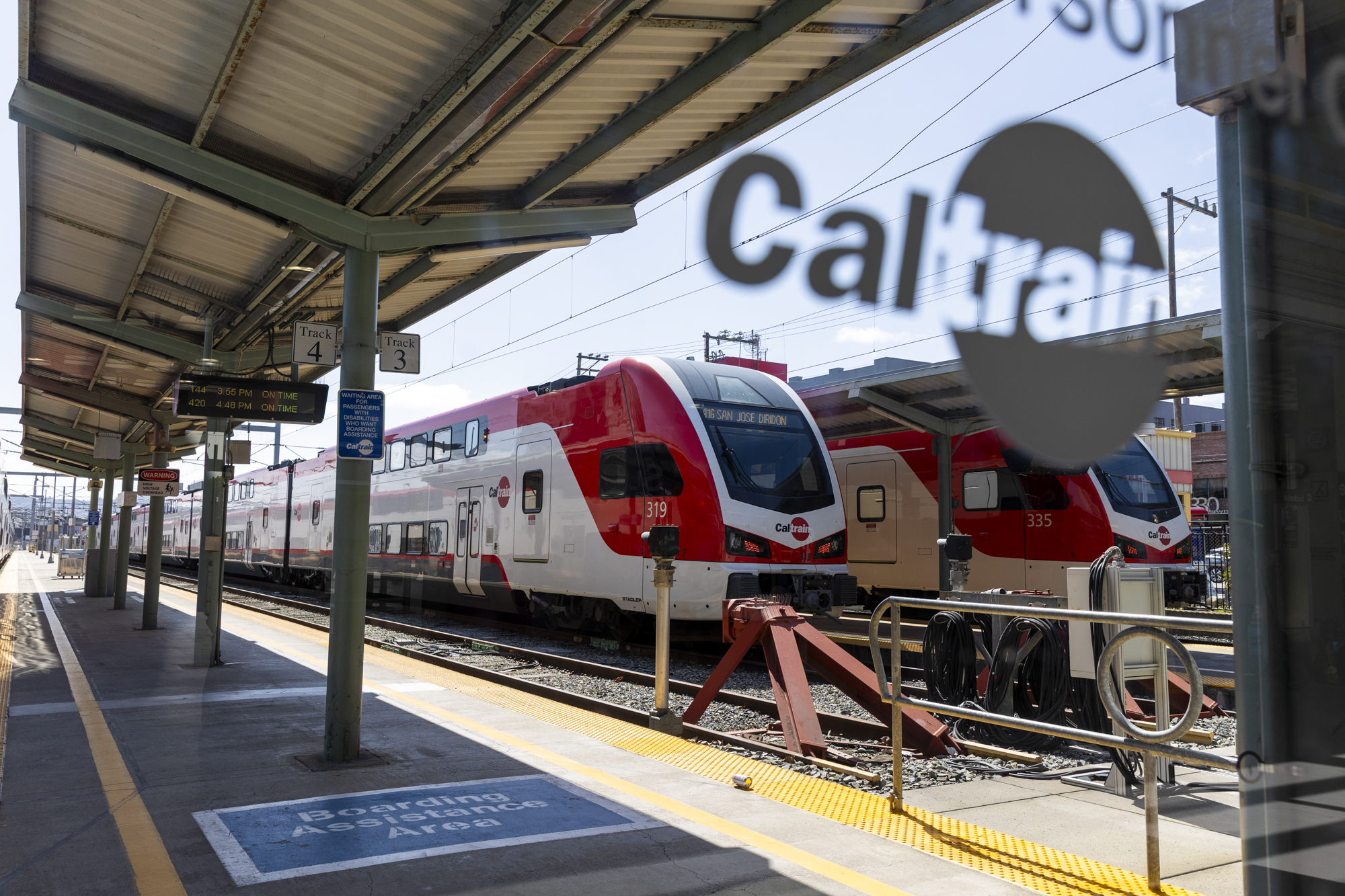
"caption": "Trains are stationed at the Caltrain station on King Street and 4th Street in San Francisco on April 27, 2026.",
"credit": "Tâm Vũ/KQED",
"altTag": null,
"description": null,
"imgSizes": {
"thumbnail": {
"file": "https://cdn.kqed.org/wp-content/uploads/sites/10/2026/04/260428-TRANSITRIDERSHIPREBOUND00197_TV-KQED-160x107.jpg",
"width": 160,
"height": 107,
"mimeType": "image/jpeg"
},
"1536x1536": {
"file": "https://cdn.kqed.org/wp-content/uploads/sites/10/2026/04/260428-TRANSITRIDERSHIPREBOUND00197_TV-KQED-1536x1024.jpg",
"width": 1536,
"height": 1024,
"mimeType": "image/jpeg"
},
"post-thumbnail": {
"file": "https://cdn.kqed.org/wp-content/uploads/sites/10/2026/04/260428-TRANSITRIDERSHIPREBOUND00197_TV-KQED-672x372.jpg",
"width": 672,
"height": 372,
"mimeType": "image/jpeg"
},
"twentyfourteen-full-width": {
"file": "https://cdn.kqed.org/wp-content/uploads/sites/10/2026/04/260428-TRANSITRIDERSHIPREBOUND00197_TV-KQED-1038x576.jpg",
"width": 1038,
"height": 576,
"mimeType": "image/jpeg"
},
"npr-cds-wide": {
"file": "https://cdn.kqed.org/wp-content/uploads/sites/10/2026/04/260428-TRANSITRIDERSHIPREBOUND00197_TV-KQED-1200x675.jpg",
"width": 1200,
"height": 675,
"mimeType": "image/jpeg"
},
"npr-cds-square": {
"file": "https://cdn.kqed.org/wp-content/uploads/sites/10/2026/04/260428-TRANSITRIDERSHIPREBOUND00197_TV-KQED-600x600.jpg",
"width": 600,
"height": 600,
"mimeType": "image/jpeg"
},
"kqedFullSize": {
"file": "https://cdn.kqed.org/wp-content/uploads/sites/10/2026/04/260428-TRANSITRIDERSHIPREBOUND00197_TV-KQED.jpg",
"width": 2000,
"height": 1333
}
},
"isLoading": false,
"fetchFailed": false
},
"news_12083552": {
"type": "attachments",
"id": "news_12083552",
"meta": {
"index": "attachments_1716263798",
"site": "news",
"id": "12083552",
"found": true
},
"title": "Caltrans Locomotive",
"publishDate": 1778715865,
"status": "inherit",
"parent": 12083467,
"modified": 1778715930,
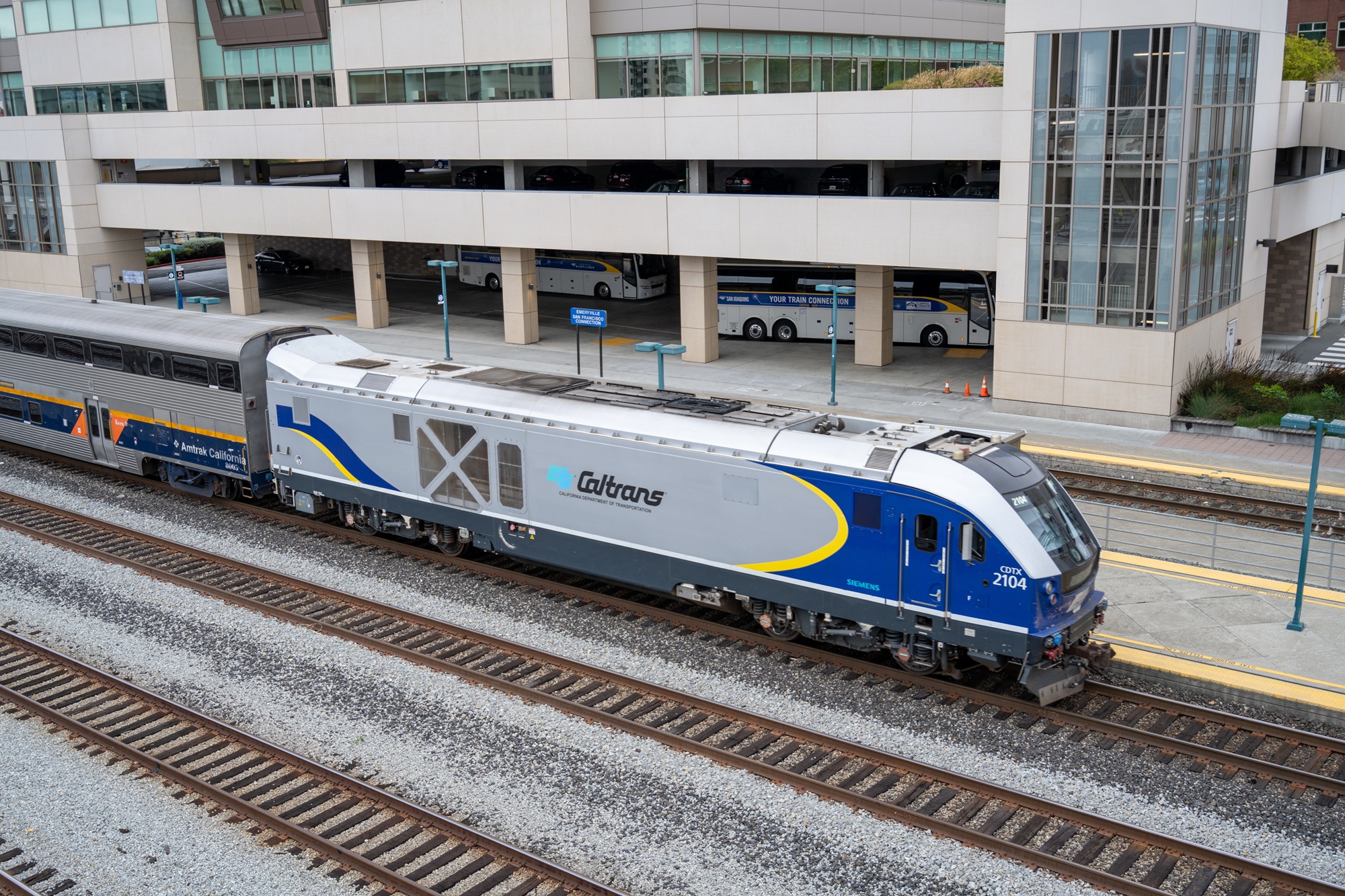
"caption": "A Caltrans locomotive pulls an Amtrak California train in Emeryville, California, on Nov. 12, 2025. ",
"credit": "Smith Collection/Gado via Getty Images",
"altTag": null,
"description": null,
"imgSizes": {
"thumbnail": {
"file": "https://cdn.kqed.org/wp-content/uploads/sites/10/2026/05/CaltransGetty-160x107.jpg",
"width": 160,
"height": 107,
"mimeType": "image/jpeg"
},
"1536x1536": {
"file": "https://cdn.kqed.org/wp-content/uploads/sites/10/2026/05/CaltransGetty-1536x1024.jpg",
"width": 1536,
"height": 1024,
"mimeType": "image/jpeg"
},
"post-thumbnail": {
"file": "https://cdn.kqed.org/wp-content/uploads/sites/10/2026/05/CaltransGetty-672x372.jpg",
"width": 672,
"height": 372,
"mimeType": "image/jpeg"
},
"twentyfourteen-full-width": {
"file": "https://cdn.kqed.org/wp-content/uploads/sites/10/2026/05/CaltransGetty-1038x576.jpg",
"width": 1038,
"height": 576,
"mimeType": "image/jpeg"
},
"npr-cds-wide": {
"file": "https://cdn.kqed.org/wp-content/uploads/sites/10/2026/05/CaltransGetty-1200x675.jpg",
"width": 1200,
"height": 675,
"mimeType": "image/jpeg"
},
"npr-cds-square": {
"file": "https://cdn.kqed.org/wp-content/uploads/sites/10/2026/05/CaltransGetty-600x600.jpg",
"width": 600,
"height": 600,
"mimeType": "image/jpeg"
},
"kqedFullSize": {
"file": "https://cdn.kqed.org/wp-content/uploads/sites/10/2026/05/CaltransGetty.jpg",
"width": 2000,
"height": 1333
}
},
"isLoading": false,
"fetchFailed": false
},
"news_12003067": {
"type": "attachments",
"id": "news_12003067",
"meta": {
"index": "attachments_1716263798",
"site": "news",
"id": "12003067",
"found": true
},
"title": "Gig Workers Rally At San Francisco Courthouse Against Prop 22 Amid Appeal",
"publishDate": 1725481764,
"status": "inherit",
"parent": 12002988,
"modified": 1778698091,
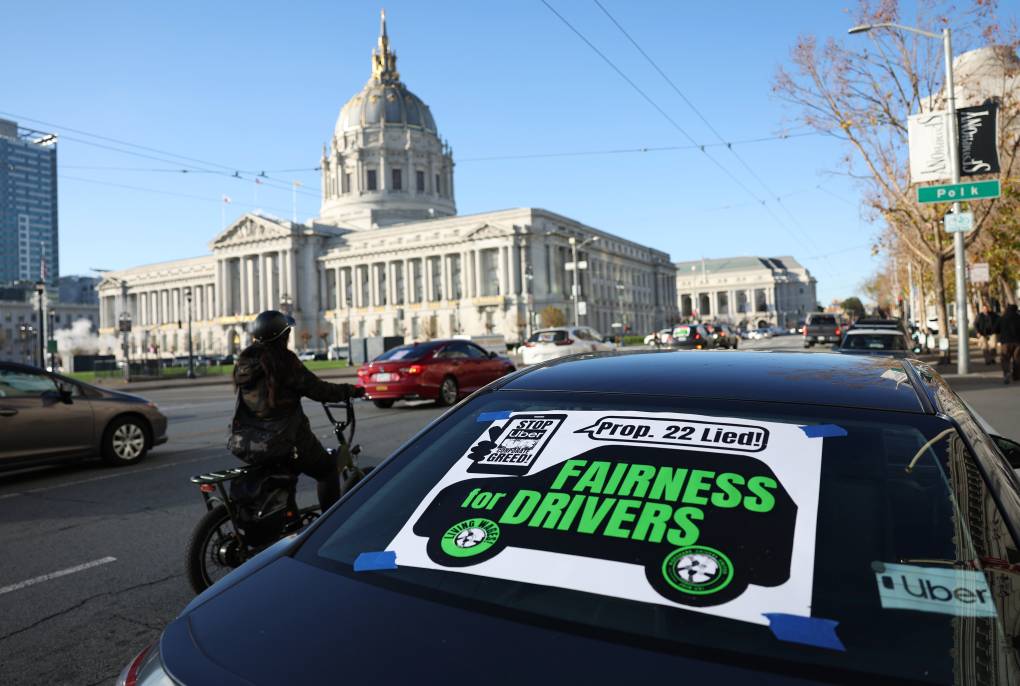
"caption": "A sign is posted on a car as gig workers with the California Gig Workers Union stage a rally against Proposition 22 outside of the California First Appellate District Court of Appeal on Dec. 13, 2022, in San Francisco, California.",
"credit": "Justin Sullivan/Getty Images",
"altTag": null,
"description": null,
"imgSizes": {
"medium": {
"file": "https://cdn.kqed.org/wp-content/uploads/sites/10/2024/09/GettyImages-1448862196-1-800x538.jpg",
"width": 800,
"height": 538,
"mimeType": "image/jpeg"
},
"large": {
"file": "https://cdn.kqed.org/wp-content/uploads/sites/10/2024/09/GettyImages-1448862196-1-1020x686.jpg",
"width": 1020,
"height": 686,
"mimeType": "image/jpeg"
},
"thumbnail": {
"file": "https://cdn.kqed.org/wp-content/uploads/sites/10/2024/09/GettyImages-1448862196-1-160x108.jpg",
"width": 160,
"height": 108,
"mimeType": "image/jpeg"
},
"1536x1536": {
"file": "https://cdn.kqed.org/wp-content/uploads/sites/10/2024/09/GettyImages-1448862196-1-1536x1033.jpg",
"width": 1536,
"height": 1033,
"mimeType": "image/jpeg"
},
"2048x2048": {
"file": "https://cdn.kqed.org/wp-content/uploads/sites/10/2024/09/GettyImages-1448862196-1-2048x1377.jpg",
"width": 2048,
"height": 1377,
"mimeType": "image/jpeg"
},
"post-thumbnail": {
"file": "https://cdn.kqed.org/wp-content/uploads/sites/10/2024/09/GettyImages-1448862196-1-672x372.jpg",
"width": 672,
"height": 372,
"mimeType": "image/jpeg"
},
"twentyfourteen-full-width": {
"file": "https://cdn.kqed.org/wp-content/uploads/sites/10/2024/09/GettyImages-1448862196-1-1038x576.jpg",
"width": 1038,
"height": 576,
"mimeType": "image/jpeg"
},
"full-width": {
"file": "https://cdn.kqed.org/wp-content/uploads/sites/10/2024/09/GettyImages-1448862196-1-1920x1291.jpg",
"width": 1920,
"height": 1291,
"mimeType": "image/jpeg"
},
"kqedFullSize": {
"file": "https://cdn.kqed.org/wp-content/uploads/sites/10/2024/09/GettyImages-1448862196-1-scaled.jpg",
"width": 2560,
"height": 1721
}
},
"isLoading": false,
"fetchFailed": false
},
"news_12082776": {
"type": "attachments",
"id": "news_12082776",
"meta": {
"index": "attachments_1716263798",
"site": "news",
"id": "12082776",
"found": true
},
"title": "SKOREA-ENTERTAINMENT-MUSIC-BTS",
"publishDate": 1778181565,
"status": "inherit",
"parent": 12082590,
"modified": 1778181599,
"caption": "K-pop boy group BTS perform during their concert at Gwanghwamun Square in Seoul on March 21, 2026. ",
"credit": "Kim Hong-Ji/POOL/AFP",
"altTag": null,
"description": null,
"imgSizes": {
"thumbnail": {
"file": "https://cdn.kqed.org/wp-content/uploads/sites/10/2026/05/GettyImages-2267211545-160x107.jpg",
"width": 160,
"height": 107,
"mimeType": "image/jpeg"
},
"1536x1536": {
"file": "https://cdn.kqed.org/wp-content/uploads/sites/10/2026/05/GettyImages-2267211545-1536x1024.jpg",
"width": 1536,
"height": 1024,
"mimeType": "image/jpeg"
},
"post-thumbnail": {
"file": "https://cdn.kqed.org/wp-content/uploads/sites/10/2026/05/GettyImages-2267211545-672x372.jpg",
"width": 672,
"height": 372,
"mimeType": "image/jpeg"
},
"twentyfourteen-full-width": {
"file": "https://cdn.kqed.org/wp-content/uploads/sites/10/2026/05/GettyImages-2267211545-1038x576.jpg",
"width": 1038,
"height": 576,
"mimeType": "image/jpeg"
},
"npr-cds-wide": {
"file": "https://cdn.kqed.org/wp-content/uploads/sites/10/2026/05/GettyImages-2267211545-1200x675.jpg",
"width": 1200,
"height": 675,
"mimeType": "image/jpeg"
},
"npr-cds-square": {
"file": "https://cdn.kqed.org/wp-content/uploads/sites/10/2026/05/GettyImages-2267211545-600x600.jpg",
"width": 600,
"height": 600,
"mimeType": "image/jpeg"
},
"kqedFullSize": {
"file": "https://cdn.kqed.org/wp-content/uploads/sites/10/2026/05/GettyImages-2267211545.jpg",
"width": 1980,
"height": 1320
}
},
"isLoading": false,
"fetchFailed": false
},
"news_11962972": {
"type": "attachments",
"id": "news_11962972",
"meta": {
"index": "attachments_1716263798",
"site": "news",
"id": "11962972",
"found": true
},
"title": "Planes at San Francisco International Airport (SFO)",
"publishDate": 1696036126,
"status": "inherit",
"parent": 11962810,
"modified": 1781817413,
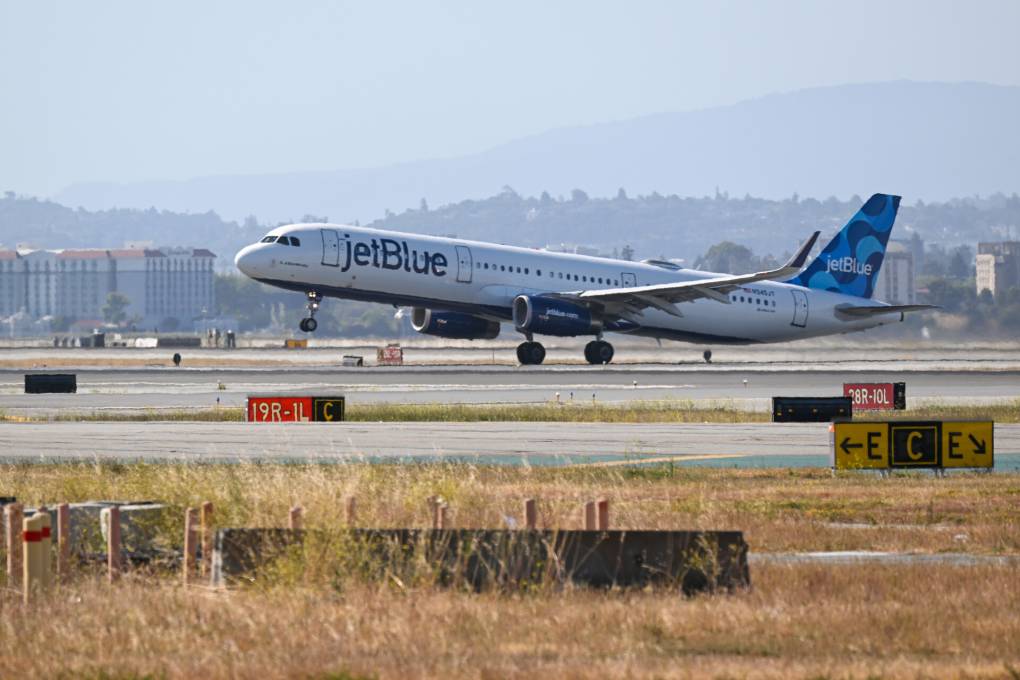
"caption": "A JetBlue passenger plane takes off from San Francisco International Airport in San Francisco, California, on June 21, 2023.",
"credit": "Tayfun Coskun/Anadolu Agency via Getty Images",
"altTag": "A passenger jet with JETBLUE on the side takes off from a runway.",
"description": null,
"imgSizes": {
"medium": {
"file": "https://cdn.kqed.org/wp-content/uploads/sites/10/2023/09/GettyImages-1258924953-qut-800x533.jpg",
"width": 800,
"height": 533,
"mimeType": "image/jpeg"
},
"large": {
"file": "https://cdn.kqed.org/wp-content/uploads/sites/10/2023/09/GettyImages-1258924953-qut-1020x680.jpg",
"width": 1020,
"height": 680,
"mimeType": "image/jpeg"
},
"thumbnail": {
"file": "https://cdn.kqed.org/wp-content/uploads/sites/10/2023/09/GettyImages-1258924953-qut-160x107.jpg",
"width": 160,
"height": 107,
"mimeType": "image/jpeg"
},
"1536x1536": {
"file": "https://cdn.kqed.org/wp-content/uploads/sites/10/2023/09/GettyImages-1258924953-qut-1536x1024.jpg",
"width": 1536,
"height": 1024,
"mimeType": "image/jpeg"
},
"post-thumbnail": {
"file": "https://cdn.kqed.org/wp-content/uploads/sites/10/2023/09/GettyImages-1258924953-qut-672x372.jpg",
"width": 672,
"height": 372,
"mimeType": "image/jpeg"
},
"twentyfourteen-full-width": {
"file": "https://cdn.kqed.org/wp-content/uploads/sites/10/2023/09/GettyImages-1258924953-qut-1038x576.jpg",
"width": 1038,
"height": 576,
"mimeType": "image/jpeg"
},
"kqedFullSize": {
"file": "https://cdn.kqed.org/wp-content/uploads/sites/10/2023/09/GettyImages-1258924953-qut.jpg",
"width": 1920,
"height": 1280
}
},
"isLoading": false,
"fetchFailed": false
},
"news_12081202": {
"type": "attachments",
"id": "news_12081202",
"meta": {
"index": "attachments_1716263798",
"site": "news",
"id": "12081202",
"found": true
},
"title": "Mauricio Martinez (left), laborer Ranger Pipelines, Inc. and Jose Ochoa (right), laborer Ranger Pipelines, Inc., sweep asphalt as Dan Durkan, operating engineer Ranger Pipelines, Inc., works on a roller while they work near the intersection of 41st Avenue",
"publishDate": 1776984383,
"status": "inherit",
"parent": 0,
"modified": 1776984532,
"caption": "Crews perform road work near the intersection of 41st Avenue and Santiago Street in San Francisco on Nov. 21, 2014.",
"credit": "Lea Suzuki/The San Francisco Chronicle via Getty Images",
"altTag": null,
"description": null,
"imgSizes": {
"thumbnail": {
"file": "https://cdn.kqed.org/wp-content/uploads/sites/10/2026/04/GETTYIMAGES-1322128240-KQED-160x107.jpg",
"width": 160,
"height": 107,
"mimeType": "image/jpeg"
},
"1536x1536": {
"file": "https://cdn.kqed.org/wp-content/uploads/sites/10/2026/04/GETTYIMAGES-1322128240-KQED-1536x1024.jpg",
"width": 1536,
"height": 1024,
"mimeType": "image/jpeg"
},
"post-thumbnail": {
"file": "https://cdn.kqed.org/wp-content/uploads/sites/10/2026/04/GETTYIMAGES-1322128240-KQED-672x372.jpg",
"width": 672,
"height": 372,
"mimeType": "image/jpeg"
},
"twentyfourteen-full-width": {
"file": "https://cdn.kqed.org/wp-content/uploads/sites/10/2026/04/GETTYIMAGES-1322128240-KQED-1038x576.jpg",
"width": 1038,
"height": 576,
"mimeType": "image/jpeg"
},
"npr-cds-wide": {
"file": "https://cdn.kqed.org/wp-content/uploads/sites/10/2026/04/GETTYIMAGES-1322128240-KQED-1200x675.jpg",
"width": 1200,
"height": 675,
"mimeType": "image/jpeg"
},
"npr-cds-square": {
"file": "https://cdn.kqed.org/wp-content/uploads/sites/10/2026/04/GETTYIMAGES-1322128240-KQED-600x600.jpg",
"width": 600,
"height": 600,
"mimeType": "image/jpeg"
},
"kqedFullSize": {
"file": "https://cdn.kqed.org/wp-content/uploads/sites/10/2026/04/GETTYIMAGES-1322128240-KQED.jpg",
"width": 2000,
"height": 1333
}
},
"isLoading": false,
"fetchFailed": false
},
"news_12082382": {
"type": "attachments",
"id": "news_12082382",
"meta": {
"index": "attachments_1716263798",
"site": "news",
"id": "12082382",
"found": true
},
"title": "023_KQED_SanFrancisco_Coronavirus_03132020__qed",
"publishDate": 1778002234,
"status": "inherit",
"parent": 12082380,
"modified": 1778002287,
"caption": "Two children ride a scooter on a path near the Golden Gate Bridge in San Francisco, California, on March 13, 2020.",
"credit": "Beth LaBerge/KQED",
"altTag": null,
"description": null,
"imgSizes": {
"thumbnail": {
"file": "https://cdn.kqed.org/wp-content/uploads/sites/10/2026/05/023_KQED_SanFrancisco_Coronavirus_03132020__qed-160x107.jpg",
"width": 160,
"height": 107,
"mimeType": "image/jpeg"
},
"1536x1536": {
"file": "https://cdn.kqed.org/wp-content/uploads/sites/10/2026/05/023_KQED_SanFrancisco_Coronavirus_03132020__qed-1536x1024.jpg",
"width": 1536,
"height": 1024,
"mimeType": "image/jpeg"
},
"post-thumbnail": {
"file": "https://cdn.kqed.org/wp-content/uploads/sites/10/2026/05/023_KQED_SanFrancisco_Coronavirus_03132020__qed-672x372.jpg",
"width": 672,
"height": 372,
"mimeType": "image/jpeg"
},
"twentyfourteen-full-width": {
"file": "https://cdn.kqed.org/wp-content/uploads/sites/10/2026/05/023_KQED_SanFrancisco_Coronavirus_03132020__qed-1038x576.jpg",
"width": 1038,
"height": 576,
"mimeType": "image/jpeg"
},
"npr-cds-wide": {
"file": "https://cdn.kqed.org/wp-content/uploads/sites/10/2026/05/023_KQED_SanFrancisco_Coronavirus_03132020__qed-1200x675.jpg",
"width": 1200,
"height": 675,
"mimeType": "image/jpeg"
},
"npr-cds-square": {
"file": "https://cdn.kqed.org/wp-content/uploads/sites/10/2026/05/023_KQED_SanFrancisco_Coronavirus_03132020__qed-600x600.jpg",
"width": 600,
"height": 600,
"mimeType": "image/jpeg"
},
"kqedFullSize": {
"file": "https://cdn.kqed.org/wp-content/uploads/sites/10/2026/05/023_KQED_SanFrancisco_Coronavirus_03132020__qed.jpg",
"width": 2000,
"height": 1333
}
},
"isLoading": false,
"fetchFailed": false
},
"news_12081691": {
"type": "attachments",
"id": "news_12081691",
"meta": {
"index": "attachments_1716263798",
"site": "news",
"id": "12081691",
"found": true
},
"title": "260428-SFSPEEDCAMERAS-22-BL-KQED",
"publishDate": 1777419172,
"status": "inherit",
"parent": 0,
"modified": 1777419195,
"caption": "A speed camera on Alemany Boulevard monitors traffic between Farragut and Naglee avenues in San Francisco on April 28, 2026, as part of a city pilot program to reduce speeding and traffic injuries.",
"credit": "Beth LaBerge/KQED",
"altTag": null,
"description": null,
"imgSizes": {
"thumbnail": {
"file": "https://cdn.kqed.org/wp-content/uploads/sites/10/2026/04/260428-SFSPEEDCAMERAS-22-BL-KQED-160x107.jpg",
"width": 160,
"height": 107,
"mimeType": "image/jpeg"
},
"1536x1536": {
"file": "https://cdn.kqed.org/wp-content/uploads/sites/10/2026/04/260428-SFSPEEDCAMERAS-22-BL-KQED-1536x1024.jpg",
"width": 1536,
"height": 1024,
"mimeType": "image/jpeg"
},
"post-thumbnail": {
"file": "https://cdn.kqed.org/wp-content/uploads/sites/10/2026/04/260428-SFSPEEDCAMERAS-22-BL-KQED-672x372.jpg",
"width": 672,
"height": 372,
"mimeType": "image/jpeg"
},
"twentyfourteen-full-width": {
"file": "https://cdn.kqed.org/wp-content/uploads/sites/10/2026/04/260428-SFSPEEDCAMERAS-22-BL-KQED-1038x576.jpg",
"width": 1038,
"height": 576,
"mimeType": "image/jpeg"
},
"npr-cds-wide": {
"file": "https://cdn.kqed.org/wp-content/uploads/sites/10/2026/04/260428-SFSPEEDCAMERAS-22-BL-KQED-1200x675.jpg",
"width": 1200,
"height": 675,
"mimeType": "image/jpeg"
},
"npr-cds-square": {
"file": "https://cdn.kqed.org/wp-content/uploads/sites/10/2026/04/260428-SFSPEEDCAMERAS-22-BL-KQED-600x600.jpg",
"width": 600,
"height": 600,
"mimeType": "image/jpeg"
},
"kqedFullSize": {
"file": "https://cdn.kqed.org/wp-content/uploads/sites/10/2026/04/260428-SFSPEEDCAMERAS-22-BL-KQED.jpg",
"width": 2000,
"height": 1333
}
},
"isLoading": false,
"fetchFailed": false
},
"news_12081648": {
"type": "attachments",
"id": "news_12081648",
"meta": {
"index": "attachments_1716263798",
"site": "news",
"id": "12081648",
"found": true
},
"title": "260428-TRANSITRIDERSHIPREBOUND00494_TV-KQED",
"publishDate": 1777410533,
"status": "inherit",
"parent": 12090116,
"modified": 1783617241,
"caption": "Transit riders walk through the Caltrain station on King Street and Fourth Street in San Francisco on April 27, 2026.",
"credit": "Tâm Vũ/KQED",
"altTag": null,
"description": null,
"imgSizes": {
"thumbnail": {
"file": "https://cdn.kqed.org/wp-content/uploads/sites/10/2026/04/260428-TRANSITRIDERSHIPREBOUND00494_TV-KQED-160x107.jpg",
"width": 160,
"height": 107,
"mimeType": "image/jpeg"
},
"1536x1536": {
"file": "https://cdn.kqed.org/wp-content/uploads/sites/10/2026/04/260428-TRANSITRIDERSHIPREBOUND00494_TV-KQED-1536x1024.jpg",
"width": 1536,
"height": 1024,
"mimeType": "image/jpeg"
},
"post-thumbnail": {
"file": "https://cdn.kqed.org/wp-content/uploads/sites/10/2026/04/260428-TRANSITRIDERSHIPREBOUND00494_TV-KQED-672x372.jpg",
"width": 672,
"height": 372,
"mimeType": "image/jpeg"
},
"twentyfourteen-full-width": {
"file": "https://cdn.kqed.org/wp-content/uploads/sites/10/2026/04/260428-TRANSITRIDERSHIPREBOUND00494_TV-KQED-1038x576.jpg",
"width": 1038,
"height": 576,
"mimeType": "image/jpeg"
},
"npr-cds-wide": {
"file": "https://cdn.kqed.org/wp-content/uploads/sites/10/2026/04/260428-TRANSITRIDERSHIPREBOUND00494_TV-KQED-1200x675.jpg",
"width": 1200,
"height": 675,
"mimeType": "image/jpeg"
},
"npr-cds-square": {
"file": "https://cdn.kqed.org/wp-content/uploads/sites/10/2026/04/260428-TRANSITRIDERSHIPREBOUND00494_TV-KQED-600x600.jpg",
"width": 600,
"height": 600,
"mimeType": "image/jpeg"
},
"kqedFullSize": {
"file": "https://cdn.kqed.org/wp-content/uploads/sites/10/2026/04/260428-TRANSITRIDERSHIPREBOUND00494_TV-KQED.jpg",
"width": 2000,
"height": 1333
}
},
"isLoading": false,
"fetchFailed": false
},
"news_12046383": {
"type": "attachments",
"id": "news_12046383",
"meta": {
"index": "attachments_1716263798",
"site": "news",
"id": "12046383",
"found": true
},
"title": "240412-OAKAirport-009-BL_qed",
"publishDate": 1751057311,
"status": "inherit",
"parent": 12046379,
"modified": 1751057324,
"caption": "A sign for the Oakland International Airport hangs above a BART station at the airport in Oakland on April 12, 2024.",
"credit": "Beth LaBerge/KQED",
"altTag": null,
"description": null,
"imgSizes": {
"thumbnail": {
"file": "https://cdn.kqed.org/wp-content/uploads/sites/10/2025/06/240412-OAKAirport-009-BL_qed-160x107.jpg",
"width": 160,
"height": 107,
"mimeType": "image/jpeg"
},
"1536x1536": {
"file": "https://cdn.kqed.org/wp-content/uploads/sites/10/2025/06/240412-OAKAirport-009-BL_qed-1536x1024.jpg",
"width": 1536,
"height": 1024,
"mimeType": "image/jpeg"
},
"post-thumbnail": {
"file": "https://cdn.kqed.org/wp-content/uploads/sites/10/2025/06/240412-OAKAirport-009-BL_qed-672x372.jpg",
"width": 672,
"height": 372,
"mimeType": "image/jpeg"
},
"twentyfourteen-full-width": {
"file": "https://cdn.kqed.org/wp-content/uploads/sites/10/2025/06/240412-OAKAirport-009-BL_qed-1038x576.jpg",
"width": 1038,
"height": 576,
"mimeType": "image/jpeg"
},
"kqedFullSize": {
"file": "https://cdn.kqed.org/wp-content/uploads/sites/10/2025/06/240412-OAKAirport-009-BL_qed.jpg",
"width": 2000,
"height": 1333
}
},
"isLoading": false,
"fetchFailed": false
},
"news_12015328": {
"type": "attachments",
"id": "news_12015328",
"meta": {
"index": "attachments_1716263798",
"site": "news",
"id": "12015328",
"found": true
},
"title": "IMG_5013",
"publishDate": 1732219814,
"status": "inherit",
"parent": 12015320,
"modified": 1776903053,
"caption": "Transportation officials survey two new Bayview Community Shuttle vans in San Francisco's Bayview-Hunters Point neighborhood on Nov. 20, 2024. ",
"credit": "Gilare Zada/KQED",
"altTag": "A small group of people stands outside next to two purple and yellow vans that say 'Bayview Community Shuttle.'",
"description": null,
"imgSizes": {
"medium": {
"file": "https://cdn.kqed.org/wp-content/uploads/sites/10/2024/11/IMG_5013-800x517.jpg",
"width": 800,
"height": 517,
"mimeType": "image/jpeg"
},
"large": {
"file": "https://cdn.kqed.org/wp-content/uploads/sites/10/2024/11/IMG_5013-1020x659.jpg",
"width": 1020,
"height": 659,
"mimeType": "image/jpeg"
},
"thumbnail": {
"file": "https://cdn.kqed.org/wp-content/uploads/sites/10/2024/11/IMG_5013-160x103.jpg",
"width": 160,
"height": 103,
"mimeType": "image/jpeg"
},
"1536x1536": {
"file": "https://cdn.kqed.org/wp-content/uploads/sites/10/2024/11/IMG_5013-1536x992.jpg",
"width": 1536,
"height": 992,
"mimeType": "image/jpeg"
},
"2048x2048": {
"file": "https://cdn.kqed.org/wp-content/uploads/sites/10/2024/11/IMG_5013-2048x1323.jpg",
"width": 2048,
"height": 1323,
"mimeType": "image/jpeg"
},
"post-thumbnail": {
"file": "https://cdn.kqed.org/wp-content/uploads/sites/10/2024/11/IMG_5013-672x372.jpg",
"width": 672,
"height": 372,
"mimeType": "image/jpeg"
},
"twentyfourteen-full-width": {
"file": "https://cdn.kqed.org/wp-content/uploads/sites/10/2024/11/IMG_5013-1038x576.jpg",
"width": 1038,
"height": 576,
"mimeType": "image/jpeg"
},
"full-width": {
"file": "https://cdn.kqed.org/wp-content/uploads/sites/10/2024/11/IMG_5013-1920x1240.jpg",
"width": 1920,
"height": 1240,
"mimeType": "image/jpeg"
},
"kqedFullSize": {
"file": "https://cdn.kqed.org/wp-content/uploads/sites/10/2024/11/IMG_5013-scaled-e1776896997415.jpg",
"width": 2000,
"height": 1291
}
},
"isLoading": false,
"fetchFailed": false
},
"news_12080719": {
"type": "attachments",
"id": "news_12080719",
"meta": {
"index": "attachments_1716263798",
"site": "news",
"id": "12080719",
"found": true
},
"title": "A commuter looks for a less crowded section of a westbound BART train at the West Oakland station in Oakland, Calif. on Friday, Feb. 16, 2018. BART officials will begin a study on the feasibility of a second transbay tube",
"publishDate": 1776797943,
"status": "inherit",
"parent": 12080707,
"modified": 1776799298,
"caption": "A commuter looks for a less crowded section of a westbound BART train at the West Oakland station in Oakland, California, on Friday, Feb. 16, 2018. BART officials will begin a study on the feasibility of a second transbay tube. ",
"credit": "Paul Chinn/The San Francisco Chronicle via Getty Images",
"altTag": null,
"description": null,
"imgSizes": {
"thumbnail": {
"file": "https://cdn.kqed.org/wp-content/uploads/sites/10/2026/04/BARTSFGetty-160x111.jpg",
"width": 160,
"height": 111,
"mimeType": "image/jpeg"
},
"1536x1536": {
"file": "https://cdn.kqed.org/wp-content/uploads/sites/10/2026/04/BARTSFGetty-1536x1068.jpg",
"width": 1536,
"height": 1068,
"mimeType": "image/jpeg"
},
"post-thumbnail": {
"file": "https://cdn.kqed.org/wp-content/uploads/sites/10/2026/04/BARTSFGetty-672x372.jpg",
"width": 672,
"height": 372,
"mimeType": "image/jpeg"
},
"twentyfourteen-full-width": {
"file": "https://cdn.kqed.org/wp-content/uploads/sites/10/2026/04/BARTSFGetty-1038x576.jpg",
"width": 1038,
"height": 576,
"mimeType": "image/jpeg"
},
"npr-cds-wide": {
"file": "https://cdn.kqed.org/wp-content/uploads/sites/10/2026/04/BARTSFGetty-1200x675.jpg",
"width": 1200,
"height": 675,
"mimeType": "image/jpeg"
},
"npr-cds-square": {
"file": "https://cdn.kqed.org/wp-content/uploads/sites/10/2026/04/BARTSFGetty-600x600.jpg",
"width": 600,
"height": 600,
"mimeType": "image/jpeg"
},
"kqedFullSize": {
"file": "https://cdn.kqed.org/wp-content/uploads/sites/10/2026/04/BARTSFGetty.jpg",
"width": 2000,
"height": 1391
}
},
"isLoading": false,
"fetchFailed": false
}
},
"audioPlayerReducer": {
"postId": "stream_live",
"isPaused": true,
"isPlaying": false,
"pfsActive": false,
"pledgeModalIsOpen": true,
"playerDrawerIsOpen": false,
"liveAudioPlayStartedAt": 0,
"liveAudioPlayContext": ""
},
"authorsReducer": {
"fjhabvala": {
"type": "authors",
"id": "8659",
"meta": {
"index": "authors_1716337520",
"id": "8659",
"found": true
},
"name": "Farida Jhabvala Romero",
"firstName": "Farida",
"lastName": "Jhabvala Romero",
"slug": "fjhabvala",
"email": "fjhabvala@kqed.org",
"display_author_email": true,
"staff_mastheads": [
"news"
],
"title": "KQED Contributor",
"bio": "Farida Jhabvala Romero is a Labor Correspondent for KQED. She previously covered immigration. Farida was \u003ca href=\"https://www.ccnma.org/2022-most-influential-latina-journalists\">named\u003c/a> one of the 10 Most Influential Latina Journalists in California in 2022 by the California Chicano News Media Association. Her work has won awards from the Society of Professional Journalists (Northern California), as well as a national and regional Edward M. Murrow Award for the collaborative reporting projects “Dangerous Air” and “Graying California.” Before joining KQED, Farida worked as a producer at Radio Bilingüe, a national public radio network. Farida earned her master’s degree in journalism from Stanford University.",
"avatar": "https://secure.gravatar.com/avatar/f9f022d4e2609741874222a1e9d41f48fea74011aa7c615eef91d9a50c944ebe?s=600&d=blank&r=g",
"twitter": "FaridaJhabvala",
"bluesky": null,
"facebook": null,
"instagram": null,
"linkedin": "https://www.linkedin.com/in/faridajhabvala/",
"sites": [
{
"site": "news",
"roles": [
"editor"
]
},
{
"site": "stateofhealth",
"roles": [
"author"
]
},
{
"site": "liveblog",
"roles": [
"author"
]
}
],
"headData": {
"title": "Farida Jhabvala Romero | KQED",
"description": "KQED Contributor",
"ogImgSrc": "https://secure.gravatar.com/avatar/f9f022d4e2609741874222a1e9d41f48fea74011aa7c615eef91d9a50c944ebe?s=600&d=blank&r=g",
"twImgSrc": "https://secure.gravatar.com/avatar/f9f022d4e2609741874222a1e9d41f48fea74011aa7c615eef91d9a50c944ebe?s=600&d=blank&r=g"
},
"isLoading": false,
"link": "/author/fjhabvala"
},
"abandlamudi": {
"type": "authors",
"id": "11672",
"meta": {
"index": "authors_1716337520",
"id": "11672",
"found": true
},
"name": "Adhiti Bandlamudi",
"firstName": "Adhiti",
"lastName": "Bandlamudi",
"slug": "abandlamudi",
"email": "abandlamudi@kqed.org",
"display_author_email": false,
"staff_mastheads": [
"news"
],
"title": "KQED Housing Reporter",
"bio": "Adhiti Bandlamudi reports for KQED's Housing desk. She focuses on how housing gets built across the Bay Area. Before joining KQED in 2020, she reported for WUNC in Durham, North Carolina, WABE in Atlanta, Georgia and Capital Public Radio in Sacramento. In 2017, she was awarded a Kroc Fellowship at NPR where she reported on everything from sprinkles to the Golden State Killer's arrest. When she's not reporting, she's baking new recipes in her kitchen or watching movies with friends and family. She's originally from Georgia and has strong opinions about Great British Bake Off.",
"avatar": "https://secure.gravatar.com/avatar/868129c8b257bb99a3500e2c86a65400?s=600&d=mm&r=g",
"twitter": "oddity_adhiti",
"facebook": null,
"instagram": null,
"linkedin": null,
"sites": [
{
"site": "arts",
"roles": [
"author"
]
},
{
"site": "news",
"roles": [
"editor"
]
},
{
"site": "liveblog",
"roles": [
"author"
]
}
],
"headData": {
"title": "Adhiti Bandlamudi | KQED",
"description": "KQED Housing Reporter",
"ogImgSrc": "https://secure.gravatar.com/avatar/868129c8b257bb99a3500e2c86a65400?s=600&d=mm&r=g",
"twImgSrc": "https://secure.gravatar.com/avatar/868129c8b257bb99a3500e2c86a65400?s=600&d=mm&r=g"
},
"isLoading": false,
"link": "/author/abandlamudi"
},
"adahlstromeckman": {
"type": "authors",
"id": "11785",
"meta": {
"index": "authors_1716337520",
"id": "11785",
"found": true
},
"name": "Azul Dahlstrom-Eckman",
"firstName": "Azul",
"lastName": "Dahlstrom-Eckman",
"slug": "adahlstromeckman",
"email": "adahlstrom-eckman@kqed.org",
"display_author_email": true,
"staff_mastheads": [],
"title": "Reporter",
"bio": "Azul is a reporter for KQED focusing on transportation and features. He joined KQED in 2021 as an alumna of KALW's Audio Academy radio journalism training program.",
"avatar": "https://secure.gravatar.com/avatar/9cb750298435add7815a777f55bf1f46845c1386bb8452555c60a7b820b5aba3?s=600&d=blank&r=g",
"twitter": "@zuliemann",
"bluesky": "@azul415.bsky.social",
"facebook": null,
"instagram": null,
"linkedin": null,
"sites": [
{
"site": "arts",
"roles": [
"editor"
]
},
{
"site": "news",
"roles": [
"editor"
]
},
{
"site": "science",
"roles": [
"editor"
]
},
{
"site": "liveblog",
"roles": [
"author"
]
}
],
"headData": {
"title": "Azul Dahlstrom-Eckman | KQED",
"description": "Reporter",
"ogImgSrc": "https://secure.gravatar.com/avatar/9cb750298435add7815a777f55bf1f46845c1386bb8452555c60a7b820b5aba3?s=600&d=blank&r=g",
"twImgSrc": "https://secure.gravatar.com/avatar/9cb750298435add7815a777f55bf1f46845c1386bb8452555c60a7b820b5aba3?s=600&d=blank&r=g"
},
"isLoading": false,
"link": "/author/adahlstromeckman"
},
"nkhan": {
"type": "authors",
"id": "11867",
"meta": {
"index": "authors_1716337520",
"id": "11867",
"found": true
},
"name": "Nisa Khan",
"firstName": "Nisa",
"lastName": "Khan",
"slug": "nkhan",
"email": "nkhan@kqed.org",
"display_author_email": false,
"staff_mastheads": [],
"title": "KQED Contributor",
"bio": "Nisa Khan is a reporter for KQED's Audience News Desk. She was formerly a data reporter at Michigan Radio. She earned a Bachelor of Science in Information from the University of Michigan and a Master of Arts in Communication from Stanford University.",
"avatar": "https://secure.gravatar.com/avatar/8720459eef081ff64582b3506b124d58523e80e120704a0cbd9892533c914991?s=600&d=blank&r=g",
"twitter": "mnisakhan",
"bluesky": null,
"facebook": null,
"instagram": null,
"linkedin": null,
"sites": [
{
"site": "arts",
"roles": [
"editor"
]
},
{
"site": "news",
"roles": [
"editor"
]
},
{
"site": "science",
"roles": [
"editor",
"author"
]
},
{
"site": "forum",
"roles": [
"editor"
]
},
{
"site": "liveblog",
"roles": [
"contributor"
]
}
],
"headData": {
"title": "Nisa Khan | KQED",
"description": "KQED Contributor",
"ogImgSrc": "https://secure.gravatar.com/avatar/8720459eef081ff64582b3506b124d58523e80e120704a0cbd9892533c914991?s=600&d=blank&r=g",
"twImgSrc": "https://secure.gravatar.com/avatar/8720459eef081ff64582b3506b124d58523e80e120704a0cbd9892533c914991?s=600&d=blank&r=g"
},
"isLoading": false,
"link": "/author/nkhan"
},
"kdebenedetti": {
"type": "authors",
"id": "11913",
"meta": {
"index": "authors_1716337520",
"id": "11913",
"found": true
},
"name": "Katie DeBenedetti",
"firstName": "Katie",
"lastName": "DeBenedetti",
"slug": "kdebenedetti",
"email": "kdebenedetti@kqed.org",
"display_author_email": false,
"staff_mastheads": [
"news",
"science"
],
"title": "KQED Contributor",
"bio": "Katie DeBenedetti is a digital reporter covering daily news for the Express Desk. Prior to joining KQED as a culture reporting intern in January 2024, she covered education and city government for the Napa Valley Register.",
"avatar": "https://secure.gravatar.com/avatar/6e31073cb8f7e4214ab03f42771d0f45?s=600&d=blank&r=g",
"twitter": null,
"facebook": null,
"instagram": null,
"linkedin": null,
"sites": [
{
"site": "news",
"roles": [
"author"
]
},
{
"site": "science",
"roles": [
"author"
]
},
{
"site": "liveblog",
"roles": [
"author"
]
}
],
"headData": {
"title": "Katie DeBenedetti | KQED",
"description": "KQED Contributor",
"ogImgSrc": "https://secure.gravatar.com/avatar/6e31073cb8f7e4214ab03f42771d0f45?s=600&d=blank&r=g",
"twImgSrc": "https://secure.gravatar.com/avatar/6e31073cb8f7e4214ab03f42771d0f45?s=600&d=blank&r=g"
},
"isLoading": false,
"link": "/author/kdebenedetti"
},
"gzada": {
"type": "authors",
"id": "11929",
"meta": {
"index": "authors_1716337520",
"id": "11929",
"found": true
},
"name": "Gilare Zada",
"firstName": "Gilare",
"lastName": "Zada",
"slug": "gzada",
"email": "gzada@kqed.org",
"display_author_email": true,
"staff_mastheads": [
"news"
],
"title": null,
"bio": "Gilare Zada is a Kurdish-American from San Diego, CA. Storytelling, fitness, and binge reading are some of her passions outside of news reporting. Her work has appeared in Mission Local, the Peninsula Press, the San Francisco Press Club, and more. She also writes as a class correspondent for the Stanford Magazine - go Card!",
"avatar": "https://secure.gravatar.com/avatar/33a75f2b947669a488a805edec3fbf3838c1cedaedda710e983770633b4d6a75?s=600&d=blank&r=g",
"twitter": null,
"bluesky": null,
"facebook": null,
"instagram": null,
"linkedin": null,
"sites": [
{
"site": "",
"roles": [
"editor"
]
},
{
"site": "arts",
"roles": [
"editor"
]
},
{
"site": "news",
"roles": [
"administrator"
]
},
{
"site": "science",
"roles": [
"editor"
]
}
],
"headData": {
"title": "Gilare Zada | KQED",
"description": null,
"ogImgSrc": "https://secure.gravatar.com/avatar/33a75f2b947669a488a805edec3fbf3838c1cedaedda710e983770633b4d6a75?s=600&d=blank&r=g",
"twImgSrc": "https://secure.gravatar.com/avatar/33a75f2b947669a488a805edec3fbf3838c1cedaedda710e983770633b4d6a75?s=600&d=blank&r=g"
},
"isLoading": false,
"link": "/author/gzada"
},
"ejackson": {
"type": "authors",
"id": "12003",
"meta": {
"index": "authors_1716337520",
"id": "12003",
"found": true
},
"name": "Ella Jackson",
"firstName": "Ella",
"lastName": "Jackson",
"slug": "ejackson",
"email": "ejackson@kqed.org",
"display_author_email": false,
"staff_mastheads": [],
"title": "KQED Contributor",
"bio": null,
"avatar": "https://secure.gravatar.com/avatar/3c688edc62aec1dcae096e1475956d245f72bde99cff316455871c9b22a7205b?s=600&d=blank&r=g",
"twitter": null,
"bluesky": null,
"facebook": null,
"instagram": null,
"linkedin": null,
"sites": [
{
"site": "news",
"roles": [
"author"
]
},
{
"site": "science",
"roles": [
"author"
]
}
],
"headData": {
"title": "Ella Jackson | KQED",
"description": "KQED Contributor",
"ogImgSrc": "https://secure.gravatar.com/avatar/3c688edc62aec1dcae096e1475956d245f72bde99cff316455871c9b22a7205b?s=600&d=blank&r=g",
"twImgSrc": "https://secure.gravatar.com/avatar/3c688edc62aec1dcae096e1475956d245f72bde99cff316455871c9b22a7205b?s=600&d=blank&r=g"
},
"isLoading": false,
"link": "/author/ejackson"
}
},
"pagesReducer": {
"news_category_transportation": {
"type": "terms",
"id": "news_1397",
"meta": {
"index": "terms_1716263798",
"site": "news",
"id": "1397",
"score": 12.93969
},
"featImg": null,
"name": "Transportation",
"description": null,
"taxonomy": "category",
"headData": {
"twImgId": null,
"twTitle": null,
"ogTitle": null,
"ogImgId": null,
"twDescription": null,
"description": null,
"title": "Transportation Archives | KQED News",
"ogDescription": null
},
"ttid": 1409,
"slug": "transportation",
"isLoading": false,
"title": "Transportation",
"pageMeta": {
"site": "news",
"WpPageTemplate": "page-topic-editorial",
"currentPage": 6
},
"blocks": [
{
"blockName": "kqed/post-list",
"attrs": {
"layout": "cardArticle2",
"query": "posts/news?category=transportation",
"seeMore": false,
"paginated": true,
"page": 6
}
},
{
"blockName": "kqed/ad"
}
]
}
},
"pfsSessionReducer": {},
"postsReducer": {
"stream_live": {
"type": "live",
"id": "stream_live",
"audioUrl": "https://streams.kqed.org/kqedradio",
"title": "Live Stream",
"excerpt": "Live Stream information currently unavailable.",
"link": "/radio",
"featImg": "",
"label": {
"name": "KQED Live",
"link": "/"
}
},
"stream_kqedNewscast": {
"type": "posts",
"id": "stream_kqedNewscast",
"audioUrl": "https://www.kqed.org/.stream/anon/radio/RDnews/newscast.mp3?_=1",
"title": "KQED Newscast",
"featImg": "",
"label": {
"name": "88.5 FM",
"link": "/"
}
},
"news_12084766": {
"type": "posts",
"id": "news_12084766",
"meta": {
"index": "posts_1716263798",
"site": "news",
"id": "12084766",
"score": null,
"sort": [
1779473442000
]
},
"guestAuthors": [],
"slug": "bay-area-transit-agencies-saved-1-billion-since-2020-can-they-sustain-those-savings",
"title": "Bay Area Transit Agencies Saved $1 Billion Since 2020. Can They Sustain Those Savings?",
"publishDate": 1779473442,
"format": "standard",
"headTitle": "Bay Area Transit Agencies Saved $1 Billion Since 2020. Can They Sustain Those Savings? | KQED",
"labelTerm": {
"site": "news"
},
"content": "\u003cp>The \u003ca href=\"https://www.kqed.org/news/tag/bay-area\">Bay Area’s \u003c/a>four major\u003ca href=\"https://www.kqed.org/news/tag/public-transit\"> public transit\u003c/a> agencies — BART, Muni, Caltrain and AC Transit — collectively saved more than $1 billion since 2020 as they responded to changes in travel patterns during and after the pandemic, according to a new report.\u003c/p>\n\u003cp>“BART has really dialed back on spending and doing [service] increases at a time of great unknown, while also wanting to keep a nice quality of service running so that we can continue to attract riders,” BART spokesperson Alicia Trost said.\u003c/p>\n\u003cp>The state-required financial \u003ca href=\"https://cdn.kqed.org/wp-content/uploads/sites/10/2026/05/4a_26-0635_3_Attachment_B_Phase_One_FER_Proposed_Final_Report.pdf\" target=\"_blank\" rel=\"noopener\">efficiency review report\u003c/a>, released Friday, credits the operating cost savings to temporary service reductions, wage and hiring freezes and scaling back or deferring new projects. For BART, that meant $516 million in savings, for SFMTA, nearly $300 million, for AC transit, $200 million and for Caltrain, $76 million.\u003c/p>\n\u003cp>[ad fullwidth]\u003c/p>\n\u003cp>It comes as the four transit operators, which collectively represent 80% of public transit ridership in the region, stare down a fiscal cliff. Operators hope \u003ca href=\"https://www.kqed.org/news/12070685/campaign-to-avert-bay-area-public-transit-death-spiral-gets-underway\">a funding measure\u003c/a> making its way to the November ballot, which could generate $1 billion annually, comes to the rescue.\u003c/p>\n\u003cp>But critics argue the measure could reward bad behavior by bailing out fiscally irresponsible agencies.\u003c/p>\n\u003cp>Steve Glazer, a former state senator who represented most of Contra Costa County and parts of Alameda County, has been a vocal critic of BART’s financial management and argued the regional agency hasn’t understood where long-term service reductions need to be made and cut operations accordingly.\u003c/p>\n\u003cfigure id=\"attachment_11997867\" class=\"wp-caption aligncenter\" style=\"max-width: 2000px\">\u003cimg loading=\"lazy\" decoding=\"async\" class=\"wp-image-11997867 size-full\" src=\"https://cdn.kqed.org/wp-content/uploads/sites/10/2024/07/007_KQED_PublicTransit_03102020_6511_qed.jpg\" alt=\"\" width=\"2000\" height=\"1333\" srcset=\"https://cdn.kqed.org/wp-content/uploads/sites/10/2024/07/007_KQED_PublicTransit_03102020_6511_qed.jpg 2000w, https://cdn.kqed.org/wp-content/uploads/sites/10/2024/07/007_KQED_PublicTransit_03102020_6511_qed-800x533.jpg 800w, https://cdn.kqed.org/wp-content/uploads/sites/10/2024/07/007_KQED_PublicTransit_03102020_6511_qed-1020x680.jpg 1020w, https://cdn.kqed.org/wp-content/uploads/sites/10/2024/07/007_KQED_PublicTransit_03102020_6511_qed-160x107.jpg 160w, https://cdn.kqed.org/wp-content/uploads/sites/10/2024/07/007_KQED_PublicTransit_03102020_6511_qed-1536x1024.jpg 1536w, https://cdn.kqed.org/wp-content/uploads/sites/10/2024/07/007_KQED_PublicTransit_03102020_6511_qed-1920x1280.jpg 1920w\" sizes=\"auto, (max-width: 2000px) 100vw, 2000px\">\u003cfigcaption class=\"wp-caption-text\">A new financial efficiency report comes as a measure makes its way to the November ballot, aiming to prevent the region’s public transportation from falling off a fiscal cliff. \u003ccite>(Beth LaBerge/KQED)\u003c/cite>\u003c/figcaption>\u003c/figure>\n\u003cp>“They’ve had four years to anticipate this fiscal cliff that they claim they’re going over and yet have taken none of the more substantial steps necessary to financially right-size the system, so that the revenues are matching the expenditure[s],” Glazer said.\u003c/p>\n\u003cp>Trost pushed back, arguing that cutting service before allowing voters to decide on the measure would lead to a decrease in ridership and could send BART down a deeper financial spiral.\u003c/p>\n\u003cp>“We don’t believe cutting service is going to serve the Bay Area … the Bay Area relies on the service level we’re providing now,” she said. “Right now, if you come from Dublin, you’re waiting 20 minutes for a train… [state] Sen. Glazer is saying that people should be waiting more, and we disagree.”\u003c/p>\n\u003cp>Earlier this year, Gov. Gavin Newsom authorized a \u003ca href=\"https://www.kqed.org/news/12073891/newsom-signs-590-million-loan-to-avert-drastic-bay-area-transit-cuts\">$590 million emergency bridge loan\u003c/a> to prevent Bay Area agencies from shuttering stations and slashing service. Trost said BART officials predicted they would run out of those funds next month.[aside postID=news_12074874 hero='https://cdn.kqed.org/wp-content/uploads/sites/10/2026/03/260303-MUNIFUNDINGKICKOFF-14-BL-KQED.jpg']“But because of all of these efficiency measures, we’ve been able to carry that money over into fiscal year [20]27, which is going to help us reduce our deficit,” she told KQED.\u003c/p>\n\u003cp>Before the pandemic, regional population and job growth led transit agencies to expand service and make large capital investments, the report states. But the pandemic disrupted that trend and forced agencies to cut back service, freeze hiring and hold back on investing in new lines and schedules.\u003c/p>\n\u003cp>Even as riders have returned, commuting patterns have changed for the foreseeable future.\u003c/p>\n\u003cp>The report also details ways transit agencies could improve ridership and customer experience without incurring new costs. BART and Muni, for example, could improve fare compliance and enforcement and implement demand-based pricing for parking at their stations.\u003c/p>\n\u003cp>Parisa Safarzadeh, a San Francisco Municipal Transit Agency spokesperson, said that while many of the cuts detailed in the report represented one-time cost savings, they also illustrate how the agency managed its finances with precision in a time of uncertainty.\u003c/p>\n\u003cp>“We understand it’s not enough to rely on one-time sources or stop-gap cuts as a sustainable way to address our financial challenges,” she said to KQED in an emailed statement. “We appreciate how this review underscores the need to establish a ‘new normal’ in how we continue the hard work to build on this momentum.”\u003c/p>\n\u003cp>Last October, \u003ca href=\"https://www.kqed.org/news/12039394/last-ditch-effort-fund-bay-area-transit-tries-pick-up-support\">Newsom signed a bill\u003c/a> that allowed advocates to start fundraising and gathering signatures for the measure to appear on the November ballot. \u003ca href=\"https://leginfo.legislature.ca.gov/faces/billTextClient.xhtml?bill_id=202520260SB63\">SB 63\u003c/a> also required a third party to conduct a two-phase financial efficiency review. This report marks the first phase of that process. If voters approve the measure in November, a second review would be required to evaluate further cost-saving strategies and financial sustainability.\u003c/p>\n\u003cp>The law also requires the agencies to adopt some of the recommendations to improve service and ridership experience by July 1. BART’s Board is expected to vote on it during its first meeting in June.\u003c/p>\n\u003cp>\u003c/p>\n",
"blocks": [],
"excerpt": "A new financial efficiency report comes as a measure makes its way to the November ballot, aiming to prevent the region’s public transportation from falling off a fiscal cliff. ",
"status": "publish",
"parent": 0,
"modified": 1779478472,
"stats": {
"hasAudio": false,
"hasVideo": false,
"hasChartOrMap": false,
"iframeSrcs": [],
"hasGoogleForm": false,
"hasGallery": false,
"hasHearkenModule": false,
"hasPolis": false,
"paragraphCount": 19,
"wordCount": 838
},
"headData": {
"title": "Bay Area Transit Agencies Saved $1 Billion Since 2020. Can They Sustain Those Savings? | KQED",
"description": "A new financial efficiency report comes as a measure makes its way to the November ballot, aiming to prevent the region’s public transportation from falling off a fiscal cliff. ",
"ogTitle": "",
"ogDescription": "",
"ogImgId": "",
"twTitle": "",
"twDescription": "",
"twImgId": "",
"schema": {
"@context": "https://schema.org",
"@type": "NewsArticle",
"headline": "Bay Area Transit Agencies Saved $1 Billion Since 2020. Can They Sustain Those Savings?",
"datePublished": "2026-05-22T11:10:42-07:00",
"dateModified": "2026-05-22T12:34:32-07:00",
"image": "https://cdn.kqed.org/wp-content/uploads/2020/02/KQED-OG-Image@1x.png",
"isAccessibleForFree": "True",
"publisher": {
"@type": "NewsMediaOrganization",
"@id": "https://www.kqed.org/#organization",
"name": "KQED",
"logo": "https://cdn.kqed.org/wp-content/uploads/2020/02/KQED-OG-Image@1x.png",
"url": "https://www.kqed.org",
"sameAs": [
"https://www.facebook.com/KQED",
"https://twitter.com/KQED",
"https://www.instagram.com/kqed/",
"https://www.tiktok.com/@kqedofficial",
"https://www.linkedin.com/company/kqed",
"https://www.youtube.com/channel/UCeC0IOo7i1P_61zVUWbJ4nw"
]
}
}
},
"primaryCategory": {
"termId": 1397,
"slug": "transportation",
"name": "Transportation"
},
"sticky": false,
"nprStoryId": "kqed-12084766",
"templateType": "standard",
"featuredImageType": "standard",
"excludeFromSiteSearch": "Include",
"articleAge": "0",
"path": "/news/12084766/bay-area-transit-agencies-saved-1-billion-since-2020-can-they-sustain-those-savings",
"audioTrackLength": null,
"parsedContent": [
{
"type": "contentString",
"content": "\u003cdiv class=\"post-body\">\u003cp>\u003cp>The \u003ca href=\"https://www.kqed.org/news/tag/bay-area\">Bay Area’s \u003c/a>four major\u003ca href=\"https://www.kqed.org/news/tag/public-transit\"> public transit\u003c/a> agencies — BART, Muni, Caltrain and AC Transit — collectively saved more than $1 billion since 2020 as they responded to changes in travel patterns during and after the pandemic, according to a new report.\u003c/p>\n\u003cp>“BART has really dialed back on spending and doing [service] increases at a time of great unknown, while also wanting to keep a nice quality of service running so that we can continue to attract riders,” BART spokesperson Alicia Trost said.\u003c/p>\n\u003cp>The state-required financial \u003ca href=\"https://cdn.kqed.org/wp-content/uploads/sites/10/2026/05/4a_26-0635_3_Attachment_B_Phase_One_FER_Proposed_Final_Report.pdf\" target=\"_blank\" rel=\"noopener\">efficiency review report\u003c/a>, released Friday, credits the operating cost savings to temporary service reductions, wage and hiring freezes and scaling back or deferring new projects. For BART, that meant $516 million in savings, for SFMTA, nearly $300 million, for AC transit, $200 million and for Caltrain, $76 million.\u003c/p>\n\u003cp>\u003c/p>\u003c/div>",
"attributes": {
"named": {},
"numeric": []
}
},
{
"type": "component",
"content": "",
"name": "ad",
"attributes": {
"named": {
"label": "fullwidth"
},
"numeric": [
"fullwidth"
]
}
},
{
"type": "contentString",
"content": "\u003cdiv class=\"post-body\">\u003cp>\u003c/p>\n\u003cp>It comes as the four transit operators, which collectively represent 80% of public transit ridership in the region, stare down a fiscal cliff. Operators hope \u003ca href=\"https://www.kqed.org/news/12070685/campaign-to-avert-bay-area-public-transit-death-spiral-gets-underway\">a funding measure\u003c/a> making its way to the November ballot, which could generate $1 billion annually, comes to the rescue.\u003c/p>\n\u003cp>But critics argue the measure could reward bad behavior by bailing out fiscally irresponsible agencies.\u003c/p>\n\u003cp>Steve Glazer, a former state senator who represented most of Contra Costa County and parts of Alameda County, has been a vocal critic of BART’s financial management and argued the regional agency hasn’t understood where long-term service reductions need to be made and cut operations accordingly.\u003c/p>\n\u003cfigure id=\"attachment_11997867\" class=\"wp-caption aligncenter\" style=\"max-width: 2000px\">\u003cimg loading=\"lazy\" decoding=\"async\" class=\"wp-image-11997867 size-full\" src=\"https://cdn.kqed.org/wp-content/uploads/sites/10/2024/07/007_KQED_PublicTransit_03102020_6511_qed.jpg\" alt=\"\" width=\"2000\" height=\"1333\" srcset=\"https://cdn.kqed.org/wp-content/uploads/sites/10/2024/07/007_KQED_PublicTransit_03102020_6511_qed.jpg 2000w, https://cdn.kqed.org/wp-content/uploads/sites/10/2024/07/007_KQED_PublicTransit_03102020_6511_qed-800x533.jpg 800w, https://cdn.kqed.org/wp-content/uploads/sites/10/2024/07/007_KQED_PublicTransit_03102020_6511_qed-1020x680.jpg 1020w, https://cdn.kqed.org/wp-content/uploads/sites/10/2024/07/007_KQED_PublicTransit_03102020_6511_qed-160x107.jpg 160w, https://cdn.kqed.org/wp-content/uploads/sites/10/2024/07/007_KQED_PublicTransit_03102020_6511_qed-1536x1024.jpg 1536w, https://cdn.kqed.org/wp-content/uploads/sites/10/2024/07/007_KQED_PublicTransit_03102020_6511_qed-1920x1280.jpg 1920w\" sizes=\"auto, (max-width: 2000px) 100vw, 2000px\">\u003cfigcaption class=\"wp-caption-text\">A new financial efficiency report comes as a measure makes its way to the November ballot, aiming to prevent the region’s public transportation from falling off a fiscal cliff. \u003ccite>(Beth LaBerge/KQED)\u003c/cite>\u003c/figcaption>\u003c/figure>\n\u003cp>“They’ve had four years to anticipate this fiscal cliff that they claim they’re going over and yet have taken none of the more substantial steps necessary to financially right-size the system, so that the revenues are matching the expenditure[s],” Glazer said.\u003c/p>\n\u003cp>Trost pushed back, arguing that cutting service before allowing voters to decide on the measure would lead to a decrease in ridership and could send BART down a deeper financial spiral.\u003c/p>\n\u003cp>“We don’t believe cutting service is going to serve the Bay Area … the Bay Area relies on the service level we’re providing now,” she said. “Right now, if you come from Dublin, you’re waiting 20 minutes for a train… [state] Sen. Glazer is saying that people should be waiting more, and we disagree.”\u003c/p>\n\u003cp>Earlier this year, Gov. Gavin Newsom authorized a \u003ca href=\"https://www.kqed.org/news/12073891/newsom-signs-590-million-loan-to-avert-drastic-bay-area-transit-cuts\">$590 million emergency bridge loan\u003c/a> to prevent Bay Area agencies from shuttering stations and slashing service. Trost said BART officials predicted they would run out of those funds next month.\u003c/p>\u003c/div>",
"attributes": {
"named": {},
"numeric": []
}
},
{
"type": "component",
"content": "",
"name": "aside",
"attributes": {
"named": {
"postid": "news_12074874",
"hero": "https://cdn.kqed.org/wp-content/uploads/sites/10/2026/03/260303-MUNIFUNDINGKICKOFF-14-BL-KQED.jpg",
"label": ""
},
"numeric": []
}
},
{
"type": "contentString",
"content": "\u003cdiv class=\"post-body\">\u003cp>“But because of all of these efficiency measures, we’ve been able to carry that money over into fiscal year [20]27, which is going to help us reduce our deficit,” she told KQED.\u003c/p>\n\u003cp>Before the pandemic, regional population and job growth led transit agencies to expand service and make large capital investments, the report states. But the pandemic disrupted that trend and forced agencies to cut back service, freeze hiring and hold back on investing in new lines and schedules.\u003c/p>\n\u003cp>Even as riders have returned, commuting patterns have changed for the foreseeable future.\u003c/p>\n\u003cp>The report also details ways transit agencies could improve ridership and customer experience without incurring new costs. BART and Muni, for example, could improve fare compliance and enforcement and implement demand-based pricing for parking at their stations.\u003c/p>\n\u003cp>Parisa Safarzadeh, a San Francisco Municipal Transit Agency spokesperson, said that while many of the cuts detailed in the report represented one-time cost savings, they also illustrate how the agency managed its finances with precision in a time of uncertainty.\u003c/p>\n\u003cp>“We understand it’s not enough to rely on one-time sources or stop-gap cuts as a sustainable way to address our financial challenges,” she said to KQED in an emailed statement. “We appreciate how this review underscores the need to establish a ‘new normal’ in how we continue the hard work to build on this momentum.”\u003c/p>\n\u003cp>Last October, \u003ca href=\"https://www.kqed.org/news/12039394/last-ditch-effort-fund-bay-area-transit-tries-pick-up-support\">Newsom signed a bill\u003c/a> that allowed advocates to start fundraising and gathering signatures for the measure to appear on the November ballot. \u003ca href=\"https://leginfo.legislature.ca.gov/faces/billTextClient.xhtml?bill_id=202520260SB63\">SB 63\u003c/a> also required a third party to conduct a two-phase financial efficiency review. This report marks the first phase of that process. If voters approve the measure in November, a second review would be required to evaluate further cost-saving strategies and financial sustainability.\u003c/p>\n\u003cp>The law also requires the agencies to adopt some of the recommendations to improve service and ridership experience by July 1. BART’s Board is expected to vote on it during its first meeting in June.\u003c/p>\n\u003cp>\u003c/p>\n\u003c/div>\u003c/p>",
"attributes": {
"named": {},
"numeric": []
}
}
],
"link": "/news/12084766/bay-area-transit-agencies-saved-1-billion-since-2020-can-they-sustain-those-savings",
"authors": [
"11672"
],
"categories": [
"news_28250",
"news_8",
"news_1397"
],
"tags": [
"news_2505",
"news_269",
"news_1386",
"news_1759",
"news_18538",
"news_510",
"news_17768",
"news_16",
"news_320",
"news_1764",
"news_1533",
"news_20517"
],
"featImg": "news_12081645",
"label": "news"
},
"news_12083467": {
"type": "posts",
"id": "news_12083467",
"meta": {
"index": "posts_1716263798",
"site": "news",
"id": "12083467",
"score": null,
"sort": [
1778756439000
]
},
"guestAuthors": [],
"slug": "caltrans-explores-high-speed-buses-as-alternative-to-rail-in-california",
"title": "Caltrans Explores High-Speed Bus Network to Complement Rail System",
"publishDate": 1778756439,
"format": "standard",
"headTitle": "Caltrans Explores High-Speed Bus Network to Complement Rail System | KQED",
"labelTerm": {
"site": "news"
},
"content": "\u003cp>While high-speed rail has long captured the imagination of road-weary \u003ca href=\"https://www.kqed.org/news/tag/california\">California\u003c/a> travelers, Caltrans is exploring the feasibility of a different mode of expedited travel: high-speed buses.\u003c/p>\n\u003cp>Caltrans staff on Wednesday shared research on how high-speed buses capable of traveling anywhere from 80 to 140 mph might operate safely if found feasible on California’s freeway system.\u003c/p>\n\u003cp>Ryan Snyder, feasibility studies manager at Caltrans, said the purpose of the presentation was to stimulate a public discussion about how to best use California’s existing freeway system.\u003c/p>\n\u003cp>[ad fullwidth]\u003c/p>\n\u003cp>“Are we using and managing this asset to its highest and best use? And if not, what could we do differently to meet today’s and tomorrow’s goals?” Snyder said, noting that if the freeway system were designed today, it would have been done “very differently.”\u003c/p>\n\u003cp>While the project is still in the research phase, and many questions remain about the significant engineering hurdles necessary to make the idea a reality, Caltrans staff said high-speed buses could transform long-distance travel with a faster, safer and more efficient mobility option for California.\u003c/p>\n\u003cp>The project envisions dedicated high-speed bus lanes, separated from other traffic, running down the middle of freeways and broken up by stations where passengers can get on and off. Snyder said initial designs could offer regional service along State Route 99, connecting communities like Bakersfield, Visalia and Fresno. Ideas for interregional service include using interstates 80, 5 and U.S. Route 101 to connect far-flung destinations like San Diego, Los Angeles and San Francisco.\u003c/p>\n\u003cfigure id=\"attachment_12083557\" class=\"wp-caption aligncenter\" style=\"max-width: 2000px\">\u003cimg loading=\"lazy\" decoding=\"async\" class=\"size-full wp-image-12083557\" src=\"https://cdn.kqed.org/wp-content/uploads/sites/10/2026/05/IMG_4619_qed.jpg\" alt=\"\" width=\"2000\" height=\"1333\" srcset=\"https://cdn.kqed.org/wp-content/uploads/sites/10/2026/05/IMG_4619_qed.jpg 2000w, https://cdn.kqed.org/wp-content/uploads/sites/10/2026/05/IMG_4619_qed-160x107.jpg 160w, https://cdn.kqed.org/wp-content/uploads/sites/10/2026/05/IMG_4619_qed-1536x1024.jpg 1536w\" sizes=\"auto, (max-width: 2000px) 100vw, 2000px\">\u003cfigcaption class=\"wp-caption-text\">A viaduct runs alongside Highway 99 in south Fresno on March 27, 2019. Once leaving the station in downtown Fresno, high-speed rail passengers would zoom by on their way to Bakersfield, the next stop in the Central Valley. \u003ccite>(Alex Hall/KQED)\u003c/cite>\u003c/figcaption>\u003c/figure>\n\u003cp>At 100 mph, a high-speed bus trip from Los Angeles to San Francisco would take 3 hours and 50 minutes, Snyder said, shaving hours off current travel times by a personal vehicle.\u003c/p>\n\u003cp>Far from replacing California’s high-speed rail, Snyder said high-speed buses could complement and improve the value of the section of high-speed rail currently under construction from Merced to Bakersfield while the state works on securing funding to construct the rest of the proposed system from San Francisco to Los Angeles.\u003c/p>\n\u003cp>“ This could connect on the south end and could connect on the north end so that high-speed rail has more value than it would if it were just a disconnected segment of rail,” Snyder said.[aside postID=news_12082380 hero='https://cdn.kqed.org/wp-content/uploads/sites/10/2026/05/023_KQED_SanFrancisco_Coronavirus_03132020__qed.jpg']The research takes inspiration from Adelaide, Australia’s O-Bahn guided busway, where buses reach speeds of 62 mph along a 7-mile dedicated path. But according to a preliminary \u003ca href=\"https://dot.ca.gov/-/media/dot-media/programs/research-innovation-system-information/documents/preliminary-investigations/pi-0399-bus-pi-r1-1-a11y-1.pdf\">investigation\u003c/a> authored by Snyder in 2025, a significant obstacle is the lack of real-world examples of a high-speed bus system like the one envisioned by Caltrans.\u003c/p>\n\u003cp>“ High-speed buses could one day provide a speed advantage at a lower cost using existing freeway corridors once the technology is ready,” said Mehdi Moeinaddini, senior transportation planner at Caltrans. “But for now, trains and other established options remain more practical, and the right choice will depend on future economic analysis and the needs of each corridor.”\u003c/p>\n\u003cp>Moeinaddini said what fuel powers the buses — whether electric, hydrogen fuel cell, natural gas or something else — will depend on future innovations in the field.\u003c/p>\n\u003cp>Next steps include further research and testing on the design of buses, including aerodynamics, improved braking systems and other considerations to make the buses safer at such high speeds.\u003c/p>\n\u003cp>The research project has been submitted and is awaiting funding, according to Tori Kanzler, Chief of Caltrans Research Program Development Branch.\u003c/p>\n\u003cp>\u003c/p>\n",
"blocks": [],
"excerpt": "Caltrans is studying whether high-speed buses traveling up to 140 mph could provide a faster, lower-cost alternative to driving and complement California’s high-speed rail system by connecting cities, including Los Angeles, San Francisco, Fresno and Bakersfield.",
"status": "publish",
"parent": 0,
"modified": 1778772804,
"stats": {
"hasAudio": false,
"hasVideo": false,
"hasChartOrMap": false,
"iframeSrcs": [],
"hasGoogleForm": false,
"hasGallery": false,
"hasHearkenModule": false,
"hasPolis": false,
"paragraphCount": 15,
"wordCount": 654
},
"headData": {
"title": "Caltrans Explores High-Speed Bus Network to Complement Rail System | KQED",
"description": "Caltrans is studying whether high-speed buses traveling up to 140 mph could provide a faster, lower-cost alternative to driving and complement California’s high-speed rail system by connecting cities, including Los Angeles, San Francisco, Fresno and Bakersfield.",
"ogTitle": "",
"ogDescription": "",
"ogImgId": "",
"twTitle": "",
"twDescription": "",
"twImgId": "",
"schema": {
"@context": "https://schema.org",
"@type": "NewsArticle",
"headline": "Caltrans Explores High-Speed Bus Network to Complement Rail System",
"datePublished": "2026-05-14T04:00:39-07:00",
"dateModified": "2026-05-14T08:33:24-07:00",
"image": "https://cdn.kqed.org/wp-content/uploads/2020/02/KQED-OG-Image@1x.png",
"isAccessibleForFree": "True",
"publisher": {
"@type": "NewsMediaOrganization",
"@id": "https://www.kqed.org/#organization",
"name": "KQED",
"logo": "https://cdn.kqed.org/wp-content/uploads/2020/02/KQED-OG-Image@1x.png",
"url": "https://www.kqed.org",
"sameAs": [
"https://www.facebook.com/KQED",
"https://twitter.com/KQED",
"https://www.instagram.com/kqed/",
"https://www.tiktok.com/@kqedofficial",
"https://www.linkedin.com/company/kqed",
"https://www.youtube.com/channel/UCeC0IOo7i1P_61zVUWbJ4nw"
]
}
}
},
"primaryCategory": {
"termId": 1397,
"slug": "transportation",
"name": "Transportation"
},
"sticky": false,
"nprStoryId": "kqed-12083467",
"templateType": "standard",
"featuredImageType": "standard",
"excludeFromSiteSearch": "Include",
"articleAge": "0",
"path": "/news/12083467/caltrans-explores-high-speed-buses-as-alternative-to-rail-in-california",
"audioTrackLength": null,
"parsedContent": [
{
"type": "contentString",
"content": "\u003cdiv class=\"post-body\">\u003cp>\u003cp>While high-speed rail has long captured the imagination of road-weary \u003ca href=\"https://www.kqed.org/news/tag/california\">California\u003c/a> travelers, Caltrans is exploring the feasibility of a different mode of expedited travel: high-speed buses.\u003c/p>\n\u003cp>Caltrans staff on Wednesday shared research on how high-speed buses capable of traveling anywhere from 80 to 140 mph might operate safely if found feasible on California’s freeway system.\u003c/p>\n\u003cp>Ryan Snyder, feasibility studies manager at Caltrans, said the purpose of the presentation was to stimulate a public discussion about how to best use California’s existing freeway system.\u003c/p>\n\u003cp>\u003c/p>\u003c/div>",
"attributes": {
"named": {},
"numeric": []
}
},
{
"type": "component",
"content": "",
"name": "ad",
"attributes": {
"named": {
"label": "fullwidth"
},
"numeric": [
"fullwidth"
]
}
},
{
"type": "contentString",
"content": "\u003cdiv class=\"post-body\">\u003cp>\u003c/p>\n\u003cp>“Are we using and managing this asset to its highest and best use? And if not, what could we do differently to meet today’s and tomorrow’s goals?” Snyder said, noting that if the freeway system were designed today, it would have been done “very differently.”\u003c/p>\n\u003cp>While the project is still in the research phase, and many questions remain about the significant engineering hurdles necessary to make the idea a reality, Caltrans staff said high-speed buses could transform long-distance travel with a faster, safer and more efficient mobility option for California.\u003c/p>\n\u003cp>The project envisions dedicated high-speed bus lanes, separated from other traffic, running down the middle of freeways and broken up by stations where passengers can get on and off. Snyder said initial designs could offer regional service along State Route 99, connecting communities like Bakersfield, Visalia and Fresno. Ideas for interregional service include using interstates 80, 5 and U.S. Route 101 to connect far-flung destinations like San Diego, Los Angeles and San Francisco.\u003c/p>\n\u003cfigure id=\"attachment_12083557\" class=\"wp-caption aligncenter\" style=\"max-width: 2000px\">\u003cimg loading=\"lazy\" decoding=\"async\" class=\"size-full wp-image-12083557\" src=\"https://cdn.kqed.org/wp-content/uploads/sites/10/2026/05/IMG_4619_qed.jpg\" alt=\"\" width=\"2000\" height=\"1333\" srcset=\"https://cdn.kqed.org/wp-content/uploads/sites/10/2026/05/IMG_4619_qed.jpg 2000w, https://cdn.kqed.org/wp-content/uploads/sites/10/2026/05/IMG_4619_qed-160x107.jpg 160w, https://cdn.kqed.org/wp-content/uploads/sites/10/2026/05/IMG_4619_qed-1536x1024.jpg 1536w\" sizes=\"auto, (max-width: 2000px) 100vw, 2000px\">\u003cfigcaption class=\"wp-caption-text\">A viaduct runs alongside Highway 99 in south Fresno on March 27, 2019. Once leaving the station in downtown Fresno, high-speed rail passengers would zoom by on their way to Bakersfield, the next stop in the Central Valley. \u003ccite>(Alex Hall/KQED)\u003c/cite>\u003c/figcaption>\u003c/figure>\n\u003cp>At 100 mph, a high-speed bus trip from Los Angeles to San Francisco would take 3 hours and 50 minutes, Snyder said, shaving hours off current travel times by a personal vehicle.\u003c/p>\n\u003cp>Far from replacing California’s high-speed rail, Snyder said high-speed buses could complement and improve the value of the section of high-speed rail currently under construction from Merced to Bakersfield while the state works on securing funding to construct the rest of the proposed system from San Francisco to Los Angeles.\u003c/p>\n\u003cp>“ This could connect on the south end and could connect on the north end so that high-speed rail has more value than it would if it were just a disconnected segment of rail,” Snyder said.\u003c/p>\u003c/div>",
"attributes": {
"named": {},
"numeric": []
}
},
{
"type": "component",
"content": "",
"name": "aside",
"attributes": {
"named": {
"postid": "news_12082380",
"hero": "https://cdn.kqed.org/wp-content/uploads/sites/10/2026/05/023_KQED_SanFrancisco_Coronavirus_03132020__qed.jpg",
"label": ""
},
"numeric": []
}
},
{
"type": "contentString",
"content": "\u003cdiv class=\"post-body\">\u003cp>The research takes inspiration from Adelaide, Australia’s O-Bahn guided busway, where buses reach speeds of 62 mph along a 7-mile dedicated path. But according to a preliminary \u003ca href=\"https://dot.ca.gov/-/media/dot-media/programs/research-innovation-system-information/documents/preliminary-investigations/pi-0399-bus-pi-r1-1-a11y-1.pdf\">investigation\u003c/a> authored by Snyder in 2025, a significant obstacle is the lack of real-world examples of a high-speed bus system like the one envisioned by Caltrans.\u003c/p>\n\u003cp>“ High-speed buses could one day provide a speed advantage at a lower cost using existing freeway corridors once the technology is ready,” said Mehdi Moeinaddini, senior transportation planner at Caltrans. “But for now, trains and other established options remain more practical, and the right choice will depend on future economic analysis and the needs of each corridor.”\u003c/p>\n\u003cp>Moeinaddini said what fuel powers the buses — whether electric, hydrogen fuel cell, natural gas or something else — will depend on future innovations in the field.\u003c/p>\n\u003cp>Next steps include further research and testing on the design of buses, including aerodynamics, improved braking systems and other considerations to make the buses safer at such high speeds.\u003c/p>\n\u003cp>The research project has been submitted and is awaiting funding, according to Tori Kanzler, Chief of Caltrans Research Program Development Branch.\u003c/p>\n\u003cp>\u003c/p>\n\u003c/div>\u003c/p>",
"attributes": {
"named": {},
"numeric": []
}
}
],
"link": "/news/12083467/caltrans-explores-high-speed-buses-as-alternative-to-rail-in-california",
"authors": [
"11785"
],
"categories": [
"news_31795",
"news_8",
"news_1397"
],
"tags": [
"news_36599",
"news_18538",
"news_17768",
"news_27626",
"news_35069",
"news_1764",
"news_1533",
"news_20517",
"news_1855"
],
"featImg": "news_12083552",
"label": "news"
},
"news_12083358": {
"type": "posts",
"id": "news_12083358",
"meta": {
"index": "posts_1716263798",
"site": "news",
"id": "12083358",
"score": null,
"sort": [
1778694685000
]
},
"guestAuthors": [],
"slug": "california-uber-lyft-drivers-take-step-toward-bargaining-table",
"title": "California Uber, Lyft Drivers Take Step Toward Bargaining Table",
"publishDate": 1778694685,
"format": "standard",
"headTitle": "California Uber, Lyft Drivers Take Step Toward Bargaining Table | KQED",
"labelTerm": {
"site": "news"
},
"content": "\u003cp>California ride-hail drivers said Tuesday they are a step closer to establishing a \u003ca href=\"https://www.kqed.org/news/category/labor\">union\u003c/a> that — if certified by the state — must be recognized by Uber and Lyft for collective bargaining \u003ca href=\"https://www.kqed.org/news/12057798/california-gives-uber-lyft-drivers-collective-bargaining-rights\">under a new law\u003c/a>.\u003c/p>\n\u003cp>The California Gig Workers Union requested state regulators to review whether it meets a required threshold of support among at least 10% of active drivers for app-based transportation companies. The first-of-its-kind petition kickstarts a process that could eventually require the rideshare giants to negotiate working conditions and benefits with the union.\u003c/p>\n\u003cp>At a press conference in Los Angeles, drivers said they seek a greater voice on the job to improve fairness and transparency on issues such as compensation and sudden suspensions from the platforms. Uber and Lyft net multibillion-dollar incomes while pushing many costs and risks onto workers who barely scrape a living behind the wheel, they said.\u003c/p>\n\u003cp>[ad fullwidth]\u003c/p>\n\u003cp>“Together we can win better pay, safer working conditions and real protection for gig workers across California,” said long-time driver Hector Castellanos, a 56-year-old Antioch resident who has \u003ca href=\"https://www.kqed.org/news/11928844/rideshare-drivers-rally-for-rights-announce-new-statewide-union\">organized\u003c/a> fellow gig drivers for years.\u003c/p>\n\u003cp>Castellanos said he was unable to work for months after a 2017 accident that required him to undergo shoulder surgery. His daughter dropped out of college to help pay the bills, he added.\u003c/p>\n\u003cp>“I know my story is not unique. So many drivers for Uber and Lyft have been left struggling after getting hurt on the job,” he said.\u003c/p>\n\u003cfigure id=\"attachment_11944379\" class=\"wp-caption aligncenter\" style=\"max-width: 2000px\">\u003cimg loading=\"lazy\" decoding=\"async\" class=\"size-full wp-image-11944379\" src=\"https://cdn.kqed.org/wp-content/uploads/sites/10/2023/03/RS16535_IMG_0443.JPG-scaled-e1764810192572.jpg\" alt=\"A closeup shot of a black vehicle with a pink Lyft sticker and a black and white Uber sticker on the left side of its windshield. The vehicle sits idle, waiting to pick up a customer.\" width=\"2000\" height=\"1334\">\u003cfigcaption class=\"wp-caption-text\">Proposition 22 allows gig companies such as Uber, Lyft and the like to classify their drivers as independent contractors rather than employees. \u003ccite>(Ericka Cruz Guevarra/KQED)\u003c/cite>\u003c/figcaption>\u003c/figure>\n\u003cp>Last year, California became the second state in the nation to grant an estimated 800,000 rideshare drivers a legal path to bargain collectively through \u003ca href=\"https://www.kqed.org/news/12034860/california-bill-would-allow-uber-lyft-drivers-bargain-collectively\">AB 1340, \u003c/a>which the Service Employees International Union sponsored.\u003c/p>\n\u003cp>Uber, Lyft and other app-based companies have fought to keep drivers classified as independent contractors, who are excluded from federal law granting employees the right to unionize and earn minimum wage, overtime pay and other protections.\u003c/p>\n\u003cp>The rideshare companies, which initially opposed the state measure, agreed to support it after \u003ca href=\"https://www.gov.ca.gov/2025/08/29/governor-newsom-pro-tem-mcguire-speaker-rivas-announce-support-for-legislation-empowering-gig-workers-improving-rideshare-affordability/\">a deal \u003c/a>they described as “historic” with the governor, legislative leaders and SEIU California, which reduced the companies’ insurance requirements. The law, which does not cover delivery drivers, went into effect this year.\u003c/p>\n\u003cp>“Today’s petition filing is exactly the democratic process the law was designed to enable — drivers exercising their right to organize if they choose,” said Zahid Arab, an Uber spokesperson, in a statement. “We remain committed to working constructively within this framework, which protects the independence and flexibility drivers have consistently said they value most.”[aside postID=news_12083142 hero='https://cdn.kqed.org/wp-content/uploads/sites/10/2026/05/260511-KAISERDACA00192_TV-KQED.jpg']According to Uber, California drivers make, on average, more than $30 an hour while active on a trip, not including tips. The company said a 2024 UC Berkeley Labor Center \u003ca href=\"https://laborcenter.berkeley.edu/release-gig-passenger-and-delivery-driver-pay-in-five-metro-areas/\">study\u003c/a> cited by the union that found gig drivers in the state earn a median wage of $5.97 per hour without tips when factoring in all work time, gas, and vehicle wear and tear, was misleading.\u003c/p>\n\u003cp>Lyft did not immediately respond to a request for comment.\u003c/p>\n\u003cp>The California Gig Workers Union said it submitted thousands of driver signatures authorizing it as their labor representative to the Public Employment Relations Board, which is tasked with certifying app-based driver unions. The agency confirmed it received the petition toward certification on Monday.\u003c/p>\n\u003cp>“This is the first request of this type that has been filed under the Transportation Network Company Drivers Labor Relations Act,” said Joseph Eckhart, interim general counsel at PERB.\u003c/p>\n\u003cp>The agency has 30 days to determine whether the union is supported by 10% or more of drivers. If it is, it will be entitled to receive a list of all active drivers at network transportation companies, Eckhart said. The union must later prove that at least 30% of those drivers have chosen it as their representative before it begins negotiations for labor agreements with the companies.\u003c/p>\n\u003cp>“This is a big moment for all of us. We are sending a message to Uber and Lyft and all the companies in the state: gig drivers will have a union,” said Margarita Penalosa, who drives full-time for both companies in the Los Angeles area. “We are tired of being treated as disposable. We are tired of the low pay. We’re tired of no support when gas prices rise to historic levels.”\u003c/p>\n\u003cp>\u003c/p>\n",
"blocks": [],
"excerpt": "A new California law requires app-based transportation companies to bargain in good faith with unions for drivers who are state-certified. ",
"status": "publish",
"parent": 0,
"modified": 1778698230,
"stats": {
"hasAudio": false,
"hasVideo": false,
"hasChartOrMap": false,
"iframeSrcs": [],
"hasGoogleForm": false,
"hasGallery": false,
"hasHearkenModule": false,
"hasPolis": false,
"paragraphCount": 17,
"wordCount": 777
},
"headData": {
"title": "California Uber, Lyft Drivers Take Step Toward Bargaining Table | KQED",
"description": "A new California law requires app-based transportation companies to bargain in good faith with unions for drivers who are state-certified. ",
"ogTitle": "",
"ogDescription": "",
"ogImgId": "",
"twTitle": "",
"twDescription": "",
"twImgId": "",
"schema": {
"@context": "https://schema.org",
"@type": "NewsArticle",
"headline": "California Uber, Lyft Drivers Take Step Toward Bargaining Table",
"datePublished": "2026-05-13T10:51:25-07:00",
"dateModified": "2026-05-13T11:50:30-07:00",
"image": "https://cdn.kqed.org/wp-content/uploads/2020/02/KQED-OG-Image@1x.png",
"isAccessibleForFree": "True",
"publisher": {
"@type": "NewsMediaOrganization",
"@id": "https://www.kqed.org/#organization",
"name": "KQED",
"logo": "https://cdn.kqed.org/wp-content/uploads/2020/02/KQED-OG-Image@1x.png",
"url": "https://www.kqed.org",
"sameAs": [
"https://www.facebook.com/KQED",
"https://twitter.com/KQED",
"https://www.instagram.com/kqed/",
"https://www.tiktok.com/@kqedofficial",
"https://www.linkedin.com/company/kqed",
"https://www.youtube.com/channel/UCeC0IOo7i1P_61zVUWbJ4nw"
]
}
}
},
"primaryCategory": {
"termId": 34551,
"slug": "labor",
"name": "Labor"
},
"sticky": false,
"nprStoryId": "kqed-12083358",
"templateType": "standard",
"featuredImageType": "standard",
"excludeFromSiteSearch": "Include",
"articleAge": "0",
"path": "/news/12083358/california-uber-lyft-drivers-take-step-toward-bargaining-table",
"audioTrackLength": null,
"parsedContent": [
{
"type": "contentString",
"content": "\u003cdiv class=\"post-body\">\u003cp>\u003cp>California ride-hail drivers said Tuesday they are a step closer to establishing a \u003ca href=\"https://www.kqed.org/news/category/labor\">union\u003c/a> that — if certified by the state — must be recognized by Uber and Lyft for collective bargaining \u003ca href=\"https://www.kqed.org/news/12057798/california-gives-uber-lyft-drivers-collective-bargaining-rights\">under a new law\u003c/a>.\u003c/p>\n\u003cp>The California Gig Workers Union requested state regulators to review whether it meets a required threshold of support among at least 10% of active drivers for app-based transportation companies. The first-of-its-kind petition kickstarts a process that could eventually require the rideshare giants to negotiate working conditions and benefits with the union.\u003c/p>\n\u003cp>At a press conference in Los Angeles, drivers said they seek a greater voice on the job to improve fairness and transparency on issues such as compensation and sudden suspensions from the platforms. Uber and Lyft net multibillion-dollar incomes while pushing many costs and risks onto workers who barely scrape a living behind the wheel, they said.\u003c/p>\n\u003cp>\u003c/p>\u003c/div>",
"attributes": {
"named": {},
"numeric": []
}
},
{
"type": "component",
"content": "",
"name": "ad",
"attributes": {
"named": {
"label": "fullwidth"
},
"numeric": [
"fullwidth"
]
}
},
{
"type": "contentString",
"content": "\u003cdiv class=\"post-body\">\u003cp>\u003c/p>\n\u003cp>“Together we can win better pay, safer working conditions and real protection for gig workers across California,” said long-time driver Hector Castellanos, a 56-year-old Antioch resident who has \u003ca href=\"https://www.kqed.org/news/11928844/rideshare-drivers-rally-for-rights-announce-new-statewide-union\">organized\u003c/a> fellow gig drivers for years.\u003c/p>\n\u003cp>Castellanos said he was unable to work for months after a 2017 accident that required him to undergo shoulder surgery. His daughter dropped out of college to help pay the bills, he added.\u003c/p>\n\u003cp>“I know my story is not unique. So many drivers for Uber and Lyft have been left struggling after getting hurt on the job,” he said.\u003c/p>\n\u003cfigure id=\"attachment_11944379\" class=\"wp-caption aligncenter\" style=\"max-width: 2000px\">\u003cimg loading=\"lazy\" decoding=\"async\" class=\"size-full wp-image-11944379\" src=\"https://cdn.kqed.org/wp-content/uploads/sites/10/2023/03/RS16535_IMG_0443.JPG-scaled-e1764810192572.jpg\" alt=\"A closeup shot of a black vehicle with a pink Lyft sticker and a black and white Uber sticker on the left side of its windshield. The vehicle sits idle, waiting to pick up a customer.\" width=\"2000\" height=\"1334\">\u003cfigcaption class=\"wp-caption-text\">Proposition 22 allows gig companies such as Uber, Lyft and the like to classify their drivers as independent contractors rather than employees. \u003ccite>(Ericka Cruz Guevarra/KQED)\u003c/cite>\u003c/figcaption>\u003c/figure>\n\u003cp>Last year, California became the second state in the nation to grant an estimated 800,000 rideshare drivers a legal path to bargain collectively through \u003ca href=\"https://www.kqed.org/news/12034860/california-bill-would-allow-uber-lyft-drivers-bargain-collectively\">AB 1340, \u003c/a>which the Service Employees International Union sponsored.\u003c/p>\n\u003cp>Uber, Lyft and other app-based companies have fought to keep drivers classified as independent contractors, who are excluded from federal law granting employees the right to unionize and earn minimum wage, overtime pay and other protections.\u003c/p>\n\u003cp>The rideshare companies, which initially opposed the state measure, agreed to support it after \u003ca href=\"https://www.gov.ca.gov/2025/08/29/governor-newsom-pro-tem-mcguire-speaker-rivas-announce-support-for-legislation-empowering-gig-workers-improving-rideshare-affordability/\">a deal \u003c/a>they described as “historic” with the governor, legislative leaders and SEIU California, which reduced the companies’ insurance requirements. The law, which does not cover delivery drivers, went into effect this year.\u003c/p>\n\u003cp>“Today’s petition filing is exactly the democratic process the law was designed to enable — drivers exercising their right to organize if they choose,” said Zahid Arab, an Uber spokesperson, in a statement. “We remain committed to working constructively within this framework, which protects the independence and flexibility drivers have consistently said they value most.”\u003c/p>\u003c/div>",
"attributes": {
"named": {},
"numeric": []
}
},
{
"type": "component",
"content": "",
"name": "aside",
"attributes": {
"named": {
"postid": "news_12083142",
"hero": "https://cdn.kqed.org/wp-content/uploads/sites/10/2026/05/260511-KAISERDACA00192_TV-KQED.jpg",
"label": ""
},
"numeric": []
}
},
{
"type": "contentString",
"content": "\u003cdiv class=\"post-body\">\u003cp>According to Uber, California drivers make, on average, more than $30 an hour while active on a trip, not including tips. The company said a 2024 UC Berkeley Labor Center \u003ca href=\"https://laborcenter.berkeley.edu/release-gig-passenger-and-delivery-driver-pay-in-five-metro-areas/\">study\u003c/a> cited by the union that found gig drivers in the state earn a median wage of $5.97 per hour without tips when factoring in all work time, gas, and vehicle wear and tear, was misleading.\u003c/p>\n\u003cp>Lyft did not immediately respond to a request for comment.\u003c/p>\n\u003cp>The California Gig Workers Union said it submitted thousands of driver signatures authorizing it as their labor representative to the Public Employment Relations Board, which is tasked with certifying app-based driver unions. The agency confirmed it received the petition toward certification on Monday.\u003c/p>\n\u003cp>“This is the first request of this type that has been filed under the Transportation Network Company Drivers Labor Relations Act,” said Joseph Eckhart, interim general counsel at PERB.\u003c/p>\n\u003cp>The agency has 30 days to determine whether the union is supported by 10% or more of drivers. If it is, it will be entitled to receive a list of all active drivers at network transportation companies, Eckhart said. The union must later prove that at least 30% of those drivers have chosen it as their representative before it begins negotiations for labor agreements with the companies.\u003c/p>\n\u003cp>“This is a big moment for all of us. We are sending a message to Uber and Lyft and all the companies in the state: gig drivers will have a union,” said Margarita Penalosa, who drives full-time for both companies in the Los Angeles area. “We are tired of being treated as disposable. We are tired of the low pay. We’re tired of no support when gas prices rise to historic levels.”\u003c/p>\n\u003cp>\u003c/p>\n\u003c/div>\u003c/p>",
"attributes": {
"named": {},
"numeric": []
}
}
],
"link": "/news/12083358/california-uber-lyft-drivers-take-step-toward-bargaining-table",
"authors": [
"8659"
],
"categories": [
"news_34551",
"news_8",
"news_1397"
],
"tags": [
"news_36371",
"news_26585",
"news_19904",
"news_25675",
"news_794"
],
"featImg": "news_12003067",
"label": "news"
},
"news_12082590": {
"type": "posts",
"id": "news_12082590",
"meta": {
"index": "posts_1716263798",
"site": "news",
"id": "12082590",
"score": null,
"sort": [
1778625674000
]
},
"guestAuthors": [],
"slug": "bts-stanford-stadium-arirang-tickets-2026-bag-policy-setlist-parking-guide",
"title": "Seeing BTS at the Stanford Stadium This Weekend? From Bag Policy to Parking, What to Know",
"publishDate": 1778625674,
"format": "standard",
"headTitle": "Seeing BTS at the Stanford Stadium This Weekend? From Bag Policy to Parking, What to Know | KQED",
"labelTerm": {
"site": "news"
},
"content": "\u003cp>\u003ca href=\"https://www.kqed.org/news/12082588/bts-stanford-may-2026-stadium-army-kpop-things-to-do-bay-area-peninsula\">BTS is returning to the Bay Area\u003c/a> for the first time as a group in eight years for their \u003cem>Arirang \u003c/em>World Tour — and they’re stopping at the Stanford Stadium on Saturday, Sunday and Tuesday.\u003c/p>\n\u003cp>“It’s been such a buildup,” said KQED’s resident BTS expert, the \u003cem>California Report Magazine’s\u003c/em> producer \u003ca href=\"https://www.kqed.org/author/sracho\">Suzie Racho\u003c/a>\u003cem>.\u003c/em> “They’re really making a concerted effort to get to as many fans as possible.”\u003c/p>\n\u003cp>The anticipation is high as fans like Racho — also known as BTS ARMY — have been eagerly waiting for the group’s return since the hiatus in 2022, where members spent time fulfilling their mandatory service in the Korean military and pursuing their solo projects.\u003c/p>\n\u003cp>[ad fullwidth]\u003c/p>\n\u003cp>And for a group that is performing elsewhere at some of \u003ca href=\"https://ibighit.com/en/bts/tour/\">the biggest stadiums in the world\u003c/a>, some may be a little surprised that BTS’s Bay Area shows are at Stanford Stadium, the university’s football stadium near Palo Alto. But Racho said she’s hopeful she is a chance that the venue may actually help fans “experience it a little bit more immersively.”\u003c/p>\n\u003cp>This will be the second-ever touring concert engagement hosted at Stanford, one year after Coldplay played two sold-out shows here. And when it comes to the imminent BTS concerts, “there’s a pride of place — that this is happening here,” said Stanford Live director Iris Nemani.\u003c/p>\n\u003cfigure id=\"attachment_12082662\" class=\"wp-caption aligncenter\" style=\"max-width: 1980px\">\u003cimg loading=\"lazy\" decoding=\"async\" class=\"size-full wp-image-12082662\" src=\"https://cdn.kqed.org/wp-content/uploads/sites/10/2026/05/GettyImages-2271173189.jpg\" alt=\"\" width=\"1980\" height=\"1329\" srcset=\"https://cdn.kqed.org/wp-content/uploads/sites/10/2026/05/GettyImages-2271173189.jpg 1980w, https://cdn.kqed.org/wp-content/uploads/sites/10/2026/05/GettyImages-2271173189-160x107.jpg 160w, https://cdn.kqed.org/wp-content/uploads/sites/10/2026/05/GettyImages-2271173189-1536x1031.jpg 1536w\" sizes=\"auto, (max-width: 1980px) 100vw, 1980px\">\u003cfigcaption class=\"wp-caption-text\">A fan of Korean boy band BTS poses for a photo in front of a poster at Tokyo Dome before the start of the first BTS World Tour “Arirang” in Tokyo on April 17, 2026. \u003ccite>(Andrew Caballero-Reynolds/AFP via Getty Images)\u003c/cite>\u003c/figcaption>\u003c/figure>\n\u003cp>“We’re not going to become a stadium venue that’s going to do 100 concerts a year,” Nemani said, “but when we have very special artists like BTS … the university has decided to say yes.”\u003c/p>\n\u003cp>So if you have tickets to one of the three Stanford shows on May 16, 17 or 19, we’ve compiled this guide on everything you need to know about seeing BTS next week, from parking to bag policy to public transportation and more.\u003c/p>\n\u003cp>And if you’re looking for themed things to do in the Bay Area before the BTS shows, take a look at \u003ca href=\"https://www.kqed.org/news/12082588/bts-stanford-may-2026-stadium-army-kpop-things-to-do-bay-area-peninsula\">our recommendations for K-Pop inspired stories, events and parties happening this weekend.\u003c/a>\u003c/p>\n\u003cp>\u003cstrong>Jump straight to:\u003c/strong>\u003c/p>\n\u003cul>\n\u003cli>\u003cstrong>\u003ca href=\"#CanIstillgetticketsforBTSsStanfordshows\">Can I still get tickets for BTS’s Stanford shows?\u003c/a>\u003c/strong>\u003c/li>\n\u003cli>\u003cstrong>\u003ca href=\"#WhatisthebagpolicyforStanfordStadium\">What is the bag policy for Stanford Stadium?\u003c/a>\u003c/strong>\u003c/li>\n\u003c/ul>\n\u003ch2>What time are the BTS shows at Stanford?\u003c/h2>\n\u003cp>The BTS shows are scheduled to \u003ca href=\"https://www.ticketmaster.com/bts-world-tour-arirang-in-stanford-stanford-california-05-19-2026/event/1C006435858268EC?_gl=1*5woms*_ga*MTM5NDI3OTU5NC4xNzc4MDg2NzAw*_ga_C1T806G4DF*czE3NzgxMjM3NTEkbzQkZzAkdDE3NzgxMjM3NTEkajYwJGwwJGgw\">start at 7 p.m.\u003c/a> for all three nights.\u003c/p>\n\u003cp>Gates will \u003ca href=\"https://gostanford.com/bt\">open at 4:30 p.m.\u003c/a>\u003cu>,\u003c/u> with public entrances at Stanford Stadium’s Gates 2, 4, 5, 10 and 12. If you leave the venue, you cannot reenter.\u003c/p>\n\u003cfigure id=\"attachment_12083385\" class=\"wp-caption aligncenter\" style=\"max-width: 1435px\">\u003cimg loading=\"lazy\" decoding=\"async\" class=\"size-full wp-image-12083385\" src=\"https://cdn.kqed.org/wp-content/uploads/sites/10/2026/05/StanfordBTSMap.jpg\" alt=\"\" width=\"1435\" height=\"857\" srcset=\"https://cdn.kqed.org/wp-content/uploads/sites/10/2026/05/StanfordBTSMap.jpg 1435w, https://cdn.kqed.org/wp-content/uploads/sites/10/2026/05/StanfordBTSMap-160x96.jpg 160w\" sizes=\"auto, (max-width: 1435px) 100vw, 1435px\">\u003cfigcaption class=\"wp-caption-text\">A map of Stanford Stadium. \u003ccite>(Courtesy of Stanford Stadium)\u003c/cite>\u003c/figcaption>\u003c/figure>\n\u003cp>While some BTS concerts have started late in other cities, it is worth noting that Stanford has a \u003ca href=\"https://gostanford.com/coldplay\">strict sound curfew at 10 p.m.\u003c/a> All in all, it might be reasonable to expect these shows to start on time.\u003c/p>\n\u003ch2>\u003ca id=\"WhatisthebagpolicyforStanfordStadium\">\u003c/a>What is the bag policy for the BTS shows at Stanford?\u003c/h2>\n\u003cp>Bags that are \u003ca href=\"https://gostanford.com/stanford-athletics-fan-policies\">allowed at Stanford Stadium\u003c/a> include:\u003c/p>\n\u003cul>\n\u003cli>Clear plastic, vinyl, or PVC bags that do not exceed 12″x6″x12″\u003c/li>\n\u003cli>Small clutch bags or purses no larger than 4.5” x 6.5” x 2” (with or without a handle or strap), in addition to a clear bag\u003c/li>\n\u003cli>Non-clear “\u003ca href=\"https://gostanford.com/bts#bags\">medically necessary” bags\u003c/a>, including diaper bags — although these will be subjected to additional screening\u003c/li>\n\u003c/ul>\n\u003cp>Backpacks are not permitted, including those \u003ca href=\"https://gostanford.com/bts#bags\">sold at the Official BTS Merchandise stands.\u003c/a> There \u003ca href=\"https://gostanford.com/bts#bags\">are three bag checks\u003c/a> located near Gate 10, inside the main entrance of Sunken Diamond and the main entrance of Cobb Track and Angell Field.\u003c/p>\n\u003cp>Items that are allowed at Stanford Stadium include:\u003c/p>\n\u003cul>\n\u003cli>BTS Official Light sticks with batteries\u003c/li>\n\u003cli>Blankets\u003c/li>\n\u003cli>Sealed or empty soft plastic bottles smaller than 20 oz\u003c/li>\n\u003cli>Plush toys\u003c/li>\n\u003cli>Small, portable phone chargers, handheld fans and neck fans\u003c/li>\n\u003cli>Keychains\u003c/li>\n\u003cli>Liquid sunscreen\u003c/li>\n\u003cli>Non-professional still cameras \u003ca href=\"https://gostanford.com/bts\">(disposable, Polaroid, lenses less than 6” in length)\u003c/a> for personal use\u003c/li>\n\u003cli>Signs smaller than 11”x15” (but be nice to your fellow fans and try not to wave your sign throughout the entire concert – you’ll block their view)\u003c/li>\n\u003cli>Seat cushions \u003ca href=\"https://gostanford.com/coldplay\">smaller than 18″\u003c/a>\u003c/li>\n\u003c/ul>\n\u003cp>\u003ca href=\"https://gostanford.com/bts#bags\">Items that are \u003cem>not\u003c/em> allowed\u003c/a> at Stanford Stadium include:\u003c/p>\n\u003cul>\n\u003cli>Balls, frisbees, whole fruit (seriously) or “other potential projectiles,” according to Stanford\u003c/li>\n\u003cli>Bicycles, skates, scooters, or skateboards\u003c/li>\n\u003cli>Hard plastic, glass, ceramic or metal bottles\u003c/li>\n\u003cli>Chairs (unless ADA compliant)\u003c/li>\n\u003cli>Horns or artificial noisemakers\u003c/li>\n\u003cli>Laser lights, strobes and flashlights\u003c/li>\n\u003cli>Open umbrellas\u003c/li>\n\u003cli>Poles, selfie-sticks, GoPros, monopods and tripods\u003c/li>\n\u003cli>Flags\u003c/li>\n\u003cli>Strollers (unless ADA compliant)\u003c/li>\n\u003c/ul>\n\u003ch2>What if it rains during the BTS concert in this outdoor stadium?\u003c/h2>\n\u003cp>Stanford’s Nemani confirmed the BTS show will go on in this outdoor stadium, rain or shine.\u003c/p>\n\u003cp>Be sure to keep \u003ca href=\"https://forecast.weather.gov/MapClick.php?lat=37.417&lon=-122.1477\">an eye out for the weather in the coming days\u003c/a>. If you are not local to the area, keep in mind that the Bay Area can get deceptively cold at night.\u003c/p>\n\u003ch2>Should I have cash on hand at the BTS concert?\u003c/h2>\n\u003cp>Stanford Stadium is a cashless venue, so you need a debit card, credit card or mobile wallet like Apple Pay.\u003c/p>\n\u003ch2>How do I know I have a good seat at Stanford Stadium?\u003c/h2>\n\u003cp>You can check out \u003ca href=\"https://preview.3ddigitalvenue.com/stanford-stadium-football\">a 3-D rendering\u003c/a> of Stanford Stadium on the university’s website. But the \u003cem>Arirang \u003c/em>tour is performed in the round, on a 360-degree stage, making it even easier for fans to actually see the BTS members.\u003c/p>\n\u003ch2>What will the setlist be for BTS’s Stanford shows?\u003c/h2>\n\u003cp>If you don’t mind spoilers, \u003cem>Billboard\u003c/em> has \u003ca href=\"https://www.billboard.com/lists/bts-setlist-every-song-arirang-tour-tampa/?link_source=ta_thread_link&taid=69ede39154073e0001f57435&utm_campaign=trueanthem&utm_medium=social&utm_source=threads.net\">the tour’s setlist from Tampa, Florida\u003c/a>, which includes some of their big hits like “Fake Love” and “Butter.”\u003c/p>\n\u003ch2>What should I know about parking at Stanford for the BTS show?\u003c/h2>\n\u003cp>Keitch Juricich, from the Stanford Athletics Operations and Events team, said the University has been working with the city on traffic flows and parking — and that more staffing will be available on BTS concert nights, “to make sure that we are moving people as quickly as we possibly can.”\u003c/p>\n\u003cp>You can buy \u003ca href=\"https://tickets.gostanford.com/p/parking-for-bts-arirang-in-stanford\">parking passes, including ADA parking passes\u003c/a>, on the Stanford website. According to Stanford\u003cu>,\u003c/u> these \u003ca href=\"https://tickets.gostanford.com/p/parking-for-bts-arirang-in-stanford\">passes must be purchased\u003c/a> by 12 a.m. on the day of the event. You will need to create an account on the Stanford website, and you can buy up to four passes.\u003c/p>\n\u003cp>Parking lots will be open at 1:30 p.m. on show days.\u003c/p>\n\u003cfigure id=\"attachment_12082781\" class=\"wp-caption aligncenter\" style=\"max-width: 1980px\">\u003cimg loading=\"lazy\" decoding=\"async\" class=\"size-full wp-image-12082781\" src=\"https://cdn.kqed.org/wp-content/uploads/sites/10/2026/05/GettyImages-1030324342.jpg\" alt=\"\" width=\"1980\" height=\"1276\" srcset=\"https://cdn.kqed.org/wp-content/uploads/sites/10/2026/05/GettyImages-1030324342.jpg 1980w, https://cdn.kqed.org/wp-content/uploads/sites/10/2026/05/GettyImages-1030324342-160x103.jpg 160w, https://cdn.kqed.org/wp-content/uploads/sites/10/2026/05/GettyImages-1030324342-1536x990.jpg 1536w\" sizes=\"auto, (max-width: 1980px) 100vw, 1980px\">\u003cfigcaption class=\"wp-caption-text\">Fans await the BTS concert as part of the “Love Yourself” North American Tour at Staples Center on Sept. 9, 2018, in Los Angeles, California. \u003ccite>(Andrew Caballero-Reynolds/AFP via Getty Images)\u003c/cite>\u003c/figcaption>\u003c/figure>\n\u003cp>If these passes are sold out, you can try your luck with \u003ca href=\"https://spothero.com/\">third-party parking websites like SpotHero\u003c/a> for other non-Stanford parking options farther away. You may find residents of nearby Stanford neighborhoods are selling parking spots for the night.\u003c/p>\n\u003cp>If you are from out of town and have rented a car, be sure to read KQED’s \u003ca href=\"https://www.kqed.org/news/11959799/how-to-avoid-a-car-break-in-bay-area\">guide on the unfortunately common problem of break-ins\u003c/a> in the Bay Area and keep your vehicle safe.\u003c/p>\n\u003cp>Keep in mind that Stanford is a pretty spread-out campus, and it could be worth wearing comfortable shoes for any walking you need to do.\u003c/p>\n\u003ch2>Will there be road closures on the day of the BTS concerts?\u003c/h2>\n\u003cp>If you are driving, be aware that there will be some reroutes happening on the day of the concert.\u003c/p>\n\u003cp>According to \u003ca href=\"https://gostanford.com/bts#closures\">Stanford Stadium\u003c/a>, there will be street closures on:\u003c/p>\n\u003cul>\n\u003cli>Arboretum/Palm intersection between Palm Drive & Galvez Street, closed on show days from 8 a.m.-1:30 p.m.\u003c/li>\n\u003cli>Lasuen Street between Campus Drive & Arboretum Road, closed on show days from 8 a.m.-1:30 p.m.\u003c/li>\n\u003cli>Lasuen Street between Campus Drive & Roth Way, closed all day on show days\u003c/li>\n\u003cli>Galvez Street between Campus Drive and Jane Stanford Way, closed on show days from 8 a.m.-1:30 p.m.\u003c/li>\n\u003c/ul>\n\u003ch2>Where are the Uber and Lyft pickup/dropoff spots for BTS’s Stanford shows?\u003c/h2>\n\u003cp>On BTS concert night, the Wilbur Lot (660 Escondido Road) will be \u003ca href=\"https://gostanford.com/bts\">the spot for pickup and dropoff\u003c/a>, which is around a 20-minute walk from the Stadium.\u003c/p>\n\u003cp>Before and after the show, there will be ADA golf transportation for guests available.\u003c/p>\n\u003ch2>What’s the best way to take public transit to the BTS show?\u003c/h2>\n\u003cp>To avoid some of the hassles of parking and rideshare costs, public transportation can be a great option for getting to these concerts.\u003c/p>\n\u003cp>For some of these transportation options, you can use \u003ca href=\"https://www.kqed.org/news/12052690/bart-fares-2025-credit-card-clipper-tap-and-ride-contactless\">a Clipper Card, a card or Apple/Google Pay to tap on and off these services\u003c/a>.\u003c/p>\n\u003cp>Be sure to check when the last train leaves for the night. While the concert is likely to end at 10 p.m. sharp, there is a chance that the crowds might make it hard to exit the stadium.[aside postID=news_12082588 hero='https://cdn.kqed.org/wp-content/uploads/sites/10/2026/05/BTS-Bay-Area-Illustration_2.jpg']Stanford has \u003ca href=\"https://transportation.stanford.edu/getting-stanford/public-transit\">a pretty comprehensive guide\u003c/a> on public transportation in the area, but here are the highlights:\u003c/p>\n\u003cp>\u003cstrong>Caltrain\u003c/strong>\u003c/p>\n\u003cp>The closest Caltrain station to the campus is \u003ca href=\"https://www.caltrain.com/stanford\">the Palo Alto stop\u003c/a>. You can plan your route by using \u003ca href=\"https://www.caltrain.com/?active_tab=trip_planner_tab\">Caltrain’s Trip Planner\u003c/a>.\u003c/p>\n\u003cp>“We’re working with Caltrain to really encourage alternative transportation modes,” Nemani said, adding that fans can expect themed Caltrain cars and Stanford merch giveaways.\u003c/p>\n\u003cp>\u003cspan style=\"font-weight: 400\">The Caltrain station is less than a mile away from Stanford Stadium, but you could catch the \u003c/span>\u003ca href=\"http://transportation.stanford.edu/marguerite/\">\u003cspan style=\"font-weight: 400\">free Marguerite Shuttle\u003c/span>\u003c/a>\u003cspan style=\"font-weight: 400\"> to help you get closer. \u003c/span>\u003c/p>\n\u003cp>\u003cspan style=\"font-weight: 400\">A spokesperson for Caltrain said in an email to KQED that \u003c/span>\u003ca href=\"https://www.caltrain.com/event/bts-concert\">\u003cspan style=\"font-weight: 400\">on the weekend concerts\u003c/span>\u003c/a>\u003cspan style=\"font-weight: 400\">, the last northbound train leaving the Palo Alto Station will be at 11:58 p.m. The last southbound train of the night will leave at 12:56 a.m.\u003c/span>\u003c/p>\n\u003cp>\u003cspan style=\"font-weight: 400\">For the Tuesday concert, the final northbound train of the night will leave the Palo Alto Station at 11:57 p.m. The last southbound train will leave at 12:54 p.m.\u003c/span>\u003c/p>\n\u003cp>A heads-up: While there is a Stanford stop on the Caltrain, it will \u003cem>not\u003c/em> be in use during the BTS concerts.\u003c/p>\n\u003cp>For younger fans 18 and under, Caltrain rides are under $1 for one day and $2 for a Day pass.\u003c/p>\n\u003cp>\u003cstrong>BART\u003c/strong>\u003c/p>\n\u003cp>BART provides service through the Peninsula and the East Bay.\u003c/p>\n\u003cp>You can use \u003ca href=\"https://www.bart.gov/planner\">BART’s Trip Planner\u003c/a> for an exact route, but in general, \u003ca href=\"https://gostanford.com/coldplay\">to get to Stanford\u003c/a>, you would need to transfer to the Caltrain at the Millbrae, Fremont and Union City stops.\u003c/p>\n\u003cfigure id=\"attachment_12082782\" class=\"wp-caption aligncenter\" style=\"max-width: 1980px\">\u003cimg loading=\"lazy\" decoding=\"async\" class=\"size-full wp-image-12082782\" src=\"https://cdn.kqed.org/wp-content/uploads/sites/10/2026/05/GettyImages-2267034351.jpg\" alt=\"\" width=\"1980\" height=\"1288\" srcset=\"https://cdn.kqed.org/wp-content/uploads/sites/10/2026/05/GettyImages-2267034351.jpg 1980w, https://cdn.kqed.org/wp-content/uploads/sites/10/2026/05/GettyImages-2267034351-160x104.jpg 160w, https://cdn.kqed.org/wp-content/uploads/sites/10/2026/05/GettyImages-2267034351-1536x999.jpg 1536w\" sizes=\"auto, (max-width: 1980px) 100vw, 1980px\">\u003cfigcaption class=\"wp-caption-text\">Drones illuminate the night sky with BTS logo during a drone light show at a riverside park in Seoul on March 20, 2026, ahead of the comeback concert of K-pop boy band BTS. \u003ccite>(Jung Yeon-je/AFP via Getty Images)\u003c/cite>\u003c/figcaption>\u003c/figure>\n\u003cp>\u003cstrong>SamTrans\u003c/strong>\u003c/p>\n\u003cp>SamTrans connects to the Palo Alto train station to all of San Mateo County. You can \u003ca href=\"https://www.samtrans.com/\">plan your trip on the SamTrans’ website\u003c/a>.\u003c/p>\n\u003cp>\u003cstrong>VTA\u003c/strong>\u003c/p>\n\u003cp>The VTA, which serves Santa Clara, goes along El Camino Real. The VTA Trip Planner is \u003ca href=\"https://www.vta.org/\">available on the agency’s website\u003c/a>.\u003c/p>\n\u003cp>According to VTA’s \u003ca href=\"https://x.com/VTA/status/2052102342778974493\">social media\u003c/a> accounts, Bus Routes 22 and 522 are the best ways to get to Stanford Stadium.\u003c/p>\n\u003cp>\u003cstrong>Biking\u003c/strong>\u003c/p>\n\u003cp>There will be first-come, first-served bike parking on Nelson Road across from Gate 4 and Sam MacDonald Road across from Gate 3. Your bikes will be looked after by \u003ca href=\"http://bikesiliconvalley.org/?DB_OEM_ID=30600\">the Silicon Valley Bicycle Coalition\u003c/a>.\u003c/p>\n\u003ch2>What should I know about accessibility for the BTS shows?\u003c/h2>\n\u003cp>According to \u003ca href=\"https://gostanford.com/bts#ada\">Stanford Stadium\u003c/a>, if a fan needs accessible seating, they should contact Ticketmaster to switch their ticket to an ADA seat.\u003c/p>\n\u003cp>ADA seating is available in:\u003c/p>\n\u003cul>\n\u003cli>Row Y of all 100-level sections and Row V of 200-level sections in seats 201-207, 219-227, and 239-240\u003c/li>\n\u003cli>Select portions of Sections 208, 218, 228, and 238\u003c/li>\n\u003cli>ADA platforms in Sections B, F, and P on the floor\u003c/li>\n\u003c/ul>\n\u003cfigure id=\"attachment_12083382\" class=\"wp-caption aligncenter\" style=\"max-width: 2000px\">\u003cimg loading=\"lazy\" decoding=\"async\" class=\"size-full wp-image-12083382\" src=\"https://cdn.kqed.org/wp-content/uploads/sites/10/2026/05/StanfordBTSADA-scaled-e1778624702494.jpg\" alt=\"\" width=\"2000\" height=\"1198\">\u003cfigcaption class=\"wp-caption-text\">Stanford’s accessibility policy. \u003ccite>(Courtesy of Stanford Stadium)\u003c/cite>\u003c/figcaption>\u003c/figure>\n\u003cp>Fans with floor access should enter through Gate 1B. There will be a golf cart available. However, there are no escort services.\u003c/p>\n\u003cp>To get ASL access, fans should reach out to \u003ca href=\"mailto:athleticstickets@stanford.edu\">athleticstickets@stanford.edu\u003c/a> a week before the day of the concert.\u003c/p>\n\u003ch2>Can I tailgate at the \u003cem>Arirang\u003c/em> World Tour?\u003c/h2>\n\u003cp>Yes, fans can tailgate around their vehicles “during the day, during the hours that the campus is open for the concerts,” Nemani said. Tailgate setups should not be blocking any pathways.\u003c/p>\n\u003cp>Some fans have been known to \u003ca href=\"https://www.yahoo.com/entertainment/music/articles/bts-fans-camp-overnight-raymond-153039408.html\">camp out overnight\u003c/a> to get a head start on merch lines. However, Nemani said “there is no overnight camping” on the Stanford campus: “None at all.”\u003c/p>\n\u003ch2>What do I need to know about merch at the \u003cem>Arirang\u003c/em> World Tour?\u003c/h2>\n\u003cp>There will be BTS merch trailers at the Stanford shows, where Nemani said the venue will be using \u003ca href=\"https://www.justwalkout.com/\">Amazon’s “Just Walk Out” technology\u003c/a>, which allows customers to pay at entry and walk out with merch without formally checking out their purchases. “Hopefully that will move people through quickly,” Nemani said.\u003c/p>\n\u003cp>There will be \u003ca href=\"https://gostanford.com/bts#merch\">an early merch day\u003c/a> at the Stanford Hammer Throw on Friday, from 10 a.m. to 6 p.m.\u003c/p>\n\u003cp>For Friday only: If you are being dropped off at the sale, go to Maples Pavilion (655 Campus Drive). If you are driving, there will be parking at the IM South lot, which will open at 9 a.m. Parking costs $10, and cash will not be accepted.\u003c/p>\n\u003cfigure id=\"attachment_12083381\" class=\"wp-caption aligncenter\" style=\"max-width: 2000px\">\u003cimg loading=\"lazy\" decoding=\"async\" class=\"size-full wp-image-12083381\" src=\"https://cdn.kqed.org/wp-content/uploads/sites/10/2026/05/StanfordBTSEarlyMerch.jpg\" alt=\"\" width=\"2000\" height=\"1628\" srcset=\"https://cdn.kqed.org/wp-content/uploads/sites/10/2026/05/StanfordBTSEarlyMerch.jpg 2000w, https://cdn.kqed.org/wp-content/uploads/sites/10/2026/05/StanfordBTSEarlyMerch-160x130.jpg 160w, https://cdn.kqed.org/wp-content/uploads/sites/10/2026/05/StanfordBTSEarlyMerch-1536x1250.jpg 1536w\" sizes=\"auto, (max-width: 2000px) 100vw, 2000px\">\u003cfigcaption class=\"wp-caption-text\">Where early merch can be found near Stanford Stadium. \u003ccite>(Courtesy of Stanford Stadium)\u003c/cite>\u003c/figcaption>\u003c/figure>\n\u003cp>There will also be BTS merch sales on the days of the show, when trailers will open at 9 a.m. There will also be merch sales within the stadium itself. Early parking will be available at 8 a.m. for merch opening at lots like the IM South Lot and Roth Garage — although bear in mind these spots will \u003ca href=\"http://www.gostanford.com/btsparking\">require a parking pass\u003c/a>.\u003c/p>\n\u003cp>As people leave the BTS shows, “we will keep the main merch tent open for about an hour afterwards,” Nemani said.\u003c/p>\n\u003cp>However, she also emphasized that these trailers will not be pickup areas for \u003ca href=\"https://shop.weverse.io/en/home\">merch bought through Weverse Shop\u003c/a>.\u003c/p>\n\u003ch2>\u003ca id=\"CanIstillgetticketsforBTSsStanfordshows\">\u003c/a>Can I still get tickets for the \u003cem>Arirang\u003c/em> World Tour?\u003c/h2>\n\u003cp>According to Ticketmaster, \u003ca href=\"https://www.ticketmaster.com/bts-world-tour-arirang-in-stanford-stanford-california-05-16-2026/event/1C006429C95EA2B8?_gl=1*5woms*_ga*MTM5NDI3OTU5NC4xNzc4MDg2NzAw*_ga_C1T806G4DF*czE3NzgxMjM3NTEkbzQkZzAkdDE3NzgxMjM3NTEkajYwJGwwJGgw\">all\u003c/a> \u003ca href=\"https://www.ticketmaster.com/bts-world-tour-arirang-in-stanford-stanford-california-05-17-2026/event/1C006429C9DDA300?_gl=1*5woms*_ga*MTM5NDI3OTU5NC4xNzc4MDg2NzAw*_ga_C1T806G4DF*czE3NzgxMjM3NTEkbzQkZzAkdDE3NzgxMjM3NTEkajYwJGwwJGgw\">three\u003c/a> \u003ca href=\"https://www.ticketmaster.com/bts-world-tour-arirang-in-stanford-stanford-california-05-19-2026/event/1C006435858268EC?_gl=1*5woms*_ga*MTM5NDI3OTU5NC4xNzc4MDg2NzAw*_ga_C1T806G4DF*czE3NzgxMjM3NTEkbzQkZzAkdDE3NzgxMjM3NTEkajYwJGwwJGgw\">nights\u003c/a> of the \u003cem>Arirang \u003c/em>World Tour remain sold out. Box office, near Gate 2, opens at 2 p.m., but will not be able to help with BTS tickets on \u003ca href=\"https://gostanford.com/bts\">non-show days\u003c/a>.\u003c/p>\n\u003cp>You \u003ca href=\"https://www.rollingstone.com/product-recommendations/tickets/how-to-buy-bts-world-tour-tickets-online-prices-sites-deals-1235505013/\">could try\u003c/a> \u003ca href=\"https://www.stubhub.com/bts-tickets/performer/1503185?=&PCID=PSUSADWHOME730428403FF837&MetroRegionID=&psc=&ps=&ps_p=0&ps_c=23758590705&ps_ag=194340684174&ps_tg=kwd-16956083&ps_ad=805812870716&ps_adp=&ps_fi=&ps_li=&ps_lp=9061275&ps_n=g&ps_d=c&ps_ex=&pscpag=&gcid=C12289X486&utm_source=google&utm_medium=paid-search&utm_sub_medium=prospecting&utm_term=nb&utm_campaign=23758590705%3Adefault&utm_content=default&keyword=194340684174_kwd-16956083_c&creative=805812870716&utm_kxconfid=s2rshsbmv&kwt=nb&mt=b&kw=bts&gad_source=1&gad_campaignid=23758590705&gbraid=0AAAAAD3ylY2A5_YLx9b6hHJpzUpuEvi9b&gclid=CjwKCAjwzevPBhBaEiwAplAxvpb-AUnpIzFOFYV6vxLatRhqnv-Yygjp8Zs8EYnQ30KNkf5NBFuCRRoC9K8QAvD_BwE&ct=\">resale vendors like StubHub\u003c/a>, where \u003ca href=\"https://www.stubhub.com/bts-stanford-tickets-5-16-2026/event/160262168/?backUrl=%2Fbts-tickets%2Fperformer%2F1503185<=37.427467&lg=-122.1702445&quantity=2\">tickets can range\u003c/a> from $250 to more than $900.\u003c/p>\n\u003cp>But remember, it’s worth being cautious about online resales, \u003cem>especially\u003c/em> with social media ticket trades. And some fans have \u003ca href=\"https://www.reddit.com/r/stubhub/comments/1sef583/bts_tickets_canceled/\">posted online\u003c/a> that their resale tickets for the earlier shows, \u003ca href=\"https://www.ticketnews.com/2026/04/bts-fans-cry-foul-after-ticketmaster-cancells-tickets-claining-glitch/\">like Tampa\u003c/a>, were being canceled.\u003c/p>\n\u003cp>Vendors like StubHub may be able to help you \u003ca href=\"https://www.syracuse.com/live-entertainment/2026/03/is-stubhub-legit-for-bts-tickets-what-to-know-before-buying-resale.html\">refund your tickets \u003c/a>if a situation like this arises.\u003c/p>\n\u003cp>[ad floatright]\u003c/p>\n",
"blocks": [],
"excerpt": "BTS is back together and coming to the Bay Area this weekend. If you've got tickets, here's what to know about attending one of these three concerts at Stanford Stadium.",
"status": "publish",
"parent": 0,
"modified": 1778870470,
"stats": {
"hasAudio": false,
"hasVideo": false,
"hasChartOrMap": false,
"iframeSrcs": [],
"hasGoogleForm": false,
"hasGallery": false,
"hasHearkenModule": false,
"hasPolis": false,
"paragraphCount": 70,
"wordCount": 2575
},
"headData": {
"title": "Seeing BTS at the Stanford Stadium This Weekend? From Bag Policy to Parking, What to Know | KQED",
"description": "BTS is back together and coming to the Bay Area this weekend. If you've got tickets, here's what to know about attending one of these three concerts at Stanford Stadium.",
"ogTitle": "",
"ogDescription": "",
"ogImgId": "",
"twTitle": "",
"twDescription": "",
"twImgId": "",
"schema": {
"@context": "https://schema.org",
"@type": "NewsArticle",
"headline": "Seeing BTS at the Stanford Stadium This Weekend? From Bag Policy to Parking, What to Know",
"datePublished": "2026-05-12T15:41:14-07:00",
"dateModified": "2026-05-15T11:41:10-07:00",
"image": "https://cdn.kqed.org/wp-content/uploads/2020/02/KQED-OG-Image@1x.png",
"isAccessibleForFree": "True",
"publisher": {
"@type": "NewsMediaOrganization",
"@id": "https://www.kqed.org/#organization",
"name": "KQED",
"logo": "https://cdn.kqed.org/wp-content/uploads/2020/02/KQED-OG-Image@1x.png",
"url": "https://www.kqed.org",
"sameAs": [
"https://www.facebook.com/KQED",
"https://twitter.com/KQED",
"https://www.instagram.com/kqed/",
"https://www.tiktok.com/@kqedofficial",
"https://www.linkedin.com/company/kqed",
"https://www.youtube.com/channel/UCeC0IOo7i1P_61zVUWbJ4nw"
]
}
}
},
"primaryCategory": {
"termId": 34168,
"slug": "guides-and-explainers",
"name": "Guides and Explainers"
},
"sticky": false,
"nprStoryId": "kqed-12082590",
"templateType": "standard",
"featuredImageType": "standard",
"excludeFromSiteSearch": "Include",
"articleAge": "0",
"path": "/news/12082590/bts-stanford-stadium-arirang-tickets-2026-bag-policy-setlist-parking-guide",
"audioTrackLength": null,
"parsedContent": [
{
"type": "contentString",
"content": "\u003cdiv class=\"post-body\">\u003cp>\u003cp>\u003ca href=\"https://www.kqed.org/news/12082588/bts-stanford-may-2026-stadium-army-kpop-things-to-do-bay-area-peninsula\">BTS is returning to the Bay Area\u003c/a> for the first time as a group in eight years for their \u003cem>Arirang \u003c/em>World Tour — and they’re stopping at the Stanford Stadium on Saturday, Sunday and Tuesday.\u003c/p>\n\u003cp>“It’s been such a buildup,” said KQED’s resident BTS expert, the \u003cem>California Report Magazine’s\u003c/em> producer \u003ca href=\"https://www.kqed.org/author/sracho\">Suzie Racho\u003c/a>\u003cem>.\u003c/em> “They’re really making a concerted effort to get to as many fans as possible.”\u003c/p>\n\u003cp>The anticipation is high as fans like Racho — also known as BTS ARMY — have been eagerly waiting for the group’s return since the hiatus in 2022, where members spent time fulfilling their mandatory service in the Korean military and pursuing their solo projects.\u003c/p>\n\u003cp>\u003c/p>\u003c/div>",
"attributes": {
"named": {},
"numeric": []
}
},
{
"type": "component",
"content": "",
"name": "ad",
"attributes": {
"named": {
"label": "fullwidth"
},
"numeric": [
"fullwidth"
]
}
},
{
"type": "contentString",
"content": "\u003cdiv class=\"post-body\">\u003cp>\u003c/p>\n\u003cp>And for a group that is performing elsewhere at some of \u003ca href=\"https://ibighit.com/en/bts/tour/\">the biggest stadiums in the world\u003c/a>, some may be a little surprised that BTS’s Bay Area shows are at Stanford Stadium, the university’s football stadium near Palo Alto. But Racho said she’s hopeful she is a chance that the venue may actually help fans “experience it a little bit more immersively.”\u003c/p>\n\u003cp>This will be the second-ever touring concert engagement hosted at Stanford, one year after Coldplay played two sold-out shows here. And when it comes to the imminent BTS concerts, “there’s a pride of place — that this is happening here,” said Stanford Live director Iris Nemani.\u003c/p>\n\u003cfigure id=\"attachment_12082662\" class=\"wp-caption aligncenter\" style=\"max-width: 1980px\">\u003cimg loading=\"lazy\" decoding=\"async\" class=\"size-full wp-image-12082662\" src=\"https://cdn.kqed.org/wp-content/uploads/sites/10/2026/05/GettyImages-2271173189.jpg\" alt=\"\" width=\"1980\" height=\"1329\" srcset=\"https://cdn.kqed.org/wp-content/uploads/sites/10/2026/05/GettyImages-2271173189.jpg 1980w, https://cdn.kqed.org/wp-content/uploads/sites/10/2026/05/GettyImages-2271173189-160x107.jpg 160w, https://cdn.kqed.org/wp-content/uploads/sites/10/2026/05/GettyImages-2271173189-1536x1031.jpg 1536w\" sizes=\"auto, (max-width: 1980px) 100vw, 1980px\">\u003cfigcaption class=\"wp-caption-text\">A fan of Korean boy band BTS poses for a photo in front of a poster at Tokyo Dome before the start of the first BTS World Tour “Arirang” in Tokyo on April 17, 2026. \u003ccite>(Andrew Caballero-Reynolds/AFP via Getty Images)\u003c/cite>\u003c/figcaption>\u003c/figure>\n\u003cp>“We’re not going to become a stadium venue that’s going to do 100 concerts a year,” Nemani said, “but when we have very special artists like BTS … the university has decided to say yes.”\u003c/p>\n\u003cp>So if you have tickets to one of the three Stanford shows on May 16, 17 or 19, we’ve compiled this guide on everything you need to know about seeing BTS next week, from parking to bag policy to public transportation and more.\u003c/p>\n\u003cp>And if you’re looking for themed things to do in the Bay Area before the BTS shows, take a look at \u003ca href=\"https://www.kqed.org/news/12082588/bts-stanford-may-2026-stadium-army-kpop-things-to-do-bay-area-peninsula\">our recommendations for K-Pop inspired stories, events and parties happening this weekend.\u003c/a>\u003c/p>\n\u003cp>\u003cstrong>Jump straight to:\u003c/strong>\u003c/p>\n\u003cul>\n\u003cli>\u003cstrong>\u003ca href=\"#CanIstillgetticketsforBTSsStanfordshows\">Can I still get tickets for BTS’s Stanford shows?\u003c/a>\u003c/strong>\u003c/li>\n\u003cli>\u003cstrong>\u003ca href=\"#WhatisthebagpolicyforStanfordStadium\">What is the bag policy for Stanford Stadium?\u003c/a>\u003c/strong>\u003c/li>\n\u003c/ul>\n\u003ch2>What time are the BTS shows at Stanford?\u003c/h2>\n\u003cp>The BTS shows are scheduled to \u003ca href=\"https://www.ticketmaster.com/bts-world-tour-arirang-in-stanford-stanford-california-05-19-2026/event/1C006435858268EC?_gl=1*5woms*_ga*MTM5NDI3OTU5NC4xNzc4MDg2NzAw*_ga_C1T806G4DF*czE3NzgxMjM3NTEkbzQkZzAkdDE3NzgxMjM3NTEkajYwJGwwJGgw\">start at 7 p.m.\u003c/a> for all three nights.\u003c/p>\n\u003cp>Gates will \u003ca href=\"https://gostanford.com/bt\">open at 4:30 p.m.\u003c/a>\u003cu>,\u003c/u> with public entrances at Stanford Stadium’s Gates 2, 4, 5, 10 and 12. If you leave the venue, you cannot reenter.\u003c/p>\n\u003cfigure id=\"attachment_12083385\" class=\"wp-caption aligncenter\" style=\"max-width: 1435px\">\u003cimg loading=\"lazy\" decoding=\"async\" class=\"size-full wp-image-12083385\" src=\"https://cdn.kqed.org/wp-content/uploads/sites/10/2026/05/StanfordBTSMap.jpg\" alt=\"\" width=\"1435\" height=\"857\" srcset=\"https://cdn.kqed.org/wp-content/uploads/sites/10/2026/05/StanfordBTSMap.jpg 1435w, https://cdn.kqed.org/wp-content/uploads/sites/10/2026/05/StanfordBTSMap-160x96.jpg 160w\" sizes=\"auto, (max-width: 1435px) 100vw, 1435px\">\u003cfigcaption class=\"wp-caption-text\">A map of Stanford Stadium. \u003ccite>(Courtesy of Stanford Stadium)\u003c/cite>\u003c/figcaption>\u003c/figure>\n\u003cp>While some BTS concerts have started late in other cities, it is worth noting that Stanford has a \u003ca href=\"https://gostanford.com/coldplay\">strict sound curfew at 10 p.m.\u003c/a> All in all, it might be reasonable to expect these shows to start on time.\u003c/p>\n\u003ch2>\u003ca id=\"WhatisthebagpolicyforStanfordStadium\">\u003c/a>What is the bag policy for the BTS shows at Stanford?\u003c/h2>\n\u003cp>Bags that are \u003ca href=\"https://gostanford.com/stanford-athletics-fan-policies\">allowed at Stanford Stadium\u003c/a> include:\u003c/p>\n\u003cul>\n\u003cli>Clear plastic, vinyl, or PVC bags that do not exceed 12″x6″x12″\u003c/li>\n\u003cli>Small clutch bags or purses no larger than 4.5” x 6.5” x 2” (with or without a handle or strap), in addition to a clear bag\u003c/li>\n\u003cli>Non-clear “\u003ca href=\"https://gostanford.com/bts#bags\">medically necessary” bags\u003c/a>, including diaper bags — although these will be subjected to additional screening\u003c/li>\n\u003c/ul>\n\u003cp>Backpacks are not permitted, including those \u003ca href=\"https://gostanford.com/bts#bags\">sold at the Official BTS Merchandise stands.\u003c/a> There \u003ca href=\"https://gostanford.com/bts#bags\">are three bag checks\u003c/a> located near Gate 10, inside the main entrance of Sunken Diamond and the main entrance of Cobb Track and Angell Field.\u003c/p>\n\u003cp>Items that are allowed at Stanford Stadium include:\u003c/p>\n\u003cul>\n\u003cli>BTS Official Light sticks with batteries\u003c/li>\n\u003cli>Blankets\u003c/li>\n\u003cli>Sealed or empty soft plastic bottles smaller than 20 oz\u003c/li>\n\u003cli>Plush toys\u003c/li>\n\u003cli>Small, portable phone chargers, handheld fans and neck fans\u003c/li>\n\u003cli>Keychains\u003c/li>\n\u003cli>Liquid sunscreen\u003c/li>\n\u003cli>Non-professional still cameras \u003ca href=\"https://gostanford.com/bts\">(disposable, Polaroid, lenses less than 6” in length)\u003c/a> for personal use\u003c/li>\n\u003cli>Signs smaller than 11”x15” (but be nice to your fellow fans and try not to wave your sign throughout the entire concert – you’ll block their view)\u003c/li>\n\u003cli>Seat cushions \u003ca href=\"https://gostanford.com/coldplay\">smaller than 18″\u003c/a>\u003c/li>\n\u003c/ul>\n\u003cp>\u003ca href=\"https://gostanford.com/bts#bags\">Items that are \u003cem>not\u003c/em> allowed\u003c/a> at Stanford Stadium include:\u003c/p>\n\u003cul>\n\u003cli>Balls, frisbees, whole fruit (seriously) or “other potential projectiles,” according to Stanford\u003c/li>\n\u003cli>Bicycles, skates, scooters, or skateboards\u003c/li>\n\u003cli>Hard plastic, glass, ceramic or metal bottles\u003c/li>\n\u003cli>Chairs (unless ADA compliant)\u003c/li>\n\u003cli>Horns or artificial noisemakers\u003c/li>\n\u003cli>Laser lights, strobes and flashlights\u003c/li>\n\u003cli>Open umbrellas\u003c/li>\n\u003cli>Poles, selfie-sticks, GoPros, monopods and tripods\u003c/li>\n\u003cli>Flags\u003c/li>\n\u003cli>Strollers (unless ADA compliant)\u003c/li>\n\u003c/ul>\n\u003ch2>What if it rains during the BTS concert in this outdoor stadium?\u003c/h2>\n\u003cp>Stanford’s Nemani confirmed the BTS show will go on in this outdoor stadium, rain or shine.\u003c/p>\n\u003cp>Be sure to keep \u003ca href=\"https://forecast.weather.gov/MapClick.php?lat=37.417&lon=-122.1477\">an eye out for the weather in the coming days\u003c/a>. If you are not local to the area, keep in mind that the Bay Area can get deceptively cold at night.\u003c/p>\n\u003ch2>Should I have cash on hand at the BTS concert?\u003c/h2>\n\u003cp>Stanford Stadium is a cashless venue, so you need a debit card, credit card or mobile wallet like Apple Pay.\u003c/p>\n\u003ch2>How do I know I have a good seat at Stanford Stadium?\u003c/h2>\n\u003cp>You can check out \u003ca href=\"https://preview.3ddigitalvenue.com/stanford-stadium-football\">a 3-D rendering\u003c/a> of Stanford Stadium on the university’s website. But the \u003cem>Arirang \u003c/em>tour is performed in the round, on a 360-degree stage, making it even easier for fans to actually see the BTS members.\u003c/p>\n\u003ch2>What will the setlist be for BTS’s Stanford shows?\u003c/h2>\n\u003cp>If you don’t mind spoilers, \u003cem>Billboard\u003c/em> has \u003ca href=\"https://www.billboard.com/lists/bts-setlist-every-song-arirang-tour-tampa/?link_source=ta_thread_link&taid=69ede39154073e0001f57435&utm_campaign=trueanthem&utm_medium=social&utm_source=threads.net\">the tour’s setlist from Tampa, Florida\u003c/a>, which includes some of their big hits like “Fake Love” and “Butter.”\u003c/p>\n\u003ch2>What should I know about parking at Stanford for the BTS show?\u003c/h2>\n\u003cp>Keitch Juricich, from the Stanford Athletics Operations and Events team, said the University has been working with the city on traffic flows and parking — and that more staffing will be available on BTS concert nights, “to make sure that we are moving people as quickly as we possibly can.”\u003c/p>\n\u003cp>You can buy \u003ca href=\"https://tickets.gostanford.com/p/parking-for-bts-arirang-in-stanford\">parking passes, including ADA parking passes\u003c/a>, on the Stanford website. According to Stanford\u003cu>,\u003c/u> these \u003ca href=\"https://tickets.gostanford.com/p/parking-for-bts-arirang-in-stanford\">passes must be purchased\u003c/a> by 12 a.m. on the day of the event. You will need to create an account on the Stanford website, and you can buy up to four passes.\u003c/p>\n\u003cp>Parking lots will be open at 1:30 p.m. on show days.\u003c/p>\n\u003cfigure id=\"attachment_12082781\" class=\"wp-caption aligncenter\" style=\"max-width: 1980px\">\u003cimg loading=\"lazy\" decoding=\"async\" class=\"size-full wp-image-12082781\" src=\"https://cdn.kqed.org/wp-content/uploads/sites/10/2026/05/GettyImages-1030324342.jpg\" alt=\"\" width=\"1980\" height=\"1276\" srcset=\"https://cdn.kqed.org/wp-content/uploads/sites/10/2026/05/GettyImages-1030324342.jpg 1980w, https://cdn.kqed.org/wp-content/uploads/sites/10/2026/05/GettyImages-1030324342-160x103.jpg 160w, https://cdn.kqed.org/wp-content/uploads/sites/10/2026/05/GettyImages-1030324342-1536x990.jpg 1536w\" sizes=\"auto, (max-width: 1980px) 100vw, 1980px\">\u003cfigcaption class=\"wp-caption-text\">Fans await the BTS concert as part of the “Love Yourself” North American Tour at Staples Center on Sept. 9, 2018, in Los Angeles, California. \u003ccite>(Andrew Caballero-Reynolds/AFP via Getty Images)\u003c/cite>\u003c/figcaption>\u003c/figure>\n\u003cp>If these passes are sold out, you can try your luck with \u003ca href=\"https://spothero.com/\">third-party parking websites like SpotHero\u003c/a> for other non-Stanford parking options farther away. You may find residents of nearby Stanford neighborhoods are selling parking spots for the night.\u003c/p>\n\u003cp>If you are from out of town and have rented a car, be sure to read KQED’s \u003ca href=\"https://www.kqed.org/news/11959799/how-to-avoid-a-car-break-in-bay-area\">guide on the unfortunately common problem of break-ins\u003c/a> in the Bay Area and keep your vehicle safe.\u003c/p>\n\u003cp>Keep in mind that Stanford is a pretty spread-out campus, and it could be worth wearing comfortable shoes for any walking you need to do.\u003c/p>\n\u003ch2>Will there be road closures on the day of the BTS concerts?\u003c/h2>\n\u003cp>If you are driving, be aware that there will be some reroutes happening on the day of the concert.\u003c/p>\n\u003cp>According to \u003ca href=\"https://gostanford.com/bts#closures\">Stanford Stadium\u003c/a>, there will be street closures on:\u003c/p>\n\u003cul>\n\u003cli>Arboretum/Palm intersection between Palm Drive & Galvez Street, closed on show days from 8 a.m.-1:30 p.m.\u003c/li>\n\u003cli>Lasuen Street between Campus Drive & Arboretum Road, closed on show days from 8 a.m.-1:30 p.m.\u003c/li>\n\u003cli>Lasuen Street between Campus Drive & Roth Way, closed all day on show days\u003c/li>\n\u003cli>Galvez Street between Campus Drive and Jane Stanford Way, closed on show days from 8 a.m.-1:30 p.m.\u003c/li>\n\u003c/ul>\n\u003ch2>Where are the Uber and Lyft pickup/dropoff spots for BTS’s Stanford shows?\u003c/h2>\n\u003cp>On BTS concert night, the Wilbur Lot (660 Escondido Road) will be \u003ca href=\"https://gostanford.com/bts\">the spot for pickup and dropoff\u003c/a>, which is around a 20-minute walk from the Stadium.\u003c/p>\n\u003cp>Before and after the show, there will be ADA golf transportation for guests available.\u003c/p>\n\u003ch2>What’s the best way to take public transit to the BTS show?\u003c/h2>\n\u003cp>To avoid some of the hassles of parking and rideshare costs, public transportation can be a great option for getting to these concerts.\u003c/p>\n\u003cp>For some of these transportation options, you can use \u003ca href=\"https://www.kqed.org/news/12052690/bart-fares-2025-credit-card-clipper-tap-and-ride-contactless\">a Clipper Card, a card or Apple/Google Pay to tap on and off these services\u003c/a>.\u003c/p>\n\u003cp>Be sure to check when the last train leaves for the night. While the concert is likely to end at 10 p.m. sharp, there is a chance that the crowds might make it hard to exit the stadium.\u003c/p>\u003c/div>",
"attributes": {
"named": {},
"numeric": []
}
},
{
"type": "component",
"content": "",
"name": "aside",
"attributes": {
"named": {
"postid": "news_12082588",
"hero": "https://cdn.kqed.org/wp-content/uploads/sites/10/2026/05/BTS-Bay-Area-Illustration_2.jpg",
"label": ""
},
"numeric": []
}
},
{
"type": "contentString",
"content": "\u003cdiv class=\"post-body\">\u003cp>Stanford has \u003ca href=\"https://transportation.stanford.edu/getting-stanford/public-transit\">a pretty comprehensive guide\u003c/a> on public transportation in the area, but here are the highlights:\u003c/p>\n\u003cp>\u003cstrong>Caltrain\u003c/strong>\u003c/p>\n\u003cp>The closest Caltrain station to the campus is \u003ca href=\"https://www.caltrain.com/stanford\">the Palo Alto stop\u003c/a>. You can plan your route by using \u003ca href=\"https://www.caltrain.com/?active_tab=trip_planner_tab\">Caltrain’s Trip Planner\u003c/a>.\u003c/p>\n\u003cp>“We’re working with Caltrain to really encourage alternative transportation modes,” Nemani said, adding that fans can expect themed Caltrain cars and Stanford merch giveaways.\u003c/p>\n\u003cp>\u003cspan style=\"font-weight: 400\">The Caltrain station is less than a mile away from Stanford Stadium, but you could catch the \u003c/span>\u003ca href=\"http://transportation.stanford.edu/marguerite/\">\u003cspan style=\"font-weight: 400\">free Marguerite Shuttle\u003c/span>\u003c/a>\u003cspan style=\"font-weight: 400\"> to help you get closer. \u003c/span>\u003c/p>\n\u003cp>\u003cspan style=\"font-weight: 400\">A spokesperson for Caltrain said in an email to KQED that \u003c/span>\u003ca href=\"https://www.caltrain.com/event/bts-concert\">\u003cspan style=\"font-weight: 400\">on the weekend concerts\u003c/span>\u003c/a>\u003cspan style=\"font-weight: 400\">, the last northbound train leaving the Palo Alto Station will be at 11:58 p.m. The last southbound train of the night will leave at 12:56 a.m.\u003c/span>\u003c/p>\n\u003cp>\u003cspan style=\"font-weight: 400\">For the Tuesday concert, the final northbound train of the night will leave the Palo Alto Station at 11:57 p.m. The last southbound train will leave at 12:54 p.m.\u003c/span>\u003c/p>\n\u003cp>A heads-up: While there is a Stanford stop on the Caltrain, it will \u003cem>not\u003c/em> be in use during the BTS concerts.\u003c/p>\n\u003cp>For younger fans 18 and under, Caltrain rides are under $1 for one day and $2 for a Day pass.\u003c/p>\n\u003cp>\u003cstrong>BART\u003c/strong>\u003c/p>\n\u003cp>BART provides service through the Peninsula and the East Bay.\u003c/p>\n\u003cp>You can use \u003ca href=\"https://www.bart.gov/planner\">BART’s Trip Planner\u003c/a> for an exact route, but in general, \u003ca href=\"https://gostanford.com/coldplay\">to get to Stanford\u003c/a>, you would need to transfer to the Caltrain at the Millbrae, Fremont and Union City stops.\u003c/p>\n\u003cfigure id=\"attachment_12082782\" class=\"wp-caption aligncenter\" style=\"max-width: 1980px\">\u003cimg loading=\"lazy\" decoding=\"async\" class=\"size-full wp-image-12082782\" src=\"https://cdn.kqed.org/wp-content/uploads/sites/10/2026/05/GettyImages-2267034351.jpg\" alt=\"\" width=\"1980\" height=\"1288\" srcset=\"https://cdn.kqed.org/wp-content/uploads/sites/10/2026/05/GettyImages-2267034351.jpg 1980w, https://cdn.kqed.org/wp-content/uploads/sites/10/2026/05/GettyImages-2267034351-160x104.jpg 160w, https://cdn.kqed.org/wp-content/uploads/sites/10/2026/05/GettyImages-2267034351-1536x999.jpg 1536w\" sizes=\"auto, (max-width: 1980px) 100vw, 1980px\">\u003cfigcaption class=\"wp-caption-text\">Drones illuminate the night sky with BTS logo during a drone light show at a riverside park in Seoul on March 20, 2026, ahead of the comeback concert of K-pop boy band BTS. \u003ccite>(Jung Yeon-je/AFP via Getty Images)\u003c/cite>\u003c/figcaption>\u003c/figure>\n\u003cp>\u003cstrong>SamTrans\u003c/strong>\u003c/p>\n\u003cp>SamTrans connects to the Palo Alto train station to all of San Mateo County. You can \u003ca href=\"https://www.samtrans.com/\">plan your trip on the SamTrans’ website\u003c/a>.\u003c/p>\n\u003cp>\u003cstrong>VTA\u003c/strong>\u003c/p>\n\u003cp>The VTA, which serves Santa Clara, goes along El Camino Real. The VTA Trip Planner is \u003ca href=\"https://www.vta.org/\">available on the agency’s website\u003c/a>.\u003c/p>\n\u003cp>According to VTA’s \u003ca href=\"https://x.com/VTA/status/2052102342778974493\">social media\u003c/a> accounts, Bus Routes 22 and 522 are the best ways to get to Stanford Stadium.\u003c/p>\n\u003cp>\u003cstrong>Biking\u003c/strong>\u003c/p>\n\u003cp>There will be first-come, first-served bike parking on Nelson Road across from Gate 4 and Sam MacDonald Road across from Gate 3. Your bikes will be looked after by \u003ca href=\"http://bikesiliconvalley.org/?DB_OEM_ID=30600\">the Silicon Valley Bicycle Coalition\u003c/a>.\u003c/p>\n\u003ch2>What should I know about accessibility for the BTS shows?\u003c/h2>\n\u003cp>According to \u003ca href=\"https://gostanford.com/bts#ada\">Stanford Stadium\u003c/a>, if a fan needs accessible seating, they should contact Ticketmaster to switch their ticket to an ADA seat.\u003c/p>\n\u003cp>ADA seating is available in:\u003c/p>\n\u003cul>\n\u003cli>Row Y of all 100-level sections and Row V of 200-level sections in seats 201-207, 219-227, and 239-240\u003c/li>\n\u003cli>Select portions of Sections 208, 218, 228, and 238\u003c/li>\n\u003cli>ADA platforms in Sections B, F, and P on the floor\u003c/li>\n\u003c/ul>\n\u003cfigure id=\"attachment_12083382\" class=\"wp-caption aligncenter\" style=\"max-width: 2000px\">\u003cimg loading=\"lazy\" decoding=\"async\" class=\"size-full wp-image-12083382\" src=\"https://cdn.kqed.org/wp-content/uploads/sites/10/2026/05/StanfordBTSADA-scaled-e1778624702494.jpg\" alt=\"\" width=\"2000\" height=\"1198\">\u003cfigcaption class=\"wp-caption-text\">Stanford’s accessibility policy. \u003ccite>(Courtesy of Stanford Stadium)\u003c/cite>\u003c/figcaption>\u003c/figure>\n\u003cp>Fans with floor access should enter through Gate 1B. There will be a golf cart available. However, there are no escort services.\u003c/p>\n\u003cp>To get ASL access, fans should reach out to \u003ca href=\"mailto:athleticstickets@stanford.edu\">athleticstickets@stanford.edu\u003c/a> a week before the day of the concert.\u003c/p>\n\u003ch2>Can I tailgate at the \u003cem>Arirang\u003c/em> World Tour?\u003c/h2>\n\u003cp>Yes, fans can tailgate around their vehicles “during the day, during the hours that the campus is open for the concerts,” Nemani said. Tailgate setups should not be blocking any pathways.\u003c/p>\n\u003cp>Some fans have been known to \u003ca href=\"https://www.yahoo.com/entertainment/music/articles/bts-fans-camp-overnight-raymond-153039408.html\">camp out overnight\u003c/a> to get a head start on merch lines. However, Nemani said “there is no overnight camping” on the Stanford campus: “None at all.”\u003c/p>\n\u003ch2>What do I need to know about merch at the \u003cem>Arirang\u003c/em> World Tour?\u003c/h2>\n\u003cp>There will be BTS merch trailers at the Stanford shows, where Nemani said the venue will be using \u003ca href=\"https://www.justwalkout.com/\">Amazon’s “Just Walk Out” technology\u003c/a>, which allows customers to pay at entry and walk out with merch without formally checking out their purchases. “Hopefully that will move people through quickly,” Nemani said.\u003c/p>\n\u003cp>There will be \u003ca href=\"https://gostanford.com/bts#merch\">an early merch day\u003c/a> at the Stanford Hammer Throw on Friday, from 10 a.m. to 6 p.m.\u003c/p>\n\u003cp>For Friday only: If you are being dropped off at the sale, go to Maples Pavilion (655 Campus Drive). If you are driving, there will be parking at the IM South lot, which will open at 9 a.m. Parking costs $10, and cash will not be accepted.\u003c/p>\n\u003cfigure id=\"attachment_12083381\" class=\"wp-caption aligncenter\" style=\"max-width: 2000px\">\u003cimg loading=\"lazy\" decoding=\"async\" class=\"size-full wp-image-12083381\" src=\"https://cdn.kqed.org/wp-content/uploads/sites/10/2026/05/StanfordBTSEarlyMerch.jpg\" alt=\"\" width=\"2000\" height=\"1628\" srcset=\"https://cdn.kqed.org/wp-content/uploads/sites/10/2026/05/StanfordBTSEarlyMerch.jpg 2000w, https://cdn.kqed.org/wp-content/uploads/sites/10/2026/05/StanfordBTSEarlyMerch-160x130.jpg 160w, https://cdn.kqed.org/wp-content/uploads/sites/10/2026/05/StanfordBTSEarlyMerch-1536x1250.jpg 1536w\" sizes=\"auto, (max-width: 2000px) 100vw, 2000px\">\u003cfigcaption class=\"wp-caption-text\">Where early merch can be found near Stanford Stadium. \u003ccite>(Courtesy of Stanford Stadium)\u003c/cite>\u003c/figcaption>\u003c/figure>\n\u003cp>There will also be BTS merch sales on the days of the show, when trailers will open at 9 a.m. There will also be merch sales within the stadium itself. Early parking will be available at 8 a.m. for merch opening at lots like the IM South Lot and Roth Garage — although bear in mind these spots will \u003ca href=\"http://www.gostanford.com/btsparking\">require a parking pass\u003c/a>.\u003c/p>\n\u003cp>As people leave the BTS shows, “we will keep the main merch tent open for about an hour afterwards,” Nemani said.\u003c/p>\n\u003cp>However, she also emphasized that these trailers will not be pickup areas for \u003ca href=\"https://shop.weverse.io/en/home\">merch bought through Weverse Shop\u003c/a>.\u003c/p>\n\u003ch2>\u003ca id=\"CanIstillgetticketsforBTSsStanfordshows\">\u003c/a>Can I still get tickets for the \u003cem>Arirang\u003c/em> World Tour?\u003c/h2>\n\u003cp>According to Ticketmaster, \u003ca href=\"https://www.ticketmaster.com/bts-world-tour-arirang-in-stanford-stanford-california-05-16-2026/event/1C006429C95EA2B8?_gl=1*5woms*_ga*MTM5NDI3OTU5NC4xNzc4MDg2NzAw*_ga_C1T806G4DF*czE3NzgxMjM3NTEkbzQkZzAkdDE3NzgxMjM3NTEkajYwJGwwJGgw\">all\u003c/a> \u003ca href=\"https://www.ticketmaster.com/bts-world-tour-arirang-in-stanford-stanford-california-05-17-2026/event/1C006429C9DDA300?_gl=1*5woms*_ga*MTM5NDI3OTU5NC4xNzc4MDg2NzAw*_ga_C1T806G4DF*czE3NzgxMjM3NTEkbzQkZzAkdDE3NzgxMjM3NTEkajYwJGwwJGgw\">three\u003c/a> \u003ca href=\"https://www.ticketmaster.com/bts-world-tour-arirang-in-stanford-stanford-california-05-19-2026/event/1C006435858268EC?_gl=1*5woms*_ga*MTM5NDI3OTU5NC4xNzc4MDg2NzAw*_ga_C1T806G4DF*czE3NzgxMjM3NTEkbzQkZzAkdDE3NzgxMjM3NTEkajYwJGwwJGgw\">nights\u003c/a> of the \u003cem>Arirang \u003c/em>World Tour remain sold out. Box office, near Gate 2, opens at 2 p.m., but will not be able to help with BTS tickets on \u003ca href=\"https://gostanford.com/bts\">non-show days\u003c/a>.\u003c/p>\n\u003cp>You \u003ca href=\"https://www.rollingstone.com/product-recommendations/tickets/how-to-buy-bts-world-tour-tickets-online-prices-sites-deals-1235505013/\">could try\u003c/a> \u003ca href=\"https://www.stubhub.com/bts-tickets/performer/1503185?=&PCID=PSUSADWHOME730428403FF837&MetroRegionID=&psc=&ps=&ps_p=0&ps_c=23758590705&ps_ag=194340684174&ps_tg=kwd-16956083&ps_ad=805812870716&ps_adp=&ps_fi=&ps_li=&ps_lp=9061275&ps_n=g&ps_d=c&ps_ex=&pscpag=&gcid=C12289X486&utm_source=google&utm_medium=paid-search&utm_sub_medium=prospecting&utm_term=nb&utm_campaign=23758590705%3Adefault&utm_content=default&keyword=194340684174_kwd-16956083_c&creative=805812870716&utm_kxconfid=s2rshsbmv&kwt=nb&mt=b&kw=bts&gad_source=1&gad_campaignid=23758590705&gbraid=0AAAAAD3ylY2A5_YLx9b6hHJpzUpuEvi9b&gclid=CjwKCAjwzevPBhBaEiwAplAxvpb-AUnpIzFOFYV6vxLatRhqnv-Yygjp8Zs8EYnQ30KNkf5NBFuCRRoC9K8QAvD_BwE&ct=\">resale vendors like StubHub\u003c/a>, where \u003ca href=\"https://www.stubhub.com/bts-stanford-tickets-5-16-2026/event/160262168/?backUrl=%2Fbts-tickets%2Fperformer%2F1503185<=37.427467&lg=-122.1702445&quantity=2\">tickets can range\u003c/a> from $250 to more than $900.\u003c/p>\n\u003cp>But remember, it’s worth being cautious about online resales, \u003cem>especially\u003c/em> with social media ticket trades. And some fans have \u003ca href=\"https://www.reddit.com/r/stubhub/comments/1sef583/bts_tickets_canceled/\">posted online\u003c/a> that their resale tickets for the earlier shows, \u003ca href=\"https://www.ticketnews.com/2026/04/bts-fans-cry-foul-after-ticketmaster-cancells-tickets-claining-glitch/\">like Tampa\u003c/a>, were being canceled.\u003c/p>\n\u003cp>Vendors like StubHub may be able to help you \u003ca href=\"https://www.syracuse.com/live-entertainment/2026/03/is-stubhub-legit-for-bts-tickets-what-to-know-before-buying-resale.html\">refund your tickets \u003c/a>if a situation like this arises.\u003c/p>\n\u003cp>\u003c/p>\u003c/div>",
"attributes": {
"named": {},
"numeric": []
}
},
{
"type": "component",
"content": "",
"name": "ad",
"attributes": {
"named": {
"label": "floatright"
},
"numeric": [
"floatright"
]
}
},
{
"type": "contentString",
"content": "\u003cdiv class=\"post-body\">\u003cp>\u003c/p>\n\u003c/div>\u003c/p>",
"attributes": {
"named": {},
"numeric": []
}
}
],
"link": "/news/12082590/bts-stanford-stadium-arirang-tickets-2026-bag-policy-setlist-parking-guide",
"authors": [
"11867"
],
"categories": [
"news_29992",
"news_223",
"news_34168",
"news_8",
"news_1397"
],
"tags": [
"news_32707",
"news_269",
"news_1386",
"news_17768",
"news_36701",
"news_34081",
"news_29577",
"news_1425",
"news_1259",
"news_1764",
"news_1533",
"news_34586",
"news_21285",
"news_178",
"news_1928"
],
"featImg": "news_12082776",
"label": "news"
},
"news_12082724": {
"type": "posts",
"id": "news_12082724",
"meta": {
"index": "posts_1716263798",
"site": "news",
"id": "12082724",
"score": null,
"sort": [
1778196369000
]
},
"guestAuthors": [],
"slug": "san-francisco-airport-labor-fight-hits-city-hall-this-week",
"title": "San Francisco Airport Labor Fight Hits City Hall This Week",
"publishDate": 1778196369,
"format": "standard",
"headTitle": "San Francisco Airport Labor Fight Hits City Hall This Week | KQED",
"labelTerm": {
"site": "news"
},
"content": "\u003cp>Service workers at \u003ca href=\"https://www.kqed.org/news/tag/san-francisco-international-airport\">San Francisco’s airport\u003c/a> called for a $30 an hour minimum wage and other improved benefits during a Board of Supervisors hearing on Thursday.\u003c/p>\n\u003cp>Workers at San Francisco International Airport who clean airplane cabins, handle baggage, work security, push wheelchairs and more currently make about $22 per hour. This translates to a little over $45,000, before taxes, for a 40-hour work week — well below the poverty line in San Francisco.\u003c/p>\n\u003cp>Nestor Dolde, 73, said he works two separate jobs at the airport — totalling 16 hours a day — to earn enough for his family of four to survive.\u003c/p>\n\u003cp>“I sacrifice the health and safety of myself just to give a decent living [to] my family because the transportation now is so expensive … I don’t sleep too much,” Dolde said at the hearing.\u003c/p>\n\u003cp>[ad fullwidth]\u003c/p>\n\u003cp>The hearing comes days after a \u003ca href=\"https://www.kqed.org/news/12082129/bay-area-elected-officials-among-several-arrested-at-may-day-protest-at-sfo\">May Day protest at the airport\u003c/a> over the labor fight ended in arrests of Supervisors Rafael Mandelman and Connie Chan, and state Sen. Josh Becker, D-San Mateo, along with around 20 others.\u003c/p>\n\u003cp>The officials had gathered with dozens of janitors, security officers and airport workers with Service Employees International Union United Service Workers West, who said at the rally that their stagnant pay could not keep up with the high cost of living in the Bay Area.\u003c/p>\n\u003cp>Mandelman scheduled Thursday’s hearing in April to check on the lengthy contract negotiations between nearly 2,000 SFO employees represented by SEIU-USWW and a group of multi-national corporate contractors that employ them, including G2/Menzies, PrimeFlight, Unifi, ABM and Compass/Flix.\u003c/p>\n\u003cfigure id=\"attachment_12082139\" class=\"wp-caption aligncenter\" style=\"max-width: 2000px\">\u003cimg loading=\"lazy\" decoding=\"async\" class=\"size-full wp-image-12082139\" src=\"https://cdn.kqed.org/wp-content/uploads/sites/10/2026/05/MayDaySFGetty2.jpg\" alt=\"\" width=\"2000\" height=\"1333\" srcset=\"https://cdn.kqed.org/wp-content/uploads/sites/10/2026/05/MayDaySFGetty2.jpg 2000w, https://cdn.kqed.org/wp-content/uploads/sites/10/2026/05/MayDaySFGetty2-160x107.jpg 160w, https://cdn.kqed.org/wp-content/uploads/sites/10/2026/05/MayDaySFGetty2-1536x1024.jpg 1536w\" sizes=\"auto, (max-width: 2000px) 100vw, 2000px\">\u003cfigcaption class=\"wp-caption-text\">Supervisor Rafael Mandelman is arrested as he stands with other demonstrators blocking the road in front of San Francisco International terminal during ICE Out of San Francisco protest at SFO on May Day at San Francisco International Airport on Friday, May 1, 2026, in San Francisco. \u003ccite>(Lea Suzuki/San Francisco Chronicle via Getty Images)\u003c/cite>\u003c/figcaption>\u003c/figure>\n\u003cp>The protest and the hearing follow a year of fruitless negotiations with the airport contractors, union representatives said. They also said that the airport contractors have not yet offered a full response to workers’demands.\u003c/p>\n\u003cp>None of the five contractors involved in the negotiations sent a representative to the hearing, nor did they respond to KQED’s requests for comment.\u003c/p>\n\u003cp>Throughout the hearing, airport workers shared emotional stories about struggling to make enough to survive in the Bay Area — doing everything from taking on second jobs to subsisting on diets of rice and oatmeal.\u003c/p>\n\u003cp>And yet, the employees displayed immense pride in their work, sporting T-shirts with the slogan “We Make SFO Fly” splashed across the back.[aside postID=news_12081923 hero='https://cdn.kqed.org/wp-content/uploads/sites/10/2024/04/20240426_DEPTOFLABORANNOUNCEMENT-16-GC-KQED-1020x680.jpg']Noyra Gonzalez, a wheelchair agent who spends her days helping people get to and from their gates, told KQED: “At the end of the day, it’s a very fulfilling job because we’re helping people that actually need the help.”\u003c/p>\n\u003cp>Gonzalez said that she cannot afford her own apartment and only recently upgraded from her aunt’s couch to a room in a shared home.\u003c/p>\n\u003cp>“I had to sleep on a couch in order to make ends meet … Many of my co-workers sleep at the parking lot in their cars, and some others sleep in the airport because they have two or three jobs, so they basically live at the airport,” Gonzalez said.\u003c/p>\n\u003cp>Last year, airport workers in Los Angeles won a $30 an hour wage, to be phased in by 2028. There, a coalition of airlines — along with other industry groups that employ service workers — tried to force a citywide vote on the new laws, claiming they would lead to layoffs and deliver a fresh blow to the tourism industry, after COVID-19 led to major losses, the \u003ca href=\"https://www.latimes.com/california/story/2025-05-14/council-hikes-hotel-minimum-wage-despite-warnings-from-tourism-companies\">\u003cem>Los Angeles Times\u003c/em>\u003c/a> reported.\u003c/p>\n\u003cp>Sanjay Garla, first vice president of SEIU-USWW, a 50,000-person union that fought for the gains in Los Angeles, said that the low wages are ultimately the airline’s responsibility. The airlines, which set the overall contracting prices, have pushed to keep them low despite record profits, Garla said.\u003c/p>\n\u003cp>A report by Airport Workers United, a national airport workers union, shared ahead of the meeting, stated that every individual domestic airline in the “Big Four” — American Airlines, Delta Air Lines, Southwest Airlines and United Airlines — saw record revenues in 2025 and net profits of about $39.5 billion.\u003c/p>\n\u003cp>“It is just such a contrast between the evident wealth of that airport and the working conditions of the lowest wage workers at the airport,” Mandelman told KQED after the hearing.\u003c/p>\n\u003cp>He confirmed that the board could step in, saying, “We have legislated around the airport in the past, and we could do it again.”\u003c/p>\n\u003cp>\u003cem>KQED’s \u003c/em>\u003ca href=\"https://www.kqed.org/author/adahlstromeckman\">\u003cem>Azul Dahlstrom-Eckman\u003c/em>\u003c/a>\u003cem> contributed to this report.\u003c/em>\u003c/p>\n\u003cp>\u003c/p>\n",
"blocks": [],
"excerpt": "San Francisco International Airport service workers said they are sleeping in their cars, living on oatmeal and working multiple jobs just to get by in the Bay Area.\r\n",
"status": "publish",
"parent": 0,
"modified": 1783641468,
"stats": {
"hasAudio": false,
"hasVideo": false,
"hasChartOrMap": false,
"iframeSrcs": [],
"hasGoogleForm": false,
"hasGallery": false,
"hasHearkenModule": false,
"hasPolis": false,
"paragraphCount": 21,
"wordCount": 843
},
"headData": {
"title": "San Francisco Airport Labor Fight Hits City Hall This Week | KQED",
"description": "San Francisco International Airport service workers said they are sleeping in their cars, living on oatmeal and working multiple jobs just to get by in the Bay Area.\r\n",
"ogTitle": "",
"ogDescription": "",
"ogImgId": "",
"twTitle": "",
"twDescription": "",
"twImgId": "",
"schema": {
"@context": "https://schema.org",
"@type": "NewsArticle",
"headline": "San Francisco Airport Labor Fight Hits City Hall This Week",
"datePublished": "2026-05-07T16:26:09-07:00",
"dateModified": "2026-07-09T16:57:48-07:00",
"image": "https://cdn.kqed.org/wp-content/uploads/2020/02/KQED-OG-Image@1x.png",
"isAccessibleForFree": "True",
"publisher": {
"@type": "NewsMediaOrganization",
"@id": "https://www.kqed.org/#organization",
"name": "KQED",
"logo": "https://cdn.kqed.org/wp-content/uploads/2020/02/KQED-OG-Image@1x.png",
"url": "https://www.kqed.org",
"sameAs": [
"https://www.facebook.com/KQED",
"https://twitter.com/KQED",
"https://www.instagram.com/kqed/",
"https://www.tiktok.com/@kqedofficial",
"https://www.linkedin.com/company/kqed",
"https://www.youtube.com/channel/UCeC0IOo7i1P_61zVUWbJ4nw"
]
}
}
},
"primaryCategory": {
"termId": 34551,
"slug": "labor",
"name": "Labor"
},
"audioUrl": "https://traffic.omny.fm/d/clips/0af137ef-751e-4b19-a055-aaef00d2d578/ffca7e9f-6831-41c5-bcaf-aaef00f5a073/9c1b43d6-4aa6-46cf-bec0-b452010cf06b/audio.mp3",
"sticky": false,
"nprStoryId": "kqed-12082724",
"templateType": "standard",
"featuredImageType": "standard",
"excludeFromSiteSearch": "Include",
"showOnAuthorArchivePages": "No",
"articleAge": "0",
"path": "/news/12082724/san-francisco-airport-labor-fight-hits-city-hall-this-week",
"audioTrackLength": null,
"parsedContent": [
{
"type": "contentString",
"content": "\u003cdiv class=\"post-body\">\u003cp>\u003cp>Service workers at \u003ca href=\"https://www.kqed.org/news/tag/san-francisco-international-airport\">San Francisco’s airport\u003c/a> called for a $30 an hour minimum wage and other improved benefits during a Board of Supervisors hearing on Thursday.\u003c/p>\n\u003cp>Workers at San Francisco International Airport who clean airplane cabins, handle baggage, work security, push wheelchairs and more currently make about $22 per hour. This translates to a little over $45,000, before taxes, for a 40-hour work week — well below the poverty line in San Francisco.\u003c/p>\n\u003cp>Nestor Dolde, 73, said he works two separate jobs at the airport — totalling 16 hours a day — to earn enough for his family of four to survive.\u003c/p>\n\u003cp>“I sacrifice the health and safety of myself just to give a decent living [to] my family because the transportation now is so expensive … I don’t sleep too much,” Dolde said at the hearing.\u003c/p>\n\u003cp>\u003c/p>\u003c/div>",
"attributes": {
"named": {},
"numeric": []
}
},
{
"type": "component",
"content": "",
"name": "ad",
"attributes": {
"named": {
"label": "fullwidth"
},
"numeric": [
"fullwidth"
]
}
},
{
"type": "contentString",
"content": "\u003cdiv class=\"post-body\">\u003cp>\u003c/p>\n\u003cp>The hearing comes days after a \u003ca href=\"https://www.kqed.org/news/12082129/bay-area-elected-officials-among-several-arrested-at-may-day-protest-at-sfo\">May Day protest at the airport\u003c/a> over the labor fight ended in arrests of Supervisors Rafael Mandelman and Connie Chan, and state Sen. Josh Becker, D-San Mateo, along with around 20 others.\u003c/p>\n\u003cp>The officials had gathered with dozens of janitors, security officers and airport workers with Service Employees International Union United Service Workers West, who said at the rally that their stagnant pay could not keep up with the high cost of living in the Bay Area.\u003c/p>\n\u003cp>Mandelman scheduled Thursday’s hearing in April to check on the lengthy contract negotiations between nearly 2,000 SFO employees represented by SEIU-USWW and a group of multi-national corporate contractors that employ them, including G2/Menzies, PrimeFlight, Unifi, ABM and Compass/Flix.\u003c/p>\n\u003cfigure id=\"attachment_12082139\" class=\"wp-caption aligncenter\" style=\"max-width: 2000px\">\u003cimg loading=\"lazy\" decoding=\"async\" class=\"size-full wp-image-12082139\" src=\"https://cdn.kqed.org/wp-content/uploads/sites/10/2026/05/MayDaySFGetty2.jpg\" alt=\"\" width=\"2000\" height=\"1333\" srcset=\"https://cdn.kqed.org/wp-content/uploads/sites/10/2026/05/MayDaySFGetty2.jpg 2000w, https://cdn.kqed.org/wp-content/uploads/sites/10/2026/05/MayDaySFGetty2-160x107.jpg 160w, https://cdn.kqed.org/wp-content/uploads/sites/10/2026/05/MayDaySFGetty2-1536x1024.jpg 1536w\" sizes=\"auto, (max-width: 2000px) 100vw, 2000px\">\u003cfigcaption class=\"wp-caption-text\">Supervisor Rafael Mandelman is arrested as he stands with other demonstrators blocking the road in front of San Francisco International terminal during ICE Out of San Francisco protest at SFO on May Day at San Francisco International Airport on Friday, May 1, 2026, in San Francisco. \u003ccite>(Lea Suzuki/San Francisco Chronicle via Getty Images)\u003c/cite>\u003c/figcaption>\u003c/figure>\n\u003cp>The protest and the hearing follow a year of fruitless negotiations with the airport contractors, union representatives said. They also said that the airport contractors have not yet offered a full response to workers’demands.\u003c/p>\n\u003cp>None of the five contractors involved in the negotiations sent a representative to the hearing, nor did they respond to KQED’s requests for comment.\u003c/p>\n\u003cp>Throughout the hearing, airport workers shared emotional stories about struggling to make enough to survive in the Bay Area — doing everything from taking on second jobs to subsisting on diets of rice and oatmeal.\u003c/p>\n\u003cp>And yet, the employees displayed immense pride in their work, sporting T-shirts with the slogan “We Make SFO Fly” splashed across the back.\u003c/p>\u003c/div>",
"attributes": {
"named": {},
"numeric": []
}
},
{
"type": "component",
"content": "",
"name": "aside",
"attributes": {
"named": {
"postid": "news_12081923",
"hero": "https://cdn.kqed.org/wp-content/uploads/sites/10/2024/04/20240426_DEPTOFLABORANNOUNCEMENT-16-GC-KQED-1020x680.jpg",
"label": ""
},
"numeric": []
}
},
{
"type": "contentString",
"content": "\u003cdiv class=\"post-body\">\u003cp>Noyra Gonzalez, a wheelchair agent who spends her days helping people get to and from their gates, told KQED: “At the end of the day, it’s a very fulfilling job because we’re helping people that actually need the help.”\u003c/p>\n\u003cp>Gonzalez said that she cannot afford her own apartment and only recently upgraded from her aunt’s couch to a room in a shared home.\u003c/p>\n\u003cp>“I had to sleep on a couch in order to make ends meet … Many of my co-workers sleep at the parking lot in their cars, and some others sleep in the airport because they have two or three jobs, so they basically live at the airport,” Gonzalez said.\u003c/p>\n\u003cp>Last year, airport workers in Los Angeles won a $30 an hour wage, to be phased in by 2028. There, a coalition of airlines — along with other industry groups that employ service workers — tried to force a citywide vote on the new laws, claiming they would lead to layoffs and deliver a fresh blow to the tourism industry, after COVID-19 led to major losses, the \u003ca href=\"https://www.latimes.com/california/story/2025-05-14/council-hikes-hotel-minimum-wage-despite-warnings-from-tourism-companies\">\u003cem>Los Angeles Times\u003c/em>\u003c/a> reported.\u003c/p>\n\u003cp>Sanjay Garla, first vice president of SEIU-USWW, a 50,000-person union that fought for the gains in Los Angeles, said that the low wages are ultimately the airline’s responsibility. The airlines, which set the overall contracting prices, have pushed to keep them low despite record profits, Garla said.\u003c/p>\n\u003cp>A report by Airport Workers United, a national airport workers union, shared ahead of the meeting, stated that every individual domestic airline in the “Big Four” — American Airlines, Delta Air Lines, Southwest Airlines and United Airlines — saw record revenues in 2025 and net profits of about $39.5 billion.\u003c/p>\n\u003cp>“It is just such a contrast between the evident wealth of that airport and the working conditions of the lowest wage workers at the airport,” Mandelman told KQED after the hearing.\u003c/p>\n\u003cp>He confirmed that the board could step in, saying, “We have legislated around the airport in the past, and we could do it again.”\u003c/p>\n\u003cp>\u003cem>KQED’s \u003c/em>\u003ca href=\"https://www.kqed.org/author/adahlstromeckman\">\u003cem>Azul Dahlstrom-Eckman\u003c/em>\u003c/a>\u003cem> contributed to this report.\u003c/em>\u003c/p>\n\u003cp>\u003c/p>\n\u003c/div>\u003c/p>",
"attributes": {
"named": {},
"numeric": []
}
}
],
"link": "/news/12082724/san-francisco-airport-labor-fight-hits-city-hall-this-week",
"authors": [
"12003"
],
"categories": [
"news_34551",
"news_8",
"news_13",
"news_1397"
],
"tags": [
"news_36485",
"news_19904",
"news_17968",
"news_38",
"news_196",
"news_2767",
"news_451"
],
"featImg": "news_11962972",
"label": "news"
},
"news_12081109": {
"type": "posts",
"id": "news_12081109",
"meta": {
"index": "posts_1716263798",
"site": "news",
"id": "12081109",
"score": null,
"sort": [
1778144633000
]
},
"guestAuthors": [],
"slug": "19th-ave-closure-san-francisco-april-24-27-golden-gate-bridge-caltrans",
"title": "19th Avenue Closure: What to Know About Travel Through San Francisco This Weekend",
"publishDate": 1778144633,
"format": "standard",
"headTitle": "19th Avenue Closure: What to Know About Travel Through San Francisco This Weekend | KQED",
"labelTerm": {
"site": "news"
},
"content": "\u003cp>People passing through \u003ca href=\"https://www.kqed.org/news/tag/san-francisco\">San Francisco\u003c/a> will face another traffic test as Caltrans rolls out its latest planned weekend closure of a major artery near Golden Gate Park.\u003c/p>\n\u003cp>From Friday to Monday, Caltrans will close two lanes of southbound 19th Avenue from Lincoln Way to Sloat Boulevard for asphalt resurfacing work, following an initial weekend-long closure at the end of April.\u003c/p>\n\u003cp>[ad fullwidth]\u003c/p>\n\u003cp>The artery doubles as State Highway 1 and is a primary way for drivers to access the Golden Gate Bridge from the south.\u003c/p>\n\u003cp>Keep reading for what to know about the 19th Avenue closure and how it could affect your weekend.\u003c/p>\n\u003ch2>What part of 19th Avenue will be closed this weekend?\u003c/h2>\n\u003cp>\u003cspan style=\"font-weight: 400\">Matt O’Donnell, a spokesperson for Caltrans, said crews will pave the southbound lanes of 19th Avenue during the 74-hour closure, after repairing northbound lanes at the end of April.\u003c/span>\u003c/p>\n\u003cp>https://www.youtube.com/watch?v=X_jGlcUAMVs\u003c/p>\n\u003cp>\u003cspan style=\"font-weight: 400\">Crews will start at Lincoln Way and then head south to Sloat Boulevard by Stonestown Galleria.\u003c/span>\u003c/p>\n\u003cp>\u003cspan style=\"font-weight: 400\">O’Donnell said additional crews will be deployed this weekend to ensure maintenance is as “efficient as possible.”\u003c/span>\u003c/p>\n\u003cp>\u003cspan style=\"font-weight: 400\">One lane will remain open on 19th Avenue for public transit, emergency responders and local access. Parking on 19th Avenue will also be restricted in work zones. \u003c/span>\u003c/p>\n\u003cfigure id=\"attachment_12082801\" class=\"wp-caption alignleft\" style=\"max-width: 619px\">\u003cimg loading=\"lazy\" decoding=\"async\" class=\"size-full wp-image-12082801\" src=\"https://cdn.kqed.org/wp-content/uploads/sites/10/2026/04/traffic-advisory-2026-05-04-19th_ave_repaving_work_detour_map.jpeg\" alt=\"\" width=\"619\" height=\"801\" srcset=\"https://cdn.kqed.org/wp-content/uploads/sites/10/2026/04/traffic-advisory-2026-05-04-19th_ave_repaving_work_detour_map.jpeg 619w, https://cdn.kqed.org/wp-content/uploads/sites/10/2026/04/traffic-advisory-2026-05-04-19th_ave_repaving_work_detour_map-160x207.jpeg 160w\" sizes=\"auto, (max-width: 619px) 100vw, 619px\">\u003cfigcaption class=\"wp-caption-text\">Caltrans suggested a detour route for drivers navigating the southbound 19th Avenue partial closure. \u003ccite>(Courtesy of Caltrans)\u003c/cite>\u003c/figcaption>\u003c/figure>\n\u003cp>\u003cspan style=\"font-weight: 400\">“ This is a really busy area in San Francisco. There’s a lot going on,” O’Donnell said, adding that Caltrans has canvassed the area to alert residents and businesses of the upcoming work.\u003c/span>\u003c/p>\n\u003ch2>When exactly will the 19th Avenue closure start and end?\u003c/h2>\n\u003cp>\u003cspan style=\"font-weight: 400\">This weekend’s closure will start at 3 a.m. Friday, May 8, and end at 5:00 a.m. Monday, May 11.\u003c/span>\u003c/p>\n\u003ch2>What detours and alternative routes are recommended during the 19th Avenue closure?\u003c/h2>\n\u003cp>\u003cspan style=\"font-weight: 400\">Caltrans recommended three main alternate routes for circumventing the lane shutdowns, each using Sunset Boulevard. \u003c/span>\u003c/p>\n\u003cp>\u003cspan style=\"font-weight: 400\">“One of the things we found last time was the traffic [on Sunset] was really flowing very, very well,” O’Donnell said. “So that’s a very good way to get around the closure.”\u003c/span>\u003c/p>\n\u003cp>\u003cspan style=\"font-weight: 400\">Caltrans said the work is needed to improve driver safety, upgrade facilities to the Americans with Disabilities Act standards and extend the life of the existing pavement. \u003c/span>\u003c/p>\n\u003ch2>\u003cspan style=\"font-size: 24px\">Will this 19th Avenue closure end this weekend?\u003c/span>\u003c/h2>\n\u003cp>\u003cspan style=\"font-weight: 400\">No: This weekend’s work is the second of three planned weekend closures on 19th Avenue over roughly the next month. A final closure is planned for Memorial Day weekend. \u003c/span>\u003c/p>\n\u003cp>\u003cspan style=\"font-weight: 400\">When completed, Caltrans said it will have repaved more than 18 lane miles of 19th Avenue, stretching from Lincoln Way to Holloway Avenue, by San Francisco State University.\u003c/span>\u003c/p>\n\u003ch2>\u003cspan style=\"font-size: 24px\">Will public transit be affected by the 19th Avenue closure?\u003c/span>\u003c/h2>\n\u003cp>\u003cspan style=\"font-weight: 400\">San Francisco Municipal Transportation Agency Director Julie Kirschbaum said in April that the agency worked with Caltrans to schedule the work over three long weekends, dramatically shortening the timeline for completion from an estimated 40 days to nine.\u003c/span>\u003c/p>\n\u003cp>\u003cspan style=\"font-weight: 400\">During the repaving work, the SFMTA is \u003c/span>\u003ca href=\"https://www.sfmta.com/travel-updates/northbound-19th-avenue-repaving-friday-april-24-monday-april-27-2026\">\u003cspan style=\"font-weight: 400\">adjusting \u003c/span>\u003c/a>\u003cspan style=\"font-weight: 400\">stops for the 28, 28R, 48, 66, and 91 Muni routes and said the 7, 29, L-Owl, N-Owl, N Bus, L Taraval, and N Judah may experience delays. \u003c/span>\u003c/p>\n\u003cfigure id=\"attachment_12060014\" class=\"wp-caption aligncenter\" style=\"max-width: 2000px\">\u003cimg loading=\"lazy\" decoding=\"async\" class=\"size-full wp-image-12060014\" src=\"https://cdn.kqed.org/wp-content/uploads/sites/10/2025/10/20231128-Muni-025-JY_qed.jpg\" alt=\"\" width=\"2000\" height=\"1333\" srcset=\"https://cdn.kqed.org/wp-content/uploads/sites/10/2025/10/20231128-Muni-025-JY_qed.jpg 2000w, https://cdn.kqed.org/wp-content/uploads/sites/10/2025/10/20231128-Muni-025-JY_qed-160x107.jpg 160w, https://cdn.kqed.org/wp-content/uploads/sites/10/2025/10/20231128-Muni-025-JY_qed-1536x1024.jpg 1536w\" sizes=\"auto, (max-width: 2000px) 100vw, 2000px\">\u003cfigcaption class=\"wp-caption-text\">Muni riders wait for the bus outside West Portal Station in San Francisco on Tuesday, Nov. 28, 2023. \u003ccite>(Juliana Yamada/KQED)\u003c/cite>\u003c/figcaption>\u003c/figure>\n\u003cp>\u003cspan style=\"font-weight: 400\">At the time, Kirschbaum said she expected travel to be slow on the corridor during construction.\u003c/span>\u003c/p>\n\u003cp>\u003cspan style=\"font-weight: 400\">“This is a major construction project, and it will inconvenience people who travel on 19th Avenue,” Kirschbaum said. “We know Muni riders and drivers will appreciate the smooth ride they’ll experience after the repaving work is done.”\u003c/span>\u003c/p>\n\u003cp>\u003cspan style=\"font-weight: 400\">The 19th Avenue repaving project is part of Caltrans’ “Fab 4 Rehab,” four \u003ca href=\"https://dot.ca.gov/caltrans-near-me/district-4/d4-projects/d4-san-francisco-freeway-and-road-rehabilitation/d4-fab-4-rehabilitation-projects-toolkit\">major\u003c/a> road rehabilitation projects in San Francisco County that are planned or currently underway.\u003c/span>\u003c/p>\n\u003ch2>Will the Golden Gate Bridge be affected by the 19th Avenue closure?\u003c/h2>\n\u003cp>\u003cspan style=\"font-weight: 400\">O’Donnell said that travelers who typically use the thoroughfare to access the Golden Gate Bridge and the North Bay should “stay off of 19th Avenue, use the alternate routes.”\u003c/span>\u003c/p>\n\u003cp>\u003cspan style=\"font-weight: 400\">The Golden Gate Bridge, Highway and Transportation District said in April it does not anticipate major traffic impacts due to the closure, but said it will be ready to respond if the need arises. \u003c/span>\u003c/p>\n\u003cp>\u003cspan style=\"font-weight: 400\">Residents can reach out to Caltrans at the project’s hotline at 510-286-0319 to ask questions and share feedback. \u003c/span>\u003c/p>\n\u003cp>\u003ci>\u003cspan style=\"font-weight: 400\">KQED’s \u003c/span>\u003c/i>\u003ca href=\"https://www.kqed.org/author/aemslie\">\u003ci>\u003cspan style=\"font-weight: 400\">Alex Emslie\u003c/span>\u003c/i>\u003c/a>\u003ci>\u003cspan style=\"font-weight: 400\"> and \u003c/span>\u003c/i>\u003ca href=\"https://www.kqed.org/author/emanoukian\">\u003ci>\u003cspan style=\"font-weight: 400\">Elize Manoukian\u003c/span>\u003c/i>\u003c/a>\u003ci>\u003cspan style=\"font-weight: 400\"> contributed to this report. \u003c/span>\u003c/i>\u003c/p>\n\u003cp>\u003c/p>\n",
"blocks": [],
"excerpt": "Caltrans is partially closing a major west side artery and Golden Gate Bridge connector for repairs for a second weekend. Here’s what to know about traffic and detours. ",
"status": "publish",
"parent": 0,
"modified": 1778188021,
"stats": {
"hasAudio": false,
"hasVideo": true,
"hasChartOrMap": false,
"iframeSrcs": [],
"hasGoogleForm": false,
"hasGallery": false,
"hasHearkenModule": false,
"hasPolis": false,
"paragraphCount": 26,
"wordCount": 785
},
"headData": {
"title": "19th Avenue Closure: What to Know About Travel Through San Francisco This Weekend | KQED",
"description": "Caltrans is partially closing a major west side artery and Golden Gate Bridge connector for repairs for a second weekend. Here’s what to know about traffic and detours. ",
"ogTitle": "",
"ogDescription": "",
"ogImgId": "",
"twTitle": "",
"twDescription": "",
"twImgId": "",
"schema": {
"@context": "https://schema.org",
"@type": "NewsArticle",
"headline": "19th Avenue Closure: What to Know About Travel Through San Francisco This Weekend",
"datePublished": "2026-05-07T02:03:53-07:00",
"dateModified": "2026-05-07T14:07:01-07:00",
"image": "https://cdn.kqed.org/wp-content/uploads/2020/02/KQED-OG-Image@1x.png",
"isAccessibleForFree": "True",
"publisher": {
"@type": "NewsMediaOrganization",
"@id": "https://www.kqed.org/#organization",
"name": "KQED",
"logo": "https://cdn.kqed.org/wp-content/uploads/2020/02/KQED-OG-Image@1x.png",
"url": "https://www.kqed.org",
"sameAs": [
"https://www.facebook.com/KQED",
"https://twitter.com/KQED",
"https://www.instagram.com/kqed/",
"https://www.tiktok.com/@kqedofficial",
"https://www.linkedin.com/company/kqed",
"https://www.youtube.com/channel/UCeC0IOo7i1P_61zVUWbJ4nw"
]
}
}
},
"primaryCategory": {
"termId": 1397,
"slug": "transportation",
"name": "Transportation"
},
"sticky": false,
"nprStoryId": "kqed-12081109",
"templateType": "standard",
"featuredImageType": "standard",
"excludeFromSiteSearch": "Include",
"articleAge": "0",
"path": "/news/12081109/19th-ave-closure-san-francisco-april-24-27-golden-gate-bridge-caltrans",
"audioTrackLength": null,
"parsedContent": [
{
"type": "contentString",
"content": "\u003cdiv class=\"post-body\">\u003cp>\u003cp>People passing through \u003ca href=\"https://www.kqed.org/news/tag/san-francisco\">San Francisco\u003c/a> will face another traffic test as Caltrans rolls out its latest planned weekend closure of a major artery near Golden Gate Park.\u003c/p>\n\u003cp>From Friday to Monday, Caltrans will close two lanes of southbound 19th Avenue from Lincoln Way to Sloat Boulevard for asphalt resurfacing work, following an initial weekend-long closure at the end of April.\u003c/p>\n\u003cp>\u003c/p>\u003c/div>",
"attributes": {
"named": {},
"numeric": []
}
},
{
"type": "component",
"content": "",
"name": "ad",
"attributes": {
"named": {
"label": "fullwidth"
},
"numeric": [
"fullwidth"
]
}
},
{
"type": "contentString",
"content": "\u003cdiv class=\"post-body\">\u003cp>\u003c/p>\n\u003cp>The artery doubles as State Highway 1 and is a primary way for drivers to access the Golden Gate Bridge from the south.\u003c/p>\n\u003cp>Keep reading for what to know about the 19th Avenue closure and how it could affect your weekend.\u003c/p>\n\u003ch2>What part of 19th Avenue will be closed this weekend?\u003c/h2>\n\u003cp>\u003cspan style=\"font-weight: 400\">Matt O’Donnell, a spokesperson for Caltrans, said crews will pave the southbound lanes of 19th Avenue during the 74-hour closure, after repairing northbound lanes at the end of April.\u003c/span>\u003c/p>\u003c/p>\u003cp>\u003cspan class='utils-parseShortcode-shortcodes-__youtubeShortcode__embedYoutube'>\n \u003cspan class='utils-parseShortcode-shortcodes-__youtubeShortcode__embedYoutubeInside'>\n \u003ciframe\n loading='lazy'\n class='utils-parseShortcode-shortcodes-__youtubeShortcode__youtubePlayer'\n type='text/html'\n src='//www.youtube.com/embed/X_jGlcUAMVs'\n title='//www.youtube.com/embed/X_jGlcUAMVs'\n allowfullscreen='true'\n style='border:0;'>\u003c/iframe>\n \u003c/span>\n \u003c/span>\u003c/p>\u003cp>\u003cp>\u003cspan style=\"font-weight: 400\">Crews will start at Lincoln Way and then head south to Sloat Boulevard by Stonestown Galleria.\u003c/span>\u003c/p>\n\u003cp>\u003cspan style=\"font-weight: 400\">O’Donnell said additional crews will be deployed this weekend to ensure maintenance is as “efficient as possible.”\u003c/span>\u003c/p>\n\u003cp>\u003cspan style=\"font-weight: 400\">One lane will remain open on 19th Avenue for public transit, emergency responders and local access. Parking on 19th Avenue will also be restricted in work zones. \u003c/span>\u003c/p>\n\u003cfigure id=\"attachment_12082801\" class=\"wp-caption alignleft\" style=\"max-width: 619px\">\u003cimg loading=\"lazy\" decoding=\"async\" class=\"size-full wp-image-12082801\" src=\"https://cdn.kqed.org/wp-content/uploads/sites/10/2026/04/traffic-advisory-2026-05-04-19th_ave_repaving_work_detour_map.jpeg\" alt=\"\" width=\"619\" height=\"801\" srcset=\"https://cdn.kqed.org/wp-content/uploads/sites/10/2026/04/traffic-advisory-2026-05-04-19th_ave_repaving_work_detour_map.jpeg 619w, https://cdn.kqed.org/wp-content/uploads/sites/10/2026/04/traffic-advisory-2026-05-04-19th_ave_repaving_work_detour_map-160x207.jpeg 160w\" sizes=\"auto, (max-width: 619px) 100vw, 619px\">\u003cfigcaption class=\"wp-caption-text\">Caltrans suggested a detour route for drivers navigating the southbound 19th Avenue partial closure. \u003ccite>(Courtesy of Caltrans)\u003c/cite>\u003c/figcaption>\u003c/figure>\n\u003cp>\u003cspan style=\"font-weight: 400\">“ This is a really busy area in San Francisco. There’s a lot going on,” O’Donnell said, adding that Caltrans has canvassed the area to alert residents and businesses of the upcoming work.\u003c/span>\u003c/p>\n\u003ch2>When exactly will the 19th Avenue closure start and end?\u003c/h2>\n\u003cp>\u003cspan style=\"font-weight: 400\">This weekend’s closure will start at 3 a.m. Friday, May 8, and end at 5:00 a.m. Monday, May 11.\u003c/span>\u003c/p>\n\u003ch2>What detours and alternative routes are recommended during the 19th Avenue closure?\u003c/h2>\n\u003cp>\u003cspan style=\"font-weight: 400\">Caltrans recommended three main alternate routes for circumventing the lane shutdowns, each using Sunset Boulevard. \u003c/span>\u003c/p>\n\u003cp>\u003cspan style=\"font-weight: 400\">“One of the things we found last time was the traffic [on Sunset] was really flowing very, very well,” O’Donnell said. “So that’s a very good way to get around the closure.”\u003c/span>\u003c/p>\n\u003cp>\u003cspan style=\"font-weight: 400\">Caltrans said the work is needed to improve driver safety, upgrade facilities to the Americans with Disabilities Act standards and extend the life of the existing pavement. \u003c/span>\u003c/p>\n\u003ch2>\u003cspan style=\"font-size: 24px\">Will this 19th Avenue closure end this weekend?\u003c/span>\u003c/h2>\n\u003cp>\u003cspan style=\"font-weight: 400\">No: This weekend’s work is the second of three planned weekend closures on 19th Avenue over roughly the next month. A final closure is planned for Memorial Day weekend. \u003c/span>\u003c/p>\n\u003cp>\u003cspan style=\"font-weight: 400\">When completed, Caltrans said it will have repaved more than 18 lane miles of 19th Avenue, stretching from Lincoln Way to Holloway Avenue, by San Francisco State University.\u003c/span>\u003c/p>\n\u003ch2>\u003cspan style=\"font-size: 24px\">Will public transit be affected by the 19th Avenue closure?\u003c/span>\u003c/h2>\n\u003cp>\u003cspan style=\"font-weight: 400\">San Francisco Municipal Transportation Agency Director Julie Kirschbaum said in April that the agency worked with Caltrans to schedule the work over three long weekends, dramatically shortening the timeline for completion from an estimated 40 days to nine.\u003c/span>\u003c/p>\n\u003cp>\u003cspan style=\"font-weight: 400\">During the repaving work, the SFMTA is \u003c/span>\u003ca href=\"https://www.sfmta.com/travel-updates/northbound-19th-avenue-repaving-friday-april-24-monday-april-27-2026\">\u003cspan style=\"font-weight: 400\">adjusting \u003c/span>\u003c/a>\u003cspan style=\"font-weight: 400\">stops for the 28, 28R, 48, 66, and 91 Muni routes and said the 7, 29, L-Owl, N-Owl, N Bus, L Taraval, and N Judah may experience delays. \u003c/span>\u003c/p>\n\u003cfigure id=\"attachment_12060014\" class=\"wp-caption aligncenter\" style=\"max-width: 2000px\">\u003cimg loading=\"lazy\" decoding=\"async\" class=\"size-full wp-image-12060014\" src=\"https://cdn.kqed.org/wp-content/uploads/sites/10/2025/10/20231128-Muni-025-JY_qed.jpg\" alt=\"\" width=\"2000\" height=\"1333\" srcset=\"https://cdn.kqed.org/wp-content/uploads/sites/10/2025/10/20231128-Muni-025-JY_qed.jpg 2000w, https://cdn.kqed.org/wp-content/uploads/sites/10/2025/10/20231128-Muni-025-JY_qed-160x107.jpg 160w, https://cdn.kqed.org/wp-content/uploads/sites/10/2025/10/20231128-Muni-025-JY_qed-1536x1024.jpg 1536w\" sizes=\"auto, (max-width: 2000px) 100vw, 2000px\">\u003cfigcaption class=\"wp-caption-text\">Muni riders wait for the bus outside West Portal Station in San Francisco on Tuesday, Nov. 28, 2023. \u003ccite>(Juliana Yamada/KQED)\u003c/cite>\u003c/figcaption>\u003c/figure>\n\u003cp>\u003cspan style=\"font-weight: 400\">At the time, Kirschbaum said she expected travel to be slow on the corridor during construction.\u003c/span>\u003c/p>\n\u003cp>\u003cspan style=\"font-weight: 400\">“This is a major construction project, and it will inconvenience people who travel on 19th Avenue,” Kirschbaum said. “We know Muni riders and drivers will appreciate the smooth ride they’ll experience after the repaving work is done.”\u003c/span>\u003c/p>\n\u003cp>\u003cspan style=\"font-weight: 400\">The 19th Avenue repaving project is part of Caltrans’ “Fab 4 Rehab,” four \u003ca href=\"https://dot.ca.gov/caltrans-near-me/district-4/d4-projects/d4-san-francisco-freeway-and-road-rehabilitation/d4-fab-4-rehabilitation-projects-toolkit\">major\u003c/a> road rehabilitation projects in San Francisco County that are planned or currently underway.\u003c/span>\u003c/p>\n\u003ch2>Will the Golden Gate Bridge be affected by the 19th Avenue closure?\u003c/h2>\n\u003cp>\u003cspan style=\"font-weight: 400\">O’Donnell said that travelers who typically use the thoroughfare to access the Golden Gate Bridge and the North Bay should “stay off of 19th Avenue, use the alternate routes.”\u003c/span>\u003c/p>\n\u003cp>\u003cspan style=\"font-weight: 400\">The Golden Gate Bridge, Highway and Transportation District said in April it does not anticipate major traffic impacts due to the closure, but said it will be ready to respond if the need arises. \u003c/span>\u003c/p>\n\u003cp>\u003cspan style=\"font-weight: 400\">Residents can reach out to Caltrans at the project’s hotline at 510-286-0319 to ask questions and share feedback. \u003c/span>\u003c/p>\n\u003cp>\u003ci>\u003cspan style=\"font-weight: 400\">KQED’s \u003c/span>\u003c/i>\u003ca href=\"https://www.kqed.org/author/aemslie\">\u003ci>\u003cspan style=\"font-weight: 400\">Alex Emslie\u003c/span>\u003c/i>\u003c/a>\u003ci>\u003cspan style=\"font-weight: 400\"> and \u003c/span>\u003c/i>\u003ca href=\"https://www.kqed.org/author/emanoukian\">\u003ci>\u003cspan style=\"font-weight: 400\">Elize Manoukian\u003c/span>\u003c/i>\u003c/a>\u003ci>\u003cspan style=\"font-weight: 400\"> contributed to this report. \u003c/span>\u003c/i>\u003c/p>\n\u003cp>\u003c/p>\n\u003c/div>\u003c/p>",
"attributes": {
"named": {},
"numeric": []
}
}
],
"link": "/news/12081109/19th-ave-closure-san-francisco-april-24-27-golden-gate-bridge-caltrans",
"authors": [
"11785"
],
"categories": [
"news_34168",
"news_28250",
"news_8",
"news_1397"
],
"tags": [
"news_32707",
"news_1386",
"news_4090",
"news_943",
"news_17768",
"news_31012",
"news_38",
"news_92",
"news_4520",
"news_20517"
],
"featImg": "news_12081202",
"label": "news"
},
"news_12082380": {
"type": "posts",
"id": "news_12082380",
"meta": {
"index": "posts_1716263798",
"site": "news",
"id": "12082380",
"score": null,
"sort": [
1778098976000
]
},
"guestAuthors": [],
"slug": "sfs-e-scooter-complaints-more-than-doubled-the-city-moves-to-extend-lime-spin-permits-anyway",
"title": "SF’s E-Scooter Complaints Have More Than Doubled. The City Moves to Extend Lime, Spin Permits Anyway",
"publishDate": 1778098976,
"format": "standard",
"headTitle": "SF’s E-Scooter Complaints Have More Than Doubled. The City Moves to Extend Lime, Spin Permits Anyway | KQED",
"labelTerm": {
"site": "news"
},
"content": "\u003cp>Complaints about scooters in \u003ca href=\"https://www.kqed.org/news/tag/san-francisco\">San Francisco\u003c/a> more than doubled last year, with residents primarily frustrated by haphazardly parked e-scooters blocking sidewalks and driveways, even as the popularity of the electric vehicles continues to grow.\u003c/p>\n\u003cp>Amid these two competing trends, city transit officials on Tuesday paved the way to extend operating permits for two scooter share companies for up to two more years.\u003c/p>\n\u003cp>The city’s Powered Scooter Share Permit Program currently allows the companies Lime and Spin, both headquartered in San Francisco, to operate fleets of no more than 3,250 scooters each.\u003c/p>\n\u003cp>[ad fullwidth]\u003c/p>\n\u003cp>With those permits previously set to expire on June 30, the San Francisco Municipal Transportation Agency (SFMTA) Board of Directors voted unanimously to authorize an extension of the permits up to June 2028, without having the companies formally reapply. Lime and Spin have both operated in the city since 2019 and had fleets of roughly 2,600 and 2,100 scooters on average in 2025, respectively.\u003c/p>\n\u003cp>Ridership on Lime more than doubled between 2024 and 2025, said Monica DiLullo, a spokesperson at Lime. But, according to a KQED analysis of data from the city’s 311 Customer Service center, so too have complaints about illegally parked e-scooters and unsafe riding, which rose from over 5,000 to more than 11,000 during the same time frame.\u003c/p>\n\u003cp>\u003c!-- iframe plugin v.4.3 wordpress.org/plugins/iframe/ -->\u003cbr>\n\u003ciframe loading=\"lazy\" title=\"Scooter 311 Complaints, January through April\" aria-label=\"Grouped column chart\" id=\"datawrapper-chart-tsl66\" src=\"https://datawrapper.dwcdn.net/tsl66/2/\" scrolling=\"no\" frameborder=\"0\" style=\"border: none;\" width=\"600\" height=\"503\" data-external=\"1\" class=\"iframe-class\">\u003c/iframe>\u003c/p>\n\u003cp>“More activity commensurate with that rise does make sense,” DiLullo said of the 311 complaints. SFMTA data shows Lime logged over 260,000 trips in October 2025, the highest recorded for the scooter share program. “As we continue to grow, we always want to do better, and we’ll keep working on improving service for riders and non-riders alike.”\u003c/p>\n\u003cp>Spin did not respond to requests for comment.\u003c/p>\n\u003cp>Kate Toran, SFMTA’s Director of the Taxis, Access & Mobility Services Division, said the rise in complaints could be attributed to several factors, including changes made to the 311 reporting process, as well as confusion by members of the public as to what is or isn’t a scooter.\u003c/p>\n\u003cp>“ There are a whole lot of new e-device types, and people may be referring to those as scooters. It could be a reflection of the growing micromobility category and the looseness with which we use the term ‘scooter’ to define a range of micromobility types,” Toran said.\u003c/p>\n\u003cp>\u003c!-- iframe plugin v.4.3 wordpress.org/plugins/iframe/ -->\u003cbr>\n\u003ciframe loading=\"lazy\" width=\"700\" height=\"600\" allow=\"local-network-access; geolocation\" title=\"San Francisco 311 Scooter Complaints in 2025\" src=\"https://kqedsf.maps.arcgis.com/apps/mapviewer/index.html?configurableview=true&webmap=c2448430afcc4a428fd720613d7652f7&theme=light&heading=true&legend=true&scroll=false¢er=-122.44719999423074,37.761386048658764&scale=72223.819286\" scrolling=\"yes\" class=\"iframe-class\" frameborder=\"0\">\u003c/iframe>\u003c/p>\n\u003cp>Some neighborhoods, however, feel the pain of improperly parked scooters more than others, with the majority of 311 complaints originating in the city’s North Beach neighborhood.\u003c/p>\n\u003cp>“It’s scooter-geddon down here,” said former San Francisco Supervisor Aaron Peskin, who lives in North Beach and is the treasurer of the North Beach Business Association.\u003c/p>\n\u003cp>Peskin singled out Lime specifically, accusing the company of routinely redistributing scooters in the middle of sidewalks or blocking ADA-accessible ramps. Spin, he said, generally tethers scooters to a bicycle rack or a pole at the edge of a sidewalk.\u003c/p>\n\u003cfigure id=\"attachment_12082576\" class=\"wp-caption aligncenter\" style=\"max-width: 2000px\">\u003cimg loading=\"lazy\" decoding=\"async\" class=\"size-full wp-image-12082576\" src=\"https://cdn.kqed.org/wp-content/uploads/sites/10/2026/05/SF-Scooters_Peskin1.jpg\" alt=\"\" width=\"2000\" height=\"1500\" srcset=\"https://cdn.kqed.org/wp-content/uploads/sites/10/2026/05/SF-Scooters_Peskin1.jpg 2000w, https://cdn.kqed.org/wp-content/uploads/sites/10/2026/05/SF-Scooters_Peskin1-160x120.jpg 160w, https://cdn.kqed.org/wp-content/uploads/sites/10/2026/05/SF-Scooters_Peskin1-1536x1152.jpg 1536w\" sizes=\"auto, (max-width: 2000px) 100vw, 2000px\">\u003cfigcaption class=\"wp-caption-text\">Lime scooters crowd the sidewalk in San Francisco’s North Beach neighborhood. \u003ccite>(Courtesy of Aaron Peskin)\u003c/cite>\u003c/figcaption>\u003c/figure>\n\u003cp>“ It is an ADA lawsuit waiting to happen because of out-of-control behavior by a city-permitted, for-profit organization that is thumbing their nose at the city,” Peskin said. “ They should put these companies on a short leash and hold them accountable.”\u003c/p>\n\u003cp>DiLullo said photos shared by Peskin of improperly parked scooters were “rider misparked vehicles.” She noted the company only deploys vehicles to bike racks and strictly adheres to city requirements, which allow workers to park two scooters per rack.\u003c/p>\n\u003cp>DiLullo said Lime employs foot patrol teams who actively work to fix misparked vehicles. She added that the company is launching a new campaign later this week, called “Parking Wardens,” which discourages sidewalk riding and bad parking by offering discounts to riders who follow the rules, among other incentives.\u003c/p>\n\u003cfigure id=\"attachment_12082574\" class=\"wp-caption aligncenter\" style=\"max-width: 2000px\">\u003cimg loading=\"lazy\" decoding=\"async\" class=\"size-full wp-image-12082574\" src=\"https://cdn.kqed.org/wp-content/uploads/sites/10/2026/05/Lime_escooter1.jpg\" alt=\"\" width=\"2000\" height=\"1333\" srcset=\"https://cdn.kqed.org/wp-content/uploads/sites/10/2026/05/Lime_escooter1.jpg 2000w, https://cdn.kqed.org/wp-content/uploads/sites/10/2026/05/Lime_escooter1-160x107.jpg 160w, https://cdn.kqed.org/wp-content/uploads/sites/10/2026/05/Lime_escooter1-1536x1024.jpg 1536w\" sizes=\"auto, (max-width: 2000px) 100vw, 2000px\">\u003cfigcaption class=\"wp-caption-text\">A member of Lime’s foot patrol parks vehicles at bike racks in San Francisco. \u003ccite>(Courtesy of Lime)\u003c/cite>\u003c/figcaption>\u003c/figure>\n\u003cp>“Anyone with complaints about vehicles in the wrong locations should come directly to Lime, and we will get right on fixing the problem,” DiLullo said.\u003c/p>\n\u003cp>By providing the option to travel by a small, electric motorized scooter instead of a private car, the SFMTA cites shared scooters as a way to improve public health and safety and to reduce traffic. And for street safety advocates like Robin Pam, San Francisco director at Streets For All, the program is an important tool for the city to meet its transit goals.\u003c/p>\n\u003cp>If there are issues with parking, Pam said the city should build scooter parking corrals in existing no-parking zones, such as those made available by the state’s recent \u003ca href=\"https://www.kqed.org/news/12019725/daylighting-laws-will-be-enforced-in-the-bay-area-in-2025-heres-how-to-avoid-a-ticket\">daylighting \u003c/a>law.\u003c/p>\n\u003cp>“We can clear sidewalks and improve intersection safety at the same time by turning these daylighting spaces into organized parking for bikes and scooters,” Pam said.[aside postID=news_12078969 hero='https://ww2.kqed.org/app/uploads/sites/10/2020/01/marketstreetscooter-1020x669.jpg']Instead of making the companies reapply for permits, SFMTA staff said extending the term of the permits would make more efficient use of limited staff resources, and any changes to the program would be minimal.\u003c/p>\n\u003cp>Under its permit rules, the SFMTA may cite scooter share companies for improperly parked scooters and other violations. The agency may also waive fines if the companies consistently address parking-related violations quickly. According to an SFMTA \u003ca href=\"https://www.sfmta.com/scooter-and-bike-citations-issued-san-francisco\">dashboard\u003c/a>, since Dec. 31, 2023, the agency has handed out 16,950 parking citations to Lime and 7,150 to Spin, but both companies are considered to be in good standing.\u003c/p>\n\u003cp>”Now that the program is mature, we thought this was a good time to request the permit term extension so we can focus on some of the larger micromobility issues,” Toran said, citing demand for the SFMTA to weigh in on “various e-bikes, e-motos, one-wheel devices and everything in between.”\u003c/p>\n\u003cp>Toran said the agency meets with Lime and Spin regularly to share issues, and it can restrict parking in certain areas as the need arises. The SFMTA updated parking restrictions for the program as recently as September 2025, prohibiting riders from parking scooters at the city’s Fisherman’s Wharf and other areas.\u003c/p>\n\u003cp>Toran said that while the SFMTA does not have jurisdiction to regulate private scooters or other micromobility modes, the scooter share program allows the SFMTA to hold Lime and Spin accountable.\u003c/p>\n\u003cp>“We do want to emphasize that having a regulated service that fills that transportation need is something that we find important and want to focus on,” Toran said.\u003c/p>\n\u003cp>\u003cem>\u003cstrong>Correction:\u003c/strong> An earlier version of this story incorrectly spelled the surname of the SFMTA’s Director of the Taxis, Access & Mobility Services Division. It is Kate Toran. \u003c/em>\u003c/p>\n\u003cp>[ad floatright]\u003c/p>\n",
"blocks": [],
"excerpt": "The complaints were largely about poorly parked scooters. City transit leaders voted Tuesday to extend Lime and Spin’s permits for up to two more years. ",
"status": "publish",
"parent": 0,
"modified": 1778262304,
"stats": {
"hasAudio": false,
"hasVideo": false,
"hasChartOrMap": true,
"iframeSrcs": [
"https://datawrapper.dwcdn.net/tsl66/2/",
"https://kqedsf.maps.arcgis.com/apps/mapviewer/index.html"
],
"hasGoogleForm": false,
"hasGallery": false,
"hasHearkenModule": false,
"hasPolis": false,
"paragraphCount": 29,
"wordCount": 1158
},
"headData": {
"title": "SF’s E-Scooter Complaints Have More Than Doubled. The City Moves to Extend Lime, Spin Permits Anyway | KQED",
"description": "The complaints were largely about poorly parked scooters. City transit leaders voted Tuesday to extend Lime and Spin’s permits for up to two more years. ",
"ogTitle": "",
"ogDescription": "",
"ogImgId": "",
"twTitle": "",
"twDescription": "",
"twImgId": "",
"schema": {
"@context": "https://schema.org",
"@type": "NewsArticle",
"headline": "SF’s E-Scooter Complaints Have More Than Doubled. The City Moves to Extend Lime, Spin Permits Anyway",
"datePublished": "2026-05-06T13:22:56-07:00",
"dateModified": "2026-05-08T10:45:04-07:00",
"image": "https://cdn.kqed.org/wp-content/uploads/2020/02/KQED-OG-Image@1x.png",
"isAccessibleForFree": "True",
"publisher": {
"@type": "NewsMediaOrganization",
"@id": "https://www.kqed.org/#organization",
"name": "KQED",
"logo": "https://cdn.kqed.org/wp-content/uploads/2020/02/KQED-OG-Image@1x.png",
"url": "https://www.kqed.org",
"sameAs": [
"https://www.facebook.com/KQED",
"https://twitter.com/KQED",
"https://www.instagram.com/kqed/",
"https://www.tiktok.com/@kqedofficial",
"https://www.linkedin.com/company/kqed",
"https://www.youtube.com/channel/UCeC0IOo7i1P_61zVUWbJ4nw"
]
}
}
},
"primaryCategory": {
"termId": 1397,
"slug": "transportation",
"name": "Transportation"
},
"audioUrl": "https://traffic.omny.fm/d/clips/0af137ef-751e-4b19-a055-aaef00d2d578/ffca7e9f-6831-41c5-bcaf-aaef00f5a073/f6cdb5c0-5945-48e6-ad69-b444010d4f01/audio.mp3",
"sticky": false,
"nprStoryId": "kqed-12082380",
"templateType": "standard",
"featuredImageType": "standard",
"excludeFromSiteSearch": "Include",
"articleAge": "0",
"path": "/news/12082380/sfs-e-scooter-complaints-more-than-doubled-the-city-moves-to-extend-lime-spin-permits-anyway",
"audioTrackLength": null,
"parsedContent": [
{
"type": "contentString",
"content": "\u003cdiv class=\"post-body\">\u003cp>\u003cp>Complaints about scooters in \u003ca href=\"https://www.kqed.org/news/tag/san-francisco\">San Francisco\u003c/a> more than doubled last year, with residents primarily frustrated by haphazardly parked e-scooters blocking sidewalks and driveways, even as the popularity of the electric vehicles continues to grow.\u003c/p>\n\u003cp>Amid these two competing trends, city transit officials on Tuesday paved the way to extend operating permits for two scooter share companies for up to two more years.\u003c/p>\n\u003cp>The city’s Powered Scooter Share Permit Program currently allows the companies Lime and Spin, both headquartered in San Francisco, to operate fleets of no more than 3,250 scooters each.\u003c/p>\n\u003cp>\u003c/p>\u003c/div>",
"attributes": {
"named": {},
"numeric": []
}
},
{
"type": "component",
"content": "",
"name": "ad",
"attributes": {
"named": {
"label": "fullwidth"
},
"numeric": [
"fullwidth"
]
}
},
{
"type": "contentString",
"content": "\u003cdiv class=\"post-body\">\u003cp>\u003c/p>\n\u003cp>With those permits previously set to expire on June 30, the San Francisco Municipal Transportation Agency (SFMTA) Board of Directors voted unanimously to authorize an extension of the permits up to June 2028, without having the companies formally reapply. Lime and Spin have both operated in the city since 2019 and had fleets of roughly 2,600 and 2,100 scooters on average in 2025, respectively.\u003c/p>\n\u003cp>Ridership on Lime more than doubled between 2024 and 2025, said Monica DiLullo, a spokesperson at Lime. But, according to a KQED analysis of data from the city’s 311 Customer Service center, so too have complaints about illegally parked e-scooters and unsafe riding, which rose from over 5,000 to more than 11,000 during the same time frame.\u003c/p>\n\u003cp>\u003c!-- iframe plugin v.4.3 wordpress.org/plugins/iframe/ -->\u003cbr>\n\u003ciframe loading=\"lazy\" title=\"Scooter 311 Complaints, January through April\" aria-label=\"Grouped column chart\" id=\"datawrapper-chart-tsl66\" src=\"https://datawrapper.dwcdn.net/tsl66/2/\" scrolling=\"no\" frameborder=\"0\" style=\"border: none;\" width=\"600\" height=\"503\" data-external=\"1\" class=\"iframe-class\">\u003c/iframe>\u003c/p>\n\u003cp>“More activity commensurate with that rise does make sense,” DiLullo said of the 311 complaints. SFMTA data shows Lime logged over 260,000 trips in October 2025, the highest recorded for the scooter share program. “As we continue to grow, we always want to do better, and we’ll keep working on improving service for riders and non-riders alike.”\u003c/p>\n\u003cp>Spin did not respond to requests for comment.\u003c/p>\n\u003cp>Kate Toran, SFMTA’s Director of the Taxis, Access & Mobility Services Division, said the rise in complaints could be attributed to several factors, including changes made to the 311 reporting process, as well as confusion by members of the public as to what is or isn’t a scooter.\u003c/p>\n\u003cp>“ There are a whole lot of new e-device types, and people may be referring to those as scooters. It could be a reflection of the growing micromobility category and the looseness with which we use the term ‘scooter’ to define a range of micromobility types,” Toran said.\u003c/p>\n\u003cp>\u003c!-- iframe plugin v.4.3 wordpress.org/plugins/iframe/ -->\u003cbr>\n\u003ciframe loading=\"lazy\" width=\"700\" height=\"600\" allow=\"local-network-access; geolocation\" title=\"San Francisco 311 Scooter Complaints in 2025\" src=\"https://kqedsf.maps.arcgis.com/apps/mapviewer/index.html?configurableview=true&webmap=c2448430afcc4a428fd720613d7652f7&theme=light&heading=true&legend=true&scroll=false¢er=-122.44719999423074,37.761386048658764&scale=72223.819286\" scrolling=\"yes\" class=\"iframe-class\" frameborder=\"0\">\u003c/iframe>\u003c/p>\n\u003cp>Some neighborhoods, however, feel the pain of improperly parked scooters more than others, with the majority of 311 complaints originating in the city’s North Beach neighborhood.\u003c/p>\n\u003cp>“It’s scooter-geddon down here,” said former San Francisco Supervisor Aaron Peskin, who lives in North Beach and is the treasurer of the North Beach Business Association.\u003c/p>\n\u003cp>Peskin singled out Lime specifically, accusing the company of routinely redistributing scooters in the middle of sidewalks or blocking ADA-accessible ramps. Spin, he said, generally tethers scooters to a bicycle rack or a pole at the edge of a sidewalk.\u003c/p>\n\u003cfigure id=\"attachment_12082576\" class=\"wp-caption aligncenter\" style=\"max-width: 2000px\">\u003cimg loading=\"lazy\" decoding=\"async\" class=\"size-full wp-image-12082576\" src=\"https://cdn.kqed.org/wp-content/uploads/sites/10/2026/05/SF-Scooters_Peskin1.jpg\" alt=\"\" width=\"2000\" height=\"1500\" srcset=\"https://cdn.kqed.org/wp-content/uploads/sites/10/2026/05/SF-Scooters_Peskin1.jpg 2000w, https://cdn.kqed.org/wp-content/uploads/sites/10/2026/05/SF-Scooters_Peskin1-160x120.jpg 160w, https://cdn.kqed.org/wp-content/uploads/sites/10/2026/05/SF-Scooters_Peskin1-1536x1152.jpg 1536w\" sizes=\"auto, (max-width: 2000px) 100vw, 2000px\">\u003cfigcaption class=\"wp-caption-text\">Lime scooters crowd the sidewalk in San Francisco’s North Beach neighborhood. \u003ccite>(Courtesy of Aaron Peskin)\u003c/cite>\u003c/figcaption>\u003c/figure>\n\u003cp>“ It is an ADA lawsuit waiting to happen because of out-of-control behavior by a city-permitted, for-profit organization that is thumbing their nose at the city,” Peskin said. “ They should put these companies on a short leash and hold them accountable.”\u003c/p>\n\u003cp>DiLullo said photos shared by Peskin of improperly parked scooters were “rider misparked vehicles.” She noted the company only deploys vehicles to bike racks and strictly adheres to city requirements, which allow workers to park two scooters per rack.\u003c/p>\n\u003cp>DiLullo said Lime employs foot patrol teams who actively work to fix misparked vehicles. She added that the company is launching a new campaign later this week, called “Parking Wardens,” which discourages sidewalk riding and bad parking by offering discounts to riders who follow the rules, among other incentives.\u003c/p>\n\u003cfigure id=\"attachment_12082574\" class=\"wp-caption aligncenter\" style=\"max-width: 2000px\">\u003cimg loading=\"lazy\" decoding=\"async\" class=\"size-full wp-image-12082574\" src=\"https://cdn.kqed.org/wp-content/uploads/sites/10/2026/05/Lime_escooter1.jpg\" alt=\"\" width=\"2000\" height=\"1333\" srcset=\"https://cdn.kqed.org/wp-content/uploads/sites/10/2026/05/Lime_escooter1.jpg 2000w, https://cdn.kqed.org/wp-content/uploads/sites/10/2026/05/Lime_escooter1-160x107.jpg 160w, https://cdn.kqed.org/wp-content/uploads/sites/10/2026/05/Lime_escooter1-1536x1024.jpg 1536w\" sizes=\"auto, (max-width: 2000px) 100vw, 2000px\">\u003cfigcaption class=\"wp-caption-text\">A member of Lime’s foot patrol parks vehicles at bike racks in San Francisco. \u003ccite>(Courtesy of Lime)\u003c/cite>\u003c/figcaption>\u003c/figure>\n\u003cp>“Anyone with complaints about vehicles in the wrong locations should come directly to Lime, and we will get right on fixing the problem,” DiLullo said.\u003c/p>\n\u003cp>By providing the option to travel by a small, electric motorized scooter instead of a private car, the SFMTA cites shared scooters as a way to improve public health and safety and to reduce traffic. And for street safety advocates like Robin Pam, San Francisco director at Streets For All, the program is an important tool for the city to meet its transit goals.\u003c/p>\n\u003cp>If there are issues with parking, Pam said the city should build scooter parking corrals in existing no-parking zones, such as those made available by the state’s recent \u003ca href=\"https://www.kqed.org/news/12019725/daylighting-laws-will-be-enforced-in-the-bay-area-in-2025-heres-how-to-avoid-a-ticket\">daylighting \u003c/a>law.\u003c/p>\n\u003cp>“We can clear sidewalks and improve intersection safety at the same time by turning these daylighting spaces into organized parking for bikes and scooters,” Pam said.\u003c/p>\u003c/div>",
"attributes": {
"named": {},
"numeric": []
}
},
{
"type": "component",
"content": "",
"name": "aside",
"attributes": {
"named": {
"postid": "news_12078969",
"hero": "https://ww2.kqed.org/app/uploads/sites/10/2020/01/marketstreetscooter-1020x669.jpg",
"label": ""
},
"numeric": []
}
},
{
"type": "contentString",
"content": "\u003cdiv class=\"post-body\">\u003cp>Instead of making the companies reapply for permits, SFMTA staff said extending the term of the permits would make more efficient use of limited staff resources, and any changes to the program would be minimal.\u003c/p>\n\u003cp>Under its permit rules, the SFMTA may cite scooter share companies for improperly parked scooters and other violations. The agency may also waive fines if the companies consistently address parking-related violations quickly. According to an SFMTA \u003ca href=\"https://www.sfmta.com/scooter-and-bike-citations-issued-san-francisco\">dashboard\u003c/a>, since Dec. 31, 2023, the agency has handed out 16,950 parking citations to Lime and 7,150 to Spin, but both companies are considered to be in good standing.\u003c/p>\n\u003cp>”Now that the program is mature, we thought this was a good time to request the permit term extension so we can focus on some of the larger micromobility issues,” Toran said, citing demand for the SFMTA to weigh in on “various e-bikes, e-motos, one-wheel devices and everything in between.”\u003c/p>\n\u003cp>Toran said the agency meets with Lime and Spin regularly to share issues, and it can restrict parking in certain areas as the need arises. The SFMTA updated parking restrictions for the program as recently as September 2025, prohibiting riders from parking scooters at the city’s Fisherman’s Wharf and other areas.\u003c/p>\n\u003cp>Toran said that while the SFMTA does not have jurisdiction to regulate private scooters or other micromobility modes, the scooter share program allows the SFMTA to hold Lime and Spin accountable.\u003c/p>\n\u003cp>“We do want to emphasize that having a regulated service that fills that transportation need is something that we find important and want to focus on,” Toran said.\u003c/p>\n\u003cp>\u003cem>\u003cstrong>Correction:\u003c/strong> An earlier version of this story incorrectly spelled the surname of the SFMTA’s Director of the Taxis, Access & Mobility Services Division. It is Kate Toran. \u003c/em>\u003c/p>\n\u003cp>\u003c/p>\u003c/div>",
"attributes": {
"named": {},
"numeric": []
}
},
{
"type": "component",
"content": "",
"name": "ad",
"attributes": {
"named": {
"label": "floatright"
},
"numeric": [
"floatright"
]
}
},
{
"type": "contentString",
"content": "\u003cdiv class=\"post-body\">\u003cp>\u003c/p>\n\u003c/div>\u003c/p>",
"attributes": {
"named": {},
"numeric": []
}
}
],
"link": "/news/12082380/sfs-e-scooter-complaints-more-than-doubled-the-city-moves-to-extend-lime-spin-permits-anyway",
"authors": [
"11785"
],
"categories": [
"news_28250",
"news_8",
"news_1397"
],
"tags": [
"news_1386",
"news_21348",
"news_27626",
"news_38",
"news_4096",
"news_22983",
"news_1334",
"news_20517"
],
"featImg": "news_12082382",
"label": "news"
},
"news_12081618": {
"type": "posts",
"id": "news_12081618",
"meta": {
"index": "posts_1716263798",
"site": "news",
"id": "12081618",
"score": null,
"sort": [
1777498021000
]
},
"guestAuthors": [],
"slug": "one-year-in-advocates-launch-campaign-to-expand-sfs-speed-camera-program",
"title": "1 Year in, Advocates Launch Campaign to Expand SF’s Speed Camera Program",
"publishDate": 1777498021,
"format": "standard",
"headTitle": "1 Year in, Advocates Launch Campaign to Expand SF’s Speed Camera Program | KQED",
"labelTerm": {
"site": "news"
},
"content": "\u003cp>Hailing the results of a new report showing \u003ca href=\"https://www.kqed.org/news/12050882/sfs-speed-cameras-a-good-first-step-but-bittersweet-for-families-of-speeding-victims\">automated speed cameras\u003c/a> are reducing dangerous speeding in San Francisco, city leaders and traffic safety advocates on Wednesday kicked off a campaign to expand the program.\u003c/p>\n\u003cp>Since the first of the city’s speed cameras, which are spread out across 33 locations in the city, were installed in March 2025, the share of drivers traveling 10 mph or more above the speed limit has dropped by nearly 80% across camera locations, compared to pre-implementation levels, according to a report by the San Francisco Municipal Transportation Agency.\u003c/p>\n\u003cp>“ San Francisco is proving that this is a technology that works, it’s saving lives, and it’s time to double down and get more of it,” said San Francisco District Six Supervisor Matt Dorsey, who said he plans to introduce a resolution to the city’s Board of Supervisors on Tuesday reaffirming support for the program and highlighting its success.\u003c/p>\n\u003cp>[ad fullwidth]\u003c/p>\n\u003cp>The cameras began issuing citations starting at $50 to drivers traveling 11 mph or more over the speed limit in August 2025, following a several-month warning period, when $0 citations were issued.\u003c/p>\n\u003cp>The speed camera program was authorized by AB 645, a 2023 law which allowed six California cities — including \u003ca href=\"https://www.kqed.org/news/12075751/oaklands-speed-cameras-start-ticketing-sunday-here-are-the-hot-spots\">Oakland\u003c/a>, San Jose, Los Angeles, Glendale and Long Beach — to pilot automated speed cameras for five years, in a bid to make streets safer. Speeding is a primary factor in traffic collisions that cause serious injury or death in San Francisco, according to the SFMTA. An average of 29 people have died in traffic collisions in the city each year since 2014.\u003c/p>\n\u003cp>The pedestrian safety advocacy non-profit Walk San Francisco said it’s beginning to explore ways to expand and strengthen automated speed camera programs in both San Francisco and across the state, including making the pilot permanent or increasing the number of cameras.\u003c/p>\n\u003cfigure id=\"attachment_12081689\" class=\"wp-caption aligncenter\" style=\"max-width: 2000px\">\u003cimg loading=\"lazy\" decoding=\"async\" class=\"size-full wp-image-12081689\" src=\"https://cdn.kqed.org/wp-content/uploads/sites/10/2026/04/260428-SFSPEEDCAMERAS-14-BL-KQED.jpg\" alt=\"\" width=\"2000\" height=\"1333\" srcset=\"https://cdn.kqed.org/wp-content/uploads/sites/10/2026/04/260428-SFSPEEDCAMERAS-14-BL-KQED.jpg 2000w, https://cdn.kqed.org/wp-content/uploads/sites/10/2026/04/260428-SFSPEEDCAMERAS-14-BL-KQED-160x107.jpg 160w, https://cdn.kqed.org/wp-content/uploads/sites/10/2026/04/260428-SFSPEEDCAMERAS-14-BL-KQED-1536x1024.jpg 1536w\" sizes=\"auto, (max-width: 2000px) 100vw, 2000px\">\u003cfigcaption class=\"wp-caption-text\">Vehicles drive on 10th Street between Harrison and Folsom streets in San Francisco on April 28, 2026, where a speed camera is part of a city pilot program to reduce speeding and traffic injuries. \u003ccite>(Beth LaBerge/KQED)\u003c/cite>\u003c/figcaption>\u003c/figure>\n\u003cp>”Drivers need to slow down, and the great news is that because of this technology, they are,” said Jodie Medeiros, executive director of Walk San Francisco.\u003c/p>\n\u003cp>SFMTA officials said the cameras issued more than 163,900 citations and over 553,600 warnings as of the end of March.\u003c/p>\n\u003cp>The number of warnings and citations issued by the cameras steadily decreased from August 2025 to January, but has since ticked up, hitting a high of nearly 53,000 in March, the highest yet since all cameras started citing drivers.\u003c/p>\n\u003cp>The SFMTA said a range of factors, including traffic volume, major events like the Super Bowl, construction activity and ongoing refinements to the technology, can influence the citation rate.[aside postID=news_12050882 hero='https://cdn.kqed.org/wp-content/uploads/sites/10/2025/08/250805_SPEED-CAMERAS-FOLO_-0003_GH-KQED.jpg']SFMTA Streets Division Director Viktoriya Wise said the agency isn’t measuring success by the number of citations issued, but rather if drivers are slowing down.\u003c/p>\n\u003cp>In August 2025, 43% of drivers who received a citation were traveling 16-20 mph over the speed limit, but by last month, that number had dropped to 24%. Meanwhile, the percentage of people who received a ticket for driving 11-15 mph over the speed limit climbed in August 2025 from 49% to 71% in March 2026.\u003c/p>\n\u003cp>“ If we all slow down a little bit, and if our behavior is adjusted through this program, that is a success,” Wise said.\u003c/p>\n\u003cp>For Lori Lai, a survivor of a 2023 traffic collision involving a speeding driver in the city’s Excelsior neighborhood, the speed camera program is a way to keep other people from getting hurt.\u003c/p>\n\u003cp>“I had made it a little more than halfway to the median in the middle of Alemany Boulevard, when out of nowhere, a driver making a left turn struck me, throwing my body up over the hood of his car, and my head slammed against the windshield,” Lai said. “ It was loud enough that people heard it from their homes.”\u003c/p>\n\u003cp>Lai is a member of Families for Safe Streets, a group of people who have been directly affected by traffic crashes. She said the incident forced her to go on disability, which cut her pay. It took her over a year to recover, she said, but she counts herself as one of the lucky ones.\u003c/p>\n\u003cp>“ When I look around our city, it is clear that we need more prevention when it comes to keeping people safe. When I see a speed camera, I see lives saved and tragedies averted,” Lai said.\u003c/p>\n\u003cfigure id=\"attachment_12081688\" class=\"wp-caption aligncenter\" style=\"max-width: 2000px\">\u003cimg loading=\"lazy\" decoding=\"async\" class=\"size-full wp-image-12081688\" src=\"https://cdn.kqed.org/wp-content/uploads/sites/10/2026/04/260428-SFSPEEDCAMERAS-12-BL-KQED.jpg\" alt=\"\" width=\"2000\" height=\"1333\" srcset=\"https://cdn.kqed.org/wp-content/uploads/sites/10/2026/04/260428-SFSPEEDCAMERAS-12-BL-KQED.jpg 2000w, https://cdn.kqed.org/wp-content/uploads/sites/10/2026/04/260428-SFSPEEDCAMERAS-12-BL-KQED-160x107.jpg 160w, https://cdn.kqed.org/wp-content/uploads/sites/10/2026/04/260428-SFSPEEDCAMERAS-12-BL-KQED-1536x1024.jpg 1536w\" sizes=\"auto, (max-width: 2000px) 100vw, 2000px\">\u003cfigcaption class=\"wp-caption-text\">A speed camera on 10th Street monitors traffic between Harrison and Folsom streets in San Francisco on April 28, 2026, as part of a city pilot program to reduce speeding and traffic injuries. \u003ccite>(Beth LaBerge/KQED)\u003c/cite>\u003c/figcaption>\u003c/figure>\n\u003cp>Oakland joined San Francisco in implementing its speed camera program earlier this year, while San Jose is planning to install its cameras later this year. No matter when San Jose begins its five-year pilot, the programs have a hard cutoff date of January 2032.\u003c/p>\n\u003cp>Dorsey said he was surprised at how difficult it was to get AB 645 passed, noting that it took six attempts over eight years in the California legislature.\u003c/p>\n\u003cp>“It was revelatory to me here in the bubble of San Francisco. I don’t think we fully appreciate that this is a great, big, car-driving state, and we really had an uphill battle for many years,” Dorsey said.\u003c/p>\n\u003cp>\u003c/p>\n",
"blocks": [],
"excerpt": "Street safety advocates in San Francisco said a new report on the first year of automated speed cameras is proof that the state needs to invest further in the program.",
"status": "publish",
"parent": 0,
"modified": 1777502632,
"stats": {
"hasAudio": false,
"hasVideo": false,
"hasChartOrMap": false,
"iframeSrcs": [],
"hasGoogleForm": false,
"hasGallery": false,
"hasHearkenModule": false,
"hasPolis": false,
"paragraphCount": 21,
"wordCount": 957
},
"headData": {
"title": "1 Year in, Advocates Launch Campaign to Expand SF’s Speed Camera Program | KQED",
"description": "Street safety advocates in San Francisco said a new report on the first year of automated speed cameras is proof that the state needs to invest further in the program.",
"ogTitle": "",
"ogDescription": "",
"ogImgId": "",
"twTitle": "",
"twDescription": "",
"twImgId": "",
"schema": {
"@context": "https://schema.org",
"@type": "NewsArticle",
"headline": "1 Year in, Advocates Launch Campaign to Expand SF’s Speed Camera Program",
"datePublished": "2026-04-29T14:27:01-07:00",
"dateModified": "2026-04-29T15:43:52-07:00",
"image": "https://cdn.kqed.org/wp-content/uploads/2020/02/KQED-OG-Image@1x.png",
"isAccessibleForFree": "True",
"publisher": {
"@type": "NewsMediaOrganization",
"@id": "https://www.kqed.org/#organization",
"name": "KQED",
"logo": "https://cdn.kqed.org/wp-content/uploads/2020/02/KQED-OG-Image@1x.png",
"url": "https://www.kqed.org",
"sameAs": [
"https://www.facebook.com/KQED",
"https://twitter.com/KQED",
"https://www.instagram.com/kqed/",
"https://www.tiktok.com/@kqedofficial",
"https://www.linkedin.com/company/kqed",
"https://www.youtube.com/channel/UCeC0IOo7i1P_61zVUWbJ4nw"
]
}
}
},
"primaryCategory": {
"termId": 1397,
"slug": "transportation",
"name": "Transportation"
},
"sticky": false,
"nprStoryId": "kqed-12081618",
"templateType": "standard",
"featuredImageType": "standard",
"excludeFromSiteSearch": "Include",
"articleAge": "0",
"path": "/news/12081618/one-year-in-advocates-launch-campaign-to-expand-sfs-speed-camera-program",
"audioTrackLength": null,
"parsedContent": [
{
"type": "contentString",
"content": "\u003cdiv class=\"post-body\">\u003cp>\u003cp>Hailing the results of a new report showing \u003ca href=\"https://www.kqed.org/news/12050882/sfs-speed-cameras-a-good-first-step-but-bittersweet-for-families-of-speeding-victims\">automated speed cameras\u003c/a> are reducing dangerous speeding in San Francisco, city leaders and traffic safety advocates on Wednesday kicked off a campaign to expand the program.\u003c/p>\n\u003cp>Since the first of the city’s speed cameras, which are spread out across 33 locations in the city, were installed in March 2025, the share of drivers traveling 10 mph or more above the speed limit has dropped by nearly 80% across camera locations, compared to pre-implementation levels, according to a report by the San Francisco Municipal Transportation Agency.\u003c/p>\n\u003cp>“ San Francisco is proving that this is a technology that works, it’s saving lives, and it’s time to double down and get more of it,” said San Francisco District Six Supervisor Matt Dorsey, who said he plans to introduce a resolution to the city’s Board of Supervisors on Tuesday reaffirming support for the program and highlighting its success.\u003c/p>\n\u003cp>\u003c/p>\u003c/div>",
"attributes": {
"named": {},
"numeric": []
}
},
{
"type": "component",
"content": "",
"name": "ad",
"attributes": {
"named": {
"label": "fullwidth"
},
"numeric": [
"fullwidth"
]
}
},
{
"type": "contentString",
"content": "\u003cdiv class=\"post-body\">\u003cp>\u003c/p>\n\u003cp>The cameras began issuing citations starting at $50 to drivers traveling 11 mph or more over the speed limit in August 2025, following a several-month warning period, when $0 citations were issued.\u003c/p>\n\u003cp>The speed camera program was authorized by AB 645, a 2023 law which allowed six California cities — including \u003ca href=\"https://www.kqed.org/news/12075751/oaklands-speed-cameras-start-ticketing-sunday-here-are-the-hot-spots\">Oakland\u003c/a>, San Jose, Los Angeles, Glendale and Long Beach — to pilot automated speed cameras for five years, in a bid to make streets safer. Speeding is a primary factor in traffic collisions that cause serious injury or death in San Francisco, according to the SFMTA. An average of 29 people have died in traffic collisions in the city each year since 2014.\u003c/p>\n\u003cp>The pedestrian safety advocacy non-profit Walk San Francisco said it’s beginning to explore ways to expand and strengthen automated speed camera programs in both San Francisco and across the state, including making the pilot permanent or increasing the number of cameras.\u003c/p>\n\u003cfigure id=\"attachment_12081689\" class=\"wp-caption aligncenter\" style=\"max-width: 2000px\">\u003cimg loading=\"lazy\" decoding=\"async\" class=\"size-full wp-image-12081689\" src=\"https://cdn.kqed.org/wp-content/uploads/sites/10/2026/04/260428-SFSPEEDCAMERAS-14-BL-KQED.jpg\" alt=\"\" width=\"2000\" height=\"1333\" srcset=\"https://cdn.kqed.org/wp-content/uploads/sites/10/2026/04/260428-SFSPEEDCAMERAS-14-BL-KQED.jpg 2000w, https://cdn.kqed.org/wp-content/uploads/sites/10/2026/04/260428-SFSPEEDCAMERAS-14-BL-KQED-160x107.jpg 160w, https://cdn.kqed.org/wp-content/uploads/sites/10/2026/04/260428-SFSPEEDCAMERAS-14-BL-KQED-1536x1024.jpg 1536w\" sizes=\"auto, (max-width: 2000px) 100vw, 2000px\">\u003cfigcaption class=\"wp-caption-text\">Vehicles drive on 10th Street between Harrison and Folsom streets in San Francisco on April 28, 2026, where a speed camera is part of a city pilot program to reduce speeding and traffic injuries. \u003ccite>(Beth LaBerge/KQED)\u003c/cite>\u003c/figcaption>\u003c/figure>\n\u003cp>”Drivers need to slow down, and the great news is that because of this technology, they are,” said Jodie Medeiros, executive director of Walk San Francisco.\u003c/p>\n\u003cp>SFMTA officials said the cameras issued more than 163,900 citations and over 553,600 warnings as of the end of March.\u003c/p>\n\u003cp>The number of warnings and citations issued by the cameras steadily decreased from August 2025 to January, but has since ticked up, hitting a high of nearly 53,000 in March, the highest yet since all cameras started citing drivers.\u003c/p>\n\u003cp>The SFMTA said a range of factors, including traffic volume, major events like the Super Bowl, construction activity and ongoing refinements to the technology, can influence the citation rate.\u003c/p>\u003c/div>",
"attributes": {
"named": {},
"numeric": []
}
},
{
"type": "component",
"content": "",
"name": "aside",
"attributes": {
"named": {
"postid": "news_12050882",
"hero": "https://cdn.kqed.org/wp-content/uploads/sites/10/2025/08/250805_SPEED-CAMERAS-FOLO_-0003_GH-KQED.jpg",
"label": ""
},
"numeric": []
}
},
{
"type": "contentString",
"content": "\u003cdiv class=\"post-body\">\u003cp>SFMTA Streets Division Director Viktoriya Wise said the agency isn’t measuring success by the number of citations issued, but rather if drivers are slowing down.\u003c/p>\n\u003cp>In August 2025, 43% of drivers who received a citation were traveling 16-20 mph over the speed limit, but by last month, that number had dropped to 24%. Meanwhile, the percentage of people who received a ticket for driving 11-15 mph over the speed limit climbed in August 2025 from 49% to 71% in March 2026.\u003c/p>\n\u003cp>“ If we all slow down a little bit, and if our behavior is adjusted through this program, that is a success,” Wise said.\u003c/p>\n\u003cp>For Lori Lai, a survivor of a 2023 traffic collision involving a speeding driver in the city’s Excelsior neighborhood, the speed camera program is a way to keep other people from getting hurt.\u003c/p>\n\u003cp>“I had made it a little more than halfway to the median in the middle of Alemany Boulevard, when out of nowhere, a driver making a left turn struck me, throwing my body up over the hood of his car, and my head slammed against the windshield,” Lai said. “ It was loud enough that people heard it from their homes.”\u003c/p>\n\u003cp>Lai is a member of Families for Safe Streets, a group of people who have been directly affected by traffic crashes. She said the incident forced her to go on disability, which cut her pay. It took her over a year to recover, she said, but she counts herself as one of the lucky ones.\u003c/p>\n\u003cp>“ When I look around our city, it is clear that we need more prevention when it comes to keeping people safe. When I see a speed camera, I see lives saved and tragedies averted,” Lai said.\u003c/p>\n\u003cfigure id=\"attachment_12081688\" class=\"wp-caption aligncenter\" style=\"max-width: 2000px\">\u003cimg loading=\"lazy\" decoding=\"async\" class=\"size-full wp-image-12081688\" src=\"https://cdn.kqed.org/wp-content/uploads/sites/10/2026/04/260428-SFSPEEDCAMERAS-12-BL-KQED.jpg\" alt=\"\" width=\"2000\" height=\"1333\" srcset=\"https://cdn.kqed.org/wp-content/uploads/sites/10/2026/04/260428-SFSPEEDCAMERAS-12-BL-KQED.jpg 2000w, https://cdn.kqed.org/wp-content/uploads/sites/10/2026/04/260428-SFSPEEDCAMERAS-12-BL-KQED-160x107.jpg 160w, https://cdn.kqed.org/wp-content/uploads/sites/10/2026/04/260428-SFSPEEDCAMERAS-12-BL-KQED-1536x1024.jpg 1536w\" sizes=\"auto, (max-width: 2000px) 100vw, 2000px\">\u003cfigcaption class=\"wp-caption-text\">A speed camera on 10th Street monitors traffic between Harrison and Folsom streets in San Francisco on April 28, 2026, as part of a city pilot program to reduce speeding and traffic injuries. \u003ccite>(Beth LaBerge/KQED)\u003c/cite>\u003c/figcaption>\u003c/figure>\n\u003cp>Oakland joined San Francisco in implementing its speed camera program earlier this year, while San Jose is planning to install its cameras later this year. No matter when San Jose begins its five-year pilot, the programs have a hard cutoff date of January 2032.\u003c/p>\n\u003cp>Dorsey said he was surprised at how difficult it was to get AB 645 passed, noting that it took six attempts over eight years in the California legislature.\u003c/p>\n\u003cp>“It was revelatory to me here in the bubble of San Francisco. I don’t think we fully appreciate that this is a great, big, car-driving state, and we really had an uphill battle for many years,” Dorsey said.\u003c/p>\n\u003cp>\u003c/p>\n\u003c/div>\u003c/p>",
"attributes": {
"named": {},
"numeric": []
}
}
],
"link": "/news/12081618/one-year-in-advocates-launch-campaign-to-expand-sfs-speed-camera-program",
"authors": [
"11785"
],
"categories": [
"news_28250",
"news_8",
"news_1397"
],
"tags": [
"news_36200",
"news_32939",
"news_1386",
"news_38",
"news_20517"
],
"featImg": "news_12081691",
"label": "news"
},
"news_12081663": {
"type": "posts",
"id": "news_12081663",
"meta": {
"index": "posts_1716263798",
"site": "news",
"id": "12081663",
"score": null,
"sort": [
1777460422000
]
},
"guestAuthors": [],
"slug": "the-ohtani-effect-and-more-whats-behind-bay-area-transits-comeback",
"title": "The ‘Ohtani Effect’ and More: What’s Behind Bay Area Transit’s Comeback",
"publishDate": 1777460422,
"format": "standard",
"headTitle": "The ‘Ohtani Effect’ and More: What’s Behind Bay Area Transit’s Comeback | KQED",
"labelTerm": {
"site": "news"
},
"content": "\u003cp>It’s been the kind of spring Bay Area transit agencies have been hoping for.\u003c/p>\n\u003cp>BART, Caltrain and Muni reported record-breaking post-pandemic ridership in March, as they continue to claw their way back from drops in usage and revenue wrought by the pandemic and hybrid work schedules. There’s no one reason for the uptick, but explanations range from \u003ca href=\"https://www.kqed.org/news/12077385/12077385\">higher fuel prices\u003c/a> due to the war in Iran, an unseasonably warm March, and an earlier-than-usual start of the Giants’ season, to name a few.\u003c/p>\n\u003cp>“We’re calling it the Ohtani effect,” said BART General Manager Robert Powers, referencing the draw of the Dodgers star player after the agency in April came close to smashing its record for busiest post-pandemic day, when the Dodgers were in town to play the Giants.\u003c/p>\n\u003cp>[ad fullwidth]\u003c/p>\n\u003cp>The agency did hit that milestone nearly a month earlier, however, on March 25, with 227,300 exits, coinciding with the Giants Opening Day — a feat that, in turn, broke the previous record set in February, during Super Bowl LX week.\u003c/p>\n\u003cp>The San Francisco Municipal Transportation Agency, which operates Muni, the city’s bus, light rail and streetcar service, reports total ridership hit 85% of pre-pandemic levels in March, with weekend ridership at 99% compared to the year prior. Caltrain saw a 33% jump — an increase of nearly 300,000 more people riding the rail line serving San Francisco and areas south.\u003c/p>\n\u003cp>AC Transit spokesperson Robert Lyles said March ridership data was still not available due to “software issues with a vendor that is currently impacting several key performance indicators.”\u003c/p>\n\u003cfigure id=\"attachment_12081652\" class=\"wp-caption aligncenter\" style=\"max-width: 2000px\">\u003cimg loading=\"lazy\" decoding=\"async\" class=\"size-full wp-image-12081652\" src=\"https://cdn.kqed.org/wp-content/uploads/sites/10/2026/04/260428-TRANSITRIDERSHIPREBOUND00540_TV-KQED.jpg\" alt=\"\" width=\"2000\" height=\"1333\" srcset=\"https://cdn.kqed.org/wp-content/uploads/sites/10/2026/04/260428-TRANSITRIDERSHIPREBOUND00540_TV-KQED.jpg 2000w, https://cdn.kqed.org/wp-content/uploads/sites/10/2026/04/260428-TRANSITRIDERSHIPREBOUND00540_TV-KQED-160x107.jpg 160w, https://cdn.kqed.org/wp-content/uploads/sites/10/2026/04/260428-TRANSITRIDERSHIPREBOUND00540_TV-KQED-1536x1024.jpg 1536w\" sizes=\"auto, (max-width: 2000px) 100vw, 2000px\">\u003cfigcaption class=\"wp-caption-text\">Transit riders exit a Muni train on King Street and Fourth Street in San Francisco on April 27, 2026. \u003ccite>(Tâm Vũ/KQED)\u003c/cite>\u003c/figcaption>\u003c/figure>\n\u003cp>The added revenue from the surge still falls far short of fixing the agencies’ looming budget deficits, but agency officials said they welcomed the news.\u003c/p>\n\u003cp>“ Typically, March is when things begin to creep up. But this isn’t a creep. This is a jump,” said Dan Lieberman, a spokesman for Caltrain. “ If this is what it feels like to just be warming up, we are going to have an outstanding summer.”\u003c/p>\n\u003cp>With AAA marking the average price of gas in San Francisco at $6.13 for a gallon of regular, it’s likely that some commuters are deciding to switch from driving to riding public transit, according to Michael Anderson, who researches transportation economics at UC Berkeley. But dramatic impacts on public transit ridership would take time and depend on how long fuel prices remain elevated, he said.\u003c/p>\n\u003cp>“ You might get an immediate group of switchers who are pretty flexible, but the majority of people who might change modes might need to rework their schedules or where they live before they would be able to substitute away from driving to taking transit,” Anderson said. “ There’s a lot of people for whom it’s not really feasible to just ditch the car.”\u003c/p>\n\u003cfigure id=\"attachment_12081646\" class=\"wp-caption aligncenter\" style=\"max-width: 2000px\">\u003cimg loading=\"lazy\" decoding=\"async\" class=\"size-full wp-image-12081646\" src=\"https://cdn.kqed.org/wp-content/uploads/sites/10/2026/04/260428-TRANSITRIDERSHIPREBOUND00304_TV-KQED.jpg\" alt=\"\" width=\"2000\" height=\"1333\" srcset=\"https://cdn.kqed.org/wp-content/uploads/sites/10/2026/04/260428-TRANSITRIDERSHIPREBOUND00304_TV-KQED.jpg 2000w, https://cdn.kqed.org/wp-content/uploads/sites/10/2026/04/260428-TRANSITRIDERSHIPREBOUND00304_TV-KQED-160x107.jpg 160w, https://cdn.kqed.org/wp-content/uploads/sites/10/2026/04/260428-TRANSITRIDERSHIPREBOUND00304_TV-KQED-1536x1024.jpg 1536w\" sizes=\"auto, (max-width: 2000px) 100vw, 2000px\">\u003cfigcaption class=\"wp-caption-text\">Andrew Jardner poses for a portrait at the Caltrain station on King Street and Fourth Street in San Francisco on April 27, 2026. \u003ccite>(Tâm Vũ/KQED)\u003c/cite>\u003c/figcaption>\u003c/figure>\n\u003cp>Andrew Jardner, 32, started taking Caltrain six months ago, when he got a job working in software development in San Francisco. The Hillsdale resident now takes Caltrain and Muni to get to and from work three days a week, leaving his car at home.\u003c/p>\n\u003cp>“ Having the option to take the train was one of the reasons I accepted the job,” Jardner said. “I would’ve been more hesitant if I had to drive into the city.”\u003c/p>\n\u003cp>Muni’s ridership gains were driven by more people taking the agency’s Metro service, which hit a post-pandemic record of 74% of 2019 levels in March, according to Michael Roccaforte, spokesperson for the SFMTA.\u003c/p>\n\u003cp>“This is a big deal. Up to this point, the highest performing bus lines have been carrying system growth with Muni Metro ridership, and downtown being the missing piece of the puzzle,” Roccaforte said.\u003c/p>\n\u003cfigure id=\"attachment_12081653\" class=\"wp-caption aligncenter\" style=\"max-width: 2000px\">\u003cimg loading=\"lazy\" decoding=\"async\" class=\"size-full wp-image-12081653\" src=\"https://cdn.kqed.org/wp-content/uploads/sites/10/2026/04/260428-TRANSITRIDERSHIPREBOUND00587_TV-KQED.jpg\" alt=\"\" width=\"2000\" height=\"1333\" srcset=\"https://cdn.kqed.org/wp-content/uploads/sites/10/2026/04/260428-TRANSITRIDERSHIPREBOUND00587_TV-KQED.jpg 2000w, https://cdn.kqed.org/wp-content/uploads/sites/10/2026/04/260428-TRANSITRIDERSHIPREBOUND00587_TV-KQED-160x107.jpg 160w, https://cdn.kqed.org/wp-content/uploads/sites/10/2026/04/260428-TRANSITRIDERSHIPREBOUND00587_TV-KQED-1536x1024.jpg 1536w\" sizes=\"auto, (max-width: 2000px) 100vw, 2000px\">\u003cfigcaption class=\"wp-caption-text\">Fernando Zermeno poses for a portrait at a Muni station on King Street and Fourth Street in San Francisco on April 27, 2026. \u003ccite>(Tâm Vũ/KQED)\u003c/cite>\u003c/figcaption>\u003c/figure>\n\u003cp>Roccaforte said the increases were proof that the agency’s Muni Forward \u003ca href=\"https://www.sfmta.com/projects/muni-forward\">initiative\u003c/a>, which aims to make the service faster, safer and more reliable, was working to increase ridership.\u003c/p>\n\u003cp>Fernando Zermeno moved to downtown San Francisco a year ago from Mexico and said he rides the T-Third Street line every day to take his daughter to and from daycare, and that he prefers the light rail over the bus.\u003c/p>\n\u003cp>“ It’s more convenient and spacious,” he said.\u003c/p>\n\u003cp>BART has reported a steady monthly year-over-year growth in ridership of about 10%-13%. But March saw that number jump to nearly 20%. Still, BART’s average weekday ridership is about half of what it was before the pandemic, according to monthly ridership reports.[aside postID=news_12081471 hero='https://cdn.kqed.org/wp-content/uploads/sites/10/2026/04/260416-COSTOFDRIVING00282_TV-KQED.jpg']Caltrain, SFMTA and BART are all facing severe pandemic-related budget deficits beginning in the next fiscal year and are warning of steep service cuts unless voters in five Bay Area counties approve a \u003ca href=\"https://www.kqed.org/news/12070685/campaign-to-avert-bay-area-public-transit-death-spiral-gets-underway\">regional sales tax measure\u003c/a> to provide additional funding.\u003c/p>\n\u003cp>Volunteers are currently collecting signatures to get the measure on the November ballot, as well as a separate \u003ca href=\"https://www.kqed.org/news/12074874/amid-bid-to-save-bay-area-transit-muni-gets-a-campaign-of-its-own\">San Francisco-specific parcel tax measure\u003c/a>.\u003c/p>\n\u003cp>“ Even though we’re seeing multiple records for post-pandemic ridership, our fare revenue is still falling far short of what we need to sustain our operations,” said Anna Duckworth, a spokesperson for BART, which is facing a $376 million budget deficit in the next fiscal year. “Continued growth in ridership alone is not enough to close the funding gap.”\u003c/p>\n\u003cp>The same is true of the SFMTA, which has also been affected by less parking revenue and allocations from the city’s general fund, Roccaforte said.\u003c/p>\n\u003cp>“ The pandemic really devastated our revenue sources,” he said. “There’s no way that we can bridge that gap through fares alone.”\u003c/p>\n\u003cp>All three agencies have warned of drastic cuts in service if the regional sales tax measure doesn’t pass.\u003c/p>\n\u003cfigure id=\"attachment_12081645\" class=\"wp-caption aligncenter\" style=\"max-width: 2000px\">\u003cimg loading=\"lazy\" decoding=\"async\" class=\"size-full wp-image-12081645\" src=\"https://cdn.kqed.org/wp-content/uploads/sites/10/2026/04/260428-TRANSITRIDERSHIPREBOUND00197_TV-KQED.jpg\" alt=\"\" width=\"2000\" height=\"1333\" srcset=\"https://cdn.kqed.org/wp-content/uploads/sites/10/2026/04/260428-TRANSITRIDERSHIPREBOUND00197_TV-KQED.jpg 2000w, https://cdn.kqed.org/wp-content/uploads/sites/10/2026/04/260428-TRANSITRIDERSHIPREBOUND00197_TV-KQED-160x107.jpg 160w, https://cdn.kqed.org/wp-content/uploads/sites/10/2026/04/260428-TRANSITRIDERSHIPREBOUND00197_TV-KQED-1536x1024.jpg 1536w\" sizes=\"auto, (max-width: 2000px) 100vw, 2000px\">\u003cfigcaption class=\"wp-caption-text\">Trains are stationed at the Caltrain station on King Street and Fourth Street in San Francisco on April 27, 2026. \u003ccite>(Tâm Vũ/KQED)\u003c/cite>\u003c/figcaption>\u003c/figure>\n\u003cp>Rhea Kaur started taking Caltrain nine months ago, after graduating from college and landing a job at UC San Francisco working as a clinical research coordinator at its cancer center. She commutes from Gilroy three days a week.\u003c/p>\n\u003cp>“ I drove for the first month or so, and it was pretty miserable. The ETA will say one thing, and then you get there two hours later. It was just very inconsistent and unreliable. So for that reason, I felt like Caltrain was better for me,” Kaur said.\u003c/p>\n\u003cp>If Caltrain were to reduce service or become less reliable, she said she’d be forced to drive and would probably reconsider her employment.\u003c/p>\n\u003cp>“The burnout from transporting myself for that far, for that long would honestly make me start looking for a new job,” Kaur said.\u003c/p>\n\u003cp>[ad floatright]\u003c/p>\n",
"blocks": [],
"excerpt": "BART, Muni and Caltrain report major increases in ridership this spring. The agencies say that’s due to nice weather, better service and the Ohtani Effect, among other reasons.",
"status": "publish",
"parent": 0,
"modified": 1777422144,
"stats": {
"hasAudio": false,
"hasVideo": false,
"hasChartOrMap": false,
"iframeSrcs": [],
"hasGoogleForm": false,
"hasGallery": false,
"hasHearkenModule": false,
"hasPolis": false,
"paragraphCount": 29,
"wordCount": 1260
},
"headData": {
"title": "The ‘Ohtani Effect’ and More: What’s Behind Bay Area Transit’s Comeback | KQED",
"description": "BART, Muni and Caltrain report major increases in ridership this spring. The agencies say that’s due to nice weather, better service and the Ohtani Effect, among other reasons.",
"ogTitle": "",
"ogDescription": "",
"ogImgId": "",
"twTitle": "",
"twDescription": "",
"twImgId": "",
"schema": {
"@context": "https://schema.org",
"@type": "NewsArticle",
"headline": "The ‘Ohtani Effect’ and More: What’s Behind Bay Area Transit’s Comeback",
"datePublished": "2026-04-29T04:00:22-07:00",
"dateModified": "2026-04-28T17:22:24-07:00",
"image": "https://cdn.kqed.org/wp-content/uploads/2020/02/KQED-OG-Image@1x.png",
"isAccessibleForFree": "True",
"publisher": {
"@type": "NewsMediaOrganization",
"@id": "https://www.kqed.org/#organization",
"name": "KQED",
"logo": "https://cdn.kqed.org/wp-content/uploads/2020/02/KQED-OG-Image@1x.png",
"url": "https://www.kqed.org",
"sameAs": [
"https://www.facebook.com/KQED",
"https://twitter.com/KQED",
"https://www.instagram.com/kqed/",
"https://www.tiktok.com/@kqedofficial",
"https://www.linkedin.com/company/kqed",
"https://www.youtube.com/channel/UCeC0IOo7i1P_61zVUWbJ4nw"
]
}
}
},
"primaryCategory": {
"termId": 1397,
"slug": "transportation",
"name": "Transportation"
},
"sticky": false,
"templateType": "standard",
"featuredImageType": "standard",
"excludeFromSiteSearch": "Include",
"articleAge": "0",
"path": "/news/12081663/the-ohtani-effect-and-more-whats-behind-bay-area-transits-comeback",
"audioTrackLength": null,
"parsedContent": [
{
"type": "contentString",
"content": "\u003cdiv class=\"post-body\">\u003cp>\u003cp>It’s been the kind of spring Bay Area transit agencies have been hoping for.\u003c/p>\n\u003cp>BART, Caltrain and Muni reported record-breaking post-pandemic ridership in March, as they continue to claw their way back from drops in usage and revenue wrought by the pandemic and hybrid work schedules. There’s no one reason for the uptick, but explanations range from \u003ca href=\"https://www.kqed.org/news/12077385/12077385\">higher fuel prices\u003c/a> due to the war in Iran, an unseasonably warm March, and an earlier-than-usual start of the Giants’ season, to name a few.\u003c/p>\n\u003cp>“We’re calling it the Ohtani effect,” said BART General Manager Robert Powers, referencing the draw of the Dodgers star player after the agency in April came close to smashing its record for busiest post-pandemic day, when the Dodgers were in town to play the Giants.\u003c/p>\n\u003cp>\u003c/p>\u003c/div>",
"attributes": {
"named": {},
"numeric": []
}
},
{
"type": "component",
"content": "",
"name": "ad",
"attributes": {
"named": {
"label": "fullwidth"
},
"numeric": [
"fullwidth"
]
}
},
{
"type": "contentString",
"content": "\u003cdiv class=\"post-body\">\u003cp>\u003c/p>\n\u003cp>The agency did hit that milestone nearly a month earlier, however, on March 25, with 227,300 exits, coinciding with the Giants Opening Day — a feat that, in turn, broke the previous record set in February, during Super Bowl LX week.\u003c/p>\n\u003cp>The San Francisco Municipal Transportation Agency, which operates Muni, the city’s bus, light rail and streetcar service, reports total ridership hit 85% of pre-pandemic levels in March, with weekend ridership at 99% compared to the year prior. Caltrain saw a 33% jump — an increase of nearly 300,000 more people riding the rail line serving San Francisco and areas south.\u003c/p>\n\u003cp>AC Transit spokesperson Robert Lyles said March ridership data was still not available due to “software issues with a vendor that is currently impacting several key performance indicators.”\u003c/p>\n\u003cfigure id=\"attachment_12081652\" class=\"wp-caption aligncenter\" style=\"max-width: 2000px\">\u003cimg loading=\"lazy\" decoding=\"async\" class=\"size-full wp-image-12081652\" src=\"https://cdn.kqed.org/wp-content/uploads/sites/10/2026/04/260428-TRANSITRIDERSHIPREBOUND00540_TV-KQED.jpg\" alt=\"\" width=\"2000\" height=\"1333\" srcset=\"https://cdn.kqed.org/wp-content/uploads/sites/10/2026/04/260428-TRANSITRIDERSHIPREBOUND00540_TV-KQED.jpg 2000w, https://cdn.kqed.org/wp-content/uploads/sites/10/2026/04/260428-TRANSITRIDERSHIPREBOUND00540_TV-KQED-160x107.jpg 160w, https://cdn.kqed.org/wp-content/uploads/sites/10/2026/04/260428-TRANSITRIDERSHIPREBOUND00540_TV-KQED-1536x1024.jpg 1536w\" sizes=\"auto, (max-width: 2000px) 100vw, 2000px\">\u003cfigcaption class=\"wp-caption-text\">Transit riders exit a Muni train on King Street and Fourth Street in San Francisco on April 27, 2026. \u003ccite>(Tâm Vũ/KQED)\u003c/cite>\u003c/figcaption>\u003c/figure>\n\u003cp>The added revenue from the surge still falls far short of fixing the agencies’ looming budget deficits, but agency officials said they welcomed the news.\u003c/p>\n\u003cp>“ Typically, March is when things begin to creep up. But this isn’t a creep. This is a jump,” said Dan Lieberman, a spokesman for Caltrain. “ If this is what it feels like to just be warming up, we are going to have an outstanding summer.”\u003c/p>\n\u003cp>With AAA marking the average price of gas in San Francisco at $6.13 for a gallon of regular, it’s likely that some commuters are deciding to switch from driving to riding public transit, according to Michael Anderson, who researches transportation economics at UC Berkeley. But dramatic impacts on public transit ridership would take time and depend on how long fuel prices remain elevated, he said.\u003c/p>\n\u003cp>“ You might get an immediate group of switchers who are pretty flexible, but the majority of people who might change modes might need to rework their schedules or where they live before they would be able to substitute away from driving to taking transit,” Anderson said. “ There’s a lot of people for whom it’s not really feasible to just ditch the car.”\u003c/p>\n\u003cfigure id=\"attachment_12081646\" class=\"wp-caption aligncenter\" style=\"max-width: 2000px\">\u003cimg loading=\"lazy\" decoding=\"async\" class=\"size-full wp-image-12081646\" src=\"https://cdn.kqed.org/wp-content/uploads/sites/10/2026/04/260428-TRANSITRIDERSHIPREBOUND00304_TV-KQED.jpg\" alt=\"\" width=\"2000\" height=\"1333\" srcset=\"https://cdn.kqed.org/wp-content/uploads/sites/10/2026/04/260428-TRANSITRIDERSHIPREBOUND00304_TV-KQED.jpg 2000w, https://cdn.kqed.org/wp-content/uploads/sites/10/2026/04/260428-TRANSITRIDERSHIPREBOUND00304_TV-KQED-160x107.jpg 160w, https://cdn.kqed.org/wp-content/uploads/sites/10/2026/04/260428-TRANSITRIDERSHIPREBOUND00304_TV-KQED-1536x1024.jpg 1536w\" sizes=\"auto, (max-width: 2000px) 100vw, 2000px\">\u003cfigcaption class=\"wp-caption-text\">Andrew Jardner poses for a portrait at the Caltrain station on King Street and Fourth Street in San Francisco on April 27, 2026. \u003ccite>(Tâm Vũ/KQED)\u003c/cite>\u003c/figcaption>\u003c/figure>\n\u003cp>Andrew Jardner, 32, started taking Caltrain six months ago, when he got a job working in software development in San Francisco. The Hillsdale resident now takes Caltrain and Muni to get to and from work three days a week, leaving his car at home.\u003c/p>\n\u003cp>“ Having the option to take the train was one of the reasons I accepted the job,” Jardner said. “I would’ve been more hesitant if I had to drive into the city.”\u003c/p>\n\u003cp>Muni’s ridership gains were driven by more people taking the agency’s Metro service, which hit a post-pandemic record of 74% of 2019 levels in March, according to Michael Roccaforte, spokesperson for the SFMTA.\u003c/p>\n\u003cp>“This is a big deal. Up to this point, the highest performing bus lines have been carrying system growth with Muni Metro ridership, and downtown being the missing piece of the puzzle,” Roccaforte said.\u003c/p>\n\u003cfigure id=\"attachment_12081653\" class=\"wp-caption aligncenter\" style=\"max-width: 2000px\">\u003cimg loading=\"lazy\" decoding=\"async\" class=\"size-full wp-image-12081653\" src=\"https://cdn.kqed.org/wp-content/uploads/sites/10/2026/04/260428-TRANSITRIDERSHIPREBOUND00587_TV-KQED.jpg\" alt=\"\" width=\"2000\" height=\"1333\" srcset=\"https://cdn.kqed.org/wp-content/uploads/sites/10/2026/04/260428-TRANSITRIDERSHIPREBOUND00587_TV-KQED.jpg 2000w, https://cdn.kqed.org/wp-content/uploads/sites/10/2026/04/260428-TRANSITRIDERSHIPREBOUND00587_TV-KQED-160x107.jpg 160w, https://cdn.kqed.org/wp-content/uploads/sites/10/2026/04/260428-TRANSITRIDERSHIPREBOUND00587_TV-KQED-1536x1024.jpg 1536w\" sizes=\"auto, (max-width: 2000px) 100vw, 2000px\">\u003cfigcaption class=\"wp-caption-text\">Fernando Zermeno poses for a portrait at a Muni station on King Street and Fourth Street in San Francisco on April 27, 2026. \u003ccite>(Tâm Vũ/KQED)\u003c/cite>\u003c/figcaption>\u003c/figure>\n\u003cp>Roccaforte said the increases were proof that the agency’s Muni Forward \u003ca href=\"https://www.sfmta.com/projects/muni-forward\">initiative\u003c/a>, which aims to make the service faster, safer and more reliable, was working to increase ridership.\u003c/p>\n\u003cp>Fernando Zermeno moved to downtown San Francisco a year ago from Mexico and said he rides the T-Third Street line every day to take his daughter to and from daycare, and that he prefers the light rail over the bus.\u003c/p>\n\u003cp>“ It’s more convenient and spacious,” he said.\u003c/p>\n\u003cp>BART has reported a steady monthly year-over-year growth in ridership of about 10%-13%. But March saw that number jump to nearly 20%. Still, BART’s average weekday ridership is about half of what it was before the pandemic, according to monthly ridership reports.\u003c/p>\u003c/div>",
"attributes": {
"named": {},
"numeric": []
}
},
{
"type": "component",
"content": "",
"name": "aside",
"attributes": {
"named": {
"postid": "news_12081471",
"hero": "https://cdn.kqed.org/wp-content/uploads/sites/10/2026/04/260416-COSTOFDRIVING00282_TV-KQED.jpg",
"label": ""
},
"numeric": []
}
},
{
"type": "contentString",
"content": "\u003cdiv class=\"post-body\">\u003cp>Caltrain, SFMTA and BART are all facing severe pandemic-related budget deficits beginning in the next fiscal year and are warning of steep service cuts unless voters in five Bay Area counties approve a \u003ca href=\"https://www.kqed.org/news/12070685/campaign-to-avert-bay-area-public-transit-death-spiral-gets-underway\">regional sales tax measure\u003c/a> to provide additional funding.\u003c/p>\n\u003cp>Volunteers are currently collecting signatures to get the measure on the November ballot, as well as a separate \u003ca href=\"https://www.kqed.org/news/12074874/amid-bid-to-save-bay-area-transit-muni-gets-a-campaign-of-its-own\">San Francisco-specific parcel tax measure\u003c/a>.\u003c/p>\n\u003cp>“ Even though we’re seeing multiple records for post-pandemic ridership, our fare revenue is still falling far short of what we need to sustain our operations,” said Anna Duckworth, a spokesperson for BART, which is facing a $376 million budget deficit in the next fiscal year. “Continued growth in ridership alone is not enough to close the funding gap.”\u003c/p>\n\u003cp>The same is true of the SFMTA, which has also been affected by less parking revenue and allocations from the city’s general fund, Roccaforte said.\u003c/p>\n\u003cp>“ The pandemic really devastated our revenue sources,” he said. “There’s no way that we can bridge that gap through fares alone.”\u003c/p>\n\u003cp>All three agencies have warned of drastic cuts in service if the regional sales tax measure doesn’t pass.\u003c/p>\n\u003cfigure id=\"attachment_12081645\" class=\"wp-caption aligncenter\" style=\"max-width: 2000px\">\u003cimg loading=\"lazy\" decoding=\"async\" class=\"size-full wp-image-12081645\" src=\"https://cdn.kqed.org/wp-content/uploads/sites/10/2026/04/260428-TRANSITRIDERSHIPREBOUND00197_TV-KQED.jpg\" alt=\"\" width=\"2000\" height=\"1333\" srcset=\"https://cdn.kqed.org/wp-content/uploads/sites/10/2026/04/260428-TRANSITRIDERSHIPREBOUND00197_TV-KQED.jpg 2000w, https://cdn.kqed.org/wp-content/uploads/sites/10/2026/04/260428-TRANSITRIDERSHIPREBOUND00197_TV-KQED-160x107.jpg 160w, https://cdn.kqed.org/wp-content/uploads/sites/10/2026/04/260428-TRANSITRIDERSHIPREBOUND00197_TV-KQED-1536x1024.jpg 1536w\" sizes=\"auto, (max-width: 2000px) 100vw, 2000px\">\u003cfigcaption class=\"wp-caption-text\">Trains are stationed at the Caltrain station on King Street and Fourth Street in San Francisco on April 27, 2026. \u003ccite>(Tâm Vũ/KQED)\u003c/cite>\u003c/figcaption>\u003c/figure>\n\u003cp>Rhea Kaur started taking Caltrain nine months ago, after graduating from college and landing a job at UC San Francisco working as a clinical research coordinator at its cancer center. She commutes from Gilroy three days a week.\u003c/p>\n\u003cp>“ I drove for the first month or so, and it was pretty miserable. The ETA will say one thing, and then you get there two hours later. It was just very inconsistent and unreliable. So for that reason, I felt like Caltrain was better for me,” Kaur said.\u003c/p>\n\u003cp>If Caltrain were to reduce service or become less reliable, she said she’d be forced to drive and would probably reconsider her employment.\u003c/p>\n\u003cp>“The burnout from transporting myself for that far, for that long would honestly make me start looking for a new job,” Kaur said.\u003c/p>\n\u003cp>\u003c/p>\u003c/div>",
"attributes": {
"named": {},
"numeric": []
}
},
{
"type": "component",
"content": "",
"name": "ad",
"attributes": {
"named": {
"label": "floatright"
},
"numeric": [
"floatright"
]
}
},
{
"type": "contentString",
"content": "\u003cdiv class=\"post-body\">\u003cp>\u003c/p>\n\u003c/div>\u003c/p>",
"attributes": {
"named": {},
"numeric": []
}
}
],
"link": "/news/12081663/the-ohtani-effect-and-more-whats-behind-bay-area-transits-comeback",
"authors": [
"11785"
],
"categories": [
"news_28250",
"news_8",
"news_1397"
],
"tags": [
"news_269",
"news_1386",
"news_17768",
"news_27626",
"news_1764",
"news_1533",
"news_20517"
],
"featImg": "news_12081648",
"label": "news"
},
"news_12081612": {
"type": "posts",
"id": "news_12081612",
"meta": {
"index": "posts_1716263798",
"site": "news",
"id": "12081612",
"score": null,
"sort": [
1777414231000
]
},
"guestAuthors": [],
"slug": "oaklands-airport-name-dispute-finally-lands-after-2-years-of-legal-turbulence",
"title": "Oakland's Airport Name Dispute Finally Lands After 2 Years of Legal Turbulence",
"publishDate": 1777414231,
"format": "standard",
"headTitle": "Oakland’s Airport Name Dispute Finally Lands After 2 Years of Legal Turbulence | KQED",
"labelTerm": {
"site": "news"
},
"content": "\u003cp>After a two-year legal battle and several rebrands, the \u003ca href=\"https://www.kqed.org/news/tag/san-francisco-bay-oakland-international-airport\">Oakland San Francisco Bay Airport \u003c/a>is here to stay — the name, that is.\u003c/p>\n\u003cp>The city of San Francisco and the Port of Oakland announced a settlement on Tuesday, announcing that both parties will drop their lawsuits over a trademark dispute related to the airport’s renaming.\u003c/p>\n\u003cp>“We’re proud Oakland fought for, and preserved the right to retain our airport’s full name that puts Oakland first and recognizes OAK’s location on the San Francisco Bay,” said Mary Richardson, attorney for the Port of Oakland. “We believe more awareness of the airports in the region benefits all consumers.”\u003c/p>\n\u003cp>[ad fullwidth]\u003c/p>\n\u003cp>In April 2024, the Oakland airport \u003ca href=\"https://www.kqed.org/news/11983384/san-francisco-sues-oakland-over-plan-to-change-airport-name\">caused a stir \u003c/a>with its decision to rename itself, citing a need to “raise more geographic awareness” and draw more traffic to the less-frequented traveling hub across the Bay.\u003c/p>\n\u003cp>The original choice? “The San Francisco Bay Oakland International Airport.”\u003c/p>\n\u003cp>A week after the rechristening, City Attorney David Chiu \u003ca href=\"https://www.kqed.org/news/11983384/san-francisco-sues-oakland-over-plan-to-change-airport-name\">swiftly slapped the Port\u003c/a> with a lawsuit, telling KQED at the time that “Oakland intentionally designed their new rename to divert those who were unfamiliar with Bay Area geography.”\u003c/p>\n\u003cfigure id=\"attachment_12000413\" class=\"wp-caption aligncenter\" style=\"max-width: 2000px\">\u003cimg loading=\"lazy\" decoding=\"async\" class=\"size-full wp-image-12000413\" src=\"https://cdn.kqed.org/wp-content/uploads/sites/10/2024/08/240815-CITYATTORNEYDEEPFAKES-06-BL-KQED.jpg\" alt=\"\" width=\"2000\" height=\"1333\" srcset=\"https://cdn.kqed.org/wp-content/uploads/sites/10/2024/08/240815-CITYATTORNEYDEEPFAKES-06-BL-KQED.jpg 2000w, https://cdn.kqed.org/wp-content/uploads/sites/10/2024/08/240815-CITYATTORNEYDEEPFAKES-06-BL-KQED-800x533.jpg 800w, https://cdn.kqed.org/wp-content/uploads/sites/10/2024/08/240815-CITYATTORNEYDEEPFAKES-06-BL-KQED-1020x680.jpg 1020w, https://cdn.kqed.org/wp-content/uploads/sites/10/2024/08/240815-CITYATTORNEYDEEPFAKES-06-BL-KQED-160x107.jpg 160w, https://cdn.kqed.org/wp-content/uploads/sites/10/2024/08/240815-CITYATTORNEYDEEPFAKES-06-BL-KQED-1536x1024.jpg 1536w, https://cdn.kqed.org/wp-content/uploads/sites/10/2024/08/240815-CITYATTORNEYDEEPFAKES-06-BL-KQED-1920x1280.jpg 1920w\" sizes=\"auto, (max-width: 2000px) 100vw, 2000px\">\u003cfigcaption class=\"wp-caption-text\">City Attorney David Chiu speaks during a press conference at City Hall in San Francisco on Aug. 15, 2024. \u003ccite>(Beth LaBerge/KQED)\u003c/cite>\u003c/figcaption>\u003c/figure>\n\u003cp>He also alleged that the airport intended to “mislead the public in suggesting that Oakland might have a business relationship with SFO, which it does not.”\u003c/p>\n\u003cp>A federal district judge ruled in favor of San Francisco, awarding a preliminary injunction that prevented Oakland from proceeding with its new name, but the Port of Oakland wasn’t ready to raise the white flag just yet — it filed an appeal through the Ninth Circuit court, and presented a \u003ca href=\"https://www.kqed.org/news/11985629/its-official-oakland-port-once-again-votes-to-change-airport-name-to-san-francisco-bay-oakland-international-airport\">new name\u003c/a>: The Oakland San Francisco Bay Airport.\u003c/p>\n\u003cp>Switching the first two terms around, however, did not cut it with San Francisco city officials, who \u003ca href=\"https://www.kqed.org/news/12047645/now-its-the-oakland-san-francisco-bay-airport-sfo-still-isnt-happy\">balked\u003c/a> at the adjustment as relatively the same as the prior name.[aside postID=news_12079892 hero='https://cdn.kqed.org/wp-content/uploads/sites/10/2024/12/240412-OAKAirport-007-BL_qed-1-1020x680.jpg']But as of Tuesday, the city seemed to come around — in a statement, Chiu celebrated the resolution, calling it one “that accomplishes Oakland’s goals while still protecting the San Francisco International Airport trademark.”\u003c/p>\n\u003cp>San Francisco International Airport’s director, Mike Nakornkhet, echoed Chiu’s remarks, saying that the agreement “provides clarity for travelers to make informed decisions about travel through our respective airports.”\u003c/p>\n\u003cp>According to Tuesday’s agreement, the Oakland airport may keep this current iteration under several conditions.\u003c/p>\n\u003cp>First, the words “San Francisco” cannot appear larger than “Oakland” on its displays and marketing materials.\u003c/p>\n\u003cp>In online advertising, the airport must refrain from using keywords such as “San Francisco Airport,” “SF Airport,” and “San Francisco International Airport,” terms related to the origin of San Francisco’s trademark infringement claims against Oakland airport’s renaming.\u003c/p>\n\u003cp>And finally, Oakland’s airport agreed not to add “SF” to its existing IATA code, which means that it’s still just OAK.\u003c/p>\n\u003cp>\u003c/p>\n",
"blocks": [],
"excerpt": "The Port of Oakland and the city of San Francisco have finally settled a trademark infringement lawsuit over the East Bay airport’s name.",
"status": "publish",
"parent": 0,
"modified": 1777415470,
"stats": {
"hasAudio": false,
"hasVideo": false,
"hasChartOrMap": false,
"iframeSrcs": [],
"hasGoogleForm": false,
"hasGallery": false,
"hasHearkenModule": false,
"hasPolis": false,
"paragraphCount": 16,
"wordCount": 554
},
"headData": {
"title": "Oakland's Airport Name Dispute Finally Lands After 2 Years of Legal Turbulence | KQED",
"description": "The Port of Oakland and the city of San Francisco have finally settled a trademark infringement lawsuit over the East Bay airport’s name.",
"ogTitle": "",
"ogDescription": "",
"ogImgId": "",
"twTitle": "",
"twDescription": "",
"twImgId": "",
"schema": {
"@context": "https://schema.org",
"@type": "NewsArticle",
"headline": "Oakland's Airport Name Dispute Finally Lands After 2 Years of Legal Turbulence",
"datePublished": "2026-04-28T15:10:31-07:00",
"dateModified": "2026-04-28T15:31:10-07:00",
"image": "https://cdn.kqed.org/wp-content/uploads/2020/02/KQED-OG-Image@1x.png",
"isAccessibleForFree": "True",
"publisher": {
"@type": "NewsMediaOrganization",
"@id": "https://www.kqed.org/#organization",
"name": "KQED",
"logo": "https://cdn.kqed.org/wp-content/uploads/2020/02/KQED-OG-Image@1x.png",
"url": "https://www.kqed.org",
"sameAs": [
"https://www.facebook.com/KQED",
"https://twitter.com/KQED",
"https://www.instagram.com/kqed/",
"https://www.tiktok.com/@kqedofficial",
"https://www.linkedin.com/company/kqed",
"https://www.youtube.com/channel/UCeC0IOo7i1P_61zVUWbJ4nw"
]
}
}
},
"primaryCategory": {
"termId": 1397,
"slug": "transportation",
"name": "Transportation"
},
"sticky": false,
"nprStoryId": "kqed-12081612",
"templateType": "standard",
"featuredImageType": "standard",
"excludeFromSiteSearch": "Include",
"articleAge": "0",
"path": "/news/12081612/oaklands-airport-name-dispute-finally-lands-after-2-years-of-legal-turbulence",
"audioTrackLength": null,
"parsedContent": [
{
"type": "contentString",
"content": "\u003cdiv class=\"post-body\">\u003cp>\u003cp>After a two-year legal battle and several rebrands, the \u003ca href=\"https://www.kqed.org/news/tag/san-francisco-bay-oakland-international-airport\">Oakland San Francisco Bay Airport \u003c/a>is here to stay — the name, that is.\u003c/p>\n\u003cp>The city of San Francisco and the Port of Oakland announced a settlement on Tuesday, announcing that both parties will drop their lawsuits over a trademark dispute related to the airport’s renaming.\u003c/p>\n\u003cp>“We’re proud Oakland fought for, and preserved the right to retain our airport’s full name that puts Oakland first and recognizes OAK’s location on the San Francisco Bay,” said Mary Richardson, attorney for the Port of Oakland. “We believe more awareness of the airports in the region benefits all consumers.”\u003c/p>\n\u003cp>\u003c/p>\u003c/div>",
"attributes": {
"named": {},
"numeric": []
}
},
{
"type": "component",
"content": "",
"name": "ad",
"attributes": {
"named": {
"label": "fullwidth"
},
"numeric": [
"fullwidth"
]
}
},
{
"type": "contentString",
"content": "\u003cdiv class=\"post-body\">\u003cp>\u003c/p>\n\u003cp>In April 2024, the Oakland airport \u003ca href=\"https://www.kqed.org/news/11983384/san-francisco-sues-oakland-over-plan-to-change-airport-name\">caused a stir \u003c/a>with its decision to rename itself, citing a need to “raise more geographic awareness” and draw more traffic to the less-frequented traveling hub across the Bay.\u003c/p>\n\u003cp>The original choice? “The San Francisco Bay Oakland International Airport.”\u003c/p>\n\u003cp>A week after the rechristening, City Attorney David Chiu \u003ca href=\"https://www.kqed.org/news/11983384/san-francisco-sues-oakland-over-plan-to-change-airport-name\">swiftly slapped the Port\u003c/a> with a lawsuit, telling KQED at the time that “Oakland intentionally designed their new rename to divert those who were unfamiliar with Bay Area geography.”\u003c/p>\n\u003cfigure id=\"attachment_12000413\" class=\"wp-caption aligncenter\" style=\"max-width: 2000px\">\u003cimg loading=\"lazy\" decoding=\"async\" class=\"size-full wp-image-12000413\" src=\"https://cdn.kqed.org/wp-content/uploads/sites/10/2024/08/240815-CITYATTORNEYDEEPFAKES-06-BL-KQED.jpg\" alt=\"\" width=\"2000\" height=\"1333\" srcset=\"https://cdn.kqed.org/wp-content/uploads/sites/10/2024/08/240815-CITYATTORNEYDEEPFAKES-06-BL-KQED.jpg 2000w, https://cdn.kqed.org/wp-content/uploads/sites/10/2024/08/240815-CITYATTORNEYDEEPFAKES-06-BL-KQED-800x533.jpg 800w, https://cdn.kqed.org/wp-content/uploads/sites/10/2024/08/240815-CITYATTORNEYDEEPFAKES-06-BL-KQED-1020x680.jpg 1020w, https://cdn.kqed.org/wp-content/uploads/sites/10/2024/08/240815-CITYATTORNEYDEEPFAKES-06-BL-KQED-160x107.jpg 160w, https://cdn.kqed.org/wp-content/uploads/sites/10/2024/08/240815-CITYATTORNEYDEEPFAKES-06-BL-KQED-1536x1024.jpg 1536w, https://cdn.kqed.org/wp-content/uploads/sites/10/2024/08/240815-CITYATTORNEYDEEPFAKES-06-BL-KQED-1920x1280.jpg 1920w\" sizes=\"auto, (max-width: 2000px) 100vw, 2000px\">\u003cfigcaption class=\"wp-caption-text\">City Attorney David Chiu speaks during a press conference at City Hall in San Francisco on Aug. 15, 2024. \u003ccite>(Beth LaBerge/KQED)\u003c/cite>\u003c/figcaption>\u003c/figure>\n\u003cp>He also alleged that the airport intended to “mislead the public in suggesting that Oakland might have a business relationship with SFO, which it does not.”\u003c/p>\n\u003cp>A federal district judge ruled in favor of San Francisco, awarding a preliminary injunction that prevented Oakland from proceeding with its new name, but the Port of Oakland wasn’t ready to raise the white flag just yet — it filed an appeal through the Ninth Circuit court, and presented a \u003ca href=\"https://www.kqed.org/news/11985629/its-official-oakland-port-once-again-votes-to-change-airport-name-to-san-francisco-bay-oakland-international-airport\">new name\u003c/a>: The Oakland San Francisco Bay Airport.\u003c/p>\n\u003cp>Switching the first two terms around, however, did not cut it with San Francisco city officials, who \u003ca href=\"https://www.kqed.org/news/12047645/now-its-the-oakland-san-francisco-bay-airport-sfo-still-isnt-happy\">balked\u003c/a> at the adjustment as relatively the same as the prior name.\u003c/p>\u003c/div>",
"attributes": {
"named": {},
"numeric": []
}
},
{
"type": "component",
"content": "",
"name": "aside",
"attributes": {
"named": {
"postid": "news_12079892",
"hero": "https://cdn.kqed.org/wp-content/uploads/sites/10/2024/12/240412-OAKAirport-007-BL_qed-1-1020x680.jpg",
"label": ""
},
"numeric": []
}
},
{
"type": "contentString",
"content": "\u003cdiv class=\"post-body\">\u003cp>But as of Tuesday, the city seemed to come around — in a statement, Chiu celebrated the resolution, calling it one “that accomplishes Oakland’s goals while still protecting the San Francisco International Airport trademark.”\u003c/p>\n\u003cp>San Francisco International Airport’s director, Mike Nakornkhet, echoed Chiu’s remarks, saying that the agreement “provides clarity for travelers to make informed decisions about travel through our respective airports.”\u003c/p>\n\u003cp>According to Tuesday’s agreement, the Oakland airport may keep this current iteration under several conditions.\u003c/p>\n\u003cp>First, the words “San Francisco” cannot appear larger than “Oakland” on its displays and marketing materials.\u003c/p>\n\u003cp>In online advertising, the airport must refrain from using keywords such as “San Francisco Airport,” “SF Airport,” and “San Francisco International Airport,” terms related to the origin of San Francisco’s trademark infringement claims against Oakland airport’s renaming.\u003c/p>\n\u003cp>And finally, Oakland’s airport agreed not to add “SF” to its existing IATA code, which means that it’s still just OAK.\u003c/p>\n\u003cp>\u003c/p>\n\u003c/div>\u003c/p>",
"attributes": {
"named": {},
"numeric": []
}
}
],
"link": "/news/12081612/oaklands-airport-name-dispute-finally-lands-after-2-years-of-legal-turbulence",
"authors": [
"11929"
],
"categories": [
"news_28250",
"news_8",
"news_1397"
],
"tags": [
"news_20281",
"news_34054",
"news_33915",
"news_38",
"news_34040",
"news_451",
"news_20517",
"news_1855"
],
"featImg": "news_12046383",
"label": "news"
},
"news_12080996": {
"type": "posts",
"id": "news_12080996",
"meta": {
"index": "posts_1716263798",
"site": "news",
"id": "12080996",
"score": null,
"sort": [
1776902604000
]
},
"guestAuthors": [],
"slug": "beloved-bayview-neighborhood-shuttles-will-run-another-year",
"title": "Beloved Bayview Neighborhood Shuttles Will Run Another Year",
"publishDate": 1776902604,
"format": "standard",
"headTitle": "Beloved Bayview Neighborhood Shuttles Will Run Another Year | KQED",
"labelTerm": {
"site": "news"
},
"content": "\u003cp>If you are ever in the southeast corner of \u003ca href=\"https://www.kqed.org/news/tag/san-francisco\">San Francisco\u003c/a>, you may have noticed a fleet of \u003ca href=\"https://www.kqed.org/news/12015320/san-francisco-launches-on-demand-shuttle-service-in-bayview-hunters-point\">purple-and-orange \u003c/a>vans picking up and dropping people off.\u003c/p>\n\u003cp>These shuttles are a special service run by the San Francisco Municipal Transportation Agency, in an effort to bridge mobility gaps in the Bayview-Hunters Point neighborhood.\u003c/p>\n\u003cp>And the shuttles will continue running through November 2027, thanks to funding recently extended by the \u003ca href=\"https://ww2.arb.ca.gov/\">California Air Resources Board\u003c/a>.\u003c/p>\n\u003cp>[ad fullwidth]\u003c/p>\n\u003cp>“That actually makes me happy,” said shuttle passenger Ashley Milburn, catching a ride on Wednesday morning. “Just [for] the community as a whole and individuals needing rides to doctor’s appointments, or even just the grocery store.”\u003c/p>\n\u003cp>A previous $10.5 million grant allowed city officials to launch the Bayview Community Shuttle in 2024. Residents can order a shuttle anywhere in the area, as well as to \u003ca href=\"https://www.sfmta.com/projects/bayview-community-shuttle\">several destinations outside the neighborhood\u003c/a>, including the 24th Street BART station — all for the cost of a Muni fare.\u003c/p>\n\u003cp>Michael Roccaforte, a spokesperson for the SFMTA, said the neighborhood “has historically lacked adequate transit connections” and “overall received a historic disinvestment in government services,” creating service gaps.[aside postID=news_12080707 hero='https://cdn.kqed.org/wp-content/uploads/sites/10/2026/04/BARTSFGetty.jpg']Milburn said she started using the shuttle more in the last month due to car troubles and has found it a useful resource. Especially since Bayview, she said, does not have as many bus routes as other neighborhoods in the city.\u003c/p>\n\u003cp>Milburn said she has used the shuttle for household tasks like laundry.\u003c/p>\n\u003cp>“It’s all so convenient, because, like I said, the community needs this type of service,” Milburn said, although she added that she wished it were available more hours of the day.\u003c/p>\n\u003cp>All of the vehicles in the shuttle program are electric.\u003c/p>\n\u003cp>Roccaforte said \u003ca href=\"https://www.kqed.org/news/12060929/pge-tower-symbol-of-environmental-racism-removed-from-bayview-hunters-point\">the neighborhood’s history of industry\u003c/a> has created an overburden of \u003ca href=\"https://criticalurbanenvironments.ucsc.edu/articles/the-breathers-of-bayview-hill-redevelopment-and-environmental-justice-in-southeast-san-francisco/\">health problems\u003c/a> “in terms of respiratory illnesses for the community here.” “This shuttle service is zero emission and helps to actively reduce carbon emissions in the Bayview neighborhood,” he said.\u003c/p>\n\u003cp>CARB considered those unique circumstances in the agency’s efforts to launch service.\u003c/p>\n\u003cp>“The funding from the Air Resources Board is so important because without a grant award like this, we wouldn’t be able to operate this service at the level we provide because of our financial constraints,” Roccaforte said.\u003c/p>\n\u003cp>According to March data provided by SFMTA, ridership for the shuttle has increased by 53% since last year, with around 200 riders a day.\u003c/p>\n\u003cp>\u003c/p>\n",
"blocks": [],
"excerpt": "The California Air Resources Board extended its funding for the unique public transportation option through November 2027.",
"status": "publish",
"parent": 0,
"modified": 1776974134,
"stats": {
"hasAudio": false,
"hasVideo": false,
"hasChartOrMap": false,
"iframeSrcs": [],
"hasGoogleForm": false,
"hasGallery": false,
"hasHearkenModule": false,
"hasPolis": false,
"paragraphCount": 15,
"wordCount": 443
},
"headData": {
"title": "Beloved Bayview Neighborhood Shuttles Will Run Another Year | KQED",
"description": "The California Air Resources Board extended its funding for the unique public transportation option through November 2027.",
"ogTitle": "",
"ogDescription": "",
"ogImgId": "",
"twTitle": "",
"twDescription": "",
"twImgId": "",
"schema": {
"@context": "https://schema.org",
"@type": "NewsArticle",
"headline": "Beloved Bayview Neighborhood Shuttles Will Run Another Year",
"datePublished": "2026-04-22T17:03:24-07:00",
"dateModified": "2026-04-23T12:55:34-07:00",
"image": "https://cdn.kqed.org/wp-content/uploads/2020/02/KQED-OG-Image@1x.png",
"isAccessibleForFree": "True",
"publisher": {
"@type": "NewsMediaOrganization",
"@id": "https://www.kqed.org/#organization",
"name": "KQED",
"logo": "https://cdn.kqed.org/wp-content/uploads/2020/02/KQED-OG-Image@1x.png",
"url": "https://www.kqed.org",
"sameAs": [
"https://www.facebook.com/KQED",
"https://twitter.com/KQED",
"https://www.instagram.com/kqed/",
"https://www.tiktok.com/@kqedofficial",
"https://www.linkedin.com/company/kqed",
"https://www.youtube.com/channel/UCeC0IOo7i1P_61zVUWbJ4nw"
]
}
}
},
"primaryCategory": {
"termId": 1397,
"slug": "transportation",
"name": "Transportation"
},
"audioUrl": "https://traffic.omny.fm/d/clips/0af137ef-751e-4b19-a055-aaef00d2d578/ffca7e9f-6831-41c5-bcaf-aaef00f5a073/85533b20-2b18-4f94-a476-b43501468639/audio.mp3",
"sticky": false,
"nprStoryId": "kqed-12080996",
"templateType": "standard",
"featuredImageType": "standard",
"excludeFromSiteSearch": "Include",
"articleAge": "0",
"path": "/news/12080996/beloved-bayview-neighborhood-shuttles-will-run-another-year",
"audioTrackLength": null,
"parsedContent": [
{
"type": "contentString",
"content": "\u003cdiv class=\"post-body\">\u003cp>\u003cp>If you are ever in the southeast corner of \u003ca href=\"https://www.kqed.org/news/tag/san-francisco\">San Francisco\u003c/a>, you may have noticed a fleet of \u003ca href=\"https://www.kqed.org/news/12015320/san-francisco-launches-on-demand-shuttle-service-in-bayview-hunters-point\">purple-and-orange \u003c/a>vans picking up and dropping people off.\u003c/p>\n\u003cp>These shuttles are a special service run by the San Francisco Municipal Transportation Agency, in an effort to bridge mobility gaps in the Bayview-Hunters Point neighborhood.\u003c/p>\n\u003cp>And the shuttles will continue running through November 2027, thanks to funding recently extended by the \u003ca href=\"https://ww2.arb.ca.gov/\">California Air Resources Board\u003c/a>.\u003c/p>\n\u003cp>\u003c/p>\u003c/div>",
"attributes": {
"named": {},
"numeric": []
}
},
{
"type": "component",
"content": "",
"name": "ad",
"attributes": {
"named": {
"label": "fullwidth"
},
"numeric": [
"fullwidth"
]
}
},
{
"type": "contentString",
"content": "\u003cdiv class=\"post-body\">\u003cp>\u003c/p>\n\u003cp>“That actually makes me happy,” said shuttle passenger Ashley Milburn, catching a ride on Wednesday morning. “Just [for] the community as a whole and individuals needing rides to doctor’s appointments, or even just the grocery store.”\u003c/p>\n\u003cp>A previous $10.5 million grant allowed city officials to launch the Bayview Community Shuttle in 2024. Residents can order a shuttle anywhere in the area, as well as to \u003ca href=\"https://www.sfmta.com/projects/bayview-community-shuttle\">several destinations outside the neighborhood\u003c/a>, including the 24th Street BART station — all for the cost of a Muni fare.\u003c/p>\n\u003cp>Michael Roccaforte, a spokesperson for the SFMTA, said the neighborhood “has historically lacked adequate transit connections” and “overall received a historic disinvestment in government services,” creating service gaps.\u003c/p>\u003c/div>",
"attributes": {
"named": {},
"numeric": []
}
},
{
"type": "component",
"content": "",
"name": "aside",
"attributes": {
"named": {
"postid": "news_12080707",
"hero": "https://cdn.kqed.org/wp-content/uploads/sites/10/2026/04/BARTSFGetty.jpg",
"label": ""
},
"numeric": []
}
},
{
"type": "contentString",
"content": "\u003cdiv class=\"post-body\">\u003cp>Milburn said she started using the shuttle more in the last month due to car troubles and has found it a useful resource. Especially since Bayview, she said, does not have as many bus routes as other neighborhoods in the city.\u003c/p>\n\u003cp>Milburn said she has used the shuttle for household tasks like laundry.\u003c/p>\n\u003cp>“It’s all so convenient, because, like I said, the community needs this type of service,” Milburn said, although she added that she wished it were available more hours of the day.\u003c/p>\n\u003cp>All of the vehicles in the shuttle program are electric.\u003c/p>\n\u003cp>Roccaforte said \u003ca href=\"https://www.kqed.org/news/12060929/pge-tower-symbol-of-environmental-racism-removed-from-bayview-hunters-point\">the neighborhood’s history of industry\u003c/a> has created an overburden of \u003ca href=\"https://criticalurbanenvironments.ucsc.edu/articles/the-breathers-of-bayview-hill-redevelopment-and-environmental-justice-in-southeast-san-francisco/\">health problems\u003c/a> “in terms of respiratory illnesses for the community here.” “This shuttle service is zero emission and helps to actively reduce carbon emissions in the Bayview neighborhood,” he said.\u003c/p>\n\u003cp>CARB considered those unique circumstances in the agency’s efforts to launch service.\u003c/p>\n\u003cp>“The funding from the Air Resources Board is so important because without a grant award like this, we wouldn’t be able to operate this service at the level we provide because of our financial constraints,” Roccaforte said.\u003c/p>\n\u003cp>According to March data provided by SFMTA, ridership for the shuttle has increased by 53% since last year, with around 200 riders a day.\u003c/p>\n\u003cp>\u003c/p>\n\u003c/div>\u003c/p>",
"attributes": {
"named": {},
"numeric": []
}
}
],
"link": "/news/12080996/beloved-bayview-neighborhood-shuttles-will-run-another-year",
"authors": [
"11867"
],
"categories": [
"news_28250",
"news_8",
"news_1397"
],
"tags": [
"news_1700",
"news_38",
"news_3198",
"news_20517"
],
"featImg": "news_12015328",
"label": "news"
},
"news_12080707": {
"type": "posts",
"id": "news_12080707",
"meta": {
"index": "posts_1716263798",
"site": "news",
"id": "12080707",
"score": null,
"sort": [
1776799142000
]
},
"guestAuthors": [],
"slug": "bart-ridership-surged-while-i-80-was-closed-through-san-francisco",
"title": "BART Ridership Surged While I-80 Was Closed Through San Francisco",
"publishDate": 1776799142,
"format": "standard",
"headTitle": "BART Ridership Surged While I-80 Was Closed Through San Francisco | KQED",
"labelTerm": {
"site": "news"
},
"content": "\u003cp>\u003ca href=\"https://www.kqed.org/news/tag/bart\">BART\u003c/a> ridership surged over the weekend amid a major freeway closure through San Francisco that rerouted traffic heading toward the Bay Bridge.\u003c/p>\n\u003cp>The transit agency recorded a 46% increase on both Saturday and Sunday compared to the same days the previous weekend. It saw a smaller boost, about 16%, on Friday. Eastbound Interstate 80 through San Francisco \u003ca href=\"https://www.kqed.org/news/12080542/empty-i-80-allows-caltrans-to-repair-key-san-francisco-bay-bridge-connector\">was closed\u003c/a> for about 48 hours beginning at 11 p.m. Friday.\u003c/p>\n\u003cp>Officials said the boost shows that BART is still vital to the Bay Area’s transportation network, as it faces a major budget shortfall and possible drastic service cuts while it struggles to recover from pandemic ridership losses.\u003c/p>\n\u003cp>[ad fullwidth]\u003c/p>\n\u003cp>“The sharp increases underscore BART’s critical role in keeping the region moving when major infrastructure is out of commission,” the agency said in a press release.\u003c/p>\n\u003cp>Local transportation officials had\u003ca href=\"https://www.kqed.org/news/12078991/i80-101-closure-san-francisco-weekend-april-17-18-19-bay-bridge-detour-traffic-alternative-route\"> warned drivers to avoid the area\u003c/a> around the eastbound I-80 closure, which extended about 1.6 miles from 17th Street to 4th Street. The connector ramps from northbound and southbound U.S. 101 were also closed.\u003c/p>\n\u003cfigure id=\"attachment_12079174\" class=\"wp-caption aligncenter\" style=\"max-width: 2000px\">\u003ca href=\"https://cdn.kqed.org/wp-content/uploads/sites/10/2026/04/260408-I80Closure-01-BL_qed.jpg\">\u003cimg loading=\"lazy\" decoding=\"async\" class=\"size-full wp-image-12079174\" src=\"https://cdn.kqed.org/wp-content/uploads/sites/10/2026/04/260408-I80Closure-01-BL_qed.jpg\" alt=\"\" width=\"2000\" height=\"1333\" srcset=\"https://cdn.kqed.org/wp-content/uploads/sites/10/2026/04/260408-I80Closure-01-BL_qed.jpg 2000w, https://cdn.kqed.org/wp-content/uploads/sites/10/2026/04/260408-I80Closure-01-BL_qed-160x107.jpg 160w, https://cdn.kqed.org/wp-content/uploads/sites/10/2026/04/260408-I80Closure-01-BL_qed-1536x1024.jpg 1536w\" sizes=\"auto, (max-width: 2000px) 100vw, 2000px\">\u003c/a>\u003cfigcaption class=\"wp-caption-text\">A sign for eastbound I-80 and the Bay Bridge on April 8, 2026. Eastbound lanes are scheduled to close from 11 p.m. April 17 to 6 a.m. April 20 for planned construction work, with detours in place during the closure. \u003ccite>(Beth LaBerge/KQED)\u003c/cite>\u003c/figcaption>\u003c/figure>\n\u003cp>Caltrans urged motorists to use alternative routes or ditch their cars entirely in favor of public transit to avoid delays — and it seems many did.\u003c/p>\n\u003cp>As BART ridership increased, vehicle traffic over the Bay Bridge into San Francisco dipped about 7% on Saturday compared to the previous week, according to preliminary data from the Bay Area Toll Authority. Traffic was down 16% compared to the same weekend last year. While the toll authority only tracks bridge trips in the westbound direction, which was unaffected by the closure, John Goodwin, a spokesperson for the agency, said it usually assumes that traffic numbers will be roughly the same in the opposite direction.\u003c/p>\n\u003cp>The toll authority data showed little impact on vehicle traffic Sunday, with about 150 more cars crossing the Bay Bridge than the previous week, though traffic was down 15% compared to the same weekend last year.\u003c/p>\n\u003cp>Separate from the road closure, BART numbers have been increasing in recent months, with the agency recording its highest post-COVID-19 ridership levels in March. April ridership so far is up 10% compared to last year.\u003c/p>\n\u003cp>The agency saw a major drop-off during the pandemic, when significantly fewer Bay Area residents were commuting into the city for work. Lasting shifts toward more hybrid and remote work, and companies moving out of downtown, have made it difficult for BART to recoup ridership in recent years, contributing to what it’s called a “fiscal cliff.” [aside postID=news_12078991 hero='https://cdn.kqed.org/wp-content/uploads/sites/10/2026/04/260408-I80Closure-11-BL_qed.jpg'] The agency is currently lobbying for additional funding in the coming November election, warning that without new revenue, it could make major service cuts.\u003c/p>\n\u003cp>A coalition of transit advocates, led by state Sens. Scott Wiener and Jesse Arreguín, is campaigning for a ballot measure called the \u003ca href=\"https://www.kqed.org/news/12070685/campaign-to-avert-bay-area-public-transit-death-spiral-gets-underway\">Connect Bay Area Act\u003c/a>, a regional sales tax that would generate around $1 billion annually for BART, Muni, AC Transit, Caltrain and other regional transit agencies.\u003c/p>\n\u003cp>BART has \u003ca href=\"https://www.sfchronicle.com/bayarea/article/bart-doomsday-station-closures-21944447.php\">approved a plan\u003c/a> that could close 10 to 15 stations, eliminate the Red and Green lines or cut late night service beginning next year if the Connect Bay Area Act isn’t passed. The \u003ca href=\"https://www.kqed.org/forum/2010101912988/bart-proposes-station-closures-and-fare-hikes-to-deal-with-massive-budget-shortfall\">“doomsday” plan\u003c/a> would reduce service by more than 60% to stave off a $376 million budget deficit.\u003c/p>\n\u003cp>BART representatives have previously warned weekend service could be cut to help close the budget deficit.\u003c/p>\n\u003cp>The agency said its capacity to accommodate increased ridership needs over the weekend while I-80 was closed came “while running standard 5-line weekend service.”\u003c/p>\n\u003cp>“BART will continue to play a vital role in supporting the Bay Area during major events, infrastructure projects, and other moments when reliable transit is needed most,” the agency said in its press release.\u003c/p>\n\u003cp>\u003c/p>\n",
"blocks": [],
"excerpt": "The Bay Area transit agency said a nearly 50% increase in ridership over the prior weekend underscores the critical role it plays in the region’s transportation network.",
"status": "publish",
"parent": 0,
"modified": 1776803518,
"stats": {
"hasAudio": false,
"hasVideo": false,
"hasChartOrMap": false,
"iframeSrcs": [],
"hasGoogleForm": false,
"hasGallery": false,
"hasHearkenModule": false,
"hasPolis": false,
"paragraphCount": 17,
"wordCount": 702
},
"headData": {
"title": "BART Ridership Surged While I-80 Was Closed Through San Francisco | KQED",
"description": "The Bay Area transit agency said a nearly 50% increase in ridership over the prior weekend underscores the critical role it plays in the region’s transportation network.",
"ogTitle": "",
"ogDescription": "",
"ogImgId": "",
"twTitle": "",
"twDescription": "",
"twImgId": "",
"schema": {
"@context": "https://schema.org",
"@type": "NewsArticle",
"headline": "BART Ridership Surged While I-80 Was Closed Through San Francisco",
"datePublished": "2026-04-21T12:19:02-07:00",
"dateModified": "2026-04-21T13:31:58-07:00",
"image": "https://cdn.kqed.org/wp-content/uploads/2020/02/KQED-OG-Image@1x.png",
"isAccessibleForFree": "True",
"publisher": {
"@type": "NewsMediaOrganization",
"@id": "https://www.kqed.org/#organization",
"name": "KQED",
"logo": "https://cdn.kqed.org/wp-content/uploads/2020/02/KQED-OG-Image@1x.png",
"url": "https://www.kqed.org",
"sameAs": [
"https://www.facebook.com/KQED",
"https://twitter.com/KQED",
"https://www.instagram.com/kqed/",
"https://www.tiktok.com/@kqedofficial",
"https://www.linkedin.com/company/kqed",
"https://www.youtube.com/channel/UCeC0IOo7i1P_61zVUWbJ4nw"
]
}
}
},
"primaryCategory": {
"termId": 1397,
"slug": "transportation",
"name": "Transportation"
},
"sticky": false,
"nprStoryId": "kqed-12080707",
"templateType": "standard",
"featuredImageType": "standard",
"excludeFromSiteSearch": "Include",
"articleAge": "0",
"path": "/news/12080707/bart-ridership-surged-while-i-80-was-closed-through-san-francisco",
"audioTrackLength": null,
"parsedContent": [
{
"type": "contentString",
"content": "\u003cdiv class=\"post-body\">\u003cp>\u003cp>\u003ca href=\"https://www.kqed.org/news/tag/bart\">BART\u003c/a> ridership surged over the weekend amid a major freeway closure through San Francisco that rerouted traffic heading toward the Bay Bridge.\u003c/p>\n\u003cp>The transit agency recorded a 46% increase on both Saturday and Sunday compared to the same days the previous weekend. It saw a smaller boost, about 16%, on Friday. Eastbound Interstate 80 through San Francisco \u003ca href=\"https://www.kqed.org/news/12080542/empty-i-80-allows-caltrans-to-repair-key-san-francisco-bay-bridge-connector\">was closed\u003c/a> for about 48 hours beginning at 11 p.m. Friday.\u003c/p>\n\u003cp>Officials said the boost shows that BART is still vital to the Bay Area’s transportation network, as it faces a major budget shortfall and possible drastic service cuts while it struggles to recover from pandemic ridership losses.\u003c/p>\n\u003cp>\u003c/p>\u003c/div>",
"attributes": {
"named": {},
"numeric": []
}
},
{
"type": "component",
"content": "",
"name": "ad",
"attributes": {
"named": {
"label": "fullwidth"
},
"numeric": [
"fullwidth"
]
}
},
{
"type": "contentString",
"content": "\u003cdiv class=\"post-body\">\u003cp>\u003c/p>\n\u003cp>“The sharp increases underscore BART’s critical role in keeping the region moving when major infrastructure is out of commission,” the agency said in a press release.\u003c/p>\n\u003cp>Local transportation officials had\u003ca href=\"https://www.kqed.org/news/12078991/i80-101-closure-san-francisco-weekend-april-17-18-19-bay-bridge-detour-traffic-alternative-route\"> warned drivers to avoid the area\u003c/a> around the eastbound I-80 closure, which extended about 1.6 miles from 17th Street to 4th Street. The connector ramps from northbound and southbound U.S. 101 were also closed.\u003c/p>\n\u003cfigure id=\"attachment_12079174\" class=\"wp-caption aligncenter\" style=\"max-width: 2000px\">\u003ca href=\"https://cdn.kqed.org/wp-content/uploads/sites/10/2026/04/260408-I80Closure-01-BL_qed.jpg\">\u003cimg loading=\"lazy\" decoding=\"async\" class=\"size-full wp-image-12079174\" src=\"https://cdn.kqed.org/wp-content/uploads/sites/10/2026/04/260408-I80Closure-01-BL_qed.jpg\" alt=\"\" width=\"2000\" height=\"1333\" srcset=\"https://cdn.kqed.org/wp-content/uploads/sites/10/2026/04/260408-I80Closure-01-BL_qed.jpg 2000w, https://cdn.kqed.org/wp-content/uploads/sites/10/2026/04/260408-I80Closure-01-BL_qed-160x107.jpg 160w, https://cdn.kqed.org/wp-content/uploads/sites/10/2026/04/260408-I80Closure-01-BL_qed-1536x1024.jpg 1536w\" sizes=\"auto, (max-width: 2000px) 100vw, 2000px\">\u003c/a>\u003cfigcaption class=\"wp-caption-text\">A sign for eastbound I-80 and the Bay Bridge on April 8, 2026. Eastbound lanes are scheduled to close from 11 p.m. April 17 to 6 a.m. April 20 for planned construction work, with detours in place during the closure. \u003ccite>(Beth LaBerge/KQED)\u003c/cite>\u003c/figcaption>\u003c/figure>\n\u003cp>Caltrans urged motorists to use alternative routes or ditch their cars entirely in favor of public transit to avoid delays — and it seems many did.\u003c/p>\n\u003cp>As BART ridership increased, vehicle traffic over the Bay Bridge into San Francisco dipped about 7% on Saturday compared to the previous week, according to preliminary data from the Bay Area Toll Authority. Traffic was down 16% compared to the same weekend last year. While the toll authority only tracks bridge trips in the westbound direction, which was unaffected by the closure, John Goodwin, a spokesperson for the agency, said it usually assumes that traffic numbers will be roughly the same in the opposite direction.\u003c/p>\n\u003cp>The toll authority data showed little impact on vehicle traffic Sunday, with about 150 more cars crossing the Bay Bridge than the previous week, though traffic was down 15% compared to the same weekend last year.\u003c/p>\n\u003cp>Separate from the road closure, BART numbers have been increasing in recent months, with the agency recording its highest post-COVID-19 ridership levels in March. April ridership so far is up 10% compared to last year.\u003c/p>\n\u003cp>The agency saw a major drop-off during the pandemic, when significantly fewer Bay Area residents were commuting into the city for work. Lasting shifts toward more hybrid and remote work, and companies moving out of downtown, have made it difficult for BART to recoup ridership in recent years, contributing to what it’s called a “fiscal cliff.” \u003c/p>\u003c/div>",
"attributes": {
"named": {},
"numeric": []
}
},
{
"type": "component",
"content": "",
"name": "aside",
"attributes": {
"named": {
"postid": "news_12078991",
"hero": "https://cdn.kqed.org/wp-content/uploads/sites/10/2026/04/260408-I80Closure-11-BL_qed.jpg",
"label": ""
},
"numeric": []
}
},
{
"type": "contentString",
"content": "\u003cdiv class=\"post-body\">\u003cp> The agency is currently lobbying for additional funding in the coming November election, warning that without new revenue, it could make major service cuts.\u003c/p>\n\u003cp>A coalition of transit advocates, led by state Sens. Scott Wiener and Jesse Arreguín, is campaigning for a ballot measure called the \u003ca href=\"https://www.kqed.org/news/12070685/campaign-to-avert-bay-area-public-transit-death-spiral-gets-underway\">Connect Bay Area Act\u003c/a>, a regional sales tax that would generate around $1 billion annually for BART, Muni, AC Transit, Caltrain and other regional transit agencies.\u003c/p>\n\u003cp>BART has \u003ca href=\"https://www.sfchronicle.com/bayarea/article/bart-doomsday-station-closures-21944447.php\">approved a plan\u003c/a> that could close 10 to 15 stations, eliminate the Red and Green lines or cut late night service beginning next year if the Connect Bay Area Act isn’t passed. The \u003ca href=\"https://www.kqed.org/forum/2010101912988/bart-proposes-station-closures-and-fare-hikes-to-deal-with-massive-budget-shortfall\">“doomsday” plan\u003c/a> would reduce service by more than 60% to stave off a $376 million budget deficit.\u003c/p>\n\u003cp>BART representatives have previously warned weekend service could be cut to help close the budget deficit.\u003c/p>\n\u003cp>The agency said its capacity to accommodate increased ridership needs over the weekend while I-80 was closed came “while running standard 5-line weekend service.”\u003c/p>\n\u003cp>“BART will continue to play a vital role in supporting the Bay Area during major events, infrastructure projects, and other moments when reliable transit is needed most,” the agency said in its press release.\u003c/p>\n\u003cp>\u003c/p>\n\u003c/div>\u003c/p>",
"attributes": {
"named": {},
"numeric": []
}
}
],
"link": "/news/12080707/bart-ridership-surged-while-i-80-was-closed-through-san-francisco",
"authors": [
"11913"
],
"categories": [
"news_28250",
"news_8",
"news_1397"
],
"tags": [
"news_4090",
"news_17768",
"news_2480",
"news_38",
"news_92",
"news_4520",
"news_20517"
],
"featImg": "news_12080719",
"label": "news"
}
},
"podcastsReducer": {
"isFetching": false,
"fetchFailed": false,
"hasFetched": false,
"podcasts": {}
},
"radioProgramsReducer": {
"isFetching": false,
"fetchFailed": false,
"hasFetched": false,
"radioPrograms": {}
},
"radioSearchSegmentsReducer": {},
"programsReducer": {
"all-things-considered": {
"id": "all-things-considered",
"title": "All Things Considered",
"info": "Every weekday, \u003cem>All Things Considered\u003c/em> hosts Robert Siegel, Audie Cornish, Ari Shapiro, and Kelly McEvers present the program's trademark mix of news, interviews, commentaries, reviews, and offbeat features. Michel Martin hosts on the weekends.",
"airtime": "MON-FRI 1pm-2pm, 4:30pm-6:30pm\u003cbr />SAT-SUN 5pm-6pm",
"imageSrc": "https://cdn.kqed.org/wp-content/uploads/2024/04/All-Things-Considered-Podcast-Tile-360x360-1.jpg",
"officialWebsiteLink": "https://www.npr.org/programs/all-things-considered/",
"meta": {
"site": "news",
"source": "npr"
},
"link": "/radio/program/all-things-considered"
},
"american-suburb-podcast": {
"id": "american-suburb-podcast",
"title": "American Suburb: The Podcast",
"tagline": "The flip side of gentrification, told through one town",
"info": "Gentrification is changing cities across America, forcing people from neighborhoods they have long called home. Call them the displaced. Now those priced out of the Bay Area are looking for a better life in an unlikely place. American Suburb follows this migration to one California town along the Delta, 45 miles from San Francisco. But is this once sleepy suburb ready for them?",
"imageSrc": "https://cdn.kqed.org/wp-content/uploads/2024/04/American-Suburb-Podcast-Tile-703x703-1.jpg",
"officialWebsiteLink": "/news/series/american-suburb-podcast",
"meta": {
"site": "news",
"source": "kqed",
"order": 19
},
"link": "/news/series/american-suburb-podcast/",
"subscribe": {
"npr": "https://rpb3r.app.goo.gl/RBrW",
"apple": "https://itunes.apple.com/WebObjects/MZStore.woa/wa/viewPodcast?mt=2&id=1287748328",
"tuneIn": "https://tunein.com/radio/American-Suburb-p1086805/",
"rss": "https://ww2.kqed.org/news/series/american-suburb-podcast/feed/podcast",
"google": "https://podcasts.google.com/feed/aHR0cHM6Ly9mZWVkcy5tZWdhcGhvbmUuZm0vS1FJTkMzMDExODgxNjA5"
}
},
"baycurious": {
"id": "baycurious",
"title": "Bay Curious",
"tagline": "Exploring the Bay Area, one question at a time",
"info": "KQED’s new podcast, Bay Curious, gets to the bottom of the mysteries — both profound and peculiar — that give the Bay Area its unique identity. And we’ll do it with your help! You ask the questions. You decide what Bay Curious investigates. And you join us on the journey to find the answers.",
"imageSrc": "https://cdn.kqed.org/wp-content/uploads/2024/04/Bay-Curious-Podcast-Tile-703x703-1.jpg",
"imageAlt": "KQED Bay Curious",
"officialWebsiteLink": "/news/series/baycurious",
"meta": {
"site": "news",
"source": "kqed",
"order": 3
},
"link": "/podcasts/baycurious",
"subscribe": {
"apple": "https://podcasts.apple.com/us/podcast/bay-curious/id1172473406",
"npr": "https://www.npr.org/podcasts/500557090/bay-curious",
"rss": "https://ww2.kqed.org/news/category/bay-curious-podcast/feed/podcast",
"amazon": "https://music.amazon.com/podcasts/9a90d476-aa04-455d-9a4c-0871ed6216d4/bay-curious",
"stitcher": "https://www.stitcher.com/podcast/kqed/bay-curious",
"spotify": "https://open.spotify.com/show/6O76IdmhixfijmhTZLIJ8k"
}
},
"bbc-world-service": {
"id": "bbc-world-service",
"title": "BBC World Service",
"info": "The day's top stories from BBC News compiled twice daily in the week, once at weekends.",
"airtime": "MON-FRI 9pm-10pm, TUE-FRI 1am-2am",
"imageSrc": "https://cdn.kqed.org/wp-content/uploads/2024/04/BBC-World-Service-Podcast-Tile-360x360-1.jpg",
"officialWebsiteLink": "https://www.bbc.co.uk/sounds/play/live:bbc_world_service",
"meta": {
"site": "news",
"source": "BBC World Service"
},
"link": "/radio/program/bbc-world-service",
"subscribe": {
"apple": "https://itunes.apple.com/us/podcast/global-news-podcast/id135067274?mt=2",
"tuneIn": "https://tunein.com/radio/BBC-World-Service-p455581/",
"rss": "https://podcasts.files.bbci.co.uk/p02nq0gn.rss"
}
},
"californiareport": {
"id": "californiareport",
"title": "The California Report",
"tagline": "California, day by day",
"info": "KQED’s statewide radio news program providing daily coverage of issues, trends and public policy decisions.",
"imageSrc": "https://cdn.kqed.org/wp-content/uploads/2024/04/The-California-Report-Podcast-Tile-703x703-1.jpg",
"imageAlt": "KQED The California Report",
"officialWebsiteLink": "/californiareport",
"meta": {
"site": "news",
"source": "kqed",
"order": 8
},
"link": "/californiareport",
"subscribe": {
"apple": "https://podcasts.apple.com/us/podcast/kqeds-the-california-report/id79681292",
"amazon": "https://music.amazon.com/podcasts/26099305-72af-4542-9dde-ac1807fe36d5/kqed-s-the-california-report",
"npr": "https://www.npr.org/podcasts/432285393/the-california-report",
"stitcher": "https://www.stitcher.com/podcast/kqedfm-kqeds-the-california-report-podcast-8838",
"rss": "https://ww2.kqed.org/news/tag/tcram/feed/podcast"
}
},
"californiareportmagazine": {
"id": "californiareportmagazine",
"title": "The California Report Magazine",
"tagline": "Your state, your stories",
"info": "Every week, The California Report Magazine takes you on a road trip for the ears: to visit the places and meet the people who make California unique. The in-depth storytelling podcast from the California Report.",
"airtime": "FRI 4:30pm-5pm, 6:30pm-7pm, 11pm-11:30pm",
"imageSrc": "https://cdn.kqed.org/wp-content/uploads/2024/04/The-California-Report-Magazine-Podcast-Tile-703x703-1.jpg",
"imageAlt": "KQED The California Report Magazine",
"officialWebsiteLink": "/californiareportmagazine",
"meta": {
"site": "news",
"source": "kqed",
"order": 10
},
"link": "/californiareportmagazine",
"subscribe": {
"apple": "https://podcasts.apple.com/us/podcast/the-california-report-magazine/id1314750545",
"google": "https://podcasts.google.com/feed/aHR0cHM6Ly9mZWVkcy5tZWdhcGhvbmUuZm0vS1FJTkM3NjkwNjk1OTAz",
"npr": "https://www.npr.org/podcasts/564733126/the-california-report-magazine",
"stitcher": "https://www.stitcher.com/podcast/kqed/the-california-report-magazine",
"rss": "https://ww2.kqed.org/news/tag/tcrmag/feed/podcast"
}
},
"city-arts": {
"id": "city-arts",
"title": "City Arts & Lectures",
"info": "A one-hour radio program to hear celebrated writers, artists and thinkers address contemporary ideas and values, often discussing the creative process. Please note: tapes or transcripts are not available",
"imageSrc": "https://ww2.kqed.org/radio/wp-content/uploads/sites/50/2018/05/cityartsandlecture-300x300.jpg",
"officialWebsiteLink": "https://www.cityarts.net/",
"airtime": "SUN 1pm-2pm, TUE 10pm, WED 1am",
"meta": {
"site": "news",
"source": "City Arts & Lectures"
},
"link": "https://www.cityarts.net",
"subscribe": {
"tuneIn": "https://tunein.com/radio/City-Arts-and-Lectures-p692/",
"rss": "https://www.cityarts.net/feed/"
}
},
"closealltabs": {
"id": "closealltabs",
"title": "Close All Tabs",
"tagline": "Your irreverent guide to the trends redefining our world",
"info": "Close All Tabs breaks down how digital culture shapes our world through thoughtful insights and irreverent humor.",
"imageSrc": "https://cdn.kqed.org/wp-content/uploads/2025/02/CAT_2_Tile-scaled.jpg",
"imageAlt": "KQED Close All Tabs",
"officialWebsiteLink": "/podcasts/closealltabs",
"meta": {
"site": "news",
"source": "kqed",
"order": 1
},
"link": "/podcasts/closealltabs",
"subscribe": {
"apple": "https://podcasts.apple.com/us/podcast/close-all-tabs/id214663465",
"rss": "https://feeds.megaphone.fm/KQINC6993880386",
"amazon": "https://music.amazon.com/podcasts/92d9d4ac-67a3-4eed-b10a-fb45d45b1ef2/close-all-tabs",
"spotify": "https://open.spotify.com/show/6LAJFHnGK1pYXYzv6SIol6?si=deb0cae19813417c"
}
},
"code-switch-life-kit": {
"id": "code-switch-life-kit",
"title": "Code Switch / Life Kit",
"info": "\u003cem>Code Switch\u003c/em>, which listeners will hear in the first part of the hour, has fearless and much-needed conversations about race. Hosted by journalists of color, the show tackles the subject of race head-on, exploring how it impacts every part of society — from politics and pop culture to history, sports and more.\u003cbr />\u003cbr />\u003cem>Life Kit\u003c/em>, which will be in the second part of the hour, guides you through spaces and feelings no one prepares you for — from finances to mental health, from workplace microaggressions to imposter syndrome, from relationships to parenting. The show features experts with real world experience and shares their knowledge. Because everyone needs a little help being human.\u003cbr />\u003cbr />\u003ca href=\"https://www.npr.org/podcasts/510312/codeswitch\">\u003cem>Code Switch\u003c/em> offical site and podcast\u003c/a>\u003cbr />\u003ca href=\"https://www.npr.org/lifekit\">\u003cem>Life Kit\u003c/em> offical site and podcast\u003c/a>\u003cbr />",
"airtime": "SUN 9pm-10pm",
"imageSrc": "https://cdn.kqed.org/wp-content/uploads/2024/04/Code-Switch-Life-Kit-Podcast-Tile-360x360-1.jpg",
"meta": {
"site": "radio",
"source": "npr"
},
"link": "/radio/program/code-switch-life-kit",
"subscribe": {
"apple": "https://podcasts.apple.com/podcast/1112190608?mt=2&at=11l79Y&ct=nprdirectory",
"google": "https://podcasts.google.com/feed/aHR0cHM6Ly93d3cubnByLm9yZy9yc3MvcG9kY2FzdC5waHA_aWQ9NTEwMzEy",
"spotify": "https://open.spotify.com/show/3bExJ9JQpkwNhoHvaIIuyV",
"rss": "https://feeds.npr.org/510312/podcast.xml"
}
},
"commonwealth-club": {
"id": "commonwealth-club",
"title": "Commonwealth Club of California Podcast",
"info": "The Commonwealth Club of California is the nation's oldest and largest public affairs forum. As a non-partisan forum, The Club brings to the public airwaves diverse viewpoints on important topics. The Club's weekly radio broadcast - the oldest in the U.S., dating back to 1924 - is carried across the nation on public radio stations and is now podcasting. Our website archive features audio of our recent programs, as well as selected speeches from our long and distinguished history. This podcast feed is usually updated twice a week and is always un-edited.",
"airtime": "THU 10pm, FRI 1am",
"imageSrc": "https://cdn.kqed.org/wp-content/uploads/2024/04/Commonwealth-Club-Podcast-Tile-360x360-1.jpg",
"officialWebsiteLink": "https://www.commonwealthclub.org/podcasts",
"meta": {
"site": "news",
"source": "Commonwealth Club of California"
},
"link": "/radio/program/commonwealth-club",
"subscribe": {
"apple": "https://itunes.apple.com/us/podcast/commonwealth-club-of-california-podcast/id976334034?mt=2",
"google": "https://podcasts.google.com/feed/aHR0cDovL3d3dy5jb21tb253ZWFsdGhjbHViLm9yZy9hdWRpby9wb2RjYXN0L3dlZWtseS54bWw",
"tuneIn": "https://tunein.com/radio/Commonwealth-Club-of-California-p1060/"
}
},
"forum": {
"id": "forum",
"title": "Forum",
"tagline": "The conversation starts here",
"info": "KQED’s live call-in program discussing local, state, national and international issues, as well as in-depth interviews.",
"airtime": "MON-FRI 9am-11am, 10pm-11pm",
"imageSrc": "https://cdn.kqed.org/wp-content/uploads/2024/04/Forum-Podcast-Tile-703x703-1.jpg",
"imageAlt": "KQED Forum with Mina Kim and Alexis Madrigal",
"officialWebsiteLink": "/forum",
"meta": {
"site": "news",
"source": "kqed",
"order": 9
},
"link": "/forum",
"subscribe": {
"apple": "https://podcasts.apple.com/us/podcast/kqeds-forum/id73329719",
"google": "https://podcasts.google.com/feed/aHR0cHM6Ly9mZWVkcy5tZWdhcGhvbmUuZm0vS1FJTkM5NTU3MzgxNjMz",
"npr": "https://www.npr.org/podcasts/432307980/forum",
"stitcher": "https://www.stitcher.com/podcast/kqedfm-kqeds-forum-podcast",
"rss": "https://feeds.megaphone.fm/KQINC9557381633"
}
},
"freakonomics-radio": {
"id": "freakonomics-radio",
"title": "Freakonomics Radio",
"info": "Freakonomics Radio is a one-hour award-winning podcast and public-radio project hosted by Stephen Dubner, with co-author Steve Levitt as a regular guest. It is produced in partnership with WNYC.",
"imageSrc": "https://ww2.kqed.org/news/wp-content/uploads/sites/10/2018/05/freakonomicsRadio.png",
"officialWebsiteLink": "http://freakonomics.com/",
"airtime": "SUN 1am-2am, SAT 3pm-4pm",
"meta": {
"site": "radio",
"source": "WNYC"
},
"link": "/radio/program/freakonomics-radio",
"subscribe": {
"npr": "https://rpb3r.app.goo.gl/4s8b",
"apple": "https://itunes.apple.com/us/podcast/freakonomics-radio/id354668519",
"tuneIn": "https://tunein.com/podcasts/WNYC-Podcasts/Freakonomics-Radio-p272293/",
"rss": "https://feeds.feedburner.com/freakonomicsradio"
}
},
"fresh-air": {
"id": "fresh-air",
"title": "Fresh Air",
"info": "Hosted by Terry Gross, \u003cem>Fresh Air from WHYY\u003c/em> is the Peabody Award-winning weekday magazine of contemporary arts and issues. One of public radio's most popular programs, Fresh Air features intimate conversations with today's biggest luminaries.",
"airtime": "MON-FRI 7pm-8pm",
"imageSrc": "https://cdn.kqed.org/wp-content/uploads/2024/04/Fresh-Air-Podcast-Tile-360x360-1.jpg",
"officialWebsiteLink": "https://www.npr.org/programs/fresh-air/",
"meta": {
"site": "radio",
"source": "npr"
},
"link": "/radio/program/fresh-air",
"subscribe": {
"npr": "https://rpb3r.app.goo.gl/4s8b",
"apple": "https://itunes.apple.com/WebObjects/MZStore.woa/wa/viewPodcast?s=143441&mt=2&id=214089682&at=11l79Y&ct=nprdirectory",
"tuneIn": "https://tunein.com/radio/Fresh-Air-p17/",
"rss": "https://feeds.npr.org/381444908/podcast.xml"
}
},
"here-and-now": {
"id": "here-and-now",
"title": "Here & Now",
"info": "A live production of NPR and WBUR Boston, in collaboration with stations across the country, Here & Now reflects the fluid world of news as it's happening in the middle of the day, with timely, in-depth news, interviews and conversation. Hosted by Robin Young, Jeremy Hobson and Tonya Mosley.",
"airtime": "MON-THU 11am-12pm",
"imageSrc": "https://cdn.kqed.org/wp-content/uploads/2024/04/Here-And-Now-Podcast-Tile-360x360-1.jpg",
"officialWebsiteLink": "http://www.wbur.org/hereandnow",
"meta": {
"site": "news",
"source": "npr"
},
"link": "/radio/program/here-and-now",
"subsdcribe": {
"apple": "https://itunes.apple.com/WebObjects/MZStore.woa/wa/viewPodcast?mt=2&id=426698661",
"tuneIn": "https://tunein.com/radio/Here--Now-p211/",
"rss": "https://feeds.npr.org/510051/podcast.xml"
}
},
"hidden-brain": {
"id": "hidden-brain",
"title": "Hidden Brain",
"info": "Shankar Vedantam uses science and storytelling to reveal the unconscious patterns that drive human behavior, shape our choices and direct our relationships.",
"imageSrc": "https://ww2.kqed.org/radio/wp-content/uploads/sites/50/2018/05/hiddenbrain.jpg",
"officialWebsiteLink": "https://www.npr.org/series/423302056/hidden-brain",
"airtime": "SUN 7pm-8pm",
"meta": {
"site": "news",
"source": "NPR"
},
"link": "/radio/program/hidden-brain",
"subscribe": {
"apple": "https://itunes.apple.com/us/podcast/hidden-brain/id1028908750?mt=2",
"tuneIn": "https://tunein.com/podcasts/Science-Podcasts/Hidden-Brain-p787503/",
"rss": "https://feeds.npr.org/510308/podcast.xml"
}
},
"how-i-built-this": {
"id": "how-i-built-this",
"title": "How I Built This with Guy Raz",
"info": "Guy Raz dives into the stories behind some of the world's best known companies. How I Built This weaves a narrative journey about innovators, entrepreneurs and idealists—and the movements they built.",
"imageSrc": "https://ww2.kqed.org/news/wp-content/uploads/sites/10/2018/05/howIBuiltThis.png",
"officialWebsiteLink": "https://www.npr.org/podcasts/510313/how-i-built-this",
"airtime": "SUN 7:30pm-8pm",
"meta": {
"site": "news",
"source": "npr"
},
"link": "/radio/program/how-i-built-this",
"subscribe": {
"npr": "https://rpb3r.app.goo.gl/3zxy",
"apple": "https://itunes.apple.com/us/podcast/how-i-built-this-with-guy-raz/id1150510297?mt=2",
"tuneIn": "https://tunein.com/podcasts/Arts--Culture-Podcasts/How-I-Built-This-p910896/",
"rss": "https://feeds.npr.org/510313/podcast.xml"
}
},
"hyphenacion": {
"id": "hyphenacion",
"title": "Hyphenación",
"tagline": "Where conversation and cultura meet",
"info": "What kind of no sabo word is Hyphenación? For us, it’s about living within a hyphenation. Like being a third-gen Mexican-American from the Texas border now living that Bay Area Chicano life. Like Xorje! Each week we bring together a couple of hyphenated Latinos to talk all about personal life choices: family, careers, relationships, belonging … everything is on the table. ",
"imageSrc": "https://cdn.kqed.org/wp-content/uploads/2025/03/Hyphenacion_FinalAssets_PodcastTile.png",
"imageAlt": "KQED Hyphenación",
"officialWebsiteLink": "/podcasts/hyphenacion",
"meta": {
"site": "news",
"source": "kqed",
"order": 15
},
"link": "/podcasts/hyphenacion",
"subscribe": {
"apple": "https://podcasts.apple.com/us/podcast/hyphenaci%C3%B3n/id1191591838",
"spotify": "https://open.spotify.com/show/2p3Fifq96nw9BPcmFdIq0o?si=39209f7b25774f38",
"youtube": "https://www.youtube.com/c/kqedarts",
"amazon": "https://music.amazon.com/podcasts/6c3dd23c-93fb-4aab-97ba-1725fa6315f1/hyphenaci%C3%B3n",
"rss": "https://feeds.megaphone.fm/KQINC2275451163"
}
},
"jerrybrown": {
"id": "jerrybrown",
"title": "The Political Mind of Jerry Brown",
"tagline": "Lessons from a lifetime in politics",
"info": "The Political Mind of Jerry Brown brings listeners the wisdom of the former Governor, Mayor, and presidential candidate. Scott Shafer interviewed Brown for more than 40 hours, covering the former governor's life and half-century in the political game – and Brown has some lessons he'd like to share. ",
"imageSrc": "https://cdn.kqed.org/wp-content/uploads/2024/04/The-Political-Mind-of-Jerry-Brown-Podcast-Tile-703x703-1.jpg",
"imageAlt": "KQED The Political Mind of Jerry Brown",
"officialWebsiteLink": "/podcasts/jerrybrown",
"meta": {
"site": "news",
"source": "kqed",
"order": 18
},
"link": "/podcasts/jerrybrown",
"subscribe": {
"npr": "https://www.npr.org/podcasts/790253322/the-political-mind-of-jerry-brown",
"apple": "https://itunes.apple.com/us/podcast/id1492194549",
"rss": "https://ww2.kqed.org/news/series/jerrybrown/feed/podcast/",
"tuneIn": "http://tun.in/pjGcK",
"stitcher": "https://www.stitcher.com/podcast/kqed/the-political-mind-of-jerry-brown",
"spotify": "https://open.spotify.com/show/54C1dmuyFyKMFttY6X2j6r?si=K8SgRCoISNK6ZbjpXrX5-w",
"amazon": "https://music.amazon.com/podcasts/44420f75-3b0e-4301-ab3b-16da6b09e543/the-political-mind-of-jerry-brown"
}
},
"latino-usa": {
"id": "latino-usa",
"title": "Latino USA",
"airtime": "MON 1am-2am, SUN 6pm-7pm",
"info": "Latino USA, the radio journal of news and culture, is the only national, English-language radio program produced from a Latino perspective.",
"imageSrc": "https://ww2.kqed.org/radio/wp-content/uploads/sites/50/2018/04/latinoUsa.jpg",
"officialWebsiteLink": "http://latinousa.org/",
"meta": {
"site": "news",
"source": "npr"
},
"link": "/radio/program/latino-usa",
"subscribe": {
"npr": "https://rpb3r.app.goo.gl/xtTd",
"apple": "https://itunes.apple.com/WebObjects/MZStore.woa/wa/viewPodcast?s=143441&mt=2&id=79681317&at=11l79Y&ct=nprdirectory",
"tuneIn": "https://tunein.com/radio/Latino-USA-p621/",
"rss": "https://feeds.npr.org/510016/podcast.xml"
}
},
"marketplace": {
"id": "marketplace",
"title": "Marketplace",
"info": "Our flagship program, helmed by Kai Ryssdal, examines what the day in money delivered, through stories, conversations, newsworthy numbers and more. Updated Monday through Friday at about 3:30 p.m. PT.",
"airtime": "MON-FRI 4pm-4:30pm, MON-WED 6:30pm-7pm",
"imageSrc": "https://cdn.kqed.org/wp-content/uploads/2024/04/Marketplace-Podcast-Tile-360x360-1.jpg",
"officialWebsiteLink": "https://www.marketplace.org/",
"meta": {
"site": "news",
"source": "American Public Media"
},
"link": "/radio/program/marketplace",
"subscribe": {
"apple": "https://itunes.apple.com/WebObjects/MZStore.woa/wa/viewPodcast?s=143441&mt=2&id=201853034&at=11l79Y&ct=nprdirectory",
"tuneIn": "https://tunein.com/radio/APM-Marketplace-p88/",
"rss": "https://feeds.publicradio.org/public_feeds/marketplace-pm/rss/rss"
}
},
"masters-of-scale": {
"id": "masters-of-scale",
"title": "Masters of Scale",
"info": "Masters of Scale is an original podcast in which LinkedIn co-founder and Greylock Partner Reid Hoffman sets out to describe and prove theories that explain how great entrepreneurs take their companies from zero to a gazillion in ingenious fashion.",
"airtime": "Every other Wednesday June 12 through October 16 at 8pm (repeats Thursdays at 2am)",
"imageSrc": "https://cdn.kqed.org/wp-content/uploads/2024/04/Masters-of-Scale-Podcast-Tile-360x360-1.jpg",
"officialWebsiteLink": "https://mastersofscale.com/",
"meta": {
"site": "radio",
"source": "WaitWhat"
},
"link": "/radio/program/masters-of-scale",
"subscribe": {
"apple": "http://mastersofscale.app.link/",
"rss": "https://rss.art19.com/masters-of-scale"
}
},
"mindshift": {
"id": "mindshift",
"title": "MindShift",
"tagline": "A podcast about the future of learning and how we raise our kids",
"info": "The MindShift podcast explores the innovations in education that are shaping how kids learn. Hosts Ki Sung and Katrina Schwartz introduce listeners to educators, researchers, parents and students who are developing effective ways to improve how kids learn. We cover topics like how fed-up administrators are developing surprising tactics to deal with classroom disruptions; how listening to podcasts are helping kids develop reading skills; the consequences of overparenting; and why interdisciplinary learning can engage students on all ends of the traditional achievement spectrum. This podcast is part of the MindShift education site, a division of KQED News. KQED is an NPR/PBS member station based in San Francisco. You can also visit the MindShift website for episodes and supplemental blog posts or tweet us \u003ca href=\"https://twitter.com/MindShiftKQED\">@MindShiftKQED\u003c/a> or visit us at \u003ca href=\"/mindshift\">MindShift.KQED.org\u003c/a>",
"imageSrc": "https://cdn.kqed.org/wp-content/uploads/2024/04/Mindshift-Podcast-Tile-703x703-1.jpg",
"imageAlt": "KQED MindShift: How We Will Learn",
"officialWebsiteLink": "/mindshift/",
"meta": {
"site": "news",
"source": "kqed",
"order": 12
},
"link": "/podcasts/mindshift",
"subscribe": {
"apple": "https://podcasts.apple.com/us/podcast/mindshift-podcast/id1078765985",
"google": "https://podcasts.google.com/feed/aHR0cHM6Ly9mZWVkcy5tZWdhcGhvbmUuZm0vS1FJTkM1NzY0NjAwNDI5",
"npr": "https://www.npr.org/podcasts/464615685/mind-shift-podcast",
"stitcher": "https://www.stitcher.com/podcast/kqed/stories-teachers-share",
"spotify": "https://open.spotify.com/show/0MxSpNYZKNprFLCl7eEtyx"
}
},
"morning-edition": {
"id": "morning-edition",
"title": "Morning Edition",
"info": "\u003cem>Morning Edition\u003c/em> takes listeners around the country and the world with multi-faceted stories and commentaries every weekday. Hosts Steve Inskeep, David Greene and Rachel Martin bring you the latest breaking news and features to prepare you for the day.",
"airtime": "MON-FRI 3am-9am",
"imageSrc": "https://cdn.kqed.org/wp-content/uploads/2024/04/Morning-Edition-Podcast-Tile-360x360-1.jpg",
"officialWebsiteLink": "https://www.npr.org/programs/morning-edition/",
"meta": {
"site": "news",
"source": "npr"
},
"link": "/radio/program/morning-edition"
},
"onourwatch": {
"id": "onourwatch",
"title": "On Our Watch",
"tagline": "Deeply-reported investigative journalism",
"info": "For decades, the process for how police police themselves has been inconsistent – if not opaque. In some states, like California, these proceedings were completely hidden. After a new police transparency law unsealed scores of internal affairs files, our reporters set out to examine these cases and the shadow world of police discipline. On Our Watch brings listeners into the rooms where officers are questioned and witnesses are interrogated to find out who this system is really protecting. Is it the officers, or the public they've sworn to serve?",
"imageSrc": "https://cdn.kqed.org/wp-content/uploads/2024/04/On-Our-Watch-Podcast-Tile-703x703-1.jpg",
"imageAlt": "On Our Watch from NPR and KQED",
"officialWebsiteLink": "/podcasts/onourwatch",
"meta": {
"site": "news",
"source": "kqed",
"order": 11
},
"link": "/podcasts/onourwatch",
"subscribe": {
"apple": "https://podcasts.apple.com/podcast/id1567098962",
"google": "https://podcasts.google.com/feed/aHR0cHM6Ly9mZWVkcy5ucHIub3JnLzUxMDM2MC9wb2RjYXN0LnhtbD9zYz1nb29nbGVwb2RjYXN0cw",
"npr": "https://rpb3r.app.goo.gl/onourwatch",
"spotify": "https://open.spotify.com/show/0OLWoyizopu6tY1XiuX70x",
"tuneIn": "https://tunein.com/radio/On-Our-Watch-p1436229/",
"stitcher": "https://www.stitcher.com/show/on-our-watch",
"rss": "https://feeds.npr.org/510360/podcast.xml"
}
},
"on-the-media": {
"id": "on-the-media",
"title": "On The Media",
"info": "Our weekly podcast explores how the media 'sausage' is made, casts an incisive eye on fluctuations in the marketplace of ideas, and examines threats to the freedom of information and expression in America and abroad. For one hour a week, the show tries to lift the veil from the process of \"making media,\" especially news media, because it's through that lens that we see the world and the world sees us",
"airtime": "SUN 2pm-3pm, MON 12am-1am",
"imageSrc": "https://ww2.kqed.org/radio/wp-content/uploads/sites/50/2018/04/onTheMedia.png",
"officialWebsiteLink": "https://www.wnycstudios.org/shows/otm",
"meta": {
"site": "news",
"source": "wnyc"
},
"link": "/radio/program/on-the-media",
"subscribe": {
"apple": "https://itunes.apple.com/us/podcast/on-the-media/id73330715?mt=2",
"tuneIn": "https://tunein.com/radio/On-the-Media-p69/",
"rss": "http://feeds.wnyc.org/onthemedia"
}
},
"pbs-newshour": {
"id": "pbs-newshour",
"title": "PBS NewsHour",
"info": "Analysis, background reports and updates from the PBS NewsHour putting today's news in context.",
"airtime": "MON-FRI 3pm-4pm",
"imageSrc": "https://cdn.kqed.org/wp-content/uploads/2024/04/PBS-News-Hour-Podcast-Tile-360x360-1.jpg",
"officialWebsiteLink": "https://www.pbs.org/newshour/",
"meta": {
"site": "news",
"source": "pbs"
},
"link": "/radio/program/pbs-newshour",
"subscribe": {
"apple": "https://itunes.apple.com/us/podcast/pbs-newshour-full-show/id394432287?mt=2",
"tuneIn": "https://tunein.com/radio/PBS-NewsHour---Full-Show-p425698/",
"rss": "https://www.pbs.org/newshour/feeds/rss/podcasts/show"
}
},
"perspectives": {
"id": "perspectives",
"title": "Perspectives",
"tagline": "KQED's series of daily listener commentaries since 1991",
"info": "KQED's series of daily listener commentaries since 1991.",
"imageSrc": "https://cdn.kqed.org/wp-content/uploads/2025/01/Perspectives_Tile_Final.jpg",
"imageAlt": "KQED Perspectives",
"officialWebsiteLink": "/perspectives/",
"meta": {
"site": "radio",
"source": "kqed",
"order": 14
},
"link": "/perspectives",
"subscribe": {
"apple": "https://podcasts.apple.com/us/podcast/id73801135",
"npr": "https://www.npr.org/podcasts/432309616/perspectives",
"rss": "https://ww2.kqed.org/perspectives/category/perspectives/feed/",
"google": "https://podcasts.google.com/feed/aHR0cHM6Ly93dzIua3FlZC5vcmcvcGVyc3BlY3RpdmVzL2NhdGVnb3J5L3BlcnNwZWN0aXZlcy9mZWVkLw"
}
},
"planet-money": {
"id": "planet-money",
"title": "Planet Money",
"info": "The economy explained. Imagine you could call up a friend and say, Meet me at the bar and tell me what's going on with the economy. Now imagine that's actually a fun evening.",
"airtime": "SUN 3pm-4pm",
"imageSrc": "https://ww2.kqed.org/radio/wp-content/uploads/sites/50/2018/04/planetmoney.jpg",
"officialWebsiteLink": "https://www.npr.org/sections/money/",
"meta": {
"site": "news",
"source": "npr"
},
"link": "/radio/program/planet-money",
"subscribe": {
"npr": "https://rpb3r.app.goo.gl/M4f5",
"apple": "https://itunes.apple.com/us/podcast/planet-money/id290783428?mt=2",
"tuneIn": "https://tunein.com/podcasts/Business--Economics-Podcasts/Planet-Money-p164680/",
"rss": "https://feeds.npr.org/510289/podcast.xml"
}
},
"politicalbreakdown": {
"id": "politicalbreakdown",
"title": "Political Breakdown",
"tagline": "Politics from a personal perspective",
"info": "Political Breakdown is a new series that explores the political intersection of California and the nation. Each week hosts Scott Shafer and Marisa Lagos are joined with a new special guest to unpack politics -- with personality — and offer an insider’s glimpse at how politics happens.",
"airtime": "THU 6:30pm-7pm",
"imageSrc": "https://cdn.kqed.org/wp-content/uploads/2024/04/Political-Breakdown-2024-Podcast-Tile-703x703-1.jpg",
"imageAlt": "KQED Political Breakdown",
"officialWebsiteLink": "/podcasts/politicalbreakdown",
"meta": {
"site": "radio",
"source": "kqed",
"order": 5
},
"link": "/podcasts/politicalbreakdown",
"subscribe": {
"apple": "https://podcasts.apple.com/us/podcast/political-breakdown/id1327641087",
"amazon": "https://music.amazon.com/podcasts/e0c2d153-ad36-4c8d-901d-f1da6a724824/political-breakdown",
"npr": "https://www.npr.org/podcasts/572155894/political-breakdown",
"stitcher": "https://www.stitcher.com/podcast/kqed/political-breakdown",
"spotify": "https://open.spotify.com/show/07RVyIjIdk2WDuVehvBMoN",
"rss": "https://ww2.kqed.org/news/tag/political-breakdown/feed/podcast"
}
},
"possible": {
"id": "possible",
"title": "Possible",
"info": "Possible is hosted by entrepreneur Reid Hoffman and writer Aria Finger. Together in Possible, Hoffman and Finger lead enlightening discussions about building a brighter collective future. The show features interviews with visionary guests like Trevor Noah, Sam Altman and Janette Sadik-Khan. Possible paints an optimistic portrait of the world we can create through science, policy, business, art and our shared humanity. It asks: What if everything goes right for once? How can we get there? Each episode also includes a short fiction story generated by advanced AI GPT-4, serving as a thought-provoking springboard to speculate how humanity could leverage technology for good.",
"airtime": "SUN 2pm",
"imageSrc": "https://cdn.kqed.org/wp-content/uploads/2024/04/Possible-Podcast-Tile-360x360-1.jpg",
"officialWebsiteLink": "https://www.possible.fm/",
"meta": {
"site": "news",
"source": "Possible"
},
"link": "/radio/program/possible",
"subscribe": {
"apple": "https://podcasts.apple.com/us/podcast/possible/id1677184070",
"spotify": "https://open.spotify.com/show/730YpdUSNlMyPQwNnyjp4k"
}
},
"pri-the-world": {
"id": "pri-the-world",
"title": "PRI's The World: Latest Edition",
"info": "Each weekday, host Marco Werman and his team of producers bring you the world's most interesting stories in an hour of radio that reminds us just how small our planet really is.",
"airtime": "MON-FRI 2pm-3pm",
"imageSrc": "https://cdn.kqed.org/wp-content/uploads/2024/04/The-World-Podcast-Tile-360x360-1.jpg",
"officialWebsiteLink": "https://www.pri.org/programs/the-world",
"meta": {
"site": "news",
"source": "PRI"
},
"link": "/radio/program/pri-the-world",
"subscribe": {
"apple": "https://itunes.apple.com/us/podcast/pris-the-world-latest-edition/id278196007?mt=2",
"tuneIn": "https://tunein.com/podcasts/News--Politics-Podcasts/PRIs-The-World-p24/",
"rss": "http://feeds.feedburner.com/pri/theworld"
}
},
"radiolab": {
"id": "radiolab",
"title": "Radiolab",
"info": "A two-time Peabody Award-winner, Radiolab is an investigation told through sounds and stories, and centered around one big idea. In the Radiolab world, information sounds like music and science and culture collide. Hosted by Jad Abumrad and Robert Krulwich, the show is designed for listeners who demand skepticism, but appreciate wonder. WNYC Studios is the producer of other leading podcasts including Freakonomics Radio, Death, Sex & Money, On the Media and many more.",
"airtime": "SUN 12am-1am, SAT 2pm-3pm",
"imageSrc": "https://ww2.kqed.org/radio/wp-content/uploads/sites/50/2018/04/radiolab1400.png",
"officialWebsiteLink": "https://www.wnycstudios.org/shows/radiolab/",
"meta": {
"site": "science",
"source": "WNYC"
},
"link": "/radio/program/radiolab",
"subscribe": {
"apple": "https://itunes.apple.com/us/podcast/radiolab/id152249110?mt=2",
"tuneIn": "https://tunein.com/radio/RadioLab-p68032/",
"rss": "https://feeds.wnyc.org/radiolab"
}
},
"reveal": {
"id": "reveal",
"title": "Reveal",
"info": "Created by The Center for Investigative Reporting and PRX, Reveal is public radios first one-hour weekly radio show and podcast dedicated to investigative reporting. Credible, fact based and without a partisan agenda, Reveal combines the power and artistry of driveway moment storytelling with data-rich reporting on critically important issues. The result is stories that inform and inspire, arming our listeners with information to right injustices, hold the powerful accountable and improve lives.Reveal is hosted by Al Letson and showcases the award-winning work of CIR and newsrooms large and small across the nation. In a radio and podcast market crowded with choices, Reveal focuses on important and often surprising stories that illuminate the world for our listeners.",
"airtime": "SAT 4pm-5pm",
"imageSrc": "https://ww2.kqed.org/radio/wp-content/uploads/sites/50/2018/04/reveal300px.png",
"officialWebsiteLink": "https://www.revealnews.org/episodes/",
"meta": {
"site": "news",
"source": "npr"
},
"link": "/radio/program/reveal",
"subscribe": {
"apple": "https://itunes.apple.com/us/podcast/reveal/id886009669",
"tuneIn": "https://tunein.com/radio/Reveal-p679597/",
"rss": "http://feeds.revealradio.org/revealpodcast"
}
},
"rightnowish": {
"id": "rightnowish",
"title": "Rightnowish",
"tagline": "Art is where you find it",
"info": "Rightnowish digs into life in the Bay Area right now… ish. Journalist Pendarvis Harshaw takes us to galleries painted on the sides of liquor stores in West Oakland. We'll dance in warehouses in the Bayview, make smoothies with kids in South Berkeley, and listen to classical music in a 1984 Cutlass Supreme in Richmond. Every week, Pen talks to movers and shakers about how the Bay Area shapes what they create, and how they shape the place we call home.",
"imageSrc": "https://cdn.kqed.org/wp-content/uploads/2024/04/Rightnowish-Podcast-Tile-500x500-1.jpg",
"imageAlt": "KQED Rightnowish with Pendarvis Harshaw",
"officialWebsiteLink": "/podcasts/rightnowish",
"meta": {
"site": "arts",
"source": "kqed",
"order": 16
},
"link": "/podcasts/rightnowish",
"subscribe": {
"npr": "https://www.npr.org/podcasts/721590300/rightnowish",
"rss": "https://ww2.kqed.org/arts/programs/rightnowish/feed/podcast",
"apple": "https://podcasts.apple.com/us/podcast/rightnowish/id1482187648",
"stitcher": "https://www.stitcher.com/podcast/kqed/rightnowish",
"google": "https://podcasts.google.com/feed/aHR0cHM6Ly9mZWVkcy5tZWdhcGhvbmUuZm0vS1FJTkMxMjU5MTY3NDc4",
"spotify": "https://open.spotify.com/show/7kEJuafTzTVan7B78ttz1I"
}
},
"science-friday": {
"id": "science-friday",
"title": "Science Friday",
"info": "Science Friday is a weekly science talk show, broadcast live over public radio stations nationwide. Each week, the show focuses on science topics that are in the news and tries to bring an educated, balanced discussion to bear on the scientific issues at hand. Panels of expert guests join host Ira Flatow, a veteran science journalist, to discuss science and to take questions from listeners during the call-in portion of the program.",
"airtime": "FRI 11am-1pm",
"imageSrc": "https://cdn.kqed.org/wp-content/uploads/2024/04/Science-Friday-Podcast-Tile-360x360-1.jpg",
"officialWebsiteLink": "https://www.wnycstudios.org/shows/science-friday",
"meta": {
"site": "news",
"source": "npr"
},
"link": "/radio/program/science-friday",
"subscribe": {
"apple": "https://itunes.apple.com/WebObjects/MZStore.woa/wa/viewPodcast?s=143441&mt=2&id=73329284&at=11l79Y&ct=nprdirectory",
"tuneIn": "https://tunein.com/radio/Science-Friday-p394/",
"rss": "http://feeds.wnyc.org/science-friday"
}
},
"snap-judgment": {
"id": "snap-judgment",
"title": "Snap Judgment",
"tagline": "Real stories with killer beats",
"info": "The Snap Judgment radio show and podcast mixes real stories with killer beats to produce cinematic, dramatic radio. Snap's musical brand of storytelling dares listeners to see the world through the eyes of another. This is storytelling... with a BEAT!! Snap first aired on public radio stations nationwide in July 2010. Today, Snap Judgment airs on over 450 public radio stations and is brought to the airwaves by KQED & PRX.",
"airtime": "SAT 1pm-2pm, 9pm-10pm",
"imageSrc": "https://cdn.kqed.org/wp-content/uploads/2024/05/Snap-Judgment-Podcast-Tile-703x703-1.jpg",
"imageAlt": "KQED Snap Judgment",
"officialWebsiteLink": "https://snapjudgment.org",
"meta": {
"site": "arts",
"source": "kqed",
"order": 4
},
"link": "https://snapjudgment.org",
"subscribe": {
"apple": "https://podcasts.apple.com/us/podcast/snap-judgment/id283657561",
"npr": "https://www.npr.org/podcasts/449018144/snap-judgment",
"stitcher": "https://www.pandora.com/podcast/snap-judgment/PC:241?source=stitcher-sunset",
"spotify": "https://open.spotify.com/show/3Cct7ZWmxHNAtLgBTqjC5v",
"rss": "https://snap.feed.snapjudgment.org/"
}
},
"soldout": {
"id": "soldout",
"title": "SOLD OUT: Rethinking Housing in America",
"tagline": "A new future for housing",
"info": "Sold Out: Rethinking Housing in America",
"imageSrc": "https://cdn.kqed.org/wp-content/uploads/2024/04/Sold-Out-Podcast-Tile-703x703-1.jpg",
"imageAlt": "KQED Sold Out: Rethinking Housing in America",
"officialWebsiteLink": "/podcasts/soldout",
"meta": {
"site": "news",
"source": "kqed",
"order": 13
},
"link": "/podcasts/soldout",
"subscribe": {
"npr": "https://www.npr.org/podcasts/911586047/s-o-l-d-o-u-t-a-new-future-for-housing",
"apple": "https://podcasts.apple.com/us/podcast/introducing-sold-out-rethinking-housing-in-america/id1531354937",
"rss": "https://feeds.megaphone.fm/soldout",
"spotify": "https://open.spotify.com/show/38dTBSk2ISFoPiyYNoKn1X",
"stitcher": "https://www.stitcher.com/podcast/kqed/sold-out-rethinking-housing-in-america",
"tunein": "https://tunein.com/radio/SOLD-OUT-Rethinking-Housing-in-America-p1365871/"
}
},
"spooked": {
"id": "spooked",
"title": "Spooked",
"tagline": "True-life supernatural stories",
"info": "",
"imageSrc": "https://cdn.kqed.org/wp-content/uploads/2024/10/Spooked-Podcast-Tile-703x703-1.jpg",
"imageAlt": "KQED Spooked",
"officialWebsiteLink": "https://spookedpodcast.org/",
"meta": {
"site": "news",
"source": "kqed",
"order": 7
},
"link": "https://spookedpodcast.org/",
"subscribe": {
"apple": "https://podcasts.apple.com/us/podcast/spooked/id1279361017",
"npr": "https://www.npr.org/podcasts/549547848/snap-judgment-presents-spooked",
"spotify": "https://open.spotify.com/show/76571Rfl3m7PLJQZKQIGCT",
"rss": "https://feeds.simplecast.com/TBotaapn"
}
},
"tech-nation": {
"id": "tech-nation",
"title": "Tech Nation Radio Podcast",
"info": "Tech Nation is a weekly public radio program, hosted by Dr. Moira Gunn. Founded in 1993, it has grown from a simple interview show to a multi-faceted production, featuring conversations with noted technology and science leaders, and a weekly science and technology-related commentary.",
"airtime": "FRI 10pm",
"imageSrc": "https://cdn.kqed.org/wp-content/uploads/2024/04/Tech-Nation-Radio-Podcast-Tile-360x360-1.jpg",
"officialWebsiteLink": "http://technation.podomatic.com/",
"meta": {
"site": "science",
"source": "Tech Nation Media"
},
"link": "/radio/program/tech-nation",
"subscribe": {
"rss": "https://technation.podomatic.com/rss2.xml"
}
},
"ted-radio-hour": {
"id": "ted-radio-hour",
"title": "TED Radio Hour",
"info": "The TED Radio Hour is a journey through fascinating ideas, astonishing inventions, fresh approaches to old problems, and new ways to think and create.",
"airtime": "SUN 3pm-4pm, SAT 10pm-11pm",
"imageSrc": "https://ww2.kqed.org/radio/wp-content/uploads/sites/50/2018/04/tedRadioHour.jpg",
"officialWebsiteLink": "https://www.npr.org/programs/ted-radio-hour/?showDate=2018-06-22",
"meta": {
"site": "news",
"source": "npr"
},
"link": "/radio/program/ted-radio-hour",
"subscribe": {
"npr": "https://rpb3r.app.goo.gl/8vsS",
"apple": "https://itunes.apple.com/WebObjects/MZStore.woa/wa/viewPodcast?s=143441&mt=2&id=523121474&at=11l79Y&ct=nprdirectory",
"tuneIn": "https://tunein.com/radio/TED-Radio-Hour-p418021/",
"rss": "https://feeds.npr.org/510298/podcast.xml"
}
},
"thebay": {
"id": "thebay",
"title": "The Bay",
"tagline": "Local news to keep you rooted",
"info": "Host Devin Katayama walks you through the biggest story of the day with reporters and newsmakers.",
"imageSrc": "https://cdn.kqed.org/wp-content/uploads/2024/04/The-Bay-Podcast-Tile-703x703-1.jpg",
"imageAlt": "KQED The Bay",
"officialWebsiteLink": "/podcasts/thebay",
"meta": {
"site": "radio",
"source": "kqed",
"order": 2
},
"link": "/podcasts/thebay",
"subscribe": {
"apple": "https://podcasts.apple.com/us/podcast/the-bay/id1350043452",
"amazon": "https://music.amazon.com/podcasts/d800ea4c-7a2c-42f2-b861-edaf78a5db0b/the-bay",
"npr": "https://www.npr.org/podcasts/586725995/the-bay",
"stitcher": "https://www.stitcher.com/podcast/kqed/the-bay",
"spotify": "https://open.spotify.com/show/4BIKBKIujizLHlIlBNaAqQ",
"rss": "https://feeds.megaphone.fm/KQINC8259786327"
}
},
"thelatest": {
"id": "thelatest",
"title": "The Latest",
"tagline": "Trusted local news in real time",
"info": "",
"imageSrc": "https://cdn.kqed.org/wp-content/uploads/2025/05/The-Latest-2025-Podcast-Tile-703x703-1.jpg",
"imageAlt": "KQED The Latest",
"officialWebsiteLink": "/thelatest",
"meta": {
"site": "news",
"source": "kqed",
"order": 6
},
"link": "/thelatest",
"subscribe": {
"apple": "https://podcasts.apple.com/us/podcast/the-latest-from-kqed/id1197721799",
"npr": "https://www.npr.org/podcasts/1257949365/the-latest-from-k-q-e-d",
"spotify": "https://open.spotify.com/show/5KIIXMgM9GTi5AepwOYvIZ?si=bd3053fec7244dba",
"rss": "https://feeds.megaphone.fm/KQINC9137121918"
}
},
"theleap": {
"id": "theleap",
"title": "The Leap",
"tagline": "What if you closed your eyes, and jumped?",
"info": "Stories about people making dramatic, risky changes, told by award-winning public radio reporter Judy Campbell.",
"imageSrc": "https://cdn.kqed.org/wp-content/uploads/2024/04/The-Leap-Podcast-Tile-703x703-1.jpg",
"imageAlt": "KQED The Leap",
"officialWebsiteLink": "/podcasts/theleap",
"meta": {
"site": "news",
"source": "kqed",
"order": 17
},
"link": "/podcasts/theleap",
"subscribe": {
"apple": "https://podcasts.apple.com/us/podcast/the-leap/id1046668171",
"npr": "https://www.npr.org/podcasts/447248267/the-leap",
"stitcher": "https://www.stitcher.com/podcast/kqed/the-leap",
"spotify": "https://open.spotify.com/show/3sSlVHHzU0ytLwuGs1SD1U",
"rss": "https://ww2.kqed.org/news/programs/the-leap/feed/podcast"
}
},
"the-moth-radio-hour": {
"id": "the-moth-radio-hour",
"title": "The Moth Radio Hour",
"info": "Since its launch in 1997, The Moth has presented thousands of true stories, told live and without notes, to standing-room-only crowds worldwide. Moth storytellers stand alone, under a spotlight, with only a microphone and a roomful of strangers. The storyteller and the audience embark on a high-wire act of shared experience which is both terrifying and exhilarating. Since 2008, The Moth podcast has featured many of our favorite stories told live on Moth stages around the country. For information on all of our programs and live events, visit themoth.org.",
"airtime": "SAT 8pm-9pm and SUN 11am-12pm",
"imageSrc": "https://ww2.kqed.org/radio/wp-content/uploads/sites/50/2018/04/theMoth.jpg",
"officialWebsiteLink": "https://themoth.org/",
"meta": {
"site": "arts",
"source": "prx"
},
"link": "/radio/program/the-moth-radio-hour",
"subscribe": {
"apple": "https://itunes.apple.com/us/podcast/the-moth-podcast/id275699983?mt=2",
"tuneIn": "https://tunein.com/radio/The-Moth-p273888/",
"rss": "http://feeds.themoth.org/themothpodcast"
}
},
"the-new-yorker-radio-hour": {
"id": "the-new-yorker-radio-hour",
"title": "The New Yorker Radio Hour",
"info": "The New Yorker Radio Hour is a weekly program presented by the magazine's editor, David Remnick, and produced by WNYC Studios and The New Yorker. Each episode features a diverse mix of interviews, profiles, storytelling, and an occasional burst of humor inspired by the magazine, and shaped by its writers, artists, and editors. This isn't a radio version of a magazine, but something all its own, reflecting the rich possibilities of audio storytelling and conversation. Theme music for the show was composed and performed by Merrill Garbus of tUnE-YArDs.",
"airtime": "SAT 10am-11am",
"imageSrc": "https://cdn.kqed.org/wp-content/uploads/2024/04/The-New-Yorker-Podcast-Tile-360x360-1.jpg",
"officialWebsiteLink": "https://www.wnycstudios.org/shows/tnyradiohour",
"meta": {
"site": "arts",
"source": "WNYC"
},
"link": "/radio/program/the-new-yorker-radio-hour",
"subscribe": {
"apple": "https://itunes.apple.com/us/podcast/id1050430296",
"tuneIn": "https://tunein.com/podcasts/WNYC-Podcasts/New-Yorker-Radio-Hour-p803804/",
"rss": "https://feeds.feedburner.com/newyorkerradiohour"
}
},
"the-sam-sanders-show": {
"id": "the-sam-sanders-show",
"title": "The Sam Sanders Show",
"info": "One of public radio's most dynamic voices, Sam Sanders helped launch The NPR Politics Podcast and hosted NPR's hit show It's Been A Minute. Now, the award-winning host returns with something brand new, The Sam Sanders Show. Every week, Sam Sanders and friends dig into the culture that shapes our lives: what's driving the biggest trends, how artists really think, and even the memes you can't stop scrolling past. Sam is beloved for his way of unpacking the world and bringing you up close to fresh currents and engaging conversations. The Sam Sanders Show is smart, funny and always a good time.",
"airtime": "FRI 12-1pm AND SAT 11am-12pm",
"imageSrc": "https://cdn.kqed.org/wp-content/uploads/2025/11/The-Sam-Sanders-Show-Podcast-Tile-400x400-1.jpg",
"officialWebsiteLink": "https://www.kcrw.com/shows/the-sam-sanders-show/latest",
"meta": {
"site": "arts",
"source": "KCRW"
},
"link": "https://www.kcrw.com/shows/the-sam-sanders-show/latest",
"subscribe": {
"rss": "https://feed.cdnstream1.com/zjb/feed/download/ac/28/59/ac28594c-e1d0-4231-8728-61865cdc80e8.xml"
}
},
"the-splendid-table": {
"id": "the-splendid-table",
"title": "The Splendid Table",
"info": "\u003cem>The Splendid Table\u003c/em> hosts our nation's conversations about cooking, sustainability and food culture.",
"imageSrc": "https://cdn.kqed.org/wp-content/uploads/2024/04/The-Splendid-Table-Podcast-Tile-360x360-1.jpg",
"officialWebsiteLink": "https://www.splendidtable.org/",
"airtime": "SUN 10-11 pm",
"meta": {
"site": "radio",
"source": "npr"
},
"link": "/radio/program/the-splendid-table"
},
"this-american-life": {
"id": "this-american-life",
"title": "This American Life",
"info": "This American Life is a weekly public radio show, heard by 2.2 million people on more than 500 stations. Another 2.5 million people download the weekly podcast. It is hosted by Ira Glass, produced in collaboration with Chicago Public Media, delivered to stations by PRX The Public Radio Exchange, and has won all of the major broadcasting awards.",
"airtime": "SAT 12pm-1pm, 7pm-8pm",
"imageSrc": "https://ww2.kqed.org/radio/wp-content/uploads/sites/50/2018/04/thisAmericanLife.png",
"officialWebsiteLink": "https://www.thisamericanlife.org/",
"meta": {
"site": "news",
"source": "wbez"
},
"link": "/radio/program/this-american-life",
"subscribe": {
"apple": "https://itunes.apple.com/WebObjects/MZStore.woa/wa/viewPodcast?s=143441&mt=2&id=201671138&at=11l79Y&ct=nprdirectory",
"rss": "https://www.thisamericanlife.org/podcast/rss.xml"
}
},
"tinydeskradio": {
"id": "tinydeskradio",
"title": "Tiny Desk Radio",
"info": "We're bringing the best of Tiny Desk to the airwaves, only on public radio.",
"airtime": "SUN 8pm and SAT 9pm",
"imageSrc": "https://cdn.kqed.org/wp-content/uploads/2025/04/300x300-For-Member-Station-Logo-Tiny-Desk-Radio-@2x.png",
"officialWebsiteLink": "https://www.npr.org/series/g-s1-52030/tiny-desk-radio",
"meta": {
"site": "news",
"source": "npr"
},
"link": "/radio/program/tinydeskradio",
"subscribe": {
"rss": "https://feeds.npr.org/g-s1-52030/rss.xml"
}
},
"wait-wait-dont-tell-me": {
"id": "wait-wait-dont-tell-me",
"title": "Wait Wait... Don't Tell Me!",
"info": "Peter Sagal and Bill Kurtis host the weekly NPR News quiz show alongside some of the best and brightest news and entertainment personalities.",
"airtime": "SUN 10am-11am, SAT 11am-12pm, SAT 6pm-7pm",
"imageSrc": "https://cdn.kqed.org/wp-content/uploads/2024/04/Wait-Wait-Podcast-Tile-300x300-1.jpg",
"officialWebsiteLink": "https://www.npr.org/programs/wait-wait-dont-tell-me/",
"meta": {
"site": "news",
"source": "npr"
},
"link": "/radio/program/wait-wait-dont-tell-me",
"subscribe": {
"npr": "https://rpb3r.app.goo.gl/Xogv",
"apple": "https://itunes.apple.com/WebObjects/MZStore.woa/wa/viewPodcast?s=143441&mt=2&id=121493804&at=11l79Y&ct=nprdirectory",
"tuneIn": "https://tunein.com/radio/Wait-Wait-Dont-Tell-Me-p46/",
"rss": "https://feeds.npr.org/344098539/podcast.xml"
}
},
"weekend-edition-saturday": {
"id": "weekend-edition-saturday",
"title": "Weekend Edition Saturday",
"info": "Weekend Edition Saturday wraps up the week's news and offers a mix of analysis and features on a wide range of topics, including arts, sports, entertainment, and human interest stories. The two-hour program is hosted by NPR's Peabody Award-winning Scott Simon.",
"airtime": "SAT 5am-10am",
"imageSrc": "https://cdn.kqed.org/wp-content/uploads/2024/04/Weekend-Edition-Podcast-Tile-360x360-1.jpg",
"officialWebsiteLink": "https://www.npr.org/programs/weekend-edition-saturday/",
"meta": {
"site": "news",
"source": "npr"
},
"link": "/radio/program/weekend-edition-saturday"
},
"weekend-edition-sunday": {
"id": "weekend-edition-sunday",
"title": "Weekend Edition Sunday",
"info": "Weekend Edition Sunday features interviews with newsmakers, artists, scientists, politicians, musicians, writers, theologians and historians. The program has covered news events from Nelson Mandela's 1990 release from a South African prison to the capture of Saddam Hussein.",
"airtime": "SUN 5am-10am",
"imageSrc": "https://cdn.kqed.org/wp-content/uploads/2024/04/Weekend-Edition-Podcast-Tile-360x360-1.jpg",
"officialWebsiteLink": "https://www.npr.org/programs/weekend-edition-sunday/",
"meta": {
"site": "news",
"source": "npr"
},
"link": "/radio/program/weekend-edition-sunday"
}
},
"racesReducer": {},
"racesGenElectionReducer": {},
"racesGenElection2026Reducer": {},
"radioSchedulesReducer": {},
"listsReducer": {
"posts/news?category=transportation": {
"isFetching": false,
"latestQuery": {
"from": 60,
"size": 12
},
"vitalsOnly": false,
"totalRequested": 12,
"isLoading": false,
"isLoadingMore": true,
"total": {
"value": 1950,
"relation": "eq"
},
"items": [
"news_12084766",
"news_12083467",
"news_12083358",
"news_12082590",
"news_12082724",
"news_12081109",
"news_12082380",
"news_12081618",
"news_12081663",
"news_12081612",
"news_12080996",
"news_12080707"
],
"complete": true
}
},
"recallGuideReducer": {
"intros": {},
"policy": {},
"candidates": {}
},
"savedArticleReducer": {
"articles": [],
"status": {}
},
"newslettersReducer": {
"isFetching": false,
"fetchFailed": false,
"hasFetched": false,
"newsletters": {},
"isSubscribing": false,
"isUnsubscribing": false,
"subscribedNewsletters": {}
},
"termsReducer": {
"about": {
"name": "About",
"type": "terms",
"id": "about",
"slug": "about",
"link": "/about",
"taxonomy": "site"
},
"arts": {
"name": "Arts & Culture",
"grouping": [
"arts",
"pop",
"trulyca"
],
"description": "KQED Arts provides daily in-depth coverage of the Bay Area's music, art, film, performing arts, literature and arts news, as well as cultural commentary and criticism.",
"type": "terms",
"id": "arts",
"slug": "arts",
"link": "/arts",
"taxonomy": "site"
},
"artschool": {
"name": "Art School",
"parent": "arts",
"type": "terms",
"id": "artschool",
"slug": "artschool",
"link": "/artschool",
"taxonomy": "site"
},
"bayareabites": {
"name": "KQED food",
"grouping": [
"food",
"bayareabites",
"checkplease"
],
"parent": "food",
"type": "terms",
"id": "bayareabites",
"slug": "bayareabites",
"link": "/food",
"taxonomy": "site"
},
"bayareahiphop": {
"name": "Bay Area Hiphop",
"type": "terms",
"id": "bayareahiphop",
"slug": "bayareahiphop",
"link": "/bayareahiphop",
"taxonomy": "site"
},
"campaign21": {
"name": "Campaign 21",
"type": "terms",
"id": "campaign21",
"slug": "campaign21",
"link": "/campaign21",
"taxonomy": "site"
},
"careers": {
"name": "Careers",
"type": "terms",
"id": "careers",
"slug": "careers",
"link": "/careers",
"taxonomy": "site"
},
"checkplease": {
"name": "KQED food",
"grouping": [
"food",
"bayareabites",
"checkplease"
],
"parent": "food",
"type": "terms",
"id": "checkplease",
"slug": "checkplease",
"link": "/food",
"taxonomy": "site"
},
"education": {
"name": "Education",
"grouping": [
"education"
],
"type": "terms",
"id": "education",
"slug": "education",
"link": "/education",
"taxonomy": "site"
},
"elections": {
"name": "Elections",
"type": "terms",
"id": "elections",
"slug": "elections",
"link": "/elections",
"taxonomy": "site"
},
"events": {
"name": "Events",
"type": "terms",
"id": "events",
"slug": "events",
"link": "/events",
"taxonomy": "site"
},
"event": {
"name": "Event",
"alias": "events",
"type": "terms",
"id": "event",
"slug": "event",
"link": "/event",
"taxonomy": "site"
},
"filmschoolshorts": {
"name": "Film School Shorts",
"type": "terms",
"id": "filmschoolshorts",
"slug": "filmschoolshorts",
"link": "/filmschoolshorts",
"taxonomy": "site"
},
"food": {
"name": "KQED food",
"grouping": [
"food",
"bayareabites",
"checkplease"
],
"type": "terms",
"id": "food",
"slug": "food",
"link": "/food",
"taxonomy": "site"
},
"forum": {
"name": "Forum",
"relatedContentQuery": "posts/forum?",
"parent": "news",
"type": "terms",
"id": "forum",
"slug": "forum",
"link": "/forum",
"taxonomy": "site"
},
"futureofyou": {
"name": "Future of You",
"grouping": [
"science",
"futureofyou"
],
"parent": "science",
"type": "terms",
"id": "futureofyou",
"slug": "futureofyou",
"link": "/futureofyou",
"taxonomy": "site"
},
"jpepinheart": {
"name": "KQED food",
"relatedContentQuery": "posts/food,bayareabites,checkplease",
"parent": "food",
"type": "terms",
"id": "jpepinheart",
"slug": "jpepinheart",
"link": "/food",
"taxonomy": "site"
},
"liveblog": {
"name": "Live Blog",
"type": "terms",
"id": "liveblog",
"slug": "liveblog",
"link": "/liveblog",
"taxonomy": "site"
},
"livetv": {
"name": "Live TV",
"parent": "tv",
"type": "terms",
"id": "livetv",
"slug": "livetv",
"link": "/livetv",
"taxonomy": "site"
},
"lowdown": {
"name": "The Lowdown",
"relatedContentQuery": "posts/lowdown?",
"parent": "news",
"type": "terms",
"id": "lowdown",
"slug": "lowdown",
"link": "/lowdown",
"taxonomy": "site"
},
"mindshift": {
"name": "Mindshift",
"parent": "news",
"description": "MindShift explores the future of education by highlighting the innovative – and sometimes counterintuitive – ways educators and parents are helping all children succeed.",
"type": "terms",
"id": "mindshift",
"slug": "mindshift",
"link": "/mindshift",
"taxonomy": "site"
},
"news": {
"name": "News",
"grouping": [
"news",
"forum"
],
"type": "terms",
"id": "news",
"slug": "news",
"link": "/news",
"taxonomy": "site"
},
"newsletters": {
"name": "newsletters",
"type": "terms",
"id": "newsletters",
"slug": "newsletters",
"link": "/newsletters",
"taxonomy": "site"
},
"perspectives": {
"name": "Perspectives",
"parent": "radio",
"type": "terms",
"id": "perspectives",
"slug": "perspectives",
"link": "/perspectives",
"taxonomy": "site"
},
"podcasts": {
"name": "Podcasts",
"type": "terms",
"id": "podcasts",
"slug": "podcasts",
"link": "/podcasts",
"taxonomy": "site"
},
"pop": {
"name": "Pop",
"parent": "arts",
"type": "terms",
"id": "pop",
"slug": "pop",
"link": "/pop",
"taxonomy": "site"
},
"pressroom": {
"name": "Pressroom",
"type": "terms",
"id": "pressroom",
"slug": "pressroom",
"link": "/pressroom",
"taxonomy": "site"
},
"quest": {
"name": "Quest",
"parent": "science",
"type": "terms",
"id": "quest",
"slug": "quest",
"link": "/quest",
"taxonomy": "site"
},
"radio": {
"name": "Radio",
"grouping": [
"forum",
"perspectives"
],
"description": "Listen to KQED Public Radio – home of Forum and The California Report – on 88.5 FM in San Francisco, 89.3 FM in Sacramento, 88.3 FM in Santa Rosa and 88.1 FM in Martinez.",
"type": "terms",
"id": "radio",
"slug": "radio",
"link": "/radio",
"taxonomy": "site"
},
"root": {
"name": "KQED",
"image": "https://ww2.kqed.org/app/uploads/2020/02/KQED-OG-Image@1x.png",
"imageWidth": 1200,
"imageHeight": 630,
"headData": {
"title": "KQED | News, Radio, Podcasts, TV | Public Media for Northern California",
"description": "KQED provides public radio, television, and independent reporting on issues that matter to the Bay Area. We’re the NPR and PBS member station for Northern California."
},
"type": "terms",
"id": "root",
"slug": "root",
"link": "/root",
"taxonomy": "site"
},
"science": {
"name": "Science",
"grouping": [
"science",
"futureofyou"
],
"description": "KQED Science brings you award-winning science and environment coverage from the Bay Area and beyond.",
"type": "terms",
"id": "science",
"slug": "science",
"link": "/science",
"taxonomy": "site"
},
"stateofhealth": {
"name": "State of Health",
"parent": "science",
"type": "terms",
"id": "stateofhealth",
"slug": "stateofhealth",
"link": "/stateofhealth",
"taxonomy": "site"
},
"support": {
"name": "Support",
"type": "terms",
"id": "support",
"slug": "support",
"link": "/support",
"taxonomy": "site"
},
"thedolist": {
"name": "The Do List",
"parent": "arts",
"type": "terms",
"id": "thedolist",
"slug": "thedolist",
"link": "/thedolist",
"taxonomy": "site"
},
"trulyca": {
"name": "Truly CA",
"grouping": [
"arts",
"pop",
"trulyca"
],
"parent": "arts",
"type": "terms",
"id": "trulyca",
"slug": "trulyca",
"link": "/trulyca",
"taxonomy": "site"
},
"tv": {
"name": "TV",
"type": "terms",
"id": "tv",
"slug": "tv",
"link": "/tv",
"taxonomy": "site"
},
"voterguide": {
"name": "Voter Guide",
"parent": "elections",
"alias": "elections",
"type": "terms",
"id": "voterguide",
"slug": "voterguide",
"link": "/voterguide",
"taxonomy": "site"
},
"guiaelectoral": {
"name": "Guia Electoral",
"parent": "elections",
"alias": "elections",
"type": "terms",
"id": "guiaelectoral",
"slug": "guiaelectoral",
"link": "/guiaelectoral",
"taxonomy": "site"
},
"news_category_transportation": {
"isLoading": true
},
"news_1397": {
"type": "terms",
"id": "news_1397",
"meta": {
"index": "terms_1716263798",
"site": "news",
"id": "1397",
"found": true
},
"relationships": {},
"featImg": null,
"name": "Transportation",
"description": null,
"taxonomy": "category",
"headData": {
"twImgId": null,
"twTitle": null,
"ogTitle": null,
"ogImgId": null,
"twDescription": null,
"description": null,
"title": "Transportation Archives | KQED News",
"ogDescription": null
},
"ttid": 1409,
"slug": "transportation",
"isLoading": false,
"link": "/news/category/transportation"
},
"news_28250": {
"type": "terms",
"id": "news_28250",
"meta": {
"index": "terms_1716263798",
"site": "news",
"id": "28250",
"found": true
},
"relationships": {},
"featImg": null,
"name": "Local",
"description": null,
"taxonomy": "category",
"headData": {
"twImgId": null,
"twTitle": null,
"ogTitle": null,
"ogImgId": null,
"twDescription": null,
"description": null,
"title": "Local Archives | KQED News",
"ogDescription": null
},
"ttid": 28267,
"slug": "local",
"isLoading": false,
"link": "/news/category/local"
},
"news_8": {
"type": "terms",
"id": "news_8",
"meta": {
"index": "terms_1716263798",
"site": "news",
"id": "8",
"found": true
},
"relationships": {},
"featImg": null,
"name": "News",
"description": null,
"taxonomy": "category",
"headData": {
"twImgId": null,
"twTitle": null,
"ogTitle": null,
"ogImgId": null,
"twDescription": null,
"description": null,
"title": "News Archives | KQED News",
"ogDescription": null
},
"ttid": 8,
"slug": "news",
"isLoading": false,
"link": "/news/category/news"
},
"news_2505": {
"type": "terms",
"id": "news_2505",
"meta": {
"index": "terms_1716263798",
"site": "news",
"id": "2505",
"found": true
},
"relationships": {},
"featImg": null,
"name": "AC Transit",
"description": null,
"taxonomy": "tag",
"headData": {
"twImgId": null,
"twTitle": null,
"ogTitle": null,
"ogImgId": null,
"twDescription": null,
"description": null,
"title": "AC Transit Archives | KQED News",
"ogDescription": null
},
"ttid": 2520,
"slug": "ac-transit",
"isLoading": false,
"link": "/news/tag/ac-transit"
},
"news_269": {
"type": "terms",
"id": "news_269",
"meta": {
"index": "terms_1716263798",
"site": "news",
"id": "269",
"found": true
},
"relationships": {},
"featImg": null,
"name": "BART",
"description": null,
"taxonomy": "tag",
"headData": {
"twImgId": null,
"twTitle": null,
"ogTitle": null,
"ogImgId": null,
"twDescription": null,
"description": null,
"title": "BART Archives | KQED News",
"ogDescription": null
},
"ttid": 277,
"slug": "bart",
"isLoading": false,
"link": "/news/tag/bart"
},
"news_1386": {
"type": "terms",
"id": "news_1386",
"meta": {
"index": "terms_1716263798",
"site": "news",
"id": "1386",
"found": true
},
"relationships": {},
"featImg": null,
"name": "Bay Area",
"description": null,
"taxonomy": "tag",
"headData": {
"twImgId": null,
"twTitle": null,
"ogTitle": null,
"ogImgId": null,
"twDescription": null,
"description": null,
"title": "Bay Area Archives | KQED News",
"ogDescription": null
},
"ttid": 1398,
"slug": "bay-area",
"isLoading": false,
"link": "/news/tag/bay-area"
},
"news_1759": {
"type": "terms",
"id": "news_1759",
"meta": {
"index": "terms_1716263798",
"site": "news",
"id": "1759",
"found": true
},
"relationships": {},
"featImg": null,
"name": "budget",
"description": null,
"taxonomy": "tag",
"headData": {
"twImgId": null,
"twTitle": null,
"ogTitle": null,
"ogImgId": null,
"twDescription": null,
"description": null,
"title": "budget Archives | KQED News",
"ogDescription": null
},
"ttid": 1772,
"slug": "budget",
"isLoading": false,
"link": "/news/tag/budget"
},
"news_18538": {
"type": "terms",
"id": "news_18538",
"meta": {
"index": "terms_1716263798",
"site": "news",
"id": "18538",
"found": true
},
"relationships": {},
"featImg": null,
"name": "California",
"description": null,
"taxonomy": "tag",
"headData": {
"twImgId": null,
"twTitle": null,
"ogTitle": null,
"ogImgId": null,
"twDescription": null,
"description": null,
"title": "California Archives | KQED News",
"ogDescription": null
},
"ttid": 31,
"slug": "california",
"isLoading": false,
"link": "/news/tag/california"
},
"news_510": {
"type": "terms",
"id": "news_510",
"meta": {
"index": "terms_1716263798",
"site": "news",
"id": "510",
"found": true
},
"relationships": {},
"featImg": null,
"name": "Caltrain",
"description": null,
"taxonomy": "tag",
"headData": {
"twImgId": null,
"twTitle": null,
"ogTitle": null,
"ogImgId": null,
"twDescription": null,
"description": null,
"title": "Caltrain Archives | KQED News",
"ogDescription": null
},
"ttid": 519,
"slug": "caltrain",
"isLoading": false,
"link": "/news/tag/caltrain"
},
"news_17768": {
"type": "terms",
"id": "news_17768",
"meta": {
"index": "terms_1716263798",
"site": "news",
"id": "17768",
"found": true
},
"relationships": {},
"featImg": null,
"name": "commuting",
"description": null,
"taxonomy": "tag",
"headData": {
"twImgId": null,
"twTitle": null,
"ogTitle": null,
"ogImgId": null,
"twDescription": null,
"description": null,
"title": "commuting Archives | KQED News",
"ogDescription": null
},
"ttid": 17802,
"slug": "commuting",
"isLoading": false,
"link": "/news/tag/commuting"
},
"news_16": {
"type": "terms",
"id": "news_16",
"meta": {
"index": "terms_1716263798",
"site": "news",
"id": "16",
"found": true
},
"relationships": {},
"featImg": null,
"name": "Gavin Newsom",
"description": null,
"taxonomy": "tag",
"headData": {
"twImgId": null,
"twTitle": null,
"ogTitle": null,
"ogImgId": null,
"twDescription": null,
"description": null,
"title": "Gavin Newsom Archives | KQED News",
"ogDescription": null
},
"ttid": 16,
"slug": "gavin-newsom",
"isLoading": false,
"link": "/news/tag/gavin-newsom"
},
"news_320": {
"type": "terms",
"id": "news_320",
"meta": {
"index": "terms_1716263798",
"site": "news",
"id": "320",
"found": true
},
"relationships": {},
"featImg": null,
"name": "Muni",
"description": null,
"taxonomy": "tag",
"headData": {
"twImgId": null,
"twTitle": null,
"ogTitle": null,
"ogImgId": null,
"twDescription": null,
"description": null,
"title": "Muni Archives | KQED News",
"ogDescription": null
},
"ttid": 328,
"slug": "muni",
"isLoading": false,
"link": "/news/tag/muni"
},
"news_1764": {
"type": "terms",
"id": "news_1764",
"meta": {
"index": "terms_1716263798",
"site": "news",
"id": "1764",
"found": true
},
"relationships": {},
"featImg": null,
"name": "public transit",
"description": null,
"taxonomy": "tag",
"headData": {
"twImgId": null,
"twTitle": null,
"ogTitle": null,
"ogImgId": null,
"twDescription": null,
"description": null,
"title": "public transit Archives | KQED News",
"ogDescription": null
},
"ttid": 1777,
"slug": "public-transit",
"isLoading": false,
"link": "/news/tag/public-transit"
},
"news_1533": {
"type": "terms",
"id": "news_1533",
"meta": {
"index": "terms_1716263798",
"site": "news",
"id": "1533",
"found": true
},
"relationships": {},
"featImg": null,
"name": "public transportation",
"description": null,
"taxonomy": "tag",
"headData": {
"twImgId": null,
"twTitle": null,
"ogTitle": null,
"ogImgId": null,
"twDescription": null,
"description": null,
"title": "public transportation Archives | KQED News",
"ogDescription": null
},
"ttid": 1545,
"slug": "public-transportation",
"isLoading": false,
"link": "/news/tag/public-transportation"
},
"news_20517": {
"type": "terms",
"id": "news_20517",
"meta": {
"index": "terms_1716263798",
"site": "news",
"id": "20517",
"found": true
},
"relationships": {},
"featImg": null,
"name": "transportation",
"description": null,
"taxonomy": "tag",
"headData": {
"twImgId": null,
"twTitle": null,
"ogTitle": null,
"ogImgId": null,
"twDescription": null,
"description": null,
"title": "transportation Archives | KQED News",
"ogDescription": null
},
"ttid": 20534,
"slug": "transportation",
"isLoading": false,
"link": "/news/tag/transportation"
},
"news_33738": {
"type": "terms",
"id": "news_33738",
"meta": {
"index": "terms_1716263798",
"site": "news",
"id": "33738",
"found": true
},
"relationships": {},
"featImg": null,
"name": "California",
"description": null,
"taxonomy": "interest",
"headData": {
"twImgId": null,
"twTitle": null,
"ogTitle": null,
"ogImgId": null,
"twDescription": null,
"description": null,
"title": "California Archives | KQED News",
"ogDescription": null
},
"ttid": 33755,
"slug": "california",
"isLoading": false,
"link": "/news/interest/california"
},
"news_33741": {
"type": "terms",
"id": "news_33741",
"meta": {
"index": "terms_1716263798",
"site": "news",
"id": "33741",
"found": true
},
"relationships": {},
"featImg": null,
"name": "East Bay",
"description": null,
"taxonomy": "interest",
"headData": {
"twImgId": null,
"twTitle": null,
"ogTitle": null,
"ogImgId": null,
"twDescription": null,
"description": null,
"title": "East Bay Archives | KQED News",
"ogDescription": null
},
"ttid": 33758,
"slug": "east-bay",
"isLoading": false,
"link": "/news/interest/east-bay"
},
"news_33729": {
"type": "terms",
"id": "news_33729",
"meta": {
"index": "terms_1716263798",
"site": "news",
"id": "33729",
"found": true
},
"relationships": {},
"featImg": null,
"name": "San Francisco",
"description": null,
"taxonomy": "interest",
"headData": {
"twImgId": null,
"twTitle": null,
"ogTitle": null,
"ogImgId": null,
"twDescription": null,
"description": null,
"title": "San Francisco Archives | KQED News",
"ogDescription": null
},
"ttid": 33746,
"slug": "san-francisco",
"isLoading": false,
"link": "/news/interest/san-francisco"
},
"news_31795": {
"type": "terms",
"id": "news_31795",
"meta": {
"index": "terms_1716263798",
"site": "news",
"id": "31795",
"found": true
},
"relationships": {},
"featImg": null,
"name": "California",
"description": null,
"taxonomy": "category",
"headData": {
"twImgId": null,
"twTitle": null,
"ogTitle": null,
"ogImgId": null,
"twDescription": null,
"description": null,
"title": "California Archives | KQED News",
"ogDescription": null
},
"ttid": 31812,
"slug": "california",
"isLoading": false,
"link": "/news/category/california"
},
"news_36599": {
"type": "terms",
"id": "news_36599",
"meta": {
"index": "terms_1716263798",
"site": "news",
"id": "36599",
"found": true
},
"relationships": {},
"name": "bus",
"slug": "bus",
"taxonomy": "tag",
"description": null,
"featImg": null,
"headData": {
"title": "bus | KQED News",
"description": null,
"ogTitle": null,
"ogDescription": null,
"ogImgId": null,
"twTitle": null,
"twDescription": null,
"twImgId": null
},
"ttid": 36616,
"isLoading": false,
"link": "/news/tag/bus"
},
"news_27626": {
"type": "terms",
"id": "news_27626",
"meta": {
"index": "terms_1716263798",
"site": "news",
"id": "27626",
"found": true
},
"relationships": {},
"featImg": null,
"name": "featured-news",
"description": null,
"taxonomy": "tag",
"headData": {
"twImgId": null,
"twTitle": null,
"ogTitle": null,
"ogImgId": null,
"twDescription": null,
"description": null,
"title": "featured-news Archives | KQED News",
"ogDescription": null
},
"ttid": 27643,
"slug": "featured-news",
"isLoading": false,
"link": "/news/tag/featured-news"
},
"news_35069": {
"type": "terms",
"id": "news_35069",
"meta": {
"index": "terms_1716263798",
"site": "news",
"id": "35069",
"found": true
},
"relationships": {},
"name": "Hyperloop high speed rail",
"slug": "hyperloop-high-speed-rail",
"taxonomy": "tag",
"description": null,
"featImg": null,
"headData": {
"title": "Hyperloop high speed rail | KQED News",
"description": null,
"ogTitle": null,
"ogDescription": null,
"ogImgId": null,
"twTitle": null,
"twDescription": null,
"twImgId": null
},
"ttid": 35086,
"isLoading": false,
"link": "/news/tag/hyperloop-high-speed-rail"
},
"news_1855": {
"type": "terms",
"id": "news_1855",
"meta": {
"index": "terms_1716263798",
"site": "news",
"id": "1855",
"found": true
},
"relationships": {},
"featImg": null,
"name": "travel",
"description": null,
"taxonomy": "tag",
"headData": {
"twImgId": null,
"twTitle": null,
"ogTitle": null,
"ogImgId": null,
"twDescription": null,
"description": null,
"title": "travel Archives | KQED News",
"ogDescription": null
},
"ttid": 1870,
"slug": "travel",
"isLoading": false,
"link": "/news/tag/travel"
},
"news_33733": {
"type": "terms",
"id": "news_33733",
"meta": {
"index": "terms_1716263798",
"site": "news",
"id": "33733",
"found": true
},
"relationships": {},
"featImg": null,
"name": "News",
"description": null,
"taxonomy": "interest",
"headData": {
"twImgId": null,
"twTitle": null,
"ogTitle": null,
"ogImgId": null,
"twDescription": null,
"description": null,
"title": "News Archives | KQED News",
"ogDescription": null
},
"ttid": 33750,
"slug": "news",
"isLoading": false,
"link": "/news/interest/news"
},
"news_34551": {
"type": "terms",
"id": "news_34551",
"meta": {
"index": "terms_1716263798",
"site": "news",
"id": "34551",
"found": true
},
"relationships": {},
"name": "Labor",
"slug": "labor",
"taxonomy": "category",
"description": "We examine worker safety, workplace regulation, employment trends and union organizing.",
"featImg": null,
"headData": {
"title": "Labor | KQED News",
"description": "We examine worker safety, workplace regulation, employment trends and union organizing.",
"ogTitle": null,
"ogDescription": null,
"ogImgId": null,
"twTitle": null,
"twDescription": null,
"twImgId": null
},
"ttid": 34568,
"isLoading": false,
"link": "/news/category/labor"
},
"news_36371": {
"type": "terms",
"id": "news_36371",
"meta": {
"index": "terms_1716263798",
"site": "news",
"id": "36371",
"found": true
},
"relationships": {},
"name": "drivers",
"slug": "drivers",
"taxonomy": "tag",
"description": null,
"featImg": null,
"headData": {
"title": "drivers | KQED News",
"description": null,
"ogTitle": null,
"ogDescription": null,
"ogImgId": null,
"twTitle": null,
"twDescription": null,
"twImgId": null
},
"ttid": 36388,
"isLoading": false,
"link": "/news/tag/drivers"
},
"news_26585": {
"type": "terms",
"id": "news_26585",
"meta": {
"index": "terms_1716263798",
"site": "news",
"id": "26585",
"found": true
},
"relationships": {},
"featImg": null,
"name": "gig workers",
"description": null,
"taxonomy": "tag",
"headData": {
"twImgId": null,
"twTitle": null,
"ogTitle": null,
"ogImgId": null,
"twDescription": null,
"description": null,
"title": "gig workers Archives | KQED News",
"ogDescription": null
},
"ttid": 26602,
"slug": "gig-workers",
"isLoading": false,
"link": "/news/tag/gig-workers"
},
"news_19904": {
"type": "terms",
"id": "news_19904",
"meta": {
"index": "terms_1716263798",
"site": "news",
"id": "19904",
"found": true
},
"relationships": {},
"name": "Labor",
"slug": "labor",
"taxonomy": "tag",
"description": null,
"featImg": null,
"headData": {
"title": "Labor | KQED News",
"description": null,
"ogTitle": null,
"ogDescription": null,
"ogImgId": null,
"twTitle": null,
"twDescription": null,
"twImgId": null
},
"ttid": 19921,
"isLoading": false,
"link": "/news/tag/labor"
},
"news_25675": {
"type": "terms",
"id": "news_25675",
"meta": {
"index": "terms_1716263798",
"site": "news",
"id": "25675",
"found": true
},
"relationships": {},
"featImg": null,
"name": "rideshare",
"description": null,
"taxonomy": "tag",
"headData": {
"twImgId": null,
"twTitle": null,
"ogTitle": null,
"ogImgId": null,
"twDescription": null,
"description": null,
"title": "rideshare Archives | KQED News",
"ogDescription": null
},
"ttid": 25692,
"slug": "rideshare",
"isLoading": false,
"link": "/news/tag/rideshare"
},
"news_794": {
"type": "terms",
"id": "news_794",
"meta": {
"index": "terms_1716263798",
"site": "news",
"id": "794",
"found": true
},
"relationships": {},
"name": "Unions",
"slug": "unions",
"taxonomy": "tag",
"description": null,
"featImg": null,
"headData": {
"title": "Unions | KQED News",
"description": null,
"ogTitle": null,
"ogDescription": null,
"ogImgId": null,
"twTitle": null,
"twDescription": null,
"twImgId": null
},
"ttid": 804,
"isLoading": false,
"link": "/news/tag/unions"
},
"news_29992": {
"type": "terms",
"id": "news_29992",
"meta": {
"index": "terms_1716263798",
"site": "news",
"id": "29992",
"found": true
},
"relationships": {},
"featImg": null,
"name": "Arts",
"description": null,
"taxonomy": "category",
"headData": {
"twImgId": null,
"twTitle": null,
"ogTitle": null,
"ogImgId": null,
"twDescription": null,
"description": null,
"title": "Arts Archives | KQED News",
"ogDescription": null
},
"ttid": 30009,
"slug": "arts",
"isLoading": false,
"link": "/news/category/arts"
},
"news_223": {
"type": "terms",
"id": "news_223",
"meta": {
"index": "terms_1716263798",
"site": "news",
"id": "223",
"found": true
},
"relationships": {},
"featImg": null,
"name": "Arts and Culture",
"description": null,
"taxonomy": "category",
"headData": {
"twImgId": null,
"twTitle": null,
"ogTitle": null,
"ogImgId": null,
"twDescription": null,
"description": null,
"title": "Arts and Culture Archives | KQED News",
"ogDescription": null
},
"ttid": 231,
"slug": "arts-and-culture",
"isLoading": false,
"link": "/news/category/arts-and-culture"
},
"news_34168": {
"type": "terms",
"id": "news_34168",
"meta": {
"index": "terms_1716263798",
"site": "news",
"id": "34168",
"found": true
},
"relationships": {},
"name": "Guides and Explainers",
"slug": "guides-and-explainers",
"taxonomy": "category",
"description": null,
"featImg": null,
"headData": {
"title": "Guides and Explainers Archives | KQED News",
"description": null,
"ogTitle": null,
"ogDescription": null,
"ogImgId": null,
"twTitle": null,
"twDescription": null,
"twImgId": null
},
"ttid": 34185,
"isLoading": false,
"link": "/news/category/guides-and-explainers"
},
"news_32707": {
"type": "terms",
"id": "news_32707",
"meta": {
"index": "terms_1716263798",
"site": "news",
"id": "32707",
"found": true
},
"relationships": {},
"featImg": null,
"name": "audience-news",
"description": null,
"taxonomy": "tag",
"headData": {
"twImgId": null,
"twTitle": null,
"ogTitle": null,
"ogImgId": null,
"twDescription": null,
"description": null,
"title": "audience-news Archives | KQED News",
"ogDescription": null
},
"ttid": 32724,
"slug": "audience-news",
"isLoading": false,
"link": "/news/tag/audience-news"
},
"news_36701": {
"type": "terms",
"id": "news_36701",
"meta": {
"index": "terms_1716263798",
"site": "news",
"id": "36701",
"found": true
},
"relationships": {},
"name": "concerts",
"slug": "concerts",
"taxonomy": "tag",
"description": null,
"featImg": null,
"headData": {
"title": "concerts | KQED News",
"description": null,
"ogTitle": null,
"ogDescription": null,
"ogImgId": null,
"twTitle": null,
"twDescription": null,
"twImgId": null
},
"ttid": 36718,
"isLoading": false,
"link": "/news/tag/concerts"
},
"news_34081": {
"type": "terms",
"id": "news_34081",
"meta": {
"index": "terms_1716263798",
"site": "news",
"id": "34081",
"found": true
},
"relationships": {},
"featImg": null,
"name": "events",
"description": null,
"taxonomy": "tag",
"headData": {
"twImgId": null,
"twTitle": null,
"ogTitle": null,
"ogImgId": null,
"twDescription": null,
"description": null,
"title": "events Archives | KQED News",
"ogDescription": null
},
"ttid": 34098,
"slug": "events",
"isLoading": false,
"link": "/news/tag/events"
},
"news_29577": {
"type": "terms",
"id": "news_29577",
"meta": {
"index": "terms_1716263798",
"site": "news",
"id": "29577",
"found": true
},
"relationships": {},
"featImg": null,
"name": "Live Music",
"description": null,
"taxonomy": "tag",
"headData": {
"twImgId": null,
"twTitle": null,
"ogTitle": null,
"ogImgId": null,
"twDescription": null,
"description": null,
"title": "Live Music Archives | KQED News",
"ogDescription": null
},
"ttid": 29594,
"slug": "live-music",
"isLoading": false,
"link": "/news/tag/live-music"
},
"news_1425": {
"type": "terms",
"id": "news_1425",
"meta": {
"index": "terms_1716263798",
"site": "news",
"id": "1425",
"found": true
},
"relationships": {},
"featImg": null,
"name": "music",
"description": null,
"taxonomy": "tag",
"headData": {
"twImgId": null,
"twTitle": null,
"ogTitle": null,
"ogImgId": null,
"twDescription": null,
"description": null,
"title": "music Archives | KQED News",
"ogDescription": null
},
"ttid": 1437,
"slug": "music",
"isLoading": false,
"link": "/news/tag/music"
},
"news_1259": {
"type": "terms",
"id": "news_1259",
"meta": {
"index": "terms_1716263798",
"site": "news",
"id": "1259",
"found": true
},
"relationships": {},
"featImg": null,
"name": "Peninsula",
"description": null,
"taxonomy": "tag",
"headData": {
"twImgId": null,
"twTitle": null,
"ogTitle": null,
"ogImgId": null,
"twDescription": null,
"description": null,
"title": "Peninsula Archives | KQED News",
"ogDescription": null
},
"ttid": 1271,
"slug": "peninsula",
"isLoading": false,
"link": "/news/tag/peninsula"
},
"news_34586": {
"type": "terms",
"id": "news_34586",
"meta": {
"index": "terms_1716263798",
"site": "news",
"id": "34586",
"found": true
},
"relationships": {},
"name": "Silicon Valley",
"slug": "silicon-valley",
"taxonomy": "tag",
"description": null,
"featImg": null,
"headData": {
"title": "Silicon Valley | KQED News",
"description": null,
"ogTitle": null,
"ogDescription": null,
"ogImgId": null,
"twTitle": null,
"twDescription": null,
"twImgId": null
},
"ttid": 34603,
"isLoading": false,
"link": "/news/tag/silicon-valley"
},
"news_21285": {
"type": "terms",
"id": "news_21285",
"meta": {
"index": "terms_1716263798",
"site": "news",
"id": "21285",
"found": true
},
"relationships": {},
"featImg": null,
"name": "South Bay",
"description": null,
"taxonomy": "tag",
"headData": {
"twImgId": null,
"twTitle": null,
"ogTitle": null,
"ogImgId": null,
"twDescription": null,
"description": null,
"title": "South Bay Archives | KQED News",
"ogDescription": null
},
"ttid": 21302,
"slug": "south-bay",
"isLoading": false,
"link": "/news/tag/south-bay"
},
"news_178": {
"type": "terms",
"id": "news_178",
"meta": {
"index": "terms_1716263798",
"site": "news",
"id": "178",
"found": true
},
"relationships": {},
"featImg": null,
"name": "Stanford",
"description": null,
"taxonomy": "tag",
"headData": {
"twImgId": null,
"twTitle": null,
"ogTitle": null,
"ogImgId": null,
"twDescription": null,
"description": null,
"title": "Stanford Archives | KQED News",
"ogDescription": null
},
"ttid": 185,
"slug": "stanford",
"isLoading": false,
"link": "/news/tag/stanford"
},
"news_1928": {
"type": "terms",
"id": "news_1928",
"meta": {
"index": "terms_1716263798",
"site": "news",
"id": "1928",
"found": true
},
"relationships": {},
"featImg": null,
"name": "Stanford University",
"description": null,
"taxonomy": "tag",
"headData": {
"twImgId": null,
"twTitle": null,
"ogTitle": null,
"ogImgId": null,
"twDescription": null,
"description": null,
"title": "Stanford University Archives | KQED News",
"ogDescription": null
},
"ttid": 1943,
"slug": "stanford-university",
"isLoading": false,
"link": "/news/tag/stanford-university"
},
"news_33749": {
"type": "terms",
"id": "news_33749",
"meta": {
"index": "terms_1716263798",
"site": "news",
"id": "33749",
"found": true
},
"relationships": {},
"featImg": null,
"name": "Entertainment",
"description": null,
"taxonomy": "interest",
"headData": {
"twImgId": null,
"twTitle": null,
"ogTitle": null,
"ogImgId": null,
"twDescription": null,
"description": null,
"title": "Entertainment Archives | KQED News",
"ogDescription": null
},
"ttid": 33766,
"slug": "entertainment",
"isLoading": false,
"link": "/news/interest/entertainment"
},
"news_33740": {
"type": "terms",
"id": "news_33740",
"meta": {
"index": "terms_1716263798",
"site": "news",
"id": "33740",
"found": true
},
"relationships": {},
"featImg": null,
"name": "Events",
"description": null,
"taxonomy": "interest",
"headData": {
"twImgId": null,
"twTitle": null,
"ogTitle": null,
"ogImgId": null,
"twDescription": null,
"description": null,
"title": "Events Archives | KQED News",
"ogDescription": null
},
"ttid": 33757,
"slug": "events",
"isLoading": false,
"link": "/news/interest/events"
},
"news_13": {
"type": "terms",
"id": "news_13",
"meta": {
"index": "terms_1716263798",
"site": "news",
"id": "13",
"found": true
},
"relationships": {},
"name": "Politics",
"slug": "politics",
"taxonomy": "category",
"description": null,
"featImg": null,
"headData": {
"title": "Politics | KQED News",
"description": null,
"ogTitle": null,
"ogDescription": null,
"ogImgId": null,
"twTitle": null,
"twDescription": null,
"twImgId": null
},
"ttid": 13,
"isLoading": false,
"link": "/news/category/politics"
},
"news_36485": {
"type": "terms",
"id": "news_36485",
"meta": {
"index": "terms_1716263798",
"site": "news",
"id": "36485",
"found": true
},
"relationships": {},
"name": "contract negotiations",
"slug": "contract-negotiations",
"taxonomy": "tag",
"description": null,
"featImg": null,
"headData": {
"title": "contract negotiations | KQED News",
"description": null,
"ogTitle": null,
"ogDescription": null,
"ogImgId": null,
"twTitle": null,
"twDescription": null,
"twImgId": null
},
"ttid": 36502,
"isLoading": false,
"link": "/news/tag/contract-negotiations"
},
"news_17968": {
"type": "terms",
"id": "news_17968",
"meta": {
"index": "terms_1716263798",
"site": "news",
"id": "17968",
"found": true
},
"relationships": {},
"name": "Politics",
"slug": "politics",
"taxonomy": "tag",
"description": null,
"featImg": null,
"headData": {
"title": "Politics | KQED News",
"description": null,
"ogTitle": null,
"ogDescription": null,
"ogImgId": null,
"twTitle": null,
"twDescription": null,
"twImgId": null
},
"ttid": 18002,
"isLoading": false,
"link": "/news/tag/politics"
},
"news_38": {
"type": "terms",
"id": "news_38",
"meta": {
"index": "terms_1716263798",
"site": "news",
"id": "38",
"found": true
},
"relationships": {},
"featImg": null,
"name": "San Francisco",
"description": null,
"taxonomy": "tag",
"headData": {
"twImgId": null,
"twTitle": null,
"ogTitle": null,
"ogImgId": null,
"twDescription": null,
"description": null,
"title": "San Francisco Archives | KQED News",
"ogDescription": null
},
"ttid": 58,
"slug": "san-francisco",
"isLoading": false,
"link": "/news/tag/san-francisco"
},
"news_196": {
"type": "terms",
"id": "news_196",
"meta": {
"index": "terms_1716263798",
"site": "news",
"id": "196",
"found": true
},
"relationships": {},
"featImg": null,
"name": "San Francisco Board of Supervisors",
"description": null,
"taxonomy": "tag",
"headData": {
"twImgId": null,
"twTitle": null,
"ogTitle": null,
"ogImgId": null,
"twDescription": null,
"description": null,
"title": "San Francisco Board of Supervisors Archives | KQED News",
"ogDescription": null
},
"ttid": 204,
"slug": "san-francisco-board-of-supervisors",
"isLoading": false,
"link": "/news/tag/san-francisco-board-of-supervisors"
},
"news_2767": {
"type": "terms",
"id": "news_2767",
"meta": {
"index": "terms_1716263798",
"site": "news",
"id": "2767",
"found": true
},
"relationships": {},
"featImg": null,
"name": "San Francisco international Airport",
"description": null,
"taxonomy": "tag",
"headData": {
"twImgId": null,
"twTitle": null,
"ogTitle": null,
"ogImgId": null,
"twDescription": null,
"description": null,
"title": "San Francisco international Airport Archives | KQED News",
"ogDescription": null
},
"ttid": 2785,
"slug": "san-francisco-international-airport",
"isLoading": false,
"link": "/news/tag/san-francisco-international-airport"
},
"news_451": {
"type": "terms",
"id": "news_451",
"meta": {
"index": "terms_1716263798",
"site": "news",
"id": "451",
"found": true
},
"relationships": {},
"featImg": null,
"name": "SFO",
"description": null,
"taxonomy": "tag",
"headData": {
"twImgId": null,
"twTitle": null,
"ogTitle": null,
"ogImgId": null,
"twDescription": null,
"description": null,
"title": "SFO Archives | KQED News",
"ogDescription": null
},
"ttid": 460,
"slug": "sfo",
"isLoading": false,
"link": "/news/tag/sfo"
},
"news_33734": {
"type": "terms",
"id": "news_33734",
"meta": {
"index": "terms_1716263798",
"site": "news",
"id": "33734",
"found": true
},
"relationships": {},
"featImg": null,
"name": "Local Politics",
"description": null,
"taxonomy": "interest",
"headData": {
"twImgId": null,
"twTitle": null,
"ogTitle": null,
"ogImgId": null,
"twDescription": null,
"description": null,
"title": "Local Politics Archives | KQED News",
"ogDescription": null
},
"ttid": 33751,
"slug": "local-politics",
"isLoading": false,
"link": "/news/interest/local-politics"
},
"news_4090": {
"type": "terms",
"id": "news_4090",
"meta": {
"index": "terms_1716263798",
"site": "news",
"id": "4090",
"found": true
},
"relationships": {},
"featImg": null,
"name": "Bay Area Traffic",
"description": null,
"taxonomy": "tag",
"headData": {
"twImgId": null,
"twTitle": null,
"ogTitle": null,
"ogImgId": null,
"twDescription": null,
"description": "KQED's Bay Area Traffic is your go-to source for the latest updates on traffic conditions. We share real-time traffic reports to help commuters stay informed.",
"title": "Bay Area Traffic Archives | KQED News",
"ogDescription": null
},
"ttid": 4109,
"slug": "bay-area-traffic",
"isLoading": false,
"link": "/news/tag/bay-area-traffic"
},
"news_943": {
"type": "terms",
"id": "news_943",
"meta": {
"index": "terms_1716263798",
"site": "news",
"id": "943",
"found": true
},
"relationships": {},
"featImg": null,
"name": "Caltrans",
"description": null,
"taxonomy": "tag",
"headData": {
"twImgId": null,
"twTitle": null,
"ogTitle": null,
"ogImgId": null,
"twDescription": null,
"description": null,
"title": "Caltrans Archives | KQED News",
"ogDescription": null
},
"ttid": 953,
"slug": "caltrans",
"isLoading": false,
"link": "/news/tag/caltrans"
},
"news_31012": {
"type": "terms",
"id": "news_31012",
"meta": {
"index": "terms_1716263798",
"site": "news",
"id": "31012",
"found": true
},
"relationships": {},
"name": "road closure",
"slug": "road-closure",
"taxonomy": "tag",
"description": null,
"featImg": null,
"headData": {
"title": "road closure | KQED News",
"description": null,
"ogTitle": null,
"ogDescription": null,
"ogImgId": null,
"twTitle": null,
"twDescription": null,
"twImgId": null,
"metaRobotsNoIndex": "noindex"
},
"ttid": 31029,
"isLoading": false,
"link": "/news/tag/road-closure"
},
"news_92": {
"type": "terms",
"id": "news_92",
"meta": {
"index": "terms_1716263798",
"site": "news",
"id": "92",
"found": true
},
"relationships": {},
"featImg": null,
"name": "traffic",
"description": null,
"taxonomy": "tag",
"headData": {
"twImgId": null,
"twTitle": null,
"ogTitle": null,
"ogImgId": null,
"twDescription": null,
"description": null,
"title": "traffic Archives | KQED News",
"ogDescription": null
},
"ttid": 95,
"slug": "traffic",
"isLoading": false,
"link": "/news/tag/traffic"
},
"news_4520": {
"type": "terms",
"id": "news_4520",
"meta": {
"index": "terms_1716263798",
"site": "news",
"id": "4520",
"found": true
},
"relationships": {},
"featImg": null,
"name": "traffic congestion",
"description": null,
"taxonomy": "tag",
"headData": {
"twImgId": null,
"twTitle": null,
"ogTitle": null,
"ogImgId": null,
"twDescription": null,
"description": null,
"title": "traffic congestion Archives | KQED News",
"ogDescription": null
},
"ttid": 4539,
"slug": "traffic-congestion",
"isLoading": false,
"link": "/news/tag/traffic-congestion"
},
"news_21348": {
"type": "terms",
"id": "news_21348",
"meta": {
"index": "terms_1716263798",
"site": "news",
"id": "21348",
"found": true
},
"relationships": {},
"featImg": null,
"name": "electric vehicles;",
"description": null,
"taxonomy": "tag",
"headData": {
"twImgId": null,
"twTitle": null,
"ogTitle": null,
"ogImgId": null,
"twDescription": null,
"description": null,
"title": "electric vehicles; Archives | KQED News",
"ogDescription": null
},
"ttid": 21365,
"slug": "electric-vehicles",
"isLoading": false,
"link": "/news/tag/electric-vehicles"
},
"news_4096": {
"type": "terms",
"id": "news_4096",
"meta": {
"index": "terms_1716263798",
"site": "news",
"id": "4096",
"found": true
},
"relationships": {},
"featImg": null,
"name": "San Francisco Municipal Transportation Agency",
"description": null,
"taxonomy": "tag",
"headData": {
"twImgId": null,
"twTitle": null,
"ogTitle": null,
"ogImgId": null,
"twDescription": null,
"description": null,
"title": "San Francisco Municipal Transportation Agency Archives | KQED News",
"ogDescription": null
},
"ttid": 4115,
"slug": "san-francisco-municipal-transportation-agency",
"isLoading": false,
"link": "/news/tag/san-francisco-municipal-transportation-agency"
},
"news_22983": {
"type": "terms",
"id": "news_22983",
"meta": {
"index": "terms_1716263798",
"site": "news",
"id": "22983",
"found": true
},
"relationships": {},
"featImg": null,
"name": "scooters",
"description": null,
"taxonomy": "tag",
"headData": {
"twImgId": null,
"twTitle": null,
"ogTitle": null,
"ogImgId": null,
"twDescription": null,
"description": null,
"title": "scooters Archives | KQED News",
"ogDescription": null
},
"ttid": 23000,
"slug": "scooters",
"isLoading": false,
"link": "/news/tag/scooters"
},
"news_1334": {
"type": "terms",
"id": "news_1334",
"meta": {
"index": "terms_1716263798",
"site": "news",
"id": "1334",
"found": true
},
"relationships": {},
"featImg": null,
"name": "SFMTA",
"description": null,
"taxonomy": "tag",
"headData": {
"twImgId": null,
"twTitle": null,
"ogTitle": null,
"ogImgId": null,
"twDescription": null,
"description": null,
"title": "SFMTA Archives | KQED News",
"ogDescription": null
},
"ttid": 1346,
"slug": "sfmta",
"isLoading": false,
"link": "/news/tag/sfmta"
},
"news_36200": {
"type": "terms",
"id": "news_36200",
"meta": {
"index": "terms_1716263798",
"site": "news",
"id": "36200",
"found": true
},
"relationships": {},
"name": "automated license plate readers",
"slug": "automated-license-plate-readers",
"taxonomy": "tag",
"description": null,
"featImg": null,
"headData": {
"title": "automated license plate readers | KQED News",
"description": null,
"ogTitle": null,
"ogDescription": null,
"ogImgId": null,
"twTitle": null,
"twDescription": null,
"twImgId": null
},
"ttid": 36217,
"isLoading": false,
"link": "/news/tag/automated-license-plate-readers"
},
"news_32939": {
"type": "terms",
"id": "news_32939",
"meta": {
"index": "terms_1716263798",
"site": "news",
"id": "32939",
"found": true
},
"relationships": {},
"featImg": null,
"name": "automated speeding tickets",
"description": null,
"taxonomy": "tag",
"headData": {
"twImgId": null,
"twTitle": null,
"ogTitle": null,
"ogImgId": null,
"twDescription": null,
"description": null,
"title": "automated speeding tickets Archives | KQED News",
"ogDescription": null
},
"ttid": 32956,
"slug": "automated-speeding-tickets",
"isLoading": false,
"link": "/news/tag/automated-speeding-tickets"
},
"news_33730": {
"type": "terms",
"id": "news_33730",
"meta": {
"index": "terms_1716263798",
"site": "news",
"id": "33730",
"found": true
},
"relationships": {},
"featImg": null,
"name": "Oakland",
"description": null,
"taxonomy": "interest",
"headData": {
"twImgId": null,
"twTitle": null,
"ogTitle": null,
"ogImgId": null,
"twDescription": null,
"description": null,
"title": "Oakland Archives | KQED News",
"ogDescription": null
},
"ttid": 33747,
"slug": "oakland",
"isLoading": false,
"link": "/news/interest/oakland"
},
"news_20281": {
"type": "terms",
"id": "news_20281",
"meta": {
"index": "terms_1716263798",
"site": "news",
"id": "20281",
"found": true
},
"relationships": {},
"featImg": null,
"name": "air travel",
"description": null,
"taxonomy": "tag",
"headData": {
"twImgId": null,
"twTitle": null,
"ogTitle": null,
"ogImgId": null,
"twDescription": null,
"description": null,
"title": "air travel Archives | KQED News",
"ogDescription": null
},
"ttid": 20298,
"slug": "air-travel",
"isLoading": false,
"link": "/news/tag/air-travel"
},
"news_34054": {
"type": "terms",
"id": "news_34054",
"meta": {
"index": "terms_1716263798",
"site": "news",
"id": "34054",
"found": true
},
"relationships": {},
"featImg": null,
"name": "oakland",
"description": null,
"taxonomy": "tag",
"headData": {
"twImgId": null,
"twTitle": null,
"ogTitle": null,
"ogImgId": null,
"twDescription": null,
"description": null,
"title": "oakland Archives | KQED News",
"ogDescription": null
},
"ttid": 34071,
"slug": "oakland",
"isLoading": false,
"link": "/news/tag/oakland"
},
"news_33915": {
"type": "terms",
"id": "news_33915",
"meta": {
"index": "terms_1716263798",
"site": "news",
"id": "33915",
"found": true
},
"relationships": {},
"featImg": null,
"name": "Oakland Airport",
"description": null,
"taxonomy": "tag",
"headData": {
"twImgId": null,
"twTitle": null,
"ogTitle": null,
"ogImgId": null,
"twDescription": null,
"description": null,
"title": "Oakland Airport Archives | KQED News",
"ogDescription": null
},
"ttid": 33932,
"slug": "oakland-airport",
"isLoading": false,
"link": "/news/tag/oakland-airport"
},
"news_34040": {
"type": "terms",
"id": "news_34040",
"meta": {
"index": "terms_1716263798",
"site": "news",
"id": "34040",
"found": true
},
"relationships": {},
"featImg": null,
"name": "San Francisco Bay Oakland International Airport",
"description": null,
"taxonomy": "tag",
"headData": {
"twImgId": null,
"twTitle": null,
"ogTitle": null,
"ogImgId": null,
"twDescription": null,
"description": null,
"title": "San Francisco Bay Oakland International Airport Archives | KQED News",
"ogDescription": null
},
"ttid": 34057,
"slug": "san-francisco-bay-oakland-international-airport",
"isLoading": false,
"link": "/news/tag/san-francisco-bay-oakland-international-airport"
},
"news_1700": {
"type": "terms",
"id": "news_1700",
"meta": {
"index": "terms_1716263798",
"site": "news",
"id": "1700",
"found": true
},
"relationships": {},
"featImg": null,
"name": "Bayview Hunters Point",
"description": null,
"taxonomy": "tag",
"headData": {
"twImgId": null,
"twTitle": null,
"ogTitle": null,
"ogImgId": null,
"twDescription": null,
"description": null,
"title": "Bayview Hunters Point Archives | KQED News",
"ogDescription": null
},
"ttid": 1712,
"slug": "bayview-hunters-point",
"isLoading": false,
"link": "/news/tag/bayview-hunters-point"
},
"news_3198": {
"type": "terms",
"id": "news_3198",
"meta": {
"index": "terms_1716263798",
"site": "news",
"id": "3198",
"found": true
},
"relationships": {},
"name": "shuttle",
"slug": "shuttle",
"taxonomy": "tag",
"description": null,
"featImg": null,
"headData": {
"title": "shuttle | KQED News",
"description": null,
"ogTitle": null,
"ogDescription": null,
"ogImgId": null,
"twTitle": null,
"twDescription": null,
"twImgId": null,
"metaRobotsNoIndex": "noindex"
},
"ttid": 3216,
"isLoading": false,
"link": "/news/tag/shuttle"
},
"news_2480": {
"type": "terms",
"id": "news_2480",
"meta": {
"index": "terms_1716263798",
"site": "news",
"id": "2480",
"found": true
},
"relationships": {},
"featImg": null,
"name": "I-80",
"description": null,
"taxonomy": "tag",
"headData": {
"twImgId": null,
"twTitle": null,
"ogTitle": null,
"ogImgId": null,
"twDescription": null,
"description": null,
"title": "I-80 Archives | KQED News",
"ogDescription": null
},
"ttid": 2495,
"slug": "i-80",
"isLoading": false,
"link": "/news/tag/i-80"
}
},
"userPermissionsReducer": {
"wpLoggedIn": false
},
"eventsReducer": {},
"fssReducer": {},
"tvDailyScheduleReducer": {},
"tvWeeklyScheduleReducer": {},
"tvPrimetimeScheduleReducer": {},
"tvMonthlyScheduleReducer": {},
"userAccountReducer": {
"user": {
"email": null,
"emailStatus": "EMAIL_UNVALIDATED",
"loggedStatus": "LOGGED_OUT",
"loggingChecked": false,
"articles": [],
"firstName": null,
"lastName": null,
"phoneNumber": null,
"fetchingMembership": false,
"membershipError": false,
"memberships": [
{
"id": null,
"startDate": null,
"firstName": null,
"lastName": null,
"familyNumber": null,
"memberNumber": null,
"memberSince": null,
"expirationDate": null,
"pfsEligible": false,
"isSustaining": false,
"membershipLevel": "Prospect",
"membershipStatus": "Non Member",
"lastGiftDate": null,
"renewalDate": null,
"lastDonationAmount": null
}
]
},
"authModal": {
"isOpen": false,
"view": "LANDING_VIEW"
},
"error": null
},
"youthMediaReducer": {},
"checkPleaseReducer": {
"filterData": {
"region": {
"key": "Restaurant Region",
"filters": [
"Any Region"
]
},
"cuisine": {
"key": "Restaurant Cuisine",
"filters": [
"Any Cuisine"
]
}
},
"restaurantDataById": {},
"restaurantIdsSorted": [],
"error": null
},
"userAgentReducer": {
"userAgent": "Mozilla/5.0 AppleWebKit/537.36 (KHTML, like Gecko; compatible; ClaudeBot/1.0; +claudebot@anthropic.com)",
"isBot": true
},
"requestOutcomesReducer": {
"notFound": []
}
}