window.__IS_SSR__=true
window.__INITIAL_STATE__={
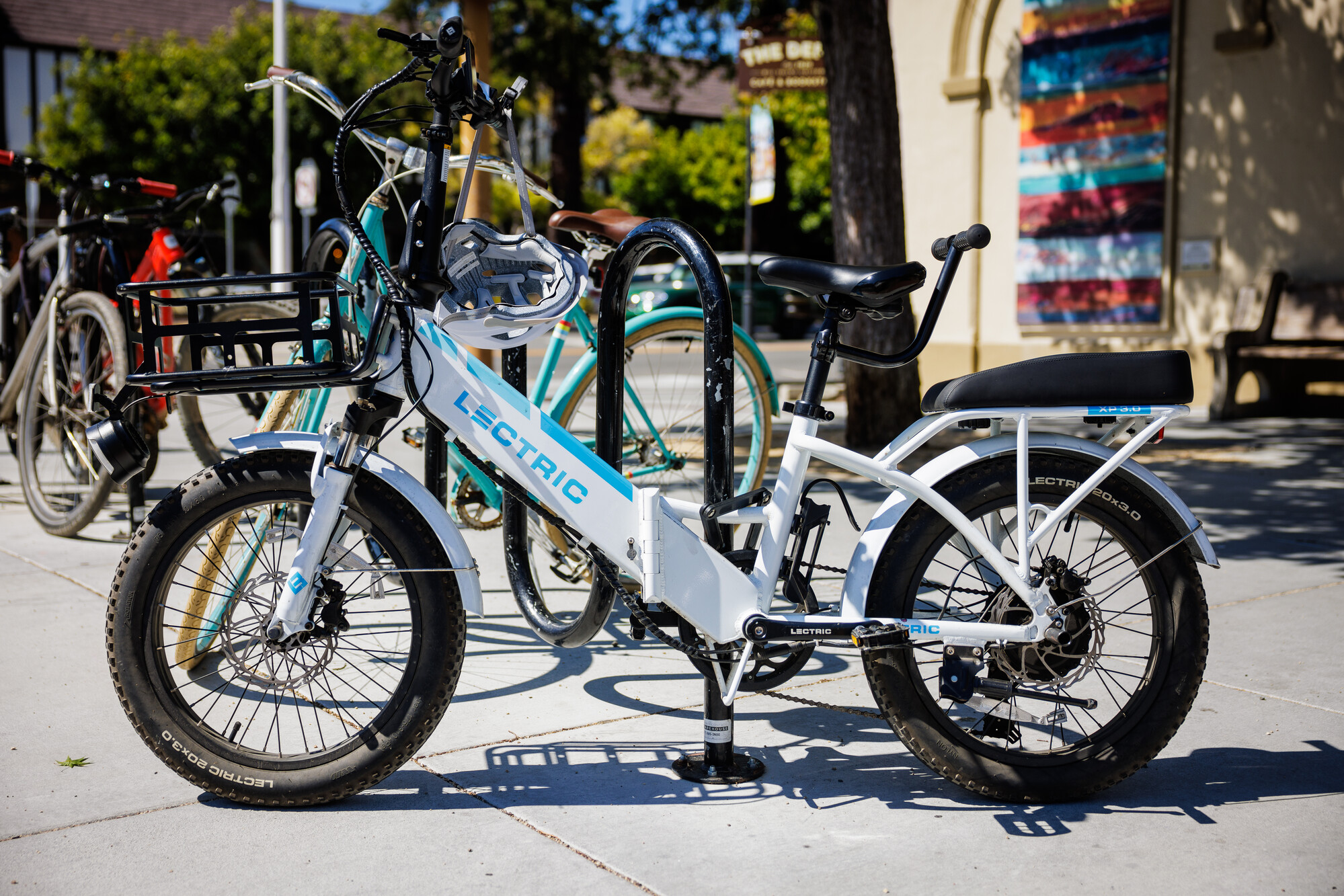
"attachmentsReducer": {
"audio_0": {
"type": "attachments",
"id": "audio_0",
"imgSizes": {
"kqedFullSize": {
"file": "https://ww2.kqed.org/news/wp-content/themes/KQED-unified/img/audio_bgs/background0.jpg"
}
}
},
"audio_1": {
"type": "attachments",
"id": "audio_1",
"imgSizes": {
"kqedFullSize": {
"file": "https://ww2.kqed.org/news/wp-content/themes/KQED-unified/img/audio_bgs/background1.jpg"
}
}
},
"audio_2": {
"type": "attachments",
"id": "audio_2",
"imgSizes": {
"kqedFullSize": {
"file": "https://ww2.kqed.org/news/wp-content/themes/KQED-unified/img/audio_bgs/background2.jpg"
}
}
},
"audio_3": {
"type": "attachments",
"id": "audio_3",
"imgSizes": {
"kqedFullSize": {
"file": "https://ww2.kqed.org/news/wp-content/themes/KQED-unified/img/audio_bgs/background3.jpg"
}
}
},
"audio_4": {
"type": "attachments",
"id": "audio_4",
"imgSizes": {
"kqedFullSize": {
"file": "https://ww2.kqed.org/news/wp-content/themes/KQED-unified/img/audio_bgs/background4.jpg"
}
}
},
"placeholder": {
"type": "attachments",
"id": "placeholder",
"imgSizes": {
"thumbnail": {
"file": "https://cdn.kqed.org/wp-content/uploads/2024/12/KQED-Default-Image-816638274-2000x1333-1-160x107.jpg",
"width": 160,
"height": 107,
"mimeType": "image/jpeg"
},
"medium": {
"file": "https://cdn.kqed.org/wp-content/uploads/2024/12/KQED-Default-Image-816638274-2000x1333-1-800x533.jpg",
"width": 800,
"height": 533,
"mimeType": "image/jpeg"
},
"medium_large": {
"file": "https://cdn.kqed.org/wp-content/uploads/2024/12/KQED-Default-Image-816638274-2000x1333-1-768x512.jpg",
"width": 768,
"height": 512,
"mimeType": "image/jpeg"
},
"large": {
"file": "https://cdn.kqed.org/wp-content/uploads/2024/12/KQED-Default-Image-816638274-2000x1333-1-1020x680.jpg",
"width": 1020,
"height": 680,
"mimeType": "image/jpeg"
},
"1536x1536": {
"file": "https://cdn.kqed.org/wp-content/uploads/2024/12/KQED-Default-Image-816638274-2000x1333-1-1536x1024.jpg",
"width": 1536,
"height": 1024,
"mimeType": "image/jpeg"
},
"fd-lrg": {
"file": "https://cdn.kqed.org/wp-content/uploads/2024/12/KQED-Default-Image-816638274-2000x1333-1-1536x1024.jpg",
"width": 1536,
"height": 1024,
"mimeType": "image/jpeg"
},
"fd-med": {
"file": "https://cdn.kqed.org/wp-content/uploads/2024/12/KQED-Default-Image-816638274-2000x1333-1-1020x680.jpg",
"width": 1020,
"height": 680,
"mimeType": "image/jpeg"
},
"fd-sm": {
"file": "https://cdn.kqed.org/wp-content/uploads/2024/12/KQED-Default-Image-816638274-2000x1333-1-800x533.jpg",
"width": 800,
"height": 533,
"mimeType": "image/jpeg"
},
"post-thumbnail": {
"file": "https://cdn.kqed.org/wp-content/uploads/2024/12/KQED-Default-Image-816638274-2000x1333-1-672x372.jpg",
"width": 672,
"height": 372,
"mimeType": "image/jpeg"
},
"twentyfourteen-full-width": {
"file": "https://cdn.kqed.org/wp-content/uploads/2024/12/KQED-Default-Image-816638274-2000x1333-1-1038x576.jpg",
"width": 1038,
"height": 576,
"mimeType": "image/jpeg"
},
"xxsmall": {
"file": "https://cdn.kqed.org/wp-content/uploads/2024/12/KQED-Default-Image-816638274-2000x1333-1-160x107.jpg",
"width": 160,
"height": 107,
"mimeType": "image/jpeg"
},
"xsmall": {
"file": "https://cdn.kqed.org/wp-content/uploads/2024/12/KQED-Default-Image-816638274-2000x1333-1-672x372.jpg",
"width": 672,
"height": 372,
"mimeType": "image/jpeg"
},
"small": {
"file": "https://cdn.kqed.org/wp-content/uploads/2024/12/KQED-Default-Image-816638274-2000x1333-1-672x372.jpg",
"width": 672,
"height": 372,
"mimeType": "image/jpeg"
},
"xlarge": {
"file": "https://cdn.kqed.org/wp-content/uploads/2024/12/KQED-Default-Image-816638274-2000x1333-1-1020x680.jpg",
"width": 1020,
"height": 680,
"mimeType": "image/jpeg"
},
"full-width": {
"file": "https://cdn.kqed.org/wp-content/uploads/2024/12/KQED-Default-Image-816638274-2000x1333-1-1920x1280.jpg",
"width": 1920,
"height": 1280,
"mimeType": "image/jpeg"
},
"guest-author-32": {
"file": "https://cdn.kqed.org/wp-content/uploads/2025/01/KQED-Default-Image-816638274-1333x1333-1-160x160.jpg",
"width": 32,
"height": 32,
"mimeType": "image/jpeg"
},
"guest-author-50": {
"file": "https://cdn.kqed.org/wp-content/uploads/2025/01/KQED-Default-Image-816638274-1333x1333-1-160x160.jpg",
"width": 50,
"height": 50,
"mimeType": "image/jpeg"
},
"guest-author-64": {
"file": "https://cdn.kqed.org/wp-content/uploads/2025/01/KQED-Default-Image-816638274-1333x1333-1-160x160.jpg",
"width": 64,
"height": 64,
"mimeType": "image/jpeg"
},
"guest-author-96": {
"file": "https://cdn.kqed.org/wp-content/uploads/2025/01/KQED-Default-Image-816638274-1333x1333-1-160x160.jpg",
"width": 96,
"height": 96,
"mimeType": "image/jpeg"
},
"guest-author-128": {
"file": "https://cdn.kqed.org/wp-content/uploads/2025/01/KQED-Default-Image-816638274-1333x1333-1-160x160.jpg",
"width": 128,
"height": 128,
"mimeType": "image/jpeg"
},
"detail": {
"file": "https://cdn.kqed.org/wp-content/uploads/2025/01/KQED-Default-Image-816638274-1333x1333-1-160x160.jpg",
"width": 160,
"height": 160,
"mimeType": "image/jpeg"
},
"kqedFullSize": {
"file": "https://cdn.kqed.org/wp-content/uploads/2024/12/KQED-Default-Image-816638274-2000x1333-1.jpg",
"width": 2000,
"height": 1333
}
}
},
"news_12033651": {
"type": "attachments",
"id": "news_12033651",
"meta": {
"index": "attachments_1716263798",
"site": "news",
"id": "12033651",
"found": true
},
"title": "240625-UBERSANJOSE-JG-1 (1)",
"publishDate": 1743204895,
"status": "inherit",
"parent": 12033648,
"modified": 1743204956,
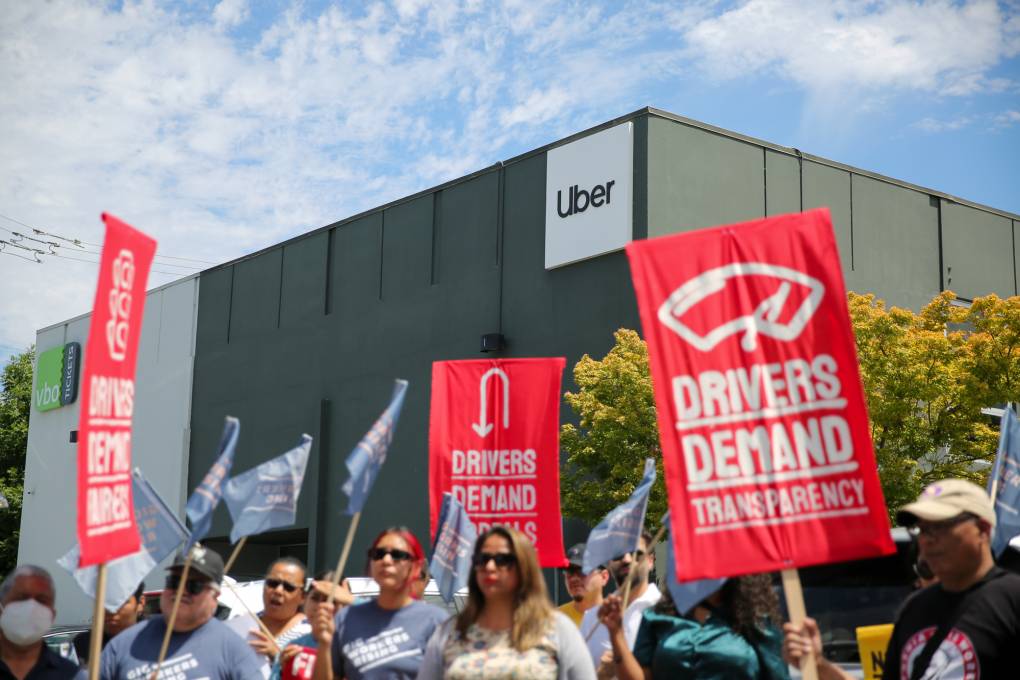
"caption": "Uber drivers and advocates rally outside the company's driver support center in South San José on June 25, 2024. Rideshare Drivers United asked a state court in San Francisco to bar Uber from reaping the benefits of a 2020 gig-worker law. The company called the lawsuit “baseless.” ",
"credit": "Joseph Geha/KQED",
"altTag": null,
"description": null,
"imgSizes": {
"medium": {
"file": "https://cdn.kqed.org/wp-content/uploads/sites/10/2025/03/240625-UBERSANJOSE-JG-1-1-800x533.jpg",
"width": 800,
"height": 533,
"mimeType": "image/jpeg"
},
"large": {
"file": "https://cdn.kqed.org/wp-content/uploads/sites/10/2025/03/240625-UBERSANJOSE-JG-1-1-1020x680.jpg",
"width": 1020,
"height": 680,
"mimeType": "image/jpeg"
},
"thumbnail": {
"file": "https://cdn.kqed.org/wp-content/uploads/sites/10/2025/03/240625-UBERSANJOSE-JG-1-1-160x107.jpg",
"width": 160,
"height": 107,
"mimeType": "image/jpeg"
},
"1536x1536": {
"file": "https://cdn.kqed.org/wp-content/uploads/sites/10/2025/03/240625-UBERSANJOSE-JG-1-1-1536x1024.jpg",
"width": 1536,
"height": 1024,
"mimeType": "image/jpeg"
},
"post-thumbnail": {
"file": "https://cdn.kqed.org/wp-content/uploads/sites/10/2025/03/240625-UBERSANJOSE-JG-1-1-672x372.jpg",
"width": 672,
"height": 372,
"mimeType": "image/jpeg"
},
"twentyfourteen-full-width": {
"file": "https://cdn.kqed.org/wp-content/uploads/sites/10/2025/03/240625-UBERSANJOSE-JG-1-1-1038x576.jpg",
"width": 1038,
"height": 576,
"mimeType": "image/jpeg"
},
"full-width": {
"file": "https://cdn.kqed.org/wp-content/uploads/sites/10/2025/03/240625-UBERSANJOSE-JG-1-1-1920x1280.jpg",
"width": 1920,
"height": 1280,
"mimeType": "image/jpeg"
},
"kqedFullSize": {
"file": "https://cdn.kqed.org/wp-content/uploads/sites/10/2025/03/240625-UBERSANJOSE-JG-1-1.jpg",
"width": 2000,
"height": 1333
}
},
"isLoading": false,
"fetchFailed": false
},
"news_12080559": {
"type": "attachments",
"id": "news_12080559",
"meta": {
"index": "attachments_1716263798",
"site": "news",
"id": "12080559",
"found": true
},
"title": "041826-I80Closure-JY-13",
"publishDate": 1776625760,
"status": "inherit",
"parent": 12080542,
"modified": 1776707566,
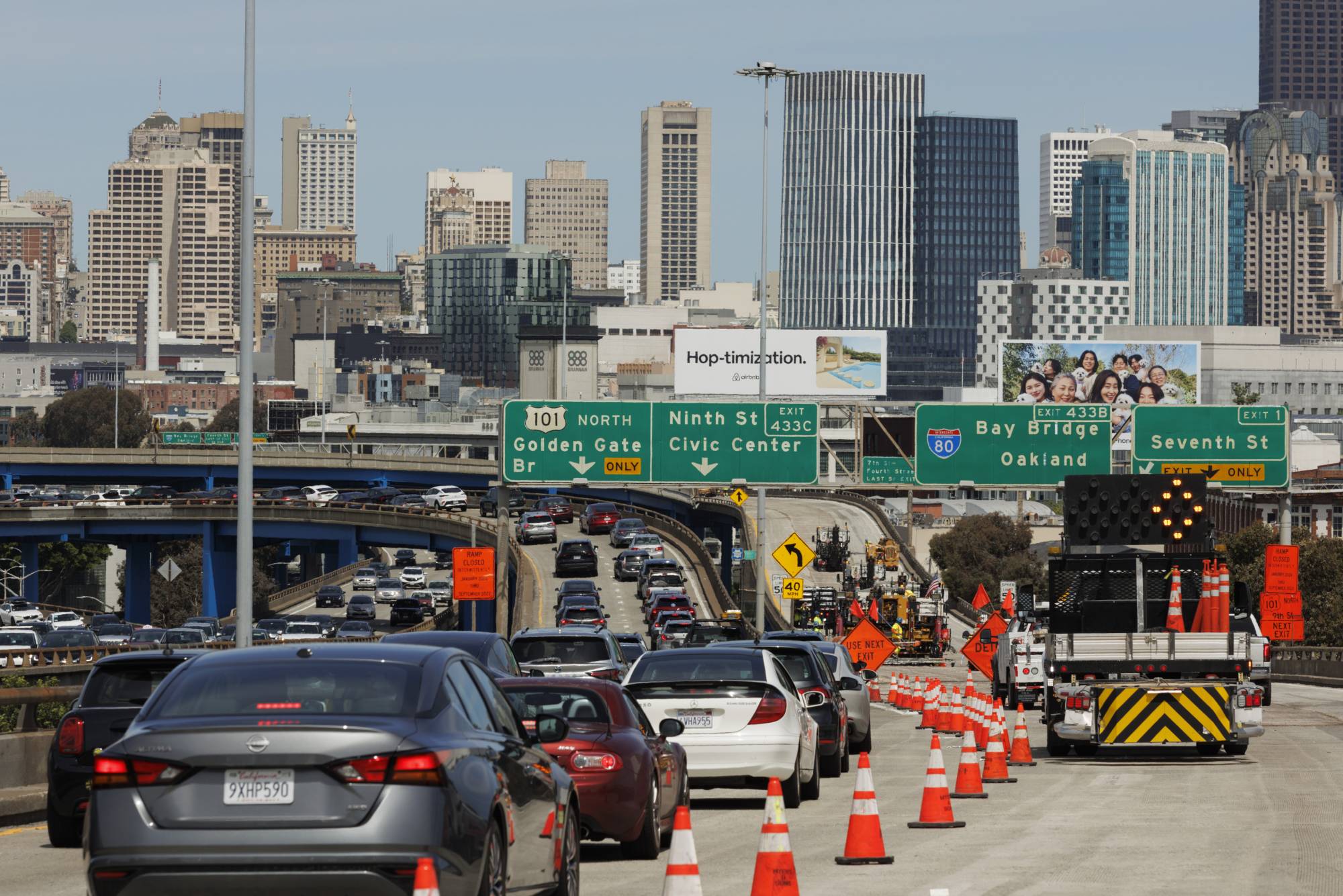
"caption": "Traffic is rerouted from I-80 eastbound to U.S. 101 as Caltrans performs construction in San Francisco on Saturday, April 18, 2026. Throughout the weekend, Caltrans is repairing viaducts and performing necessary repairs, prompting a stretch of I-80 to be closed until early Monday morning.",
"credit": "Juliana Yamada for KQED",
"altTag": null,
"description": null,
"imgSizes": {
"medium": {
"file": "https://cdn.kqed.org/wp-content/uploads/sites/10/2026/04/041826-I80Closure-JY-13-2000x1335.jpg",
"width": 2000,
"height": 1335,
"mimeType": "image/jpeg"
},
"large": {
"file": "https://cdn.kqed.org/wp-content/uploads/sites/10/2026/04/041826-I80Closure-JY-13-2000x1335.jpg",
"width": 2000,
"height": 1335,
"mimeType": "image/jpeg"
},
"thumbnail": {
"file": "https://cdn.kqed.org/wp-content/uploads/sites/10/2026/04/041826-I80Closure-JY-13-160x107.jpg",
"width": 160,
"height": 107,
"mimeType": "image/jpeg"
},
"1536x1536": {
"file": "https://cdn.kqed.org/wp-content/uploads/sites/10/2026/04/041826-I80Closure-JY-13-1536x1025.jpg",
"width": 1536,
"height": 1025,
"mimeType": "image/jpeg"
},
"2048x2048": {
"file": "https://cdn.kqed.org/wp-content/uploads/sites/10/2026/04/041826-I80Closure-JY-13-2048x1367.jpg",
"width": 2048,
"height": 1367,
"mimeType": "image/jpeg"
},
"post-thumbnail": {
"file": "https://cdn.kqed.org/wp-content/uploads/sites/10/2026/04/041826-I80Closure-JY-13-672x372.jpg",
"width": 672,
"height": 372,
"mimeType": "image/jpeg"
},
"twentyfourteen-full-width": {
"file": "https://cdn.kqed.org/wp-content/uploads/sites/10/2026/04/041826-I80Closure-JY-13-1038x576.jpg",
"width": 1038,
"height": 576,
"mimeType": "image/jpeg"
},
"full-width": {
"file": "https://cdn.kqed.org/wp-content/uploads/sites/10/2026/04/041826-I80Closure-JY-13-2000x1335.jpg",
"width": 2000,
"height": 1335,
"mimeType": "image/jpeg"
},
"npr-cds-wide": {
"file": "https://cdn.kqed.org/wp-content/uploads/sites/10/2026/04/041826-I80Closure-JY-13-1200x675.jpg",
"width": 1200,
"height": 675,
"mimeType": "image/jpeg"
},
"npr-cds-square": {
"file": "https://cdn.kqed.org/wp-content/uploads/sites/10/2026/04/041826-I80Closure-JY-13-600x600.jpg",
"width": 600,
"height": 600,
"mimeType": "image/jpeg"
},
"kqedFullSize": {
"file": "https://cdn.kqed.org/wp-content/uploads/sites/10/2026/04/041826-I80Closure-JY-13-scaled.jpg",
"width": 2560,
"height": 1709
}
},
"isLoading": false,
"fetchFailed": false
},
"news_12080360": {
"type": "attachments",
"id": "news_12080360",
"meta": {
"index": "attachments_1716263798",
"site": "news",
"id": "12080360",
"found": true
},
"title": "260416-hit and run victim-01-KQED",
"publishDate": 1776383933,
"status": "inherit",
"parent": 0,
"modified": 1776383953,
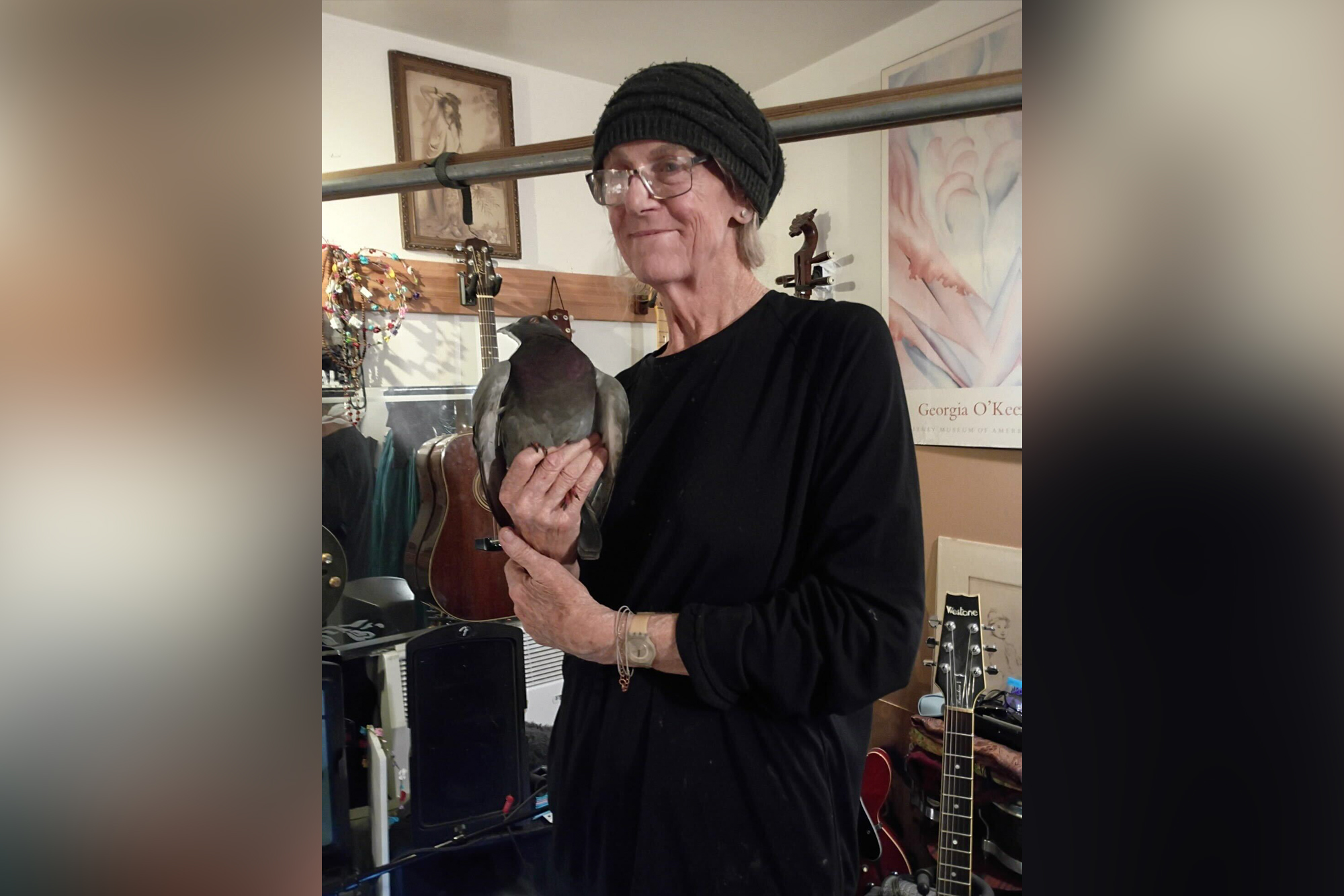
"caption": "Dannielle Spillman, 74, cares for a bird that flew into her apartment. ",
"credit": "Courtesy of Derrick Guerra",
"altTag": null,
"description": null,
"imgSizes": {
"thumbnail": {
"file": "https://cdn.kqed.org/wp-content/uploads/sites/10/2026/04/260416-hit-and-run-victim-01-KQED-160x107.jpg",
"width": 160,
"height": 107,
"mimeType": "image/jpeg"
},
"1536x1536": {
"file": "https://cdn.kqed.org/wp-content/uploads/sites/10/2026/04/260416-hit-and-run-victim-01-KQED-1536x1025.jpg",
"width": 1536,
"height": 1025,
"mimeType": "image/jpeg"
},
"post-thumbnail": {
"file": "https://cdn.kqed.org/wp-content/uploads/sites/10/2026/04/260416-hit-and-run-victim-01-KQED-672x372.jpg",
"width": 672,
"height": 372,
"mimeType": "image/jpeg"
},
"twentyfourteen-full-width": {
"file": "https://cdn.kqed.org/wp-content/uploads/sites/10/2026/04/260416-hit-and-run-victim-01-KQED-1038x576.jpg",
"width": 1038,
"height": 576,
"mimeType": "image/jpeg"
},
"npr-cds-wide": {
"file": "https://cdn.kqed.org/wp-content/uploads/sites/10/2026/04/260416-hit-and-run-victim-01-KQED-1200x675.jpg",
"width": 1200,
"height": 675,
"mimeType": "image/jpeg"
},
"npr-cds-square": {
"file": "https://cdn.kqed.org/wp-content/uploads/sites/10/2026/04/260416-hit-and-run-victim-01-KQED-600x600.jpg",
"width": 600,
"height": 600,
"mimeType": "image/jpeg"
},
"kqedFullSize": {
"file": "https://cdn.kqed.org/wp-content/uploads/sites/10/2026/04/260416-hit-and-run-victim-01-KQED.jpg",
"width": 2000,
"height": 1334
}
},
"isLoading": false,
"fetchFailed": false
},
"news_12006405": {
"type": "attachments",
"id": "news_12006405",
"meta": {
"index": "attachments_1716263798",
"site": "news",
"id": "12006405",
"found": true
},
"title": "A BART train stops at the Montgomery Station in San Francisco on Jan. 11, 2024.",
"publishDate": 1727294828,
"status": "inherit",
"parent": 12006402,
"modified": 1727294839,
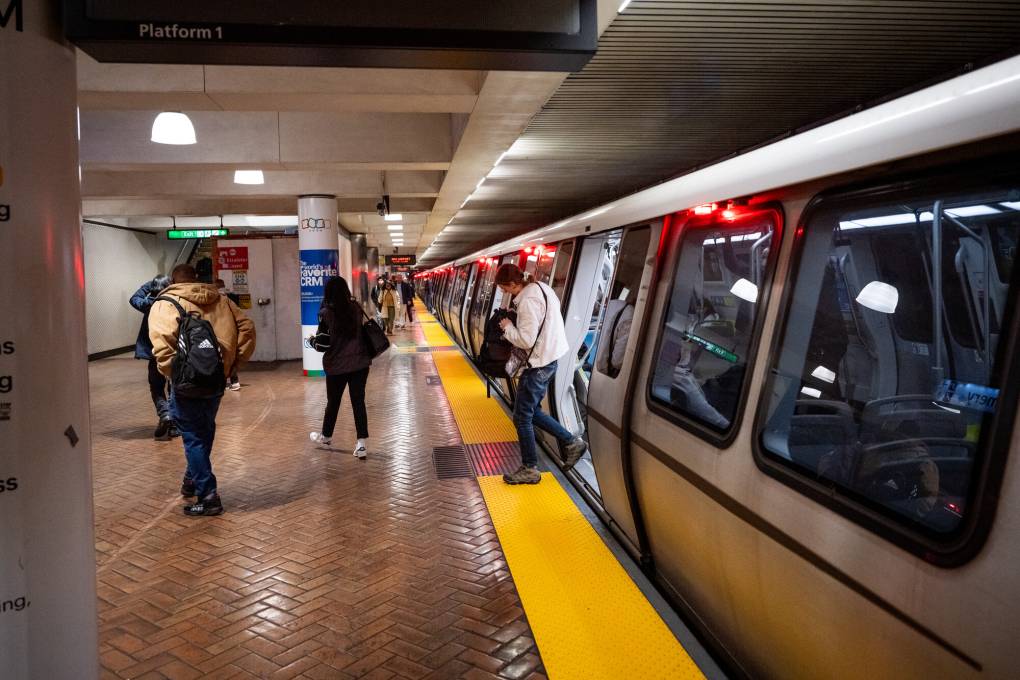
"caption": "A BART train stops at the Montgomery Station in San Francisco on Jan. 11, 2024.",
"credit": "Beth LaBerge/KQED",
"altTag": null,
"description": null,
"imgSizes": {
"medium": {
"file": "https://cdn.kqed.org/wp-content/uploads/sites/10/2024/09/240111-TransitFile-11-BL_qed-800x533.jpg",
"width": 800,
"height": 533,
"mimeType": "image/jpeg"
},
"large": {
"file": "https://cdn.kqed.org/wp-content/uploads/sites/10/2024/09/240111-TransitFile-11-BL_qed-1020x680.jpg",
"width": 1020,
"height": 680,
"mimeType": "image/jpeg"
},
"thumbnail": {
"file": "https://cdn.kqed.org/wp-content/uploads/sites/10/2024/09/240111-TransitFile-11-BL_qed-160x107.jpg",
"width": 160,
"height": 107,
"mimeType": "image/jpeg"
},
"1536x1536": {
"file": "https://cdn.kqed.org/wp-content/uploads/sites/10/2024/09/240111-TransitFile-11-BL_qed-1536x1024.jpg",
"width": 1536,
"height": 1024,
"mimeType": "image/jpeg"
},
"post-thumbnail": {
"file": "https://cdn.kqed.org/wp-content/uploads/sites/10/2024/09/240111-TransitFile-11-BL_qed-672x372.jpg",
"width": 672,
"height": 372,
"mimeType": "image/jpeg"
},
"twentyfourteen-full-width": {
"file": "https://cdn.kqed.org/wp-content/uploads/sites/10/2024/09/240111-TransitFile-11-BL_qed-1038x576.jpg",
"width": 1038,
"height": 576,
"mimeType": "image/jpeg"
},
"full-width": {
"file": "https://cdn.kqed.org/wp-content/uploads/sites/10/2024/09/240111-TransitFile-11-BL_qed-1920x1280.jpg",
"width": 1920,
"height": 1280,
"mimeType": "image/jpeg"
},
"kqedFullSize": {
"file": "https://cdn.kqed.org/wp-content/uploads/sites/10/2024/09/240111-TransitFile-11-BL_qed.jpg",
"width": 2000,
"height": 1333
}
},
"isLoading": false,
"fetchFailed": false
},
"news_12080244": {
"type": "attachments",
"id": "news_12080244",
"meta": {
"index": "attachments_1716263798",
"site": "news",
"id": "12080244",
"found": true
},
"title": "260416-Central Freeway History-SFPL-01-KQED",
"publishDate": 1776360471,
"status": "inherit",
"parent": 0,
"modified": 1776360501,
"caption": "Central Freeway demolition at Hayes Street on Dec. 9, 1991.",
"credit": "Courtesy of Robert Durden Color Slide Collection, SAN FRANCISCO HISTORY CENTER, SAN FRANCISCO PUBLIC LIBRARY",
"altTag": null,
"description": null,
"imgSizes": {
"thumbnail": {
"file": "https://cdn.kqed.org/wp-content/uploads/sites/10/2026/04/260416-Central-Freeway-History-SFPL-01-KQED-160x109.jpg",
"width": 160,
"height": 109,
"mimeType": "image/jpeg"
},
"1536x1536": {
"file": "https://cdn.kqed.org/wp-content/uploads/sites/10/2026/04/260416-Central-Freeway-History-SFPL-01-KQED-1536x1043.jpg",
"width": 1536,
"height": 1043,
"mimeType": "image/jpeg"
},
"post-thumbnail": {
"file": "https://cdn.kqed.org/wp-content/uploads/sites/10/2026/04/260416-Central-Freeway-History-SFPL-01-KQED-672x372.jpg",
"width": 672,
"height": 372,
"mimeType": "image/jpeg"
},
"twentyfourteen-full-width": {
"file": "https://cdn.kqed.org/wp-content/uploads/sites/10/2026/04/260416-Central-Freeway-History-SFPL-01-KQED-1038x576.jpg",
"width": 1038,
"height": 576,
"mimeType": "image/jpeg"
},
"npr-cds-wide": {
"file": "https://cdn.kqed.org/wp-content/uploads/sites/10/2026/04/260416-Central-Freeway-History-SFPL-01-KQED-1200x675.jpg",
"width": 1200,
"height": 675,
"mimeType": "image/jpeg"
},
"npr-cds-square": {
"file": "https://cdn.kqed.org/wp-content/uploads/sites/10/2026/04/260416-Central-Freeway-History-SFPL-01-KQED-600x600.jpg",
"width": 600,
"height": 600,
"mimeType": "image/jpeg"
},
"kqedFullSize": {
"file": "https://cdn.kqed.org/wp-content/uploads/sites/10/2026/04/260416-Central-Freeway-History-SFPL-01-KQED.jpg",
"width": 2000,
"height": 1358
}
},
"isLoading": false,
"fetchFailed": false
},
"news_12079174": {
"type": "attachments",
"id": "news_12079174",
"meta": {
"index": "attachments_1716263798",
"site": "news",
"id": "12079174",
"found": true
},
"title": "260408-I80Closure-01-BL_qed",
"publishDate": 1775691035,
"status": "inherit",
"parent": 12078991,
"modified": 1775778780,
"caption": "A sign for eastbound I-80 and the Bay Bridge on April 8, 2026. Eastbound lanes are scheduled to close from 11 p.m. April 17 to 6 a.m. April 20 for planned construction work, with detours in place during the closure.",
"credit": "Beth LaBerge/KQED",
"altTag": null,
"description": null,
"imgSizes": {
"thumbnail": {
"file": "https://cdn.kqed.org/wp-content/uploads/sites/10/2026/04/260408-I80Closure-01-BL_qed-160x107.jpg",
"width": 160,
"height": 107,
"mimeType": "image/jpeg"
},
"1536x1536": {
"file": "https://cdn.kqed.org/wp-content/uploads/sites/10/2026/04/260408-I80Closure-01-BL_qed-1536x1024.jpg",
"width": 1536,
"height": 1024,
"mimeType": "image/jpeg"
},
"post-thumbnail": {
"file": "https://cdn.kqed.org/wp-content/uploads/sites/10/2026/04/260408-I80Closure-01-BL_qed-672x372.jpg",
"width": 672,
"height": 372,
"mimeType": "image/jpeg"
},
"twentyfourteen-full-width": {
"file": "https://cdn.kqed.org/wp-content/uploads/sites/10/2026/04/260408-I80Closure-01-BL_qed-1038x576.jpg",
"width": 1038,
"height": 576,
"mimeType": "image/jpeg"
},
"npr-cds-wide": {
"file": "https://cdn.kqed.org/wp-content/uploads/sites/10/2026/04/260408-I80Closure-01-BL_qed-1200x675.jpg",
"width": 1200,
"height": 675,
"mimeType": "image/jpeg"
},
"npr-cds-square": {
"file": "https://cdn.kqed.org/wp-content/uploads/sites/10/2026/04/260408-I80Closure-01-BL_qed-600x600.jpg",
"width": 600,
"height": 600,
"mimeType": "image/jpeg"
},
"kqedFullSize": {
"file": "https://cdn.kqed.org/wp-content/uploads/sites/10/2026/04/260408-I80Closure-01-BL_qed.jpg",
"width": 2000,
"height": 1333
}
},
"isLoading": false,
"fetchFailed": false
},
"news_12079178": {
"type": "attachments",
"id": "news_12079178",
"meta": {
"index": "attachments_1716263798",
"site": "news",
"id": "12079178",
"found": true
},
"title": "260408-I80Closure-11-BL_qed",
"publishDate": 1775691060,
"status": "inherit",
"parent": 12079845,
"modified": 1776359876,
"caption": "A sign announces a closure on I-80 on April 8, 2026. Eastbound lanes are scheduled to close from 11 p.m. April 17 to 6 a.m. April 20 for planned construction work, with detours in place during the closure.",
"credit": "Beth LaBerge/KQED",
"altTag": null,
"description": null,
"imgSizes": {
"thumbnail": {
"file": "https://cdn.kqed.org/wp-content/uploads/sites/10/2026/04/260408-I80Closure-11-BL_qed-160x107.jpg",
"width": 160,
"height": 107,
"mimeType": "image/jpeg"
},
"1536x1536": {
"file": "https://cdn.kqed.org/wp-content/uploads/sites/10/2026/04/260408-I80Closure-11-BL_qed-1536x1024.jpg",
"width": 1536,
"height": 1024,
"mimeType": "image/jpeg"
},
"post-thumbnail": {
"file": "https://cdn.kqed.org/wp-content/uploads/sites/10/2026/04/260408-I80Closure-11-BL_qed-672x372.jpg",
"width": 672,
"height": 372,
"mimeType": "image/jpeg"
},
"twentyfourteen-full-width": {
"file": "https://cdn.kqed.org/wp-content/uploads/sites/10/2026/04/260408-I80Closure-11-BL_qed-1038x576.jpg",
"width": 1038,
"height": 576,
"mimeType": "image/jpeg"
},
"npr-cds-wide": {
"file": "https://cdn.kqed.org/wp-content/uploads/sites/10/2026/04/260408-I80Closure-11-BL_qed-1200x675.jpg",
"width": 1200,
"height": 675,
"mimeType": "image/jpeg"
},
"npr-cds-square": {
"file": "https://cdn.kqed.org/wp-content/uploads/sites/10/2026/04/260408-I80Closure-11-BL_qed-600x600.jpg",
"width": 600,
"height": 600,
"mimeType": "image/jpeg"
},
"kqedFullSize": {
"file": "https://cdn.kqed.org/wp-content/uploads/sites/10/2026/04/260408-I80Closure-11-BL_qed.jpg",
"width": 1999,
"height": 1333
}
},
"isLoading": false,
"fetchFailed": false
},
"news_12018119": {
"type": "attachments",
"id": "news_12018119",
"meta": {
"index": "attachments_1716263798",
"site": "news",
"id": "12018119",
"found": true
},
"title": "240412-OAKAirport-007-BL_qed (1)",
"publishDate": 1734112139,
"status": "inherit",
"parent": 12018113,
"modified": 1734112156,
"caption": "Signs direct passengers to terminals at Oakland International Airport in Oakland on April 12, 2024.",
"credit": "Beth LaBerge/KQED",
"altTag": null,
"description": null,
"imgSizes": {
"medium": {
"file": "https://cdn.kqed.org/wp-content/uploads/sites/10/2024/12/240412-OAKAirport-007-BL_qed-1-800x533.jpg",
"width": 800,
"height": 533,
"mimeType": "image/jpeg"
},
"large": {
"file": "https://cdn.kqed.org/wp-content/uploads/sites/10/2024/12/240412-OAKAirport-007-BL_qed-1-1020x680.jpg",
"width": 1020,
"height": 680,
"mimeType": "image/jpeg"
},
"thumbnail": {
"file": "https://cdn.kqed.org/wp-content/uploads/sites/10/2024/12/240412-OAKAirport-007-BL_qed-1-160x107.jpg",
"width": 160,
"height": 107,
"mimeType": "image/jpeg"
},
"1536x1536": {
"file": "https://cdn.kqed.org/wp-content/uploads/sites/10/2024/12/240412-OAKAirport-007-BL_qed-1-1536x1024.jpg",
"width": 1536,
"height": 1024,
"mimeType": "image/jpeg"
},
"post-thumbnail": {
"file": "https://cdn.kqed.org/wp-content/uploads/sites/10/2024/12/240412-OAKAirport-007-BL_qed-1-672x372.jpg",
"width": 672,
"height": 372,
"mimeType": "image/jpeg"
},
"twentyfourteen-full-width": {
"file": "https://cdn.kqed.org/wp-content/uploads/sites/10/2024/12/240412-OAKAirport-007-BL_qed-1-1038x576.jpg",
"width": 1038,
"height": 576,
"mimeType": "image/jpeg"
},
"full-width": {
"file": "https://cdn.kqed.org/wp-content/uploads/sites/10/2024/12/240412-OAKAirport-007-BL_qed-1-1920x1280.jpg",
"width": 1920,
"height": 1280,
"mimeType": "image/jpeg"
},
"kqedFullSize": {
"file": "https://cdn.kqed.org/wp-content/uploads/sites/10/2024/12/240412-OAKAirport-007-BL_qed-1.jpg",
"width": 1999,
"height": 1333
}
},
"isLoading": false,
"fetchFailed": false
},
"news_11794881": {
"type": "attachments",
"id": "news_11794881",
"meta": {
"index": "attachments_1716263798",
"site": "news",
"id": "11794881",
"found": true
},
"parent": 11794871,
"imgSizes": {
"apple_news_ca_landscape_5_5": {
"file": "https://ww2.kqed.org/app/uploads/sites/10/2020/01/marketstreetscooter-1044x783.jpg",
"width": 1044,
"mimeType": "image/jpeg",
"height": 783
},
"apple_news_ca_square_4_0": {
"file": "https://ww2.kqed.org/app/uploads/sites/10/2020/01/marketstreetscooter-470x470.jpg",
"width": 470,
"mimeType": "image/jpeg",
"height": 470
},
"twentyfourteen-full-width": {
"file": "https://ww2.kqed.org/app/uploads/sites/10/2020/01/marketstreetscooter-1038x576.jpg",
"width": 1038,
"mimeType": "image/jpeg",
"height": 576
},
"thumbnail": {
"file": "https://ww2.kqed.org/app/uploads/sites/10/2020/01/marketstreetscooter-160x105.jpg",
"width": 160,
"mimeType": "image/jpeg",
"height": 105
},
"post-thumbnail": {
"file": "https://ww2.kqed.org/app/uploads/sites/10/2020/01/marketstreetscooter-672x372.jpg",
"width": 672,
"mimeType": "image/jpeg",
"height": 372
},
"kqedFullSize": {
"file": "https://ww2.kqed.org/app/uploads/sites/10/2020/01/marketstreetscooter.jpg",
"width": 1920,
"height": 1260
},
"apple_news_ca_landscape_4_7": {
"file": "https://ww2.kqed.org/app/uploads/sites/10/2020/01/marketstreetscooter-632x474.jpg",
"width": 632,
"mimeType": "image/jpeg",
"height": 474
},
"large": {
"file": "https://ww2.kqed.org/app/uploads/sites/10/2020/01/marketstreetscooter-1020x669.jpg",
"width": 1020,
"mimeType": "image/jpeg",
"height": 669
},
"complete_open_graph": {
"file": "https://ww2.kqed.org/app/uploads/sites/10/2020/01/marketstreetscooter-1200x788.jpg",
"width": 1200,
"mimeType": "image/jpeg",
"height": 788
},
"apple_news_ca_landscape_4_0": {
"file": "https://ww2.kqed.org/app/uploads/sites/10/2020/01/marketstreetscooter-536x402.jpg",
"width": 536,
"mimeType": "image/jpeg",
"height": 402
},
"apple_news_ca_portrait_12_9": {
"file": "https://ww2.kqed.org/app/uploads/sites/10/2020/01/marketstreetscooter-1122x1260.jpg",
"width": 1122,
"mimeType": "image/jpeg",
"height": 1260
},
"medium": {
"file": "https://ww2.kqed.org/app/uploads/sites/10/2020/01/marketstreetscooter-800x525.jpg",
"width": 800,
"mimeType": "image/jpeg",
"height": 525
},
"apple_news_ca_portrait_4_0": {
"file": "https://ww2.kqed.org/app/uploads/sites/10/2020/01/marketstreetscooter-354x472.jpg",
"width": 354,
"mimeType": "image/jpeg",
"height": 472
},
"apple_news_ca_portrait_9_7": {
"file": "https://ww2.kqed.org/app/uploads/sites/10/2020/01/marketstreetscooter-840x1120.jpg",
"width": 840,
"mimeType": "image/jpeg",
"height": 1120
},
"apple_news_ca_landscape_12_9": {
"file": "https://ww2.kqed.org/app/uploads/sites/10/2020/01/marketstreetscooter-1832x1260.jpg",
"width": 1832,
"mimeType": "image/jpeg",
"height": 1260
},
"apple_news_ca_square_9_7": {
"file": "https://ww2.kqed.org/app/uploads/sites/10/2020/01/marketstreetscooter-1104x1104.jpg",
"width": 1104,
"mimeType": "image/jpeg",
"height": 1104
},
"apple_news_ca_portrait_4_7": {
"file": "https://ww2.kqed.org/app/uploads/sites/10/2020/01/marketstreetscooter-414x552.jpg",
"width": 414,
"mimeType": "image/jpeg",
"height": 552
},
"apple_news_ca_square_12_9": {
"file": "https://ww2.kqed.org/app/uploads/sites/10/2020/01/marketstreetscooter-1472x1260.jpg",
"width": 1472,
"mimeType": "image/jpeg",
"height": 1260
},
"apple_news_ca_portrait_5_5": {
"file": "https://ww2.kqed.org/app/uploads/sites/10/2020/01/marketstreetscooter-687x916.jpg",
"width": 687,
"mimeType": "image/jpeg",
"height": 916
},
"full-width": {
"file": "https://ww2.kqed.org/app/uploads/sites/10/2020/01/marketstreetscooter-1920x1260.jpg",
"width": 1920,
"mimeType": "image/jpeg",
"height": 1260
},
"apple_news_ca_square_4_7": {
"file": "https://ww2.kqed.org/app/uploads/sites/10/2020/01/marketstreetscooter-550x550.jpg",
"width": 550,
"mimeType": "image/jpeg",
"height": 550
},
"apple_news_ca_landscape_9_7": {
"file": "https://ww2.kqed.org/app/uploads/sites/10/2020/01/marketstreetscooter-1376x1032.jpg",
"width": 1376,
"mimeType": "image/jpeg",
"height": 1032
},
"apple_news_ca_square_5_5": {
"file": "https://ww2.kqed.org/app/uploads/sites/10/2020/01/marketstreetscooter-912x912.jpg",
"width": 912,
"mimeType": "image/jpeg",
"height": 912
}
},
"publishDate": 1578525711,
"modified": 1578525845,
"caption": "An e-scooter rider on San Francisco's Market Street in April 2018, soon after the mini-vehicles were first deployed in the city.",
"description": null,
"title": "E-scooters-San Francisco",
"credit": "Justin Sullivan/Getty Images",
"status": "inherit",
"isLoading": false,
"fetchFailed": false
},
"news_12078864": {
"type": "attachments",
"id": "news_12078864",
"meta": {
"index": "attachments_1716263798",
"site": "news",
"id": "12078864",
"found": true
},
"title": "An e-bike parked in Mill Valley on July 24, 2025.",
"publishDate": 1775512916,
"status": "inherit",
"parent": 12078862,
"modified": 1775512931,
"caption": "An e-bike parked in Mill Valley on July 24, 2025.",
"credit": "Martin do Nascimento/KQED",
"altTag": null,
"description": null,
"imgSizes": {
"thumbnail": {
"file": "https://cdn.kqed.org/wp-content/uploads/sites/10/2026/04/250724-MARIN-EBIKES-MD-06_qed-160x107.jpg",
"width": 160,
"height": 107,
"mimeType": "image/jpeg"
},
"1536x1536": {
"file": "https://cdn.kqed.org/wp-content/uploads/sites/10/2026/04/250724-MARIN-EBIKES-MD-06_qed-1536x1024.jpg",
"width": 1536,
"height": 1024,
"mimeType": "image/jpeg"
},
"post-thumbnail": {
"file": "https://cdn.kqed.org/wp-content/uploads/sites/10/2026/04/250724-MARIN-EBIKES-MD-06_qed-672x372.jpg",
"width": 672,
"height": 372,
"mimeType": "image/jpeg"
},
"twentyfourteen-full-width": {
"file": "https://cdn.kqed.org/wp-content/uploads/sites/10/2026/04/250724-MARIN-EBIKES-MD-06_qed-1038x576.jpg",
"width": 1038,
"height": 576,
"mimeType": "image/jpeg"
},
"npr-cds-wide": {
"file": "https://cdn.kqed.org/wp-content/uploads/sites/10/2026/04/250724-MARIN-EBIKES-MD-06_qed-1200x675.jpg",
"width": 1200,
"height": 675,
"mimeType": "image/jpeg"
},
"npr-cds-square": {
"file": "https://cdn.kqed.org/wp-content/uploads/sites/10/2026/04/250724-MARIN-EBIKES-MD-06_qed-600x600.jpg",
"width": 600,
"height": 600,
"mimeType": "image/jpeg"
},
"kqedFullSize": {
"file": "https://cdn.kqed.org/wp-content/uploads/sites/10/2026/04/250724-MARIN-EBIKES-MD-06_qed.jpg",
"width": 1999,
"height": 1333
}
},
"isLoading": false,
"fetchFailed": false
},
"news_12051374": {
"type": "attachments",
"id": "news_12051374",
"meta": {
"index": "attachments_1716263798",
"site": "news",
"id": "12051374",
"found": true
},
"title": "20241204-BART-JY-002_qed",
"publishDate": 1754609699,
"status": "inherit",
"parent": 12051362,
"modified": 1757189961,
"caption": "A BART car approaches the platform at Daly City Station in Daly City, on Dec. 4, 2024.",
"credit": "Juliana Yamada/KQED",
"altTag": null,
"description": null,
"imgSizes": {
"thumbnail": {
"file": "https://cdn.kqed.org/wp-content/uploads/sites/10/2025/08/20241204-BART-JY-002_qed-160x107.jpg",
"width": 160,
"height": 107,
"mimeType": "image/jpeg"
},
"1536x1536": {
"file": "https://cdn.kqed.org/wp-content/uploads/sites/10/2025/08/20241204-BART-JY-002_qed-1536x1024.jpg",
"width": 1536,
"height": 1024,
"mimeType": "image/jpeg"
},
"post-thumbnail": {
"file": "https://cdn.kqed.org/wp-content/uploads/sites/10/2025/08/20241204-BART-JY-002_qed-672x372.jpg",
"width": 672,
"height": 372,
"mimeType": "image/jpeg"
},
"twentyfourteen-full-width": {
"file": "https://cdn.kqed.org/wp-content/uploads/sites/10/2025/08/20241204-BART-JY-002_qed-1038x576.jpg",
"width": 1038,
"height": 576,
"mimeType": "image/jpeg"
},
"kqedFullSize": {
"file": "https://cdn.kqed.org/wp-content/uploads/sites/10/2025/08/20241204-BART-JY-002_qed.jpg",
"width": 2000,
"height": 1333
}
},
"isLoading": false,
"fetchFailed": false
},
"news_12078147": {
"type": "attachments",
"id": "news_12078147",
"meta": {
"index": "attachments_1716263798",
"site": "news",
"id": "12078147",
"found": true
},
"title": "Digital Clipper Card",
"publishDate": 1774978056,
"status": "inherit",
"parent": 12078144,
"modified": 1774978459,
"caption": "A passenger holds a digital Clipper Card up to a fare kiosk at a BART station in Lafayette, California, on March 18, 2026. ",
"credit": "Smith Collection/Gado via Getty Images",
"altTag": null,
"description": null,
"imgSizes": {
"thumbnail": {
"file": "https://cdn.kqed.org/wp-content/uploads/sites/10/2026/03/Clipper2.0Getty-160x107.jpg",
"width": 160,
"height": 107,
"mimeType": "image/jpeg"
},
"1536x1536": {
"file": "https://cdn.kqed.org/wp-content/uploads/sites/10/2026/03/Clipper2.0Getty-1536x1024.jpg",
"width": 1536,
"height": 1024,
"mimeType": "image/jpeg"
},
"post-thumbnail": {
"file": "https://cdn.kqed.org/wp-content/uploads/sites/10/2026/03/Clipper2.0Getty-672x372.jpg",
"width": 672,
"height": 372,
"mimeType": "image/jpeg"
},
"twentyfourteen-full-width": {
"file": "https://cdn.kqed.org/wp-content/uploads/sites/10/2026/03/Clipper2.0Getty-1038x576.jpg",
"width": 1038,
"height": 576,
"mimeType": "image/jpeg"
},
"npr-cds-wide": {
"file": "https://cdn.kqed.org/wp-content/uploads/sites/10/2026/03/Clipper2.0Getty-1200x675.jpg",
"width": 1200,
"height": 675,
"mimeType": "image/jpeg"
},
"npr-cds-square": {
"file": "https://cdn.kqed.org/wp-content/uploads/sites/10/2026/03/Clipper2.0Getty-600x600.jpg",
"width": 600,
"height": 600,
"mimeType": "image/jpeg"
},
"kqedFullSize": {
"file": "https://cdn.kqed.org/wp-content/uploads/sites/10/2026/03/Clipper2.0Getty.jpg",
"width": 2000,
"height": 1333
}
},
"isLoading": false,
"fetchFailed": false
}
},
"audioPlayerReducer": {
"postId": "stream_live",
"isPaused": true,
"isPlaying": false,
"pfsActive": false,
"pledgeModalIsOpen": true,
"playerDrawerIsOpen": false,
"liveAudioPlayStartedAt": 0,
"liveAudioPlayContext": ""
},
"authorsReducer": {
"ecruzguevarra": {
"type": "authors",
"id": "8654",
"meta": {
"index": "authors_1716337520",
"id": "8654",
"found": true
},
"name": "Ericka Cruz Guevarra",
"firstName": "Ericka",
"lastName": "Cruz Guevarra",
"slug": "ecruzguevarra",
"email": "ecruzguevarra@kqed.org",
"display_author_email": true,
"staff_mastheads": [
"news"
],
"title": "Producer, The Bay Podcast",
"bio": "Ericka Cruz Guevarra is host of \u003ca href=\"https://www.kqed.org/podcasts/thebay\">\u003cem>The Bay\u003c/em>\u003c/a> podcast at KQED. Before host, she was the show’s producer. Her work in that capacity includes a three-part reported series on policing in Vallejo, which won a 2020 excellence in journalism award from the Society of Professional Journalists. Ericka has worked as a breaking news reporter at Oregon Public Broadcasting, helped produce the Code Switch podcast, and was KQED’s inaugural Raul Ramirez Diversity Fund intern. She’s also an alumna of NPR’s Next Generation Radio program. Send her an email if you have strong feelings about whether Fairfield and Suisun City are the Bay. Ericka is represented by SAG-AFTRA.",
"avatar": "https://secure.gravatar.com/avatar/accefc1de4bafc7e234b69bcb9b6f6536c130fd84709bc3069ef11a78787e1bb?s=600&d=blank&r=g",
"twitter": "NotoriousECG",
"bluesky": null,
"facebook": null,
"instagram": null,
"linkedin": null,
"sites": [
{
"site": "arts",
"roles": [
"subscriber"
]
},
{
"site": "news",
"roles": [
"editor",
"manage_categories"
]
},
{
"site": "futureofyou",
"roles": [
"subscriber"
]
},
{
"site": "stateofhealth",
"roles": [
"subscriber"
]
},
{
"site": "science",
"roles": [
"editor"
]
},
{
"site": "forum",
"roles": [
"subscriber"
]
}
],
"headData": {
"title": "Ericka Cruz Guevarra | KQED",
"description": "Producer, The Bay Podcast",
"ogImgSrc": "https://secure.gravatar.com/avatar/accefc1de4bafc7e234b69bcb9b6f6536c130fd84709bc3069ef11a78787e1bb?s=600&d=blank&r=g",
"twImgSrc": "https://secure.gravatar.com/avatar/accefc1de4bafc7e234b69bcb9b6f6536c130fd84709bc3069ef11a78787e1bb?s=600&d=blank&r=g"
},
"isLoading": false,
"link": "/author/ecruzguevarra"
},
"fjhabvala": {
"type": "authors",
"id": "8659",
"meta": {
"index": "authors_1716337520",
"id": "8659",
"found": true
},
"name": "Farida Jhabvala Romero",
"firstName": "Farida",
"lastName": "Jhabvala Romero",
"slug": "fjhabvala",
"email": "fjhabvala@kqed.org",
"display_author_email": true,
"staff_mastheads": [
"news"
],
"title": "KQED Contributor",
"bio": "Farida Jhabvala Romero is a Labor Correspondent for KQED. She previously covered immigration. Farida was \u003ca href=\"https://www.ccnma.org/2022-most-influential-latina-journalists\">named\u003c/a> one of the 10 Most Influential Latina Journalists in California in 2022 by the California Chicano News Media Association. Her work has won awards from the Society of Professional Journalists (Northern California), as well as a national and regional Edward M. Murrow Award for the collaborative reporting projects “Dangerous Air” and “Graying California.” Before joining KQED, Farida worked as a producer at Radio Bilingüe, a national public radio network. Farida earned her master’s degree in journalism from Stanford University.",
"avatar": "https://secure.gravatar.com/avatar/f9f022d4e2609741874222a1e9d41f48fea74011aa7c615eef91d9a50c944ebe?s=600&d=blank&r=g",
"twitter": "FaridaJhabvala",
"bluesky": null,
"facebook": null,
"instagram": null,
"linkedin": "https://www.linkedin.com/in/faridajhabvala/",
"sites": [
{
"site": "news",
"roles": [
"editor"
]
},
{
"site": "stateofhealth",
"roles": [
"author"
]
},
{
"site": "liveblog",
"roles": [
"author"
]
}
],
"headData": {
"title": "Farida Jhabvala Romero | KQED",
"description": "KQED Contributor",
"ogImgSrc": "https://secure.gravatar.com/avatar/f9f022d4e2609741874222a1e9d41f48fea74011aa7c615eef91d9a50c944ebe?s=600&d=blank&r=g",
"twImgSrc": "https://secure.gravatar.com/avatar/f9f022d4e2609741874222a1e9d41f48fea74011aa7c615eef91d9a50c944ebe?s=600&d=blank&r=g"
},
"isLoading": false,
"link": "/author/fjhabvala"
},
"bwatt": {
"type": "authors",
"id": "11238",
"meta": {
"index": "authors_1716337520",
"id": "11238",
"found": true
},
"name": "Brian Watt",
"firstName": "Brian",
"lastName": "Watt",
"slug": "bwatt",
"email": "bwatt@KQED.org",
"display_author_email": false,
"staff_mastheads": [
"news"
],
"title": "Morning News Anchor",
"bio": "Brian Watt is KQED's morning radio news anchor. He joined the KQED News team in April of 2016. Prior to that, he worked as a Reporter for KPCC in Los Angeles and a producer at \u003cem>Marketplace.\u003c/em>\r\n\r\nDuring eight years at KPCC, Brian covered business and economics, and his work won several awards. In 2008, he won the Los Angeles Press Club’s first-place award for Business and Financial Reporting, Broadcast. He’s also received honorable mention and been first runner up for the Press Club’s Radio Journalist of the Year. He won two Golden Mike awards from the Radio and TV News Association of Southern California.\r\n\r\nBrian holds degrees in theater from Yale University and the Sorbonne, and has worked as an actor in France, Italy, Brazil, Hungary and . . . Hollywood. He appeared in a few television shows, including \u003cem>The West Wing, Judging Amy\u003c/em> and \u003cem>The District.\u003c/em>\r\n\r\nEmail: bwatt@KQED.org Twitter: @RadioBWatt",
"avatar": "https://secure.gravatar.com/avatar/55393ff57ed34e2be773ba4789dd6a19?s=600&d=blank&r=g",
"twitter": "@RadioBWatt",
"facebook": null,
"instagram": null,
"linkedin": null,
"sites": [
{
"site": "arts",
"roles": [
"contributor"
]
},
{
"site": "news",
"roles": [
"editor"
]
}
],
"headData": {
"title": "Brian Watt | KQED",
"description": "Morning News Anchor",
"ogImgSrc": "https://secure.gravatar.com/avatar/55393ff57ed34e2be773ba4789dd6a19?s=600&d=blank&r=g",
"twImgSrc": "https://secure.gravatar.com/avatar/55393ff57ed34e2be773ba4789dd6a19?s=600&d=blank&r=g"
},
"isLoading": false,
"link": "/author/bwatt"
},
"ccabreralomeli": {
"type": "authors",
"id": "11708",
"meta": {
"index": "authors_1716337520",
"id": "11708",
"found": true
},
"name": "Carlos Cabrera-Lomelí",
"firstName": "Carlos",
"lastName": "Cabrera-Lomelí",
"slug": "ccabreralomeli",
"email": "ccabreralomeli@KQED.org",
"display_author_email": true,
"staff_mastheads": [
"news"
],
"title": "Community Reporter",
"bio": "Carlos Cabrera-Lomelí is a community reporter with KQED's digital engagement team. He also reports and co-produces for KQED's bilingual news hub KQED en Español. He grew up in San Francisco's Mission District and has previously worked with Univision, 48 Hills and REFORMA in Mexico City.",
"avatar": "https://secure.gravatar.com/avatar/c309be9665e484f887b818c89e273ecc673004f426f36b24d00a4d813a2e0518?s=600&d=blank&r=g",
"twitter": "@LomeliCabrera",
"bluesky": null,
"facebook": null,
"instagram": null,
"linkedin": null,
"sites": [
{
"site": "arts",
"roles": [
"editor"
]
},
{
"site": "news",
"roles": [
"editor"
]
},
{
"site": "about",
"roles": [
"editor"
]
},
{
"site": "science",
"roles": [
"editor"
]
},
{
"site": "perspectives",
"roles": [
"editor"
]
},
{
"site": "elections",
"roles": [
"editor"
]
},
{
"site": "liveblog",
"roles": [
"contributor"
]
}
],
"headData": {
"title": "Carlos Cabrera-Lomelí | KQED",
"description": "Community Reporter",
"ogImgSrc": "https://secure.gravatar.com/avatar/c309be9665e484f887b818c89e273ecc673004f426f36b24d00a4d813a2e0518?s=600&d=blank&r=g",
"twImgSrc": "https://secure.gravatar.com/avatar/c309be9665e484f887b818c89e273ecc673004f426f36b24d00a4d813a2e0518?s=600&d=blank&r=g"
},
"isLoading": false,
"link": "/author/ccabreralomeli"
},
"agonzalez": {
"type": "authors",
"id": "11724",
"meta": {
"index": "authors_1716337520",
"id": "11724",
"found": true
},
"name": "Alexander Gonzalez",
"firstName": "Alexander",
"lastName": "Gonzalez",
"slug": "agonzalez",
"email": "AlexanderGonzalez@KQED.org",
"display_author_email": false,
"staff_mastheads": [
"news"
],
"title": "KQED Contributor",
"bio": null,
"avatar": "https://secure.gravatar.com/avatar/9e291ed34e154df4c662edf858b641d70b4859939bfe40be478408f9dfd057d2?s=600&d=blank&r=g",
"twitter": null,
"bluesky": null,
"facebook": null,
"instagram": null,
"linkedin": null,
"sites": [
{
"site": "arts",
"roles": [
"editor"
]
},
{
"site": "news",
"roles": [
"editor"
]
},
{
"site": "science",
"roles": [
"editor"
]
}
],
"headData": {
"title": "Alexander Gonzalez | KQED",
"description": "KQED Contributor",
"ogImgSrc": "https://secure.gravatar.com/avatar/9e291ed34e154df4c662edf858b641d70b4859939bfe40be478408f9dfd057d2?s=600&d=blank&r=g",
"twImgSrc": "https://secure.gravatar.com/avatar/9e291ed34e154df4c662edf858b641d70b4859939bfe40be478408f9dfd057d2?s=600&d=blank&r=g"
},
"isLoading": false,
"link": "/author/agonzalez"
},
"adahlstromeckman": {
"type": "authors",
"id": "11785",
"meta": {
"index": "authors_1716337520",
"id": "11785",
"found": true
},
"name": "Azul Dahlstrom-Eckman",
"firstName": "Azul",
"lastName": "Dahlstrom-Eckman",
"slug": "adahlstromeckman",
"email": "adahlstrom-eckman@kqed.org",
"display_author_email": true,
"staff_mastheads": [],
"title": "Reporter",
"bio": "Azul is a reporter for KQED focusing on transportation and features. He joined KQED in 2021 as an alumna of KALW's Audio Academy radio journalism training program.",
"avatar": "https://secure.gravatar.com/avatar/9cb750298435add7815a777f55bf1f46845c1386bb8452555c60a7b820b5aba3?s=600&d=blank&r=g",
"twitter": "@zuliemann",
"bluesky": "@azul415.bsky.social",
"facebook": null,
"instagram": null,
"linkedin": null,
"sites": [
{
"site": "arts",
"roles": [
"editor"
]
},
{
"site": "news",
"roles": [
"editor"
]
},
{
"site": "science",
"roles": [
"editor"
]
},
{
"site": "liveblog",
"roles": [
"author"
]
}
],
"headData": {
"title": "Azul Dahlstrom-Eckman | KQED",
"description": "Reporter",
"ogImgSrc": "https://secure.gravatar.com/avatar/9cb750298435add7815a777f55bf1f46845c1386bb8452555c60a7b820b5aba3?s=600&d=blank&r=g",
"twImgSrc": "https://secure.gravatar.com/avatar/9cb750298435add7815a777f55bf1f46845c1386bb8452555c60a7b820b5aba3?s=600&d=blank&r=g"
},
"isLoading": false,
"link": "/author/adahlstromeckman"
},
"wcruz": {
"type": "authors",
"id": "11877",
"meta": {
"index": "authors_1716337520",
"id": "11877",
"found": true
},
"name": "Billy Cruz",
"firstName": "Billy",
"lastName": "Cruz",
"slug": "wcruz",
"email": "wcruz@KQED.org",
"display_author_email": false,
"staff_mastheads": [
"news"
],
"title": null,
"bio": null,
"avatar": "https://secure.gravatar.com/avatar/f19b14c4121ba9ba1e03e99eec83488517a34ef9e0f144abe8f5212c35f37684?s=600&d=blank&r=g",
"twitter": null,
"bluesky": null,
"facebook": null,
"instagram": null,
"linkedin": null,
"sites": [
{
"site": "news",
"roles": [
"editor"
]
}
],
"headData": {
"title": "Billy Cruz | KQED",
"description": null,
"ogImgSrc": "https://secure.gravatar.com/avatar/f19b14c4121ba9ba1e03e99eec83488517a34ef9e0f144abe8f5212c35f37684?s=600&d=blank&r=g",
"twImgSrc": "https://secure.gravatar.com/avatar/f19b14c4121ba9ba1e03e99eec83488517a34ef9e0f144abe8f5212c35f37684?s=600&d=blank&r=g"
},
"isLoading": false,
"link": "/author/wcruz"
},
"jgeha": {
"type": "authors",
"id": "11906",
"meta": {
"index": "authors_1716337520",
"id": "11906",
"found": true
},
"name": "Joseph Geha",
"firstName": "Joseph",
"lastName": "Geha",
"slug": "jgeha",
"email": "jgeha@kqed.org",
"display_author_email": false,
"staff_mastheads": [
"news",
"science"
],
"title": "KQED Contributor",
"bio": null,
"avatar": "https://secure.gravatar.com/avatar/ea84d2b6dd93d6369d453edf19dd583f117cd1759d2d9c9c92f9de77017354fe?s=600&d=blank&r=g",
"twitter": null,
"bluesky": null,
"facebook": null,
"instagram": null,
"linkedin": null,
"sites": [
{
"site": "news",
"roles": [
"editor"
]
},
{
"site": "liveblog",
"roles": [
"author"
]
}
],
"headData": {
"title": "Joseph Geha | KQED",
"description": "KQED Contributor",
"ogImgSrc": "https://secure.gravatar.com/avatar/ea84d2b6dd93d6369d453edf19dd583f117cd1759d2d9c9c92f9de77017354fe?s=600&d=blank&r=g",
"twImgSrc": "https://secure.gravatar.com/avatar/ea84d2b6dd93d6369d453edf19dd583f117cd1759d2d9c9c92f9de77017354fe?s=600&d=blank&r=g"
},
"isLoading": false,
"link": "/author/jgeha"
},
"kdebenedetti": {
"type": "authors",
"id": "11913",
"meta": {
"index": "authors_1716337520",
"id": "11913",
"found": true
},
"name": "Katie DeBenedetti",
"firstName": "Katie",
"lastName": "DeBenedetti",
"slug": "kdebenedetti",
"email": "kdebenedetti@kqed.org",
"display_author_email": false,
"staff_mastheads": [
"news",
"science"
],
"title": "KQED Contributor",
"bio": "Katie DeBenedetti is a digital reporter covering daily news for the Express Desk. Prior to joining KQED as a culture reporting intern in January 2024, she covered education and city government for the Napa Valley Register.",
"avatar": "https://secure.gravatar.com/avatar/6e31073cb8f7e4214ab03f42771d0f45?s=600&d=blank&r=g",
"twitter": null,
"facebook": null,
"instagram": null,
"linkedin": null,
"sites": [
{
"site": "news",
"roles": [
"author"
]
},
{
"site": "science",
"roles": [
"author"
]
},
{
"site": "liveblog",
"roles": [
"author"
]
}
],
"headData": {
"title": "Katie DeBenedetti | KQED",
"description": "KQED Contributor",
"ogImgSrc": "https://secure.gravatar.com/avatar/6e31073cb8f7e4214ab03f42771d0f45?s=600&d=blank&r=g",
"twImgSrc": "https://secure.gravatar.com/avatar/6e31073cb8f7e4214ab03f42771d0f45?s=600&d=blank&r=g"
},
"isLoading": false,
"link": "/author/kdebenedetti"
},
"emanoukian": {
"type": "authors",
"id": "11925",
"meta": {
"index": "authors_1716337520",
"id": "11925",
"found": true
},
"name": "Elize Manoukian",
"firstName": "Elize",
"lastName": "Manoukian",
"slug": "emanoukian",
"email": "emanoukian@KQED.org",
"display_author_email": false,
"staff_mastheads": [
"news"
],
"title": "Digital News Editor",
"bio": "Elize Manoukian is an award-winning audio producer and Senior Editor on the Express Desk, KQED's digital news platform. Her work has appeared on KPFA, Interlochen Public Radio, Oregon Public Broadcast, the New York Daily News, LA Times and the San Diego Union-Tribune.",
"avatar": "https://secure.gravatar.com/avatar/4525f1a8e46ccb30933b32653d9772064cfefe3fa655eb45b3b3a80341f6bdad?s=600&d=blank&r=g",
"twitter": null,
"bluesky": null,
"facebook": null,
"instagram": null,
"linkedin": null,
"sites": [
{
"site": "arts",
"roles": [
"editor"
]
},
{
"site": "news",
"roles": [
"editor"
]
},
{
"site": "science",
"roles": [
"editor"
]
}
],
"headData": {
"title": "Elize Manoukian | KQED",
"description": "Digital News Editor",
"ogImgSrc": "https://secure.gravatar.com/avatar/4525f1a8e46ccb30933b32653d9772064cfefe3fa655eb45b3b3a80341f6bdad?s=600&d=blank&r=g",
"twImgSrc": "https://secure.gravatar.com/avatar/4525f1a8e46ccb30933b32653d9772064cfefe3fa655eb45b3b3a80341f6bdad?s=600&d=blank&r=g"
},
"isLoading": false,
"link": "/author/emanoukian"
},
"aamaral": {
"type": "authors",
"id": "11947",
"meta": {
"index": "authors_1716337520",
"id": "11947",
"found": true
},
"name": "Ana De Almeida Amaral",
"firstName": "Ana",
"lastName": "De Almeida Amaral",
"slug": "aamaral",
"email": "aamaral@kqed.org",
"display_author_email": false,
"staff_mastheads": [],
"title": "KQED Contributor",
"bio": null,
"avatar": "https://secure.gravatar.com/avatar/eb08e0e3effedf89fc5153d5f7416228a3359f82750571d5de728615b88e8c32?s=600&d=blank&r=g",
"twitter": null,
"bluesky": null,
"facebook": null,
"instagram": null,
"linkedin": null,
"sites": [
{
"site": "arts",
"roles": [
"editor"
]
},
{
"site": "news",
"roles": [
"editor"
]
},
{
"site": "forum",
"roles": [
"editor"
]
}
],
"headData": {
"title": "Ana De Almeida Amaral | KQED",
"description": "KQED Contributor",
"ogImgSrc": "https://secure.gravatar.com/avatar/eb08e0e3effedf89fc5153d5f7416228a3359f82750571d5de728615b88e8c32?s=600&d=blank&r=g",
"twImgSrc": "https://secure.gravatar.com/avatar/eb08e0e3effedf89fc5153d5f7416228a3359f82750571d5de728615b88e8c32?s=600&d=blank&r=g"
},
"isLoading": false,
"link": "/author/aamaral"
},
"ejackson": {
"type": "authors",
"id": "12003",
"meta": {
"index": "authors_1716337520",
"id": "12003",
"found": true
},
"name": "Ella Jackson",
"firstName": "Ella",
"lastName": "Jackson",
"slug": "ejackson",
"email": "ejackson@kqed.org",
"display_author_email": false,
"staff_mastheads": [],
"title": "KQED Contributor",
"bio": null,
"avatar": "https://secure.gravatar.com/avatar/3c688edc62aec1dcae096e1475956d245f72bde99cff316455871c9b22a7205b?s=600&d=blank&r=g",
"twitter": null,
"bluesky": null,
"facebook": null,
"instagram": null,
"linkedin": null,
"sites": [
{
"site": "news",
"roles": [
"author"
]
},
{
"site": "science",
"roles": [
"author"
]
}
],
"headData": {
"title": "Ella Jackson | KQED",
"description": "KQED Contributor",
"ogImgSrc": "https://secure.gravatar.com/avatar/3c688edc62aec1dcae096e1475956d245f72bde99cff316455871c9b22a7205b?s=600&d=blank&r=g",
"twImgSrc": "https://secure.gravatar.com/avatar/3c688edc62aec1dcae096e1475956d245f72bde99cff316455871c9b22a7205b?s=600&d=blank&r=g"
},
"isLoading": false,
"link": "/author/ejackson"
}
},
"pagesReducer": {
"news_category_transportation": {
"type": "terms",
"id": "news_1397",
"meta": {
"index": "terms_1716263798",
"site": "news",
"id": "1397",
"score": 12.93969
},
"featImg": null,
"name": "Transportation",
"description": null,
"taxonomy": "category",
"headData": {
"twImgId": null,
"twTitle": null,
"ogTitle": null,
"ogImgId": null,
"twDescription": null,
"description": null,
"title": "Transportation Archives | KQED News",
"ogDescription": null
},
"ttid": 1409,
"slug": "transportation",
"isLoading": false,
"title": "Transportation",
"pageMeta": {
"site": "news",
"WpPageTemplate": "page-topic-editorial",
"currentPage": 7
},
"blocks": [
{
"blockName": "kqed/post-list",
"attrs": {
"layout": "cardArticle2",
"query": "posts/news?category=transportation",
"seeMore": false,
"paginated": true,
"page": 7
}
},
{
"blockName": "kqed/ad"
}
]
}
},
"pfsSessionReducer": {},
"postsReducer": {
"stream_live": {
"type": "live",
"id": "stream_live",
"audioUrl": "https://streams.kqed.org/kqedradio",
"title": "Live Stream",
"excerpt": "Live Stream information currently unavailable.",
"link": "/radio",
"featImg": "",
"label": {
"name": "KQED Live",
"link": "/"
}
},
"stream_kqedNewscast": {
"type": "posts",
"id": "stream_kqedNewscast",
"audioUrl": "https://www.kqed.org/.stream/anon/radio/RDnews/newscast.mp3?_=1",
"title": "KQED Newscast",
"featImg": "",
"label": {
"name": "88.5 FM",
"link": "/"
}
},
"news_12080636": {
"type": "posts",
"id": "news_12080636",
"meta": {
"index": "posts_1716263798",
"site": "news",
"id": "12080636",
"score": null,
"sort": [
1776791941000
]
},
"guestAuthors": [],
"slug": "uber-violated-california-gig-worker-law-rideshare-drivers-group-says-in-new-lawsuit",
"title": "Uber Violated California Gig-Worker Law, Rideshare Drivers Group Says in New Lawsuit",
"publishDate": 1776791941,
"format": "standard",
"headTitle": "Uber Violated California Gig-Worker Law, Rideshare Drivers Group Says in New Lawsuit | KQED",
"labelTerm": {
"site": "news"
},
"content": "\u003cp>A ride-hail driver organization alleged \u003ca href=\"https://www.kqed.org/news/tag/uber\">Uber\u003c/a> broke a California gig-worker law by failing to provide terminated drivers enough of a recourse to challenge account deactivations, according to a lawsuit filed Monday in San Francisco. If successful, the complaint could open a way for workers in the industry to claim additional rights.\u003c/p>\n\u003cp>Approved by voters in 2020, \u003ca href=\"https://www.kqed.org/news/11843123/prop-22-explained-why-gig-companies-are-spending-huge-money-on-an-unprecedented-measure\">Proposition 22\u003c/a> gave Uber a big win, allowing the company to classify its drivers as independent contractors — who are often cheaper to hire and easier to fire than employees. But attorneys for Rideshare Drivers United, which represents about 20,000 app-based drivers statewide, contend Uber terminated thousands of them without an appeals process required by that law.\u003c/p>\n\u003cp>“Uber has not held up its end of the bargain,” said Shannon Liss-Riordan, an attorney for the group. “It has not complied with Prop. 22, and as a result, it should not get the benefit of Prop. 22, meaning that Uber should not be able to claim that the drivers are independent contractors.”\u003c/p>\n\u003cp>[ad fullwidth]\u003c/p>\n\u003cp>An Uber spokesperson rejected the allegations, slamming the lawsuit as a “publicity stunt” that the company will fight in court.\u003c/p>\n\u003cp>The legal challenge represents the latest attempt in a years-long battle by gig workers to gain more labor protections. Independent contractors have more flexibility on the job, but lack employee rights such as overtime pay, unemployment insurance benefits and expense reimbursements. If the state court grants Rideshare Drivers United’s request to bar Uber from treating its drivers as independent contractors, they could then be entitled to employee protections, Liss-Riordan said.\u003c/p>\n\u003cfigure id=\"attachment_11910763\" class=\"wp-caption aligncenter\" style=\"max-width: 2000px\">\u003cimg loading=\"lazy\" decoding=\"async\" class=\"size-full wp-image-11910763\" src=\"https://cdn.kqed.org/wp-content/uploads/sites/10/2022/04/yes2-scaled-e1776791757748.jpg\" alt='A woman wearing sunglasses drives a car while holding a sign that says: \"Lyft and Uber we see you profiting off our back!\"' width=\"2000\" height=\"1334\">\u003cfigcaption class=\"wp-caption-text\">Rideshare drivers protest outside Uber’s former headquarters on Market Street in downtown San Francisco on Aug. 27, 2019. \u003ccite>(Courtesy of Gig Workers Rising)\u003c/cite>\u003c/figcaption>\u003c/figure>\n\u003cp>The most \u003ca href=\"https://www.uber.com/us/en/drive/driver-app/deactivation-review/\">common reasons\u003c/a> drivers lose access to their accounts are an expired document or a background check issue, according to Uber. The company said it provides drivers with multiple channels to raise concerns, request reviews of deactivations, and provide evidence to support their case.\u003c/p>\n\u003cp>“This is a baseless lawsuit by an opportunistic trial lawyer seeking to overturn Proposition 22 and the will of California voters,” an Uber spokesperson said in a statement. “Uber complies with Prop 22, including providing drivers with clear processes to appeal deactivations, raise concerns and request reviews, while delivering guaranteed earnings, healthcare support, and the flexibility drivers value.”\u003c/p>\n\u003cp>At a press conference on the steps of the California Supreme Court building near Civic Center Plaza, several terminated drivers said Uber unfairly cut them off the platform, without sufficient explanation or a meaningful way to challenge the decision. They said they tried calling the company and interacting with its chatbots, to no avail.[aside postID=news_12057798 hero='https://cdn.kqed.org/wp-content/uploads/sites/10/2024/07/GettyImages-2003719181-1020x680.jpg']“It seems like it was nothing but a copy and paste response,” said Devins Baker, 36, who said he was deactivated the week before Christmas in 2024 after driving for Uber for years. “No matter what I sent, even going in person, just seems like they had already made a decision even prior to my appeal.”\u003c/p>\n\u003cp>Baker, an Oakland resident, said suddenly losing his Uber driver job left him scrambling to find another way to make money, so he could keep his housing.\u003c/p>\n\u003cp>“The process actually has been very much of a headache,” he said.\u003c/p>\n\u003cp>Other Bay Area drivers with high ratings and years of experience said Uber account deactivations left them struggling to make ends meet. Mirwais Noory, a father of four living in Antioch, said he moved his family from one house to another because they couldn’t afford the rent.\u003c/p>\n\u003cp>Since his termination in November 2024, he has worked as a security guard and part-time rideshare driver for Lyft, he said, but still owes thousands of dollars in credit card debt.\u003c/p>\n\u003cp>“It affected me hugely because I’m the only one making money in my family,” said Noory, 38. “It just turned my situation upside down … and basically, there was no accountability from Uber.”\u003c/p>\n\u003cp>\u003c/p>\n",
"blocks": [],
"excerpt": "Rideshare Drivers United asked a state court in San Francisco to bar Uber from reaping the benefits of a 2020 gig-worker law. The company called the lawsuit “baseless.”",
"status": "publish",
"parent": 0,
"modified": 1776798389,
"stats": {
"hasAudio": false,
"hasVideo": false,
"hasChartOrMap": false,
"iframeSrcs": [],
"hasGoogleForm": false,
"hasGallery": false,
"hasHearkenModule": false,
"hasPolis": false,
"paragraphCount": 15,
"wordCount": 699
},
"headData": {
"title": "Uber Violated California Gig-Worker Law, Rideshare Drivers Group Says in New Lawsuit | KQED",
"description": "Rideshare Drivers United asked a state court in San Francisco to bar Uber from reaping the benefits of a 2020 gig-worker law. The company called the lawsuit “baseless.”",
"ogTitle": "",
"ogDescription": "",
"ogImgId": "",
"twTitle": "",
"twDescription": "",
"twImgId": "",
"schema": {
"@context": "https://schema.org",
"@type": "NewsArticle",
"headline": "Uber Violated California Gig-Worker Law, Rideshare Drivers Group Says in New Lawsuit",
"datePublished": "2026-04-21T10:19:01-07:00",
"dateModified": "2026-04-21T12:06:29-07:00",
"image": "https://cdn.kqed.org/wp-content/uploads/2020/02/KQED-OG-Image@1x.png",
"isAccessibleForFree": "True",
"publisher": {
"@type": "NewsMediaOrganization",
"@id": "https://www.kqed.org/#organization",
"name": "KQED",
"logo": "https://cdn.kqed.org/wp-content/uploads/2020/02/KQED-OG-Image@1x.png",
"url": "https://www.kqed.org",
"sameAs": [
"https://www.facebook.com/KQED",
"https://twitter.com/KQED",
"https://www.instagram.com/kqed/",
"https://www.tiktok.com/@kqedofficial",
"https://www.linkedin.com/company/kqed",
"https://www.youtube.com/channel/UCeC0IOo7i1P_61zVUWbJ4nw"
]
}
}
},
"primaryCategory": {
"termId": 34551,
"slug": "labor",
"name": "Labor"
},
"sticky": false,
"nprStoryId": "kqed-12080636",
"templateType": "standard",
"featuredImageType": "standard",
"excludeFromSiteSearch": "Include",
"articleAge": "0",
"path": "/news/12080636/uber-violated-california-gig-worker-law-rideshare-drivers-group-says-in-new-lawsuit",
"audioTrackLength": null,
"parsedContent": [
{
"type": "contentString",
"content": "\u003cdiv class=\"post-body\">\u003cp>\u003cp>A ride-hail driver organization alleged \u003ca href=\"https://www.kqed.org/news/tag/uber\">Uber\u003c/a> broke a California gig-worker law by failing to provide terminated drivers enough of a recourse to challenge account deactivations, according to a lawsuit filed Monday in San Francisco. If successful, the complaint could open a way for workers in the industry to claim additional rights.\u003c/p>\n\u003cp>Approved by voters in 2020, \u003ca href=\"https://www.kqed.org/news/11843123/prop-22-explained-why-gig-companies-are-spending-huge-money-on-an-unprecedented-measure\">Proposition 22\u003c/a> gave Uber a big win, allowing the company to classify its drivers as independent contractors — who are often cheaper to hire and easier to fire than employees. But attorneys for Rideshare Drivers United, which represents about 20,000 app-based drivers statewide, contend Uber terminated thousands of them without an appeals process required by that law.\u003c/p>\n\u003cp>“Uber has not held up its end of the bargain,” said Shannon Liss-Riordan, an attorney for the group. “It has not complied with Prop. 22, and as a result, it should not get the benefit of Prop. 22, meaning that Uber should not be able to claim that the drivers are independent contractors.”\u003c/p>\n\u003cp>\u003c/p>\u003c/div>",
"attributes": {
"named": {},
"numeric": []
}
},
{
"type": "component",
"content": "",
"name": "ad",
"attributes": {
"named": {
"label": "fullwidth"
},
"numeric": [
"fullwidth"
]
}
},
{
"type": "contentString",
"content": "\u003cdiv class=\"post-body\">\u003cp>\u003c/p>\n\u003cp>An Uber spokesperson rejected the allegations, slamming the lawsuit as a “publicity stunt” that the company will fight in court.\u003c/p>\n\u003cp>The legal challenge represents the latest attempt in a years-long battle by gig workers to gain more labor protections. Independent contractors have more flexibility on the job, but lack employee rights such as overtime pay, unemployment insurance benefits and expense reimbursements. If the state court grants Rideshare Drivers United’s request to bar Uber from treating its drivers as independent contractors, they could then be entitled to employee protections, Liss-Riordan said.\u003c/p>\n\u003cfigure id=\"attachment_11910763\" class=\"wp-caption aligncenter\" style=\"max-width: 2000px\">\u003cimg loading=\"lazy\" decoding=\"async\" class=\"size-full wp-image-11910763\" src=\"https://cdn.kqed.org/wp-content/uploads/sites/10/2022/04/yes2-scaled-e1776791757748.jpg\" alt='A woman wearing sunglasses drives a car while holding a sign that says: \"Lyft and Uber we see you profiting off our back!\"' width=\"2000\" height=\"1334\">\u003cfigcaption class=\"wp-caption-text\">Rideshare drivers protest outside Uber’s former headquarters on Market Street in downtown San Francisco on Aug. 27, 2019. \u003ccite>(Courtesy of Gig Workers Rising)\u003c/cite>\u003c/figcaption>\u003c/figure>\n\u003cp>The most \u003ca href=\"https://www.uber.com/us/en/drive/driver-app/deactivation-review/\">common reasons\u003c/a> drivers lose access to their accounts are an expired document or a background check issue, according to Uber. The company said it provides drivers with multiple channels to raise concerns, request reviews of deactivations, and provide evidence to support their case.\u003c/p>\n\u003cp>“This is a baseless lawsuit by an opportunistic trial lawyer seeking to overturn Proposition 22 and the will of California voters,” an Uber spokesperson said in a statement. “Uber complies with Prop 22, including providing drivers with clear processes to appeal deactivations, raise concerns and request reviews, while delivering guaranteed earnings, healthcare support, and the flexibility drivers value.”\u003c/p>\n\u003cp>At a press conference on the steps of the California Supreme Court building near Civic Center Plaza, several terminated drivers said Uber unfairly cut them off the platform, without sufficient explanation or a meaningful way to challenge the decision. They said they tried calling the company and interacting with its chatbots, to no avail.\u003c/p>\u003c/div>",
"attributes": {
"named": {},
"numeric": []
}
},
{
"type": "component",
"content": "",
"name": "aside",
"attributes": {
"named": {
"postid": "news_12057798",
"hero": "https://cdn.kqed.org/wp-content/uploads/sites/10/2024/07/GettyImages-2003719181-1020x680.jpg",
"label": ""
},
"numeric": []
}
},
{
"type": "contentString",
"content": "\u003cdiv class=\"post-body\">\u003cp>“It seems like it was nothing but a copy and paste response,” said Devins Baker, 36, who said he was deactivated the week before Christmas in 2024 after driving for Uber for years. “No matter what I sent, even going in person, just seems like they had already made a decision even prior to my appeal.”\u003c/p>\n\u003cp>Baker, an Oakland resident, said suddenly losing his Uber driver job left him scrambling to find another way to make money, so he could keep his housing.\u003c/p>\n\u003cp>“The process actually has been very much of a headache,” he said.\u003c/p>\n\u003cp>Other Bay Area drivers with high ratings and years of experience said Uber account deactivations left them struggling to make ends meet. Mirwais Noory, a father of four living in Antioch, said he moved his family from one house to another because they couldn’t afford the rent.\u003c/p>\n\u003cp>Since his termination in November 2024, he has worked as a security guard and part-time rideshare driver for Lyft, he said, but still owes thousands of dollars in credit card debt.\u003c/p>\n\u003cp>“It affected me hugely because I’m the only one making money in my family,” said Noory, 38. “It just turned my situation upside down … and basically, there was no accountability from Uber.”\u003c/p>\n\u003cp>\u003c/p>\n\u003c/div>\u003c/p>",
"attributes": {
"named": {},
"numeric": []
}
}
],
"link": "/news/12080636/uber-violated-california-gig-worker-law-rideshare-drivers-group-says-in-new-lawsuit",
"authors": [
"8659"
],
"categories": [
"news_31795",
"news_34551",
"news_8",
"news_1397"
],
"tags": [
"news_1386",
"news_18538",
"news_24862",
"news_19904",
"news_21891",
"news_35207",
"news_25675",
"news_38",
"news_20517",
"news_4523"
],
"featImg": "news_12033651",
"label": "news"
},
"news_12080542": {
"type": "posts",
"id": "news_12080542",
"meta": {
"index": "posts_1716263798",
"site": "news",
"id": "12080542",
"score": null,
"sort": [
1776626998000
]
},
"guestAuthors": [],
"slug": "empty-i-80-allows-caltrans-to-repair-key-san-francisco-bay-bridge-connector",
"title": "Empty I-80 Allows Caltrans to Repair Key San Francisco Bay Bridge Connector",
"publishDate": 1776626998,
"format": "standard",
"headTitle": "Empty I-80 Allows Caltrans to Repair Key San Francisco Bay Bridge Connector | KQED",
"labelTerm": {
"site": "news"
},
"content": "\u003cp>Eastbound Interstate 80 was largely empty Saturday, a rare break in traffic that allowed crews to take over one of the \u003ca href=\"https://www.kqed.org/news/tag/bay-area\">Bay Area’\u003c/a>s busiest corridors.\u003c/p>\n\u003cp>More than 100 workers with Caltrans spread out across the closed lanes, working around the clock to resurface a section of roadway leading to the Bay Bridge. The weekend closure halted traffic along the connector between U.S. Highway 101 and Interstate 80, a key route for commuters.\u003c/p>\n\u003cp>On an overpass above the work zone, crews in hard hats and high-visibility vests prepared the surface for a new layer designed to extend the life of the bridge deck. Below, a staging area held trucks, equipment and materials.\u003c/p>\n\u003cp>[ad fullwidth]\u003c/p>\n\u003cp>“It requires a huge crew to make it happen,” Caltrans spokesperson Lori Shepherd said. “And it really requires that the public stay out of the area if they can.”\u003c/p>\n\u003cp>Shepherd said the agency is asking people to take public transportation during the closure.\u003c/p>\n\u003cp>\u003ca href=\"https://www.kqed.org/news/12078991/i80-101-closure-san-francisco-weekend-april-17-18-19-bay-bridge-detour-traffic-alternative-route\">Previous KQED reporting noted\u003c/a> that traffic was expected to shift onto city streets and other highways during the shutdown.\u003c/p>\n\u003cfigure id=\"attachment_12080551\" class=\"wp-caption aligncenter\" style=\"max-width: 2560px\">\u003cimg loading=\"lazy\" decoding=\"async\" class=\"size-full wp-image-12080551\" src=\"https://cdn.kqed.org/wp-content/uploads/sites/10/2026/04/041826-I80Closure-JY-05-scaled.jpg\" alt=\"\" width=\"2560\" height=\"1707\" srcset=\"https://cdn.kqed.org/wp-content/uploads/sites/10/2026/04/041826-I80Closure-JY-05-scaled.jpg 2560w, https://cdn.kqed.org/wp-content/uploads/sites/10/2026/04/041826-I80Closure-JY-05-2000x1334.jpg 2000w, https://cdn.kqed.org/wp-content/uploads/sites/10/2026/04/041826-I80Closure-JY-05-160x107.jpg 160w, https://cdn.kqed.org/wp-content/uploads/sites/10/2026/04/041826-I80Closure-JY-05-1536x1024.jpg 1536w, https://cdn.kqed.org/wp-content/uploads/sites/10/2026/04/041826-I80Closure-JY-05-2048x1366.jpg 2048w\" sizes=\"auto, (max-width: 2560px) 100vw, 2560px\">\u003cfigcaption class=\"wp-caption-text\">\u003cspan class=\"hover:entity-accent entity-underline inline cursor-pointer align-baseline\">\u003cspan class=\"whitespace-normal\">Caltrans\u003c/span>\u003c/span> crews perform construction on eastbound Interstate 80 in San Francisco on Saturday, April 18, 2026. Workers are repairing viaducts where I-80 intersects with U.S. Highway 101 near the Bay Bridge, prompting closures through early Monday morning. \u003ccite>(Juliana Yamada for KQED)\u003c/cite>\u003c/figcaption>\u003c/figure>\n\u003cp>Pedro Quintana, a Caltrans communications manager for the Bay Area, said crews are applying what is known as a poly-overlay — an additional layer of material about an inch thick placed on top of the existing surface.\u003c/p>\n\u003cp>“We have crews right now getting ready to do another poly-overlay,” Quintana said. He described it as “an extra layer, an inch of layer onto the bridge deck.”\u003c/p>\n\u003cp>“This is going to definitely help revive the bridge deck for the next 10 years,” Quintana said. “You’re not going to experience those potholes, those cracks in the cement at all.”\u003c/p>\n\u003cfigure id=\"attachment_12080548\" class=\"wp-caption aligncenter\" style=\"max-width: 2560px\">\u003cimg loading=\"lazy\" decoding=\"async\" class=\"size-full wp-image-12080548\" src=\"https://cdn.kqed.org/wp-content/uploads/sites/10/2026/04/041826-I80Closure-JY-02-scaled.jpg\" alt=\"\" width=\"2560\" height=\"1706\" srcset=\"https://cdn.kqed.org/wp-content/uploads/sites/10/2026/04/041826-I80Closure-JY-02-scaled.jpg 2560w, https://cdn.kqed.org/wp-content/uploads/sites/10/2026/04/041826-I80Closure-JY-02-2000x1333.jpg 2000w, https://cdn.kqed.org/wp-content/uploads/sites/10/2026/04/041826-I80Closure-JY-02-160x107.jpg 160w, https://cdn.kqed.org/wp-content/uploads/sites/10/2026/04/041826-I80Closure-JY-02-1536x1024.jpg 1536w, https://cdn.kqed.org/wp-content/uploads/sites/10/2026/04/041826-I80Closure-JY-02-2048x1365.jpg 2048w\" sizes=\"auto, (max-width: 2560px) 100vw, 2560px\">\u003cfigcaption class=\"wp-caption-text\">\u003cspan class=\"hover:entity-accent entity-underline inline cursor-pointer align-baseline\">\u003cspan class=\"whitespace-normal\">Caltrans\u003c/span>\u003c/span> Public Information Officer Lori Shepherd speaks with \u003cspan class=\"hover:entity-accent entity-underline inline cursor-pointer align-baseline\">\u003cspan class=\"whitespace-normal\">KQED\u003c/span>\u003c/span> reporter Billy Cruz about the “Fab Rehab” of eastbound Interstate 80 in San Francisco on April 18, 2026. Caltrans crews are repairing viaducts where I-80 intersects with U.S. 101 near the Bay Bridge, prompting closures through early Monday morning. \u003ccite>(Juliana Yamada for KQED)\u003c/cite>\u003c/figcaption>\u003c/figure>\n\u003cp>On Saturday, workers operated machinery, inspected sections of roadway and coordinated tasks across the site without traffic moving through the area.\u003c/p>\n\u003cp>The closure is expected to last through the weekend, with lanes reopening once the resurfacing work is complete.\u003c/p>\n\u003cp>“We’re asking people to take public transportation this weekend, if possible,” Shepherd said.\u003c/p>\n\u003cp>\u003cem>KQED’s \u003ca href=\"https://www.kqed.org/author/otaylor\">Otis R. Taylor Jr.\u003c/a> contributed to this story\u003c/em>.\u003c/p>\n\u003cp>\u003c/p>\n",
"blocks": [],
"excerpt": "Caltrans crews shut down eastbound I-80 in San Francisco to resurface the Bay Bridge approach, redirecting traffic and urging drivers to use public transit during the weekend closure.",
"status": "publish",
"parent": 0,
"modified": 1776708790,
"stats": {
"hasAudio": false,
"hasVideo": false,
"hasChartOrMap": false,
"iframeSrcs": [],
"hasGoogleForm": false,
"hasGallery": false,
"hasHearkenModule": false,
"hasPolis": false,
"paragraphCount": 15,
"wordCount": 457
},
"headData": {
"title": "Empty I-80 Allows Caltrans to Repair Key San Francisco Bay Bridge Connector | KQED",
"description": "Caltrans crews shut down eastbound I-80 in San Francisco to resurface the Bay Bridge approach, redirecting traffic and urging drivers to use public transit during the weekend closure.",
"ogTitle": "",
"ogDescription": "",
"ogImgId": "",
"twTitle": "",
"twDescription": "",
"twImgId": "",
"schema": {
"@context": "https://schema.org",
"@type": "NewsArticle",
"headline": "Empty I-80 Allows Caltrans to Repair Key San Francisco Bay Bridge Connector",
"datePublished": "2026-04-19T12:29:58-07:00",
"dateModified": "2026-04-20T11:13:10-07:00",
"image": "https://cdn.kqed.org/wp-content/uploads/2020/02/KQED-OG-Image@1x.png",
"isAccessibleForFree": "True",
"publisher": {
"@type": "NewsMediaOrganization",
"@id": "https://www.kqed.org/#organization",
"name": "KQED",
"logo": "https://cdn.kqed.org/wp-content/uploads/2020/02/KQED-OG-Image@1x.png",
"url": "https://www.kqed.org",
"sameAs": [
"https://www.facebook.com/KQED",
"https://twitter.com/KQED",
"https://www.instagram.com/kqed/",
"https://www.tiktok.com/@kqedofficial",
"https://www.linkedin.com/company/kqed",
"https://www.youtube.com/channel/UCeC0IOo7i1P_61zVUWbJ4nw"
]
}
}
},
"primaryCategory": {
"termId": 1397,
"slug": "transportation",
"name": "Transportation"
},
"sticky": false,
"nprStoryId": "kqed-12080542",
"templateType": "standard",
"featuredImageType": "standard",
"excludeFromSiteSearch": "Include",
"articleAge": "0",
"path": "/news/12080542/empty-i-80-allows-caltrans-to-repair-key-san-francisco-bay-bridge-connector",
"audioTrackLength": null,
"parsedContent": [
{
"type": "contentString",
"content": "\u003cdiv class=\"post-body\">\u003cp>\u003cp>Eastbound Interstate 80 was largely empty Saturday, a rare break in traffic that allowed crews to take over one of the \u003ca href=\"https://www.kqed.org/news/tag/bay-area\">Bay Area’\u003c/a>s busiest corridors.\u003c/p>\n\u003cp>More than 100 workers with Caltrans spread out across the closed lanes, working around the clock to resurface a section of roadway leading to the Bay Bridge. The weekend closure halted traffic along the connector between U.S. Highway 101 and Interstate 80, a key route for commuters.\u003c/p>\n\u003cp>On an overpass above the work zone, crews in hard hats and high-visibility vests prepared the surface for a new layer designed to extend the life of the bridge deck. Below, a staging area held trucks, equipment and materials.\u003c/p>\n\u003cp>\u003c/p>\u003c/div>",
"attributes": {
"named": {},
"numeric": []
}
},
{
"type": "component",
"content": "",
"name": "ad",
"attributes": {
"named": {
"label": "fullwidth"
},
"numeric": [
"fullwidth"
]
}
},
{
"type": "contentString",
"content": "\u003cdiv class=\"post-body\">\u003cp>\u003c/p>\n\u003cp>“It requires a huge crew to make it happen,” Caltrans spokesperson Lori Shepherd said. “And it really requires that the public stay out of the area if they can.”\u003c/p>\n\u003cp>Shepherd said the agency is asking people to take public transportation during the closure.\u003c/p>\n\u003cp>\u003ca href=\"https://www.kqed.org/news/12078991/i80-101-closure-san-francisco-weekend-april-17-18-19-bay-bridge-detour-traffic-alternative-route\">Previous KQED reporting noted\u003c/a> that traffic was expected to shift onto city streets and other highways during the shutdown.\u003c/p>\n\u003cfigure id=\"attachment_12080551\" class=\"wp-caption aligncenter\" style=\"max-width: 2560px\">\u003cimg loading=\"lazy\" decoding=\"async\" class=\"size-full wp-image-12080551\" src=\"https://cdn.kqed.org/wp-content/uploads/sites/10/2026/04/041826-I80Closure-JY-05-scaled.jpg\" alt=\"\" width=\"2560\" height=\"1707\" srcset=\"https://cdn.kqed.org/wp-content/uploads/sites/10/2026/04/041826-I80Closure-JY-05-scaled.jpg 2560w, https://cdn.kqed.org/wp-content/uploads/sites/10/2026/04/041826-I80Closure-JY-05-2000x1334.jpg 2000w, https://cdn.kqed.org/wp-content/uploads/sites/10/2026/04/041826-I80Closure-JY-05-160x107.jpg 160w, https://cdn.kqed.org/wp-content/uploads/sites/10/2026/04/041826-I80Closure-JY-05-1536x1024.jpg 1536w, https://cdn.kqed.org/wp-content/uploads/sites/10/2026/04/041826-I80Closure-JY-05-2048x1366.jpg 2048w\" sizes=\"auto, (max-width: 2560px) 100vw, 2560px\">\u003cfigcaption class=\"wp-caption-text\">\u003cspan class=\"hover:entity-accent entity-underline inline cursor-pointer align-baseline\">\u003cspan class=\"whitespace-normal\">Caltrans\u003c/span>\u003c/span> crews perform construction on eastbound Interstate 80 in San Francisco on Saturday, April 18, 2026. Workers are repairing viaducts where I-80 intersects with U.S. Highway 101 near the Bay Bridge, prompting closures through early Monday morning. \u003ccite>(Juliana Yamada for KQED)\u003c/cite>\u003c/figcaption>\u003c/figure>\n\u003cp>Pedro Quintana, a Caltrans communications manager for the Bay Area, said crews are applying what is known as a poly-overlay — an additional layer of material about an inch thick placed on top of the existing surface.\u003c/p>\n\u003cp>“We have crews right now getting ready to do another poly-overlay,” Quintana said. He described it as “an extra layer, an inch of layer onto the bridge deck.”\u003c/p>\n\u003cp>“This is going to definitely help revive the bridge deck for the next 10 years,” Quintana said. “You’re not going to experience those potholes, those cracks in the cement at all.”\u003c/p>\n\u003cfigure id=\"attachment_12080548\" class=\"wp-caption aligncenter\" style=\"max-width: 2560px\">\u003cimg loading=\"lazy\" decoding=\"async\" class=\"size-full wp-image-12080548\" src=\"https://cdn.kqed.org/wp-content/uploads/sites/10/2026/04/041826-I80Closure-JY-02-scaled.jpg\" alt=\"\" width=\"2560\" height=\"1706\" srcset=\"https://cdn.kqed.org/wp-content/uploads/sites/10/2026/04/041826-I80Closure-JY-02-scaled.jpg 2560w, https://cdn.kqed.org/wp-content/uploads/sites/10/2026/04/041826-I80Closure-JY-02-2000x1333.jpg 2000w, https://cdn.kqed.org/wp-content/uploads/sites/10/2026/04/041826-I80Closure-JY-02-160x107.jpg 160w, https://cdn.kqed.org/wp-content/uploads/sites/10/2026/04/041826-I80Closure-JY-02-1536x1024.jpg 1536w, https://cdn.kqed.org/wp-content/uploads/sites/10/2026/04/041826-I80Closure-JY-02-2048x1365.jpg 2048w\" sizes=\"auto, (max-width: 2560px) 100vw, 2560px\">\u003cfigcaption class=\"wp-caption-text\">\u003cspan class=\"hover:entity-accent entity-underline inline cursor-pointer align-baseline\">\u003cspan class=\"whitespace-normal\">Caltrans\u003c/span>\u003c/span> Public Information Officer Lori Shepherd speaks with \u003cspan class=\"hover:entity-accent entity-underline inline cursor-pointer align-baseline\">\u003cspan class=\"whitespace-normal\">KQED\u003c/span>\u003c/span> reporter Billy Cruz about the “Fab Rehab” of eastbound Interstate 80 in San Francisco on April 18, 2026. Caltrans crews are repairing viaducts where I-80 intersects with U.S. 101 near the Bay Bridge, prompting closures through early Monday morning. \u003ccite>(Juliana Yamada for KQED)\u003c/cite>\u003c/figcaption>\u003c/figure>\n\u003cp>On Saturday, workers operated machinery, inspected sections of roadway and coordinated tasks across the site without traffic moving through the area.\u003c/p>\n\u003cp>The closure is expected to last through the weekend, with lanes reopening once the resurfacing work is complete.\u003c/p>\n\u003cp>“We’re asking people to take public transportation this weekend, if possible,” Shepherd said.\u003c/p>\n\u003cp>\u003cem>KQED’s \u003ca href=\"https://www.kqed.org/author/otaylor\">Otis R. Taylor Jr.\u003c/a> contributed to this story\u003c/em>.\u003c/p>\n\u003cp>\u003c/p>\n\u003c/div>\u003c/p>",
"attributes": {
"named": {},
"numeric": []
}
}
],
"link": "/news/12080542/empty-i-80-allows-caltrans-to-repair-key-san-francisco-bay-bridge-connector",
"authors": [
"11877"
],
"categories": [
"news_28250",
"news_8",
"news_1397"
],
"tags": [
"news_269",
"news_1386",
"news_4090",
"news_27626",
"news_2480",
"news_34054",
"news_1533",
"news_38",
"news_20517"
],
"featImg": "news_12080559",
"label": "news"
},
"news_12080217": {
"type": "posts",
"id": "news_12080217",
"meta": {
"index": "posts_1716263798",
"site": "news",
"id": "12080217",
"score": null,
"sort": [
1776423628000
]
},
"guestAuthors": [],
"slug": "victim-of-alleged-sf-hit-and-run-murder-is-remembered-as-a-beloved-trans-elder",
"title": "Victim of Alleged SF Hit-and-Run Murder Is Remembered as a Beloved Trans Elder",
"publishDate": 1776423628,
"format": "standard",
"headTitle": "Victim of Alleged SF Hit-and-Run Murder Is Remembered as a Beloved Trans Elder | KQED",
"labelTerm": {
"site": "news"
},
"content": "\u003cp>A woman who was \u003ca href=\"https://www.kqed.org/news/12080023/san-francisco-police-to-investigate-fatal-soma-hit-and-run-as-a-murder\">killed in a hit-and-run\u003c/a> this week in San Francisco’s South of Market neighborhood is being mourned as a beloved elder in the city’s transgender community, as prosecutors filed murder charges against the man accused of running her over.\u003c/p>\n\u003cp>Valentino Amil, 30, is accused of striking Dannielle Spillman, 74, with his black Mercedes sedan after a brief altercation while pulling out of the parking lot of the Tower Car Wash on Mission Street just after 3:20 p.m. Monday. He is charged with murder and a felony hit-and-run.\u003c/p>\n\u003cp>“We believe that this was an intentional act, an intentional killing,” District Attorney Brooke Jenkins said Thursday in announcing the charges. “I want to send my condolences to the friends and family of the victim in this case, who tragically died for absolutely no reason. We will continue to do everything that we can … to ensure that the killer is held accountable.”\u003c/p>\n\u003cp>[ad fullwidth]\u003c/p>\n\u003cp>Amil appeared in court for the first time on Thursday before about a dozen supporters, including his wife and 11-month-old baby. He was denied bail and will remain in custody, with arraignment set for April 24.\u003c/p>\n\u003cp>Video footage shows Amil’s vehicle protruding into the street, blocking the sidewalk as Spillman walks up. Spillman appeared to approach the driver’s side of the car, and according to Jenkins, the two had a brief exchange before she stepped into the street to continue walking around the front of the vehicle.\u003c/p>\n\u003cp>https://www.youtube.com/watch?v=rCzUme3M9C0\u003c/p>\n\u003cp>As Spillman moves around the sedan, Amil appears to pause, then accelerates onto Mission Street, knocking her onto the hood of the car. She slides off the front right side of the vehicle, which continues driving ahead, crushing her under the car’s wheels as it drives off, leaving her in the road. According to court filings, the vehicle appeared to run over her neck and head.\u003c/p>\n\u003cp>Amil was traveling to Disneyland with his wife and two kids when he encountered Spillman and was left fearing for his life by the exchange, defense attorney Seth Morris said in a statement on Wednesday. Morris described the exchange as aggressive and said Spillman appeared “homeless, intoxicated and belligerent,” suggesting that she had doused the car with a liquid, which Amil feared was gasoline. He said that Amil acted in self-defense when he accelerated into Spillman.[aside postID=news_12080023 hero='https://cdn.kqed.org/wp-content/uploads/sites/10/2025/04/250418-SFPDFILE-25-BL-KQED-1020x680.jpg']But Jenkin said that based on video footage and witness statements, the district attorney’s office does not believe the “victim posed any significant threat that would have warranted the lethal use of self-defense.”\u003c/p>\n\u003cp>“That amount of violence doesn’t add up,” said Derrick Guerra, a friend and caregiver to Spillman. “The portrayal of a homeless person trying to break into [Amil’s] car, it doesn’t look like that was happening. [Spillman] wasn’t unhoused, and she doesn’t need to rob anybody. She would never do that.”\u003c/p>\n\u003cp>Guerra said Spillman was a skilled guitarist, adding that he believes she might have been heading to or from Real Guitars in the Mission, a guitar shop where she volunteered, at the time of the hit-and-run. On Wednesday, Guerra said he and some other friends set up a memorial for Spillman around a tree outside of Real Guitars.\u003c/p>\n\u003cp>“They considered her to be family,” Guerra told KQED on Thursday. “She would always insist on throwing parties for them, on their birthdays or for holidays. She would go out of her way. She was a very kind, giving person.”\u003c/p>\n\u003cp>He said local transgender rights organizations are working on a larger vigil for Spillman early next week.\u003c/p>\n\u003cp>\u003cem>KQED’s \u003c/em>\u003ca href=\"https://www.kqed.org/author/jlara\">\u003cem>Juan Carlos Lara\u003c/em>\u003c/a>\u003cem> contributed to this report.\u003c/em>\u003c/p>\n\u003cp>\u003c/p>\n",
"blocks": [],
"excerpt": "Valentino Amil is accused of running over Dannielle Spillman after a brief altercation on Mission Street. He is charged with murder and was denied bail.\r\n",
"status": "publish",
"parent": 0,
"modified": 1776398600,
"stats": {
"hasAudio": false,
"hasVideo": true,
"hasChartOrMap": false,
"iframeSrcs": [],
"hasGoogleForm": false,
"hasGallery": false,
"hasHearkenModule": false,
"hasPolis": false,
"paragraphCount": 14,
"wordCount": 671
},
"headData": {
"title": "Victim of Alleged SF Hit-and-Run Murder Is Remembered as a Beloved Trans Elder | KQED",
"description": "Valentino Amil is accused of running over Dannielle Spillman after a brief altercation on Mission Street. He is charged with murder and was denied bail.\r\n",
"ogTitle": "",
"ogDescription": "",
"ogImgId": "",
"twTitle": "",
"twDescription": "",
"twImgId": "",
"schema": {
"@context": "https://schema.org",
"@type": "NewsArticle",
"headline": "Victim of Alleged SF Hit-and-Run Murder Is Remembered as a Beloved Trans Elder",
"datePublished": "2026-04-17T04:00:28-07:00",
"dateModified": "2026-04-16T21:03:20-07:00",
"image": "https://cdn.kqed.org/wp-content/uploads/2020/02/KQED-OG-Image@1x.png",
"isAccessibleForFree": "True",
"publisher": {
"@type": "NewsMediaOrganization",
"@id": "https://www.kqed.org/#organization",
"name": "KQED",
"logo": "https://cdn.kqed.org/wp-content/uploads/2020/02/KQED-OG-Image@1x.png",
"url": "https://www.kqed.org",
"sameAs": [
"https://www.facebook.com/KQED",
"https://twitter.com/KQED",
"https://www.instagram.com/kqed/",
"https://www.tiktok.com/@kqedofficial",
"https://www.linkedin.com/company/kqed",
"https://www.youtube.com/channel/UCeC0IOo7i1P_61zVUWbJ4nw"
]
}
}
},
"primaryCategory": {
"termId": 34167,
"slug": "criminal-justice",
"name": "Criminal Justice"
},
"sticky": false,
"templateType": "standard",
"featuredImageType": "standard",
"excludeFromSiteSearch": "Include",
"articleAge": "0",
"path": "/news/12080217/victim-of-alleged-sf-hit-and-run-murder-is-remembered-as-a-beloved-trans-elder",
"audioTrackLength": null,
"parsedContent": [
{
"type": "contentString",
"content": "\u003cdiv class=\"post-body\">\u003cp>\u003cp>A woman who was \u003ca href=\"https://www.kqed.org/news/12080023/san-francisco-police-to-investigate-fatal-soma-hit-and-run-as-a-murder\">killed in a hit-and-run\u003c/a> this week in San Francisco’s South of Market neighborhood is being mourned as a beloved elder in the city’s transgender community, as prosecutors filed murder charges against the man accused of running her over.\u003c/p>\n\u003cp>Valentino Amil, 30, is accused of striking Dannielle Spillman, 74, with his black Mercedes sedan after a brief altercation while pulling out of the parking lot of the Tower Car Wash on Mission Street just after 3:20 p.m. Monday. He is charged with murder and a felony hit-and-run.\u003c/p>\n\u003cp>“We believe that this was an intentional act, an intentional killing,” District Attorney Brooke Jenkins said Thursday in announcing the charges. “I want to send my condolences to the friends and family of the victim in this case, who tragically died for absolutely no reason. We will continue to do everything that we can … to ensure that the killer is held accountable.”\u003c/p>\n\u003cp>\u003c/p>\u003c/div>",
"attributes": {
"named": {},
"numeric": []
}
},
{
"type": "component",
"content": "",
"name": "ad",
"attributes": {
"named": {
"label": "fullwidth"
},
"numeric": [
"fullwidth"
]
}
},
{
"type": "contentString",
"content": "\u003cdiv class=\"post-body\">\u003cp>\u003c/p>\n\u003cp>Amil appeared in court for the first time on Thursday before about a dozen supporters, including his wife and 11-month-old baby. He was denied bail and will remain in custody, with arraignment set for April 24.\u003c/p>\n\u003cp>Video footage shows Amil’s vehicle protruding into the street, blocking the sidewalk as Spillman walks up. Spillman appeared to approach the driver’s side of the car, and according to Jenkins, the two had a brief exchange before she stepped into the street to continue walking around the front of the vehicle.\u003c/p>\u003c/p>\u003cp>\u003cspan class='utils-parseShortcode-shortcodes-__youtubeShortcode__embedYoutube'>\n \u003cspan class='utils-parseShortcode-shortcodes-__youtubeShortcode__embedYoutubeInside'>\n \u003ciframe\n loading='lazy'\n class='utils-parseShortcode-shortcodes-__youtubeShortcode__youtubePlayer'\n type='text/html'\n src='//www.youtube.com/embed/rCzUme3M9C0'\n title='//www.youtube.com/embed/rCzUme3M9C0'\n allowfullscreen='true'\n style='border:0;'>\u003c/iframe>\n \u003c/span>\n \u003c/span>\u003c/p>\u003cp>\u003cp>As Spillman moves around the sedan, Amil appears to pause, then accelerates onto Mission Street, knocking her onto the hood of the car. She slides off the front right side of the vehicle, which continues driving ahead, crushing her under the car’s wheels as it drives off, leaving her in the road. According to court filings, the vehicle appeared to run over her neck and head.\u003c/p>\n\u003cp>Amil was traveling to Disneyland with his wife and two kids when he encountered Spillman and was left fearing for his life by the exchange, defense attorney Seth Morris said in a statement on Wednesday. Morris described the exchange as aggressive and said Spillman appeared “homeless, intoxicated and belligerent,” suggesting that she had doused the car with a liquid, which Amil feared was gasoline. He said that Amil acted in self-defense when he accelerated into Spillman.\u003c/p>\u003c/div>",
"attributes": {
"named": {},
"numeric": []
}
},
{
"type": "component",
"content": "",
"name": "aside",
"attributes": {
"named": {
"postid": "news_12080023",
"hero": "https://cdn.kqed.org/wp-content/uploads/sites/10/2025/04/250418-SFPDFILE-25-BL-KQED-1020x680.jpg",
"label": ""
},
"numeric": []
}
},
{
"type": "contentString",
"content": "\u003cdiv class=\"post-body\">\u003cp>But Jenkin said that based on video footage and witness statements, the district attorney’s office does not believe the “victim posed any significant threat that would have warranted the lethal use of self-defense.”\u003c/p>\n\u003cp>“That amount of violence doesn’t add up,” said Derrick Guerra, a friend and caregiver to Spillman. “The portrayal of a homeless person trying to break into [Amil’s] car, it doesn’t look like that was happening. [Spillman] wasn’t unhoused, and she doesn’t need to rob anybody. She would never do that.”\u003c/p>\n\u003cp>Guerra said Spillman was a skilled guitarist, adding that he believes she might have been heading to or from Real Guitars in the Mission, a guitar shop where she volunteered, at the time of the hit-and-run. On Wednesday, Guerra said he and some other friends set up a memorial for Spillman around a tree outside of Real Guitars.\u003c/p>\n\u003cp>“They considered her to be family,” Guerra told KQED on Thursday. “She would always insist on throwing parties for them, on their birthdays or for holidays. She would go out of her way. She was a very kind, giving person.”\u003c/p>\n\u003cp>He said local transgender rights organizations are working on a larger vigil for Spillman early next week.\u003c/p>\n\u003cp>\u003cem>KQED’s \u003c/em>\u003ca href=\"https://www.kqed.org/author/jlara\">\u003cem>Juan Carlos Lara\u003c/em>\u003c/a>\u003cem> contributed to this report.\u003c/em>\u003c/p>\n\u003cp>\u003c/p>\n\u003c/div>\u003c/p>",
"attributes": {
"named": {},
"numeric": []
}
}
],
"link": "/news/12080217/victim-of-alleged-sf-hit-and-run-murder-is-remembered-as-a-beloved-trans-elder",
"authors": [
"11913"
],
"categories": [
"news_34167",
"news_28250",
"news_8",
"news_1397"
],
"tags": [
"news_1386",
"news_17725",
"news_22434",
"news_27626",
"news_3265",
"news_5535",
"news_22456",
"news_38",
"news_6544",
"news_20517"
],
"featImg": "news_12080360",
"label": "news"
},
"news_12080251": {
"type": "posts",
"id": "news_12080251",
"meta": {
"index": "posts_1716263798",
"site": "news",
"id": "12080251",
"score": null,
"sort": [
1776420056000
]
},
"guestAuthors": [],
"slug": "why-do-bart-announcements-sound-like-that",
"title": "Why Do BART Announcements Sound Like That?",
"publishDate": 1776420056,
"format": "audio",
"headTitle": "Why Do BART Announcements Sound Like That? | KQED",
"labelTerm": {},
"content": "\u003cp>You know the sound: a robotic, ancient-sounding voice as you wait for BART: \u003ci>6-car Blue line train for OAK Airport in 15 minutes. \u003c/i>\u003c/p>\n\u003cp>\u003cspan data-slate-fragment=\"JTVCJTdCJTIydHlwZSUyMiUzQSUyMnBhcmFncmFwaCUyMiUyQyUyMmNoaWxkcmVuJTIyJTNBJTVCJTdCJTIydGV4dCUyMiUzQSUyMkluJTIwQW1lcmljYSdzJTIwdGVjaCUyMGNhcGl0YWwlMkMlMjB3aHklMjBkbyUyMEJBUlQlMjBhbm5vdW5jZW1lbnRzJTIwc291bmQlMjBzbyUyMG9sZCUzRiUyMEluJTIwdGhpcyUyMGVwaXNvZGUlMjBmcm9tJTIwb3VyJTIwZnJpZW5kcyUyMGF0JTIwQmF5JTIwQ3VyaW91cyUyQyUyMHJlcG9ydGVyJTIwQW5hJTIwRGUlMjBBbG1laWRhJTIwQW1hcmFsJTIwc2V0cyUyMG91dCUyMHRvJTIwZmluZCUyMHRoZSUyMGFuc3dlci4lMjIlN0QlNUQlN0QlNUQ=\">In America’s tech capital, why do BART announcements sound so old? In this episode from our friends at Bay Curious, reporter Ana De Almeida Amaral sets out to find the answer.\u003c/span>\u003c/p>\n\u003cp>\u003c!-- iframe plugin v.4.3 wordpress.org/plugins/iframe/ -->\u003cbr>\n\u003ciframe loading=\"lazy\" frameborder=\"0\" height=\"200\" scrolling=\"no\" src=\"https://playlist.megaphone.fm?e=KQINC7837195923\" width=\"100%\" class=\"iframe-class\">\u003c/iframe>\u003c/p>\n\u003cp>\u003cspan class=\"\" title=\"\">\u003ci>Some members of the KQED podcast team are represented by The Screen Actors Guild, American Federation of Television and Radio Artists, San Francisco-Northern California Local.\u003c/i>\u003c/span>\u003c/p>\n\u003cp>[ad fullwidth]\u003c/p>\u003cp>\u003c/p>\n",
"blocks": [],
"excerpt": "Why do BART announcements sound so ancient in America’s tech capital? In this episode from our friends at Bay Curious, reporter Ana De Almeida Amaral sets out to find the answer.",
"status": "publish",
"parent": 0,
"modified": 1776447202,
"stats": {
"hasAudio": true,
"hasVideo": false,
"hasChartOrMap": false,
"iframeSrcs": [],
"hasGoogleForm": false,
"hasGallery": false,
"hasHearkenModule": false,
"hasPolis": false,
"paragraphCount": 6,
"wordCount": 87
},
"headData": {
"title": "Why Do BART Announcements Sound Like That? | KQED",
"description": "Why do BART announcements sound so ancient in America’s tech capital? In this episode from our friends at Bay Curious, reporter Ana De Almeida Amaral sets out to find the answer.",
"ogTitle": "",
"ogDescription": "",
"ogImgId": "",
"twTitle": "",
"twDescription": "",
"twImgId": "",
"schema": {
"@context": "https://schema.org",
"@type": "NewsArticle",
"headline": "Why Do BART Announcements Sound Like That?",
"datePublished": "2026-04-17T03:00:56-07:00",
"dateModified": "2026-04-17T10:33:22-07:00",
"image": "https://cdn.kqed.org/wp-content/uploads/2020/02/KQED-OG-Image@1x.png",
"isAccessibleForFree": "True",
"publisher": {
"@type": "NewsMediaOrganization",
"@id": "https://www.kqed.org/#organization",
"name": "KQED",
"logo": "https://cdn.kqed.org/wp-content/uploads/2020/02/KQED-OG-Image@1x.png",
"url": "https://www.kqed.org",
"sameAs": [
"https://www.facebook.com/KQED",
"https://twitter.com/KQED",
"https://www.instagram.com/kqed/",
"https://www.tiktok.com/@kqedofficial",
"https://www.linkedin.com/company/kqed",
"https://www.youtube.com/channel/UCeC0IOo7i1P_61zVUWbJ4nw"
]
}
}
},
"primaryCategory": {
"termId": 1397,
"slug": "transportation",
"name": "Transportation"
},
"source": "The Bay",
"sourceUrl": "https://www.kqed.org/podcasts/thebay",
"audioUrl": "https://www.podtrac.com/pts/redirect.mp3/traffic.megaphone.fm/KQINC7837195923.mp3",
"sticky": false,
"nprStoryId": "kqed-12080251",
"templateType": "standard",
"featuredImageType": "standard",
"excludeFromSiteSearch": "Include",
"articleAge": "0",
"path": "/news/12080251/why-do-bart-announcements-sound-like-that",
"audioTrackLength": null,
"parsedContent": [
{
"type": "contentString",
"content": "\u003cdiv class=\"post-body\">\u003cp>\u003cp>You know the sound: a robotic, ancient-sounding voice as you wait for BART: \u003ci>6-car Blue line train for OAK Airport in 15 minutes. \u003c/i>\u003c/p>\n\u003cp>\u003cspan data-slate-fragment=\"JTVCJTdCJTIydHlwZSUyMiUzQSUyMnBhcmFncmFwaCUyMiUyQyUyMmNoaWxkcmVuJTIyJTNBJTVCJTdCJTIydGV4dCUyMiUzQSUyMkluJTIwQW1lcmljYSdzJTIwdGVjaCUyMGNhcGl0YWwlMkMlMjB3aHklMjBkbyUyMEJBUlQlMjBhbm5vdW5jZW1lbnRzJTIwc291bmQlMjBzbyUyMG9sZCUzRiUyMEluJTIwdGhpcyUyMGVwaXNvZGUlMjBmcm9tJTIwb3VyJTIwZnJpZW5kcyUyMGF0JTIwQmF5JTIwQ3VyaW91cyUyQyUyMHJlcG9ydGVyJTIwQW5hJTIwRGUlMjBBbG1laWRhJTIwQW1hcmFsJTIwc2V0cyUyMG91dCUyMHRvJTIwZmluZCUyMHRoZSUyMGFuc3dlci4lMjIlN0QlNUQlN0QlNUQ=\">In America’s tech capital, why do BART announcements sound so old? In this episode from our friends at Bay Curious, reporter Ana De Almeida Amaral sets out to find the answer.\u003c/span>\u003c/p>\n\u003cp>\u003c!-- iframe plugin v.4.3 wordpress.org/plugins/iframe/ -->\u003cbr>\n\u003ciframe loading=\"lazy\" frameborder=\"0\" height=\"200\" scrolling=\"no\" src=\"https://playlist.megaphone.fm?e=KQINC7837195923\" width=\"100%\" class=\"iframe-class\">\u003c/iframe>\u003c/p>\n\u003cp>\u003cspan class=\"\" title=\"\">\u003ci>Some members of the KQED podcast team are represented by The Screen Actors Guild, American Federation of Television and Radio Artists, San Francisco-Northern California Local.\u003c/i>\u003c/span>\u003c/p>\n\u003cp>\u003c/p>\u003c/div>",
"attributes": {
"named": {},
"numeric": []
}
},
{
"type": "component",
"content": "",
"name": "ad",
"attributes": {
"named": {
"label": "fullwidth"
},
"numeric": [
"fullwidth"
]
}
},
{
"type": "contentString",
"content": "\u003cdiv class=\"post-body\">\u003cp>\u003c/p>\u003cp>\u003c/p>\n\u003c/div>\u003c/p>",
"attributes": {
"named": {},
"numeric": []
}
}
],
"link": "/news/12080251/why-do-bart-announcements-sound-like-that",
"authors": [
"8654"
],
"categories": [
"news_8",
"news_1397"
],
"tags": [
"news_269",
"news_33812",
"news_1764",
"news_22598",
"news_20517"
],
"featImg": "news_12006405",
"label": "source_news_12080251"
},
"news_12080206": {
"type": "posts",
"id": "news_12080206",
"meta": {
"index": "posts_1716263798",
"site": "news",
"id": "12080206",
"score": null,
"sort": [
1776371314000
]
},
"guestAuthors": [],
"slug": "whats-the-deal-with-i-80-and-sfs-central-freeway-heres-a-brief-history",
"title": "What’s the Deal With I-80 and SF’s Central Freeway? Here’s a Brief History",
"publishDate": 1776371314,
"format": "standard",
"headTitle": "What’s the Deal With I-80 and SF’s Central Freeway? Here’s a Brief History | KQED",
"labelTerm": {
"site": "news"
},
"content": "\u003cp>The health of a major artery in the \u003ca href=\"https://www.kqed.org/news/tag/bay-area\">Bay Area\u003c/a>’s freeway system can be measured by the weight of tens of thousands of cars that have shuttled over it daily. Multiply this by nearly 70 years, as in the case of parts of the Central and Bayshore freeways, and history takes a toll.\u003c/p>\n\u003cp>The long view of road design and what it means today is top of mind for Jason Henderson, geography professor at San Francisco State University, as Caltrans is set to \u003ca href=\"https://www.kqed.org/news/12078991/i80-101-closure-san-francisco-weekend-april-17-18-19-bay-bridge-detour-traffic-alternative-route\">close a critical junction of eastbound Interstate 80\u003c/a> between 17th and Fourth streets and connectors from U.S. Highway 101 beginning Friday night for major repairs.\u003c/p>\n\u003cp>“With the right messaging, it probably shouldn’t amount to a ‘Carmageddon,’” said Henderson, who has researched the history of the Central Freeway — part of U.S. 101 that connects to I-80 in San Francisco. “In 1996, the Central Freeway was completely shut down for an extended amount of time. There was a tremendous public relations campaign. To the surprise of many, there was a huge diversion of traffic away from the area.”\u003c/p>\n\u003cp>[ad fullwidth]\u003c/p>\n\u003cp>Speaking with KQED morning host Brian Watt, Henderson described the story of this freeway as the result of not only physical engineering but also years of politically motivated decisions throughout the 20th century.\u003c/p>\n\u003cp>Here’s an excerpt of their conversation, which is edited for brevity and clarity.\u003c/p>\n\u003cp>\u003cstrong>Brian Watt: How much of a big deal is this closure from your vantage point?\u003c/strong>\u003c/p>\n\u003cp>Jason Henderson: Yes, if you think about the geography, the 101 is coming up from the south, and it hits a junction with the Bay Bridge viaduct. They come together, and then, there’s the third leg of what’s called the Central Freeway.\u003c/p>\n\u003cp>It has its name because in the early planning stages for freeways in San Francisco, there was this idea of a central freeway that orbited around the urban core of San Francisco — all these different freeways that were never built.\u003c/p>\n\u003cfigure id=\"attachment_105325\" class=\"wp-caption alignleft\" style=\"max-width: 1181px\">\u003cimg loading=\"lazy\" decoding=\"async\" class=\"size-full wp-image-105325\" src=\"https://cdn.kqed.org/wp-content/uploads/sites/10/2013/08/1948-San-Francisco-Highway-Plan.jpg\" alt=\"\" width=\"1181\" height=\"1331\">\u003cfigcaption class=\"wp-caption-text\">A 1948 San Francisco Planning Department map proposes 10 freeways to crisscross the city. \u003ccite>(Eric Fischer/Flickr)\u003c/cite>\u003c/figcaption>\u003c/figure>\n\u003cp>\u003cstrong>Let’s get more into this history. How did the Central Freeway get like this in the first place?\u003c/strong>\u003c/p>\n\u003cp>As far back as the mid-1930s, the city of San Francisco, with financial support from the Works Progress Administration from the New Deal, had commissioned studies for a network of elevated roadways that would encircle the core of San Francisco.\u003c/p>\n\u003cp>The Bay Bridge had also been completed by the mid and late ’30s, and it had a touchdown on Fifth [Street] in South of Market, and so there was planning for elevated freeways encircling the core that included using the Bay Bridge viaduct, linking it to the 101.\u003c/p>\n\u003cp>World War II interrupted all of that conversation, and then after the war, traffic gradually picked up, and pressure for some revisiting this idea of a kind of an elevated, limited-access highway reemerged. There was postwar planning for elevated freeways encircling the core that included using the Bay Bridge viaduct.\u003c/p>\n\u003cp>And as [this] Central Freeway, which radiated off of that Bay Bridge-101 junction, as it extended into denser residential areas, more politically connected residents and officials began to object. So the freeway made it as far as Turk [Street] and Golden Gate [Avenue]. The original stretches of this were built through industrial areas and residential areas with very little political power at the time.\u003c/p>\n\u003cp>\u003cstrong>This is so interesting. What happened in the decades that followed?\u003c/strong>\u003c/p>\n\u003cp>The 1956 Interstate Highway Act accelerated funding for highways, so you had a very contentious, almost decadeslong political debate in San Francisco about a network of freeways crisscrossing the city. Much of it was defeated by 1966.[aside postID=news_12078991 hero='https://cdn.kqed.org/wp-content/uploads/sites/10/2026/04/260408-I80Closure-11-BL_qed.jpg']Before that \u003ca href=\"https://www.kqed.org/news/105321/what-would-san-francisco-have-looked-like-without-the-freeway-revolt\">freeway revolt\u003c/a>, you just got a notice on the front door that said you have 30 days to leave. And after the freeway revolt, Congress required environmental studies and public meetings for anything that was federally funded.\u003c/p>\n\u003cp>\u003cstrong>I imagine that the Loma Prieta earthquake in 1989 had some real impact, too.\u003c/strong>\u003c/p>\n\u003cp>It absolutely did. It led to a whole movement within San Francisco to remove segments of urban freeways that went through dense neighborhoods. We’re talking now about the 1990s, when we had massive highway widenings all over the country.\u003c/p>\n\u003cp>A protracted battle occurred in San Francisco — the \u003ca href=\"https://www.foundsf.org/Conservative_Fight_to_Save_Central_Freeway\">second freeway revolt\u003c/a>, if you will — over the Central Freeway and where it would touch down. Eventually, it went to the ballot three times, and in 1999, the prevailing voter sentiment in San Francisco was to remove the Central Freeway somewhere south of Market [Street]. Eventually, we [now] have that Octavia Boulevard and the touchdown of the freeway at Market.\u003c/p>\n\u003cp>\u003cstrong>Caltrans says the traffic jams for this closure could be significant. Maybe even a “Carmageddon,” like what happened in \u003c/strong>\u003ca href=\"https://www.kcrw.com/shows/greater-la/stories/remembering-when-the-405-freeway-was-shut-down\">\u003cstrong>Los Angeles\u003c/strong>\u003c/a>\u003cstrong> in 2011. I was there and covered that.\u003c/strong>\u003c/p>\n\u003cp>A lot has changed in terms of automobile patterns since the pandemic. There’s less peak-time weekday car traffic and more both peak and off-peak gig delivery traffic.\u003c/p>\n\u003cp>We have people who are coming into the city by the thousands to bring things to people, to their door, you know, Amazon, DoorDash. The congestion is not in the downtown core. It is circumventing the downtown core for all kinds of non-work purposes.\u003c/p>\n\u003cp>\u003c/p>\n",
"blocks": [],
"excerpt": "Politics and earthquakes have shaped this key Bay Area thoroughfare, a geography professor at San Francisco State University says ahead of this weekend’s big closure.",
"status": "publish",
"parent": 0,
"modified": 1776372506,
"stats": {
"hasAudio": false,
"hasVideo": false,
"hasChartOrMap": false,
"iframeSrcs": [],
"hasGoogleForm": false,
"hasGallery": false,
"hasHearkenModule": false,
"hasPolis": false,
"paragraphCount": 23,
"wordCount": 927
},
"headData": {
"title": "What’s the Deal With I-80 and SF’s Central Freeway? Here’s a Brief History | KQED",
"description": "Politics and earthquakes have shaped this key Bay Area thoroughfare, a geography professor at San Francisco State University says ahead of this weekend’s big closure.",
"ogTitle": "",
"ogDescription": "",
"ogImgId": "",
"twTitle": "",
"twDescription": "",
"twImgId": "",
"schema": {
"@context": "https://schema.org",
"@type": "NewsArticle",
"headline": "What’s the Deal With I-80 and SF’s Central Freeway? Here’s a Brief History",
"datePublished": "2026-04-16T13:28:34-07:00",
"dateModified": "2026-04-16T13:48:26-07:00",
"image": "https://cdn.kqed.org/wp-content/uploads/2020/02/KQED-OG-Image@1x.png",
"isAccessibleForFree": "True",
"publisher": {
"@type": "NewsMediaOrganization",
"@id": "https://www.kqed.org/#organization",
"name": "KQED",
"logo": "https://cdn.kqed.org/wp-content/uploads/2020/02/KQED-OG-Image@1x.png",
"url": "https://www.kqed.org",
"sameAs": [
"https://www.facebook.com/KQED",
"https://twitter.com/KQED",
"https://www.instagram.com/kqed/",
"https://www.tiktok.com/@kqedofficial",
"https://www.linkedin.com/company/kqed",
"https://www.youtube.com/channel/UCeC0IOo7i1P_61zVUWbJ4nw"
]
}
}
},
"primaryCategory": {
"termId": 1397,
"slug": "transportation",
"name": "Transportation"
},
"audioUrl": "https://traffic.omny.fm/d/clips/0af137ef-751e-4b19-a055-aaef00d2d578/ffca7e9f-6831-41c5-bcaf-aaef00f5a073/d85ab33d-6611-4cff-a63b-b42e01136d17/audio.mp3",
"sticky": false,
"nprStoryId": "kqed-12080206",
"templateType": "standard",
"featuredImageType": "standard",
"excludeFromSiteSearch": "Include",
"articleAge": "0",
"path": "/news/12080206/whats-the-deal-with-i-80-and-sfs-central-freeway-heres-a-brief-history",
"audioTrackLength": null,
"parsedContent": [
{
"type": "contentString",
"content": "\u003cdiv class=\"post-body\">\u003cp>\u003cp>The health of a major artery in the \u003ca href=\"https://www.kqed.org/news/tag/bay-area\">Bay Area\u003c/a>’s freeway system can be measured by the weight of tens of thousands of cars that have shuttled over it daily. Multiply this by nearly 70 years, as in the case of parts of the Central and Bayshore freeways, and history takes a toll.\u003c/p>\n\u003cp>The long view of road design and what it means today is top of mind for Jason Henderson, geography professor at San Francisco State University, as Caltrans is set to \u003ca href=\"https://www.kqed.org/news/12078991/i80-101-closure-san-francisco-weekend-april-17-18-19-bay-bridge-detour-traffic-alternative-route\">close a critical junction of eastbound Interstate 80\u003c/a> between 17th and Fourth streets and connectors from U.S. Highway 101 beginning Friday night for major repairs.\u003c/p>\n\u003cp>“With the right messaging, it probably shouldn’t amount to a ‘Carmageddon,’” said Henderson, who has researched the history of the Central Freeway — part of U.S. 101 that connects to I-80 in San Francisco. “In 1996, the Central Freeway was completely shut down for an extended amount of time. There was a tremendous public relations campaign. To the surprise of many, there was a huge diversion of traffic away from the area.”\u003c/p>\n\u003cp>\u003c/p>\u003c/div>",
"attributes": {
"named": {},
"numeric": []
}
},
{
"type": "component",
"content": "",
"name": "ad",
"attributes": {
"named": {
"label": "fullwidth"
},
"numeric": [
"fullwidth"
]
}
},
{
"type": "contentString",
"content": "\u003cdiv class=\"post-body\">\u003cp>\u003c/p>\n\u003cp>Speaking with KQED morning host Brian Watt, Henderson described the story of this freeway as the result of not only physical engineering but also years of politically motivated decisions throughout the 20th century.\u003c/p>\n\u003cp>Here’s an excerpt of their conversation, which is edited for brevity and clarity.\u003c/p>\n\u003cp>\u003cstrong>Brian Watt: How much of a big deal is this closure from your vantage point?\u003c/strong>\u003c/p>\n\u003cp>Jason Henderson: Yes, if you think about the geography, the 101 is coming up from the south, and it hits a junction with the Bay Bridge viaduct. They come together, and then, there’s the third leg of what’s called the Central Freeway.\u003c/p>\n\u003cp>It has its name because in the early planning stages for freeways in San Francisco, there was this idea of a central freeway that orbited around the urban core of San Francisco — all these different freeways that were never built.\u003c/p>\n\u003cfigure id=\"attachment_105325\" class=\"wp-caption alignleft\" style=\"max-width: 1181px\">\u003cimg loading=\"lazy\" decoding=\"async\" class=\"size-full wp-image-105325\" src=\"https://cdn.kqed.org/wp-content/uploads/sites/10/2013/08/1948-San-Francisco-Highway-Plan.jpg\" alt=\"\" width=\"1181\" height=\"1331\">\u003cfigcaption class=\"wp-caption-text\">A 1948 San Francisco Planning Department map proposes 10 freeways to crisscross the city. \u003ccite>(Eric Fischer/Flickr)\u003c/cite>\u003c/figcaption>\u003c/figure>\n\u003cp>\u003cstrong>Let’s get more into this history. How did the Central Freeway get like this in the first place?\u003c/strong>\u003c/p>\n\u003cp>As far back as the mid-1930s, the city of San Francisco, with financial support from the Works Progress Administration from the New Deal, had commissioned studies for a network of elevated roadways that would encircle the core of San Francisco.\u003c/p>\n\u003cp>The Bay Bridge had also been completed by the mid and late ’30s, and it had a touchdown on Fifth [Street] in South of Market, and so there was planning for elevated freeways encircling the core that included using the Bay Bridge viaduct, linking it to the 101.\u003c/p>\n\u003cp>World War II interrupted all of that conversation, and then after the war, traffic gradually picked up, and pressure for some revisiting this idea of a kind of an elevated, limited-access highway reemerged. There was postwar planning for elevated freeways encircling the core that included using the Bay Bridge viaduct.\u003c/p>\n\u003cp>And as [this] Central Freeway, which radiated off of that Bay Bridge-101 junction, as it extended into denser residential areas, more politically connected residents and officials began to object. So the freeway made it as far as Turk [Street] and Golden Gate [Avenue]. The original stretches of this were built through industrial areas and residential areas with very little political power at the time.\u003c/p>\n\u003cp>\u003cstrong>This is so interesting. What happened in the decades that followed?\u003c/strong>\u003c/p>\n\u003cp>The 1956 Interstate Highway Act accelerated funding for highways, so you had a very contentious, almost decadeslong political debate in San Francisco about a network of freeways crisscrossing the city. Much of it was defeated by 1966.\u003c/p>\u003c/div>",
"attributes": {
"named": {},
"numeric": []
}
},
{
"type": "component",
"content": "",
"name": "aside",
"attributes": {
"named": {
"postid": "news_12078991",
"hero": "https://cdn.kqed.org/wp-content/uploads/sites/10/2026/04/260408-I80Closure-11-BL_qed.jpg",
"label": ""
},
"numeric": []
}
},
{
"type": "contentString",
"content": "\u003cdiv class=\"post-body\">\u003cp>Before that \u003ca href=\"https://www.kqed.org/news/105321/what-would-san-francisco-have-looked-like-without-the-freeway-revolt\">freeway revolt\u003c/a>, you just got a notice on the front door that said you have 30 days to leave. And after the freeway revolt, Congress required environmental studies and public meetings for anything that was federally funded.\u003c/p>\n\u003cp>\u003cstrong>I imagine that the Loma Prieta earthquake in 1989 had some real impact, too.\u003c/strong>\u003c/p>\n\u003cp>It absolutely did. It led to a whole movement within San Francisco to remove segments of urban freeways that went through dense neighborhoods. We’re talking now about the 1990s, when we had massive highway widenings all over the country.\u003c/p>\n\u003cp>A protracted battle occurred in San Francisco — the \u003ca href=\"https://www.foundsf.org/Conservative_Fight_to_Save_Central_Freeway\">second freeway revolt\u003c/a>, if you will — over the Central Freeway and where it would touch down. Eventually, it went to the ballot three times, and in 1999, the prevailing voter sentiment in San Francisco was to remove the Central Freeway somewhere south of Market [Street]. Eventually, we [now] have that Octavia Boulevard and the touchdown of the freeway at Market.\u003c/p>\n\u003cp>\u003cstrong>Caltrans says the traffic jams for this closure could be significant. Maybe even a “Carmageddon,” like what happened in \u003c/strong>\u003ca href=\"https://www.kcrw.com/shows/greater-la/stories/remembering-when-the-405-freeway-was-shut-down\">\u003cstrong>Los Angeles\u003c/strong>\u003c/a>\u003cstrong> in 2011. I was there and covered that.\u003c/strong>\u003c/p>\n\u003cp>A lot has changed in terms of automobile patterns since the pandemic. There’s less peak-time weekday car traffic and more both peak and off-peak gig delivery traffic.\u003c/p>\n\u003cp>We have people who are coming into the city by the thousands to bring things to people, to their door, you know, Amazon, DoorDash. The congestion is not in the downtown core. It is circumventing the downtown core for all kinds of non-work purposes.\u003c/p>\n\u003cp>\u003c/p>\n\u003c/div>\u003c/p>",
"attributes": {
"named": {},
"numeric": []
}
}
],
"link": "/news/12080206/whats-the-deal-with-i-80-and-sfs-central-freeway-heres-a-brief-history",
"authors": [
"11724",
"11238"
],
"categories": [
"news_28250",
"news_8",
"news_1397"
],
"tags": [
"news_1386",
"news_4090",
"news_17768",
"news_2480",
"news_38",
"news_92",
"news_4520",
"news_20517"
],
"featImg": "news_12080244",
"label": "news"
},
"news_12079845": {
"type": "posts",
"id": "news_12079845",
"meta": {
"index": "posts_1716263798",
"site": "news",
"id": "12079845",
"score": null,
"sort": [
1776360324000
]
},
"guestAuthors": [],
"slug": "bay-bridge-san-francisco-traffic-what-to-do-if-my-car-breaks-down-on-bridge-caltrans-tow-truck-aaa",
"title": "What Do I Do if My Car Breaks Down on the Bay Bridge?",
"publishDate": 1776360324,
"format": "standard",
"headTitle": "What Do I Do if My Car Breaks Down on the Bay Bridge? | KQED",
"labelTerm": {
"site": "news"
},
"content": "\u003cp>It’s a driver’s nightmare: You’re driving on the Bay Bridge from \u003ca href=\"https://www.kqed.org/news/tag/san-francisco\">San Francisco\u003c/a> to Oakland, and your car grinds to a halt.\u003c/p>\n\u003cp>But whether it’s your car’s transmission, tire pressure or you simply ran out of gas, who are you meant to call?\u003c/p>\n\u003cp>KQED spoke to Caltrans to learn exactly what you’re meant to do in this situation. Keep reading for what to do if your car breaks down on the Bay Bridge or other bridges around California.\u003c/p>\n\u003cp>(And if you’re wondering if the Bay Bridge will be closed during \u003ca href=\"https://www.kqed.org/news/12078991/i80-101-closure-san-francisco-weekend-april-17-18-19-bay-bridge-detour-traffic-alternative-route\">this weekend’s I-80 closure through San Francisco\u003c/a>, the answer is: the bridge won’t be closed, but it \u003cem>will \u003c/em>see traffic impacts Friday-Monday from this 1.6 miles of freeway closure and detours.)\u003c/p>\n\u003ch2>Pull over, stay inside the vehicle and call 911\u003c/h2>\n\u003cp>If you can, drive to the shoulder and once there, stay in the car. While some drivers’ instincts may be to exit their vehicle and try to see what’s wrong — or say, \u003ca href=\"https://www.reddit.com/r/sanfrancisco/comments/930hj5/reminder_if_you_get_a_flat_on_the_bay_bridge/\">fix a tire themselves\u003c/a> — officials strongly recommend you:\u003c/p>\n\u003cul>\n\u003cli>Stay seated in your car\u003c/li>\n\u003cli>Turn on your flashing hazard warning lights\u003c/li>\n\u003cli>Call 911\u003c/li>\n\u003c/ul>\n\u003cfigure id=\"attachment_12064591\" class=\"wp-caption aligncenter\" style=\"max-width: 2000px\">\u003cimg loading=\"lazy\" decoding=\"async\" class=\"size-full wp-image-12064591\" src=\"https://cdn.kqed.org/wp-content/uploads/sites/10/2025/11/250129-BayBridgeCables-16-BL_qed.jpg\" alt=\"\" width=\"2000\" height=\"1333\" srcset=\"https://cdn.kqed.org/wp-content/uploads/sites/10/2025/11/250129-BayBridgeCables-16-BL_qed.jpg 2000w, https://cdn.kqed.org/wp-content/uploads/sites/10/2025/11/250129-BayBridgeCables-16-BL_qed-160x107.jpg 160w, https://cdn.kqed.org/wp-content/uploads/sites/10/2025/11/250129-BayBridgeCables-16-BL_qed-1536x1024.jpg 1536w\" sizes=\"auto, (max-width: 2000px) 100vw, 2000px\">\u003cfigcaption class=\"wp-caption-text\">Two lanes are closed as crews perform routine cable inspection and maintenance on the San Francisco/Oakland Bay Bridge’s western span on Jan. 29, 2025. This work is part of a Caltrans effort to ensure the bridge’s long-term safety and durability, as the steel cables are inspected for corrosion and other potential issues. \u003ccite>(Beth LaBerge/KQED)\u003c/cite>\u003c/figcaption>\u003c/figure>\n\u003cp>If your car didn’t make it all the way to the shoulder and you’re still in a lane (or if there is no shoulder), stick to the same plan and be extra-sure to turn on your hazard lights to alert other drivers that you’re stationary.\u003c/p>\n\u003cp>By calling 911 \u003cem>first\u003c/em>, drivers can “report to the California Highway Patrol what their location is,” said Lori Shepherd, Caltrans’ public information officer for San Francisco County.\u003c/p>\n\u003cul>\n\u003cli>\u003cstrong>Jump straight to: \u003ca href=\"#WhatifIbreakdownontheGoldenGateBridge\">What if I break down on the Golden Gate Bridge?\u003c/a>\u003c/strong>\u003c/li>\n\u003c/ul>\n\u003cp>CHP will contact the Caltrans Dispatch Communication Center, which then sends out a tow truck. This applies both during the day and night, no matter the time.\u003c/p>\n\u003cp>It’s normal to be stressed when you have car trouble like this, and you might also be panicking about the traffic your stall is already causing.\u003c/p>\n\u003cp>It’s normal to be stressed when you have car trouble like this, and you might also be panicking about the traffic your stall is already causing.\u003c/p>\n\u003cp>https://twitter.com/KCBSAMFMTraffic/status/2011872678718947405\u003c/p>\n\u003cp>So if you don’t know what to say when you call 911, just focus on telling the operator \u003cem>where \u003c/em>you are. “Remember, ‘911, I’m on the Bay Bridge, I need to talk to CHP’ — and that says everything,” Shepherd said.\u003c/p>\n\u003cp>You should also mention which span of the Bay Bridge you’re on, and in which direction. The western span is near San Francisco, while the eastern span is the newer portion closer to Oakland.\u003c/p>\n\u003cp>Caltrans asks that you do not exit your vehicle unless directed by emergency personnel once they arrive.\u003c/p>\n\u003ch2>Should I call my own tow truck?\u003c/h2>\n\u003cp>No: You cannot call a private tow company to pick you up from the Bay Bridge — or any other bridge managed by Caltrans — unless cleared by an agency supervisor. “And that would be in an extreme situation,” Shepherd said.\u003c/p>\n\u003cp>[ad fullwidth]\u003c/p>\n\u003cp>This is because outside tow companies are not allowed within the toll zone of any of these other bridges, unless they receive that Caltrans clearance.\u003c/p>\n\u003cp>You may, however, need a tow truck later after you and your car have been removed from the bridge — more on that below.\u003c/p>\n\u003ch2>How long till help arrives?\u003c/h2>\n\u003cp>\u003cstrong>“\u003c/strong>CHP considers breakdowns on the Bay Bridge an emergency,” Shepherd said.\u003c/p>\n\u003cp>After you call, Caltrans will send a tow truck from one of its dispatch centers located near the toll crossing zones on either side of the bridge.\u003c/p>\n\u003cfigure id=\"attachment_11949500\" class=\"wp-caption aligncenter\" style=\"max-width: 1920px\">\u003cimg loading=\"lazy\" decoding=\"async\" class=\"wp-image-11949500 size-full\" src=\"https://cdn.kqed.org/wp-content/uploads/sites/10/2023/05/RS58520_063_KQED_WoodStreetOaklandCalTrans_09082022-qut.jpg\" alt=\"Men in orange and yellow work clothes and white hardhats clear a homeless encampment using large machinery. A white pickup truck is seen being hoisted into the air and hauled off.\" width=\"1920\" height=\"1280\" srcset=\"https://cdn.kqed.org/wp-content/uploads/sites/10/2023/05/RS58520_063_KQED_WoodStreetOaklandCalTrans_09082022-qut.jpg 1920w, https://cdn.kqed.org/wp-content/uploads/sites/10/2023/05/RS58520_063_KQED_WoodStreetOaklandCalTrans_09082022-qut-800x533.jpg 800w, https://cdn.kqed.org/wp-content/uploads/sites/10/2023/05/RS58520_063_KQED_WoodStreetOaklandCalTrans_09082022-qut-1020x680.jpg 1020w, https://cdn.kqed.org/wp-content/uploads/sites/10/2023/05/RS58520_063_KQED_WoodStreetOaklandCalTrans_09082022-qut-160x107.jpg 160w, https://cdn.kqed.org/wp-content/uploads/sites/10/2023/05/RS58520_063_KQED_WoodStreetOaklandCalTrans_09082022-qut-1536x1024.jpg 1536w\" sizes=\"auto, (max-width: 1920px) 100vw, 1920px\">\u003cfigcaption class=\"wp-caption-text\">Caltrans workers clear garbage from the Wood Street encampment in Oakland on Sept. 8, 2022. \u003ccite>(Beth LaBerge/KQED)\u003c/cite>\u003c/figcaption>\u003c/figure>\n\u003cp>“They won’t have to come from very far to get a motorist,” added Shepherd.\u003c/p>\n\u003cp>The Caltrans emergency tow service is completely free, but the tow truck will \u003cem>not \u003c/em>take you and your car home. The truck driver’s job is to remove your car from the freeway and move it to a legal parking space, one exit after the toll crossing on whichever side of the bridge works best for you.\u003c/p>\n\u003ch2>How much will all of this cost me?\u003c/h2>\n\u003cp>After the Caltrans emergency tow service gets you off the bridge for free, getting back home or to an auto shop is the part where you may have to call a private tow company.\u003c/p>\n\u003cp>And “all services provided by those outside tow companies will come at a cost that is not controlled by Caltrans or the state of California,” Shepherd said.\u003c/p>\n\u003ch2>What if I have a AAA membership or another form of roadside assistance?\u003c/h2>\n\u003cp>If you get roadside assistance through AAA or your auto insurance, call them directly and make sure to tell them \u003cem>when \u003c/em>you need to leave the spot where the Caltrans emergency tow service dropped you off.\u003c/p>\n\u003cp>If you don’t have AAA membership already, the organization said that drivers can access instant roadside assistance by buying a \u003ca href=\"https://mwg.aaa.com/automotive/roadside\">“Classic Membership” package\u003c/a> along with a $75 fee.\u003c/p>\n\u003cp>If you don’t have AAA, another option is to call 511 and ask for “Freeway Assist” to alert the \u003ca href=\"https://511.org/driving/assist\">Freeway Service Patrol\u003c/a>.[aside postID=news_12078991 hero='https://cdn.kqed.org/wp-content/uploads/sites/10/2026/04/260408-I80Closure-11-BL_qed.jpg']In some cases, this service will be able to help you for free if you ran out of gas or your battery died.\u003c/p>\n\u003cp>And if you’re worried about cost, be warned: The most expensive option in this scenario may be calling a towing company \u003cem>without \u003c/em>having roadside assistance from AAA or your insurance.\u003c/p>\n\u003cp>Caltrans officials confirmed with KQED that drivers should follow the same emergency procedures above if their car breaks down while driving through the six other toll bridges the agency manages in the region:\u003c/p>\n\u003cul>\n\u003cli>Antioch Bridge\u003c/li>\n\u003cli>Benicia-Martinez Bridge\u003c/li>\n\u003cli>Carquinez Bridge\u003c/li>\n\u003cli>Richmond-San Rafael Bridge\u003c/li>\n\u003cli>San Mateo-Hayward Bridge\u003c/li>\n\u003cli>Dumbarton Bridge\u003c/li>\n\u003c/ul>\n\u003cp>Remember: turn on hazard lights, drive to the shoulder, call 911 to contact CHP, and wait for Caltrans’ tow services to arrive while staying in your car.\u003c/p>\n\u003cp>One exception: If your car breaks down while driving on the Golden Gate Bridge, it will be a different agency that will help you out after you call 911.\u003c/p>\n\u003cp>KQED reached out to several tow companies in West Oakland, which all noted that the size of your vehicle and how far you need to go will influence how much you could end up paying — with some towing services charging hundreds of dollars per hour.\u003c/p>\n\u003cp>[ad floatright]\u003c/p>\n",
"blocks": [],
"excerpt": "It’s a stressful situation for any driver. But transit officials have a plan to safely get you off the bridge — so here’s who to call.",
"status": "publish",
"parent": 0,
"modified": 1776454589,
"stats": {
"hasAudio": false,
"hasVideo": false,
"hasChartOrMap": false,
"iframeSrcs": [],
"hasGoogleForm": false,
"hasGallery": false,
"hasHearkenModule": false,
"hasPolis": false,
"paragraphCount": 32,
"wordCount": 1205
},
"headData": {
"title": "What Do I Do if My Car Breaks Down on the Bay Bridge? | KQED",
"description": "It’s a stressful situation for any driver. But transit officials have a plan to safely get you off the bridge — so here’s who to call.",
"ogTitle": "",
"ogDescription": "",
"ogImgId": "",
"twTitle": "",
"twDescription": "",
"twImgId": "",
"schema": {
"@context": "https://schema.org",
"@type": "NewsArticle",
"headline": "What Do I Do if My Car Breaks Down on the Bay Bridge?",
"datePublished": "2026-04-16T10:25:24-07:00",
"dateModified": "2026-04-17T12:36:29-07:00",
"image": "https://cdn.kqed.org/wp-content/uploads/2020/02/KQED-OG-Image@1x.png",
"isAccessibleForFree": "True",
"publisher": {
"@type": "NewsMediaOrganization",
"@id": "https://www.kqed.org/#organization",
"name": "KQED",
"logo": "https://cdn.kqed.org/wp-content/uploads/2020/02/KQED-OG-Image@1x.png",
"url": "https://www.kqed.org",
"sameAs": [
"https://www.facebook.com/KQED",
"https://twitter.com/KQED",
"https://www.instagram.com/kqed/",
"https://www.tiktok.com/@kqedofficial",
"https://www.linkedin.com/company/kqed",
"https://www.youtube.com/channel/UCeC0IOo7i1P_61zVUWbJ4nw"
]
}
}
},
"primaryCategory": {
"termId": 34168,
"slug": "guides-and-explainers",
"name": "Guides and Explainers"
},
"sticky": false,
"nprStoryId": "kqed-12079845",
"templateType": "standard",
"featuredImageType": "standard",
"excludeFromSiteSearch": "Include",
"articleAge": "0",
"path": "/news/12079845/bay-bridge-san-francisco-traffic-what-to-do-if-my-car-breaks-down-on-bridge-caltrans-tow-truck-aaa",
"audioTrackLength": null,
"parsedContent": [
{
"type": "contentString",
"content": "\u003cdiv class=\"post-body\">\u003cp>\u003cp>It’s a driver’s nightmare: You’re driving on the Bay Bridge from \u003ca href=\"https://www.kqed.org/news/tag/san-francisco\">San Francisco\u003c/a> to Oakland, and your car grinds to a halt.\u003c/p>\n\u003cp>But whether it’s your car’s transmission, tire pressure or you simply ran out of gas, who are you meant to call?\u003c/p>\n\u003cp>KQED spoke to Caltrans to learn exactly what you’re meant to do in this situation. Keep reading for what to do if your car breaks down on the Bay Bridge or other bridges around California.\u003c/p>\n\u003cp>(And if you’re wondering if the Bay Bridge will be closed during \u003ca href=\"https://www.kqed.org/news/12078991/i80-101-closure-san-francisco-weekend-april-17-18-19-bay-bridge-detour-traffic-alternative-route\">this weekend’s I-80 closure through San Francisco\u003c/a>, the answer is: the bridge won’t be closed, but it \u003cem>will \u003c/em>see traffic impacts Friday-Monday from this 1.6 miles of freeway closure and detours.)\u003c/p>\n\u003ch2>Pull over, stay inside the vehicle and call 911\u003c/h2>\n\u003cp>If you can, drive to the shoulder and once there, stay in the car. While some drivers’ instincts may be to exit their vehicle and try to see what’s wrong — or say, \u003ca href=\"https://www.reddit.com/r/sanfrancisco/comments/930hj5/reminder_if_you_get_a_flat_on_the_bay_bridge/\">fix a tire themselves\u003c/a> — officials strongly recommend you:\u003c/p>\n\u003cul>\n\u003cli>Stay seated in your car\u003c/li>\n\u003cli>Turn on your flashing hazard warning lights\u003c/li>\n\u003cli>Call 911\u003c/li>\n\u003c/ul>\n\u003cfigure id=\"attachment_12064591\" class=\"wp-caption aligncenter\" style=\"max-width: 2000px\">\u003cimg loading=\"lazy\" decoding=\"async\" class=\"size-full wp-image-12064591\" src=\"https://cdn.kqed.org/wp-content/uploads/sites/10/2025/11/250129-BayBridgeCables-16-BL_qed.jpg\" alt=\"\" width=\"2000\" height=\"1333\" srcset=\"https://cdn.kqed.org/wp-content/uploads/sites/10/2025/11/250129-BayBridgeCables-16-BL_qed.jpg 2000w, https://cdn.kqed.org/wp-content/uploads/sites/10/2025/11/250129-BayBridgeCables-16-BL_qed-160x107.jpg 160w, https://cdn.kqed.org/wp-content/uploads/sites/10/2025/11/250129-BayBridgeCables-16-BL_qed-1536x1024.jpg 1536w\" sizes=\"auto, (max-width: 2000px) 100vw, 2000px\">\u003cfigcaption class=\"wp-caption-text\">Two lanes are closed as crews perform routine cable inspection and maintenance on the San Francisco/Oakland Bay Bridge’s western span on Jan. 29, 2025. This work is part of a Caltrans effort to ensure the bridge’s long-term safety and durability, as the steel cables are inspected for corrosion and other potential issues. \u003ccite>(Beth LaBerge/KQED)\u003c/cite>\u003c/figcaption>\u003c/figure>\n\u003cp>If your car didn’t make it all the way to the shoulder and you’re still in a lane (or if there is no shoulder), stick to the same plan and be extra-sure to turn on your hazard lights to alert other drivers that you’re stationary.\u003c/p>\n\u003cp>By calling 911 \u003cem>first\u003c/em>, drivers can “report to the California Highway Patrol what their location is,” said Lori Shepherd, Caltrans’ public information officer for San Francisco County.\u003c/p>\n\u003cul>\n\u003cli>\u003cstrong>Jump straight to: \u003ca href=\"#WhatifIbreakdownontheGoldenGateBridge\">What if I break down on the Golden Gate Bridge?\u003c/a>\u003c/strong>\u003c/li>\n\u003c/ul>\n\u003cp>CHP will contact the Caltrans Dispatch Communication Center, which then sends out a tow truck. This applies both during the day and night, no matter the time.\u003c/p>\n\u003cp>It’s normal to be stressed when you have car trouble like this, and you might also be panicking about the traffic your stall is already causing.\u003c/p>\n\u003cp>It’s normal to be stressed when you have car trouble like this, and you might also be panicking about the traffic your stall is already causing.\u003c/p>\u003c/p>\u003c/div>",
"attributes": {
"named": {},
"numeric": []
}
},
{
"type": "component",
"content": "",
"name": "singleTwitterStatus",
"attributes": {
"named": {
"id": "2011872678718947405"
},
"numeric": []
}
},
{
"type": "contentString",
"content": "\u003cdiv class=\"post-body\">\u003cp>\n\u003cp>So if you don’t know what to say when you call 911, just focus on telling the operator \u003cem>where \u003c/em>you are. “Remember, ‘911, I’m on the Bay Bridge, I need to talk to CHP’ — and that says everything,” Shepherd said.\u003c/p>\n\u003cp>You should also mention which span of the Bay Bridge you’re on, and in which direction. The western span is near San Francisco, while the eastern span is the newer portion closer to Oakland.\u003c/p>\n\u003cp>Caltrans asks that you do not exit your vehicle unless directed by emergency personnel once they arrive.\u003c/p>\n\u003ch2>Should I call my own tow truck?\u003c/h2>\n\u003cp>No: You cannot call a private tow company to pick you up from the Bay Bridge — or any other bridge managed by Caltrans — unless cleared by an agency supervisor. “And that would be in an extreme situation,” Shepherd said.\u003c/p>\n\u003cp>\u003c/p>\u003c/div>",
"attributes": {
"named": {},
"numeric": []
}
},
{
"type": "component",
"content": "",
"name": "ad",
"attributes": {
"named": {
"label": "fullwidth"
},
"numeric": [
"fullwidth"
]
}
},
{
"type": "contentString",
"content": "\u003cdiv class=\"post-body\">\u003cp>\u003c/p>\n\u003cp>This is because outside tow companies are not allowed within the toll zone of any of these other bridges, unless they receive that Caltrans clearance.\u003c/p>\n\u003cp>You may, however, need a tow truck later after you and your car have been removed from the bridge — more on that below.\u003c/p>\n\u003ch2>How long till help arrives?\u003c/h2>\n\u003cp>\u003cstrong>“\u003c/strong>CHP considers breakdowns on the Bay Bridge an emergency,” Shepherd said.\u003c/p>\n\u003cp>After you call, Caltrans will send a tow truck from one of its dispatch centers located near the toll crossing zones on either side of the bridge.\u003c/p>\n\u003cfigure id=\"attachment_11949500\" class=\"wp-caption aligncenter\" style=\"max-width: 1920px\">\u003cimg loading=\"lazy\" decoding=\"async\" class=\"wp-image-11949500 size-full\" src=\"https://cdn.kqed.org/wp-content/uploads/sites/10/2023/05/RS58520_063_KQED_WoodStreetOaklandCalTrans_09082022-qut.jpg\" alt=\"Men in orange and yellow work clothes and white hardhats clear a homeless encampment using large machinery. A white pickup truck is seen being hoisted into the air and hauled off.\" width=\"1920\" height=\"1280\" srcset=\"https://cdn.kqed.org/wp-content/uploads/sites/10/2023/05/RS58520_063_KQED_WoodStreetOaklandCalTrans_09082022-qut.jpg 1920w, https://cdn.kqed.org/wp-content/uploads/sites/10/2023/05/RS58520_063_KQED_WoodStreetOaklandCalTrans_09082022-qut-800x533.jpg 800w, https://cdn.kqed.org/wp-content/uploads/sites/10/2023/05/RS58520_063_KQED_WoodStreetOaklandCalTrans_09082022-qut-1020x680.jpg 1020w, https://cdn.kqed.org/wp-content/uploads/sites/10/2023/05/RS58520_063_KQED_WoodStreetOaklandCalTrans_09082022-qut-160x107.jpg 160w, https://cdn.kqed.org/wp-content/uploads/sites/10/2023/05/RS58520_063_KQED_WoodStreetOaklandCalTrans_09082022-qut-1536x1024.jpg 1536w\" sizes=\"auto, (max-width: 1920px) 100vw, 1920px\">\u003cfigcaption class=\"wp-caption-text\">Caltrans workers clear garbage from the Wood Street encampment in Oakland on Sept. 8, 2022. \u003ccite>(Beth LaBerge/KQED)\u003c/cite>\u003c/figcaption>\u003c/figure>\n\u003cp>“They won’t have to come from very far to get a motorist,” added Shepherd.\u003c/p>\n\u003cp>The Caltrans emergency tow service is completely free, but the tow truck will \u003cem>not \u003c/em>take you and your car home. The truck driver’s job is to remove your car from the freeway and move it to a legal parking space, one exit after the toll crossing on whichever side of the bridge works best for you.\u003c/p>\n\u003ch2>How much will all of this cost me?\u003c/h2>\n\u003cp>After the Caltrans emergency tow service gets you off the bridge for free, getting back home or to an auto shop is the part where you may have to call a private tow company.\u003c/p>\n\u003cp>And “all services provided by those outside tow companies will come at a cost that is not controlled by Caltrans or the state of California,” Shepherd said.\u003c/p>\n\u003ch2>What if I have a AAA membership or another form of roadside assistance?\u003c/h2>\n\u003cp>If you get roadside assistance through AAA or your auto insurance, call them directly and make sure to tell them \u003cem>when \u003c/em>you need to leave the spot where the Caltrans emergency tow service dropped you off.\u003c/p>\n\u003cp>If you don’t have AAA membership already, the organization said that drivers can access instant roadside assistance by buying a \u003ca href=\"https://mwg.aaa.com/automotive/roadside\">“Classic Membership” package\u003c/a> along with a $75 fee.\u003c/p>\n\u003cp>If you don’t have AAA, another option is to call 511 and ask for “Freeway Assist” to alert the \u003ca href=\"https://511.org/driving/assist\">Freeway Service Patrol\u003c/a>.\u003c/p>\u003c/div>",
"attributes": {
"named": {},
"numeric": []
}
},
{
"type": "component",
"content": "",
"name": "aside",
"attributes": {
"named": {
"postid": "news_12078991",
"hero": "https://cdn.kqed.org/wp-content/uploads/sites/10/2026/04/260408-I80Closure-11-BL_qed.jpg",
"label": ""
},
"numeric": []
}
},
{
"type": "contentString",
"content": "\u003cdiv class=\"post-body\">\u003cp>In some cases, this service will be able to help you for free if you ran out of gas or your battery died.\u003c/p>\n\u003cp>And if you’re worried about cost, be warned: The most expensive option in this scenario may be calling a towing company \u003cem>without \u003c/em>having roadside assistance from AAA or your insurance.\u003c/p>\n\u003cp>Caltrans officials confirmed with KQED that drivers should follow the same emergency procedures above if their car breaks down while driving through the six other toll bridges the agency manages in the region:\u003c/p>\n\u003cul>\n\u003cli>Antioch Bridge\u003c/li>\n\u003cli>Benicia-Martinez Bridge\u003c/li>\n\u003cli>Carquinez Bridge\u003c/li>\n\u003cli>Richmond-San Rafael Bridge\u003c/li>\n\u003cli>San Mateo-Hayward Bridge\u003c/li>\n\u003cli>Dumbarton Bridge\u003c/li>\n\u003c/ul>\n\u003cp>Remember: turn on hazard lights, drive to the shoulder, call 911 to contact CHP, and wait for Caltrans’ tow services to arrive while staying in your car.\u003c/p>\n\u003cp>One exception: If your car breaks down while driving on the Golden Gate Bridge, it will be a different agency that will help you out after you call 911.\u003c/p>\n\u003cp>KQED reached out to several tow companies in West Oakland, which all noted that the size of your vehicle and how far you need to go will influence how much you could end up paying — with some towing services charging hundreds of dollars per hour.\u003c/p>\n\u003cp>\u003c/p>\u003c/div>",
"attributes": {
"named": {},
"numeric": []
}
},
{
"type": "component",
"content": "",
"name": "ad",
"attributes": {
"named": {
"label": "floatright"
},
"numeric": [
"floatright"
]
}
},
{
"type": "contentString",
"content": "\u003cdiv class=\"post-body\">\u003cp>\u003c/p>\n\u003c/div>\u003c/p>",
"attributes": {
"named": {},
"numeric": []
}
}
],
"link": "/news/12079845/bay-bridge-san-francisco-traffic-what-to-do-if-my-car-breaks-down-on-bridge-caltrans-tow-truck-aaa",
"authors": [
"11708"
],
"categories": [
"news_34168",
"news_8",
"news_1397"
],
"tags": [
"news_32707",
"news_231",
"news_18538",
"news_35355",
"news_35888",
"news_22456",
"news_35836"
],
"featImg": "news_12079174",
"label": "news"
},
"news_12078991": {
"type": "posts",
"id": "news_12078991",
"meta": {
"index": "posts_1716263798",
"site": "news",
"id": "12078991",
"score": null,
"sort": [
1776268811000
]
},
"guestAuthors": [],
"slug": "i80-101-closure-san-francisco-weekend-april-17-18-19-bay-bridge-detour-traffic-alternative-route",
"title": "I-80 Closure: What to Know About Travel Through San Francisco This Weekend",
"publishDate": 1776268811,
"format": "standard",
"headTitle": "I-80 Closure: What to Know About Travel Through San Francisco This Weekend | KQED",
"labelTerm": {
"site": "news"
},
"content": "\u003cp>\u003ca href=\"https://www.kqed.org/news/tag/bay-area\">Bay Area\u003c/a> residents hoping to cruise through the city to Oakland this weekend may want to ditch their cars and hop on public transit, as a key stretch of eastbound Interstate 80 through San Francisco will be closed to traffic from Friday night through early Monday.\u003c/p>\n\u003cp>Motorists are strongly advised to avoid the area around I-80 in San Francisco and the interchange with U.S. Highway 101 for the entire weekend of April 17–19. For those committed to driving, expect heavy delays and budget extra travel time, \u003ca href=\"https://dot.ca.gov/caltrans-near-me/district-4/d4-news/2026-03-19-i80-eb-bayshore-weekend-closure\">Caltrans \u003c/a>said.\u003c/p>\n\u003cp>“We are trying to get the motorists to just avoid that area and choose not to drive. And if they do drive, to use one of the detours,” said Lori Shepherd, Caltrans’ public information officer for San Francisco County. “That would be really a great way to save themselves a lot of headaches.”\u003c/p>\n\u003cp>[ad fullwidth]\u003c/p>\n\u003cp>The closures are part of what Caltrans calls “The Fab Rehab,” the agency’s ongoing \u003ca href=\"https://dot.ca.gov/caltrans-near-me/district-4/d4-projects/d4-san-francisco-freeway-and-road-rehabilitation/d4-central-freeway-viaduct-rehab\">repair \u003c/a>of crucial viaducts near downtown, where I-80 intersects with U.S. 101 near the San Francisco–Oakland Bay Bridge.\u003c/p>\n\u003cp>Keep reading for what to know about the I-80 closure and how it could affect your weekend.\u003c/p>\n\u003cul>\n\u003cli>\u003cstrong>Jump straight to: \u003ca href=\"#HowmuchcouldtheBayBridgebeaffectedbytheI80closure\"> How could the Bay Bridge be affected by the I-80 closure?\u003c/a>\u003c/strong>\u003c/li>\n\u003c/ul>\n\u003ch2>What part of I-80 will be closed this weekend?\u003c/h2>\n\u003cp>Caltrans has planned a full weekend closure of about 1.6 miles of eastbound I-80, from 17th Street to 4th Street.\u003c/p>\n\u003cp>The connector ramps from northbound U.S. 101 at 17th Street and southbound U.S. 101 near Bryant Street will also be closed.\u003c/p>\n\u003cfigure id=\"attachment_12080104\" class=\"wp-caption aligncenter\" style=\"max-width: 1920px\">\u003cimg loading=\"lazy\" decoding=\"async\" class=\"size-full wp-image-12080104\" src=\"https://cdn.kqed.org/wp-content/uploads/sites/10/2026/04/I-80-Closure_3-1.jpg\" alt=\"\" width=\"1920\" height=\"1240\" srcset=\"https://cdn.kqed.org/wp-content/uploads/sites/10/2026/04/I-80-Closure_3-1.jpg 1920w, https://cdn.kqed.org/wp-content/uploads/sites/10/2026/04/I-80-Closure_3-1-160x103.jpg 160w, https://cdn.kqed.org/wp-content/uploads/sites/10/2026/04/I-80-Closure_3-1-1536x992.jpg 1536w\" sizes=\"auto, (max-width: 1920px) 100vw, 1920px\">\u003cfigcaption class=\"wp-caption-text\">The stretch of I-80 through San Francisco which will be closed this weekend. \u003ccite>(Darren Tu/KQED)\u003c/cite>\u003c/figcaption>\u003c/figure>\n\u003cp>For motorists traveling north on U.S. 101 through San Francisco, approaching the I-80 connector, Vermont Street will be the final exit.\u003c/p>\n\u003cp>Those who miss Vermont will be directed to take the 9th Street off-ramp and redirected through Bryant Street to reenter eastbound I-80 at the 5th Street on-ramp.\u003c/p>\n\u003cp>(Drivers should only take the 5th Street on-ramp if they wish to get onto the Bay Bridge, as there are no more exits to San Francisco on this part of eastbound I-80.)\u003c/p>\n\u003ch2>When exactly will the I-80 closure start and end?\u003c/h2>\n\u003cp>The 55-hour closure will start at 11:00 p.m. Friday, April 17, and end at 6:00 a.m. Monday, April 20.\u003c/p>\n\u003cp>While you may see trucks and maintenance crews entering the site beforehand, work doesn’t begin until the posted time, Shepherd said.\u003c/p>\n\u003cblockquote class=\"tiktok-embed\" style=\"max-width: 605px; min-width: 325px;\" cite=\"https://www.tiktok.com/@kqednews/video/7629799718335417631\" data-video-id=\"7629799718335417631\">\n\u003csection>\u003ca title=\"@kqednews\" href=\"https://www.tiktok.com/@kqednews?refer=embed\" target=\"_blank\" rel=\"noopener\">@kqednews\u003c/a>Bay Area residents hoping to cruise through the city to Oakland this weekend may want to ditch their cars and hop on public transit, as a key stretch of eastbound Interstate 80 through San Francisco will be closed to traffic from Friday night through early Monday. Motorists are strongly advised to avoid the area around I-80 in San Francisco and the interchange with U.S. Highway 101 for the entire weekend of April 17–19. For those committed to driving, expect heavy delays and budget extra travel time, Caltrans said. “We are trying to get the motorists to just avoid that area and choose not to drive. And if they do drive, to use one of the detours,” said Lori Shepherd, Caltrans’ public information officer for San Francisco County. “That would be really a great way to save themselves a lot of headaches.” The closures are part of what Caltrans calls “The Fab Rehab,” the agency’s ongoing repair of crucial viaducts near downtown, where I-80 intersects with U.S. 101 near the San Francisco–Oakland Bay Bridge. For the full guide on the closure, visit kqed.org.\u003ca title=\"♬ original sound - KQED News\" href=\"https://www.tiktok.com/music/original-sound-7629799749847206687?refer=embed\" target=\"_blank\" rel=\"noopener\">♬ original sound – KQED News\u003c/a>\n\u003c/section>\n\u003c/blockquote>\n\u003cp>[tiktok]\u003c/p>\n\u003ch2>\u003ca id=\"HowmuchcouldtheBayBridgebeaffectedbytheI80closure\">\u003c/a>How much could the Bay Bridge be affected by the I-80 closure?\u003c/h2>\n\u003cp>To be clear, the Bay Bridge will be open — but getting \u003cem>to \u003c/em>it through San Francisco will be a traffic nightmare.\u003c/p>\n\u003cp>Westbound I-80 will not be closed, so although people exiting the Bay Bridge into San Francisco will not have their routes affected by the closure, they’re still likely to face increased traffic in the area.\u003c/p>\n\u003ch2>What detours and alternative routes are recommended during the I-80 closure?\u003c/h2>\n\u003cp>https://www.youtube.com/watch?v=FkDZn-lpB0E\u003c/p>\n\u003cp>For a detour from southbound U.S. 101 to eastbound I-80, people can take Folsom Street through SoMa to the Essex Street eastbound I-80 on-ramp.\u003c/p>\n\u003cp>From northbound U.S. 101, take the 9th Street-Civic Center exit. Continue straight onto Bryant Street, then take the 5th Street eastbound I-80 on-ramp onto the Bay Bridge.\u003c/p>\n\u003ch2>Who will be most affected by the I-80 closure?\u003c/h2>\n\u003cp>Caltrans said roughly 55,000 cars typically use that stretch of freeway during peak weekend hours, from 10 a.m. to 6 p.m.\u003c/p>\n\u003cfigure id=\"attachment_12079179\" class=\"wp-caption aligncenter\" style=\"max-width: 2000px\">\u003cimg loading=\"lazy\" decoding=\"async\" class=\"size-full wp-image-12079179\" src=\"https://cdn.kqed.org/wp-content/uploads/sites/10/2026/04/260408-I80Closure-14-BL_qed.jpg\" alt=\"\" width=\"2000\" height=\"1333\" srcset=\"https://cdn.kqed.org/wp-content/uploads/sites/10/2026/04/260408-I80Closure-14-BL_qed.jpg 2000w, https://cdn.kqed.org/wp-content/uploads/sites/10/2026/04/260408-I80Closure-14-BL_qed-160x107.jpg 160w, https://cdn.kqed.org/wp-content/uploads/sites/10/2026/04/260408-I80Closure-14-BL_qed-1536x1024.jpg 1536w\" sizes=\"auto, (max-width: 2000px) 100vw, 2000px\">\u003cfigcaption class=\"wp-caption-text\">A sign announces a closure on I-80 on April 8, 2026. Eastbound lanes are scheduled to close from 11 p.m. April 17 to 6 a.m. April 20 for planned construction work, with detours in place during the closure. \u003ccite>(Beth LaBerge/KQED)\u003c/cite>\u003c/figcaption>\u003c/figure>\n\u003cp>While Shepherd emphasized that everyone driving into San Francisco and using its high-traffic arteries south of Market Street that weekend will run into detours and heavy traffic, he said the following travelers will likely be most affected:\u003c/p>\n\u003cul>\n\u003cli>People coming up from the Peninsula and the South Bay\u003c/li>\n\u003cli>Those heading across the Bay Bridge\u003c/li>\n\u003cli>Travelers heading north from San Francisco International Airport\u003c/li>\n\u003c/ul>\n\u003cp>Since the eastbound I-80 closure will last until 6 a.m. Monday, April 20, the earliest commuters traveling on the Bay Bridge and through the city that morning could find themselves affected by the final hours of the closure.\u003c/p>\n\u003ch2>Will public transit be affected by the I-80 closure?\u003c/h2>\n\u003cp>No, public transit will not be affected, although BART, Caltrain, Muni and SamTrans could see higher-than-usual ridership with drivers avoiding the roads that weekend.\u003c/p>\n\u003cp>Michael Roccaforte, a spokesperson for the San Francisco Municipal Transportation Agency, emphasized that Muni Metro will be travelers’ best option for a “fast and easy trip” through SoMa, using the T Third/Central Subway or N Judah lines between the Caltrain depot at 4th and King streets, and the Market Street Subway.\u003c/p>\n\u003cfigure id=\"attachment_12065067\" class=\"wp-caption aligncenter\" style=\"max-width: 2000px\">\u003cimg loading=\"lazy\" decoding=\"async\" class=\"size-full wp-image-12065067\" src=\"https://cdn.kqed.org/wp-content/uploads/sites/10/2025/11/20241204-BART-JY-032_qed.jpg\" alt=\"\" width=\"2000\" height=\"1333\" srcset=\"https://cdn.kqed.org/wp-content/uploads/sites/10/2025/11/20241204-BART-JY-032_qed.jpg 2000w, https://cdn.kqed.org/wp-content/uploads/sites/10/2025/11/20241204-BART-JY-032_qed-160x107.jpg 160w, https://cdn.kqed.org/wp-content/uploads/sites/10/2025/11/20241204-BART-JY-032_qed-1536x1024.jpg 1536w\" sizes=\"auto, (max-width: 2000px) 100vw, 2000px\">\u003cfigcaption class=\"wp-caption-text\">A passenger walks through the fare gate at Montgomery BART Station in San Francisco, on Dec. 4, 2024. \u003ccite>(Juliana Yamada/KQED)\u003c/cite>\u003c/figcaption>\u003c/figure>\n\u003cp>“The SFMTA will be ready to support people traveling in the city during the Caltrans closures,” Roccaforte said. “SFMTA parking control officers will be out directing traffic to keep pedestrians and traffic moving safely.”\u003c/p>\n\u003cp>BART also canceled planned single-tracking scheduled to replace lighting in order to open up trains for travelers who decide to commute in and out of the city that weekend, spokesperson Anna Duckworth said.\u003c/p>\n\u003cp>Randol White, a SamTrans spokesperson, said the closures are not expected to affect any weekend routes. However, “diversions from the closures could cause heavy traffic for our Route 292, which follows Mission Street through the affected area. Folsom Street is the suggested detour for drivers, but some of that extra surface street traffic could spill over to Mission.”\u003c/p>\n\u003ch2>What parts of San Francisco will be most affected by traffic from the I-80 closure detours? How bad could traffic get?\u003c/h2>\n\u003cp>Significant congestion and heavy travel delays are expected across SoMa, Mission Bay and surrounding corridors.\u003c/p>\n\u003cp>The severity of those delays, Shepherd warned, will depend on how many people choose to drive and use the detours — “which is why we’re really, really urging motorists that weekend not to be in that area and to use public transportation.”\u003c/p>\n\u003cp>“We’ve got a wonderful public transportation system, with BART and Bay ferries and Muni,” Shepherd said.\u003c/p>\n\u003ch2>What public events are happening in the Bay Area that weekend that could be affected by the I-80 closure?\u003c/h2>\n\u003cp>While there are no home games for the Giants, Warriors or Valkyries that weekend, there are a host of other events that could draw major crowds.\u003c/p>\n\u003cp>It’s the last weekend of the beloved\u003ca href=\"https://sfcherryblossom.org/\"> Northern California Cherry Blossom Festival\u003c/a> in Japantown, including the Sunday grand parade. At the same time, San Francisco will host the \u003ca href=\"https://sanfranciscoartfair.com/\">annual Art Fair\u003c/a> at Fort Mason.\u003c/p>\n\u003cfigure id=\"attachment_12036759\" class=\"wp-caption aligncenter\" style=\"max-width: 2560px\">\u003cimg loading=\"lazy\" decoding=\"async\" class=\"size-full wp-image-12036759\" src=\"https://cdn.kqed.org/wp-content/uploads/sites/10/2025/04/sf-art-fair-4-17-25-drew-bird-086-scaled.jpg\" alt=\"\" width=\"2560\" height=\"1708\" srcset=\"https://cdn.kqed.org/wp-content/uploads/sites/10/2025/04/sf-art-fair-4-17-25-drew-bird-086-scaled.jpg 2560w, https://cdn.kqed.org/wp-content/uploads/sites/10/2025/04/sf-art-fair-4-17-25-drew-bird-086-800x534.jpg 800w, https://cdn.kqed.org/wp-content/uploads/sites/10/2025/04/sf-art-fair-4-17-25-drew-bird-086-1020x680.jpg 1020w, https://cdn.kqed.org/wp-content/uploads/sites/10/2025/04/sf-art-fair-4-17-25-drew-bird-086-160x107.jpg 160w, https://cdn.kqed.org/wp-content/uploads/sites/10/2025/04/sf-art-fair-4-17-25-drew-bird-086-1536x1025.jpg 1536w, https://cdn.kqed.org/wp-content/uploads/sites/10/2025/04/sf-art-fair-4-17-25-drew-bird-086-2048x1366.jpg 2048w, https://cdn.kqed.org/wp-content/uploads/sites/10/2025/04/sf-art-fair-4-17-25-drew-bird-086-1920x1281.jpg 1920w\" sizes=\"auto, (max-width: 2560px) 100vw, 2560px\">\u003cfigcaption class=\"wp-caption-text\">The San Francisco Art Fair at the Fort Mason Festival Pavilion. \u003ccite>(Photography by Drew Bird, Courtesy of Art Market Productions.)\u003c/cite>\u003c/figcaption>\u003c/figure>\n\u003cp>And while San Francisco’s official 4/20 celebration on Hippie Hill has been canceled for the third year in a row, the party is far from over — the city has reintroduced the festivities as\u003ca href=\"https://sfspacewalk.com/\"> SF Space Walk\u003c/a>, a week of events culminating with a celebration at Divisadero Street dispensary Basa SF and an afterparty at barcade Emporium on Monday.\u003c/p>\n\u003ch2>What’s the reason for the closure?\u003c/h2>\n\u003cp>Maintenance crews will place polyester overlays and a new bridge joint onto the viaducts, which were originally built 71 years ago.\u003c/p>\n\u003cp>The project is part of a larger series of renovations Caltrans is spearheading throughout San Francisco, which began in October 2025.\u003c/p>\n\u003cp>These include four major corridors:\u003c/p>\n\u003cul>\n\u003cli>19th Avenue Repave: Rehabilitation of the entire length of pavement along 19th Avenue from Golden Gate Park to San Francisco State University, and upgrading facilities to ADA standards.\u003c/li>\n\u003cli>U.S. 101 Bayshore Rehabilitation Project: Improvements to the drainage systems; lane replacement with reinforced concrete paving and paving of freeway shoulder, ramps and mainline; and addition of new signage/striping/safety devices.\u003c/li>\n\u003cli>I-80 Central Freeway/U.S. 101 Viaduct Project: An overhaul of freeway decks and bridge rails, reconstruction of joints and addition of polyester overlay.\u003c/li>\n\u003cli>I-280 at Farallones Street Pedestrian Overcrossing Rehabilitation: Construction of a new pedestrian overcrossing at Interstate 280 near Cayuga Park.\u003c/li>\n\u003c/ul>\n\u003cfigure id=\"attachment_12079175\" class=\"wp-caption aligncenter\" style=\"max-width: 2000px\">\u003cimg loading=\"lazy\" decoding=\"async\" class=\"size-full wp-image-12079175\" src=\"https://cdn.kqed.org/wp-content/uploads/sites/10/2026/04/260408-I80Closure-02-BL_qed.jpg\" alt=\"\" width=\"2000\" height=\"1333\" srcset=\"https://cdn.kqed.org/wp-content/uploads/sites/10/2026/04/260408-I80Closure-02-BL_qed.jpg 2000w, https://cdn.kqed.org/wp-content/uploads/sites/10/2026/04/260408-I80Closure-02-BL_qed-160x107.jpg 160w, https://cdn.kqed.org/wp-content/uploads/sites/10/2026/04/260408-I80Closure-02-BL_qed-1536x1024.jpg 1536w\" sizes=\"auto, (max-width: 2000px) 100vw, 2000px\">\u003cfigcaption class=\"wp-caption-text\">The 9th Street onramp for eastbound I-80 in San Francisco on April 8, 2026. Eastbound lanes are scheduled to close from 11 p.m. April 17 to 6 a.m. April 20 for planned construction work, with detours in place during the closure. \u003ccite>(Beth LaBerge/KQED)\u003c/cite>\u003c/figcaption>\u003c/figure>\n\u003cp>Shepherd said the projects are necessary to make the structures usable for the next half-century.\u003c/p>\n\u003cp>“These are all … desperately needed to bring these structures up to code,” Shepherd said. “They’ve been strong and reliable for many, many years, but it’s time now to go and make sure that they’re rehabilitated.”\u003c/p>\n\u003cp>The first two projects are already underway, and the closures next weekend kick off the reconstruction of the viaduct project. The pedestrian overpass reconstruction is expected to start later this year.\u003c/p>\n\u003cp>As part of these improvements, overnight lane closures will continue through October 2026 on U.S. 101 and I-80.\u003c/p>\n\u003cp>Work is scheduled nightly from 10:00 p.m. to 6 a.m. During those hours, lanes 1 and 2 between U.S. 101 and the 4th Street/Bryant off-ramp will be closed, leaving one lane open for traffic. Drivers should expect reduced speeds, possible delays and shifting traffic patterns through the work zone.\u003c/p>\n\u003ch2>Why is this closure taking place over this weekend?\u003c/h2>\n\u003cp>Shepherd said Caltrans considered high-traffic events, school holidays and weather forecasts to determine a time when travelers would be least affected by the closure.\u003c/p>\n\u003cp>“Everyone loves San Francisco, so people are coming here all the time,” Shepherd said. “We just want them to be aware for this particular weekend to consider public transportation and consider another way to get in and get around.”\u003c/p>\n\u003cp>\u003cem>KQED’s \u003c/em>\u003ca href=\"https://www.kqed.org/author/tgoldberg\">\u003cem>Ted Goldberg\u003c/em>\u003c/a>\u003cem>, \u003c/em>\u003ca href=\"https://www.kqed.org/author/carlysevern\">\u003cem>Carly Severn\u003c/em>\u003c/a>\u003cem>, \u003c/em>\u003ca href=\"https://www.kqed.org/author/aaliahmad\">\u003cem>Ayah Ali-Ahmad\u003c/em>\u003c/a>\u003cem> and \u003c/em>\u003ca href=\"https://www.kqed.org/author/adahlstromeckman\">\u003cem>Azul Dahlstrom-Eckman\u003c/em>\u003c/a>\u003cem> contributed to this report.\u003c/em>\u003c/p>\n\u003cp>[ad floatright]\u003c/p>\n",
"blocks": [],
"excerpt": "Almost 2 miles of Interstate 80 will be closed on the weekend of April 17-19. Here’s what to know about the closure, traffic and detours.",
"status": "publish",
"parent": 0,
"modified": 1776626355,
"stats": {
"hasAudio": false,
"hasVideo": true,
"hasChartOrMap": false,
"iframeSrcs": [],
"hasGoogleForm": false,
"hasGallery": false,
"hasHearkenModule": false,
"hasPolis": false,
"paragraphCount": 44,
"wordCount": 1965
},
"headData": {
"title": "I-80 Closure: What to Know About Travel Through San Francisco This Weekend | KQED",
"description": "Almost 2 miles of Interstate 80 will be closed on the weekend of April 17-19. Here’s what to know about the closure, traffic and detours.",
"ogTitle": "",
"ogDescription": "",
"ogImgId": "",
"twTitle": "",
"twDescription": "",
"twImgId": "",
"schema": {
"@context": "https://schema.org",
"@type": "NewsArticle",
"headline": "I-80 Closure: What to Know About Travel Through San Francisco This Weekend",
"datePublished": "2026-04-15T09:00:11-07:00",
"dateModified": "2026-04-19T12:19:15-07:00",
"image": "https://cdn.kqed.org/wp-content/uploads/2020/02/KQED-OG-Image@1x.png",
"isAccessibleForFree": "True",
"publisher": {
"@type": "NewsMediaOrganization",
"@id": "https://www.kqed.org/#organization",
"name": "KQED",
"logo": "https://cdn.kqed.org/wp-content/uploads/2020/02/KQED-OG-Image@1x.png",
"url": "https://www.kqed.org",
"sameAs": [
"https://www.facebook.com/KQED",
"https://twitter.com/KQED",
"https://www.instagram.com/kqed/",
"https://www.tiktok.com/@kqedofficial",
"https://www.linkedin.com/company/kqed",
"https://www.youtube.com/channel/UCeC0IOo7i1P_61zVUWbJ4nw"
]
}
}
},
"primaryCategory": {
"termId": 1397,
"slug": "transportation",
"name": "Transportation"
},
"sticky": false,
"nprStoryId": "kqed-12078991",
"templateType": "standard",
"featuredImageType": "standard",
"excludeFromSiteSearch": "Include",
"articleAge": "0",
"path": "/news/12078991/i80-101-closure-san-francisco-weekend-april-17-18-19-bay-bridge-detour-traffic-alternative-route",
"audioTrackLength": null,
"parsedContent": [
{
"type": "contentString",
"content": "\u003cdiv class=\"post-body\">\u003cp>\u003cp>\u003ca href=\"https://www.kqed.org/news/tag/bay-area\">Bay Area\u003c/a> residents hoping to cruise through the city to Oakland this weekend may want to ditch their cars and hop on public transit, as a key stretch of eastbound Interstate 80 through San Francisco will be closed to traffic from Friday night through early Monday.\u003c/p>\n\u003cp>Motorists are strongly advised to avoid the area around I-80 in San Francisco and the interchange with U.S. Highway 101 for the entire weekend of April 17–19. For those committed to driving, expect heavy delays and budget extra travel time, \u003ca href=\"https://dot.ca.gov/caltrans-near-me/district-4/d4-news/2026-03-19-i80-eb-bayshore-weekend-closure\">Caltrans \u003c/a>said.\u003c/p>\n\u003cp>“We are trying to get the motorists to just avoid that area and choose not to drive. And if they do drive, to use one of the detours,” said Lori Shepherd, Caltrans’ public information officer for San Francisco County. “That would be really a great way to save themselves a lot of headaches.”\u003c/p>\n\u003cp>\u003c/p>\u003c/div>",
"attributes": {
"named": {},
"numeric": []
}
},
{
"type": "component",
"content": "",
"name": "ad",
"attributes": {
"named": {
"label": "fullwidth"
},
"numeric": [
"fullwidth"
]
}
},
{
"type": "contentString",
"content": "\u003cdiv class=\"post-body\">\u003cp>\u003c/p>\n\u003cp>The closures are part of what Caltrans calls “The Fab Rehab,” the agency’s ongoing \u003ca href=\"https://dot.ca.gov/caltrans-near-me/district-4/d4-projects/d4-san-francisco-freeway-and-road-rehabilitation/d4-central-freeway-viaduct-rehab\">repair \u003c/a>of crucial viaducts near downtown, where I-80 intersects with U.S. 101 near the San Francisco–Oakland Bay Bridge.\u003c/p>\n\u003cp>Keep reading for what to know about the I-80 closure and how it could affect your weekend.\u003c/p>\n\u003cul>\n\u003cli>\u003cstrong>Jump straight to: \u003ca href=\"#HowmuchcouldtheBayBridgebeaffectedbytheI80closure\"> How could the Bay Bridge be affected by the I-80 closure?\u003c/a>\u003c/strong>\u003c/li>\n\u003c/ul>\n\u003ch2>What part of I-80 will be closed this weekend?\u003c/h2>\n\u003cp>Caltrans has planned a full weekend closure of about 1.6 miles of eastbound I-80, from 17th Street to 4th Street.\u003c/p>\n\u003cp>The connector ramps from northbound U.S. 101 at 17th Street and southbound U.S. 101 near Bryant Street will also be closed.\u003c/p>\n\u003cfigure id=\"attachment_12080104\" class=\"wp-caption aligncenter\" style=\"max-width: 1920px\">\u003cimg loading=\"lazy\" decoding=\"async\" class=\"size-full wp-image-12080104\" src=\"https://cdn.kqed.org/wp-content/uploads/sites/10/2026/04/I-80-Closure_3-1.jpg\" alt=\"\" width=\"1920\" height=\"1240\" srcset=\"https://cdn.kqed.org/wp-content/uploads/sites/10/2026/04/I-80-Closure_3-1.jpg 1920w, https://cdn.kqed.org/wp-content/uploads/sites/10/2026/04/I-80-Closure_3-1-160x103.jpg 160w, https://cdn.kqed.org/wp-content/uploads/sites/10/2026/04/I-80-Closure_3-1-1536x992.jpg 1536w\" sizes=\"auto, (max-width: 1920px) 100vw, 1920px\">\u003cfigcaption class=\"wp-caption-text\">The stretch of I-80 through San Francisco which will be closed this weekend. \u003ccite>(Darren Tu/KQED)\u003c/cite>\u003c/figcaption>\u003c/figure>\n\u003cp>For motorists traveling north on U.S. 101 through San Francisco, approaching the I-80 connector, Vermont Street will be the final exit.\u003c/p>\n\u003cp>Those who miss Vermont will be directed to take the 9th Street off-ramp and redirected through Bryant Street to reenter eastbound I-80 at the 5th Street on-ramp.\u003c/p>\n\u003cp>(Drivers should only take the 5th Street on-ramp if they wish to get onto the Bay Bridge, as there are no more exits to San Francisco on this part of eastbound I-80.)\u003c/p>\n\u003ch2>When exactly will the I-80 closure start and end?\u003c/h2>\n\u003cp>The 55-hour closure will start at 11:00 p.m. Friday, April 17, and end at 6:00 a.m. Monday, April 20.\u003c/p>\n\u003cp>While you may see trucks and maintenance crews entering the site beforehand, work doesn’t begin until the posted time, Shepherd said.\u003c/p>\n\u003cblockquote class=\"tiktok-embed\" style=\"max-width: 605px; min-width: 325px;\" cite=\"https://www.tiktok.com/@kqednews/video/7629799718335417631\" data-video-id=\"7629799718335417631\">\n\u003csection>\u003ca title=\"@kqednews\" href=\"https://www.tiktok.com/@kqednews?refer=embed\" target=\"_blank\" rel=\"noopener\">@kqednews\u003c/a>Bay Area residents hoping to cruise through the city to Oakland this weekend may want to ditch their cars and hop on public transit, as a key stretch of eastbound Interstate 80 through San Francisco will be closed to traffic from Friday night through early Monday. Motorists are strongly advised to avoid the area around I-80 in San Francisco and the interchange with U.S. Highway 101 for the entire weekend of April 17–19. For those committed to driving, expect heavy delays and budget extra travel time, Caltrans said. “We are trying to get the motorists to just avoid that area and choose not to drive. And if they do drive, to use one of the detours,” said Lori Shepherd, Caltrans’ public information officer for San Francisco County. “That would be really a great way to save themselves a lot of headaches.” The closures are part of what Caltrans calls “The Fab Rehab,” the agency’s ongoing repair of crucial viaducts near downtown, where I-80 intersects with U.S. 101 near the San Francisco–Oakland Bay Bridge. For the full guide on the closure, visit kqed.org.\u003ca title=\"♬ original sound - KQED News\" href=\"https://www.tiktok.com/music/original-sound-7629799749847206687?refer=embed\" target=\"_blank\" rel=\"noopener\">♬ original sound – KQED News\u003c/a>\n\u003c/section>\n\u003c/blockquote>\n\u003cp>\u003c/p>\u003c/div>",
"attributes": {
"named": {},
"numeric": []
}
},
{
"type": "component",
"content": "",
"name": "tiktok",
"attributes": {
"named": {
"label": ""
},
"numeric": []
}
},
{
"type": "contentString",
"content": "\u003cdiv class=\"post-body\">\u003cp>\u003c/p>\n\u003ch2>\u003ca id=\"HowmuchcouldtheBayBridgebeaffectedbytheI80closure\">\u003c/a>How much could the Bay Bridge be affected by the I-80 closure?\u003c/h2>\n\u003cp>To be clear, the Bay Bridge will be open — but getting \u003cem>to \u003c/em>it through San Francisco will be a traffic nightmare.\u003c/p>\n\u003cp>Westbound I-80 will not be closed, so although people exiting the Bay Bridge into San Francisco will not have their routes affected by the closure, they’re still likely to face increased traffic in the area.\u003c/p>\n\u003ch2>What detours and alternative routes are recommended during the I-80 closure?\u003c/h2>\u003c/p>\u003cp>\u003cspan class='utils-parseShortcode-shortcodes-__youtubeShortcode__embedYoutube'>\n \u003cspan class='utils-parseShortcode-shortcodes-__youtubeShortcode__embedYoutubeInside'>\n \u003ciframe\n loading='lazy'\n class='utils-parseShortcode-shortcodes-__youtubeShortcode__youtubePlayer'\n type='text/html'\n src='//www.youtube.com/embed/FkDZn-lpB0E'\n title='//www.youtube.com/embed/FkDZn-lpB0E'\n allowfullscreen='true'\n style='border:0;'>\u003c/iframe>\n \u003c/span>\n \u003c/span>\u003c/p>\u003cp>\u003cp>For a detour from southbound U.S. 101 to eastbound I-80, people can take Folsom Street through SoMa to the Essex Street eastbound I-80 on-ramp.\u003c/p>\n\u003cp>From northbound U.S. 101, take the 9th Street-Civic Center exit. Continue straight onto Bryant Street, then take the 5th Street eastbound I-80 on-ramp onto the Bay Bridge.\u003c/p>\n\u003ch2>Who will be most affected by the I-80 closure?\u003c/h2>\n\u003cp>Caltrans said roughly 55,000 cars typically use that stretch of freeway during peak weekend hours, from 10 a.m. to 6 p.m.\u003c/p>\n\u003cfigure id=\"attachment_12079179\" class=\"wp-caption aligncenter\" style=\"max-width: 2000px\">\u003cimg loading=\"lazy\" decoding=\"async\" class=\"size-full wp-image-12079179\" src=\"https://cdn.kqed.org/wp-content/uploads/sites/10/2026/04/260408-I80Closure-14-BL_qed.jpg\" alt=\"\" width=\"2000\" height=\"1333\" srcset=\"https://cdn.kqed.org/wp-content/uploads/sites/10/2026/04/260408-I80Closure-14-BL_qed.jpg 2000w, https://cdn.kqed.org/wp-content/uploads/sites/10/2026/04/260408-I80Closure-14-BL_qed-160x107.jpg 160w, https://cdn.kqed.org/wp-content/uploads/sites/10/2026/04/260408-I80Closure-14-BL_qed-1536x1024.jpg 1536w\" sizes=\"auto, (max-width: 2000px) 100vw, 2000px\">\u003cfigcaption class=\"wp-caption-text\">A sign announces a closure on I-80 on April 8, 2026. Eastbound lanes are scheduled to close from 11 p.m. April 17 to 6 a.m. April 20 for planned construction work, with detours in place during the closure. \u003ccite>(Beth LaBerge/KQED)\u003c/cite>\u003c/figcaption>\u003c/figure>\n\u003cp>While Shepherd emphasized that everyone driving into San Francisco and using its high-traffic arteries south of Market Street that weekend will run into detours and heavy traffic, he said the following travelers will likely be most affected:\u003c/p>\n\u003cul>\n\u003cli>People coming up from the Peninsula and the South Bay\u003c/li>\n\u003cli>Those heading across the Bay Bridge\u003c/li>\n\u003cli>Travelers heading north from San Francisco International Airport\u003c/li>\n\u003c/ul>\n\u003cp>Since the eastbound I-80 closure will last until 6 a.m. Monday, April 20, the earliest commuters traveling on the Bay Bridge and through the city that morning could find themselves affected by the final hours of the closure.\u003c/p>\n\u003ch2>Will public transit be affected by the I-80 closure?\u003c/h2>\n\u003cp>No, public transit will not be affected, although BART, Caltrain, Muni and SamTrans could see higher-than-usual ridership with drivers avoiding the roads that weekend.\u003c/p>\n\u003cp>Michael Roccaforte, a spokesperson for the San Francisco Municipal Transportation Agency, emphasized that Muni Metro will be travelers’ best option for a “fast and easy trip” through SoMa, using the T Third/Central Subway or N Judah lines between the Caltrain depot at 4th and King streets, and the Market Street Subway.\u003c/p>\n\u003cfigure id=\"attachment_12065067\" class=\"wp-caption aligncenter\" style=\"max-width: 2000px\">\u003cimg loading=\"lazy\" decoding=\"async\" class=\"size-full wp-image-12065067\" src=\"https://cdn.kqed.org/wp-content/uploads/sites/10/2025/11/20241204-BART-JY-032_qed.jpg\" alt=\"\" width=\"2000\" height=\"1333\" srcset=\"https://cdn.kqed.org/wp-content/uploads/sites/10/2025/11/20241204-BART-JY-032_qed.jpg 2000w, https://cdn.kqed.org/wp-content/uploads/sites/10/2025/11/20241204-BART-JY-032_qed-160x107.jpg 160w, https://cdn.kqed.org/wp-content/uploads/sites/10/2025/11/20241204-BART-JY-032_qed-1536x1024.jpg 1536w\" sizes=\"auto, (max-width: 2000px) 100vw, 2000px\">\u003cfigcaption class=\"wp-caption-text\">A passenger walks through the fare gate at Montgomery BART Station in San Francisco, on Dec. 4, 2024. \u003ccite>(Juliana Yamada/KQED)\u003c/cite>\u003c/figcaption>\u003c/figure>\n\u003cp>“The SFMTA will be ready to support people traveling in the city during the Caltrans closures,” Roccaforte said. “SFMTA parking control officers will be out directing traffic to keep pedestrians and traffic moving safely.”\u003c/p>\n\u003cp>BART also canceled planned single-tracking scheduled to replace lighting in order to open up trains for travelers who decide to commute in and out of the city that weekend, spokesperson Anna Duckworth said.\u003c/p>\n\u003cp>Randol White, a SamTrans spokesperson, said the closures are not expected to affect any weekend routes. However, “diversions from the closures could cause heavy traffic for our Route 292, which follows Mission Street through the affected area. Folsom Street is the suggested detour for drivers, but some of that extra surface street traffic could spill over to Mission.”\u003c/p>\n\u003ch2>What parts of San Francisco will be most affected by traffic from the I-80 closure detours? How bad could traffic get?\u003c/h2>\n\u003cp>Significant congestion and heavy travel delays are expected across SoMa, Mission Bay and surrounding corridors.\u003c/p>\n\u003cp>The severity of those delays, Shepherd warned, will depend on how many people choose to drive and use the detours — “which is why we’re really, really urging motorists that weekend not to be in that area and to use public transportation.”\u003c/p>\n\u003cp>“We’ve got a wonderful public transportation system, with BART and Bay ferries and Muni,” Shepherd said.\u003c/p>\n\u003ch2>What public events are happening in the Bay Area that weekend that could be affected by the I-80 closure?\u003c/h2>\n\u003cp>While there are no home games for the Giants, Warriors or Valkyries that weekend, there are a host of other events that could draw major crowds.\u003c/p>\n\u003cp>It’s the last weekend of the beloved\u003ca href=\"https://sfcherryblossom.org/\"> Northern California Cherry Blossom Festival\u003c/a> in Japantown, including the Sunday grand parade. At the same time, San Francisco will host the \u003ca href=\"https://sanfranciscoartfair.com/\">annual Art Fair\u003c/a> at Fort Mason.\u003c/p>\n\u003cfigure id=\"attachment_12036759\" class=\"wp-caption aligncenter\" style=\"max-width: 2560px\">\u003cimg loading=\"lazy\" decoding=\"async\" class=\"size-full wp-image-12036759\" src=\"https://cdn.kqed.org/wp-content/uploads/sites/10/2025/04/sf-art-fair-4-17-25-drew-bird-086-scaled.jpg\" alt=\"\" width=\"2560\" height=\"1708\" srcset=\"https://cdn.kqed.org/wp-content/uploads/sites/10/2025/04/sf-art-fair-4-17-25-drew-bird-086-scaled.jpg 2560w, https://cdn.kqed.org/wp-content/uploads/sites/10/2025/04/sf-art-fair-4-17-25-drew-bird-086-800x534.jpg 800w, https://cdn.kqed.org/wp-content/uploads/sites/10/2025/04/sf-art-fair-4-17-25-drew-bird-086-1020x680.jpg 1020w, https://cdn.kqed.org/wp-content/uploads/sites/10/2025/04/sf-art-fair-4-17-25-drew-bird-086-160x107.jpg 160w, https://cdn.kqed.org/wp-content/uploads/sites/10/2025/04/sf-art-fair-4-17-25-drew-bird-086-1536x1025.jpg 1536w, https://cdn.kqed.org/wp-content/uploads/sites/10/2025/04/sf-art-fair-4-17-25-drew-bird-086-2048x1366.jpg 2048w, https://cdn.kqed.org/wp-content/uploads/sites/10/2025/04/sf-art-fair-4-17-25-drew-bird-086-1920x1281.jpg 1920w\" sizes=\"auto, (max-width: 2560px) 100vw, 2560px\">\u003cfigcaption class=\"wp-caption-text\">The San Francisco Art Fair at the Fort Mason Festival Pavilion. \u003ccite>(Photography by Drew Bird, Courtesy of Art Market Productions.)\u003c/cite>\u003c/figcaption>\u003c/figure>\n\u003cp>And while San Francisco’s official 4/20 celebration on Hippie Hill has been canceled for the third year in a row, the party is far from over — the city has reintroduced the festivities as\u003ca href=\"https://sfspacewalk.com/\"> SF Space Walk\u003c/a>, a week of events culminating with a celebration at Divisadero Street dispensary Basa SF and an afterparty at barcade Emporium on Monday.\u003c/p>\n\u003ch2>What’s the reason for the closure?\u003c/h2>\n\u003cp>Maintenance crews will place polyester overlays and a new bridge joint onto the viaducts, which were originally built 71 years ago.\u003c/p>\n\u003cp>The project is part of a larger series of renovations Caltrans is spearheading throughout San Francisco, which began in October 2025.\u003c/p>\n\u003cp>These include four major corridors:\u003c/p>\n\u003cul>\n\u003cli>19th Avenue Repave: Rehabilitation of the entire length of pavement along 19th Avenue from Golden Gate Park to San Francisco State University, and upgrading facilities to ADA standards.\u003c/li>\n\u003cli>U.S. 101 Bayshore Rehabilitation Project: Improvements to the drainage systems; lane replacement with reinforced concrete paving and paving of freeway shoulder, ramps and mainline; and addition of new signage/striping/safety devices.\u003c/li>\n\u003cli>I-80 Central Freeway/U.S. 101 Viaduct Project: An overhaul of freeway decks and bridge rails, reconstruction of joints and addition of polyester overlay.\u003c/li>\n\u003cli>I-280 at Farallones Street Pedestrian Overcrossing Rehabilitation: Construction of a new pedestrian overcrossing at Interstate 280 near Cayuga Park.\u003c/li>\n\u003c/ul>\n\u003cfigure id=\"attachment_12079175\" class=\"wp-caption aligncenter\" style=\"max-width: 2000px\">\u003cimg loading=\"lazy\" decoding=\"async\" class=\"size-full wp-image-12079175\" src=\"https://cdn.kqed.org/wp-content/uploads/sites/10/2026/04/260408-I80Closure-02-BL_qed.jpg\" alt=\"\" width=\"2000\" height=\"1333\" srcset=\"https://cdn.kqed.org/wp-content/uploads/sites/10/2026/04/260408-I80Closure-02-BL_qed.jpg 2000w, https://cdn.kqed.org/wp-content/uploads/sites/10/2026/04/260408-I80Closure-02-BL_qed-160x107.jpg 160w, https://cdn.kqed.org/wp-content/uploads/sites/10/2026/04/260408-I80Closure-02-BL_qed-1536x1024.jpg 1536w\" sizes=\"auto, (max-width: 2000px) 100vw, 2000px\">\u003cfigcaption class=\"wp-caption-text\">The 9th Street onramp for eastbound I-80 in San Francisco on April 8, 2026. Eastbound lanes are scheduled to close from 11 p.m. April 17 to 6 a.m. April 20 for planned construction work, with detours in place during the closure. \u003ccite>(Beth LaBerge/KQED)\u003c/cite>\u003c/figcaption>\u003c/figure>\n\u003cp>Shepherd said the projects are necessary to make the structures usable for the next half-century.\u003c/p>\n\u003cp>“These are all … desperately needed to bring these structures up to code,” Shepherd said. “They’ve been strong and reliable for many, many years, but it’s time now to go and make sure that they’re rehabilitated.”\u003c/p>\n\u003cp>The first two projects are already underway, and the closures next weekend kick off the reconstruction of the viaduct project. The pedestrian overpass reconstruction is expected to start later this year.\u003c/p>\n\u003cp>As part of these improvements, overnight lane closures will continue through October 2026 on U.S. 101 and I-80.\u003c/p>\n\u003cp>Work is scheduled nightly from 10:00 p.m. to 6 a.m. During those hours, lanes 1 and 2 between U.S. 101 and the 4th Street/Bryant off-ramp will be closed, leaving one lane open for traffic. Drivers should expect reduced speeds, possible delays and shifting traffic patterns through the work zone.\u003c/p>\n\u003ch2>Why is this closure taking place over this weekend?\u003c/h2>\n\u003cp>Shepherd said Caltrans considered high-traffic events, school holidays and weather forecasts to determine a time when travelers would be least affected by the closure.\u003c/p>\n\u003cp>“Everyone loves San Francisco, so people are coming here all the time,” Shepherd said. “We just want them to be aware for this particular weekend to consider public transportation and consider another way to get in and get around.”\u003c/p>\n\u003cp>\u003cem>KQED’s \u003c/em>\u003ca href=\"https://www.kqed.org/author/tgoldberg\">\u003cem>Ted Goldberg\u003c/em>\u003c/a>\u003cem>, \u003c/em>\u003ca href=\"https://www.kqed.org/author/carlysevern\">\u003cem>Carly Severn\u003c/em>\u003c/a>\u003cem>, \u003c/em>\u003ca href=\"https://www.kqed.org/author/aaliahmad\">\u003cem>Ayah Ali-Ahmad\u003c/em>\u003c/a>\u003cem> and \u003c/em>\u003ca href=\"https://www.kqed.org/author/adahlstromeckman\">\u003cem>Azul Dahlstrom-Eckman\u003c/em>\u003c/a>\u003cem> contributed to this report.\u003c/em>\u003c/p>\n\u003cp>\u003c/p>\u003c/div>",
"attributes": {
"named": {},
"numeric": []
}
},
{
"type": "component",
"content": "",
"name": "ad",
"attributes": {
"named": {
"label": "floatright"
},
"numeric": [
"floatright"
]
}
},
{
"type": "contentString",
"content": "\u003cdiv class=\"post-body\">\u003cp>\u003c/p>\n\u003c/div>\u003c/p>",
"attributes": {
"named": {},
"numeric": []
}
}
],
"link": "/news/12078991/i80-101-closure-san-francisco-weekend-april-17-18-19-bay-bridge-detour-traffic-alternative-route",
"authors": [
"11925"
],
"categories": [
"news_34168",
"news_28250",
"news_8",
"news_1397"
],
"tags": [
"news_32707",
"news_269",
"news_1386",
"news_4090",
"news_17768",
"news_35888",
"news_22417",
"news_2480",
"news_1764",
"news_1533",
"news_31012",
"news_38",
"news_21285",
"news_92",
"news_4520",
"news_20517"
],
"featImg": "news_12079178",
"label": "news"
},
"news_12079892": {
"type": "posts",
"id": "news_12079892",
"meta": {
"index": "posts_1716263798",
"site": "news",
"id": "12079892",
"score": null,
"sort": [
1776204923000
]
},
"guestAuthors": [],
"slug": "oakland-airport-plans-a-big-expansion-environmental-groups-want-to-hit-pause",
"title": "Oakland Airport Plans a Big Expansion. Environmental Groups Want to Hit Pause",
"publishDate": 1776204923,
"format": "standard",
"headTitle": "Oakland Airport Plans a Big Expansion. Environmental Groups Want to Hit Pause | KQED",
"labelTerm": {
"site": "news"
},
"content": "\u003cp>Environmental groups are asking an \u003ca href=\"https://www.kqed.org/news/tag/oakland\">Oakland\u003c/a> judge to halt the city’s major airport expansion, which would significantly increase air travel through the East Bay.\u003c/p>\n\u003cp>Three lawsuits opposing \u003ca href=\"https://www.kqed.org/news/tag/oakland-airport\">Oakland San Francisco Bay Airport\u003c/a>’s major renovation say the Port of Oakland violated environmental laws when it approved plans for the modernization project and argue that it should not be allowed to move forward without further assessment by public health experts.\u003c/p>\n\u003cp>Communities for a Better Environment, Advocates for the Environment, and Stop OAK Expansion Coalition also say the project will exacerbate poor environmental health impacts in already disproportionately polluted neighborhoods of East Oakland. The groups’ lawsuits were heard simultaneously on Tuesday.\u003c/p>\n\u003cp>[ad fullwidth]\u003c/p>\n\u003cp>“This expansion should not happen until there is an objective health impact assessment conducted by people with the public health expertise to make a prediction of what … based on data and research, the impact would be on the people who live near the airport,” said Dr. Mark Jacobson, a professor of medicine emeritus at UC San Francisco and a member of the Stop OAK Expansion Coalition.\u003c/p>\n\u003cp>The airport modernization project includes planned renovations to its two terminals, which opened in 1962 and 1985, upgrades for aging facilities, an expanded international arrivals area and 16 new gates — about a 55% increase from the airport’s current 29.\u003c/p>\n\u003cp>The Port of Oakland said the renovation is meant to “meet the regional demand and provide a world class experience” for fliers.\u003c/p>\n\u003cfigure id=\"attachment_12065092\" class=\"wp-caption aligncenter\" style=\"max-width: 2000px\">\u003cimg loading=\"lazy\" decoding=\"async\" class=\"size-full wp-image-12065092\" src=\"https://cdn.kqed.org/wp-content/uploads/sites/10/2025/11/OaklandAirportGetty.jpg\" alt=\"\" width=\"2000\" height=\"1346\" srcset=\"https://cdn.kqed.org/wp-content/uploads/sites/10/2025/11/OaklandAirportGetty.jpg 2000w, https://cdn.kqed.org/wp-content/uploads/sites/10/2025/11/OaklandAirportGetty-160x108.jpg 160w, https://cdn.kqed.org/wp-content/uploads/sites/10/2025/11/OaklandAirportGetty-1536x1034.jpg 1536w\" sizes=\"auto, (max-width: 2000px) 100vw, 2000px\">\u003cfigcaption class=\"wp-caption-text\">A traveler walks through baggage claim in Terminal 2 at Oakland International Airport on April 12, 2024, in Oakland, California. \u003ccite>(Justin Sullivan/Getty Images)\u003c/cite>\u003c/figcaption>\u003c/figure>\n\u003cp>The groups that filed suit allege that an environmental review certified by the Port of Oakland is inadequate and are asking the court to require a health impact assessment conducted by the Alameda County Public Health Department.\u003c/p>\n\u003cp>According to Jacobson, a health impact report, separate from the environmental impact report, would take into consideration the underlying health of populations expected to be most affected by the expansion.\u003c/p>\n\u003cp>East Oakland, a predominantly Black and Latino community, “already bears the brunt of toxic land uses and other environmental stressors,” the lawsuits say.[aside postID=news_12056544 hero='https://cdn.kqed.org/wp-content/uploads/sites/10/2025/09/250918-Oakland-Arms-Folo-JCL-01-KQED.jpg']“The health of community members living near Oakland Airport is already severely compromised by existing airport operations, nearby transportation corridors and industrial activities,” Communities for a Better Environment argued in its legal complaint.\u003c/p>\n\u003cp>East Oakland residents who live closest to the airport are in the 100th percentile of asthma rates in the state, according to the suit. Some of the area’s neighborhoods are also ranked among the \u003ca href=\"https://experience.arcgis.com/experience/11d2f52282a54ceebcac7428e6184203/page/CalEnviroScreen-4_0\">most burdened by multiple sources of pollution in California\u003c/a>, according to a mapping tool created by the California Environmental Protection Agency.\u003c/p>\n\u003cp>Jacobson said neighborhoods adjacent to the airport have the highest rate of mortality due to heart attacks and the highest rate of pediatric emergency room visits for asthma exacerbations in Alameda County.\u003c/p>\n\u003cp>The harmful health effects are largely due to the ultrafine particles, or small bits of carbon, that are released into the atmosphere when airplane fuel combusts, he said. The particles are associated with increased risk of heart attack, atherosclerotic disease and lung disease.\u003c/p>\n\u003cp>Jacobson also said airplane exhaust releases benzene, a carcinogen that causes lymphoma and leukemia.\u003c/p>\n\u003cp>While neighboring Alameda has developed a noise abatement policy with the Port of Oakland, Gustavo Gutierrez, an East Oakland organizer with Communities for a Better Environment, said similar settlements weren’t offered to Oakland neighborhoods.\u003c/p>\n\u003cfigure id=\"attachment_12036220\" class=\"wp-caption aligncenter\" style=\"max-width: 2000px\">\u003cimg loading=\"lazy\" decoding=\"async\" class=\"size-full wp-image-12036220\" src=\"https://cdn.kqed.org/wp-content/uploads/sites/10/2025/04/250306-PORT-OF-OAKLAND-MD-04_qed.jpg\" alt=\"\" width=\"2000\" height=\"1333\" srcset=\"https://cdn.kqed.org/wp-content/uploads/sites/10/2025/04/250306-PORT-OF-OAKLAND-MD-04_qed.jpg 2000w, https://cdn.kqed.org/wp-content/uploads/sites/10/2025/04/250306-PORT-OF-OAKLAND-MD-04_qed-800x533.jpg 800w, https://cdn.kqed.org/wp-content/uploads/sites/10/2025/04/250306-PORT-OF-OAKLAND-MD-04_qed-1020x680.jpg 1020w, https://cdn.kqed.org/wp-content/uploads/sites/10/2025/04/250306-PORT-OF-OAKLAND-MD-04_qed-160x107.jpg 160w, https://cdn.kqed.org/wp-content/uploads/sites/10/2025/04/250306-PORT-OF-OAKLAND-MD-04_qed-1536x1024.jpg 1536w, https://cdn.kqed.org/wp-content/uploads/sites/10/2025/04/250306-PORT-OF-OAKLAND-MD-04_qed-1920x1280.jpg 1920w\" sizes=\"auto, (max-width: 2000px) 100vw, 2000px\">\u003cfigcaption class=\"wp-caption-text\">The Port of Oakland on March 6, 2025. \u003ccite>(Martin do Nascimento/KQED)\u003c/cite>\u003c/figcaption>\u003c/figure>\n\u003cp>Organizers have raised concerns that the settlement with Alameda could increase air traffic over some East Oakland neighborhoods, but airport officials say that’s not true. According to the Port of Oakland, the Federal Aviation Administration’s air traffic plan for the Oakland airport does not route planes over the East Oakland flatlands, and the project does not propose any changes to the current air traffic routes.\u003c/p>\n\u003cp>OAK flight maps show that planes departing from its commercial runway take off northwest, over the San Francisco Bay, and the majority of arrivals approach the airport from the south. Because of the runway configurations at San Francisco International Airport, some flights leaving from SFO do follow departure paths over the East Bay, including Oakland.\u003c/p>\n\u003cp>Throughout the environmental review process, Gutierrez said the nonprofit and a coalition of activists opposed to the expansion pushed for a health impact report, but the port refused to conduct one, in part leading to the suit.\u003c/p>\n\u003cfigure id=\"attachment_12052396\" class=\"wp-caption aligncenter\" style=\"max-width: 2000px\">\u003cimg loading=\"lazy\" decoding=\"async\" class=\"size-full wp-image-12052396\" src=\"https://cdn.kqed.org/wp-content/uploads/sites/10/2025/08/230928-EAGLE-ROCK-SETTLE-MD-07_qed.jpg\" alt=\"\" width=\"2000\" height=\"1333\" srcset=\"https://cdn.kqed.org/wp-content/uploads/sites/10/2025/08/230928-EAGLE-ROCK-SETTLE-MD-07_qed.jpg 2000w, https://cdn.kqed.org/wp-content/uploads/sites/10/2025/08/230928-EAGLE-ROCK-SETTLE-MD-07_qed-160x107.jpg 160w, https://cdn.kqed.org/wp-content/uploads/sites/10/2025/08/230928-EAGLE-ROCK-SETTLE-MD-07_qed-1536x1024.jpg 1536w\" sizes=\"auto, (max-width: 2000px) 100vw, 2000px\">\u003cfigcaption class=\"wp-caption-text\">Trucks leave the Port of Oakland on Sept. 28, 2023. \u003ccite>(Martin do Nascimento/KQED)\u003c/cite>\u003c/figcaption>\u003c/figure>\n\u003cp>He said the nonprofit also pursued the suit because the environmental impact review that the port completed “grossly understates what the scope of the project is.”\u003c/p>\n\u003cp>Port of Oakland spokesperson Justin Berton said the port’s “outreach and community engagement efforts with residents exceeded requirements” during the environmental impact review process.\u003c/p>\n\u003cp>“The Port met with several groups over several years to discuss noise abatement, air quality, and other environmental resources of concern that was in the EIR,” he said in a statement.\u003c/p>\n\u003cp>The lawsuit from Communities for a Better Environment argues that the report provides an incomplete description of the modernization project, including the scope of its expansion of activity, and relies on outdated airport activity data from before the COVID-19 pandemic, which reflects higher rates of travel.\u003c/p>\n\u003cfigure id=\"attachment_12047651\" class=\"wp-caption aligncenter\" style=\"max-width: 2000px\">\u003cimg loading=\"lazy\" decoding=\"async\" class=\"size-full wp-image-12047651\" src=\"https://cdn.kqed.org/wp-content/uploads/sites/10/2025/07/003_KQED_Oakland_Airport_04142020_qed.jpg\" alt=\"\" width=\"2000\" height=\"1333\" srcset=\"https://cdn.kqed.org/wp-content/uploads/sites/10/2025/07/003_KQED_Oakland_Airport_04142020_qed.jpg 2000w, https://cdn.kqed.org/wp-content/uploads/sites/10/2025/07/003_KQED_Oakland_Airport_04142020_qed-160x107.jpg 160w, https://cdn.kqed.org/wp-content/uploads/sites/10/2025/07/003_KQED_Oakland_Airport_04142020_qed-1536x1024.jpg 1536w\" sizes=\"auto, (max-width: 2000px) 100vw, 2000px\">\u003cfigcaption class=\"wp-caption-text\">Oakland International Airport on April 14, 2020. \u003ccite>(Beth LaBerge/KQED)\u003c/cite>\u003c/figcaption>\u003c/figure>\n\u003cp>Gutierrez said increasing air travel would also increase the number of freight trucks in the area, since the Oakland airport is a hub for FedEx.\u003c/p>\n\u003cp>In a statement, Berton said the environmental impact review certified by the port’s Board of Commissioners followed a “comprehensive review by staff.”\u003c/p>\n\u003cp>“The Final [Environmental Impact Report] was based on substantial evidence and expert analysis, and the Port looks forward to defending the EIR and the project in public hearings,” he said via email.\u003c/p>\n\u003cp>\u003cem>April 17: This story was updated with additional comments from the Port of Oakland about flight paths over the city.\u003c/em>\u003c/p>\n\u003cp>\u003c/p>\n",
"blocks": [],
"excerpt": "Three lawsuits are asking a judge to require additional assessment of public health impacts on surrounding neighborhoods before allowing the modernization project to move forward.",
"status": "publish",
"parent": 0,
"modified": 1776467600,
"stats": {
"hasAudio": false,
"hasVideo": false,
"hasChartOrMap": false,
"iframeSrcs": [],
"hasGoogleForm": false,
"hasGallery": false,
"hasHearkenModule": false,
"hasPolis": false,
"paragraphCount": 27,
"wordCount": 1045
},
"headData": {
"title": "Oakland Airport Plans a Big Expansion. Environmental Groups Want to Hit Pause | KQED",
"description": "Three lawsuits are asking a judge to require additional assessment of public health impacts on surrounding neighborhoods before allowing the modernization project to move forward.",
"ogTitle": "",
"ogDescription": "",
"ogImgId": "",
"twTitle": "",
"twDescription": "",
"twImgId": "",
"schema": {
"@context": "https://schema.org",
"@type": "NewsArticle",
"headline": "Oakland Airport Plans a Big Expansion. Environmental Groups Want to Hit Pause",
"datePublished": "2026-04-14T15:15:23-07:00",
"dateModified": "2026-04-17T16:13:20-07:00",
"image": "https://cdn.kqed.org/wp-content/uploads/2020/02/KQED-OG-Image@1x.png",
"isAccessibleForFree": "True",
"publisher": {
"@type": "NewsMediaOrganization",
"@id": "https://www.kqed.org/#organization",
"name": "KQED",
"logo": "https://cdn.kqed.org/wp-content/uploads/2020/02/KQED-OG-Image@1x.png",
"url": "https://www.kqed.org",
"sameAs": [
"https://www.facebook.com/KQED",
"https://twitter.com/KQED",
"https://www.instagram.com/kqed/",
"https://www.tiktok.com/@kqedofficial",
"https://www.linkedin.com/company/kqed",
"https://www.youtube.com/channel/UCeC0IOo7i1P_61zVUWbJ4nw"
]
}
}
},
"primaryCategory": {
"termId": 457,
"slug": "health",
"name": "Health"
},
"sticky": false,
"nprStoryId": "kqed-12079892",
"templateType": "standard",
"featuredImageType": "standard",
"excludeFromSiteSearch": "Include",
"articleAge": "0",
"path": "/news/12079892/oakland-airport-plans-a-big-expansion-environmental-groups-want-to-hit-pause",
"audioTrackLength": null,
"parsedContent": [
{
"type": "contentString",
"content": "\u003cdiv class=\"post-body\">\u003cp>\u003cp>Environmental groups are asking an \u003ca href=\"https://www.kqed.org/news/tag/oakland\">Oakland\u003c/a> judge to halt the city’s major airport expansion, which would significantly increase air travel through the East Bay.\u003c/p>\n\u003cp>Three lawsuits opposing \u003ca href=\"https://www.kqed.org/news/tag/oakland-airport\">Oakland San Francisco Bay Airport\u003c/a>’s major renovation say the Port of Oakland violated environmental laws when it approved plans for the modernization project and argue that it should not be allowed to move forward without further assessment by public health experts.\u003c/p>\n\u003cp>Communities for a Better Environment, Advocates for the Environment, and Stop OAK Expansion Coalition also say the project will exacerbate poor environmental health impacts in already disproportionately polluted neighborhoods of East Oakland. The groups’ lawsuits were heard simultaneously on Tuesday.\u003c/p>\n\u003cp>\u003c/p>\u003c/div>",
"attributes": {
"named": {},
"numeric": []
}
},
{
"type": "component",
"content": "",
"name": "ad",
"attributes": {
"named": {
"label": "fullwidth"
},
"numeric": [
"fullwidth"
]
}
},
{
"type": "contentString",
"content": "\u003cdiv class=\"post-body\">\u003cp>\u003c/p>\n\u003cp>“This expansion should not happen until there is an objective health impact assessment conducted by people with the public health expertise to make a prediction of what … based on data and research, the impact would be on the people who live near the airport,” said Dr. Mark Jacobson, a professor of medicine emeritus at UC San Francisco and a member of the Stop OAK Expansion Coalition.\u003c/p>\n\u003cp>The airport modernization project includes planned renovations to its two terminals, which opened in 1962 and 1985, upgrades for aging facilities, an expanded international arrivals area and 16 new gates — about a 55% increase from the airport’s current 29.\u003c/p>\n\u003cp>The Port of Oakland said the renovation is meant to “meet the regional demand and provide a world class experience” for fliers.\u003c/p>\n\u003cfigure id=\"attachment_12065092\" class=\"wp-caption aligncenter\" style=\"max-width: 2000px\">\u003cimg loading=\"lazy\" decoding=\"async\" class=\"size-full wp-image-12065092\" src=\"https://cdn.kqed.org/wp-content/uploads/sites/10/2025/11/OaklandAirportGetty.jpg\" alt=\"\" width=\"2000\" height=\"1346\" srcset=\"https://cdn.kqed.org/wp-content/uploads/sites/10/2025/11/OaklandAirportGetty.jpg 2000w, https://cdn.kqed.org/wp-content/uploads/sites/10/2025/11/OaklandAirportGetty-160x108.jpg 160w, https://cdn.kqed.org/wp-content/uploads/sites/10/2025/11/OaklandAirportGetty-1536x1034.jpg 1536w\" sizes=\"auto, (max-width: 2000px) 100vw, 2000px\">\u003cfigcaption class=\"wp-caption-text\">A traveler walks through baggage claim in Terminal 2 at Oakland International Airport on April 12, 2024, in Oakland, California. \u003ccite>(Justin Sullivan/Getty Images)\u003c/cite>\u003c/figcaption>\u003c/figure>\n\u003cp>The groups that filed suit allege that an environmental review certified by the Port of Oakland is inadequate and are asking the court to require a health impact assessment conducted by the Alameda County Public Health Department.\u003c/p>\n\u003cp>According to Jacobson, a health impact report, separate from the environmental impact report, would take into consideration the underlying health of populations expected to be most affected by the expansion.\u003c/p>\n\u003cp>East Oakland, a predominantly Black and Latino community, “already bears the brunt of toxic land uses and other environmental stressors,” the lawsuits say.\u003c/p>\u003c/div>",
"attributes": {
"named": {},
"numeric": []
}
},
{
"type": "component",
"content": "",
"name": "aside",
"attributes": {
"named": {
"postid": "news_12056544",
"hero": "https://cdn.kqed.org/wp-content/uploads/sites/10/2025/09/250918-Oakland-Arms-Folo-JCL-01-KQED.jpg",
"label": ""
},
"numeric": []
}
},
{
"type": "contentString",
"content": "\u003cdiv class=\"post-body\">\u003cp>“The health of community members living near Oakland Airport is already severely compromised by existing airport operations, nearby transportation corridors and industrial activities,” Communities for a Better Environment argued in its legal complaint.\u003c/p>\n\u003cp>East Oakland residents who live closest to the airport are in the 100th percentile of asthma rates in the state, according to the suit. Some of the area’s neighborhoods are also ranked among the \u003ca href=\"https://experience.arcgis.com/experience/11d2f52282a54ceebcac7428e6184203/page/CalEnviroScreen-4_0\">most burdened by multiple sources of pollution in California\u003c/a>, according to a mapping tool created by the California Environmental Protection Agency.\u003c/p>\n\u003cp>Jacobson said neighborhoods adjacent to the airport have the highest rate of mortality due to heart attacks and the highest rate of pediatric emergency room visits for asthma exacerbations in Alameda County.\u003c/p>\n\u003cp>The harmful health effects are largely due to the ultrafine particles, or small bits of carbon, that are released into the atmosphere when airplane fuel combusts, he said. The particles are associated with increased risk of heart attack, atherosclerotic disease and lung disease.\u003c/p>\n\u003cp>Jacobson also said airplane exhaust releases benzene, a carcinogen that causes lymphoma and leukemia.\u003c/p>\n\u003cp>While neighboring Alameda has developed a noise abatement policy with the Port of Oakland, Gustavo Gutierrez, an East Oakland organizer with Communities for a Better Environment, said similar settlements weren’t offered to Oakland neighborhoods.\u003c/p>\n\u003cfigure id=\"attachment_12036220\" class=\"wp-caption aligncenter\" style=\"max-width: 2000px\">\u003cimg loading=\"lazy\" decoding=\"async\" class=\"size-full wp-image-12036220\" src=\"https://cdn.kqed.org/wp-content/uploads/sites/10/2025/04/250306-PORT-OF-OAKLAND-MD-04_qed.jpg\" alt=\"\" width=\"2000\" height=\"1333\" srcset=\"https://cdn.kqed.org/wp-content/uploads/sites/10/2025/04/250306-PORT-OF-OAKLAND-MD-04_qed.jpg 2000w, https://cdn.kqed.org/wp-content/uploads/sites/10/2025/04/250306-PORT-OF-OAKLAND-MD-04_qed-800x533.jpg 800w, https://cdn.kqed.org/wp-content/uploads/sites/10/2025/04/250306-PORT-OF-OAKLAND-MD-04_qed-1020x680.jpg 1020w, https://cdn.kqed.org/wp-content/uploads/sites/10/2025/04/250306-PORT-OF-OAKLAND-MD-04_qed-160x107.jpg 160w, https://cdn.kqed.org/wp-content/uploads/sites/10/2025/04/250306-PORT-OF-OAKLAND-MD-04_qed-1536x1024.jpg 1536w, https://cdn.kqed.org/wp-content/uploads/sites/10/2025/04/250306-PORT-OF-OAKLAND-MD-04_qed-1920x1280.jpg 1920w\" sizes=\"auto, (max-width: 2000px) 100vw, 2000px\">\u003cfigcaption class=\"wp-caption-text\">The Port of Oakland on March 6, 2025. \u003ccite>(Martin do Nascimento/KQED)\u003c/cite>\u003c/figcaption>\u003c/figure>\n\u003cp>Organizers have raised concerns that the settlement with Alameda could increase air traffic over some East Oakland neighborhoods, but airport officials say that’s not true. According to the Port of Oakland, the Federal Aviation Administration’s air traffic plan for the Oakland airport does not route planes over the East Oakland flatlands, and the project does not propose any changes to the current air traffic routes.\u003c/p>\n\u003cp>OAK flight maps show that planes departing from its commercial runway take off northwest, over the San Francisco Bay, and the majority of arrivals approach the airport from the south. Because of the runway configurations at San Francisco International Airport, some flights leaving from SFO do follow departure paths over the East Bay, including Oakland.\u003c/p>\n\u003cp>Throughout the environmental review process, Gutierrez said the nonprofit and a coalition of activists opposed to the expansion pushed for a health impact report, but the port refused to conduct one, in part leading to the suit.\u003c/p>\n\u003cfigure id=\"attachment_12052396\" class=\"wp-caption aligncenter\" style=\"max-width: 2000px\">\u003cimg loading=\"lazy\" decoding=\"async\" class=\"size-full wp-image-12052396\" src=\"https://cdn.kqed.org/wp-content/uploads/sites/10/2025/08/230928-EAGLE-ROCK-SETTLE-MD-07_qed.jpg\" alt=\"\" width=\"2000\" height=\"1333\" srcset=\"https://cdn.kqed.org/wp-content/uploads/sites/10/2025/08/230928-EAGLE-ROCK-SETTLE-MD-07_qed.jpg 2000w, https://cdn.kqed.org/wp-content/uploads/sites/10/2025/08/230928-EAGLE-ROCK-SETTLE-MD-07_qed-160x107.jpg 160w, https://cdn.kqed.org/wp-content/uploads/sites/10/2025/08/230928-EAGLE-ROCK-SETTLE-MD-07_qed-1536x1024.jpg 1536w\" sizes=\"auto, (max-width: 2000px) 100vw, 2000px\">\u003cfigcaption class=\"wp-caption-text\">Trucks leave the Port of Oakland on Sept. 28, 2023. \u003ccite>(Martin do Nascimento/KQED)\u003c/cite>\u003c/figcaption>\u003c/figure>\n\u003cp>He said the nonprofit also pursued the suit because the environmental impact review that the port completed “grossly understates what the scope of the project is.”\u003c/p>\n\u003cp>Port of Oakland spokesperson Justin Berton said the port’s “outreach and community engagement efforts with residents exceeded requirements” during the environmental impact review process.\u003c/p>\n\u003cp>“The Port met with several groups over several years to discuss noise abatement, air quality, and other environmental resources of concern that was in the EIR,” he said in a statement.\u003c/p>\n\u003cp>The lawsuit from Communities for a Better Environment argues that the report provides an incomplete description of the modernization project, including the scope of its expansion of activity, and relies on outdated airport activity data from before the COVID-19 pandemic, which reflects higher rates of travel.\u003c/p>\n\u003cfigure id=\"attachment_12047651\" class=\"wp-caption aligncenter\" style=\"max-width: 2000px\">\u003cimg loading=\"lazy\" decoding=\"async\" class=\"size-full wp-image-12047651\" src=\"https://cdn.kqed.org/wp-content/uploads/sites/10/2025/07/003_KQED_Oakland_Airport_04142020_qed.jpg\" alt=\"\" width=\"2000\" height=\"1333\" srcset=\"https://cdn.kqed.org/wp-content/uploads/sites/10/2025/07/003_KQED_Oakland_Airport_04142020_qed.jpg 2000w, https://cdn.kqed.org/wp-content/uploads/sites/10/2025/07/003_KQED_Oakland_Airport_04142020_qed-160x107.jpg 160w, https://cdn.kqed.org/wp-content/uploads/sites/10/2025/07/003_KQED_Oakland_Airport_04142020_qed-1536x1024.jpg 1536w\" sizes=\"auto, (max-width: 2000px) 100vw, 2000px\">\u003cfigcaption class=\"wp-caption-text\">Oakland International Airport on April 14, 2020. \u003ccite>(Beth LaBerge/KQED)\u003c/cite>\u003c/figcaption>\u003c/figure>\n\u003cp>Gutierrez said increasing air travel would also increase the number of freight trucks in the area, since the Oakland airport is a hub for FedEx.\u003c/p>\n\u003cp>In a statement, Berton said the environmental impact review certified by the port’s Board of Commissioners followed a “comprehensive review by staff.”\u003c/p>\n\u003cp>“The Final [Environmental Impact Report] was based on substantial evidence and expert analysis, and the Port looks forward to defending the EIR and the project in public hearings,” he said via email.\u003c/p>\n\u003cp>\u003cem>April 17: This story was updated with additional comments from the Port of Oakland about flight paths over the city.\u003c/em>\u003c/p>\n\u003cp>\u003c/p>\n\u003c/div>\u003c/p>",
"attributes": {
"named": {},
"numeric": []
}
}
],
"link": "/news/12079892/oakland-airport-plans-a-big-expansion-environmental-groups-want-to-hit-pause",
"authors": [
"11913"
],
"categories": [
"news_457",
"news_28250",
"news_8",
"news_1397"
],
"tags": [
"news_2036",
"news_20281",
"news_36369",
"news_1386",
"news_18352",
"news_18543",
"news_34054",
"news_33915",
"news_2920",
"news_19960",
"news_34040",
"news_20517"
],
"featImg": "news_12018119",
"label": "news"
},
"news_12078969": {
"type": "posts",
"id": "news_12078969",
"meta": {
"index": "posts_1716263798",
"site": "news",
"id": "12078969",
"score": null,
"sort": [
1775605172000
]
},
"guestAuthors": [],
"slug": "sf-legislation-aims-to-crack-down-on-uncertified-batteries-as-fires-grow-more-common",
"title": "SF Legislation Aims to Crack Down on Uncertified Batteries as Fires Grow More Common",
"publishDate": 1775605172,
"format": "standard",
"headTitle": "SF Legislation Aims to Crack Down on Uncertified Batteries as Fires Grow More Common | KQED",
"labelTerm": {
"site": "news"
},
"content": "\u003cp>As fires sparked by lithium-ion batteries become more common, San Francisco Supervisor \u003ca href=\"https://www.kqed.org/news/tag/bilal-mahmood\">Bilal Mahmood\u003c/a> and the Fire Department are introducing legislation to outlaw uncertified batteries and devices in the city.\u003c/p>\n\u003cp>Mahmood drafted the legislation in response to a fire started by a lithium-ion battery that ripped through a Tenderloin apartment building in \u003ca href=\"https://www.kqed.org/news/12068668/after-tenderloin-apartment-fire-rent-controlled-tenants-fear-theyre-being-pushed-out\">December\u003c/a>, displacing dozens of families in Mahmood’s district.\u003c/p>\n\u003cp>The blaze is part of a growing trend in San Francisco. According to a press release from Mahmood’s office, the city saw 120 lithium-ion battery-related incidents from 2024 to 2025, with dozens concentrated in and around the Tenderloin, and Fire Department data shows related structure fires have been on the rise for several years.\u003c/p>\n\u003cp>[ad fullwidth]\u003c/p>\n\u003cp>Other cities are also seeing increases in lithium-ion battery fires; in San José, officials raised warnings about buying, storing and charging devices with the batteries after a man \u003ca href=\"https://www.kqed.org/news/12078862/fire-bike-officials-urge-caution-after-e-bike-fire-death-in-san-jose\">died\u003c/a> in an apartment fire on Friday linked to an e-bike.\u003c/p>\n\u003cp>In addition to e-bikes, lithium-ion batteries can be found in common household items such as phones, computers and cordless vacuums. While the batteries are \u003ca href=\"https://climate.mit.edu/ask-mit/why-are-lithium-ion-batteries-and-not-some-other-kind-battery-used-electric-cars-and-grid\">favored\u003c/a> for being lightweight and rechargeable, these qualities can also make them a fire hazard — especially when they lack certification or are improperly charged and stored.\u003c/p>\n\u003cp>“There’s no real warning,” Fire Lt. Mariano Elias said. They start with a bit of smoke before sparks begin to fly and they explode in a big, bright flash. After that, “the fire is off and running very quickly,” releasing clouds of toxic smoke that \u003ca href=\"https://www.instagram.com/p/DW1Yb9uDpYw/\">pose a danger\u003c/a> to firefighters and the community.\u003c/p>\n\u003cfigure id=\"attachment_11100824\" class=\"wp-caption aligncenter\" style=\"max-width: 2000px\">\u003cimg loading=\"lazy\" decoding=\"async\" class=\"wp-image-11100824 size-full\" src=\"https://cdn.kqed.org/wp-content/uploads/sites/10/2016/09/25114840899_e4ac084aab_o-e1765481604471.jpg\" alt=\"\" width=\"2000\" height=\"1398\">\u003cfigcaption class=\"wp-caption-text\">San Francisco Fire Department Engine 13. \u003ccite>(Alexander Russy/Flickr)\u003c/cite>\u003c/figcaption>\u003c/figure>\n\u003cp>Not only do they start fast, but they are hard to put out. The fire becomes more difficult to extinguish because “we’re kind of fighting the casing of the battery,” Elias said, referring to a plastic coating designed to keep water out.\u003c/p>\n\u003cp>Batteries sold commercially in the U.S. are often tested and certified by labs such as UL Solutions to ensure they meet safety standards. But the San Francisco Fire Department found that many of the city’s battery-sparked blazes were caused by non-certified lithium-ion batteries.\u003c/p>\n\u003cp>\u003ca href=\"https://electrek.co/2025/06/30/the-dangers-of-low-cost-electric-bikes-what-youre-really-getting-for-500/\">Consumer watchdogs and reviewers\u003c/a> have noted that while fires caused by devices like e-bikes are still relatively rare, some budget models with less reputable, unbranded parts are more likely to include dangerous non-certified batteries.[aside postID=news_12078862 hero='https://cdn.kqed.org/wp-content/uploads/sites/10/2026/04/250724-MARIN-EBIKES-MD-06_qed.jpg']“The problem here is not e-bikes and scooters, the problem is when people are using non-UL certified batteries in them,” Mahmood said.\u003c/p>\n\u003cp>His ordinance, which was set to be introduced at Tuesday afternoon’s Board of Supervisors meeting, aims to solve this problem upstream by prohibiting the sale of uncertified lithium-ion batteries, authorizing enforcement by the San Francisco Fire Department and establishing penalties of up to $1,000 per violation.\u003c/p>\n\u003cp>Glen Martin, the owner of In and Out E-Bike Repair in the Mission District, believes this legislation will have a positive impact. “I think the highest standards need to be employed behind these batteries,” Martin said.\u003c/p>\n\u003cp>While there is a state law in California that regulates lithium-ion batteries, Mahmood said his law would go further by regulating the online delivery component and giving the fire chief authority to issue citations.\u003c/p>\n\u003cp>In addition to the new legislation, the Fire Department is working hard to increase public awareness around lithium-ion battery safety and telling citizens to spot fires early.\u003c/p>\n\u003cp>The Fire Department \u003ca href=\"https://sf-fire.org/safety-resources-and-information/lithium-ion-battery-safety\">recommends\u003c/a> taking precautions such as only using the manufacturer’s charger, storing your e-bikes and scooters away from exits, and charging on flat, non-combustible surfaces out of direct sunlight (i.e., don’t leave your phone on the bed while it’s charging). If you hear popping or hissing, see a bulging battery or feel the device temperature rising, you may be in trouble.\u003c/p>\n\u003cp>\u003cem>KQED’s \u003c/em>\u003ca href=\"https://www.kqed.org/author/aaliahmad\">\u003cem>Ayah Ali-Ahmad\u003c/em>\u003c/a>\u003cem> contributed to this report.\u003c/em>\u003c/p>\n\u003cp>\u003c/p>\n",
"blocks": [],
"excerpt": "Lithium-ion battery fires, which spread quickly and release harmful toxins, can be a danger with uncertified batteries in devices such as e-bikes.",
"status": "publish",
"parent": 0,
"modified": 1783642021,
"stats": {
"hasAudio": false,
"hasVideo": false,
"hasChartOrMap": false,
"iframeSrcs": [],
"hasGoogleForm": false,
"hasGallery": false,
"hasHearkenModule": false,
"hasPolis": false,
"paragraphCount": 17,
"wordCount": 699
},
"headData": {
"title": "SF Legislation Aims to Crack Down on Uncertified Batteries as Fires Grow More Common | KQED",
"description": "Lithium-ion battery fires, which spread quickly and release harmful toxins, can be a danger with uncertified batteries in devices such as e-bikes.",
"ogTitle": "",
"ogDescription": "",
"ogImgId": "",
"twTitle": "",
"twDescription": "",
"twImgId": "",
"schema": {
"@context": "https://schema.org",
"@type": "NewsArticle",
"headline": "SF Legislation Aims to Crack Down on Uncertified Batteries as Fires Grow More Common",
"datePublished": "2026-04-07T16:39:32-07:00",
"dateModified": "2026-07-09T17:07:01-07:00",
"image": "https://cdn.kqed.org/wp-content/uploads/2020/02/KQED-OG-Image@1x.png",
"isAccessibleForFree": "True",
"publisher": {
"@type": "NewsMediaOrganization",
"@id": "https://www.kqed.org/#organization",
"name": "KQED",
"logo": "https://cdn.kqed.org/wp-content/uploads/2020/02/KQED-OG-Image@1x.png",
"url": "https://www.kqed.org",
"sameAs": [
"https://www.facebook.com/KQED",
"https://twitter.com/KQED",
"https://www.instagram.com/kqed/",
"https://www.tiktok.com/@kqedofficial",
"https://www.linkedin.com/company/kqed",
"https://www.youtube.com/channel/UCeC0IOo7i1P_61zVUWbJ4nw"
]
}
}
},
"primaryCategory": {
"termId": 28250,
"slug": "local",
"name": "Local"
},
"sticky": false,
"nprStoryId": "kqed-12078969",
"templateType": "standard",
"featuredImageType": "standard",
"excludeFromSiteSearch": "Include",
"showOnAuthorArchivePages": "No",
"articleAge": "0",
"path": "/news/12078969/sf-legislation-aims-to-crack-down-on-uncertified-batteries-as-fires-grow-more-common",
"audioTrackLength": null,
"parsedContent": [
{
"type": "contentString",
"content": "\u003cdiv class=\"post-body\">\u003cp>\u003cp>As fires sparked by lithium-ion batteries become more common, San Francisco Supervisor \u003ca href=\"https://www.kqed.org/news/tag/bilal-mahmood\">Bilal Mahmood\u003c/a> and the Fire Department are introducing legislation to outlaw uncertified batteries and devices in the city.\u003c/p>\n\u003cp>Mahmood drafted the legislation in response to a fire started by a lithium-ion battery that ripped through a Tenderloin apartment building in \u003ca href=\"https://www.kqed.org/news/12068668/after-tenderloin-apartment-fire-rent-controlled-tenants-fear-theyre-being-pushed-out\">December\u003c/a>, displacing dozens of families in Mahmood’s district.\u003c/p>\n\u003cp>The blaze is part of a growing trend in San Francisco. According to a press release from Mahmood’s office, the city saw 120 lithium-ion battery-related incidents from 2024 to 2025, with dozens concentrated in and around the Tenderloin, and Fire Department data shows related structure fires have been on the rise for several years.\u003c/p>\n\u003cp>\u003c/p>\u003c/div>",
"attributes": {
"named": {},
"numeric": []
}
},
{
"type": "component",
"content": "",
"name": "ad",
"attributes": {
"named": {
"label": "fullwidth"
},
"numeric": [
"fullwidth"
]
}
},
{
"type": "contentString",
"content": "\u003cdiv class=\"post-body\">\u003cp>\u003c/p>\n\u003cp>Other cities are also seeing increases in lithium-ion battery fires; in San José, officials raised warnings about buying, storing and charging devices with the batteries after a man \u003ca href=\"https://www.kqed.org/news/12078862/fire-bike-officials-urge-caution-after-e-bike-fire-death-in-san-jose\">died\u003c/a> in an apartment fire on Friday linked to an e-bike.\u003c/p>\n\u003cp>In addition to e-bikes, lithium-ion batteries can be found in common household items such as phones, computers and cordless vacuums. While the batteries are \u003ca href=\"https://climate.mit.edu/ask-mit/why-are-lithium-ion-batteries-and-not-some-other-kind-battery-used-electric-cars-and-grid\">favored\u003c/a> for being lightweight and rechargeable, these qualities can also make them a fire hazard — especially when they lack certification or are improperly charged and stored.\u003c/p>\n\u003cp>“There’s no real warning,” Fire Lt. Mariano Elias said. They start with a bit of smoke before sparks begin to fly and they explode in a big, bright flash. After that, “the fire is off and running very quickly,” releasing clouds of toxic smoke that \u003ca href=\"https://www.instagram.com/p/DW1Yb9uDpYw/\">pose a danger\u003c/a> to firefighters and the community.\u003c/p>\n\u003cfigure id=\"attachment_11100824\" class=\"wp-caption aligncenter\" style=\"max-width: 2000px\">\u003cimg loading=\"lazy\" decoding=\"async\" class=\"wp-image-11100824 size-full\" src=\"https://cdn.kqed.org/wp-content/uploads/sites/10/2016/09/25114840899_e4ac084aab_o-e1765481604471.jpg\" alt=\"\" width=\"2000\" height=\"1398\">\u003cfigcaption class=\"wp-caption-text\">San Francisco Fire Department Engine 13. \u003ccite>(Alexander Russy/Flickr)\u003c/cite>\u003c/figcaption>\u003c/figure>\n\u003cp>Not only do they start fast, but they are hard to put out. The fire becomes more difficult to extinguish because “we’re kind of fighting the casing of the battery,” Elias said, referring to a plastic coating designed to keep water out.\u003c/p>\n\u003cp>Batteries sold commercially in the U.S. are often tested and certified by labs such as UL Solutions to ensure they meet safety standards. But the San Francisco Fire Department found that many of the city’s battery-sparked blazes were caused by non-certified lithium-ion batteries.\u003c/p>\n\u003cp>\u003ca href=\"https://electrek.co/2025/06/30/the-dangers-of-low-cost-electric-bikes-what-youre-really-getting-for-500/\">Consumer watchdogs and reviewers\u003c/a> have noted that while fires caused by devices like e-bikes are still relatively rare, some budget models with less reputable, unbranded parts are more likely to include dangerous non-certified batteries.\u003c/p>\u003c/div>",
"attributes": {
"named": {},
"numeric": []
}
},
{
"type": "component",
"content": "",
"name": "aside",
"attributes": {
"named": {
"postid": "news_12078862",
"hero": "https://cdn.kqed.org/wp-content/uploads/sites/10/2026/04/250724-MARIN-EBIKES-MD-06_qed.jpg",
"label": ""
},
"numeric": []
}
},
{
"type": "contentString",
"content": "\u003cdiv class=\"post-body\">\u003cp>“The problem here is not e-bikes and scooters, the problem is when people are using non-UL certified batteries in them,” Mahmood said.\u003c/p>\n\u003cp>His ordinance, which was set to be introduced at Tuesday afternoon’s Board of Supervisors meeting, aims to solve this problem upstream by prohibiting the sale of uncertified lithium-ion batteries, authorizing enforcement by the San Francisco Fire Department and establishing penalties of up to $1,000 per violation.\u003c/p>\n\u003cp>Glen Martin, the owner of In and Out E-Bike Repair in the Mission District, believes this legislation will have a positive impact. “I think the highest standards need to be employed behind these batteries,” Martin said.\u003c/p>\n\u003cp>While there is a state law in California that regulates lithium-ion batteries, Mahmood said his law would go further by regulating the online delivery component and giving the fire chief authority to issue citations.\u003c/p>\n\u003cp>In addition to the new legislation, the Fire Department is working hard to increase public awareness around lithium-ion battery safety and telling citizens to spot fires early.\u003c/p>\n\u003cp>The Fire Department \u003ca href=\"https://sf-fire.org/safety-resources-and-information/lithium-ion-battery-safety\">recommends\u003c/a> taking precautions such as only using the manufacturer’s charger, storing your e-bikes and scooters away from exits, and charging on flat, non-combustible surfaces out of direct sunlight (i.e., don’t leave your phone on the bed while it’s charging). If you hear popping or hissing, see a bulging battery or feel the device temperature rising, you may be in trouble.\u003c/p>\n\u003cp>\u003cem>KQED’s \u003c/em>\u003ca href=\"https://www.kqed.org/author/aaliahmad\">\u003cem>Ayah Ali-Ahmad\u003c/em>\u003c/a>\u003cem> contributed to this report.\u003c/em>\u003c/p>\n\u003cp>\u003c/p>\n\u003c/div>\u003c/p>",
"attributes": {
"named": {},
"numeric": []
}
}
],
"link": "/news/12078969/sf-legislation-aims-to-crack-down-on-uncertified-batteries-as-fires-grow-more-common",
"authors": [
"12003"
],
"categories": [
"news_28250",
"news_8",
"news_1397"
],
"tags": [
"news_35666",
"news_36306",
"news_21348",
"news_4462",
"news_34990",
"news_22456",
"news_38",
"news_196",
"news_22983",
"news_20517"
],
"featImg": "news_11794881",
"label": "news"
},
"news_12078862": {
"type": "posts",
"id": "news_12078862",
"meta": {
"index": "posts_1716263798",
"site": "news",
"id": "12078862",
"score": null,
"sort": [
1775581246000
]
},
"guestAuthors": [],
"slug": "fire-bike-officials-urge-caution-after-e-bike-fire-death-in-san-jose",
"title": "Fire, Bike Officials Urge Caution After E-Bike Fire Death in San José",
"publishDate": 1775581246,
"format": "standard",
"headTitle": "Fire, Bike Officials Urge Caution After E-Bike Fire Death in San José | KQED",
"labelTerm": {
"site": "news"
},
"content": "\u003cp>Fire officials and bike advocates are warning people to take precautions when buying, charging and storing \u003ca href=\"https://www.kqed.org/news/tag/e-bikes\">e-bikes\u003c/a> following the death of a man who tried to extinguish a battery fire in the \u003ca href=\"https://www.kqed.org/news/tag/south-bay\">South Bay\u003c/a> last week.\u003c/p>\n\u003cp>As the popularity of e-bikes grows, so does the risk of fires from damaged, failing or lower-quality battery packs that power them. Taking safety measures, such as never leaving an e-bike charging unattended, can help reduce the likelihood of a fire, injuries or death if the batteries do ignite, officials said.\u003c/p>\n\u003cp>“All across the country, we’re seeing a rapid increase in lithium-ion battery fires,” San José Fire Department Battalion Chief Jeff Fielding said Monday during a news conference. “It is becoming a much more common problem.”\u003c/p>\n\u003cp>[ad fullwidth]\u003c/p>\n\u003cp>Around 8:30 a.m. on Friday, fire officials received reports of a fire in an apartment on Norwalk Drive in West San José. Firefighters arrived to find one person collapsed in a hallway, and another who had escaped the fire.\u003c/p>\n\u003cp>According to the incident report from SJFD, a woman who lived in the apartment told fire investigators she heard “buzzing and popping” coming from the e-bike, and it immediately caught fire, looking like “it had fireworks coming from it.”\u003c/p>\n\u003cp>The woman ran to the balcony, while a man came out of a bedroom and tried to extinguish the fire amid thick smoke. The man went out to the balcony briefly, as he was struggling to breathe, then went back in to attempt to control the fire before going to the hallway, where he collapsed, officials and the report said.\u003c/p>\n\u003cfigure id=\"attachment_12078946\" class=\"wp-caption aligncenter\" style=\"max-width: 1770px\">\u003cimg loading=\"lazy\" decoding=\"async\" class=\"size-full wp-image-12078946\" src=\"https://cdn.kqed.org/wp-content/uploads/sites/10/2026/04/260406-EBIKEFIRE-KQED-1_qed.jpg\" alt=\"\" width=\"1770\" height=\"1333\" srcset=\"https://cdn.kqed.org/wp-content/uploads/sites/10/2026/04/260406-EBIKEFIRE-KQED-1_qed.jpg 1770w, https://cdn.kqed.org/wp-content/uploads/sites/10/2026/04/260406-EBIKEFIRE-KQED-1_qed-160x120.jpg 160w, https://cdn.kqed.org/wp-content/uploads/sites/10/2026/04/260406-EBIKEFIRE-KQED-1_qed-1536x1157.jpg 1536w\" sizes=\"auto, (max-width: 1770px) 100vw, 1770px\">\u003cfigcaption class=\"wp-caption-text\">Battalion Chief Jeff Fielding of the San José Fire Department speaks about an e-bike fire during a press conference on April 6, 2026. \u003ccite>(Joseph Geha/KQED)\u003c/cite>\u003c/figcaption>\u003c/figure>\n\u003cp>A neighbor ran to the balcony to rescue the woman, and then performed CPR on the man, who was taken by paramedics to a hospital, where he was pronounced dead a short time later. He has not yet been publicly identified.\u003c/p>\n\u003cp>The fire department said the cause of the fire was the failure of the battery, which ignited while it was plugged into a wall outlet. The crews were able to contain the fire quickly enough that there was little damage to the structure, and it didn’t spread outside of the apartment where the bike was stored.\u003c/p>\n\u003cp>Fielding said that when lithium-ion batteries fail or catch fire, they do so with little to no warning.\u003c/p>\n\u003cp>“The fire spreads very rapidly and produces a very large amount of toxic smoke that spreads very quickly,” he said. ”It can overwhelm victims very quickly and can also make it very, very difficult to escape the fire.”\u003c/p>\n\u003cp>“There’s a lot of toxic chemicals in them, a lot of heavy metals, a lot of different chemicals in that smoke that is very, very much different than traditional structure-fire smoke, which is what makes them so deadly,” he said.[aside postID=news_12070694 hero='https://cdn.kqed.org/wp-content/uploads/sites/10/2025/08/250805-MARINEBIKES-03-KQED-1.jpg']Lithium-ion batteries power many consumer products, from cell phones to vacuum cleaners, as well as electric vehicles, and the e-bike market is a fast-growing one.\u003c/p>\n\u003cp>Battery packs for e-bikes are much larger than those for personal electronics, and they are exposed to the elements more. Bicycle advocates and fire officials have raised concerns about regulations on manufacturing standards, user modifications to enhance speed or power and the risk of damage to the batteries from impacts.\u003c/p>\n\u003cp>Fielding said if e-bike users notice a battery beginning to show signs that it might be damaged, like an odor, bulging shape, or if it is starting to smoke, and they have time, they can take it outside to avoid a fire in a living space. But more often, he said, firefighters recommend simply evacuating.\u003c/p>\n\u003cp>“Try and enclose that living space and get out. Your life is not worth any property, so close that living place, shut all the doors, get out and call 911. It’s the best advice,” he said.\u003c/p>\n\u003cp>There have been an estimated 198,000 lithium-ion battery fires in structures since 2011, according to an \u003ca href=\"https://www.nist.gov/publications/understanding-risk-lithium-ion-battery-fires-multi-source-data-analysis\">analysis\u003c/a> of multiple data sources on such incidents by the National Institute of Standards and Technology last month.\u003c/p>\n\u003cp>Consumer-level lithium-ion battery fires appear to be growing at a rate of about 10% per year, the analysis said. Fires starting with e-bikes and micromobility devices “are among the leading causes of home-related lithium-ion battery fires, especially in urban areas,” the analysis said.\u003c/p>\n\u003cfigure id=\"attachment_12078945\" class=\"wp-caption alignleft\" style=\"max-width: 1066px\">\u003cimg loading=\"lazy\" decoding=\"async\" class=\"size-full wp-image-12078945\" src=\"https://cdn.kqed.org/wp-content/uploads/sites/10/2026/04/260406-EBIKEFIRE-KQED-2_qed.jpg\" alt=\"\" width=\"1066\" height=\"1333\" srcset=\"https://cdn.kqed.org/wp-content/uploads/sites/10/2026/04/260406-EBIKEFIRE-KQED-2_qed.jpg 1066w, https://cdn.kqed.org/wp-content/uploads/sites/10/2026/04/260406-EBIKEFIRE-KQED-2_qed-160x200.jpg 160w\" sizes=\"auto, (max-width: 1066px) 100vw, 1066px\">\u003cfigcaption class=\"wp-caption-text\">The San José Fire Department shared this photo of an e-bike that ignited causing a fire at an apartment on Friday, April 3, 2026. \u003ccite>(Courtesy of San José Fire Department)\u003c/cite>\u003c/figcaption>\u003c/figure>\n\u003cp>Fielding and biking advocates said following some simple steps can help avoid a fire in the first place, including only charging e-bike batteries under supervision.\u003c/p>\n\u003cp>“When a lithium e-bike battery is plugged in for too long, it can get overheated and for a variety of reasons, it can catch on fire. Not leaving your battery plugged in overnight is key, and then keeping an eye on it while it’s charging is very important,” said Jared Sanchez, the policy director at the nonprofit California Bicycle Coalition, known as CalBike.\u003c/p>\n\u003cp>In 2024, California passed SB 1271, a law that went into effect this year and requires all e-bikes sold in the state to include batteries that meet certain standards based on lab testing. But Sanchez said it’s still important to verify that an e-bike a rider is considering buying or renting meets and displays those certifications, and to use manufacturer parts if anything needs to be replaced.\u003c/p>\n\u003cp>“As we often see, most battery fires are in unregulated or aftermarket products that will often be more likely to catch fire than the certified ones,” he said. “Make sure the battery is designed for the motor for your particular bike. Extension cords have been linked to battery fires, so always plug in your battery charger directly into an outlet.”\u003c/p>\n\u003cp>After a fire sparked by a lithium-ion battery displaced dozens of residents of an apartment building in the Tenderloin neighborhood of San Francisco, lawmakers there are \u003ca href=\"https://www.kqed.org/news/12078969/sf-legislation-aims-to-crack-down-on-uncertified-batteries-as-fires-grow-more-common\">considering legislation\u003c/a> to outlaw uncertified batteries and devices in the city.\u003c/p>\n\u003cp>A good way for cyclists to ensure they are purchasing a quality product is to buy directly from a reputable bike store or dealer. They will be required to follow the laws around battery certification, he said.\u003c/p>\n\u003cp>If you’re concerned about making the right choices, you can also seek help or advice from local organizations, like the Silicon Valley Bicycle Coalition, which offers an “\u003ca href=\"https://bikesiliconvalley.org/learn-ride/learn\">E-Bike Basics\u003c/a>” class in San Mateo and Santa Clara counties.\u003c/p>\n\u003cp>“As we see e-bikes really surge in popularity, it’s so important that people know what they’re buying so that they can use this transportation tool that really does have the power to be transformative safely and effectively and never put themselves in harm’s way,” said Amy Thomson, the policy director at Silicon Valley Bicycle Coalition.\u003c/p>\n\u003cfigure id=\"attachment_12051118\" class=\"wp-caption aligncenter\" style=\"max-width: 2000px\">\u003cimg loading=\"lazy\" decoding=\"async\" class=\"size-full wp-image-12051118\" src=\"https://cdn.kqed.org/wp-content/uploads/sites/10/2025/08/250729-MARINEBIKES-03-KQED.jpg\" alt=\"\" width=\"2000\" height=\"1333\" srcset=\"https://cdn.kqed.org/wp-content/uploads/sites/10/2025/08/250729-MARINEBIKES-03-KQED.jpg 2000w, https://cdn.kqed.org/wp-content/uploads/sites/10/2025/08/250729-MARINEBIKES-03-KQED-160x107.jpg 160w, https://cdn.kqed.org/wp-content/uploads/sites/10/2025/08/250729-MARINEBIKES-03-KQED-1536x1024.jpg 1536w\" sizes=\"auto, (max-width: 2000px) 100vw, 2000px\">\u003cfigcaption class=\"wp-caption-text\">An electric bicycle sits on display at Tam Bikes in Mill Valley on July 29, 2025. \u003ccite>(Beth LaBerge/KQED)\u003c/cite>\u003c/figcaption>\u003c/figure>\n\u003cp>She said the class helps people understand what they’re buying, including whether the products have the proper \u003ca href=\"https://www.kqed.org/news/12070694/these-bay-area-researchers-say-the-e-bike-problem-may-be-an-e-moto-problem\">power levels\u003c/a>. Many products on the market have motors with too much power and too high a top speed — above 28 miles per hour — to be classified as an e-bike in California. Instead, experts say those devices are more akin to an e-motorcycle or an e-moped.\u003c/p>\n\u003cp>“There are a lot of options out there, and not all of them are legitimate. We see e-devices called e-bikes when they are not legal e-bikes. And you run the same risk with the battery that’s inside the bike,” Thomson said.\u003c/p>\n\u003cp>Thomson said that because an e-bike can be plugged in, some consumers might think it can be treated like any rechargeable home item.\u003c/p>\n\u003cp>“This is a transportation tool. It’s a powerful device, and that brings us really great mobility in terms of getting places more comfortably, in terms of carrying heavy objects or putting children on the back,” she said. “But that does require more powerful batteries, and so it is necessary to know what you’re buying and take a look at the instructions on how to charge it, how to take care of it.”\u003c/p>\n\u003cp>[ad floatright]\u003c/p>\n",
"blocks": [],
"excerpt": "Lithium-ion batteries pose a dangerous fire risk if damaged or overheated, and create toxic plumes of smoke. ",
"status": "publish",
"parent": 0,
"modified": 1775620771,
"stats": {
"hasAudio": false,
"hasVideo": false,
"hasChartOrMap": false,
"iframeSrcs": [],
"hasGoogleForm": false,
"hasGallery": false,
"hasHearkenModule": false,
"hasPolis": false,
"paragraphCount": 30,
"wordCount": 1483
},
"headData": {
"title": "Fire, Bike Officials Urge Caution After E-Bike Fire Death in San José | KQED",
"description": "Lithium-ion batteries pose a dangerous fire risk if damaged or overheated, and create toxic plumes of smoke. ",
"ogTitle": "",
"ogDescription": "",
"ogImgId": "",
"twTitle": "",
"twDescription": "",
"twImgId": "",
"schema": {
"@context": "https://schema.org",
"@type": "NewsArticle",
"headline": "Fire, Bike Officials Urge Caution After E-Bike Fire Death in San José",
"datePublished": "2026-04-07T10:00:46-07:00",
"dateModified": "2026-04-07T20:59:31-07:00",
"image": "https://cdn.kqed.org/wp-content/uploads/2020/02/KQED-OG-Image@1x.png",
"isAccessibleForFree": "True",
"publisher": {
"@type": "NewsMediaOrganization",
"@id": "https://www.kqed.org/#organization",
"name": "KQED",
"logo": "https://cdn.kqed.org/wp-content/uploads/2020/02/KQED-OG-Image@1x.png",
"url": "https://www.kqed.org",
"sameAs": [
"https://www.facebook.com/KQED",
"https://twitter.com/KQED",
"https://www.instagram.com/kqed/",
"https://www.tiktok.com/@kqedofficial",
"https://www.linkedin.com/company/kqed",
"https://www.youtube.com/channel/UCeC0IOo7i1P_61zVUWbJ4nw"
]
}
}
},
"primaryCategory": {
"termId": 1397,
"slug": "transportation",
"name": "Transportation"
},
"sticky": false,
"nprStoryId": "kqed-12078862",
"templateType": "standard",
"featuredImageType": "standard",
"excludeFromSiteSearch": "Include",
"articleAge": "0",
"path": "/news/12078862/fire-bike-officials-urge-caution-after-e-bike-fire-death-in-san-jose",
"audioTrackLength": null,
"parsedContent": [
{
"type": "contentString",
"content": "\u003cdiv class=\"post-body\">\u003cp>\u003cp>Fire officials and bike advocates are warning people to take precautions when buying, charging and storing \u003ca href=\"https://www.kqed.org/news/tag/e-bikes\">e-bikes\u003c/a> following the death of a man who tried to extinguish a battery fire in the \u003ca href=\"https://www.kqed.org/news/tag/south-bay\">South Bay\u003c/a> last week.\u003c/p>\n\u003cp>As the popularity of e-bikes grows, so does the risk of fires from damaged, failing or lower-quality battery packs that power them. Taking safety measures, such as never leaving an e-bike charging unattended, can help reduce the likelihood of a fire, injuries or death if the batteries do ignite, officials said.\u003c/p>\n\u003cp>“All across the country, we’re seeing a rapid increase in lithium-ion battery fires,” San José Fire Department Battalion Chief Jeff Fielding said Monday during a news conference. “It is becoming a much more common problem.”\u003c/p>\n\u003cp>\u003c/p>\u003c/div>",
"attributes": {
"named": {},
"numeric": []
}
},
{
"type": "component",
"content": "",
"name": "ad",
"attributes": {
"named": {
"label": "fullwidth"
},
"numeric": [
"fullwidth"
]
}
},
{
"type": "contentString",
"content": "\u003cdiv class=\"post-body\">\u003cp>\u003c/p>\n\u003cp>Around 8:30 a.m. on Friday, fire officials received reports of a fire in an apartment on Norwalk Drive in West San José. Firefighters arrived to find one person collapsed in a hallway, and another who had escaped the fire.\u003c/p>\n\u003cp>According to the incident report from SJFD, a woman who lived in the apartment told fire investigators she heard “buzzing and popping” coming from the e-bike, and it immediately caught fire, looking like “it had fireworks coming from it.”\u003c/p>\n\u003cp>The woman ran to the balcony, while a man came out of a bedroom and tried to extinguish the fire amid thick smoke. The man went out to the balcony briefly, as he was struggling to breathe, then went back in to attempt to control the fire before going to the hallway, where he collapsed, officials and the report said.\u003c/p>\n\u003cfigure id=\"attachment_12078946\" class=\"wp-caption aligncenter\" style=\"max-width: 1770px\">\u003cimg loading=\"lazy\" decoding=\"async\" class=\"size-full wp-image-12078946\" src=\"https://cdn.kqed.org/wp-content/uploads/sites/10/2026/04/260406-EBIKEFIRE-KQED-1_qed.jpg\" alt=\"\" width=\"1770\" height=\"1333\" srcset=\"https://cdn.kqed.org/wp-content/uploads/sites/10/2026/04/260406-EBIKEFIRE-KQED-1_qed.jpg 1770w, https://cdn.kqed.org/wp-content/uploads/sites/10/2026/04/260406-EBIKEFIRE-KQED-1_qed-160x120.jpg 160w, https://cdn.kqed.org/wp-content/uploads/sites/10/2026/04/260406-EBIKEFIRE-KQED-1_qed-1536x1157.jpg 1536w\" sizes=\"auto, (max-width: 1770px) 100vw, 1770px\">\u003cfigcaption class=\"wp-caption-text\">Battalion Chief Jeff Fielding of the San José Fire Department speaks about an e-bike fire during a press conference on April 6, 2026. \u003ccite>(Joseph Geha/KQED)\u003c/cite>\u003c/figcaption>\u003c/figure>\n\u003cp>A neighbor ran to the balcony to rescue the woman, and then performed CPR on the man, who was taken by paramedics to a hospital, where he was pronounced dead a short time later. He has not yet been publicly identified.\u003c/p>\n\u003cp>The fire department said the cause of the fire was the failure of the battery, which ignited while it was plugged into a wall outlet. The crews were able to contain the fire quickly enough that there was little damage to the structure, and it didn’t spread outside of the apartment where the bike was stored.\u003c/p>\n\u003cp>Fielding said that when lithium-ion batteries fail or catch fire, they do so with little to no warning.\u003c/p>\n\u003cp>“The fire spreads very rapidly and produces a very large amount of toxic smoke that spreads very quickly,” he said. ”It can overwhelm victims very quickly and can also make it very, very difficult to escape the fire.”\u003c/p>\n\u003cp>“There’s a lot of toxic chemicals in them, a lot of heavy metals, a lot of different chemicals in that smoke that is very, very much different than traditional structure-fire smoke, which is what makes them so deadly,” he said.\u003c/p>\u003c/div>",
"attributes": {
"named": {},
"numeric": []
}
},
{
"type": "component",
"content": "",
"name": "aside",
"attributes": {
"named": {
"postid": "news_12070694",
"hero": "https://cdn.kqed.org/wp-content/uploads/sites/10/2025/08/250805-MARINEBIKES-03-KQED-1.jpg",
"label": ""
},
"numeric": []
}
},
{
"type": "contentString",
"content": "\u003cdiv class=\"post-body\">\u003cp>Lithium-ion batteries power many consumer products, from cell phones to vacuum cleaners, as well as electric vehicles, and the e-bike market is a fast-growing one.\u003c/p>\n\u003cp>Battery packs for e-bikes are much larger than those for personal electronics, and they are exposed to the elements more. Bicycle advocates and fire officials have raised concerns about regulations on manufacturing standards, user modifications to enhance speed or power and the risk of damage to the batteries from impacts.\u003c/p>\n\u003cp>Fielding said if e-bike users notice a battery beginning to show signs that it might be damaged, like an odor, bulging shape, or if it is starting to smoke, and they have time, they can take it outside to avoid a fire in a living space. But more often, he said, firefighters recommend simply evacuating.\u003c/p>\n\u003cp>“Try and enclose that living space and get out. Your life is not worth any property, so close that living place, shut all the doors, get out and call 911. It’s the best advice,” he said.\u003c/p>\n\u003cp>There have been an estimated 198,000 lithium-ion battery fires in structures since 2011, according to an \u003ca href=\"https://www.nist.gov/publications/understanding-risk-lithium-ion-battery-fires-multi-source-data-analysis\">analysis\u003c/a> of multiple data sources on such incidents by the National Institute of Standards and Technology last month.\u003c/p>\n\u003cp>Consumer-level lithium-ion battery fires appear to be growing at a rate of about 10% per year, the analysis said. Fires starting with e-bikes and micromobility devices “are among the leading causes of home-related lithium-ion battery fires, especially in urban areas,” the analysis said.\u003c/p>\n\u003cfigure id=\"attachment_12078945\" class=\"wp-caption alignleft\" style=\"max-width: 1066px\">\u003cimg loading=\"lazy\" decoding=\"async\" class=\"size-full wp-image-12078945\" src=\"https://cdn.kqed.org/wp-content/uploads/sites/10/2026/04/260406-EBIKEFIRE-KQED-2_qed.jpg\" alt=\"\" width=\"1066\" height=\"1333\" srcset=\"https://cdn.kqed.org/wp-content/uploads/sites/10/2026/04/260406-EBIKEFIRE-KQED-2_qed.jpg 1066w, https://cdn.kqed.org/wp-content/uploads/sites/10/2026/04/260406-EBIKEFIRE-KQED-2_qed-160x200.jpg 160w\" sizes=\"auto, (max-width: 1066px) 100vw, 1066px\">\u003cfigcaption class=\"wp-caption-text\">The San José Fire Department shared this photo of an e-bike that ignited causing a fire at an apartment on Friday, April 3, 2026. \u003ccite>(Courtesy of San José Fire Department)\u003c/cite>\u003c/figcaption>\u003c/figure>\n\u003cp>Fielding and biking advocates said following some simple steps can help avoid a fire in the first place, including only charging e-bike batteries under supervision.\u003c/p>\n\u003cp>“When a lithium e-bike battery is plugged in for too long, it can get overheated and for a variety of reasons, it can catch on fire. Not leaving your battery plugged in overnight is key, and then keeping an eye on it while it’s charging is very important,” said Jared Sanchez, the policy director at the nonprofit California Bicycle Coalition, known as CalBike.\u003c/p>\n\u003cp>In 2024, California passed SB 1271, a law that went into effect this year and requires all e-bikes sold in the state to include batteries that meet certain standards based on lab testing. But Sanchez said it’s still important to verify that an e-bike a rider is considering buying or renting meets and displays those certifications, and to use manufacturer parts if anything needs to be replaced.\u003c/p>\n\u003cp>“As we often see, most battery fires are in unregulated or aftermarket products that will often be more likely to catch fire than the certified ones,” he said. “Make sure the battery is designed for the motor for your particular bike. Extension cords have been linked to battery fires, so always plug in your battery charger directly into an outlet.”\u003c/p>\n\u003cp>After a fire sparked by a lithium-ion battery displaced dozens of residents of an apartment building in the Tenderloin neighborhood of San Francisco, lawmakers there are \u003ca href=\"https://www.kqed.org/news/12078969/sf-legislation-aims-to-crack-down-on-uncertified-batteries-as-fires-grow-more-common\">considering legislation\u003c/a> to outlaw uncertified batteries and devices in the city.\u003c/p>\n\u003cp>A good way for cyclists to ensure they are purchasing a quality product is to buy directly from a reputable bike store or dealer. They will be required to follow the laws around battery certification, he said.\u003c/p>\n\u003cp>If you’re concerned about making the right choices, you can also seek help or advice from local organizations, like the Silicon Valley Bicycle Coalition, which offers an “\u003ca href=\"https://bikesiliconvalley.org/learn-ride/learn\">E-Bike Basics\u003c/a>” class in San Mateo and Santa Clara counties.\u003c/p>\n\u003cp>“As we see e-bikes really surge in popularity, it’s so important that people know what they’re buying so that they can use this transportation tool that really does have the power to be transformative safely and effectively and never put themselves in harm’s way,” said Amy Thomson, the policy director at Silicon Valley Bicycle Coalition.\u003c/p>\n\u003cfigure id=\"attachment_12051118\" class=\"wp-caption aligncenter\" style=\"max-width: 2000px\">\u003cimg loading=\"lazy\" decoding=\"async\" class=\"size-full wp-image-12051118\" src=\"https://cdn.kqed.org/wp-content/uploads/sites/10/2025/08/250729-MARINEBIKES-03-KQED.jpg\" alt=\"\" width=\"2000\" height=\"1333\" srcset=\"https://cdn.kqed.org/wp-content/uploads/sites/10/2025/08/250729-MARINEBIKES-03-KQED.jpg 2000w, https://cdn.kqed.org/wp-content/uploads/sites/10/2025/08/250729-MARINEBIKES-03-KQED-160x107.jpg 160w, https://cdn.kqed.org/wp-content/uploads/sites/10/2025/08/250729-MARINEBIKES-03-KQED-1536x1024.jpg 1536w\" sizes=\"auto, (max-width: 2000px) 100vw, 2000px\">\u003cfigcaption class=\"wp-caption-text\">An electric bicycle sits on display at Tam Bikes in Mill Valley on July 29, 2025. \u003ccite>(Beth LaBerge/KQED)\u003c/cite>\u003c/figcaption>\u003c/figure>\n\u003cp>She said the class helps people understand what they’re buying, including whether the products have the proper \u003ca href=\"https://www.kqed.org/news/12070694/these-bay-area-researchers-say-the-e-bike-problem-may-be-an-e-moto-problem\">power levels\u003c/a>. Many products on the market have motors with too much power and too high a top speed — above 28 miles per hour — to be classified as an e-bike in California. Instead, experts say those devices are more akin to an e-motorcycle or an e-moped.\u003c/p>\n\u003cp>“There are a lot of options out there, and not all of them are legitimate. We see e-devices called e-bikes when they are not legal e-bikes. And you run the same risk with the battery that’s inside the bike,” Thomson said.\u003c/p>\n\u003cp>Thomson said that because an e-bike can be plugged in, some consumers might think it can be treated like any rechargeable home item.\u003c/p>\n\u003cp>“This is a transportation tool. It’s a powerful device, and that brings us really great mobility in terms of getting places more comfortably, in terms of carrying heavy objects or putting children on the back,” she said. “But that does require more powerful batteries, and so it is necessary to know what you’re buying and take a look at the instructions on how to charge it, how to take care of it.”\u003c/p>\n\u003cp>\u003c/p>\u003c/div>",
"attributes": {
"named": {},
"numeric": []
}
},
{
"type": "component",
"content": "",
"name": "ad",
"attributes": {
"named": {
"label": "floatright"
},
"numeric": [
"floatright"
]
}
},
{
"type": "contentString",
"content": "\u003cdiv class=\"post-body\">\u003cp>\u003c/p>\n\u003c/div>\u003c/p>",
"attributes": {
"named": {},
"numeric": []
}
}
],
"link": "/news/12078862/fire-bike-officials-urge-caution-after-e-bike-fire-death-in-san-jose",
"authors": [
"11906"
],
"categories": [
"news_28250",
"news_8",
"news_248",
"news_1397"
],
"tags": [
"news_1386",
"news_18956",
"news_36306",
"news_4462",
"news_34990",
"news_22456",
"news_18541",
"news_667",
"news_21285",
"news_20517"
],
"featImg": "news_12078864",
"label": "news"
},
"news_12078602": {
"type": "posts",
"id": "news_12078602",
"meta": {
"index": "posts_1716263798",
"site": "news",
"id": "12078602",
"score": null,
"sort": [
1775469655000
]
},
"guestAuthors": [],
"slug": "in-a-tech-hub-like-the-bay-area-why-do-bart-announcements-sound-so-ancient",
"title": "In a Tech Hub Like the Bay Area, Why Do BART Announcements Sound So Ancient?",
"publishDate": 1775469655,
"format": "audio",
"headTitle": "In a Tech Hub Like the Bay Area, Why Do BART Announcements Sound So Ancient? | KQED",
"labelTerm": {},
"content": "\u003cp>\u003cem>\u003ca href=\"#Viewthefullepisodetranscript\">View the full episode transcript.\u003c/a>\u003c/em>\u003c/p>\n\u003cp>\u003ca href=\"https://www.kqed.org/news/tag/bart\">Bay Area Rapid Transit\u003c/a> — or BART — was a brand new, cutting-edge transportation system when it opened in 1972. Since then, its reputation has become a bit less high-tech. And while riders hear a variety of voices making announcements throughout the BART system, there are two that sound different — robotic, synthesized voices, one male and one female, that sound like they are from yesteryear.\u003c/p>\n\u003cp>And at least one rider has taken particular note.\u003c/p>\n\u003cp>“I never understood what it was saying,” Bay Curious listener Jimmy Tobin said.\u003c/p>\n\u003cp>[ad fullwidth]\u003c/p>\n\u003cp>To Jimmy, the voices sound rudimentary, like the voice of 1990s Microsoft Sam.\u003c/p>\n\u003cp>“I’m baffled by this thing,” he said. “I just can’t justify why this is so hard to understand and so easy to update.”\u003c/p>\n\u003cfigure id=\"attachment_12078618\" class=\"wp-caption aligncenter\" style=\"max-width: 2000px\">\u003ca href=\"https://cdn.kqed.org/wp-content/uploads/sites/10/2026/04/250403-BART-VOICES-01-KQED.jpg\">\u003cimg loading=\"lazy\" decoding=\"async\" class=\"size-full wp-image-12078618\" src=\"https://cdn.kqed.org/wp-content/uploads/sites/10/2026/04/250403-BART-VOICES-01-KQED.jpg\" alt=\"\" width=\"2000\" height=\"1522\" srcset=\"https://cdn.kqed.org/wp-content/uploads/sites/10/2026/04/250403-BART-VOICES-01-KQED.jpg 2000w, https://cdn.kqed.org/wp-content/uploads/sites/10/2026/04/250403-BART-VOICES-01-KQED-160x122.jpg 160w, https://cdn.kqed.org/wp-content/uploads/sites/10/2026/04/250403-BART-VOICES-01-KQED-1536x1169.jpg 1536w\" sizes=\"auto, (max-width: 2000px) 100vw, 2000px\">\u003c/a>\u003cfigcaption class=\"wp-caption-text\">Sept. 11, 1972, BART opens to the public. On the first day alone, 15,000 people rode the new trains, despite the fact that they only ran between Fremont and MacArthur Stations in the East Bay. \u003ccite>(Courtesy Bay Area Rapid Transit))\u003c/cite>\u003c/figcaption>\u003c/figure>\n\u003cp>It seems like a blatant contradiction to him that trains running through communities at the heart of the AI boom sound like they’re from the first computers ever made. He wants to know why these robotic announcements have never been updated.\u003c/p>\n\u003ch2>\u003cstrong>Passengers used to just wait\u003c/strong>\u003c/h2>\n\u003cp>Before the late 1990s, BART had no live train information or announcements for passengers. There would occasionally be voiced announcements in the case of major disruptions, but on a regular day, riders would consult a paper schedule to see when a train was supposed to arrive. In the case of delays, riders would wait on the platform, without any information on when the train might actually come.\u003c/p>\n\u003cp>Then, in 2000, BART began using a new piece of technology.[aside postID=news_12077572 hero='https://cdn.kqed.org/wp-content/uploads/sites/10/2025/10/251027-ALMADENQUICKSILVER00034_TV-KQED.jpg'] The Advance Passenger Information System (APIS) is a data hub that allows BART to calculate and communicate live train locations. For the first time, BART had the ability to share real-time information with riders, like the estimated time of arrival of a train. They initially did this with digital signage on the train platforms.\u003c/p>\n\u003cp>The data would later be made publicly available, allowing for other platforms like navigation apps to utilize the live train information.\u003c/p>\n\u003cp>When this technology was rolling out in 2000, BART was also assessing the accessibility of its system for blind and visually impaired riders. BART’s policy became, “Anything that’s been written down, we need to also verbally say,” said Alicia Trost, chief communications officer at BART.\u003c/p>\n\u003cp>In order to translate the digital signs with real-time updates into verbal announcements, BART acquired a text-to-speech system from Lucent Technologies, a telecommunications company. And those synthesized voices that bug Tobin so much, they have names — George and Gracie. Listen closely, and you’ll hear that George announces trains in one direction and the Gracie announces trains in the opposite direction.\u003c/p>\n\u003cp>At the time, this was cutting-edge technology — the system could vocalize thousands of announcements per day with real-time information, all without any human involvement.\u003c/p>\n\u003cp>But in the past 26 years, George and Gracie have stayed mostly the same, and their limitations have become apparent. For an accessibility tool, they can be hard to understand, and compared to today’s voice synthesizing technology, they don’t sound very human.\u003c/p>\n\u003ch2>\u003cstrong>Why hasn’t BART updated George and Gracie?\u003c/strong>\u003c/h2>\n\u003cp>George and Gracie are proprietary to Lucent Technologies, which went out of business in the mid-2000s. The company is no longer around to provide updates, and BART doesn’t have access to the source code to make its own changes. The only thing that can be updated is the text that George and Gracie read.\u003c/p>\n\u003cp>“BART has really limited funding, and we have to think about the priority,” Trost said. “Things like replacing our trains are more important.\u003c/p>\n\u003cfigure id=\"attachment_12044953\" class=\"wp-caption aligncenter\" style=\"max-width: 2000px\">\u003ca href=\"https://cdn.kqed.org/wp-content/uploads/sites/10/2025/06/20241204-BART-JY-009_qed.jpg\">\u003cimg loading=\"lazy\" decoding=\"async\" class=\"size-full wp-image-12044953\" src=\"https://cdn.kqed.org/wp-content/uploads/sites/10/2025/06/20241204-BART-JY-009_qed.jpg\" alt=\"\" width=\"2000\" height=\"1333\" srcset=\"https://cdn.kqed.org/wp-content/uploads/sites/10/2025/06/20241204-BART-JY-009_qed.jpg 2000w, https://cdn.kqed.org/wp-content/uploads/sites/10/2025/06/20241204-BART-JY-009_qed-160x107.jpg 160w, https://cdn.kqed.org/wp-content/uploads/sites/10/2025/06/20241204-BART-JY-009_qed-1536x1024.jpg 1536w\" sizes=\"auto, (max-width: 2000px) 100vw, 2000px\">\u003c/a>\u003cfigcaption class=\"wp-caption-text\">Passengers wait to board BART at Daly City Station in Daly City, on Dec. 4, 2024. \u003ccite>(Juliana Yamada/KQED)\u003c/cite>\u003c/figcaption>\u003c/figure>\n\u003cp>George and Gracie may be a bit outdated, but the system works, so updating it isn’t a top priority, Trost said.\u003c/p>\n\u003cp>It’s also clear that some Bay Area residents love George and Gracie.\u003c/p>\n\u003cp>In the computer game Roblox, users have \u003ca href=\"https://www.youtube.com/watch?v=24yglNNGJZ4\">featured their voices\u003c/a> in recreations of the BART system. As players drive or board a virtual BART train, George and Gracie are there announcing: “Now boarding at Embarcadero.”\u003c/p>\n\u003cp>They have also been a topic of discussion on Reddit and YouTube. \u003ca href=\"https://www.reddit.com/r/Bart/comments/1g130wj/the_voices_of_bart/?solution=4a4ea784b52b90a34a4ea784b52b90a3&js_challenge=1&token=bbbe4bf1c9a2b5160829c4be34da586108bdd3256eb2920042534355492efd5e\">One Reddit user, ‘get-a-mac,’\u003c/a> wrote, “I never want those voices gone. They are the voice of BART!”\u003c/p>\n\u003cp>Another with the handle StreetyMcCarface wrote, “Keep George and Gracie, they are iconic.”\u003c/p>\n\u003cp>Still, Trost said BART \u003cem>is \u003c/em>looking to replace the announcement system at some point, which will force some tough decisions.\u003c/p>\n\u003cp>“Do we introduce new voices or do we actually replicate the old George and Gracie that sound so dated, because people love them?” Trost said.\u003c/p>\n\u003cp>BART is currently facing a $376 million deficit, raising big questions about its future. It’s forcing Bay Area residents to consider a world without BART and its role in the culture of the bay, big and small.\u003c/p>\n\u003cp>[baycuriousquestion]\u003c/p>\n\u003ch2>\u003ca id=\"Viewthefullepisodetranscript\">\u003c/a>Episode transcript\u003c/h2>\n\u003cp>\u003cb>Olivia Allen-Price:\u003c/b>\u003cspan style=\"font-weight: 400\"> Bay Area Rapid Transit. Our dear friend, BART. \u003c/span>\u003cspan style=\"font-weight: 400\">\u003cbr>\n\u003c/span>\u003cspan style=\"font-weight: 400\">\u003cbr>\n\u003c/span>\u003cspan style=\"font-weight: 400\">For regular riders, your whirs, squeaks and horns are part of the everyday soundtrack of life.\u003c/span>\u003c/p>\n\u003cp>\u003cspan style=\"font-weight: 400\">We \u003c/span>\u003ci>\u003cspan style=\"font-weight: 400\">always\u003c/span>\u003c/i>\u003cspan style=\"font-weight: 400\"> hear you coming. \u003c/span>\u003c/p>\n\u003cp>\u003ci>\u003cspan style=\"font-weight: 400\">Whir of a train pulling into the station\u003c/span>\u003c/i>\u003cspan style=\"font-weight: 400\">\u003cbr>\n\u003c/span>\u003cspan style=\"font-weight: 400\">\u003cbr>\n\u003c/span>\u003cb>Olivia Allen-Price: \u003c/b>\u003cspan style=\"font-weight: 400\">We appreciate those timely warnings… \u003c/span>\u003c/p>\n\u003cp>\u003ci>\u003cspan style=\"font-weight: 400\">The doors are closing please stand clear of the doors\u003c/span>\u003c/i>\u003c/p>\n\u003cp>\u003cb>Olivia Allen-Price: \u003c/b>\u003cspan style=\"font-weight: 400\">And how you help us not miss our stop. \u003c/span>\u003c/p>\n\u003cp>\u003ci>\u003cspan style=\"font-weight: 400\">Arriving at 16th street Mission\u003c/span>\u003c/i>\u003ci>\u003cspan style=\"font-weight: 400\">\u003cbr>\n\u003c/span>\u003c/i>\u003cspan style=\"font-weight: 400\">\u003cbr>\n\u003c/span>\u003cb>Olivia Allen-Price: \u003c/b>\u003cspan style=\"font-weight: 400\">Every now and then, someone \u003c/span>\u003ci>\u003cspan style=\"font-weight: 400\">real\u003c/span>\u003c/i>\u003cspan style=\"font-weight: 400\"> pops in\u003c/span>\u003c/p>\n\u003cp>\u003ci>\u003cspan style=\"font-weight: 400\">This is BART operation control…\u003c/span>\u003c/i>\u003c/p>\n\u003cp>\u003cb>Olivia Allen-Price: \u003c/b>\u003cspan style=\"font-weight: 400\">Jimmy Tobin, our question asker, has been fixated on one particular sound in the BART ecosystem. A set of announcements …\u003c/span>\u003c/p>\n\u003cp>\u003cb>Jimmy Tobin:\u003c/b>\u003cspan style=\"font-weight: 400\"> So sometimes it feels like there’s like a lower kind of male voice that’s like, feels like it’s from like war games, like WOPR kind of style. \u003c/span>\u003c/p>\n\u003cp>\u003cb>Wargames Clip:\u003c/b>\u003cspan style=\"font-weight: 400\"> This box interprets signals from the computer and turns it into sounds. “Shall we play a game?” \u003c/span>\u003c/p>\n\u003cp>\u003cb>Jimmy Tobin:\u003c/b>\u003cspan style=\"font-weight: 400\"> And there’s a higher female voice is kind of like 90s Microsoft Sam style.\u003c/span>\u003c/p>\n\u003cp>\u003cb>Microsoft Sam: \u003c/b>\u003cspan style=\"font-weight: 400\">Hello, I am Microsoft Sam. I am the most popular voice of Microsoft.\u003c/span>\u003c/p>\n\u003cp>\u003cb>Olivia Allen-Price: \u003c/b>\u003cspan style=\"font-weight: 400\">There are a variety of voices riders hear throughout BART, some of which are voiced by actual people. But it’s \u003c/span>\u003ci>\u003cspan style=\"font-weight: 400\">these\u003c/span>\u003c/i>\u003cspan style=\"font-weight: 400\"> robotic and synthesized voices that Jimmy can’t stop hearing … \u003c/span>\u003c/p>\n\u003cp>\u003ci>\u003cspan style=\"font-weight: 400\">Three car Fremont Train now boarding, platform 2.\u003c/span>\u003c/i>\u003c/p>\n\u003cp>\u003cb>Olivia Allen-Price: \u003c/b>\u003cspan style=\"font-weight: 400\">Jimmy is an audio engineer at Google who actually works on synthesized speech models, and these voices really \u003c/span>\u003ci>\u003cspan style=\"font-weight: 400\">bothered\u003c/span>\u003c/i>\u003cspan style=\"font-weight: 400\"> him. One day when he was waiting for a BART train and heard an announcement for a train heading toward the Oakland Airport.\u003c/span>\u003c/p>\n\u003cp>\u003ci>\u003cspan style=\"font-weight: 400\">6-car Blue line train for OAK Airport Dublin in 15 minutes. 6-car Green line train for OAK Airport Barryessa in 19 minutes\u003c/span>\u003c/i>\u003c/p>\n\u003cp>\u003cb>Jimmy Tobin:\u003c/b>\u003cspan style=\"font-weight: 400\"> I never understood what it was saying. I always thought it was, like, Oasis? And so I was just like, what is this word? And then I look at the board and it’s like, OAK, and I’m like, why didn’t it say Oakland? Like, and so I’m baffled by this thing.\u003c/span>\u003c/p>\n\u003cp>\u003cb>Olivia Allen-Price: \u003c/b>\u003cspan style=\"font-weight: 400\">It felt like such a contradiction to him that \u003c/span>\u003ci>\u003cspan style=\"font-weight: 400\">this \u003c/span>\u003c/i>\u003cspan style=\"font-weight: 400\">was a voice of the transit system going through the home to the AI Boom… where all the newest tech is being developed.\u003c/span>\u003c/p>\n\u003cp>\u003cb>Jimmy Tobin:\u003c/b>\u003cspan style=\"font-weight: 400\"> And I kept being like, it must be for, like, accessibility or maybe it’s like, it doesn’t have accents or something. And I was just like, I just can’t justify why this is so hard to understand and so easy to update. That’s why I came to you guys.\u003c/span>\u003c/p>\n\u003cp>\u003cb>Olivia Allen-Price: \u003c/b>\u003cspan style=\"font-weight: 400\">He wants to know the backstory behind these voices – and where they came from.\u003c/span>\u003c/p>\n\u003cp>\u003cb>Jimmy Tobin: \u003c/b>\u003cspan style=\"font-weight: 400\">What has been the decision-making to keep it?\u003c/span>\u003c/p>\n\u003cp>\u003cb>Olivia Allen-Price: \u003c/b>\u003cspan style=\"font-weight: 400\">I’m Olivia Allen-Price and you’re listening to Bay Curious. Today on the show we answer Jimmy’s questions. Stay with us. \u003c/span>\u003c/p>\n\u003cp>\u003ci>\u003cspan style=\"font-weight: 400\">Sponsor Break\u003c/span>\u003c/i>\u003c/p>\n\u003cp>\u003cb>Olivia Allen-Price: \u003c/b>\u003cspan style=\"font-weight: 400\">To tell us more about the voices behind BART, we pass it to KQED’s Ana De Almeida Amaral…\u003c/span>\u003c/p>\n\u003cp>\u003cb>Ana De Almeida Amaral: \u003c/b>\u003cspan style=\"font-weight: 400\">When BART first opened to the public on Sept. 11, 1972, the world looked different.\u003c/span>\u003c/p>\n\u003cp>\u003ci>\u003cspan style=\"font-weight: 400\">1970s music plays\u003c/span>\u003c/i>\u003c/p>\n\u003cp>\u003cb>Ana De Almeida Amaral: \u003c/b>\u003cspan style=\"font-weight: 400\">Richard Nixon was president of the United States. Elvis Presley’s “Burning Love” was charting. And Bay Area residents flocked to try out the new Bay Area Rapid Transit system.\u003c/span>\u003c/p>\n\u003cp>\u003cspan style=\"font-weight: 400\">At the time it only ran for 11 stops — from the McArthur Station in Oakland down to Fremont.\u003c/span>\u003c/p>\n\u003cp>\u003cb>BART Commercial:\u003c/b>\u003cspan style=\"font-weight: 400\"> The decade of the 1970s, is the decade of the decade of transportation alternatives…but the first large-scale breakthrough in moving great numbers of people rapidly and economically is the SF Bay Area Rapid Transit system, commonly called BART.\u003c/span>\u003c/p>\n\u003cp>\u003cb>Ana De Almeida Amaral: \u003c/b>\u003cspan style=\"font-weight: 400\">When BART first opened, there was no live train information for riders. \u003c/span>\u003c/p>\n\u003cp>\u003cspan style=\"font-weight: 400\">The only way riders knew when a train was coming was by reading a paper schedule. You might hear an announcement for major occurrences like if a train was completely out of service. But if your train was a little delayed, you’d sit and wait– without any information on when it would actually arrive.\u003c/span>\u003c/p>\n\u003cp>\u003cspan style=\"font-weight: 400\">But then in 2000, everything changed.\u003c/span>\u003c/p>\n\u003cp>\u003cspan style=\"font-weight: 400\">BART developed a piece of technology called the Advanced Passenger Information System. For the first time, BART knew the live locations of trains throughout the system. \u003c/span>\u003c/p>\n\u003cp>\u003cspan style=\"font-weight: 400\">Riders now got real time information about when their train would arrive..\u003c/span>\u003c/p>\n\u003cp>\u003cspan style=\"font-weight: 400\">Alicia Trost is the Chief Communications Officer at BART. She told me more about this era.\u003c/span>\u003c/p>\n\u003cp>\u003cb>Alicia Trost:\u003c/b>\u003cspan style=\"font-weight: 400\"> We had digital screens on the platform that gave you the, what we call ETAs, estimated time arrivals of the train. \u003c/span>\u003c/p>\n\u003cp>\u003cb>Ana De Almeida Amaral: \u003c/b>\u003cspan style=\"font-weight: 400\">And this was a pretty big deal… but at a time where new legislation mandated accessibility for disabled people— BART had to ask some important questions…\u003c/span>\u003c/p>\n\u003cp>\u003cb>Alicia Trost:\u003c/b>\u003cspan style=\"font-weight: 400\"> But what if you’re low vision and you can’t see or you’re blind? And so there was this big policy decision to say anything that’s been written down, we need to also verbally say.\u003c/span>\u003c/p>\n\u003cp>\u003cb>Ana De Almeida Amaral: \u003c/b>\u003cspan style=\"font-weight: 400\">BART chose a text-to-speech system to voice these announcements. It came from Lucent Technologies– a telecommunications company. \u003c/span>\u003c/p>\n\u003cp>\u003cspan style=\"font-weight: 400\">And so in 2000, this synthesized voice speaking for BART was born. \u003c/span>\u003c/p>\n\u003cp>\u003cb>Alicia Trost:\u003c/b>\u003cspan style=\"font-weight: 400\"> It’s a computer with zero emotion, and it’s… every… word… is… spaced… apart.\u003c/span>\u003c/p>\n\u003cp>\u003cb>Ana De Almeida Amaral: \u003c/b>\u003cspan style=\"font-weight: 400\">Voices were tested at different speeds and levels of breathiness. Riders gave input on the versions that were easiest to understand that led to the final version.\u003c/span>\u003c/p>\n\u003cp>\u003cspan style=\"font-weight: 400\">The feminine voice of this system was named Gracie.\u003c/span>\u003c/p>\n\u003cp>\u003cb>Gracie:\u003c/b>\u003cspan style=\"font-weight: 400\"> 6 car richmond train now approaching platform 1 \u003c/span>\u003c/p>\n\u003cp>\u003cb>Ana De Almeida Amaral: \u003c/b>\u003cspan style=\"font-weight: 400\">And the masculine voice was named George.\u003c/span>\u003c/p>\n\u003cp>\u003cb>George:\u003c/b>\u003cspan style=\"font-weight: 400\"> 10 car San Francisco-Milbrae train in 8 minutes\u003c/span>\u003c/p>\n\u003cp>\u003cb>Ana De Almeida Amaral: \u003c/b>\u003cspan style=\"font-weight: 400\">George and Gracie announce a train’s estimated time of arrival, when a train is actively arriving, and when it is boarding. \u003c/span>\u003c/p>\n\u003cp>\u003cspan style=\"font-weight: 400\">In 2000, this was cutting edge technology– announcements made automatically, without any human involvement.\u003c/span>\u003c/p>\n\u003cp>\u003cspan style=\"font-weight: 400\">Yes, there were and still also are \u003c/span>\u003ci>\u003cspan style=\"font-weight: 400\">human voiced\u003c/span>\u003c/i>\u003cspan style=\"font-weight: 400\"> announcements when there are big disruptions or delays… but even today, you’ll hear George and Gracie while waiting for a train. \u003c/span>\u003c/p>\n\u003cp>\u003cb>Alicia Trost: \u003c/b>\u003cspan style=\"font-weight: 400\">So next time you’re in a bart station, really pay attention. You’ll hear George’s voice for one direction only and Gracie’s voice for the opposite direction.\u003c/span>\u003c/p>\n\u003cp>\u003ci>\u003cspan style=\"font-weight: 400\">[Beat]\u003c/span>\u003c/i>\u003c/p>\n\u003cp>\u003cb>Ana De Almeida Amaral: \u003c/b>\u003cspan style=\"font-weight: 400\">Since 2000, George and Gracie have been the voices we hear on BART platforms. \u003c/span>\u003c/p>\n\u003cp>\u003cspan style=\"font-weight: 400\">And in the past 26 years, there has been very little change. That’s because the actual text-to-speech system is \u003c/span>\u003ci>\u003cspan style=\"font-weight: 400\">proprietary\u003c/span>\u003c/i> \u003ci>\u003cspan style=\"font-weight: 400\">to Lucent Technologies\u003c/span>\u003c/i>\u003cspan style=\"font-weight: 400\">. And after the demise of the company in the mid 2000s, they haven’t been around to provide any updates. And the kicker is BART doesn’t have access to the source code so they can’t change it. The only thing they can do is change the text that George and Gracie speak. \u003c/span>\u003c/p>\n\u003cp>\u003cspan style=\"font-weight: 400\">So, I asked Alicia Jimmy’s question: Why hasn’t this been replaced ?\u003c/span>\u003c/p>\n\u003cp>\u003cb>Alicia Trost: \u003c/b>\u003cspan style=\"font-weight: 400\">Because it works and BART has really limited funding and when we go for capital funds, that’s the type of money we use to replace this system we have to think about the priority and things like replacing our trains is more important.\u003c/span>\u003c/p>\n\u003cp>\u003cb>Ana De Almeida Amaral: \u003c/b>\u003cspan style=\"font-weight: 400\">But she says that BART \u003c/span>\u003cb>\u003ci>is\u003c/i>\u003c/b> \u003cspan style=\"font-weight: 400\">aware of the limitations of this technology– they’ve gotten that feedback and they want to replace it in the future. So, they are looking at piloting a new PA system.\u003c/span>\u003c/p>\n\u003cp>\u003cb>Alicia Trost:\u003c/b>\u003cspan style=\"font-weight: 400\"> And part of that is introducing what will be new voices. And it makes me nervous to even say that because this is going to cause great fear and debate among riders and the public… Do we introduce new voices or do we actually replicate the old George and Gracie that sounds so dated, but because people love them. \u003c/span>\u003c/p>\n\u003cp>\u003cb>Ana De Almeida Amaral: \u003c/b>\u003cspan style=\"font-weight: 400\">And, despite their flaws, it seems like lots of people love these voices.\u003c/span>\u003c/p>\n\u003cp>\u003cb>Alicia Trost:\u003c/b>\u003cspan style=\"font-weight: 400\"> We frequently get asked about George and Gracie, and people tell us they love it. And we also know that there’s a lot of young people who adore the sound and have actually built in Roblox full-on BART systems.\u003c/span>\u003c/p>\n\u003cp>\u003cb>Ana De Almeida Amaral: \u003c/b>\u003cspan style=\"font-weight: 400\">And they include recordings George and Gracie.\u003c/span>\u003c/p>\n\u003cp>\u003cspan style=\"font-weight: 400\">So as you’re driving or boarding a virtual BART train in the 3D world of roblox, you’ll hear their voices!\u003c/span>\u003c/p>\n\u003cp>\u003ci>\u003cspan style=\"font-weight: 400\">Sounds of Roblox game\u003c/span>\u003c/i>\u003c/p>\n\u003cp>\u003cb>Ana De Almeida Amaral: \u003c/b>\u003cspan style=\"font-weight: 400\">Aside from Roblox, George and Gracie have been a topic of discussion on Reddit and Youtube. And while there are the usual criticisms and suggestions to change it, it’s interesting to see what these voices represent for some people who love them: \u003c/span>\u003c/p>\n\u003cp>\u003cb>Ana De Almeida Amaral: \u003c/b>\u003cspan style=\"font-weight: 400\">One person on reddit with the username ‘Get-a-Mac’ says:\u003c/span>\u003c/p>\n\u003cp>\u003cb>Voice Over:\u003c/b>\u003cspan style=\"font-weight: 400\"> “I never want those voices gone. They are the voice of BART!\u003c/span>\u003c/p>\n\u003cp>\u003cb>Ana De Almeida Amaral: \u003c/b>\u003cspan style=\"font-weight: 400\">Another user, COD Gamer 19, says:\u003c/span>\u003c/p>\n\u003cp>\u003cb>Voice Over: \u003c/b>\u003cspan style=\"font-weight: 400\">Gracie and George are a part of BART’s history, it wouldn’t feel the same without them, they’re a part of the bay as a whole.\u003c/span>\u003c/p>\n\u003cp>\u003cb>Alicia Trost:\u003c/b>\u003cspan style=\"font-weight: 400\"> So I just know that it’s a popular topic because of how much I see it like in the culture of the Bay Area.\u003c/span>\u003c/p>\n\u003cp>\u003cb>Ana De Almeida Amaral: \u003c/b>\u003cspan style=\"font-weight: 400\">Today, there are questions about the future of BART, especially as \u003c/span>\u003cspan style=\"font-weight: 400\">“They face a 376 million dollar budget deficit.”\u003c/span>\u003cspan style=\"font-weight: 400\"> It’s forcing us to consider the ways BART impacts our lives and culture. And frankly, what it might be like to live without it.These questions go far beyond George and Gracie.\u003c/span>\u003c/p>\n\u003cp>\u003cspan style=\"font-weight: 400\">But still, this little piece of technology, stuck in time, reminds us of how quickly things have changed. And maybe, it brings you a little joy –or frustration –iin the monotony of your commute. \u003c/span>\u003c/p>\n\u003cp>\u003cb>Gracie:\u003c/b>\u003cspan style=\"font-weight: 400\"> George, it’s time to get back to work.\u003c/span>\u003c/p>\n\u003cp>\u003cb>George:\u003c/b>\u003cspan style=\"font-weight: 400\"> You are right as usual, Gracie. Goodbye and thanks for visiting.\u003c/span>\u003c/p>\n\u003cp>\u003cb>Olivia Allen-Price: \u003c/b>\u003cspan style=\"font-weight: 400\">That was KQED’s Ana De Almeida Amaral. Jimmy Tobin thank you for asking the question. There is no question too big or small for Bay Curious – if you’ve got one that’s been itching in your mind, send it our way over at \u003c/span>\u003ca href=\"http://baycurious.org\">\u003cspan style=\"font-weight: 400\">BayCurious.org\u003c/span>\u003c/a>\u003cspan style=\"font-weight: 400\"> or shoot us an email. We’re at \u003c/span>\u003ca href=\"mailto:baycurious@kqed.org\">\u003cspan style=\"font-weight: 400\">baycurious@kqed.org\u003c/span>\u003c/a>\u003cspan style=\"font-weight: 400\">.\u003c/span>\u003c/p>\n\u003cp>\u003cspan style=\"font-weight: 400\">Bay Curious is made by Katrina Schwartz, Christopher Beale and me Olivia Allen-Price.\u003c/span>\u003c/p>\n\u003cp>\u003cspan style=\"font-weight: 400\">Extra support from Maha Sanad, Katie Sprenger, Jen Chien, Ethan Toven-Lindsey and everyone on team KQED.\u003c/span>\u003c/p>\n\u003cp>\u003cspan style=\"font-weight: 400\">Some members of the KQED podcast team are represented by The Screen Actors Guild, American Federation of Television and Radio Artists, San Francisco Northern California Local.\u003c/span>\u003c/p>\n\u003cp>\u003cspan style=\"font-weight: 400\">I’m Olivia Allen-Price. Thanks for listening.\u003c/span>\u003c/p>\n\u003cp>[ad floatright]\u003c/p>\n",
"blocks": [],
"excerpt": "The oddly robotic voices announcing the Bay Area train's arrivals are beloved by some but baffle others.",
"status": "publish",
"parent": 0,
"modified": 1775236741,
"stats": {
"hasAudio": false,
"hasVideo": false,
"hasChartOrMap": false,
"iframeSrcs": [],
"hasGoogleForm": false,
"hasGallery": false,
"hasHearkenModule": true,
"hasPolis": false,
"paragraphCount": 104,
"wordCount": 2871
},
"headData": {
"title": "In a Tech Hub Like the Bay Area, Why Do BART Announcements Sound So Ancient? | KQED",
"description": "The oddly robotic voices announcing the Bay Area train's arrivals are beloved by some but baffle others.",
"ogTitle": "",
"ogDescription": "",
"ogImgId": "",
"twTitle": "",
"twDescription": "",
"twImgId": "",
"schema": {
"@context": "https://schema.org",
"@type": "NewsArticle",
"headline": "In a Tech Hub Like the Bay Area, Why Do BART Announcements Sound So Ancient?",
"datePublished": "2026-04-06T03:00:55-07:00",
"dateModified": "2026-04-03T10:19:01-07:00",
"image": "https://cdn.kqed.org/wp-content/uploads/2020/02/KQED-OG-Image@1x.png",
"isAccessibleForFree": "True",
"publisher": {
"@type": "NewsMediaOrganization",
"@id": "https://www.kqed.org/#organization",
"name": "KQED",
"logo": "https://cdn.kqed.org/wp-content/uploads/2020/02/KQED-OG-Image@1x.png",
"url": "https://www.kqed.org",
"sameAs": [
"https://www.facebook.com/KQED",
"https://twitter.com/KQED",
"https://www.instagram.com/kqed/",
"https://www.tiktok.com/@kqedofficial",
"https://www.linkedin.com/company/kqed",
"https://www.youtube.com/channel/UCeC0IOo7i1P_61zVUWbJ4nw"
]
}
}
},
"primaryCategory": {
"termId": 1397,
"slug": "transportation",
"name": "Transportation"
},
"source": "Bay Curious",
"sourceUrl": "https://www.kqed.org/podcasts/baycurious",
"audioUrl": "https://dcs-cached.megaphone.fm/KQINC2018847747.mp3?key=02260d93bc7a9195f1fdf72bd079ce7b&request_event_id=06549bd8-d0e6-494e-83cf-e27bf99fd816&session_id=06549bd8-d0e6-494e-83cf-e27bf99fd816&timetoken=1775179904_B9C87034E6E216857FA3725DA5CD43A0",
"sticky": false,
"templateType": "standard",
"featuredImageType": "standard",
"excludeFromSiteSearch": "Include",
"articleAge": "0",
"path": "/news/12078602/in-a-tech-hub-like-the-bay-area-why-do-bart-announcements-sound-so-ancient",
"audioTrackLength": null,
"parsedContent": [
{
"type": "contentString",
"content": "\u003cdiv class=\"post-body\">\u003cp>\u003cp>\u003cem>\u003ca href=\"#Viewthefullepisodetranscript\">View the full episode transcript.\u003c/a>\u003c/em>\u003c/p>\n\u003cp>\u003ca href=\"https://www.kqed.org/news/tag/bart\">Bay Area Rapid Transit\u003c/a> — or BART — was a brand new, cutting-edge transportation system when it opened in 1972. Since then, its reputation has become a bit less high-tech. And while riders hear a variety of voices making announcements throughout the BART system, there are two that sound different — robotic, synthesized voices, one male and one female, that sound like they are from yesteryear.\u003c/p>\n\u003cp>And at least one rider has taken particular note.\u003c/p>\n\u003cp>“I never understood what it was saying,” Bay Curious listener Jimmy Tobin said.\u003c/p>\n\u003cp>\u003c/p>\u003c/div>",
"attributes": {
"named": {},
"numeric": []
}
},
{
"type": "component",
"content": "",
"name": "ad",
"attributes": {
"named": {
"label": "fullwidth"
},
"numeric": [
"fullwidth"
]
}
},
{
"type": "contentString",
"content": "\u003cdiv class=\"post-body\">\u003cp>\u003c/p>\n\u003cp>To Jimmy, the voices sound rudimentary, like the voice of 1990s Microsoft Sam.\u003c/p>\n\u003cp>“I’m baffled by this thing,” he said. “I just can’t justify why this is so hard to understand and so easy to update.”\u003c/p>\n\u003cfigure id=\"attachment_12078618\" class=\"wp-caption aligncenter\" style=\"max-width: 2000px\">\u003ca href=\"https://cdn.kqed.org/wp-content/uploads/sites/10/2026/04/250403-BART-VOICES-01-KQED.jpg\">\u003cimg loading=\"lazy\" decoding=\"async\" class=\"size-full wp-image-12078618\" src=\"https://cdn.kqed.org/wp-content/uploads/sites/10/2026/04/250403-BART-VOICES-01-KQED.jpg\" alt=\"\" width=\"2000\" height=\"1522\" srcset=\"https://cdn.kqed.org/wp-content/uploads/sites/10/2026/04/250403-BART-VOICES-01-KQED.jpg 2000w, https://cdn.kqed.org/wp-content/uploads/sites/10/2026/04/250403-BART-VOICES-01-KQED-160x122.jpg 160w, https://cdn.kqed.org/wp-content/uploads/sites/10/2026/04/250403-BART-VOICES-01-KQED-1536x1169.jpg 1536w\" sizes=\"auto, (max-width: 2000px) 100vw, 2000px\">\u003c/a>\u003cfigcaption class=\"wp-caption-text\">Sept. 11, 1972, BART opens to the public. On the first day alone, 15,000 people rode the new trains, despite the fact that they only ran between Fremont and MacArthur Stations in the East Bay. \u003ccite>(Courtesy Bay Area Rapid Transit))\u003c/cite>\u003c/figcaption>\u003c/figure>\n\u003cp>It seems like a blatant contradiction to him that trains running through communities at the heart of the AI boom sound like they’re from the first computers ever made. He wants to know why these robotic announcements have never been updated.\u003c/p>\n\u003ch2>\u003cstrong>Passengers used to just wait\u003c/strong>\u003c/h2>\n\u003cp>Before the late 1990s, BART had no live train information or announcements for passengers. There would occasionally be voiced announcements in the case of major disruptions, but on a regular day, riders would consult a paper schedule to see when a train was supposed to arrive. In the case of delays, riders would wait on the platform, without any information on when the train might actually come.\u003c/p>\n\u003cp>Then, in 2000, BART began using a new piece of technology.\u003c/p>\u003c/div>",
"attributes": {
"named": {},
"numeric": []
}
},
{
"type": "component",
"content": "",
"name": "aside",
"attributes": {
"named": {
"postid": "news_12077572",
"hero": "https://cdn.kqed.org/wp-content/uploads/sites/10/2025/10/251027-ALMADENQUICKSILVER00034_TV-KQED.jpg",
"label": ""
},
"numeric": []
}
},
{
"type": "contentString",
"content": "\u003cdiv class=\"post-body\">\u003cp> The Advance Passenger Information System (APIS) is a data hub that allows BART to calculate and communicate live train locations. For the first time, BART had the ability to share real-time information with riders, like the estimated time of arrival of a train. They initially did this with digital signage on the train platforms.\u003c/p>\n\u003cp>The data would later be made publicly available, allowing for other platforms like navigation apps to utilize the live train information.\u003c/p>\n\u003cp>When this technology was rolling out in 2000, BART was also assessing the accessibility of its system for blind and visually impaired riders. BART’s policy became, “Anything that’s been written down, we need to also verbally say,” said Alicia Trost, chief communications officer at BART.\u003c/p>\n\u003cp>In order to translate the digital signs with real-time updates into verbal announcements, BART acquired a text-to-speech system from Lucent Technologies, a telecommunications company. And those synthesized voices that bug Tobin so much, they have names — George and Gracie. Listen closely, and you’ll hear that George announces trains in one direction and the Gracie announces trains in the opposite direction.\u003c/p>\n\u003cp>At the time, this was cutting-edge technology — the system could vocalize thousands of announcements per day with real-time information, all without any human involvement.\u003c/p>\n\u003cp>But in the past 26 years, George and Gracie have stayed mostly the same, and their limitations have become apparent. For an accessibility tool, they can be hard to understand, and compared to today’s voice synthesizing technology, they don’t sound very human.\u003c/p>\n\u003ch2>\u003cstrong>Why hasn’t BART updated George and Gracie?\u003c/strong>\u003c/h2>\n\u003cp>George and Gracie are proprietary to Lucent Technologies, which went out of business in the mid-2000s. The company is no longer around to provide updates, and BART doesn’t have access to the source code to make its own changes. The only thing that can be updated is the text that George and Gracie read.\u003c/p>\n\u003cp>“BART has really limited funding, and we have to think about the priority,” Trost said. “Things like replacing our trains are more important.\u003c/p>\n\u003cfigure id=\"attachment_12044953\" class=\"wp-caption aligncenter\" style=\"max-width: 2000px\">\u003ca href=\"https://cdn.kqed.org/wp-content/uploads/sites/10/2025/06/20241204-BART-JY-009_qed.jpg\">\u003cimg loading=\"lazy\" decoding=\"async\" class=\"size-full wp-image-12044953\" src=\"https://cdn.kqed.org/wp-content/uploads/sites/10/2025/06/20241204-BART-JY-009_qed.jpg\" alt=\"\" width=\"2000\" height=\"1333\" srcset=\"https://cdn.kqed.org/wp-content/uploads/sites/10/2025/06/20241204-BART-JY-009_qed.jpg 2000w, https://cdn.kqed.org/wp-content/uploads/sites/10/2025/06/20241204-BART-JY-009_qed-160x107.jpg 160w, https://cdn.kqed.org/wp-content/uploads/sites/10/2025/06/20241204-BART-JY-009_qed-1536x1024.jpg 1536w\" sizes=\"auto, (max-width: 2000px) 100vw, 2000px\">\u003c/a>\u003cfigcaption class=\"wp-caption-text\">Passengers wait to board BART at Daly City Station in Daly City, on Dec. 4, 2024. \u003ccite>(Juliana Yamada/KQED)\u003c/cite>\u003c/figcaption>\u003c/figure>\n\u003cp>George and Gracie may be a bit outdated, but the system works, so updating it isn’t a top priority, Trost said.\u003c/p>\n\u003cp>It’s also clear that some Bay Area residents love George and Gracie.\u003c/p>\n\u003cp>In the computer game Roblox, users have \u003ca href=\"https://www.youtube.com/watch?v=24yglNNGJZ4\">featured their voices\u003c/a> in recreations of the BART system. As players drive or board a virtual BART train, George and Gracie are there announcing: “Now boarding at Embarcadero.”\u003c/p>\n\u003cp>They have also been a topic of discussion on Reddit and YouTube. \u003ca href=\"https://www.reddit.com/r/Bart/comments/1g130wj/the_voices_of_bart/?solution=4a4ea784b52b90a34a4ea784b52b90a3&js_challenge=1&token=bbbe4bf1c9a2b5160829c4be34da586108bdd3256eb2920042534355492efd5e\">One Reddit user, ‘get-a-mac,’\u003c/a> wrote, “I never want those voices gone. They are the voice of BART!”\u003c/p>\n\u003cp>Another with the handle StreetyMcCarface wrote, “Keep George and Gracie, they are iconic.”\u003c/p>\n\u003cp>Still, Trost said BART \u003cem>is \u003c/em>looking to replace the announcement system at some point, which will force some tough decisions.\u003c/p>\n\u003cp>“Do we introduce new voices or do we actually replicate the old George and Gracie that sound so dated, because people love them?” Trost said.\u003c/p>\n\u003cp>BART is currently facing a $376 million deficit, raising big questions about its future. It’s forcing Bay Area residents to consider a world without BART and its role in the culture of the bay, big and small.\u003c/p>\n\u003cp>\u003c/p>\u003c/div>",
"attributes": {
"named": {},
"numeric": []
}
},
{
"type": "component",
"content": "",
"name": "baycuriousquestion",
"attributes": {
"named": {
"label": ""
},
"numeric": []
}
},
{
"type": "contentString",
"content": "\u003cdiv class=\"post-body\">\u003cp>\u003c/p>\n\u003ch2>\u003ca id=\"Viewthefullepisodetranscript\">\u003c/a>Episode transcript\u003c/h2>\n\u003cp>\u003cb>Olivia Allen-Price:\u003c/b>\u003cspan style=\"font-weight: 400\"> Bay Area Rapid Transit. Our dear friend, BART. \u003c/span>\u003cspan style=\"font-weight: 400\">\u003cbr>\n\u003c/span>\u003cspan style=\"font-weight: 400\">\u003cbr>\n\u003c/span>\u003cspan style=\"font-weight: 400\">For regular riders, your whirs, squeaks and horns are part of the everyday soundtrack of life.\u003c/span>\u003c/p>\n\u003cp>\u003cspan style=\"font-weight: 400\">We \u003c/span>\u003ci>\u003cspan style=\"font-weight: 400\">always\u003c/span>\u003c/i>\u003cspan style=\"font-weight: 400\"> hear you coming. \u003c/span>\u003c/p>\n\u003cp>\u003ci>\u003cspan style=\"font-weight: 400\">Whir of a train pulling into the station\u003c/span>\u003c/i>\u003cspan style=\"font-weight: 400\">\u003cbr>\n\u003c/span>\u003cspan style=\"font-weight: 400\">\u003cbr>\n\u003c/span>\u003cb>Olivia Allen-Price: \u003c/b>\u003cspan style=\"font-weight: 400\">We appreciate those timely warnings… \u003c/span>\u003c/p>\n\u003cp>\u003ci>\u003cspan style=\"font-weight: 400\">The doors are closing please stand clear of the doors\u003c/span>\u003c/i>\u003c/p>\n\u003cp>\u003cb>Olivia Allen-Price: \u003c/b>\u003cspan style=\"font-weight: 400\">And how you help us not miss our stop. \u003c/span>\u003c/p>\n\u003cp>\u003ci>\u003cspan style=\"font-weight: 400\">Arriving at 16th street Mission\u003c/span>\u003c/i>\u003ci>\u003cspan style=\"font-weight: 400\">\u003cbr>\n\u003c/span>\u003c/i>\u003cspan style=\"font-weight: 400\">\u003cbr>\n\u003c/span>\u003cb>Olivia Allen-Price: \u003c/b>\u003cspan style=\"font-weight: 400\">Every now and then, someone \u003c/span>\u003ci>\u003cspan style=\"font-weight: 400\">real\u003c/span>\u003c/i>\u003cspan style=\"font-weight: 400\"> pops in\u003c/span>\u003c/p>\n\u003cp>\u003ci>\u003cspan style=\"font-weight: 400\">This is BART operation control…\u003c/span>\u003c/i>\u003c/p>\n\u003cp>\u003cb>Olivia Allen-Price: \u003c/b>\u003cspan style=\"font-weight: 400\">Jimmy Tobin, our question asker, has been fixated on one particular sound in the BART ecosystem. A set of announcements …\u003c/span>\u003c/p>\n\u003cp>\u003cb>Jimmy Tobin:\u003c/b>\u003cspan style=\"font-weight: 400\"> So sometimes it feels like there’s like a lower kind of male voice that’s like, feels like it’s from like war games, like WOPR kind of style. \u003c/span>\u003c/p>\n\u003cp>\u003cb>Wargames Clip:\u003c/b>\u003cspan style=\"font-weight: 400\"> This box interprets signals from the computer and turns it into sounds. “Shall we play a game?” \u003c/span>\u003c/p>\n\u003cp>\u003cb>Jimmy Tobin:\u003c/b>\u003cspan style=\"font-weight: 400\"> And there’s a higher female voice is kind of like 90s Microsoft Sam style.\u003c/span>\u003c/p>\n\u003cp>\u003cb>Microsoft Sam: \u003c/b>\u003cspan style=\"font-weight: 400\">Hello, I am Microsoft Sam. I am the most popular voice of Microsoft.\u003c/span>\u003c/p>\n\u003cp>\u003cb>Olivia Allen-Price: \u003c/b>\u003cspan style=\"font-weight: 400\">There are a variety of voices riders hear throughout BART, some of which are voiced by actual people. But it’s \u003c/span>\u003ci>\u003cspan style=\"font-weight: 400\">these\u003c/span>\u003c/i>\u003cspan style=\"font-weight: 400\"> robotic and synthesized voices that Jimmy can’t stop hearing … \u003c/span>\u003c/p>\n\u003cp>\u003ci>\u003cspan style=\"font-weight: 400\">Three car Fremont Train now boarding, platform 2.\u003c/span>\u003c/i>\u003c/p>\n\u003cp>\u003cb>Olivia Allen-Price: \u003c/b>\u003cspan style=\"font-weight: 400\">Jimmy is an audio engineer at Google who actually works on synthesized speech models, and these voices really \u003c/span>\u003ci>\u003cspan style=\"font-weight: 400\">bothered\u003c/span>\u003c/i>\u003cspan style=\"font-weight: 400\"> him. One day when he was waiting for a BART train and heard an announcement for a train heading toward the Oakland Airport.\u003c/span>\u003c/p>\n\u003cp>\u003ci>\u003cspan style=\"font-weight: 400\">6-car Blue line train for OAK Airport Dublin in 15 minutes. 6-car Green line train for OAK Airport Barryessa in 19 minutes\u003c/span>\u003c/i>\u003c/p>\n\u003cp>\u003cb>Jimmy Tobin:\u003c/b>\u003cspan style=\"font-weight: 400\"> I never understood what it was saying. I always thought it was, like, Oasis? And so I was just like, what is this word? And then I look at the board and it’s like, OAK, and I’m like, why didn’t it say Oakland? Like, and so I’m baffled by this thing.\u003c/span>\u003c/p>\n\u003cp>\u003cb>Olivia Allen-Price: \u003c/b>\u003cspan style=\"font-weight: 400\">It felt like such a contradiction to him that \u003c/span>\u003ci>\u003cspan style=\"font-weight: 400\">this \u003c/span>\u003c/i>\u003cspan style=\"font-weight: 400\">was a voice of the transit system going through the home to the AI Boom… where all the newest tech is being developed.\u003c/span>\u003c/p>\n\u003cp>\u003cb>Jimmy Tobin:\u003c/b>\u003cspan style=\"font-weight: 400\"> And I kept being like, it must be for, like, accessibility or maybe it’s like, it doesn’t have accents or something. And I was just like, I just can’t justify why this is so hard to understand and so easy to update. That’s why I came to you guys.\u003c/span>\u003c/p>\n\u003cp>\u003cb>Olivia Allen-Price: \u003c/b>\u003cspan style=\"font-weight: 400\">He wants to know the backstory behind these voices – and where they came from.\u003c/span>\u003c/p>\n\u003cp>\u003cb>Jimmy Tobin: \u003c/b>\u003cspan style=\"font-weight: 400\">What has been the decision-making to keep it?\u003c/span>\u003c/p>\n\u003cp>\u003cb>Olivia Allen-Price: \u003c/b>\u003cspan style=\"font-weight: 400\">I’m Olivia Allen-Price and you’re listening to Bay Curious. Today on the show we answer Jimmy’s questions. Stay with us. \u003c/span>\u003c/p>\n\u003cp>\u003ci>\u003cspan style=\"font-weight: 400\">Sponsor Break\u003c/span>\u003c/i>\u003c/p>\n\u003cp>\u003cb>Olivia Allen-Price: \u003c/b>\u003cspan style=\"font-weight: 400\">To tell us more about the voices behind BART, we pass it to KQED’s Ana De Almeida Amaral…\u003c/span>\u003c/p>\n\u003cp>\u003cb>Ana De Almeida Amaral: \u003c/b>\u003cspan style=\"font-weight: 400\">When BART first opened to the public on Sept. 11, 1972, the world looked different.\u003c/span>\u003c/p>\n\u003cp>\u003ci>\u003cspan style=\"font-weight: 400\">1970s music plays\u003c/span>\u003c/i>\u003c/p>\n\u003cp>\u003cb>Ana De Almeida Amaral: \u003c/b>\u003cspan style=\"font-weight: 400\">Richard Nixon was president of the United States. Elvis Presley’s “Burning Love” was charting. And Bay Area residents flocked to try out the new Bay Area Rapid Transit system.\u003c/span>\u003c/p>\n\u003cp>\u003cspan style=\"font-weight: 400\">At the time it only ran for 11 stops — from the McArthur Station in Oakland down to Fremont.\u003c/span>\u003c/p>\n\u003cp>\u003cb>BART Commercial:\u003c/b>\u003cspan style=\"font-weight: 400\"> The decade of the 1970s, is the decade of the decade of transportation alternatives…but the first large-scale breakthrough in moving great numbers of people rapidly and economically is the SF Bay Area Rapid Transit system, commonly called BART.\u003c/span>\u003c/p>\n\u003cp>\u003cb>Ana De Almeida Amaral: \u003c/b>\u003cspan style=\"font-weight: 400\">When BART first opened, there was no live train information for riders. \u003c/span>\u003c/p>\n\u003cp>\u003cspan style=\"font-weight: 400\">The only way riders knew when a train was coming was by reading a paper schedule. You might hear an announcement for major occurrences like if a train was completely out of service. But if your train was a little delayed, you’d sit and wait– without any information on when it would actually arrive.\u003c/span>\u003c/p>\n\u003cp>\u003cspan style=\"font-weight: 400\">But then in 2000, everything changed.\u003c/span>\u003c/p>\n\u003cp>\u003cspan style=\"font-weight: 400\">BART developed a piece of technology called the Advanced Passenger Information System. For the first time, BART knew the live locations of trains throughout the system. \u003c/span>\u003c/p>\n\u003cp>\u003cspan style=\"font-weight: 400\">Riders now got real time information about when their train would arrive..\u003c/span>\u003c/p>\n\u003cp>\u003cspan style=\"font-weight: 400\">Alicia Trost is the Chief Communications Officer at BART. She told me more about this era.\u003c/span>\u003c/p>\n\u003cp>\u003cb>Alicia Trost:\u003c/b>\u003cspan style=\"font-weight: 400\"> We had digital screens on the platform that gave you the, what we call ETAs, estimated time arrivals of the train. \u003c/span>\u003c/p>\n\u003cp>\u003cb>Ana De Almeida Amaral: \u003c/b>\u003cspan style=\"font-weight: 400\">And this was a pretty big deal… but at a time where new legislation mandated accessibility for disabled people— BART had to ask some important questions…\u003c/span>\u003c/p>\n\u003cp>\u003cb>Alicia Trost:\u003c/b>\u003cspan style=\"font-weight: 400\"> But what if you’re low vision and you can’t see or you’re blind? And so there was this big policy decision to say anything that’s been written down, we need to also verbally say.\u003c/span>\u003c/p>\n\u003cp>\u003cb>Ana De Almeida Amaral: \u003c/b>\u003cspan style=\"font-weight: 400\">BART chose a text-to-speech system to voice these announcements. It came from Lucent Technologies– a telecommunications company. \u003c/span>\u003c/p>\n\u003cp>\u003cspan style=\"font-weight: 400\">And so in 2000, this synthesized voice speaking for BART was born. \u003c/span>\u003c/p>\n\u003cp>\u003cb>Alicia Trost:\u003c/b>\u003cspan style=\"font-weight: 400\"> It’s a computer with zero emotion, and it’s… every… word… is… spaced… apart.\u003c/span>\u003c/p>\n\u003cp>\u003cb>Ana De Almeida Amaral: \u003c/b>\u003cspan style=\"font-weight: 400\">Voices were tested at different speeds and levels of breathiness. Riders gave input on the versions that were easiest to understand that led to the final version.\u003c/span>\u003c/p>\n\u003cp>\u003cspan style=\"font-weight: 400\">The feminine voice of this system was named Gracie.\u003c/span>\u003c/p>\n\u003cp>\u003cb>Gracie:\u003c/b>\u003cspan style=\"font-weight: 400\"> 6 car richmond train now approaching platform 1 \u003c/span>\u003c/p>\n\u003cp>\u003cb>Ana De Almeida Amaral: \u003c/b>\u003cspan style=\"font-weight: 400\">And the masculine voice was named George.\u003c/span>\u003c/p>\n\u003cp>\u003cb>George:\u003c/b>\u003cspan style=\"font-weight: 400\"> 10 car San Francisco-Milbrae train in 8 minutes\u003c/span>\u003c/p>\n\u003cp>\u003cb>Ana De Almeida Amaral: \u003c/b>\u003cspan style=\"font-weight: 400\">George and Gracie announce a train’s estimated time of arrival, when a train is actively arriving, and when it is boarding. \u003c/span>\u003c/p>\n\u003cp>\u003cspan style=\"font-weight: 400\">In 2000, this was cutting edge technology– announcements made automatically, without any human involvement.\u003c/span>\u003c/p>\n\u003cp>\u003cspan style=\"font-weight: 400\">Yes, there were and still also are \u003c/span>\u003ci>\u003cspan style=\"font-weight: 400\">human voiced\u003c/span>\u003c/i>\u003cspan style=\"font-weight: 400\"> announcements when there are big disruptions or delays… but even today, you’ll hear George and Gracie while waiting for a train. \u003c/span>\u003c/p>\n\u003cp>\u003cb>Alicia Trost: \u003c/b>\u003cspan style=\"font-weight: 400\">So next time you’re in a bart station, really pay attention. You’ll hear George’s voice for one direction only and Gracie’s voice for the opposite direction.\u003c/span>\u003c/p>\n\u003cp>\u003ci>\u003cspan style=\"font-weight: 400\">[Beat]\u003c/span>\u003c/i>\u003c/p>\n\u003cp>\u003cb>Ana De Almeida Amaral: \u003c/b>\u003cspan style=\"font-weight: 400\">Since 2000, George and Gracie have been the voices we hear on BART platforms. \u003c/span>\u003c/p>\n\u003cp>\u003cspan style=\"font-weight: 400\">And in the past 26 years, there has been very little change. That’s because the actual text-to-speech system is \u003c/span>\u003ci>\u003cspan style=\"font-weight: 400\">proprietary\u003c/span>\u003c/i> \u003ci>\u003cspan style=\"font-weight: 400\">to Lucent Technologies\u003c/span>\u003c/i>\u003cspan style=\"font-weight: 400\">. And after the demise of the company in the mid 2000s, they haven’t been around to provide any updates. And the kicker is BART doesn’t have access to the source code so they can’t change it. The only thing they can do is change the text that George and Gracie speak. \u003c/span>\u003c/p>\n\u003cp>\u003cspan style=\"font-weight: 400\">So, I asked Alicia Jimmy’s question: Why hasn’t this been replaced ?\u003c/span>\u003c/p>\n\u003cp>\u003cb>Alicia Trost: \u003c/b>\u003cspan style=\"font-weight: 400\">Because it works and BART has really limited funding and when we go for capital funds, that’s the type of money we use to replace this system we have to think about the priority and things like replacing our trains is more important.\u003c/span>\u003c/p>\n\u003cp>\u003cb>Ana De Almeida Amaral: \u003c/b>\u003cspan style=\"font-weight: 400\">But she says that BART \u003c/span>\u003cb>\u003ci>is\u003c/i>\u003c/b> \u003cspan style=\"font-weight: 400\">aware of the limitations of this technology– they’ve gotten that feedback and they want to replace it in the future. So, they are looking at piloting a new PA system.\u003c/span>\u003c/p>\n\u003cp>\u003cb>Alicia Trost:\u003c/b>\u003cspan style=\"font-weight: 400\"> And part of that is introducing what will be new voices. And it makes me nervous to even say that because this is going to cause great fear and debate among riders and the public… Do we introduce new voices or do we actually replicate the old George and Gracie that sounds so dated, but because people love them. \u003c/span>\u003c/p>\n\u003cp>\u003cb>Ana De Almeida Amaral: \u003c/b>\u003cspan style=\"font-weight: 400\">And, despite their flaws, it seems like lots of people love these voices.\u003c/span>\u003c/p>\n\u003cp>\u003cb>Alicia Trost:\u003c/b>\u003cspan style=\"font-weight: 400\"> We frequently get asked about George and Gracie, and people tell us they love it. And we also know that there’s a lot of young people who adore the sound and have actually built in Roblox full-on BART systems.\u003c/span>\u003c/p>\n\u003cp>\u003cb>Ana De Almeida Amaral: \u003c/b>\u003cspan style=\"font-weight: 400\">And they include recordings George and Gracie.\u003c/span>\u003c/p>\n\u003cp>\u003cspan style=\"font-weight: 400\">So as you’re driving or boarding a virtual BART train in the 3D world of roblox, you’ll hear their voices!\u003c/span>\u003c/p>\n\u003cp>\u003ci>\u003cspan style=\"font-weight: 400\">Sounds of Roblox game\u003c/span>\u003c/i>\u003c/p>\n\u003cp>\u003cb>Ana De Almeida Amaral: \u003c/b>\u003cspan style=\"font-weight: 400\">Aside from Roblox, George and Gracie have been a topic of discussion on Reddit and Youtube. And while there are the usual criticisms and suggestions to change it, it’s interesting to see what these voices represent for some people who love them: \u003c/span>\u003c/p>\n\u003cp>\u003cb>Ana De Almeida Amaral: \u003c/b>\u003cspan style=\"font-weight: 400\">One person on reddit with the username ‘Get-a-Mac’ says:\u003c/span>\u003c/p>\n\u003cp>\u003cb>Voice Over:\u003c/b>\u003cspan style=\"font-weight: 400\"> “I never want those voices gone. They are the voice of BART!\u003c/span>\u003c/p>\n\u003cp>\u003cb>Ana De Almeida Amaral: \u003c/b>\u003cspan style=\"font-weight: 400\">Another user, COD Gamer 19, says:\u003c/span>\u003c/p>\n\u003cp>\u003cb>Voice Over: \u003c/b>\u003cspan style=\"font-weight: 400\">Gracie and George are a part of BART’s history, it wouldn’t feel the same without them, they’re a part of the bay as a whole.\u003c/span>\u003c/p>\n\u003cp>\u003cb>Alicia Trost:\u003c/b>\u003cspan style=\"font-weight: 400\"> So I just know that it’s a popular topic because of how much I see it like in the culture of the Bay Area.\u003c/span>\u003c/p>\n\u003cp>\u003cb>Ana De Almeida Amaral: \u003c/b>\u003cspan style=\"font-weight: 400\">Today, there are questions about the future of BART, especially as \u003c/span>\u003cspan style=\"font-weight: 400\">“They face a 376 million dollar budget deficit.”\u003c/span>\u003cspan style=\"font-weight: 400\"> It’s forcing us to consider the ways BART impacts our lives and culture. And frankly, what it might be like to live without it.These questions go far beyond George and Gracie.\u003c/span>\u003c/p>\n\u003cp>\u003cspan style=\"font-weight: 400\">But still, this little piece of technology, stuck in time, reminds us of how quickly things have changed. And maybe, it brings you a little joy –or frustration –iin the monotony of your commute. \u003c/span>\u003c/p>\n\u003cp>\u003cb>Gracie:\u003c/b>\u003cspan style=\"font-weight: 400\"> George, it’s time to get back to work.\u003c/span>\u003c/p>\n\u003cp>\u003cb>George:\u003c/b>\u003cspan style=\"font-weight: 400\"> You are right as usual, Gracie. Goodbye and thanks for visiting.\u003c/span>\u003c/p>\n\u003cp>\u003cb>Olivia Allen-Price: \u003c/b>\u003cspan style=\"font-weight: 400\">That was KQED’s Ana De Almeida Amaral. Jimmy Tobin thank you for asking the question. There is no question too big or small for Bay Curious – if you’ve got one that’s been itching in your mind, send it our way over at \u003c/span>\u003ca href=\"http://baycurious.org\">\u003cspan style=\"font-weight: 400\">BayCurious.org\u003c/span>\u003c/a>\u003cspan style=\"font-weight: 400\"> or shoot us an email. We’re at \u003c/span>\u003ca href=\"mailto:baycurious@kqed.org\">\u003cspan style=\"font-weight: 400\">baycurious@kqed.org\u003c/span>\u003c/a>\u003cspan style=\"font-weight: 400\">.\u003c/span>\u003c/p>\n\u003cp>\u003cspan style=\"font-weight: 400\">Bay Curious is made by Katrina Schwartz, Christopher Beale and me Olivia Allen-Price.\u003c/span>\u003c/p>\n\u003cp>\u003cspan style=\"font-weight: 400\">Extra support from Maha Sanad, Katie Sprenger, Jen Chien, Ethan Toven-Lindsey and everyone on team KQED.\u003c/span>\u003c/p>\n\u003cp>\u003cspan style=\"font-weight: 400\">Some members of the KQED podcast team are represented by The Screen Actors Guild, American Federation of Television and Radio Artists, San Francisco Northern California Local.\u003c/span>\u003c/p>\n\u003cp>\u003cspan style=\"font-weight: 400\">I’m Olivia Allen-Price. Thanks for listening.\u003c/span>\u003c/p>\n\u003cp>\u003c/p>\u003c/div>",
"attributes": {
"named": {},
"numeric": []
}
},
{
"type": "component",
"content": "",
"name": "ad",
"attributes": {
"named": {
"label": "floatright"
},
"numeric": [
"floatright"
]
}
},
{
"type": "contentString",
"content": "\u003cdiv class=\"post-body\">\u003cp>\u003c/p>\n\u003c/div>\u003c/p>",
"attributes": {
"named": {},
"numeric": []
}
}
],
"link": "/news/12078602/in-a-tech-hub-like-the-bay-area-why-do-bart-announcements-sound-so-ancient",
"authors": [
"11947"
],
"programs": [
"news_33523",
"news_34552",
"news_28779"
],
"series": [
"news_17986"
],
"categories": [
"news_8",
"news_33520",
"news_1397"
],
"tags": [
"news_269",
"news_1386",
"news_18426",
"news_18538",
"news_27626",
"news_28426",
"news_1764",
"news_1533",
"news_1631"
],
"featImg": "news_12051374",
"label": "source_news_12078602"
},
"news_12078144": {
"type": "posts",
"id": "news_12078144",
"meta": {
"index": "posts_1716263798",
"site": "news",
"id": "12078144",
"score": null,
"sort": [
1774989222000
]
},
"guestAuthors": [],
"slug": "clipper-2-0-is-still-seeing-hours-long-outages-and-a-full-fix-is-months-away",
"title": "Clipper 2.0 Is Still Seeing Hourslong Outages, and a Full Fix Is Months Away",
"publishDate": 1774989222,
"format": "standard",
"headTitle": "Clipper 2.0 Is Still Seeing Hourslong Outages, and a Full Fix Is Months Away | KQED",
"labelTerm": {
"site": "news"
},
"content": "\u003cp>While problems continue to plague the rollout of an \u003ca href=\"https://www.kqed.org/news/12074359/ongoing-clipper-2-0-issues-plague-bay-area-transit-agencies-seniors-and-low-income-riders\">upgraded Clipper\u003c/a> fare payment system, incurring significant costs and frustrating transit riders with outages and glitches, a full resolution of the issues is still months away, officials said this week.\u003c/p>\n\u003cp>Representatives from Cubic Transportation Systems, which holds the $461 million contract to develop and run next-generation Clipper, delivered a detailed report about the system’s multitude of problems to the Bay Area transit agency officials who make up the Clipper Executive Board at a meeting on Monday.\u003c/p>\n\u003cp>The system, also known as Clipper 2.0, promised \u003ca href=\"https://www.kqed.org/news/12065714/clipper-card-new-bart-caltrain-login-next-generation-discounts\">new features\u003c/a> such as discounted transfers and instant availability of added funds, and upgrading all of the approximately 15 million Clipper cards was originally scheduled to take eight to 12 weeks. But with critical issues still affecting nearly every aspect of the system since it launched Dec. 10, just 1.3 million accounts have been upgraded so far, according to Angus Davol, assistant director for Clipper development and budget at the Metropolitan Transportation Commission.\u003c/p>\n\u003cp>[ad fullwidth]\u003c/p>\n\u003cp>With an uncertain timeline for completion now stretching into the next fiscal year, Clipper managers say the project is causing significant increases in operating costs, as transit agencies and riders grow increasingly frustrated with Cubic’s delivery of the product.\u003c/p>\n\u003cp>Monday’s meeting revealed Cubic has recorded 10 major incidents accounting for over 33 hours of service outages since Clipper 2.0 launched. As recently as last Wednesday, the system experienced an outage of three hours and 48 minutes, during which all ticket vending machines showed a “Verify failure and limit” message, and Clipper users were unable to make a purchase with their card.\u003c/p>\n\u003cp>That particular outage coincided with the Giants’ first game of the season.\u003c/p>\n\u003cfigure id=\"attachment_12016156\" class=\"wp-caption aligncenter\" style=\"max-width: 2000px\">\u003cimg loading=\"lazy\" decoding=\"async\" class=\"size-full wp-image-12016156\" src=\"https://cdn.kqed.org/wp-content/uploads/sites/10/2024/11/240111-TransitFile-02-BL_qed.jpg\" alt=\"\" width=\"2000\" height=\"1333\" srcset=\"https://cdn.kqed.org/wp-content/uploads/sites/10/2024/11/240111-TransitFile-02-BL_qed.jpg 2000w, https://cdn.kqed.org/wp-content/uploads/sites/10/2024/11/240111-TransitFile-02-BL_qed-800x533.jpg 800w, https://cdn.kqed.org/wp-content/uploads/sites/10/2024/11/240111-TransitFile-02-BL_qed-1020x680.jpg 1020w, https://cdn.kqed.org/wp-content/uploads/sites/10/2024/11/240111-TransitFile-02-BL_qed-160x107.jpg 160w, https://cdn.kqed.org/wp-content/uploads/sites/10/2024/11/240111-TransitFile-02-BL_qed-1536x1024.jpg 1536w, https://cdn.kqed.org/wp-content/uploads/sites/10/2024/11/240111-TransitFile-02-BL_qed-1920x1280.jpg 1920w\" sizes=\"auto, (max-width: 2000px) 100vw, 2000px\">\u003cfigcaption class=\"wp-caption-text\">People enter and exit the BART fare gate at the Embarcadero Station in San Francisco on Jan. 11, 2024. \u003ccite>(Beth LaBerge/KQED)\u003c/cite>\u003c/figcaption>\u003c/figure>\n\u003cp>“ I was out on the Caltrain platform on Giants’ opening day and saw riders queued up and struggling with the ticket vending machine,” said Adina Levin, the executive director of the transportation advocacy nonprofit group Seamless Bay Area.\u003c/p>\n\u003cp>A separate outage earlier this month lasted over 12 hours. Transit agencies’ fare inspection devices went offline, and Clipper users couldn’t access their accounts.\u003c/p>\n\u003cp>Board members voiced their frustration with the company at Monday’s meeting.\u003c/p>\n\u003cp>“ When is the outage going to be in April? Certainly, there’s going to be a minimum of one,” said board member Robert Powers, BART’s general manager.\u003c/p>\n\u003cp>\u003ca href=\"https://www.kqed.org/news/12071026/a-hot-mess-transit-riders-officials-skewer-contractor-over-flawed-clipper-2-0-rollout\">Clipper 2.0 has seen issues\u003c/a> with mobile wallets, account migration, ticket vending machines, fare inspection devices used by transit agencies and customer service platforms.[aside postID=news_12075737 hero='https://cdn.kqed.org/wp-content/uploads/sites/10/2025/09/250905-BARTOutage-03-BL_qed.jpg']“ While the next generation Clipper system is live and progress continues, some riders, frontline staff and transit operators have had experiences they should not expect,” Cynthia Eng, senior vice president and general manager at Cubic, said at Monday’s meeting.\u003c/p>\n\u003cp>The depth of the issues plaguing the Clipper system has forced Cubic to refrain from upgrading accounts in batches, instead moving more slowly on a case-by-case basis.\u003c/p>\n\u003cp>This has left next-generation Clipper in a monthslong “soft launch” phase, in which the Metropolitan Transportation Commission is refraining from advertising the upgrade’s benefits until critical issues are resolved and the bulk migration of accounts is completed. Cubic now estimates that it will have addressed enough of the critical issues that it could test a bulk migration of accounts by May 30.\u003c/p>\n\u003cp>“ Frankly, as a board member, I feel helpless. I see problems getting resolved and new problems coming up,” said board member Christy Wegener, the executive director of the Livermore Amador Valley Transit Authority. “ I just can’t help but wonder what damage has been done to our ridership.”\u003c/p>\n\u003cp>A February MTC memo shared with KQED said that the contract between Cubic and MTC “provides certain methods of redress for underperformance by Cubic. Staff are currently engaged in evaluation of our options.”\u003c/p>\n\u003cp>With the ongoing issues, MTC is preparing for the possibility that the previous version of Clipper will have to remain in service into next year. Staff are proposing to allocate an additional $3.4 million in next fiscal year’s budget to continue funding the original version of Clipper into next March, meaning a complete transition to Clipper 2.0 could still be a year away.\u003c/p>\n\u003cfigure id=\"attachment_12046682\" class=\"wp-caption aligncenter\" style=\"max-width: 2000px\">\u003cimg loading=\"lazy\" decoding=\"async\" class=\"size-full wp-image-12046682\" src=\"https://cdn.kqed.org/wp-content/uploads/sites/10/2025/07/20241204-BART-JY-024_qed.jpg\" alt=\"\" width=\"2000\" height=\"1333\" srcset=\"https://cdn.kqed.org/wp-content/uploads/sites/10/2025/07/20241204-BART-JY-024_qed.jpg 2000w, https://cdn.kqed.org/wp-content/uploads/sites/10/2025/07/20241204-BART-JY-024_qed-160x107.jpg 160w, https://cdn.kqed.org/wp-content/uploads/sites/10/2025/07/20241204-BART-JY-024_qed-1536x1024.jpg 1536w\" sizes=\"auto, (max-width: 2000px) 100vw, 2000px\">\u003cfigcaption class=\"wp-caption-text\">Passengers tag their Clipper cards at Montgomery BART Station in San Francisco on Dec. 4, 2024. \u003ccite>(Juliana Yamada/KQED)\u003c/cite>\u003c/figcaption>\u003c/figure>\n\u003cp>The budget proposal also includes an additional $7.6 million to cover increased customer service center staffing. The call center currently receives 35,000 calls a month, nearly three times what it was originally contracted to handle.\u003c/p>\n\u003cp>One BART station agent who spoke to KQED on condition of anonymity because they are not authorized to speak with the press said they felt frustrated and stuck by the ongoing issues.\u003c/p>\n\u003cp>“ I want to support growing ridership, and I feel like I don’t have the tools to do my job,” the station agent told KQED. “I like it when I can help people. It’s unfortunate and embarrassing to have dedication to our work and not have the tools to do it, to be embarrassed of your product and not have a way to improve it.”\u003c/p>\n\u003cp>When asked about the financial impact of courtesy rides that station agents may give riders who have problems with Clipper, MTC spokesperson John Goodwin said the commission does not have an estimate of revenue loss for the overall system or for specific agencies “because we don’t have a count of how many transit riders have been waved through fare gates or onto a bus.”\u003c/p>\n\u003cp>“There’s no question that some fare revenue went uncollected during Clipper system outages, but neither we nor the participating agencies can precisely determine how much,” Goodwin told KQED in an email.\u003c/p>\n\u003cfigure id=\"attachment_12051374\" class=\"wp-caption aligncenter\" style=\"max-width: 2000px\">\u003cimg loading=\"lazy\" decoding=\"async\" class=\"size-full wp-image-12051374\" src=\"https://cdn.kqed.org/wp-content/uploads/sites/10/2025/08/20241204-BART-JY-002_qed.jpg\" alt=\"\" width=\"2000\" height=\"1333\" srcset=\"https://cdn.kqed.org/wp-content/uploads/sites/10/2025/08/20241204-BART-JY-002_qed.jpg 2000w, https://cdn.kqed.org/wp-content/uploads/sites/10/2025/08/20241204-BART-JY-002_qed-160x107.jpg 160w, https://cdn.kqed.org/wp-content/uploads/sites/10/2025/08/20241204-BART-JY-002_qed-1536x1024.jpg 1536w\" sizes=\"auto, (max-width: 2000px) 100vw, 2000px\">\u003cfigcaption class=\"wp-caption-text\">A BART car approaches the platform at Daly City Station in Daly City, on Dec. 4, 2024. \u003ccite>(Juliana Yamada/KQED)\u003c/cite>\u003c/figcaption>\u003c/figure>\n\u003cp>BART spokesperson Alicia Trost told KQED earlier this month that the agency had not submitted any reimbursement requests to MTC.\u003c/p>\n\u003cp>The MTC estimated that an hourslong systemwide Clipper outage on July 1, 2025, led to $386,005 in lost revenue for BART, which MTC reimbursed.\u003c/p>\n\u003cp>Other major Bay Area transit agencies are expressing frustration.\u003c/p>\n\u003cp>“If Caltrain can’t accurately and reliably check fares every time, with every accepted bank card and credit card, and do it very quickly, that has a significant impact on customer experience and on our ability to collect fares that help fund transit,” Caltrain Director of Government and Community Affairs Jason Baker told KQED in an email.\u003c/p>\n\u003cp>The San Francisco Municipal Transportation Agency told KQED that it did not appear issues with Clipper 2.0 were hurting its budget, adding that the majority of challenges so far have had to do with Cubic’s own software.\u003c/p>\n\u003cp>“We understood how tremendous an undertaking this would be, and the rollout did not meet our standards or expectations,” SFMTA Director of Communications Parisa Safarzadeh told KQED.\u003c/p>\n\u003cp>[ad floatright]\u003c/p>\n",
"blocks": [],
"excerpt": "The company running the Bay Area’s next-generation transit fare payment system revealed the depth of its ongoing issues, leaving transit officials preparing for increased costs.",
"status": "publish",
"parent": 0,
"modified": 1774992162,
"stats": {
"hasAudio": false,
"hasVideo": false,
"hasChartOrMap": false,
"iframeSrcs": [],
"hasGoogleForm": false,
"hasGallery": false,
"hasHearkenModule": false,
"hasPolis": false,
"paragraphCount": 29,
"wordCount": 1238
},
"headData": {
"title": "Clipper 2.0 Is Still Seeing Hourslong Outages, and a Full Fix Is Months Away | KQED",
"description": "The company running the Bay Area’s next-generation transit fare payment system revealed the depth of its ongoing issues, leaving transit officials preparing for increased costs.",
"ogTitle": "",
"ogDescription": "",
"ogImgId": "",
"twTitle": "",
"twDescription": "",
"twImgId": "",
"schema": {
"@context": "https://schema.org",
"@type": "NewsArticle",
"headline": "Clipper 2.0 Is Still Seeing Hourslong Outages, and a Full Fix Is Months Away",
"datePublished": "2026-03-31T13:33:42-07:00",
"dateModified": "2026-03-31T14:22:42-07:00",
"image": "https://cdn.kqed.org/wp-content/uploads/2020/02/KQED-OG-Image@1x.png",
"isAccessibleForFree": "True",
"publisher": {
"@type": "NewsMediaOrganization",
"@id": "https://www.kqed.org/#organization",
"name": "KQED",
"logo": "https://cdn.kqed.org/wp-content/uploads/2020/02/KQED-OG-Image@1x.png",
"url": "https://www.kqed.org",
"sameAs": [
"https://www.facebook.com/KQED",
"https://twitter.com/KQED",
"https://www.instagram.com/kqed/",
"https://www.tiktok.com/@kqedofficial",
"https://www.linkedin.com/company/kqed",
"https://www.youtube.com/channel/UCeC0IOo7i1P_61zVUWbJ4nw"
]
}
}
},
"primaryCategory": {
"termId": 1397,
"slug": "transportation",
"name": "Transportation"
},
"sticky": false,
"nprStoryId": "kqed-12078144",
"templateType": "standard",
"featuredImageType": "standard",
"excludeFromSiteSearch": "Include",
"articleAge": "0",
"path": "/news/12078144/clipper-2-0-is-still-seeing-hours-long-outages-and-a-full-fix-is-months-away",
"audioTrackLength": null,
"parsedContent": [
{
"type": "contentString",
"content": "\u003cdiv class=\"post-body\">\u003cp>\u003cp>While problems continue to plague the rollout of an \u003ca href=\"https://www.kqed.org/news/12074359/ongoing-clipper-2-0-issues-plague-bay-area-transit-agencies-seniors-and-low-income-riders\">upgraded Clipper\u003c/a> fare payment system, incurring significant costs and frustrating transit riders with outages and glitches, a full resolution of the issues is still months away, officials said this week.\u003c/p>\n\u003cp>Representatives from Cubic Transportation Systems, which holds the $461 million contract to develop and run next-generation Clipper, delivered a detailed report about the system’s multitude of problems to the Bay Area transit agency officials who make up the Clipper Executive Board at a meeting on Monday.\u003c/p>\n\u003cp>The system, also known as Clipper 2.0, promised \u003ca href=\"https://www.kqed.org/news/12065714/clipper-card-new-bart-caltrain-login-next-generation-discounts\">new features\u003c/a> such as discounted transfers and instant availability of added funds, and upgrading all of the approximately 15 million Clipper cards was originally scheduled to take eight to 12 weeks. But with critical issues still affecting nearly every aspect of the system since it launched Dec. 10, just 1.3 million accounts have been upgraded so far, according to Angus Davol, assistant director for Clipper development and budget at the Metropolitan Transportation Commission.\u003c/p>\n\u003cp>\u003c/p>\u003c/div>",
"attributes": {
"named": {},
"numeric": []
}
},
{
"type": "component",
"content": "",
"name": "ad",
"attributes": {
"named": {
"label": "fullwidth"
},
"numeric": [
"fullwidth"
]
}
},
{
"type": "contentString",
"content": "\u003cdiv class=\"post-body\">\u003cp>\u003c/p>\n\u003cp>With an uncertain timeline for completion now stretching into the next fiscal year, Clipper managers say the project is causing significant increases in operating costs, as transit agencies and riders grow increasingly frustrated with Cubic’s delivery of the product.\u003c/p>\n\u003cp>Monday’s meeting revealed Cubic has recorded 10 major incidents accounting for over 33 hours of service outages since Clipper 2.0 launched. As recently as last Wednesday, the system experienced an outage of three hours and 48 minutes, during which all ticket vending machines showed a “Verify failure and limit” message, and Clipper users were unable to make a purchase with their card.\u003c/p>\n\u003cp>That particular outage coincided with the Giants’ first game of the season.\u003c/p>\n\u003cfigure id=\"attachment_12016156\" class=\"wp-caption aligncenter\" style=\"max-width: 2000px\">\u003cimg loading=\"lazy\" decoding=\"async\" class=\"size-full wp-image-12016156\" src=\"https://cdn.kqed.org/wp-content/uploads/sites/10/2024/11/240111-TransitFile-02-BL_qed.jpg\" alt=\"\" width=\"2000\" height=\"1333\" srcset=\"https://cdn.kqed.org/wp-content/uploads/sites/10/2024/11/240111-TransitFile-02-BL_qed.jpg 2000w, https://cdn.kqed.org/wp-content/uploads/sites/10/2024/11/240111-TransitFile-02-BL_qed-800x533.jpg 800w, https://cdn.kqed.org/wp-content/uploads/sites/10/2024/11/240111-TransitFile-02-BL_qed-1020x680.jpg 1020w, https://cdn.kqed.org/wp-content/uploads/sites/10/2024/11/240111-TransitFile-02-BL_qed-160x107.jpg 160w, https://cdn.kqed.org/wp-content/uploads/sites/10/2024/11/240111-TransitFile-02-BL_qed-1536x1024.jpg 1536w, https://cdn.kqed.org/wp-content/uploads/sites/10/2024/11/240111-TransitFile-02-BL_qed-1920x1280.jpg 1920w\" sizes=\"auto, (max-width: 2000px) 100vw, 2000px\">\u003cfigcaption class=\"wp-caption-text\">People enter and exit the BART fare gate at the Embarcadero Station in San Francisco on Jan. 11, 2024. \u003ccite>(Beth LaBerge/KQED)\u003c/cite>\u003c/figcaption>\u003c/figure>\n\u003cp>“ I was out on the Caltrain platform on Giants’ opening day and saw riders queued up and struggling with the ticket vending machine,” said Adina Levin, the executive director of the transportation advocacy nonprofit group Seamless Bay Area.\u003c/p>\n\u003cp>A separate outage earlier this month lasted over 12 hours. Transit agencies’ fare inspection devices went offline, and Clipper users couldn’t access their accounts.\u003c/p>\n\u003cp>Board members voiced their frustration with the company at Monday’s meeting.\u003c/p>\n\u003cp>“ When is the outage going to be in April? Certainly, there’s going to be a minimum of one,” said board member Robert Powers, BART’s general manager.\u003c/p>\n\u003cp>\u003ca href=\"https://www.kqed.org/news/12071026/a-hot-mess-transit-riders-officials-skewer-contractor-over-flawed-clipper-2-0-rollout\">Clipper 2.0 has seen issues\u003c/a> with mobile wallets, account migration, ticket vending machines, fare inspection devices used by transit agencies and customer service platforms.\u003c/p>\u003c/div>",
"attributes": {
"named": {},
"numeric": []
}
},
{
"type": "component",
"content": "",
"name": "aside",
"attributes": {
"named": {
"postid": "news_12075737",
"hero": "https://cdn.kqed.org/wp-content/uploads/sites/10/2025/09/250905-BARTOutage-03-BL_qed.jpg",
"label": ""
},
"numeric": []
}
},
{
"type": "contentString",
"content": "\u003cdiv class=\"post-body\">\u003cp>“ While the next generation Clipper system is live and progress continues, some riders, frontline staff and transit operators have had experiences they should not expect,” Cynthia Eng, senior vice president and general manager at Cubic, said at Monday’s meeting.\u003c/p>\n\u003cp>The depth of the issues plaguing the Clipper system has forced Cubic to refrain from upgrading accounts in batches, instead moving more slowly on a case-by-case basis.\u003c/p>\n\u003cp>This has left next-generation Clipper in a monthslong “soft launch” phase, in which the Metropolitan Transportation Commission is refraining from advertising the upgrade’s benefits until critical issues are resolved and the bulk migration of accounts is completed. Cubic now estimates that it will have addressed enough of the critical issues that it could test a bulk migration of accounts by May 30.\u003c/p>\n\u003cp>“ Frankly, as a board member, I feel helpless. I see problems getting resolved and new problems coming up,” said board member Christy Wegener, the executive director of the Livermore Amador Valley Transit Authority. “ I just can’t help but wonder what damage has been done to our ridership.”\u003c/p>\n\u003cp>A February MTC memo shared with KQED said that the contract between Cubic and MTC “provides certain methods of redress for underperformance by Cubic. Staff are currently engaged in evaluation of our options.”\u003c/p>\n\u003cp>With the ongoing issues, MTC is preparing for the possibility that the previous version of Clipper will have to remain in service into next year. Staff are proposing to allocate an additional $3.4 million in next fiscal year’s budget to continue funding the original version of Clipper into next March, meaning a complete transition to Clipper 2.0 could still be a year away.\u003c/p>\n\u003cfigure id=\"attachment_12046682\" class=\"wp-caption aligncenter\" style=\"max-width: 2000px\">\u003cimg loading=\"lazy\" decoding=\"async\" class=\"size-full wp-image-12046682\" src=\"https://cdn.kqed.org/wp-content/uploads/sites/10/2025/07/20241204-BART-JY-024_qed.jpg\" alt=\"\" width=\"2000\" height=\"1333\" srcset=\"https://cdn.kqed.org/wp-content/uploads/sites/10/2025/07/20241204-BART-JY-024_qed.jpg 2000w, https://cdn.kqed.org/wp-content/uploads/sites/10/2025/07/20241204-BART-JY-024_qed-160x107.jpg 160w, https://cdn.kqed.org/wp-content/uploads/sites/10/2025/07/20241204-BART-JY-024_qed-1536x1024.jpg 1536w\" sizes=\"auto, (max-width: 2000px) 100vw, 2000px\">\u003cfigcaption class=\"wp-caption-text\">Passengers tag their Clipper cards at Montgomery BART Station in San Francisco on Dec. 4, 2024. \u003ccite>(Juliana Yamada/KQED)\u003c/cite>\u003c/figcaption>\u003c/figure>\n\u003cp>The budget proposal also includes an additional $7.6 million to cover increased customer service center staffing. The call center currently receives 35,000 calls a month, nearly three times what it was originally contracted to handle.\u003c/p>\n\u003cp>One BART station agent who spoke to KQED on condition of anonymity because they are not authorized to speak with the press said they felt frustrated and stuck by the ongoing issues.\u003c/p>\n\u003cp>“ I want to support growing ridership, and I feel like I don’t have the tools to do my job,” the station agent told KQED. “I like it when I can help people. It’s unfortunate and embarrassing to have dedication to our work and not have the tools to do it, to be embarrassed of your product and not have a way to improve it.”\u003c/p>\n\u003cp>When asked about the financial impact of courtesy rides that station agents may give riders who have problems with Clipper, MTC spokesperson John Goodwin said the commission does not have an estimate of revenue loss for the overall system or for specific agencies “because we don’t have a count of how many transit riders have been waved through fare gates or onto a bus.”\u003c/p>\n\u003cp>“There’s no question that some fare revenue went uncollected during Clipper system outages, but neither we nor the participating agencies can precisely determine how much,” Goodwin told KQED in an email.\u003c/p>\n\u003cfigure id=\"attachment_12051374\" class=\"wp-caption aligncenter\" style=\"max-width: 2000px\">\u003cimg loading=\"lazy\" decoding=\"async\" class=\"size-full wp-image-12051374\" src=\"https://cdn.kqed.org/wp-content/uploads/sites/10/2025/08/20241204-BART-JY-002_qed.jpg\" alt=\"\" width=\"2000\" height=\"1333\" srcset=\"https://cdn.kqed.org/wp-content/uploads/sites/10/2025/08/20241204-BART-JY-002_qed.jpg 2000w, https://cdn.kqed.org/wp-content/uploads/sites/10/2025/08/20241204-BART-JY-002_qed-160x107.jpg 160w, https://cdn.kqed.org/wp-content/uploads/sites/10/2025/08/20241204-BART-JY-002_qed-1536x1024.jpg 1536w\" sizes=\"auto, (max-width: 2000px) 100vw, 2000px\">\u003cfigcaption class=\"wp-caption-text\">A BART car approaches the platform at Daly City Station in Daly City, on Dec. 4, 2024. \u003ccite>(Juliana Yamada/KQED)\u003c/cite>\u003c/figcaption>\u003c/figure>\n\u003cp>BART spokesperson Alicia Trost told KQED earlier this month that the agency had not submitted any reimbursement requests to MTC.\u003c/p>\n\u003cp>The MTC estimated that an hourslong systemwide Clipper outage on July 1, 2025, led to $386,005 in lost revenue for BART, which MTC reimbursed.\u003c/p>\n\u003cp>Other major Bay Area transit agencies are expressing frustration.\u003c/p>\n\u003cp>“If Caltrain can’t accurately and reliably check fares every time, with every accepted bank card and credit card, and do it very quickly, that has a significant impact on customer experience and on our ability to collect fares that help fund transit,” Caltrain Director of Government and Community Affairs Jason Baker told KQED in an email.\u003c/p>\n\u003cp>The San Francisco Municipal Transportation Agency told KQED that it did not appear issues with Clipper 2.0 were hurting its budget, adding that the majority of challenges so far have had to do with Cubic’s own software.\u003c/p>\n\u003cp>“We understood how tremendous an undertaking this would be, and the rollout did not meet our standards or expectations,” SFMTA Director of Communications Parisa Safarzadeh told KQED.\u003c/p>\n\u003cp>\u003c/p>\u003c/div>",
"attributes": {
"named": {},
"numeric": []
}
},
{
"type": "component",
"content": "",
"name": "ad",
"attributes": {
"named": {
"label": "floatright"
},
"numeric": [
"floatright"
]
}
},
{
"type": "contentString",
"content": "\u003cdiv class=\"post-body\">\u003cp>\u003c/p>\n\u003c/div>\u003c/p>",
"attributes": {
"named": {},
"numeric": []
}
}
],
"link": "/news/12078144/clipper-2-0-is-still-seeing-hours-long-outages-and-a-full-fix-is-months-away",
"authors": [
"11785"
],
"categories": [
"news_28250",
"news_8",
"news_1397"
],
"tags": [
"news_269",
"news_31530",
"news_1386",
"news_27626",
"news_1764",
"news_1533",
"news_20517"
],
"featImg": "news_12078147",
"label": "news"
}
},
"podcastsReducer": {
"isFetching": false,
"fetchFailed": false,
"hasFetched": false,
"podcasts": {}
},
"radioProgramsReducer": {
"isFetching": false,
"fetchFailed": false,
"hasFetched": false,
"radioPrograms": {}
},
"radioSearchSegmentsReducer": {},
"programsReducer": {
"all-things-considered": {
"id": "all-things-considered",
"title": "All Things Considered",
"info": "Every weekday, \u003cem>All Things Considered\u003c/em> hosts Robert Siegel, Audie Cornish, Ari Shapiro, and Kelly McEvers present the program's trademark mix of news, interviews, commentaries, reviews, and offbeat features. Michel Martin hosts on the weekends.",
"airtime": "MON-FRI 1pm-2pm, 4:30pm-6:30pm\u003cbr />SAT-SUN 5pm-6pm",
"imageSrc": "https://cdn.kqed.org/wp-content/uploads/2024/04/All-Things-Considered-Podcast-Tile-360x360-1.jpg",
"officialWebsiteLink": "https://www.npr.org/programs/all-things-considered/",
"meta": {
"site": "news",
"source": "npr"
},
"link": "/radio/program/all-things-considered"
},
"american-suburb-podcast": {
"id": "american-suburb-podcast",
"title": "American Suburb: The Podcast",
"tagline": "The flip side of gentrification, told through one town",
"info": "Gentrification is changing cities across America, forcing people from neighborhoods they have long called home. Call them the displaced. Now those priced out of the Bay Area are looking for a better life in an unlikely place. American Suburb follows this migration to one California town along the Delta, 45 miles from San Francisco. But is this once sleepy suburb ready for them?",
"imageSrc": "https://cdn.kqed.org/wp-content/uploads/2024/04/American-Suburb-Podcast-Tile-703x703-1.jpg",
"officialWebsiteLink": "/news/series/american-suburb-podcast",
"meta": {
"site": "news",
"source": "kqed",
"order": 19
},
"link": "/news/series/american-suburb-podcast/",
"subscribe": {
"npr": "https://rpb3r.app.goo.gl/RBrW",
"apple": "https://itunes.apple.com/WebObjects/MZStore.woa/wa/viewPodcast?mt=2&id=1287748328",
"tuneIn": "https://tunein.com/radio/American-Suburb-p1086805/",
"rss": "https://ww2.kqed.org/news/series/american-suburb-podcast/feed/podcast",
"google": "https://podcasts.google.com/feed/aHR0cHM6Ly9mZWVkcy5tZWdhcGhvbmUuZm0vS1FJTkMzMDExODgxNjA5"
}
},
"baycurious": {
"id": "baycurious",
"title": "Bay Curious",
"tagline": "Exploring the Bay Area, one question at a time",
"info": "KQED’s new podcast, Bay Curious, gets to the bottom of the mysteries — both profound and peculiar — that give the Bay Area its unique identity. And we’ll do it with your help! You ask the questions. You decide what Bay Curious investigates. And you join us on the journey to find the answers.",
"imageSrc": "https://cdn.kqed.org/wp-content/uploads/2024/04/Bay-Curious-Podcast-Tile-703x703-1.jpg",
"imageAlt": "KQED Bay Curious",
"officialWebsiteLink": "/news/series/baycurious",
"meta": {
"site": "news",
"source": "kqed",
"order": 3
},
"link": "/podcasts/baycurious",
"subscribe": {
"apple": "https://podcasts.apple.com/us/podcast/bay-curious/id1172473406",
"npr": "https://www.npr.org/podcasts/500557090/bay-curious",
"rss": "https://ww2.kqed.org/news/category/bay-curious-podcast/feed/podcast",
"amazon": "https://music.amazon.com/podcasts/9a90d476-aa04-455d-9a4c-0871ed6216d4/bay-curious",
"stitcher": "https://www.stitcher.com/podcast/kqed/bay-curious",
"spotify": "https://open.spotify.com/show/6O76IdmhixfijmhTZLIJ8k"
}
},
"bbc-world-service": {
"id": "bbc-world-service",
"title": "BBC World Service",
"info": "The day's top stories from BBC News compiled twice daily in the week, once at weekends.",
"airtime": "MON-FRI 9pm-10pm, TUE-FRI 1am-2am",
"imageSrc": "https://cdn.kqed.org/wp-content/uploads/2024/04/BBC-World-Service-Podcast-Tile-360x360-1.jpg",
"officialWebsiteLink": "https://www.bbc.co.uk/sounds/play/live:bbc_world_service",
"meta": {
"site": "news",
"source": "BBC World Service"
},
"link": "/radio/program/bbc-world-service",
"subscribe": {
"apple": "https://itunes.apple.com/us/podcast/global-news-podcast/id135067274?mt=2",
"tuneIn": "https://tunein.com/radio/BBC-World-Service-p455581/",
"rss": "https://podcasts.files.bbci.co.uk/p02nq0gn.rss"
}
},
"californiareport": {
"id": "californiareport",
"title": "The California Report",
"tagline": "California, day by day",
"info": "KQED’s statewide radio news program providing daily coverage of issues, trends and public policy decisions.",
"imageSrc": "https://cdn.kqed.org/wp-content/uploads/2024/04/The-California-Report-Podcast-Tile-703x703-1.jpg",
"imageAlt": "KQED The California Report",
"officialWebsiteLink": "/californiareport",
"meta": {
"site": "news",
"source": "kqed",
"order": 8
},
"link": "/californiareport",
"subscribe": {
"apple": "https://podcasts.apple.com/us/podcast/kqeds-the-california-report/id79681292",
"amazon": "https://music.amazon.com/podcasts/26099305-72af-4542-9dde-ac1807fe36d5/kqed-s-the-california-report",
"npr": "https://www.npr.org/podcasts/432285393/the-california-report",
"stitcher": "https://www.stitcher.com/podcast/kqedfm-kqeds-the-california-report-podcast-8838",
"rss": "https://ww2.kqed.org/news/tag/tcram/feed/podcast"
}
},
"californiareportmagazine": {
"id": "californiareportmagazine",
"title": "The California Report Magazine",
"tagline": "Your state, your stories",
"info": "Every week, The California Report Magazine takes you on a road trip for the ears: to visit the places and meet the people who make California unique. The in-depth storytelling podcast from the California Report.",
"airtime": "FRI 4:30pm-5pm, 6:30pm-7pm, 11pm-11:30pm",
"imageSrc": "https://cdn.kqed.org/wp-content/uploads/2024/04/The-California-Report-Magazine-Podcast-Tile-703x703-1.jpg",
"imageAlt": "KQED The California Report Magazine",
"officialWebsiteLink": "/californiareportmagazine",
"meta": {
"site": "news",
"source": "kqed",
"order": 10
},
"link": "/californiareportmagazine",
"subscribe": {
"apple": "https://podcasts.apple.com/us/podcast/the-california-report-magazine/id1314750545",
"google": "https://podcasts.google.com/feed/aHR0cHM6Ly9mZWVkcy5tZWdhcGhvbmUuZm0vS1FJTkM3NjkwNjk1OTAz",
"npr": "https://www.npr.org/podcasts/564733126/the-california-report-magazine",
"stitcher": "https://www.stitcher.com/podcast/kqed/the-california-report-magazine",
"rss": "https://ww2.kqed.org/news/tag/tcrmag/feed/podcast"
}
},
"city-arts": {
"id": "city-arts",
"title": "City Arts & Lectures",
"info": "A one-hour radio program to hear celebrated writers, artists and thinkers address contemporary ideas and values, often discussing the creative process. Please note: tapes or transcripts are not available",
"imageSrc": "https://ww2.kqed.org/radio/wp-content/uploads/sites/50/2018/05/cityartsandlecture-300x300.jpg",
"officialWebsiteLink": "https://www.cityarts.net/",
"airtime": "SUN 1pm-2pm, TUE 10pm, WED 1am",
"meta": {
"site": "news",
"source": "City Arts & Lectures"
},
"link": "https://www.cityarts.net",
"subscribe": {
"tuneIn": "https://tunein.com/radio/City-Arts-and-Lectures-p692/",
"rss": "https://www.cityarts.net/feed/"
}
},
"closealltabs": {
"id": "closealltabs",
"title": "Close All Tabs",
"tagline": "Your irreverent guide to the trends redefining our world",
"info": "Close All Tabs breaks down how digital culture shapes our world through thoughtful insights and irreverent humor.",
"imageSrc": "https://cdn.kqed.org/wp-content/uploads/2025/02/CAT_2_Tile-scaled.jpg",
"imageAlt": "KQED Close All Tabs",
"officialWebsiteLink": "/podcasts/closealltabs",
"meta": {
"site": "news",
"source": "kqed",
"order": 1
},
"link": "/podcasts/closealltabs",
"subscribe": {
"apple": "https://podcasts.apple.com/us/podcast/close-all-tabs/id214663465",
"rss": "https://feeds.megaphone.fm/KQINC6993880386",
"amazon": "https://music.amazon.com/podcasts/92d9d4ac-67a3-4eed-b10a-fb45d45b1ef2/close-all-tabs",
"spotify": "https://open.spotify.com/show/6LAJFHnGK1pYXYzv6SIol6?si=deb0cae19813417c"
}
},
"code-switch-life-kit": {
"id": "code-switch-life-kit",
"title": "Code Switch / Life Kit",
"info": "\u003cem>Code Switch\u003c/em>, which listeners will hear in the first part of the hour, has fearless and much-needed conversations about race. Hosted by journalists of color, the show tackles the subject of race head-on, exploring how it impacts every part of society — from politics and pop culture to history, sports and more.\u003cbr />\u003cbr />\u003cem>Life Kit\u003c/em>, which will be in the second part of the hour, guides you through spaces and feelings no one prepares you for — from finances to mental health, from workplace microaggressions to imposter syndrome, from relationships to parenting. The show features experts with real world experience and shares their knowledge. Because everyone needs a little help being human.\u003cbr />\u003cbr />\u003ca href=\"https://www.npr.org/podcasts/510312/codeswitch\">\u003cem>Code Switch\u003c/em> offical site and podcast\u003c/a>\u003cbr />\u003ca href=\"https://www.npr.org/lifekit\">\u003cem>Life Kit\u003c/em> offical site and podcast\u003c/a>\u003cbr />",
"airtime": "SUN 9pm-10pm",
"imageSrc": "https://cdn.kqed.org/wp-content/uploads/2024/04/Code-Switch-Life-Kit-Podcast-Tile-360x360-1.jpg",
"meta": {
"site": "radio",
"source": "npr"
},
"link": "/radio/program/code-switch-life-kit",
"subscribe": {
"apple": "https://podcasts.apple.com/podcast/1112190608?mt=2&at=11l79Y&ct=nprdirectory",
"google": "https://podcasts.google.com/feed/aHR0cHM6Ly93d3cubnByLm9yZy9yc3MvcG9kY2FzdC5waHA_aWQ9NTEwMzEy",
"spotify": "https://open.spotify.com/show/3bExJ9JQpkwNhoHvaIIuyV",
"rss": "https://feeds.npr.org/510312/podcast.xml"
}
},
"commonwealth-club": {
"id": "commonwealth-club",
"title": "Commonwealth Club of California Podcast",
"info": "The Commonwealth Club of California is the nation's oldest and largest public affairs forum. As a non-partisan forum, The Club brings to the public airwaves diverse viewpoints on important topics. The Club's weekly radio broadcast - the oldest in the U.S., dating back to 1924 - is carried across the nation on public radio stations and is now podcasting. Our website archive features audio of our recent programs, as well as selected speeches from our long and distinguished history. This podcast feed is usually updated twice a week and is always un-edited.",
"airtime": "THU 10pm, FRI 1am",
"imageSrc": "https://cdn.kqed.org/wp-content/uploads/2024/04/Commonwealth-Club-Podcast-Tile-360x360-1.jpg",
"officialWebsiteLink": "https://www.commonwealthclub.org/podcasts",
"meta": {
"site": "news",
"source": "Commonwealth Club of California"
},
"link": "/radio/program/commonwealth-club",
"subscribe": {
"apple": "https://itunes.apple.com/us/podcast/commonwealth-club-of-california-podcast/id976334034?mt=2",
"google": "https://podcasts.google.com/feed/aHR0cDovL3d3dy5jb21tb253ZWFsdGhjbHViLm9yZy9hdWRpby9wb2RjYXN0L3dlZWtseS54bWw",
"tuneIn": "https://tunein.com/radio/Commonwealth-Club-of-California-p1060/"
}
},
"forum": {
"id": "forum",
"title": "Forum",
"tagline": "The conversation starts here",
"info": "KQED’s live call-in program discussing local, state, national and international issues, as well as in-depth interviews.",
"airtime": "MON-FRI 9am-11am, 10pm-11pm",
"imageSrc": "https://cdn.kqed.org/wp-content/uploads/2024/04/Forum-Podcast-Tile-703x703-1.jpg",
"imageAlt": "KQED Forum with Mina Kim and Alexis Madrigal",
"officialWebsiteLink": "/forum",
"meta": {
"site": "news",
"source": "kqed",
"order": 9
},
"link": "/forum",
"subscribe": {
"apple": "https://podcasts.apple.com/us/podcast/kqeds-forum/id73329719",
"google": "https://podcasts.google.com/feed/aHR0cHM6Ly9mZWVkcy5tZWdhcGhvbmUuZm0vS1FJTkM5NTU3MzgxNjMz",
"npr": "https://www.npr.org/podcasts/432307980/forum",
"stitcher": "https://www.stitcher.com/podcast/kqedfm-kqeds-forum-podcast",
"rss": "https://feeds.megaphone.fm/KQINC9557381633"
}
},
"freakonomics-radio": {
"id": "freakonomics-radio",
"title": "Freakonomics Radio",
"info": "Freakonomics Radio is a one-hour award-winning podcast and public-radio project hosted by Stephen Dubner, with co-author Steve Levitt as a regular guest. It is produced in partnership with WNYC.",
"imageSrc": "https://ww2.kqed.org/news/wp-content/uploads/sites/10/2018/05/freakonomicsRadio.png",
"officialWebsiteLink": "http://freakonomics.com/",
"airtime": "SUN 1am-2am, SAT 3pm-4pm",
"meta": {
"site": "radio",
"source": "WNYC"
},
"link": "/radio/program/freakonomics-radio",
"subscribe": {
"npr": "https://rpb3r.app.goo.gl/4s8b",
"apple": "https://itunes.apple.com/us/podcast/freakonomics-radio/id354668519",
"tuneIn": "https://tunein.com/podcasts/WNYC-Podcasts/Freakonomics-Radio-p272293/",
"rss": "https://feeds.feedburner.com/freakonomicsradio"
}
},
"fresh-air": {
"id": "fresh-air",
"title": "Fresh Air",
"info": "Hosted by Terry Gross, \u003cem>Fresh Air from WHYY\u003c/em> is the Peabody Award-winning weekday magazine of contemporary arts and issues. One of public radio's most popular programs, Fresh Air features intimate conversations with today's biggest luminaries.",
"airtime": "MON-FRI 7pm-8pm",
"imageSrc": "https://cdn.kqed.org/wp-content/uploads/2024/04/Fresh-Air-Podcast-Tile-360x360-1.jpg",
"officialWebsiteLink": "https://www.npr.org/programs/fresh-air/",
"meta": {
"site": "radio",
"source": "npr"
},
"link": "/radio/program/fresh-air",
"subscribe": {
"npr": "https://rpb3r.app.goo.gl/4s8b",
"apple": "https://itunes.apple.com/WebObjects/MZStore.woa/wa/viewPodcast?s=143441&mt=2&id=214089682&at=11l79Y&ct=nprdirectory",
"tuneIn": "https://tunein.com/radio/Fresh-Air-p17/",
"rss": "https://feeds.npr.org/381444908/podcast.xml"
}
},
"here-and-now": {
"id": "here-and-now",
"title": "Here & Now",
"info": "A live production of NPR and WBUR Boston, in collaboration with stations across the country, Here & Now reflects the fluid world of news as it's happening in the middle of the day, with timely, in-depth news, interviews and conversation. Hosted by Robin Young, Jeremy Hobson and Tonya Mosley.",
"airtime": "MON-THU 11am-12pm",
"imageSrc": "https://cdn.kqed.org/wp-content/uploads/2024/04/Here-And-Now-Podcast-Tile-360x360-1.jpg",
"officialWebsiteLink": "http://www.wbur.org/hereandnow",
"meta": {
"site": "news",
"source": "npr"
},
"link": "/radio/program/here-and-now",
"subsdcribe": {
"apple": "https://itunes.apple.com/WebObjects/MZStore.woa/wa/viewPodcast?mt=2&id=426698661",
"tuneIn": "https://tunein.com/radio/Here--Now-p211/",
"rss": "https://feeds.npr.org/510051/podcast.xml"
}
},
"hidden-brain": {
"id": "hidden-brain",
"title": "Hidden Brain",
"info": "Shankar Vedantam uses science and storytelling to reveal the unconscious patterns that drive human behavior, shape our choices and direct our relationships.",
"imageSrc": "https://ww2.kqed.org/radio/wp-content/uploads/sites/50/2018/05/hiddenbrain.jpg",
"officialWebsiteLink": "https://www.npr.org/series/423302056/hidden-brain",
"airtime": "SUN 7pm-8pm",
"meta": {
"site": "news",
"source": "NPR"
},
"link": "/radio/program/hidden-brain",
"subscribe": {
"apple": "https://itunes.apple.com/us/podcast/hidden-brain/id1028908750?mt=2",
"tuneIn": "https://tunein.com/podcasts/Science-Podcasts/Hidden-Brain-p787503/",
"rss": "https://feeds.npr.org/510308/podcast.xml"
}
},
"how-i-built-this": {
"id": "how-i-built-this",
"title": "How I Built This with Guy Raz",
"info": "Guy Raz dives into the stories behind some of the world's best known companies. How I Built This weaves a narrative journey about innovators, entrepreneurs and idealists—and the movements they built.",
"imageSrc": "https://ww2.kqed.org/news/wp-content/uploads/sites/10/2018/05/howIBuiltThis.png",
"officialWebsiteLink": "https://www.npr.org/podcasts/510313/how-i-built-this",
"airtime": "SUN 7:30pm-8pm",
"meta": {
"site": "news",
"source": "npr"
},
"link": "/radio/program/how-i-built-this",
"subscribe": {
"npr": "https://rpb3r.app.goo.gl/3zxy",
"apple": "https://itunes.apple.com/us/podcast/how-i-built-this-with-guy-raz/id1150510297?mt=2",
"tuneIn": "https://tunein.com/podcasts/Arts--Culture-Podcasts/How-I-Built-This-p910896/",
"rss": "https://feeds.npr.org/510313/podcast.xml"
}
},
"hyphenacion": {
"id": "hyphenacion",
"title": "Hyphenación",
"tagline": "Where conversation and cultura meet",
"info": "What kind of no sabo word is Hyphenación? For us, it’s about living within a hyphenation. Like being a third-gen Mexican-American from the Texas border now living that Bay Area Chicano life. Like Xorje! Each week we bring together a couple of hyphenated Latinos to talk all about personal life choices: family, careers, relationships, belonging … everything is on the table. ",
"imageSrc": "https://cdn.kqed.org/wp-content/uploads/2025/03/Hyphenacion_FinalAssets_PodcastTile.png",
"imageAlt": "KQED Hyphenación",
"officialWebsiteLink": "/podcasts/hyphenacion",
"meta": {
"site": "news",
"source": "kqed",
"order": 15
},
"link": "/podcasts/hyphenacion",
"subscribe": {
"apple": "https://podcasts.apple.com/us/podcast/hyphenaci%C3%B3n/id1191591838",
"spotify": "https://open.spotify.com/show/2p3Fifq96nw9BPcmFdIq0o?si=39209f7b25774f38",
"youtube": "https://www.youtube.com/c/kqedarts",
"amazon": "https://music.amazon.com/podcasts/6c3dd23c-93fb-4aab-97ba-1725fa6315f1/hyphenaci%C3%B3n",
"rss": "https://feeds.megaphone.fm/KQINC2275451163"
}
},
"jerrybrown": {
"id": "jerrybrown",
"title": "The Political Mind of Jerry Brown",
"tagline": "Lessons from a lifetime in politics",
"info": "The Political Mind of Jerry Brown brings listeners the wisdom of the former Governor, Mayor, and presidential candidate. Scott Shafer interviewed Brown for more than 40 hours, covering the former governor's life and half-century in the political game – and Brown has some lessons he'd like to share. ",
"imageSrc": "https://cdn.kqed.org/wp-content/uploads/2024/04/The-Political-Mind-of-Jerry-Brown-Podcast-Tile-703x703-1.jpg",
"imageAlt": "KQED The Political Mind of Jerry Brown",
"officialWebsiteLink": "/podcasts/jerrybrown",
"meta": {
"site": "news",
"source": "kqed",
"order": 18
},
"link": "/podcasts/jerrybrown",
"subscribe": {
"npr": "https://www.npr.org/podcasts/790253322/the-political-mind-of-jerry-brown",
"apple": "https://itunes.apple.com/us/podcast/id1492194549",
"rss": "https://ww2.kqed.org/news/series/jerrybrown/feed/podcast/",
"tuneIn": "http://tun.in/pjGcK",
"stitcher": "https://www.stitcher.com/podcast/kqed/the-political-mind-of-jerry-brown",
"spotify": "https://open.spotify.com/show/54C1dmuyFyKMFttY6X2j6r?si=K8SgRCoISNK6ZbjpXrX5-w",
"amazon": "https://music.amazon.com/podcasts/44420f75-3b0e-4301-ab3b-16da6b09e543/the-political-mind-of-jerry-brown"
}
},
"latino-usa": {
"id": "latino-usa",
"title": "Latino USA",
"airtime": "MON 1am-2am, SUN 6pm-7pm",
"info": "Latino USA, the radio journal of news and culture, is the only national, English-language radio program produced from a Latino perspective.",
"imageSrc": "https://ww2.kqed.org/radio/wp-content/uploads/sites/50/2018/04/latinoUsa.jpg",
"officialWebsiteLink": "http://latinousa.org/",
"meta": {
"site": "news",
"source": "npr"
},
"link": "/radio/program/latino-usa",
"subscribe": {
"npr": "https://rpb3r.app.goo.gl/xtTd",
"apple": "https://itunes.apple.com/WebObjects/MZStore.woa/wa/viewPodcast?s=143441&mt=2&id=79681317&at=11l79Y&ct=nprdirectory",
"tuneIn": "https://tunein.com/radio/Latino-USA-p621/",
"rss": "https://feeds.npr.org/510016/podcast.xml"
}
},
"marketplace": {
"id": "marketplace",
"title": "Marketplace",
"info": "Our flagship program, helmed by Kai Ryssdal, examines what the day in money delivered, through stories, conversations, newsworthy numbers and more. Updated Monday through Friday at about 3:30 p.m. PT.",
"airtime": "MON-FRI 4pm-4:30pm, MON-WED 6:30pm-7pm",
"imageSrc": "https://cdn.kqed.org/wp-content/uploads/2024/04/Marketplace-Podcast-Tile-360x360-1.jpg",
"officialWebsiteLink": "https://www.marketplace.org/",
"meta": {
"site": "news",
"source": "American Public Media"
},
"link": "/radio/program/marketplace",
"subscribe": {
"apple": "https://itunes.apple.com/WebObjects/MZStore.woa/wa/viewPodcast?s=143441&mt=2&id=201853034&at=11l79Y&ct=nprdirectory",
"tuneIn": "https://tunein.com/radio/APM-Marketplace-p88/",
"rss": "https://feeds.publicradio.org/public_feeds/marketplace-pm/rss/rss"
}
},
"masters-of-scale": {
"id": "masters-of-scale",
"title": "Masters of Scale",
"info": "Masters of Scale is an original podcast in which LinkedIn co-founder and Greylock Partner Reid Hoffman sets out to describe and prove theories that explain how great entrepreneurs take their companies from zero to a gazillion in ingenious fashion.",
"airtime": "Every other Wednesday June 12 through October 16 at 8pm (repeats Thursdays at 2am)",
"imageSrc": "https://cdn.kqed.org/wp-content/uploads/2024/04/Masters-of-Scale-Podcast-Tile-360x360-1.jpg",
"officialWebsiteLink": "https://mastersofscale.com/",
"meta": {
"site": "radio",
"source": "WaitWhat"
},
"link": "/radio/program/masters-of-scale",
"subscribe": {
"apple": "http://mastersofscale.app.link/",
"rss": "https://rss.art19.com/masters-of-scale"
}
},
"mindshift": {
"id": "mindshift",
"title": "MindShift",
"tagline": "A podcast about the future of learning and how we raise our kids",
"info": "The MindShift podcast explores the innovations in education that are shaping how kids learn. Hosts Ki Sung and Katrina Schwartz introduce listeners to educators, researchers, parents and students who are developing effective ways to improve how kids learn. We cover topics like how fed-up administrators are developing surprising tactics to deal with classroom disruptions; how listening to podcasts are helping kids develop reading skills; the consequences of overparenting; and why interdisciplinary learning can engage students on all ends of the traditional achievement spectrum. This podcast is part of the MindShift education site, a division of KQED News. KQED is an NPR/PBS member station based in San Francisco. You can also visit the MindShift website for episodes and supplemental blog posts or tweet us \u003ca href=\"https://twitter.com/MindShiftKQED\">@MindShiftKQED\u003c/a> or visit us at \u003ca href=\"/mindshift\">MindShift.KQED.org\u003c/a>",
"imageSrc": "https://cdn.kqed.org/wp-content/uploads/2024/04/Mindshift-Podcast-Tile-703x703-1.jpg",
"imageAlt": "KQED MindShift: How We Will Learn",
"officialWebsiteLink": "/mindshift/",
"meta": {
"site": "news",
"source": "kqed",
"order": 12
},
"link": "/podcasts/mindshift",
"subscribe": {
"apple": "https://podcasts.apple.com/us/podcast/mindshift-podcast/id1078765985",
"google": "https://podcasts.google.com/feed/aHR0cHM6Ly9mZWVkcy5tZWdhcGhvbmUuZm0vS1FJTkM1NzY0NjAwNDI5",
"npr": "https://www.npr.org/podcasts/464615685/mind-shift-podcast",
"stitcher": "https://www.stitcher.com/podcast/kqed/stories-teachers-share",
"spotify": "https://open.spotify.com/show/0MxSpNYZKNprFLCl7eEtyx"
}
},
"morning-edition": {
"id": "morning-edition",
"title": "Morning Edition",
"info": "\u003cem>Morning Edition\u003c/em> takes listeners around the country and the world with multi-faceted stories and commentaries every weekday. Hosts Steve Inskeep, David Greene and Rachel Martin bring you the latest breaking news and features to prepare you for the day.",
"airtime": "MON-FRI 3am-9am",
"imageSrc": "https://cdn.kqed.org/wp-content/uploads/2024/04/Morning-Edition-Podcast-Tile-360x360-1.jpg",
"officialWebsiteLink": "https://www.npr.org/programs/morning-edition/",
"meta": {
"site": "news",
"source": "npr"
},
"link": "/radio/program/morning-edition"
},
"onourwatch": {
"id": "onourwatch",
"title": "On Our Watch",
"tagline": "Deeply-reported investigative journalism",
"info": "For decades, the process for how police police themselves has been inconsistent – if not opaque. In some states, like California, these proceedings were completely hidden. After a new police transparency law unsealed scores of internal affairs files, our reporters set out to examine these cases and the shadow world of police discipline. On Our Watch brings listeners into the rooms where officers are questioned and witnesses are interrogated to find out who this system is really protecting. Is it the officers, or the public they've sworn to serve?",
"imageSrc": "https://cdn.kqed.org/wp-content/uploads/2024/04/On-Our-Watch-Podcast-Tile-703x703-1.jpg",
"imageAlt": "On Our Watch from NPR and KQED",
"officialWebsiteLink": "/podcasts/onourwatch",
"meta": {
"site": "news",
"source": "kqed",
"order": 11
},
"link": "/podcasts/onourwatch",
"subscribe": {
"apple": "https://podcasts.apple.com/podcast/id1567098962",
"google": "https://podcasts.google.com/feed/aHR0cHM6Ly9mZWVkcy5ucHIub3JnLzUxMDM2MC9wb2RjYXN0LnhtbD9zYz1nb29nbGVwb2RjYXN0cw",
"npr": "https://rpb3r.app.goo.gl/onourwatch",
"spotify": "https://open.spotify.com/show/0OLWoyizopu6tY1XiuX70x",
"tuneIn": "https://tunein.com/radio/On-Our-Watch-p1436229/",
"stitcher": "https://www.stitcher.com/show/on-our-watch",
"rss": "https://feeds.npr.org/510360/podcast.xml"
}
},
"on-the-media": {
"id": "on-the-media",
"title": "On The Media",
"info": "Our weekly podcast explores how the media 'sausage' is made, casts an incisive eye on fluctuations in the marketplace of ideas, and examines threats to the freedom of information and expression in America and abroad. For one hour a week, the show tries to lift the veil from the process of \"making media,\" especially news media, because it's through that lens that we see the world and the world sees us",
"airtime": "SUN 2pm-3pm, MON 12am-1am",
"imageSrc": "https://ww2.kqed.org/radio/wp-content/uploads/sites/50/2018/04/onTheMedia.png",
"officialWebsiteLink": "https://www.wnycstudios.org/shows/otm",
"meta": {
"site": "news",
"source": "wnyc"
},
"link": "/radio/program/on-the-media",
"subscribe": {
"apple": "https://itunes.apple.com/us/podcast/on-the-media/id73330715?mt=2",
"tuneIn": "https://tunein.com/radio/On-the-Media-p69/",
"rss": "http://feeds.wnyc.org/onthemedia"
}
},
"pbs-newshour": {
"id": "pbs-newshour",
"title": "PBS NewsHour",
"info": "Analysis, background reports and updates from the PBS NewsHour putting today's news in context.",
"airtime": "MON-FRI 3pm-4pm",
"imageSrc": "https://cdn.kqed.org/wp-content/uploads/2024/04/PBS-News-Hour-Podcast-Tile-360x360-1.jpg",
"officialWebsiteLink": "https://www.pbs.org/newshour/",
"meta": {
"site": "news",
"source": "pbs"
},
"link": "/radio/program/pbs-newshour",
"subscribe": {
"apple": "https://itunes.apple.com/us/podcast/pbs-newshour-full-show/id394432287?mt=2",
"tuneIn": "https://tunein.com/radio/PBS-NewsHour---Full-Show-p425698/",
"rss": "https://www.pbs.org/newshour/feeds/rss/podcasts/show"
}
},
"perspectives": {
"id": "perspectives",
"title": "Perspectives",
"tagline": "KQED's series of daily listener commentaries since 1991",
"info": "KQED's series of daily listener commentaries since 1991.",
"imageSrc": "https://cdn.kqed.org/wp-content/uploads/2025/01/Perspectives_Tile_Final.jpg",
"imageAlt": "KQED Perspectives",
"officialWebsiteLink": "/perspectives/",
"meta": {
"site": "radio",
"source": "kqed",
"order": 14
},
"link": "/perspectives",
"subscribe": {
"apple": "https://podcasts.apple.com/us/podcast/id73801135",
"npr": "https://www.npr.org/podcasts/432309616/perspectives",
"rss": "https://ww2.kqed.org/perspectives/category/perspectives/feed/",
"google": "https://podcasts.google.com/feed/aHR0cHM6Ly93dzIua3FlZC5vcmcvcGVyc3BlY3RpdmVzL2NhdGVnb3J5L3BlcnNwZWN0aXZlcy9mZWVkLw"
}
},
"planet-money": {
"id": "planet-money",
"title": "Planet Money",
"info": "The economy explained. Imagine you could call up a friend and say, Meet me at the bar and tell me what's going on with the economy. Now imagine that's actually a fun evening.",
"airtime": "SUN 3pm-4pm",
"imageSrc": "https://ww2.kqed.org/radio/wp-content/uploads/sites/50/2018/04/planetmoney.jpg",
"officialWebsiteLink": "https://www.npr.org/sections/money/",
"meta": {
"site": "news",
"source": "npr"
},
"link": "/radio/program/planet-money",
"subscribe": {
"npr": "https://rpb3r.app.goo.gl/M4f5",
"apple": "https://itunes.apple.com/us/podcast/planet-money/id290783428?mt=2",
"tuneIn": "https://tunein.com/podcasts/Business--Economics-Podcasts/Planet-Money-p164680/",
"rss": "https://feeds.npr.org/510289/podcast.xml"
}
},
"politicalbreakdown": {
"id": "politicalbreakdown",
"title": "Political Breakdown",
"tagline": "Politics from a personal perspective",
"info": "Political Breakdown is a new series that explores the political intersection of California and the nation. Each week hosts Scott Shafer and Marisa Lagos are joined with a new special guest to unpack politics -- with personality — and offer an insider’s glimpse at how politics happens.",
"airtime": "THU 6:30pm-7pm",
"imageSrc": "https://cdn.kqed.org/wp-content/uploads/2024/04/Political-Breakdown-2024-Podcast-Tile-703x703-1.jpg",
"imageAlt": "KQED Political Breakdown",
"officialWebsiteLink": "/podcasts/politicalbreakdown",
"meta": {
"site": "radio",
"source": "kqed",
"order": 5
},
"link": "/podcasts/politicalbreakdown",
"subscribe": {
"apple": "https://podcasts.apple.com/us/podcast/political-breakdown/id1327641087",
"amazon": "https://music.amazon.com/podcasts/e0c2d153-ad36-4c8d-901d-f1da6a724824/political-breakdown",
"npr": "https://www.npr.org/podcasts/572155894/political-breakdown",
"stitcher": "https://www.stitcher.com/podcast/kqed/political-breakdown",
"spotify": "https://open.spotify.com/show/07RVyIjIdk2WDuVehvBMoN",
"rss": "https://ww2.kqed.org/news/tag/political-breakdown/feed/podcast"
}
},
"possible": {
"id": "possible",
"title": "Possible",
"info": "Possible is hosted by entrepreneur Reid Hoffman and writer Aria Finger. Together in Possible, Hoffman and Finger lead enlightening discussions about building a brighter collective future. The show features interviews with visionary guests like Trevor Noah, Sam Altman and Janette Sadik-Khan. Possible paints an optimistic portrait of the world we can create through science, policy, business, art and our shared humanity. It asks: What if everything goes right for once? How can we get there? Each episode also includes a short fiction story generated by advanced AI GPT-4, serving as a thought-provoking springboard to speculate how humanity could leverage technology for good.",
"airtime": "SUN 2pm",
"imageSrc": "https://cdn.kqed.org/wp-content/uploads/2024/04/Possible-Podcast-Tile-360x360-1.jpg",
"officialWebsiteLink": "https://www.possible.fm/",
"meta": {
"site": "news",
"source": "Possible"
},
"link": "/radio/program/possible",
"subscribe": {
"apple": "https://podcasts.apple.com/us/podcast/possible/id1677184070",
"spotify": "https://open.spotify.com/show/730YpdUSNlMyPQwNnyjp4k"
}
},
"pri-the-world": {
"id": "pri-the-world",
"title": "PRI's The World: Latest Edition",
"info": "Each weekday, host Marco Werman and his team of producers bring you the world's most interesting stories in an hour of radio that reminds us just how small our planet really is.",
"airtime": "MON-FRI 2pm-3pm",
"imageSrc": "https://cdn.kqed.org/wp-content/uploads/2024/04/The-World-Podcast-Tile-360x360-1.jpg",
"officialWebsiteLink": "https://www.pri.org/programs/the-world",
"meta": {
"site": "news",
"source": "PRI"
},
"link": "/radio/program/pri-the-world",
"subscribe": {
"apple": "https://itunes.apple.com/us/podcast/pris-the-world-latest-edition/id278196007?mt=2",
"tuneIn": "https://tunein.com/podcasts/News--Politics-Podcasts/PRIs-The-World-p24/",
"rss": "http://feeds.feedburner.com/pri/theworld"
}
},
"radiolab": {
"id": "radiolab",
"title": "Radiolab",
"info": "A two-time Peabody Award-winner, Radiolab is an investigation told through sounds and stories, and centered around one big idea. In the Radiolab world, information sounds like music and science and culture collide. Hosted by Jad Abumrad and Robert Krulwich, the show is designed for listeners who demand skepticism, but appreciate wonder. WNYC Studios is the producer of other leading podcasts including Freakonomics Radio, Death, Sex & Money, On the Media and many more.",
"airtime": "SUN 12am-1am, SAT 2pm-3pm",
"imageSrc": "https://ww2.kqed.org/radio/wp-content/uploads/sites/50/2018/04/radiolab1400.png",
"officialWebsiteLink": "https://www.wnycstudios.org/shows/radiolab/",
"meta": {
"site": "science",
"source": "WNYC"
},
"link": "/radio/program/radiolab",
"subscribe": {
"apple": "https://itunes.apple.com/us/podcast/radiolab/id152249110?mt=2",
"tuneIn": "https://tunein.com/radio/RadioLab-p68032/",
"rss": "https://feeds.wnyc.org/radiolab"
}
},
"reveal": {
"id": "reveal",
"title": "Reveal",
"info": "Created by The Center for Investigative Reporting and PRX, Reveal is public radios first one-hour weekly radio show and podcast dedicated to investigative reporting. Credible, fact based and without a partisan agenda, Reveal combines the power and artistry of driveway moment storytelling with data-rich reporting on critically important issues. The result is stories that inform and inspire, arming our listeners with information to right injustices, hold the powerful accountable and improve lives.Reveal is hosted by Al Letson and showcases the award-winning work of CIR and newsrooms large and small across the nation. In a radio and podcast market crowded with choices, Reveal focuses on important and often surprising stories that illuminate the world for our listeners.",
"airtime": "SAT 4pm-5pm",
"imageSrc": "https://ww2.kqed.org/radio/wp-content/uploads/sites/50/2018/04/reveal300px.png",
"officialWebsiteLink": "https://www.revealnews.org/episodes/",
"meta": {
"site": "news",
"source": "npr"
},
"link": "/radio/program/reveal",
"subscribe": {
"apple": "https://itunes.apple.com/us/podcast/reveal/id886009669",
"tuneIn": "https://tunein.com/radio/Reveal-p679597/",
"rss": "http://feeds.revealradio.org/revealpodcast"
}
},
"rightnowish": {
"id": "rightnowish",
"title": "Rightnowish",
"tagline": "Art is where you find it",
"info": "Rightnowish digs into life in the Bay Area right now… ish. Journalist Pendarvis Harshaw takes us to galleries painted on the sides of liquor stores in West Oakland. We'll dance in warehouses in the Bayview, make smoothies with kids in South Berkeley, and listen to classical music in a 1984 Cutlass Supreme in Richmond. Every week, Pen talks to movers and shakers about how the Bay Area shapes what they create, and how they shape the place we call home.",
"imageSrc": "https://cdn.kqed.org/wp-content/uploads/2024/04/Rightnowish-Podcast-Tile-500x500-1.jpg",
"imageAlt": "KQED Rightnowish with Pendarvis Harshaw",
"officialWebsiteLink": "/podcasts/rightnowish",
"meta": {
"site": "arts",
"source": "kqed",
"order": 16
},
"link": "/podcasts/rightnowish",
"subscribe": {
"npr": "https://www.npr.org/podcasts/721590300/rightnowish",
"rss": "https://ww2.kqed.org/arts/programs/rightnowish/feed/podcast",
"apple": "https://podcasts.apple.com/us/podcast/rightnowish/id1482187648",
"stitcher": "https://www.stitcher.com/podcast/kqed/rightnowish",
"google": "https://podcasts.google.com/feed/aHR0cHM6Ly9mZWVkcy5tZWdhcGhvbmUuZm0vS1FJTkMxMjU5MTY3NDc4",
"spotify": "https://open.spotify.com/show/7kEJuafTzTVan7B78ttz1I"
}
},
"science-friday": {
"id": "science-friday",
"title": "Science Friday",
"info": "Science Friday is a weekly science talk show, broadcast live over public radio stations nationwide. Each week, the show focuses on science topics that are in the news and tries to bring an educated, balanced discussion to bear on the scientific issues at hand. Panels of expert guests join host Ira Flatow, a veteran science journalist, to discuss science and to take questions from listeners during the call-in portion of the program.",
"airtime": "FRI 11am-1pm",
"imageSrc": "https://cdn.kqed.org/wp-content/uploads/2024/04/Science-Friday-Podcast-Tile-360x360-1.jpg",
"officialWebsiteLink": "https://www.wnycstudios.org/shows/science-friday",
"meta": {
"site": "news",
"source": "npr"
},
"link": "/radio/program/science-friday",
"subscribe": {
"apple": "https://itunes.apple.com/WebObjects/MZStore.woa/wa/viewPodcast?s=143441&mt=2&id=73329284&at=11l79Y&ct=nprdirectory",
"tuneIn": "https://tunein.com/radio/Science-Friday-p394/",
"rss": "http://feeds.wnyc.org/science-friday"
}
},
"snap-judgment": {
"id": "snap-judgment",
"title": "Snap Judgment",
"tagline": "Real stories with killer beats",
"info": "The Snap Judgment radio show and podcast mixes real stories with killer beats to produce cinematic, dramatic radio. Snap's musical brand of storytelling dares listeners to see the world through the eyes of another. This is storytelling... with a BEAT!! Snap first aired on public radio stations nationwide in July 2010. Today, Snap Judgment airs on over 450 public radio stations and is brought to the airwaves by KQED & PRX.",
"airtime": "SAT 1pm-2pm, 9pm-10pm",
"imageSrc": "https://cdn.kqed.org/wp-content/uploads/2024/05/Snap-Judgment-Podcast-Tile-703x703-1.jpg",
"imageAlt": "KQED Snap Judgment",
"officialWebsiteLink": "https://snapjudgment.org",
"meta": {
"site": "arts",
"source": "kqed",
"order": 4
},
"link": "https://snapjudgment.org",
"subscribe": {
"apple": "https://podcasts.apple.com/us/podcast/snap-judgment/id283657561",
"npr": "https://www.npr.org/podcasts/449018144/snap-judgment",
"stitcher": "https://www.pandora.com/podcast/snap-judgment/PC:241?source=stitcher-sunset",
"spotify": "https://open.spotify.com/show/3Cct7ZWmxHNAtLgBTqjC5v",
"rss": "https://snap.feed.snapjudgment.org/"
}
},
"soldout": {
"id": "soldout",
"title": "SOLD OUT: Rethinking Housing in America",
"tagline": "A new future for housing",
"info": "Sold Out: Rethinking Housing in America",
"imageSrc": "https://cdn.kqed.org/wp-content/uploads/2024/04/Sold-Out-Podcast-Tile-703x703-1.jpg",
"imageAlt": "KQED Sold Out: Rethinking Housing in America",
"officialWebsiteLink": "/podcasts/soldout",
"meta": {
"site": "news",
"source": "kqed",
"order": 13
},
"link": "/podcasts/soldout",
"subscribe": {
"npr": "https://www.npr.org/podcasts/911586047/s-o-l-d-o-u-t-a-new-future-for-housing",
"apple": "https://podcasts.apple.com/us/podcast/introducing-sold-out-rethinking-housing-in-america/id1531354937",
"rss": "https://feeds.megaphone.fm/soldout",
"spotify": "https://open.spotify.com/show/38dTBSk2ISFoPiyYNoKn1X",
"stitcher": "https://www.stitcher.com/podcast/kqed/sold-out-rethinking-housing-in-america",
"tunein": "https://tunein.com/radio/SOLD-OUT-Rethinking-Housing-in-America-p1365871/"
}
},
"spooked": {
"id": "spooked",
"title": "Spooked",
"tagline": "True-life supernatural stories",
"info": "",
"imageSrc": "https://cdn.kqed.org/wp-content/uploads/2024/10/Spooked-Podcast-Tile-703x703-1.jpg",
"imageAlt": "KQED Spooked",
"officialWebsiteLink": "https://spookedpodcast.org/",
"meta": {
"site": "news",
"source": "kqed",
"order": 7
},
"link": "https://spookedpodcast.org/",
"subscribe": {
"apple": "https://podcasts.apple.com/us/podcast/spooked/id1279361017",
"npr": "https://www.npr.org/podcasts/549547848/snap-judgment-presents-spooked",
"spotify": "https://open.spotify.com/show/76571Rfl3m7PLJQZKQIGCT",
"rss": "https://feeds.simplecast.com/TBotaapn"
}
},
"tech-nation": {
"id": "tech-nation",
"title": "Tech Nation Radio Podcast",
"info": "Tech Nation is a weekly public radio program, hosted by Dr. Moira Gunn. Founded in 1993, it has grown from a simple interview show to a multi-faceted production, featuring conversations with noted technology and science leaders, and a weekly science and technology-related commentary.",
"airtime": "FRI 10pm",
"imageSrc": "https://cdn.kqed.org/wp-content/uploads/2024/04/Tech-Nation-Radio-Podcast-Tile-360x360-1.jpg",
"officialWebsiteLink": "http://technation.podomatic.com/",
"meta": {
"site": "science",
"source": "Tech Nation Media"
},
"link": "/radio/program/tech-nation",
"subscribe": {
"rss": "https://technation.podomatic.com/rss2.xml"
}
},
"ted-radio-hour": {
"id": "ted-radio-hour",
"title": "TED Radio Hour",
"info": "The TED Radio Hour is a journey through fascinating ideas, astonishing inventions, fresh approaches to old problems, and new ways to think and create.",
"airtime": "SUN 3pm-4pm, SAT 10pm-11pm",
"imageSrc": "https://ww2.kqed.org/radio/wp-content/uploads/sites/50/2018/04/tedRadioHour.jpg",
"officialWebsiteLink": "https://www.npr.org/programs/ted-radio-hour/?showDate=2018-06-22",
"meta": {
"site": "news",
"source": "npr"
},
"link": "/radio/program/ted-radio-hour",
"subscribe": {
"npr": "https://rpb3r.app.goo.gl/8vsS",
"apple": "https://itunes.apple.com/WebObjects/MZStore.woa/wa/viewPodcast?s=143441&mt=2&id=523121474&at=11l79Y&ct=nprdirectory",
"tuneIn": "https://tunein.com/radio/TED-Radio-Hour-p418021/",
"rss": "https://feeds.npr.org/510298/podcast.xml"
}
},
"thebay": {
"id": "thebay",
"title": "The Bay",
"tagline": "Local news to keep you rooted",
"info": "Host Devin Katayama walks you through the biggest story of the day with reporters and newsmakers.",
"imageSrc": "https://cdn.kqed.org/wp-content/uploads/2024/04/The-Bay-Podcast-Tile-703x703-1.jpg",
"imageAlt": "KQED The Bay",
"officialWebsiteLink": "/podcasts/thebay",
"meta": {
"site": "radio",
"source": "kqed",
"order": 2
},
"link": "/podcasts/thebay",
"subscribe": {
"apple": "https://podcasts.apple.com/us/podcast/the-bay/id1350043452",
"amazon": "https://music.amazon.com/podcasts/d800ea4c-7a2c-42f2-b861-edaf78a5db0b/the-bay",
"npr": "https://www.npr.org/podcasts/586725995/the-bay",
"stitcher": "https://www.stitcher.com/podcast/kqed/the-bay",
"spotify": "https://open.spotify.com/show/4BIKBKIujizLHlIlBNaAqQ",
"rss": "https://feeds.megaphone.fm/KQINC8259786327"
}
},
"thelatest": {
"id": "thelatest",
"title": "The Latest",
"tagline": "Trusted local news in real time",
"info": "",
"imageSrc": "https://cdn.kqed.org/wp-content/uploads/2025/05/The-Latest-2025-Podcast-Tile-703x703-1.jpg",
"imageAlt": "KQED The Latest",
"officialWebsiteLink": "/thelatest",
"meta": {
"site": "news",
"source": "kqed",
"order": 6
},
"link": "/thelatest",
"subscribe": {
"apple": "https://podcasts.apple.com/us/podcast/the-latest-from-kqed/id1197721799",
"npr": "https://www.npr.org/podcasts/1257949365/the-latest-from-k-q-e-d",
"spotify": "https://open.spotify.com/show/5KIIXMgM9GTi5AepwOYvIZ?si=bd3053fec7244dba",
"rss": "https://feeds.megaphone.fm/KQINC9137121918"
}
},
"theleap": {
"id": "theleap",
"title": "The Leap",
"tagline": "What if you closed your eyes, and jumped?",
"info": "Stories about people making dramatic, risky changes, told by award-winning public radio reporter Judy Campbell.",
"imageSrc": "https://cdn.kqed.org/wp-content/uploads/2024/04/The-Leap-Podcast-Tile-703x703-1.jpg",
"imageAlt": "KQED The Leap",
"officialWebsiteLink": "/podcasts/theleap",
"meta": {
"site": "news",
"source": "kqed",
"order": 17
},
"link": "/podcasts/theleap",
"subscribe": {
"apple": "https://podcasts.apple.com/us/podcast/the-leap/id1046668171",
"npr": "https://www.npr.org/podcasts/447248267/the-leap",
"stitcher": "https://www.stitcher.com/podcast/kqed/the-leap",
"spotify": "https://open.spotify.com/show/3sSlVHHzU0ytLwuGs1SD1U",
"rss": "https://ww2.kqed.org/news/programs/the-leap/feed/podcast"
}
},
"the-moth-radio-hour": {
"id": "the-moth-radio-hour",
"title": "The Moth Radio Hour",
"info": "Since its launch in 1997, The Moth has presented thousands of true stories, told live and without notes, to standing-room-only crowds worldwide. Moth storytellers stand alone, under a spotlight, with only a microphone and a roomful of strangers. The storyteller and the audience embark on a high-wire act of shared experience which is both terrifying and exhilarating. Since 2008, The Moth podcast has featured many of our favorite stories told live on Moth stages around the country. For information on all of our programs and live events, visit themoth.org.",
"airtime": "SAT 8pm-9pm and SUN 11am-12pm",
"imageSrc": "https://ww2.kqed.org/radio/wp-content/uploads/sites/50/2018/04/theMoth.jpg",
"officialWebsiteLink": "https://themoth.org/",
"meta": {
"site": "arts",
"source": "prx"
},
"link": "/radio/program/the-moth-radio-hour",
"subscribe": {
"apple": "https://itunes.apple.com/us/podcast/the-moth-podcast/id275699983?mt=2",
"tuneIn": "https://tunein.com/radio/The-Moth-p273888/",
"rss": "http://feeds.themoth.org/themothpodcast"
}
},
"the-new-yorker-radio-hour": {
"id": "the-new-yorker-radio-hour",
"title": "The New Yorker Radio Hour",
"info": "The New Yorker Radio Hour is a weekly program presented by the magazine's editor, David Remnick, and produced by WNYC Studios and The New Yorker. Each episode features a diverse mix of interviews, profiles, storytelling, and an occasional burst of humor inspired by the magazine, and shaped by its writers, artists, and editors. This isn't a radio version of a magazine, but something all its own, reflecting the rich possibilities of audio storytelling and conversation. Theme music for the show was composed and performed by Merrill Garbus of tUnE-YArDs.",
"airtime": "SAT 10am-11am",
"imageSrc": "https://cdn.kqed.org/wp-content/uploads/2024/04/The-New-Yorker-Podcast-Tile-360x360-1.jpg",
"officialWebsiteLink": "https://www.wnycstudios.org/shows/tnyradiohour",
"meta": {
"site": "arts",
"source": "WNYC"
},
"link": "/radio/program/the-new-yorker-radio-hour",
"subscribe": {
"apple": "https://itunes.apple.com/us/podcast/id1050430296",
"tuneIn": "https://tunein.com/podcasts/WNYC-Podcasts/New-Yorker-Radio-Hour-p803804/",
"rss": "https://feeds.feedburner.com/newyorkerradiohour"
}
},
"the-sam-sanders-show": {
"id": "the-sam-sanders-show",
"title": "The Sam Sanders Show",
"info": "One of public radio's most dynamic voices, Sam Sanders helped launch The NPR Politics Podcast and hosted NPR's hit show It's Been A Minute. Now, the award-winning host returns with something brand new, The Sam Sanders Show. Every week, Sam Sanders and friends dig into the culture that shapes our lives: what's driving the biggest trends, how artists really think, and even the memes you can't stop scrolling past. Sam is beloved for his way of unpacking the world and bringing you up close to fresh currents and engaging conversations. The Sam Sanders Show is smart, funny and always a good time.",
"airtime": "FRI 12-1pm AND SAT 11am-12pm",
"imageSrc": "https://cdn.kqed.org/wp-content/uploads/2025/11/The-Sam-Sanders-Show-Podcast-Tile-400x400-1.jpg",
"officialWebsiteLink": "https://www.kcrw.com/shows/the-sam-sanders-show/latest",
"meta": {
"site": "arts",
"source": "KCRW"
},
"link": "https://www.kcrw.com/shows/the-sam-sanders-show/latest",
"subscribe": {
"rss": "https://feed.cdnstream1.com/zjb/feed/download/ac/28/59/ac28594c-e1d0-4231-8728-61865cdc80e8.xml"
}
},
"the-splendid-table": {
"id": "the-splendid-table",
"title": "The Splendid Table",
"info": "\u003cem>The Splendid Table\u003c/em> hosts our nation's conversations about cooking, sustainability and food culture.",
"imageSrc": "https://cdn.kqed.org/wp-content/uploads/2024/04/The-Splendid-Table-Podcast-Tile-360x360-1.jpg",
"officialWebsiteLink": "https://www.splendidtable.org/",
"airtime": "SUN 10-11 pm",
"meta": {
"site": "radio",
"source": "npr"
},
"link": "/radio/program/the-splendid-table"
},
"this-american-life": {
"id": "this-american-life",
"title": "This American Life",
"info": "This American Life is a weekly public radio show, heard by 2.2 million people on more than 500 stations. Another 2.5 million people download the weekly podcast. It is hosted by Ira Glass, produced in collaboration with Chicago Public Media, delivered to stations by PRX The Public Radio Exchange, and has won all of the major broadcasting awards.",
"airtime": "SAT 12pm-1pm, 7pm-8pm",
"imageSrc": "https://ww2.kqed.org/radio/wp-content/uploads/sites/50/2018/04/thisAmericanLife.png",
"officialWebsiteLink": "https://www.thisamericanlife.org/",
"meta": {
"site": "news",
"source": "wbez"
},
"link": "/radio/program/this-american-life",
"subscribe": {
"apple": "https://itunes.apple.com/WebObjects/MZStore.woa/wa/viewPodcast?s=143441&mt=2&id=201671138&at=11l79Y&ct=nprdirectory",
"rss": "https://www.thisamericanlife.org/podcast/rss.xml"
}
},
"tinydeskradio": {
"id": "tinydeskradio",
"title": "Tiny Desk Radio",
"info": "We're bringing the best of Tiny Desk to the airwaves, only on public radio.",
"airtime": "SUN 8pm and SAT 9pm",
"imageSrc": "https://cdn.kqed.org/wp-content/uploads/2025/04/300x300-For-Member-Station-Logo-Tiny-Desk-Radio-@2x.png",
"officialWebsiteLink": "https://www.npr.org/series/g-s1-52030/tiny-desk-radio",
"meta": {
"site": "news",
"source": "npr"
},
"link": "/radio/program/tinydeskradio",
"subscribe": {
"rss": "https://feeds.npr.org/g-s1-52030/rss.xml"
}
},
"wait-wait-dont-tell-me": {
"id": "wait-wait-dont-tell-me",
"title": "Wait Wait... Don't Tell Me!",
"info": "Peter Sagal and Bill Kurtis host the weekly NPR News quiz show alongside some of the best and brightest news and entertainment personalities.",
"airtime": "SUN 10am-11am, SAT 11am-12pm, SAT 6pm-7pm",
"imageSrc": "https://cdn.kqed.org/wp-content/uploads/2024/04/Wait-Wait-Podcast-Tile-300x300-1.jpg",
"officialWebsiteLink": "https://www.npr.org/programs/wait-wait-dont-tell-me/",
"meta": {
"site": "news",
"source": "npr"
},
"link": "/radio/program/wait-wait-dont-tell-me",
"subscribe": {
"npr": "https://rpb3r.app.goo.gl/Xogv",
"apple": "https://itunes.apple.com/WebObjects/MZStore.woa/wa/viewPodcast?s=143441&mt=2&id=121493804&at=11l79Y&ct=nprdirectory",
"tuneIn": "https://tunein.com/radio/Wait-Wait-Dont-Tell-Me-p46/",
"rss": "https://feeds.npr.org/344098539/podcast.xml"
}
},
"weekend-edition-saturday": {
"id": "weekend-edition-saturday",
"title": "Weekend Edition Saturday",
"info": "Weekend Edition Saturday wraps up the week's news and offers a mix of analysis and features on a wide range of topics, including arts, sports, entertainment, and human interest stories. The two-hour program is hosted by NPR's Peabody Award-winning Scott Simon.",
"airtime": "SAT 5am-10am",
"imageSrc": "https://cdn.kqed.org/wp-content/uploads/2024/04/Weekend-Edition-Podcast-Tile-360x360-1.jpg",
"officialWebsiteLink": "https://www.npr.org/programs/weekend-edition-saturday/",
"meta": {
"site": "news",
"source": "npr"
},
"link": "/radio/program/weekend-edition-saturday"
},
"weekend-edition-sunday": {
"id": "weekend-edition-sunday",
"title": "Weekend Edition Sunday",
"info": "Weekend Edition Sunday features interviews with newsmakers, artists, scientists, politicians, musicians, writers, theologians and historians. The program has covered news events from Nelson Mandela's 1990 release from a South African prison to the capture of Saddam Hussein.",
"airtime": "SUN 5am-10am",
"imageSrc": "https://cdn.kqed.org/wp-content/uploads/2024/04/Weekend-Edition-Podcast-Tile-360x360-1.jpg",
"officialWebsiteLink": "https://www.npr.org/programs/weekend-edition-sunday/",
"meta": {
"site": "news",
"source": "npr"
},
"link": "/radio/program/weekend-edition-sunday"
}
},
"racesReducer": {},
"racesGenElectionReducer": {},
"racesGenElection2026Reducer": {},
"radioSchedulesReducer": {},
"listsReducer": {
"posts/news?category=transportation": {
"isFetching": false,
"latestQuery": {
"from": 72,
"size": 12
},
"vitalsOnly": false,
"totalRequested": 12,
"isLoading": false,
"isLoadingMore": true,
"total": {
"value": 1950,
"relation": "eq"
},
"items": [
"news_12080636",
"news_12080542",
"news_12080217",
"news_12080251",
"news_12080206",
"news_12079845",
"news_12078991",
"news_12079892",
"news_12078969",
"news_12078862",
"news_12078602",
"news_12078144"
],
"complete": true
}
},
"recallGuideReducer": {
"intros": {},
"policy": {},
"candidates": {}
},
"savedArticleReducer": {
"articles": [],
"status": {}
},
"newslettersReducer": {
"isFetching": false,
"fetchFailed": false,
"hasFetched": false,
"newsletters": {},
"isSubscribing": false,
"isUnsubscribing": false,
"subscribedNewsletters": {}
},
"termsReducer": {
"about": {
"name": "About",
"type": "terms",
"id": "about",
"slug": "about",
"link": "/about",
"taxonomy": "site"
},
"arts": {
"name": "Arts & Culture",
"grouping": [
"arts",
"pop",
"trulyca"
],
"description": "KQED Arts provides daily in-depth coverage of the Bay Area's music, art, film, performing arts, literature and arts news, as well as cultural commentary and criticism.",
"type": "terms",
"id": "arts",
"slug": "arts",
"link": "/arts",
"taxonomy": "site"
},
"artschool": {
"name": "Art School",
"parent": "arts",
"type": "terms",
"id": "artschool",
"slug": "artschool",
"link": "/artschool",
"taxonomy": "site"
},
"bayareabites": {
"name": "KQED food",
"grouping": [
"food",
"bayareabites",
"checkplease"
],
"parent": "food",
"type": "terms",
"id": "bayareabites",
"slug": "bayareabites",
"link": "/food",
"taxonomy": "site"
},
"bayareahiphop": {
"name": "Bay Area Hiphop",
"type": "terms",
"id": "bayareahiphop",
"slug": "bayareahiphop",
"link": "/bayareahiphop",
"taxonomy": "site"
},
"campaign21": {
"name": "Campaign 21",
"type": "terms",
"id": "campaign21",
"slug": "campaign21",
"link": "/campaign21",
"taxonomy": "site"
},
"careers": {
"name": "Careers",
"type": "terms",
"id": "careers",
"slug": "careers",
"link": "/careers",
"taxonomy": "site"
},
"checkplease": {
"name": "KQED food",
"grouping": [
"food",
"bayareabites",
"checkplease"
],
"parent": "food",
"type": "terms",
"id": "checkplease",
"slug": "checkplease",
"link": "/food",
"taxonomy": "site"
},
"education": {
"name": "Education",
"grouping": [
"education"
],
"type": "terms",
"id": "education",
"slug": "education",
"link": "/education",
"taxonomy": "site"
},
"elections": {
"name": "Elections",
"type": "terms",
"id": "elections",
"slug": "elections",
"link": "/elections",
"taxonomy": "site"
},
"events": {
"name": "Events",
"type": "terms",
"id": "events",
"slug": "events",
"link": "/events",
"taxonomy": "site"
},
"event": {
"name": "Event",
"alias": "events",
"type": "terms",
"id": "event",
"slug": "event",
"link": "/event",
"taxonomy": "site"
},
"filmschoolshorts": {
"name": "Film School Shorts",
"type": "terms",
"id": "filmschoolshorts",
"slug": "filmschoolshorts",
"link": "/filmschoolshorts",
"taxonomy": "site"
},
"food": {
"name": "KQED food",
"grouping": [
"food",
"bayareabites",
"checkplease"
],
"type": "terms",
"id": "food",
"slug": "food",
"link": "/food",
"taxonomy": "site"
},
"forum": {
"name": "Forum",
"relatedContentQuery": "posts/forum?",
"parent": "news",
"type": "terms",
"id": "forum",
"slug": "forum",
"link": "/forum",
"taxonomy": "site"
},
"futureofyou": {
"name": "Future of You",
"grouping": [
"science",
"futureofyou"
],
"parent": "science",
"type": "terms",
"id": "futureofyou",
"slug": "futureofyou",
"link": "/futureofyou",
"taxonomy": "site"
},
"jpepinheart": {
"name": "KQED food",
"relatedContentQuery": "posts/food,bayareabites,checkplease",
"parent": "food",
"type": "terms",
"id": "jpepinheart",
"slug": "jpepinheart",
"link": "/food",
"taxonomy": "site"
},
"liveblog": {
"name": "Live Blog",
"type": "terms",
"id": "liveblog",
"slug": "liveblog",
"link": "/liveblog",
"taxonomy": "site"
},
"livetv": {
"name": "Live TV",
"parent": "tv",
"type": "terms",
"id": "livetv",
"slug": "livetv",
"link": "/livetv",
"taxonomy": "site"
},
"lowdown": {
"name": "The Lowdown",
"relatedContentQuery": "posts/lowdown?",
"parent": "news",
"type": "terms",
"id": "lowdown",
"slug": "lowdown",
"link": "/lowdown",
"taxonomy": "site"
},
"mindshift": {
"name": "Mindshift",
"parent": "news",
"description": "MindShift explores the future of education by highlighting the innovative – and sometimes counterintuitive – ways educators and parents are helping all children succeed.",
"type": "terms",
"id": "mindshift",
"slug": "mindshift",
"link": "/mindshift",
"taxonomy": "site"
},
"news": {
"name": "News",
"grouping": [
"news",
"forum"
],
"type": "terms",
"id": "news",
"slug": "news",
"link": "/news",
"taxonomy": "site"
},
"newsletters": {
"name": "newsletters",
"type": "terms",
"id": "newsletters",
"slug": "newsletters",
"link": "/newsletters",
"taxonomy": "site"
},
"perspectives": {
"name": "Perspectives",
"parent": "radio",
"type": "terms",
"id": "perspectives",
"slug": "perspectives",
"link": "/perspectives",
"taxonomy": "site"
},
"podcasts": {
"name": "Podcasts",
"type": "terms",
"id": "podcasts",
"slug": "podcasts",
"link": "/podcasts",
"taxonomy": "site"
},
"pop": {
"name": "Pop",
"parent": "arts",
"type": "terms",
"id": "pop",
"slug": "pop",
"link": "/pop",
"taxonomy": "site"
},
"pressroom": {
"name": "Pressroom",
"type": "terms",
"id": "pressroom",
"slug": "pressroom",
"link": "/pressroom",
"taxonomy": "site"
},
"quest": {
"name": "Quest",
"parent": "science",
"type": "terms",
"id": "quest",
"slug": "quest",
"link": "/quest",
"taxonomy": "site"
},
"radio": {
"name": "Radio",
"grouping": [
"forum",
"perspectives"
],
"description": "Listen to KQED Public Radio – home of Forum and The California Report – on 88.5 FM in San Francisco, 89.3 FM in Sacramento, 88.3 FM in Santa Rosa and 88.1 FM in Martinez.",
"type": "terms",
"id": "radio",
"slug": "radio",
"link": "/radio",
"taxonomy": "site"
},
"root": {
"name": "KQED",
"image": "https://ww2.kqed.org/app/uploads/2020/02/KQED-OG-Image@1x.png",
"imageWidth": 1200,
"imageHeight": 630,
"headData": {
"title": "KQED | News, Radio, Podcasts, TV | Public Media for Northern California",
"description": "KQED provides public radio, television, and independent reporting on issues that matter to the Bay Area. We’re the NPR and PBS member station for Northern California."
},
"type": "terms",
"id": "root",
"slug": "root",
"link": "/root",
"taxonomy": "site"
},
"science": {
"name": "Science",
"grouping": [
"science",
"futureofyou"
],
"description": "KQED Science brings you award-winning science and environment coverage from the Bay Area and beyond.",
"type": "terms",
"id": "science",
"slug": "science",
"link": "/science",
"taxonomy": "site"
},
"stateofhealth": {
"name": "State of Health",
"parent": "science",
"type": "terms",
"id": "stateofhealth",
"slug": "stateofhealth",
"link": "/stateofhealth",
"taxonomy": "site"
},
"support": {
"name": "Support",
"type": "terms",
"id": "support",
"slug": "support",
"link": "/support",
"taxonomy": "site"
},
"thedolist": {
"name": "The Do List",
"parent": "arts",
"type": "terms",
"id": "thedolist",
"slug": "thedolist",
"link": "/thedolist",
"taxonomy": "site"
},
"trulyca": {
"name": "Truly CA",
"grouping": [
"arts",
"pop",
"trulyca"
],
"parent": "arts",
"type": "terms",
"id": "trulyca",
"slug": "trulyca",
"link": "/trulyca",
"taxonomy": "site"
},
"tv": {
"name": "TV",
"type": "terms",
"id": "tv",
"slug": "tv",
"link": "/tv",
"taxonomy": "site"
},
"voterguide": {
"name": "Voter Guide",
"parent": "elections",
"alias": "elections",
"type": "terms",
"id": "voterguide",
"slug": "voterguide",
"link": "/voterguide",
"taxonomy": "site"
},
"guiaelectoral": {
"name": "Guia Electoral",
"parent": "elections",
"alias": "elections",
"type": "terms",
"id": "guiaelectoral",
"slug": "guiaelectoral",
"link": "/guiaelectoral",
"taxonomy": "site"
},
"news_category_transportation": {
"isLoading": true
},
"news_1397": {
"type": "terms",
"id": "news_1397",
"meta": {
"index": "terms_1716263798",
"site": "news",
"id": "1397",
"found": true
},
"relationships": {},
"featImg": null,
"name": "Transportation",
"description": null,
"taxonomy": "category",
"headData": {
"twImgId": null,
"twTitle": null,
"ogTitle": null,
"ogImgId": null,
"twDescription": null,
"description": null,
"title": "Transportation Archives | KQED News",
"ogDescription": null
},
"ttid": 1409,
"slug": "transportation",
"isLoading": false,
"link": "/news/category/transportation"
},
"source_news_12080251": {
"type": "terms",
"id": "source_news_12080251",
"meta": {
"override": true
},
"name": "The Bay",
"link": "https://www.kqed.org/podcasts/thebay",
"isLoading": false
},
"source_news_12078602": {
"type": "terms",
"id": "source_news_12078602",
"meta": {
"override": true
},
"name": "Bay Curious",
"link": "https://www.kqed.org/podcasts/baycurious",
"isLoading": false
},
"news_31795": {
"type": "terms",
"id": "news_31795",
"meta": {
"index": "terms_1716263798",
"site": "news",
"id": "31795",
"found": true
},
"relationships": {},
"featImg": null,
"name": "California",
"description": null,
"taxonomy": "category",
"headData": {
"twImgId": null,
"twTitle": null,
"ogTitle": null,
"ogImgId": null,
"twDescription": null,
"description": null,
"title": "California Archives | KQED News",
"ogDescription": null
},
"ttid": 31812,
"slug": "california",
"isLoading": false,
"link": "/news/category/california"
},
"news_34551": {
"type": "terms",
"id": "news_34551",
"meta": {
"index": "terms_1716263798",
"site": "news",
"id": "34551",
"found": true
},
"relationships": {},
"name": "Labor",
"slug": "labor",
"taxonomy": "category",
"description": "We examine worker safety, workplace regulation, employment trends and union organizing.",
"featImg": null,
"headData": {
"title": "Labor | KQED News",
"description": "We examine worker safety, workplace regulation, employment trends and union organizing.",
"ogTitle": null,
"ogDescription": null,
"ogImgId": null,
"twTitle": null,
"twDescription": null,
"twImgId": null
},
"ttid": 34568,
"isLoading": false,
"link": "/news/category/labor"
},
"news_8": {
"type": "terms",
"id": "news_8",
"meta": {
"index": "terms_1716263798",
"site": "news",
"id": "8",
"found": true
},
"relationships": {},
"featImg": null,
"name": "News",
"description": null,
"taxonomy": "category",
"headData": {
"twImgId": null,
"twTitle": null,
"ogTitle": null,
"ogImgId": null,
"twDescription": null,
"description": null,
"title": "News Archives | KQED News",
"ogDescription": null
},
"ttid": 8,
"slug": "news",
"isLoading": false,
"link": "/news/category/news"
},
"news_1386": {
"type": "terms",
"id": "news_1386",
"meta": {
"index": "terms_1716263798",
"site": "news",
"id": "1386",
"found": true
},
"relationships": {},
"featImg": null,
"name": "Bay Area",
"description": null,
"taxonomy": "tag",
"headData": {
"twImgId": null,
"twTitle": null,
"ogTitle": null,
"ogImgId": null,
"twDescription": null,
"description": null,
"title": "Bay Area Archives | KQED News",
"ogDescription": null
},
"ttid": 1398,
"slug": "bay-area",
"isLoading": false,
"link": "/news/tag/bay-area"
},
"news_18538": {
"type": "terms",
"id": "news_18538",
"meta": {
"index": "terms_1716263798",
"site": "news",
"id": "18538",
"found": true
},
"relationships": {},
"featImg": null,
"name": "California",
"description": null,
"taxonomy": "tag",
"headData": {
"twImgId": null,
"twTitle": null,
"ogTitle": null,
"ogImgId": null,
"twDescription": null,
"description": null,
"title": "California Archives | KQED News",
"ogDescription": null
},
"ttid": 31,
"slug": "california",
"isLoading": false,
"link": "/news/tag/california"
},
"news_24862": {
"type": "terms",
"id": "news_24862",
"meta": {
"index": "terms_1716263798",
"site": "news",
"id": "24862",
"found": true
},
"relationships": {},
"featImg": null,
"name": "independent contractors",
"description": null,
"taxonomy": "tag",
"headData": {
"twImgId": null,
"twTitle": null,
"ogTitle": null,
"ogImgId": null,
"twDescription": null,
"description": null,
"title": "independent contractors Archives | KQED News",
"ogDescription": null
},
"ttid": 24879,
"slug": "independent-contractors",
"isLoading": false,
"link": "/news/tag/independent-contractors"
},
"news_19904": {
"type": "terms",
"id": "news_19904",
"meta": {
"index": "terms_1716263798",
"site": "news",
"id": "19904",
"found": true
},
"relationships": {},
"name": "Labor",
"slug": "labor",
"taxonomy": "tag",
"description": null,
"featImg": null,
"headData": {
"title": "Labor | KQED News",
"description": null,
"ogTitle": null,
"ogDescription": null,
"ogImgId": null,
"twTitle": null,
"twDescription": null,
"twImgId": null
},
"ttid": 19921,
"isLoading": false,
"link": "/news/tag/labor"
},
"news_21891": {
"type": "terms",
"id": "news_21891",
"meta": {
"index": "terms_1716263798",
"site": "news",
"id": "21891",
"found": true
},
"relationships": {},
"featImg": null,
"name": "lawsuits",
"description": null,
"taxonomy": "tag",
"headData": {
"twImgId": null,
"twTitle": null,
"ogTitle": null,
"ogImgId": null,
"twDescription": null,
"description": null,
"title": "lawsuits Archives | KQED News",
"ogDescription": null
},
"ttid": 21908,
"slug": "lawsuits",
"isLoading": false,
"link": "/news/tag/lawsuits"
},
"news_35207": {
"type": "terms",
"id": "news_35207",
"meta": {
"index": "terms_1716263798",
"site": "news",
"id": "35207",
"found": true
},
"relationships": {},
"name": "ride hail drivers",
"slug": "ride-hail-drivers",
"taxonomy": "tag",
"description": null,
"featImg": null,
"headData": {
"title": "ride hail drivers | KQED News",
"description": null,
"ogTitle": null,
"ogDescription": null,
"ogImgId": null,
"twTitle": null,
"twDescription": null,
"twImgId": null
},
"ttid": 35224,
"isLoading": false,
"link": "/news/tag/ride-hail-drivers"
},
"news_25675": {
"type": "terms",
"id": "news_25675",
"meta": {
"index": "terms_1716263798",
"site": "news",
"id": "25675",
"found": true
},
"relationships": {},
"featImg": null,
"name": "rideshare",
"description": null,
"taxonomy": "tag",
"headData": {
"twImgId": null,
"twTitle": null,
"ogTitle": null,
"ogImgId": null,
"twDescription": null,
"description": null,
"title": "rideshare Archives | KQED News",
"ogDescription": null
},
"ttid": 25692,
"slug": "rideshare",
"isLoading": false,
"link": "/news/tag/rideshare"
},
"news_38": {
"type": "terms",
"id": "news_38",
"meta": {
"index": "terms_1716263798",
"site": "news",
"id": "38",
"found": true
},
"relationships": {},
"featImg": null,
"name": "San Francisco",
"description": null,
"taxonomy": "tag",
"headData": {
"twImgId": null,
"twTitle": null,
"ogTitle": null,
"ogImgId": null,
"twDescription": null,
"description": null,
"title": "San Francisco Archives | KQED News",
"ogDescription": null
},
"ttid": 58,
"slug": "san-francisco",
"isLoading": false,
"link": "/news/tag/san-francisco"
},
"news_20517": {
"type": "terms",
"id": "news_20517",
"meta": {
"index": "terms_1716263798",
"site": "news",
"id": "20517",
"found": true
},
"relationships": {},
"featImg": null,
"name": "transportation",
"description": null,
"taxonomy": "tag",
"headData": {
"twImgId": null,
"twTitle": null,
"ogTitle": null,
"ogImgId": null,
"twDescription": null,
"description": null,
"title": "transportation Archives | KQED News",
"ogDescription": null
},
"ttid": 20534,
"slug": "transportation",
"isLoading": false,
"link": "/news/tag/transportation"
},
"news_4523": {
"type": "terms",
"id": "news_4523",
"meta": {
"index": "terms_1716263798",
"site": "news",
"id": "4523",
"found": true
},
"relationships": {},
"featImg": null,
"name": "Uber",
"description": null,
"taxonomy": "tag",
"headData": {
"twImgId": null,
"twTitle": null,
"ogTitle": null,
"ogImgId": null,
"twDescription": null,
"description": null,
"title": "Uber Archives | KQED News",
"ogDescription": null
},
"ttid": 4542,
"slug": "uber",
"isLoading": false,
"link": "/news/tag/uber"
},
"news_33738": {
"type": "terms",
"id": "news_33738",
"meta": {
"index": "terms_1716263798",
"site": "news",
"id": "33738",
"found": true
},
"relationships": {},
"featImg": null,
"name": "California",
"description": null,
"taxonomy": "interest",
"headData": {
"twImgId": null,
"twTitle": null,
"ogTitle": null,
"ogImgId": null,
"twDescription": null,
"description": null,
"title": "California Archives | KQED News",
"ogDescription": null
},
"ttid": 33755,
"slug": "california",
"isLoading": false,
"link": "/news/interest/california"
},
"news_33733": {
"type": "terms",
"id": "news_33733",
"meta": {
"index": "terms_1716263798",
"site": "news",
"id": "33733",
"found": true
},
"relationships": {},
"featImg": null,
"name": "News",
"description": null,
"taxonomy": "interest",
"headData": {
"twImgId": null,
"twTitle": null,
"ogTitle": null,
"ogImgId": null,
"twDescription": null,
"description": null,
"title": "News Archives | KQED News",
"ogDescription": null
},
"ttid": 33750,
"slug": "news",
"isLoading": false,
"link": "/news/interest/news"
},
"news_33729": {
"type": "terms",
"id": "news_33729",
"meta": {
"index": "terms_1716263798",
"site": "news",
"id": "33729",
"found": true
},
"relationships": {},
"featImg": null,
"name": "San Francisco",
"description": null,
"taxonomy": "interest",
"headData": {
"twImgId": null,
"twTitle": null,
"ogTitle": null,
"ogImgId": null,
"twDescription": null,
"description": null,
"title": "San Francisco Archives | KQED News",
"ogDescription": null
},
"ttid": 33746,
"slug": "san-francisco",
"isLoading": false,
"link": "/news/interest/san-francisco"
},
"news_28250": {
"type": "terms",
"id": "news_28250",
"meta": {
"index": "terms_1716263798",
"site": "news",
"id": "28250",
"found": true
},
"relationships": {},
"featImg": null,
"name": "Local",
"description": null,
"taxonomy": "category",
"headData": {
"twImgId": null,
"twTitle": null,
"ogTitle": null,
"ogImgId": null,
"twDescription": null,
"description": null,
"title": "Local Archives | KQED News",
"ogDescription": null
},
"ttid": 28267,
"slug": "local",
"isLoading": false,
"link": "/news/category/local"
},
"news_269": {
"type": "terms",
"id": "news_269",
"meta": {
"index": "terms_1716263798",
"site": "news",
"id": "269",
"found": true
},
"relationships": {},
"featImg": null,
"name": "BART",
"description": null,
"taxonomy": "tag",
"headData": {
"twImgId": null,
"twTitle": null,
"ogTitle": null,
"ogImgId": null,
"twDescription": null,
"description": null,
"title": "BART Archives | KQED News",
"ogDescription": null
},
"ttid": 277,
"slug": "bart",
"isLoading": false,
"link": "/news/tag/bart"
},
"news_4090": {
"type": "terms",
"id": "news_4090",
"meta": {
"index": "terms_1716263798",
"site": "news",
"id": "4090",
"found": true
},
"relationships": {},
"featImg": null,
"name": "Bay Area Traffic",
"description": null,
"taxonomy": "tag",
"headData": {
"twImgId": null,
"twTitle": null,
"ogTitle": null,
"ogImgId": null,
"twDescription": null,
"description": "KQED's Bay Area Traffic is your go-to source for the latest updates on traffic conditions. We share real-time traffic reports to help commuters stay informed.",
"title": "Bay Area Traffic Archives | KQED News",
"ogDescription": null
},
"ttid": 4109,
"slug": "bay-area-traffic",
"isLoading": false,
"link": "/news/tag/bay-area-traffic"
},
"news_27626": {
"type": "terms",
"id": "news_27626",
"meta": {
"index": "terms_1716263798",
"site": "news",
"id": "27626",
"found": true
},
"relationships": {},
"featImg": null,
"name": "featured-news",
"description": null,
"taxonomy": "tag",
"headData": {
"twImgId": null,
"twTitle": null,
"ogTitle": null,
"ogImgId": null,
"twDescription": null,
"description": null,
"title": "featured-news Archives | KQED News",
"ogDescription": null
},
"ttid": 27643,
"slug": "featured-news",
"isLoading": false,
"link": "/news/tag/featured-news"
},
"news_2480": {
"type": "terms",
"id": "news_2480",
"meta": {
"index": "terms_1716263798",
"site": "news",
"id": "2480",
"found": true
},
"relationships": {},
"featImg": null,
"name": "I-80",
"description": null,
"taxonomy": "tag",
"headData": {
"twImgId": null,
"twTitle": null,
"ogTitle": null,
"ogImgId": null,
"twDescription": null,
"description": null,
"title": "I-80 Archives | KQED News",
"ogDescription": null
},
"ttid": 2495,
"slug": "i-80",
"isLoading": false,
"link": "/news/tag/i-80"
},
"news_34054": {
"type": "terms",
"id": "news_34054",
"meta": {
"index": "terms_1716263798",
"site": "news",
"id": "34054",
"found": true
},
"relationships": {},
"featImg": null,
"name": "oakland",
"description": null,
"taxonomy": "tag",
"headData": {
"twImgId": null,
"twTitle": null,
"ogTitle": null,
"ogImgId": null,
"twDescription": null,
"description": null,
"title": "oakland Archives | KQED News",
"ogDescription": null
},
"ttid": 34071,
"slug": "oakland",
"isLoading": false,
"link": "/news/tag/oakland"
},
"news_1533": {
"type": "terms",
"id": "news_1533",
"meta": {
"index": "terms_1716263798",
"site": "news",
"id": "1533",
"found": true
},
"relationships": {},
"featImg": null,
"name": "public transportation",
"description": null,
"taxonomy": "tag",
"headData": {
"twImgId": null,
"twTitle": null,
"ogTitle": null,
"ogImgId": null,
"twDescription": null,
"description": null,
"title": "public transportation Archives | KQED News",
"ogDescription": null
},
"ttid": 1545,
"slug": "public-transportation",
"isLoading": false,
"link": "/news/tag/public-transportation"
},
"news_33741": {
"type": "terms",
"id": "news_33741",
"meta": {
"index": "terms_1716263798",
"site": "news",
"id": "33741",
"found": true
},
"relationships": {},
"featImg": null,
"name": "East Bay",
"description": null,
"taxonomy": "interest",
"headData": {
"twImgId": null,
"twTitle": null,
"ogTitle": null,
"ogImgId": null,
"twDescription": null,
"description": null,
"title": "East Bay Archives | KQED News",
"ogDescription": null
},
"ttid": 33758,
"slug": "east-bay",
"isLoading": false,
"link": "/news/interest/east-bay"
},
"news_34167": {
"type": "terms",
"id": "news_34167",
"meta": {
"index": "terms_1716263798",
"site": "news",
"id": "34167",
"found": true
},
"relationships": {},
"name": "Criminal Justice",
"slug": "criminal-justice",
"taxonomy": "category",
"description": null,
"featImg": null,
"headData": {
"title": "Criminal Justice Archives | KQED News",
"description": null,
"ogTitle": null,
"ogDescription": null,
"ogImgId": null,
"twTitle": null,
"twDescription": null,
"twImgId": null
},
"ttid": 34184,
"isLoading": false,
"link": "/news/category/criminal-justice"
},
"news_17725": {
"type": "terms",
"id": "news_17725",
"meta": {
"index": "terms_1716263798",
"site": "news",
"id": "17725",
"found": true
},
"relationships": {},
"featImg": null,
"name": "criminal justice",
"description": null,
"taxonomy": "tag",
"headData": {
"twImgId": null,
"twTitle": null,
"ogTitle": null,
"ogImgId": null,
"twDescription": null,
"description": null,
"title": "criminal justice Archives | KQED News",
"ogDescription": null
},
"ttid": 17759,
"slug": "criminal-justice",
"isLoading": false,
"link": "/news/tag/criminal-justice"
},
"news_22434": {
"type": "terms",
"id": "news_22434",
"meta": {
"index": "terms_1716263798",
"site": "news",
"id": "22434",
"found": true
},
"relationships": {},
"featImg": null,
"name": "death",
"description": null,
"taxonomy": "tag",
"headData": {
"twImgId": null,
"twTitle": null,
"ogTitle": null,
"ogImgId": null,
"twDescription": null,
"description": null,
"title": "death Archives | KQED News",
"ogDescription": null
},
"ttid": 22451,
"slug": "death",
"isLoading": false,
"link": "/news/tag/death"
},
"news_3265": {
"type": "terms",
"id": "news_3265",
"meta": {
"index": "terms_1716263798",
"site": "news",
"id": "3265",
"found": true
},
"relationships": {},
"name": "murders",
"slug": "murders",
"taxonomy": "tag",
"description": null,
"featImg": null,
"headData": {
"title": "murders | KQED News",
"description": null,
"ogTitle": null,
"ogDescription": null,
"ogImgId": null,
"twTitle": null,
"twDescription": null,
"twImgId": null,
"metaRobotsNoIndex": "noindex"
},
"ttid": 3283,
"isLoading": false,
"link": "/news/tag/murders"
},
"news_5535": {
"type": "terms",
"id": "news_5535",
"meta": {
"index": "terms_1716263798",
"site": "news",
"id": "5535",
"found": true
},
"relationships": {},
"featImg": null,
"name": "pedestrian safety",
"description": null,
"taxonomy": "tag",
"headData": {
"twImgId": null,
"twTitle": null,
"ogTitle": null,
"ogImgId": null,
"twDescription": null,
"description": null,
"title": "pedestrian safety Archives | KQED News",
"ogDescription": null
},
"ttid": 5558,
"slug": "pedestrian-safety",
"isLoading": false,
"link": "/news/tag/pedestrian-safety"
},
"news_22456": {
"type": "terms",
"id": "news_22456",
"meta": {
"index": "terms_1716263798",
"site": "news",
"id": "22456",
"found": true
},
"relationships": {},
"featImg": null,
"name": "public safety",
"description": null,
"taxonomy": "tag",
"headData": {
"twImgId": null,
"twTitle": null,
"ogTitle": null,
"ogImgId": null,
"twDescription": null,
"description": null,
"title": "public safety Archives | KQED News",
"ogDescription": null
},
"ttid": 22473,
"slug": "public-safety",
"isLoading": false,
"link": "/news/tag/public-safety"
},
"news_6544": {
"type": "terms",
"id": "news_6544",
"meta": {
"index": "terms_1716263798",
"site": "news",
"id": "6544",
"found": true
},
"relationships": {},
"featImg": null,
"name": "SOMA",
"description": null,
"taxonomy": "tag",
"headData": {
"twImgId": null,
"twTitle": null,
"ogTitle": null,
"ogImgId": null,
"twDescription": null,
"description": null,
"title": "SOMA Archives | KQED News",
"ogDescription": null
},
"ttid": 6568,
"slug": "soma",
"isLoading": false,
"link": "/news/tag/soma"
},
"news_33745": {
"type": "terms",
"id": "news_33745",
"meta": {
"index": "terms_1716263798",
"site": "news",
"id": "33745",
"found": true
},
"relationships": {},
"featImg": null,
"name": "Criminal Justice",
"description": null,
"taxonomy": "interest",
"headData": {
"twImgId": null,
"twTitle": null,
"ogTitle": null,
"ogImgId": null,
"twDescription": null,
"description": null,
"title": "Criminal Justice Archives | KQED News",
"ogDescription": null
},
"ttid": 33762,
"slug": "criminal-justice",
"isLoading": false,
"link": "/news/interest/criminal-justice"
},
"news_33812": {
"type": "terms",
"id": "news_33812",
"meta": {
"index": "terms_1716263798",
"site": "news",
"id": "33812",
"found": true
},
"relationships": {},
"featImg": null,
"name": "Interests",
"description": null,
"taxonomy": "tag",
"headData": {
"twImgId": null,
"twTitle": null,
"ogTitle": null,
"ogImgId": null,
"twDescription": null,
"description": null,
"title": "Interests Archives | KQED News",
"ogDescription": null
},
"ttid": 33829,
"slug": "interests",
"isLoading": false,
"link": "/news/tag/interests"
},
"news_1764": {
"type": "terms",
"id": "news_1764",
"meta": {
"index": "terms_1716263798",
"site": "news",
"id": "1764",
"found": true
},
"relationships": {},
"featImg": null,
"name": "public transit",
"description": null,
"taxonomy": "tag",
"headData": {
"twImgId": null,
"twTitle": null,
"ogTitle": null,
"ogImgId": null,
"twDescription": null,
"description": null,
"title": "public transit Archives | KQED News",
"ogDescription": null
},
"ttid": 1777,
"slug": "public-transit",
"isLoading": false,
"link": "/news/tag/public-transit"
},
"news_22598": {
"type": "terms",
"id": "news_22598",
"meta": {
"index": "terms_1716263798",
"site": "news",
"id": "22598",
"found": true
},
"relationships": {},
"featImg": null,
"name": "The Bay",
"description": "\u003cimg class=\"alignnone size-medium wp-image-11638190\" src=\"https://ww2.kqed.org/news/wp-content/uploads/sites/10/2018/02/TheBay_1200x6301.png\" alt=\"\" />\r\n\u003cbr/>\r\n\r\nEvery good story starts local. So that’s where we start. \u003ci>The Bay\u003c/i> is storytelling for daily news. KQED host Devin Katayama talks with reporters to help us make sense of what’s happening in the Bay Area. One story. One conversation. One idea.\r\n\r\n\u003cstrong>Subscribe to The Bay:\u003c/strong>\r\n\r\n\u003ca href=\"https://itunes.apple.com/us/podcast/the-bay/id1350043452?mt=2\">\u003cimg src=\"https://ww2.kqed.org/news/wp-content/uploads/sites/10/2018/01/Listen_on_Apple_Podcasts_sRGB_US-e1515635079510.png\" />\u003c/a>",
"taxonomy": "tag",
"headData": {
"twImgId": null,
"twTitle": null,
"ogTitle": null,
"ogImgId": null,
"twDescription": null,
"description": "Every good story starts local. So that’s where we start. The Bay is storytelling for daily news. KQED host Devin Katayama talks with reporters to help us make sense of what’s happening in the Bay Area. One story. One conversation. One idea. Subscribe to The Bay:",
"title": "The Bay Archives | KQED News",
"ogDescription": null
},
"ttid": 22615,
"slug": "the-bay",
"isLoading": false,
"link": "/news/tag/the-bay"
},
"news_17768": {
"type": "terms",
"id": "news_17768",
"meta": {
"index": "terms_1716263798",
"site": "news",
"id": "17768",
"found": true
},
"relationships": {},
"featImg": null,
"name": "commuting",
"description": null,
"taxonomy": "tag",
"headData": {
"twImgId": null,
"twTitle": null,
"ogTitle": null,
"ogImgId": null,
"twDescription": null,
"description": null,
"title": "commuting Archives | KQED News",
"ogDescription": null
},
"ttid": 17802,
"slug": "commuting",
"isLoading": false,
"link": "/news/tag/commuting"
},
"news_92": {
"type": "terms",
"id": "news_92",
"meta": {
"index": "terms_1716263798",
"site": "news",
"id": "92",
"found": true
},
"relationships": {},
"featImg": null,
"name": "traffic",
"description": null,
"taxonomy": "tag",
"headData": {
"twImgId": null,
"twTitle": null,
"ogTitle": null,
"ogImgId": null,
"twDescription": null,
"description": null,
"title": "traffic Archives | KQED News",
"ogDescription": null
},
"ttid": 95,
"slug": "traffic",
"isLoading": false,
"link": "/news/tag/traffic"
},
"news_4520": {
"type": "terms",
"id": "news_4520",
"meta": {
"index": "terms_1716263798",
"site": "news",
"id": "4520",
"found": true
},
"relationships": {},
"featImg": null,
"name": "traffic congestion",
"description": null,
"taxonomy": "tag",
"headData": {
"twImgId": null,
"twTitle": null,
"ogTitle": null,
"ogImgId": null,
"twDescription": null,
"description": null,
"title": "traffic congestion Archives | KQED News",
"ogDescription": null
},
"ttid": 4539,
"slug": "traffic-congestion",
"isLoading": false,
"link": "/news/tag/traffic-congestion"
},
"news_34168": {
"type": "terms",
"id": "news_34168",
"meta": {
"index": "terms_1716263798",
"site": "news",
"id": "34168",
"found": true
},
"relationships": {},
"name": "Guides and Explainers",
"slug": "guides-and-explainers",
"taxonomy": "category",
"description": null,
"featImg": null,
"headData": {
"title": "Guides and Explainers Archives | KQED News",
"description": null,
"ogTitle": null,
"ogDescription": null,
"ogImgId": null,
"twTitle": null,
"twDescription": null,
"twImgId": null
},
"ttid": 34185,
"isLoading": false,
"link": "/news/category/guides-and-explainers"
},
"news_32707": {
"type": "terms",
"id": "news_32707",
"meta": {
"index": "terms_1716263798",
"site": "news",
"id": "32707",
"found": true
},
"relationships": {},
"featImg": null,
"name": "audience-news",
"description": null,
"taxonomy": "tag",
"headData": {
"twImgId": null,
"twTitle": null,
"ogTitle": null,
"ogImgId": null,
"twDescription": null,
"description": null,
"title": "audience-news Archives | KQED News",
"ogDescription": null
},
"ttid": 32724,
"slug": "audience-news",
"isLoading": false,
"link": "/news/tag/audience-news"
},
"news_231": {
"type": "terms",
"id": "news_231",
"meta": {
"index": "terms_1716263798",
"site": "news",
"id": "231",
"found": true
},
"relationships": {},
"featImg": null,
"name": "Bay Bridge",
"description": null,
"taxonomy": "tag",
"headData": {
"twImgId": null,
"twTitle": null,
"ogTitle": null,
"ogImgId": null,
"twDescription": null,
"description": null,
"title": "Bay Bridge Archives | KQED News",
"ogDescription": null
},
"ttid": 239,
"slug": "bay-bridge",
"isLoading": false,
"link": "/news/tag/bay-bridge"
},
"news_35355": {
"type": "terms",
"id": "news_35355",
"meta": {
"index": "terms_1716263798",
"site": "news",
"id": "35355",
"found": true
},
"relationships": {},
"name": "car accident",
"slug": "car-accident",
"taxonomy": "tag",
"description": null,
"featImg": null,
"headData": {
"title": "car accident | KQED News",
"description": null,
"ogTitle": null,
"ogDescription": null,
"ogImgId": null,
"twTitle": null,
"twDescription": null,
"twImgId": null
},
"ttid": 35372,
"isLoading": false,
"link": "/news/tag/car-accident"
},
"news_35888": {
"type": "terms",
"id": "news_35888",
"meta": {
"index": "terms_1716263798",
"site": "news",
"id": "35888",
"found": true
},
"relationships": {},
"name": "featured-audience-news",
"slug": "featured-audience-news",
"taxonomy": "tag",
"description": null,
"featImg": null,
"headData": {
"title": "featured-audience-news | KQED News",
"description": null,
"ogTitle": null,
"ogDescription": null,
"ogImgId": null,
"twTitle": null,
"twDescription": null,
"twImgId": null
},
"ttid": 35905,
"isLoading": false,
"link": "/news/tag/featured-audience-news"
},
"news_35836": {
"type": "terms",
"id": "news_35836",
"meta": {
"index": "terms_1716263798",
"site": "news",
"id": "35836",
"found": true
},
"relationships": {},
"name": "safety",
"slug": "safety",
"taxonomy": "tag",
"description": null,
"featImg": null,
"headData": {
"title": "safety | KQED News",
"description": null,
"ogTitle": null,
"ogDescription": null,
"ogImgId": null,
"twTitle": null,
"twDescription": null,
"twImgId": null
},
"ttid": 35853,
"isLoading": false,
"link": "/news/tag/safety"
},
"news_22417": {
"type": "terms",
"id": "news_22417",
"meta": {
"index": "terms_1716263798",
"site": "news",
"id": "22417",
"found": true
},
"relationships": {},
"name": "Highway 101",
"slug": "highway-101",
"taxonomy": "tag",
"description": null,
"featImg": null,
"headData": {
"title": "Highway 101 | KQED News",
"description": null,
"ogTitle": null,
"ogDescription": null,
"ogImgId": null,
"twTitle": null,
"twDescription": null,
"twImgId": null,
"metaRobotsNoIndex": "noindex"
},
"ttid": 22434,
"isLoading": false,
"link": "/news/tag/highway-101"
},
"news_31012": {
"type": "terms",
"id": "news_31012",
"meta": {
"index": "terms_1716263798",
"site": "news",
"id": "31012",
"found": true
},
"relationships": {},
"name": "road closure",
"slug": "road-closure",
"taxonomy": "tag",
"description": null,
"featImg": null,
"headData": {
"title": "road closure | KQED News",
"description": null,
"ogTitle": null,
"ogDescription": null,
"ogImgId": null,
"twTitle": null,
"twDescription": null,
"twImgId": null,
"metaRobotsNoIndex": "noindex"
},
"ttid": 31029,
"isLoading": false,
"link": "/news/tag/road-closure"
},
"news_21285": {
"type": "terms",
"id": "news_21285",
"meta": {
"index": "terms_1716263798",
"site": "news",
"id": "21285",
"found": true
},
"relationships": {},
"featImg": null,
"name": "South Bay",
"description": null,
"taxonomy": "tag",
"headData": {
"twImgId": null,
"twTitle": null,
"ogTitle": null,
"ogImgId": null,
"twDescription": null,
"description": null,
"title": "South Bay Archives | KQED News",
"ogDescription": null
},
"ttid": 21302,
"slug": "south-bay",
"isLoading": false,
"link": "/news/tag/south-bay"
},
"news_33731": {
"type": "terms",
"id": "news_33731",
"meta": {
"index": "terms_1716263798",
"site": "news",
"id": "33731",
"found": true
},
"relationships": {},
"featImg": null,
"name": "South Bay",
"description": null,
"taxonomy": "interest",
"headData": {
"twImgId": null,
"twTitle": null,
"ogTitle": null,
"ogImgId": null,
"twDescription": null,
"description": null,
"title": "South Bay Archives | KQED News",
"ogDescription": null
},
"ttid": 33748,
"slug": "south-bay",
"isLoading": false,
"link": "/news/interest/south-bay"
},
"news_457": {
"type": "terms",
"id": "news_457",
"meta": {
"index": "terms_1716263798",
"site": "news",
"id": "457",
"found": true
},
"relationships": {},
"featImg": null,
"name": "Health",
"description": null,
"taxonomy": "category",
"headData": {
"twImgId": null,
"twTitle": null,
"ogTitle": null,
"ogImgId": null,
"twDescription": null,
"description": null,
"title": "Health Archives | KQED News",
"ogDescription": null
},
"ttid": 16998,
"slug": "health",
"isLoading": false,
"link": "/news/category/health"
},
"news_2036": {
"type": "terms",
"id": "news_2036",
"meta": {
"index": "terms_1716263798",
"site": "news",
"id": "2036",
"found": true
},
"relationships": {},
"featImg": null,
"name": "air pollution",
"description": null,
"taxonomy": "tag",
"headData": {
"twImgId": null,
"twTitle": null,
"ogTitle": null,
"ogImgId": null,
"twDescription": null,
"description": null,
"title": "air pollution Archives | KQED News",
"ogDescription": null
},
"ttid": 2051,
"slug": "air-pollution",
"isLoading": false,
"link": "/news/tag/air-pollution"
},
"news_20281": {
"type": "terms",
"id": "news_20281",
"meta": {
"index": "terms_1716263798",
"site": "news",
"id": "20281",
"found": true
},
"relationships": {},
"featImg": null,
"name": "air travel",
"description": null,
"taxonomy": "tag",
"headData": {
"twImgId": null,
"twTitle": null,
"ogTitle": null,
"ogImgId": null,
"twDescription": null,
"description": null,
"title": "air travel Archives | KQED News",
"ogDescription": null
},
"ttid": 20298,
"slug": "air-travel",
"isLoading": false,
"link": "/news/tag/air-travel"
},
"news_36369": {
"type": "terms",
"id": "news_36369",
"meta": {
"index": "terms_1716263798",
"site": "news",
"id": "36369",
"found": true
},
"relationships": {},
"name": "airports",
"slug": "airports",
"taxonomy": "tag",
"description": null,
"featImg": null,
"headData": {
"title": "airports | KQED News",
"description": null,
"ogTitle": null,
"ogDescription": null,
"ogImgId": null,
"twTitle": null,
"twDescription": null,
"twImgId": null
},
"ttid": 36386,
"isLoading": false,
"link": "/news/tag/airports"
},
"news_18352": {
"type": "terms",
"id": "news_18352",
"meta": {
"index": "terms_1716263798",
"site": "news",
"id": "18352",
"found": true
},
"relationships": {},
"featImg": null,
"name": "East Bay",
"description": null,
"taxonomy": "tag",
"headData": {
"twImgId": null,
"twTitle": null,
"ogTitle": null,
"ogImgId": null,
"twDescription": null,
"description": null,
"title": "East Bay Archives | KQED News",
"ogDescription": null
},
"ttid": 18386,
"slug": "east-bay",
"isLoading": false,
"link": "/news/tag/east-bay"
},
"news_18543": {
"type": "terms",
"id": "news_18543",
"meta": {
"index": "terms_1716263798",
"site": "news",
"id": "18543",
"found": true
},
"relationships": {},
"featImg": null,
"name": "Health",
"description": null,
"taxonomy": "tag",
"headData": {
"twImgId": null,
"twTitle": null,
"ogTitle": null,
"ogImgId": null,
"twDescription": null,
"description": null,
"title": "Health Archives | KQED News",
"ogDescription": null
},
"ttid": 466,
"slug": "health",
"isLoading": false,
"link": "/news/tag/health"
},
"news_33915": {
"type": "terms",
"id": "news_33915",
"meta": {
"index": "terms_1716263798",
"site": "news",
"id": "33915",
"found": true
},
"relationships": {},
"featImg": null,
"name": "Oakland Airport",
"description": null,
"taxonomy": "tag",
"headData": {
"twImgId": null,
"twTitle": null,
"ogTitle": null,
"ogImgId": null,
"twDescription": null,
"description": null,
"title": "Oakland Airport Archives | KQED News",
"ogDescription": null
},
"ttid": 33932,
"slug": "oakland-airport",
"isLoading": false,
"link": "/news/tag/oakland-airport"
},
"news_2920": {
"type": "terms",
"id": "news_2920",
"meta": {
"index": "terms_1716263798",
"site": "news",
"id": "2920",
"found": true
},
"relationships": {},
"featImg": null,
"name": "pollution",
"description": null,
"taxonomy": "tag",
"headData": {
"twImgId": null,
"twTitle": null,
"ogTitle": null,
"ogImgId": null,
"twDescription": null,
"description": null,
"title": "pollution Archives | KQED News",
"ogDescription": null
},
"ttid": 2938,
"slug": "pollution",
"isLoading": false,
"link": "/news/tag/pollution"
},
"news_19960": {
"type": "terms",
"id": "news_19960",
"meta": {
"index": "terms_1716263798",
"site": "news",
"id": "19960",
"found": true
},
"relationships": {},
"featImg": null,
"name": "public health",
"description": null,
"taxonomy": "tag",
"headData": {
"twImgId": null,
"twTitle": null,
"ogTitle": null,
"ogImgId": null,
"twDescription": null,
"description": null,
"title": "public health Archives | KQED News",
"ogDescription": null
},
"ttid": 19977,
"slug": "public-health",
"isLoading": false,
"link": "/news/tag/public-health"
},
"news_34040": {
"type": "terms",
"id": "news_34040",
"meta": {
"index": "terms_1716263798",
"site": "news",
"id": "34040",
"found": true
},
"relationships": {},
"featImg": null,
"name": "San Francisco Bay Oakland International Airport",
"description": null,
"taxonomy": "tag",
"headData": {
"twImgId": null,
"twTitle": null,
"ogTitle": null,
"ogImgId": null,
"twDescription": null,
"description": null,
"title": "San Francisco Bay Oakland International Airport Archives | KQED News",
"ogDescription": null
},
"ttid": 34057,
"slug": "san-francisco-bay-oakland-international-airport",
"isLoading": false,
"link": "/news/tag/san-francisco-bay-oakland-international-airport"
},
"news_33747": {
"type": "terms",
"id": "news_33747",
"meta": {
"index": "terms_1716263798",
"site": "news",
"id": "33747",
"found": true
},
"relationships": {},
"featImg": null,
"name": "Health",
"description": null,
"taxonomy": "interest",
"headData": {
"twImgId": null,
"twTitle": null,
"ogTitle": null,
"ogImgId": null,
"twDescription": null,
"description": null,
"title": "Health Archives | KQED News",
"ogDescription": null
},
"ttid": 33764,
"slug": "health",
"isLoading": false,
"link": "/news/interest/health"
},
"news_33730": {
"type": "terms",
"id": "news_33730",
"meta": {
"index": "terms_1716263798",
"site": "news",
"id": "33730",
"found": true
},
"relationships": {},
"featImg": null,
"name": "Oakland",
"description": null,
"taxonomy": "interest",
"headData": {
"twImgId": null,
"twTitle": null,
"ogTitle": null,
"ogImgId": null,
"twDescription": null,
"description": null,
"title": "Oakland Archives | KQED News",
"ogDescription": null
},
"ttid": 33747,
"slug": "oakland",
"isLoading": false,
"link": "/news/interest/oakland"
},
"news_35666": {
"type": "terms",
"id": "news_35666",
"meta": {
"index": "terms_1716263798",
"site": "news",
"id": "35666",
"found": true
},
"relationships": {},
"name": "bilal mahmood",
"slug": "bilal-mahmood",
"taxonomy": "tag",
"description": null,
"featImg": null,
"headData": {
"title": "bilal mahmood | KQED News",
"description": null,
"ogTitle": null,
"ogDescription": null,
"ogImgId": null,
"twTitle": null,
"twDescription": null,
"twImgId": null
},
"ttid": 35683,
"isLoading": false,
"link": "/news/tag/bilal-mahmood"
},
"news_36306": {
"type": "terms",
"id": "news_36306",
"meta": {
"index": "terms_1716263798",
"site": "news",
"id": "36306",
"found": true
},
"relationships": {},
"name": "e-bikes",
"slug": "e-bikes",
"taxonomy": "tag",
"description": null,
"featImg": null,
"headData": {
"title": "e-bikes | KQED News",
"description": null,
"ogTitle": null,
"ogDescription": null,
"ogImgId": null,
"twTitle": null,
"twDescription": null,
"twImgId": null
},
"ttid": 36323,
"isLoading": false,
"link": "/news/tag/e-bikes"
},
"news_21348": {
"type": "terms",
"id": "news_21348",
"meta": {
"index": "terms_1716263798",
"site": "news",
"id": "21348",
"found": true
},
"relationships": {},
"featImg": null,
"name": "electric vehicles;",
"description": null,
"taxonomy": "tag",
"headData": {
"twImgId": null,
"twTitle": null,
"ogTitle": null,
"ogImgId": null,
"twDescription": null,
"description": null,
"title": "electric vehicles; Archives | KQED News",
"ogDescription": null
},
"ttid": 21365,
"slug": "electric-vehicles",
"isLoading": false,
"link": "/news/tag/electric-vehicles"
},
"news_4462": {
"type": "terms",
"id": "news_4462",
"meta": {
"index": "terms_1716263798",
"site": "news",
"id": "4462",
"found": true
},
"relationships": {},
"featImg": null,
"name": "fires",
"description": null,
"taxonomy": "tag",
"headData": {
"twImgId": null,
"twTitle": null,
"ogTitle": null,
"ogImgId": null,
"twDescription": null,
"description": null,
"title": "fires Archives | KQED News",
"ogDescription": null
},
"ttid": 4481,
"slug": "fires",
"isLoading": false,
"link": "/news/tag/fires"
},
"news_34990": {
"type": "terms",
"id": "news_34990",
"meta": {
"index": "terms_1716263798",
"site": "news",
"id": "34990",
"found": true
},
"relationships": {},
"name": "lithium",
"slug": "lithium",
"taxonomy": "tag",
"description": null,
"featImg": null,
"headData": {
"title": "lithium | KQED News",
"description": null,
"ogTitle": null,
"ogDescription": null,
"ogImgId": null,
"twTitle": null,
"twDescription": null,
"twImgId": null
},
"ttid": 35007,
"isLoading": false,
"link": "/news/tag/lithium"
},
"news_196": {
"type": "terms",
"id": "news_196",
"meta": {
"index": "terms_1716263798",
"site": "news",
"id": "196",
"found": true
},
"relationships": {},
"featImg": null,
"name": "San Francisco Board of Supervisors",
"description": null,
"taxonomy": "tag",
"headData": {
"twImgId": null,
"twTitle": null,
"ogTitle": null,
"ogImgId": null,
"twDescription": null,
"description": null,
"title": "San Francisco Board of Supervisors Archives | KQED News",
"ogDescription": null
},
"ttid": 204,
"slug": "san-francisco-board-of-supervisors",
"isLoading": false,
"link": "/news/tag/san-francisco-board-of-supervisors"
},
"news_22983": {
"type": "terms",
"id": "news_22983",
"meta": {
"index": "terms_1716263798",
"site": "news",
"id": "22983",
"found": true
},
"relationships": {},
"featImg": null,
"name": "scooters",
"description": null,
"taxonomy": "tag",
"headData": {
"twImgId": null,
"twTitle": null,
"ogTitle": null,
"ogImgId": null,
"twDescription": null,
"description": null,
"title": "scooters Archives | KQED News",
"ogDescription": null
},
"ttid": 23000,
"slug": "scooters",
"isLoading": false,
"link": "/news/tag/scooters"
},
"news_33734": {
"type": "terms",
"id": "news_33734",
"meta": {
"index": "terms_1716263798",
"site": "news",
"id": "33734",
"found": true
},
"relationships": {},
"featImg": null,
"name": "Local Politics",
"description": null,
"taxonomy": "interest",
"headData": {
"twImgId": null,
"twTitle": null,
"ogTitle": null,
"ogImgId": null,
"twDescription": null,
"description": null,
"title": "Local Politics Archives | KQED News",
"ogDescription": null
},
"ttid": 33751,
"slug": "local-politics",
"isLoading": false,
"link": "/news/interest/local-politics"
},
"news_248": {
"type": "terms",
"id": "news_248",
"meta": {
"index": "terms_1716263798",
"site": "news",
"id": "248",
"found": true
},
"relationships": {},
"featImg": null,
"name": "Technology",
"description": null,
"taxonomy": "category",
"headData": {
"twImgId": null,
"twTitle": null,
"ogTitle": null,
"ogImgId": null,
"twDescription": null,
"description": null,
"title": "Technology Archives | KQED News",
"ogDescription": null
},
"ttid": 256,
"slug": "technology",
"isLoading": false,
"link": "/news/category/technology"
},
"news_18956": {
"type": "terms",
"id": "news_18956",
"meta": {
"index": "terms_1716263798",
"site": "news",
"id": "18956",
"found": true
},
"relationships": {},
"featImg": null,
"name": "bike safety",
"description": null,
"taxonomy": "tag",
"headData": {
"twImgId": null,
"twTitle": null,
"ogTitle": null,
"ogImgId": null,
"twDescription": null,
"description": null,
"title": "bike safety Archives | KQED News",
"ogDescription": null
},
"ttid": 18973,
"slug": "bike-safety",
"isLoading": false,
"link": "/news/tag/bike-safety"
},
"news_18541": {
"type": "terms",
"id": "news_18541",
"meta": {
"index": "terms_1716263798",
"site": "news",
"id": "18541",
"found": true
},
"relationships": {},
"featImg": null,
"name": "San Jose",
"description": null,
"taxonomy": "tag",
"headData": {
"twImgId": null,
"twTitle": null,
"ogTitle": null,
"ogImgId": null,
"twDescription": null,
"description": null,
"title": "San Jose Archives | KQED News",
"ogDescription": null
},
"ttid": 91,
"slug": "san-jose",
"isLoading": false,
"link": "/news/tag/san-jose"
},
"news_667": {
"type": "terms",
"id": "news_667",
"meta": {
"index": "terms_1716263798",
"site": "news",
"id": "667",
"found": true
},
"relationships": {},
"featImg": null,
"name": "San Jose police",
"description": null,
"taxonomy": "tag",
"headData": {
"twImgId": null,
"twTitle": null,
"ogTitle": null,
"ogImgId": null,
"twDescription": null,
"description": null,
"title": "San Jose police Archives | KQED News",
"ogDescription": null
},
"ttid": 676,
"slug": "san-jose-police",
"isLoading": false,
"link": "/news/tag/san-jose-police"
},
"news_33732": {
"type": "terms",
"id": "news_33732",
"meta": {
"index": "terms_1716263798",
"site": "news",
"id": "33732",
"found": true
},
"relationships": {},
"featImg": null,
"name": "Technology",
"description": null,
"taxonomy": "interest",
"headData": {
"twImgId": null,
"twTitle": null,
"ogTitle": null,
"ogImgId": null,
"twDescription": null,
"description": null,
"title": "Technology Archives | KQED News",
"ogDescription": null
},
"ttid": 33749,
"slug": "technology",
"isLoading": false,
"link": "/news/interest/technology"
},
"news_33523": {
"type": "terms",
"id": "news_33523",
"meta": {
"index": "terms_1716263798",
"site": "news",
"id": "33523",
"found": true
},
"relationships": {},
"featImg": null,
"name": "Bay Curious",
"description": null,
"taxonomy": "program",
"headData": {
"twImgId": null,
"twTitle": null,
"ogTitle": null,
"ogImgId": null,
"twDescription": null,
"description": null,
"title": "Bay Curious Archives | KQED News",
"ogDescription": null
},
"ttid": 33540,
"slug": "bay-curious",
"isLoading": false,
"link": "/news/program/bay-curious"
},
"news_34552": {
"type": "terms",
"id": "news_34552",
"meta": {
"index": "terms_1716263798",
"site": "news",
"id": "34552",
"found": true
},
"relationships": {},
"name": "baycurious",
"slug": "baycurious",
"taxonomy": "program",
"description": null,
"featImg": null,
"headData": {
"title": "baycurious | KQED News",
"description": null,
"ogTitle": null,
"ogDescription": null,
"ogImgId": null,
"twTitle": null,
"twDescription": null,
"twImgId": null
},
"ttid": 34569,
"isLoading": false,
"link": "/news/program/baycurious"
},
"news_28779": {
"type": "terms",
"id": "news_28779",
"meta": {
"index": "terms_1716263798",
"site": "news",
"id": "28779",
"found": true
},
"relationships": {},
"featImg": null,
"name": "The Bay",
"description": null,
"taxonomy": "program",
"headData": {
"twImgId": null,
"twTitle": null,
"ogTitle": null,
"ogImgId": null,
"twDescription": null,
"description": "The Bay is a daily news and culture program from KQED that covers the latest headlines, trends, and stories that matter to the Bay Area.",
"title": "The Bay Area Archives | KQED",
"ogDescription": null
},
"ttid": 28796,
"slug": "the-bay",
"isLoading": false,
"link": "/news/program/the-bay"
},
"news_17986": {
"type": "terms",
"id": "news_17986",
"meta": {
"index": "terms_1716263798",
"site": "news",
"id": "17986",
"found": true
},
"relationships": {},
"featImg": "https://ww2.kqed.org/app/uploads/sites/10/2016/11/BayCuriousLogoFinal01-e1493662037229.png",
"name": "Bay Curious",
"description": "\u003ch2>A podcast exploring the Bay Area one question at a time\u003c/h2>\r\n\r\n\u003caside>\r\n\u003cdiv style=\"width: 100%; padding-right: 20px;\">\r\n\r\nKQED’s \u003cstrong>Bay Curious\u003c/strong> gets to the bottom of the mysteries — both profound and peculiar — that give the Bay Area its unique identity. And we’ll do it with your help! You ask the questions. You decide what Bay Curious investigates. And you join us on the journey to find the answers.\r\n\u003cbr />\r\n\u003cspan class=\"alignleft\">\u003ca href=\"https://itunes.apple.com/us/podcast/id1172473406\">\u003cimg width=\"75px\" src=\"https://ww2.kqed.org/news/wp-content/uploads/sites/10/2016/11/DownloadOniTunes_100x100.png\">\u003c/a> \u003ca href=\"https://goo.gl/app/playmusic?ibi=com.google.PlayMusic&isi=691797987&ius=googleplaymusic&link=https://play.google.com/music/m/Ipi2mc5aqfen4nr2daayiziiyuy?t%3DBay_Curious\">\u003cimg width=\"75px\" src=\"https://ww2.kqed.org/news/wp-content/uploads/sites/10/2016/11/Google_Play_100x100.png\">\u003c/a>\u003c/span>\u003c/div>\r\n\u003c/aside> \r\n\u003ch2>What's your question?\u003c/h2>\r\n\u003cdiv id=\"huxq6\" class=\"curiosity-module\" data-pym-src=\"//modules.wearehearken.com/kqed/curiosity_modules/133\">\u003c/div>\r\n\u003cscript src=\"//assets.wearehearken.com/production/thirdparty/p.m.js\">\u003c/script>\r\n\u003ch2>Bay Curious monthly newsletter\u003c/h2>\r\nWe're launching it soon! \u003ca href=\"https://docs.google.com/forms/d/e/1FAIpQLSdEtzbyNbSQkRHCCAkKhoGiAl3Bd0zWxhk0ZseJ1KH_o_ZDjQ/viewform\" target=\"_blank\">Sign up\u003c/a> so you don't miss it when it drops.\r\n",
"taxonomy": "series",
"headData": {
"twImgId": null,
"twTitle": null,
"ogTitle": null,
"ogImgId": null,
"twDescription": null,
"description": "A podcast exploring the Bay Area one question at a time KQED’s Bay Curious gets to the bottom of the mysteries — both profound and peculiar — that give the Bay Area its unique identity. And we’ll do it with your help! You ask the questions. You decide what Bay Curious investigates. And you join us on the journey to find the answers. What's your question? Bay Curious monthly newsletter We're launching it soon! Sign up so you don't miss it when it drops.",
"title": "Bay Curious Archives | KQED News",
"ogDescription": null
},
"ttid": 18020,
"slug": "baycurious",
"isLoading": false,
"link": "/news/series/baycurious"
},
"news_33520": {
"type": "terms",
"id": "news_33520",
"meta": {
"index": "terms_1716263798",
"site": "news",
"id": "33520",
"found": true
},
"relationships": {},
"featImg": null,
"name": "Podcast",
"description": null,
"taxonomy": "category",
"headData": {
"twImgId": null,
"twTitle": null,
"ogTitle": null,
"ogImgId": null,
"twDescription": null,
"description": null,
"title": "Podcast Archives | KQED News",
"ogDescription": null
},
"ttid": 33537,
"slug": "podcast",
"isLoading": false,
"link": "/news/category/podcast"
},
"news_18426": {
"type": "terms",
"id": "news_18426",
"meta": {
"index": "terms_1716263798",
"site": "news",
"id": "18426",
"found": true
},
"relationships": {},
"featImg": null,
"name": "Bay Curious",
"description": null,
"taxonomy": "tag",
"headData": {
"twImgId": null,
"twTitle": null,
"ogTitle": null,
"ogImgId": null,
"twDescription": null,
"description": null,
"title": "Bay Curious Archives | KQED News",
"ogDescription": null
},
"ttid": 18460,
"slug": "bay-curious",
"isLoading": false,
"link": "/news/tag/bay-curious"
},
"news_28426": {
"type": "terms",
"id": "news_28426",
"meta": {
"index": "terms_1716263798",
"site": "news",
"id": "28426",
"found": true
},
"relationships": {},
"featImg": null,
"name": "podcast",
"description": null,
"taxonomy": "tag",
"headData": {
"twImgId": null,
"twTitle": null,
"ogTitle": null,
"ogImgId": null,
"twDescription": null,
"description": null,
"title": "podcast Archives | KQED News",
"ogDescription": null
},
"ttid": 28443,
"slug": "podcast",
"isLoading": false,
"link": "/news/tag/podcast"
},
"news_1631": {
"type": "terms",
"id": "news_1631",
"meta": {
"index": "terms_1716263798",
"site": "news",
"id": "1631",
"found": true
},
"relationships": {},
"name": "Technology",
"slug": "technology",
"taxonomy": "tag",
"description": null,
"featImg": null,
"headData": {
"title": "Technology | KQED News",
"description": null,
"ogTitle": null,
"ogDescription": null,
"ogImgId": null,
"twTitle": null,
"twDescription": null,
"twImgId": null
},
"ttid": 1643,
"isLoading": false,
"link": "/news/tag/technology"
},
"news_31530": {
"type": "terms",
"id": "news_31530",
"meta": {
"index": "terms_1716263798",
"site": "news",
"id": "31530",
"found": true
},
"relationships": {},
"featImg": null,
"name": "BART fares",
"description": null,
"taxonomy": "tag",
"headData": {
"twImgId": null,
"twTitle": null,
"ogTitle": null,
"ogImgId": null,
"twDescription": null,
"description": null,
"title": "BART fares Archives | KQED News",
"ogDescription": null
},
"ttid": 31547,
"slug": "bart-fares",
"isLoading": false,
"link": "/news/tag/bart-fares"
}
},
"userPermissionsReducer": {
"wpLoggedIn": false
},
"eventsReducer": {},
"fssReducer": {},
"tvDailyScheduleReducer": {},
"tvWeeklyScheduleReducer": {},
"tvPrimetimeScheduleReducer": {},
"tvMonthlyScheduleReducer": {},
"userAccountReducer": {
"user": {
"email": null,
"emailStatus": "EMAIL_UNVALIDATED",
"loggedStatus": "LOGGED_OUT",
"loggingChecked": false,
"articles": [],
"firstName": null,
"lastName": null,
"phoneNumber": null,
"fetchingMembership": false,
"membershipError": false,
"memberships": [
{
"id": null,
"startDate": null,
"firstName": null,
"lastName": null,
"familyNumber": null,
"memberNumber": null,
"memberSince": null,
"expirationDate": null,
"pfsEligible": false,
"isSustaining": false,
"membershipLevel": "Prospect",
"membershipStatus": "Non Member",
"lastGiftDate": null,
"renewalDate": null,
"lastDonationAmount": null
}
]
},
"authModal": {
"isOpen": false,
"view": "LANDING_VIEW"
},
"error": null
},
"youthMediaReducer": {},
"checkPleaseReducer": {
"filterData": {
"region": {
"key": "Restaurant Region",
"filters": [
"Any Region"
]
},
"cuisine": {
"key": "Restaurant Cuisine",
"filters": [
"Any Cuisine"
]
}
},
"restaurantDataById": {},
"restaurantIdsSorted": [],
"error": null
},
"userAgentReducer": {
"userAgent": "Mozilla/5.0 AppleWebKit/537.36 (KHTML, like Gecko; compatible; ClaudeBot/1.0; +claudebot@anthropic.com)",
"isBot": true
},
"requestOutcomesReducer": {
"notFound": []
}
}