window.__IS_SSR__=true
window.__INITIAL_STATE__={
"attachmentsReducer": {
"audio_0": {
"type": "attachments",
"id": "audio_0",
"imgSizes": {
"kqedFullSize": {
"file": "https://ww2.kqed.org/news/wp-content/themes/KQED-unified/img/audio_bgs/background0.jpg"
}
}
},
"audio_1": {
"type": "attachments",
"id": "audio_1",
"imgSizes": {
"kqedFullSize": {
"file": "https://ww2.kqed.org/news/wp-content/themes/KQED-unified/img/audio_bgs/background1.jpg"
}
}
},
"audio_2": {
"type": "attachments",
"id": "audio_2",
"imgSizes": {
"kqedFullSize": {
"file": "https://ww2.kqed.org/news/wp-content/themes/KQED-unified/img/audio_bgs/background2.jpg"
}
}
},
"audio_3": {
"type": "attachments",
"id": "audio_3",
"imgSizes": {
"kqedFullSize": {
"file": "https://ww2.kqed.org/news/wp-content/themes/KQED-unified/img/audio_bgs/background3.jpg"
}
}
},
"audio_4": {
"type": "attachments",
"id": "audio_4",
"imgSizes": {
"kqedFullSize": {
"file": "https://ww2.kqed.org/news/wp-content/themes/KQED-unified/img/audio_bgs/background4.jpg"
}
}
},
"placeholder": {
"type": "attachments",
"id": "placeholder",
"imgSizes": {
"thumbnail": {
"file": "https://cdn.kqed.org/wp-content/uploads/2024/12/KQED-Default-Image-816638274-2000x1333-1-160x107.jpg",
"width": 160,
"height": 107,
"mimeType": "image/jpeg"
},
"medium": {
"file": "https://cdn.kqed.org/wp-content/uploads/2024/12/KQED-Default-Image-816638274-2000x1333-1-800x533.jpg",
"width": 800,
"height": 533,
"mimeType": "image/jpeg"
},
"medium_large": {
"file": "https://cdn.kqed.org/wp-content/uploads/2024/12/KQED-Default-Image-816638274-2000x1333-1-768x512.jpg",
"width": 768,
"height": 512,
"mimeType": "image/jpeg"
},
"large": {
"file": "https://cdn.kqed.org/wp-content/uploads/2024/12/KQED-Default-Image-816638274-2000x1333-1-1020x680.jpg",
"width": 1020,
"height": 680,
"mimeType": "image/jpeg"
},
"1536x1536": {
"file": "https://cdn.kqed.org/wp-content/uploads/2024/12/KQED-Default-Image-816638274-2000x1333-1-1536x1024.jpg",
"width": 1536,
"height": 1024,
"mimeType": "image/jpeg"
},
"fd-lrg": {
"file": "https://cdn.kqed.org/wp-content/uploads/2024/12/KQED-Default-Image-816638274-2000x1333-1-1536x1024.jpg",
"width": 1536,
"height": 1024,
"mimeType": "image/jpeg"
},
"fd-med": {
"file": "https://cdn.kqed.org/wp-content/uploads/2024/12/KQED-Default-Image-816638274-2000x1333-1-1020x680.jpg",
"width": 1020,
"height": 680,
"mimeType": "image/jpeg"
},
"fd-sm": {
"file": "https://cdn.kqed.org/wp-content/uploads/2024/12/KQED-Default-Image-816638274-2000x1333-1-800x533.jpg",
"width": 800,
"height": 533,
"mimeType": "image/jpeg"
},
"post-thumbnail": {
"file": "https://cdn.kqed.org/wp-content/uploads/2024/12/KQED-Default-Image-816638274-2000x1333-1-672x372.jpg",
"width": 672,
"height": 372,
"mimeType": "image/jpeg"
},
"twentyfourteen-full-width": {
"file": "https://cdn.kqed.org/wp-content/uploads/2024/12/KQED-Default-Image-816638274-2000x1333-1-1038x576.jpg",
"width": 1038,
"height": 576,
"mimeType": "image/jpeg"
},
"xxsmall": {
"file": "https://cdn.kqed.org/wp-content/uploads/2024/12/KQED-Default-Image-816638274-2000x1333-1-160x107.jpg",
"width": 160,
"height": 107,
"mimeType": "image/jpeg"
},
"xsmall": {
"file": "https://cdn.kqed.org/wp-content/uploads/2024/12/KQED-Default-Image-816638274-2000x1333-1-672x372.jpg",
"width": 672,
"height": 372,
"mimeType": "image/jpeg"
},
"small": {
"file": "https://cdn.kqed.org/wp-content/uploads/2024/12/KQED-Default-Image-816638274-2000x1333-1-672x372.jpg",
"width": 672,
"height": 372,
"mimeType": "image/jpeg"
},
"xlarge": {
"file": "https://cdn.kqed.org/wp-content/uploads/2024/12/KQED-Default-Image-816638274-2000x1333-1-1020x680.jpg",
"width": 1020,
"height": 680,
"mimeType": "image/jpeg"
},
"full-width": {
"file": "https://cdn.kqed.org/wp-content/uploads/2024/12/KQED-Default-Image-816638274-2000x1333-1-1920x1280.jpg",
"width": 1920,
"height": 1280,
"mimeType": "image/jpeg"
},
"guest-author-32": {
"file": "https://cdn.kqed.org/wp-content/uploads/2025/01/KQED-Default-Image-816638274-1333x1333-1-160x160.jpg",
"width": 32,
"height": 32,
"mimeType": "image/jpeg"
},
"guest-author-50": {
"file": "https://cdn.kqed.org/wp-content/uploads/2025/01/KQED-Default-Image-816638274-1333x1333-1-160x160.jpg",
"width": 50,
"height": 50,
"mimeType": "image/jpeg"
},
"guest-author-64": {
"file": "https://cdn.kqed.org/wp-content/uploads/2025/01/KQED-Default-Image-816638274-1333x1333-1-160x160.jpg",
"width": 64,
"height": 64,
"mimeType": "image/jpeg"
},
"guest-author-96": {
"file": "https://cdn.kqed.org/wp-content/uploads/2025/01/KQED-Default-Image-816638274-1333x1333-1-160x160.jpg",
"width": 96,
"height": 96,
"mimeType": "image/jpeg"
},
"guest-author-128": {
"file": "https://cdn.kqed.org/wp-content/uploads/2025/01/KQED-Default-Image-816638274-1333x1333-1-160x160.jpg",
"width": 128,
"height": 128,
"mimeType": "image/jpeg"
},
"detail": {
"file": "https://cdn.kqed.org/wp-content/uploads/2025/01/KQED-Default-Image-816638274-1333x1333-1-160x160.jpg",
"width": 160,
"height": 160,
"mimeType": "image/jpeg"
},
"kqedFullSize": {
"file": "https://cdn.kqed.org/wp-content/uploads/2024/12/KQED-Default-Image-816638274-2000x1333-1.jpg",
"width": 2000,
"height": 1333
}
}
},
"news_12078033": {
"type": "attachments",
"id": "news_12078033",
"meta": {
"index": "attachments_1716263798",
"site": "news",
"id": "12078033",
"found": true
},
"title": "260324-BAYCURIOUSFERRY00289_TV-KQED",
"publishDate": 1774891660,
"status": "inherit",
"parent": 12084929,
"modified": 1781113253,
"caption": "Raymond Garibaldi, a mechanic for Golden Gate Ferry, repairs parts of a water jet at the shop where ferry machinery is maintained at the Larkspur Ferry Terminal in Larkspur on March 24, 2026.",
"credit": "Tâm Vũ/KQED",
"altTag": null,
"description": null,
"imgSizes": {
"thumbnail": {
"file": "https://cdn.kqed.org/wp-content/uploads/sites/10/2026/03/260324-BAYCURIOUSFERRY00289_TV-KQED-160x107.jpg",
"width": 160,
"height": 107,
"mimeType": "image/jpeg"
},
"1536x1536": {
"file": "https://cdn.kqed.org/wp-content/uploads/sites/10/2026/03/260324-BAYCURIOUSFERRY00289_TV-KQED-1536x1024.jpg",
"width": 1536,
"height": 1024,
"mimeType": "image/jpeg"
},
"post-thumbnail": {
"file": "https://cdn.kqed.org/wp-content/uploads/sites/10/2026/03/260324-BAYCURIOUSFERRY00289_TV-KQED-672x372.jpg",
"width": 672,
"height": 372,
"mimeType": "image/jpeg"
},
"twentyfourteen-full-width": {
"file": "https://cdn.kqed.org/wp-content/uploads/sites/10/2026/03/260324-BAYCURIOUSFERRY00289_TV-KQED-1038x576.jpg",
"width": 1038,
"height": 576,
"mimeType": "image/jpeg"
},
"npr-cds-wide": {
"file": "https://cdn.kqed.org/wp-content/uploads/sites/10/2026/03/260324-BAYCURIOUSFERRY00289_TV-KQED-1200x675.jpg",
"width": 1200,
"height": 675,
"mimeType": "image/jpeg"
},
"npr-cds-square": {
"file": "https://cdn.kqed.org/wp-content/uploads/sites/10/2026/03/260324-BAYCURIOUSFERRY00289_TV-KQED-600x600.jpg",
"width": 600,
"height": 600,
"mimeType": "image/jpeg"
},
"kqedFullSize": {
"file": "https://cdn.kqed.org/wp-content/uploads/sites/10/2026/03/260324-BAYCURIOUSFERRY00289_TV-KQED.jpg",
"width": 2000,
"height": 1333
}
},
"isLoading": false,
"fetchFailed": false
},
"news_12086546": {
"type": "attachments",
"id": "news_12086546",
"meta": {
"index": "attachments_1716263798",
"site": "news",
"id": "12086546",
"found": true
},
"title": "Parking meters line Bryant Street in San Francisco on Nov. 21, 2023.",
"publishDate": 1780941207,
"status": "inherit",
"parent": 12086537,
"modified": 1780941223,
"caption": "Parking meters line Bryant Street in San Francisco on Nov. 21, 2023.",
"credit": "Beth LaBerge/KQED",
"altTag": null,
"description": null,
"imgSizes": {
"thumbnail": {
"file": "https://cdn.kqed.org/wp-content/uploads/sites/10/2026/06/231121-ParkingMeters-06-BL_qed-160x107.jpg",
"width": 160,
"height": 107,
"mimeType": "image/jpeg"
},
"1536x1536": {
"file": "https://cdn.kqed.org/wp-content/uploads/sites/10/2026/06/231121-ParkingMeters-06-BL_qed-1536x1024.jpg",
"width": 1536,
"height": 1024,
"mimeType": "image/jpeg"
},
"post-thumbnail": {
"file": "https://cdn.kqed.org/wp-content/uploads/sites/10/2026/06/231121-ParkingMeters-06-BL_qed-672x372.jpg",
"width": 672,
"height": 372,
"mimeType": "image/jpeg"
},
"twentyfourteen-full-width": {
"file": "https://cdn.kqed.org/wp-content/uploads/sites/10/2026/06/231121-ParkingMeters-06-BL_qed-1038x576.jpg",
"width": 1038,
"height": 576,
"mimeType": "image/jpeg"
},
"npr-cds-wide": {
"file": "https://cdn.kqed.org/wp-content/uploads/sites/10/2026/06/231121-ParkingMeters-06-BL_qed-1200x675.jpg",
"width": 1200,
"height": 675,
"mimeType": "image/jpeg"
},
"npr-cds-square": {
"file": "https://cdn.kqed.org/wp-content/uploads/sites/10/2026/06/231121-ParkingMeters-06-BL_qed-600x600.jpg",
"width": 600,
"height": 600,
"mimeType": "image/jpeg"
},
"kqedFullSize": {
"file": "https://cdn.kqed.org/wp-content/uploads/sites/10/2026/06/231121-ParkingMeters-06-BL_qed.jpg",
"width": 1999,
"height": 1333
}
},
"isLoading": false,
"fetchFailed": false
},
"news_12083259": {
"type": "attachments",
"id": "news_12083259",
"meta": {
"index": "attachments_1716263798",
"site": "news",
"id": "12083259",
"found": true
},
"title": "05112629 BUS_GH_003-KQED",
"publishDate": 1778602372,
"status": "inherit",
"parent": 0,
"modified": 1778602439,
"caption": "Passengers stand aboard the 29 Sunset bus while traveling toward Stonestown Galleria on May 11, 2026, in San Francisco.",
"credit": "Gustavo Hernandez/KQED",
"altTag": null,
"description": null,
"imgSizes": {
"thumbnail": {
"file": "https://cdn.kqed.org/wp-content/uploads/sites/10/2026/05/05112629-BUS_GH_003-KQED-160x107.jpg",
"width": 160,
"height": 107,
"mimeType": "image/jpeg"
},
"1536x1536": {
"file": "https://cdn.kqed.org/wp-content/uploads/sites/10/2026/05/05112629-BUS_GH_003-KQED-1536x1024.jpg",
"width": 1536,
"height": 1024,
"mimeType": "image/jpeg"
},
"post-thumbnail": {
"file": "https://cdn.kqed.org/wp-content/uploads/sites/10/2026/05/05112629-BUS_GH_003-KQED-672x372.jpg",
"width": 672,
"height": 372,
"mimeType": "image/jpeg"
},
"twentyfourteen-full-width": {
"file": "https://cdn.kqed.org/wp-content/uploads/sites/10/2026/05/05112629-BUS_GH_003-KQED-1038x576.jpg",
"width": 1038,
"height": 576,
"mimeType": "image/jpeg"
},
"npr-cds-wide": {
"file": "https://cdn.kqed.org/wp-content/uploads/sites/10/2026/05/05112629-BUS_GH_003-KQED-1200x675.jpg",
"width": 1200,
"height": 675,
"mimeType": "image/jpeg"
},
"npr-cds-square": {
"file": "https://cdn.kqed.org/wp-content/uploads/sites/10/2026/05/05112629-BUS_GH_003-KQED-600x600.jpg",
"width": 600,
"height": 600,
"mimeType": "image/jpeg"
},
"kqedFullSize": {
"file": "https://cdn.kqed.org/wp-content/uploads/sites/10/2026/05/05112629-BUS_GH_003-KQED.jpg",
"width": 2000,
"height": 1333
}
},
"isLoading": false,
"fetchFailed": false
},
"news_12085866": {
"type": "attachments",
"id": "news_12085866",
"meta": {
"index": "attachments_1716263798",
"site": "news",
"id": "12085866",
"found": true
},
"title": "FBL-WC-2026-STADIUM-SAN FRANCISCO BAY AREA",
"publishDate": 1780442512,
"status": "inherit",
"parent": 12084960,
"modified": 1780442548,
"caption": "San Francisco Bay Area Stadium (temporarily renamed from Levi's Stadium for the 2026 FIFA World Cup) in Santa Clara, California, on May 19, 2026. Levi's Stadium will host six matches during the 2026 FIFA World Cup, including five group stage matches throughout June 2026. ",
"credit": "Josh Edelson/AFP via Getty Images",
"altTag": null,
"description": null,
"imgSizes": {
"thumbnail": {
"file": "https://cdn.kqed.org/wp-content/uploads/sites/10/2026/06/FIFAWorldCupLevisStadiumGetty-160x99.jpg",
"width": 160,
"height": 99,
"mimeType": "image/jpeg"
},
"1536x1536": {
"file": "https://cdn.kqed.org/wp-content/uploads/sites/10/2026/06/FIFAWorldCupLevisStadiumGetty-1536x948.jpg",
"width": 1536,
"height": 948,
"mimeType": "image/jpeg"
},
"post-thumbnail": {
"file": "https://cdn.kqed.org/wp-content/uploads/sites/10/2026/06/FIFAWorldCupLevisStadiumGetty-672x372.jpg",
"width": 672,
"height": 372,
"mimeType": "image/jpeg"
},
"twentyfourteen-full-width": {
"file": "https://cdn.kqed.org/wp-content/uploads/sites/10/2026/06/FIFAWorldCupLevisStadiumGetty-1038x576.jpg",
"width": 1038,
"height": 576,
"mimeType": "image/jpeg"
},
"npr-cds-wide": {
"file": "https://cdn.kqed.org/wp-content/uploads/sites/10/2026/06/FIFAWorldCupLevisStadiumGetty-1200x675.jpg",
"width": 1200,
"height": 675,
"mimeType": "image/jpeg"
},
"npr-cds-square": {
"file": "https://cdn.kqed.org/wp-content/uploads/sites/10/2026/06/FIFAWorldCupLevisStadiumGetty-600x600.jpg",
"width": 600,
"height": 600,
"mimeType": "image/jpeg"
},
"kqedFullSize": {
"file": "https://cdn.kqed.org/wp-content/uploads/sites/10/2026/06/FIFAWorldCupLevisStadiumGetty.jpg",
"width": 2000,
"height": 1235
}
},
"isLoading": false,
"fetchFailed": false
},
"news_12086275": {
"type": "attachments",
"id": "news_12086275",
"meta": {
"index": "attachments_1716263798",
"site": "news",
"id": "12086275",
"found": true
},
"title": "Overcrowding at Yosemite National Park",
"publishDate": 1780598511,
"status": "inherit",
"parent": 12086272,
"modified": 1780601014,
"caption": "People board a shuttle in Yosemite National Park on Saturday, May 16, 2026, in Yosemite, California. The National Park Service announced it will be doing away with summer reservation requirements at several popular parks, including Yosemite, leading to a surge in crowds.",
"credit": "Eric Thayer / Los Angeles Times via Getty Images",
"altTag": null,
"description": null,
"imgSizes": {
"thumbnail": {
"file": "https://cdn.kqed.org/wp-content/uploads/sites/10/2026/06/GettyImages-2276243121-160x107.jpg",
"width": 160,
"height": 107,
"mimeType": "image/jpeg"
},
"1536x1536": {
"file": "https://cdn.kqed.org/wp-content/uploads/sites/10/2026/06/GettyImages-2276243121-1536x1024.jpg",
"width": 1536,
"height": 1024,
"mimeType": "image/jpeg"
},
"post-thumbnail": {
"file": "https://cdn.kqed.org/wp-content/uploads/sites/10/2026/06/GettyImages-2276243121-672x372.jpg",
"width": 672,
"height": 372,
"mimeType": "image/jpeg"
},
"twentyfourteen-full-width": {
"file": "https://cdn.kqed.org/wp-content/uploads/sites/10/2026/06/GettyImages-2276243121-1038x576.jpg",
"width": 1038,
"height": 576,
"mimeType": "image/jpeg"
},
"npr-cds-wide": {
"file": "https://cdn.kqed.org/wp-content/uploads/sites/10/2026/06/GettyImages-2276243121-1200x675.jpg",
"width": 1200,
"height": 675,
"mimeType": "image/jpeg"
},
"npr-cds-square": {
"file": "https://cdn.kqed.org/wp-content/uploads/sites/10/2026/06/GettyImages-2276243121-600x600.jpg",
"width": 600,
"height": 600,
"mimeType": "image/jpeg"
},
"kqedFullSize": {
"file": "https://cdn.kqed.org/wp-content/uploads/sites/10/2026/06/GettyImages-2276243121.jpg",
"width": 1980,
"height": 1320
}
},
"isLoading": false,
"fetchFailed": false
},
"news_12086260": {
"type": "attachments",
"id": "news_12086260",
"meta": {
"index": "attachments_1716263798",
"site": "news",
"id": "12086260",
"found": true
},
"title": "IMG_5218_qed",
"publishDate": 1780593963,
"status": "inherit",
"parent": 12086256,
"modified": 1780593997,
"caption": "A pedestrian waits to cross South Van Ness Avenue at 24th Street in the Mission.",
"credit": "Mark Andrew Boyer/KQED",
"altTag": null,
"description": null,
"imgSizes": {
"thumbnail": {
"file": "https://cdn.kqed.org/wp-content/uploads/sites/10/2026/06/IMG_5218_qed-160x107.jpg",
"width": 160,
"height": 107,
"mimeType": "image/jpeg"
},
"1536x1536": {
"file": "https://cdn.kqed.org/wp-content/uploads/sites/10/2026/06/IMG_5218_qed-1536x1024.jpg",
"width": 1536,
"height": 1024,
"mimeType": "image/jpeg"
},
"post-thumbnail": {
"file": "https://cdn.kqed.org/wp-content/uploads/sites/10/2026/06/IMG_5218_qed-672x372.jpg",
"width": 672,
"height": 372,
"mimeType": "image/jpeg"
},
"twentyfourteen-full-width": {
"file": "https://cdn.kqed.org/wp-content/uploads/sites/10/2026/06/IMG_5218_qed-1038x576.jpg",
"width": 1038,
"height": 576,
"mimeType": "image/jpeg"
},
"npr-cds-wide": {
"file": "https://cdn.kqed.org/wp-content/uploads/sites/10/2026/06/IMG_5218_qed-1200x675.jpg",
"width": 1200,
"height": 675,
"mimeType": "image/jpeg"
},
"npr-cds-square": {
"file": "https://cdn.kqed.org/wp-content/uploads/sites/10/2026/06/IMG_5218_qed-600x600.jpg",
"width": 600,
"height": 600,
"mimeType": "image/jpeg"
},
"kqedFullSize": {
"file": "https://cdn.kqed.org/wp-content/uploads/sites/10/2026/06/IMG_5218_qed.jpg",
"width": 2000,
"height": 1333
}
},
"isLoading": false,
"fetchFailed": false
},
"news_12085899": {
"type": "attachments",
"id": "news_12085899",
"meta": {
"index": "attachments_1716263798",
"site": "news",
"id": "12085899",
"found": true
},
"title": "20260601_SMARTFILE_GC-9-KQED",
"publishDate": 1780457175,
"status": "inherit",
"parent": 0,
"modified": 1780457256,
"caption": "Passengers get on the Sonoma-Marin Area Rail Transit (SMART) train at the Marin County Civic Center stop in San Rafael on June 1, 2026.",
"credit": "Gina Castro for KQED",
"altTag": null,
"description": null,
"imgSizes": {
"thumbnail": {
"file": "https://cdn.kqed.org/wp-content/uploads/sites/10/2026/06/20260601_SMARTFILE_GC-9-KQED-160x107.jpg",
"width": 160,
"height": 107,
"mimeType": "image/jpeg"
},
"1536x1536": {
"file": "https://cdn.kqed.org/wp-content/uploads/sites/10/2026/06/20260601_SMARTFILE_GC-9-KQED-1536x1024.jpg",
"width": 1536,
"height": 1024,
"mimeType": "image/jpeg"
},
"post-thumbnail": {
"file": "https://cdn.kqed.org/wp-content/uploads/sites/10/2026/06/20260601_SMARTFILE_GC-9-KQED-672x372.jpg",
"width": 672,
"height": 372,
"mimeType": "image/jpeg"
},
"twentyfourteen-full-width": {
"file": "https://cdn.kqed.org/wp-content/uploads/sites/10/2026/06/20260601_SMARTFILE_GC-9-KQED-1038x576.jpg",
"width": 1038,
"height": 576,
"mimeType": "image/jpeg"
},
"npr-cds-wide": {
"file": "https://cdn.kqed.org/wp-content/uploads/sites/10/2026/06/20260601_SMARTFILE_GC-9-KQED-1200x675.jpg",
"width": 1200,
"height": 675,
"mimeType": "image/jpeg"
},
"npr-cds-square": {
"file": "https://cdn.kqed.org/wp-content/uploads/sites/10/2026/06/20260601_SMARTFILE_GC-9-KQED-600x600.jpg",
"width": 600,
"height": 600,
"mimeType": "image/jpeg"
},
"kqedFullSize": {
"file": "https://cdn.kqed.org/wp-content/uploads/sites/10/2026/06/20260601_SMARTFILE_GC-9-KQED.jpg",
"width": 2000,
"height": 1333
}
},
"isLoading": false,
"fetchFailed": false
},
"news_12085702": {
"type": "attachments",
"id": "news_12085702",
"meta": {
"index": "attachments_1716263798",
"site": "news",
"id": "12085702",
"found": true
},
"title": "BART Clipper Card Usage",
"publishDate": 1780334022,
"status": "inherit",
"parent": 12085683,
"modified": 1780334098,
"caption": "A passenger scans their digital Clipper transit card in San Francisco, California, on Aug. 19, 2025.",
"credit": "Smith Collection/Gado via Getty Images",
"altTag": null,
"description": null,
"imgSizes": {
"thumbnail": {
"file": "https://cdn.kqed.org/wp-content/uploads/sites/10/2026/06/ClipperGetty-160x107.jpg",
"width": 160,
"height": 107,
"mimeType": "image/jpeg"
},
"1536x1536": {
"file": "https://cdn.kqed.org/wp-content/uploads/sites/10/2026/06/ClipperGetty-1536x1023.jpg",
"width": 1536,
"height": 1023,
"mimeType": "image/jpeg"
},
"post-thumbnail": {
"file": "https://cdn.kqed.org/wp-content/uploads/sites/10/2026/06/ClipperGetty-672x372.jpg",
"width": 672,
"height": 372,
"mimeType": "image/jpeg"
},
"twentyfourteen-full-width": {
"file": "https://cdn.kqed.org/wp-content/uploads/sites/10/2026/06/ClipperGetty-1038x576.jpg",
"width": 1038,
"height": 576,
"mimeType": "image/jpeg"
},
"npr-cds-wide": {
"file": "https://cdn.kqed.org/wp-content/uploads/sites/10/2026/06/ClipperGetty-1200x675.jpg",
"width": 1200,
"height": 675,
"mimeType": "image/jpeg"
},
"npr-cds-square": {
"file": "https://cdn.kqed.org/wp-content/uploads/sites/10/2026/06/ClipperGetty-600x600.jpg",
"width": 600,
"height": 600,
"mimeType": "image/jpeg"
},
"kqedFullSize": {
"file": "https://cdn.kqed.org/wp-content/uploads/sites/10/2026/06/ClipperGetty.jpg",
"width": 2000,
"height": 1332
}
},
"isLoading": false,
"fetchFailed": false
},
"news_12073791": {
"type": "attachments",
"id": "news_12073791",
"meta": {
"index": "attachments_1716263798",
"site": "news",
"id": "12073791",
"found": true
},
"title": "Martinez Refining Company in Martinez on Feb. 3, 2025.",
"publishDate": 1771462997,
"status": "inherit",
"parent": 12073784,
"modified": 1771463008,
"caption": "Martinez Refining Company in Martinez on Feb. 3, 2025.",
"credit": "Gina Castro/KQED",
"altTag": null,
"description": null,
"imgSizes": {
"thumbnail": {
"file": "https://cdn.kqed.org/wp-content/uploads/sites/10/2026/02/20250203_MartinezRefineryFolo_GC-51_qed-1-160x107.jpg",
"width": 160,
"height": 107,
"mimeType": "image/jpeg"
},
"1536x1536": {
"file": "https://cdn.kqed.org/wp-content/uploads/sites/10/2026/02/20250203_MartinezRefineryFolo_GC-51_qed-1-1536x1024.jpg",
"width": 1536,
"height": 1024,
"mimeType": "image/jpeg"
},
"post-thumbnail": {
"file": "https://cdn.kqed.org/wp-content/uploads/sites/10/2026/02/20250203_MartinezRefineryFolo_GC-51_qed-1-672x372.jpg",
"width": 672,
"height": 372,
"mimeType": "image/jpeg"
},
"twentyfourteen-full-width": {
"file": "https://cdn.kqed.org/wp-content/uploads/sites/10/2026/02/20250203_MartinezRefineryFolo_GC-51_qed-1-1038x576.jpg",
"width": 1038,
"height": 576,
"mimeType": "image/jpeg"
},
"npr-cds-wide": {
"file": "https://cdn.kqed.org/wp-content/uploads/sites/10/2026/02/20250203_MartinezRefineryFolo_GC-51_qed-1-1200x675.jpg",
"width": 1200,
"height": 675,
"mimeType": "image/jpeg"
},
"kqedFullSize": {
"file": "https://cdn.kqed.org/wp-content/uploads/sites/10/2026/02/20250203_MartinezRefineryFolo_GC-51_qed-1.jpg",
"width": 2000,
"height": 1333
}
},
"isLoading": false,
"fetchFailed": false
},
"news_12084848": {
"type": "attachments",
"id": "news_12084848",
"meta": {
"index": "attachments_1716263798",
"site": "news",
"id": "12084848",
"found": true
},
"title": "260123-signaturekickoff00181_TV_qed",
"publishDate": 1779407255,
"status": "inherit",
"parent": 12084841,
"modified": 1779407284,
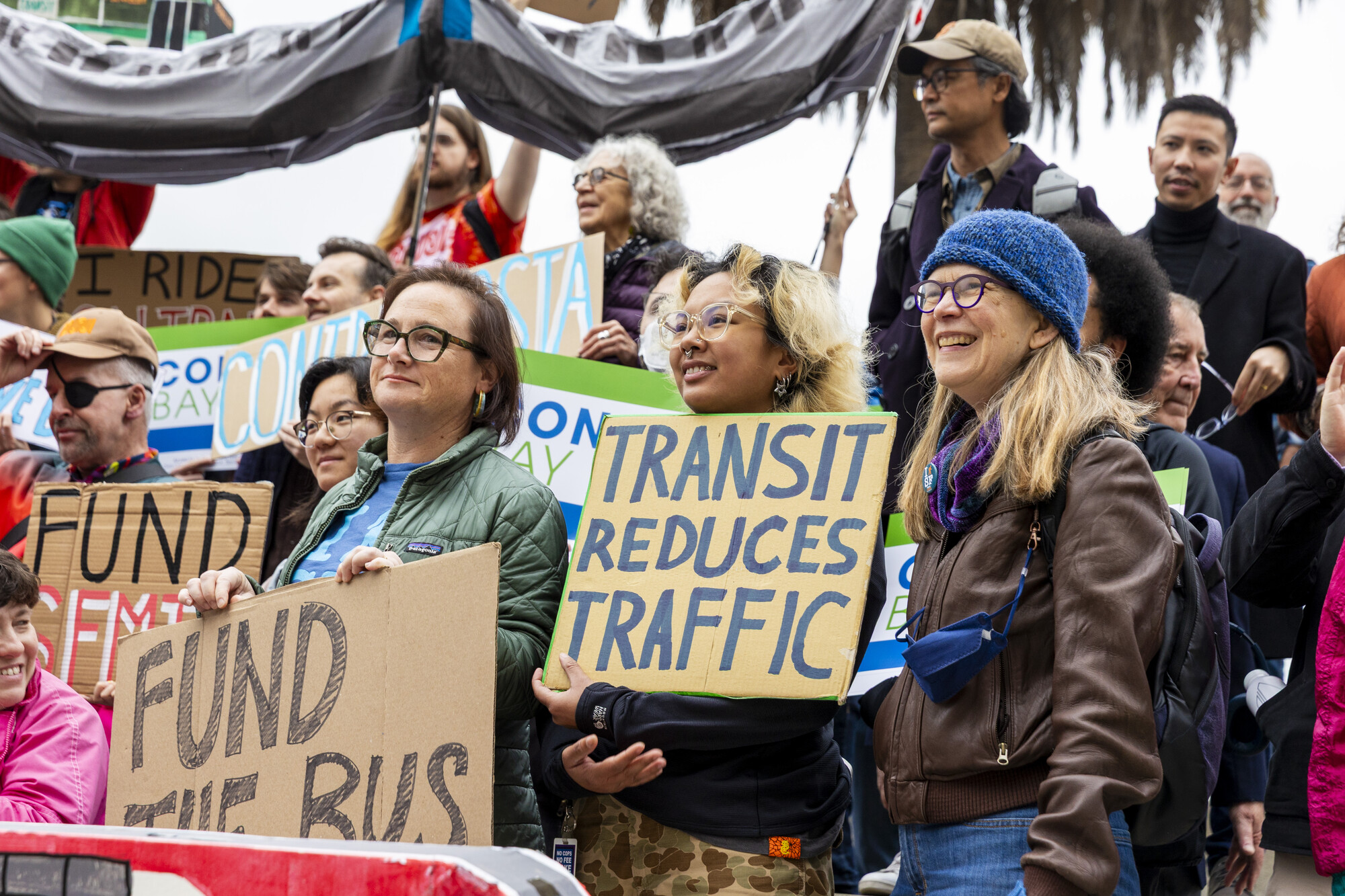
"caption": "Supporters of public transit pose for a picture at a press conference about California Senate Bill 63 at Embarcardero Plaza in San Francisco on Jan. 23, 2026.",
"credit": "Tâm Vũ/KQED",
"altTag": null,
"description": null,
"imgSizes": {
"thumbnail": {
"file": "https://cdn.kqed.org/wp-content/uploads/sites/10/2026/05/260123-signaturekickoff00181_TV_qed-160x107.jpg",
"width": 160,
"height": 107,
"mimeType": "image/jpeg"
},
"1536x1536": {
"file": "https://cdn.kqed.org/wp-content/uploads/sites/10/2026/05/260123-signaturekickoff00181_TV_qed-1536x1024.jpg",
"width": 1536,
"height": 1024,
"mimeType": "image/jpeg"
},
"post-thumbnail": {
"file": "https://cdn.kqed.org/wp-content/uploads/sites/10/2026/05/260123-signaturekickoff00181_TV_qed-672x372.jpg",
"width": 672,
"height": 372,
"mimeType": "image/jpeg"
},
"twentyfourteen-full-width": {
"file": "https://cdn.kqed.org/wp-content/uploads/sites/10/2026/05/260123-signaturekickoff00181_TV_qed-1038x576.jpg",
"width": 1038,
"height": 576,
"mimeType": "image/jpeg"
},
"npr-cds-wide": {
"file": "https://cdn.kqed.org/wp-content/uploads/sites/10/2026/05/260123-signaturekickoff00181_TV_qed-1200x675.jpg",
"width": 1200,
"height": 675,
"mimeType": "image/jpeg"
},
"npr-cds-square": {
"file": "https://cdn.kqed.org/wp-content/uploads/sites/10/2026/05/260123-signaturekickoff00181_TV_qed-600x600.jpg",
"width": 600,
"height": 600,
"mimeType": "image/jpeg"
},
"kqedFullSize": {
"file": "https://cdn.kqed.org/wp-content/uploads/sites/10/2026/05/260123-signaturekickoff00181_TV_qed.jpg",
"width": 2000,
"height": 1333
}
},
"isLoading": false,
"fetchFailed": false
},
"news_12060984": {
"type": "attachments",
"id": "news_12060984",
"meta": {
"index": "attachments_1716263798",
"site": "news",
"id": "12060984",
"found": true
},
"title": "The 580 freeway in Oakland on Oct. 21, 2025.",
"publishDate": 1761133308,
"status": "inherit",
"parent": 0,
"modified": 1761145233,
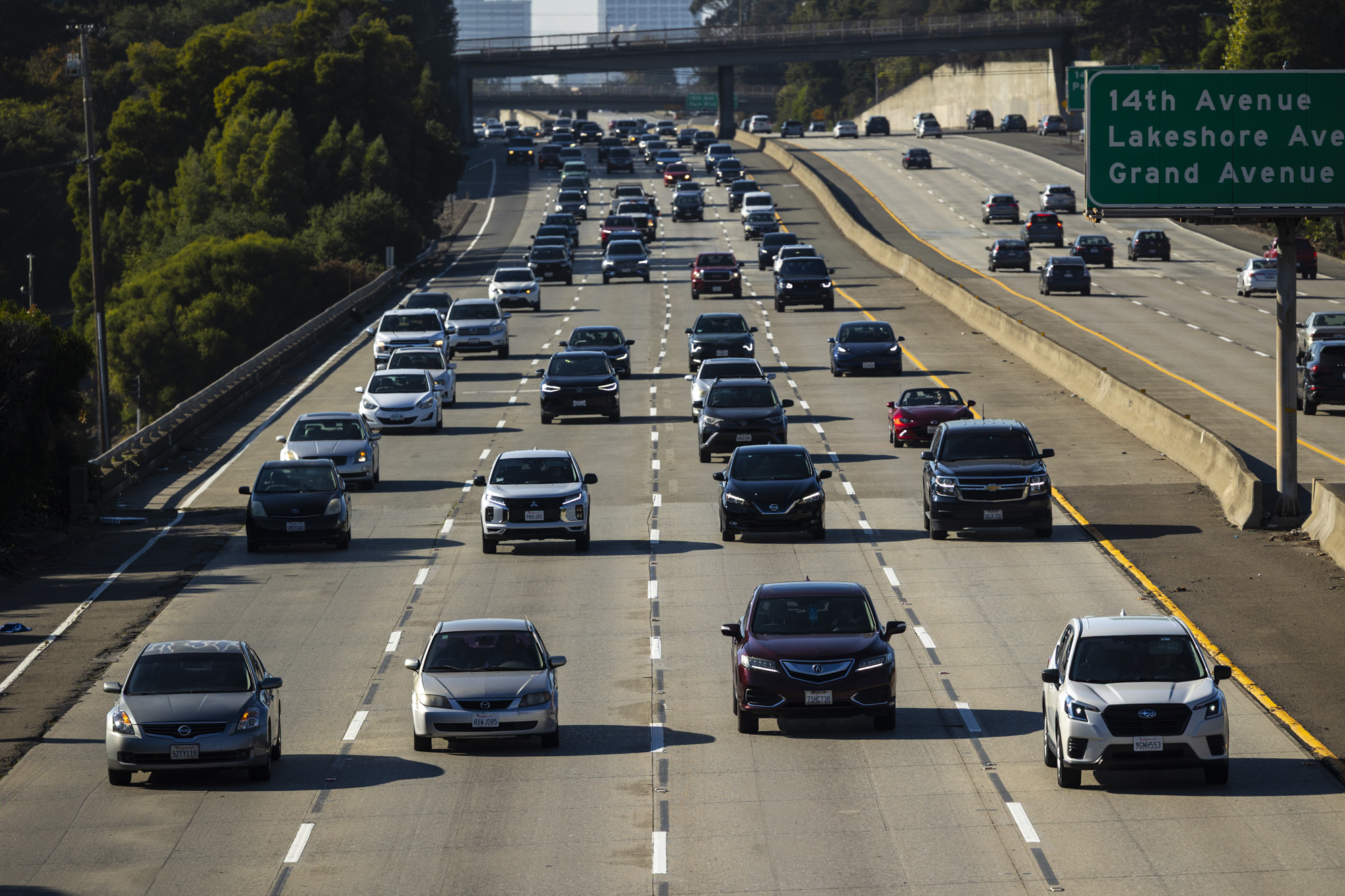
"caption": "The I-580 freeway in Oakland on Oct. 21, 2025.",
"credit": "Martin do Nascimento/KQED",
"altTag": null,
"description": null,
"imgSizes": {
"thumbnail": {
"file": "https://cdn.kqed.org/wp-content/uploads/sites/10/2025/10/251021-I-580-MD-03-KQED-160x107.jpg",
"width": 160,
"height": 107,
"mimeType": "image/jpeg"
},
"1536x1536": {
"file": "https://cdn.kqed.org/wp-content/uploads/sites/10/2025/10/251021-I-580-MD-03-KQED-1536x1024.jpg",
"width": 1536,
"height": 1024,
"mimeType": "image/jpeg"
},
"post-thumbnail": {
"file": "https://cdn.kqed.org/wp-content/uploads/sites/10/2025/10/251021-I-580-MD-03-KQED-672x372.jpg",
"width": 672,
"height": 372,
"mimeType": "image/jpeg"
},
"twentyfourteen-full-width": {
"file": "https://cdn.kqed.org/wp-content/uploads/sites/10/2025/10/251021-I-580-MD-03-KQED-1038x576.jpg",
"width": 1038,
"height": 576,
"mimeType": "image/jpeg"
},
"kqedFullSize": {
"file": "https://cdn.kqed.org/wp-content/uploads/sites/10/2025/10/251021-I-580-MD-03-KQED.jpg",
"width": 2000,
"height": 1333
}
},
"isLoading": false,
"fetchFailed": false
},
"news_12085008": {
"type": "attachments",
"id": "news_12085008",
"meta": {
"index": "attachments_1716263798",
"site": "news",
"id": "12085008",
"found": true
},
"title": "LEDE 2014-02-24_PD_NU_ScenerySkiers_0001",
"publishDate": 1779474684,
"status": "inherit",
"parent": 12084907,
"modified": 1779478528,
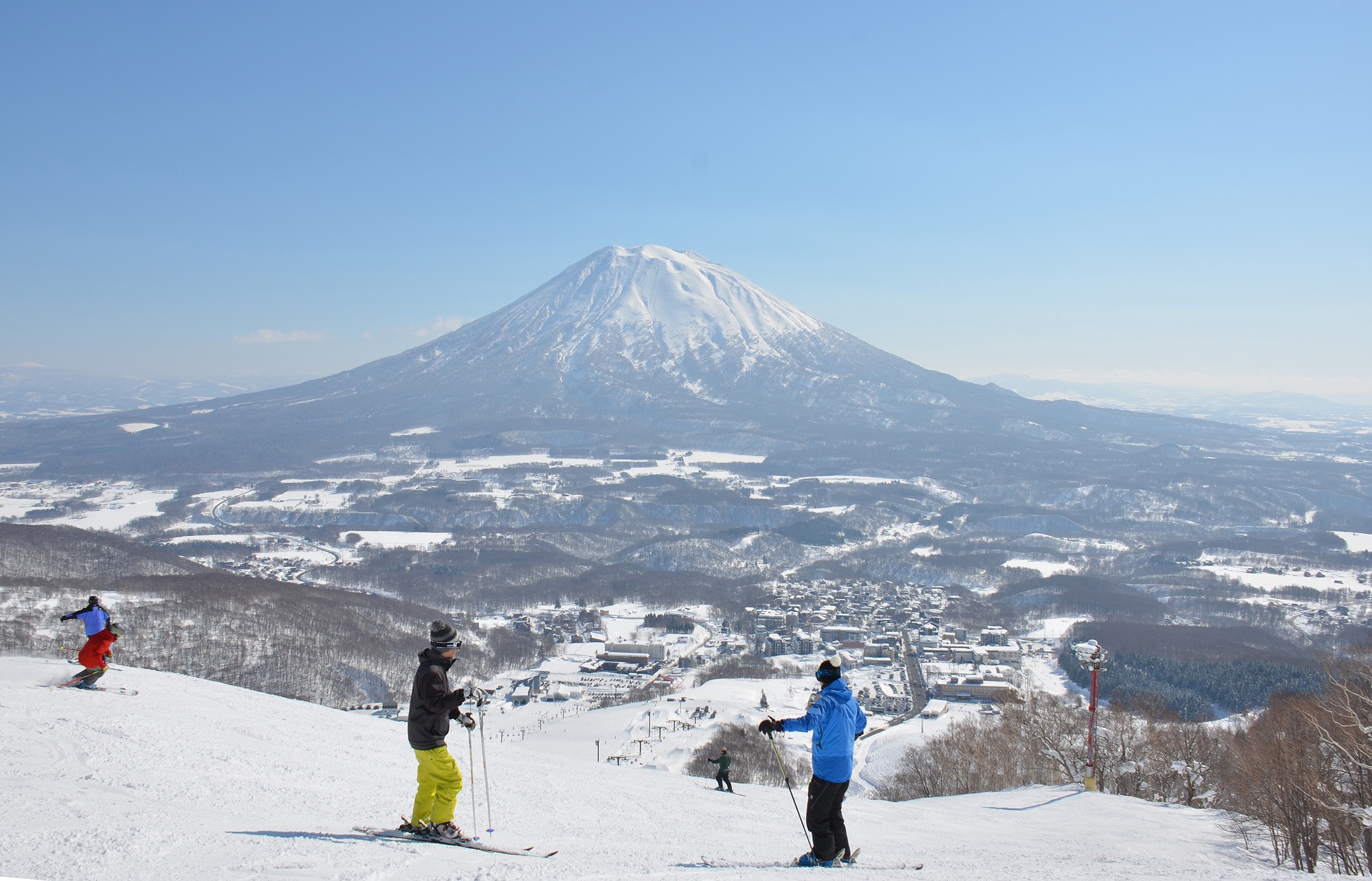
"caption": "Skiers at Niseko, an Alterra partner resort in Sapporo, Japan, enjoy a powder day.",
"credit": "Courtesy of Alterra Mountain Company",
"altTag": null,
"description": null,
"imgSizes": {
"thumbnail": {
"file": "https://cdn.kqed.org/wp-content/uploads/sites/10/2026/05/LEDE-2014-02-24_PD_NU_ScenerySkiers_0001-160x103.jpg",
"width": 160,
"height": 103,
"mimeType": "image/jpeg"
},
"1536x1536": {
"file": "https://cdn.kqed.org/wp-content/uploads/sites/10/2026/05/LEDE-2014-02-24_PD_NU_ScenerySkiers_0001-1536x986.jpg",
"width": 1536,
"height": 986,
"mimeType": "image/jpeg"
},
"post-thumbnail": {
"file": "https://cdn.kqed.org/wp-content/uploads/sites/10/2026/05/LEDE-2014-02-24_PD_NU_ScenerySkiers_0001-672x372.jpg",
"width": 672,
"height": 372,
"mimeType": "image/jpeg"
},
"twentyfourteen-full-width": {
"file": "https://cdn.kqed.org/wp-content/uploads/sites/10/2026/05/LEDE-2014-02-24_PD_NU_ScenerySkiers_0001-1038x576.jpg",
"width": 1038,
"height": 576,
"mimeType": "image/jpeg"
},
"npr-cds-wide": {
"file": "https://cdn.kqed.org/wp-content/uploads/sites/10/2026/05/LEDE-2014-02-24_PD_NU_ScenerySkiers_0001-1200x675.jpg",
"width": 1200,
"height": 675,
"mimeType": "image/jpeg"
},
"npr-cds-square": {
"file": "https://cdn.kqed.org/wp-content/uploads/sites/10/2026/05/LEDE-2014-02-24_PD_NU_ScenerySkiers_0001-600x600.jpg",
"width": 600,
"height": 600,
"mimeType": "image/jpeg"
},
"kqedFullSize": {
"file": "https://cdn.kqed.org/wp-content/uploads/sites/10/2026/05/LEDE-2014-02-24_PD_NU_ScenerySkiers_0001.jpg",
"width": 2000,
"height": 1284
}
},
"isLoading": false,
"fetchFailed": false
}
},
"audioPlayerReducer": {
"postId": "stream_live",
"isPaused": true,
"isPlaying": false,
"pfsActive": false,
"pledgeModalIsOpen": true,
"playerDrawerIsOpen": false,
"liveAudioPlayStartedAt": 0,
"liveAudioPlayContext": ""
},
"authorsReducer": {
"abandlamudi": {
"type": "authors",
"id": "11672",
"meta": {
"index": "authors_1716337520",
"id": "11672",
"found": true
},
"name": "Adhiti Bandlamudi",
"firstName": "Adhiti",
"lastName": "Bandlamudi",
"slug": "abandlamudi",
"email": "abandlamudi@kqed.org",
"display_author_email": false,
"staff_mastheads": [
"news"
],
"title": "KQED Housing Reporter",
"bio": "Adhiti Bandlamudi reports for KQED's Housing desk. She focuses on how housing gets built across the Bay Area. Before joining KQED in 2020, she reported for WUNC in Durham, North Carolina, WABE in Atlanta, Georgia and Capital Public Radio in Sacramento. In 2017, she was awarded a Kroc Fellowship at NPR where she reported on everything from sprinkles to the Golden State Killer's arrest. When she's not reporting, she's baking new recipes in her kitchen or watching movies with friends and family. She's originally from Georgia and has strong opinions about Great British Bake Off.",
"avatar": "https://secure.gravatar.com/avatar/868129c8b257bb99a3500e2c86a65400?s=600&d=mm&r=g",
"twitter": "oddity_adhiti",
"facebook": null,
"instagram": null,
"linkedin": null,
"sites": [
{
"site": "arts",
"roles": [
"author"
]
},
{
"site": "news",
"roles": [
"editor"
]
},
{
"site": "liveblog",
"roles": [
"author"
]
}
],
"headData": {
"title": "Adhiti Bandlamudi | KQED",
"description": "KQED Housing Reporter",
"ogImgSrc": "https://secure.gravatar.com/avatar/868129c8b257bb99a3500e2c86a65400?s=600&d=mm&r=g",
"twImgSrc": "https://secure.gravatar.com/avatar/868129c8b257bb99a3500e2c86a65400?s=600&d=mm&r=g"
},
"isLoading": false,
"link": "/author/abandlamudi"
},
"ccabreralomeli": {
"type": "authors",
"id": "11708",
"meta": {
"index": "authors_1716337520",
"id": "11708",
"found": true
},
"name": "Carlos Cabrera-Lomelí",
"firstName": "Carlos",
"lastName": "Cabrera-Lomelí",
"slug": "ccabreralomeli",
"email": "ccabreralomeli@KQED.org",
"display_author_email": true,
"staff_mastheads": [
"news"
],
"title": "Community Reporter",
"bio": "Carlos Cabrera-Lomelí is a community reporter with KQED's digital engagement team. He also reports and co-produces for KQED's bilingual news hub KQED en Español. He grew up in San Francisco's Mission District and has previously worked with Univision, 48 Hills and REFORMA in Mexico City.",
"avatar": "https://secure.gravatar.com/avatar/c309be9665e484f887b818c89e273ecc673004f426f36b24d00a4d813a2e0518?s=600&d=blank&r=g",
"twitter": "@LomeliCabrera",
"bluesky": null,
"facebook": null,
"instagram": null,
"linkedin": null,
"sites": [
{
"site": "arts",
"roles": [
"editor"
]
},
{
"site": "news",
"roles": [
"editor"
]
},
{
"site": "about",
"roles": [
"editor"
]
},
{
"site": "science",
"roles": [
"editor"
]
},
{
"site": "perspectives",
"roles": [
"editor"
]
},
{
"site": "elections",
"roles": [
"editor"
]
},
{
"site": "liveblog",
"roles": [
"contributor"
]
}
],
"headData": {
"title": "Carlos Cabrera-Lomelí | KQED",
"description": "Community Reporter",
"ogImgSrc": "https://secure.gravatar.com/avatar/c309be9665e484f887b818c89e273ecc673004f426f36b24d00a4d813a2e0518?s=600&d=blank&r=g",
"twImgSrc": "https://secure.gravatar.com/avatar/c309be9665e484f887b818c89e273ecc673004f426f36b24d00a4d813a2e0518?s=600&d=blank&r=g"
},
"isLoading": false,
"link": "/author/ccabreralomeli"
},
"adahlstromeckman": {
"type": "authors",
"id": "11785",
"meta": {
"index": "authors_1716337520",
"id": "11785",
"found": true
},
"name": "Azul Dahlstrom-Eckman",
"firstName": "Azul",
"lastName": "Dahlstrom-Eckman",
"slug": "adahlstromeckman",
"email": "adahlstrom-eckman@kqed.org",
"display_author_email": true,
"staff_mastheads": [],
"title": "Reporter",
"bio": "Azul is a reporter for KQED focusing on transportation and features. He joined KQED in 2021 as an alumna of KALW's Audio Academy radio journalism training program.",
"avatar": "https://secure.gravatar.com/avatar/9cb750298435add7815a777f55bf1f46845c1386bb8452555c60a7b820b5aba3?s=600&d=blank&r=g",
"twitter": "@zuliemann",
"bluesky": "@azul415.bsky.social",
"facebook": null,
"instagram": null,
"linkedin": null,
"sites": [
{
"site": "arts",
"roles": [
"editor"
]
},
{
"site": "news",
"roles": [
"editor"
]
},
{
"site": "science",
"roles": [
"editor"
]
},
{
"site": "liveblog",
"roles": [
"author"
]
}
],
"headData": {
"title": "Azul Dahlstrom-Eckman | KQED",
"description": "Reporter",
"ogImgSrc": "https://secure.gravatar.com/avatar/9cb750298435add7815a777f55bf1f46845c1386bb8452555c60a7b820b5aba3?s=600&d=blank&r=g",
"twImgSrc": "https://secure.gravatar.com/avatar/9cb750298435add7815a777f55bf1f46845c1386bb8452555c60a7b820b5aba3?s=600&d=blank&r=g"
},
"isLoading": false,
"link": "/author/adahlstromeckman"
},
"kdebenedetti": {
"type": "authors",
"id": "11913",
"meta": {
"index": "authors_1716337520",
"id": "11913",
"found": true
},
"name": "Katie DeBenedetti",
"firstName": "Katie",
"lastName": "DeBenedetti",
"slug": "kdebenedetti",
"email": "kdebenedetti@kqed.org",
"display_author_email": false,
"staff_mastheads": [
"news",
"science"
],
"title": "KQED Contributor",
"bio": "Katie DeBenedetti is a digital reporter covering daily news for the Express Desk. Prior to joining KQED as a culture reporting intern in January 2024, she covered education and city government for the Napa Valley Register.",
"avatar": "https://secure.gravatar.com/avatar/6e31073cb8f7e4214ab03f42771d0f45?s=600&d=blank&r=g",
"twitter": null,
"facebook": null,
"instagram": null,
"linkedin": null,
"sites": [
{
"site": "news",
"roles": [
"author"
]
},
{
"site": "science",
"roles": [
"author"
]
},
{
"site": "liveblog",
"roles": [
"author"
]
}
],
"headData": {
"title": "Katie DeBenedetti | KQED",
"description": "KQED Contributor",
"ogImgSrc": "https://secure.gravatar.com/avatar/6e31073cb8f7e4214ab03f42771d0f45?s=600&d=blank&r=g",
"twImgSrc": "https://secure.gravatar.com/avatar/6e31073cb8f7e4214ab03f42771d0f45?s=600&d=blank&r=g"
},
"isLoading": false,
"link": "/author/kdebenedetti"
},
"emanoukian": {
"type": "authors",
"id": "11925",
"meta": {
"index": "authors_1716337520",
"id": "11925",
"found": true
},
"name": "Elize Manoukian",
"firstName": "Elize",
"lastName": "Manoukian",
"slug": "emanoukian",
"email": "emanoukian@KQED.org",
"display_author_email": false,
"staff_mastheads": [
"news"
],
"title": "Digital News Editor",
"bio": "Elize Manoukian is an award-winning audio producer and Senior Editor on the Express Desk, KQED's digital news platform. Her work has appeared on KPFA, Interlochen Public Radio, Oregon Public Broadcast, the New York Daily News, LA Times and the San Diego Union-Tribune.",
"avatar": "https://secure.gravatar.com/avatar/4525f1a8e46ccb30933b32653d9772064cfefe3fa655eb45b3b3a80341f6bdad?s=600&d=blank&r=g",
"twitter": null,
"bluesky": null,
"facebook": null,
"instagram": null,
"linkedin": null,
"sites": [
{
"site": "arts",
"roles": [
"editor"
]
},
{
"site": "news",
"roles": [
"editor"
]
},
{
"site": "science",
"roles": [
"editor"
]
}
],
"headData": {
"title": "Elize Manoukian | KQED",
"description": "Digital News Editor",
"ogImgSrc": "https://secure.gravatar.com/avatar/4525f1a8e46ccb30933b32653d9772064cfefe3fa655eb45b3b3a80341f6bdad?s=600&d=blank&r=g",
"twImgSrc": "https://secure.gravatar.com/avatar/4525f1a8e46ccb30933b32653d9772064cfefe3fa655eb45b3b3a80341f6bdad?s=600&d=blank&r=g"
},
"isLoading": false,
"link": "/author/emanoukian"
},
"skennedy": {
"type": "authors",
"id": "11935",
"meta": {
"index": "authors_1716337520",
"id": "11935",
"found": true
},
"name": "Samantha Kennedy",
"firstName": "Samantha",
"lastName": "Kennedy",
"slug": "skennedy",
"email": "SKennedy@kqed.org",
"display_author_email": false,
"staff_mastheads": [],
"title": "KQED Contributor",
"bio": null,
"avatar": "https://secure.gravatar.com/avatar/adc7b14bf1e801793202a156ecc864d4ad505b0fd63162a2f3da0e5ba57222d0?s=600&d=blank&r=g",
"twitter": null,
"bluesky": null,
"facebook": null,
"instagram": null,
"linkedin": null,
"sites": [
{
"site": "arts",
"roles": [
"author"
]
},
{
"site": "news",
"roles": [
"editor"
]
},
{
"site": "science",
"roles": [
"editor"
]
}
],
"headData": {
"title": "Samantha Kennedy | KQED",
"description": "KQED Contributor",
"ogImgSrc": "https://secure.gravatar.com/avatar/adc7b14bf1e801793202a156ecc864d4ad505b0fd63162a2f3da0e5ba57222d0?s=600&d=blank&r=g",
"twImgSrc": "https://secure.gravatar.com/avatar/adc7b14bf1e801793202a156ecc864d4ad505b0fd63162a2f3da0e5ba57222d0?s=600&d=blank&r=g"
},
"isLoading": false,
"link": "/author/skennedy"
},
"sarahwright": {
"type": "authors",
"id": "11956",
"meta": {
"index": "authors_1716337520",
"id": "11956",
"found": true
},
"name": "Sarah Wright",
"firstName": "Sarah",
"lastName": "Wright",
"slug": "sarahwright",
"email": "swright@kqed.org",
"display_author_email": true,
"staff_mastheads": [],
"title": "Outdoors Engagement Reporter",
"bio": "Sarah Wright is KQED's Outdoors Engagement Reporter. Originally from Lake Tahoe, she completed a thru-hike of the Pacific Crest Trail in 2019 and was a U.S. Fulbright Program grantee to Argentina in 2023. Her journalism has appeared in The Guardian, The San Francisco Standard, The Palo Alto Weekly and the Half Moon Bay Review.",
"avatar": "https://secure.gravatar.com/avatar/c161a3d6441865cba25e6db4fa561099ad665799e9432e34da2b84d7e371524c?s=600&d=blank&r=g",
"twitter": null,
"bluesky": null,
"facebook": null,
"instagram": null,
"linkedin": null,
"sites": [
{
"site": "arts",
"roles": [
"editor"
]
},
{
"site": "news",
"roles": [
"editor"
]
},
{
"site": "science",
"roles": [
"contributor",
"author"
]
},
{
"site": "forum",
"roles": [
"editor"
]
}
],
"headData": {
"title": "Sarah Wright | KQED",
"description": "Outdoors Engagement Reporter",
"ogImgSrc": "https://secure.gravatar.com/avatar/c161a3d6441865cba25e6db4fa561099ad665799e9432e34da2b84d7e371524c?s=600&d=blank&r=g",
"twImgSrc": "https://secure.gravatar.com/avatar/c161a3d6441865cba25e6db4fa561099ad665799e9432e34da2b84d7e371524c?s=600&d=blank&r=g"
},
"isLoading": false,
"link": "/author/sarahwright"
}
},
"pagesReducer": {
"news_category_transportation": {
"type": "terms",
"id": "news_1397",
"meta": {
"index": "terms_1716263798",
"site": "news",
"id": "1397",
"score": 12.93969
},
"featImg": null,
"name": "Transportation",
"description": null,
"taxonomy": "category",
"headData": {
"twImgId": null,
"twTitle": null,
"ogTitle": null,
"ogImgId": null,
"twDescription": null,
"description": null,
"title": "Transportation Archives | KQED News",
"ogDescription": null
},
"ttid": 1409,
"slug": "transportation",
"isLoading": false,
"title": "Transportation",
"pageMeta": {
"site": "news",
"WpPageTemplate": "page-topic-editorial",
"currentPage": 5
},
"blocks": [
{
"blockName": "kqed/post-list",
"attrs": {
"layout": "cardArticle2",
"query": "posts/news?category=transportation",
"seeMore": false,
"paginated": true,
"page": 5
}
},
{
"blockName": "kqed/ad"
}
]
}
},
"pfsSessionReducer": {},
"postsReducer": {
"stream_live": {
"type": "live",
"id": "stream_live",
"audioUrl": "https://streams.kqed.org/kqedradio",
"title": "Live Stream",
"excerpt": "Live Stream information currently unavailable.",
"link": "/radio",
"featImg": "",
"label": {
"name": "KQED Live",
"link": "/"
}
},
"stream_kqedNewscast": {
"type": "posts",
"id": "stream_kqedNewscast",
"audioUrl": "https://www.kqed.org/.stream/anon/radio/RDnews/newscast.mp3?_=1",
"title": "KQED Newscast",
"featImg": "",
"label": {
"name": "88.5 FM",
"link": "/"
}
},
"news_12084929": {
"type": "posts",
"id": "news_12084929",
"meta": {
"index": "posts_1716263798",
"site": "news",
"id": "12084929",
"score": null,
"sort": [
1781172033000
]
},
"guestAuthors": [],
"slug": "meet-the-around-the-clock-mechanics-keeping-golden-gate-ferries-moving",
"title": "Meet the Around-the-Clock Mechanics Keeping Golden Gate Ferries Moving",
"publishDate": 1781172033,
"format": "standard",
"headTitle": "Meet the Around-the-Clock Mechanics Keeping Golden Gate Ferries Moving | KQED",
"labelTerm": {},
"content": "\u003cp>\u003cem>\u003ca href=\"#Viewthefullepisodetranscript\">View the full episode transcript.\u003c/a>\u003c/em>\u003c/p>\n\u003cp>Kristen Breck remembers sitting in traffic on the \u003ca href=\"https://www.kqed.org/news/tag/richmond\">Richmond\u003c/a> Bridge and looking out on the water. She spotted a ferry coming in from Vallejo. Then she saw another one.\u003c/p>\n\u003cp>“I just thought, they’re so beautiful,” she said. “What happens if they get injured? Where do they go? Who is taking care of them?”\u003c/p>\n\u003cp>The Bay Area is home to two major public ferry agencies: SF Bay Ferry, serving the East Bay, and Golden Gate Ferry, which serves the North Bay. Last year, both agencies combined carried about 4 million passengers.\u003c/p>\n\u003cp>Ferries have long been an important mode of transportation in the region. Before the late 1930s, ferries were the primary way people got across the bay. But after the Bay and Golden Gate Bridges were constructed in 1936 and 1937, respectively, ferry ridership dwindled to “extinction levels,” according to Tom Hall, director of operations and customer experience at SF Bay Ferry.\u003c/p>\n\u003cp>[ad fullwidth]\u003c/p>\n\u003cp>While a number of smaller companies continued to ferry people across the bay, the region went without a major ferry agency for decades. In 1970, Golden Gate Ferry began service to the North Bay as a way to ease congestion on the Golden Gate Bridge.\u003c/p>\n\u003cp>Then, in 1989, the \u003ca href=\"https://www.kqed.org/science/1949362/how-loma-prieta-changed-earthquake-science-building-codes-and-the-bay-area\">Loma Prieta earthquake\u003c/a> hit.\u003c/p>\n\u003cp>The 6.9 magnitude earthquake, in which \u003ca href=\"https://pubs.usgs.gov/fs/2014/3092/pdf/fs2014-3092.pdf\">63 people died\u003c/a> and more than 3,700 were injured, collapsed a section of the Bay Bridge. It was unusable for about a month. Hall said that, after the disaster, officials realized they needed an alternative way to evacuate the city in cases of emergency.\u003c/p>\n\u003cfigure id=\"attachment_12078039\" class=\"wp-caption aligncenter\" style=\"max-width: 2000px\">\u003cimg loading=\"lazy\" decoding=\"async\" class=\"size-full wp-image-12078039\" src=\"https://cdn.kqed.org/wp-content/uploads/sites/10/2026/03/260324-BAYCURIOUSFERRY00673_TV-KQED.jpg\" alt=\"\" width=\"2000\" height=\"1333\" srcset=\"https://cdn.kqed.org/wp-content/uploads/sites/10/2026/03/260324-BAYCURIOUSFERRY00673_TV-KQED.jpg 2000w, https://cdn.kqed.org/wp-content/uploads/sites/10/2026/03/260324-BAYCURIOUSFERRY00673_TV-KQED-160x107.jpg 160w, https://cdn.kqed.org/wp-content/uploads/sites/10/2026/03/260324-BAYCURIOUSFERRY00673_TV-KQED-1536x1024.jpg 1536w\" sizes=\"auto, (max-width: 2000px) 100vw, 2000px\">\u003cfigcaption class=\"wp-caption-text\">Passengers exit from the Larkspur Ferry Terminal in Larkspur on March 24, 2026. \u003ccite>(Tâm Vũ/KQED)\u003c/cite>\u003c/figcaption>\u003c/figure>\n\u003cp>State and local officials started to plan for a ferry service to serve the East Bay. The Water Emergency Transportation Authority (WETA) was formed in 2007, and four years later, it started operating SF Bay Ferry.\u003c/p>\n\u003cp>“Our core mission is emergency water transit in the event of a natural disaster or another event that disrupts the existing transportation system in the Bay Area,” Hall said. “Since we have all the boats and terminals to be ready for that, we might as well moonlight as a ferry operator in the interim.”\u003c/p>\n\u003ch2>Keeping the ferries running\u003c/h2>\n\u003cp>“Imagine driving your vehicle to and from work all day long and doing it full speed — you’re probably going to have a decent amount of maintenance that needs to be required to keep your car running,” said Mike Hoffman, deputy general manager for Golden Gate Ferry. “It’s no different for our ferry vessels.”\u003c/p>\n\u003cp>Agencies send most ferries to maintenance shops located locally for quick fixes. Golden Gate Ferry’s maintenance shop, at the Larkspur terminal, handles everything from replacing lightbulbs to rebuilding engines.\u003c/p>\n\u003cfigure id=\"attachment_12078030\" class=\"wp-caption aligncenter\" style=\"max-width: 2000px\">\u003cimg loading=\"lazy\" decoding=\"async\" class=\"size-full wp-image-12078030\" src=\"https://cdn.kqed.org/wp-content/uploads/sites/10/2026/03/260324-BAYCURIOUSFERRY00168_TV-KQED.jpg\" alt=\"\" width=\"2000\" height=\"1333\" srcset=\"https://cdn.kqed.org/wp-content/uploads/sites/10/2026/03/260324-BAYCURIOUSFERRY00168_TV-KQED.jpg 2000w, https://cdn.kqed.org/wp-content/uploads/sites/10/2026/03/260324-BAYCURIOUSFERRY00168_TV-KQED-160x107.jpg 160w, https://cdn.kqed.org/wp-content/uploads/sites/10/2026/03/260324-BAYCURIOUSFERRY00168_TV-KQED-1536x1024.jpg 1536w\" sizes=\"auto, (max-width: 2000px) 100vw, 2000px\">\u003cfigcaption class=\"wp-caption-text\">Mike Hoffman, the deputy general manager for Golden Gate Ferry, poses for a portrait at the shop where ferry machinery is maintained at the Larkspur Ferry Terminal in Larkspur on March 24, 2026. \u003ccite>(Tâm Vũ/KQED)\u003c/cite>\u003c/figcaption>\u003c/figure>\n\u003cp>To avoid service delays, mechanics in groups of four work in shifts around the clock, seven days a week, to make sure the seven Golden Gate ferries are running smoothly.\u003c/p>\n\u003cp>“Back in 2001, there was a tech boom going on and a lot of friends and family were getting into the tech industry,” said Ray Garibaldi, who has worked as a ferry mechanic for the Golden Gate Transportation District since 2001. “I decided to stick with mechanical welding and fabricating. And it’s been a great career for me.”\u003c/p>\n\u003cp>He said every day brings a new problem to solve. One day, he might be making replacement parts and welding them in the metal shop. Other days, he is repairing water jets when they get clogged with fishing line and debris. If there are problems with the main engine, he will spend days in the hot engine room repairing the control system.[aside postID=news_12078602 hero='https://cdn.kqed.org/wp-content/uploads/sites/10/2025/08/20241204-BART-JY-002_qed.jpg']Meanwhile, across the bay, SF Bay Ferry operates 11 vessels, sailing from the San Francisco Ferry Building to several destinations in the East Bay, including Oakland, Richmond and Vallejo. For everyday maintenance, vessels are sent to decommissioned military bases in Alameda and Mare Island in Vallejo.\u003c/p>\n\u003cp>Every two years, the U.S. Coast Guard inspects ferries run by both agencies to make sure they are up to code. For those inspections, the ferries are sent to the decommissioned military bases so they can be hoisted out of the water — or “dry docked” — if needed.\u003c/p>\n\u003cp>Inspectors will look for signs of weakness in the hull of the vessel or any small water intrusions that might be on the surface of the vessel. They will also ride with crews to make sure safety measures are followed properly.\u003c/p>\n\u003cp>Ferries are dry-docked again every five or six years so crews can do more extensive repairs, including replacing carpets, repairing damaged seats and changing out older technology for updated systems.\u003c/p>\n\u003cp>To comply with California’s emissions standards, ferries are often decommissioned after 25 years. But Hall said the agencies often sell vessels to other states whose standards are less strict.\u003c/p>\n\u003cp>“We have a couple of boats in Alaska that are serving as whale watching boats,” Hall said. “They always seem to have a second life.”\u003c/p>\n\u003ch2>The future of Bay Area ferry service\u003c/h2>\n\u003cp>Ferry operators, like other public transportation agencies, struggled during the coronavirus pandemic and mandatory shelter-in-place orders. SF Bay Ferry’s ridership dropped to 6% of its normal capacity, Hall said. They immediately reduced service to two routes built around essential workers.\u003c/p>\n\u003cp>When people came back to work, different commuting patterns emerged. Before the pandemic, the agency could count on passengers five days a week.\u003c/p>\n\u003cfigure id=\"attachment_12078036\" class=\"wp-caption aligncenter\" style=\"max-width: 2000px\">\u003cimg loading=\"lazy\" decoding=\"async\" class=\"size-full wp-image-12078036\" src=\"https://cdn.kqed.org/wp-content/uploads/sites/10/2026/03/260324-BAYCURIOUSFERRY00390_TV-KQED.jpg\" alt=\"\" width=\"2000\" height=\"1333\" srcset=\"https://cdn.kqed.org/wp-content/uploads/sites/10/2026/03/260324-BAYCURIOUSFERRY00390_TV-KQED.jpg 2000w, https://cdn.kqed.org/wp-content/uploads/sites/10/2026/03/260324-BAYCURIOUSFERRY00390_TV-KQED-160x107.jpg 160w, https://cdn.kqed.org/wp-content/uploads/sites/10/2026/03/260324-BAYCURIOUSFERRY00390_TV-KQED-1536x1024.jpg 1536w\" sizes=\"auto, (max-width: 2000px) 100vw, 2000px\">\u003cfigcaption class=\"wp-caption-text\">The Napa ferry is stationed at a servicing dock at Larkspur Ferry Terminal in Larkspur on March 24, 2026. \u003ccite>(Tâm Vũ/KQED)\u003c/cite>\u003c/figcaption>\u003c/figure>\n\u003cp>But after the pandemic, with many people working from home at least some of the time, ridership has been less predictable. Hall said one of the most surprising changes has been a boost in weekend ridership.\u003c/p>\n\u003cp>“People were ready to go back out,” he said. “I think the fact that we have outdoor seating on all of the ferries helped us a ton because if you were uncomfortable being in an enclosed area with other people that you didn’t know, you [could] sit outside.”\u003c/p>\n\u003cp>As companies slowly called employees back into the office, the agency saw an uptick in ridership. Now, with the trend towards more weekend riding continuing, along with some weekday commuting, the agency is seeing more riders than it ever has. In May of 2026, it \u003ca href=\"https://sanfranciscobayferry.com/san-francisco-bay-ferry-sets-another-ridership-record-in-may/\">beat its all-time ridership\u003c/a> record for the third month in a row.\u003c/p>\n\u003cfigure id=\"attachment_12078040\" class=\"wp-caption aligncenter\" style=\"max-width: 2000px\">\u003cimg loading=\"lazy\" decoding=\"async\" class=\"size-full wp-image-12078040\" src=\"https://cdn.kqed.org/wp-content/uploads/sites/10/2026/03/260324-BAYCURIOUSFERRY00383_TV-KQED.jpg\" alt=\"\" width=\"2000\" height=\"1333\" srcset=\"https://cdn.kqed.org/wp-content/uploads/sites/10/2026/03/260324-BAYCURIOUSFERRY00383_TV-KQED.jpg 2000w, https://cdn.kqed.org/wp-content/uploads/sites/10/2026/03/260324-BAYCURIOUSFERRY00383_TV-KQED-160x107.jpg 160w, https://cdn.kqed.org/wp-content/uploads/sites/10/2026/03/260324-BAYCURIOUSFERRY00383_TV-KQED-1536x1024.jpg 1536w\" sizes=\"auto, (max-width: 2000px) 100vw, 2000px\">\u003cfigcaption class=\"wp-caption-text\">A replacement water jet sits on a servicing dock at Larkspur Ferry Terminal in Larkspur on March 24, 2026. \u003ccite>(Tâm Vũ/KQED)\u003c/cite>\u003c/figcaption>\u003c/figure>\n\u003cp>“We’re on track to have our all-time best year in 2026, if things keep going the way they do,” Hall said. “That’s been gratifying to see people come back to the ferries.”\u003c/p>\n\u003cp>Ferry lovers will be excited to know that SF Bay Ferry someday hopes to expand its service to Treasure Island, Mission Bay, Berkeley and Redwood City. However, that expansion probably won’t happen anytime soon.\u003c/p>\n\u003cp>More immediately, riders of the Golden Gate ferries will start seeing new vessels in the rotation. Next year, the agency plans to start replacing its fleet, and the new boats will be more fuel efficient and will have elevators and more bike parking.\u003c/p>\n\u003cp>[baycuriousquestion]\u003c/p>\n\u003ch2>\u003ca id=\"Viewthefullepisodetranscript\">\u003c/a>Episode transcript\u003c/h2>\n\u003cp>\u003cem>Sounds water lapping\u003c/em>\u003c/p>\n\u003cp>\u003cstrong>Olivia Allen-Price:\u003c/strong> Every time I ride a ferry across San Francisco Bay I feel a little fizz of excitement.\u003c/p>\n\u003cp>\u003cem>Ferry engine sounds along with lapping water\u003c/em>\u003c/p>\n\u003cp>\u003cstrong>Olivia Allen-Price: \u003c/strong>Part of me knows that ferries are practical. A way a lot of people commute to work. But I mean look around – it’s hard not to get caught up in the romance of being on the water in such a gorgeous place.\u003c/p>\n\u003cp>Some people even ride them just for fun. Like Peggy Gallagher who was riding the Larkspur ferry with her sister, in from out of town.\u003c/p>\n\u003cp>\u003cstrong>Peggy Gallegher: \u003c/strong>I mean, we live in the Bay Area, the most beautiful area in the world. And you just kind of forget your troubles because everywhere you look is just another view.\u003c/p>\n\u003cp>\u003cstrong>Olivia Allen-Price: \u003c/strong>From the deck of the ferry there’s a great view of downtown San Francisco, Alcatraz and Angel Island, the Golden Gate Bridge…even Mount Tam. When you’re riding one, you can really appreciate the bay itself…the water at the heart of our region.\u003c/p>\n\u003cp>\u003cstrong>Kristen Breck: \u003c/strong>I think ferries really are emblematic of where we live and I love where we live.\u003c/p>\n\u003cp>\u003cstrong>Olivia Allen-Price:\u003c/strong> Kristen Breck, our question asker today, doesn’t get to ride ferries as often as she’d like. But she sees them when she’s driving around. One day she was on the Richmond bridge looking out over the water when she saw a Vallejo ferry.\u003c/p>\n\u003cp>\u003cstrong>Kristen Breck: \u003c/strong>And I just thought, there’s just so beautiful. What happens if they get injured? I’d like to know how and where the Golden Gate ferries around the bay are serviced and fixed. What does it take to fix a ferry? Where does that work get done, and who does it?\u003c/p>\n\u003cp>\u003cstrong>Olivia Allen-Price:\u003c/strong> Ferries have long been an important mode of transportation in our region. Before the Golden Gate and Bay Bridges were built in the 1930s, ferries were the primary way to get to and from The City from the North and East Bay.\u003c/p>\n\u003cp>Now, more people drive than take ferries of course, but we still have two major public ferry services that together carry about 3 to 4 million passengers a year. SF Bay Ferry services the East Bay and Golden Gate Ferries serve the North Bay. KQED’s housing and transportation reporter Adhiti Bandlamudi checked in with both ferry agencies about how they manage and repair their vessels.\u003c/p>\n\u003cp>\u003cem>Sound of ferry commuters boarding\u003c/em>\u003c/p>\n\u003cp>\u003cstrong>Adhiti Bandlamudi:\u003c/strong> I join a group of commuters and tourists headed from the San Francisco Ferry building to Larkspur on a beautiful sunny day.\u003c/p>\n\u003cp>\u003cstrong>Adhiti Bandlamudi in scene : \u003c/strong>That was so easy, I could use my clipper card.\u003c/p>\n\u003cp>\u003cstrong>Adhiti Bandlamudi: \u003c/strong>I’m on my way to the maintenance shop housed at the Larkspur Ferry Terminal, where a lot of the Golden Gate Ferries get repairs.\u003c/p>\n\u003cp>\u003cstrong>Mike Hoffman: \u003c/strong>These ferry vessels go back and forth from San Francisco to Marin County all day long and they go full speed.\u003c/p>\n\u003cp>\u003cstrong>Adhiti Bandlamudi: \u003c/strong>Mike Hoffman is the Deputy General Manager of Golden Gate Ferry.\u003c/p>\n\u003cp>\u003cstrong>Mike Hoffman: \u003c/strong>So imagine driving your vehicle to and from work all day along and doing it full speed, you’re probably going to have a decent amount of maintenance that needs to be required to keep your car running. It’s no different for our ferry vessels.\u003c/p>\n\u003cp>\u003cstrong>Adhiti Bandlamudi: \u003c/strong>The average ferry has a lifespan of about 25 years. And it’s mechanic Ray Garibaldi’s job to keep them running smoothly throughout.\u003c/p>\n\u003cp>\u003cstrong>Ray Garibaldi: \u003c/strong>Wow, okay. What is this?\u003c/p>\n\u003cp>\u003cstrong>Adhiti Bandlamudi: \u003c/strong>Ray and I are looking at a ferry jet that has a fishing line and other debris caught in the rotors. It looks like the metal blade at the bottom of a blender…just much larger. All seven of Golden Gate Ferry’s vessels cycle through this shop at the Larkspur terminal at one time or another.\u003c/p>\n\u003cp>\u003cstrong>Ray Garibaldi: \u003c/strong>We can be fabricating parts, welding, rebuilding water jets, working on the main engines, repairing the control systems. So every day is a little bit different.\u003cem> \u003c/em>\u003c/p>\n\u003cp>\u003cstrong>Adhiti Bandlamudi: \u003c/strong>There are big machines all over the place– a bandsaw that cuts metal, a big crane and a huge workbench. The walls are lined with nuts and bolts organized into little cubbies.\u003c/p>\n\u003cp>Ray has been a ferry mechanic for the past 25 years.\u003c/p>\n\u003cp>\u003cstrong>Ray Garibaldi: \u003c/strong>Back in 2001, there was a tech boom going on and a lot of friends and family were getting into the tech industry and I decided to stick with mechanical welding, fabricating, and it’s been a great career for me.\u003cem> \u003c/em>\u003c/p>\n\u003cp>\u003cstrong>Adhiti Bandlamudi: \u003c/strong>He and his colleagues at the Larkspur shop handle all the routine maintenance issues that come up. Everything from changing lightbulbs to fixing the main engine.\u003c/p>\n\u003cp>If the team can’t get a boat running safely, that will cause service delays.\u003c/p>\n\u003cp>\u003cstrong>Ray Garibaldi: \u003c/strong>We have three shifts, seven days a week.\u003c/p>\n\u003cp>\u003cstrong>Adhiti Bandlamudi: \u003c/strong>There are usually four mechanics on each shift.\u003c/p>\n\u003cp>\u003cstrong>Ray Garibaldi: \u003c/strong>And each shift kind of does things a little different. You know, day shift takes care of the terminals and rebuilding some of the major components and swing shift starts doing the maintenance and repairs and then graveyard kind of gets scheduled for. Get the boats ready to go out again in the morning if there’s any issues that need to be taken care of.\u003cem> \u003c/em>\u003c/p>\n\u003cp>\u003cstrong>Adhiti Bandlamudi: \u003c/strong>Ray says, when he travels on a ferry now, he pays attention in a different way..\u003c/p>\n\u003cp>\u003cstrong>Ray Garibaldi: \u003c/strong>Boats are like a big tuning fork you could have you know a problem in one part of the boat and the sound will travel through the boat and end up in a different spot.\u003c/p>\n\u003cp>\u003cstrong>Adhiti Bandlamudi: \u003c/strong>In addition to these routine maintenance needs, every ferry boat goes through inspections every 2-3 years…and major refurbishments every 5-6 years.\u003c/p>\n\u003cp>\u003cstrong>Olivia Allen-Price:\u003c/strong> More on that after this quick break.\u003c/p>\n\u003cp>\u003cem>Sponsor message\u003c/em>\u003c/p>\n\u003cp>\u003cstrong>Olivia Allen-Price: \u003c/strong>We’ve learned what happens when one of our ferries needs day to day repairs, but where do they go when they need more intense repairs? KQED reporter Adhiti Bandlamudi takes us into a ferry’s engine room to find out.\u003c/p>\n\u003cp>\u003cstrong>Adhiti Bandlamudi:\u003c/strong> Look closely next time you’re on a ferry, and you might notice a hatch on the floor.\u003c/p>\n\u003cp>\u003cstrong>Adhiti Bandlamudi in scene: \u003c/strong>Oh, this is where we’re going.\u003c/p>\n\u003cp>\u003cstrong>Adhiti Bandlamudi: \u003c/strong>Ray Garibaldi leads me down a narrow ladder into the belly of the vessel.\u003c/p>\n\u003cp>\u003cstrong>Adhiti Bandlamudi in scene:\u003c/strong> Okay, so, uh, where, where are we, Ray?\u003c/p>\n\u003cp>\u003cstrong>Ray Garibaldi: \u003c/strong>Oh, we’re in the main engine room.\u003c/p>\n\u003cp>\u003cstrong>Adhiti Bandlamudi in scene:\u003c/strong> Oh man, okay, we’re like basically surrounded by pipes and ducts and nice and toasty in here.\u003c/p>\n\u003cp>\u003cstrong>Ray Garibaldi: \u003c/strong>Yeah, it always stays warm in the engine room.\u003c/p>\n\u003cp>\u003cstrong>Adhiti Bandlamudi in scene:\u003c/strong> When things break in this room, Ray is looking at a longer repair. Changing fuel pumps and other machinery can be week-long fixes. It’s warm in here… I’m starting to sweat.\u003c/p>\n\u003cp>\u003cstrong>Adhiti Bandlamudi in scene:\u003c/strong> I would imagine if it’s like cold outside then it would be really nice to work in the engine.\u003c/p>\n\u003cp>\u003cstrong>Ray Garibaldi: \u003c/strong>Yes, it is.\u003c/p>\n\u003cp>\u003cstrong>Adhiti Bandlamudi: \u003c/strong>Every two years, the U.S. Coast Guard inspects the engine room to make sure everything is up to code. They also look for signs of weakness in the hull of the boat.\u003c/p>\n\u003cp>Tom Hall is the Director of Operations and Customer Experience of SF Bay Ferry serving the East Bay. He explains the aluminum boats are light and strong, but susceptible to water damage.\u003c/p>\n\u003cp>\u003cstrong>Tom Hall: \u003c/strong>So what they’re inspecting for is any intrusions, which kind of looks like little holes cropping up.\u003c/p>\n\u003cp>\u003cstrong>Adhiti Bandlamudi: \u003c/strong>If they find any, those get patched.\u003c/p>\n\u003cp>Tom says, after the Golden Gate and Bay Bridges were built, ferry ridership dropped dramatically. But when the 1989 Loma Prieta earthquake damaged the Bay Bridge, lawmakers realized people needed an alternative way to evacuate in an emergency.\u003c/p>\n\u003cp>Immediately following the earthquake, smaller ferry services picked up the slack. And in 2011, SF Bay Ferry was born.\u003c/p>\n\u003cp>\u003cstrong>Tom Hall: \u003c/strong>Our core mission is emergency water transit in the event of a natural disaster or another event that disrupts the existing transportation system in the Bay area. Since we have all the boats and terminals to be ready for that, we might as well, you known, moonlight as a ferry operator in the interim.\u003c/p>\n\u003cp>\u003cstrong>Adhiti Bandlamudi: \u003c/strong>It’s now grown to be the largest ferry operator in the region, carrying three quarters of passengers on its routes to San Francisco, South San Francisco,Vallejo, Richmond, Alameda and Oakland.\u003c/p>\n\u003cp>Every five or six years, all ferries need a little bit of extra maintenance love. That means using a lift to hoist the vessel out of the water. Then, maintenance crews get to work replacing stuff like the carpets, electronics and other technology.\u003c/p>\n\u003cp>Much of that more intensive maintenance also happens here in the bay.\u003c/p>\n\u003cp>\u003cstrong>Tom Hall: \u003c/strong>At our two maintenance facilities, we have one in Alameda, our Central Bay facility, and the second one is in Vallejo on Mare Island. They’re both on decommissioned military bases.\u003c/p>\n\u003cp>\u003cstrong>Adhiti Bandlamudi: \u003c/strong>After 25 years of service, vessels often have to be decommissioned because they no longer meet state emissions standards. So, they get sold to other states.\u003c/p>\n\u003cp>\u003cstrong>Tom Hall: We have a couple of boats in Alaska that are serving as whale watching boats and so yeah, they always seem to have a second life.\u003c/strong>\u003c/p>\n\u003cp>\u003cem>Music transition\u003c/em>\u003c/p>\n\u003cp>\u003cstrong>Olivia Allen-Price:\u003c/strong> I know a lot more about how ferries get fixed, Adhiti, but I’m wondering about their future. So many transit agencies have really been struggling these past few years. So, how is the ferry system doing?\u003c/p>\n\u003cp>\u003cstrong>Adhiti Bandlamudi:\u003c/strong> SF Bay Ferry is actually seeing more people use its service now than it did before the pandemic. But like other transit agencies, they took a huge hit when commuters were told to stay home and shelter in place. Tom Hall said, when people started coming back, they saw different patterns emerging. With people working from home some days of the week, they can’t rely on consistent weekday ridership. But–\u003c/p>\n\u003cp>\u003cstrong>Tom Hall: \u003c/strong>We’ve seen a tremendous amount of growth in our weekend ridership, which is why we have so much weekend service now.\u003c/p>\n\u003cp>\u003cstrong>Adhiti Bandlamudi:\u003c/strong> Even though ridership is up now, they haven’t fully recovered. Both ferry services get some money from bridge tolls and local governments, but both still rely on fares. In fact, there’s a bond initiative making its way to the November ballot which could provide funding for BART and other transit agencies. If it passes, the two ferry agencies could get some money out of it.\u003c/p>\n\u003cp>\u003cstrong>Olivia Allen-Price:\u003c/strong> Since people really like ferries, we often get questions about whether service will expand in the future. Can you tell us anything about that?\u003c/p>\n\u003cp>\u003cstrong>Adhiti Bandlamudi:\u003c/strong> Well, SF Bay Ferry, which serves the East Bay, has long wanted to expand its service to Treasure Island and Mission Bay. And eventually, it could even run vessels to Berkeley and Redwood City too.\u003c/p>\n\u003cp>But something that’s happening sooner– Golden Gate Ferry, which operates in the North Bay, is slowly replacing their fleet of vessels with brand new ships, thanks to some federal dollars that came through. The first vessel hits the water next year. The new ships will have elevators, which will make the ships more accessible. They’ll also be more fuel efficient, and will have more bike parking.\u003c/p>\n\u003cp>\u003cstrong>Olivia Allen-Price:\u003c/strong> Adhiti Bandlamudi covers housing and transit for KQED. Thanks so much for diving into this topic!\u003c/p>\n\u003cp>\u003cstrong>Adhiti Bandlamudi:\u003c/strong> My pleasure! It was a wild, but mostly pleasant ride!\u003c/p>\n\u003cp>\u003cstrong>Olivia Allen-Price:\u003c/strong> Just like the ferries – KQED also needs some funding! Help us out by becoming a sustaining member. It’s an ongoing monthly donation that happens automatically – and you can change or cancel at any time. Learn more at \u003ca href=\"http://kqed.org/donate\">KQED.org/donate\u003c/a>. Thanks!\u003c/p>\n\u003cp>Olivia: Bay Curious is made by Katrina Schwartz, Christopher Beale and me Olivia Allen-Price.\u003c/p>\n\u003cp>We get extra support from Maha Sanad, Katie Sprenger, Jen Chien, Ethan Toven-Lindsey and everyone on Team KQED.\u003c/p>\n\u003cp>Some members of the KQED podcast team are represented by The Screen Actors Guild, American Federation of Television and Radio Artists, San Francisco Northern California Local.\u003c/p>\n\u003cp>I’m Olivia Allen-Price. Have a wonderful week.\u003c/p>\n\u003cp>[ad floatright]\u003c/p>\n",
"blocks": [],
"excerpt": "The Bay Area has two major ferry agencies that together serve millions of riders. But what does it take to keep the fleet running and the ferries running on time?",
"status": "publish",
"parent": 0,
"modified": 1781115431,
"stats": {
"hasAudio": false,
"hasVideo": false,
"hasChartOrMap": false,
"iframeSrcs": [],
"hasGoogleForm": false,
"hasGallery": false,
"hasHearkenModule": true,
"hasPolis": false,
"paragraphCount": 106,
"wordCount": 3462
},
"headData": {
"title": "Meet the Around-the-Clock Mechanics Keeping Golden Gate Ferries Moving | KQED",
"description": "The Bay Area has two major ferry agencies that together serve millions of riders. But what does it take to keep the fleet running and the ferries running on time?",
"ogTitle": "",
"ogDescription": "",
"ogImgId": "",
"twTitle": "",
"twDescription": "",
"twImgId": "",
"schema": {
"@context": "https://schema.org",
"@type": "NewsArticle",
"headline": "Meet the Around-the-Clock Mechanics Keeping Golden Gate Ferries Moving",
"datePublished": "2026-06-11T03:00:33-07:00",
"dateModified": "2026-06-10T11:17:11-07:00",
"image": "https://cdn.kqed.org/wp-content/uploads/2020/02/KQED-OG-Image@1x.png",
"isAccessibleForFree": "True",
"publisher": {
"@type": "NewsMediaOrganization",
"@id": "https://www.kqed.org/#organization",
"name": "KQED",
"logo": "https://cdn.kqed.org/wp-content/uploads/2020/02/KQED-OG-Image@1x.png",
"url": "https://www.kqed.org",
"sameAs": [
"https://www.facebook.com/KQED",
"https://twitter.com/KQED",
"https://www.instagram.com/kqed/",
"https://www.tiktok.com/@kqedofficial",
"https://www.linkedin.com/company/kqed",
"https://www.youtube.com/channel/UCeC0IOo7i1P_61zVUWbJ4nw"
]
}
}
},
"primaryCategory": {
"termId": 33520,
"slug": "podcast",
"name": "Podcast"
},
"source": "Bay Curious",
"sourceUrl": "https://www.kqed.org/podcasts/baycurious",
"audioUrl": "https://dcs-spotify.megaphone.fm/KQINC6437500896.mp3?key=cc8bb28714c5efcd45bed444fa0cad88&request_event_id=7f68187a-b86a-483b-bce9-383ef2590646&session_id=7f68187a-b86a-483b-bce9-383ef2590646&timetoken=1781045383_C819BA47A68B041309ED85DCDA779557",
"sticky": false,
"templateType": "standard",
"featuredImageType": "standard",
"excludeFromSiteSearch": "Include",
"articleAge": "0",
"path": "/news/12084929/meet-the-around-the-clock-mechanics-keeping-golden-gate-ferries-moving",
"audioTrackLength": null,
"parsedContent": [
{
"type": "contentString",
"content": "\u003cdiv class=\"post-body\">\u003cp>\u003cp>\u003cem>\u003ca href=\"#Viewthefullepisodetranscript\">View the full episode transcript.\u003c/a>\u003c/em>\u003c/p>\n\u003cp>Kristen Breck remembers sitting in traffic on the \u003ca href=\"https://www.kqed.org/news/tag/richmond\">Richmond\u003c/a> Bridge and looking out on the water. She spotted a ferry coming in from Vallejo. Then she saw another one.\u003c/p>\n\u003cp>“I just thought, they’re so beautiful,” she said. “What happens if they get injured? Where do they go? Who is taking care of them?”\u003c/p>\n\u003cp>The Bay Area is home to two major public ferry agencies: SF Bay Ferry, serving the East Bay, and Golden Gate Ferry, which serves the North Bay. Last year, both agencies combined carried about 4 million passengers.\u003c/p>\n\u003cp>Ferries have long been an important mode of transportation in the region. Before the late 1930s, ferries were the primary way people got across the bay. But after the Bay and Golden Gate Bridges were constructed in 1936 and 1937, respectively, ferry ridership dwindled to “extinction levels,” according to Tom Hall, director of operations and customer experience at SF Bay Ferry.\u003c/p>\n\u003cp>\u003c/p>\u003c/div>",
"attributes": {
"named": {},
"numeric": []
}
},
{
"type": "component",
"content": "",
"name": "ad",
"attributes": {
"named": {
"label": "fullwidth"
},
"numeric": [
"fullwidth"
]
}
},
{
"type": "contentString",
"content": "\u003cdiv class=\"post-body\">\u003cp>\u003c/p>\n\u003cp>While a number of smaller companies continued to ferry people across the bay, the region went without a major ferry agency for decades. In 1970, Golden Gate Ferry began service to the North Bay as a way to ease congestion on the Golden Gate Bridge.\u003c/p>\n\u003cp>Then, in 1989, the \u003ca href=\"https://www.kqed.org/science/1949362/how-loma-prieta-changed-earthquake-science-building-codes-and-the-bay-area\">Loma Prieta earthquake\u003c/a> hit.\u003c/p>\n\u003cp>The 6.9 magnitude earthquake, in which \u003ca href=\"https://pubs.usgs.gov/fs/2014/3092/pdf/fs2014-3092.pdf\">63 people died\u003c/a> and more than 3,700 were injured, collapsed a section of the Bay Bridge. It was unusable for about a month. Hall said that, after the disaster, officials realized they needed an alternative way to evacuate the city in cases of emergency.\u003c/p>\n\u003cfigure id=\"attachment_12078039\" class=\"wp-caption aligncenter\" style=\"max-width: 2000px\">\u003cimg loading=\"lazy\" decoding=\"async\" class=\"size-full wp-image-12078039\" src=\"https://cdn.kqed.org/wp-content/uploads/sites/10/2026/03/260324-BAYCURIOUSFERRY00673_TV-KQED.jpg\" alt=\"\" width=\"2000\" height=\"1333\" srcset=\"https://cdn.kqed.org/wp-content/uploads/sites/10/2026/03/260324-BAYCURIOUSFERRY00673_TV-KQED.jpg 2000w, https://cdn.kqed.org/wp-content/uploads/sites/10/2026/03/260324-BAYCURIOUSFERRY00673_TV-KQED-160x107.jpg 160w, https://cdn.kqed.org/wp-content/uploads/sites/10/2026/03/260324-BAYCURIOUSFERRY00673_TV-KQED-1536x1024.jpg 1536w\" sizes=\"auto, (max-width: 2000px) 100vw, 2000px\">\u003cfigcaption class=\"wp-caption-text\">Passengers exit from the Larkspur Ferry Terminal in Larkspur on March 24, 2026. \u003ccite>(Tâm Vũ/KQED)\u003c/cite>\u003c/figcaption>\u003c/figure>\n\u003cp>State and local officials started to plan for a ferry service to serve the East Bay. The Water Emergency Transportation Authority (WETA) was formed in 2007, and four years later, it started operating SF Bay Ferry.\u003c/p>\n\u003cp>“Our core mission is emergency water transit in the event of a natural disaster or another event that disrupts the existing transportation system in the Bay Area,” Hall said. “Since we have all the boats and terminals to be ready for that, we might as well moonlight as a ferry operator in the interim.”\u003c/p>\n\u003ch2>Keeping the ferries running\u003c/h2>\n\u003cp>“Imagine driving your vehicle to and from work all day long and doing it full speed — you’re probably going to have a decent amount of maintenance that needs to be required to keep your car running,” said Mike Hoffman, deputy general manager for Golden Gate Ferry. “It’s no different for our ferry vessels.”\u003c/p>\n\u003cp>Agencies send most ferries to maintenance shops located locally for quick fixes. Golden Gate Ferry’s maintenance shop, at the Larkspur terminal, handles everything from replacing lightbulbs to rebuilding engines.\u003c/p>\n\u003cfigure id=\"attachment_12078030\" class=\"wp-caption aligncenter\" style=\"max-width: 2000px\">\u003cimg loading=\"lazy\" decoding=\"async\" class=\"size-full wp-image-12078030\" src=\"https://cdn.kqed.org/wp-content/uploads/sites/10/2026/03/260324-BAYCURIOUSFERRY00168_TV-KQED.jpg\" alt=\"\" width=\"2000\" height=\"1333\" srcset=\"https://cdn.kqed.org/wp-content/uploads/sites/10/2026/03/260324-BAYCURIOUSFERRY00168_TV-KQED.jpg 2000w, https://cdn.kqed.org/wp-content/uploads/sites/10/2026/03/260324-BAYCURIOUSFERRY00168_TV-KQED-160x107.jpg 160w, https://cdn.kqed.org/wp-content/uploads/sites/10/2026/03/260324-BAYCURIOUSFERRY00168_TV-KQED-1536x1024.jpg 1536w\" sizes=\"auto, (max-width: 2000px) 100vw, 2000px\">\u003cfigcaption class=\"wp-caption-text\">Mike Hoffman, the deputy general manager for Golden Gate Ferry, poses for a portrait at the shop where ferry machinery is maintained at the Larkspur Ferry Terminal in Larkspur on March 24, 2026. \u003ccite>(Tâm Vũ/KQED)\u003c/cite>\u003c/figcaption>\u003c/figure>\n\u003cp>To avoid service delays, mechanics in groups of four work in shifts around the clock, seven days a week, to make sure the seven Golden Gate ferries are running smoothly.\u003c/p>\n\u003cp>“Back in 2001, there was a tech boom going on and a lot of friends and family were getting into the tech industry,” said Ray Garibaldi, who has worked as a ferry mechanic for the Golden Gate Transportation District since 2001. “I decided to stick with mechanical welding and fabricating. And it’s been a great career for me.”\u003c/p>\n\u003cp>He said every day brings a new problem to solve. One day, he might be making replacement parts and welding them in the metal shop. Other days, he is repairing water jets when they get clogged with fishing line and debris. If there are problems with the main engine, he will spend days in the hot engine room repairing the control system.\u003c/p>\u003c/div>",
"attributes": {
"named": {},
"numeric": []
}
},
{
"type": "component",
"content": "",
"name": "aside",
"attributes": {
"named": {
"postid": "news_12078602",
"hero": "https://cdn.kqed.org/wp-content/uploads/sites/10/2025/08/20241204-BART-JY-002_qed.jpg",
"label": ""
},
"numeric": []
}
},
{
"type": "contentString",
"content": "\u003cdiv class=\"post-body\">\u003cp>Meanwhile, across the bay, SF Bay Ferry operates 11 vessels, sailing from the San Francisco Ferry Building to several destinations in the East Bay, including Oakland, Richmond and Vallejo. For everyday maintenance, vessels are sent to decommissioned military bases in Alameda and Mare Island in Vallejo.\u003c/p>\n\u003cp>Every two years, the U.S. Coast Guard inspects ferries run by both agencies to make sure they are up to code. For those inspections, the ferries are sent to the decommissioned military bases so they can be hoisted out of the water — or “dry docked” — if needed.\u003c/p>\n\u003cp>Inspectors will look for signs of weakness in the hull of the vessel or any small water intrusions that might be on the surface of the vessel. They will also ride with crews to make sure safety measures are followed properly.\u003c/p>\n\u003cp>Ferries are dry-docked again every five or six years so crews can do more extensive repairs, including replacing carpets, repairing damaged seats and changing out older technology for updated systems.\u003c/p>\n\u003cp>To comply with California’s emissions standards, ferries are often decommissioned after 25 years. But Hall said the agencies often sell vessels to other states whose standards are less strict.\u003c/p>\n\u003cp>“We have a couple of boats in Alaska that are serving as whale watching boats,” Hall said. “They always seem to have a second life.”\u003c/p>\n\u003ch2>The future of Bay Area ferry service\u003c/h2>\n\u003cp>Ferry operators, like other public transportation agencies, struggled during the coronavirus pandemic and mandatory shelter-in-place orders. SF Bay Ferry’s ridership dropped to 6% of its normal capacity, Hall said. They immediately reduced service to two routes built around essential workers.\u003c/p>\n\u003cp>When people came back to work, different commuting patterns emerged. Before the pandemic, the agency could count on passengers five days a week.\u003c/p>\n\u003cfigure id=\"attachment_12078036\" class=\"wp-caption aligncenter\" style=\"max-width: 2000px\">\u003cimg loading=\"lazy\" decoding=\"async\" class=\"size-full wp-image-12078036\" src=\"https://cdn.kqed.org/wp-content/uploads/sites/10/2026/03/260324-BAYCURIOUSFERRY00390_TV-KQED.jpg\" alt=\"\" width=\"2000\" height=\"1333\" srcset=\"https://cdn.kqed.org/wp-content/uploads/sites/10/2026/03/260324-BAYCURIOUSFERRY00390_TV-KQED.jpg 2000w, https://cdn.kqed.org/wp-content/uploads/sites/10/2026/03/260324-BAYCURIOUSFERRY00390_TV-KQED-160x107.jpg 160w, https://cdn.kqed.org/wp-content/uploads/sites/10/2026/03/260324-BAYCURIOUSFERRY00390_TV-KQED-1536x1024.jpg 1536w\" sizes=\"auto, (max-width: 2000px) 100vw, 2000px\">\u003cfigcaption class=\"wp-caption-text\">The Napa ferry is stationed at a servicing dock at Larkspur Ferry Terminal in Larkspur on March 24, 2026. \u003ccite>(Tâm Vũ/KQED)\u003c/cite>\u003c/figcaption>\u003c/figure>\n\u003cp>But after the pandemic, with many people working from home at least some of the time, ridership has been less predictable. Hall said one of the most surprising changes has been a boost in weekend ridership.\u003c/p>\n\u003cp>“People were ready to go back out,” he said. “I think the fact that we have outdoor seating on all of the ferries helped us a ton because if you were uncomfortable being in an enclosed area with other people that you didn’t know, you [could] sit outside.”\u003c/p>\n\u003cp>As companies slowly called employees back into the office, the agency saw an uptick in ridership. Now, with the trend towards more weekend riding continuing, along with some weekday commuting, the agency is seeing more riders than it ever has. In May of 2026, it \u003ca href=\"https://sanfranciscobayferry.com/san-francisco-bay-ferry-sets-another-ridership-record-in-may/\">beat its all-time ridership\u003c/a> record for the third month in a row.\u003c/p>\n\u003cfigure id=\"attachment_12078040\" class=\"wp-caption aligncenter\" style=\"max-width: 2000px\">\u003cimg loading=\"lazy\" decoding=\"async\" class=\"size-full wp-image-12078040\" src=\"https://cdn.kqed.org/wp-content/uploads/sites/10/2026/03/260324-BAYCURIOUSFERRY00383_TV-KQED.jpg\" alt=\"\" width=\"2000\" height=\"1333\" srcset=\"https://cdn.kqed.org/wp-content/uploads/sites/10/2026/03/260324-BAYCURIOUSFERRY00383_TV-KQED.jpg 2000w, https://cdn.kqed.org/wp-content/uploads/sites/10/2026/03/260324-BAYCURIOUSFERRY00383_TV-KQED-160x107.jpg 160w, https://cdn.kqed.org/wp-content/uploads/sites/10/2026/03/260324-BAYCURIOUSFERRY00383_TV-KQED-1536x1024.jpg 1536w\" sizes=\"auto, (max-width: 2000px) 100vw, 2000px\">\u003cfigcaption class=\"wp-caption-text\">A replacement water jet sits on a servicing dock at Larkspur Ferry Terminal in Larkspur on March 24, 2026. \u003ccite>(Tâm Vũ/KQED)\u003c/cite>\u003c/figcaption>\u003c/figure>\n\u003cp>“We’re on track to have our all-time best year in 2026, if things keep going the way they do,” Hall said. “That’s been gratifying to see people come back to the ferries.”\u003c/p>\n\u003cp>Ferry lovers will be excited to know that SF Bay Ferry someday hopes to expand its service to Treasure Island, Mission Bay, Berkeley and Redwood City. However, that expansion probably won’t happen anytime soon.\u003c/p>\n\u003cp>More immediately, riders of the Golden Gate ferries will start seeing new vessels in the rotation. Next year, the agency plans to start replacing its fleet, and the new boats will be more fuel efficient and will have elevators and more bike parking.\u003c/p>\n\u003cp>\u003c/p>\u003c/div>",
"attributes": {
"named": {},
"numeric": []
}
},
{
"type": "component",
"content": "",
"name": "baycuriousquestion",
"attributes": {
"named": {
"label": ""
},
"numeric": []
}
},
{
"type": "contentString",
"content": "\u003cdiv class=\"post-body\">\u003cp>\u003c/p>\n\u003ch2>\u003ca id=\"Viewthefullepisodetranscript\">\u003c/a>Episode transcript\u003c/h2>\n\u003cp>\u003cem>Sounds water lapping\u003c/em>\u003c/p>\n\u003cp>\u003cstrong>Olivia Allen-Price:\u003c/strong> Every time I ride a ferry across San Francisco Bay I feel a little fizz of excitement.\u003c/p>\n\u003cp>\u003cem>Ferry engine sounds along with lapping water\u003c/em>\u003c/p>\n\u003cp>\u003cstrong>Olivia Allen-Price: \u003c/strong>Part of me knows that ferries are practical. A way a lot of people commute to work. But I mean look around – it’s hard not to get caught up in the romance of being on the water in such a gorgeous place.\u003c/p>\n\u003cp>Some people even ride them just for fun. Like Peggy Gallagher who was riding the Larkspur ferry with her sister, in from out of town.\u003c/p>\n\u003cp>\u003cstrong>Peggy Gallegher: \u003c/strong>I mean, we live in the Bay Area, the most beautiful area in the world. And you just kind of forget your troubles because everywhere you look is just another view.\u003c/p>\n\u003cp>\u003cstrong>Olivia Allen-Price: \u003c/strong>From the deck of the ferry there’s a great view of downtown San Francisco, Alcatraz and Angel Island, the Golden Gate Bridge…even Mount Tam. When you’re riding one, you can really appreciate the bay itself…the water at the heart of our region.\u003c/p>\n\u003cp>\u003cstrong>Kristen Breck: \u003c/strong>I think ferries really are emblematic of where we live and I love where we live.\u003c/p>\n\u003cp>\u003cstrong>Olivia Allen-Price:\u003c/strong> Kristen Breck, our question asker today, doesn’t get to ride ferries as often as she’d like. But she sees them when she’s driving around. One day she was on the Richmond bridge looking out over the water when she saw a Vallejo ferry.\u003c/p>\n\u003cp>\u003cstrong>Kristen Breck: \u003c/strong>And I just thought, there’s just so beautiful. What happens if they get injured? I’d like to know how and where the Golden Gate ferries around the bay are serviced and fixed. What does it take to fix a ferry? Where does that work get done, and who does it?\u003c/p>\n\u003cp>\u003cstrong>Olivia Allen-Price:\u003c/strong> Ferries have long been an important mode of transportation in our region. Before the Golden Gate and Bay Bridges were built in the 1930s, ferries were the primary way to get to and from The City from the North and East Bay.\u003c/p>\n\u003cp>Now, more people drive than take ferries of course, but we still have two major public ferry services that together carry about 3 to 4 million passengers a year. SF Bay Ferry services the East Bay and Golden Gate Ferries serve the North Bay. KQED’s housing and transportation reporter Adhiti Bandlamudi checked in with both ferry agencies about how they manage and repair their vessels.\u003c/p>\n\u003cp>\u003cem>Sound of ferry commuters boarding\u003c/em>\u003c/p>\n\u003cp>\u003cstrong>Adhiti Bandlamudi:\u003c/strong> I join a group of commuters and tourists headed from the San Francisco Ferry building to Larkspur on a beautiful sunny day.\u003c/p>\n\u003cp>\u003cstrong>Adhiti Bandlamudi in scene : \u003c/strong>That was so easy, I could use my clipper card.\u003c/p>\n\u003cp>\u003cstrong>Adhiti Bandlamudi: \u003c/strong>I’m on my way to the maintenance shop housed at the Larkspur Ferry Terminal, where a lot of the Golden Gate Ferries get repairs.\u003c/p>\n\u003cp>\u003cstrong>Mike Hoffman: \u003c/strong>These ferry vessels go back and forth from San Francisco to Marin County all day long and they go full speed.\u003c/p>\n\u003cp>\u003cstrong>Adhiti Bandlamudi: \u003c/strong>Mike Hoffman is the Deputy General Manager of Golden Gate Ferry.\u003c/p>\n\u003cp>\u003cstrong>Mike Hoffman: \u003c/strong>So imagine driving your vehicle to and from work all day along and doing it full speed, you’re probably going to have a decent amount of maintenance that needs to be required to keep your car running. It’s no different for our ferry vessels.\u003c/p>\n\u003cp>\u003cstrong>Adhiti Bandlamudi: \u003c/strong>The average ferry has a lifespan of about 25 years. And it’s mechanic Ray Garibaldi’s job to keep them running smoothly throughout.\u003c/p>\n\u003cp>\u003cstrong>Ray Garibaldi: \u003c/strong>Wow, okay. What is this?\u003c/p>\n\u003cp>\u003cstrong>Adhiti Bandlamudi: \u003c/strong>Ray and I are looking at a ferry jet that has a fishing line and other debris caught in the rotors. It looks like the metal blade at the bottom of a blender…just much larger. All seven of Golden Gate Ferry’s vessels cycle through this shop at the Larkspur terminal at one time or another.\u003c/p>\n\u003cp>\u003cstrong>Ray Garibaldi: \u003c/strong>We can be fabricating parts, welding, rebuilding water jets, working on the main engines, repairing the control systems. So every day is a little bit different.\u003cem> \u003c/em>\u003c/p>\n\u003cp>\u003cstrong>Adhiti Bandlamudi: \u003c/strong>There are big machines all over the place– a bandsaw that cuts metal, a big crane and a huge workbench. The walls are lined with nuts and bolts organized into little cubbies.\u003c/p>\n\u003cp>Ray has been a ferry mechanic for the past 25 years.\u003c/p>\n\u003cp>\u003cstrong>Ray Garibaldi: \u003c/strong>Back in 2001, there was a tech boom going on and a lot of friends and family were getting into the tech industry and I decided to stick with mechanical welding, fabricating, and it’s been a great career for me.\u003cem> \u003c/em>\u003c/p>\n\u003cp>\u003cstrong>Adhiti Bandlamudi: \u003c/strong>He and his colleagues at the Larkspur shop handle all the routine maintenance issues that come up. Everything from changing lightbulbs to fixing the main engine.\u003c/p>\n\u003cp>If the team can’t get a boat running safely, that will cause service delays.\u003c/p>\n\u003cp>\u003cstrong>Ray Garibaldi: \u003c/strong>We have three shifts, seven days a week.\u003c/p>\n\u003cp>\u003cstrong>Adhiti Bandlamudi: \u003c/strong>There are usually four mechanics on each shift.\u003c/p>\n\u003cp>\u003cstrong>Ray Garibaldi: \u003c/strong>And each shift kind of does things a little different. You know, day shift takes care of the terminals and rebuilding some of the major components and swing shift starts doing the maintenance and repairs and then graveyard kind of gets scheduled for. Get the boats ready to go out again in the morning if there’s any issues that need to be taken care of.\u003cem> \u003c/em>\u003c/p>\n\u003cp>\u003cstrong>Adhiti Bandlamudi: \u003c/strong>Ray says, when he travels on a ferry now, he pays attention in a different way..\u003c/p>\n\u003cp>\u003cstrong>Ray Garibaldi: \u003c/strong>Boats are like a big tuning fork you could have you know a problem in one part of the boat and the sound will travel through the boat and end up in a different spot.\u003c/p>\n\u003cp>\u003cstrong>Adhiti Bandlamudi: \u003c/strong>In addition to these routine maintenance needs, every ferry boat goes through inspections every 2-3 years…and major refurbishments every 5-6 years.\u003c/p>\n\u003cp>\u003cstrong>Olivia Allen-Price:\u003c/strong> More on that after this quick break.\u003c/p>\n\u003cp>\u003cem>Sponsor message\u003c/em>\u003c/p>\n\u003cp>\u003cstrong>Olivia Allen-Price: \u003c/strong>We’ve learned what happens when one of our ferries needs day to day repairs, but where do they go when they need more intense repairs? KQED reporter Adhiti Bandlamudi takes us into a ferry’s engine room to find out.\u003c/p>\n\u003cp>\u003cstrong>Adhiti Bandlamudi:\u003c/strong> Look closely next time you’re on a ferry, and you might notice a hatch on the floor.\u003c/p>\n\u003cp>\u003cstrong>Adhiti Bandlamudi in scene: \u003c/strong>Oh, this is where we’re going.\u003c/p>\n\u003cp>\u003cstrong>Adhiti Bandlamudi: \u003c/strong>Ray Garibaldi leads me down a narrow ladder into the belly of the vessel.\u003c/p>\n\u003cp>\u003cstrong>Adhiti Bandlamudi in scene:\u003c/strong> Okay, so, uh, where, where are we, Ray?\u003c/p>\n\u003cp>\u003cstrong>Ray Garibaldi: \u003c/strong>Oh, we’re in the main engine room.\u003c/p>\n\u003cp>\u003cstrong>Adhiti Bandlamudi in scene:\u003c/strong> Oh man, okay, we’re like basically surrounded by pipes and ducts and nice and toasty in here.\u003c/p>\n\u003cp>\u003cstrong>Ray Garibaldi: \u003c/strong>Yeah, it always stays warm in the engine room.\u003c/p>\n\u003cp>\u003cstrong>Adhiti Bandlamudi in scene:\u003c/strong> When things break in this room, Ray is looking at a longer repair. Changing fuel pumps and other machinery can be week-long fixes. It’s warm in here… I’m starting to sweat.\u003c/p>\n\u003cp>\u003cstrong>Adhiti Bandlamudi in scene:\u003c/strong> I would imagine if it’s like cold outside then it would be really nice to work in the engine.\u003c/p>\n\u003cp>\u003cstrong>Ray Garibaldi: \u003c/strong>Yes, it is.\u003c/p>\n\u003cp>\u003cstrong>Adhiti Bandlamudi: \u003c/strong>Every two years, the U.S. Coast Guard inspects the engine room to make sure everything is up to code. They also look for signs of weakness in the hull of the boat.\u003c/p>\n\u003cp>Tom Hall is the Director of Operations and Customer Experience of SF Bay Ferry serving the East Bay. He explains the aluminum boats are light and strong, but susceptible to water damage.\u003c/p>\n\u003cp>\u003cstrong>Tom Hall: \u003c/strong>So what they’re inspecting for is any intrusions, which kind of looks like little holes cropping up.\u003c/p>\n\u003cp>\u003cstrong>Adhiti Bandlamudi: \u003c/strong>If they find any, those get patched.\u003c/p>\n\u003cp>Tom says, after the Golden Gate and Bay Bridges were built, ferry ridership dropped dramatically. But when the 1989 Loma Prieta earthquake damaged the Bay Bridge, lawmakers realized people needed an alternative way to evacuate in an emergency.\u003c/p>\n\u003cp>Immediately following the earthquake, smaller ferry services picked up the slack. And in 2011, SF Bay Ferry was born.\u003c/p>\n\u003cp>\u003cstrong>Tom Hall: \u003c/strong>Our core mission is emergency water transit in the event of a natural disaster or another event that disrupts the existing transportation system in the Bay area. Since we have all the boats and terminals to be ready for that, we might as well, you known, moonlight as a ferry operator in the interim.\u003c/p>\n\u003cp>\u003cstrong>Adhiti Bandlamudi: \u003c/strong>It’s now grown to be the largest ferry operator in the region, carrying three quarters of passengers on its routes to San Francisco, South San Francisco,Vallejo, Richmond, Alameda and Oakland.\u003c/p>\n\u003cp>Every five or six years, all ferries need a little bit of extra maintenance love. That means using a lift to hoist the vessel out of the water. Then, maintenance crews get to work replacing stuff like the carpets, electronics and other technology.\u003c/p>\n\u003cp>Much of that more intensive maintenance also happens here in the bay.\u003c/p>\n\u003cp>\u003cstrong>Tom Hall: \u003c/strong>At our two maintenance facilities, we have one in Alameda, our Central Bay facility, and the second one is in Vallejo on Mare Island. They’re both on decommissioned military bases.\u003c/p>\n\u003cp>\u003cstrong>Adhiti Bandlamudi: \u003c/strong>After 25 years of service, vessels often have to be decommissioned because they no longer meet state emissions standards. So, they get sold to other states.\u003c/p>\n\u003cp>\u003cstrong>Tom Hall: We have a couple of boats in Alaska that are serving as whale watching boats and so yeah, they always seem to have a second life.\u003c/strong>\u003c/p>\n\u003cp>\u003cem>Music transition\u003c/em>\u003c/p>\n\u003cp>\u003cstrong>Olivia Allen-Price:\u003c/strong> I know a lot more about how ferries get fixed, Adhiti, but I’m wondering about their future. So many transit agencies have really been struggling these past few years. So, how is the ferry system doing?\u003c/p>\n\u003cp>\u003cstrong>Adhiti Bandlamudi:\u003c/strong> SF Bay Ferry is actually seeing more people use its service now than it did before the pandemic. But like other transit agencies, they took a huge hit when commuters were told to stay home and shelter in place. Tom Hall said, when people started coming back, they saw different patterns emerging. With people working from home some days of the week, they can’t rely on consistent weekday ridership. But–\u003c/p>\n\u003cp>\u003cstrong>Tom Hall: \u003c/strong>We’ve seen a tremendous amount of growth in our weekend ridership, which is why we have so much weekend service now.\u003c/p>\n\u003cp>\u003cstrong>Adhiti Bandlamudi:\u003c/strong> Even though ridership is up now, they haven’t fully recovered. Both ferry services get some money from bridge tolls and local governments, but both still rely on fares. In fact, there’s a bond initiative making its way to the November ballot which could provide funding for BART and other transit agencies. If it passes, the two ferry agencies could get some money out of it.\u003c/p>\n\u003cp>\u003cstrong>Olivia Allen-Price:\u003c/strong> Since people really like ferries, we often get questions about whether service will expand in the future. Can you tell us anything about that?\u003c/p>\n\u003cp>\u003cstrong>Adhiti Bandlamudi:\u003c/strong> Well, SF Bay Ferry, which serves the East Bay, has long wanted to expand its service to Treasure Island and Mission Bay. And eventually, it could even run vessels to Berkeley and Redwood City too.\u003c/p>\n\u003cp>But something that’s happening sooner– Golden Gate Ferry, which operates in the North Bay, is slowly replacing their fleet of vessels with brand new ships, thanks to some federal dollars that came through. The first vessel hits the water next year. The new ships will have elevators, which will make the ships more accessible. They’ll also be more fuel efficient, and will have more bike parking.\u003c/p>\n\u003cp>\u003cstrong>Olivia Allen-Price:\u003c/strong> Adhiti Bandlamudi covers housing and transit for KQED. Thanks so much for diving into this topic!\u003c/p>\n\u003cp>\u003cstrong>Adhiti Bandlamudi:\u003c/strong> My pleasure! It was a wild, but mostly pleasant ride!\u003c/p>\n\u003cp>\u003cstrong>Olivia Allen-Price:\u003c/strong> Just like the ferries – KQED also needs some funding! Help us out by becoming a sustaining member. It’s an ongoing monthly donation that happens automatically – and you can change or cancel at any time. Learn more at \u003ca href=\"http://kqed.org/donate\">KQED.org/donate\u003c/a>. Thanks!\u003c/p>\n\u003cp>Olivia: Bay Curious is made by Katrina Schwartz, Christopher Beale and me Olivia Allen-Price.\u003c/p>\n\u003cp>We get extra support from Maha Sanad, Katie Sprenger, Jen Chien, Ethan Toven-Lindsey and everyone on Team KQED.\u003c/p>\n\u003cp>Some members of the KQED podcast team are represented by The Screen Actors Guild, American Federation of Television and Radio Artists, San Francisco Northern California Local.\u003c/p>\n\u003cp>I’m Olivia Allen-Price. Have a wonderful week.\u003c/p>\n\u003cp>\u003c/p>\u003c/div>",
"attributes": {
"named": {},
"numeric": []
}
},
{
"type": "component",
"content": "",
"name": "ad",
"attributes": {
"named": {
"label": "floatright"
},
"numeric": [
"floatright"
]
}
},
{
"type": "contentString",
"content": "\u003cdiv class=\"post-body\">\u003cp>\u003c/p>\n\u003c/div>\u003c/p>",
"attributes": {
"named": {},
"numeric": []
}
}
],
"link": "/news/12084929/meet-the-around-the-clock-mechanics-keeping-golden-gate-ferries-moving",
"authors": [
"11672"
],
"programs": [
"news_33523",
"news_34552"
],
"series": [
"news_17986"
],
"categories": [
"news_28250",
"news_8",
"news_33520",
"news_1397"
],
"tags": [
"news_1386",
"news_18426",
"news_27626",
"news_2493",
"news_34560",
"news_1533",
"news_38",
"news_20887",
"news_20517"
],
"featImg": "news_12078033",
"label": "source_news_12084929"
},
"news_12086537": {
"type": "posts",
"id": "news_12086537",
"meta": {
"index": "posts_1716263798",
"site": "news",
"id": "12086537",
"score": null,
"sort": [
1781002825000
]
},
"guestAuthors": [],
"slug": "paying-for-parking-in-san-francisco-make-sure-youre-using-the-right-apps",
"title": "Paying for Parking in San Francisco? Make Sure You’re Using the Right Apps",
"publishDate": 1781002825,
"format": "standard",
"headTitle": "Paying for Parking in San Francisco? Make Sure You’re Using the Right Apps | KQED",
"labelTerm": {
"site": "news"
},
"content": "\u003cp>Driving in \u003ca href=\"https://www.kqed.org/news/tag/san-francisco\">San Francisco\u003c/a> is tough enough — hills, cyclists, Muni buses — but finding \u003cem>parking\u003c/em> in the city can be its own competitive sport.\u003c/p>\n\u003cp>And if you finally snag a parking spot and it’s one you need to pay for, get your phone ready. As of June, there are two new official apps available to pay for parking in San Francisco: \u003ca href=\"https://apps.apple.com/us/app/parkmobile-park-pay-go/id365399299\">ParkMobile\u003c/a> and \u003ca href=\"https://apps.apple.com/ca/app/hotspot-parking/id723185236\">HotSpot Parking\u003c/a>.\u003c/p>\n\u003cp>Both of these apps have now replaced PayByPhone, the app San Francisco drivers have used to pay meters and extend parking time since 2011. (While PayByPhone is still available for download in the App Store and Google Play Store, as of June 1, you can no longer buy parking time in San Francisco using this app.)\u003c/p>\n\u003cp>[ad fullwidth]\u003c/p>\n\u003cp>San Francisco Municipal Transportation Agency officials said the agency wants the two new apps to ultimately make driving and parking in the city a lot more convenient. “I’m not trying to give you a ticket — that’s not what I’m about,” said Viktoriya Wise, director of streets for SFMTA.\u003c/p>\n\u003cp>“We’re trying to make sure that you basically know when you have to pay, that you pay, that you keep your time limits and that it’s easy for you to do so,” she said.\u003c/p>\n\u003cul>\n\u003cli>\u003cstrong>Jump straight to: \u003ca href=\"#DoIhavetousetheseappstopayformyparkinginSanFrancisco\">Do I \u003cem>have\u003c/em> to use these apps to pay for my parking in San Francisco?\u003c/a>\u003c/strong>\u003c/li>\n\u003c/ul>\n\u003ch2>How to pay for parking in San Francisco on your phone\u003c/h2>\n\u003cp>ParkMobile’s interface comes in green. HotSpot comes in red. And besides a few other small differences, each app does the exact same thing: process your payment for parking time in San Francisco.\u003c/p>\n\u003cp>You do \u003cem>not \u003c/em>need to download both apps, Wise said. But having two apps available gives drivers more options, she said. “It’s really up to the customer which app they prefer and which interface they prefer.”\u003c/p>\n\u003cfigure id=\"attachment_12086548\" class=\"wp-caption aligncenter\" style=\"max-width: 2000px\">\u003cimg loading=\"lazy\" decoding=\"async\" class=\"wp-image-12086548 size-full\" src=\"https://cdn.kqed.org/wp-content/uploads/sites/10/2026/06/ParkMobileAppGetty.jpg\" alt=\"\" width=\"2000\" height=\"1333\" srcset=\"https://cdn.kqed.org/wp-content/uploads/sites/10/2026/06/ParkMobileAppGetty.jpg 2000w, https://cdn.kqed.org/wp-content/uploads/sites/10/2026/06/ParkMobileAppGetty-160x107.jpg 160w, https://cdn.kqed.org/wp-content/uploads/sites/10/2026/06/ParkMobileAppGetty-1536x1024.jpg 1536w\" sizes=\"auto, (max-width: 2000px) 100vw, 2000px\">\u003cfigcaption class=\"wp-caption-text\">A parking meter displays stickers for the ParkMobile app QR code and pay-by-phone mobile payment application on Aug. 28, 2024, in Redondo Beach, California. \u003ccite>(Patrick T. Fallon/AFP via Getty Images)\u003c/cite>\u003c/figcaption>\u003c/figure>\n\u003cp>One way you can decide which app to download: Which other cities in California do you regularly drive and park in, or are you planning to visit soon? ParkMobile is already used by \u003ca href=\"https://parkmobile.io/parking/locations\">dozens of cities\u003c/a> in California, including Oakland, Berkeley, Sacramento and Los Angeles. Hotspot Parking is not used as extensively within the state, but it is much more popular among Canadian cities like Vancouver.\u003c/p>\n\u003cp>Once you’ve downloaded one of the two apps, you’ll enter your license plate along with your credit or debit card information. Payments made through these apps are subject to industry data security standards, Wise said.\u003c/p>\n\u003cp>“Credit card information is protected in the app, which is not something that SFMTA sees,” she said.\u003c/p>\n\u003cp>If you’re trying to buy parking time but you see that the app isn’t processing your payment, “please call the app and work it out with the app,” Wise said. You can contact the following phone numbers:\u003c/p>\n\u003cul>\n\u003cli>ParkMobile’s \u003ca href=\"https://parkmobile.io/businesses/contact-sales\">customer service line\u003c/a>: 877-727-5457\u003c/li>\n\u003cli>Hotspot Parking’s \u003ca href=\"https://www.htsp.ca/contact\">customer service line\u003c/a>: 1-855-712-5888\u003c/li>\n\u003c/ul>\n\u003ch2>I paid for my SF parking on the app. Now what?\u003c/h2>\n\u003cp>Once you’ve made the payment for your parking, from there, “you do not have to worry,” Wise said. “Everything is sent over to our parking control officers so they know that you have paid for your meter.”[aside postID=news_12084960 hero='https://cdn.kqed.org/wp-content/uploads/sites/10/2026/06/FIFAWorldCupLevisStadiumGetty.jpg']SFMTA officers will be checking the license plates of cars they see parked in paid spots and cross-referencing them to the list they have of vehicles that have purchased parking time on HotSpot or ParkMobile.\u003c/p>\n\u003cp>That’s why it’s important to make sure that the license plate you have listed on your app belongs to the car you’re paying for (so if you’re using your friend’s car, make sure that you actually aren’t paying for your own car with a different license plate).\u003c/p>\n\u003cp>When there’s less than 15 minutes left on your car’s parking meter, you will receive a notification on your phone letting you know. If you need to extend your parking time, you can add more time directly on the app without having to physically return to your car — but be mindful that some spots have certain time limits, even if you’re paying.\u003c/p>\n\u003cp>And if you’re visiting San Francisco for a concert or a special event, remember that many parking spots operate with \u003ca href=\"https://www.sfmta.com/demand-responsive-parking-pricing\">“demand-responsive pricing,”\u003c/a> which means that how much you pay for an hour of parking can change based on how busy the streets are that day. This includes most blocks in the city’s Financial District, but also popular commercial corridors like Valencia Street in the Mission District and Geary Boulevard in the Richmond District.\u003c/p>\n\u003ch2>\u003ca id=\"DoIhavetousetheseappstopayformyparkinginSanFrancisco\">\u003c/a>Do I have to now use these apps for all paid parking in San Francisco?\u003c/h2>\n\u003cp>No. SFMTA is still keeping physical meter machines available throughout the city, where you can use debit or credit cards.\u003c/p>\n\u003cp>On some streets, you can also pay using a digital kiosk that manages multiple spots at the same time.\u003c/p>\n\u003ch2>I paid with the app, but I still got a ticket. What can I do?\u003c/h2>\n\u003cp>According to SFTMA’s Wise, it is very unlikely that you would get a ticket if you paid for enough time on your phone using one of these apps. But \u003cem>if\u003c/em> that were to happen, she said, “Do not pay it.”\u003c/p>\n\u003cp>“You can absolutely contest it and just provide the receipt that you’ve paid for that vehicle and for that space,” she said.\u003c/p>\n\u003cfigure id=\"attachment_11968149\" class=\"wp-caption aligncenter\" style=\"max-width: 1920px\">\u003cimg loading=\"lazy\" decoding=\"async\" class=\"size-full wp-image-11968149\" src=\"https://cdn.kqed.org/wp-content/uploads/sites/10/2023/11/231121-ParkingMeters-04-BL.jpg\" alt=\"A diamond shaped metal parking meter with a digital face on a city street with a sticker that says, 'Monday - Saturday 9am-10pm.'\" width=\"1920\" height=\"1280\" srcset=\"https://cdn.kqed.org/wp-content/uploads/sites/10/2023/11/231121-ParkingMeters-04-BL.jpg 1920w, https://cdn.kqed.org/wp-content/uploads/sites/10/2023/11/231121-ParkingMeters-04-BL-800x533.jpg 800w, https://cdn.kqed.org/wp-content/uploads/sites/10/2023/11/231121-ParkingMeters-04-BL-1020x680.jpg 1020w, https://cdn.kqed.org/wp-content/uploads/sites/10/2023/11/231121-ParkingMeters-04-BL-160x107.jpg 160w, https://cdn.kqed.org/wp-content/uploads/sites/10/2023/11/231121-ParkingMeters-04-BL-1536x1024.jpg 1536w\" sizes=\"auto, (max-width: 1920px) 100vw, 1920px\">\u003cfigcaption class=\"wp-caption-text\">A parking meter on 18th Street in San Francisco’s Potrero Hill neighborhood on Nov. 21, 2023. \u003ccite>(Beth LaBerge/KQED)\u003c/cite>\u003c/figcaption>\u003c/figure>\n\u003cp>The back of your ticket will have instructions on how to contest the citation. You can \u003ca href=\"https://prdwmq.etimspayments.com/pbw/include/sanfrancisco/dispute_request.jsp\">fill out a form online\u003c/a> and also \u003ca href=\"https://wmq.etimspayments.com/pbw/include/sanfrancisco/input.jsp\">check the status\u003c/a> of your protest claim as SFMTA processes it. When you fill out the form, you can include screenshots from the app that show your payment.\u003c/p>\n\u003cp>“The app has all the receipts for your payment and when you paid, how you paid — so you can pull that up,” Wise said.\u003c/p>\n\u003cp>[ad floatright]\u003c/p>\n",
"blocks": [],
"excerpt": "As of June, there are two new apps available for drivers in San Francisco to pay for their parking. Here’s how they work.",
"status": "publish",
"parent": 0,
"modified": 1780943868,
"stats": {
"hasAudio": false,
"hasVideo": false,
"hasChartOrMap": false,
"iframeSrcs": [],
"hasGoogleForm": false,
"hasGallery": false,
"hasHearkenModule": false,
"hasPolis": false,
"paragraphCount": 23,
"wordCount": 1101
},
"headData": {
"title": "Paying for Parking in San Francisco? Make Sure You’re Using the Right Apps | KQED",
"description": "As of June, there are two new apps available for drivers in San Francisco to pay for their parking. Here’s how they work.",
"ogTitle": "",
"ogDescription": "",
"ogImgId": "",
"twTitle": "",
"twDescription": "",
"twImgId": "",
"schema": {
"@context": "https://schema.org",
"@type": "NewsArticle",
"headline": "Paying for Parking in San Francisco? Make Sure You’re Using the Right Apps",
"datePublished": "2026-06-09T04:00:25-07:00",
"dateModified": "2026-06-08T11:37:48-07:00",
"image": "https://cdn.kqed.org/wp-content/uploads/2020/02/KQED-OG-Image@1x.png",
"isAccessibleForFree": "True",
"publisher": {
"@type": "NewsMediaOrganization",
"@id": "https://www.kqed.org/#organization",
"name": "KQED",
"logo": "https://cdn.kqed.org/wp-content/uploads/2020/02/KQED-OG-Image@1x.png",
"url": "https://www.kqed.org",
"sameAs": [
"https://www.facebook.com/KQED",
"https://twitter.com/KQED",
"https://www.instagram.com/kqed/",
"https://www.tiktok.com/@kqedofficial",
"https://www.linkedin.com/company/kqed",
"https://www.youtube.com/channel/UCeC0IOo7i1P_61zVUWbJ4nw"
]
}
}
},
"primaryCategory": {
"termId": 28250,
"slug": "local",
"name": "Local"
},
"sticky": false,
"templateType": "standard",
"featuredImageType": "standard",
"excludeFromSiteSearch": "Include",
"articleAge": "0",
"path": "/news/12086537/paying-for-parking-in-san-francisco-make-sure-youre-using-the-right-apps",
"audioTrackLength": null,
"parsedContent": [
{
"type": "contentString",
"content": "\u003cdiv class=\"post-body\">\u003cp>\u003cp>Driving in \u003ca href=\"https://www.kqed.org/news/tag/san-francisco\">San Francisco\u003c/a> is tough enough — hills, cyclists, Muni buses — but finding \u003cem>parking\u003c/em> in the city can be its own competitive sport.\u003c/p>\n\u003cp>And if you finally snag a parking spot and it’s one you need to pay for, get your phone ready. As of June, there are two new official apps available to pay for parking in San Francisco: \u003ca href=\"https://apps.apple.com/us/app/parkmobile-park-pay-go/id365399299\">ParkMobile\u003c/a> and \u003ca href=\"https://apps.apple.com/ca/app/hotspot-parking/id723185236\">HotSpot Parking\u003c/a>.\u003c/p>\n\u003cp>Both of these apps have now replaced PayByPhone, the app San Francisco drivers have used to pay meters and extend parking time since 2011. (While PayByPhone is still available for download in the App Store and Google Play Store, as of June 1, you can no longer buy parking time in San Francisco using this app.)\u003c/p>\n\u003cp>\u003c/p>\u003c/div>",
"attributes": {
"named": {},
"numeric": []
}
},
{
"type": "component",
"content": "",
"name": "ad",
"attributes": {
"named": {
"label": "fullwidth"
},
"numeric": [
"fullwidth"
]
}
},
{
"type": "contentString",
"content": "\u003cdiv class=\"post-body\">\u003cp>\u003c/p>\n\u003cp>San Francisco Municipal Transportation Agency officials said the agency wants the two new apps to ultimately make driving and parking in the city a lot more convenient. “I’m not trying to give you a ticket — that’s not what I’m about,” said Viktoriya Wise, director of streets for SFMTA.\u003c/p>\n\u003cp>“We’re trying to make sure that you basically know when you have to pay, that you pay, that you keep your time limits and that it’s easy for you to do so,” she said.\u003c/p>\n\u003cul>\n\u003cli>\u003cstrong>Jump straight to: \u003ca href=\"#DoIhavetousetheseappstopayformyparkinginSanFrancisco\">Do I \u003cem>have\u003c/em> to use these apps to pay for my parking in San Francisco?\u003c/a>\u003c/strong>\u003c/li>\n\u003c/ul>\n\u003ch2>How to pay for parking in San Francisco on your phone\u003c/h2>\n\u003cp>ParkMobile’s interface comes in green. HotSpot comes in red. And besides a few other small differences, each app does the exact same thing: process your payment for parking time in San Francisco.\u003c/p>\n\u003cp>You do \u003cem>not \u003c/em>need to download both apps, Wise said. But having two apps available gives drivers more options, she said. “It’s really up to the customer which app they prefer and which interface they prefer.”\u003c/p>\n\u003cfigure id=\"attachment_12086548\" class=\"wp-caption aligncenter\" style=\"max-width: 2000px\">\u003cimg loading=\"lazy\" decoding=\"async\" class=\"wp-image-12086548 size-full\" src=\"https://cdn.kqed.org/wp-content/uploads/sites/10/2026/06/ParkMobileAppGetty.jpg\" alt=\"\" width=\"2000\" height=\"1333\" srcset=\"https://cdn.kqed.org/wp-content/uploads/sites/10/2026/06/ParkMobileAppGetty.jpg 2000w, https://cdn.kqed.org/wp-content/uploads/sites/10/2026/06/ParkMobileAppGetty-160x107.jpg 160w, https://cdn.kqed.org/wp-content/uploads/sites/10/2026/06/ParkMobileAppGetty-1536x1024.jpg 1536w\" sizes=\"auto, (max-width: 2000px) 100vw, 2000px\">\u003cfigcaption class=\"wp-caption-text\">A parking meter displays stickers for the ParkMobile app QR code and pay-by-phone mobile payment application on Aug. 28, 2024, in Redondo Beach, California. \u003ccite>(Patrick T. Fallon/AFP via Getty Images)\u003c/cite>\u003c/figcaption>\u003c/figure>\n\u003cp>One way you can decide which app to download: Which other cities in California do you regularly drive and park in, or are you planning to visit soon? ParkMobile is already used by \u003ca href=\"https://parkmobile.io/parking/locations\">dozens of cities\u003c/a> in California, including Oakland, Berkeley, Sacramento and Los Angeles. Hotspot Parking is not used as extensively within the state, but it is much more popular among Canadian cities like Vancouver.\u003c/p>\n\u003cp>Once you’ve downloaded one of the two apps, you’ll enter your license plate along with your credit or debit card information. Payments made through these apps are subject to industry data security standards, Wise said.\u003c/p>\n\u003cp>“Credit card information is protected in the app, which is not something that SFMTA sees,” she said.\u003c/p>\n\u003cp>If you’re trying to buy parking time but you see that the app isn’t processing your payment, “please call the app and work it out with the app,” Wise said. You can contact the following phone numbers:\u003c/p>\n\u003cul>\n\u003cli>ParkMobile’s \u003ca href=\"https://parkmobile.io/businesses/contact-sales\">customer service line\u003c/a>: 877-727-5457\u003c/li>\n\u003cli>Hotspot Parking’s \u003ca href=\"https://www.htsp.ca/contact\">customer service line\u003c/a>: 1-855-712-5888\u003c/li>\n\u003c/ul>\n\u003ch2>I paid for my SF parking on the app. Now what?\u003c/h2>\n\u003cp>Once you’ve made the payment for your parking, from there, “you do not have to worry,” Wise said. “Everything is sent over to our parking control officers so they know that you have paid for your meter.”\u003c/p>\u003c/div>",
"attributes": {
"named": {},
"numeric": []
}
},
{
"type": "component",
"content": "",
"name": "aside",
"attributes": {
"named": {
"postid": "news_12084960",
"hero": "https://cdn.kqed.org/wp-content/uploads/sites/10/2026/06/FIFAWorldCupLevisStadiumGetty.jpg",
"label": ""
},
"numeric": []
}
},
{
"type": "contentString",
"content": "\u003cdiv class=\"post-body\">\u003cp>SFMTA officers will be checking the license plates of cars they see parked in paid spots and cross-referencing them to the list they have of vehicles that have purchased parking time on HotSpot or ParkMobile.\u003c/p>\n\u003cp>That’s why it’s important to make sure that the license plate you have listed on your app belongs to the car you’re paying for (so if you’re using your friend’s car, make sure that you actually aren’t paying for your own car with a different license plate).\u003c/p>\n\u003cp>When there’s less than 15 minutes left on your car’s parking meter, you will receive a notification on your phone letting you know. If you need to extend your parking time, you can add more time directly on the app without having to physically return to your car — but be mindful that some spots have certain time limits, even if you’re paying.\u003c/p>\n\u003cp>And if you’re visiting San Francisco for a concert or a special event, remember that many parking spots operate with \u003ca href=\"https://www.sfmta.com/demand-responsive-parking-pricing\">“demand-responsive pricing,”\u003c/a> which means that how much you pay for an hour of parking can change based on how busy the streets are that day. This includes most blocks in the city’s Financial District, but also popular commercial corridors like Valencia Street in the Mission District and Geary Boulevard in the Richmond District.\u003c/p>\n\u003ch2>\u003ca id=\"DoIhavetousetheseappstopayformyparkinginSanFrancisco\">\u003c/a>Do I have to now use these apps for all paid parking in San Francisco?\u003c/h2>\n\u003cp>No. SFMTA is still keeping physical meter machines available throughout the city, where you can use debit or credit cards.\u003c/p>\n\u003cp>On some streets, you can also pay using a digital kiosk that manages multiple spots at the same time.\u003c/p>\n\u003ch2>I paid with the app, but I still got a ticket. What can I do?\u003c/h2>\n\u003cp>According to SFTMA’s Wise, it is very unlikely that you would get a ticket if you paid for enough time on your phone using one of these apps. But \u003cem>if\u003c/em> that were to happen, she said, “Do not pay it.”\u003c/p>\n\u003cp>“You can absolutely contest it and just provide the receipt that you’ve paid for that vehicle and for that space,” she said.\u003c/p>\n\u003cfigure id=\"attachment_11968149\" class=\"wp-caption aligncenter\" style=\"max-width: 1920px\">\u003cimg loading=\"lazy\" decoding=\"async\" class=\"size-full wp-image-11968149\" src=\"https://cdn.kqed.org/wp-content/uploads/sites/10/2023/11/231121-ParkingMeters-04-BL.jpg\" alt=\"A diamond shaped metal parking meter with a digital face on a city street with a sticker that says, 'Monday - Saturday 9am-10pm.'\" width=\"1920\" height=\"1280\" srcset=\"https://cdn.kqed.org/wp-content/uploads/sites/10/2023/11/231121-ParkingMeters-04-BL.jpg 1920w, https://cdn.kqed.org/wp-content/uploads/sites/10/2023/11/231121-ParkingMeters-04-BL-800x533.jpg 800w, https://cdn.kqed.org/wp-content/uploads/sites/10/2023/11/231121-ParkingMeters-04-BL-1020x680.jpg 1020w, https://cdn.kqed.org/wp-content/uploads/sites/10/2023/11/231121-ParkingMeters-04-BL-160x107.jpg 160w, https://cdn.kqed.org/wp-content/uploads/sites/10/2023/11/231121-ParkingMeters-04-BL-1536x1024.jpg 1536w\" sizes=\"auto, (max-width: 1920px) 100vw, 1920px\">\u003cfigcaption class=\"wp-caption-text\">A parking meter on 18th Street in San Francisco’s Potrero Hill neighborhood on Nov. 21, 2023. \u003ccite>(Beth LaBerge/KQED)\u003c/cite>\u003c/figcaption>\u003c/figure>\n\u003cp>The back of your ticket will have instructions on how to contest the citation. You can \u003ca href=\"https://prdwmq.etimspayments.com/pbw/include/sanfrancisco/dispute_request.jsp\">fill out a form online\u003c/a> and also \u003ca href=\"https://wmq.etimspayments.com/pbw/include/sanfrancisco/input.jsp\">check the status\u003c/a> of your protest claim as SFMTA processes it. When you fill out the form, you can include screenshots from the app that show your payment.\u003c/p>\n\u003cp>“The app has all the receipts for your payment and when you paid, how you paid — so you can pull that up,” Wise said.\u003c/p>\n\u003cp>\u003c/p>\u003c/div>",
"attributes": {
"named": {},
"numeric": []
}
},
{
"type": "component",
"content": "",
"name": "ad",
"attributes": {
"named": {
"label": "floatright"
},
"numeric": [
"floatright"
]
}
},
{
"type": "contentString",
"content": "\u003cdiv class=\"post-body\">\u003cp>\u003c/p>\n\u003c/div>\u003c/p>",
"attributes": {
"named": {},
"numeric": []
}
}
],
"link": "/news/12086537/paying-for-parking-in-san-francisco-make-sure-youre-using-the-right-apps",
"authors": [
"11708"
],
"categories": [
"news_28250",
"news_8",
"news_1397"
],
"tags": [
"news_32707",
"news_1386",
"news_36371",
"news_35888",
"news_27626",
"news_1159",
"news_38",
"news_1631",
"news_20517"
],
"featImg": "news_12086546",
"label": "news"
},
"news_12084077": {
"type": "posts",
"id": "news_12084077",
"meta": {
"index": "posts_1716263798",
"site": "news",
"id": "12084077",
"score": null,
"sort": [
1780754413000
]
},
"guestAuthors": [],
"slug": "in-san-francisco-students-become-transit-advocates-to-fix-the-citys-school-bus",
"title": "In San Francisco, Students Become Transit Advocates to Fix ‘the City’s School Bus’",
"publishDate": 1780754413,
"format": "standard",
"headTitle": "In San Francisco, Students Become Transit Advocates to Fix ‘the City’s School Bus’ | KQED",
"labelTerm": {
"site": "news"
},
"content": "\u003cp>Teenagers swarm the sidewalks outside San Francisco’s \u003ca href=\"https://www.kqed.org/news/tag/lowell-high-school\">Lowell High School\u003c/a> after the final bell. They’re hoping to board the 29-Sunset, affectionately known as the city’s school bus — if they can catch a ride.\u003c/p>\n\u003cp>Lowell junior Kaito Glaub watched as several packed buses came by and picked up a handful of students, leaving dozens behind.\u003c/p>\n\u003cp>“A lot of people use the 29,” he said. “Sometimes it’ll take like 30 minutes before you can get on.”\u003c/p>\n\u003cp>[ad fullwidth]\u003c/p>\n\u003cp>City officials and a group of high schoolers are trying to change that. Thanks to years of advocacy by the Lowell High School Transit Club and other riders, the \u003ca href=\"https://www.kqed.org/news/tag/sfmta\">San Francisco Municipal Transportation Agency\u003c/a> is moving ahead with the second phase of an ambitious project to speed up the route and make it more reliable.\u003c/p>\n\u003cp>According to SFMTA data, over a quarter of all students take public transit or the yellow school bus to and from school. High schoolers lead the way, with 55% reporting that they take transit regularly.\u003c/p>\n\u003cfigure id=\"attachment_12083257\" class=\"wp-caption aligncenter\" style=\"max-width: 2000px\">\u003cimg loading=\"lazy\" decoding=\"async\" class=\"size-full wp-image-12083257\" src=\"https://cdn.kqed.org/wp-content/uploads/sites/10/2026/05/05112629-BUS_GH_001-KQED.jpg\" alt=\"\" width=\"2000\" height=\"1334\" srcset=\"https://cdn.kqed.org/wp-content/uploads/sites/10/2026/05/05112629-BUS_GH_001-KQED.jpg 2000w, https://cdn.kqed.org/wp-content/uploads/sites/10/2026/05/05112629-BUS_GH_001-KQED-160x107.jpg 160w, https://cdn.kqed.org/wp-content/uploads/sites/10/2026/05/05112629-BUS_GH_001-KQED-1536x1025.jpg 1536w\" sizes=\"auto, (max-width: 2000px) 100vw, 2000px\">\u003cfigcaption class=\"wp-caption-text\">Dozens of passengers wait for the 29 Sunset bus on May 11, 2026, in San Francisco. The 14-mile route runs from the Presidio to Bayview via Parkmerced. \u003ccite>(Gustavo Hernandez/KQED)\u003c/cite>\u003c/figcaption>\u003c/figure>\n\u003cp>But the line has long struggled with overcrowding, delays and reliability problems, particularly during the morning and afternoon school rushes. Students often watch multiple buses pass before they can board, while buses themselves become trapped in traffic and \u003ca href=\"https://www.kqed.org/news/12073883/its-san-franciscos-most-delayed-bus-for-riders-a-frustrating-problem-may-get-worse\">fall behind schedule\u003c/a> from frequent stops.\u003c/p>\n\u003cp>Phase Two of the 29-Sunset Improvement Project, approved May 19 by the SFMTA Board of Directors, includes bus stop consolidations, upgraded shelters and lighting, wider sidewalks, traffic-calming measures and infrastructure changes designed to reduce delays and overcrowding.\u003c/p>\n\u003cp>It focuses on the southern half of the route, stretching from Junipero Serra Boulevard and Holloway Avenue through Ingleside, the Excelsior and Bayview neighborhoods. Four of the nine communities the route serves are prioritized by the SFMTA as “equity neighborhoods,” meaning the majority of the route’s riders are low-income or people of color.\u003c/p>\n\u003cfigure id=\"attachment_12083263\" class=\"wp-caption aligncenter\" style=\"max-width: 2000px\">\u003cimg loading=\"lazy\" decoding=\"async\" class=\"size-full wp-image-12083263\" src=\"https://cdn.kqed.org/wp-content/uploads/sites/10/2026/05/05112629-BUS_GH_014-KQED.jpg\" alt=\"\" width=\"2000\" height=\"1333\" srcset=\"https://cdn.kqed.org/wp-content/uploads/sites/10/2026/05/05112629-BUS_GH_014-KQED.jpg 2000w, https://cdn.kqed.org/wp-content/uploads/sites/10/2026/05/05112629-BUS_GH_014-KQED-160x107.jpg 160w, https://cdn.kqed.org/wp-content/uploads/sites/10/2026/05/05112629-BUS_GH_014-KQED-1536x1024.jpg 1536w\" sizes=\"auto, (max-width: 2000px) 100vw, 2000px\">\u003cfigcaption class=\"wp-caption-text\">Passengers wait to board the 29 Sunset bus near Lake Merced Boulevard and Middlefield Drive on May 11, 2026, in San Francisco. \u003ccite>(Gustavo Hernandez/KQED)\u003c/cite>\u003c/figcaption>\u003c/figure>\n\u003cp>The pandemic delayed portions of the project and temporarily shifted attention away from transit advocacy as schools shut down and ridership collapsed across the Muni system. But the 29-Sunset has rebounded faster than many other routes because it serves neighborhoods rather than downtown office commuters, the SFMTA said. Today, ridership has returned to 18,000 people daily, roughly 90% of pre-pandemic levels.\u003c/p>\n\u003cp>“We want the 29 to run on time for years to come,” SFMTA chief Julie Kirschbaum said. “It’s an example where, as we’ve seen ridership grow, we have invested in service and now this capital investment to reflect that growing demand.”\u003c/p>\n\u003cp>Phase One of the project cost about $9.5 million, funded using sources including $1 million in vehicle registration fees from the city’s Proposition AA, as well as regional programs like the One Bay Area Grant. Phase Two will cost $10 million, similarly drawing from local tax revenue and state and local grants.\u003c/p>\n\u003cfigure id=\"attachment_12083260\" class=\"wp-caption aligncenter\" style=\"max-width: 2000px\">\u003cimg loading=\"lazy\" decoding=\"async\" class=\"size-full wp-image-12083260\" src=\"https://cdn.kqed.org/wp-content/uploads/sites/10/2026/05/05112629-BUS_GH_004-KQED.jpg\" alt=\"\" width=\"2000\" height=\"1333\" srcset=\"https://cdn.kqed.org/wp-content/uploads/sites/10/2026/05/05112629-BUS_GH_004-KQED.jpg 2000w, https://cdn.kqed.org/wp-content/uploads/sites/10/2026/05/05112629-BUS_GH_004-KQED-160x107.jpg 160w, https://cdn.kqed.org/wp-content/uploads/sites/10/2026/05/05112629-BUS_GH_004-KQED-1536x1024.jpg 1536w\" sizes=\"auto, (max-width: 2000px) 100vw, 2000px\">\u003cfigcaption class=\"wp-caption-text\">Passengers wait at the 29 Sunset bus stop near Plymouth Avenue and Ocean Avenue on May 11, 2026, in San Francisco. \u003ccite>(Gustavo Hernandez/KQED)\u003c/cite>\u003c/figcaption>\u003c/figure>\n\u003cp>For Lowell students, the changes represent the culmination of years of organizing.\u003c/p>\n\u003cp>The project began in 2019 after pressure from students who eventually formed the Lowell Transit Club, which attended public meetings, organized feedback campaigns and communicated directly with transit officials working on the first phase of the project, according to club president Quinn Luk.[aside postID=news_12082380 hero='https://cdn.kqed.org/wp-content/uploads/sites/10/2026/05/023_KQED_SanFrancisco_Coronavirus_03132020__qed.jpg']Woody Szydlik, 17, said he joined the club in part because his friends were involved — but the bigger reason was that he relies on the bus to commute from the Richmond neighborhood to Lowell. Like many riders, he has experienced delays that made him late to class.\u003c/p>\n\u003cp>“I just thought maybe I could do something to help that,” Szydlik said.\u003c/p>\n\u003cp>Brian Haagsman, outreach lead for the 29-Sunset Improvement Project, recently rode the route during a Monday afternoon school rush, watching students crowd onto packed buses outside Lowell and San Francisco State University.\u003c/p>\n\u003cp>“We’re seeing some intrepid high schoolers who are willing to get on, get on no matter what,” Haagsman said. “But we know that to make this a line that’s comfortable to ride, we need to make it reliable and have space to accommodate everyone who wants to ride the route.”\u003c/p>\n\u003cp>The route, he said, faces a difficult combination of challenges. Because so many schools dismiss students around the same time, buses suddenly fill with large groups of riders. Delays then compound as buses stop more frequently to pick up waiting passengers.\u003c/p>\n\u003cp>“When the bus gets delayed, then there might be a person or more people waiting at every single stop along the route,” Haagsman said. “That makes it get even more delayed. So then you have a bus that’s both delayed and might not have space for you.”\u003c/p>\n\u003cfigure id=\"attachment_12083261\" class=\"wp-caption aligncenter\" style=\"max-width: 2000px\">\u003cimg loading=\"lazy\" decoding=\"async\" class=\"size-full wp-image-12083261\" src=\"https://cdn.kqed.org/wp-content/uploads/sites/10/2026/05/05112629-BUS_GH_005-KQED.jpg\" alt=\"\" width=\"2000\" height=\"1333\" srcset=\"https://cdn.kqed.org/wp-content/uploads/sites/10/2026/05/05112629-BUS_GH_005-KQED.jpg 2000w, https://cdn.kqed.org/wp-content/uploads/sites/10/2026/05/05112629-BUS_GH_005-KQED-160x107.jpg 160w, https://cdn.kqed.org/wp-content/uploads/sites/10/2026/05/05112629-BUS_GH_005-KQED-1536x1024.jpg 1536w\" sizes=\"auto, (max-width: 2000px) 100vw, 2000px\">\u003cfigcaption class=\"wp-caption-text\">Brian Haagsman, public information officer for the San Francisco Municipal Transportation Agency, poses as he rides the 29 Sunset bus on May 11, 2026, in San Francisco. \u003ccite>(Gustavo Hernandez/KQED)\u003c/cite>\u003c/figcaption>\u003c/figure>\n\u003cp>The SFMTA first identified major reliability problems on the route in a 2019 evaluation. Officials found that buses frequently bunched together, leaving two or three arriving at once after a long service gap, while heavy traffic and closely spaced bus stops slowed trips across the city.\u003c/p>\n\u003cp>As San Francisco’s longest daytime bus route, the 29-Sunset is particularly vulnerable to delays because problems in one neighborhood can ripple throughout the line.\u003c/p>\n\u003cp>“And so the intensity of use, the fact that schools all end at the same time, are just challenges within the route that make these types of investments so valuable,” Kirschbaum said.\u003c/p>\n\u003cp>Because of the route’s size, the agency split the improvement effort into two phases. The first focused on the western section of the route and was coordinated with a repaving project already underway on Sunset Boulevard.\u003c/p>\n\u003cp>That phase introduced changes that were part of SFMTA’s ongoing Muni Forward initiative, including upgraded boarding islands and transit signal priority, which allows buses to receive extended green lights at intersections, reducing the amount of time they spend sitting in traffic.\u003c/p>\n\u003cp>Some bus stops were consolidated, and stops were moved from the near side of intersections to the far side.\u003c/p>\n\u003cp>“Simply by moving the bus back to the stop sign, the bus stops once,” Haagsman said, as the bus cruised down Winston Drive towards Buckingham Way near Stonestown Galleria. “It’s faster, more reliable, and it’s one small change that helps improve the ride for everyone.”\u003c/p>\n\u003cfigure id=\"attachment_12083264\" class=\"wp-caption aligncenter\" style=\"max-width: 2000px\">\u003cimg loading=\"lazy\" decoding=\"async\" class=\"size-full wp-image-12083264\" src=\"https://cdn.kqed.org/wp-content/uploads/sites/10/2026/05/05112629-BUS_GH_017-KQED.jpg\" alt=\"\" width=\"2000\" height=\"1333\" srcset=\"https://cdn.kqed.org/wp-content/uploads/sites/10/2026/05/05112629-BUS_GH_017-KQED.jpg 2000w, https://cdn.kqed.org/wp-content/uploads/sites/10/2026/05/05112629-BUS_GH_017-KQED-160x107.jpg 160w, https://cdn.kqed.org/wp-content/uploads/sites/10/2026/05/05112629-BUS_GH_017-KQED-1536x1024.jpg 1536w\" sizes=\"auto, (max-width: 2000px) 100vw, 2000px\">\u003cfigcaption class=\"wp-caption-text\">Michael Roccaforte, deputy spokesperson for the San Francisco Municipal Transportation Agency, stands aboard the 29 Sunset bus on May 11, 2026, in San Francisco. \u003ccite>(Gustavo Hernandez/KQED)\u003c/cite>\u003c/figcaption>\u003c/figure>\n\u003cp>Plans to remove or relocate bus stops that officials consider redundant or underused drew some debate, but SFMTA planners argue that many stops are spaced too closely together, forcing buses to stop more often than necessary and contributing to delays.\u003c/p>\n\u003cp>Agency officials say they relied heavily on ridership data and community outreach to make those decisions. Every Muni bus tracks how many passengers board and exit at each stop, allowing planners to identify which stops are busiest and which see relatively little use. Haagsman conducted bus tours, stopping along the way to discuss conditions at locations such as Mansell Street and Visitacion Avenue in McLaren Park, where installation of a shelter is now proposed.\u003c/p>\n\u003cp>In their outreach, “what we heard consistently was people need a bus that is reliable,” Haagsman said.\u003c/p>\n\u003cp>The SFMTA estimates that some Phase One improvements reduced round-trip travel times by as much as 15 minutes. Phase Two continues many of those same strategies on the southern half of the route.\u003c/p>\n\u003cp>Plans include upgraded shelters and lighting at stops, wider sidewalks, new transit bulbs — sidewalk extensions that allow passengers to board buses directly from the curb — and additional traffic-calming infrastructure. Haagsman said those changes will not only improve transit reliability but also make streets safer for pedestrians.\u003c/p>\n\u003cp>The project also targets several corridors that are part of San Francisco’s High Injury Network, a designation for streets with higher-than-average rates of \u003ca href=\"https://www.kqed.org/forum/2010101913450/san-francisco-has-tried-to-make-its-streets-safer-for-pedestrians-has-it-worked\">severe traffic collisions\u003c/a>.\u003c/p>\n\u003cp>Students in the Lowell Transit Club, meanwhile, said their work continues. Members are now advocating for a future 29-Rapid line that would provide faster, limited-stop service across the corridor.\u003c/p>\n\u003cp>They have also begun organizing around broader regional transit funding efforts, including the \u003ca href=\"https://www.kqed.org/news/12084841/campaign-to-fund-bay-area-transit-smashes-signature-gathering-goal\">sales tax measure\u003c/a> on November’s ballot that is expected to generate around $1 billion a year for agencies such as BART, Muni, AC Transit and Caltrain, even if the majority of the club’s members are too young to vote.\u003c/p>\n\u003cp>Kirschbaum said the SFMTA recognizes the potential benefits of a Rapid route but said that the agency needs to stabilize funding first. Quick build improvements for Phase Two are set to roll out through this summer, with larger improvements slated through 2028.\u003c/p>\n\u003cp>\u003cem>June 8: An earlier version of this story misstated the number of students who ride the 29-Sunset bus daily. About 12% of the bus’ riders are students, which is higher than the average on other lines.\u003c/em>\u003c/p>\n\u003cp>[ad floatright]\u003c/p>\n",
"blocks": [],
"excerpt": "Muni’s 29-Sunset bus, which serves more than 35 schools, is often overcrowded and late. After years of student advocacy, SFMTA is rolling out millions of dollars in improvements.",
"status": "publish",
"parent": 0,
"modified": 1781722136,
"stats": {
"hasAudio": false,
"hasVideo": false,
"hasChartOrMap": false,
"iframeSrcs": [],
"hasGoogleForm": false,
"hasGallery": false,
"hasHearkenModule": false,
"hasPolis": false,
"paragraphCount": 37,
"wordCount": 1621
},
"headData": {
"title": "In San Francisco, Students Become Transit Advocates to Fix ‘the City’s School Bus’ | KQED",
"description": "Muni’s 29-Sunset bus, which serves more than 35 schools, is often overcrowded and late. After years of student advocacy, SFMTA is rolling out millions of dollars in improvements.",
"ogTitle": "",
"ogDescription": "",
"ogImgId": "",
"twTitle": "",
"twDescription": "",
"twImgId": "",
"schema": {
"@context": "https://schema.org",
"@type": "NewsArticle",
"headline": "In San Francisco, Students Become Transit Advocates to Fix ‘the City’s School Bus’",
"datePublished": "2026-06-06T07:00:13-07:00",
"dateModified": "2026-06-17T11:48:56-07:00",
"image": "https://cdn.kqed.org/wp-content/uploads/2020/02/KQED-OG-Image@1x.png",
"isAccessibleForFree": "True",
"publisher": {
"@type": "NewsMediaOrganization",
"@id": "https://www.kqed.org/#organization",
"name": "KQED",
"logo": "https://cdn.kqed.org/wp-content/uploads/2020/02/KQED-OG-Image@1x.png",
"url": "https://www.kqed.org",
"sameAs": [
"https://www.facebook.com/KQED",
"https://twitter.com/KQED",
"https://www.instagram.com/kqed/",
"https://www.tiktok.com/@kqedofficial",
"https://www.linkedin.com/company/kqed",
"https://www.youtube.com/channel/UCeC0IOo7i1P_61zVUWbJ4nw"
]
}
}
},
"primaryCategory": {
"termId": 1397,
"slug": "transportation",
"name": "Transportation"
},
"audioUrl": "https://traffic.omny.fm/d/clips/0af137ef-751e-4b19-a055-aaef00d2d578/ffca7e9f-6831-41c5-bcaf-aaef00f5a073/e2b72805-5a8d-4c80-9e57-b46c0124a2ea/audio.mp3?accessToken=eyJhbGciOiJIUzI1NiIsImtpZCI6IjlzYTZ6N20wdUVtT0VhcnZBUGdxVHciLCJ0eXAiOiJKV1QifQ.eyJjbGlwIjoiZTJiNzI4MDUtNWE4ZC00YzgwLTllNTctYjQ2YzAxMjRhMmVhIiwiYWRzIjowfQ.M0eX_P_eudVgnFVcZCvkDHzq_uP04o89RHqcuYSysGE",
"sticky": false,
"nprStoryId": "kqed-12084077",
"templateType": "standard",
"featuredImageType": "standard",
"excludeFromSiteSearch": "Include",
"articleAge": "0",
"path": "/news/12084077/in-san-francisco-students-become-transit-advocates-to-fix-the-citys-school-bus",
"audioTrackLength": null,
"parsedContent": [
{
"type": "contentString",
"content": "\u003cdiv class=\"post-body\">\u003cp>\u003cp>Teenagers swarm the sidewalks outside San Francisco’s \u003ca href=\"https://www.kqed.org/news/tag/lowell-high-school\">Lowell High School\u003c/a> after the final bell. They’re hoping to board the 29-Sunset, affectionately known as the city’s school bus — if they can catch a ride.\u003c/p>\n\u003cp>Lowell junior Kaito Glaub watched as several packed buses came by and picked up a handful of students, leaving dozens behind.\u003c/p>\n\u003cp>“A lot of people use the 29,” he said. “Sometimes it’ll take like 30 minutes before you can get on.”\u003c/p>\n\u003cp>\u003c/p>\u003c/div>",
"attributes": {
"named": {},
"numeric": []
}
},
{
"type": "component",
"content": "",
"name": "ad",
"attributes": {
"named": {
"label": "fullwidth"
},
"numeric": [
"fullwidth"
]
}
},
{
"type": "contentString",
"content": "\u003cdiv class=\"post-body\">\u003cp>\u003c/p>\n\u003cp>City officials and a group of high schoolers are trying to change that. Thanks to years of advocacy by the Lowell High School Transit Club and other riders, the \u003ca href=\"https://www.kqed.org/news/tag/sfmta\">San Francisco Municipal Transportation Agency\u003c/a> is moving ahead with the second phase of an ambitious project to speed up the route and make it more reliable.\u003c/p>\n\u003cp>According to SFMTA data, over a quarter of all students take public transit or the yellow school bus to and from school. High schoolers lead the way, with 55% reporting that they take transit regularly.\u003c/p>\n\u003cfigure id=\"attachment_12083257\" class=\"wp-caption aligncenter\" style=\"max-width: 2000px\">\u003cimg loading=\"lazy\" decoding=\"async\" class=\"size-full wp-image-12083257\" src=\"https://cdn.kqed.org/wp-content/uploads/sites/10/2026/05/05112629-BUS_GH_001-KQED.jpg\" alt=\"\" width=\"2000\" height=\"1334\" srcset=\"https://cdn.kqed.org/wp-content/uploads/sites/10/2026/05/05112629-BUS_GH_001-KQED.jpg 2000w, https://cdn.kqed.org/wp-content/uploads/sites/10/2026/05/05112629-BUS_GH_001-KQED-160x107.jpg 160w, https://cdn.kqed.org/wp-content/uploads/sites/10/2026/05/05112629-BUS_GH_001-KQED-1536x1025.jpg 1536w\" sizes=\"auto, (max-width: 2000px) 100vw, 2000px\">\u003cfigcaption class=\"wp-caption-text\">Dozens of passengers wait for the 29 Sunset bus on May 11, 2026, in San Francisco. The 14-mile route runs from the Presidio to Bayview via Parkmerced. \u003ccite>(Gustavo Hernandez/KQED)\u003c/cite>\u003c/figcaption>\u003c/figure>\n\u003cp>But the line has long struggled with overcrowding, delays and reliability problems, particularly during the morning and afternoon school rushes. Students often watch multiple buses pass before they can board, while buses themselves become trapped in traffic and \u003ca href=\"https://www.kqed.org/news/12073883/its-san-franciscos-most-delayed-bus-for-riders-a-frustrating-problem-may-get-worse\">fall behind schedule\u003c/a> from frequent stops.\u003c/p>\n\u003cp>Phase Two of the 29-Sunset Improvement Project, approved May 19 by the SFMTA Board of Directors, includes bus stop consolidations, upgraded shelters and lighting, wider sidewalks, traffic-calming measures and infrastructure changes designed to reduce delays and overcrowding.\u003c/p>\n\u003cp>It focuses on the southern half of the route, stretching from Junipero Serra Boulevard and Holloway Avenue through Ingleside, the Excelsior and Bayview neighborhoods. Four of the nine communities the route serves are prioritized by the SFMTA as “equity neighborhoods,” meaning the majority of the route’s riders are low-income or people of color.\u003c/p>\n\u003cfigure id=\"attachment_12083263\" class=\"wp-caption aligncenter\" style=\"max-width: 2000px\">\u003cimg loading=\"lazy\" decoding=\"async\" class=\"size-full wp-image-12083263\" src=\"https://cdn.kqed.org/wp-content/uploads/sites/10/2026/05/05112629-BUS_GH_014-KQED.jpg\" alt=\"\" width=\"2000\" height=\"1333\" srcset=\"https://cdn.kqed.org/wp-content/uploads/sites/10/2026/05/05112629-BUS_GH_014-KQED.jpg 2000w, https://cdn.kqed.org/wp-content/uploads/sites/10/2026/05/05112629-BUS_GH_014-KQED-160x107.jpg 160w, https://cdn.kqed.org/wp-content/uploads/sites/10/2026/05/05112629-BUS_GH_014-KQED-1536x1024.jpg 1536w\" sizes=\"auto, (max-width: 2000px) 100vw, 2000px\">\u003cfigcaption class=\"wp-caption-text\">Passengers wait to board the 29 Sunset bus near Lake Merced Boulevard and Middlefield Drive on May 11, 2026, in San Francisco. \u003ccite>(Gustavo Hernandez/KQED)\u003c/cite>\u003c/figcaption>\u003c/figure>\n\u003cp>The pandemic delayed portions of the project and temporarily shifted attention away from transit advocacy as schools shut down and ridership collapsed across the Muni system. But the 29-Sunset has rebounded faster than many other routes because it serves neighborhoods rather than downtown office commuters, the SFMTA said. Today, ridership has returned to 18,000 people daily, roughly 90% of pre-pandemic levels.\u003c/p>\n\u003cp>“We want the 29 to run on time for years to come,” SFMTA chief Julie Kirschbaum said. “It’s an example where, as we’ve seen ridership grow, we have invested in service and now this capital investment to reflect that growing demand.”\u003c/p>\n\u003cp>Phase One of the project cost about $9.5 million, funded using sources including $1 million in vehicle registration fees from the city’s Proposition AA, as well as regional programs like the One Bay Area Grant. Phase Two will cost $10 million, similarly drawing from local tax revenue and state and local grants.\u003c/p>\n\u003cfigure id=\"attachment_12083260\" class=\"wp-caption aligncenter\" style=\"max-width: 2000px\">\u003cimg loading=\"lazy\" decoding=\"async\" class=\"size-full wp-image-12083260\" src=\"https://cdn.kqed.org/wp-content/uploads/sites/10/2026/05/05112629-BUS_GH_004-KQED.jpg\" alt=\"\" width=\"2000\" height=\"1333\" srcset=\"https://cdn.kqed.org/wp-content/uploads/sites/10/2026/05/05112629-BUS_GH_004-KQED.jpg 2000w, https://cdn.kqed.org/wp-content/uploads/sites/10/2026/05/05112629-BUS_GH_004-KQED-160x107.jpg 160w, https://cdn.kqed.org/wp-content/uploads/sites/10/2026/05/05112629-BUS_GH_004-KQED-1536x1024.jpg 1536w\" sizes=\"auto, (max-width: 2000px) 100vw, 2000px\">\u003cfigcaption class=\"wp-caption-text\">Passengers wait at the 29 Sunset bus stop near Plymouth Avenue and Ocean Avenue on May 11, 2026, in San Francisco. \u003ccite>(Gustavo Hernandez/KQED)\u003c/cite>\u003c/figcaption>\u003c/figure>\n\u003cp>For Lowell students, the changes represent the culmination of years of organizing.\u003c/p>\n\u003cp>The project began in 2019 after pressure from students who eventually formed the Lowell Transit Club, which attended public meetings, organized feedback campaigns and communicated directly with transit officials working on the first phase of the project, according to club president Quinn Luk.\u003c/p>\u003c/div>",
"attributes": {
"named": {},
"numeric": []
}
},
{
"type": "component",
"content": "",
"name": "aside",
"attributes": {
"named": {
"postid": "news_12082380",
"hero": "https://cdn.kqed.org/wp-content/uploads/sites/10/2026/05/023_KQED_SanFrancisco_Coronavirus_03132020__qed.jpg",
"label": ""
},
"numeric": []
}
},
{
"type": "contentString",
"content": "\u003cdiv class=\"post-body\">\u003cp>Woody Szydlik, 17, said he joined the club in part because his friends were involved — but the bigger reason was that he relies on the bus to commute from the Richmond neighborhood to Lowell. Like many riders, he has experienced delays that made him late to class.\u003c/p>\n\u003cp>“I just thought maybe I could do something to help that,” Szydlik said.\u003c/p>\n\u003cp>Brian Haagsman, outreach lead for the 29-Sunset Improvement Project, recently rode the route during a Monday afternoon school rush, watching students crowd onto packed buses outside Lowell and San Francisco State University.\u003c/p>\n\u003cp>“We’re seeing some intrepid high schoolers who are willing to get on, get on no matter what,” Haagsman said. “But we know that to make this a line that’s comfortable to ride, we need to make it reliable and have space to accommodate everyone who wants to ride the route.”\u003c/p>\n\u003cp>The route, he said, faces a difficult combination of challenges. Because so many schools dismiss students around the same time, buses suddenly fill with large groups of riders. Delays then compound as buses stop more frequently to pick up waiting passengers.\u003c/p>\n\u003cp>“When the bus gets delayed, then there might be a person or more people waiting at every single stop along the route,” Haagsman said. “That makes it get even more delayed. So then you have a bus that’s both delayed and might not have space for you.”\u003c/p>\n\u003cfigure id=\"attachment_12083261\" class=\"wp-caption aligncenter\" style=\"max-width: 2000px\">\u003cimg loading=\"lazy\" decoding=\"async\" class=\"size-full wp-image-12083261\" src=\"https://cdn.kqed.org/wp-content/uploads/sites/10/2026/05/05112629-BUS_GH_005-KQED.jpg\" alt=\"\" width=\"2000\" height=\"1333\" srcset=\"https://cdn.kqed.org/wp-content/uploads/sites/10/2026/05/05112629-BUS_GH_005-KQED.jpg 2000w, https://cdn.kqed.org/wp-content/uploads/sites/10/2026/05/05112629-BUS_GH_005-KQED-160x107.jpg 160w, https://cdn.kqed.org/wp-content/uploads/sites/10/2026/05/05112629-BUS_GH_005-KQED-1536x1024.jpg 1536w\" sizes=\"auto, (max-width: 2000px) 100vw, 2000px\">\u003cfigcaption class=\"wp-caption-text\">Brian Haagsman, public information officer for the San Francisco Municipal Transportation Agency, poses as he rides the 29 Sunset bus on May 11, 2026, in San Francisco. \u003ccite>(Gustavo Hernandez/KQED)\u003c/cite>\u003c/figcaption>\u003c/figure>\n\u003cp>The SFMTA first identified major reliability problems on the route in a 2019 evaluation. Officials found that buses frequently bunched together, leaving two or three arriving at once after a long service gap, while heavy traffic and closely spaced bus stops slowed trips across the city.\u003c/p>\n\u003cp>As San Francisco’s longest daytime bus route, the 29-Sunset is particularly vulnerable to delays because problems in one neighborhood can ripple throughout the line.\u003c/p>\n\u003cp>“And so the intensity of use, the fact that schools all end at the same time, are just challenges within the route that make these types of investments so valuable,” Kirschbaum said.\u003c/p>\n\u003cp>Because of the route’s size, the agency split the improvement effort into two phases. The first focused on the western section of the route and was coordinated with a repaving project already underway on Sunset Boulevard.\u003c/p>\n\u003cp>That phase introduced changes that were part of SFMTA’s ongoing Muni Forward initiative, including upgraded boarding islands and transit signal priority, which allows buses to receive extended green lights at intersections, reducing the amount of time they spend sitting in traffic.\u003c/p>\n\u003cp>Some bus stops were consolidated, and stops were moved from the near side of intersections to the far side.\u003c/p>\n\u003cp>“Simply by moving the bus back to the stop sign, the bus stops once,” Haagsman said, as the bus cruised down Winston Drive towards Buckingham Way near Stonestown Galleria. “It’s faster, more reliable, and it’s one small change that helps improve the ride for everyone.”\u003c/p>\n\u003cfigure id=\"attachment_12083264\" class=\"wp-caption aligncenter\" style=\"max-width: 2000px\">\u003cimg loading=\"lazy\" decoding=\"async\" class=\"size-full wp-image-12083264\" src=\"https://cdn.kqed.org/wp-content/uploads/sites/10/2026/05/05112629-BUS_GH_017-KQED.jpg\" alt=\"\" width=\"2000\" height=\"1333\" srcset=\"https://cdn.kqed.org/wp-content/uploads/sites/10/2026/05/05112629-BUS_GH_017-KQED.jpg 2000w, https://cdn.kqed.org/wp-content/uploads/sites/10/2026/05/05112629-BUS_GH_017-KQED-160x107.jpg 160w, https://cdn.kqed.org/wp-content/uploads/sites/10/2026/05/05112629-BUS_GH_017-KQED-1536x1024.jpg 1536w\" sizes=\"auto, (max-width: 2000px) 100vw, 2000px\">\u003cfigcaption class=\"wp-caption-text\">Michael Roccaforte, deputy spokesperson for the San Francisco Municipal Transportation Agency, stands aboard the 29 Sunset bus on May 11, 2026, in San Francisco. \u003ccite>(Gustavo Hernandez/KQED)\u003c/cite>\u003c/figcaption>\u003c/figure>\n\u003cp>Plans to remove or relocate bus stops that officials consider redundant or underused drew some debate, but SFMTA planners argue that many stops are spaced too closely together, forcing buses to stop more often than necessary and contributing to delays.\u003c/p>\n\u003cp>Agency officials say they relied heavily on ridership data and community outreach to make those decisions. Every Muni bus tracks how many passengers board and exit at each stop, allowing planners to identify which stops are busiest and which see relatively little use. Haagsman conducted bus tours, stopping along the way to discuss conditions at locations such as Mansell Street and Visitacion Avenue in McLaren Park, where installation of a shelter is now proposed.\u003c/p>\n\u003cp>In their outreach, “what we heard consistently was people need a bus that is reliable,” Haagsman said.\u003c/p>\n\u003cp>The SFMTA estimates that some Phase One improvements reduced round-trip travel times by as much as 15 minutes. Phase Two continues many of those same strategies on the southern half of the route.\u003c/p>\n\u003cp>Plans include upgraded shelters and lighting at stops, wider sidewalks, new transit bulbs — sidewalk extensions that allow passengers to board buses directly from the curb — and additional traffic-calming infrastructure. Haagsman said those changes will not only improve transit reliability but also make streets safer for pedestrians.\u003c/p>\n\u003cp>The project also targets several corridors that are part of San Francisco’s High Injury Network, a designation for streets with higher-than-average rates of \u003ca href=\"https://www.kqed.org/forum/2010101913450/san-francisco-has-tried-to-make-its-streets-safer-for-pedestrians-has-it-worked\">severe traffic collisions\u003c/a>.\u003c/p>\n\u003cp>Students in the Lowell Transit Club, meanwhile, said their work continues. Members are now advocating for a future 29-Rapid line that would provide faster, limited-stop service across the corridor.\u003c/p>\n\u003cp>They have also begun organizing around broader regional transit funding efforts, including the \u003ca href=\"https://www.kqed.org/news/12084841/campaign-to-fund-bay-area-transit-smashes-signature-gathering-goal\">sales tax measure\u003c/a> on November’s ballot that is expected to generate around $1 billion a year for agencies such as BART, Muni, AC Transit and Caltrain, even if the majority of the club’s members are too young to vote.\u003c/p>\n\u003cp>Kirschbaum said the SFMTA recognizes the potential benefits of a Rapid route but said that the agency needs to stabilize funding first. Quick build improvements for Phase Two are set to roll out through this summer, with larger improvements slated through 2028.\u003c/p>\n\u003cp>\u003cem>June 8: An earlier version of this story misstated the number of students who ride the 29-Sunset bus daily. About 12% of the bus’ riders are students, which is higher than the average on other lines.\u003c/em>\u003c/p>\n\u003cp>\u003c/p>\u003c/div>",
"attributes": {
"named": {},
"numeric": []
}
},
{
"type": "component",
"content": "",
"name": "ad",
"attributes": {
"named": {
"label": "floatright"
},
"numeric": [
"floatright"
]
}
},
{
"type": "contentString",
"content": "\u003cdiv class=\"post-body\">\u003cp>\u003c/p>\n\u003c/div>\u003c/p>",
"attributes": {
"named": {},
"numeric": []
}
}
],
"link": "/news/12084077/in-san-francisco-students-become-transit-advocates-to-fix-the-citys-school-bus",
"authors": [
"11925"
],
"categories": [
"news_28250",
"news_8",
"news_1397"
],
"tags": [
"news_36599",
"news_34342",
"news_320",
"news_1533",
"news_38",
"news_2684",
"news_20517"
],
"featImg": "news_12083259",
"label": "news"
},
"news_12084960": {
"type": "posts",
"id": "news_12084960",
"meta": {
"index": "posts_1716263798",
"site": "news",
"id": "12084960",
"score": null,
"sort": [
1780690614000
]
},
"guestAuthors": [],
"slug": "world-cup-tickets-levis-stadium-santa-clara-parking-bart-vta-capitol-corridor",
"title": "Got World Cup Tickets? What to Know About Getting to a Match in Santa Clara",
"publishDate": 1780690614,
"format": "standard",
"headTitle": "Got World Cup Tickets? What to Know About Getting to a Match in Santa Clara | KQED",
"labelTerm": {
"site": "news"
},
"content": "\u003cp>This month, the World Cup is coming to \u003ca href=\"https://www.kqed.org/news/tag/levis-stadium\">Levi’s Stadium\u003c/a> in Santa Clara.\u003c/p>\n\u003cp>Over two weeks beginning on June 13, the stadium — also known as “San Francisco Bay Area Stadium” for the purposes of the World Cup — will host six matches, including one elimination match, as part of a worldwide celebration of soccer that happens once every four years.\u003c/p>\n\u003cp>With events at Levi’s Stadium already \u003ca href=\"https://www.sfgate.com/49ers/article/49ers-cowboys-game-traffic-jam-17734652.php\">infamous\u003c/a> for causing hourslong traffic jams, local leaders are encouraging the tens of thousands of fans expected to attend each match to take public transportation instead of driving.\u003c/p>\n\u003cp>[ad fullwidth]\u003c/p>\n\u003cp>The Bay Area’s public transit agencies are rolling out extended schedules to accommodate night games that are likely to end around midnight, discounted multi-day fare passes and increased service to make sure fans are able to get to and from games.\u003c/p>\n\u003cp>So whether you’re a Bay Area local who’s snagged World Cup tickets or you’re visiting our region from out of town, consider leaving your car — and definitely that \u003ca href=\"https://theworld.org/stories/2016/07/30/world-cups-official-instrument-now-banned-world-cup\">vuvuzela \u003c/a>— at home and keep reading for how to get to and from Levi’s Stadium on public transit. (And if you’re \u003cem>really \u003c/em>determined to drive there, we’ve got information on where to find parking at Levi’s Stadium, too.)\u003c/p>\n\u003cp>\u003cstrong>Jump straight to:\u003c/strong>\u003c/p>\n\u003cul>\n\u003cli>\u003cstrong>\u003ca href=\"#CanIstillgetticketstoWorldCupmatchesinSantaClara\">Can I still get tickets to World Cup matches in Santa Clara?\u003c/a>\u003c/strong>\u003c/li>\n\u003cli>\u003cstrong>\u003ca href=\"#HowcanIgethomefromWorldCupnightgamesonpublictransit\">How can I get home from World Cup night games on public transit?\u003c/a> \u003c/strong>\u003c/li>\n\u003cli>\u003cstrong>\u003ca href=\"#WhatstheparkingsituationatLevisStadium\">What’s the parking situation at Levi’s Stadium?\u003c/a>\u003c/strong>\u003c/li>\n\u003c/ul>\n\u003ch2>What matches are being played at San Francisco Bay Area Stadium (Levi’s Stadium)\u003c/h2>\n\u003cp>There are\u003ca href=\"https://www.kqed.org/news/12083101/world-cup-2026-bay-area-games-where-is-fifa-world-cup-santa-clara-levis-stadium-tickets-fan-zone-watch-parties\"> six World Cup matches at Levi’s Stadium\u003c/a>: five “group stage matches and one “Round of 32” match.\u003c/p>\n\u003cp>\u003cstrong>Group B: Qatar vs. Switzerland\u003c/strong>\u003c/p>\n\u003cp>Saturday, June 13 at 12 p.m.\u003c/p>\n\u003cp>\u003cstrong>Group J: Austria vs. Jordan\u003c/strong>\u003c/p>\n\u003cp>Tuesday, June 16 at 9 p.m.\u003c/p>\n\u003cp>\u003cstrong>Group D: Türkiye vs. Paraguay\u003c/strong>\u003c/p>\n\u003cp>Friday, June 19 at 8 p.m.\u003c/p>\n\u003cfigure id=\"attachment_12085857\" class=\"wp-caption aligncenter\" style=\"max-width: 2000px\">\u003cimg loading=\"lazy\" decoding=\"async\" class=\"size-full wp-image-12085857\" src=\"https://cdn.kqed.org/wp-content/uploads/sites/10/2026/06/Turkiye-vs.-Paraguay-Getty.jpg\" alt=\"\" width=\"2000\" height=\"1372\" srcset=\"https://cdn.kqed.org/wp-content/uploads/sites/10/2026/06/Turkiye-vs.-Paraguay-Getty.jpg 2000w, https://cdn.kqed.org/wp-content/uploads/sites/10/2026/06/Turkiye-vs.-Paraguay-Getty-160x110.jpg 160w, https://cdn.kqed.org/wp-content/uploads/sites/10/2026/06/Turkiye-vs.-Paraguay-Getty-1536x1054.jpg 1536w\" sizes=\"auto, (max-width: 2000px) 100vw, 2000px\">\u003cfigcaption class=\"wp-caption-text\">Turkey’s player Kerem Kesgin (8) duels for the ball against Paraguay’s Luis Zarate (15) during the FIFA U-17 World Cup match between Turkey and Paraguay in Mumbai, India, on Oct. 12, 2017. \u003ccite>(Imtiyaz Shaikh/Anadolu Agency via Getty Images)\u003c/cite>\u003c/figcaption>\u003c/figure>\n\u003cp>\u003cstrong>Group J: Jordan vs. Algeria\u003c/strong>\u003c/p>\n\u003cp>Monday, June 22 at 8 p.m.\u003c/p>\n\u003cp>\u003cstrong>Group D: Paraguay vs. Australia\u003c/strong>\u003c/p>\n\u003cp>Thursday, June 25 at 7 p.m.\u003c/p>\n\u003cp>Levi’s Stadium will then host one knockout match:\u003c/p>\n\u003cp>\u003cstrong>Top-scoring team from Group D vs. the third-best team from either Group B, E, F, I or J\u003c/strong>\u003c/p>\n\u003cp>Wednesday, July 1 at 5 p.m.\u003c/p>\n\u003ch2>\u003ca id=\"CanIstillgetticketstoWorldCupmatchesinSantaClara\">\u003c/a>Can I still get World Cup tickets for the Santa Clara matches this month?\u003c/h2>\n\u003cp>Yes, at the time of publication, some tickets were still available — but that might change. Check out \u003ca href=\"https://www.fifa.com/en/tournaments/mens/worldcup/canadamexicousa2026/tickets\">FIFA’s ticket portal\u003c/a>, which includes last-minute sales and verified resales. You can also look for tickets on a verified resale website, such as \u003ca href=\"https://www.ticketmaster.com/soccer\">Ticketmaster \u003c/a>or \u003ca href=\"https://www.stubhub.com/world-cup-tickets/grouping/45410\">StubHub\u003c/a>.\u003c/p>\n\u003cp>We recommend reading \u003ca href=\"https://www.kqed.org/news/12084228/dont-fall-for-world-cup-ticket-scams-in-california\">our guide on how to avoid World Cup resale ticket scams\u003c/a> first, though.\u003c/p>\n\u003ch2>How many people are expected to come to the Bay Area for the World Cup?\u003c/h2>\n\u003cp>The Bay Area Host Committee, which plans for major events like Super Bowl LX and the upcoming 2028 Summer Olympics, is expecting 260,000 visitors from outside the Bay Area over the course of the region’s World Cup matches — according to Zaileen Janmohamed, the host committee’s CEO and president.\u003c/p>\n\u003cp>Compared to \u003ca href=\"https://www.kqed.org/news/12070878/watch-super-bowl-lx-santa-clara-2026-levis-stadium-nfl-tickets-parking-bag-policy\">Super Bowl LX\u003c/a>, which Levi’s Stadium hosted in February, the World Cup’s Bay Area engagements are longer and more spread out, with \u003ca href=\"https://www.kqed.org/news/12083101/world-cup-2026-bay-area-games-where-is-fifa-world-cup-santa-clara-levis-stadium-tickets-fan-zone-watch-parties\">fan-related activities and experiences \u003c/a>spanning multiple locations and weeks.\u003c/p>\n\u003cfigure id=\"attachment_12076519\" class=\"wp-caption aligncenter\" style=\"max-width: 1980px\">\u003cimg loading=\"lazy\" decoding=\"async\" class=\"size-full wp-image-12076519\" src=\"https://cdn.kqed.org/wp-content/uploads/sites/10/2026/03/GettyImages-2259411504.jpg\" alt=\"\" width=\"1980\" height=\"1321\" srcset=\"https://cdn.kqed.org/wp-content/uploads/sites/10/2026/03/GettyImages-2259411504.jpg 1980w, https://cdn.kqed.org/wp-content/uploads/sites/10/2026/03/GettyImages-2259411504-160x107.jpg 160w, https://cdn.kqed.org/wp-content/uploads/sites/10/2026/03/GettyImages-2259411504-1536x1025.jpg 1536w\" sizes=\"auto, (max-width: 1980px) 100vw, 1980px\">\u003cfigcaption class=\"wp-caption-text\">An Adidas FIFA World Cup soccer ball is seen on a FIFA x NFL chair in the Media Center ahead of Super Bowl LX on Feb. 4, 2026, at the Moscone Center in San Francisco, California. \u003ccite>(Matthew Huang/Getty Images)\u003c/cite>\u003c/figcaption>\u003c/figure>\n\u003cp>“From a transit perspective, that means planning for repeated waves of movement across counties, venues, hotels and neighborhoods,” Janmohamed said — “for both local fans and a higher percentage of global visitors navigating the Bay Area for the first time.”\u003c/p>\n\u003cp>This is the first time one region has hosted both the Super Bowl and the World Cup in the same year, Janmohamed said.\u003c/p>\n\u003ch2>\u003ca id=\"HowcanIgethomefromWorldCupnightgamesonpublictransit\">\u003c/a>How do I get to Levi’s Stadium using public transportation?\u003c/h2>\n\u003cp>There are three transit agencies that will get you to the front door of Levi’s Stadium: Capitol Corridor, ACE Rail and the Santa Clara Valley Transportation Authority or VTA. And if you aren’t close to one of their stops, there are multiple ways to transfer to them from other transit agencies.\u003c/p>\n\u003cp>Here are the agencies that are changing their service schedules to accommodate World Cup fans.\u003c/p>\n\u003cp>\u003cstrong>VTA\u003c/strong>\u003c/p>\n\u003cp>The Santa Clara Valley Transportation Authority provides bus, light rail and paratransit services in Santa Clara County.\u003c/p>\n\u003cp>Great America and Lick Mill are the VTA stations closest to Levi’s Stadium.\u003c/p>\n\u003cfigure id=\"attachment_12072787\" class=\"wp-caption aligncenter\" style=\"max-width: 2000px\">\u003cimg loading=\"lazy\" decoding=\"async\" class=\"wp-image-12072787 size-full\" src=\"https://cdn.kqed.org/wp-content/uploads/sites/10/2026/02/260208-SUPERBOWLSUNDAY00166_TV-KQED-KQED.jpg\" alt=\"\" width=\"2000\" height=\"1334\" srcset=\"https://cdn.kqed.org/wp-content/uploads/sites/10/2026/02/260208-SUPERBOWLSUNDAY00166_TV-KQED-KQED.jpg 2000w, https://cdn.kqed.org/wp-content/uploads/sites/10/2026/02/260208-SUPERBOWLSUNDAY00166_TV-KQED-KQED-160x107.jpg 160w, https://cdn.kqed.org/wp-content/uploads/sites/10/2026/02/260208-SUPERBOWLSUNDAY00166_TV-KQED-KQED-1536x1025.jpg 1536w\" sizes=\"auto, (max-width: 2000px) 100vw, 2000px\">\u003cfigcaption class=\"wp-caption-text\">Super Bowl attendees ride VTA to Levi’s Stadium for Super Bowl LX in Santa Clara on Feb. 8, 2026. \u003ccite>(Tâm Vũ/KQED)\u003c/cite>\u003c/figcaption>\u003c/figure>\n\u003cp>For information on fares, inter-agency transfers and where to park at VTA stations, check out the agency’s \u003ca href=\"https://worldcup.vta.org/fares\">World Cup page\u003c/a>.\u003c/p>\n\u003cp>VTA is expecting to carry as many as 15,000 people in and out of each match at Levi’s Stadium, according to Stacey Hendler Ross, the agency’s public information officer.\u003c/p>\n\u003cp>Hendler Ross said the agency will be adjusting routes to accommodate an expected increase in local riders heading to the stadium. For instance, the blue line will serve Levi’s Stadium for World Cup matches, instead of traveling straight to its scheduled stop in Bay Point.\u003c/p>\n\u003cp>“ We’ll be running additional light rail service before and after matches, with trains serving the stadium every 10 minutes from Mountain View Transit Center, which connects to Caltrain — and every twenty minutes from the Milpitas Transit Center in downtown San José, which connects with BART,” Hendler Ross said.\u003c/p>\n\u003cp>The agency says it’ll let riders know more information by email, SMS and VTA’s \u003ca href=\"https://x.com/vtaservice\">service updates on X\u003c/a>. \u003ca href=\"https://worldcup.vta.org/updates\">Sign up for route change updates for each match here.\u003c/a>\u003c/p>\n\u003cp>“We are hoping to put out a lot of messaging about that so that people know that the service plan is going to be a little bit different than it is for every day,” Hendler Ross said.\u003c/p>\n\u003cp>For late-night games, Hendler Ross said VTA will guarantee service for up to about two hours after the end of each match.\u003c/p>\n\u003cp>“ If there are still hundreds of people on the platform two hours after the game, obviously we’re going to continue our service to get people where they need to go,” Hendler Ross said.\u003c/p>\n\u003cp>Hendler Ross also recommends using the \u003ca href=\"https://transitapp.com/\">Transit app\u003c/a> for trip planning.\u003c/p>\n\u003cp>Learn more about \u003ca href=\"https://www.vta.org/go/fares\">paying for VTA rides\u003c/a>.\u003c/p>\n\u003cp>\u003cstrong>ACE Rail\u003c/strong>\u003c/p>\n\u003cp>ACE Rail connects Central Valley communities with the East and South Bay Area.\u003c/p>\n\u003cp>The agency is planning additional services for three World Cup matches. Take a look at the \u003ca href=\"https://acerail.com/event-train/\">ACE Rail schedule. \u003c/a>\u003c/p>\n\u003cp>Learn more about \u003ca href=\"https://acerail.com/tickets/\">paying for ACE Rail here\u003c/a>.\u003c/p>\n\u003cp>\u003cstrong>Capitol Corridor\u003c/strong>\u003c/p>\n\u003cp>The Capitol Corridor connects the Sacramento area with the Bay Area by train, taking passengers from as far away as Rocklin and Auburn directly to Levi’s Stadium. The railway also provides easy transfers to BART and VTA.\u003c/p>\n\u003cp>Capitol Corridor is planning special match day service for five of the latest matches at Levi’s. The agency has a \u003ca href=\"https://www.capitolcorridor.org/fwc26-sfbayarea/\">World Cup page \u003c/a>including \u003ca href=\"https://www.capitolcorridor.org/trainschedule/FIFA-Train-Schedule_2026.pdf?v=28052026\">service adjustments\u003c/a>.\u003c/p>\n\u003cp>For evening and night games, Capitol Corridor will time its final departure from Levi’s Stadium to 15 minutes after the match is expected to end, according to Rob Padgette, the managing director of Capitol Corridor.\u003c/p>\n\u003cp>That means if you are taking Capitol Corridor to the game, you’ll want to leave the stadium \u003cem>right \u003c/em>after the match ends to ensure you catch your train home.\u003c/p>\n\u003cfigure id=\"attachment_11932707\" class=\"wp-caption aligncenter\" style=\"max-width: 2000px\">\u003cimg loading=\"lazy\" decoding=\"async\" class=\"wp-image-11932707 size-full\" src=\"https://cdn.kqed.org/wp-content/uploads/sites/10/2022/11/Capitol-Corridor-Alviso.jpeg\" alt=\"A passenger train reflected in a trackside puddle at sunset.\" width=\"2000\" height=\"1333\" srcset=\"https://cdn.kqed.org/wp-content/uploads/sites/10/2022/11/Capitol-Corridor-Alviso.jpeg 2000w, https://cdn.kqed.org/wp-content/uploads/sites/10/2022/11/Capitol-Corridor-Alviso-800x533.jpeg 800w, https://cdn.kqed.org/wp-content/uploads/sites/10/2022/11/Capitol-Corridor-Alviso-1020x680.jpeg 1020w, https://cdn.kqed.org/wp-content/uploads/sites/10/2022/11/Capitol-Corridor-Alviso-160x107.jpeg 160w, https://cdn.kqed.org/wp-content/uploads/sites/10/2022/11/Capitol-Corridor-Alviso-1536x1024.jpeg 1536w, https://cdn.kqed.org/wp-content/uploads/sites/10/2022/11/Capitol-Corridor-Alviso-1920x1280.jpeg 1920w\" sizes=\"auto, (max-width: 2000px) 100vw, 2000px\">\u003cfigcaption class=\"wp-caption-text\">Amtrak California’s Capitol Corridor at Alviso on the south end of San Francisco Bay. \u003ccite>(Max Camden/Link21-BART)\u003c/cite>\u003c/figcaption>\u003c/figure>\n\u003cp>Padgette also suggests riders \u003ca href=\"https://www.capitolcorridor.org/\">buy their ticket\u003c/a> in advance to make sure they get a seat. “ Because we expect a lot of fans to ride, we’re going to cap the number of sales on the train,” Padgette said.\u003c/p>\n\u003cp>Learn more about \u003ca href=\"https://www.capitolcorridor.org/tickets/\">paying for Capitol Corridor rides here\u003c/a>.\u003c/p>\n\u003cp>\u003cstrong>Caltrain\u003c/strong>\u003c/p>\n\u003cp>Caltrain connects Santa Clara County to San Francisco by rail, passing through Silicon Valley, Stanford and San Mateo County on the way.\u003c/p>\n\u003cp>If you plan to take Caltrain to Levi’s Stadium, get off at the \u003ca href=\"https://www.caltrain.com/station/mountainview\">Mountain View station\u003c/a> and transfer to \u003ca href=\"https://www.vta.org/go/routes/orange-line\">VTA’s Orange Line\u003c/a> and ride towards Alum Rock station and get off at Great America station. VTA recommends entering and exiting the stadium through \u003ca href=\"https://www.google.com/maps/place/4900+Centennial+Blvd+Intel+Gate+A,+Santa+Clara,+CA+95054/@37.4027987,-121.9717298,431m/data=!3m1!1e3!4m14!1m7!3m6!1s0x808fc9c827c5f0df:0x11455a372e1f7d18!2sLevi's+Stadium!8m2!3d37.4033165!4d-121.9693774!16s%2Fm%2F0269w0y!3m5!1s0x808fc9b7fe7b6d4b:0x40de625050fafeb7!8m2!3d37.4037655!4d-121.9712125!16s%2Fg%2F11f48k_zld?entry=ttu&g_ep=EgoyMDI2MDUyNi4wIKXMDSoASAFQAw%3D%3D\">Gate A\u003c/a> to get back to the Orange Line.\u003c/p>\n\u003cp>The agency is planning its regular \u003ca href=\"https://www.caltrain.com/worldcup26?active_tab=route_explorer_tab&destination=7021\">half-hourly service\u003c/a> for World Cup matches, with additional trains on top of that, Caltrain public information officer Dan Lieberman said.\u003c/p>\n\u003cp>“We’re going to have one or two scheduled additional post-game trains for each match, while also keeping an additional train on standby if crowds necessitate it,” Lieberman said.\u003c/p>\n\u003cp>Lieberman said Caltrain will publish specific \u003ca href=\"https://www.caltrain.com/about-caltrain/caltrain-news\">service plans for each match online soon\u003c/a>.\u003c/p>\n\u003cp>Learn more about paying for \u003ca href=\"https://www.caltrain.com/fares\">Caltrain fares\u003c/a>.\u003c/p>\n\u003cp>\u003cstrong>BART\u003c/strong>\u003c/p>\n\u003cp>Bay Area Rapid Transit serves five Bay Area counties, connecting a wide swath of the East Bay with San Francisco and the South Bay.\u003c/p>\n\u003cp>To get to Levi’s Stadium, BART recommends riders take its Green or Orange Line (labeled “Berryessa” or “OAK/Berryessa”) to Milpitas Station and use the pedestrian bridge to transfer to VTA’s Orange Line and then get off at Lick Mill Station. To get back to VTA after the match, follow “Gate F” signs while exiting the stadium.\u003c/p>\n\u003cfigure id=\"attachment_12080719\" class=\"wp-caption aligncenter\" style=\"max-width: 2000px\">\u003cimg loading=\"lazy\" decoding=\"async\" class=\"wp-image-12080719 size-full\" src=\"https://cdn.kqed.org/wp-content/uploads/sites/10/2026/04/BARTSFGetty.jpg\" alt=\"\" width=\"2000\" height=\"1391\" srcset=\"https://cdn.kqed.org/wp-content/uploads/sites/10/2026/04/BARTSFGetty.jpg 2000w, https://cdn.kqed.org/wp-content/uploads/sites/10/2026/04/BARTSFGetty-160x111.jpg 160w, https://cdn.kqed.org/wp-content/uploads/sites/10/2026/04/BARTSFGetty-1536x1068.jpg 1536w\" sizes=\"auto, (max-width: 2000px) 100vw, 2000px\">\u003cfigcaption class=\"wp-caption-text\">A commuter looks for a less crowded section of a westbound BART train at the West Oakland station in Oakland, California, on Friday, Feb. 16, 2018. \u003ccite>(Paul Chinn/The San Francisco Chronicle via Getty Images)\u003c/cite>\u003c/figcaption>\u003c/figure>\n\u003cp>The last scheduled BART train that stops at all stations systemwide leaves Milpitas at 11:53 p.m., heading towards the East Bay and San Francisco. But the agency is adding special limited-express service after midnight for matches that start at 8 p.m. and 9 p.m.\u003c/p>\n\u003cp>Those trains will generally depart Milpitas every 30 minutes between 12:30 a.m. and 1:40 a.m., depending on how long it takes to clear the stadium and timed transfers with VTA.\u003c/p>\n\u003cp>Riders taking these special limited-express service trains should note that the trains will \u003cem>not \u003c/em>stop at all BART stations. Instead, they’ll l only serve the following BART stations:\u003c/p>\n\u003cul>\n\u003cli>Bay Fair\u003c/li>\n\u003cli>Dublin\u003c/li>\n\u003cli>MacArthur\u003c/li>\n\u003cli>El Cerrito del Norte\u003c/li>\n\u003cli>Pleasant Hill\u003c/li>\n\u003cli>Powell Street\u003c/li>\n\u003c/ul>\n\u003cp>\u003cimg loading=\"lazy\" decoding=\"async\" class=\"aligncenter size-full wp-image-11935689\" src=\"https://cdn.kqed.org/wp-content/uploads/sites/10/2022/12/gettyimages-1448202231-01daa7c0eabc9dfe5eff17bfe429ac097ee645ce-scaled-e1780442735101.jpg\" alt=\"\" width=\"2000\" height=\"1500\">So if you plan to drive to a BART station and park your car, make sure you park at one of those stations to avoid getting stranded carless.\u003c/p>\n\u003cp>Find more details about special service on \u003ca href=\"https://www.bart.gov/news/fun/fifaworldcup\">BART’s World Cup page\u003c/a>.\u003c/p>\n\u003cp>Learn more about \u003ca href=\"https://www.bart.gov/tickets\">BART fares\u003c/a> here.\u003c/p>\n\u003cp>\u003cstrong>Muni \u003c/strong>\u003c/p>\n\u003cp>Muni is the public transit agency serving the city of San Francisco.\u003c/p>\n\u003cp>To get to Levi’s Stadium, riders can take Muni routes like the \u003ca href=\"https://www.sfmta.com/routes/30-stockton\">30 Stockton\u003c/a> bus, \u003ca href=\"https://www.sfmta.com/routes/45-unionstockton\">45 Union/Stockton\u003c/a> bus and the \u003ca href=\"https://www.sfmta.com/routes/t-third-street\">T Third Street\u003c/a> train and transfer to either BART or Caltrain and then transfer to VTA.\u003c/p>\n\u003cp>The agency is planning \u003ca href=\"https://www.sfmta.com/travel-updates/fifa-world-cup-26%E2%84%A2-sf-bay-area\">additional bus shuttle service\u003c/a> for nighttime World Cup matches.\u003c/p>\n\u003cp>The shuttle will operate between Union Square, the SoMa neighborhood, the Powell Street BART station and Caltrain’s Fourth and King Station, using the 45 Union/Stockton route. The shuttle will operate as late as 3:15 a.m., depending on the day. \u003ca href=\"https://www.sfmta.com/travel-updates/fifa-world-cup-26%E2%84%A2-sf-bay-area\">Check here for specific shuttle times.\u003c/a>\u003c/p>\n\u003cp>Learn more about \u003ca href=\"https://www.sfmta.com/getting-around/muni/fares\">Muni fares\u003c/a>.\u003c/p>\n\u003ch2>How do I pay for public transit to get to World Cup matches at Levi’s Stadium?\u003c/h2>\n\u003cp>There are a number of different ways to pay your fare.\u003c/p>\n\u003cp>\u003cstrong>Tap to pay with a chip-enabled credit or debit card\u003c/strong>\u003c/p>\n\u003cp>Most transit agencies that will get you to Levi’s Stadium accept chip-enabled credit or debit cards as a form of payment. Just tap your card on the card reader as you enter a station or board a vehicle, and in some cases, tap when you exit.\u003c/p>\n\u003cp>Two exceptions to know: Capitol Corridor accepts tap to pay, \u003ca href=\"https://www.capitolcorridor.org/tap2ride/\">but it requires registration ahead of time. \u003c/a>ACE Rail does not accept tap to pay.\u003c/p>\n\u003cfigure id=\"attachment_12040954\" class=\"wp-caption aligncenter\" style=\"max-width: 1999px\">\u003cimg loading=\"lazy\" decoding=\"async\" class=\"size-full wp-image-12040954\" src=\"https://cdn.kqed.org/wp-content/uploads/sites/10/2025/05/20241204-BART-JY-028_qed.jpg\" alt=\"\" width=\"1999\" height=\"1333\" srcset=\"https://cdn.kqed.org/wp-content/uploads/sites/10/2025/05/20241204-BART-JY-028_qed.jpg 1999w, https://cdn.kqed.org/wp-content/uploads/sites/10/2025/05/20241204-BART-JY-028_qed-800x533.jpg 800w, https://cdn.kqed.org/wp-content/uploads/sites/10/2025/05/20241204-BART-JY-028_qed-1020x680.jpg 1020w, https://cdn.kqed.org/wp-content/uploads/sites/10/2025/05/20241204-BART-JY-028_qed-160x107.jpg 160w, https://cdn.kqed.org/wp-content/uploads/sites/10/2025/05/20241204-BART-JY-028_qed-1536x1024.jpg 1536w, https://cdn.kqed.org/wp-content/uploads/sites/10/2025/05/20241204-BART-JY-028_qed-1920x1280.jpg 1920w\" sizes=\"auto, (max-width: 1999px) 100vw, 1999px\">\u003cfigcaption class=\"wp-caption-text\">A passenger tags their Clipper card at Montgomery BART Station in San Francisco on Dec. 4, 2024. \u003ccite>(Juliana Yamada/KQED)\u003c/cite>\u003c/figcaption>\u003c/figure>\n\u003cp>\u003cstrong>Clipper\u003c/strong>\u003c/p>\n\u003cp>Most Bay Area transit agencies accept \u003ca href=\"https://www.clippercard.com/\">Clipper\u003c/a>, a fare payment platform for public transit. You can use Clipper by either purchasing a physical card for $3 at a ticket vending machine (located at many BART, Muni and Caltrain stations) and pre-loading money onto it, or by \u003ca href=\"https://www.clippercard.com/clipper-app\">downloading the app\u003c/a> and pre-loading money that way — through which you can also tap using your phone by transferring your Clipper card to your Apple or Google Wallet.\u003c/p>\n\u003cp>Look up \u003ca href=\"https://www.clippercard.com/locations\">Clipper card sales and service locations\u003c/a>.\u003c/p>\n\u003cp>ACE Rail and Capitol Corridor trains do not accept Clipper as a form of payment.\u003c/p>\n\u003cp>\u003cstrong>Token Transit\u003c/strong>\u003c/p>\n\u003cp>VTA is offering one-day, three-day, five-day and seven-day adult passes via the \u003ca href=\"https://tokentransit.com/app\">Token Transit app\u003c/a>. The agency is also offering a joint VTA/Caltrain Adult one-day pass that includes unlimited transfers within VTA, valid for World Cup match days only.\u003c/p>\n\u003cp>\u003ca href=\"https://worldcup.vta.org/fares\">Read more about paying for VTA\u003c/a>.\u003c/p>\n\u003cp>\u003cstrong>Cash\u003c/strong>\u003c/p>\n\u003cp>VTA buses only accept exact fare, while light rail ticket machines accept cash or card.\u003c/p>\n\u003cp>Cash fareboxes are located at the front of each Muni bus or train. Use exact change and keep your transfer as proof of payment.\u003c/p>\n\u003cfigure id=\"attachment_11254007\" class=\"wp-caption aligncenter\" style=\"max-width: 1920px\">\u003cimg loading=\"lazy\" decoding=\"async\" class=\"size-full wp-image-11254007\" src=\"https://cdn.kqed.org/wp-content/uploads/sites/10/2017/01/31909760916_d88814d339_o-e1483581327477.jpg\" alt=\"The side of a Caltrain train as it enters a station.\" width=\"1920\" height=\"1440\">\u003cfigcaption class=\"wp-caption-text\">Caltrain cars at San José’s Diridon Station, December 2016. \u003ccite>(Dan Brekke/KQED)\u003c/cite>\u003c/figcaption>\u003c/figure>\n\u003cp>BART trains don’t accept cash, but you can pay with cash on BART by using the add value machines located inside every station to purchase or reload a plastic Clipper Card.\u003c/p>\n\u003cp>Caltrain has ticket vending machines at every station that accept coins and bills.\u003c/p>\n\u003cp>Capitol Corridor riders can use cash to pay for a ticket directly from a conductor on board a train.\u003c/p>\n\u003cp>ACE Rail accepts cash for ticket purchases at staffed locations.\u003c/p>\n\u003ch2>Can I ride my bike to Levi’s Stadium?\u003c/h2>\n\u003cp>Yes — and the Silicon Valley Bicycle Coalition is offering secure, free bike valet for all World Cup matches at Levi’s Stadium.\u003c/p>\n\u003cp>The SVBC describes bike valet as a “secure, monitored coat check for your bicycle.” Check out their page on \u003ca href=\"https://bikesiliconvalley.org/learn-ride/levis-stadium\">how to use the bike valet\u003c/a> for World Cup matches.\u003c/p>\n\u003cp>The bike valet opens three hours before kick-off and closes exactly one hour after the end of the match. It will be located at Gate C only (Green Lot 1).\u003c/p>\n\u003cp>The bike valet won’t accept shared fleet rentals like Lime, Bird or Spin, gas-powered bikes and bikes that aren’t owned by the rider.\u003c/p>\n\u003cp>As for how to get to Levi’s by bike, it’s worth noting that the San Tomas Aquino Creek Trail adjacent to the stadium is closed during match days. Check out the \u003ca href=\"https://bikesiliconvalley.org/learn-ride/levis-stadium\">recommended detour\u003c/a> to access the bike valet if you are coming from the south.\u003c/p>\n\u003cp>Here’s a list of all \u003ca href=\"https://www.sfbayareafwc26.com/road-closures-fifa-world-cup\">match-day road closures\u003c/a> and World Cup-related changes to Levi’s from FIFA.\u003c/p>\n\u003ch2>\u003ca id=\"WhatstheparkingsituationatLevisStadium\">\u003c/a>What if I want to drive and park my car at Levi’s Stadium?\u003c/h2>\n\u003cp>Parking at Levi’s Stadium must be purchased in advance, and only one parking pass may be purchased per World Cup match ticket. \u003ca href=\"https://www.justpark.com/us/event-parking/fifa-world-cup-2026/fifa-worldcup-2026-san-francisco/\">Check out FIFA’s official parking page. \u003c/a>\u003c/p>\n\u003cp>You can also park at a \u003ca href=\"https://www.vta.org/go/stations\">VTA station,\u003c/a> a \u003ca href=\"https://www.caltrain.com/rider-information/parking\">Caltrain station\u003c/a> or a \u003ca href=\"https://www.bart.gov/guide/parking\">BART station\u003c/a> and ride public transit to Levi’s Stadium from there.\u003c/p>\n\u003cp>Remember: If you are taking BART to a night game, make sure you park at one of the stations that will be available by BART’s \u003ca href=\"https://www.bart.gov/news/fun/fifaworldcup\">limited express service\u003c/a> (Bay Fair, Dublin, MacArthur, El Cerrito del Norte, Pleasant Hill and Powell Street stations).\u003c/p>\n\u003ch2>Can I get to Levi’s Stadium using a ride-hailing app like Uber, Lyft or Waymo?\u003c/h2>\n\u003cp>Yes, but according to the FIFA website, there will be “geofenced” rideshare stops for pickup starting one hour after kick-off — that is, you’ll have to meet your rideshare at a designated location at Levi’s Stadium.\u003c/p>\n\u003cp>Rideshare North (Red Lot 7) covers northbound rides to San Francisco and Rideshare South (Freedom Circle) covers southbound rides to San José.\u003c/p>\n\u003cfigure id=\"attachment_12063808\" class=\"wp-caption aligncenter\" style=\"max-width: 2000px\">\u003cimg loading=\"lazy\" decoding=\"async\" class=\"size-full wp-image-12063808\" src=\"https://cdn.kqed.org/wp-content/uploads/sites/10/2025/11/WaymoSFGetty.jpg\" alt=\"\" width=\"2000\" height=\"1333\" srcset=\"https://cdn.kqed.org/wp-content/uploads/sites/10/2025/11/WaymoSFGetty.jpg 2000w, https://cdn.kqed.org/wp-content/uploads/sites/10/2025/11/WaymoSFGetty-160x107.jpg 160w, https://cdn.kqed.org/wp-content/uploads/sites/10/2025/11/WaymoSFGetty-1536x1024.jpg 1536w\" sizes=\"auto, (max-width: 2000px) 100vw, 2000px\">\u003cfigcaption class=\"wp-caption-text\">A self-driving Waymo car with rooftop lidar and a bird-themed mural on the Embarcadero with the San Francisco-Oakland Bay Bridge in the background, in San Francisco, California, on Aug. 14, 2025. \u003ccite>(Smith Collection/Gado via Getty Images)\u003c/cite>\u003c/figcaption>\u003c/figure>\n\u003cp>FIFA advises that World Cup guests leaving from Gates A, E and F will be directed to Rideshare North Red Lot 7. Guests leaving from Gates B or C will be directed to Rideshare South on Freedom Circle.\u003c/p>\n\u003cp>Autonomous vehicles like Waymo are not allowed into the rideshare lots at Levi’s Stadium.\u003c/p>\n\u003ch2>What about people with mobility needs?\u003c/h2>\n\u003cp>FIFA said accessible pickup and drop-off points for fans are located on Patrick Henry Drive.\u003c/p>\n\u003cp>Accessible parking is also offered to fans via the Official FIFA World Cup 2026 \u003ca href=\"https://www.justpark.com/us/event-parking/fifa-world-cup-2026/\">Parking Page\u003c/a>.\u003c/p>\n\u003cp>The association said guests with mobility needs who use rideshare should use the Rideshare North lot and be shuttled to the Stadium Plaza drop-off.\u003c/p>\n\u003cp>Check out FIFA’s \u003ca href=\"https://www.fifa.com/en/tournaments/mens/worldcup/canadamexicousa2026/stadiums/san-francisco-bay-area/accessibility\">accessibility page\u003c/a> here.\u003c/p>\n\u003cp>[ad floatright]\u003c/p>\n",
"blocks": [],
"excerpt": "Bay Area public transit agencies are offering extended schedules, increased frequency and discounted fare passes for soccer fans to get to World Cup matches at Levi’s Stadium.",
"status": "publish",
"parent": 0,
"modified": 1781210507,
"stats": {
"hasAudio": false,
"hasVideo": false,
"hasChartOrMap": false,
"iframeSrcs": [],
"hasGoogleForm": false,
"hasGallery": false,
"hasHearkenModule": false,
"hasPolis": false,
"paragraphCount": 111,
"wordCount": 3007
},
"headData": {
"title": "Got World Cup Tickets? What to Know About Getting to a Match in Santa Clara | KQED",
"description": "Bay Area public transit agencies are offering extended schedules, increased frequency and discounted fare passes for soccer fans to get to World Cup matches at Levi’s Stadium.",
"ogTitle": "",
"ogDescription": "",
"ogImgId": "",
"twTitle": "",
"twDescription": "",
"twImgId": "",
"schema": {
"@context": "https://schema.org",
"@type": "NewsArticle",
"headline": "Got World Cup Tickets? What to Know About Getting to a Match in Santa Clara",
"datePublished": "2026-06-05T13:16:54-07:00",
"dateModified": "2026-06-11T13:41:47-07:00",
"image": "https://cdn.kqed.org/wp-content/uploads/2020/02/KQED-OG-Image@1x.png",
"isAccessibleForFree": "True",
"publisher": {
"@type": "NewsMediaOrganization",
"@id": "https://www.kqed.org/#organization",
"name": "KQED",
"logo": "https://cdn.kqed.org/wp-content/uploads/2020/02/KQED-OG-Image@1x.png",
"url": "https://www.kqed.org",
"sameAs": [
"https://www.facebook.com/KQED",
"https://twitter.com/KQED",
"https://www.instagram.com/kqed/",
"https://www.tiktok.com/@kqedofficial",
"https://www.linkedin.com/company/kqed",
"https://www.youtube.com/channel/UCeC0IOo7i1P_61zVUWbJ4nw"
]
}
}
},
"primaryCategory": {
"termId": 34168,
"slug": "guides-and-explainers",
"name": "Guides and Explainers"
},
"sticky": false,
"nprStoryId": "kqed-12084960",
"templateType": "standard",
"featuredImageType": "standard",
"excludeFromSiteSearch": "Include",
"articleAge": "0",
"path": "/news/12084960/world-cup-tickets-levis-stadium-santa-clara-parking-bart-vta-capitol-corridor",
"audioTrackLength": null,
"parsedContent": [
{
"type": "contentString",
"content": "\u003cdiv class=\"post-body\">\u003cp>\u003cp>This month, the World Cup is coming to \u003ca href=\"https://www.kqed.org/news/tag/levis-stadium\">Levi’s Stadium\u003c/a> in Santa Clara.\u003c/p>\n\u003cp>Over two weeks beginning on June 13, the stadium — also known as “San Francisco Bay Area Stadium” for the purposes of the World Cup — will host six matches, including one elimination match, as part of a worldwide celebration of soccer that happens once every four years.\u003c/p>\n\u003cp>With events at Levi’s Stadium already \u003ca href=\"https://www.sfgate.com/49ers/article/49ers-cowboys-game-traffic-jam-17734652.php\">infamous\u003c/a> for causing hourslong traffic jams, local leaders are encouraging the tens of thousands of fans expected to attend each match to take public transportation instead of driving.\u003c/p>\n\u003cp>\u003c/p>\u003c/div>",
"attributes": {
"named": {},
"numeric": []
}
},
{
"type": "component",
"content": "",
"name": "ad",
"attributes": {
"named": {
"label": "fullwidth"
},
"numeric": [
"fullwidth"
]
}
},
{
"type": "contentString",
"content": "\u003cdiv class=\"post-body\">\u003cp>\u003c/p>\n\u003cp>The Bay Area’s public transit agencies are rolling out extended schedules to accommodate night games that are likely to end around midnight, discounted multi-day fare passes and increased service to make sure fans are able to get to and from games.\u003c/p>\n\u003cp>So whether you’re a Bay Area local who’s snagged World Cup tickets or you’re visiting our region from out of town, consider leaving your car — and definitely that \u003ca href=\"https://theworld.org/stories/2016/07/30/world-cups-official-instrument-now-banned-world-cup\">vuvuzela \u003c/a>— at home and keep reading for how to get to and from Levi’s Stadium on public transit. (And if you’re \u003cem>really \u003c/em>determined to drive there, we’ve got information on where to find parking at Levi’s Stadium, too.)\u003c/p>\n\u003cp>\u003cstrong>Jump straight to:\u003c/strong>\u003c/p>\n\u003cul>\n\u003cli>\u003cstrong>\u003ca href=\"#CanIstillgetticketstoWorldCupmatchesinSantaClara\">Can I still get tickets to World Cup matches in Santa Clara?\u003c/a>\u003c/strong>\u003c/li>\n\u003cli>\u003cstrong>\u003ca href=\"#HowcanIgethomefromWorldCupnightgamesonpublictransit\">How can I get home from World Cup night games on public transit?\u003c/a> \u003c/strong>\u003c/li>\n\u003cli>\u003cstrong>\u003ca href=\"#WhatstheparkingsituationatLevisStadium\">What’s the parking situation at Levi’s Stadium?\u003c/a>\u003c/strong>\u003c/li>\n\u003c/ul>\n\u003ch2>What matches are being played at San Francisco Bay Area Stadium (Levi’s Stadium)\u003c/h2>\n\u003cp>There are\u003ca href=\"https://www.kqed.org/news/12083101/world-cup-2026-bay-area-games-where-is-fifa-world-cup-santa-clara-levis-stadium-tickets-fan-zone-watch-parties\"> six World Cup matches at Levi’s Stadium\u003c/a>: five “group stage matches and one “Round of 32” match.\u003c/p>\n\u003cp>\u003cstrong>Group B: Qatar vs. Switzerland\u003c/strong>\u003c/p>\n\u003cp>Saturday, June 13 at 12 p.m.\u003c/p>\n\u003cp>\u003cstrong>Group J: Austria vs. Jordan\u003c/strong>\u003c/p>\n\u003cp>Tuesday, June 16 at 9 p.m.\u003c/p>\n\u003cp>\u003cstrong>Group D: Türkiye vs. Paraguay\u003c/strong>\u003c/p>\n\u003cp>Friday, June 19 at 8 p.m.\u003c/p>\n\u003cfigure id=\"attachment_12085857\" class=\"wp-caption aligncenter\" style=\"max-width: 2000px\">\u003cimg loading=\"lazy\" decoding=\"async\" class=\"size-full wp-image-12085857\" src=\"https://cdn.kqed.org/wp-content/uploads/sites/10/2026/06/Turkiye-vs.-Paraguay-Getty.jpg\" alt=\"\" width=\"2000\" height=\"1372\" srcset=\"https://cdn.kqed.org/wp-content/uploads/sites/10/2026/06/Turkiye-vs.-Paraguay-Getty.jpg 2000w, https://cdn.kqed.org/wp-content/uploads/sites/10/2026/06/Turkiye-vs.-Paraguay-Getty-160x110.jpg 160w, https://cdn.kqed.org/wp-content/uploads/sites/10/2026/06/Turkiye-vs.-Paraguay-Getty-1536x1054.jpg 1536w\" sizes=\"auto, (max-width: 2000px) 100vw, 2000px\">\u003cfigcaption class=\"wp-caption-text\">Turkey’s player Kerem Kesgin (8) duels for the ball against Paraguay’s Luis Zarate (15) during the FIFA U-17 World Cup match between Turkey and Paraguay in Mumbai, India, on Oct. 12, 2017. \u003ccite>(Imtiyaz Shaikh/Anadolu Agency via Getty Images)\u003c/cite>\u003c/figcaption>\u003c/figure>\n\u003cp>\u003cstrong>Group J: Jordan vs. Algeria\u003c/strong>\u003c/p>\n\u003cp>Monday, June 22 at 8 p.m.\u003c/p>\n\u003cp>\u003cstrong>Group D: Paraguay vs. Australia\u003c/strong>\u003c/p>\n\u003cp>Thursday, June 25 at 7 p.m.\u003c/p>\n\u003cp>Levi’s Stadium will then host one knockout match:\u003c/p>\n\u003cp>\u003cstrong>Top-scoring team from Group D vs. the third-best team from either Group B, E, F, I or J\u003c/strong>\u003c/p>\n\u003cp>Wednesday, July 1 at 5 p.m.\u003c/p>\n\u003ch2>\u003ca id=\"CanIstillgetticketstoWorldCupmatchesinSantaClara\">\u003c/a>Can I still get World Cup tickets for the Santa Clara matches this month?\u003c/h2>\n\u003cp>Yes, at the time of publication, some tickets were still available — but that might change. Check out \u003ca href=\"https://www.fifa.com/en/tournaments/mens/worldcup/canadamexicousa2026/tickets\">FIFA’s ticket portal\u003c/a>, which includes last-minute sales and verified resales. You can also look for tickets on a verified resale website, such as \u003ca href=\"https://www.ticketmaster.com/soccer\">Ticketmaster \u003c/a>or \u003ca href=\"https://www.stubhub.com/world-cup-tickets/grouping/45410\">StubHub\u003c/a>.\u003c/p>\n\u003cp>We recommend reading \u003ca href=\"https://www.kqed.org/news/12084228/dont-fall-for-world-cup-ticket-scams-in-california\">our guide on how to avoid World Cup resale ticket scams\u003c/a> first, though.\u003c/p>\n\u003ch2>How many people are expected to come to the Bay Area for the World Cup?\u003c/h2>\n\u003cp>The Bay Area Host Committee, which plans for major events like Super Bowl LX and the upcoming 2028 Summer Olympics, is expecting 260,000 visitors from outside the Bay Area over the course of the region’s World Cup matches — according to Zaileen Janmohamed, the host committee’s CEO and president.\u003c/p>\n\u003cp>Compared to \u003ca href=\"https://www.kqed.org/news/12070878/watch-super-bowl-lx-santa-clara-2026-levis-stadium-nfl-tickets-parking-bag-policy\">Super Bowl LX\u003c/a>, which Levi’s Stadium hosted in February, the World Cup’s Bay Area engagements are longer and more spread out, with \u003ca href=\"https://www.kqed.org/news/12083101/world-cup-2026-bay-area-games-where-is-fifa-world-cup-santa-clara-levis-stadium-tickets-fan-zone-watch-parties\">fan-related activities and experiences \u003c/a>spanning multiple locations and weeks.\u003c/p>\n\u003cfigure id=\"attachment_12076519\" class=\"wp-caption aligncenter\" style=\"max-width: 1980px\">\u003cimg loading=\"lazy\" decoding=\"async\" class=\"size-full wp-image-12076519\" src=\"https://cdn.kqed.org/wp-content/uploads/sites/10/2026/03/GettyImages-2259411504.jpg\" alt=\"\" width=\"1980\" height=\"1321\" srcset=\"https://cdn.kqed.org/wp-content/uploads/sites/10/2026/03/GettyImages-2259411504.jpg 1980w, https://cdn.kqed.org/wp-content/uploads/sites/10/2026/03/GettyImages-2259411504-160x107.jpg 160w, https://cdn.kqed.org/wp-content/uploads/sites/10/2026/03/GettyImages-2259411504-1536x1025.jpg 1536w\" sizes=\"auto, (max-width: 1980px) 100vw, 1980px\">\u003cfigcaption class=\"wp-caption-text\">An Adidas FIFA World Cup soccer ball is seen on a FIFA x NFL chair in the Media Center ahead of Super Bowl LX on Feb. 4, 2026, at the Moscone Center in San Francisco, California. \u003ccite>(Matthew Huang/Getty Images)\u003c/cite>\u003c/figcaption>\u003c/figure>\n\u003cp>“From a transit perspective, that means planning for repeated waves of movement across counties, venues, hotels and neighborhoods,” Janmohamed said — “for both local fans and a higher percentage of global visitors navigating the Bay Area for the first time.”\u003c/p>\n\u003cp>This is the first time one region has hosted both the Super Bowl and the World Cup in the same year, Janmohamed said.\u003c/p>\n\u003ch2>\u003ca id=\"HowcanIgethomefromWorldCupnightgamesonpublictransit\">\u003c/a>How do I get to Levi’s Stadium using public transportation?\u003c/h2>\n\u003cp>There are three transit agencies that will get you to the front door of Levi’s Stadium: Capitol Corridor, ACE Rail and the Santa Clara Valley Transportation Authority or VTA. And if you aren’t close to one of their stops, there are multiple ways to transfer to them from other transit agencies.\u003c/p>\n\u003cp>Here are the agencies that are changing their service schedules to accommodate World Cup fans.\u003c/p>\n\u003cp>\u003cstrong>VTA\u003c/strong>\u003c/p>\n\u003cp>The Santa Clara Valley Transportation Authority provides bus, light rail and paratransit services in Santa Clara County.\u003c/p>\n\u003cp>Great America and Lick Mill are the VTA stations closest to Levi’s Stadium.\u003c/p>\n\u003cfigure id=\"attachment_12072787\" class=\"wp-caption aligncenter\" style=\"max-width: 2000px\">\u003cimg loading=\"lazy\" decoding=\"async\" class=\"wp-image-12072787 size-full\" src=\"https://cdn.kqed.org/wp-content/uploads/sites/10/2026/02/260208-SUPERBOWLSUNDAY00166_TV-KQED-KQED.jpg\" alt=\"\" width=\"2000\" height=\"1334\" srcset=\"https://cdn.kqed.org/wp-content/uploads/sites/10/2026/02/260208-SUPERBOWLSUNDAY00166_TV-KQED-KQED.jpg 2000w, https://cdn.kqed.org/wp-content/uploads/sites/10/2026/02/260208-SUPERBOWLSUNDAY00166_TV-KQED-KQED-160x107.jpg 160w, https://cdn.kqed.org/wp-content/uploads/sites/10/2026/02/260208-SUPERBOWLSUNDAY00166_TV-KQED-KQED-1536x1025.jpg 1536w\" sizes=\"auto, (max-width: 2000px) 100vw, 2000px\">\u003cfigcaption class=\"wp-caption-text\">Super Bowl attendees ride VTA to Levi’s Stadium for Super Bowl LX in Santa Clara on Feb. 8, 2026. \u003ccite>(Tâm Vũ/KQED)\u003c/cite>\u003c/figcaption>\u003c/figure>\n\u003cp>For information on fares, inter-agency transfers and where to park at VTA stations, check out the agency’s \u003ca href=\"https://worldcup.vta.org/fares\">World Cup page\u003c/a>.\u003c/p>\n\u003cp>VTA is expecting to carry as many as 15,000 people in and out of each match at Levi’s Stadium, according to Stacey Hendler Ross, the agency’s public information officer.\u003c/p>\n\u003cp>Hendler Ross said the agency will be adjusting routes to accommodate an expected increase in local riders heading to the stadium. For instance, the blue line will serve Levi’s Stadium for World Cup matches, instead of traveling straight to its scheduled stop in Bay Point.\u003c/p>\n\u003cp>“ We’ll be running additional light rail service before and after matches, with trains serving the stadium every 10 minutes from Mountain View Transit Center, which connects to Caltrain — and every twenty minutes from the Milpitas Transit Center in downtown San José, which connects with BART,” Hendler Ross said.\u003c/p>\n\u003cp>The agency says it’ll let riders know more information by email, SMS and VTA’s \u003ca href=\"https://x.com/vtaservice\">service updates on X\u003c/a>. \u003ca href=\"https://worldcup.vta.org/updates\">Sign up for route change updates for each match here.\u003c/a>\u003c/p>\n\u003cp>“We are hoping to put out a lot of messaging about that so that people know that the service plan is going to be a little bit different than it is for every day,” Hendler Ross said.\u003c/p>\n\u003cp>For late-night games, Hendler Ross said VTA will guarantee service for up to about two hours after the end of each match.\u003c/p>\n\u003cp>“ If there are still hundreds of people on the platform two hours after the game, obviously we’re going to continue our service to get people where they need to go,” Hendler Ross said.\u003c/p>\n\u003cp>Hendler Ross also recommends using the \u003ca href=\"https://transitapp.com/\">Transit app\u003c/a> for trip planning.\u003c/p>\n\u003cp>Learn more about \u003ca href=\"https://www.vta.org/go/fares\">paying for VTA rides\u003c/a>.\u003c/p>\n\u003cp>\u003cstrong>ACE Rail\u003c/strong>\u003c/p>\n\u003cp>ACE Rail connects Central Valley communities with the East and South Bay Area.\u003c/p>\n\u003cp>The agency is planning additional services for three World Cup matches. Take a look at the \u003ca href=\"https://acerail.com/event-train/\">ACE Rail schedule. \u003c/a>\u003c/p>\n\u003cp>Learn more about \u003ca href=\"https://acerail.com/tickets/\">paying for ACE Rail here\u003c/a>.\u003c/p>\n\u003cp>\u003cstrong>Capitol Corridor\u003c/strong>\u003c/p>\n\u003cp>The Capitol Corridor connects the Sacramento area with the Bay Area by train, taking passengers from as far away as Rocklin and Auburn directly to Levi’s Stadium. The railway also provides easy transfers to BART and VTA.\u003c/p>\n\u003cp>Capitol Corridor is planning special match day service for five of the latest matches at Levi’s. The agency has a \u003ca href=\"https://www.capitolcorridor.org/fwc26-sfbayarea/\">World Cup page \u003c/a>including \u003ca href=\"https://www.capitolcorridor.org/trainschedule/FIFA-Train-Schedule_2026.pdf?v=28052026\">service adjustments\u003c/a>.\u003c/p>\n\u003cp>For evening and night games, Capitol Corridor will time its final departure from Levi’s Stadium to 15 minutes after the match is expected to end, according to Rob Padgette, the managing director of Capitol Corridor.\u003c/p>\n\u003cp>That means if you are taking Capitol Corridor to the game, you’ll want to leave the stadium \u003cem>right \u003c/em>after the match ends to ensure you catch your train home.\u003c/p>\n\u003cfigure id=\"attachment_11932707\" class=\"wp-caption aligncenter\" style=\"max-width: 2000px\">\u003cimg loading=\"lazy\" decoding=\"async\" class=\"wp-image-11932707 size-full\" src=\"https://cdn.kqed.org/wp-content/uploads/sites/10/2022/11/Capitol-Corridor-Alviso.jpeg\" alt=\"A passenger train reflected in a trackside puddle at sunset.\" width=\"2000\" height=\"1333\" srcset=\"https://cdn.kqed.org/wp-content/uploads/sites/10/2022/11/Capitol-Corridor-Alviso.jpeg 2000w, https://cdn.kqed.org/wp-content/uploads/sites/10/2022/11/Capitol-Corridor-Alviso-800x533.jpeg 800w, https://cdn.kqed.org/wp-content/uploads/sites/10/2022/11/Capitol-Corridor-Alviso-1020x680.jpeg 1020w, https://cdn.kqed.org/wp-content/uploads/sites/10/2022/11/Capitol-Corridor-Alviso-160x107.jpeg 160w, https://cdn.kqed.org/wp-content/uploads/sites/10/2022/11/Capitol-Corridor-Alviso-1536x1024.jpeg 1536w, https://cdn.kqed.org/wp-content/uploads/sites/10/2022/11/Capitol-Corridor-Alviso-1920x1280.jpeg 1920w\" sizes=\"auto, (max-width: 2000px) 100vw, 2000px\">\u003cfigcaption class=\"wp-caption-text\">Amtrak California’s Capitol Corridor at Alviso on the south end of San Francisco Bay. \u003ccite>(Max Camden/Link21-BART)\u003c/cite>\u003c/figcaption>\u003c/figure>\n\u003cp>Padgette also suggests riders \u003ca href=\"https://www.capitolcorridor.org/\">buy their ticket\u003c/a> in advance to make sure they get a seat. “ Because we expect a lot of fans to ride, we’re going to cap the number of sales on the train,” Padgette said.\u003c/p>\n\u003cp>Learn more about \u003ca href=\"https://www.capitolcorridor.org/tickets/\">paying for Capitol Corridor rides here\u003c/a>.\u003c/p>\n\u003cp>\u003cstrong>Caltrain\u003c/strong>\u003c/p>\n\u003cp>Caltrain connects Santa Clara County to San Francisco by rail, passing through Silicon Valley, Stanford and San Mateo County on the way.\u003c/p>\n\u003cp>If you plan to take Caltrain to Levi’s Stadium, get off at the \u003ca href=\"https://www.caltrain.com/station/mountainview\">Mountain View station\u003c/a> and transfer to \u003ca href=\"https://www.vta.org/go/routes/orange-line\">VTA’s Orange Line\u003c/a> and ride towards Alum Rock station and get off at Great America station. VTA recommends entering and exiting the stadium through \u003ca href=\"https://www.google.com/maps/place/4900+Centennial+Blvd+Intel+Gate+A,+Santa+Clara,+CA+95054/@37.4027987,-121.9717298,431m/data=!3m1!1e3!4m14!1m7!3m6!1s0x808fc9c827c5f0df:0x11455a372e1f7d18!2sLevi's+Stadium!8m2!3d37.4033165!4d-121.9693774!16s%2Fm%2F0269w0y!3m5!1s0x808fc9b7fe7b6d4b:0x40de625050fafeb7!8m2!3d37.4037655!4d-121.9712125!16s%2Fg%2F11f48k_zld?entry=ttu&g_ep=EgoyMDI2MDUyNi4wIKXMDSoASAFQAw%3D%3D\">Gate A\u003c/a> to get back to the Orange Line.\u003c/p>\n\u003cp>The agency is planning its regular \u003ca href=\"https://www.caltrain.com/worldcup26?active_tab=route_explorer_tab&destination=7021\">half-hourly service\u003c/a> for World Cup matches, with additional trains on top of that, Caltrain public information officer Dan Lieberman said.\u003c/p>\n\u003cp>“We’re going to have one or two scheduled additional post-game trains for each match, while also keeping an additional train on standby if crowds necessitate it,” Lieberman said.\u003c/p>\n\u003cp>Lieberman said Caltrain will publish specific \u003ca href=\"https://www.caltrain.com/about-caltrain/caltrain-news\">service plans for each match online soon\u003c/a>.\u003c/p>\n\u003cp>Learn more about paying for \u003ca href=\"https://www.caltrain.com/fares\">Caltrain fares\u003c/a>.\u003c/p>\n\u003cp>\u003cstrong>BART\u003c/strong>\u003c/p>\n\u003cp>Bay Area Rapid Transit serves five Bay Area counties, connecting a wide swath of the East Bay with San Francisco and the South Bay.\u003c/p>\n\u003cp>To get to Levi’s Stadium, BART recommends riders take its Green or Orange Line (labeled “Berryessa” or “OAK/Berryessa”) to Milpitas Station and use the pedestrian bridge to transfer to VTA’s Orange Line and then get off at Lick Mill Station. To get back to VTA after the match, follow “Gate F” signs while exiting the stadium.\u003c/p>\n\u003cfigure id=\"attachment_12080719\" class=\"wp-caption aligncenter\" style=\"max-width: 2000px\">\u003cimg loading=\"lazy\" decoding=\"async\" class=\"wp-image-12080719 size-full\" src=\"https://cdn.kqed.org/wp-content/uploads/sites/10/2026/04/BARTSFGetty.jpg\" alt=\"\" width=\"2000\" height=\"1391\" srcset=\"https://cdn.kqed.org/wp-content/uploads/sites/10/2026/04/BARTSFGetty.jpg 2000w, https://cdn.kqed.org/wp-content/uploads/sites/10/2026/04/BARTSFGetty-160x111.jpg 160w, https://cdn.kqed.org/wp-content/uploads/sites/10/2026/04/BARTSFGetty-1536x1068.jpg 1536w\" sizes=\"auto, (max-width: 2000px) 100vw, 2000px\">\u003cfigcaption class=\"wp-caption-text\">A commuter looks for a less crowded section of a westbound BART train at the West Oakland station in Oakland, California, on Friday, Feb. 16, 2018. \u003ccite>(Paul Chinn/The San Francisco Chronicle via Getty Images)\u003c/cite>\u003c/figcaption>\u003c/figure>\n\u003cp>The last scheduled BART train that stops at all stations systemwide leaves Milpitas at 11:53 p.m., heading towards the East Bay and San Francisco. But the agency is adding special limited-express service after midnight for matches that start at 8 p.m. and 9 p.m.\u003c/p>\n\u003cp>Those trains will generally depart Milpitas every 30 minutes between 12:30 a.m. and 1:40 a.m., depending on how long it takes to clear the stadium and timed transfers with VTA.\u003c/p>\n\u003cp>Riders taking these special limited-express service trains should note that the trains will \u003cem>not \u003c/em>stop at all BART stations. Instead, they’ll l only serve the following BART stations:\u003c/p>\n\u003cul>\n\u003cli>Bay Fair\u003c/li>\n\u003cli>Dublin\u003c/li>\n\u003cli>MacArthur\u003c/li>\n\u003cli>El Cerrito del Norte\u003c/li>\n\u003cli>Pleasant Hill\u003c/li>\n\u003cli>Powell Street\u003c/li>\n\u003c/ul>\n\u003cp>\u003cimg loading=\"lazy\" decoding=\"async\" class=\"aligncenter size-full wp-image-11935689\" src=\"https://cdn.kqed.org/wp-content/uploads/sites/10/2022/12/gettyimages-1448202231-01daa7c0eabc9dfe5eff17bfe429ac097ee645ce-scaled-e1780442735101.jpg\" alt=\"\" width=\"2000\" height=\"1500\">So if you plan to drive to a BART station and park your car, make sure you park at one of those stations to avoid getting stranded carless.\u003c/p>\n\u003cp>Find more details about special service on \u003ca href=\"https://www.bart.gov/news/fun/fifaworldcup\">BART’s World Cup page\u003c/a>.\u003c/p>\n\u003cp>Learn more about \u003ca href=\"https://www.bart.gov/tickets\">BART fares\u003c/a> here.\u003c/p>\n\u003cp>\u003cstrong>Muni \u003c/strong>\u003c/p>\n\u003cp>Muni is the public transit agency serving the city of San Francisco.\u003c/p>\n\u003cp>To get to Levi’s Stadium, riders can take Muni routes like the \u003ca href=\"https://www.sfmta.com/routes/30-stockton\">30 Stockton\u003c/a> bus, \u003ca href=\"https://www.sfmta.com/routes/45-unionstockton\">45 Union/Stockton\u003c/a> bus and the \u003ca href=\"https://www.sfmta.com/routes/t-third-street\">T Third Street\u003c/a> train and transfer to either BART or Caltrain and then transfer to VTA.\u003c/p>\n\u003cp>The agency is planning \u003ca href=\"https://www.sfmta.com/travel-updates/fifa-world-cup-26%E2%84%A2-sf-bay-area\">additional bus shuttle service\u003c/a> for nighttime World Cup matches.\u003c/p>\n\u003cp>The shuttle will operate between Union Square, the SoMa neighborhood, the Powell Street BART station and Caltrain’s Fourth and King Station, using the 45 Union/Stockton route. The shuttle will operate as late as 3:15 a.m., depending on the day. \u003ca href=\"https://www.sfmta.com/travel-updates/fifa-world-cup-26%E2%84%A2-sf-bay-area\">Check here for specific shuttle times.\u003c/a>\u003c/p>\n\u003cp>Learn more about \u003ca href=\"https://www.sfmta.com/getting-around/muni/fares\">Muni fares\u003c/a>.\u003c/p>\n\u003ch2>How do I pay for public transit to get to World Cup matches at Levi’s Stadium?\u003c/h2>\n\u003cp>There are a number of different ways to pay your fare.\u003c/p>\n\u003cp>\u003cstrong>Tap to pay with a chip-enabled credit or debit card\u003c/strong>\u003c/p>\n\u003cp>Most transit agencies that will get you to Levi’s Stadium accept chip-enabled credit or debit cards as a form of payment. Just tap your card on the card reader as you enter a station or board a vehicle, and in some cases, tap when you exit.\u003c/p>\n\u003cp>Two exceptions to know: Capitol Corridor accepts tap to pay, \u003ca href=\"https://www.capitolcorridor.org/tap2ride/\">but it requires registration ahead of time. \u003c/a>ACE Rail does not accept tap to pay.\u003c/p>\n\u003cfigure id=\"attachment_12040954\" class=\"wp-caption aligncenter\" style=\"max-width: 1999px\">\u003cimg loading=\"lazy\" decoding=\"async\" class=\"size-full wp-image-12040954\" src=\"https://cdn.kqed.org/wp-content/uploads/sites/10/2025/05/20241204-BART-JY-028_qed.jpg\" alt=\"\" width=\"1999\" height=\"1333\" srcset=\"https://cdn.kqed.org/wp-content/uploads/sites/10/2025/05/20241204-BART-JY-028_qed.jpg 1999w, https://cdn.kqed.org/wp-content/uploads/sites/10/2025/05/20241204-BART-JY-028_qed-800x533.jpg 800w, https://cdn.kqed.org/wp-content/uploads/sites/10/2025/05/20241204-BART-JY-028_qed-1020x680.jpg 1020w, https://cdn.kqed.org/wp-content/uploads/sites/10/2025/05/20241204-BART-JY-028_qed-160x107.jpg 160w, https://cdn.kqed.org/wp-content/uploads/sites/10/2025/05/20241204-BART-JY-028_qed-1536x1024.jpg 1536w, https://cdn.kqed.org/wp-content/uploads/sites/10/2025/05/20241204-BART-JY-028_qed-1920x1280.jpg 1920w\" sizes=\"auto, (max-width: 1999px) 100vw, 1999px\">\u003cfigcaption class=\"wp-caption-text\">A passenger tags their Clipper card at Montgomery BART Station in San Francisco on Dec. 4, 2024. \u003ccite>(Juliana Yamada/KQED)\u003c/cite>\u003c/figcaption>\u003c/figure>\n\u003cp>\u003cstrong>Clipper\u003c/strong>\u003c/p>\n\u003cp>Most Bay Area transit agencies accept \u003ca href=\"https://www.clippercard.com/\">Clipper\u003c/a>, a fare payment platform for public transit. You can use Clipper by either purchasing a physical card for $3 at a ticket vending machine (located at many BART, Muni and Caltrain stations) and pre-loading money onto it, or by \u003ca href=\"https://www.clippercard.com/clipper-app\">downloading the app\u003c/a> and pre-loading money that way — through which you can also tap using your phone by transferring your Clipper card to your Apple or Google Wallet.\u003c/p>\n\u003cp>Look up \u003ca href=\"https://www.clippercard.com/locations\">Clipper card sales and service locations\u003c/a>.\u003c/p>\n\u003cp>ACE Rail and Capitol Corridor trains do not accept Clipper as a form of payment.\u003c/p>\n\u003cp>\u003cstrong>Token Transit\u003c/strong>\u003c/p>\n\u003cp>VTA is offering one-day, three-day, five-day and seven-day adult passes via the \u003ca href=\"https://tokentransit.com/app\">Token Transit app\u003c/a>. The agency is also offering a joint VTA/Caltrain Adult one-day pass that includes unlimited transfers within VTA, valid for World Cup match days only.\u003c/p>\n\u003cp>\u003ca href=\"https://worldcup.vta.org/fares\">Read more about paying for VTA\u003c/a>.\u003c/p>\n\u003cp>\u003cstrong>Cash\u003c/strong>\u003c/p>\n\u003cp>VTA buses only accept exact fare, while light rail ticket machines accept cash or card.\u003c/p>\n\u003cp>Cash fareboxes are located at the front of each Muni bus or train. Use exact change and keep your transfer as proof of payment.\u003c/p>\n\u003cfigure id=\"attachment_11254007\" class=\"wp-caption aligncenter\" style=\"max-width: 1920px\">\u003cimg loading=\"lazy\" decoding=\"async\" class=\"size-full wp-image-11254007\" src=\"https://cdn.kqed.org/wp-content/uploads/sites/10/2017/01/31909760916_d88814d339_o-e1483581327477.jpg\" alt=\"The side of a Caltrain train as it enters a station.\" width=\"1920\" height=\"1440\">\u003cfigcaption class=\"wp-caption-text\">Caltrain cars at San José’s Diridon Station, December 2016. \u003ccite>(Dan Brekke/KQED)\u003c/cite>\u003c/figcaption>\u003c/figure>\n\u003cp>BART trains don’t accept cash, but you can pay with cash on BART by using the add value machines located inside every station to purchase or reload a plastic Clipper Card.\u003c/p>\n\u003cp>Caltrain has ticket vending machines at every station that accept coins and bills.\u003c/p>\n\u003cp>Capitol Corridor riders can use cash to pay for a ticket directly from a conductor on board a train.\u003c/p>\n\u003cp>ACE Rail accepts cash for ticket purchases at staffed locations.\u003c/p>\n\u003ch2>Can I ride my bike to Levi’s Stadium?\u003c/h2>\n\u003cp>Yes — and the Silicon Valley Bicycle Coalition is offering secure, free bike valet for all World Cup matches at Levi’s Stadium.\u003c/p>\n\u003cp>The SVBC describes bike valet as a “secure, monitored coat check for your bicycle.” Check out their page on \u003ca href=\"https://bikesiliconvalley.org/learn-ride/levis-stadium\">how to use the bike valet\u003c/a> for World Cup matches.\u003c/p>\n\u003cp>The bike valet opens three hours before kick-off and closes exactly one hour after the end of the match. It will be located at Gate C only (Green Lot 1).\u003c/p>\n\u003cp>The bike valet won’t accept shared fleet rentals like Lime, Bird or Spin, gas-powered bikes and bikes that aren’t owned by the rider.\u003c/p>\n\u003cp>As for how to get to Levi’s by bike, it’s worth noting that the San Tomas Aquino Creek Trail adjacent to the stadium is closed during match days. Check out the \u003ca href=\"https://bikesiliconvalley.org/learn-ride/levis-stadium\">recommended detour\u003c/a> to access the bike valet if you are coming from the south.\u003c/p>\n\u003cp>Here’s a list of all \u003ca href=\"https://www.sfbayareafwc26.com/road-closures-fifa-world-cup\">match-day road closures\u003c/a> and World Cup-related changes to Levi’s from FIFA.\u003c/p>\n\u003ch2>\u003ca id=\"WhatstheparkingsituationatLevisStadium\">\u003c/a>What if I want to drive and park my car at Levi’s Stadium?\u003c/h2>\n\u003cp>Parking at Levi’s Stadium must be purchased in advance, and only one parking pass may be purchased per World Cup match ticket. \u003ca href=\"https://www.justpark.com/us/event-parking/fifa-world-cup-2026/fifa-worldcup-2026-san-francisco/\">Check out FIFA’s official parking page. \u003c/a>\u003c/p>\n\u003cp>You can also park at a \u003ca href=\"https://www.vta.org/go/stations\">VTA station,\u003c/a> a \u003ca href=\"https://www.caltrain.com/rider-information/parking\">Caltrain station\u003c/a> or a \u003ca href=\"https://www.bart.gov/guide/parking\">BART station\u003c/a> and ride public transit to Levi’s Stadium from there.\u003c/p>\n\u003cp>Remember: If you are taking BART to a night game, make sure you park at one of the stations that will be available by BART’s \u003ca href=\"https://www.bart.gov/news/fun/fifaworldcup\">limited express service\u003c/a> (Bay Fair, Dublin, MacArthur, El Cerrito del Norte, Pleasant Hill and Powell Street stations).\u003c/p>\n\u003ch2>Can I get to Levi’s Stadium using a ride-hailing app like Uber, Lyft or Waymo?\u003c/h2>\n\u003cp>Yes, but according to the FIFA website, there will be “geofenced” rideshare stops for pickup starting one hour after kick-off — that is, you’ll have to meet your rideshare at a designated location at Levi’s Stadium.\u003c/p>\n\u003cp>Rideshare North (Red Lot 7) covers northbound rides to San Francisco and Rideshare South (Freedom Circle) covers southbound rides to San José.\u003c/p>\n\u003cfigure id=\"attachment_12063808\" class=\"wp-caption aligncenter\" style=\"max-width: 2000px\">\u003cimg loading=\"lazy\" decoding=\"async\" class=\"size-full wp-image-12063808\" src=\"https://cdn.kqed.org/wp-content/uploads/sites/10/2025/11/WaymoSFGetty.jpg\" alt=\"\" width=\"2000\" height=\"1333\" srcset=\"https://cdn.kqed.org/wp-content/uploads/sites/10/2025/11/WaymoSFGetty.jpg 2000w, https://cdn.kqed.org/wp-content/uploads/sites/10/2025/11/WaymoSFGetty-160x107.jpg 160w, https://cdn.kqed.org/wp-content/uploads/sites/10/2025/11/WaymoSFGetty-1536x1024.jpg 1536w\" sizes=\"auto, (max-width: 2000px) 100vw, 2000px\">\u003cfigcaption class=\"wp-caption-text\">A self-driving Waymo car with rooftop lidar and a bird-themed mural on the Embarcadero with the San Francisco-Oakland Bay Bridge in the background, in San Francisco, California, on Aug. 14, 2025. \u003ccite>(Smith Collection/Gado via Getty Images)\u003c/cite>\u003c/figcaption>\u003c/figure>\n\u003cp>FIFA advises that World Cup guests leaving from Gates A, E and F will be directed to Rideshare North Red Lot 7. Guests leaving from Gates B or C will be directed to Rideshare South on Freedom Circle.\u003c/p>\n\u003cp>Autonomous vehicles like Waymo are not allowed into the rideshare lots at Levi’s Stadium.\u003c/p>\n\u003ch2>What about people with mobility needs?\u003c/h2>\n\u003cp>FIFA said accessible pickup and drop-off points for fans are located on Patrick Henry Drive.\u003c/p>\n\u003cp>Accessible parking is also offered to fans via the Official FIFA World Cup 2026 \u003ca href=\"https://www.justpark.com/us/event-parking/fifa-world-cup-2026/\">Parking Page\u003c/a>.\u003c/p>\n\u003cp>The association said guests with mobility needs who use rideshare should use the Rideshare North lot and be shuttled to the Stadium Plaza drop-off.\u003c/p>\n\u003cp>Check out FIFA’s \u003ca href=\"https://www.fifa.com/en/tournaments/mens/worldcup/canadamexicousa2026/stadiums/san-francisco-bay-area/accessibility\">accessibility page\u003c/a> here.\u003c/p>\n\u003cp>\u003c/p>\u003c/div>",
"attributes": {
"named": {},
"numeric": []
}
},
{
"type": "component",
"content": "",
"name": "ad",
"attributes": {
"named": {
"label": "floatright"
},
"numeric": [
"floatright"
]
}
},
{
"type": "contentString",
"content": "\u003cdiv class=\"post-body\">\u003cp>\u003c/p>\n\u003c/div>\u003c/p>",
"attributes": {
"named": {},
"numeric": []
}
}
],
"link": "/news/12084960/world-cup-tickets-levis-stadium-santa-clara-parking-bart-vta-capitol-corridor",
"authors": [
"11785"
],
"categories": [
"news_34168",
"news_28250",
"news_8",
"news_10",
"news_1397"
],
"tags": [
"news_32707",
"news_1386",
"news_35888",
"news_5379",
"news_20008",
"news_34054",
"news_38",
"news_18188",
"news_1489",
"news_21285",
"news_34078",
"news_20517",
"news_6464"
],
"featImg": "news_12085866",
"label": "news"
},
"news_12086272": {
"type": "posts",
"id": "news_12086272",
"meta": {
"index": "posts_1716263798",
"site": "news",
"id": "12086272",
"score": null,
"sort": [
1780657252000
]
},
"guestAuthors": [],
"slug": "yosemite-national-park-visitor-congestion-crowding-camping-reservations-where-to-visit-outside-yosemite-valley-yarts",
"title": "Worried About Yosemite Crowds? The Tips That Could Save Your Summer Trip",
"publishDate": 1780657252,
"format": "standard",
"headTitle": "Worried About Yosemite Crowds? The Tips That Could Save Your Summer Trip | KQED",
"labelTerm": {
"site": "news"
},
"content": "\u003cp>If you have a trip to \u003ca href=\"https://www.kqed.org/news/tag/yosemite\">Yosemite National Park\u003c/a> planned this year, you might be watching recent headlines about crowding in the park with mounting concern for your own visit.\u003c/p>\n\u003cp>Yosemite’s summer season is already in full swing, \u003ca href=\"https://www.youtube.com/watch?v=NjfrmPiWvJ8\">as crowds descended on the popular valley trails\u003c/a> this Memorial Day, with some visitors \u003ca href=\"https://www.reddit.com/r/Yosemite/comments/1tmfn0t/parking_full_at_739am/\">reporting parking lots completely full each weekend morning.\u003c/a>\u003c/p>\n\u003cp>Videos captured by visitors of the popular Mist Trail show \u003ca href=\"https://www.tiktok.com/@trailblazingaby/video/7643941000976616735\">shoulder-to-shoulder lines\u003c/a> to see the park’s famous waterfalls at peak flow during the springtime. Other videos showed\u003ca href=\"https://www.tiktok.com/@ramireztreeservice512/video/7643256604854340877\"> long lines at park entrance gates\u003c/a>.\u003c/p>\n\u003cp>[ad fullwidth]\u003c/p>\n\u003cp>Some advocacy groups, including the \u003ca href=\"https://protectnps.org/2026/05/26/national-parks-face-a-strained-summer-as-staffing-shortages-deepen/\">Coalition to Protect America’s National Parks\u003c/a>, blame the overcrowding on the \u003ca href=\"https://www.kqed.org/news/12074364/yosemite-national-park-no-reservations-2026-glacier-arches-timed-entry\">park’s decision to end its vehicle reservation system\u003c/a> this year — and continue to raise concerns about seasonal and full-time \u003ca href=\"https://www.kqed.org/news/12066741/a-morale-bomb-national-park-workers-face-wage-cuts-and-dubiously-legal-review-system\">staffing at parks\u003c/a>.\u003c/p>\n\u003cp>In response, a spokesperson from the National Park Service told KQED that high visitation and traffic delays during holiday weekends like Memorial Day are common and “not evidence of operational failure.”\u003c/p>\n\u003cp>Instead, “they reflect the reality of managing one of the nation’s most-visited national parks during peak demand,” the spokesperson said.\u003c/p>\n\u003cfigure id=\"attachment_12074513\" class=\"wp-caption aligncenter\" style=\"max-width: 2000px\">\u003cimg loading=\"lazy\" decoding=\"async\" class=\"size-full wp-image-12074513\" src=\"https://cdn.kqed.org/wp-content/uploads/sites/10/2026/02/YosemiteGetty.jpg\" alt=\"\" width=\"2000\" height=\"1333\" srcset=\"https://cdn.kqed.org/wp-content/uploads/sites/10/2026/02/YosemiteGetty.jpg 2000w, https://cdn.kqed.org/wp-content/uploads/sites/10/2026/02/YosemiteGetty-160x107.jpg 160w, https://cdn.kqed.org/wp-content/uploads/sites/10/2026/02/YosemiteGetty-1536x1024.jpg 1536w\" sizes=\"auto, (max-width: 2000px) 100vw, 2000px\">\u003cfigcaption class=\"wp-caption-text\">Visitors hike the Mist Trail toward Vernal Falls on Aug. 31, 2025, in Yosemite National Park, California. \u003ccite>(Apu Gomes/Getty Images)\u003c/cite>\u003c/figcaption>\u003c/figure>\n\u003cp>If Memorial Day is an indication of what’s to come, visitors to Yosemite over the next few months should expect similar wait times and crowds during peak days and times all summer long.\u003c/p>\n\u003cp>But if \u003cem>you \u003c/em>already have a Yosemite trip planned, luckily there are things you can do to — hopefully — make your visit as stress-free as possible.\u003c/p>\n\u003cp>We talked to the experts for their tips on visiting Yosemite this summer, and the ways you can try to avoid the now-inevitable crowds.\u003c/p>\n\u003cp>\u003cstrong>Jump straight to:\u003c/strong>\u003c/p>\n\u003cul>\n\u003cli>\u003ca href=\"#Gobybus\"> Go by bus\u003c/a>\u003c/li>\n\u003cli>\u003ca href=\"#Packyourownfood\"> Pack your own food\u003c/a>\u003c/li>\n\u003cli>\u003ca href=\"#Bringabike\"> Bring a bike\u003c/a>\u003c/li>\n\u003c/ul>\n\u003ch2>Consider your trip timing — and which entrance to use\u003c/h2>\n\u003cp>The key thing for any visitor planning on heading to Yosemite this summer is to be \u003cem>prepared \u003c/em>for the crowds, said Cory Goehring, a senior naturalist with the Yosemite Conservancy, the nonprofit organization that partners with the park on conservation and programs for visitors.\u003c/p>\n\u003cp>Being prepared means expecting delays and full parking lots at the park’s main attractions in Yosemite Valley, the iconic loop containing some of the park’s most famous landmarks like El Capitan, as well as hotels and visitor centers.\u003c/p>\n\u003cfigure id=\"attachment_12060163\" class=\"wp-caption aligncenter\" style=\"max-width: 2000px\">\u003cimg loading=\"lazy\" decoding=\"async\" class=\"size-full wp-image-12060163\" src=\"https://cdn.kqed.org/wp-content/uploads/sites/10/2025/10/YosemiteGetty3.jpg\" alt=\"\" width=\"2000\" height=\"1333\" srcset=\"https://cdn.kqed.org/wp-content/uploads/sites/10/2025/10/YosemiteGetty3.jpg 2000w, https://cdn.kqed.org/wp-content/uploads/sites/10/2025/10/YosemiteGetty3-160x107.jpg 160w, https://cdn.kqed.org/wp-content/uploads/sites/10/2025/10/YosemiteGetty3-1536x1024.jpg 1536w\" sizes=\"auto, (max-width: 2000px) 100vw, 2000px\">\u003cfigcaption class=\"wp-caption-text\">Views over the Yosemite Valley floor at sunset. \u003ccite>(Matthew Micah Wright/Getty Images)\u003c/cite>\u003c/figcaption>\u003c/figure>\n\u003cp>Haven’t actually planned your Yosemite trip yet? Try to pick off-peak times to visit, like mid-week when crowds will be significantly more scarce.\u003c/p>\n\u003cp>Goehring said his typical advice is to arrive early to beat the crowds, but he said so far this year, “we are starting to see lines start to form at 7 a.m.,” he said. “So people are hearing that advice and taking it.”\u003c/p>\n\u003cp>These days, he tells visitors to check their traffic and map apps to see how long the delay at the entry gate might be.\u003c/p>\n\u003cp>You can also try entering the park via a less-popular entrance, like Big Oak Flat, Hetch Hetchy or via Tioga Pass. But be aware: These entrances are multiple hours from one another and from Yosemite Valley, so be sure to double-check your destination and accommodation before taking the long way around.\u003c/p>\n\u003ch2>Look beyond Yosemite Valley\u003c/h2>\n\u003cp>Being realistic about visitor levels this summer means “it’s a good time to have a plan B,” Goehring said — and to be ready to explore further afield than the common tourist track.\u003c/p>\n\u003cp>“I know that everyone wants to come to Yosemite Valley,” he said. “But there’s still magic to be had outside of Yosemite Valley if you need to pivot because of the parking lots filling.”\u003c/p>\n\u003cp>The park is a huge 1,200 square miles, and you should take advantage of it, Goehring said. Attractions in the valley like Half Dome or El Cap will be slammed with visitors, so consider checking out less-trafficked — but often equally beautiful —areas like \u003ca href=\"https://www.nps.gov/yose/planyourvisit/hh.htm\">Hetch Hetchy\u003c/a> or \u003ca href=\"https://www.nps.gov/yose/learn/nature/tuolumne.htm\">Tuolumne Meadows\u003c/a> instead.\u003c/p>\n\u003cfigure id=\"attachment_12086278\" class=\"wp-caption aligncenter\" style=\"max-width: 1980px\">\u003cimg loading=\"lazy\" decoding=\"async\" class=\"size-full wp-image-12086278\" src=\"https://cdn.kqed.org/wp-content/uploads/sites/10/2026/06/GettyImages-1350909997.jpg\" alt=\"\" width=\"1980\" height=\"1343\" srcset=\"https://cdn.kqed.org/wp-content/uploads/sites/10/2026/06/GettyImages-1350909997.jpg 1980w, https://cdn.kqed.org/wp-content/uploads/sites/10/2026/06/GettyImages-1350909997-160x109.jpg 160w, https://cdn.kqed.org/wp-content/uploads/sites/10/2026/06/GettyImages-1350909997-1536x1042.jpg 1536w\" sizes=\"auto, (max-width: 1980px) 100vw, 1980px\">\u003cfigcaption class=\"wp-caption-text\">The “Gateway” sign at Camp Mather points to the road to Hetch Hetchy reservoir on Oct. 28, 2021, in Yosemite National Park, California. \u003ccite>(George Rose/Getty Images)\u003c/cite>\u003c/figcaption>\u003c/figure>\n\u003cp>And while, yes, the valley offers some of the park’s most stunning views, you should know: many of its trails are actually extremely steep and just as crowded.\u003c/p>\n\u003cp>Over the Memorial Day weekend, \u003ca href=\"https://www.tiktok.com/@trailblazingaby/video/7643941000976616735\">the popular Mist Trail in particular\u003c/a> saw a major traffic jam as visitors packed the popular day hike, which takes hikers up steep stone steps to views of Vernal and Nevada Falls.\u003c/p>\n\u003cp>Outside of the valley, Goehring suggested less crowded alternatives for hikes like:\u003c/p>\n\u003cul>\n\u003cli>\u003ca href=\"https://www.alltrails.com/trail/us/california/lyell-canyon--3\">Lyell Canyon\u003c/a>\u003c/li>\n\u003cli>\u003ca href=\"https://www.alltrails.com/trail/us/california/may-lake--7\">May Lake\u003c/a>\u003c/li>\n\u003cli>\u003ca href=\"https://www.yosemitehikes.com/glacier-point-road/mcgurk-meadow/mcgurk-meadow.htm\">McGurk Meadow\u003c/a>\u003c/li>\n\u003c/ul>\n\u003cp>Goehring also recommended finding \u003ca href=\"https://www.nps.gov/yose/planyourvisit/glacierhikes.htm\">day hikes off the Glacier Point Road like the Ostrander Trail\u003c/a>, which take hikers off the beaten path and deeper into the wild parts of the park.\u003c/p>\n\u003cp>“You can get some really nice, peaceful wilderness experiences by going on day hikes on some of those trails,” he said.\u003c/p>\n\u003ch2>\u003ca id=\"Gobybus\">\u003c/a>Leave your car behind\u003c/h2>\n\u003cp>If you don’t have a car — or just don’t want to brave the difficult parking situation inside the park — \u003ca href=\"https://www.yarts.com/\">you can take public transportation via YARTS\u003c/a> into Yosemite and take advantage of the many shuttle services once inside the park.\u003c/p>\n\u003cp>Mary-Michal Rawlings, public affairs manager for YARTS, said with Yosemite “such an iconic, pristine environment … we want to do our part to preserve it by keeping as many cars off the road as possible.”\u003c/p>\n\u003cp>“The park is just inundated with cars,” she said. “People aren’t parking appropriately, there are no parking spaces, and so obviously a big benefit to riding YARTS this year is that you don’t have to worry about that.”\u003c/p>\n\u003cfigure id=\"attachment_12086279\" class=\"wp-caption aligncenter\" style=\"max-width: 1980px\">\u003cimg loading=\"lazy\" decoding=\"async\" class=\"size-full wp-image-12086279\" src=\"https://cdn.kqed.org/wp-content/uploads/sites/10/2026/06/GettyImages-2276435266.jpg\" alt=\"\" width=\"1980\" height=\"1320\" srcset=\"https://cdn.kqed.org/wp-content/uploads/sites/10/2026/06/GettyImages-2276435266.jpg 1980w, https://cdn.kqed.org/wp-content/uploads/sites/10/2026/06/GettyImages-2276435266-160x107.jpg 160w, https://cdn.kqed.org/wp-content/uploads/sites/10/2026/06/GettyImages-2276435266-1536x1024.jpg 1536w\" sizes=\"auto, (max-width: 1980px) 100vw, 1980px\">\u003cfigcaption class=\"wp-caption-text\">People ride the shuttle in Yosemite National Park on Saturday, May 16, 2026 in Yosemite, California. The National Park Service announced it will be doing away with summer reservation requirements at several popular parks, including Yosemite, leading to a surge in crowds. \u003ccite>(Eric Thayer / Los Angeles Times via Getty Images)\u003c/cite>\u003c/figcaption>\u003c/figure>\n\u003cp>As well as knowing you’re choosing a more environmentally conscious option for getting into and around Yosemite, using public transit like this also “just takes that stress of the trip away,” Rawlings said.\u003c/p>\n\u003cp>During the summer, YARTS has four lines that take riders into the park from all four of its entrances, both east and west of the Sierra Nevada.\u003c/p>\n\u003cp>There are stops at other iconic destinations and gateway towns along the way, like in June Lake and Lee Vining on the east side and Wawona and Mariposa to the west.\u003c/p>\n\u003cp>If you’re coming from the Merced area, \u003ca href=\"https://www.yarts.com/plan-your-trip/how-to-ride/\">YARTS offers free extended parking\u003c/a> at several locations in the city. There are also free Park & Ride facilities in Mariposa and Midpines.[aside postID=news_12047124 hero='https://cdn.kqed.org/wp-content/uploads/sites/10/2025/07/Sonora-Pass-3-1-scaled.jpg']Or, if you’re coming from even farther away using public transit, YARTS offers connections to Greyhound and Amtrak and to cities like Sonora, Merced and Fresno, where you can continue your journey.\u003c/p>\n\u003cp>Just remember: YARTS is using the same roads as all those cars, and there are no special bus lanes approaching Yosemite or inside the park itself — so you still may experience some traffic and a wait to get through the entry gate.\u003c/p>\n\u003cp>But one big benefit of being on the bus instead of in your car, Rawlings said, is the bathroom: “There’s lavatories on board. So you’re not sitting in the middle of nowhere thinking, ‘Uh-oh, I’ve got to go to the bathroom, now what?’ You sit back in that relaxed, comfortable AC, you look out the window, and hopefully that takes the stress out of the journey.”\u003c/p>\n\u003cp>While YARTS sets aside half a bus’s tickets for walk-ons, Rawlings advises \u003ca href=\"https://tickets.yarts.com/\">making a reservation in advance\u003c/a> to secure your spot. \u003ca href=\"https://www.yarts.com/tickets-and-fares/\">Fares vary by starting and ending point\u003c/a>, but are generally anywhere from $10-$60 each way depending on the length of your trip.\u003c/p>\n\u003cp>Once inside the park, you can take the \u003ca href=\"https://www.nps.gov/yose/planyourvisit/publictransportation.htm\">Yosemite Valley Shuttle\u003c/a>, which has two different lines — one short and one long loop — and is completely free. There are also a number of shuttles and tour buses that can get you nearly anywhere you’d like to be in the park, including to Tuolumne Meadows, Glacier Point and Mariposa Grove.\u003c/p>\n\u003ch2>Snag an $8 Yosemite campsite by entering on public transit\u003c/h2>\n\u003cp>Camping in Yosemite is notoriously competitive, and reservations for the high season are booked up months in advance. But another benefit of using YARTS to enter: you get automatic access to the\u003ca href=\"https://www.nps.gov/yose/planyourvisit/bpcamp.htm\"> four backpackers campgrounds\u003c/a> throughout the park when you arrive, with no advance reservations required.\u003c/p>\n\u003cp>These campgrounds, which include locations in Yosemite Valley and Tuolumne Meadows, are typically set aside for people entering the park on foot or by bike.\u003c/p>\n\u003cfigure id=\"attachment_12086280\" class=\"wp-caption aligncenter\" style=\"max-width: 1980px\">\u003cimg loading=\"lazy\" decoding=\"async\" class=\"size-full wp-image-12086280\" src=\"https://cdn.kqed.org/wp-content/uploads/sites/10/2026/06/GettyImages-2276435220.jpg\" alt=\"\" width=\"1980\" height=\"1320\" srcset=\"https://cdn.kqed.org/wp-content/uploads/sites/10/2026/06/GettyImages-2276435220.jpg 1980w, https://cdn.kqed.org/wp-content/uploads/sites/10/2026/06/GettyImages-2276435220-160x107.jpg 160w, https://cdn.kqed.org/wp-content/uploads/sites/10/2026/06/GettyImages-2276435220-1536x1024.jpg 1536w\" sizes=\"auto, (max-width: 1980px) 100vw, 1980px\">\u003cfigcaption class=\"wp-caption-text\">People look for parking near Curry Village in Yosemite National Park on Saturday, May 16, 2026, in Yosemite, California. The National Park Service announced it will be doing away with summer reservation requirements at several popular parks, including Yosemite, leading to a surge in crowds. \u003ccite>(Eric Thayer/Los Angeles Times via Getty Images)\u003c/cite>\u003c/figcaption>\u003c/figure>\n\u003cp>But users of public transportation like YARTS are \u003cem>also \u003c/em>allowed to stay in them for consecutive nights — so long as they don’t stay more than one night in any one campground.\u003c/p>\n\u003cp>Staying a night in one of these backpackers campgrounds costs $8 per person, and you can pay the fee using the Recreation.gov mobile app onsite, which will work without internet access if you’ve already downloaded it.\u003c/p>\n\u003cp>And you can bring all the gear you need for that overnight stay, too, Rawlings said.\u003c/p>\n\u003cp>While first-come, first-served, YARTS buses have a decent amount of capacity for gear and even space for a couple of larger pieces of equipment like bikes.\u003c/p>\n\u003ch2>\u003ca id=\"Packyourownfood\">\u003c/a>Bring your own food — but keep it safe\u003c/h2>\n\u003cp>It isn’t just the entrances and parking that attract long lines in the park. Yosemite Valley’s limited infrastructure, including its kiosks, cafes and restaurants, is also bound to be busy this summer.\u003c/p>\n\u003cp>One solution that will also help you avoid the high prices charged at these concessionaires: Pack your own food in a cooler for the day or weekend.\u003c/p>\n\u003cp>\u003ca href=\"https://www.nps.gov/yose/planyourvisit/bears.htm\">But make sure you’re not just leaving your food outside at a campsite or in your car overnight\u003c/a>, since bears are notoriously determined to source a meal — and can even force their way into a locked vehicle.\u003c/p>\n\u003cfigure id=\"attachment_12002438\" class=\"wp-caption aligncenter\" style=\"max-width: 2000px\">\u003cimg loading=\"lazy\" decoding=\"async\" class=\"size-full wp-image-12002438\" src=\"https://cdn.kqed.org/wp-content/uploads/sites/10/2024/08/BearCollarCamp.jpg\" alt=\"\" width=\"2000\" height=\"1333\" srcset=\"https://cdn.kqed.org/wp-content/uploads/sites/10/2024/08/BearCollarCamp.jpg 2000w, https://cdn.kqed.org/wp-content/uploads/sites/10/2024/08/BearCollarCamp-800x533.jpg 800w, https://cdn.kqed.org/wp-content/uploads/sites/10/2024/08/BearCollarCamp-1020x680.jpg 1020w, https://cdn.kqed.org/wp-content/uploads/sites/10/2024/08/BearCollarCamp-160x107.jpg 160w, https://cdn.kqed.org/wp-content/uploads/sites/10/2024/08/BearCollarCamp-1536x1024.jpg 1536w, https://cdn.kqed.org/wp-content/uploads/sites/10/2024/08/BearCollarCamp-1920x1280.jpg 1920w\" sizes=\"auto, (max-width: 2000px) 100vw, 2000px\">\u003cfigcaption class=\"wp-caption-text\">A bear wearing a tag and transmitter collar walks near a campground in Yosemite National Park. \u003ccite>(Apu Gomes/AFP via Getty Images)\u003c/cite>\u003c/figcaption>\u003c/figure>\n\u003cp>Goehring said all of the major trailheads and parking lots have bear storage lockers, so you can leave your food securely while you head out on any adventure.\u003c/p>\n\u003cp>But don’t forget: It’s not just food that you should be storing, Goehring said. Anything that’s scented — like chapstick, deodorant, or even empty coolers — should all be stored safely away from where bears can access them.\u003c/p>\n\u003cp>“If you have an empty cooler with no food in it, bears are really, really smart, so \u003ca href=\"https://www.kqed.org/news/12002429/california-camping-tahoe-yosemite-bears-safety-what-to-do-bear-spray\">they can recognize those\u003c/a>, so you definitely want to store those properly,” he said.\u003c/p>\n\u003ch2>\u003ca id=\"Bringabike\">\u003c/a>If you have to drive, use a bike (maybe even for free)\u003c/h2>\n\u003cp>You’ll have a much nicer time, Goehring said, if you can park your car at your campsite, accommodation or in another secure spot inside the park for the day.\u003c/p>\n\u003cp>From there, remember you can take the \u003ca href=\"https://www.nps.gov/yose/planyourvisit/publictransportation.htm\">Yosemite Valley Shuttle\u003c/a> — or one of those other shuttles and tour buses — around the park to your adventures each day, or you can simply ride a bike.\u003c/p>\n\u003cp>If you don’t have your own bike to bring,\u003ca href=\"https://www.travelyosemite.com/things-to-do/biking\"> there are several locations offering rental bikes around the park\u003c/a>, including Curry Village, Yosemite Village and the Yosemite Valley Lodge.\u003c/p>\n\u003cfigure id=\"attachment_12065956\" class=\"wp-caption aligncenter\" style=\"max-width: 1999px\">\u003cimg loading=\"lazy\" decoding=\"async\" class=\"size-full wp-image-12065956\" src=\"https://cdn.kqed.org/wp-content/uploads/sites/10/2025/12/251027-YosemiteShutdown-51-BL_qed.jpg\" alt=\"\" width=\"1999\" height=\"1333\" srcset=\"https://cdn.kqed.org/wp-content/uploads/sites/10/2025/12/251027-YosemiteShutdown-51-BL_qed.jpg 1999w, https://cdn.kqed.org/wp-content/uploads/sites/10/2025/12/251027-YosemiteShutdown-51-BL_qed-160x107.jpg 160w, https://cdn.kqed.org/wp-content/uploads/sites/10/2025/12/251027-YosemiteShutdown-51-BL_qed-1536x1024.jpg 1536w\" sizes=\"auto, (max-width: 1999px) 100vw, 1999px\">\u003cfigcaption class=\"wp-caption-text\">Souvenirs, books, hiking gear and other items line the shelves at the Welcome Center in Yosemite National Park on Oct. 27, 2025. \u003ccite>(Beth LaBerge/KQED)\u003c/cite>\u003c/figcaption>\u003c/figure>\n\u003cp>The Yosemite Conservancy even has a \u003ca href=\"https://yosemite.org/yosemite-bike-share/\">free bicycle borrowing program. \u003c/a>Available from June through October in good weather from the Yosemite Village Day Use Parking Area and Camp 4, you can use the nonprofit’s bikes for up to two hours at a time in the valley.\u003c/p>\n\u003cp>To snag a free bike, download the \u003ca href=\"https://apps.apple.com/us/app/linka-go/id1300433189\">LINKA GO\u003c/a> app, create an account and scan the bike’s QR code to unlock it. Just be sure to obey traffic laws and remember to return it locked up to one of the two hubs, helmet and all.\u003c/p>\n\u003cp>“That is an awesome way to move around the valley and help reduce congestion,” Goehring said.\u003c/p>\n\u003cp>[ad floatright]\u003c/p>\n",
"blocks": [],
"excerpt": "The Memorial Day weekend, with no reservation system, spelled long lines and no parking for the rest of the season. Here’s how to maximize your chances of still having a good time in the park this summer.",
"status": "publish",
"parent": 0,
"modified": 1780603737,
"stats": {
"hasAudio": false,
"hasVideo": false,
"hasChartOrMap": false,
"iframeSrcs": [],
"hasGoogleForm": false,
"hasGallery": false,
"hasHearkenModule": false,
"hasPolis": false,
"paragraphCount": 55,
"wordCount": 2223
},
"headData": {
"title": "Worried About Yosemite Crowds? The Tips That Could Save Your Summer Trip | KQED",
"description": "The Memorial Day weekend, with no reservation system, spelled long lines and no parking for the rest of the season. Here’s how to maximize your chances of still having a good time in the park this summer.",
"ogTitle": "",
"ogDescription": "",
"ogImgId": "",
"twTitle": "",
"twDescription": "",
"twImgId": "",
"schema": {
"@context": "https://schema.org",
"@type": "NewsArticle",
"headline": "Worried About Yosemite Crowds? The Tips That Could Save Your Summer Trip",
"datePublished": "2026-06-05T04:00:52-07:00",
"dateModified": "2026-06-04T13:08:57-07:00",
"image": "https://cdn.kqed.org/wp-content/uploads/2020/02/KQED-OG-Image@1x.png",
"isAccessibleForFree": "True",
"publisher": {
"@type": "NewsMediaOrganization",
"@id": "https://www.kqed.org/#organization",
"name": "KQED",
"logo": "https://cdn.kqed.org/wp-content/uploads/2020/02/KQED-OG-Image@1x.png",
"url": "https://www.kqed.org",
"sameAs": [
"https://www.facebook.com/KQED",
"https://twitter.com/KQED",
"https://www.instagram.com/kqed/",
"https://www.tiktok.com/@kqedofficial",
"https://www.linkedin.com/company/kqed",
"https://www.youtube.com/channel/UCeC0IOo7i1P_61zVUWbJ4nw"
]
}
}
},
"primaryCategory": {
"termId": 34168,
"slug": "guides-and-explainers",
"name": "Guides and Explainers"
},
"sticky": false,
"templateType": "standard",
"featuredImageType": "standard",
"excludeFromSiteSearch": "Include",
"articleAge": "0",
"path": "/news/12086272/yosemite-national-park-visitor-congestion-crowding-camping-reservations-where-to-visit-outside-yosemite-valley-yarts",
"audioTrackLength": null,
"parsedContent": [
{
"type": "contentString",
"content": "\u003cdiv class=\"post-body\">\u003cp>\u003cp>If you have a trip to \u003ca href=\"https://www.kqed.org/news/tag/yosemite\">Yosemite National Park\u003c/a> planned this year, you might be watching recent headlines about crowding in the park with mounting concern for your own visit.\u003c/p>\n\u003cp>Yosemite’s summer season is already in full swing, \u003ca href=\"https://www.youtube.com/watch?v=NjfrmPiWvJ8\">as crowds descended on the popular valley trails\u003c/a> this Memorial Day, with some visitors \u003ca href=\"https://www.reddit.com/r/Yosemite/comments/1tmfn0t/parking_full_at_739am/\">reporting parking lots completely full each weekend morning.\u003c/a>\u003c/p>\n\u003cp>Videos captured by visitors of the popular Mist Trail show \u003ca href=\"https://www.tiktok.com/@trailblazingaby/video/7643941000976616735\">shoulder-to-shoulder lines\u003c/a> to see the park’s famous waterfalls at peak flow during the springtime. Other videos showed\u003ca href=\"https://www.tiktok.com/@ramireztreeservice512/video/7643256604854340877\"> long lines at park entrance gates\u003c/a>.\u003c/p>\n\u003cp>\u003c/p>\u003c/div>",
"attributes": {
"named": {},
"numeric": []
}
},
{
"type": "component",
"content": "",
"name": "ad",
"attributes": {
"named": {
"label": "fullwidth"
},
"numeric": [
"fullwidth"
]
}
},
{
"type": "contentString",
"content": "\u003cdiv class=\"post-body\">\u003cp>\u003c/p>\n\u003cp>Some advocacy groups, including the \u003ca href=\"https://protectnps.org/2026/05/26/national-parks-face-a-strained-summer-as-staffing-shortages-deepen/\">Coalition to Protect America’s National Parks\u003c/a>, blame the overcrowding on the \u003ca href=\"https://www.kqed.org/news/12074364/yosemite-national-park-no-reservations-2026-glacier-arches-timed-entry\">park’s decision to end its vehicle reservation system\u003c/a> this year — and continue to raise concerns about seasonal and full-time \u003ca href=\"https://www.kqed.org/news/12066741/a-morale-bomb-national-park-workers-face-wage-cuts-and-dubiously-legal-review-system\">staffing at parks\u003c/a>.\u003c/p>\n\u003cp>In response, a spokesperson from the National Park Service told KQED that high visitation and traffic delays during holiday weekends like Memorial Day are common and “not evidence of operational failure.”\u003c/p>\n\u003cp>Instead, “they reflect the reality of managing one of the nation’s most-visited national parks during peak demand,” the spokesperson said.\u003c/p>\n\u003cfigure id=\"attachment_12074513\" class=\"wp-caption aligncenter\" style=\"max-width: 2000px\">\u003cimg loading=\"lazy\" decoding=\"async\" class=\"size-full wp-image-12074513\" src=\"https://cdn.kqed.org/wp-content/uploads/sites/10/2026/02/YosemiteGetty.jpg\" alt=\"\" width=\"2000\" height=\"1333\" srcset=\"https://cdn.kqed.org/wp-content/uploads/sites/10/2026/02/YosemiteGetty.jpg 2000w, https://cdn.kqed.org/wp-content/uploads/sites/10/2026/02/YosemiteGetty-160x107.jpg 160w, https://cdn.kqed.org/wp-content/uploads/sites/10/2026/02/YosemiteGetty-1536x1024.jpg 1536w\" sizes=\"auto, (max-width: 2000px) 100vw, 2000px\">\u003cfigcaption class=\"wp-caption-text\">Visitors hike the Mist Trail toward Vernal Falls on Aug. 31, 2025, in Yosemite National Park, California. \u003ccite>(Apu Gomes/Getty Images)\u003c/cite>\u003c/figcaption>\u003c/figure>\n\u003cp>If Memorial Day is an indication of what’s to come, visitors to Yosemite over the next few months should expect similar wait times and crowds during peak days and times all summer long.\u003c/p>\n\u003cp>But if \u003cem>you \u003c/em>already have a Yosemite trip planned, luckily there are things you can do to — hopefully — make your visit as stress-free as possible.\u003c/p>\n\u003cp>We talked to the experts for their tips on visiting Yosemite this summer, and the ways you can try to avoid the now-inevitable crowds.\u003c/p>\n\u003cp>\u003cstrong>Jump straight to:\u003c/strong>\u003c/p>\n\u003cul>\n\u003cli>\u003ca href=\"#Gobybus\"> Go by bus\u003c/a>\u003c/li>\n\u003cli>\u003ca href=\"#Packyourownfood\"> Pack your own food\u003c/a>\u003c/li>\n\u003cli>\u003ca href=\"#Bringabike\"> Bring a bike\u003c/a>\u003c/li>\n\u003c/ul>\n\u003ch2>Consider your trip timing — and which entrance to use\u003c/h2>\n\u003cp>The key thing for any visitor planning on heading to Yosemite this summer is to be \u003cem>prepared \u003c/em>for the crowds, said Cory Goehring, a senior naturalist with the Yosemite Conservancy, the nonprofit organization that partners with the park on conservation and programs for visitors.\u003c/p>\n\u003cp>Being prepared means expecting delays and full parking lots at the park’s main attractions in Yosemite Valley, the iconic loop containing some of the park’s most famous landmarks like El Capitan, as well as hotels and visitor centers.\u003c/p>\n\u003cfigure id=\"attachment_12060163\" class=\"wp-caption aligncenter\" style=\"max-width: 2000px\">\u003cimg loading=\"lazy\" decoding=\"async\" class=\"size-full wp-image-12060163\" src=\"https://cdn.kqed.org/wp-content/uploads/sites/10/2025/10/YosemiteGetty3.jpg\" alt=\"\" width=\"2000\" height=\"1333\" srcset=\"https://cdn.kqed.org/wp-content/uploads/sites/10/2025/10/YosemiteGetty3.jpg 2000w, https://cdn.kqed.org/wp-content/uploads/sites/10/2025/10/YosemiteGetty3-160x107.jpg 160w, https://cdn.kqed.org/wp-content/uploads/sites/10/2025/10/YosemiteGetty3-1536x1024.jpg 1536w\" sizes=\"auto, (max-width: 2000px) 100vw, 2000px\">\u003cfigcaption class=\"wp-caption-text\">Views over the Yosemite Valley floor at sunset. \u003ccite>(Matthew Micah Wright/Getty Images)\u003c/cite>\u003c/figcaption>\u003c/figure>\n\u003cp>Haven’t actually planned your Yosemite trip yet? Try to pick off-peak times to visit, like mid-week when crowds will be significantly more scarce.\u003c/p>\n\u003cp>Goehring said his typical advice is to arrive early to beat the crowds, but he said so far this year, “we are starting to see lines start to form at 7 a.m.,” he said. “So people are hearing that advice and taking it.”\u003c/p>\n\u003cp>These days, he tells visitors to check their traffic and map apps to see how long the delay at the entry gate might be.\u003c/p>\n\u003cp>You can also try entering the park via a less-popular entrance, like Big Oak Flat, Hetch Hetchy or via Tioga Pass. But be aware: These entrances are multiple hours from one another and from Yosemite Valley, so be sure to double-check your destination and accommodation before taking the long way around.\u003c/p>\n\u003ch2>Look beyond Yosemite Valley\u003c/h2>\n\u003cp>Being realistic about visitor levels this summer means “it’s a good time to have a plan B,” Goehring said — and to be ready to explore further afield than the common tourist track.\u003c/p>\n\u003cp>“I know that everyone wants to come to Yosemite Valley,” he said. “But there’s still magic to be had outside of Yosemite Valley if you need to pivot because of the parking lots filling.”\u003c/p>\n\u003cp>The park is a huge 1,200 square miles, and you should take advantage of it, Goehring said. Attractions in the valley like Half Dome or El Cap will be slammed with visitors, so consider checking out less-trafficked — but often equally beautiful —areas like \u003ca href=\"https://www.nps.gov/yose/planyourvisit/hh.htm\">Hetch Hetchy\u003c/a> or \u003ca href=\"https://www.nps.gov/yose/learn/nature/tuolumne.htm\">Tuolumne Meadows\u003c/a> instead.\u003c/p>\n\u003cfigure id=\"attachment_12086278\" class=\"wp-caption aligncenter\" style=\"max-width: 1980px\">\u003cimg loading=\"lazy\" decoding=\"async\" class=\"size-full wp-image-12086278\" src=\"https://cdn.kqed.org/wp-content/uploads/sites/10/2026/06/GettyImages-1350909997.jpg\" alt=\"\" width=\"1980\" height=\"1343\" srcset=\"https://cdn.kqed.org/wp-content/uploads/sites/10/2026/06/GettyImages-1350909997.jpg 1980w, https://cdn.kqed.org/wp-content/uploads/sites/10/2026/06/GettyImages-1350909997-160x109.jpg 160w, https://cdn.kqed.org/wp-content/uploads/sites/10/2026/06/GettyImages-1350909997-1536x1042.jpg 1536w\" sizes=\"auto, (max-width: 1980px) 100vw, 1980px\">\u003cfigcaption class=\"wp-caption-text\">The “Gateway” sign at Camp Mather points to the road to Hetch Hetchy reservoir on Oct. 28, 2021, in Yosemite National Park, California. \u003ccite>(George Rose/Getty Images)\u003c/cite>\u003c/figcaption>\u003c/figure>\n\u003cp>And while, yes, the valley offers some of the park’s most stunning views, you should know: many of its trails are actually extremely steep and just as crowded.\u003c/p>\n\u003cp>Over the Memorial Day weekend, \u003ca href=\"https://www.tiktok.com/@trailblazingaby/video/7643941000976616735\">the popular Mist Trail in particular\u003c/a> saw a major traffic jam as visitors packed the popular day hike, which takes hikers up steep stone steps to views of Vernal and Nevada Falls.\u003c/p>\n\u003cp>Outside of the valley, Goehring suggested less crowded alternatives for hikes like:\u003c/p>\n\u003cul>\n\u003cli>\u003ca href=\"https://www.alltrails.com/trail/us/california/lyell-canyon--3\">Lyell Canyon\u003c/a>\u003c/li>\n\u003cli>\u003ca href=\"https://www.alltrails.com/trail/us/california/may-lake--7\">May Lake\u003c/a>\u003c/li>\n\u003cli>\u003ca href=\"https://www.yosemitehikes.com/glacier-point-road/mcgurk-meadow/mcgurk-meadow.htm\">McGurk Meadow\u003c/a>\u003c/li>\n\u003c/ul>\n\u003cp>Goehring also recommended finding \u003ca href=\"https://www.nps.gov/yose/planyourvisit/glacierhikes.htm\">day hikes off the Glacier Point Road like the Ostrander Trail\u003c/a>, which take hikers off the beaten path and deeper into the wild parts of the park.\u003c/p>\n\u003cp>“You can get some really nice, peaceful wilderness experiences by going on day hikes on some of those trails,” he said.\u003c/p>\n\u003ch2>\u003ca id=\"Gobybus\">\u003c/a>Leave your car behind\u003c/h2>\n\u003cp>If you don’t have a car — or just don’t want to brave the difficult parking situation inside the park — \u003ca href=\"https://www.yarts.com/\">you can take public transportation via YARTS\u003c/a> into Yosemite and take advantage of the many shuttle services once inside the park.\u003c/p>\n\u003cp>Mary-Michal Rawlings, public affairs manager for YARTS, said with Yosemite “such an iconic, pristine environment … we want to do our part to preserve it by keeping as many cars off the road as possible.”\u003c/p>\n\u003cp>“The park is just inundated with cars,” she said. “People aren’t parking appropriately, there are no parking spaces, and so obviously a big benefit to riding YARTS this year is that you don’t have to worry about that.”\u003c/p>\n\u003cfigure id=\"attachment_12086279\" class=\"wp-caption aligncenter\" style=\"max-width: 1980px\">\u003cimg loading=\"lazy\" decoding=\"async\" class=\"size-full wp-image-12086279\" src=\"https://cdn.kqed.org/wp-content/uploads/sites/10/2026/06/GettyImages-2276435266.jpg\" alt=\"\" width=\"1980\" height=\"1320\" srcset=\"https://cdn.kqed.org/wp-content/uploads/sites/10/2026/06/GettyImages-2276435266.jpg 1980w, https://cdn.kqed.org/wp-content/uploads/sites/10/2026/06/GettyImages-2276435266-160x107.jpg 160w, https://cdn.kqed.org/wp-content/uploads/sites/10/2026/06/GettyImages-2276435266-1536x1024.jpg 1536w\" sizes=\"auto, (max-width: 1980px) 100vw, 1980px\">\u003cfigcaption class=\"wp-caption-text\">People ride the shuttle in Yosemite National Park on Saturday, May 16, 2026 in Yosemite, California. The National Park Service announced it will be doing away with summer reservation requirements at several popular parks, including Yosemite, leading to a surge in crowds. \u003ccite>(Eric Thayer / Los Angeles Times via Getty Images)\u003c/cite>\u003c/figcaption>\u003c/figure>\n\u003cp>As well as knowing you’re choosing a more environmentally conscious option for getting into and around Yosemite, using public transit like this also “just takes that stress of the trip away,” Rawlings said.\u003c/p>\n\u003cp>During the summer, YARTS has four lines that take riders into the park from all four of its entrances, both east and west of the Sierra Nevada.\u003c/p>\n\u003cp>There are stops at other iconic destinations and gateway towns along the way, like in June Lake and Lee Vining on the east side and Wawona and Mariposa to the west.\u003c/p>\n\u003cp>If you’re coming from the Merced area, \u003ca href=\"https://www.yarts.com/plan-your-trip/how-to-ride/\">YARTS offers free extended parking\u003c/a> at several locations in the city. There are also free Park & Ride facilities in Mariposa and Midpines.\u003c/p>\u003c/div>",
"attributes": {
"named": {},
"numeric": []
}
},
{
"type": "component",
"content": "",
"name": "aside",
"attributes": {
"named": {
"postid": "news_12047124",
"hero": "https://cdn.kqed.org/wp-content/uploads/sites/10/2025/07/Sonora-Pass-3-1-scaled.jpg",
"label": ""
},
"numeric": []
}
},
{
"type": "contentString",
"content": "\u003cdiv class=\"post-body\">\u003cp>Or, if you’re coming from even farther away using public transit, YARTS offers connections to Greyhound and Amtrak and to cities like Sonora, Merced and Fresno, where you can continue your journey.\u003c/p>\n\u003cp>Just remember: YARTS is using the same roads as all those cars, and there are no special bus lanes approaching Yosemite or inside the park itself — so you still may experience some traffic and a wait to get through the entry gate.\u003c/p>\n\u003cp>But one big benefit of being on the bus instead of in your car, Rawlings said, is the bathroom: “There’s lavatories on board. So you’re not sitting in the middle of nowhere thinking, ‘Uh-oh, I’ve got to go to the bathroom, now what?’ You sit back in that relaxed, comfortable AC, you look out the window, and hopefully that takes the stress out of the journey.”\u003c/p>\n\u003cp>While YARTS sets aside half a bus’s tickets for walk-ons, Rawlings advises \u003ca href=\"https://tickets.yarts.com/\">making a reservation in advance\u003c/a> to secure your spot. \u003ca href=\"https://www.yarts.com/tickets-and-fares/\">Fares vary by starting and ending point\u003c/a>, but are generally anywhere from $10-$60 each way depending on the length of your trip.\u003c/p>\n\u003cp>Once inside the park, you can take the \u003ca href=\"https://www.nps.gov/yose/planyourvisit/publictransportation.htm\">Yosemite Valley Shuttle\u003c/a>, which has two different lines — one short and one long loop — and is completely free. There are also a number of shuttles and tour buses that can get you nearly anywhere you’d like to be in the park, including to Tuolumne Meadows, Glacier Point and Mariposa Grove.\u003c/p>\n\u003ch2>Snag an $8 Yosemite campsite by entering on public transit\u003c/h2>\n\u003cp>Camping in Yosemite is notoriously competitive, and reservations for the high season are booked up months in advance. But another benefit of using YARTS to enter: you get automatic access to the\u003ca href=\"https://www.nps.gov/yose/planyourvisit/bpcamp.htm\"> four backpackers campgrounds\u003c/a> throughout the park when you arrive, with no advance reservations required.\u003c/p>\n\u003cp>These campgrounds, which include locations in Yosemite Valley and Tuolumne Meadows, are typically set aside for people entering the park on foot or by bike.\u003c/p>\n\u003cfigure id=\"attachment_12086280\" class=\"wp-caption aligncenter\" style=\"max-width: 1980px\">\u003cimg loading=\"lazy\" decoding=\"async\" class=\"size-full wp-image-12086280\" src=\"https://cdn.kqed.org/wp-content/uploads/sites/10/2026/06/GettyImages-2276435220.jpg\" alt=\"\" width=\"1980\" height=\"1320\" srcset=\"https://cdn.kqed.org/wp-content/uploads/sites/10/2026/06/GettyImages-2276435220.jpg 1980w, https://cdn.kqed.org/wp-content/uploads/sites/10/2026/06/GettyImages-2276435220-160x107.jpg 160w, https://cdn.kqed.org/wp-content/uploads/sites/10/2026/06/GettyImages-2276435220-1536x1024.jpg 1536w\" sizes=\"auto, (max-width: 1980px) 100vw, 1980px\">\u003cfigcaption class=\"wp-caption-text\">People look for parking near Curry Village in Yosemite National Park on Saturday, May 16, 2026, in Yosemite, California. The National Park Service announced it will be doing away with summer reservation requirements at several popular parks, including Yosemite, leading to a surge in crowds. \u003ccite>(Eric Thayer/Los Angeles Times via Getty Images)\u003c/cite>\u003c/figcaption>\u003c/figure>\n\u003cp>But users of public transportation like YARTS are \u003cem>also \u003c/em>allowed to stay in them for consecutive nights — so long as they don’t stay more than one night in any one campground.\u003c/p>\n\u003cp>Staying a night in one of these backpackers campgrounds costs $8 per person, and you can pay the fee using the Recreation.gov mobile app onsite, which will work without internet access if you’ve already downloaded it.\u003c/p>\n\u003cp>And you can bring all the gear you need for that overnight stay, too, Rawlings said.\u003c/p>\n\u003cp>While first-come, first-served, YARTS buses have a decent amount of capacity for gear and even space for a couple of larger pieces of equipment like bikes.\u003c/p>\n\u003ch2>\u003ca id=\"Packyourownfood\">\u003c/a>Bring your own food — but keep it safe\u003c/h2>\n\u003cp>It isn’t just the entrances and parking that attract long lines in the park. Yosemite Valley’s limited infrastructure, including its kiosks, cafes and restaurants, is also bound to be busy this summer.\u003c/p>\n\u003cp>One solution that will also help you avoid the high prices charged at these concessionaires: Pack your own food in a cooler for the day or weekend.\u003c/p>\n\u003cp>\u003ca href=\"https://www.nps.gov/yose/planyourvisit/bears.htm\">But make sure you’re not just leaving your food outside at a campsite or in your car overnight\u003c/a>, since bears are notoriously determined to source a meal — and can even force their way into a locked vehicle.\u003c/p>\n\u003cfigure id=\"attachment_12002438\" class=\"wp-caption aligncenter\" style=\"max-width: 2000px\">\u003cimg loading=\"lazy\" decoding=\"async\" class=\"size-full wp-image-12002438\" src=\"https://cdn.kqed.org/wp-content/uploads/sites/10/2024/08/BearCollarCamp.jpg\" alt=\"\" width=\"2000\" height=\"1333\" srcset=\"https://cdn.kqed.org/wp-content/uploads/sites/10/2024/08/BearCollarCamp.jpg 2000w, https://cdn.kqed.org/wp-content/uploads/sites/10/2024/08/BearCollarCamp-800x533.jpg 800w, https://cdn.kqed.org/wp-content/uploads/sites/10/2024/08/BearCollarCamp-1020x680.jpg 1020w, https://cdn.kqed.org/wp-content/uploads/sites/10/2024/08/BearCollarCamp-160x107.jpg 160w, https://cdn.kqed.org/wp-content/uploads/sites/10/2024/08/BearCollarCamp-1536x1024.jpg 1536w, https://cdn.kqed.org/wp-content/uploads/sites/10/2024/08/BearCollarCamp-1920x1280.jpg 1920w\" sizes=\"auto, (max-width: 2000px) 100vw, 2000px\">\u003cfigcaption class=\"wp-caption-text\">A bear wearing a tag and transmitter collar walks near a campground in Yosemite National Park. \u003ccite>(Apu Gomes/AFP via Getty Images)\u003c/cite>\u003c/figcaption>\u003c/figure>\n\u003cp>Goehring said all of the major trailheads and parking lots have bear storage lockers, so you can leave your food securely while you head out on any adventure.\u003c/p>\n\u003cp>But don’t forget: It’s not just food that you should be storing, Goehring said. Anything that’s scented — like chapstick, deodorant, or even empty coolers — should all be stored safely away from where bears can access them.\u003c/p>\n\u003cp>“If you have an empty cooler with no food in it, bears are really, really smart, so \u003ca href=\"https://www.kqed.org/news/12002429/california-camping-tahoe-yosemite-bears-safety-what-to-do-bear-spray\">they can recognize those\u003c/a>, so you definitely want to store those properly,” he said.\u003c/p>\n\u003ch2>\u003ca id=\"Bringabike\">\u003c/a>If you have to drive, use a bike (maybe even for free)\u003c/h2>\n\u003cp>You’ll have a much nicer time, Goehring said, if you can park your car at your campsite, accommodation or in another secure spot inside the park for the day.\u003c/p>\n\u003cp>From there, remember you can take the \u003ca href=\"https://www.nps.gov/yose/planyourvisit/publictransportation.htm\">Yosemite Valley Shuttle\u003c/a> — or one of those other shuttles and tour buses — around the park to your adventures each day, or you can simply ride a bike.\u003c/p>\n\u003cp>If you don’t have your own bike to bring,\u003ca href=\"https://www.travelyosemite.com/things-to-do/biking\"> there are several locations offering rental bikes around the park\u003c/a>, including Curry Village, Yosemite Village and the Yosemite Valley Lodge.\u003c/p>\n\u003cfigure id=\"attachment_12065956\" class=\"wp-caption aligncenter\" style=\"max-width: 1999px\">\u003cimg loading=\"lazy\" decoding=\"async\" class=\"size-full wp-image-12065956\" src=\"https://cdn.kqed.org/wp-content/uploads/sites/10/2025/12/251027-YosemiteShutdown-51-BL_qed.jpg\" alt=\"\" width=\"1999\" height=\"1333\" srcset=\"https://cdn.kqed.org/wp-content/uploads/sites/10/2025/12/251027-YosemiteShutdown-51-BL_qed.jpg 1999w, https://cdn.kqed.org/wp-content/uploads/sites/10/2025/12/251027-YosemiteShutdown-51-BL_qed-160x107.jpg 160w, https://cdn.kqed.org/wp-content/uploads/sites/10/2025/12/251027-YosemiteShutdown-51-BL_qed-1536x1024.jpg 1536w\" sizes=\"auto, (max-width: 1999px) 100vw, 1999px\">\u003cfigcaption class=\"wp-caption-text\">Souvenirs, books, hiking gear and other items line the shelves at the Welcome Center in Yosemite National Park on Oct. 27, 2025. \u003ccite>(Beth LaBerge/KQED)\u003c/cite>\u003c/figcaption>\u003c/figure>\n\u003cp>The Yosemite Conservancy even has a \u003ca href=\"https://yosemite.org/yosemite-bike-share/\">free bicycle borrowing program. \u003c/a>Available from June through October in good weather from the Yosemite Village Day Use Parking Area and Camp 4, you can use the nonprofit’s bikes for up to two hours at a time in the valley.\u003c/p>\n\u003cp>To snag a free bike, download the \u003ca href=\"https://apps.apple.com/us/app/linka-go/id1300433189\">LINKA GO\u003c/a> app, create an account and scan the bike’s QR code to unlock it. Just be sure to obey traffic laws and remember to return it locked up to one of the two hubs, helmet and all.\u003c/p>\n\u003cp>“That is an awesome way to move around the valley and help reduce congestion,” Goehring said.\u003c/p>\n\u003cp>\u003c/p>\u003c/div>",
"attributes": {
"named": {},
"numeric": []
}
},
{
"type": "component",
"content": "",
"name": "ad",
"attributes": {
"named": {
"label": "floatright"
},
"numeric": [
"floatright"
]
}
},
{
"type": "contentString",
"content": "\u003cdiv class=\"post-body\">\u003cp>\u003c/p>\n\u003c/div>\u003c/p>",
"attributes": {
"named": {},
"numeric": []
}
}
],
"link": "/news/12086272/yosemite-national-park-visitor-congestion-crowding-camping-reservations-where-to-visit-outside-yosemite-valley-yarts",
"authors": [
"11956"
],
"categories": [
"news_34168",
"news_8",
"news_1397"
],
"tags": [
"news_32707",
"news_35888",
"news_36379",
"news_1764",
"news_4746"
],
"featImg": "news_12086275",
"label": "news"
},
"news_12086256": {
"type": "posts",
"id": "news_12086256",
"meta": {
"index": "posts_1716263798",
"site": "news",
"id": "12086256",
"score": null,
"sort": [
1780610808000
]
},
"guestAuthors": [],
"slug": "two-fatalities-in-one-day-bring-san-franciscos-pedestrian-death-count-to-double-digits",
"title": "Two Fatalities in One Day Bring San Francisco’s Pedestrian Death Count to Double Digits",
"publishDate": 1780610808,
"format": "standard",
"headTitle": "Two Fatalities in One Day Bring San Francisco’s Pedestrian Death Count to Double Digits | KQED",
"labelTerm": {
"site": "news"
},
"content": "\u003cp>Two pedestrians were killed in separate incidents Wednesday, bringing the city’s total \u003ca href=\"https://www.kqed.org/news/tag/pedestrian-safety\">pedestrian\u003c/a> fatalities this year to 11.\u003c/p>\n\u003cp>Around 5:30 a.m. on Wednesday, the San Francisco Police Department responded to Brannan and 7th streets in the South of Market neighborhood, where a pedestrian had been struck by a vehicle. They located the victim lying on the ground and rendered aid, but the person died on the scene.\u003c/p>\n\u003cp>According to police, the driver is cooperating with an investigation, and drugs and alcohol do not appear to have been involved.\u003c/p>\n\u003cp>[ad fullwidth]\u003c/p>\n\u003cp>Less than an hour later, a second incident occurred on Geneva Avenue in the Excelsior, which Walk SF, a pedestrian safety group, alleged was a hit-and-run. SFPD officers met paramedics on the scene, reporting a deceased person located in the street. Police have not yet determined an official cause of death.\u003c/p>\n\u003cp>The incidents mark the 10th and 11th pedestrian deaths of 2026.\u003c/p>\n\u003cp>“People are dying simply walking in our city,” said Jodie Medeiros, Walk SF’s executive director. “We should be able to get around San Francisco safely as pedestrians.”\u003c/p>\n\u003cfigure id=\"attachment_11997137\" class=\"wp-caption aligncenter\" style=\"max-width: 2000px\">\u003cimg loading=\"lazy\" decoding=\"async\" class=\"size-full wp-image-11997137\" src=\"https://cdn.kqed.org/wp-content/uploads/sites/10/2024/07/SFPDTenderloinStation.jpg\" alt=\"\" width=\"2000\" height=\"1315\" srcset=\"https://cdn.kqed.org/wp-content/uploads/sites/10/2024/07/SFPDTenderloinStation.jpg 2000w, https://cdn.kqed.org/wp-content/uploads/sites/10/2024/07/SFPDTenderloinStation-800x526.jpg 800w, https://cdn.kqed.org/wp-content/uploads/sites/10/2024/07/SFPDTenderloinStation-1020x671.jpg 1020w, https://cdn.kqed.org/wp-content/uploads/sites/10/2024/07/SFPDTenderloinStation-160x105.jpg 160w, https://cdn.kqed.org/wp-content/uploads/sites/10/2024/07/SFPDTenderloinStation-1536x1010.jpg 1536w, https://cdn.kqed.org/wp-content/uploads/sites/10/2024/07/SFPDTenderloinStation-1920x1262.jpg 1920w\" sizes=\"auto, (max-width: 2000px) 100vw, 2000px\">\u003cfigcaption class=\"wp-caption-text\">The Tenderloin Police station along Eddy Street, on May 30, 2012, in San Francisco. \u003ccite>(Michael Macor/The San Francisco Chronicle via Getty Images)\u003c/cite>\u003c/figcaption>\u003c/figure>\n\u003cp>“We look to our leaders and everyone driving on our streets to make human life the priority in their decisions,” she continued.\u003c/p>\n\u003cp>This year’s first eight fatalities, which include a \u003ca href=\"https://www.kqed.org/news/12075110/2-young-children-in-the-last-3-years-have-been-killed-crossing-this-sf-street\">two-year-old\u003c/a> and 74-year-old \u003ca href=\"https://www.kqed.org/news/12080923/woman-killed-in-alleged-hit-and-run-was-a-kind-soul-not-a-threat-friends-say\">Dannielle Spillman\u003c/a>, whose case is being investigated as a murder, occurred in quick succession between February and April, reinvigorating concerns about traffic safety in the city.\u003c/p>\n\u003cp>“It’s a lot to process and it just starts to feel like this is just happening so often,” said Marta Lindsey, Walk SF’s communications director.\u003c/p>\n\u003cp>San Francisco has tried to address the issue for more than a decade. In 2014 it launched “Vision Zero,” a policy aimed at completely eliminating traffic fatalities over the course of a decade. But 2024, when the plan expired, was the deadliest year for pedestrians since its launch.[aside postID=news_12080923 hero='https://cdn.kqed.org/wp-content/uploads/sites/10/2026/04/042026DANNIELLE-SPILLMAN-VIGIL-_GH_006-KQED.jpg']In December, Mayor Daniel Lurie signed a \u003ca href=\"https://www.kqed.org/news/12067175/after-vision-zero-san-francisco-overhauls-approach-to-tackling-traffic-violence\">new street safety strategy\u003c/a>, the “Street Safety Act,” which creates specific goals for various city agencies, including the police, public health and public works departments, and requires them to work together to ensure traffic safety.\u003c/p>\n\u003cp>Lindsey said Walk SF will be looking at the mayor’s six-month check in, scheduled for mid-June, to see progress on the initiatives’ promises.\u003c/p>\n\u003cp>Within six months, the Street Safety Act committed to: launching a public dashboard to track progress, developing a process to add safety improvements to roads being repaved, establishing design standards and setting time limits on traffic calming projects.\u003c/p>\n\u003cp>It also promised to release a Traffic Enforcement Safety Strategy report that identifies crash-causing behaviors and enforcement solutions, among other initiatives.\u003c/p>\n\u003cp>“Our leaders have said and legislated good things that can improve street safety, but now these agencies have to deliver them and our leaders have to hold them to that,” Lindsey said.\u003c/p>\n\u003cp>“It’s too soon to say, but obviously the fact that we have had 11 pedestrians die already this year is not a great indicator,” she added.\u003c/p>\n\u003cp>\u003c/p>\n",
"blocks": [],
"excerpt": "The incidents, which occurred less than an hour apart from one another, are causing safety advocates to question if the city is doing enough to ensure traffic safety.",
"status": "publish",
"parent": 0,
"modified": 1780614364,
"stats": {
"hasAudio": false,
"hasVideo": false,
"hasChartOrMap": false,
"iframeSrcs": [],
"hasGoogleForm": false,
"hasGallery": false,
"hasHearkenModule": false,
"hasPolis": false,
"paragraphCount": 17,
"wordCount": 579
},
"headData": {
"title": "Two Fatalities in One Day Bring San Francisco’s Pedestrian Death Count to Double Digits | KQED",
"description": "The incidents, which occurred less than an hour apart from one another, are causing safety advocates to question if the city is doing enough to ensure traffic safety.",
"ogTitle": "",
"ogDescription": "",
"ogImgId": "",
"twTitle": "",
"twDescription": "",
"twImgId": "",
"schema": {
"@context": "https://schema.org",
"@type": "NewsArticle",
"headline": "Two Fatalities in One Day Bring San Francisco’s Pedestrian Death Count to Double Digits",
"datePublished": "2026-06-04T15:06:48-07:00",
"dateModified": "2026-06-04T16:06:04-07:00",
"image": "https://cdn.kqed.org/wp-content/uploads/2020/02/KQED-OG-Image@1x.png",
"isAccessibleForFree": "True",
"publisher": {
"@type": "NewsMediaOrganization",
"@id": "https://www.kqed.org/#organization",
"name": "KQED",
"logo": "https://cdn.kqed.org/wp-content/uploads/2020/02/KQED-OG-Image@1x.png",
"url": "https://www.kqed.org",
"sameAs": [
"https://www.facebook.com/KQED",
"https://twitter.com/KQED",
"https://www.instagram.com/kqed/",
"https://www.tiktok.com/@kqedofficial",
"https://www.linkedin.com/company/kqed",
"https://www.youtube.com/channel/UCeC0IOo7i1P_61zVUWbJ4nw"
]
}
}
},
"primaryCategory": {
"termId": 28250,
"slug": "local",
"name": "Local"
},
"sticky": false,
"nprStoryId": "kqed-12086256",
"templateType": "standard",
"featuredImageType": "standard",
"excludeFromSiteSearch": "Include",
"articleAge": "0",
"path": "/news/12086256/two-fatalities-in-one-day-bring-san-franciscos-pedestrian-death-count-to-double-digits",
"audioTrackLength": null,
"parsedContent": [
{
"type": "contentString",
"content": "\u003cdiv class=\"post-body\">\u003cp>\u003cp>Two pedestrians were killed in separate incidents Wednesday, bringing the city’s total \u003ca href=\"https://www.kqed.org/news/tag/pedestrian-safety\">pedestrian\u003c/a> fatalities this year to 11.\u003c/p>\n\u003cp>Around 5:30 a.m. on Wednesday, the San Francisco Police Department responded to Brannan and 7th streets in the South of Market neighborhood, where a pedestrian had been struck by a vehicle. They located the victim lying on the ground and rendered aid, but the person died on the scene.\u003c/p>\n\u003cp>According to police, the driver is cooperating with an investigation, and drugs and alcohol do not appear to have been involved.\u003c/p>\n\u003cp>\u003c/p>\u003c/div>",
"attributes": {
"named": {},
"numeric": []
}
},
{
"type": "component",
"content": "",
"name": "ad",
"attributes": {
"named": {
"label": "fullwidth"
},
"numeric": [
"fullwidth"
]
}
},
{
"type": "contentString",
"content": "\u003cdiv class=\"post-body\">\u003cp>\u003c/p>\n\u003cp>Less than an hour later, a second incident occurred on Geneva Avenue in the Excelsior, which Walk SF, a pedestrian safety group, alleged was a hit-and-run. SFPD officers met paramedics on the scene, reporting a deceased person located in the street. Police have not yet determined an official cause of death.\u003c/p>\n\u003cp>The incidents mark the 10th and 11th pedestrian deaths of 2026.\u003c/p>\n\u003cp>“People are dying simply walking in our city,” said Jodie Medeiros, Walk SF’s executive director. “We should be able to get around San Francisco safely as pedestrians.”\u003c/p>\n\u003cfigure id=\"attachment_11997137\" class=\"wp-caption aligncenter\" style=\"max-width: 2000px\">\u003cimg loading=\"lazy\" decoding=\"async\" class=\"size-full wp-image-11997137\" src=\"https://cdn.kqed.org/wp-content/uploads/sites/10/2024/07/SFPDTenderloinStation.jpg\" alt=\"\" width=\"2000\" height=\"1315\" srcset=\"https://cdn.kqed.org/wp-content/uploads/sites/10/2024/07/SFPDTenderloinStation.jpg 2000w, https://cdn.kqed.org/wp-content/uploads/sites/10/2024/07/SFPDTenderloinStation-800x526.jpg 800w, https://cdn.kqed.org/wp-content/uploads/sites/10/2024/07/SFPDTenderloinStation-1020x671.jpg 1020w, https://cdn.kqed.org/wp-content/uploads/sites/10/2024/07/SFPDTenderloinStation-160x105.jpg 160w, https://cdn.kqed.org/wp-content/uploads/sites/10/2024/07/SFPDTenderloinStation-1536x1010.jpg 1536w, https://cdn.kqed.org/wp-content/uploads/sites/10/2024/07/SFPDTenderloinStation-1920x1262.jpg 1920w\" sizes=\"auto, (max-width: 2000px) 100vw, 2000px\">\u003cfigcaption class=\"wp-caption-text\">The Tenderloin Police station along Eddy Street, on May 30, 2012, in San Francisco. \u003ccite>(Michael Macor/The San Francisco Chronicle via Getty Images)\u003c/cite>\u003c/figcaption>\u003c/figure>\n\u003cp>“We look to our leaders and everyone driving on our streets to make human life the priority in their decisions,” she continued.\u003c/p>\n\u003cp>This year’s first eight fatalities, which include a \u003ca href=\"https://www.kqed.org/news/12075110/2-young-children-in-the-last-3-years-have-been-killed-crossing-this-sf-street\">two-year-old\u003c/a> and 74-year-old \u003ca href=\"https://www.kqed.org/news/12080923/woman-killed-in-alleged-hit-and-run-was-a-kind-soul-not-a-threat-friends-say\">Dannielle Spillman\u003c/a>, whose case is being investigated as a murder, occurred in quick succession between February and April, reinvigorating concerns about traffic safety in the city.\u003c/p>\n\u003cp>“It’s a lot to process and it just starts to feel like this is just happening so often,” said Marta Lindsey, Walk SF’s communications director.\u003c/p>\n\u003cp>San Francisco has tried to address the issue for more than a decade. In 2014 it launched “Vision Zero,” a policy aimed at completely eliminating traffic fatalities over the course of a decade. But 2024, when the plan expired, was the deadliest year for pedestrians since its launch.\u003c/p>\u003c/div>",
"attributes": {
"named": {},
"numeric": []
}
},
{
"type": "component",
"content": "",
"name": "aside",
"attributes": {
"named": {
"postid": "news_12080923",
"hero": "https://cdn.kqed.org/wp-content/uploads/sites/10/2026/04/042026DANNIELLE-SPILLMAN-VIGIL-_GH_006-KQED.jpg",
"label": ""
},
"numeric": []
}
},
{
"type": "contentString",
"content": "\u003cdiv class=\"post-body\">\u003cp>In December, Mayor Daniel Lurie signed a \u003ca href=\"https://www.kqed.org/news/12067175/after-vision-zero-san-francisco-overhauls-approach-to-tackling-traffic-violence\">new street safety strategy\u003c/a>, the “Street Safety Act,” which creates specific goals for various city agencies, including the police, public health and public works departments, and requires them to work together to ensure traffic safety.\u003c/p>\n\u003cp>Lindsey said Walk SF will be looking at the mayor’s six-month check in, scheduled for mid-June, to see progress on the initiatives’ promises.\u003c/p>\n\u003cp>Within six months, the Street Safety Act committed to: launching a public dashboard to track progress, developing a process to add safety improvements to roads being repaved, establishing design standards and setting time limits on traffic calming projects.\u003c/p>\n\u003cp>It also promised to release a Traffic Enforcement Safety Strategy report that identifies crash-causing behaviors and enforcement solutions, among other initiatives.\u003c/p>\n\u003cp>“Our leaders have said and legislated good things that can improve street safety, but now these agencies have to deliver them and our leaders have to hold them to that,” Lindsey said.\u003c/p>\n\u003cp>“It’s too soon to say, but obviously the fact that we have had 11 pedestrians die already this year is not a great indicator,” she added.\u003c/p>\n\u003cp>\u003c/p>\n\u003c/div>\u003c/p>",
"attributes": {
"named": {},
"numeric": []
}
}
],
"link": "/news/12086256/two-fatalities-in-one-day-bring-san-franciscos-pedestrian-death-count-to-double-digits",
"authors": [
"11913"
],
"categories": [
"news_28250",
"news_8",
"news_1397"
],
"tags": [
"news_1386",
"news_22434",
"news_5535",
"news_38",
"news_20517"
],
"featImg": "news_12086260",
"label": "news"
},
"news_12085563": {
"type": "posts",
"id": "news_12085563",
"meta": {
"index": "posts_1716263798",
"site": "news",
"id": "12085563",
"score": null,
"sort": [
1780464127000
]
},
"guestAuthors": [],
"slug": "early-returns-show-strong-support-for-smart-tax-extension-in-sonoma-marin",
"title": "Early Returns Show Strong Support for SMART Tax Extension in Sonoma, Marin",
"publishDate": 1780464127,
"format": "standard",
"headTitle": "Early Returns Show Strong Support for SMART Tax Extension in Sonoma, Marin | KQED",
"labelTerm": {
"site": "news"
},
"content": "\u003cp>Voters in Sonoma and Marin counties appeared to approve Measure B, a sales tax measure that would fund the Sonoma-Marin Rail Transit District, or SMART, for another 30 years.\u003c/p>\n\u003cp>The measure extends an existing one-quarter cent sales tax, which would have expired in 2029.\u003c/p>\n\u003cp>“It just feels really good that the community has put their trust in us,” Eddy Cumins, SMART’s general manager, said Tuesday night. “Five years ago, the community was very clear about what they wanted to see and I think that the SMART team has delivered that.”\u003c/p>\n\u003cp>[ad fullwidth]\u003c/p>\n\u003cp>The yes vote comes just months before Bay Area voters will decide on \u003ca href=\"https://www.kqed.org/news/12084841/campaign-to-fund-bay-area-transit-smashes-signature-gathering-goal\">another sales tax measure\u003c/a> to fund BART, MUNI, AC Transit and other local transit systems.\u003c/p>\n\u003cp>North Bay voters approved the existing tax in 2008, which has paid for construction and operation of SMART trains.\u003c/p>\n\u003cp>Early returns on Tuesday showed 70% of Marin voters and 70% of Sonoma voters approved the measure.\u003c/p>\n\u003cp>Six years ago, a \u003ca href=\"https://www.kqed.org/news/11804544/smart-train-sales-tax-extension-headed-for-defeat-in-sonoma-and-marin\">similar measure failed\u003c/a>. Nearly half of Sonoma County voters — 49.8% — and 53.5% of Marin County voters supported it, but it fell short of the two-thirds threshold needed to pass. Experts attributed the defeat to SMART’s high operating costs and modest ridership.[aside label=\"Live 2026 Election Results\" link1='https://www.kqed.org/elections/results/marin,Marin County: Stay informed with the latest results for elected leaders and measures passed' hero=https://cdn.kqed.org/wp-content/uploads/sites/80/2026/05/Aside-Results-2026-Local-Elections-Marin-County-1200x1200@2x.png]“Victory for Measure B was a foregone conclusion because they raised and spent well over a million dollars — and we raised and spent zero,” Kingston Cole with the Coalition of Sensible Taxpayers said in an emailed statement. “It’s an extravagant waste of taxpayers’ money.”\u003c/p>\n\u003cp>But agency ridership data show more residents of Marin and Sonoma counties are using the train. In April, the agency celebrated the \u003ca href=\"https://us14.campaign-archive.com/?u=ef9652a97e0297d8fc5daff48&id=60c01491b3\">highest monthly ridership\u003c/a> in its history.\u003c/p>\n\u003cp>According to the \u003ca href=\"https://sonomamarintrain.org/sites/default/files/Documents/SMART%20Ridership%20Web%20Posting_4.26.pdf\">agency data\u003c/a>, ridership has rebounded since the pandemic, with more than 1 million customers using the rail last year, compared with 122,849 in 2021.\u003c/p>\n\u003cp>Earlier this year, SMART increased service by 19%, adding more frequent trains earlier in the morning and later in the evening.\u003c/p>\n\u003cp>The agency also coordinated with Golden Gate Transit and other regional transit providers to create a more seamless and frequent network of trains and buses.\u003c/p>\n\u003cp>“The North Bay loves SMART, and they showed their support big time by overwhelmingly passing Measure B,” state Sen. Mike McGuire, who represents Marin and Sonoma counties, said Tuesday night. “SMART is the backbone of public transit in Marin and Sonoma counties.”\u003c/p>\n\u003cp>\u003c/p>\n",
"blocks": [],
"excerpt": "Sonoma and Marin County voters are supporting Measure B to extend a quarter-cent sales tax funding SMART rail for 30 years, ahead of upcoming Bay Area transit ballot measures.",
"status": "publish",
"parent": 0,
"modified": 1780527229,
"stats": {
"hasAudio": false,
"hasVideo": false,
"hasChartOrMap": false,
"iframeSrcs": [],
"hasGoogleForm": false,
"hasGallery": false,
"hasHearkenModule": false,
"hasPolis": false,
"paragraphCount": 14,
"wordCount": 466
},
"headData": {
"title": "Early Returns Show Strong Support for SMART Tax Extension in Sonoma, Marin | KQED",
"description": "Sonoma and Marin County voters are supporting Measure B to extend a quarter-cent sales tax funding SMART rail for 30 years, ahead of upcoming Bay Area transit ballot measures.",
"ogTitle": "",
"ogDescription": "",
"ogImgId": "",
"twTitle": "",
"twDescription": "",
"twImgId": "",
"schema": {
"@context": "https://schema.org",
"@type": "NewsArticle",
"headline": "Early Returns Show Strong Support for SMART Tax Extension in Sonoma, Marin",
"datePublished": "2026-06-02T22:22:07-07:00",
"dateModified": "2026-06-03T15:53:49-07:00",
"image": "https://cdn.kqed.org/wp-content/uploads/2020/02/KQED-OG-Image@1x.png",
"isAccessibleForFree": "True",
"publisher": {
"@type": "NewsMediaOrganization",
"@id": "https://www.kqed.org/#organization",
"name": "KQED",
"logo": "https://cdn.kqed.org/wp-content/uploads/2020/02/KQED-OG-Image@1x.png",
"url": "https://www.kqed.org",
"sameAs": [
"https://www.facebook.com/KQED",
"https://twitter.com/KQED",
"https://www.instagram.com/kqed/",
"https://www.tiktok.com/@kqedofficial",
"https://www.linkedin.com/company/kqed",
"https://www.youtube.com/channel/UCeC0IOo7i1P_61zVUWbJ4nw"
]
}
}
},
"primaryCategory": {
"termId": 13,
"slug": "politics",
"name": "Politics"
},
"sticky": false,
"nprStoryId": "kqed-12085563",
"templateType": "standard",
"featuredImageType": "standard",
"excludeFromSiteSearch": "Include",
"articleAge": "0",
"path": "/news/12085563/early-returns-show-strong-support-for-smart-tax-extension-in-sonoma-marin",
"audioTrackLength": null,
"parsedContent": [
{
"type": "contentString",
"content": "\u003cdiv class=\"post-body\">\u003cp>\u003cp>Voters in Sonoma and Marin counties appeared to approve Measure B, a sales tax measure that would fund the Sonoma-Marin Rail Transit District, or SMART, for another 30 years.\u003c/p>\n\u003cp>The measure extends an existing one-quarter cent sales tax, which would have expired in 2029.\u003c/p>\n\u003cp>“It just feels really good that the community has put their trust in us,” Eddy Cumins, SMART’s general manager, said Tuesday night. “Five years ago, the community was very clear about what they wanted to see and I think that the SMART team has delivered that.”\u003c/p>\n\u003cp>\u003c/p>\u003c/div>",
"attributes": {
"named": {},
"numeric": []
}
},
{
"type": "component",
"content": "",
"name": "ad",
"attributes": {
"named": {
"label": "fullwidth"
},
"numeric": [
"fullwidth"
]
}
},
{
"type": "contentString",
"content": "\u003cdiv class=\"post-body\">\u003cp>\u003c/p>\n\u003cp>The yes vote comes just months before Bay Area voters will decide on \u003ca href=\"https://www.kqed.org/news/12084841/campaign-to-fund-bay-area-transit-smashes-signature-gathering-goal\">another sales tax measure\u003c/a> to fund BART, MUNI, AC Transit and other local transit systems.\u003c/p>\n\u003cp>North Bay voters approved the existing tax in 2008, which has paid for construction and operation of SMART trains.\u003c/p>\n\u003cp>Early returns on Tuesday showed 70% of Marin voters and 70% of Sonoma voters approved the measure.\u003c/p>\n\u003cp>Six years ago, a \u003ca href=\"https://www.kqed.org/news/11804544/smart-train-sales-tax-extension-headed-for-defeat-in-sonoma-and-marin\">similar measure failed\u003c/a>. Nearly half of Sonoma County voters — 49.8% — and 53.5% of Marin County voters supported it, but it fell short of the two-thirds threshold needed to pass. Experts attributed the defeat to SMART’s high operating costs and modest ridership.\u003c/p>\u003c/div>",
"attributes": {
"named": {},
"numeric": []
}
},
{
"type": "component",
"content": "",
"name": "aside",
"attributes": {
"named": {
"label": "Live 2026 Election Results ",
"link1": "https://www.kqed.org/elections/results/marin,Marin County: Stay informed with the latest results for elected leaders and measures passed",
"hero": "https://cdn.kqed.org/wp-content/uploads/sites/80/2026/05/Aside-Results-2026-Local-Elections-Marin-County-1200x1200@2x.png"
},
"numeric": []
}
},
{
"type": "contentString",
"content": "\u003cdiv class=\"post-body\">\u003cp>“Victory for Measure B was a foregone conclusion because they raised and spent well over a million dollars — and we raised and spent zero,” Kingston Cole with the Coalition of Sensible Taxpayers said in an emailed statement. “It’s an extravagant waste of taxpayers’ money.”\u003c/p>\n\u003cp>But agency ridership data show more residents of Marin and Sonoma counties are using the train. In April, the agency celebrated the \u003ca href=\"https://us14.campaign-archive.com/?u=ef9652a97e0297d8fc5daff48&id=60c01491b3\">highest monthly ridership\u003c/a> in its history.\u003c/p>\n\u003cp>According to the \u003ca href=\"https://sonomamarintrain.org/sites/default/files/Documents/SMART%20Ridership%20Web%20Posting_4.26.pdf\">agency data\u003c/a>, ridership has rebounded since the pandemic, with more than 1 million customers using the rail last year, compared with 122,849 in 2021.\u003c/p>\n\u003cp>Earlier this year, SMART increased service by 19%, adding more frequent trains earlier in the morning and later in the evening.\u003c/p>\n\u003cp>The agency also coordinated with Golden Gate Transit and other regional transit providers to create a more seamless and frequent network of trains and buses.\u003c/p>\n\u003cp>“The North Bay loves SMART, and they showed their support big time by overwhelmingly passing Measure B,” state Sen. Mike McGuire, who represents Marin and Sonoma counties, said Tuesday night. “SMART is the backbone of public transit in Marin and Sonoma counties.”\u003c/p>\n\u003cp>\u003c/p>\n\u003c/div>\u003c/p>",
"attributes": {
"named": {},
"numeric": []
}
}
],
"link": "/news/12085563/early-returns-show-strong-support-for-smart-tax-extension-in-sonoma-marin",
"authors": [
"11672"
],
"categories": [
"news_8",
"news_13",
"news_1397"
],
"tags": [
"news_36336",
"news_6505",
"news_17968",
"news_1764",
"news_21766"
],
"featImg": "news_12085899",
"label": "news"
},
"news_12085683": {
"type": "posts",
"id": "news_12085683",
"meta": {
"index": "posts_1716263798",
"site": "news",
"id": "12085683",
"score": null,
"sort": [
1780422346000
]
},
"guestAuthors": [],
"slug": "zero-credibility-major-clipper-outage-caused-by-cubics-failure-to-pay-att-bill",
"title": "‘Zero Credibility’: Major Clipper Outage Caused by Cubic’s Failure to Pay AT&T Bill",
"publishDate": 1780422346,
"format": "standard",
"headTitle": "‘Zero Credibility’: Major Clipper Outage Caused by Cubic’s Failure to Pay AT&T Bill | KQED",
"labelTerm": {
"site": "news"
},
"content": "\u003cp>Frustration with Cubic Transportation Systems bubbled over at Monday’s meeting of the Clipper Executive Board, after the fare collection company revealed that a 27-hour outage that brought down \u003ca href=\"https://www.kqed.org/news/tag/bart\">BART\u003c/a>’s ticket vending machines and fare gates last month was caused by the company failing to pay its AT&T bill.\u003c/p>\n\u003cp>On May 18, Cubic and BART discovered a network outage affecting all of the transit agency’s Clipper readers, leaving customers unable to purchase or add value to their cards at BART vending machines and delaying transactions at BART’s fare gates, according to a staff memo.\u003c/p>\n\u003cp>The outage was caused by an AT&T network circuit that works between BART’s data center and Cubic’s ceasing to work, said Lalit Singh, chief operations officer at Cubic.\u003c/p>\n\u003cp>[ad fullwidth]\u003c/p>\n\u003cp>“That’s when we figured out that we have multiple accounts with AT&T. On one of the accounts, the payments were not made, and we couldn’t find where the circuits, which are in support of the BART system, were because they were not in our account system,” Singh said.\u003c/p>\n\u003cp>The admission brought a strong admonishment from BART General Manager Robert Powers.\u003c/p>\n\u003cp>”Cubic not paying their bill? Are you kidding me? That’s ridiculous. BART is so done with Cubic right now. You have zero credibility, Cubic. Zero,” Powers said.\u003c/p>\n\u003cfigure id=\"attachment_12046682\" class=\"wp-caption aligncenter\" style=\"max-width: 2000px\">\u003cimg loading=\"lazy\" decoding=\"async\" class=\"size-full wp-image-12046682\" src=\"https://cdn.kqed.org/wp-content/uploads/sites/10/2025/07/20241204-BART-JY-024_qed.jpg\" alt=\"\" width=\"2000\" height=\"1333\" srcset=\"https://cdn.kqed.org/wp-content/uploads/sites/10/2025/07/20241204-BART-JY-024_qed.jpg 2000w, https://cdn.kqed.org/wp-content/uploads/sites/10/2025/07/20241204-BART-JY-024_qed-160x107.jpg 160w, https://cdn.kqed.org/wp-content/uploads/sites/10/2025/07/20241204-BART-JY-024_qed-1536x1024.jpg 1536w\" sizes=\"auto, (max-width: 2000px) 100vw, 2000px\">\u003cfigcaption class=\"wp-caption-text\">Passengers tag their Clipper cards at Montgomery BART Station in San Francisco on Dec. 4, 2024. \u003ccite>(Juliana Yamada/KQED)\u003c/cite>\u003c/figcaption>\u003c/figure>\n\u003cp>The news came as Cubic missed a self-imposed target date of May 30 to resolve critical issues with a long-awaited upgrade to the fare payment system, known as next-generation Clipper or Clipper 2.0. Nearly six months after its launch date, the upgrade continues to cause problems for riders and transit agencies alike, with agencies reporting inconsistencies with financial reconciliation, fare inspection devices and customer service software, to name a few.\u003c/p>\n\u003cp>With frustration growing, Metropolitan Transportation Commission Executive Director Andrew Fremier announced Monday that the commission was preparing for a closed-session meeting later this month to “discuss contractual remedies.”\u003c/p>\n\u003cp>While the program has been riddled with setbacks, Fremier did note some of its accomplishments. Since Dec. 10, 1.7 million Clipper cards have been converted to Clipper 2.0, and 45% of Clipper fares are paid with Clipper 2.0 accounts, Fremier said.\u003c/p>\n\u003cp>But the depth of issues with Clipper has so far prevented Cubic from completing bulk upgrades of accounts to Clipper 2.0, instead resorting to addressing issues with the new system on a case-by-case basis. Cubic had previously identified May 30 as the target date for beginning bulk migrations, but was unable to realize that due to delays.[aside postID=news_12078144 hero='https://cdn.kqed.org/wp-content/uploads/sites/10/2026/03/Clipper2.0Getty.jpg']“Even just this morning, there was another back-office database issue that impacted Clipper sales channels for approximately one hour before Cubic restored operations,” said Angus Davol, assistant director of Clipper development and budget.\u003c/p>\n\u003cp>On Monday, the board also approved a 2-year, $124 million budget funding Clipper operations, which carries increased costs due to the Clipper 2.0 rollout requiring additional customer service center staff and the need to keep the prior version of Clipper running longer than expected.\u003c/p>\n\u003cp>Oakland resident Bryan Culbertson implored the board to sever ties with Cubic during public comment.\u003c/p>\n\u003cp>“ So that we have a future where we’re not having these meetings over and over and over again of Cubic failing transit riders,” Culbertson said.\u003c/p>\n\u003cp>Fremier said the Metropolitan Transportation Commission is also planning an after-action review to “learn more about the factors that have contributed to these challenges.”\u003c/p>\n\u003cp>Representatives from transit agencies also stressed the need to resolve issues with financial reconciliation promptly, as the end of the fiscal year for many agencies nears.\u003c/p>\n\u003cp>“ Cubic is impacting BART’s ability to provide high-quality public transportation, and that’s a problem. My board members are saying, ‘How much longer are you gonna take this?’” Powers said, adding that “BART engineering is looking at what my options are.”\u003c/p>\n\u003cp>Due to an unsuccessful attempt at fixing critical issues last weekend, Cubic’s target date for resolving major problems with Clipper 2.0 now stretches into the end of this month, at least.\u003c/p>\n\u003cp>\u003c/p>\n",
"blocks": [],
"excerpt": "A 27-hour Clipper outage last month brought down BART ticket vending machines and caused delays at fare gates. ",
"status": "publish",
"parent": 0,
"modified": 1780437721,
"stats": {
"hasAudio": false,
"hasVideo": false,
"hasChartOrMap": false,
"iframeSrcs": [],
"hasGoogleForm": false,
"hasGallery": false,
"hasHearkenModule": false,
"hasPolis": false,
"paragraphCount": 19,
"wordCount": 745
},
"headData": {
"title": "‘Zero Credibility’: Major Clipper Outage Caused by Cubic’s Failure to Pay AT&T Bill | KQED",
"description": "A 27-hour Clipper outage last month brought down BART ticket vending machines and caused delays at fare gates. ",
"ogTitle": "",
"ogDescription": "",
"ogImgId": "",
"twTitle": "",
"twDescription": "",
"twImgId": "",
"schema": {
"@context": "https://schema.org",
"@type": "NewsArticle",
"headline": "‘Zero Credibility’: Major Clipper Outage Caused by Cubic’s Failure to Pay AT&T Bill",
"datePublished": "2026-06-02T10:45:46-07:00",
"dateModified": "2026-06-02T15:02:01-07:00",
"image": "https://cdn.kqed.org/wp-content/uploads/2020/02/KQED-OG-Image@1x.png",
"isAccessibleForFree": "True",
"publisher": {
"@type": "NewsMediaOrganization",
"@id": "https://www.kqed.org/#organization",
"name": "KQED",
"logo": "https://cdn.kqed.org/wp-content/uploads/2020/02/KQED-OG-Image@1x.png",
"url": "https://www.kqed.org",
"sameAs": [
"https://www.facebook.com/KQED",
"https://twitter.com/KQED",
"https://www.instagram.com/kqed/",
"https://www.tiktok.com/@kqedofficial",
"https://www.linkedin.com/company/kqed",
"https://www.youtube.com/channel/UCeC0IOo7i1P_61zVUWbJ4nw"
]
}
}
},
"primaryCategory": {
"termId": 1397,
"slug": "transportation",
"name": "Transportation"
},
"sticky": false,
"nprStoryId": "kqed-12085683",
"templateType": "standard",
"featuredImageType": "standard",
"excludeFromSiteSearch": "Include",
"articleAge": "0",
"path": "/news/12085683/zero-credibility-major-clipper-outage-caused-by-cubics-failure-to-pay-att-bill",
"audioTrackLength": null,
"parsedContent": [
{
"type": "contentString",
"content": "\u003cdiv class=\"post-body\">\u003cp>\u003cp>Frustration with Cubic Transportation Systems bubbled over at Monday’s meeting of the Clipper Executive Board, after the fare collection company revealed that a 27-hour outage that brought down \u003ca href=\"https://www.kqed.org/news/tag/bart\">BART\u003c/a>’s ticket vending machines and fare gates last month was caused by the company failing to pay its AT&T bill.\u003c/p>\n\u003cp>On May 18, Cubic and BART discovered a network outage affecting all of the transit agency’s Clipper readers, leaving customers unable to purchase or add value to their cards at BART vending machines and delaying transactions at BART’s fare gates, according to a staff memo.\u003c/p>\n\u003cp>The outage was caused by an AT&T network circuit that works between BART’s data center and Cubic’s ceasing to work, said Lalit Singh, chief operations officer at Cubic.\u003c/p>\n\u003cp>\u003c/p>\u003c/div>",
"attributes": {
"named": {},
"numeric": []
}
},
{
"type": "component",
"content": "",
"name": "ad",
"attributes": {
"named": {
"label": "fullwidth"
},
"numeric": [
"fullwidth"
]
}
},
{
"type": "contentString",
"content": "\u003cdiv class=\"post-body\">\u003cp>\u003c/p>\n\u003cp>“That’s when we figured out that we have multiple accounts with AT&T. On one of the accounts, the payments were not made, and we couldn’t find where the circuits, which are in support of the BART system, were because they were not in our account system,” Singh said.\u003c/p>\n\u003cp>The admission brought a strong admonishment from BART General Manager Robert Powers.\u003c/p>\n\u003cp>”Cubic not paying their bill? Are you kidding me? That’s ridiculous. BART is so done with Cubic right now. You have zero credibility, Cubic. Zero,” Powers said.\u003c/p>\n\u003cfigure id=\"attachment_12046682\" class=\"wp-caption aligncenter\" style=\"max-width: 2000px\">\u003cimg loading=\"lazy\" decoding=\"async\" class=\"size-full wp-image-12046682\" src=\"https://cdn.kqed.org/wp-content/uploads/sites/10/2025/07/20241204-BART-JY-024_qed.jpg\" alt=\"\" width=\"2000\" height=\"1333\" srcset=\"https://cdn.kqed.org/wp-content/uploads/sites/10/2025/07/20241204-BART-JY-024_qed.jpg 2000w, https://cdn.kqed.org/wp-content/uploads/sites/10/2025/07/20241204-BART-JY-024_qed-160x107.jpg 160w, https://cdn.kqed.org/wp-content/uploads/sites/10/2025/07/20241204-BART-JY-024_qed-1536x1024.jpg 1536w\" sizes=\"auto, (max-width: 2000px) 100vw, 2000px\">\u003cfigcaption class=\"wp-caption-text\">Passengers tag their Clipper cards at Montgomery BART Station in San Francisco on Dec. 4, 2024. \u003ccite>(Juliana Yamada/KQED)\u003c/cite>\u003c/figcaption>\u003c/figure>\n\u003cp>The news came as Cubic missed a self-imposed target date of May 30 to resolve critical issues with a long-awaited upgrade to the fare payment system, known as next-generation Clipper or Clipper 2.0. Nearly six months after its launch date, the upgrade continues to cause problems for riders and transit agencies alike, with agencies reporting inconsistencies with financial reconciliation, fare inspection devices and customer service software, to name a few.\u003c/p>\n\u003cp>With frustration growing, Metropolitan Transportation Commission Executive Director Andrew Fremier announced Monday that the commission was preparing for a closed-session meeting later this month to “discuss contractual remedies.”\u003c/p>\n\u003cp>While the program has been riddled with setbacks, Fremier did note some of its accomplishments. Since Dec. 10, 1.7 million Clipper cards have been converted to Clipper 2.0, and 45% of Clipper fares are paid with Clipper 2.0 accounts, Fremier said.\u003c/p>\n\u003cp>But the depth of issues with Clipper has so far prevented Cubic from completing bulk upgrades of accounts to Clipper 2.0, instead resorting to addressing issues with the new system on a case-by-case basis. Cubic had previously identified May 30 as the target date for beginning bulk migrations, but was unable to realize that due to delays.\u003c/p>\u003c/div>",
"attributes": {
"named": {},
"numeric": []
}
},
{
"type": "component",
"content": "",
"name": "aside",
"attributes": {
"named": {
"postid": "news_12078144",
"hero": "https://cdn.kqed.org/wp-content/uploads/sites/10/2026/03/Clipper2.0Getty.jpg",
"label": ""
},
"numeric": []
}
},
{
"type": "contentString",
"content": "\u003cdiv class=\"post-body\">\u003cp>“Even just this morning, there was another back-office database issue that impacted Clipper sales channels for approximately one hour before Cubic restored operations,” said Angus Davol, assistant director of Clipper development and budget.\u003c/p>\n\u003cp>On Monday, the board also approved a 2-year, $124 million budget funding Clipper operations, which carries increased costs due to the Clipper 2.0 rollout requiring additional customer service center staff and the need to keep the prior version of Clipper running longer than expected.\u003c/p>\n\u003cp>Oakland resident Bryan Culbertson implored the board to sever ties with Cubic during public comment.\u003c/p>\n\u003cp>“ So that we have a future where we’re not having these meetings over and over and over again of Cubic failing transit riders,” Culbertson said.\u003c/p>\n\u003cp>Fremier said the Metropolitan Transportation Commission is also planning an after-action review to “learn more about the factors that have contributed to these challenges.”\u003c/p>\n\u003cp>Representatives from transit agencies also stressed the need to resolve issues with financial reconciliation promptly, as the end of the fiscal year for many agencies nears.\u003c/p>\n\u003cp>“ Cubic is impacting BART’s ability to provide high-quality public transportation, and that’s a problem. My board members are saying, ‘How much longer are you gonna take this?’” Powers said, adding that “BART engineering is looking at what my options are.”\u003c/p>\n\u003cp>Due to an unsuccessful attempt at fixing critical issues last weekend, Cubic’s target date for resolving major problems with Clipper 2.0 now stretches into the end of this month, at least.\u003c/p>\n\u003cp>\u003c/p>\n\u003c/div>\u003c/p>",
"attributes": {
"named": {},
"numeric": []
}
}
],
"link": "/news/12085683/zero-credibility-major-clipper-outage-caused-by-cubics-failure-to-pay-att-bill",
"authors": [
"11785"
],
"categories": [
"news_28250",
"news_8",
"news_1397"
],
"tags": [
"news_269",
"news_31530",
"news_1386",
"news_20517"
],
"featImg": "news_12085702",
"label": "news"
},
"news_12085401": {
"type": "posts",
"id": "news_12085401",
"meta": {
"index": "posts_1716263798",
"site": "news",
"id": "12085401",
"score": null,
"sort": [
1780106812000
]
},
"guestAuthors": [],
"slug": "amid-opposition-california-regulators-approve-major-changes-to-cap-and-trade-program",
"title": "Amid Opposition, California Regulators Approve Major Changes To Cap-And-Trade Program",
"publishDate": 1780106812,
"format": "standard",
"headTitle": "Amid Opposition, California Regulators Approve Major Changes To Cap-And-Trade Program | KQED",
"labelTerm": {
"site": "news"
},
"content": "\u003cp>In a controversial move, state regulators on Friday approved major changes to California’s cap-and-invest program at a lengthy board meeting that transpired over the course of two days.\u003c/p>\n\u003cp>The California Air Resources Board (CARB) voted to create a $4 billion fund for big polluters to invest in \u003ca href=\"https://ww2.arb.ca.gov/sites/default/files/2026-04/nc-MDIF%20FAQ_April%202026.pdf\">decarbonization projects\u003c/a>. Climate, affordable housing and transit advocates, however, worry the move might mean significantly less money for their programs.\u003c/p>\n\u003cp>Gov. Gavin Newsom lauded the effort, saying it advances affordability while keeping the state on track to meet its climate targets.\u003c/p>\n\u003cp>[ad fullwidth]\u003c/p>\n\u003cp>“California’s nation-leading cap-and-invest program has proven that we can cut pollution, create jobs, and invest in a cleaner future at the same time,” he wrote. “These are real results that Californians can see and feel.”\u003c/p>\n\u003cp>Regulators said they were doing their best to strike a balance that also keeps oil and gas companies viable.\u003c/p>\n\u003cp>\u003cstrong>“\u003c/strong>There is no direction to us, as an agency, to maximize one trade-off versus another,” said Rajinder Sahota, deputy executive officer for climate change and research at CARB. “What we’re trying to do is balance all of the pieces that we’re getting.”\u003c/p>\n\u003cfigure id=\"attachment_12053871\" class=\"wp-caption aligncenter\" style=\"max-width: 1999px\">\u003cimg loading=\"lazy\" decoding=\"async\" class=\"size-full wp-image-12053871\" src=\"https://cdn.kqed.org/wp-content/uploads/sites/10/2025/08/250808-CAP-AND-TRADE-ENVIRO-JUSTICE-MD-03_qed.jpg\" alt=\"\" width=\"1999\" height=\"1333\" srcset=\"https://cdn.kqed.org/wp-content/uploads/sites/10/2025/08/250808-CAP-AND-TRADE-ENVIRO-JUSTICE-MD-03_qed.jpg 1999w, https://cdn.kqed.org/wp-content/uploads/sites/10/2025/08/250808-CAP-AND-TRADE-ENVIRO-JUSTICE-MD-03_qed-160x107.jpg 160w, https://cdn.kqed.org/wp-content/uploads/sites/10/2025/08/250808-CAP-AND-TRADE-ENVIRO-JUSTICE-MD-03_qed-1536x1024.jpg 1536w\" sizes=\"auto, (max-width: 1999px) 100vw, 1999px\">\u003cfigcaption class=\"wp-caption-text\">A sign for a petroleum pipeline in Richmond on Aug. 8, 2025. \u003ccite>(Martin do Nascimento/KQED)\u003c/cite>\u003c/figcaption>\u003c/figure>\n\u003cp>The vote comes months after the board faced pressure from the oil and gas industry, which warned that compliance with current rules would drive them out of California and increase energy prices. The war in Iran has sent gas prices soaring to \u003ca href=\"https://gasprices.aaa.com/?state=CA\">over $6 a gallon\u003c/a> in California, and in the past six months, two \u003ca href=\"https://www.kqed.org/science/2000877/californias-fuel-fears-threaten-benicias-just-transition-to-green-economy\">refineries\u003c/a> have closed.\u003c/p>\n\u003cp>Meanwhile, climate, housing and transit advocates argued they also face an uncertain future with cuts from the \u003ca href=\"https://www.kqed.org/news/12073333/trump-scraps-a-cornerstone-climate-finding-as-california-prepares-for-court\">federal government\u003c/a> and \u003ca href=\"https://www.kqed.org/news/12069177/newsoms-final-budget-disappoints-housing-homeless-advocates\">tightening state budgets\u003c/a>.\u003c/p>\n\u003cp>Adam Smith, with Southern California Edison, told regulators the proposal was the “most direct and substantial affordability action for electric customers this year and likely for years to come.”\u003c/p>\n\u003cp>“We think the overall proposal strikes the right balance between affordability and stringency to keep us on track for our shared climate goals,” he said.[aside postID=news_12037646 hero='https://cdn.kqed.org/wp-content/uploads/sites/10/2025/04/230928-EAGLE-ROCK-SETTLE-MD-09_qed.jpg']California’s \u003ca href=\"https://www.kqed.org/news/12040286/how-california-cap-and-trade-works-and-how-newsom-wants-to-change-it\">cap-and-invest\u003c/a> program currently works similarly to a carbon tax: It sets a cap on the amount of greenhouse gases oil refineries, steel and paper factories, cement plants and other big polluters are allowed to emit. Every year, the cap lowers, helping the state meet its ambitious goal to reduce greenhouse gas emissions by \u003ca href=\"https://www.gov.ca.gov/2022/11/16/california-releases-worlds-first-plan-to-achieve-net-zero-carbon-pollution/\">40% below 1990 levels by 2030 and 85% below 1990 levels\u003c/a> by 2045.\u003c/p>\n\u003cp>Regulators issue credits, or allowances, to companies for every ton of greenhouse gases they emit. Allowances are then sold to companies at auctions held four times a year.\u003c/p>\n\u003cp>The revenue generated from those auctions goes into California’s Greenhouse Gas Reduction Fund (GGRF), which has collected more than $31 billion since its first auction in 2013.\u003c/p>\n\u003cp>In January, CARB proposed dramatically lowering the number of allowances so the state could stay on track to meet its climate goals by 2030. Fewer allowances would have theoretically resulted in higher prices at auctions and potentially more money for the GGRF.\u003c/p>\n\u003cp>But leaders from the oil and gas industry pushed back on that proposal, warning that cutting too much, too quickly would lead to higher prices for consumers, especially at a time of market volatility.\u003c/p>\n\u003cfigure id=\"attachment_12032370\" class=\"wp-caption aligncenter\" style=\"max-width: 1440px\">\u003cimg loading=\"lazy\" decoding=\"async\" class=\"size-full wp-image-12032370\" src=\"https://cdn.kqed.org/wp-content/uploads/sites/10/2025/03/475966196_17941090172958161_4612211217959910985_n-e1738464480621.jpg\" alt=\"\" width=\"1440\" height=\"996\" srcset=\"https://cdn.kqed.org/wp-content/uploads/sites/10/2025/03/475966196_17941090172958161_4612211217959910985_n-e1738464480621.jpg 1440w, https://cdn.kqed.org/wp-content/uploads/sites/10/2025/03/475966196_17941090172958161_4612211217959910985_n-e1738464480621-800x553.jpg 800w, https://cdn.kqed.org/wp-content/uploads/sites/10/2025/03/475966196_17941090172958161_4612211217959910985_n-e1738464480621-1020x706.jpg 1020w, https://cdn.kqed.org/wp-content/uploads/sites/10/2025/03/475966196_17941090172958161_4612211217959910985_n-e1738464480621-160x111.jpg 160w\" sizes=\"auto, (max-width: 1440px) 100vw, 1440px\">\u003cfigcaption class=\"wp-caption-text\">Contra Costa County Fire Department firefighters outside the Martinez Refining Company as smoke billows from the refinery on Feb. 2, 2025, in Martinez. \u003ccite>(Courtesy of Contra Costa County Fire Department)\u003c/cite>\u003c/figcaption>\u003c/figure>\n\u003cp>In April, regulators returned with a new proposal to create a first-of-its-kind program called the \u003ca href=\"https://ww2.arb.ca.gov/sites/default/files/2026-04/nc-MDIF%20FAQ_April%202026.pdf\">Manufacturing Decarbonization Incentive \u003c/a>(MDI), which would offer back those allowances if the polluting companies invest in decarbonization projects, such as replacing fossil-fuel-powered equipment with clean alternatives, working on carbon sequestration, methane reduction, and other projects.\u003c/p>\n\u003cp>But climate, affordable housing and transit advocates are skeptical as to whether those projects will truly materialize. They also worry that this new program could lower the value of allowances at auction, potentially resulting in less money for GGRF programs.\u003c/p>\n\u003cp>While the state’s high-speed rail program is the largest recipient of the current GGRF funds, 20% goes towards the Affordable Housing and Sustainable Communities (AHSC) program, which provides grants and loans for affordable housing projects near public transit.\u003c/p>\n\u003cp>During Thursday’s public comment period, which lasted eight hours, Natalie Spivak, an advocate with nonprofit Housing California, pointed out that the program is the state’s largest ongoing source of funding for affordable housing.\u003c/p>\n\u003cp>“AHSC has an incredible track record of producing over \u003ca href=\"https://sgc.ca.gov/newsroom/press-releases/2025/06-13/\">22,000 affordable homes\u003c/a>, creating jobs, and reducing greenhouse gas emissions,” she said. “Increasing allowances to oil and gas companies without any guarantee that consumer prices will fall is not the way to create affordability.”\u003c/p>\n\u003cp>Transit agencies voiced concerns, too. Fifteen percent of the GGRF goes towards a variety of public transit programs and agencies. According to officials from the San Francisco Municipal Transit Agency, it has received more than $600 million in cap-and-invest funding since 2015. That has gone into replacing light rail vehicles and improving transit service.\u003c/p>\n\u003cp>Beverly Greene, chief government affairs officer for the Santa Clara Valley Transportation Authority, said the change could eliminate funding to support construction of the \u003ca href=\"https://www.kqed.org/news/12053738/bart-slams-vta-for-cost-cutting-secrecy-in-12-7b-silicon-valley-extension\">BART Silicon Valley extension project\u003c/a>.\u003c/p>\n\u003cp>“We respectfully urge you to oppose the proposed program changes and instead protect the Greenhouse Gas Reduction Fund programs,” she said at the meeting.\u003c/p>\n\u003cp>But regulators pushed back, arguing that the new decarbonization program might not dramatically lower funds for the GGRF. They also argued that the legislature controls where those GGRF funds go, not them.\u003c/p>\n\u003cfigure id=\"attachment_12051898\" class=\"wp-caption aligncenter\" style=\"max-width: 1999px\">\u003cimg loading=\"lazy\" decoding=\"async\" class=\"size-full wp-image-12051898\" src=\"https://cdn.kqed.org/wp-content/uploads/sites/10/2025/08/250623-VTAWESTPORTAL-JG-4_qed.jpg\" alt=\"\" width=\"1999\" height=\"1333\" srcset=\"https://cdn.kqed.org/wp-content/uploads/sites/10/2025/08/250623-VTAWESTPORTAL-JG-4_qed.jpg 1999w, https://cdn.kqed.org/wp-content/uploads/sites/10/2025/08/250623-VTAWESTPORTAL-JG-4_qed-160x107.jpg 160w, https://cdn.kqed.org/wp-content/uploads/sites/10/2025/08/250623-VTAWESTPORTAL-JG-4_qed-1536x1024.jpg 1536w\" sizes=\"auto, (max-width: 1999px) 100vw, 1999px\">\u003cfigcaption class=\"wp-caption-text\">An excavator operator moves material during early work on VTA’s BART to Silicon Valley Phase II Extension project at the West Portal construction site in San José on June 23, 2025. \u003ccite>(Joseph Geha/KQED)\u003c/cite>\u003c/figcaption>\u003c/figure>\n\u003cp>“Nothing that we’re doing here is setting the priority for how the legislature may decide to appropriate funds,” Sahota said.\u003c/p>\n\u003cp>Before voting on the measure, CARB members agreed to include an amendment requiring a vote to review the decarbonization projects before the allowances are issued to companies. Another amendment directed CARB staff to talk to the governor’s office about the importance of sustained funding for public transit and affordable housing programs.\u003c/p>\n\u003cp>Still, many are concerned about what the vote could mean for the future of funding for affordable housing, climate programs and transportation. Following the vote, San Francisco Mayor Daniel Lurie urged the board to reconsider.\u003c/p>\n\u003cp>“This decision puts our efforts to save transit, build affordable housing and drive our economic recovery at risk,” he said in an emailed statement. “Since that work helps achieve our emissions goals, those goals will be jeopardized, too.”\u003c/p>\n\u003cp>[ad floatright]\u003c/p>\n",
"blocks": [],
"excerpt": "Climate, transportation and affordable housing advocates worry the changes could result in a loss of funding.",
"status": "publish",
"parent": 0,
"modified": 1780334456,
"stats": {
"hasAudio": false,
"hasVideo": false,
"hasChartOrMap": false,
"iframeSrcs": [],
"hasGoogleForm": false,
"hasGallery": false,
"hasHearkenModule": false,
"hasPolis": false,
"paragraphCount": 29,
"wordCount": 1176
},
"headData": {
"title": "Amid Opposition, California Regulators Approve Major Changes To Cap-And-Trade Program | KQED",
"description": "Climate, transportation and affordable housing advocates worry the changes could result in a loss of funding.",
"ogTitle": "",
"ogDescription": "",
"ogImgId": "",
"twTitle": "",
"twDescription": "",
"twImgId": "",
"schema": {
"@context": "https://schema.org",
"@type": "NewsArticle",
"headline": "Amid Opposition, California Regulators Approve Major Changes To Cap-And-Trade Program",
"datePublished": "2026-05-29T19:06:52-07:00",
"dateModified": "2026-06-01T10:20:56-07:00",
"image": "https://cdn.kqed.org/wp-content/uploads/2020/02/KQED-OG-Image@1x.png",
"isAccessibleForFree": "True",
"publisher": {
"@type": "NewsMediaOrganization",
"@id": "https://www.kqed.org/#organization",
"name": "KQED",
"logo": "https://cdn.kqed.org/wp-content/uploads/2020/02/KQED-OG-Image@1x.png",
"url": "https://www.kqed.org",
"sameAs": [
"https://www.facebook.com/KQED",
"https://twitter.com/KQED",
"https://www.instagram.com/kqed/",
"https://www.tiktok.com/@kqedofficial",
"https://www.linkedin.com/company/kqed",
"https://www.youtube.com/channel/UCeC0IOo7i1P_61zVUWbJ4nw"
]
}
}
},
"primaryCategory": {
"termId": 28250,
"slug": "local",
"name": "Local"
},
"sticky": false,
"nprStoryId": "kqed-12085401",
"templateType": "standard",
"featuredImageType": "standard",
"excludeFromSiteSearch": "Include",
"articleAge": "0",
"path": "/news/12085401/amid-opposition-california-regulators-approve-major-changes-to-cap-and-trade-program",
"audioTrackLength": null,
"parsedContent": [
{
"type": "contentString",
"content": "\u003cdiv class=\"post-body\">\u003cp>\u003cp>In a controversial move, state regulators on Friday approved major changes to California’s cap-and-invest program at a lengthy board meeting that transpired over the course of two days.\u003c/p>\n\u003cp>The California Air Resources Board (CARB) voted to create a $4 billion fund for big polluters to invest in \u003ca href=\"https://ww2.arb.ca.gov/sites/default/files/2026-04/nc-MDIF%20FAQ_April%202026.pdf\">decarbonization projects\u003c/a>. Climate, affordable housing and transit advocates, however, worry the move might mean significantly less money for their programs.\u003c/p>\n\u003cp>Gov. Gavin Newsom lauded the effort, saying it advances affordability while keeping the state on track to meet its climate targets.\u003c/p>\n\u003cp>\u003c/p>\u003c/div>",
"attributes": {
"named": {},
"numeric": []
}
},
{
"type": "component",
"content": "",
"name": "ad",
"attributes": {
"named": {
"label": "fullwidth"
},
"numeric": [
"fullwidth"
]
}
},
{
"type": "contentString",
"content": "\u003cdiv class=\"post-body\">\u003cp>\u003c/p>\n\u003cp>“California’s nation-leading cap-and-invest program has proven that we can cut pollution, create jobs, and invest in a cleaner future at the same time,” he wrote. “These are real results that Californians can see and feel.”\u003c/p>\n\u003cp>Regulators said they were doing their best to strike a balance that also keeps oil and gas companies viable.\u003c/p>\n\u003cp>\u003cstrong>“\u003c/strong>There is no direction to us, as an agency, to maximize one trade-off versus another,” said Rajinder Sahota, deputy executive officer for climate change and research at CARB. “What we’re trying to do is balance all of the pieces that we’re getting.”\u003c/p>\n\u003cfigure id=\"attachment_12053871\" class=\"wp-caption aligncenter\" style=\"max-width: 1999px\">\u003cimg loading=\"lazy\" decoding=\"async\" class=\"size-full wp-image-12053871\" src=\"https://cdn.kqed.org/wp-content/uploads/sites/10/2025/08/250808-CAP-AND-TRADE-ENVIRO-JUSTICE-MD-03_qed.jpg\" alt=\"\" width=\"1999\" height=\"1333\" srcset=\"https://cdn.kqed.org/wp-content/uploads/sites/10/2025/08/250808-CAP-AND-TRADE-ENVIRO-JUSTICE-MD-03_qed.jpg 1999w, https://cdn.kqed.org/wp-content/uploads/sites/10/2025/08/250808-CAP-AND-TRADE-ENVIRO-JUSTICE-MD-03_qed-160x107.jpg 160w, https://cdn.kqed.org/wp-content/uploads/sites/10/2025/08/250808-CAP-AND-TRADE-ENVIRO-JUSTICE-MD-03_qed-1536x1024.jpg 1536w\" sizes=\"auto, (max-width: 1999px) 100vw, 1999px\">\u003cfigcaption class=\"wp-caption-text\">A sign for a petroleum pipeline in Richmond on Aug. 8, 2025. \u003ccite>(Martin do Nascimento/KQED)\u003c/cite>\u003c/figcaption>\u003c/figure>\n\u003cp>The vote comes months after the board faced pressure from the oil and gas industry, which warned that compliance with current rules would drive them out of California and increase energy prices. The war in Iran has sent gas prices soaring to \u003ca href=\"https://gasprices.aaa.com/?state=CA\">over $6 a gallon\u003c/a> in California, and in the past six months, two \u003ca href=\"https://www.kqed.org/science/2000877/californias-fuel-fears-threaten-benicias-just-transition-to-green-economy\">refineries\u003c/a> have closed.\u003c/p>\n\u003cp>Meanwhile, climate, housing and transit advocates argued they also face an uncertain future with cuts from the \u003ca href=\"https://www.kqed.org/news/12073333/trump-scraps-a-cornerstone-climate-finding-as-california-prepares-for-court\">federal government\u003c/a> and \u003ca href=\"https://www.kqed.org/news/12069177/newsoms-final-budget-disappoints-housing-homeless-advocates\">tightening state budgets\u003c/a>.\u003c/p>\n\u003cp>Adam Smith, with Southern California Edison, told regulators the proposal was the “most direct and substantial affordability action for electric customers this year and likely for years to come.”\u003c/p>\n\u003cp>“We think the overall proposal strikes the right balance between affordability and stringency to keep us on track for our shared climate goals,” he said.\u003c/p>\u003c/div>",
"attributes": {
"named": {},
"numeric": []
}
},
{
"type": "component",
"content": "",
"name": "aside",
"attributes": {
"named": {
"postid": "news_12037646",
"hero": "https://cdn.kqed.org/wp-content/uploads/sites/10/2025/04/230928-EAGLE-ROCK-SETTLE-MD-09_qed.jpg",
"label": ""
},
"numeric": []
}
},
{
"type": "contentString",
"content": "\u003cdiv class=\"post-body\">\u003cp>California’s \u003ca href=\"https://www.kqed.org/news/12040286/how-california-cap-and-trade-works-and-how-newsom-wants-to-change-it\">cap-and-invest\u003c/a> program currently works similarly to a carbon tax: It sets a cap on the amount of greenhouse gases oil refineries, steel and paper factories, cement plants and other big polluters are allowed to emit. Every year, the cap lowers, helping the state meet its ambitious goal to reduce greenhouse gas emissions by \u003ca href=\"https://www.gov.ca.gov/2022/11/16/california-releases-worlds-first-plan-to-achieve-net-zero-carbon-pollution/\">40% below 1990 levels by 2030 and 85% below 1990 levels\u003c/a> by 2045.\u003c/p>\n\u003cp>Regulators issue credits, or allowances, to companies for every ton of greenhouse gases they emit. Allowances are then sold to companies at auctions held four times a year.\u003c/p>\n\u003cp>The revenue generated from those auctions goes into California’s Greenhouse Gas Reduction Fund (GGRF), which has collected more than $31 billion since its first auction in 2013.\u003c/p>\n\u003cp>In January, CARB proposed dramatically lowering the number of allowances so the state could stay on track to meet its climate goals by 2030. Fewer allowances would have theoretically resulted in higher prices at auctions and potentially more money for the GGRF.\u003c/p>\n\u003cp>But leaders from the oil and gas industry pushed back on that proposal, warning that cutting too much, too quickly would lead to higher prices for consumers, especially at a time of market volatility.\u003c/p>\n\u003cfigure id=\"attachment_12032370\" class=\"wp-caption aligncenter\" style=\"max-width: 1440px\">\u003cimg loading=\"lazy\" decoding=\"async\" class=\"size-full wp-image-12032370\" src=\"https://cdn.kqed.org/wp-content/uploads/sites/10/2025/03/475966196_17941090172958161_4612211217959910985_n-e1738464480621.jpg\" alt=\"\" width=\"1440\" height=\"996\" srcset=\"https://cdn.kqed.org/wp-content/uploads/sites/10/2025/03/475966196_17941090172958161_4612211217959910985_n-e1738464480621.jpg 1440w, https://cdn.kqed.org/wp-content/uploads/sites/10/2025/03/475966196_17941090172958161_4612211217959910985_n-e1738464480621-800x553.jpg 800w, https://cdn.kqed.org/wp-content/uploads/sites/10/2025/03/475966196_17941090172958161_4612211217959910985_n-e1738464480621-1020x706.jpg 1020w, https://cdn.kqed.org/wp-content/uploads/sites/10/2025/03/475966196_17941090172958161_4612211217959910985_n-e1738464480621-160x111.jpg 160w\" sizes=\"auto, (max-width: 1440px) 100vw, 1440px\">\u003cfigcaption class=\"wp-caption-text\">Contra Costa County Fire Department firefighters outside the Martinez Refining Company as smoke billows from the refinery on Feb. 2, 2025, in Martinez. \u003ccite>(Courtesy of Contra Costa County Fire Department)\u003c/cite>\u003c/figcaption>\u003c/figure>\n\u003cp>In April, regulators returned with a new proposal to create a first-of-its-kind program called the \u003ca href=\"https://ww2.arb.ca.gov/sites/default/files/2026-04/nc-MDIF%20FAQ_April%202026.pdf\">Manufacturing Decarbonization Incentive \u003c/a>(MDI), which would offer back those allowances if the polluting companies invest in decarbonization projects, such as replacing fossil-fuel-powered equipment with clean alternatives, working on carbon sequestration, methane reduction, and other projects.\u003c/p>\n\u003cp>But climate, affordable housing and transit advocates are skeptical as to whether those projects will truly materialize. They also worry that this new program could lower the value of allowances at auction, potentially resulting in less money for GGRF programs.\u003c/p>\n\u003cp>While the state’s high-speed rail program is the largest recipient of the current GGRF funds, 20% goes towards the Affordable Housing and Sustainable Communities (AHSC) program, which provides grants and loans for affordable housing projects near public transit.\u003c/p>\n\u003cp>During Thursday’s public comment period, which lasted eight hours, Natalie Spivak, an advocate with nonprofit Housing California, pointed out that the program is the state’s largest ongoing source of funding for affordable housing.\u003c/p>\n\u003cp>“AHSC has an incredible track record of producing over \u003ca href=\"https://sgc.ca.gov/newsroom/press-releases/2025/06-13/\">22,000 affordable homes\u003c/a>, creating jobs, and reducing greenhouse gas emissions,” she said. “Increasing allowances to oil and gas companies without any guarantee that consumer prices will fall is not the way to create affordability.”\u003c/p>\n\u003cp>Transit agencies voiced concerns, too. Fifteen percent of the GGRF goes towards a variety of public transit programs and agencies. According to officials from the San Francisco Municipal Transit Agency, it has received more than $600 million in cap-and-invest funding since 2015. That has gone into replacing light rail vehicles and improving transit service.\u003c/p>\n\u003cp>Beverly Greene, chief government affairs officer for the Santa Clara Valley Transportation Authority, said the change could eliminate funding to support construction of the \u003ca href=\"https://www.kqed.org/news/12053738/bart-slams-vta-for-cost-cutting-secrecy-in-12-7b-silicon-valley-extension\">BART Silicon Valley extension project\u003c/a>.\u003c/p>\n\u003cp>“We respectfully urge you to oppose the proposed program changes and instead protect the Greenhouse Gas Reduction Fund programs,” she said at the meeting.\u003c/p>\n\u003cp>But regulators pushed back, arguing that the new decarbonization program might not dramatically lower funds for the GGRF. They also argued that the legislature controls where those GGRF funds go, not them.\u003c/p>\n\u003cfigure id=\"attachment_12051898\" class=\"wp-caption aligncenter\" style=\"max-width: 1999px\">\u003cimg loading=\"lazy\" decoding=\"async\" class=\"size-full wp-image-12051898\" src=\"https://cdn.kqed.org/wp-content/uploads/sites/10/2025/08/250623-VTAWESTPORTAL-JG-4_qed.jpg\" alt=\"\" width=\"1999\" height=\"1333\" srcset=\"https://cdn.kqed.org/wp-content/uploads/sites/10/2025/08/250623-VTAWESTPORTAL-JG-4_qed.jpg 1999w, https://cdn.kqed.org/wp-content/uploads/sites/10/2025/08/250623-VTAWESTPORTAL-JG-4_qed-160x107.jpg 160w, https://cdn.kqed.org/wp-content/uploads/sites/10/2025/08/250623-VTAWESTPORTAL-JG-4_qed-1536x1024.jpg 1536w\" sizes=\"auto, (max-width: 1999px) 100vw, 1999px\">\u003cfigcaption class=\"wp-caption-text\">An excavator operator moves material during early work on VTA’s BART to Silicon Valley Phase II Extension project at the West Portal construction site in San José on June 23, 2025. \u003ccite>(Joseph Geha/KQED)\u003c/cite>\u003c/figcaption>\u003c/figure>\n\u003cp>“Nothing that we’re doing here is setting the priority for how the legislature may decide to appropriate funds,” Sahota said.\u003c/p>\n\u003cp>Before voting on the measure, CARB members agreed to include an amendment requiring a vote to review the decarbonization projects before the allowances are issued to companies. Another amendment directed CARB staff to talk to the governor’s office about the importance of sustained funding for public transit and affordable housing programs.\u003c/p>\n\u003cp>Still, many are concerned about what the vote could mean for the future of funding for affordable housing, climate programs and transportation. Following the vote, San Francisco Mayor Daniel Lurie urged the board to reconsider.\u003c/p>\n\u003cp>“This decision puts our efforts to save transit, build affordable housing and drive our economic recovery at risk,” he said in an emailed statement. “Since that work helps achieve our emissions goals, those goals will be jeopardized, too.”\u003c/p>\n\u003cp>\u003c/p>\u003c/div>",
"attributes": {
"named": {},
"numeric": []
}
},
{
"type": "component",
"content": "",
"name": "ad",
"attributes": {
"named": {
"label": "floatright"
},
"numeric": [
"floatright"
]
}
},
{
"type": "contentString",
"content": "\u003cdiv class=\"post-body\">\u003cp>\u003c/p>\n\u003c/div>\u003c/p>",
"attributes": {
"named": {},
"numeric": []
}
}
],
"link": "/news/12085401/amid-opposition-california-regulators-approve-major-changes-to-cap-and-trade-program",
"authors": [
"11672"
],
"categories": [
"news_6266",
"news_28250",
"news_8",
"news_1397"
],
"tags": [
"news_3921",
"news_246",
"news_27626",
"news_1764"
],
"featImg": "news_12073791",
"label": "news"
},
"news_12084841": {
"type": "posts",
"id": "news_12084841",
"meta": {
"index": "posts_1716263798",
"site": "news",
"id": "12084841",
"score": null,
"sort": [
1779800479000
]
},
"guestAuthors": [],
"slug": "campaign-to-fund-bay-area-transit-smashes-signature-gathering-goal",
"title": "Campaign to Fund Bay Area Transit Smashes Signature Gathering Goal",
"publishDate": 1779800479,
"format": "standard",
"headTitle": "Campaign to Fund Bay Area Transit Smashes Signature Gathering Goal | KQED",
"labelTerm": {
"site": "news"
},
"content": "\u003cp>Organizers of the campaign to forestall drastic service cuts at the largest \u003ca href=\"https://www.kqed.org/news/tag/bay-area\">Bay Area\u003c/a> transit agencies are celebrating Tuesday after overcoming their first big hurdle: submitting more than enough signatures to qualify for the November ballot.\u003c/p>\n\u003cp>The measure needs around 186,000 valid signatures to qualify. Between volunteer and paid signature gatherers, representatives from the Connect Bay Area campaign said they had collected more than 300,000.\u003c/p>\n\u003cp>The Connect Bay Area Act would create a half-cent sales tax in Alameda, Contra Costa, San Mateo and Santa Clara counties, and a one-cent sales tax in San Francisco County for 14 years, which is expected to generate around $1 billion annually for BART, Muni, AC Transit and Caltrain, among others Bay Area agencies, which are facing steep budget deficits due to pandemic-related drops in ridership and revenue.\u003c/p>\n\u003cp>[ad fullwidth]\u003c/p>\n\u003cp>Campaign officials said they planned to submit the signatures to county elections departments on Tuesday, which will verify whether the signatures are valid.\u003c/p>\n\u003cp>”This is the culmination of what is the largest grassroots transit advocate organizing effort I’ve ever seen in the region,” said Jeff Cretan, a spokesperson for Connect Bay Area.\u003c/p>\n\u003cp>Over 1,000 volunteers collected some 77,000 signatures, more than double the goal for the volunteer side of the campaign, according to Cyrus Hall, manager for volunteer signature gatherers.\u003c/p>\n\u003cfigure id=\"attachment_12084850\" class=\"wp-caption aligncenter\" style=\"max-width: 2000px\">\u003cimg loading=\"lazy\" decoding=\"async\" class=\"size-full wp-image-12084850\" src=\"https://cdn.kqed.org/wp-content/uploads/sites/10/2026/05/260123-signaturekickoff00066_TV_qed.jpg\" alt=\"\" width=\"2000\" height=\"1333\" srcset=\"https://cdn.kqed.org/wp-content/uploads/sites/10/2026/05/260123-signaturekickoff00066_TV_qed.jpg 2000w, https://cdn.kqed.org/wp-content/uploads/sites/10/2026/05/260123-signaturekickoff00066_TV_qed-160x107.jpg 160w, https://cdn.kqed.org/wp-content/uploads/sites/10/2026/05/260123-signaturekickoff00066_TV_qed-1536x1024.jpg 1536w\" sizes=\"auto, (max-width: 2000px) 100vw, 2000px\">\u003cfigcaption class=\"wp-caption-text\">City officials and supporters of public transit attend a press conference about California Senate Bill 63 at Embarcadero Plaza in San Francisco on Jan. 23, 2026. \u003ccite>(Tâm Vũ/KQED)\u003c/cite>\u003c/figcaption>\u003c/figure>\n\u003cp>“ What was really magical about this was the energy and the number of people who volunteered to be a part of this,” Cretan said.\u003c/p>\n\u003cp>Organized labor and business groups support the campaign and have so far seen no formal opposition.\u003c/p>\n\u003cp>”The business community has invested significant resources to ensure that this campaign is successful because they know our economy depends on our ability to get people to and from work,” said Emily Loper, the Senior Vice President of Public Policy at the Bay Area Council, which represents some of the largest employers in the region.\u003c/p>\n\u003cp>The top funders of the campaign include Salesforce, Ripple co-founder Chris Larsen and the Service Employees International Union Local 1021. Cretan said the campaign has raised around $5.5 million, about $4 million of which has so far supported paid signature gathering and volunteer efforts.[aside postID=news_12081663 hero='https://cdn.kqed.org/wp-content/uploads/sites/10/2026/04/260428-TRANSITRIDERSHIPREBOUND00494_TV-KQED.jpg']When people expressed hesitation about signing the petition, Hall said it usually had to do with a concern about how the transit agencies handle their finances.\u003c/p>\n\u003cp>“There’s a feeling that the budget may not be getting spent optimally,” he said.\u003c/p>\n\u003cp>Under SB 63, the 2025 state law that authorized the regional sales tax measure, authored by state Sens. Jesse Arreguín and Scott Weiner, AC Transit, BART, Caltrain and the SFMTA must undergo a two-stage fiscal-efficiency review.\u003c/p>\n\u003cp>”This is a way to actually get to that accountability that people want to have,” Hall said. “ When you explain that, some people literally got excited because they’re like, ‘Oh, that’s amazing.’”\u003c/p>\n\u003cp>The first phase of the review, a report released last week by the transportation planning and engineering firm Nelson Nygaard, found that the four agencies had saved over $1 billion cumulatively between July 2019 and June 2025 through efficiencies and revenue-enhancing measures.\u003c/p>\n\u003cp>The report also makes recommendations for further efficiency gains and rider improvements that the agencies should make. SB 63 requires the agencies to adopt some of these recommendations by July 1, 2026.\u003c/p>\n\u003cp>The second phase of the financial review will happen only if voters approve the Connect Bay Area Act in November.\u003c/p>\n\u003cfigure id=\"attachment_12080719\" class=\"wp-caption aligncenter\" style=\"max-width: 2000px\">\u003cimg loading=\"lazy\" decoding=\"async\" class=\"size-full wp-image-12080719\" src=\"https://cdn.kqed.org/wp-content/uploads/sites/10/2026/04/BARTSFGetty.jpg\" alt=\"\" width=\"2000\" height=\"1391\" srcset=\"https://cdn.kqed.org/wp-content/uploads/sites/10/2026/04/BARTSFGetty.jpg 2000w, https://cdn.kqed.org/wp-content/uploads/sites/10/2026/04/BARTSFGetty-160x111.jpg 160w, https://cdn.kqed.org/wp-content/uploads/sites/10/2026/04/BARTSFGetty-1536x1068.jpg 1536w\" sizes=\"auto, (max-width: 2000px) 100vw, 2000px\">\u003cfigcaption class=\"wp-caption-text\">A commuter looks for a less crowded section of a westbound BART train at the West Oakland station in Oakland, California, on Friday, Feb. 16, 2018. BART officials will begin a study on the feasibility of a second transbay tube. \u003ccite>(Paul Chinn/The San Francisco Chronicle via Getty Images)\u003c/cite>\u003c/figcaption>\u003c/figure>\n\u003cp>If it fails to make it to the November ballot or is rejected by a simple majority of voters in the five affected counties, Bay Area transit agencies have warned of service cuts that would render the systems unrecognizable. AC Transit, BART, Muni and Caltrain have floated shortening nighttime service, cutting lines and reducing service frequency.\u003c/p>\n\u003cp>“ Either we make the decision to keep these services, or we face a very long and costly rebuilding process,” Hall said.\u003c/p>\n\u003cp>A separate signature-gathering effort focused solely on shoring up the SFMTA’s budget is still underway. The Stronger Muni For All campaign would create a parcel tax in the city to fund Muni service, in addition to the Connect Bay Area campaign. That measure would also be placed on the November ballot if the campaign gathers a sufficient number of signatures.\u003c/p>\n\u003cp>“We are on track to far exceed the number of signatures required to qualify,” said Max Szabo, spokesperson for the Stronger Muni For All campaign.\u003c/p>\n\u003cp>The Connect Bay Area campaign expects the signature verification process to take up to a month.\u003c/p>\n\u003cp>\u003c/p>\n",
"blocks": [],
"excerpt": "The campaign needed around 186,000 signatures to qualify a sales tax for the November ballot. It planned to submit over 300,000.",
"status": "publish",
"parent": 0,
"modified": 1779812259,
"stats": {
"hasAudio": false,
"hasVideo": false,
"hasChartOrMap": false,
"iframeSrcs": [],
"hasGoogleForm": false,
"hasGallery": false,
"hasHearkenModule": false,
"hasPolis": false,
"paragraphCount": 23,
"wordCount": 880
},
"headData": {
"title": "Campaign to Fund Bay Area Transit Smashes Signature Gathering Goal | KQED",
"description": "The campaign needed around 186,000 signatures to qualify a sales tax for the November ballot. It planned to submit over 300,000.",
"ogTitle": "",
"ogDescription": "",
"ogImgId": "",
"twTitle": "",
"twDescription": "",
"twImgId": "",
"schema": {
"@context": "https://schema.org",
"@type": "NewsArticle",
"headline": "Campaign to Fund Bay Area Transit Smashes Signature Gathering Goal",
"datePublished": "2026-05-26T06:01:19-07:00",
"dateModified": "2026-05-26T09:17:39-07:00",
"image": "https://cdn.kqed.org/wp-content/uploads/2020/02/KQED-OG-Image@1x.png",
"isAccessibleForFree": "True",
"publisher": {
"@type": "NewsMediaOrganization",
"@id": "https://www.kqed.org/#organization",
"name": "KQED",
"logo": "https://cdn.kqed.org/wp-content/uploads/2020/02/KQED-OG-Image@1x.png",
"url": "https://www.kqed.org",
"sameAs": [
"https://www.facebook.com/KQED",
"https://twitter.com/KQED",
"https://www.instagram.com/kqed/",
"https://www.tiktok.com/@kqedofficial",
"https://www.linkedin.com/company/kqed",
"https://www.youtube.com/channel/UCeC0IOo7i1P_61zVUWbJ4nw"
]
}
}
},
"primaryCategory": {
"termId": 1397,
"slug": "transportation",
"name": "Transportation"
},
"sticky": false,
"nprStoryId": "kqed-12084841",
"templateType": "standard",
"featuredImageType": "standard",
"excludeFromSiteSearch": "Include",
"articleAge": "0",
"path": "/news/12084841/campaign-to-fund-bay-area-transit-smashes-signature-gathering-goal",
"audioTrackLength": null,
"parsedContent": [
{
"type": "contentString",
"content": "\u003cdiv class=\"post-body\">\u003cp>\u003cp>Organizers of the campaign to forestall drastic service cuts at the largest \u003ca href=\"https://www.kqed.org/news/tag/bay-area\">Bay Area\u003c/a> transit agencies are celebrating Tuesday after overcoming their first big hurdle: submitting more than enough signatures to qualify for the November ballot.\u003c/p>\n\u003cp>The measure needs around 186,000 valid signatures to qualify. Between volunteer and paid signature gatherers, representatives from the Connect Bay Area campaign said they had collected more than 300,000.\u003c/p>\n\u003cp>The Connect Bay Area Act would create a half-cent sales tax in Alameda, Contra Costa, San Mateo and Santa Clara counties, and a one-cent sales tax in San Francisco County for 14 years, which is expected to generate around $1 billion annually for BART, Muni, AC Transit and Caltrain, among others Bay Area agencies, which are facing steep budget deficits due to pandemic-related drops in ridership and revenue.\u003c/p>\n\u003cp>\u003c/p>\u003c/div>",
"attributes": {
"named": {},
"numeric": []
}
},
{
"type": "component",
"content": "",
"name": "ad",
"attributes": {
"named": {
"label": "fullwidth"
},
"numeric": [
"fullwidth"
]
}
},
{
"type": "contentString",
"content": "\u003cdiv class=\"post-body\">\u003cp>\u003c/p>\n\u003cp>Campaign officials said they planned to submit the signatures to county elections departments on Tuesday, which will verify whether the signatures are valid.\u003c/p>\n\u003cp>”This is the culmination of what is the largest grassroots transit advocate organizing effort I’ve ever seen in the region,” said Jeff Cretan, a spokesperson for Connect Bay Area.\u003c/p>\n\u003cp>Over 1,000 volunteers collected some 77,000 signatures, more than double the goal for the volunteer side of the campaign, according to Cyrus Hall, manager for volunteer signature gatherers.\u003c/p>\n\u003cfigure id=\"attachment_12084850\" class=\"wp-caption aligncenter\" style=\"max-width: 2000px\">\u003cimg loading=\"lazy\" decoding=\"async\" class=\"size-full wp-image-12084850\" src=\"https://cdn.kqed.org/wp-content/uploads/sites/10/2026/05/260123-signaturekickoff00066_TV_qed.jpg\" alt=\"\" width=\"2000\" height=\"1333\" srcset=\"https://cdn.kqed.org/wp-content/uploads/sites/10/2026/05/260123-signaturekickoff00066_TV_qed.jpg 2000w, https://cdn.kqed.org/wp-content/uploads/sites/10/2026/05/260123-signaturekickoff00066_TV_qed-160x107.jpg 160w, https://cdn.kqed.org/wp-content/uploads/sites/10/2026/05/260123-signaturekickoff00066_TV_qed-1536x1024.jpg 1536w\" sizes=\"auto, (max-width: 2000px) 100vw, 2000px\">\u003cfigcaption class=\"wp-caption-text\">City officials and supporters of public transit attend a press conference about California Senate Bill 63 at Embarcadero Plaza in San Francisco on Jan. 23, 2026. \u003ccite>(Tâm Vũ/KQED)\u003c/cite>\u003c/figcaption>\u003c/figure>\n\u003cp>“ What was really magical about this was the energy and the number of people who volunteered to be a part of this,” Cretan said.\u003c/p>\n\u003cp>Organized labor and business groups support the campaign and have so far seen no formal opposition.\u003c/p>\n\u003cp>”The business community has invested significant resources to ensure that this campaign is successful because they know our economy depends on our ability to get people to and from work,” said Emily Loper, the Senior Vice President of Public Policy at the Bay Area Council, which represents some of the largest employers in the region.\u003c/p>\n\u003cp>The top funders of the campaign include Salesforce, Ripple co-founder Chris Larsen and the Service Employees International Union Local 1021. Cretan said the campaign has raised around $5.5 million, about $4 million of which has so far supported paid signature gathering and volunteer efforts.\u003c/p>\u003c/div>",
"attributes": {
"named": {},
"numeric": []
}
},
{
"type": "component",
"content": "",
"name": "aside",
"attributes": {
"named": {
"postid": "news_12081663",
"hero": "https://cdn.kqed.org/wp-content/uploads/sites/10/2026/04/260428-TRANSITRIDERSHIPREBOUND00494_TV-KQED.jpg",
"label": ""
},
"numeric": []
}
},
{
"type": "contentString",
"content": "\u003cdiv class=\"post-body\">\u003cp>When people expressed hesitation about signing the petition, Hall said it usually had to do with a concern about how the transit agencies handle their finances.\u003c/p>\n\u003cp>“There’s a feeling that the budget may not be getting spent optimally,” he said.\u003c/p>\n\u003cp>Under SB 63, the 2025 state law that authorized the regional sales tax measure, authored by state Sens. Jesse Arreguín and Scott Weiner, AC Transit, BART, Caltrain and the SFMTA must undergo a two-stage fiscal-efficiency review.\u003c/p>\n\u003cp>”This is a way to actually get to that accountability that people want to have,” Hall said. “ When you explain that, some people literally got excited because they’re like, ‘Oh, that’s amazing.’”\u003c/p>\n\u003cp>The first phase of the review, a report released last week by the transportation planning and engineering firm Nelson Nygaard, found that the four agencies had saved over $1 billion cumulatively between July 2019 and June 2025 through efficiencies and revenue-enhancing measures.\u003c/p>\n\u003cp>The report also makes recommendations for further efficiency gains and rider improvements that the agencies should make. SB 63 requires the agencies to adopt some of these recommendations by July 1, 2026.\u003c/p>\n\u003cp>The second phase of the financial review will happen only if voters approve the Connect Bay Area Act in November.\u003c/p>\n\u003cfigure id=\"attachment_12080719\" class=\"wp-caption aligncenter\" style=\"max-width: 2000px\">\u003cimg loading=\"lazy\" decoding=\"async\" class=\"size-full wp-image-12080719\" src=\"https://cdn.kqed.org/wp-content/uploads/sites/10/2026/04/BARTSFGetty.jpg\" alt=\"\" width=\"2000\" height=\"1391\" srcset=\"https://cdn.kqed.org/wp-content/uploads/sites/10/2026/04/BARTSFGetty.jpg 2000w, https://cdn.kqed.org/wp-content/uploads/sites/10/2026/04/BARTSFGetty-160x111.jpg 160w, https://cdn.kqed.org/wp-content/uploads/sites/10/2026/04/BARTSFGetty-1536x1068.jpg 1536w\" sizes=\"auto, (max-width: 2000px) 100vw, 2000px\">\u003cfigcaption class=\"wp-caption-text\">A commuter looks for a less crowded section of a westbound BART train at the West Oakland station in Oakland, California, on Friday, Feb. 16, 2018. BART officials will begin a study on the feasibility of a second transbay tube. \u003ccite>(Paul Chinn/The San Francisco Chronicle via Getty Images)\u003c/cite>\u003c/figcaption>\u003c/figure>\n\u003cp>If it fails to make it to the November ballot or is rejected by a simple majority of voters in the five affected counties, Bay Area transit agencies have warned of service cuts that would render the systems unrecognizable. AC Transit, BART, Muni and Caltrain have floated shortening nighttime service, cutting lines and reducing service frequency.\u003c/p>\n\u003cp>“ Either we make the decision to keep these services, or we face a very long and costly rebuilding process,” Hall said.\u003c/p>\n\u003cp>A separate signature-gathering effort focused solely on shoring up the SFMTA’s budget is still underway. The Stronger Muni For All campaign would create a parcel tax in the city to fund Muni service, in addition to the Connect Bay Area campaign. That measure would also be placed on the November ballot if the campaign gathers a sufficient number of signatures.\u003c/p>\n\u003cp>“We are on track to far exceed the number of signatures required to qualify,” said Max Szabo, spokesperson for the Stronger Muni For All campaign.\u003c/p>\n\u003cp>The Connect Bay Area campaign expects the signature verification process to take up to a month.\u003c/p>\n\u003cp>\u003c/p>\n\u003c/div>\u003c/p>",
"attributes": {
"named": {},
"numeric": []
}
}
],
"link": "/news/12084841/campaign-to-fund-bay-area-transit-smashes-signature-gathering-goal",
"authors": [
"11785"
],
"categories": [
"news_28250",
"news_8",
"news_1397"
],
"tags": [
"news_269",
"news_1386",
"news_510",
"news_943",
"news_17768",
"news_320",
"news_1764",
"news_1533",
"news_38",
"news_20517"
],
"featImg": "news_12084848",
"label": "news"
},
"news_12085096": {
"type": "posts",
"id": "news_12085096",
"meta": {
"index": "posts_1716263798",
"site": "news",
"id": "12085096",
"score": null,
"sort": [
1779577345000
]
},
"guestAuthors": [],
"slug": "east-bay-residents-push-back-as-caltrans-studies-lifting-i-580-truck-ban",
"title": "East Bay Residents Push Back as Caltrans Studies Lifting I-580 Truck Ban",
"publishDate": 1779577345,
"format": "standard",
"headTitle": "East Bay Residents Push Back as Caltrans Studies Lifting I-580 Truck Ban | KQED",
"labelTerm": {
"site": "news"
},
"content": "\u003cp>Dozens of residents expressed frustration for almost three hours at a Saturday listening session in \u003ca href=\"https://www.kqed.org/news/tag/oakland\">Oakland\u003c/a>, overwhelmingly telling representatives from Caltrans, the Bay Area Air District and others to halt a study into a decades-old truck ban on Interstate 580.\u003c/p>\n\u003cp>The Caltrans study, \u003ca href=\"https://www.kqed.org/news/12032217/caltrans-launches-long-awaited-study-on-i-580-truck-ban-and-pollution-impact\">launched last year\u003c/a> following community concerns over health equity, investigates how lifting a ban on trucks that weigh over 9,000 pounds would affect safety and public health for communities along the I-580 corridor. The study takes into account traffic, air quality, noise and racial equity.\u003c/p>\n\u003cp>Right now, large trucks instead use Interstate 880, which runs through the flatlands of San Leandro and Oakland. Those areas experience disproportionate rates of asthma hospitalizations and overall have lower life expectancy rates, according to the \u003ca href=\"https://acphd-web-media.s3-us-west-2.amazonaws.com/media/data-reports/city-county-regional/docs/maps2016.pdf\">Alameda County Public Health Department\u003c/a> and the \u003ca href=\"https://www.baaqmd.gov/~/media/files/ab617-community-health/west-oakland/2019-meetings/100219-files/final-plan-vol-1-100219-pdf.pdf?rev=77062b14b6e64f1196ec7c9aa870d82d&sc_lang=en\">Bay Area Air District\u003c/a>.\u003c/p>\n\u003cp>[ad fullwidth]\u003c/p>\n\u003cp>Repealing the ban would allow large trucks to use I-580, a corridor that runs through the East Bay hills. Paratransit and buses carrying passengers are already exempt from the ban.\u003c/p>\n\u003cp>“We’re very sympathetic to the fact that 880 has the trucks and elevated levels of asthma, but our message to Caltrans is to solve the problem where it exists. Don’t spread it to new communities. Don’t bait one community in Oakland against another community,” Terry Lee, a volunteer with No Big Rigs on I-580, said.\u003c/p>\n\u003cp>The findings of the study wouldn’t automatically mean that the ban would be repealed, according to Caltrans. Any change would require a state law be passed.\u003c/p>\n\u003cfigure id=\"attachment_12060982\" class=\"wp-caption aligncenter\" style=\"max-width: 2000px\">\u003cimg loading=\"lazy\" decoding=\"async\" class=\"size-full wp-image-12060982\" src=\"https://cdn.kqed.org/wp-content/uploads/sites/10/2025/10/251021-I-580-MD-01-KQED.jpg\" alt=\"\" width=\"2000\" height=\"1313\" srcset=\"https://cdn.kqed.org/wp-content/uploads/sites/10/2025/10/251021-I-580-MD-01-KQED.jpg 2000w, https://cdn.kqed.org/wp-content/uploads/sites/10/2025/10/251021-I-580-MD-01-KQED-160x105.jpg 160w, https://cdn.kqed.org/wp-content/uploads/sites/10/2025/10/251021-I-580-MD-01-KQED-1536x1008.jpg 1536w\" sizes=\"auto, (max-width: 2000px) 100vw, 2000px\">\u003cfigcaption class=\"wp-caption-text\">The I-580 freeway in Oakland on Oct. 21, 2025. \u003ccite>(Martin do Nascimento/KQED)\u003c/cite>\u003c/figcaption>\u003c/figure>\n\u003cp>But attendees opposed to the study said they also took issue with what they called a lack of engagement by Caltrans. Throughout the tense meeting, several attendees interrupted officials’ presentation and demanded that questions submitted online not be heard in favor of hearing community concerns in the room.\u003c/p>\n\u003cp>At one point, a man interrupted officials, saying “You’re gonna listen, and we’re gonna talk.”\u003c/p>\n\u003cp>Some commenters said they hadn’t heard of the listening session or study through Caltrans, and instead found out about it through other residents.\u003c/p>\n\u003cp>Cameron Oakes, deputy district director of transportation and local assistance at Caltrans, said that the in-person listening session — which was one of four in the last month — was only part of the engagement process.[aside postID=science_1998844 hero='https://cdn.kqed.org/wp-content/uploads/sites/35/2025/10/250808-Casual-Carpool-MD-03_qed.jpg']“We’re actually conducting additional outreach beyond our original scope. We’re continuing to reach out to various stakeholders in the region and will continue to do so,” Oakes said.\u003c/p>\n\u003cp>Oakes said that there are other listening sessions planned for this summer to present the initial study’s findings.\u003c/p>\n\u003cp>One of the only residents who spoke in support of the study and the lifting of the ban mentioned historic environmental racism.\u003c/p>\n\u003cp>“We have a long history in this country of deciding that environmental impacts should only affect people of color and poor people,” said Susanna, who lives along the I-580 corridor and did not give her last name.\u003c/p>\n\u003cp>Donald Duggan, who authored a recent study looking into the demographics of both corridors, said that allowing trucks on I-580 would actually impact more people of color.\u003c/p>\n\u003cp>“There are twice as many Black people who live along 580 than live along 880,” Duggan said.\u003c/p>\n\u003cp>The draft study findings are expected this summer and a final report could be ready as soon as the end of 2026, according to Oakes.\u003c/p>\n\u003cp>\u003c/p>\n",
"blocks": [],
"excerpt": "In a heated listening session on Saturday, opponents of a Caltrans study to lift the ban on trucks on Interstate 580 argued the move would spread health and environmental impacts into more communities.",
"status": "publish",
"parent": 0,
"modified": 1779577345,
"stats": {
"hasAudio": false,
"hasVideo": false,
"hasChartOrMap": false,
"iframeSrcs": [],
"hasGoogleForm": false,
"hasGallery": false,
"hasHearkenModule": false,
"hasPolis": false,
"paragraphCount": 18,
"wordCount": 618
},
"headData": {
"title": "East Bay Residents Push Back as Caltrans Studies Lifting I-580 Truck Ban | KQED",
"description": "In a heated listening session on Saturday, opponents of a Caltrans study to lift the ban on trucks on Interstate 580 argued the move would spread health and environmental impacts into more communities.",
"ogTitle": "",
"ogDescription": "",
"ogImgId": "",
"twTitle": "",
"twDescription": "",
"twImgId": "",
"schema": {
"@context": "https://schema.org",
"@type": "NewsArticle",
"headline": "East Bay Residents Push Back as Caltrans Studies Lifting I-580 Truck Ban",
"datePublished": "2026-05-23T16:02:25-07:00",
"dateModified": "2026-05-23T16:02:25-07:00",
"image": "https://cdn.kqed.org/wp-content/uploads/2020/02/KQED-OG-Image@1x.png",
"isAccessibleForFree": "True",
"publisher": {
"@type": "NewsMediaOrganization",
"@id": "https://www.kqed.org/#organization",
"name": "KQED",
"logo": "https://cdn.kqed.org/wp-content/uploads/2020/02/KQED-OG-Image@1x.png",
"url": "https://www.kqed.org",
"sameAs": [
"https://www.facebook.com/KQED",
"https://twitter.com/KQED",
"https://www.instagram.com/kqed/",
"https://www.tiktok.com/@kqedofficial",
"https://www.linkedin.com/company/kqed",
"https://www.youtube.com/channel/UCeC0IOo7i1P_61zVUWbJ4nw"
]
}
}
},
"primaryCategory": {
"termId": 8,
"slug": "news",
"name": "News"
},
"sticky": false,
"nprStoryId": "kqed-12085096",
"templateType": "standard",
"featuredImageType": "standard",
"excludeFromSiteSearch": "Include",
"articleAge": "0",
"path": "/news/12085096/east-bay-residents-push-back-as-caltrans-studies-lifting-i-580-truck-ban",
"audioTrackLength": null,
"parsedContent": [
{
"type": "contentString",
"content": "\u003cdiv class=\"post-body\">\u003cp>\u003cp>Dozens of residents expressed frustration for almost three hours at a Saturday listening session in \u003ca href=\"https://www.kqed.org/news/tag/oakland\">Oakland\u003c/a>, overwhelmingly telling representatives from Caltrans, the Bay Area Air District and others to halt a study into a decades-old truck ban on Interstate 580.\u003c/p>\n\u003cp>The Caltrans study, \u003ca href=\"https://www.kqed.org/news/12032217/caltrans-launches-long-awaited-study-on-i-580-truck-ban-and-pollution-impact\">launched last year\u003c/a> following community concerns over health equity, investigates how lifting a ban on trucks that weigh over 9,000 pounds would affect safety and public health for communities along the I-580 corridor. The study takes into account traffic, air quality, noise and racial equity.\u003c/p>\n\u003cp>Right now, large trucks instead use Interstate 880, which runs through the flatlands of San Leandro and Oakland. Those areas experience disproportionate rates of asthma hospitalizations and overall have lower life expectancy rates, according to the \u003ca href=\"https://acphd-web-media.s3-us-west-2.amazonaws.com/media/data-reports/city-county-regional/docs/maps2016.pdf\">Alameda County Public Health Department\u003c/a> and the \u003ca href=\"https://www.baaqmd.gov/~/media/files/ab617-community-health/west-oakland/2019-meetings/100219-files/final-plan-vol-1-100219-pdf.pdf?rev=77062b14b6e64f1196ec7c9aa870d82d&sc_lang=en\">Bay Area Air District\u003c/a>.\u003c/p>\n\u003cp>\u003c/p>\u003c/div>",
"attributes": {
"named": {},
"numeric": []
}
},
{
"type": "component",
"content": "",
"name": "ad",
"attributes": {
"named": {
"label": "fullwidth"
},
"numeric": [
"fullwidth"
]
}
},
{
"type": "contentString",
"content": "\u003cdiv class=\"post-body\">\u003cp>\u003c/p>\n\u003cp>Repealing the ban would allow large trucks to use I-580, a corridor that runs through the East Bay hills. Paratransit and buses carrying passengers are already exempt from the ban.\u003c/p>\n\u003cp>“We’re very sympathetic to the fact that 880 has the trucks and elevated levels of asthma, but our message to Caltrans is to solve the problem where it exists. Don’t spread it to new communities. Don’t bait one community in Oakland against another community,” Terry Lee, a volunteer with No Big Rigs on I-580, said.\u003c/p>\n\u003cp>The findings of the study wouldn’t automatically mean that the ban would be repealed, according to Caltrans. Any change would require a state law be passed.\u003c/p>\n\u003cfigure id=\"attachment_12060982\" class=\"wp-caption aligncenter\" style=\"max-width: 2000px\">\u003cimg loading=\"lazy\" decoding=\"async\" class=\"size-full wp-image-12060982\" src=\"https://cdn.kqed.org/wp-content/uploads/sites/10/2025/10/251021-I-580-MD-01-KQED.jpg\" alt=\"\" width=\"2000\" height=\"1313\" srcset=\"https://cdn.kqed.org/wp-content/uploads/sites/10/2025/10/251021-I-580-MD-01-KQED.jpg 2000w, https://cdn.kqed.org/wp-content/uploads/sites/10/2025/10/251021-I-580-MD-01-KQED-160x105.jpg 160w, https://cdn.kqed.org/wp-content/uploads/sites/10/2025/10/251021-I-580-MD-01-KQED-1536x1008.jpg 1536w\" sizes=\"auto, (max-width: 2000px) 100vw, 2000px\">\u003cfigcaption class=\"wp-caption-text\">The I-580 freeway in Oakland on Oct. 21, 2025. \u003ccite>(Martin do Nascimento/KQED)\u003c/cite>\u003c/figcaption>\u003c/figure>\n\u003cp>But attendees opposed to the study said they also took issue with what they called a lack of engagement by Caltrans. Throughout the tense meeting, several attendees interrupted officials’ presentation and demanded that questions submitted online not be heard in favor of hearing community concerns in the room.\u003c/p>\n\u003cp>At one point, a man interrupted officials, saying “You’re gonna listen, and we’re gonna talk.”\u003c/p>\n\u003cp>Some commenters said they hadn’t heard of the listening session or study through Caltrans, and instead found out about it through other residents.\u003c/p>\n\u003cp>Cameron Oakes, deputy district director of transportation and local assistance at Caltrans, said that the in-person listening session — which was one of four in the last month — was only part of the engagement process.\u003c/p>\u003c/div>",
"attributes": {
"named": {},
"numeric": []
}
},
{
"type": "component",
"content": "",
"name": "aside",
"attributes": {
"named": {
"postid": "science_1998844",
"hero": "https://cdn.kqed.org/wp-content/uploads/sites/35/2025/10/250808-Casual-Carpool-MD-03_qed.jpg",
"label": ""
},
"numeric": []
}
},
{
"type": "contentString",
"content": "\u003cdiv class=\"post-body\">\u003cp>“We’re actually conducting additional outreach beyond our original scope. We’re continuing to reach out to various stakeholders in the region and will continue to do so,” Oakes said.\u003c/p>\n\u003cp>Oakes said that there are other listening sessions planned for this summer to present the initial study’s findings.\u003c/p>\n\u003cp>One of the only residents who spoke in support of the study and the lifting of the ban mentioned historic environmental racism.\u003c/p>\n\u003cp>“We have a long history in this country of deciding that environmental impacts should only affect people of color and poor people,” said Susanna, who lives along the I-580 corridor and did not give her last name.\u003c/p>\n\u003cp>Donald Duggan, who authored a recent study looking into the demographics of both corridors, said that allowing trucks on I-580 would actually impact more people of color.\u003c/p>\n\u003cp>“There are twice as many Black people who live along 580 than live along 880,” Duggan said.\u003c/p>\n\u003cp>The draft study findings are expected this summer and a final report could be ready as soon as the end of 2026, according to Oakes.\u003c/p>\n\u003cp>\u003c/p>\n\u003c/div>\u003c/p>",
"attributes": {
"named": {},
"numeric": []
}
}
],
"link": "/news/12085096/east-bay-residents-push-back-as-caltrans-studies-lifting-i-580-truck-ban",
"authors": [
"11935"
],
"categories": [
"news_19906",
"news_28250",
"news_8",
"news_356",
"news_1397"
],
"tags": [
"news_20628",
"news_943",
"news_18352",
"news_20023",
"news_34054",
"news_23276",
"news_3187",
"news_20517"
],
"featImg": "news_12060984",
"label": "news"
},
"news_12084907": {
"type": "posts",
"id": "news_12084907",
"meta": {
"index": "posts_1716263798",
"site": "news",
"id": "12084907",
"score": null,
"sort": [
1779475809000
]
},
"guestAuthors": [],
"slug": "sfo-sapporo-flights-skiing-japan-cheaper-costs-tahoe-ski-passes-rusutsu-niseko",
"title": "SFO Will Begin Nonstop Flights for Japan Skiing This Winter. What Could It Mean for Tahoe?",
"publishDate": 1779475809,
"format": "standard",
"headTitle": "SFO Will Begin Nonstop Flights for Japan Skiing This Winter. What Could It Mean for Tahoe? | KQED",
"labelTerm": {
"site": "news"
},
"content": "\u003cp>This winter, \u003ca href=\"https://www.united.com/en/us/newsroom/announcements/cision-125464\">San Francisco International Airport will begin offering nonstop flights to Sapporo\u003c/a>, the capital city of Hokkaido in Japan, which is also a prime skiing destination — with the new route running three times a week.\u003c/p>\n\u003cp>These direct United Airlines flights to Japan’s northernmost island are part of the airline’s move to offer more flights nationwide to Sapporo during the winter. Currently, travelers wanting to reach the city’s ski resorts typically fly into Tokyo first before making their way north by air or train.\u003c/p>\n\u003cp>The flights may make what is \u003ca href=\"https://www.nytimes.com/2024/06/07/world/asia/japan-mount-fuji-kyoto-tourism.html\">already an increasingly popular\u003c/a> winter ski destination even more attractive. They’ve also been announced at a time when many Bay Area skiers are already making plans for this coming winter by mulling which, if any, \u003ca href=\"https://www.epicpass.com/passes/epic-pass.aspx?CMPID=PPC&adname=NTL_CONS_EP_EPICP_PROSG_RegionStudent_BD&gad_source=1&gad_campaignid=22264120545&gbraid=0AAAAADQhkiC9xGt3kFhwV7wX9gKfwAXJL&gclid=CjwKCAjw2rrQBhBuEiwAarLWHf8T55VAKvANLeQ9SgoK7fKTcIWPrhzObLZ62jySenoF5YiNlWn7OhoC3jIQAvD_BwE\">annual ski passes to buy\u003c/a>.\u003c/p>\n\u003cp>[ad fullwidth]\u003c/p>\n\u003cp>Winter sports enthusiasts have long complained that \u003ca href=\"https://www.travelandleisure.com/is-it-cheaper-to-ski-in-europe-than-in-the-us-11880026\">in many instances\u003c/a>, it’s cheaper to fly abroad to ski than to take a trip to American resorts.\u003c/p>\n\u003cp>Still, these SFO-Sapporo flights — which last 11 hours each way — are not exactly cheap. Right now, \u003ca href=\"https://www.united.com/en-us/flights-from-san-francisco-to-sapporo\">they’re listed at around $1,500 for a January 2027 round trip\u003c/a>.\u003c/p>\n\u003cp>But once in Japan, the skiing, accommodations, rentals and other daily costs are \u003ca href=\"https://www.skimag.com/ski-resort-life/how-i-skied-japan-on-a-budget/\">much lower\u003c/a> than in most other ski destinations. So much so that U.S. travelers already mulling an international vacation this winter might just consider bringing along their skis and making a trip out of it, said Christine Savage, co-founder of \u003ca href=\"https://www.btbounds.com/\">Beyond the Boundaries\u003c/a>, a women-oriented snowboard camp and tour company.\u003c/p>\n\u003cfigure id=\"attachment_12085011\" class=\"wp-caption aligncenter\" style=\"max-width: 2000px\">\u003cimg loading=\"lazy\" decoding=\"async\" class=\"size-full wp-image-12085011\" src=\"https://cdn.kqed.org/wp-content/uploads/sites/10/2026/05/KristaHolden_2026_JapanBTB-135.jpg\" alt=\"\" width=\"2000\" height=\"1333\" srcset=\"https://cdn.kqed.org/wp-content/uploads/sites/10/2026/05/KristaHolden_2026_JapanBTB-135.jpg 2000w, https://cdn.kqed.org/wp-content/uploads/sites/10/2026/05/KristaHolden_2026_JapanBTB-135-160x107.jpg 160w, https://cdn.kqed.org/wp-content/uploads/sites/10/2026/05/KristaHolden_2026_JapanBTB-135-1536x1024.jpg 1536w\" sizes=\"auto, (max-width: 2000px) 100vw, 2000px\">\u003cfigcaption class=\"wp-caption-text\">Participants on a Beyond the Boundaries trip enjoy snowboarding in Sapporo, Japan. \u003ccite>(Courtesy of Krista Holden)\u003c/cite>\u003c/figcaption>\u003c/figure>\n\u003cp>“If Japan isn’t on your bucket list, it’s just because you haven’t looked into it enough yet,” Savage said.\u003c/p>\n\u003cp>Savage said she’s excited to hear about the new flights — both for herself and for the tour groups she leads to \u003ca href=\"https://www.btbounds.com/japan-8-day-trip-north-island\">Sapporo every winter.\u003c/a>\u003c/p>\n\u003cp>Not only does she hope more frequent, direct flights will mean easier access to Hokkaido and “more simplified, more smooth” travel — with the nonstop route potentially reducing headaches like delays and lost luggage — there are major bonuses to going all the way to Sapporo to ski, Savage said.\u003c/p>\n\u003ch2>Why U.S. skiers might choose Japan\u003c/h2>\n\u003cp>For one, the snow is fantastic in Japan — something to which this author can attest. During my own winter ski trip to Rusutsu in January, courtesy of a $500 round trip budget flight on \u003ca href=\"https://www.zipair.net/en\">ZIPAIR\u003c/a>, it snowed more than a foot each day I was on the mountain.\u003c/p>\n\u003cp>While “nowhere is guaranteed” to have snow, and Savage said she’s had “lackluster” snow years even in Japan, \u003ca href=\"https://www.data.jma.go.jp/stats/etrn/view/monthly_s3_en.php?block_no=47412&view=14\">the city of Sapporo\u003c/a> itself gets around 13 feet of snow each year, with higher-elevation mountains nearby getting \u003ca href=\"https://www.burton.com/blogs/the-burton-blog/burtons-official-guide-to-snowboarding-Rusutsu/\">closer to 40 feet per year\u003c/a>.\u003c/p>\n\u003cp>That’s compared to Tahoe’s \u003ca href=\"https://www.palisadestahoe.com/mountain-information/snowfall-tracker\">average annual snowfall of around 30 feet\u003c/a> at its resorts — and the fact that \u003ca href=\"https://www.kqed.org/news/12077367/tahoe-ski-resorts-closing-dates-2026-heavenly-palisades-homewood-closed-weather-snow-forecast-storms\">particularly dismal\u003c/a> snow seasons, like this year’s, are not uncommon here.\u003c/p>\n\u003cfigure id=\"attachment_12085010\" class=\"wp-caption aligncenter\" style=\"max-width: 2000px\">\u003cimg loading=\"lazy\" decoding=\"async\" class=\"size-full wp-image-12085010\" src=\"https://cdn.kqed.org/wp-content/uploads/sites/10/2026/05/KristaHolden_2026_JapanBTB-147.jpg\" alt=\"\" width=\"2000\" height=\"1333\" srcset=\"https://cdn.kqed.org/wp-content/uploads/sites/10/2026/05/KristaHolden_2026_JapanBTB-147.jpg 2000w, https://cdn.kqed.org/wp-content/uploads/sites/10/2026/05/KristaHolden_2026_JapanBTB-147-160x107.jpg 160w, https://cdn.kqed.org/wp-content/uploads/sites/10/2026/05/KristaHolden_2026_JapanBTB-147-1536x1024.jpg 1536w\" sizes=\"auto, (max-width: 2000px) 100vw, 2000px\">\u003cfigcaption class=\"wp-caption-text\">Participants on a Beyond the Boundaries trip enjoy snowboarding in Sapporo, Japan. \u003ccite>(Courtesy of Krista Holden)\u003c/cite>\u003c/figcaption>\u003c/figure>\n\u003cp>“In general, Japan tends to be fairly reliable,” Savage said. “The snow quality is incredible. I feel really grateful to get to ride it.”\u003c/p>\n\u003cp>Then there’s the lower cost of skiing in Japan. Day rates for lift tickets at major resorts like Niseko and Rusutsu can be extremely low — rates around $50 per day — \u003ca href=\"https://www.travelandleisure.com/is-it-cheaper-to-ski-in-japan-or-the-us-11894156\">as opposed to hundreds of dollars for walk-up tickets at major U.S. resorts\u003c/a>.\u003c/p>\n\u003cp>Gear rentals, too, can be hundreds of dollars lower in Japan than in Tahoe or other U.S. ski destinations.[aside postID=news_12064955 hero='https://cdn.kqed.org/wp-content/uploads/sites/10/2025/11/Sugar-Bowl-2-johnjackson3_2-5-2025_ME.png']This broad difference in price has held true despite \u003ca href=\"https://www.asahi.com/ajw/articles/16314799\">price increases\u003c/a> across Japanese resorts in the last couple of years, as the \u003ca href=\"https://www.japantimes.co.jp/news/2026/03/27/japan/japan-overtourism-measures/\">country tries to mitigate overtourism\u003c/a>. Savage said she expects to see prices continue to rise for people traveling into Japan from abroad to ski (some ski resorts, like Niseko,\u003ca href=\"https://locals.hirafu-hanazono.com/public/landing/en/shop.html\"> offer discounts for area residents\u003c/a>).\u003c/p>\n\u003cp>For San Ramon resident Scott Yin, skiing in Japan is a way to get more bang for his buck. He started skiing when he was living in China in 2021, and said that compared to a ski vacation in Tahoe, the experience of skiing in Japan is as good, if not better, and sometimes around half the price.\u003c/p>\n\u003cp>For one thing, he noted the range of resorts and ski towns in Sapporo, meaning fewer crowds, lots of family-friendly options and less of a need to book far in advance. Yin has found that Sapporo lift lines are shorter, parking is easier and the food — particularly the affordable prices and high quality — is a big draw.\u003c/p>\n\u003cp>Yin doesn’t have an Ikon or Epic Pass, so it’s cheapest for him to get lift tickets directly from the resorts and hotels he stays at for individual trips.\u003c/p>\n\u003cp>“Tahoe is kind of the go-to, but we didn’t go this season because it was so expensive and there was no good date for us,” he said. “Compared to Sapporo, where there’s way more choice.”\u003c/p>\n\u003ch2>What could this mean for Tahoe?\u003c/h2>\n\u003cp>The announcement of United’s direct Sapporo flights comes at a time when the cost of skiing in Tahoe has \u003ca href=\"https://www.tahoedailytribune.com/news/prices-for-the-epic-pass-hit-new-highs-for-2026-2027-season-despite-discount-for-next-generation/\">reached an all-time high.\u003c/a> That’s sent many people in the Bay Area \u003ca href=\"https://www.kqed.org/news/12064955/is-it-possible-to-ski-tahoe-without-spending-a-fortune\">looking for cheaper alternatives, like smaller, local mountains or independent pass options.\u003c/a>\u003c/p>\n\u003cp>But it’s also driving some to head abroad for their ski trips. Tim Pham founded SnowPals, a platform that connects Bay Area skiers and snow enthusiasts who want to share rides, ski leases or days out on the mountain — and his forum’s community was abuzz at the news of the direct SFO-Sapporo flights, he said.\u003c/p>\n\u003cp>“People are very excited, and they’re looking to do it,” he said. “Especially if the snow is lacking [in Tahoe].”\u003c/p>\n\u003cfigure id=\"attachment_12078062\" class=\"wp-caption aligncenter\" style=\"max-width: 2000px\">\u003cimg loading=\"lazy\" decoding=\"async\" class=\"size-full wp-image-12078062\" src=\"https://cdn.kqed.org/wp-content/uploads/sites/10/2026/03/TahoeGetty1.jpg\" alt=\"\" width=\"2000\" height=\"1333\" srcset=\"https://cdn.kqed.org/wp-content/uploads/sites/10/2026/03/TahoeGetty1.jpg 2000w, https://cdn.kqed.org/wp-content/uploads/sites/10/2026/03/TahoeGetty1-160x107.jpg 160w, https://cdn.kqed.org/wp-content/uploads/sites/10/2026/03/TahoeGetty1-1536x1024.jpg 1536w\" sizes=\"auto, (max-width: 2000px) 100vw, 2000px\">\u003cfigcaption class=\"wp-caption-text\">People carry skis as they walk toward a resort on March 21, 2023, in South Lake Tahoe, California. \u003ccite>(Justin Sullivan/Getty Images)\u003c/cite>\u003c/figcaption>\u003c/figure>\n\u003cp>Pham chalked the excitement up mostly to these conditions: This year’s poor snow in Tahoe was a real disappointment, he said. What’s more, many are worried next year might bring a “\u003ca href=\"https://www.kqed.org/news/12083376/an-incoming-super-el-nino-may-bring-california-a-wet-hot-winter\">Super El Niño\u003c/a>”: repeating warm, wet conditions that don’t bode well for mountain sports.\u003c/p>\n\u003cp>“But what can you do, right? Now there’s an option where you can hop on a plane, and you can be skiing dry powder in Japan,” he said.\u003c/p>\n\u003cp>For some of the higher-income skiers in the Bay Area, that direct flight will feel worth the high price, Pham said. Especially since there’s even a red-eye option that can see a traveler get onto the mountain straightaway the next day, in time for a half-day of skiing.\u003c/p>\n\u003cp>And it’s not just Japan, Pham said — he’s also seeing international travel to ski destinations like Chile and Europe rising in popularity among online communities like his.\u003c/p>\n\u003cp>But while some people might outright replace their once-yearly Tahoe trip with a ski vacation abroad, Pham said, the entry-level costs inherent in skiing and snowboarding mean that there’ll always be others who’ll just do both.\u003c/p>\n\u003cfigure id=\"attachment_12085012\" class=\"wp-caption aligncenter\" style=\"max-width: 2000px\">\u003cimg loading=\"lazy\" decoding=\"async\" class=\"size-full wp-image-12085012\" src=\"https://cdn.kqed.org/wp-content/uploads/sites/10/2026/05/2015-02-25_PD_NU_SkiingPowder_0004.jpg\" alt=\"\" width=\"2000\" height=\"1125\" srcset=\"https://cdn.kqed.org/wp-content/uploads/sites/10/2026/05/2015-02-25_PD_NU_SkiingPowder_0004.jpg 2000w, https://cdn.kqed.org/wp-content/uploads/sites/10/2026/05/2015-02-25_PD_NU_SkiingPowder_0004-160x90.jpg 160w, https://cdn.kqed.org/wp-content/uploads/sites/10/2026/05/2015-02-25_PD_NU_SkiingPowder_0004-1536x864.jpg 1536w, https://cdn.kqed.org/wp-content/uploads/sites/10/2026/05/2015-02-25_PD_NU_SkiingPowder_0004-1200x675.jpg 1200w\" sizes=\"auto, (max-width: 2000px) 100vw, 2000px\">\u003cfigcaption class=\"wp-caption-text\">A skier at Niseko, an Alterra partner resort in Sapporo, Japan. \u003ccite>(Courtesy of Alterra Mountain Company)\u003c/cite>\u003c/figcaption>\u003c/figure>\n\u003cp>“It’s an expensive sport. It’s not cheap,” he said. “So if people have the means, they are always planning trips.”\u003c/p>\n\u003cp>And even as day rates and Tahoe pass prices continue to climb, Pham doubts the rise in international skiing will dent annual pass sales, either. Both the Ikon and Epic Passes have destinations in Sapporo and all over the world.\u003c/p>\n\u003cp>There are, in fact, two destinations on the Epic Pass in Japan — Hakuba Valley, a few hours by train from Tokyo, and Rusutsu Resort, just two hours from Sapporo — which allows passholders a total of 10 days of skiing in Japan each season.\u003c/p>\n\u003cp>“With Sapporo serving as a major gateway to Rusutsu, expanded flight options from SFO to Sapporo make access even more seamless,” Carly Mangan, spokesperson for Vail Resorts, told KQED. Heavenly, Northstar and Kirkwood resorts in Tahoe are all operated by Vail.\u003c/p>\n\u003cp>For Savage, an Ikon Pass holder, it’s a major selling point of the pass itself.[aside postID=news_12066608 hero='https://cdn.kqed.org/wp-content/uploads/sites/10/2025/12/251209-SNOWY-TAHOE-CS-KQED.jpg']“It makes my Ikon Pass more worthwhile having those Japan days that I know I’ll use,” she said.\u003c/p>\n\u003cp>That’s exactly the marketing message being promoted by Alterra Mountain Company, which sells the Ikon Pass and has nine partner resorts in the country, Ikon spokesperson Kristin Rust said.\u003c/p>\n\u003cp>“The Ikon Pass is mostly rooted in aspiration,” she said. “We look at our destinations at really the tipping point of why you would choose Ikon Pass.”\u003c/p>\n\u003cp>United’s upcoming SFO-Sapporo flights are “a huge adjacent perk for us,” she said. “The more access and the easier access, the more skiers are going to get on a plane and go.”\u003c/p>\n\u003cp>As for whether or not skiers might see international destinations as equally expensive — or even cheaper — alternatives, it’s all about the trade-offs, Rust said.\u003c/p>\n\u003cp>“It all depends on what you want in a trip,” she said. “You gotta look at exchange rates, you gotta look at fuel rates when it comes to driving or flying.\u003c/p>\n\u003cp>“But oftentimes that can be the case — and so why not go explore the culture of Japan?” Rust said.\u003c/p>\n\u003cp>Still, not everyone is convinced it’s really worth it to go all the way to Japan \u003cem>just \u003c/em>to ski — including Yin.\u003c/p>\n\u003cfigure id=\"attachment_12063307\" class=\"wp-caption aligncenter\" style=\"max-width: 2000px\">\u003cimg loading=\"lazy\" decoding=\"async\" class=\"size-full wp-image-12063307\" src=\"https://cdn.kqed.org/wp-content/uploads/sites/10/2025/11/GETTYIMAGES-2244764792-KQED.jpg\" alt=\"\" width=\"2000\" height=\"1332\" srcset=\"https://cdn.kqed.org/wp-content/uploads/sites/10/2025/11/GETTYIMAGES-2244764792-KQED.jpg 2000w, https://cdn.kqed.org/wp-content/uploads/sites/10/2025/11/GETTYIMAGES-2244764792-KQED-160x107.jpg 160w, https://cdn.kqed.org/wp-content/uploads/sites/10/2025/11/GETTYIMAGES-2244764792-KQED-1536x1023.jpg 1536w\" sizes=\"auto, (max-width: 2000px) 100vw, 2000px\">\u003cfigcaption class=\"wp-caption-text\">A United Airlines plane takes off from the San Francisco International Airport (SFO) in San Francisco on Nov. 5, 2025. \u003ccite>(Tayfun Coskun/Anadolu via Getty Images)\u003c/cite>\u003c/figcaption>\u003c/figure>\n\u003cp>Even if he does travel all the way to Japan just to ski, he said, he isn’t likely to shell out to fly direct even with the new United routes.\u003c/p>\n\u003cp>“I’m not going to spend that much money just for the flight ticket,” Yin said. Given local airports like SFO already offer direct flights to Tokyo, “I’d rather just fly to Tokyo or anywhere that’s cheaper.”\u003c/p>\n\u003cp>\u003ca href=\"https://www.msn.com/en-us/travel/news/japan-tourism-is-booming-as-travellers-look-beyond-tokyo-and-kyoto/ar-AA1Yu3zb?apiversion=v2&domshim=1&noservercache=1&noservertelemetry=1&batchservertelemetry=1&renderwebcomponents=1&wcseo=1\">Sapporo’s increasing popularity\u003c/a>, he said, may have more to do with the rising popularity of Japan as a tourist destination in general. And more likely, many people already planning a multi-week international vacation may find it worthwhile to tack on some skiing while they’re there.\u003c/p>\n\u003cp>Savage and her tour clients have the same mentality, she said.\u003c/p>\n\u003cp>“I think for a lot of folks, it’s easy to be like, ‘Well, if I’m already spending this extreme amount of money, why not spend it and go see somewhere I’ve never been?’” Savage said.\u003c/p>\n\u003cp>[ad floatright]\u003c/p>\n",
"blocks": [],
"excerpt": "New direct flights from SFO to Sapporo could make skiing in Japan even more popular. What to know — and how it could impact Tahoe.",
"status": "publish",
"parent": 0,
"modified": 1779480686,
"stats": {
"hasAudio": false,
"hasVideo": false,
"hasChartOrMap": false,
"iframeSrcs": [],
"hasGoogleForm": false,
"hasGallery": false,
"hasHearkenModule": false,
"hasPolis": false,
"paragraphCount": 46,
"wordCount": 1947
},
"headData": {
"title": "SFO Will Begin Nonstop Flights for Japan Skiing This Winter. What Could It Mean for Tahoe? | KQED",
"description": "New direct flights from SFO to Sapporo could make skiing in Japan even more popular. What to know — and how it could impact Tahoe.",
"ogTitle": "",
"ogDescription": "",
"ogImgId": "",
"twTitle": "",
"twDescription": "",
"twImgId": "",
"schema": {
"@context": "https://schema.org",
"@type": "NewsArticle",
"headline": "SFO Will Begin Nonstop Flights for Japan Skiing This Winter. What Could It Mean for Tahoe?",
"datePublished": "2026-05-22T11:50:09-07:00",
"dateModified": "2026-05-22T13:11:26-07:00",
"image": "https://cdn.kqed.org/wp-content/uploads/2020/02/KQED-OG-Image@1x.png",
"isAccessibleForFree": "True",
"publisher": {
"@type": "NewsMediaOrganization",
"@id": "https://www.kqed.org/#organization",
"name": "KQED",
"logo": "https://cdn.kqed.org/wp-content/uploads/2020/02/KQED-OG-Image@1x.png",
"url": "https://www.kqed.org",
"sameAs": [
"https://www.facebook.com/KQED",
"https://twitter.com/KQED",
"https://www.instagram.com/kqed/",
"https://www.tiktok.com/@kqedofficial",
"https://www.linkedin.com/company/kqed",
"https://www.youtube.com/channel/UCeC0IOo7i1P_61zVUWbJ4nw"
]
}
}
},
"primaryCategory": {
"termId": 34168,
"slug": "guides-and-explainers",
"name": "Guides and Explainers"
},
"sticky": false,
"nprStoryId": "kqed-12084907",
"templateType": "standard",
"featuredImageType": "standard",
"excludeFromSiteSearch": "Include",
"articleAge": "0",
"path": "/news/12084907/sfo-sapporo-flights-skiing-japan-cheaper-costs-tahoe-ski-passes-rusutsu-niseko",
"audioTrackLength": null,
"parsedContent": [
{
"type": "contentString",
"content": "\u003cdiv class=\"post-body\">\u003cp>\u003cp>This winter, \u003ca href=\"https://www.united.com/en/us/newsroom/announcements/cision-125464\">San Francisco International Airport will begin offering nonstop flights to Sapporo\u003c/a>, the capital city of Hokkaido in Japan, which is also a prime skiing destination — with the new route running three times a week.\u003c/p>\n\u003cp>These direct United Airlines flights to Japan’s northernmost island are part of the airline’s move to offer more flights nationwide to Sapporo during the winter. Currently, travelers wanting to reach the city’s ski resorts typically fly into Tokyo first before making their way north by air or train.\u003c/p>\n\u003cp>The flights may make what is \u003ca href=\"https://www.nytimes.com/2024/06/07/world/asia/japan-mount-fuji-kyoto-tourism.html\">already an increasingly popular\u003c/a> winter ski destination even more attractive. They’ve also been announced at a time when many Bay Area skiers are already making plans for this coming winter by mulling which, if any, \u003ca href=\"https://www.epicpass.com/passes/epic-pass.aspx?CMPID=PPC&adname=NTL_CONS_EP_EPICP_PROSG_RegionStudent_BD&gad_source=1&gad_campaignid=22264120545&gbraid=0AAAAADQhkiC9xGt3kFhwV7wX9gKfwAXJL&gclid=CjwKCAjw2rrQBhBuEiwAarLWHf8T55VAKvANLeQ9SgoK7fKTcIWPrhzObLZ62jySenoF5YiNlWn7OhoC3jIQAvD_BwE\">annual ski passes to buy\u003c/a>.\u003c/p>\n\u003cp>\u003c/p>\u003c/div>",
"attributes": {
"named": {},
"numeric": []
}
},
{
"type": "component",
"content": "",
"name": "ad",
"attributes": {
"named": {
"label": "fullwidth"
},
"numeric": [
"fullwidth"
]
}
},
{
"type": "contentString",
"content": "\u003cdiv class=\"post-body\">\u003cp>\u003c/p>\n\u003cp>Winter sports enthusiasts have long complained that \u003ca href=\"https://www.travelandleisure.com/is-it-cheaper-to-ski-in-europe-than-in-the-us-11880026\">in many instances\u003c/a>, it’s cheaper to fly abroad to ski than to take a trip to American resorts.\u003c/p>\n\u003cp>Still, these SFO-Sapporo flights — which last 11 hours each way — are not exactly cheap. Right now, \u003ca href=\"https://www.united.com/en-us/flights-from-san-francisco-to-sapporo\">they’re listed at around $1,500 for a January 2027 round trip\u003c/a>.\u003c/p>\n\u003cp>But once in Japan, the skiing, accommodations, rentals and other daily costs are \u003ca href=\"https://www.skimag.com/ski-resort-life/how-i-skied-japan-on-a-budget/\">much lower\u003c/a> than in most other ski destinations. So much so that U.S. travelers already mulling an international vacation this winter might just consider bringing along their skis and making a trip out of it, said Christine Savage, co-founder of \u003ca href=\"https://www.btbounds.com/\">Beyond the Boundaries\u003c/a>, a women-oriented snowboard camp and tour company.\u003c/p>\n\u003cfigure id=\"attachment_12085011\" class=\"wp-caption aligncenter\" style=\"max-width: 2000px\">\u003cimg loading=\"lazy\" decoding=\"async\" class=\"size-full wp-image-12085011\" src=\"https://cdn.kqed.org/wp-content/uploads/sites/10/2026/05/KristaHolden_2026_JapanBTB-135.jpg\" alt=\"\" width=\"2000\" height=\"1333\" srcset=\"https://cdn.kqed.org/wp-content/uploads/sites/10/2026/05/KristaHolden_2026_JapanBTB-135.jpg 2000w, https://cdn.kqed.org/wp-content/uploads/sites/10/2026/05/KristaHolden_2026_JapanBTB-135-160x107.jpg 160w, https://cdn.kqed.org/wp-content/uploads/sites/10/2026/05/KristaHolden_2026_JapanBTB-135-1536x1024.jpg 1536w\" sizes=\"auto, (max-width: 2000px) 100vw, 2000px\">\u003cfigcaption class=\"wp-caption-text\">Participants on a Beyond the Boundaries trip enjoy snowboarding in Sapporo, Japan. \u003ccite>(Courtesy of Krista Holden)\u003c/cite>\u003c/figcaption>\u003c/figure>\n\u003cp>“If Japan isn’t on your bucket list, it’s just because you haven’t looked into it enough yet,” Savage said.\u003c/p>\n\u003cp>Savage said she’s excited to hear about the new flights — both for herself and for the tour groups she leads to \u003ca href=\"https://www.btbounds.com/japan-8-day-trip-north-island\">Sapporo every winter.\u003c/a>\u003c/p>\n\u003cp>Not only does she hope more frequent, direct flights will mean easier access to Hokkaido and “more simplified, more smooth” travel — with the nonstop route potentially reducing headaches like delays and lost luggage — there are major bonuses to going all the way to Sapporo to ski, Savage said.\u003c/p>\n\u003ch2>Why U.S. skiers might choose Japan\u003c/h2>\n\u003cp>For one, the snow is fantastic in Japan — something to which this author can attest. During my own winter ski trip to Rusutsu in January, courtesy of a $500 round trip budget flight on \u003ca href=\"https://www.zipair.net/en\">ZIPAIR\u003c/a>, it snowed more than a foot each day I was on the mountain.\u003c/p>\n\u003cp>While “nowhere is guaranteed” to have snow, and Savage said she’s had “lackluster” snow years even in Japan, \u003ca href=\"https://www.data.jma.go.jp/stats/etrn/view/monthly_s3_en.php?block_no=47412&view=14\">the city of Sapporo\u003c/a> itself gets around 13 feet of snow each year, with higher-elevation mountains nearby getting \u003ca href=\"https://www.burton.com/blogs/the-burton-blog/burtons-official-guide-to-snowboarding-Rusutsu/\">closer to 40 feet per year\u003c/a>.\u003c/p>\n\u003cp>That’s compared to Tahoe’s \u003ca href=\"https://www.palisadestahoe.com/mountain-information/snowfall-tracker\">average annual snowfall of around 30 feet\u003c/a> at its resorts — and the fact that \u003ca href=\"https://www.kqed.org/news/12077367/tahoe-ski-resorts-closing-dates-2026-heavenly-palisades-homewood-closed-weather-snow-forecast-storms\">particularly dismal\u003c/a> snow seasons, like this year’s, are not uncommon here.\u003c/p>\n\u003cfigure id=\"attachment_12085010\" class=\"wp-caption aligncenter\" style=\"max-width: 2000px\">\u003cimg loading=\"lazy\" decoding=\"async\" class=\"size-full wp-image-12085010\" src=\"https://cdn.kqed.org/wp-content/uploads/sites/10/2026/05/KristaHolden_2026_JapanBTB-147.jpg\" alt=\"\" width=\"2000\" height=\"1333\" srcset=\"https://cdn.kqed.org/wp-content/uploads/sites/10/2026/05/KristaHolden_2026_JapanBTB-147.jpg 2000w, https://cdn.kqed.org/wp-content/uploads/sites/10/2026/05/KristaHolden_2026_JapanBTB-147-160x107.jpg 160w, https://cdn.kqed.org/wp-content/uploads/sites/10/2026/05/KristaHolden_2026_JapanBTB-147-1536x1024.jpg 1536w\" sizes=\"auto, (max-width: 2000px) 100vw, 2000px\">\u003cfigcaption class=\"wp-caption-text\">Participants on a Beyond the Boundaries trip enjoy snowboarding in Sapporo, Japan. \u003ccite>(Courtesy of Krista Holden)\u003c/cite>\u003c/figcaption>\u003c/figure>\n\u003cp>“In general, Japan tends to be fairly reliable,” Savage said. “The snow quality is incredible. I feel really grateful to get to ride it.”\u003c/p>\n\u003cp>Then there’s the lower cost of skiing in Japan. Day rates for lift tickets at major resorts like Niseko and Rusutsu can be extremely low — rates around $50 per day — \u003ca href=\"https://www.travelandleisure.com/is-it-cheaper-to-ski-in-japan-or-the-us-11894156\">as opposed to hundreds of dollars for walk-up tickets at major U.S. resorts\u003c/a>.\u003c/p>\n\u003cp>Gear rentals, too, can be hundreds of dollars lower in Japan than in Tahoe or other U.S. ski destinations.\u003c/p>\u003c/div>",
"attributes": {
"named": {},
"numeric": []
}
},
{
"type": "component",
"content": "",
"name": "aside",
"attributes": {
"named": {
"postid": "news_12064955",
"hero": "https://cdn.kqed.org/wp-content/uploads/sites/10/2025/11/Sugar-Bowl-2-johnjackson3_2-5-2025_ME.png",
"label": ""
},
"numeric": []
}
},
{
"type": "contentString",
"content": "\u003cdiv class=\"post-body\">\u003cp>This broad difference in price has held true despite \u003ca href=\"https://www.asahi.com/ajw/articles/16314799\">price increases\u003c/a> across Japanese resorts in the last couple of years, as the \u003ca href=\"https://www.japantimes.co.jp/news/2026/03/27/japan/japan-overtourism-measures/\">country tries to mitigate overtourism\u003c/a>. Savage said she expects to see prices continue to rise for people traveling into Japan from abroad to ski (some ski resorts, like Niseko,\u003ca href=\"https://locals.hirafu-hanazono.com/public/landing/en/shop.html\"> offer discounts for area residents\u003c/a>).\u003c/p>\n\u003cp>For San Ramon resident Scott Yin, skiing in Japan is a way to get more bang for his buck. He started skiing when he was living in China in 2021, and said that compared to a ski vacation in Tahoe, the experience of skiing in Japan is as good, if not better, and sometimes around half the price.\u003c/p>\n\u003cp>For one thing, he noted the range of resorts and ski towns in Sapporo, meaning fewer crowds, lots of family-friendly options and less of a need to book far in advance. Yin has found that Sapporo lift lines are shorter, parking is easier and the food — particularly the affordable prices and high quality — is a big draw.\u003c/p>\n\u003cp>Yin doesn’t have an Ikon or Epic Pass, so it’s cheapest for him to get lift tickets directly from the resorts and hotels he stays at for individual trips.\u003c/p>\n\u003cp>“Tahoe is kind of the go-to, but we didn’t go this season because it was so expensive and there was no good date for us,” he said. “Compared to Sapporo, where there’s way more choice.”\u003c/p>\n\u003ch2>What could this mean for Tahoe?\u003c/h2>\n\u003cp>The announcement of United’s direct Sapporo flights comes at a time when the cost of skiing in Tahoe has \u003ca href=\"https://www.tahoedailytribune.com/news/prices-for-the-epic-pass-hit-new-highs-for-2026-2027-season-despite-discount-for-next-generation/\">reached an all-time high.\u003c/a> That’s sent many people in the Bay Area \u003ca href=\"https://www.kqed.org/news/12064955/is-it-possible-to-ski-tahoe-without-spending-a-fortune\">looking for cheaper alternatives, like smaller, local mountains or independent pass options.\u003c/a>\u003c/p>\n\u003cp>But it’s also driving some to head abroad for their ski trips. Tim Pham founded SnowPals, a platform that connects Bay Area skiers and snow enthusiasts who want to share rides, ski leases or days out on the mountain — and his forum’s community was abuzz at the news of the direct SFO-Sapporo flights, he said.\u003c/p>\n\u003cp>“People are very excited, and they’re looking to do it,” he said. “Especially if the snow is lacking [in Tahoe].”\u003c/p>\n\u003cfigure id=\"attachment_12078062\" class=\"wp-caption aligncenter\" style=\"max-width: 2000px\">\u003cimg loading=\"lazy\" decoding=\"async\" class=\"size-full wp-image-12078062\" src=\"https://cdn.kqed.org/wp-content/uploads/sites/10/2026/03/TahoeGetty1.jpg\" alt=\"\" width=\"2000\" height=\"1333\" srcset=\"https://cdn.kqed.org/wp-content/uploads/sites/10/2026/03/TahoeGetty1.jpg 2000w, https://cdn.kqed.org/wp-content/uploads/sites/10/2026/03/TahoeGetty1-160x107.jpg 160w, https://cdn.kqed.org/wp-content/uploads/sites/10/2026/03/TahoeGetty1-1536x1024.jpg 1536w\" sizes=\"auto, (max-width: 2000px) 100vw, 2000px\">\u003cfigcaption class=\"wp-caption-text\">People carry skis as they walk toward a resort on March 21, 2023, in South Lake Tahoe, California. \u003ccite>(Justin Sullivan/Getty Images)\u003c/cite>\u003c/figcaption>\u003c/figure>\n\u003cp>Pham chalked the excitement up mostly to these conditions: This year’s poor snow in Tahoe was a real disappointment, he said. What’s more, many are worried next year might bring a “\u003ca href=\"https://www.kqed.org/news/12083376/an-incoming-super-el-nino-may-bring-california-a-wet-hot-winter\">Super El Niño\u003c/a>”: repeating warm, wet conditions that don’t bode well for mountain sports.\u003c/p>\n\u003cp>“But what can you do, right? Now there’s an option where you can hop on a plane, and you can be skiing dry powder in Japan,” he said.\u003c/p>\n\u003cp>For some of the higher-income skiers in the Bay Area, that direct flight will feel worth the high price, Pham said. Especially since there’s even a red-eye option that can see a traveler get onto the mountain straightaway the next day, in time for a half-day of skiing.\u003c/p>\n\u003cp>And it’s not just Japan, Pham said — he’s also seeing international travel to ski destinations like Chile and Europe rising in popularity among online communities like his.\u003c/p>\n\u003cp>But while some people might outright replace their once-yearly Tahoe trip with a ski vacation abroad, Pham said, the entry-level costs inherent in skiing and snowboarding mean that there’ll always be others who’ll just do both.\u003c/p>\n\u003cfigure id=\"attachment_12085012\" class=\"wp-caption aligncenter\" style=\"max-width: 2000px\">\u003cimg loading=\"lazy\" decoding=\"async\" class=\"size-full wp-image-12085012\" src=\"https://cdn.kqed.org/wp-content/uploads/sites/10/2026/05/2015-02-25_PD_NU_SkiingPowder_0004.jpg\" alt=\"\" width=\"2000\" height=\"1125\" srcset=\"https://cdn.kqed.org/wp-content/uploads/sites/10/2026/05/2015-02-25_PD_NU_SkiingPowder_0004.jpg 2000w, https://cdn.kqed.org/wp-content/uploads/sites/10/2026/05/2015-02-25_PD_NU_SkiingPowder_0004-160x90.jpg 160w, https://cdn.kqed.org/wp-content/uploads/sites/10/2026/05/2015-02-25_PD_NU_SkiingPowder_0004-1536x864.jpg 1536w, https://cdn.kqed.org/wp-content/uploads/sites/10/2026/05/2015-02-25_PD_NU_SkiingPowder_0004-1200x675.jpg 1200w\" sizes=\"auto, (max-width: 2000px) 100vw, 2000px\">\u003cfigcaption class=\"wp-caption-text\">A skier at Niseko, an Alterra partner resort in Sapporo, Japan. \u003ccite>(Courtesy of Alterra Mountain Company)\u003c/cite>\u003c/figcaption>\u003c/figure>\n\u003cp>“It’s an expensive sport. It’s not cheap,” he said. “So if people have the means, they are always planning trips.”\u003c/p>\n\u003cp>And even as day rates and Tahoe pass prices continue to climb, Pham doubts the rise in international skiing will dent annual pass sales, either. Both the Ikon and Epic Passes have destinations in Sapporo and all over the world.\u003c/p>\n\u003cp>There are, in fact, two destinations on the Epic Pass in Japan — Hakuba Valley, a few hours by train from Tokyo, and Rusutsu Resort, just two hours from Sapporo — which allows passholders a total of 10 days of skiing in Japan each season.\u003c/p>\n\u003cp>“With Sapporo serving as a major gateway to Rusutsu, expanded flight options from SFO to Sapporo make access even more seamless,” Carly Mangan, spokesperson for Vail Resorts, told KQED. Heavenly, Northstar and Kirkwood resorts in Tahoe are all operated by Vail.\u003c/p>\n\u003cp>For Savage, an Ikon Pass holder, it’s a major selling point of the pass itself.\u003c/p>\u003c/div>",
"attributes": {
"named": {},
"numeric": []
}
},
{
"type": "component",
"content": "",
"name": "aside",
"attributes": {
"named": {
"postid": "news_12066608",
"hero": "https://cdn.kqed.org/wp-content/uploads/sites/10/2025/12/251209-SNOWY-TAHOE-CS-KQED.jpg",
"label": ""
},
"numeric": []
}
},
{
"type": "contentString",
"content": "\u003cdiv class=\"post-body\">\u003cp>“It makes my Ikon Pass more worthwhile having those Japan days that I know I’ll use,” she said.\u003c/p>\n\u003cp>That’s exactly the marketing message being promoted by Alterra Mountain Company, which sells the Ikon Pass and has nine partner resorts in the country, Ikon spokesperson Kristin Rust said.\u003c/p>\n\u003cp>“The Ikon Pass is mostly rooted in aspiration,” she said. “We look at our destinations at really the tipping point of why you would choose Ikon Pass.”\u003c/p>\n\u003cp>United’s upcoming SFO-Sapporo flights are “a huge adjacent perk for us,” she said. “The more access and the easier access, the more skiers are going to get on a plane and go.”\u003c/p>\n\u003cp>As for whether or not skiers might see international destinations as equally expensive — or even cheaper — alternatives, it’s all about the trade-offs, Rust said.\u003c/p>\n\u003cp>“It all depends on what you want in a trip,” she said. “You gotta look at exchange rates, you gotta look at fuel rates when it comes to driving or flying.\u003c/p>\n\u003cp>“But oftentimes that can be the case — and so why not go explore the culture of Japan?” Rust said.\u003c/p>\n\u003cp>Still, not everyone is convinced it’s really worth it to go all the way to Japan \u003cem>just \u003c/em>to ski — including Yin.\u003c/p>\n\u003cfigure id=\"attachment_12063307\" class=\"wp-caption aligncenter\" style=\"max-width: 2000px\">\u003cimg loading=\"lazy\" decoding=\"async\" class=\"size-full wp-image-12063307\" src=\"https://cdn.kqed.org/wp-content/uploads/sites/10/2025/11/GETTYIMAGES-2244764792-KQED.jpg\" alt=\"\" width=\"2000\" height=\"1332\" srcset=\"https://cdn.kqed.org/wp-content/uploads/sites/10/2025/11/GETTYIMAGES-2244764792-KQED.jpg 2000w, https://cdn.kqed.org/wp-content/uploads/sites/10/2025/11/GETTYIMAGES-2244764792-KQED-160x107.jpg 160w, https://cdn.kqed.org/wp-content/uploads/sites/10/2025/11/GETTYIMAGES-2244764792-KQED-1536x1023.jpg 1536w\" sizes=\"auto, (max-width: 2000px) 100vw, 2000px\">\u003cfigcaption class=\"wp-caption-text\">A United Airlines plane takes off from the San Francisco International Airport (SFO) in San Francisco on Nov. 5, 2025. \u003ccite>(Tayfun Coskun/Anadolu via Getty Images)\u003c/cite>\u003c/figcaption>\u003c/figure>\n\u003cp>Even if he does travel all the way to Japan just to ski, he said, he isn’t likely to shell out to fly direct even with the new United routes.\u003c/p>\n\u003cp>“I’m not going to spend that much money just for the flight ticket,” Yin said. Given local airports like SFO already offer direct flights to Tokyo, “I’d rather just fly to Tokyo or anywhere that’s cheaper.”\u003c/p>\n\u003cp>\u003ca href=\"https://www.msn.com/en-us/travel/news/japan-tourism-is-booming-as-travellers-look-beyond-tokyo-and-kyoto/ar-AA1Yu3zb?apiversion=v2&domshim=1&noservercache=1&noservertelemetry=1&batchservertelemetry=1&renderwebcomponents=1&wcseo=1\">Sapporo’s increasing popularity\u003c/a>, he said, may have more to do with the rising popularity of Japan as a tourist destination in general. And more likely, many people already planning a multi-week international vacation may find it worthwhile to tack on some skiing while they’re there.\u003c/p>\n\u003cp>Savage and her tour clients have the same mentality, she said.\u003c/p>\n\u003cp>“I think for a lot of folks, it’s easy to be like, ‘Well, if I’m already spending this extreme amount of money, why not spend it and go see somewhere I’ve never been?’” Savage said.\u003c/p>\n\u003cp>\u003c/p>\u003c/div>",
"attributes": {
"named": {},
"numeric": []
}
},
{
"type": "component",
"content": "",
"name": "ad",
"attributes": {
"named": {
"label": "floatright"
},
"numeric": [
"floatright"
]
}
},
{
"type": "contentString",
"content": "\u003cdiv class=\"post-body\">\u003cp>\u003c/p>\n\u003c/div>\u003c/p>",
"attributes": {
"named": {},
"numeric": []
}
}
],
"link": "/news/12084907/sfo-sapporo-flights-skiing-japan-cheaper-costs-tahoe-ski-passes-rusutsu-niseko",
"authors": [
"11956"
],
"categories": [
"news_34168",
"news_28250",
"news_8",
"news_1397"
],
"tags": [
"news_20281",
"news_32707",
"news_35888",
"news_27626",
"news_1011",
"news_2767",
"news_451",
"news_1855"
],
"featImg": "news_12085008",
"label": "news"
}
},
"podcastsReducer": {
"isFetching": false,
"fetchFailed": false,
"hasFetched": false,
"podcasts": {}
},
"radioProgramsReducer": {
"isFetching": false,
"fetchFailed": false,
"hasFetched": false,
"radioPrograms": {}
},
"radioSearchSegmentsReducer": {},
"programsReducer": {
"all-things-considered": {
"id": "all-things-considered",
"title": "All Things Considered",
"info": "Every weekday, \u003cem>All Things Considered\u003c/em> hosts Robert Siegel, Audie Cornish, Ari Shapiro, and Kelly McEvers present the program's trademark mix of news, interviews, commentaries, reviews, and offbeat features. Michel Martin hosts on the weekends.",
"airtime": "MON-FRI 1pm-2pm, 4:30pm-6:30pm\u003cbr />SAT-SUN 5pm-6pm",
"imageSrc": "https://cdn.kqed.org/wp-content/uploads/2024/04/All-Things-Considered-Podcast-Tile-360x360-1.jpg",
"officialWebsiteLink": "https://www.npr.org/programs/all-things-considered/",
"meta": {
"site": "news",
"source": "npr"
},
"link": "/radio/program/all-things-considered"
},
"american-suburb-podcast": {
"id": "american-suburb-podcast",
"title": "American Suburb: The Podcast",
"tagline": "The flip side of gentrification, told through one town",
"info": "Gentrification is changing cities across America, forcing people from neighborhoods they have long called home. Call them the displaced. Now those priced out of the Bay Area are looking for a better life in an unlikely place. American Suburb follows this migration to one California town along the Delta, 45 miles from San Francisco. But is this once sleepy suburb ready for them?",
"imageSrc": "https://cdn.kqed.org/wp-content/uploads/2024/04/American-Suburb-Podcast-Tile-703x703-1.jpg",
"officialWebsiteLink": "/news/series/american-suburb-podcast",
"meta": {
"site": "news",
"source": "kqed",
"order": 19
},
"link": "/news/series/american-suburb-podcast/",
"subscribe": {
"npr": "https://rpb3r.app.goo.gl/RBrW",
"apple": "https://itunes.apple.com/WebObjects/MZStore.woa/wa/viewPodcast?mt=2&id=1287748328",
"tuneIn": "https://tunein.com/radio/American-Suburb-p1086805/",
"rss": "https://ww2.kqed.org/news/series/american-suburb-podcast/feed/podcast",
"google": "https://podcasts.google.com/feed/aHR0cHM6Ly9mZWVkcy5tZWdhcGhvbmUuZm0vS1FJTkMzMDExODgxNjA5"
}
},
"baycurious": {
"id": "baycurious",
"title": "Bay Curious",
"tagline": "Exploring the Bay Area, one question at a time",
"info": "KQED’s new podcast, Bay Curious, gets to the bottom of the mysteries — both profound and peculiar — that give the Bay Area its unique identity. And we’ll do it with your help! You ask the questions. You decide what Bay Curious investigates. And you join us on the journey to find the answers.",
"imageSrc": "https://cdn.kqed.org/wp-content/uploads/2024/04/Bay-Curious-Podcast-Tile-703x703-1.jpg",
"imageAlt": "KQED Bay Curious",
"officialWebsiteLink": "/news/series/baycurious",
"meta": {
"site": "news",
"source": "kqed",
"order": 3
},
"link": "/podcasts/baycurious",
"subscribe": {
"apple": "https://podcasts.apple.com/us/podcast/bay-curious/id1172473406",
"npr": "https://www.npr.org/podcasts/500557090/bay-curious",
"rss": "https://ww2.kqed.org/news/category/bay-curious-podcast/feed/podcast",
"amazon": "https://music.amazon.com/podcasts/9a90d476-aa04-455d-9a4c-0871ed6216d4/bay-curious",
"stitcher": "https://www.stitcher.com/podcast/kqed/bay-curious",
"spotify": "https://open.spotify.com/show/6O76IdmhixfijmhTZLIJ8k"
}
},
"bbc-world-service": {
"id": "bbc-world-service",
"title": "BBC World Service",
"info": "The day's top stories from BBC News compiled twice daily in the week, once at weekends.",
"airtime": "MON-FRI 9pm-10pm, TUE-FRI 1am-2am",
"imageSrc": "https://cdn.kqed.org/wp-content/uploads/2024/04/BBC-World-Service-Podcast-Tile-360x360-1.jpg",
"officialWebsiteLink": "https://www.bbc.co.uk/sounds/play/live:bbc_world_service",
"meta": {
"site": "news",
"source": "BBC World Service"
},
"link": "/radio/program/bbc-world-service",
"subscribe": {
"apple": "https://itunes.apple.com/us/podcast/global-news-podcast/id135067274?mt=2",
"tuneIn": "https://tunein.com/radio/BBC-World-Service-p455581/",
"rss": "https://podcasts.files.bbci.co.uk/p02nq0gn.rss"
}
},
"californiareport": {
"id": "californiareport",
"title": "The California Report",
"tagline": "California, day by day",
"info": "KQED’s statewide radio news program providing daily coverage of issues, trends and public policy decisions.",
"imageSrc": "https://cdn.kqed.org/wp-content/uploads/2024/04/The-California-Report-Podcast-Tile-703x703-1.jpg",
"imageAlt": "KQED The California Report",
"officialWebsiteLink": "/californiareport",
"meta": {
"site": "news",
"source": "kqed",
"order": 8
},
"link": "/californiareport",
"subscribe": {
"apple": "https://podcasts.apple.com/us/podcast/kqeds-the-california-report/id79681292",
"amazon": "https://music.amazon.com/podcasts/26099305-72af-4542-9dde-ac1807fe36d5/kqed-s-the-california-report",
"npr": "https://www.npr.org/podcasts/432285393/the-california-report",
"stitcher": "https://www.stitcher.com/podcast/kqedfm-kqeds-the-california-report-podcast-8838",
"rss": "https://ww2.kqed.org/news/tag/tcram/feed/podcast"
}
},
"californiareportmagazine": {
"id": "californiareportmagazine",
"title": "The California Report Magazine",
"tagline": "Your state, your stories",
"info": "Every week, The California Report Magazine takes you on a road trip for the ears: to visit the places and meet the people who make California unique. The in-depth storytelling podcast from the California Report.",
"airtime": "FRI 4:30pm-5pm, 6:30pm-7pm, 11pm-11:30pm",
"imageSrc": "https://cdn.kqed.org/wp-content/uploads/2024/04/The-California-Report-Magazine-Podcast-Tile-703x703-1.jpg",
"imageAlt": "KQED The California Report Magazine",
"officialWebsiteLink": "/californiareportmagazine",
"meta": {
"site": "news",
"source": "kqed",
"order": 10
},
"link": "/californiareportmagazine",
"subscribe": {
"apple": "https://podcasts.apple.com/us/podcast/the-california-report-magazine/id1314750545",
"google": "https://podcasts.google.com/feed/aHR0cHM6Ly9mZWVkcy5tZWdhcGhvbmUuZm0vS1FJTkM3NjkwNjk1OTAz",
"npr": "https://www.npr.org/podcasts/564733126/the-california-report-magazine",
"stitcher": "https://www.stitcher.com/podcast/kqed/the-california-report-magazine",
"rss": "https://ww2.kqed.org/news/tag/tcrmag/feed/podcast"
}
},
"city-arts": {
"id": "city-arts",
"title": "City Arts & Lectures",
"info": "A one-hour radio program to hear celebrated writers, artists and thinkers address contemporary ideas and values, often discussing the creative process. Please note: tapes or transcripts are not available",
"imageSrc": "https://ww2.kqed.org/radio/wp-content/uploads/sites/50/2018/05/cityartsandlecture-300x300.jpg",
"officialWebsiteLink": "https://www.cityarts.net/",
"airtime": "SUN 1pm-2pm, TUE 10pm, WED 1am",
"meta": {
"site": "news",
"source": "City Arts & Lectures"
},
"link": "https://www.cityarts.net",
"subscribe": {
"tuneIn": "https://tunein.com/radio/City-Arts-and-Lectures-p692/",
"rss": "https://www.cityarts.net/feed/"
}
},
"closealltabs": {
"id": "closealltabs",
"title": "Close All Tabs",
"tagline": "Your irreverent guide to the trends redefining our world",
"info": "Close All Tabs breaks down how digital culture shapes our world through thoughtful insights and irreverent humor.",
"imageSrc": "https://cdn.kqed.org/wp-content/uploads/2025/02/CAT_2_Tile-scaled.jpg",
"imageAlt": "KQED Close All Tabs",
"officialWebsiteLink": "/podcasts/closealltabs",
"meta": {
"site": "news",
"source": "kqed",
"order": 1
},
"link": "/podcasts/closealltabs",
"subscribe": {
"apple": "https://podcasts.apple.com/us/podcast/close-all-tabs/id214663465",
"rss": "https://feeds.megaphone.fm/KQINC6993880386",
"amazon": "https://music.amazon.com/podcasts/92d9d4ac-67a3-4eed-b10a-fb45d45b1ef2/close-all-tabs",
"spotify": "https://open.spotify.com/show/6LAJFHnGK1pYXYzv6SIol6?si=deb0cae19813417c"
}
},
"code-switch-life-kit": {
"id": "code-switch-life-kit",
"title": "Code Switch / Life Kit",
"info": "\u003cem>Code Switch\u003c/em>, which listeners will hear in the first part of the hour, has fearless and much-needed conversations about race. Hosted by journalists of color, the show tackles the subject of race head-on, exploring how it impacts every part of society — from politics and pop culture to history, sports and more.\u003cbr />\u003cbr />\u003cem>Life Kit\u003c/em>, which will be in the second part of the hour, guides you through spaces and feelings no one prepares you for — from finances to mental health, from workplace microaggressions to imposter syndrome, from relationships to parenting. The show features experts with real world experience and shares their knowledge. Because everyone needs a little help being human.\u003cbr />\u003cbr />\u003ca href=\"https://www.npr.org/podcasts/510312/codeswitch\">\u003cem>Code Switch\u003c/em> offical site and podcast\u003c/a>\u003cbr />\u003ca href=\"https://www.npr.org/lifekit\">\u003cem>Life Kit\u003c/em> offical site and podcast\u003c/a>\u003cbr />",
"airtime": "SUN 9pm-10pm",
"imageSrc": "https://cdn.kqed.org/wp-content/uploads/2024/04/Code-Switch-Life-Kit-Podcast-Tile-360x360-1.jpg",
"meta": {
"site": "radio",
"source": "npr"
},
"link": "/radio/program/code-switch-life-kit",
"subscribe": {
"apple": "https://podcasts.apple.com/podcast/1112190608?mt=2&at=11l79Y&ct=nprdirectory",
"google": "https://podcasts.google.com/feed/aHR0cHM6Ly93d3cubnByLm9yZy9yc3MvcG9kY2FzdC5waHA_aWQ9NTEwMzEy",
"spotify": "https://open.spotify.com/show/3bExJ9JQpkwNhoHvaIIuyV",
"rss": "https://feeds.npr.org/510312/podcast.xml"
}
},
"commonwealth-club": {
"id": "commonwealth-club",
"title": "Commonwealth Club of California Podcast",
"info": "The Commonwealth Club of California is the nation's oldest and largest public affairs forum. As a non-partisan forum, The Club brings to the public airwaves diverse viewpoints on important topics. The Club's weekly radio broadcast - the oldest in the U.S., dating back to 1924 - is carried across the nation on public radio stations and is now podcasting. Our website archive features audio of our recent programs, as well as selected speeches from our long and distinguished history. This podcast feed is usually updated twice a week and is always un-edited.",
"airtime": "THU 10pm, FRI 1am",
"imageSrc": "https://cdn.kqed.org/wp-content/uploads/2024/04/Commonwealth-Club-Podcast-Tile-360x360-1.jpg",
"officialWebsiteLink": "https://www.commonwealthclub.org/podcasts",
"meta": {
"site": "news",
"source": "Commonwealth Club of California"
},
"link": "/radio/program/commonwealth-club",
"subscribe": {
"apple": "https://itunes.apple.com/us/podcast/commonwealth-club-of-california-podcast/id976334034?mt=2",
"google": "https://podcasts.google.com/feed/aHR0cDovL3d3dy5jb21tb253ZWFsdGhjbHViLm9yZy9hdWRpby9wb2RjYXN0L3dlZWtseS54bWw",
"tuneIn": "https://tunein.com/radio/Commonwealth-Club-of-California-p1060/"
}
},
"forum": {
"id": "forum",
"title": "Forum",
"tagline": "The conversation starts here",
"info": "KQED’s live call-in program discussing local, state, national and international issues, as well as in-depth interviews.",
"airtime": "MON-FRI 9am-11am, 10pm-11pm",
"imageSrc": "https://cdn.kqed.org/wp-content/uploads/2024/04/Forum-Podcast-Tile-703x703-1.jpg",
"imageAlt": "KQED Forum with Mina Kim and Alexis Madrigal",
"officialWebsiteLink": "/forum",
"meta": {
"site": "news",
"source": "kqed",
"order": 9
},
"link": "/forum",
"subscribe": {
"apple": "https://podcasts.apple.com/us/podcast/kqeds-forum/id73329719",
"google": "https://podcasts.google.com/feed/aHR0cHM6Ly9mZWVkcy5tZWdhcGhvbmUuZm0vS1FJTkM5NTU3MzgxNjMz",
"npr": "https://www.npr.org/podcasts/432307980/forum",
"stitcher": "https://www.stitcher.com/podcast/kqedfm-kqeds-forum-podcast",
"rss": "https://feeds.megaphone.fm/KQINC9557381633"
}
},
"freakonomics-radio": {
"id": "freakonomics-radio",
"title": "Freakonomics Radio",
"info": "Freakonomics Radio is a one-hour award-winning podcast and public-radio project hosted by Stephen Dubner, with co-author Steve Levitt as a regular guest. It is produced in partnership with WNYC.",
"imageSrc": "https://ww2.kqed.org/news/wp-content/uploads/sites/10/2018/05/freakonomicsRadio.png",
"officialWebsiteLink": "http://freakonomics.com/",
"airtime": "SUN 1am-2am, SAT 3pm-4pm",
"meta": {
"site": "radio",
"source": "WNYC"
},
"link": "/radio/program/freakonomics-radio",
"subscribe": {
"npr": "https://rpb3r.app.goo.gl/4s8b",
"apple": "https://itunes.apple.com/us/podcast/freakonomics-radio/id354668519",
"tuneIn": "https://tunein.com/podcasts/WNYC-Podcasts/Freakonomics-Radio-p272293/",
"rss": "https://feeds.feedburner.com/freakonomicsradio"
}
},
"fresh-air": {
"id": "fresh-air",
"title": "Fresh Air",
"info": "Hosted by Terry Gross, \u003cem>Fresh Air from WHYY\u003c/em> is the Peabody Award-winning weekday magazine of contemporary arts and issues. One of public radio's most popular programs, Fresh Air features intimate conversations with today's biggest luminaries.",
"airtime": "MON-FRI 7pm-8pm",
"imageSrc": "https://cdn.kqed.org/wp-content/uploads/2024/04/Fresh-Air-Podcast-Tile-360x360-1.jpg",
"officialWebsiteLink": "https://www.npr.org/programs/fresh-air/",
"meta": {
"site": "radio",
"source": "npr"
},
"link": "/radio/program/fresh-air",
"subscribe": {
"npr": "https://rpb3r.app.goo.gl/4s8b",
"apple": "https://itunes.apple.com/WebObjects/MZStore.woa/wa/viewPodcast?s=143441&mt=2&id=214089682&at=11l79Y&ct=nprdirectory",
"tuneIn": "https://tunein.com/radio/Fresh-Air-p17/",
"rss": "https://feeds.npr.org/381444908/podcast.xml"
}
},
"here-and-now": {
"id": "here-and-now",
"title": "Here & Now",
"info": "A live production of NPR and WBUR Boston, in collaboration with stations across the country, Here & Now reflects the fluid world of news as it's happening in the middle of the day, with timely, in-depth news, interviews and conversation. Hosted by Robin Young, Jeremy Hobson and Tonya Mosley.",
"airtime": "MON-THU 11am-12pm",
"imageSrc": "https://cdn.kqed.org/wp-content/uploads/2024/04/Here-And-Now-Podcast-Tile-360x360-1.jpg",
"officialWebsiteLink": "http://www.wbur.org/hereandnow",
"meta": {
"site": "news",
"source": "npr"
},
"link": "/radio/program/here-and-now",
"subsdcribe": {
"apple": "https://itunes.apple.com/WebObjects/MZStore.woa/wa/viewPodcast?mt=2&id=426698661",
"tuneIn": "https://tunein.com/radio/Here--Now-p211/",
"rss": "https://feeds.npr.org/510051/podcast.xml"
}
},
"hidden-brain": {
"id": "hidden-brain",
"title": "Hidden Brain",
"info": "Shankar Vedantam uses science and storytelling to reveal the unconscious patterns that drive human behavior, shape our choices and direct our relationships.",
"imageSrc": "https://ww2.kqed.org/radio/wp-content/uploads/sites/50/2018/05/hiddenbrain.jpg",
"officialWebsiteLink": "https://www.npr.org/series/423302056/hidden-brain",
"airtime": "SUN 7pm-8pm",
"meta": {
"site": "news",
"source": "NPR"
},
"link": "/radio/program/hidden-brain",
"subscribe": {
"apple": "https://itunes.apple.com/us/podcast/hidden-brain/id1028908750?mt=2",
"tuneIn": "https://tunein.com/podcasts/Science-Podcasts/Hidden-Brain-p787503/",
"rss": "https://feeds.npr.org/510308/podcast.xml"
}
},
"how-i-built-this": {
"id": "how-i-built-this",
"title": "How I Built This with Guy Raz",
"info": "Guy Raz dives into the stories behind some of the world's best known companies. How I Built This weaves a narrative journey about innovators, entrepreneurs and idealists—and the movements they built.",
"imageSrc": "https://ww2.kqed.org/news/wp-content/uploads/sites/10/2018/05/howIBuiltThis.png",
"officialWebsiteLink": "https://www.npr.org/podcasts/510313/how-i-built-this",
"airtime": "SUN 7:30pm-8pm",
"meta": {
"site": "news",
"source": "npr"
},
"link": "/radio/program/how-i-built-this",
"subscribe": {
"npr": "https://rpb3r.app.goo.gl/3zxy",
"apple": "https://itunes.apple.com/us/podcast/how-i-built-this-with-guy-raz/id1150510297?mt=2",
"tuneIn": "https://tunein.com/podcasts/Arts--Culture-Podcasts/How-I-Built-This-p910896/",
"rss": "https://feeds.npr.org/510313/podcast.xml"
}
},
"hyphenacion": {
"id": "hyphenacion",
"title": "Hyphenación",
"tagline": "Where conversation and cultura meet",
"info": "What kind of no sabo word is Hyphenación? For us, it’s about living within a hyphenation. Like being a third-gen Mexican-American from the Texas border now living that Bay Area Chicano life. Like Xorje! Each week we bring together a couple of hyphenated Latinos to talk all about personal life choices: family, careers, relationships, belonging … everything is on the table. ",
"imageSrc": "https://cdn.kqed.org/wp-content/uploads/2025/03/Hyphenacion_FinalAssets_PodcastTile.png",
"imageAlt": "KQED Hyphenación",
"officialWebsiteLink": "/podcasts/hyphenacion",
"meta": {
"site": "news",
"source": "kqed",
"order": 15
},
"link": "/podcasts/hyphenacion",
"subscribe": {
"apple": "https://podcasts.apple.com/us/podcast/hyphenaci%C3%B3n/id1191591838",
"spotify": "https://open.spotify.com/show/2p3Fifq96nw9BPcmFdIq0o?si=39209f7b25774f38",
"youtube": "https://www.youtube.com/c/kqedarts",
"amazon": "https://music.amazon.com/podcasts/6c3dd23c-93fb-4aab-97ba-1725fa6315f1/hyphenaci%C3%B3n",
"rss": "https://feeds.megaphone.fm/KQINC2275451163"
}
},
"jerrybrown": {
"id": "jerrybrown",
"title": "The Political Mind of Jerry Brown",
"tagline": "Lessons from a lifetime in politics",
"info": "The Political Mind of Jerry Brown brings listeners the wisdom of the former Governor, Mayor, and presidential candidate. Scott Shafer interviewed Brown for more than 40 hours, covering the former governor's life and half-century in the political game – and Brown has some lessons he'd like to share. ",
"imageSrc": "https://cdn.kqed.org/wp-content/uploads/2024/04/The-Political-Mind-of-Jerry-Brown-Podcast-Tile-703x703-1.jpg",
"imageAlt": "KQED The Political Mind of Jerry Brown",
"officialWebsiteLink": "/podcasts/jerrybrown",
"meta": {
"site": "news",
"source": "kqed",
"order": 18
},
"link": "/podcasts/jerrybrown",
"subscribe": {
"npr": "https://www.npr.org/podcasts/790253322/the-political-mind-of-jerry-brown",
"apple": "https://itunes.apple.com/us/podcast/id1492194549",
"rss": "https://ww2.kqed.org/news/series/jerrybrown/feed/podcast/",
"tuneIn": "http://tun.in/pjGcK",
"stitcher": "https://www.stitcher.com/podcast/kqed/the-political-mind-of-jerry-brown",
"spotify": "https://open.spotify.com/show/54C1dmuyFyKMFttY6X2j6r?si=K8SgRCoISNK6ZbjpXrX5-w",
"amazon": "https://music.amazon.com/podcasts/44420f75-3b0e-4301-ab3b-16da6b09e543/the-political-mind-of-jerry-brown"
}
},
"latino-usa": {
"id": "latino-usa",
"title": "Latino USA",
"airtime": "MON 1am-2am, SUN 6pm-7pm",
"info": "Latino USA, the radio journal of news and culture, is the only national, English-language radio program produced from a Latino perspective.",
"imageSrc": "https://ww2.kqed.org/radio/wp-content/uploads/sites/50/2018/04/latinoUsa.jpg",
"officialWebsiteLink": "http://latinousa.org/",
"meta": {
"site": "news",
"source": "npr"
},
"link": "/radio/program/latino-usa",
"subscribe": {
"npr": "https://rpb3r.app.goo.gl/xtTd",
"apple": "https://itunes.apple.com/WebObjects/MZStore.woa/wa/viewPodcast?s=143441&mt=2&id=79681317&at=11l79Y&ct=nprdirectory",
"tuneIn": "https://tunein.com/radio/Latino-USA-p621/",
"rss": "https://feeds.npr.org/510016/podcast.xml"
}
},
"marketplace": {
"id": "marketplace",
"title": "Marketplace",
"info": "Our flagship program, helmed by Kai Ryssdal, examines what the day in money delivered, through stories, conversations, newsworthy numbers and more. Updated Monday through Friday at about 3:30 p.m. PT.",
"airtime": "MON-FRI 4pm-4:30pm, MON-WED 6:30pm-7pm",
"imageSrc": "https://cdn.kqed.org/wp-content/uploads/2024/04/Marketplace-Podcast-Tile-360x360-1.jpg",
"officialWebsiteLink": "https://www.marketplace.org/",
"meta": {
"site": "news",
"source": "American Public Media"
},
"link": "/radio/program/marketplace",
"subscribe": {
"apple": "https://itunes.apple.com/WebObjects/MZStore.woa/wa/viewPodcast?s=143441&mt=2&id=201853034&at=11l79Y&ct=nprdirectory",
"tuneIn": "https://tunein.com/radio/APM-Marketplace-p88/",
"rss": "https://feeds.publicradio.org/public_feeds/marketplace-pm/rss/rss"
}
},
"masters-of-scale": {
"id": "masters-of-scale",
"title": "Masters of Scale",
"info": "Masters of Scale is an original podcast in which LinkedIn co-founder and Greylock Partner Reid Hoffman sets out to describe and prove theories that explain how great entrepreneurs take their companies from zero to a gazillion in ingenious fashion.",
"airtime": "Every other Wednesday June 12 through October 16 at 8pm (repeats Thursdays at 2am)",
"imageSrc": "https://cdn.kqed.org/wp-content/uploads/2024/04/Masters-of-Scale-Podcast-Tile-360x360-1.jpg",
"officialWebsiteLink": "https://mastersofscale.com/",
"meta": {
"site": "radio",
"source": "WaitWhat"
},
"link": "/radio/program/masters-of-scale",
"subscribe": {
"apple": "http://mastersofscale.app.link/",
"rss": "https://rss.art19.com/masters-of-scale"
}
},
"mindshift": {
"id": "mindshift",
"title": "MindShift",
"tagline": "A podcast about the future of learning and how we raise our kids",
"info": "The MindShift podcast explores the innovations in education that are shaping how kids learn. Hosts Ki Sung and Katrina Schwartz introduce listeners to educators, researchers, parents and students who are developing effective ways to improve how kids learn. We cover topics like how fed-up administrators are developing surprising tactics to deal with classroom disruptions; how listening to podcasts are helping kids develop reading skills; the consequences of overparenting; and why interdisciplinary learning can engage students on all ends of the traditional achievement spectrum. This podcast is part of the MindShift education site, a division of KQED News. KQED is an NPR/PBS member station based in San Francisco. You can also visit the MindShift website for episodes and supplemental blog posts or tweet us \u003ca href=\"https://twitter.com/MindShiftKQED\">@MindShiftKQED\u003c/a> or visit us at \u003ca href=\"/mindshift\">MindShift.KQED.org\u003c/a>",
"imageSrc": "https://cdn.kqed.org/wp-content/uploads/2024/04/Mindshift-Podcast-Tile-703x703-1.jpg",
"imageAlt": "KQED MindShift: How We Will Learn",
"officialWebsiteLink": "/mindshift/",
"meta": {
"site": "news",
"source": "kqed",
"order": 12
},
"link": "/podcasts/mindshift",
"subscribe": {
"apple": "https://podcasts.apple.com/us/podcast/mindshift-podcast/id1078765985",
"google": "https://podcasts.google.com/feed/aHR0cHM6Ly9mZWVkcy5tZWdhcGhvbmUuZm0vS1FJTkM1NzY0NjAwNDI5",
"npr": "https://www.npr.org/podcasts/464615685/mind-shift-podcast",
"stitcher": "https://www.stitcher.com/podcast/kqed/stories-teachers-share",
"spotify": "https://open.spotify.com/show/0MxSpNYZKNprFLCl7eEtyx"
}
},
"morning-edition": {
"id": "morning-edition",
"title": "Morning Edition",
"info": "\u003cem>Morning Edition\u003c/em> takes listeners around the country and the world with multi-faceted stories and commentaries every weekday. Hosts Steve Inskeep, David Greene and Rachel Martin bring you the latest breaking news and features to prepare you for the day.",
"airtime": "MON-FRI 3am-9am",
"imageSrc": "https://cdn.kqed.org/wp-content/uploads/2024/04/Morning-Edition-Podcast-Tile-360x360-1.jpg",
"officialWebsiteLink": "https://www.npr.org/programs/morning-edition/",
"meta": {
"site": "news",
"source": "npr"
},
"link": "/radio/program/morning-edition"
},
"onourwatch": {
"id": "onourwatch",
"title": "On Our Watch",
"tagline": "Deeply-reported investigative journalism",
"info": "For decades, the process for how police police themselves has been inconsistent – if not opaque. In some states, like California, these proceedings were completely hidden. After a new police transparency law unsealed scores of internal affairs files, our reporters set out to examine these cases and the shadow world of police discipline. On Our Watch brings listeners into the rooms where officers are questioned and witnesses are interrogated to find out who this system is really protecting. Is it the officers, or the public they've sworn to serve?",
"imageSrc": "https://cdn.kqed.org/wp-content/uploads/2024/04/On-Our-Watch-Podcast-Tile-703x703-1.jpg",
"imageAlt": "On Our Watch from NPR and KQED",
"officialWebsiteLink": "/podcasts/onourwatch",
"meta": {
"site": "news",
"source": "kqed",
"order": 11
},
"link": "/podcasts/onourwatch",
"subscribe": {
"apple": "https://podcasts.apple.com/podcast/id1567098962",
"google": "https://podcasts.google.com/feed/aHR0cHM6Ly9mZWVkcy5ucHIub3JnLzUxMDM2MC9wb2RjYXN0LnhtbD9zYz1nb29nbGVwb2RjYXN0cw",
"npr": "https://rpb3r.app.goo.gl/onourwatch",
"spotify": "https://open.spotify.com/show/0OLWoyizopu6tY1XiuX70x",
"tuneIn": "https://tunein.com/radio/On-Our-Watch-p1436229/",
"stitcher": "https://www.stitcher.com/show/on-our-watch",
"rss": "https://feeds.npr.org/510360/podcast.xml"
}
},
"on-the-media": {
"id": "on-the-media",
"title": "On The Media",
"info": "Our weekly podcast explores how the media 'sausage' is made, casts an incisive eye on fluctuations in the marketplace of ideas, and examines threats to the freedom of information and expression in America and abroad. For one hour a week, the show tries to lift the veil from the process of \"making media,\" especially news media, because it's through that lens that we see the world and the world sees us",
"airtime": "SUN 2pm-3pm, MON 12am-1am",
"imageSrc": "https://ww2.kqed.org/radio/wp-content/uploads/sites/50/2018/04/onTheMedia.png",
"officialWebsiteLink": "https://www.wnycstudios.org/shows/otm",
"meta": {
"site": "news",
"source": "wnyc"
},
"link": "/radio/program/on-the-media",
"subscribe": {
"apple": "https://itunes.apple.com/us/podcast/on-the-media/id73330715?mt=2",
"tuneIn": "https://tunein.com/radio/On-the-Media-p69/",
"rss": "http://feeds.wnyc.org/onthemedia"
}
},
"pbs-newshour": {
"id": "pbs-newshour",
"title": "PBS NewsHour",
"info": "Analysis, background reports and updates from the PBS NewsHour putting today's news in context.",
"airtime": "MON-FRI 3pm-4pm",
"imageSrc": "https://cdn.kqed.org/wp-content/uploads/2024/04/PBS-News-Hour-Podcast-Tile-360x360-1.jpg",
"officialWebsiteLink": "https://www.pbs.org/newshour/",
"meta": {
"site": "news",
"source": "pbs"
},
"link": "/radio/program/pbs-newshour",
"subscribe": {
"apple": "https://itunes.apple.com/us/podcast/pbs-newshour-full-show/id394432287?mt=2",
"tuneIn": "https://tunein.com/radio/PBS-NewsHour---Full-Show-p425698/",
"rss": "https://www.pbs.org/newshour/feeds/rss/podcasts/show"
}
},
"perspectives": {
"id": "perspectives",
"title": "Perspectives",
"tagline": "KQED's series of daily listener commentaries since 1991",
"info": "KQED's series of daily listener commentaries since 1991.",
"imageSrc": "https://cdn.kqed.org/wp-content/uploads/2025/01/Perspectives_Tile_Final.jpg",
"imageAlt": "KQED Perspectives",
"officialWebsiteLink": "/perspectives/",
"meta": {
"site": "radio",
"source": "kqed",
"order": 14
},
"link": "/perspectives",
"subscribe": {
"apple": "https://podcasts.apple.com/us/podcast/id73801135",
"npr": "https://www.npr.org/podcasts/432309616/perspectives",
"rss": "https://ww2.kqed.org/perspectives/category/perspectives/feed/",
"google": "https://podcasts.google.com/feed/aHR0cHM6Ly93dzIua3FlZC5vcmcvcGVyc3BlY3RpdmVzL2NhdGVnb3J5L3BlcnNwZWN0aXZlcy9mZWVkLw"
}
},
"planet-money": {
"id": "planet-money",
"title": "Planet Money",
"info": "The economy explained. Imagine you could call up a friend and say, Meet me at the bar and tell me what's going on with the economy. Now imagine that's actually a fun evening.",
"airtime": "SUN 3pm-4pm",
"imageSrc": "https://ww2.kqed.org/radio/wp-content/uploads/sites/50/2018/04/planetmoney.jpg",
"officialWebsiteLink": "https://www.npr.org/sections/money/",
"meta": {
"site": "news",
"source": "npr"
},
"link": "/radio/program/planet-money",
"subscribe": {
"npr": "https://rpb3r.app.goo.gl/M4f5",
"apple": "https://itunes.apple.com/us/podcast/planet-money/id290783428?mt=2",
"tuneIn": "https://tunein.com/podcasts/Business--Economics-Podcasts/Planet-Money-p164680/",
"rss": "https://feeds.npr.org/510289/podcast.xml"
}
},
"politicalbreakdown": {
"id": "politicalbreakdown",
"title": "Political Breakdown",
"tagline": "Politics from a personal perspective",
"info": "Political Breakdown is a new series that explores the political intersection of California and the nation. Each week hosts Scott Shafer and Marisa Lagos are joined with a new special guest to unpack politics -- with personality — and offer an insider’s glimpse at how politics happens.",
"airtime": "THU 6:30pm-7pm",
"imageSrc": "https://cdn.kqed.org/wp-content/uploads/2024/04/Political-Breakdown-2024-Podcast-Tile-703x703-1.jpg",
"imageAlt": "KQED Political Breakdown",
"officialWebsiteLink": "/podcasts/politicalbreakdown",
"meta": {
"site": "radio",
"source": "kqed",
"order": 5
},
"link": "/podcasts/politicalbreakdown",
"subscribe": {
"apple": "https://podcasts.apple.com/us/podcast/political-breakdown/id1327641087",
"amazon": "https://music.amazon.com/podcasts/e0c2d153-ad36-4c8d-901d-f1da6a724824/political-breakdown",
"npr": "https://www.npr.org/podcasts/572155894/political-breakdown",
"stitcher": "https://www.stitcher.com/podcast/kqed/political-breakdown",
"spotify": "https://open.spotify.com/show/07RVyIjIdk2WDuVehvBMoN",
"rss": "https://ww2.kqed.org/news/tag/political-breakdown/feed/podcast"
}
},
"possible": {
"id": "possible",
"title": "Possible",
"info": "Possible is hosted by entrepreneur Reid Hoffman and writer Aria Finger. Together in Possible, Hoffman and Finger lead enlightening discussions about building a brighter collective future. The show features interviews with visionary guests like Trevor Noah, Sam Altman and Janette Sadik-Khan. Possible paints an optimistic portrait of the world we can create through science, policy, business, art and our shared humanity. It asks: What if everything goes right for once? How can we get there? Each episode also includes a short fiction story generated by advanced AI GPT-4, serving as a thought-provoking springboard to speculate how humanity could leverage technology for good.",
"airtime": "SUN 2pm",
"imageSrc": "https://cdn.kqed.org/wp-content/uploads/2024/04/Possible-Podcast-Tile-360x360-1.jpg",
"officialWebsiteLink": "https://www.possible.fm/",
"meta": {
"site": "news",
"source": "Possible"
},
"link": "/radio/program/possible",
"subscribe": {
"apple": "https://podcasts.apple.com/us/podcast/possible/id1677184070",
"spotify": "https://open.spotify.com/show/730YpdUSNlMyPQwNnyjp4k"
}
},
"pri-the-world": {
"id": "pri-the-world",
"title": "PRI's The World: Latest Edition",
"info": "Each weekday, host Marco Werman and his team of producers bring you the world's most interesting stories in an hour of radio that reminds us just how small our planet really is.",
"airtime": "MON-FRI 2pm-3pm",
"imageSrc": "https://cdn.kqed.org/wp-content/uploads/2024/04/The-World-Podcast-Tile-360x360-1.jpg",
"officialWebsiteLink": "https://www.pri.org/programs/the-world",
"meta": {
"site": "news",
"source": "PRI"
},
"link": "/radio/program/pri-the-world",
"subscribe": {
"apple": "https://itunes.apple.com/us/podcast/pris-the-world-latest-edition/id278196007?mt=2",
"tuneIn": "https://tunein.com/podcasts/News--Politics-Podcasts/PRIs-The-World-p24/",
"rss": "http://feeds.feedburner.com/pri/theworld"
}
},
"radiolab": {
"id": "radiolab",
"title": "Radiolab",
"info": "A two-time Peabody Award-winner, Radiolab is an investigation told through sounds and stories, and centered around one big idea. In the Radiolab world, information sounds like music and science and culture collide. Hosted by Jad Abumrad and Robert Krulwich, the show is designed for listeners who demand skepticism, but appreciate wonder. WNYC Studios is the producer of other leading podcasts including Freakonomics Radio, Death, Sex & Money, On the Media and many more.",
"airtime": "SUN 12am-1am, SAT 2pm-3pm",
"imageSrc": "https://ww2.kqed.org/radio/wp-content/uploads/sites/50/2018/04/radiolab1400.png",
"officialWebsiteLink": "https://www.wnycstudios.org/shows/radiolab/",
"meta": {
"site": "science",
"source": "WNYC"
},
"link": "/radio/program/radiolab",
"subscribe": {
"apple": "https://itunes.apple.com/us/podcast/radiolab/id152249110?mt=2",
"tuneIn": "https://tunein.com/radio/RadioLab-p68032/",
"rss": "https://feeds.wnyc.org/radiolab"
}
},
"reveal": {
"id": "reveal",
"title": "Reveal",
"info": "Created by The Center for Investigative Reporting and PRX, Reveal is public radios first one-hour weekly radio show and podcast dedicated to investigative reporting. Credible, fact based and without a partisan agenda, Reveal combines the power and artistry of driveway moment storytelling with data-rich reporting on critically important issues. The result is stories that inform and inspire, arming our listeners with information to right injustices, hold the powerful accountable and improve lives.Reveal is hosted by Al Letson and showcases the award-winning work of CIR and newsrooms large and small across the nation. In a radio and podcast market crowded with choices, Reveal focuses on important and often surprising stories that illuminate the world for our listeners.",
"airtime": "SAT 4pm-5pm",
"imageSrc": "https://ww2.kqed.org/radio/wp-content/uploads/sites/50/2018/04/reveal300px.png",
"officialWebsiteLink": "https://www.revealnews.org/episodes/",
"meta": {
"site": "news",
"source": "npr"
},
"link": "/radio/program/reveal",
"subscribe": {
"apple": "https://itunes.apple.com/us/podcast/reveal/id886009669",
"tuneIn": "https://tunein.com/radio/Reveal-p679597/",
"rss": "http://feeds.revealradio.org/revealpodcast"
}
},
"rightnowish": {
"id": "rightnowish",
"title": "Rightnowish",
"tagline": "Art is where you find it",
"info": "Rightnowish digs into life in the Bay Area right now… ish. Journalist Pendarvis Harshaw takes us to galleries painted on the sides of liquor stores in West Oakland. We'll dance in warehouses in the Bayview, make smoothies with kids in South Berkeley, and listen to classical music in a 1984 Cutlass Supreme in Richmond. Every week, Pen talks to movers and shakers about how the Bay Area shapes what they create, and how they shape the place we call home.",
"imageSrc": "https://cdn.kqed.org/wp-content/uploads/2024/04/Rightnowish-Podcast-Tile-500x500-1.jpg",
"imageAlt": "KQED Rightnowish with Pendarvis Harshaw",
"officialWebsiteLink": "/podcasts/rightnowish",
"meta": {
"site": "arts",
"source": "kqed",
"order": 16
},
"link": "/podcasts/rightnowish",
"subscribe": {
"npr": "https://www.npr.org/podcasts/721590300/rightnowish",
"rss": "https://ww2.kqed.org/arts/programs/rightnowish/feed/podcast",
"apple": "https://podcasts.apple.com/us/podcast/rightnowish/id1482187648",
"stitcher": "https://www.stitcher.com/podcast/kqed/rightnowish",
"google": "https://podcasts.google.com/feed/aHR0cHM6Ly9mZWVkcy5tZWdhcGhvbmUuZm0vS1FJTkMxMjU5MTY3NDc4",
"spotify": "https://open.spotify.com/show/7kEJuafTzTVan7B78ttz1I"
}
},
"science-friday": {
"id": "science-friday",
"title": "Science Friday",
"info": "Science Friday is a weekly science talk show, broadcast live over public radio stations nationwide. Each week, the show focuses on science topics that are in the news and tries to bring an educated, balanced discussion to bear on the scientific issues at hand. Panels of expert guests join host Ira Flatow, a veteran science journalist, to discuss science and to take questions from listeners during the call-in portion of the program.",
"airtime": "FRI 11am-1pm",
"imageSrc": "https://cdn.kqed.org/wp-content/uploads/2024/04/Science-Friday-Podcast-Tile-360x360-1.jpg",
"officialWebsiteLink": "https://www.wnycstudios.org/shows/science-friday",
"meta": {
"site": "news",
"source": "npr"
},
"link": "/radio/program/science-friday",
"subscribe": {
"apple": "https://itunes.apple.com/WebObjects/MZStore.woa/wa/viewPodcast?s=143441&mt=2&id=73329284&at=11l79Y&ct=nprdirectory",
"tuneIn": "https://tunein.com/radio/Science-Friday-p394/",
"rss": "http://feeds.wnyc.org/science-friday"
}
},
"snap-judgment": {
"id": "snap-judgment",
"title": "Snap Judgment",
"tagline": "Real stories with killer beats",
"info": "The Snap Judgment radio show and podcast mixes real stories with killer beats to produce cinematic, dramatic radio. Snap's musical brand of storytelling dares listeners to see the world through the eyes of another. This is storytelling... with a BEAT!! Snap first aired on public radio stations nationwide in July 2010. Today, Snap Judgment airs on over 450 public radio stations and is brought to the airwaves by KQED & PRX.",
"airtime": "SAT 1pm-2pm, 9pm-10pm",
"imageSrc": "https://cdn.kqed.org/wp-content/uploads/2024/05/Snap-Judgment-Podcast-Tile-703x703-1.jpg",
"imageAlt": "KQED Snap Judgment",
"officialWebsiteLink": "https://snapjudgment.org",
"meta": {
"site": "arts",
"source": "kqed",
"order": 4
},
"link": "https://snapjudgment.org",
"subscribe": {
"apple": "https://podcasts.apple.com/us/podcast/snap-judgment/id283657561",
"npr": "https://www.npr.org/podcasts/449018144/snap-judgment",
"stitcher": "https://www.pandora.com/podcast/snap-judgment/PC:241?source=stitcher-sunset",
"spotify": "https://open.spotify.com/show/3Cct7ZWmxHNAtLgBTqjC5v",
"rss": "https://snap.feed.snapjudgment.org/"
}
},
"soldout": {
"id": "soldout",
"title": "SOLD OUT: Rethinking Housing in America",
"tagline": "A new future for housing",
"info": "Sold Out: Rethinking Housing in America",
"imageSrc": "https://cdn.kqed.org/wp-content/uploads/2024/04/Sold-Out-Podcast-Tile-703x703-1.jpg",
"imageAlt": "KQED Sold Out: Rethinking Housing in America",
"officialWebsiteLink": "/podcasts/soldout",
"meta": {
"site": "news",
"source": "kqed",
"order": 13
},
"link": "/podcasts/soldout",
"subscribe": {
"npr": "https://www.npr.org/podcasts/911586047/s-o-l-d-o-u-t-a-new-future-for-housing",
"apple": "https://podcasts.apple.com/us/podcast/introducing-sold-out-rethinking-housing-in-america/id1531354937",
"rss": "https://feeds.megaphone.fm/soldout",
"spotify": "https://open.spotify.com/show/38dTBSk2ISFoPiyYNoKn1X",
"stitcher": "https://www.stitcher.com/podcast/kqed/sold-out-rethinking-housing-in-america",
"tunein": "https://tunein.com/radio/SOLD-OUT-Rethinking-Housing-in-America-p1365871/"
}
},
"spooked": {
"id": "spooked",
"title": "Spooked",
"tagline": "True-life supernatural stories",
"info": "",
"imageSrc": "https://cdn.kqed.org/wp-content/uploads/2024/10/Spooked-Podcast-Tile-703x703-1.jpg",
"imageAlt": "KQED Spooked",
"officialWebsiteLink": "https://spookedpodcast.org/",
"meta": {
"site": "news",
"source": "kqed",
"order": 7
},
"link": "https://spookedpodcast.org/",
"subscribe": {
"apple": "https://podcasts.apple.com/us/podcast/spooked/id1279361017",
"npr": "https://www.npr.org/podcasts/549547848/snap-judgment-presents-spooked",
"spotify": "https://open.spotify.com/show/76571Rfl3m7PLJQZKQIGCT",
"rss": "https://feeds.simplecast.com/TBotaapn"
}
},
"tech-nation": {
"id": "tech-nation",
"title": "Tech Nation Radio Podcast",
"info": "Tech Nation is a weekly public radio program, hosted by Dr. Moira Gunn. Founded in 1993, it has grown from a simple interview show to a multi-faceted production, featuring conversations with noted technology and science leaders, and a weekly science and technology-related commentary.",
"airtime": "FRI 10pm",
"imageSrc": "https://cdn.kqed.org/wp-content/uploads/2024/04/Tech-Nation-Radio-Podcast-Tile-360x360-1.jpg",
"officialWebsiteLink": "http://technation.podomatic.com/",
"meta": {
"site": "science",
"source": "Tech Nation Media"
},
"link": "/radio/program/tech-nation",
"subscribe": {
"rss": "https://technation.podomatic.com/rss2.xml"
}
},
"ted-radio-hour": {
"id": "ted-radio-hour",
"title": "TED Radio Hour",
"info": "The TED Radio Hour is a journey through fascinating ideas, astonishing inventions, fresh approaches to old problems, and new ways to think and create.",
"airtime": "SUN 3pm-4pm, SAT 10pm-11pm",
"imageSrc": "https://ww2.kqed.org/radio/wp-content/uploads/sites/50/2018/04/tedRadioHour.jpg",
"officialWebsiteLink": "https://www.npr.org/programs/ted-radio-hour/?showDate=2018-06-22",
"meta": {
"site": "news",
"source": "npr"
},
"link": "/radio/program/ted-radio-hour",
"subscribe": {
"npr": "https://rpb3r.app.goo.gl/8vsS",
"apple": "https://itunes.apple.com/WebObjects/MZStore.woa/wa/viewPodcast?s=143441&mt=2&id=523121474&at=11l79Y&ct=nprdirectory",
"tuneIn": "https://tunein.com/radio/TED-Radio-Hour-p418021/",
"rss": "https://feeds.npr.org/510298/podcast.xml"
}
},
"thebay": {
"id": "thebay",
"title": "The Bay",
"tagline": "Local news to keep you rooted",
"info": "Host Devin Katayama walks you through the biggest story of the day with reporters and newsmakers.",
"imageSrc": "https://cdn.kqed.org/wp-content/uploads/2024/04/The-Bay-Podcast-Tile-703x703-1.jpg",
"imageAlt": "KQED The Bay",
"officialWebsiteLink": "/podcasts/thebay",
"meta": {
"site": "radio",
"source": "kqed",
"order": 2
},
"link": "/podcasts/thebay",
"subscribe": {
"apple": "https://podcasts.apple.com/us/podcast/the-bay/id1350043452",
"amazon": "https://music.amazon.com/podcasts/d800ea4c-7a2c-42f2-b861-edaf78a5db0b/the-bay",
"npr": "https://www.npr.org/podcasts/586725995/the-bay",
"stitcher": "https://www.stitcher.com/podcast/kqed/the-bay",
"spotify": "https://open.spotify.com/show/4BIKBKIujizLHlIlBNaAqQ",
"rss": "https://feeds.megaphone.fm/KQINC8259786327"
}
},
"thelatest": {
"id": "thelatest",
"title": "The Latest",
"tagline": "Trusted local news in real time",
"info": "",
"imageSrc": "https://cdn.kqed.org/wp-content/uploads/2025/05/The-Latest-2025-Podcast-Tile-703x703-1.jpg",
"imageAlt": "KQED The Latest",
"officialWebsiteLink": "/thelatest",
"meta": {
"site": "news",
"source": "kqed",
"order": 6
},
"link": "/thelatest",
"subscribe": {
"apple": "https://podcasts.apple.com/us/podcast/the-latest-from-kqed/id1197721799",
"npr": "https://www.npr.org/podcasts/1257949365/the-latest-from-k-q-e-d",
"spotify": "https://open.spotify.com/show/5KIIXMgM9GTi5AepwOYvIZ?si=bd3053fec7244dba",
"rss": "https://feeds.megaphone.fm/KQINC9137121918"
}
},
"theleap": {
"id": "theleap",
"title": "The Leap",
"tagline": "What if you closed your eyes, and jumped?",
"info": "Stories about people making dramatic, risky changes, told by award-winning public radio reporter Judy Campbell.",
"imageSrc": "https://cdn.kqed.org/wp-content/uploads/2024/04/The-Leap-Podcast-Tile-703x703-1.jpg",
"imageAlt": "KQED The Leap",
"officialWebsiteLink": "/podcasts/theleap",
"meta": {
"site": "news",
"source": "kqed",
"order": 17
},
"link": "/podcasts/theleap",
"subscribe": {
"apple": "https://podcasts.apple.com/us/podcast/the-leap/id1046668171",
"npr": "https://www.npr.org/podcasts/447248267/the-leap",
"stitcher": "https://www.stitcher.com/podcast/kqed/the-leap",
"spotify": "https://open.spotify.com/show/3sSlVHHzU0ytLwuGs1SD1U",
"rss": "https://ww2.kqed.org/news/programs/the-leap/feed/podcast"
}
},
"the-moth-radio-hour": {
"id": "the-moth-radio-hour",
"title": "The Moth Radio Hour",
"info": "Since its launch in 1997, The Moth has presented thousands of true stories, told live and without notes, to standing-room-only crowds worldwide. Moth storytellers stand alone, under a spotlight, with only a microphone and a roomful of strangers. The storyteller and the audience embark on a high-wire act of shared experience which is both terrifying and exhilarating. Since 2008, The Moth podcast has featured many of our favorite stories told live on Moth stages around the country. For information on all of our programs and live events, visit themoth.org.",
"airtime": "SAT 8pm-9pm and SUN 11am-12pm",
"imageSrc": "https://ww2.kqed.org/radio/wp-content/uploads/sites/50/2018/04/theMoth.jpg",
"officialWebsiteLink": "https://themoth.org/",
"meta": {
"site": "arts",
"source": "prx"
},
"link": "/radio/program/the-moth-radio-hour",
"subscribe": {
"apple": "https://itunes.apple.com/us/podcast/the-moth-podcast/id275699983?mt=2",
"tuneIn": "https://tunein.com/radio/The-Moth-p273888/",
"rss": "http://feeds.themoth.org/themothpodcast"
}
},
"the-new-yorker-radio-hour": {
"id": "the-new-yorker-radio-hour",
"title": "The New Yorker Radio Hour",
"info": "The New Yorker Radio Hour is a weekly program presented by the magazine's editor, David Remnick, and produced by WNYC Studios and The New Yorker. Each episode features a diverse mix of interviews, profiles, storytelling, and an occasional burst of humor inspired by the magazine, and shaped by its writers, artists, and editors. This isn't a radio version of a magazine, but something all its own, reflecting the rich possibilities of audio storytelling and conversation. Theme music for the show was composed and performed by Merrill Garbus of tUnE-YArDs.",
"airtime": "SAT 10am-11am",
"imageSrc": "https://cdn.kqed.org/wp-content/uploads/2024/04/The-New-Yorker-Podcast-Tile-360x360-1.jpg",
"officialWebsiteLink": "https://www.wnycstudios.org/shows/tnyradiohour",
"meta": {
"site": "arts",
"source": "WNYC"
},
"link": "/radio/program/the-new-yorker-radio-hour",
"subscribe": {
"apple": "https://itunes.apple.com/us/podcast/id1050430296",
"tuneIn": "https://tunein.com/podcasts/WNYC-Podcasts/New-Yorker-Radio-Hour-p803804/",
"rss": "https://feeds.feedburner.com/newyorkerradiohour"
}
},
"the-sam-sanders-show": {
"id": "the-sam-sanders-show",
"title": "The Sam Sanders Show",
"info": "One of public radio's most dynamic voices, Sam Sanders helped launch The NPR Politics Podcast and hosted NPR's hit show It's Been A Minute. Now, the award-winning host returns with something brand new, The Sam Sanders Show. Every week, Sam Sanders and friends dig into the culture that shapes our lives: what's driving the biggest trends, how artists really think, and even the memes you can't stop scrolling past. Sam is beloved for his way of unpacking the world and bringing you up close to fresh currents and engaging conversations. The Sam Sanders Show is smart, funny and always a good time.",
"airtime": "FRI 12-1pm AND SAT 11am-12pm",
"imageSrc": "https://cdn.kqed.org/wp-content/uploads/2025/11/The-Sam-Sanders-Show-Podcast-Tile-400x400-1.jpg",
"officialWebsiteLink": "https://www.kcrw.com/shows/the-sam-sanders-show/latest",
"meta": {
"site": "arts",
"source": "KCRW"
},
"link": "https://www.kcrw.com/shows/the-sam-sanders-show/latest",
"subscribe": {
"rss": "https://feed.cdnstream1.com/zjb/feed/download/ac/28/59/ac28594c-e1d0-4231-8728-61865cdc80e8.xml"
}
},
"the-splendid-table": {
"id": "the-splendid-table",
"title": "The Splendid Table",
"info": "\u003cem>The Splendid Table\u003c/em> hosts our nation's conversations about cooking, sustainability and food culture.",
"imageSrc": "https://cdn.kqed.org/wp-content/uploads/2024/04/The-Splendid-Table-Podcast-Tile-360x360-1.jpg",
"officialWebsiteLink": "https://www.splendidtable.org/",
"airtime": "SUN 10-11 pm",
"meta": {
"site": "radio",
"source": "npr"
},
"link": "/radio/program/the-splendid-table"
},
"this-american-life": {
"id": "this-american-life",
"title": "This American Life",
"info": "This American Life is a weekly public radio show, heard by 2.2 million people on more than 500 stations. Another 2.5 million people download the weekly podcast. It is hosted by Ira Glass, produced in collaboration with Chicago Public Media, delivered to stations by PRX The Public Radio Exchange, and has won all of the major broadcasting awards.",
"airtime": "SAT 12pm-1pm, 7pm-8pm",
"imageSrc": "https://ww2.kqed.org/radio/wp-content/uploads/sites/50/2018/04/thisAmericanLife.png",
"officialWebsiteLink": "https://www.thisamericanlife.org/",
"meta": {
"site": "news",
"source": "wbez"
},
"link": "/radio/program/this-american-life",
"subscribe": {
"apple": "https://itunes.apple.com/WebObjects/MZStore.woa/wa/viewPodcast?s=143441&mt=2&id=201671138&at=11l79Y&ct=nprdirectory",
"rss": "https://www.thisamericanlife.org/podcast/rss.xml"
}
},
"tinydeskradio": {
"id": "tinydeskradio",
"title": "Tiny Desk Radio",
"info": "We're bringing the best of Tiny Desk to the airwaves, only on public radio.",
"airtime": "SUN 8pm and SAT 9pm",
"imageSrc": "https://cdn.kqed.org/wp-content/uploads/2025/04/300x300-For-Member-Station-Logo-Tiny-Desk-Radio-@2x.png",
"officialWebsiteLink": "https://www.npr.org/series/g-s1-52030/tiny-desk-radio",
"meta": {
"site": "news",
"source": "npr"
},
"link": "/radio/program/tinydeskradio",
"subscribe": {
"rss": "https://feeds.npr.org/g-s1-52030/rss.xml"
}
},
"wait-wait-dont-tell-me": {
"id": "wait-wait-dont-tell-me",
"title": "Wait Wait... Don't Tell Me!",
"info": "Peter Sagal and Bill Kurtis host the weekly NPR News quiz show alongside some of the best and brightest news and entertainment personalities.",
"airtime": "SUN 10am-11am, SAT 11am-12pm, SAT 6pm-7pm",
"imageSrc": "https://cdn.kqed.org/wp-content/uploads/2024/04/Wait-Wait-Podcast-Tile-300x300-1.jpg",
"officialWebsiteLink": "https://www.npr.org/programs/wait-wait-dont-tell-me/",
"meta": {
"site": "news",
"source": "npr"
},
"link": "/radio/program/wait-wait-dont-tell-me",
"subscribe": {
"npr": "https://rpb3r.app.goo.gl/Xogv",
"apple": "https://itunes.apple.com/WebObjects/MZStore.woa/wa/viewPodcast?s=143441&mt=2&id=121493804&at=11l79Y&ct=nprdirectory",
"tuneIn": "https://tunein.com/radio/Wait-Wait-Dont-Tell-Me-p46/",
"rss": "https://feeds.npr.org/344098539/podcast.xml"
}
},
"weekend-edition-saturday": {
"id": "weekend-edition-saturday",
"title": "Weekend Edition Saturday",
"info": "Weekend Edition Saturday wraps up the week's news and offers a mix of analysis and features on a wide range of topics, including arts, sports, entertainment, and human interest stories. The two-hour program is hosted by NPR's Peabody Award-winning Scott Simon.",
"airtime": "SAT 5am-10am",
"imageSrc": "https://cdn.kqed.org/wp-content/uploads/2024/04/Weekend-Edition-Podcast-Tile-360x360-1.jpg",
"officialWebsiteLink": "https://www.npr.org/programs/weekend-edition-saturday/",
"meta": {
"site": "news",
"source": "npr"
},
"link": "/radio/program/weekend-edition-saturday"
},
"weekend-edition-sunday": {
"id": "weekend-edition-sunday",
"title": "Weekend Edition Sunday",
"info": "Weekend Edition Sunday features interviews with newsmakers, artists, scientists, politicians, musicians, writers, theologians and historians. The program has covered news events from Nelson Mandela's 1990 release from a South African prison to the capture of Saddam Hussein.",
"airtime": "SUN 5am-10am",
"imageSrc": "https://cdn.kqed.org/wp-content/uploads/2024/04/Weekend-Edition-Podcast-Tile-360x360-1.jpg",
"officialWebsiteLink": "https://www.npr.org/programs/weekend-edition-sunday/",
"meta": {
"site": "news",
"source": "npr"
},
"link": "/radio/program/weekend-edition-sunday"
}
},
"racesReducer": {},
"racesGenElectionReducer": {},
"racesGenElection2026Reducer": {},
"radioSchedulesReducer": {},
"listsReducer": {
"posts/news?category=transportation": {
"isFetching": false,
"latestQuery": {
"from": 48,
"size": 12
},
"vitalsOnly": false,
"totalRequested": 12,
"isLoading": false,
"isLoadingMore": true,
"total": {
"value": 1950,
"relation": "eq"
},
"items": [
"news_12084929",
"news_12086537",
"news_12084077",
"news_12084960",
"news_12086272",
"news_12086256",
"news_12085563",
"news_12085683",
"news_12085401",
"news_12084841",
"news_12085096",
"news_12084907"
],
"complete": true
}
},
"recallGuideReducer": {
"intros": {},
"policy": {},
"candidates": {}
},
"savedArticleReducer": {
"articles": [],
"status": {}
},
"newslettersReducer": {
"isFetching": false,
"fetchFailed": false,
"hasFetched": false,
"newsletters": {},
"isSubscribing": false,
"isUnsubscribing": false,
"subscribedNewsletters": {}
},
"termsReducer": {
"about": {
"name": "About",
"type": "terms",
"id": "about",
"slug": "about",
"link": "/about",
"taxonomy": "site"
},
"arts": {
"name": "Arts & Culture",
"grouping": [
"arts",
"pop",
"trulyca"
],
"description": "KQED Arts provides daily in-depth coverage of the Bay Area's music, art, film, performing arts, literature and arts news, as well as cultural commentary and criticism.",
"type": "terms",
"id": "arts",
"slug": "arts",
"link": "/arts",
"taxonomy": "site"
},
"artschool": {
"name": "Art School",
"parent": "arts",
"type": "terms",
"id": "artschool",
"slug": "artschool",
"link": "/artschool",
"taxonomy": "site"
},
"bayareabites": {
"name": "KQED food",
"grouping": [
"food",
"bayareabites",
"checkplease"
],
"parent": "food",
"type": "terms",
"id": "bayareabites",
"slug": "bayareabites",
"link": "/food",
"taxonomy": "site"
},
"bayareahiphop": {
"name": "Bay Area Hiphop",
"type": "terms",
"id": "bayareahiphop",
"slug": "bayareahiphop",
"link": "/bayareahiphop",
"taxonomy": "site"
},
"campaign21": {
"name": "Campaign 21",
"type": "terms",
"id": "campaign21",
"slug": "campaign21",
"link": "/campaign21",
"taxonomy": "site"
},
"careers": {
"name": "Careers",
"type": "terms",
"id": "careers",
"slug": "careers",
"link": "/careers",
"taxonomy": "site"
},
"checkplease": {
"name": "KQED food",
"grouping": [
"food",
"bayareabites",
"checkplease"
],
"parent": "food",
"type": "terms",
"id": "checkplease",
"slug": "checkplease",
"link": "/food",
"taxonomy": "site"
},
"education": {
"name": "Education",
"grouping": [
"education"
],
"type": "terms",
"id": "education",
"slug": "education",
"link": "/education",
"taxonomy": "site"
},
"elections": {
"name": "Elections",
"type": "terms",
"id": "elections",
"slug": "elections",
"link": "/elections",
"taxonomy": "site"
},
"events": {
"name": "Events",
"type": "terms",
"id": "events",
"slug": "events",
"link": "/events",
"taxonomy": "site"
},
"event": {
"name": "Event",
"alias": "events",
"type": "terms",
"id": "event",
"slug": "event",
"link": "/event",
"taxonomy": "site"
},
"filmschoolshorts": {
"name": "Film School Shorts",
"type": "terms",
"id": "filmschoolshorts",
"slug": "filmschoolshorts",
"link": "/filmschoolshorts",
"taxonomy": "site"
},
"food": {
"name": "KQED food",
"grouping": [
"food",
"bayareabites",
"checkplease"
],
"type": "terms",
"id": "food",
"slug": "food",
"link": "/food",
"taxonomy": "site"
},
"forum": {
"name": "Forum",
"relatedContentQuery": "posts/forum?",
"parent": "news",
"type": "terms",
"id": "forum",
"slug": "forum",
"link": "/forum",
"taxonomy": "site"
},
"futureofyou": {
"name": "Future of You",
"grouping": [
"science",
"futureofyou"
],
"parent": "science",
"type": "terms",
"id": "futureofyou",
"slug": "futureofyou",
"link": "/futureofyou",
"taxonomy": "site"
},
"jpepinheart": {
"name": "KQED food",
"relatedContentQuery": "posts/food,bayareabites,checkplease",
"parent": "food",
"type": "terms",
"id": "jpepinheart",
"slug": "jpepinheart",
"link": "/food",
"taxonomy": "site"
},
"liveblog": {
"name": "Live Blog",
"type": "terms",
"id": "liveblog",
"slug": "liveblog",
"link": "/liveblog",
"taxonomy": "site"
},
"livetv": {
"name": "Live TV",
"parent": "tv",
"type": "terms",
"id": "livetv",
"slug": "livetv",
"link": "/livetv",
"taxonomy": "site"
},
"lowdown": {
"name": "The Lowdown",
"relatedContentQuery": "posts/lowdown?",
"parent": "news",
"type": "terms",
"id": "lowdown",
"slug": "lowdown",
"link": "/lowdown",
"taxonomy": "site"
},
"mindshift": {
"name": "Mindshift",
"parent": "news",
"description": "MindShift explores the future of education by highlighting the innovative – and sometimes counterintuitive – ways educators and parents are helping all children succeed.",
"type": "terms",
"id": "mindshift",
"slug": "mindshift",
"link": "/mindshift",
"taxonomy": "site"
},
"news": {
"name": "News",
"grouping": [
"news",
"forum"
],
"type": "terms",
"id": "news",
"slug": "news",
"link": "/news",
"taxonomy": "site"
},
"newsletters": {
"name": "newsletters",
"type": "terms",
"id": "newsletters",
"slug": "newsletters",
"link": "/newsletters",
"taxonomy": "site"
},
"perspectives": {
"name": "Perspectives",
"parent": "radio",
"type": "terms",
"id": "perspectives",
"slug": "perspectives",
"link": "/perspectives",
"taxonomy": "site"
},
"podcasts": {
"name": "Podcasts",
"type": "terms",
"id": "podcasts",
"slug": "podcasts",
"link": "/podcasts",
"taxonomy": "site"
},
"pop": {
"name": "Pop",
"parent": "arts",
"type": "terms",
"id": "pop",
"slug": "pop",
"link": "/pop",
"taxonomy": "site"
},
"pressroom": {
"name": "Pressroom",
"type": "terms",
"id": "pressroom",
"slug": "pressroom",
"link": "/pressroom",
"taxonomy": "site"
},
"quest": {
"name": "Quest",
"parent": "science",
"type": "terms",
"id": "quest",
"slug": "quest",
"link": "/quest",
"taxonomy": "site"
},
"radio": {
"name": "Radio",
"grouping": [
"forum",
"perspectives"
],
"description": "Listen to KQED Public Radio – home of Forum and The California Report – on 88.5 FM in San Francisco, 89.3 FM in Sacramento, 88.3 FM in Santa Rosa and 88.1 FM in Martinez.",
"type": "terms",
"id": "radio",
"slug": "radio",
"link": "/radio",
"taxonomy": "site"
},
"root": {
"name": "KQED",
"image": "https://ww2.kqed.org/app/uploads/2020/02/KQED-OG-Image@1x.png",
"imageWidth": 1200,
"imageHeight": 630,
"headData": {
"title": "KQED | News, Radio, Podcasts, TV | Public Media for Northern California",
"description": "KQED provides public radio, television, and independent reporting on issues that matter to the Bay Area. We’re the NPR and PBS member station for Northern California."
},
"type": "terms",
"id": "root",
"slug": "root",
"link": "/root",
"taxonomy": "site"
},
"science": {
"name": "Science",
"grouping": [
"science",
"futureofyou"
],
"description": "KQED Science brings you award-winning science and environment coverage from the Bay Area and beyond.",
"type": "terms",
"id": "science",
"slug": "science",
"link": "/science",
"taxonomy": "site"
},
"stateofhealth": {
"name": "State of Health",
"parent": "science",
"type": "terms",
"id": "stateofhealth",
"slug": "stateofhealth",
"link": "/stateofhealth",
"taxonomy": "site"
},
"support": {
"name": "Support",
"type": "terms",
"id": "support",
"slug": "support",
"link": "/support",
"taxonomy": "site"
},
"thedolist": {
"name": "The Do List",
"parent": "arts",
"type": "terms",
"id": "thedolist",
"slug": "thedolist",
"link": "/thedolist",
"taxonomy": "site"
},
"trulyca": {
"name": "Truly CA",
"grouping": [
"arts",
"pop",
"trulyca"
],
"parent": "arts",
"type": "terms",
"id": "trulyca",
"slug": "trulyca",
"link": "/trulyca",
"taxonomy": "site"
},
"tv": {
"name": "TV",
"type": "terms",
"id": "tv",
"slug": "tv",
"link": "/tv",
"taxonomy": "site"
},
"voterguide": {
"name": "Voter Guide",
"parent": "elections",
"alias": "elections",
"type": "terms",
"id": "voterguide",
"slug": "voterguide",
"link": "/voterguide",
"taxonomy": "site"
},
"guiaelectoral": {
"name": "Guia Electoral",
"parent": "elections",
"alias": "elections",
"type": "terms",
"id": "guiaelectoral",
"slug": "guiaelectoral",
"link": "/guiaelectoral",
"taxonomy": "site"
},
"news_category_transportation": {
"isLoading": true
},
"news_1397": {
"type": "terms",
"id": "news_1397",
"meta": {
"index": "terms_1716263798",
"site": "news",
"id": "1397",
"found": true
},
"relationships": {},
"featImg": null,
"name": "Transportation",
"description": null,
"taxonomy": "category",
"headData": {
"twImgId": null,
"twTitle": null,
"ogTitle": null,
"ogImgId": null,
"twDescription": null,
"description": null,
"title": "Transportation Archives | KQED News",
"ogDescription": null
},
"ttid": 1409,
"slug": "transportation",
"isLoading": false,
"link": "/news/category/transportation"
},
"source_news_12084929": {
"type": "terms",
"id": "source_news_12084929",
"meta": {
"override": true
},
"name": "Bay Curious",
"link": "https://www.kqed.org/podcasts/baycurious",
"isLoading": false
},
"news_33523": {
"type": "terms",
"id": "news_33523",
"meta": {
"index": "terms_1716263798",
"site": "news",
"id": "33523",
"found": true
},
"relationships": {},
"featImg": null,
"name": "Bay Curious",
"description": null,
"taxonomy": "program",
"headData": {
"twImgId": null,
"twTitle": null,
"ogTitle": null,
"ogImgId": null,
"twDescription": null,
"description": null,
"title": "Bay Curious Archives | KQED News",
"ogDescription": null
},
"ttid": 33540,
"slug": "bay-curious",
"isLoading": false,
"link": "/news/program/bay-curious"
},
"news_34552": {
"type": "terms",
"id": "news_34552",
"meta": {
"index": "terms_1716263798",
"site": "news",
"id": "34552",
"found": true
},
"relationships": {},
"name": "baycurious",
"slug": "baycurious",
"taxonomy": "program",
"description": null,
"featImg": null,
"headData": {
"title": "baycurious | KQED News",
"description": null,
"ogTitle": null,
"ogDescription": null,
"ogImgId": null,
"twTitle": null,
"twDescription": null,
"twImgId": null
},
"ttid": 34569,
"isLoading": false,
"link": "/news/program/baycurious"
},
"news_17986": {
"type": "terms",
"id": "news_17986",
"meta": {
"index": "terms_1716263798",
"site": "news",
"id": "17986",
"found": true
},
"relationships": {},
"featImg": "https://ww2.kqed.org/app/uploads/sites/10/2016/11/BayCuriousLogoFinal01-e1493662037229.png",
"name": "Bay Curious",
"description": "\u003ch2>A podcast exploring the Bay Area one question at a time\u003c/h2>\r\n\r\n\u003caside>\r\n\u003cdiv style=\"width: 100%; padding-right: 20px;\">\r\n\r\nKQED’s \u003cstrong>Bay Curious\u003c/strong> gets to the bottom of the mysteries — both profound and peculiar — that give the Bay Area its unique identity. And we’ll do it with your help! You ask the questions. You decide what Bay Curious investigates. And you join us on the journey to find the answers.\r\n\u003cbr />\r\n\u003cspan class=\"alignleft\">\u003ca href=\"https://itunes.apple.com/us/podcast/id1172473406\">\u003cimg width=\"75px\" src=\"https://ww2.kqed.org/news/wp-content/uploads/sites/10/2016/11/DownloadOniTunes_100x100.png\">\u003c/a> \u003ca href=\"https://goo.gl/app/playmusic?ibi=com.google.PlayMusic&isi=691797987&ius=googleplaymusic&link=https://play.google.com/music/m/Ipi2mc5aqfen4nr2daayiziiyuy?t%3DBay_Curious\">\u003cimg width=\"75px\" src=\"https://ww2.kqed.org/news/wp-content/uploads/sites/10/2016/11/Google_Play_100x100.png\">\u003c/a>\u003c/span>\u003c/div>\r\n\u003c/aside> \r\n\u003ch2>What's your question?\u003c/h2>\r\n\u003cdiv id=\"huxq6\" class=\"curiosity-module\" data-pym-src=\"//modules.wearehearken.com/kqed/curiosity_modules/133\">\u003c/div>\r\n\u003cscript src=\"//assets.wearehearken.com/production/thirdparty/p.m.js\">\u003c/script>\r\n\u003ch2>Bay Curious monthly newsletter\u003c/h2>\r\nWe're launching it soon! \u003ca href=\"https://docs.google.com/forms/d/e/1FAIpQLSdEtzbyNbSQkRHCCAkKhoGiAl3Bd0zWxhk0ZseJ1KH_o_ZDjQ/viewform\" target=\"_blank\">Sign up\u003c/a> so you don't miss it when it drops.\r\n",
"taxonomy": "series",
"headData": {
"twImgId": null,
"twTitle": null,
"ogTitle": null,
"ogImgId": null,
"twDescription": null,
"description": "A podcast exploring the Bay Area one question at a time KQED’s Bay Curious gets to the bottom of the mysteries — both profound and peculiar — that give the Bay Area its unique identity. And we’ll do it with your help! You ask the questions. You decide what Bay Curious investigates. And you join us on the journey to find the answers. What's your question? Bay Curious monthly newsletter We're launching it soon! Sign up so you don't miss it when it drops.",
"title": "Bay Curious Archives | KQED News",
"ogDescription": null
},
"ttid": 18020,
"slug": "baycurious",
"isLoading": false,
"link": "/news/series/baycurious"
},
"news_28250": {
"type": "terms",
"id": "news_28250",
"meta": {
"index": "terms_1716263798",
"site": "news",
"id": "28250",
"found": true
},
"relationships": {},
"featImg": null,
"name": "Local",
"description": null,
"taxonomy": "category",
"headData": {
"twImgId": null,
"twTitle": null,
"ogTitle": null,
"ogImgId": null,
"twDescription": null,
"description": null,
"title": "Local Archives | KQED News",
"ogDescription": null
},
"ttid": 28267,
"slug": "local",
"isLoading": false,
"link": "/news/category/local"
},
"news_8": {
"type": "terms",
"id": "news_8",
"meta": {
"index": "terms_1716263798",
"site": "news",
"id": "8",
"found": true
},
"relationships": {},
"featImg": null,
"name": "News",
"description": null,
"taxonomy": "category",
"headData": {
"twImgId": null,
"twTitle": null,
"ogTitle": null,
"ogImgId": null,
"twDescription": null,
"description": null,
"title": "News Archives | KQED News",
"ogDescription": null
},
"ttid": 8,
"slug": "news",
"isLoading": false,
"link": "/news/category/news"
},
"news_33520": {
"type": "terms",
"id": "news_33520",
"meta": {
"index": "terms_1716263798",
"site": "news",
"id": "33520",
"found": true
},
"relationships": {},
"featImg": null,
"name": "Podcast",
"description": null,
"taxonomy": "category",
"headData": {
"twImgId": null,
"twTitle": null,
"ogTitle": null,
"ogImgId": null,
"twDescription": null,
"description": null,
"title": "Podcast Archives | KQED News",
"ogDescription": null
},
"ttid": 33537,
"slug": "podcast",
"isLoading": false,
"link": "/news/category/podcast"
},
"news_1386": {
"type": "terms",
"id": "news_1386",
"meta": {
"index": "terms_1716263798",
"site": "news",
"id": "1386",
"found": true
},
"relationships": {},
"featImg": null,
"name": "Bay Area",
"description": null,
"taxonomy": "tag",
"headData": {
"twImgId": null,
"twTitle": null,
"ogTitle": null,
"ogImgId": null,
"twDescription": null,
"description": null,
"title": "Bay Area Archives | KQED News",
"ogDescription": null
},
"ttid": 1398,
"slug": "bay-area",
"isLoading": false,
"link": "/news/tag/bay-area"
},
"news_18426": {
"type": "terms",
"id": "news_18426",
"meta": {
"index": "terms_1716263798",
"site": "news",
"id": "18426",
"found": true
},
"relationships": {},
"featImg": null,
"name": "Bay Curious",
"description": null,
"taxonomy": "tag",
"headData": {
"twImgId": null,
"twTitle": null,
"ogTitle": null,
"ogImgId": null,
"twDescription": null,
"description": null,
"title": "Bay Curious Archives | KQED News",
"ogDescription": null
},
"ttid": 18460,
"slug": "bay-curious",
"isLoading": false,
"link": "/news/tag/bay-curious"
},
"news_27626": {
"type": "terms",
"id": "news_27626",
"meta": {
"index": "terms_1716263798",
"site": "news",
"id": "27626",
"found": true
},
"relationships": {},
"featImg": null,
"name": "featured-news",
"description": null,
"taxonomy": "tag",
"headData": {
"twImgId": null,
"twTitle": null,
"ogTitle": null,
"ogImgId": null,
"twDescription": null,
"description": null,
"title": "featured-news Archives | KQED News",
"ogDescription": null
},
"ttid": 27643,
"slug": "featured-news",
"isLoading": false,
"link": "/news/tag/featured-news"
},
"news_2493": {
"type": "terms",
"id": "news_2493",
"meta": {
"index": "terms_1716263798",
"site": "news",
"id": "2493",
"found": true
},
"relationships": {},
"name": "Golden Gate Ferry",
"slug": "golden-gate-ferry",
"taxonomy": "tag",
"description": null,
"featImg": null,
"headData": {
"title": "Golden Gate Ferry | KQED News",
"description": null,
"ogTitle": null,
"ogDescription": null,
"ogImgId": null,
"twTitle": null,
"twDescription": null,
"twImgId": null,
"metaRobotsNoIndex": "noindex"
},
"ttid": 2508,
"isLoading": false,
"link": "/news/tag/golden-gate-ferry"
},
"news_34560": {
"type": "terms",
"id": "news_34560",
"meta": {
"index": "terms_1716263798",
"site": "news",
"id": "34560",
"found": true
},
"relationships": {},
"name": "podcasts",
"slug": "podcasts",
"taxonomy": "tag",
"description": null,
"featImg": null,
"headData": {
"title": "podcasts | KQED News",
"description": null,
"ogTitle": null,
"ogDescription": null,
"ogImgId": null,
"twTitle": null,
"twDescription": null,
"twImgId": null
},
"ttid": 34577,
"isLoading": false,
"link": "/news/tag/podcasts"
},
"news_1533": {
"type": "terms",
"id": "news_1533",
"meta": {
"index": "terms_1716263798",
"site": "news",
"id": "1533",
"found": true
},
"relationships": {},
"featImg": null,
"name": "public transportation",
"description": null,
"taxonomy": "tag",
"headData": {
"twImgId": null,
"twTitle": null,
"ogTitle": null,
"ogImgId": null,
"twDescription": null,
"description": null,
"title": "public transportation Archives | KQED News",
"ogDescription": null
},
"ttid": 1545,
"slug": "public-transportation",
"isLoading": false,
"link": "/news/tag/public-transportation"
},
"news_38": {
"type": "terms",
"id": "news_38",
"meta": {
"index": "terms_1716263798",
"site": "news",
"id": "38",
"found": true
},
"relationships": {},
"featImg": null,
"name": "San Francisco",
"description": null,
"taxonomy": "tag",
"headData": {
"twImgId": null,
"twTitle": null,
"ogTitle": null,
"ogImgId": null,
"twDescription": null,
"description": null,
"title": "San Francisco Archives | KQED News",
"ogDescription": null
},
"ttid": 58,
"slug": "san-francisco",
"isLoading": false,
"link": "/news/tag/san-francisco"
},
"news_20887": {
"type": "terms",
"id": "news_20887",
"meta": {
"index": "terms_1716263798",
"site": "news",
"id": "20887",
"found": true
},
"relationships": {},
"featImg": null,
"name": "San Francisco Bay Ferry",
"description": null,
"taxonomy": "tag",
"headData": {
"twImgId": null,
"twTitle": null,
"ogTitle": null,
"ogImgId": null,
"twDescription": null,
"description": null,
"title": "San Francisco Bay Ferry Archives | KQED News",
"ogDescription": null
},
"ttid": 20904,
"slug": "san-francisco-bay-ferry",
"isLoading": false,
"link": "/news/tag/san-francisco-bay-ferry"
},
"news_20517": {
"type": "terms",
"id": "news_20517",
"meta": {
"index": "terms_1716263798",
"site": "news",
"id": "20517",
"found": true
},
"relationships": {},
"featImg": null,
"name": "transportation",
"description": null,
"taxonomy": "tag",
"headData": {
"twImgId": null,
"twTitle": null,
"ogTitle": null,
"ogImgId": null,
"twDescription": null,
"description": null,
"title": "transportation Archives | KQED News",
"ogDescription": null
},
"ttid": 20534,
"slug": "transportation",
"isLoading": false,
"link": "/news/tag/transportation"
},
"news_33733": {
"type": "terms",
"id": "news_33733",
"meta": {
"index": "terms_1716263798",
"site": "news",
"id": "33733",
"found": true
},
"relationships": {},
"featImg": null,
"name": "News",
"description": null,
"taxonomy": "interest",
"headData": {
"twImgId": null,
"twTitle": null,
"ogTitle": null,
"ogImgId": null,
"twDescription": null,
"description": null,
"title": "News Archives | KQED News",
"ogDescription": null
},
"ttid": 33750,
"slug": "news",
"isLoading": false,
"link": "/news/interest/news"
},
"news_33729": {
"type": "terms",
"id": "news_33729",
"meta": {
"index": "terms_1716263798",
"site": "news",
"id": "33729",
"found": true
},
"relationships": {},
"featImg": null,
"name": "San Francisco",
"description": null,
"taxonomy": "interest",
"headData": {
"twImgId": null,
"twTitle": null,
"ogTitle": null,
"ogImgId": null,
"twDescription": null,
"description": null,
"title": "San Francisco Archives | KQED News",
"ogDescription": null
},
"ttid": 33746,
"slug": "san-francisco",
"isLoading": false,
"link": "/news/interest/san-francisco"
},
"news_32707": {
"type": "terms",
"id": "news_32707",
"meta": {
"index": "terms_1716263798",
"site": "news",
"id": "32707",
"found": true
},
"relationships": {},
"featImg": null,
"name": "audience-news",
"description": null,
"taxonomy": "tag",
"headData": {
"twImgId": null,
"twTitle": null,
"ogTitle": null,
"ogImgId": null,
"twDescription": null,
"description": null,
"title": "audience-news Archives | KQED News",
"ogDescription": null
},
"ttid": 32724,
"slug": "audience-news",
"isLoading": false,
"link": "/news/tag/audience-news"
},
"news_36371": {
"type": "terms",
"id": "news_36371",
"meta": {
"index": "terms_1716263798",
"site": "news",
"id": "36371",
"found": true
},
"relationships": {},
"name": "drivers",
"slug": "drivers",
"taxonomy": "tag",
"description": null,
"featImg": null,
"headData": {
"title": "drivers | KQED News",
"description": null,
"ogTitle": null,
"ogDescription": null,
"ogImgId": null,
"twTitle": null,
"twDescription": null,
"twImgId": null
},
"ttid": 36388,
"isLoading": false,
"link": "/news/tag/drivers"
},
"news_35888": {
"type": "terms",
"id": "news_35888",
"meta": {
"index": "terms_1716263798",
"site": "news",
"id": "35888",
"found": true
},
"relationships": {},
"name": "featured-audience-news",
"slug": "featured-audience-news",
"taxonomy": "tag",
"description": null,
"featImg": null,
"headData": {
"title": "featured-audience-news | KQED News",
"description": null,
"ogTitle": null,
"ogDescription": null,
"ogImgId": null,
"twTitle": null,
"twDescription": null,
"twImgId": null
},
"ttid": 35905,
"isLoading": false,
"link": "/news/tag/featured-audience-news"
},
"news_1159": {
"type": "terms",
"id": "news_1159",
"meta": {
"index": "terms_1716263798",
"site": "news",
"id": "1159",
"found": true
},
"relationships": {},
"featImg": null,
"name": "Parking",
"description": null,
"taxonomy": "tag",
"headData": {
"twImgId": null,
"twTitle": null,
"ogTitle": null,
"ogImgId": null,
"twDescription": null,
"description": null,
"title": "Parking Archives | KQED News",
"ogDescription": null
},
"ttid": 1170,
"slug": "parking",
"isLoading": false,
"link": "/news/tag/parking"
},
"news_1631": {
"type": "terms",
"id": "news_1631",
"meta": {
"index": "terms_1716263798",
"site": "news",
"id": "1631",
"found": true
},
"relationships": {},
"name": "Technology",
"slug": "technology",
"taxonomy": "tag",
"description": null,
"featImg": null,
"headData": {
"title": "Technology | KQED News",
"description": null,
"ogTitle": null,
"ogDescription": null,
"ogImgId": null,
"twTitle": null,
"twDescription": null,
"twImgId": null
},
"ttid": 1643,
"isLoading": false,
"link": "/news/tag/technology"
},
"news_33732": {
"type": "terms",
"id": "news_33732",
"meta": {
"index": "terms_1716263798",
"site": "news",
"id": "33732",
"found": true
},
"relationships": {},
"featImg": null,
"name": "Technology",
"description": null,
"taxonomy": "interest",
"headData": {
"twImgId": null,
"twTitle": null,
"ogTitle": null,
"ogImgId": null,
"twDescription": null,
"description": null,
"title": "Technology Archives | KQED News",
"ogDescription": null
},
"ttid": 33749,
"slug": "technology",
"isLoading": false,
"link": "/news/interest/technology"
},
"news_36599": {
"type": "terms",
"id": "news_36599",
"meta": {
"index": "terms_1716263798",
"site": "news",
"id": "36599",
"found": true
},
"relationships": {},
"name": "bus",
"slug": "bus",
"taxonomy": "tag",
"description": null,
"featImg": null,
"headData": {
"title": "bus | KQED News",
"description": null,
"ogTitle": null,
"ogDescription": null,
"ogImgId": null,
"twTitle": null,
"twDescription": null,
"twImgId": null
},
"ttid": 36616,
"isLoading": false,
"link": "/news/tag/bus"
},
"news_34342": {
"type": "terms",
"id": "news_34342",
"meta": {
"index": "terms_1716263798",
"site": "news",
"id": "34342",
"found": true
},
"relationships": {},
"name": "bus stops",
"slug": "bus-stops",
"taxonomy": "tag",
"description": null,
"featImg": null,
"headData": {
"title": "bus stops Archives | KQED News",
"description": null,
"ogTitle": null,
"ogDescription": null,
"ogImgId": null,
"twTitle": null,
"twDescription": null,
"twImgId": null
},
"ttid": 34359,
"isLoading": false,
"link": "/news/tag/bus-stops"
},
"news_320": {
"type": "terms",
"id": "news_320",
"meta": {
"index": "terms_1716263798",
"site": "news",
"id": "320",
"found": true
},
"relationships": {},
"featImg": null,
"name": "Muni",
"description": null,
"taxonomy": "tag",
"headData": {
"twImgId": null,
"twTitle": null,
"ogTitle": null,
"ogImgId": null,
"twDescription": null,
"description": null,
"title": "Muni Archives | KQED News",
"ogDescription": null
},
"ttid": 328,
"slug": "muni",
"isLoading": false,
"link": "/news/tag/muni"
},
"news_2684": {
"type": "terms",
"id": "news_2684",
"meta": {
"index": "terms_1716263798",
"site": "news",
"id": "2684",
"found": true
},
"relationships": {},
"featImg": null,
"name": "transit",
"description": null,
"taxonomy": "tag",
"headData": {
"twImgId": null,
"twTitle": null,
"ogTitle": null,
"ogImgId": null,
"twDescription": null,
"description": null,
"title": "transit Archives | KQED News",
"ogDescription": null
},
"ttid": 2701,
"slug": "transit",
"isLoading": false,
"link": "/news/tag/transit"
},
"news_34168": {
"type": "terms",
"id": "news_34168",
"meta": {
"index": "terms_1716263798",
"site": "news",
"id": "34168",
"found": true
},
"relationships": {},
"name": "Guides and Explainers",
"slug": "guides-and-explainers",
"taxonomy": "category",
"description": null,
"featImg": null,
"headData": {
"title": "Guides and Explainers Archives | KQED News",
"description": null,
"ogTitle": null,
"ogDescription": null,
"ogImgId": null,
"twTitle": null,
"twDescription": null,
"twImgId": null
},
"ttid": 34185,
"isLoading": false,
"link": "/news/category/guides-and-explainers"
},
"news_10": {
"type": "terms",
"id": "news_10",
"meta": {
"index": "terms_1716263798",
"site": "news",
"id": "10",
"found": true
},
"relationships": {},
"featImg": null,
"name": "Sports",
"description": null,
"taxonomy": "category",
"headData": {
"twImgId": null,
"twTitle": null,
"ogTitle": null,
"ogImgId": null,
"twDescription": null,
"description": null,
"title": "Sports Archives | KQED News",
"ogDescription": null
},
"ttid": 10,
"slug": "sports",
"isLoading": false,
"link": "/news/category/sports"
},
"news_5379": {
"type": "terms",
"id": "news_5379",
"meta": {
"index": "terms_1716263798",
"site": "news",
"id": "5379",
"found": true
},
"relationships": {},
"featImg": null,
"name": "Levi's Stadium",
"description": null,
"taxonomy": "tag",
"headData": {
"twImgId": null,
"twTitle": null,
"ogTitle": null,
"ogImgId": null,
"twDescription": null,
"description": null,
"title": "Levi's Stadium Archives | KQED News",
"ogDescription": null
},
"ttid": 5402,
"slug": "levis-stadium",
"isLoading": false,
"link": "/news/tag/levis-stadium"
},
"news_20008": {
"type": "terms",
"id": "news_20008",
"meta": {
"index": "terms_1716263798",
"site": "news",
"id": "20008",
"found": true
},
"relationships": {},
"featImg": null,
"name": "Metropolitan Transportation Commission",
"description": null,
"taxonomy": "tag",
"headData": {
"twImgId": null,
"twTitle": null,
"ogTitle": null,
"ogImgId": null,
"twDescription": null,
"description": null,
"title": "Metropolitan Transportation Commission Archives | KQED News",
"ogDescription": null
},
"ttid": 20025,
"slug": "metropolitan-transportation-commission",
"isLoading": false,
"link": "/news/tag/metropolitan-transportation-commission"
},
"news_34054": {
"type": "terms",
"id": "news_34054",
"meta": {
"index": "terms_1716263798",
"site": "news",
"id": "34054",
"found": true
},
"relationships": {},
"featImg": null,
"name": "oakland",
"description": null,
"taxonomy": "tag",
"headData": {
"twImgId": null,
"twTitle": null,
"ogTitle": null,
"ogImgId": null,
"twDescription": null,
"description": null,
"title": "oakland Archives | KQED News",
"ogDescription": null
},
"ttid": 34071,
"slug": "oakland",
"isLoading": false,
"link": "/news/tag/oakland"
},
"news_18188": {
"type": "terms",
"id": "news_18188",
"meta": {
"index": "terms_1716263798",
"site": "news",
"id": "18188",
"found": true
},
"relationships": {},
"featImg": null,
"name": "Santa Clara County",
"description": null,
"taxonomy": "tag",
"headData": {
"twImgId": null,
"twTitle": null,
"ogTitle": null,
"ogImgId": null,
"twDescription": null,
"description": null,
"title": "Santa Clara County Archives | KQED News",
"ogDescription": null
},
"ttid": 18222,
"slug": "santa-clara-county",
"isLoading": false,
"link": "/news/tag/santa-clara-county"
},
"news_1489": {
"type": "terms",
"id": "news_1489",
"meta": {
"index": "terms_1716263798",
"site": "news",
"id": "1489",
"found": true
},
"relationships": {},
"featImg": null,
"name": "soccer",
"description": null,
"taxonomy": "tag",
"headData": {
"twImgId": null,
"twTitle": null,
"ogTitle": null,
"ogImgId": null,
"twDescription": null,
"description": null,
"title": "soccer Archives | KQED News",
"ogDescription": null
},
"ttid": 1501,
"slug": "soccer",
"isLoading": false,
"link": "/news/tag/soccer"
},
"news_21285": {
"type": "terms",
"id": "news_21285",
"meta": {
"index": "terms_1716263798",
"site": "news",
"id": "21285",
"found": true
},
"relationships": {},
"featImg": null,
"name": "South Bay",
"description": null,
"taxonomy": "tag",
"headData": {
"twImgId": null,
"twTitle": null,
"ogTitle": null,
"ogImgId": null,
"twDescription": null,
"description": null,
"title": "South Bay Archives | KQED News",
"ogDescription": null
},
"ttid": 21302,
"slug": "south-bay",
"isLoading": false,
"link": "/news/tag/south-bay"
},
"news_34078": {
"type": "terms",
"id": "news_34078",
"meta": {
"index": "terms_1716263798",
"site": "news",
"id": "34078",
"found": true
},
"relationships": {},
"featImg": null,
"name": "sports",
"description": null,
"taxonomy": "tag",
"headData": {
"twImgId": null,
"twTitle": null,
"ogTitle": null,
"ogImgId": null,
"twDescription": null,
"description": null,
"title": "sports Archives | KQED News",
"ogDescription": null
},
"ttid": 34095,
"slug": "sports",
"isLoading": false,
"link": "/news/tag/sports"
},
"news_6464": {
"type": "terms",
"id": "news_6464",
"meta": {
"index": "terms_1716263798",
"site": "news",
"id": "6464",
"found": true
},
"relationships": {},
"featImg": null,
"name": "World Cup",
"description": null,
"taxonomy": "tag",
"headData": {
"twImgId": null,
"twTitle": null,
"ogTitle": null,
"ogImgId": null,
"twDescription": null,
"description": null,
"title": "World Cup Archives | KQED News",
"ogDescription": null
},
"ttid": 6488,
"slug": "world-cup",
"isLoading": false,
"link": "/news/tag/world-cup"
},
"news_33749": {
"type": "terms",
"id": "news_33749",
"meta": {
"index": "terms_1716263798",
"site": "news",
"id": "33749",
"found": true
},
"relationships": {},
"featImg": null,
"name": "Entertainment",
"description": null,
"taxonomy": "interest",
"headData": {
"twImgId": null,
"twTitle": null,
"ogTitle": null,
"ogImgId": null,
"twDescription": null,
"description": null,
"title": "Entertainment Archives | KQED News",
"ogDescription": null
},
"ttid": 33766,
"slug": "entertainment",
"isLoading": false,
"link": "/news/interest/entertainment"
},
"news_33740": {
"type": "terms",
"id": "news_33740",
"meta": {
"index": "terms_1716263798",
"site": "news",
"id": "33740",
"found": true
},
"relationships": {},
"featImg": null,
"name": "Events",
"description": null,
"taxonomy": "interest",
"headData": {
"twImgId": null,
"twTitle": null,
"ogTitle": null,
"ogImgId": null,
"twDescription": null,
"description": null,
"title": "Events Archives | KQED News",
"ogDescription": null
},
"ttid": 33757,
"slug": "events",
"isLoading": false,
"link": "/news/interest/events"
},
"news_33731": {
"type": "terms",
"id": "news_33731",
"meta": {
"index": "terms_1716263798",
"site": "news",
"id": "33731",
"found": true
},
"relationships": {},
"featImg": null,
"name": "South Bay",
"description": null,
"taxonomy": "interest",
"headData": {
"twImgId": null,
"twTitle": null,
"ogTitle": null,
"ogImgId": null,
"twDescription": null,
"description": null,
"title": "South Bay Archives | KQED News",
"ogDescription": null
},
"ttid": 33748,
"slug": "south-bay",
"isLoading": false,
"link": "/news/interest/south-bay"
},
"news_36379": {
"type": "terms",
"id": "news_36379",
"meta": {
"index": "terms_1716263798",
"site": "news",
"id": "36379",
"found": true
},
"relationships": {},
"name": "outdoors",
"slug": "outdoors",
"taxonomy": "tag",
"description": null,
"featImg": null,
"headData": {
"title": "outdoors | KQED News",
"description": null,
"ogTitle": null,
"ogDescription": null,
"ogImgId": null,
"twTitle": null,
"twDescription": null,
"twImgId": null
},
"ttid": 36396,
"isLoading": false,
"link": "/news/tag/outdoors"
},
"news_1764": {
"type": "terms",
"id": "news_1764",
"meta": {
"index": "terms_1716263798",
"site": "news",
"id": "1764",
"found": true
},
"relationships": {},
"featImg": null,
"name": "public transit",
"description": null,
"taxonomy": "tag",
"headData": {
"twImgId": null,
"twTitle": null,
"ogTitle": null,
"ogImgId": null,
"twDescription": null,
"description": null,
"title": "public transit Archives | KQED News",
"ogDescription": null
},
"ttid": 1777,
"slug": "public-transit",
"isLoading": false,
"link": "/news/tag/public-transit"
},
"news_4746": {
"type": "terms",
"id": "news_4746",
"meta": {
"index": "terms_1716263798",
"site": "news",
"id": "4746",
"found": true
},
"relationships": {},
"featImg": null,
"name": "Yosemite National Park",
"description": null,
"taxonomy": "tag",
"headData": {
"twImgId": null,
"twTitle": null,
"ogTitle": null,
"ogImgId": null,
"twDescription": null,
"description": null,
"title": "Yosemite National Park Archives | KQED News",
"ogDescription": null
},
"ttid": 4765,
"slug": "yosemite-national-park",
"isLoading": false,
"link": "/news/tag/yosemite-national-park"
},
"news_33738": {
"type": "terms",
"id": "news_33738",
"meta": {
"index": "terms_1716263798",
"site": "news",
"id": "33738",
"found": true
},
"relationships": {},
"featImg": null,
"name": "California",
"description": null,
"taxonomy": "interest",
"headData": {
"twImgId": null,
"twTitle": null,
"ogTitle": null,
"ogImgId": null,
"twDescription": null,
"description": null,
"title": "California Archives | KQED News",
"ogDescription": null
},
"ttid": 33755,
"slug": "california",
"isLoading": false,
"link": "/news/interest/california"
},
"news_22434": {
"type": "terms",
"id": "news_22434",
"meta": {
"index": "terms_1716263798",
"site": "news",
"id": "22434",
"found": true
},
"relationships": {},
"featImg": null,
"name": "death",
"description": null,
"taxonomy": "tag",
"headData": {
"twImgId": null,
"twTitle": null,
"ogTitle": null,
"ogImgId": null,
"twDescription": null,
"description": null,
"title": "death Archives | KQED News",
"ogDescription": null
},
"ttid": 22451,
"slug": "death",
"isLoading": false,
"link": "/news/tag/death"
},
"news_5535": {
"type": "terms",
"id": "news_5535",
"meta": {
"index": "terms_1716263798",
"site": "news",
"id": "5535",
"found": true
},
"relationships": {},
"featImg": null,
"name": "pedestrian safety",
"description": null,
"taxonomy": "tag",
"headData": {
"twImgId": null,
"twTitle": null,
"ogTitle": null,
"ogImgId": null,
"twDescription": null,
"description": null,
"title": "pedestrian safety Archives | KQED News",
"ogDescription": null
},
"ttid": 5558,
"slug": "pedestrian-safety",
"isLoading": false,
"link": "/news/tag/pedestrian-safety"
},
"news_13": {
"type": "terms",
"id": "news_13",
"meta": {
"index": "terms_1716263798",
"site": "news",
"id": "13",
"found": true
},
"relationships": {},
"name": "Politics",
"slug": "politics",
"taxonomy": "category",
"description": null,
"featImg": null,
"headData": {
"title": "Politics | KQED News",
"description": null,
"ogTitle": null,
"ogDescription": null,
"ogImgId": null,
"twTitle": null,
"twDescription": null,
"twImgId": null
},
"ttid": 13,
"isLoading": false,
"link": "/news/category/politics"
},
"news_36336": {
"type": "terms",
"id": "news_36336",
"meta": {
"index": "terms_1716263798",
"site": "news",
"id": "36336",
"found": true
},
"relationships": {},
"name": "Election 2026",
"slug": "election-2026",
"taxonomy": "tag",
"description": null,
"featImg": null,
"headData": {
"title": "Election 2026 | KQED News",
"description": null,
"ogTitle": null,
"ogDescription": null,
"ogImgId": null,
"twTitle": null,
"twDescription": null,
"twImgId": null
},
"ttid": 36353,
"isLoading": false,
"link": "/news/tag/election-2026"
},
"news_6505": {
"type": "terms",
"id": "news_6505",
"meta": {
"index": "terms_1716263798",
"site": "news",
"id": "6505",
"found": true
},
"relationships": {},
"featImg": null,
"name": "Marin",
"description": null,
"taxonomy": "tag",
"headData": {
"twImgId": null,
"twTitle": null,
"ogTitle": null,
"ogImgId": null,
"twDescription": null,
"description": null,
"title": "Marin Archives | KQED News",
"ogDescription": null
},
"ttid": 6529,
"slug": "marin",
"isLoading": false,
"link": "/news/tag/marin"
},
"news_17968": {
"type": "terms",
"id": "news_17968",
"meta": {
"index": "terms_1716263798",
"site": "news",
"id": "17968",
"found": true
},
"relationships": {},
"name": "Politics",
"slug": "politics",
"taxonomy": "tag",
"description": null,
"featImg": null,
"headData": {
"title": "Politics | KQED News",
"description": null,
"ogTitle": null,
"ogDescription": null,
"ogImgId": null,
"twTitle": null,
"twDescription": null,
"twImgId": null
},
"ttid": 18002,
"isLoading": false,
"link": "/news/tag/politics"
},
"news_21766": {
"type": "terms",
"id": "news_21766",
"meta": {
"index": "terms_1716263798",
"site": "news",
"id": "21766",
"found": true
},
"relationships": {},
"featImg": null,
"name": "Sonoma",
"description": null,
"taxonomy": "tag",
"headData": {
"twImgId": null,
"twTitle": null,
"ogTitle": null,
"ogImgId": null,
"twDescription": null,
"description": null,
"title": "Sonoma Archives | KQED News",
"ogDescription": null
},
"ttid": 21783,
"slug": "sonoma",
"isLoading": false,
"link": "/news/tag/sonoma"
},
"news_33734": {
"type": "terms",
"id": "news_33734",
"meta": {
"index": "terms_1716263798",
"site": "news",
"id": "33734",
"found": true
},
"relationships": {},
"featImg": null,
"name": "Local Politics",
"description": null,
"taxonomy": "interest",
"headData": {
"twImgId": null,
"twTitle": null,
"ogTitle": null,
"ogImgId": null,
"twDescription": null,
"description": null,
"title": "Local Politics Archives | KQED News",
"ogDescription": null
},
"ttid": 33751,
"slug": "local-politics",
"isLoading": false,
"link": "/news/interest/local-politics"
},
"news_33743": {
"type": "terms",
"id": "news_33743",
"meta": {
"index": "terms_1716263798",
"site": "news",
"id": "33743",
"found": true
},
"relationships": {},
"featImg": null,
"name": "North Bay",
"description": null,
"taxonomy": "interest",
"headData": {
"twImgId": null,
"twTitle": null,
"ogTitle": null,
"ogImgId": null,
"twDescription": null,
"description": null,
"title": "North Bay Archives | KQED News",
"ogDescription": null
},
"ttid": 33760,
"slug": "north-bay",
"isLoading": false,
"link": "/news/interest/north-bay"
},
"news_269": {
"type": "terms",
"id": "news_269",
"meta": {
"index": "terms_1716263798",
"site": "news",
"id": "269",
"found": true
},
"relationships": {},
"featImg": null,
"name": "BART",
"description": null,
"taxonomy": "tag",
"headData": {
"twImgId": null,
"twTitle": null,
"ogTitle": null,
"ogImgId": null,
"twDescription": null,
"description": null,
"title": "BART Archives | KQED News",
"ogDescription": null
},
"ttid": 277,
"slug": "bart",
"isLoading": false,
"link": "/news/tag/bart"
},
"news_31530": {
"type": "terms",
"id": "news_31530",
"meta": {
"index": "terms_1716263798",
"site": "news",
"id": "31530",
"found": true
},
"relationships": {},
"featImg": null,
"name": "BART fares",
"description": null,
"taxonomy": "tag",
"headData": {
"twImgId": null,
"twTitle": null,
"ogTitle": null,
"ogImgId": null,
"twDescription": null,
"description": null,
"title": "BART fares Archives | KQED News",
"ogDescription": null
},
"ttid": 31547,
"slug": "bart-fares",
"isLoading": false,
"link": "/news/tag/bart-fares"
},
"news_33741": {
"type": "terms",
"id": "news_33741",
"meta": {
"index": "terms_1716263798",
"site": "news",
"id": "33741",
"found": true
},
"relationships": {},
"featImg": null,
"name": "East Bay",
"description": null,
"taxonomy": "interest",
"headData": {
"twImgId": null,
"twTitle": null,
"ogTitle": null,
"ogImgId": null,
"twDescription": null,
"description": null,
"title": "East Bay Archives | KQED News",
"ogDescription": null
},
"ttid": 33758,
"slug": "east-bay",
"isLoading": false,
"link": "/news/interest/east-bay"
},
"news_6266": {
"type": "terms",
"id": "news_6266",
"meta": {
"index": "terms_1716263798",
"site": "news",
"id": "6266",
"found": true
},
"relationships": {},
"featImg": null,
"name": "Housing",
"description": null,
"taxonomy": "category",
"headData": {
"twImgId": null,
"twTitle": null,
"ogTitle": null,
"ogImgId": null,
"twDescription": null,
"description": null,
"title": "Housing Archives | KQED News",
"ogDescription": null
},
"ttid": 6290,
"slug": "housing",
"isLoading": false,
"link": "/news/category/housing"
},
"news_3921": {
"type": "terms",
"id": "news_3921",
"meta": {
"index": "terms_1716263798",
"site": "news",
"id": "3921",
"found": true
},
"relationships": {},
"featImg": null,
"name": "affordable housing",
"description": null,
"taxonomy": "tag",
"headData": {
"twImgId": null,
"twTitle": null,
"ogTitle": null,
"ogImgId": null,
"twDescription": null,
"description": null,
"title": "affordable housing Archives | KQED News",
"ogDescription": null
},
"ttid": 3940,
"slug": "affordable-housing",
"isLoading": false,
"link": "/news/tag/affordable-housing"
},
"news_246": {
"type": "terms",
"id": "news_246",
"meta": {
"index": "terms_1716263798",
"site": "news",
"id": "246",
"found": true
},
"relationships": {},
"featImg": null,
"name": "California Air Resources Board",
"description": null,
"taxonomy": "tag",
"headData": {
"twImgId": null,
"twTitle": null,
"ogTitle": null,
"ogImgId": null,
"twDescription": null,
"description": null,
"title": "California Air Resources Board Archives | KQED News",
"ogDescription": null
},
"ttid": 254,
"slug": "california-air-resources-board",
"isLoading": false,
"link": "/news/tag/california-air-resources-board"
},
"news_33739": {
"type": "terms",
"id": "news_33739",
"meta": {
"index": "terms_1716263798",
"site": "news",
"id": "33739",
"found": true
},
"relationships": {},
"featImg": null,
"name": "Housing",
"description": null,
"taxonomy": "interest",
"headData": {
"twImgId": null,
"twTitle": null,
"ogTitle": null,
"ogImgId": null,
"twDescription": null,
"description": null,
"title": "Housing Archives | KQED News",
"ogDescription": null
},
"ttid": 33756,
"slug": "housing",
"isLoading": false,
"link": "/news/interest/housing"
},
"news_510": {
"type": "terms",
"id": "news_510",
"meta": {
"index": "terms_1716263798",
"site": "news",
"id": "510",
"found": true
},
"relationships": {},
"featImg": null,
"name": "Caltrain",
"description": null,
"taxonomy": "tag",
"headData": {
"twImgId": null,
"twTitle": null,
"ogTitle": null,
"ogImgId": null,
"twDescription": null,
"description": null,
"title": "Caltrain Archives | KQED News",
"ogDescription": null
},
"ttid": 519,
"slug": "caltrain",
"isLoading": false,
"link": "/news/tag/caltrain"
},
"news_943": {
"type": "terms",
"id": "news_943",
"meta": {
"index": "terms_1716263798",
"site": "news",
"id": "943",
"found": true
},
"relationships": {},
"featImg": null,
"name": "Caltrans",
"description": null,
"taxonomy": "tag",
"headData": {
"twImgId": null,
"twTitle": null,
"ogTitle": null,
"ogImgId": null,
"twDescription": null,
"description": null,
"title": "Caltrans Archives | KQED News",
"ogDescription": null
},
"ttid": 953,
"slug": "caltrans",
"isLoading": false,
"link": "/news/tag/caltrans"
},
"news_17768": {
"type": "terms",
"id": "news_17768",
"meta": {
"index": "terms_1716263798",
"site": "news",
"id": "17768",
"found": true
},
"relationships": {},
"featImg": null,
"name": "commuting",
"description": null,
"taxonomy": "tag",
"headData": {
"twImgId": null,
"twTitle": null,
"ogTitle": null,
"ogImgId": null,
"twDescription": null,
"description": null,
"title": "commuting Archives | KQED News",
"ogDescription": null
},
"ttid": 17802,
"slug": "commuting",
"isLoading": false,
"link": "/news/tag/commuting"
},
"news_19906": {
"type": "terms",
"id": "news_19906",
"meta": {
"index": "terms_1716263798",
"site": "news",
"id": "19906",
"found": true
},
"relationships": {},
"featImg": null,
"name": "Environment",
"description": null,
"taxonomy": "category",
"headData": {
"twImgId": null,
"twTitle": null,
"ogTitle": null,
"ogImgId": null,
"twDescription": null,
"description": null,
"title": "Environment Archives | KQED News",
"ogDescription": null
},
"ttid": 19923,
"slug": "environment",
"isLoading": false,
"link": "/news/category/environment"
},
"news_356": {
"type": "terms",
"id": "news_356",
"meta": {
"index": "terms_1716263798",
"site": "news",
"id": "356",
"found": true
},
"relationships": {},
"featImg": null,
"name": "Science",
"description": null,
"taxonomy": "category",
"headData": {
"twImgId": null,
"twTitle": null,
"ogTitle": null,
"ogImgId": null,
"twDescription": null,
"description": null,
"title": "Science Archives | KQED News",
"ogDescription": null
},
"ttid": 364,
"slug": "science",
"isLoading": false,
"link": "/news/category/science"
},
"news_20628": {
"type": "terms",
"id": "news_20628",
"meta": {
"index": "terms_1716263798",
"site": "news",
"id": "20628",
"found": true
},
"relationships": {},
"featImg": null,
"name": "Bay Area Air Quality Management District",
"description": null,
"taxonomy": "tag",
"headData": {
"twImgId": null,
"twTitle": null,
"ogTitle": null,
"ogImgId": null,
"twDescription": null,
"description": null,
"title": "Bay Area Air Quality Management District Archives | KQED News",
"ogDescription": null
},
"ttid": 20645,
"slug": "bay-area-air-quality-management-district",
"isLoading": false,
"link": "/news/tag/bay-area-air-quality-management-district"
},
"news_18352": {
"type": "terms",
"id": "news_18352",
"meta": {
"index": "terms_1716263798",
"site": "news",
"id": "18352",
"found": true
},
"relationships": {},
"featImg": null,
"name": "East Bay",
"description": null,
"taxonomy": "tag",
"headData": {
"twImgId": null,
"twTitle": null,
"ogTitle": null,
"ogImgId": null,
"twDescription": null,
"description": null,
"title": "East Bay Archives | KQED News",
"ogDescription": null
},
"ttid": 18386,
"slug": "east-bay",
"isLoading": false,
"link": "/news/tag/east-bay"
},
"news_20023": {
"type": "terms",
"id": "news_20023",
"meta": {
"index": "terms_1716263798",
"site": "news",
"id": "20023",
"found": true
},
"relationships": {},
"featImg": null,
"name": "environment",
"description": null,
"taxonomy": "tag",
"headData": {
"twImgId": null,
"twTitle": null,
"ogTitle": null,
"ogImgId": null,
"twDescription": null,
"description": null,
"title": "environment Archives | KQED News",
"ogDescription": null
},
"ttid": 20040,
"slug": "environment",
"isLoading": false,
"link": "/news/tag/environment"
},
"news_23276": {
"type": "terms",
"id": "news_23276",
"meta": {
"index": "terms_1716263798",
"site": "news",
"id": "23276",
"found": true
},
"relationships": {},
"featImg": null,
"name": "San Leandro",
"description": null,
"taxonomy": "tag",
"headData": {
"twImgId": null,
"twTitle": null,
"ogTitle": null,
"ogImgId": null,
"twDescription": null,
"description": null,
"title": "San Leandro Archives | KQED News",
"ogDescription": null
},
"ttid": 23293,
"slug": "san-leandro",
"isLoading": false,
"link": "/news/tag/san-leandro"
},
"news_3187": {
"type": "terms",
"id": "news_3187",
"meta": {
"index": "terms_1716263798",
"site": "news",
"id": "3187",
"found": true
},
"relationships": {},
"featImg": null,
"name": "science",
"description": null,
"taxonomy": "tag",
"headData": {
"twImgId": null,
"twTitle": null,
"ogTitle": null,
"ogImgId": null,
"twDescription": null,
"description": null,
"title": "science Archives | KQED News",
"ogDescription": null
},
"ttid": 3205,
"slug": "science-2",
"isLoading": false,
"link": "/news/tag/science-2"
},
"news_33747": {
"type": "terms",
"id": "news_33747",
"meta": {
"index": "terms_1716263798",
"site": "news",
"id": "33747",
"found": true
},
"relationships": {},
"featImg": null,
"name": "Health",
"description": null,
"taxonomy": "interest",
"headData": {
"twImgId": null,
"twTitle": null,
"ogTitle": null,
"ogImgId": null,
"twDescription": null,
"description": null,
"title": "Health Archives | KQED News",
"ogDescription": null
},
"ttid": 33764,
"slug": "health",
"isLoading": false,
"link": "/news/interest/health"
},
"news_33737": {
"type": "terms",
"id": "news_33737",
"meta": {
"index": "terms_1716263798",
"site": "news",
"id": "33737",
"found": true
},
"relationships": {},
"featImg": null,
"name": "Science",
"description": null,
"taxonomy": "interest",
"headData": {
"twImgId": null,
"twTitle": null,
"ogTitle": null,
"ogImgId": null,
"twDescription": null,
"description": null,
"title": "Science Archives | KQED News",
"ogDescription": null
},
"ttid": 33754,
"slug": "science",
"isLoading": false,
"link": "/news/interest/science"
},
"news_20281": {
"type": "terms",
"id": "news_20281",
"meta": {
"index": "terms_1716263798",
"site": "news",
"id": "20281",
"found": true
},
"relationships": {},
"featImg": null,
"name": "air travel",
"description": null,
"taxonomy": "tag",
"headData": {
"twImgId": null,
"twTitle": null,
"ogTitle": null,
"ogImgId": null,
"twDescription": null,
"description": null,
"title": "air travel Archives | KQED News",
"ogDescription": null
},
"ttid": 20298,
"slug": "air-travel",
"isLoading": false,
"link": "/news/tag/air-travel"
},
"news_1011": {
"type": "terms",
"id": "news_1011",
"meta": {
"index": "terms_1716263798",
"site": "news",
"id": "1011",
"found": true
},
"relationships": {},
"featImg": null,
"name": "japan",
"description": null,
"taxonomy": "tag",
"headData": {
"twImgId": null,
"twTitle": null,
"ogTitle": null,
"ogImgId": null,
"twDescription": null,
"description": null,
"title": "japan Archives | KQED News",
"ogDescription": null
},
"ttid": 1021,
"slug": "japan",
"isLoading": false,
"link": "/news/tag/japan"
},
"news_2767": {
"type": "terms",
"id": "news_2767",
"meta": {
"index": "terms_1716263798",
"site": "news",
"id": "2767",
"found": true
},
"relationships": {},
"featImg": null,
"name": "San Francisco international Airport",
"description": null,
"taxonomy": "tag",
"headData": {
"twImgId": null,
"twTitle": null,
"ogTitle": null,
"ogImgId": null,
"twDescription": null,
"description": null,
"title": "San Francisco international Airport Archives | KQED News",
"ogDescription": null
},
"ttid": 2785,
"slug": "san-francisco-international-airport",
"isLoading": false,
"link": "/news/tag/san-francisco-international-airport"
},
"news_451": {
"type": "terms",
"id": "news_451",
"meta": {
"index": "terms_1716263798",
"site": "news",
"id": "451",
"found": true
},
"relationships": {},
"featImg": null,
"name": "SFO",
"description": null,
"taxonomy": "tag",
"headData": {
"twImgId": null,
"twTitle": null,
"ogTitle": null,
"ogImgId": null,
"twDescription": null,
"description": null,
"title": "SFO Archives | KQED News",
"ogDescription": null
},
"ttid": 460,
"slug": "sfo",
"isLoading": false,
"link": "/news/tag/sfo"
},
"news_1855": {
"type": "terms",
"id": "news_1855",
"meta": {
"index": "terms_1716263798",
"site": "news",
"id": "1855",
"found": true
},
"relationships": {},
"featImg": null,
"name": "travel",
"description": null,
"taxonomy": "tag",
"headData": {
"twImgId": null,
"twTitle": null,
"ogTitle": null,
"ogImgId": null,
"twDescription": null,
"description": null,
"title": "travel Archives | KQED News",
"ogDescription": null
},
"ttid": 1870,
"slug": "travel",
"isLoading": false,
"link": "/news/tag/travel"
}
},
"userPermissionsReducer": {
"wpLoggedIn": false
},
"eventsReducer": {},
"fssReducer": {},
"tvDailyScheduleReducer": {},
"tvWeeklyScheduleReducer": {},
"tvPrimetimeScheduleReducer": {},
"tvMonthlyScheduleReducer": {},
"userAccountReducer": {
"user": {
"email": null,
"emailStatus": "EMAIL_UNVALIDATED",
"loggedStatus": "LOGGED_OUT",
"loggingChecked": false,
"articles": [],
"firstName": null,
"lastName": null,
"phoneNumber": null,
"fetchingMembership": false,
"membershipError": false,
"memberships": [
{
"id": null,
"startDate": null,
"firstName": null,
"lastName": null,
"familyNumber": null,
"memberNumber": null,
"memberSince": null,
"expirationDate": null,
"pfsEligible": false,
"isSustaining": false,
"membershipLevel": "Prospect",
"membershipStatus": "Non Member",
"lastGiftDate": null,
"renewalDate": null,
"lastDonationAmount": null
}
]
},
"authModal": {
"isOpen": false,
"view": "LANDING_VIEW"
},
"error": null
},
"youthMediaReducer": {},
"checkPleaseReducer": {
"filterData": {
"region": {
"key": "Restaurant Region",
"filters": [
"Any Region"
]
},
"cuisine": {
"key": "Restaurant Cuisine",
"filters": [
"Any Cuisine"
]
}
},
"restaurantDataById": {},
"restaurantIdsSorted": [],
"error": null
},
"userAgentReducer": {
"userAgent": "Mozilla/5.0 AppleWebKit/537.36 (KHTML, like Gecko; compatible; ClaudeBot/1.0; +claudebot@anthropic.com)",
"isBot": true
},
"requestOutcomesReducer": {
"notFound": []
}
}