window.__IS_SSR__=true
window.__INITIAL_STATE__={
"attachmentsReducer": {
"audio_0": {
"type": "attachments",
"id": "audio_0",
"imgSizes": {
"kqedFullSize": {
"file": "https://ww2.kqed.org/news/wp-content/themes/KQED-unified/img/audio_bgs/background0.jpg"
}
}
},
"audio_1": {
"type": "attachments",
"id": "audio_1",
"imgSizes": {
"kqedFullSize": {
"file": "https://ww2.kqed.org/news/wp-content/themes/KQED-unified/img/audio_bgs/background1.jpg"
}
}
},
"audio_2": {
"type": "attachments",
"id": "audio_2",
"imgSizes": {
"kqedFullSize": {
"file": "https://ww2.kqed.org/news/wp-content/themes/KQED-unified/img/audio_bgs/background2.jpg"
}
}
},
"audio_3": {
"type": "attachments",
"id": "audio_3",
"imgSizes": {
"kqedFullSize": {
"file": "https://ww2.kqed.org/news/wp-content/themes/KQED-unified/img/audio_bgs/background3.jpg"
}
}
},
"audio_4": {
"type": "attachments",
"id": "audio_4",
"imgSizes": {
"kqedFullSize": {
"file": "https://ww2.kqed.org/news/wp-content/themes/KQED-unified/img/audio_bgs/background4.jpg"
}
}
},
"placeholder": {
"type": "attachments",
"id": "placeholder",
"imgSizes": {
"thumbnail": {
"file": "https://cdn.kqed.org/wp-content/uploads/2024/12/KQED-Default-Image-816638274-2000x1333-1-160x107.jpg",
"width": 160,
"height": 107,
"mimeType": "image/jpeg"
},
"medium": {
"file": "https://cdn.kqed.org/wp-content/uploads/2024/12/KQED-Default-Image-816638274-2000x1333-1-800x533.jpg",
"width": 800,
"height": 533,
"mimeType": "image/jpeg"
},
"medium_large": {
"file": "https://cdn.kqed.org/wp-content/uploads/2024/12/KQED-Default-Image-816638274-2000x1333-1-768x512.jpg",
"width": 768,
"height": 512,
"mimeType": "image/jpeg"
},
"large": {
"file": "https://cdn.kqed.org/wp-content/uploads/2024/12/KQED-Default-Image-816638274-2000x1333-1-1020x680.jpg",
"width": 1020,
"height": 680,
"mimeType": "image/jpeg"
},
"1536x1536": {
"file": "https://cdn.kqed.org/wp-content/uploads/2024/12/KQED-Default-Image-816638274-2000x1333-1-1536x1024.jpg",
"width": 1536,
"height": 1024,
"mimeType": "image/jpeg"
},
"fd-lrg": {
"file": "https://cdn.kqed.org/wp-content/uploads/2024/12/KQED-Default-Image-816638274-2000x1333-1-1536x1024.jpg",
"width": 1536,
"height": 1024,
"mimeType": "image/jpeg"
},
"fd-med": {
"file": "https://cdn.kqed.org/wp-content/uploads/2024/12/KQED-Default-Image-816638274-2000x1333-1-1020x680.jpg",
"width": 1020,
"height": 680,
"mimeType": "image/jpeg"
},
"fd-sm": {
"file": "https://cdn.kqed.org/wp-content/uploads/2024/12/KQED-Default-Image-816638274-2000x1333-1-800x533.jpg",
"width": 800,
"height": 533,
"mimeType": "image/jpeg"
},
"post-thumbnail": {
"file": "https://cdn.kqed.org/wp-content/uploads/2024/12/KQED-Default-Image-816638274-2000x1333-1-672x372.jpg",
"width": 672,
"height": 372,
"mimeType": "image/jpeg"
},
"twentyfourteen-full-width": {
"file": "https://cdn.kqed.org/wp-content/uploads/2024/12/KQED-Default-Image-816638274-2000x1333-1-1038x576.jpg",
"width": 1038,
"height": 576,
"mimeType": "image/jpeg"
},
"xxsmall": {
"file": "https://cdn.kqed.org/wp-content/uploads/2024/12/KQED-Default-Image-816638274-2000x1333-1-160x107.jpg",
"width": 160,
"height": 107,
"mimeType": "image/jpeg"
},
"xsmall": {
"file": "https://cdn.kqed.org/wp-content/uploads/2024/12/KQED-Default-Image-816638274-2000x1333-1-672x372.jpg",
"width": 672,
"height": 372,
"mimeType": "image/jpeg"
},
"small": {
"file": "https://cdn.kqed.org/wp-content/uploads/2024/12/KQED-Default-Image-816638274-2000x1333-1-672x372.jpg",
"width": 672,
"height": 372,
"mimeType": "image/jpeg"
},
"xlarge": {
"file": "https://cdn.kqed.org/wp-content/uploads/2024/12/KQED-Default-Image-816638274-2000x1333-1-1020x680.jpg",
"width": 1020,
"height": 680,
"mimeType": "image/jpeg"
},
"full-width": {
"file": "https://cdn.kqed.org/wp-content/uploads/2024/12/KQED-Default-Image-816638274-2000x1333-1-1920x1280.jpg",
"width": 1920,
"height": 1280,
"mimeType": "image/jpeg"
},
"guest-author-32": {
"file": "https://cdn.kqed.org/wp-content/uploads/2025/01/KQED-Default-Image-816638274-1333x1333-1-160x160.jpg",
"width": 32,
"height": 32,
"mimeType": "image/jpeg"
},
"guest-author-50": {
"file": "https://cdn.kqed.org/wp-content/uploads/2025/01/KQED-Default-Image-816638274-1333x1333-1-160x160.jpg",
"width": 50,
"height": 50,
"mimeType": "image/jpeg"
},
"guest-author-64": {
"file": "https://cdn.kqed.org/wp-content/uploads/2025/01/KQED-Default-Image-816638274-1333x1333-1-160x160.jpg",
"width": 64,
"height": 64,
"mimeType": "image/jpeg"
},
"guest-author-96": {
"file": "https://cdn.kqed.org/wp-content/uploads/2025/01/KQED-Default-Image-816638274-1333x1333-1-160x160.jpg",
"width": 96,
"height": 96,
"mimeType": "image/jpeg"
},
"guest-author-128": {
"file": "https://cdn.kqed.org/wp-content/uploads/2025/01/KQED-Default-Image-816638274-1333x1333-1-160x160.jpg",
"width": 128,
"height": 128,
"mimeType": "image/jpeg"
},
"detail": {
"file": "https://cdn.kqed.org/wp-content/uploads/2025/01/KQED-Default-Image-816638274-1333x1333-1-160x160.jpg",
"width": 160,
"height": 160,
"mimeType": "image/jpeg"
},
"kqedFullSize": {
"file": "https://cdn.kqed.org/wp-content/uploads/2024/12/KQED-Default-Image-816638274-2000x1333-1.jpg",
"width": 2000,
"height": 1333
}
}
},
"news_11837060": {
"type": "attachments",
"id": "news_11837060",
"meta": {
"index": "attachments_1716263798",
"site": "news",
"id": "11837060",
"found": true
},
"parent": 11837051,
"imgSizes": {
"apple_news_ca_landscape_5_5": {
"file": "https://ww2.kqed.org/app/uploads/sites/10/2020/09/GoldenGateBridge-1044x783.jpg",
"width": 1044,
"mimeType": "image/jpeg",
"height": 783
},
"apple_news_ca_square_4_0": {
"file": "https://ww2.kqed.org/app/uploads/sites/10/2020/09/GoldenGateBridge-470x470.jpg",
"width": 470,
"mimeType": "image/jpeg",
"height": 470
},
"twentyfourteen-full-width": {
"file": "https://ww2.kqed.org/app/uploads/sites/10/2020/09/GoldenGateBridge-1038x576.jpg",
"width": 1038,
"mimeType": "image/jpeg",
"height": 576
},
"thumbnail": {
"file": "https://ww2.kqed.org/app/uploads/sites/10/2020/09/GoldenGateBridge-160x112.jpg",
"width": 160,
"mimeType": "image/jpeg",
"height": 112
},
"post-thumbnail": {
"file": "https://ww2.kqed.org/app/uploads/sites/10/2020/09/GoldenGateBridge-672x372.jpg",
"width": 672,
"mimeType": "image/jpeg",
"height": 372
},
"kqedFullSize": {
"file": "https://ww2.kqed.org/app/uploads/sites/10/2020/09/GoldenGateBridge.jpg",
"width": 1920,
"height": 1349
},
"apple_news_ca_landscape_4_7": {
"file": "https://ww2.kqed.org/app/uploads/sites/10/2020/09/GoldenGateBridge-632x474.jpg",
"width": 632,
"mimeType": "image/jpeg",
"height": 474
},
"large": {
"file": "https://ww2.kqed.org/app/uploads/sites/10/2020/09/GoldenGateBridge-1020x717.jpg",
"width": 1020,
"mimeType": "image/jpeg",
"height": 717
},
"apple_news_ca_landscape_4_0": {
"file": "https://ww2.kqed.org/app/uploads/sites/10/2020/09/GoldenGateBridge-536x402.jpg",
"width": 536,
"mimeType": "image/jpeg",
"height": 402
},
"apple_news_ca_portrait_12_9": {
"file": "https://ww2.kqed.org/app/uploads/sites/10/2020/09/GoldenGateBridge-1122x1349.jpg",
"width": 1122,
"mimeType": "image/jpeg",
"height": 1349
},
"medium": {
"file": "https://ww2.kqed.org/app/uploads/sites/10/2020/09/GoldenGateBridge-800x562.jpg",
"width": 800,
"mimeType": "image/jpeg",
"height": 562
},
"apple_news_ca_portrait_4_0": {
"file": "https://ww2.kqed.org/app/uploads/sites/10/2020/09/GoldenGateBridge-354x472.jpg",
"width": 354,
"mimeType": "image/jpeg",
"height": 472
},
"apple_news_ca_portrait_9_7": {
"file": "https://ww2.kqed.org/app/uploads/sites/10/2020/09/GoldenGateBridge-840x1120.jpg",
"width": 840,
"mimeType": "image/jpeg",
"height": 1120
},
"apple_news_ca_landscape_12_9": {
"file": "https://ww2.kqed.org/app/uploads/sites/10/2020/09/GoldenGateBridge-1832x1349.jpg",
"width": 1832,
"mimeType": "image/jpeg",
"height": 1349
},
"apple_news_ca_square_9_7": {
"file": "https://ww2.kqed.org/app/uploads/sites/10/2020/09/GoldenGateBridge-1104x1104.jpg",
"width": 1104,
"mimeType": "image/jpeg",
"height": 1104
},
"1536x1536": {
"file": "https://ww2.kqed.org/app/uploads/sites/10/2020/09/GoldenGateBridge-1536x1079.jpg",
"width": 1536,
"mimeType": "image/jpeg",
"height": 1079
},
"apple_news_ca_portrait_4_7": {
"file": "https://ww2.kqed.org/app/uploads/sites/10/2020/09/GoldenGateBridge-414x552.jpg",
"width": 414,
"mimeType": "image/jpeg",
"height": 552
},
"apple_news_ca_square_12_9": {
"file": "https://ww2.kqed.org/app/uploads/sites/10/2020/09/GoldenGateBridge-1472x1349.jpg",
"width": 1472,
"mimeType": "image/jpeg",
"height": 1349
},
"apple_news_ca_portrait_5_5": {
"file": "https://ww2.kqed.org/app/uploads/sites/10/2020/09/GoldenGateBridge-687x916.jpg",
"width": 687,
"mimeType": "image/jpeg",
"height": 916
},
"apple_news_ca_square_4_7": {
"file": "https://ww2.kqed.org/app/uploads/sites/10/2020/09/GoldenGateBridge-550x550.jpg",
"width": 550,
"mimeType": "image/jpeg",
"height": 550
},
"apple_news_ca_landscape_9_7": {
"file": "https://ww2.kqed.org/app/uploads/sites/10/2020/09/GoldenGateBridge-1376x1032.jpg",
"width": 1376,
"mimeType": "image/jpeg",
"height": 1032
},
"apple_news_ca_square_5_5": {
"file": "https://ww2.kqed.org/app/uploads/sites/10/2020/09/GoldenGateBridge-912x912.jpg",
"width": 912,
"mimeType": "image/jpeg",
"height": 912
}
},
"publishDate": 1599602597,
"modified": 1599602661,
"caption": "After a wind retrofit the slats along the pedestrian walkway make a howling noise when the wind hits them just right.",
"description": null,
"title": "GoldenGateBridge",
"credit": "Lindsey Moore/KQED",
"status": "inherit",
"isLoading": false,
"fetchFailed": false
},
"news_11836754": {
"type": "attachments",
"id": "news_11836754",
"meta": {
"index": "attachments_1716263798",
"site": "news",
"id": "11836754",
"found": true
},
"parent": 11836745,
"imgSizes": {
"apple_news_ca_landscape_5_5": {
"file": "https://ww2.kqed.org/app/uploads/sites/10/2020/09/open-road-1-1044x783.jpg",
"width": 1044,
"mimeType": "image/jpeg",
"height": 783
},
"apple_news_ca_square_4_0": {
"file": "https://ww2.kqed.org/app/uploads/sites/10/2020/09/open-road-1-470x470.jpg",
"width": 470,
"mimeType": "image/jpeg",
"height": 470
},
"twentyfourteen-full-width": {
"file": "https://ww2.kqed.org/app/uploads/sites/10/2020/09/open-road-1-1038x576.jpg",
"width": 1038,
"mimeType": "image/jpeg",
"height": 576
},
"thumbnail": {
"file": "https://ww2.kqed.org/app/uploads/sites/10/2020/09/open-road-1-160x108.jpg",
"width": 160,
"mimeType": "image/jpeg",
"height": 108
},
"post-thumbnail": {
"file": "https://ww2.kqed.org/app/uploads/sites/10/2020/09/open-road-1-672x372.jpg",
"width": 672,
"mimeType": "image/jpeg",
"height": 372
},
"kqedFullSize": {
"file": "https://ww2.kqed.org/app/uploads/sites/10/2020/09/open-road-1.jpg",
"width": 1900,
"height": 1280
},
"apple_news_ca_landscape_4_7": {
"file": "https://ww2.kqed.org/app/uploads/sites/10/2020/09/open-road-1-632x474.jpg",
"width": 632,
"mimeType": "image/jpeg",
"height": 474
},
"large": {
"file": "https://ww2.kqed.org/app/uploads/sites/10/2020/09/open-road-1-1020x687.jpg",
"width": 1020,
"mimeType": "image/jpeg",
"height": 687
},
"apple_news_ca_landscape_4_0": {
"file": "https://ww2.kqed.org/app/uploads/sites/10/2020/09/open-road-1-536x402.jpg",
"width": 536,
"mimeType": "image/jpeg",
"height": 402
},
"apple_news_ca_portrait_12_9": {
"file": "https://ww2.kqed.org/app/uploads/sites/10/2020/09/open-road-1-1122x1280.jpg",
"width": 1122,
"mimeType": "image/jpeg",
"height": 1280
},
"medium": {
"file": "https://ww2.kqed.org/app/uploads/sites/10/2020/09/open-road-1-800x539.jpg",
"width": 800,
"mimeType": "image/jpeg",
"height": 539
},
"apple_news_ca_portrait_4_0": {
"file": "https://ww2.kqed.org/app/uploads/sites/10/2020/09/open-road-1-354x472.jpg",
"width": 354,
"mimeType": "image/jpeg",
"height": 472
},
"apple_news_ca_portrait_9_7": {
"file": "https://ww2.kqed.org/app/uploads/sites/10/2020/09/open-road-1-840x1120.jpg",
"width": 840,
"mimeType": "image/jpeg",
"height": 1120
},
"apple_news_ca_landscape_12_9": {
"file": "https://ww2.kqed.org/app/uploads/sites/10/2020/09/open-road-1-1832x1280.jpg",
"width": 1832,
"mimeType": "image/jpeg",
"height": 1280
},
"apple_news_ca_square_9_7": {
"file": "https://ww2.kqed.org/app/uploads/sites/10/2020/09/open-road-1-1104x1104.jpg",
"width": 1104,
"mimeType": "image/jpeg",
"height": 1104
},
"1536x1536": {
"file": "https://ww2.kqed.org/app/uploads/sites/10/2020/09/open-road-1-1536x1035.jpg",
"width": 1536,
"mimeType": "image/jpeg",
"height": 1035
},
"apple_news_ca_portrait_4_7": {
"file": "https://ww2.kqed.org/app/uploads/sites/10/2020/09/open-road-1-414x552.jpg",
"width": 414,
"mimeType": "image/jpeg",
"height": 552
},
"apple_news_ca_square_12_9": {
"file": "https://ww2.kqed.org/app/uploads/sites/10/2020/09/open-road-1-1472x1280.jpg",
"width": 1472,
"mimeType": "image/jpeg",
"height": 1280
},
"apple_news_ca_portrait_5_5": {
"file": "https://ww2.kqed.org/app/uploads/sites/10/2020/09/open-road-1-687x916.jpg",
"width": 687,
"mimeType": "image/jpeg",
"height": 916
},
"apple_news_ca_square_4_7": {
"file": "https://ww2.kqed.org/app/uploads/sites/10/2020/09/open-road-1-550x550.jpg",
"width": 550,
"mimeType": "image/jpeg",
"height": 550
},
"apple_news_ca_landscape_9_7": {
"file": "https://ww2.kqed.org/app/uploads/sites/10/2020/09/open-road-1-1376x1032.jpg",
"width": 1376,
"mimeType": "image/jpeg",
"height": 1032
},
"apple_news_ca_square_5_5": {
"file": "https://ww2.kqed.org/app/uploads/sites/10/2020/09/open-road-1-912x912.jpg",
"width": 912,
"mimeType": "image/jpeg",
"height": 912
}
},
"publishDate": 1599247874,
"modified": 1599247940,
"caption": "Travel restrictions due to COVID-19 are still in place in California. How can you travel safely?",
"description": null,
"title": "travelrestrictions",
"credit": "Pixabay/Pexels",
"status": "inherit",
"isLoading": false,
"fetchFailed": false
},
"news_11836348": {
"type": "attachments",
"id": "news_11836348",
"meta": {
"index": "attachments_1716263798",
"site": "news",
"id": "11836348",
"found": true
},
"parent": 11836346,
"imgSizes": {
"apple_news_ca_landscape_5_5": {
"file": "https://ww2.kqed.org/app/uploads/sites/10/2020/09/Fresno_Transit_082820_03-Spanish-Article-Use-Only-1044x742.jpg",
"width": 1044,
"mimeType": "image/jpeg",
"height": 742
},
"apple_news_ca_square_4_0": {
"file": "https://ww2.kqed.org/app/uploads/sites/10/2020/09/Fresno_Transit_082820_03-Spanish-Article-Use-Only-470x470.jpg",
"width": 470,
"mimeType": "image/jpeg",
"height": 470
},
"twentyfourteen-full-width": {
"file": "https://ww2.kqed.org/app/uploads/sites/10/2020/09/Fresno_Transit_082820_03-Spanish-Article-Use-Only-1038x576.jpg",
"width": 1038,
"mimeType": "image/jpeg",
"height": 576
},
"thumbnail": {
"file": "https://ww2.kqed.org/app/uploads/sites/10/2020/09/Fresno_Transit_082820_03-Spanish-Article-Use-Only-160x99.jpg",
"width": 160,
"mimeType": "image/jpeg",
"height": 99
},
"post-thumbnail": {
"file": "https://ww2.kqed.org/app/uploads/sites/10/2020/09/Fresno_Transit_082820_03-Spanish-Article-Use-Only-672x372.jpg",
"width": 672,
"mimeType": "image/jpeg",
"height": 372
},
"kqedFullSize": {
"file": "https://ww2.kqed.org/app/uploads/sites/10/2020/09/Fresno_Transit_082820_03-Spanish-Article-Use-Only.jpg",
"width": 1200,
"height": 742
},
"apple_news_ca_landscape_4_7": {
"file": "https://ww2.kqed.org/app/uploads/sites/10/2020/09/Fresno_Transit_082820_03-Spanish-Article-Use-Only-632x474.jpg",
"width": 632,
"mimeType": "image/jpeg",
"height": 474
},
"large": {
"file": "https://ww2.kqed.org/app/uploads/sites/10/2020/09/Fresno_Transit_082820_03-Spanish-Article-Use-Only-1020x631.jpg",
"width": 1020,
"mimeType": "image/jpeg",
"height": 631
},
"apple_news_ca_landscape_4_0": {
"file": "https://ww2.kqed.org/app/uploads/sites/10/2020/09/Fresno_Transit_082820_03-Spanish-Article-Use-Only-536x402.jpg",
"width": 536,
"mimeType": "image/jpeg",
"height": 402
},
"apple_news_ca_portrait_12_9": {
"file": "https://ww2.kqed.org/app/uploads/sites/10/2020/09/Fresno_Transit_082820_03-Spanish-Article-Use-Only-1122x742.jpg",
"width": 1122,
"mimeType": "image/jpeg",
"height": 742
},
"medium": {
"file": "https://ww2.kqed.org/app/uploads/sites/10/2020/09/Fresno_Transit_082820_03-Spanish-Article-Use-Only-800x495.jpg",
"width": 800,
"mimeType": "image/jpeg",
"height": 495
},
"apple_news_ca_portrait_4_0": {
"file": "https://ww2.kqed.org/app/uploads/sites/10/2020/09/Fresno_Transit_082820_03-Spanish-Article-Use-Only-354x472.jpg",
"width": 354,
"mimeType": "image/jpeg",
"height": 472
},
"apple_news_ca_portrait_9_7": {
"file": "https://ww2.kqed.org/app/uploads/sites/10/2020/09/Fresno_Transit_082820_03-Spanish-Article-Use-Only-840x742.jpg",
"width": 840,
"mimeType": "image/jpeg",
"height": 742
},
"apple_news_ca_square_9_7": {
"file": "https://ww2.kqed.org/app/uploads/sites/10/2020/09/Fresno_Transit_082820_03-Spanish-Article-Use-Only-1104x742.jpg",
"width": 1104,
"mimeType": "image/jpeg",
"height": 742
},
"apple_news_ca_portrait_4_7": {
"file": "https://ww2.kqed.org/app/uploads/sites/10/2020/09/Fresno_Transit_082820_03-Spanish-Article-Use-Only-414x552.jpg",
"width": 414,
"mimeType": "image/jpeg",
"height": 552
},
"apple_news_ca_portrait_5_5": {
"file": "https://ww2.kqed.org/app/uploads/sites/10/2020/09/Fresno_Transit_082820_03-Spanish-Article-Use-Only-687x742.jpg",
"width": 687,
"mimeType": "image/jpeg",
"height": 742
},
"apple_news_ca_square_4_7": {
"file": "https://ww2.kqed.org/app/uploads/sites/10/2020/09/Fresno_Transit_082820_03-Spanish-Article-Use-Only-550x550.jpg",
"width": 550,
"mimeType": "image/jpeg",
"height": 550
},
"apple_news_ca_square_5_5": {
"file": "https://ww2.kqed.org/app/uploads/sites/10/2020/09/Fresno_Transit_082820_03-Spanish-Article-Use-Only-912x742.jpg",
"width": 912,
"mimeType": "image/jpeg",
"height": 742
}
},
"publishDate": 1599065049,
"modified": 1599092720,
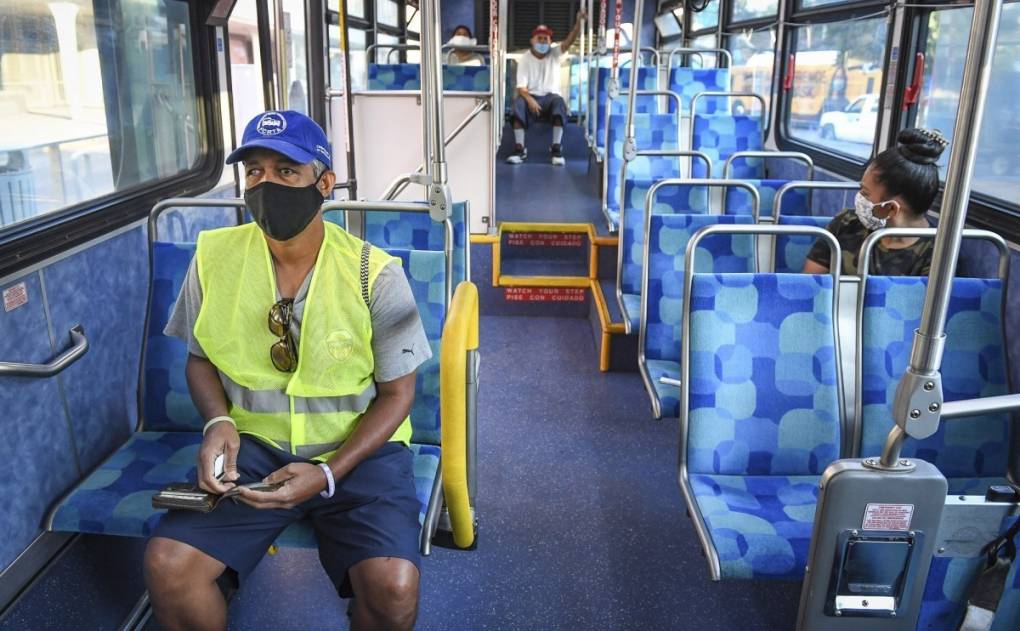
"caption": "Yonas Paulos, que tiene problemas de visión y depende de los autobuses para ir a sus citas médicas, toma asiento en un autobús de Fresno Area Express en el centro de Fresno el 28 de agosto de 2020. Le preocupa contraer el coronavirus mientras viaja en el autobús o espera en una parada.",
"description": "Yonas Paulos, que tiene problemas de visión y depende de los autobuses para ir a sus citas médicas, toma asiento en un autobús de Fresno Area Express en el centro de Fresno el 28 de agosto de 2020. Le preocupa contraer el coronavirus mientras viaja en el autobús o espera en una parada.",
"title": "COVID transit FAX",
"credit": "Fotografía de Craig Kohlruss, The Fresno Bee",
"status": "inherit",
"isLoading": false,
"fetchFailed": false
},
"news_121589": {
"type": "attachments",
"id": "news_121589",
"meta": {
"index": "attachments_1716263798",
"site": "news",
"id": "121589",
"found": true
},
"parent": 121571,
"imgSizes": {
"kqedFullSize": {
"file": "https://ww2.kqed.org/app/uploads/sites/10/2013/12/RS7039_AC_Transit_14oct2013_0217_web.jpg",
"width": 1536,
"height": 1024
}
},
"publishDate": 1387587056,
"modified": 1592852018,
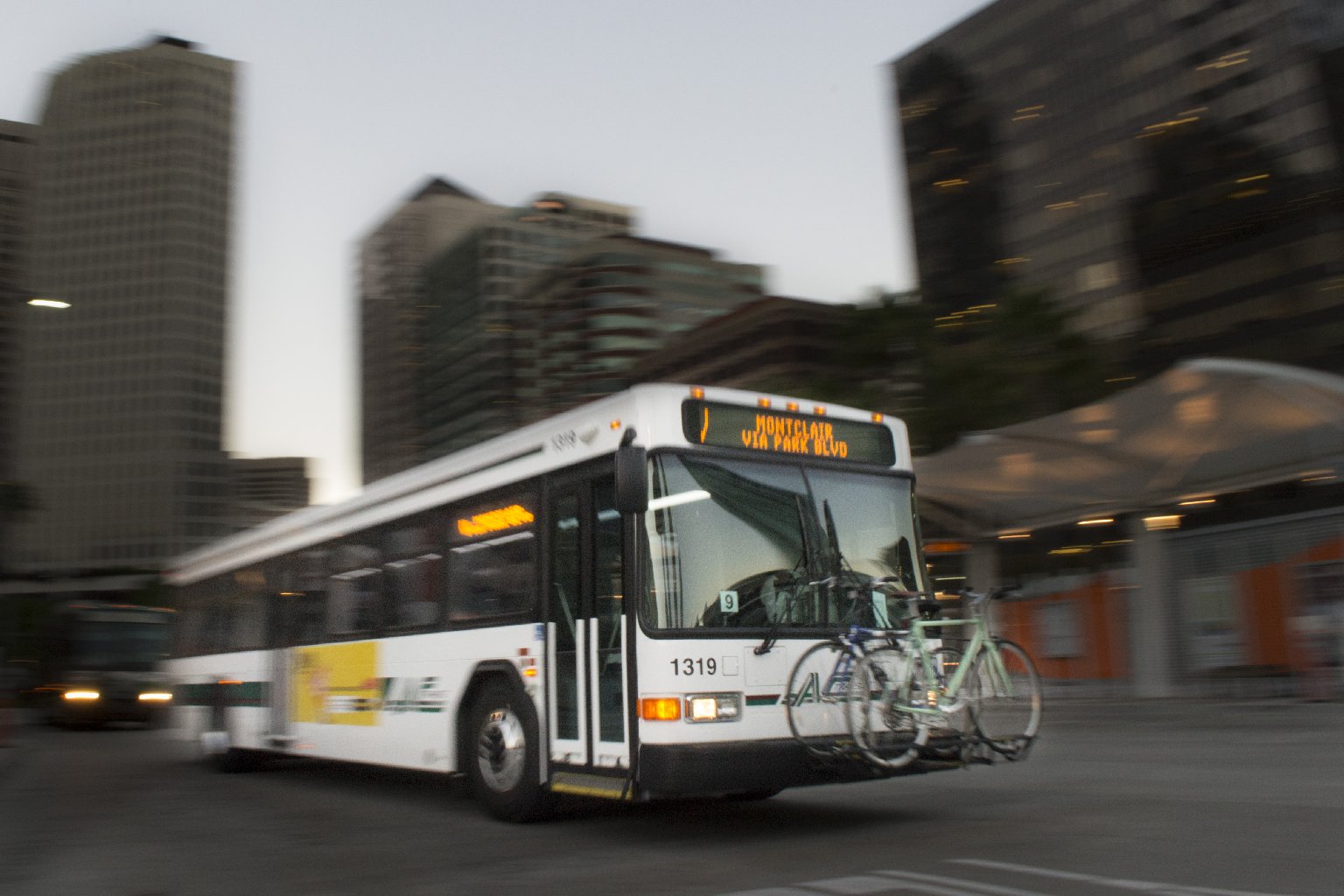
"caption": "An AC Transit bus.",
"description": null,
"title": "RS7039_AC_Transit_14oct2013_0217_web",
"credit": "Sara Bloomberg/KQED",
"status": "inherit",
"isLoading": false,
"fetchFailed": false
},
"news_11832881": {
"type": "attachments",
"id": "news_11832881",
"meta": {
"index": "attachments_1716263798",
"site": "news",
"id": "11832881",
"found": true
},
"parent": 11832880,
"imgSizes": {
"apple_news_ca_landscape_5_5": {
"file": "https://ww2.kqed.org/app/uploads/sites/10/2020/08/gettyimages-1227939563-990bd0824f2e90f39e972f5a6cd13f6e318fa589-1044x783.jpg",
"width": 1044,
"mimeType": "image/jpeg",
"height": 783
},
"apple_news_ca_square_4_0": {
"file": "https://ww2.kqed.org/app/uploads/sites/10/2020/08/gettyimages-1227939563-990bd0824f2e90f39e972f5a6cd13f6e318fa589-470x470.jpg",
"width": 470,
"mimeType": "image/jpeg",
"height": 470
},
"twentyfourteen-full-width": {
"file": "https://ww2.kqed.org/app/uploads/sites/10/2020/08/gettyimages-1227939563-990bd0824f2e90f39e972f5a6cd13f6e318fa589-1038x576.jpg",
"width": 1038,
"mimeType": "image/jpeg",
"height": 576
},
"thumbnail": {
"file": "https://ww2.kqed.org/app/uploads/sites/10/2020/08/gettyimages-1227939563-990bd0824f2e90f39e972f5a6cd13f6e318fa589-160x120.jpg",
"width": 160,
"mimeType": "image/jpeg",
"height": 120
},
"post-thumbnail": {
"file": "https://ww2.kqed.org/app/uploads/sites/10/2020/08/gettyimages-1227939563-990bd0824f2e90f39e972f5a6cd13f6e318fa589-672x372.jpg",
"width": 672,
"mimeType": "image/jpeg",
"height": 372
},
"kqedFullSize": {
"file": "https://ww2.kqed.org/app/uploads/sites/10/2020/08/gettyimages-1227939563-990bd0824f2e90f39e972f5a6cd13f6e318fa589-scaled-e1597104075537.jpg",
"width": 1920,
"height": 1440
},
"2048x2048": {
"file": "https://ww2.kqed.org/app/uploads/sites/10/2020/08/gettyimages-1227939563-990bd0824f2e90f39e972f5a6cd13f6e318fa589-2048x1536.jpg",
"width": 2048,
"mimeType": "image/jpeg",
"height": 1536
},
"apple_news_ca_landscape_4_7": {
"file": "https://ww2.kqed.org/app/uploads/sites/10/2020/08/gettyimages-1227939563-990bd0824f2e90f39e972f5a6cd13f6e318fa589-632x474.jpg",
"width": 632,
"mimeType": "image/jpeg",
"height": 474
},
"large": {
"file": "https://ww2.kqed.org/app/uploads/sites/10/2020/08/gettyimages-1227939563-990bd0824f2e90f39e972f5a6cd13f6e318fa589-1020x765.jpg",
"width": 1020,
"mimeType": "image/jpeg",
"height": 765
},
"apple_news_ca_landscape_4_0": {
"file": "https://ww2.kqed.org/app/uploads/sites/10/2020/08/gettyimages-1227939563-990bd0824f2e90f39e972f5a6cd13f6e318fa589-536x402.jpg",
"width": 536,
"mimeType": "image/jpeg",
"height": 402
},
"apple_news_ca_portrait_12_9": {
"file": "https://ww2.kqed.org/app/uploads/sites/10/2020/08/gettyimages-1227939563-990bd0824f2e90f39e972f5a6cd13f6e318fa589-1122x1496.jpg",
"width": 1122,
"mimeType": "image/jpeg",
"height": 1496
},
"medium": {
"file": "https://ww2.kqed.org/app/uploads/sites/10/2020/08/gettyimages-1227939563-990bd0824f2e90f39e972f5a6cd13f6e318fa589-800x600.jpg",
"width": 800,
"mimeType": "image/jpeg",
"height": 600
},
"apple_news_ca_portrait_4_0": {
"file": "https://ww2.kqed.org/app/uploads/sites/10/2020/08/gettyimages-1227939563-990bd0824f2e90f39e972f5a6cd13f6e318fa589-354x472.jpg",
"width": 354,
"mimeType": "image/jpeg",
"height": 472
},
"apple_news_ca_portrait_9_7": {
"file": "https://ww2.kqed.org/app/uploads/sites/10/2020/08/gettyimages-1227939563-990bd0824f2e90f39e972f5a6cd13f6e318fa589-840x1120.jpg",
"width": 840,
"mimeType": "image/jpeg",
"height": 1120
},
"apple_news_ca_landscape_12_9": {
"file": "https://ww2.kqed.org/app/uploads/sites/10/2020/08/gettyimages-1227939563-990bd0824f2e90f39e972f5a6cd13f6e318fa589-1832x1374.jpg",
"width": 1832,
"mimeType": "image/jpeg",
"height": 1374
},
"apple_news_ca_square_9_7": {
"file": "https://ww2.kqed.org/app/uploads/sites/10/2020/08/gettyimages-1227939563-990bd0824f2e90f39e972f5a6cd13f6e318fa589-1104x1104.jpg",
"width": 1104,
"mimeType": "image/jpeg",
"height": 1104
},
"1536x1536": {
"file": "https://ww2.kqed.org/app/uploads/sites/10/2020/08/gettyimages-1227939563-990bd0824f2e90f39e972f5a6cd13f6e318fa589-1536x1152.jpg",
"width": 1536,
"mimeType": "image/jpeg",
"height": 1152
},
"apple_news_ca_portrait_4_7": {
"file": "https://ww2.kqed.org/app/uploads/sites/10/2020/08/gettyimages-1227939563-990bd0824f2e90f39e972f5a6cd13f6e318fa589-414x552.jpg",
"width": 414,
"mimeType": "image/jpeg",
"height": 552
},
"apple_news_ca_square_12_9": {
"file": "https://ww2.kqed.org/app/uploads/sites/10/2020/08/gettyimages-1227939563-990bd0824f2e90f39e972f5a6cd13f6e318fa589-1472x1472.jpg",
"width": 1472,
"mimeType": "image/jpeg",
"height": 1472
},
"apple_news_ca_portrait_5_5": {
"file": "https://ww2.kqed.org/app/uploads/sites/10/2020/08/gettyimages-1227939563-990bd0824f2e90f39e972f5a6cd13f6e318fa589-687x916.jpg",
"width": 687,
"mimeType": "image/jpeg",
"height": 916
},
"full-width": {
"file": "https://ww2.kqed.org/app/uploads/sites/10/2020/08/gettyimages-1227939563-990bd0824f2e90f39e972f5a6cd13f6e318fa589-1920x1440.jpg",
"width": 1920,
"mimeType": "image/jpeg",
"height": 1440
},
"apple_news_ca_square_4_7": {
"file": "https://ww2.kqed.org/app/uploads/sites/10/2020/08/gettyimages-1227939563-990bd0824f2e90f39e972f5a6cd13f6e318fa589-550x550.jpg",
"width": 550,
"mimeType": "image/jpeg",
"height": 550
},
"apple_news_ca_landscape_9_7": {
"file": "https://ww2.kqed.org/app/uploads/sites/10/2020/08/gettyimages-1227939563-990bd0824f2e90f39e972f5a6cd13f6e318fa589-1376x1032.jpg",
"width": 1376,
"mimeType": "image/jpeg",
"height": 1032
},
"apple_news_ca_square_5_5": {
"file": "https://ww2.kqed.org/app/uploads/sites/10/2020/08/gettyimages-1227939563-990bd0824f2e90f39e972f5a6cd13f6e318fa589-912x912.jpg",
"width": 912,
"mimeType": "image/jpeg",
"height": 912
}
},
"publishDate": 1597103925,
"modified": 1597778666,
"caption": "In a ruling Monday, a California judge said Lyft and Uber have refused to comply with a California law, known as AB5, passed last year that was supposed to make it harder for companies in the state to hire workers as contractors.",
"description": "Rideshare drivers demonstrate against rideshare companies Uber and Lyft during a car caravan protest on August 6, 2020 in Los Angeles.",
"title": "In a ruling Monday, a California judge said Lyft and Uber have refused to comply with a California law, known as AB5, passed last year that was supposed to make it harder for companies in the state to hire workers as contractors.",
"credit": "Robyn Beck/AFP via Getty Images",
"status": "inherit",
"isLoading": false,
"fetchFailed": false
},
"news_11472079": {
"type": "attachments",
"id": "news_11472079",
"meta": {
"index": "attachments_1716263798",
"site": "news",
"id": "11472079",
"found": true
},
"parent": 11471687,
"imgSizes": {
"small": {
"file": "https://ww2.kqed.org/app/uploads/sites/10/2017/05/82410343_248ff2bc0e_o-1-520x390.jpg",
"width": 520,
"mimeType": "image/jpeg",
"height": 390
},
"twentyfourteen-full-width": {
"file": "https://ww2.kqed.org/app/uploads/sites/10/2017/05/82410343_248ff2bc0e_o-1-1038x576.jpg",
"width": 1038,
"mimeType": "image/jpeg",
"height": 576
},
"thumbnail": {
"file": "https://ww2.kqed.org/app/uploads/sites/10/2017/05/82410343_248ff2bc0e_o-1-160x120.jpg",
"width": 160,
"mimeType": "image/jpeg",
"height": 120
},
"fd-sm": {
"file": "https://ww2.kqed.org/app/uploads/sites/10/2017/05/82410343_248ff2bc0e_o-1-960x720.jpg",
"width": 960,
"mimeType": "image/jpeg",
"height": 720
},
"post-thumbnail": {
"file": "https://ww2.kqed.org/app/uploads/sites/10/2017/05/82410343_248ff2bc0e_o-1-672x372.jpg",
"width": 672,
"mimeType": "image/jpeg",
"height": 372
},
"xsmall": {
"file": "https://ww2.kqed.org/app/uploads/sites/10/2017/05/82410343_248ff2bc0e_o-1-375x281.jpg",
"width": 375,
"mimeType": "image/jpeg",
"height": 281
},
"kqedFullSize": {
"file": "https://ww2.kqed.org/app/uploads/sites/10/2017/05/82410343_248ff2bc0e_o-1.jpg",
"width": 1280,
"height": 960
},
"large": {
"file": "https://ww2.kqed.org/app/uploads/sites/10/2017/05/82410343_248ff2bc0e_o-1-1020x765.jpg",
"width": 1020,
"mimeType": "image/jpeg",
"height": 765
},
"xlarge": {
"file": "https://ww2.kqed.org/app/uploads/sites/10/2017/05/82410343_248ff2bc0e_o-1-1180x885.jpg",
"width": 1180,
"mimeType": "image/jpeg",
"height": 885
},
"guest-author-50": {
"file": "https://ww2.kqed.org/app/uploads/sites/10/2017/05/82410343_248ff2bc0e_o-1-50x50.jpg",
"width": 50,
"mimeType": "image/jpeg",
"height": 50
},
"guest-author-96": {
"file": "https://ww2.kqed.org/app/uploads/sites/10/2017/05/82410343_248ff2bc0e_o-1-96x96.jpg",
"width": 96,
"mimeType": "image/jpeg",
"height": 96
},
"medium": {
"file": "https://ww2.kqed.org/app/uploads/sites/10/2017/05/82410343_248ff2bc0e_o-1-800x600.jpg",
"width": 800,
"mimeType": "image/jpeg",
"height": 600
},
"guest-author-64": {
"file": "https://ww2.kqed.org/app/uploads/sites/10/2017/05/82410343_248ff2bc0e_o-1-64x64.jpg",
"width": 64,
"mimeType": "image/jpeg",
"height": 64
},
"guest-author-32": {
"file": "https://ww2.kqed.org/app/uploads/sites/10/2017/05/82410343_248ff2bc0e_o-1-32x32.jpg",
"width": 32,
"mimeType": "image/jpeg",
"height": 32
},
"fd-med": {
"file": "https://ww2.kqed.org/app/uploads/sites/10/2017/05/82410343_248ff2bc0e_o-1-1180x885.jpg",
"width": 1180,
"mimeType": "image/jpeg",
"height": 885
},
"detail": {
"file": "https://ww2.kqed.org/app/uploads/sites/10/2017/05/82410343_248ff2bc0e_o-1-150x150.jpg",
"width": 150,
"mimeType": "image/jpeg",
"height": 150
},
"guest-author-128": {
"file": "https://ww2.kqed.org/app/uploads/sites/10/2017/05/82410343_248ff2bc0e_o-1-128x128.jpg",
"width": 128,
"mimeType": "image/jpeg",
"height": 128
},
"xxsmall": {
"file": "https://ww2.kqed.org/app/uploads/sites/10/2017/05/82410343_248ff2bc0e_o-1-240x180.jpg",
"width": 240,
"mimeType": "image/jpeg",
"height": 180
}
},
"publishDate": 1495490489,
"modified": 1495490563,
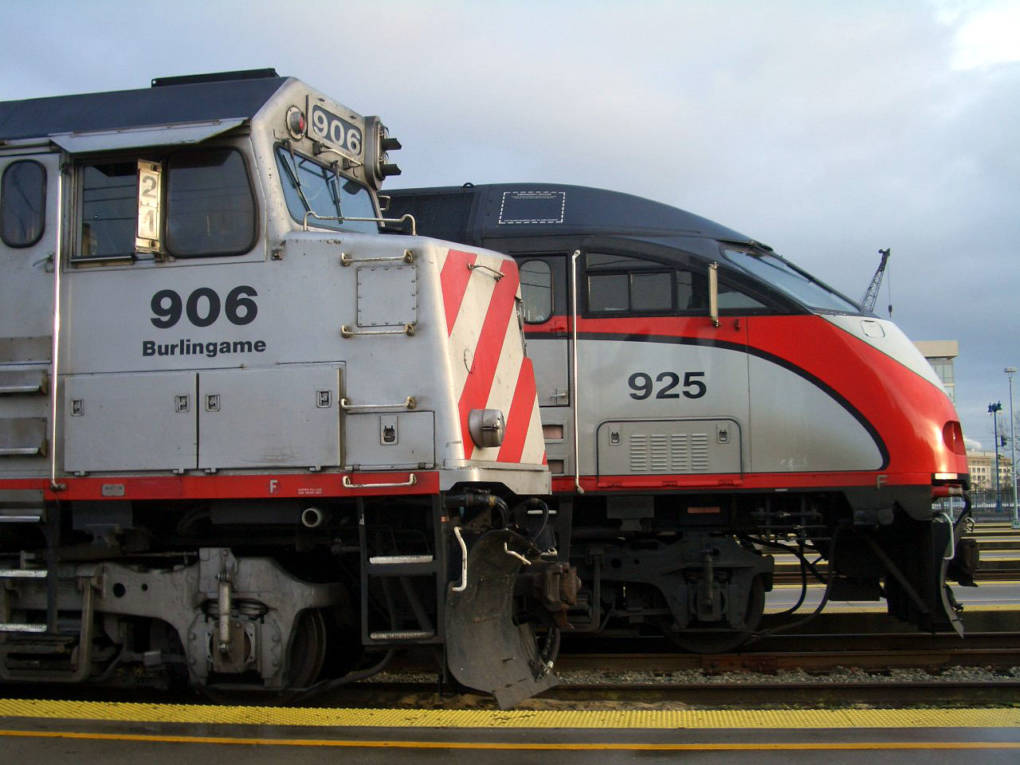
"caption": "Caltrain locomotives at San Francisco's Fourth Street/Townsend station.",
"description": null,
"title": "Caltrain-San Francisco",
"credit": "\u003ca href=\"https://flic.kr/p/8hnHZ\" target=\"_blank\">Todd Lappin\u003c/a>",
"status": "inherit",
"isLoading": false,
"fetchFailed": false
},
"news_11831716": {
"type": "attachments",
"id": "news_11831716",
"meta": {
"index": "attachments_1716263798",
"site": "news",
"id": "11831716",
"found": true
},
"parent": 11831708,
"imgSizes": {
"apple_news_ca_landscape_5_5": {
"file": "https://ww2.kqed.org/app/uploads/sites/10/2020/08/byproducts_080320_final-1044x783.png",
"width": 1044,
"mimeType": "image/png",
"height": 783
},
"apple_news_ca_square_4_0": {
"file": "https://ww2.kqed.org/app/uploads/sites/10/2020/08/byproducts_080320_final-470x470.png",
"width": 470,
"mimeType": "image/png",
"height": 470
},
"twentyfourteen-full-width": {
"file": "https://ww2.kqed.org/app/uploads/sites/10/2020/08/byproducts_080320_final-1038x576.png",
"width": 1038,
"mimeType": "image/png",
"height": 576
},
"thumbnail": {
"file": "https://ww2.kqed.org/app/uploads/sites/10/2020/08/byproducts_080320_final-160x118.png",
"width": 160,
"mimeType": "image/png",
"height": 118
},
"post-thumbnail": {
"file": "https://ww2.kqed.org/app/uploads/sites/10/2020/08/byproducts_080320_final-672x372.png",
"width": 672,
"mimeType": "image/png",
"height": 372
},
"kqedFullSize": {
"file": "https://ww2.kqed.org/app/uploads/sites/10/2020/08/byproducts_080320_final.png",
"width": 1920,
"height": 1413
},
"apple_news_ca_landscape_4_7": {
"file": "https://ww2.kqed.org/app/uploads/sites/10/2020/08/byproducts_080320_final-632x474.png",
"width": 632,
"mimeType": "image/png",
"height": 474
},
"large": {
"file": "https://ww2.kqed.org/app/uploads/sites/10/2020/08/byproducts_080320_final-1020x751.png",
"width": 1020,
"mimeType": "image/png",
"height": 751
},
"apple_news_ca_landscape_4_0": {
"file": "https://ww2.kqed.org/app/uploads/sites/10/2020/08/byproducts_080320_final-536x402.png",
"width": 536,
"mimeType": "image/png",
"height": 402
},
"apple_news_ca_portrait_12_9": {
"file": "https://ww2.kqed.org/app/uploads/sites/10/2020/08/byproducts_080320_final-1122x1413.png",
"width": 1122,
"mimeType": "image/png",
"height": 1413
},
"medium": {
"file": "https://ww2.kqed.org/app/uploads/sites/10/2020/08/byproducts_080320_final-800x589.png",
"width": 800,
"mimeType": "image/png",
"height": 589
},
"apple_news_ca_portrait_4_0": {
"file": "https://ww2.kqed.org/app/uploads/sites/10/2020/08/byproducts_080320_final-354x472.png",
"width": 354,
"mimeType": "image/png",
"height": 472
},
"apple_news_ca_portrait_9_7": {
"file": "https://ww2.kqed.org/app/uploads/sites/10/2020/08/byproducts_080320_final-840x1120.png",
"width": 840,
"mimeType": "image/png",
"height": 1120
},
"apple_news_ca_landscape_12_9": {
"file": "https://ww2.kqed.org/app/uploads/sites/10/2020/08/byproducts_080320_final-1832x1374.png",
"width": 1832,
"mimeType": "image/png",
"height": 1374
},
"apple_news_ca_square_9_7": {
"file": "https://ww2.kqed.org/app/uploads/sites/10/2020/08/byproducts_080320_final-1104x1104.png",
"width": 1104,
"mimeType": "image/png",
"height": 1104
},
"1536x1536": {
"file": "https://ww2.kqed.org/app/uploads/sites/10/2020/08/byproducts_080320_final-1536x1130.png",
"width": 1536,
"mimeType": "image/png",
"height": 1130
},
"apple_news_ca_portrait_4_7": {
"file": "https://ww2.kqed.org/app/uploads/sites/10/2020/08/byproducts_080320_final-414x552.png",
"width": 414,
"mimeType": "image/png",
"height": 552
},
"apple_news_ca_square_12_9": {
"file": "https://ww2.kqed.org/app/uploads/sites/10/2020/08/byproducts_080320_final-1472x1413.png",
"width": 1472,
"mimeType": "image/png",
"height": 1413
},
"apple_news_ca_portrait_5_5": {
"file": "https://ww2.kqed.org/app/uploads/sites/10/2020/08/byproducts_080320_final-687x916.png",
"width": 687,
"mimeType": "image/png",
"height": 916
},
"apple_news_ca_square_4_7": {
"file": "https://ww2.kqed.org/app/uploads/sites/10/2020/08/byproducts_080320_final-550x550.png",
"width": 550,
"mimeType": "image/png",
"height": 550
},
"apple_news_ca_landscape_9_7": {
"file": "https://ww2.kqed.org/app/uploads/sites/10/2020/08/byproducts_080320_final-1376x1032.png",
"width": 1376,
"mimeType": "image/png",
"height": 1032
},
"apple_news_ca_square_5_5": {
"file": "https://ww2.kqed.org/app/uploads/sites/10/2020/08/byproducts_080320_final-912x912.png",
"width": 912,
"mimeType": "image/png",
"height": 912
}
},
"publishDate": 1596493767,
"modified": 1596493809,
"caption": null,
"description": null,
"title": "byproducts_080320_final",
"credit": null,
"status": "inherit",
"isLoading": false,
"fetchFailed": false
},
"news_11024100": {
"type": "attachments",
"id": "news_11024100",
"meta": {
"index": "attachments_1716263798",
"site": "news",
"id": "11024100",
"found": true
},
"parent": 11024019,
"imgSizes": {
"twentyfourteen-full-width": {
"file": "https://ww2.kqed.org/app/uploads/sites/10/2016/07/M-refinery-1000x576.jpg",
"width": 1000,
"mimeType": "image/jpeg",
"height": 576
},
"thumbnail": {
"file": "https://ww2.kqed.org/app/uploads/sites/10/2016/07/M-refinery-400x266.jpg",
"width": 400,
"mimeType": "image/jpeg",
"height": 266
},
"fd-sm": {
"file": "https://ww2.kqed.org/app/uploads/sites/10/2016/07/M-refinery-960x639.jpg",
"width": 960,
"mimeType": "image/jpeg",
"height": 639
},
"post-thumbnail": {
"file": "https://ww2.kqed.org/app/uploads/sites/10/2016/07/M-refinery-672x372.jpg",
"width": 672,
"mimeType": "image/jpeg",
"height": 372
},
"kqedFullSize": {
"file": "https://ww2.kqed.org/app/uploads/sites/10/2016/07/M-refinery.jpg",
"width": 1000,
"height": 666
},
"guest-author-50": {
"file": "https://ww2.kqed.org/app/uploads/sites/10/2016/07/M-refinery-50x50.jpg",
"width": 50,
"mimeType": "image/jpeg",
"height": 50
},
"guest-author-96": {
"file": "https://ww2.kqed.org/app/uploads/sites/10/2016/07/M-refinery-96x96.jpg",
"width": 96,
"mimeType": "image/jpeg",
"height": 96
},
"medium": {
"file": "https://ww2.kqed.org/app/uploads/sites/10/2016/07/M-refinery-800x533.jpg",
"width": 800,
"mimeType": "image/jpeg",
"height": 533
},
"guest-author-64": {
"file": "https://ww2.kqed.org/app/uploads/sites/10/2016/07/M-refinery-64x64.jpg",
"width": 64,
"mimeType": "image/jpeg",
"height": 64
},
"guest-author-32": {
"file": "https://ww2.kqed.org/app/uploads/sites/10/2016/07/M-refinery-32x32.jpg",
"width": 32,
"mimeType": "image/jpeg",
"height": 32
},
"jmtc-small-thumb": {
"file": "https://ww2.kqed.org/app/uploads/sites/10/2016/07/M-refinery-280x150.jpg",
"width": 280,
"mimeType": "image/jpeg",
"height": 150
},
"detail": {
"file": "https://ww2.kqed.org/app/uploads/sites/10/2016/07/M-refinery-150x150.jpg",
"width": 150,
"mimeType": "image/jpeg",
"height": 150
},
"guest-author-128": {
"file": "https://ww2.kqed.org/app/uploads/sites/10/2016/07/M-refinery-128x128.jpg",
"width": 128,
"mimeType": "image/jpeg",
"height": 128
}
},
"publishDate": 1468881934,
"modified": 1596437511,
"caption": "A view of the Marathon Petroleum Corp. refinery in Martinez. ",
"description": "A view of the Marathon Corp. refinery in Martinez. ",
"title": "M-refinery",
"credit": "Tesoro",
"status": "inherit",
"isLoading": false,
"fetchFailed": false
},
"news_11830188": {
"type": "attachments",
"id": "news_11830188",
"meta": {
"index": "attachments_1716263798",
"site": "news",
"id": "11830188",
"found": true
},
"parent": 11829403,
"imgSizes": {
"apple_news_ca_landscape_5_5": {
"file": "https://ww2.kqed.org/app/uploads/sites/10/2020/07/covidsafetravel-1044x783.jpg",
"width": 1044,
"mimeType": "image/jpeg",
"height": 783
},
"apple_news_ca_square_4_0": {
"file": "https://ww2.kqed.org/app/uploads/sites/10/2020/07/covidsafetravel-470x470.jpg",
"width": 470,
"mimeType": "image/jpeg",
"height": 470
},
"twentyfourteen-full-width": {
"file": "https://ww2.kqed.org/app/uploads/sites/10/2020/07/covidsafetravel-1038x576.jpg",
"width": 1038,
"mimeType": "image/jpeg",
"height": 576
},
"thumbnail": {
"file": "https://ww2.kqed.org/app/uploads/sites/10/2020/07/covidsafetravel-160x108.jpg",
"width": 160,
"mimeType": "image/jpeg",
"height": 108
},
"post-thumbnail": {
"file": "https://ww2.kqed.org/app/uploads/sites/10/2020/07/covidsafetravel-672x372.jpg",
"width": 672,
"mimeType": "image/jpeg",
"height": 372
},
"kqedFullSize": {
"file": "https://ww2.kqed.org/app/uploads/sites/10/2020/07/covidsafetravel.jpg",
"width": 1900,
"height": 1280
},
"apple_news_ca_landscape_4_7": {
"file": "https://ww2.kqed.org/app/uploads/sites/10/2020/07/covidsafetravel-632x474.jpg",
"width": 632,
"mimeType": "image/jpeg",
"height": 474
},
"large": {
"file": "https://ww2.kqed.org/app/uploads/sites/10/2020/07/covidsafetravel-1020x687.jpg",
"width": 1020,
"mimeType": "image/jpeg",
"height": 687
},
"apple_news_ca_landscape_4_0": {
"file": "https://ww2.kqed.org/app/uploads/sites/10/2020/07/covidsafetravel-536x402.jpg",
"width": 536,
"mimeType": "image/jpeg",
"height": 402
},
"apple_news_ca_portrait_12_9": {
"file": "https://ww2.kqed.org/app/uploads/sites/10/2020/07/covidsafetravel-1122x1280.jpg",
"width": 1122,
"mimeType": "image/jpeg",
"height": 1280
},
"medium": {
"file": "https://ww2.kqed.org/app/uploads/sites/10/2020/07/covidsafetravel-800x539.jpg",
"width": 800,
"mimeType": "image/jpeg",
"height": 539
},
"apple_news_ca_portrait_4_0": {
"file": "https://ww2.kqed.org/app/uploads/sites/10/2020/07/covidsafetravel-354x472.jpg",
"width": 354,
"mimeType": "image/jpeg",
"height": 472
},
"apple_news_ca_portrait_9_7": {
"file": "https://ww2.kqed.org/app/uploads/sites/10/2020/07/covidsafetravel-840x1120.jpg",
"width": 840,
"mimeType": "image/jpeg",
"height": 1120
},
"apple_news_ca_landscape_12_9": {
"file": "https://ww2.kqed.org/app/uploads/sites/10/2020/07/covidsafetravel-1832x1280.jpg",
"width": 1832,
"mimeType": "image/jpeg",
"height": 1280
},
"apple_news_ca_square_9_7": {
"file": "https://ww2.kqed.org/app/uploads/sites/10/2020/07/covidsafetravel-1104x1104.jpg",
"width": 1104,
"mimeType": "image/jpeg",
"height": 1104
},
"1536x1536": {
"file": "https://ww2.kqed.org/app/uploads/sites/10/2020/07/covidsafetravel-1536x1035.jpg",
"width": 1536,
"mimeType": "image/jpeg",
"height": 1035
},
"apple_news_ca_portrait_4_7": {
"file": "https://ww2.kqed.org/app/uploads/sites/10/2020/07/covidsafetravel-414x552.jpg",
"width": 414,
"mimeType": "image/jpeg",
"height": 552
},
"apple_news_ca_square_12_9": {
"file": "https://ww2.kqed.org/app/uploads/sites/10/2020/07/covidsafetravel-1472x1280.jpg",
"width": 1472,
"mimeType": "image/jpeg",
"height": 1280
},
"apple_news_ca_portrait_5_5": {
"file": "https://ww2.kqed.org/app/uploads/sites/10/2020/07/covidsafetravel-687x916.jpg",
"width": 687,
"mimeType": "image/jpeg",
"height": 916
},
"apple_news_ca_square_4_7": {
"file": "https://ww2.kqed.org/app/uploads/sites/10/2020/07/covidsafetravel-550x550.jpg",
"width": 550,
"mimeType": "image/jpeg",
"height": 550
},
"apple_news_ca_landscape_9_7": {
"file": "https://ww2.kqed.org/app/uploads/sites/10/2020/07/covidsafetravel-1376x1032.jpg",
"width": 1376,
"mimeType": "image/jpeg",
"height": 1032
},
"apple_news_ca_square_5_5": {
"file": "https://ww2.kqed.org/app/uploads/sites/10/2020/07/covidsafetravel-912x912.jpg",
"width": 912,
"mimeType": "image/jpeg",
"height": 912
}
},
"publishDate": 1595443237,
"modified": 1595443296,
"caption": "Can you travel safely right now? Travel is officially discouraged, but people are wondering how they can reduce the risk of spreading COVID-19 if they do.",
"description": "Can you travel safely right now? Travel is officially discouraged, but people are wondering how they can reduce the risk of spreading COVID-19 if they do.",
"title": "covidsafetravel",
"credit": "Johannes Plenio/Pexels",
"status": "inherit",
"isLoading": false,
"fetchFailed": false
},
"news_103775": {
"type": "attachments",
"id": "news_103775",
"meta": {
"index": "attachments_1716263798",
"site": "news",
"id": "103775",
"found": true
},
"parent": 103764,
"imgSizes": {
"kqedFullSize": {
"file": "https://ww2.kqed.org/app/uploads/sites/10/2013/07/climate.jpg.jpg",
"width": 1448,
"height": 1086
}
},
"publishDate": 1374004981,
"modified": 1595186120,
"caption": "The Phillips 66 oil refinery in the Contra Costa County town of Rodeo. ",
"description": null,
"title": "Phillips 66 Refinery-Rodeo",
"credit": "Craig Miller/KQED",
"status": "inherit",
"isLoading": false,
"fetchFailed": false
},
"news_11682062": {
"type": "attachments",
"id": "news_11682062",
"meta": {
"index": "attachments_1716263798",
"site": "news",
"id": "11682062",
"found": true
},
"parent": 11682006,
"imgSizes": {
"small": {
"file": "https://ww2.kqed.org/app/uploads/sites/10/2018/07/cowell-520x345.jpg",
"width": 520,
"mimeType": "image/jpeg",
"height": 345
},
"thumbnail": {
"file": "https://ww2.kqed.org/app/uploads/sites/10/2018/07/cowell-160x106.jpg",
"width": 160,
"mimeType": "image/jpeg",
"height": 106
},
"xsmall": {
"file": "https://ww2.kqed.org/app/uploads/sites/10/2018/07/cowell-375x249.jpg",
"width": 375,
"mimeType": "image/jpeg",
"height": 249
},
"kqedFullSize": {
"file": "https://ww2.kqed.org/app/uploads/sites/10/2018/07/cowell.jpg",
"width": 550,
"height": 365
},
"guest-author-50": {
"file": "https://ww2.kqed.org/app/uploads/sites/10/2018/07/cowell-50x50.jpg",
"width": 50,
"mimeType": "image/jpeg",
"height": 50
},
"guest-author-96": {
"file": "https://ww2.kqed.org/app/uploads/sites/10/2018/07/cowell-96x96.jpg",
"width": 96,
"mimeType": "image/jpeg",
"height": 96
},
"guest-author-64": {
"file": "https://ww2.kqed.org/app/uploads/sites/10/2018/07/cowell-64x64.jpg",
"width": 64,
"mimeType": "image/jpeg",
"height": 64
},
"detail": {
"file": "https://ww2.kqed.org/app/uploads/sites/10/2018/07/cowell-150x150.jpg",
"width": 150,
"mimeType": "image/jpeg",
"height": 150
},
"guest-author-32": {
"file": "https://ww2.kqed.org/app/uploads/sites/10/2018/07/cowell-32x32.jpg",
"width": 32,
"mimeType": "image/jpeg",
"height": 32
},
"guest-author-128": {
"file": "https://ww2.kqed.org/app/uploads/sites/10/2018/07/cowell-128x128.jpg",
"width": 128,
"mimeType": "image/jpeg",
"height": 128
},
"xxsmall": {
"file": "https://ww2.kqed.org/app/uploads/sites/10/2018/07/cowell-240x159.jpg",
"width": 240,
"mimeType": "image/jpeg",
"height": 159
}
},
"publishDate": 1532374617,
"modified": 1563399959,
"caption": "John Lee Cowell was arrested for murder in the fatal July 22, 2018, stabbing of Nia Wilson, 18, of Oakland, at the MacArthur BART Station.",
"description": null,
"title": "BART-John Lee Cowell",
"credit": "BART",
"status": "inherit",
"isLoading": false,
"fetchFailed": false
},
"news_11798205": {
"type": "attachments",
"id": "news_11798205",
"meta": {
"index": "attachments_1716263798",
"site": "news",
"id": "11798205",
"found": true
},
"parent": 11797767,
"imgSizes": {
"apple_news_ca_landscape_5_5": {
"file": "https://ww2.kqed.org/app/uploads/sites/10/2020/01/cymric191103-1044x783.jpg",
"width": 1044,
"mimeType": "image/jpeg",
"height": 783
},
"apple_news_ca_square_4_0": {
"file": "https://ww2.kqed.org/app/uploads/sites/10/2020/01/cymric191103-470x470.jpg",
"width": 470,
"mimeType": "image/jpeg",
"height": 470
},
"twentyfourteen-full-width": {
"file": "https://ww2.kqed.org/app/uploads/sites/10/2020/01/cymric191103-1038x576.jpg",
"width": 1038,
"mimeType": "image/jpeg",
"height": 576
},
"thumbnail": {
"file": "https://ww2.kqed.org/app/uploads/sites/10/2020/01/cymric191103-160x98.jpg",
"width": 160,
"mimeType": "image/jpeg",
"height": 98
},
"post-thumbnail": {
"file": "https://ww2.kqed.org/app/uploads/sites/10/2020/01/cymric191103-672x372.jpg",
"width": 672,
"mimeType": "image/jpeg",
"height": 372
},
"kqedFullSize": {
"file": "https://ww2.kqed.org/app/uploads/sites/10/2020/01/cymric191103.jpg",
"width": 1920,
"height": 1180
},
"apple_news_ca_landscape_4_7": {
"file": "https://ww2.kqed.org/app/uploads/sites/10/2020/01/cymric191103-632x474.jpg",
"width": 632,
"mimeType": "image/jpeg",
"height": 474
},
"large": {
"file": "https://ww2.kqed.org/app/uploads/sites/10/2020/01/cymric191103-1020x627.jpg",
"width": 1020,
"mimeType": "image/jpeg",
"height": 627
},
"apple_news_ca_landscape_4_0": {
"file": "https://ww2.kqed.org/app/uploads/sites/10/2020/01/cymric191103-536x402.jpg",
"width": 536,
"mimeType": "image/jpeg",
"height": 402
},
"apple_news_ca_portrait_12_9": {
"file": "https://ww2.kqed.org/app/uploads/sites/10/2020/01/cymric191103-1122x1180.jpg",
"width": 1122,
"mimeType": "image/jpeg",
"height": 1180
},
"medium": {
"file": "https://ww2.kqed.org/app/uploads/sites/10/2020/01/cymric191103-800x492.jpg",
"width": 800,
"mimeType": "image/jpeg",
"height": 492
},
"apple_news_ca_portrait_4_0": {
"file": "https://ww2.kqed.org/app/uploads/sites/10/2020/01/cymric191103-354x472.jpg",
"width": 354,
"mimeType": "image/jpeg",
"height": 472
},
"apple_news_ca_portrait_9_7": {
"file": "https://ww2.kqed.org/app/uploads/sites/10/2020/01/cymric191103-840x1120.jpg",
"width": 840,
"mimeType": "image/jpeg",
"height": 1120
},
"apple_news_ca_landscape_12_9": {
"file": "https://ww2.kqed.org/app/uploads/sites/10/2020/01/cymric191103-1832x1180.jpg",
"width": 1832,
"mimeType": "image/jpeg",
"height": 1180
},
"apple_news_ca_square_9_7": {
"file": "https://ww2.kqed.org/app/uploads/sites/10/2020/01/cymric191103-1104x1104.jpg",
"width": 1104,
"mimeType": "image/jpeg",
"height": 1104
},
"apple_news_ca_portrait_4_7": {
"file": "https://ww2.kqed.org/app/uploads/sites/10/2020/01/cymric191103-414x552.jpg",
"width": 414,
"mimeType": "image/jpeg",
"height": 552
},
"apple_news_ca_square_12_9": {
"file": "https://ww2.kqed.org/app/uploads/sites/10/2020/01/cymric191103-1472x1180.jpg",
"width": 1472,
"mimeType": "image/jpeg",
"height": 1180
},
"apple_news_ca_portrait_5_5": {
"file": "https://ww2.kqed.org/app/uploads/sites/10/2020/01/cymric191103-687x916.jpg",
"width": 687,
"mimeType": "image/jpeg",
"height": 916
},
"full-width": {
"file": "https://ww2.kqed.org/app/uploads/sites/10/2020/01/cymric191103-1920x1180.jpg",
"width": 1920,
"mimeType": "image/jpeg",
"height": 1180
},
"apple_news_ca_square_4_7": {
"file": "https://ww2.kqed.org/app/uploads/sites/10/2020/01/cymric191103-550x550.jpg",
"width": 550,
"mimeType": "image/jpeg",
"height": 550
},
"apple_news_ca_landscape_9_7": {
"file": "https://ww2.kqed.org/app/uploads/sites/10/2020/01/cymric191103-1376x1032.jpg",
"width": 1376,
"mimeType": "image/jpeg",
"height": 1032
},
"apple_news_ca_square_5_5": {
"file": "https://ww2.kqed.org/app/uploads/sites/10/2020/01/cymric191103-912x912.jpg",
"width": 912,
"mimeType": "image/jpeg",
"height": 912
}
},
"publishDate": 1580115661,
"modified": 1594946828,
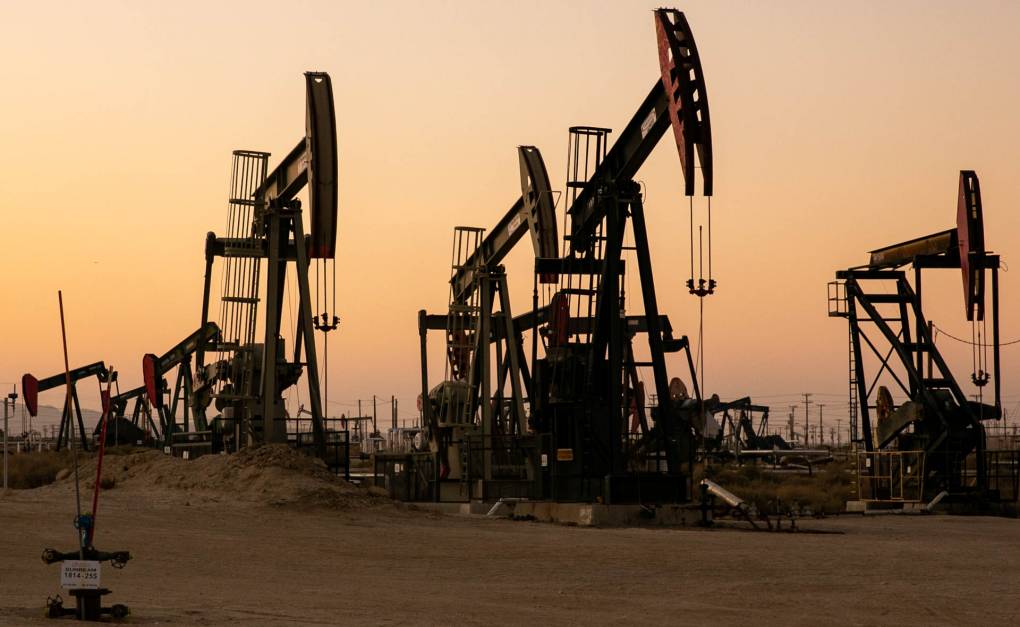
"caption": "Oil pumping units in Kern County's Cymric Oil Field, November 2019.",
"description": "Oil pumping units in Kern County's Cymric Oil Field, November 2019.",
"title": "Kern County-Cymric Oil Field",
"credit": "Dan Brekke/KQED",
"status": "inherit",
"isLoading": false,
"fetchFailed": false
}
},
"audioPlayerReducer": {
"postId": "stream_live",
"isPaused": true,
"isPlaying": false,
"pfsActive": false,
"pledgeModalIsOpen": true,
"playerDrawerIsOpen": false,
"liveAudioPlayStartedAt": 0,
"liveAudioPlayContext": ""
},
"authorsReducer": {
"byline_news_11837051": {
"type": "authors",
"id": "byline_news_11837051",
"meta": {
"override": true
},
"slug": "byline_news_11837051",
"name": "Katrina Schwartz and Rob Speight",
"isLoading": false
},
"byline_news_11836346": {
"type": "authors",
"id": "byline_news_11836346",
"meta": {
"override": true
},
"slug": "byline_news_11836346",
"name": "Elizabeth Castillo, Cal Matters",
"isLoading": false
},
"byline_news_11832880": {
"type": "authors",
"id": "byline_news_11832880",
"meta": {
"override": true
},
"slug": "byline_news_11832880",
"name": "Bobby Allyn",
"isLoading": false
},
"danbrekke": {
"type": "authors",
"id": "222",
"meta": {
"index": "authors_1716337520",
"id": "222",
"found": true
},
"name": "Dan Brekke",
"firstName": "Dan",
"lastName": "Brekke",
"slug": "danbrekke",
"email": "dbrekke@kqed.org",
"display_author_email": true,
"staff_mastheads": [
"news",
"science"
],
"title": "KQED Editor and Reporter",
"bio": "Dan Brekke is a reporter and editor for KQED News, responsible for coverage of topics ranging from California water issues to the Bay Area's transportation challenges. In a newsroom career that began in Chicago in 1972, Dan has worked for \u003cem>The San Francisco Examiner,\u003c/em> Wired and TechTV and has been published in The New York Times, The New York Times Magazine, Business 2.0, Salon and elsewhere.\r\n\r\nSince joining KQED in 2007, Dan has reported, edited and produced both radio and online features and breaking news pieces. He has shared as both editor and reporter in four Society of Professional Journalists Norcal Excellence in Journalism awards and one Edward R. Murrow regional award. He was chosen for a spring 2017 residency at the Mesa Refuge to advance his research on California salmon.\r\n\r\nEmail Dan at: \u003ca href=\"mailto:dbrekke@kqed.org\">dbrekke@kqed.org\u003c/a>\r\n\r\n\u003cstrong>Twitter:\u003c/strong> \u003ca href=\"https://twitter.com/danbrekke\" rel=\"noopener noreferrer\">twitter.com/danbrekke\u003c/a>\r\n\u003cstrong>Facebook:\u003c/strong> \u003ca href=\"https://www.facebook.com/danbrekke\" rel=\"noopener noreferrer\">www.facebook.com/danbrekke\u003c/a>\r\n\u003cstrong>LinkedIn:\u003c/strong> \u003ca href=\"https://www.linkedin.com/in/danbrekke\" rel=\"noopener noreferrer\">www.linkedin.com/in/danbrekke\u003c/a>",
"avatar": "https://secure.gravatar.com/avatar/8f1f0d2a978fb3b23426c922c7e2af558fa36905b49c4ce76a97dc3c72d27226?s=600&d=mm&r=g",
"twitter": "danbrekke",
"bluesky": null,
"facebook": null,
"instagram": "https://www.instagram.com/dan.brekke/",
"linkedin": "https://www.linkedin.com/in/danbrekke/",
"sites": [
{
"site": "news",
"roles": [
"administrator",
"create_posts"
]
},
{
"site": "stateofhealth",
"roles": [
"editor"
]
},
{
"site": "science",
"roles": [
"editor"
]
},
{
"site": "quest",
"roles": [
"contributor"
]
},
{
"site": "food",
"roles": [
"contributor"
]
},
{
"site": "forum",
"roles": [
"contributor"
]
},
{
"site": "elections",
"roles": [
"editor"
]
},
{
"site": "liveblog",
"roles": [
"editor"
]
}
],
"headData": {
"title": "Dan Brekke | KQED",
"description": "KQED Editor and Reporter",
"ogImgSrc": "https://secure.gravatar.com/avatar/8f1f0d2a978fb3b23426c922c7e2af558fa36905b49c4ce76a97dc3c72d27226?s=600&d=mm&r=g",
"twImgSrc": "https://secure.gravatar.com/avatar/8f1f0d2a978fb3b23426c922c7e2af558fa36905b49c4ce76a97dc3c72d27226?s=600&d=mm&r=g"
},
"isLoading": false,
"link": "/author/danbrekke"
},
"tgoldberg": {
"type": "authors",
"id": "258",
"meta": {
"index": "authors_1716337520",
"id": "258",
"found": true
},
"name": "Ted Goldberg",
"firstName": "Ted",
"lastName": "Goldberg",
"slug": "tgoldberg",
"email": "tgoldberg@kqed.org",
"display_author_email": true,
"staff_mastheads": [
"news"
],
"title": "KQED Managing Editor, News and Newscasts",
"bio": "Ted Goldberg is Managing Editor of News and Newscasts at KQED. His main reporting beat is the Bay Area's oil refining industry.\r\n\r\nPrior to joining KQED in 2014, Ted worked at CBS News and WCBS AM in New York and Bay City News and KCBS Radio in San Francisco. He graduated from Oberlin College in Ohio in 1998.",
"avatar": "https://secure.gravatar.com/avatar/30ce2e4fe89135e104f89be2394d16225b9d36c121b5b3cb7651ce642978b96f?s=600&d=blank&r=g",
"twitter": "TedrickG",
"bluesky": null,
"facebook": null,
"instagram": null,
"linkedin": null,
"sites": [
{
"site": "news",
"roles": [
"editor"
]
},
{
"site": "science",
"roles": [
"editor"
]
}
],
"headData": {
"title": "Ted Goldberg | KQED",
"description": "KQED Managing Editor, News and Newscasts",
"ogImgSrc": "https://secure.gravatar.com/avatar/30ce2e4fe89135e104f89be2394d16225b9d36c121b5b3cb7651ce642978b96f?s=600&d=blank&r=g",
"twImgSrc": "https://secure.gravatar.com/avatar/30ce2e4fe89135e104f89be2394d16225b9d36c121b5b3cb7651ce642978b96f?s=600&d=blank&r=g"
},
"isLoading": false,
"link": "/author/tgoldberg"
},
"markfiore": {
"type": "authors",
"id": "3236",
"meta": {
"index": "authors_1716337520",
"id": "3236",
"found": true
},
"name": "Mark Fiore",
"firstName": "Mark",
"lastName": "Fiore",
"slug": "markfiore",
"email": "mark@markfiore.com",
"display_author_email": false,
"staff_mastheads": [
"news"
],
"title": "KQED News Cartoonist",
"bio": "\u003ca href=\"http://www.MarkFiore.com\">MarkFiore.com\u003c/a> | \u003ca href=\"https://twitter.com/markfiore\">Follow on Twitter\u003c/a> | \u003ca href=\"https://www.facebook.com/pages/Mark-Fiore-Animated-Political-Cartoons/94451707396?ref=bookmarks\">Facebook\u003c/a> | \u003ca href=\"mailto:mark@markfiore.com\">email\u003c/a>\r\n\r\nPulitzer Prize-winner, Mark Fiore, who the Wall Street Journal has called “the undisputed guru of the form,” creates animated political cartoons in San Francisco, where his work has been featured regularly on the San Francisco Chronicle’s web site, SFGate.com. His work has appeared on Newsweek.com, Slate.com, CBSNews.com, MotherJones.com, DailyKos.com and NPR’s web site. Fiore’s political animation has appeared on CNN, Frontline, Bill Moyers Journal, Salon.com and cable and broadcast outlets across the globe.\r\n\r\nBeginning his professional life by drawing traditional political cartoons for newspapers, Fiore’s work appeared in publications ranging from the Washington Post to the Los Angeles Times. In the late 1990s, he began to experiment with animating political cartoons and, after a short stint at the San Jose Mercury News as their staff cartoonist, Fiore devoted all his energies to animation.\r\nGrowing up in California, Fiore also spent a good portion of his life in the backwoods of Idaho. It was this combination that shaped him politically. Mark majored in political science at Colorado College, where, in a perfect send-off for a cartoonist, he received his diploma in 1991 as commencement speaker Dick Cheney smiled approvingly.\r\nMark Fiore was awarded the Pulitzer Prize for political cartooning in 2010, a Robert F. Kennedy Journalism Award in 2004 and has twice received an Online Journalism Award for commentary from the Online News Association (2002, 2008). Fiore has received two awards for his work in new media from the National Cartoonists Society (2001, 2002), and in 2006 received The James Madison Freedom of Information Award from The Society of Professional Journalists.",
"avatar": "https://secure.gravatar.com/avatar/fc4e2a612b15b67bad0c6f0e1db4ca9b?s=600&d=blank&r=g",
"twitter": "MarkFiore",
"facebook": null,
"instagram": "https://www.instagram.com/markfiore/?hl=en",
"linkedin": null,
"sites": [
{
"site": "arts",
"roles": [
"contributor"
]
},
{
"site": "news",
"roles": [
"editor"
]
},
{
"site": "futureofyou",
"roles": [
"editor"
]
},
{
"site": "science",
"roles": [
"editor"
]
}
],
"headData": {
"title": "Mark Fiore | KQED",
"description": "KQED News Cartoonist",
"ogImgSrc": "https://secure.gravatar.com/avatar/fc4e2a612b15b67bad0c6f0e1db4ca9b?s=600&d=blank&r=g",
"twImgSrc": "https://secure.gravatar.com/avatar/fc4e2a612b15b67bad0c6f0e1db4ca9b?s=600&d=blank&r=g"
},
"isLoading": false,
"link": "/author/markfiore"
},
"carlysevern": {
"type": "authors",
"id": "3243",
"meta": {
"index": "authors_1716337520",
"id": "3243",
"found": true
},
"name": "Carly Severn",
"firstName": "Carly",
"lastName": "Severn",
"slug": "carlysevern",
"email": "csevern@kqed.org",
"display_author_email": false,
"staff_mastheads": [
"news"
],
"title": "Senior Editor, Audience News ",
"bio": "Carly is KQED's Senior Editor of Audience News on the Digital News team, and has reported for the California Report Magazine, Bay Curious and KQED Arts. She's formerly the host of \u003ca href=\"http://ww2.kqed.org/pop/category/the-cooler/\" rel=\"noopener noreferrer\">The Cooler\u003c/a> podcast.",
"avatar": "https://secure.gravatar.com/avatar/54037bf5c128fe678f0ef26cec97a93f2e7f220a22d7285703328f12c42c1b1d?s=600&d=blank&r=g",
"twitter": "teacupinthebay",
"bluesky": null,
"facebook": null,
"instagram": null,
"linkedin": null,
"sites": [
{
"site": "",
"roles": [
"editor"
]
},
{
"site": "arts",
"roles": [
"editor"
]
},
{
"site": "news",
"roles": [
"administrator"
]
},
{
"site": "pop",
"roles": [
"editor"
]
},
{
"site": "futureofyou",
"roles": [
"editor"
]
},
{
"site": "about",
"roles": [
"administrator"
]
},
{
"site": "mindshift",
"roles": [
"editor"
]
},
{
"site": "bayareabites",
"roles": [
"editor"
]
},
{
"site": "stateofhealth",
"roles": [
"editor"
]
},
{
"site": "science",
"roles": [
"editor"
]
},
{
"site": "food",
"roles": [
"contributor"
]
},
{
"site": "forum",
"roles": [
"editor"
]
},
{
"site": "perspectives",
"roles": [
"administrator"
]
},
{
"site": "liveblog",
"roles": [
"editor"
]
}
],
"headData": {
"title": "Carly Severn | KQED",
"description": "Senior Editor, Audience News ",
"ogImgSrc": "https://secure.gravatar.com/avatar/54037bf5c128fe678f0ef26cec97a93f2e7f220a22d7285703328f12c42c1b1d?s=600&d=blank&r=g",
"twImgSrc": "https://secure.gravatar.com/avatar/54037bf5c128fe678f0ef26cec97a93f2e7f220a22d7285703328f12c42c1b1d?s=600&d=blank&r=g"
},
"isLoading": false,
"link": "/author/carlysevern"
},
"jrodriguez": {
"type": "authors",
"id": "11690",
"meta": {
"index": "authors_1716337520",
"id": "11690",
"found": true
},
"name": "Joe Fitzgerald Rodriguez",
"firstName": "Joe",
"lastName": "Fitzgerald Rodriguez",
"slug": "jrodriguez",
"email": "jrodriguez@kqed.org",
"display_author_email": true,
"staff_mastheads": [
"news"
],
"title": "Reporter and Producer",
"bio": "Joe Fitzgerald Rodriguez is a reporter and digital producer for KQED covering politics. Joe most recently wrote for the \u003cem>San Francisco Examiner\u003c/em> as a political columnist covering The City. He was raised in San Francisco and has spent his reporting career in his beloved, foggy, city by the bay. Joe was 12-years-old when he conducted his first interview in journalism, grilling former San Francisco Mayor Willie Brown for the Marina Middle School newspaper, \u003cem>The Penguin Press, \u003c/em>and he continues to report on the San Francisco Bay Area to this day.",
"avatar": "https://secure.gravatar.com/avatar/2247beb0564c1e9c62228d5649d2edac?s=600&d=blank&r=g",
"twitter": "FitztheReporter",
"facebook": null,
"instagram": "https://www.instagram.com/fitzthereporter/",
"linkedin": null,
"sites": [
{
"site": "",
"roles": [
"editor"
]
},
{
"site": "arts",
"roles": [
"editor"
]
},
{
"site": "news",
"roles": [
"editor"
]
},
{
"site": "science",
"roles": [
"editor"
]
},
{
"site": "elections",
"roles": [
"editor"
]
},
{
"site": "liveblog",
"roles": [
"editor"
]
}
],
"headData": {
"title": "Joe Fitzgerald Rodriguez | KQED",
"description": "Reporter and Producer",
"ogImgSrc": "https://secure.gravatar.com/avatar/2247beb0564c1e9c62228d5649d2edac?s=600&d=blank&r=g",
"twImgSrc": "https://secure.gravatar.com/avatar/2247beb0564c1e9c62228d5649d2edac?s=600&d=blank&r=g"
},
"isLoading": false,
"link": "/author/jrodriguez"
}
},
"pagesReducer": {
"news_category_transportation": {
"type": "terms",
"id": "news_1397",
"meta": {
"index": "terms_1716263798",
"site": "news",
"id": "1397",
"score": 12.939901
},
"featImg": null,
"name": "Transportation",
"description": null,
"taxonomy": "category",
"headData": {
"twImgId": null,
"twTitle": null,
"ogTitle": null,
"ogImgId": null,
"twDescription": null,
"description": null,
"title": "Transportation Archives | KQED News",
"ogDescription": null
},
"ttid": 1409,
"slug": "transportation",
"isLoading": false,
"title": "Transportation",
"pageMeta": {
"site": "news",
"WpPageTemplate": "page-topic-editorial",
"currentPage": 35
},
"blocks": [
{
"blockName": "kqed/post-list",
"attrs": {
"layout": "cardArticle2",
"query": "posts/news?category=transportation",
"seeMore": false,
"paginated": true,
"page": 35
}
},
{
"blockName": "kqed/ad"
}
]
}
},
"pfsSessionReducer": {},
"postsReducer": {
"stream_live": {
"type": "live",
"id": "stream_live",
"audioUrl": "https://streams.kqed.org/kqedradio",
"title": "Live Stream",
"excerpt": "Live Stream information currently unavailable.",
"link": "/radio",
"featImg": "",
"label": {
"name": "KQED Live",
"link": "/"
}
},
"stream_kqedNewscast": {
"type": "posts",
"id": "stream_kqedNewscast",
"audioUrl": "https://www.kqed.org/.stream/anon/radio/RDnews/newscast.mp3?_=1",
"title": "KQED Newscast",
"featImg": "",
"label": {
"name": "88.5 FM",
"link": "/"
}
},
"news_11837051": {
"type": "posts",
"id": "news_11837051",
"meta": {
"index": "posts_1716263798",
"site": "news",
"id": "11837051",
"score": null,
"sort": [
1599732041000
]
},
"parent": 0,
"labelTerm": {
"site": "news",
"term": 33523
},
"blocks": [],
"publishDate": 1599732041,
"format": "standard",
"title": "The Story Behind the Golden Gate Bridge's New Howl",
"headTitle": "The Story Behind the Golden Gate Bridge’s New Howl | KQED",
"content": "\u003cp>If you’ve driven across the Golden Gate Bridge in the last couple of months, you may have heard a startlingly loud humming noise coming from the bridge itself. Bay Curious listener Ryan heard it one day while driving his motorcycle across the bridge.\u003c/p>\n\u003cp>“Once COVID started it was just fun to go on 20-minute rides,” Ryan said. “It was a pretty easy way to get out of the house and not talk to people.”\u003c/p>\n\u003cp>[baycuriouspodcastinfo]\u003c/p>\n\u003cp>Ryan normally avoids crossing the bridge on windy days, but had no choice one day after missing his exit. That’s when he heard it.\u003c/p>\n\u003cp>“It made this really really loud noise, it sounded like, I don’t know, like a howl or a whistle or something like that,” he said. “It kinda sounded like when you blow into a beer bottle.”\u003c/p>\n\u003cp>Ryan is not the only person wondering what’s going on with the bridge. Residents report hearing it across the bay, at Lands End, and from other points miles away.\u003c/p>\n\u003cblockquote class=\"twitter-tweet\">\n\u003cp dir=\"ltr\" lang=\"en\">As much as I would‘ve loved this eerie sound to be aliens coming for us, apparently it’s the installation of new wind resistance railing that has turned the Golden Gate Bridge into a huge instrument that can be heard all around the Bay! Hypnotizing! \u003ca href=\"https://twitter.com/hashtag/goldengatebridge?src=hash&ref_src=twsrc%5Etfw\">#goldengatebridge\u003c/a> \u003ca href=\"https://twitter.com/hashtag/SanFrancisco?src=hash&ref_src=twsrc%5Etfw\">#SanFrancisco\u003c/a> \u003ca href=\"https://t.co/DhWEnttp2X\">pic.twitter.com/DhWEnttp2X\u003c/a>\u003c/p>\n\u003cp>— Shirin (@Shirin_Jnk) \u003ca href=\"https://twitter.com/Shirin_Jnk/status/1269143410268467200?ref_src=twsrc%5Etfw\">June 6, 2020\u003c/a>\u003c/p>\u003c/blockquote>\n\u003cp>KQED’s senior editor for Arts, Gabe Meline, \u003ca href=\"https://www.kqed.org/arts/13881451/the-golden-gate-bridge-sounds-like-a-david-lynch-movie-now\">looked into the strange phenomenon\u003c/a> back in June. The sound is coming from new sidewalk railing slats installed as part of a wind retrofit meant to make the bridge safer and more resilient.\u003c/p>\n\u003cp>But Bay Curious’ sound engineer, Rob Speight, wanted to know a lot more. He dug into the issue further, wondering why bridge engineers decided to change the slats in the first place.\u003c/p>\n\u003cp>[ad fullwidth]\u003c/p>\n\u003cp>“When bridge engineers were designing the original railings, they wanted to provide pedestrians a sense of safety while allowing drivers to take in views of San Francisco to the east and the Pacific Ocean to the west, while on the roadway,” says Paolo Cosulich-Schwartz, spokesperson for the Golden Gate Bridge, Highway and Transportation District.\u003c/p>\n\u003cp>The slats used to be fairly big, like two-by-fours, but in the recent retrofit the engineers made them thinner. They noticed that when the wind hit the slats just right, it made a sound. But they were unprepared for how distinctive — and loud — the howling would be. They also may have underestimated how much people would hate it.\u003c/p>\n\u003cfigure id=\"attachment_11837053\" class=\"wp-caption aligncenter\" style=\"max-width: 640px\">\u003cimg decoding=\"async\" loading=\"lazy\" class=\"size-large wp-image-11837053\" src=\"https://ww2.kqed.org/app/uploads/sites/10/2020/09/Screen-Shot-2020-09-08-at-2.47.05-PM-1020x421.png\" alt=\"\" width=\"640\" height=\"264\" srcset=\"https://ww2.kqed.org/app/uploads/sites/10/2020/09/Screen-Shot-2020-09-08-at-2.47.05-PM-1020x421.png 1020w, https://ww2.kqed.org/app/uploads/sites/10/2020/09/Screen-Shot-2020-09-08-at-2.47.05-PM-800x330.png 800w, https://ww2.kqed.org/app/uploads/sites/10/2020/09/Screen-Shot-2020-09-08-at-2.47.05-PM-160x66.png 160w, https://ww2.kqed.org/app/uploads/sites/10/2020/09/Screen-Shot-2020-09-08-at-2.47.05-PM.png 1448w\" sizes=\"(max-width: 640px) 100vw, 640px\">\u003cfigcaption class=\"wp-caption-text\">Screenshot of a Reddit discussion about the Golden Gate Bridge’s new howl. The \u003ca href=\"https://www.reddit.com/r/engineering/comments/gxvg7i/golden_gate_bridge_side_path_redesign/\">whole thread\u003c/a> is interesting. \u003ccite>(\u003ca href=\"https://www.reddit.com/r/engineering/comments/gxvg7i/golden_gate_bridge_side_path_redesign/\">Reddit\u003c/a>)\u003c/cite>\u003c/figcaption>\u003c/figure>\n\u003cp>“In order to create the effect, we do need to see winds with a little bit of northwest or southwest [direction to them],” says Cosulich-Schwartz. “We’re only hearing it when there’s a bit of an angle to it.”\u003c/p>\n\u003cp>Wind speeds have to be fairly high, too, although engineers are still looking into the specifics. So, the bridge definitely isn’t making this sound all the time, one reason why it can be so eerie when it does.\u003c/p>\n\u003cp>One other cool thing about the howl is its frequency — 440Hz. As any musician will know, A440 is the tuning standard for the musical note A above C. In general, all western instruments use this frequency as the basis of a standard tuning.\u003c/p>\n\u003cblockquote class=\"twitter-tweet\">\n\u003cp dir=\"ltr\" lang=\"en\">Golden Gate Bridge be like \u003ca href=\"https://t.co/VQD0f9jcHg\">pic.twitter.com/VQD0f9jcHg\u003c/a>\u003c/p>\n\u003cp>— Gina Linetti (@GinaLin88822273) \u003ca href=\"https://twitter.com/GinaLin88822273/status/1269136844689559552?ref_src=twsrc%5Etfw\">June 6, 2020\u003c/a>\u003c/p>\u003c/blockquote>\n\u003cp>“It’s a happy coincidence that the bridge making a new noise is a musical feature,” Cosulich-Schwartz says. “[It’s] certainly not something we designed for, which is why we’re doing testing. And we’ll be evaluating mitigation measures to dampen or eliminate the noise based on feedback we’ve heard from the community.”\u003c/p>\n\u003cp>That means you have a short window to hear the bridge singing it’s mysterious song across the bay before the district implements a fix. Keep an eye on the forecast for north-westerly or south-westerly winds and then go listen.\u003c/p>\n\u003cp>[baycuriousquestion]\u003c/p>\n\u003cp>\u003c/p>\n",
"stats": {
"hasVideo": false,
"hasChartOrMap": false,
"hasAudio": false,
"hasPolis": false,
"wordCount": 713,
"hasGoogleForm": false,
"hasGallery": false,
"hasHearkenModule": true,
"iframeSrcs": [],
"paragraphCount": 20
},
"modified": 1700590206,
"excerpt": "Have you heard the strange, ethereal noise coming from the Golden Gate Bridge?",
"headData": {
"twImgId": "",
"twTitle": "",
"ogTitle": "",
"ogImgId": "",
"twDescription": "",
"description": "Have you heard the strange, ethereal noise coming from the Golden Gate Bridge?",
"title": "The Story Behind the Golden Gate Bridge's New Howl | KQED",
"ogDescription": "",
"schema": {
"@context": "https://schema.org",
"@type": "NewsArticle",
"headline": "The Story Behind the Golden Gate Bridge's New Howl",
"datePublished": "2020-09-10T03:00:41-07:00",
"dateModified": "2023-11-21T10:10:06-08:00",
"image": "https://cdn.kqed.org/wp-content/uploads/2020/02/KQED-OG-Image@1x.png",
"isAccessibleForFree": "True",
"publisher": {
"@type": "NewsMediaOrganization",
"@id": "https://www.kqed.org/#organization",
"name": "KQED",
"logo": "https://cdn.kqed.org/wp-content/uploads/2020/02/KQED-OG-Image@1x.png",
"url": "https://www.kqed.org",
"sameAs": [
"https://www.facebook.com/KQED",
"https://twitter.com/KQED",
"https://www.instagram.com/kqed/",
"https://www.tiktok.com/@kqedofficial",
"https://www.linkedin.com/company/kqed",
"https://www.youtube.com/channel/UCeC0IOo7i1P_61zVUWbJ4nw"
]
}
}
},
"guestAuthors": [],
"slug": "the-story-behind-the-golden-gate-bridges-new-howl",
"status": "publish",
"audioUrl": "https://dcs.megaphone.fm/KQINC7759503830.mp3?key=fa21997cc66491ccb310e82ef423da83",
"nprByline": "Katrina Schwartz and Rob Speight",
"path": "/news/11837051/the-story-behind-the-golden-gate-bridges-new-howl",
"audioTrackLength": null,
"parsedContent": [
{
"type": "contentString",
"content": "\u003cdiv class=\"post-body\">\u003cp>\u003cp>If you’ve driven across the Golden Gate Bridge in the last couple of months, you may have heard a startlingly loud humming noise coming from the bridge itself. Bay Curious listener Ryan heard it one day while driving his motorcycle across the bridge.\u003c/p>\n\u003cp>“Once COVID started it was just fun to go on 20-minute rides,” Ryan said. “It was a pretty easy way to get out of the house and not talk to people.”\u003c/p>\n\u003cp>\u003c/p>\u003cp>\u003caside class=\"alignleft utils-parseShortcode-shortcodes-__bayCuriousPodcastShortcode__bayCurious\">\u003cimg src=https://cdn.kqed.org/wp-content/uploads/2023/02/bayCuriousLogo.png alt=\"Bay Curious Podcast\" loading=\"lazy\" />\n \u003ca href=\"/news/series/baycurious\">Bay Curious\u003c/a> is a podcast that answers your questions about the Bay Area.\n Subscribe on \u003ca href=\"https://itunes.apple.com/us/podcast/bay-curious/id1172473406\" target=\"_blank\" rel=\"noopener noreferrer\">Apple Podcasts\u003c/a>,\n \u003ca href=\"http://www.npr.org/podcasts/500557090/bay-curious\" target=\"_blank\" rel=\"noopener noreferrer\">NPR One\u003c/a> or your favorite podcast platform.\u003c/aside>\u003c/p>\u003cp>\u003c/p>\n\u003cp>Ryan normally avoids crossing the bridge on windy days, but had no choice one day after missing his exit. That’s when he heard it.\u003c/p>\n\u003cp>“It made this really really loud noise, it sounded like, I don’t know, like a howl or a whistle or something like that,” he said. “It kinda sounded like when you blow into a beer bottle.”\u003c/p>\n\u003cp>Ryan is not the only person wondering what’s going on with the bridge. Residents report hearing it across the bay, at Lands End, and from other points miles away.\u003c/p>\n\u003cblockquote class=\"twitter-tweet\">\n\u003cp dir=\"ltr\" lang=\"en\">As much as I would‘ve loved this eerie sound to be aliens coming for us, apparently it’s the installation of new wind resistance railing that has turned the Golden Gate Bridge into a huge instrument that can be heard all around the Bay! Hypnotizing! \u003ca href=\"https://twitter.com/hashtag/goldengatebridge?src=hash&ref_src=twsrc%5Etfw\">#goldengatebridge\u003c/a> \u003ca href=\"https://twitter.com/hashtag/SanFrancisco?src=hash&ref_src=twsrc%5Etfw\">#SanFrancisco\u003c/a> \u003ca href=\"https://t.co/DhWEnttp2X\">pic.twitter.com/DhWEnttp2X\u003c/a>\u003c/p>\n\u003cp>— Shirin (@Shirin_Jnk) \u003ca href=\"https://twitter.com/Shirin_Jnk/status/1269143410268467200?ref_src=twsrc%5Etfw\">June 6, 2020\u003c/a>\u003c/p>\u003c/blockquote>\n\u003cp>KQED’s senior editor for Arts, Gabe Meline, \u003ca href=\"https://www.kqed.org/arts/13881451/the-golden-gate-bridge-sounds-like-a-david-lynch-movie-now\">looked into the strange phenomenon\u003c/a> back in June. The sound is coming from new sidewalk railing slats installed as part of a wind retrofit meant to make the bridge safer and more resilient.\u003c/p>\n\u003cp>But Bay Curious’ sound engineer, Rob Speight, wanted to know a lot more. He dug into the issue further, wondering why bridge engineers decided to change the slats in the first place.\u003c/p>\n\u003cp>\u003c/p>\u003c/div>",
"attributes": {
"named": {},
"numeric": []
}
},
{
"type": "component",
"content": "",
"name": "ad",
"attributes": {
"named": {
"label": "fullwidth"
},
"numeric": [
"fullwidth"
]
}
},
{
"type": "contentString",
"content": "\u003cdiv class=\"post-body\">\u003cp>\u003c/p>\n\u003cp>“When bridge engineers were designing the original railings, they wanted to provide pedestrians a sense of safety while allowing drivers to take in views of San Francisco to the east and the Pacific Ocean to the west, while on the roadway,” says Paolo Cosulich-Schwartz, spokesperson for the Golden Gate Bridge, Highway and Transportation District.\u003c/p>\n\u003cp>The slats used to be fairly big, like two-by-fours, but in the recent retrofit the engineers made them thinner. They noticed that when the wind hit the slats just right, it made a sound. But they were unprepared for how distinctive — and loud — the howling would be. They also may have underestimated how much people would hate it.\u003c/p>\n\u003cfigure id=\"attachment_11837053\" class=\"wp-caption aligncenter\" style=\"max-width: 640px\">\u003cimg decoding=\"async\" loading=\"lazy\" class=\"size-large wp-image-11837053\" src=\"https://ww2.kqed.org/app/uploads/sites/10/2020/09/Screen-Shot-2020-09-08-at-2.47.05-PM-1020x421.png\" alt=\"\" width=\"640\" height=\"264\" srcset=\"https://ww2.kqed.org/app/uploads/sites/10/2020/09/Screen-Shot-2020-09-08-at-2.47.05-PM-1020x421.png 1020w, https://ww2.kqed.org/app/uploads/sites/10/2020/09/Screen-Shot-2020-09-08-at-2.47.05-PM-800x330.png 800w, https://ww2.kqed.org/app/uploads/sites/10/2020/09/Screen-Shot-2020-09-08-at-2.47.05-PM-160x66.png 160w, https://ww2.kqed.org/app/uploads/sites/10/2020/09/Screen-Shot-2020-09-08-at-2.47.05-PM.png 1448w\" sizes=\"(max-width: 640px) 100vw, 640px\">\u003cfigcaption class=\"wp-caption-text\">Screenshot of a Reddit discussion about the Golden Gate Bridge’s new howl. The \u003ca href=\"https://www.reddit.com/r/engineering/comments/gxvg7i/golden_gate_bridge_side_path_redesign/\">whole thread\u003c/a> is interesting. \u003ccite>(\u003ca href=\"https://www.reddit.com/r/engineering/comments/gxvg7i/golden_gate_bridge_side_path_redesign/\">Reddit\u003c/a>)\u003c/cite>\u003c/figcaption>\u003c/figure>\n\u003cp>“In order to create the effect, we do need to see winds with a little bit of northwest or southwest [direction to them],” says Cosulich-Schwartz. “We’re only hearing it when there’s a bit of an angle to it.”\u003c/p>\n\u003cp>Wind speeds have to be fairly high, too, although engineers are still looking into the specifics. So, the bridge definitely isn’t making this sound all the time, one reason why it can be so eerie when it does.\u003c/p>\n\u003cp>One other cool thing about the howl is its frequency — 440Hz. As any musician will know, A440 is the tuning standard for the musical note A above C. In general, all western instruments use this frequency as the basis of a standard tuning.\u003c/p>\n\u003cblockquote class=\"twitter-tweet\">\n\u003cp dir=\"ltr\" lang=\"en\">Golden Gate Bridge be like \u003ca href=\"https://t.co/VQD0f9jcHg\">pic.twitter.com/VQD0f9jcHg\u003c/a>\u003c/p>\n\u003cp>— Gina Linetti (@GinaLin88822273) \u003ca href=\"https://twitter.com/GinaLin88822273/status/1269136844689559552?ref_src=twsrc%5Etfw\">June 6, 2020\u003c/a>\u003c/p>\u003c/blockquote>\n\u003cp>“It’s a happy coincidence that the bridge making a new noise is a musical feature,” Cosulich-Schwartz says. “[It’s] certainly not something we designed for, which is why we’re doing testing. And we’ll be evaluating mitigation measures to dampen or eliminate the noise based on feedback we’ve heard from the community.”\u003c/p>\n\u003cp>That means you have a short window to hear the bridge singing it’s mysterious song across the bay before the district implements a fix. Keep an eye on the forecast for north-westerly or south-westerly winds and then go listen.\u003c/p>\n\u003cp>\u003c/p>\u003c/div>",
"attributes": {
"named": {},
"numeric": []
}
},
{
"type": "component",
"content": "",
"name": "baycuriousquestion",
"attributes": {
"named": {
"label": ""
},
"numeric": []
}
},
{
"type": "contentString",
"content": "\u003cdiv class=\"post-body\">\u003cp>\u003c/p>\n\u003cp>\u003c/p>\n\u003c/div>\u003c/p>",
"attributes": {
"named": {},
"numeric": []
}
}
],
"link": "/news/11837051/the-story-behind-the-golden-gate-bridges-new-howl",
"authors": [
"byline_news_11837051"
],
"programs": [
"news_33523"
],
"series": [
"news_17986"
],
"categories": [
"news_28250",
"news_33520",
"news_1397"
],
"tags": [
"news_1276"
],
"featImg": "news_11837060",
"label": "news_33523"
},
"news_11836745": {
"type": "posts",
"id": "news_11836745",
"meta": {
"index": "posts_1716263798",
"site": "news",
"id": "11836745",
"score": null,
"sort": [
1599251667000
]
},
"guestAuthors": [],
"slug": "travel-restrictions-during-covid-19-in-california",
"title": "Travel Restrictions During COVID-19: Can I Take a Trip in California?",
"publishDate": 1599251667,
"format": "image",
"headTitle": "Travel Restrictions During COVID-19: Can I Take a Trip in California? | KQED",
"labelTerm": {},
"content": "\u003cp>\u003cem>This story was updated November 13 at 10 a.m. An \u003ca href=\"https://www.kqed.org/news/11829403/summer-travel-during-covid-19-in-california-can-i-do-it-safely\">earlier version\u003c/a> of this story was published on July 22.\u003c/em>\u003c/p>\n\u003cp>\u003cstrong>Go straight to:\u003c/strong>\u003c/p>\n\u003cul>\n\u003cli>\u003cstrong>\u003ca href=\"#official\">Official travel restrictions in California\u003c/a>\u003c/strong>\u003c/li>\n\u003cli>\u003cstrong>\u003ca href=\"#fly\">Is it safe to fly?\u003c/a>\u003c/strong>\u003c/li>\n\u003cli>\u003cstrong>\u003ca href=\"#road\">Road trips during COVID-19\u003c/a>\u003c/strong>\u003c/li>\n\u003cli>\u003cstrong>\u003ca href=\"#hotel\">Staying in hotels and Airbnbs\u003c/a>\u003c/strong>\u003c/li>\n\u003c/ul>\n\u003cp>If you’re wondering about the official advice for travel in California, eight months into shelter-in-place, it’s still “limit your travel.”\u003c/p>\n\u003cp>And yet people \u003cem>are\u003c/em> traveling. Hotels are being reserved. Airbnbs are being booked. Airports are busy. As the holiday season fast approaches, people are wondering if — and how — they might visit family for traditional gatherings, while also reducing the risk of spreading COVID-19.\u003c/p>\n\u003cp>So we looked at guidance from the state of California and the Centers for Disease Control and Prevention (CDC), as well as these Bay Area medical experts:\u003c/p>\n\u003cul>\n\u003cli>\u003cstrong>Dr. Yvonne Maldonado\u003c/strong>, senior associate dean, faculty development and diversity, professor of pediatrics (infectious diseases) and of health research and policy at Stanford University\u003c/li>\n\u003cli>\u003cstrong>Dr. Peter Chin-Hong\u003c/strong>, professor of medicine, associate dean for regional campuses at UCSF\u003c/li>\n\u003c/ul>\n\u003ch3>\u003ca id=\"official\">\u003c/a>What Are the Official Rules on Traveling?\u003c/h3>\n\u003cp>It depends on who you ask.\u003c/p>\n\u003cp>On November 13, Gov. Gavin Newsom joined the governors of Oregon and Washington in \u003ca href=\"https://www.kqed.org/coronavirusliveupdates/news/11847404/newsom-urges-against-out-of-state-travel-advises-quarantine-for-those-who-do\">issuing a travel advisory\u003c/a> urging people entering their states or returning from travel outside their states to self-quarantine to slow the spread of the coronavirus. \u003ca href=\"https://www.cdph.ca.gov/Programs/CID/DCDC/Pages/COVID-19/Travel-Advisory.aspx\">The advisories\u003c/a> urge against non-essential out-of-state travel, ask people to self-quarantine for 14 days after arriving from another state or country and encourage residents to stay local.\u003cspan style=\"font-weight: 400;\">[aside postID=\"news_11846759\"]\u003c/span>\u003c/p>\n\u003cp>This state guidance comes on the heels of \u003ca href=\"https://cchealth.org/press-releases/2020/1109-ABAHO-Holiday-Recommendations.pdf\" target=\"_blank\" rel=\"noopener noreferrer\">recommendations\u003c/a> that were recently released by the nine Bay Area counties plus the city of Berkeley around travel, with the holidays specifically in mind. The guidance states that “nonessential travel, including holiday travel, is not recommended. Traveling outside the Bay Area will increase your chance of getting infected and spreading the virus to others after your return.”\u003c/p>\n\u003cfigure id=\"attachment_11829698\" class=\"wp-caption alignnone\" style=\"max-width: 1900px\">\u003cimg loading=\"lazy\" decoding=\"async\" class=\"size-full wp-image-11829698\" src=\"https://ww2.kqed.org/app/uploads/sites/10/2020/07/bixby.jpg\" alt=\"\" width=\"1900\" height=\"1280\" srcset=\"https://cdn.kqed.org/wp-content/uploads/sites/10/2020/07/bixby.jpg 1900w, https://cdn.kqed.org/wp-content/uploads/sites/10/2020/07/bixby-800x539.jpg 800w, https://cdn.kqed.org/wp-content/uploads/sites/10/2020/07/bixby-1020x687.jpg 1020w, https://cdn.kqed.org/wp-content/uploads/sites/10/2020/07/bixby-160x108.jpg 160w, https://cdn.kqed.org/wp-content/uploads/sites/10/2020/07/bixby-1536x1035.jpg 1536w\" sizes=\"(max-width: 1900px) 100vw, 1900px\">\u003cfigcaption class=\"wp-caption-text\">Destinations like Big Sur are usually popular tourist hotspots. \u003ccite>(Kelsey Johnson/Pexels)\u003c/cite>\u003c/figcaption>\u003c/figure>\n\u003cp>The\u003ca href=\"https://covid19.ca.gov/stay-home-except-for-essential-needs/#:~:text=All%20individuals%20living%20in%20the,the%20Questions%20%26%20Answers%20below).\"> state’s own travel guidance\u003c/a> still reiterates that travel should really only be for work or in urgent situations right now, and still asks you to “avoid (traveling) long distances for vacations or pleasure as much as possible” to help slow the spread of the coronavirus. But they \u003cem>also\u003c/em> offer\u003ca href=\"https://www.cdc.gov/coronavirus/2019-ncov/travelers/travel-in-the-us.html\"> this specific guidance\u003c/a> to consider from the CDC, “before traveling away from your community”:\u003c/p>\n\u003cul>\n\u003cli>Is the coronavirus spreading where you are traveling?\u003c/li>\n\u003cli>Are you or those you are traveling with more likely to get very sick from coronavirus?\u003c/li>\n\u003cli>Will you be able to keep 6 feet of physical distance from others during or after your trip?\u003c/li>\n\u003c/ul>\n\u003cp>The state’s official tourism body, Visit California, says that COVID-19 travel restrictions due to the coronavirus pandemic “\u003ca href=\"https://www.visitcalifornia.com/latest-covid-19-coronavirus\">still allow travel in California\u003c/a>, and many tourism assets have reopened.” They also urge you to consider the impact of wildfires in the state on your plans.\u003c/p>\n\u003cp>So, essentially, recreational travel is still discouraged right now. But if you’re determined to travel despite the official guidance, or if you absolutely have to travel for an essential reason, there are at least certain strategies you might employ to reduce the risk of spreading the coronavirus as much as possible.\u003c/p>\n\u003ch3>What Are the Safety Basics for Travel?\u003c/h3>\n\u003cp>The basic rules for any travel right now are the same for being outside your home at any time: wear your mask, distance as much as possible and wash your hands. Everything else would be about being an informed consumer and using your best judgement to keep risk as low as possible.\u003c/p>\n\u003cp>Per the state’s guidance, \u003ca href=\"https://covid19.ca.gov/stay-home-except-for-essential-needs/#:~:text=All%20individuals%20living%20in%20the,the%20Questions%20%26%20Answers%20below).\">do not travel if you are sick\u003c/a>, or if someone in your household has had the coronavirus in the last two weeks. Do not travel with someone who is sick.\u003c/p>\n\u003cp>The state also recommends that if you choose to travel, you need to start by doing some in-depth planning. Check in on what COVID-19 infection and hospitalization rates are like with the local health department where you live, with the health department at your ultimate destination — and with health departments along your planned route, too.\u003c/p>\n\u003ch3>Can I Travel to See My Family for the Holidays?\u003c/h3>\n\u003cp>A lot of people are wondering this right now, especially as the pandemic has prevented many families from maintaining their usual physical contact for months now.\u003c/p>\n\u003cfigure id=\"attachment_11829707\" class=\"wp-caption aligncenter\" style=\"max-width: 1900px\">\u003cimg loading=\"lazy\" decoding=\"async\" class=\"size-full wp-image-11829707\" src=\"https://ww2.kqed.org/app/uploads/sites/10/2020/07/family.jpg\" alt=\"\" width=\"1900\" height=\"1280\" srcset=\"https://cdn.kqed.org/wp-content/uploads/sites/10/2020/07/family.jpg 1900w, https://cdn.kqed.org/wp-content/uploads/sites/10/2020/07/family-800x539.jpg 800w, https://cdn.kqed.org/wp-content/uploads/sites/10/2020/07/family-1020x687.jpg 1020w, https://cdn.kqed.org/wp-content/uploads/sites/10/2020/07/family-160x108.jpg 160w, https://cdn.kqed.org/wp-content/uploads/sites/10/2020/07/family-1536x1035.jpg 1536w\" sizes=\"(max-width: 1900px) 100vw, 1900px\">\u003cfigcaption class=\"wp-caption-text\">With usual visits disrupted by the pandemic, many people are craving tips to see family \u003ccite>(Andrea Piacquadio/Pexels)\u003c/cite>\u003c/figcaption>\u003c/figure>\n\u003cp>While doctors say there’s no way to completely eliminate the risk of catching or spreading the novel coronavirus when venturing out, there are things you can do to reduce the risk. The \u003ca href=\"https://cchealth.org/press-releases/2020/1109-ABAHO-Holiday-Recommendations.pdf\" target=\"_blank\" rel=\"noopener noreferrer\">recommendations \u003c/a> released by Bay Area public health officers contains tips for for doing just that, with travel for the holidays specifically in mind.\u003c/p>\n\u003cp>If you travel outside the Bay Area, this guidance “strongly” recommends a self-imposed quarantine for 14 days when you return “if your activities while travelling put you at higher risk of getting COVID-19.” Such activities are defined as including:\u003c/p>\n\u003cul>\n\u003cli>“Spending time within 6 feet of people you do not normally live with, while you or anyone around you was not wearing a face mask – especially if you were indoors”\u003c/li>\n\u003cli>“Traveling on planes, buses, trains, public transportation, or other shared vehicles, if face masks were not worn at all times by both you and the other people in the vehicle.”\u003c/li>\n\u003c/ul>\n\u003cp>For folks who are determined to travel, and want to minimize their risk, we also created \u003ca href=\"https://www.kqed.org/science/1966305/quiz-planning-a-summer-trip-to-visit-family-check-your-covid-19-travel-risk\">this short checklist quiz\u003c/a> in consultation with medical experts and government health guidelines, to help you keep track of your household’s distancing habits and test for leaks in your stay-at-home bubble.\u003c/p>\n\u003cp>When you try the quiz you’ll be reminded that taking precautions will reduce, but can’t eliminate, your risk.\u003c/p>\n\u003ch3>\u003ca id=\"fly\">\u003c/a>What if I Really Have to Fly?\u003c/h3>\n\u003cp>As the CDC says, flying will increase your risk for COVID-19. Even though their guidance confirms that most viruses and other germs don’t actually spread easily \u003cem>on\u003c/em> flights because of how air circulates and is filtered on airplanes, this kind of travel means you’re spending prolonged time in security lines and airport terminals, where you can be brought into close contact not just with others, but with surfaces that could be harboring the coronavirus. Being in an assigned seat also makes social distancing hard.\u003c/p>\n\u003cp>Both our experts — Dr. Yvonne Maldonado and Dr. Peter Chin-Hong — said \u003cem>they\u003c/em> really wouldn’t get on an airplane right now unless they absolutely had to — in the case of, say, a family emergency. But if you absolutely must get on a domestic flight, they recommend investigating the airline’s safety policies before you fly.\u003c/p>\n\u003cp>Do they keep middle seats empty to enable social distancing? Do they enforce face coverings?\u003c/p>\n\u003cp>Bring disinfectant wipes and wipe down your seat and anything you touch in the bathroom, if you use it. Keep the air vent on by your seat, and choose a seat as close to the window as possible and as far away from where other people are sitting as possible. Bring your own food or make sure your food is pre-packaged if you purchase it in the airport or on the plane.\u003c/p>\n\u003cp>And wear your mask at all times.\u003c/p>\n\u003cfigure id=\"attachment_11829701\" class=\"wp-caption aligncenter\" style=\"max-width: 1900px\">\u003cimg loading=\"lazy\" decoding=\"async\" class=\"size-full wp-image-11829701\" src=\"https://ww2.kqed.org/app/uploads/sites/10/2020/07/air-travel.jpg\" alt=\"\" width=\"1900\" height=\"1280\" srcset=\"https://cdn.kqed.org/wp-content/uploads/sites/10/2020/07/air-travel.jpg 1900w, https://cdn.kqed.org/wp-content/uploads/sites/10/2020/07/air-travel-800x539.jpg 800w, https://cdn.kqed.org/wp-content/uploads/sites/10/2020/07/air-travel-1020x687.jpg 1020w, https://cdn.kqed.org/wp-content/uploads/sites/10/2020/07/air-travel-160x108.jpg 160w, https://cdn.kqed.org/wp-content/uploads/sites/10/2020/07/air-travel-1536x1035.jpg 1536w\" sizes=\"(max-width: 1900px) 100vw, 1900px\">\u003cfigcaption class=\"wp-caption-text\">The airline industry has been hit hard by the COVID-19 pandemic \u003ccite>(Sourav Mishra/Pexels)\u003c/cite>\u003c/figcaption>\u003c/figure>\n\u003cp>What if someone’s sick with COVID-19 on your flight? The CDC says pilots have to notify them of all illnesses on a flight, and if a traveler is deemed a risk to public health, they’ll collaborate to contact any passengers or crew who might have been exposed.\u003c/p>\n\u003cp>For that reason, says the CDC, make sure you give the airline your up-to-date, reliable contact information when making your reservation — so they can find you, to tell you if you’ve been in contact with someone with the coronavirus.\u003c/p>\n\u003ch3>Are Some Places Safer to Travel to Than Others?\u003c/h3>\n\u003cp>Dr. Chin-Hong advises that much like you’d research the weather at a potential destination, you should look up the COVID-19 case numbers and risk levels. Are their case numbers rising? Are they at risk of an overwhelmed health care system — one that wouldn’t be able to care for you, if you got sick too? How far would you have to drive home if things got bad?\u003c/p>\n\u003cp>Take a look at a county tracker \u003ca href=\"https://laist.com/projects/2020/coronavirus-tracker/app/california/index.html\">like this one\u003c/a> or the state’s own county monitoring list, and do your research. And remember that the more densely populated a place, the harder it will be to maintain social distancing.\u003c/p>\n\u003cp>Also, while you may normally love exploring new regions when there \u003cem>isn’t\u003c/em> a pandemic raging, Dr. Maldonado says this is still “not the time” to experiment with new travel destinations and all the unknowns they entail. Having a degree of familiarity with where you’re going — and whether the health care system could support you if you got sick and where the hospitals are — is still incredibly important right now.\u003c/p>\n\u003ch3>I’m Choosing to Stay in a Rural Area With a Small Population. That Should Be OK, Right?\u003c/h3>\n\u003cp>Unsurprisingly, the rural outdoors is generally safer than urban areas for COVID-19 risk right now, confirm Maldonado and Chin-Hong.\u003c/p>\n\u003cp>But just because a county is rural doesn’t necessarily mean its COVID-19 rates are low. And even if they are, remember that you’re the one potentially bringing in a risk of COVID-19.\u003c/p>\n\u003cp>In sparsely populated area, residents might not feel the “need” to wear a mask regularly, so be prepared to potentially be the only one wearing a mask in rural areas, and stick to your own values on the issue. Even if people are giving you odd looks.\u003c/p>\n\u003cfigure id=\"attachment_11829704\" class=\"wp-caption aligncenter\" style=\"max-width: 1900px\">\u003cimg loading=\"lazy\" decoding=\"async\" class=\"size-full wp-image-11829704\" src=\"https://ww2.kqed.org/app/uploads/sites/10/2020/07/cabin.jpg\" alt=\"\" width=\"1900\" height=\"1280\" srcset=\"https://cdn.kqed.org/wp-content/uploads/sites/10/2020/07/cabin.jpg 1900w, https://cdn.kqed.org/wp-content/uploads/sites/10/2020/07/cabin-800x539.jpg 800w, https://cdn.kqed.org/wp-content/uploads/sites/10/2020/07/cabin-1020x687.jpg 1020w, https://cdn.kqed.org/wp-content/uploads/sites/10/2020/07/cabin-160x108.jpg 160w, https://cdn.kqed.org/wp-content/uploads/sites/10/2020/07/cabin-1536x1035.jpg 1536w\" sizes=\"(max-width: 1900px) 100vw, 1900px\">\u003cfigcaption class=\"wp-caption-text\">Rural areas aren’t without COVID-19 risks right now \u003ccite>(Johannes Plenio/Pexels)\u003c/cite>\u003c/figcaption>\u003c/figure>\n\u003cp>And if you’re going really rural, and you’re solo, make sure people know where you are — in case you get sick.\u003c/p>\n\u003cp>[ad fullwidth]\u003c/p>\n\u003ch3>\u003ca id=\"road\">\u003c/a>If Driving Is Safer, How Can I Road Trip Safely?\u003c/h3>\n\u003cp>Making your trip in a car undoubtedly reduces your risk of contracting or spreading COVID-19 because of how contained you are from others. It’s way less risky than taking a plane or a train right now. But by leaving your household and hitting the road, you’re still running the risk of spreading the coronavirus, and should take precautions — especially if you’re planning to drive longer distances.\u003c/p>\n\u003cp>Unless you’re purposefully limiting your mileage, you’re going to need to get out of your car at certain times. It’s smart to plan your route and be aware of the COVID-19 risks in the areas you’re driving through — if you’re driving through a hot spot, you may wish to limit your stops.\u003c/p>\n\u003cp>Bring an ample supply of wipes to keep your car disinfected by wiping the steering wheel, surfaces, gearstick, parking brake and inside the dashboard every time you return to your car from a gas station, rest stop, restaurant or lodging — basically, from anywhere you’re around people or touching surfaces.\u003c/p>\n\u003cp>Keep a sealed bag in your car for disposing of your used wipes and gloves. Stash your mask(s) safely somewhere where you can easily and quickly grab it.\u003c/p>\n\u003cp>You’re almost certainly going to need to stop for gas, so remember to wipe down gas pump handles with your disinfectant wipes. You might consider bringing a supply of gloves to wear when refueling and using gas station restrooms — just remember to avoid touching your face when you’re wearing them. When stopping for gas, wear your mask at all times.\u003c/p>\n\u003cfigure id=\"attachment_11829688\" class=\"wp-caption aligncenter\" style=\"max-width: 1900px\">\u003cimg loading=\"lazy\" decoding=\"async\" class=\"size-full wp-image-11829688\" src=\"https://ww2.kqed.org/app/uploads/sites/10/2020/07/road-trip.jpg\" alt=\"\" width=\"1900\" height=\"1280\" srcset=\"https://cdn.kqed.org/wp-content/uploads/sites/10/2020/07/road-trip.jpg 1900w, https://cdn.kqed.org/wp-content/uploads/sites/10/2020/07/road-trip-800x539.jpg 800w, https://cdn.kqed.org/wp-content/uploads/sites/10/2020/07/road-trip-1020x687.jpg 1020w, https://cdn.kqed.org/wp-content/uploads/sites/10/2020/07/road-trip-160x108.jpg 160w, https://cdn.kqed.org/wp-content/uploads/sites/10/2020/07/road-trip-1536x1035.jpg 1536w\" sizes=\"(max-width: 1900px) 100vw, 1900px\">\u003cfigcaption class=\"wp-caption-text\">Driving is undoubtedly safer than some other forms of transportation, but precautions are still necessary \u003ccite>(Kei Scampa/Pexels)\u003c/cite>\u003c/figcaption>\u003c/figure>\n\u003cp>When stopping for food, always consider drive-thru, grab-and-go or takeout over in-restaurant dining. With the potential for breaking social distance, decreased ventilation, increased time in one spot and the risk of surface transmission, indoor dining really is a “perfect storm,” Maldonado says. Any time you spend inside somewhere like a restaurant will really increase your risk of contracting or spreading COVID-19. And if you do decide to dine indoors and spot that it’s a buffet, turn right around, Chin-Hong advises.\u003c/p>\n\u003cp>If you’re renting a car, consider the rental company’s cleaning and pick-up policies. And it goes without saying that now is not the time to be giving rides to strangers or picking up hitchhikers, either.\u003c/p>\n\u003ch3>Are Hotels OK to Stay in Right Now?\u003c/h3>\n\u003cp>They’re open again after initial closures, that’s for sure. So if you’re planning to stay in a hotel, it’s up to you to do your due diligence and research their COVID-19 policies and prevention practices before you make a reservation.\u003c/p>\n\u003cp>The \u003ca href=\"https://www.cdc.gov/coronavirus/2019-ncov/daily-life-coping/personal-social-activities.html#hotel\">CDC recommends\u003c/a> considering the following:\u003c/p>\n\u003cul>\n\u003cli>Call and ask if all staff are wearing face coverings at work\u003c/li>\n\u003cli>Make the most of options for online reservation and check-in, mobile room key and contactless payment\u003c/li>\n\u003cli>Ask about any extra prevention practices being implemented by the hotel, such as plexiglass barriers at check-in counters, and physical distancing signs in the lobby\u003c/li>\n\u003cli>Ask if the hotel has updated policies about cleaning and disinfecting or removing frequently touched surfaces and items (such as pens, room keys, tables, phones, doorknobs, light switches, elevator buttons, water fountains, ATMs/card payment stations, business center computers and printers, ice/vending machines and remote controls)\u003c/li>\n\u003c/ul>\n\u003cfigure id=\"attachment_11829702\" class=\"wp-caption alignnone\" style=\"max-width: 1900px\">\u003cimg loading=\"lazy\" decoding=\"async\" class=\"size-full wp-image-11829702\" src=\"https://ww2.kqed.org/app/uploads/sites/10/2020/07/hotel.jpg\" alt=\"\" width=\"1900\" height=\"1280\" srcset=\"https://cdn.kqed.org/wp-content/uploads/sites/10/2020/07/hotel.jpg 1900w, https://cdn.kqed.org/wp-content/uploads/sites/10/2020/07/hotel-800x539.jpg 800w, https://cdn.kqed.org/wp-content/uploads/sites/10/2020/07/hotel-1020x687.jpg 1020w, https://cdn.kqed.org/wp-content/uploads/sites/10/2020/07/hotel-160x108.jpg 160w, https://cdn.kqed.org/wp-content/uploads/sites/10/2020/07/hotel-1536x1035.jpg 1536w\" sizes=\"(max-width: 1900px) 100vw, 1900px\">\u003cfigcaption class=\"wp-caption-text\">The CDC has guidance for people who need (or choose) to stay in hotels during the pandemic \u003ccite>(Francesco Ungaro/Pexels)\u003c/cite>\u003c/figcaption>\u003c/figure>\n\u003cp>If you decide to stay in a hotel, the CDC recommends the following practices:\u003c/p>\n\u003cul>\n\u003cli>Wear face coverings — especially in the lobby or other common areas — and limit close contact with others\u003c/li>\n\u003cli>Minimize use of areas that may lead to close contact (within 6 feet) with other people as much as possible, like break rooms, outside patios, inside lounging areas, dining areas/kitchens, game rooms, pools, hot tubs, saunas, spas, salons and fitness centers\u003c/li>\n\u003cli>Consider taking the stairs — otherwise wait to use the elevator until you can either ride alone or only with people from your household.\u003c/li>\n\u003cli>Choose contactless options when possible, like room service orders for example\u003c/li>\n\u003c/ul>\n\u003cp>If you want to further clean your room upon arrival, here’s \u003ca href=\"https://www.cdc.gov/coronavirus/2019-ncov/prevent-getting-sick/cleaning-disinfection.html#clean-disinfect\">the cleaning protocol\u003c/a> the CDC recommends.\u003c/p>\n\u003ch3>\u003ca id=\"hotel\">\u003c/a>How Can I Safely Stay in an Airbnb or a Similar Rental Property?\u003c/h3>\n\u003cp>If you’re reserving a self-contained property, you’ll certainly be encountering fewer people than you would in a hotel. “Self check-in” is often a filter on rental property searches, which will allow you to remove the need to interact with your hosts.\u003c/p>\n\u003cfigure id=\"attachment_11829703\" class=\"wp-caption aligncenter\" style=\"max-width: 1900px\">\u003cimg loading=\"lazy\" decoding=\"async\" class=\"size-full wp-image-11829703\" src=\"https://ww2.kqed.org/app/uploads/sites/10/2020/07/airbnb.jpg\" alt=\"\" width=\"1900\" height=\"1280\" srcset=\"https://cdn.kqed.org/wp-content/uploads/sites/10/2020/07/airbnb.jpg 1900w, https://cdn.kqed.org/wp-content/uploads/sites/10/2020/07/airbnb-800x539.jpg 800w, https://cdn.kqed.org/wp-content/uploads/sites/10/2020/07/airbnb-1020x687.jpg 1020w, https://cdn.kqed.org/wp-content/uploads/sites/10/2020/07/airbnb-160x108.jpg 160w, https://cdn.kqed.org/wp-content/uploads/sites/10/2020/07/airbnb-1536x1035.jpg 1536w\" sizes=\"(max-width: 1900px) 100vw, 1900px\">\u003cfigcaption class=\"wp-caption-text\">Rental services like Airbnb are still open for business \u003ccite>(John Tekeridis/Pexels)\u003c/cite>\u003c/figcaption>\u003c/figure>\n\u003cp>Drs. Maldonado and Chin-Hong stress the importance of checking the reviews for anywhere you’re considering staying.\u003c/p>\n\u003cp>Many owners are promising enhanced COVID-19 cleaning procedures, and increased spacing between guests. You’ll want to know that they’re cleaning and disinfecting anywhere you’re going to stay, especially if someone was there right before you. If a place has zero reviews, you’re lacking potentially crucial information — so you may choose not to book such a property.\u003c/p>\n\u003cp>You might consider messaging or chatting with an owner or host to drill down on their policies and cleaning practices. They’ll understand: this is a pandemic. And if they don’t? Don’t stay there.\u003c/p>\n\u003cp>When it comes to travel in general, you basically want to assess what Dr. Chin-Hong calls the “COVID-19 values” of the place you’re staying, as well as the surrounding area. Talk to people, like hotel owners or locals: Are people taking COVID-19 seriously? Have they been masking?\u003c/p>\n\u003ch3>OK, I Traveled… and Now I’m Worried I Might Have COVID-19. How Long After I Return Should I Get Tested?\u003c/h3>\n\u003cp>Maldonado and Chin-Hong confirm that there’s a window of around two to 14 days from when you are exposed to when your symptoms show, or when you would test positive. The average length of time for this is about five days. That means, our experts say, that getting a test five days after you return from traveling is a good rule of thumb.\u003c/p>\n\u003cp>They advise being extra sure to maintain your usual pandemic protocol of keeping social distance and wearing a facial covering in public before you get your test. These precautions mean you can be somewhat reassured that even if you \u003cem>did\u003c/em> contract COVID-19 on your travels, the risk that you’ve infected others is much lowered.\u003c/p>\n\u003ch3>Is International Travel Off the Table Right Now?\u003c/h3>\n\u003cp>Basically, yes. The CDC’s guidance, which they say is “updated frequently,” still recommends that you \u003ca href=\"https://www.cdc.gov/coronavirus/2019-ncov/travelers/faqs.html\">avoid all nonessential international travel\u003c/a> because of the COVID-19 pandemic.\u003c/p>\n\u003cp>In addition to the significant risk long-haul international flights pose to spreading the coronavirus globally, you could find yourself stuck in multiple sticky situations even if you’re able to book a flight. For one thing, several countries are currently barring entry to travelers from the United States.\u003c/p>\n\u003cp>Even before you leave, plans and reserved tickets could be thrown into total disarray as airlines are canceling many international flights and travel within another country can be totally unpredictable. If you manage to get \u003cem>on\u003c/em> your flight without cancellation, the country to which you’re traveling could change its travel rules and deny you entry as a noncitizen with very little notice.\u003c/p>\n\u003cfigure id=\"attachment_11829695\" class=\"wp-caption aligncenter\" style=\"max-width: 1900px\">\u003cimg loading=\"lazy\" decoding=\"async\" class=\"size-full wp-image-11829695\" src=\"https://ww2.kqed.org/app/uploads/sites/10/2020/07/plane.jpg\" alt=\"\" width=\"1900\" height=\"1280\" srcset=\"https://cdn.kqed.org/wp-content/uploads/sites/10/2020/07/plane.jpg 1900w, https://cdn.kqed.org/wp-content/uploads/sites/10/2020/07/plane-800x539.jpg 800w, https://cdn.kqed.org/wp-content/uploads/sites/10/2020/07/plane-1020x687.jpg 1020w, https://cdn.kqed.org/wp-content/uploads/sites/10/2020/07/plane-160x108.jpg 160w, https://cdn.kqed.org/wp-content/uploads/sites/10/2020/07/plane-1536x1035.jpg 1536w\" sizes=\"(max-width: 1900px) 100vw, 1900px\">\u003cfigcaption class=\"wp-caption-text\">Right now, international travel is strongly discouraged. \u003ccite>(C. Cagnin/Pexels)\u003c/cite>\u003c/figcaption>\u003c/figure>\n\u003cp>Even if you \u003cem>do\u003c/em> manage to enter another country, you could be exposing yourself to an overwhelmed health care system, where your access to potentially urgent medical care if you contract COVID-19 would not be guaranteed. This isn’t to mention the possibility of travel restrictions within that country, and with bordering nations.\u003c/p>\n\u003cp>Lastly, as the CDC warns, choosing to travel internationally right now might mean having to remain outside the United States for “an indefinite length of time.”\u003c/p>\n\u003ch3>What Else Should I Consider When I’m on My Trip?\u003c/h3>\n\u003cp>The big takeaway? If you decide to go against official guidance and travel this fall, this isn’t going to be a “normal” vacation. You will be 100% less carefree than you might usually be on your time off, and you’ll be doing things like:\u003c/p>\n\u003cul>\n\u003cli>Planning your route to check it doesn’t take you through any COVID-19 hot spots, rather than taking the scenic route\u003c/li>\n\u003cli>Choosing a restaurant based on how far apart their outside tables are, rather than what you see on their menu\u003c/li>\n\u003cli>Arriving at your rental property and disinfecting the surfaces, rather than jumping in the pool straightaway\u003c/li>\n\u003cli>Strolling 20 minutes into a downtown area where you’re staying and having to turn back because you’ve realized you’ve forgotten your mask\u003c/li>\n\u003c/ul>\n\u003cp>If all of this sounds incredibly stressful, you might reconsider why you’re choosing to take a trip right now — and potentially redesign your plans.\u003c/p>\n\u003cp>If you’re looking for rest and relaxation, it may be that, in 2020, traveling \u003cem>isn’t\u003c/em> what’s going to provide it.\u003c/p>\n\u003cp>[ad floatright]\u003c/p>\n",
"blocks": [],
"excerpt": "Travel restrictions are in place during the coronavirus pandemic, but some are still choosing to go on trips and vacations.",
"status": "publish",
"parent": 0,
"modified": 1721150705,
"stats": {
"hasAudio": false,
"hasVideo": false,
"hasChartOrMap": false,
"iframeSrcs": [],
"hasGoogleForm": false,
"hasGallery": false,
"hasHearkenModule": false,
"hasPolis": false,
"paragraphCount": 61,
"wordCount": 3351
},
"headData": {
"title": "Travel Restrictions During COVID-19: Can I Take a Trip in California? | KQED",
"description": "Travel restrictions are in place during the coronavirus pandemic, but some are still choosing to go on trips and vacations.",
"ogTitle": "",
"ogDescription": "",
"ogImgId": "",
"twTitle": "",
"twDescription": "",
"twImgId": "",
"socialDescription": "Travel restrictions are in place during the coronavirus pandemic, but some are still choosing to go on trips and vacations.",
"schema": {
"@context": "https://schema.org",
"@type": "NewsArticle",
"headline": "Travel Restrictions During COVID-19: Can I Take a Trip in California?",
"datePublished": "2020-09-04T13:34:27-07:00",
"dateModified": "2024-07-16T10:25:05-07:00",
"image": "https://cdn.kqed.org/wp-content/uploads/2020/02/KQED-OG-Image@1x.png",
"isAccessibleForFree": "True",
"publisher": {
"@type": "NewsMediaOrganization",
"@id": "https://www.kqed.org/#organization",
"name": "KQED",
"logo": "https://cdn.kqed.org/wp-content/uploads/2020/02/KQED-OG-Image@1x.png",
"url": "https://www.kqed.org",
"sameAs": [
"https://www.facebook.com/KQED",
"https://twitter.com/KQED",
"https://www.instagram.com/kqed/",
"https://www.tiktok.com/@kqedofficial",
"https://www.linkedin.com/company/kqed",
"https://www.youtube.com/channel/UCeC0IOo7i1P_61zVUWbJ4nw"
]
}
}
},
"source": "Coronavirus",
"sourceUrl": "https://www.kqed.org/coronavirus",
"audioUrl": "https://traffic.omny.fm/d/clips/0af137ef-751e-4b19-a055-aaef00d2d578/ffca7e9f-6831-41c5-bcaf-aaef00f5a073/8f7e443c-4228-4b88-b3cd-ac080133a07f/audio.mp3",
"sticky": false,
"path": "/news/11836745/travel-restrictions-during-covid-19-in-california",
"audioDuration": 274000,
"audioTrackLength": null,
"parsedContent": [
{
"type": "contentString",
"content": "\u003cdiv class=\"post-body\">\u003cp>\u003cp>\u003cem>This story was updated November 13 at 10 a.m. An \u003ca href=\"https://www.kqed.org/news/11829403/summer-travel-during-covid-19-in-california-can-i-do-it-safely\">earlier version\u003c/a> of this story was published on July 22.\u003c/em>\u003c/p>\n\u003cp>\u003cstrong>Go straight to:\u003c/strong>\u003c/p>\n\u003cul>\n\u003cli>\u003cstrong>\u003ca href=\"#official\">Official travel restrictions in California\u003c/a>\u003c/strong>\u003c/li>\n\u003cli>\u003cstrong>\u003ca href=\"#fly\">Is it safe to fly?\u003c/a>\u003c/strong>\u003c/li>\n\u003cli>\u003cstrong>\u003ca href=\"#road\">Road trips during COVID-19\u003c/a>\u003c/strong>\u003c/li>\n\u003cli>\u003cstrong>\u003ca href=\"#hotel\">Staying in hotels and Airbnbs\u003c/a>\u003c/strong>\u003c/li>\n\u003c/ul>\n\u003cp>If you’re wondering about the official advice for travel in California, eight months into shelter-in-place, it’s still “limit your travel.”\u003c/p>\n\u003cp>And yet people \u003cem>are\u003c/em> traveling. Hotels are being reserved. Airbnbs are being booked. Airports are busy. As the holiday season fast approaches, people are wondering if — and how — they might visit family for traditional gatherings, while also reducing the risk of spreading COVID-19.\u003c/p>\n\u003cp>So we looked at guidance from the state of California and the Centers for Disease Control and Prevention (CDC), as well as these Bay Area medical experts:\u003c/p>\n\u003cul>\n\u003cli>\u003cstrong>Dr. Yvonne Maldonado\u003c/strong>, senior associate dean, faculty development and diversity, professor of pediatrics (infectious diseases) and of health research and policy at Stanford University\u003c/li>\n\u003cli>\u003cstrong>Dr. Peter Chin-Hong\u003c/strong>, professor of medicine, associate dean for regional campuses at UCSF\u003c/li>\n\u003c/ul>\n\u003ch3>\u003ca id=\"official\">\u003c/a>What Are the Official Rules on Traveling?\u003c/h3>\n\u003cp>It depends on who you ask.\u003c/p>\n\u003cp>On November 13, Gov. Gavin Newsom joined the governors of Oregon and Washington in \u003ca href=\"https://www.kqed.org/coronavirusliveupdates/news/11847404/newsom-urges-against-out-of-state-travel-advises-quarantine-for-those-who-do\">issuing a travel advisory\u003c/a> urging people entering their states or returning from travel outside their states to self-quarantine to slow the spread of the coronavirus. \u003ca href=\"https://www.cdph.ca.gov/Programs/CID/DCDC/Pages/COVID-19/Travel-Advisory.aspx\">The advisories\u003c/a> urge against non-essential out-of-state travel, ask people to self-quarantine for 14 days after arriving from another state or country and encourage residents to stay local.\u003cspan style=\"font-weight: 400;\">\u003c/p>\u003c/div>",
"attributes": {
"named": {},
"numeric": []
}
},
{
"type": "component",
"content": "",
"name": "aside",
"attributes": {
"named": {
"postid": "news_11846759",
"label": ""
},
"numeric": []
}
},
{
"type": "contentString",
"content": "\u003cdiv class=\"post-body\">\u003cp>\u003c/span>\u003c/p>\n\u003cp>This state guidance comes on the heels of \u003ca href=\"https://cchealth.org/press-releases/2020/1109-ABAHO-Holiday-Recommendations.pdf\" target=\"_blank\" rel=\"noopener noreferrer\">recommendations\u003c/a> that were recently released by the nine Bay Area counties plus the city of Berkeley around travel, with the holidays specifically in mind. The guidance states that “nonessential travel, including holiday travel, is not recommended. Traveling outside the Bay Area will increase your chance of getting infected and spreading the virus to others after your return.”\u003c/p>\n\u003cfigure id=\"attachment_11829698\" class=\"wp-caption alignnone\" style=\"max-width: 1900px\">\u003cimg loading=\"lazy\" decoding=\"async\" class=\"size-full wp-image-11829698\" src=\"https://ww2.kqed.org/app/uploads/sites/10/2020/07/bixby.jpg\" alt=\"\" width=\"1900\" height=\"1280\" srcset=\"https://cdn.kqed.org/wp-content/uploads/sites/10/2020/07/bixby.jpg 1900w, https://cdn.kqed.org/wp-content/uploads/sites/10/2020/07/bixby-800x539.jpg 800w, https://cdn.kqed.org/wp-content/uploads/sites/10/2020/07/bixby-1020x687.jpg 1020w, https://cdn.kqed.org/wp-content/uploads/sites/10/2020/07/bixby-160x108.jpg 160w, https://cdn.kqed.org/wp-content/uploads/sites/10/2020/07/bixby-1536x1035.jpg 1536w\" sizes=\"(max-width: 1900px) 100vw, 1900px\">\u003cfigcaption class=\"wp-caption-text\">Destinations like Big Sur are usually popular tourist hotspots. \u003ccite>(Kelsey Johnson/Pexels)\u003c/cite>\u003c/figcaption>\u003c/figure>\n\u003cp>The\u003ca href=\"https://covid19.ca.gov/stay-home-except-for-essential-needs/#:~:text=All%20individuals%20living%20in%20the,the%20Questions%20%26%20Answers%20below).\"> state’s own travel guidance\u003c/a> still reiterates that travel should really only be for work or in urgent situations right now, and still asks you to “avoid (traveling) long distances for vacations or pleasure as much as possible” to help slow the spread of the coronavirus. But they \u003cem>also\u003c/em> offer\u003ca href=\"https://www.cdc.gov/coronavirus/2019-ncov/travelers/travel-in-the-us.html\"> this specific guidance\u003c/a> to consider from the CDC, “before traveling away from your community”:\u003c/p>\n\u003cul>\n\u003cli>Is the coronavirus spreading where you are traveling?\u003c/li>\n\u003cli>Are you or those you are traveling with more likely to get very sick from coronavirus?\u003c/li>\n\u003cli>Will you be able to keep 6 feet of physical distance from others during or after your trip?\u003c/li>\n\u003c/ul>\n\u003cp>The state’s official tourism body, Visit California, says that COVID-19 travel restrictions due to the coronavirus pandemic “\u003ca href=\"https://www.visitcalifornia.com/latest-covid-19-coronavirus\">still allow travel in California\u003c/a>, and many tourism assets have reopened.” They also urge you to consider the impact of wildfires in the state on your plans.\u003c/p>\n\u003cp>So, essentially, recreational travel is still discouraged right now. But if you’re determined to travel despite the official guidance, or if you absolutely have to travel for an essential reason, there are at least certain strategies you might employ to reduce the risk of spreading the coronavirus as much as possible.\u003c/p>\n\u003ch3>What Are the Safety Basics for Travel?\u003c/h3>\n\u003cp>The basic rules for any travel right now are the same for being outside your home at any time: wear your mask, distance as much as possible and wash your hands. Everything else would be about being an informed consumer and using your best judgement to keep risk as low as possible.\u003c/p>\n\u003cp>Per the state’s guidance, \u003ca href=\"https://covid19.ca.gov/stay-home-except-for-essential-needs/#:~:text=All%20individuals%20living%20in%20the,the%20Questions%20%26%20Answers%20below).\">do not travel if you are sick\u003c/a>, or if someone in your household has had the coronavirus in the last two weeks. Do not travel with someone who is sick.\u003c/p>\n\u003cp>The state also recommends that if you choose to travel, you need to start by doing some in-depth planning. Check in on what COVID-19 infection and hospitalization rates are like with the local health department where you live, with the health department at your ultimate destination — and with health departments along your planned route, too.\u003c/p>\n\u003ch3>Can I Travel to See My Family for the Holidays?\u003c/h3>\n\u003cp>A lot of people are wondering this right now, especially as the pandemic has prevented many families from maintaining their usual physical contact for months now.\u003c/p>\n\u003cfigure id=\"attachment_11829707\" class=\"wp-caption aligncenter\" style=\"max-width: 1900px\">\u003cimg loading=\"lazy\" decoding=\"async\" class=\"size-full wp-image-11829707\" src=\"https://ww2.kqed.org/app/uploads/sites/10/2020/07/family.jpg\" alt=\"\" width=\"1900\" height=\"1280\" srcset=\"https://cdn.kqed.org/wp-content/uploads/sites/10/2020/07/family.jpg 1900w, https://cdn.kqed.org/wp-content/uploads/sites/10/2020/07/family-800x539.jpg 800w, https://cdn.kqed.org/wp-content/uploads/sites/10/2020/07/family-1020x687.jpg 1020w, https://cdn.kqed.org/wp-content/uploads/sites/10/2020/07/family-160x108.jpg 160w, https://cdn.kqed.org/wp-content/uploads/sites/10/2020/07/family-1536x1035.jpg 1536w\" sizes=\"(max-width: 1900px) 100vw, 1900px\">\u003cfigcaption class=\"wp-caption-text\">With usual visits disrupted by the pandemic, many people are craving tips to see family \u003ccite>(Andrea Piacquadio/Pexels)\u003c/cite>\u003c/figcaption>\u003c/figure>\n\u003cp>While doctors say there’s no way to completely eliminate the risk of catching or spreading the novel coronavirus when venturing out, there are things you can do to reduce the risk. The \u003ca href=\"https://cchealth.org/press-releases/2020/1109-ABAHO-Holiday-Recommendations.pdf\" target=\"_blank\" rel=\"noopener noreferrer\">recommendations \u003c/a> released by Bay Area public health officers contains tips for for doing just that, with travel for the holidays specifically in mind.\u003c/p>\n\u003cp>If you travel outside the Bay Area, this guidance “strongly” recommends a self-imposed quarantine for 14 days when you return “if your activities while travelling put you at higher risk of getting COVID-19.” Such activities are defined as including:\u003c/p>\n\u003cul>\n\u003cli>“Spending time within 6 feet of people you do not normally live with, while you or anyone around you was not wearing a face mask – especially if you were indoors”\u003c/li>\n\u003cli>“Traveling on planes, buses, trains, public transportation, or other shared vehicles, if face masks were not worn at all times by both you and the other people in the vehicle.”\u003c/li>\n\u003c/ul>\n\u003cp>For folks who are determined to travel, and want to minimize their risk, we also created \u003ca href=\"https://www.kqed.org/science/1966305/quiz-planning-a-summer-trip-to-visit-family-check-your-covid-19-travel-risk\">this short checklist quiz\u003c/a> in consultation with medical experts and government health guidelines, to help you keep track of your household’s distancing habits and test for leaks in your stay-at-home bubble.\u003c/p>\n\u003cp>When you try the quiz you’ll be reminded that taking precautions will reduce, but can’t eliminate, your risk.\u003c/p>\n\u003ch3>\u003ca id=\"fly\">\u003c/a>What if I Really Have to Fly?\u003c/h3>\n\u003cp>As the CDC says, flying will increase your risk for COVID-19. Even though their guidance confirms that most viruses and other germs don’t actually spread easily \u003cem>on\u003c/em> flights because of how air circulates and is filtered on airplanes, this kind of travel means you’re spending prolonged time in security lines and airport terminals, where you can be brought into close contact not just with others, but with surfaces that could be harboring the coronavirus. Being in an assigned seat also makes social distancing hard.\u003c/p>\n\u003cp>Both our experts — Dr. Yvonne Maldonado and Dr. Peter Chin-Hong — said \u003cem>they\u003c/em> really wouldn’t get on an airplane right now unless they absolutely had to — in the case of, say, a family emergency. But if you absolutely must get on a domestic flight, they recommend investigating the airline’s safety policies before you fly.\u003c/p>\n\u003cp>Do they keep middle seats empty to enable social distancing? Do they enforce face coverings?\u003c/p>\n\u003cp>Bring disinfectant wipes and wipe down your seat and anything you touch in the bathroom, if you use it. Keep the air vent on by your seat, and choose a seat as close to the window as possible and as far away from where other people are sitting as possible. Bring your own food or make sure your food is pre-packaged if you purchase it in the airport or on the plane.\u003c/p>\n\u003cp>And wear your mask at all times.\u003c/p>\n\u003cfigure id=\"attachment_11829701\" class=\"wp-caption aligncenter\" style=\"max-width: 1900px\">\u003cimg loading=\"lazy\" decoding=\"async\" class=\"size-full wp-image-11829701\" src=\"https://ww2.kqed.org/app/uploads/sites/10/2020/07/air-travel.jpg\" alt=\"\" width=\"1900\" height=\"1280\" srcset=\"https://cdn.kqed.org/wp-content/uploads/sites/10/2020/07/air-travel.jpg 1900w, https://cdn.kqed.org/wp-content/uploads/sites/10/2020/07/air-travel-800x539.jpg 800w, https://cdn.kqed.org/wp-content/uploads/sites/10/2020/07/air-travel-1020x687.jpg 1020w, https://cdn.kqed.org/wp-content/uploads/sites/10/2020/07/air-travel-160x108.jpg 160w, https://cdn.kqed.org/wp-content/uploads/sites/10/2020/07/air-travel-1536x1035.jpg 1536w\" sizes=\"(max-width: 1900px) 100vw, 1900px\">\u003cfigcaption class=\"wp-caption-text\">The airline industry has been hit hard by the COVID-19 pandemic \u003ccite>(Sourav Mishra/Pexels)\u003c/cite>\u003c/figcaption>\u003c/figure>\n\u003cp>What if someone’s sick with COVID-19 on your flight? The CDC says pilots have to notify them of all illnesses on a flight, and if a traveler is deemed a risk to public health, they’ll collaborate to contact any passengers or crew who might have been exposed.\u003c/p>\n\u003cp>For that reason, says the CDC, make sure you give the airline your up-to-date, reliable contact information when making your reservation — so they can find you, to tell you if you’ve been in contact with someone with the coronavirus.\u003c/p>\n\u003ch3>Are Some Places Safer to Travel to Than Others?\u003c/h3>\n\u003cp>Dr. Chin-Hong advises that much like you’d research the weather at a potential destination, you should look up the COVID-19 case numbers and risk levels. Are their case numbers rising? Are they at risk of an overwhelmed health care system — one that wouldn’t be able to care for you, if you got sick too? How far would you have to drive home if things got bad?\u003c/p>\n\u003cp>Take a look at a county tracker \u003ca href=\"https://laist.com/projects/2020/coronavirus-tracker/app/california/index.html\">like this one\u003c/a> or the state’s own county monitoring list, and do your research. And remember that the more densely populated a place, the harder it will be to maintain social distancing.\u003c/p>\n\u003cp>Also, while you may normally love exploring new regions when there \u003cem>isn’t\u003c/em> a pandemic raging, Dr. Maldonado says this is still “not the time” to experiment with new travel destinations and all the unknowns they entail. Having a degree of familiarity with where you’re going — and whether the health care system could support you if you got sick and where the hospitals are — is still incredibly important right now.\u003c/p>\n\u003ch3>I’m Choosing to Stay in a Rural Area With a Small Population. That Should Be OK, Right?\u003c/h3>\n\u003cp>Unsurprisingly, the rural outdoors is generally safer than urban areas for COVID-19 risk right now, confirm Maldonado and Chin-Hong.\u003c/p>\n\u003cp>But just because a county is rural doesn’t necessarily mean its COVID-19 rates are low. And even if they are, remember that you’re the one potentially bringing in a risk of COVID-19.\u003c/p>\n\u003cp>In sparsely populated area, residents might not feel the “need” to wear a mask regularly, so be prepared to potentially be the only one wearing a mask in rural areas, and stick to your own values on the issue. Even if people are giving you odd looks.\u003c/p>\n\u003cfigure id=\"attachment_11829704\" class=\"wp-caption aligncenter\" style=\"max-width: 1900px\">\u003cimg loading=\"lazy\" decoding=\"async\" class=\"size-full wp-image-11829704\" src=\"https://ww2.kqed.org/app/uploads/sites/10/2020/07/cabin.jpg\" alt=\"\" width=\"1900\" height=\"1280\" srcset=\"https://cdn.kqed.org/wp-content/uploads/sites/10/2020/07/cabin.jpg 1900w, https://cdn.kqed.org/wp-content/uploads/sites/10/2020/07/cabin-800x539.jpg 800w, https://cdn.kqed.org/wp-content/uploads/sites/10/2020/07/cabin-1020x687.jpg 1020w, https://cdn.kqed.org/wp-content/uploads/sites/10/2020/07/cabin-160x108.jpg 160w, https://cdn.kqed.org/wp-content/uploads/sites/10/2020/07/cabin-1536x1035.jpg 1536w\" sizes=\"(max-width: 1900px) 100vw, 1900px\">\u003cfigcaption class=\"wp-caption-text\">Rural areas aren’t without COVID-19 risks right now \u003ccite>(Johannes Plenio/Pexels)\u003c/cite>\u003c/figcaption>\u003c/figure>\n\u003cp>And if you’re going really rural, and you’re solo, make sure people know where you are — in case you get sick.\u003c/p>\n\u003cp>\u003c/p>\u003c/div>",
"attributes": {
"named": {},
"numeric": []
}
},
{
"type": "component",
"content": "",
"name": "ad",
"attributes": {
"named": {
"label": "fullwidth"
},
"numeric": [
"fullwidth"
]
}
},
{
"type": "contentString",
"content": "\u003cdiv class=\"post-body\">\u003cp>\u003c/p>\n\u003ch3>\u003ca id=\"road\">\u003c/a>If Driving Is Safer, How Can I Road Trip Safely?\u003c/h3>\n\u003cp>Making your trip in a car undoubtedly reduces your risk of contracting or spreading COVID-19 because of how contained you are from others. It’s way less risky than taking a plane or a train right now. But by leaving your household and hitting the road, you’re still running the risk of spreading the coronavirus, and should take precautions — especially if you’re planning to drive longer distances.\u003c/p>\n\u003cp>Unless you’re purposefully limiting your mileage, you’re going to need to get out of your car at certain times. It’s smart to plan your route and be aware of the COVID-19 risks in the areas you’re driving through — if you’re driving through a hot spot, you may wish to limit your stops.\u003c/p>\n\u003cp>Bring an ample supply of wipes to keep your car disinfected by wiping the steering wheel, surfaces, gearstick, parking brake and inside the dashboard every time you return to your car from a gas station, rest stop, restaurant or lodging — basically, from anywhere you’re around people or touching surfaces.\u003c/p>\n\u003cp>Keep a sealed bag in your car for disposing of your used wipes and gloves. Stash your mask(s) safely somewhere where you can easily and quickly grab it.\u003c/p>\n\u003cp>You’re almost certainly going to need to stop for gas, so remember to wipe down gas pump handles with your disinfectant wipes. You might consider bringing a supply of gloves to wear when refueling and using gas station restrooms — just remember to avoid touching your face when you’re wearing them. When stopping for gas, wear your mask at all times.\u003c/p>\n\u003cfigure id=\"attachment_11829688\" class=\"wp-caption aligncenter\" style=\"max-width: 1900px\">\u003cimg loading=\"lazy\" decoding=\"async\" class=\"size-full wp-image-11829688\" src=\"https://ww2.kqed.org/app/uploads/sites/10/2020/07/road-trip.jpg\" alt=\"\" width=\"1900\" height=\"1280\" srcset=\"https://cdn.kqed.org/wp-content/uploads/sites/10/2020/07/road-trip.jpg 1900w, https://cdn.kqed.org/wp-content/uploads/sites/10/2020/07/road-trip-800x539.jpg 800w, https://cdn.kqed.org/wp-content/uploads/sites/10/2020/07/road-trip-1020x687.jpg 1020w, https://cdn.kqed.org/wp-content/uploads/sites/10/2020/07/road-trip-160x108.jpg 160w, https://cdn.kqed.org/wp-content/uploads/sites/10/2020/07/road-trip-1536x1035.jpg 1536w\" sizes=\"(max-width: 1900px) 100vw, 1900px\">\u003cfigcaption class=\"wp-caption-text\">Driving is undoubtedly safer than some other forms of transportation, but precautions are still necessary \u003ccite>(Kei Scampa/Pexels)\u003c/cite>\u003c/figcaption>\u003c/figure>\n\u003cp>When stopping for food, always consider drive-thru, grab-and-go or takeout over in-restaurant dining. With the potential for breaking social distance, decreased ventilation, increased time in one spot and the risk of surface transmission, indoor dining really is a “perfect storm,” Maldonado says. Any time you spend inside somewhere like a restaurant will really increase your risk of contracting or spreading COVID-19. And if you do decide to dine indoors and spot that it’s a buffet, turn right around, Chin-Hong advises.\u003c/p>\n\u003cp>If you’re renting a car, consider the rental company’s cleaning and pick-up policies. And it goes without saying that now is not the time to be giving rides to strangers or picking up hitchhikers, either.\u003c/p>\n\u003ch3>Are Hotels OK to Stay in Right Now?\u003c/h3>\n\u003cp>They’re open again after initial closures, that’s for sure. So if you’re planning to stay in a hotel, it’s up to you to do your due diligence and research their COVID-19 policies and prevention practices before you make a reservation.\u003c/p>\n\u003cp>The \u003ca href=\"https://www.cdc.gov/coronavirus/2019-ncov/daily-life-coping/personal-social-activities.html#hotel\">CDC recommends\u003c/a> considering the following:\u003c/p>\n\u003cul>\n\u003cli>Call and ask if all staff are wearing face coverings at work\u003c/li>\n\u003cli>Make the most of options for online reservation and check-in, mobile room key and contactless payment\u003c/li>\n\u003cli>Ask about any extra prevention practices being implemented by the hotel, such as plexiglass barriers at check-in counters, and physical distancing signs in the lobby\u003c/li>\n\u003cli>Ask if the hotel has updated policies about cleaning and disinfecting or removing frequently touched surfaces and items (such as pens, room keys, tables, phones, doorknobs, light switches, elevator buttons, water fountains, ATMs/card payment stations, business center computers and printers, ice/vending machines and remote controls)\u003c/li>\n\u003c/ul>\n\u003cfigure id=\"attachment_11829702\" class=\"wp-caption alignnone\" style=\"max-width: 1900px\">\u003cimg loading=\"lazy\" decoding=\"async\" class=\"size-full wp-image-11829702\" src=\"https://ww2.kqed.org/app/uploads/sites/10/2020/07/hotel.jpg\" alt=\"\" width=\"1900\" height=\"1280\" srcset=\"https://cdn.kqed.org/wp-content/uploads/sites/10/2020/07/hotel.jpg 1900w, https://cdn.kqed.org/wp-content/uploads/sites/10/2020/07/hotel-800x539.jpg 800w, https://cdn.kqed.org/wp-content/uploads/sites/10/2020/07/hotel-1020x687.jpg 1020w, https://cdn.kqed.org/wp-content/uploads/sites/10/2020/07/hotel-160x108.jpg 160w, https://cdn.kqed.org/wp-content/uploads/sites/10/2020/07/hotel-1536x1035.jpg 1536w\" sizes=\"(max-width: 1900px) 100vw, 1900px\">\u003cfigcaption class=\"wp-caption-text\">The CDC has guidance for people who need (or choose) to stay in hotels during the pandemic \u003ccite>(Francesco Ungaro/Pexels)\u003c/cite>\u003c/figcaption>\u003c/figure>\n\u003cp>If you decide to stay in a hotel, the CDC recommends the following practices:\u003c/p>\n\u003cul>\n\u003cli>Wear face coverings — especially in the lobby or other common areas — and limit close contact with others\u003c/li>\n\u003cli>Minimize use of areas that may lead to close contact (within 6 feet) with other people as much as possible, like break rooms, outside patios, inside lounging areas, dining areas/kitchens, game rooms, pools, hot tubs, saunas, spas, salons and fitness centers\u003c/li>\n\u003cli>Consider taking the stairs — otherwise wait to use the elevator until you can either ride alone or only with people from your household.\u003c/li>\n\u003cli>Choose contactless options when possible, like room service orders for example\u003c/li>\n\u003c/ul>\n\u003cp>If you want to further clean your room upon arrival, here’s \u003ca href=\"https://www.cdc.gov/coronavirus/2019-ncov/prevent-getting-sick/cleaning-disinfection.html#clean-disinfect\">the cleaning protocol\u003c/a> the CDC recommends.\u003c/p>\n\u003ch3>\u003ca id=\"hotel\">\u003c/a>How Can I Safely Stay in an Airbnb or a Similar Rental Property?\u003c/h3>\n\u003cp>If you’re reserving a self-contained property, you’ll certainly be encountering fewer people than you would in a hotel. “Self check-in” is often a filter on rental property searches, which will allow you to remove the need to interact with your hosts.\u003c/p>\n\u003cfigure id=\"attachment_11829703\" class=\"wp-caption aligncenter\" style=\"max-width: 1900px\">\u003cimg loading=\"lazy\" decoding=\"async\" class=\"size-full wp-image-11829703\" src=\"https://ww2.kqed.org/app/uploads/sites/10/2020/07/airbnb.jpg\" alt=\"\" width=\"1900\" height=\"1280\" srcset=\"https://cdn.kqed.org/wp-content/uploads/sites/10/2020/07/airbnb.jpg 1900w, https://cdn.kqed.org/wp-content/uploads/sites/10/2020/07/airbnb-800x539.jpg 800w, https://cdn.kqed.org/wp-content/uploads/sites/10/2020/07/airbnb-1020x687.jpg 1020w, https://cdn.kqed.org/wp-content/uploads/sites/10/2020/07/airbnb-160x108.jpg 160w, https://cdn.kqed.org/wp-content/uploads/sites/10/2020/07/airbnb-1536x1035.jpg 1536w\" sizes=\"(max-width: 1900px) 100vw, 1900px\">\u003cfigcaption class=\"wp-caption-text\">Rental services like Airbnb are still open for business \u003ccite>(John Tekeridis/Pexels)\u003c/cite>\u003c/figcaption>\u003c/figure>\n\u003cp>Drs. Maldonado and Chin-Hong stress the importance of checking the reviews for anywhere you’re considering staying.\u003c/p>\n\u003cp>Many owners are promising enhanced COVID-19 cleaning procedures, and increased spacing between guests. You’ll want to know that they’re cleaning and disinfecting anywhere you’re going to stay, especially if someone was there right before you. If a place has zero reviews, you’re lacking potentially crucial information — so you may choose not to book such a property.\u003c/p>\n\u003cp>You might consider messaging or chatting with an owner or host to drill down on their policies and cleaning practices. They’ll understand: this is a pandemic. And if they don’t? Don’t stay there.\u003c/p>\n\u003cp>When it comes to travel in general, you basically want to assess what Dr. Chin-Hong calls the “COVID-19 values” of the place you’re staying, as well as the surrounding area. Talk to people, like hotel owners or locals: Are people taking COVID-19 seriously? Have they been masking?\u003c/p>\n\u003ch3>OK, I Traveled… and Now I’m Worried I Might Have COVID-19. How Long After I Return Should I Get Tested?\u003c/h3>\n\u003cp>Maldonado and Chin-Hong confirm that there’s a window of around two to 14 days from when you are exposed to when your symptoms show, or when you would test positive. The average length of time for this is about five days. That means, our experts say, that getting a test five days after you return from traveling is a good rule of thumb.\u003c/p>\n\u003cp>They advise being extra sure to maintain your usual pandemic protocol of keeping social distance and wearing a facial covering in public before you get your test. These precautions mean you can be somewhat reassured that even if you \u003cem>did\u003c/em> contract COVID-19 on your travels, the risk that you’ve infected others is much lowered.\u003c/p>\n\u003ch3>Is International Travel Off the Table Right Now?\u003c/h3>\n\u003cp>Basically, yes. The CDC’s guidance, which they say is “updated frequently,” still recommends that you \u003ca href=\"https://www.cdc.gov/coronavirus/2019-ncov/travelers/faqs.html\">avoid all nonessential international travel\u003c/a> because of the COVID-19 pandemic.\u003c/p>\n\u003cp>In addition to the significant risk long-haul international flights pose to spreading the coronavirus globally, you could find yourself stuck in multiple sticky situations even if you’re able to book a flight. For one thing, several countries are currently barring entry to travelers from the United States.\u003c/p>\n\u003cp>Even before you leave, plans and reserved tickets could be thrown into total disarray as airlines are canceling many international flights and travel within another country can be totally unpredictable. If you manage to get \u003cem>on\u003c/em> your flight without cancellation, the country to which you’re traveling could change its travel rules and deny you entry as a noncitizen with very little notice.\u003c/p>\n\u003cfigure id=\"attachment_11829695\" class=\"wp-caption aligncenter\" style=\"max-width: 1900px\">\u003cimg loading=\"lazy\" decoding=\"async\" class=\"size-full wp-image-11829695\" src=\"https://ww2.kqed.org/app/uploads/sites/10/2020/07/plane.jpg\" alt=\"\" width=\"1900\" height=\"1280\" srcset=\"https://cdn.kqed.org/wp-content/uploads/sites/10/2020/07/plane.jpg 1900w, https://cdn.kqed.org/wp-content/uploads/sites/10/2020/07/plane-800x539.jpg 800w, https://cdn.kqed.org/wp-content/uploads/sites/10/2020/07/plane-1020x687.jpg 1020w, https://cdn.kqed.org/wp-content/uploads/sites/10/2020/07/plane-160x108.jpg 160w, https://cdn.kqed.org/wp-content/uploads/sites/10/2020/07/plane-1536x1035.jpg 1536w\" sizes=\"(max-width: 1900px) 100vw, 1900px\">\u003cfigcaption class=\"wp-caption-text\">Right now, international travel is strongly discouraged. \u003ccite>(C. Cagnin/Pexels)\u003c/cite>\u003c/figcaption>\u003c/figure>\n\u003cp>Even if you \u003cem>do\u003c/em> manage to enter another country, you could be exposing yourself to an overwhelmed health care system, where your access to potentially urgent medical care if you contract COVID-19 would not be guaranteed. This isn’t to mention the possibility of travel restrictions within that country, and with bordering nations.\u003c/p>\n\u003cp>Lastly, as the CDC warns, choosing to travel internationally right now might mean having to remain outside the United States for “an indefinite length of time.”\u003c/p>\n\u003ch3>What Else Should I Consider When I’m on My Trip?\u003c/h3>\n\u003cp>The big takeaway? If you decide to go against official guidance and travel this fall, this isn’t going to be a “normal” vacation. You will be 100% less carefree than you might usually be on your time off, and you’ll be doing things like:\u003c/p>\n\u003cul>\n\u003cli>Planning your route to check it doesn’t take you through any COVID-19 hot spots, rather than taking the scenic route\u003c/li>\n\u003cli>Choosing a restaurant based on how far apart their outside tables are, rather than what you see on their menu\u003c/li>\n\u003cli>Arriving at your rental property and disinfecting the surfaces, rather than jumping in the pool straightaway\u003c/li>\n\u003cli>Strolling 20 minutes into a downtown area where you’re staying and having to turn back because you’ve realized you’ve forgotten your mask\u003c/li>\n\u003c/ul>\n\u003cp>If all of this sounds incredibly stressful, you might reconsider why you’re choosing to take a trip right now — and potentially redesign your plans.\u003c/p>\n\u003cp>If you’re looking for rest and relaxation, it may be that, in 2020, traveling \u003cem>isn’t\u003c/em> what’s going to provide it.\u003c/p>\n\u003cp>\u003c/p>\u003c/div>",
"attributes": {
"named": {},
"numeric": []
}
},
{
"type": "component",
"content": "",
"name": "ad",
"attributes": {
"named": {
"label": "floatright"
},
"numeric": [
"floatright"
]
}
},
{
"type": "contentString",
"content": "\u003cdiv class=\"post-body\">\u003cp>\u003c/p>\n\u003c/div>\u003c/p>",
"attributes": {
"named": {},
"numeric": []
}
}
],
"link": "/news/11836745/travel-restrictions-during-covid-19-in-california",
"authors": [
"3243"
],
"categories": [
"news_1758",
"news_457",
"news_8",
"news_1397"
],
"tags": [
"news_20281",
"news_18538",
"news_27350",
"news_29029",
"news_27504",
"news_27660",
"news_27808",
"news_1855"
],
"featImg": "news_11836754",
"label": "source_news_11836745"
},
"news_11836346": {
"type": "posts",
"id": "news_11836346",
"meta": {
"index": "posts_1716263798",
"site": "news",
"id": "11836346",
"score": null,
"sort": [
1599092886000
]
},
"parent": 0,
"labelTerm": {
"site": "news",
"term": 18481
},
"blocks": [],
"publishDate": 1599092886,
"format": "standard",
"disqusTitle": "Más esperas y menos autobuses: La pandemia empeora las deficiencias y los recortes de servicio",
"title": "Más esperas y menos autobuses: La pandemia empeora las deficiencias y los recortes de servicio",
"headTitle": "KQED en Espanol | CALmatters | KQED News",
"content": "\u003cp>\u003cem>Suscribáse al boletín semanal de KQED en Español \u003ca href=\"http://kqed.org/newsletters\">en este enlace\u003c/a>.\u003c/em>\u003c/p>\n\u003cp>Yonas Paulos, quien es discapacitado visual, depende de los autobuses de Fresno para llegar a sus citas con el doctor.\u003c/p>\n\u003cp>Pero ahora, durante la pandemia, sólo se permiten 10 pasajeros en cada autobús para lograr el distanciamiento social. Eso significa que Paulos, de 49 años, a veces tiene que esperar media hora más en una parada de autobús. La espera, dijo, puede ser cruel con el calor.\u003c/p>\n\u003cp>“Es muy difícil subir a un autobús en ciertas intersecciones”, explicó Paulos. “Trato de cumplir con todas mis citas por la mañana, así que ahora tengo un cambio en mi rutina”.\u003c/p>\n\u003cp>Además de los cambios en su agenda, teme contraer el virus en un autobús o en la parada del mismo. “Se suma a mi ansiedad, y se intensifica”, comentó Paulos.\u003c/p>\n\u003cp>[aside tag='elcoronavirus' label='Leer más noticias en español']\u003c/p>\n\u003cp>En todo California, las agencias de transporte están luchando simultáneamente con una disminución sin precedentes de los ingresos, un fuerte descenso en el número de pasajeros y un aumento de los gastos debido a las nuevas políticas de pandemia. Como resultado, los pasajeros como Paulos —especialmente los trabajadores esenciales de bajos ingresos y las personas con discapacidades— se ven afectados por el recorte del servicio de autobuses.\u003c/p>\n\u003cp>“Estamos lidiando con un número reducido de pasajeros del transporte público desde el comienzo de la pandemia”, dijo Michael Pimentel, director ejecutivo adjunto de la Asociación de Transporte Público de California, que representa a más de 80 agencias de transporte público. “Y ahora estamos lidiando con la segunda ola de impacto debido en gran parte a la disminución de los ingresos por impuestos de ventas”.\u003c/p>\n\u003cp>El número de pasajeros de autobús ha disminuido entre el 60 y el 90% comparado con el año pasado, según la agencia de transporte. Al mismo tiempo, se espera que los ingresos del impuesto sobre las ventas —una fuente importante de financiación para las agencias de transporte— disminuyan alrededor del 30%.\u003c/p>\n\u003cp>“Estamos hablando de miles de millones de dólares en impactos que están ocurriendo en los próximos años que realmente diezmarán los presupuestos operativos del transporte”, señaló Pimentel.\u003c/p>\n\u003cp>Las agencias de transporte dicen que están preocupadas por los recortes adicionales en el servicio de autobuses y ferrocarriles el próximo año, ya que la financiación federal de la Ley CARES se agota. A las agencias de transporte de California se les concedieron $3.75 mil millones en marzo, pero para algunas agencias, eso no será suficiente ya que continúan enfrentando déficits en el presupuesto por las pérdidas en los ingresos de tarifas e impuestos.\u003c/p>\n\u003cfigure id=\"attachment_11836356\" class=\"wp-caption alignnone\" style=\"max-width: 800px\">\u003cimg class=\"size-medium wp-image-11836356\" src=\"https://ww2.kqed.org/app/uploads/sites/10/2020/09/082720_SFTransit_AW_sized_01-800x547.jpg\" alt=\"\" width=\"800\" height=\"547\" srcset=\"https://ww2.kqed.org/app/uploads/sites/10/2020/09/082720_SFTransit_AW_sized_01-800x547.jpg 800w, https://ww2.kqed.org/app/uploads/sites/10/2020/09/082720_SFTransit_AW_sized_01-1020x697.jpg 1020w, https://ww2.kqed.org/app/uploads/sites/10/2020/09/082720_SFTransit_AW_sized_01-160x109.jpg 160w, https://ww2.kqed.org/app/uploads/sites/10/2020/09/082720_SFTransit_AW_sized_01.jpg 1024w\" sizes=\"(max-width: 800px) 100vw, 800px\">\u003cfigcaption class=\"wp-caption-text\">People wait for the 38 bus on Geary Blvd in San Francisco on Aug. 27, 2020. San Francisco eliminated all but 17 bus routes in April and risks permanently losing 40 of the original 68 lines running before the pandemic. Photo by Anne Wernikoff for CalMatters \u003ccite>(Fotografía de Anne Wernikoff para CalMatters)\u003c/cite>\u003c/figcaption>\u003c/figure>\n\u003cp>En respuesta, la Agencia de Transporte de California ha pedido al \u003ca href=\"https://calmatters.org/wp-content/uploads/2020/08/California-Transit-Association-Coalition-Letter.pdf\">gobernador y a los legisladores estatales\u003c/a> y \u003ca href=\"https://calmatters.org/wp-content/uploads/2020/08/California-Transit-Association-Federal-Coalition-Letter.pdf\">federales\u003c/a> $3.1 mil millones de dólares en fondos adicionales para asegurar que las caídas en el servicio no se vuelvan permanentes.\u003c/p>\n\u003cp>Pero los funcionarios estatales, que han estado luchando con múltiples emergencias y severos déficits presupuestarios, dicen que no hay alivio a la vista.\u003c/p>\n\u003cp>“No hay una fuente de financiación existente que el estado pueda aumentar para financiar las operaciones del transporte”, dijo Garin Casaleggio, un portavoz de la Agencia de Transporte del Estado de California, en una declaración escrita a CalMatters.\u003c/p>\n\u003cp>A pesar de la reducción de los ingresos, las agencias de transporte están gastando más durante la pandemia en limpiezas frecuentes de los autobuses, protección contra estornudos y otras barreras para los conductores de autobuses y mascarillas para los pasajeros.\u003c/p>\n\u003cp>Ganarse la confianza de los pasajeros durante la pandemia es esencial para el futuro del transporte público.\u003c/p>\n\u003cp>“Tendremos que seguir operando a un costo mucho más alto que es mucho menos eficiente para mantener a nuestros empleados y pasajeros seguros”, dijo Carl Sedoryk, director ejecutivo de Monterey-Salinas Transit.\u003c/p>\n\u003cp>En muchas áreas de California, los pasajeros de los autobuses han experimentado cortes en el servicio que aumentan sus tiempos de espera o eliminan rutas.\u003c/p>\n\u003cp>En Sacramento, los autobuses han estado funcionando al 75% del servicio pre-pandémico, declaró Jessica González, portavoz del Distrito Regional de Transporte de Sacramento. En las últimas semanas hubo un aumento constante en el número de pasajeros, así que el servicio completo, excepto al aeropuerto, comienza el domingo.\u003c/p>\n\u003cfigure id=\"attachment_11836357\" class=\"wp-caption alignright\" style=\"max-width: 400px\">\u003cimg class=\"size-full wp-image-11836357\" src=\"https://ww2.kqed.org/app/uploads/sites/10/2020/09/Angela_Tabarez.jpg\" alt=\"\" width=\"400\" height=\"300\" srcset=\"https://ww2.kqed.org/app/uploads/sites/10/2020/09/Angela_Tabarez.jpg 400w, https://ww2.kqed.org/app/uploads/sites/10/2020/09/Angela_Tabarez-160x120.jpg 160w\" sizes=\"(max-width: 400px) 100vw, 400px\">\u003cfigcaption class=\"wp-caption-text\">Ángela Tabárez ha viajado en autobús durante casi 20 años. Ella dijo que el servicio de Sacramento es confiable. \u003ccite>( Fotografía de Elizabeth Castillo para CalMatters)\u003c/cite>\u003c/figcaption>\u003c/figure>\n\u003cp>“Muchas personas tienen que esperar a otro autobús: personas en silla de ruedas, personas con movilidad reducida, personas con discapacidades”, dijo King Harris, quien usa un bastón. Comentó que ha esperado más de 30 minutos, a veces en días de temperatura de tres dígitos. “Su comida se estropea fácilmente cuando va al supermercado”.\u003c/p>\n\u003cp>Aaron Armer, otro pasajero, dijo que “a veces no hay suficiente espacio en el autobús. Así que me dejarán pasar, o dejaremos pasar a otras personas”.\u003c/p>\n\u003cp>Se permiten de 10 a 14 pasajeros en cada autobús de Sacramento, pero los conductores pueden pedir por radio un autobús “de relevo”. Se despachan de seis a ocho autobuses de reserva al día dependiendo de la disponibilidad de los operadores, lo que significa que los tiempos de espera pueden variar.\u003c/p>\n\u003cp>Ángela Tabárez, usuaria de autobús desde hace 18 años, dijo que depende de los autobuses así que no le importa esperar.\u003c/p>\n\u003cp>“El autobús siempre está ahí”, dijo. “Ha sido un salvavidas para mí”.\u003c/p>\n\u003ch3>\u003cstrong>Los Ángeles y San Francisco registran pérdidas sin precedentes\u003c/strong>\u003c/h3>\n\u003cp>El sistema de transporte más grande de California, LA Metro, prevé una pérdida sin precedentes de ingresos de $1.8 mil millones este año fiscal, mientras que sus costos operativos aumentarán más de $200 millones durante el próximo año fiscal.\u003c/p>\n\u003cp>A mediados de agosto, aproximadamente 550,000 pasajeros suben a bordo cada día en Los Ángeles.\u003c/p>\n\u003cp>“Normalmente tenemos 1.2 millones de pasajeros al día, por lo que es aproximadamente la mitad de lo que con normalidad tenemos diariamente”, explicó Dave Sotero, un portavoz de LA Metro. “Esta es la nueva normalidad”.\u003c/p>\n\u003cp>Las repercusiones en el transporte en Los Ángeles han superado con creces cualquier otra recesión económica.\u003c/p>\n\u003cp>[pullquote size='small' align='right' citation='Dave Sotero, Portavoz de la Metro']'Normalmente tenemos 1.2 millones de pasajeros al día, así que es aproximadamente la mitad de lo que con normalidad tenemos diariamente.'[/pullquote]\u003c/p>\n\u003cp>“Con los ingresos del impuesto sobre las ventas que constituyen un mayor porcentaje de nuestro presupuesto ahora que durante la Gran Recesión, esto resulta en un mayor impacto para Metro”, añadió. “Los efectos prolongados de la pandemia deteriorarán aún más nuestro pronóstico de pérdidas actuales”.\u003c/p>\n\u003cp>El sistema de autobuses funciona actualmente los siete días de la semana con un horario de servicio dominical modificado, lo que significa un 80% de servicio, y el transporte por tren se ha reducido en un 14%.\u003c/p>\n\u003cp>“Las agencias de transporte ya han reducido los servicios, pero sin fondos adicionales, no queremos que eso se convierta en la realidad de lo que podemos ofrecer al público mientras nos recuperamos de esto”, dijo Sotero.\u003c/p>\n\u003cp>Los residentes de bajos ingresos de Los Ángeles son los más afectados por el servicio reducido. El típico usuario del Metro de Los Ángeles tiene un ingreso familiar anual de $15,000, que está por debajo de la línea de pobreza federal para un hogar de dos personas. Muchos trabajadores de oficina pueden trabajar desde su casa, pero muchos de los que viajan en el Metro no pueden, y no tienen automóviles para ir a trabajar.\u003c/p>\n\u003cp>San Francisco está en una situación aún más difícil. Se prevé que su agencia de transporte pierda más de 500 millones de dólares en ingresos en los próximos cuatro años, y podría perder permanentemente unas 40 de sus 68 líneas de autobuses, dijo Jeffrey Tumlin, director de transporte de la Agencia Municipal de Transporte de San Francisco, en una reunión de la junta directiva celebrada en junio.\u003c/p>\n\u003cfigure id=\"attachment_11836358\" class=\"wp-caption alignnone\" style=\"max-width: 800px\">\u003cimg class=\"size-medium wp-image-11836358\" src=\"https://ww2.kqed.org/app/uploads/sites/10/2020/09/082720_SFTransit_AW_sized_03-800x533.jpg\" alt=\"\" width=\"800\" height=\"533\" srcset=\"https://ww2.kqed.org/app/uploads/sites/10/2020/09/082720_SFTransit_AW_sized_03-800x533.jpg 800w, https://ww2.kqed.org/app/uploads/sites/10/2020/09/082720_SFTransit_AW_sized_03-1020x679.jpg 1020w, https://ww2.kqed.org/app/uploads/sites/10/2020/09/082720_SFTransit_AW_sized_03-160x107.jpg 160w, https://ww2.kqed.org/app/uploads/sites/10/2020/09/082720_SFTransit_AW_sized_03.jpg 1024w\" sizes=\"(max-width: 800px) 100vw, 800px\">\u003cfigcaption class=\"wp-caption-text\">Un pasajero espera el autobús 44 en el Boulevard Geary en San Francisco el 27 de agosto de 2020. Fotografía de Anne Wernikoff para CalMatters.\u003c/figcaption>\u003c/figure>\n\u003cp>Un pasajero espera el autobús 44 en el Boulevard Geary en San Francisco el 27 de agosto de 2020. Fotografía de Anne Wernikoff para CalMatters.\u003cbr>\n“Los recortes que estamos haciendo son terriblemente dolorosos”, expresó.\u003c/p>\n\u003cp>A partir de junio, los ingresos de transporte han bajado un 93%.\u003c/p>\n\u003cp>“Incluso en enero, en el pico de una economía en auge, tuvimos un sustancial y creciente déficit estructural. Así que este año nuestro déficit es ahora de 200 millones de dólares”, dijo Tumlin en una reunión de la junta directiva este mes.\u003c/p>\n\u003ch3>Los autobuses en áreas rurales también están en riesgo\u003c/h3>\n\u003cp>Ya sea que el transporte público se encuentre en un centro urbano altamente poblado o en una parte más rural de California, el denominador común es que las personas de bajos ingresos dependen del transporte público y no tienen otras opciones. Cuesta casi $9.300 anuales tener un auto, según l\u003ca href=\"https://newsroom.aaa.com/auto/your-driving-costs/\">os cálculos\u003c/a> de la AAA.\u003c/p>\n\u003cp>Mariah Thompson, abogada del grupo de defensa California Rural Legal Assistance, dijo que para las personas que no tienen automóvil, el acceso limitado al transporte público ha sido un problema de larga data. Significa planificar las citas y los recados en torno a la disponibilidad de autobuses.\u003c/p>\n\u003cp>“Cuando el autobús sólo viene una vez al día, se planifica todo el día en torno a esa jornada única de autobús, y la vida no funciona así”, dijo.\u003c/p>\n\u003cp>En Fresno, el servicio no se interrumpió durante la pandemia, aunque los tiempos de espera han aumentado debido al distanciamiento social. La ciudad despacha uno o dos autobuses “de relevo” diariamente para recoger a los pasajeros que se quedan atrás cuando los autobuses están llenos.\u003c/p>\n\u003cp>[pullquote size='small' align='right' citation='MARIAH THOMPSON, ABOGADA DE CALIFORNIA RURAL LEGAL ASSISTANCE]'Cuando el autobús sólo viene una vez al día, se planifica todo el día en torno a esa jornada única, y la vida no funciona así.'[/pullquote]\u003c/p>\n\u003cp>Gregory Barfield, director del Departamento de Transporte de Fresno, dijo que el número de pasajeros se ha reducido a la mitad en comparación con el año pasado. El sistema ha incurrido en unos $2.7 millones en gastos relacionados con el coronavirus, pero tiene una caída del 37% en los ingresos. A pesar de los más de 32 millones de dólares en fondos de la Ley CARES, está preocupado por el próximo año.\u003c/p>\n\u003cp>En el condado de Monterey, la mayoría de los pasajeros de los autobuses son trabajadores agrícolas.\u003c/p>\n\u003cp>“El pasajero promedio es una familia con un ingreso familiar combinado de $20,000 o menos. Por lo general, hay alguien que trabaja en el campo agrícola y alguien que trabaja en la hostelería”, dijo Sedoryk. “No podemos teletrabajar con nuestros trabajadores agrícolas… Estos trabajos tienen que hacerse en persona. La demanda sigue existiendo”.\u003c/p>\n\u003cp>Varias rutas pasan por varias instalaciones militares en la zona de Monterey, pero los edificios se han cerrado en gran parte durante la pandemia. Esas rutas ya no funcionan, aunque también servían a los civiles.\u003c/p>\n\u003cp>El Sistema de Tránsito Metropolitano de San Diego, que recibió 220 millones de dólares en fondos de la Ley CARES, dice que ha resistido el impacto y restaurado el servicio completo a pesar de una caída del 58% en los ingresos por tarifas.\u003c/p>\n\u003cp>“Estábamos realmente fuertes financieramente al entrar en esto”, dijo Rob Schupp, un portavoz del sistema de autobuses.\u003c/p>\n\u003cp>“Esperemos que tengamos suficiente dinero de la Ley CARES para aguantar toda la tormenta, porque no creemos que los pasajeros vayan a volver rápidamente”, dijo. “Va a ser un largo y lento camino para volver a los números anteriores a COVID”.\u003c/p>\n\u003chr>\n\u003cp>\u003cem>La cobertura de atención médica de CalMatters está apoyada por una subvención por parte de la Fundación Blue Shield de California.\u003c/em>\u003c/p>\n\u003cp>\u003cem>\u003ca href=\"https://www.kqed.org/elcoronavirus\">Leer más reportes de KQED en Español.\u003c/a>\u003c/em>\u003c/p>\n\u003cp>\u003cem>Síga CalMatters en Twitter y Facebook. Siga su canal RSS para artículos en español.\u003c/em>\u003c/p>\n\u003cp>\u003cem>CalMatters.org es una organización de medios de comunicación sin fines de lucro, no partidista, que explica las políticas públicas y los temas políticos de California.\u003c/em>\u003c/p>\n\u003cp>[ad fullwidth]\u003c/p>\n\u003cp>[ad floatright]\u003c/p>\n",
"disqusIdentifier": "11836346 https://ww2.kqed.org/news/?p=11836346",
"disqusUrl": "https://ww2.kqed.org/news/2020/09/02/mas-esperas-y-menos-autobuses-la-pandemia-empeora-las-deficiencias-y-los-recortes-de-servicio/",
"stats": {
"hasVideo": false,
"hasChartOrMap": false,
"hasAudio": false,
"hasPolis": false,
"wordCount": 2506,
"hasGoogleForm": false,
"hasGallery": false,
"hasHearkenModule": false,
"iframeSrcs": [],
"paragraphCount": 55
},
"modified": 1599092886,
"excerpt": "En todo California, las agencias de transporte están luchando simultáneamente con una disminución sin precedentes de los ingresos, un fuerte descenso en el número de pasajeros y un aumento de los gastos debido a las nuevas políticas de pandemia. Y los trabajadores esenciales de bajos ingresos y las personas con discapacidades — se ven afectados por el recorte del servicio de autobuses.",
"headData": {
"twImgId": "",
"twTitle": "",
"ogTitle": "",
"ogImgId": "",
"twDescription": "",
"description": "En todo California, las agencias de transporte están luchando simultáneamente con una disminución sin precedentes de los ingresos, un fuerte descenso en el número de pasajeros y un aumento de los gastos debido a las nuevas políticas de pandemia. Y los trabajadores esenciales de bajos ingresos y las personas con discapacidades — se ven afectados por el recorte del servicio de autobuses.",
"title": "Más esperas y menos autobuses: La pandemia empeora las deficiencias y los recortes de servicio | KQED",
"ogDescription": "",
"schema": {
"@context": "https://schema.org",
"@type": "NewsArticle",
"headline": "Más esperas y menos autobuses: La pandemia empeora las deficiencias y los recortes de servicio",
"datePublished": "2020-09-02T17:28:06-07:00",
"dateModified": "2020-09-02T17:28:06-07:00",
"image": "https://cdn.kqed.org/wp-content/uploads/2020/02/KQED-OG-Image@1x.png",
"isAccessibleForFree": "True",
"publisher": {
"@type": "NewsMediaOrganization",
"@id": "https://www.kqed.org/#organization",
"name": "KQED",
"logo": "https://cdn.kqed.org/wp-content/uploads/2020/02/KQED-OG-Image@1x.png",
"url": "https://www.kqed.org",
"sameAs": [
"https://www.facebook.com/KQED",
"https://twitter.com/KQED",
"https://www.instagram.com/kqed/",
"https://www.tiktok.com/@kqedofficial",
"https://www.linkedin.com/company/kqed",
"https://www.youtube.com/channel/UCeC0IOo7i1P_61zVUWbJ4nw"
]
}
}
},
"guestAuthors": [],
"slug": "mas-esperas-y-menos-autobuses-la-pandemia-empeora-las-deficiencias-y-los-recortes-de-servicio",
"status": "publish",
"nprByline": "Elizabeth Castillo, Cal Matters",
"path": "/news/11836346/mas-esperas-y-menos-autobuses-la-pandemia-empeora-las-deficiencias-y-los-recortes-de-servicio",
"audioTrackLength": null,
"parsedContent": [
{
"type": "contentString",
"content": "\u003cdiv class=\"post-body\">\u003cp>\u003cp>\u003cem>Suscribáse al boletín semanal de KQED en Español \u003ca href=\"http://kqed.org/newsletters\">en este enlace\u003c/a>.\u003c/em>\u003c/p>\n\u003cp>Yonas Paulos, quien es discapacitado visual, depende de los autobuses de Fresno para llegar a sus citas con el doctor.\u003c/p>\n\u003cp>Pero ahora, durante la pandemia, sólo se permiten 10 pasajeros en cada autobús para lograr el distanciamiento social. Eso significa que Paulos, de 49 años, a veces tiene que esperar media hora más en una parada de autobús. La espera, dijo, puede ser cruel con el calor.\u003c/p>\n\u003cp>“Es muy difícil subir a un autobús en ciertas intersecciones”, explicó Paulos. “Trato de cumplir con todas mis citas por la mañana, así que ahora tengo un cambio en mi rutina”.\u003c/p>\n\u003cp>Además de los cambios en su agenda, teme contraer el virus en un autobús o en la parada del mismo. “Se suma a mi ansiedad, y se intensifica”, comentó Paulos.\u003c/p>\n\u003cp>\u003c/p>\u003c/div>",
"attributes": {
"named": {},
"numeric": []
}
},
{
"type": "component",
"content": "",
"name": "aside",
"attributes": {
"named": {
"tag": "elcoronavirus",
"label": "Leer más noticias en español "
},
"numeric": []
}
},
{
"type": "contentString",
"content": "\u003cdiv class=\"post-body\">\u003cp>\u003c/p>\n\u003cp>En todo California, las agencias de transporte están luchando simultáneamente con una disminución sin precedentes de los ingresos, un fuerte descenso en el número de pasajeros y un aumento de los gastos debido a las nuevas políticas de pandemia. Como resultado, los pasajeros como Paulos —especialmente los trabajadores esenciales de bajos ingresos y las personas con discapacidades— se ven afectados por el recorte del servicio de autobuses.\u003c/p>\n\u003cp>“Estamos lidiando con un número reducido de pasajeros del transporte público desde el comienzo de la pandemia”, dijo Michael Pimentel, director ejecutivo adjunto de la Asociación de Transporte Público de California, que representa a más de 80 agencias de transporte público. “Y ahora estamos lidiando con la segunda ola de impacto debido en gran parte a la disminución de los ingresos por impuestos de ventas”.\u003c/p>\n\u003cp>El número de pasajeros de autobús ha disminuido entre el 60 y el 90% comparado con el año pasado, según la agencia de transporte. Al mismo tiempo, se espera que los ingresos del impuesto sobre las ventas —una fuente importante de financiación para las agencias de transporte— disminuyan alrededor del 30%.\u003c/p>\n\u003cp>“Estamos hablando de miles de millones de dólares en impactos que están ocurriendo en los próximos años que realmente diezmarán los presupuestos operativos del transporte”, señaló Pimentel.\u003c/p>\n\u003cp>Las agencias de transporte dicen que están preocupadas por los recortes adicionales en el servicio de autobuses y ferrocarriles el próximo año, ya que la financiación federal de la Ley CARES se agota. A las agencias de transporte de California se les concedieron $3.75 mil millones en marzo, pero para algunas agencias, eso no será suficiente ya que continúan enfrentando déficits en el presupuesto por las pérdidas en los ingresos de tarifas e impuestos.\u003c/p>\n\u003cfigure id=\"attachment_11836356\" class=\"wp-caption alignnone\" style=\"max-width: 800px\">\u003cimg class=\"size-medium wp-image-11836356\" src=\"https://ww2.kqed.org/app/uploads/sites/10/2020/09/082720_SFTransit_AW_sized_01-800x547.jpg\" alt=\"\" width=\"800\" height=\"547\" srcset=\"https://ww2.kqed.org/app/uploads/sites/10/2020/09/082720_SFTransit_AW_sized_01-800x547.jpg 800w, https://ww2.kqed.org/app/uploads/sites/10/2020/09/082720_SFTransit_AW_sized_01-1020x697.jpg 1020w, https://ww2.kqed.org/app/uploads/sites/10/2020/09/082720_SFTransit_AW_sized_01-160x109.jpg 160w, https://ww2.kqed.org/app/uploads/sites/10/2020/09/082720_SFTransit_AW_sized_01.jpg 1024w\" sizes=\"(max-width: 800px) 100vw, 800px\">\u003cfigcaption class=\"wp-caption-text\">People wait for the 38 bus on Geary Blvd in San Francisco on Aug. 27, 2020. San Francisco eliminated all but 17 bus routes in April and risks permanently losing 40 of the original 68 lines running before the pandemic. Photo by Anne Wernikoff for CalMatters \u003ccite>(Fotografía de Anne Wernikoff para CalMatters)\u003c/cite>\u003c/figcaption>\u003c/figure>\n\u003cp>En respuesta, la Agencia de Transporte de California ha pedido al \u003ca href=\"https://calmatters.org/wp-content/uploads/2020/08/California-Transit-Association-Coalition-Letter.pdf\">gobernador y a los legisladores estatales\u003c/a> y \u003ca href=\"https://calmatters.org/wp-content/uploads/2020/08/California-Transit-Association-Federal-Coalition-Letter.pdf\">federales\u003c/a> $3.1 mil millones de dólares en fondos adicionales para asegurar que las caídas en el servicio no se vuelvan permanentes.\u003c/p>\n\u003cp>Pero los funcionarios estatales, que han estado luchando con múltiples emergencias y severos déficits presupuestarios, dicen que no hay alivio a la vista.\u003c/p>\n\u003cp>“No hay una fuente de financiación existente que el estado pueda aumentar para financiar las operaciones del transporte”, dijo Garin Casaleggio, un portavoz de la Agencia de Transporte del Estado de California, en una declaración escrita a CalMatters.\u003c/p>\n\u003cp>A pesar de la reducción de los ingresos, las agencias de transporte están gastando más durante la pandemia en limpiezas frecuentes de los autobuses, protección contra estornudos y otras barreras para los conductores de autobuses y mascarillas para los pasajeros.\u003c/p>\n\u003cp>Ganarse la confianza de los pasajeros durante la pandemia es esencial para el futuro del transporte público.\u003c/p>\n\u003cp>“Tendremos que seguir operando a un costo mucho más alto que es mucho menos eficiente para mantener a nuestros empleados y pasajeros seguros”, dijo Carl Sedoryk, director ejecutivo de Monterey-Salinas Transit.\u003c/p>\n\u003cp>En muchas áreas de California, los pasajeros de los autobuses han experimentado cortes en el servicio que aumentan sus tiempos de espera o eliminan rutas.\u003c/p>\n\u003cp>En Sacramento, los autobuses han estado funcionando al 75% del servicio pre-pandémico, declaró Jessica González, portavoz del Distrito Regional de Transporte de Sacramento. En las últimas semanas hubo un aumento constante en el número de pasajeros, así que el servicio completo, excepto al aeropuerto, comienza el domingo.\u003c/p>\n\u003cfigure id=\"attachment_11836357\" class=\"wp-caption alignright\" style=\"max-width: 400px\">\u003cimg class=\"size-full wp-image-11836357\" src=\"https://ww2.kqed.org/app/uploads/sites/10/2020/09/Angela_Tabarez.jpg\" alt=\"\" width=\"400\" height=\"300\" srcset=\"https://ww2.kqed.org/app/uploads/sites/10/2020/09/Angela_Tabarez.jpg 400w, https://ww2.kqed.org/app/uploads/sites/10/2020/09/Angela_Tabarez-160x120.jpg 160w\" sizes=\"(max-width: 400px) 100vw, 400px\">\u003cfigcaption class=\"wp-caption-text\">Ángela Tabárez ha viajado en autobús durante casi 20 años. Ella dijo que el servicio de Sacramento es confiable. \u003ccite>( Fotografía de Elizabeth Castillo para CalMatters)\u003c/cite>\u003c/figcaption>\u003c/figure>\n\u003cp>“Muchas personas tienen que esperar a otro autobús: personas en silla de ruedas, personas con movilidad reducida, personas con discapacidades”, dijo King Harris, quien usa un bastón. Comentó que ha esperado más de 30 minutos, a veces en días de temperatura de tres dígitos. “Su comida se estropea fácilmente cuando va al supermercado”.\u003c/p>\n\u003cp>Aaron Armer, otro pasajero, dijo que “a veces no hay suficiente espacio en el autobús. Así que me dejarán pasar, o dejaremos pasar a otras personas”.\u003c/p>\n\u003cp>Se permiten de 10 a 14 pasajeros en cada autobús de Sacramento, pero los conductores pueden pedir por radio un autobús “de relevo”. Se despachan de seis a ocho autobuses de reserva al día dependiendo de la disponibilidad de los operadores, lo que significa que los tiempos de espera pueden variar.\u003c/p>\n\u003cp>Ángela Tabárez, usuaria de autobús desde hace 18 años, dijo que depende de los autobuses así que no le importa esperar.\u003c/p>\n\u003cp>“El autobús siempre está ahí”, dijo. “Ha sido un salvavidas para mí”.\u003c/p>\n\u003ch3>\u003cstrong>Los Ángeles y San Francisco registran pérdidas sin precedentes\u003c/strong>\u003c/h3>\n\u003cp>El sistema de transporte más grande de California, LA Metro, prevé una pérdida sin precedentes de ingresos de $1.8 mil millones este año fiscal, mientras que sus costos operativos aumentarán más de $200 millones durante el próximo año fiscal.\u003c/p>\n\u003cp>A mediados de agosto, aproximadamente 550,000 pasajeros suben a bordo cada día en Los Ángeles.\u003c/p>\n\u003cp>“Normalmente tenemos 1.2 millones de pasajeros al día, por lo que es aproximadamente la mitad de lo que con normalidad tenemos diariamente”, explicó Dave Sotero, un portavoz de LA Metro. “Esta es la nueva normalidad”.\u003c/p>\n\u003cp>Las repercusiones en el transporte en Los Ángeles han superado con creces cualquier otra recesión económica.\u003c/p>\n\u003cp>\u003c/p>\u003c/div>",
"attributes": {
"named": {},
"numeric": []
}
},
{
"type": "component",
"content": "'Normalmente tenemos 1.2 millones de pasajeros al día, así que es aproximadamente la mitad de lo que con normalidad tenemos diariamente.'",
"name": "pullquote",
"attributes": {
"named": {
"size": "small",
"align": "right",
"citation": "Dave Sotero, Portavoz de la Metro",
"label": ""
},
"numeric": []
}
},
{
"type": "contentString",
"content": "\u003cdiv class=\"post-body\">\u003cp>\u003c/p>\n\u003cp>“Con los ingresos del impuesto sobre las ventas que constituyen un mayor porcentaje de nuestro presupuesto ahora que durante la Gran Recesión, esto resulta en un mayor impacto para Metro”, añadió. “Los efectos prolongados de la pandemia deteriorarán aún más nuestro pronóstico de pérdidas actuales”.\u003c/p>\n\u003cp>El sistema de autobuses funciona actualmente los siete días de la semana con un horario de servicio dominical modificado, lo que significa un 80% de servicio, y el transporte por tren se ha reducido en un 14%.\u003c/p>\n\u003cp>“Las agencias de transporte ya han reducido los servicios, pero sin fondos adicionales, no queremos que eso se convierta en la realidad de lo que podemos ofrecer al público mientras nos recuperamos de esto”, dijo Sotero.\u003c/p>\n\u003cp>Los residentes de bajos ingresos de Los Ángeles son los más afectados por el servicio reducido. El típico usuario del Metro de Los Ángeles tiene un ingreso familiar anual de $15,000, que está por debajo de la línea de pobreza federal para un hogar de dos personas. Muchos trabajadores de oficina pueden trabajar desde su casa, pero muchos de los que viajan en el Metro no pueden, y no tienen automóviles para ir a trabajar.\u003c/p>\n\u003cp>San Francisco está en una situación aún más difícil. Se prevé que su agencia de transporte pierda más de 500 millones de dólares en ingresos en los próximos cuatro años, y podría perder permanentemente unas 40 de sus 68 líneas de autobuses, dijo Jeffrey Tumlin, director de transporte de la Agencia Municipal de Transporte de San Francisco, en una reunión de la junta directiva celebrada en junio.\u003c/p>\n\u003cfigure id=\"attachment_11836358\" class=\"wp-caption alignnone\" style=\"max-width: 800px\">\u003cimg class=\"size-medium wp-image-11836358\" src=\"https://ww2.kqed.org/app/uploads/sites/10/2020/09/082720_SFTransit_AW_sized_03-800x533.jpg\" alt=\"\" width=\"800\" height=\"533\" srcset=\"https://ww2.kqed.org/app/uploads/sites/10/2020/09/082720_SFTransit_AW_sized_03-800x533.jpg 800w, https://ww2.kqed.org/app/uploads/sites/10/2020/09/082720_SFTransit_AW_sized_03-1020x679.jpg 1020w, https://ww2.kqed.org/app/uploads/sites/10/2020/09/082720_SFTransit_AW_sized_03-160x107.jpg 160w, https://ww2.kqed.org/app/uploads/sites/10/2020/09/082720_SFTransit_AW_sized_03.jpg 1024w\" sizes=\"(max-width: 800px) 100vw, 800px\">\u003cfigcaption class=\"wp-caption-text\">Un pasajero espera el autobús 44 en el Boulevard Geary en San Francisco el 27 de agosto de 2020. Fotografía de Anne Wernikoff para CalMatters.\u003c/figcaption>\u003c/figure>\n\u003cp>Un pasajero espera el autobús 44 en el Boulevard Geary en San Francisco el 27 de agosto de 2020. Fotografía de Anne Wernikoff para CalMatters.\u003cbr>\n“Los recortes que estamos haciendo son terriblemente dolorosos”, expresó.\u003c/p>\n\u003cp>A partir de junio, los ingresos de transporte han bajado un 93%.\u003c/p>\n\u003cp>“Incluso en enero, en el pico de una economía en auge, tuvimos un sustancial y creciente déficit estructural. Así que este año nuestro déficit es ahora de 200 millones de dólares”, dijo Tumlin en una reunión de la junta directiva este mes.\u003c/p>\n\u003ch3>Los autobuses en áreas rurales también están en riesgo\u003c/h3>\n\u003cp>Ya sea que el transporte público se encuentre en un centro urbano altamente poblado o en una parte más rural de California, el denominador común es que las personas de bajos ingresos dependen del transporte público y no tienen otras opciones. Cuesta casi $9.300 anuales tener un auto, según l\u003ca href=\"https://newsroom.aaa.com/auto/your-driving-costs/\">os cálculos\u003c/a> de la AAA.\u003c/p>\n\u003cp>Mariah Thompson, abogada del grupo de defensa California Rural Legal Assistance, dijo que para las personas que no tienen automóvil, el acceso limitado al transporte público ha sido un problema de larga data. Significa planificar las citas y los recados en torno a la disponibilidad de autobuses.\u003c/p>\n\u003cp>“Cuando el autobús sólo viene una vez al día, se planifica todo el día en torno a esa jornada única de autobús, y la vida no funciona así”, dijo.\u003c/p>\n\u003cp>En Fresno, el servicio no se interrumpió durante la pandemia, aunque los tiempos de espera han aumentado debido al distanciamiento social. La ciudad despacha uno o dos autobuses “de relevo” diariamente para recoger a los pasajeros que se quedan atrás cuando los autobuses están llenos.\u003c/p>\n\u003cp>\u003c/p>\u003c/div>",
"attributes": {
"named": {},
"numeric": []
}
},
{
"type": "component",
"content": "'Cuando el autobús sólo viene una vez al día, se planifica todo el día en torno a esa jornada única, y la vida no funciona así.'",
"name": "pullquote",
"attributes": {
"named": {
"size": "small",
"align": "right",
"label": "citation='MARIAH THOMPSON, ABOGADA DE CALIFORNIA RURAL LEGAL ASSISTANCE"
},
"numeric": [
"citation='MARIAH",
"THOMPSON,",
"ABOGADA",
"DE",
"CALIFORNIA",
"RURAL",
"LEGAL",
"ASSISTANCE"
]
}
},
{
"type": "contentString",
"content": "\u003cdiv class=\"post-body\">\u003cp>\u003c/p>\n\u003cp>Gregory Barfield, director del Departamento de Transporte de Fresno, dijo que el número de pasajeros se ha reducido a la mitad en comparación con el año pasado. El sistema ha incurrido en unos $2.7 millones en gastos relacionados con el coronavirus, pero tiene una caída del 37% en los ingresos. A pesar de los más de 32 millones de dólares en fondos de la Ley CARES, está preocupado por el próximo año.\u003c/p>\n\u003cp>En el condado de Monterey, la mayoría de los pasajeros de los autobuses son trabajadores agrícolas.\u003c/p>\n\u003cp>“El pasajero promedio es una familia con un ingreso familiar combinado de $20,000 o menos. Por lo general, hay alguien que trabaja en el campo agrícola y alguien que trabaja en la hostelería”, dijo Sedoryk. “No podemos teletrabajar con nuestros trabajadores agrícolas… Estos trabajos tienen que hacerse en persona. La demanda sigue existiendo”.\u003c/p>\n\u003cp>Varias rutas pasan por varias instalaciones militares en la zona de Monterey, pero los edificios se han cerrado en gran parte durante la pandemia. Esas rutas ya no funcionan, aunque también servían a los civiles.\u003c/p>\n\u003cp>El Sistema de Tránsito Metropolitano de San Diego, que recibió 220 millones de dólares en fondos de la Ley CARES, dice que ha resistido el impacto y restaurado el servicio completo a pesar de una caída del 58% en los ingresos por tarifas.\u003c/p>\n\u003cp>“Estábamos realmente fuertes financieramente al entrar en esto”, dijo Rob Schupp, un portavoz del sistema de autobuses.\u003c/p>\n\u003cp>“Esperemos que tengamos suficiente dinero de la Ley CARES para aguantar toda la tormenta, porque no creemos que los pasajeros vayan a volver rápidamente”, dijo. “Va a ser un largo y lento camino para volver a los números anteriores a COVID”.\u003c/p>\n\u003chr>\n\u003cp>\u003cem>La cobertura de atención médica de CalMatters está apoyada por una subvención por parte de la Fundación Blue Shield de California.\u003c/em>\u003c/p>\n\u003cp>\u003cem>\u003ca href=\"https://www.kqed.org/elcoronavirus\">Leer más reportes de KQED en Español.\u003c/a>\u003c/em>\u003c/p>\n\u003cp>\u003cem>Síga CalMatters en Twitter y Facebook. Siga su canal RSS para artículos en español.\u003c/em>\u003c/p>\n\u003cp>\u003cem>CalMatters.org es una organización de medios de comunicación sin fines de lucro, no partidista, que explica las políticas públicas y los temas políticos de California.\u003c/em>\u003c/p>\n\u003cp>\u003c/p>\u003c/div>",
"attributes": {
"named": {},
"numeric": []
}
},
{
"type": "component",
"content": "",
"name": "ad",
"attributes": {
"named": {
"label": "fullwidth"
},
"numeric": [
"fullwidth"
]
}
},
{
"type": "contentString",
"content": "\u003cdiv class=\"post-body\">\u003cp>\u003c/p>\n\u003cp>\u003c/p>\u003c/div>",
"attributes": {
"named": {},
"numeric": []
}
},
{
"type": "component",
"content": "",
"name": "ad",
"attributes": {
"named": {
"label": "floatright"
},
"numeric": [
"floatright"
]
}
},
{
"type": "contentString",
"content": "\u003cdiv class=\"post-body\">\u003cp>\u003c/p>\n\u003c/div>\u003c/p>",
"attributes": {
"named": {},
"numeric": []
}
}
],
"link": "/news/11836346/mas-esperas-y-menos-autobuses-la-pandemia-empeora-las-deficiencias-y-los-recortes-de-servicio",
"authors": [
"byline_news_11836346"
],
"series": [
"news_28487"
],
"categories": [
"news_28250",
"news_8",
"news_1397"
],
"tags": [
"news_22772",
"news_27735",
"news_27775",
"news_28444",
"news_27160"
],
"affiliates": [
"news_18481"
],
"featImg": "news_11836348",
"label": "news_18481"
},
"news_11836036": {
"type": "posts",
"id": "news_11836036",
"meta": {
"index": "posts_1716263798",
"site": "news",
"id": "11836036",
"score": null,
"sort": [
1598831097000
]
},
"parent": 0,
"labelTerm": {
"site": "news"
},
"blocks": [],
"publishDate": 1598831097,
"format": "standard",
"disqusTitle": "A Man on a Bike — and His Mission to Warn Bus Riders About AC Transit Service Disruption",
"title": "A Man on a Bike — and His Mission to Warn Bus Riders About AC Transit Service Disruption",
"headTitle": "KQED News",
"content": "\u003cp>Saturday afternoon, Berkeley resident Manish Goregaokar did his best Paul Revere impression.\u003c/p>\n\u003cp>Goregaokar rode a bike, not a horse. And instead of crying out something like \"the British are coming!\" Goregaokar's warning was more about what \u003cem>wasn't \u003c/em>arriving — AC Transit buses.\u003c/p>\n\u003cp>One by one, stop by stop, he told roughly 30 different AC Transit riders on Saturday afternoon their bus route was experiencing a major service disruption. Many stood waiting for the 51B bus in Berkeley, and were surprised to hear the news.\u003c/p>\n\u003cp>AC Transit did in fact inform riders online about major service delays to the 51B, by 2:43 p.m., on its Twitter account. Its website also \u003ca href=\"http://www.actransit.org/servicebulletins/\">posted a notice about a service disruption\u003c/a> that afternoon.\u003c/p>\n\u003cp>But that was too little, too late, said a relatively new group of public transportation activists, which criticized AC Transit on Twitter for leaving riders stranded.\u003c/p>\n\u003cp>[ad fullwidth]\u003c/p>\n\u003cp>Goregaokar, a software engineer, belongs to the group, the East Bay Transit Riders Union.\u003c/p>\n\u003cp>\"There was no service notice during the initial delays for the 51B,\" he said. \"I was just really angry at how this was handled.\"\u003c/p>\n\u003cp>But the 51B, which runs from Rockridge BART to the Berkeley Marina via College and University avenues, was far from the only bus line affected.\u003c/p>\n\u003cp>https://twitter.com/ManishEarth/status/1299837338323832832\u003c/p>\n\u003cp>AC Transit had suspended more than a dozen of its North Oakland and Berkeley lines on Thursday — a step the agency took after more than one staffer from its Emeryville bus yard contracted COVID-19, forcing the facility's closure for deep cleaning.\u003c/p>\n\u003cp>That closure, expected to last until Monday, was planned. It was \u003ca href=\"https://www.berkeleyside.com/2020/08/28/most-berkeley-buses-wont-run-until-monday-due-to-covid-19-cleaning\" target=\"_blank\" rel=\"noopener noreferrer\">noticed\u003c/a> online.\u003c/p>\n\u003cp>\"We establish protocols that say we're taking these very advanced steps and are conducting a top-to-bottom cleaning of the facility,\" AC Transit spokesperson Robert Lyles said.\u003c/p>\n\u003cp>But the Emeryville yard's closure may have rippled out and affected service on other routes that were still supposed to run, Lyles added.\u003c/p>\n\u003cp>That includes the 57, NL and the line Goregaokar uses, the 51B, which is one of AC Transit's primary trunk lines. While in pre-pandemic times it serves 8,700 daily riders, on Saturday the 51B saw such infrequent service, riders equated it to a full cancellation.\u003c/p>\n\u003cp>The East Bay Transit Riders\u003ca href=\"https://twitter.com/TransitRidersEB/status/1299852128429592576\"> skewered AC Transit on Twitter\u003c/a> and said the agency needed to do a better job of telling the riding public about service disruptions.\u003c/p>\n\u003cp>While the agency did eventually advise riders about its problems online, those notices fell short of what transit agencies like BART and Muni typically do to spread the word about major service problems.\u003c/p>\n\u003cp>Muni often sends staffers in fluorescent-yellow vests to spread the word about major service disruptions, and direct riders to other routes. They place laminated notices on poles by bus stops and feature a robust digital noticing system that includes text-message alerts.\u003c/p>\n\u003cp>\"We did advise in our earlier e-news notices that 51B would be operating and there would be a great potential for delays,\" Lyles said. And he said that yes, if the agency knows there will be a route cancellation in advance, it is usual practice to place placards warning people at bus stops.\u003c/p>\n\u003cp>But when asked if they placed placards for the currently suspended and disrupted lines, Lyles answered \"no.\"\u003c/p>\n\u003cp>https://twitter.com/TransitRidersEB/status/1300130774578913281\u003c/p>\n\u003cp>That leads us back to Goregaokar and his bike ride. He said he found many people waiting for buses they had no idea weren't running.\u003c/p>\n\u003cp>Riding his bike up and down the route of the 51B he says he told between 20 and 30 people, mostly people of color, that their bus would never come. All were surprised. Many had been waiting for quite a while.\u003c/p>\n\u003cp>One woman he met on College Avenue had a large suitcase — too big to walk with for any distance, he said. What did she do instead?\u003c/p>\n\u003cp>\"She was trying to hitchhike,\" Goregaokar said. \"It was just very striking. You never see hitchhikers in cities, right?\"\u003c/p>\n\u003cp>https://twitter.com/IDoTheThinking/status/1299823391319273473\u003c/p>\n\u003cp>Yvonne Williams, president of AC Transit's operators' union, the Amalgamated Transit Union Local 192, lauded the agency's COVID-19 efforts, including shutting down the Emeryville facility for cleaning.\u003c/p>\n\u003cp>But she said she agrees with the critique that the agency did not do enough to alert riders about service delays.\u003c/p>\n\u003cp>Williams, a 35-year AC Transit employee, said instead of hearing news of the delays from the agency itself, \"I'm hearing it from you, which is not acceptable. What you're saying to me right now causes me a great amount of distress. We're here for the transit riders.\"\u003c/p>\n\u003cp>And as for Goregaokar, she said, \"I'd like to personally call him and thank him.\"\u003c/p>\n\u003cp>\u003c/p>\n\u003cp>Making a play on the term \"essential workers,\" she added, \"now that's an essential person, right?\"\u003c/p>\n\n",
"disqusIdentifier": "11836036 https://ww2.kqed.org/news/?p=11836036",
"disqusUrl": "https://ww2.kqed.org/news/2020/08/30/a-man-on-a-bike-and-his-mission-to-warn-bus-riders-about-ac-transit-service-disruption/",
"stats": {
"hasVideo": false,
"hasChartOrMap": false,
"hasAudio": false,
"hasPolis": false,
"wordCount": 814,
"hasGoogleForm": false,
"hasGallery": false,
"hasHearkenModule": false,
"iframeSrcs": [],
"paragraphCount": 29
},
"modified": 1598909594,
"excerpt": "East Bay transit operator suspends service on more than a dozen lines due to COVID-19 concerns, then cancels runs on major Oakland and Berkeley routes. ",
"headData": {
"twImgId": "",
"twTitle": "",
"ogTitle": "",
"ogImgId": "",
"twDescription": "",
"description": "East Bay transit operator suspends service on more than a dozen lines due to COVID-19 concerns, then cancels runs on major Oakland and Berkeley routes. ",
"title": "A Man on a Bike — and His Mission to Warn Bus Riders About AC Transit Service Disruption | KQED",
"ogDescription": "",
"schema": {
"@context": "https://schema.org",
"@type": "NewsArticle",
"headline": "A Man on a Bike — and His Mission to Warn Bus Riders About AC Transit Service Disruption",
"datePublished": "2020-08-30T16:44:57-07:00",
"dateModified": "2020-08-31T14:33:14-07:00",
"image": "https://cdn.kqed.org/wp-content/uploads/2020/02/KQED-OG-Image@1x.png",
"isAccessibleForFree": "True",
"publisher": {
"@type": "NewsMediaOrganization",
"@id": "https://www.kqed.org/#organization",
"name": "KQED",
"logo": "https://cdn.kqed.org/wp-content/uploads/2020/02/KQED-OG-Image@1x.png",
"url": "https://www.kqed.org",
"sameAs": [
"https://www.facebook.com/KQED",
"https://twitter.com/KQED",
"https://www.instagram.com/kqed/",
"https://www.tiktok.com/@kqedofficial",
"https://www.linkedin.com/company/kqed",
"https://www.youtube.com/channel/UCeC0IOo7i1P_61zVUWbJ4nw"
]
}
}
},
"guestAuthors": [],
"slug": "a-man-on-a-bike-and-his-mission-to-warn-bus-riders-about-ac-transit-service-disruption",
"status": "publish",
"path": "/news/11836036/a-man-on-a-bike-and-his-mission-to-warn-bus-riders-about-ac-transit-service-disruption",
"audioTrackLength": null,
"parsedContent": [
{
"type": "contentString",
"content": "\u003cdiv class=\"post-body\">\u003cp>\u003cp>Saturday afternoon, Berkeley resident Manish Goregaokar did his best Paul Revere impression.\u003c/p>\n\u003cp>Goregaokar rode a bike, not a horse. And instead of crying out something like \"the British are coming!\" Goregaokar's warning was more about what \u003cem>wasn't \u003c/em>arriving — AC Transit buses.\u003c/p>\n\u003cp>One by one, stop by stop, he told roughly 30 different AC Transit riders on Saturday afternoon their bus route was experiencing a major service disruption. Many stood waiting for the 51B bus in Berkeley, and were surprised to hear the news.\u003c/p>\n\u003cp>AC Transit did in fact inform riders online about major service delays to the 51B, by 2:43 p.m., on its Twitter account. Its website also \u003ca href=\"http://www.actransit.org/servicebulletins/\">posted a notice about a service disruption\u003c/a> that afternoon.\u003c/p>\n\u003cp>But that was too little, too late, said a relatively new group of public transportation activists, which criticized AC Transit on Twitter for leaving riders stranded.\u003c/p>\n\u003cp>\u003c/p>\u003c/div>",
"attributes": {
"named": {},
"numeric": []
}
},
{
"type": "component",
"content": "",
"name": "ad",
"attributes": {
"named": {
"label": "fullwidth"
},
"numeric": [
"fullwidth"
]
}
},
{
"type": "contentString",
"content": "\u003cdiv class=\"post-body\">\u003cp>\u003c/p>\n\u003cp>Goregaokar, a software engineer, belongs to the group, the East Bay Transit Riders Union.\u003c/p>\n\u003cp>\"There was no service notice during the initial delays for the 51B,\" he said. \"I was just really angry at how this was handled.\"\u003c/p>\n\u003cp>But the 51B, which runs from Rockridge BART to the Berkeley Marina via College and University avenues, was far from the only bus line affected.\u003c/p>\u003c/p>\u003c/div>",
"attributes": {
"named": {},
"numeric": []
}
},
{
"type": "component",
"content": "",
"name": "singleTwitterStatus",
"attributes": {
"named": {
"id": "1299837338323832832"
},
"numeric": []
}
},
{
"type": "contentString",
"content": "\u003cdiv class=\"post-body\">\u003cp>\n\u003cp>AC Transit had suspended more than a dozen of its North Oakland and Berkeley lines on Thursday — a step the agency took after more than one staffer from its Emeryville bus yard contracted COVID-19, forcing the facility's closure for deep cleaning.\u003c/p>\n\u003cp>That closure, expected to last until Monday, was planned. It was \u003ca href=\"https://www.berkeleyside.com/2020/08/28/most-berkeley-buses-wont-run-until-monday-due-to-covid-19-cleaning\" target=\"_blank\" rel=\"noopener noreferrer\">noticed\u003c/a> online.\u003c/p>\n\u003cp>\"We establish protocols that say we're taking these very advanced steps and are conducting a top-to-bottom cleaning of the facility,\" AC Transit spokesperson Robert Lyles said.\u003c/p>\n\u003cp>But the Emeryville yard's closure may have rippled out and affected service on other routes that were still supposed to run, Lyles added.\u003c/p>\n\u003cp>That includes the 57, NL and the line Goregaokar uses, the 51B, which is one of AC Transit's primary trunk lines. While in pre-pandemic times it serves 8,700 daily riders, on Saturday the 51B saw such infrequent service, riders equated it to a full cancellation.\u003c/p>\n\u003cp>The East Bay Transit Riders\u003ca href=\"https://twitter.com/TransitRidersEB/status/1299852128429592576\"> skewered AC Transit on Twitter\u003c/a> and said the agency needed to do a better job of telling the riding public about service disruptions.\u003c/p>\n\u003cp>While the agency did eventually advise riders about its problems online, those notices fell short of what transit agencies like BART and Muni typically do to spread the word about major service problems.\u003c/p>\n\u003cp>Muni often sends staffers in fluorescent-yellow vests to spread the word about major service disruptions, and direct riders to other routes. They place laminated notices on poles by bus stops and feature a robust digital noticing system that includes text-message alerts.\u003c/p>\n\u003cp>\"We did advise in our earlier e-news notices that 51B would be operating and there would be a great potential for delays,\" Lyles said. And he said that yes, if the agency knows there will be a route cancellation in advance, it is usual practice to place placards warning people at bus stops.\u003c/p>\n\u003cp>But when asked if they placed placards for the currently suspended and disrupted lines, Lyles answered \"no.\"\u003c/p>\u003c/p>\u003c/div>",
"attributes": {
"named": {},
"numeric": []
}
},
{
"type": "component",
"content": "",
"name": "singleTwitterStatus",
"attributes": {
"named": {
"id": "1300130774578913281"
},
"numeric": []
}
},
{
"type": "contentString",
"content": "\u003cdiv class=\"post-body\">\u003cp>\n\u003cp>That leads us back to Goregaokar and his bike ride. He said he found many people waiting for buses they had no idea weren't running.\u003c/p>\n\u003cp>Riding his bike up and down the route of the 51B he says he told between 20 and 30 people, mostly people of color, that their bus would never come. All were surprised. Many had been waiting for quite a while.\u003c/p>\n\u003cp>One woman he met on College Avenue had a large suitcase — too big to walk with for any distance, he said. What did she do instead?\u003c/p>\n\u003cp>\"She was trying to hitchhike,\" Goregaokar said. \"It was just very striking. You never see hitchhikers in cities, right?\"\u003c/p>\u003c/p>\u003c/div>",
"attributes": {
"named": {},
"numeric": []
}
},
{
"type": "component",
"content": "",
"name": "singleTwitterStatus",
"attributes": {
"named": {
"id": "1299823391319273473"
},
"numeric": []
}
},
{
"type": "contentString",
"content": "\u003cdiv class=\"post-body\">\u003cp>\n\u003cp>Yvonne Williams, president of AC Transit's operators' union, the Amalgamated Transit Union Local 192, lauded the agency's COVID-19 efforts, including shutting down the Emeryville facility for cleaning.\u003c/p>\n\u003cp>But she said she agrees with the critique that the agency did not do enough to alert riders about service delays.\u003c/p>\n\u003cp>Williams, a 35-year AC Transit employee, said instead of hearing news of the delays from the agency itself, \"I'm hearing it from you, which is not acceptable. What you're saying to me right now causes me a great amount of distress. We're here for the transit riders.\"\u003c/p>\n\u003cp>And as for Goregaokar, she said, \"I'd like to personally call him and thank him.\"\u003c/p>\n\u003cp>\u003c/p>\n\u003cp>Making a play on the term \"essential workers,\" she added, \"now that's an essential person, right?\"\u003c/p>\n\n\u003c/div>\u003c/p>",
"attributes": {
"named": {},
"numeric": []
}
}
],
"link": "/news/11836036/a-man-on-a-bike-and-his-mission-to-warn-bus-riders-about-ac-transit-service-disruption",
"authors": [
"11690"
],
"categories": [
"news_8",
"news_1397"
],
"tags": [
"news_2505",
"news_129",
"news_28476",
"news_18",
"news_1533"
],
"featImg": "news_121589",
"label": "news"
},
"news_11832880": {
"type": "posts",
"id": "news_11832880",
"meta": {
"index": "posts_1716263798",
"site": "news",
"id": "11832880",
"score": null,
"sort": [
1597104475000
]
},
"parent": 0,
"labelTerm": {},
"blocks": [],
"publishDate": 1597104475,
"format": "standard",
"disqusTitle": "Uber and Lyft Must Classify Drivers as Employees, California Judge Rules",
"title": "Uber and Lyft Must Classify Drivers as Employees, California Judge Rules",
"headTitle": "KQED News",
"content": "\u003cp>A California judge has ordered Uber and Lyft to reclassify their workers from independent contractors to employees with benefits, a ruling that could be consequential for gig economy workers if it survives the appeals process.\u003c/p>\n\u003cp>Superior Court Judge Ethan Schulman \u003ca href=\"https://assets.documentcloud.org/documents/7032764/Judge-Ethan-Schulman-Order-on-Lyft-and-Uber.pdf\">ruled Monday\u003c/a> that Lyft and Uber's thousands of contract drivers should be given the same protections and benefits under labor law as other full-time employees of the ride-hailing companies.\u003c/p>\n\u003cp>Schulman said Lyft and Uber use \"circular reasoning\" by only treating tech workers, not drivers, as employees.\u003c/p>\n\u003cp>\"Were this reasoning to be accepted, the rapidly expanding majority of industries that rely heavily on technology could with impunity deprive legions of workers of the basic protections afforded to employees by state labor and employment laws,\" Schulman wrote.\u003c/p>\n\u003cp>The judge said Uber and Lyft have refused to comply with \u003ca href=\"https://www.npr.org/2020/01/04/793142903/as-california-tries-to-make-contract-workers-employees-industries-push-back\">a California law\u003c/a> passed last year that was supposed to make it harder for companies in the state to hire workers as contractors, so gig economy workers such as drivers for the ride-hailing companies would receive health insurance, workers' compensation and paid sick and family leave. As independent contractors, Uber and Lyft drivers are not provided these benefits. \u003c/p>\n\u003cp>\"It bears emphasis that these harms are not mere abstractions; they represent real harms to real working people,\" Schulman wrote. \u003c/p>\n\u003cp>California Attorney General Xavier Becerra called the judge's preliminary order a victory for drivers.\u003c/p>\n\u003cp>\"The court has weighed in and agreed: Uber and Lyft need to put a stop to unlawful misclassification of their drivers while our litigation continues,\" Becerra said in a statement. \"Our state and workers shouldn't have to foot the bill when big businesses try to skip out on their responsibilities. We're going to keep working to make sure Uber and Lyft play by the rules.\"\u003c/p>\n\u003cp>The judge's order does not take effect for 10 days. Both Uber and Lyft said they plan to appeal.\u003c/p>\n\u003cp>[ad fullwidth]\u003c/p>\n\u003cp>\"The vast majority of drivers want to work independently, and we've already made significant changes to our app to ensure that remains the case under California law,\" Uber spokesman Matt Kallman said. \"When over 3 million Californians are without a job, our elected leaders should be focused on creating work, not trying to shut down an entire industry during an economic depression.\"\u003c/p>\n\u003cp>In a statement, Lyft said: \"Drivers do not want to be employees, full stop. We'll immediately appeal this ruling and continue to fight for their independence. Ultimately, we believe this issue will be decided by California voters and that they will side with drivers.\"\u003c/p>\n\u003cp>After the new state law, \u003ca href=\"https://www.npr.org/2019/09/18/762108954/california-governor-signs-law-protecting-gig-economy-workers\">known as AB 5\u003c/a>, was passed, Becerra and city officials in Los Angeles, San Diego and San Francisco \u003ca href=\"https://www.npr.org/2020/05/05/850969759/california-sues-uber-and-lyft-for-cheating-drivers-and-taxpayers\">sued\u003c/a> Uber and Lyft to force the companies to comply.\u003c/p>\n\u003cp>Monday's order comes ahead of a trial in that case. But Schulman said there was an \"overwhelming likelihood\" that the state of California would win the case.\u003c/p>\n\u003cp>Uber and Lyft have asked the court to delay the order until after November when California voters will be asked whether to keep drivers as independent contractors, but Schulman rejected this request.\u003c/p>\n\u003cp>\"Defendants are not entitled to an indefinite postponement of their day of reckoning,\" the judge wrote.\u003c/p>\n\u003cp>[aside label='Related Coverage' tag='uber,lyft']Uber and Lyft, which already have trouble turning a profit, have argued that converting drivers to full-time employees would force the companies to lay off drivers and result in higher prices for passengers.\u003c/p>\n\u003cp>Ride-hailing companies have suffered mightily during the pandemic.\u003c/p>\n\u003cp>In its earnings call with investors this month, Uber said its core business of picking and dropping people off has fallen nearly 75%.\u003c/p>\n\u003cp>Uber is now making more money delivering food than it is from ride-hailing. Still, its revenue remains down 30% from the same period last year.\u003c/p>\n\u003cp>Since the coronavirus outbreak started, Uber has laid off some 6,700 office workers, and Lyft has let go of nearly 1,000 employees.\u003c/p>\n\u003cp>San Francisco City Attorney Dennis Herrera said in a statement Monday that drivers need additional protections, such as qualifying for unemployment benefits, now more than ever as the economic downturn leaves many workers especially vulnerable.\u003c/p>\n\u003cp>\"These companies have pocketed millions of dollars by leaving taxpayers to foot the bill. That's unacceptable,\" Herrera said. \"There is no rule that prevents these drivers from continuing to have all of the flexibility they currently enjoy. Being properly classified as an employee doesn't change that.\" \u003c/p>\n\u003cdiv class=\"fullattribution\">Copyright 2020 NPR. To see more, visit \u003ca href=\"https://www.npr.org\">NPR.org\u003c/a>.\u003cimg src=\"https://www.google-analytics.com/__utm.gif?utmac=UA-5828686-4&utmdt=California+Judge+Orders+Uber+And+Lyft+To+Consider+All+Drivers+Employees+&utme=8(APIKey)9(MDAxOTAwOTE4MDEyMTkxMDAzNjczZDljZA004)\">\u003c/div>\n\u003cp>\u003c/p>\n",
"disqusIdentifier": "11832880 https://ww2.kqed.org/news/?p=11832880",
"disqusUrl": "https://ww2.kqed.org/news/2020/08/10/uber-and-lyft-must-classify-drivers-as-employees-california-judge-rules/",
"stats": {
"hasVideo": false,
"hasChartOrMap": false,
"hasAudio": false,
"hasPolis": false,
"wordCount": 754,
"hasGoogleForm": false,
"hasGallery": false,
"hasHearkenModule": false,
"iframeSrcs": [],
"paragraphCount": 24
},
"modified": 1597181765,
"excerpt": "Uber and Lyft have been fighting California over whether drivers are employees, entitled to benefits, or independent contractors. A state judge orders them to consider all those drivers employees.",
"headData": {
"twImgId": "",
"twTitle": "",
"ogTitle": "",
"ogImgId": "",
"twDescription": "",
"description": "Uber and Lyft have been fighting California over whether drivers are employees, entitled to benefits, or independent contractors. A state judge orders them to consider all those drivers employees.",
"title": "Uber and Lyft Must Classify Drivers as Employees, California Judge Rules | KQED",
"ogDescription": "",
"schema": {
"@context": "https://schema.org",
"@type": "NewsArticle",
"headline": "Uber and Lyft Must Classify Drivers as Employees, California Judge Rules",
"datePublished": "2020-08-10T17:07:55-07:00",
"dateModified": "2020-08-11T14:36:05-07:00",
"image": "https://cdn.kqed.org/wp-content/uploads/2020/02/KQED-OG-Image@1x.png",
"isAccessibleForFree": "True",
"publisher": {
"@type": "NewsMediaOrganization",
"@id": "https://www.kqed.org/#organization",
"name": "KQED",
"logo": "https://cdn.kqed.org/wp-content/uploads/2020/02/KQED-OG-Image@1x.png",
"url": "https://www.kqed.org",
"sameAs": [
"https://www.facebook.com/KQED",
"https://twitter.com/KQED",
"https://www.instagram.com/kqed/",
"https://www.tiktok.com/@kqedofficial",
"https://www.linkedin.com/company/kqed",
"https://www.youtube.com/channel/UCeC0IOo7i1P_61zVUWbJ4nw"
]
}
}
},
"guestAuthors": [],
"slug": "uber-and-lyft-must-classify-drivers-as-employees-california-judge-rules",
"status": "publish",
"nprApiLink": "http://api.npr.org/query?id=901099643&apiKey=MDAxOTAwOTE4MDEyMTkxMDAzNjczZDljZA004",
"nprStoryDate": "Mon, 10 Aug 2020 17:30:00 -0400",
"nprLastModifiedDate": "Mon, 10 Aug 2020 19:42:53 -0400",
"nprHtmlLink": "https://www.npr.org/2020/08/10/901099643/california-judge-orders-uber-and-lyft-to-consider-all-drivers-employees?ft=nprml&f=901099643",
"nprAudio": "https://ondemand.npr.org/anon.npr-mp3/npr/atc/2020/08/20200810_atc_lawsuit_over_ride-hailing_drivers.mp3?orgId=1&topicId=1006&d=231&p=2&story=901099643&ft=nprml&f=901099643",
"nprImageAgency": "AFP via Getty Images",
"source": "NPR",
"nprAudioM3u": "http://api.npr.org/m3u/1901144395-b9067b.m3u?orgId=1&topicId=1006&d=231&p=2&story=901099643&ft=nprml&f=901099643",
"nprStoryId": "901099643",
"sourceUrl": "https://www.npr.org/",
"nprByline": "Bobby Allyn",
"nprImageCredit": "Robyn Beck",
"nprRetrievedStory": "1",
"nprPubDate": "Mon, 10 Aug 2020 19:42:00 -0400",
"path": "/news/11832880/uber-and-lyft-must-classify-drivers-as-employees-california-judge-rules",
"audioUrl": "https://ondemand.npr.org/anon.npr-mp3/npr/atc/2020/08/20200810_atc_lawsuit_over_ride-hailing_drivers.mp3?orgId=1&topicId=1006&d=231&p=2&story=901099643&ft=nprml&f=901099643",
"audioTrackLength": null,
"parsedContent": [
{
"type": "contentString",
"content": "\u003cdiv class=\"post-body\">\u003cp>\u003cp>A California judge has ordered Uber and Lyft to reclassify their workers from independent contractors to employees with benefits, a ruling that could be consequential for gig economy workers if it survives the appeals process.\u003c/p>\n\u003cp>Superior Court Judge Ethan Schulman \u003ca href=\"https://assets.documentcloud.org/documents/7032764/Judge-Ethan-Schulman-Order-on-Lyft-and-Uber.pdf\">ruled Monday\u003c/a> that Lyft and Uber's thousands of contract drivers should be given the same protections and benefits under labor law as other full-time employees of the ride-hailing companies.\u003c/p>\n\u003cp>Schulman said Lyft and Uber use \"circular reasoning\" by only treating tech workers, not drivers, as employees.\u003c/p>\n\u003cp>\"Were this reasoning to be accepted, the rapidly expanding majority of industries that rely heavily on technology could with impunity deprive legions of workers of the basic protections afforded to employees by state labor and employment laws,\" Schulman wrote.\u003c/p>\n\u003cp>The judge said Uber and Lyft have refused to comply with \u003ca href=\"https://www.npr.org/2020/01/04/793142903/as-california-tries-to-make-contract-workers-employees-industries-push-back\">a California law\u003c/a> passed last year that was supposed to make it harder for companies in the state to hire workers as contractors, so gig economy workers such as drivers for the ride-hailing companies would receive health insurance, workers' compensation and paid sick and family leave. As independent contractors, Uber and Lyft drivers are not provided these benefits. \u003c/p>\n\u003cp>\"It bears emphasis that these harms are not mere abstractions; they represent real harms to real working people,\" Schulman wrote. \u003c/p>\n\u003cp>California Attorney General Xavier Becerra called the judge's preliminary order a victory for drivers.\u003c/p>\n\u003cp>\"The court has weighed in and agreed: Uber and Lyft need to put a stop to unlawful misclassification of their drivers while our litigation continues,\" Becerra said in a statement. \"Our state and workers shouldn't have to foot the bill when big businesses try to skip out on their responsibilities. We're going to keep working to make sure Uber and Lyft play by the rules.\"\u003c/p>\n\u003cp>The judge's order does not take effect for 10 days. Both Uber and Lyft said they plan to appeal.\u003c/p>\n\u003cp>\u003c/p>\u003c/div>",
"attributes": {
"named": {},
"numeric": []
}
},
{
"type": "component",
"content": "",
"name": "ad",
"attributes": {
"named": {
"label": "fullwidth"
},
"numeric": [
"fullwidth"
]
}
},
{
"type": "contentString",
"content": "\u003cdiv class=\"post-body\">\u003cp>\u003c/p>\n\u003cp>\"The vast majority of drivers want to work independently, and we've already made significant changes to our app to ensure that remains the case under California law,\" Uber spokesman Matt Kallman said. \"When over 3 million Californians are without a job, our elected leaders should be focused on creating work, not trying to shut down an entire industry during an economic depression.\"\u003c/p>\n\u003cp>In a statement, Lyft said: \"Drivers do not want to be employees, full stop. We'll immediately appeal this ruling and continue to fight for their independence. Ultimately, we believe this issue will be decided by California voters and that they will side with drivers.\"\u003c/p>\n\u003cp>After the new state law, \u003ca href=\"https://www.npr.org/2019/09/18/762108954/california-governor-signs-law-protecting-gig-economy-workers\">known as AB 5\u003c/a>, was passed, Becerra and city officials in Los Angeles, San Diego and San Francisco \u003ca href=\"https://www.npr.org/2020/05/05/850969759/california-sues-uber-and-lyft-for-cheating-drivers-and-taxpayers\">sued\u003c/a> Uber and Lyft to force the companies to comply.\u003c/p>\n\u003cp>Monday's order comes ahead of a trial in that case. But Schulman said there was an \"overwhelming likelihood\" that the state of California would win the case.\u003c/p>\n\u003cp>Uber and Lyft have asked the court to delay the order until after November when California voters will be asked whether to keep drivers as independent contractors, but Schulman rejected this request.\u003c/p>\n\u003cp>\"Defendants are not entitled to an indefinite postponement of their day of reckoning,\" the judge wrote.\u003c/p>\n\u003cp>\u003c/p>\u003c/div>",
"attributes": {
"named": {},
"numeric": []
}
},
{
"type": "component",
"content": "",
"name": "aside",
"attributes": {
"named": {
"label": "Related Coverage ",
"tag": "uber,lyft"
},
"numeric": []
}
},
{
"type": "contentString",
"content": "\u003cdiv class=\"post-body\">\u003cp>Uber and Lyft, which already have trouble turning a profit, have argued that converting drivers to full-time employees would force the companies to lay off drivers and result in higher prices for passengers.\u003c/p>\n\u003cp>Ride-hailing companies have suffered mightily during the pandemic.\u003c/p>\n\u003cp>In its earnings call with investors this month, Uber said its core business of picking and dropping people off has fallen nearly 75%.\u003c/p>\n\u003cp>Uber is now making more money delivering food than it is from ride-hailing. Still, its revenue remains down 30% from the same period last year.\u003c/p>\n\u003cp>Since the coronavirus outbreak started, Uber has laid off some 6,700 office workers, and Lyft has let go of nearly 1,000 employees.\u003c/p>\n\u003cp>San Francisco City Attorney Dennis Herrera said in a statement Monday that drivers need additional protections, such as qualifying for unemployment benefits, now more than ever as the economic downturn leaves many workers especially vulnerable.\u003c/p>\n\u003cp>\"These companies have pocketed millions of dollars by leaving taxpayers to foot the bill. That's unacceptable,\" Herrera said. \"There is no rule that prevents these drivers from continuing to have all of the flexibility they currently enjoy. Being properly classified as an employee doesn't change that.\" \u003c/p>\n\u003cdiv class=\"fullattribution\">Copyright 2020 NPR. To see more, visit \u003ca href=\"https://www.npr.org\">NPR.org\u003c/a>.\u003cimg src=\"https://www.google-analytics.com/__utm.gif?utmac=UA-5828686-4&utmdt=California+Judge+Orders+Uber+And+Lyft+To+Consider+All+Drivers+Employees+&utme=8(APIKey)9(MDAxOTAwOTE4MDEyMTkxMDAzNjczZDljZA004)\">\u003c/div>\n\u003cp>\u003c/p>\n\u003c/div>\u003c/p>",
"attributes": {
"named": {},
"numeric": []
}
}
],
"link": "/news/11832880/uber-and-lyft-must-classify-drivers-as-employees-california-judge-rules",
"authors": [
"byline_news_11832880"
],
"categories": [
"news_6188",
"news_8",
"news_248",
"news_1397"
],
"tags": [
"news_26117",
"news_26512",
"news_18538",
"news_24822",
"news_17994",
"news_26585",
"news_19904",
"news_4524",
"news_23667",
"news_4523",
"news_4569"
],
"featImg": "news_11832881",
"label": "source_news_11832880"
},
"news_11831788": {
"type": "posts",
"id": "news_11831788",
"meta": {
"index": "posts_1716263798",
"site": "news",
"id": "11831788",
"score": null,
"sort": [
1596562154000
]
},
"parent": 0,
"labelTerm": {
"site": "news"
},
"blocks": [],
"publishDate": 1596562154,
"format": "standard",
"disqusTitle": "With Caltrain in Funding Crisis, Counties Strike Deal to Put Sales Tax on November Ballot",
"title": "With Caltrain in Funding Crisis, Counties Strike Deal to Put Sales Tax on November Ballot",
"headTitle": "KQED News",
"content": "\u003cp>\u003cem>Updated 1:45 p.m. Tuesday\u003c/em>\u003c/p>\n\u003cp>Officials in San Mateo, San Francisco and Santa Clara counties have hammered out an agreement to put a Caltrain sales tax measure on the November ballot — a levy that supporters say is crucial for the rail agency to survive a pandemic-driven financial crisis and expand in the future. \u003c/p>\n\u003cp>The agreement, confirmed early Tuesday by officials from all three counties, resolves an impasse over how the rail agency is governed that had threatened to prevent voters from getting to decide on the one-eighth-cent sales tax. Assuming that all the agencies that must approve the ballot measure go along with the deal later this week, the levy still must win two-thirds approval at the ballot box. \u003c/p>\n\u003cp>San Jose Mayor Sam Liccardo, a member of the Santa Clara County Valley Transportation Authority board that will vote on the tax measure Wednesday, said the deal was the result \"of many hours of phone calls, shuttle diplomacy and redrafting by several of us through nights and weekends.\"\u003c/p>\n\u003cp>He said the agreement \"will enable Caltrain to expand its service with long-overdue reforms in governance that will enable greater accountability to taxpayers.\"\u003c/p>\n\u003cp>The deal provides the ballot measure will be \"clean,\" meaning that it will not include a series of last-minute conditions that San Francisco and Santa Clara officials had insisted upon to change how the rail agency is run. \u003c/p>\n\u003cp>[ad fullwidth]\u003c/p>\n\u003cp>The conditions, approved by the San Francisco Board of Supervisors last week as part of its proposed ballot measure, would require the three-county Peninsula Corridor Joint Powers Board that oversees Caltrain to begin the process of enacting governance changes at the rail agency. Those provisions, authored by San Francisco Supervisors Shamann Walton and Aaron Peskin, would restrict the use of the sales tax proceeds while those governance talks were underway. \u003c/p>\n\u003cp>San Mateo County, whose SamTrans transit district has run Caltrain since 1991, resisted those ballot conditions and insisted they were illegal under the 2017 state law that authorized the ballot measure. \u003c/p>\n\u003cp>The issue has taken on added urgency with Caltrain facing a plunge in ridership and fare revenue due to the pandemic. System patronage plummeted as much as 98% after coronavirus shelter-at-home orders were imposed across the Bay Area in March. \u003c/p>\n\u003cp>The ridership loss is especially problematic for Caltrain, which gets 70% of its operating funds from passenger fares. Unlike most other transit agencies, the railroad has no dedicated source of funding and has depended on federal pandemic relief funds to continue operations. Agency officials have warned that the system will run out of cash this fall and could be forced to drastically curtail or even suspend service. \u003c/p>\n\u003cp>The agreement will require a furious scramble by the seven different boards that, under the state law authorizing the tax measure, must act by Friday to put the measure on the ballot. \u003c/p>\n\u003cp>[aside label='Related Coverage' tag='caltrain']San Mateo County's Board of Supervisors and the SamTrans board approved a \"clean\" version of the tax measure earlier this year and don't need a further vote. \u003c/p>\n\u003cp>The Santa Clara County Board of Supervisors approved the the tax measure on Tuesday morning, and the Santa Clara County Valley Transportation Authority board will consider it on Thursday. \u003c/p>\n\u003cp>In San Francisco, the Board of Supervisors will hold a special meeting Friday to pass a resolution without the Caltrain governance conditions approved last week. The city's Municipal Transportation Agency board, which voted down the tax measure last week, will meet Wednesday to reconsider it. \u003c/p>\n\u003cp>And the Joint Powers Board overseeing Caltrain will meet Thursday to formally approve the tax measure and pass \u003ca href=\"https://assets.documentcloud.org/documents/7013547/Caltrain-Joint-Powers-Board-Governance-Resolution.pdf\" rel=\"noopener noreferrer\" target=\"_blank\">a separate resolution\u003c/a> committing the agency to reforming its governance structure. \u003c/p>\n\u003cp>The San Mateo County Transit District, or SamTrans, runs Caltrain — largely the result of the county paying for the line and never having been fully repaid. San Francisco and Santa Clara counties have argued that with their counties expected to pay about 80% of the estimated $108 million the tax will raise each year, they need to have a more meaningful voice in running the agency. \u003c/p>\n\u003cp>Among the changes sought by San Francisco Supervisor Shamann Walton and Santa Clara County Supervisor Cindy Chavez — both of whom serve on the Caltrain board — is the power to hire and fire the agency's CEO.\u003c/p>\n\u003cp>The resolution will also incorporate language limiting use of the sales tax proceeds pending enactment of the governance changes — due by Dec. 31, 2021 — and provide for immediate retention of counsel and auditor independent of SamTrans. \u003c/p>\n\u003cp>The Tuesday agreement also includes an undertaking by the parties to repay the $19.8 million San Mateo County is still owed for purchasing the Caltrain right-of-way from Southern Pacific in 1991. The source for that reimbursement is unclear. \u003c/p>\n\u003cp>Charles Stone, vice mayor of Belmont and a member of the Caltrain board, expressed some reservations about the repayment language. \u003c/p>\n\u003cp>That section says the Caltrain board will \"initiate efforts\" to reimburse SamTrans, including by \"prioritizing the payment of the (SamTrans) investment ... if the Caltrain tax measure is approved.\"\u003c/p>\n\u003cp>\"If that's meant to say the revenues from the one-eighth-cent sales tax should be used to pay back the SamTrans investment, that's saying that San Mateo County taxpayer money should be used to pay back the San Mateo County taxpayers,\" Stone said. \"I hope that's not what it's meant to say. If it is, it's a real problem.\" \u003c/p>\n\u003cp>But Walton said that's not the resolution's intention.\u003c/p>\n\u003cp>\"There's nothing in the resolution that leads me to believe we are discussing sales tax money going toward reimbursement for San Mateo County,\" he said. \"We're going to focus on a solution to make SamTrans and San Mateo County whole.\" He added that repaying San Mateo County for the initial investment that made Caltrain possible \"has never been a point of contention for me.\" \u003c/p>\n\u003cp>He said his push for a new governance agreement is \"really about making sure that all three (Caltrain) counties have an equitable say in management.\" \u003c/p>\n\u003cp>\u003c/p>\n",
"disqusIdentifier": "11831788 https://ww2.kqed.org/news/?p=11831788",
"disqusUrl": "https://ww2.kqed.org/news/2020/08/04/counties-strike-a-deal-to-allow-caltrain-sales-tax-to-appear-on-november-ballot/",
"stats": {
"hasVideo": false,
"hasChartOrMap": false,
"hasAudio": false,
"hasPolis": false,
"wordCount": 1018,
"hasGoogleForm": false,
"hasGallery": false,
"hasHearkenModule": false,
"iframeSrcs": [],
"paragraphCount": 27
},
"modified": 1596578227,
"excerpt": "Agreement between Santa Clara, San Mateo and San Francisco counties will allow voters to decide November sales tax measure and includes commitment to future changes in how Caltrain is managed.",
"headData": {
"twImgId": "",
"twTitle": "",
"ogTitle": "",
"ogImgId": "",
"twDescription": "",
"description": "Agreement between Santa Clara, San Mateo and San Francisco counties will allow voters to decide November sales tax measure and includes commitment to future changes in how Caltrain is managed.",
"title": "With Caltrain in Funding Crisis, Counties Strike Deal to Put Sales Tax on November Ballot | KQED",
"ogDescription": "",
"schema": {
"@context": "https://schema.org",
"@type": "NewsArticle",
"headline": "With Caltrain in Funding Crisis, Counties Strike Deal to Put Sales Tax on November Ballot",
"datePublished": "2020-08-04T10:29:14-07:00",
"dateModified": "2020-08-04T14:57:07-07:00",
"image": "https://cdn.kqed.org/wp-content/uploads/2020/02/KQED-OG-Image@1x.png",
"isAccessibleForFree": "True",
"publisher": {
"@type": "NewsMediaOrganization",
"@id": "https://www.kqed.org/#organization",
"name": "KQED",
"logo": "https://cdn.kqed.org/wp-content/uploads/2020/02/KQED-OG-Image@1x.png",
"url": "https://www.kqed.org",
"sameAs": [
"https://www.facebook.com/KQED",
"https://twitter.com/KQED",
"https://www.instagram.com/kqed/",
"https://www.tiktok.com/@kqedofficial",
"https://www.linkedin.com/company/kqed",
"https://www.youtube.com/channel/UCeC0IOo7i1P_61zVUWbJ4nw"
]
}
}
},
"guestAuthors": [],
"slug": "counties-strike-a-deal-to-allow-caltrain-sales-tax-to-appear-on-november-ballot",
"status": "publish",
"path": "/news/11831788/counties-strike-a-deal-to-allow-caltrain-sales-tax-to-appear-on-november-ballot",
"audioTrackLength": null,
"parsedContent": [
{
"type": "contentString",
"content": "\u003cdiv class=\"post-body\">\u003cp>\u003cp>\u003cem>Updated 1:45 p.m. Tuesday\u003c/em>\u003c/p>\n\u003cp>Officials in San Mateo, San Francisco and Santa Clara counties have hammered out an agreement to put a Caltrain sales tax measure on the November ballot — a levy that supporters say is crucial for the rail agency to survive a pandemic-driven financial crisis and expand in the future. \u003c/p>\n\u003cp>The agreement, confirmed early Tuesday by officials from all three counties, resolves an impasse over how the rail agency is governed that had threatened to prevent voters from getting to decide on the one-eighth-cent sales tax. Assuming that all the agencies that must approve the ballot measure go along with the deal later this week, the levy still must win two-thirds approval at the ballot box. \u003c/p>\n\u003cp>San Jose Mayor Sam Liccardo, a member of the Santa Clara County Valley Transportation Authority board that will vote on the tax measure Wednesday, said the deal was the result \"of many hours of phone calls, shuttle diplomacy and redrafting by several of us through nights and weekends.\"\u003c/p>\n\u003cp>He said the agreement \"will enable Caltrain to expand its service with long-overdue reforms in governance that will enable greater accountability to taxpayers.\"\u003c/p>\n\u003cp>The deal provides the ballot measure will be \"clean,\" meaning that it will not include a series of last-minute conditions that San Francisco and Santa Clara officials had insisted upon to change how the rail agency is run. \u003c/p>\n\u003cp>\u003c/p>\u003c/div>",
"attributes": {
"named": {},
"numeric": []
}
},
{
"type": "component",
"content": "",
"name": "ad",
"attributes": {
"named": {
"label": "fullwidth"
},
"numeric": [
"fullwidth"
]
}
},
{
"type": "contentString",
"content": "\u003cdiv class=\"post-body\">\u003cp>\u003c/p>\n\u003cp>The conditions, approved by the San Francisco Board of Supervisors last week as part of its proposed ballot measure, would require the three-county Peninsula Corridor Joint Powers Board that oversees Caltrain to begin the process of enacting governance changes at the rail agency. Those provisions, authored by San Francisco Supervisors Shamann Walton and Aaron Peskin, would restrict the use of the sales tax proceeds while those governance talks were underway. \u003c/p>\n\u003cp>San Mateo County, whose SamTrans transit district has run Caltrain since 1991, resisted those ballot conditions and insisted they were illegal under the 2017 state law that authorized the ballot measure. \u003c/p>\n\u003cp>The issue has taken on added urgency with Caltrain facing a plunge in ridership and fare revenue due to the pandemic. System patronage plummeted as much as 98% after coronavirus shelter-at-home orders were imposed across the Bay Area in March. \u003c/p>\n\u003cp>The ridership loss is especially problematic for Caltrain, which gets 70% of its operating funds from passenger fares. Unlike most other transit agencies, the railroad has no dedicated source of funding and has depended on federal pandemic relief funds to continue operations. Agency officials have warned that the system will run out of cash this fall and could be forced to drastically curtail or even suspend service. \u003c/p>\n\u003cp>The agreement will require a furious scramble by the seven different boards that, under the state law authorizing the tax measure, must act by Friday to put the measure on the ballot. \u003c/p>\n\u003cp>\u003c/p>\u003c/div>",
"attributes": {
"named": {},
"numeric": []
}
},
{
"type": "component",
"content": "",
"name": "aside",
"attributes": {
"named": {
"label": "Related Coverage ",
"tag": "caltrain"
},
"numeric": []
}
},
{
"type": "contentString",
"content": "\u003cdiv class=\"post-body\">\u003cp>San Mateo County's Board of Supervisors and the SamTrans board approved a \"clean\" version of the tax measure earlier this year and don't need a further vote. \u003c/p>\n\u003cp>The Santa Clara County Board of Supervisors approved the the tax measure on Tuesday morning, and the Santa Clara County Valley Transportation Authority board will consider it on Thursday. \u003c/p>\n\u003cp>In San Francisco, the Board of Supervisors will hold a special meeting Friday to pass a resolution without the Caltrain governance conditions approved last week. The city's Municipal Transportation Agency board, which voted down the tax measure last week, will meet Wednesday to reconsider it. \u003c/p>\n\u003cp>And the Joint Powers Board overseeing Caltrain will meet Thursday to formally approve the tax measure and pass \u003ca href=\"https://assets.documentcloud.org/documents/7013547/Caltrain-Joint-Powers-Board-Governance-Resolution.pdf\" rel=\"noopener noreferrer\" target=\"_blank\">a separate resolution\u003c/a> committing the agency to reforming its governance structure. \u003c/p>\n\u003cp>The San Mateo County Transit District, or SamTrans, runs Caltrain — largely the result of the county paying for the line and never having been fully repaid. San Francisco and Santa Clara counties have argued that with their counties expected to pay about 80% of the estimated $108 million the tax will raise each year, they need to have a more meaningful voice in running the agency. \u003c/p>\n\u003cp>Among the changes sought by San Francisco Supervisor Shamann Walton and Santa Clara County Supervisor Cindy Chavez — both of whom serve on the Caltrain board — is the power to hire and fire the agency's CEO.\u003c/p>\n\u003cp>The resolution will also incorporate language limiting use of the sales tax proceeds pending enactment of the governance changes — due by Dec. 31, 2021 — and provide for immediate retention of counsel and auditor independent of SamTrans. \u003c/p>\n\u003cp>The Tuesday agreement also includes an undertaking by the parties to repay the $19.8 million San Mateo County is still owed for purchasing the Caltrain right-of-way from Southern Pacific in 1991. The source for that reimbursement is unclear. \u003c/p>\n\u003cp>Charles Stone, vice mayor of Belmont and a member of the Caltrain board, expressed some reservations about the repayment language. \u003c/p>\n\u003cp>That section says the Caltrain board will \"initiate efforts\" to reimburse SamTrans, including by \"prioritizing the payment of the (SamTrans) investment ... if the Caltrain tax measure is approved.\"\u003c/p>\n\u003cp>\"If that's meant to say the revenues from the one-eighth-cent sales tax should be used to pay back the SamTrans investment, that's saying that San Mateo County taxpayer money should be used to pay back the San Mateo County taxpayers,\" Stone said. \"I hope that's not what it's meant to say. If it is, it's a real problem.\" \u003c/p>\n\u003cp>But Walton said that's not the resolution's intention.\u003c/p>\n\u003cp>\"There's nothing in the resolution that leads me to believe we are discussing sales tax money going toward reimbursement for San Mateo County,\" he said. \"We're going to focus on a solution to make SamTrans and San Mateo County whole.\" He added that repaying San Mateo County for the initial investment that made Caltrain possible \"has never been a point of contention for me.\" \u003c/p>\n\u003cp>He said his push for a new governance agreement is \"really about making sure that all three (Caltrain) counties have an equitable say in management.\" \u003c/p>\n\u003cp>\u003c/p>\n\u003c/div>\u003c/p>",
"attributes": {
"named": {},
"numeric": []
}
}
],
"link": "/news/11831788/counties-strike-a-deal-to-allow-caltrain-sales-tax-to-appear-on-november-ballot",
"authors": [
"222"
],
"categories": [
"news_8",
"news_1397"
],
"tags": [
"news_510",
"news_27626",
"news_38",
"news_551",
"news_18188",
"news_2684"
],
"featImg": "news_11472079",
"label": "news"
},
"news_11831708": {
"type": "posts",
"id": "news_11831708",
"meta": {
"index": "posts_1716263798",
"site": "news",
"id": "11831708",
"score": null,
"sort": [
1596495117000
]
},
"guestAuthors": [],
"slug": "cleaner-air-painful-layoffs",
"title": "Cleaner Air, Painful Layoffs",
"publishDate": 1596495117,
"format": "standard",
"headTitle": "Cleaner Air, Painful Layoffs | KQED",
"labelTerm": {
"term": 18515,
"site": "news"
},
"content": "\u003cp>Hundreds of workers at the Marathon refinery in Martinez are set to \u003ca href=\"https://bit.ly/fioremarathonrefinery\">lose their jobs\u003c/a> at California’s fourth-largest refinery.\u003c/p>\n\u003cp>The oil industry has taken a big hit amid the current COVID-19 world of sticking close to home and continuing economic decline.\u003c/p>\n\u003cp>While I rejoice at there being one less polluting refinery in the Bay Area, that doesn’t help the hundreds of workers (thousands if you include contractors) shown the door by Marathon Petroleum.\u003c/p>\n\u003cp>If only that much-heralded transition to a green economy had begun in earnest before the shock of a coronavirus-stalled economy.\u003c/p>\n\u003cp>[ad fullwidth]\u003c/p>\n\u003cp>\u003c/p>\n",
"blocks": [],
"excerpt": "Hundreds of workers at the Marathon refinery in Martinez are set to lose their jobs at California's fourth-largest refinery. ",
"status": "publish",
"parent": 0,
"modified": 1721125872,
"stats": {
"hasAudio": false,
"hasVideo": false,
"hasChartOrMap": false,
"iframeSrcs": [],
"hasGoogleForm": false,
"hasGallery": false,
"hasHearkenModule": false,
"hasPolis": false,
"paragraphCount": 6,
"wordCount": 103
},
"headData": {
"title": "Cleaner Air, Painful Layoffs | KQED",
"description": "Hundreds of workers at the Marathon refinery in Martinez are set to lose their jobs at California's fourth-largest refinery. ",
"ogTitle": "",
"ogDescription": "",
"ogImgId": "",
"twTitle": "",
"twDescription": "",
"twImgId": "",
"schema": {
"@context": "https://schema.org",
"@type": "NewsArticle",
"headline": "Cleaner Air, Painful Layoffs",
"datePublished": "2020-08-03T15:51:57-07:00",
"dateModified": "2024-07-16T03:31:12-07:00",
"image": "https://cdn.kqed.org/wp-content/uploads/2020/02/KQED-OG-Image@1x.png",
"isAccessibleForFree": "True",
"publisher": {
"@type": "NewsMediaOrganization",
"@id": "https://www.kqed.org/#organization",
"name": "KQED",
"logo": "https://cdn.kqed.org/wp-content/uploads/2020/02/KQED-OG-Image@1x.png",
"url": "https://www.kqed.org",
"sameAs": [
"https://www.facebook.com/KQED",
"https://twitter.com/KQED",
"https://www.instagram.com/kqed/",
"https://www.tiktok.com/@kqedofficial",
"https://www.linkedin.com/company/kqed",
"https://www.youtube.com/channel/UCeC0IOo7i1P_61zVUWbJ4nw"
]
}
}
},
"sticky": false,
"path": "/news/11831708/cleaner-air-painful-layoffs",
"audioTrackLength": null,
"parsedContent": [
{
"type": "contentString",
"content": "\u003cdiv class=\"post-body\">\u003cp>\u003cp>Hundreds of workers at the Marathon refinery in Martinez are set to \u003ca href=\"https://bit.ly/fioremarathonrefinery\">lose their jobs\u003c/a> at California’s fourth-largest refinery.\u003c/p>\n\u003cp>The oil industry has taken a big hit amid the current COVID-19 world of sticking close to home and continuing economic decline.\u003c/p>\n\u003cp>While I rejoice at there being one less polluting refinery in the Bay Area, that doesn’t help the hundreds of workers (thousands if you include contractors) shown the door by Marathon Petroleum.\u003c/p>\n\u003cp>If only that much-heralded transition to a green economy had begun in earnest before the shock of a coronavirus-stalled economy.\u003c/p>\n\u003cp>\u003c/p>\u003c/div>",
"attributes": {
"named": {},
"numeric": []
}
},
{
"type": "component",
"content": "",
"name": "ad",
"attributes": {
"named": {
"label": "fullwidth"
},
"numeric": [
"fullwidth"
]
}
},
{
"type": "contentString",
"content": "\u003cdiv class=\"post-body\">\u003cp>\u003c/p>\n\u003cp>\u003c/p>\n\u003c/div>\u003c/p>",
"attributes": {
"named": {},
"numeric": []
}
}
],
"link": "/news/11831708/cleaner-air-painful-layoffs",
"authors": [
"3236"
],
"series": [
"news_18515"
],
"categories": [
"news_1758",
"news_19906",
"news_1397"
],
"tags": [
"news_27350",
"news_27504",
"news_352",
"news_28351",
"news_20949",
"news_227",
"news_3111",
"news_21390"
],
"featImg": "news_11831716",
"label": "news_18515"
},
"news_11831607": {
"type": "posts",
"id": "news_11831607",
"meta": {
"index": "posts_1716263798",
"site": "news",
"id": "11831607",
"score": null,
"sort": [
1596455271000
]
},
"guestAuthors": [],
"slug": "shutdown-of-marathons-martinez-refinery-prompts-calls-for-just-transition-for-oil-workers",
"title": "Shutdown of Marathon's Martinez Refinery Prompts Calls for 'Just Transition' for Oil Workers",
"publishDate": 1596455271,
"format": "standard",
"headTitle": "Shutdown of Marathon’s Martinez Refinery Prompts Calls for ‘Just Transition’ for Oil Workers | KQED",
"labelTerm": {
"term": 72,
"site": "news"
},
"content": "\u003cp>Elected officials, union leaders, industry representatives and environmentalists are expressing concern about the hundreds of workers set to lose their jobs at California’s fourth-largest refinery in the coming months.\u003c/p>\n\u003cp>That’s after Marathon Petroleum announced over the weekend that it plans a permanent halt to processing crude oil at its Martinez plant.\u003c/p>\n\u003cp>“The decommissioning of the Marathon refinery means the loss of thousands of good paying, California blue collar jobs at a time of great economic uncertainty,” said Robbie Hunter, president of the State Building and Construction Trades Council of California, which represents thousands of people who work at the plant in the course of a year.\u003c/p>\n\u003cp>Marathon executives told employees at its Contra Costa County and Gallup, New Mexico, refineries on Friday that it plans to cut workers.\u003c/p>\n\u003cp>“We will indefinitely idle these facilities with no plans to restart normal operations,” the company said on its \u003ca href=\"https://www.marathonpetroleum.com/\" target=\"_blank\" rel=\"noopener noreferrer\">website\u003c/a>.\u003c/p>\n\u003cp>[ad fullwidth]\u003c/p>\n\u003cp>The company had idled both refineries in April after shelter-at-home orders drastically cut demand for gasoline and jet fuel. That meant processing units at the plants stopped making transportation fuels and other refined products. For months the refineries have been maintained in “standby” mode.\u003c/p>\n\u003cp>The Friday announcement means “most jobs at these refineries will no longer be necessary, and we expect to begin a phased reduction of staffing levels in October” the company said on its website.\u003c/p>\n\u003cp>Marathon employs 740 staff workers at its Martinez refinery, which has gone through \u003ca href=\"https://cchealth.org/hazmat/facilities/tesoro.php\" target=\"_blank\" rel=\"noopener noreferrer\">several owners and name changes\u003c/a>. It was formerly known as the Tesoro, Golden Eagle, Tosco Avon and Phillips Avon refinery. Marathon bought the facility in 2018.\u003c/p>\n\u003cp>In addition to the full-time employees, the refinery relies on between 250 and 2,500 contract workers depending on operational needs, according to Marathon representative Patricia Deutsche.\u003c/p>\n\u003cp>“There is also the ‘multiplier’ effect. They say for every one refinery job there are eight in the community that support that,” Deutsche said.\u003c/p>\n\u003cp>“This move is a big loss for our workforce and potentially the economy,” said Rep. Mark DeSaulnier, D-Concord, who represents Martinez and has been a longtime advocate for refinery safety.\u003c/p>\n\u003cp>DeSaulnier said that before the coronavirus pandemic and the oil industry downturn, he began bringing together labor unions, environmental groups and local governments to prepare for a shift to green energy in Contra Costa County.\u003c/p>\n\u003cp>“The transition needs to be as successful as possible for everyone and we cannot leave workers behind — they need to be guaranteed meaningful and comparable work,” DeSaulnier said in an emailed statement Sunday.\u003c/p>\n\u003cp>A spokesman for a leading trade group that represents the oil industry in California said he feels for the local economy that relies on the refinery, \u003ca href=\"https://www.energy.ca.gov/data-reports/energy-almanac/californias-petroleum-market/californias-oil-refineries\" target=\"_blank\" rel=\"noopener noreferrer\">which can process about 160,000 barrels of crude per day\u003c/a>.\u003c/p>\n\u003cp>“Obviously, this impacts a lot of people, families and the community and we are concerned for them,” said Kevin Slagle, a representative for the Western States Petroleum Association.\u003c/p>\n\u003cp>The refinery has seen its share of incidents. The worst in the last decade took place in February 2014, when the facility was run by Tesoro. Two workers were burned and 84,000 pounds of sulfuric acid were released. A month later sulfuric acid sprayed and burned two contract workers, leading to an \u003ca href=\"https://www.csb.gov/csb-releases-final-report-on-facility-safety-culture-following-a-series-of-sulfuric-acid-releases-at-the-tesoro-martinez-refinery-in-california/\" target=\"_blank\" rel=\"noopener noreferrer\">investigation\u003c/a> by the U.S Chemical Safety Board that raised concerns about the refinery’s safety culture.\u003c/p>\n\u003cp>Like the Bay Area’s other four refineries — Valero in Benicia, Chevron in Richmond, PBF Energy in Martinez and Phillips 66 in Rodeo — the facility has had to send gases to its \u003ca href=\"https://www.baaqmd.gov/~/media/files/compliance-and-enforcement/flares/graphs/flare-emissions-charts/2019/frequency_of_flaring_2019-pdf.pdf?la=en\" target=\"_blank\" rel=\"noopener noreferrer\">flares\u003c/a> scores of times over the years, many times to deal with malfunctions.\u003c/p>\n\u003cp>Local environmentalists who’ve been critical of the region’s oil industry say it’s time for the refinery, its dangers and pollution to go away, but the change should include a plan for workers.\u003c/p>\n\u003cp>“This is what an unplanned transition looks like,” said Greg Karras with Community Energy reSource.\u003c/p>\n\u003cp>It’s “the tip of the iceberg for why we need a planned, just transition to sustainable energy and a livable climate,” Karras said.\u003c/p>\n\u003cp>Some environmentalists and union advocates have used the term “just transition” to explain a fair way of getting fossil fuel industry workers and their surrounding communities, businesses and local governments to move into a green energy economy.\u003c/p>\n\u003cp>Hollin Kretzmann, an Oakland attorney with the Center for Biological Diversity, said the air quality benefits of a refinery shutting down are welcome but expressed concern about workers.\u003c/p>\n\u003cp>“Communities near this dangerous refinery can breathe a little easier now that operations have halted, but the state desperately needs a just transition plan that protects workers when oil companies toss their employees to the curb with little warning,” Kretzmann said.\u003c/p>\n\u003cp>Marathon says its Martinez refinery will be converted to an oil storage facility. The company says it’s considering turning the facility into a renewable diesel facility.\u003c/p>\n\u003cp>“The Marathon refinery’s (potential) conversion into a renewable diesel facility is a forecast of the future as the demand for fossil fuels declines over time, resulting in healthier air and reduced greenhouse gas emissions,” said Contra Costa County Supervisor John Gioia.\u003c/p>\n\u003cp>“We will see more future refinery closures as a result of continued decreasing consumption of fossil fuels under California’s policies transitioning our transportation system to zero emission,” said Gioia, who sits on the the Bay Area Air Quality Management District board and the California Air Resources Board.\u003c/p>\n\u003cp>“We need to immediately start addressing a just transition for these workers as more fossil fuel facilities close,” he said.\u003c/p>\n\u003cp>Marathon’s decision to end oil processing at its Martinez plant is the latest piece of evidence showing California’s oil industry suffering under a pandemic that’s led to severe drops in fuel demand.\u003c/p>\n\u003cp>San Ramon-based Chevron, one of the world’s largest oil companies, announced \u003ca href=\"https://www.chevron.com/investors/press-releases\" target=\"_blank\" rel=\"noopener noreferrer\">its worst quarter\u003c/a> in decades on Friday. The company said it lost more than $8 billion during the three months ending June 30.\u003c/p>\n\u003cp>“All the oil majors have been clobbered by COVID,” said David Hackett, president of Stillwater Associates, a firm that specializes in analyzing the transportation fuels market.\u003c/p>\n\u003cp>Earlier this month, the California Resources Corporation, one of the state’s largest oil producers,\u003ca href=\"https://www.kqed.org/news/11829255/major-california-oil-producer-falls-victim-to-collapse-in-crude-prices-amid-pandemic\" target=\"_blank\" rel=\"noopener noreferrer\"> filed for bankruptcy\u003c/a>.\u003c/p>\n\u003cp>In May, the Newsom administration \u003ca href=\"https://www.kqed.org/news/11818575/newsom-kills-proposal-to-add-oil-regulators-even-though-industry-would-have-paid\" target=\"_blank\" rel=\"noopener noreferrer\">granted a request\u003c/a> by another oil trade group, the California Independent Petroleum Association, to drop a proposal to add dozens of staff members to the agency that oversees oil and gas drilling that would have cost the industry $24 million. State regulators also agreed to \u003ca href=\"https://www.kqed.org/news/11817384/with-oil-industry-in-slump-state-offers-a-break-on-some-well-regulations\" target=\"_blank\" rel=\"noopener noreferrer\">postpone a deadline for oil and gas producers\u003c/a> to pay fees and submit plans to manage thousands of idle oil wells.\u003c/p>\n\u003cp>In April, PBF Energy, the New Jersey-based company that bought Shell’s refinery in Martinez, \u003ca href=\"https://www.kqed.org/news/11810439/coronavirus-prompts-martinez-refinery-to-cut-back-sell-hydrogen-plants\" target=\"_blank\" rel=\"noopener noreferrer\">sold two hydrogen plants\u003c/a> at the facility for hundreds of millions of dollars — a move aimed at cutting costs and raising revenue to deal with fuel demand drops.\u003c/p>\n\u003cp>[ad floatright]\u003c/p>\n\u003cp>That same month, more than 1,000 contract electricians, pipefitters and other skilled \u003ca href=\"https://www.kqed.org/news/11813844/unions-say-bay-area-refineries-have-dismissed-more-than-1000-contract-workers\" target=\"_blank\" rel=\"noopener noreferrer\">workers were cut from Bay Area refineries\u003c/a>.\u003c/p>\n\n",
"blocks": [],
"excerpt": "Hundreds of refinery workers are set to lose their jobs in the coming months. ",
"status": "publish",
"parent": 0,
"modified": 1721125877,
"stats": {
"hasAudio": false,
"hasVideo": false,
"hasChartOrMap": false,
"iframeSrcs": [],
"hasGoogleForm": false,
"hasGallery": false,
"hasHearkenModule": false,
"hasPolis": false,
"paragraphCount": 36,
"wordCount": 1225
},
"headData": {
"title": "Shutdown of Marathon's Martinez Refinery Prompts Calls for 'Just Transition' for Oil Workers | KQED",
"description": "Hundreds of refinery workers are set to lose their jobs in the coming months. ",
"ogTitle": "",
"ogDescription": "",
"ogImgId": "",
"twTitle": "",
"twDescription": "",
"twImgId": "",
"schema": {
"@context": "https://schema.org",
"@type": "NewsArticle",
"headline": "Shutdown of Marathon's Martinez Refinery Prompts Calls for 'Just Transition' for Oil Workers",
"datePublished": "2020-08-03T04:47:51-07:00",
"dateModified": "2024-07-16T03:31:17-07:00",
"image": "https://cdn.kqed.org/wp-content/uploads/2020/02/KQED-OG-Image@1x.png",
"isAccessibleForFree": "True",
"publisher": {
"@type": "NewsMediaOrganization",
"@id": "https://www.kqed.org/#organization",
"name": "KQED",
"logo": "https://cdn.kqed.org/wp-content/uploads/2020/02/KQED-OG-Image@1x.png",
"url": "https://www.kqed.org",
"sameAs": [
"https://www.facebook.com/KQED",
"https://twitter.com/KQED",
"https://www.instagram.com/kqed/",
"https://www.tiktok.com/@kqedofficial",
"https://www.linkedin.com/company/kqed",
"https://www.youtube.com/channel/UCeC0IOo7i1P_61zVUWbJ4nw"
]
}
}
},
"sticky": false,
"path": "/news/11831607/shutdown-of-marathons-martinez-refinery-prompts-calls-for-just-transition-for-oil-workers",
"audioTrackLength": null,
"parsedContent": [
{
"type": "contentString",
"content": "\u003cdiv class=\"post-body\">\u003cp>\u003cp>Elected officials, union leaders, industry representatives and environmentalists are expressing concern about the hundreds of workers set to lose their jobs at California’s fourth-largest refinery in the coming months.\u003c/p>\n\u003cp>That’s after Marathon Petroleum announced over the weekend that it plans a permanent halt to processing crude oil at its Martinez plant.\u003c/p>\n\u003cp>“The decommissioning of the Marathon refinery means the loss of thousands of good paying, California blue collar jobs at a time of great economic uncertainty,” said Robbie Hunter, president of the State Building and Construction Trades Council of California, which represents thousands of people who work at the plant in the course of a year.\u003c/p>\n\u003cp>Marathon executives told employees at its Contra Costa County and Gallup, New Mexico, refineries on Friday that it plans to cut workers.\u003c/p>\n\u003cp>“We will indefinitely idle these facilities with no plans to restart normal operations,” the company said on its \u003ca href=\"https://www.marathonpetroleum.com/\" target=\"_blank\" rel=\"noopener noreferrer\">website\u003c/a>.\u003c/p>\n\u003cp>\u003c/p>\u003c/div>",
"attributes": {
"named": {},
"numeric": []
}
},
{
"type": "component",
"content": "",
"name": "ad",
"attributes": {
"named": {
"label": "fullwidth"
},
"numeric": [
"fullwidth"
]
}
},
{
"type": "contentString",
"content": "\u003cdiv class=\"post-body\">\u003cp>\u003c/p>\n\u003cp>The company had idled both refineries in April after shelter-at-home orders drastically cut demand for gasoline and jet fuel. That meant processing units at the plants stopped making transportation fuels and other refined products. For months the refineries have been maintained in “standby” mode.\u003c/p>\n\u003cp>The Friday announcement means “most jobs at these refineries will no longer be necessary, and we expect to begin a phased reduction of staffing levels in October” the company said on its website.\u003c/p>\n\u003cp>Marathon employs 740 staff workers at its Martinez refinery, which has gone through \u003ca href=\"https://cchealth.org/hazmat/facilities/tesoro.php\" target=\"_blank\" rel=\"noopener noreferrer\">several owners and name changes\u003c/a>. It was formerly known as the Tesoro, Golden Eagle, Tosco Avon and Phillips Avon refinery. Marathon bought the facility in 2018.\u003c/p>\n\u003cp>In addition to the full-time employees, the refinery relies on between 250 and 2,500 contract workers depending on operational needs, according to Marathon representative Patricia Deutsche.\u003c/p>\n\u003cp>“There is also the ‘multiplier’ effect. They say for every one refinery job there are eight in the community that support that,” Deutsche said.\u003c/p>\n\u003cp>“This move is a big loss for our workforce and potentially the economy,” said Rep. Mark DeSaulnier, D-Concord, who represents Martinez and has been a longtime advocate for refinery safety.\u003c/p>\n\u003cp>DeSaulnier said that before the coronavirus pandemic and the oil industry downturn, he began bringing together labor unions, environmental groups and local governments to prepare for a shift to green energy in Contra Costa County.\u003c/p>\n\u003cp>“The transition needs to be as successful as possible for everyone and we cannot leave workers behind — they need to be guaranteed meaningful and comparable work,” DeSaulnier said in an emailed statement Sunday.\u003c/p>\n\u003cp>A spokesman for a leading trade group that represents the oil industry in California said he feels for the local economy that relies on the refinery, \u003ca href=\"https://www.energy.ca.gov/data-reports/energy-almanac/californias-petroleum-market/californias-oil-refineries\" target=\"_blank\" rel=\"noopener noreferrer\">which can process about 160,000 barrels of crude per day\u003c/a>.\u003c/p>\n\u003cp>“Obviously, this impacts a lot of people, families and the community and we are concerned for them,” said Kevin Slagle, a representative for the Western States Petroleum Association.\u003c/p>\n\u003cp>The refinery has seen its share of incidents. The worst in the last decade took place in February 2014, when the facility was run by Tesoro. Two workers were burned and 84,000 pounds of sulfuric acid were released. A month later sulfuric acid sprayed and burned two contract workers, leading to an \u003ca href=\"https://www.csb.gov/csb-releases-final-report-on-facility-safety-culture-following-a-series-of-sulfuric-acid-releases-at-the-tesoro-martinez-refinery-in-california/\" target=\"_blank\" rel=\"noopener noreferrer\">investigation\u003c/a> by the U.S Chemical Safety Board that raised concerns about the refinery’s safety culture.\u003c/p>\n\u003cp>Like the Bay Area’s other four refineries — Valero in Benicia, Chevron in Richmond, PBF Energy in Martinez and Phillips 66 in Rodeo — the facility has had to send gases to its \u003ca href=\"https://www.baaqmd.gov/~/media/files/compliance-and-enforcement/flares/graphs/flare-emissions-charts/2019/frequency_of_flaring_2019-pdf.pdf?la=en\" target=\"_blank\" rel=\"noopener noreferrer\">flares\u003c/a> scores of times over the years, many times to deal with malfunctions.\u003c/p>\n\u003cp>Local environmentalists who’ve been critical of the region’s oil industry say it’s time for the refinery, its dangers and pollution to go away, but the change should include a plan for workers.\u003c/p>\n\u003cp>“This is what an unplanned transition looks like,” said Greg Karras with Community Energy reSource.\u003c/p>\n\u003cp>It’s “the tip of the iceberg for why we need a planned, just transition to sustainable energy and a livable climate,” Karras said.\u003c/p>\n\u003cp>Some environmentalists and union advocates have used the term “just transition” to explain a fair way of getting fossil fuel industry workers and their surrounding communities, businesses and local governments to move into a green energy economy.\u003c/p>\n\u003cp>Hollin Kretzmann, an Oakland attorney with the Center for Biological Diversity, said the air quality benefits of a refinery shutting down are welcome but expressed concern about workers.\u003c/p>\n\u003cp>“Communities near this dangerous refinery can breathe a little easier now that operations have halted, but the state desperately needs a just transition plan that protects workers when oil companies toss their employees to the curb with little warning,” Kretzmann said.\u003c/p>\n\u003cp>Marathon says its Martinez refinery will be converted to an oil storage facility. The company says it’s considering turning the facility into a renewable diesel facility.\u003c/p>\n\u003cp>“The Marathon refinery’s (potential) conversion into a renewable diesel facility is a forecast of the future as the demand for fossil fuels declines over time, resulting in healthier air and reduced greenhouse gas emissions,” said Contra Costa County Supervisor John Gioia.\u003c/p>\n\u003cp>“We will see more future refinery closures as a result of continued decreasing consumption of fossil fuels under California’s policies transitioning our transportation system to zero emission,” said Gioia, who sits on the the Bay Area Air Quality Management District board and the California Air Resources Board.\u003c/p>\n\u003cp>“We need to immediately start addressing a just transition for these workers as more fossil fuel facilities close,” he said.\u003c/p>\n\u003cp>Marathon’s decision to end oil processing at its Martinez plant is the latest piece of evidence showing California’s oil industry suffering under a pandemic that’s led to severe drops in fuel demand.\u003c/p>\n\u003cp>San Ramon-based Chevron, one of the world’s largest oil companies, announced \u003ca href=\"https://www.chevron.com/investors/press-releases\" target=\"_blank\" rel=\"noopener noreferrer\">its worst quarter\u003c/a> in decades on Friday. The company said it lost more than $8 billion during the three months ending June 30.\u003c/p>\n\u003cp>“All the oil majors have been clobbered by COVID,” said David Hackett, president of Stillwater Associates, a firm that specializes in analyzing the transportation fuels market.\u003c/p>\n\u003cp>Earlier this month, the California Resources Corporation, one of the state’s largest oil producers,\u003ca href=\"https://www.kqed.org/news/11829255/major-california-oil-producer-falls-victim-to-collapse-in-crude-prices-amid-pandemic\" target=\"_blank\" rel=\"noopener noreferrer\"> filed for bankruptcy\u003c/a>.\u003c/p>\n\u003cp>In May, the Newsom administration \u003ca href=\"https://www.kqed.org/news/11818575/newsom-kills-proposal-to-add-oil-regulators-even-though-industry-would-have-paid\" target=\"_blank\" rel=\"noopener noreferrer\">granted a request\u003c/a> by another oil trade group, the California Independent Petroleum Association, to drop a proposal to add dozens of staff members to the agency that oversees oil and gas drilling that would have cost the industry $24 million. State regulators also agreed to \u003ca href=\"https://www.kqed.org/news/11817384/with-oil-industry-in-slump-state-offers-a-break-on-some-well-regulations\" target=\"_blank\" rel=\"noopener noreferrer\">postpone a deadline for oil and gas producers\u003c/a> to pay fees and submit plans to manage thousands of idle oil wells.\u003c/p>\n\u003cp>In April, PBF Energy, the New Jersey-based company that bought Shell’s refinery in Martinez, \u003ca href=\"https://www.kqed.org/news/11810439/coronavirus-prompts-martinez-refinery-to-cut-back-sell-hydrogen-plants\" target=\"_blank\" rel=\"noopener noreferrer\">sold two hydrogen plants\u003c/a> at the facility for hundreds of millions of dollars — a move aimed at cutting costs and raising revenue to deal with fuel demand drops.\u003c/p>\n\u003cp>\u003c/p>\u003c/div>",
"attributes": {
"named": {},
"numeric": []
}
},
{
"type": "component",
"content": "",
"name": "ad",
"attributes": {
"named": {
"label": "floatright"
},
"numeric": [
"floatright"
]
}
},
{
"type": "contentString",
"content": "\u003cdiv class=\"post-body\">\u003cp>\u003c/p>\n\u003cp>That same month, more than 1,000 contract electricians, pipefitters and other skilled \u003ca href=\"https://www.kqed.org/news/11813844/unions-say-bay-area-refineries-have-dismissed-more-than-1000-contract-workers\" target=\"_blank\" rel=\"noopener noreferrer\">workers were cut from Bay Area refineries\u003c/a>.\u003c/p>\n\n\u003c/div>\u003c/p>",
"attributes": {
"named": {},
"numeric": []
}
}
],
"link": "/news/11831607/shutdown-of-marathons-martinez-refinery-prompts-calls-for-just-transition-for-oil-workers",
"authors": [
"258"
],
"programs": [
"news_72"
],
"categories": [
"news_1758",
"news_19906",
"news_8",
"news_356",
"news_1397"
],
"tags": [
"news_27626",
"news_28351",
"news_227",
"news_21390",
"news_21107"
],
"featImg": "news_11024100",
"label": "news_72"
},
"news_11829403": {
"type": "posts",
"id": "news_11829403",
"meta": {
"index": "posts_1716263798",
"site": "news",
"id": "11829403",
"score": null,
"sort": [
1595447820000
]
},
"guestAuthors": [],
"slug": "summer-travel-during-covid-19-in-california-can-i-do-it-safely",
"title": "Summer Travel During COVID-19 in California: Can I Do it Safely?",
"publishDate": 1595447820,
"format": "image",
"headTitle": "Summer Travel During COVID-19 in California: Can I Do it Safely? | KQED",
"labelTerm": {},
"content": "\u003cp>\u003cstrong>Go straight to:\u003c/strong>\u003c/p>\n\u003cul>\n\u003cli>\u003cstrong>\u003ca href=\"#official\">Official rules on travel right now\u003c/a>\u003c/strong>\u003c/li>\n\u003cli>\u003cstrong>\u003ca href=\"#fly\">Is it safe to fly?\u003c/a>\u003c/strong>\u003c/li>\n\u003cli>\u003cstrong>\u003ca href=\"#road\">Road trips during COVID-19\u003c/a>\u003c/strong>\u003c/li>\n\u003cli>\u003cstrong>\u003ca href=\"#hotel\">Staying in hotels and Airbnbs\u003c/a>\u003c/strong>\u003c/li>\n\u003c/ul>\n\u003cp>If you’re wondering what the official advice is on travel right now, it’s “don’t travel.”\u003c/p>\n\u003cp>And yet people \u003cem>are\u003c/em> traveling, in the Bay Area and beyond. Hotels are being reserved. Airbnbs are being booked. \u003ca href=\"https://www.oaklandairport.com/added-flights-at-oakland-international-airport-prompt-full-reopening-of-terminal-2/\">Airports are ramping up once more\u003c/a>. People are wondering what to do with their summer PTO — and how they might potentially reroute canceled plans. And all of this is leaving many wondering: how \u003ci>could \u003c/i>a person travel in a way that reduces the risk of spreading COVID-19 right now?\u003c/p>\n\u003cp>We got the latest guidance from the state of California and the Centers for Disease Control and Prevention (CDC), as well as these Bay Area medical experts:\u003c/p>\n\u003cul>\n\u003cli>\u003cstrong>Dr. Yvonne Maldonado\u003c/strong>, senior associate dean, faculty development and diversity, professor of pediatrics (infectious diseases) and of health research and policy at Stanford University\u003c/li>\n\u003cli>\u003cstrong>Dr. Peter Chin-Hong\u003c/strong>, professor of medicine, associate dean for regional campuses at UCSF\u003c/li>\n\u003c/ul>\n\u003ch3>\u003ca id=\"official\">\u003c/a>What Are the Official Rules on Traveling?\u003c/h3>\n\u003cp>It depends on who you ask. On a local level, the Alameda County Department of Public Health is unequivocal: “There is no nonessential travel allowed per the Health Officer Order to Shelter in Place. Stay in the county unless it’s for work or if there is an emergency.”\u003c/p>\n\u003cfigure id=\"attachment_11829698\" class=\"wp-caption alignnone\" style=\"max-width: 1900px\">\u003cimg loading=\"lazy\" decoding=\"async\" class=\"size-full wp-image-11829698\" src=\"https://ww2.kqed.org/app/uploads/sites/10/2020/07/bixby.jpg\" alt=\"\" width=\"1900\" height=\"1280\" srcset=\"https://cdn.kqed.org/wp-content/uploads/sites/10/2020/07/bixby.jpg 1900w, https://cdn.kqed.org/wp-content/uploads/sites/10/2020/07/bixby-800x539.jpg 800w, https://cdn.kqed.org/wp-content/uploads/sites/10/2020/07/bixby-1020x687.jpg 1020w, https://cdn.kqed.org/wp-content/uploads/sites/10/2020/07/bixby-160x108.jpg 160w, https://cdn.kqed.org/wp-content/uploads/sites/10/2020/07/bixby-1536x1035.jpg 1536w\" sizes=\"(max-width: 1900px) 100vw, 1900px\">\u003cfigcaption class=\"wp-caption-text\">Destinations like Big Sur are usually popular tourist hotspots. \u003ccite>(Kelsey Johnson/Pexels)\u003c/cite>\u003c/figcaption>\u003c/figure>\n\u003cp>The\u003ca href=\"https://covid19.ca.gov/stay-home-except-for-essential-needs/#:~:text=All%20individuals%20living%20in%20the,the%20Questions%20%26%20Answers%20below).\"> state’s own travel guidance\u003c/a> reiterates that travel should really only be for work or in urgent situations right now, and asks you to “avoid (traveling) long distances for vacations or pleasure as much as possible” to help slow the spread of the coronavirus. But they \u003cem>also\u003c/em> offer\u003ca href=\"https://www.cdc.gov/coronavirus/2019-ncov/travelers/travel-in-the-us.html\"> this specific guidance\u003c/a> to consider from the CDC, “before traveling away from your community”:\u003c/p>\n\u003cul>\n\u003cli>Is the coronavirus spreading where you are traveling?\u003c/li>\n\u003cli>Are you or those you are traveling with more likely to get very sick from coronavirus?\u003c/li>\n\u003cli>Will you be able to keep 6 feet of physical distance from others during or after your trip?\u003c/li>\n\u003c/ul>\n\u003cp>The state’s official tourism body, Visit California, says that COVID-19 travel restrictions due to the coronavirus pandemic “\u003ca href=\"https://www.visitcalifornia.com/latest-covid-19-coronavirus\">still allow travel in California\u003c/a>, and many tourism assets have reopened.”\u003c/p>\n\u003cp>So, essentially, recreational travel is strongly discouraged right now.\u003c/p>\n\u003cp>But if you’re determined to travel despite the official guidance, or if you absolutely have to travel for an essential reason, there are at least certain strategies you might employ to reduce the risk of spreading the coronavirus as much as possible.\u003c/p>\n\u003ch3>Is International Travel Off the Table Right Now?\u003c/h3>\n\u003cp>Basically, yes. The CDC recommends that you \u003ca href=\"https://www.cdc.gov/coronavirus/2019-ncov/travelers/faqs.html\">avoid all nonessential international travel\u003c/a> because of the COVID-19 pandemic.\u003c/p>\n\u003cp>In addition to the significant risk long-haul international flights pose to spreading the coronavirus globally, you could find yourself stuck in multiple sticky situations even if you’re able to book a flight. For one thing, several countries are currently barring entry to travelers from the United States.\u003c/p>\n\u003cp>Even before you leave, plans and reserved tickets could be thrown into total disarray as airlines are canceling many international flights and travel within another country can be totally unpredictable. If you manage to get \u003cem>on\u003c/em> your flight without cancellation, the country to which you’re traveling could change its travel rules and deny you entry as a non-citizen with very little notice.\u003c/p>\n\u003cfigure id=\"attachment_11829695\" class=\"wp-caption aligncenter\" style=\"max-width: 1900px\">\u003cimg loading=\"lazy\" decoding=\"async\" class=\"size-full wp-image-11829695\" src=\"https://ww2.kqed.org/app/uploads/sites/10/2020/07/plane.jpg\" alt=\"\" width=\"1900\" height=\"1280\" srcset=\"https://cdn.kqed.org/wp-content/uploads/sites/10/2020/07/plane.jpg 1900w, https://cdn.kqed.org/wp-content/uploads/sites/10/2020/07/plane-800x539.jpg 800w, https://cdn.kqed.org/wp-content/uploads/sites/10/2020/07/plane-1020x687.jpg 1020w, https://cdn.kqed.org/wp-content/uploads/sites/10/2020/07/plane-160x108.jpg 160w, https://cdn.kqed.org/wp-content/uploads/sites/10/2020/07/plane-1536x1035.jpg 1536w\" sizes=\"(max-width: 1900px) 100vw, 1900px\">\u003cfigcaption class=\"wp-caption-text\">Right now, international travel is strongly discouraged. \u003ccite>(C. Cagnin/Pexels)\u003c/cite>\u003c/figcaption>\u003c/figure>\n\u003cp>Even if you \u003cem>do\u003c/em> manage to enter another country, you could be exposing yourself to an overwhelmed health care system, where your access to potentially urgent medical care if you contract COVID-19 would not be guaranteed. This isn’t to mention the possibility of travel restrictions within that country, and with bordering nations.\u003c/p>\n\u003cp>Lastly, as the CDC warns, choosing to travel internationally right now might mean having to remain outside the United States for “an indefinite length of time.”\u003c/p>\n\u003ch3>What Are the Safety Basics for Domestic Travel?\u003c/h3>\n\u003cp>The basic rules for any travel right now are the same for being outside your home at any time: wear your mask, distance as much as possible and wash your hands. Everything else would be about being an informed consumer and using your best judgement to keep risk as low as possible.\u003c/p>\n\u003cp>Per the state’s guidance, \u003ca href=\"https://covid19.ca.gov/stay-home-except-for-essential-needs/#:~:text=All%20individuals%20living%20in%20the,the%20Questions%20%26%20Answers%20below).\">do not travel if you are sick\u003c/a>, or if someone in your household has had the coronavirus in the last two weeks. Do not travel with someone who is sick.\u003c/p>\n\u003cp>The state also recommends that if you choose to travel, you need to start by doing some in-depth planning. Check in on what COVID-19 infection and hospitalization rates are like with the local health department where you live, with the health department at your ultimate destination — and with health departments along your planned route, too.\u003c/p>\n\u003ch3>\u003ca id=\"fly\">\u003c/a>What if I Really Have to Fly?\u003c/h3>\n\u003cp>As the CDC says, flying will increase your risk for COVID-19. Even though their guidance confirms that most viruses and other germs don’t actually spread easily \u003cem>on\u003c/em> flights because of how air circulates and is filtered on airplanes, this kind of travel means you’re spending prolonged time in security lines and airport terminals, where you can be brought into close contact not just with others, but with surfaces that could be harboring the coronavirus. Being in an assigned seat also makes social distancing hard.\u003c/p>\n\u003cp>Both our experts — Dr. Yvonne Maldonado and Dr. Peter Chin-Hong — said \u003cem>they\u003c/em> really wouldn’t get on an airplane right now unless they absolutely had to, in the case, say, of a family emergency. But if you absolutely must get on a domestic flight, they recommend investigating the airline’s safety policies before you fly.\u003c/p>\n\u003cp>Do they keep middle seats empty to enable social distancing? Do they enforce face coverings?\u003c/p>\n\u003cp>Bring disinfectant wipes and wipe down your seat and anything you touch in the bathroom, if you use it. Keep the air vent on by your seat, and choose a seat as close to the window as possible and as far away from where other people are sitting as possible. Bring your own food or make sure your food is pre-packaged if you purchase it in the airport or on the plane.\u003c/p>\n\u003cp>And wear your mask at all times.\u003c/p>\n\u003cfigure id=\"attachment_11829701\" class=\"wp-caption aligncenter\" style=\"max-width: 1900px\">\u003cimg loading=\"lazy\" decoding=\"async\" class=\"size-full wp-image-11829701\" src=\"https://ww2.kqed.org/app/uploads/sites/10/2020/07/air-travel.jpg\" alt=\"\" width=\"1900\" height=\"1280\" srcset=\"https://cdn.kqed.org/wp-content/uploads/sites/10/2020/07/air-travel.jpg 1900w, https://cdn.kqed.org/wp-content/uploads/sites/10/2020/07/air-travel-800x539.jpg 800w, https://cdn.kqed.org/wp-content/uploads/sites/10/2020/07/air-travel-1020x687.jpg 1020w, https://cdn.kqed.org/wp-content/uploads/sites/10/2020/07/air-travel-160x108.jpg 160w, https://cdn.kqed.org/wp-content/uploads/sites/10/2020/07/air-travel-1536x1035.jpg 1536w\" sizes=\"(max-width: 1900px) 100vw, 1900px\">\u003cfigcaption class=\"wp-caption-text\">The airline industry has been hit hard by the COVID-19 pandemic \u003ccite>(Sourav Mishra/Pexels)\u003c/cite>\u003c/figcaption>\u003c/figure>\n\u003cp>What if someone’s sick with COVID-19 on your flight? The CDC says pilots have to notify them of all illnesses on a flight, and if a traveler is deemed a risk to public health, they’ll collaborate to contact any passengers or crew who might have been exposed.\u003c/p>\n\u003cp>For that reason, says the CDC, make sure you give the airline your up-to-date, reliable contact information when making your reservation — so they can find you, to tell you if you’ve been in contact with someone with the coronavirus.\u003c/p>\n\u003ch3>Are Some Places Safer to Travel to Than Others?\u003c/h3>\n\u003cp>Dr. Chin-Hong advises that much like you’d research the weather at a potential destination, you should look up the COVID-19 case numbers and risk levels. Are their case numbers rising? Are they at risk of an overwhelmed health care system — one that wouldn’t be able to care for you, if you got sick too? How far would you have to drive home if things got bad?\u003c/p>\n\u003cp>Take a look at a county tracker \u003ca href=\"https://laist.com/projects/2020/coronavirus-tracker/app/california/index.html\">like this one\u003c/a> or the state’s own county monitoring list, and do your research. And remember that the more densely populated a place, the harder it will be to maintain social distancing.\u003c/p>\n\u003cp>Also, while you may normally love exploring new regions when there \u003cem>isn’t\u003c/em> a pandemic raging, Dr. Maldonado says this is “not the time” to experiment with new travel destinations and all the unknowns they entail. Having a degree of familiarity with where you’re going — and whether the health care system could support you if you got sick and where the hospitals are — is incredibly important right now.\u003c/p>\n\u003ch3>I’m Choosing to Stay in a Rural Area With a Small Population. That Should Be OK, Right?\u003c/h3>\n\u003cp>Unsurprisingly, the rural outdoors is generally safer than urban areas for COVID-19 risk right now, confirm Maldonado and Chin-Hong.\u003c/p>\n\u003cp>But just because a county is rural doesn’t necessarily mean its COVID-19 rates are low. And even if they are, remember that you’re the one potentially bringing in a risk of COVID-19.\u003c/p>\n\u003cp>In sparsely populated area, residents might not feel the “need” to wear a mask regularly, so be prepared to potentially be the only one wearing a mask in rural areas, and stick to your own values on the issue. Even if people are giving you odd looks.\u003c/p>\n\u003cfigure id=\"attachment_11829704\" class=\"wp-caption aligncenter\" style=\"max-width: 1900px\">\u003cimg loading=\"lazy\" decoding=\"async\" class=\"size-full wp-image-11829704\" src=\"https://ww2.kqed.org/app/uploads/sites/10/2020/07/cabin.jpg\" alt=\"\" width=\"1900\" height=\"1280\" srcset=\"https://cdn.kqed.org/wp-content/uploads/sites/10/2020/07/cabin.jpg 1900w, https://cdn.kqed.org/wp-content/uploads/sites/10/2020/07/cabin-800x539.jpg 800w, https://cdn.kqed.org/wp-content/uploads/sites/10/2020/07/cabin-1020x687.jpg 1020w, https://cdn.kqed.org/wp-content/uploads/sites/10/2020/07/cabin-160x108.jpg 160w, https://cdn.kqed.org/wp-content/uploads/sites/10/2020/07/cabin-1536x1035.jpg 1536w\" sizes=\"(max-width: 1900px) 100vw, 1900px\">\u003cfigcaption class=\"wp-caption-text\">Rural areas aren’t without COVID-19 risks right now \u003ccite>(Johannes Plenio/Pexels)\u003c/cite>\u003c/figcaption>\u003c/figure>\n\u003cp>And if you’re going really rural, and you’re solo, make sure people know where you are — in case you get sick.\u003c/p>\n\u003cp>[ad fullwidth]\u003c/p>\n\u003ch3>\u003ca id=\"road\">\u003c/a>If Driving Is Safer, How Can I Road Trip Safely?\u003c/h3>\n\u003cp>Making your trip in a car undoubtedly reduces your risk of contracting or spreading COVID-19 because of how contained you are from others. It’s way less risky than taking a plane or a train right now. But by leaving your household and hitting the road, you’re still running the risk of spreading the coronavirus, and should take precautions — especially if you’re planning to drive longer distances.\u003c/p>\n\u003cp>Unless you’re purposefully limiting your mileage, you’re going to need to get out of your car at certain times. It’s smart to plan your route and be aware of the COVID-19 risks in the areas you’re driving through — if you’re driving through a hot spot, you may wish to limit your stops.\u003c/p>\n\u003cp>Bring an ample supply of wipes to keep your car disinfected by wiping the steering wheel, surfaces, gearstick, parking brake and inside the dashboard every time you return to your car from a gas station, rest stop, restaurant or lodging — basically, from anywhere you’re around people or touching surfaces.\u003c/p>\n\u003cp>Keep a sealed bag in your car for disposing of your used wipes and gloves. Stash your mask(s) safely somewhere where you can easily and quickly grab it.\u003c/p>\n\u003cp>You’re almost certainly going to need to stop for gas, so remember to wipe down gas pump handles with your disinfectant wipes. You might consider bringing a supply of gloves to wear when refueling and using gas station restrooms – just remember to avoid touching your face when you’re wearing them. When stopping for gas, wear your mask at all times.\u003c/p>\n\u003cfigure id=\"attachment_11829688\" class=\"wp-caption aligncenter\" style=\"max-width: 1900px\">\u003cimg loading=\"lazy\" decoding=\"async\" class=\"size-full wp-image-11829688\" src=\"https://ww2.kqed.org/app/uploads/sites/10/2020/07/road-trip.jpg\" alt=\"\" width=\"1900\" height=\"1280\" srcset=\"https://cdn.kqed.org/wp-content/uploads/sites/10/2020/07/road-trip.jpg 1900w, https://cdn.kqed.org/wp-content/uploads/sites/10/2020/07/road-trip-800x539.jpg 800w, https://cdn.kqed.org/wp-content/uploads/sites/10/2020/07/road-trip-1020x687.jpg 1020w, https://cdn.kqed.org/wp-content/uploads/sites/10/2020/07/road-trip-160x108.jpg 160w, https://cdn.kqed.org/wp-content/uploads/sites/10/2020/07/road-trip-1536x1035.jpg 1536w\" sizes=\"(max-width: 1900px) 100vw, 1900px\">\u003cfigcaption class=\"wp-caption-text\">Driving is undoubtedly safer than some other forms of transportation, but precautions are still necessary \u003ccite>(Kei Scampa/Pexels)\u003c/cite>\u003c/figcaption>\u003c/figure>\n\u003cp>When stopping for food, always consider drive-thru, grab-and-go or take-out over in-restaurant dining. With the potential for breaking social distance, decreased ventilation, increased time in one spot and risk of surface transmission, indoor dining really is a “perfect storm” Maldonado says. Any time you spent inside somewhere like a restaurant will really increase your risk of contracting or spreading COVID-19. And if you do decide to dine indoors and spot that it’s a buffet, turn right around, Chin-Hong advises.\u003c/p>\n\u003cp>If you’re renting a car, consider the rental company’s cleaning and pick-up policies. And it goes without saying that now is not the time to be giving rides to strangers or picking up hitchhikers, either.\u003c/p>\n\u003ch3>Are Hotels OK to Stay in Right Now?\u003c/h3>\n\u003cp>They’re opening again, that’s for sure. So if you’re planning to stay in a hotel, it’s up to you to do your due diligence and research their COVID-19 policies and prevention practices before you make a reservation.\u003c/p>\n\u003cp>The \u003ca href=\"https://www.cdc.gov/coronavirus/2019-ncov/daily-life-coping/personal-social-activities.html#hotel\">CDC recommends\u003c/a> considering the following:\u003c/p>\n\u003cul>\n\u003cli>Call and ask if all staff are wearing face coverings at work\u003c/li>\n\u003cli>Make the most of options for online reservation and check-in, mobile room key and contactless payment\u003c/li>\n\u003cli>Ask about any extra prevention practices being implemented by the hotel, such as plexiglass barriers at check-in counters, and physical distancing signs in the lobby\u003c/li>\n\u003cli>Ask if the hotel has updated policies about cleaning and disinfecting or removing frequently touched surfaces and items (such as pens, room keys, tables, phones, doorknobs, light switches, elevator buttons, water fountains, ATMs/card payment stations, business center computers and printers, ice/vending machines and remote controls)\u003c/li>\n\u003c/ul>\n\u003cfigure id=\"attachment_11829702\" class=\"wp-caption alignnone\" style=\"max-width: 1900px\">\u003cimg loading=\"lazy\" decoding=\"async\" class=\"size-full wp-image-11829702\" src=\"https://ww2.kqed.org/app/uploads/sites/10/2020/07/hotel.jpg\" alt=\"\" width=\"1900\" height=\"1280\" srcset=\"https://cdn.kqed.org/wp-content/uploads/sites/10/2020/07/hotel.jpg 1900w, https://cdn.kqed.org/wp-content/uploads/sites/10/2020/07/hotel-800x539.jpg 800w, https://cdn.kqed.org/wp-content/uploads/sites/10/2020/07/hotel-1020x687.jpg 1020w, https://cdn.kqed.org/wp-content/uploads/sites/10/2020/07/hotel-160x108.jpg 160w, https://cdn.kqed.org/wp-content/uploads/sites/10/2020/07/hotel-1536x1035.jpg 1536w\" sizes=\"(max-width: 1900px) 100vw, 1900px\">\u003cfigcaption class=\"wp-caption-text\">The CDC has guidance for people who need (or choose) to stay in hotels during the pandemic \u003ccite>(Francesco Ungaro/Pexels)\u003c/cite>\u003c/figcaption>\u003c/figure>\n\u003cp>If you decide to stay in a hotel, the CDC recommends the following practices:\u003c/p>\n\u003cul>\n\u003cli>Wear face coverings — especially in the lobby or other common areas — and limit close contact with others\u003c/li>\n\u003cli>Minimize use of areas that may lead to close contact (within 6 feet) with other people as much as possible, like break rooms, outside patios, inside lounging areas, dining areas/kitchens, game rooms, pools, hot tubs, saunas, spas, salons and fitness centers\u003c/li>\n\u003cli>Consider taking the stairs — otherwise wait to use the elevator until you can either ride alone or only with people from your household.\u003c/li>\n\u003cli>Choose contactless options when possible, like room service orders for example\u003c/li>\n\u003c/ul>\n\u003cp>If you want to further clean your room upon arrival, here’s \u003ca href=\"https://www.cdc.gov/coronavirus/2019-ncov/prevent-getting-sick/cleaning-disinfection.html#clean-disinfect\">the cleaning protocol\u003c/a> the CDC recommends.\u003c/p>\n\u003ch3>\u003ca id=\"hotel\">\u003c/a>How Can I Safely Stay in an Airbnb or a Similar Rental Property?\u003c/h3>\n\u003cp>If you’re reserving a self-contained property, you’ll certainly be encountering fewer people than you would in a hotel. “Self check-in” is often a filter on rental property searches, which will allow you to remove the need to interact with your hosts.\u003c/p>\n\u003cfigure id=\"attachment_11829703\" class=\"wp-caption aligncenter\" style=\"max-width: 1900px\">\u003cimg loading=\"lazy\" decoding=\"async\" class=\"size-full wp-image-11829703\" src=\"https://ww2.kqed.org/app/uploads/sites/10/2020/07/airbnb.jpg\" alt=\"\" width=\"1900\" height=\"1280\" srcset=\"https://cdn.kqed.org/wp-content/uploads/sites/10/2020/07/airbnb.jpg 1900w, https://cdn.kqed.org/wp-content/uploads/sites/10/2020/07/airbnb-800x539.jpg 800w, https://cdn.kqed.org/wp-content/uploads/sites/10/2020/07/airbnb-1020x687.jpg 1020w, https://cdn.kqed.org/wp-content/uploads/sites/10/2020/07/airbnb-160x108.jpg 160w, https://cdn.kqed.org/wp-content/uploads/sites/10/2020/07/airbnb-1536x1035.jpg 1536w\" sizes=\"(max-width: 1900px) 100vw, 1900px\">\u003cfigcaption class=\"wp-caption-text\">Rental services like Airbnb are still open for business \u003ccite>(John Tekeridis/Pexels)\u003c/cite>\u003c/figcaption>\u003c/figure>\n\u003cp>Drs. Maldonado and Chin-Hong stress the importance of checking the reviews for anywhere you’re considering staying.\u003c/p>\n\u003cp>Many owners are promising enhanced cleaning procedures, and increased spacing between guests. You’ll want to know that they’re cleaning and disinfecting anywhere you’re going to stay, especially if someone was there right before you. If a place has zero reviews, you’re lacking potentially crucial information — so you may choose not to book such a property.\u003c/p>\n\u003cp>You might consider messaging or chatting with an owner or host to drill down on their policies and cleaning practices. They’ll understand: this is a pandemic. And if they don’t? Don’t stay there.\u003c/p>\n\u003cp>When it comes to travel in general, you basically want to assess what Dr. Chin-Hong calls the “COVID-19 values” of the place you’re staying, as well as the surrounding area. Talk to people, like hotel owners or locals: Are people taking COVID-19 seriously? Have they been masking?\u003c/p>\n\u003ch3>Can I Travel to See My Family?\u003c/h3>\n\u003cp>A lot of people are wondering this right now, especially as the pandemic has prevented many families from maintaining their usual physical contact.\u003c/p>\n\u003cfigure id=\"attachment_11829707\" class=\"wp-caption aligncenter\" style=\"max-width: 1900px\">\u003cimg loading=\"lazy\" decoding=\"async\" class=\"size-full wp-image-11829707\" src=\"https://ww2.kqed.org/app/uploads/sites/10/2020/07/family.jpg\" alt=\"\" width=\"1900\" height=\"1280\" srcset=\"https://cdn.kqed.org/wp-content/uploads/sites/10/2020/07/family.jpg 1900w, https://cdn.kqed.org/wp-content/uploads/sites/10/2020/07/family-800x539.jpg 800w, https://cdn.kqed.org/wp-content/uploads/sites/10/2020/07/family-1020x687.jpg 1020w, https://cdn.kqed.org/wp-content/uploads/sites/10/2020/07/family-160x108.jpg 160w, https://cdn.kqed.org/wp-content/uploads/sites/10/2020/07/family-1536x1035.jpg 1536w\" sizes=\"(max-width: 1900px) 100vw, 1900px\">\u003cfigcaption class=\"wp-caption-text\">With usual visits disrupted by the pandemic, many people are craving tips to see family \u003ccite>(Andrea Piacquadio/Pexels)\u003c/cite>\u003c/figcaption>\u003c/figure>\n\u003cp>For folks who are determined to travel, and want to minimize their risk, we created \u003ca href=\"https://www.kqed.org/science/1966305/quiz-planning-a-summer-trip-to-visit-family-check-your-covid-19-travel-risk\">this short checklist quiz\u003c/a> in consultation with medical experts and government health guidelines, to help you keep track of your household’s distancing habits and test for leaks in your stay-at-home bubble.\u003c/p>\n\u003cp>When you try the quiz you’ll be reminded that taking precautions will reduce, but can’t eliminate, your risk.\u003c/p>\n\u003ch3>OK, I Traveled… and Now I’m Worried I Might Have COVID-19. How Long After I Return Should I Get Tested?\u003c/h3>\n\u003cp>Maldonado and Chin-Hong confirm that there’s a window of around two to 14 days from when you are exposed to when your symptoms show, or when you would test positive. The average length of time for this is about five days. That means, say our experts, that getting a test five days after you return from traveling is a good rule of thumb.\u003c/p>\n\u003cp>They advise being extra sure to maintain your usual pandemic protocol of keeping social distance and wearing a facial covering in public before you get your test. These precautions mean you can be somewhat reassured that even if you \u003cem>did\u003c/em> contract COVID-19 on your travels, the risk that you’ve infected others is much lowered.\u003c/p>\n\u003ch3>What Else Should I Consider When I’m on My Trip?\u003c/h3>\n\u003cp>The big takeaway? If you decide to go against official guidance and travel this summer, this isn’t going to be a “normal” vacation. You will be 100% less carefree than you might usually be on your time off, and you’ll be doing things like:\u003c/p>\n\u003cul>\n\u003cli>Planning your route to check it doesn’t take you through any COVID-19 hot spots, rather than taking the scenic route\u003c/li>\n\u003cli>Choosing a restaurant based on how far apart their tables are, rather than what you see on their menu\u003c/li>\n\u003cli>Arriving at your rental property and disinfecting the surfaces, rather than jumping in the pool straightaway\u003c/li>\n\u003cli>Strolling 20 minutes into a downtown area where you’re staying and having to turn back because you’ve realized you’ve forgotten your mask\u003c/li>\n\u003c/ul>\n\u003cp>If all of this sounds incredibly stressful, you might reconsider why you’re choosing to take a trip right now — and potentially redesign your plans.\u003c/p>\n\u003cp>If you’re looking for rest and relaxation, it may be that, in 2020, traveling \u003cem>isn’t\u003c/em> what’s going to provide it.\u003c/p>\n\u003cp>[ad floatright]\u003c/p>\n",
"blocks": [],
"excerpt": "Travel restrictions are in place during the coronavirus pandemic, but some are still choosing to go on trips and vacations.",
"status": "publish",
"parent": 0,
"modified": 1721150710,
"stats": {
"hasAudio": false,
"hasVideo": false,
"hasChartOrMap": false,
"iframeSrcs": [],
"hasGoogleForm": false,
"hasGallery": false,
"hasHearkenModule": false,
"hasPolis": false,
"paragraphCount": 57,
"wordCount": 3039
},
"headData": {
"title": "Summer Travel During COVID-19 in California: Can I Do it Safely? | KQED",
"description": "Travel restrictions are in place during the coronavirus pandemic, but some are still choosing to go on trips and vacations.",
"ogTitle": "",
"ogDescription": "",
"ogImgId": "",
"twTitle": "",
"twDescription": "",
"twImgId": "",
"socialDescription": "Travel restrictions are in place during the coronavirus pandemic, but some are still choosing to go on trips and vacations.",
"schema": {
"@context": "https://schema.org",
"@type": "NewsArticle",
"headline": "Summer Travel During COVID-19 in California: Can I Do it Safely?",
"datePublished": "2020-07-22T12:57:00-07:00",
"dateModified": "2024-07-16T10:25:10-07:00",
"image": "https://cdn.kqed.org/wp-content/uploads/2020/02/KQED-OG-Image@1x.png",
"isAccessibleForFree": "True",
"publisher": {
"@type": "NewsMediaOrganization",
"@id": "https://www.kqed.org/#organization",
"name": "KQED",
"logo": "https://cdn.kqed.org/wp-content/uploads/2020/02/KQED-OG-Image@1x.png",
"url": "https://www.kqed.org",
"sameAs": [
"https://www.facebook.com/KQED",
"https://twitter.com/KQED",
"https://www.instagram.com/kqed/",
"https://www.tiktok.com/@kqedofficial",
"https://www.linkedin.com/company/kqed",
"https://www.youtube.com/channel/UCeC0IOo7i1P_61zVUWbJ4nw"
]
}
}
},
"source": "Coronavirus",
"sourceUrl": "https://www.kqed.org/coronavirus",
"audioUrl": "https://traffic.omny.fm/d/clips/0af137ef-751e-4b19-a055-aaef00d2d578/ffca7e9f-6831-41c5-bcaf-aaef00f5a073/8f7e443c-4228-4b88-b3cd-ac080133a07f/audio.mp3",
"sticky": false,
"path": "/news/11829403/summer-travel-during-covid-19-in-california-can-i-do-it-safely",
"audioDuration": 274000,
"audioTrackLength": null,
"parsedContent": [
{
"type": "contentString",
"content": "\u003cdiv class=\"post-body\">\u003cp>\u003cp>\u003cstrong>Go straight to:\u003c/strong>\u003c/p>\n\u003cul>\n\u003cli>\u003cstrong>\u003ca href=\"#official\">Official rules on travel right now\u003c/a>\u003c/strong>\u003c/li>\n\u003cli>\u003cstrong>\u003ca href=\"#fly\">Is it safe to fly?\u003c/a>\u003c/strong>\u003c/li>\n\u003cli>\u003cstrong>\u003ca href=\"#road\">Road trips during COVID-19\u003c/a>\u003c/strong>\u003c/li>\n\u003cli>\u003cstrong>\u003ca href=\"#hotel\">Staying in hotels and Airbnbs\u003c/a>\u003c/strong>\u003c/li>\n\u003c/ul>\n\u003cp>If you’re wondering what the official advice is on travel right now, it’s “don’t travel.”\u003c/p>\n\u003cp>And yet people \u003cem>are\u003c/em> traveling, in the Bay Area and beyond. Hotels are being reserved. Airbnbs are being booked. \u003ca href=\"https://www.oaklandairport.com/added-flights-at-oakland-international-airport-prompt-full-reopening-of-terminal-2/\">Airports are ramping up once more\u003c/a>. People are wondering what to do with their summer PTO — and how they might potentially reroute canceled plans. And all of this is leaving many wondering: how \u003ci>could \u003c/i>a person travel in a way that reduces the risk of spreading COVID-19 right now?\u003c/p>\n\u003cp>We got the latest guidance from the state of California and the Centers for Disease Control and Prevention (CDC), as well as these Bay Area medical experts:\u003c/p>\n\u003cul>\n\u003cli>\u003cstrong>Dr. Yvonne Maldonado\u003c/strong>, senior associate dean, faculty development and diversity, professor of pediatrics (infectious diseases) and of health research and policy at Stanford University\u003c/li>\n\u003cli>\u003cstrong>Dr. Peter Chin-Hong\u003c/strong>, professor of medicine, associate dean for regional campuses at UCSF\u003c/li>\n\u003c/ul>\n\u003ch3>\u003ca id=\"official\">\u003c/a>What Are the Official Rules on Traveling?\u003c/h3>\n\u003cp>It depends on who you ask. On a local level, the Alameda County Department of Public Health is unequivocal: “There is no nonessential travel allowed per the Health Officer Order to Shelter in Place. Stay in the county unless it’s for work or if there is an emergency.”\u003c/p>\n\u003cfigure id=\"attachment_11829698\" class=\"wp-caption alignnone\" style=\"max-width: 1900px\">\u003cimg loading=\"lazy\" decoding=\"async\" class=\"size-full wp-image-11829698\" src=\"https://ww2.kqed.org/app/uploads/sites/10/2020/07/bixby.jpg\" alt=\"\" width=\"1900\" height=\"1280\" srcset=\"https://cdn.kqed.org/wp-content/uploads/sites/10/2020/07/bixby.jpg 1900w, https://cdn.kqed.org/wp-content/uploads/sites/10/2020/07/bixby-800x539.jpg 800w, https://cdn.kqed.org/wp-content/uploads/sites/10/2020/07/bixby-1020x687.jpg 1020w, https://cdn.kqed.org/wp-content/uploads/sites/10/2020/07/bixby-160x108.jpg 160w, https://cdn.kqed.org/wp-content/uploads/sites/10/2020/07/bixby-1536x1035.jpg 1536w\" sizes=\"(max-width: 1900px) 100vw, 1900px\">\u003cfigcaption class=\"wp-caption-text\">Destinations like Big Sur are usually popular tourist hotspots. \u003ccite>(Kelsey Johnson/Pexels)\u003c/cite>\u003c/figcaption>\u003c/figure>\n\u003cp>The\u003ca href=\"https://covid19.ca.gov/stay-home-except-for-essential-needs/#:~:text=All%20individuals%20living%20in%20the,the%20Questions%20%26%20Answers%20below).\"> state’s own travel guidance\u003c/a> reiterates that travel should really only be for work or in urgent situations right now, and asks you to “avoid (traveling) long distances for vacations or pleasure as much as possible” to help slow the spread of the coronavirus. But they \u003cem>also\u003c/em> offer\u003ca href=\"https://www.cdc.gov/coronavirus/2019-ncov/travelers/travel-in-the-us.html\"> this specific guidance\u003c/a> to consider from the CDC, “before traveling away from your community”:\u003c/p>\n\u003cul>\n\u003cli>Is the coronavirus spreading where you are traveling?\u003c/li>\n\u003cli>Are you or those you are traveling with more likely to get very sick from coronavirus?\u003c/li>\n\u003cli>Will you be able to keep 6 feet of physical distance from others during or after your trip?\u003c/li>\n\u003c/ul>\n\u003cp>The state’s official tourism body, Visit California, says that COVID-19 travel restrictions due to the coronavirus pandemic “\u003ca href=\"https://www.visitcalifornia.com/latest-covid-19-coronavirus\">still allow travel in California\u003c/a>, and many tourism assets have reopened.”\u003c/p>\n\u003cp>So, essentially, recreational travel is strongly discouraged right now.\u003c/p>\n\u003cp>But if you’re determined to travel despite the official guidance, or if you absolutely have to travel for an essential reason, there are at least certain strategies you might employ to reduce the risk of spreading the coronavirus as much as possible.\u003c/p>\n\u003ch3>Is International Travel Off the Table Right Now?\u003c/h3>\n\u003cp>Basically, yes. The CDC recommends that you \u003ca href=\"https://www.cdc.gov/coronavirus/2019-ncov/travelers/faqs.html\">avoid all nonessential international travel\u003c/a> because of the COVID-19 pandemic.\u003c/p>\n\u003cp>In addition to the significant risk long-haul international flights pose to spreading the coronavirus globally, you could find yourself stuck in multiple sticky situations even if you’re able to book a flight. For one thing, several countries are currently barring entry to travelers from the United States.\u003c/p>\n\u003cp>Even before you leave, plans and reserved tickets could be thrown into total disarray as airlines are canceling many international flights and travel within another country can be totally unpredictable. If you manage to get \u003cem>on\u003c/em> your flight without cancellation, the country to which you’re traveling could change its travel rules and deny you entry as a non-citizen with very little notice.\u003c/p>\n\u003cfigure id=\"attachment_11829695\" class=\"wp-caption aligncenter\" style=\"max-width: 1900px\">\u003cimg loading=\"lazy\" decoding=\"async\" class=\"size-full wp-image-11829695\" src=\"https://ww2.kqed.org/app/uploads/sites/10/2020/07/plane.jpg\" alt=\"\" width=\"1900\" height=\"1280\" srcset=\"https://cdn.kqed.org/wp-content/uploads/sites/10/2020/07/plane.jpg 1900w, https://cdn.kqed.org/wp-content/uploads/sites/10/2020/07/plane-800x539.jpg 800w, https://cdn.kqed.org/wp-content/uploads/sites/10/2020/07/plane-1020x687.jpg 1020w, https://cdn.kqed.org/wp-content/uploads/sites/10/2020/07/plane-160x108.jpg 160w, https://cdn.kqed.org/wp-content/uploads/sites/10/2020/07/plane-1536x1035.jpg 1536w\" sizes=\"(max-width: 1900px) 100vw, 1900px\">\u003cfigcaption class=\"wp-caption-text\">Right now, international travel is strongly discouraged. \u003ccite>(C. Cagnin/Pexels)\u003c/cite>\u003c/figcaption>\u003c/figure>\n\u003cp>Even if you \u003cem>do\u003c/em> manage to enter another country, you could be exposing yourself to an overwhelmed health care system, where your access to potentially urgent medical care if you contract COVID-19 would not be guaranteed. This isn’t to mention the possibility of travel restrictions within that country, and with bordering nations.\u003c/p>\n\u003cp>Lastly, as the CDC warns, choosing to travel internationally right now might mean having to remain outside the United States for “an indefinite length of time.”\u003c/p>\n\u003ch3>What Are the Safety Basics for Domestic Travel?\u003c/h3>\n\u003cp>The basic rules for any travel right now are the same for being outside your home at any time: wear your mask, distance as much as possible and wash your hands. Everything else would be about being an informed consumer and using your best judgement to keep risk as low as possible.\u003c/p>\n\u003cp>Per the state’s guidance, \u003ca href=\"https://covid19.ca.gov/stay-home-except-for-essential-needs/#:~:text=All%20individuals%20living%20in%20the,the%20Questions%20%26%20Answers%20below).\">do not travel if you are sick\u003c/a>, or if someone in your household has had the coronavirus in the last two weeks. Do not travel with someone who is sick.\u003c/p>\n\u003cp>The state also recommends that if you choose to travel, you need to start by doing some in-depth planning. Check in on what COVID-19 infection and hospitalization rates are like with the local health department where you live, with the health department at your ultimate destination — and with health departments along your planned route, too.\u003c/p>\n\u003ch3>\u003ca id=\"fly\">\u003c/a>What if I Really Have to Fly?\u003c/h3>\n\u003cp>As the CDC says, flying will increase your risk for COVID-19. Even though their guidance confirms that most viruses and other germs don’t actually spread easily \u003cem>on\u003c/em> flights because of how air circulates and is filtered on airplanes, this kind of travel means you’re spending prolonged time in security lines and airport terminals, where you can be brought into close contact not just with others, but with surfaces that could be harboring the coronavirus. Being in an assigned seat also makes social distancing hard.\u003c/p>\n\u003cp>Both our experts — Dr. Yvonne Maldonado and Dr. Peter Chin-Hong — said \u003cem>they\u003c/em> really wouldn’t get on an airplane right now unless they absolutely had to, in the case, say, of a family emergency. But if you absolutely must get on a domestic flight, they recommend investigating the airline’s safety policies before you fly.\u003c/p>\n\u003cp>Do they keep middle seats empty to enable social distancing? Do they enforce face coverings?\u003c/p>\n\u003cp>Bring disinfectant wipes and wipe down your seat and anything you touch in the bathroom, if you use it. Keep the air vent on by your seat, and choose a seat as close to the window as possible and as far away from where other people are sitting as possible. Bring your own food or make sure your food is pre-packaged if you purchase it in the airport or on the plane.\u003c/p>\n\u003cp>And wear your mask at all times.\u003c/p>\n\u003cfigure id=\"attachment_11829701\" class=\"wp-caption aligncenter\" style=\"max-width: 1900px\">\u003cimg loading=\"lazy\" decoding=\"async\" class=\"size-full wp-image-11829701\" src=\"https://ww2.kqed.org/app/uploads/sites/10/2020/07/air-travel.jpg\" alt=\"\" width=\"1900\" height=\"1280\" srcset=\"https://cdn.kqed.org/wp-content/uploads/sites/10/2020/07/air-travel.jpg 1900w, https://cdn.kqed.org/wp-content/uploads/sites/10/2020/07/air-travel-800x539.jpg 800w, https://cdn.kqed.org/wp-content/uploads/sites/10/2020/07/air-travel-1020x687.jpg 1020w, https://cdn.kqed.org/wp-content/uploads/sites/10/2020/07/air-travel-160x108.jpg 160w, https://cdn.kqed.org/wp-content/uploads/sites/10/2020/07/air-travel-1536x1035.jpg 1536w\" sizes=\"(max-width: 1900px) 100vw, 1900px\">\u003cfigcaption class=\"wp-caption-text\">The airline industry has been hit hard by the COVID-19 pandemic \u003ccite>(Sourav Mishra/Pexels)\u003c/cite>\u003c/figcaption>\u003c/figure>\n\u003cp>What if someone’s sick with COVID-19 on your flight? The CDC says pilots have to notify them of all illnesses on a flight, and if a traveler is deemed a risk to public health, they’ll collaborate to contact any passengers or crew who might have been exposed.\u003c/p>\n\u003cp>For that reason, says the CDC, make sure you give the airline your up-to-date, reliable contact information when making your reservation — so they can find you, to tell you if you’ve been in contact with someone with the coronavirus.\u003c/p>\n\u003ch3>Are Some Places Safer to Travel to Than Others?\u003c/h3>\n\u003cp>Dr. Chin-Hong advises that much like you’d research the weather at a potential destination, you should look up the COVID-19 case numbers and risk levels. Are their case numbers rising? Are they at risk of an overwhelmed health care system — one that wouldn’t be able to care for you, if you got sick too? How far would you have to drive home if things got bad?\u003c/p>\n\u003cp>Take a look at a county tracker \u003ca href=\"https://laist.com/projects/2020/coronavirus-tracker/app/california/index.html\">like this one\u003c/a> or the state’s own county monitoring list, and do your research. And remember that the more densely populated a place, the harder it will be to maintain social distancing.\u003c/p>\n\u003cp>Also, while you may normally love exploring new regions when there \u003cem>isn’t\u003c/em> a pandemic raging, Dr. Maldonado says this is “not the time” to experiment with new travel destinations and all the unknowns they entail. Having a degree of familiarity with where you’re going — and whether the health care system could support you if you got sick and where the hospitals are — is incredibly important right now.\u003c/p>\n\u003ch3>I’m Choosing to Stay in a Rural Area With a Small Population. That Should Be OK, Right?\u003c/h3>\n\u003cp>Unsurprisingly, the rural outdoors is generally safer than urban areas for COVID-19 risk right now, confirm Maldonado and Chin-Hong.\u003c/p>\n\u003cp>But just because a county is rural doesn’t necessarily mean its COVID-19 rates are low. And even if they are, remember that you’re the one potentially bringing in a risk of COVID-19.\u003c/p>\n\u003cp>In sparsely populated area, residents might not feel the “need” to wear a mask regularly, so be prepared to potentially be the only one wearing a mask in rural areas, and stick to your own values on the issue. Even if people are giving you odd looks.\u003c/p>\n\u003cfigure id=\"attachment_11829704\" class=\"wp-caption aligncenter\" style=\"max-width: 1900px\">\u003cimg loading=\"lazy\" decoding=\"async\" class=\"size-full wp-image-11829704\" src=\"https://ww2.kqed.org/app/uploads/sites/10/2020/07/cabin.jpg\" alt=\"\" width=\"1900\" height=\"1280\" srcset=\"https://cdn.kqed.org/wp-content/uploads/sites/10/2020/07/cabin.jpg 1900w, https://cdn.kqed.org/wp-content/uploads/sites/10/2020/07/cabin-800x539.jpg 800w, https://cdn.kqed.org/wp-content/uploads/sites/10/2020/07/cabin-1020x687.jpg 1020w, https://cdn.kqed.org/wp-content/uploads/sites/10/2020/07/cabin-160x108.jpg 160w, https://cdn.kqed.org/wp-content/uploads/sites/10/2020/07/cabin-1536x1035.jpg 1536w\" sizes=\"(max-width: 1900px) 100vw, 1900px\">\u003cfigcaption class=\"wp-caption-text\">Rural areas aren’t without COVID-19 risks right now \u003ccite>(Johannes Plenio/Pexels)\u003c/cite>\u003c/figcaption>\u003c/figure>\n\u003cp>And if you’re going really rural, and you’re solo, make sure people know where you are — in case you get sick.\u003c/p>\n\u003cp>\u003c/p>\u003c/div>",
"attributes": {
"named": {},
"numeric": []
}
},
{
"type": "component",
"content": "",
"name": "ad",
"attributes": {
"named": {
"label": "fullwidth"
},
"numeric": [
"fullwidth"
]
}
},
{
"type": "contentString",
"content": "\u003cdiv class=\"post-body\">\u003cp>\u003c/p>\n\u003ch3>\u003ca id=\"road\">\u003c/a>If Driving Is Safer, How Can I Road Trip Safely?\u003c/h3>\n\u003cp>Making your trip in a car undoubtedly reduces your risk of contracting or spreading COVID-19 because of how contained you are from others. It’s way less risky than taking a plane or a train right now. But by leaving your household and hitting the road, you’re still running the risk of spreading the coronavirus, and should take precautions — especially if you’re planning to drive longer distances.\u003c/p>\n\u003cp>Unless you’re purposefully limiting your mileage, you’re going to need to get out of your car at certain times. It’s smart to plan your route and be aware of the COVID-19 risks in the areas you’re driving through — if you’re driving through a hot spot, you may wish to limit your stops.\u003c/p>\n\u003cp>Bring an ample supply of wipes to keep your car disinfected by wiping the steering wheel, surfaces, gearstick, parking brake and inside the dashboard every time you return to your car from a gas station, rest stop, restaurant or lodging — basically, from anywhere you’re around people or touching surfaces.\u003c/p>\n\u003cp>Keep a sealed bag in your car for disposing of your used wipes and gloves. Stash your mask(s) safely somewhere where you can easily and quickly grab it.\u003c/p>\n\u003cp>You’re almost certainly going to need to stop for gas, so remember to wipe down gas pump handles with your disinfectant wipes. You might consider bringing a supply of gloves to wear when refueling and using gas station restrooms – just remember to avoid touching your face when you’re wearing them. When stopping for gas, wear your mask at all times.\u003c/p>\n\u003cfigure id=\"attachment_11829688\" class=\"wp-caption aligncenter\" style=\"max-width: 1900px\">\u003cimg loading=\"lazy\" decoding=\"async\" class=\"size-full wp-image-11829688\" src=\"https://ww2.kqed.org/app/uploads/sites/10/2020/07/road-trip.jpg\" alt=\"\" width=\"1900\" height=\"1280\" srcset=\"https://cdn.kqed.org/wp-content/uploads/sites/10/2020/07/road-trip.jpg 1900w, https://cdn.kqed.org/wp-content/uploads/sites/10/2020/07/road-trip-800x539.jpg 800w, https://cdn.kqed.org/wp-content/uploads/sites/10/2020/07/road-trip-1020x687.jpg 1020w, https://cdn.kqed.org/wp-content/uploads/sites/10/2020/07/road-trip-160x108.jpg 160w, https://cdn.kqed.org/wp-content/uploads/sites/10/2020/07/road-trip-1536x1035.jpg 1536w\" sizes=\"(max-width: 1900px) 100vw, 1900px\">\u003cfigcaption class=\"wp-caption-text\">Driving is undoubtedly safer than some other forms of transportation, but precautions are still necessary \u003ccite>(Kei Scampa/Pexels)\u003c/cite>\u003c/figcaption>\u003c/figure>\n\u003cp>When stopping for food, always consider drive-thru, grab-and-go or take-out over in-restaurant dining. With the potential for breaking social distance, decreased ventilation, increased time in one spot and risk of surface transmission, indoor dining really is a “perfect storm” Maldonado says. Any time you spent inside somewhere like a restaurant will really increase your risk of contracting or spreading COVID-19. And if you do decide to dine indoors and spot that it’s a buffet, turn right around, Chin-Hong advises.\u003c/p>\n\u003cp>If you’re renting a car, consider the rental company’s cleaning and pick-up policies. And it goes without saying that now is not the time to be giving rides to strangers or picking up hitchhikers, either.\u003c/p>\n\u003ch3>Are Hotels OK to Stay in Right Now?\u003c/h3>\n\u003cp>They’re opening again, that’s for sure. So if you’re planning to stay in a hotel, it’s up to you to do your due diligence and research their COVID-19 policies and prevention practices before you make a reservation.\u003c/p>\n\u003cp>The \u003ca href=\"https://www.cdc.gov/coronavirus/2019-ncov/daily-life-coping/personal-social-activities.html#hotel\">CDC recommends\u003c/a> considering the following:\u003c/p>\n\u003cul>\n\u003cli>Call and ask if all staff are wearing face coverings at work\u003c/li>\n\u003cli>Make the most of options for online reservation and check-in, mobile room key and contactless payment\u003c/li>\n\u003cli>Ask about any extra prevention practices being implemented by the hotel, such as plexiglass barriers at check-in counters, and physical distancing signs in the lobby\u003c/li>\n\u003cli>Ask if the hotel has updated policies about cleaning and disinfecting or removing frequently touched surfaces and items (such as pens, room keys, tables, phones, doorknobs, light switches, elevator buttons, water fountains, ATMs/card payment stations, business center computers and printers, ice/vending machines and remote controls)\u003c/li>\n\u003c/ul>\n\u003cfigure id=\"attachment_11829702\" class=\"wp-caption alignnone\" style=\"max-width: 1900px\">\u003cimg loading=\"lazy\" decoding=\"async\" class=\"size-full wp-image-11829702\" src=\"https://ww2.kqed.org/app/uploads/sites/10/2020/07/hotel.jpg\" alt=\"\" width=\"1900\" height=\"1280\" srcset=\"https://cdn.kqed.org/wp-content/uploads/sites/10/2020/07/hotel.jpg 1900w, https://cdn.kqed.org/wp-content/uploads/sites/10/2020/07/hotel-800x539.jpg 800w, https://cdn.kqed.org/wp-content/uploads/sites/10/2020/07/hotel-1020x687.jpg 1020w, https://cdn.kqed.org/wp-content/uploads/sites/10/2020/07/hotel-160x108.jpg 160w, https://cdn.kqed.org/wp-content/uploads/sites/10/2020/07/hotel-1536x1035.jpg 1536w\" sizes=\"(max-width: 1900px) 100vw, 1900px\">\u003cfigcaption class=\"wp-caption-text\">The CDC has guidance for people who need (or choose) to stay in hotels during the pandemic \u003ccite>(Francesco Ungaro/Pexels)\u003c/cite>\u003c/figcaption>\u003c/figure>\n\u003cp>If you decide to stay in a hotel, the CDC recommends the following practices:\u003c/p>\n\u003cul>\n\u003cli>Wear face coverings — especially in the lobby or other common areas — and limit close contact with others\u003c/li>\n\u003cli>Minimize use of areas that may lead to close contact (within 6 feet) with other people as much as possible, like break rooms, outside patios, inside lounging areas, dining areas/kitchens, game rooms, pools, hot tubs, saunas, spas, salons and fitness centers\u003c/li>\n\u003cli>Consider taking the stairs — otherwise wait to use the elevator until you can either ride alone or only with people from your household.\u003c/li>\n\u003cli>Choose contactless options when possible, like room service orders for example\u003c/li>\n\u003c/ul>\n\u003cp>If you want to further clean your room upon arrival, here’s \u003ca href=\"https://www.cdc.gov/coronavirus/2019-ncov/prevent-getting-sick/cleaning-disinfection.html#clean-disinfect\">the cleaning protocol\u003c/a> the CDC recommends.\u003c/p>\n\u003ch3>\u003ca id=\"hotel\">\u003c/a>How Can I Safely Stay in an Airbnb or a Similar Rental Property?\u003c/h3>\n\u003cp>If you’re reserving a self-contained property, you’ll certainly be encountering fewer people than you would in a hotel. “Self check-in” is often a filter on rental property searches, which will allow you to remove the need to interact with your hosts.\u003c/p>\n\u003cfigure id=\"attachment_11829703\" class=\"wp-caption aligncenter\" style=\"max-width: 1900px\">\u003cimg loading=\"lazy\" decoding=\"async\" class=\"size-full wp-image-11829703\" src=\"https://ww2.kqed.org/app/uploads/sites/10/2020/07/airbnb.jpg\" alt=\"\" width=\"1900\" height=\"1280\" srcset=\"https://cdn.kqed.org/wp-content/uploads/sites/10/2020/07/airbnb.jpg 1900w, https://cdn.kqed.org/wp-content/uploads/sites/10/2020/07/airbnb-800x539.jpg 800w, https://cdn.kqed.org/wp-content/uploads/sites/10/2020/07/airbnb-1020x687.jpg 1020w, https://cdn.kqed.org/wp-content/uploads/sites/10/2020/07/airbnb-160x108.jpg 160w, https://cdn.kqed.org/wp-content/uploads/sites/10/2020/07/airbnb-1536x1035.jpg 1536w\" sizes=\"(max-width: 1900px) 100vw, 1900px\">\u003cfigcaption class=\"wp-caption-text\">Rental services like Airbnb are still open for business \u003ccite>(John Tekeridis/Pexels)\u003c/cite>\u003c/figcaption>\u003c/figure>\n\u003cp>Drs. Maldonado and Chin-Hong stress the importance of checking the reviews for anywhere you’re considering staying.\u003c/p>\n\u003cp>Many owners are promising enhanced cleaning procedures, and increased spacing between guests. You’ll want to know that they’re cleaning and disinfecting anywhere you’re going to stay, especially if someone was there right before you. If a place has zero reviews, you’re lacking potentially crucial information — so you may choose not to book such a property.\u003c/p>\n\u003cp>You might consider messaging or chatting with an owner or host to drill down on their policies and cleaning practices. They’ll understand: this is a pandemic. And if they don’t? Don’t stay there.\u003c/p>\n\u003cp>When it comes to travel in general, you basically want to assess what Dr. Chin-Hong calls the “COVID-19 values” of the place you’re staying, as well as the surrounding area. Talk to people, like hotel owners or locals: Are people taking COVID-19 seriously? Have they been masking?\u003c/p>\n\u003ch3>Can I Travel to See My Family?\u003c/h3>\n\u003cp>A lot of people are wondering this right now, especially as the pandemic has prevented many families from maintaining their usual physical contact.\u003c/p>\n\u003cfigure id=\"attachment_11829707\" class=\"wp-caption aligncenter\" style=\"max-width: 1900px\">\u003cimg loading=\"lazy\" decoding=\"async\" class=\"size-full wp-image-11829707\" src=\"https://ww2.kqed.org/app/uploads/sites/10/2020/07/family.jpg\" alt=\"\" width=\"1900\" height=\"1280\" srcset=\"https://cdn.kqed.org/wp-content/uploads/sites/10/2020/07/family.jpg 1900w, https://cdn.kqed.org/wp-content/uploads/sites/10/2020/07/family-800x539.jpg 800w, https://cdn.kqed.org/wp-content/uploads/sites/10/2020/07/family-1020x687.jpg 1020w, https://cdn.kqed.org/wp-content/uploads/sites/10/2020/07/family-160x108.jpg 160w, https://cdn.kqed.org/wp-content/uploads/sites/10/2020/07/family-1536x1035.jpg 1536w\" sizes=\"(max-width: 1900px) 100vw, 1900px\">\u003cfigcaption class=\"wp-caption-text\">With usual visits disrupted by the pandemic, many people are craving tips to see family \u003ccite>(Andrea Piacquadio/Pexels)\u003c/cite>\u003c/figcaption>\u003c/figure>\n\u003cp>For folks who are determined to travel, and want to minimize their risk, we created \u003ca href=\"https://www.kqed.org/science/1966305/quiz-planning-a-summer-trip-to-visit-family-check-your-covid-19-travel-risk\">this short checklist quiz\u003c/a> in consultation with medical experts and government health guidelines, to help you keep track of your household’s distancing habits and test for leaks in your stay-at-home bubble.\u003c/p>\n\u003cp>When you try the quiz you’ll be reminded that taking precautions will reduce, but can’t eliminate, your risk.\u003c/p>\n\u003ch3>OK, I Traveled… and Now I’m Worried I Might Have COVID-19. How Long After I Return Should I Get Tested?\u003c/h3>\n\u003cp>Maldonado and Chin-Hong confirm that there’s a window of around two to 14 days from when you are exposed to when your symptoms show, or when you would test positive. The average length of time for this is about five days. That means, say our experts, that getting a test five days after you return from traveling is a good rule of thumb.\u003c/p>\n\u003cp>They advise being extra sure to maintain your usual pandemic protocol of keeping social distance and wearing a facial covering in public before you get your test. These precautions mean you can be somewhat reassured that even if you \u003cem>did\u003c/em> contract COVID-19 on your travels, the risk that you’ve infected others is much lowered.\u003c/p>\n\u003ch3>What Else Should I Consider When I’m on My Trip?\u003c/h3>\n\u003cp>The big takeaway? If you decide to go against official guidance and travel this summer, this isn’t going to be a “normal” vacation. You will be 100% less carefree than you might usually be on your time off, and you’ll be doing things like:\u003c/p>\n\u003cul>\n\u003cli>Planning your route to check it doesn’t take you through any COVID-19 hot spots, rather than taking the scenic route\u003c/li>\n\u003cli>Choosing a restaurant based on how far apart their tables are, rather than what you see on their menu\u003c/li>\n\u003cli>Arriving at your rental property and disinfecting the surfaces, rather than jumping in the pool straightaway\u003c/li>\n\u003cli>Strolling 20 minutes into a downtown area where you’re staying and having to turn back because you’ve realized you’ve forgotten your mask\u003c/li>\n\u003c/ul>\n\u003cp>If all of this sounds incredibly stressful, you might reconsider why you’re choosing to take a trip right now — and potentially redesign your plans.\u003c/p>\n\u003cp>If you’re looking for rest and relaxation, it may be that, in 2020, traveling \u003cem>isn’t\u003c/em> what’s going to provide it.\u003c/p>\n\u003cp>\u003c/p>\u003c/div>",
"attributes": {
"named": {},
"numeric": []
}
},
{
"type": "component",
"content": "",
"name": "ad",
"attributes": {
"named": {
"label": "floatright"
},
"numeric": [
"floatright"
]
}
},
{
"type": "contentString",
"content": "\u003cdiv class=\"post-body\">\u003cp>\u003c/p>\n\u003c/div>\u003c/p>",
"attributes": {
"named": {},
"numeric": []
}
}
],
"link": "/news/11829403/summer-travel-during-covid-19-in-california-can-i-do-it-safely",
"authors": [
"3243"
],
"categories": [
"news_1758",
"news_457",
"news_8",
"news_1397"
],
"tags": [
"news_20281",
"news_18538",
"news_27350",
"news_29029",
"news_27504",
"news_27660",
"news_27808",
"news_1855"
],
"featImg": "news_11830188",
"label": "source_news_11829403"
},
"news_11829629": {
"type": "posts",
"id": "news_11829629",
"meta": {
"index": "posts_1716263798",
"site": "news",
"id": "11829629",
"score": null,
"sort": [
1595250374000
]
},
"parent": 0,
"labelTerm": {
"site": "news"
},
"blocks": [],
"publishDate": 1595250374,
"format": "standard",
"disqusTitle": "Water Quality Agency Fines Phillips 66 Refinery, Again, for Polluting Bay",
"title": "Water Quality Agency Fines Phillips 66 Refinery, Again, for Polluting Bay",
"headTitle": "KQED News",
"content": "\u003cp>State water regulators have issued a $285,000 penalty against the Phillips 66 refinery for releasing millions of gallons of industrial wastewater into San Pablo Bay early last year.\u003c/p>\n\u003cp>The penalty, part of a settlement agreement that became public late last week, is the 11th issued by the San Francisco Bay Regional Water Quality Control Board in the last 17 years against the Houston-based oil company. Its refinery sits on the bay shore in Rodeo, just south of the Carquinez Strait and Vallejo.\u003c/p>\n\u003cp>The \u003ca href=\"https://www.waterboards.ca.gov/sanfranciscobay/board_info/agendas/2020/August/Phillips66/Phillips_66_Proposed_Stipulated_Order.pdf\" target=\"_blank\" rel=\"noopener noreferrer\">most recent violation\u003c/a> covers a discharge that took place on Feb. 14, 2019, when the refinery released 8.45 million gallons of partially treated wastewater into the bay, exceeding the allowed daily volume by about 5.4 million gallons. That release, in turn, led the refinery to violate a daily limit on \"suspended solids\" in its runoff — with an estimated 7,200 pounds of toxin-laden dirt washing into the bay.\u003c/p>\n\u003cp>In the days leading up to the release, \u003ca href=\"https://www.kqed.org/news/11725582/a-double-barreled-storm-gets-ready-to-blast-bay-area-northern-california\" target=\"_blank\" rel=\"noopener noreferrer\">a series of storms pounded the Bay Area with heavy rain, \u003c/a> with about 5 inches falling on the refinery.\u003c/p>\n\u003cp>The resulting runoff clogged a filter at the Phillips 66 wastewater treatment plant. The regional water board says the facility would normally have sent the resulting overflow to a 9 million-gallon storage tank but couldn't because it was being used to temporarily store crude oil.\u003c/p>\n\u003cp>[ad fullwidth]\u003c/p>\n\u003cp>Adrienne Ursino, a refinery spokeswoman, said the 2019 storm \"temporarily created operational challenges for our capacity to handle the large stormwater flows collected in our refinery systems.\" She added that tests of the runoff that escaped into the bay showed it was \"well within\" regulatory limits on toxic material and water quality set by the facility's discharge permit.\u003c/p>\n\u003cp>The head of a Bay Area group that monitors the health of local waters said the runoff posed serious environmental risks.\u003c/p>\n\u003cp>\"Industrial wastewater, especially from an oil refinery, can contain pollutants like toxic heavy metals and petroleum waste that are harmful to the bay, wildlife, and people,\" said Sejal Choksi-Chugh, executive director of San Francisco Baykeeper.\u003c/p>\n\u003cp>She said Phillips 66 was negligent for having taken its storage tank offline to store oil.\u003c/p>\n\u003cp>\"It was sheer dumb luck that their negligence didn't cause more harm,\" Choksi-Chugh said.\u003c/p>\n\u003cp>\"Phillips got off easy,\" she said. \"The Regional Board had the authority to fine them millions of dollars for polluting the bay. I'd venture a guess that this slap on the wrist is not going to force the refinery to take their pollution controls more seriously.\"\u003c/p>\n\u003cp>Since 2003, the water board has now penalized Phillips 66 a total of 11 times for violating limits on releases of various toxic materials, including chlorine, copper, selenium and other pollutants, into the bay. Including the newest fine, the violations have resulted in about $1.2 million in penalties.\u003c/p>\n\u003cp>The largest of those fines came in 2010, when the refinery was hit with a $600,000 penalty for 14 separate \"acute toxicity effluent violations.\"\u003c/p>\n\u003cp>Last year when Phillips 66 paid $80,000 to \u003ca href=\"https://www.kqed.org/news/11744480/phillips-66-fined-again-for-polluting-san-pablo-bay#:~:text=For%20the%20third%20time%20in,chlorine%20into%20San%20Pablo%20Bay.&text=The%20company%20violated%20the%20agency's,of%20%2418%2C000%20for%20those%20violations.\" target=\"_blank\" rel=\"noopener noreferrer\">settle charges it violated chlorine limits\u003c/a> in water it released into the bay over a five-month period in 2018.\u003c/p>\n\u003cp>In September 2016 \u003ca href=\"https://www.kqed.org/news/11514480/refinery-tanker-firm-cited-for-fumes-that-sickened-scores-in-vallejo\" target=\"_blank\" rel=\"noopener noreferrer\">a crude oil spill\u003c/a> at the facility's marine terminal caused an overpowering odor that sickened Vallejo residents. Regional air regulators filed \"public nuisance\" violations against both the refinery and the tanker's owner in that case.\u003c/p>\n\u003cp>\u003c/p>\n\u003cp>The following year Phillips asked local air regulators for permission to \u003ca href=\"https://www.kqed.org/news/11593334/phillips-66-seeks-big-increase-in-tanker-traffic-to-rodeo-refinery\" target=\"_blank\" rel=\"noopener noreferrer\">more than double the number of oil tankers\u003c/a> that travel through San Francisco Bay to unload crude at its refinery.\u003c/p>\n\n",
"disqusIdentifier": "11829629 https://ww2.kqed.org/news/?p=11829629",
"disqusUrl": "https://ww2.kqed.org/news/2020/07/20/water-quality-agency-fines-phillips-66-refinery-again-for-polluting-bay/",
"stats": {
"hasVideo": false,
"hasChartOrMap": false,
"hasAudio": false,
"hasPolis": false,
"wordCount": 603,
"hasGoogleForm": false,
"hasGallery": false,
"hasHearkenModule": false,
"iframeSrcs": [],
"paragraphCount": 18
},
"modified": 1595285978,
"excerpt": "Company agrees to pay $285,000 for 2019 incident in which heavy rains overwhelmed a treatment plant, resulting in the release of partially treated industrial wastewater into San Pablo Bay.",
"headData": {
"twImgId": "",
"twTitle": "",
"ogTitle": "",
"ogImgId": "",
"twDescription": "",
"description": "Company agrees to pay $285,000 for 2019 incident in which heavy rains overwhelmed a treatment plant, resulting in the release of partially treated industrial wastewater into San Pablo Bay.",
"title": "Water Quality Agency Fines Phillips 66 Refinery, Again, for Polluting Bay | KQED",
"ogDescription": "",
"schema": {
"@context": "https://schema.org",
"@type": "NewsArticle",
"headline": "Water Quality Agency Fines Phillips 66 Refinery, Again, for Polluting Bay",
"datePublished": "2020-07-20T06:06:14-07:00",
"dateModified": "2020-07-20T15:59:38-07:00",
"image": "https://cdn.kqed.org/wp-content/uploads/2020/02/KQED-OG-Image@1x.png",
"isAccessibleForFree": "True",
"publisher": {
"@type": "NewsMediaOrganization",
"@id": "https://www.kqed.org/#organization",
"name": "KQED",
"logo": "https://cdn.kqed.org/wp-content/uploads/2020/02/KQED-OG-Image@1x.png",
"url": "https://www.kqed.org",
"sameAs": [
"https://www.facebook.com/KQED",
"https://twitter.com/KQED",
"https://www.instagram.com/kqed/",
"https://www.tiktok.com/@kqedofficial",
"https://www.linkedin.com/company/kqed",
"https://www.youtube.com/channel/UCeC0IOo7i1P_61zVUWbJ4nw"
]
}
}
},
"guestAuthors": [],
"slug": "water-quality-agency-fines-phillips-66-refinery-again-for-polluting-bay",
"status": "publish",
"path": "/news/11829629/water-quality-agency-fines-phillips-66-refinery-again-for-polluting-bay",
"audioTrackLength": null,
"parsedContent": [
{
"type": "contentString",
"content": "\u003cdiv class=\"post-body\">\u003cp>\u003cp>State water regulators have issued a $285,000 penalty against the Phillips 66 refinery for releasing millions of gallons of industrial wastewater into San Pablo Bay early last year.\u003c/p>\n\u003cp>The penalty, part of a settlement agreement that became public late last week, is the 11th issued by the San Francisco Bay Regional Water Quality Control Board in the last 17 years against the Houston-based oil company. Its refinery sits on the bay shore in Rodeo, just south of the Carquinez Strait and Vallejo.\u003c/p>\n\u003cp>The \u003ca href=\"https://www.waterboards.ca.gov/sanfranciscobay/board_info/agendas/2020/August/Phillips66/Phillips_66_Proposed_Stipulated_Order.pdf\" target=\"_blank\" rel=\"noopener noreferrer\">most recent violation\u003c/a> covers a discharge that took place on Feb. 14, 2019, when the refinery released 8.45 million gallons of partially treated wastewater into the bay, exceeding the allowed daily volume by about 5.4 million gallons. That release, in turn, led the refinery to violate a daily limit on \"suspended solids\" in its runoff — with an estimated 7,200 pounds of toxin-laden dirt washing into the bay.\u003c/p>\n\u003cp>In the days leading up to the release, \u003ca href=\"https://www.kqed.org/news/11725582/a-double-barreled-storm-gets-ready-to-blast-bay-area-northern-california\" target=\"_blank\" rel=\"noopener noreferrer\">a series of storms pounded the Bay Area with heavy rain, \u003c/a> with about 5 inches falling on the refinery.\u003c/p>\n\u003cp>The resulting runoff clogged a filter at the Phillips 66 wastewater treatment plant. The regional water board says the facility would normally have sent the resulting overflow to a 9 million-gallon storage tank but couldn't because it was being used to temporarily store crude oil.\u003c/p>\n\u003cp>\u003c/p>\u003c/div>",
"attributes": {
"named": {},
"numeric": []
}
},
{
"type": "component",
"content": "",
"name": "ad",
"attributes": {
"named": {
"label": "fullwidth"
},
"numeric": [
"fullwidth"
]
}
},
{
"type": "contentString",
"content": "\u003cdiv class=\"post-body\">\u003cp>\u003c/p>\n\u003cp>Adrienne Ursino, a refinery spokeswoman, said the 2019 storm \"temporarily created operational challenges for our capacity to handle the large stormwater flows collected in our refinery systems.\" She added that tests of the runoff that escaped into the bay showed it was \"well within\" regulatory limits on toxic material and water quality set by the facility's discharge permit.\u003c/p>\n\u003cp>The head of a Bay Area group that monitors the health of local waters said the runoff posed serious environmental risks.\u003c/p>\n\u003cp>\"Industrial wastewater, especially from an oil refinery, can contain pollutants like toxic heavy metals and petroleum waste that are harmful to the bay, wildlife, and people,\" said Sejal Choksi-Chugh, executive director of San Francisco Baykeeper.\u003c/p>\n\u003cp>She said Phillips 66 was negligent for having taken its storage tank offline to store oil.\u003c/p>\n\u003cp>\"It was sheer dumb luck that their negligence didn't cause more harm,\" Choksi-Chugh said.\u003c/p>\n\u003cp>\"Phillips got off easy,\" she said. \"The Regional Board had the authority to fine them millions of dollars for polluting the bay. I'd venture a guess that this slap on the wrist is not going to force the refinery to take their pollution controls more seriously.\"\u003c/p>\n\u003cp>Since 2003, the water board has now penalized Phillips 66 a total of 11 times for violating limits on releases of various toxic materials, including chlorine, copper, selenium and other pollutants, into the bay. Including the newest fine, the violations have resulted in about $1.2 million in penalties.\u003c/p>\n\u003cp>The largest of those fines came in 2010, when the refinery was hit with a $600,000 penalty for 14 separate \"acute toxicity effluent violations.\"\u003c/p>\n\u003cp>Last year when Phillips 66 paid $80,000 to \u003ca href=\"https://www.kqed.org/news/11744480/phillips-66-fined-again-for-polluting-san-pablo-bay#:~:text=For%20the%20third%20time%20in,chlorine%20into%20San%20Pablo%20Bay.&text=The%20company%20violated%20the%20agency's,of%20%2418%2C000%20for%20those%20violations.\" target=\"_blank\" rel=\"noopener noreferrer\">settle charges it violated chlorine limits\u003c/a> in water it released into the bay over a five-month period in 2018.\u003c/p>\n\u003cp>In September 2016 \u003ca href=\"https://www.kqed.org/news/11514480/refinery-tanker-firm-cited-for-fumes-that-sickened-scores-in-vallejo\" target=\"_blank\" rel=\"noopener noreferrer\">a crude oil spill\u003c/a> at the facility's marine terminal caused an overpowering odor that sickened Vallejo residents. Regional air regulators filed \"public nuisance\" violations against both the refinery and the tanker's owner in that case.\u003c/p>\n\u003cp>\u003c/p>\n\u003cp>The following year Phillips asked local air regulators for permission to \u003ca href=\"https://www.kqed.org/news/11593334/phillips-66-seeks-big-increase-in-tanker-traffic-to-rodeo-refinery\" target=\"_blank\" rel=\"noopener noreferrer\">more than double the number of oil tankers\u003c/a> that travel through San Francisco Bay to unload crude at its refinery.\u003c/p>\n\n\u003c/div>\u003c/p>",
"attributes": {
"named": {},
"numeric": []
}
}
],
"link": "/news/11829629/water-quality-agency-fines-phillips-66-refinery-again-for-polluting-bay",
"authors": [
"258"
],
"categories": [
"news_19906",
"news_8",
"news_356",
"news_1397"
],
"tags": [
"news_18538",
"news_27626",
"news_20084",
"news_2920",
"news_26179",
"news_6032"
],
"featImg": "news_103775",
"label": "news"
},
"news_11829410": {
"type": "posts",
"id": "news_11829410",
"meta": {
"index": "posts_1716263798",
"site": "news",
"id": "11829410",
"score": null,
"sort": [
1595020087000
]
},
"parent": 0,
"labelTerm": {
"site": "news"
},
"blocks": [],
"publishDate": 1595020087,
"format": "standard",
"disqusTitle": "Man Who Murdered Nia Wilson on Oakland BART Platform Sentenced to Life in Prison",
"title": "Man Who Murdered Nia Wilson on Oakland BART Platform Sentenced to Life in Prison",
"headTitle": "KQED News",
"content": "\u003cp>John Lee Cowell, the man convicted of murdering 18-year-old Nia Wilson in \u003ca href=\"https://www.kqed.org/news/11682006/one-killed-one-wounded-in-oakland-bart-stabbing\" target=\"_blank\" rel=\"noopener noreferrer\">a knife attack\u003c/a> at BART's MacArthur Station in 2018, has been sentenced to life in prison without the possibility of parole.\u003c/p>\n\u003cp>Cowell, 29, was convicted of first-degree murder while lying in wait and attempted murder earlier this year for the July 2018 stabbings of Wilson and her older sister, Lahtifa, as they exited a train at the Oakland station.\u003c/p>\n\u003cp>Nia Wilson died of her injuries at the station. Lahtifa Wilson survived a stab wound to the neck. A third sister who was on the scene, Tashiya Wilson, was not injured.\u003c/p>\n\u003cp>Cowell, who has been diagnosed with schizophrenia, pleaded not guilty by reason of insanity. In March, an Alameda County Superior Court jury found Cowell guilty of the criminal charges. Judge Allan Hymer, who heard the case, ruled Cowell was sane at the time of the attack.\u003c/p>\n\u003cp>Lahtifa Wilson was among several family members who addressed the court Friday morning in a remote court session conducted by video, and started by saying Cowell's unprovoked attack \"still feels like yesterday.\"\u003c/p>\n\u003cp>[ad fullwidth]\u003c/p>\n\u003cp>She recalled that she and her sisters were returning on BART from a family gathering to honor the life of an aunt who was in the last stages of a battle with cancer.\u003c/p>\n\u003cp>\"The furthest thing from my mind was that a day of celebration would turn into an evening that would traumatize Tashiya and me forever,\" Wilson said. \"I never thought that day would be the last day I saw and held my baby sister.\"\u003c/p>\n\u003cp>Her statement touched on \u003ca href=\"https://www.kqed.org/arts/13837639/nia-wilson-and-the-war-on-black-women\" target=\"_blank\" rel=\"noopener noreferrer\">widely expressed concerns\u003c/a> that Cowell, who is white, was racially motivated in striking out at the Wilson sisters, who are Black.\u003c/p>\n\u003cp>\"Never in a million years would I have thought that something like this would happen to my sisters and me considering we live in a diverse city like Oakland,\" Wilson said. \"You stole my baby sister from her loving family because of your hatred toward Black African American women.\"\u003c/p>\n\u003cp>Wilson said she can never forgive Cowell, whom she noted has never expressed remorse, and concluded, \"May God have mercy on your soul.\"\u003c/p>\n\u003cp>After hearing Wilson and other relatives, Judge Hymer sentenced Cowell to life in prison without the possibility of parole for his murder conviction and a consecutive term of life in prison with the possibility of parole after seven years for his conviction on the attempted murder charge. He was also sentenced to two additional one-year terms for using a deadly weapon in the attack and ordered to pay a total of $10,000 in restitution.\u003c/p>\n\u003cp>Cowell addressed the court only briefly, to ask Hymer whether his public defender, Christina Moore, would be able to file an appeal within the state's 60-day time limit. Moore confirmed she would be filing a notice of appeal and said she expected another attorney will be assigned to represent Cowell going forward.\u003c/p>\n\u003cp>One of the issues expected to be a subject of appeal is Hymer's ruling that Cowell was sane at the time he set upon the Wilson sisters at the MacArthur Station.\u003c/p>\n\u003cp>\u003ca href=\"https://www.sfchronicle.com/crime/article/Nia-Wilson-murder-trial-Judge-rules-killer-John-15135057.php\" target=\"_blank\" rel=\"noopener noreferrer\">Hymer made the finding\u003c/a> on March 16 after the jury in the case, which had quickly reached a guilty verdict, had spent three days considering the sanity question. The panel was reportedly split 11-1 in favor of finding Cowell sane.\u003c/p>\n\u003cp>Video from the MacArthur station platform and a nearby BART parking structure clearly showed the attack and its aftermath.\u003c/p>\n\u003cp>During the one-day hunt for Cowell, former BART Police Chief Carlos Rojas said video of the stabbing, slashing attack \"was reminiscent of a prison yard assault, where you have an individual with a sharp object or a shank. And they do their attack so quickly that before anybody can really react, the person takes off running.\"\u003c/p>\n\u003cp>Defense attorney Moore conceded at the outset of the trial that Cowell was the killer but argued that he was mentally impaired when he assaulted the Wilsons.\u003c/p>\n\u003cp>But video evidence and witness testimony established that Cowell appeared to have taken steps to avoid detection after the crime. He directed police officers to the platform and away from himself before fleeing the station, changed clothes immediately after the stabbing and ditched a backpack he was carrying.\u003c/p>\n\u003cp>\u003c/p>\n\u003cp>A behavioral health clinician who visited with Cowell at the Alameda County Jail in 2018 and 2019 \u003ca href=\"https://www.mercurynews.com/2020/02/20/i-want-to-look-crazy-nia-wilson-murder-defendant-told-clinician/\" target=\"_blank\" rel=\"noopener noreferrer\">testified that Cowell told him\u003c/a>, \"I want to look crazy\" and that he was optimistic about being found not guilty by reason of insanity.\u003c/p>\n\n",
"disqusIdentifier": "11829410 https://ww2.kqed.org/news/?p=11829410",
"disqusUrl": "https://ww2.kqed.org/news/2020/07/17/man-who-killed-nia-wilson-on-oakland-bart-platform-sentenced-to-life-in-prison/",
"stats": {
"hasVideo": false,
"hasChartOrMap": false,
"hasAudio": false,
"hasPolis": false,
"wordCount": 756,
"hasGoogleForm": false,
"hasGallery": false,
"hasHearkenModule": false,
"iframeSrcs": [],
"paragraphCount": 21
},
"modified": 1595032644,
"excerpt": "John Lee Cowell given two life sentences — one without possibility of parole — for the 2018 knife attack that left an 18-year-old dead and her sister seriously wounded. ",
"headData": {
"twImgId": "",
"twTitle": "",
"ogTitle": "",
"ogImgId": "",
"twDescription": "",
"description": "John Lee Cowell given two life sentences — one without possibility of parole — for the 2018 knife attack that left an 18-year-old dead and her sister seriously wounded. ",
"title": "Man Who Murdered Nia Wilson on Oakland BART Platform Sentenced to Life in Prison | KQED",
"ogDescription": "",
"schema": {
"@context": "https://schema.org",
"@type": "NewsArticle",
"headline": "Man Who Murdered Nia Wilson on Oakland BART Platform Sentenced to Life in Prison",
"datePublished": "2020-07-17T14:08:07-07:00",
"dateModified": "2020-07-17T17:37:24-07:00",
"image": "https://cdn.kqed.org/wp-content/uploads/2020/02/KQED-OG-Image@1x.png",
"isAccessibleForFree": "True",
"publisher": {
"@type": "NewsMediaOrganization",
"@id": "https://www.kqed.org/#organization",
"name": "KQED",
"logo": "https://cdn.kqed.org/wp-content/uploads/2020/02/KQED-OG-Image@1x.png",
"url": "https://www.kqed.org",
"sameAs": [
"https://www.facebook.com/KQED",
"https://twitter.com/KQED",
"https://www.instagram.com/kqed/",
"https://www.tiktok.com/@kqedofficial",
"https://www.linkedin.com/company/kqed",
"https://www.youtube.com/channel/UCeC0IOo7i1P_61zVUWbJ4nw"
]
}
}
},
"guestAuthors": [],
"slug": "man-who-killed-nia-wilson-on-oakland-bart-platform-sentenced-to-life-in-prison",
"status": "publish",
"path": "/news/11829410/man-who-killed-nia-wilson-on-oakland-bart-platform-sentenced-to-life-in-prison",
"audioTrackLength": null,
"parsedContent": [
{
"type": "contentString",
"content": "\u003cdiv class=\"post-body\">\u003cp>\u003cp>John Lee Cowell, the man convicted of murdering 18-year-old Nia Wilson in \u003ca href=\"https://www.kqed.org/news/11682006/one-killed-one-wounded-in-oakland-bart-stabbing\" target=\"_blank\" rel=\"noopener noreferrer\">a knife attack\u003c/a> at BART's MacArthur Station in 2018, has been sentenced to life in prison without the possibility of parole.\u003c/p>\n\u003cp>Cowell, 29, was convicted of first-degree murder while lying in wait and attempted murder earlier this year for the July 2018 stabbings of Wilson and her older sister, Lahtifa, as they exited a train at the Oakland station.\u003c/p>\n\u003cp>Nia Wilson died of her injuries at the station. Lahtifa Wilson survived a stab wound to the neck. A third sister who was on the scene, Tashiya Wilson, was not injured.\u003c/p>\n\u003cp>Cowell, who has been diagnosed with schizophrenia, pleaded not guilty by reason of insanity. In March, an Alameda County Superior Court jury found Cowell guilty of the criminal charges. Judge Allan Hymer, who heard the case, ruled Cowell was sane at the time of the attack.\u003c/p>\n\u003cp>Lahtifa Wilson was among several family members who addressed the court Friday morning in a remote court session conducted by video, and started by saying Cowell's unprovoked attack \"still feels like yesterday.\"\u003c/p>\n\u003cp>\u003c/p>\u003c/div>",
"attributes": {
"named": {},
"numeric": []
}
},
{
"type": "component",
"content": "",
"name": "ad",
"attributes": {
"named": {
"label": "fullwidth"
},
"numeric": [
"fullwidth"
]
}
},
{
"type": "contentString",
"content": "\u003cdiv class=\"post-body\">\u003cp>\u003c/p>\n\u003cp>She recalled that she and her sisters were returning on BART from a family gathering to honor the life of an aunt who was in the last stages of a battle with cancer.\u003c/p>\n\u003cp>\"The furthest thing from my mind was that a day of celebration would turn into an evening that would traumatize Tashiya and me forever,\" Wilson said. \"I never thought that day would be the last day I saw and held my baby sister.\"\u003c/p>\n\u003cp>Her statement touched on \u003ca href=\"https://www.kqed.org/arts/13837639/nia-wilson-and-the-war-on-black-women\" target=\"_blank\" rel=\"noopener noreferrer\">widely expressed concerns\u003c/a> that Cowell, who is white, was racially motivated in striking out at the Wilson sisters, who are Black.\u003c/p>\n\u003cp>\"Never in a million years would I have thought that something like this would happen to my sisters and me considering we live in a diverse city like Oakland,\" Wilson said. \"You stole my baby sister from her loving family because of your hatred toward Black African American women.\"\u003c/p>\n\u003cp>Wilson said she can never forgive Cowell, whom she noted has never expressed remorse, and concluded, \"May God have mercy on your soul.\"\u003c/p>\n\u003cp>After hearing Wilson and other relatives, Judge Hymer sentenced Cowell to life in prison without the possibility of parole for his murder conviction and a consecutive term of life in prison with the possibility of parole after seven years for his conviction on the attempted murder charge. He was also sentenced to two additional one-year terms for using a deadly weapon in the attack and ordered to pay a total of $10,000 in restitution.\u003c/p>\n\u003cp>Cowell addressed the court only briefly, to ask Hymer whether his public defender, Christina Moore, would be able to file an appeal within the state's 60-day time limit. Moore confirmed she would be filing a notice of appeal and said she expected another attorney will be assigned to represent Cowell going forward.\u003c/p>\n\u003cp>One of the issues expected to be a subject of appeal is Hymer's ruling that Cowell was sane at the time he set upon the Wilson sisters at the MacArthur Station.\u003c/p>\n\u003cp>\u003ca href=\"https://www.sfchronicle.com/crime/article/Nia-Wilson-murder-trial-Judge-rules-killer-John-15135057.php\" target=\"_blank\" rel=\"noopener noreferrer\">Hymer made the finding\u003c/a> on March 16 after the jury in the case, which had quickly reached a guilty verdict, had spent three days considering the sanity question. The panel was reportedly split 11-1 in favor of finding Cowell sane.\u003c/p>\n\u003cp>Video from the MacArthur station platform and a nearby BART parking structure clearly showed the attack and its aftermath.\u003c/p>\n\u003cp>During the one-day hunt for Cowell, former BART Police Chief Carlos Rojas said video of the stabbing, slashing attack \"was reminiscent of a prison yard assault, where you have an individual with a sharp object or a shank. And they do their attack so quickly that before anybody can really react, the person takes off running.\"\u003c/p>\n\u003cp>Defense attorney Moore conceded at the outset of the trial that Cowell was the killer but argued that he was mentally impaired when he assaulted the Wilsons.\u003c/p>\n\u003cp>But video evidence and witness testimony established that Cowell appeared to have taken steps to avoid detection after the crime. He directed police officers to the platform and away from himself before fleeing the station, changed clothes immediately after the stabbing and ditched a backpack he was carrying.\u003c/p>\n\u003cp>\u003c/p>\n\u003cp>A behavioral health clinician who visited with Cowell at the Alameda County Jail in 2018 and 2019 \u003ca href=\"https://www.mercurynews.com/2020/02/20/i-want-to-look-crazy-nia-wilson-murder-defendant-told-clinician/\" target=\"_blank\" rel=\"noopener noreferrer\">testified that Cowell told him\u003c/a>, \"I want to look crazy\" and that he was optimistic about being found not guilty by reason of insanity.\u003c/p>\n\n\u003c/div>\u003c/p>",
"attributes": {
"named": {},
"numeric": []
}
}
],
"link": "/news/11829410/man-who-killed-nia-wilson-on-oakland-bart-platform-sentenced-to-life-in-prison",
"authors": [
"222"
],
"categories": [
"news_6188",
"news_8",
"news_1397"
],
"tags": [
"news_269",
"news_17725",
"news_26240",
"news_23776"
],
"featImg": "news_11682062",
"label": "news"
},
"news_11829255": {
"type": "posts",
"id": "news_11829255",
"meta": {
"index": "posts_1716263798",
"site": "news",
"id": "11829255",
"score": null,
"sort": [
1594944189000
]
},
"parent": 0,
"labelTerm": {
"site": "news"
},
"blocks": [],
"publishDate": 1594944189,
"format": "standard",
"disqusTitle": "Major California Oil Producer Falls Victim to Collapse in Crude Prices Amid Pandemic",
"title": "Major California Oil Producer Falls Victim to Collapse in Crude Prices Amid Pandemic",
"headTitle": "KQED News",
"content": "\u003cp>Facing a mountain of debt amid a historic coronavirus-driven crisis in the petroleum industry, one of California's biggest oil producers has filed for bankruptcy.\u003c/p>\n\u003cp>Industry analysts say the filing late Wednesday by Los Angeles County-based California Resources Corp. is a dramatic illustration of the challenges facing oil producers as pandemic-fighting measures across the globe have drastically reduced demand for petroleum products and contributed to a crash in crude prices.\u003c/p>\n\u003cp>Environmental activists say the crisis in the industry increases the risk that troubled oil-field operators will fail to meet their legal responsibility to safely shut down California's tens of thousands of idle wells. They're calling on Gov. Gavin Newsom's administration to intensify efforts to make sure that such wells — which can pose significant problems with water quality, air pollution and greenhouse gas emissions and are expensive to properly decommission — are not simply deserted.\u003c/p>\n\u003cp>[pullquote size=\"medium\" align=\"right\" citation=\"Kassie Siegel, Center for Biological Diversity\"]'Given the huge number of (oil) wells at stake, the Newsom administration has to intervene quickly to protect the public and our environment.'[/pullquote]\u003c/p>\n\u003cp>Officials with the California Geologic Energy Management Division, or CalGEM, say they were prepared for CRC's filing, which had been telegraphed in a series of dire statements in recent Securities and Exchange Commission filings.\u003c/p>\n\u003cp>\"CalGEM has taken steps to prepare for developments like this and will continue its oversight of CRC’s facilities and operations to ensure ongoing protection of public health, safety and the environment,” Uduak-Joe Ntuk, the state's oil and gas regulator, said in a statement.\u003c/p>\n\u003cp>The company, whose oil-field operations are centered in Kern County's Elk Hills oil field, sought federal bankruptcy protection after cash flow problems made it impossible to continue payments on about $5 billion in debt the company assumed when it was spun off from Occidental Petroleum in 2014.\u003c/p>\n\u003cp>CRC, which filed its Chapter 11 petition in federal Bankruptcy Court for the Southern District of Texas, said it has lined up $1 billion in \"debtor in possession\" financing to allow it to continue operations.\u003c/p>\n\u003cp>[ad fullwidth]\u003c/p>\n\u003cp>Severin Borenstein, a professor and energy researcher at UC Berkeley's Haas School of Business, said CRC's filing was a direct result of the collapse in oil prices due to the pandemic and a global oil price war.\u003c/p>\n\u003cp>\"The entire industry is going through a major financial crunch,\" Borenstein said. \"The drop in oil prices starting in March really took them by surprise and they have been losing money — drastically — ever since.\"\u003c/p>\n\u003cp>Borenstein said that with petroleum demand bouncing back and crude oil prices rebounding to the $40 per barrel range, the financial pressure on the industry as a whole has eased somewhat.\u003c/p>\n\u003cp>\"But for companies that were already not in great long-term shape, which includes California Resources, that means there's serious problems continuing operations in all of the areas they are,\" Borenstein said. He added that oil producers in the state face challenges beyond the oil price collapse and the pandemic.\u003c/p>\n\u003cp>\"Production has been declining for years, and the demand and the need for California oil has been declining,\" Borenstein said. \"That's because California has been getting more and more of its oil from other places, through the ports, and less and less demand for Central California oil.\"\u003c/p>\n\u003cp>[aside label='Related Coverage' tag='oil-industry']CalGEM records show that CRC's portfolio includes about 6,500 active and 5,000 idled oil wells in Kern County alone. Environmental activists say the sheer size of that portfolio — just a fraction of the roughly 106,000 active and idle wells in the state — raises the specter of the state having to take on the burden of paying future cleanup costs.\u003c/p>\n\u003cp>That's something they say must not be allowed to happen.\u003c/p>\n\u003cp>“Given the huge number of wells at stake, the Newsom administration has to intervene quickly to protect the public and our environment,\" said Kassie Siegel, an attorney at the Center for Biological Diversity, in a statement Thursday.\u003c/p>\n\u003cp>\"As other companies flirt with insolvency, the governor should accelerate well remediation by solvent operators, increase bonding levels on existing wells, and stop digging the hole deeper by handing out new drilling permits. Forcing companies to clean up their wells would create jobs, keep the public safe from these unattended wells and make sure polluters are the ones paying for cleanup.”\u003c/p>\n\u003cp>A November 2018 report produced for the California Council on Science and Technology estimated the cost of properly abandoning all existing active and idle wells in the state at $9.1 billion. The state's available resources for well cleanup — bonds paid by well owners as a condition of operating in the state — totaled about $110 million, the report said.\u003c/p>\n\u003cp>State oil and gas regulators say they're tackling the problem through a variety of programs, including rules requiring oil operators to plug part of their idle well inventory each year, pay idle well fees the state can hold in reserve for future clean ups and requiring well owners to file detailed plans for managing idle wells.\u003c/p>\n\u003cp>\u003c/p>\n",
"disqusIdentifier": "11829255 https://ww2.kqed.org/news/?p=11829255",
"disqusUrl": "https://ww2.kqed.org/news/2020/07/16/major-california-oil-producer-falls-victim-to-collapse-in-crude-prices-amid-pandemic/",
"stats": {
"hasVideo": false,
"hasChartOrMap": false,
"hasAudio": false,
"hasPolis": false,
"wordCount": 864,
"hasGoogleForm": false,
"hasGallery": false,
"hasHearkenModule": false,
"iframeSrcs": [],
"paragraphCount": 21
},
"modified": 1594950622,
"excerpt": "California Resources Corp., based in Los Angeles County, files for bankruptcy protection after plummeting oil prices devastated its balance sheet. ",
"headData": {
"twImgId": "",
"twTitle": "",
"ogTitle": "",
"ogImgId": "",
"twDescription": "",
"description": "California Resources Corp., based in Los Angeles County, files for bankruptcy protection after plummeting oil prices devastated its balance sheet. ",
"title": "Major California Oil Producer Falls Victim to Collapse in Crude Prices Amid Pandemic | KQED",
"ogDescription": "",
"schema": {
"@context": "https://schema.org",
"@type": "NewsArticle",
"headline": "Major California Oil Producer Falls Victim to Collapse in Crude Prices Amid Pandemic",
"datePublished": "2020-07-16T17:03:09-07:00",
"dateModified": "2020-07-16T18:50:22-07:00",
"image": "https://cdn.kqed.org/wp-content/uploads/2020/02/KQED-OG-Image@1x.png",
"isAccessibleForFree": "True",
"publisher": {
"@type": "NewsMediaOrganization",
"@id": "https://www.kqed.org/#organization",
"name": "KQED",
"logo": "https://cdn.kqed.org/wp-content/uploads/2020/02/KQED-OG-Image@1x.png",
"url": "https://www.kqed.org",
"sameAs": [
"https://www.facebook.com/KQED",
"https://twitter.com/KQED",
"https://www.instagram.com/kqed/",
"https://www.tiktok.com/@kqedofficial",
"https://www.linkedin.com/company/kqed",
"https://www.youtube.com/channel/UCeC0IOo7i1P_61zVUWbJ4nw"
]
}
}
},
"guestAuthors": [],
"slug": "major-california-oil-producer-falls-victim-to-collapse-in-crude-prices-amid-pandemic",
"status": "publish",
"path": "/news/11829255/major-california-oil-producer-falls-victim-to-collapse-in-crude-prices-amid-pandemic",
"audioTrackLength": null,
"parsedContent": [
{
"type": "contentString",
"content": "\u003cdiv class=\"post-body\">\u003cp>\u003cp>Facing a mountain of debt amid a historic coronavirus-driven crisis in the petroleum industry, one of California's biggest oil producers has filed for bankruptcy.\u003c/p>\n\u003cp>Industry analysts say the filing late Wednesday by Los Angeles County-based California Resources Corp. is a dramatic illustration of the challenges facing oil producers as pandemic-fighting measures across the globe have drastically reduced demand for petroleum products and contributed to a crash in crude prices.\u003c/p>\n\u003cp>Environmental activists say the crisis in the industry increases the risk that troubled oil-field operators will fail to meet their legal responsibility to safely shut down California's tens of thousands of idle wells. They're calling on Gov. Gavin Newsom's administration to intensify efforts to make sure that such wells — which can pose significant problems with water quality, air pollution and greenhouse gas emissions and are expensive to properly decommission — are not simply deserted.\u003c/p>\n\u003cp>\u003c/p>\u003c/div>",
"attributes": {
"named": {},
"numeric": []
}
},
{
"type": "component",
"content": "'Given the huge number of (oil) wells at stake, the Newsom administration has to intervene quickly to protect the public and our environment.'",
"name": "pullquote",
"attributes": {
"named": {
"size": "medium",
"align": "right",
"citation": "Kassie Siegel, Center for Biological Diversity",
"label": ""
},
"numeric": []
}
},
{
"type": "contentString",
"content": "\u003cdiv class=\"post-body\">\u003cp>\u003c/p>\n\u003cp>Officials with the California Geologic Energy Management Division, or CalGEM, say they were prepared for CRC's filing, which had been telegraphed in a series of dire statements in recent Securities and Exchange Commission filings.\u003c/p>\n\u003cp>\"CalGEM has taken steps to prepare for developments like this and will continue its oversight of CRC’s facilities and operations to ensure ongoing protection of public health, safety and the environment,” Uduak-Joe Ntuk, the state's oil and gas regulator, said in a statement.\u003c/p>\n\u003cp>The company, whose oil-field operations are centered in Kern County's Elk Hills oil field, sought federal bankruptcy protection after cash flow problems made it impossible to continue payments on about $5 billion in debt the company assumed when it was spun off from Occidental Petroleum in 2014.\u003c/p>\n\u003cp>CRC, which filed its Chapter 11 petition in federal Bankruptcy Court for the Southern District of Texas, said it has lined up $1 billion in \"debtor in possession\" financing to allow it to continue operations.\u003c/p>\n\u003cp>\u003c/p>\u003c/div>",
"attributes": {
"named": {},
"numeric": []
}
},
{
"type": "component",
"content": "",
"name": "ad",
"attributes": {
"named": {
"label": "fullwidth"
},
"numeric": [
"fullwidth"
]
}
},
{
"type": "contentString",
"content": "\u003cdiv class=\"post-body\">\u003cp>\u003c/p>\n\u003cp>Severin Borenstein, a professor and energy researcher at UC Berkeley's Haas School of Business, said CRC's filing was a direct result of the collapse in oil prices due to the pandemic and a global oil price war.\u003c/p>\n\u003cp>\"The entire industry is going through a major financial crunch,\" Borenstein said. \"The drop in oil prices starting in March really took them by surprise and they have been losing money — drastically — ever since.\"\u003c/p>\n\u003cp>Borenstein said that with petroleum demand bouncing back and crude oil prices rebounding to the $40 per barrel range, the financial pressure on the industry as a whole has eased somewhat.\u003c/p>\n\u003cp>\"But for companies that were already not in great long-term shape, which includes California Resources, that means there's serious problems continuing operations in all of the areas they are,\" Borenstein said. He added that oil producers in the state face challenges beyond the oil price collapse and the pandemic.\u003c/p>\n\u003cp>\"Production has been declining for years, and the demand and the need for California oil has been declining,\" Borenstein said. \"That's because California has been getting more and more of its oil from other places, through the ports, and less and less demand for Central California oil.\"\u003c/p>\n\u003cp>\u003c/p>\u003c/div>",
"attributes": {
"named": {},
"numeric": []
}
},
{
"type": "component",
"content": "",
"name": "aside",
"attributes": {
"named": {
"label": "Related Coverage ",
"tag": "oil-industry"
},
"numeric": []
}
},
{
"type": "contentString",
"content": "\u003cdiv class=\"post-body\">\u003cp>CalGEM records show that CRC's portfolio includes about 6,500 active and 5,000 idled oil wells in Kern County alone. Environmental activists say the sheer size of that portfolio — just a fraction of the roughly 106,000 active and idle wells in the state — raises the specter of the state having to take on the burden of paying future cleanup costs.\u003c/p>\n\u003cp>That's something they say must not be allowed to happen.\u003c/p>\n\u003cp>“Given the huge number of wells at stake, the Newsom administration has to intervene quickly to protect the public and our environment,\" said Kassie Siegel, an attorney at the Center for Biological Diversity, in a statement Thursday.\u003c/p>\n\u003cp>\"As other companies flirt with insolvency, the governor should accelerate well remediation by solvent operators, increase bonding levels on existing wells, and stop digging the hole deeper by handing out new drilling permits. Forcing companies to clean up their wells would create jobs, keep the public safe from these unattended wells and make sure polluters are the ones paying for cleanup.”\u003c/p>\n\u003cp>A November 2018 report produced for the California Council on Science and Technology estimated the cost of properly abandoning all existing active and idle wells in the state at $9.1 billion. The state's available resources for well cleanup — bonds paid by well owners as a condition of operating in the state — totaled about $110 million, the report said.\u003c/p>\n\u003cp>State oil and gas regulators say they're tackling the problem through a variety of programs, including rules requiring oil operators to plug part of their idle well inventory each year, pay idle well fees the state can hold in reserve for future clean ups and requiring well owners to file detailed plans for managing idle wells.\u003c/p>\n\u003cp>\u003c/p>\n\u003c/div>\u003c/p>",
"attributes": {
"named": {},
"numeric": []
}
}
],
"link": "/news/11829255/major-california-oil-producer-falls-victim-to-collapse-in-crude-prices-amid-pandemic",
"authors": [
"222"
],
"categories": [
"news_1758",
"news_19906",
"news_8",
"news_356",
"news_1397"
],
"tags": [
"news_18538",
"news_28270",
"news_27350",
"news_27504",
"news_20023",
"news_20320",
"news_4198",
"news_21390"
],
"featImg": "news_11798205",
"label": "news"
}
},
"podcastsReducer": {
"isFetching": false,
"fetchFailed": false,
"hasFetched": false,
"podcasts": {}
},
"radioProgramsReducer": {
"isFetching": false,
"fetchFailed": false,
"hasFetched": false,
"radioPrograms": {}
},
"radioSearchSegmentsReducer": {},
"programsReducer": {
"all-things-considered": {
"id": "all-things-considered",
"title": "All Things Considered",
"info": "Every weekday, \u003cem>All Things Considered\u003c/em> hosts Robert Siegel, Audie Cornish, Ari Shapiro, and Kelly McEvers present the program's trademark mix of news, interviews, commentaries, reviews, and offbeat features. Michel Martin hosts on the weekends.",
"airtime": "MON-FRI 1pm-2pm, 4:30pm-6:30pm\u003cbr />SAT-SUN 5pm-6pm",
"imageSrc": "https://cdn.kqed.org/wp-content/uploads/2024/04/All-Things-Considered-Podcast-Tile-360x360-1.jpg",
"officialWebsiteLink": "https://www.npr.org/programs/all-things-considered/",
"meta": {
"site": "news",
"source": "npr"
},
"link": "/radio/program/all-things-considered"
},
"american-suburb-podcast": {
"id": "american-suburb-podcast",
"title": "American Suburb: The Podcast",
"tagline": "The flip side of gentrification, told through one town",
"info": "Gentrification is changing cities across America, forcing people from neighborhoods they have long called home. Call them the displaced. Now those priced out of the Bay Area are looking for a better life in an unlikely place. American Suburb follows this migration to one California town along the Delta, 45 miles from San Francisco. But is this once sleepy suburb ready for them?",
"imageSrc": "https://cdn.kqed.org/wp-content/uploads/2024/04/American-Suburb-Podcast-Tile-703x703-1.jpg",
"officialWebsiteLink": "/news/series/american-suburb-podcast",
"meta": {
"site": "news",
"source": "kqed",
"order": 19
},
"link": "/news/series/american-suburb-podcast/",
"subscribe": {
"npr": "https://rpb3r.app.goo.gl/RBrW",
"apple": "https://itunes.apple.com/WebObjects/MZStore.woa/wa/viewPodcast?mt=2&id=1287748328",
"tuneIn": "https://tunein.com/radio/American-Suburb-p1086805/",
"rss": "https://ww2.kqed.org/news/series/american-suburb-podcast/feed/podcast",
"google": "https://podcasts.google.com/feed/aHR0cHM6Ly9mZWVkcy5tZWdhcGhvbmUuZm0vS1FJTkMzMDExODgxNjA5"
}
},
"baycurious": {
"id": "baycurious",
"title": "Bay Curious",
"tagline": "Exploring the Bay Area, one question at a time",
"info": "KQED’s new podcast, Bay Curious, gets to the bottom of the mysteries — both profound and peculiar — that give the Bay Area its unique identity. And we’ll do it with your help! You ask the questions. You decide what Bay Curious investigates. And you join us on the journey to find the answers.",
"imageSrc": "https://cdn.kqed.org/wp-content/uploads/2024/04/Bay-Curious-Podcast-Tile-703x703-1.jpg",
"imageAlt": "KQED Bay Curious",
"officialWebsiteLink": "/news/series/baycurious",
"meta": {
"site": "news",
"source": "kqed",
"order": 3
},
"link": "/podcasts/baycurious",
"subscribe": {
"apple": "https://podcasts.apple.com/us/podcast/bay-curious/id1172473406",
"npr": "https://www.npr.org/podcasts/500557090/bay-curious",
"rss": "https://ww2.kqed.org/news/category/bay-curious-podcast/feed/podcast",
"amazon": "https://music.amazon.com/podcasts/9a90d476-aa04-455d-9a4c-0871ed6216d4/bay-curious",
"stitcher": "https://www.stitcher.com/podcast/kqed/bay-curious",
"spotify": "https://open.spotify.com/show/6O76IdmhixfijmhTZLIJ8k"
}
},
"bbc-world-service": {
"id": "bbc-world-service",
"title": "BBC World Service",
"info": "The day's top stories from BBC News compiled twice daily in the week, once at weekends.",
"airtime": "MON-FRI 9pm-10pm, TUE-FRI 1am-2am",
"imageSrc": "https://cdn.kqed.org/wp-content/uploads/2024/04/BBC-World-Service-Podcast-Tile-360x360-1.jpg",
"officialWebsiteLink": "https://www.bbc.co.uk/sounds/play/live:bbc_world_service",
"meta": {
"site": "news",
"source": "BBC World Service"
},
"link": "/radio/program/bbc-world-service",
"subscribe": {
"apple": "https://itunes.apple.com/us/podcast/global-news-podcast/id135067274?mt=2",
"tuneIn": "https://tunein.com/radio/BBC-World-Service-p455581/",
"rss": "https://podcasts.files.bbci.co.uk/p02nq0gn.rss"
}
},
"californiareport": {
"id": "californiareport",
"title": "The California Report",
"tagline": "California, day by day",
"info": "KQED’s statewide radio news program providing daily coverage of issues, trends and public policy decisions.",
"imageSrc": "https://cdn.kqed.org/wp-content/uploads/2024/04/The-California-Report-Podcast-Tile-703x703-1.jpg",
"imageAlt": "KQED The California Report",
"officialWebsiteLink": "/californiareport",
"meta": {
"site": "news",
"source": "kqed",
"order": 8
},
"link": "/californiareport",
"subscribe": {
"apple": "https://podcasts.apple.com/us/podcast/kqeds-the-california-report/id79681292",
"amazon": "https://music.amazon.com/podcasts/26099305-72af-4542-9dde-ac1807fe36d5/kqed-s-the-california-report",
"npr": "https://www.npr.org/podcasts/432285393/the-california-report",
"stitcher": "https://www.stitcher.com/podcast/kqedfm-kqeds-the-california-report-podcast-8838",
"rss": "https://ww2.kqed.org/news/tag/tcram/feed/podcast"
}
},
"californiareportmagazine": {
"id": "californiareportmagazine",
"title": "The California Report Magazine",
"tagline": "Your state, your stories",
"info": "Every week, The California Report Magazine takes you on a road trip for the ears: to visit the places and meet the people who make California unique. The in-depth storytelling podcast from the California Report.",
"airtime": "FRI 4:30pm-5pm, 6:30pm-7pm, 11pm-11:30pm",
"imageSrc": "https://cdn.kqed.org/wp-content/uploads/2024/04/The-California-Report-Magazine-Podcast-Tile-703x703-1.jpg",
"imageAlt": "KQED The California Report Magazine",
"officialWebsiteLink": "/californiareportmagazine",
"meta": {
"site": "news",
"source": "kqed",
"order": 10
},
"link": "/californiareportmagazine",
"subscribe": {
"apple": "https://podcasts.apple.com/us/podcast/the-california-report-magazine/id1314750545",
"google": "https://podcasts.google.com/feed/aHR0cHM6Ly9mZWVkcy5tZWdhcGhvbmUuZm0vS1FJTkM3NjkwNjk1OTAz",
"npr": "https://www.npr.org/podcasts/564733126/the-california-report-magazine",
"stitcher": "https://www.stitcher.com/podcast/kqed/the-california-report-magazine",
"rss": "https://ww2.kqed.org/news/tag/tcrmag/feed/podcast"
}
},
"city-arts": {
"id": "city-arts",
"title": "City Arts & Lectures",
"info": "A one-hour radio program to hear celebrated writers, artists and thinkers address contemporary ideas and values, often discussing the creative process. Please note: tapes or transcripts are not available",
"imageSrc": "https://ww2.kqed.org/radio/wp-content/uploads/sites/50/2018/05/cityartsandlecture-300x300.jpg",
"officialWebsiteLink": "https://www.cityarts.net/",
"airtime": "SUN 1pm-2pm, TUE 10pm, WED 1am",
"meta": {
"site": "news",
"source": "City Arts & Lectures"
},
"link": "https://www.cityarts.net",
"subscribe": {
"tuneIn": "https://tunein.com/radio/City-Arts-and-Lectures-p692/",
"rss": "https://www.cityarts.net/feed/"
}
},
"closealltabs": {
"id": "closealltabs",
"title": "Close All Tabs",
"tagline": "Your irreverent guide to the trends redefining our world",
"info": "Close All Tabs breaks down how digital culture shapes our world through thoughtful insights and irreverent humor.",
"imageSrc": "https://cdn.kqed.org/wp-content/uploads/2025/02/CAT_2_Tile-scaled.jpg",
"imageAlt": "KQED Close All Tabs",
"officialWebsiteLink": "/podcasts/closealltabs",
"meta": {
"site": "news",
"source": "kqed",
"order": 1
},
"link": "/podcasts/closealltabs",
"subscribe": {
"apple": "https://podcasts.apple.com/us/podcast/close-all-tabs/id214663465",
"rss": "https://feeds.megaphone.fm/KQINC6993880386",
"amazon": "https://music.amazon.com/podcasts/92d9d4ac-67a3-4eed-b10a-fb45d45b1ef2/close-all-tabs",
"spotify": "https://open.spotify.com/show/6LAJFHnGK1pYXYzv6SIol6?si=deb0cae19813417c"
}
},
"code-switch-life-kit": {
"id": "code-switch-life-kit",
"title": "Code Switch / Life Kit",
"info": "\u003cem>Code Switch\u003c/em>, which listeners will hear in the first part of the hour, has fearless and much-needed conversations about race. Hosted by journalists of color, the show tackles the subject of race head-on, exploring how it impacts every part of society — from politics and pop culture to history, sports and more.\u003cbr />\u003cbr />\u003cem>Life Kit\u003c/em>, which will be in the second part of the hour, guides you through spaces and feelings no one prepares you for — from finances to mental health, from workplace microaggressions to imposter syndrome, from relationships to parenting. The show features experts with real world experience and shares their knowledge. Because everyone needs a little help being human.\u003cbr />\u003cbr />\u003ca href=\"https://www.npr.org/podcasts/510312/codeswitch\">\u003cem>Code Switch\u003c/em> offical site and podcast\u003c/a>\u003cbr />\u003ca href=\"https://www.npr.org/lifekit\">\u003cem>Life Kit\u003c/em> offical site and podcast\u003c/a>\u003cbr />",
"airtime": "SUN 9pm-10pm",
"imageSrc": "https://cdn.kqed.org/wp-content/uploads/2024/04/Code-Switch-Life-Kit-Podcast-Tile-360x360-1.jpg",
"meta": {
"site": "radio",
"source": "npr"
},
"link": "/radio/program/code-switch-life-kit",
"subscribe": {
"apple": "https://podcasts.apple.com/podcast/1112190608?mt=2&at=11l79Y&ct=nprdirectory",
"google": "https://podcasts.google.com/feed/aHR0cHM6Ly93d3cubnByLm9yZy9yc3MvcG9kY2FzdC5waHA_aWQ9NTEwMzEy",
"spotify": "https://open.spotify.com/show/3bExJ9JQpkwNhoHvaIIuyV",
"rss": "https://feeds.npr.org/510312/podcast.xml"
}
},
"commonwealth-club": {
"id": "commonwealth-club",
"title": "Commonwealth Club of California Podcast",
"info": "The Commonwealth Club of California is the nation's oldest and largest public affairs forum. As a non-partisan forum, The Club brings to the public airwaves diverse viewpoints on important topics. The Club's weekly radio broadcast - the oldest in the U.S., dating back to 1924 - is carried across the nation on public radio stations and is now podcasting. Our website archive features audio of our recent programs, as well as selected speeches from our long and distinguished history. This podcast feed is usually updated twice a week and is always un-edited.",
"airtime": "THU 10pm, FRI 1am",
"imageSrc": "https://cdn.kqed.org/wp-content/uploads/2024/04/Commonwealth-Club-Podcast-Tile-360x360-1.jpg",
"officialWebsiteLink": "https://www.commonwealthclub.org/podcasts",
"meta": {
"site": "news",
"source": "Commonwealth Club of California"
},
"link": "/radio/program/commonwealth-club",
"subscribe": {
"apple": "https://itunes.apple.com/us/podcast/commonwealth-club-of-california-podcast/id976334034?mt=2",
"google": "https://podcasts.google.com/feed/aHR0cDovL3d3dy5jb21tb253ZWFsdGhjbHViLm9yZy9hdWRpby9wb2RjYXN0L3dlZWtseS54bWw",
"tuneIn": "https://tunein.com/radio/Commonwealth-Club-of-California-p1060/"
}
},
"forum": {
"id": "forum",
"title": "Forum",
"tagline": "The conversation starts here",
"info": "KQED’s live call-in program discussing local, state, national and international issues, as well as in-depth interviews.",
"airtime": "MON-FRI 9am-11am, 10pm-11pm",
"imageSrc": "https://cdn.kqed.org/wp-content/uploads/2024/04/Forum-Podcast-Tile-703x703-1.jpg",
"imageAlt": "KQED Forum with Mina Kim and Alexis Madrigal",
"officialWebsiteLink": "/forum",
"meta": {
"site": "news",
"source": "kqed",
"order": 9
},
"link": "/forum",
"subscribe": {
"apple": "https://podcasts.apple.com/us/podcast/kqeds-forum/id73329719",
"google": "https://podcasts.google.com/feed/aHR0cHM6Ly9mZWVkcy5tZWdhcGhvbmUuZm0vS1FJTkM5NTU3MzgxNjMz",
"npr": "https://www.npr.org/podcasts/432307980/forum",
"stitcher": "https://www.stitcher.com/podcast/kqedfm-kqeds-forum-podcast",
"rss": "https://feeds.megaphone.fm/KQINC9557381633"
}
},
"freakonomics-radio": {
"id": "freakonomics-radio",
"title": "Freakonomics Radio",
"info": "Freakonomics Radio is a one-hour award-winning podcast and public-radio project hosted by Stephen Dubner, with co-author Steve Levitt as a regular guest. It is produced in partnership with WNYC.",
"imageSrc": "https://ww2.kqed.org/news/wp-content/uploads/sites/10/2018/05/freakonomicsRadio.png",
"officialWebsiteLink": "http://freakonomics.com/",
"airtime": "SUN 1am-2am, SAT 3pm-4pm",
"meta": {
"site": "radio",
"source": "WNYC"
},
"link": "/radio/program/freakonomics-radio",
"subscribe": {
"npr": "https://rpb3r.app.goo.gl/4s8b",
"apple": "https://itunes.apple.com/us/podcast/freakonomics-radio/id354668519",
"tuneIn": "https://tunein.com/podcasts/WNYC-Podcasts/Freakonomics-Radio-p272293/",
"rss": "https://feeds.feedburner.com/freakonomicsradio"
}
},
"fresh-air": {
"id": "fresh-air",
"title": "Fresh Air",
"info": "Hosted by Terry Gross, \u003cem>Fresh Air from WHYY\u003c/em> is the Peabody Award-winning weekday magazine of contemporary arts and issues. One of public radio's most popular programs, Fresh Air features intimate conversations with today's biggest luminaries.",
"airtime": "MON-FRI 7pm-8pm",
"imageSrc": "https://cdn.kqed.org/wp-content/uploads/2024/04/Fresh-Air-Podcast-Tile-360x360-1.jpg",
"officialWebsiteLink": "https://www.npr.org/programs/fresh-air/",
"meta": {
"site": "radio",
"source": "npr"
},
"link": "/radio/program/fresh-air",
"subscribe": {
"npr": "https://rpb3r.app.goo.gl/4s8b",
"apple": "https://itunes.apple.com/WebObjects/MZStore.woa/wa/viewPodcast?s=143441&mt=2&id=214089682&at=11l79Y&ct=nprdirectory",
"tuneIn": "https://tunein.com/radio/Fresh-Air-p17/",
"rss": "https://feeds.npr.org/381444908/podcast.xml"
}
},
"here-and-now": {
"id": "here-and-now",
"title": "Here & Now",
"info": "A live production of NPR and WBUR Boston, in collaboration with stations across the country, Here & Now reflects the fluid world of news as it's happening in the middle of the day, with timely, in-depth news, interviews and conversation. Hosted by Robin Young, Jeremy Hobson and Tonya Mosley.",
"airtime": "MON-THU 11am-12pm",
"imageSrc": "https://cdn.kqed.org/wp-content/uploads/2024/04/Here-And-Now-Podcast-Tile-360x360-1.jpg",
"officialWebsiteLink": "http://www.wbur.org/hereandnow",
"meta": {
"site": "news",
"source": "npr"
},
"link": "/radio/program/here-and-now",
"subsdcribe": {
"apple": "https://itunes.apple.com/WebObjects/MZStore.woa/wa/viewPodcast?mt=2&id=426698661",
"tuneIn": "https://tunein.com/radio/Here--Now-p211/",
"rss": "https://feeds.npr.org/510051/podcast.xml"
}
},
"hidden-brain": {
"id": "hidden-brain",
"title": "Hidden Brain",
"info": "Shankar Vedantam uses science and storytelling to reveal the unconscious patterns that drive human behavior, shape our choices and direct our relationships.",
"imageSrc": "https://ww2.kqed.org/radio/wp-content/uploads/sites/50/2018/05/hiddenbrain.jpg",
"officialWebsiteLink": "https://www.npr.org/series/423302056/hidden-brain",
"airtime": "SUN 7pm-8pm",
"meta": {
"site": "news",
"source": "NPR"
},
"link": "/radio/program/hidden-brain",
"subscribe": {
"apple": "https://itunes.apple.com/us/podcast/hidden-brain/id1028908750?mt=2",
"tuneIn": "https://tunein.com/podcasts/Science-Podcasts/Hidden-Brain-p787503/",
"rss": "https://feeds.npr.org/510308/podcast.xml"
}
},
"how-i-built-this": {
"id": "how-i-built-this",
"title": "How I Built This with Guy Raz",
"info": "Guy Raz dives into the stories behind some of the world's best known companies. How I Built This weaves a narrative journey about innovators, entrepreneurs and idealists—and the movements they built.",
"imageSrc": "https://ww2.kqed.org/news/wp-content/uploads/sites/10/2018/05/howIBuiltThis.png",
"officialWebsiteLink": "https://www.npr.org/podcasts/510313/how-i-built-this",
"airtime": "SUN 7:30pm-8pm",
"meta": {
"site": "news",
"source": "npr"
},
"link": "/radio/program/how-i-built-this",
"subscribe": {
"npr": "https://rpb3r.app.goo.gl/3zxy",
"apple": "https://itunes.apple.com/us/podcast/how-i-built-this-with-guy-raz/id1150510297?mt=2",
"tuneIn": "https://tunein.com/podcasts/Arts--Culture-Podcasts/How-I-Built-This-p910896/",
"rss": "https://feeds.npr.org/510313/podcast.xml"
}
},
"hyphenacion": {
"id": "hyphenacion",
"title": "Hyphenación",
"tagline": "Where conversation and cultura meet",
"info": "What kind of no sabo word is Hyphenación? For us, it’s about living within a hyphenation. Like being a third-gen Mexican-American from the Texas border now living that Bay Area Chicano life. Like Xorje! Each week we bring together a couple of hyphenated Latinos to talk all about personal life choices: family, careers, relationships, belonging … everything is on the table. ",
"imageSrc": "https://cdn.kqed.org/wp-content/uploads/2025/03/Hyphenacion_FinalAssets_PodcastTile.png",
"imageAlt": "KQED Hyphenación",
"officialWebsiteLink": "/podcasts/hyphenacion",
"meta": {
"site": "news",
"source": "kqed",
"order": 15
},
"link": "/podcasts/hyphenacion",
"subscribe": {
"apple": "https://podcasts.apple.com/us/podcast/hyphenaci%C3%B3n/id1191591838",
"spotify": "https://open.spotify.com/show/2p3Fifq96nw9BPcmFdIq0o?si=39209f7b25774f38",
"youtube": "https://www.youtube.com/c/kqedarts",
"amazon": "https://music.amazon.com/podcasts/6c3dd23c-93fb-4aab-97ba-1725fa6315f1/hyphenaci%C3%B3n",
"rss": "https://feeds.megaphone.fm/KQINC2275451163"
}
},
"jerrybrown": {
"id": "jerrybrown",
"title": "The Political Mind of Jerry Brown",
"tagline": "Lessons from a lifetime in politics",
"info": "The Political Mind of Jerry Brown brings listeners the wisdom of the former Governor, Mayor, and presidential candidate. Scott Shafer interviewed Brown for more than 40 hours, covering the former governor's life and half-century in the political game – and Brown has some lessons he'd like to share. ",
"imageSrc": "https://cdn.kqed.org/wp-content/uploads/2024/04/The-Political-Mind-of-Jerry-Brown-Podcast-Tile-703x703-1.jpg",
"imageAlt": "KQED The Political Mind of Jerry Brown",
"officialWebsiteLink": "/podcasts/jerrybrown",
"meta": {
"site": "news",
"source": "kqed",
"order": 18
},
"link": "/podcasts/jerrybrown",
"subscribe": {
"npr": "https://www.npr.org/podcasts/790253322/the-political-mind-of-jerry-brown",
"apple": "https://itunes.apple.com/us/podcast/id1492194549",
"rss": "https://ww2.kqed.org/news/series/jerrybrown/feed/podcast/",
"tuneIn": "http://tun.in/pjGcK",
"stitcher": "https://www.stitcher.com/podcast/kqed/the-political-mind-of-jerry-brown",
"spotify": "https://open.spotify.com/show/54C1dmuyFyKMFttY6X2j6r?si=K8SgRCoISNK6ZbjpXrX5-w",
"amazon": "https://music.amazon.com/podcasts/44420f75-3b0e-4301-ab3b-16da6b09e543/the-political-mind-of-jerry-brown"
}
},
"latino-usa": {
"id": "latino-usa",
"title": "Latino USA",
"airtime": "MON 1am-2am, SUN 6pm-7pm",
"info": "Latino USA, the radio journal of news and culture, is the only national, English-language radio program produced from a Latino perspective.",
"imageSrc": "https://ww2.kqed.org/radio/wp-content/uploads/sites/50/2018/04/latinoUsa.jpg",
"officialWebsiteLink": "http://latinousa.org/",
"meta": {
"site": "news",
"source": "npr"
},
"link": "/radio/program/latino-usa",
"subscribe": {
"npr": "https://rpb3r.app.goo.gl/xtTd",
"apple": "https://itunes.apple.com/WebObjects/MZStore.woa/wa/viewPodcast?s=143441&mt=2&id=79681317&at=11l79Y&ct=nprdirectory",
"tuneIn": "https://tunein.com/radio/Latino-USA-p621/",
"rss": "https://feeds.npr.org/510016/podcast.xml"
}
},
"marketplace": {
"id": "marketplace",
"title": "Marketplace",
"info": "Our flagship program, helmed by Kai Ryssdal, examines what the day in money delivered, through stories, conversations, newsworthy numbers and more. Updated Monday through Friday at about 3:30 p.m. PT.",
"airtime": "MON-FRI 4pm-4:30pm, MON-WED 6:30pm-7pm",
"imageSrc": "https://cdn.kqed.org/wp-content/uploads/2024/04/Marketplace-Podcast-Tile-360x360-1.jpg",
"officialWebsiteLink": "https://www.marketplace.org/",
"meta": {
"site": "news",
"source": "American Public Media"
},
"link": "/radio/program/marketplace",
"subscribe": {
"apple": "https://itunes.apple.com/WebObjects/MZStore.woa/wa/viewPodcast?s=143441&mt=2&id=201853034&at=11l79Y&ct=nprdirectory",
"tuneIn": "https://tunein.com/radio/APM-Marketplace-p88/",
"rss": "https://feeds.publicradio.org/public_feeds/marketplace-pm/rss/rss"
}
},
"masters-of-scale": {
"id": "masters-of-scale",
"title": "Masters of Scale",
"info": "Masters of Scale is an original podcast in which LinkedIn co-founder and Greylock Partner Reid Hoffman sets out to describe and prove theories that explain how great entrepreneurs take their companies from zero to a gazillion in ingenious fashion.",
"airtime": "Every other Wednesday June 12 through October 16 at 8pm (repeats Thursdays at 2am)",
"imageSrc": "https://cdn.kqed.org/wp-content/uploads/2024/04/Masters-of-Scale-Podcast-Tile-360x360-1.jpg",
"officialWebsiteLink": "https://mastersofscale.com/",
"meta": {
"site": "radio",
"source": "WaitWhat"
},
"link": "/radio/program/masters-of-scale",
"subscribe": {
"apple": "http://mastersofscale.app.link/",
"rss": "https://rss.art19.com/masters-of-scale"
}
},
"mindshift": {
"id": "mindshift",
"title": "MindShift",
"tagline": "A podcast about the future of learning and how we raise our kids",
"info": "The MindShift podcast explores the innovations in education that are shaping how kids learn. Hosts Ki Sung and Katrina Schwartz introduce listeners to educators, researchers, parents and students who are developing effective ways to improve how kids learn. We cover topics like how fed-up administrators are developing surprising tactics to deal with classroom disruptions; how listening to podcasts are helping kids develop reading skills; the consequences of overparenting; and why interdisciplinary learning can engage students on all ends of the traditional achievement spectrum. This podcast is part of the MindShift education site, a division of KQED News. KQED is an NPR/PBS member station based in San Francisco. You can also visit the MindShift website for episodes and supplemental blog posts or tweet us \u003ca href=\"https://twitter.com/MindShiftKQED\">@MindShiftKQED\u003c/a> or visit us at \u003ca href=\"/mindshift\">MindShift.KQED.org\u003c/a>",
"imageSrc": "https://cdn.kqed.org/wp-content/uploads/2024/04/Mindshift-Podcast-Tile-703x703-1.jpg",
"imageAlt": "KQED MindShift: How We Will Learn",
"officialWebsiteLink": "/mindshift/",
"meta": {
"site": "news",
"source": "kqed",
"order": 12
},
"link": "/podcasts/mindshift",
"subscribe": {
"apple": "https://podcasts.apple.com/us/podcast/mindshift-podcast/id1078765985",
"google": "https://podcasts.google.com/feed/aHR0cHM6Ly9mZWVkcy5tZWdhcGhvbmUuZm0vS1FJTkM1NzY0NjAwNDI5",
"npr": "https://www.npr.org/podcasts/464615685/mind-shift-podcast",
"stitcher": "https://www.stitcher.com/podcast/kqed/stories-teachers-share",
"spotify": "https://open.spotify.com/show/0MxSpNYZKNprFLCl7eEtyx"
}
},
"morning-edition": {
"id": "morning-edition",
"title": "Morning Edition",
"info": "\u003cem>Morning Edition\u003c/em> takes listeners around the country and the world with multi-faceted stories and commentaries every weekday. Hosts Steve Inskeep, David Greene and Rachel Martin bring you the latest breaking news and features to prepare you for the day.",
"airtime": "MON-FRI 3am-9am",
"imageSrc": "https://cdn.kqed.org/wp-content/uploads/2024/04/Morning-Edition-Podcast-Tile-360x360-1.jpg",
"officialWebsiteLink": "https://www.npr.org/programs/morning-edition/",
"meta": {
"site": "news",
"source": "npr"
},
"link": "/radio/program/morning-edition"
},
"onourwatch": {
"id": "onourwatch",
"title": "On Our Watch",
"tagline": "Deeply-reported investigative journalism",
"info": "For decades, the process for how police police themselves has been inconsistent – if not opaque. In some states, like California, these proceedings were completely hidden. After a new police transparency law unsealed scores of internal affairs files, our reporters set out to examine these cases and the shadow world of police discipline. On Our Watch brings listeners into the rooms where officers are questioned and witnesses are interrogated to find out who this system is really protecting. Is it the officers, or the public they've sworn to serve?",
"imageSrc": "https://cdn.kqed.org/wp-content/uploads/2024/04/On-Our-Watch-Podcast-Tile-703x703-1.jpg",
"imageAlt": "On Our Watch from NPR and KQED",
"officialWebsiteLink": "/podcasts/onourwatch",
"meta": {
"site": "news",
"source": "kqed",
"order": 11
},
"link": "/podcasts/onourwatch",
"subscribe": {
"apple": "https://podcasts.apple.com/podcast/id1567098962",
"google": "https://podcasts.google.com/feed/aHR0cHM6Ly9mZWVkcy5ucHIub3JnLzUxMDM2MC9wb2RjYXN0LnhtbD9zYz1nb29nbGVwb2RjYXN0cw",
"npr": "https://rpb3r.app.goo.gl/onourwatch",
"spotify": "https://open.spotify.com/show/0OLWoyizopu6tY1XiuX70x",
"tuneIn": "https://tunein.com/radio/On-Our-Watch-p1436229/",
"stitcher": "https://www.stitcher.com/show/on-our-watch",
"rss": "https://feeds.npr.org/510360/podcast.xml"
}
},
"on-the-media": {
"id": "on-the-media",
"title": "On The Media",
"info": "Our weekly podcast explores how the media 'sausage' is made, casts an incisive eye on fluctuations in the marketplace of ideas, and examines threats to the freedom of information and expression in America and abroad. For one hour a week, the show tries to lift the veil from the process of \"making media,\" especially news media, because it's through that lens that we see the world and the world sees us",
"airtime": "SUN 2pm-3pm, MON 12am-1am",
"imageSrc": "https://ww2.kqed.org/radio/wp-content/uploads/sites/50/2018/04/onTheMedia.png",
"officialWebsiteLink": "https://www.wnycstudios.org/shows/otm",
"meta": {
"site": "news",
"source": "wnyc"
},
"link": "/radio/program/on-the-media",
"subscribe": {
"apple": "https://itunes.apple.com/us/podcast/on-the-media/id73330715?mt=2",
"tuneIn": "https://tunein.com/radio/On-the-Media-p69/",
"rss": "http://feeds.wnyc.org/onthemedia"
}
},
"pbs-newshour": {
"id": "pbs-newshour",
"title": "PBS NewsHour",
"info": "Analysis, background reports and updates from the PBS NewsHour putting today's news in context.",
"airtime": "MON-FRI 3pm-4pm",
"imageSrc": "https://cdn.kqed.org/wp-content/uploads/2024/04/PBS-News-Hour-Podcast-Tile-360x360-1.jpg",
"officialWebsiteLink": "https://www.pbs.org/newshour/",
"meta": {
"site": "news",
"source": "pbs"
},
"link": "/radio/program/pbs-newshour",
"subscribe": {
"apple": "https://itunes.apple.com/us/podcast/pbs-newshour-full-show/id394432287?mt=2",
"tuneIn": "https://tunein.com/radio/PBS-NewsHour---Full-Show-p425698/",
"rss": "https://www.pbs.org/newshour/feeds/rss/podcasts/show"
}
},
"perspectives": {
"id": "perspectives",
"title": "Perspectives",
"tagline": "KQED's series of daily listener commentaries since 1991",
"info": "KQED's series of daily listener commentaries since 1991.",
"imageSrc": "https://cdn.kqed.org/wp-content/uploads/2025/01/Perspectives_Tile_Final.jpg",
"imageAlt": "KQED Perspectives",
"officialWebsiteLink": "/perspectives/",
"meta": {
"site": "radio",
"source": "kqed",
"order": 14
},
"link": "/perspectives",
"subscribe": {
"apple": "https://podcasts.apple.com/us/podcast/id73801135",
"npr": "https://www.npr.org/podcasts/432309616/perspectives",
"rss": "https://ww2.kqed.org/perspectives/category/perspectives/feed/",
"google": "https://podcasts.google.com/feed/aHR0cHM6Ly93dzIua3FlZC5vcmcvcGVyc3BlY3RpdmVzL2NhdGVnb3J5L3BlcnNwZWN0aXZlcy9mZWVkLw"
}
},
"planet-money": {
"id": "planet-money",
"title": "Planet Money",
"info": "The economy explained. Imagine you could call up a friend and say, Meet me at the bar and tell me what's going on with the economy. Now imagine that's actually a fun evening.",
"airtime": "SUN 3pm-4pm",
"imageSrc": "https://ww2.kqed.org/radio/wp-content/uploads/sites/50/2018/04/planetmoney.jpg",
"officialWebsiteLink": "https://www.npr.org/sections/money/",
"meta": {
"site": "news",
"source": "npr"
},
"link": "/radio/program/planet-money",
"subscribe": {
"npr": "https://rpb3r.app.goo.gl/M4f5",
"apple": "https://itunes.apple.com/us/podcast/planet-money/id290783428?mt=2",
"tuneIn": "https://tunein.com/podcasts/Business--Economics-Podcasts/Planet-Money-p164680/",
"rss": "https://feeds.npr.org/510289/podcast.xml"
}
},
"politicalbreakdown": {
"id": "politicalbreakdown",
"title": "Political Breakdown",
"tagline": "Politics from a personal perspective",
"info": "Political Breakdown is a new series that explores the political intersection of California and the nation. Each week hosts Scott Shafer and Marisa Lagos are joined with a new special guest to unpack politics -- with personality — and offer an insider’s glimpse at how politics happens.",
"airtime": "THU 6:30pm-7pm",
"imageSrc": "https://cdn.kqed.org/wp-content/uploads/2024/04/Political-Breakdown-2024-Podcast-Tile-703x703-1.jpg",
"imageAlt": "KQED Political Breakdown",
"officialWebsiteLink": "/podcasts/politicalbreakdown",
"meta": {
"site": "radio",
"source": "kqed",
"order": 5
},
"link": "/podcasts/politicalbreakdown",
"subscribe": {
"apple": "https://podcasts.apple.com/us/podcast/political-breakdown/id1327641087",
"amazon": "https://music.amazon.com/podcasts/e0c2d153-ad36-4c8d-901d-f1da6a724824/political-breakdown",
"npr": "https://www.npr.org/podcasts/572155894/political-breakdown",
"stitcher": "https://www.stitcher.com/podcast/kqed/political-breakdown",
"spotify": "https://open.spotify.com/show/07RVyIjIdk2WDuVehvBMoN",
"rss": "https://ww2.kqed.org/news/tag/political-breakdown/feed/podcast"
}
},
"possible": {
"id": "possible",
"title": "Possible",
"info": "Possible is hosted by entrepreneur Reid Hoffman and writer Aria Finger. Together in Possible, Hoffman and Finger lead enlightening discussions about building a brighter collective future. The show features interviews with visionary guests like Trevor Noah, Sam Altman and Janette Sadik-Khan. Possible paints an optimistic portrait of the world we can create through science, policy, business, art and our shared humanity. It asks: What if everything goes right for once? How can we get there? Each episode also includes a short fiction story generated by advanced AI GPT-4, serving as a thought-provoking springboard to speculate how humanity could leverage technology for good.",
"airtime": "SUN 2pm",
"imageSrc": "https://cdn.kqed.org/wp-content/uploads/2024/04/Possible-Podcast-Tile-360x360-1.jpg",
"officialWebsiteLink": "https://www.possible.fm/",
"meta": {
"site": "news",
"source": "Possible"
},
"link": "/radio/program/possible",
"subscribe": {
"apple": "https://podcasts.apple.com/us/podcast/possible/id1677184070",
"spotify": "https://open.spotify.com/show/730YpdUSNlMyPQwNnyjp4k"
}
},
"pri-the-world": {
"id": "pri-the-world",
"title": "PRI's The World: Latest Edition",
"info": "Each weekday, host Marco Werman and his team of producers bring you the world's most interesting stories in an hour of radio that reminds us just how small our planet really is.",
"airtime": "MON-FRI 2pm-3pm",
"imageSrc": "https://cdn.kqed.org/wp-content/uploads/2024/04/The-World-Podcast-Tile-360x360-1.jpg",
"officialWebsiteLink": "https://www.pri.org/programs/the-world",
"meta": {
"site": "news",
"source": "PRI"
},
"link": "/radio/program/pri-the-world",
"subscribe": {
"apple": "https://itunes.apple.com/us/podcast/pris-the-world-latest-edition/id278196007?mt=2",
"tuneIn": "https://tunein.com/podcasts/News--Politics-Podcasts/PRIs-The-World-p24/",
"rss": "http://feeds.feedburner.com/pri/theworld"
}
},
"radiolab": {
"id": "radiolab",
"title": "Radiolab",
"info": "A two-time Peabody Award-winner, Radiolab is an investigation told through sounds and stories, and centered around one big idea. In the Radiolab world, information sounds like music and science and culture collide. Hosted by Jad Abumrad and Robert Krulwich, the show is designed for listeners who demand skepticism, but appreciate wonder. WNYC Studios is the producer of other leading podcasts including Freakonomics Radio, Death, Sex & Money, On the Media and many more.",
"airtime": "SUN 12am-1am, SAT 2pm-3pm",
"imageSrc": "https://ww2.kqed.org/radio/wp-content/uploads/sites/50/2018/04/radiolab1400.png",
"officialWebsiteLink": "https://www.wnycstudios.org/shows/radiolab/",
"meta": {
"site": "science",
"source": "WNYC"
},
"link": "/radio/program/radiolab",
"subscribe": {
"apple": "https://itunes.apple.com/us/podcast/radiolab/id152249110?mt=2",
"tuneIn": "https://tunein.com/radio/RadioLab-p68032/",
"rss": "https://feeds.wnyc.org/radiolab"
}
},
"reveal": {
"id": "reveal",
"title": "Reveal",
"info": "Created by The Center for Investigative Reporting and PRX, Reveal is public radios first one-hour weekly radio show and podcast dedicated to investigative reporting. Credible, fact based and without a partisan agenda, Reveal combines the power and artistry of driveway moment storytelling with data-rich reporting on critically important issues. The result is stories that inform and inspire, arming our listeners with information to right injustices, hold the powerful accountable and improve lives.Reveal is hosted by Al Letson and showcases the award-winning work of CIR and newsrooms large and small across the nation. In a radio and podcast market crowded with choices, Reveal focuses on important and often surprising stories that illuminate the world for our listeners.",
"airtime": "SAT 4pm-5pm",
"imageSrc": "https://ww2.kqed.org/radio/wp-content/uploads/sites/50/2018/04/reveal300px.png",
"officialWebsiteLink": "https://www.revealnews.org/episodes/",
"meta": {
"site": "news",
"source": "npr"
},
"link": "/radio/program/reveal",
"subscribe": {
"apple": "https://itunes.apple.com/us/podcast/reveal/id886009669",
"tuneIn": "https://tunein.com/radio/Reveal-p679597/",
"rss": "http://feeds.revealradio.org/revealpodcast"
}
},
"rightnowish": {
"id": "rightnowish",
"title": "Rightnowish",
"tagline": "Art is where you find it",
"info": "Rightnowish digs into life in the Bay Area right now… ish. Journalist Pendarvis Harshaw takes us to galleries painted on the sides of liquor stores in West Oakland. We'll dance in warehouses in the Bayview, make smoothies with kids in South Berkeley, and listen to classical music in a 1984 Cutlass Supreme in Richmond. Every week, Pen talks to movers and shakers about how the Bay Area shapes what they create, and how they shape the place we call home.",
"imageSrc": "https://cdn.kqed.org/wp-content/uploads/2024/04/Rightnowish-Podcast-Tile-500x500-1.jpg",
"imageAlt": "KQED Rightnowish with Pendarvis Harshaw",
"officialWebsiteLink": "/podcasts/rightnowish",
"meta": {
"site": "arts",
"source": "kqed",
"order": 16
},
"link": "/podcasts/rightnowish",
"subscribe": {
"npr": "https://www.npr.org/podcasts/721590300/rightnowish",
"rss": "https://ww2.kqed.org/arts/programs/rightnowish/feed/podcast",
"apple": "https://podcasts.apple.com/us/podcast/rightnowish/id1482187648",
"stitcher": "https://www.stitcher.com/podcast/kqed/rightnowish",
"google": "https://podcasts.google.com/feed/aHR0cHM6Ly9mZWVkcy5tZWdhcGhvbmUuZm0vS1FJTkMxMjU5MTY3NDc4",
"spotify": "https://open.spotify.com/show/7kEJuafTzTVan7B78ttz1I"
}
},
"science-friday": {
"id": "science-friday",
"title": "Science Friday",
"info": "Science Friday is a weekly science talk show, broadcast live over public radio stations nationwide. Each week, the show focuses on science topics that are in the news and tries to bring an educated, balanced discussion to bear on the scientific issues at hand. Panels of expert guests join host Ira Flatow, a veteran science journalist, to discuss science and to take questions from listeners during the call-in portion of the program.",
"airtime": "FRI 11am-1pm",
"imageSrc": "https://cdn.kqed.org/wp-content/uploads/2024/04/Science-Friday-Podcast-Tile-360x360-1.jpg",
"officialWebsiteLink": "https://www.wnycstudios.org/shows/science-friday",
"meta": {
"site": "news",
"source": "npr"
},
"link": "/radio/program/science-friday",
"subscribe": {
"apple": "https://itunes.apple.com/WebObjects/MZStore.woa/wa/viewPodcast?s=143441&mt=2&id=73329284&at=11l79Y&ct=nprdirectory",
"tuneIn": "https://tunein.com/radio/Science-Friday-p394/",
"rss": "http://feeds.wnyc.org/science-friday"
}
},
"snap-judgment": {
"id": "snap-judgment",
"title": "Snap Judgment",
"tagline": "Real stories with killer beats",
"info": "The Snap Judgment radio show and podcast mixes real stories with killer beats to produce cinematic, dramatic radio. Snap's musical brand of storytelling dares listeners to see the world through the eyes of another. This is storytelling... with a BEAT!! Snap first aired on public radio stations nationwide in July 2010. Today, Snap Judgment airs on over 450 public radio stations and is brought to the airwaves by KQED & PRX.",
"airtime": "SAT 1pm-2pm, 9pm-10pm",
"imageSrc": "https://cdn.kqed.org/wp-content/uploads/2024/05/Snap-Judgment-Podcast-Tile-703x703-1.jpg",
"imageAlt": "KQED Snap Judgment",
"officialWebsiteLink": "https://snapjudgment.org",
"meta": {
"site": "arts",
"source": "kqed",
"order": 4
},
"link": "https://snapjudgment.org",
"subscribe": {
"apple": "https://podcasts.apple.com/us/podcast/snap-judgment/id283657561",
"npr": "https://www.npr.org/podcasts/449018144/snap-judgment",
"stitcher": "https://www.pandora.com/podcast/snap-judgment/PC:241?source=stitcher-sunset",
"spotify": "https://open.spotify.com/show/3Cct7ZWmxHNAtLgBTqjC5v",
"rss": "https://snap.feed.snapjudgment.org/"
}
},
"soldout": {
"id": "soldout",
"title": "SOLD OUT: Rethinking Housing in America",
"tagline": "A new future for housing",
"info": "Sold Out: Rethinking Housing in America",
"imageSrc": "https://cdn.kqed.org/wp-content/uploads/2024/04/Sold-Out-Podcast-Tile-703x703-1.jpg",
"imageAlt": "KQED Sold Out: Rethinking Housing in America",
"officialWebsiteLink": "/podcasts/soldout",
"meta": {
"site": "news",
"source": "kqed",
"order": 13
},
"link": "/podcasts/soldout",
"subscribe": {
"npr": "https://www.npr.org/podcasts/911586047/s-o-l-d-o-u-t-a-new-future-for-housing",
"apple": "https://podcasts.apple.com/us/podcast/introducing-sold-out-rethinking-housing-in-america/id1531354937",
"rss": "https://feeds.megaphone.fm/soldout",
"spotify": "https://open.spotify.com/show/38dTBSk2ISFoPiyYNoKn1X",
"stitcher": "https://www.stitcher.com/podcast/kqed/sold-out-rethinking-housing-in-america",
"tunein": "https://tunein.com/radio/SOLD-OUT-Rethinking-Housing-in-America-p1365871/"
}
},
"spooked": {
"id": "spooked",
"title": "Spooked",
"tagline": "True-life supernatural stories",
"info": "",
"imageSrc": "https://cdn.kqed.org/wp-content/uploads/2024/10/Spooked-Podcast-Tile-703x703-1.jpg",
"imageAlt": "KQED Spooked",
"officialWebsiteLink": "https://spookedpodcast.org/",
"meta": {
"site": "news",
"source": "kqed",
"order": 7
},
"link": "https://spookedpodcast.org/",
"subscribe": {
"apple": "https://podcasts.apple.com/us/podcast/spooked/id1279361017",
"npr": "https://www.npr.org/podcasts/549547848/snap-judgment-presents-spooked",
"spotify": "https://open.spotify.com/show/76571Rfl3m7PLJQZKQIGCT",
"rss": "https://feeds.simplecast.com/TBotaapn"
}
},
"tech-nation": {
"id": "tech-nation",
"title": "Tech Nation Radio Podcast",
"info": "Tech Nation is a weekly public radio program, hosted by Dr. Moira Gunn. Founded in 1993, it has grown from a simple interview show to a multi-faceted production, featuring conversations with noted technology and science leaders, and a weekly science and technology-related commentary.",
"airtime": "FRI 10pm",
"imageSrc": "https://cdn.kqed.org/wp-content/uploads/2024/04/Tech-Nation-Radio-Podcast-Tile-360x360-1.jpg",
"officialWebsiteLink": "http://technation.podomatic.com/",
"meta": {
"site": "science",
"source": "Tech Nation Media"
},
"link": "/radio/program/tech-nation",
"subscribe": {
"rss": "https://technation.podomatic.com/rss2.xml"
}
},
"ted-radio-hour": {
"id": "ted-radio-hour",
"title": "TED Radio Hour",
"info": "The TED Radio Hour is a journey through fascinating ideas, astonishing inventions, fresh approaches to old problems, and new ways to think and create.",
"airtime": "SUN 3pm-4pm, SAT 10pm-11pm",
"imageSrc": "https://ww2.kqed.org/radio/wp-content/uploads/sites/50/2018/04/tedRadioHour.jpg",
"officialWebsiteLink": "https://www.npr.org/programs/ted-radio-hour/?showDate=2018-06-22",
"meta": {
"site": "news",
"source": "npr"
},
"link": "/radio/program/ted-radio-hour",
"subscribe": {
"npr": "https://rpb3r.app.goo.gl/8vsS",
"apple": "https://itunes.apple.com/WebObjects/MZStore.woa/wa/viewPodcast?s=143441&mt=2&id=523121474&at=11l79Y&ct=nprdirectory",
"tuneIn": "https://tunein.com/radio/TED-Radio-Hour-p418021/",
"rss": "https://feeds.npr.org/510298/podcast.xml"
}
},
"thebay": {
"id": "thebay",
"title": "The Bay",
"tagline": "Local news to keep you rooted",
"info": "Host Devin Katayama walks you through the biggest story of the day with reporters and newsmakers.",
"imageSrc": "https://cdn.kqed.org/wp-content/uploads/2024/04/The-Bay-Podcast-Tile-703x703-1.jpg",
"imageAlt": "KQED The Bay",
"officialWebsiteLink": "/podcasts/thebay",
"meta": {
"site": "radio",
"source": "kqed",
"order": 2
},
"link": "/podcasts/thebay",
"subscribe": {
"apple": "https://podcasts.apple.com/us/podcast/the-bay/id1350043452",
"amazon": "https://music.amazon.com/podcasts/d800ea4c-7a2c-42f2-b861-edaf78a5db0b/the-bay",
"npr": "https://www.npr.org/podcasts/586725995/the-bay",
"stitcher": "https://www.stitcher.com/podcast/kqed/the-bay",
"spotify": "https://open.spotify.com/show/4BIKBKIujizLHlIlBNaAqQ",
"rss": "https://feeds.megaphone.fm/KQINC8259786327"
}
},
"thelatest": {
"id": "thelatest",
"title": "The Latest",
"tagline": "Trusted local news in real time",
"info": "",
"imageSrc": "https://cdn.kqed.org/wp-content/uploads/2025/05/The-Latest-2025-Podcast-Tile-703x703-1.jpg",
"imageAlt": "KQED The Latest",
"officialWebsiteLink": "/thelatest",
"meta": {
"site": "news",
"source": "kqed",
"order": 6
},
"link": "/thelatest",
"subscribe": {
"apple": "https://podcasts.apple.com/us/podcast/the-latest-from-kqed/id1197721799",
"npr": "https://www.npr.org/podcasts/1257949365/the-latest-from-k-q-e-d",
"spotify": "https://open.spotify.com/show/5KIIXMgM9GTi5AepwOYvIZ?si=bd3053fec7244dba",
"rss": "https://feeds.megaphone.fm/KQINC9137121918"
}
},
"theleap": {
"id": "theleap",
"title": "The Leap",
"tagline": "What if you closed your eyes, and jumped?",
"info": "Stories about people making dramatic, risky changes, told by award-winning public radio reporter Judy Campbell.",
"imageSrc": "https://cdn.kqed.org/wp-content/uploads/2024/04/The-Leap-Podcast-Tile-703x703-1.jpg",
"imageAlt": "KQED The Leap",
"officialWebsiteLink": "/podcasts/theleap",
"meta": {
"site": "news",
"source": "kqed",
"order": 17
},
"link": "/podcasts/theleap",
"subscribe": {
"apple": "https://podcasts.apple.com/us/podcast/the-leap/id1046668171",
"npr": "https://www.npr.org/podcasts/447248267/the-leap",
"stitcher": "https://www.stitcher.com/podcast/kqed/the-leap",
"spotify": "https://open.spotify.com/show/3sSlVHHzU0ytLwuGs1SD1U",
"rss": "https://ww2.kqed.org/news/programs/the-leap/feed/podcast"
}
},
"the-moth-radio-hour": {
"id": "the-moth-radio-hour",
"title": "The Moth Radio Hour",
"info": "Since its launch in 1997, The Moth has presented thousands of true stories, told live and without notes, to standing-room-only crowds worldwide. Moth storytellers stand alone, under a spotlight, with only a microphone and a roomful of strangers. The storyteller and the audience embark on a high-wire act of shared experience which is both terrifying and exhilarating. Since 2008, The Moth podcast has featured many of our favorite stories told live on Moth stages around the country. For information on all of our programs and live events, visit themoth.org.",
"airtime": "SAT 8pm-9pm and SUN 11am-12pm",
"imageSrc": "https://ww2.kqed.org/radio/wp-content/uploads/sites/50/2018/04/theMoth.jpg",
"officialWebsiteLink": "https://themoth.org/",
"meta": {
"site": "arts",
"source": "prx"
},
"link": "/radio/program/the-moth-radio-hour",
"subscribe": {
"apple": "https://itunes.apple.com/us/podcast/the-moth-podcast/id275699983?mt=2",
"tuneIn": "https://tunein.com/radio/The-Moth-p273888/",
"rss": "http://feeds.themoth.org/themothpodcast"
}
},
"the-new-yorker-radio-hour": {
"id": "the-new-yorker-radio-hour",
"title": "The New Yorker Radio Hour",
"info": "The New Yorker Radio Hour is a weekly program presented by the magazine's editor, David Remnick, and produced by WNYC Studios and The New Yorker. Each episode features a diverse mix of interviews, profiles, storytelling, and an occasional burst of humor inspired by the magazine, and shaped by its writers, artists, and editors. This isn't a radio version of a magazine, but something all its own, reflecting the rich possibilities of audio storytelling and conversation. Theme music for the show was composed and performed by Merrill Garbus of tUnE-YArDs.",
"airtime": "SAT 10am-11am",
"imageSrc": "https://cdn.kqed.org/wp-content/uploads/2024/04/The-New-Yorker-Podcast-Tile-360x360-1.jpg",
"officialWebsiteLink": "https://www.wnycstudios.org/shows/tnyradiohour",
"meta": {
"site": "arts",
"source": "WNYC"
},
"link": "/radio/program/the-new-yorker-radio-hour",
"subscribe": {
"apple": "https://itunes.apple.com/us/podcast/id1050430296",
"tuneIn": "https://tunein.com/podcasts/WNYC-Podcasts/New-Yorker-Radio-Hour-p803804/",
"rss": "https://feeds.feedburner.com/newyorkerradiohour"
}
},
"the-sam-sanders-show": {
"id": "the-sam-sanders-show",
"title": "The Sam Sanders Show",
"info": "One of public radio's most dynamic voices, Sam Sanders helped launch The NPR Politics Podcast and hosted NPR's hit show It's Been A Minute. Now, the award-winning host returns with something brand new, The Sam Sanders Show. Every week, Sam Sanders and friends dig into the culture that shapes our lives: what's driving the biggest trends, how artists really think, and even the memes you can't stop scrolling past. Sam is beloved for his way of unpacking the world and bringing you up close to fresh currents and engaging conversations. The Sam Sanders Show is smart, funny and always a good time.",
"airtime": "FRI 12-1pm AND SAT 11am-12pm",
"imageSrc": "https://cdn.kqed.org/wp-content/uploads/2025/11/The-Sam-Sanders-Show-Podcast-Tile-400x400-1.jpg",
"officialWebsiteLink": "https://www.kcrw.com/shows/the-sam-sanders-show/latest",
"meta": {
"site": "arts",
"source": "KCRW"
},
"link": "https://www.kcrw.com/shows/the-sam-sanders-show/latest",
"subscribe": {
"rss": "https://feed.cdnstream1.com/zjb/feed/download/ac/28/59/ac28594c-e1d0-4231-8728-61865cdc80e8.xml"
}
},
"the-splendid-table": {
"id": "the-splendid-table",
"title": "The Splendid Table",
"info": "\u003cem>The Splendid Table\u003c/em> hosts our nation's conversations about cooking, sustainability and food culture.",
"imageSrc": "https://cdn.kqed.org/wp-content/uploads/2024/04/The-Splendid-Table-Podcast-Tile-360x360-1.jpg",
"officialWebsiteLink": "https://www.splendidtable.org/",
"airtime": "SUN 10-11 pm",
"meta": {
"site": "radio",
"source": "npr"
},
"link": "/radio/program/the-splendid-table"
},
"this-american-life": {
"id": "this-american-life",
"title": "This American Life",
"info": "This American Life is a weekly public radio show, heard by 2.2 million people on more than 500 stations. Another 2.5 million people download the weekly podcast. It is hosted by Ira Glass, produced in collaboration with Chicago Public Media, delivered to stations by PRX The Public Radio Exchange, and has won all of the major broadcasting awards.",
"airtime": "SAT 12pm-1pm, 7pm-8pm",
"imageSrc": "https://ww2.kqed.org/radio/wp-content/uploads/sites/50/2018/04/thisAmericanLife.png",
"officialWebsiteLink": "https://www.thisamericanlife.org/",
"meta": {
"site": "news",
"source": "wbez"
},
"link": "/radio/program/this-american-life",
"subscribe": {
"apple": "https://itunes.apple.com/WebObjects/MZStore.woa/wa/viewPodcast?s=143441&mt=2&id=201671138&at=11l79Y&ct=nprdirectory",
"rss": "https://www.thisamericanlife.org/podcast/rss.xml"
}
},
"tinydeskradio": {
"id": "tinydeskradio",
"title": "Tiny Desk Radio",
"info": "We're bringing the best of Tiny Desk to the airwaves, only on public radio.",
"airtime": "SUN 8pm and SAT 9pm",
"imageSrc": "https://cdn.kqed.org/wp-content/uploads/2025/04/300x300-For-Member-Station-Logo-Tiny-Desk-Radio-@2x.png",
"officialWebsiteLink": "https://www.npr.org/series/g-s1-52030/tiny-desk-radio",
"meta": {
"site": "news",
"source": "npr"
},
"link": "/radio/program/tinydeskradio",
"subscribe": {
"rss": "https://feeds.npr.org/g-s1-52030/rss.xml"
}
},
"wait-wait-dont-tell-me": {
"id": "wait-wait-dont-tell-me",
"title": "Wait Wait... Don't Tell Me!",
"info": "Peter Sagal and Bill Kurtis host the weekly NPR News quiz show alongside some of the best and brightest news and entertainment personalities.",
"airtime": "SUN 10am-11am, SAT 11am-12pm, SAT 6pm-7pm",
"imageSrc": "https://cdn.kqed.org/wp-content/uploads/2024/04/Wait-Wait-Podcast-Tile-300x300-1.jpg",
"officialWebsiteLink": "https://www.npr.org/programs/wait-wait-dont-tell-me/",
"meta": {
"site": "news",
"source": "npr"
},
"link": "/radio/program/wait-wait-dont-tell-me",
"subscribe": {
"npr": "https://rpb3r.app.goo.gl/Xogv",
"apple": "https://itunes.apple.com/WebObjects/MZStore.woa/wa/viewPodcast?s=143441&mt=2&id=121493804&at=11l79Y&ct=nprdirectory",
"tuneIn": "https://tunein.com/radio/Wait-Wait-Dont-Tell-Me-p46/",
"rss": "https://feeds.npr.org/344098539/podcast.xml"
}
},
"weekend-edition-saturday": {
"id": "weekend-edition-saturday",
"title": "Weekend Edition Saturday",
"info": "Weekend Edition Saturday wraps up the week's news and offers a mix of analysis and features on a wide range of topics, including arts, sports, entertainment, and human interest stories. The two-hour program is hosted by NPR's Peabody Award-winning Scott Simon.",
"airtime": "SAT 5am-10am",
"imageSrc": "https://cdn.kqed.org/wp-content/uploads/2024/04/Weekend-Edition-Podcast-Tile-360x360-1.jpg",
"officialWebsiteLink": "https://www.npr.org/programs/weekend-edition-saturday/",
"meta": {
"site": "news",
"source": "npr"
},
"link": "/radio/program/weekend-edition-saturday"
},
"weekend-edition-sunday": {
"id": "weekend-edition-sunday",
"title": "Weekend Edition Sunday",
"info": "Weekend Edition Sunday features interviews with newsmakers, artists, scientists, politicians, musicians, writers, theologians and historians. The program has covered news events from Nelson Mandela's 1990 release from a South African prison to the capture of Saddam Hussein.",
"airtime": "SUN 5am-10am",
"imageSrc": "https://cdn.kqed.org/wp-content/uploads/2024/04/Weekend-Edition-Podcast-Tile-360x360-1.jpg",
"officialWebsiteLink": "https://www.npr.org/programs/weekend-edition-sunday/",
"meta": {
"site": "news",
"source": "npr"
},
"link": "/radio/program/weekend-edition-sunday"
}
},
"racesReducer": {},
"racesGenElectionReducer": {},
"racesGenElection2026Reducer": {},
"racesGenElection2026PresidentialReducer": {},
"radioSchedulesReducer": {},
"listsReducer": {
"posts/news?category=transportation": {
"isFetching": false,
"latestQuery": {
"from": 408,
"size": 12
},
"vitalsOnly": false,
"totalRequested": 12,
"isLoading": false,
"isLoadingMore": true,
"total": {
"value": 1951,
"relation": "eq"
},
"items": [
"news_11837051",
"news_11836745",
"news_11836346",
"news_11836036",
"news_11832880",
"news_11831788",
"news_11831708",
"news_11831607",
"news_11829403",
"news_11829629",
"news_11829410",
"news_11829255"
],
"complete": true
}
},
"recallGuideReducer": {
"intros": {},
"policy": {},
"candidates": {}
},
"savedArticleReducer": {
"articles": [],
"status": {}
},
"newslettersReducer": {
"isFetching": false,
"fetchFailed": false,
"hasFetched": false,
"newsletters": {},
"isSubscribing": false,
"isUnsubscribing": false,
"subscribedNewsletters": {}
},
"termsReducer": {
"about": {
"name": "About",
"type": "terms",
"id": "about",
"slug": "about",
"link": "/about",
"taxonomy": "site"
},
"arts": {
"name": "Arts & Culture",
"grouping": [
"arts",
"pop",
"trulyca"
],
"description": "KQED Arts provides daily in-depth coverage of the Bay Area's music, art, film, performing arts, literature and arts news, as well as cultural commentary and criticism.",
"type": "terms",
"id": "arts",
"slug": "arts",
"link": "/arts",
"taxonomy": "site"
},
"artschool": {
"name": "Art School",
"parent": "arts",
"type": "terms",
"id": "artschool",
"slug": "artschool",
"link": "/artschool",
"taxonomy": "site"
},
"bayareabites": {
"name": "KQED food",
"grouping": [
"food",
"bayareabites",
"checkplease"
],
"parent": "food",
"type": "terms",
"id": "bayareabites",
"slug": "bayareabites",
"link": "/food",
"taxonomy": "site"
},
"bayareahiphop": {
"name": "Bay Area Hiphop",
"type": "terms",
"id": "bayareahiphop",
"slug": "bayareahiphop",
"link": "/bayareahiphop",
"taxonomy": "site"
},
"campaign21": {
"name": "Campaign 21",
"type": "terms",
"id": "campaign21",
"slug": "campaign21",
"link": "/campaign21",
"taxonomy": "site"
},
"careers": {
"name": "Careers",
"type": "terms",
"id": "careers",
"slug": "careers",
"link": "/careers",
"taxonomy": "site"
},
"checkplease": {
"name": "KQED food",
"grouping": [
"food",
"bayareabites",
"checkplease"
],
"parent": "food",
"type": "terms",
"id": "checkplease",
"slug": "checkplease",
"link": "/food",
"taxonomy": "site"
},
"education": {
"name": "Education",
"grouping": [
"education"
],
"type": "terms",
"id": "education",
"slug": "education",
"link": "/education",
"taxonomy": "site"
},
"elections": {
"name": "Elections",
"type": "terms",
"id": "elections",
"slug": "elections",
"link": "/elections",
"taxonomy": "site"
},
"events": {
"name": "Events",
"type": "terms",
"id": "events",
"slug": "events",
"link": "/events",
"taxonomy": "site"
},
"event": {
"name": "Event",
"alias": "events",
"type": "terms",
"id": "event",
"slug": "event",
"link": "/event",
"taxonomy": "site"
},
"filmschoolshorts": {
"name": "Film School Shorts",
"type": "terms",
"id": "filmschoolshorts",
"slug": "filmschoolshorts",
"link": "/filmschoolshorts",
"taxonomy": "site"
},
"food": {
"name": "KQED food",
"grouping": [
"food",
"bayareabites",
"checkplease"
],
"type": "terms",
"id": "food",
"slug": "food",
"link": "/food",
"taxonomy": "site"
},
"forum": {
"name": "Forum",
"relatedContentQuery": "posts/forum?",
"parent": "news",
"type": "terms",
"id": "forum",
"slug": "forum",
"link": "/forum",
"taxonomy": "site"
},
"futureofyou": {
"name": "Future of You",
"grouping": [
"science",
"futureofyou"
],
"parent": "science",
"type": "terms",
"id": "futureofyou",
"slug": "futureofyou",
"link": "/futureofyou",
"taxonomy": "site"
},
"jpepinheart": {
"name": "KQED food",
"relatedContentQuery": "posts/food,bayareabites,checkplease",
"parent": "food",
"type": "terms",
"id": "jpepinheart",
"slug": "jpepinheart",
"link": "/food",
"taxonomy": "site"
},
"liveblog": {
"name": "Live Blog",
"type": "terms",
"id": "liveblog",
"slug": "liveblog",
"link": "/liveblog",
"taxonomy": "site"
},
"livetv": {
"name": "Live TV",
"parent": "tv",
"type": "terms",
"id": "livetv",
"slug": "livetv",
"link": "/livetv",
"taxonomy": "site"
},
"lowdown": {
"name": "The Lowdown",
"relatedContentQuery": "posts/lowdown?",
"parent": "news",
"type": "terms",
"id": "lowdown",
"slug": "lowdown",
"link": "/lowdown",
"taxonomy": "site"
},
"mindshift": {
"name": "Mindshift",
"parent": "news",
"description": "MindShift explores the future of education by highlighting the innovative – and sometimes counterintuitive – ways educators and parents are helping all children succeed.",
"type": "terms",
"id": "mindshift",
"slug": "mindshift",
"link": "/mindshift",
"taxonomy": "site"
},
"news": {
"name": "News",
"grouping": [
"news",
"forum"
],
"type": "terms",
"id": "news",
"slug": "news",
"link": "/news",
"taxonomy": "site"
},
"newsletters": {
"name": "newsletters",
"type": "terms",
"id": "newsletters",
"slug": "newsletters",
"link": "/newsletters",
"taxonomy": "site"
},
"perspectives": {
"name": "Perspectives",
"parent": "radio",
"type": "terms",
"id": "perspectives",
"slug": "perspectives",
"link": "/perspectives",
"taxonomy": "site"
},
"podcasts": {
"name": "Podcasts",
"type": "terms",
"id": "podcasts",
"slug": "podcasts",
"link": "/podcasts",
"taxonomy": "site"
},
"pop": {
"name": "Pop",
"parent": "arts",
"type": "terms",
"id": "pop",
"slug": "pop",
"link": "/pop",
"taxonomy": "site"
},
"pressroom": {
"name": "Pressroom",
"type": "terms",
"id": "pressroom",
"slug": "pressroom",
"link": "/pressroom",
"taxonomy": "site"
},
"quest": {
"name": "Quest",
"parent": "science",
"type": "terms",
"id": "quest",
"slug": "quest",
"link": "/quest",
"taxonomy": "site"
},
"radio": {
"name": "Radio",
"grouping": [
"forum",
"perspectives"
],
"description": "Listen to KQED Public Radio – home of Forum and The California Report – on 88.5 FM in San Francisco, 89.3 FM in Sacramento, 88.3 FM in Santa Rosa and 88.1 FM in Martinez.",
"type": "terms",
"id": "radio",
"slug": "radio",
"link": "/radio",
"taxonomy": "site"
},
"root": {
"name": "KQED",
"image": "https://ww2.kqed.org/app/uploads/2020/02/KQED-OG-Image@1x.png",
"imageWidth": 1200,
"imageHeight": 630,
"headData": {
"title": "KQED | News, Radio, Podcasts, TV | Public Media for Northern California",
"description": "KQED provides public radio, television, and independent reporting on issues that matter to the Bay Area. We’re the NPR and PBS member station for Northern California."
},
"type": "terms",
"id": "root",
"slug": "root",
"link": "/root",
"taxonomy": "site"
},
"science": {
"name": "Science",
"grouping": [
"science",
"futureofyou"
],
"description": "KQED Science brings you award-winning science and environment coverage from the Bay Area and beyond.",
"type": "terms",
"id": "science",
"slug": "science",
"link": "/science",
"taxonomy": "site"
},
"stateofhealth": {
"name": "State of Health",
"parent": "science",
"type": "terms",
"id": "stateofhealth",
"slug": "stateofhealth",
"link": "/stateofhealth",
"taxonomy": "site"
},
"support": {
"name": "Support",
"type": "terms",
"id": "support",
"slug": "support",
"link": "/support",
"taxonomy": "site"
},
"thedolist": {
"name": "The Do List",
"parent": "arts",
"type": "terms",
"id": "thedolist",
"slug": "thedolist",
"link": "/thedolist",
"taxonomy": "site"
},
"trulyca": {
"name": "Truly CA",
"grouping": [
"arts",
"pop",
"trulyca"
],
"parent": "arts",
"type": "terms",
"id": "trulyca",
"slug": "trulyca",
"link": "/trulyca",
"taxonomy": "site"
},
"tv": {
"name": "TV",
"type": "terms",
"id": "tv",
"slug": "tv",
"link": "/tv",
"taxonomy": "site"
},
"voterguide": {
"name": "Voter Guide",
"parent": "elections",
"alias": "elections",
"type": "terms",
"id": "voterguide",
"slug": "voterguide",
"link": "/voterguide",
"taxonomy": "site"
},
"guiaelectoral": {
"name": "Guia Electoral",
"parent": "elections",
"alias": "elections",
"type": "terms",
"id": "guiaelectoral",
"slug": "guiaelectoral",
"link": "/guiaelectoral",
"taxonomy": "site"
},
"news_category_transportation": {
"isLoading": true
},
"news_1397": {
"type": "terms",
"id": "news_1397",
"meta": {
"index": "terms_1716263798",
"site": "news",
"id": "1397",
"found": true
},
"relationships": {},
"featImg": null,
"name": "Transportation",
"description": null,
"taxonomy": "category",
"headData": {
"twImgId": null,
"twTitle": null,
"ogTitle": null,
"ogImgId": null,
"twDescription": null,
"description": null,
"title": "Transportation Archives | KQED News",
"ogDescription": null
},
"ttid": 1409,
"slug": "transportation",
"isLoading": false,
"link": "/news/category/transportation"
},
"source_news_11836745": {
"type": "terms",
"id": "source_news_11836745",
"meta": {
"override": true
},
"name": "Coronavirus",
"link": "https://www.kqed.org/coronavirus",
"isLoading": false
},
"source_news_11832880": {
"type": "terms",
"id": "source_news_11832880",
"meta": {
"override": true
},
"name": "NPR",
"link": "https://www.npr.org/",
"isLoading": false
},
"source_news_11829403": {
"type": "terms",
"id": "source_news_11829403",
"meta": {
"override": true
},
"name": "Coronavirus",
"link": "https://www.kqed.org/coronavirus",
"isLoading": false
},
"news_33523": {
"type": "terms",
"id": "news_33523",
"meta": {
"index": "terms_1716263798",
"site": "news",
"id": "33523",
"found": true
},
"relationships": {},
"featImg": null,
"name": "Bay Curious",
"description": null,
"taxonomy": "program",
"headData": {
"twImgId": null,
"twTitle": null,
"ogTitle": null,
"ogImgId": null,
"twDescription": null,
"description": null,
"title": "Bay Curious Archives | KQED News",
"ogDescription": null
},
"ttid": 33540,
"slug": "bay-curious",
"isLoading": false,
"link": "/news/program/bay-curious"
},
"news_17986": {
"type": "terms",
"id": "news_17986",
"meta": {
"index": "terms_1716263798",
"site": "news",
"id": "17986",
"found": true
},
"relationships": {},
"featImg": "https://ww2.kqed.org/app/uploads/sites/10/2016/11/BayCuriousLogoFinal01-e1493662037229.png",
"name": "Bay Curious",
"description": "\u003ch2>A podcast exploring the Bay Area one question at a time\u003c/h2>\r\n\r\n\u003caside>\r\n\u003cdiv style=\"width: 100%; padding-right: 20px;\">\r\n\r\nKQED’s \u003cstrong>Bay Curious\u003c/strong> gets to the bottom of the mysteries — both profound and peculiar — that give the Bay Area its unique identity. And we’ll do it with your help! You ask the questions. You decide what Bay Curious investigates. And you join us on the journey to find the answers.\r\n\u003cbr />\r\n\u003cspan class=\"alignleft\">\u003ca href=\"https://itunes.apple.com/us/podcast/id1172473406\">\u003cimg width=\"75px\" src=\"https://ww2.kqed.org/news/wp-content/uploads/sites/10/2016/11/DownloadOniTunes_100x100.png\">\u003c/a> \u003ca href=\"https://goo.gl/app/playmusic?ibi=com.google.PlayMusic&isi=691797987&ius=googleplaymusic&link=https://play.google.com/music/m/Ipi2mc5aqfen4nr2daayiziiyuy?t%3DBay_Curious\">\u003cimg width=\"75px\" src=\"https://ww2.kqed.org/news/wp-content/uploads/sites/10/2016/11/Google_Play_100x100.png\">\u003c/a>\u003c/span>\u003c/div>\r\n\u003c/aside> \r\n\u003ch2>What's your question?\u003c/h2>\r\n\u003cdiv id=\"huxq6\" class=\"curiosity-module\" data-pym-src=\"//modules.wearehearken.com/kqed/curiosity_modules/133\">\u003c/div>\r\n\u003cscript src=\"//assets.wearehearken.com/production/thirdparty/p.m.js\">\u003c/script>\r\n\u003ch2>Bay Curious monthly newsletter\u003c/h2>\r\nWe're launching it soon! \u003ca href=\"https://docs.google.com/forms/d/e/1FAIpQLSdEtzbyNbSQkRHCCAkKhoGiAl3Bd0zWxhk0ZseJ1KH_o_ZDjQ/viewform\" target=\"_blank\">Sign up\u003c/a> so you don't miss it when it drops.\r\n",
"taxonomy": "series",
"headData": {
"twImgId": null,
"twTitle": null,
"ogTitle": null,
"ogImgId": null,
"twDescription": null,
"description": "A podcast exploring the Bay Area one question at a time KQED’s Bay Curious gets to the bottom of the mysteries — both profound and peculiar — that give the Bay Area its unique identity. And we’ll do it with your help! You ask the questions. You decide what Bay Curious investigates. And you join us on the journey to find the answers. What's your question? Bay Curious monthly newsletter We're launching it soon! Sign up so you don't miss it when it drops.",
"title": "Bay Curious Archives | KQED News",
"ogDescription": null
},
"ttid": 18020,
"slug": "baycurious",
"isLoading": false,
"link": "/news/series/baycurious"
},
"news_28250": {
"type": "terms",
"id": "news_28250",
"meta": {
"index": "terms_1716263798",
"site": "news",
"id": "28250",
"found": true
},
"relationships": {},
"featImg": null,
"name": "Local",
"description": null,
"taxonomy": "category",
"headData": {
"twImgId": null,
"twTitle": null,
"ogTitle": null,
"ogImgId": null,
"twDescription": null,
"description": null,
"title": "Local Archives | KQED News",
"ogDescription": null
},
"ttid": 28267,
"slug": "local",
"isLoading": false,
"link": "/news/category/local"
},
"news_33520": {
"type": "terms",
"id": "news_33520",
"meta": {
"index": "terms_1716263798",
"site": "news",
"id": "33520",
"found": true
},
"relationships": {},
"featImg": null,
"name": "Podcast",
"description": null,
"taxonomy": "category",
"headData": {
"twImgId": null,
"twTitle": null,
"ogTitle": null,
"ogImgId": null,
"twDescription": null,
"description": null,
"title": "Podcast Archives | KQED News",
"ogDescription": null
},
"ttid": 33537,
"slug": "podcast",
"isLoading": false,
"link": "/news/category/podcast"
},
"news_1276": {
"type": "terms",
"id": "news_1276",
"meta": {
"index": "terms_1716263798",
"site": "news",
"id": "1276",
"found": true
},
"relationships": {},
"featImg": null,
"name": "Golden Gate Bridge",
"description": null,
"taxonomy": "tag",
"headData": {
"twImgId": null,
"twTitle": null,
"ogTitle": null,
"ogImgId": null,
"twDescription": null,
"description": null,
"title": "Golden Gate Bridge Archives | KQED News",
"ogDescription": null
},
"ttid": 1288,
"slug": "golden-gate-bridge",
"isLoading": false,
"link": "/news/tag/golden-gate-bridge"
},
"news_1758": {
"type": "terms",
"id": "news_1758",
"meta": {
"index": "terms_1716263798",
"site": "news",
"id": "1758",
"found": true
},
"relationships": {},
"featImg": null,
"name": "Economy",
"description": null,
"taxonomy": "category",
"headData": {
"twImgId": null,
"twTitle": null,
"ogTitle": null,
"ogImgId": null,
"twDescription": null,
"description": "Full coverage of the economy",
"title": "Economy Archives | KQED News",
"ogDescription": null
},
"ttid": 2648,
"slug": "economy",
"isLoading": false,
"link": "/news/category/economy"
},
"news_457": {
"type": "terms",
"id": "news_457",
"meta": {
"index": "terms_1716263798",
"site": "news",
"id": "457",
"found": true
},
"relationships": {},
"featImg": null,
"name": "Health",
"description": null,
"taxonomy": "category",
"headData": {
"twImgId": null,
"twTitle": null,
"ogTitle": null,
"ogImgId": null,
"twDescription": null,
"description": null,
"title": "Health Archives | KQED News",
"ogDescription": null
},
"ttid": 16998,
"slug": "health",
"isLoading": false,
"link": "/news/category/health"
},
"news_8": {
"type": "terms",
"id": "news_8",
"meta": {
"index": "terms_1716263798",
"site": "news",
"id": "8",
"found": true
},
"relationships": {},
"featImg": null,
"name": "News",
"description": null,
"taxonomy": "category",
"headData": {
"twImgId": null,
"twTitle": null,
"ogTitle": null,
"ogImgId": null,
"twDescription": null,
"description": null,
"title": "News Archives | KQED News",
"ogDescription": null
},
"ttid": 8,
"slug": "news",
"isLoading": false,
"link": "/news/category/news"
},
"news_20281": {
"type": "terms",
"id": "news_20281",
"meta": {
"index": "terms_1716263798",
"site": "news",
"id": "20281",
"found": true
},
"relationships": {},
"featImg": null,
"name": "air travel",
"description": null,
"taxonomy": "tag",
"headData": {
"twImgId": null,
"twTitle": null,
"ogTitle": null,
"ogImgId": null,
"twDescription": null,
"description": null,
"title": "air travel Archives | KQED News",
"ogDescription": null
},
"ttid": 20298,
"slug": "air-travel",
"isLoading": false,
"link": "/news/tag/air-travel"
},
"news_18538": {
"type": "terms",
"id": "news_18538",
"meta": {
"index": "terms_1716263798",
"site": "news",
"id": "18538",
"found": true
},
"relationships": {},
"featImg": null,
"name": "California",
"description": null,
"taxonomy": "tag",
"headData": {
"twImgId": null,
"twTitle": null,
"ogTitle": null,
"ogImgId": null,
"twDescription": null,
"description": null,
"title": "California Archives | KQED News",
"ogDescription": null
},
"ttid": 31,
"slug": "california",
"isLoading": false,
"link": "/news/tag/california"
},
"news_27350": {
"type": "terms",
"id": "news_27350",
"meta": {
"index": "terms_1716263798",
"site": "news",
"id": "27350",
"found": true
},
"relationships": {},
"featImg": null,
"name": "coronavirus",
"description": null,
"taxonomy": "tag",
"headData": {
"twImgId": null,
"twTitle": null,
"ogTitle": null,
"ogImgId": null,
"twDescription": null,
"description": null,
"title": "coronavirus Archives | KQED News",
"ogDescription": null
},
"ttid": 27367,
"slug": "coronavirus",
"isLoading": false,
"link": "/news/tag/coronavirus"
},
"news_29029": {
"type": "terms",
"id": "news_29029",
"meta": {
"index": "terms_1716263798",
"site": "news",
"id": "29029",
"found": true
},
"relationships": {},
"featImg": null,
"name": "Coronavirus Resources and Explainers",
"description": null,
"taxonomy": "tag",
"headData": {
"twImgId": null,
"twTitle": null,
"ogTitle": null,
"ogImgId": null,
"twDescription": null,
"description": null,
"title": "Coronavirus Resources and Explainers Archives | KQED News",
"ogDescription": null
},
"ttid": 29046,
"slug": "coronavirus-resources-and-explainers",
"isLoading": false,
"link": "/news/tag/coronavirus-resources-and-explainers"
},
"news_27504": {
"type": "terms",
"id": "news_27504",
"meta": {
"index": "terms_1716263798",
"site": "news",
"id": "27504",
"found": true
},
"relationships": {},
"featImg": null,
"name": "covid-19",
"description": null,
"taxonomy": "tag",
"headData": {
"twImgId": null,
"twTitle": null,
"ogTitle": null,
"ogImgId": null,
"twDescription": null,
"description": null,
"title": "covid-19 Archives | KQED News",
"ogDescription": null
},
"ttid": 27521,
"slug": "covid-19",
"isLoading": false,
"link": "/news/tag/covid-19"
},
"news_27660": {
"type": "terms",
"id": "news_27660",
"meta": {
"index": "terms_1716263798",
"site": "news",
"id": "27660",
"found": true
},
"relationships": {},
"featImg": null,
"name": "pandemic",
"description": null,
"taxonomy": "tag",
"headData": {
"twImgId": null,
"twTitle": null,
"ogTitle": null,
"ogImgId": null,
"twDescription": null,
"description": null,
"title": "pandemic Archives | KQED News",
"ogDescription": null
},
"ttid": 27677,
"slug": "pandemic",
"isLoading": false,
"link": "/news/tag/pandemic"
},
"news_27808": {
"type": "terms",
"id": "news_27808",
"meta": {
"index": "terms_1716263798",
"site": "news",
"id": "27808",
"found": true
},
"relationships": {},
"featImg": null,
"name": "resource",
"description": null,
"taxonomy": "tag",
"headData": {
"twImgId": null,
"twTitle": null,
"ogTitle": null,
"ogImgId": null,
"twDescription": null,
"description": null,
"title": "resource Archives | KQED News",
"ogDescription": null
},
"ttid": 27825,
"slug": "resource",
"isLoading": false,
"link": "/news/tag/resource"
},
"news_1855": {
"type": "terms",
"id": "news_1855",
"meta": {
"index": "terms_1716263798",
"site": "news",
"id": "1855",
"found": true
},
"relationships": {},
"featImg": null,
"name": "travel",
"description": null,
"taxonomy": "tag",
"headData": {
"twImgId": null,
"twTitle": null,
"ogTitle": null,
"ogImgId": null,
"twDescription": null,
"description": null,
"title": "travel Archives | KQED News",
"ogDescription": null
},
"ttid": 1870,
"slug": "travel",
"isLoading": false,
"link": "/news/tag/travel"
},
"news_28487": {
"type": "terms",
"id": "news_28487",
"meta": {
"index": "terms_1716263798",
"site": "news",
"id": "28487",
"found": true
},
"relationships": {},
"featImg": null,
"name": "KQED en Espanol",
"description": null,
"taxonomy": "series",
"headData": {
"twImgId": null,
"twTitle": null,
"ogTitle": null,
"ogImgId": null,
"twDescription": null,
"description": null,
"title": "KQED en Espanol Archives | KQED News",
"ogDescription": null
},
"ttid": 28504,
"slug": "kqed-en-espanol",
"isLoading": false,
"link": "/news/series/kqed-en-espanol"
},
"news_22772": {
"type": "terms",
"id": "news_22772",
"meta": {
"index": "terms_1716263798",
"site": "news",
"id": "22772",
"found": true
},
"relationships": {},
"featImg": null,
"name": "CALmatters",
"description": null,
"taxonomy": "tag",
"headData": {
"twImgId": null,
"twTitle": null,
"ogTitle": null,
"ogImgId": null,
"twDescription": null,
"description": null,
"title": "CALmatters Archives | KQED News",
"ogDescription": null
},
"ttid": 22789,
"slug": "calmatters",
"isLoading": false,
"link": "/news/tag/calmatters"
},
"news_27735": {
"type": "terms",
"id": "news_27735",
"meta": {
"index": "terms_1716263798",
"site": "news",
"id": "27735",
"found": true
},
"relationships": {},
"featImg": null,
"name": "elcoronavirus",
"description": null,
"taxonomy": "tag",
"headData": {
"twImgId": null,
"twTitle": null,
"ogTitle": null,
"ogImgId": null,
"twDescription": null,
"description": null,
"title": "elcoronavirus Archives | KQED News",
"ogDescription": null
},
"ttid": 27752,
"slug": "elcoronavirus",
"isLoading": false,
"link": "/news/tag/elcoronavirus"
},
"news_27775": {
"type": "terms",
"id": "news_27775",
"meta": {
"index": "terms_1716263798",
"site": "news",
"id": "27775",
"found": true
},
"relationships": {},
"featImg": null,
"name": "kqed en español",
"description": null,
"taxonomy": "tag",
"headData": {
"twImgId": null,
"twTitle": null,
"ogTitle": null,
"ogImgId": null,
"twDescription": null,
"description": null,
"title": "kqed en español Archives | KQED News",
"ogDescription": null
},
"ttid": 27792,
"slug": "kqed-en-espanol",
"isLoading": false,
"link": "/news/tag/kqed-en-espanol"
},
"news_28444": {
"type": "terms",
"id": "news_28444",
"meta": {
"index": "terms_1716263798",
"site": "news",
"id": "28444",
"found": true
},
"relationships": {},
"featImg": null,
"name": "kqedenespanol",
"description": null,
"taxonomy": "tag",
"headData": {
"twImgId": null,
"twTitle": null,
"ogTitle": null,
"ogImgId": null,
"twDescription": null,
"description": null,
"title": "kqedenespanol Archives | KQED News",
"ogDescription": null
},
"ttid": 28461,
"slug": "kqedenespanol",
"isLoading": false,
"link": "/news/tag/kqedenespanol"
},
"news_27160": {
"type": "terms",
"id": "news_27160",
"meta": {
"index": "terms_1716263798",
"site": "news",
"id": "27160",
"found": true
},
"relationships": {},
"featImg": null,
"name": "Spanish",
"description": null,
"taxonomy": "tag",
"headData": {
"twImgId": null,
"twTitle": null,
"ogTitle": null,
"ogImgId": null,
"twDescription": null,
"description": null,
"title": "Spanish Archives | KQED News",
"ogDescription": null
},
"ttid": 27177,
"slug": "spanish",
"isLoading": false,
"link": "/news/tag/spanish"
},
"news_18481": {
"type": "terms",
"id": "news_18481",
"meta": {
"index": "terms_1716263798",
"site": "news",
"id": "18481",
"found": true
},
"relationships": {},
"featImg": null,
"name": "CALmatters",
"description": null,
"taxonomy": "affiliate",
"headData": {
"twImgId": null,
"twTitle": null,
"ogTitle": null,
"ogImgId": null,
"twDescription": null,
"description": null,
"title": "CALmatters Archives | KQED Arts",
"ogDescription": null
},
"ttid": 18515,
"slug": "calmatters",
"isLoading": false,
"link": "/news/affiliate/calmatters"
},
"news_2505": {
"type": "terms",
"id": "news_2505",
"meta": {
"index": "terms_1716263798",
"site": "news",
"id": "2505",
"found": true
},
"relationships": {},
"featImg": null,
"name": "AC Transit",
"description": null,
"taxonomy": "tag",
"headData": {
"twImgId": null,
"twTitle": null,
"ogTitle": null,
"ogImgId": null,
"twDescription": null,
"description": null,
"title": "AC Transit Archives | KQED News",
"ogDescription": null
},
"ttid": 2520,
"slug": "ac-transit",
"isLoading": false,
"link": "/news/tag/ac-transit"
},
"news_129": {
"type": "terms",
"id": "news_129",
"meta": {
"index": "terms_1716263798",
"site": "news",
"id": "129",
"found": true
},
"relationships": {},
"featImg": null,
"name": "Berkeley",
"description": null,
"taxonomy": "tag",
"headData": {
"twImgId": null,
"twTitle": null,
"ogTitle": null,
"ogImgId": null,
"twDescription": null,
"description": null,
"title": "Berkeley Archives | KQED News",
"ogDescription": null
},
"ttid": 133,
"slug": "berkeley",
"isLoading": false,
"link": "/news/tag/berkeley"
},
"news_1533": {
"type": "terms",
"id": "news_1533",
"meta": {
"index": "terms_1716263798",
"site": "news",
"id": "1533",
"found": true
},
"relationships": {},
"featImg": null,
"name": "public transportation",
"description": null,
"taxonomy": "tag",
"headData": {
"twImgId": null,
"twTitle": null,
"ogTitle": null,
"ogImgId": null,
"twDescription": null,
"description": null,
"title": "public transportation Archives | KQED News",
"ogDescription": null
},
"ttid": 1545,
"slug": "public-transportation",
"isLoading": false,
"link": "/news/tag/public-transportation"
},
"news_6188": {
"type": "terms",
"id": "news_6188",
"meta": {
"index": "terms_1716263798",
"site": "news",
"id": "6188",
"found": true
},
"relationships": {},
"featImg": null,
"name": "Law and Justice",
"description": null,
"taxonomy": "category",
"headData": {
"twImgId": null,
"twTitle": null,
"ogTitle": null,
"ogImgId": null,
"twDescription": null,
"description": null,
"title": "Law and Justice Archives | KQED News",
"ogDescription": null
},
"ttid": 6212,
"slug": "law-and-justice",
"isLoading": false,
"link": "/news/category/law-and-justice"
},
"news_248": {
"type": "terms",
"id": "news_248",
"meta": {
"index": "terms_1716263798",
"site": "news",
"id": "248",
"found": true
},
"relationships": {},
"featImg": null,
"name": "Technology",
"description": null,
"taxonomy": "category",
"headData": {
"twImgId": null,
"twTitle": null,
"ogTitle": null,
"ogImgId": null,
"twDescription": null,
"description": null,
"title": "Technology Archives | KQED News",
"ogDescription": null
},
"ttid": 256,
"slug": "technology",
"isLoading": false,
"link": "/news/category/technology"
},
"news_26117": {
"type": "terms",
"id": "news_26117",
"meta": {
"index": "terms_1716263798",
"site": "news",
"id": "26117",
"found": true
},
"relationships": {},
"name": "AB 5",
"slug": "ab-5",
"taxonomy": "tag",
"description": null,
"featImg": null,
"headData": {
"title": "AB 5 | KQED News",
"description": null,
"ogTitle": null,
"ogDescription": null,
"ogImgId": null,
"twTitle": null,
"twDescription": null,
"twImgId": null,
"metaRobotsNoIndex": "noindex"
},
"ttid": 26134,
"isLoading": false,
"link": "/news/tag/ab-5"
},
"news_26512": {
"type": "terms",
"id": "news_26512",
"meta": {
"index": "terms_1716263798",
"site": "news",
"id": "26512",
"found": true
},
"relationships": {},
"name": "AB5",
"slug": "ab5",
"taxonomy": "tag",
"description": null,
"featImg": null,
"headData": {
"title": "AB5 | KQED News",
"description": null,
"ogTitle": null,
"ogDescription": null,
"ogImgId": null,
"twTitle": null,
"twDescription": null,
"twImgId": null,
"metaRobotsNoIndex": "noindex"
},
"ttid": 26529,
"isLoading": false,
"link": "/news/tag/ab5"
},
"news_24822": {
"type": "terms",
"id": "news_24822",
"meta": {
"index": "terms_1716263798",
"site": "news",
"id": "24822",
"found": true
},
"relationships": {},
"featImg": null,
"name": "Dynamex",
"description": null,
"taxonomy": "tag",
"headData": {
"twImgId": null,
"twTitle": null,
"ogTitle": null,
"ogImgId": null,
"twDescription": null,
"description": null,
"title": "Dynamex Archives | KQED News",
"ogDescription": null
},
"ttid": 24839,
"slug": "dynamex",
"isLoading": false,
"link": "/news/tag/dynamex"
},
"news_17994": {
"type": "terms",
"id": "news_17994",
"meta": {
"index": "terms_1716263798",
"site": "news",
"id": "17994",
"found": true
},
"relationships": {},
"featImg": null,
"name": "gig economy",
"description": null,
"taxonomy": "tag",
"headData": {
"twImgId": null,
"twTitle": null,
"ogTitle": null,
"ogImgId": null,
"twDescription": null,
"description": null,
"title": "gig economy Archives | KQED News",
"ogDescription": null
},
"ttid": 18028,
"slug": "gig-economy",
"isLoading": false,
"link": "/news/tag/gig-economy"
},
"news_26585": {
"type": "terms",
"id": "news_26585",
"meta": {
"index": "terms_1716263798",
"site": "news",
"id": "26585",
"found": true
},
"relationships": {},
"featImg": null,
"name": "gig workers",
"description": null,
"taxonomy": "tag",
"headData": {
"twImgId": null,
"twTitle": null,
"ogTitle": null,
"ogImgId": null,
"twDescription": null,
"description": null,
"title": "gig workers Archives | KQED News",
"ogDescription": null
},
"ttid": 26602,
"slug": "gig-workers",
"isLoading": false,
"link": "/news/tag/gig-workers"
},
"news_19904": {
"type": "terms",
"id": "news_19904",
"meta": {
"index": "terms_1716263798",
"site": "news",
"id": "19904",
"found": true
},
"relationships": {},
"name": "Labor",
"slug": "labor",
"taxonomy": "tag",
"description": null,
"featImg": null,
"headData": {
"title": "Labor | KQED News",
"description": null,
"ogTitle": null,
"ogDescription": null,
"ogImgId": null,
"twTitle": null,
"twDescription": null,
"twImgId": null
},
"ttid": 19921,
"isLoading": false,
"link": "/news/tag/labor"
},
"news_4524": {
"type": "terms",
"id": "news_4524",
"meta": {
"index": "terms_1716263798",
"site": "news",
"id": "4524",
"found": true
},
"relationships": {},
"featImg": null,
"name": "Lyft",
"description": null,
"taxonomy": "tag",
"headData": {
"twImgId": null,
"twTitle": null,
"ogTitle": null,
"ogImgId": null,
"twDescription": null,
"description": null,
"title": "Lyft Archives | KQED News",
"ogDescription": null
},
"ttid": 4543,
"slug": "lyft",
"isLoading": false,
"link": "/news/tag/lyft"
},
"news_23667": {
"type": "terms",
"id": "news_23667",
"meta": {
"index": "terms_1716263798",
"site": "news",
"id": "23667",
"found": true
},
"relationships": {},
"featImg": null,
"name": "ride-hailing",
"description": null,
"taxonomy": "tag",
"headData": {
"twImgId": null,
"twTitle": null,
"ogTitle": null,
"ogImgId": null,
"twDescription": null,
"description": null,
"title": "ride-hailing Archives | KQED News",
"ogDescription": null
},
"ttid": 23684,
"slug": "ride-hailing",
"isLoading": false,
"link": "/news/tag/ride-hailing"
},
"news_4523": {
"type": "terms",
"id": "news_4523",
"meta": {
"index": "terms_1716263798",
"site": "news",
"id": "4523",
"found": true
},
"relationships": {},
"featImg": null,
"name": "Uber",
"description": null,
"taxonomy": "tag",
"headData": {
"twImgId": null,
"twTitle": null,
"ogTitle": null,
"ogImgId": null,
"twDescription": null,
"description": null,
"title": "Uber Archives | KQED News",
"ogDescription": null
},
"ttid": 4542,
"slug": "uber",
"isLoading": false,
"link": "/news/tag/uber"
},
"news_4569": {
"type": "terms",
"id": "news_4569",
"meta": {
"index": "terms_1716263798",
"site": "news",
"id": "4569",
"found": true
},
"relationships": {},
"featImg": null,
"name": "Workers",
"description": null,
"taxonomy": "tag",
"headData": {
"twImgId": null,
"twTitle": null,
"ogTitle": null,
"ogImgId": null,
"twDescription": null,
"description": null,
"title": "Workers Archives | KQED News",
"ogDescription": null
},
"ttid": 4588,
"slug": "workers",
"isLoading": false,
"link": "/news/tag/workers"
},
"news_510": {
"type": "terms",
"id": "news_510",
"meta": {
"index": "terms_1716263798",
"site": "news",
"id": "510",
"found": true
},
"relationships": {},
"featImg": null,
"name": "Caltrain",
"description": null,
"taxonomy": "tag",
"headData": {
"twImgId": null,
"twTitle": null,
"ogTitle": null,
"ogImgId": null,
"twDescription": null,
"description": null,
"title": "Caltrain Archives | KQED News",
"ogDescription": null
},
"ttid": 519,
"slug": "caltrain",
"isLoading": false,
"link": "/news/tag/caltrain"
},
"news_27626": {
"type": "terms",
"id": "news_27626",
"meta": {
"index": "terms_1716263798",
"site": "news",
"id": "27626",
"found": true
},
"relationships": {},
"featImg": null,
"name": "featured-news",
"description": null,
"taxonomy": "tag",
"headData": {
"twImgId": null,
"twTitle": null,
"ogTitle": null,
"ogImgId": null,
"twDescription": null,
"description": null,
"title": "featured-news Archives | KQED News",
"ogDescription": null
},
"ttid": 27643,
"slug": "featured-news",
"isLoading": false,
"link": "/news/tag/featured-news"
},
"news_38": {
"type": "terms",
"id": "news_38",
"meta": {
"index": "terms_1716263798",
"site": "news",
"id": "38",
"found": true
},
"relationships": {},
"featImg": null,
"name": "San Francisco",
"description": null,
"taxonomy": "tag",
"headData": {
"twImgId": null,
"twTitle": null,
"ogTitle": null,
"ogImgId": null,
"twDescription": null,
"description": null,
"title": "San Francisco Archives | KQED News",
"ogDescription": null
},
"ttid": 58,
"slug": "san-francisco",
"isLoading": false,
"link": "/news/tag/san-francisco"
},
"news_551": {
"type": "terms",
"id": "news_551",
"meta": {
"index": "terms_1716263798",
"site": "news",
"id": "551",
"found": true
},
"relationships": {},
"featImg": null,
"name": "San Mateo County",
"description": null,
"taxonomy": "tag",
"headData": {
"twImgId": null,
"twTitle": null,
"ogTitle": null,
"ogImgId": null,
"twDescription": null,
"description": null,
"title": "San Mateo County Archives | KQED News",
"ogDescription": null
},
"ttid": 560,
"slug": "san-mateo-county",
"isLoading": false,
"link": "/news/tag/san-mateo-county"
},
"news_18188": {
"type": "terms",
"id": "news_18188",
"meta": {
"index": "terms_1716263798",
"site": "news",
"id": "18188",
"found": true
},
"relationships": {},
"featImg": null,
"name": "Santa Clara County",
"description": null,
"taxonomy": "tag",
"headData": {
"twImgId": null,
"twTitle": null,
"ogTitle": null,
"ogImgId": null,
"twDescription": null,
"description": null,
"title": "Santa Clara County Archives | KQED News",
"ogDescription": null
},
"ttid": 18222,
"slug": "santa-clara-county",
"isLoading": false,
"link": "/news/tag/santa-clara-county"
},
"news_2684": {
"type": "terms",
"id": "news_2684",
"meta": {
"index": "terms_1716263798",
"site": "news",
"id": "2684",
"found": true
},
"relationships": {},
"featImg": null,
"name": "transit",
"description": null,
"taxonomy": "tag",
"headData": {
"twImgId": null,
"twTitle": null,
"ogTitle": null,
"ogImgId": null,
"twDescription": null,
"description": null,
"title": "transit Archives | KQED News",
"ogDescription": null
},
"ttid": 2701,
"slug": "transit",
"isLoading": false,
"link": "/news/tag/transit"
},
"news_18515": {
"type": "terms",
"id": "news_18515",
"meta": {
"index": "terms_1716263798",
"site": "news",
"id": "18515",
"found": true
},
"relationships": {},
"featImg": "https://ww2.kqed.org/app/uploads/sites/10/2015/09/DrawnBayHeader.jpg",
"name": "Mark Fiore: Drawn to the Bay",
"description": "\"Mark Fiore: Drawn to the Bay\" is a look at the Bay Area through the eyes of a longtime local cartoonist. Sometimes current, sometimes quirky, always interesting and engaging, you can find Drawn to the Bay here and on KQED’s Facebook, Twitter and Instagram feeds Monday through Friday. Mark Fiore is a Pulitzer Prize-winning political animator and cartoonist who hatched in California before the Intertubes were even invented.\r\n",
"taxonomy": "series",
"headData": {
"twImgId": null,
"twTitle": null,
"ogTitle": null,
"ogImgId": null,
"twDescription": null,
"description": "\"Mark Fiore: Drawn to the Bay\" is a look at the Bay Area through the eyes of a longtime local cartoonist. Sometimes current, sometimes quirky, always interesting and engaging, you can find Drawn to the Bay here and on KQED’s Facebook, Twitter and Instagram feeds Monday through Friday. Mark Fiore is a Pulitzer Prize-winning political animator and cartoonist who hatched in California before the Intertubes were even invented.",
"title": "Mark Fiore: Drawn to the Bay Archives | KQED News",
"ogDescription": null
},
"ttid": 18549,
"slug": "mark-fiore-drawn-to-the-bay",
"isLoading": false,
"link": "/news/series/mark-fiore-drawn-to-the-bay"
},
"news_19906": {
"type": "terms",
"id": "news_19906",
"meta": {
"index": "terms_1716263798",
"site": "news",
"id": "19906",
"found": true
},
"relationships": {},
"featImg": null,
"name": "Environment",
"description": null,
"taxonomy": "category",
"headData": {
"twImgId": null,
"twTitle": null,
"ogTitle": null,
"ogImgId": null,
"twDescription": null,
"description": null,
"title": "Environment Archives | KQED News",
"ogDescription": null
},
"ttid": 19923,
"slug": "environment",
"isLoading": false,
"link": "/news/category/environment"
},
"news_352": {
"type": "terms",
"id": "news_352",
"meta": {
"index": "terms_1716263798",
"site": "news",
"id": "352",
"found": true
},
"relationships": {},
"featImg": null,
"name": "layoffs",
"description": null,
"taxonomy": "tag",
"headData": {
"twImgId": null,
"twTitle": null,
"ogTitle": null,
"ogImgId": null,
"twDescription": null,
"description": null,
"title": "layoffs Archives | KQED News",
"ogDescription": null
},
"ttid": 360,
"slug": "layoffs",
"isLoading": false,
"link": "/news/tag/layoffs"
},
"news_28351": {
"type": "terms",
"id": "news_28351",
"meta": {
"index": "terms_1716263798",
"site": "news",
"id": "28351",
"found": true
},
"relationships": {},
"name": "Marathon Petroleum",
"slug": "marathon-petroleum",
"taxonomy": "tag",
"description": null,
"featImg": null,
"headData": {
"title": "Marathon Petroleum | KQED News",
"description": null,
"ogTitle": null,
"ogDescription": null,
"ogImgId": null,
"twTitle": null,
"twDescription": null,
"twImgId": null,
"metaRobotsNoIndex": "noindex"
},
"ttid": 28368,
"isLoading": false,
"link": "/news/tag/marathon-petroleum"
},
"news_20949": {
"type": "terms",
"id": "news_20949",
"meta": {
"index": "terms_1716263798",
"site": "news",
"id": "20949",
"found": true
},
"relationships": {},
"featImg": null,
"name": "mark-fiore-drawn-to-the-bay-featured",
"description": null,
"taxonomy": "tag",
"headData": {
"twImgId": null,
"twTitle": null,
"ogTitle": null,
"ogImgId": null,
"twDescription": null,
"description": null,
"title": "mark-fiore-drawn-to-the-bay-featured Archives | KQED News",
"ogDescription": null
},
"ttid": 20966,
"slug": "mark-fiore-drawn-to-the-bay-featured",
"isLoading": false,
"link": "/news/tag/mark-fiore-drawn-to-the-bay-featured"
},
"news_227": {
"type": "terms",
"id": "news_227",
"meta": {
"index": "terms_1716263798",
"site": "news",
"id": "227",
"found": true
},
"relationships": {},
"featImg": null,
"name": "Martinez",
"description": null,
"taxonomy": "tag",
"headData": {
"twImgId": null,
"twTitle": null,
"ogTitle": null,
"ogImgId": null,
"twDescription": null,
"description": null,
"title": "Martinez Archives | KQED News",
"ogDescription": null
},
"ttid": 235,
"slug": "martinez",
"isLoading": false,
"link": "/news/tag/martinez"
},
"news_3111": {
"type": "terms",
"id": "news_3111",
"meta": {
"index": "terms_1716263798",
"site": "news",
"id": "3111",
"found": true
},
"relationships": {},
"featImg": null,
"name": "oil",
"description": null,
"taxonomy": "tag",
"headData": {
"twImgId": null,
"twTitle": null,
"ogTitle": null,
"ogImgId": null,
"twDescription": null,
"description": null,
"title": "oil Archives | KQED News",
"ogDescription": null
},
"ttid": 3129,
"slug": "oil",
"isLoading": false,
"link": "/news/tag/oil"
},
"news_21390": {
"type": "terms",
"id": "news_21390",
"meta": {
"index": "terms_1716263798",
"site": "news",
"id": "21390",
"found": true
},
"relationships": {},
"featImg": null,
"name": "oil industry",
"description": null,
"taxonomy": "tag",
"headData": {
"twImgId": null,
"twTitle": null,
"ogTitle": null,
"ogImgId": null,
"twDescription": null,
"description": null,
"title": "oil industry Archives | KQED News",
"ogDescription": null
},
"ttid": 21407,
"slug": "oil-industry",
"isLoading": false,
"link": "/news/tag/oil-industry"
},
"news_72": {
"type": "terms",
"id": "news_72",
"meta": {
"index": "terms_1716263798",
"site": "news",
"id": "72",
"found": true
},
"relationships": {},
"featImg": "https://ww2.kqed.org/app/uploads/sites/10/2014/10/TCR-2-Logo-Web-Banners-03.png",
"name": "The California Report",
"description": null,
"taxonomy": "program",
"headData": {
"twImgId": null,
"twTitle": null,
"ogTitle": null,
"ogImgId": null,
"twDescription": null,
"description": null,
"title": "The California Report Archives | KQED News",
"ogDescription": null
},
"ttid": 6969,
"slug": "the-california-report",
"isLoading": false,
"link": "/news/program/the-california-report"
},
"news_356": {
"type": "terms",
"id": "news_356",
"meta": {
"index": "terms_1716263798",
"site": "news",
"id": "356",
"found": true
},
"relationships": {},
"featImg": null,
"name": "Science",
"description": null,
"taxonomy": "category",
"headData": {
"twImgId": null,
"twTitle": null,
"ogTitle": null,
"ogImgId": null,
"twDescription": null,
"description": null,
"title": "Science Archives | KQED News",
"ogDescription": null
},
"ttid": 364,
"slug": "science",
"isLoading": false,
"link": "/news/category/science"
},
"news_21107": {
"type": "terms",
"id": "news_21107",
"meta": {
"index": "terms_1716263798",
"site": "news",
"id": "21107",
"found": true
},
"relationships": {},
"featImg": null,
"name": "oil refineries",
"description": null,
"taxonomy": "tag",
"headData": {
"twImgId": null,
"twTitle": null,
"ogTitle": null,
"ogImgId": null,
"twDescription": null,
"description": null,
"title": "oil refineries Archives | KQED News",
"ogDescription": null
},
"ttid": 21124,
"slug": "oil-refineries",
"isLoading": false,
"link": "/news/tag/oil-refineries"
},
"news_20084": {
"type": "terms",
"id": "news_20084",
"meta": {
"index": "terms_1716263798",
"site": "news",
"id": "20084",
"found": true
},
"relationships": {},
"featImg": null,
"name": "Phillips 66",
"description": null,
"taxonomy": "tag",
"headData": {
"twImgId": null,
"twTitle": null,
"ogTitle": null,
"ogImgId": null,
"twDescription": null,
"description": null,
"title": "Phillips 66 Archives | KQED News",
"ogDescription": null
},
"ttid": 20101,
"slug": "phillips-66",
"isLoading": false,
"link": "/news/tag/phillips-66"
},
"news_2920": {
"type": "terms",
"id": "news_2920",
"meta": {
"index": "terms_1716263798",
"site": "news",
"id": "2920",
"found": true
},
"relationships": {},
"featImg": null,
"name": "pollution",
"description": null,
"taxonomy": "tag",
"headData": {
"twImgId": null,
"twTitle": null,
"ogTitle": null,
"ogImgId": null,
"twDescription": null,
"description": null,
"title": "pollution Archives | KQED News",
"ogDescription": null
},
"ttid": 2938,
"slug": "pollution",
"isLoading": false,
"link": "/news/tag/pollution"
},
"news_26179": {
"type": "terms",
"id": "news_26179",
"meta": {
"index": "terms_1716263798",
"site": "news",
"id": "26179",
"found": true
},
"relationships": {},
"featImg": null,
"name": "refineries",
"description": null,
"taxonomy": "tag",
"headData": {
"twImgId": null,
"twTitle": null,
"ogTitle": null,
"ogImgId": null,
"twDescription": null,
"description": null,
"title": "refineries Archives | KQED News",
"ogDescription": null
},
"ttid": 26196,
"slug": "refineries",
"isLoading": false,
"link": "/news/tag/refineries"
},
"news_6032": {
"type": "terms",
"id": "news_6032",
"meta": {
"index": "terms_1716263798",
"site": "news",
"id": "6032",
"found": true
},
"relationships": {},
"featImg": null,
"name": "rodeo",
"description": null,
"taxonomy": "tag",
"headData": {
"twImgId": null,
"twTitle": null,
"ogTitle": null,
"ogImgId": null,
"twDescription": null,
"description": null,
"title": "rodeo Archives | KQED News",
"ogDescription": null
},
"ttid": 6056,
"slug": "rodeo",
"isLoading": false,
"link": "/news/tag/rodeo"
},
"news_269": {
"type": "terms",
"id": "news_269",
"meta": {
"index": "terms_1716263798",
"site": "news",
"id": "269",
"found": true
},
"relationships": {},
"featImg": null,
"name": "BART",
"description": null,
"taxonomy": "tag",
"headData": {
"twImgId": null,
"twTitle": null,
"ogTitle": null,
"ogImgId": null,
"twDescription": null,
"description": null,
"title": "BART Archives | KQED News",
"ogDescription": null
},
"ttid": 277,
"slug": "bart",
"isLoading": false,
"link": "/news/tag/bart"
},
"news_17725": {
"type": "terms",
"id": "news_17725",
"meta": {
"index": "terms_1716263798",
"site": "news",
"id": "17725",
"found": true
},
"relationships": {},
"featImg": null,
"name": "criminal justice",
"description": null,
"taxonomy": "tag",
"headData": {
"twImgId": null,
"twTitle": null,
"ogTitle": null,
"ogImgId": null,
"twDescription": null,
"description": null,
"title": "criminal justice Archives | KQED News",
"ogDescription": null
},
"ttid": 17759,
"slug": "criminal-justice",
"isLoading": false,
"link": "/news/tag/criminal-justice"
},
"news_26240": {
"type": "terms",
"id": "news_26240",
"meta": {
"index": "terms_1716263798",
"site": "news",
"id": "26240",
"found": true
},
"relationships": {},
"name": "John Lee Cowell",
"slug": "john-lee-cowell",
"taxonomy": "tag",
"description": null,
"featImg": null,
"headData": {
"title": "John Lee Cowell | KQED News",
"description": null,
"ogTitle": null,
"ogDescription": null,
"ogImgId": null,
"twTitle": null,
"twDescription": null,
"twImgId": null,
"metaRobotsNoIndex": "noindex"
},
"ttid": 26257,
"isLoading": false,
"link": "/news/tag/john-lee-cowell"
},
"news_23776": {
"type": "terms",
"id": "news_23776",
"meta": {
"index": "terms_1716263798",
"site": "news",
"id": "23776",
"found": true
},
"relationships": {},
"featImg": null,
"name": "Nia Wilson",
"description": null,
"taxonomy": "tag",
"headData": {
"twImgId": null,
"twTitle": null,
"ogTitle": null,
"ogImgId": null,
"twDescription": null,
"description": null,
"title": "Nia Wilson Archives | KQED News",
"ogDescription": null
},
"ttid": 23793,
"slug": "nia-wilson",
"isLoading": false,
"link": "/news/tag/nia-wilson"
},
"news_20023": {
"type": "terms",
"id": "news_20023",
"meta": {
"index": "terms_1716263798",
"site": "news",
"id": "20023",
"found": true
},
"relationships": {},
"featImg": null,
"name": "environment",
"description": null,
"taxonomy": "tag",
"headData": {
"twImgId": null,
"twTitle": null,
"ogTitle": null,
"ogImgId": null,
"twDescription": null,
"description": null,
"title": "environment Archives | KQED News",
"ogDescription": null
},
"ttid": 20040,
"slug": "environment",
"isLoading": false,
"link": "/news/tag/environment"
},
"news_20320": {
"type": "terms",
"id": "news_20320",
"meta": {
"index": "terms_1716263798",
"site": "news",
"id": "20320",
"found": true
},
"relationships": {},
"featImg": null,
"name": "kern county",
"description": null,
"taxonomy": "tag",
"headData": {
"twImgId": null,
"twTitle": null,
"ogTitle": null,
"ogImgId": null,
"twDescription": null,
"description": null,
"title": "kern county Archives | KQED News",
"ogDescription": null
},
"ttid": 20337,
"slug": "kern-county",
"isLoading": false,
"link": "/news/tag/kern-county"
},
"news_4198": {
"type": "terms",
"id": "news_4198",
"meta": {
"index": "terms_1716263798",
"site": "news",
"id": "4198",
"found": true
},
"relationships": {},
"featImg": null,
"name": "oil and gas",
"description": null,
"taxonomy": "tag",
"headData": {
"twImgId": null,
"twTitle": null,
"ogTitle": null,
"ogImgId": null,
"twDescription": null,
"description": null,
"title": "oil and gas Archives | KQED News",
"ogDescription": null
},
"ttid": 4217,
"slug": "oil-and-gas",
"isLoading": false,
"link": "/news/tag/oil-and-gas"
}
},
"userPermissionsReducer": {
"wpLoggedIn": false
},
"eventsReducer": {},
"fssReducer": {},
"tvDailyScheduleReducer": {},
"tvWeeklyScheduleReducer": {},
"tvPrimetimeScheduleReducer": {},
"tvMonthlyScheduleReducer": {},
"userAccountReducer": {
"user": {
"email": null,
"emailStatus": "EMAIL_UNVALIDATED",
"loggedStatus": "LOGGED_OUT",
"loggingChecked": false,
"articles": [],
"firstName": null,
"lastName": null,
"phoneNumber": null,
"fetchingMembership": false,
"membershipError": false,
"memberships": [
{
"id": null,
"startDate": null,
"firstName": null,
"lastName": null,
"familyNumber": null,
"memberNumber": null,
"memberSince": null,
"expirationDate": null,
"pfsEligible": false,
"isSustaining": false,
"membershipLevel": "Prospect",
"membershipStatus": "Non Member",
"lastGiftDate": null,
"renewalDate": null,
"lastDonationAmount": null
}
]
},
"authModal": {
"isOpen": false,
"view": "LANDING_VIEW"
},
"error": null
},
"youthMediaReducer": {},
"checkPleaseReducer": {
"filterData": {
"region": {
"key": "Restaurant Region",
"filters": [
"Any Region"
]
},
"cuisine": {
"key": "Restaurant Cuisine",
"filters": [
"Any Cuisine"
]
}
},
"restaurantDataById": {},
"restaurantIdsSorted": [],
"error": null
},
"userAgentReducer": {
"userAgent": "Mozilla/5.0 AppleWebKit/537.36 (KHTML, like Gecko; compatible; ClaudeBot/1.0; +claudebot@anthropic.com)",
"isBot": true
},
"requestOutcomesReducer": {
"notFound": []
}
}