window.__IS_SSR__=true
window.__INITIAL_STATE__={
"attachmentsReducer": {
"audio_0": {
"type": "attachments",
"id": "audio_0",
"imgSizes": {
"kqedFullSize": {
"file": "https://ww2.kqed.org/news/wp-content/themes/KQED-unified/img/audio_bgs/background0.jpg"
}
}
},
"audio_1": {
"type": "attachments",
"id": "audio_1",
"imgSizes": {
"kqedFullSize": {
"file": "https://ww2.kqed.org/news/wp-content/themes/KQED-unified/img/audio_bgs/background1.jpg"
}
}
},
"audio_2": {
"type": "attachments",
"id": "audio_2",
"imgSizes": {
"kqedFullSize": {
"file": "https://ww2.kqed.org/news/wp-content/themes/KQED-unified/img/audio_bgs/background2.jpg"
}
}
},
"audio_3": {
"type": "attachments",
"id": "audio_3",
"imgSizes": {
"kqedFullSize": {
"file": "https://ww2.kqed.org/news/wp-content/themes/KQED-unified/img/audio_bgs/background3.jpg"
}
}
},
"audio_4": {
"type": "attachments",
"id": "audio_4",
"imgSizes": {
"kqedFullSize": {
"file": "https://ww2.kqed.org/news/wp-content/themes/KQED-unified/img/audio_bgs/background4.jpg"
}
}
},
"placeholder": {
"type": "attachments",
"id": "placeholder",
"imgSizes": {
"thumbnail": {
"file": "https://cdn.kqed.org/wp-content/uploads/2024/12/KQED-Default-Image-816638274-2000x1333-1-160x107.jpg",
"width": 160,
"height": 107,
"mimeType": "image/jpeg"
},
"medium": {
"file": "https://cdn.kqed.org/wp-content/uploads/2024/12/KQED-Default-Image-816638274-2000x1333-1-800x533.jpg",
"width": 800,
"height": 533,
"mimeType": "image/jpeg"
},
"medium_large": {
"file": "https://cdn.kqed.org/wp-content/uploads/2024/12/KQED-Default-Image-816638274-2000x1333-1-768x512.jpg",
"width": 768,
"height": 512,
"mimeType": "image/jpeg"
},
"large": {
"file": "https://cdn.kqed.org/wp-content/uploads/2024/12/KQED-Default-Image-816638274-2000x1333-1-1020x680.jpg",
"width": 1020,
"height": 680,
"mimeType": "image/jpeg"
},
"1536x1536": {
"file": "https://cdn.kqed.org/wp-content/uploads/2024/12/KQED-Default-Image-816638274-2000x1333-1-1536x1024.jpg",
"width": 1536,
"height": 1024,
"mimeType": "image/jpeg"
},
"fd-lrg": {
"file": "https://cdn.kqed.org/wp-content/uploads/2024/12/KQED-Default-Image-816638274-2000x1333-1-1536x1024.jpg",
"width": 1536,
"height": 1024,
"mimeType": "image/jpeg"
},
"fd-med": {
"file": "https://cdn.kqed.org/wp-content/uploads/2024/12/KQED-Default-Image-816638274-2000x1333-1-1020x680.jpg",
"width": 1020,
"height": 680,
"mimeType": "image/jpeg"
},
"fd-sm": {
"file": "https://cdn.kqed.org/wp-content/uploads/2024/12/KQED-Default-Image-816638274-2000x1333-1-800x533.jpg",
"width": 800,
"height": 533,
"mimeType": "image/jpeg"
},
"post-thumbnail": {
"file": "https://cdn.kqed.org/wp-content/uploads/2024/12/KQED-Default-Image-816638274-2000x1333-1-672x372.jpg",
"width": 672,
"height": 372,
"mimeType": "image/jpeg"
},
"twentyfourteen-full-width": {
"file": "https://cdn.kqed.org/wp-content/uploads/2024/12/KQED-Default-Image-816638274-2000x1333-1-1038x576.jpg",
"width": 1038,
"height": 576,
"mimeType": "image/jpeg"
},
"xxsmall": {
"file": "https://cdn.kqed.org/wp-content/uploads/2024/12/KQED-Default-Image-816638274-2000x1333-1-160x107.jpg",
"width": 160,
"height": 107,
"mimeType": "image/jpeg"
},
"xsmall": {
"file": "https://cdn.kqed.org/wp-content/uploads/2024/12/KQED-Default-Image-816638274-2000x1333-1-672x372.jpg",
"width": 672,
"height": 372,
"mimeType": "image/jpeg"
},
"small": {
"file": "https://cdn.kqed.org/wp-content/uploads/2024/12/KQED-Default-Image-816638274-2000x1333-1-672x372.jpg",
"width": 672,
"height": 372,
"mimeType": "image/jpeg"
},
"xlarge": {
"file": "https://cdn.kqed.org/wp-content/uploads/2024/12/KQED-Default-Image-816638274-2000x1333-1-1020x680.jpg",
"width": 1020,
"height": 680,
"mimeType": "image/jpeg"
},
"full-width": {
"file": "https://cdn.kqed.org/wp-content/uploads/2024/12/KQED-Default-Image-816638274-2000x1333-1-1920x1280.jpg",
"width": 1920,
"height": 1280,
"mimeType": "image/jpeg"
},
"guest-author-32": {
"file": "https://cdn.kqed.org/wp-content/uploads/2025/01/KQED-Default-Image-816638274-1333x1333-1-160x160.jpg",
"width": 32,
"height": 32,
"mimeType": "image/jpeg"
},
"guest-author-50": {
"file": "https://cdn.kqed.org/wp-content/uploads/2025/01/KQED-Default-Image-816638274-1333x1333-1-160x160.jpg",
"width": 50,
"height": 50,
"mimeType": "image/jpeg"
},
"guest-author-64": {
"file": "https://cdn.kqed.org/wp-content/uploads/2025/01/KQED-Default-Image-816638274-1333x1333-1-160x160.jpg",
"width": 64,
"height": 64,
"mimeType": "image/jpeg"
},
"guest-author-96": {
"file": "https://cdn.kqed.org/wp-content/uploads/2025/01/KQED-Default-Image-816638274-1333x1333-1-160x160.jpg",
"width": 96,
"height": 96,
"mimeType": "image/jpeg"
},
"guest-author-128": {
"file": "https://cdn.kqed.org/wp-content/uploads/2025/01/KQED-Default-Image-816638274-1333x1333-1-160x160.jpg",
"width": 128,
"height": 128,
"mimeType": "image/jpeg"
},
"detail": {
"file": "https://cdn.kqed.org/wp-content/uploads/2025/01/KQED-Default-Image-816638274-1333x1333-1-160x160.jpg",
"width": 160,
"height": 160,
"mimeType": "image/jpeg"
},
"kqedFullSize": {
"file": "https://cdn.kqed.org/wp-content/uploads/2024/12/KQED-Default-Image-816638274-2000x1333-1.jpg",
"width": 2000,
"height": 1333
}
}
},
"news_12085146": {
"type": "attachments",
"id": "news_12085146",
"meta": {
"index": "attachments_1716263798",
"site": "news",
"id": "12085146",
"found": true
},
"title": "050826-LA-Courthouse-ES-Getty-01-CM",
"publishDate": 1779813872,
"status": "inherit",
"parent": 12085144,
"modified": 1779813891,
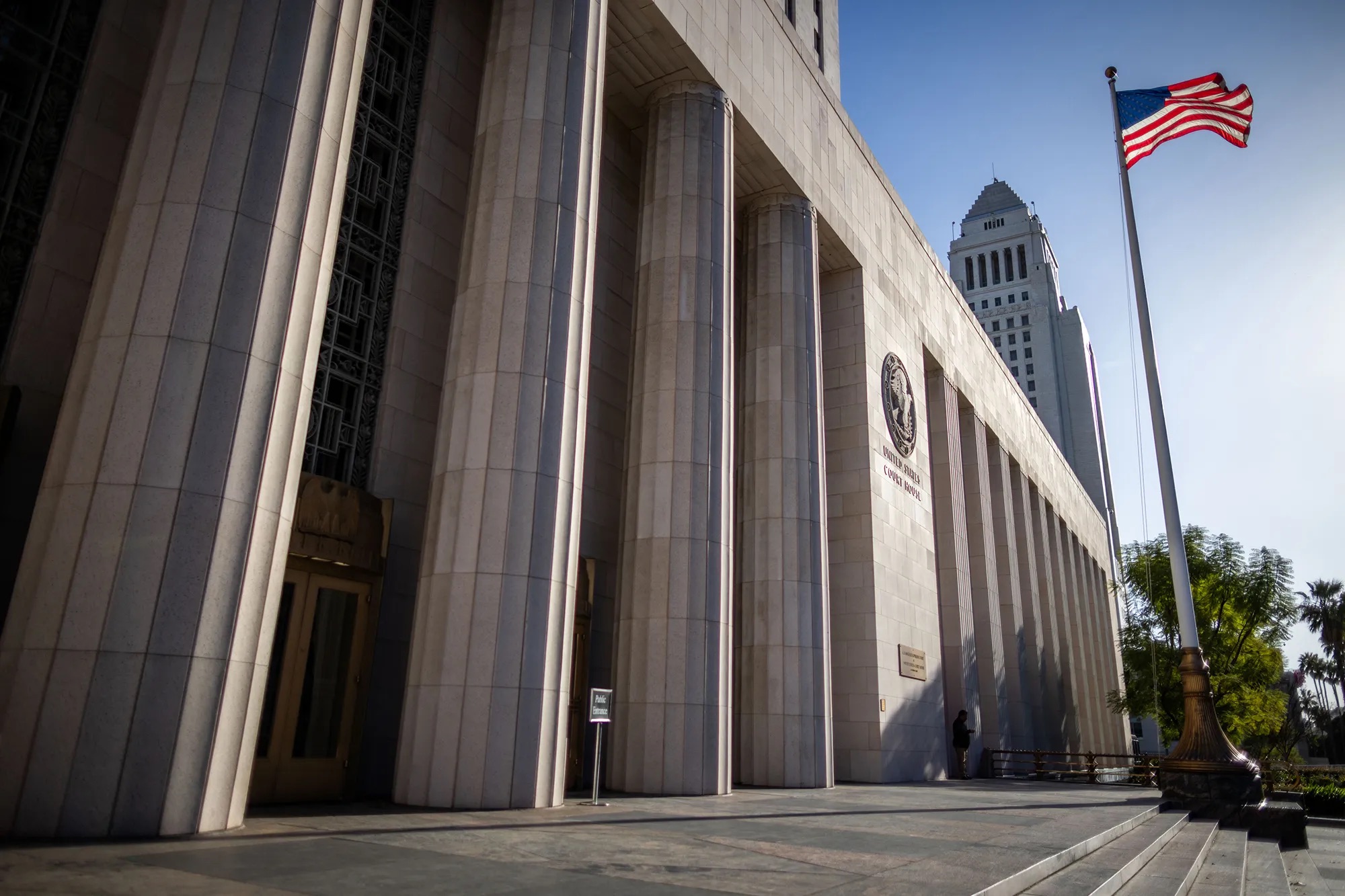
"caption": "An American flag waves outside the Los Angeles Superior Court in Los Angeles on Feb. 11, 2026. A majority of California's superior courts now have generative AI use policies.",
"credit": "Ethan Swope/Getty Images",
"altTag": null,
"description": null,
"imgSizes": {
"thumbnail": {
"file": "https://cdn.kqed.org/wp-content/uploads/sites/10/2026/05/050826-LA-Courthouse-ES-Getty-01-CM-160x107.jpeg",
"width": 160,
"height": 107,
"mimeType": "image/jpeg"
},
"1536x1536": {
"file": "https://cdn.kqed.org/wp-content/uploads/sites/10/2026/05/050826-LA-Courthouse-ES-Getty-01-CM-1536x1024.jpeg",
"width": 1536,
"height": 1024,
"mimeType": "image/jpeg"
},
"post-thumbnail": {
"file": "https://cdn.kqed.org/wp-content/uploads/sites/10/2026/05/050826-LA-Courthouse-ES-Getty-01-CM-672x372.jpeg",
"width": 672,
"height": 372,
"mimeType": "image/jpeg"
},
"twentyfourteen-full-width": {
"file": "https://cdn.kqed.org/wp-content/uploads/sites/10/2026/05/050826-LA-Courthouse-ES-Getty-01-CM-1038x576.jpeg",
"width": 1038,
"height": 576,
"mimeType": "image/jpeg"
},
"npr-cds-wide": {
"file": "https://cdn.kqed.org/wp-content/uploads/sites/10/2026/05/050826-LA-Courthouse-ES-Getty-01-CM-1200x675.jpeg",
"width": 1200,
"height": 675,
"mimeType": "image/jpeg"
},
"npr-cds-square": {
"file": "https://cdn.kqed.org/wp-content/uploads/sites/10/2026/05/050826-LA-Courthouse-ES-Getty-01-CM-600x600.jpeg",
"width": 600,
"height": 600,
"mimeType": "image/jpeg"
},
"kqedFullSize": {
"file": "https://cdn.kqed.org/wp-content/uploads/sites/10/2026/05/050826-LA-Courthouse-ES-Getty-01-CM.jpeg",
"width": 2000,
"height": 1333
}
},
"isLoading": false,
"fetchFailed": false
},
"news_12084533": {
"type": "attachments",
"id": "news_12084533",
"meta": {
"index": "attachments_1716263798",
"site": "news",
"id": "12084533",
"found": true
},
"title": "051926SFWHALES_GH_038-KQED",
"publishDate": 1779303539,
"status": "inherit",
"parent": 0,
"modified": 1779303560,
"caption": "Douglas McCauley, director of the Benioff Ocean Science Laboratory, left, and Shawn Henry, CEO of WhaleSpotter, look out into San Francisco Bay from Angel Island on May 19, 2026.",
"credit": "Gustavo Hernandez/KQED",
"altTag": null,
"description": null,
"imgSizes": {
"thumbnail": {
"file": "https://cdn.kqed.org/wp-content/uploads/sites/10/2026/05/051926SFWHALES_GH_038-KQED-160x107.jpg",
"width": 160,
"height": 107,
"mimeType": "image/jpeg"
},
"1536x1536": {
"file": "https://cdn.kqed.org/wp-content/uploads/sites/10/2026/05/051926SFWHALES_GH_038-KQED-1536x1024.jpg",
"width": 1536,
"height": 1024,
"mimeType": "image/jpeg"
},
"post-thumbnail": {
"file": "https://cdn.kqed.org/wp-content/uploads/sites/10/2026/05/051926SFWHALES_GH_038-KQED-672x372.jpg",
"width": 672,
"height": 372,
"mimeType": "image/jpeg"
},
"twentyfourteen-full-width": {
"file": "https://cdn.kqed.org/wp-content/uploads/sites/10/2026/05/051926SFWHALES_GH_038-KQED-1038x576.jpg",
"width": 1038,
"height": 576,
"mimeType": "image/jpeg"
},
"npr-cds-wide": {
"file": "https://cdn.kqed.org/wp-content/uploads/sites/10/2026/05/051926SFWHALES_GH_038-KQED-1200x675.jpg",
"width": 1200,
"height": 675,
"mimeType": "image/jpeg"
},
"npr-cds-square": {
"file": "https://cdn.kqed.org/wp-content/uploads/sites/10/2026/05/051926SFWHALES_GH_038-KQED-600x600.jpg",
"width": 600,
"height": 600,
"mimeType": "image/jpeg"
},
"kqedFullSize": {
"file": "https://cdn.kqed.org/wp-content/uploads/sites/10/2026/05/051926SFWHALES_GH_038-KQED.jpg",
"width": 2000,
"height": 1333
}
},
"isLoading": false,
"fetchFailed": false
},
"news_12000358": {
"type": "attachments",
"id": "news_12000358",
"meta": {
"index": "attachments_1716263798",
"site": "news",
"id": "12000358",
"found": true
},
"title": "080924-ENCAMPMENT SWEEP-MD-12-KQED",
"publishDate": 1723743120,
"status": "inherit",
"parent": 12000606,
"modified": 1779407090,
"caption": "Department of Public Works teams clear trash from the corner of Sixth and Natoma streets.",
"credit": "Martin do Nascimento/KQED",
"altTag": null,
"description": null,
"imgSizes": {
"medium": {
"file": "https://cdn.kqed.org/wp-content/uploads/sites/10/2024/08/080924-ENCAMPMENT-SWEEP-MD-12-KQED-800x533.jpg",
"width": 800,
"height": 533,
"mimeType": "image/jpeg"
},
"large": {
"file": "https://cdn.kqed.org/wp-content/uploads/sites/10/2024/08/080924-ENCAMPMENT-SWEEP-MD-12-KQED-1020x680.jpg",
"width": 1020,
"height": 680,
"mimeType": "image/jpeg"
},
"thumbnail": {
"file": "https://cdn.kqed.org/wp-content/uploads/sites/10/2024/08/080924-ENCAMPMENT-SWEEP-MD-12-KQED-160x107.jpg",
"width": 160,
"height": 107,
"mimeType": "image/jpeg"
},
"1536x1536": {
"file": "https://cdn.kqed.org/wp-content/uploads/sites/10/2024/08/080924-ENCAMPMENT-SWEEP-MD-12-KQED-1536x1024.jpg",
"width": 1536,
"height": 1024,
"mimeType": "image/jpeg"
},
"post-thumbnail": {
"file": "https://cdn.kqed.org/wp-content/uploads/sites/10/2024/08/080924-ENCAMPMENT-SWEEP-MD-12-KQED-672x372.jpg",
"width": 672,
"height": 372,
"mimeType": "image/jpeg"
},
"twentyfourteen-full-width": {
"file": "https://cdn.kqed.org/wp-content/uploads/sites/10/2024/08/080924-ENCAMPMENT-SWEEP-MD-12-KQED-1038x576.jpg",
"width": 1038,
"height": 576,
"mimeType": "image/jpeg"
},
"full-width": {
"file": "https://cdn.kqed.org/wp-content/uploads/sites/10/2024/08/080924-ENCAMPMENT-SWEEP-MD-12-KQED-1920x1280.jpg",
"width": 1920,
"height": 1280,
"mimeType": "image/jpeg"
},
"kqedFullSize": {
"file": "https://cdn.kqed.org/wp-content/uploads/sites/10/2024/08/080924-ENCAMPMENT-SWEEP-MD-12-KQED.jpg",
"width": 2000,
"height": 1333
}
},
"isLoading": false,
"fetchFailed": false
},
"news_12084670": {
"type": "attachments",
"id": "news_12084670",
"meta": {
"index": "attachments_1716263798",
"site": "news",
"id": "12084670",
"found": true
},
"title": "California Budget",
"publishDate": 1779388606,
"status": "inherit",
"parent": 12084655,
"modified": 1781098669,
"caption": "California Gov. Gavin Newsom speaks about his state budget proposal on Thursday, May 14, 2026, in Sacramento, California. ",
"credit": "Jeff Chiu/AP ",
"altTag": null,
"description": null,
"imgSizes": {
"thumbnail": {
"file": "https://cdn.kqed.org/wp-content/uploads/sites/10/2026/05/GavinNewsomAP-160x107.jpg",
"width": 160,
"height": 107,
"mimeType": "image/jpeg"
},
"1536x1536": {
"file": "https://cdn.kqed.org/wp-content/uploads/sites/10/2026/05/GavinNewsomAP-1536x1024.jpg",
"width": 1536,
"height": 1024,
"mimeType": "image/jpeg"
},
"post-thumbnail": {
"file": "https://cdn.kqed.org/wp-content/uploads/sites/10/2026/05/GavinNewsomAP-672x372.jpg",
"width": 672,
"height": 372,
"mimeType": "image/jpeg"
},
"twentyfourteen-full-width": {
"file": "https://cdn.kqed.org/wp-content/uploads/sites/10/2026/05/GavinNewsomAP-1038x576.jpg",
"width": 1038,
"height": 576,
"mimeType": "image/jpeg"
},
"npr-cds-wide": {
"file": "https://cdn.kqed.org/wp-content/uploads/sites/10/2026/05/GavinNewsomAP-1200x675.jpg",
"width": 1200,
"height": 675,
"mimeType": "image/jpeg"
},
"npr-cds-square": {
"file": "https://cdn.kqed.org/wp-content/uploads/sites/10/2026/05/GavinNewsomAP-600x600.jpg",
"width": 600,
"height": 600,
"mimeType": "image/jpeg"
},
"kqedFullSize": {
"file": "https://cdn.kqed.org/wp-content/uploads/sites/10/2026/05/GavinNewsomAP.jpg",
"width": 2000,
"height": 1333
}
},
"isLoading": false,
"fetchFailed": false
},
"news_12084574": {
"type": "attachments",
"id": "news_12084574",
"meta": {
"index": "attachments_1716263798",
"site": "news",
"id": "12084574",
"found": true
},
"title": "Under-16s Ban On Social Media Backed By The House of Lords",
"publishDate": 1779315192,
"status": "inherit",
"parent": 12084499,
"modified": 1779319300,
"caption": "A 14-year-old boy holds an iPhone with various social media and messaging apps on Feb. 23, 2026. ",
"credit": "Anna Barclay/Getty Images",
"altTag": null,
"description": null,
"imgSizes": {
"thumbnail": {
"file": "https://cdn.kqed.org/wp-content/uploads/sites/10/2026/05/TeenagersMetaSocialMediaGetty-160x107.jpg",
"width": 160,
"height": 107,
"mimeType": "image/jpeg"
},
"1536x1536": {
"file": "https://cdn.kqed.org/wp-content/uploads/sites/10/2026/05/TeenagersMetaSocialMediaGetty-1536x1024.jpg",
"width": 1536,
"height": 1024,
"mimeType": "image/jpeg"
},
"post-thumbnail": {
"file": "https://cdn.kqed.org/wp-content/uploads/sites/10/2026/05/TeenagersMetaSocialMediaGetty-672x372.jpg",
"width": 672,
"height": 372,
"mimeType": "image/jpeg"
},
"twentyfourteen-full-width": {
"file": "https://cdn.kqed.org/wp-content/uploads/sites/10/2026/05/TeenagersMetaSocialMediaGetty-1038x576.jpg",
"width": 1038,
"height": 576,
"mimeType": "image/jpeg"
},
"npr-cds-wide": {
"file": "https://cdn.kqed.org/wp-content/uploads/sites/10/2026/05/TeenagersMetaSocialMediaGetty-1200x675.jpg",
"width": 1200,
"height": 675,
"mimeType": "image/jpeg"
},
"npr-cds-square": {
"file": "https://cdn.kqed.org/wp-content/uploads/sites/10/2026/05/TeenagersMetaSocialMediaGetty-600x600.jpg",
"width": 600,
"height": 600,
"mimeType": "image/jpeg"
},
"kqedFullSize": {
"file": "https://cdn.kqed.org/wp-content/uploads/sites/10/2026/05/TeenagersMetaSocialMediaGetty.jpg",
"width": 2000,
"height": 1333
}
},
"isLoading": false,
"fetchFailed": false
},
"news_12084126": {
"type": "attachments",
"id": "news_12084126",
"meta": {
"index": "attachments_1716263798",
"site": "news",
"id": "12084126",
"found": true
},
"title": "260518-MUSK-ALTMAN-TRIAL-VB-06-KQED",
"publishDate": 1779135074,
"status": "inherit",
"parent": 0,
"modified": 1779136158,
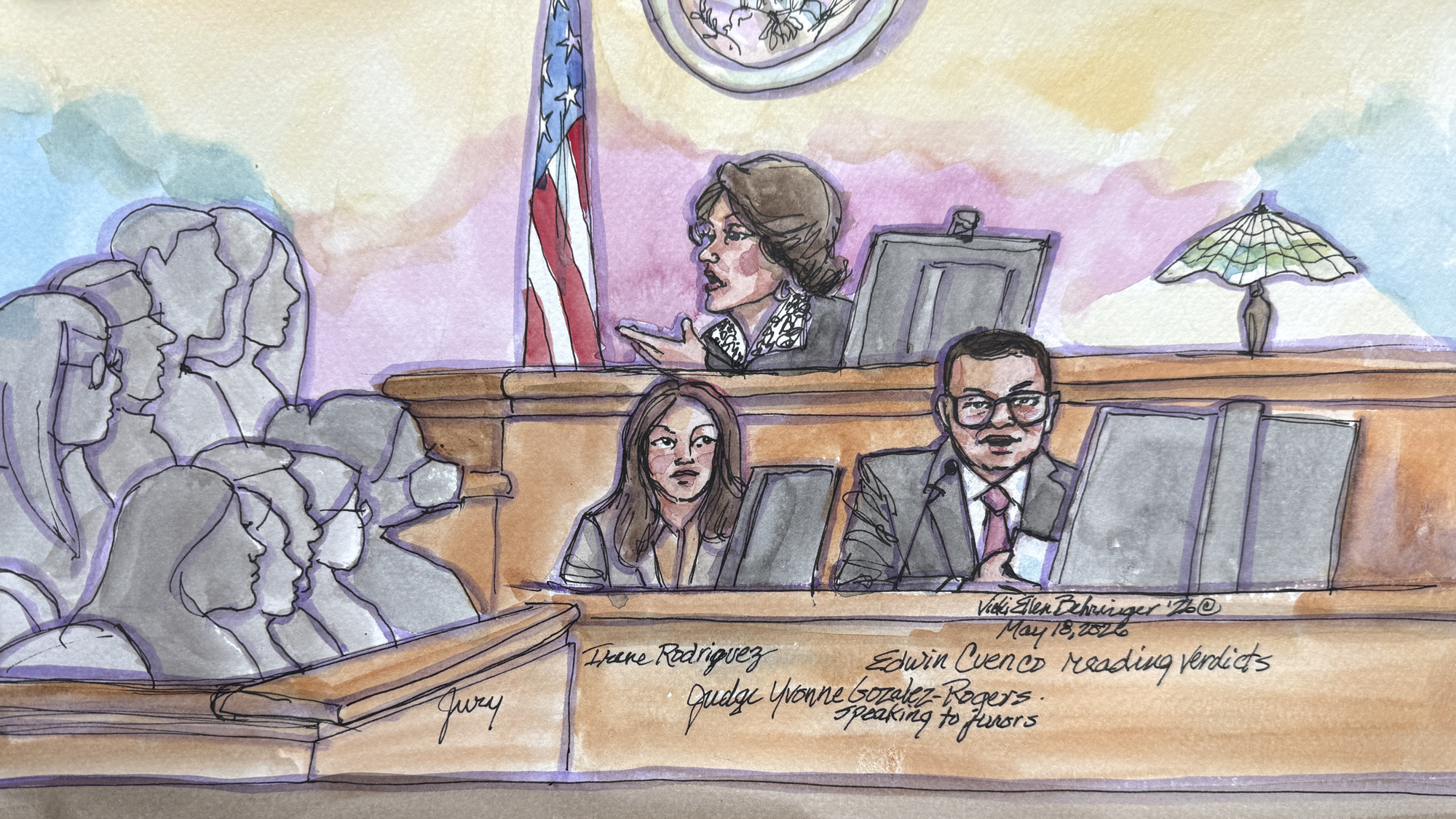
"caption": "The verdict is read in the trial in which Elon Musk claimed that Altman and OpenAI abandoned their founding promise to develop AI for the benefit of humanity rather than solely for profit in Oakland on May 18, 2026.",
"credit": "Vicki Behringer for KQED",
"altTag": null,
"description": null,
"imgSizes": {
"thumbnail": {
"file": "https://cdn.kqed.org/wp-content/uploads/sites/10/2026/05/260518-MUSK-ALTMAN-TRIAL-VB-06-KQED-160x90.jpg",
"width": 160,
"height": 90,
"mimeType": "image/jpeg"
},
"1536x1536": {
"file": "https://cdn.kqed.org/wp-content/uploads/sites/10/2026/05/260518-MUSK-ALTMAN-TRIAL-VB-06-KQED-1536x864.jpg",
"width": 1536,
"height": 864,
"mimeType": "image/jpeg"
},
"post-thumbnail": {
"file": "https://cdn.kqed.org/wp-content/uploads/sites/10/2026/05/260518-MUSK-ALTMAN-TRIAL-VB-06-KQED-672x372.jpg",
"width": 672,
"height": 372,
"mimeType": "image/jpeg"
},
"twentyfourteen-full-width": {
"file": "https://cdn.kqed.org/wp-content/uploads/sites/10/2026/05/260518-MUSK-ALTMAN-TRIAL-VB-06-KQED-1038x576.jpg",
"width": 1038,
"height": 576,
"mimeType": "image/jpeg"
},
"npr-cds-wide": {
"file": "https://cdn.kqed.org/wp-content/uploads/sites/10/2026/05/260518-MUSK-ALTMAN-TRIAL-VB-06-KQED-1200x675.jpg",
"width": 1200,
"height": 675,
"mimeType": "image/jpeg"
},
"npr-cds-square": {
"file": "https://cdn.kqed.org/wp-content/uploads/sites/10/2026/05/260518-MUSK-ALTMAN-TRIAL-VB-06-KQED-600x600.jpg",
"width": 600,
"height": 600,
"mimeType": "image/jpeg"
},
"kqedFullSize": {
"file": "https://cdn.kqed.org/wp-content/uploads/sites/10/2026/05/260518-MUSK-ALTMAN-TRIAL-VB-06-KQED.jpg",
"width": 2000,
"height": 1125
}
},
"isLoading": false,
"fetchFailed": false
},
"news_12083803": {
"type": "attachments",
"id": "news_12083803",
"meta": {
"index": "attachments_1716263798",
"site": "news",
"id": "12083803",
"found": true
},
"title": "Elon Musk v. OpenAI Trial Continues In California",
"publishDate": 1778804683,
"status": "inherit",
"parent": 12083612,
"modified": 1778805456,
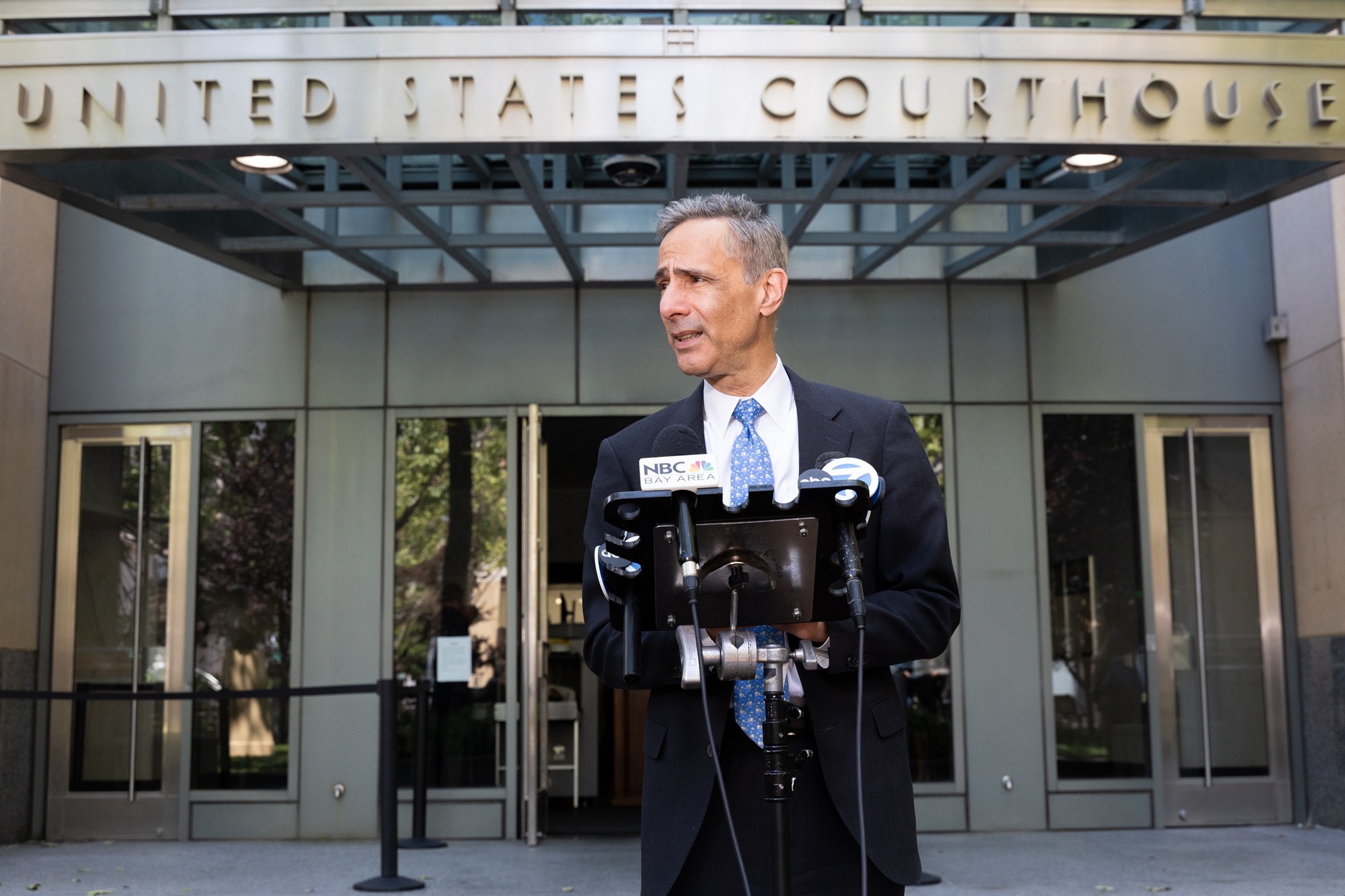
"caption": "OpenAI's attorney William Savitt makes remarks during a press conference outside the courthouse at the Ronald V. Dellums Federal Building on May 6, 2026, in Oakland, California. Elon Musk invested in OpenAI early on, believing it would be a non-profit, but is now suing OpenAI and its CEO, Sam Altman, for allegedly deceiving him by developing OpenAI into a for-profit company. ",
"credit": "Benjamin Fanjoy/Getty Images",
"altTag": null,
"description": null,
"imgSizes": {
"thumbnail": {
"file": "https://cdn.kqed.org/wp-content/uploads/sites/10/2026/05/OpenAILawyerGetty-160x107.jpg",
"width": 160,
"height": 107,
"mimeType": "image/jpeg"
},
"1536x1536": {
"file": "https://cdn.kqed.org/wp-content/uploads/sites/10/2026/05/OpenAILawyerGetty-1536x1024.jpg",
"width": 1536,
"height": 1024,
"mimeType": "image/jpeg"
},
"post-thumbnail": {
"file": "https://cdn.kqed.org/wp-content/uploads/sites/10/2026/05/OpenAILawyerGetty-672x372.jpg",
"width": 672,
"height": 372,
"mimeType": "image/jpeg"
},
"twentyfourteen-full-width": {
"file": "https://cdn.kqed.org/wp-content/uploads/sites/10/2026/05/OpenAILawyerGetty-1038x576.jpg",
"width": 1038,
"height": 576,
"mimeType": "image/jpeg"
},
"npr-cds-wide": {
"file": "https://cdn.kqed.org/wp-content/uploads/sites/10/2026/05/OpenAILawyerGetty-1200x675.jpg",
"width": 1200,
"height": 675,
"mimeType": "image/jpeg"
},
"npr-cds-square": {
"file": "https://cdn.kqed.org/wp-content/uploads/sites/10/2026/05/OpenAILawyerGetty-600x600.jpg",
"width": 600,
"height": 600,
"mimeType": "image/jpeg"
},
"kqedFullSize": {
"file": "https://cdn.kqed.org/wp-content/uploads/sites/10/2026/05/OpenAILawyerGetty.jpg",
"width": 2000,
"height": 1333
}
},
"isLoading": false,
"fetchFailed": false
},
"news_12083392": {
"type": "attachments",
"id": "news_12083392",
"meta": {
"index": "attachments_1716263798",
"site": "news",
"id": "12083392",
"found": true
},
"title": "260512-MUSK-ALTMAN-TRIAL-VB-03-KQED",
"publishDate": 1778625867,
"status": "inherit",
"parent": 0,
"modified": 1778625974,
"caption": "Open AI CEO Sam Altman testifies as a video of him is played on a screen in the trial in which Elon Musk claims that Altman and OpenAI abandoned their founding promise to develop AI for the benefit of humanity rather than solely for profit in Oakland on May 12, 2026.",
"credit": "Vicki Behringer for KQED",
"altTag": null,
"description": null,
"imgSizes": {
"thumbnail": {
"file": "https://cdn.kqed.org/wp-content/uploads/sites/10/2026/05/260512-MUSK-ALTMAN-TRIAL-VB-03-KQED-160x90.jpg",
"width": 160,
"height": 90,
"mimeType": "image/jpeg"
},
"1536x1536": {
"file": "https://cdn.kqed.org/wp-content/uploads/sites/10/2026/05/260512-MUSK-ALTMAN-TRIAL-VB-03-KQED-1536x864.jpg",
"width": 1536,
"height": 864,
"mimeType": "image/jpeg"
},
"post-thumbnail": {
"file": "https://cdn.kqed.org/wp-content/uploads/sites/10/2026/05/260512-MUSK-ALTMAN-TRIAL-VB-03-KQED-672x372.jpg",
"width": 672,
"height": 372,
"mimeType": "image/jpeg"
},
"twentyfourteen-full-width": {
"file": "https://cdn.kqed.org/wp-content/uploads/sites/10/2026/05/260512-MUSK-ALTMAN-TRIAL-VB-03-KQED-1038x576.jpg",
"width": 1038,
"height": 576,
"mimeType": "image/jpeg"
},
"npr-cds-wide": {
"file": "https://cdn.kqed.org/wp-content/uploads/sites/10/2026/05/260512-MUSK-ALTMAN-TRIAL-VB-03-KQED-1200x675.jpg",
"width": 1200,
"height": 675,
"mimeType": "image/jpeg"
},
"npr-cds-square": {
"file": "https://cdn.kqed.org/wp-content/uploads/sites/10/2026/05/260512-MUSK-ALTMAN-TRIAL-VB-03-KQED-600x600.jpg",
"width": 600,
"height": 600,
"mimeType": "image/jpeg"
},
"kqedFullSize": {
"file": "https://cdn.kqed.org/wp-content/uploads/sites/10/2026/05/260512-MUSK-ALTMAN-TRIAL-VB-03-KQED.jpg",
"width": 2000,
"height": 1125
}
},
"isLoading": false,
"fetchFailed": false
},
"news_12083183": {
"type": "attachments",
"id": "news_12083183",
"meta": {
"index": "attachments_1716263798",
"site": "news",
"id": "12083183",
"found": true
},
"title": "260511-GAMERSPROTEST-10-BL-KQED",
"publishDate": 1778534813,
"status": "inherit",
"parent": 0,
"modified": 1778534833,
"caption": "Otis East speaks alongside fellow demonstrators outside the headquarters of Electronic Arts in Redwood City on May 11, 2026, to protest a proposed $55 billion buyout led by Saudi Arabia’s Public Investment Fund.",
"credit": "Beth LaBerge/KQED",
"altTag": null,
"description": null,
"imgSizes": {
"thumbnail": {
"file": "https://cdn.kqed.org/wp-content/uploads/sites/10/2026/05/260511-GAMERSPROTEST-10-BL-KQED-160x107.jpg",
"width": 160,
"height": 107,
"mimeType": "image/jpeg"
},
"1536x1536": {
"file": "https://cdn.kqed.org/wp-content/uploads/sites/10/2026/05/260511-GAMERSPROTEST-10-BL-KQED-1536x1024.jpg",
"width": 1536,
"height": 1024,
"mimeType": "image/jpeg"
},
"post-thumbnail": {
"file": "https://cdn.kqed.org/wp-content/uploads/sites/10/2026/05/260511-GAMERSPROTEST-10-BL-KQED-672x372.jpg",
"width": 672,
"height": 372,
"mimeType": "image/jpeg"
},
"twentyfourteen-full-width": {
"file": "https://cdn.kqed.org/wp-content/uploads/sites/10/2026/05/260511-GAMERSPROTEST-10-BL-KQED-1038x576.jpg",
"width": 1038,
"height": 576,
"mimeType": "image/jpeg"
},
"npr-cds-wide": {
"file": "https://cdn.kqed.org/wp-content/uploads/sites/10/2026/05/260511-GAMERSPROTEST-10-BL-KQED-1200x675.jpg",
"width": 1200,
"height": 675,
"mimeType": "image/jpeg"
},
"npr-cds-square": {
"file": "https://cdn.kqed.org/wp-content/uploads/sites/10/2026/05/260511-GAMERSPROTEST-10-BL-KQED-600x600.jpg",
"width": 600,
"height": 600,
"mimeType": "image/jpeg"
},
"kqedFullSize": {
"file": "https://cdn.kqed.org/wp-content/uploads/sites/10/2026/05/260511-GAMERSPROTEST-10-BL-KQED.jpg",
"width": 2000,
"height": 1333
}
},
"isLoading": false,
"fetchFailed": false
},
"news_12083235": {
"type": "attachments",
"id": "news_12083235",
"meta": {
"index": "attachments_1716263798",
"site": "news",
"id": "12083235",
"found": true
},
"title": "Elon Musk v. OpenAI Trial Continues In California",
"publishDate": 1778545779,
"status": "inherit",
"parent": 12083224,
"modified": 1778546322,
"caption": "OpenAI CEO Sam Altman arrives at the Ronald V. Dellums Federal Building on April 30, 2026, in Oakland, California. Elon Musk invested in OpenAI early on, believing it would be a nonprofit, but is now suing OpenAI and its CEO, Sam Altman, for allegedly deceiving him by developing OpenAI into a for-profit company. ",
"credit": "Benjamin Fanjoy/Getty Images",
"altTag": null,
"description": null,
"imgSizes": {
"thumbnail": {
"file": "https://cdn.kqed.org/wp-content/uploads/sites/10/2026/05/SamAltmanGetty-160x107.jpg",
"width": 160,
"height": 107,
"mimeType": "image/jpeg"
},
"1536x1536": {
"file": "https://cdn.kqed.org/wp-content/uploads/sites/10/2026/05/SamAltmanGetty-1536x1024.jpg",
"width": 1536,
"height": 1024,
"mimeType": "image/jpeg"
},
"post-thumbnail": {
"file": "https://cdn.kqed.org/wp-content/uploads/sites/10/2026/05/SamAltmanGetty-672x372.jpg",
"width": 672,
"height": 372,
"mimeType": "image/jpeg"
},
"twentyfourteen-full-width": {
"file": "https://cdn.kqed.org/wp-content/uploads/sites/10/2026/05/SamAltmanGetty-1038x576.jpg",
"width": 1038,
"height": 576,
"mimeType": "image/jpeg"
},
"npr-cds-wide": {
"file": "https://cdn.kqed.org/wp-content/uploads/sites/10/2026/05/SamAltmanGetty-1200x675.jpg",
"width": 1200,
"height": 675,
"mimeType": "image/jpeg"
},
"npr-cds-square": {
"file": "https://cdn.kqed.org/wp-content/uploads/sites/10/2026/05/SamAltmanGetty-600x600.jpg",
"width": 600,
"height": 600,
"mimeType": "image/jpeg"
},
"kqedFullSize": {
"file": "https://cdn.kqed.org/wp-content/uploads/sites/10/2026/05/SamAltmanGetty.jpg",
"width": 2000,
"height": 1333
}
},
"isLoading": false,
"fetchFailed": false
},
"news_12083176": {
"type": "attachments",
"id": "news_12083176",
"meta": {
"index": "attachments_1716263798",
"site": "news",
"id": "12083176",
"found": true
},
"title": "260511-SCCMETA-KQED-1-KQED",
"publishDate": 1778532794,
"status": "inherit",
"parent": 0,
"modified": 1778539963,
"caption": "Santa Clara County’s lead attorney, Tony LoPresti, shares details about a civil lawsuit the county filed against Meta over scam ads on Monday, May 11, 2026, during a press conference in San José.",
"credit": "Joseph Geha/KQED",
"altTag": null,
"description": null,
"imgSizes": {
"thumbnail": {
"file": "https://cdn.kqed.org/wp-content/uploads/sites/10/2026/05/260511-SCCMETA-KQED-1-KQED-160x107.jpg",
"width": 160,
"height": 107,
"mimeType": "image/jpeg"
},
"1536x1536": {
"file": "https://cdn.kqed.org/wp-content/uploads/sites/10/2026/05/260511-SCCMETA-KQED-1-KQED-1536x1024.jpg",
"width": 1536,
"height": 1024,
"mimeType": "image/jpeg"
},
"post-thumbnail": {
"file": "https://cdn.kqed.org/wp-content/uploads/sites/10/2026/05/260511-SCCMETA-KQED-1-KQED-672x372.jpg",
"width": 672,
"height": 372,
"mimeType": "image/jpeg"
},
"twentyfourteen-full-width": {
"file": "https://cdn.kqed.org/wp-content/uploads/sites/10/2026/05/260511-SCCMETA-KQED-1-KQED-1038x576.jpg",
"width": 1038,
"height": 576,
"mimeType": "image/jpeg"
},
"npr-cds-wide": {
"file": "https://cdn.kqed.org/wp-content/uploads/sites/10/2026/05/260511-SCCMETA-KQED-1-KQED-1200x675.jpg",
"width": 1200,
"height": 675,
"mimeType": "image/jpeg"
},
"npr-cds-square": {
"file": "https://cdn.kqed.org/wp-content/uploads/sites/10/2026/05/260511-SCCMETA-KQED-1-KQED-600x600.jpg",
"width": 600,
"height": 600,
"mimeType": "image/jpeg"
},
"kqedFullSize": {
"file": "https://cdn.kqed.org/wp-content/uploads/sites/10/2026/05/260511-SCCMETA-KQED-1-KQED.jpg",
"width": 2000,
"height": 1333
}
},
"isLoading": false,
"fetchFailed": false
},
"news_12082871": {
"type": "attachments",
"id": "news_12082871",
"meta": {
"index": "attachments_1716263798",
"site": "news",
"id": "12082871",
"found": true
},
"title": "050726BERKELEY FLOCK RALLY_GH_010-KQED",
"publishDate": 1778258324,
"status": "inherit",
"parent": 12093784,
"modified": 1785800207,
"caption": "A protester holds a sign during a rally opposing Berkeley’s proposed contract expansion with surveillance company Flock Safety outside the Berkeley Unified School District boardroom in Berkeley on May 7, 2026.",
"credit": "Gustavo Hernandez/KQED",
"altTag": null,
"description": null,
"imgSizes": {
"thumbnail": {
"file": "https://cdn.kqed.org/wp-content/uploads/sites/10/2026/05/050726BERKELEY-FLOCK-RALLY_GH_010-KQED-160x107.jpg",
"width": 160,
"height": 107,
"mimeType": "image/jpeg"
},
"1536x1536": {
"file": "https://cdn.kqed.org/wp-content/uploads/sites/10/2026/05/050726BERKELEY-FLOCK-RALLY_GH_010-KQED-1536x1024.jpg",
"width": 1536,
"height": 1024,
"mimeType": "image/jpeg"
},
"post-thumbnail": {
"file": "https://cdn.kqed.org/wp-content/uploads/sites/10/2026/05/050726BERKELEY-FLOCK-RALLY_GH_010-KQED-672x372.jpg",
"width": 672,
"height": 372,
"mimeType": "image/jpeg"
},
"twentyfourteen-full-width": {
"file": "https://cdn.kqed.org/wp-content/uploads/sites/10/2026/05/050726BERKELEY-FLOCK-RALLY_GH_010-KQED-1038x576.jpg",
"width": 1038,
"height": 576,
"mimeType": "image/jpeg"
},
"npr-cds-wide": {
"file": "https://cdn.kqed.org/wp-content/uploads/sites/10/2026/05/050726BERKELEY-FLOCK-RALLY_GH_010-KQED-1200x675.jpg",
"width": 1200,
"height": 675,
"mimeType": "image/jpeg"
},
"npr-cds-square": {
"file": "https://cdn.kqed.org/wp-content/uploads/sites/10/2026/05/050726BERKELEY-FLOCK-RALLY_GH_010-KQED-600x600.jpg",
"width": 600,
"height": 600,
"mimeType": "image/jpeg"
},
"kqedFullSize": {
"file": "https://cdn.kqed.org/wp-content/uploads/sites/10/2026/05/050726BERKELEY-FLOCK-RALLY_GH_010-KQED.jpg",
"width": 2000,
"height": 1333
}
},
"isLoading": false,
"fetchFailed": false
}
},
"audioPlayerReducer": {
"postId": "stream_live",
"isPaused": true,
"isPlaying": false,
"pfsActive": false,
"pledgeModalIsOpen": true,
"playerDrawerIsOpen": false,
"liveAudioPlayStartedAt": 0,
"liveAudioPlayContext": ""
},
"authorsReducer": {
"byline_news_12085144": {
"type": "authors",
"id": "byline_news_12085144",
"meta": {
"override": true
},
"slug": "byline_news_12085144",
"name": "Cayla Mihalovich and Khari Johnson, CalMatters",
"isLoading": false
},
"rachael-myrow": {
"type": "authors",
"id": "251",
"meta": {
"index": "authors_1716337520",
"id": "251",
"found": true
},
"name": "Rachael Myrow",
"firstName": "Rachael",
"lastName": "Myrow",
"slug": "rachael-myrow",
"email": "rmyrow@kqed.org",
"display_author_email": true,
"staff_mastheads": [
"news"
],
"title": "Senior Editor of KQED's Silicon Valley News Desk",
"bio": "• I write and edit stories about how Silicon Valley power and policies shape everyday life in California. I’m also passionate about making Bay Area history and culture more accessible to a broad public. • I’ve been a journalist for most of my life, starting in high school with The Franklin Press in Los Angeles, where I grew up. While earning my first degree in English at UC Berkeley, I got my start in public radio at KALX-FM. After completing a second degree in journalism at Cal, I landed my first professional job at Marketplace, then moved on to KPCC (now LAist), and then KQED, where I hosted The California Report for more than seven years. • My reporting has appeared on NPR, The World, WBUR’s \u003ci>Here & Now\u003c/i>, and the BBC. I also guest host for KQED’s \u003ci>Forum\u003c/i>, as well as the Commonwealth Club in San Francisco. • I speak periodically on media, democracy and technology issues, and do voiceover work for documentaries and educational video projects. • Outside of the studio, you'll find me hiking Bay Area trails and whipping up Insta-ready meals in my kitchen. • I do not accept gifts, money, or favors from anyone connected to my reporting, I don't pay people for information, and I do not support or donate to political causes. • I strive to treat the people I report on with fairness, honesty, and respect. I also recognize there are often multiple sides to a story and work to verify information through multiple sources and documentation. If I get something wrong, I correct it.",
"avatar": "https://secure.gravatar.com/avatar/3ed8a3c5f26025e4a805ba634cda8cd764906b97438a6d9ce216b044e340da4e?s=600&d=blank&r=g",
"twitter": "rachaelmyrow",
"bluesky": null,
"facebook": null,
"instagram": null,
"linkedin": "https://www.linkedin.com/in/rachaelmyrow/",
"sites": [
{
"site": "arts",
"roles": [
"administrator"
]
},
{
"site": "news",
"roles": [
"edit_others_posts",
"editor"
]
},
{
"site": "futureofyou",
"roles": [
"editor"
]
},
{
"site": "bayareabites",
"roles": [
"editor"
]
},
{
"site": "stateofhealth",
"roles": [
"editor"
]
},
{
"site": "science",
"roles": [
"editor"
]
},
{
"site": "food",
"roles": [
"editor"
]
},
{
"site": "forum",
"roles": [
"editor"
]
},
{
"site": "liveblog",
"roles": [
"author"
]
}
],
"headData": {
"title": "Rachael Myrow | KQED",
"description": "Senior Editor of KQED's Silicon Valley News Desk",
"ogImgSrc": "https://secure.gravatar.com/avatar/3ed8a3c5f26025e4a805ba634cda8cd764906b97438a6d9ce216b044e340da4e?s=600&d=blank&r=g",
"twImgSrc": "https://secure.gravatar.com/avatar/3ed8a3c5f26025e4a805ba634cda8cd764906b97438a6d9ce216b044e340da4e?s=600&d=blank&r=g"
},
"isLoading": false,
"link": "/author/rachael-myrow"
},
"swhitney": {
"type": "authors",
"id": "11784",
"meta": {
"index": "authors_1716337520",
"id": "11784",
"found": true
},
"name": "Spencer Whitney",
"firstName": "Spencer",
"lastName": "Whitney",
"slug": "swhitney",
"email": "swhitney@kqed.org",
"display_author_email": false,
"staff_mastheads": [],
"title": "KQED Digital Editor",
"bio": "Spencer Whitney is currently a Digital Editor for KQED News. Prior to joining KQED News, Spencer worked as the Multimedia Editor at the Oakland Post and an Assistant Editor in the Editorial department at the San Francisco Chronicle. He attended Howard University as an undergraduate and interned with SiriusXM. He also attended UC Berkeley's Graduate School of Journalism and had the opportunity to write for the hyperlocal news sites Richmond Confidential and Oakland North.",
"avatar": "https://secure.gravatar.com/avatar/e33ff4fd8b8f0d2796f36472fb32607ca8fc46ef5e537dcfdbdee688d8ea5b80?s=600&d=mm&r=g",
"twitter": null,
"bluesky": null,
"facebook": null,
"instagram": null,
"linkedin": null,
"sites": [
{
"site": "arts",
"roles": [
"editor"
]
},
{
"site": "news",
"roles": [
"editor"
]
},
{
"site": "science",
"roles": [
"editor"
]
},
{
"site": "perspectives",
"roles": [
"editor"
]
}
],
"headData": {
"title": "Spencer Whitney | KQED",
"description": "KQED Digital Editor",
"ogImgSrc": "https://secure.gravatar.com/avatar/e33ff4fd8b8f0d2796f36472fb32607ca8fc46ef5e537dcfdbdee688d8ea5b80?s=600&d=mm&r=g",
"twImgSrc": "https://secure.gravatar.com/avatar/e33ff4fd8b8f0d2796f36472fb32607ca8fc46ef5e537dcfdbdee688d8ea5b80?s=600&d=mm&r=g"
},
"isLoading": false,
"link": "/author/swhitney"
},
"adahlstromeckman": {
"type": "authors",
"id": "11785",
"meta": {
"index": "authors_1716337520",
"id": "11785",
"found": true
},
"name": "Azul Dahlstrom-Eckman",
"firstName": "Azul",
"lastName": "Dahlstrom-Eckman",
"slug": "adahlstromeckman",
"email": "adahlstrom-eckman@kqed.org",
"display_author_email": true,
"staff_mastheads": [],
"title": "Reporter",
"bio": "Azul is a reporter for KQED focusing on transportation and features. He joined KQED in 2021 as an alumna of KALW's Audio Academy radio journalism training program.",
"avatar": "https://secure.gravatar.com/avatar/9cb750298435add7815a777f55bf1f46845c1386bb8452555c60a7b820b5aba3?s=600&d=blank&r=g",
"twitter": "@zuliemann",
"bluesky": "@azul415.bsky.social",
"facebook": null,
"instagram": null,
"linkedin": null,
"sites": [
{
"site": "arts",
"roles": [
"editor"
]
},
{
"site": "news",
"roles": [
"editor"
]
},
{
"site": "science",
"roles": [
"editor"
]
},
{
"site": "liveblog",
"roles": [
"author"
]
}
],
"headData": {
"title": "Azul Dahlstrom-Eckman | KQED",
"description": "Reporter",
"ogImgSrc": "https://secure.gravatar.com/avatar/9cb750298435add7815a777f55bf1f46845c1386bb8452555c60a7b820b5aba3?s=600&d=blank&r=g",
"twImgSrc": "https://secure.gravatar.com/avatar/9cb750298435add7815a777f55bf1f46845c1386bb8452555c60a7b820b5aba3?s=600&d=blank&r=g"
},
"isLoading": false,
"link": "/author/adahlstromeckman"
},
"jgeha": {
"type": "authors",
"id": "11906",
"meta": {
"index": "authors_1716337520",
"id": "11906",
"found": true
},
"name": "Joseph Geha",
"firstName": "Joseph",
"lastName": "Geha",
"slug": "jgeha",
"email": "jgeha@kqed.org",
"display_author_email": false,
"staff_mastheads": [
"news",
"science"
],
"title": "KQED Contributor",
"bio": null,
"avatar": "https://secure.gravatar.com/avatar/ea84d2b6dd93d6369d453edf19dd583f117cd1759d2d9c9c92f9de77017354fe?s=600&d=blank&r=g",
"twitter": null,
"bluesky": null,
"facebook": null,
"instagram": null,
"linkedin": null,
"sites": [
{
"site": "news",
"roles": [
"editor"
]
},
{
"site": "liveblog",
"roles": [
"author"
]
}
],
"headData": {
"title": "Joseph Geha | KQED",
"description": "KQED Contributor",
"ogImgSrc": "https://secure.gravatar.com/avatar/ea84d2b6dd93d6369d453edf19dd583f117cd1759d2d9c9c92f9de77017354fe?s=600&d=blank&r=g",
"twImgSrc": "https://secure.gravatar.com/avatar/ea84d2b6dd93d6369d453edf19dd583f117cd1759d2d9c9c92f9de77017354fe?s=600&d=blank&r=g"
},
"isLoading": false,
"link": "/author/jgeha"
},
"kdebenedetti": {
"type": "authors",
"id": "11913",
"meta": {
"index": "authors_1716337520",
"id": "11913",
"found": true
},
"name": "Katie DeBenedetti",
"firstName": "Katie",
"lastName": "DeBenedetti",
"slug": "kdebenedetti",
"email": "kdebenedetti@kqed.org",
"display_author_email": false,
"staff_mastheads": [
"news",
"science"
],
"title": "KQED Contributor",
"bio": "Katie DeBenedetti is a digital reporter covering daily news for the Express Desk. Prior to joining KQED as a culture reporting intern in January 2024, she covered education and city government for the Napa Valley Register.",
"avatar": "https://secure.gravatar.com/avatar/6e31073cb8f7e4214ab03f42771d0f45?s=600&d=blank&r=g",
"twitter": null,
"facebook": null,
"instagram": null,
"linkedin": null,
"sites": [
{
"site": "news",
"roles": [
"author"
]
},
{
"site": "science",
"roles": [
"author"
]
},
{
"site": "liveblog",
"roles": [
"author"
]
}
],
"headData": {
"title": "Katie DeBenedetti | KQED",
"description": "KQED Contributor",
"ogImgSrc": "https://secure.gravatar.com/avatar/6e31073cb8f7e4214ab03f42771d0f45?s=600&d=blank&r=g",
"twImgSrc": "https://secure.gravatar.com/avatar/6e31073cb8f7e4214ab03f42771d0f45?s=600&d=blank&r=g"
},
"isLoading": false,
"link": "/author/kdebenedetti"
},
"dmeagley": {
"type": "authors",
"id": "12002",
"meta": {
"index": "authors_1716337520",
"id": "12002",
"found": true
},
"name": "Desmond Meagley",
"firstName": "Desmond",
"lastName": "Meagley",
"slug": "dmeagley",
"email": "dmeagley@kqed.org",
"display_author_email": false,
"staff_mastheads": [],
"title": "KQED Contributor",
"bio": null,
"avatar": "https://secure.gravatar.com/avatar/16f71d550a6f42fe4d2195a89ee3ac21649feb17ca382d5cd0ad019d930a00ae?s=600&d=blank&r=g",
"twitter": null,
"bluesky": null,
"facebook": null,
"instagram": null,
"linkedin": null,
"sites": [
{
"site": "news",
"roles": [
"author"
]
}
],
"headData": {
"title": "Desmond Meagley | KQED",
"description": "KQED Contributor",
"ogImgSrc": "https://secure.gravatar.com/avatar/16f71d550a6f42fe4d2195a89ee3ac21649feb17ca382d5cd0ad019d930a00ae?s=600&d=blank&r=g",
"twImgSrc": "https://secure.gravatar.com/avatar/16f71d550a6f42fe4d2195a89ee3ac21649feb17ca382d5cd0ad019d930a00ae?s=600&d=blank&r=g"
},
"isLoading": false,
"link": "/author/dmeagley"
}
},
"pagesReducer": {
"news_category_technology": {
"type": "terms",
"id": "news_248",
"meta": {
"index": "terms_1716263798",
"site": "news",
"id": "248",
"score": 10.93111
},
"featImg": null,
"name": "Technology",
"description": null,
"taxonomy": "category",
"headData": {
"twImgId": null,
"twTitle": null,
"ogTitle": null,
"ogImgId": null,
"twDescription": null,
"description": null,
"title": "Technology Archives | KQED News",
"ogDescription": null
},
"ttid": 256,
"slug": "technology",
"isLoading": false,
"title": "Technology",
"pageMeta": {
"site": "news",
"WpPageTemplate": "page-topic-editorial",
"currentPage": 8
},
"blocks": [
{
"blockName": "kqed/post-list",
"attrs": {
"layout": "cardArticle2",
"query": "posts/news?category=technology",
"seeMore": false,
"paginated": true,
"page": 8
}
},
{
"blockName": "kqed/ad"
}
]
}
},
"pfsSessionReducer": {},
"postsReducer": {
"stream_live": {
"type": "live",
"id": "stream_live",
"audioUrl": "https://streams.kqed.org/kqedradio",
"title": "Live Stream",
"excerpt": "Live Stream information currently unavailable.",
"link": "/radio",
"featImg": "",
"label": {
"name": "KQED Live",
"link": "/"
}
},
"stream_kqedNewscast": {
"type": "posts",
"id": "stream_kqedNewscast",
"audioUrl": "https://www.kqed.org/.stream/anon/radio/RDnews/newscast.mp3?_=1",
"title": "KQED Newscast",
"featImg": "",
"label": {
"name": "88.5 FM",
"link": "/"
}
},
"news_12085144": {
"type": "posts",
"id": "news_12085144",
"meta": {
"index": "posts_1716263798",
"site": "news",
"id": "12085144",
"score": null,
"sort": [
1779816620000
]
},
"guestAuthors": [],
"slug": "california-judges-are-testing-a-new-ai-clerk-you-wont-know-if-its-looking-at-your-case",
"title": "California Judges Are Testing a New AI Clerk. You Won’t Know if It’s Looking at Your Case",
"publishDate": 1779816620,
"format": "standard",
"headTitle": "California Judges Are Testing a New AI Clerk. You Won’t Know if It’s Looking at Your Case | KQED",
"labelTerm": {},
"content": "\u003cp>\u003c!-- Creative Commons Attribution-NonCommercial-NoDerivatives https://creativecommons.org/licenses/by-nc-nd/4.0/ -->\u003c/p>\n\u003cp>\u003cem>This story was originally published by \u003ca href=\"https://calmatters.org/\">CalMatters\u003c/a>. \u003ca href=\"https://calmatters.org/subscribe-to-calmatters/\">Sign up\u003c/a> for their newsletters.\u003c/em>\u003c/p>\n\u003cp>Two of California’s largest courts are testing an \u003ca href=\"https://www.kqed.org/news/tag/artificial-intelligence\">AI tool\u003c/a> that can draft orders and produce research memos.\u003c/p>\n\u003cp>Judges so far are using it primarily for civil cases, but documents obtained by CalMatters indicate the possibility of expanded applications in criminal cases, where people’s freedom and access to justice are on the line.\u003c/p>\n\u003cp>The Los Angeles County Superior Court \u003ca href=\"https://www.latimes.com/california/story/2026-03-18/ai-pilot-program-la-county-courts\">began a pilot program\u003c/a> in February to test a tool created by the company Learned Hand. Other courts may follow, according to Learned Hand founder and chief executive officer Shlomo Klapper.\u003c/p>\n\u003cp>[ad fullwidth]\u003c/p>\n\u003cp>Learned Hand uses a combination of language models from Anthropic, OpenAI and Google to act as an AI clerk for judges. The company says it tests for bias and accuracy, but it has not yet published results.\u003c/p>\n\u003cp>In Riverside County, which has a $10,000 agreement with the company to test the program, civil and probate attorneys are primarily using the tool to draft research memos that help judges reach their decisions. It’s typical for research attorneys to assist judges as they review cases.\u003c/p>\n\u003cp>Los Angeles County Superior Court has a roughly $314,000 contract that includes a roadmap to test the tool’s use in criminal, family and probate divisions.\u003c/p>\n\u003cfigure id=\"attachment_12079282\" class=\"wp-caption aligncenter\" style=\"max-width: 1980px\">\u003cimg loading=\"lazy\" decoding=\"async\" class=\"size-full wp-image-12079282\" src=\"https://cdn.kqed.org/wp-content/uploads/sites/10/2026/04/GettyImages-2233287472.jpg\" alt=\"\" width=\"1980\" height=\"1320\" srcset=\"https://cdn.kqed.org/wp-content/uploads/sites/10/2026/04/GettyImages-2233287472.jpg 1980w, https://cdn.kqed.org/wp-content/uploads/sites/10/2026/04/GettyImages-2233287472-160x107.jpg 160w, https://cdn.kqed.org/wp-content/uploads/sites/10/2026/04/GettyImages-2233287472-1536x1024.jpg 1536w\" sizes=\"auto, (max-width: 1980px) 100vw, 1980px\">\u003cfigcaption class=\"wp-caption-text\">The Salesforce Tower is seen reflected in windows of 500 Howard Street, where AI firm Anthropic subleased Slack’s office, in downtown San Francisco, California on Oct. 19, 2023. \u003ccite>(Loren Elliott for The Washington Post via Getty Images)\u003c/cite>\u003c/figcaption>\u003c/figure>\n\u003cp>Officials would not describe in detail to CalMatters the criteria they’re using to evaluate whether use of the tool can safely expand to criminal and family courts, where the stakes are often much higher than in civil cases.\u003c/p>\n\u003cp>One judge who spoke to CalMatters on condition of anonymity due to judicial rules of conduct was alarmed when their colleagues at a recent luncheon said the technology could be used one day to evaluate appeals from people who believe their conviction or sentence was tainted by racial bias. California courts are handling a wave of those claims after lawmakers passed the Racial Justice Act in 2020.\u003c/p>\n\u003cp>“I think it is outrageous,” said the Los Angeles County Superior Court judge. “AI cannot and never will be able to replace human judgment in evaluating complex social dynamics. Ultimately, that will erode the public’s confidence in the competence and fairness of the judiciary.”[aside postID=news_12084655 hero='https://cdn.kqed.org/wp-content/uploads/sites/10/2026/05/GavinNewsomAP.jpg']A majority of California’s superior courts now have generative AI use policies, according to documents obtained by CalMatters via public records requests, which they were required to create by the state Judicial Council before using the technology. Roughly a dozen of the 51 courts that have responded to CalMatters’ requests said they are using AI-powered tools from LexisNexis, Thomson Reuters, and Microsoft’s Copilot.\u003c/p>\n\u003cp>Use of AI in courts has been controversial because of the propensity of AI models to cite falsehoods and to produce sycophantic text. Models from major companies like Google and Anthropic can \u003ca href=\"https://www.media.mit.edu/publications/your-brain-on-chatgpt/\">reduce critical thinking and brain activity\u003c/a>, according to a 2025 MIT study.\u003c/p>\n\u003cp>Language model hallucinations have already made it into the judicial system. Researcher Damien Charlotin has \u003ca href=\"https://www.damiencharlotin.com/hallucinations/\">documented hundreds of instances\u003c/a> of litigants, lawyers, and judges making mistakes when using AI to do their jobs including nearly 90 cases in state or federal courts based in California since August 2024.\u003c/p>\n\u003cp>Last fall, \u003ca href=\"https://calmatters.org/economy/technology/2025/09/chatgpt-lawyer-fine-ai-regulation/\">a Los Angeles-based lawyer received a historic $10,000 fine\u003c/a> for citing cases that don’t exist, and earlier this month the \u003cem>Sacramento Bee\u003c/em> reported that use of AI led to errors in \u003ca href=\"https://www.sacbee.com/news/local/article315238766.html\">four cases handled by prosecutors in Nevada County\u003c/a>. Most of these cases involve lawyers or people who are representing themselves in court, but UCLA Law School professors predict that \u003ca href=\"https://calmatters.org/economy/technology/2025/09/chatgpt-lawyer-fine-ai-regulation/\">more judges will make AI-fueled mistakes\u003c/a> in the future. In recent months,\u003ca href=\"https://www.judiciary.senate.gov/press/rep/releases/grassley-scrutinizes-federal-judges-apparent-ai-use-in-drafting-error-ridden-rulings\"> the U.S. Senate investigated federal judges\u003c/a> in Mississippi and New Jersey for drafting decisions with generative AI that had serious factual errors.\u003c/p>\n\u003cp>Klapper, who previously worked as a clerk for a federal appeals court and for surveillance technology company Palantir, said the judiciary needs AI in order to reduce backlogs and increase efficiency.\u003c/p>\n\u003cfigure id=\"attachment_12085153\" class=\"wp-caption aligncenter\" style=\"max-width: 1980px\">\u003cimg loading=\"lazy\" decoding=\"async\" class=\"size-full wp-image-12085153\" src=\"https://cdn.kqed.org/wp-content/uploads/sites/10/2026/05/GettyImages-2263718744.jpg\" alt=\"\" width=\"1980\" height=\"1237\" srcset=\"https://cdn.kqed.org/wp-content/uploads/sites/10/2026/05/GettyImages-2263718744.jpg 1980w, https://cdn.kqed.org/wp-content/uploads/sites/10/2026/05/GettyImages-2263718744-160x100.jpg 160w, https://cdn.kqed.org/wp-content/uploads/sites/10/2026/05/GettyImages-2263718744-1536x960.jpg 1536w\" sizes=\"auto, (max-width: 1980px) 100vw, 1980px\">\u003cfigcaption class=\"wp-caption-text\">A view of the Los Angeles Superior Court at United States Court House on Feb. 26, 2026 in Los Angeles, California. \u003ccite>(Mario Tama/Getty Images)\u003c/cite>\u003c/figcaption>\u003c/figure>\n\u003cp>“Could we hire more people?” he told CalMatters. “Maybe, but it’s not going to keep pace with the exponential increase that’s coming, nor is it going to be able to adequately solve the crisis of today. I think the only solution is to give every single judge and staff attorney their own AI clerk.”\u003c/p>\n\u003cp>Klapper said he’s aiming to combine the best parts of what human judges can do with the best parts of what machines bring to bear.\u003c/p>\n\u003cp>“I’m not saying all machines aren’t biased,” he said. “I’m not saying my machine isn’t even biased. I’m saying we can test it and people have tested it. And that is the benefit over humans.”\u003c/p>\n\u003cp>Generative AI use policies for the Los Angeles and Riverside County superior courts only require disclosure if a motion, decision, or other document is written entirely with generative AI.\u003c/p>\n\u003cp>Both courts refused to say whether plaintiffs are aware that the tool is being tested on their cases. In a statement to CalMatters, a spokesperson for the Los Angeles County Superior Court said testing is done on motions that have already been decided, separate from live case environments. However, the contract allows for testing on live cases.\u003c/p>\n\u003cp>“It is important to note that even with successful evaluation and thorough testing, the Court remains several months, if not years, away from implementing this type of tool,” said the spokesperson.\u003c/p>\n\u003cp>The contract allows the tool to be used for two critical motions in the criminal division: A motion to suppress, which is designed to determine what type of evidence the prosecution is allowed to present at trial, and motions for post conviction relief, which are filed by people who have already been convicted and want another shot at freedom.\u003c/p>\n\u003cfigure id=\"attachment_12085154\" class=\"wp-caption aligncenter\" style=\"max-width: 1980px\">\u003cimg loading=\"lazy\" decoding=\"async\" class=\"size-full wp-image-12085154\" src=\"https://cdn.kqed.org/wp-content/uploads/sites/10/2026/05/GettyImages-2262710662.jpg\" alt=\"\" width=\"1980\" height=\"1320\" srcset=\"https://cdn.kqed.org/wp-content/uploads/sites/10/2026/05/GettyImages-2262710662.jpg 1980w, https://cdn.kqed.org/wp-content/uploads/sites/10/2026/05/GettyImages-2262710662-160x107.jpg 160w, https://cdn.kqed.org/wp-content/uploads/sites/10/2026/05/GettyImages-2262710662-1536x1024.jpg 1536w\" sizes=\"auto, (max-width: 1980px) 100vw, 1980px\">\u003cfigcaption class=\"wp-caption-text\">Los Angeles County district attorney Nathan J. Hochman seen after the arraignment of Nick Reiner at the Los Angeles Superior Court in downtown Los Angeles, United States on Feb. 2026. \u003ccite>(Putman/Anadolu via Getty Images)\u003c/cite>\u003c/figcaption>\u003c/figure>\n\u003cp>That’s the “greatest concern” for Los Angeles County District Attorney Nathan Hochman. When he reviewed the contract, he referred to the motions as “two incredibly important motions in the criminal justice system.”\u003c/p>\n\u003cp>“When you’re dealing with someone’s liberty — as opposed to in the civil setting, which is everything other than liberty — the stakes couldn’t be higher,” said Hochman. “I don’t want to take the chance, particularly in a criminal case, that AI happens to get it wrong. And now someone’s constitutional rights have been infringed. Someone has gone to prison who shouldn’t have, or on the flip side, that somehow someone gets off.”\u003c/p>\n\u003ch2>‘An extremely perilous road’\u003c/h2>\n\u003cp>In Los Angeles, some judges first heard about the new Learned Hand contract during a March presentation by Superior Court Judges Yvette Verastegui and Olivia Rosales. They lead the criminal branch and visit courthouses throughout the county as part of an annual roadshow, where they update judges on court operations, discuss workload and field questions. During a luncheon, Verastegui and Rosales said the tool could be used to assist with Racial Justice Act petitions in the future.\u003c/p>\n\u003cp>\u003ca href=\"https://calmatters.org/justice/2024/11/california-racial-justice-act/\">California’s Racial Justice Act\u003c/a> allows people to challenge a criminal conviction or sentence that they believe was based upon racial bias. Petitions are filed directly to the court from people in state prison. If a case is found to have merit, the process includes appointing legal counsel, filing briefs and setting evidentiary hearings before a judge would decide whether to grant the petition.\u003c/p>\n\u003cp>That process could look different with a tool like Learned Hand. Verastegui and Rosales explained that, following an incarcerated person’s petition, the tool could generate tentative decisions for judges to consider in denying or advancing cases to the next stages, according to one judge who attended the luncheon.\u003c/p>\n\u003cfigure id=\"attachment_12037905\" class=\"wp-caption aligncenter\" style=\"max-width: 2000px\">\u003cimg loading=\"lazy\" decoding=\"async\" class=\"size-full wp-image-12037905\" src=\"https://cdn.kqed.org/wp-content/uploads/sites/10/2025/04/20240324_SANTACLARASUPERIORCOURT_GC-2-KQED.jpg\" alt=\"\" width=\"2000\" height=\"1333\" srcset=\"https://cdn.kqed.org/wp-content/uploads/sites/10/2025/04/20240324_SANTACLARASUPERIORCOURT_GC-2-KQED.jpg 2000w, https://cdn.kqed.org/wp-content/uploads/sites/10/2025/04/20240324_SANTACLARASUPERIORCOURT_GC-2-KQED-800x533.jpg 800w, https://cdn.kqed.org/wp-content/uploads/sites/10/2025/04/20240324_SANTACLARASUPERIORCOURT_GC-2-KQED-1020x680.jpg 1020w, https://cdn.kqed.org/wp-content/uploads/sites/10/2025/04/20240324_SANTACLARASUPERIORCOURT_GC-2-KQED-160x107.jpg 160w, https://cdn.kqed.org/wp-content/uploads/sites/10/2025/04/20240324_SANTACLARASUPERIORCOURT_GC-2-KQED-1536x1024.jpg 1536w, https://cdn.kqed.org/wp-content/uploads/sites/10/2025/04/20240324_SANTACLARASUPERIORCOURT_GC-2-KQED-1920x1280.jpg 1920w\" sizes=\"auto, (max-width: 2000px) 100vw, 2000px\">\u003cfigcaption class=\"wp-caption-text\">Santa Clara County Superior Court in San José on March 24, 2025. \u003ccite>(Gina Castro/KQED)\u003c/cite>\u003c/figcaption>\u003c/figure>\n\u003cp>“The concern, of course, that I have is that the courts will utilize that as a reference point and then get stuck to that initial analysis,” said the judge. “It’s an extremely perilous road to go down. Putting aside the inaccuracy, which will be a significant concern, it dehumanizes the whole process. It does not treat people as individuals with lived experiences. It essentially reimposes a one-size-fits-all style of justice.”\u003c/p>\n\u003cp>A second Los Angeles Superior Court judge who spoke with CalMatters on the condition of anonymity remembered the presentation and said they would not trust nor use the tool to summarize a Racial Justice Act petition.\u003c/p>\n\u003cp>AI can replicate or intensify patterns contained in the data used to make a model, including human biases. Large language models have a \u003ca href=\"https://hai.stanford.edu/news/covert-racism-ai-how-language-models-are-reinforcing-outdated-stereotypes\">history of demonstrating race and gender bias\u003c/a>, an analysis of predictive policing tech used by LAPD \u003ca href=\"https://www.theguardian.com/us-news/2021/nov/07/lapd-predictive-policing-surveillance-reform\">found racial bias\u003c/a>, and an analysis of the risk assessment algorithm COMPAS found that it is \u003ca href=\"https://www.propublica.org/article/machine-bias-risk-assessments-in-criminal-sentencing\">more likely to label Black people as at risk of committing crimes\u003c/a> after incarceration than white people with a similar record.\u003c/p>\n\u003cp>Public defenders who spoke with CalMatters echoed those concerns.\u003c/p>\n\u003cp>Elizabeth Lashley-Haynes, a deputy public defender at the Los Angeles County Public Defender’s Office, said it would be “highly problematic and bordering on unethical” for a judge to use the tool to review Racial Justice Act petitions, which she described as “incredibly nuanced.”\u003c/p>\n\u003cp>“They’re like nothing else in the legal system that has ever really been done,” said Lashley-Haynes, who specializes in Racial Justice Act cases. “Words that are used in these cases that have racial undertones or racial meanings are way beyond the realm of anything that artificial intelligence could do.”\u003c/p>\n\u003cfigure id=\"attachment_12085155\" class=\"wp-caption aligncenter\" style=\"max-width: 2000px\">\u003cimg loading=\"lazy\" decoding=\"async\" class=\"size-full wp-image-12085155\" src=\"https://cdn.kqed.org/wp-content/uploads/sites/10/2026/05/031225-MentalHealth-JAH-CM-11.jpeg\" alt=\"\" width=\"2000\" height=\"1333\" srcset=\"https://cdn.kqed.org/wp-content/uploads/sites/10/2026/05/031225-MentalHealth-JAH-CM-11.jpeg 2000w, https://cdn.kqed.org/wp-content/uploads/sites/10/2026/05/031225-MentalHealth-JAH-CM-11-160x107.jpeg 160w, https://cdn.kqed.org/wp-content/uploads/sites/10/2026/05/031225-MentalHealth-JAH-CM-11-1536x1024.jpeg 1536w\" sizes=\"auto, (max-width: 2000px) 100vw, 2000px\">\u003cfigcaption class=\"wp-caption-text\">Los Angeles County Superior Court’s Hollywood Courthouse, in Los Angeles, on March 12, 2025. \u003ccite>(Jules Hotz for CalMatters)\u003c/cite>\u003c/figcaption>\u003c/figure>\n\u003cp>In interviews with CalMatters, Klapper and Los Angeles County Superior Court Executive Officer, David Slayton, denied that the court has any plans to use the tool for Racial Justice Act petitions. A spokesperson for the Los Angeles Superior Court later confirmed in an email to CalMatters that the contract permits the tool to be used in such a way “but that possibility has not commenced in any way.”\u003c/p>\n\u003cp>Klapper said if they were to build out a Racial Justice Act module, the tool would need to be evaluated for bias and co-developed with the court.\u003c/p>\n\u003cp>“The timing very fortuitous, right?” he said. “It’s a very fraught decision, I’m not going to lie…extremely high stakes — a scenario where I understand people might be very concerned. Especially with criminal, I have even more hesitancy, even more guardrails than normal about, because there are liberty interests at stake.”\u003c/p>\n\u003ch2>Extending beyond civil cases\u003c/h2>\n\u003cp>In Los Angeles, six superior court judges and their research attorneys are primarily using the Learned Hand tool to conduct research, summarize motions and assist in drafting tentative rulings, according to Slayton. He says the tool won’t move beyond the civil division “until the court leadership is comfortable.”\u003c/p>\n\u003cp>“The court is being very deliberate and careful about how we use technology like this,” he said. “So until we evaluate it and determine that it is effective in those areas, we will not extend it to other areas.”\u003c/p>\n\u003cp>The tool will be evaluated on a quarterly basis to determine its future application, Slayton said, but he did not specify what kind of evaluation that entails. In an email to CalMatters, a spokesperson later said that Learned Hand is evaluated “against the same substantive expectations applied to law clerks and research attorneys: accurate legal research, sound analysis, neutral and judge-ready writing, and reliable work product that supports judicial decision-making.”\u003c/p>\n\u003cfigure id=\"attachment_12066914\" class=\"wp-caption aligncenter\" style=\"max-width: 2000px\">\u003cimg loading=\"lazy\" decoding=\"async\" class=\"size-full wp-image-12066914\" src=\"https://cdn.kqed.org/wp-content/uploads/sites/10/2025/12/DonaldTrumpGetty1.jpg\" alt=\"\" width=\"2000\" height=\"1379\" srcset=\"https://cdn.kqed.org/wp-content/uploads/sites/10/2025/12/DonaldTrumpGetty1.jpg 2000w, https://cdn.kqed.org/wp-content/uploads/sites/10/2025/12/DonaldTrumpGetty1-160x110.jpg 160w, https://cdn.kqed.org/wp-content/uploads/sites/10/2025/12/DonaldTrumpGetty1-1536x1059.jpg 1536w\" sizes=\"auto, (max-width: 2000px) 100vw, 2000px\">\u003cfigcaption class=\"wp-caption-text\">U.S. President Donald Trump displays a signed executive order in the Oval Office of the White House on Dec. 11, 2025, in Washington, D.C. The executive order curbs states’ ability to regulate artificial intelligence, something for which the tech industry has been lobbying. \u003ccite>(Alex Wong/Getty Images)\u003c/cite>\u003c/figcaption>\u003c/figure>\n\u003cp>Los Angeles County Superior Court Judge Samantha Jessner, who chairs the Judicial Technology Advisory Committee, said she was unaware of the possibility that the tool could eventually be used outside of the civil division until recently. Judges are not privy to contract negotiations due to certain ethical limitations, she said.\u003c/p>\n\u003cp>“I think we have a duty and obligation to explore whether or not there is a place for artificial intelligence in what we do as a judicial branch and that’s exactly what this pilot is intended to afford us the opportunity to do,” said Jessner.\u003c/p>\n\u003cp>Riverside County Superior Court signed an agreement with Learned Hand in February. In emails obtained by CalMatters, Klapper proposed to two Riverside County Superior Court executives, Jason Galkin and Sarah Hodgson, that the court use the tool for a common civil court motion and “then expand quickly once we earn our stripes.” He suggested that Hodgson assemble a list of motions and workflows “that generate the most pain,” citing examples that included the Racial Justice Act.\u003c/p>\n\u003cp>Roughly two weeks later, Hodgson described the most laborious motions “that want to drive us into retirement,” including discovery motions and attorney fee motions. For criminal cases, the court suggested that Klapper focus on “things with the largest paper records,” citing death penalty habeas petitions and parole revocation.\u003c/p>\n\u003cp>Since the pilot started, seven civil and probate attorneys have been granted access to the tool. Galkin, the chief executive officer of the Riverside County Superior Court, said they are “kicking the tires on the product” to see what tasks it can do. The tool is not being used to draft tentative rulings, he said.\u003c/p>\n\u003cfigure id=\"attachment_11985952\" class=\"wp-caption aligncenter\" style=\"max-width: 2000px\">\u003cimg loading=\"lazy\" decoding=\"async\" class=\"size-full wp-image-11985952\" src=\"https://cdn.kqed.org/wp-content/uploads/sites/10/2024/05/AP24134775174210-scaled-e1770337042768.jpg\" alt=\"\" width=\"2000\" height=\"1334\">\u003cfigcaption class=\"wp-caption-text\">The OpenAI logo is seen on a mobile phone in front of a computer screen displaying output from ChatGPT, March 21, 2023, in Boston. OpenAI has introduced a new artificial intelligence model. It says it works faster than previous versions and can reason across text, audio and video in real time. \u003ccite>(Michael Dwyer/Associated Press)\u003c/cite>\u003c/figcaption>\u003c/figure>\n\u003cp>“We don’t even know if expansion is likely so there is no set criteria for what expansion might look like or thresholds for that because right now, the core question is: Does this help staff and does it advance what they’re trying to do in their roles?” said Galkin.\u003c/p>\n\u003cp>As testing is underway, attorneys like Hochman say that use of AI is inevitable, but would be better suited for low-level, repetitive and routine tasks.\u003c/p>\n\u003cp>“It’s the analysis of the case itself, coupled with the conclusions that will be reached, that I’m very hesitant to trust AI at this point — in large part, because I don’t know all of the inputs that AI is using to make its decision. The only thing I’m 100% sure of is that AI didn’t go to law school,” said Hochman.\u003c/p>\n\u003cp>\u003cem>Cayla Mihalovich is a California Local News fellow.\u003c/em>\u003c/p>\n\u003cp>This article was \u003ca href=\"https://calmatters.org/economy/technology/2026/05/ai-los-angeles-riverside-courts/\">originally published on CalMatters\u003c/a> and was republished under the \u003ca href=\"https://creativecommons.org/licenses/by-nc-nd/4.0/\">Creative Commons Attribution-NonCommercial-NoDerivatives\u003c/a> license.\u003c/p>\n\u003cp>[ad floatright]\u003c/p>\n",
"blocks": [],
"excerpt": "Courts in Los Angeles and Riverside counties are testing an artificial intelligence tool and deciding whether it can be used in high-stakes criminal cases.",
"status": "publish",
"parent": 0,
"modified": 1779815206,
"stats": {
"hasAudio": false,
"hasVideo": false,
"hasChartOrMap": false,
"iframeSrcs": [],
"hasGoogleForm": false,
"hasGallery": false,
"hasHearkenModule": false,
"hasPolis": false,
"paragraphCount": 51,
"wordCount": 2680
},
"headData": {
"title": "California Judges Are Testing a New AI Clerk. You Won’t Know if It’s Looking at Your Case | KQED",
"description": "Courts in Los Angeles and Riverside counties are testing an artificial intelligence tool and deciding whether it can be used in high-stakes criminal cases.",
"ogTitle": "",
"ogDescription": "",
"ogImgId": "",
"twTitle": "",
"twDescription": "",
"twImgId": "",
"schema": {
"@context": "https://schema.org",
"@type": "NewsArticle",
"headline": "California Judges Are Testing a New AI Clerk. You Won’t Know if It’s Looking at Your Case",
"datePublished": "2026-05-26T10:30:20-07:00",
"dateModified": "2026-05-26T10:06:46-07:00",
"image": "https://cdn.kqed.org/wp-content/uploads/2020/02/KQED-OG-Image@1x.png",
"isAccessibleForFree": "True",
"publisher": {
"@type": "NewsMediaOrganization",
"@id": "https://www.kqed.org/#organization",
"name": "KQED",
"logo": "https://cdn.kqed.org/wp-content/uploads/2020/02/KQED-OG-Image@1x.png",
"url": "https://www.kqed.org",
"sameAs": [
"https://www.facebook.com/KQED",
"https://twitter.com/KQED",
"https://www.instagram.com/kqed/",
"https://www.tiktok.com/@kqedofficial",
"https://www.linkedin.com/company/kqed",
"https://www.youtube.com/channel/UCeC0IOo7i1P_61zVUWbJ4nw"
]
}
}
},
"primaryCategory": {
"termId": 248,
"slug": "technology",
"name": "Technology"
},
"source": "CalMatters",
"sourceUrl": "https://calmatters.org/",
"sticky": false,
"nprByline": "Cayla Mihalovich and Khari Johnson, CalMatters",
"templateType": "standard",
"featuredImageType": "standard",
"excludeFromSiteSearch": "Include",
"showOnAuthorArchivePages": "No",
"articleAge": "0",
"path": "/news/12085144/california-judges-are-testing-a-new-ai-clerk-you-wont-know-if-its-looking-at-your-case",
"audioTrackLength": null,
"parsedContent": [
{
"type": "contentString",
"content": "\u003cdiv class=\"post-body\">\u003cp>\u003cp>\u003c!-- Creative Commons Attribution-NonCommercial-NoDerivatives https://creativecommons.org/licenses/by-nc-nd/4.0/ -->\u003c/p>\n\u003cp>\u003cem>This story was originally published by \u003ca href=\"https://calmatters.org/\">CalMatters\u003c/a>. \u003ca href=\"https://calmatters.org/subscribe-to-calmatters/\">Sign up\u003c/a> for their newsletters.\u003c/em>\u003c/p>\n\u003cp>Two of California’s largest courts are testing an \u003ca href=\"https://www.kqed.org/news/tag/artificial-intelligence\">AI tool\u003c/a> that can draft orders and produce research memos.\u003c/p>\n\u003cp>Judges so far are using it primarily for civil cases, but documents obtained by CalMatters indicate the possibility of expanded applications in criminal cases, where people’s freedom and access to justice are on the line.\u003c/p>\n\u003cp>The Los Angeles County Superior Court \u003ca href=\"https://www.latimes.com/california/story/2026-03-18/ai-pilot-program-la-county-courts\">began a pilot program\u003c/a> in February to test a tool created by the company Learned Hand. Other courts may follow, according to Learned Hand founder and chief executive officer Shlomo Klapper.\u003c/p>\n\u003cp>\u003c/p>\u003c/div>",
"attributes": {
"named": {},
"numeric": []
}
},
{
"type": "component",
"content": "",
"name": "ad",
"attributes": {
"named": {
"label": "fullwidth"
},
"numeric": [
"fullwidth"
]
}
},
{
"type": "contentString",
"content": "\u003cdiv class=\"post-body\">\u003cp>\u003c/p>\n\u003cp>Learned Hand uses a combination of language models from Anthropic, OpenAI and Google to act as an AI clerk for judges. The company says it tests for bias and accuracy, but it has not yet published results.\u003c/p>\n\u003cp>In Riverside County, which has a $10,000 agreement with the company to test the program, civil and probate attorneys are primarily using the tool to draft research memos that help judges reach their decisions. It’s typical for research attorneys to assist judges as they review cases.\u003c/p>\n\u003cp>Los Angeles County Superior Court has a roughly $314,000 contract that includes a roadmap to test the tool’s use in criminal, family and probate divisions.\u003c/p>\n\u003cfigure id=\"attachment_12079282\" class=\"wp-caption aligncenter\" style=\"max-width: 1980px\">\u003cimg loading=\"lazy\" decoding=\"async\" class=\"size-full wp-image-12079282\" src=\"https://cdn.kqed.org/wp-content/uploads/sites/10/2026/04/GettyImages-2233287472.jpg\" alt=\"\" width=\"1980\" height=\"1320\" srcset=\"https://cdn.kqed.org/wp-content/uploads/sites/10/2026/04/GettyImages-2233287472.jpg 1980w, https://cdn.kqed.org/wp-content/uploads/sites/10/2026/04/GettyImages-2233287472-160x107.jpg 160w, https://cdn.kqed.org/wp-content/uploads/sites/10/2026/04/GettyImages-2233287472-1536x1024.jpg 1536w\" sizes=\"auto, (max-width: 1980px) 100vw, 1980px\">\u003cfigcaption class=\"wp-caption-text\">The Salesforce Tower is seen reflected in windows of 500 Howard Street, where AI firm Anthropic subleased Slack’s office, in downtown San Francisco, California on Oct. 19, 2023. \u003ccite>(Loren Elliott for The Washington Post via Getty Images)\u003c/cite>\u003c/figcaption>\u003c/figure>\n\u003cp>Officials would not describe in detail to CalMatters the criteria they’re using to evaluate whether use of the tool can safely expand to criminal and family courts, where the stakes are often much higher than in civil cases.\u003c/p>\n\u003cp>One judge who spoke to CalMatters on condition of anonymity due to judicial rules of conduct was alarmed when their colleagues at a recent luncheon said the technology could be used one day to evaluate appeals from people who believe their conviction or sentence was tainted by racial bias. California courts are handling a wave of those claims after lawmakers passed the Racial Justice Act in 2020.\u003c/p>\n\u003cp>“I think it is outrageous,” said the Los Angeles County Superior Court judge. “AI cannot and never will be able to replace human judgment in evaluating complex social dynamics. Ultimately, that will erode the public’s confidence in the competence and fairness of the judiciary.”\u003c/p>\u003c/div>",
"attributes": {
"named": {},
"numeric": []
}
},
{
"type": "component",
"content": "",
"name": "aside",
"attributes": {
"named": {
"postid": "news_12084655",
"hero": "https://cdn.kqed.org/wp-content/uploads/sites/10/2026/05/GavinNewsomAP.jpg",
"label": ""
},
"numeric": []
}
},
{
"type": "contentString",
"content": "\u003cdiv class=\"post-body\">\u003cp>A majority of California’s superior courts now have generative AI use policies, according to documents obtained by CalMatters via public records requests, which they were required to create by the state Judicial Council before using the technology. Roughly a dozen of the 51 courts that have responded to CalMatters’ requests said they are using AI-powered tools from LexisNexis, Thomson Reuters, and Microsoft’s Copilot.\u003c/p>\n\u003cp>Use of AI in courts has been controversial because of the propensity of AI models to cite falsehoods and to produce sycophantic text. Models from major companies like Google and Anthropic can \u003ca href=\"https://www.media.mit.edu/publications/your-brain-on-chatgpt/\">reduce critical thinking and brain activity\u003c/a>, according to a 2025 MIT study.\u003c/p>\n\u003cp>Language model hallucinations have already made it into the judicial system. Researcher Damien Charlotin has \u003ca href=\"https://www.damiencharlotin.com/hallucinations/\">documented hundreds of instances\u003c/a> of litigants, lawyers, and judges making mistakes when using AI to do their jobs including nearly 90 cases in state or federal courts based in California since August 2024.\u003c/p>\n\u003cp>Last fall, \u003ca href=\"https://calmatters.org/economy/technology/2025/09/chatgpt-lawyer-fine-ai-regulation/\">a Los Angeles-based lawyer received a historic $10,000 fine\u003c/a> for citing cases that don’t exist, and earlier this month the \u003cem>Sacramento Bee\u003c/em> reported that use of AI led to errors in \u003ca href=\"https://www.sacbee.com/news/local/article315238766.html\">four cases handled by prosecutors in Nevada County\u003c/a>. Most of these cases involve lawyers or people who are representing themselves in court, but UCLA Law School professors predict that \u003ca href=\"https://calmatters.org/economy/technology/2025/09/chatgpt-lawyer-fine-ai-regulation/\">more judges will make AI-fueled mistakes\u003c/a> in the future. In recent months,\u003ca href=\"https://www.judiciary.senate.gov/press/rep/releases/grassley-scrutinizes-federal-judges-apparent-ai-use-in-drafting-error-ridden-rulings\"> the U.S. Senate investigated federal judges\u003c/a> in Mississippi and New Jersey for drafting decisions with generative AI that had serious factual errors.\u003c/p>\n\u003cp>Klapper, who previously worked as a clerk for a federal appeals court and for surveillance technology company Palantir, said the judiciary needs AI in order to reduce backlogs and increase efficiency.\u003c/p>\n\u003cfigure id=\"attachment_12085153\" class=\"wp-caption aligncenter\" style=\"max-width: 1980px\">\u003cimg loading=\"lazy\" decoding=\"async\" class=\"size-full wp-image-12085153\" src=\"https://cdn.kqed.org/wp-content/uploads/sites/10/2026/05/GettyImages-2263718744.jpg\" alt=\"\" width=\"1980\" height=\"1237\" srcset=\"https://cdn.kqed.org/wp-content/uploads/sites/10/2026/05/GettyImages-2263718744.jpg 1980w, https://cdn.kqed.org/wp-content/uploads/sites/10/2026/05/GettyImages-2263718744-160x100.jpg 160w, https://cdn.kqed.org/wp-content/uploads/sites/10/2026/05/GettyImages-2263718744-1536x960.jpg 1536w\" sizes=\"auto, (max-width: 1980px) 100vw, 1980px\">\u003cfigcaption class=\"wp-caption-text\">A view of the Los Angeles Superior Court at United States Court House on Feb. 26, 2026 in Los Angeles, California. \u003ccite>(Mario Tama/Getty Images)\u003c/cite>\u003c/figcaption>\u003c/figure>\n\u003cp>“Could we hire more people?” he told CalMatters. “Maybe, but it’s not going to keep pace with the exponential increase that’s coming, nor is it going to be able to adequately solve the crisis of today. I think the only solution is to give every single judge and staff attorney their own AI clerk.”\u003c/p>\n\u003cp>Klapper said he’s aiming to combine the best parts of what human judges can do with the best parts of what machines bring to bear.\u003c/p>\n\u003cp>“I’m not saying all machines aren’t biased,” he said. “I’m not saying my machine isn’t even biased. I’m saying we can test it and people have tested it. And that is the benefit over humans.”\u003c/p>\n\u003cp>Generative AI use policies for the Los Angeles and Riverside County superior courts only require disclosure if a motion, decision, or other document is written entirely with generative AI.\u003c/p>\n\u003cp>Both courts refused to say whether plaintiffs are aware that the tool is being tested on their cases. In a statement to CalMatters, a spokesperson for the Los Angeles County Superior Court said testing is done on motions that have already been decided, separate from live case environments. However, the contract allows for testing on live cases.\u003c/p>\n\u003cp>“It is important to note that even with successful evaluation and thorough testing, the Court remains several months, if not years, away from implementing this type of tool,” said the spokesperson.\u003c/p>\n\u003cp>The contract allows the tool to be used for two critical motions in the criminal division: A motion to suppress, which is designed to determine what type of evidence the prosecution is allowed to present at trial, and motions for post conviction relief, which are filed by people who have already been convicted and want another shot at freedom.\u003c/p>\n\u003cfigure id=\"attachment_12085154\" class=\"wp-caption aligncenter\" style=\"max-width: 1980px\">\u003cimg loading=\"lazy\" decoding=\"async\" class=\"size-full wp-image-12085154\" src=\"https://cdn.kqed.org/wp-content/uploads/sites/10/2026/05/GettyImages-2262710662.jpg\" alt=\"\" width=\"1980\" height=\"1320\" srcset=\"https://cdn.kqed.org/wp-content/uploads/sites/10/2026/05/GettyImages-2262710662.jpg 1980w, https://cdn.kqed.org/wp-content/uploads/sites/10/2026/05/GettyImages-2262710662-160x107.jpg 160w, https://cdn.kqed.org/wp-content/uploads/sites/10/2026/05/GettyImages-2262710662-1536x1024.jpg 1536w\" sizes=\"auto, (max-width: 1980px) 100vw, 1980px\">\u003cfigcaption class=\"wp-caption-text\">Los Angeles County district attorney Nathan J. Hochman seen after the arraignment of Nick Reiner at the Los Angeles Superior Court in downtown Los Angeles, United States on Feb. 2026. \u003ccite>(Putman/Anadolu via Getty Images)\u003c/cite>\u003c/figcaption>\u003c/figure>\n\u003cp>That’s the “greatest concern” for Los Angeles County District Attorney Nathan Hochman. When he reviewed the contract, he referred to the motions as “two incredibly important motions in the criminal justice system.”\u003c/p>\n\u003cp>“When you’re dealing with someone’s liberty — as opposed to in the civil setting, which is everything other than liberty — the stakes couldn’t be higher,” said Hochman. “I don’t want to take the chance, particularly in a criminal case, that AI happens to get it wrong. And now someone’s constitutional rights have been infringed. Someone has gone to prison who shouldn’t have, or on the flip side, that somehow someone gets off.”\u003c/p>\n\u003ch2>‘An extremely perilous road’\u003c/h2>\n\u003cp>In Los Angeles, some judges first heard about the new Learned Hand contract during a March presentation by Superior Court Judges Yvette Verastegui and Olivia Rosales. They lead the criminal branch and visit courthouses throughout the county as part of an annual roadshow, where they update judges on court operations, discuss workload and field questions. During a luncheon, Verastegui and Rosales said the tool could be used to assist with Racial Justice Act petitions in the future.\u003c/p>\n\u003cp>\u003ca href=\"https://calmatters.org/justice/2024/11/california-racial-justice-act/\">California’s Racial Justice Act\u003c/a> allows people to challenge a criminal conviction or sentence that they believe was based upon racial bias. Petitions are filed directly to the court from people in state prison. If a case is found to have merit, the process includes appointing legal counsel, filing briefs and setting evidentiary hearings before a judge would decide whether to grant the petition.\u003c/p>\n\u003cp>That process could look different with a tool like Learned Hand. Verastegui and Rosales explained that, following an incarcerated person’s petition, the tool could generate tentative decisions for judges to consider in denying or advancing cases to the next stages, according to one judge who attended the luncheon.\u003c/p>\n\u003cfigure id=\"attachment_12037905\" class=\"wp-caption aligncenter\" style=\"max-width: 2000px\">\u003cimg loading=\"lazy\" decoding=\"async\" class=\"size-full wp-image-12037905\" src=\"https://cdn.kqed.org/wp-content/uploads/sites/10/2025/04/20240324_SANTACLARASUPERIORCOURT_GC-2-KQED.jpg\" alt=\"\" width=\"2000\" height=\"1333\" srcset=\"https://cdn.kqed.org/wp-content/uploads/sites/10/2025/04/20240324_SANTACLARASUPERIORCOURT_GC-2-KQED.jpg 2000w, https://cdn.kqed.org/wp-content/uploads/sites/10/2025/04/20240324_SANTACLARASUPERIORCOURT_GC-2-KQED-800x533.jpg 800w, https://cdn.kqed.org/wp-content/uploads/sites/10/2025/04/20240324_SANTACLARASUPERIORCOURT_GC-2-KQED-1020x680.jpg 1020w, https://cdn.kqed.org/wp-content/uploads/sites/10/2025/04/20240324_SANTACLARASUPERIORCOURT_GC-2-KQED-160x107.jpg 160w, https://cdn.kqed.org/wp-content/uploads/sites/10/2025/04/20240324_SANTACLARASUPERIORCOURT_GC-2-KQED-1536x1024.jpg 1536w, https://cdn.kqed.org/wp-content/uploads/sites/10/2025/04/20240324_SANTACLARASUPERIORCOURT_GC-2-KQED-1920x1280.jpg 1920w\" sizes=\"auto, (max-width: 2000px) 100vw, 2000px\">\u003cfigcaption class=\"wp-caption-text\">Santa Clara County Superior Court in San José on March 24, 2025. \u003ccite>(Gina Castro/KQED)\u003c/cite>\u003c/figcaption>\u003c/figure>\n\u003cp>“The concern, of course, that I have is that the courts will utilize that as a reference point and then get stuck to that initial analysis,” said the judge. “It’s an extremely perilous road to go down. Putting aside the inaccuracy, which will be a significant concern, it dehumanizes the whole process. It does not treat people as individuals with lived experiences. It essentially reimposes a one-size-fits-all style of justice.”\u003c/p>\n\u003cp>A second Los Angeles Superior Court judge who spoke with CalMatters on the condition of anonymity remembered the presentation and said they would not trust nor use the tool to summarize a Racial Justice Act petition.\u003c/p>\n\u003cp>AI can replicate or intensify patterns contained in the data used to make a model, including human biases. Large language models have a \u003ca href=\"https://hai.stanford.edu/news/covert-racism-ai-how-language-models-are-reinforcing-outdated-stereotypes\">history of demonstrating race and gender bias\u003c/a>, an analysis of predictive policing tech used by LAPD \u003ca href=\"https://www.theguardian.com/us-news/2021/nov/07/lapd-predictive-policing-surveillance-reform\">found racial bias\u003c/a>, and an analysis of the risk assessment algorithm COMPAS found that it is \u003ca href=\"https://www.propublica.org/article/machine-bias-risk-assessments-in-criminal-sentencing\">more likely to label Black people as at risk of committing crimes\u003c/a> after incarceration than white people with a similar record.\u003c/p>\n\u003cp>Public defenders who spoke with CalMatters echoed those concerns.\u003c/p>\n\u003cp>Elizabeth Lashley-Haynes, a deputy public defender at the Los Angeles County Public Defender’s Office, said it would be “highly problematic and bordering on unethical” for a judge to use the tool to review Racial Justice Act petitions, which she described as “incredibly nuanced.”\u003c/p>\n\u003cp>“They’re like nothing else in the legal system that has ever really been done,” said Lashley-Haynes, who specializes in Racial Justice Act cases. “Words that are used in these cases that have racial undertones or racial meanings are way beyond the realm of anything that artificial intelligence could do.”\u003c/p>\n\u003cfigure id=\"attachment_12085155\" class=\"wp-caption aligncenter\" style=\"max-width: 2000px\">\u003cimg loading=\"lazy\" decoding=\"async\" class=\"size-full wp-image-12085155\" src=\"https://cdn.kqed.org/wp-content/uploads/sites/10/2026/05/031225-MentalHealth-JAH-CM-11.jpeg\" alt=\"\" width=\"2000\" height=\"1333\" srcset=\"https://cdn.kqed.org/wp-content/uploads/sites/10/2026/05/031225-MentalHealth-JAH-CM-11.jpeg 2000w, https://cdn.kqed.org/wp-content/uploads/sites/10/2026/05/031225-MentalHealth-JAH-CM-11-160x107.jpeg 160w, https://cdn.kqed.org/wp-content/uploads/sites/10/2026/05/031225-MentalHealth-JAH-CM-11-1536x1024.jpeg 1536w\" sizes=\"auto, (max-width: 2000px) 100vw, 2000px\">\u003cfigcaption class=\"wp-caption-text\">Los Angeles County Superior Court’s Hollywood Courthouse, in Los Angeles, on March 12, 2025. \u003ccite>(Jules Hotz for CalMatters)\u003c/cite>\u003c/figcaption>\u003c/figure>\n\u003cp>In interviews with CalMatters, Klapper and Los Angeles County Superior Court Executive Officer, David Slayton, denied that the court has any plans to use the tool for Racial Justice Act petitions. A spokesperson for the Los Angeles Superior Court later confirmed in an email to CalMatters that the contract permits the tool to be used in such a way “but that possibility has not commenced in any way.”\u003c/p>\n\u003cp>Klapper said if they were to build out a Racial Justice Act module, the tool would need to be evaluated for bias and co-developed with the court.\u003c/p>\n\u003cp>“The timing very fortuitous, right?” he said. “It’s a very fraught decision, I’m not going to lie…extremely high stakes — a scenario where I understand people might be very concerned. Especially with criminal, I have even more hesitancy, even more guardrails than normal about, because there are liberty interests at stake.”\u003c/p>\n\u003ch2>Extending beyond civil cases\u003c/h2>\n\u003cp>In Los Angeles, six superior court judges and their research attorneys are primarily using the Learned Hand tool to conduct research, summarize motions and assist in drafting tentative rulings, according to Slayton. He says the tool won’t move beyond the civil division “until the court leadership is comfortable.”\u003c/p>\n\u003cp>“The court is being very deliberate and careful about how we use technology like this,” he said. “So until we evaluate it and determine that it is effective in those areas, we will not extend it to other areas.”\u003c/p>\n\u003cp>The tool will be evaluated on a quarterly basis to determine its future application, Slayton said, but he did not specify what kind of evaluation that entails. In an email to CalMatters, a spokesperson later said that Learned Hand is evaluated “against the same substantive expectations applied to law clerks and research attorneys: accurate legal research, sound analysis, neutral and judge-ready writing, and reliable work product that supports judicial decision-making.”\u003c/p>\n\u003cfigure id=\"attachment_12066914\" class=\"wp-caption aligncenter\" style=\"max-width: 2000px\">\u003cimg loading=\"lazy\" decoding=\"async\" class=\"size-full wp-image-12066914\" src=\"https://cdn.kqed.org/wp-content/uploads/sites/10/2025/12/DonaldTrumpGetty1.jpg\" alt=\"\" width=\"2000\" height=\"1379\" srcset=\"https://cdn.kqed.org/wp-content/uploads/sites/10/2025/12/DonaldTrumpGetty1.jpg 2000w, https://cdn.kqed.org/wp-content/uploads/sites/10/2025/12/DonaldTrumpGetty1-160x110.jpg 160w, https://cdn.kqed.org/wp-content/uploads/sites/10/2025/12/DonaldTrumpGetty1-1536x1059.jpg 1536w\" sizes=\"auto, (max-width: 2000px) 100vw, 2000px\">\u003cfigcaption class=\"wp-caption-text\">U.S. President Donald Trump displays a signed executive order in the Oval Office of the White House on Dec. 11, 2025, in Washington, D.C. The executive order curbs states’ ability to regulate artificial intelligence, something for which the tech industry has been lobbying. \u003ccite>(Alex Wong/Getty Images)\u003c/cite>\u003c/figcaption>\u003c/figure>\n\u003cp>Los Angeles County Superior Court Judge Samantha Jessner, who chairs the Judicial Technology Advisory Committee, said she was unaware of the possibility that the tool could eventually be used outside of the civil division until recently. Judges are not privy to contract negotiations due to certain ethical limitations, she said.\u003c/p>\n\u003cp>“I think we have a duty and obligation to explore whether or not there is a place for artificial intelligence in what we do as a judicial branch and that’s exactly what this pilot is intended to afford us the opportunity to do,” said Jessner.\u003c/p>\n\u003cp>Riverside County Superior Court signed an agreement with Learned Hand in February. In emails obtained by CalMatters, Klapper proposed to two Riverside County Superior Court executives, Jason Galkin and Sarah Hodgson, that the court use the tool for a common civil court motion and “then expand quickly once we earn our stripes.” He suggested that Hodgson assemble a list of motions and workflows “that generate the most pain,” citing examples that included the Racial Justice Act.\u003c/p>\n\u003cp>Roughly two weeks later, Hodgson described the most laborious motions “that want to drive us into retirement,” including discovery motions and attorney fee motions. For criminal cases, the court suggested that Klapper focus on “things with the largest paper records,” citing death penalty habeas petitions and parole revocation.\u003c/p>\n\u003cp>Since the pilot started, seven civil and probate attorneys have been granted access to the tool. Galkin, the chief executive officer of the Riverside County Superior Court, said they are “kicking the tires on the product” to see what tasks it can do. The tool is not being used to draft tentative rulings, he said.\u003c/p>\n\u003cfigure id=\"attachment_11985952\" class=\"wp-caption aligncenter\" style=\"max-width: 2000px\">\u003cimg loading=\"lazy\" decoding=\"async\" class=\"size-full wp-image-11985952\" src=\"https://cdn.kqed.org/wp-content/uploads/sites/10/2024/05/AP24134775174210-scaled-e1770337042768.jpg\" alt=\"\" width=\"2000\" height=\"1334\">\u003cfigcaption class=\"wp-caption-text\">The OpenAI logo is seen on a mobile phone in front of a computer screen displaying output from ChatGPT, March 21, 2023, in Boston. OpenAI has introduced a new artificial intelligence model. It says it works faster than previous versions and can reason across text, audio and video in real time. \u003ccite>(Michael Dwyer/Associated Press)\u003c/cite>\u003c/figcaption>\u003c/figure>\n\u003cp>“We don’t even know if expansion is likely so there is no set criteria for what expansion might look like or thresholds for that because right now, the core question is: Does this help staff and does it advance what they’re trying to do in their roles?” said Galkin.\u003c/p>\n\u003cp>As testing is underway, attorneys like Hochman say that use of AI is inevitable, but would be better suited for low-level, repetitive and routine tasks.\u003c/p>\n\u003cp>“It’s the analysis of the case itself, coupled with the conclusions that will be reached, that I’m very hesitant to trust AI at this point — in large part, because I don’t know all of the inputs that AI is using to make its decision. The only thing I’m 100% sure of is that AI didn’t go to law school,” said Hochman.\u003c/p>\n\u003cp>\u003cem>Cayla Mihalovich is a California Local News fellow.\u003c/em>\u003c/p>\n\u003cp>This article was \u003ca href=\"https://calmatters.org/economy/technology/2026/05/ai-los-angeles-riverside-courts/\">originally published on CalMatters\u003c/a> and was republished under the \u003ca href=\"https://creativecommons.org/licenses/by-nc-nd/4.0/\">Creative Commons Attribution-NonCommercial-NoDerivatives\u003c/a> license.\u003c/p>\n\u003cp>\u003c/p>\u003c/div>",
"attributes": {
"named": {},
"numeric": []
}
},
{
"type": "component",
"content": "",
"name": "ad",
"attributes": {
"named": {
"label": "floatright"
},
"numeric": [
"floatright"
]
}
},
{
"type": "contentString",
"content": "\u003cdiv class=\"post-body\">\u003cp>\u003c/p>\n\u003c/div>\u003c/p>",
"attributes": {
"named": {},
"numeric": []
}
}
],
"link": "/news/12085144/california-judges-are-testing-a-new-ai-clerk-you-wont-know-if-its-looking-at-your-case",
"authors": [
"byline_news_12085144"
],
"categories": [
"news_6188",
"news_8",
"news_248"
],
"tags": [
"news_34755",
"news_17825",
"news_4"
],
"affiliates": [
"news_18481"
],
"featImg": "news_12085146",
"label": "source_news_12085144"
},
"news_12084707": {
"type": "posts",
"id": "news_12084707",
"meta": {
"index": "posts_1716263798",
"site": "news",
"id": "12084707",
"score": null,
"sort": [
1779724846000
]
},
"guestAuthors": [],
"slug": "can-new-cameras-save-the-gray-whales-in-the-san-francisco-bay",
"title": "Can New Cameras Save the Gray Whales in the San Francisco Bay?",
"publishDate": 1779724846,
"format": "standard",
"headTitle": "Can New Cameras Save the Gray Whales in the San Francisco Bay? | KQED",
"labelTerm": {
"site": "news"
},
"content": "\u003cp>On a sunny, clear Tuesday, marine scientist Douglas McCauley surveyed the cobalt-blue waters of the \u003ca href=\"https://www.kqed.org/news/tag/san-francisco-bay\">San Francisco Bay\u003c/a> from a public ferry headed to Angel Island.\u003c/p>\n\u003cp>He kept watch for \u003ca href=\"https://www.kqed.org/news/12044187/another-dead-gray-whale-found-in-bay-area-marking-the-most-in-25-years\">gray whales\u003c/a> breaking the surface of the water to breathe, traveling and hungry, near the boat’s path.\u003c/p>\n\u003cp>“ Five or 10 years ago, it would be unfathomable,” to be concerned about whales being struck by ships in the San Francisco Bay, said McCauley, the director of the Benioff Ocean Science Laboratory at the University of California, Santa Barbara.\u003c/p>\n\u003cp>But recently, the ferry’s path has become a feeding “hotspot,” the scientist said — putting the 90,000 lb., migratory mammals directly in harm’s way.\u003c/p>\n\u003cp>[ad fullwidth]\u003c/p>\n\u003cp>“This is a new thing, to be sharing this [busy] space with whales,“ McCauley continued.\u003c/p>\n\u003cp>A new AI-powered camera, however, installed on the island’s Point Blunt, seeks to shine a light on the increased whale activity in the Bay, “with so much greater resolution and accuracy” than before.\u003c/p>\n\u003cp>The camera, produced by Whalespotter, a Massachusetts-based company, searches for heat signatures of warm-blooded mammals — “a whale that’s breathing out in a cold bay,” McCauley said.\u003c/p>\n\u003cp>To the thermal camera’s artificial intelligence, “that red hot heat from a warm whale is what stands out, kind of like a hot needle in a cold haystack.”\u003c/p>\n\u003cfigure id=\"attachment_12084535\" class=\"wp-caption aligncenter\" style=\"max-width: 2000px\">\u003cimg loading=\"lazy\" decoding=\"async\" class=\"size-full wp-image-12084535\" src=\"https://cdn.kqed.org/wp-content/uploads/sites/10/2026/05/051926SFWHALES_GH_035-KQED-1.jpg\" alt=\"\" width=\"2000\" height=\"1333\" srcset=\"https://cdn.kqed.org/wp-content/uploads/sites/10/2026/05/051926SFWHALES_GH_035-KQED-1.jpg 2000w, https://cdn.kqed.org/wp-content/uploads/sites/10/2026/05/051926SFWHALES_GH_035-KQED-1-160x107.jpg 160w, https://cdn.kqed.org/wp-content/uploads/sites/10/2026/05/051926SFWHALES_GH_035-KQED-1-1536x1024.jpg 1536w\" sizes=\"auto, (max-width: 2000px) 100vw, 2000px\">\u003cfigcaption class=\"wp-caption-text\">The WhaleSpotter long-range marine mammal detection system stands at Point Blunt on Angel Island on May 19, 2026. \u003ccite>(Gustavo Hernandez/KQED)\u003c/cite>\u003c/figcaption>\u003c/figure>\n\u003cp>Gray whales make one of the longest migrations of any animal on Earth, from their feeding grounds in the Arctic to lagoons in Baja California, where they have their offspring. Typically, they don’t consume any additional food along the journey, which spans over 12,000 miles.\u003c/p>\n\u003cp>But changes to Arctic sea ice and weather patterns have reduced the whales’ usual food supply, McCauley said. Starvation, habitat loss from climate change, and boat strikes have contributed to reducing the population of the whales to their lowest totals in decades.\u003c/p>\n\u003cp>While this species of gray whale is not considered endangered, their numbers dropped by half in the last ten years alone, from 26,000 to 13,000.[aside postID=science_2000810 hero='https://cdn.kqed.org/wp-content/uploads/sites/35/2025/08/P7A0782-scaled-e1754085326224.jpg']Nearly one in five gray whales entering the Bay dies there, often due to vessel collisions, according to a new \u003ca href=\"https://oceanographicmagazine.com/news/one-in-five-gray-whales-entering-san-francisco-bay-die-there/\">study\u003c/a> published by Marin County’s Marine Mammal Center and California Academy of Sciences. McCauley said 21 dead whales surfaced in the Bay last year, and that 40% of them showed signs of being struck by a boat or shipping freighter.\u003c/p>\n\u003cp>“ The process really began last year in the heart of this crisis where everyone said, ‘Okay, we, we need a solution, and we need one fast.’”\u003c/p>\n\u003cp>Within two hours from the moment the camera switched on two weeks ago, it had already identified 180 “blows,” or instances of whales coming to the surface of the water to breathe, according to Benioff scientist Rachel Rhodes.\u003c/p>\n\u003cp>Though this was likely a small pod lingering in front of the sensor, the researchers took it as a sign they were in the right spot.\u003c/p>\n\u003cp>“I think I’m a not-half-bad whale watcher,” said McCauley, but “that does a much better job than I do of actually seeing whales.”\u003c/p>\n\u003cp>In order to bring the camera to the Bay Area and share its data with ships that need it, the Benioff lab partnered with over a dozen groups across industry, research and government.\u003c/p>\n\u003cfigure id=\"attachment_12084534\" class=\"wp-caption aligncenter\" style=\"max-width: 2000px\">\u003cimg loading=\"lazy\" decoding=\"async\" class=\"size-full wp-image-12084534\" src=\"https://cdn.kqed.org/wp-content/uploads/sites/10/2026/05/051926SFWHALES_GH_040-KQED.jpg\" alt=\"\" width=\"2000\" height=\"1333\" srcset=\"https://cdn.kqed.org/wp-content/uploads/sites/10/2026/05/051926SFWHALES_GH_040-KQED.jpg 2000w, https://cdn.kqed.org/wp-content/uploads/sites/10/2026/05/051926SFWHALES_GH_040-KQED-160x107.jpg 160w, https://cdn.kqed.org/wp-content/uploads/sites/10/2026/05/051926SFWHALES_GH_040-KQED-1536x1024.jpg 1536w\" sizes=\"auto, (max-width: 2000px) 100vw, 2000px\">\u003cfigcaption class=\"wp-caption-text\">From left, Kathi George, director of cetacean conservation biology at The Marine Mammal Center; Shawn Henry, CEO of WhaleSpotter; Gary Reed, director of VTS San Francisco; Rachel Rhodes, project scientist with the Benioff Ocean Science Laboratory; Tyrone Jue, director of the San Francisco Environment Department; Douglas McCauley, director of the Benioff Ocean Science Laboratory; Tom Hall, director of operations and customer experience at San Francisco Bay Ferry; and Rachel Bacal, administrative and outreach coordinator, cut a ribbon at Point Blunt on Angel Island on May 19, 2026, for the newly installed WhaleSpotter marine mammal detection system. \u003ccite>(Gustavo Hernandez/KQED)\u003c/cite>\u003c/figcaption>\u003c/figure>\n\u003cp>The Marine Mammal Center, which assists Benioff researchers analyze the condition of the whales that die in the Bay was a key partner, as was the Coast Guard, which offered a spot on one of their communications towers for the camera and reports whale sightings from Vessel Traffic Control.\u003c/p>\n\u003cp>This week, the San Francisco Bay Ferry also switched on its own WhaleSpotter camera, which will operate on the Vallejo line and contribute to WhaleSafe, a free public database run by Benioff.\u003c/p>\n\u003cp>WhaleSafe updates in real time using both reports from human spotters and WhaleSpotter sensors to give boats advance notice of whale traffic.\u003c/p>\n\u003cp>Shawn Henry, WhaleSpotter’s CEO, said the Angel Island camera is the company’s first stationary sensor of its kind in California — the company set up similar cameras on the East Coast to monitor the endangered North Atlantic right whale.\u003c/p>\n\u003cp>Time is a major consideration in keeping whales safe from larger ships, Henry said. Freighter ships can’t quickly slow down or change direction, and can strike whales without operators even noticing them.\u003c/p>\n\u003cp>“ We can provide very reliable detection of whales at long range, long enough in order for the largest vessels to take evasive action to avoid whales,” Henry said.\u003c/p>\n\u003cp>Once the AI’s sightings are confirmed, the information is immediately shared with WhaleSafe users.\u003c/p>\n\u003cfigure id=\"attachment_12084528\" class=\"wp-caption aligncenter\" style=\"max-width: 2000px\">\u003cimg loading=\"lazy\" decoding=\"async\" class=\"size-full wp-image-12084528\" src=\"https://cdn.kqed.org/wp-content/uploads/sites/10/2026/05/051926SFWHALES_GH_021-KQED.jpg\" alt=\"\" width=\"2000\" height=\"1333\" srcset=\"https://cdn.kqed.org/wp-content/uploads/sites/10/2026/05/051926SFWHALES_GH_021-KQED.jpg 2000w, https://cdn.kqed.org/wp-content/uploads/sites/10/2026/05/051926SFWHALES_GH_021-KQED-160x107.jpg 160w, https://cdn.kqed.org/wp-content/uploads/sites/10/2026/05/051926SFWHALES_GH_021-KQED-1536x1024.jpg 1536w\" sizes=\"auto, (max-width: 2000px) 100vw, 2000px\">\u003cfigcaption class=\"wp-caption-text\">A tanker ship approaches the Golden Gate Bridge on May 19, 2026, as a new whale detection system is launched in San Francisco Bay to help prevent ship strikes on gray whales. \u003ccite>(Gustavo Hernandez/KQED)\u003c/cite>\u003c/figcaption>\u003c/figure>\n\u003cp>Henry said the cost of these cameras is comparable to that of a traditional ship radar.\u003c/p>\n\u003cp>Speaking at the camera’s ribbon-cutting on Tuesday, McCauley said he hopes to see a “network of sensors” across the Bay to account for “blind spots” in their search to save the whales.\u003c/p>\n\u003cp>In California, he said, residents are well-versed in climate disruption and crisis, and in helping one another through it.\u003c/p>\n\u003cp>“We have a whale that is adapting,” he told the crowd. “We’ve extended our definition of neighbor to include this backyard and those whales, and we’re here, in many ways, to help.”\u003c/p>\n\u003cp>[ad floatright]\u003c/p>\n",
"blocks": [],
"excerpt": "After 21 dead gray whales surfaced in the bay last year, nearly half of which were struck by ship or freighter, scientists and community leaders put their hopes in a new AI-powered tool.",
"status": "publish",
"parent": 0,
"modified": 1783375506,
"stats": {
"hasAudio": false,
"hasVideo": false,
"hasChartOrMap": false,
"iframeSrcs": [],
"hasGoogleForm": false,
"hasGallery": false,
"hasHearkenModule": false,
"hasPolis": false,
"paragraphCount": 29,
"wordCount": 1106
},
"headData": {
"title": "Can New Cameras Save the Gray Whales in the San Francisco Bay? | KQED",
"description": "After 21 dead gray whales surfaced in the bay last year, nearly half of which were struck by ship or freighter, scientists and community leaders put their hopes in a new AI-powered tool.",
"ogTitle": "",
"ogDescription": "",
"ogImgId": "",
"twTitle": "",
"twDescription": "",
"twImgId": "",
"schema": {
"@context": "https://schema.org",
"@type": "NewsArticle",
"headline": "Can New Cameras Save the Gray Whales in the San Francisco Bay?",
"datePublished": "2026-05-25T09:00:46-07:00",
"dateModified": "2026-07-06T15:05:06-07:00",
"image": "https://cdn.kqed.org/wp-content/uploads/2020/02/KQED-OG-Image@1x.png",
"isAccessibleForFree": "True",
"publisher": {
"@type": "NewsMediaOrganization",
"@id": "https://www.kqed.org/#organization",
"name": "KQED",
"logo": "https://cdn.kqed.org/wp-content/uploads/2020/02/KQED-OG-Image@1x.png",
"url": "https://www.kqed.org",
"sameAs": [
"https://www.facebook.com/KQED",
"https://twitter.com/KQED",
"https://www.instagram.com/kqed/",
"https://www.tiktok.com/@kqedofficial",
"https://www.linkedin.com/company/kqed",
"https://www.youtube.com/channel/UCeC0IOo7i1P_61zVUWbJ4nw"
]
}
}
},
"primaryCategory": {
"termId": 248,
"slug": "technology",
"name": "Technology"
},
"sticky": false,
"nprStoryId": "kqed-12084707",
"templateType": "standard",
"featuredImageType": "standard",
"excludeFromSiteSearch": "Include",
"showOnAuthorArchivePages": "No",
"articleAge": "0",
"path": "/news/12084707/can-new-cameras-save-the-gray-whales-in-the-san-francisco-bay",
"audioTrackLength": null,
"parsedContent": [
{
"type": "contentString",
"content": "\u003cdiv class=\"post-body\">\u003cp>\u003cp>On a sunny, clear Tuesday, marine scientist Douglas McCauley surveyed the cobalt-blue waters of the \u003ca href=\"https://www.kqed.org/news/tag/san-francisco-bay\">San Francisco Bay\u003c/a> from a public ferry headed to Angel Island.\u003c/p>\n\u003cp>He kept watch for \u003ca href=\"https://www.kqed.org/news/12044187/another-dead-gray-whale-found-in-bay-area-marking-the-most-in-25-years\">gray whales\u003c/a> breaking the surface of the water to breathe, traveling and hungry, near the boat’s path.\u003c/p>\n\u003cp>“ Five or 10 years ago, it would be unfathomable,” to be concerned about whales being struck by ships in the San Francisco Bay, said McCauley, the director of the Benioff Ocean Science Laboratory at the University of California, Santa Barbara.\u003c/p>\n\u003cp>But recently, the ferry’s path has become a feeding “hotspot,” the scientist said — putting the 90,000 lb., migratory mammals directly in harm’s way.\u003c/p>\n\u003cp>\u003c/p>\u003c/div>",
"attributes": {
"named": {},
"numeric": []
}
},
{
"type": "component",
"content": "",
"name": "ad",
"attributes": {
"named": {
"label": "fullwidth"
},
"numeric": [
"fullwidth"
]
}
},
{
"type": "contentString",
"content": "\u003cdiv class=\"post-body\">\u003cp>\u003c/p>\n\u003cp>“This is a new thing, to be sharing this [busy] space with whales,“ McCauley continued.\u003c/p>\n\u003cp>A new AI-powered camera, however, installed on the island’s Point Blunt, seeks to shine a light on the increased whale activity in the Bay, “with so much greater resolution and accuracy” than before.\u003c/p>\n\u003cp>The camera, produced by Whalespotter, a Massachusetts-based company, searches for heat signatures of warm-blooded mammals — “a whale that’s breathing out in a cold bay,” McCauley said.\u003c/p>\n\u003cp>To the thermal camera’s artificial intelligence, “that red hot heat from a warm whale is what stands out, kind of like a hot needle in a cold haystack.”\u003c/p>\n\u003cfigure id=\"attachment_12084535\" class=\"wp-caption aligncenter\" style=\"max-width: 2000px\">\u003cimg loading=\"lazy\" decoding=\"async\" class=\"size-full wp-image-12084535\" src=\"https://cdn.kqed.org/wp-content/uploads/sites/10/2026/05/051926SFWHALES_GH_035-KQED-1.jpg\" alt=\"\" width=\"2000\" height=\"1333\" srcset=\"https://cdn.kqed.org/wp-content/uploads/sites/10/2026/05/051926SFWHALES_GH_035-KQED-1.jpg 2000w, https://cdn.kqed.org/wp-content/uploads/sites/10/2026/05/051926SFWHALES_GH_035-KQED-1-160x107.jpg 160w, https://cdn.kqed.org/wp-content/uploads/sites/10/2026/05/051926SFWHALES_GH_035-KQED-1-1536x1024.jpg 1536w\" sizes=\"auto, (max-width: 2000px) 100vw, 2000px\">\u003cfigcaption class=\"wp-caption-text\">The WhaleSpotter long-range marine mammal detection system stands at Point Blunt on Angel Island on May 19, 2026. \u003ccite>(Gustavo Hernandez/KQED)\u003c/cite>\u003c/figcaption>\u003c/figure>\n\u003cp>Gray whales make one of the longest migrations of any animal on Earth, from their feeding grounds in the Arctic to lagoons in Baja California, where they have their offspring. Typically, they don’t consume any additional food along the journey, which spans over 12,000 miles.\u003c/p>\n\u003cp>But changes to Arctic sea ice and weather patterns have reduced the whales’ usual food supply, McCauley said. Starvation, habitat loss from climate change, and boat strikes have contributed to reducing the population of the whales to their lowest totals in decades.\u003c/p>\n\u003cp>While this species of gray whale is not considered endangered, their numbers dropped by half in the last ten years alone, from 26,000 to 13,000.\u003c/p>\u003c/div>",
"attributes": {
"named": {},
"numeric": []
}
},
{
"type": "component",
"content": "",
"name": "aside",
"attributes": {
"named": {
"postid": "science_2000810",
"hero": "https://cdn.kqed.org/wp-content/uploads/sites/35/2025/08/P7A0782-scaled-e1754085326224.jpg",
"label": ""
},
"numeric": []
}
},
{
"type": "contentString",
"content": "\u003cdiv class=\"post-body\">\u003cp>Nearly one in five gray whales entering the Bay dies there, often due to vessel collisions, according to a new \u003ca href=\"https://oceanographicmagazine.com/news/one-in-five-gray-whales-entering-san-francisco-bay-die-there/\">study\u003c/a> published by Marin County’s Marine Mammal Center and California Academy of Sciences. McCauley said 21 dead whales surfaced in the Bay last year, and that 40% of them showed signs of being struck by a boat or shipping freighter.\u003c/p>\n\u003cp>“ The process really began last year in the heart of this crisis where everyone said, ‘Okay, we, we need a solution, and we need one fast.’”\u003c/p>\n\u003cp>Within two hours from the moment the camera switched on two weeks ago, it had already identified 180 “blows,” or instances of whales coming to the surface of the water to breathe, according to Benioff scientist Rachel Rhodes.\u003c/p>\n\u003cp>Though this was likely a small pod lingering in front of the sensor, the researchers took it as a sign they were in the right spot.\u003c/p>\n\u003cp>“I think I’m a not-half-bad whale watcher,” said McCauley, but “that does a much better job than I do of actually seeing whales.”\u003c/p>\n\u003cp>In order to bring the camera to the Bay Area and share its data with ships that need it, the Benioff lab partnered with over a dozen groups across industry, research and government.\u003c/p>\n\u003cfigure id=\"attachment_12084534\" class=\"wp-caption aligncenter\" style=\"max-width: 2000px\">\u003cimg loading=\"lazy\" decoding=\"async\" class=\"size-full wp-image-12084534\" src=\"https://cdn.kqed.org/wp-content/uploads/sites/10/2026/05/051926SFWHALES_GH_040-KQED.jpg\" alt=\"\" width=\"2000\" height=\"1333\" srcset=\"https://cdn.kqed.org/wp-content/uploads/sites/10/2026/05/051926SFWHALES_GH_040-KQED.jpg 2000w, https://cdn.kqed.org/wp-content/uploads/sites/10/2026/05/051926SFWHALES_GH_040-KQED-160x107.jpg 160w, https://cdn.kqed.org/wp-content/uploads/sites/10/2026/05/051926SFWHALES_GH_040-KQED-1536x1024.jpg 1536w\" sizes=\"auto, (max-width: 2000px) 100vw, 2000px\">\u003cfigcaption class=\"wp-caption-text\">From left, Kathi George, director of cetacean conservation biology at The Marine Mammal Center; Shawn Henry, CEO of WhaleSpotter; Gary Reed, director of VTS San Francisco; Rachel Rhodes, project scientist with the Benioff Ocean Science Laboratory; Tyrone Jue, director of the San Francisco Environment Department; Douglas McCauley, director of the Benioff Ocean Science Laboratory; Tom Hall, director of operations and customer experience at San Francisco Bay Ferry; and Rachel Bacal, administrative and outreach coordinator, cut a ribbon at Point Blunt on Angel Island on May 19, 2026, for the newly installed WhaleSpotter marine mammal detection system. \u003ccite>(Gustavo Hernandez/KQED)\u003c/cite>\u003c/figcaption>\u003c/figure>\n\u003cp>The Marine Mammal Center, which assists Benioff researchers analyze the condition of the whales that die in the Bay was a key partner, as was the Coast Guard, which offered a spot on one of their communications towers for the camera and reports whale sightings from Vessel Traffic Control.\u003c/p>\n\u003cp>This week, the San Francisco Bay Ferry also switched on its own WhaleSpotter camera, which will operate on the Vallejo line and contribute to WhaleSafe, a free public database run by Benioff.\u003c/p>\n\u003cp>WhaleSafe updates in real time using both reports from human spotters and WhaleSpotter sensors to give boats advance notice of whale traffic.\u003c/p>\n\u003cp>Shawn Henry, WhaleSpotter’s CEO, said the Angel Island camera is the company’s first stationary sensor of its kind in California — the company set up similar cameras on the East Coast to monitor the endangered North Atlantic right whale.\u003c/p>\n\u003cp>Time is a major consideration in keeping whales safe from larger ships, Henry said. Freighter ships can’t quickly slow down or change direction, and can strike whales without operators even noticing them.\u003c/p>\n\u003cp>“ We can provide very reliable detection of whales at long range, long enough in order for the largest vessels to take evasive action to avoid whales,” Henry said.\u003c/p>\n\u003cp>Once the AI’s sightings are confirmed, the information is immediately shared with WhaleSafe users.\u003c/p>\n\u003cfigure id=\"attachment_12084528\" class=\"wp-caption aligncenter\" style=\"max-width: 2000px\">\u003cimg loading=\"lazy\" decoding=\"async\" class=\"size-full wp-image-12084528\" src=\"https://cdn.kqed.org/wp-content/uploads/sites/10/2026/05/051926SFWHALES_GH_021-KQED.jpg\" alt=\"\" width=\"2000\" height=\"1333\" srcset=\"https://cdn.kqed.org/wp-content/uploads/sites/10/2026/05/051926SFWHALES_GH_021-KQED.jpg 2000w, https://cdn.kqed.org/wp-content/uploads/sites/10/2026/05/051926SFWHALES_GH_021-KQED-160x107.jpg 160w, https://cdn.kqed.org/wp-content/uploads/sites/10/2026/05/051926SFWHALES_GH_021-KQED-1536x1024.jpg 1536w\" sizes=\"auto, (max-width: 2000px) 100vw, 2000px\">\u003cfigcaption class=\"wp-caption-text\">A tanker ship approaches the Golden Gate Bridge on May 19, 2026, as a new whale detection system is launched in San Francisco Bay to help prevent ship strikes on gray whales. \u003ccite>(Gustavo Hernandez/KQED)\u003c/cite>\u003c/figcaption>\u003c/figure>\n\u003cp>Henry said the cost of these cameras is comparable to that of a traditional ship radar.\u003c/p>\n\u003cp>Speaking at the camera’s ribbon-cutting on Tuesday, McCauley said he hopes to see a “network of sensors” across the Bay to account for “blind spots” in their search to save the whales.\u003c/p>\n\u003cp>In California, he said, residents are well-versed in climate disruption and crisis, and in helping one another through it.\u003c/p>\n\u003cp>“We have a whale that is adapting,” he told the crowd. “We’ve extended our definition of neighbor to include this backyard and those whales, and we’re here, in many ways, to help.”\u003c/p>\n\u003cp>\u003c/p>\u003c/div>",
"attributes": {
"named": {},
"numeric": []
}
},
{
"type": "component",
"content": "",
"name": "ad",
"attributes": {
"named": {
"label": "floatright"
},
"numeric": [
"floatright"
]
}
},
{
"type": "contentString",
"content": "\u003cdiv class=\"post-body\">\u003cp>\u003c/p>\n\u003c/div>\u003c/p>",
"attributes": {
"named": {},
"numeric": []
}
}
],
"link": "/news/12084707/can-new-cameras-save-the-gray-whales-in-the-san-francisco-bay",
"authors": [
"12002"
],
"categories": [
"news_19906",
"news_457",
"news_8",
"news_356",
"news_248"
],
"tags": [
"news_34576",
"news_18132",
"news_27626",
"news_28199",
"news_525",
"news_2052",
"news_22531",
"news_1861",
"news_3187",
"news_35611",
"news_1631",
"news_841"
],
"featImg": "news_12084533",
"label": "news"
},
"news_12084673": {
"type": "posts",
"id": "news_12084673",
"meta": {
"index": "posts_1716263798",
"site": "news",
"id": "12084673",
"score": null,
"sort": [
1779406275000
]
},
"guestAuthors": [],
"slug": "could-san-francisco-turn-to-drones-to-solve-its-illegal-dumping-problem",
"title": "Could San Francisco Turn to Drones to Solve Its Illegal Dumping Problem?",
"publishDate": 1779406275,
"format": "standard",
"headTitle": "Could San Francisco Turn to Drones to Solve Its Illegal Dumping Problem? | KQED",
"labelTerm": {
"site": "news"
},
"content": "\u003cp>\u003ca href=\"https://www.kqed.org/news/tag/san-francisco\">San Francisco\u003c/a> took a step forward on Thursday towards allowing the city to use drones and cameras to identify a visible problem — piles of illegally dumped trash on public streets.\u003c/p>\n\u003cp>A Board of Supervisors committee advanced a proposal to use automated license plate reader\u003cem>s \u003c/em>on cameras and drones to sweep the city and capture evidence of illegal dumping.\u003c/p>\n\u003cp>The proposed locations for illegal dumping cameras have been identified by Public Works using street data for service orders where garbage trucks have been dispatched.\u003c/p>\n\u003cp>[ad fullwidth]\u003c/p>\n\u003cp>Those caught piling trash next to city garbage cans, as well as auto parts and furniture — a misdemeanor offense — may receive a citation. Fines can reach up to $1,000 per dump.\u003c/p>\n\u003cp>The move from San Francisco comes after Oakland \u003ca href=\"https://oaklandside.org/2026/04/10/drones-illegal-dumping-oakland-aerbits/\">approved\u003c/a> a six-month deal with a San Francisco company to operate a similar program.\u003c/p>\n\u003cfigure id=\"attachment_12084819\" class=\"wp-caption aligncenter\" style=\"max-width: 1980px\">\u003cimg loading=\"lazy\" decoding=\"async\" class=\"size-full wp-image-12084819\" src=\"https://cdn.kqed.org/wp-content/uploads/sites/10/2026/05/GettyImages-2249629711.jpg\" alt=\"\" width=\"1980\" height=\"1308\" srcset=\"https://cdn.kqed.org/wp-content/uploads/sites/10/2026/05/GettyImages-2249629711.jpg 1980w, https://cdn.kqed.org/wp-content/uploads/sites/10/2026/05/GettyImages-2249629711-160x106.jpg 160w, https://cdn.kqed.org/wp-content/uploads/sites/10/2026/05/GettyImages-2249629711-1536x1015.jpg 1536w\" sizes=\"auto, (max-width: 1980px) 100vw, 1980px\">\u003cfigcaption class=\"wp-caption-text\">In an aerial view, a surveillance camera is seen on a light post on Dec. 2, 2025, in San Francisco, California. \u003ccite>(Justin Sullivan/Getty Images)\u003c/cite>\u003c/figcaption>\u003c/figure>\n\u003cp>In a recent interview with KQED, \u003ca href=\"https://www.kqed.org/news/12084482/oakland-mayor-barbara-lee-signals-shell-run-for-full-term-in-november\">Mayor Barbara Lee touted\u003c/a> the program as one of the successes of her tenure so far.\u003c/p>\n\u003cp>Privacy advocates, however, have called for more transparency for how the technology would be used and what guidelines would be in place for what data the surveillance drones capture.\u003c/p>\n\u003cp>Mike Katz-Lacabe, advocate and director of research for Oakland Privacy, questioned what the city will do with any footage inevitably captured that is unrelated to the dumping.\u003c/p>\n\u003cp>“And then what oversight of this program would there be?” Katz-Lacabe said. “And who would be conducting that oversight?\u003cem>”\u003c/em>[aside postID=news_12084352 hero='https://cdn.kqed.org/wp-content/uploads/sites/10/2026/05/SFZooGetty.jpg']According to Esther Lee, government affairs liaison with San Francisco Public Works, access to data is limited to specific employees.\u003c/p>\n\u003cp>“Data retention policies are exactly the way city and county of San Francisco policies are, 30 days for raw data,” Lee said. “Only video clips and images will be retained for authorized use in this policy, which is related to illegal dumping. Sharing of data with external parties is prohibited.”\u003c/p>\n\u003cp>The public works illegal dumping camera system currently consists of a two-camera system at each location, a video camera with pan-tilt-zoom capabilities and an automated license plate reader.\u003c/p>\n\u003cp>Lee said that authorized video clips would be shared with city departments on a case-by-case basis to pursue criminal charges for illegal dumping only.\u003cbr>\n\u003cem>\u003cbr>\n“\u003c/em>We plan to put this on our website and on social media,” she said. “And it’s polite to say it’s public education, but to us, we plan to shame these people for coming into San Francisco and dumping their trash onto our streets.”\u003c/p>\n\u003cfigure id=\"attachment_10643255\" class=\"wp-caption aligncenter\" style=\"max-width: 1920px\">\u003cimg loading=\"lazy\" decoding=\"async\" class=\"size-full wp-image-10643255\" src=\"https://cdn.kqed.org/wp-content/uploads/sites/10/2015/08/RS8329_IMG_1308.JPG-alt_319-e1439586720978.jpg\" alt=\"File photo of a unmanned aircraft, or drone, flying over a house.\" width=\"1920\" height=\"1377\" srcset=\"https://cdn.kqed.org/wp-content/uploads/sites/10/2015/08/RS8329_IMG_1308.JPG-alt_319-e1439586720978.jpg 1920w, https://cdn.kqed.org/wp-content/uploads/sites/10/2015/08/RS8329_IMG_1308.JPG-alt_319-e1439586720978-400x287.jpg 400w, https://cdn.kqed.org/wp-content/uploads/sites/10/2015/08/RS8329_IMG_1308.JPG-alt_319-e1439586720978-800x574.jpg 800w, https://cdn.kqed.org/wp-content/uploads/sites/10/2015/08/RS8329_IMG_1308.JPG-alt_319-e1439586720978-1440x1033.jpg 1440w, https://cdn.kqed.org/wp-content/uploads/sites/10/2015/08/RS8329_IMG_1308.JPG-alt_319-e1439586720978-1180x846.jpg 1180w, https://cdn.kqed.org/wp-content/uploads/sites/10/2015/08/RS8329_IMG_1308.JPG-alt_319-e1439586720978-960x689.jpg 960w\" sizes=\"auto, (max-width: 1920px) 100vw, 1920px\">\u003cfigcaption class=\"wp-caption-text\">An unmanned drone flying over a house. \u003ccite>(Craig Miller/KQED)\u003c/cite>\u003c/figcaption>\u003c/figure>\n\u003cp>However, Shilpi Agarwal, legal director with the ACLU Foundation of Northern California, said it’s hard for “any public body” to say that “they can safely and warrantlessly use drones for civil enforcement without actually spying on people.”\u003cstrong>\u003cbr>\n\u003c/strong>\u003cbr>\n“The power of drone technology, the specificity of the images, the degree to which they can fit, the depth and detail with which they capture sort of the goings on that they are surveilling is really sort of unparalleled and has never before been kind of tested in the courts,” Agarwal said.\u003c/p>\n\u003cp>The full Board of Supervisors will review the committee’s recommendations on June 2.\u003c/p>\n\u003cp>\u003c/p>\n",
"blocks": [],
"excerpt": "As the city looks to expand surveillance to stop illegal dumping, privacy advocates said they have concerns about how the data will be used.",
"status": "publish",
"parent": 0,
"modified": 1779407486,
"stats": {
"hasAudio": false,
"hasVideo": false,
"hasChartOrMap": false,
"iframeSrcs": [],
"hasGoogleForm": false,
"hasGallery": false,
"hasHearkenModule": false,
"hasPolis": false,
"paragraphCount": 16,
"wordCount": 592
},
"headData": {
"title": "Could San Francisco Turn to Drones to Solve Its Illegal Dumping Problem? | KQED",
"description": "As the city looks to expand surveillance to stop illegal dumping, privacy advocates said they have concerns about how the data will be used.",
"ogTitle": "",
"ogDescription": "",
"ogImgId": "",
"twTitle": "",
"twDescription": "",
"twImgId": "",
"schema": {
"@context": "https://schema.org",
"@type": "NewsArticle",
"headline": "Could San Francisco Turn to Drones to Solve Its Illegal Dumping Problem?",
"datePublished": "2026-05-21T16:31:15-07:00",
"dateModified": "2026-05-21T16:51:26-07:00",
"image": "https://cdn.kqed.org/wp-content/uploads/2020/02/KQED-OG-Image@1x.png",
"isAccessibleForFree": "True",
"publisher": {
"@type": "NewsMediaOrganization",
"@id": "https://www.kqed.org/#organization",
"name": "KQED",
"logo": "https://cdn.kqed.org/wp-content/uploads/2020/02/KQED-OG-Image@1x.png",
"url": "https://www.kqed.org",
"sameAs": [
"https://www.facebook.com/KQED",
"https://twitter.com/KQED",
"https://www.instagram.com/kqed/",
"https://www.tiktok.com/@kqedofficial",
"https://www.linkedin.com/company/kqed",
"https://www.youtube.com/channel/UCeC0IOo7i1P_61zVUWbJ4nw"
]
}
}
},
"primaryCategory": {
"termId": 28250,
"slug": "local",
"name": "Local"
},
"sticky": false,
"nprStoryId": "kqed-12084673",
"templateType": "standard",
"featuredImageType": "standard",
"excludeFromSiteSearch": "Include",
"articleAge": "0",
"path": "/news/12084673/could-san-francisco-turn-to-drones-to-solve-its-illegal-dumping-problem",
"audioTrackLength": null,
"parsedContent": [
{
"type": "contentString",
"content": "\u003cdiv class=\"post-body\">\u003cp>\u003cp>\u003ca href=\"https://www.kqed.org/news/tag/san-francisco\">San Francisco\u003c/a> took a step forward on Thursday towards allowing the city to use drones and cameras to identify a visible problem — piles of illegally dumped trash on public streets.\u003c/p>\n\u003cp>A Board of Supervisors committee advanced a proposal to use automated license plate reader\u003cem>s \u003c/em>on cameras and drones to sweep the city and capture evidence of illegal dumping.\u003c/p>\n\u003cp>The proposed locations for illegal dumping cameras have been identified by Public Works using street data for service orders where garbage trucks have been dispatched.\u003c/p>\n\u003cp>\u003c/p>\u003c/div>",
"attributes": {
"named": {},
"numeric": []
}
},
{
"type": "component",
"content": "",
"name": "ad",
"attributes": {
"named": {
"label": "fullwidth"
},
"numeric": [
"fullwidth"
]
}
},
{
"type": "contentString",
"content": "\u003cdiv class=\"post-body\">\u003cp>\u003c/p>\n\u003cp>Those caught piling trash next to city garbage cans, as well as auto parts and furniture — a misdemeanor offense — may receive a citation. Fines can reach up to $1,000 per dump.\u003c/p>\n\u003cp>The move from San Francisco comes after Oakland \u003ca href=\"https://oaklandside.org/2026/04/10/drones-illegal-dumping-oakland-aerbits/\">approved\u003c/a> a six-month deal with a San Francisco company to operate a similar program.\u003c/p>\n\u003cfigure id=\"attachment_12084819\" class=\"wp-caption aligncenter\" style=\"max-width: 1980px\">\u003cimg loading=\"lazy\" decoding=\"async\" class=\"size-full wp-image-12084819\" src=\"https://cdn.kqed.org/wp-content/uploads/sites/10/2026/05/GettyImages-2249629711.jpg\" alt=\"\" width=\"1980\" height=\"1308\" srcset=\"https://cdn.kqed.org/wp-content/uploads/sites/10/2026/05/GettyImages-2249629711.jpg 1980w, https://cdn.kqed.org/wp-content/uploads/sites/10/2026/05/GettyImages-2249629711-160x106.jpg 160w, https://cdn.kqed.org/wp-content/uploads/sites/10/2026/05/GettyImages-2249629711-1536x1015.jpg 1536w\" sizes=\"auto, (max-width: 1980px) 100vw, 1980px\">\u003cfigcaption class=\"wp-caption-text\">In an aerial view, a surveillance camera is seen on a light post on Dec. 2, 2025, in San Francisco, California. \u003ccite>(Justin Sullivan/Getty Images)\u003c/cite>\u003c/figcaption>\u003c/figure>\n\u003cp>In a recent interview with KQED, \u003ca href=\"https://www.kqed.org/news/12084482/oakland-mayor-barbara-lee-signals-shell-run-for-full-term-in-november\">Mayor Barbara Lee touted\u003c/a> the program as one of the successes of her tenure so far.\u003c/p>\n\u003cp>Privacy advocates, however, have called for more transparency for how the technology would be used and what guidelines would be in place for what data the surveillance drones capture.\u003c/p>\n\u003cp>Mike Katz-Lacabe, advocate and director of research for Oakland Privacy, questioned what the city will do with any footage inevitably captured that is unrelated to the dumping.\u003c/p>\n\u003cp>“And then what oversight of this program would there be?” Katz-Lacabe said. “And who would be conducting that oversight?\u003cem>”\u003c/em>\u003c/p>\u003c/div>",
"attributes": {
"named": {},
"numeric": []
}
},
{
"type": "component",
"content": "",
"name": "aside",
"attributes": {
"named": {
"postid": "news_12084352",
"hero": "https://cdn.kqed.org/wp-content/uploads/sites/10/2026/05/SFZooGetty.jpg",
"label": ""
},
"numeric": []
}
},
{
"type": "contentString",
"content": "\u003cdiv class=\"post-body\">\u003cp>According to Esther Lee, government affairs liaison with San Francisco Public Works, access to data is limited to specific employees.\u003c/p>\n\u003cp>“Data retention policies are exactly the way city and county of San Francisco policies are, 30 days for raw data,” Lee said. “Only video clips and images will be retained for authorized use in this policy, which is related to illegal dumping. Sharing of data with external parties is prohibited.”\u003c/p>\n\u003cp>The public works illegal dumping camera system currently consists of a two-camera system at each location, a video camera with pan-tilt-zoom capabilities and an automated license plate reader.\u003c/p>\n\u003cp>Lee said that authorized video clips would be shared with city departments on a case-by-case basis to pursue criminal charges for illegal dumping only.\u003cbr>\n\u003cem>\u003cbr>\n“\u003c/em>We plan to put this on our website and on social media,” she said. “And it’s polite to say it’s public education, but to us, we plan to shame these people for coming into San Francisco and dumping their trash onto our streets.”\u003c/p>\n\u003cfigure id=\"attachment_10643255\" class=\"wp-caption aligncenter\" style=\"max-width: 1920px\">\u003cimg loading=\"lazy\" decoding=\"async\" class=\"size-full wp-image-10643255\" src=\"https://cdn.kqed.org/wp-content/uploads/sites/10/2015/08/RS8329_IMG_1308.JPG-alt_319-e1439586720978.jpg\" alt=\"File photo of a unmanned aircraft, or drone, flying over a house.\" width=\"1920\" height=\"1377\" srcset=\"https://cdn.kqed.org/wp-content/uploads/sites/10/2015/08/RS8329_IMG_1308.JPG-alt_319-e1439586720978.jpg 1920w, https://cdn.kqed.org/wp-content/uploads/sites/10/2015/08/RS8329_IMG_1308.JPG-alt_319-e1439586720978-400x287.jpg 400w, https://cdn.kqed.org/wp-content/uploads/sites/10/2015/08/RS8329_IMG_1308.JPG-alt_319-e1439586720978-800x574.jpg 800w, https://cdn.kqed.org/wp-content/uploads/sites/10/2015/08/RS8329_IMG_1308.JPG-alt_319-e1439586720978-1440x1033.jpg 1440w, https://cdn.kqed.org/wp-content/uploads/sites/10/2015/08/RS8329_IMG_1308.JPG-alt_319-e1439586720978-1180x846.jpg 1180w, https://cdn.kqed.org/wp-content/uploads/sites/10/2015/08/RS8329_IMG_1308.JPG-alt_319-e1439586720978-960x689.jpg 960w\" sizes=\"auto, (max-width: 1920px) 100vw, 1920px\">\u003cfigcaption class=\"wp-caption-text\">An unmanned drone flying over a house. \u003ccite>(Craig Miller/KQED)\u003c/cite>\u003c/figcaption>\u003c/figure>\n\u003cp>However, Shilpi Agarwal, legal director with the ACLU Foundation of Northern California, said it’s hard for “any public body” to say that “they can safely and warrantlessly use drones for civil enforcement without actually spying on people.”\u003cstrong>\u003cbr>\n\u003c/strong>\u003cbr>\n“The power of drone technology, the specificity of the images, the degree to which they can fit, the depth and detail with which they capture sort of the goings on that they are surveilling is really sort of unparalleled and has never before been kind of tested in the courts,” Agarwal said.\u003c/p>\n\u003cp>The full Board of Supervisors will review the committee’s recommendations on June 2.\u003c/p>\n\u003cp>\u003c/p>\n\u003c/div>\u003c/p>",
"attributes": {
"named": {},
"numeric": []
}
}
],
"link": "/news/12084673/could-san-francisco-turn-to-drones-to-solve-its-illegal-dumping-problem",
"authors": [
"11784"
],
"categories": [
"news_28250",
"news_8",
"news_248"
],
"tags": [
"news_350",
"news_17959",
"news_196",
"news_4289",
"news_1568"
],
"featImg": "news_12000358",
"label": "news"
},
"news_12084655": {
"type": "posts",
"id": "news_12084655",
"meta": {
"index": "posts_1716263798",
"site": "news",
"id": "12084655",
"score": null,
"sort": [
1779398365000
]
},
"guestAuthors": [],
"slug": "after-meta-layoffs-newsom-signs-ai-order-to-protect-workers-and-jobs",
"title": "After Meta Layoffs, Newsom Signs AI Order to ‘Protect Workers’ and Jobs",
"publishDate": 1779398365,
"format": "standard",
"headTitle": "After Meta Layoffs, Newsom Signs AI Order to ‘Protect Workers’ and Jobs | KQED",
"labelTerm": {
"site": "news"
},
"content": "\u003cp>\u003ca href=\"https://www.kqed.org/news/tag/gov-gavin-newsom\">Gov. Gavin Newsom\u003c/a> issued on Thursday what his office called a “first-of-its-kind”\u003ca href=\"https://www.gov.ca.gov/wp-content/uploads/2026/05/5.21.26-AI-Workforce-EO-FINAL-SIGNED.pdf\"> executive order\u003c/a> directing state agencies to prepare workers and businesses for artificial intelligence-driven workforce disruption.\u003c/p>\n\u003cp>“California has never sat back and watched as the future happened to us — and we won’t start now,” Newsom said, in a statement accompanying the order. “We have taken the lead on advancing innovation, safety, and transparency. But we must think bigger. This moment demands that we reimagine the entire system — how we work, how we govern, how we prepare people for the future.”\u003c/p>\n\u003cp>The order mandates agencies to explore a range of policy options, including severance standards, expanded unemployment insurance, job retraining programs aimed specifically at white-collar workers, worker ownership models and a concept the governor called “universal basic capital,” giving all residents a stake in assets such as corporate stocks, bonds or wealth funds.\u003c/p>\n\u003cp>[ad fullwidth]\u003c/p>\n\u003cp>The move reflects \u003ca href=\"https://www.kqed.org/news/12079472/stanford-study-ai-experts-are-optimistic-about-ai-the-rest-of-us-not-so-much\">growing tension among Americans\u003c/a> over how AI is disrupting their \u003ca href=\"https://www.kqed.org/news/12034490/ai-companions-seductive-risk-teens-senators-want-more-guardrails\">personal lives\u003c/a> and \u003ca href=\"https://www.kqed.org/news/12076726/ai-is-changing-tech-work-heres-why-it-matters-for-the-rest-of-us\">jobs\u003c/a>, even as many business leaders continue to express optimism about the technology’s capabilities. Layoffs tied to AI are snowballing across many sectors of the economy, including Silicon Valley, and labor leaders are growing increasingly impatient with the governor’s cautious approach to regulating the industry.\u003c/p>\n\u003cp>Earlier this week, Meta announced it was laying off roughly 8,000 workers, about 10% of its workforce, as the company accelerates its shift toward AI. Intel, Cisco, Amazon and other tech giants have also dramatically reduced their headcounts in recent months, citing the need to shift spending to AI-focused employees and data center construction.\u003c/p>\n\u003cp>Anthropic co-founder Dario Amodei has predicted that roughly half of all white-collar jobs could disappear within five years. Most other tech leaders disagree with the specific timeline but broadly agree that AI will displace white-collar workers in engineering, communications and law in the near future.\u003c/p>\n\u003cfigure id=\"attachment_12055158\" class=\"wp-caption aligncenter\" style=\"max-width: 2000px\">\u003cimg loading=\"lazy\" decoding=\"async\" class=\"size-full wp-image-12055158\" src=\"https://cdn.kqed.org/wp-content/uploads/sites/10/2025/09/AnthropicAIGetty.jpg\" alt=\"\" width=\"2000\" height=\"1333\" srcset=\"https://cdn.kqed.org/wp-content/uploads/sites/10/2025/09/AnthropicAIGetty.jpg 2000w, https://cdn.kqed.org/wp-content/uploads/sites/10/2025/09/AnthropicAIGetty-160x107.jpg 160w, https://cdn.kqed.org/wp-content/uploads/sites/10/2025/09/AnthropicAIGetty-1536x1024.jpg 1536w\" sizes=\"auto, (max-width: 2000px) 100vw, 2000px\">\u003cfigcaption class=\"wp-caption-text\">From left to right: Anthropic CEO Dario Amodei, Chief Product Officer Mike Krieger and Head of Communications Sasha de Marigny give a press conference during Anthropic’s first developer conference in San Francisco, California, on May 22, 2025. \u003ccite>(Julie Jammot/AFP via Getty Images)\u003c/cite>\u003c/figcaption>\u003c/figure>\n\u003cp>The economic logic driving those cuts has alarmed policymakers.\u003c/p>\n\u003cp>Newsom\u003ca href=\"https://x.com/CAgovernor/status/2057507319139750057\"> posted to the social media platform X\u003c/a> shortly after signing: “California will pursue new policies that make sure working Californians — not just Big Tech — benefit from the wealth and breakthroughs coming out of this space.”\u003c/p>\n\u003cp>Newsom telegraphed Thursday’s order earlier this week, when he appeared at the Center for American Progress IDEAS Conference in Washington. “Businesses are going to make a fortune, and that’s why you cannot continue to have a payroll tax system that taxes jobs and then subsidizes automation,” Newsom said.\u003c/p>\n\u003cp>Tom Kemp, executive director of the California Privacy Protection Agency, applauded the fact that the order named data privacy as a consumer protection concern and highlighted the CPPA’s automated decision-making technology regulations, which he called “the nation’s most comprehensive.”[aside postID=news_12084499 hero='https://cdn.kqed.org/wp-content/uploads/sites/10/2026/05/TeenagersMetaSocialMediaGetty.jpg']Others are more skeptical. “\u003cspan style=\"font-weight: 400\">Catastrophic job loss from AI is not inevitable, it’s a political choice\u003c/span>,” Lorena Gonzalez, president of the California Federation of Labor Unions, AFL-CIO, wrote in a statement.\u003c/p>\n\u003cp>However, Gonzalez noted one area of genuine agreement: the order’s emphasis on collective bargaining as a tool for protecting workers from AI displacement.\u003c/p>\n\u003cp>“That database of AI provisions in collective bargaining agreements exists, and we have introduced bills that mirror those protections over the past few years,” she wrote, going on to chide the governor for vetoing a number of them.\u003c/p>\n\u003cp>According to \u003ca href=\"https://www.kqed.org/news/12079472/stanford-study-ai-experts-are-optimistic-about-ai-the-rest-of-us-not-so-much\">Stanford HAI’s 2026 AI Index\u003c/a>, software developers ages 22 to 25 are among those most likely to see their skills made redundant earliest. This year, U.S. employment fell nearly 20% from 2024, even as headcount for older developers continued to grow.\u003c/p>\n\u003cp>Following the job cuts announced at Meta, a union of Alphabet workers in the U.S. and Canada released a statement that suggests Silicon Valley’s own labor force may seek to organize.\u003c/p>\n\u003cp>“As Big Tech companies attempt to nudge ahead of each other in the AI race, our daily work lives are shifting,” Alphabet Workers Union-CWA Local 9009 said in a statement. “It’s undeniable that our whole industry is being transformed by the corporate push to adopt new AI tools. It’s hard not to feel anxiety and fear when we can see more and more tech companies cutting huge portions of their workforce both in anticipation of replacing them with AI, and to fund their multi-billion-dollar bets on AI as the future of the industry.”\u003c/p>\n\u003cfigure id=\"attachment_12036125\" class=\"wp-caption aligncenter\" style=\"max-width: 2000px\">\u003cimg loading=\"lazy\" decoding=\"async\" class=\"size-full wp-image-12036125\" src=\"https://cdn.kqed.org/wp-content/uploads/sites/10/2025/04/MetaGetty2.jpg\" alt=\"\" width=\"2000\" height=\"1333\" srcset=\"https://cdn.kqed.org/wp-content/uploads/sites/10/2025/04/MetaGetty2.jpg 2000w, https://cdn.kqed.org/wp-content/uploads/sites/10/2025/04/MetaGetty2-800x533.jpg 800w, https://cdn.kqed.org/wp-content/uploads/sites/10/2025/04/MetaGetty2-1020x680.jpg 1020w, https://cdn.kqed.org/wp-content/uploads/sites/10/2025/04/MetaGetty2-160x107.jpg 160w, https://cdn.kqed.org/wp-content/uploads/sites/10/2025/04/MetaGetty2-1536x1024.jpg 1536w, https://cdn.kqed.org/wp-content/uploads/sites/10/2025/04/MetaGetty2-1920x1280.jpg 1920w\" sizes=\"auto, (max-width: 2000px) 100vw, 2000px\">\u003cfigcaption class=\"wp-caption-text\">The Meta, Facebook, Instagram, WhatsApp, Messenger and Threads logos are screened on a mobile phone on Jan. 25, 2025. \u003ccite>(Beata Zawrzel/NurPhoto via Getty Images)\u003c/cite>\u003c/figcaption>\u003c/figure>\n\u003cp>Meta declined to comment, and Anthropic, OpenAI, DeepMind and Amazon did not respond in time for this report.\u003c/p>\n\u003cp>In February, AFL-CIO President Liz Shuler and Gonzalez delivered what amounted to an ultimatum to Newsom: regulate AI or lose labor’s support for any future presidential run. Shuler called a potential AI-driven economic collapse a coming “crisis.”\u003c/p>\n\u003cp>In August 2025, Newsom announced a\u003ca href=\"https://www.kqed.org/news/12051433/california-teams-with-google-microsoft-ibm-adobe-to-prepare-students-for-ai-era\"> partnership with Google, Microsoft, IBM and Adobe\u003c/a> to expand AI education in California schools and community colleges, a workforce preparation push that now looks like a precursor to Thursday’s more sweeping order.\u003c/p>\n\u003cp>Newsom also announced the statewide expansion of Engaged California, a digital platform originally launched to help coordinate recovery after the 2025 Los Angeles wildfires, which will now be used to gather public input on AI’s impact on the workforce.\u003c/p>\n\u003ch2>A backdrop of federal inaction\u003c/h2>\n\u003cp>Newsom’s order comes as President Donald Trump on Thursday announced he was postponing signing a long-anticipated AI executive order, telling reporters, “I didn’t like what I was seeing.”\u003c/p>\n\u003cp>The planned federal order would have created a system for the government to vet powerful new AI models before public release, a process the administration had been negotiating with Anthropic, OpenAI, Google and xAI.\u003c/p>\n\u003cfigure id=\"attachment_12074482\" class=\"wp-caption aligncenter\" style=\"max-width: 2000px\">\u003cimg loading=\"lazy\" decoding=\"async\" class=\"size-full wp-image-12074482\" src=\"https://cdn.kqed.org/wp-content/uploads/sites/10/2026/02/GettyImages-2262729717-scaled-e1773182284895.jpg\" alt=\"\" width=\"2000\" height=\"1413\">\u003cfigcaption class=\"wp-caption-text\">President Donald Trump speaks during a press briefing at the White House on Feb. 20, 2026, in Washington, D.C. \u003ccite>(Chen Mengtong/China News Service/VCG via Getty Images)\u003c/cite>\u003c/figcaption>\u003c/figure>\n\u003cp>Trump has argued that aggressive AI oversight could hobble the United States in its technology competition with China, calling AI “a critical engine of the economy.” He told reporters he discussed AI safeguards with Chinese President Xi Jinping during a recent trip to China.\u003c/p>\n\u003cp>But it remains unclear whether the federal administration will allow California and other states to take dramatic action as AI reshapes the American labor force.\u003c/p>\n\u003cp>In December 2025, Trump faced\u003ca href=\"https://www.kqed.org/news/12066910/trumps-ai-order-provokes-pushback-from-california-officials-and-consumer-advocates\"> backlash\u003c/a> from California officials and consumer advocates after he issued an executive order curtailing states’ ability to regulate AI, though the order didn’t directly preempt state AI laws.\u003c/p>\n\u003cp>[ad floatright]\u003c/p>\n",
"blocks": [],
"excerpt": "The wide-ranging order directs California to explore new protections for workers displaced by artificial intelligence. ",
"status": "publish",
"parent": 0,
"modified": 1779412988,
"stats": {
"hasAudio": false,
"hasVideo": false,
"hasChartOrMap": false,
"iframeSrcs": [],
"hasGoogleForm": false,
"hasGallery": false,
"hasHearkenModule": false,
"hasPolis": false,
"paragraphCount": 26,
"wordCount": 1206
},
"headData": {
"title": "After Meta Layoffs, Newsom Signs AI Order to ‘Protect Workers’ and Jobs | KQED",
"description": "The wide-ranging order directs California to explore new protections for workers displaced by artificial intelligence. ",
"ogTitle": "",
"ogDescription": "",
"ogImgId": "",
"twTitle": "",
"twDescription": "",
"twImgId": "",
"schema": {
"@context": "https://schema.org",
"@type": "NewsArticle",
"headline": "After Meta Layoffs, Newsom Signs AI Order to ‘Protect Workers’ and Jobs",
"datePublished": "2026-05-21T14:19:25-07:00",
"dateModified": "2026-05-21T18:23:08-07:00",
"image": "https://cdn.kqed.org/wp-content/uploads/2020/02/KQED-OG-Image@1x.png",
"isAccessibleForFree": "True",
"publisher": {
"@type": "NewsMediaOrganization",
"@id": "https://www.kqed.org/#organization",
"name": "KQED",
"logo": "https://cdn.kqed.org/wp-content/uploads/2020/02/KQED-OG-Image@1x.png",
"url": "https://www.kqed.org",
"sameAs": [
"https://www.facebook.com/KQED",
"https://twitter.com/KQED",
"https://www.instagram.com/kqed/",
"https://www.tiktok.com/@kqedofficial",
"https://www.linkedin.com/company/kqed",
"https://www.youtube.com/channel/UCeC0IOo7i1P_61zVUWbJ4nw"
]
}
}
},
"primaryCategory": {
"termId": 248,
"slug": "technology",
"name": "Technology"
},
"sticky": false,
"nprStoryId": "kqed-12084655",
"templateType": "standard",
"featuredImageType": "standard",
"excludeFromSiteSearch": "Include",
"articleAge": "0",
"path": "/news/12084655/after-meta-layoffs-newsom-signs-ai-order-to-protect-workers-and-jobs",
"audioTrackLength": null,
"parsedContent": [
{
"type": "contentString",
"content": "\u003cdiv class=\"post-body\">\u003cp>\u003cp>\u003ca href=\"https://www.kqed.org/news/tag/gov-gavin-newsom\">Gov. Gavin Newsom\u003c/a> issued on Thursday what his office called a “first-of-its-kind”\u003ca href=\"https://www.gov.ca.gov/wp-content/uploads/2026/05/5.21.26-AI-Workforce-EO-FINAL-SIGNED.pdf\"> executive order\u003c/a> directing state agencies to prepare workers and businesses for artificial intelligence-driven workforce disruption.\u003c/p>\n\u003cp>“California has never sat back and watched as the future happened to us — and we won’t start now,” Newsom said, in a statement accompanying the order. “We have taken the lead on advancing innovation, safety, and transparency. But we must think bigger. This moment demands that we reimagine the entire system — how we work, how we govern, how we prepare people for the future.”\u003c/p>\n\u003cp>The order mandates agencies to explore a range of policy options, including severance standards, expanded unemployment insurance, job retraining programs aimed specifically at white-collar workers, worker ownership models and a concept the governor called “universal basic capital,” giving all residents a stake in assets such as corporate stocks, bonds or wealth funds.\u003c/p>\n\u003cp>\u003c/p>\u003c/div>",
"attributes": {
"named": {},
"numeric": []
}
},
{
"type": "component",
"content": "",
"name": "ad",
"attributes": {
"named": {
"label": "fullwidth"
},
"numeric": [
"fullwidth"
]
}
},
{
"type": "contentString",
"content": "\u003cdiv class=\"post-body\">\u003cp>\u003c/p>\n\u003cp>The move reflects \u003ca href=\"https://www.kqed.org/news/12079472/stanford-study-ai-experts-are-optimistic-about-ai-the-rest-of-us-not-so-much\">growing tension among Americans\u003c/a> over how AI is disrupting their \u003ca href=\"https://www.kqed.org/news/12034490/ai-companions-seductive-risk-teens-senators-want-more-guardrails\">personal lives\u003c/a> and \u003ca href=\"https://www.kqed.org/news/12076726/ai-is-changing-tech-work-heres-why-it-matters-for-the-rest-of-us\">jobs\u003c/a>, even as many business leaders continue to express optimism about the technology’s capabilities. Layoffs tied to AI are snowballing across many sectors of the economy, including Silicon Valley, and labor leaders are growing increasingly impatient with the governor’s cautious approach to regulating the industry.\u003c/p>\n\u003cp>Earlier this week, Meta announced it was laying off roughly 8,000 workers, about 10% of its workforce, as the company accelerates its shift toward AI. Intel, Cisco, Amazon and other tech giants have also dramatically reduced their headcounts in recent months, citing the need to shift spending to AI-focused employees and data center construction.\u003c/p>\n\u003cp>Anthropic co-founder Dario Amodei has predicted that roughly half of all white-collar jobs could disappear within five years. Most other tech leaders disagree with the specific timeline but broadly agree that AI will displace white-collar workers in engineering, communications and law in the near future.\u003c/p>\n\u003cfigure id=\"attachment_12055158\" class=\"wp-caption aligncenter\" style=\"max-width: 2000px\">\u003cimg loading=\"lazy\" decoding=\"async\" class=\"size-full wp-image-12055158\" src=\"https://cdn.kqed.org/wp-content/uploads/sites/10/2025/09/AnthropicAIGetty.jpg\" alt=\"\" width=\"2000\" height=\"1333\" srcset=\"https://cdn.kqed.org/wp-content/uploads/sites/10/2025/09/AnthropicAIGetty.jpg 2000w, https://cdn.kqed.org/wp-content/uploads/sites/10/2025/09/AnthropicAIGetty-160x107.jpg 160w, https://cdn.kqed.org/wp-content/uploads/sites/10/2025/09/AnthropicAIGetty-1536x1024.jpg 1536w\" sizes=\"auto, (max-width: 2000px) 100vw, 2000px\">\u003cfigcaption class=\"wp-caption-text\">From left to right: Anthropic CEO Dario Amodei, Chief Product Officer Mike Krieger and Head of Communications Sasha de Marigny give a press conference during Anthropic’s first developer conference in San Francisco, California, on May 22, 2025. \u003ccite>(Julie Jammot/AFP via Getty Images)\u003c/cite>\u003c/figcaption>\u003c/figure>\n\u003cp>The economic logic driving those cuts has alarmed policymakers.\u003c/p>\n\u003cp>Newsom\u003ca href=\"https://x.com/CAgovernor/status/2057507319139750057\"> posted to the social media platform X\u003c/a> shortly after signing: “California will pursue new policies that make sure working Californians — not just Big Tech — benefit from the wealth and breakthroughs coming out of this space.”\u003c/p>\n\u003cp>Newsom telegraphed Thursday’s order earlier this week, when he appeared at the Center for American Progress IDEAS Conference in Washington. “Businesses are going to make a fortune, and that’s why you cannot continue to have a payroll tax system that taxes jobs and then subsidizes automation,” Newsom said.\u003c/p>\n\u003cp>Tom Kemp, executive director of the California Privacy Protection Agency, applauded the fact that the order named data privacy as a consumer protection concern and highlighted the CPPA’s automated decision-making technology regulations, which he called “the nation’s most comprehensive.”\u003c/p>\u003c/div>",
"attributes": {
"named": {},
"numeric": []
}
},
{
"type": "component",
"content": "",
"name": "aside",
"attributes": {
"named": {
"postid": "news_12084499",
"hero": "https://cdn.kqed.org/wp-content/uploads/sites/10/2026/05/TeenagersMetaSocialMediaGetty.jpg",
"label": ""
},
"numeric": []
}
},
{
"type": "contentString",
"content": "\u003cdiv class=\"post-body\">\u003cp>Others are more skeptical. “\u003cspan style=\"font-weight: 400\">Catastrophic job loss from AI is not inevitable, it’s a political choice\u003c/span>,” Lorena Gonzalez, president of the California Federation of Labor Unions, AFL-CIO, wrote in a statement.\u003c/p>\n\u003cp>However, Gonzalez noted one area of genuine agreement: the order’s emphasis on collective bargaining as a tool for protecting workers from AI displacement.\u003c/p>\n\u003cp>“That database of AI provisions in collective bargaining agreements exists, and we have introduced bills that mirror those protections over the past few years,” she wrote, going on to chide the governor for vetoing a number of them.\u003c/p>\n\u003cp>According to \u003ca href=\"https://www.kqed.org/news/12079472/stanford-study-ai-experts-are-optimistic-about-ai-the-rest-of-us-not-so-much\">Stanford HAI’s 2026 AI Index\u003c/a>, software developers ages 22 to 25 are among those most likely to see their skills made redundant earliest. This year, U.S. employment fell nearly 20% from 2024, even as headcount for older developers continued to grow.\u003c/p>\n\u003cp>Following the job cuts announced at Meta, a union of Alphabet workers in the U.S. and Canada released a statement that suggests Silicon Valley’s own labor force may seek to organize.\u003c/p>\n\u003cp>“As Big Tech companies attempt to nudge ahead of each other in the AI race, our daily work lives are shifting,” Alphabet Workers Union-CWA Local 9009 said in a statement. “It’s undeniable that our whole industry is being transformed by the corporate push to adopt new AI tools. It’s hard not to feel anxiety and fear when we can see more and more tech companies cutting huge portions of their workforce both in anticipation of replacing them with AI, and to fund their multi-billion-dollar bets on AI as the future of the industry.”\u003c/p>\n\u003cfigure id=\"attachment_12036125\" class=\"wp-caption aligncenter\" style=\"max-width: 2000px\">\u003cimg loading=\"lazy\" decoding=\"async\" class=\"size-full wp-image-12036125\" src=\"https://cdn.kqed.org/wp-content/uploads/sites/10/2025/04/MetaGetty2.jpg\" alt=\"\" width=\"2000\" height=\"1333\" srcset=\"https://cdn.kqed.org/wp-content/uploads/sites/10/2025/04/MetaGetty2.jpg 2000w, https://cdn.kqed.org/wp-content/uploads/sites/10/2025/04/MetaGetty2-800x533.jpg 800w, https://cdn.kqed.org/wp-content/uploads/sites/10/2025/04/MetaGetty2-1020x680.jpg 1020w, https://cdn.kqed.org/wp-content/uploads/sites/10/2025/04/MetaGetty2-160x107.jpg 160w, https://cdn.kqed.org/wp-content/uploads/sites/10/2025/04/MetaGetty2-1536x1024.jpg 1536w, https://cdn.kqed.org/wp-content/uploads/sites/10/2025/04/MetaGetty2-1920x1280.jpg 1920w\" sizes=\"auto, (max-width: 2000px) 100vw, 2000px\">\u003cfigcaption class=\"wp-caption-text\">The Meta, Facebook, Instagram, WhatsApp, Messenger and Threads logos are screened on a mobile phone on Jan. 25, 2025. \u003ccite>(Beata Zawrzel/NurPhoto via Getty Images)\u003c/cite>\u003c/figcaption>\u003c/figure>\n\u003cp>Meta declined to comment, and Anthropic, OpenAI, DeepMind and Amazon did not respond in time for this report.\u003c/p>\n\u003cp>In February, AFL-CIO President Liz Shuler and Gonzalez delivered what amounted to an ultimatum to Newsom: regulate AI or lose labor’s support for any future presidential run. Shuler called a potential AI-driven economic collapse a coming “crisis.”\u003c/p>\n\u003cp>In August 2025, Newsom announced a\u003ca href=\"https://www.kqed.org/news/12051433/california-teams-with-google-microsoft-ibm-adobe-to-prepare-students-for-ai-era\"> partnership with Google, Microsoft, IBM and Adobe\u003c/a> to expand AI education in California schools and community colleges, a workforce preparation push that now looks like a precursor to Thursday’s more sweeping order.\u003c/p>\n\u003cp>Newsom also announced the statewide expansion of Engaged California, a digital platform originally launched to help coordinate recovery after the 2025 Los Angeles wildfires, which will now be used to gather public input on AI’s impact on the workforce.\u003c/p>\n\u003ch2>A backdrop of federal inaction\u003c/h2>\n\u003cp>Newsom’s order comes as President Donald Trump on Thursday announced he was postponing signing a long-anticipated AI executive order, telling reporters, “I didn’t like what I was seeing.”\u003c/p>\n\u003cp>The planned federal order would have created a system for the government to vet powerful new AI models before public release, a process the administration had been negotiating with Anthropic, OpenAI, Google and xAI.\u003c/p>\n\u003cfigure id=\"attachment_12074482\" class=\"wp-caption aligncenter\" style=\"max-width: 2000px\">\u003cimg loading=\"lazy\" decoding=\"async\" class=\"size-full wp-image-12074482\" src=\"https://cdn.kqed.org/wp-content/uploads/sites/10/2026/02/GettyImages-2262729717-scaled-e1773182284895.jpg\" alt=\"\" width=\"2000\" height=\"1413\">\u003cfigcaption class=\"wp-caption-text\">President Donald Trump speaks during a press briefing at the White House on Feb. 20, 2026, in Washington, D.C. \u003ccite>(Chen Mengtong/China News Service/VCG via Getty Images)\u003c/cite>\u003c/figcaption>\u003c/figure>\n\u003cp>Trump has argued that aggressive AI oversight could hobble the United States in its technology competition with China, calling AI “a critical engine of the economy.” He told reporters he discussed AI safeguards with Chinese President Xi Jinping during a recent trip to China.\u003c/p>\n\u003cp>But it remains unclear whether the federal administration will allow California and other states to take dramatic action as AI reshapes the American labor force.\u003c/p>\n\u003cp>In December 2025, Trump faced\u003ca href=\"https://www.kqed.org/news/12066910/trumps-ai-order-provokes-pushback-from-california-officials-and-consumer-advocates\"> backlash\u003c/a> from California officials and consumer advocates after he issued an executive order curtailing states’ ability to regulate AI, though the order didn’t directly preempt state AI laws.\u003c/p>\n\u003cp>\u003c/p>\u003c/div>",
"attributes": {
"named": {},
"numeric": []
}
},
{
"type": "component",
"content": "",
"name": "ad",
"attributes": {
"named": {
"label": "floatright"
},
"numeric": [
"floatright"
]
}
},
{
"type": "contentString",
"content": "\u003cdiv class=\"post-body\">\u003cp>\u003c/p>\n\u003c/div>\u003c/p>",
"attributes": {
"named": {},
"numeric": []
}
}
],
"link": "/news/12084655/after-meta-layoffs-newsom-signs-ai-order-to-protect-workers-and-jobs",
"authors": [
"251"
],
"categories": [
"news_31795",
"news_34551",
"news_8",
"news_13",
"news_248"
],
"tags": [
"news_34755",
"news_18538",
"news_22844",
"news_1323",
"news_16",
"news_19904",
"news_20482",
"news_2125",
"news_33542",
"news_34586",
"news_27734",
"news_1631"
],
"featImg": "news_12084670",
"label": "news"
},
"news_12084499": {
"type": "posts",
"id": "news_12084499",
"meta": {
"index": "posts_1716263798",
"site": "news",
"id": "12084499",
"score": null,
"sort": [
1779317691000
]
},
"guestAuthors": [],
"slug": "momfluencers-for-hire-metas-campaign-to-reshape-its-child-safety-image-faces-scrutiny",
"title": "‘Momfluencers’ for Hire: Meta’s Campaign to Reshape Its Child Safety Image Faces Scrutiny",
"publishDate": 1779317691,
"format": "standard",
"headTitle": "‘Momfluencers’ for Hire: Meta’s Campaign to Reshape Its Child Safety Image Faces Scrutiny | KQED",
"labelTerm": {
"site": "news"
},
"content": "\u003cp>When a parenting influencer posts a glowing Instagram Reel about how Meta’s Teen Accounts are keeping kids safe online, it can look like a mom just trying to help other moms. But a Washington, D.C.-based watchdog calls it part of a paid marketing campaign from \u003ca href=\"https://www.kqed.org/forum/2010101913414/addictive-social-media-is-harmful-to-youth-jury-says\">a heavily sued Big Tech company\u003c/a> in Silicon Valley.\u003c/p>\n\u003cp>The nonprofit \u003ca href=\"https://www.techtransparencyproject.org/articles/meta-deploys-momfluencers-to-counter-child-safety-criticism\">Tech Transparency Project’s\u003c/a> latest investigation documents how Meta has deployed a sprawling network of paid Instagram influencers like Huff to promote its Teen Account safety features to millions of parents. Meta’s campaign coincides with an onslaught of \u003ca href=\"https://www.kqed.org/forum/2010101913414/addictive-social-media-is-harmful-to-youth-jury-says\">child safety lawsuits\u003c/a> against the company, including jury verdicts in March 2026 that found Meta liable for deliberately harming minors, and another filed just last week in \u003ca href=\"https://www.kqed.org/news/12083109/santa-clara-county-takes-on-meta-scam-ads-in-lawsuit\">Santa Clara County\u003c/a>.\u003c/p>\n\u003cp>The report cited an October 2024 \u003ca href=\"https://www.instagram.com/reels/DBRJvXDPRaz/\">post\u003c/a> by influencer Sadie Robertson Huff, known for starring in the reality TV series \u003cem>Duck Dynasty\u003c/em>. “Even as the parent of a 3-year-old, I already worry about the future of social media,” she wrote. Huff typically posts about her family and Christian faith to her more than five million Instagram followers.\u003c/p>\n\u003cp>[ad fullwidth]\u003c/p>\n\u003cp>“The fact that Instagram is thinking about this for teens and trying to help parents have a peace of mind is amazing,” the post continued. It also featured a #MetaPartner tag — but buried at the bottom of the glowing endorsement is a small print disclosure that she has a paid partnership with Instagram.\u003c/p>\n\u003cp>The investigation also identified at least 11 doctors and psychologists with financial ties to Meta who publicly promoted the Teen Accounts, in some cases on television, without consistently disclosing those relationships.\u003c/p>\n\u003cp>“You have these influencers being paid to push what is essentially a faulty product in the first place,” said Katie Paul, director of the Tech Transparency Project.\u003c/p>\n\u003cfigure id=\"attachment_12038161\" class=\"wp-caption aligncenter\" style=\"max-width: 2000px\">\u003cimg loading=\"lazy\" decoding=\"async\" class=\"wp-image-12038161 size-full\" src=\"https://cdn.kqed.org/wp-content/uploads/sites/10/2025/04/StanfordStudyAIChatbotsKidsGetty.jpg\" alt=\"\" width=\"2000\" height=\"1333\" srcset=\"https://cdn.kqed.org/wp-content/uploads/sites/10/2025/04/StanfordStudyAIChatbotsKidsGetty.jpg 2000w, https://cdn.kqed.org/wp-content/uploads/sites/10/2025/04/StanfordStudyAIChatbotsKidsGetty-800x533.jpg 800w, https://cdn.kqed.org/wp-content/uploads/sites/10/2025/04/StanfordStudyAIChatbotsKidsGetty-1020x680.jpg 1020w, https://cdn.kqed.org/wp-content/uploads/sites/10/2025/04/StanfordStudyAIChatbotsKidsGetty-160x107.jpg 160w, https://cdn.kqed.org/wp-content/uploads/sites/10/2025/04/StanfordStudyAIChatbotsKidsGetty-1536x1024.jpg 1536w, https://cdn.kqed.org/wp-content/uploads/sites/10/2025/04/StanfordStudyAIChatbotsKidsGetty-1920x1280.jpg 1920w\" sizes=\"auto, (max-width: 2000px) 100vw, 2000px\">\u003cfigcaption class=\"wp-caption-text\">The nonprofit Tech Transparency Project’s latest investigation documents how Meta has deployed a network of paid Instagram influencers to promote its Teen Account safety features to millions of parents. \u003ccite>(Jade Gao/AFP via Getty Images)\u003c/cite>\u003c/figcaption>\u003c/figure>\n\u003cp>\u003ca href=\"https://familycenter.meta.com/our-products/instagram/\">Meta promotes Teen Accounts\u003c/a> as a safer Instagram experience for users ages 13 to 17, with content filters, screen time limits and parental supervision tools. The company has hosted what it calls \u003ca href=\"https://www.instagram.com/p/DCmDOAOOzTk/\">Screen Smart events\u003c/a> in cities across the country, where influencers collect branded swag and hear Meta’s messaging. Many of the posts that follow include a “paid partnership” label or hashtag. Some don’t.\u003c/p>\n\u003cp>One medical influencer, who spoke to TTP on background because they’d signed a non-disclosure agreement, said they felt “manipulated” after learning about the child safety lawsuits against Meta. They said Meta edited their script to remove language acknowledging social media’s negative effects on kids, before algorithmically boosting the post to millions of views.\u003c/p>\n\u003cp>Meta has also recruited influencer dads, like reality TV star Leroy Garrett, who has nearly 300,000 Instagram followers. He attended a Screen Smart event in Chicago in April 2026 and \u003ca href=\"https://www.instagram.com/royleethebarber/reel/DW9ZQhwkX5A/\">posted \u003c/a>a paid endorsement of Teen Accounts. In a statement to CNN, he defended the arrangement: “Partnering with Meta allows me to contribute to this important conversation and advocate for the well-being of our children in the digital landscape.”\u003c/p>\n\u003cp>In a statement provided to KQED, a Meta spokesperson wrote, “Teen Accounts provide built-in protections for young people and give parents concrete tools to supervise their teens’ experience. We proudly work with parents and creators to spread the word about these controls and encourage people to use them.”\u003c/p>\n\u003cp>“Our critics claim to care about safety, but attacking efforts to educate parents proves they are more interested in headlines than actually helping families,” it continued.[aside postID=news_12072425 hero='https://cdn.kqed.org/wp-content/uploads/sites/10/2024/05/AP24134775174210-1020x680.jpg']The spokesperson also noted that partnering with influencers to raise awareness has become standard industry practice, pointing to similar arrangements at TikTok, Snap and Roblox.\u003c/p>\n\u003cp>Paul didn’t dispute that other platforms use influencer marketing. But she argued that Meta warrants particular scrutiny. Though Pew Research consistently shows YouTube leadings among teens, with TikTok second, Meta’s internal documents, surfaced through litigation, demonstrate how long the company has been aware of harms to children while choosing not to act. The Teen Accounts themselves, Paul asserted, were launched in 2024 largely by repackaging safety features that the company had already announced piecemeal in prior years — timed, she argues, to counter the momentum of lawsuits.\u003c/p>\n\u003cp>“It’s still just passing the buck on responsibility, rather than moderating the platforms and making them safe in the first place,” Paul said.\u003c/p>\n\u003cp>A \u003cem>Washington Post\u003c/em> investigation found that Teen Accounts “fail spectacularly” to shield young users from content related to sex, alcohol and drugs. TTP’s own researchers found that searching a hashtag as simple as #fight from a Teen Account surfaced graphic content, the same type of content Meta explicitly claimed its filters would block.\u003c/p>\n\u003cp>Paul said Meta also needs to hire more human content moderators, rather than rely heavily on artificial intelligence for moderation. “Time and again, it’s a very small team of researchers, or in some cases journalists, that are easily, at a very basic level, able to surface these issues,” Paul said.\u003c/p>\n\u003cp>The stakes are rising. A trial pitting school districts against Meta and other social media companies is expected this summer, part of a wave of litigation that legal observers say will attempt to force Silicon Valley to take accountability for child safety. TTP said it has more reporting to come on how tech companies use outside networks to shape public opinion.\u003c/p>\n\u003cp>For parents trying to navigate all of this, the influencer telling you that Instagram is working hard to keep your teenager safe may genuinely believe it. She might have also been paid — and may not have understood the larger context around her claims.\u003c/p>\n\u003cp>\u003c/p>\n",
"blocks": [],
"excerpt": "The Tech Transparency Project is criticizing how Meta has paid Instagram influencers, including doctors, psychologists and college athletes with millions of followers, to promote Meta’s Teen Account safety features. ",
"status": "publish",
"parent": 0,
"modified": 1779383263,
"stats": {
"hasAudio": false,
"hasVideo": false,
"hasChartOrMap": false,
"iframeSrcs": [],
"hasGoogleForm": false,
"hasGallery": false,
"hasHearkenModule": false,
"hasPolis": false,
"paragraphCount": 19,
"wordCount": 1007
},
"headData": {
"title": "‘Momfluencers’ for Hire: Meta’s Campaign to Reshape Its Child Safety Image Faces Scrutiny | KQED",
"description": "The Tech Transparency Project is criticizing how Meta has paid Instagram influencers, including doctors, psychologists and college athletes with millions of followers, to promote Meta’s Teen Account safety features. ",
"ogTitle": "",
"ogDescription": "",
"ogImgId": "",
"twTitle": "",
"twDescription": "",
"twImgId": "",
"schema": {
"@context": "https://schema.org",
"@type": "NewsArticle",
"headline": "‘Momfluencers’ for Hire: Meta’s Campaign to Reshape Its Child Safety Image Faces Scrutiny",
"datePublished": "2026-05-20T15:54:51-07:00",
"dateModified": "2026-05-21T10:07:43-07:00",
"image": "https://cdn.kqed.org/wp-content/uploads/2020/02/KQED-OG-Image@1x.png",
"isAccessibleForFree": "True",
"publisher": {
"@type": "NewsMediaOrganization",
"@id": "https://www.kqed.org/#organization",
"name": "KQED",
"logo": "https://cdn.kqed.org/wp-content/uploads/2020/02/KQED-OG-Image@1x.png",
"url": "https://www.kqed.org",
"sameAs": [
"https://www.facebook.com/KQED",
"https://twitter.com/KQED",
"https://www.instagram.com/kqed/",
"https://www.tiktok.com/@kqedofficial",
"https://www.linkedin.com/company/kqed",
"https://www.youtube.com/channel/UCeC0IOo7i1P_61zVUWbJ4nw"
]
}
}
},
"primaryCategory": {
"termId": 248,
"slug": "technology",
"name": "Technology"
},
"audioUrl": "https://traffic.omny.fm/d/clips/0af137ef-751e-4b19-a055-aaef00d2d578/ffca7e9f-6831-4[…]f-aaef00f5a073/41962d1f-a1f1-40ef-89c2-b4510108da81/audio.mp3",
"sticky": false,
"nprStoryId": "kqed-12084499",
"templateType": "standard",
"featuredImageType": "standard",
"excludeFromSiteSearch": "Include",
"articleAge": "0",
"path": "/news/12084499/momfluencers-for-hire-metas-campaign-to-reshape-its-child-safety-image-faces-scrutiny",
"audioTrackLength": null,
"parsedContent": [
{
"type": "contentString",
"content": "\u003cdiv class=\"post-body\">\u003cp>\u003cp>When a parenting influencer posts a glowing Instagram Reel about how Meta’s Teen Accounts are keeping kids safe online, it can look like a mom just trying to help other moms. But a Washington, D.C.-based watchdog calls it part of a paid marketing campaign from \u003ca href=\"https://www.kqed.org/forum/2010101913414/addictive-social-media-is-harmful-to-youth-jury-says\">a heavily sued Big Tech company\u003c/a> in Silicon Valley.\u003c/p>\n\u003cp>The nonprofit \u003ca href=\"https://www.techtransparencyproject.org/articles/meta-deploys-momfluencers-to-counter-child-safety-criticism\">Tech Transparency Project’s\u003c/a> latest investigation documents how Meta has deployed a sprawling network of paid Instagram influencers like Huff to promote its Teen Account safety features to millions of parents. Meta’s campaign coincides with an onslaught of \u003ca href=\"https://www.kqed.org/forum/2010101913414/addictive-social-media-is-harmful-to-youth-jury-says\">child safety lawsuits\u003c/a> against the company, including jury verdicts in March 2026 that found Meta liable for deliberately harming minors, and another filed just last week in \u003ca href=\"https://www.kqed.org/news/12083109/santa-clara-county-takes-on-meta-scam-ads-in-lawsuit\">Santa Clara County\u003c/a>.\u003c/p>\n\u003cp>The report cited an October 2024 \u003ca href=\"https://www.instagram.com/reels/DBRJvXDPRaz/\">post\u003c/a> by influencer Sadie Robertson Huff, known for starring in the reality TV series \u003cem>Duck Dynasty\u003c/em>. “Even as the parent of a 3-year-old, I already worry about the future of social media,” she wrote. Huff typically posts about her family and Christian faith to her more than five million Instagram followers.\u003c/p>\n\u003cp>\u003c/p>\u003c/div>",
"attributes": {
"named": {},
"numeric": []
}
},
{
"type": "component",
"content": "",
"name": "ad",
"attributes": {
"named": {
"label": "fullwidth"
},
"numeric": [
"fullwidth"
]
}
},
{
"type": "contentString",
"content": "\u003cdiv class=\"post-body\">\u003cp>\u003c/p>\n\u003cp>“The fact that Instagram is thinking about this for teens and trying to help parents have a peace of mind is amazing,” the post continued. It also featured a #MetaPartner tag — but buried at the bottom of the glowing endorsement is a small print disclosure that she has a paid partnership with Instagram.\u003c/p>\n\u003cp>The investigation also identified at least 11 doctors and psychologists with financial ties to Meta who publicly promoted the Teen Accounts, in some cases on television, without consistently disclosing those relationships.\u003c/p>\n\u003cp>“You have these influencers being paid to push what is essentially a faulty product in the first place,” said Katie Paul, director of the Tech Transparency Project.\u003c/p>\n\u003cfigure id=\"attachment_12038161\" class=\"wp-caption aligncenter\" style=\"max-width: 2000px\">\u003cimg loading=\"lazy\" decoding=\"async\" class=\"wp-image-12038161 size-full\" src=\"https://cdn.kqed.org/wp-content/uploads/sites/10/2025/04/StanfordStudyAIChatbotsKidsGetty.jpg\" alt=\"\" width=\"2000\" height=\"1333\" srcset=\"https://cdn.kqed.org/wp-content/uploads/sites/10/2025/04/StanfordStudyAIChatbotsKidsGetty.jpg 2000w, https://cdn.kqed.org/wp-content/uploads/sites/10/2025/04/StanfordStudyAIChatbotsKidsGetty-800x533.jpg 800w, https://cdn.kqed.org/wp-content/uploads/sites/10/2025/04/StanfordStudyAIChatbotsKidsGetty-1020x680.jpg 1020w, https://cdn.kqed.org/wp-content/uploads/sites/10/2025/04/StanfordStudyAIChatbotsKidsGetty-160x107.jpg 160w, https://cdn.kqed.org/wp-content/uploads/sites/10/2025/04/StanfordStudyAIChatbotsKidsGetty-1536x1024.jpg 1536w, https://cdn.kqed.org/wp-content/uploads/sites/10/2025/04/StanfordStudyAIChatbotsKidsGetty-1920x1280.jpg 1920w\" sizes=\"auto, (max-width: 2000px) 100vw, 2000px\">\u003cfigcaption class=\"wp-caption-text\">The nonprofit Tech Transparency Project’s latest investigation documents how Meta has deployed a network of paid Instagram influencers to promote its Teen Account safety features to millions of parents. \u003ccite>(Jade Gao/AFP via Getty Images)\u003c/cite>\u003c/figcaption>\u003c/figure>\n\u003cp>\u003ca href=\"https://familycenter.meta.com/our-products/instagram/\">Meta promotes Teen Accounts\u003c/a> as a safer Instagram experience for users ages 13 to 17, with content filters, screen time limits and parental supervision tools. The company has hosted what it calls \u003ca href=\"https://www.instagram.com/p/DCmDOAOOzTk/\">Screen Smart events\u003c/a> in cities across the country, where influencers collect branded swag and hear Meta’s messaging. Many of the posts that follow include a “paid partnership” label or hashtag. Some don’t.\u003c/p>\n\u003cp>One medical influencer, who spoke to TTP on background because they’d signed a non-disclosure agreement, said they felt “manipulated” after learning about the child safety lawsuits against Meta. They said Meta edited their script to remove language acknowledging social media’s negative effects on kids, before algorithmically boosting the post to millions of views.\u003c/p>\n\u003cp>Meta has also recruited influencer dads, like reality TV star Leroy Garrett, who has nearly 300,000 Instagram followers. He attended a Screen Smart event in Chicago in April 2026 and \u003ca href=\"https://www.instagram.com/royleethebarber/reel/DW9ZQhwkX5A/\">posted \u003c/a>a paid endorsement of Teen Accounts. In a statement to CNN, he defended the arrangement: “Partnering with Meta allows me to contribute to this important conversation and advocate for the well-being of our children in the digital landscape.”\u003c/p>\n\u003cp>In a statement provided to KQED, a Meta spokesperson wrote, “Teen Accounts provide built-in protections for young people and give parents concrete tools to supervise their teens’ experience. We proudly work with parents and creators to spread the word about these controls and encourage people to use them.”\u003c/p>\n\u003cp>“Our critics claim to care about safety, but attacking efforts to educate parents proves they are more interested in headlines than actually helping families,” it continued.\u003c/p>\u003c/div>",
"attributes": {
"named": {},
"numeric": []
}
},
{
"type": "component",
"content": "",
"name": "aside",
"attributes": {
"named": {
"postid": "news_12072425",
"hero": "https://cdn.kqed.org/wp-content/uploads/sites/10/2024/05/AP24134775174210-1020x680.jpg",
"label": ""
},
"numeric": []
}
},
{
"type": "contentString",
"content": "\u003cdiv class=\"post-body\">\u003cp>The spokesperson also noted that partnering with influencers to raise awareness has become standard industry practice, pointing to similar arrangements at TikTok, Snap and Roblox.\u003c/p>\n\u003cp>Paul didn’t dispute that other platforms use influencer marketing. But she argued that Meta warrants particular scrutiny. Though Pew Research consistently shows YouTube leadings among teens, with TikTok second, Meta’s internal documents, surfaced through litigation, demonstrate how long the company has been aware of harms to children while choosing not to act. The Teen Accounts themselves, Paul asserted, were launched in 2024 largely by repackaging safety features that the company had already announced piecemeal in prior years — timed, she argues, to counter the momentum of lawsuits.\u003c/p>\n\u003cp>“It’s still just passing the buck on responsibility, rather than moderating the platforms and making them safe in the first place,” Paul said.\u003c/p>\n\u003cp>A \u003cem>Washington Post\u003c/em> investigation found that Teen Accounts “fail spectacularly” to shield young users from content related to sex, alcohol and drugs. TTP’s own researchers found that searching a hashtag as simple as #fight from a Teen Account surfaced graphic content, the same type of content Meta explicitly claimed its filters would block.\u003c/p>\n\u003cp>Paul said Meta also needs to hire more human content moderators, rather than rely heavily on artificial intelligence for moderation. “Time and again, it’s a very small team of researchers, or in some cases journalists, that are easily, at a very basic level, able to surface these issues,” Paul said.\u003c/p>\n\u003cp>The stakes are rising. A trial pitting school districts against Meta and other social media companies is expected this summer, part of a wave of litigation that legal observers say will attempt to force Silicon Valley to take accountability for child safety. TTP said it has more reporting to come on how tech companies use outside networks to shape public opinion.\u003c/p>\n\u003cp>For parents trying to navigate all of this, the influencer telling you that Instagram is working hard to keep your teenager safe may genuinely believe it. She might have also been paid — and may not have understood the larger context around her claims.\u003c/p>\n\u003cp>\u003c/p>\n\u003c/div>\u003c/p>",
"attributes": {
"named": {},
"numeric": []
}
}
],
"link": "/news/12084499/momfluencers-for-hire-metas-campaign-to-reshape-its-child-safety-image-faces-scrutiny",
"authors": [
"251"
],
"categories": [
"news_457",
"news_8",
"news_248"
],
"tags": [
"news_1386",
"news_2451",
"news_36282",
"news_2109",
"news_30214",
"news_34586",
"news_1089",
"news_1631",
"news_21121",
"news_20385"
],
"featImg": "news_12084574",
"label": "news"
},
"news_12084062": {
"type": "posts",
"id": "news_12084062",
"meta": {
"index": "posts_1716263798",
"site": "news",
"id": "12084062",
"score": null,
"sort": [
1779131568000
]
},
"guestAuthors": [],
"slug": "federal-court-rules-against-elon-musk-in-his-bitter-feud-with-sam-altman",
"title": "Federal Court Rules Against Elon Musk in His Bitter Feud With Sam Altman",
"publishDate": 1779131568,
"format": "standard",
"headTitle": "Federal Court Rules Against Elon Musk in His Bitter Feud With Sam Altman | KQED",
"labelTerm": {
"site": "news"
},
"content": "\u003cp>Elon Musk’s \u003ca href=\"https://www.kqed.org/news/12081290/how-to-unscramble-an-omelet-in-silicon-valley-the-musk-v-altman-trial-that-will-try\">lawsuit against his OpenAI co-founders\u003c/a> has been rejected by a federal judge in Oakland, who found his claims were outside the statute of limitations.\u003c/p>\n\u003cp>Musk, who helped form OpenAI as a nonprofit in 2015, had alleged that co-founders Sam Altman and Greg Brockman violated the company’s original nonprofit mission to create safe and open-source artificial intelligence in order to enrich themselves. An Oakland jury took just a few hours to declare that Musk’s claim came too late. U.S. District Judge Yvonne Gonzalez Rogers, who had the final say in the case, agreed with the jury’s advisory verdict.\u003c/p>\n\u003cp>“The finding of the jury confirms that what this lawsuit was, was a hypocritical attempt to sabotage a competitor and to overcome a long history of very bad predictions about what OpenAI has been and will become,” Altman’s lead counsel, William Savitt, told reporters outside the courthouse Monday.\u003c/p>\n\u003cp>[ad fullwidth]\u003c/p>\n\u003cp>The verdict comes after a weekslong blockbuster trial in Silicon Valley, in which the Tesla CEO accused Altman and Brockman of \u003ca href=\"https://www.kqed.org/news/12081603/elon-musk-takes-aim-at-openai-as-trial-begins-its-not-ok-to-steal-a-charity\">“stealing a charity\u003c/a>” as they built a more than $850 million company on the back of their nonprofit. Court documents and testimony from \u003ca href=\"https://www.kqed.org/news/12083224/former-openai-exec-calls-decision-to-remove-sam-altman-a-hail-mary-during-musk-trial\">a score of tech elites\u003c/a>, including Microsoft CEO Satya Nadella, shed light on the rise of OpenAI — as well as on \u003ca href=\"https://www.kqed.org/news/12083278/sam-altman-defends-himself-from-elon-musks-accusations-in-openai-trial\">the interpersonal strife\u003c/a> and \u003ca href=\"https://www.kqed.org/news/12083612/lawyers-for-elon-musk-and-sam-altman-make-their-final-case-in-openai-trial\">falling out between Altman and Musk\u003c/a>, who were once close friends.\u003c/p>\n\u003cp>Musk’s high-profile testimony in the case also raised questions over Altman’s trustworthiness and leadership as the company pursues artificial general intelligence, a superintelligent form of AI and a potential trillion-dollar initial public offering.\u003c/p>\n\u003cfigure id=\"attachment_12084143\" class=\"wp-caption aligncenter\" style=\"max-width: 2000px\">\u003cimg loading=\"lazy\" decoding=\"async\" class=\"size-full wp-image-12084143\" src=\"https://cdn.kqed.org/wp-content/uploads/sites/10/2026/05/260518-MUSK-ALTMAN-TRIAL-VB-01-KQED.jpg\" alt=\"\" width=\"2000\" height=\"1125\" srcset=\"https://cdn.kqed.org/wp-content/uploads/sites/10/2026/05/260518-MUSK-ALTMAN-TRIAL-VB-01-KQED.jpg 2000w, https://cdn.kqed.org/wp-content/uploads/sites/10/2026/05/260518-MUSK-ALTMAN-TRIAL-VB-01-KQED-160x90.jpg 160w, https://cdn.kqed.org/wp-content/uploads/sites/10/2026/05/260518-MUSK-ALTMAN-TRIAL-VB-01-KQED-1536x864.jpg 1536w, https://cdn.kqed.org/wp-content/uploads/sites/10/2026/05/260518-MUSK-ALTMAN-TRIAL-VB-01-KQED-1200x675.jpg 1200w\" sizes=\"auto, (max-width: 2000px) 100vw, 2000px\">\u003cfigcaption class=\"wp-caption-text\">The verdict is read in the trial in which Elon Musk claimed that Altman and OpenAI abandoned their founding promise to develop AI for the benefit of humanity rather than solely for profit in Oakland on May 18, 2026. \u003ccite>(Vicki Behringer for KQED)\u003c/cite>\u003c/figcaption>\u003c/figure>\n\u003cp>Altman’s defense argued that OpenAI had to form a profit-generating arm to keep up with competitors as AI technology advanced. They said that prior to leaving OpenAI, Musk was amenable to creating a for-profit, which he wanted to control. When other executives refused to agree to his terms, he left the company.\u003c/p>\n\u003cp>But Monday’s verdict disregarded many of the trial’s revelations, and instead hinged on the timeline of Musk’s claims.\u003c/p>\n\u003cp>The jury agreed with OpenAI’s defense that Musk missed the statute of limitations to allege a breach of charitable trust. They also dismissed a claim that Microsoft, OpenAI’s largest investor, aided and abetted a breach of charitable trust.[aside postID=news_12083612 hero='https://cdn.kqed.org/wp-content/uploads/sites/10/2026/05/OpenAILawyerGetty.jpg']Sarah Eddy, an attorney for OpenAI, noted in her closing argument that Musk departed the company in 2018, watched it build up a for-profit arm beginning in 2019 and made his final monetary contribution the year after that. Yet, he waited until 2024, after he’d launched a competing AI enterprise, to bring his suit.\u003c/p>\n\u003cp>She called the case a “textbook” example of why the statute of limitations exists, saying that when Musk made his last contribution and testified that he became suspicious of a breach of charitable trust in 2020, he “started the clock.” According to Eddy, Musk should have sued by 2022 at the latest.\u003c/p>\n\u003cp>Musk’s counsel, Marc Toberoff, said there was a strong basis for appeal based on the legal components, statute of limitations aside. Musk also wrote on X, which he owns, that he planned to file an appeal.\u003c/p>\n\u003cp>“There is no question to anyone following the case in detail that Altman & Brockman did in fact enrich themselves by stealing a charity. The only question is WHEN they did it!” he wrote. “Creating a precedent to loot charities is incredibly destructive to charitable giving in America.”\u003c/p>\n\u003cp>Outside the court, anti-AI protesters who have been present for much of the trial decried the decision.\u003c/p>\n\u003cp>“No matter who won, we all lost,” said Phoebe Thomas Sorgen, an activist with StopAI, which seeks to “disrupt the reckless development of destructive” AI tech, according to its website. “We all lost. Sam Altman won, but look at who he is and what he’s doing.”\u003c/p>\n\u003cp>\u003c/p>\n",
"blocks": [],
"excerpt": "A U.S. judge and jury in Oakland found that the Tesla CEO filed his lawsuit against his former OpenAI co-founders too late. ",
"status": "publish",
"parent": 0,
"modified": 1779143179,
"stats": {
"hasAudio": false,
"hasVideo": false,
"hasChartOrMap": false,
"iframeSrcs": [],
"hasGoogleForm": false,
"hasGallery": false,
"hasHearkenModule": false,
"hasPolis": false,
"paragraphCount": 15,
"wordCount": 744
},
"headData": {
"title": "Federal Court Rules Against Elon Musk in His Bitter Feud With Sam Altman | KQED",
"description": "A U.S. judge and jury in Oakland found that the Tesla CEO filed his lawsuit against his former OpenAI co-founders too late. ",
"ogTitle": "",
"ogDescription": "",
"ogImgId": "",
"twTitle": "",
"twDescription": "",
"twImgId": "",
"schema": {
"@context": "https://schema.org",
"@type": "NewsArticle",
"headline": "Federal Court Rules Against Elon Musk in His Bitter Feud With Sam Altman",
"datePublished": "2026-05-18T12:12:48-07:00",
"dateModified": "2026-05-18T15:26:19-07:00",
"image": "https://cdn.kqed.org/wp-content/uploads/2020/02/KQED-OG-Image@1x.png",
"isAccessibleForFree": "True",
"publisher": {
"@type": "NewsMediaOrganization",
"@id": "https://www.kqed.org/#organization",
"name": "KQED",
"logo": "https://cdn.kqed.org/wp-content/uploads/2020/02/KQED-OG-Image@1x.png",
"url": "https://www.kqed.org",
"sameAs": [
"https://www.facebook.com/KQED",
"https://twitter.com/KQED",
"https://www.instagram.com/kqed/",
"https://www.tiktok.com/@kqedofficial",
"https://www.linkedin.com/company/kqed",
"https://www.youtube.com/channel/UCeC0IOo7i1P_61zVUWbJ4nw"
]
}
}
},
"primaryCategory": {
"termId": 248,
"slug": "technology",
"name": "Technology"
},
"sticky": false,
"nprStoryId": "kqed-12084062",
"templateType": "standard",
"featuredImageType": "standard",
"excludeFromSiteSearch": "Include",
"articleAge": "0",
"path": "/news/12084062/federal-court-rules-against-elon-musk-in-his-bitter-feud-with-sam-altman",
"audioTrackLength": null,
"parsedContent": [
{
"type": "contentString",
"content": "\u003cdiv class=\"post-body\">\u003cp>\u003cp>Elon Musk’s \u003ca href=\"https://www.kqed.org/news/12081290/how-to-unscramble-an-omelet-in-silicon-valley-the-musk-v-altman-trial-that-will-try\">lawsuit against his OpenAI co-founders\u003c/a> has been rejected by a federal judge in Oakland, who found his claims were outside the statute of limitations.\u003c/p>\n\u003cp>Musk, who helped form OpenAI as a nonprofit in 2015, had alleged that co-founders Sam Altman and Greg Brockman violated the company’s original nonprofit mission to create safe and open-source artificial intelligence in order to enrich themselves. An Oakland jury took just a few hours to declare that Musk’s claim came too late. U.S. District Judge Yvonne Gonzalez Rogers, who had the final say in the case, agreed with the jury’s advisory verdict.\u003c/p>\n\u003cp>“The finding of the jury confirms that what this lawsuit was, was a hypocritical attempt to sabotage a competitor and to overcome a long history of very bad predictions about what OpenAI has been and will become,” Altman’s lead counsel, William Savitt, told reporters outside the courthouse Monday.\u003c/p>\n\u003cp>\u003c/p>\u003c/div>",
"attributes": {
"named": {},
"numeric": []
}
},
{
"type": "component",
"content": "",
"name": "ad",
"attributes": {
"named": {
"label": "fullwidth"
},
"numeric": [
"fullwidth"
]
}
},
{
"type": "contentString",
"content": "\u003cdiv class=\"post-body\">\u003cp>\u003c/p>\n\u003cp>The verdict comes after a weekslong blockbuster trial in Silicon Valley, in which the Tesla CEO accused Altman and Brockman of \u003ca href=\"https://www.kqed.org/news/12081603/elon-musk-takes-aim-at-openai-as-trial-begins-its-not-ok-to-steal-a-charity\">“stealing a charity\u003c/a>” as they built a more than $850 million company on the back of their nonprofit. Court documents and testimony from \u003ca href=\"https://www.kqed.org/news/12083224/former-openai-exec-calls-decision-to-remove-sam-altman-a-hail-mary-during-musk-trial\">a score of tech elites\u003c/a>, including Microsoft CEO Satya Nadella, shed light on the rise of OpenAI — as well as on \u003ca href=\"https://www.kqed.org/news/12083278/sam-altman-defends-himself-from-elon-musks-accusations-in-openai-trial\">the interpersonal strife\u003c/a> and \u003ca href=\"https://www.kqed.org/news/12083612/lawyers-for-elon-musk-and-sam-altman-make-their-final-case-in-openai-trial\">falling out between Altman and Musk\u003c/a>, who were once close friends.\u003c/p>\n\u003cp>Musk’s high-profile testimony in the case also raised questions over Altman’s trustworthiness and leadership as the company pursues artificial general intelligence, a superintelligent form of AI and a potential trillion-dollar initial public offering.\u003c/p>\n\u003cfigure id=\"attachment_12084143\" class=\"wp-caption aligncenter\" style=\"max-width: 2000px\">\u003cimg loading=\"lazy\" decoding=\"async\" class=\"size-full wp-image-12084143\" src=\"https://cdn.kqed.org/wp-content/uploads/sites/10/2026/05/260518-MUSK-ALTMAN-TRIAL-VB-01-KQED.jpg\" alt=\"\" width=\"2000\" height=\"1125\" srcset=\"https://cdn.kqed.org/wp-content/uploads/sites/10/2026/05/260518-MUSK-ALTMAN-TRIAL-VB-01-KQED.jpg 2000w, https://cdn.kqed.org/wp-content/uploads/sites/10/2026/05/260518-MUSK-ALTMAN-TRIAL-VB-01-KQED-160x90.jpg 160w, https://cdn.kqed.org/wp-content/uploads/sites/10/2026/05/260518-MUSK-ALTMAN-TRIAL-VB-01-KQED-1536x864.jpg 1536w, https://cdn.kqed.org/wp-content/uploads/sites/10/2026/05/260518-MUSK-ALTMAN-TRIAL-VB-01-KQED-1200x675.jpg 1200w\" sizes=\"auto, (max-width: 2000px) 100vw, 2000px\">\u003cfigcaption class=\"wp-caption-text\">The verdict is read in the trial in which Elon Musk claimed that Altman and OpenAI abandoned their founding promise to develop AI for the benefit of humanity rather than solely for profit in Oakland on May 18, 2026. \u003ccite>(Vicki Behringer for KQED)\u003c/cite>\u003c/figcaption>\u003c/figure>\n\u003cp>Altman’s defense argued that OpenAI had to form a profit-generating arm to keep up with competitors as AI technology advanced. They said that prior to leaving OpenAI, Musk was amenable to creating a for-profit, which he wanted to control. When other executives refused to agree to his terms, he left the company.\u003c/p>\n\u003cp>But Monday’s verdict disregarded many of the trial’s revelations, and instead hinged on the timeline of Musk’s claims.\u003c/p>\n\u003cp>The jury agreed with OpenAI’s defense that Musk missed the statute of limitations to allege a breach of charitable trust. They also dismissed a claim that Microsoft, OpenAI’s largest investor, aided and abetted a breach of charitable trust.\u003c/p>\u003c/div>",
"attributes": {
"named": {},
"numeric": []
}
},
{
"type": "component",
"content": "",
"name": "aside",
"attributes": {
"named": {
"postid": "news_12083612",
"hero": "https://cdn.kqed.org/wp-content/uploads/sites/10/2026/05/OpenAILawyerGetty.jpg",
"label": ""
},
"numeric": []
}
},
{
"type": "contentString",
"content": "\u003cdiv class=\"post-body\">\u003cp>Sarah Eddy, an attorney for OpenAI, noted in her closing argument that Musk departed the company in 2018, watched it build up a for-profit arm beginning in 2019 and made his final monetary contribution the year after that. Yet, he waited until 2024, after he’d launched a competing AI enterprise, to bring his suit.\u003c/p>\n\u003cp>She called the case a “textbook” example of why the statute of limitations exists, saying that when Musk made his last contribution and testified that he became suspicious of a breach of charitable trust in 2020, he “started the clock.” According to Eddy, Musk should have sued by 2022 at the latest.\u003c/p>\n\u003cp>Musk’s counsel, Marc Toberoff, said there was a strong basis for appeal based on the legal components, statute of limitations aside. Musk also wrote on X, which he owns, that he planned to file an appeal.\u003c/p>\n\u003cp>“There is no question to anyone following the case in detail that Altman & Brockman did in fact enrich themselves by stealing a charity. The only question is WHEN they did it!” he wrote. “Creating a precedent to loot charities is incredibly destructive to charitable giving in America.”\u003c/p>\n\u003cp>Outside the court, anti-AI protesters who have been present for much of the trial decried the decision.\u003c/p>\n\u003cp>“No matter who won, we all lost,” said Phoebe Thomas Sorgen, an activist with StopAI, which seeks to “disrupt the reckless development of destructive” AI tech, according to its website. “We all lost. Sam Altman won, but look at who he is and what he’s doing.”\u003c/p>\n\u003cp>\u003c/p>\n\u003c/div>\u003c/p>",
"attributes": {
"named": {},
"numeric": []
}
}
],
"link": "/news/12084062/federal-court-rules-against-elon-musk-in-his-bitter-feud-with-sam-altman",
"authors": [
"11913",
"251"
],
"categories": [
"news_6188",
"news_28250",
"news_8",
"news_248"
],
"tags": [
"news_34755",
"news_1386",
"news_32668",
"news_3897",
"news_34054",
"news_33542",
"news_33543",
"news_34586",
"news_1631"
],
"featImg": "news_12084126",
"label": "news"
},
"news_12083612": {
"type": "posts",
"id": "news_12083612",
"meta": {
"index": "posts_1716263798",
"site": "news",
"id": "12083612",
"score": null,
"sort": [
1778805082000
]
},
"guestAuthors": [],
"slug": "lawyers-for-elon-musk-and-sam-altman-make-their-final-case-in-openai-trial",
"title": "Lawyers for Elon Musk and Sam Altman Make Their Final Case in OpenAI Trial",
"publishDate": 1778805082,
"format": "standard",
"headTitle": "Lawyers for Elon Musk and Sam Altman Make Their Final Case in OpenAI Trial | KQED",
"labelTerm": {
"site": "news"
},
"content": "\u003cp>Whether \u003ca href=\"https://www.kqed.org/news/tag/openai\">OpenAI\u003c/a> CEO \u003ca href=\"https://www.kqed.org/news/tag/sam-altman\">Sam Altman\u003c/a> and other executives betrayed their commitment to building a safe, open-source artificial intelligence, slighting billionaire Elon Musk in the process, will be decided by an Oakland jury and judge.\u003c/p>\n\u003cp>For weeks, the tech executives have sparred in federal court over whether the startup, first proposed by Altman to Musk as a sort of AI “Manhattan Project,” has abandoned its original mission to enrich itself. Musk, who provided $38 million in early funding, has accused his former OpenAI co-founders Altman and Greg Brockman of “stealing a charity.”\u003c/p>\n\u003cp>OpenAI’s executives, on the other hand, have said Musk only sued after he brought his own AI competitor, xAI, onto the market.\u003c/p>\n\u003cp>[ad fullwidth]\u003c/p>\n\u003cp>During his closing statement, Musk’s lead counsel, Steven Molo, focused on Altman’s credibility. He asked the jury to consider hypothetically what they would do if they came upon a bridge, suspended 150 feet above a river, and built on Altman’s “version of the truth.”\u003c/p>\n\u003cp>“Would you walk across that bridge?” He asked. “I don’t think many people would.”\u003c/p>\n\u003cp>Molo said that in the early years of OpenAI, the intent was to create a technology “for the good of the world.” He pointed to Musk’s early fears of the dangers of artificial general intelligence, or AGI, an early mission statement that said OpenAI would not be constrained by a need to generate financial return and correspondence between Altman and Musk that expressed support by both of them for a nonprofit structure and safety-focused mission.\u003c/p>\n\u003cfigure id=\"attachment_12081686\" class=\"wp-caption aligncenter\" style=\"max-width: 2000px\">\u003cimg loading=\"lazy\" decoding=\"async\" class=\"size-full wp-image-12081686\" src=\"https://cdn.kqed.org/wp-content/uploads/sites/10/2026/04/260428-MUSK-ALTMAN-VB-04-KQED.jpg\" alt=\"\" width=\"2000\" height=\"1125\" srcset=\"https://cdn.kqed.org/wp-content/uploads/sites/10/2026/04/260428-MUSK-ALTMAN-VB-04-KQED.jpg 2000w, https://cdn.kqed.org/wp-content/uploads/sites/10/2026/04/260428-MUSK-ALTMAN-VB-04-KQED-160x90.jpg 160w, https://cdn.kqed.org/wp-content/uploads/sites/10/2026/04/260428-MUSK-ALTMAN-VB-04-KQED-1536x864.jpg 1536w, https://cdn.kqed.org/wp-content/uploads/sites/10/2026/04/260428-MUSK-ALTMAN-VB-04-KQED-1200x675.jpg 1200w\" sizes=\"auto, (max-width: 2000px) 100vw, 2000px\">\u003cfigcaption class=\"wp-caption-text\">Steve Molo, Elon Musk’s attorney, presents opening statements in the trial in which Elon Musk (center-right) claims that Sam Altman (right) and OpenAI abandoned their founding promise to develop AI for the benefit of humanity, rather than solely for profit, in Oakland on April 28, 2026. \u003ccite>(Vicki Behringer for KQED)\u003c/cite>\u003c/figcaption>\u003c/figure>\n\u003cp>“There was no disagreement over the core mission,” Molo said.\u003c/p>\n\u003cp>But, he said, since OpenAI launched a for-profit subsidiary in 2019 — after Musk departed — Altman and his fellow executives have treated the nonprofit as a “shell,” transferring intellectual property and the vast majority of employees to the for-profit arm of the company. In 2023, Molo continued, after OpenAI made a $10 billion deal with Microsoft, the company failed to prioritize safety, abandoned its commitment to open sourcing and “enriched investors and insiders.”\u003c/p>\n\u003cp>“They’re motivated by money: Microsoft and Altman,” Molo said.\u003c/p>\n\u003cp>Microsoft CEO Satya Nadella testified that the company had invested $13 billion and expects to see a return of about $92 billion. Molo also pointed out that other executives, including Brockman and founding OpenAI computer scientist Ilya Sutskever, testified to having billions in equity, despite not investing in the company.[aside postID=news_12083278 hero='https://cdn.kqed.org/wp-content/uploads/sites/10/2026/05/260512-MUSK-ALTMAN-TRIAL-VB-03-KQED.jpg']Altman’s attorneys argued that Musk’s case was baseless: not only was Molo’s characterization false, but they argued, the larger issue is that Musk’s contributions to OpenAI — in the form of rent payments, Tesla Model 3 cars and $25 million in quarterly donations — were never accompanied by specific promises for their use.\u003c/p>\n\u003cp>“If the donations came with no strings attached, then Mr. Musk does not have a charitable trust to enforce,” Sarah Eddy, an attorney for OpenAI’s defendants, said.\u003c/p>\n\u003cp>She and Altman’s lead counsel, William Savitt, also spent much of their closing arguments painting Musk as not wanting to protect humanity from AGI, as he’s suggested, but wanting to be the one who controls it.\u003c/p>\n\u003cp>They allege Musk brought his suit after he tried to wrest control of a potential for-profit arm of OpenAI, and later absorb the organization into Tesla, in 2017. The executives had begun discussing a for-profit expansion that year to solicit more funding for top talent and “compute” to compete with other industry leaders.\u003c/p>\n\u003cp>Musk departed OpenAI in February 2018, after a falling-out with the other executives over those discussions.\u003c/p>\n\u003cfigure id=\"attachment_12075382\" class=\"wp-caption aligncenter\" style=\"max-width: 2000px\">\u003cimg loading=\"lazy\" decoding=\"async\" class=\"size-full wp-image-12075382\" src=\"https://cdn.kqed.org/wp-content/uploads/sites/10/2026/03/260304-Elon-Musk-Trial-01-KQED.jpg\" alt=\"\" width=\"2000\" height=\"1333\" srcset=\"https://cdn.kqed.org/wp-content/uploads/sites/10/2026/03/260304-Elon-Musk-Trial-01-KQED.jpg 2000w, https://cdn.kqed.org/wp-content/uploads/sites/10/2026/03/260304-Elon-Musk-Trial-01-KQED-160x107.jpg 160w, https://cdn.kqed.org/wp-content/uploads/sites/10/2026/03/260304-Elon-Musk-Trial-01-KQED-1536x1024.jpg 1536w\" sizes=\"auto, (max-width: 2000px) 100vw, 2000px\">\u003cfigcaption class=\"wp-caption-text\">A courtroom sketch of Elon Musk on the stand as he’s questioned by the plaintiff’s attorney, Aaron P. Arnzen, on March 4, 2026. Musk is accused of making false and misleading statements that drove down Twitter’s stock price before he bought the social media platform for $44 billion in 2022. \u003ccite>(Vicki Behringer for KQED)\u003c/cite>\u003c/figcaption>\u003c/figure>\n\u003cp>Shortly after, OpenAI decided to introduce a for-profit public benefit corporation. It has since become a $850 billion company, and is considering an initial public offering estimated at up to a trillion dollars.\u003c/p>\n\u003cp>OpenAI’s attorneys alleged that Musk saw OpenAI’s skyrocketing success and filed his suit to destroy a competitor in the field.\u003c/p>\n\u003cp>“The truth is that Mr. Musk wanted a for-profit AI, and he wanted to dominate it,” Eddy said.\u003c/p>\n\u003cp>The jury is set to begin deliberations on Monday. If they side with Musk, OpenAI and Microsoft could owe $150 billion in damages to be redirected to the nonprofit foundation, along with a court order dismantling OpenAI’s for-profit structure and removal of Altman and Brockman from their posts.\u003c/p>\n\u003cfigure id=\"attachment_12083616\" class=\"wp-caption aligncenter\" style=\"max-width: 2000px\">\u003cimg loading=\"lazy\" decoding=\"async\" class=\"size-full wp-image-12083616\" src=\"https://cdn.kqed.org/wp-content/uploads/sites/10/2026/05/Gonzalez-Rogers-Yvonne.jpg\" alt=\"\" width=\"2000\" height=\"1334\" srcset=\"https://cdn.kqed.org/wp-content/uploads/sites/10/2026/05/Gonzalez-Rogers-Yvonne.jpg 2000w, https://cdn.kqed.org/wp-content/uploads/sites/10/2026/05/Gonzalez-Rogers-Yvonne-160x107.jpg 160w, https://cdn.kqed.org/wp-content/uploads/sites/10/2026/05/Gonzalez-Rogers-Yvonne-1536x1025.jpg 1536w\" sizes=\"auto, (max-width: 2000px) 100vw, 2000px\">\u003cfigcaption class=\"wp-caption-text\">Judge Yvonne Gonzalez Rogers of the U.S. District Court for the Northern District of California. \u003ccite>(Courtesy of Daily Journal)\u003c/cite>\u003c/figcaption>\u003c/figure>\n\u003cp>The jury will not have the final say, though. In a rare, but not unprecedented, move, U.S. District Judge Yvonne Gonzalez Rogers will have the ultimate right to rule on the claims.\u003c/p>\n\u003cp>According to Charlie Bullock, a senior research fellow at the Institute for Law and AI, this is because most times, “equitable claims” — breach of charitable trust and unjust enrichment — which involve non-monetary remedies, are decided by a judge.\u003c/p>\n\u003cp>In this case, Gonzalez Rogers elected to have an advisory jury, and Bullock said that typically, judges choose to go along with their decision.\u003c/p>\n\u003cp>\u003c/p>\n",
"blocks": [],
"excerpt": "An Oakland judge and jury will decide whether the company behind ChatGPT betrayed its mission of developing a safer, less risky AI. ",
"status": "publish",
"parent": 0,
"modified": 1778813223,
"stats": {
"hasAudio": false,
"hasVideo": false,
"hasChartOrMap": false,
"iframeSrcs": [],
"hasGoogleForm": false,
"hasGallery": false,
"hasHearkenModule": false,
"hasPolis": false,
"paragraphCount": 23,
"wordCount": 1022
},
"headData": {
"title": "Lawyers for Elon Musk and Sam Altman Make Their Final Case in OpenAI Trial | KQED",
"description": "An Oakland judge and jury will decide whether the company behind ChatGPT betrayed its mission of developing a safer, less risky AI. ",
"ogTitle": "",
"ogDescription": "",
"ogImgId": "",
"twTitle": "",
"twDescription": "",
"twImgId": "",
"schema": {
"@context": "https://schema.org",
"@type": "NewsArticle",
"headline": "Lawyers for Elon Musk and Sam Altman Make Their Final Case in OpenAI Trial",
"datePublished": "2026-05-14T17:31:22-07:00",
"dateModified": "2026-05-14T19:47:03-07:00",
"image": "https://cdn.kqed.org/wp-content/uploads/2020/02/KQED-OG-Image@1x.png",
"isAccessibleForFree": "True",
"publisher": {
"@type": "NewsMediaOrganization",
"@id": "https://www.kqed.org/#organization",
"name": "KQED",
"logo": "https://cdn.kqed.org/wp-content/uploads/2020/02/KQED-OG-Image@1x.png",
"url": "https://www.kqed.org",
"sameAs": [
"https://www.facebook.com/KQED",
"https://twitter.com/KQED",
"https://www.instagram.com/kqed/",
"https://www.tiktok.com/@kqedofficial",
"https://www.linkedin.com/company/kqed",
"https://www.youtube.com/channel/UCeC0IOo7i1P_61zVUWbJ4nw"
]
}
}
},
"primaryCategory": {
"termId": 248,
"slug": "technology",
"name": "Technology"
},
"sticky": false,
"nprStoryId": "kqed-12083612",
"templateType": "standard",
"featuredImageType": "standard",
"excludeFromSiteSearch": "Include",
"articleAge": "0",
"path": "/news/12083612/lawyers-for-elon-musk-and-sam-altman-make-their-final-case-in-openai-trial",
"audioTrackLength": null,
"parsedContent": [
{
"type": "contentString",
"content": "\u003cdiv class=\"post-body\">\u003cp>\u003cp>Whether \u003ca href=\"https://www.kqed.org/news/tag/openai\">OpenAI\u003c/a> CEO \u003ca href=\"https://www.kqed.org/news/tag/sam-altman\">Sam Altman\u003c/a> and other executives betrayed their commitment to building a safe, open-source artificial intelligence, slighting billionaire Elon Musk in the process, will be decided by an Oakland jury and judge.\u003c/p>\n\u003cp>For weeks, the tech executives have sparred in federal court over whether the startup, first proposed by Altman to Musk as a sort of AI “Manhattan Project,” has abandoned its original mission to enrich itself. Musk, who provided $38 million in early funding, has accused his former OpenAI co-founders Altman and Greg Brockman of “stealing a charity.”\u003c/p>\n\u003cp>OpenAI’s executives, on the other hand, have said Musk only sued after he brought his own AI competitor, xAI, onto the market.\u003c/p>\n\u003cp>\u003c/p>\u003c/div>",
"attributes": {
"named": {},
"numeric": []
}
},
{
"type": "component",
"content": "",
"name": "ad",
"attributes": {
"named": {
"label": "fullwidth"
},
"numeric": [
"fullwidth"
]
}
},
{
"type": "contentString",
"content": "\u003cdiv class=\"post-body\">\u003cp>\u003c/p>\n\u003cp>During his closing statement, Musk’s lead counsel, Steven Molo, focused on Altman’s credibility. He asked the jury to consider hypothetically what they would do if they came upon a bridge, suspended 150 feet above a river, and built on Altman’s “version of the truth.”\u003c/p>\n\u003cp>“Would you walk across that bridge?” He asked. “I don’t think many people would.”\u003c/p>\n\u003cp>Molo said that in the early years of OpenAI, the intent was to create a technology “for the good of the world.” He pointed to Musk’s early fears of the dangers of artificial general intelligence, or AGI, an early mission statement that said OpenAI would not be constrained by a need to generate financial return and correspondence between Altman and Musk that expressed support by both of them for a nonprofit structure and safety-focused mission.\u003c/p>\n\u003cfigure id=\"attachment_12081686\" class=\"wp-caption aligncenter\" style=\"max-width: 2000px\">\u003cimg loading=\"lazy\" decoding=\"async\" class=\"size-full wp-image-12081686\" src=\"https://cdn.kqed.org/wp-content/uploads/sites/10/2026/04/260428-MUSK-ALTMAN-VB-04-KQED.jpg\" alt=\"\" width=\"2000\" height=\"1125\" srcset=\"https://cdn.kqed.org/wp-content/uploads/sites/10/2026/04/260428-MUSK-ALTMAN-VB-04-KQED.jpg 2000w, https://cdn.kqed.org/wp-content/uploads/sites/10/2026/04/260428-MUSK-ALTMAN-VB-04-KQED-160x90.jpg 160w, https://cdn.kqed.org/wp-content/uploads/sites/10/2026/04/260428-MUSK-ALTMAN-VB-04-KQED-1536x864.jpg 1536w, https://cdn.kqed.org/wp-content/uploads/sites/10/2026/04/260428-MUSK-ALTMAN-VB-04-KQED-1200x675.jpg 1200w\" sizes=\"auto, (max-width: 2000px) 100vw, 2000px\">\u003cfigcaption class=\"wp-caption-text\">Steve Molo, Elon Musk’s attorney, presents opening statements in the trial in which Elon Musk (center-right) claims that Sam Altman (right) and OpenAI abandoned their founding promise to develop AI for the benefit of humanity, rather than solely for profit, in Oakland on April 28, 2026. \u003ccite>(Vicki Behringer for KQED)\u003c/cite>\u003c/figcaption>\u003c/figure>\n\u003cp>“There was no disagreement over the core mission,” Molo said.\u003c/p>\n\u003cp>But, he said, since OpenAI launched a for-profit subsidiary in 2019 — after Musk departed — Altman and his fellow executives have treated the nonprofit as a “shell,” transferring intellectual property and the vast majority of employees to the for-profit arm of the company. In 2023, Molo continued, after OpenAI made a $10 billion deal with Microsoft, the company failed to prioritize safety, abandoned its commitment to open sourcing and “enriched investors and insiders.”\u003c/p>\n\u003cp>“They’re motivated by money: Microsoft and Altman,” Molo said.\u003c/p>\n\u003cp>Microsoft CEO Satya Nadella testified that the company had invested $13 billion and expects to see a return of about $92 billion. Molo also pointed out that other executives, including Brockman and founding OpenAI computer scientist Ilya Sutskever, testified to having billions in equity, despite not investing in the company.\u003c/p>\u003c/div>",
"attributes": {
"named": {},
"numeric": []
}
},
{
"type": "component",
"content": "",
"name": "aside",
"attributes": {
"named": {
"postid": "news_12083278",
"hero": "https://cdn.kqed.org/wp-content/uploads/sites/10/2026/05/260512-MUSK-ALTMAN-TRIAL-VB-03-KQED.jpg",
"label": ""
},
"numeric": []
}
},
{
"type": "contentString",
"content": "\u003cdiv class=\"post-body\">\u003cp>Altman’s attorneys argued that Musk’s case was baseless: not only was Molo’s characterization false, but they argued, the larger issue is that Musk’s contributions to OpenAI — in the form of rent payments, Tesla Model 3 cars and $25 million in quarterly donations — were never accompanied by specific promises for their use.\u003c/p>\n\u003cp>“If the donations came with no strings attached, then Mr. Musk does not have a charitable trust to enforce,” Sarah Eddy, an attorney for OpenAI’s defendants, said.\u003c/p>\n\u003cp>She and Altman’s lead counsel, William Savitt, also spent much of their closing arguments painting Musk as not wanting to protect humanity from AGI, as he’s suggested, but wanting to be the one who controls it.\u003c/p>\n\u003cp>They allege Musk brought his suit after he tried to wrest control of a potential for-profit arm of OpenAI, and later absorb the organization into Tesla, in 2017. The executives had begun discussing a for-profit expansion that year to solicit more funding for top talent and “compute” to compete with other industry leaders.\u003c/p>\n\u003cp>Musk departed OpenAI in February 2018, after a falling-out with the other executives over those discussions.\u003c/p>\n\u003cfigure id=\"attachment_12075382\" class=\"wp-caption aligncenter\" style=\"max-width: 2000px\">\u003cimg loading=\"lazy\" decoding=\"async\" class=\"size-full wp-image-12075382\" src=\"https://cdn.kqed.org/wp-content/uploads/sites/10/2026/03/260304-Elon-Musk-Trial-01-KQED.jpg\" alt=\"\" width=\"2000\" height=\"1333\" srcset=\"https://cdn.kqed.org/wp-content/uploads/sites/10/2026/03/260304-Elon-Musk-Trial-01-KQED.jpg 2000w, https://cdn.kqed.org/wp-content/uploads/sites/10/2026/03/260304-Elon-Musk-Trial-01-KQED-160x107.jpg 160w, https://cdn.kqed.org/wp-content/uploads/sites/10/2026/03/260304-Elon-Musk-Trial-01-KQED-1536x1024.jpg 1536w\" sizes=\"auto, (max-width: 2000px) 100vw, 2000px\">\u003cfigcaption class=\"wp-caption-text\">A courtroom sketch of Elon Musk on the stand as he’s questioned by the plaintiff’s attorney, Aaron P. Arnzen, on March 4, 2026. Musk is accused of making false and misleading statements that drove down Twitter’s stock price before he bought the social media platform for $44 billion in 2022. \u003ccite>(Vicki Behringer for KQED)\u003c/cite>\u003c/figcaption>\u003c/figure>\n\u003cp>Shortly after, OpenAI decided to introduce a for-profit public benefit corporation. It has since become a $850 billion company, and is considering an initial public offering estimated at up to a trillion dollars.\u003c/p>\n\u003cp>OpenAI’s attorneys alleged that Musk saw OpenAI’s skyrocketing success and filed his suit to destroy a competitor in the field.\u003c/p>\n\u003cp>“The truth is that Mr. Musk wanted a for-profit AI, and he wanted to dominate it,” Eddy said.\u003c/p>\n\u003cp>The jury is set to begin deliberations on Monday. If they side with Musk, OpenAI and Microsoft could owe $150 billion in damages to be redirected to the nonprofit foundation, along with a court order dismantling OpenAI’s for-profit structure and removal of Altman and Brockman from their posts.\u003c/p>\n\u003cfigure id=\"attachment_12083616\" class=\"wp-caption aligncenter\" style=\"max-width: 2000px\">\u003cimg loading=\"lazy\" decoding=\"async\" class=\"size-full wp-image-12083616\" src=\"https://cdn.kqed.org/wp-content/uploads/sites/10/2026/05/Gonzalez-Rogers-Yvonne.jpg\" alt=\"\" width=\"2000\" height=\"1334\" srcset=\"https://cdn.kqed.org/wp-content/uploads/sites/10/2026/05/Gonzalez-Rogers-Yvonne.jpg 2000w, https://cdn.kqed.org/wp-content/uploads/sites/10/2026/05/Gonzalez-Rogers-Yvonne-160x107.jpg 160w, https://cdn.kqed.org/wp-content/uploads/sites/10/2026/05/Gonzalez-Rogers-Yvonne-1536x1025.jpg 1536w\" sizes=\"auto, (max-width: 2000px) 100vw, 2000px\">\u003cfigcaption class=\"wp-caption-text\">Judge Yvonne Gonzalez Rogers of the U.S. District Court for the Northern District of California. \u003ccite>(Courtesy of Daily Journal)\u003c/cite>\u003c/figcaption>\u003c/figure>\n\u003cp>The jury will not have the final say, though. In a rare, but not unprecedented, move, U.S. District Judge Yvonne Gonzalez Rogers will have the ultimate right to rule on the claims.\u003c/p>\n\u003cp>According to Charlie Bullock, a senior research fellow at the Institute for Law and AI, this is because most times, “equitable claims” — breach of charitable trust and unjust enrichment — which involve non-monetary remedies, are decided by a judge.\u003c/p>\n\u003cp>In this case, Gonzalez Rogers elected to have an advisory jury, and Bullock said that typically, judges choose to go along with their decision.\u003c/p>\n\u003cp>\u003c/p>\n\u003c/div>\u003c/p>",
"attributes": {
"named": {},
"numeric": []
}
}
],
"link": "/news/12083612/lawyers-for-elon-musk-and-sam-altman-make-their-final-case-in-openai-trial",
"authors": [
"11913",
"251"
],
"categories": [
"news_31795",
"news_28250",
"news_8",
"news_248"
],
"tags": [
"news_34755",
"news_1386",
"news_32668",
"news_3897",
"news_21891",
"news_34054",
"news_33542",
"news_33543",
"news_34586",
"news_1631"
],
"featImg": "news_12083803",
"label": "news"
},
"news_12083278": {
"type": "posts",
"id": "news_12083278",
"meta": {
"index": "posts_1716263798",
"site": "news",
"id": "12083278",
"score": null,
"sort": [
1778629278000
]
},
"guestAuthors": [],
"slug": "sam-altman-defends-himself-from-elon-musks-accusations-in-openai-trial",
"title": "Sam Altman Defends Himself From Elon Musk’s Accusations in OpenAI Trial",
"publishDate": 1778629278,
"format": "standard",
"headTitle": "Sam Altman Defends Himself From Elon Musk’s Accusations in OpenAI Trial | KQED",
"labelTerm": {
"site": "news"
},
"content": "\u003cp>On the stand on Tuesday, OpenAI CEO Sam Altman said that Elon Musk tried to \u003ca href=\"https://www.kqed.org/news/12081916/are-elon-musk-and-openai-fighting-an-ai-arms-race-sam-altmans-lawyers-think-so\">wrest control over the company\u003c/a> they co-founded before the Tesla CEO’s 2018 exit.\u003c/p>\n\u003cp>Altman’s testimony in the federal trial in Oakland, which many see as a billionaire grudge match, pushed back on Musk’s claim that the powerful AI start-up betrayed its mission to benefit the public good. Musk has accused Altman of \u003ca href=\"https://www.kqed.org/news/12081603/elon-musk-takes-aim-at-openai-as-trial-begins-its-not-ok-to-steal-a-charity\">“stealing a charity” \u003c/a>by building an $850 million for-profit company on the back of its nonprofit research lab.\u003c/p>\n\u003cp>Altman said that in early discussions about creating a for-profit arm, Musk sought majority ownership, and later proposed folding the nonprofit into his car company.\u003c/p>\n\u003cp>[ad fullwidth]\u003c/p>\n\u003cp>“I read that as a lightweight threat,” Altman said of the plan to bring OpenAI into Tesla. “I don’t think it would have served the mission. I think it would have effectively destroyed the nonprofit in the process.”\u003c/p>\n\u003cp>“Mr. Musk did try to kill it, I guess twice,” he said.\u003c/p>\n\u003cp>As early as summer 2017, Altman, Musk and other OpenAI executives began discussing if and how to launch a for-profit, citing a need to raise more money to keep up with competitors like Google.\u003c/p>\n\u003cfigure id=\"attachment_12083394\" class=\"wp-caption aligncenter\" style=\"max-width: 2000px\">\u003cimg loading=\"lazy\" decoding=\"async\" class=\"wp-image-12083394 size-full\" src=\"https://cdn.kqed.org/wp-content/uploads/sites/10/2026/05/260512-MUSK-ALTMAN-TRIAL-VB-04-KQED.jpg\" alt=\"\" width=\"2000\" height=\"1125\" srcset=\"https://cdn.kqed.org/wp-content/uploads/sites/10/2026/05/260512-MUSK-ALTMAN-TRIAL-VB-04-KQED.jpg 2000w, https://cdn.kqed.org/wp-content/uploads/sites/10/2026/05/260512-MUSK-ALTMAN-TRIAL-VB-04-KQED-160x90.jpg 160w, https://cdn.kqed.org/wp-content/uploads/sites/10/2026/05/260512-MUSK-ALTMAN-TRIAL-VB-04-KQED-1536x864.jpg 1536w, https://cdn.kqed.org/wp-content/uploads/sites/10/2026/05/260512-MUSK-ALTMAN-TRIAL-VB-04-KQED-1200x675.jpg 1200w\" sizes=\"auto, (max-width: 2000px) 100vw, 2000px\">\u003cfigcaption class=\"wp-caption-text\">OpenAI CEO Sam Altman testifies in the trial in which Elon Musk claims that Altman and OpenAI abandoned their founding promise to develop AI for the benefit of humanity rather than solely for profit in Oakland on May 12, 2026. \u003ccite>(Vicki Behringer for KQED)\u003c/cite>\u003c/figcaption>\u003c/figure>\n\u003cp>Altman said they were “running the organization on a shoestring,” with a short runway of cash. To acquire the compute — or the GPUs and CPUs needed to power AI — and funding they needed to pursue artificial general intelligence, or a superintelligent AI technology known as AGI, the company would need more significant investments, the executives determined.\u003c/p>\n\u003cp>“I thought, of course, we needed to raise billions to quickly ramp,” he said. “I saw no way to do it.”\u003c/p>\n\u003cp>Altman, Greg Brockman, the president of OpenAI and Ilya Sutskever, a former top OpenAI computer scientist and member of its founding team, have said that in those conversations, Musk repeatedly proposed plans that would give him majority control. Initially, Altman said that he asked for 90% equity in a potential for-profit.\u003c/p>\n\u003cp>The other executives pushed back on this request, including in an email Altman sent to Musk at the time, in which he said, “I am worried about control. I don’t think any one person should have control of the world’s first AGI — in fact, the whole reason we started OpenAI is so that wouldn’t happen.”[aside postID=news_12083224 hero='https://cdn.kqed.org/wp-content/uploads/sites/10/2026/05/SamAltmanGetty.jpg']Altman described Musk as “mercurial,” and said that when he left OpenAI in February 2018, after for-profit discussions fell apart, “people wondered if he’d try to take a vengeance on us” — which both he and his attorney, William Savitt, have alleged is exactly what Musk’s lawsuit aims to do.\u003c/p>\n\u003cp>During his cross-examination, though, Musk’s counsel Steven Molo seemed to suggest that it is Altman who has amassed significant control over OpenAI since it did launch a for-profit arm in 2019.\u003c/p>\n\u003cp>Molo asked Altman about the testimonies of various former OpenAI executives, who said he was untrustworthy and had a history of lying. Altman denied hearing those testimonies, but when asked if he had “repeatedly been called a liar” by people he has done business with, he said, “I have heard people say that.”\u003c/p>\n\u003cp>Molo said that Altman sits on the board of directors for both the OpenAI Foundation, the nonprofit arm, and OpenAI’s for-profit. He is also the company’s CEO.\u003c/p>\n\u003cp>“Would you ever fire yourself as the CEO of the for-profit?” Molo said, adding that the board of the nonprofit is supposed to provide oversight for the chief officer.\u003c/p>\n\u003cp>Altman said that CEOs are “almost always” on their company’s boards. When pressed, he said he had “no plans” to fire himself.\u003c/p>\n\u003cfigure id=\"attachment_12083294\" class=\"wp-caption aligncenter\" style=\"max-width: 2000px\">\u003cimg loading=\"lazy\" decoding=\"async\" class=\"size-full wp-image-12083294\" src=\"https://cdn.kqed.org/wp-content/uploads/sites/10/2026/05/260512-MUSK-ALTMAN-TRIAL-VB-01-KQED.jpg\" alt=\"\" width=\"2000\" height=\"1125\" srcset=\"https://cdn.kqed.org/wp-content/uploads/sites/10/2026/05/260512-MUSK-ALTMAN-TRIAL-VB-01-KQED.jpg 2000w, https://cdn.kqed.org/wp-content/uploads/sites/10/2026/05/260512-MUSK-ALTMAN-TRIAL-VB-01-KQED-160x90.jpg 160w, https://cdn.kqed.org/wp-content/uploads/sites/10/2026/05/260512-MUSK-ALTMAN-TRIAL-VB-01-KQED-1536x864.jpg 1536w, https://cdn.kqed.org/wp-content/uploads/sites/10/2026/05/260512-MUSK-ALTMAN-TRIAL-VB-01-KQED-1200x675.jpg 1200w\" sizes=\"auto, (max-width: 2000px) 100vw, 2000px\">\u003cfigcaption class=\"wp-caption-text\">Bret Taylor testifies in the trial in which Elon Musk claims that Sam Altman and OpenAI abandoned their founding promise to develop AI for the benefit of humanity rather than solely for profit in Oakland on May 12, 2026. \u003ccite>(Vicki Behringer for KQED)\u003c/cite>\u003c/figcaption>\u003c/figure>\n\u003cp>Molo also asked Altman about how board members were selected following his brief firing in 2023. During the five-day ouster, there were long negotiations behind the scenes about whether Altman would return, and who would be on the board if he did. Altman, Brockman and other OpenAI executives who followed them out were also in discussions with Microsoft, OpenAI’s largest financial backer, which had offered to bring them on to start a new AI team.\u003c/p>\n\u003cp>Altman said initially he’d proposed to remove OpenAI’s board, which fired him, and replace it with four members, including himself. Altman was not made a board member at that time, but Molo said that he had proposed the three members who were ultimately selected — Bret Taylor, Larry Summers and Adam D’Angelo — in conversations with Microsoft CEO Satya Nadella.\u003c/p>\n\u003cp>Altman said that he had no power to appoint new board members, but that he did say which configurations he would be “willing” to be rehired into.\u003c/p>\n\u003cp>Earlier in the day, he characterized his return to OpenAI as running “back into a burning building to try to save it.”\u003c/p>\n\u003cp>Later this week, both Altman and Musk’s legal teams will present their closing arguments. Then the jury and judge will decide which tech leader to believe.\u003c/p>\n\u003cp>\u003c/p>\n",
"blocks": [],
"excerpt": "During a brief cross-examination of Altman, the Tesla CEO’s attorney questioned whether or not Altman was trustworthy.",
"status": "publish",
"parent": 0,
"modified": 1778630872,
"stats": {
"hasAudio": false,
"hasVideo": false,
"hasChartOrMap": false,
"iframeSrcs": [],
"hasGoogleForm": false,
"hasGallery": false,
"hasHearkenModule": false,
"hasPolis": false,
"paragraphCount": 22,
"wordCount": 990
},
"headData": {
"title": "Sam Altman Defends Himself From Elon Musk’s Accusations in OpenAI Trial | KQED",
"description": "During a brief cross-examination of Altman, the Tesla CEO’s attorney questioned whether or not Altman was trustworthy.",
"ogTitle": "",
"ogDescription": "",
"ogImgId": "",
"twTitle": "",
"twDescription": "",
"twImgId": "",
"schema": {
"@context": "https://schema.org",
"@type": "NewsArticle",
"headline": "Sam Altman Defends Himself From Elon Musk’s Accusations in OpenAI Trial",
"datePublished": "2026-05-12T16:41:18-07:00",
"dateModified": "2026-05-12T17:07:52-07:00",
"image": "https://cdn.kqed.org/wp-content/uploads/2020/02/KQED-OG-Image@1x.png",
"isAccessibleForFree": "True",
"publisher": {
"@type": "NewsMediaOrganization",
"@id": "https://www.kqed.org/#organization",
"name": "KQED",
"logo": "https://cdn.kqed.org/wp-content/uploads/2020/02/KQED-OG-Image@1x.png",
"url": "https://www.kqed.org",
"sameAs": [
"https://www.facebook.com/KQED",
"https://twitter.com/KQED",
"https://www.instagram.com/kqed/",
"https://www.tiktok.com/@kqedofficial",
"https://www.linkedin.com/company/kqed",
"https://www.youtube.com/channel/UCeC0IOo7i1P_61zVUWbJ4nw"
]
}
}
},
"primaryCategory": {
"termId": 248,
"slug": "technology",
"name": "Technology"
},
"sticky": false,
"nprStoryId": "kqed-12083278",
"templateType": "standard",
"featuredImageType": "standard",
"excludeFromSiteSearch": "Include",
"articleAge": "0",
"path": "/news/12083278/sam-altman-defends-himself-from-elon-musks-accusations-in-openai-trial",
"audioTrackLength": null,
"parsedContent": [
{
"type": "contentString",
"content": "\u003cdiv class=\"post-body\">\u003cp>\u003cp>On the stand on Tuesday, OpenAI CEO Sam Altman said that Elon Musk tried to \u003ca href=\"https://www.kqed.org/news/12081916/are-elon-musk-and-openai-fighting-an-ai-arms-race-sam-altmans-lawyers-think-so\">wrest control over the company\u003c/a> they co-founded before the Tesla CEO’s 2018 exit.\u003c/p>\n\u003cp>Altman’s testimony in the federal trial in Oakland, which many see as a billionaire grudge match, pushed back on Musk’s claim that the powerful AI start-up betrayed its mission to benefit the public good. Musk has accused Altman of \u003ca href=\"https://www.kqed.org/news/12081603/elon-musk-takes-aim-at-openai-as-trial-begins-its-not-ok-to-steal-a-charity\">“stealing a charity” \u003c/a>by building an $850 million for-profit company on the back of its nonprofit research lab.\u003c/p>\n\u003cp>Altman said that in early discussions about creating a for-profit arm, Musk sought majority ownership, and later proposed folding the nonprofit into his car company.\u003c/p>\n\u003cp>\u003c/p>\u003c/div>",
"attributes": {
"named": {},
"numeric": []
}
},
{
"type": "component",
"content": "",
"name": "ad",
"attributes": {
"named": {
"label": "fullwidth"
},
"numeric": [
"fullwidth"
]
}
},
{
"type": "contentString",
"content": "\u003cdiv class=\"post-body\">\u003cp>\u003c/p>\n\u003cp>“I read that as a lightweight threat,” Altman said of the plan to bring OpenAI into Tesla. “I don’t think it would have served the mission. I think it would have effectively destroyed the nonprofit in the process.”\u003c/p>\n\u003cp>“Mr. Musk did try to kill it, I guess twice,” he said.\u003c/p>\n\u003cp>As early as summer 2017, Altman, Musk and other OpenAI executives began discussing if and how to launch a for-profit, citing a need to raise more money to keep up with competitors like Google.\u003c/p>\n\u003cfigure id=\"attachment_12083394\" class=\"wp-caption aligncenter\" style=\"max-width: 2000px\">\u003cimg loading=\"lazy\" decoding=\"async\" class=\"wp-image-12083394 size-full\" src=\"https://cdn.kqed.org/wp-content/uploads/sites/10/2026/05/260512-MUSK-ALTMAN-TRIAL-VB-04-KQED.jpg\" alt=\"\" width=\"2000\" height=\"1125\" srcset=\"https://cdn.kqed.org/wp-content/uploads/sites/10/2026/05/260512-MUSK-ALTMAN-TRIAL-VB-04-KQED.jpg 2000w, https://cdn.kqed.org/wp-content/uploads/sites/10/2026/05/260512-MUSK-ALTMAN-TRIAL-VB-04-KQED-160x90.jpg 160w, https://cdn.kqed.org/wp-content/uploads/sites/10/2026/05/260512-MUSK-ALTMAN-TRIAL-VB-04-KQED-1536x864.jpg 1536w, https://cdn.kqed.org/wp-content/uploads/sites/10/2026/05/260512-MUSK-ALTMAN-TRIAL-VB-04-KQED-1200x675.jpg 1200w\" sizes=\"auto, (max-width: 2000px) 100vw, 2000px\">\u003cfigcaption class=\"wp-caption-text\">OpenAI CEO Sam Altman testifies in the trial in which Elon Musk claims that Altman and OpenAI abandoned their founding promise to develop AI for the benefit of humanity rather than solely for profit in Oakland on May 12, 2026. \u003ccite>(Vicki Behringer for KQED)\u003c/cite>\u003c/figcaption>\u003c/figure>\n\u003cp>Altman said they were “running the organization on a shoestring,” with a short runway of cash. To acquire the compute — or the GPUs and CPUs needed to power AI — and funding they needed to pursue artificial general intelligence, or a superintelligent AI technology known as AGI, the company would need more significant investments, the executives determined.\u003c/p>\n\u003cp>“I thought, of course, we needed to raise billions to quickly ramp,” he said. “I saw no way to do it.”\u003c/p>\n\u003cp>Altman, Greg Brockman, the president of OpenAI and Ilya Sutskever, a former top OpenAI computer scientist and member of its founding team, have said that in those conversations, Musk repeatedly proposed plans that would give him majority control. Initially, Altman said that he asked for 90% equity in a potential for-profit.\u003c/p>\n\u003cp>The other executives pushed back on this request, including in an email Altman sent to Musk at the time, in which he said, “I am worried about control. I don’t think any one person should have control of the world’s first AGI — in fact, the whole reason we started OpenAI is so that wouldn’t happen.”\u003c/p>\u003c/div>",
"attributes": {
"named": {},
"numeric": []
}
},
{
"type": "component",
"content": "",
"name": "aside",
"attributes": {
"named": {
"postid": "news_12083224",
"hero": "https://cdn.kqed.org/wp-content/uploads/sites/10/2026/05/SamAltmanGetty.jpg",
"label": ""
},
"numeric": []
}
},
{
"type": "contentString",
"content": "\u003cdiv class=\"post-body\">\u003cp>Altman described Musk as “mercurial,” and said that when he left OpenAI in February 2018, after for-profit discussions fell apart, “people wondered if he’d try to take a vengeance on us” — which both he and his attorney, William Savitt, have alleged is exactly what Musk’s lawsuit aims to do.\u003c/p>\n\u003cp>During his cross-examination, though, Musk’s counsel Steven Molo seemed to suggest that it is Altman who has amassed significant control over OpenAI since it did launch a for-profit arm in 2019.\u003c/p>\n\u003cp>Molo asked Altman about the testimonies of various former OpenAI executives, who said he was untrustworthy and had a history of lying. Altman denied hearing those testimonies, but when asked if he had “repeatedly been called a liar” by people he has done business with, he said, “I have heard people say that.”\u003c/p>\n\u003cp>Molo said that Altman sits on the board of directors for both the OpenAI Foundation, the nonprofit arm, and OpenAI’s for-profit. He is also the company’s CEO.\u003c/p>\n\u003cp>“Would you ever fire yourself as the CEO of the for-profit?” Molo said, adding that the board of the nonprofit is supposed to provide oversight for the chief officer.\u003c/p>\n\u003cp>Altman said that CEOs are “almost always” on their company’s boards. When pressed, he said he had “no plans” to fire himself.\u003c/p>\n\u003cfigure id=\"attachment_12083294\" class=\"wp-caption aligncenter\" style=\"max-width: 2000px\">\u003cimg loading=\"lazy\" decoding=\"async\" class=\"size-full wp-image-12083294\" src=\"https://cdn.kqed.org/wp-content/uploads/sites/10/2026/05/260512-MUSK-ALTMAN-TRIAL-VB-01-KQED.jpg\" alt=\"\" width=\"2000\" height=\"1125\" srcset=\"https://cdn.kqed.org/wp-content/uploads/sites/10/2026/05/260512-MUSK-ALTMAN-TRIAL-VB-01-KQED.jpg 2000w, https://cdn.kqed.org/wp-content/uploads/sites/10/2026/05/260512-MUSK-ALTMAN-TRIAL-VB-01-KQED-160x90.jpg 160w, https://cdn.kqed.org/wp-content/uploads/sites/10/2026/05/260512-MUSK-ALTMAN-TRIAL-VB-01-KQED-1536x864.jpg 1536w, https://cdn.kqed.org/wp-content/uploads/sites/10/2026/05/260512-MUSK-ALTMAN-TRIAL-VB-01-KQED-1200x675.jpg 1200w\" sizes=\"auto, (max-width: 2000px) 100vw, 2000px\">\u003cfigcaption class=\"wp-caption-text\">Bret Taylor testifies in the trial in which Elon Musk claims that Sam Altman and OpenAI abandoned their founding promise to develop AI for the benefit of humanity rather than solely for profit in Oakland on May 12, 2026. \u003ccite>(Vicki Behringer for KQED)\u003c/cite>\u003c/figcaption>\u003c/figure>\n\u003cp>Molo also asked Altman about how board members were selected following his brief firing in 2023. During the five-day ouster, there were long negotiations behind the scenes about whether Altman would return, and who would be on the board if he did. Altman, Brockman and other OpenAI executives who followed them out were also in discussions with Microsoft, OpenAI’s largest financial backer, which had offered to bring them on to start a new AI team.\u003c/p>\n\u003cp>Altman said initially he’d proposed to remove OpenAI’s board, which fired him, and replace it with four members, including himself. Altman was not made a board member at that time, but Molo said that he had proposed the three members who were ultimately selected — Bret Taylor, Larry Summers and Adam D’Angelo — in conversations with Microsoft CEO Satya Nadella.\u003c/p>\n\u003cp>Altman said that he had no power to appoint new board members, but that he did say which configurations he would be “willing” to be rehired into.\u003c/p>\n\u003cp>Earlier in the day, he characterized his return to OpenAI as running “back into a burning building to try to save it.”\u003c/p>\n\u003cp>Later this week, both Altman and Musk’s legal teams will present their closing arguments. Then the jury and judge will decide which tech leader to believe.\u003c/p>\n\u003cp>\u003c/p>\n\u003c/div>\u003c/p>",
"attributes": {
"named": {},
"numeric": []
}
}
],
"link": "/news/12083278/sam-altman-defends-himself-from-elon-musks-accusations-in-openai-trial",
"authors": [
"11913",
"251"
],
"categories": [
"news_6188",
"news_28250",
"news_8",
"news_248"
],
"tags": [
"news_34755",
"news_1386",
"news_32668",
"news_3897",
"news_27626",
"news_21891",
"news_34054",
"news_33542",
"news_33543",
"news_34586",
"news_1631"
],
"featImg": "news_12083392",
"label": "news"
},
"news_12083135": {
"type": "posts",
"id": "news_12083135",
"meta": {
"index": "posts_1716263798",
"site": "news",
"id": "12083135",
"score": null,
"sort": [
1778594413000
]
},
"guestAuthors": [],
"slug": "bay-area-gamers-rally-against-electronic-arts-55-billion-acquisition",
"title": "Bay Area Gamers Rally Against Electronic Arts’ $55 Billion Acquisition",
"publishDate": 1778594413,
"format": "standard",
"headTitle": "Bay Area Gamers Rally Against Electronic Arts’ $55 Billion Acquisition | KQED",
"labelTerm": {
"site": "news"
},
"content": "\u003cp>A coalition protested on Monday outside of video game company Electronic Arts’ \u003ca href=\"https://www.kqed.org/news/tag/redwood-city\">Redwood City \u003c/a>headquarters, slamming the industry titan for agreeing to a $55 billion acquisition by private financiers.\u003c/p>\n\u003cp>Members of the Players Alliance, dressed as characters from the video game \u003cem>The Sims\u003c/em>, delivered a \u003ca href=\"https://playersalliancehq.org/block-ea-deal-petition/\">petition \u003c/a>with over 70,000 signatures asking EA to reconsider the deal, in which an investor consortium with ties to the Saudi Arabian government and President Donald Trump’s son-in-law, Jared Kushner, will acquire the company.\u003c/p>\n\u003cp>The group said the deal would result in the aggressive monetization of EA games, layoffs at the company and ultimately, a lower quality product for gamers.\u003c/p>\n\u003cp>[ad fullwidth]\u003c/p>\n\u003cp>“ With the economic climate, there’s so much pressure on people,” Players Alliance member Otis East said. “You need to be able to decompress somewhere, and if the gaming space is also a place of pressure, where do you go?”\u003c/p>\n\u003cp>East said EA is already in the practice of installing “loot boxes” in its games, in which players can pay money for the prospect of winning special in-game prizes — a practice East compared to gambling, and which he expected to worsen if the deal went through.\u003c/p>\n\u003cfigure id=\"attachment_12083181\" class=\"wp-caption aligncenter\" style=\"max-width: 2000px\">\u003cimg loading=\"lazy\" decoding=\"async\" class=\"size-full wp-image-12083181\" src=\"https://cdn.kqed.org/wp-content/uploads/sites/10/2026/05/260511-GAMERSPROTEST-05-BL-KQED.jpg\" alt=\"\" width=\"2000\" height=\"1333\" srcset=\"https://cdn.kqed.org/wp-content/uploads/sites/10/2026/05/260511-GAMERSPROTEST-05-BL-KQED.jpg 2000w, https://cdn.kqed.org/wp-content/uploads/sites/10/2026/05/260511-GAMERSPROTEST-05-BL-KQED-160x107.jpg 160w, https://cdn.kqed.org/wp-content/uploads/sites/10/2026/05/260511-GAMERSPROTEST-05-BL-KQED-1536x1024.jpg 1536w\" sizes=\"auto, (max-width: 2000px) 100vw, 2000px\">\u003cfigcaption class=\"wp-caption-text\">Demonstrators gather outside the headquarters of Electronic Arts in Redwood City on May 11, 2026, to protest a proposed $55 billion buyout led by Saudi Arabia’s Public Investment Fund. \u003ccite>(Beth LaBerge/KQED)\u003c/cite>\u003c/figcaption>\u003c/figure>\n\u003cp>“ A lot of these games are built to appeal to children, so you’re normalizing gambling to a very young demographic,” East said. And that, he added, “Could be a very slippery slope.”\u003c/p>\n\u003cp>EA declined to comment on Monday’s action.\u003c/p>\n\u003cp>The company first announced in September 2025 that it agreed to be acquired by the Public Investment Fund of Saudi Arabia, the global technology investment firm Silver Lake, and the investment firm Affinity Partners, which was founded by Kushner in 2021.\u003c/p>\n\u003cp>At the time, the company \u003ca href=\"https://investors.ea.com/press-releases/press-release-details/2025/EA-Announces-Agreement-to-be-Acquired-by-PIF-Silver-Lake-and-Affinity-Partners-for-55-Billion/default.aspx?utm_source\">said \u003c/a>the transaction represented the largest all-cash sponsor take-private investment in history, and that EA would remain headquartered in Redwood City and continue to be led by Wilson.[aside postID=news_12081721 hero='https://cdn.kqed.org/wp-content/uploads/sites/10/2026/04/Stalkerware_webimg.png']“Our creative and passionate teams at EA have delivered extraordinary experiences for hundreds of millions of fans, built some of the world’s most iconic IP, and created significant value for our business,” Andrew Wilson, chairman & CEO of Electronic Arts, said in a September 2025 press release.\u003c/p>\n\u003cp>He called the potential deal “a powerful recognition of their remarkable work,” and added that “Looking ahead, we will continue to push the boundaries of entertainment, sports and technology, unlocking new opportunities.”\u003c/p>\n\u003cp>As part of the deal, EA is taking on $20 billion of debt financed by JPMorgan Chase Bank, which the Players Alliance argued will pressure the company to cut jobs, replace developers with AI and impose price hikes through more aggressive monetization.\u003c/p>\n\u003cp>Ever since 1982, when former Apple employee Trip Hawkins founded EA in the Bay Area, Electronic Arts has created some of the most iconic video game franchises, including Madden NFL, Battlefield and The Sims.\u003c/p>\n\u003cp>For Twitch streamer MivYard, who declined to give her name for safety reasons, games like The Sims have been an important outlet for members of the LGBTQ+ community like herself.\u003c/p>\n\u003cfigure id=\"attachment_12083182\" class=\"wp-caption aligncenter\" style=\"max-width: 2000px\">\u003cimg loading=\"lazy\" decoding=\"async\" class=\"size-full wp-image-12083182\" src=\"https://cdn.kqed.org/wp-content/uploads/sites/10/2026/05/260511-GAMERSPROTEST-06-BL-KQED.jpg\" alt=\"\" width=\"2000\" height=\"1333\" srcset=\"https://cdn.kqed.org/wp-content/uploads/sites/10/2026/05/260511-GAMERSPROTEST-06-BL-KQED.jpg 2000w, https://cdn.kqed.org/wp-content/uploads/sites/10/2026/05/260511-GAMERSPROTEST-06-BL-KQED-160x107.jpg 160w, https://cdn.kqed.org/wp-content/uploads/sites/10/2026/05/260511-GAMERSPROTEST-06-BL-KQED-1536x1024.jpg 1536w\" sizes=\"auto, (max-width: 2000px) 100vw, 2000px\">\u003cfigcaption class=\"wp-caption-text\">Demonstrators gather outside the headquarters of Electronic Arts in Redwood City on May 11, 2026, to protest a proposed $55 billion buyout led by Saudi Arabia’s Public Investment Fund. \u003ccite>(Beth LaBerge/KQED)\u003c/cite>\u003c/figcaption>\u003c/figure>\n\u003cp>“As a bisexual, there weren’t a lot of games where you could just have anybody romance anybody else,” \u003ca href=\"https://www.twitch.tv/mivyard\">MivYard\u003c/a> said. This game has a really special place in my heart, and the thought of it being taken over by people who might want to censor that aspect is really frightening.”\u003c/p>\n\u003cp>East said that gaming helped him with depression, and that he worried this deal would set off a domino effect in the gaming industry, where more publicly traded companies will be taken over by private equity firms — and a greater emphasis will be placed on profits as opposed to the quality of the games.\u003c/p>\n\u003cp>“ I can personally say that gaming has saved my life,” East said. “Being able to play games and connect with people gave me a pathway to speak through what was bothering me, and without that, I don’t know if I would be here.”\u003c/p>\n\u003cp>EA said the transaction is expected to close this year, subject to regulatory approvals.\u003c/p>\n\u003cp>\u003c/p>\n",
"blocks": [],
"excerpt": "Members of the Players Alliance criticized the deal, arguing it will hyper-monetize some of the world’s most popular video games and lower their quality.",
"status": "publish",
"parent": 0,
"modified": 1778546253,
"stats": {
"hasAudio": false,
"hasVideo": false,
"hasChartOrMap": false,
"iframeSrcs": [],
"hasGoogleForm": false,
"hasGallery": false,
"hasHearkenModule": false,
"hasPolis": false,
"paragraphCount": 19,
"wordCount": 785
},
"headData": {
"title": "Bay Area Gamers Rally Against Electronic Arts’ $55 Billion Acquisition | KQED",
"description": "Members of the Players Alliance criticized the deal, arguing it will hyper-monetize some of the world’s most popular video games and lower their quality.",
"ogTitle": "",
"ogDescription": "",
"ogImgId": "",
"twTitle": "",
"twDescription": "",
"twImgId": "",
"schema": {
"@context": "https://schema.org",
"@type": "NewsArticle",
"headline": "Bay Area Gamers Rally Against Electronic Arts’ $55 Billion Acquisition",
"datePublished": "2026-05-12T07:00:13-07:00",
"dateModified": "2026-05-11T17:37:33-07:00",
"image": "https://cdn.kqed.org/wp-content/uploads/2020/02/KQED-OG-Image@1x.png",
"isAccessibleForFree": "True",
"publisher": {
"@type": "NewsMediaOrganization",
"@id": "https://www.kqed.org/#organization",
"name": "KQED",
"logo": "https://cdn.kqed.org/wp-content/uploads/2020/02/KQED-OG-Image@1x.png",
"url": "https://www.kqed.org",
"sameAs": [
"https://www.facebook.com/KQED",
"https://twitter.com/KQED",
"https://www.instagram.com/kqed/",
"https://www.tiktok.com/@kqedofficial",
"https://www.linkedin.com/company/kqed",
"https://www.youtube.com/channel/UCeC0IOo7i1P_61zVUWbJ4nw"
]
}
}
},
"primaryCategory": {
"termId": 248,
"slug": "technology",
"name": "Technology"
},
"sticky": false,
"templateType": "standard",
"featuredImageType": "standard",
"excludeFromSiteSearch": "Include",
"articleAge": "0",
"path": "/news/12083135/bay-area-gamers-rally-against-electronic-arts-55-billion-acquisition",
"audioTrackLength": null,
"parsedContent": [
{
"type": "contentString",
"content": "\u003cdiv class=\"post-body\">\u003cp>\u003cp>A coalition protested on Monday outside of video game company Electronic Arts’ \u003ca href=\"https://www.kqed.org/news/tag/redwood-city\">Redwood City \u003c/a>headquarters, slamming the industry titan for agreeing to a $55 billion acquisition by private financiers.\u003c/p>\n\u003cp>Members of the Players Alliance, dressed as characters from the video game \u003cem>The Sims\u003c/em>, delivered a \u003ca href=\"https://playersalliancehq.org/block-ea-deal-petition/\">petition \u003c/a>with over 70,000 signatures asking EA to reconsider the deal, in which an investor consortium with ties to the Saudi Arabian government and President Donald Trump’s son-in-law, Jared Kushner, will acquire the company.\u003c/p>\n\u003cp>The group said the deal would result in the aggressive monetization of EA games, layoffs at the company and ultimately, a lower quality product for gamers.\u003c/p>\n\u003cp>\u003c/p>\u003c/div>",
"attributes": {
"named": {},
"numeric": []
}
},
{
"type": "component",
"content": "",
"name": "ad",
"attributes": {
"named": {
"label": "fullwidth"
},
"numeric": [
"fullwidth"
]
}
},
{
"type": "contentString",
"content": "\u003cdiv class=\"post-body\">\u003cp>\u003c/p>\n\u003cp>“ With the economic climate, there’s so much pressure on people,” Players Alliance member Otis East said. “You need to be able to decompress somewhere, and if the gaming space is also a place of pressure, where do you go?”\u003c/p>\n\u003cp>East said EA is already in the practice of installing “loot boxes” in its games, in which players can pay money for the prospect of winning special in-game prizes — a practice East compared to gambling, and which he expected to worsen if the deal went through.\u003c/p>\n\u003cfigure id=\"attachment_12083181\" class=\"wp-caption aligncenter\" style=\"max-width: 2000px\">\u003cimg loading=\"lazy\" decoding=\"async\" class=\"size-full wp-image-12083181\" src=\"https://cdn.kqed.org/wp-content/uploads/sites/10/2026/05/260511-GAMERSPROTEST-05-BL-KQED.jpg\" alt=\"\" width=\"2000\" height=\"1333\" srcset=\"https://cdn.kqed.org/wp-content/uploads/sites/10/2026/05/260511-GAMERSPROTEST-05-BL-KQED.jpg 2000w, https://cdn.kqed.org/wp-content/uploads/sites/10/2026/05/260511-GAMERSPROTEST-05-BL-KQED-160x107.jpg 160w, https://cdn.kqed.org/wp-content/uploads/sites/10/2026/05/260511-GAMERSPROTEST-05-BL-KQED-1536x1024.jpg 1536w\" sizes=\"auto, (max-width: 2000px) 100vw, 2000px\">\u003cfigcaption class=\"wp-caption-text\">Demonstrators gather outside the headquarters of Electronic Arts in Redwood City on May 11, 2026, to protest a proposed $55 billion buyout led by Saudi Arabia’s Public Investment Fund. \u003ccite>(Beth LaBerge/KQED)\u003c/cite>\u003c/figcaption>\u003c/figure>\n\u003cp>“ A lot of these games are built to appeal to children, so you’re normalizing gambling to a very young demographic,” East said. And that, he added, “Could be a very slippery slope.”\u003c/p>\n\u003cp>EA declined to comment on Monday’s action.\u003c/p>\n\u003cp>The company first announced in September 2025 that it agreed to be acquired by the Public Investment Fund of Saudi Arabia, the global technology investment firm Silver Lake, and the investment firm Affinity Partners, which was founded by Kushner in 2021.\u003c/p>\n\u003cp>At the time, the company \u003ca href=\"https://investors.ea.com/press-releases/press-release-details/2025/EA-Announces-Agreement-to-be-Acquired-by-PIF-Silver-Lake-and-Affinity-Partners-for-55-Billion/default.aspx?utm_source\">said \u003c/a>the transaction represented the largest all-cash sponsor take-private investment in history, and that EA would remain headquartered in Redwood City and continue to be led by Wilson.\u003c/p>\u003c/div>",
"attributes": {
"named": {},
"numeric": []
}
},
{
"type": "component",
"content": "",
"name": "aside",
"attributes": {
"named": {
"postid": "news_12081721",
"hero": "https://cdn.kqed.org/wp-content/uploads/sites/10/2026/04/Stalkerware_webimg.png",
"label": ""
},
"numeric": []
}
},
{
"type": "contentString",
"content": "\u003cdiv class=\"post-body\">\u003cp>“Our creative and passionate teams at EA have delivered extraordinary experiences for hundreds of millions of fans, built some of the world’s most iconic IP, and created significant value for our business,” Andrew Wilson, chairman & CEO of Electronic Arts, said in a September 2025 press release.\u003c/p>\n\u003cp>He called the potential deal “a powerful recognition of their remarkable work,” and added that “Looking ahead, we will continue to push the boundaries of entertainment, sports and technology, unlocking new opportunities.”\u003c/p>\n\u003cp>As part of the deal, EA is taking on $20 billion of debt financed by JPMorgan Chase Bank, which the Players Alliance argued will pressure the company to cut jobs, replace developers with AI and impose price hikes through more aggressive monetization.\u003c/p>\n\u003cp>Ever since 1982, when former Apple employee Trip Hawkins founded EA in the Bay Area, Electronic Arts has created some of the most iconic video game franchises, including Madden NFL, Battlefield and The Sims.\u003c/p>\n\u003cp>For Twitch streamer MivYard, who declined to give her name for safety reasons, games like The Sims have been an important outlet for members of the LGBTQ+ community like herself.\u003c/p>\n\u003cfigure id=\"attachment_12083182\" class=\"wp-caption aligncenter\" style=\"max-width: 2000px\">\u003cimg loading=\"lazy\" decoding=\"async\" class=\"size-full wp-image-12083182\" src=\"https://cdn.kqed.org/wp-content/uploads/sites/10/2026/05/260511-GAMERSPROTEST-06-BL-KQED.jpg\" alt=\"\" width=\"2000\" height=\"1333\" srcset=\"https://cdn.kqed.org/wp-content/uploads/sites/10/2026/05/260511-GAMERSPROTEST-06-BL-KQED.jpg 2000w, https://cdn.kqed.org/wp-content/uploads/sites/10/2026/05/260511-GAMERSPROTEST-06-BL-KQED-160x107.jpg 160w, https://cdn.kqed.org/wp-content/uploads/sites/10/2026/05/260511-GAMERSPROTEST-06-BL-KQED-1536x1024.jpg 1536w\" sizes=\"auto, (max-width: 2000px) 100vw, 2000px\">\u003cfigcaption class=\"wp-caption-text\">Demonstrators gather outside the headquarters of Electronic Arts in Redwood City on May 11, 2026, to protest a proposed $55 billion buyout led by Saudi Arabia’s Public Investment Fund. \u003ccite>(Beth LaBerge/KQED)\u003c/cite>\u003c/figcaption>\u003c/figure>\n\u003cp>“As a bisexual, there weren’t a lot of games where you could just have anybody romance anybody else,” \u003ca href=\"https://www.twitch.tv/mivyard\">MivYard\u003c/a> said. This game has a really special place in my heart, and the thought of it being taken over by people who might want to censor that aspect is really frightening.”\u003c/p>\n\u003cp>East said that gaming helped him with depression, and that he worried this deal would set off a domino effect in the gaming industry, where more publicly traded companies will be taken over by private equity firms — and a greater emphasis will be placed on profits as opposed to the quality of the games.\u003c/p>\n\u003cp>“ I can personally say that gaming has saved my life,” East said. “Being able to play games and connect with people gave me a pathway to speak through what was bothering me, and without that, I don’t know if I would be here.”\u003c/p>\n\u003cp>EA said the transaction is expected to close this year, subject to regulatory approvals.\u003c/p>\n\u003cp>\u003c/p>\n\u003c/div>\u003c/p>",
"attributes": {
"named": {},
"numeric": []
}
}
],
"link": "/news/12083135/bay-area-gamers-rally-against-electronic-arts-55-billion-acquisition",
"authors": [
"11785"
],
"categories": [
"news_34169",
"news_28250",
"news_8",
"news_13",
"news_248"
],
"tags": [
"news_1386",
"news_1323",
"news_17968",
"news_745",
"news_17867",
"news_23749",
"news_1631",
"news_5702"
],
"featImg": "news_12083183",
"label": "news"
},
"news_12083224": {
"type": "posts",
"id": "news_12083224",
"meta": {
"index": "posts_1716263798",
"site": "news",
"id": "12083224",
"score": null,
"sort": [
1778546112000
]
},
"guestAuthors": [],
"slug": "former-openai-exec-calls-decision-to-remove-sam-altman-a-hail-mary-during-musk-trial",
"title": "Former OpenAI Exec Calls Decision to Remove Sam Altman a ‘Hail Mary’ During Musk Trial",
"publishDate": 1778546112,
"format": "standard",
"headTitle": "Former OpenAI Exec Calls Decision to Remove Sam Altman a ‘Hail Mary’ During Musk Trial | KQED",
"labelTerm": {
"site": "news"
},
"content": "\u003cp>Microsoft’s CEO and another major player took the stand on Monday in \u003ca href=\"https://www.kqed.org/news/tag/oakland\">Oakland\u003c/a>, testifying in the blockbuster trial between OpenAI co-founders Elon Musk and Sam Altman.\u003c/p>\n\u003cp>Ahead of Altman’s testimony, Musk’s attorney Steven Molo questioned Microsoft CEO Satya Nadella and Ilya Sutskever, a top OpenAI computer scientist who departed the company in 2024. Sutskever discussed his role in orchestrating Altman’s brief ouster in 2023.\u003c/p>\n\u003cp>Over five days in November 2023, Altman was removed and reinstated from his post, after a coalition of board members raised concerns that he had not been “consistently candid in his communications” and cited a breakdown of trust.\u003c/p>\n\u003cp>[ad fullwidth]\u003c/p>\n\u003cp>Whether Altman and other executives have maintained OpenAI’s initial stated mission — to develop AI safely and for the “benefit of humanity” — is critical to Musk’s suit, which claims that leaders breached their duty to its nonprofit mission by building a for-profit company on top of it. Musk also alleged that the company unfairly benefited at his expense.\u003c/p>\n\u003cp>Musk also alleges that Microsoft, which is OpenAI’s largest financial backer and until this week held the exclusive rights to license and sell its technology, aided and abetted that breach of trust.\u003c/p>\n\u003cp>Molo questioned Nadella about Microsoft’s motive to invest in OpenAI — a $13 billion input that Nadella said is expected to see a return of about $92 billion, “if it works out.”\u003c/p>\n\u003cfigure id=\"attachment_12081686\" class=\"wp-caption aligncenter\" style=\"max-width: 2000px\">\u003cimg loading=\"lazy\" decoding=\"async\" class=\"wp-image-12081686 size-full\" src=\"https://cdn.kqed.org/wp-content/uploads/sites/10/2026/04/260428-MUSK-ALTMAN-VB-04-KQED.jpg\" alt=\"\" width=\"2000\" height=\"1125\" srcset=\"https://cdn.kqed.org/wp-content/uploads/sites/10/2026/04/260428-MUSK-ALTMAN-VB-04-KQED.jpg 2000w, https://cdn.kqed.org/wp-content/uploads/sites/10/2026/04/260428-MUSK-ALTMAN-VB-04-KQED-160x90.jpg 160w, https://cdn.kqed.org/wp-content/uploads/sites/10/2026/04/260428-MUSK-ALTMAN-VB-04-KQED-1536x864.jpg 1536w, https://cdn.kqed.org/wp-content/uploads/sites/10/2026/04/260428-MUSK-ALTMAN-VB-04-KQED-1200x675.jpg 1200w\" sizes=\"auto, (max-width: 2000px) 100vw, 2000px\">\u003cfigcaption class=\"wp-caption-text\">Steve Molo, Elon Musk’s attorney, presents opening statements in the trial in which Elon Musk (center-right) claims that Sam Altman (right) and OpenAI abandoned their founding promise to develop AI for the benefit of humanity, rather than solely for profit, in Oakland, on April 28, 2026. \u003ccite>(Vicki Behringer for KQED)\u003c/cite>\u003c/figcaption>\u003c/figure>\n\u003cp>Musk’s attorney pointed out Nadella’s fiduciary duty to maximize profit, and referenced a series of texts between him and Altman that appeared to show Nadella pushing for an earlier rollout of the paid version of ChatGPT.\u003c/p>\n\u003cp>“When chatGPT paid?” Nadella wrote in the message.\u003c/p>\n\u003cp>Altman said that there was “Not enough compute to make it a good consumer experience,” to which Nadella said, “The sooner the better.”\u003c/p>\n\u003cp>Nadella said that the reason Microsoft invested was that OpenAI was pursuing a for-profit model, but he said, “If the pie became larger, the nonprofit would benefit as well.”[aside postID=news_12081916 hero='https://cdn.kqed.org/wp-content/uploads/sites/10/2026/04/AP26118555622828-2000x1333.jpg']Molo asked Nadella if he was aware that, for a period of time, OpenAI’s nonprofit did not have any employees.\u003c/p>\n\u003cp>“I am not,” Nadella said.\u003c/p>\n\u003cp>Molo also questioned Nadella about Microsoft’s role during Altman’s brief ouster. At the time, Nadella announced that he would hire Altman, along with OpenAI’s third co-founder and current president, Greg Brockman, as well as other allies, to head up a new AI team at Microsoft.\u003c/p>\n\u003cp>Nadella said that he “had ideas about how Sam [Altman] and the other employees could join Microsoft if they were not reinstated.”\u003c/p>\n\u003cp>“If people were going to leave OpenAI, I wanted them to come to Microsoft,” he said.\u003c/p>\n\u003cp>Molo asked Nadella if he knew why Altman had been removed, to which Nadella said he was never given an “explicit answer.”\u003c/p>\n\u003cp>“Did the thought occur to you … the board might issue a public statement about why they fired Altman?” Molo said.\u003c/p>\n\u003cp>Nadella said during that period — referred to as “The Blip” by many OpenAI employees — he was focused on ensuring continuity for customers.\u003c/p>\n\u003cp>“It goes back to me wanting to communicate to customers that they can count on us,” he said. “Come Monday, that doesn’t just disappear.”\u003c/p>\n\u003cfigure id=\"attachment_12082325\" class=\"wp-caption aligncenter\" style=\"max-width: 2000px\">\u003cimg loading=\"lazy\" decoding=\"async\" class=\"wp-image-12082325 size-full\" src=\"https://cdn.kqed.org/wp-content/uploads/sites/10/2026/05/260504-MUSK-ALTMAN-VB-03-KQED.jpg\" alt=\"\" width=\"2000\" height=\"1125\" srcset=\"https://cdn.kqed.org/wp-content/uploads/sites/10/2026/05/260504-MUSK-ALTMAN-VB-03-KQED.jpg 2000w, https://cdn.kqed.org/wp-content/uploads/sites/10/2026/05/260504-MUSK-ALTMAN-VB-03-KQED-160x90.jpg 160w, https://cdn.kqed.org/wp-content/uploads/sites/10/2026/05/260504-MUSK-ALTMAN-VB-03-KQED-1536x864.jpg 1536w, https://cdn.kqed.org/wp-content/uploads/sites/10/2026/05/260504-MUSK-ALTMAN-VB-03-KQED-1200x675.jpg 1200w\" sizes=\"auto, (max-width: 2000px) 100vw, 2000px\">\u003cfigcaption class=\"wp-caption-text\">OpenAI CEO Sam Altman watches as OpenAI President Greg Brockman testifies in the trial in which Elon Musk claims that Altman and OpenAI abandoned their founding promise to develop AI for the benefit of humanity, rather than solely for profit, in Oakland, on May 4, 2026. \u003ccite>(Vicki Behringer for KQED)\u003c/cite>\u003c/figcaption>\u003c/figure>\n\u003cp>Sutskever, who took the stand after Nadella, described Altman’s removal differently. He said it was a “Hail Mary” to save OpenAI, which had become an environment that was “not conducive” to the technology’s safety.\u003c/p>\n\u003cp>“I felt a great deal of ownership of OpenAI,” he said. “I felt like I created this company. I simply cared for it, and I didn’t want it to be destroyed.”\u003c/p>\n\u003cp>Sutskever, who helped lead the ouster, had compiled a more than 50-page record of Altman’s “consistent pattern of lying,” including misrepresenting facts, safety protocols and company information to the board and executives.\u003c/p>\n\u003cp>Sutskever maintained that he had worked on a team that aimed to focus on long-term risks as more powerful AI was built.\u003c/p>\n\u003cp>“The goal of the super alignment is to do the research in advance, such that humanity will have the technological means to make it controlled and safe,” he said.\u003c/p>\n\u003cp>The team was disbanded days after he departed the company, in May 2024.\u003c/p>\n\u003cp>\u003c/p>\n",
"blocks": [],
"excerpt": "The testimonies on Monday centered on Sam Altman’s brief 2023 ousting from OpenAI, as allegations mounted against the tech giant’s conduct and Microsoft’s motives in backing the AI company.",
"status": "publish",
"parent": 0,
"modified": 1778547375,
"stats": {
"hasAudio": false,
"hasVideo": false,
"hasChartOrMap": false,
"iframeSrcs": [],
"hasGoogleForm": false,
"hasGallery": false,
"hasHearkenModule": false,
"hasPolis": false,
"paragraphCount": 26,
"wordCount": 890
},
"headData": {
"title": "Former OpenAI Exec Calls Decision to Remove Sam Altman a ‘Hail Mary’ During Musk Trial | KQED",
"description": "The testimonies on Monday centered on Sam Altman’s brief 2023 ousting from OpenAI, as allegations mounted against the tech giant’s conduct and Microsoft’s motives in backing the AI company.",
"ogTitle": "",
"ogDescription": "",
"ogImgId": "",
"twTitle": "",
"twDescription": "",
"twImgId": "",
"schema": {
"@context": "https://schema.org",
"@type": "NewsArticle",
"headline": "Former OpenAI Exec Calls Decision to Remove Sam Altman a ‘Hail Mary’ During Musk Trial",
"datePublished": "2026-05-11T17:35:12-07:00",
"dateModified": "2026-05-11T17:56:15-07:00",
"image": "https://cdn.kqed.org/wp-content/uploads/2020/02/KQED-OG-Image@1x.png",
"isAccessibleForFree": "True",
"publisher": {
"@type": "NewsMediaOrganization",
"@id": "https://www.kqed.org/#organization",
"name": "KQED",
"logo": "https://cdn.kqed.org/wp-content/uploads/2020/02/KQED-OG-Image@1x.png",
"url": "https://www.kqed.org",
"sameAs": [
"https://www.facebook.com/KQED",
"https://twitter.com/KQED",
"https://www.instagram.com/kqed/",
"https://www.tiktok.com/@kqedofficial",
"https://www.linkedin.com/company/kqed",
"https://www.youtube.com/channel/UCeC0IOo7i1P_61zVUWbJ4nw"
]
}
}
},
"primaryCategory": {
"termId": 248,
"slug": "technology",
"name": "Technology"
},
"sticky": false,
"nprStoryId": "kqed-12083224",
"templateType": "standard",
"featuredImageType": "standard",
"excludeFromSiteSearch": "Include",
"articleAge": "0",
"path": "/news/12083224/former-openai-exec-calls-decision-to-remove-sam-altman-a-hail-mary-during-musk-trial",
"audioTrackLength": null,
"parsedContent": [
{
"type": "contentString",
"content": "\u003cdiv class=\"post-body\">\u003cp>\u003cp>Microsoft’s CEO and another major player took the stand on Monday in \u003ca href=\"https://www.kqed.org/news/tag/oakland\">Oakland\u003c/a>, testifying in the blockbuster trial between OpenAI co-founders Elon Musk and Sam Altman.\u003c/p>\n\u003cp>Ahead of Altman’s testimony, Musk’s attorney Steven Molo questioned Microsoft CEO Satya Nadella and Ilya Sutskever, a top OpenAI computer scientist who departed the company in 2024. Sutskever discussed his role in orchestrating Altman’s brief ouster in 2023.\u003c/p>\n\u003cp>Over five days in November 2023, Altman was removed and reinstated from his post, after a coalition of board members raised concerns that he had not been “consistently candid in his communications” and cited a breakdown of trust.\u003c/p>\n\u003cp>\u003c/p>\u003c/div>",
"attributes": {
"named": {},
"numeric": []
}
},
{
"type": "component",
"content": "",
"name": "ad",
"attributes": {
"named": {
"label": "fullwidth"
},
"numeric": [
"fullwidth"
]
}
},
{
"type": "contentString",
"content": "\u003cdiv class=\"post-body\">\u003cp>\u003c/p>\n\u003cp>Whether Altman and other executives have maintained OpenAI’s initial stated mission — to develop AI safely and for the “benefit of humanity” — is critical to Musk’s suit, which claims that leaders breached their duty to its nonprofit mission by building a for-profit company on top of it. Musk also alleged that the company unfairly benefited at his expense.\u003c/p>\n\u003cp>Musk also alleges that Microsoft, which is OpenAI’s largest financial backer and until this week held the exclusive rights to license and sell its technology, aided and abetted that breach of trust.\u003c/p>\n\u003cp>Molo questioned Nadella about Microsoft’s motive to invest in OpenAI — a $13 billion input that Nadella said is expected to see a return of about $92 billion, “if it works out.”\u003c/p>\n\u003cfigure id=\"attachment_12081686\" class=\"wp-caption aligncenter\" style=\"max-width: 2000px\">\u003cimg loading=\"lazy\" decoding=\"async\" class=\"wp-image-12081686 size-full\" src=\"https://cdn.kqed.org/wp-content/uploads/sites/10/2026/04/260428-MUSK-ALTMAN-VB-04-KQED.jpg\" alt=\"\" width=\"2000\" height=\"1125\" srcset=\"https://cdn.kqed.org/wp-content/uploads/sites/10/2026/04/260428-MUSK-ALTMAN-VB-04-KQED.jpg 2000w, https://cdn.kqed.org/wp-content/uploads/sites/10/2026/04/260428-MUSK-ALTMAN-VB-04-KQED-160x90.jpg 160w, https://cdn.kqed.org/wp-content/uploads/sites/10/2026/04/260428-MUSK-ALTMAN-VB-04-KQED-1536x864.jpg 1536w, https://cdn.kqed.org/wp-content/uploads/sites/10/2026/04/260428-MUSK-ALTMAN-VB-04-KQED-1200x675.jpg 1200w\" sizes=\"auto, (max-width: 2000px) 100vw, 2000px\">\u003cfigcaption class=\"wp-caption-text\">Steve Molo, Elon Musk’s attorney, presents opening statements in the trial in which Elon Musk (center-right) claims that Sam Altman (right) and OpenAI abandoned their founding promise to develop AI for the benefit of humanity, rather than solely for profit, in Oakland, on April 28, 2026. \u003ccite>(Vicki Behringer for KQED)\u003c/cite>\u003c/figcaption>\u003c/figure>\n\u003cp>Musk’s attorney pointed out Nadella’s fiduciary duty to maximize profit, and referenced a series of texts between him and Altman that appeared to show Nadella pushing for an earlier rollout of the paid version of ChatGPT.\u003c/p>\n\u003cp>“When chatGPT paid?” Nadella wrote in the message.\u003c/p>\n\u003cp>Altman said that there was “Not enough compute to make it a good consumer experience,” to which Nadella said, “The sooner the better.”\u003c/p>\n\u003cp>Nadella said that the reason Microsoft invested was that OpenAI was pursuing a for-profit model, but he said, “If the pie became larger, the nonprofit would benefit as well.”\u003c/p>\u003c/div>",
"attributes": {
"named": {},
"numeric": []
}
},
{
"type": "component",
"content": "",
"name": "aside",
"attributes": {
"named": {
"postid": "news_12081916",
"hero": "https://cdn.kqed.org/wp-content/uploads/sites/10/2026/04/AP26118555622828-2000x1333.jpg",
"label": ""
},
"numeric": []
}
},
{
"type": "contentString",
"content": "\u003cdiv class=\"post-body\">\u003cp>Molo asked Nadella if he was aware that, for a period of time, OpenAI’s nonprofit did not have any employees.\u003c/p>\n\u003cp>“I am not,” Nadella said.\u003c/p>\n\u003cp>Molo also questioned Nadella about Microsoft’s role during Altman’s brief ouster. At the time, Nadella announced that he would hire Altman, along with OpenAI’s third co-founder and current president, Greg Brockman, as well as other allies, to head up a new AI team at Microsoft.\u003c/p>\n\u003cp>Nadella said that he “had ideas about how Sam [Altman] and the other employees could join Microsoft if they were not reinstated.”\u003c/p>\n\u003cp>“If people were going to leave OpenAI, I wanted them to come to Microsoft,” he said.\u003c/p>\n\u003cp>Molo asked Nadella if he knew why Altman had been removed, to which Nadella said he was never given an “explicit answer.”\u003c/p>\n\u003cp>“Did the thought occur to you … the board might issue a public statement about why they fired Altman?” Molo said.\u003c/p>\n\u003cp>Nadella said during that period — referred to as “The Blip” by many OpenAI employees — he was focused on ensuring continuity for customers.\u003c/p>\n\u003cp>“It goes back to me wanting to communicate to customers that they can count on us,” he said. “Come Monday, that doesn’t just disappear.”\u003c/p>\n\u003cfigure id=\"attachment_12082325\" class=\"wp-caption aligncenter\" style=\"max-width: 2000px\">\u003cimg loading=\"lazy\" decoding=\"async\" class=\"wp-image-12082325 size-full\" src=\"https://cdn.kqed.org/wp-content/uploads/sites/10/2026/05/260504-MUSK-ALTMAN-VB-03-KQED.jpg\" alt=\"\" width=\"2000\" height=\"1125\" srcset=\"https://cdn.kqed.org/wp-content/uploads/sites/10/2026/05/260504-MUSK-ALTMAN-VB-03-KQED.jpg 2000w, https://cdn.kqed.org/wp-content/uploads/sites/10/2026/05/260504-MUSK-ALTMAN-VB-03-KQED-160x90.jpg 160w, https://cdn.kqed.org/wp-content/uploads/sites/10/2026/05/260504-MUSK-ALTMAN-VB-03-KQED-1536x864.jpg 1536w, https://cdn.kqed.org/wp-content/uploads/sites/10/2026/05/260504-MUSK-ALTMAN-VB-03-KQED-1200x675.jpg 1200w\" sizes=\"auto, (max-width: 2000px) 100vw, 2000px\">\u003cfigcaption class=\"wp-caption-text\">OpenAI CEO Sam Altman watches as OpenAI President Greg Brockman testifies in the trial in which Elon Musk claims that Altman and OpenAI abandoned their founding promise to develop AI for the benefit of humanity, rather than solely for profit, in Oakland, on May 4, 2026. \u003ccite>(Vicki Behringer for KQED)\u003c/cite>\u003c/figcaption>\u003c/figure>\n\u003cp>Sutskever, who took the stand after Nadella, described Altman’s removal differently. He said it was a “Hail Mary” to save OpenAI, which had become an environment that was “not conducive” to the technology’s safety.\u003c/p>\n\u003cp>“I felt a great deal of ownership of OpenAI,” he said. “I felt like I created this company. I simply cared for it, and I didn’t want it to be destroyed.”\u003c/p>\n\u003cp>Sutskever, who helped lead the ouster, had compiled a more than 50-page record of Altman’s “consistent pattern of lying,” including misrepresenting facts, safety protocols and company information to the board and executives.\u003c/p>\n\u003cp>Sutskever maintained that he had worked on a team that aimed to focus on long-term risks as more powerful AI was built.\u003c/p>\n\u003cp>“The goal of the super alignment is to do the research in advance, such that humanity will have the technological means to make it controlled and safe,” he said.\u003c/p>\n\u003cp>The team was disbanded days after he departed the company, in May 2024.\u003c/p>\n\u003cp>\u003c/p>\n\u003c/div>\u003c/p>",
"attributes": {
"named": {},
"numeric": []
}
}
],
"link": "/news/12083224/former-openai-exec-calls-decision-to-remove-sam-altman-a-hail-mary-during-musk-trial",
"authors": [
"11913",
"251"
],
"categories": [
"news_31795",
"news_6188",
"news_28250",
"news_8",
"news_248"
],
"tags": [
"news_34755",
"news_1386",
"news_32668",
"news_3897",
"news_27626",
"news_19954",
"news_21891",
"news_34054",
"news_33542",
"news_33543",
"news_34586",
"news_1631"
],
"featImg": "news_12083235",
"label": "news"
},
"news_12083109": {
"type": "posts",
"id": "news_12083109",
"meta": {
"index": "posts_1716263798",
"site": "news",
"id": "12083109",
"score": null,
"sort": [
1778538436000
]
},
"guestAuthors": [],
"slug": "santa-clara-county-takes-on-meta-scam-ads-in-lawsuit",
"title": "Santa Clara County Takes on Meta Scam Ads in Lawsuit",
"publishDate": 1778538436,
"format": "standard",
"headTitle": "Santa Clara County Takes on Meta Scam Ads in Lawsuit | KQED",
"labelTerm": {
"site": "news"
},
"content": "\u003cp>\u003ca href=\"https://www.kqed.org/news/tag/santa-clara-county\">Santa Clara County\u003c/a> is suing Meta, the parent company of Facebook and Instagram, alleging the company is enabling and profiting from billions of scam advertisements circulating on its sites.\u003c/p>\n\u003cp>The civil lawsuit, filed Monday in Santa Clara County Superior Court, claims Menlo Park-based Meta’s social media platforms carry around 15 billion scam ads daily, hurting seniors, families and small businesses, among its 3.5 billion users.\u003c/p>\n\u003cp>County officials said the suit, filed on behalf of all California residents, is the first of its kind to be brought in the state and the first such action by any local civil prosecutor in the nation.\u003c/p>\n\u003cp>[ad fullwidth]\u003c/p>\n\u003cp>County Counsel Tony LoPresti said the company earns an estimated $7 billion in annual revenue from “fraudulent or otherwise prohibited advertisements” alone, in some cases by allegedly charging scammers a premium to post the ads.\u003c/p>\n\u003cp>“Meta might be a massive power broker in Silicon Valley and throughout the world, but Meta is not a company above the law,” LoPresti said during a press conference on Monday morning announcing the legal action.\u003c/p>\n\u003cp>He said with billions of scam ads on the platform, the types of scams run the gamut, including cryptocurrency scams, people impersonating celebrities or military personnel asking for money, or advertising “miracle cures to incurable diseases.”\u003c/p>\n\u003cfigure id=\"attachment_12036125\" class=\"wp-caption aligncenter\" style=\"max-width: 2000px\">\u003cimg loading=\"lazy\" decoding=\"async\" class=\"size-full wp-image-12036125\" src=\"https://cdn.kqed.org/wp-content/uploads/sites/10/2025/04/MetaGetty2.jpg\" alt=\"\" width=\"2000\" height=\"1333\" srcset=\"https://cdn.kqed.org/wp-content/uploads/sites/10/2025/04/MetaGetty2.jpg 2000w, https://cdn.kqed.org/wp-content/uploads/sites/10/2025/04/MetaGetty2-800x533.jpg 800w, https://cdn.kqed.org/wp-content/uploads/sites/10/2025/04/MetaGetty2-1020x680.jpg 1020w, https://cdn.kqed.org/wp-content/uploads/sites/10/2025/04/MetaGetty2-160x107.jpg 160w, https://cdn.kqed.org/wp-content/uploads/sites/10/2025/04/MetaGetty2-1536x1024.jpg 1536w, https://cdn.kqed.org/wp-content/uploads/sites/10/2025/04/MetaGetty2-1920x1280.jpg 1920w\" sizes=\"auto, (max-width: 2000px) 100vw, 2000px\">\u003cfigcaption class=\"wp-caption-text\">The Meta, Facebook, Instagram, WhatsApp, Messenger and Threads logos are screened on a mobile phone on Jan. 25, 2025. \u003ccite>(Beata Zawrzel/NurPhoto via Getty Images)\u003c/cite>\u003c/figcaption>\u003c/figure>\n\u003cp>“As civil prosecutors in Silicon Valley, we can’t allow a company as influential as Meta to continue perpetrating a scheme of this magnitude to deceive and victimize consumers,” he said.\u003c/p>\n\u003cp>The complaint claims Meta is violating false advertising and unfair competition laws, and asks a judge to order an injunction to stop the alleged practices. It also seeks monetary restitution and asks for civil penalties to be levied against Meta, some of which could be turned over to the county to be used for further consumer protection litigation.\u003c/p>\n\u003cp>The lawsuit rests heavily on internal leaked documents that were first reported by \u003ca href=\"https://www.reuters.com/investigations/meta-is-earning-fortune-deluge-fraudulent-ads-documents-show-2025-11-06/\">Reuters\u003c/a> last fall. A May 2025 company internal presentation estimated that “Meta was involved in one third of all successful Internet scams in the U.S.,” the lawsuit said.\u003c/p>\n\u003cp>The county said Meta has contributed to more than $2.5 billion in losses for Californians in 2024, with seniors hit hardest. “Californians over 60 lost more than $800 million, and nationwide, older adults reported losses more than four times the average,” the county said in a statement.[aside postID=news_12082693 hero='https://cdn.kqed.org/wp-content/uploads/sites/10/2026/05/CellebriteGetty.jpg']A Meta spokesperson, in an emailed statement on Monday, said the company will fight the lawsuit. The legal action and the reporting it is largely based on distorts the company’s motives and ignores the “full range” of work done to combat scams, the statement said.\u003c/p>\n\u003cp>“We aggressively fight scams on and off our platforms because they’re not good for us or the people and businesses that rely on our services. We removed over 159 million scam ads last year alone, launched new tools to protect people and partnered with law enforcement around the globe to disrupt these criminals,” the statement said.\u003c/p>\n\u003cp>LoPresti said in an interview that the company frequently touts the work it does against scams, while it is simultaneously “putting handcuffs on the fraud prevention teams” it employs.\u003c/p>\n\u003cp>“What our complaint alleges is that they have told those fraud prevention teams that they can’t do anything that actually impacts revenue by more than 0.15% of Meta’s total overall revenue,” LoPresti said. “So essentially what they’re saying is, ‘You can do your work, we want to brag about it, but we’re gonna make sure it doesn’t impact our bottom line too much.’”\u003c/p>\n\u003cp>The lawsuit alleges Meta also facilitates scam advertising “by promoting and providing special protections to supposedly ‘vetted’ business partners that make no secret of offering services to support scam advertisers.”\u003c/p>\n\u003cp>Meta’s own systems flag advertisements that are likely scams, but “instead of stopping those ads, the company charges scammers a premium price to run them, a practice that both facilitates and monetizes deception,” the county statement said.\u003c/p>\n\u003cfigure id=\"attachment_11951943\" class=\"wp-caption aligncenter\" style=\"max-width: 1920px\">\u003cimg loading=\"lazy\" decoding=\"async\" class=\"wp-image-11951943 size-full\" src=\"https://cdn.kqed.org/wp-content/uploads/sites/10/2023/06/060123-Meta-Facebook-Instagram-AP-JC-KQED.jpg\" alt=\"The Meta booth at the Game Developers Conference 2023 in San Francisco.\" width=\"1920\" height=\"1280\" srcset=\"https://cdn.kqed.org/wp-content/uploads/sites/10/2023/06/060123-Meta-Facebook-Instagram-AP-JC-KQED.jpg 1920w, https://cdn.kqed.org/wp-content/uploads/sites/10/2023/06/060123-Meta-Facebook-Instagram-AP-JC-KQED-800x533.jpg 800w, https://cdn.kqed.org/wp-content/uploads/sites/10/2023/06/060123-Meta-Facebook-Instagram-AP-JC-KQED-1020x680.jpg 1020w, https://cdn.kqed.org/wp-content/uploads/sites/10/2023/06/060123-Meta-Facebook-Instagram-AP-JC-KQED-160x107.jpg 160w, https://cdn.kqed.org/wp-content/uploads/sites/10/2023/06/060123-Meta-Facebook-Instagram-AP-JC-KQED-1536x1024.jpg 1536w\" sizes=\"auto, (max-width: 1920px) 100vw, 1920px\">\u003cfigcaption class=\"wp-caption-text\">Santa Clara County is suing Facebook’s parent company, Meta, on behalf of all California residents over harmful scam advertisements on the company’s social media platforms. \u003ccite>(Jeff Chiu/AP Photo)\u003c/cite>\u003c/figcaption>\u003c/figure>\n\u003cp>Meta deliberately targets the most vulnerable people with scam ads, the suit said, and those who have clicked on illegitimate ads before will be shown more of them.\u003c/p>\n\u003cp>“Essentially, it’s like a bully finding the weak kid on the playground and making sure that they’re getting all of the attention,” LoPresti said. “The elderly, folks of color, low-income folks are disproportionately impacted by this kind of conduct. And that’s something that we believe really has to stop.”\u003c/p>\n\u003cp>Meta has faced a wave of litigation in recent years, including for allegedly employing addictive features that lead to mental health challenges, for not protecting young people and for using copyrighted material to train artificial intelligence models without permission.\u003c/p>\n\u003cp>LoPresti said his office is “excited to litigate” the case and expects to be able to hold Meta accountable for its actions.\u003c/p>\n\u003cp>“We can’t sit idly by when we know good and well that a tech giant is swindling the public to hit a revenue target,” LoPresti said. “Tech might be the lifeblood of Silicon Valley. And we benefit from it, and we celebrate that. But we can’t allow poison into that bloodstream.”\u003c/p>\n\u003cp>\u003c/p>\n",
"blocks": [],
"excerpt": "Santa Clara County is suing Facebook's parent company, Meta, on behalf of all California residents over harmful scam advertisements on the company’s social media platforms. ",
"status": "publish",
"parent": 0,
"modified": 1778540778,
"stats": {
"hasAudio": false,
"hasVideo": false,
"hasChartOrMap": false,
"iframeSrcs": [],
"hasGoogleForm": false,
"hasGallery": false,
"hasHearkenModule": false,
"hasPolis": false,
"paragraphCount": 22,
"wordCount": 986
},
"headData": {
"title": "Santa Clara County Takes on Meta Scam Ads in Lawsuit | KQED",
"description": "Santa Clara County is suing Facebook's parent company, Meta, on behalf of all California residents over harmful scam advertisements on the company’s social media platforms. ",
"ogTitle": "",
"ogDescription": "",
"ogImgId": "",
"twTitle": "",
"twDescription": "",
"twImgId": "",
"schema": {
"@context": "https://schema.org",
"@type": "NewsArticle",
"headline": "Santa Clara County Takes on Meta Scam Ads in Lawsuit",
"datePublished": "2026-05-11T15:27:16-07:00",
"dateModified": "2026-05-11T16:06:18-07:00",
"image": "https://cdn.kqed.org/wp-content/uploads/2020/02/KQED-OG-Image@1x.png",
"isAccessibleForFree": "True",
"publisher": {
"@type": "NewsMediaOrganization",
"@id": "https://www.kqed.org/#organization",
"name": "KQED",
"logo": "https://cdn.kqed.org/wp-content/uploads/2020/02/KQED-OG-Image@1x.png",
"url": "https://www.kqed.org",
"sameAs": [
"https://www.facebook.com/KQED",
"https://twitter.com/KQED",
"https://www.instagram.com/kqed/",
"https://www.tiktok.com/@kqedofficial",
"https://www.linkedin.com/company/kqed",
"https://www.youtube.com/channel/UCeC0IOo7i1P_61zVUWbJ4nw"
]
}
}
},
"primaryCategory": {
"termId": 248,
"slug": "technology",
"name": "Technology"
},
"sticky": false,
"nprStoryId": "kqed-12083109",
"templateType": "standard",
"featuredImageType": "standard",
"excludeFromSiteSearch": "Include",
"articleAge": "0",
"path": "/news/12083109/santa-clara-county-takes-on-meta-scam-ads-in-lawsuit",
"audioTrackLength": null,
"parsedContent": [
{
"type": "contentString",
"content": "\u003cdiv class=\"post-body\">\u003cp>\u003cp>\u003ca href=\"https://www.kqed.org/news/tag/santa-clara-county\">Santa Clara County\u003c/a> is suing Meta, the parent company of Facebook and Instagram, alleging the company is enabling and profiting from billions of scam advertisements circulating on its sites.\u003c/p>\n\u003cp>The civil lawsuit, filed Monday in Santa Clara County Superior Court, claims Menlo Park-based Meta’s social media platforms carry around 15 billion scam ads daily, hurting seniors, families and small businesses, among its 3.5 billion users.\u003c/p>\n\u003cp>County officials said the suit, filed on behalf of all California residents, is the first of its kind to be brought in the state and the first such action by any local civil prosecutor in the nation.\u003c/p>\n\u003cp>\u003c/p>\u003c/div>",
"attributes": {
"named": {},
"numeric": []
}
},
{
"type": "component",
"content": "",
"name": "ad",
"attributes": {
"named": {
"label": "fullwidth"
},
"numeric": [
"fullwidth"
]
}
},
{
"type": "contentString",
"content": "\u003cdiv class=\"post-body\">\u003cp>\u003c/p>\n\u003cp>County Counsel Tony LoPresti said the company earns an estimated $7 billion in annual revenue from “fraudulent or otherwise prohibited advertisements” alone, in some cases by allegedly charging scammers a premium to post the ads.\u003c/p>\n\u003cp>“Meta might be a massive power broker in Silicon Valley and throughout the world, but Meta is not a company above the law,” LoPresti said during a press conference on Monday morning announcing the legal action.\u003c/p>\n\u003cp>He said with billions of scam ads on the platform, the types of scams run the gamut, including cryptocurrency scams, people impersonating celebrities or military personnel asking for money, or advertising “miracle cures to incurable diseases.”\u003c/p>\n\u003cfigure id=\"attachment_12036125\" class=\"wp-caption aligncenter\" style=\"max-width: 2000px\">\u003cimg loading=\"lazy\" decoding=\"async\" class=\"size-full wp-image-12036125\" src=\"https://cdn.kqed.org/wp-content/uploads/sites/10/2025/04/MetaGetty2.jpg\" alt=\"\" width=\"2000\" height=\"1333\" srcset=\"https://cdn.kqed.org/wp-content/uploads/sites/10/2025/04/MetaGetty2.jpg 2000w, https://cdn.kqed.org/wp-content/uploads/sites/10/2025/04/MetaGetty2-800x533.jpg 800w, https://cdn.kqed.org/wp-content/uploads/sites/10/2025/04/MetaGetty2-1020x680.jpg 1020w, https://cdn.kqed.org/wp-content/uploads/sites/10/2025/04/MetaGetty2-160x107.jpg 160w, https://cdn.kqed.org/wp-content/uploads/sites/10/2025/04/MetaGetty2-1536x1024.jpg 1536w, https://cdn.kqed.org/wp-content/uploads/sites/10/2025/04/MetaGetty2-1920x1280.jpg 1920w\" sizes=\"auto, (max-width: 2000px) 100vw, 2000px\">\u003cfigcaption class=\"wp-caption-text\">The Meta, Facebook, Instagram, WhatsApp, Messenger and Threads logos are screened on a mobile phone on Jan. 25, 2025. \u003ccite>(Beata Zawrzel/NurPhoto via Getty Images)\u003c/cite>\u003c/figcaption>\u003c/figure>\n\u003cp>“As civil prosecutors in Silicon Valley, we can’t allow a company as influential as Meta to continue perpetrating a scheme of this magnitude to deceive and victimize consumers,” he said.\u003c/p>\n\u003cp>The complaint claims Meta is violating false advertising and unfair competition laws, and asks a judge to order an injunction to stop the alleged practices. It also seeks monetary restitution and asks for civil penalties to be levied against Meta, some of which could be turned over to the county to be used for further consumer protection litigation.\u003c/p>\n\u003cp>The lawsuit rests heavily on internal leaked documents that were first reported by \u003ca href=\"https://www.reuters.com/investigations/meta-is-earning-fortune-deluge-fraudulent-ads-documents-show-2025-11-06/\">Reuters\u003c/a> last fall. A May 2025 company internal presentation estimated that “Meta was involved in one third of all successful Internet scams in the U.S.,” the lawsuit said.\u003c/p>\n\u003cp>The county said Meta has contributed to more than $2.5 billion in losses for Californians in 2024, with seniors hit hardest. “Californians over 60 lost more than $800 million, and nationwide, older adults reported losses more than four times the average,” the county said in a statement.\u003c/p>\u003c/div>",
"attributes": {
"named": {},
"numeric": []
}
},
{
"type": "component",
"content": "",
"name": "aside",
"attributes": {
"named": {
"postid": "news_12082693",
"hero": "https://cdn.kqed.org/wp-content/uploads/sites/10/2026/05/CellebriteGetty.jpg",
"label": ""
},
"numeric": []
}
},
{
"type": "contentString",
"content": "\u003cdiv class=\"post-body\">\u003cp>A Meta spokesperson, in an emailed statement on Monday, said the company will fight the lawsuit. The legal action and the reporting it is largely based on distorts the company’s motives and ignores the “full range” of work done to combat scams, the statement said.\u003c/p>\n\u003cp>“We aggressively fight scams on and off our platforms because they’re not good for us or the people and businesses that rely on our services. We removed over 159 million scam ads last year alone, launched new tools to protect people and partnered with law enforcement around the globe to disrupt these criminals,” the statement said.\u003c/p>\n\u003cp>LoPresti said in an interview that the company frequently touts the work it does against scams, while it is simultaneously “putting handcuffs on the fraud prevention teams” it employs.\u003c/p>\n\u003cp>“What our complaint alleges is that they have told those fraud prevention teams that they can’t do anything that actually impacts revenue by more than 0.15% of Meta’s total overall revenue,” LoPresti said. “So essentially what they’re saying is, ‘You can do your work, we want to brag about it, but we’re gonna make sure it doesn’t impact our bottom line too much.’”\u003c/p>\n\u003cp>The lawsuit alleges Meta also facilitates scam advertising “by promoting and providing special protections to supposedly ‘vetted’ business partners that make no secret of offering services to support scam advertisers.”\u003c/p>\n\u003cp>Meta’s own systems flag advertisements that are likely scams, but “instead of stopping those ads, the company charges scammers a premium price to run them, a practice that both facilitates and monetizes deception,” the county statement said.\u003c/p>\n\u003cfigure id=\"attachment_11951943\" class=\"wp-caption aligncenter\" style=\"max-width: 1920px\">\u003cimg loading=\"lazy\" decoding=\"async\" class=\"wp-image-11951943 size-full\" src=\"https://cdn.kqed.org/wp-content/uploads/sites/10/2023/06/060123-Meta-Facebook-Instagram-AP-JC-KQED.jpg\" alt=\"The Meta booth at the Game Developers Conference 2023 in San Francisco.\" width=\"1920\" height=\"1280\" srcset=\"https://cdn.kqed.org/wp-content/uploads/sites/10/2023/06/060123-Meta-Facebook-Instagram-AP-JC-KQED.jpg 1920w, https://cdn.kqed.org/wp-content/uploads/sites/10/2023/06/060123-Meta-Facebook-Instagram-AP-JC-KQED-800x533.jpg 800w, https://cdn.kqed.org/wp-content/uploads/sites/10/2023/06/060123-Meta-Facebook-Instagram-AP-JC-KQED-1020x680.jpg 1020w, https://cdn.kqed.org/wp-content/uploads/sites/10/2023/06/060123-Meta-Facebook-Instagram-AP-JC-KQED-160x107.jpg 160w, https://cdn.kqed.org/wp-content/uploads/sites/10/2023/06/060123-Meta-Facebook-Instagram-AP-JC-KQED-1536x1024.jpg 1536w\" sizes=\"auto, (max-width: 1920px) 100vw, 1920px\">\u003cfigcaption class=\"wp-caption-text\">Santa Clara County is suing Facebook’s parent company, Meta, on behalf of all California residents over harmful scam advertisements on the company’s social media platforms. \u003ccite>(Jeff Chiu/AP Photo)\u003c/cite>\u003c/figcaption>\u003c/figure>\n\u003cp>Meta deliberately targets the most vulnerable people with scam ads, the suit said, and those who have clicked on illegitimate ads before will be shown more of them.\u003c/p>\n\u003cp>“Essentially, it’s like a bully finding the weak kid on the playground and making sure that they’re getting all of the attention,” LoPresti said. “The elderly, folks of color, low-income folks are disproportionately impacted by this kind of conduct. And that’s something that we believe really has to stop.”\u003c/p>\n\u003cp>Meta has faced a wave of litigation in recent years, including for allegedly employing addictive features that lead to mental health challenges, for not protecting young people and for using copyrighted material to train artificial intelligence models without permission.\u003c/p>\n\u003cp>LoPresti said his office is “excited to litigate” the case and expects to be able to hold Meta accountable for its actions.\u003c/p>\n\u003cp>“We can’t sit idly by when we know good and well that a tech giant is swindling the public to hit a revenue target,” LoPresti said. “Tech might be the lifeblood of Silicon Valley. And we benefit from it, and we celebrate that. But we can’t allow poison into that bloodstream.”\u003c/p>\n\u003cp>\u003c/p>\n\u003c/div>\u003c/p>",
"attributes": {
"named": {},
"numeric": []
}
}
],
"link": "/news/12083109/santa-clara-county-takes-on-meta-scam-ads-in-lawsuit",
"authors": [
"11906"
],
"categories": [
"news_6188",
"news_8",
"news_248"
],
"tags": [
"news_21267",
"news_249",
"news_21719",
"news_21891",
"news_250",
"news_30214",
"news_18188",
"news_4308",
"news_34586",
"news_1089",
"news_1631"
],
"featImg": "news_12083176",
"label": "news"
},
"news_12082887": {
"type": "posts",
"id": "news_12082887",
"meta": {
"index": "posts_1716263798",
"site": "news",
"id": "12082887",
"score": null,
"sort": [
1778282066000
]
},
"guestAuthors": [],
"slug": "berkeley-extends-surveillance-contract-with-flock-safety-but-rejects-major-expansion",
"title": "Berkeley Extends Surveillance Contract With Flock Safety but Rejects Major Expansion",
"publishDate": 1778282066,
"format": "standard",
"headTitle": "Berkeley Extends Surveillance Contract With Flock Safety but Rejects Major Expansion | KQED",
"labelTerm": {
"site": "news"
},
"content": "\u003cp>\u003ca href=\"https://www.kqed.org/news/tag/berkeley\">Berkeley\u003c/a> is extending its contract with the surveillance company Flock Safety but halting a proposed major expansion that would have added drones and more cameras to the city’s system.\u003c/p>\n\u003cp>The City Council’s vote Thursday night comes after a leaked memo from the city attorney’s office pointing to high-profile instances in other cities where data from Flock’s automated license plate readers was \u003ca href=\"https://www.kqed.org/news/12072077/as-california-cities-grow-wary-of-flock-safety-cameras-mountain-views-shuts-its-off\">shared with outside agencies\u003c/a>. The memo warned council members that Flock might not be able to comply with contractual obligations not to share their data with other customers, including federal immigration enforcement and out-of-state agencies.\u003c/p>\n\u003cp>“Flock’s track record raises serious concerns about data sharing, accountability and oversight,” Mayor Adena Ishii said ahead of the meeting. “One, I do not trust Flock as a company, and two, I don’t trust our current federal government.”\u003c/p>\n\u003cp>[ad fullwidth]\u003c/p>\n\u003cp>The council voted 5 to 4 to approve an extension of up to 12 months of its existing contract with Flock, which was initially approved in 2023 and provides 52 automatic license plate readers. The cameras are used to track down suspects and stolen vehicles, streamline police department coordination and aid investigations.\u003c/p>\n\u003cp>Council members, however, overwhelmingly rejected the Berkeley Police Department’s request to grow its Flock fleet, introducing new drone technology, investigative software and additional fixed surveillance cameras that would have cost an additional $1.4 million over the next four years. Instead, the council directed the city to engage in a competitive bidding process with other vendors who could offer that surveillance software.\u003c/p>\n\u003cp>Ishii, along with Councilmembers Igor Tregub, Cecilia Lunaparra and Ben Bartlett, voted against the extension of the city’s current contract. The expanded package was rejected on an 8–1 vote, with only Bartlett opposed. He said his district’s residents opposed any contract that could be awarded to Flock.\u003c/p>\n\u003cfigure id=\"attachment_12082869\" class=\"wp-caption aligncenter\" style=\"max-width: 2000px\">\u003cimg loading=\"lazy\" decoding=\"async\" class=\"size-full wp-image-12082869\" src=\"https://cdn.kqed.org/wp-content/uploads/sites/10/2026/05/050726BERKELEY-FLOCK-RALLY_GH_004-KQED.jpg\" alt=\"\" width=\"2000\" height=\"1333\" srcset=\"https://cdn.kqed.org/wp-content/uploads/sites/10/2026/05/050726BERKELEY-FLOCK-RALLY_GH_004-KQED.jpg 2000w, https://cdn.kqed.org/wp-content/uploads/sites/10/2026/05/050726BERKELEY-FLOCK-RALLY_GH_004-KQED-160x107.jpg 160w, https://cdn.kqed.org/wp-content/uploads/sites/10/2026/05/050726BERKELEY-FLOCK-RALLY_GH_004-KQED-1536x1024.jpg 1536w\" sizes=\"auto, (max-width: 2000px) 100vw, 2000px\">\u003cfigcaption class=\"wp-caption-text\">Protesters gather outside the Berkeley Unified School District boardroom ahead of a Berkeley City Council meeting on a proposed expansion of the city’s contract with surveillance company Flock Safety in Berkeley on May 7, 2026. \u003ccite>(Gustavo Hernandez/KQED)\u003c/cite>\u003c/figcaption>\u003c/figure>\n\u003cp>Berkeley is one of many Bay Area cities that have contracted with Flock to operate automatic license plate reading cameras in recent years, as police officials and the company have hailed the technology as an effective tool to find suspects and stolen vehicles, and even curb dangerous collisions by reducing the need for pursuits.\u003c/p>\n\u003cp>However, municipalities have started to rethink or \u003ca href=\"https://www.kqed.org/news/12069705/santa-cruz-the-first-in-california-to-terminate-its-contract-with-flock-safety\">terminate\u003c/a> their contracts with Flock after reports that some customers’ data had been accessed by out-of-state agencies, including U.S. Immigration and Customs Enforcement, without their knowledge and in violation of California law. Separately, \u003ca href=\"https://www.kqed.org/news/12080233/san-jose-residents-sue-city-saying-flock-safety-cameras-allow-mass-surveillance\">San José is facing lawsuits in state and district courts\u003c/a> from civil liberties organizations alleging that the technology creates an unconstitutional “mass surveillance system.”\u003c/p>\n\u003cp>Under a 2015 state law, California public agencies are barred from sharing license plate reader data with federal and out-of-state agencies, and they are subject to strict privacy policies on such information.\u003c/p>\n\u003cp>Flock advertises data sharing as part of its offerings, providing options for its customers to share their camera data with other contracted agencies on either a national, state or one-to-one sharing level.[aside postID=news_12080233 hero='https://cdn.kqed.org/wp-content/uploads/sites/10/2026/04/260402-FLOCK-SECURITY-CAMERA-FILE-MD-04_qed.jpg']While many Bay Area agencies have said that they do not participate in the “National Lookup,” and instead share their data on a one-to-one basis with neighboring departments, some have alleged that the wider sharing setting was reactivated by Flock without their knowledge, allowing out-of-state agencies to access their information.\u003c/p>\n\u003cp>Flock spokesperson Trevor Chandler told the council at Thursday’s meeting that the company has made it possible for cities to opt out of data sharing and “could have communicated the compliance features better.”\u003c/p>\n\u003cp>“We take full responsibility for that,” he said.\u003c/p>\n\u003cp>Public officials and activists say the data collected by Flock’s systems could be used against immigrants and women seeking reproductive care, as the Trump administration moves to expand deportations and limit abortion access.\u003c/p>\n\u003cp>“Our data not only could be, but has been accessed time and time again and used by federal agencies in ways that have undermined other commitments elsewhere, and could and would undermine Berkeley Sanctuary City commitments here,” Tregub said. “There is a real anxiety among our immigrant residents. And safety that does not include our immigrant community is not true public safety.”\u003c/p>\n\u003cp>In 2025, Flock began a pilot program with the U.S. Border Patrol that allowed the agency to search its “National Lookup” database without alerting affected jurisdictions, according to the memo from Berkeley’s city attorney. Berkeley — and the state of California — have sanctuary policy protections that prevent local law enforcement from aiding in federal immigration enforcement operations.\u003c/p>\n\u003cfigure id=\"attachment_12082870\" class=\"wp-caption aligncenter\" style=\"max-width: 2000px\">\u003cimg loading=\"lazy\" decoding=\"async\" class=\"size-full wp-image-12082870\" src=\"https://cdn.kqed.org/wp-content/uploads/sites/10/2026/05/050726BERKELEY-FLOCK-RALLY_GH_007-KQED.jpg\" alt=\"\" width=\"2000\" height=\"1333\" srcset=\"https://cdn.kqed.org/wp-content/uploads/sites/10/2026/05/050726BERKELEY-FLOCK-RALLY_GH_007-KQED.jpg 2000w, https://cdn.kqed.org/wp-content/uploads/sites/10/2026/05/050726BERKELEY-FLOCK-RALLY_GH_007-KQED-160x107.jpg 160w, https://cdn.kqed.org/wp-content/uploads/sites/10/2026/05/050726BERKELEY-FLOCK-RALLY_GH_007-KQED-1536x1024.jpg 1536w\" sizes=\"auto, (max-width: 2000px) 100vw, 2000px\">\u003cfigcaption class=\"wp-caption-text\">Protesters gather outside the Berkeley Unified School District boardroom before a Berkeley City Council meeting on Berkeley’s proposed contract expansion with surveillance company Flock Safety in Berkeley on May 7, 2026. \u003ccite>(Gustavo Hernandez/KQED)\u003c/cite>\u003c/figcaption>\u003c/figure>\n\u003cp>Allowing Border Patrol to access California agencies’ data, the city attorney said, “raises concerns among civil liberty groups that Flock is either intentionally violating or recklessly disregarding local sanctuary policies.”\u003c/p>\n\u003cp>Data from departments that aren’t opted in to the National Lookup could also be at risk if it is shared with other local jurisdictions that then share the information nationally themselves.\u003c/p>\n\u003cp>An \u003ca href=\"https://calmatters.org/economy/technology/2025/06/california-police-sharing-license-plate-reader-data/\">investigation by \u003cem>CalMatters\u003c/em>\u003c/a> last summer revealed that multiple law enforcement departments in Southern California had carried out searches of data from other agencies in the state on behalf of ICE and Customs and Border Protection.\u003c/p>\n\u003cfigure id=\"attachment_12082873\" class=\"wp-caption aligncenter\" style=\"max-width: 2000px\">\u003cimg loading=\"lazy\" decoding=\"async\" class=\"size-full wp-image-12082873\" src=\"https://cdn.kqed.org/wp-content/uploads/sites/10/2026/05/050726BERKELEY-FLOCK-RALLY_GH_023-KQED.jpg\" alt=\"\" width=\"2000\" height=\"1333\" srcset=\"https://cdn.kqed.org/wp-content/uploads/sites/10/2026/05/050726BERKELEY-FLOCK-RALLY_GH_023-KQED.jpg 2000w, https://cdn.kqed.org/wp-content/uploads/sites/10/2026/05/050726BERKELEY-FLOCK-RALLY_GH_023-KQED-160x107.jpg 160w, https://cdn.kqed.org/wp-content/uploads/sites/10/2026/05/050726BERKELEY-FLOCK-RALLY_GH_023-KQED-1536x1024.jpg 1536w\" sizes=\"auto, (max-width: 2000px) 100vw, 2000px\">\u003cfigcaption class=\"wp-caption-text\">Organizers speak during a rally opposing Berkeley’s proposed contract expansion with surveillance company Flock Safety outside the Berkeley Unified School District boardroom in Berkeley on May 7, 2026. \u003ccite>(Gustavo Hernandez/KQED)\u003c/cite>\u003c/figcaption>\u003c/figure>\n\u003cp>In the fall, California Attorney General Rob Bonta also sued the city of El Cajon, alleging it had shared data with more than 100 agencies, including in Texas, Florida and Georgia — all states with stricter limitations on abortion access. The \u003ca href=\"https://www.kpbs.org/news/border-immigration/2025/10/08/records-el-cajon-license-plate-data-used-in-nationwide-immigration-searches\">city’s data\u003c/a> was used in immigration-related searches more than 500 times last year, according to KPBS.\u003c/p>\n\u003cp>Federal agencies have accessed data from Flock cameras in Oakland, and the city of Richmond earlier this year deactivated its own camera network after discovering that federal officials could search its database.\u003c/p>\n\u003cp>“When the city can map who attends a place of worship or who seeks immigration help, people fear the worst,” said Musa Tariq, the policy coordinator for the Bay Area’s chapter of the Council on American-Islamic Relations. “They fear that by simply showing up to pray, by seeking legal help, or by standing up for justice, that they or their kids will be violently kidnapped or worse.”\u003c/p>\n\u003cp>\u003cem>KQED’s \u003c/em>\u003ca href=\"https://www.kqed.org/author/kmonahan\">\u003cem>Katherine Monahan\u003c/em>\u003c/a>\u003cem> contributed to this report.\u003c/em>\u003c/p>\n\u003cp>[ad floatright]\u003c/p>\n",
"blocks": [],
"excerpt": "Although the City Council approved up to 12 more months of Flock’s automated license plate readers, it voted against the Berkeley Police Department’s request to add drones, more cameras and new technology. ",
"status": "publish",
"parent": 0,
"modified": 1778525561,
"stats": {
"hasAudio": false,
"hasVideo": false,
"hasChartOrMap": false,
"iframeSrcs": [],
"hasGoogleForm": false,
"hasGallery": false,
"hasHearkenModule": false,
"hasPolis": false,
"paragraphCount": 24,
"wordCount": 1195
},
"headData": {
"title": "Berkeley Extends Surveillance Contract With Flock Safety but Rejects Major Expansion | KQED",
"description": "Although the City Council approved up to 12 more months of Flock’s automated license plate readers, it voted against the Berkeley Police Department’s request to add drones, more cameras and new technology. ",
"ogTitle": "",
"ogDescription": "",
"ogImgId": "",
"twTitle": "",
"twDescription": "",
"twImgId": "",
"schema": {
"@context": "https://schema.org",
"@type": "NewsArticle",
"headline": "Berkeley Extends Surveillance Contract With Flock Safety but Rejects Major Expansion",
"datePublished": "2026-05-08T16:14:26-07:00",
"dateModified": "2026-05-11T11:52:41-07:00",
"image": "https://cdn.kqed.org/wp-content/uploads/2020/02/KQED-OG-Image@1x.png",
"isAccessibleForFree": "True",
"publisher": {
"@type": "NewsMediaOrganization",
"@id": "https://www.kqed.org/#organization",
"name": "KQED",
"logo": "https://cdn.kqed.org/wp-content/uploads/2020/02/KQED-OG-Image@1x.png",
"url": "https://www.kqed.org",
"sameAs": [
"https://www.facebook.com/KQED",
"https://twitter.com/KQED",
"https://www.instagram.com/kqed/",
"https://www.tiktok.com/@kqedofficial",
"https://www.linkedin.com/company/kqed",
"https://www.youtube.com/channel/UCeC0IOo7i1P_61zVUWbJ4nw"
]
}
}
},
"primaryCategory": {
"termId": 28250,
"slug": "local",
"name": "Local"
},
"audioUrl": "https://traffic.omny.fm/d/clips/0af137ef-751e-4b19-a055-aaef00d2d578/ffca7e9f-6831-41c5-bcaf-aaef00f5a073/12814251-fbdc-4c26-a9b1-b445000af424/audio.mp3",
"sticky": false,
"nprStoryId": "kqed-12082887",
"templateType": "standard",
"featuredImageType": "standard",
"excludeFromSiteSearch": "Include",
"articleAge": "0",
"path": "/news/12082887/berkeley-extends-surveillance-contract-with-flock-safety-but-rejects-major-expansion",
"audioTrackLength": null,
"parsedContent": [
{
"type": "contentString",
"content": "\u003cdiv class=\"post-body\">\u003cp>\u003cp>\u003ca href=\"https://www.kqed.org/news/tag/berkeley\">Berkeley\u003c/a> is extending its contract with the surveillance company Flock Safety but halting a proposed major expansion that would have added drones and more cameras to the city’s system.\u003c/p>\n\u003cp>The City Council’s vote Thursday night comes after a leaked memo from the city attorney’s office pointing to high-profile instances in other cities where data from Flock’s automated license plate readers was \u003ca href=\"https://www.kqed.org/news/12072077/as-california-cities-grow-wary-of-flock-safety-cameras-mountain-views-shuts-its-off\">shared with outside agencies\u003c/a>. The memo warned council members that Flock might not be able to comply with contractual obligations not to share their data with other customers, including federal immigration enforcement and out-of-state agencies.\u003c/p>\n\u003cp>“Flock’s track record raises serious concerns about data sharing, accountability and oversight,” Mayor Adena Ishii said ahead of the meeting. “One, I do not trust Flock as a company, and two, I don’t trust our current federal government.”\u003c/p>\n\u003cp>\u003c/p>\u003c/div>",
"attributes": {
"named": {},
"numeric": []
}
},
{
"type": "component",
"content": "",
"name": "ad",
"attributes": {
"named": {
"label": "fullwidth"
},
"numeric": [
"fullwidth"
]
}
},
{
"type": "contentString",
"content": "\u003cdiv class=\"post-body\">\u003cp>\u003c/p>\n\u003cp>The council voted 5 to 4 to approve an extension of up to 12 months of its existing contract with Flock, which was initially approved in 2023 and provides 52 automatic license plate readers. The cameras are used to track down suspects and stolen vehicles, streamline police department coordination and aid investigations.\u003c/p>\n\u003cp>Council members, however, overwhelmingly rejected the Berkeley Police Department’s request to grow its Flock fleet, introducing new drone technology, investigative software and additional fixed surveillance cameras that would have cost an additional $1.4 million over the next four years. Instead, the council directed the city to engage in a competitive bidding process with other vendors who could offer that surveillance software.\u003c/p>\n\u003cp>Ishii, along with Councilmembers Igor Tregub, Cecilia Lunaparra and Ben Bartlett, voted against the extension of the city’s current contract. The expanded package was rejected on an 8–1 vote, with only Bartlett opposed. He said his district’s residents opposed any contract that could be awarded to Flock.\u003c/p>\n\u003cfigure id=\"attachment_12082869\" class=\"wp-caption aligncenter\" style=\"max-width: 2000px\">\u003cimg loading=\"lazy\" decoding=\"async\" class=\"size-full wp-image-12082869\" src=\"https://cdn.kqed.org/wp-content/uploads/sites/10/2026/05/050726BERKELEY-FLOCK-RALLY_GH_004-KQED.jpg\" alt=\"\" width=\"2000\" height=\"1333\" srcset=\"https://cdn.kqed.org/wp-content/uploads/sites/10/2026/05/050726BERKELEY-FLOCK-RALLY_GH_004-KQED.jpg 2000w, https://cdn.kqed.org/wp-content/uploads/sites/10/2026/05/050726BERKELEY-FLOCK-RALLY_GH_004-KQED-160x107.jpg 160w, https://cdn.kqed.org/wp-content/uploads/sites/10/2026/05/050726BERKELEY-FLOCK-RALLY_GH_004-KQED-1536x1024.jpg 1536w\" sizes=\"auto, (max-width: 2000px) 100vw, 2000px\">\u003cfigcaption class=\"wp-caption-text\">Protesters gather outside the Berkeley Unified School District boardroom ahead of a Berkeley City Council meeting on a proposed expansion of the city’s contract with surveillance company Flock Safety in Berkeley on May 7, 2026. \u003ccite>(Gustavo Hernandez/KQED)\u003c/cite>\u003c/figcaption>\u003c/figure>\n\u003cp>Berkeley is one of many Bay Area cities that have contracted with Flock to operate automatic license plate reading cameras in recent years, as police officials and the company have hailed the technology as an effective tool to find suspects and stolen vehicles, and even curb dangerous collisions by reducing the need for pursuits.\u003c/p>\n\u003cp>However, municipalities have started to rethink or \u003ca href=\"https://www.kqed.org/news/12069705/santa-cruz-the-first-in-california-to-terminate-its-contract-with-flock-safety\">terminate\u003c/a> their contracts with Flock after reports that some customers’ data had been accessed by out-of-state agencies, including U.S. Immigration and Customs Enforcement, without their knowledge and in violation of California law. Separately, \u003ca href=\"https://www.kqed.org/news/12080233/san-jose-residents-sue-city-saying-flock-safety-cameras-allow-mass-surveillance\">San José is facing lawsuits in state and district courts\u003c/a> from civil liberties organizations alleging that the technology creates an unconstitutional “mass surveillance system.”\u003c/p>\n\u003cp>Under a 2015 state law, California public agencies are barred from sharing license plate reader data with federal and out-of-state agencies, and they are subject to strict privacy policies on such information.\u003c/p>\n\u003cp>Flock advertises data sharing as part of its offerings, providing options for its customers to share their camera data with other contracted agencies on either a national, state or one-to-one sharing level.\u003c/p>\u003c/div>",
"attributes": {
"named": {},
"numeric": []
}
},
{
"type": "component",
"content": "",
"name": "aside",
"attributes": {
"named": {
"postid": "news_12080233",
"hero": "https://cdn.kqed.org/wp-content/uploads/sites/10/2026/04/260402-FLOCK-SECURITY-CAMERA-FILE-MD-04_qed.jpg",
"label": ""
},
"numeric": []
}
},
{
"type": "contentString",
"content": "\u003cdiv class=\"post-body\">\u003cp>While many Bay Area agencies have said that they do not participate in the “National Lookup,” and instead share their data on a one-to-one basis with neighboring departments, some have alleged that the wider sharing setting was reactivated by Flock without their knowledge, allowing out-of-state agencies to access their information.\u003c/p>\n\u003cp>Flock spokesperson Trevor Chandler told the council at Thursday’s meeting that the company has made it possible for cities to opt out of data sharing and “could have communicated the compliance features better.”\u003c/p>\n\u003cp>“We take full responsibility for that,” he said.\u003c/p>\n\u003cp>Public officials and activists say the data collected by Flock’s systems could be used against immigrants and women seeking reproductive care, as the Trump administration moves to expand deportations and limit abortion access.\u003c/p>\n\u003cp>“Our data not only could be, but has been accessed time and time again and used by federal agencies in ways that have undermined other commitments elsewhere, and could and would undermine Berkeley Sanctuary City commitments here,” Tregub said. “There is a real anxiety among our immigrant residents. And safety that does not include our immigrant community is not true public safety.”\u003c/p>\n\u003cp>In 2025, Flock began a pilot program with the U.S. Border Patrol that allowed the agency to search its “National Lookup” database without alerting affected jurisdictions, according to the memo from Berkeley’s city attorney. Berkeley — and the state of California — have sanctuary policy protections that prevent local law enforcement from aiding in federal immigration enforcement operations.\u003c/p>\n\u003cfigure id=\"attachment_12082870\" class=\"wp-caption aligncenter\" style=\"max-width: 2000px\">\u003cimg loading=\"lazy\" decoding=\"async\" class=\"size-full wp-image-12082870\" src=\"https://cdn.kqed.org/wp-content/uploads/sites/10/2026/05/050726BERKELEY-FLOCK-RALLY_GH_007-KQED.jpg\" alt=\"\" width=\"2000\" height=\"1333\" srcset=\"https://cdn.kqed.org/wp-content/uploads/sites/10/2026/05/050726BERKELEY-FLOCK-RALLY_GH_007-KQED.jpg 2000w, https://cdn.kqed.org/wp-content/uploads/sites/10/2026/05/050726BERKELEY-FLOCK-RALLY_GH_007-KQED-160x107.jpg 160w, https://cdn.kqed.org/wp-content/uploads/sites/10/2026/05/050726BERKELEY-FLOCK-RALLY_GH_007-KQED-1536x1024.jpg 1536w\" sizes=\"auto, (max-width: 2000px) 100vw, 2000px\">\u003cfigcaption class=\"wp-caption-text\">Protesters gather outside the Berkeley Unified School District boardroom before a Berkeley City Council meeting on Berkeley’s proposed contract expansion with surveillance company Flock Safety in Berkeley on May 7, 2026. \u003ccite>(Gustavo Hernandez/KQED)\u003c/cite>\u003c/figcaption>\u003c/figure>\n\u003cp>Allowing Border Patrol to access California agencies’ data, the city attorney said, “raises concerns among civil liberty groups that Flock is either intentionally violating or recklessly disregarding local sanctuary policies.”\u003c/p>\n\u003cp>Data from departments that aren’t opted in to the National Lookup could also be at risk if it is shared with other local jurisdictions that then share the information nationally themselves.\u003c/p>\n\u003cp>An \u003ca href=\"https://calmatters.org/economy/technology/2025/06/california-police-sharing-license-plate-reader-data/\">investigation by \u003cem>CalMatters\u003c/em>\u003c/a> last summer revealed that multiple law enforcement departments in Southern California had carried out searches of data from other agencies in the state on behalf of ICE and Customs and Border Protection.\u003c/p>\n\u003cfigure id=\"attachment_12082873\" class=\"wp-caption aligncenter\" style=\"max-width: 2000px\">\u003cimg loading=\"lazy\" decoding=\"async\" class=\"size-full wp-image-12082873\" src=\"https://cdn.kqed.org/wp-content/uploads/sites/10/2026/05/050726BERKELEY-FLOCK-RALLY_GH_023-KQED.jpg\" alt=\"\" width=\"2000\" height=\"1333\" srcset=\"https://cdn.kqed.org/wp-content/uploads/sites/10/2026/05/050726BERKELEY-FLOCK-RALLY_GH_023-KQED.jpg 2000w, https://cdn.kqed.org/wp-content/uploads/sites/10/2026/05/050726BERKELEY-FLOCK-RALLY_GH_023-KQED-160x107.jpg 160w, https://cdn.kqed.org/wp-content/uploads/sites/10/2026/05/050726BERKELEY-FLOCK-RALLY_GH_023-KQED-1536x1024.jpg 1536w\" sizes=\"auto, (max-width: 2000px) 100vw, 2000px\">\u003cfigcaption class=\"wp-caption-text\">Organizers speak during a rally opposing Berkeley’s proposed contract expansion with surveillance company Flock Safety outside the Berkeley Unified School District boardroom in Berkeley on May 7, 2026. \u003ccite>(Gustavo Hernandez/KQED)\u003c/cite>\u003c/figcaption>\u003c/figure>\n\u003cp>In the fall, California Attorney General Rob Bonta also sued the city of El Cajon, alleging it had shared data with more than 100 agencies, including in Texas, Florida and Georgia — all states with stricter limitations on abortion access. The \u003ca href=\"https://www.kpbs.org/news/border-immigration/2025/10/08/records-el-cajon-license-plate-data-used-in-nationwide-immigration-searches\">city’s data\u003c/a> was used in immigration-related searches more than 500 times last year, according to KPBS.\u003c/p>\n\u003cp>Federal agencies have accessed data from Flock cameras in Oakland, and the city of Richmond earlier this year deactivated its own camera network after discovering that federal officials could search its database.\u003c/p>\n\u003cp>“When the city can map who attends a place of worship or who seeks immigration help, people fear the worst,” said Musa Tariq, the policy coordinator for the Bay Area’s chapter of the Council on American-Islamic Relations. “They fear that by simply showing up to pray, by seeking legal help, or by standing up for justice, that they or their kids will be violently kidnapped or worse.”\u003c/p>\n\u003cp>\u003cem>KQED’s \u003c/em>\u003ca href=\"https://www.kqed.org/author/kmonahan\">\u003cem>Katherine Monahan\u003c/em>\u003c/a>\u003cem> contributed to this report.\u003c/em>\u003c/p>\n\u003cp>\u003c/p>\u003c/div>",
"attributes": {
"named": {},
"numeric": []
}
},
{
"type": "component",
"content": "",
"name": "ad",
"attributes": {
"named": {
"label": "floatright"
},
"numeric": [
"floatright"
]
}
},
{
"type": "contentString",
"content": "\u003cdiv class=\"post-body\">\u003cp>\u003c/p>\n\u003c/div>\u003c/p>",
"attributes": {
"named": {},
"numeric": []
}
}
],
"link": "/news/12082887/berkeley-extends-surveillance-contract-with-flock-safety-but-rejects-major-expansion",
"authors": [
"11913"
],
"categories": [
"news_1169",
"news_28250",
"news_8",
"news_248"
],
"tags": [
"news_36200",
"news_1386",
"news_129",
"news_673",
"news_36204",
"news_4750",
"news_22844",
"news_36742",
"news_27626",
"news_36201",
"news_20202",
"news_4289"
],
"featImg": "news_12082871",
"label": "news"
}
},
"podcastsReducer": {
"isFetching": false,
"fetchFailed": false,
"hasFetched": false,
"podcasts": {}
},
"radioProgramsReducer": {
"isFetching": false,
"fetchFailed": false,
"hasFetched": false,
"radioPrograms": {}
},
"radioSearchSegmentsReducer": {},
"programsReducer": {
"all-things-considered": {
"id": "all-things-considered",
"title": "All Things Considered",
"info": "Every weekday, \u003cem>All Things Considered\u003c/em> hosts Robert Siegel, Audie Cornish, Ari Shapiro, and Kelly McEvers present the program's trademark mix of news, interviews, commentaries, reviews, and offbeat features. Michel Martin hosts on the weekends.",
"airtime": "MON-FRI 1pm-2pm, 4:30pm-6:30pm\u003cbr />SAT-SUN 5pm-6pm",
"imageSrc": "https://cdn.kqed.org/wp-content/uploads/2024/04/All-Things-Considered-Podcast-Tile-360x360-1.jpg",
"officialWebsiteLink": "https://www.npr.org/programs/all-things-considered/",
"meta": {
"site": "news",
"source": "npr"
},
"link": "/radio/program/all-things-considered"
},
"american-suburb-podcast": {
"id": "american-suburb-podcast",
"title": "American Suburb: The Podcast",
"tagline": "The flip side of gentrification, told through one town",
"info": "Gentrification is changing cities across America, forcing people from neighborhoods they have long called home. Call them the displaced. Now those priced out of the Bay Area are looking for a better life in an unlikely place. American Suburb follows this migration to one California town along the Delta, 45 miles from San Francisco. But is this once sleepy suburb ready for them?",
"imageSrc": "https://cdn.kqed.org/wp-content/uploads/2024/04/American-Suburb-Podcast-Tile-703x703-1.jpg",
"officialWebsiteLink": "/news/series/american-suburb-podcast",
"meta": {
"site": "news",
"source": "kqed",
"order": 19
},
"link": "/news/series/american-suburb-podcast/",
"subscribe": {
"npr": "https://rpb3r.app.goo.gl/RBrW",
"apple": "https://itunes.apple.com/WebObjects/MZStore.woa/wa/viewPodcast?mt=2&id=1287748328",
"tuneIn": "https://tunein.com/radio/American-Suburb-p1086805/",
"rss": "https://ww2.kqed.org/news/series/american-suburb-podcast/feed/podcast",
"google": "https://podcasts.google.com/feed/aHR0cHM6Ly9mZWVkcy5tZWdhcGhvbmUuZm0vS1FJTkMzMDExODgxNjA5"
}
},
"baycurious": {
"id": "baycurious",
"title": "Bay Curious",
"tagline": "Exploring the Bay Area, one question at a time",
"info": "KQED’s new podcast, Bay Curious, gets to the bottom of the mysteries — both profound and peculiar — that give the Bay Area its unique identity. And we’ll do it with your help! You ask the questions. You decide what Bay Curious investigates. And you join us on the journey to find the answers.",
"imageSrc": "https://cdn.kqed.org/wp-content/uploads/2024/04/Bay-Curious-Podcast-Tile-703x703-1.jpg",
"imageAlt": "KQED Bay Curious",
"officialWebsiteLink": "/news/series/baycurious",
"meta": {
"site": "news",
"source": "kqed",
"order": 3
},
"link": "/podcasts/baycurious",
"subscribe": {
"apple": "https://podcasts.apple.com/us/podcast/bay-curious/id1172473406",
"npr": "https://www.npr.org/podcasts/500557090/bay-curious",
"rss": "https://ww2.kqed.org/news/category/bay-curious-podcast/feed/podcast",
"amazon": "https://music.amazon.com/podcasts/9a90d476-aa04-455d-9a4c-0871ed6216d4/bay-curious",
"stitcher": "https://www.stitcher.com/podcast/kqed/bay-curious",
"spotify": "https://open.spotify.com/show/6O76IdmhixfijmhTZLIJ8k"
}
},
"bbc-world-service": {
"id": "bbc-world-service",
"title": "BBC World Service",
"info": "The day's top stories from BBC News compiled twice daily in the week, once at weekends.",
"airtime": "MON-FRI 9pm-10pm, TUE-FRI 1am-2am",
"imageSrc": "https://cdn.kqed.org/wp-content/uploads/2024/04/BBC-World-Service-Podcast-Tile-360x360-1.jpg",
"officialWebsiteLink": "https://www.bbc.co.uk/sounds/play/live:bbc_world_service",
"meta": {
"site": "news",
"source": "BBC World Service"
},
"link": "/radio/program/bbc-world-service",
"subscribe": {
"apple": "https://itunes.apple.com/us/podcast/global-news-podcast/id135067274?mt=2",
"tuneIn": "https://tunein.com/radio/BBC-World-Service-p455581/",
"rss": "https://podcasts.files.bbci.co.uk/p02nq0gn.rss"
}
},
"californiareport": {
"id": "californiareport",
"title": "The California Report",
"tagline": "California, day by day",
"info": "KQED’s statewide radio news program providing daily coverage of issues, trends and public policy decisions.",
"imageSrc": "https://cdn.kqed.org/wp-content/uploads/2024/04/The-California-Report-Podcast-Tile-703x703-1.jpg",
"imageAlt": "KQED The California Report",
"officialWebsiteLink": "/californiareport",
"meta": {
"site": "news",
"source": "kqed",
"order": 8
},
"link": "/californiareport",
"subscribe": {
"apple": "https://podcasts.apple.com/us/podcast/kqeds-the-california-report/id79681292",
"amazon": "https://music.amazon.com/podcasts/26099305-72af-4542-9dde-ac1807fe36d5/kqed-s-the-california-report",
"npr": "https://www.npr.org/podcasts/432285393/the-california-report",
"stitcher": "https://www.stitcher.com/podcast/kqedfm-kqeds-the-california-report-podcast-8838",
"rss": "https://ww2.kqed.org/news/tag/tcram/feed/podcast"
}
},
"californiareportmagazine": {
"id": "californiareportmagazine",
"title": "The California Report Magazine",
"tagline": "Your state, your stories",
"info": "Every week, The California Report Magazine takes you on a road trip for the ears: to visit the places and meet the people who make California unique. The in-depth storytelling podcast from the California Report.",
"airtime": "FRI 4:30pm-5pm, 6:30pm-7pm, 11pm-11:30pm",
"imageSrc": "https://cdn.kqed.org/wp-content/uploads/2024/04/The-California-Report-Magazine-Podcast-Tile-703x703-1.jpg",
"imageAlt": "KQED The California Report Magazine",
"officialWebsiteLink": "/californiareportmagazine",
"meta": {
"site": "news",
"source": "kqed",
"order": 10
},
"link": "/californiareportmagazine",
"subscribe": {
"apple": "https://podcasts.apple.com/us/podcast/the-california-report-magazine/id1314750545",
"google": "https://podcasts.google.com/feed/aHR0cHM6Ly9mZWVkcy5tZWdhcGhvbmUuZm0vS1FJTkM3NjkwNjk1OTAz",
"npr": "https://www.npr.org/podcasts/564733126/the-california-report-magazine",
"stitcher": "https://www.stitcher.com/podcast/kqed/the-california-report-magazine",
"rss": "https://ww2.kqed.org/news/tag/tcrmag/feed/podcast"
}
},
"city-arts": {
"id": "city-arts",
"title": "City Arts & Lectures",
"info": "A one-hour radio program to hear celebrated writers, artists and thinkers address contemporary ideas and values, often discussing the creative process. Please note: tapes or transcripts are not available",
"imageSrc": "https://ww2.kqed.org/radio/wp-content/uploads/sites/50/2018/05/cityartsandlecture-300x300.jpg",
"officialWebsiteLink": "https://www.cityarts.net/",
"airtime": "SUN 1pm-2pm, TUE 10pm, WED 1am",
"meta": {
"site": "news",
"source": "City Arts & Lectures"
},
"link": "https://www.cityarts.net",
"subscribe": {
"tuneIn": "https://tunein.com/radio/City-Arts-and-Lectures-p692/",
"rss": "https://www.cityarts.net/feed/"
}
},
"closealltabs": {
"id": "closealltabs",
"title": "Close All Tabs",
"tagline": "Your irreverent guide to the trends redefining our world",
"info": "Close All Tabs breaks down how digital culture shapes our world through thoughtful insights and irreverent humor.",
"imageSrc": "https://cdn.kqed.org/wp-content/uploads/2025/02/CAT_2_Tile-scaled.jpg",
"imageAlt": "KQED Close All Tabs",
"officialWebsiteLink": "/podcasts/closealltabs",
"meta": {
"site": "news",
"source": "kqed",
"order": 1
},
"link": "/podcasts/closealltabs",
"subscribe": {
"apple": "https://podcasts.apple.com/us/podcast/close-all-tabs/id214663465",
"rss": "https://feeds.megaphone.fm/KQINC6993880386",
"amazon": "https://music.amazon.com/podcasts/92d9d4ac-67a3-4eed-b10a-fb45d45b1ef2/close-all-tabs",
"spotify": "https://open.spotify.com/show/6LAJFHnGK1pYXYzv6SIol6?si=deb0cae19813417c"
}
},
"code-switch-life-kit": {
"id": "code-switch-life-kit",
"title": "Code Switch / Life Kit",
"info": "\u003cem>Code Switch\u003c/em>, which listeners will hear in the first part of the hour, has fearless and much-needed conversations about race. Hosted by journalists of color, the show tackles the subject of race head-on, exploring how it impacts every part of society — from politics and pop culture to history, sports and more.\u003cbr />\u003cbr />\u003cem>Life Kit\u003c/em>, which will be in the second part of the hour, guides you through spaces and feelings no one prepares you for — from finances to mental health, from workplace microaggressions to imposter syndrome, from relationships to parenting. The show features experts with real world experience and shares their knowledge. Because everyone needs a little help being human.\u003cbr />\u003cbr />\u003ca href=\"https://www.npr.org/podcasts/510312/codeswitch\">\u003cem>Code Switch\u003c/em> offical site and podcast\u003c/a>\u003cbr />\u003ca href=\"https://www.npr.org/lifekit\">\u003cem>Life Kit\u003c/em> offical site and podcast\u003c/a>\u003cbr />",
"airtime": "SUN 9pm-10pm",
"imageSrc": "https://cdn.kqed.org/wp-content/uploads/2024/04/Code-Switch-Life-Kit-Podcast-Tile-360x360-1.jpg",
"meta": {
"site": "radio",
"source": "npr"
},
"link": "/radio/program/code-switch-life-kit",
"subscribe": {
"apple": "https://podcasts.apple.com/podcast/1112190608?mt=2&at=11l79Y&ct=nprdirectory",
"google": "https://podcasts.google.com/feed/aHR0cHM6Ly93d3cubnByLm9yZy9yc3MvcG9kY2FzdC5waHA_aWQ9NTEwMzEy",
"spotify": "https://open.spotify.com/show/3bExJ9JQpkwNhoHvaIIuyV",
"rss": "https://feeds.npr.org/510312/podcast.xml"
}
},
"commonwealth-club": {
"id": "commonwealth-club",
"title": "Commonwealth Club of California Podcast",
"info": "The Commonwealth Club of California is the nation's oldest and largest public affairs forum. As a non-partisan forum, The Club brings to the public airwaves diverse viewpoints on important topics. The Club's weekly radio broadcast - the oldest in the U.S., dating back to 1924 - is carried across the nation on public radio stations and is now podcasting. Our website archive features audio of our recent programs, as well as selected speeches from our long and distinguished history. This podcast feed is usually updated twice a week and is always un-edited.",
"airtime": "THU 10pm, FRI 1am",
"imageSrc": "https://cdn.kqed.org/wp-content/uploads/2024/04/Commonwealth-Club-Podcast-Tile-360x360-1.jpg",
"officialWebsiteLink": "https://www.commonwealthclub.org/podcasts",
"meta": {
"site": "news",
"source": "Commonwealth Club of California"
},
"link": "/radio/program/commonwealth-club",
"subscribe": {
"apple": "https://itunes.apple.com/us/podcast/commonwealth-club-of-california-podcast/id976334034?mt=2",
"google": "https://podcasts.google.com/feed/aHR0cDovL3d3dy5jb21tb253ZWFsdGhjbHViLm9yZy9hdWRpby9wb2RjYXN0L3dlZWtseS54bWw",
"tuneIn": "https://tunein.com/radio/Commonwealth-Club-of-California-p1060/"
}
},
"forum": {
"id": "forum",
"title": "Forum",
"tagline": "The conversation starts here",
"info": "KQED’s live call-in program discussing local, state, national and international issues, as well as in-depth interviews.",
"airtime": "MON-FRI 9am-11am, 10pm-11pm",
"imageSrc": "https://cdn.kqed.org/wp-content/uploads/2024/04/Forum-Podcast-Tile-703x703-1.jpg",
"imageAlt": "KQED Forum with Mina Kim and Alexis Madrigal",
"officialWebsiteLink": "/forum",
"meta": {
"site": "news",
"source": "kqed",
"order": 9
},
"link": "/forum",
"subscribe": {
"apple": "https://podcasts.apple.com/us/podcast/kqeds-forum/id73329719",
"google": "https://podcasts.google.com/feed/aHR0cHM6Ly9mZWVkcy5tZWdhcGhvbmUuZm0vS1FJTkM5NTU3MzgxNjMz",
"npr": "https://www.npr.org/podcasts/432307980/forum",
"stitcher": "https://www.stitcher.com/podcast/kqedfm-kqeds-forum-podcast",
"rss": "https://feeds.megaphone.fm/KQINC9557381633"
}
},
"freakonomics-radio": {
"id": "freakonomics-radio",
"title": "Freakonomics Radio",
"info": "Freakonomics Radio is a one-hour award-winning podcast and public-radio project hosted by Stephen Dubner, with co-author Steve Levitt as a regular guest. It is produced in partnership with WNYC.",
"imageSrc": "https://ww2.kqed.org/news/wp-content/uploads/sites/10/2018/05/freakonomicsRadio.png",
"officialWebsiteLink": "http://freakonomics.com/",
"airtime": "SUN 1am-2am, SAT 3pm-4pm",
"meta": {
"site": "radio",
"source": "WNYC"
},
"link": "/radio/program/freakonomics-radio",
"subscribe": {
"npr": "https://rpb3r.app.goo.gl/4s8b",
"apple": "https://itunes.apple.com/us/podcast/freakonomics-radio/id354668519",
"tuneIn": "https://tunein.com/podcasts/WNYC-Podcasts/Freakonomics-Radio-p272293/",
"rss": "https://feeds.feedburner.com/freakonomicsradio"
}
},
"fresh-air": {
"id": "fresh-air",
"title": "Fresh Air",
"info": "Hosted by Terry Gross, \u003cem>Fresh Air from WHYY\u003c/em> is the Peabody Award-winning weekday magazine of contemporary arts and issues. One of public radio's most popular programs, Fresh Air features intimate conversations with today's biggest luminaries.",
"airtime": "MON-FRI 7pm-8pm",
"imageSrc": "https://cdn.kqed.org/wp-content/uploads/2024/04/Fresh-Air-Podcast-Tile-360x360-1.jpg",
"officialWebsiteLink": "https://www.npr.org/programs/fresh-air/",
"meta": {
"site": "radio",
"source": "npr"
},
"link": "/radio/program/fresh-air",
"subscribe": {
"npr": "https://rpb3r.app.goo.gl/4s8b",
"apple": "https://itunes.apple.com/WebObjects/MZStore.woa/wa/viewPodcast?s=143441&mt=2&id=214089682&at=11l79Y&ct=nprdirectory",
"tuneIn": "https://tunein.com/radio/Fresh-Air-p17/",
"rss": "https://feeds.npr.org/381444908/podcast.xml"
}
},
"here-and-now": {
"id": "here-and-now",
"title": "Here & Now",
"info": "A live production of NPR and WBUR Boston, in collaboration with stations across the country, Here & Now reflects the fluid world of news as it's happening in the middle of the day, with timely, in-depth news, interviews and conversation. Hosted by Robin Young, Jeremy Hobson and Tonya Mosley.",
"airtime": "MON-THU 11am-12pm",
"imageSrc": "https://cdn.kqed.org/wp-content/uploads/2024/04/Here-And-Now-Podcast-Tile-360x360-1.jpg",
"officialWebsiteLink": "http://www.wbur.org/hereandnow",
"meta": {
"site": "news",
"source": "npr"
},
"link": "/radio/program/here-and-now",
"subsdcribe": {
"apple": "https://itunes.apple.com/WebObjects/MZStore.woa/wa/viewPodcast?mt=2&id=426698661",
"tuneIn": "https://tunein.com/radio/Here--Now-p211/",
"rss": "https://feeds.npr.org/510051/podcast.xml"
}
},
"hidden-brain": {
"id": "hidden-brain",
"title": "Hidden Brain",
"info": "Shankar Vedantam uses science and storytelling to reveal the unconscious patterns that drive human behavior, shape our choices and direct our relationships.",
"imageSrc": "https://ww2.kqed.org/radio/wp-content/uploads/sites/50/2018/05/hiddenbrain.jpg",
"officialWebsiteLink": "https://www.npr.org/series/423302056/hidden-brain",
"airtime": "SUN 7pm-8pm",
"meta": {
"site": "news",
"source": "NPR"
},
"link": "/radio/program/hidden-brain",
"subscribe": {
"apple": "https://itunes.apple.com/us/podcast/hidden-brain/id1028908750?mt=2",
"tuneIn": "https://tunein.com/podcasts/Science-Podcasts/Hidden-Brain-p787503/",
"rss": "https://feeds.npr.org/510308/podcast.xml"
}
},
"how-i-built-this": {
"id": "how-i-built-this",
"title": "How I Built This with Guy Raz",
"info": "Guy Raz dives into the stories behind some of the world's best known companies. How I Built This weaves a narrative journey about innovators, entrepreneurs and idealists—and the movements they built.",
"imageSrc": "https://ww2.kqed.org/news/wp-content/uploads/sites/10/2018/05/howIBuiltThis.png",
"officialWebsiteLink": "https://www.npr.org/podcasts/510313/how-i-built-this",
"airtime": "SUN 7:30pm-8pm",
"meta": {
"site": "news",
"source": "npr"
},
"link": "/radio/program/how-i-built-this",
"subscribe": {
"npr": "https://rpb3r.app.goo.gl/3zxy",
"apple": "https://itunes.apple.com/us/podcast/how-i-built-this-with-guy-raz/id1150510297?mt=2",
"tuneIn": "https://tunein.com/podcasts/Arts--Culture-Podcasts/How-I-Built-This-p910896/",
"rss": "https://feeds.npr.org/510313/podcast.xml"
}
},
"hyphenacion": {
"id": "hyphenacion",
"title": "Hyphenación",
"tagline": "Where conversation and cultura meet",
"info": "What kind of no sabo word is Hyphenación? For us, it’s about living within a hyphenation. Like being a third-gen Mexican-American from the Texas border now living that Bay Area Chicano life. Like Xorje! Each week we bring together a couple of hyphenated Latinos to talk all about personal life choices: family, careers, relationships, belonging … everything is on the table. ",
"imageSrc": "https://cdn.kqed.org/wp-content/uploads/2025/03/Hyphenacion_FinalAssets_PodcastTile.png",
"imageAlt": "KQED Hyphenación",
"officialWebsiteLink": "/podcasts/hyphenacion",
"meta": {
"site": "news",
"source": "kqed",
"order": 15
},
"link": "/podcasts/hyphenacion",
"subscribe": {
"apple": "https://podcasts.apple.com/us/podcast/hyphenaci%C3%B3n/id1191591838",
"spotify": "https://open.spotify.com/show/2p3Fifq96nw9BPcmFdIq0o?si=39209f7b25774f38",
"youtube": "https://www.youtube.com/c/kqedarts",
"amazon": "https://music.amazon.com/podcasts/6c3dd23c-93fb-4aab-97ba-1725fa6315f1/hyphenaci%C3%B3n",
"rss": "https://feeds.megaphone.fm/KQINC2275451163"
}
},
"jerrybrown": {
"id": "jerrybrown",
"title": "The Political Mind of Jerry Brown",
"tagline": "Lessons from a lifetime in politics",
"info": "The Political Mind of Jerry Brown brings listeners the wisdom of the former Governor, Mayor, and presidential candidate. Scott Shafer interviewed Brown for more than 40 hours, covering the former governor's life and half-century in the political game – and Brown has some lessons he'd like to share. ",
"imageSrc": "https://cdn.kqed.org/wp-content/uploads/2024/04/The-Political-Mind-of-Jerry-Brown-Podcast-Tile-703x703-1.jpg",
"imageAlt": "KQED The Political Mind of Jerry Brown",
"officialWebsiteLink": "/podcasts/jerrybrown",
"meta": {
"site": "news",
"source": "kqed",
"order": 18
},
"link": "/podcasts/jerrybrown",
"subscribe": {
"npr": "https://www.npr.org/podcasts/790253322/the-political-mind-of-jerry-brown",
"apple": "https://itunes.apple.com/us/podcast/id1492194549",
"rss": "https://ww2.kqed.org/news/series/jerrybrown/feed/podcast/",
"tuneIn": "http://tun.in/pjGcK",
"stitcher": "https://www.stitcher.com/podcast/kqed/the-political-mind-of-jerry-brown",
"spotify": "https://open.spotify.com/show/54C1dmuyFyKMFttY6X2j6r?si=K8SgRCoISNK6ZbjpXrX5-w",
"amazon": "https://music.amazon.com/podcasts/44420f75-3b0e-4301-ab3b-16da6b09e543/the-political-mind-of-jerry-brown"
}
},
"latino-usa": {
"id": "latino-usa",
"title": "Latino USA",
"airtime": "MON 1am-2am, SUN 6pm-7pm",
"info": "Latino USA, the radio journal of news and culture, is the only national, English-language radio program produced from a Latino perspective.",
"imageSrc": "https://ww2.kqed.org/radio/wp-content/uploads/sites/50/2018/04/latinoUsa.jpg",
"officialWebsiteLink": "http://latinousa.org/",
"meta": {
"site": "news",
"source": "npr"
},
"link": "/radio/program/latino-usa",
"subscribe": {
"npr": "https://rpb3r.app.goo.gl/xtTd",
"apple": "https://itunes.apple.com/WebObjects/MZStore.woa/wa/viewPodcast?s=143441&mt=2&id=79681317&at=11l79Y&ct=nprdirectory",
"tuneIn": "https://tunein.com/radio/Latino-USA-p621/",
"rss": "https://feeds.npr.org/510016/podcast.xml"
}
},
"marketplace": {
"id": "marketplace",
"title": "Marketplace",
"info": "Our flagship program, helmed by Kai Ryssdal, examines what the day in money delivered, through stories, conversations, newsworthy numbers and more. Updated Monday through Friday at about 3:30 p.m. PT.",
"airtime": "MON-FRI 4pm-4:30pm, MON-WED 6:30pm-7pm",
"imageSrc": "https://cdn.kqed.org/wp-content/uploads/2024/04/Marketplace-Podcast-Tile-360x360-1.jpg",
"officialWebsiteLink": "https://www.marketplace.org/",
"meta": {
"site": "news",
"source": "American Public Media"
},
"link": "/radio/program/marketplace",
"subscribe": {
"apple": "https://itunes.apple.com/WebObjects/MZStore.woa/wa/viewPodcast?s=143441&mt=2&id=201853034&at=11l79Y&ct=nprdirectory",
"tuneIn": "https://tunein.com/radio/APM-Marketplace-p88/",
"rss": "https://feeds.publicradio.org/public_feeds/marketplace-pm/rss/rss"
}
},
"masters-of-scale": {
"id": "masters-of-scale",
"title": "Masters of Scale",
"info": "Masters of Scale is an original podcast in which LinkedIn co-founder and Greylock Partner Reid Hoffman sets out to describe and prove theories that explain how great entrepreneurs take their companies from zero to a gazillion in ingenious fashion.",
"airtime": "Every other Wednesday June 12 through October 16 at 8pm (repeats Thursdays at 2am)",
"imageSrc": "https://cdn.kqed.org/wp-content/uploads/2024/04/Masters-of-Scale-Podcast-Tile-360x360-1.jpg",
"officialWebsiteLink": "https://mastersofscale.com/",
"meta": {
"site": "radio",
"source": "WaitWhat"
},
"link": "/radio/program/masters-of-scale",
"subscribe": {
"apple": "http://mastersofscale.app.link/",
"rss": "https://rss.art19.com/masters-of-scale"
}
},
"mindshift": {
"id": "mindshift",
"title": "MindShift",
"tagline": "A podcast about the future of learning and how we raise our kids",
"info": "The MindShift podcast explores the innovations in education that are shaping how kids learn. Hosts Ki Sung and Katrina Schwartz introduce listeners to educators, researchers, parents and students who are developing effective ways to improve how kids learn. We cover topics like how fed-up administrators are developing surprising tactics to deal with classroom disruptions; how listening to podcasts are helping kids develop reading skills; the consequences of overparenting; and why interdisciplinary learning can engage students on all ends of the traditional achievement spectrum. This podcast is part of the MindShift education site, a division of KQED News. KQED is an NPR/PBS member station based in San Francisco. You can also visit the MindShift website for episodes and supplemental blog posts or tweet us \u003ca href=\"https://twitter.com/MindShiftKQED\">@MindShiftKQED\u003c/a> or visit us at \u003ca href=\"/mindshift\">MindShift.KQED.org\u003c/a>",
"imageSrc": "https://cdn.kqed.org/wp-content/uploads/2024/04/Mindshift-Podcast-Tile-703x703-1.jpg",
"imageAlt": "KQED MindShift: How We Will Learn",
"officialWebsiteLink": "/mindshift/",
"meta": {
"site": "news",
"source": "kqed",
"order": 12
},
"link": "/podcasts/mindshift",
"subscribe": {
"apple": "https://podcasts.apple.com/us/podcast/mindshift-podcast/id1078765985",
"google": "https://podcasts.google.com/feed/aHR0cHM6Ly9mZWVkcy5tZWdhcGhvbmUuZm0vS1FJTkM1NzY0NjAwNDI5",
"npr": "https://www.npr.org/podcasts/464615685/mind-shift-podcast",
"stitcher": "https://www.stitcher.com/podcast/kqed/stories-teachers-share",
"spotify": "https://open.spotify.com/show/0MxSpNYZKNprFLCl7eEtyx"
}
},
"morning-edition": {
"id": "morning-edition",
"title": "Morning Edition",
"info": "\u003cem>Morning Edition\u003c/em> takes listeners around the country and the world with multi-faceted stories and commentaries every weekday. Hosts Steve Inskeep, David Greene and Rachel Martin bring you the latest breaking news and features to prepare you for the day.",
"airtime": "MON-FRI 3am-9am",
"imageSrc": "https://cdn.kqed.org/wp-content/uploads/2024/04/Morning-Edition-Podcast-Tile-360x360-1.jpg",
"officialWebsiteLink": "https://www.npr.org/programs/morning-edition/",
"meta": {
"site": "news",
"source": "npr"
},
"link": "/radio/program/morning-edition"
},
"onourwatch": {
"id": "onourwatch",
"title": "On Our Watch",
"tagline": "Deeply-reported investigative journalism",
"info": "For decades, the process for how police police themselves has been inconsistent – if not opaque. In some states, like California, these proceedings were completely hidden. After a new police transparency law unsealed scores of internal affairs files, our reporters set out to examine these cases and the shadow world of police discipline. On Our Watch brings listeners into the rooms where officers are questioned and witnesses are interrogated to find out who this system is really protecting. Is it the officers, or the public they've sworn to serve?",
"imageSrc": "https://cdn.kqed.org/wp-content/uploads/2024/04/On-Our-Watch-Podcast-Tile-703x703-1.jpg",
"imageAlt": "On Our Watch from NPR and KQED",
"officialWebsiteLink": "/podcasts/onourwatch",
"meta": {
"site": "news",
"source": "kqed",
"order": 11
},
"link": "/podcasts/onourwatch",
"subscribe": {
"apple": "https://podcasts.apple.com/podcast/id1567098962",
"google": "https://podcasts.google.com/feed/aHR0cHM6Ly9mZWVkcy5ucHIub3JnLzUxMDM2MC9wb2RjYXN0LnhtbD9zYz1nb29nbGVwb2RjYXN0cw",
"npr": "https://rpb3r.app.goo.gl/onourwatch",
"spotify": "https://open.spotify.com/show/0OLWoyizopu6tY1XiuX70x",
"tuneIn": "https://tunein.com/radio/On-Our-Watch-p1436229/",
"stitcher": "https://www.stitcher.com/show/on-our-watch",
"rss": "https://feeds.npr.org/510360/podcast.xml"
}
},
"on-the-media": {
"id": "on-the-media",
"title": "On The Media",
"info": "Our weekly podcast explores how the media 'sausage' is made, casts an incisive eye on fluctuations in the marketplace of ideas, and examines threats to the freedom of information and expression in America and abroad. For one hour a week, the show tries to lift the veil from the process of \"making media,\" especially news media, because it's through that lens that we see the world and the world sees us",
"airtime": "SUN 2pm-3pm, MON 12am-1am",
"imageSrc": "https://ww2.kqed.org/radio/wp-content/uploads/sites/50/2018/04/onTheMedia.png",
"officialWebsiteLink": "https://www.wnycstudios.org/shows/otm",
"meta": {
"site": "news",
"source": "wnyc"
},
"link": "/radio/program/on-the-media",
"subscribe": {
"apple": "https://itunes.apple.com/us/podcast/on-the-media/id73330715?mt=2",
"tuneIn": "https://tunein.com/radio/On-the-Media-p69/",
"rss": "http://feeds.wnyc.org/onthemedia"
}
},
"pbs-newshour": {
"id": "pbs-newshour",
"title": "PBS NewsHour",
"info": "Analysis, background reports and updates from the PBS NewsHour putting today's news in context.",
"airtime": "MON-FRI 3pm-4pm",
"imageSrc": "https://cdn.kqed.org/wp-content/uploads/2024/04/PBS-News-Hour-Podcast-Tile-360x360-1.jpg",
"officialWebsiteLink": "https://www.pbs.org/newshour/",
"meta": {
"site": "news",
"source": "pbs"
},
"link": "/radio/program/pbs-newshour",
"subscribe": {
"apple": "https://itunes.apple.com/us/podcast/pbs-newshour-full-show/id394432287?mt=2",
"tuneIn": "https://tunein.com/radio/PBS-NewsHour---Full-Show-p425698/",
"rss": "https://www.pbs.org/newshour/feeds/rss/podcasts/show"
}
},
"perspectives": {
"id": "perspectives",
"title": "Perspectives",
"tagline": "KQED's series of daily listener commentaries since 1991",
"info": "KQED's series of daily listener commentaries since 1991.",
"imageSrc": "https://cdn.kqed.org/wp-content/uploads/2025/01/Perspectives_Tile_Final.jpg",
"imageAlt": "KQED Perspectives",
"officialWebsiteLink": "/perspectives/",
"meta": {
"site": "radio",
"source": "kqed",
"order": 14
},
"link": "/perspectives",
"subscribe": {
"apple": "https://podcasts.apple.com/us/podcast/id73801135",
"npr": "https://www.npr.org/podcasts/432309616/perspectives",
"rss": "https://ww2.kqed.org/perspectives/category/perspectives/feed/",
"google": "https://podcasts.google.com/feed/aHR0cHM6Ly93dzIua3FlZC5vcmcvcGVyc3BlY3RpdmVzL2NhdGVnb3J5L3BlcnNwZWN0aXZlcy9mZWVkLw"
}
},
"planet-money": {
"id": "planet-money",
"title": "Planet Money",
"info": "The economy explained. Imagine you could call up a friend and say, Meet me at the bar and tell me what's going on with the economy. Now imagine that's actually a fun evening.",
"airtime": "SUN 3pm-4pm",
"imageSrc": "https://ww2.kqed.org/radio/wp-content/uploads/sites/50/2018/04/planetmoney.jpg",
"officialWebsiteLink": "https://www.npr.org/sections/money/",
"meta": {
"site": "news",
"source": "npr"
},
"link": "/radio/program/planet-money",
"subscribe": {
"npr": "https://rpb3r.app.goo.gl/M4f5",
"apple": "https://itunes.apple.com/us/podcast/planet-money/id290783428?mt=2",
"tuneIn": "https://tunein.com/podcasts/Business--Economics-Podcasts/Planet-Money-p164680/",
"rss": "https://feeds.npr.org/510289/podcast.xml"
}
},
"politicalbreakdown": {
"id": "politicalbreakdown",
"title": "Political Breakdown",
"tagline": "Politics from a personal perspective",
"info": "Political Breakdown is a new series that explores the political intersection of California and the nation. Each week hosts Scott Shafer and Marisa Lagos are joined with a new special guest to unpack politics -- with personality — and offer an insider’s glimpse at how politics happens.",
"airtime": "THU 6:30pm-7pm",
"imageSrc": "https://cdn.kqed.org/wp-content/uploads/2024/04/Political-Breakdown-2024-Podcast-Tile-703x703-1.jpg",
"imageAlt": "KQED Political Breakdown",
"officialWebsiteLink": "/podcasts/politicalbreakdown",
"meta": {
"site": "radio",
"source": "kqed",
"order": 5
},
"link": "/podcasts/politicalbreakdown",
"subscribe": {
"apple": "https://podcasts.apple.com/us/podcast/political-breakdown/id1327641087",
"amazon": "https://music.amazon.com/podcasts/e0c2d153-ad36-4c8d-901d-f1da6a724824/political-breakdown",
"npr": "https://www.npr.org/podcasts/572155894/political-breakdown",
"stitcher": "https://www.stitcher.com/podcast/kqed/political-breakdown",
"spotify": "https://open.spotify.com/show/07RVyIjIdk2WDuVehvBMoN",
"rss": "https://ww2.kqed.org/news/tag/political-breakdown/feed/podcast"
}
},
"possible": {
"id": "possible",
"title": "Possible",
"info": "Possible is hosted by entrepreneur Reid Hoffman and writer Aria Finger. Together in Possible, Hoffman and Finger lead enlightening discussions about building a brighter collective future. The show features interviews with visionary guests like Trevor Noah, Sam Altman and Janette Sadik-Khan. Possible paints an optimistic portrait of the world we can create through science, policy, business, art and our shared humanity. It asks: What if everything goes right for once? How can we get there? Each episode also includes a short fiction story generated by advanced AI GPT-4, serving as a thought-provoking springboard to speculate how humanity could leverage technology for good.",
"airtime": "SUN 2pm",
"imageSrc": "https://cdn.kqed.org/wp-content/uploads/2024/04/Possible-Podcast-Tile-360x360-1.jpg",
"officialWebsiteLink": "https://www.possible.fm/",
"meta": {
"site": "news",
"source": "Possible"
},
"link": "/radio/program/possible",
"subscribe": {
"apple": "https://podcasts.apple.com/us/podcast/possible/id1677184070",
"spotify": "https://open.spotify.com/show/730YpdUSNlMyPQwNnyjp4k"
}
},
"pri-the-world": {
"id": "pri-the-world",
"title": "PRI's The World: Latest Edition",
"info": "Each weekday, host Marco Werman and his team of producers bring you the world's most interesting stories in an hour of radio that reminds us just how small our planet really is.",
"airtime": "MON-FRI 2pm-3pm",
"imageSrc": "https://cdn.kqed.org/wp-content/uploads/2024/04/The-World-Podcast-Tile-360x360-1.jpg",
"officialWebsiteLink": "https://www.pri.org/programs/the-world",
"meta": {
"site": "news",
"source": "PRI"
},
"link": "/radio/program/pri-the-world",
"subscribe": {
"apple": "https://itunes.apple.com/us/podcast/pris-the-world-latest-edition/id278196007?mt=2",
"tuneIn": "https://tunein.com/podcasts/News--Politics-Podcasts/PRIs-The-World-p24/",
"rss": "http://feeds.feedburner.com/pri/theworld"
}
},
"radiolab": {
"id": "radiolab",
"title": "Radiolab",
"info": "A two-time Peabody Award-winner, Radiolab is an investigation told through sounds and stories, and centered around one big idea. In the Radiolab world, information sounds like music and science and culture collide. Hosted by Jad Abumrad and Robert Krulwich, the show is designed for listeners who demand skepticism, but appreciate wonder. WNYC Studios is the producer of other leading podcasts including Freakonomics Radio, Death, Sex & Money, On the Media and many more.",
"airtime": "SUN 12am-1am, SAT 2pm-3pm",
"imageSrc": "https://ww2.kqed.org/radio/wp-content/uploads/sites/50/2018/04/radiolab1400.png",
"officialWebsiteLink": "https://www.wnycstudios.org/shows/radiolab/",
"meta": {
"site": "science",
"source": "WNYC"
},
"link": "/radio/program/radiolab",
"subscribe": {
"apple": "https://itunes.apple.com/us/podcast/radiolab/id152249110?mt=2",
"tuneIn": "https://tunein.com/radio/RadioLab-p68032/",
"rss": "https://feeds.wnyc.org/radiolab"
}
},
"reveal": {
"id": "reveal",
"title": "Reveal",
"info": "Created by The Center for Investigative Reporting and PRX, Reveal is public radios first one-hour weekly radio show and podcast dedicated to investigative reporting. Credible, fact based and without a partisan agenda, Reveal combines the power and artistry of driveway moment storytelling with data-rich reporting on critically important issues. The result is stories that inform and inspire, arming our listeners with information to right injustices, hold the powerful accountable and improve lives.Reveal is hosted by Al Letson and showcases the award-winning work of CIR and newsrooms large and small across the nation. In a radio and podcast market crowded with choices, Reveal focuses on important and often surprising stories that illuminate the world for our listeners.",
"airtime": "SAT 4pm-5pm",
"imageSrc": "https://ww2.kqed.org/radio/wp-content/uploads/sites/50/2018/04/reveal300px.png",
"officialWebsiteLink": "https://www.revealnews.org/episodes/",
"meta": {
"site": "news",
"source": "npr"
},
"link": "/radio/program/reveal",
"subscribe": {
"apple": "https://itunes.apple.com/us/podcast/reveal/id886009669",
"tuneIn": "https://tunein.com/radio/Reveal-p679597/",
"rss": "http://feeds.revealradio.org/revealpodcast"
}
},
"rightnowish": {
"id": "rightnowish",
"title": "Rightnowish",
"tagline": "Art is where you find it",
"info": "Rightnowish digs into life in the Bay Area right now… ish. Journalist Pendarvis Harshaw takes us to galleries painted on the sides of liquor stores in West Oakland. We'll dance in warehouses in the Bayview, make smoothies with kids in South Berkeley, and listen to classical music in a 1984 Cutlass Supreme in Richmond. Every week, Pen talks to movers and shakers about how the Bay Area shapes what they create, and how they shape the place we call home.",
"imageSrc": "https://cdn.kqed.org/wp-content/uploads/2024/04/Rightnowish-Podcast-Tile-500x500-1.jpg",
"imageAlt": "KQED Rightnowish with Pendarvis Harshaw",
"officialWebsiteLink": "/podcasts/rightnowish",
"meta": {
"site": "arts",
"source": "kqed",
"order": 16
},
"link": "/podcasts/rightnowish",
"subscribe": {
"npr": "https://www.npr.org/podcasts/721590300/rightnowish",
"rss": "https://ww2.kqed.org/arts/programs/rightnowish/feed/podcast",
"apple": "https://podcasts.apple.com/us/podcast/rightnowish/id1482187648",
"stitcher": "https://www.stitcher.com/podcast/kqed/rightnowish",
"google": "https://podcasts.google.com/feed/aHR0cHM6Ly9mZWVkcy5tZWdhcGhvbmUuZm0vS1FJTkMxMjU5MTY3NDc4",
"spotify": "https://open.spotify.com/show/7kEJuafTzTVan7B78ttz1I"
}
},
"science-friday": {
"id": "science-friday",
"title": "Science Friday",
"info": "Science Friday is a weekly science talk show, broadcast live over public radio stations nationwide. Each week, the show focuses on science topics that are in the news and tries to bring an educated, balanced discussion to bear on the scientific issues at hand. Panels of expert guests join host Ira Flatow, a veteran science journalist, to discuss science and to take questions from listeners during the call-in portion of the program.",
"airtime": "FRI 11am-1pm",
"imageSrc": "https://cdn.kqed.org/wp-content/uploads/2024/04/Science-Friday-Podcast-Tile-360x360-1.jpg",
"officialWebsiteLink": "https://www.wnycstudios.org/shows/science-friday",
"meta": {
"site": "news",
"source": "npr"
},
"link": "/radio/program/science-friday",
"subscribe": {
"apple": "https://itunes.apple.com/WebObjects/MZStore.woa/wa/viewPodcast?s=143441&mt=2&id=73329284&at=11l79Y&ct=nprdirectory",
"tuneIn": "https://tunein.com/radio/Science-Friday-p394/",
"rss": "http://feeds.wnyc.org/science-friday"
}
},
"snap-judgment": {
"id": "snap-judgment",
"title": "Snap Judgment",
"tagline": "Real stories with killer beats",
"info": "The Snap Judgment radio show and podcast mixes real stories with killer beats to produce cinematic, dramatic radio. Snap's musical brand of storytelling dares listeners to see the world through the eyes of another. This is storytelling... with a BEAT!! Snap first aired on public radio stations nationwide in July 2010. Today, Snap Judgment airs on over 450 public radio stations and is brought to the airwaves by KQED & PRX.",
"airtime": "SAT 1pm-2pm, 9pm-10pm",
"imageSrc": "https://cdn.kqed.org/wp-content/uploads/2024/05/Snap-Judgment-Podcast-Tile-703x703-1.jpg",
"imageAlt": "KQED Snap Judgment",
"officialWebsiteLink": "https://snapjudgment.org",
"meta": {
"site": "arts",
"source": "kqed",
"order": 4
},
"link": "https://snapjudgment.org",
"subscribe": {
"apple": "https://podcasts.apple.com/us/podcast/snap-judgment/id283657561",
"npr": "https://www.npr.org/podcasts/449018144/snap-judgment",
"stitcher": "https://www.pandora.com/podcast/snap-judgment/PC:241?source=stitcher-sunset",
"spotify": "https://open.spotify.com/show/3Cct7ZWmxHNAtLgBTqjC5v",
"rss": "https://snap.feed.snapjudgment.org/"
}
},
"soldout": {
"id": "soldout",
"title": "SOLD OUT: Rethinking Housing in America",
"tagline": "A new future for housing",
"info": "Sold Out: Rethinking Housing in America",
"imageSrc": "https://cdn.kqed.org/wp-content/uploads/2024/04/Sold-Out-Podcast-Tile-703x703-1.jpg",
"imageAlt": "KQED Sold Out: Rethinking Housing in America",
"officialWebsiteLink": "/podcasts/soldout",
"meta": {
"site": "news",
"source": "kqed",
"order": 13
},
"link": "/podcasts/soldout",
"subscribe": {
"npr": "https://www.npr.org/podcasts/911586047/s-o-l-d-o-u-t-a-new-future-for-housing",
"apple": "https://podcasts.apple.com/us/podcast/introducing-sold-out-rethinking-housing-in-america/id1531354937",
"rss": "https://feeds.megaphone.fm/soldout",
"spotify": "https://open.spotify.com/show/38dTBSk2ISFoPiyYNoKn1X",
"stitcher": "https://www.stitcher.com/podcast/kqed/sold-out-rethinking-housing-in-america",
"tunein": "https://tunein.com/radio/SOLD-OUT-Rethinking-Housing-in-America-p1365871/"
}
},
"spooked": {
"id": "spooked",
"title": "Spooked",
"tagline": "True-life supernatural stories",
"info": "",
"imageSrc": "https://cdn.kqed.org/wp-content/uploads/2024/10/Spooked-Podcast-Tile-703x703-1.jpg",
"imageAlt": "KQED Spooked",
"officialWebsiteLink": "https://spookedpodcast.org/",
"meta": {
"site": "news",
"source": "kqed",
"order": 7
},
"link": "https://spookedpodcast.org/",
"subscribe": {
"apple": "https://podcasts.apple.com/us/podcast/spooked/id1279361017",
"npr": "https://www.npr.org/podcasts/549547848/snap-judgment-presents-spooked",
"spotify": "https://open.spotify.com/show/76571Rfl3m7PLJQZKQIGCT",
"rss": "https://feeds.simplecast.com/TBotaapn"
}
},
"tech-nation": {
"id": "tech-nation",
"title": "Tech Nation Radio Podcast",
"info": "Tech Nation is a weekly public radio program, hosted by Dr. Moira Gunn. Founded in 1993, it has grown from a simple interview show to a multi-faceted production, featuring conversations with noted technology and science leaders, and a weekly science and technology-related commentary.",
"airtime": "FRI 10pm",
"imageSrc": "https://cdn.kqed.org/wp-content/uploads/2024/04/Tech-Nation-Radio-Podcast-Tile-360x360-1.jpg",
"officialWebsiteLink": "http://technation.podomatic.com/",
"meta": {
"site": "science",
"source": "Tech Nation Media"
},
"link": "/radio/program/tech-nation",
"subscribe": {
"rss": "https://technation.podomatic.com/rss2.xml"
}
},
"ted-radio-hour": {
"id": "ted-radio-hour",
"title": "TED Radio Hour",
"info": "The TED Radio Hour is a journey through fascinating ideas, astonishing inventions, fresh approaches to old problems, and new ways to think and create.",
"airtime": "SUN 3pm-4pm, SAT 10pm-11pm",
"imageSrc": "https://ww2.kqed.org/radio/wp-content/uploads/sites/50/2018/04/tedRadioHour.jpg",
"officialWebsiteLink": "https://www.npr.org/programs/ted-radio-hour/?showDate=2018-06-22",
"meta": {
"site": "news",
"source": "npr"
},
"link": "/radio/program/ted-radio-hour",
"subscribe": {
"npr": "https://rpb3r.app.goo.gl/8vsS",
"apple": "https://itunes.apple.com/WebObjects/MZStore.woa/wa/viewPodcast?s=143441&mt=2&id=523121474&at=11l79Y&ct=nprdirectory",
"tuneIn": "https://tunein.com/radio/TED-Radio-Hour-p418021/",
"rss": "https://feeds.npr.org/510298/podcast.xml"
}
},
"thebay": {
"id": "thebay",
"title": "The Bay",
"tagline": "Local news to keep you rooted",
"info": "Host Devin Katayama walks you through the biggest story of the day with reporters and newsmakers.",
"imageSrc": "https://cdn.kqed.org/wp-content/uploads/2024/04/The-Bay-Podcast-Tile-703x703-1.jpg",
"imageAlt": "KQED The Bay",
"officialWebsiteLink": "/podcasts/thebay",
"meta": {
"site": "radio",
"source": "kqed",
"order": 2
},
"link": "/podcasts/thebay",
"subscribe": {
"apple": "https://podcasts.apple.com/us/podcast/the-bay/id1350043452",
"amazon": "https://music.amazon.com/podcasts/d800ea4c-7a2c-42f2-b861-edaf78a5db0b/the-bay",
"npr": "https://www.npr.org/podcasts/586725995/the-bay",
"stitcher": "https://www.stitcher.com/podcast/kqed/the-bay",
"spotify": "https://open.spotify.com/show/4BIKBKIujizLHlIlBNaAqQ",
"rss": "https://feeds.megaphone.fm/KQINC8259786327"
}
},
"thelatest": {
"id": "thelatest",
"title": "The Latest",
"tagline": "Trusted local news in real time",
"info": "",
"imageSrc": "https://cdn.kqed.org/wp-content/uploads/2025/05/The-Latest-2025-Podcast-Tile-703x703-1.jpg",
"imageAlt": "KQED The Latest",
"officialWebsiteLink": "/thelatest",
"meta": {
"site": "news",
"source": "kqed",
"order": 6
},
"link": "/thelatest",
"subscribe": {
"apple": "https://podcasts.apple.com/us/podcast/the-latest-from-kqed/id1197721799",
"npr": "https://www.npr.org/podcasts/1257949365/the-latest-from-k-q-e-d",
"spotify": "https://open.spotify.com/show/5KIIXMgM9GTi5AepwOYvIZ?si=bd3053fec7244dba",
"rss": "https://feeds.megaphone.fm/KQINC9137121918"
}
},
"theleap": {
"id": "theleap",
"title": "The Leap",
"tagline": "What if you closed your eyes, and jumped?",
"info": "Stories about people making dramatic, risky changes, told by award-winning public radio reporter Judy Campbell.",
"imageSrc": "https://cdn.kqed.org/wp-content/uploads/2024/04/The-Leap-Podcast-Tile-703x703-1.jpg",
"imageAlt": "KQED The Leap",
"officialWebsiteLink": "/podcasts/theleap",
"meta": {
"site": "news",
"source": "kqed",
"order": 17
},
"link": "/podcasts/theleap",
"subscribe": {
"apple": "https://podcasts.apple.com/us/podcast/the-leap/id1046668171",
"npr": "https://www.npr.org/podcasts/447248267/the-leap",
"stitcher": "https://www.stitcher.com/podcast/kqed/the-leap",
"spotify": "https://open.spotify.com/show/3sSlVHHzU0ytLwuGs1SD1U",
"rss": "https://ww2.kqed.org/news/programs/the-leap/feed/podcast"
}
},
"the-moth-radio-hour": {
"id": "the-moth-radio-hour",
"title": "The Moth Radio Hour",
"info": "Since its launch in 1997, The Moth has presented thousands of true stories, told live and without notes, to standing-room-only crowds worldwide. Moth storytellers stand alone, under a spotlight, with only a microphone and a roomful of strangers. The storyteller and the audience embark on a high-wire act of shared experience which is both terrifying and exhilarating. Since 2008, The Moth podcast has featured many of our favorite stories told live on Moth stages around the country. For information on all of our programs and live events, visit themoth.org.",
"airtime": "SAT 8pm-9pm and SUN 11am-12pm",
"imageSrc": "https://ww2.kqed.org/radio/wp-content/uploads/sites/50/2018/04/theMoth.jpg",
"officialWebsiteLink": "https://themoth.org/",
"meta": {
"site": "arts",
"source": "prx"
},
"link": "/radio/program/the-moth-radio-hour",
"subscribe": {
"apple": "https://itunes.apple.com/us/podcast/the-moth-podcast/id275699983?mt=2",
"tuneIn": "https://tunein.com/radio/The-Moth-p273888/",
"rss": "http://feeds.themoth.org/themothpodcast"
}
},
"the-new-yorker-radio-hour": {
"id": "the-new-yorker-radio-hour",
"title": "The New Yorker Radio Hour",
"info": "The New Yorker Radio Hour is a weekly program presented by the magazine's editor, David Remnick, and produced by WNYC Studios and The New Yorker. Each episode features a diverse mix of interviews, profiles, storytelling, and an occasional burst of humor inspired by the magazine, and shaped by its writers, artists, and editors. This isn't a radio version of a magazine, but something all its own, reflecting the rich possibilities of audio storytelling and conversation. Theme music for the show was composed and performed by Merrill Garbus of tUnE-YArDs.",
"airtime": "SAT 10am-11am",
"imageSrc": "https://cdn.kqed.org/wp-content/uploads/2024/04/The-New-Yorker-Podcast-Tile-360x360-1.jpg",
"officialWebsiteLink": "https://www.wnycstudios.org/shows/tnyradiohour",
"meta": {
"site": "arts",
"source": "WNYC"
},
"link": "/radio/program/the-new-yorker-radio-hour",
"subscribe": {
"apple": "https://itunes.apple.com/us/podcast/id1050430296",
"tuneIn": "https://tunein.com/podcasts/WNYC-Podcasts/New-Yorker-Radio-Hour-p803804/",
"rss": "https://feeds.feedburner.com/newyorkerradiohour"
}
},
"the-sam-sanders-show": {
"id": "the-sam-sanders-show",
"title": "The Sam Sanders Show",
"info": "One of public radio's most dynamic voices, Sam Sanders helped launch The NPR Politics Podcast and hosted NPR's hit show It's Been A Minute. Now, the award-winning host returns with something brand new, The Sam Sanders Show. Every week, Sam Sanders and friends dig into the culture that shapes our lives: what's driving the biggest trends, how artists really think, and even the memes you can't stop scrolling past. Sam is beloved for his way of unpacking the world and bringing you up close to fresh currents and engaging conversations. The Sam Sanders Show is smart, funny and always a good time.",
"airtime": "FRI 12-1pm AND SAT 11am-12pm",
"imageSrc": "https://cdn.kqed.org/wp-content/uploads/2025/11/The-Sam-Sanders-Show-Podcast-Tile-400x400-1.jpg",
"officialWebsiteLink": "https://www.kcrw.com/shows/the-sam-sanders-show/latest",
"meta": {
"site": "arts",
"source": "KCRW"
},
"link": "https://www.kcrw.com/shows/the-sam-sanders-show/latest",
"subscribe": {
"rss": "https://feed.cdnstream1.com/zjb/feed/download/ac/28/59/ac28594c-e1d0-4231-8728-61865cdc80e8.xml"
}
},
"the-splendid-table": {
"id": "the-splendid-table",
"title": "The Splendid Table",
"info": "\u003cem>The Splendid Table\u003c/em> hosts our nation's conversations about cooking, sustainability and food culture.",
"imageSrc": "https://cdn.kqed.org/wp-content/uploads/2024/04/The-Splendid-Table-Podcast-Tile-360x360-1.jpg",
"officialWebsiteLink": "https://www.splendidtable.org/",
"airtime": "SUN 10-11 pm",
"meta": {
"site": "radio",
"source": "npr"
},
"link": "/radio/program/the-splendid-table"
},
"this-american-life": {
"id": "this-american-life",
"title": "This American Life",
"info": "This American Life is a weekly public radio show, heard by 2.2 million people on more than 500 stations. Another 2.5 million people download the weekly podcast. It is hosted by Ira Glass, produced in collaboration with Chicago Public Media, delivered to stations by PRX The Public Radio Exchange, and has won all of the major broadcasting awards.",
"airtime": "SAT 12pm-1pm, 7pm-8pm",
"imageSrc": "https://ww2.kqed.org/radio/wp-content/uploads/sites/50/2018/04/thisAmericanLife.png",
"officialWebsiteLink": "https://www.thisamericanlife.org/",
"meta": {
"site": "news",
"source": "wbez"
},
"link": "/radio/program/this-american-life",
"subscribe": {
"apple": "https://itunes.apple.com/WebObjects/MZStore.woa/wa/viewPodcast?s=143441&mt=2&id=201671138&at=11l79Y&ct=nprdirectory",
"rss": "https://www.thisamericanlife.org/podcast/rss.xml"
}
},
"tinydeskradio": {
"id": "tinydeskradio",
"title": "Tiny Desk Radio",
"info": "We're bringing the best of Tiny Desk to the airwaves, only on public radio.",
"airtime": "SUN 8pm and SAT 9pm",
"imageSrc": "https://cdn.kqed.org/wp-content/uploads/2025/04/300x300-For-Member-Station-Logo-Tiny-Desk-Radio-@2x.png",
"officialWebsiteLink": "https://www.npr.org/series/g-s1-52030/tiny-desk-radio",
"meta": {
"site": "news",
"source": "npr"
},
"link": "/radio/program/tinydeskradio",
"subscribe": {
"rss": "https://feeds.npr.org/g-s1-52030/rss.xml"
}
},
"wait-wait-dont-tell-me": {
"id": "wait-wait-dont-tell-me",
"title": "Wait Wait... Don't Tell Me!",
"info": "Peter Sagal and Bill Kurtis host the weekly NPR News quiz show alongside some of the best and brightest news and entertainment personalities.",
"airtime": "SUN 10am-11am, SAT 11am-12pm, SAT 6pm-7pm",
"imageSrc": "https://cdn.kqed.org/wp-content/uploads/2024/04/Wait-Wait-Podcast-Tile-300x300-1.jpg",
"officialWebsiteLink": "https://www.npr.org/programs/wait-wait-dont-tell-me/",
"meta": {
"site": "news",
"source": "npr"
},
"link": "/radio/program/wait-wait-dont-tell-me",
"subscribe": {
"npr": "https://rpb3r.app.goo.gl/Xogv",
"apple": "https://itunes.apple.com/WebObjects/MZStore.woa/wa/viewPodcast?s=143441&mt=2&id=121493804&at=11l79Y&ct=nprdirectory",
"tuneIn": "https://tunein.com/radio/Wait-Wait-Dont-Tell-Me-p46/",
"rss": "https://feeds.npr.org/344098539/podcast.xml"
}
},
"weekend-edition-saturday": {
"id": "weekend-edition-saturday",
"title": "Weekend Edition Saturday",
"info": "Weekend Edition Saturday wraps up the week's news and offers a mix of analysis and features on a wide range of topics, including arts, sports, entertainment, and human interest stories. The two-hour program is hosted by NPR's Peabody Award-winning Scott Simon.",
"airtime": "SAT 5am-10am",
"imageSrc": "https://cdn.kqed.org/wp-content/uploads/2024/04/Weekend-Edition-Podcast-Tile-360x360-1.jpg",
"officialWebsiteLink": "https://www.npr.org/programs/weekend-edition-saturday/",
"meta": {
"site": "news",
"source": "npr"
},
"link": "/radio/program/weekend-edition-saturday"
},
"weekend-edition-sunday": {
"id": "weekend-edition-sunday",
"title": "Weekend Edition Sunday",
"info": "Weekend Edition Sunday features interviews with newsmakers, artists, scientists, politicians, musicians, writers, theologians and historians. The program has covered news events from Nelson Mandela's 1990 release from a South African prison to the capture of Saddam Hussein.",
"airtime": "SUN 5am-10am",
"imageSrc": "https://cdn.kqed.org/wp-content/uploads/2024/04/Weekend-Edition-Podcast-Tile-360x360-1.jpg",
"officialWebsiteLink": "https://www.npr.org/programs/weekend-edition-sunday/",
"meta": {
"site": "news",
"source": "npr"
},
"link": "/radio/program/weekend-edition-sunday"
}
},
"racesReducer": {},
"racesGenElectionReducer": {},
"racesGenElection2026Reducer": {},
"racesGenElection2026PresidentialReducer": {},
"radioSchedulesReducer": {},
"listsReducer": {
"posts/news?category=technology": {
"isFetching": false,
"latestQuery": {
"from": 84,
"size": 12
},
"vitalsOnly": false,
"totalRequested": 12,
"isLoading": false,
"isLoadingMore": true,
"total": {
"value": 2460,
"relation": "eq"
},
"items": [
"news_12085144",
"news_12084707",
"news_12084673",
"news_12084655",
"news_12084499",
"news_12084062",
"news_12083612",
"news_12083278",
"news_12083135",
"news_12083224",
"news_12083109",
"news_12082887"
],
"complete": true
}
},
"recallGuideReducer": {
"intros": {},
"policy": {},
"candidates": {}
},
"savedArticleReducer": {
"articles": [],
"status": {}
},
"newslettersReducer": {
"isFetching": false,
"fetchFailed": false,
"hasFetched": false,
"newsletters": {},
"isSubscribing": false,
"isUnsubscribing": false,
"subscribedNewsletters": {}
},
"termsReducer": {
"about": {
"name": "About",
"type": "terms",
"id": "about",
"slug": "about",
"link": "/about",
"taxonomy": "site"
},
"arts": {
"name": "Arts & Culture",
"grouping": [
"arts",
"pop",
"trulyca"
],
"description": "KQED Arts provides daily in-depth coverage of the Bay Area's music, art, film, performing arts, literature and arts news, as well as cultural commentary and criticism.",
"type": "terms",
"id": "arts",
"slug": "arts",
"link": "/arts",
"taxonomy": "site"
},
"artschool": {
"name": "Art School",
"parent": "arts",
"type": "terms",
"id": "artschool",
"slug": "artschool",
"link": "/artschool",
"taxonomy": "site"
},
"bayareabites": {
"name": "KQED food",
"grouping": [
"food",
"bayareabites",
"checkplease"
],
"parent": "food",
"type": "terms",
"id": "bayareabites",
"slug": "bayareabites",
"link": "/food",
"taxonomy": "site"
},
"bayareahiphop": {
"name": "Bay Area Hiphop",
"type": "terms",
"id": "bayareahiphop",
"slug": "bayareahiphop",
"link": "/bayareahiphop",
"taxonomy": "site"
},
"campaign21": {
"name": "Campaign 21",
"type": "terms",
"id": "campaign21",
"slug": "campaign21",
"link": "/campaign21",
"taxonomy": "site"
},
"careers": {
"name": "Careers",
"type": "terms",
"id": "careers",
"slug": "careers",
"link": "/careers",
"taxonomy": "site"
},
"checkplease": {
"name": "KQED food",
"grouping": [
"food",
"bayareabites",
"checkplease"
],
"parent": "food",
"type": "terms",
"id": "checkplease",
"slug": "checkplease",
"link": "/food",
"taxonomy": "site"
},
"education": {
"name": "Education",
"grouping": [
"education"
],
"type": "terms",
"id": "education",
"slug": "education",
"link": "/education",
"taxonomy": "site"
},
"elections": {
"name": "Elections",
"type": "terms",
"id": "elections",
"slug": "elections",
"link": "/elections",
"taxonomy": "site"
},
"events": {
"name": "Events",
"type": "terms",
"id": "events",
"slug": "events",
"link": "/events",
"taxonomy": "site"
},
"event": {
"name": "Event",
"alias": "events",
"type": "terms",
"id": "event",
"slug": "event",
"link": "/event",
"taxonomy": "site"
},
"filmschoolshorts": {
"name": "Film School Shorts",
"type": "terms",
"id": "filmschoolshorts",
"slug": "filmschoolshorts",
"link": "/filmschoolshorts",
"taxonomy": "site"
},
"food": {
"name": "KQED food",
"grouping": [
"food",
"bayareabites",
"checkplease"
],
"type": "terms",
"id": "food",
"slug": "food",
"link": "/food",
"taxonomy": "site"
},
"forum": {
"name": "Forum",
"relatedContentQuery": "posts/forum?",
"parent": "news",
"type": "terms",
"id": "forum",
"slug": "forum",
"link": "/forum",
"taxonomy": "site"
},
"futureofyou": {
"name": "Future of You",
"grouping": [
"science",
"futureofyou"
],
"parent": "science",
"type": "terms",
"id": "futureofyou",
"slug": "futureofyou",
"link": "/futureofyou",
"taxonomy": "site"
},
"jpepinheart": {
"name": "KQED food",
"relatedContentQuery": "posts/food,bayareabites,checkplease",
"parent": "food",
"type": "terms",
"id": "jpepinheart",
"slug": "jpepinheart",
"link": "/food",
"taxonomy": "site"
},
"liveblog": {
"name": "Live Blog",
"type": "terms",
"id": "liveblog",
"slug": "liveblog",
"link": "/liveblog",
"taxonomy": "site"
},
"livetv": {
"name": "Live TV",
"parent": "tv",
"type": "terms",
"id": "livetv",
"slug": "livetv",
"link": "/livetv",
"taxonomy": "site"
},
"lowdown": {
"name": "The Lowdown",
"relatedContentQuery": "posts/lowdown?",
"parent": "news",
"type": "terms",
"id": "lowdown",
"slug": "lowdown",
"link": "/lowdown",
"taxonomy": "site"
},
"mindshift": {
"name": "Mindshift",
"parent": "news",
"description": "MindShift explores the future of education by highlighting the innovative – and sometimes counterintuitive – ways educators and parents are helping all children succeed.",
"type": "terms",
"id": "mindshift",
"slug": "mindshift",
"link": "/mindshift",
"taxonomy": "site"
},
"news": {
"name": "News",
"grouping": [
"news",
"forum"
],
"type": "terms",
"id": "news",
"slug": "news",
"link": "/news",
"taxonomy": "site"
},
"newsletters": {
"name": "newsletters",
"type": "terms",
"id": "newsletters",
"slug": "newsletters",
"link": "/newsletters",
"taxonomy": "site"
},
"perspectives": {
"name": "Perspectives",
"parent": "radio",
"type": "terms",
"id": "perspectives",
"slug": "perspectives",
"link": "/perspectives",
"taxonomy": "site"
},
"podcasts": {
"name": "Podcasts",
"type": "terms",
"id": "podcasts",
"slug": "podcasts",
"link": "/podcasts",
"taxonomy": "site"
},
"pop": {
"name": "Pop",
"parent": "arts",
"type": "terms",
"id": "pop",
"slug": "pop",
"link": "/pop",
"taxonomy": "site"
},
"pressroom": {
"name": "Pressroom",
"type": "terms",
"id": "pressroom",
"slug": "pressroom",
"link": "/pressroom",
"taxonomy": "site"
},
"quest": {
"name": "Quest",
"parent": "science",
"type": "terms",
"id": "quest",
"slug": "quest",
"link": "/quest",
"taxonomy": "site"
},
"radio": {
"name": "Radio",
"grouping": [
"forum",
"perspectives"
],
"description": "Listen to KQED Public Radio – home of Forum and The California Report – on 88.5 FM in San Francisco, 89.3 FM in Sacramento, 88.3 FM in Santa Rosa and 88.1 FM in Martinez.",
"type": "terms",
"id": "radio",
"slug": "radio",
"link": "/radio",
"taxonomy": "site"
},
"root": {
"name": "KQED",
"image": "https://ww2.kqed.org/app/uploads/2020/02/KQED-OG-Image@1x.png",
"imageWidth": 1200,
"imageHeight": 630,
"headData": {
"title": "KQED | News, Radio, Podcasts, TV | Public Media for Northern California",
"description": "KQED provides public radio, television, and independent reporting on issues that matter to the Bay Area. We’re the NPR and PBS member station for Northern California."
},
"type": "terms",
"id": "root",
"slug": "root",
"link": "/root",
"taxonomy": "site"
},
"science": {
"name": "Science",
"grouping": [
"science",
"futureofyou"
],
"description": "KQED Science brings you award-winning science and environment coverage from the Bay Area and beyond.",
"type": "terms",
"id": "science",
"slug": "science",
"link": "/science",
"taxonomy": "site"
},
"stateofhealth": {
"name": "State of Health",
"parent": "science",
"type": "terms",
"id": "stateofhealth",
"slug": "stateofhealth",
"link": "/stateofhealth",
"taxonomy": "site"
},
"support": {
"name": "Support",
"type": "terms",
"id": "support",
"slug": "support",
"link": "/support",
"taxonomy": "site"
},
"thedolist": {
"name": "The Do List",
"parent": "arts",
"type": "terms",
"id": "thedolist",
"slug": "thedolist",
"link": "/thedolist",
"taxonomy": "site"
},
"trulyca": {
"name": "Truly CA",
"grouping": [
"arts",
"pop",
"trulyca"
],
"parent": "arts",
"type": "terms",
"id": "trulyca",
"slug": "trulyca",
"link": "/trulyca",
"taxonomy": "site"
},
"tv": {
"name": "TV",
"type": "terms",
"id": "tv",
"slug": "tv",
"link": "/tv",
"taxonomy": "site"
},
"voterguide": {
"name": "Voter Guide",
"parent": "elections",
"alias": "elections",
"type": "terms",
"id": "voterguide",
"slug": "voterguide",
"link": "/voterguide",
"taxonomy": "site"
},
"guiaelectoral": {
"name": "Guia Electoral",
"parent": "elections",
"alias": "elections",
"type": "terms",
"id": "guiaelectoral",
"slug": "guiaelectoral",
"link": "/guiaelectoral",
"taxonomy": "site"
},
"news_category_technology": {
"isLoading": true
},
"news_248": {
"type": "terms",
"id": "news_248",
"meta": {
"index": "terms_1716263798",
"site": "news",
"id": "248",
"found": true
},
"relationships": {},
"featImg": null,
"name": "Technology",
"description": null,
"taxonomy": "category",
"headData": {
"twImgId": null,
"twTitle": null,
"ogTitle": null,
"ogImgId": null,
"twDescription": null,
"description": null,
"title": "Technology Archives | KQED News",
"ogDescription": null
},
"ttid": 256,
"slug": "technology",
"isLoading": false,
"link": "/news/category/technology"
},
"source_news_12085144": {
"type": "terms",
"id": "source_news_12085144",
"meta": {
"override": true
},
"name": "CalMatters",
"link": "https://calmatters.org/",
"isLoading": false
},
"news_6188": {
"type": "terms",
"id": "news_6188",
"meta": {
"index": "terms_1716263798",
"site": "news",
"id": "6188",
"found": true
},
"relationships": {},
"featImg": null,
"name": "Law and Justice",
"description": null,
"taxonomy": "category",
"headData": {
"twImgId": null,
"twTitle": null,
"ogTitle": null,
"ogImgId": null,
"twDescription": null,
"description": null,
"title": "Law and Justice Archives | KQED News",
"ogDescription": null
},
"ttid": 6212,
"slug": "law-and-justice",
"isLoading": false,
"link": "/news/category/law-and-justice"
},
"news_8": {
"type": "terms",
"id": "news_8",
"meta": {
"index": "terms_1716263798",
"site": "news",
"id": "8",
"found": true
},
"relationships": {},
"featImg": null,
"name": "News",
"description": null,
"taxonomy": "category",
"headData": {
"twImgId": null,
"twTitle": null,
"ogTitle": null,
"ogImgId": null,
"twDescription": null,
"description": null,
"title": "News Archives | KQED News",
"ogDescription": null
},
"ttid": 8,
"slug": "news",
"isLoading": false,
"link": "/news/category/news"
},
"news_34755": {
"type": "terms",
"id": "news_34755",
"meta": {
"index": "terms_1716263798",
"site": "news",
"id": "34755",
"found": true
},
"relationships": {},
"name": "artificial intelligence",
"slug": "artificial-intelligence",
"taxonomy": "tag",
"description": null,
"featImg": null,
"headData": {
"title": "artificial intelligence | KQED News",
"description": null,
"ogTitle": null,
"ogDescription": null,
"ogImgId": null,
"twTitle": null,
"twDescription": null,
"twImgId": null
},
"ttid": 34772,
"isLoading": false,
"link": "/news/tag/artificial-intelligence"
},
"news_17825": {
"type": "terms",
"id": "news_17825",
"meta": {
"index": "terms_1716263798",
"site": "news",
"id": "17825",
"found": true
},
"relationships": {},
"featImg": null,
"name": "courts",
"description": null,
"taxonomy": "tag",
"headData": {
"twImgId": null,
"twTitle": null,
"ogTitle": null,
"ogImgId": null,
"twDescription": null,
"description": null,
"title": "courts Archives | KQED News",
"ogDescription": null
},
"ttid": 17859,
"slug": "courts",
"isLoading": false,
"link": "/news/tag/courts"
},
"news_4": {
"type": "terms",
"id": "news_4",
"meta": {
"index": "terms_1716263798",
"site": "news",
"id": "4",
"found": true
},
"relationships": {},
"featImg": null,
"name": "los angeles",
"description": null,
"taxonomy": "tag",
"headData": {
"twImgId": null,
"twTitle": null,
"ogTitle": null,
"ogImgId": null,
"twDescription": null,
"description": null,
"title": "los angeles Archives | KQED News",
"ogDescription": null
},
"ttid": 4,
"slug": "los-angeles",
"isLoading": false,
"link": "/news/tag/los-angeles"
},
"news_18481": {
"type": "terms",
"id": "news_18481",
"meta": {
"index": "terms_1716263798",
"site": "news",
"id": "18481",
"found": true
},
"relationships": {},
"featImg": null,
"name": "CALmatters",
"description": null,
"taxonomy": "affiliate",
"headData": {
"twImgId": null,
"twTitle": null,
"ogTitle": null,
"ogImgId": null,
"twDescription": null,
"description": null,
"title": "CALmatters Archives | KQED Arts",
"ogDescription": null
},
"ttid": 18515,
"slug": "calmatters",
"isLoading": false,
"link": "/news/affiliate/calmatters"
},
"news_33738": {
"type": "terms",
"id": "news_33738",
"meta": {
"index": "terms_1716263798",
"site": "news",
"id": "33738",
"found": true
},
"relationships": {},
"featImg": null,
"name": "California",
"description": null,
"taxonomy": "interest",
"headData": {
"twImgId": null,
"twTitle": null,
"ogTitle": null,
"ogImgId": null,
"twDescription": null,
"description": null,
"title": "California Archives | KQED News",
"ogDescription": null
},
"ttid": 33755,
"slug": "california",
"isLoading": false,
"link": "/news/interest/california"
},
"news_33734": {
"type": "terms",
"id": "news_33734",
"meta": {
"index": "terms_1716263798",
"site": "news",
"id": "33734",
"found": true
},
"relationships": {},
"featImg": null,
"name": "Local Politics",
"description": null,
"taxonomy": "interest",
"headData": {
"twImgId": null,
"twTitle": null,
"ogTitle": null,
"ogImgId": null,
"twDescription": null,
"description": null,
"title": "Local Politics Archives | KQED News",
"ogDescription": null
},
"ttid": 33751,
"slug": "local-politics",
"isLoading": false,
"link": "/news/interest/local-politics"
},
"news_19906": {
"type": "terms",
"id": "news_19906",
"meta": {
"index": "terms_1716263798",
"site": "news",
"id": "19906",
"found": true
},
"relationships": {},
"featImg": null,
"name": "Environment",
"description": null,
"taxonomy": "category",
"headData": {
"twImgId": null,
"twTitle": null,
"ogTitle": null,
"ogImgId": null,
"twDescription": null,
"description": null,
"title": "Environment Archives | KQED News",
"ogDescription": null
},
"ttid": 19923,
"slug": "environment",
"isLoading": false,
"link": "/news/category/environment"
},
"news_457": {
"type": "terms",
"id": "news_457",
"meta": {
"index": "terms_1716263798",
"site": "news",
"id": "457",
"found": true
},
"relationships": {},
"featImg": null,
"name": "Health",
"description": null,
"taxonomy": "category",
"headData": {
"twImgId": null,
"twTitle": null,
"ogTitle": null,
"ogImgId": null,
"twDescription": null,
"description": null,
"title": "Health Archives | KQED News",
"ogDescription": null
},
"ttid": 16998,
"slug": "health",
"isLoading": false,
"link": "/news/category/health"
},
"news_356": {
"type": "terms",
"id": "news_356",
"meta": {
"index": "terms_1716263798",
"site": "news",
"id": "356",
"found": true
},
"relationships": {},
"featImg": null,
"name": "Science",
"description": null,
"taxonomy": "category",
"headData": {
"twImgId": null,
"twTitle": null,
"ogTitle": null,
"ogImgId": null,
"twDescription": null,
"description": null,
"title": "Science Archives | KQED News",
"ogDescription": null
},
"ttid": 364,
"slug": "science",
"isLoading": false,
"link": "/news/category/science"
},
"news_34576": {
"type": "terms",
"id": "news_34576",
"meta": {
"index": "terms_1716263798",
"site": "news",
"id": "34576",
"found": true
},
"relationships": {},
"name": "animal welfare",
"slug": "animal-welfare",
"taxonomy": "tag",
"description": null,
"featImg": null,
"headData": {
"title": "animal welfare | KQED News",
"description": null,
"ogTitle": null,
"ogDescription": null,
"ogImgId": null,
"twTitle": null,
"twDescription": null,
"twImgId": null
},
"ttid": 34593,
"isLoading": false,
"link": "/news/tag/animal-welfare"
},
"news_18132": {
"type": "terms",
"id": "news_18132",
"meta": {
"index": "terms_1716263798",
"site": "news",
"id": "18132",
"found": true
},
"relationships": {},
"featImg": null,
"name": "animals",
"description": null,
"taxonomy": "tag",
"headData": {
"twImgId": null,
"twTitle": null,
"ogTitle": null,
"ogImgId": null,
"twDescription": null,
"description": null,
"title": "animals Archives | KQED News",
"ogDescription": null
},
"ttid": 18166,
"slug": "animals",
"isLoading": false,
"link": "/news/tag/animals"
},
"news_27626": {
"type": "terms",
"id": "news_27626",
"meta": {
"index": "terms_1716263798",
"site": "news",
"id": "27626",
"found": true
},
"relationships": {},
"featImg": null,
"name": "featured-news",
"description": null,
"taxonomy": "tag",
"headData": {
"twImgId": null,
"twTitle": null,
"ogTitle": null,
"ogImgId": null,
"twDescription": null,
"description": null,
"title": "featured-news Archives | KQED News",
"ogDescription": null
},
"ttid": 27643,
"slug": "featured-news",
"isLoading": false,
"link": "/news/tag/featured-news"
},
"news_28199": {
"type": "terms",
"id": "news_28199",
"meta": {
"index": "terms_1716263798",
"site": "news",
"id": "28199",
"found": true
},
"relationships": {},
"featImg": null,
"name": "featured-science",
"description": null,
"taxonomy": "tag",
"headData": {
"twImgId": null,
"twTitle": null,
"ogTitle": null,
"ogImgId": null,
"twDescription": null,
"description": null,
"title": "featured-science Archives | KQED News",
"ogDescription": null
},
"ttid": 28216,
"slug": "featured-science",
"isLoading": false,
"link": "/news/tag/featured-science"
},
"news_525": {
"type": "terms",
"id": "news_525",
"meta": {
"index": "terms_1716263798",
"site": "news",
"id": "525",
"found": true
},
"relationships": {},
"featImg": null,
"name": "gray whales",
"description": null,
"taxonomy": "tag",
"headData": {
"twImgId": null,
"twTitle": null,
"ogTitle": null,
"ogImgId": null,
"twDescription": null,
"description": null,
"title": "gray whales Archives | KQED News",
"ogDescription": null
},
"ttid": 534,
"slug": "gray-whales",
"isLoading": false,
"link": "/news/tag/gray-whales"
},
"news_2052": {
"type": "terms",
"id": "news_2052",
"meta": {
"index": "terms_1716263798",
"site": "news",
"id": "2052",
"found": true
},
"relationships": {},
"featImg": null,
"name": "humpback whales",
"description": null,
"taxonomy": "tag",
"headData": {
"twImgId": null,
"twTitle": null,
"ogTitle": null,
"ogImgId": null,
"twDescription": null,
"description": null,
"title": "humpback whales Archives | KQED News",
"ogDescription": null
},
"ttid": 2067,
"slug": "humpback-whales",
"isLoading": false,
"link": "/news/tag/humpback-whales"
},
"news_22531": {
"type": "terms",
"id": "news_22531",
"meta": {
"index": "terms_1716263798",
"site": "news",
"id": "22531",
"found": true
},
"relationships": {},
"featImg": null,
"name": "oceans",
"description": null,
"taxonomy": "tag",
"headData": {
"twImgId": null,
"twTitle": null,
"ogTitle": null,
"ogImgId": null,
"twDescription": null,
"description": null,
"title": "oceans Archives | KQED News",
"ogDescription": null
},
"ttid": 22548,
"slug": "oceans",
"isLoading": false,
"link": "/news/tag/oceans"
},
"news_1861": {
"type": "terms",
"id": "news_1861",
"meta": {
"index": "terms_1716263798",
"site": "news",
"id": "1861",
"found": true
},
"relationships": {},
"featImg": null,
"name": "San Francisco Bay",
"description": null,
"taxonomy": "tag",
"headData": {
"twImgId": null,
"twTitle": null,
"ogTitle": null,
"ogImgId": null,
"twDescription": null,
"description": null,
"title": "San Francisco Bay Archives | KQED News",
"ogDescription": null
},
"ttid": 1876,
"slug": "san-francisco-bay",
"isLoading": false,
"link": "/news/tag/san-francisco-bay"
},
"news_3187": {
"type": "terms",
"id": "news_3187",
"meta": {
"index": "terms_1716263798",
"site": "news",
"id": "3187",
"found": true
},
"relationships": {},
"featImg": null,
"name": "science",
"description": null,
"taxonomy": "tag",
"headData": {
"twImgId": null,
"twTitle": null,
"ogTitle": null,
"ogImgId": null,
"twDescription": null,
"description": null,
"title": "science Archives | KQED News",
"ogDescription": null
},
"ttid": 3205,
"slug": "science-2",
"isLoading": false,
"link": "/news/tag/science-2"
},
"news_35611": {
"type": "terms",
"id": "news_35611",
"meta": {
"index": "terms_1716263798",
"site": "news",
"id": "35611",
"found": true
},
"relationships": {},
"name": "ships",
"slug": "ships",
"taxonomy": "tag",
"description": null,
"featImg": null,
"headData": {
"title": "ships | KQED News",
"description": null,
"ogTitle": null,
"ogDescription": null,
"ogImgId": null,
"twTitle": null,
"twDescription": null,
"twImgId": null
},
"ttid": 35628,
"isLoading": false,
"link": "/news/tag/ships"
},
"news_1631": {
"type": "terms",
"id": "news_1631",
"meta": {
"index": "terms_1716263798",
"site": "news",
"id": "1631",
"found": true
},
"relationships": {},
"name": "Technology",
"slug": "technology",
"taxonomy": "tag",
"description": null,
"featImg": null,
"headData": {
"title": "Technology | KQED News",
"description": null,
"ogTitle": null,
"ogDescription": null,
"ogImgId": null,
"twTitle": null,
"twDescription": null,
"twImgId": null
},
"ttid": 1643,
"isLoading": false,
"link": "/news/tag/technology"
},
"news_841": {
"type": "terms",
"id": "news_841",
"meta": {
"index": "terms_1716263798",
"site": "news",
"id": "841",
"found": true
},
"relationships": {},
"featImg": null,
"name": "whales",
"description": null,
"taxonomy": "tag",
"headData": {
"twImgId": null,
"twTitle": null,
"ogTitle": null,
"ogImgId": null,
"twDescription": null,
"description": null,
"title": "whales Archives | KQED News",
"ogDescription": null
},
"ttid": 851,
"slug": "whales",
"isLoading": false,
"link": "/news/tag/whales"
},
"news_33733": {
"type": "terms",
"id": "news_33733",
"meta": {
"index": "terms_1716263798",
"site": "news",
"id": "33733",
"found": true
},
"relationships": {},
"featImg": null,
"name": "News",
"description": null,
"taxonomy": "interest",
"headData": {
"twImgId": null,
"twTitle": null,
"ogTitle": null,
"ogImgId": null,
"twDescription": null,
"description": null,
"title": "News Archives | KQED News",
"ogDescription": null
},
"ttid": 33750,
"slug": "news",
"isLoading": false,
"link": "/news/interest/news"
},
"news_33737": {
"type": "terms",
"id": "news_33737",
"meta": {
"index": "terms_1716263798",
"site": "news",
"id": "33737",
"found": true
},
"relationships": {},
"featImg": null,
"name": "Science",
"description": null,
"taxonomy": "interest",
"headData": {
"twImgId": null,
"twTitle": null,
"ogTitle": null,
"ogImgId": null,
"twDescription": null,
"description": null,
"title": "Science Archives | KQED News",
"ogDescription": null
},
"ttid": 33754,
"slug": "science",
"isLoading": false,
"link": "/news/interest/science"
},
"news_33732": {
"type": "terms",
"id": "news_33732",
"meta": {
"index": "terms_1716263798",
"site": "news",
"id": "33732",
"found": true
},
"relationships": {},
"featImg": null,
"name": "Technology",
"description": null,
"taxonomy": "interest",
"headData": {
"twImgId": null,
"twTitle": null,
"ogTitle": null,
"ogImgId": null,
"twDescription": null,
"description": null,
"title": "Technology Archives | KQED News",
"ogDescription": null
},
"ttid": 33749,
"slug": "technology",
"isLoading": false,
"link": "/news/interest/technology"
},
"news_28250": {
"type": "terms",
"id": "news_28250",
"meta": {
"index": "terms_1716263798",
"site": "news",
"id": "28250",
"found": true
},
"relationships": {},
"featImg": null,
"name": "Local",
"description": null,
"taxonomy": "category",
"headData": {
"twImgId": null,
"twTitle": null,
"ogTitle": null,
"ogImgId": null,
"twDescription": null,
"description": null,
"title": "Local Archives | KQED News",
"ogDescription": null
},
"ttid": 28267,
"slug": "local",
"isLoading": false,
"link": "/news/category/local"
},
"news_350": {
"type": "terms",
"id": "news_350",
"meta": {
"index": "terms_1716263798",
"site": "news",
"id": "350",
"found": true
},
"relationships": {},
"featImg": null,
"name": "ACLU",
"description": null,
"taxonomy": "tag",
"headData": {
"twImgId": null,
"twTitle": null,
"ogTitle": null,
"ogImgId": null,
"twDescription": null,
"description": null,
"title": "ACLU Archives | KQED News",
"ogDescription": null
},
"ttid": 358,
"slug": "aclu",
"isLoading": false,
"link": "/news/tag/aclu"
},
"news_17959": {
"type": "terms",
"id": "news_17959",
"meta": {
"index": "terms_1716263798",
"site": "news",
"id": "17959",
"found": true
},
"relationships": {},
"featImg": null,
"name": "drones",
"description": null,
"taxonomy": "tag",
"headData": {
"twImgId": null,
"twTitle": null,
"ogTitle": null,
"ogImgId": null,
"twDescription": null,
"description": null,
"title": "drones Archives | KQED News",
"ogDescription": null
},
"ttid": 17993,
"slug": "drones",
"isLoading": false,
"link": "/news/tag/drones"
},
"news_196": {
"type": "terms",
"id": "news_196",
"meta": {
"index": "terms_1716263798",
"site": "news",
"id": "196",
"found": true
},
"relationships": {},
"featImg": null,
"name": "San Francisco Board of Supervisors",
"description": null,
"taxonomy": "tag",
"headData": {
"twImgId": null,
"twTitle": null,
"ogTitle": null,
"ogImgId": null,
"twDescription": null,
"description": null,
"title": "San Francisco Board of Supervisors Archives | KQED News",
"ogDescription": null
},
"ttid": 204,
"slug": "san-francisco-board-of-supervisors",
"isLoading": false,
"link": "/news/tag/san-francisco-board-of-supervisors"
},
"news_4289": {
"type": "terms",
"id": "news_4289",
"meta": {
"index": "terms_1716263798",
"site": "news",
"id": "4289",
"found": true
},
"relationships": {},
"featImg": null,
"name": "surveillance",
"description": null,
"taxonomy": "tag",
"headData": {
"twImgId": null,
"twTitle": null,
"ogTitle": null,
"ogImgId": null,
"twDescription": null,
"description": null,
"title": "surveillance Archives | KQED News",
"ogDescription": null
},
"ttid": 4308,
"slug": "surveillance",
"isLoading": false,
"link": "/news/tag/surveillance"
},
"news_1568": {
"type": "terms",
"id": "news_1568",
"meta": {
"index": "terms_1716263798",
"site": "news",
"id": "1568",
"found": true
},
"relationships": {},
"featImg": null,
"name": "trash",
"description": null,
"taxonomy": "tag",
"headData": {
"twImgId": null,
"twTitle": null,
"ogTitle": null,
"ogImgId": null,
"twDescription": null,
"description": null,
"title": "trash Archives | KQED News",
"ogDescription": null
},
"ttid": 1580,
"slug": "trash",
"isLoading": false,
"link": "/news/tag/trash"
},
"news_33729": {
"type": "terms",
"id": "news_33729",
"meta": {
"index": "terms_1716263798",
"site": "news",
"id": "33729",
"found": true
},
"relationships": {},
"featImg": null,
"name": "San Francisco",
"description": null,
"taxonomy": "interest",
"headData": {
"twImgId": null,
"twTitle": null,
"ogTitle": null,
"ogImgId": null,
"twDescription": null,
"description": null,
"title": "San Francisco Archives | KQED News",
"ogDescription": null
},
"ttid": 33746,
"slug": "san-francisco",
"isLoading": false,
"link": "/news/interest/san-francisco"
},
"news_31795": {
"type": "terms",
"id": "news_31795",
"meta": {
"index": "terms_1716263798",
"site": "news",
"id": "31795",
"found": true
},
"relationships": {},
"featImg": null,
"name": "California",
"description": null,
"taxonomy": "category",
"headData": {
"twImgId": null,
"twTitle": null,
"ogTitle": null,
"ogImgId": null,
"twDescription": null,
"description": null,
"title": "California Archives | KQED News",
"ogDescription": null
},
"ttid": 31812,
"slug": "california",
"isLoading": false,
"link": "/news/category/california"
},
"news_34551": {
"type": "terms",
"id": "news_34551",
"meta": {
"index": "terms_1716263798",
"site": "news",
"id": "34551",
"found": true
},
"relationships": {},
"name": "Labor",
"slug": "labor",
"taxonomy": "category",
"description": "We examine worker safety, workplace regulation, employment trends and union organizing.",
"featImg": null,
"headData": {
"title": "Labor | KQED News",
"description": "We examine worker safety, workplace regulation, employment trends and union organizing.",
"ogTitle": null,
"ogDescription": null,
"ogImgId": null,
"twTitle": null,
"twDescription": null,
"twImgId": null
},
"ttid": 34568,
"isLoading": false,
"link": "/news/category/labor"
},
"news_13": {
"type": "terms",
"id": "news_13",
"meta": {
"index": "terms_1716263798",
"site": "news",
"id": "13",
"found": true
},
"relationships": {},
"name": "Politics",
"slug": "politics",
"taxonomy": "category",
"description": null,
"featImg": null,
"headData": {
"title": "Politics | KQED News",
"description": null,
"ogTitle": null,
"ogDescription": null,
"ogImgId": null,
"twTitle": null,
"twDescription": null,
"twImgId": null
},
"ttid": 13,
"isLoading": false,
"link": "/news/category/politics"
},
"news_18538": {
"type": "terms",
"id": "news_18538",
"meta": {
"index": "terms_1716263798",
"site": "news",
"id": "18538",
"found": true
},
"relationships": {},
"featImg": null,
"name": "California",
"description": null,
"taxonomy": "tag",
"headData": {
"twImgId": null,
"twTitle": null,
"ogTitle": null,
"ogImgId": null,
"twDescription": null,
"description": null,
"title": "California Archives | KQED News",
"ogDescription": null
},
"ttid": 31,
"slug": "california",
"isLoading": false,
"link": "/news/tag/california"
},
"news_22844": {
"type": "terms",
"id": "news_22844",
"meta": {
"index": "terms_1716263798",
"site": "news",
"id": "22844",
"found": true
},
"relationships": {},
"featImg": null,
"name": "Data Privacy",
"description": null,
"taxonomy": "tag",
"headData": {
"twImgId": null,
"twTitle": null,
"ogTitle": null,
"ogImgId": null,
"twDescription": null,
"description": null,
"title": "Data Privacy Archives | KQED News",
"ogDescription": null
},
"ttid": 22861,
"slug": "data-privacy",
"isLoading": false,
"link": "/news/tag/data-privacy"
},
"news_1323": {
"type": "terms",
"id": "news_1323",
"meta": {
"index": "terms_1716263798",
"site": "news",
"id": "1323",
"found": true
},
"relationships": {},
"featImg": null,
"name": "Donald Trump",
"description": null,
"taxonomy": "tag",
"headData": {
"twImgId": null,
"twTitle": null,
"ogTitle": null,
"ogImgId": null,
"twDescription": null,
"description": null,
"title": "Donald Trump Archives | KQED News",
"ogDescription": null
},
"ttid": 1335,
"slug": "donald-trump",
"isLoading": false,
"link": "/news/tag/donald-trump"
},
"news_16": {
"type": "terms",
"id": "news_16",
"meta": {
"index": "terms_1716263798",
"site": "news",
"id": "16",
"found": true
},
"relationships": {},
"featImg": null,
"name": "Gavin Newsom",
"description": null,
"taxonomy": "tag",
"headData": {
"twImgId": null,
"twTitle": null,
"ogTitle": null,
"ogImgId": null,
"twDescription": null,
"description": null,
"title": "Gavin Newsom Archives | KQED News",
"ogDescription": null
},
"ttid": 16,
"slug": "gavin-newsom",
"isLoading": false,
"link": "/news/tag/gavin-newsom"
},
"news_19904": {
"type": "terms",
"id": "news_19904",
"meta": {
"index": "terms_1716263798",
"site": "news",
"id": "19904",
"found": true
},
"relationships": {},
"name": "Labor",
"slug": "labor",
"taxonomy": "tag",
"description": null,
"featImg": null,
"headData": {
"title": "Labor | KQED News",
"description": null,
"ogTitle": null,
"ogDescription": null,
"ogImgId": null,
"twTitle": null,
"twDescription": null,
"twImgId": null
},
"ttid": 19921,
"isLoading": false,
"link": "/news/tag/labor"
},
"news_20482": {
"type": "terms",
"id": "news_20482",
"meta": {
"index": "terms_1716263798",
"site": "news",
"id": "20482",
"found": true
},
"relationships": {},
"featImg": null,
"name": "labor unions",
"description": null,
"taxonomy": "tag",
"headData": {
"twImgId": null,
"twTitle": null,
"ogTitle": null,
"ogImgId": null,
"twDescription": null,
"description": null,
"title": "labor unions Archives | KQED News",
"ogDescription": null
},
"ttid": 20499,
"slug": "labor-unions",
"isLoading": false,
"link": "/news/tag/labor-unions"
},
"news_2125": {
"type": "terms",
"id": "news_2125",
"meta": {
"index": "terms_1716263798",
"site": "news",
"id": "2125",
"found": true
},
"relationships": {},
"featImg": null,
"name": "online privacy",
"description": null,
"taxonomy": "tag",
"headData": {
"twImgId": null,
"twTitle": null,
"ogTitle": null,
"ogImgId": null,
"twDescription": null,
"description": null,
"title": "online privacy Archives | KQED News",
"ogDescription": null
},
"ttid": 2140,
"slug": "online-privacy",
"isLoading": false,
"link": "/news/tag/online-privacy"
},
"news_33542": {
"type": "terms",
"id": "news_33542",
"meta": {
"index": "terms_1716263798",
"site": "news",
"id": "33542",
"found": true
},
"relationships": {},
"featImg": null,
"name": "OpenAI",
"description": null,
"taxonomy": "tag",
"headData": {
"twImgId": null,
"twTitle": null,
"ogTitle": null,
"ogImgId": null,
"twDescription": null,
"description": null,
"title": "OpenAI Archives | KQED News",
"ogDescription": null
},
"ttid": 33559,
"slug": "openai",
"isLoading": false,
"link": "/news/tag/openai"
},
"news_34586": {
"type": "terms",
"id": "news_34586",
"meta": {
"index": "terms_1716263798",
"site": "news",
"id": "34586",
"found": true
},
"relationships": {},
"name": "Silicon Valley",
"slug": "silicon-valley",
"taxonomy": "tag",
"description": null,
"featImg": null,
"headData": {
"title": "Silicon Valley | KQED News",
"description": null,
"ogTitle": null,
"ogDescription": null,
"ogImgId": null,
"twTitle": null,
"twDescription": null,
"twImgId": null
},
"ttid": 34603,
"isLoading": false,
"link": "/news/tag/silicon-valley"
},
"news_27734": {
"type": "terms",
"id": "news_27734",
"meta": {
"index": "terms_1716263798",
"site": "news",
"id": "27734",
"found": true
},
"relationships": {},
"featImg": null,
"name": "small businesses",
"description": null,
"taxonomy": "tag",
"headData": {
"twImgId": null,
"twTitle": null,
"ogTitle": null,
"ogImgId": null,
"twDescription": null,
"description": null,
"title": "small businesses Archives | KQED News",
"ogDescription": null
},
"ttid": 27751,
"slug": "small-businesses",
"isLoading": false,
"link": "/news/tag/small-businesses"
},
"news_1386": {
"type": "terms",
"id": "news_1386",
"meta": {
"index": "terms_1716263798",
"site": "news",
"id": "1386",
"found": true
},
"relationships": {},
"featImg": null,
"name": "Bay Area",
"description": null,
"taxonomy": "tag",
"headData": {
"twImgId": null,
"twTitle": null,
"ogTitle": null,
"ogImgId": null,
"twDescription": null,
"description": null,
"title": "Bay Area Archives | KQED News",
"ogDescription": null
},
"ttid": 1398,
"slug": "bay-area",
"isLoading": false,
"link": "/news/tag/bay-area"
},
"news_2451": {
"type": "terms",
"id": "news_2451",
"meta": {
"index": "terms_1716263798",
"site": "news",
"id": "2451",
"found": true
},
"relationships": {},
"featImg": null,
"name": "Instagram",
"description": null,
"taxonomy": "tag",
"headData": {
"twImgId": null,
"twTitle": null,
"ogTitle": null,
"ogImgId": null,
"twDescription": null,
"description": null,
"title": "Instagram Archives | KQED News",
"ogDescription": null
},
"ttid": 2466,
"slug": "instagram",
"isLoading": false,
"link": "/news/tag/instagram"
},
"news_36282": {
"type": "terms",
"id": "news_36282",
"meta": {
"index": "terms_1716263798",
"site": "news",
"id": "36282",
"found": true
},
"relationships": {},
"name": "kid safety",
"slug": "kid-safety",
"taxonomy": "tag",
"description": null,
"featImg": null,
"headData": {
"title": "kid safety | KQED News",
"description": null,
"ogTitle": null,
"ogDescription": null,
"ogImgId": null,
"twTitle": null,
"twDescription": null,
"twImgId": null
},
"ttid": 36299,
"isLoading": false,
"link": "/news/tag/kid-safety"
},
"news_2109": {
"type": "terms",
"id": "news_2109",
"meta": {
"index": "terms_1716263798",
"site": "news",
"id": "2109",
"found": true
},
"relationships": {},
"featImg": null,
"name": "mental health",
"description": null,
"taxonomy": "tag",
"headData": {
"twImgId": null,
"twTitle": null,
"ogTitle": null,
"ogImgId": null,
"twDescription": null,
"description": null,
"title": "mental health Archives | KQED News",
"ogDescription": null
},
"ttid": 2124,
"slug": "mental-health",
"isLoading": false,
"link": "/news/tag/mental-health"
},
"news_30214": {
"type": "terms",
"id": "news_30214",
"meta": {
"index": "terms_1716263798",
"site": "news",
"id": "30214",
"found": true
},
"relationships": {},
"featImg": null,
"name": "Meta",
"description": null,
"taxonomy": "tag",
"headData": {
"twImgId": null,
"twTitle": null,
"ogTitle": null,
"ogImgId": null,
"twDescription": null,
"description": null,
"title": "Meta Archives | KQED News",
"ogDescription": null
},
"ttid": 30231,
"slug": "meta",
"isLoading": false,
"link": "/news/tag/meta"
},
"news_1089": {
"type": "terms",
"id": "news_1089",
"meta": {
"index": "terms_1716263798",
"site": "news",
"id": "1089",
"found": true
},
"relationships": {},
"featImg": null,
"name": "social media",
"description": null,
"taxonomy": "tag",
"headData": {
"twImgId": null,
"twTitle": null,
"ogTitle": null,
"ogImgId": null,
"twDescription": null,
"description": null,
"title": "social media Archives | KQED News",
"ogDescription": null
},
"ttid": 1100,
"slug": "social-media",
"isLoading": false,
"link": "/news/tag/social-media"
},
"news_21121": {
"type": "terms",
"id": "news_21121",
"meta": {
"index": "terms_1716263798",
"site": "news",
"id": "21121",
"found": true
},
"relationships": {},
"featImg": null,
"name": "Teenagers",
"description": null,
"taxonomy": "tag",
"headData": {
"twImgId": null,
"twTitle": null,
"ogTitle": null,
"ogImgId": null,
"twDescription": null,
"description": null,
"title": "Teenagers Archives | KQED News",
"ogDescription": null
},
"ttid": 21138,
"slug": "teenagers",
"isLoading": false,
"link": "/news/tag/teenagers"
},
"news_20385": {
"type": "terms",
"id": "news_20385",
"meta": {
"index": "terms_1716263798",
"site": "news",
"id": "20385",
"found": true
},
"relationships": {},
"featImg": null,
"name": "teens",
"description": null,
"taxonomy": "tag",
"headData": {
"twImgId": null,
"twTitle": null,
"ogTitle": null,
"ogImgId": null,
"twDescription": null,
"description": null,
"title": "teens Archives | KQED News",
"ogDescription": null
},
"ttid": 20402,
"slug": "teens",
"isLoading": false,
"link": "/news/tag/teens"
},
"news_33747": {
"type": "terms",
"id": "news_33747",
"meta": {
"index": "terms_1716263798",
"site": "news",
"id": "33747",
"found": true
},
"relationships": {},
"featImg": null,
"name": "Health",
"description": null,
"taxonomy": "interest",
"headData": {
"twImgId": null,
"twTitle": null,
"ogTitle": null,
"ogImgId": null,
"twDescription": null,
"description": null,
"title": "Health Archives | KQED News",
"ogDescription": null
},
"ttid": 33764,
"slug": "health",
"isLoading": false,
"link": "/news/interest/health"
},
"news_32668": {
"type": "terms",
"id": "news_32668",
"meta": {
"index": "terms_1716263798",
"site": "news",
"id": "32668",
"found": true
},
"relationships": {},
"featImg": null,
"name": "ChatGPT",
"description": null,
"taxonomy": "tag",
"headData": {
"twImgId": null,
"twTitle": null,
"ogTitle": null,
"ogImgId": null,
"twDescription": null,
"description": null,
"title": "ChatGPT Archives | KQED News",
"ogDescription": null
},
"ttid": 32685,
"slug": "chatgpt",
"isLoading": false,
"link": "/news/tag/chatgpt"
},
"news_3897": {
"type": "terms",
"id": "news_3897",
"meta": {
"index": "terms_1716263798",
"site": "news",
"id": "3897",
"found": true
},
"relationships": {},
"featImg": null,
"name": "Elon Musk",
"description": null,
"taxonomy": "tag",
"headData": {
"twImgId": null,
"twTitle": null,
"ogTitle": null,
"ogImgId": null,
"twDescription": null,
"description": null,
"title": "Elon Musk Archives | KQED News",
"ogDescription": null
},
"ttid": 3916,
"slug": "elon-musk",
"isLoading": false,
"link": "/news/tag/elon-musk"
},
"news_34054": {
"type": "terms",
"id": "news_34054",
"meta": {
"index": "terms_1716263798",
"site": "news",
"id": "34054",
"found": true
},
"relationships": {},
"featImg": null,
"name": "oakland",
"description": null,
"taxonomy": "tag",
"headData": {
"twImgId": null,
"twTitle": null,
"ogTitle": null,
"ogImgId": null,
"twDescription": null,
"description": null,
"title": "oakland Archives | KQED News",
"ogDescription": null
},
"ttid": 34071,
"slug": "oakland",
"isLoading": false,
"link": "/news/tag/oakland"
},
"news_33543": {
"type": "terms",
"id": "news_33543",
"meta": {
"index": "terms_1716263798",
"site": "news",
"id": "33543",
"found": true
},
"relationships": {},
"name": "Sam Altman",
"slug": "sam-altman",
"taxonomy": "tag",
"description": null,
"featImg": null,
"headData": {
"title": "Sam Altman | KQED News",
"description": null,
"ogTitle": null,
"ogDescription": null,
"ogImgId": null,
"twTitle": null,
"twDescription": null,
"twImgId": null,
"metaRobotsNoIndex": "noindex"
},
"ttid": 33560,
"isLoading": false,
"link": "/news/tag/sam-altman"
},
"news_33730": {
"type": "terms",
"id": "news_33730",
"meta": {
"index": "terms_1716263798",
"site": "news",
"id": "33730",
"found": true
},
"relationships": {},
"featImg": null,
"name": "Oakland",
"description": null,
"taxonomy": "interest",
"headData": {
"twImgId": null,
"twTitle": null,
"ogTitle": null,
"ogImgId": null,
"twDescription": null,
"description": null,
"title": "Oakland Archives | KQED News",
"ogDescription": null
},
"ttid": 33747,
"slug": "oakland",
"isLoading": false,
"link": "/news/interest/oakland"
},
"news_21891": {
"type": "terms",
"id": "news_21891",
"meta": {
"index": "terms_1716263798",
"site": "news",
"id": "21891",
"found": true
},
"relationships": {},
"featImg": null,
"name": "lawsuits",
"description": null,
"taxonomy": "tag",
"headData": {
"twImgId": null,
"twTitle": null,
"ogTitle": null,
"ogImgId": null,
"twDescription": null,
"description": null,
"title": "lawsuits Archives | KQED News",
"ogDescription": null
},
"ttid": 21908,
"slug": "lawsuits",
"isLoading": false,
"link": "/news/tag/lawsuits"
},
"news_34169": {
"type": "terms",
"id": "news_34169",
"meta": {
"index": "terms_1716263798",
"site": "news",
"id": "34169",
"found": true
},
"relationships": {},
"name": "Cultural Commentary",
"slug": "cultural-commentary",
"taxonomy": "category",
"description": null,
"featImg": null,
"headData": {
"title": "Cultural Commentary Archives | KQED News",
"description": null,
"ogTitle": null,
"ogDescription": null,
"ogImgId": null,
"twTitle": null,
"twDescription": null,
"twImgId": null
},
"ttid": 34186,
"isLoading": false,
"link": "/news/category/cultural-commentary"
},
"news_17968": {
"type": "terms",
"id": "news_17968",
"meta": {
"index": "terms_1716263798",
"site": "news",
"id": "17968",
"found": true
},
"relationships": {},
"name": "Politics",
"slug": "politics",
"taxonomy": "tag",
"description": null,
"featImg": null,
"headData": {
"title": "Politics | KQED News",
"description": null,
"ogTitle": null,
"ogDescription": null,
"ogImgId": null,
"twTitle": null,
"twDescription": null,
"twImgId": null
},
"ttid": 18002,
"isLoading": false,
"link": "/news/tag/politics"
},
"news_745": {
"type": "terms",
"id": "news_745",
"meta": {
"index": "terms_1716263798",
"site": "news",
"id": "745",
"found": true
},
"relationships": {},
"featImg": null,
"name": "protests",
"description": null,
"taxonomy": "tag",
"headData": {
"twImgId": null,
"twTitle": null,
"ogTitle": null,
"ogImgId": null,
"twDescription": null,
"description": null,
"title": "protests Archives | KQED News",
"ogDescription": null
},
"ttid": 754,
"slug": "protests",
"isLoading": false,
"link": "/news/tag/protests"
},
"news_17867": {
"type": "terms",
"id": "news_17867",
"meta": {
"index": "terms_1716263798",
"site": "news",
"id": "17867",
"found": true
},
"relationships": {},
"featImg": null,
"name": "Redwood City",
"description": null,
"taxonomy": "tag",
"headData": {
"twImgId": null,
"twTitle": null,
"ogTitle": null,
"ogImgId": null,
"twDescription": null,
"description": null,
"title": "Redwood City Archives | KQED News",
"ogDescription": null
},
"ttid": 17901,
"slug": "redwood-city",
"isLoading": false,
"link": "/news/tag/redwood-city"
},
"news_23749": {
"type": "terms",
"id": "news_23749",
"meta": {
"index": "terms_1716263798",
"site": "news",
"id": "23749",
"found": true
},
"relationships": {},
"featImg": null,
"name": "Saudi Arabia",
"description": null,
"taxonomy": "tag",
"headData": {
"twImgId": null,
"twTitle": null,
"ogTitle": null,
"ogImgId": null,
"twDescription": null,
"description": null,
"title": "Saudi Arabia Archives | KQED News",
"ogDescription": null
},
"ttid": 23766,
"slug": "saudi-arabia",
"isLoading": false,
"link": "/news/tag/saudi-arabia"
},
"news_5702": {
"type": "terms",
"id": "news_5702",
"meta": {
"index": "terms_1716263798",
"site": "news",
"id": "5702",
"found": true
},
"relationships": {},
"featImg": null,
"name": "video games",
"description": null,
"taxonomy": "tag",
"headData": {
"twImgId": null,
"twTitle": null,
"ogTitle": null,
"ogImgId": null,
"twDescription": null,
"description": null,
"title": "video games Archives | KQED News",
"ogDescription": null
},
"ttid": 5726,
"slug": "video-games",
"isLoading": false,
"link": "/news/tag/video-games"
},
"news_33744": {
"type": "terms",
"id": "news_33744",
"meta": {
"index": "terms_1716263798",
"site": "news",
"id": "33744",
"found": true
},
"relationships": {},
"featImg": null,
"name": "Peninsula",
"description": null,
"taxonomy": "interest",
"headData": {
"twImgId": null,
"twTitle": null,
"ogTitle": null,
"ogImgId": null,
"twDescription": null,
"description": null,
"title": "Peninsula Archives | KQED News",
"ogDescription": null
},
"ttid": 33761,
"slug": "peninsula",
"isLoading": false,
"link": "/news/interest/peninsula"
},
"news_19954": {
"type": "terms",
"id": "news_19954",
"meta": {
"index": "terms_1716263798",
"site": "news",
"id": "19954",
"found": true
},
"relationships": {},
"featImg": null,
"name": "Law and Justice",
"description": null,
"taxonomy": "tag",
"headData": {
"twImgId": null,
"twTitle": null,
"ogTitle": null,
"ogImgId": null,
"twDescription": null,
"description": null,
"title": "Law and Justice Archives | KQED News",
"ogDescription": null
},
"ttid": 19971,
"slug": "law-and-justice",
"isLoading": false,
"link": "/news/tag/law-and-justice"
},
"news_21267": {
"type": "terms",
"id": "news_21267",
"meta": {
"index": "terms_1716263798",
"site": "news",
"id": "21267",
"found": true
},
"relationships": {},
"featImg": null,
"name": "Advertising",
"description": null,
"taxonomy": "tag",
"headData": {
"twImgId": null,
"twTitle": null,
"ogTitle": null,
"ogImgId": null,
"twDescription": null,
"description": null,
"title": "Advertising Archives | KQED News",
"ogDescription": null
},
"ttid": 21284,
"slug": "advertising",
"isLoading": false,
"link": "/news/tag/advertising"
},
"news_249": {
"type": "terms",
"id": "news_249",
"meta": {
"index": "terms_1716263798",
"site": "news",
"id": "249",
"found": true
},
"relationships": {},
"featImg": null,
"name": "Facebook",
"description": null,
"taxonomy": "tag",
"headData": {
"twImgId": null,
"twTitle": null,
"ogTitle": null,
"ogImgId": null,
"twDescription": null,
"description": null,
"title": "Facebook Archives | KQED News",
"ogDescription": null
},
"ttid": 257,
"slug": "facebook",
"isLoading": false,
"link": "/news/tag/facebook"
},
"news_21719": {
"type": "terms",
"id": "news_21719",
"meta": {
"index": "terms_1716263798",
"site": "news",
"id": "21719",
"found": true
},
"relationships": {},
"featImg": null,
"name": "Facebook ads",
"description": null,
"taxonomy": "tag",
"headData": {
"twImgId": null,
"twTitle": null,
"ogTitle": null,
"ogImgId": null,
"twDescription": null,
"description": null,
"title": "Facebook ads Archives | KQED News",
"ogDescription": null
},
"ttid": 21736,
"slug": "facebook-ads",
"isLoading": false,
"link": "/news/tag/facebook-ads"
},
"news_250": {
"type": "terms",
"id": "news_250",
"meta": {
"index": "terms_1716263798",
"site": "news",
"id": "250",
"found": true
},
"relationships": {},
"featImg": null,
"name": "Mark Zuckerberg",
"description": null,
"taxonomy": "tag",
"headData": {
"twImgId": null,
"twTitle": null,
"ogTitle": null,
"ogImgId": null,
"twDescription": null,
"description": null,
"title": "Mark Zuckerberg Archives | KQED News",
"ogDescription": null
},
"ttid": 258,
"slug": "mark-zuckerberg",
"isLoading": false,
"link": "/news/tag/mark-zuckerberg"
},
"news_18188": {
"type": "terms",
"id": "news_18188",
"meta": {
"index": "terms_1716263798",
"site": "news",
"id": "18188",
"found": true
},
"relationships": {},
"featImg": null,
"name": "Santa Clara County",
"description": null,
"taxonomy": "tag",
"headData": {
"twImgId": null,
"twTitle": null,
"ogTitle": null,
"ogImgId": null,
"twDescription": null,
"description": null,
"title": "Santa Clara County Archives | KQED News",
"ogDescription": null
},
"ttid": 18222,
"slug": "santa-clara-county",
"isLoading": false,
"link": "/news/tag/santa-clara-county"
},
"news_4308": {
"type": "terms",
"id": "news_4308",
"meta": {
"index": "terms_1716263798",
"site": "news",
"id": "4308",
"found": true
},
"relationships": {},
"featImg": null,
"name": "scam",
"description": null,
"taxonomy": "tag",
"headData": {
"twImgId": null,
"twTitle": null,
"ogTitle": null,
"ogImgId": null,
"twDescription": null,
"description": null,
"title": "scam Archives | KQED News",
"ogDescription": null
},
"ttid": 4327,
"slug": "scam",
"isLoading": false,
"link": "/news/tag/scam"
},
"news_33731": {
"type": "terms",
"id": "news_33731",
"meta": {
"index": "terms_1716263798",
"site": "news",
"id": "33731",
"found": true
},
"relationships": {},
"featImg": null,
"name": "South Bay",
"description": null,
"taxonomy": "interest",
"headData": {
"twImgId": null,
"twTitle": null,
"ogTitle": null,
"ogImgId": null,
"twDescription": null,
"description": null,
"title": "South Bay Archives | KQED News",
"ogDescription": null
},
"ttid": 33748,
"slug": "south-bay",
"isLoading": false,
"link": "/news/interest/south-bay"
},
"news_1169": {
"type": "terms",
"id": "news_1169",
"meta": {
"index": "terms_1716263798",
"site": "news",
"id": "1169",
"found": true
},
"relationships": {},
"featImg": null,
"name": "Immigration",
"description": null,
"taxonomy": "category",
"headData": {
"twImgId": null,
"twTitle": null,
"ogTitle": null,
"ogImgId": null,
"twDescription": null,
"description": null,
"title": "Immigration Archives | KQED News",
"ogDescription": null
},
"ttid": 1180,
"slug": "immigration",
"isLoading": false,
"link": "/news/category/immigration"
},
"news_36200": {
"type": "terms",
"id": "news_36200",
"meta": {
"index": "terms_1716263798",
"site": "news",
"id": "36200",
"found": true
},
"relationships": {},
"name": "automated license plate readers",
"slug": "automated-license-plate-readers",
"taxonomy": "tag",
"description": null,
"featImg": null,
"headData": {
"title": "automated license plate readers | KQED News",
"description": null,
"ogTitle": null,
"ogDescription": null,
"ogImgId": null,
"twTitle": null,
"twDescription": null,
"twImgId": null
},
"ttid": 36217,
"isLoading": false,
"link": "/news/tag/automated-license-plate-readers"
},
"news_129": {
"type": "terms",
"id": "news_129",
"meta": {
"index": "terms_1716263798",
"site": "news",
"id": "129",
"found": true
},
"relationships": {},
"featImg": null,
"name": "Berkeley",
"description": null,
"taxonomy": "tag",
"headData": {
"twImgId": null,
"twTitle": null,
"ogTitle": null,
"ogImgId": null,
"twDescription": null,
"description": null,
"title": "Berkeley Archives | KQED News",
"ogDescription": null
},
"ttid": 133,
"slug": "berkeley",
"isLoading": false,
"link": "/news/tag/berkeley"
},
"news_673": {
"type": "terms",
"id": "news_673",
"meta": {
"index": "terms_1716263798",
"site": "news",
"id": "673",
"found": true
},
"relationships": {},
"featImg": null,
"name": "Berkeley City Council",
"description": null,
"taxonomy": "tag",
"headData": {
"twImgId": null,
"twTitle": null,
"ogTitle": null,
"ogImgId": null,
"twDescription": null,
"description": null,
"title": "Berkeley City Council Archives | KQED News",
"ogDescription": null
},
"ttid": 682,
"slug": "berkeley-city-council",
"isLoading": false,
"link": "/news/tag/berkeley-city-council"
},
"news_36204": {
"type": "terms",
"id": "news_36204",
"meta": {
"index": "terms_1716263798",
"site": "news",
"id": "36204",
"found": true
},
"relationships": {},
"name": "cameras",
"slug": "cameras",
"taxonomy": "tag",
"description": null,
"featImg": null,
"headData": {
"title": "cameras | KQED News",
"description": null,
"ogTitle": null,
"ogDescription": null,
"ogImgId": null,
"twTitle": null,
"twDescription": null,
"twImgId": null
},
"ttid": 36221,
"isLoading": false,
"link": "/news/tag/cameras"
},
"news_4750": {
"type": "terms",
"id": "news_4750",
"meta": {
"index": "terms_1716263798",
"site": "news",
"id": "4750",
"found": true
},
"relationships": {},
"featImg": null,
"name": "civil rights",
"description": null,
"taxonomy": "tag",
"headData": {
"twImgId": null,
"twTitle": null,
"ogTitle": null,
"ogImgId": null,
"twDescription": null,
"description": null,
"title": "civil rights Archives | KQED News",
"ogDescription": null
},
"ttid": 4769,
"slug": "civil-rights",
"isLoading": false,
"link": "/news/tag/civil-rights"
},
"news_36742": {
"type": "terms",
"id": "news_36742",
"meta": {
"index": "terms_1716263798",
"site": "news",
"id": "36742",
"found": true
},
"relationships": {},
"name": "data sharing",
"slug": "data-sharing",
"taxonomy": "tag",
"description": null,
"featImg": null,
"headData": {
"title": "data sharing | KQED News",
"description": null,
"ogTitle": null,
"ogDescription": null,
"ogImgId": null,
"twTitle": null,
"twDescription": null,
"twImgId": null
},
"ttid": 36759,
"isLoading": false,
"link": "/news/tag/data-sharing"
},
"news_36201": {
"type": "terms",
"id": "news_36201",
"meta": {
"index": "terms_1716263798",
"site": "news",
"id": "36201",
"found": true
},
"relationships": {},
"name": "Flock Safety",
"slug": "flock-safety",
"taxonomy": "tag",
"description": null,
"featImg": null,
"headData": {
"title": "Flock Safety | KQED News",
"description": null,
"ogTitle": null,
"ogDescription": null,
"ogImgId": null,
"twTitle": null,
"twDescription": null,
"twImgId": null
},
"ttid": 36218,
"isLoading": false,
"link": "/news/tag/flock-safety"
},
"news_20202": {
"type": "terms",
"id": "news_20202",
"meta": {
"index": "terms_1716263798",
"site": "news",
"id": "20202",
"found": true
},
"relationships": {},
"featImg": null,
"name": "immigration",
"description": null,
"taxonomy": "tag",
"headData": {
"twImgId": null,
"twTitle": null,
"ogTitle": null,
"ogImgId": null,
"twDescription": null,
"description": null,
"title": "immigration Archives | KQED News",
"ogDescription": null
},
"ttid": 20219,
"slug": "immigration",
"isLoading": false,
"link": "/news/tag/immigration"
},
"news_33742": {
"type": "terms",
"id": "news_33742",
"meta": {
"index": "terms_1716263798",
"site": "news",
"id": "33742",
"found": true
},
"relationships": {},
"featImg": null,
"name": "Berkeley",
"description": null,
"taxonomy": "interest",
"headData": {
"twImgId": null,
"twTitle": null,
"ogTitle": null,
"ogImgId": null,
"twDescription": null,
"description": null,
"title": "Berkeley Archives | KQED News",
"ogDescription": null
},
"ttid": 33759,
"slug": "berkeley",
"isLoading": false,
"link": "/news/interest/berkeley"
},
"news_33748": {
"type": "terms",
"id": "news_33748",
"meta": {
"index": "terms_1716263798",
"site": "news",
"id": "33748",
"found": true
},
"relationships": {},
"featImg": null,
"name": "Immigration",
"description": null,
"taxonomy": "interest",
"headData": {
"twImgId": null,
"twTitle": null,
"ogTitle": null,
"ogImgId": null,
"twDescription": null,
"description": null,
"title": "Immigration Archives | KQED News",
"ogDescription": null
},
"ttid": 33765,
"slug": "immigration",
"isLoading": false,
"link": "/news/interest/immigration"
}
},
"userPermissionsReducer": {
"wpLoggedIn": false
},
"eventsReducer": {},
"fssReducer": {},
"tvDailyScheduleReducer": {},
"tvWeeklyScheduleReducer": {},
"tvPrimetimeScheduleReducer": {},
"tvMonthlyScheduleReducer": {},
"userAccountReducer": {
"user": {
"email": null,
"emailStatus": "EMAIL_UNVALIDATED",
"loggedStatus": "LOGGED_OUT",
"loggingChecked": false,
"articles": [],
"firstName": null,
"lastName": null,
"phoneNumber": null,
"fetchingMembership": false,
"membershipError": false,
"memberships": [
{
"id": null,
"startDate": null,
"firstName": null,
"lastName": null,
"familyNumber": null,
"memberNumber": null,
"memberSince": null,
"expirationDate": null,
"pfsEligible": false,
"isSustaining": false,
"membershipLevel": "Prospect",
"membershipStatus": "Non Member",
"lastGiftDate": null,
"renewalDate": null,
"lastDonationAmount": null
}
]
},
"authModal": {
"isOpen": false,
"view": "LANDING_VIEW"
},
"error": null
},
"youthMediaReducer": {},
"checkPleaseReducer": {
"filterData": {
"region": {
"key": "Restaurant Region",
"filters": [
"Any Region"
]
},
"cuisine": {
"key": "Restaurant Cuisine",
"filters": [
"Any Cuisine"
]
}
},
"restaurantDataById": {},
"restaurantIdsSorted": [],
"error": null
},
"userAgentReducer": {
"userAgent": "Mozilla/5.0 AppleWebKit/537.36 (KHTML, like Gecko; compatible; ClaudeBot/1.0; +claudebot@anthropic.com)",
"isBot": true
},
"requestOutcomesReducer": {
"notFound": []
}
}