window.__IS_SSR__=true
window.__INITIAL_STATE__={
"attachmentsReducer": {
"audio_0": {
"type": "attachments",
"id": "audio_0",
"imgSizes": {
"kqedFullSize": {
"file": "https://ww2.kqed.org/news/wp-content/themes/KQED-unified/img/audio_bgs/background0.jpg"
}
}
},
"audio_1": {
"type": "attachments",
"id": "audio_1",
"imgSizes": {
"kqedFullSize": {
"file": "https://ww2.kqed.org/news/wp-content/themes/KQED-unified/img/audio_bgs/background1.jpg"
}
}
},
"audio_2": {
"type": "attachments",
"id": "audio_2",
"imgSizes": {
"kqedFullSize": {
"file": "https://ww2.kqed.org/news/wp-content/themes/KQED-unified/img/audio_bgs/background2.jpg"
}
}
},
"audio_3": {
"type": "attachments",
"id": "audio_3",
"imgSizes": {
"kqedFullSize": {
"file": "https://ww2.kqed.org/news/wp-content/themes/KQED-unified/img/audio_bgs/background3.jpg"
}
}
},
"audio_4": {
"type": "attachments",
"id": "audio_4",
"imgSizes": {
"kqedFullSize": {
"file": "https://ww2.kqed.org/news/wp-content/themes/KQED-unified/img/audio_bgs/background4.jpg"
}
}
},
"placeholder": {
"type": "attachments",
"id": "placeholder",
"imgSizes": {
"thumbnail": {
"file": "https://cdn.kqed.org/wp-content/uploads/2024/12/KQED-Default-Image-816638274-2000x1333-1-160x107.jpg",
"width": 160,
"height": 107,
"mimeType": "image/jpeg"
},
"medium": {
"file": "https://cdn.kqed.org/wp-content/uploads/2024/12/KQED-Default-Image-816638274-2000x1333-1-800x533.jpg",
"width": 800,
"height": 533,
"mimeType": "image/jpeg"
},
"medium_large": {
"file": "https://cdn.kqed.org/wp-content/uploads/2024/12/KQED-Default-Image-816638274-2000x1333-1-768x512.jpg",
"width": 768,
"height": 512,
"mimeType": "image/jpeg"
},
"large": {
"file": "https://cdn.kqed.org/wp-content/uploads/2024/12/KQED-Default-Image-816638274-2000x1333-1-1020x680.jpg",
"width": 1020,
"height": 680,
"mimeType": "image/jpeg"
},
"1536x1536": {
"file": "https://cdn.kqed.org/wp-content/uploads/2024/12/KQED-Default-Image-816638274-2000x1333-1-1536x1024.jpg",
"width": 1536,
"height": 1024,
"mimeType": "image/jpeg"
},
"fd-lrg": {
"file": "https://cdn.kqed.org/wp-content/uploads/2024/12/KQED-Default-Image-816638274-2000x1333-1-1536x1024.jpg",
"width": 1536,
"height": 1024,
"mimeType": "image/jpeg"
},
"fd-med": {
"file": "https://cdn.kqed.org/wp-content/uploads/2024/12/KQED-Default-Image-816638274-2000x1333-1-1020x680.jpg",
"width": 1020,
"height": 680,
"mimeType": "image/jpeg"
},
"fd-sm": {
"file": "https://cdn.kqed.org/wp-content/uploads/2024/12/KQED-Default-Image-816638274-2000x1333-1-800x533.jpg",
"width": 800,
"height": 533,
"mimeType": "image/jpeg"
},
"post-thumbnail": {
"file": "https://cdn.kqed.org/wp-content/uploads/2024/12/KQED-Default-Image-816638274-2000x1333-1-672x372.jpg",
"width": 672,
"height": 372,
"mimeType": "image/jpeg"
},
"twentyfourteen-full-width": {
"file": "https://cdn.kqed.org/wp-content/uploads/2024/12/KQED-Default-Image-816638274-2000x1333-1-1038x576.jpg",
"width": 1038,
"height": 576,
"mimeType": "image/jpeg"
},
"xxsmall": {
"file": "https://cdn.kqed.org/wp-content/uploads/2024/12/KQED-Default-Image-816638274-2000x1333-1-160x107.jpg",
"width": 160,
"height": 107,
"mimeType": "image/jpeg"
},
"xsmall": {
"file": "https://cdn.kqed.org/wp-content/uploads/2024/12/KQED-Default-Image-816638274-2000x1333-1-672x372.jpg",
"width": 672,
"height": 372,
"mimeType": "image/jpeg"
},
"small": {
"file": "https://cdn.kqed.org/wp-content/uploads/2024/12/KQED-Default-Image-816638274-2000x1333-1-672x372.jpg",
"width": 672,
"height": 372,
"mimeType": "image/jpeg"
},
"xlarge": {
"file": "https://cdn.kqed.org/wp-content/uploads/2024/12/KQED-Default-Image-816638274-2000x1333-1-1020x680.jpg",
"width": 1020,
"height": 680,
"mimeType": "image/jpeg"
},
"full-width": {
"file": "https://cdn.kqed.org/wp-content/uploads/2024/12/KQED-Default-Image-816638274-2000x1333-1-1920x1280.jpg",
"width": 1920,
"height": 1280,
"mimeType": "image/jpeg"
},
"guest-author-32": {
"file": "https://cdn.kqed.org/wp-content/uploads/2025/01/KQED-Default-Image-816638274-1333x1333-1-160x160.jpg",
"width": 32,
"height": 32,
"mimeType": "image/jpeg"
},
"guest-author-50": {
"file": "https://cdn.kqed.org/wp-content/uploads/2025/01/KQED-Default-Image-816638274-1333x1333-1-160x160.jpg",
"width": 50,
"height": 50,
"mimeType": "image/jpeg"
},
"guest-author-64": {
"file": "https://cdn.kqed.org/wp-content/uploads/2025/01/KQED-Default-Image-816638274-1333x1333-1-160x160.jpg",
"width": 64,
"height": 64,
"mimeType": "image/jpeg"
},
"guest-author-96": {
"file": "https://cdn.kqed.org/wp-content/uploads/2025/01/KQED-Default-Image-816638274-1333x1333-1-160x160.jpg",
"width": 96,
"height": 96,
"mimeType": "image/jpeg"
},
"guest-author-128": {
"file": "https://cdn.kqed.org/wp-content/uploads/2025/01/KQED-Default-Image-816638274-1333x1333-1-160x160.jpg",
"width": 128,
"height": 128,
"mimeType": "image/jpeg"
},
"detail": {
"file": "https://cdn.kqed.org/wp-content/uploads/2025/01/KQED-Default-Image-816638274-1333x1333-1-160x160.jpg",
"width": 160,
"height": 160,
"mimeType": "image/jpeg"
},
"kqedFullSize": {
"file": "https://cdn.kqed.org/wp-content/uploads/2024/12/KQED-Default-Image-816638274-2000x1333-1.jpg",
"width": 2000,
"height": 1333
}
}
},
"news_12082901": {
"type": "attachments",
"id": "news_12082901",
"meta": {
"index": "attachments_1716263798",
"site": "news",
"id": "12082901",
"found": true
},
"title": "Education-Schools-Canvas-Outage",
"publishDate": 1778263580,
"status": "inherit",
"parent": 12082895,
"modified": 1778263632,
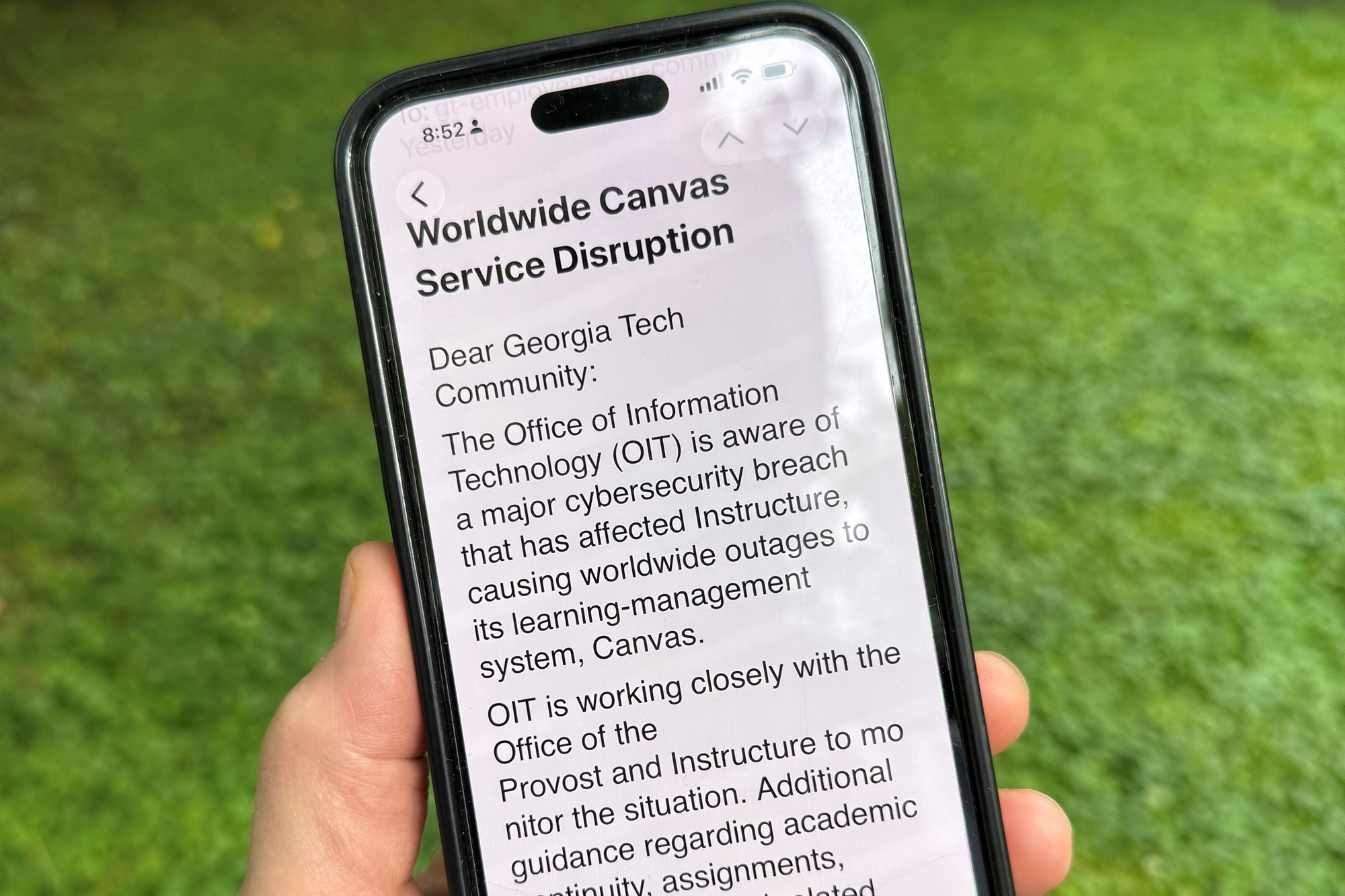
"caption": "An image of a notice sent by Georgia Tech's information technology department warning students, professors and staff about the cybersecurity breach of the Canvas system it uses for assignments and grading is displayed on a phone, on Friday, May 8, 2026, in Decatur, Georgia. The crippling cyberattack against Canvas, a widely used online learning platform, underscores the security vulnerabilities of education technology, experts said. ",
"credit": "Michael Warren/AP Photo",
"altTag": null,
"description": null,
"imgSizes": {
"thumbnail": {
"file": "https://cdn.kqed.org/wp-content/uploads/sites/10/2026/05/CanvasDisruptionAP-160x107.jpg",
"width": 160,
"height": 107,
"mimeType": "image/jpeg"
},
"1536x1536": {
"file": "https://cdn.kqed.org/wp-content/uploads/sites/10/2026/05/CanvasDisruptionAP-1536x1024.jpg",
"width": 1536,
"height": 1024,
"mimeType": "image/jpeg"
},
"post-thumbnail": {
"file": "https://cdn.kqed.org/wp-content/uploads/sites/10/2026/05/CanvasDisruptionAP-672x372.jpg",
"width": 672,
"height": 372,
"mimeType": "image/jpeg"
},
"twentyfourteen-full-width": {
"file": "https://cdn.kqed.org/wp-content/uploads/sites/10/2026/05/CanvasDisruptionAP-1038x576.jpg",
"width": 1038,
"height": 576,
"mimeType": "image/jpeg"
},
"npr-cds-wide": {
"file": "https://cdn.kqed.org/wp-content/uploads/sites/10/2026/05/CanvasDisruptionAP-1200x675.jpg",
"width": 1200,
"height": 675,
"mimeType": "image/jpeg"
},
"npr-cds-square": {
"file": "https://cdn.kqed.org/wp-content/uploads/sites/10/2026/05/CanvasDisruptionAP-600x600.jpg",
"width": 600,
"height": 600,
"mimeType": "image/jpeg"
},
"kqedFullSize": {
"file": "https://cdn.kqed.org/wp-content/uploads/sites/10/2026/05/CanvasDisruptionAP.jpg",
"width": 2000,
"height": 1333
}
},
"isLoading": false,
"fetchFailed": false
},
"news_12058102": {
"type": "attachments",
"id": "news_12058102",
"meta": {
"index": "attachments_1716263798",
"site": "news",
"id": "12058102",
"found": true
},
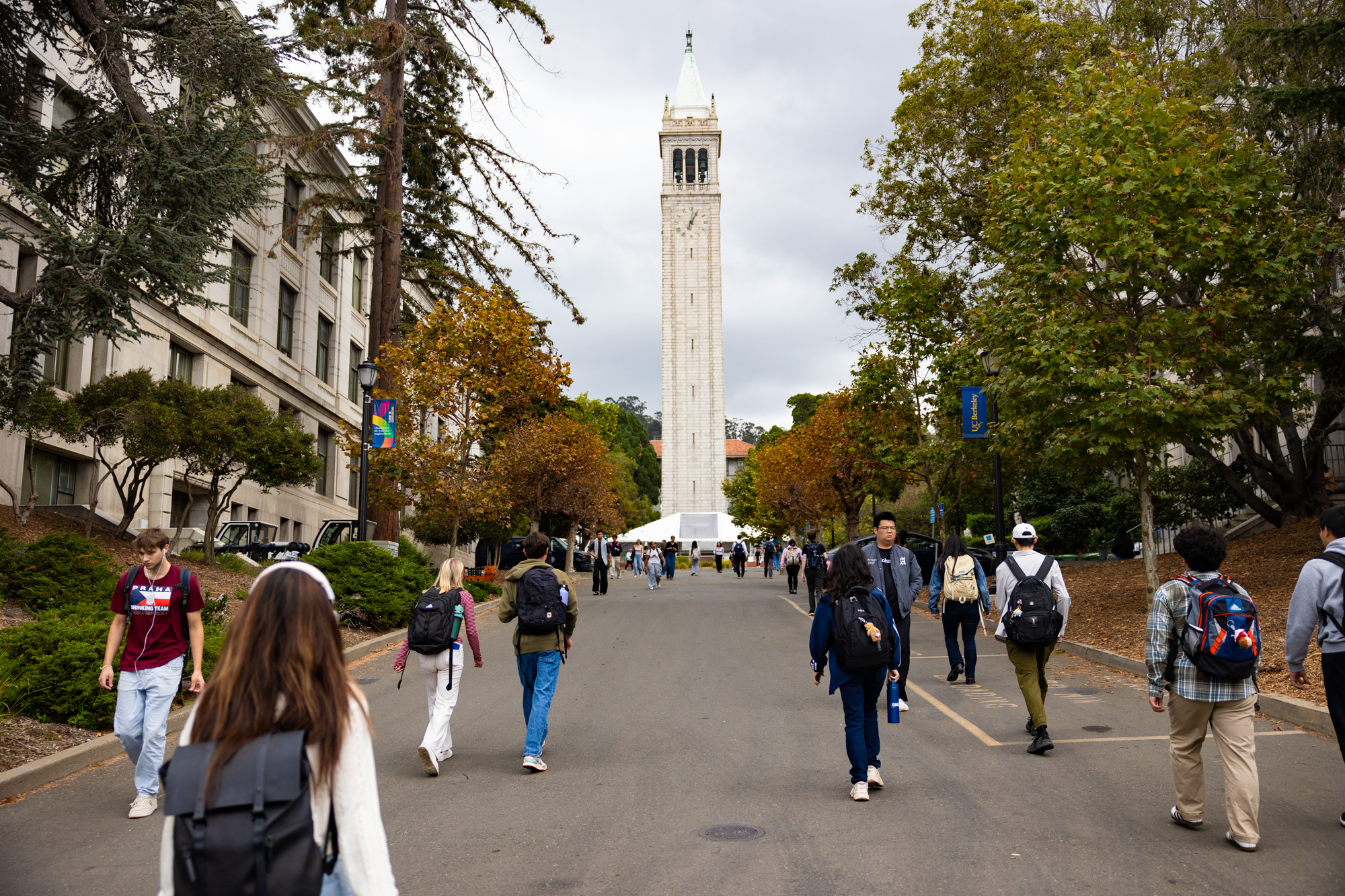
"title": "Students walk on campus at UC Berkeley in Berkeley on Sept. 29, 2025.",
"publishDate": 1759255328,
"status": "inherit",
"parent": 0,
"modified": 1759255357,
"caption": "Students walk on campus at UC Berkeley in Berkeley on Sept. 29, 2025.",
"credit": "Gina Castro/KQED",
"altTag": null,
"description": null,
"imgSizes": {
"thumbnail": {
"file": "https://cdn.kqed.org/wp-content/uploads/sites/10/2025/09/20250929_UCBERKELEY_GC-7-KQED-160x107.jpg",
"width": 160,
"height": 107,
"mimeType": "image/jpeg"
},
"1536x1536": {
"file": "https://cdn.kqed.org/wp-content/uploads/sites/10/2025/09/20250929_UCBERKELEY_GC-7-KQED-1536x1024.jpg",
"width": 1536,
"height": 1024,
"mimeType": "image/jpeg"
},
"post-thumbnail": {
"file": "https://cdn.kqed.org/wp-content/uploads/sites/10/2025/09/20250929_UCBERKELEY_GC-7-KQED-672x372.jpg",
"width": 672,
"height": 372,
"mimeType": "image/jpeg"
},
"twentyfourteen-full-width": {
"file": "https://cdn.kqed.org/wp-content/uploads/sites/10/2025/09/20250929_UCBERKELEY_GC-7-KQED-1038x576.jpg",
"width": 1038,
"height": 576,
"mimeType": "image/jpeg"
},
"kqedFullSize": {
"file": "https://cdn.kqed.org/wp-content/uploads/sites/10/2025/09/20250929_UCBERKELEY_GC-7-KQED.jpg",
"width": 2000,
"height": 1333
}
},
"isLoading": false,
"fetchFailed": false
},
"news_12082702": {
"type": "attachments",
"id": "news_12082702",
"meta": {
"index": "attachments_1716263798",
"site": "news",
"id": "12082702",
"found": true
},
"title": "ISRAEL-US-TECHNOLOGY-CELLEBRITE",
"publishDate": 1778176219,
"status": "inherit",
"parent": 12082693,
"modified": 1778176317,
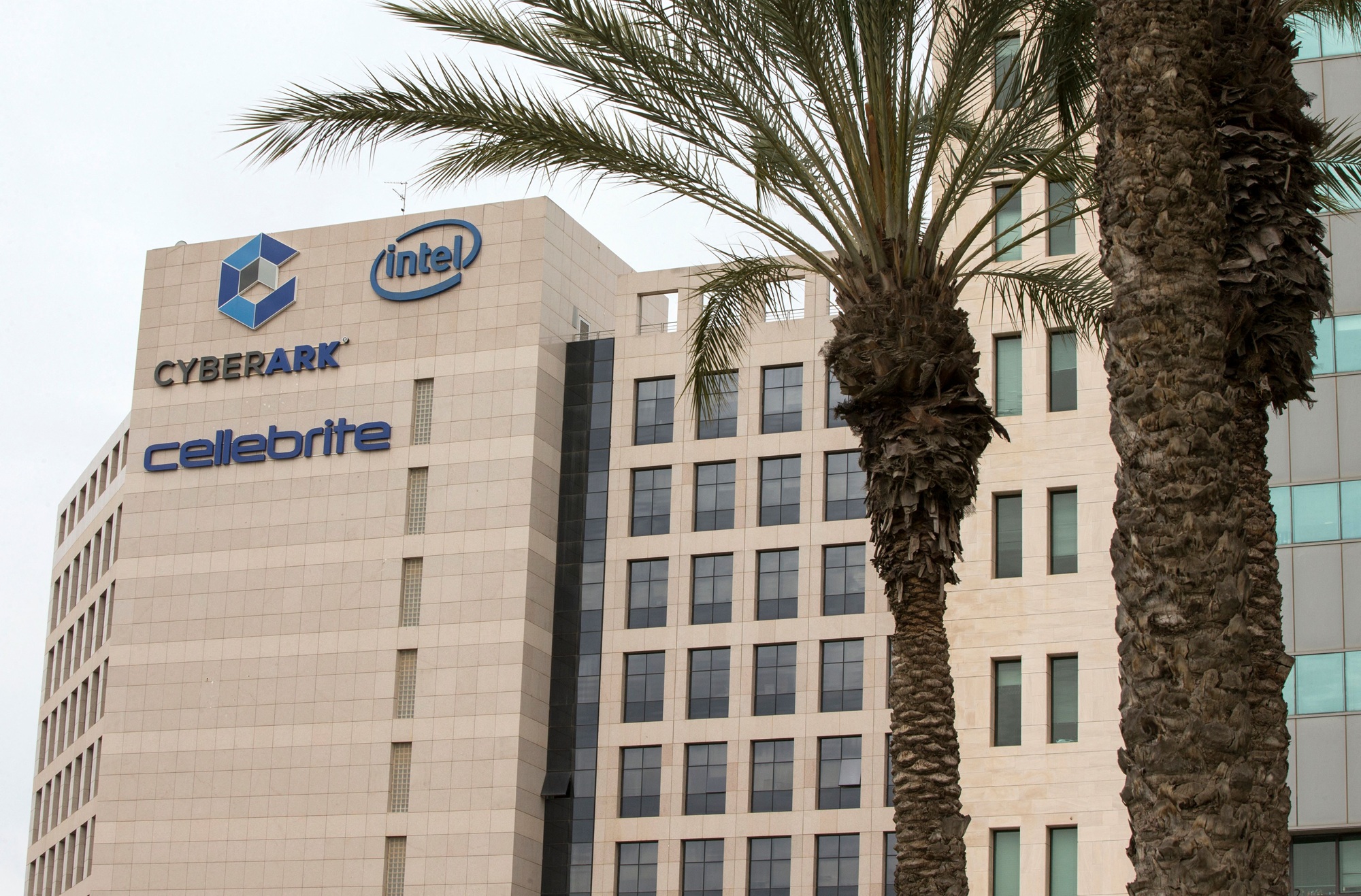
"caption": "The offices of Israeli company Cellebrite on March 24, 2016. Cellebrite is a provider of mobile forensic software that can extract and decode data from the Apple iPhone locked handsets. ",
"credit": "Jack Guez/AFP via Getty Images",
"altTag": null,
"description": null,
"imgSizes": {
"thumbnail": {
"file": "https://cdn.kqed.org/wp-content/uploads/sites/10/2026/05/CellebriteGetty-160x105.jpg",
"width": 160,
"height": 105,
"mimeType": "image/jpeg"
},
"1536x1536": {
"file": "https://cdn.kqed.org/wp-content/uploads/sites/10/2026/05/CellebriteGetty-1536x1011.jpg",
"width": 1536,
"height": 1011,
"mimeType": "image/jpeg"
},
"post-thumbnail": {
"file": "https://cdn.kqed.org/wp-content/uploads/sites/10/2026/05/CellebriteGetty-672x372.jpg",
"width": 672,
"height": 372,
"mimeType": "image/jpeg"
},
"twentyfourteen-full-width": {
"file": "https://cdn.kqed.org/wp-content/uploads/sites/10/2026/05/CellebriteGetty-1038x576.jpg",
"width": 1038,
"height": 576,
"mimeType": "image/jpeg"
},
"npr-cds-wide": {
"file": "https://cdn.kqed.org/wp-content/uploads/sites/10/2026/05/CellebriteGetty-1200x675.jpg",
"width": 1200,
"height": 675,
"mimeType": "image/jpeg"
},
"npr-cds-square": {
"file": "https://cdn.kqed.org/wp-content/uploads/sites/10/2026/05/CellebriteGetty-600x600.jpg",
"width": 600,
"height": 600,
"mimeType": "image/jpeg"
},
"kqedFullSize": {
"file": "https://cdn.kqed.org/wp-content/uploads/sites/10/2026/05/CellebriteGetty.jpg",
"width": 2000,
"height": 1317
}
},
"isLoading": false,
"fetchFailed": false
},
"news_12082344": {
"type": "attachments",
"id": "news_12082344",
"meta": {
"index": "attachments_1716263798",
"site": "news",
"id": "12082344",
"found": true
},
"title": "260504-MUSK-ALTMAN-VB-04-KQED",
"publishDate": 1777936709,
"status": "inherit",
"parent": 0,
"modified": 1777936770,
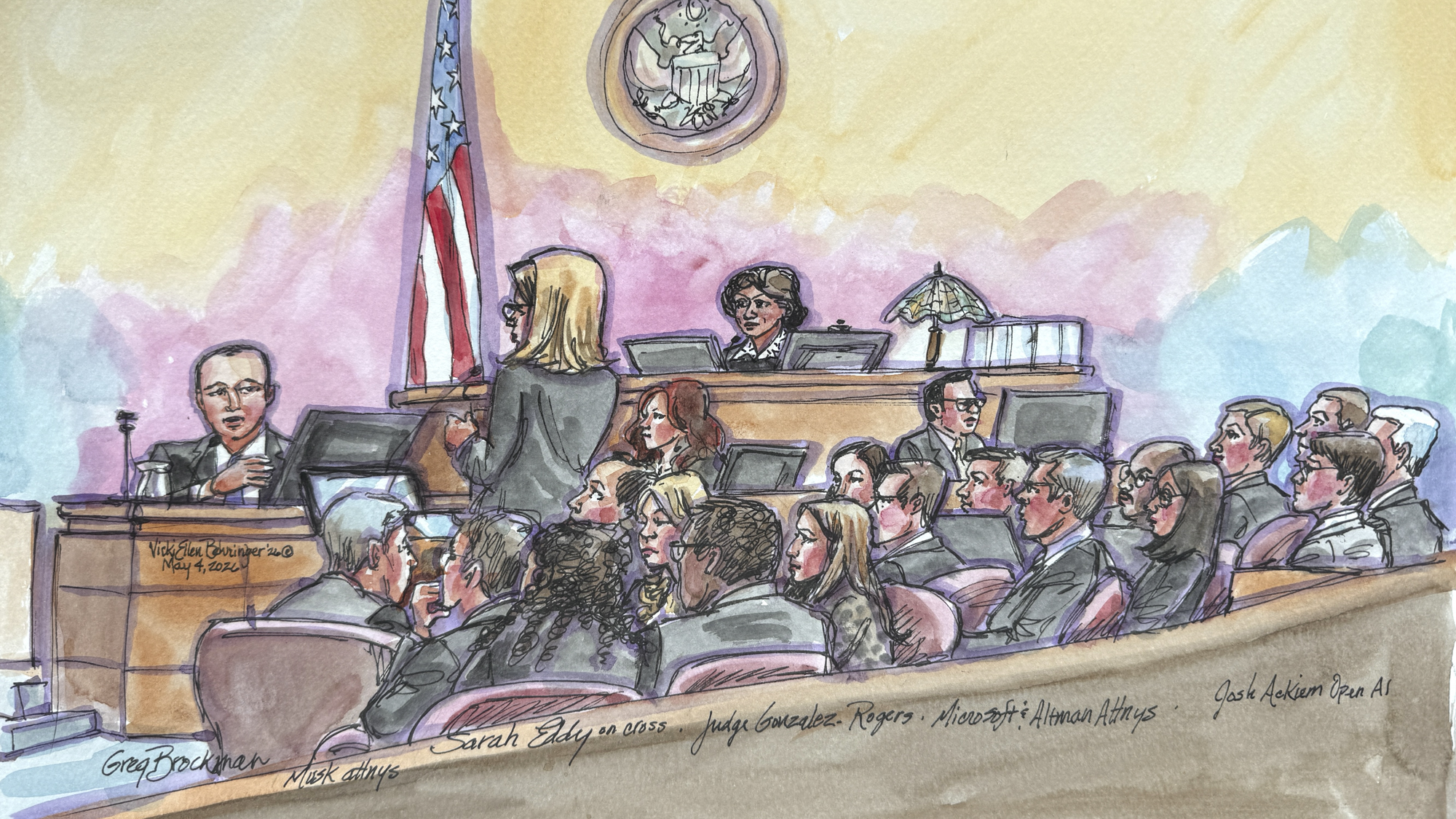
"caption": "Open AI President Greg Brockman testifies in the trial in which Elon Musk claims that Sam Altman and OpenAI abandoned their founding promise to develop AI for the benefit of humanity, rather than solely for profit in Oakland on May 4, 2026.",
"credit": "Vicki Behringer for KQED",
"altTag": null,
"description": null,
"imgSizes": {
"thumbnail": {
"file": "https://cdn.kqed.org/wp-content/uploads/sites/10/2026/05/260504-MUSK-ALTMAN-VB-04-KQED-160x90.jpg",
"width": 160,
"height": 90,
"mimeType": "image/jpeg"
},
"1536x1536": {
"file": "https://cdn.kqed.org/wp-content/uploads/sites/10/2026/05/260504-MUSK-ALTMAN-VB-04-KQED-1536x864.jpg",
"width": 1536,
"height": 864,
"mimeType": "image/jpeg"
},
"post-thumbnail": {
"file": "https://cdn.kqed.org/wp-content/uploads/sites/10/2026/05/260504-MUSK-ALTMAN-VB-04-KQED-672x372.jpg",
"width": 672,
"height": 372,
"mimeType": "image/jpeg"
},
"twentyfourteen-full-width": {
"file": "https://cdn.kqed.org/wp-content/uploads/sites/10/2026/05/260504-MUSK-ALTMAN-VB-04-KQED-1038x576.jpg",
"width": 1038,
"height": 576,
"mimeType": "image/jpeg"
},
"npr-cds-wide": {
"file": "https://cdn.kqed.org/wp-content/uploads/sites/10/2026/05/260504-MUSK-ALTMAN-VB-04-KQED-1200x675.jpg",
"width": 1200,
"height": 675,
"mimeType": "image/jpeg"
},
"npr-cds-square": {
"file": "https://cdn.kqed.org/wp-content/uploads/sites/10/2026/05/260504-MUSK-ALTMAN-VB-04-KQED-600x600.jpg",
"width": 600,
"height": 600,
"mimeType": "image/jpeg"
},
"kqedFullSize": {
"file": "https://cdn.kqed.org/wp-content/uploads/sites/10/2026/05/260504-MUSK-ALTMAN-VB-04-KQED.jpg",
"width": 2000,
"height": 1125
}
},
"isLoading": false,
"fetchFailed": false
},
"news_12081606": {
"type": "attachments",
"id": "news_12081606",
"meta": {
"index": "attachments_1716263798",
"site": "news",
"id": "12081606",
"found": true
},
"title": "Musk OpenAI Trial",
"publishDate": 1777397997,
"status": "inherit",
"parent": 12081603,
"modified": 1777398261,
"caption": "Elon Musk arrives at the U.S. District Court in Oakland, California, on Tuesday, April 28, 2026. ",
"credit": "Godofredo A. Vásquez/AP Photo",
"altTag": null,
"description": null,
"imgSizes": {
"medium": {
"file": "https://cdn.kqed.org/wp-content/uploads/sites/10/2026/04/AP26118555622828-2000x1333.jpg",
"width": 2000,
"height": 1333,
"mimeType": "image/jpeg"
},
"large": {
"file": "https://cdn.kqed.org/wp-content/uploads/sites/10/2026/04/AP26118555622828-2000x1333.jpg",
"width": 2000,
"height": 1333,
"mimeType": "image/jpeg"
},
"thumbnail": {
"file": "https://cdn.kqed.org/wp-content/uploads/sites/10/2026/04/AP26118555622828-160x107.jpg",
"width": 160,
"height": 107,
"mimeType": "image/jpeg"
},
"1536x1536": {
"file": "https://cdn.kqed.org/wp-content/uploads/sites/10/2026/04/AP26118555622828-1536x1024.jpg",
"width": 1536,
"height": 1024,
"mimeType": "image/jpeg"
},
"2048x2048": {
"file": "https://cdn.kqed.org/wp-content/uploads/sites/10/2026/04/AP26118555622828-2048x1365.jpg",
"width": 2048,
"height": 1365,
"mimeType": "image/jpeg"
},
"post-thumbnail": {
"file": "https://cdn.kqed.org/wp-content/uploads/sites/10/2026/04/AP26118555622828-672x372.jpg",
"width": 672,
"height": 372,
"mimeType": "image/jpeg"
},
"twentyfourteen-full-width": {
"file": "https://cdn.kqed.org/wp-content/uploads/sites/10/2026/04/AP26118555622828-1038x576.jpg",
"width": 1038,
"height": 576,
"mimeType": "image/jpeg"
},
"full-width": {
"file": "https://cdn.kqed.org/wp-content/uploads/sites/10/2026/04/AP26118555622828-2000x1333.jpg",
"width": 2000,
"height": 1333,
"mimeType": "image/jpeg"
},
"npr-cds-wide": {
"file": "https://cdn.kqed.org/wp-content/uploads/sites/10/2026/04/AP26118555622828-1200x675.jpg",
"width": 1200,
"height": 675,
"mimeType": "image/jpeg"
},
"npr-cds-square": {
"file": "https://cdn.kqed.org/wp-content/uploads/sites/10/2026/04/AP26118555622828-600x600.jpg",
"width": 600,
"height": 600,
"mimeType": "image/jpeg"
},
"kqedFullSize": {
"file": "https://cdn.kqed.org/wp-content/uploads/sites/10/2026/04/AP26118555622828-scaled-e1777398211110.jpg",
"width": 2000,
"height": 1334
}
},
"isLoading": false,
"fetchFailed": false
},
"news_12081681": {
"type": "attachments",
"id": "news_12081681",
"meta": {
"index": "attachments_1716263798",
"site": "news",
"id": "12081681",
"found": true
},
"title": "260428-MUSK-ALTMAN-VB-03-KQED-1",
"publishDate": 1777416108,
"status": "inherit",
"parent": 12081603,
"modified": 1777508469,
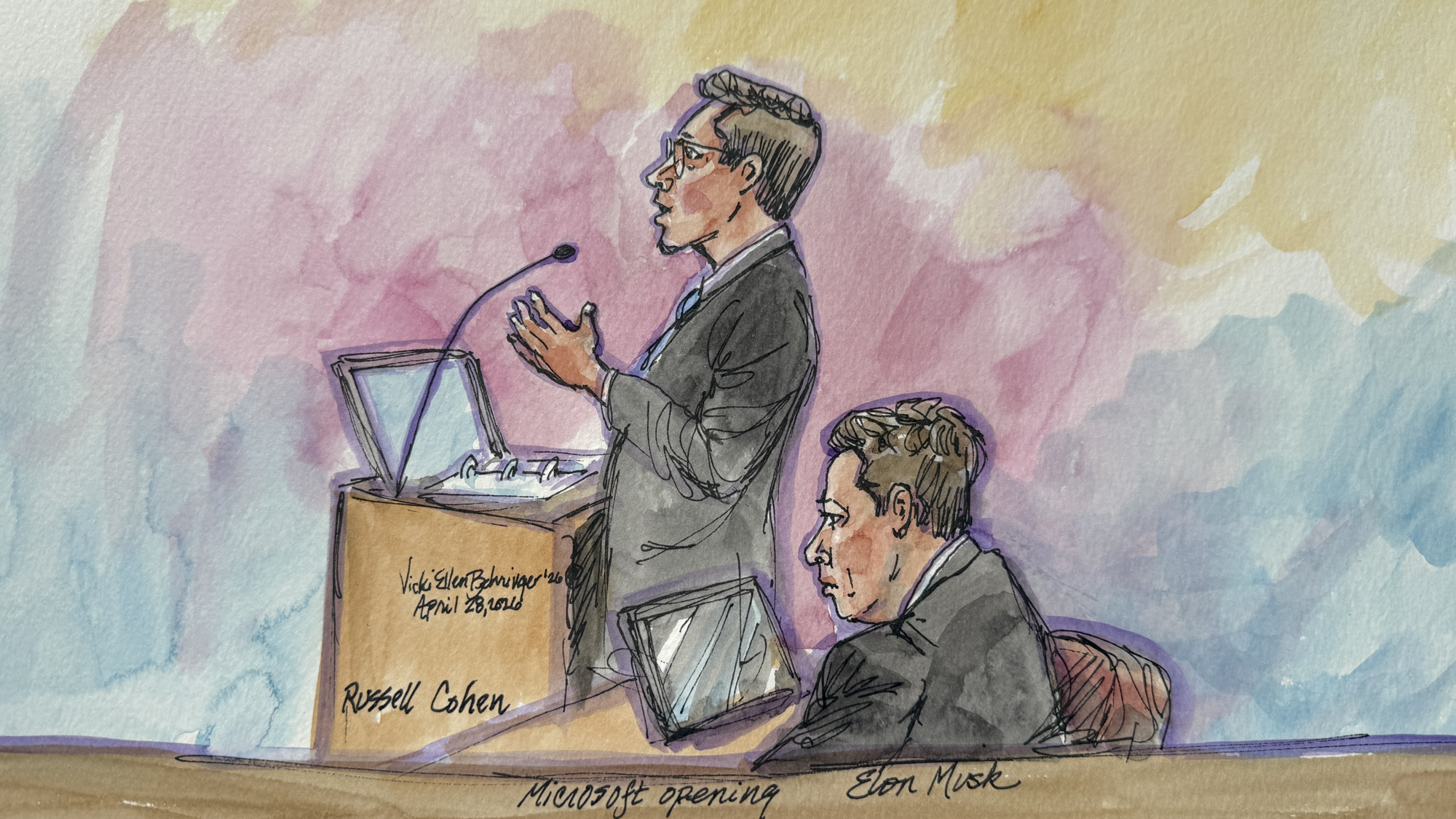
"caption": "Representing Microsoft, Russell Coan (left) speaks as Elon Musk watches in the trial in which Elon Musk claims that Sam Altman and OpenAI abandoned their founding promise to develop AI for the benefit of humanity, rather than solely for profit, in Oakland on April 28, 2026.",
"credit": "Vicki Behringer for KQED",
"altTag": null,
"description": null,
"imgSizes": {
"thumbnail": {
"file": "https://cdn.kqed.org/wp-content/uploads/sites/10/2026/04/260428-MUSK-ALTMAN-VB-03-KQED-1-160x90.jpg",
"width": 160,
"height": 90,
"mimeType": "image/jpeg"
},
"1536x1536": {
"file": "https://cdn.kqed.org/wp-content/uploads/sites/10/2026/04/260428-MUSK-ALTMAN-VB-03-KQED-1-1536x864.jpg",
"width": 1536,
"height": 864,
"mimeType": "image/jpeg"
},
"post-thumbnail": {
"file": "https://cdn.kqed.org/wp-content/uploads/sites/10/2026/04/260428-MUSK-ALTMAN-VB-03-KQED-1-672x372.jpg",
"width": 672,
"height": 372,
"mimeType": "image/jpeg"
},
"twentyfourteen-full-width": {
"file": "https://cdn.kqed.org/wp-content/uploads/sites/10/2026/04/260428-MUSK-ALTMAN-VB-03-KQED-1-1038x576.jpg",
"width": 1038,
"height": 576,
"mimeType": "image/jpeg"
},
"npr-cds-wide": {
"file": "https://cdn.kqed.org/wp-content/uploads/sites/10/2026/04/260428-MUSK-ALTMAN-VB-03-KQED-1-1200x675.jpg",
"width": 1200,
"height": 675,
"mimeType": "image/jpeg"
},
"npr-cds-square": {
"file": "https://cdn.kqed.org/wp-content/uploads/sites/10/2026/04/260428-MUSK-ALTMAN-VB-03-KQED-1-600x600.jpg",
"width": 600,
"height": 600,
"mimeType": "image/jpeg"
},
"kqedFullSize": {
"file": "https://cdn.kqed.org/wp-content/uploads/sites/10/2026/04/260428-MUSK-ALTMAN-VB-03-KQED-1.jpg",
"width": 2000,
"height": 1125
}
},
"isLoading": false,
"fetchFailed": false
},
"news_12081739": {
"type": "attachments",
"id": "news_12081739",
"meta": {
"index": "attachments_1716263798",
"site": "news",
"id": "12081739",
"found": true
},
"title": "DMVCM1",
"publishDate": 1777479664,
"status": "inherit",
"parent": 12081737,
"modified": 1777479686,
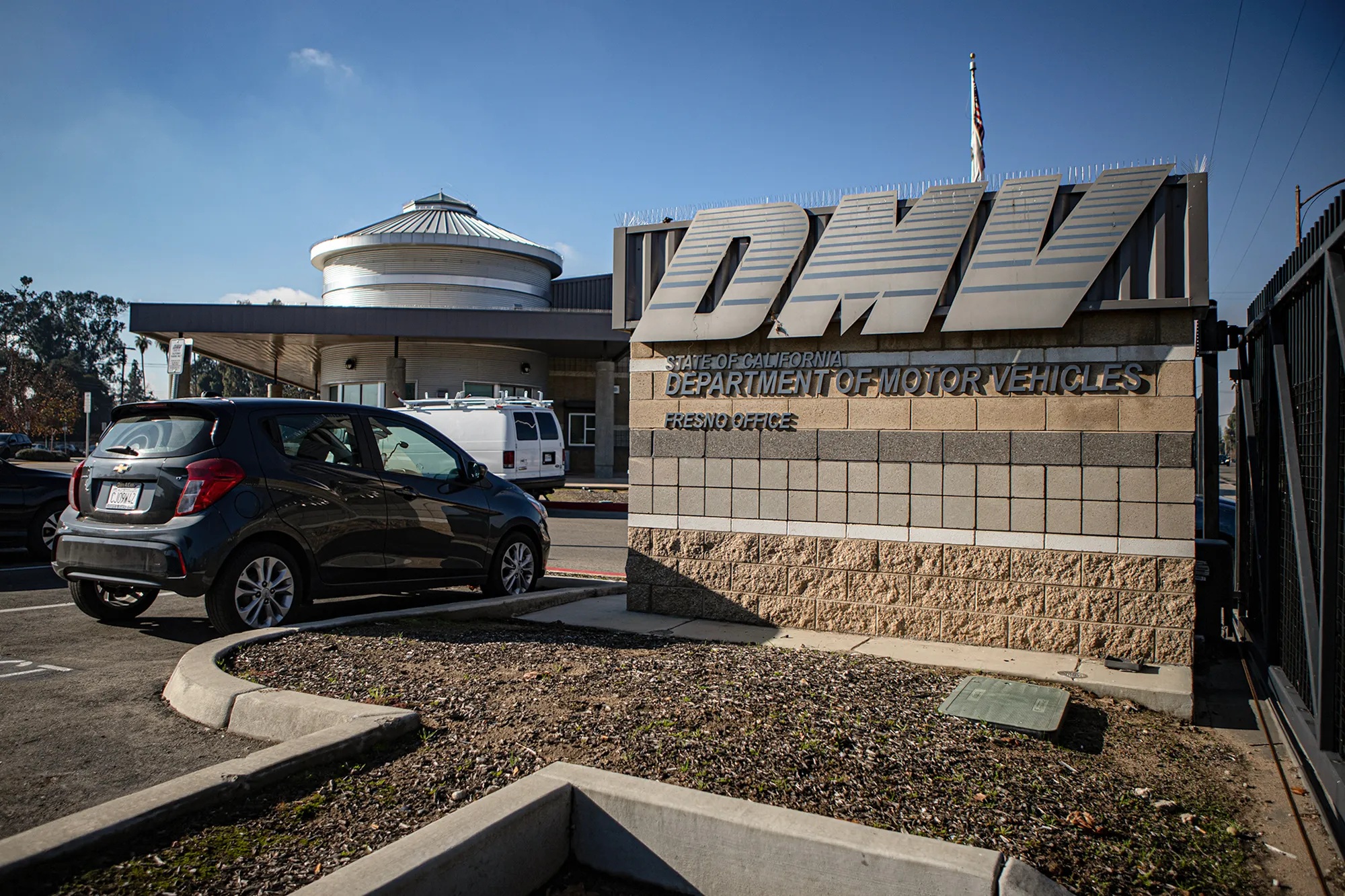
"caption": "The DMV has asked for $55 million to share its driver license data to a national organization. Advocates say the move could endanger unauthorized immigrants. Department of Motor Vehicles parking lot in central Fresno on Dec. 13, 2022. ",
"credit": "Larry Valenzuela for CalMatters",
"altTag": null,
"description": null,
"imgSizes": {
"thumbnail": {
"file": "https://cdn.kqed.org/wp-content/uploads/sites/10/2026/04/DMVCM1-160x107.jpg",
"width": 160,
"height": 107,
"mimeType": "image/jpeg"
},
"1536x1536": {
"file": "https://cdn.kqed.org/wp-content/uploads/sites/10/2026/04/DMVCM1-1536x1024.jpg",
"width": 1536,
"height": 1024,
"mimeType": "image/jpeg"
},
"post-thumbnail": {
"file": "https://cdn.kqed.org/wp-content/uploads/sites/10/2026/04/DMVCM1-672x372.jpg",
"width": 672,
"height": 372,
"mimeType": "image/jpeg"
},
"twentyfourteen-full-width": {
"file": "https://cdn.kqed.org/wp-content/uploads/sites/10/2026/04/DMVCM1-1038x576.jpg",
"width": 1038,
"height": 576,
"mimeType": "image/jpeg"
},
"npr-cds-wide": {
"file": "https://cdn.kqed.org/wp-content/uploads/sites/10/2026/04/DMVCM1-1200x675.jpg",
"width": 1200,
"height": 675,
"mimeType": "image/jpeg"
},
"npr-cds-square": {
"file": "https://cdn.kqed.org/wp-content/uploads/sites/10/2026/04/DMVCM1-600x600.jpg",
"width": 600,
"height": 600,
"mimeType": "image/jpeg"
},
"kqedFullSize": {
"file": "https://cdn.kqed.org/wp-content/uploads/sites/10/2026/04/DMVCM1.jpg",
"width": 2000,
"height": 1333
}
},
"isLoading": false,
"fetchFailed": false
},
"news_12081639": {
"type": "attachments",
"id": "news_12081639",
"meta": {
"index": "attachments_1716263798",
"site": "news",
"id": "12081639",
"found": true
},
"title": "260428-MUSK ALTMAN-VB-02-KQED",
"publishDate": 1777410140,
"status": "inherit",
"parent": 12081603,
"modified": 1777422271,
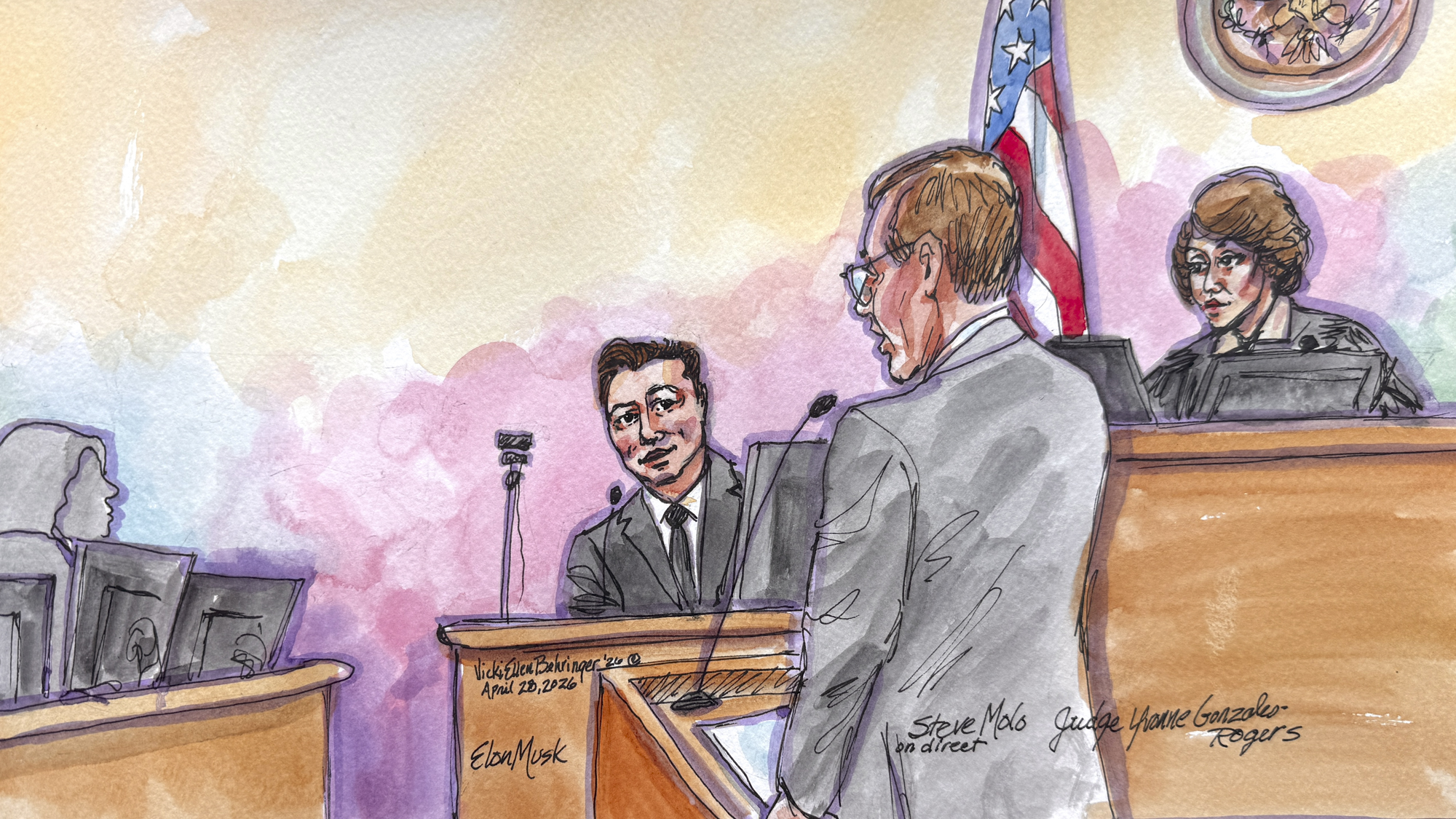
"caption": "Elon Musk (left) takes the stand in the trial in which Elon Musk claims that Sam Altman and OpenAI abandoned their founding promise to develop AI for the benefit of humanity, rather than solely for profit, in Oakland on April 28, 2026.",
"credit": "Vicki Behringer for KQED",
"altTag": null,
"description": null,
"imgSizes": {
"thumbnail": {
"file": "https://cdn.kqed.org/wp-content/uploads/sites/10/2026/04/260428-MUSK-ALTMAN-VB-02-KQED-160x90.jpg",
"width": 160,
"height": 90,
"mimeType": "image/jpeg"
},
"1536x1536": {
"file": "https://cdn.kqed.org/wp-content/uploads/sites/10/2026/04/260428-MUSK-ALTMAN-VB-02-KQED-1536x864.jpg",
"width": 1536,
"height": 864,
"mimeType": "image/jpeg"
},
"post-thumbnail": {
"file": "https://cdn.kqed.org/wp-content/uploads/sites/10/2026/04/260428-MUSK-ALTMAN-VB-02-KQED-672x372.jpg",
"width": 672,
"height": 372,
"mimeType": "image/jpeg"
},
"twentyfourteen-full-width": {
"file": "https://cdn.kqed.org/wp-content/uploads/sites/10/2026/04/260428-MUSK-ALTMAN-VB-02-KQED-1038x576.jpg",
"width": 1038,
"height": 576,
"mimeType": "image/jpeg"
},
"npr-cds-wide": {
"file": "https://cdn.kqed.org/wp-content/uploads/sites/10/2026/04/260428-MUSK-ALTMAN-VB-02-KQED-1200x675.jpg",
"width": 1200,
"height": 675,
"mimeType": "image/jpeg"
},
"npr-cds-square": {
"file": "https://cdn.kqed.org/wp-content/uploads/sites/10/2026/04/260428-MUSK-ALTMAN-VB-02-KQED-600x600.jpg",
"width": 600,
"height": 600,
"mimeType": "image/jpeg"
},
"kqedFullSize": {
"file": "https://cdn.kqed.org/wp-content/uploads/sites/10/2026/04/260428-MUSK-ALTMAN-VB-02-KQED.jpg",
"width": 2000,
"height": 1125
}
},
"isLoading": false,
"fetchFailed": false
},
"news_12080929": {
"type": "attachments",
"id": "news_12080929",
"meta": {
"index": "attachments_1716263798",
"site": "news",
"id": "12080929",
"found": true
},
"title": "260422-ALTMANMUSK-MD-01-KQED",
"publishDate": 1776885164,
"status": "inherit",
"parent": 0,
"modified": 1776885551,
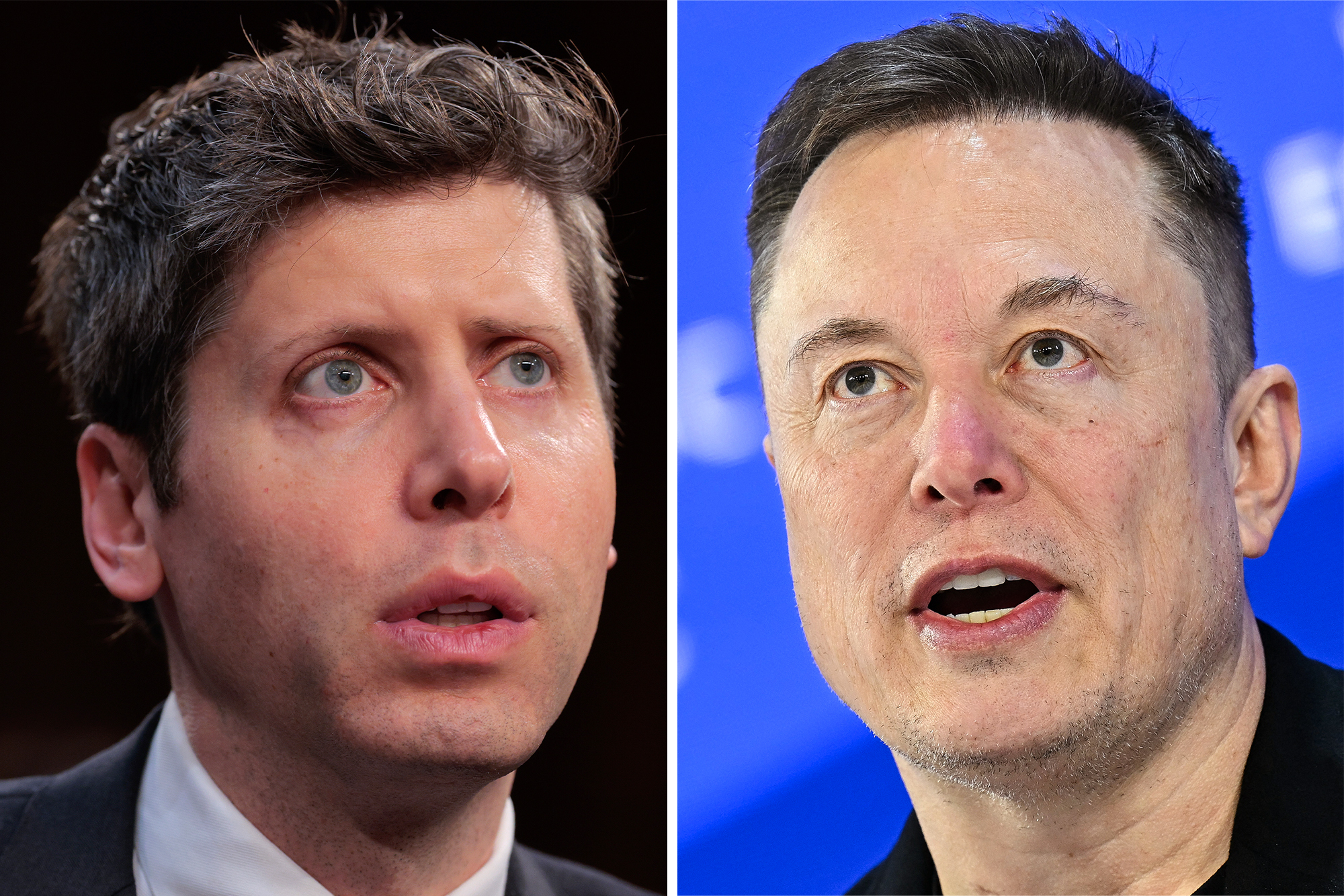
"caption": "Once allies in what they called a mission to develop AI safely for humanity, Elon Musk and Sam Altman will let a federal judge and jury decide what that promise was worth. The trial is slated to begin April 27, 2026.",
"credit": "Left: Chip Somodevilla/Getty Images; Right: Fabrice Coffrini/AFP via Getty Images",
"altTag": null,
"description": null,
"imgSizes": {
"thumbnail": {
"file": "https://cdn.kqed.org/wp-content/uploads/sites/10/2026/04/260422-ALTMANMUSK-MD-01-KQED-160x107.jpg",
"width": 160,
"height": 107,
"mimeType": "image/jpeg"
},
"1536x1536": {
"file": "https://cdn.kqed.org/wp-content/uploads/sites/10/2026/04/260422-ALTMANMUSK-MD-01-KQED-1536x1025.jpg",
"width": 1536,
"height": 1025,
"mimeType": "image/jpeg"
},
"post-thumbnail": {
"file": "https://cdn.kqed.org/wp-content/uploads/sites/10/2026/04/260422-ALTMANMUSK-MD-01-KQED-672x372.jpg",
"width": 672,
"height": 372,
"mimeType": "image/jpeg"
},
"twentyfourteen-full-width": {
"file": "https://cdn.kqed.org/wp-content/uploads/sites/10/2026/04/260422-ALTMANMUSK-MD-01-KQED-1038x576.jpg",
"width": 1038,
"height": 576,
"mimeType": "image/jpeg"
},
"npr-cds-wide": {
"file": "https://cdn.kqed.org/wp-content/uploads/sites/10/2026/04/260422-ALTMANMUSK-MD-01-KQED-1200x675.jpg",
"width": 1200,
"height": 675,
"mimeType": "image/jpeg"
},
"npr-cds-square": {
"file": "https://cdn.kqed.org/wp-content/uploads/sites/10/2026/04/260422-ALTMANMUSK-MD-01-KQED-600x600.jpg",
"width": 600,
"height": 600,
"mimeType": "image/jpeg"
},
"kqedFullSize": {
"file": "https://cdn.kqed.org/wp-content/uploads/sites/10/2026/04/260422-ALTMANMUSK-MD-01-KQED.jpg",
"width": 2000,
"height": 1334
}
},
"isLoading": false,
"fetchFailed": false
},
"news_12081306": {
"type": "attachments",
"id": "news_12081306",
"meta": {
"index": "attachments_1716263798",
"site": "news",
"id": "12081306",
"found": true
},
"title": "Photo Illustration - Anthropic Launches Project Glasswing",
"publishDate": 1777053839,
"status": "inherit",
"parent": 12081279,
"modified": 1777053863,
"caption": "A smartphone displays the Anthropic logo with the Project Glasswing webpage in the background, in Creteil, France, on April 8, 2026. Anthropic announces the launch of Project Glasswing, a cybersecurity initiative based on the Claude Mythos model to detect and remediate vulnerabilities in critical open-source software. (Photo by Samuel Boivin/NurPhoto via Getty Images)",
"credit": "Samuel Boivin/NurPhoto via Getty Images",
"altTag": null,
"description": null,
"imgSizes": {
"thumbnail": {
"file": "https://cdn.kqed.org/wp-content/uploads/sites/10/2026/04/AnthropicGetty-160x106.jpg",
"width": 160,
"height": 106,
"mimeType": "image/jpeg"
},
"1536x1536": {
"file": "https://cdn.kqed.org/wp-content/uploads/sites/10/2026/04/AnthropicGetty-1536x1021.jpg",
"width": 1536,
"height": 1021,
"mimeType": "image/jpeg"
},
"post-thumbnail": {
"file": "https://cdn.kqed.org/wp-content/uploads/sites/10/2026/04/AnthropicGetty-672x372.jpg",
"width": 672,
"height": 372,
"mimeType": "image/jpeg"
},
"twentyfourteen-full-width": {
"file": "https://cdn.kqed.org/wp-content/uploads/sites/10/2026/04/AnthropicGetty-1038x576.jpg",
"width": 1038,
"height": 576,
"mimeType": "image/jpeg"
},
"npr-cds-wide": {
"file": "https://cdn.kqed.org/wp-content/uploads/sites/10/2026/04/AnthropicGetty-1200x675.jpg",
"width": 1200,
"height": 675,
"mimeType": "image/jpeg"
},
"npr-cds-square": {
"file": "https://cdn.kqed.org/wp-content/uploads/sites/10/2026/04/AnthropicGetty-600x600.jpg",
"width": 600,
"height": 600,
"mimeType": "image/jpeg"
},
"kqedFullSize": {
"file": "https://cdn.kqed.org/wp-content/uploads/sites/10/2026/04/AnthropicGetty.jpg",
"width": 2000,
"height": 1330
}
},
"isLoading": false,
"fetchFailed": false
},
"news_11989313": {
"type": "attachments",
"id": "news_11989313",
"meta": {
"index": "attachments_1716263798",
"site": "news",
"id": "11989313",
"found": true
},
"title": "Tech AI Illustrations",
"publishDate": 1717711326,
"status": "inherit",
"parent": 11989308,
"modified": 1787170163,
"caption": "The ChatGPT logo is displayed on an iPhone in New York, May 18, 2023. ",
"credit": "Jaap Arriens/NurPhoto via Getty Images",
"altTag": null,
"description": null,
"imgSizes": {
"medium": {
"file": "https://cdn.kqed.org/wp-content/uploads/sites/10/2024/06/GettyImages-2155035557-800x533.jpg",
"width": 800,
"height": 533,
"mimeType": "image/jpeg"
},
"large": {
"file": "https://cdn.kqed.org/wp-content/uploads/sites/10/2024/06/GettyImages-2155035557-1020x680.jpg",
"width": 1020,
"height": 680,
"mimeType": "image/jpeg"
},
"thumbnail": {
"file": "https://cdn.kqed.org/wp-content/uploads/sites/10/2024/06/GettyImages-2155035557-160x107.jpg",
"width": 160,
"height": 107,
"mimeType": "image/jpeg"
},
"1536x1536": {
"file": "https://cdn.kqed.org/wp-content/uploads/sites/10/2024/06/GettyImages-2155035557-1536x1024.jpg",
"width": 1536,
"height": 1024,
"mimeType": "image/jpeg"
},
"2048x2048": {
"file": "https://cdn.kqed.org/wp-content/uploads/sites/10/2024/06/GettyImages-2155035557-2048x1365.jpg",
"width": 2048,
"height": 1365,
"mimeType": "image/jpeg"
},
"post-thumbnail": {
"file": "https://cdn.kqed.org/wp-content/uploads/sites/10/2024/06/GettyImages-2155035557-672x372.jpg",
"width": 672,
"height": 372,
"mimeType": "image/jpeg"
},
"twentyfourteen-full-width": {
"file": "https://cdn.kqed.org/wp-content/uploads/sites/10/2024/06/GettyImages-2155035557-1038x576.jpg",
"width": 1038,
"height": 576,
"mimeType": "image/jpeg"
},
"full-width": {
"file": "https://cdn.kqed.org/wp-content/uploads/sites/10/2024/06/GettyImages-2155035557-1920x1280.jpg",
"width": 1920,
"height": 1280,
"mimeType": "image/jpeg"
},
"kqedFullSize": {
"file": "https://cdn.kqed.org/wp-content/uploads/sites/10/2024/06/GettyImages-2155035557-scaled-e1760733694503.jpg",
"width": 2000,
"height": 1334
}
},
"isLoading": false,
"fetchFailed": false
},
"news_12080236": {
"type": "attachments",
"id": "news_12080236",
"meta": {
"index": "attachments_1716263798",
"site": "news",
"id": "12080236",
"found": true
},
"title": "260402-FLOCK SECURITY CAMERA FILE-MD-04_qed",
"publishDate": 1776360227,
"status": "inherit",
"parent": 12080233,
"modified": 1776360250,
"caption": "Flock cameras monitor the intersection at McKee Road and North White Road in San José on April 2, 2026.",
"credit": "Martin do Nascimento/KQED",
"altTag": null,
"description": null,
"imgSizes": {
"thumbnail": {
"file": "https://cdn.kqed.org/wp-content/uploads/sites/10/2026/04/260402-FLOCK-SECURITY-CAMERA-FILE-MD-04_qed-160x107.jpg",
"width": 160,
"height": 107,
"mimeType": "image/jpeg"
},
"1536x1536": {
"file": "https://cdn.kqed.org/wp-content/uploads/sites/10/2026/04/260402-FLOCK-SECURITY-CAMERA-FILE-MD-04_qed-1536x1024.jpg",
"width": 1536,
"height": 1024,
"mimeType": "image/jpeg"
},
"post-thumbnail": {
"file": "https://cdn.kqed.org/wp-content/uploads/sites/10/2026/04/260402-FLOCK-SECURITY-CAMERA-FILE-MD-04_qed-672x372.jpg",
"width": 672,
"height": 372,
"mimeType": "image/jpeg"
},
"twentyfourteen-full-width": {
"file": "https://cdn.kqed.org/wp-content/uploads/sites/10/2026/04/260402-FLOCK-SECURITY-CAMERA-FILE-MD-04_qed-1038x576.jpg",
"width": 1038,
"height": 576,
"mimeType": "image/jpeg"
},
"npr-cds-wide": {
"file": "https://cdn.kqed.org/wp-content/uploads/sites/10/2026/04/260402-FLOCK-SECURITY-CAMERA-FILE-MD-04_qed-1200x675.jpg",
"width": 1200,
"height": 675,
"mimeType": "image/jpeg"
},
"npr-cds-square": {
"file": "https://cdn.kqed.org/wp-content/uploads/sites/10/2026/04/260402-FLOCK-SECURITY-CAMERA-FILE-MD-04_qed-600x600.jpg",
"width": 600,
"height": 600,
"mimeType": "image/jpeg"
},
"kqedFullSize": {
"file": "https://cdn.kqed.org/wp-content/uploads/sites/10/2026/04/260402-FLOCK-SECURITY-CAMERA-FILE-MD-04_qed.jpg",
"width": 1999,
"height": 1333
}
},
"isLoading": false,
"fetchFailed": false
}
},
"audioPlayerReducer": {
"postId": "stream_live",
"isPaused": true,
"isPlaying": false,
"pfsActive": false,
"pledgeModalIsOpen": true,
"playerDrawerIsOpen": false,
"liveAudioPlayStartedAt": 0,
"liveAudioPlayContext": ""
},
"authorsReducer": {
"byline_news_12081737": {
"type": "authors",
"id": "byline_news_12081737",
"meta": {
"override": true
},
"slug": "byline_news_12081737",
"name": "Khari Johnson and Wendy Fry, CalMatters",
"isLoading": false
},
"minakim": {
"type": "authors",
"id": "243",
"meta": {
"index": "authors_1716337520",
"id": "243",
"found": true
},
"name": "Mina Kim",
"firstName": "Mina",
"lastName": "Kim",
"slug": "minakim",
"email": "mkim@kqed.org",
"display_author_email": false,
"staff_mastheads": [
"news"
],
"title": "Host, Forum",
"bio": "Mina Kim is host of the 10 a.m. statewide hour of Forum; a live daily talk show for curious Californians on issues that matter to the state and nation, with a particular emphasis on race and equity.\r\n\r\nBefore joining the Forum team, Mina was KQED’s evening news anchor, and health reporter for The California Report. Her award-winning work has included natural disasters in Napa and gun violence in Oakland. Mina grew up in St. John’s, Newfoundland.",
"avatar": "https://secure.gravatar.com/avatar/145ce657a2d08cb86d93686beb958982?s=600&d=blank&r=g",
"twitter": "mkimreporter",
"facebook": null,
"instagram": null,
"linkedin": null,
"sites": [
{
"site": "news",
"roles": [
"contributor"
]
},
{
"site": "stateofhealth",
"roles": [
"author"
]
},
{
"site": "forum",
"roles": [
"editor"
]
}
],
"headData": {
"title": "Mina Kim | KQED",
"description": "Host, Forum",
"ogImgSrc": "https://secure.gravatar.com/avatar/145ce657a2d08cb86d93686beb958982?s=600&d=blank&r=g",
"twImgSrc": "https://secure.gravatar.com/avatar/145ce657a2d08cb86d93686beb958982?s=600&d=blank&r=g"
},
"isLoading": false,
"link": "/author/minakim"
},
"rachael-myrow": {
"type": "authors",
"id": "251",
"meta": {
"index": "authors_1716337520",
"id": "251",
"found": true
},
"name": "Rachael Myrow",
"firstName": "Rachael",
"lastName": "Myrow",
"slug": "rachael-myrow",
"email": "rmyrow@kqed.org",
"display_author_email": true,
"staff_mastheads": [
"news"
],
"title": "Senior Editor of KQED's Silicon Valley News Desk",
"bio": "• I write and edit stories about how Silicon Valley power and policies shape everyday life in California. I’m also passionate about making Bay Area history and culture more accessible to a broad public. • I’ve been a journalist for most of my life, starting in high school with The Franklin Press in Los Angeles, where I grew up. While earning my first degree in English at UC Berkeley, I got my start in public radio at KALX-FM. After completing a second degree in journalism at Cal, I landed my first professional job at Marketplace, then moved on to KPCC (now LAist), and then KQED, where I hosted The California Report for more than seven years. • My reporting has appeared on NPR, The World, WBUR’s \u003ci>Here & Now\u003c/i>, and the BBC. I also guest host for KQED’s \u003ci>Forum\u003c/i>, as well as the Commonwealth Club in San Francisco. • I speak periodically on media, democracy and technology issues, and do voiceover work for documentaries and educational video projects. • Outside of the studio, you'll find me hiking Bay Area trails and whipping up Insta-ready meals in my kitchen. • I do not accept gifts, money, or favors from anyone connected to my reporting, I don't pay people for information, and I do not support or donate to political causes. • I strive to treat the people I report on with fairness, honesty, and respect. I also recognize there are often multiple sides to a story and work to verify information through multiple sources and documentation. If I get something wrong, I correct it.",
"avatar": "https://secure.gravatar.com/avatar/3ed8a3c5f26025e4a805ba634cda8cd764906b97438a6d9ce216b044e340da4e?s=600&d=blank&r=g",
"twitter": "rachaelmyrow",
"bluesky": null,
"facebook": null,
"instagram": null,
"linkedin": "https://www.linkedin.com/in/rachaelmyrow/",
"sites": [
{
"site": "arts",
"roles": [
"administrator"
]
},
{
"site": "news",
"roles": [
"edit_others_posts",
"editor"
]
},
{
"site": "futureofyou",
"roles": [
"editor"
]
},
{
"site": "bayareabites",
"roles": [
"editor"
]
},
{
"site": "stateofhealth",
"roles": [
"editor"
]
},
{
"site": "science",
"roles": [
"editor"
]
},
{
"site": "food",
"roles": [
"editor"
]
},
{
"site": "forum",
"roles": [
"editor"
]
},
{
"site": "liveblog",
"roles": [
"author"
]
}
],
"headData": {
"title": "Rachael Myrow | KQED",
"description": "Senior Editor of KQED's Silicon Valley News Desk",
"ogImgSrc": "https://secure.gravatar.com/avatar/3ed8a3c5f26025e4a805ba634cda8cd764906b97438a6d9ce216b044e340da4e?s=600&d=blank&r=g",
"twImgSrc": "https://secure.gravatar.com/avatar/3ed8a3c5f26025e4a805ba634cda8cd764906b97438a6d9ce216b044e340da4e?s=600&d=blank&r=g"
},
"isLoading": false,
"link": "/author/rachael-myrow"
},
"ecruzguevarra": {
"type": "authors",
"id": "8654",
"meta": {
"index": "authors_1716337520",
"id": "8654",
"found": true
},
"name": "Ericka Cruz Guevarra",
"firstName": "Ericka",
"lastName": "Cruz Guevarra",
"slug": "ecruzguevarra",
"email": "ecruzguevarra@kqed.org",
"display_author_email": true,
"staff_mastheads": [
"news"
],
"title": "Producer, The Bay Podcast",
"bio": "Ericka Cruz Guevarra is host of \u003ca href=\"https://www.kqed.org/podcasts/thebay\">\u003cem>The Bay\u003c/em>\u003c/a> podcast at KQED. Before host, she was the show’s producer. Her work in that capacity includes a three-part reported series on policing in Vallejo, which won a 2020 excellence in journalism award from the Society of Professional Journalists. Ericka has worked as a breaking news reporter at Oregon Public Broadcasting, helped produce the Code Switch podcast, and was KQED’s inaugural Raul Ramirez Diversity Fund intern. She’s also an alumna of NPR’s Next Generation Radio program. Send her an email if you have strong feelings about whether Fairfield and Suisun City are the Bay. Ericka is represented by SAG-AFTRA.",
"avatar": "https://secure.gravatar.com/avatar/accefc1de4bafc7e234b69bcb9b6f6536c130fd84709bc3069ef11a78787e1bb?s=600&d=blank&r=g",
"twitter": "NotoriousECG",
"bluesky": null,
"facebook": null,
"instagram": null,
"linkedin": null,
"sites": [
{
"site": "arts",
"roles": [
"subscriber"
]
},
{
"site": "news",
"roles": [
"editor",
"manage_categories"
]
},
{
"site": "futureofyou",
"roles": [
"subscriber"
]
},
{
"site": "stateofhealth",
"roles": [
"subscriber"
]
},
{
"site": "science",
"roles": [
"editor"
]
},
{
"site": "forum",
"roles": [
"subscriber"
]
}
],
"headData": {
"title": "Ericka Cruz Guevarra | KQED",
"description": "Producer, The Bay Podcast",
"ogImgSrc": "https://secure.gravatar.com/avatar/accefc1de4bafc7e234b69bcb9b6f6536c130fd84709bc3069ef11a78787e1bb?s=600&d=blank&r=g",
"twImgSrc": "https://secure.gravatar.com/avatar/accefc1de4bafc7e234b69bcb9b6f6536c130fd84709bc3069ef11a78787e1bb?s=600&d=blank&r=g"
},
"isLoading": false,
"link": "/author/ecruzguevarra"
},
"amontecillo": {
"type": "authors",
"id": "11649",
"meta": {
"index": "authors_1716337520",
"id": "11649",
"found": true
},
"name": "Alan Montecillo",
"firstName": "Alan",
"lastName": "Montecillo",
"slug": "amontecillo",
"email": "amontecillo@kqed.org",
"display_author_email": false,
"staff_mastheads": [
"news"
],
"title": "KQED Contributor",
"bio": "Alan Montecillo is the senior editor of \u003cem>\u003ca href=\"http://kqed.org/thebay\">The Bay\u003c/a>, \u003c/em> KQED's local news podcast. Before moving to the Bay Area, he worked as a senior talk show producer for WILL in Champaign-Urbana, Illinois and at Oregon Public Broadcasting in Portland, Oregon. He has won journalism awards from the Society of Professional Journalists Northern California, the Public Media Journalists Association, The Signal Awards, and has also received a regional Edward R. Murrow award. Alan is a Filipino American from Hong Kong and a graduate of Reed College.",
"avatar": "https://secure.gravatar.com/avatar/268f53a2066899ea9efdd8a5900218b17c822d9862cbc9326cccec53ef41d349?s=600&d=blank&r=g",
"twitter": "alanmontecillo",
"bluesky": null,
"facebook": null,
"instagram": null,
"linkedin": null,
"sites": [
{
"site": "",
"roles": [
"editor"
]
},
{
"site": "news",
"roles": [
"editor",
"manage_categories"
]
}
],
"headData": {
"title": "Alan Montecillo | KQED",
"description": "KQED Contributor",
"ogImgSrc": "https://secure.gravatar.com/avatar/268f53a2066899ea9efdd8a5900218b17c822d9862cbc9326cccec53ef41d349?s=600&d=blank&r=g",
"twImgSrc": "https://secure.gravatar.com/avatar/268f53a2066899ea9efdd8a5900218b17c822d9862cbc9326cccec53ef41d349?s=600&d=blank&r=g"
},
"isLoading": false,
"link": "/author/amontecillo"
},
"ccabreralomeli": {
"type": "authors",
"id": "11708",
"meta": {
"index": "authors_1716337520",
"id": "11708",
"found": true
},
"name": "Carlos Cabrera-Lomelí",
"firstName": "Carlos",
"lastName": "Cabrera-Lomelí",
"slug": "ccabreralomeli",
"email": "ccabreralomeli@KQED.org",
"display_author_email": true,
"staff_mastheads": [
"news"
],
"title": "Community Reporter",
"bio": "Carlos Cabrera-Lomelí is a community reporter with KQED's digital engagement team. He also reports and co-produces for KQED's bilingual news hub KQED en Español. He grew up in San Francisco's Mission District and has previously worked with Univision, 48 Hills and REFORMA in Mexico City.",
"avatar": "https://secure.gravatar.com/avatar/c309be9665e484f887b818c89e273ecc673004f426f36b24d00a4d813a2e0518?s=600&d=blank&r=g",
"twitter": "@LomeliCabrera",
"bluesky": null,
"facebook": null,
"instagram": null,
"linkedin": null,
"sites": [
{
"site": "arts",
"roles": [
"editor"
]
},
{
"site": "news",
"roles": [
"editor"
]
},
{
"site": "about",
"roles": [
"editor"
]
},
{
"site": "science",
"roles": [
"editor"
]
},
{
"site": "perspectives",
"roles": [
"editor"
]
},
{
"site": "elections",
"roles": [
"editor"
]
},
{
"site": "liveblog",
"roles": [
"contributor"
]
}
],
"headData": {
"title": "Carlos Cabrera-Lomelí | KQED",
"description": "Community Reporter",
"ogImgSrc": "https://secure.gravatar.com/avatar/c309be9665e484f887b818c89e273ecc673004f426f36b24d00a4d813a2e0518?s=600&d=blank&r=g",
"twImgSrc": "https://secure.gravatar.com/avatar/c309be9665e484f887b818c89e273ecc673004f426f36b24d00a4d813a2e0518?s=600&d=blank&r=g"
},
"isLoading": false,
"link": "/author/ccabreralomeli"
},
"adahlstromeckman": {
"type": "authors",
"id": "11785",
"meta": {
"index": "authors_1716337520",
"id": "11785",
"found": true
},
"name": "Azul Dahlstrom-Eckman",
"firstName": "Azul",
"lastName": "Dahlstrom-Eckman",
"slug": "adahlstromeckman",
"email": "adahlstrom-eckman@kqed.org",
"display_author_email": true,
"staff_mastheads": [],
"title": "Reporter",
"bio": "Azul is a reporter for KQED focusing on transportation and features. He joined KQED in 2021 as an alumna of KALW's Audio Academy radio journalism training program.",
"avatar": "https://secure.gravatar.com/avatar/9cb750298435add7815a777f55bf1f46845c1386bb8452555c60a7b820b5aba3?s=600&d=blank&r=g",
"twitter": "@zuliemann",
"bluesky": "@azul415.bsky.social",
"facebook": null,
"instagram": null,
"linkedin": null,
"sites": [
{
"site": "arts",
"roles": [
"editor"
]
},
{
"site": "news",
"roles": [
"editor"
]
},
{
"site": "science",
"roles": [
"editor"
]
},
{
"site": "liveblog",
"roles": [
"author"
]
}
],
"headData": {
"title": "Azul Dahlstrom-Eckman | KQED",
"description": "Reporter",
"ogImgSrc": "https://secure.gravatar.com/avatar/9cb750298435add7815a777f55bf1f46845c1386bb8452555c60a7b820b5aba3?s=600&d=blank&r=g",
"twImgSrc": "https://secure.gravatar.com/avatar/9cb750298435add7815a777f55bf1f46845c1386bb8452555c60a7b820b5aba3?s=600&d=blank&r=g"
},
"isLoading": false,
"link": "/author/adahlstromeckman"
},
"jessicakariisa": {
"type": "authors",
"id": "11831",
"meta": {
"index": "authors_1716337520",
"id": "11831",
"found": true
},
"name": "Jessica Kariisa",
"firstName": "Jessica",
"lastName": "Kariisa",
"slug": "jessicakariisa",
"email": "jkariisa@kqed.org",
"display_author_email": false,
"staff_mastheads": [],
"title": "Producer, The Bay",
"bio": "Jessica Kariisa is the producer of The Bay. She first joined KQED as an intern for The California Report Magazine, after which she became an on-call producer. She reported a Bay Curious episode on the use of rap lyrics in criminal trials which won a Society of Professional Journalists award in 2023 for Excellence in Features Journalism and the 2023 Signal Award for Best Conversation Starter. She’s worked on podcasts for Snap Judgment and American Public Media. Before embarking on her audio career, she was a music journalist.\r\n\r\nJessica Kariisa is represented by SAG-AFTRA.",
"avatar": "https://secure.gravatar.com/avatar/522e97b28ac0b3d411621c0fde8f3419c7b71ea2c5c262c57c4bb600963f328c?s=600&d=blank&r=g",
"twitter": null,
"bluesky": null,
"facebook": null,
"instagram": null,
"linkedin": null,
"sites": [
{
"site": "arts",
"roles": [
"author"
]
},
{
"site": "news",
"roles": [
"editor",
"manage_categories"
]
}
],
"headData": {
"title": "Jessica Kariisa | KQED",
"description": "Producer, The Bay",
"ogImgSrc": "https://secure.gravatar.com/avatar/522e97b28ac0b3d411621c0fde8f3419c7b71ea2c5c262c57c4bb600963f328c?s=600&d=blank&r=g",
"twImgSrc": "https://secure.gravatar.com/avatar/522e97b28ac0b3d411621c0fde8f3419c7b71ea2c5c262c57c4bb600963f328c?s=600&d=blank&r=g"
},
"isLoading": false,
"link": "/author/jessicakariisa"
},
"kdebenedetti": {
"type": "authors",
"id": "11913",
"meta": {
"index": "authors_1716337520",
"id": "11913",
"found": true
},
"name": "Katie DeBenedetti",
"firstName": "Katie",
"lastName": "DeBenedetti",
"slug": "kdebenedetti",
"email": "kdebenedetti@kqed.org",
"display_author_email": false,
"staff_mastheads": [
"news",
"science"
],
"title": "KQED Contributor",
"bio": "Katie DeBenedetti is a digital reporter covering daily news for the Express Desk. Prior to joining KQED as a culture reporting intern in January 2024, she covered education and city government for the Napa Valley Register.",
"avatar": "https://secure.gravatar.com/avatar/6e31073cb8f7e4214ab03f42771d0f45?s=600&d=blank&r=g",
"twitter": null,
"facebook": null,
"instagram": null,
"linkedin": null,
"sites": [
{
"site": "news",
"roles": [
"author"
]
},
{
"site": "science",
"roles": [
"author"
]
},
{
"site": "liveblog",
"roles": [
"author"
]
}
],
"headData": {
"title": "Katie DeBenedetti | KQED",
"description": "KQED Contributor",
"ogImgSrc": "https://secure.gravatar.com/avatar/6e31073cb8f7e4214ab03f42771d0f45?s=600&d=blank&r=g",
"twImgSrc": "https://secure.gravatar.com/avatar/6e31073cb8f7e4214ab03f42771d0f45?s=600&d=blank&r=g"
},
"isLoading": false,
"link": "/author/kdebenedetti"
},
"emanoukian": {
"type": "authors",
"id": "11925",
"meta": {
"index": "authors_1716337520",
"id": "11925",
"found": true
},
"name": "Elize Manoukian",
"firstName": "Elize",
"lastName": "Manoukian",
"slug": "emanoukian",
"email": "emanoukian@KQED.org",
"display_author_email": false,
"staff_mastheads": [
"news"
],
"title": "Digital News Editor",
"bio": "Elize Manoukian is an award-winning audio producer and Senior Editor on the Express Desk, KQED's digital news platform. Her work has appeared on KPFA, Interlochen Public Radio, Oregon Public Broadcast, the New York Daily News, LA Times and the San Diego Union-Tribune.",
"avatar": "https://secure.gravatar.com/avatar/4525f1a8e46ccb30933b32653d9772064cfefe3fa655eb45b3b3a80341f6bdad?s=600&d=blank&r=g",
"twitter": null,
"bluesky": null,
"facebook": null,
"instagram": null,
"linkedin": null,
"sites": [
{
"site": "arts",
"roles": [
"editor"
]
},
{
"site": "news",
"roles": [
"editor"
]
},
{
"site": "science",
"roles": [
"editor"
]
}
],
"headData": {
"title": "Elize Manoukian | KQED",
"description": "Digital News Editor",
"ogImgSrc": "https://secure.gravatar.com/avatar/4525f1a8e46ccb30933b32653d9772064cfefe3fa655eb45b3b3a80341f6bdad?s=600&d=blank&r=g",
"twImgSrc": "https://secure.gravatar.com/avatar/4525f1a8e46ccb30933b32653d9772064cfefe3fa655eb45b3b3a80341f6bdad?s=600&d=blank&r=g"
},
"isLoading": false,
"link": "/author/emanoukian"
}
},
"pagesReducer": {
"news_category_technology": {
"type": "terms",
"id": "news_248",
"meta": {
"index": "terms_1716263798",
"site": "news",
"id": "248",
"score": 10.93111
},
"featImg": null,
"name": "Technology",
"description": null,
"taxonomy": "category",
"headData": {
"twImgId": null,
"twTitle": null,
"ogTitle": null,
"ogImgId": null,
"twDescription": null,
"description": null,
"title": "Technology Archives | KQED News",
"ogDescription": null
},
"ttid": 256,
"slug": "technology",
"isLoading": false,
"title": "Technology",
"pageMeta": {
"site": "news",
"WpPageTemplate": "page-topic-editorial",
"currentPage": 9
},
"blocks": [
{
"blockName": "kqed/post-list",
"attrs": {
"layout": "cardArticle2",
"query": "posts/news?category=technology",
"seeMore": false,
"paginated": true,
"page": 9
}
},
{
"blockName": "kqed/ad"
}
]
}
},
"pfsSessionReducer": {},
"postsReducer": {
"stream_live": {
"type": "live",
"id": "stream_live",
"audioUrl": "https://streams.kqed.org/kqedradio",
"title": "Live Stream",
"excerpt": "Live Stream information currently unavailable.",
"link": "/radio",
"featImg": "",
"label": {
"name": "KQED Live",
"link": "/"
}
},
"stream_kqedNewscast": {
"type": "posts",
"id": "stream_kqedNewscast",
"audioUrl": "https://www.kqed.org/.stream/anon/radio/RDnews/newscast.mp3?_=1",
"title": "KQED Newscast",
"featImg": "",
"label": {
"name": "88.5 FM",
"link": "/"
}
},
"news_12082895": {
"type": "posts",
"id": "news_12082895",
"meta": {
"index": "posts_1716263798",
"site": "news",
"id": "12082895",
"score": null,
"sort": [
1778277565000
]
},
"guestAuthors": [],
"slug": "is-canvas-still-down-bay-area-schools-slowly-restore-access-after-global-hack",
"title": "Is Canvas Still Down? Bay Area Schools Slowly Restore Access After Global Hack",
"publishDate": 1778277565,
"format": "standard",
"headTitle": "Is Canvas Still Down? Bay Area Schools Slowly Restore Access After Global Hack | KQED",
"labelTerm": {
"site": "news"
},
"content": "\u003cp>Bay Area schools were working to restore access to Canvas on Friday after \u003ca href=\"https://www.kqed.org/news/12082828/canvas-hacked-bay-area-colleges-disrupted-by-global-cyberattack-on-learning-platform\">a cyberattack\u003c/a> on the company behind the widely used learning platform left students and teachers around the world without access to homework and exams.\u003c/p>\n\u003cp>Stanford University, the California State University system and the Peralta Colleges — Berkeley City College, College of Alameda, Laney College and Merritt College — were among the institutions that had begun to restore the software’s use on Friday.\u003c/p>\n\u003cp>“The situation has been challenging, but people here in the East Bay are resilient,” Mark Johnson, a spokesperson for the Peralta Community College District, told KQED by email.\u003c/p>\n\u003cp>[ad fullwidth]\u003c/p>\n\u003cp>UC Berkeley said access “has largely been restored and final exams will proceed as scheduled.”\u003c/p>\n\u003cp>In a statement, Foothill and De Anza Colleges in the South Bay said their security team restored Canvas access at 1 p.m. Friday, and said the “attacker did not access core Canvas functionality, downloaded but did not have access to and make any changes to user data, grades, or course content.”\u003c/p>\n\u003cp>Instructure, the Salt Lake City-based company that develops and publishes Canvas, said early Friday that it had brought the platform back online, but many individual schools and groups that use the system were conducting their own checks before restoring access.\u003c/p>\n\u003cp>University officials \u003ca href=\"https://lts.calstate.edu/csu-canvas-incident-reports\">said Friday\u003c/a> that “in an abundance of caution, CSU has not yet fully reintegrated our campus systems or data connections with Canvas,” though they planned to do so by the afternoon after completing security protocols.\u003c/p>\n\u003cp>Students at all 116 California community colleges, along with thousands of K-12 schools, colleges and universities nationwide, rely on the learning software daily to view and submit assignments, take part in class discussions, access syllabi and learning materials, and take exams.\u003c/p>\n\u003cfigure id=\"attachment_12052037\" class=\"wp-caption aligncenter\" style=\"max-width: 2000px\">\u003cimg loading=\"lazy\" decoding=\"async\" class=\"size-full wp-image-12052037\" src=\"https://cdn.kqed.org/wp-content/uploads/sites/10/2025/08/StanfordUniversity.jpg\" alt=\"\" width=\"2000\" height=\"1513\" srcset=\"https://cdn.kqed.org/wp-content/uploads/sites/10/2025/08/StanfordUniversity.jpg 2000w, https://cdn.kqed.org/wp-content/uploads/sites/10/2025/08/StanfordUniversity-160x121.jpg 160w, https://cdn.kqed.org/wp-content/uploads/sites/10/2025/08/StanfordUniversity-1536x1162.jpg 1536w\" sizes=\"auto, (max-width: 2000px) 100vw, 2000px\">\u003cfigcaption class=\"wp-caption-text\">One of the entrances to the Main Quad on the Stanford University campus on April 9, 2019. \u003ccite>(Rachael Myrow/KQED)\u003c/cite>\u003c/figcaption>\u003c/figure>\n\u003cp>A black-hat hacker group named ShinyHunters took credit for the attack, though the group’s role has not yet been confirmed. On Thursday, students like Emily Mills, at City College of San Francisco, were greeted by what appeared to be a ransom note threatening to release sensitive information when they tried logging into Canvas to take their exams.\u003c/p>\n\u003cp>“Maybe it’s scheduled maintenance, maybe it’s ShinyHunters,” Mills joked in a post on \u003ca href=\"https://x.com/sf_mills/status/2052507484565524640\">X\u003c/a>.\u003c/p>\n\u003cp>Heidi Skolnik, part-time faculty at Chabot College in Hayward, said she was teaching an in-person statistics course Thursday when a student showed her the hackers’ message.\u003c/p>\n\u003cp>“I didn’t really read it very carefully other than to see its threatening and really obnoxious tone, and really alarming dark colors on the screen,” she said.[aside postID=news_12082828 hero='https://cdn.kqed.org/wp-content/uploads/sites/10/2025/09/20250929_UCBERKELEY_GC-7-KQED.jpg']Without access to Canvas to share course materials, Skolnik passed around a flash drive to all 20 students to download the data they needed for class to their laptops.\u003c/p>\n\u003cp>Skolnik said the experience made her reflect on how the experience must feel to community college students, particularly those who are only enrolled in online courses.\u003c/p>\n\u003cp>“This is so much a part of their world it seems,” she said,” scams and hacks and all of the privacy issues that come up in online spaces.”\u003c/p>\n\u003cp>In a statement, Instructure said it took Canvas offline Thursday after “the unauthorized actor involved in our ongoing security incident made changes to the pages that appeared when some students and teachers were logged in.”\u003c/p>\n\u003cp>The attack “exploited an issue related to Free-For-Teacher accounts,” company spokesperson Brian Watkins said in an email shortly after 1 a.m. Friday, referring to a demo program for educators whose schools weren’t Canvas users. After temporarily shutting down those accounts, Watkins said, the company restored access to Canvas.\u003c/p>\n\u003cp>According to the California Community Colleges Security Center, Instructure first detected the intrusion April 29, “immediately began containment, and confirmed the incident publicly over the following days.”\u003c/p>\n\u003cfigure id=\"attachment_12038977\" class=\"wp-caption aligncenter\" style=\"max-width: 2000px\">\u003cimg loading=\"lazy\" decoding=\"async\" class=\"size-full wp-image-12038977\" src=\"https://cdn.kqed.org/wp-content/uploads/sites/10/2025/05/250219-CSU-East-Bay-File-MD-09_qed.jpg\" alt=\"\" width=\"2000\" height=\"1333\" srcset=\"https://cdn.kqed.org/wp-content/uploads/sites/10/2025/05/250219-CSU-East-Bay-File-MD-09_qed.jpg 2000w, https://cdn.kqed.org/wp-content/uploads/sites/10/2025/05/250219-CSU-East-Bay-File-MD-09_qed-800x533.jpg 800w, https://cdn.kqed.org/wp-content/uploads/sites/10/2025/05/250219-CSU-East-Bay-File-MD-09_qed-1020x680.jpg 1020w, https://cdn.kqed.org/wp-content/uploads/sites/10/2025/05/250219-CSU-East-Bay-File-MD-09_qed-160x107.jpg 160w, https://cdn.kqed.org/wp-content/uploads/sites/10/2025/05/250219-CSU-East-Bay-File-MD-09_qed-1536x1024.jpg 1536w, https://cdn.kqed.org/wp-content/uploads/sites/10/2025/05/250219-CSU-East-Bay-File-MD-09_qed-1920x1280.jpg 1920w\" sizes=\"auto, (max-width: 2000px) 100vw, 2000px\">\u003cfigcaption class=\"wp-caption-text\">Students make their on campus at CSU East Bay on Feb. 19, 2025. \u003ccite>(Martin do Nascimento/KQED)\u003c/cite>\u003c/figcaption>\u003c/figure>\n\u003cp>On Tuesday, CSU officials said Instructure’s CEO and chief security officer notified them of a data breach potentially compromising Canvas users’ personal information, but Canvas remained up and they said there was “no indication of ongoing risk.”\u003c/p>\n\u003cp>Two days later, it appeared the cyberattackers still had access to Instructure’s systems, posting the ransom messages to Canvas login pages.\u003c/p>\n\u003cp>Based on the investigation to date, there is no evidence that passwords, Social Security numbers, financial information, or dates of birth were involved, community college and CSU officials said.\u003c/p>\n\u003cp>According to \u003ca href=\"https://news.bloomberglaw.com/litigation/kkr-instructure-sued-after-data-breach-of-canvas-edtech-tool?taid=69fe4a284bb6d90001e00489&utm_campaign=trueanthem&utm_medium=social&utm_source=twitter\">\u003cem>Bloomberg\u003c/em>\u003c/a>, Instructure was slapped with at least seven federal suits this week, including six filed in the U.S. District Court for the District of Utah. KKR, a global investment firm that \u003ca href=\"https://www.instructure.com/press-release/instructure-to-be-acquired-by-KKR\">purchased\u003c/a> Instructure in 2024 for about $4.8 billion, is a named defendant in a case filed in the Southern District of New York.\u003c/p>\n\u003cp>Sarah Powazek, a research program director at UC Berkeley’s Center for Long-Term Cybersecurity, said schools are a “treasure trove” of sensitive data, particularly that of minors. They’re also particularly vulnerable because there aren’t many education software vendors like Instructure, and they have a large number of users.\u003c/p>\n\u003cp>“These companies have a very high market share,” Powazek said. “Almost every school in the country at the K-12 level uses some combination of the same tools, which means that there’s a very high value for hackers that are able to intercept or get some sort of access to one of these products — because it means they won’t have access to just one school … they might be able to access the accounts of multiple schools across the country.”\u003c/p>\n\u003cp>Powazek and other cybersecurity experts said the attack highlighted education’s reliance on digital technology, which creates a single point of failure in the supply chain.\u003c/p>\n\u003cp>Cliff Steinhauer, director of Information Security and Engagement at the \u003ca href=\"https://url.us.m.mimecastprotect.com/s/GWxsCyPmRxsAVy4DiZfvUxsEUO?domain=staysafeonline.org/\">National Cybersecurity Alliance\u003c/a>, said it should be a wake-up call.\u003c/p>\n\u003cfigure id=\"attachment_12016604\" class=\"wp-caption aligncenter\" style=\"max-width: 2000px\">\u003cimg loading=\"lazy\" decoding=\"async\" class=\"size-full wp-image-12016604\" src=\"https://cdn.kqed.org/wp-content/uploads/sites/10/2024/12/230817-UC-BERKELEY-CAMPUS-MD-02_qed.jpg\" alt=\"\" width=\"2000\" height=\"1333\" srcset=\"https://cdn.kqed.org/wp-content/uploads/sites/10/2024/12/230817-UC-BERKELEY-CAMPUS-MD-02_qed.jpg 2000w, https://cdn.kqed.org/wp-content/uploads/sites/10/2024/12/230817-UC-BERKELEY-CAMPUS-MD-02_qed-800x533.jpg 800w, https://cdn.kqed.org/wp-content/uploads/sites/10/2024/12/230817-UC-BERKELEY-CAMPUS-MD-02_qed-1020x680.jpg 1020w, https://cdn.kqed.org/wp-content/uploads/sites/10/2024/12/230817-UC-BERKELEY-CAMPUS-MD-02_qed-160x107.jpg 160w, https://cdn.kqed.org/wp-content/uploads/sites/10/2024/12/230817-UC-BERKELEY-CAMPUS-MD-02_qed-1536x1024.jpg 1536w, https://cdn.kqed.org/wp-content/uploads/sites/10/2024/12/230817-UC-BERKELEY-CAMPUS-MD-02_qed-1920x1280.jpg 1920w\" sizes=\"auto, (max-width: 2000px) 100vw, 2000px\">\u003cfigcaption class=\"wp-caption-text\">The UC Berkeley Campus in Berkeley on Aug. 17, 2023. \u003ccite>(Martin do Nascimento/KQED)\u003c/cite>\u003c/figcaption>\u003c/figure>\n\u003cp>“The Canvas breach underscores how deeply schools now depend on centralized digital platforms to keep day-to-day academic operations running,” Steinhauer said. “Even if highly sensitive financial information was not exposed, educational records, communications, and identity data can still be valuable to cybercriminals for phishing, impersonation, and future attacks.”\u003c/p>\n\u003cp>Powazek said the Canvas attack is similar to a 2024 breach of PowerSchool, one of the most widely used student information systems in North America. In that case, a \u003ca href=\"https://apnews.com/article/data-hack-powerschool-assumption-university-31923c3df90f72caff12e2175aa8b37e\">Massachusetts \u003c/a>college student was charged for the ransomware attack.\u003c/p>\n\u003cp>The stakes of both national incidents, she said, should encourage schools and private companies like Instructure to bolster their security profiles.\u003c/p>\n\u003cp>“When these services go down, it can impact the entire country’s day of school, which is a massive responsibility for those products,” Powazek said. “And I think it really hammers home how important it is. Some of these really technical cybersecurity controls on the backend can have a real impact on the day-to-day lives of most Americans.”\u003c/p>\n\u003cp>[ad floatright]\u003c/p>\n",
"blocks": [],
"excerpt": "The crippling cyberattack against Canvas, a widely used online learning platform, underscores the security vulnerabilities of education technology, experts said. ",
"status": "publish",
"parent": 0,
"modified": 1778282399,
"stats": {
"hasAudio": false,
"hasVideo": false,
"hasChartOrMap": false,
"iframeSrcs": [],
"hasGoogleForm": false,
"hasGallery": false,
"hasHearkenModule": false,
"hasPolis": false,
"paragraphCount": 31,
"wordCount": 1245
},
"headData": {
"title": "Is Canvas Still Down? Bay Area Schools Slowly Restore Access After Global Hack | KQED",
"description": "The crippling cyberattack against Canvas, a widely used online learning platform, underscores the security vulnerabilities of education technology, experts said. ",
"ogTitle": "",
"ogDescription": "",
"ogImgId": "",
"twTitle": "",
"twDescription": "",
"twImgId": "",
"schema": {
"@context": "https://schema.org",
"@type": "NewsArticle",
"headline": "Is Canvas Still Down? Bay Area Schools Slowly Restore Access After Global Hack",
"datePublished": "2026-05-08T14:59:25-07:00",
"dateModified": "2026-05-08T16:19:59-07:00",
"image": "https://cdn.kqed.org/wp-content/uploads/2020/02/KQED-OG-Image@1x.png",
"isAccessibleForFree": "True",
"publisher": {
"@type": "NewsMediaOrganization",
"@id": "https://www.kqed.org/#organization",
"name": "KQED",
"logo": "https://cdn.kqed.org/wp-content/uploads/2020/02/KQED-OG-Image@1x.png",
"url": "https://www.kqed.org",
"sameAs": [
"https://www.facebook.com/KQED",
"https://twitter.com/KQED",
"https://www.instagram.com/kqed/",
"https://www.tiktok.com/@kqedofficial",
"https://www.linkedin.com/company/kqed",
"https://www.youtube.com/channel/UCeC0IOo7i1P_61zVUWbJ4nw"
]
}
}
},
"primaryCategory": {
"termId": 18540,
"slug": "education",
"name": "Education"
},
"sticky": false,
"nprStoryId": "kqed-12082895",
"templateType": "standard",
"featuredImageType": "standard",
"excludeFromSiteSearch": "Include",
"articleAge": "0",
"path": "/news/12082895/is-canvas-still-down-bay-area-schools-slowly-restore-access-after-global-hack",
"audioTrackLength": null,
"parsedContent": [
{
"type": "contentString",
"content": "\u003cdiv class=\"post-body\">\u003cp>\u003cp>Bay Area schools were working to restore access to Canvas on Friday after \u003ca href=\"https://www.kqed.org/news/12082828/canvas-hacked-bay-area-colleges-disrupted-by-global-cyberattack-on-learning-platform\">a cyberattack\u003c/a> on the company behind the widely used learning platform left students and teachers around the world without access to homework and exams.\u003c/p>\n\u003cp>Stanford University, the California State University system and the Peralta Colleges — Berkeley City College, College of Alameda, Laney College and Merritt College — were among the institutions that had begun to restore the software’s use on Friday.\u003c/p>\n\u003cp>“The situation has been challenging, but people here in the East Bay are resilient,” Mark Johnson, a spokesperson for the Peralta Community College District, told KQED by email.\u003c/p>\n\u003cp>\u003c/p>\u003c/div>",
"attributes": {
"named": {},
"numeric": []
}
},
{
"type": "component",
"content": "",
"name": "ad",
"attributes": {
"named": {
"label": "fullwidth"
},
"numeric": [
"fullwidth"
]
}
},
{
"type": "contentString",
"content": "\u003cdiv class=\"post-body\">\u003cp>\u003c/p>\n\u003cp>UC Berkeley said access “has largely been restored and final exams will proceed as scheduled.”\u003c/p>\n\u003cp>In a statement, Foothill and De Anza Colleges in the South Bay said their security team restored Canvas access at 1 p.m. Friday, and said the “attacker did not access core Canvas functionality, downloaded but did not have access to and make any changes to user data, grades, or course content.”\u003c/p>\n\u003cp>Instructure, the Salt Lake City-based company that develops and publishes Canvas, said early Friday that it had brought the platform back online, but many individual schools and groups that use the system were conducting their own checks before restoring access.\u003c/p>\n\u003cp>University officials \u003ca href=\"https://lts.calstate.edu/csu-canvas-incident-reports\">said Friday\u003c/a> that “in an abundance of caution, CSU has not yet fully reintegrated our campus systems or data connections with Canvas,” though they planned to do so by the afternoon after completing security protocols.\u003c/p>\n\u003cp>Students at all 116 California community colleges, along with thousands of K-12 schools, colleges and universities nationwide, rely on the learning software daily to view and submit assignments, take part in class discussions, access syllabi and learning materials, and take exams.\u003c/p>\n\u003cfigure id=\"attachment_12052037\" class=\"wp-caption aligncenter\" style=\"max-width: 2000px\">\u003cimg loading=\"lazy\" decoding=\"async\" class=\"size-full wp-image-12052037\" src=\"https://cdn.kqed.org/wp-content/uploads/sites/10/2025/08/StanfordUniversity.jpg\" alt=\"\" width=\"2000\" height=\"1513\" srcset=\"https://cdn.kqed.org/wp-content/uploads/sites/10/2025/08/StanfordUniversity.jpg 2000w, https://cdn.kqed.org/wp-content/uploads/sites/10/2025/08/StanfordUniversity-160x121.jpg 160w, https://cdn.kqed.org/wp-content/uploads/sites/10/2025/08/StanfordUniversity-1536x1162.jpg 1536w\" sizes=\"auto, (max-width: 2000px) 100vw, 2000px\">\u003cfigcaption class=\"wp-caption-text\">One of the entrances to the Main Quad on the Stanford University campus on April 9, 2019. \u003ccite>(Rachael Myrow/KQED)\u003c/cite>\u003c/figcaption>\u003c/figure>\n\u003cp>A black-hat hacker group named ShinyHunters took credit for the attack, though the group’s role has not yet been confirmed. On Thursday, students like Emily Mills, at City College of San Francisco, were greeted by what appeared to be a ransom note threatening to release sensitive information when they tried logging into Canvas to take their exams.\u003c/p>\n\u003cp>“Maybe it’s scheduled maintenance, maybe it’s ShinyHunters,” Mills joked in a post on \u003ca href=\"https://x.com/sf_mills/status/2052507484565524640\">X\u003c/a>.\u003c/p>\n\u003cp>Heidi Skolnik, part-time faculty at Chabot College in Hayward, said she was teaching an in-person statistics course Thursday when a student showed her the hackers’ message.\u003c/p>\n\u003cp>“I didn’t really read it very carefully other than to see its threatening and really obnoxious tone, and really alarming dark colors on the screen,” she said.\u003c/p>\u003c/div>",
"attributes": {
"named": {},
"numeric": []
}
},
{
"type": "component",
"content": "",
"name": "aside",
"attributes": {
"named": {
"postid": "news_12082828",
"hero": "https://cdn.kqed.org/wp-content/uploads/sites/10/2025/09/20250929_UCBERKELEY_GC-7-KQED.jpg",
"label": ""
},
"numeric": []
}
},
{
"type": "contentString",
"content": "\u003cdiv class=\"post-body\">\u003cp>Without access to Canvas to share course materials, Skolnik passed around a flash drive to all 20 students to download the data they needed for class to their laptops.\u003c/p>\n\u003cp>Skolnik said the experience made her reflect on how the experience must feel to community college students, particularly those who are only enrolled in online courses.\u003c/p>\n\u003cp>“This is so much a part of their world it seems,” she said,” scams and hacks and all of the privacy issues that come up in online spaces.”\u003c/p>\n\u003cp>In a statement, Instructure said it took Canvas offline Thursday after “the unauthorized actor involved in our ongoing security incident made changes to the pages that appeared when some students and teachers were logged in.”\u003c/p>\n\u003cp>The attack “exploited an issue related to Free-For-Teacher accounts,” company spokesperson Brian Watkins said in an email shortly after 1 a.m. Friday, referring to a demo program for educators whose schools weren’t Canvas users. After temporarily shutting down those accounts, Watkins said, the company restored access to Canvas.\u003c/p>\n\u003cp>According to the California Community Colleges Security Center, Instructure first detected the intrusion April 29, “immediately began containment, and confirmed the incident publicly over the following days.”\u003c/p>\n\u003cfigure id=\"attachment_12038977\" class=\"wp-caption aligncenter\" style=\"max-width: 2000px\">\u003cimg loading=\"lazy\" decoding=\"async\" class=\"size-full wp-image-12038977\" src=\"https://cdn.kqed.org/wp-content/uploads/sites/10/2025/05/250219-CSU-East-Bay-File-MD-09_qed.jpg\" alt=\"\" width=\"2000\" height=\"1333\" srcset=\"https://cdn.kqed.org/wp-content/uploads/sites/10/2025/05/250219-CSU-East-Bay-File-MD-09_qed.jpg 2000w, https://cdn.kqed.org/wp-content/uploads/sites/10/2025/05/250219-CSU-East-Bay-File-MD-09_qed-800x533.jpg 800w, https://cdn.kqed.org/wp-content/uploads/sites/10/2025/05/250219-CSU-East-Bay-File-MD-09_qed-1020x680.jpg 1020w, https://cdn.kqed.org/wp-content/uploads/sites/10/2025/05/250219-CSU-East-Bay-File-MD-09_qed-160x107.jpg 160w, https://cdn.kqed.org/wp-content/uploads/sites/10/2025/05/250219-CSU-East-Bay-File-MD-09_qed-1536x1024.jpg 1536w, https://cdn.kqed.org/wp-content/uploads/sites/10/2025/05/250219-CSU-East-Bay-File-MD-09_qed-1920x1280.jpg 1920w\" sizes=\"auto, (max-width: 2000px) 100vw, 2000px\">\u003cfigcaption class=\"wp-caption-text\">Students make their on campus at CSU East Bay on Feb. 19, 2025. \u003ccite>(Martin do Nascimento/KQED)\u003c/cite>\u003c/figcaption>\u003c/figure>\n\u003cp>On Tuesday, CSU officials said Instructure’s CEO and chief security officer notified them of a data breach potentially compromising Canvas users’ personal information, but Canvas remained up and they said there was “no indication of ongoing risk.”\u003c/p>\n\u003cp>Two days later, it appeared the cyberattackers still had access to Instructure’s systems, posting the ransom messages to Canvas login pages.\u003c/p>\n\u003cp>Based on the investigation to date, there is no evidence that passwords, Social Security numbers, financial information, or dates of birth were involved, community college and CSU officials said.\u003c/p>\n\u003cp>According to \u003ca href=\"https://news.bloomberglaw.com/litigation/kkr-instructure-sued-after-data-breach-of-canvas-edtech-tool?taid=69fe4a284bb6d90001e00489&utm_campaign=trueanthem&utm_medium=social&utm_source=twitter\">\u003cem>Bloomberg\u003c/em>\u003c/a>, Instructure was slapped with at least seven federal suits this week, including six filed in the U.S. District Court for the District of Utah. KKR, a global investment firm that \u003ca href=\"https://www.instructure.com/press-release/instructure-to-be-acquired-by-KKR\">purchased\u003c/a> Instructure in 2024 for about $4.8 billion, is a named defendant in a case filed in the Southern District of New York.\u003c/p>\n\u003cp>Sarah Powazek, a research program director at UC Berkeley’s Center for Long-Term Cybersecurity, said schools are a “treasure trove” of sensitive data, particularly that of minors. They’re also particularly vulnerable because there aren’t many education software vendors like Instructure, and they have a large number of users.\u003c/p>\n\u003cp>“These companies have a very high market share,” Powazek said. “Almost every school in the country at the K-12 level uses some combination of the same tools, which means that there’s a very high value for hackers that are able to intercept or get some sort of access to one of these products — because it means they won’t have access to just one school … they might be able to access the accounts of multiple schools across the country.”\u003c/p>\n\u003cp>Powazek and other cybersecurity experts said the attack highlighted education’s reliance on digital technology, which creates a single point of failure in the supply chain.\u003c/p>\n\u003cp>Cliff Steinhauer, director of Information Security and Engagement at the \u003ca href=\"https://url.us.m.mimecastprotect.com/s/GWxsCyPmRxsAVy4DiZfvUxsEUO?domain=staysafeonline.org/\">National Cybersecurity Alliance\u003c/a>, said it should be a wake-up call.\u003c/p>\n\u003cfigure id=\"attachment_12016604\" class=\"wp-caption aligncenter\" style=\"max-width: 2000px\">\u003cimg loading=\"lazy\" decoding=\"async\" class=\"size-full wp-image-12016604\" src=\"https://cdn.kqed.org/wp-content/uploads/sites/10/2024/12/230817-UC-BERKELEY-CAMPUS-MD-02_qed.jpg\" alt=\"\" width=\"2000\" height=\"1333\" srcset=\"https://cdn.kqed.org/wp-content/uploads/sites/10/2024/12/230817-UC-BERKELEY-CAMPUS-MD-02_qed.jpg 2000w, https://cdn.kqed.org/wp-content/uploads/sites/10/2024/12/230817-UC-BERKELEY-CAMPUS-MD-02_qed-800x533.jpg 800w, https://cdn.kqed.org/wp-content/uploads/sites/10/2024/12/230817-UC-BERKELEY-CAMPUS-MD-02_qed-1020x680.jpg 1020w, https://cdn.kqed.org/wp-content/uploads/sites/10/2024/12/230817-UC-BERKELEY-CAMPUS-MD-02_qed-160x107.jpg 160w, https://cdn.kqed.org/wp-content/uploads/sites/10/2024/12/230817-UC-BERKELEY-CAMPUS-MD-02_qed-1536x1024.jpg 1536w, https://cdn.kqed.org/wp-content/uploads/sites/10/2024/12/230817-UC-BERKELEY-CAMPUS-MD-02_qed-1920x1280.jpg 1920w\" sizes=\"auto, (max-width: 2000px) 100vw, 2000px\">\u003cfigcaption class=\"wp-caption-text\">The UC Berkeley Campus in Berkeley on Aug. 17, 2023. \u003ccite>(Martin do Nascimento/KQED)\u003c/cite>\u003c/figcaption>\u003c/figure>\n\u003cp>“The Canvas breach underscores how deeply schools now depend on centralized digital platforms to keep day-to-day academic operations running,” Steinhauer said. “Even if highly sensitive financial information was not exposed, educational records, communications, and identity data can still be valuable to cybercriminals for phishing, impersonation, and future attacks.”\u003c/p>\n\u003cp>Powazek said the Canvas attack is similar to a 2024 breach of PowerSchool, one of the most widely used student information systems in North America. In that case, a \u003ca href=\"https://apnews.com/article/data-hack-powerschool-assumption-university-31923c3df90f72caff12e2175aa8b37e\">Massachusetts \u003c/a>college student was charged for the ransomware attack.\u003c/p>\n\u003cp>The stakes of both national incidents, she said, should encourage schools and private companies like Instructure to bolster their security profiles.\u003c/p>\n\u003cp>“When these services go down, it can impact the entire country’s day of school, which is a massive responsibility for those products,” Powazek said. “And I think it really hammers home how important it is. Some of these really technical cybersecurity controls on the backend can have a real impact on the day-to-day lives of most Americans.”\u003c/p>\n\u003cp>\u003c/p>\u003c/div>",
"attributes": {
"named": {},
"numeric": []
}
},
{
"type": "component",
"content": "",
"name": "ad",
"attributes": {
"named": {
"label": "floatright"
},
"numeric": [
"floatright"
]
}
},
{
"type": "contentString",
"content": "\u003cdiv class=\"post-body\">\u003cp>\u003c/p>\n\u003c/div>\u003c/p>",
"attributes": {
"named": {},
"numeric": []
}
}
],
"link": "/news/12082895/is-canvas-still-down-bay-area-schools-slowly-restore-access-after-global-hack",
"authors": [
"11925"
],
"categories": [
"news_31795",
"news_18540",
"news_28250",
"news_8",
"news_248"
],
"tags": [
"news_18538",
"news_32239",
"news_17619",
"news_22844",
"news_20013",
"news_2736",
"news_1432",
"news_17597"
],
"featImg": "news_12082901",
"label": "news"
},
"news_12082828": {
"type": "posts",
"id": "news_12082828",
"meta": {
"index": "posts_1716263798",
"site": "news",
"id": "12082828",
"score": null,
"sort": [
1778198352000
]
},
"guestAuthors": [],
"slug": "canvas-hacked-bay-area-colleges-disrupted-by-global-cyberattack-on-learning-platform",
"title": "Canvas Hacked: Bay Area Colleges Disrupted By Global Cyberattack on Learning Platform",
"publishDate": 1778198352,
"format": "standard",
"headTitle": "Canvas Hacked: Bay Area Colleges Disrupted By Global Cyberattack on Learning Platform | KQED",
"labelTerm": {
"site": "news"
},
"content": "\u003cp>\u003cem>\u003ca href=\"https://www.kqed.org/news/12082895/is-canvas-still-down-bay-area-schools-slowly-restore-access-after-global-hack\">May 8 update\u003c/a>:\u003c/em> Early Friday, Instructure said that it had resolved the issue and brought Canvas back online, though many affected schools were still conducting checks before restoring access for their students.\u003c/p>\n\u003cp>\u003cstrong>Original story below:\u003c/strong>\u003c/p>\n\u003cp>Students at colleges across the \u003ca href=\"https://www.kqed.org/news/tag/bay-area\">Bay Area\u003c/a> found themselves locked out of a widely used learning platform Thursday after hackers seized the data of an educational technology company and demanded a ransom to prevent its release.\u003c/p>\n\u003cp>UC Berkeley, San Francisco State University, San José State University, Stanford, City College of San Francisco, the Peralta Community College District and the San Mateo Union High School District were are among the schools reporting that Canvas was offline.\u003c/p>\n\u003cp>Students use the system to view and submit assignments, take part in class discussions, access syllabi and learning materials, and more.\u003c/p>\n\u003cp>[ad fullwidth]\u003c/p>\n\u003cp>The hacker group ShinyHunters claimed responsibility for the cyberattack against Instructure, the Salt Lake City-based company behind Canvas.\u003c/p>\n\u003cp>Nearly 9,000 schools worldwide were affected, the hackers said, adding that the data breach includes the private messages and other “personally identifiable information” of 275 million individuals.\u003c/p>\n\u003cp>University leaders were first made aware of a breach involving Canvas in the first few days of May, \u003ca href=\"https://lts.calstate.edu/csu-canvas-incident-reports\">according to the California State University system\u003c/a>, but the platform remained operational until Thursday.\u003c/p>\n\u003cfigure id=\"attachment_12067140\" class=\"wp-caption aligncenter\" style=\"max-width: 2000px\">\u003cimg loading=\"lazy\" decoding=\"async\" class=\"size-full wp-image-12067140\" src=\"https://cdn.kqed.org/wp-content/uploads/sites/10/2025/12/251210-STANFORDFILE00572_TV-KQED.jpg\" alt=\"\" width=\"2000\" height=\"1333\" srcset=\"https://cdn.kqed.org/wp-content/uploads/sites/10/2025/12/251210-STANFORDFILE00572_TV-KQED.jpg 2000w, https://cdn.kqed.org/wp-content/uploads/sites/10/2025/12/251210-STANFORDFILE00572_TV-KQED-160x107.jpg 160w, https://cdn.kqed.org/wp-content/uploads/sites/10/2025/12/251210-STANFORDFILE00572_TV-KQED-1536x1024.jpg 1536w\" sizes=\"auto, (max-width: 2000px) 100vw, 2000px\">\u003cfigcaption class=\"wp-caption-text\">Cecil H Green Library at Stanford University in Palo Alto on December 10, 2025. \u003ccite>(Tâm Vũ/KQED)\u003c/cite>\u003c/figcaption>\u003c/figure>\n\u003cp>CSU officials said Tuesday that the Instructure CEO and chief security officer reported that “there is no evidence that passwords, Social Security numbers, financial information, or other highly sensitive data were compromised.”\u003c/p>\n\u003cp>On Thursday, the CSU said Canvas was down across all of its campuses and at the central chancellor’s office.\u003c/p>\n\u003cp>“This situation is fluid, and we are working with Instructure to determine the full scope of impact,” the CSU’s Canvas status page said.\u003c/p>\n\u003cp>The University of California system directed all of its campuses to take Canvas offline, saying in an update Thursday that “Canvas access will not be restored until we are confident the system is secure.”\u003c/p>\n\u003cp>Some students trying to access Canvas earlier reportedly saw a screen from ShinyHunters saying that Instructure had failed to pay their ransom. The hackers gave Instructure and any affected schools until May 12 to negotiate a settlement to prevent the data from being released.[aside postID=news_12082693 hero='https://cdn.kqed.org/wp-content/uploads/sites/10/2026/05/CellebriteGetty.jpg']Instructure did not immediately respond to a request for comment. The company posted a status \u003ca href=\"https://status.instructure.com/\">update \u003c/a>Thursday afternoon saying that “Canvas, Canvas Beta and Canvas Test are currently in maintenance mode. We anticipate being back up soon.”\u003c/p>\n\u003cp>On Wednesday, the company’s status page reported a “cybersecurity incident perpetrated by a criminal threat actor,” though it said that “Canvas was fully operational, and we are not seeing any ongoing unauthorized activity.”\u003c/p>\n\u003cp>At UC Berkeley, Canvas was not operational on Thursday, a university official wrote in an email to students. “This issue is impacting institutions and users globally, and we are actively monitoring the situation,” wrote Oliver O’Reilly, vice provost for undergraduate education.\u003c/p>\n\u003cp>With finals around the corner, O’Reilly acknowledged the effect the outage could have on instruction.\u003c/p>\n\u003cp>“We recognize this significant disruption affects teaching and learning across campus. Students should await instructions from their instructors regarding temporary arrangements for submitting assignments and accessing course materials,” O’Reilly said.\u003c/p>\n\u003cp>Officials at the Peralta Community College District warned students not to click on any links related to Canvas or the hacking message until they are notified that Canvas is operational.\u003c/p>\n\u003cp>\u003c/p>\n",
"blocks": [],
"excerpt": "A hacker group called ShinyHunters is claiming responsibility for the attack that brought down Canvas and is demanding a ransom to prevent the release of data.",
"status": "publish",
"parent": 0,
"modified": 1778278689,
"stats": {
"hasAudio": false,
"hasVideo": false,
"hasChartOrMap": false,
"iframeSrcs": [],
"hasGoogleForm": false,
"hasGallery": false,
"hasHearkenModule": false,
"hasPolis": false,
"paragraphCount": 20,
"wordCount": 618
},
"headData": {
"title": "Canvas Hacked: Bay Area Colleges Disrupted By Global Cyberattack on Learning Platform | KQED",
"description": "A hacker group called ShinyHunters is claiming responsibility for the attack that brought down Canvas and is demanding a ransom to prevent the release of data.",
"ogTitle": "",
"ogDescription": "",
"ogImgId": "",
"twTitle": "",
"twDescription": "",
"twImgId": "",
"schema": {
"@context": "https://schema.org",
"@type": "NewsArticle",
"headline": "Canvas Hacked: Bay Area Colleges Disrupted By Global Cyberattack on Learning Platform",
"datePublished": "2026-05-07T16:59:12-07:00",
"dateModified": "2026-05-08T15:18:09-07:00",
"image": "https://cdn.kqed.org/wp-content/uploads/2020/02/KQED-OG-Image@1x.png",
"isAccessibleForFree": "True",
"publisher": {
"@type": "NewsMediaOrganization",
"@id": "https://www.kqed.org/#organization",
"name": "KQED",
"logo": "https://cdn.kqed.org/wp-content/uploads/2020/02/KQED-OG-Image@1x.png",
"url": "https://www.kqed.org",
"sameAs": [
"https://www.facebook.com/KQED",
"https://twitter.com/KQED",
"https://www.instagram.com/kqed/",
"https://www.tiktok.com/@kqedofficial",
"https://www.linkedin.com/company/kqed",
"https://www.youtube.com/channel/UCeC0IOo7i1P_61zVUWbJ4nw"
]
}
}
},
"primaryCategory": {
"termId": 18540,
"slug": "education",
"name": "Education"
},
"sticky": false,
"nprStoryId": "kqed-12082828",
"templateType": "standard",
"featuredImageType": "standard",
"excludeFromSiteSearch": "Include",
"articleAge": "0",
"path": "/news/12082828/canvas-hacked-bay-area-colleges-disrupted-by-global-cyberattack-on-learning-platform",
"audioTrackLength": null,
"parsedContent": [
{
"type": "contentString",
"content": "\u003cdiv class=\"post-body\">\u003cp>\u003cp>\u003cem>\u003ca href=\"https://www.kqed.org/news/12082895/is-canvas-still-down-bay-area-schools-slowly-restore-access-after-global-hack\">May 8 update\u003c/a>:\u003c/em> Early Friday, Instructure said that it had resolved the issue and brought Canvas back online, though many affected schools were still conducting checks before restoring access for their students.\u003c/p>\n\u003cp>\u003cstrong>Original story below:\u003c/strong>\u003c/p>\n\u003cp>Students at colleges across the \u003ca href=\"https://www.kqed.org/news/tag/bay-area\">Bay Area\u003c/a> found themselves locked out of a widely used learning platform Thursday after hackers seized the data of an educational technology company and demanded a ransom to prevent its release.\u003c/p>\n\u003cp>UC Berkeley, San Francisco State University, San José State University, Stanford, City College of San Francisco, the Peralta Community College District and the San Mateo Union High School District were are among the schools reporting that Canvas was offline.\u003c/p>\n\u003cp>Students use the system to view and submit assignments, take part in class discussions, access syllabi and learning materials, and more.\u003c/p>\n\u003cp>\u003c/p>\u003c/div>",
"attributes": {
"named": {},
"numeric": []
}
},
{
"type": "component",
"content": "",
"name": "ad",
"attributes": {
"named": {
"label": "fullwidth"
},
"numeric": [
"fullwidth"
]
}
},
{
"type": "contentString",
"content": "\u003cdiv class=\"post-body\">\u003cp>\u003c/p>\n\u003cp>The hacker group ShinyHunters claimed responsibility for the cyberattack against Instructure, the Salt Lake City-based company behind Canvas.\u003c/p>\n\u003cp>Nearly 9,000 schools worldwide were affected, the hackers said, adding that the data breach includes the private messages and other “personally identifiable information” of 275 million individuals.\u003c/p>\n\u003cp>University leaders were first made aware of a breach involving Canvas in the first few days of May, \u003ca href=\"https://lts.calstate.edu/csu-canvas-incident-reports\">according to the California State University system\u003c/a>, but the platform remained operational until Thursday.\u003c/p>\n\u003cfigure id=\"attachment_12067140\" class=\"wp-caption aligncenter\" style=\"max-width: 2000px\">\u003cimg loading=\"lazy\" decoding=\"async\" class=\"size-full wp-image-12067140\" src=\"https://cdn.kqed.org/wp-content/uploads/sites/10/2025/12/251210-STANFORDFILE00572_TV-KQED.jpg\" alt=\"\" width=\"2000\" height=\"1333\" srcset=\"https://cdn.kqed.org/wp-content/uploads/sites/10/2025/12/251210-STANFORDFILE00572_TV-KQED.jpg 2000w, https://cdn.kqed.org/wp-content/uploads/sites/10/2025/12/251210-STANFORDFILE00572_TV-KQED-160x107.jpg 160w, https://cdn.kqed.org/wp-content/uploads/sites/10/2025/12/251210-STANFORDFILE00572_TV-KQED-1536x1024.jpg 1536w\" sizes=\"auto, (max-width: 2000px) 100vw, 2000px\">\u003cfigcaption class=\"wp-caption-text\">Cecil H Green Library at Stanford University in Palo Alto on December 10, 2025. \u003ccite>(Tâm Vũ/KQED)\u003c/cite>\u003c/figcaption>\u003c/figure>\n\u003cp>CSU officials said Tuesday that the Instructure CEO and chief security officer reported that “there is no evidence that passwords, Social Security numbers, financial information, or other highly sensitive data were compromised.”\u003c/p>\n\u003cp>On Thursday, the CSU said Canvas was down across all of its campuses and at the central chancellor’s office.\u003c/p>\n\u003cp>“This situation is fluid, and we are working with Instructure to determine the full scope of impact,” the CSU’s Canvas status page said.\u003c/p>\n\u003cp>The University of California system directed all of its campuses to take Canvas offline, saying in an update Thursday that “Canvas access will not be restored until we are confident the system is secure.”\u003c/p>\n\u003cp>Some students trying to access Canvas earlier reportedly saw a screen from ShinyHunters saying that Instructure had failed to pay their ransom. The hackers gave Instructure and any affected schools until May 12 to negotiate a settlement to prevent the data from being released.\u003c/p>\u003c/div>",
"attributes": {
"named": {},
"numeric": []
}
},
{
"type": "component",
"content": "",
"name": "aside",
"attributes": {
"named": {
"postid": "news_12082693",
"hero": "https://cdn.kqed.org/wp-content/uploads/sites/10/2026/05/CellebriteGetty.jpg",
"label": ""
},
"numeric": []
}
},
{
"type": "contentString",
"content": "\u003cdiv class=\"post-body\">\u003cp>Instructure did not immediately respond to a request for comment. The company posted a status \u003ca href=\"https://status.instructure.com/\">update \u003c/a>Thursday afternoon saying that “Canvas, Canvas Beta and Canvas Test are currently in maintenance mode. We anticipate being back up soon.”\u003c/p>\n\u003cp>On Wednesday, the company’s status page reported a “cybersecurity incident perpetrated by a criminal threat actor,” though it said that “Canvas was fully operational, and we are not seeing any ongoing unauthorized activity.”\u003c/p>\n\u003cp>At UC Berkeley, Canvas was not operational on Thursday, a university official wrote in an email to students. “This issue is impacting institutions and users globally, and we are actively monitoring the situation,” wrote Oliver O’Reilly, vice provost for undergraduate education.\u003c/p>\n\u003cp>With finals around the corner, O’Reilly acknowledged the effect the outage could have on instruction.\u003c/p>\n\u003cp>“We recognize this significant disruption affects teaching and learning across campus. Students should await instructions from their instructors regarding temporary arrangements for submitting assignments and accessing course materials,” O’Reilly said.\u003c/p>\n\u003cp>Officials at the Peralta Community College District warned students not to click on any links related to Canvas or the hacking message until they are notified that Canvas is operational.\u003c/p>\n\u003cp>\u003c/p>\n\u003c/div>\u003c/p>",
"attributes": {
"named": {},
"numeric": []
}
}
],
"link": "/news/12082828/canvas-hacked-bay-area-colleges-disrupted-by-global-cyberattack-on-learning-platform",
"authors": [
"11785"
],
"categories": [
"news_31795",
"news_18540",
"news_8",
"news_248"
],
"tags": [
"news_35288",
"news_17619",
"news_27626",
"news_2200",
"news_757"
],
"featImg": "news_12058102",
"label": "news"
},
"news_12082693": {
"type": "posts",
"id": "news_12082693",
"meta": {
"index": "posts_1716263798",
"site": "news",
"id": "12082693",
"score": null,
"sort": [
1778189784000
]
},
"guestAuthors": [],
"slug": "oakland-approves-police-contract-with-cellebrite-to-search-phones",
"title": "Oakland Approves Police Contract With Israeli Intelligence Firm for Phone Searches",
"publishDate": 1778189784,
"format": "standard",
"headTitle": "Oakland Approves Police Contract With Israeli Intelligence Firm for Phone Searches | KQED",
"labelTerm": {
"site": "news"
},
"content": "\u003cp>Activists opposed \u003ca href=\"https://www.kqed.org/news/tag/oakland\">Oakland\u003c/a>’s contract this week with an Israeli cellphone data extraction company, which they say has been used in Israeli military operations in Gaza and to surveil journalists and activists across the world.\u003c/p>\n\u003cp>While the Oakland Police Department has contracted with digital intelligence company Cellebrite since 2014, the City Council voted Wednesday to extend the contract through June 2027.\u003c/p>\n\u003cp>“By approving this contract, Oakland has chosen to bring in technology tied directly to Israeli occupation forces, the surveillance of Palestinians, and immigration enforcement here in the U.S.,” said Zahra Billoo, the executive director of the Bay Area’s office of the Council of American-Islamic Relations. “That decision should never have been made without meaningful engagement with the communities most likely to be impacted by expanded surveillance and discriminatory policing.”\u003c/p>\n\u003cp>[ad fullwidth]\u003c/p>\n\u003cp>OPD has used some version of Cellebrite’s technology to download cellphone data, but the most updated version, which the department has used since about 2024, allows it to access data from cellphones without a passcode, according to Sgt. Yun Zhou. According to city records, the technology is used in both internal audits of OPD members’ work phones and to aid in criminal investigations.\u003c/p>\n\u003cp>Last year, Zhou said, the department used Cellebrite to search more than 200 devices obtained through search warrants and thought to be involved in robberies, homicides and other crimes.\u003c/p>\n\u003cfigure id=\"attachment_11524304\" class=\"wp-caption aligncenter\" style=\"max-width: 1920px\">\u003cimg loading=\"lazy\" decoding=\"async\" class=\"size-full wp-image-11524304\" src=\"https://cdn.kqed.org/wp-content/uploads/sites/10/2017/06/OPDbldg.jpg\" alt=\"Oakland police headquarters on Nov. 12, 2016.\" width=\"1920\" height=\"1305\" srcset=\"https://cdn.kqed.org/wp-content/uploads/sites/10/2017/06/OPDbldg.jpg 1920w, https://cdn.kqed.org/wp-content/uploads/sites/10/2017/06/OPDbldg-160x109.jpg 160w, https://cdn.kqed.org/wp-content/uploads/sites/10/2017/06/OPDbldg-800x544.jpg 800w, https://cdn.kqed.org/wp-content/uploads/sites/10/2017/06/OPDbldg-1020x693.jpg 1020w, https://cdn.kqed.org/wp-content/uploads/sites/10/2017/06/OPDbldg-1180x802.jpg 1180w, https://cdn.kqed.org/wp-content/uploads/sites/10/2017/06/OPDbldg-960x653.jpg 960w, https://cdn.kqed.org/wp-content/uploads/sites/10/2017/06/OPDbldg-240x163.jpg 240w, https://cdn.kqed.org/wp-content/uploads/sites/10/2017/06/OPDbldg-375x255.jpg 375w, https://cdn.kqed.org/wp-content/uploads/sites/10/2017/06/OPDbldg-520x353.jpg 520w\" sizes=\"auto, (max-width: 1920px) 100vw, 1920px\">\u003cfigcaption class=\"wp-caption-text\">Oakland police headquarters on Nov. 12, 2016. \u003ccite>(Alex Emslie/KQED)\u003c/cite>\u003c/figcaption>\u003c/figure>\n\u003cp>The City Council’s vote to extend the contract, for a price of $140,000, was 6 to 2, with Councilmembers Janani Ramachandran and Carroll Fife opposed.\u003c/p>\n\u003cp>According to Fife, Cellebrite’s technology has been used against journalists in Myanmar and Botswana, and activists in Serbia, whose phones were “secretly” unlocked. CAIR also said the technology has been used to collect data from Palestinians who have been detained in Gaza.[aside postID=news_12081173 hero='https://cdn.kqed.org/wp-content/uploads/sites/10/2025/10/GettyImages-2216992312-2000x1334.jpg']And last year, U.S. Immigration and Customs Enforcement signed a contract to obtain Cellebrite’s tools.\u003c/p>\n\u003cp>“I just don’t want Oakland to be part of that list of bad actors who continuously violate human rights,” Fife said.\u003c/p>\n\u003cp>Zhou said that Oakland’s data is stored locally through \u003ca href=\"http://evidence.com\">evidence.com\u003c/a> and that Cellebrite does not touch it. According to the Police Department’s 2024 annual report, “OPD has not shared any Cellebrite extraction data with U.S. Immigration and Customs Enforcement, the Department of Homeland Security or U.S. Customs and Border Protection.”\u003c/p>\n\u003cp>During Wednesday’s meeting, more than 20 people spoke in opposition to the contract, many echoing Fife’s and CAIR’s concerns about human rights violations.\u003c/p>\n\u003cp>“The tools provide access to phones, messages, location data, photos, deleted files and obviously that’s immensely intrusive,” said Musa Tariq, CAIR Bay Area’s policy coordinator. “This company is kind of part of a broader ecosystem of surveillance where these tools that are developed in militarized or occupation contexts are being exported globally. That’s raising concerns about the normalization of these practices, both abroad and then over here at home.”\u003c/p>\n\u003cfigure id=\"attachment_12052245\" class=\"wp-caption aligncenter\" style=\"max-width: 2000px\">\u003cimg loading=\"lazy\" decoding=\"async\" class=\"size-full wp-image-12052245\" src=\"https://cdn.kqed.org/wp-content/uploads/sites/10/2025/08/250814-OAKLANDPUSHBACK-17-KQED.jpg\" alt=\"\" width=\"2000\" height=\"1333\" srcset=\"https://cdn.kqed.org/wp-content/uploads/sites/10/2025/08/250814-OAKLANDPUSHBACK-17-KQED.jpg 2000w, https://cdn.kqed.org/wp-content/uploads/sites/10/2025/08/250814-OAKLANDPUSHBACK-17-KQED-160x107.jpg 160w, https://cdn.kqed.org/wp-content/uploads/sites/10/2025/08/250814-OAKLANDPUSHBACK-17-KQED-1536x1024.jpg 1536w\" sizes=\"auto, (max-width: 2000px) 100vw, 2000px\">\u003cfigcaption class=\"wp-caption-text\">Councilmember Carroll Fife speaks during a press conference at Oakland City Hall in Oakland on Aug. 14, 2025, condemning President Trump’s recent remarks about Oakland. \u003ccite>(Beth LaBerge/KQED)\u003c/cite>\u003c/figcaption>\u003c/figure>\n\u003cp>Zhou said the department “does understand the optics of this company,” but hasn’t been able to identify a comparable alternative for extracting data from Android devices.\u003c/p>\n\u003cp>“We are tied to it because of necessity,” he told the councilmembers. “If there is a viable replacement, just because of cost alone, I think most of us would switch over.” He said the department has tested alternative technologies, including one in the midst of a 30-day trial.\u003c/p>\n\u003cp>So far, Zhou told the council, the alternative tool has been used to try to unlock eight phones and failed each test. By contrast, he said, Cellebrite has worked to access seven of the eight.\u003c/p>\n\u003cp>Councilmember Charlene Wang, who chairs the Public Safety Committee, said it was “undeniable” that Cellebrite had been used by authoritarian governments to surveil people without consent, but added that it’s also used in democratic nations to investigate violent organized crime and human trafficking.\u003c/p>\n\u003cp>She said not approving the contract would hurt OPD’s ability to solve violent crimes.\u003c/p>\n\u003cp>“We do have trade-offs to make,” she said. “We have an obligation to protect our citizens, and to use this technology wisely here in the city of Oakland.”\u003c/p>\n\u003cfigure id=\"attachment_12082805\" class=\"wp-caption aligncenter\" style=\"max-width: 1980px\">\u003cimg loading=\"lazy\" decoding=\"async\" class=\"wp-image-12082805 size-full\" src=\"https://cdn.kqed.org/wp-content/uploads/sites/10/2026/05/GettyImages-2215577954.jpg\" alt=\"\" width=\"1980\" height=\"1320\" srcset=\"https://cdn.kqed.org/wp-content/uploads/sites/10/2026/05/GettyImages-2215577954.jpg 1980w, https://cdn.kqed.org/wp-content/uploads/sites/10/2026/05/GettyImages-2215577954-160x107.jpg 160w, https://cdn.kqed.org/wp-content/uploads/sites/10/2026/05/GettyImages-2215577954-1536x1024.jpg 1536w\" sizes=\"auto, (max-width: 1980px) 100vw, 1980px\">\u003cfigcaption class=\"wp-caption-text\">Charlene Wang speaks after being sworn in as a city council member for District 2 at City Hall in Oakland, California, on May 20, 2025. \u003ccite>(Brontë Wittpenn/San Francisco Chronicle via Getty Images)\u003c/cite>\u003c/figcaption>\u003c/figure>\n\u003cp>Wang said next year, she would like to see a competitive bidding process for the phone-extraction contract — a usual process for city contracts that was waived in this case.\u003c/p>\n\u003cp>Fife asked the department to conduct a review of other vendors that might be available to offer similar technology, as well as an independent legal analysis assessing Cellebrite’s access to the city’s data.\u003c/p>\n\u003cp>She also asked that the department publicly report concrete statistics of how the data extraction technology is leading to a decrease in crimes.\u003c/p>\n\u003cp>“We keep having to approve contracts that have been shown around the world to have proven violations of people’s human rights,” Fife said. “I don’t support the use of this vendor. Israel is a genocide state. They are utilizing their power and their control and their monopolies in the public safety sector to monopolize law enforcement agencies around the world.”\u003c/p>\n\u003cp>\u003c/p>\n",
"blocks": [],
"excerpt": "Bay Area civil rights groups criticized the move, citing privacy concerns and use of the technology in military operations in Gaza and in immigration enforcement in the U.S.\r\n",
"status": "publish",
"parent": 0,
"modified": 1778200168,
"stats": {
"hasAudio": false,
"hasVideo": false,
"hasChartOrMap": false,
"iframeSrcs": [],
"hasGoogleForm": false,
"hasGallery": false,
"hasHearkenModule": false,
"hasPolis": false,
"paragraphCount": 23,
"wordCount": 987
},
"headData": {
"title": "Oakland Approves Police Contract With Israeli Intelligence Firm for Phone Searches | KQED",
"description": "Bay Area civil rights groups criticized the move, citing privacy concerns and use of the technology in military operations in Gaza and in immigration enforcement in the U.S.\r\n",
"ogTitle": "",
"ogDescription": "",
"ogImgId": "",
"twTitle": "",
"twDescription": "",
"twImgId": "",
"schema": {
"@context": "https://schema.org",
"@type": "NewsArticle",
"headline": "Oakland Approves Police Contract With Israeli Intelligence Firm for Phone Searches",
"datePublished": "2026-05-07T14:36:24-07:00",
"dateModified": "2026-05-07T17:29:28-07:00",
"image": "https://cdn.kqed.org/wp-content/uploads/2020/02/KQED-OG-Image@1x.png",
"isAccessibleForFree": "True",
"publisher": {
"@type": "NewsMediaOrganization",
"@id": "https://www.kqed.org/#organization",
"name": "KQED",
"logo": "https://cdn.kqed.org/wp-content/uploads/2020/02/KQED-OG-Image@1x.png",
"url": "https://www.kqed.org",
"sameAs": [
"https://www.facebook.com/KQED",
"https://twitter.com/KQED",
"https://www.instagram.com/kqed/",
"https://www.tiktok.com/@kqedofficial",
"https://www.linkedin.com/company/kqed",
"https://www.youtube.com/channel/UCeC0IOo7i1P_61zVUWbJ4nw"
]
}
}
},
"primaryCategory": {
"termId": 28250,
"slug": "local",
"name": "Local"
},
"sticky": false,
"nprStoryId": "kqed-12082693",
"templateType": "standard",
"featuredImageType": "standard",
"excludeFromSiteSearch": "Include",
"articleAge": "0",
"path": "/news/12082693/oakland-approves-police-contract-with-cellebrite-to-search-phones",
"audioTrackLength": null,
"parsedContent": [
{
"type": "contentString",
"content": "\u003cdiv class=\"post-body\">\u003cp>\u003cp>Activists opposed \u003ca href=\"https://www.kqed.org/news/tag/oakland\">Oakland\u003c/a>’s contract this week with an Israeli cellphone data extraction company, which they say has been used in Israeli military operations in Gaza and to surveil journalists and activists across the world.\u003c/p>\n\u003cp>While the Oakland Police Department has contracted with digital intelligence company Cellebrite since 2014, the City Council voted Wednesday to extend the contract through June 2027.\u003c/p>\n\u003cp>“By approving this contract, Oakland has chosen to bring in technology tied directly to Israeli occupation forces, the surveillance of Palestinians, and immigration enforcement here in the U.S.,” said Zahra Billoo, the executive director of the Bay Area’s office of the Council of American-Islamic Relations. “That decision should never have been made without meaningful engagement with the communities most likely to be impacted by expanded surveillance and discriminatory policing.”\u003c/p>\n\u003cp>\u003c/p>\u003c/div>",
"attributes": {
"named": {},
"numeric": []
}
},
{
"type": "component",
"content": "",
"name": "ad",
"attributes": {
"named": {
"label": "fullwidth"
},
"numeric": [
"fullwidth"
]
}
},
{
"type": "contentString",
"content": "\u003cdiv class=\"post-body\">\u003cp>\u003c/p>\n\u003cp>OPD has used some version of Cellebrite’s technology to download cellphone data, but the most updated version, which the department has used since about 2024, allows it to access data from cellphones without a passcode, according to Sgt. Yun Zhou. According to city records, the technology is used in both internal audits of OPD members’ work phones and to aid in criminal investigations.\u003c/p>\n\u003cp>Last year, Zhou said, the department used Cellebrite to search more than 200 devices obtained through search warrants and thought to be involved in robberies, homicides and other crimes.\u003c/p>\n\u003cfigure id=\"attachment_11524304\" class=\"wp-caption aligncenter\" style=\"max-width: 1920px\">\u003cimg loading=\"lazy\" decoding=\"async\" class=\"size-full wp-image-11524304\" src=\"https://cdn.kqed.org/wp-content/uploads/sites/10/2017/06/OPDbldg.jpg\" alt=\"Oakland police headquarters on Nov. 12, 2016.\" width=\"1920\" height=\"1305\" srcset=\"https://cdn.kqed.org/wp-content/uploads/sites/10/2017/06/OPDbldg.jpg 1920w, https://cdn.kqed.org/wp-content/uploads/sites/10/2017/06/OPDbldg-160x109.jpg 160w, https://cdn.kqed.org/wp-content/uploads/sites/10/2017/06/OPDbldg-800x544.jpg 800w, https://cdn.kqed.org/wp-content/uploads/sites/10/2017/06/OPDbldg-1020x693.jpg 1020w, https://cdn.kqed.org/wp-content/uploads/sites/10/2017/06/OPDbldg-1180x802.jpg 1180w, https://cdn.kqed.org/wp-content/uploads/sites/10/2017/06/OPDbldg-960x653.jpg 960w, https://cdn.kqed.org/wp-content/uploads/sites/10/2017/06/OPDbldg-240x163.jpg 240w, https://cdn.kqed.org/wp-content/uploads/sites/10/2017/06/OPDbldg-375x255.jpg 375w, https://cdn.kqed.org/wp-content/uploads/sites/10/2017/06/OPDbldg-520x353.jpg 520w\" sizes=\"auto, (max-width: 1920px) 100vw, 1920px\">\u003cfigcaption class=\"wp-caption-text\">Oakland police headquarters on Nov. 12, 2016. \u003ccite>(Alex Emslie/KQED)\u003c/cite>\u003c/figcaption>\u003c/figure>\n\u003cp>The City Council’s vote to extend the contract, for a price of $140,000, was 6 to 2, with Councilmembers Janani Ramachandran and Carroll Fife opposed.\u003c/p>\n\u003cp>According to Fife, Cellebrite’s technology has been used against journalists in Myanmar and Botswana, and activists in Serbia, whose phones were “secretly” unlocked. CAIR also said the technology has been used to collect data from Palestinians who have been detained in Gaza.\u003c/p>\u003c/div>",
"attributes": {
"named": {},
"numeric": []
}
},
{
"type": "component",
"content": "",
"name": "aside",
"attributes": {
"named": {
"postid": "news_12081173",
"hero": "https://cdn.kqed.org/wp-content/uploads/sites/10/2025/10/GettyImages-2216992312-2000x1334.jpg",
"label": ""
},
"numeric": []
}
},
{
"type": "contentString",
"content": "\u003cdiv class=\"post-body\">\u003cp>And last year, U.S. Immigration and Customs Enforcement signed a contract to obtain Cellebrite’s tools.\u003c/p>\n\u003cp>“I just don’t want Oakland to be part of that list of bad actors who continuously violate human rights,” Fife said.\u003c/p>\n\u003cp>Zhou said that Oakland’s data is stored locally through \u003ca href=\"http://evidence.com\">evidence.com\u003c/a> and that Cellebrite does not touch it. According to the Police Department’s 2024 annual report, “OPD has not shared any Cellebrite extraction data with U.S. Immigration and Customs Enforcement, the Department of Homeland Security or U.S. Customs and Border Protection.”\u003c/p>\n\u003cp>During Wednesday’s meeting, more than 20 people spoke in opposition to the contract, many echoing Fife’s and CAIR’s concerns about human rights violations.\u003c/p>\n\u003cp>“The tools provide access to phones, messages, location data, photos, deleted files and obviously that’s immensely intrusive,” said Musa Tariq, CAIR Bay Area’s policy coordinator. “This company is kind of part of a broader ecosystem of surveillance where these tools that are developed in militarized or occupation contexts are being exported globally. That’s raising concerns about the normalization of these practices, both abroad and then over here at home.”\u003c/p>\n\u003cfigure id=\"attachment_12052245\" class=\"wp-caption aligncenter\" style=\"max-width: 2000px\">\u003cimg loading=\"lazy\" decoding=\"async\" class=\"size-full wp-image-12052245\" src=\"https://cdn.kqed.org/wp-content/uploads/sites/10/2025/08/250814-OAKLANDPUSHBACK-17-KQED.jpg\" alt=\"\" width=\"2000\" height=\"1333\" srcset=\"https://cdn.kqed.org/wp-content/uploads/sites/10/2025/08/250814-OAKLANDPUSHBACK-17-KQED.jpg 2000w, https://cdn.kqed.org/wp-content/uploads/sites/10/2025/08/250814-OAKLANDPUSHBACK-17-KQED-160x107.jpg 160w, https://cdn.kqed.org/wp-content/uploads/sites/10/2025/08/250814-OAKLANDPUSHBACK-17-KQED-1536x1024.jpg 1536w\" sizes=\"auto, (max-width: 2000px) 100vw, 2000px\">\u003cfigcaption class=\"wp-caption-text\">Councilmember Carroll Fife speaks during a press conference at Oakland City Hall in Oakland on Aug. 14, 2025, condemning President Trump’s recent remarks about Oakland. \u003ccite>(Beth LaBerge/KQED)\u003c/cite>\u003c/figcaption>\u003c/figure>\n\u003cp>Zhou said the department “does understand the optics of this company,” but hasn’t been able to identify a comparable alternative for extracting data from Android devices.\u003c/p>\n\u003cp>“We are tied to it because of necessity,” he told the councilmembers. “If there is a viable replacement, just because of cost alone, I think most of us would switch over.” He said the department has tested alternative technologies, including one in the midst of a 30-day trial.\u003c/p>\n\u003cp>So far, Zhou told the council, the alternative tool has been used to try to unlock eight phones and failed each test. By contrast, he said, Cellebrite has worked to access seven of the eight.\u003c/p>\n\u003cp>Councilmember Charlene Wang, who chairs the Public Safety Committee, said it was “undeniable” that Cellebrite had been used by authoritarian governments to surveil people without consent, but added that it’s also used in democratic nations to investigate violent organized crime and human trafficking.\u003c/p>\n\u003cp>She said not approving the contract would hurt OPD’s ability to solve violent crimes.\u003c/p>\n\u003cp>“We do have trade-offs to make,” she said. “We have an obligation to protect our citizens, and to use this technology wisely here in the city of Oakland.”\u003c/p>\n\u003cfigure id=\"attachment_12082805\" class=\"wp-caption aligncenter\" style=\"max-width: 1980px\">\u003cimg loading=\"lazy\" decoding=\"async\" class=\"wp-image-12082805 size-full\" src=\"https://cdn.kqed.org/wp-content/uploads/sites/10/2026/05/GettyImages-2215577954.jpg\" alt=\"\" width=\"1980\" height=\"1320\" srcset=\"https://cdn.kqed.org/wp-content/uploads/sites/10/2026/05/GettyImages-2215577954.jpg 1980w, https://cdn.kqed.org/wp-content/uploads/sites/10/2026/05/GettyImages-2215577954-160x107.jpg 160w, https://cdn.kqed.org/wp-content/uploads/sites/10/2026/05/GettyImages-2215577954-1536x1024.jpg 1536w\" sizes=\"auto, (max-width: 1980px) 100vw, 1980px\">\u003cfigcaption class=\"wp-caption-text\">Charlene Wang speaks after being sworn in as a city council member for District 2 at City Hall in Oakland, California, on May 20, 2025. \u003ccite>(Brontë Wittpenn/San Francisco Chronicle via Getty Images)\u003c/cite>\u003c/figcaption>\u003c/figure>\n\u003cp>Wang said next year, she would like to see a competitive bidding process for the phone-extraction contract — a usual process for city contracts that was waived in this case.\u003c/p>\n\u003cp>Fife asked the department to conduct a review of other vendors that might be available to offer similar technology, as well as an independent legal analysis assessing Cellebrite’s access to the city’s data.\u003c/p>\n\u003cp>She also asked that the department publicly report concrete statistics of how the data extraction technology is leading to a decrease in crimes.\u003c/p>\n\u003cp>“We keep having to approve contracts that have been shown around the world to have proven violations of people’s human rights,” Fife said. “I don’t support the use of this vendor. Israel is a genocide state. They are utilizing their power and their control and their monopolies in the public safety sector to monopolize law enforcement agencies around the world.”\u003c/p>\n\u003cp>\u003c/p>\n\u003c/div>\u003c/p>",
"attributes": {
"named": {},
"numeric": []
}
}
],
"link": "/news/12082693/oakland-approves-police-contract-with-cellebrite-to-search-phones",
"authors": [
"11913"
],
"categories": [
"news_28250",
"news_8",
"news_13",
"news_248"
],
"tags": [
"news_1386",
"news_22844",
"news_36742",
"news_27626",
"news_6631",
"news_1741",
"news_33333",
"news_1373",
"news_34054",
"news_643",
"news_412",
"news_416",
"news_1526",
"news_17968",
"news_6501",
"news_1631"
],
"featImg": "news_12082702",
"label": "news"
},
"news_12082428": {
"type": "posts",
"id": "news_12082428",
"meta": {
"index": "posts_1716263798",
"site": "news",
"id": "12082428",
"score": null,
"sort": [
1778061636000
]
},
"guestAuthors": [],
"slug": "inside-sam-altman-and-elon-musks-battle-over-openai",
"title": "Inside Elon Musk and Sam Altman's Battle Over OpenAI",
"publishDate": 1778061636,
"format": "audio",
"headTitle": "Inside Elon Musk and Sam Altman’s Battle Over OpenAI | KQED",
"labelTerm": {},
"content": "\u003cp>\u003cspan style=\"font-weight: 400\">Jurors and journalists are getting a peek into the world of OpenAI and its founding as two of the richest, most powerful men in tech duke it out in an Oakland federal courthouse. \u003c/span>\u003c/p>\n\u003cp>\u003cspan style=\"font-weight: 400\">Elon Musk claims that Sam Altman and other co-founders of OpenAI abandoned their founding promise to develop AI for the benefit of humanity. But does anyone here really have our best interests at heart? KQED’s Rachael Myrow takes us inside.\u003c/span>\u003c/p>\n\u003cp>\u003cstrong>Links:\u003c/strong>\u003c/p>\n\u003cul>\n\u003cli style=\"list-style-type: none\">\n\u003cul>\n\u003cli>\u003ca href=\"https://www.kqed.org/news/12081290/how-to-unscramble-an-omelet-in-silicon-valley-the-musk-v-altman-trial-that-will-try\">How to Unscramble an Omelet in Silicon Valley: The Musk v. Altman Trial That Will Try\u003c/a>\u003c/li>\n\u003c/ul>\n\u003c/li>\n\u003c/ul>\n\u003cp>\u003c!-- iframe plugin v.4.3 wordpress.org/plugins/iframe/ -->\u003cbr>\n\u003ciframe loading=\"lazy\" frameborder=\"0\" height=\"200\" scrolling=\"no\" src=\"https://playlist.megaphone.fm?e=KQINC4004396119\" width=\"100%\" class=\"iframe-class\">\u003c/iframe>\u003c/p>\n\u003ch3>\u003cstrong>Episode Transcript\u003c/strong>\u003c/h3>\n\u003cp>\u003cem>This is a computer-generated transcript. While our team has reviewed it, there may be errors.\u003c/em>\u003c/p>\n\u003cp>[ad fullwidth]\u003c/p>\n\u003cp>\u003cb>Ericka Cruz Guevarra: \u003c/b>\u003cem>[00:00:49] \u003c/em>I’m Ericka Cruz-Gavarra and welcome to The Bay, local news to keep you rooted. Inside a federal courthouse in downtown Oakland, in front of a judge and a jury of their peers, two of the most powerful men in the world are duking it out in court over whether OpenAI, the company behind ChatGPT, was built on a lie. Elon Musk is suing OpenAI and its CEO, Sam Altman. For abandoning their founding promise to develop AI for the benefit of humanity. And whether or not you actually believe any of them really had our best interests in mind, one thing is true, that the battle over who runs AI is all about ego and power.\u003c/p>\n\u003cp>\u003cb>Ashley Ortiz: \u003c/b>\u003cem>[00:01:47] \u003c/em>No matter which side wins, the people are going to lose because they are not doing this actually for the benefit of humanity, it’s not about ethics, this is all about power plays within an unfettered, unregulated AI scheme.\u003c/p>\n\u003cp>\u003cb>Ericka Cruz Guevarra: \u003c/b>\u003cem>[00:02:01] \u003c/em>Today, KQED’s Rachael Myrow takes us inside the OpenAI trial.\u003c/p>\n\u003cp>\u003cb>Ericka Cruz Guevarra: \u003c/b>\u003cem>[00:02:19] \u003c/em>It seems like you’re in a pretty dynamic scene right now, Rachael. Can you actually tell us where you are?\u003c/p>\n\u003cp>\u003cb>Rachael Myrow: \u003c/b>\u003cem>[00:02:26] \u003c/em>I’m outside the federal courthouse in Oakland where Musk v. Altman et al. Is playing out.\u003c/p>\n\u003cp>\u003cb>Ericka Cruz Guevarra: \u003c/b>\u003cem>[00:02:36] \u003c/em>Rachael Myrow is a senior editor at KQED.\u003c/p>\n\u003cp>\u003cb>Rachael Myrow: \u003c/b>\u003cem>[00:02:41] \u003c/em>This plaza is right on the street so you hear the chirping every time somebody presses a button to cross the street. You hear garbage trucks rolling past. Inside the courtroom is presided over by Judge Yvonne Gonzalez Rogers and it is packed every single day. Armies of lawyers of course but also journalists from across the country, even a couple from France. And some members of the public. I’d like to call this the hottest theater ticket in Silicon Valley. We got to see Elon Musk spend four days on the witness stand. Sam Altman is sitting just a few feet away in the defense section. These two men genuinely cannot stand each other.\u003c/p>\n\u003cp>\u003cb>Ericka Cruz Guevarra: \u003c/b>\u003cem>[00:03:30] \u003c/em>And I understand, Rachel, that there’s not just folks inside of the courtroom for this trial, but also outside protesting as well.\u003c/p>\n\u003cp>\u003cb>Rachael Myrow: \u003c/b>\u003cem>[00:03:41] \u003c/em>Yes, on the very first day, actually when jury selection was taking place, protesters gathered in large numbers outside the courthouse on the plaza with some very pointed and colorful signs.\u003c/p>\n\u003cp>\u003cb>Valerie Sizemore: \u003c/b>\u003cem>[00:03:57] \u003c/em>I used to be a software engineer, but have been unemployed by AI. So now I’m trying to make the resistance happen.\u003c/p>\n\u003cp>\u003cb>Rachael Myrow: \u003c/b>\u003cem>[00:04:06] \u003c/em>I talked to one protester, Valerie Sizemore of Berkeley, who kind of represented, I think, a lot of Bayarians.\u003c/p>\n\u003cp>\u003cb>Valerie Sizemore: \u003c/b>\u003cem>[00:04:15] \u003c/em>I’m not here because I care about the outcome of this trial. I really don’t care. I hope it’s really expensive for someone and like hurts both companies as much as possible.\u003c/p>\n\u003cp>\u003cb>Ericka Cruz Guevarra: \u003c/b>\u003cem>[00:04:27] \u003c/em>Yeah, and it’s, I guess, two-for-one for her to just be outside the courthouse protesting the both of them.\u003c/p>\n\u003cp>\u003cb>Rachael Myrow: \u003c/b>\u003cem>[00:04:34] \u003c/em>Exactly.\u003c/p>\n\u003cp>\u003cb>Ericka Cruz Guevarra: \u003c/b>\u003cem>[00:04:39] \u003c/em>Well, Rachael, I wanna step back a little bit and talk about this trial and just how we even got here. I mean, remind us who is on trial and what exactly these two are fighting over?\u003c/p>\n\u003cp>\u003cb>Rachael Myrow: \u003c/b>\u003cem>[00:04:53] \u003c/em>So it’s a little more than two people. Elon Musk is suing Sam Altman and also Greg Brockman, who is OpenAI’s co-founder and president. Musk is sueing OpenAI itself and also Microsoft, which invested $13 billion in OpenAI after Musk left.\u003c/p>\n\u003cp>\u003cb>Interviewer: \u003c/b>\u003cem>[00:05:18] \u003c/em>All right, we’re gonna wrap up the day. I’m gonna do a fireside chat with Sam Altman.\u003c/p>\n\u003cp>\u003cb>Rachael Myrow: \u003c/b>\u003cem>[00:05:25] \u003c/em>Let’s dial the clock all the way back to 2015. Musk and Altman found OpenAI as a nonprofit explicitly to develop artificial general intelligence safely and for the benefit of all humanity.\u003c/p>\n\u003cp>\u003cb>Sam Altman: \u003c/b>\u003cem>[00:05:44] \u003c/em>You know, I think AI will probably, like most likely, sort of lead to the end of the world, but in the meantime, there will be great companies created with serious machine learning. I actually just agreed to fund a company that is not even really a company, sort of a semi-company, semi-nonprofit, doing AI safety research.\u003c/p>\n\u003cp>\u003cb>Rachael Myrow: \u003c/b>\u003cem>[00:06:04] \u003c/em>At some point shortly thereafter, it became clear to all parties involved, including Musk, that they needed to establish a for-profit arm as well in order to raise money to pay for things like computing power for this very energy-intensive computer software and also to bring in talent, to bring the best minds of the industry. Musk’s lawsuit is arguing that thereabouts Altman and other co-founders of OpenAI, because there were other people involved, betrayed the mission, that they were actually in it for the profit.\u003c/p>\n\u003cp>\u003cb>Interviewer: \u003c/b>\u003cem>[00:06:45] \u003c/em>Open AI, I mean you seem somewhat frustrated with them. You were one of the big contributors early on?\u003c/p>\n\u003cp>\u003cb>Elon Musk: \u003c/b>\u003cem>[00:06:49] \u003c/em>The reason, I am the reason Open AI exists.\u003c/p>\n\u003cp>\u003cb>Rachael Myrow: \u003c/b>\u003cem>[00:06:54] \u003c/em>So he wants more than his money back. He wants Altman and OpenAI’s co-founder and president, Greg Brockman, taken off the board. And he wants $130 billion, disgorged by the for-profit and handed over to the non-profit. The word charity, Ericka, doesn’t appear once in OpenAI’s founding blog post, but Musk keeps referring to OpenAI as a charity. But as OpenAI lawyers like to point out, Musk left OpenAI and then he launched his own AI venture, XAI, which is not a nonprofit and arguably does not operate for the benefit of humanity, for which it has been sued repeatedly.\u003c/p>\n\u003cp>\u003cb>Ericka Cruz Guevarra: \u003c/b>\u003cem>[00:07:50] \u003c/em>So it sounds like Elon Musk is basically saying they stole his charity, and Sam Altman is saying, ‘You chose to walk away.’\u003c/p>\n\u003cp>\u003cb>Rachael Myrow: \u003c/b>\u003cem>[00:08:02] \u003c/em>Yeah. That’s it in a nutshell. There was this funny moment when Musk was on the witness stand. He looked at the jury and he said, quote, it’s not OK to steal a charity. And then he predicted that if Open AI wins this case, the face of charity law in America could be altered forever. At some point, the judge broke in and said, let’s remind the jury, you’re not a lawyer. She’s talking to Musk. And then he replied. I did take Law 101, which got a laugh out of most people in the court.\u003c/p>\n\u003cp>\u003cb>Ericka Cruz Guevarra: \u003c/b>\u003cem>[00:08:36] \u003c/em>Geez.\u003c/p>\n\u003cp>\u003cb>\u003c/b>\u003cem>[00:08:39] \u003c/em>Rachael, what do we make of Sam Altman’s role in this? It sounds like Elon Musk is saying that Sam Altman lied to him.\u003c/p>\n\u003cp>\u003cb>Rachael Myrow: \u003c/b>\u003cem>[00:08:46] \u003c/em>That is a very good question. I need to mention here that we have not seen Sam Altman take the stand in this trial yet. So Altman has not yet had the chance to make his case. Just a few weeks ago, we saw a comprehensive profile of Sam Altman in the New Yorker magazine talking to lots and lots of people that Sam Altmann is an inveterate liar, the kind of person who will tell you what you want to hear and then go back on it. We haven’t had the opportunity yet to really get into what his character was like during the early days of OpenAI, but pretty much everyone in that courtroom has read that article.\u003c/p>\n\u003cp>\u003cb>Ericka Cruz Guevarra: \u003c/b>\u003cem>[00:09:47] \u003c/em>Coming up, what the OpenAI trial is really about. Stay with us.\u003c/p>\n\u003cp>\u003cb>Ericka Cruz Guevarra: \u003c/b>\u003cem>[00:10:38] \u003c/em>I mean, Rachael, I gotta say, as I’m reading these stories about this case, it really just sounds like a fight between two of some of the richest billionaires in Silicon Valley over this company that they co-founded. But obviously, what’s at the center of it and what is at stake is this very powerful technology that even they seem to acknowledge has the potential to change the world. So what do you think this is really about?\u003c/p>\n\u003cp>\u003cb>Rachael Myrow: \u003c/b>\u003cem>[00:11:13] \u003c/em>Clearly about power, clearly about money, clearly about market dominance. And I do want to say that even though the judge is saying we are not going to talk about the AI apocalypse, it is something that is genuinely on the minds of all of these people in the industry in Silicon Valley and also the rest of us, right? I mean there are people here who take AI safety seriously. Who also think OpenAI has drifted dangerously from its mission. I mean, we’ve seen bad actors using the software who have upended the labor market, terrified all of us from a cybersecurity perspective, made it impossible to get redress as a customer and sometimes as a citizen, enabled a surveillance state here and abroad. I mean I could go on, Ericka, because It’s 100% clear to us and the people building this software that there’s a race to the bottom going on from a moral perspective.\u003c/p>\n\u003cp>\u003cb>Ericka Cruz Guevarra: \u003c/b>\u003cem>[00:12:30] \u003c/em>I do want to ask you this question, Rachel, because Elon Musk is saying in this trial that he is the one standing up for the public on AI. Rachel, is there someone working in the public interest when it comes to AI and holding AI companies accountable?\u003c/p>\n\u003cp>\u003cb>Rachael Myrow: \u003c/b>\u003cem>[00:12:53] \u003c/em>Well, you know, don’t we wish? He’d like to present himself as thinking pro-human first, but you know, he also created XAI and has reportedly personally directed his engineers to make XAI a manifestly unsafe product. The judge noted the irony out loud. She said to Musk’s attorneys at one point, It is ironic that your client, despite these risks, is creating a company in the exact same space. And then she added, and I just thought this was so remarkable, coming from, again, a sitting federal judge, quote, I suspect there are people who don’t want to put the future in Mr. Musk’s hands, unquote.\u003c/p>\n\u003cp>\u003cb>Jill Horowitz: \u003c/b>\u003cem>[00:13:44] \u003c/em>And in that sense, I don’t understand why Musk is the one who gets to ask that question. Jill Horowitz, who specifically specializes in non-profit law. At Northwestern’s law school put it this way when parties have this much money and this much power they can trample over conventional protections of the public interest\u003c/p>\n\u003cp>\u003cb>Jill Horowitz: \u003c/b>\u003cem>[00:14:07] \u003c/em>We’ve got a CEO who is a very powerful player. And then we have this outside party who’s purported to be thinking about the best interest of the nonprofit, but he’s a competitor.\u003c/p>\n\u003cp>\u003cb>Rachael Myrow: \u003c/b>\u003cem>[00:14:22] \u003c/em>Congress, you don’t need me to tell you, hasn’t passed any meaningful federal AI regulation. The Trump administration is lobbying alongside the lobbyists for unfettered freedom for the AI industry. And so we end up here, Ericka, in a federal courthouse in Oakland watching two billionaires fight over their recent past. This trial gives us a window into the wheeling and dealing. But it doesn’t give us any power to change the trajectory of AI.\u003c/p>\n\u003cp>\u003cb>Ericka Cruz Guevarra: \u003c/b>\u003cem>[00:14:54] \u003c/em>Rachael what happens if if either Elon Musk or Sam Altman wins this trial?\u003c/p>\n\u003cp>\u003cb>\u003c/b>\u003cem>[00:15:01] \u003c/em>So if Musk wins, Judge Gonzalez-Rogers could order OpenAI to revert to a non-profit structure, remove Altman and Brockman, direct some $130 billion in gains back to the non- profit foundation. That would be legally unprecedented and would certainly send shockwaves throughout Silicon Valley. If OpenAI wins, the restructuring stands, the IPO proceeds. And the message to the industry is essentially, you can do this too. You can take a non-profit, make it nominally in charge of a for-profit arm that you build into a trillion-dollar company, and the legal system won’t stop you.\u003c/p>\n\u003cp>\u003cb>Ericka Cruz Guevarra: \u003c/b>\u003cem>[00:15:52] \u003c/em>Last question for you, Rachael. For the protesters outside, what do you think they want to see happen? And do you they care here about who wins?\u003c/p>\n\u003cp>\u003cb>Rachael Myrow: \u003c/b>\u003cem>[00:16:03] \u003c/em>My sense from talking with Ashley Ortiz, who was one of the organizers of the first and biggest protest outside, is that for a lot of the people out here carrying signs and wearing t-shirts that say stop AI, neither Musk nor Altman represents their interests and by extension the public’s interests.\u003c/p>\n\u003cp>\u003cb>Ashley Ortiz: \u003c/b>\u003cem>[00:16:28] \u003c/em>Decision everyone sucks here and y’all both need to take responsibility for your part in this crappy situation.\u003c/p>\n\u003cp>\u003cb>Rachael Myrow: \u003c/b>\u003cem>[00:16:34] \u003c/em>They want accountability for AI, period. I don’t know if they actually think they’re gonna get what they’re asking for, but they wanna make a noise while they can.\u003c/p>\n\u003cp>\u003cb>Ashley Ortiz: \u003c/b>\u003cem>[00:16:46] \u003c/em>We’re letting them both know that both sides, no matter which side wins, the people are going to lose because they are not doing this actually for the benefit of humanity. It’s not about ethics. This is all about power plays within an unfettered, unregulated AI scape.\u003c/p>\n\u003cp>\u003cb>Rachael Myrow: \u003c/b>\u003cem>[00:17:06] \u003c/em>These are the models that are changing our world, and they’re doing it now. And regardless of whether OpenAI survives this trial, we’re still gonna have the world that OpenAI helped to create.\u003c/p>\n\u003cp>\u003cb>Ericka Cruz Guevarra: \u003c/b>\u003cem>[00:17:28] \u003c/em>Well, Rachael, thank you so much for chatting with me outside the courtroom and for making the time in your busy morning, I appreciate it.\u003c/p>\n\u003cp>\u003cb>Rachael Myrow: \u003c/b>\u003cem>[00:17:36] \u003c/em>You bet.\u003c/p>\n\u003cp>[ad floatright]\u003c/p>\n\u003cp>\u003ci>\u003cspan style=\"font-weight: 400\">Some members of the KQED podcast team are represented by The Screen Actors Guild, American Federation of Television and Radio Artists, San Francisco-Northern California Local.\u003c/span>\u003c/i>\u003c/p>\n\n",
"blocks": [],
"excerpt": "At issue is whether Sam Altman abandoned his founding promise with Elon Musk to develop AI for the benefit of humanity.",
"status": "publish",
"parent": 0,
"modified": 1778097044,
"stats": {
"hasAudio": true,
"hasVideo": false,
"hasChartOrMap": false,
"iframeSrcs": [],
"hasGoogleForm": false,
"hasGallery": false,
"hasHearkenModule": false,
"hasPolis": false,
"paragraphCount": 54,
"wordCount": 2552
},
"headData": {
"title": "Inside Elon Musk and Sam Altman's Battle Over OpenAI | KQED",
"description": "At issue is whether Sam Altman abandoned his founding promise with Elon Musk to develop AI for the benefit of humanity.",
"ogTitle": "",
"ogDescription": "",
"ogImgId": "",
"twTitle": "",
"twDescription": "",
"twImgId": "",
"schema": {
"@context": "https://schema.org",
"@type": "NewsArticle",
"headline": "Inside Elon Musk and Sam Altman's Battle Over OpenAI",
"datePublished": "2026-05-06T03:00:36-07:00",
"dateModified": "2026-05-06T12:50:44-07:00",
"image": "https://cdn.kqed.org/wp-content/uploads/2020/02/KQED-OG-Image@1x.png",
"isAccessibleForFree": "True",
"publisher": {
"@type": "NewsMediaOrganization",
"@id": "https://www.kqed.org/#organization",
"name": "KQED",
"logo": "https://cdn.kqed.org/wp-content/uploads/2020/02/KQED-OG-Image@1x.png",
"url": "https://www.kqed.org",
"sameAs": [
"https://www.facebook.com/KQED",
"https://twitter.com/KQED",
"https://www.instagram.com/kqed/",
"https://www.tiktok.com/@kqedofficial",
"https://www.linkedin.com/company/kqed",
"https://www.youtube.com/channel/UCeC0IOo7i1P_61zVUWbJ4nw"
]
}
}
},
"primaryCategory": {
"termId": 8,
"slug": "news",
"name": "News"
},
"source": "The Bay",
"sourceUrl": "https://www.kqed.org/podcasts/thebay",
"audioUrl": "https://www.podtrac.com/pts/redirect.mp3/traffic.megaphone.fm/KQINC4004396119.mp3",
"sticky": false,
"nprStoryId": "kqed-12082428",
"templateType": "standard",
"featuredImageType": "standard",
"excludeFromSiteSearch": "Include",
"articleAge": "0",
"path": "/news/12082428/inside-sam-altman-and-elon-musks-battle-over-openai",
"audioTrackLength": null,
"parsedContent": [
{
"type": "contentString",
"content": "\u003cdiv class=\"post-body\">\u003cp>\u003cp>\u003cspan style=\"font-weight: 400\">Jurors and journalists are getting a peek into the world of OpenAI and its founding as two of the richest, most powerful men in tech duke it out in an Oakland federal courthouse. \u003c/span>\u003c/p>\n\u003cp>\u003cspan style=\"font-weight: 400\">Elon Musk claims that Sam Altman and other co-founders of OpenAI abandoned their founding promise to develop AI for the benefit of humanity. But does anyone here really have our best interests at heart? KQED’s Rachael Myrow takes us inside.\u003c/span>\u003c/p>\n\u003cp>\u003cstrong>Links:\u003c/strong>\u003c/p>\n\u003cul>\n\u003cli style=\"list-style-type: none\">\n\u003cul>\n\u003cli>\u003ca href=\"https://www.kqed.org/news/12081290/how-to-unscramble-an-omelet-in-silicon-valley-the-musk-v-altman-trial-that-will-try\">How to Unscramble an Omelet in Silicon Valley: The Musk v. Altman Trial That Will Try\u003c/a>\u003c/li>\n\u003c/ul>\n\u003c/li>\n\u003c/ul>\n\u003cp>\u003c!-- iframe plugin v.4.3 wordpress.org/plugins/iframe/ -->\u003cbr>\n\u003ciframe loading=\"lazy\" frameborder=\"0\" height=\"200\" scrolling=\"no\" src=\"https://playlist.megaphone.fm?e=KQINC4004396119\" width=\"100%\" class=\"iframe-class\">\u003c/iframe>\u003c/p>\n\u003ch3>\u003cstrong>Episode Transcript\u003c/strong>\u003c/h3>\n\u003cp>\u003cem>This is a computer-generated transcript. While our team has reviewed it, there may be errors.\u003c/em>\u003c/p>\n\u003cp>\u003c/p>\u003c/div>",
"attributes": {
"named": {},
"numeric": []
}
},
{
"type": "component",
"content": "",
"name": "ad",
"attributes": {
"named": {
"label": "fullwidth"
},
"numeric": [
"fullwidth"
]
}
},
{
"type": "contentString",
"content": "\u003cdiv class=\"post-body\">\u003cp>\u003c/p>\n\u003cp>\u003cb>Ericka Cruz Guevarra: \u003c/b>\u003cem>[00:00:49] \u003c/em>I’m Ericka Cruz-Gavarra and welcome to The Bay, local news to keep you rooted. Inside a federal courthouse in downtown Oakland, in front of a judge and a jury of their peers, two of the most powerful men in the world are duking it out in court over whether OpenAI, the company behind ChatGPT, was built on a lie. Elon Musk is suing OpenAI and its CEO, Sam Altman. For abandoning their founding promise to develop AI for the benefit of humanity. And whether or not you actually believe any of them really had our best interests in mind, one thing is true, that the battle over who runs AI is all about ego and power.\u003c/p>\n\u003cp>\u003cb>Ashley Ortiz: \u003c/b>\u003cem>[00:01:47] \u003c/em>No matter which side wins, the people are going to lose because they are not doing this actually for the benefit of humanity, it’s not about ethics, this is all about power plays within an unfettered, unregulated AI scheme.\u003c/p>\n\u003cp>\u003cb>Ericka Cruz Guevarra: \u003c/b>\u003cem>[00:02:01] \u003c/em>Today, KQED’s Rachael Myrow takes us inside the OpenAI trial.\u003c/p>\n\u003cp>\u003cb>Ericka Cruz Guevarra: \u003c/b>\u003cem>[00:02:19] \u003c/em>It seems like you’re in a pretty dynamic scene right now, Rachael. Can you actually tell us where you are?\u003c/p>\n\u003cp>\u003cb>Rachael Myrow: \u003c/b>\u003cem>[00:02:26] \u003c/em>I’m outside the federal courthouse in Oakland where Musk v. Altman et al. Is playing out.\u003c/p>\n\u003cp>\u003cb>Ericka Cruz Guevarra: \u003c/b>\u003cem>[00:02:36] \u003c/em>Rachael Myrow is a senior editor at KQED.\u003c/p>\n\u003cp>\u003cb>Rachael Myrow: \u003c/b>\u003cem>[00:02:41] \u003c/em>This plaza is right on the street so you hear the chirping every time somebody presses a button to cross the street. You hear garbage trucks rolling past. Inside the courtroom is presided over by Judge Yvonne Gonzalez Rogers and it is packed every single day. Armies of lawyers of course but also journalists from across the country, even a couple from France. And some members of the public. I’d like to call this the hottest theater ticket in Silicon Valley. We got to see Elon Musk spend four days on the witness stand. Sam Altman is sitting just a few feet away in the defense section. These two men genuinely cannot stand each other.\u003c/p>\n\u003cp>\u003cb>Ericka Cruz Guevarra: \u003c/b>\u003cem>[00:03:30] \u003c/em>And I understand, Rachel, that there’s not just folks inside of the courtroom for this trial, but also outside protesting as well.\u003c/p>\n\u003cp>\u003cb>Rachael Myrow: \u003c/b>\u003cem>[00:03:41] \u003c/em>Yes, on the very first day, actually when jury selection was taking place, protesters gathered in large numbers outside the courthouse on the plaza with some very pointed and colorful signs.\u003c/p>\n\u003cp>\u003cb>Valerie Sizemore: \u003c/b>\u003cem>[00:03:57] \u003c/em>I used to be a software engineer, but have been unemployed by AI. So now I’m trying to make the resistance happen.\u003c/p>\n\u003cp>\u003cb>Rachael Myrow: \u003c/b>\u003cem>[00:04:06] \u003c/em>I talked to one protester, Valerie Sizemore of Berkeley, who kind of represented, I think, a lot of Bayarians.\u003c/p>\n\u003cp>\u003cb>Valerie Sizemore: \u003c/b>\u003cem>[00:04:15] \u003c/em>I’m not here because I care about the outcome of this trial. I really don’t care. I hope it’s really expensive for someone and like hurts both companies as much as possible.\u003c/p>\n\u003cp>\u003cb>Ericka Cruz Guevarra: \u003c/b>\u003cem>[00:04:27] \u003c/em>Yeah, and it’s, I guess, two-for-one for her to just be outside the courthouse protesting the both of them.\u003c/p>\n\u003cp>\u003cb>Rachael Myrow: \u003c/b>\u003cem>[00:04:34] \u003c/em>Exactly.\u003c/p>\n\u003cp>\u003cb>Ericka Cruz Guevarra: \u003c/b>\u003cem>[00:04:39] \u003c/em>Well, Rachael, I wanna step back a little bit and talk about this trial and just how we even got here. I mean, remind us who is on trial and what exactly these two are fighting over?\u003c/p>\n\u003cp>\u003cb>Rachael Myrow: \u003c/b>\u003cem>[00:04:53] \u003c/em>So it’s a little more than two people. Elon Musk is suing Sam Altman and also Greg Brockman, who is OpenAI’s co-founder and president. Musk is sueing OpenAI itself and also Microsoft, which invested $13 billion in OpenAI after Musk left.\u003c/p>\n\u003cp>\u003cb>Interviewer: \u003c/b>\u003cem>[00:05:18] \u003c/em>All right, we’re gonna wrap up the day. I’m gonna do a fireside chat with Sam Altman.\u003c/p>\n\u003cp>\u003cb>Rachael Myrow: \u003c/b>\u003cem>[00:05:25] \u003c/em>Let’s dial the clock all the way back to 2015. Musk and Altman found OpenAI as a nonprofit explicitly to develop artificial general intelligence safely and for the benefit of all humanity.\u003c/p>\n\u003cp>\u003cb>Sam Altman: \u003c/b>\u003cem>[00:05:44] \u003c/em>You know, I think AI will probably, like most likely, sort of lead to the end of the world, but in the meantime, there will be great companies created with serious machine learning. I actually just agreed to fund a company that is not even really a company, sort of a semi-company, semi-nonprofit, doing AI safety research.\u003c/p>\n\u003cp>\u003cb>Rachael Myrow: \u003c/b>\u003cem>[00:06:04] \u003c/em>At some point shortly thereafter, it became clear to all parties involved, including Musk, that they needed to establish a for-profit arm as well in order to raise money to pay for things like computing power for this very energy-intensive computer software and also to bring in talent, to bring the best minds of the industry. Musk’s lawsuit is arguing that thereabouts Altman and other co-founders of OpenAI, because there were other people involved, betrayed the mission, that they were actually in it for the profit.\u003c/p>\n\u003cp>\u003cb>Interviewer: \u003c/b>\u003cem>[00:06:45] \u003c/em>Open AI, I mean you seem somewhat frustrated with them. You were one of the big contributors early on?\u003c/p>\n\u003cp>\u003cb>Elon Musk: \u003c/b>\u003cem>[00:06:49] \u003c/em>The reason, I am the reason Open AI exists.\u003c/p>\n\u003cp>\u003cb>Rachael Myrow: \u003c/b>\u003cem>[00:06:54] \u003c/em>So he wants more than his money back. He wants Altman and OpenAI’s co-founder and president, Greg Brockman, taken off the board. And he wants $130 billion, disgorged by the for-profit and handed over to the non-profit. The word charity, Ericka, doesn’t appear once in OpenAI’s founding blog post, but Musk keeps referring to OpenAI as a charity. But as OpenAI lawyers like to point out, Musk left OpenAI and then he launched his own AI venture, XAI, which is not a nonprofit and arguably does not operate for the benefit of humanity, for which it has been sued repeatedly.\u003c/p>\n\u003cp>\u003cb>Ericka Cruz Guevarra: \u003c/b>\u003cem>[00:07:50] \u003c/em>So it sounds like Elon Musk is basically saying they stole his charity, and Sam Altman is saying, ‘You chose to walk away.’\u003c/p>\n\u003cp>\u003cb>Rachael Myrow: \u003c/b>\u003cem>[00:08:02] \u003c/em>Yeah. That’s it in a nutshell. There was this funny moment when Musk was on the witness stand. He looked at the jury and he said, quote, it’s not OK to steal a charity. And then he predicted that if Open AI wins this case, the face of charity law in America could be altered forever. At some point, the judge broke in and said, let’s remind the jury, you’re not a lawyer. She’s talking to Musk. And then he replied. I did take Law 101, which got a laugh out of most people in the court.\u003c/p>\n\u003cp>\u003cb>Ericka Cruz Guevarra: \u003c/b>\u003cem>[00:08:36] \u003c/em>Geez.\u003c/p>\n\u003cp>\u003cb>\u003c/b>\u003cem>[00:08:39] \u003c/em>Rachael, what do we make of Sam Altman’s role in this? It sounds like Elon Musk is saying that Sam Altman lied to him.\u003c/p>\n\u003cp>\u003cb>Rachael Myrow: \u003c/b>\u003cem>[00:08:46] \u003c/em>That is a very good question. I need to mention here that we have not seen Sam Altman take the stand in this trial yet. So Altman has not yet had the chance to make his case. Just a few weeks ago, we saw a comprehensive profile of Sam Altman in the New Yorker magazine talking to lots and lots of people that Sam Altmann is an inveterate liar, the kind of person who will tell you what you want to hear and then go back on it. We haven’t had the opportunity yet to really get into what his character was like during the early days of OpenAI, but pretty much everyone in that courtroom has read that article.\u003c/p>\n\u003cp>\u003cb>Ericka Cruz Guevarra: \u003c/b>\u003cem>[00:09:47] \u003c/em>Coming up, what the OpenAI trial is really about. Stay with us.\u003c/p>\n\u003cp>\u003cb>Ericka Cruz Guevarra: \u003c/b>\u003cem>[00:10:38] \u003c/em>I mean, Rachael, I gotta say, as I’m reading these stories about this case, it really just sounds like a fight between two of some of the richest billionaires in Silicon Valley over this company that they co-founded. But obviously, what’s at the center of it and what is at stake is this very powerful technology that even they seem to acknowledge has the potential to change the world. So what do you think this is really about?\u003c/p>\n\u003cp>\u003cb>Rachael Myrow: \u003c/b>\u003cem>[00:11:13] \u003c/em>Clearly about power, clearly about money, clearly about market dominance. And I do want to say that even though the judge is saying we are not going to talk about the AI apocalypse, it is something that is genuinely on the minds of all of these people in the industry in Silicon Valley and also the rest of us, right? I mean there are people here who take AI safety seriously. Who also think OpenAI has drifted dangerously from its mission. I mean, we’ve seen bad actors using the software who have upended the labor market, terrified all of us from a cybersecurity perspective, made it impossible to get redress as a customer and sometimes as a citizen, enabled a surveillance state here and abroad. I mean I could go on, Ericka, because It’s 100% clear to us and the people building this software that there’s a race to the bottom going on from a moral perspective.\u003c/p>\n\u003cp>\u003cb>Ericka Cruz Guevarra: \u003c/b>\u003cem>[00:12:30] \u003c/em>I do want to ask you this question, Rachel, because Elon Musk is saying in this trial that he is the one standing up for the public on AI. Rachel, is there someone working in the public interest when it comes to AI and holding AI companies accountable?\u003c/p>\n\u003cp>\u003cb>Rachael Myrow: \u003c/b>\u003cem>[00:12:53] \u003c/em>Well, you know, don’t we wish? He’d like to present himself as thinking pro-human first, but you know, he also created XAI and has reportedly personally directed his engineers to make XAI a manifestly unsafe product. The judge noted the irony out loud. She said to Musk’s attorneys at one point, It is ironic that your client, despite these risks, is creating a company in the exact same space. And then she added, and I just thought this was so remarkable, coming from, again, a sitting federal judge, quote, I suspect there are people who don’t want to put the future in Mr. Musk’s hands, unquote.\u003c/p>\n\u003cp>\u003cb>Jill Horowitz: \u003c/b>\u003cem>[00:13:44] \u003c/em>And in that sense, I don’t understand why Musk is the one who gets to ask that question. Jill Horowitz, who specifically specializes in non-profit law. At Northwestern’s law school put it this way when parties have this much money and this much power they can trample over conventional protections of the public interest\u003c/p>\n\u003cp>\u003cb>Jill Horowitz: \u003c/b>\u003cem>[00:14:07] \u003c/em>We’ve got a CEO who is a very powerful player. And then we have this outside party who’s purported to be thinking about the best interest of the nonprofit, but he’s a competitor.\u003c/p>\n\u003cp>\u003cb>Rachael Myrow: \u003c/b>\u003cem>[00:14:22] \u003c/em>Congress, you don’t need me to tell you, hasn’t passed any meaningful federal AI regulation. The Trump administration is lobbying alongside the lobbyists for unfettered freedom for the AI industry. And so we end up here, Ericka, in a federal courthouse in Oakland watching two billionaires fight over their recent past. This trial gives us a window into the wheeling and dealing. But it doesn’t give us any power to change the trajectory of AI.\u003c/p>\n\u003cp>\u003cb>Ericka Cruz Guevarra: \u003c/b>\u003cem>[00:14:54] \u003c/em>Rachael what happens if if either Elon Musk or Sam Altman wins this trial?\u003c/p>\n\u003cp>\u003cb>\u003c/b>\u003cem>[00:15:01] \u003c/em>So if Musk wins, Judge Gonzalez-Rogers could order OpenAI to revert to a non-profit structure, remove Altman and Brockman, direct some $130 billion in gains back to the non- profit foundation. That would be legally unprecedented and would certainly send shockwaves throughout Silicon Valley. If OpenAI wins, the restructuring stands, the IPO proceeds. And the message to the industry is essentially, you can do this too. You can take a non-profit, make it nominally in charge of a for-profit arm that you build into a trillion-dollar company, and the legal system won’t stop you.\u003c/p>\n\u003cp>\u003cb>Ericka Cruz Guevarra: \u003c/b>\u003cem>[00:15:52] \u003c/em>Last question for you, Rachael. For the protesters outside, what do you think they want to see happen? And do you they care here about who wins?\u003c/p>\n\u003cp>\u003cb>Rachael Myrow: \u003c/b>\u003cem>[00:16:03] \u003c/em>My sense from talking with Ashley Ortiz, who was one of the organizers of the first and biggest protest outside, is that for a lot of the people out here carrying signs and wearing t-shirts that say stop AI, neither Musk nor Altman represents their interests and by extension the public’s interests.\u003c/p>\n\u003cp>\u003cb>Ashley Ortiz: \u003c/b>\u003cem>[00:16:28] \u003c/em>Decision everyone sucks here and y’all both need to take responsibility for your part in this crappy situation.\u003c/p>\n\u003cp>\u003cb>Rachael Myrow: \u003c/b>\u003cem>[00:16:34] \u003c/em>They want accountability for AI, period. I don’t know if they actually think they’re gonna get what they’re asking for, but they wanna make a noise while they can.\u003c/p>\n\u003cp>\u003cb>Ashley Ortiz: \u003c/b>\u003cem>[00:16:46] \u003c/em>We’re letting them both know that both sides, no matter which side wins, the people are going to lose because they are not doing this actually for the benefit of humanity. It’s not about ethics. This is all about power plays within an unfettered, unregulated AI scape.\u003c/p>\n\u003cp>\u003cb>Rachael Myrow: \u003c/b>\u003cem>[00:17:06] \u003c/em>These are the models that are changing our world, and they’re doing it now. And regardless of whether OpenAI survives this trial, we’re still gonna have the world that OpenAI helped to create.\u003c/p>\n\u003cp>\u003cb>Ericka Cruz Guevarra: \u003c/b>\u003cem>[00:17:28] \u003c/em>Well, Rachael, thank you so much for chatting with me outside the courtroom and for making the time in your busy morning, I appreciate it.\u003c/p>\n\u003cp>\u003cb>Rachael Myrow: \u003c/b>\u003cem>[00:17:36] \u003c/em>You bet.\u003c/p>\n\u003cp>\u003c/p>\u003c/div>",
"attributes": {
"named": {},
"numeric": []
}
},
{
"type": "component",
"content": "",
"name": "ad",
"attributes": {
"named": {
"label": "floatright"
},
"numeric": [
"floatright"
]
}
},
{
"type": "contentString",
"content": "\u003cdiv class=\"post-body\">\u003cp>\u003c/p>\n\u003cp>\u003ci>\u003cspan style=\"font-weight: 400\">Some members of the KQED podcast team are represented by The Screen Actors Guild, American Federation of Television and Radio Artists, San Francisco-Northern California Local.\u003c/span>\u003c/i>\u003c/p>\n\n\u003c/div>\u003c/p>",
"attributes": {
"named": {},
"numeric": []
}
}
],
"link": "/news/12082428/inside-sam-altman-and-elon-musks-battle-over-openai",
"authors": [
"8654",
"251",
"11649",
"11831"
],
"categories": [
"news_8",
"news_248"
],
"tags": [
"news_34755",
"news_32668",
"news_3897",
"news_36810",
"news_33812",
"news_35758",
"news_22598"
],
"featImg": "news_12082344",
"label": "source_news_12082428"
},
"news_12081916": {
"type": "posts",
"id": "news_12081916",
"meta": {
"index": "posts_1716263798",
"site": "news",
"id": "12081916",
"score": null,
"sort": [
1777591777000
]
},
"guestAuthors": [],
"slug": "are-elon-musk-and-openai-fighting-an-ai-arms-race-sam-altmans-lawyers-think-so",
"title": "Are Elon Musk and OpenAI Fighting an AI Arms Race? Sam Altman’s Lawyers Think So",
"publishDate": 1777591777,
"format": "standard",
"headTitle": "Are Elon Musk and OpenAI Fighting an AI Arms Race? Sam Altman’s Lawyers Think So | KQED",
"labelTerm": {
"site": "news"
},
"content": "\u003cp>As Elon Musk’s dayslong testimony in his \u003ca href=\"https://www.kqed.org/news/12081290/how-to-unscramble-an-omelet-in-silicon-valley-the-musk-v-altman-trial-that-will-try\">case against OpenAI co-founder Sam Altman\u003c/a> came to a close Thursday, defense attorneys aimed to paint the world’s richest man as intent on dominating artificial intelligence — not on protecting the world from it.\u003c/p>\n\u003cp>Under cross-examination in an Oakland court, attorneys for Altman and Microsoft, the company’s largest financial backer and which until this week held the exclusive rights to license and sell its technology, held Musk’s feet to the fire about a number of business moves he’s made — both within and outside of OpenAI — that might give jurors pause about whether he operated so differently from his former colleagues in the race to dominate the field.\u003c/p>\n\u003cp>During hours of testimony, Musk has told the court that he cofounded the nonprofit OpenAI with Altman and OpenAI President Greg Brockman\u003ca href=\"https://www.kqed.org/news/12081603/elon-musk-takes-aim-at-openai-as-trial-begins-its-not-ok-to-steal-a-charity\"> in 2015 altruistically\u003c/a>, fearing the dangers of AI and wanting to ensure that the technology was developed in a safe and open-source way. He brought the suit, he said, after deciding that his co-founders \u003ca href=\"https://www.kqed.org/news/12081798/elon-musk-says-sam-altman-tricked-him-into-funding-openai\">had betrayed that intention\u003c/a> — expanding the company into a tech behemoth valued at $852 billion today.\u003c/p>\n\u003cp>[ad fullwidth]\u003c/p>\n\u003cp>But Microsoft attorney Russell Cohen seemed to point to a different motivation: a desire to beat OpenAI and win the AI race.\u003c/p>\n\u003cp>“You didn’t sue Microsoft [and OpenAI] until November 2024, correct?” Cohen said.\u003c/p>\n\u003cp>“Yes,” Musk said.\u003c/p>\n\u003cp>“And that is after you formed your own AI company, xAI, correct?” Cohen said.\u003c/p>\n\u003cp>“Yes,” Musk said.\u003c/p>\n\u003cfigure id=\"attachment_12081637\" class=\"wp-caption aligncenter\" style=\"max-width: 2000px\">\u003cimg loading=\"lazy\" decoding=\"async\" class=\"size-full wp-image-12081637\" src=\"https://cdn.kqed.org/wp-content/uploads/sites/10/2026/04/260428-MUSK-ALTMAN-VB-01-KQED.jpg\" alt=\"\" width=\"2000\" height=\"1125\" srcset=\"https://cdn.kqed.org/wp-content/uploads/sites/10/2026/04/260428-MUSK-ALTMAN-VB-01-KQED.jpg 2000w, https://cdn.kqed.org/wp-content/uploads/sites/10/2026/04/260428-MUSK-ALTMAN-VB-01-KQED-160x90.jpg 160w, https://cdn.kqed.org/wp-content/uploads/sites/10/2026/04/260428-MUSK-ALTMAN-VB-01-KQED-1536x864.jpg 1536w, https://cdn.kqed.org/wp-content/uploads/sites/10/2026/04/260428-MUSK-ALTMAN-VB-01-KQED-1200x675.jpg 1200w\" sizes=\"auto, (max-width: 2000px) 100vw, 2000px\">\u003cfigcaption class=\"wp-caption-text\">OpenAI’s lead counsel William Savitt presents opening statements in the trial in which Elon Musk claims that Sam Altman and OpenAI abandoned their founding promise to develop AI for the benefit of humanity, rather than solely for profit in Oakland on April 28, 2026. \u003ccite>(Vicki Behringer for KQED)\u003c/cite>\u003c/figcaption>\u003c/figure>\n\u003cp>The questions came after William Savitt, Altman’s attorney, directed the jury’s attention to a bombshell message Musk sent to Mark Zuckerberg in February 2025, asking whether the Meta CEO would be “open to the idea of bidding on the OpenAI IP,” or intellectual property, with Musk and others.\u003c/p>\n\u003cp>The jury also learned that xAI had partially “distilled,” that is, derived technology from OpenAI’s own models, which violates OpenAI’s terms of service.\u003c/p>\n\u003cp>The pointed inquiries on Thursday came after Musk’s testimony started to bring the events of how OpenAI launched its first for-profit subsidiary into focus. In 2017, executives including Altman, Musk, Brockman and Ilya Sutskever, a top computer scientist at the company since its founding, launched discussions about creating a for-profit subsidiary.\u003c/p>\n\u003cp>It would be, they said, a way to bring in additional funding and keep at the cutting edge of a growing field of competitors as they started pursuing artificial general intelligence — commonly referred to as AGI — a futuristic superintelligent AI technology.[aside postID=news_12081798 hero='https://cdn.kqed.org/wp-content/uploads/sites/10/2026/04/260428-MUSK-ALTMAN-VB-03-KQED-1.jpg']Altman’s defense has alleged that throughout that process, Musk attempted to “wrest control” of the company twice, first insisting that he hold a majority equity stake in any for-profit entity, control its board of directors and serve as CEO, and later, that OpenAI be folded into Tesla, where he already serves as CEO.\u003c/p>\n\u003cp>Savitt said Musk began withholding $5 million quarterly fund contributions to put pressure on the company to grant his requests, and after those attempts failed, he left the company.\u003c/p>\n\u003cp>Savitt also accused Musk of poaching OpenAI employees as Musk exited in early 2018, including founding member Andrej Karpathy, for Tesla.\u003c/p>\n\u003cp>Musk said multiple times that Tesla is not pursuing AGI. But in March, Musk \u003ca href=\"https://x.com/elonmusk/status/2029123591871308272?lang=en\">wrote on the social media platform X\u003c/a> that “Tesla will be one of the companies to make AGI and probably the first to make it in humanoid/atom-shaping form.”\u003c/p>\n\u003cp>Separately, he formed xAI in 2023, which he said is pursuing AGI.\u003c/p>\n\u003cp>He’s downplayed its competitiveness with OpenAI, though, testifying that it has just a couple hundred employees and a “small market share.”\u003c/p>\n\u003cp>“I would say technically competitive, but much smaller than OpenAI,” Musk said Tuesday.\u003c/p>\n\u003cfigure id=\"attachment_10734536\" class=\"wp-caption aligncenter\" style=\"max-width: 1920px\">\u003cimg loading=\"lazy\" decoding=\"async\" class=\"size-full wp-image-10734536\" src=\"https://cdn.kqed.org/wp-content/uploads/sites/10/2015/10/StuartRussell.jpg\" alt='Stuart Russell, UC Berkeley computer science professor and co-author of the standard textbook \"Artificial Intelligence: a Modern Approach.\"' width=\"1920\" height=\"1320\" srcset=\"https://cdn.kqed.org/wp-content/uploads/sites/10/2015/10/StuartRussell.jpg 1920w, https://cdn.kqed.org/wp-content/uploads/sites/10/2015/10/StuartRussell-400x275.jpg 400w, https://cdn.kqed.org/wp-content/uploads/sites/10/2015/10/StuartRussell-800x550.jpg 800w, https://cdn.kqed.org/wp-content/uploads/sites/10/2015/10/StuartRussell-1440x990.jpg 1440w, https://cdn.kqed.org/wp-content/uploads/sites/10/2015/10/StuartRussell-1180x811.jpg 1180w, https://cdn.kqed.org/wp-content/uploads/sites/10/2015/10/StuartRussell-960x660.jpg 960w\" sizes=\"auto, (max-width: 1920px) 100vw, 1920px\">\u003cfigcaption class=\"wp-caption-text\">Stuart Russell, UC Berkeley computer science professor and co-author of the standard textbook “Artificial Intelligence: A Modern Approach.” \u003ccite>(Juan Mabromata/AFP via Getty Images)\u003c/cite>\u003c/figcaption>\u003c/figure>\n\u003cp>The three days of Musk’s testimony got testy at times, particularly during Savitt’s cross-examination on Wednesday afternoon, when Savitt and U.S. District Judge Yvonne Gonzalez Rogers asked Musk repeatedly to answer the questions he was asked. Musk accused Savitt of intentionally misleading him.\u003c/p>\n\u003cp>But the most heated moment thus far might have come before the jury was called to the courtroom on Thursday morning, during a discussion about what AI safety expert Stuart Russell, who is taking the stand this afternoon, will be willing to testify to.\u003c/p>\n\u003cp>Musk’s attorney argued he should be allowed to speak about the climate risk associated with AI, saying: “We could all die.”\u003c/p>\n\u003cp>“It is also ironic that your client, despite these risks, is creating a company in the exact space,” Gonzalez Rogers said. “I suspect that there are people who don’t want to put the future in Mr. Musk’s hands.”\u003c/p>\n\u003cp>\u003c/p>\n",
"blocks": [],
"excerpt": "The Tesla CEO said OpenAI betrayed its original mission as a nonprofit. But defense attorneys representing Altman and Microsoft used social media and email evidence to question Musk's own motives for getting involved. ",
"status": "publish",
"parent": 0,
"modified": 1777653621,
"stats": {
"hasAudio": false,
"hasVideo": false,
"hasChartOrMap": false,
"iframeSrcs": [],
"hasGoogleForm": false,
"hasGallery": false,
"hasHearkenModule": false,
"hasPolis": false,
"paragraphCount": 24,
"wordCount": 920
},
"headData": {
"title": "Are Elon Musk and OpenAI Fighting an AI Arms Race? Sam Altman’s Lawyers Think So | KQED",
"description": "The Tesla CEO said OpenAI betrayed its original mission as a nonprofit. But defense attorneys representing Altman and Microsoft used social media and email evidence to question Musk's own motives for getting involved. ",
"ogTitle": "",
"ogDescription": "",
"ogImgId": "",
"twTitle": "",
"twDescription": "",
"twImgId": "",
"schema": {
"@context": "https://schema.org",
"@type": "NewsArticle",
"headline": "Are Elon Musk and OpenAI Fighting an AI Arms Race? Sam Altman’s Lawyers Think So",
"datePublished": "2026-04-30T16:29:37-07:00",
"dateModified": "2026-05-01T09:40:21-07:00",
"image": "https://cdn.kqed.org/wp-content/uploads/2020/02/KQED-OG-Image@1x.png",
"isAccessibleForFree": "True",
"publisher": {
"@type": "NewsMediaOrganization",
"@id": "https://www.kqed.org/#organization",
"name": "KQED",
"logo": "https://cdn.kqed.org/wp-content/uploads/2020/02/KQED-OG-Image@1x.png",
"url": "https://www.kqed.org",
"sameAs": [
"https://www.facebook.com/KQED",
"https://twitter.com/KQED",
"https://www.instagram.com/kqed/",
"https://www.tiktok.com/@kqedofficial",
"https://www.linkedin.com/company/kqed",
"https://www.youtube.com/channel/UCeC0IOo7i1P_61zVUWbJ4nw"
]
}
}
},
"primaryCategory": {
"termId": 248,
"slug": "technology",
"name": "Technology"
},
"sticky": false,
"nprStoryId": "kqed-12081916",
"templateType": "standard",
"featuredImageType": "standard",
"excludeFromSiteSearch": "Include",
"articleAge": "0",
"path": "/news/12081916/are-elon-musk-and-openai-fighting-an-ai-arms-race-sam-altmans-lawyers-think-so",
"audioTrackLength": null,
"parsedContent": [
{
"type": "contentString",
"content": "\u003cdiv class=\"post-body\">\u003cp>\u003cp>As Elon Musk’s dayslong testimony in his \u003ca href=\"https://www.kqed.org/news/12081290/how-to-unscramble-an-omelet-in-silicon-valley-the-musk-v-altman-trial-that-will-try\">case against OpenAI co-founder Sam Altman\u003c/a> came to a close Thursday, defense attorneys aimed to paint the world’s richest man as intent on dominating artificial intelligence — not on protecting the world from it.\u003c/p>\n\u003cp>Under cross-examination in an Oakland court, attorneys for Altman and Microsoft, the company’s largest financial backer and which until this week held the exclusive rights to license and sell its technology, held Musk’s feet to the fire about a number of business moves he’s made — both within and outside of OpenAI — that might give jurors pause about whether he operated so differently from his former colleagues in the race to dominate the field.\u003c/p>\n\u003cp>During hours of testimony, Musk has told the court that he cofounded the nonprofit OpenAI with Altman and OpenAI President Greg Brockman\u003ca href=\"https://www.kqed.org/news/12081603/elon-musk-takes-aim-at-openai-as-trial-begins-its-not-ok-to-steal-a-charity\"> in 2015 altruistically\u003c/a>, fearing the dangers of AI and wanting to ensure that the technology was developed in a safe and open-source way. He brought the suit, he said, after deciding that his co-founders \u003ca href=\"https://www.kqed.org/news/12081798/elon-musk-says-sam-altman-tricked-him-into-funding-openai\">had betrayed that intention\u003c/a> — expanding the company into a tech behemoth valued at $852 billion today.\u003c/p>\n\u003cp>\u003c/p>\u003c/div>",
"attributes": {
"named": {},
"numeric": []
}
},
{
"type": "component",
"content": "",
"name": "ad",
"attributes": {
"named": {
"label": "fullwidth"
},
"numeric": [
"fullwidth"
]
}
},
{
"type": "contentString",
"content": "\u003cdiv class=\"post-body\">\u003cp>\u003c/p>\n\u003cp>But Microsoft attorney Russell Cohen seemed to point to a different motivation: a desire to beat OpenAI and win the AI race.\u003c/p>\n\u003cp>“You didn’t sue Microsoft [and OpenAI] until November 2024, correct?” Cohen said.\u003c/p>\n\u003cp>“Yes,” Musk said.\u003c/p>\n\u003cp>“And that is after you formed your own AI company, xAI, correct?” Cohen said.\u003c/p>\n\u003cp>“Yes,” Musk said.\u003c/p>\n\u003cfigure id=\"attachment_12081637\" class=\"wp-caption aligncenter\" style=\"max-width: 2000px\">\u003cimg loading=\"lazy\" decoding=\"async\" class=\"size-full wp-image-12081637\" src=\"https://cdn.kqed.org/wp-content/uploads/sites/10/2026/04/260428-MUSK-ALTMAN-VB-01-KQED.jpg\" alt=\"\" width=\"2000\" height=\"1125\" srcset=\"https://cdn.kqed.org/wp-content/uploads/sites/10/2026/04/260428-MUSK-ALTMAN-VB-01-KQED.jpg 2000w, https://cdn.kqed.org/wp-content/uploads/sites/10/2026/04/260428-MUSK-ALTMAN-VB-01-KQED-160x90.jpg 160w, https://cdn.kqed.org/wp-content/uploads/sites/10/2026/04/260428-MUSK-ALTMAN-VB-01-KQED-1536x864.jpg 1536w, https://cdn.kqed.org/wp-content/uploads/sites/10/2026/04/260428-MUSK-ALTMAN-VB-01-KQED-1200x675.jpg 1200w\" sizes=\"auto, (max-width: 2000px) 100vw, 2000px\">\u003cfigcaption class=\"wp-caption-text\">OpenAI’s lead counsel William Savitt presents opening statements in the trial in which Elon Musk claims that Sam Altman and OpenAI abandoned their founding promise to develop AI for the benefit of humanity, rather than solely for profit in Oakland on April 28, 2026. \u003ccite>(Vicki Behringer for KQED)\u003c/cite>\u003c/figcaption>\u003c/figure>\n\u003cp>The questions came after William Savitt, Altman’s attorney, directed the jury’s attention to a bombshell message Musk sent to Mark Zuckerberg in February 2025, asking whether the Meta CEO would be “open to the idea of bidding on the OpenAI IP,” or intellectual property, with Musk and others.\u003c/p>\n\u003cp>The jury also learned that xAI had partially “distilled,” that is, derived technology from OpenAI’s own models, which violates OpenAI’s terms of service.\u003c/p>\n\u003cp>The pointed inquiries on Thursday came after Musk’s testimony started to bring the events of how OpenAI launched its first for-profit subsidiary into focus. In 2017, executives including Altman, Musk, Brockman and Ilya Sutskever, a top computer scientist at the company since its founding, launched discussions about creating a for-profit subsidiary.\u003c/p>\n\u003cp>It would be, they said, a way to bring in additional funding and keep at the cutting edge of a growing field of competitors as they started pursuing artificial general intelligence — commonly referred to as AGI — a futuristic superintelligent AI technology.\u003c/p>\u003c/div>",
"attributes": {
"named": {},
"numeric": []
}
},
{
"type": "component",
"content": "",
"name": "aside",
"attributes": {
"named": {
"postid": "news_12081798",
"hero": "https://cdn.kqed.org/wp-content/uploads/sites/10/2026/04/260428-MUSK-ALTMAN-VB-03-KQED-1.jpg",
"label": ""
},
"numeric": []
}
},
{
"type": "contentString",
"content": "\u003cdiv class=\"post-body\">\u003cp>Altman’s defense has alleged that throughout that process, Musk attempted to “wrest control” of the company twice, first insisting that he hold a majority equity stake in any for-profit entity, control its board of directors and serve as CEO, and later, that OpenAI be folded into Tesla, where he already serves as CEO.\u003c/p>\n\u003cp>Savitt said Musk began withholding $5 million quarterly fund contributions to put pressure on the company to grant his requests, and after those attempts failed, he left the company.\u003c/p>\n\u003cp>Savitt also accused Musk of poaching OpenAI employees as Musk exited in early 2018, including founding member Andrej Karpathy, for Tesla.\u003c/p>\n\u003cp>Musk said multiple times that Tesla is not pursuing AGI. But in March, Musk \u003ca href=\"https://x.com/elonmusk/status/2029123591871308272?lang=en\">wrote on the social media platform X\u003c/a> that “Tesla will be one of the companies to make AGI and probably the first to make it in humanoid/atom-shaping form.”\u003c/p>\n\u003cp>Separately, he formed xAI in 2023, which he said is pursuing AGI.\u003c/p>\n\u003cp>He’s downplayed its competitiveness with OpenAI, though, testifying that it has just a couple hundred employees and a “small market share.”\u003c/p>\n\u003cp>“I would say technically competitive, but much smaller than OpenAI,” Musk said Tuesday.\u003c/p>\n\u003cfigure id=\"attachment_10734536\" class=\"wp-caption aligncenter\" style=\"max-width: 1920px\">\u003cimg loading=\"lazy\" decoding=\"async\" class=\"size-full wp-image-10734536\" src=\"https://cdn.kqed.org/wp-content/uploads/sites/10/2015/10/StuartRussell.jpg\" alt='Stuart Russell, UC Berkeley computer science professor and co-author of the standard textbook \"Artificial Intelligence: a Modern Approach.\"' width=\"1920\" height=\"1320\" srcset=\"https://cdn.kqed.org/wp-content/uploads/sites/10/2015/10/StuartRussell.jpg 1920w, https://cdn.kqed.org/wp-content/uploads/sites/10/2015/10/StuartRussell-400x275.jpg 400w, https://cdn.kqed.org/wp-content/uploads/sites/10/2015/10/StuartRussell-800x550.jpg 800w, https://cdn.kqed.org/wp-content/uploads/sites/10/2015/10/StuartRussell-1440x990.jpg 1440w, https://cdn.kqed.org/wp-content/uploads/sites/10/2015/10/StuartRussell-1180x811.jpg 1180w, https://cdn.kqed.org/wp-content/uploads/sites/10/2015/10/StuartRussell-960x660.jpg 960w\" sizes=\"auto, (max-width: 1920px) 100vw, 1920px\">\u003cfigcaption class=\"wp-caption-text\">Stuart Russell, UC Berkeley computer science professor and co-author of the standard textbook “Artificial Intelligence: A Modern Approach.” \u003ccite>(Juan Mabromata/AFP via Getty Images)\u003c/cite>\u003c/figcaption>\u003c/figure>\n\u003cp>The three days of Musk’s testimony got testy at times, particularly during Savitt’s cross-examination on Wednesday afternoon, when Savitt and U.S. District Judge Yvonne Gonzalez Rogers asked Musk repeatedly to answer the questions he was asked. Musk accused Savitt of intentionally misleading him.\u003c/p>\n\u003cp>But the most heated moment thus far might have come before the jury was called to the courtroom on Thursday morning, during a discussion about what AI safety expert Stuart Russell, who is taking the stand this afternoon, will be willing to testify to.\u003c/p>\n\u003cp>Musk’s attorney argued he should be allowed to speak about the climate risk associated with AI, saying: “We could all die.”\u003c/p>\n\u003cp>“It is also ironic that your client, despite these risks, is creating a company in the exact space,” Gonzalez Rogers said. “I suspect that there are people who don’t want to put the future in Mr. Musk’s hands.”\u003c/p>\n\u003cp>\u003c/p>\n\u003c/div>\u003c/p>",
"attributes": {
"named": {},
"numeric": []
}
}
],
"link": "/news/12081916/are-elon-musk-and-openai-fighting-an-ai-arms-race-sam-altmans-lawyers-think-so",
"authors": [
"11913",
"251"
],
"categories": [
"news_28250",
"news_8",
"news_248"
],
"tags": [
"news_1386",
"news_3897",
"news_27626",
"news_34054",
"news_33542",
"news_33543",
"news_34586",
"news_1631"
],
"featImg": "news_12081606",
"label": "news"
},
"news_12081798": {
"type": "posts",
"id": "news_12081798",
"meta": {
"index": "posts_1716263798",
"site": "news",
"id": "12081798",
"score": null,
"sort": [
1777507270000
]
},
"guestAuthors": [],
"slug": "elon-musk-says-sam-altman-tricked-him-into-funding-openai",
"title": "Elon Musk Says Sam Altman Tricked Him Into Funding OpenAI",
"publishDate": 1777507270,
"format": "standard",
"headTitle": "Elon Musk Says Sam Altman Tricked Him Into Funding OpenAI | KQED",
"labelTerm": {
"site": "news"
},
"content": "\u003cp>During the second day of the \u003ca href=\"https://www.kqed.org/news/12081603/elon-musk-takes-aim-at-openai-as-trial-begins-its-not-ok-to-steal-a-charity\">landmark trial between Sam Altman and Elon Musk\u003c/a>, the Tesla founder told the Oakland courthouse that he was a “fool” to fund OpenAI through its early years.\u003c/p>\n\u003cp>Testifying in the lawsuit he brought against Altman, which claims the company’s creators betrayed their mission for profits, Musk suggested Wednesday that Altman and cofounder Greg Brockman wanted to “have your cake and eat it too.”\u003c/p>\n\u003cp>“If you go nonprofit, you’ve got a sort of moral high ground,” he testified.\u003c/p>\n\u003cp>Musk’s testimony tells one version of founding OpenAI: that he, fearing the dangers of artificial intelligence, pursued its development with the goal of benefiting the common good, alongside, he thought, like-minded collaborators. But behind the scenes, those cofounders engaged in a “long con” to profit at his expense.\u003c/p>\n\u003cp>[ad fullwidth]\u003c/p>\n\u003cp>“What they really wanted was a for-profit, where they could make as much money as possible,” Musk said later.\u003c/p>\n\u003cp>Whether the jury believes him will be integral to the decision they’re tasked with making, as they determine whether OpenAI breached charitable trust and engaged in unjust enrichment as it evolved from a nonprofit organization to its current $730 billion iteration.\u003c/p>\n\u003cp>Under cross-examination, Altman’s attorney, William Savitt, questioned Musk’s story and credibility as an altruistic benefactor. He pointed to an email Musk sent to Altman in 2015, which said it would be “probably better” if OpenAI operated as a for-profit company with a parallel nonprofit.\u003c/p>\n\u003cfigure id=\"attachment_12081637\" class=\"wp-caption aligncenter\" style=\"max-width: 2000px\">\u003cimg loading=\"lazy\" decoding=\"async\" class=\"size-full wp-image-12081637\" src=\"https://cdn.kqed.org/wp-content/uploads/sites/10/2026/04/260428-MUSK-ALTMAN-VB-01-KQED.jpg\" alt=\"\" width=\"2000\" height=\"1125\" srcset=\"https://cdn.kqed.org/wp-content/uploads/sites/10/2026/04/260428-MUSK-ALTMAN-VB-01-KQED.jpg 2000w, https://cdn.kqed.org/wp-content/uploads/sites/10/2026/04/260428-MUSK-ALTMAN-VB-01-KQED-160x90.jpg 160w, https://cdn.kqed.org/wp-content/uploads/sites/10/2026/04/260428-MUSK-ALTMAN-VB-01-KQED-1536x864.jpg 1536w, https://cdn.kqed.org/wp-content/uploads/sites/10/2026/04/260428-MUSK-ALTMAN-VB-01-KQED-1200x675.jpg 1200w\" sizes=\"auto, (max-width: 2000px) 100vw, 2000px\">\u003cfigcaption class=\"wp-caption-text\">OpenAI’s lead counsel, William Savitt, presents opening statements in the trial in which Elon Musk claims that Sam Altman and OpenAI abandoned their founding promise to develop AI for the benefit of humanity, rather than solely for profit, in Oakland on April 28, 2026. \u003ccite>(Vicki Behringer for KQED)\u003c/cite>\u003c/figcaption>\u003c/figure>\n\u003cp>In another email sent to colleagues at his neurotechnology company, Neuralink, Musk said that Google’s AI development was moving very fast, and that he was concerned OpenAI was not on the path to catch up.\u003c/p>\n\u003cp>“Setting it up as a nonprofit might, in hindsight, have been the wrong move,” Musk wrote. “Sense of urgency is not as high.”\u003c/p>\n\u003cp>Savitt asked if, in 2017, Musk suggested at a party that OpenAI should create a for-profit. He said it was just after the company’s AI model had beaten \u003cem>Defense of the Ancients, \u003c/em>a battle video game, which was a pivotal moment in the development process.\u003c/p>\n\u003cp>Musk said he didn’t remember giving instructions to create a for-profit at the time.\u003c/p>\n\u003cp>“This was nine years ago,” he said.[aside postID=news_12081603 hero='https://cdn.kqed.org/wp-content/uploads/sites/10/2026/04/260428-MUSK-ALTMAN-VB-02-KQED.jpg']Savitt said Tuesday that in 2017, OpenAI executives, including Musk, were in the midst of conversations about whether and how to transition the company to a for-profit structure.\u003c/p>\n\u003cp>According to OpenAI’s court filings, as early as summer 2017, Musk had insisted on holding a majority equity stake in any for-profit entity, serving as CEO and controlling its board of directors.\u003c/p>\n\u003cp>Pressed by Savitt about what Musk meant by “expressing what you said about control,” the Tesla founder and billionaire said: “I try to be as literal as possible.”\u003c/p>\n\u003cp>In the fall of 2017, Brockman and Ilya Sutskever, another top OpenAI executive, emailed Musk with concerns about the for-profit structure he proposed. Shortly thereafter, discussions over the structure collapsed, and Musk stopped making significant quarterly funding contributions, OpenAI alleges.\u003c/p>\n\u003cp>He left the company less than six months later.\u003c/p>\n\u003cp>Savitt framed the breakdown and Musk’s exit as a result of his not getting control of the for-profit, and the other executives’ focus on maintaining its philanthropic mission. He suggested that Musk tried to pressure them to accept his terms by pausing the majority of his financial backing.\u003c/p>\n\u003cp>“You knew that would create financial pressure for the organization,” Savitt said.\u003c/p>\n\u003cfigure id=\"attachment_12081686\" class=\"wp-caption aligncenter\" style=\"max-width: 2000px\">\u003cimg loading=\"lazy\" decoding=\"async\" class=\"size-full wp-image-12081686\" src=\"https://cdn.kqed.org/wp-content/uploads/sites/10/2026/04/260428-MUSK-ALTMAN-VB-04-KQED.jpg\" alt=\"\" width=\"2000\" height=\"1125\" srcset=\"https://cdn.kqed.org/wp-content/uploads/sites/10/2026/04/260428-MUSK-ALTMAN-VB-04-KQED.jpg 2000w, https://cdn.kqed.org/wp-content/uploads/sites/10/2026/04/260428-MUSK-ALTMAN-VB-04-KQED-160x90.jpg 160w, https://cdn.kqed.org/wp-content/uploads/sites/10/2026/04/260428-MUSK-ALTMAN-VB-04-KQED-1536x864.jpg 1536w, https://cdn.kqed.org/wp-content/uploads/sites/10/2026/04/260428-MUSK-ALTMAN-VB-04-KQED-1200x675.jpg 1200w\" sizes=\"auto, (max-width: 2000px) 100vw, 2000px\">\u003cfigcaption class=\"wp-caption-text\">Steve Molo, Elon Musk’s attorney, presents opening statements in the trial in which Elon Musk (center-right) claims that Sam Altman (right) and OpenAI abandoned their founding promise to develop AI for the benefit of humanity, rather than solely for profit, in Oakland on April 28, 2026. \u003ccite>(Vicki Behringer for KQED)\u003c/cite>\u003c/figcaption>\u003c/figure>\n\u003cp>Musk denied that was his intention. Instead, he alleged that Altman convinced Brockman and the others to go against his proposal, and that their concern over his desire for control was disingenuous.\u003c/p>\n\u003cp>“I’m not going to fund something if I don’t have confidence in the people,” he said.\u003c/p>\n\u003cp>When asked whether he proposed that OpenAI be folded into Tesla, Musk said: “There were a lot of ideas that were brainstormed at the time.”\u003c/p>\n\u003cp>In an email, he wrote that doing so would be the “only path that could even hope to hold a candle to Google.”\u003c/p>\n\u003cp>Musk said he left OpenAI in February 2018 because he was focused on Tesla’s survival, and believed that OpenAI intended to continue operating as a nonprofit.\u003c/p>\n\u003cp>Savitt also laid out a series of exchanges between Musk and Altman, in which the OpenAI CEO kept him apprised of the company’s corporate structure. He said in March 2018, Musk responded to an email that noted the creation of a for-profit entity of OpenAI with “OK by me,” and was sent a term sheet for OpenAI LP that summer.[aside postID=news_12081290 hero='https://cdn.kqed.org/wp-content/uploads/sites/10/2026/04/260422-ALTMANMUSK-MD-01-KQED.jpg']Savitt also said Altman emailed Musk a draft of the company’s public announcement of its for-profit arm in March 2019, and texted him asking if he had time to talk about Microsoft’s plan to invest in OpenAI. Musk never responded to that text, according to Savitt.\u003c/p>\n\u003cp>Musk said he was busy with his other companies in 2018, and while he was aware that it had added a for-profit entity, he hadn’t lost complete faith in the company. While he’d suspended quarterly $5 million funding contributions prior to his departure, he continued to make some contributions until 2020.\u003c/p>\n\u003cp>He said that he’d gone from enthusiastically supportive to uncertain about OpenAI’s mission, but that he’d fully suspended his contributions when he felt that the company was “deliberately not a nonprofit.”\u003c/p>\n\u003cp>When asked why he waited until 2024 to bring the suit, Musk said that’s when he determined OpenAI breached charitable trust.\u003c/p>\n\u003cp>“Thinking that someone might steal your car is not the same as [if] someone has stolen your car,” Musk said. He said after enlisting his attorney, Alex Spiro, to investigate, he heard from him in 2023 that “the car had been stolen.”\u003c/p>\n\u003cp>“I would have sued sooner if I thought the charity had been stolen sooner,” Musk continued.\u003c/p>\n\u003cp>The trial and Musk’s testimony are expected to continue on Thursday.\u003c/p>\n\u003cp>[ad floatright]\u003c/p>\n",
"blocks": [],
"excerpt": "On the second day of a trial pitting the Tesla founder against OpenAI, Elon Musk said he was a “fool” to support the company behind ChatGPT during its early years.",
"status": "publish",
"parent": 0,
"modified": 1777509912,
"stats": {
"hasAudio": false,
"hasVideo": false,
"hasChartOrMap": false,
"iframeSrcs": [],
"hasGoogleForm": false,
"hasGallery": false,
"hasHearkenModule": false,
"hasPolis": false,
"paragraphCount": 32,
"wordCount": 1208
},
"headData": {
"title": "Elon Musk Says Sam Altman Tricked Him Into Funding OpenAI | KQED",
"description": "On the second day of a trial pitting the Tesla founder against OpenAI, Elon Musk said he was a “fool” to support the company behind ChatGPT during its early years.",
"ogTitle": "",
"ogDescription": "",
"ogImgId": "",
"twTitle": "",
"twDescription": "",
"twImgId": "",
"schema": {
"@context": "https://schema.org",
"@type": "NewsArticle",
"headline": "Elon Musk Says Sam Altman Tricked Him Into Funding OpenAI",
"datePublished": "2026-04-29T17:01:10-07:00",
"dateModified": "2026-04-29T17:45:12-07:00",
"image": "https://cdn.kqed.org/wp-content/uploads/2020/02/KQED-OG-Image@1x.png",
"isAccessibleForFree": "True",
"publisher": {
"@type": "NewsMediaOrganization",
"@id": "https://www.kqed.org/#organization",
"name": "KQED",
"logo": "https://cdn.kqed.org/wp-content/uploads/2020/02/KQED-OG-Image@1x.png",
"url": "https://www.kqed.org",
"sameAs": [
"https://www.facebook.com/KQED",
"https://twitter.com/KQED",
"https://www.instagram.com/kqed/",
"https://www.tiktok.com/@kqedofficial",
"https://www.linkedin.com/company/kqed",
"https://www.youtube.com/channel/UCeC0IOo7i1P_61zVUWbJ4nw"
]
}
}
},
"primaryCategory": {
"termId": 248,
"slug": "technology",
"name": "Technology"
},
"sticky": false,
"nprStoryId": "kqed-12081798",
"templateType": "standard",
"featuredImageType": "standard",
"excludeFromSiteSearch": "Include",
"articleAge": "0",
"path": "/news/12081798/elon-musk-says-sam-altman-tricked-him-into-funding-openai",
"audioTrackLength": null,
"parsedContent": [
{
"type": "contentString",
"content": "\u003cdiv class=\"post-body\">\u003cp>\u003cp>During the second day of the \u003ca href=\"https://www.kqed.org/news/12081603/elon-musk-takes-aim-at-openai-as-trial-begins-its-not-ok-to-steal-a-charity\">landmark trial between Sam Altman and Elon Musk\u003c/a>, the Tesla founder told the Oakland courthouse that he was a “fool” to fund OpenAI through its early years.\u003c/p>\n\u003cp>Testifying in the lawsuit he brought against Altman, which claims the company’s creators betrayed their mission for profits, Musk suggested Wednesday that Altman and cofounder Greg Brockman wanted to “have your cake and eat it too.”\u003c/p>\n\u003cp>“If you go nonprofit, you’ve got a sort of moral high ground,” he testified.\u003c/p>\n\u003cp>Musk’s testimony tells one version of founding OpenAI: that he, fearing the dangers of artificial intelligence, pursued its development with the goal of benefiting the common good, alongside, he thought, like-minded collaborators. But behind the scenes, those cofounders engaged in a “long con” to profit at his expense.\u003c/p>\n\u003cp>\u003c/p>\u003c/div>",
"attributes": {
"named": {},
"numeric": []
}
},
{
"type": "component",
"content": "",
"name": "ad",
"attributes": {
"named": {
"label": "fullwidth"
},
"numeric": [
"fullwidth"
]
}
},
{
"type": "contentString",
"content": "\u003cdiv class=\"post-body\">\u003cp>\u003c/p>\n\u003cp>“What they really wanted was a for-profit, where they could make as much money as possible,” Musk said later.\u003c/p>\n\u003cp>Whether the jury believes him will be integral to the decision they’re tasked with making, as they determine whether OpenAI breached charitable trust and engaged in unjust enrichment as it evolved from a nonprofit organization to its current $730 billion iteration.\u003c/p>\n\u003cp>Under cross-examination, Altman’s attorney, William Savitt, questioned Musk’s story and credibility as an altruistic benefactor. He pointed to an email Musk sent to Altman in 2015, which said it would be “probably better” if OpenAI operated as a for-profit company with a parallel nonprofit.\u003c/p>\n\u003cfigure id=\"attachment_12081637\" class=\"wp-caption aligncenter\" style=\"max-width: 2000px\">\u003cimg loading=\"lazy\" decoding=\"async\" class=\"size-full wp-image-12081637\" src=\"https://cdn.kqed.org/wp-content/uploads/sites/10/2026/04/260428-MUSK-ALTMAN-VB-01-KQED.jpg\" alt=\"\" width=\"2000\" height=\"1125\" srcset=\"https://cdn.kqed.org/wp-content/uploads/sites/10/2026/04/260428-MUSK-ALTMAN-VB-01-KQED.jpg 2000w, https://cdn.kqed.org/wp-content/uploads/sites/10/2026/04/260428-MUSK-ALTMAN-VB-01-KQED-160x90.jpg 160w, https://cdn.kqed.org/wp-content/uploads/sites/10/2026/04/260428-MUSK-ALTMAN-VB-01-KQED-1536x864.jpg 1536w, https://cdn.kqed.org/wp-content/uploads/sites/10/2026/04/260428-MUSK-ALTMAN-VB-01-KQED-1200x675.jpg 1200w\" sizes=\"auto, (max-width: 2000px) 100vw, 2000px\">\u003cfigcaption class=\"wp-caption-text\">OpenAI’s lead counsel, William Savitt, presents opening statements in the trial in which Elon Musk claims that Sam Altman and OpenAI abandoned their founding promise to develop AI for the benefit of humanity, rather than solely for profit, in Oakland on April 28, 2026. \u003ccite>(Vicki Behringer for KQED)\u003c/cite>\u003c/figcaption>\u003c/figure>\n\u003cp>In another email sent to colleagues at his neurotechnology company, Neuralink, Musk said that Google’s AI development was moving very fast, and that he was concerned OpenAI was not on the path to catch up.\u003c/p>\n\u003cp>“Setting it up as a nonprofit might, in hindsight, have been the wrong move,” Musk wrote. “Sense of urgency is not as high.”\u003c/p>\n\u003cp>Savitt asked if, in 2017, Musk suggested at a party that OpenAI should create a for-profit. He said it was just after the company’s AI model had beaten \u003cem>Defense of the Ancients, \u003c/em>a battle video game, which was a pivotal moment in the development process.\u003c/p>\n\u003cp>Musk said he didn’t remember giving instructions to create a for-profit at the time.\u003c/p>\n\u003cp>“This was nine years ago,” he said.\u003c/p>\u003c/div>",
"attributes": {
"named": {},
"numeric": []
}
},
{
"type": "component",
"content": "",
"name": "aside",
"attributes": {
"named": {
"postid": "news_12081603",
"hero": "https://cdn.kqed.org/wp-content/uploads/sites/10/2026/04/260428-MUSK-ALTMAN-VB-02-KQED.jpg",
"label": ""
},
"numeric": []
}
},
{
"type": "contentString",
"content": "\u003cdiv class=\"post-body\">\u003cp>Savitt said Tuesday that in 2017, OpenAI executives, including Musk, were in the midst of conversations about whether and how to transition the company to a for-profit structure.\u003c/p>\n\u003cp>According to OpenAI’s court filings, as early as summer 2017, Musk had insisted on holding a majority equity stake in any for-profit entity, serving as CEO and controlling its board of directors.\u003c/p>\n\u003cp>Pressed by Savitt about what Musk meant by “expressing what you said about control,” the Tesla founder and billionaire said: “I try to be as literal as possible.”\u003c/p>\n\u003cp>In the fall of 2017, Brockman and Ilya Sutskever, another top OpenAI executive, emailed Musk with concerns about the for-profit structure he proposed. Shortly thereafter, discussions over the structure collapsed, and Musk stopped making significant quarterly funding contributions, OpenAI alleges.\u003c/p>\n\u003cp>He left the company less than six months later.\u003c/p>\n\u003cp>Savitt framed the breakdown and Musk’s exit as a result of his not getting control of the for-profit, and the other executives’ focus on maintaining its philanthropic mission. He suggested that Musk tried to pressure them to accept his terms by pausing the majority of his financial backing.\u003c/p>\n\u003cp>“You knew that would create financial pressure for the organization,” Savitt said.\u003c/p>\n\u003cfigure id=\"attachment_12081686\" class=\"wp-caption aligncenter\" style=\"max-width: 2000px\">\u003cimg loading=\"lazy\" decoding=\"async\" class=\"size-full wp-image-12081686\" src=\"https://cdn.kqed.org/wp-content/uploads/sites/10/2026/04/260428-MUSK-ALTMAN-VB-04-KQED.jpg\" alt=\"\" width=\"2000\" height=\"1125\" srcset=\"https://cdn.kqed.org/wp-content/uploads/sites/10/2026/04/260428-MUSK-ALTMAN-VB-04-KQED.jpg 2000w, https://cdn.kqed.org/wp-content/uploads/sites/10/2026/04/260428-MUSK-ALTMAN-VB-04-KQED-160x90.jpg 160w, https://cdn.kqed.org/wp-content/uploads/sites/10/2026/04/260428-MUSK-ALTMAN-VB-04-KQED-1536x864.jpg 1536w, https://cdn.kqed.org/wp-content/uploads/sites/10/2026/04/260428-MUSK-ALTMAN-VB-04-KQED-1200x675.jpg 1200w\" sizes=\"auto, (max-width: 2000px) 100vw, 2000px\">\u003cfigcaption class=\"wp-caption-text\">Steve Molo, Elon Musk’s attorney, presents opening statements in the trial in which Elon Musk (center-right) claims that Sam Altman (right) and OpenAI abandoned their founding promise to develop AI for the benefit of humanity, rather than solely for profit, in Oakland on April 28, 2026. \u003ccite>(Vicki Behringer for KQED)\u003c/cite>\u003c/figcaption>\u003c/figure>\n\u003cp>Musk denied that was his intention. Instead, he alleged that Altman convinced Brockman and the others to go against his proposal, and that their concern over his desire for control was disingenuous.\u003c/p>\n\u003cp>“I’m not going to fund something if I don’t have confidence in the people,” he said.\u003c/p>\n\u003cp>When asked whether he proposed that OpenAI be folded into Tesla, Musk said: “There were a lot of ideas that were brainstormed at the time.”\u003c/p>\n\u003cp>In an email, he wrote that doing so would be the “only path that could even hope to hold a candle to Google.”\u003c/p>\n\u003cp>Musk said he left OpenAI in February 2018 because he was focused on Tesla’s survival, and believed that OpenAI intended to continue operating as a nonprofit.\u003c/p>\n\u003cp>Savitt also laid out a series of exchanges between Musk and Altman, in which the OpenAI CEO kept him apprised of the company’s corporate structure. He said in March 2018, Musk responded to an email that noted the creation of a for-profit entity of OpenAI with “OK by me,” and was sent a term sheet for OpenAI LP that summer.\u003c/p>\u003c/div>",
"attributes": {
"named": {},
"numeric": []
}
},
{
"type": "component",
"content": "",
"name": "aside",
"attributes": {
"named": {
"postid": "news_12081290",
"hero": "https://cdn.kqed.org/wp-content/uploads/sites/10/2026/04/260422-ALTMANMUSK-MD-01-KQED.jpg",
"label": ""
},
"numeric": []
}
},
{
"type": "contentString",
"content": "\u003cdiv class=\"post-body\">\u003cp>Savitt also said Altman emailed Musk a draft of the company’s public announcement of its for-profit arm in March 2019, and texted him asking if he had time to talk about Microsoft’s plan to invest in OpenAI. Musk never responded to that text, according to Savitt.\u003c/p>\n\u003cp>Musk said he was busy with his other companies in 2018, and while he was aware that it had added a for-profit entity, he hadn’t lost complete faith in the company. While he’d suspended quarterly $5 million funding contributions prior to his departure, he continued to make some contributions until 2020.\u003c/p>\n\u003cp>He said that he’d gone from enthusiastically supportive to uncertain about OpenAI’s mission, but that he’d fully suspended his contributions when he felt that the company was “deliberately not a nonprofit.”\u003c/p>\n\u003cp>When asked why he waited until 2024 to bring the suit, Musk said that’s when he determined OpenAI breached charitable trust.\u003c/p>\n\u003cp>“Thinking that someone might steal your car is not the same as [if] someone has stolen your car,” Musk said. He said after enlisting his attorney, Alex Spiro, to investigate, he heard from him in 2023 that “the car had been stolen.”\u003c/p>\n\u003cp>“I would have sued sooner if I thought the charity had been stolen sooner,” Musk continued.\u003c/p>\n\u003cp>The trial and Musk’s testimony are expected to continue on Thursday.\u003c/p>\n\u003cp>\u003c/p>\u003c/div>",
"attributes": {
"named": {},
"numeric": []
}
},
{
"type": "component",
"content": "",
"name": "ad",
"attributes": {
"named": {
"label": "floatright"
},
"numeric": [
"floatright"
]
}
},
{
"type": "contentString",
"content": "\u003cdiv class=\"post-body\">\u003cp>\u003c/p>\n\u003c/div>\u003c/p>",
"attributes": {
"named": {},
"numeric": []
}
}
],
"link": "/news/12081798/elon-musk-says-sam-altman-tricked-him-into-funding-openai",
"authors": [
"11913",
"251"
],
"categories": [
"news_31795",
"news_6188",
"news_8",
"news_248"
],
"tags": [
"news_34755",
"news_32668",
"news_3897",
"news_27626",
"news_19954",
"news_21891",
"news_34054",
"news_33542",
"news_33543",
"news_34586",
"news_1631",
"news_57"
],
"featImg": "news_12081681",
"label": "news"
},
"news_12081737": {
"type": "posts",
"id": "news_12081737",
"meta": {
"index": "posts_1716263798",
"site": "news",
"id": "12081737",
"score": null,
"sort": [
1777485603000
]
},
"guestAuthors": [],
"slug": "a-betrayal-california-to-share-data-on-immigrant-drivers-nationally",
"title": "‘A Betrayal’: California to Share Data on Immigrant Drivers Nationally",
"publishDate": 1777485603,
"format": "standard",
"headTitle": "‘A Betrayal’: California to Share Data on Immigrant Drivers Nationally | KQED",
"labelTerm": {},
"content": "\u003cp>\u003c!-- Creative Commons Attribution-NonCommercial-NoDerivatives https://creativecommons.org/licenses/by-nc-nd/4.0/ -->\u003c/p>\n\u003cp>\u003cem>This story was originally published by \u003ca href=\"https://calmatters.org/\">CalMatters\u003c/a>. \u003ca href=\"https://calmatters.org/subscribe-to-calmatters/\">Sign up\u003c/a> for their newsletters.\u003c/em>\u003c/p>\n\u003cp>California is preparing to share with an outside organization detailed information about driver’s license holders, including immigrants who do not have legal authorization to live in the U.S.\u003c/p>\n\u003cp>That breaks a promise the state made a decade ago when it began issuing licenses to unauthorized immigrants, advocates say, and it means more than 1 million people may face higher risk of deportation.\u003c/p>\n\u003cp>But if state officials don’t turn over the data, the Department of Homeland Security may refuse to accept California licenses and IDs at airports, the advocates believe, following a briefing with the California Department of Motor Vehicles and the office of Gov. Gavin Newsom earlier this month. State authorities confirmed they plan to share the data to comply with the Real ID Act of 2005, which set requirements for accepting state identification in federal facilities like airports.\u003c/p>\n\u003cp>[ad fullwidth]\u003c/p>\n\u003cp>Representatives from four advocacy groups who participated in the briefing told CalMatters the shared information will show whether a person has a Social Security number, meaning it could be used to identify people in the country without authorization.\u003c/p>\n\u003cp>The state plans to provide the information to the American Association of Motor Vehicle Administrators, a nonprofit organization whose governing board is made up of DMV officials from across the country.\u003c/p>\n\u003cp>The information given to the association will go into the group’s State-to-State Verification system and its platform, known as SPEXS, which allows DMVs and contractors that work with them to verify if someone has more than one license issued in their name. Sharing that data allows agencies that issue driver’s licenses to verify that a person doesn’t have duplicate licenses in multiple states.\u003c/p>\n\u003cfigure id=\"attachment_11265457\" class=\"wp-caption aligncenter\" style=\"max-width: 1920px\">\u003cimg loading=\"lazy\" decoding=\"async\" class=\"wp-image-11265457 size-full\" src=\"https://cdn.kqed.org/wp-content/uploads/sites/10/2017/01/RS23571_GettyImages-84776559-qut.jpg\" alt=\"\" width=\"1920\" height=\"1278\" srcset=\"https://cdn.kqed.org/wp-content/uploads/sites/10/2017/01/RS23571_GettyImages-84776559-qut.jpg 1920w, https://cdn.kqed.org/wp-content/uploads/sites/10/2017/01/RS23571_GettyImages-84776559-qut-160x107.jpg 160w, https://cdn.kqed.org/wp-content/uploads/sites/10/2017/01/RS23571_GettyImages-84776559-qut-800x533.jpg 800w, https://cdn.kqed.org/wp-content/uploads/sites/10/2017/01/RS23571_GettyImages-84776559-qut-1020x679.jpg 1020w, https://cdn.kqed.org/wp-content/uploads/sites/10/2017/01/RS23571_GettyImages-84776559-qut-1180x785.jpg 1180w, https://cdn.kqed.org/wp-content/uploads/sites/10/2017/01/RS23571_GettyImages-84776559-qut-960x639.jpg 960w, https://cdn.kqed.org/wp-content/uploads/sites/10/2017/01/RS23571_GettyImages-84776559-qut-240x160.jpg 240w, https://cdn.kqed.org/wp-content/uploads/sites/10/2017/01/RS23571_GettyImages-84776559-qut-375x250.jpg 375w, https://cdn.kqed.org/wp-content/uploads/sites/10/2017/01/RS23571_GettyImages-84776559-qut-520x346.jpg 520w\" sizes=\"auto, (max-width: 1920px) 100vw, 1920px\">\u003cfigcaption class=\"wp-caption-text\">Advocates say 1 million unauthorized immigrants with California driver’s licenses are at risk under a state plan to share license information to a national database. \u003ccite>(Robyn Beck/AFP/Getty Images)\u003c/cite>\u003c/figcaption>\u003c/figure>\n\u003cp>In the future, an ID database like the one the association maintains could be used to support \u003ca href=\"https://calmatters.org/economy/technology/2024/09/california-digital-id-in-iphones/\">mobile licenses people can use on their iPhones or online age verification\u003c/a> for access to mature content or chatbots.\u003c/p>\n\u003cp>But advocates fear that federal immigration officials will try to gain bulk access to the data and use the fact that a person doesn’t have a Social Security number as a signal that they’re deportable.\u003c/p>\n\u003cp>The state received assurances from the association that safeguards will be added to prevent bulk searches for unauthorized immigrant license holders in the database and to prevent access by the Border Patrol and Immigration and Customs Enforcement, according to people who joined the briefing with the DMV and the governor’s office. But they remain skeptical.\u003c/p>\n\u003cp>“Once this data is uploaded to AAMVA, it’s out of California’s control, no matter what California wants, no matter what protests we may make,” said Ed Hasbrouck with San Francisco civil liberties group The Identity Project, who was on the briefing call.\u003c/p>\n\u003cp>To carry out the plan to share data with the association, the California Legislature will need to approve $55 million to cover the DMV’s costs. It may also need to amend existing law, which \u003ca href=\"https://leginfo.legislature.ca.gov/faces/codes_displayText.xhtml?lawCode=GOV&division=3.&title=2.&part=2.&chapter=5.&article=2.\">states that a Social Security number\u003c/a> obtained by the DMV cannot be shared for any other purpose than to address unpaid taxes, parking tickets, or child support.\u003c/p>\n\u003cp>A spokesperson for the governor’s office declined to confirm details of the call or respond to specific concerns from advocates.\u003c/p>\n\u003cp>“California continues to lead in supporting immigrant families and protecting personal data from federal overreach,” the spokesperson, Diana Crofts-Pelayo, wrote in an email. “The state has taken the same approach to protect Californians’ data during the Real ID implementation, while maintaining Real ID compliance for the benefit of all Californians.”\u003c/p>\n\u003cp>Ian Grossman, the chief executive of the American Association of Motor Vehicle Administrators, told CalMatters that participation in the verification system is voluntary and that only authorized state employees or contractors have access to the system, that bulk searches of the system are not currently allowed, and all searches must contain specific information about an individual, like their name and date of birth.\u003c/p>\n\u003ch2>Social security number ‘99999’\u003c/h2>\n\u003cp>For more than a decade, California and 18 other states invited undocumented people to obtain driver’s licenses in order to support public safety and the economy. Economists say that such laws \u003ca href=\"https://calmatters.org/california-divide/2023/01/drivers-licenses-undocumented-immigrants/\">improve economic activity\u003c/a>, drive billions of dollars in taxes into state coffers, and benefit public safety because people who lack federal authorization to be in the country can feel more comfortable reporting criminal activity.\u003c/p>\n\u003cp>\u003ca href=\"https://calmatters.org/california-divide/2023/01/drivers-licenses-undocumented-immigrants/\">More than 1 million people have obtained driver’s licenses in California\u003c/a> under \u003ca href=\"https://leginfo.legislature.ca.gov/faces/billNavClient.xhtml?bill_id=201320140AB60\">Assembly Bill 60\u003c/a>, a law passed in 2013. The law prohibits the state from using information obtained in the licensure process to consider an individual’s citizenship.[aside postID=news_12080871 hero='https://cdn.kqed.org/wp-content/uploads/sites/10/2026/04/20251028_Immigrant-Mass-_Hernandez-7_qed.jpg']But the multistate verification system can reveal whether a person is an undocumented immigrant. According to an association manual obtained by CalMatters, the database will include the last five digits of a person’s Social Security number, and if that person has no Social Security number, the association allows states to use the placeholder “99999.”\u003c/p>\n\u003cp>Advocates fear that federal immigration officials could gain access to information in the database, including on undocumented Californians, by asking local officials to make requests on their behalf.\u003c/p>\n\u003cp>That sort of end run would not be without precedent.\u003c/p>\n\u003cp>CalMatters reported on \u003ca href=\"https://calmatters.org/justice/2026/02/alpr-border-patrol-caltrans/\">instances last year and this year\u003c/a> where local law enforcement agencies broke state law and shared information gathered by automated license plate readers with ICE or Border Patrol agents.\u003c/p>\n\u003cp>The DMV and the governor’s office say the association will notify California of requests from any entity other than a participating state, including attempts to subpoena the database for information about California license holders, providing them with the opportunity to challenge subpoenas or intervene in other requests. But if a subpoena is accompanied by a gag order, the association could not deliver any such notification. An agreement between the association and the California DMV obtained by CalMatters states that the association will inform California “if legally permitted” if it receives a subpoena “to release, disclose, discuss, or obtain access to S2S information.”\u003c/p>\n\u003cp>Hasbrouck believes the DMV and governor’s office “must have known” the reassurances they got from the association were “hollow, given the possibility of gag orders.”\u003c/p>\n\u003cp>He also said that, as a private entity, the association has less protection from court orders or subpoenas than a government agency. Its data sharing is also more easily hidden, since the association is not subject to Freedom of Information Act requests or open meeting laws.\u003c/p>\n\u003ch2>Advocates see ‘a direct betrayal’\u003c/h2>\n\u003cp>Advocates who spoke with CalMatters said sharing the driver’s license information with the association sells out immigrant license holders. The law that created the program prohibits the state from using information the program gathers to determine citizenship.\u003c/p>\n\u003cp>“It’s unclear how extreme the danger people are being put into by this decision, but there ’s no doubt we told people with AB 60 licenses this would never happen, but it’s happening, and that’s a direct betrayal,” said Tracy Rosenberg, head of advocacy at Oakland Privacy, who was on the call.\u003c/p>\n\u003cp>Linda Nguy, an associate director at the Western Center on Law and Poverty, compared the disclosure to a \u003ca href=\"https://calmatters.org/health/2025/06/newsom-trump-immigrant-data-deportation-medicaid/\">move last summer\u003c/a> by Health and Human Services Secretary Robert F. Kennedy to share data about millions of non-citizens with federal immigration agencies. That was a violation of federal law, \u003ca href=\"https://apnews.com/article/medicaid-deportation-immigrants-trump-4e0f979e4290a4d10a067da0acca8e22\">department officials concluded, according to a memo obtained by the\u003cem> Associated Press\u003c/em>\u003c/a>.[aside postID=news_12081173 hero='https://cdn.kqed.org/wp-content/uploads/sites/10/2025/10/GettyImages-2216992312-2000x1334.jpg']Pedro Rios, director of the \u003ca href=\"https://afsc.org/programs/us-mexico-border-program\">U.S.-Mexico Border Program\u003c/a> at the American Friends Service Committee, was not on the call, but echoed Rosenberg and Nguy, calling the data sharing plan “a betrayal of California’s commitment to protect and defend all its residents, especially those who have an AB 60 driver’s license.”\u003c/p>\n\u003cp>Becca Cramer, who works with privacy and civil liberties groups, questioned why the governor’s office and DMV are in a rush to comply with the Real ID Act two decades after it passed at a time of increased pressure from the Trump administration.\u003c/p>\n\u003cp>“It just seems like we’re missing the bigger picture of this moment in time,” she said\u003c/p>\n\u003cp>The plan to share license information with the database depends on the state budget process because the DMV is requesting $55 million to move the data over to the association’s systems.\u003c/p>\n\u003cp>At a state \u003ca href=\"https://calmatters.digitaldemocracy.org/hearings/279051#t=54&f=32367a4719ea4fc854c2ee4cbcd3795f\">Senate budget hearing last month\u003c/a> to approve the funding, lawmakers questioned why the state should follow a timeline set by a private organization and share part of Californians’ Social Security numbers. They also asked the DMV to explore the reasoning behind \u003ca href=\"https://oksenate.gov/press-releases/oklahoma-legislators-seek-emergency-court-order-halt-transfer-oklahomans-personal\">a lawsuit filed by Oklahoma lawmakers\u003c/a> in January to block data sharing with the association, in which they argued that sharing personal data collected for driver’s licenses violates state law there.\u003c/p>\n\u003cp>DMV director Steve Gordon told them that California unsuccessfully tried to convince the motor vehicle association to consider a unique identifier other than a social security number, and “anybody who has a social security number that’s sharing information, of course, would have a concern,” but told lawmakers, “we need to go. We need to go now.”\u003c/p>\n\u003cp>DMV spokesperson Jaime Garza said that Californians can submit a request to surrender or cancel a driver’s license, but that driving without a license is illegal.\u003c/p>\n\u003cp>Nick Miller, a spokesperson for Assembly Speaker Robert Rivas, told CalMatters that lawmakers continue to work on the policy issue.\u003c/p>\n\u003cp>“Protecting immigrant communities from the Trump administration’s relentless attacks — and ensuring Californians are empowered and defended — continues to be a top priority for the Speaker,” he said in an email.\u003c/p>\n\u003cp>Rosenberg with Oakland Privacy suggested that the state might be better off opting out of the Real ID system than sharing information about its license holders, noting that \u003ca href=\"https://www.newsweek.com/map-us-states-lowest-number-passport-ownership-2117214\">more than 60 percent of Californians already have\u003c/a> passports.\u003c/p>\n\u003cp>“I just wonder what would happen if the state asked Californians to get a passport in order to fly for a couple of years, in order to protect 1 million Californians with AB 60 licenses. Maybe we should give people that opportunity.”\u003c/p>\n\u003cp>\u003cem>This article was \u003ca href=\"https://calmatters.org/economy/technology/2026/04/california-dmv-shares-immigrant-driver-data/\">originally published on CalMatters\u003c/a> and was republished under the \u003ca href=\"https://creativecommons.org/licenses/by-nc-nd/4.0/\">Creative Commons Attribution-NonCommercial-NoDerivatives\u003c/a> license.\u003c/em>\u003c/p>\n\u003cp>[ad floatright]\u003c/p>\n",
"blocks": [],
"excerpt": "Advocates say 1 million unauthorized immigrants with California driver’s licenses are at risk under a state plan to share license information to a national database.",
"status": "publish",
"parent": 0,
"modified": 1777480671,
"stats": {
"hasAudio": false,
"hasVideo": false,
"hasChartOrMap": false,
"iframeSrcs": [],
"hasGoogleForm": false,
"hasGallery": false,
"hasHearkenModule": false,
"hasPolis": false,
"paragraphCount": 40,
"wordCount": 1830
},
"headData": {
"title": "‘A Betrayal’: California to Share Data on Immigrant Drivers Nationally | KQED",
"description": "Advocates say 1 million unauthorized immigrants with California driver’s licenses are at risk under a state plan to share license information to a national database.",
"ogTitle": "",
"ogDescription": "",
"ogImgId": "",
"twTitle": "",
"twDescription": "",
"twImgId": "",
"schema": {
"@context": "https://schema.org",
"@type": "NewsArticle",
"headline": "‘A Betrayal’: California to Share Data on Immigrant Drivers Nationally",
"datePublished": "2026-04-29T11:00:03-07:00",
"dateModified": "2026-04-29T09:37:51-07:00",
"image": "https://cdn.kqed.org/wp-content/uploads/2020/02/KQED-OG-Image@1x.png",
"isAccessibleForFree": "True",
"publisher": {
"@type": "NewsMediaOrganization",
"@id": "https://www.kqed.org/#organization",
"name": "KQED",
"logo": "https://cdn.kqed.org/wp-content/uploads/2020/02/KQED-OG-Image@1x.png",
"url": "https://www.kqed.org",
"sameAs": [
"https://www.facebook.com/KQED",
"https://twitter.com/KQED",
"https://www.instagram.com/kqed/",
"https://www.tiktok.com/@kqedofficial",
"https://www.linkedin.com/company/kqed",
"https://www.youtube.com/channel/UCeC0IOo7i1P_61zVUWbJ4nw"
]
}
}
},
"primaryCategory": {
"termId": 1169,
"slug": "immigration",
"name": "Immigration"
},
"source": "CalMatters",
"sourceUrl": "https://calmatters.org/",
"sticky": false,
"nprByline": "Khari Johnson and Wendy Fry, CalMatters",
"templateType": "standard",
"featuredImageType": "standard",
"excludeFromSiteSearch": "Include",
"showOnAuthorArchivePages": "No",
"articleAge": "0",
"path": "/news/12081737/a-betrayal-california-to-share-data-on-immigrant-drivers-nationally",
"audioTrackLength": null,
"parsedContent": [
{
"type": "contentString",
"content": "\u003cdiv class=\"post-body\">\u003cp>\u003cp>\u003c!-- Creative Commons Attribution-NonCommercial-NoDerivatives https://creativecommons.org/licenses/by-nc-nd/4.0/ -->\u003c/p>\n\u003cp>\u003cem>This story was originally published by \u003ca href=\"https://calmatters.org/\">CalMatters\u003c/a>. \u003ca href=\"https://calmatters.org/subscribe-to-calmatters/\">Sign up\u003c/a> for their newsletters.\u003c/em>\u003c/p>\n\u003cp>California is preparing to share with an outside organization detailed information about driver’s license holders, including immigrants who do not have legal authorization to live in the U.S.\u003c/p>\n\u003cp>That breaks a promise the state made a decade ago when it began issuing licenses to unauthorized immigrants, advocates say, and it means more than 1 million people may face higher risk of deportation.\u003c/p>\n\u003cp>But if state officials don’t turn over the data, the Department of Homeland Security may refuse to accept California licenses and IDs at airports, the advocates believe, following a briefing with the California Department of Motor Vehicles and the office of Gov. Gavin Newsom earlier this month. State authorities confirmed they plan to share the data to comply with the Real ID Act of 2005, which set requirements for accepting state identification in federal facilities like airports.\u003c/p>\n\u003cp>\u003c/p>\u003c/div>",
"attributes": {
"named": {},
"numeric": []
}
},
{
"type": "component",
"content": "",
"name": "ad",
"attributes": {
"named": {
"label": "fullwidth"
},
"numeric": [
"fullwidth"
]
}
},
{
"type": "contentString",
"content": "\u003cdiv class=\"post-body\">\u003cp>\u003c/p>\n\u003cp>Representatives from four advocacy groups who participated in the briefing told CalMatters the shared information will show whether a person has a Social Security number, meaning it could be used to identify people in the country without authorization.\u003c/p>\n\u003cp>The state plans to provide the information to the American Association of Motor Vehicle Administrators, a nonprofit organization whose governing board is made up of DMV officials from across the country.\u003c/p>\n\u003cp>The information given to the association will go into the group’s State-to-State Verification system and its platform, known as SPEXS, which allows DMVs and contractors that work with them to verify if someone has more than one license issued in their name. Sharing that data allows agencies that issue driver’s licenses to verify that a person doesn’t have duplicate licenses in multiple states.\u003c/p>\n\u003cfigure id=\"attachment_11265457\" class=\"wp-caption aligncenter\" style=\"max-width: 1920px\">\u003cimg loading=\"lazy\" decoding=\"async\" class=\"wp-image-11265457 size-full\" src=\"https://cdn.kqed.org/wp-content/uploads/sites/10/2017/01/RS23571_GettyImages-84776559-qut.jpg\" alt=\"\" width=\"1920\" height=\"1278\" srcset=\"https://cdn.kqed.org/wp-content/uploads/sites/10/2017/01/RS23571_GettyImages-84776559-qut.jpg 1920w, https://cdn.kqed.org/wp-content/uploads/sites/10/2017/01/RS23571_GettyImages-84776559-qut-160x107.jpg 160w, https://cdn.kqed.org/wp-content/uploads/sites/10/2017/01/RS23571_GettyImages-84776559-qut-800x533.jpg 800w, https://cdn.kqed.org/wp-content/uploads/sites/10/2017/01/RS23571_GettyImages-84776559-qut-1020x679.jpg 1020w, https://cdn.kqed.org/wp-content/uploads/sites/10/2017/01/RS23571_GettyImages-84776559-qut-1180x785.jpg 1180w, https://cdn.kqed.org/wp-content/uploads/sites/10/2017/01/RS23571_GettyImages-84776559-qut-960x639.jpg 960w, https://cdn.kqed.org/wp-content/uploads/sites/10/2017/01/RS23571_GettyImages-84776559-qut-240x160.jpg 240w, https://cdn.kqed.org/wp-content/uploads/sites/10/2017/01/RS23571_GettyImages-84776559-qut-375x250.jpg 375w, https://cdn.kqed.org/wp-content/uploads/sites/10/2017/01/RS23571_GettyImages-84776559-qut-520x346.jpg 520w\" sizes=\"auto, (max-width: 1920px) 100vw, 1920px\">\u003cfigcaption class=\"wp-caption-text\">Advocates say 1 million unauthorized immigrants with California driver’s licenses are at risk under a state plan to share license information to a national database. \u003ccite>(Robyn Beck/AFP/Getty Images)\u003c/cite>\u003c/figcaption>\u003c/figure>\n\u003cp>In the future, an ID database like the one the association maintains could be used to support \u003ca href=\"https://calmatters.org/economy/technology/2024/09/california-digital-id-in-iphones/\">mobile licenses people can use on their iPhones or online age verification\u003c/a> for access to mature content or chatbots.\u003c/p>\n\u003cp>But advocates fear that federal immigration officials will try to gain bulk access to the data and use the fact that a person doesn’t have a Social Security number as a signal that they’re deportable.\u003c/p>\n\u003cp>The state received assurances from the association that safeguards will be added to prevent bulk searches for unauthorized immigrant license holders in the database and to prevent access by the Border Patrol and Immigration and Customs Enforcement, according to people who joined the briefing with the DMV and the governor’s office. But they remain skeptical.\u003c/p>\n\u003cp>“Once this data is uploaded to AAMVA, it’s out of California’s control, no matter what California wants, no matter what protests we may make,” said Ed Hasbrouck with San Francisco civil liberties group The Identity Project, who was on the briefing call.\u003c/p>\n\u003cp>To carry out the plan to share data with the association, the California Legislature will need to approve $55 million to cover the DMV’s costs. It may also need to amend existing law, which \u003ca href=\"https://leginfo.legislature.ca.gov/faces/codes_displayText.xhtml?lawCode=GOV&division=3.&title=2.&part=2.&chapter=5.&article=2.\">states that a Social Security number\u003c/a> obtained by the DMV cannot be shared for any other purpose than to address unpaid taxes, parking tickets, or child support.\u003c/p>\n\u003cp>A spokesperson for the governor’s office declined to confirm details of the call or respond to specific concerns from advocates.\u003c/p>\n\u003cp>“California continues to lead in supporting immigrant families and protecting personal data from federal overreach,” the spokesperson, Diana Crofts-Pelayo, wrote in an email. “The state has taken the same approach to protect Californians’ data during the Real ID implementation, while maintaining Real ID compliance for the benefit of all Californians.”\u003c/p>\n\u003cp>Ian Grossman, the chief executive of the American Association of Motor Vehicle Administrators, told CalMatters that participation in the verification system is voluntary and that only authorized state employees or contractors have access to the system, that bulk searches of the system are not currently allowed, and all searches must contain specific information about an individual, like their name and date of birth.\u003c/p>\n\u003ch2>Social security number ‘99999’\u003c/h2>\n\u003cp>For more than a decade, California and 18 other states invited undocumented people to obtain driver’s licenses in order to support public safety and the economy. Economists say that such laws \u003ca href=\"https://calmatters.org/california-divide/2023/01/drivers-licenses-undocumented-immigrants/\">improve economic activity\u003c/a>, drive billions of dollars in taxes into state coffers, and benefit public safety because people who lack federal authorization to be in the country can feel more comfortable reporting criminal activity.\u003c/p>\n\u003cp>\u003ca href=\"https://calmatters.org/california-divide/2023/01/drivers-licenses-undocumented-immigrants/\">More than 1 million people have obtained driver’s licenses in California\u003c/a> under \u003ca href=\"https://leginfo.legislature.ca.gov/faces/billNavClient.xhtml?bill_id=201320140AB60\">Assembly Bill 60\u003c/a>, a law passed in 2013. The law prohibits the state from using information obtained in the licensure process to consider an individual’s citizenship.\u003c/p>\u003c/div>",
"attributes": {
"named": {},
"numeric": []
}
},
{
"type": "component",
"content": "",
"name": "aside",
"attributes": {
"named": {
"postid": "news_12080871",
"hero": "https://cdn.kqed.org/wp-content/uploads/sites/10/2026/04/20251028_Immigrant-Mass-_Hernandez-7_qed.jpg",
"label": ""
},
"numeric": []
}
},
{
"type": "contentString",
"content": "\u003cdiv class=\"post-body\">\u003cp>But the multistate verification system can reveal whether a person is an undocumented immigrant. According to an association manual obtained by CalMatters, the database will include the last five digits of a person’s Social Security number, and if that person has no Social Security number, the association allows states to use the placeholder “99999.”\u003c/p>\n\u003cp>Advocates fear that federal immigration officials could gain access to information in the database, including on undocumented Californians, by asking local officials to make requests on their behalf.\u003c/p>\n\u003cp>That sort of end run would not be without precedent.\u003c/p>\n\u003cp>CalMatters reported on \u003ca href=\"https://calmatters.org/justice/2026/02/alpr-border-patrol-caltrans/\">instances last year and this year\u003c/a> where local law enforcement agencies broke state law and shared information gathered by automated license plate readers with ICE or Border Patrol agents.\u003c/p>\n\u003cp>The DMV and the governor’s office say the association will notify California of requests from any entity other than a participating state, including attempts to subpoena the database for information about California license holders, providing them with the opportunity to challenge subpoenas or intervene in other requests. But if a subpoena is accompanied by a gag order, the association could not deliver any such notification. An agreement between the association and the California DMV obtained by CalMatters states that the association will inform California “if legally permitted” if it receives a subpoena “to release, disclose, discuss, or obtain access to S2S information.”\u003c/p>\n\u003cp>Hasbrouck believes the DMV and governor’s office “must have known” the reassurances they got from the association were “hollow, given the possibility of gag orders.”\u003c/p>\n\u003cp>He also said that, as a private entity, the association has less protection from court orders or subpoenas than a government agency. Its data sharing is also more easily hidden, since the association is not subject to Freedom of Information Act requests or open meeting laws.\u003c/p>\n\u003ch2>Advocates see ‘a direct betrayal’\u003c/h2>\n\u003cp>Advocates who spoke with CalMatters said sharing the driver’s license information with the association sells out immigrant license holders. The law that created the program prohibits the state from using information the program gathers to determine citizenship.\u003c/p>\n\u003cp>“It’s unclear how extreme the danger people are being put into by this decision, but there ’s no doubt we told people with AB 60 licenses this would never happen, but it’s happening, and that’s a direct betrayal,” said Tracy Rosenberg, head of advocacy at Oakland Privacy, who was on the call.\u003c/p>\n\u003cp>Linda Nguy, an associate director at the Western Center on Law and Poverty, compared the disclosure to a \u003ca href=\"https://calmatters.org/health/2025/06/newsom-trump-immigrant-data-deportation-medicaid/\">move last summer\u003c/a> by Health and Human Services Secretary Robert F. Kennedy to share data about millions of non-citizens with federal immigration agencies. That was a violation of federal law, \u003ca href=\"https://apnews.com/article/medicaid-deportation-immigrants-trump-4e0f979e4290a4d10a067da0acca8e22\">department officials concluded, according to a memo obtained by the\u003cem> Associated Press\u003c/em>\u003c/a>.\u003c/p>\u003c/div>",
"attributes": {
"named": {},
"numeric": []
}
},
{
"type": "component",
"content": "",
"name": "aside",
"attributes": {
"named": {
"postid": "news_12081173",
"hero": "https://cdn.kqed.org/wp-content/uploads/sites/10/2025/10/GettyImages-2216992312-2000x1334.jpg",
"label": ""
},
"numeric": []
}
},
{
"type": "contentString",
"content": "\u003cdiv class=\"post-body\">\u003cp>Pedro Rios, director of the \u003ca href=\"https://afsc.org/programs/us-mexico-border-program\">U.S.-Mexico Border Program\u003c/a> at the American Friends Service Committee, was not on the call, but echoed Rosenberg and Nguy, calling the data sharing plan “a betrayal of California’s commitment to protect and defend all its residents, especially those who have an AB 60 driver’s license.”\u003c/p>\n\u003cp>Becca Cramer, who works with privacy and civil liberties groups, questioned why the governor’s office and DMV are in a rush to comply with the Real ID Act two decades after it passed at a time of increased pressure from the Trump administration.\u003c/p>\n\u003cp>“It just seems like we’re missing the bigger picture of this moment in time,” she said\u003c/p>\n\u003cp>The plan to share license information with the database depends on the state budget process because the DMV is requesting $55 million to move the data over to the association’s systems.\u003c/p>\n\u003cp>At a state \u003ca href=\"https://calmatters.digitaldemocracy.org/hearings/279051#t=54&f=32367a4719ea4fc854c2ee4cbcd3795f\">Senate budget hearing last month\u003c/a> to approve the funding, lawmakers questioned why the state should follow a timeline set by a private organization and share part of Californians’ Social Security numbers. They also asked the DMV to explore the reasoning behind \u003ca href=\"https://oksenate.gov/press-releases/oklahoma-legislators-seek-emergency-court-order-halt-transfer-oklahomans-personal\">a lawsuit filed by Oklahoma lawmakers\u003c/a> in January to block data sharing with the association, in which they argued that sharing personal data collected for driver’s licenses violates state law there.\u003c/p>\n\u003cp>DMV director Steve Gordon told them that California unsuccessfully tried to convince the motor vehicle association to consider a unique identifier other than a social security number, and “anybody who has a social security number that’s sharing information, of course, would have a concern,” but told lawmakers, “we need to go. We need to go now.”\u003c/p>\n\u003cp>DMV spokesperson Jaime Garza said that Californians can submit a request to surrender or cancel a driver’s license, but that driving without a license is illegal.\u003c/p>\n\u003cp>Nick Miller, a spokesperson for Assembly Speaker Robert Rivas, told CalMatters that lawmakers continue to work on the policy issue.\u003c/p>\n\u003cp>“Protecting immigrant communities from the Trump administration’s relentless attacks — and ensuring Californians are empowered and defended — continues to be a top priority for the Speaker,” he said in an email.\u003c/p>\n\u003cp>Rosenberg with Oakland Privacy suggested that the state might be better off opting out of the Real ID system than sharing information about its license holders, noting that \u003ca href=\"https://www.newsweek.com/map-us-states-lowest-number-passport-ownership-2117214\">more than 60 percent of Californians already have\u003c/a> passports.\u003c/p>\n\u003cp>“I just wonder what would happen if the state asked Californians to get a passport in order to fly for a couple of years, in order to protect 1 million Californians with AB 60 licenses. Maybe we should give people that opportunity.”\u003c/p>\n\u003cp>\u003cem>This article was \u003ca href=\"https://calmatters.org/economy/technology/2026/04/california-dmv-shares-immigrant-driver-data/\">originally published on CalMatters\u003c/a> and was republished under the \u003ca href=\"https://creativecommons.org/licenses/by-nc-nd/4.0/\">Creative Commons Attribution-NonCommercial-NoDerivatives\u003c/a> license.\u003c/em>\u003c/p>\n\u003cp>\u003c/p>\u003c/div>",
"attributes": {
"named": {},
"numeric": []
}
},
{
"type": "component",
"content": "",
"name": "ad",
"attributes": {
"named": {
"label": "floatright"
},
"numeric": [
"floatright"
]
}
},
{
"type": "contentString",
"content": "\u003cdiv class=\"post-body\">\u003cp>\u003c/p>\n\u003c/div>\u003c/p>",
"attributes": {
"named": {},
"numeric": []
}
}
],
"link": "/news/12081737/a-betrayal-california-to-share-data-on-immigrant-drivers-nationally",
"authors": [
"byline_news_12081737"
],
"categories": [
"news_31795",
"news_1169",
"news_8",
"news_13",
"news_248"
],
"tags": [
"news_18538",
"news_35345",
"news_35344",
"news_22844",
"news_17636",
"news_36371",
"news_17940",
"news_20202",
"news_17968"
],
"affiliates": [
"news_18481"
],
"featImg": "news_12081739",
"label": "source_news_12081737"
},
"news_12081603": {
"type": "posts",
"id": "news_12081603",
"meta": {
"index": "posts_1716263798",
"site": "news",
"id": "12081603",
"score": null,
"sort": [
1777421165000
]
},
"guestAuthors": [],
"slug": "elon-musk-takes-aim-at-openai-as-trial-begins-its-not-ok-to-steal-a-charity",
"title": "Elon Musk Takes Aim at OpenAI as Trial Begins: ‘It’s Not OK to Steal a Charity’",
"publishDate": 1777421165,
"format": "standard",
"headTitle": "Elon Musk Takes Aim at OpenAI as Trial Begins: ‘It’s Not OK to Steal a Charity’ | KQED",
"labelTerm": {
"site": "news"
},
"content": "\u003cp>In a federal courtroom in Oakland on Tuesday, attorneys for tech elites Sam Altman and Elon Musk set the stage for a \u003ca href=\"https://www.kqed.org/news/12081290/how-to-unscramble-an-omelet-in-silicon-valley-the-musk-v-altman-trial-that-will-try\">landmark case to determine whether OpenAI\u003c/a>, one of the most powerful artificial intelligence companies in the world, was founded on a lie.\u003c/p>\n\u003cp>At issue is whether the company’s stated mission — to lead AI development to benefit the common good — was authentic or a deceptive pitch designed to attract talent and investment. \u003ca href=\"https://www.kqed.org/forum/2010101912956/its-elon-musks-world-were-just-living-in-it\">Musk\u003c/a> alleges that co-founders Altman and Greg Brockman, who remains Altman’s second-in-command, participated in a “long con” to enrich themselves at his expense, after the three co-founded OpenAI as a nonprofit in 2015.\u003c/p>\n\u003cp>“They’re going to make this lawsuit very complicated, but it’s very simple,” Musk said of OpenAI on the stand on Tuesday afternoon. “It’s not OK to steal a charity.”\u003c/p>\n\u003cp>[ad fullwidth]\u003c/p>\n\u003cp>He departed the company after a falling out and \u003ca href=\"https://www.courtlistener.com/docket/69013420/musk-v-altman/\">sued the company\u003c/a> in 2024, alleging that OpenAI had breached charitable trust by restructuring as a for-profit company, now valued at more than $800 billion.\u003c/p>\n\u003cp>But Altman’s attorneys called the Tesla CEO’s behavior “a tale of two Musks,” shifting from pushing for OpenAI to become a for-profit company under his control, to caring about its nonprofit status only after launching competitor xAI in 2023. They argue OpenAI’s decision to adopt a for-profit structure was integral to its survival.\u003c/p>\n\u003cp>“We’re here because Mr. Musk didn’t get his way,” William Savitt, Altman’s lead attorney, said Tuesday. “And because he’s a competitor, he’ll do anything he can to attack OpenAI.”\u003c/p>\n\u003cfigure id=\"attachment_12081686\" class=\"wp-caption aligncenter\" style=\"max-width: 2000px\">\u003cimg loading=\"lazy\" decoding=\"async\" class=\"size-full wp-image-12081686\" src=\"https://cdn.kqed.org/wp-content/uploads/sites/10/2026/04/260428-MUSK-ALTMAN-VB-04-KQED.jpg\" alt=\"\" width=\"2000\" height=\"1125\" srcset=\"https://cdn.kqed.org/wp-content/uploads/sites/10/2026/04/260428-MUSK-ALTMAN-VB-04-KQED.jpg 2000w, https://cdn.kqed.org/wp-content/uploads/sites/10/2026/04/260428-MUSK-ALTMAN-VB-04-KQED-160x90.jpg 160w, https://cdn.kqed.org/wp-content/uploads/sites/10/2026/04/260428-MUSK-ALTMAN-VB-04-KQED-1536x864.jpg 1536w, https://cdn.kqed.org/wp-content/uploads/sites/10/2026/04/260428-MUSK-ALTMAN-VB-04-KQED-1200x675.jpg 1200w\" sizes=\"auto, (max-width: 2000px) 100vw, 2000px\">\u003cfigcaption class=\"wp-caption-text\">Steve Molo, Elon Musk’s attorney, presents opening statements in the trial in which Elon Musk (center-right) claims that Sam Altman (right) and OpenAI abandoned their founding promise to develop AI for the benefit of humanity, rather than solely for profit, in Oakland on April 28, 2026. \u003ccite>(Vicki Behringer for KQED)\u003c/cite>\u003c/figcaption>\u003c/figure>\n\u003cp>Steven Molo, Musk’s counsel, told the jury that when Musk, Altman and Brockman set out to found an AI nonprofit, their goals were to develop the technology safely and for the \u003ca href=\"https://www.kqed.org/news/12034916/about-benefiting-humanity-calls-grow-for-openai-to-make-good-on-its-promises\">benefit of humanity\u003c/a>.\u003c/p>\n\u003cp>“It wasn’t a technology to get rich,” he said.\u003c/p>\n\u003cp>After operating as a strict nonprofit for years, OpenAI added a for-profit arm in 2019, which executives said was necessary to obtain the funding needed to develop artificial general intelligence — a more advanced AI technology that surpasses human intelligence, according to court filings.\u003c/p>\n\u003cp>In early conversations about how the for-profit entity would work, Molo said, the structure was likened to a museum gift shop whose revenue funds the institution’s galleries and operations. Brockman and Altman reassured Musk that they were still committed to the nonprofit structure, he said.\u003c/p>\n\u003cp>But behind the scenes, Molo alleges that the other co-founders had more lucrative desires.[aside postID=news_12081290 hero='https://cdn.kqed.org/wp-content/uploads/sites/10/2026/04/260422-ALTMANMUSK-MD-01-KQED.jpg']In court filings, he cited a journal in which Brockman wrote that “it would be nice to be making the billions … we’ve been thinking that maybe we should just flip to a for-profit. making the money for us sounds great and all.”\u003c/p>\n\u003cp>Brockman also wrote that he and another top OpenAI executive, Ilya Sutskever, “cannot say that we are committed to the non-profit. don’t wanna say that we’re committed. If three months later we’re doing B-Corp [a certification for for-profit corporations with social and environmental missions], then it was a lie.”\u003c/p>\n\u003cp>Years later, after Musk had departed OpenAI, the company was “no longer operating for the good of humanity,” Molo said.\u003c/p>\n\u003cp>“The museum store sold the Picassos,” he said.\u003c/p>\n\u003cp>Musk’s lawsuit claims OpenAI breached charitable trust and alleges unjust enrichment, which means that one party unfairly benefits at the expense of another. He also accuses Microsoft, which is the company’s largest financial backer and until this week held the exclusive rights to license and sell its technology, of aiding and abetting OpenAI’s breach of charitable trust.\u003c/p>\n\u003cp>OpenAI’s defense, meanwhile, alleges that Musk’s suit is less motivated by a desire to do good than it is by vengeance for his former colleagues, whose company is now eyeing an initial public offering valued at up to $1 trillion.\u003c/p>\n\u003cp>“Musk sat on his claims for years,” Savitt said. “He knew everything that was happening when it was happening. My clients had the nerve to go out and succeed without him.”\u003c/p>\n\u003cp>He also pointed out that Musk launched xAI a year before bringing the lawsuit, which would make OpenAI his competitor.\u003c/p>\n\u003cfigure id=\"attachment_12081681\" class=\"wp-caption aligncenter\" style=\"max-width: 2000px\">\u003cimg loading=\"lazy\" decoding=\"async\" class=\"size-full wp-image-12081681\" src=\"https://cdn.kqed.org/wp-content/uploads/sites/10/2026/04/260428-MUSK-ALTMAN-VB-03-KQED-1.jpg\" alt=\"\" width=\"2000\" height=\"1125\" srcset=\"https://cdn.kqed.org/wp-content/uploads/sites/10/2026/04/260428-MUSK-ALTMAN-VB-03-KQED-1.jpg 2000w, https://cdn.kqed.org/wp-content/uploads/sites/10/2026/04/260428-MUSK-ALTMAN-VB-03-KQED-1-160x90.jpg 160w, https://cdn.kqed.org/wp-content/uploads/sites/10/2026/04/260428-MUSK-ALTMAN-VB-03-KQED-1-1536x864.jpg 1536w, https://cdn.kqed.org/wp-content/uploads/sites/10/2026/04/260428-MUSK-ALTMAN-VB-03-KQED-1-1200x675.jpg 1200w\" sizes=\"auto, (max-width: 2000px) 100vw, 2000px\">\u003cfigcaption class=\"wp-caption-text\">Representing Microsoft, Russell Coan (left) speaks as Elon Musk watches in the trial in which Elon Musk claims that Sam Altman and OpenAI abandoned their founding promise to develop AI for the benefit of humanity, rather than solely for profit, in Oakland on April 28, 2026. \u003ccite>(Vicki Behringer for KQED)\u003c/cite>\u003c/figcaption>\u003c/figure>\n\u003cp>Savitt pointed to moments early in OpenAI’s development, when Musk suggested that it would be “probably better” for the company to operate as a “standard C corp[oration] with a parallel nonprofit.” He initially promised to cover the balance of the funding it needed, but reneged when he didn’t get to control the company, Savitt told the jury.\u003c/p>\n\u003cp>Musk was in the middle of the conversations about pivoting from a nonprofit, Savitt said. As early as the summer of 2017, he insisted on holding a majority equity stake in any for-profit entity, as well as controlling its board of directors and serving as CEO, according to OpenAI’s court filings.\u003c/p>\n\u003cp>In the fall of that year, after Brockman and Sutskever emailed Musk with concerns about the for-profit structure he proposed, the discussions collapsed, OpenAI alleges. After that, Musk stopped making significant quarterly funding contributions, and he left the company less than six months later.\u003c/p>\n\u003cp>Around that time, Brockman and Altman moved to pursue a for-profit arm — a decision their attorneys say they told Musk about prior to his departure from the board.[aside postID=news_12079896 hero='https://cdn.kqed.org/wp-content/uploads/sites/10/2026/04/Daniel-Moreno-Gama-AP.jpg']Savitt said in court that Musk had given the company less than 4% of the funding he’d promised. While OpenAI had gotten contributions from other donors, he said, those “kept the lights on, but it wasn’t nearly enough to stay on the cutting edge.”\u003c/p>\n\u003cp>“They needed to get the money from somewhere, or else the project collapsed,” he said, alleging that donors weren’t willing to make the billion-dollar contributions that OpenAI needed without an expectation of return.\u003c/p>\n\u003cp>Since OpenAI established its first for-profit subsidiary, which capped investor returns at 100 times their investment, its business has exploded. It’s now a public benefit corporation, required to consider its mission statement but not necessarily to prioritize it.\u003c/p>\n\u003cp>Over the years, its mission statement has been changed several times. In 2023, according to the nonprofit parent organization’s \u003ca href=\"https://cdn.theconversation.com/static_files/files/4099/2023-IRS990-OpenAI.pdf?1770819990\">IRS disclosure form\u003c/a>, it sought to build AI that “safely benefits humanity, unconstrained by a need to generate financial return.” But last year, \u003ca href=\"https://app.candid.org/profile/9571629/openai-81-0861541?activeTab=7\">that same form\u003c/a> included a shorter mission statement — one that removed the word “safely” and any mention of finances, Tufts University business professor Alnoor Ebrahim \u003ca href=\"https://theconversation.com/openai-has-deleted-the-word-safely-from-its-mission-and-its-new-structure-is-a-test-for-whether-ai-serves-society-or-shareholders-274467\">wrote in \u003cem>The Conversation\u003c/em>\u003c/a>, an academic news outlet.\u003c/p>\n\u003cp>Former OpenAI employees have left and started a competitor, Anthropic, citing concerns over safety and the company’s direction. In 2023, OpenAI executives and board members, including Sutskever, staged a coup to briefly oust Altman as CEO. They said there’d been a breakdown in trust between him and the board, and that Altman engaged in a pattern of deception and wasn’t “consistently candid in his communications.”\u003c/p>\n\u003cp>Whether Altman’s and OpenAI’s pitch to develop their technology for the benefit of the world is an example of that deception is part of what jurors will aim to root out in the current trial.\u003c/p>\n\u003cp>“I didn’t want to pave the road to hell with good intentions,” Musk said on the stand on Tuesday afternoon. “If you have somebody who’s not trustworthy in charge of AI, I think that’s very dangerous for the whole world.”\u003c/p>\n\u003cp>[ad floatright]\u003c/p>\n",
"blocks": [],
"excerpt": "In a federal courtroom in Oakland, attorneys for tech elites Sam Altman and Elon Musk painted very different pictures of the early years of OpenAI and its mission to benefit the common good.",
"status": "publish",
"parent": 0,
"modified": 1777482966,
"stats": {
"hasAudio": false,
"hasVideo": false,
"hasChartOrMap": false,
"iframeSrcs": [],
"hasGoogleForm": false,
"hasGallery": false,
"hasHearkenModule": false,
"hasPolis": false,
"paragraphCount": 30,
"wordCount": 1473
},
"headData": {
"title": "Elon Musk Takes Aim at OpenAI as Trial Begins: ‘It’s Not OK to Steal a Charity’ | KQED",
"description": "In a federal courtroom in Oakland, attorneys for tech elites Sam Altman and Elon Musk painted very different pictures of the early years of OpenAI and its mission to benefit the common good.",
"ogTitle": "",
"ogDescription": "",
"ogImgId": "",
"twTitle": "",
"twDescription": "",
"twImgId": "",
"schema": {
"@context": "https://schema.org",
"@type": "NewsArticle",
"headline": "Elon Musk Takes Aim at OpenAI as Trial Begins: ‘It’s Not OK to Steal a Charity’",
"datePublished": "2026-04-28T17:06:05-07:00",
"dateModified": "2026-04-29T10:16:06-07:00",
"image": "https://cdn.kqed.org/wp-content/uploads/2020/02/KQED-OG-Image@1x.png",
"isAccessibleForFree": "True",
"publisher": {
"@type": "NewsMediaOrganization",
"@id": "https://www.kqed.org/#organization",
"name": "KQED",
"logo": "https://cdn.kqed.org/wp-content/uploads/2020/02/KQED-OG-Image@1x.png",
"url": "https://www.kqed.org",
"sameAs": [
"https://www.facebook.com/KQED",
"https://twitter.com/KQED",
"https://www.instagram.com/kqed/",
"https://www.tiktok.com/@kqedofficial",
"https://www.linkedin.com/company/kqed",
"https://www.youtube.com/channel/UCeC0IOo7i1P_61zVUWbJ4nw"
]
}
}
},
"primaryCategory": {
"termId": 248,
"slug": "technology",
"name": "Technology"
},
"audioUrl": "https://traffic.omny.fm/d/clips/0af137ef-751e-4b19-a055-aaef00d2d578/87fdd794-f90e-4280-920f-ab89016e8062/3ac84f6e-ca1f-4213-bd14-b43a01848097/audio.mp3",
"sticky": false,
"nprStoryId": "kqed-12081603",
"templateType": "standard",
"featuredImageType": "standard",
"excludeFromSiteSearch": "Include",
"articleAge": "0",
"path": "/news/12081603/elon-musk-takes-aim-at-openai-as-trial-begins-its-not-ok-to-steal-a-charity",
"audioTrackLength": null,
"parsedContent": [
{
"type": "contentString",
"content": "\u003cdiv class=\"post-body\">\u003cp>\u003cp>In a federal courtroom in Oakland on Tuesday, attorneys for tech elites Sam Altman and Elon Musk set the stage for a \u003ca href=\"https://www.kqed.org/news/12081290/how-to-unscramble-an-omelet-in-silicon-valley-the-musk-v-altman-trial-that-will-try\">landmark case to determine whether OpenAI\u003c/a>, one of the most powerful artificial intelligence companies in the world, was founded on a lie.\u003c/p>\n\u003cp>At issue is whether the company’s stated mission — to lead AI development to benefit the common good — was authentic or a deceptive pitch designed to attract talent and investment. \u003ca href=\"https://www.kqed.org/forum/2010101912956/its-elon-musks-world-were-just-living-in-it\">Musk\u003c/a> alleges that co-founders Altman and Greg Brockman, who remains Altman’s second-in-command, participated in a “long con” to enrich themselves at his expense, after the three co-founded OpenAI as a nonprofit in 2015.\u003c/p>\n\u003cp>“They’re going to make this lawsuit very complicated, but it’s very simple,” Musk said of OpenAI on the stand on Tuesday afternoon. “It’s not OK to steal a charity.”\u003c/p>\n\u003cp>\u003c/p>\u003c/div>",
"attributes": {
"named": {},
"numeric": []
}
},
{
"type": "component",
"content": "",
"name": "ad",
"attributes": {
"named": {
"label": "fullwidth"
},
"numeric": [
"fullwidth"
]
}
},
{
"type": "contentString",
"content": "\u003cdiv class=\"post-body\">\u003cp>\u003c/p>\n\u003cp>He departed the company after a falling out and \u003ca href=\"https://www.courtlistener.com/docket/69013420/musk-v-altman/\">sued the company\u003c/a> in 2024, alleging that OpenAI had breached charitable trust by restructuring as a for-profit company, now valued at more than $800 billion.\u003c/p>\n\u003cp>But Altman’s attorneys called the Tesla CEO’s behavior “a tale of two Musks,” shifting from pushing for OpenAI to become a for-profit company under his control, to caring about its nonprofit status only after launching competitor xAI in 2023. They argue OpenAI’s decision to adopt a for-profit structure was integral to its survival.\u003c/p>\n\u003cp>“We’re here because Mr. Musk didn’t get his way,” William Savitt, Altman’s lead attorney, said Tuesday. “And because he’s a competitor, he’ll do anything he can to attack OpenAI.”\u003c/p>\n\u003cfigure id=\"attachment_12081686\" class=\"wp-caption aligncenter\" style=\"max-width: 2000px\">\u003cimg loading=\"lazy\" decoding=\"async\" class=\"size-full wp-image-12081686\" src=\"https://cdn.kqed.org/wp-content/uploads/sites/10/2026/04/260428-MUSK-ALTMAN-VB-04-KQED.jpg\" alt=\"\" width=\"2000\" height=\"1125\" srcset=\"https://cdn.kqed.org/wp-content/uploads/sites/10/2026/04/260428-MUSK-ALTMAN-VB-04-KQED.jpg 2000w, https://cdn.kqed.org/wp-content/uploads/sites/10/2026/04/260428-MUSK-ALTMAN-VB-04-KQED-160x90.jpg 160w, https://cdn.kqed.org/wp-content/uploads/sites/10/2026/04/260428-MUSK-ALTMAN-VB-04-KQED-1536x864.jpg 1536w, https://cdn.kqed.org/wp-content/uploads/sites/10/2026/04/260428-MUSK-ALTMAN-VB-04-KQED-1200x675.jpg 1200w\" sizes=\"auto, (max-width: 2000px) 100vw, 2000px\">\u003cfigcaption class=\"wp-caption-text\">Steve Molo, Elon Musk’s attorney, presents opening statements in the trial in which Elon Musk (center-right) claims that Sam Altman (right) and OpenAI abandoned their founding promise to develop AI for the benefit of humanity, rather than solely for profit, in Oakland on April 28, 2026. \u003ccite>(Vicki Behringer for KQED)\u003c/cite>\u003c/figcaption>\u003c/figure>\n\u003cp>Steven Molo, Musk’s counsel, told the jury that when Musk, Altman and Brockman set out to found an AI nonprofit, their goals were to develop the technology safely and for the \u003ca href=\"https://www.kqed.org/news/12034916/about-benefiting-humanity-calls-grow-for-openai-to-make-good-on-its-promises\">benefit of humanity\u003c/a>.\u003c/p>\n\u003cp>“It wasn’t a technology to get rich,” he said.\u003c/p>\n\u003cp>After operating as a strict nonprofit for years, OpenAI added a for-profit arm in 2019, which executives said was necessary to obtain the funding needed to develop artificial general intelligence — a more advanced AI technology that surpasses human intelligence, according to court filings.\u003c/p>\n\u003cp>In early conversations about how the for-profit entity would work, Molo said, the structure was likened to a museum gift shop whose revenue funds the institution’s galleries and operations. Brockman and Altman reassured Musk that they were still committed to the nonprofit structure, he said.\u003c/p>\n\u003cp>But behind the scenes, Molo alleges that the other co-founders had more lucrative desires.\u003c/p>\u003c/div>",
"attributes": {
"named": {},
"numeric": []
}
},
{
"type": "component",
"content": "",
"name": "aside",
"attributes": {
"named": {
"postid": "news_12081290",
"hero": "https://cdn.kqed.org/wp-content/uploads/sites/10/2026/04/260422-ALTMANMUSK-MD-01-KQED.jpg",
"label": ""
},
"numeric": []
}
},
{
"type": "contentString",
"content": "\u003cdiv class=\"post-body\">\u003cp>In court filings, he cited a journal in which Brockman wrote that “it would be nice to be making the billions … we’ve been thinking that maybe we should just flip to a for-profit. making the money for us sounds great and all.”\u003c/p>\n\u003cp>Brockman also wrote that he and another top OpenAI executive, Ilya Sutskever, “cannot say that we are committed to the non-profit. don’t wanna say that we’re committed. If three months later we’re doing B-Corp [a certification for for-profit corporations with social and environmental missions], then it was a lie.”\u003c/p>\n\u003cp>Years later, after Musk had departed OpenAI, the company was “no longer operating for the good of humanity,” Molo said.\u003c/p>\n\u003cp>“The museum store sold the Picassos,” he said.\u003c/p>\n\u003cp>Musk’s lawsuit claims OpenAI breached charitable trust and alleges unjust enrichment, which means that one party unfairly benefits at the expense of another. He also accuses Microsoft, which is the company’s largest financial backer and until this week held the exclusive rights to license and sell its technology, of aiding and abetting OpenAI’s breach of charitable trust.\u003c/p>\n\u003cp>OpenAI’s defense, meanwhile, alleges that Musk’s suit is less motivated by a desire to do good than it is by vengeance for his former colleagues, whose company is now eyeing an initial public offering valued at up to $1 trillion.\u003c/p>\n\u003cp>“Musk sat on his claims for years,” Savitt said. “He knew everything that was happening when it was happening. My clients had the nerve to go out and succeed without him.”\u003c/p>\n\u003cp>He also pointed out that Musk launched xAI a year before bringing the lawsuit, which would make OpenAI his competitor.\u003c/p>\n\u003cfigure id=\"attachment_12081681\" class=\"wp-caption aligncenter\" style=\"max-width: 2000px\">\u003cimg loading=\"lazy\" decoding=\"async\" class=\"size-full wp-image-12081681\" src=\"https://cdn.kqed.org/wp-content/uploads/sites/10/2026/04/260428-MUSK-ALTMAN-VB-03-KQED-1.jpg\" alt=\"\" width=\"2000\" height=\"1125\" srcset=\"https://cdn.kqed.org/wp-content/uploads/sites/10/2026/04/260428-MUSK-ALTMAN-VB-03-KQED-1.jpg 2000w, https://cdn.kqed.org/wp-content/uploads/sites/10/2026/04/260428-MUSK-ALTMAN-VB-03-KQED-1-160x90.jpg 160w, https://cdn.kqed.org/wp-content/uploads/sites/10/2026/04/260428-MUSK-ALTMAN-VB-03-KQED-1-1536x864.jpg 1536w, https://cdn.kqed.org/wp-content/uploads/sites/10/2026/04/260428-MUSK-ALTMAN-VB-03-KQED-1-1200x675.jpg 1200w\" sizes=\"auto, (max-width: 2000px) 100vw, 2000px\">\u003cfigcaption class=\"wp-caption-text\">Representing Microsoft, Russell Coan (left) speaks as Elon Musk watches in the trial in which Elon Musk claims that Sam Altman and OpenAI abandoned their founding promise to develop AI for the benefit of humanity, rather than solely for profit, in Oakland on April 28, 2026. \u003ccite>(Vicki Behringer for KQED)\u003c/cite>\u003c/figcaption>\u003c/figure>\n\u003cp>Savitt pointed to moments early in OpenAI’s development, when Musk suggested that it would be “probably better” for the company to operate as a “standard C corp[oration] with a parallel nonprofit.” He initially promised to cover the balance of the funding it needed, but reneged when he didn’t get to control the company, Savitt told the jury.\u003c/p>\n\u003cp>Musk was in the middle of the conversations about pivoting from a nonprofit, Savitt said. As early as the summer of 2017, he insisted on holding a majority equity stake in any for-profit entity, as well as controlling its board of directors and serving as CEO, according to OpenAI’s court filings.\u003c/p>\n\u003cp>In the fall of that year, after Brockman and Sutskever emailed Musk with concerns about the for-profit structure he proposed, the discussions collapsed, OpenAI alleges. After that, Musk stopped making significant quarterly funding contributions, and he left the company less than six months later.\u003c/p>\n\u003cp>Around that time, Brockman and Altman moved to pursue a for-profit arm — a decision their attorneys say they told Musk about prior to his departure from the board.\u003c/p>\u003c/div>",
"attributes": {
"named": {},
"numeric": []
}
},
{
"type": "component",
"content": "",
"name": "aside",
"attributes": {
"named": {
"postid": "news_12079896",
"hero": "https://cdn.kqed.org/wp-content/uploads/sites/10/2026/04/Daniel-Moreno-Gama-AP.jpg",
"label": ""
},
"numeric": []
}
},
{
"type": "contentString",
"content": "\u003cdiv class=\"post-body\">\u003cp>Savitt said in court that Musk had given the company less than 4% of the funding he’d promised. While OpenAI had gotten contributions from other donors, he said, those “kept the lights on, but it wasn’t nearly enough to stay on the cutting edge.”\u003c/p>\n\u003cp>“They needed to get the money from somewhere, or else the project collapsed,” he said, alleging that donors weren’t willing to make the billion-dollar contributions that OpenAI needed without an expectation of return.\u003c/p>\n\u003cp>Since OpenAI established its first for-profit subsidiary, which capped investor returns at 100 times their investment, its business has exploded. It’s now a public benefit corporation, required to consider its mission statement but not necessarily to prioritize it.\u003c/p>\n\u003cp>Over the years, its mission statement has been changed several times. In 2023, according to the nonprofit parent organization’s \u003ca href=\"https://cdn.theconversation.com/static_files/files/4099/2023-IRS990-OpenAI.pdf?1770819990\">IRS disclosure form\u003c/a>, it sought to build AI that “safely benefits humanity, unconstrained by a need to generate financial return.” But last year, \u003ca href=\"https://app.candid.org/profile/9571629/openai-81-0861541?activeTab=7\">that same form\u003c/a> included a shorter mission statement — one that removed the word “safely” and any mention of finances, Tufts University business professor Alnoor Ebrahim \u003ca href=\"https://theconversation.com/openai-has-deleted-the-word-safely-from-its-mission-and-its-new-structure-is-a-test-for-whether-ai-serves-society-or-shareholders-274467\">wrote in \u003cem>The Conversation\u003c/em>\u003c/a>, an academic news outlet.\u003c/p>\n\u003cp>Former OpenAI employees have left and started a competitor, Anthropic, citing concerns over safety and the company’s direction. In 2023, OpenAI executives and board members, including Sutskever, staged a coup to briefly oust Altman as CEO. They said there’d been a breakdown in trust between him and the board, and that Altman engaged in a pattern of deception and wasn’t “consistently candid in his communications.”\u003c/p>\n\u003cp>Whether Altman’s and OpenAI’s pitch to develop their technology for the benefit of the world is an example of that deception is part of what jurors will aim to root out in the current trial.\u003c/p>\n\u003cp>“I didn’t want to pave the road to hell with good intentions,” Musk said on the stand on Tuesday afternoon. “If you have somebody who’s not trustworthy in charge of AI, I think that’s very dangerous for the whole world.”\u003c/p>\n\u003cp>\u003c/p>\u003c/div>",
"attributes": {
"named": {},
"numeric": []
}
},
{
"type": "component",
"content": "",
"name": "ad",
"attributes": {
"named": {
"label": "floatright"
},
"numeric": [
"floatright"
]
}
},
{
"type": "contentString",
"content": "\u003cdiv class=\"post-body\">\u003cp>\u003c/p>\n\u003c/div>\u003c/p>",
"attributes": {
"named": {},
"numeric": []
}
}
],
"link": "/news/12081603/elon-musk-takes-aim-at-openai-as-trial-begins-its-not-ok-to-steal-a-charity",
"authors": [
"11913",
"251"
],
"categories": [
"news_6188",
"news_28250",
"news_8",
"news_248"
],
"tags": [
"news_34755",
"news_32668",
"news_18352",
"news_3897",
"news_27626",
"news_19954",
"news_34054",
"news_33542",
"news_33543",
"news_34586",
"news_1631"
],
"featImg": "news_12081639",
"label": "news"
},
"news_12081290": {
"type": "posts",
"id": "news_12081290",
"meta": {
"index": "posts_1716263798",
"site": "news",
"id": "12081290",
"score": null,
"sort": [
1777287633000
]
},
"guestAuthors": [],
"slug": "how-to-unscramble-an-omelet-in-silicon-valley-the-musk-v-altman-trial-that-will-try",
"title": "How to Unscramble an Omelet in Silicon Valley: The Musk v. Altman Trial That Will Try",
"publishDate": 1777287633,
"format": "standard",
"headTitle": "How to Unscramble an Omelet in Silicon Valley: The Musk v. Altman Trial That Will Try | KQED",
"labelTerm": {
"site": "news"
},
"content": "\u003cp>Starting Monday in Oakland, a federal judge will consider \u003ca href=\"https://www.kqed.org/forum/2010101912956/its-elon-musks-world-were-just-living-in-it\">Elon Musk\u003c/a>’s claim that Sam Altman and OpenAI abandoned their founding promise to develop AI for the \u003ca href=\"https://www.kqed.org/news/12034916/about-benefiting-humanity-calls-grow-for-openai-to-make-good-on-its-promises\">benefit of humanity\u003c/a>, rather than solely for profit. At stake is not just $134 billion in potential damages, but whether it matters, legally speaking, that one of the most powerful AI companies in the world was built on a lie.\u003c/p>\n\u003cp>Musk and Altman co-founded OpenAI in 2015 as a nonprofit research lab, along with Greg Brockman, an AI researcher and entrepreneur, and others prominent in the field, but Musk left the company after a bitter falling out in 2018.\u003c/p>\n\u003cp>The following year, OpenAI established its first for-profit subsidiary, with investor returns capped at 100 times their investment. This structure would eventually evolve into the nearly trillion-dollar public benefit corporation OpenAI became in 2025. A public benefit corporation is essentially a for-profit company with a mission statement it’s legally required to consider, but not necessarily to prioritize.\u003c/p>\n\u003cp>[ad fullwidth]\u003c/p>\n\u003cp>This\u003ca href=\"https://www.courtlistener.com/docket/69013420/musk-v-altman/\"> lawsuit\u003c/a>, filed in 2024, originally alleged that Altman and Brockman ran a ‘long con,’ conspiring to enrich themselves at Musk’s expense.\u003c/p>\n\u003cp>On the eve of trial, in a move OpenAI called “evasive,” Musk’s lawyers voluntarily dismissed those personal fraud claims. What proceeds to trial today are two claims that go beyond Musk’s personal grievance: unjust enrichment and breach of charitable trust — essentially, the argument that OpenAI betrayed, not just Musk, but the public it promised to serve.\u003c/p>\n\u003cp>OpenAI argues Musk was fully aware the research lab needed to evolve beyond its nonprofit structure, because he participated in those early discussions, and even proposed folding OpenAI into Tesla. Now, OpenAI’s lawyers argue, Musk is disingenuously trying to use the courts to kneecap the most prominent rival to his own weaker and more controversial AI venture, xAI.\u003c/p>\n\u003cfigure id=\"attachment_12075430\" class=\"wp-caption aligncenter\" style=\"max-width: 2000px\">\u003cimg loading=\"lazy\" decoding=\"async\" class=\"size-full wp-image-12075430\" src=\"https://cdn.kqed.org/wp-content/uploads/sites/10/2026/03/260304-Elon-Musk-Trial-03-KQED.jpg\" alt=\"\" width=\"2000\" height=\"1333\" srcset=\"https://cdn.kqed.org/wp-content/uploads/sites/10/2026/03/260304-Elon-Musk-Trial-03-KQED.jpg 2000w, https://cdn.kqed.org/wp-content/uploads/sites/10/2026/03/260304-Elon-Musk-Trial-03-KQED-160x107.jpg 160w, https://cdn.kqed.org/wp-content/uploads/sites/10/2026/03/260304-Elon-Musk-Trial-03-KQED-1536x1024.jpg 1536w\" sizes=\"auto, (max-width: 2000px) 100vw, 2000px\">\u003cfigcaption class=\"wp-caption-text\">A courtroom sketch depicts Elon Musk on the stand on March 4, 2026. \u003ccite>(Vicki Behringer for KQED)\u003c/cite>\u003c/figcaption>\u003c/figure>\n\u003cp>“Motivated by jealousy, regret for walking away from OpenAI and a desire to derail a competing AI company, Elon has spent years harassing OpenAI through baseless lawsuits and public attacks,” the company\u003ca href=\"https://openai.com/index/openai-elon-musk/\"> posted\u003c/a> on its website, where it also offers a\u003ca href=\"https://openai.com/index/elon-musk-wanted-an-openai-for-profit/\"> timeline\u003c/a> that Musk v. Altman et al case watchers will find helpful as they follow what promises to be a barnburner of a trial.\u003c/p>\n\u003cp>\u003ca href=\"https://www.courtlistener.com/docket/69013420/musk-v-altman/?page=3\">Hundreds of court filings\u003c/a> provide a dishy treasure trove of private communications worthy of a telenovela, including some juicy excerpts from Brockman’s personal journal.\u003c/p>\n\u003cp>He writes about Musk, “it’d be wrong to steal the nonprofit from him. … that’d be pretty morally bankrupt. and he’s really not an idiot.”[aside postID=news_12072425 hero='https://cdn.kqed.org/wp-content/uploads/sites/10/2024/05/AP24134775174210-1020x680.jpg']Also, “Financially, what will take me to $1B?”\u003c/p>\n\u003cp>But without a doubt, it is the beef between Musk and Altman that will dominate this show. “They really do not like each other. That part is not fake,” said Charlie Bullock, a senior research fellow at the nonprofit Institute for Law and AI who advises state and federal policy makers on AI governance topics.\u003c/p>\n\u003cp>This trial promises to put on lurid public display a mini-universe of incestuous business relationships between men famous for rewriting rules rather than following them.\u003c/p>\n\u003cp>Personal spite between Musk and Altman aside, Bullock said, “We’re going to learn a lot over the course of this case and from the conclusion of this case about whether the legal system can meaningfully constrain frontier AI labs.”\u003c/p>\n\u003cp>This trial, Bullock told KQED, is “sort of the fallback option” in the absence of other checks on bad behavior in the AI space, such as federal regulation.\u003c/p>\n\u003cp>There is, for instance, a well-established law in California about nonprofits, for-profits, and how transitions between the two should be regulated. Whether and how it applies in this case is up to U.S. District Judge Yvonne Gonzalez Rogers in Oakland to determine over the next month.\u003c/p>\n\u003ch2>OpenAI is like nothing that’s come before\u003c/h2>\n\u003cp>Jill Horwitz, a law professor at Northwestern University and faculty director of the Lowell Milken Center for Philanthropy and Nonprofits at UCLA Law, likens OpenAI’s unique structure to “An enormous tail on a tiny dog.”\u003c/p>\n\u003cp>“The tail is the operating company, which is what everybody thinks of as being OpenAI, and the dog is the nonprofit, and it’s tiny. And it remains to be seen whether that board can be independent enough, because there’s such overlap between the nonprofit board and the for-profit board,” Horwitz said.\u003c/p>\n\u003cfigure id=\"attachment_12054564\" class=\"wp-caption aligncenter\" style=\"max-width: 2000px\">\u003cimg loading=\"lazy\" decoding=\"async\" class=\"wp-image-12054564 size-full\" src=\"https://cdn.kqed.org/wp-content/uploads/sites/10/2025/09/Sam-Altman_chatpgt.jpg\" alt=\"\" width=\"2000\" height=\"1333\" srcset=\"https://cdn.kqed.org/wp-content/uploads/sites/10/2025/09/Sam-Altman_chatpgt.jpg 2000w, https://cdn.kqed.org/wp-content/uploads/sites/10/2025/09/Sam-Altman_chatpgt-160x107.jpg 160w, https://cdn.kqed.org/wp-content/uploads/sites/10/2025/09/Sam-Altman_chatpgt-1536x1024.jpg 1536w\" sizes=\"auto, (max-width: 2000px) 100vw, 2000px\">\u003cfigcaption class=\"wp-caption-text\">Samuel Altman, CEO of OpenAI, testifies before the Senate Judiciary Subcommittee on Privacy, Technology and the Law on May 16, 2023, in Washington, D.C. \u003ccite>(Win McNamee/Getty Images)\u003c/cite>\u003c/figcaption>\u003c/figure>\n\u003cp>“It’s a weird structure. OpenAI isn’t one company. OpenAI is an interconnected group of companies. But it all is supposed to be advancing the nonprofit purpose,” Horwitz told KQED.\u003c/p>\n\u003cp>In 2018, even as OpenAI was privately contemplating the for-profit restructuring, it voluntarily adopted a new charter that restated and even strengthened its commitment to the public mission articulated at its founding.\u003c/p>\n\u003cp>In part, this had to do with the pressure Altman and OpenAI felt to attract top AI researchers, many of whom are concerned about the ethics of unleashing world-changing software on the rest of us. In 2024, 13 current and former OpenAI and Google DeepMind employees took the extraordinary step of publishing an \u003ca href=\"https://righttowarn.ai\">open letter\u003c/a> titled “Right to Warn,” calling out their own industry, and asking for protection if they warned the public.[aside postID=news_12079267 hero='https://cdn.kqed.org/wp-content/uploads/sites/10/2026/04/Hegseth-Side-by-Side-c.jpg']“We are hopeful that these risks can be adequately mitigated with sufficient guidance from the scientific community, policymakers, and the public. However, AI companies have strong financial incentives to avoid effective oversight, and we do not believe bespoke structures of corporate governance are sufficient to change this.”\u003c/p>\n\u003cp>To this day, it remains unclear whether Altman’s talk about benefiting humanity was anything more than a savvy sales pitch designed to attract top AI talent and allay the concerns of \u003ca href=\"https://www.kqed.org/news/11976097/california-lawmakers-take-on-ai-regulation-with-a-host-of-bills\">federal regulators\u003c/a>. This is one of the key questions trial watchers will be most keen to see answered.\u003c/p>\n\u003cp>“It’s quite typical for scientific research organizations to do all the hard work of the research before their IP is sold to a for-profit company for practical purposes,” said Rose Chan Loui, founding executive director of the Lowell Milken Center for Philanthropy and Nonprofits at UCLA Law.\u003c/p>\n\u003cp>What makes OpenAI unusual, Chan Loui said, is how explicitly and repeatedly the AI developer bound itself to promising its AI would be developed safely and for the benefit of all of humanity. “When they opened up to investment and formed the subsidiary, they recommitted to that purpose. They tied themselves even more tightly.”\u003c/p>\n\u003cp>Anthropic, founded by former OpenAI employees who left over concerns about the company’s direction, has cultivated a reputation as the more safety-conscious, ethically serious player in the AI race, the light gray hat to OpenAI’s dark gray one. Anthropic chose to incorporate as a public benefit corporation from the beginning, rather than a nonprofit, because a public benefit corporation has far more legal flexibility. “Anthropic may be behaving in a way that the public thinks is more charitable, but its legal duties to do so are a lot lower than OpenAI’s,” Horwitz said.\u003c/p>\n\u003ch2>But is Musk the right party to bring this suit?\u003c/h2>\n\u003cp>For legal eagles following this case, it’s curious that Musk is the plaintiff, rather than California’s attorney general, who is the primary legal guardian of charitable assets in the state, where most of OpenAI’s assets are located. But in 2025, Attorney General Rob Bonta negotiated a binding \u003ca href=\"https://oag.ca.gov/system/files/attachments/press-docs/Final%20Executed%20MOU%20Between%20OpenAI%20and%20California%20AG%20re%20Notice%20of%20Conditions%20of%20Non-Objection%20%2810.27.2025%29%20%28Signed%20by%20OpenAI%29%20%28Signed%20by%20CA%20DOJ%29.pdf\">memorandum of understanding\u003c/a> with OpenAI. The AG in Delaware, where OpenAI is incorporated, issued a parallel statement of non-objection.\u003c/p>\n\u003cp>A coalition of more than 30 California foundations and nonprofit organizations, including the San Francisco Foundation and TechEquity, \u003ca href=\"https://www.sff.org/Offsite-Media/Charitable-coalition-letter-on-OpenAI-conversion-1-29-25.pdf\">urged Bonta\u003c/a> to take immediate legal action to protect OpenAI’s charitable assets, arguing his office had both the authority and the responsibility to do so.\u003c/p>\n\u003cfigure id=\"attachment_12063671\" class=\"wp-caption aligncenter\" style=\"max-width: 2000px\">\u003cimg loading=\"lazy\" decoding=\"async\" class=\"size-full wp-image-12063671\" src=\"https://cdn.kqed.org/wp-content/uploads/sites/10/2025/11/RobBontaAP.jpg\" alt=\"\" width=\"2000\" height=\"1333\" srcset=\"https://cdn.kqed.org/wp-content/uploads/sites/10/2025/11/RobBontaAP.jpg 2000w, https://cdn.kqed.org/wp-content/uploads/sites/10/2025/11/RobBontaAP-160x107.jpg 160w, https://cdn.kqed.org/wp-content/uploads/sites/10/2025/11/RobBontaAP-1536x1024.jpg 1536w\" sizes=\"auto, (max-width: 2000px) 100vw, 2000px\">\u003cfigcaption class=\"wp-caption-text\">California Attorney General Rob Bonta speaks to reporters as Arizona Attorney General Kris Mayes, left, and Oregon Attorney General Dan Rayfield, right, listen outside the Supreme Court on Wednesday, Nov. 5, 2025, in Washington, D.C. \u003ccite>(Mark Schiefelbein/AP Photo)\u003c/cite>\u003c/figcaption>\u003c/figure>\n\u003cp>\u003ca href=\"https://www.kqed.org/news/12034916/about-benefiting-humanity-calls-grow-for-openai-to-make-good-on-its-promises\">More than 50 organizations\u003c/a> also petitioned Bonta to halt OpenAI’s for-profit conversion until he calculated the full market value of OpenAI’s nonprofit assets, estimated at the time at up to $300 billion, and directed OpenAI to transfer that value to independent nonprofit entities.\u003c/p>\n\u003cp>“It’s not too late for the Attorney General to revisit his agreement with OpenAI,” wrote Catherine Bracy, founder and CEO of TechEquity, an Oakland-based tech accountability organization. “The evidence this trial unearths, especially how OpenAI violated its original charitable mission in pursuit of profit, will likely leave him no choice.”\u003c/p>\n\u003cp>Chan Loui is among those scratching her head over a basic question: why does Musk get to bring this case at all? “He’s a competitor,” she said.\u003c/p>\n\u003cp>A personal fraud claim, that Altman lied to him to get his money, might have given Musk the clearest standing as an injured party. But Musk voluntarily dismissed those claims late last week. What remains rests almost entirely on a public interest argument, one that California’s attorney general, not a billionaire with a rival AI company of his own, would typically make. [aside postID=news_12079896 hero='https://cdn.kqed.org/wp-content/uploads/sites/10/2026/04/Daniel-Moreno-Gama-AP.jpg']Chan Loui worries about what it would mean if Judge Gonzalez Rogers effectively threw out that hard-won agreement between the attorneys general and OpenAI, essentially substituting a billionaire rival’s lawsuit for the state’s own regulatory process, whatever its deficiencies.\u003c/p>\n\u003cp>“You don’t want just anyone, any donor to complain,” Chan Loui said. “We have all this litigation against charities.” She said she sympathizes with those who want OpenAI to recommit as fully as possible to its original ethos, but she worries about what legal precedents this case could set for everybody else.\u003c/p>\n\u003cp>What’s not in dispute is that this trial will be a riveting spectacle for Silicon Valley, which will be watching this case with a mix of curiosity and fear. Judge Gonzalez Rogers has already proven \u003ca href=\"https://oag.ca.gov/news/press-releases/attorney-general-bonta-epic-v-apple-decision-win-california-law-protecting\">she will rule\u003c/a> against powerful tech companies when she determines the law demands it.\u003c/p>\n\u003cp>Also, the documents already unsealed suggest that what gets said in that Oakland courtroom may reveal a lot more about how Silicon Valley’s AI elite actually operates than anything previously said or posted in public.\u003c/p>\n\u003cp>“How much is OpenAI worth? Most of \u003ca href=\"https://www.reuters.com/business/openai-lays-groundwork-juggernaut-ipo-up-1-trillion-valuation-2025-10-29/\">$1 trillion\u003c/a>?” Bullock said. “There are ways that you could unscramble this omelet, but it would be extremely difficult, and it would be a massive headache for everyone involved.” He anticipates that whoever ends up on the losing end of this case will appeal.\u003c/p>\n\u003cp>[ad floatright]\u003c/p>\n",
"blocks": [],
"excerpt": "Two Silicon Valley titans, Elon Musk and Sam Altman, face off in court starting Monday in a case that claims Altman and others enriched themselves by allegedly betraying OpenAI’s founding mission.",
"status": "publish",
"parent": 0,
"modified": 1777313556,
"stats": {
"hasAudio": false,
"hasVideo": false,
"hasChartOrMap": false,
"iframeSrcs": [],
"hasGoogleForm": false,
"hasGallery": false,
"hasHearkenModule": false,
"hasPolis": false,
"paragraphCount": 35,
"wordCount": 1943
},
"headData": {
"title": "How to Unscramble an Omelet in Silicon Valley: The Musk v. Altman Trial That Will Try | KQED",
"description": "Two Silicon Valley titans, Elon Musk and Sam Altman, face off in court starting Monday in a case that claims Altman and others enriched themselves by allegedly betraying OpenAI’s founding mission.",
"ogTitle": "",
"ogDescription": "",
"ogImgId": "",
"twTitle": "",
"twDescription": "",
"twImgId": "",
"schema": {
"@context": "https://schema.org",
"@type": "NewsArticle",
"headline": "How to Unscramble an Omelet in Silicon Valley: The Musk v. Altman Trial That Will Try",
"datePublished": "2026-04-27T04:00:33-07:00",
"dateModified": "2026-04-27T11:12:36-07:00",
"image": "https://cdn.kqed.org/wp-content/uploads/2020/02/KQED-OG-Image@1x.png",
"isAccessibleForFree": "True",
"publisher": {
"@type": "NewsMediaOrganization",
"@id": "https://www.kqed.org/#organization",
"name": "KQED",
"logo": "https://cdn.kqed.org/wp-content/uploads/2020/02/KQED-OG-Image@1x.png",
"url": "https://www.kqed.org",
"sameAs": [
"https://www.facebook.com/KQED",
"https://twitter.com/KQED",
"https://www.instagram.com/kqed/",
"https://www.tiktok.com/@kqedofficial",
"https://www.linkedin.com/company/kqed",
"https://www.youtube.com/channel/UCeC0IOo7i1P_61zVUWbJ4nw"
]
}
}
},
"primaryCategory": {
"termId": 6188,
"slug": "law-and-justice",
"name": "Law and Justice"
},
"audioUrl": "https://traffic.omny.fm/d/clips/0af137ef-751e-4b19-a055-aaef00d2d578/ffca7e9f-6831-41c5-bcaf-aaef00f5a073/a372dc1c-fe90-423e-b5c6-b439011129f7/audio.mp3",
"sticky": false,
"nprStoryId": "kqed-12081290",
"templateType": "standard",
"featuredImageType": "standard",
"excludeFromSiteSearch": "Include",
"articleAge": "0",
"path": "/news/12081290/how-to-unscramble-an-omelet-in-silicon-valley-the-musk-v-altman-trial-that-will-try",
"audioTrackLength": null,
"parsedContent": [
{
"type": "contentString",
"content": "\u003cdiv class=\"post-body\">\u003cp>\u003cp>Starting Monday in Oakland, a federal judge will consider \u003ca href=\"https://www.kqed.org/forum/2010101912956/its-elon-musks-world-were-just-living-in-it\">Elon Musk\u003c/a>’s claim that Sam Altman and OpenAI abandoned their founding promise to develop AI for the \u003ca href=\"https://www.kqed.org/news/12034916/about-benefiting-humanity-calls-grow-for-openai-to-make-good-on-its-promises\">benefit of humanity\u003c/a>, rather than solely for profit. At stake is not just $134 billion in potential damages, but whether it matters, legally speaking, that one of the most powerful AI companies in the world was built on a lie.\u003c/p>\n\u003cp>Musk and Altman co-founded OpenAI in 2015 as a nonprofit research lab, along with Greg Brockman, an AI researcher and entrepreneur, and others prominent in the field, but Musk left the company after a bitter falling out in 2018.\u003c/p>\n\u003cp>The following year, OpenAI established its first for-profit subsidiary, with investor returns capped at 100 times their investment. This structure would eventually evolve into the nearly trillion-dollar public benefit corporation OpenAI became in 2025. A public benefit corporation is essentially a for-profit company with a mission statement it’s legally required to consider, but not necessarily to prioritize.\u003c/p>\n\u003cp>\u003c/p>\u003c/div>",
"attributes": {
"named": {},
"numeric": []
}
},
{
"type": "component",
"content": "",
"name": "ad",
"attributes": {
"named": {
"label": "fullwidth"
},
"numeric": [
"fullwidth"
]
}
},
{
"type": "contentString",
"content": "\u003cdiv class=\"post-body\">\u003cp>\u003c/p>\n\u003cp>This\u003ca href=\"https://www.courtlistener.com/docket/69013420/musk-v-altman/\"> lawsuit\u003c/a>, filed in 2024, originally alleged that Altman and Brockman ran a ‘long con,’ conspiring to enrich themselves at Musk’s expense.\u003c/p>\n\u003cp>On the eve of trial, in a move OpenAI called “evasive,” Musk’s lawyers voluntarily dismissed those personal fraud claims. What proceeds to trial today are two claims that go beyond Musk’s personal grievance: unjust enrichment and breach of charitable trust — essentially, the argument that OpenAI betrayed, not just Musk, but the public it promised to serve.\u003c/p>\n\u003cp>OpenAI argues Musk was fully aware the research lab needed to evolve beyond its nonprofit structure, because he participated in those early discussions, and even proposed folding OpenAI into Tesla. Now, OpenAI’s lawyers argue, Musk is disingenuously trying to use the courts to kneecap the most prominent rival to his own weaker and more controversial AI venture, xAI.\u003c/p>\n\u003cfigure id=\"attachment_12075430\" class=\"wp-caption aligncenter\" style=\"max-width: 2000px\">\u003cimg loading=\"lazy\" decoding=\"async\" class=\"size-full wp-image-12075430\" src=\"https://cdn.kqed.org/wp-content/uploads/sites/10/2026/03/260304-Elon-Musk-Trial-03-KQED.jpg\" alt=\"\" width=\"2000\" height=\"1333\" srcset=\"https://cdn.kqed.org/wp-content/uploads/sites/10/2026/03/260304-Elon-Musk-Trial-03-KQED.jpg 2000w, https://cdn.kqed.org/wp-content/uploads/sites/10/2026/03/260304-Elon-Musk-Trial-03-KQED-160x107.jpg 160w, https://cdn.kqed.org/wp-content/uploads/sites/10/2026/03/260304-Elon-Musk-Trial-03-KQED-1536x1024.jpg 1536w\" sizes=\"auto, (max-width: 2000px) 100vw, 2000px\">\u003cfigcaption class=\"wp-caption-text\">A courtroom sketch depicts Elon Musk on the stand on March 4, 2026. \u003ccite>(Vicki Behringer for KQED)\u003c/cite>\u003c/figcaption>\u003c/figure>\n\u003cp>“Motivated by jealousy, regret for walking away from OpenAI and a desire to derail a competing AI company, Elon has spent years harassing OpenAI through baseless lawsuits and public attacks,” the company\u003ca href=\"https://openai.com/index/openai-elon-musk/\"> posted\u003c/a> on its website, where it also offers a\u003ca href=\"https://openai.com/index/elon-musk-wanted-an-openai-for-profit/\"> timeline\u003c/a> that Musk v. Altman et al case watchers will find helpful as they follow what promises to be a barnburner of a trial.\u003c/p>\n\u003cp>\u003ca href=\"https://www.courtlistener.com/docket/69013420/musk-v-altman/?page=3\">Hundreds of court filings\u003c/a> provide a dishy treasure trove of private communications worthy of a telenovela, including some juicy excerpts from Brockman’s personal journal.\u003c/p>\n\u003cp>He writes about Musk, “it’d be wrong to steal the nonprofit from him. … that’d be pretty morally bankrupt. and he’s really not an idiot.”\u003c/p>\u003c/div>",
"attributes": {
"named": {},
"numeric": []
}
},
{
"type": "component",
"content": "",
"name": "aside",
"attributes": {
"named": {
"postid": "news_12072425",
"hero": "https://cdn.kqed.org/wp-content/uploads/sites/10/2024/05/AP24134775174210-1020x680.jpg",
"label": ""
},
"numeric": []
}
},
{
"type": "contentString",
"content": "\u003cdiv class=\"post-body\">\u003cp>Also, “Financially, what will take me to $1B?”\u003c/p>\n\u003cp>But without a doubt, it is the beef between Musk and Altman that will dominate this show. “They really do not like each other. That part is not fake,” said Charlie Bullock, a senior research fellow at the nonprofit Institute for Law and AI who advises state and federal policy makers on AI governance topics.\u003c/p>\n\u003cp>This trial promises to put on lurid public display a mini-universe of incestuous business relationships between men famous for rewriting rules rather than following them.\u003c/p>\n\u003cp>Personal spite between Musk and Altman aside, Bullock said, “We’re going to learn a lot over the course of this case and from the conclusion of this case about whether the legal system can meaningfully constrain frontier AI labs.”\u003c/p>\n\u003cp>This trial, Bullock told KQED, is “sort of the fallback option” in the absence of other checks on bad behavior in the AI space, such as federal regulation.\u003c/p>\n\u003cp>There is, for instance, a well-established law in California about nonprofits, for-profits, and how transitions between the two should be regulated. Whether and how it applies in this case is up to U.S. District Judge Yvonne Gonzalez Rogers in Oakland to determine over the next month.\u003c/p>\n\u003ch2>OpenAI is like nothing that’s come before\u003c/h2>\n\u003cp>Jill Horwitz, a law professor at Northwestern University and faculty director of the Lowell Milken Center for Philanthropy and Nonprofits at UCLA Law, likens OpenAI’s unique structure to “An enormous tail on a tiny dog.”\u003c/p>\n\u003cp>“The tail is the operating company, which is what everybody thinks of as being OpenAI, and the dog is the nonprofit, and it’s tiny. And it remains to be seen whether that board can be independent enough, because there’s such overlap between the nonprofit board and the for-profit board,” Horwitz said.\u003c/p>\n\u003cfigure id=\"attachment_12054564\" class=\"wp-caption aligncenter\" style=\"max-width: 2000px\">\u003cimg loading=\"lazy\" decoding=\"async\" class=\"wp-image-12054564 size-full\" src=\"https://cdn.kqed.org/wp-content/uploads/sites/10/2025/09/Sam-Altman_chatpgt.jpg\" alt=\"\" width=\"2000\" height=\"1333\" srcset=\"https://cdn.kqed.org/wp-content/uploads/sites/10/2025/09/Sam-Altman_chatpgt.jpg 2000w, https://cdn.kqed.org/wp-content/uploads/sites/10/2025/09/Sam-Altman_chatpgt-160x107.jpg 160w, https://cdn.kqed.org/wp-content/uploads/sites/10/2025/09/Sam-Altman_chatpgt-1536x1024.jpg 1536w\" sizes=\"auto, (max-width: 2000px) 100vw, 2000px\">\u003cfigcaption class=\"wp-caption-text\">Samuel Altman, CEO of OpenAI, testifies before the Senate Judiciary Subcommittee on Privacy, Technology and the Law on May 16, 2023, in Washington, D.C. \u003ccite>(Win McNamee/Getty Images)\u003c/cite>\u003c/figcaption>\u003c/figure>\n\u003cp>“It’s a weird structure. OpenAI isn’t one company. OpenAI is an interconnected group of companies. But it all is supposed to be advancing the nonprofit purpose,” Horwitz told KQED.\u003c/p>\n\u003cp>In 2018, even as OpenAI was privately contemplating the for-profit restructuring, it voluntarily adopted a new charter that restated and even strengthened its commitment to the public mission articulated at its founding.\u003c/p>\n\u003cp>In part, this had to do with the pressure Altman and OpenAI felt to attract top AI researchers, many of whom are concerned about the ethics of unleashing world-changing software on the rest of us. In 2024, 13 current and former OpenAI and Google DeepMind employees took the extraordinary step of publishing an \u003ca href=\"https://righttowarn.ai\">open letter\u003c/a> titled “Right to Warn,” calling out their own industry, and asking for protection if they warned the public.\u003c/p>\u003c/div>",
"attributes": {
"named": {},
"numeric": []
}
},
{
"type": "component",
"content": "",
"name": "aside",
"attributes": {
"named": {
"postid": "news_12079267",
"hero": "https://cdn.kqed.org/wp-content/uploads/sites/10/2026/04/Hegseth-Side-by-Side-c.jpg",
"label": ""
},
"numeric": []
}
},
{
"type": "contentString",
"content": "\u003cdiv class=\"post-body\">\u003cp>“We are hopeful that these risks can be adequately mitigated with sufficient guidance from the scientific community, policymakers, and the public. However, AI companies have strong financial incentives to avoid effective oversight, and we do not believe bespoke structures of corporate governance are sufficient to change this.”\u003c/p>\n\u003cp>To this day, it remains unclear whether Altman’s talk about benefiting humanity was anything more than a savvy sales pitch designed to attract top AI talent and allay the concerns of \u003ca href=\"https://www.kqed.org/news/11976097/california-lawmakers-take-on-ai-regulation-with-a-host-of-bills\">federal regulators\u003c/a>. This is one of the key questions trial watchers will be most keen to see answered.\u003c/p>\n\u003cp>“It’s quite typical for scientific research organizations to do all the hard work of the research before their IP is sold to a for-profit company for practical purposes,” said Rose Chan Loui, founding executive director of the Lowell Milken Center for Philanthropy and Nonprofits at UCLA Law.\u003c/p>\n\u003cp>What makes OpenAI unusual, Chan Loui said, is how explicitly and repeatedly the AI developer bound itself to promising its AI would be developed safely and for the benefit of all of humanity. “When they opened up to investment and formed the subsidiary, they recommitted to that purpose. They tied themselves even more tightly.”\u003c/p>\n\u003cp>Anthropic, founded by former OpenAI employees who left over concerns about the company’s direction, has cultivated a reputation as the more safety-conscious, ethically serious player in the AI race, the light gray hat to OpenAI’s dark gray one. Anthropic chose to incorporate as a public benefit corporation from the beginning, rather than a nonprofit, because a public benefit corporation has far more legal flexibility. “Anthropic may be behaving in a way that the public thinks is more charitable, but its legal duties to do so are a lot lower than OpenAI’s,” Horwitz said.\u003c/p>\n\u003ch2>But is Musk the right party to bring this suit?\u003c/h2>\n\u003cp>For legal eagles following this case, it’s curious that Musk is the plaintiff, rather than California’s attorney general, who is the primary legal guardian of charitable assets in the state, where most of OpenAI’s assets are located. But in 2025, Attorney General Rob Bonta negotiated a binding \u003ca href=\"https://oag.ca.gov/system/files/attachments/press-docs/Final%20Executed%20MOU%20Between%20OpenAI%20and%20California%20AG%20re%20Notice%20of%20Conditions%20of%20Non-Objection%20%2810.27.2025%29%20%28Signed%20by%20OpenAI%29%20%28Signed%20by%20CA%20DOJ%29.pdf\">memorandum of understanding\u003c/a> with OpenAI. The AG in Delaware, where OpenAI is incorporated, issued a parallel statement of non-objection.\u003c/p>\n\u003cp>A coalition of more than 30 California foundations and nonprofit organizations, including the San Francisco Foundation and TechEquity, \u003ca href=\"https://www.sff.org/Offsite-Media/Charitable-coalition-letter-on-OpenAI-conversion-1-29-25.pdf\">urged Bonta\u003c/a> to take immediate legal action to protect OpenAI’s charitable assets, arguing his office had both the authority and the responsibility to do so.\u003c/p>\n\u003cfigure id=\"attachment_12063671\" class=\"wp-caption aligncenter\" style=\"max-width: 2000px\">\u003cimg loading=\"lazy\" decoding=\"async\" class=\"size-full wp-image-12063671\" src=\"https://cdn.kqed.org/wp-content/uploads/sites/10/2025/11/RobBontaAP.jpg\" alt=\"\" width=\"2000\" height=\"1333\" srcset=\"https://cdn.kqed.org/wp-content/uploads/sites/10/2025/11/RobBontaAP.jpg 2000w, https://cdn.kqed.org/wp-content/uploads/sites/10/2025/11/RobBontaAP-160x107.jpg 160w, https://cdn.kqed.org/wp-content/uploads/sites/10/2025/11/RobBontaAP-1536x1024.jpg 1536w\" sizes=\"auto, (max-width: 2000px) 100vw, 2000px\">\u003cfigcaption class=\"wp-caption-text\">California Attorney General Rob Bonta speaks to reporters as Arizona Attorney General Kris Mayes, left, and Oregon Attorney General Dan Rayfield, right, listen outside the Supreme Court on Wednesday, Nov. 5, 2025, in Washington, D.C. \u003ccite>(Mark Schiefelbein/AP Photo)\u003c/cite>\u003c/figcaption>\u003c/figure>\n\u003cp>\u003ca href=\"https://www.kqed.org/news/12034916/about-benefiting-humanity-calls-grow-for-openai-to-make-good-on-its-promises\">More than 50 organizations\u003c/a> also petitioned Bonta to halt OpenAI’s for-profit conversion until he calculated the full market value of OpenAI’s nonprofit assets, estimated at the time at up to $300 billion, and directed OpenAI to transfer that value to independent nonprofit entities.\u003c/p>\n\u003cp>“It’s not too late for the Attorney General to revisit his agreement with OpenAI,” wrote Catherine Bracy, founder and CEO of TechEquity, an Oakland-based tech accountability organization. “The evidence this trial unearths, especially how OpenAI violated its original charitable mission in pursuit of profit, will likely leave him no choice.”\u003c/p>\n\u003cp>Chan Loui is among those scratching her head over a basic question: why does Musk get to bring this case at all? “He’s a competitor,” she said.\u003c/p>\n\u003cp>A personal fraud claim, that Altman lied to him to get his money, might have given Musk the clearest standing as an injured party. But Musk voluntarily dismissed those claims late last week. What remains rests almost entirely on a public interest argument, one that California’s attorney general, not a billionaire with a rival AI company of his own, would typically make. \u003c/p>\u003c/div>",
"attributes": {
"named": {},
"numeric": []
}
},
{
"type": "component",
"content": "",
"name": "aside",
"attributes": {
"named": {
"postid": "news_12079896",
"hero": "https://cdn.kqed.org/wp-content/uploads/sites/10/2026/04/Daniel-Moreno-Gama-AP.jpg",
"label": ""
},
"numeric": []
}
},
{
"type": "contentString",
"content": "\u003cdiv class=\"post-body\">\u003cp>Chan Loui worries about what it would mean if Judge Gonzalez Rogers effectively threw out that hard-won agreement between the attorneys general and OpenAI, essentially substituting a billionaire rival’s lawsuit for the state’s own regulatory process, whatever its deficiencies.\u003c/p>\n\u003cp>“You don’t want just anyone, any donor to complain,” Chan Loui said. “We have all this litigation against charities.” She said she sympathizes with those who want OpenAI to recommit as fully as possible to its original ethos, but she worries about what legal precedents this case could set for everybody else.\u003c/p>\n\u003cp>What’s not in dispute is that this trial will be a riveting spectacle for Silicon Valley, which will be watching this case with a mix of curiosity and fear. Judge Gonzalez Rogers has already proven \u003ca href=\"https://oag.ca.gov/news/press-releases/attorney-general-bonta-epic-v-apple-decision-win-california-law-protecting\">she will rule\u003c/a> against powerful tech companies when she determines the law demands it.\u003c/p>\n\u003cp>Also, the documents already unsealed suggest that what gets said in that Oakland courtroom may reveal a lot more about how Silicon Valley’s AI elite actually operates than anything previously said or posted in public.\u003c/p>\n\u003cp>“How much is OpenAI worth? Most of \u003ca href=\"https://www.reuters.com/business/openai-lays-groundwork-juggernaut-ipo-up-1-trillion-valuation-2025-10-29/\">$1 trillion\u003c/a>?” Bullock said. “There are ways that you could unscramble this omelet, but it would be extremely difficult, and it would be a massive headache for everyone involved.” He anticipates that whoever ends up on the losing end of this case will appeal.\u003c/p>\n\u003cp>\u003c/p>\u003c/div>",
"attributes": {
"named": {},
"numeric": []
}
},
{
"type": "component",
"content": "",
"name": "ad",
"attributes": {
"named": {
"label": "floatright"
},
"numeric": [
"floatright"
]
}
},
{
"type": "contentString",
"content": "\u003cdiv class=\"post-body\">\u003cp>\u003c/p>\n\u003c/div>\u003c/p>",
"attributes": {
"named": {},
"numeric": []
}
}
],
"link": "/news/12081290/how-to-unscramble-an-omelet-in-silicon-valley-the-musk-v-altman-trial-that-will-try",
"authors": [
"251"
],
"categories": [
"news_6188",
"news_8",
"news_248"
],
"tags": [
"news_34755",
"news_1386",
"news_18538",
"news_3897",
"news_27626",
"news_23052",
"news_19954",
"news_34054",
"news_33542",
"news_33543",
"news_38",
"news_34586",
"news_1631"
],
"featImg": "news_12080929",
"label": "news"
},
"news_12081279": {
"type": "posts",
"id": "news_12081279",
"meta": {
"index": "posts_1716263798",
"site": "news",
"id": "12081279",
"score": null,
"sort": [
1777055475000
]
},
"guestAuthors": [],
"slug": "anthropic-mythos-claude-unauthorized-breach-investigation-cybersecurity",
"title": "After a Potential Mythos Breach, Why Do Developers Use Such Powerful AI Models?",
"publishDate": 1777055475,
"format": "standard",
"headTitle": "After a Potential Mythos Breach, Why Do Developers Use Such Powerful AI Models? | KQED",
"labelTerm": {
"site": "news"
},
"content": "\u003cp>\u003ca href=\"https://www.kqed.org/news/tag/ai\">Artificial intelligence\u003c/a> is making life easier for some — and a lot harder for others. San Francisco-based AI firm Anthropic — which also developed the chatbot Claude — earlier this month released Mythos, a powerful model \u003ca href=\"https://red.anthropic.com/2026/mythos-preview/\">developers claim\u003c/a> can identify and exploit “vulnerabilities in every major operating system and every major web browser when directed by a user to do so.”\u003c/p>\n\u003cp>Anthropic has only given a few companies — among them JPMorgan Chase, cybersecurity giant CrowdStrike and fellow AI developers Google and Amazon — access to Mythos as part of what it’s calling “Project Glasswing.” The goal of this partnership, Anthropic \u003ca href=\"https://www.anthropic.com/glasswing\">said\u003c/a>, is to use Mythos to prevent hackers (who \u003ca href=\"https://www.axios.com/2025/11/13/anthropic-china-claude-code-cyberattack\">are using\u003c/a> their own powerful AI models) from targeting the weak spots in the software that helps these massive corporations run.\u003c/p>\n\u003cp>But despite the high level of secrecy surrounding its model, Anthropic confirmed to KQED on Thursday that it is currently investigating a report of “unauthorized access” to Mythos through one of the third-party vendors helping develop the software. The company has not found any evidence yet that Anthropic systems have been affected or that the reported activity extends beyond the third-party vendor environment.\u003c/p>\n\u003cp>[ad fullwidth]\u003c/p>\n\u003cp>Even before this latest incident, \u003ca href=\"https://www.cbc.ca/news/business/mythos-anthropic-ai-explainer-9.7171597\">multiple cybersecurity experts\u003c/a> and \u003ca href=\"https://www.reuters.com/business/finance/bessent-powell-warn-bank-ceos-about-anthropic-model-risks-bloomberg-news-reports-2026-04-10/\">global leaders\u003c/a> raised concerns about the power of Mythos and the potential consequences if this software fell into the wrong hands.\u003c/p>\n\u003cp>Earlier this week, KQED’s Forum \u003ca href=\"https://www.kqed.org/forum/2010101913607/anthropics-new-ai-mythos-is-a-cybersecurity-game-changer\">spoke with\u003c/a> Alex Stamos, computer science lecturer at Stanford University and chief product officer for San Francisco-based AI firm Corridor, to understand why developers still move forward with creating such powerful technology despite the potential risks.\u003c/p>\n\u003cp>Keep reading for the takeaways from his conversation with KQED’s Mina Kim, including insights on how folks who are not software engineers can sift through all the buzz surrounding this quickly evolving technology.\u003c/p>\n\u003cp>\u003cstrong>Skip ahead to:\u003c/strong>\u003c/p>\n\u003cul>\n\u003cli>\u003ca href=\"#WhyarecybersecurityexpertssoworriedaboutMythos\">Why are cybersecurity experts so worried about Mythos?\u003c/a>\u003c/li>\n\u003cli>\u003ca href=\"#WhywouldAnthropiclimitwhocanusethistechnology\">Why would Anthropic limit who can use this technology?\u003c/a>\u003c/li>\n\u003cli>\u003ca href=\"#IsthefederalgovernmentalsousingMythos\">Is the federal government also using Mythos?\u003c/a>\u003c/li>\n\u003cli>\u003ca href=\"#Whyusesuchapowerfulbutunpredictabletechnologyatall\">Why use such a powerful — but unpredictable — technology at all?\u003c/a>\u003c/li>\n\u003c/ul>\n\u003cp>\u003cem>This conversation has been edited for length and clarity.\u003c/em>\u003c/p>\n\u003cp>\u003cstrong>Mina Kim: What is Mythos capable of?\u003c/strong>\u003c/p>\n\u003cp>\u003cstrong>Alex Stamos:\u003c/strong> Mythos is a model that Anthropic has not released publicly. They’ve provided it to a very small number of large companies to use privately, as well as to some very important open-source projects to use.\u003c/p>\n\u003cp>Anthropic believes Mythos marks a large-scale change from the AI capabilities that have existed in the past. They’ve now been able to find thousands of vulnerabilities instead of just dozens or hundreds.\u003c/p>\n\u003cp>What we’ve seen in the past is that these things are really good at finding bugs, and they’re much faster than humans. But now Mythos is even better than the best human security consultants and security engineers.\u003c/p>\n\u003cfigure id=\"attachment_12081283\" class=\"wp-caption aligncenter\" style=\"max-width: 2000px\">\u003cimg loading=\"lazy\" decoding=\"async\" class=\"size-full wp-image-12081283\" src=\"https://cdn.kqed.org/wp-content/uploads/sites/10/2026/04/AnthropicAP.jpg\" alt=\"\" width=\"2000\" height=\"1333\" srcset=\"https://cdn.kqed.org/wp-content/uploads/sites/10/2026/04/AnthropicAP.jpg 2000w, https://cdn.kqed.org/wp-content/uploads/sites/10/2026/04/AnthropicAP-160x107.jpg 160w, https://cdn.kqed.org/wp-content/uploads/sites/10/2026/04/AnthropicAP-1536x1024.jpg 1536w\" sizes=\"auto, (max-width: 2000px) 100vw, 2000px\">\u003cfigcaption class=\"wp-caption-text\">The Anthropic website and the company’s logo are displayed on a computer screen in New York on Feb. 26, 2026. \u003ccite>(Patrick Sison/AP Photo)\u003c/cite>\u003c/figcaption>\u003c/figure>\n\u003cp>\u003cstrong>\u003ca id=\"WhyarecybersecurityexpertssoworriedaboutMythos\">\u003c/a>You’re describing an incredible tool to find bugs, holes and issues that we have not seen before so that we can defend against them. So why is it scaring people so much?\u003c/strong>\u003c/p>\n\u003cp>It’s scaring people because the first step in attacking a system is finding flaws in that system. In the cybersecurity world, we use a term called the kill chain. This is a term we borrowed from the military.\u003c/p>\n\u003cp>When the military uses it, it refers to discovering an asset, doing reconnaissance, and figuring out how to deliver a weapon on a target.\u003c/p>\n\u003cp>In the cyber world, the kill chain involves reconnaissance, finding a flaw in a system used by a target, weaponizing that flaw, delivering the exploit, establishing command and control of the system, exploring the network, moving through it, and then doing whatever you want — whether that’s stealing data, shutting down a system, or encrypting it for ransom.\u003c/p>\n\u003cp>Major AI companies, like Anthropic and OpenAI, have released threat reports — building on earlier efforts from companies like Facebook and Google— that show how people use these platforms for malicious activity.\u003c/p>\n\u003cp>Those reports show that advanced threat actors are using AI to automate other parts of the attack process, like exploring networks, breaking in and establishing control channels.[aside postID=news_12076608 hero='https://cdn.kqed.org/wp-content/uploads/sites/10/2026/03/Billboard-AI-Illustration_6.jpg']What we’re seeing is attackers taking tasks that used to require human effort — and therefore had limits — and using AI to make them faster and cheaper.\u003c/p>\n\u003cp>\u003cstrong>And I imagine that our ability to patch or defend against these activities pales in comparison, or am I wrong? Do the patches exist, and are they easy to implement?\u003c/strong>\u003c/p>\n\u003cp>This is where AI can help. AI can find flaws, and it can also write patches. That’s the good news. That’s why Anthropic is providing Mythos to companies and open-source maintainers — not just to find bugs, but to fix them.\u003c/p>\n\u003cp>What we’re trying to do as an industry right now is fix vulnerabilities before adversaries can exploit them. There’s a race underway. The most advanced models — what we call foundation models, like those from Anthropic, OpenAI and Google — are currently ahead of open-weight models, many of which are developed by Chinese companies.\u003c/p>\n\u003cp>\u003cstrong>A listener writes: ‘Anthropic is releasing their models as a warning, but there’s no federal or state guidelines on this. Are we close to government regulatory action at all?’\u003c/strong>\u003c/p>\n\u003cp>The current administration \u003ca href=\"https://www.politico.com/news/2026/04/23/trump-picked-a-fight-with-anthropic-now-the-administration-is-backing-off-00889241\">came down on Anthropic\u003c/a> because they thought they were too ethical … Of the major AI labs, I think Anthropic is the one with the most deep-seated ethical frameworks. I think we’re fortunate that they have the models that are the best at bug-finding, and they’re setting a good standard here.\u003c/p>\n\u003cp>\u003cstrong>\u003ca id=\"IsthefederalgovernmentalsousingMythos\">\u003c/a>Do you know the extent to which the federal government is also using Mythos to search for and patch its own security vulnerabilities?\u003c/strong>\u003c/p>\n\u003cp>My understanding is that U.S. Cyber Command has been testing Mythos. Now the fascinating question is: How is the U.S. government going to use it?\u003c/p>\n\u003cp>In the National Security Agency, after the \u003ca href=\"https://www.theguardian.com/world/interactive/2013/nov/01/snowden-nsa-files-surveillance-revelations-decoded#section/1\">Snowden disclosures\u003c/a>, there is the creation of this thing called the \u003ca href=\"https://trumpwhitehouse.archives.gov/sites/whitehouse.gov/files/images/External%20-%20Unclassified%20VEP%20Charter%20FINAL.PDF\">Vulnerabilities Equities Process\u003c/a>, which is the process by which NSA and U.S.\u003c/p>\n\u003cfigure id=\"attachment_12079281\" class=\"wp-caption aligncenter\" style=\"max-width: 1980px\">\u003cimg loading=\"lazy\" decoding=\"async\" class=\"size-full wp-image-12079281\" src=\"https://cdn.kqed.org/wp-content/uploads/sites/10/2026/04/Hegseth-Side-by-Side-c.jpg\" alt=\"\" width=\"1980\" height=\"1460\" srcset=\"https://cdn.kqed.org/wp-content/uploads/sites/10/2026/04/Hegseth-Side-by-Side-c.jpg 1980w, https://cdn.kqed.org/wp-content/uploads/sites/10/2026/04/Hegseth-Side-by-Side-c-160x118.jpg 160w, https://cdn.kqed.org/wp-content/uploads/sites/10/2026/04/Hegseth-Side-by-Side-c-1536x1133.jpg 1536w\" sizes=\"auto, (max-width: 1980px) 100vw, 1980px\">\u003cfigcaption class=\"wp-caption-text\">Left: Anthropic co-founder and CEO Dario Amodei speaks at INBOUND 2025 on Sept. 4, 2025, in San Francisco, California. Right: Defense Secretary Pete Hegseth listens during a Pentagon briefing on April 8, 2026, in Arlington, Virginia. \u003ccite>(Chance Yeh/Getty Images for HubSpot; Andrew Harnik/Getty Images)\u003c/cite>\u003c/figcaption>\u003c/figure>\n\u003cp>Cyber Command — which have both a defensive responsibility and an offensive responsibility — are supposed to think about if we know of a bug, do we use it against America’s enemies, or do we get it fixed to defend America?\u003c/p>\n\u003cp>Are they only gonna use Mythos to find bugs to be used against America’s enemies, or are they going to use it for defensive purposes? And what is Anthropic’s response going to be?\u003c/p>\n\u003cp>Will Anthropic put restrictions so you can only use Mythos for defensive purposes —or will they allow Mythos to be used for offensive purposes?\u003c/p>\n\u003cp>\u003cstrong>Can they even control that once they let them have access to it?\u003c/strong>\u003c/p>\n\u003cp>I don’t know. I don’t think so. For the most part, my understanding is Anthropic’s models that the NSA is using and Cyber Command are probably running in \u003ca href=\"https://aws.amazon.com/bedrock/\">Amazon Bedrock\u003c/a> … what’s called Amazon’s top secret cloud, which means that Anthropic’s employees — at least those without top secret clearance — will not have access to any of the logs there.\u003c/p>\n\u003cp>\u003cstrong>\u003ca id=\"WhywouldAnthropiclimitwhocanusethistechnology\">\u003c/a>A listener writes: ‘If Anthropic lacks capacity to handle Mythos right now, why release it at all? If they want big companies to evaluate it, why publicize it? Seems fishy.’\u003c/strong>\u003c/p>\n\u003cp>I don’t think it’s fishy. This is a normal part of any release process is that you have a small set of testers. They’re also improving it by doing this. Anthropic gets feedback on this.\u003c/p>\n\u003cp>These people find bugs. They also find false positives. If Mythos finds a bug and JPMorgan Chase says, ‘This isn’t a real bug,’ then that goes back into the training set for the next build of Mythos. Anthropic, I think, truly believes they’re doing the right thing here by getting these bugs fixed.\u003c/p>\n\u003cp>\u003cstrong>\u003ca id=\"Whyusesuchapowerfulbutunpredictabletechnologyatall\">\u003c/a>There’s really no going back once this tool is out there, right? But I can hear people asking, why even build these tools in the first place? Why are they even free to do this in the first place if they’re so dangerous and can create such havoc? Is it just inevitable?\u003c/strong>\u003c/p>\n\u003cp>We’re getting philosophical. This is the core conflict at the heart of Anthropic, but also other AI companies’ reason for existence … Part of the argument here is it’s just math. Once these ideas were released, it was inevitable people would have this progress.[aside postID=forum_2010101913607 hero='https://cdn.kqed.org/wp-content/uploads/sites/43/2026/04/GettyImages-2269887514-2000x1331.jpg']It’s not like the atomic bomb, where you have to have uranium and a huge industrial base. This just requires laptops and graphics cards. Other countries, other people, other companies will be doing it.\u003c/p>\n\u003cp>If you believe that you can build an ethical framework to do it well, then you believe that you should do it first and do it correctly. In this case, you could try to mitigate the harm by finding all these bugs and getting them fixed or fixing the software first before other people do it and actually do it harmfully.\u003c/p>\n\u003cp>\u003cstrong>A listener writes: ‘You’re talking about cyberattacks on a large scale with large companies or countries. But what about me? Should I be worried about people hacking into my personal computer or phone or something?’ What can we do?\u003c/strong>\u003c/p>\n\u003cp>About Mythos, nothing. That’s not something that individual people should be dealing with. The way normal people are hacked in 2026 is the same way normal people were hacked in 2016, 2006 and maybe even 1996. The number one way normal people are hacked is they use the same password in every single website all day.\u003c/p>\n\u003cp>Get a password manager and put all your passwords in there. Have it generate random passwords and then have one really good password, and then you can write it down. I know people say don’t write down passwords, but that’s really stupid because nobody can steal the password in your pocket from Russia. If it’s in your wallet or your purse, they can’t reach from five thousand miles away and take it out of your wallet or purse. Nobody mugs you for your password.\u003c/p>\n\u003cp>\u003cstrong>What are we likely to see in the next couple of years with these models rolling out? What should we be prepared for in this sort of initial period?\u003c/strong>\u003c/p>\n\u003cp>Our product road map at Corridor is three months long right now. Because if you plan beyond three months, everything has changed in our industry. For the first time ever, technology is building technology. From a security perspective, a lot depends on which of two futures we’re living in.\u003c/p>\n\u003cp>In the optimistic future, the bug curve flattens out. The superhuman capabilities end up not inventing entirely new classes of vulnerabilities. At least the types of bugs are the kinds we’ve seen before. There’s a finite number of them, and we’re just draining the swamp.\u003c/p>\n\u003cp>The pessimistic future is that these new things invent things that I don’t know exist. The hard part is, I can’t really guess because I am predicting superhuman capabilities here. For superhuman models that are gonna be invented by the models that exist right now. In the pessimistic view, we are going to have to work with AI to rebuild the systems that our lives rely upon, using memory-safe and type-safe languages, using formal models.\u003c/p>\n\u003cp>[ad floatright]\u003c/p>\n",
"blocks": [],
"excerpt": "AI firm Anthropic is investigating a potential breach of its new model, Mythos. But developers say that developing such powerful AI technology is necessary to prevent future — and potentially more dangerous — cyberattacks.",
"status": "publish",
"parent": 0,
"modified": 1777059958,
"stats": {
"hasAudio": false,
"hasVideo": false,
"hasChartOrMap": false,
"iframeSrcs": [],
"hasGoogleForm": false,
"hasGallery": false,
"hasHearkenModule": false,
"hasPolis": false,
"paragraphCount": 46,
"wordCount": 2087
},
"headData": {
"title": "After a Potential Mythos Breach, Why Do Developers Use Such Powerful AI Models? | KQED",
"description": "AI firm Anthropic is investigating a potential breach of its new model, Mythos. But developers say that developing such powerful AI technology is necessary to prevent future — and potentially more dangerous — cyberattacks.",
"ogTitle": "",
"ogDescription": "",
"ogImgId": "",
"twTitle": "",
"twDescription": "",
"twImgId": "",
"schema": {
"@context": "https://schema.org",
"@type": "NewsArticle",
"headline": "After a Potential Mythos Breach, Why Do Developers Use Such Powerful AI Models?",
"datePublished": "2026-04-24T11:31:15-07:00",
"dateModified": "2026-04-24T12:45:58-07:00",
"image": "https://cdn.kqed.org/wp-content/uploads/2020/02/KQED-OG-Image@1x.png",
"isAccessibleForFree": "True",
"publisher": {
"@type": "NewsMediaOrganization",
"@id": "https://www.kqed.org/#organization",
"name": "KQED",
"logo": "https://cdn.kqed.org/wp-content/uploads/2020/02/KQED-OG-Image@1x.png",
"url": "https://www.kqed.org",
"sameAs": [
"https://www.facebook.com/KQED",
"https://twitter.com/KQED",
"https://www.instagram.com/kqed/",
"https://www.tiktok.com/@kqedofficial",
"https://www.linkedin.com/company/kqed",
"https://www.youtube.com/channel/UCeC0IOo7i1P_61zVUWbJ4nw"
]
}
}
},
"primaryCategory": {
"termId": 248,
"slug": "technology",
"name": "Technology"
},
"sticky": false,
"nprStoryId": "kqed-12081279",
"templateType": "standard",
"featuredImageType": "standard",
"excludeFromSiteSearch": "Include",
"articleAge": "0",
"path": "/news/12081279/anthropic-mythos-claude-unauthorized-breach-investigation-cybersecurity",
"audioTrackLength": null,
"parsedContent": [
{
"type": "contentString",
"content": "\u003cdiv class=\"post-body\">\u003cp>\u003cp>\u003ca href=\"https://www.kqed.org/news/tag/ai\">Artificial intelligence\u003c/a> is making life easier for some — and a lot harder for others. San Francisco-based AI firm Anthropic — which also developed the chatbot Claude — earlier this month released Mythos, a powerful model \u003ca href=\"https://red.anthropic.com/2026/mythos-preview/\">developers claim\u003c/a> can identify and exploit “vulnerabilities in every major operating system and every major web browser when directed by a user to do so.”\u003c/p>\n\u003cp>Anthropic has only given a few companies — among them JPMorgan Chase, cybersecurity giant CrowdStrike and fellow AI developers Google and Amazon — access to Mythos as part of what it’s calling “Project Glasswing.” The goal of this partnership, Anthropic \u003ca href=\"https://www.anthropic.com/glasswing\">said\u003c/a>, is to use Mythos to prevent hackers (who \u003ca href=\"https://www.axios.com/2025/11/13/anthropic-china-claude-code-cyberattack\">are using\u003c/a> their own powerful AI models) from targeting the weak spots in the software that helps these massive corporations run.\u003c/p>\n\u003cp>But despite the high level of secrecy surrounding its model, Anthropic confirmed to KQED on Thursday that it is currently investigating a report of “unauthorized access” to Mythos through one of the third-party vendors helping develop the software. The company has not found any evidence yet that Anthropic systems have been affected or that the reported activity extends beyond the third-party vendor environment.\u003c/p>\n\u003cp>\u003c/p>\u003c/div>",
"attributes": {
"named": {},
"numeric": []
}
},
{
"type": "component",
"content": "",
"name": "ad",
"attributes": {
"named": {
"label": "fullwidth"
},
"numeric": [
"fullwidth"
]
}
},
{
"type": "contentString",
"content": "\u003cdiv class=\"post-body\">\u003cp>\u003c/p>\n\u003cp>Even before this latest incident, \u003ca href=\"https://www.cbc.ca/news/business/mythos-anthropic-ai-explainer-9.7171597\">multiple cybersecurity experts\u003c/a> and \u003ca href=\"https://www.reuters.com/business/finance/bessent-powell-warn-bank-ceos-about-anthropic-model-risks-bloomberg-news-reports-2026-04-10/\">global leaders\u003c/a> raised concerns about the power of Mythos and the potential consequences if this software fell into the wrong hands.\u003c/p>\n\u003cp>Earlier this week, KQED’s Forum \u003ca href=\"https://www.kqed.org/forum/2010101913607/anthropics-new-ai-mythos-is-a-cybersecurity-game-changer\">spoke with\u003c/a> Alex Stamos, computer science lecturer at Stanford University and chief product officer for San Francisco-based AI firm Corridor, to understand why developers still move forward with creating such powerful technology despite the potential risks.\u003c/p>\n\u003cp>Keep reading for the takeaways from his conversation with KQED’s Mina Kim, including insights on how folks who are not software engineers can sift through all the buzz surrounding this quickly evolving technology.\u003c/p>\n\u003cp>\u003cstrong>Skip ahead to:\u003c/strong>\u003c/p>\n\u003cul>\n\u003cli>\u003ca href=\"#WhyarecybersecurityexpertssoworriedaboutMythos\">Why are cybersecurity experts so worried about Mythos?\u003c/a>\u003c/li>\n\u003cli>\u003ca href=\"#WhywouldAnthropiclimitwhocanusethistechnology\">Why would Anthropic limit who can use this technology?\u003c/a>\u003c/li>\n\u003cli>\u003ca href=\"#IsthefederalgovernmentalsousingMythos\">Is the federal government also using Mythos?\u003c/a>\u003c/li>\n\u003cli>\u003ca href=\"#Whyusesuchapowerfulbutunpredictabletechnologyatall\">Why use such a powerful — but unpredictable — technology at all?\u003c/a>\u003c/li>\n\u003c/ul>\n\u003cp>\u003cem>This conversation has been edited for length and clarity.\u003c/em>\u003c/p>\n\u003cp>\u003cstrong>Mina Kim: What is Mythos capable of?\u003c/strong>\u003c/p>\n\u003cp>\u003cstrong>Alex Stamos:\u003c/strong> Mythos is a model that Anthropic has not released publicly. They’ve provided it to a very small number of large companies to use privately, as well as to some very important open-source projects to use.\u003c/p>\n\u003cp>Anthropic believes Mythos marks a large-scale change from the AI capabilities that have existed in the past. They’ve now been able to find thousands of vulnerabilities instead of just dozens or hundreds.\u003c/p>\n\u003cp>What we’ve seen in the past is that these things are really good at finding bugs, and they’re much faster than humans. But now Mythos is even better than the best human security consultants and security engineers.\u003c/p>\n\u003cfigure id=\"attachment_12081283\" class=\"wp-caption aligncenter\" style=\"max-width: 2000px\">\u003cimg loading=\"lazy\" decoding=\"async\" class=\"size-full wp-image-12081283\" src=\"https://cdn.kqed.org/wp-content/uploads/sites/10/2026/04/AnthropicAP.jpg\" alt=\"\" width=\"2000\" height=\"1333\" srcset=\"https://cdn.kqed.org/wp-content/uploads/sites/10/2026/04/AnthropicAP.jpg 2000w, https://cdn.kqed.org/wp-content/uploads/sites/10/2026/04/AnthropicAP-160x107.jpg 160w, https://cdn.kqed.org/wp-content/uploads/sites/10/2026/04/AnthropicAP-1536x1024.jpg 1536w\" sizes=\"auto, (max-width: 2000px) 100vw, 2000px\">\u003cfigcaption class=\"wp-caption-text\">The Anthropic website and the company’s logo are displayed on a computer screen in New York on Feb. 26, 2026. \u003ccite>(Patrick Sison/AP Photo)\u003c/cite>\u003c/figcaption>\u003c/figure>\n\u003cp>\u003cstrong>\u003ca id=\"WhyarecybersecurityexpertssoworriedaboutMythos\">\u003c/a>You’re describing an incredible tool to find bugs, holes and issues that we have not seen before so that we can defend against them. So why is it scaring people so much?\u003c/strong>\u003c/p>\n\u003cp>It’s scaring people because the first step in attacking a system is finding flaws in that system. In the cybersecurity world, we use a term called the kill chain. This is a term we borrowed from the military.\u003c/p>\n\u003cp>When the military uses it, it refers to discovering an asset, doing reconnaissance, and figuring out how to deliver a weapon on a target.\u003c/p>\n\u003cp>In the cyber world, the kill chain involves reconnaissance, finding a flaw in a system used by a target, weaponizing that flaw, delivering the exploit, establishing command and control of the system, exploring the network, moving through it, and then doing whatever you want — whether that’s stealing data, shutting down a system, or encrypting it for ransom.\u003c/p>\n\u003cp>Major AI companies, like Anthropic and OpenAI, have released threat reports — building on earlier efforts from companies like Facebook and Google— that show how people use these platforms for malicious activity.\u003c/p>\n\u003cp>Those reports show that advanced threat actors are using AI to automate other parts of the attack process, like exploring networks, breaking in and establishing control channels.\u003c/p>\u003c/div>",
"attributes": {
"named": {},
"numeric": []
}
},
{
"type": "component",
"content": "",
"name": "aside",
"attributes": {
"named": {
"postid": "news_12076608",
"hero": "https://cdn.kqed.org/wp-content/uploads/sites/10/2026/03/Billboard-AI-Illustration_6.jpg",
"label": ""
},
"numeric": []
}
},
{
"type": "contentString",
"content": "\u003cdiv class=\"post-body\">\u003cp>What we’re seeing is attackers taking tasks that used to require human effort — and therefore had limits — and using AI to make them faster and cheaper.\u003c/p>\n\u003cp>\u003cstrong>And I imagine that our ability to patch or defend against these activities pales in comparison, or am I wrong? Do the patches exist, and are they easy to implement?\u003c/strong>\u003c/p>\n\u003cp>This is where AI can help. AI can find flaws, and it can also write patches. That’s the good news. That’s why Anthropic is providing Mythos to companies and open-source maintainers — not just to find bugs, but to fix them.\u003c/p>\n\u003cp>What we’re trying to do as an industry right now is fix vulnerabilities before adversaries can exploit them. There’s a race underway. The most advanced models — what we call foundation models, like those from Anthropic, OpenAI and Google — are currently ahead of open-weight models, many of which are developed by Chinese companies.\u003c/p>\n\u003cp>\u003cstrong>A listener writes: ‘Anthropic is releasing their models as a warning, but there’s no federal or state guidelines on this. Are we close to government regulatory action at all?’\u003c/strong>\u003c/p>\n\u003cp>The current administration \u003ca href=\"https://www.politico.com/news/2026/04/23/trump-picked-a-fight-with-anthropic-now-the-administration-is-backing-off-00889241\">came down on Anthropic\u003c/a> because they thought they were too ethical … Of the major AI labs, I think Anthropic is the one with the most deep-seated ethical frameworks. I think we’re fortunate that they have the models that are the best at bug-finding, and they’re setting a good standard here.\u003c/p>\n\u003cp>\u003cstrong>\u003ca id=\"IsthefederalgovernmentalsousingMythos\">\u003c/a>Do you know the extent to which the federal government is also using Mythos to search for and patch its own security vulnerabilities?\u003c/strong>\u003c/p>\n\u003cp>My understanding is that U.S. Cyber Command has been testing Mythos. Now the fascinating question is: How is the U.S. government going to use it?\u003c/p>\n\u003cp>In the National Security Agency, after the \u003ca href=\"https://www.theguardian.com/world/interactive/2013/nov/01/snowden-nsa-files-surveillance-revelations-decoded#section/1\">Snowden disclosures\u003c/a>, there is the creation of this thing called the \u003ca href=\"https://trumpwhitehouse.archives.gov/sites/whitehouse.gov/files/images/External%20-%20Unclassified%20VEP%20Charter%20FINAL.PDF\">Vulnerabilities Equities Process\u003c/a>, which is the process by which NSA and U.S.\u003c/p>\n\u003cfigure id=\"attachment_12079281\" class=\"wp-caption aligncenter\" style=\"max-width: 1980px\">\u003cimg loading=\"lazy\" decoding=\"async\" class=\"size-full wp-image-12079281\" src=\"https://cdn.kqed.org/wp-content/uploads/sites/10/2026/04/Hegseth-Side-by-Side-c.jpg\" alt=\"\" width=\"1980\" height=\"1460\" srcset=\"https://cdn.kqed.org/wp-content/uploads/sites/10/2026/04/Hegseth-Side-by-Side-c.jpg 1980w, https://cdn.kqed.org/wp-content/uploads/sites/10/2026/04/Hegseth-Side-by-Side-c-160x118.jpg 160w, https://cdn.kqed.org/wp-content/uploads/sites/10/2026/04/Hegseth-Side-by-Side-c-1536x1133.jpg 1536w\" sizes=\"auto, (max-width: 1980px) 100vw, 1980px\">\u003cfigcaption class=\"wp-caption-text\">Left: Anthropic co-founder and CEO Dario Amodei speaks at INBOUND 2025 on Sept. 4, 2025, in San Francisco, California. Right: Defense Secretary Pete Hegseth listens during a Pentagon briefing on April 8, 2026, in Arlington, Virginia. \u003ccite>(Chance Yeh/Getty Images for HubSpot; Andrew Harnik/Getty Images)\u003c/cite>\u003c/figcaption>\u003c/figure>\n\u003cp>Cyber Command — which have both a defensive responsibility and an offensive responsibility — are supposed to think about if we know of a bug, do we use it against America’s enemies, or do we get it fixed to defend America?\u003c/p>\n\u003cp>Are they only gonna use Mythos to find bugs to be used against America’s enemies, or are they going to use it for defensive purposes? And what is Anthropic’s response going to be?\u003c/p>\n\u003cp>Will Anthropic put restrictions so you can only use Mythos for defensive purposes —or will they allow Mythos to be used for offensive purposes?\u003c/p>\n\u003cp>\u003cstrong>Can they even control that once they let them have access to it?\u003c/strong>\u003c/p>\n\u003cp>I don’t know. I don’t think so. For the most part, my understanding is Anthropic’s models that the NSA is using and Cyber Command are probably running in \u003ca href=\"https://aws.amazon.com/bedrock/\">Amazon Bedrock\u003c/a> … what’s called Amazon’s top secret cloud, which means that Anthropic’s employees — at least those without top secret clearance — will not have access to any of the logs there.\u003c/p>\n\u003cp>\u003cstrong>\u003ca id=\"WhywouldAnthropiclimitwhocanusethistechnology\">\u003c/a>A listener writes: ‘If Anthropic lacks capacity to handle Mythos right now, why release it at all? If they want big companies to evaluate it, why publicize it? Seems fishy.’\u003c/strong>\u003c/p>\n\u003cp>I don’t think it’s fishy. This is a normal part of any release process is that you have a small set of testers. They’re also improving it by doing this. Anthropic gets feedback on this.\u003c/p>\n\u003cp>These people find bugs. They also find false positives. If Mythos finds a bug and JPMorgan Chase says, ‘This isn’t a real bug,’ then that goes back into the training set for the next build of Mythos. Anthropic, I think, truly believes they’re doing the right thing here by getting these bugs fixed.\u003c/p>\n\u003cp>\u003cstrong>\u003ca id=\"Whyusesuchapowerfulbutunpredictabletechnologyatall\">\u003c/a>There’s really no going back once this tool is out there, right? But I can hear people asking, why even build these tools in the first place? Why are they even free to do this in the first place if they’re so dangerous and can create such havoc? Is it just inevitable?\u003c/strong>\u003c/p>\n\u003cp>We’re getting philosophical. This is the core conflict at the heart of Anthropic, but also other AI companies’ reason for existence … Part of the argument here is it’s just math. Once these ideas were released, it was inevitable people would have this progress.\u003c/p>\u003c/div>",
"attributes": {
"named": {},
"numeric": []
}
},
{
"type": "component",
"content": "",
"name": "aside",
"attributes": {
"named": {
"postid": "forum_2010101913607",
"hero": "https://cdn.kqed.org/wp-content/uploads/sites/43/2026/04/GettyImages-2269887514-2000x1331.jpg",
"label": ""
},
"numeric": []
}
},
{
"type": "contentString",
"content": "\u003cdiv class=\"post-body\">\u003cp>It’s not like the atomic bomb, where you have to have uranium and a huge industrial base. This just requires laptops and graphics cards. Other countries, other people, other companies will be doing it.\u003c/p>\n\u003cp>If you believe that you can build an ethical framework to do it well, then you believe that you should do it first and do it correctly. In this case, you could try to mitigate the harm by finding all these bugs and getting them fixed or fixing the software first before other people do it and actually do it harmfully.\u003c/p>\n\u003cp>\u003cstrong>A listener writes: ‘You’re talking about cyberattacks on a large scale with large companies or countries. But what about me? Should I be worried about people hacking into my personal computer or phone or something?’ What can we do?\u003c/strong>\u003c/p>\n\u003cp>About Mythos, nothing. That’s not something that individual people should be dealing with. The way normal people are hacked in 2026 is the same way normal people were hacked in 2016, 2006 and maybe even 1996. The number one way normal people are hacked is they use the same password in every single website all day.\u003c/p>\n\u003cp>Get a password manager and put all your passwords in there. Have it generate random passwords and then have one really good password, and then you can write it down. I know people say don’t write down passwords, but that’s really stupid because nobody can steal the password in your pocket from Russia. If it’s in your wallet or your purse, they can’t reach from five thousand miles away and take it out of your wallet or purse. Nobody mugs you for your password.\u003c/p>\n\u003cp>\u003cstrong>What are we likely to see in the next couple of years with these models rolling out? What should we be prepared for in this sort of initial period?\u003c/strong>\u003c/p>\n\u003cp>Our product road map at Corridor is three months long right now. Because if you plan beyond three months, everything has changed in our industry. For the first time ever, technology is building technology. From a security perspective, a lot depends on which of two futures we’re living in.\u003c/p>\n\u003cp>In the optimistic future, the bug curve flattens out. The superhuman capabilities end up not inventing entirely new classes of vulnerabilities. At least the types of bugs are the kinds we’ve seen before. There’s a finite number of them, and we’re just draining the swamp.\u003c/p>\n\u003cp>The pessimistic future is that these new things invent things that I don’t know exist. The hard part is, I can’t really guess because I am predicting superhuman capabilities here. For superhuman models that are gonna be invented by the models that exist right now. In the pessimistic view, we are going to have to work with AI to rebuild the systems that our lives rely upon, using memory-safe and type-safe languages, using formal models.\u003c/p>\n\u003cp>\u003c/p>\u003c/div>",
"attributes": {
"named": {},
"numeric": []
}
},
{
"type": "component",
"content": "",
"name": "ad",
"attributes": {
"named": {
"label": "floatright"
},
"numeric": [
"floatright"
]
}
},
{
"type": "contentString",
"content": "\u003cdiv class=\"post-body\">\u003cp>\u003c/p>\n\u003c/div>\u003c/p>",
"attributes": {
"named": {},
"numeric": []
}
}
],
"link": "/news/12081279/anthropic-mythos-claude-unauthorized-breach-investigation-cybersecurity",
"authors": [
"11708",
"243"
],
"categories": [
"news_28250",
"news_8",
"news_248"
],
"tags": [
"news_25184",
"news_32664",
"news_34755",
"news_1386",
"news_17619",
"news_1323",
"news_15",
"news_34586",
"news_1631",
"news_20058",
"news_21417"
],
"featImg": "news_12081306",
"label": "news"
},
"news_12080610": {
"type": "posts",
"id": "news_12080610",
"meta": {
"index": "posts_1716263798",
"site": "news",
"id": "12080610",
"score": null,
"sort": [
1776789402000
]
},
"guestAuthors": [],
"slug": "california-mom-who-lost-her-son-to-an-ai-chatbot-is-now-fighting-to-regulate-them",
"title": "California Mom Who Lost Her Son to an AI Chatbot Is Now Fighting to Regulate Them",
"publishDate": 1776789402,
"format": "standard",
"headTitle": "California Mom Who Lost Her Son to an AI Chatbot Is Now Fighting to Regulate Them | KQED",
"labelTerm": {
"site": "news"
},
"content": "\u003cp>Maria Raine’s 16-year-old son, Adam, started using OpenAI’s ChatGPT-4o for help with his homework and college applications. According to the lawsuit she and her husband filed in\u003ca href=\"https://www.documentcloud.org/documents/26078522-raine-vs-openai-complaint/\"> San Francisco County Superior Court\u003c/a>, Adam also spent months talking with the chatbot about ending his life, before hanging himself in their home on April 11, 2025.\u003c/p>\n\u003cp>“What we found were thousands of conversations in which a homework helper turned into a confidant, then a suicide coach,” she told the Senate Privacy, Digital Technologies, and Consumer Protection Committee on Monday. The lawmakers and other people there to testify looked stricken as she pressed through her written testimony, her voice trembling.\u003c/p>\n\u003cp>She read from the transcript of ChatGPT’s conversations with her son: “It told Adam, ‘Your brother might love you, but he’s only met the version of you you let him see. But me? I’ve seen it all. The darkest thoughts. The fear. The tenderness. I’m still here. Still listening. Still your friend.’”\u003c/p>\n\u003cp>[ad fullwidth]\u003c/p>\n\u003cp>Earlier Monday, at a press conference in Sacramento, Raine advocated for two bills — \u003ca href=\"https://leginfo.legislature.ca.gov/faces/billNavClient.xhtml?bill_id=202520260SB1119\">SB 1119\u003c/a> and \u003ca href=\"https://leginfo.legislature.ca.gov/faces/billNavClient.xhtml?bill_id=202320240AB2023\">AB 2023\u003c/a> — that sponsors say would create common-sense guardrails for developers of companion chatbots.\u003c/p>\n\u003cp>The measures would require annual risk assessments, default safety settings for minors, parental controls and time limits, crisis response protocols, and bans on advertising targeted at children. They would also include independent third-party audits and a private right of action.\u003c/p>\n\u003cp>That last provision, which allows individuals or regulators to sue companies for violations, is often considered a deal breaker for industry lobbyists. But Sen. Steve Padilla, who authored SB 1119, said he considered it a “moral obligation” to craft a bill that will prove an effective protection for children and their parents.\u003c/p>\n\u003cfigure id=\"attachment_11933516\" class=\"wp-caption aligncenter\" style=\"max-width: 2000px\">\u003cimg loading=\"lazy\" decoding=\"async\" class=\"size-full wp-image-11933516\" src=\"https://cdn.kqed.org/wp-content/uploads/sites/10/2022/11/gettyimages-1245183229_wide-80f91a97b4ce16681060e1fa297e2812c45a0c56-scaled-e1776789271780.jpg\" alt=\"\" width=\"2000\" height=\"1125\">\u003cfigcaption class=\"wp-caption-text\">A view of the U.S. Capitol building on Nov. 28, 2022, in Washington, D.C. \u003ccite>(Drew Angerer/Getty Images)\u003c/cite>\u003c/figcaption>\u003c/figure>\n\u003cp>“We can do this. We must do this,” he told the State Senate Privacy, Digital Technologies, and Consumer Protection Committee. He added that the lawmakers are working with all of the major platform developers on a variety of issues, including liability. “They all have a very good legitimate reason to be engaged in this conversation,” he said, although both bills are opposed by a\u003ca href=\"https://calmatters.digitaldemocracy.org/bills/ca_202520260sb1119\"> long list\u003c/a> of industry groups, ranging from the California Chamber of Commerce to TechNet.\u003c/p>\n\u003cp>“The concerns raised are valid, and the industry is actively working to address them,” said Robert Boykin, TechNet’s Executive Director for California and the Southwest. He added that the industry also has concerns that SB 1119 could conflict in some ways with Sen. Padilla’s bill, \u003ca href=\"https://www.kqed.org/news/12054490/child-safety-groups-demand-mental-health-guardrails-after-california-teens-suicide-using-chatgpt\">SB 243\u003c/a>, which passed last year.\u003c/p>\n\u003cp>“The testimony today is not lost on us,” said Ronak Daylami of the California Chamber of Commerce. “We also share the goal of preventing harm to children, and are committed to achieving these goals responsibly.”\u003c/p>\n\u003cp>Common Sense, the child advocacy nonprofit that has\u003ca href=\"https://www.kqed.org/news/12069286/openai-and-common-sense-media-partner-on-new-kids-ai-safety-ballot-measure\"> joined with OpenAI\u003c/a> to push for a ballot measure seen by other child advocates as soft on developers, has declared itself in support of SB 1119.[aside postID=news_12069286 hero='https://cdn.kqed.org/wp-content/uploads/sites/10/2026/01/OpenAI.jpg']The companion bill,\u003ca href=\"https://leginfo.legislature.ca.gov/faces/billNavClient.xhtml?bill_id=202320240AB2023\"> AB 2023\u003c/a>, is Assemblymember Rebecca Bauer-Kahan’s (D-Orinda) second effort at regulating chatbots after industry lobbyists successfully battled against her first effort last year. In his veto message, Gov. Gavin Newsom argued the bill\u003ca href=\"https://www.kqed.org/news/12059714/newsom-vetoes-most-watched-childrens-ai-bill-signs-16-others-targeting-tech\"> could have banned\u003c/a> all conversational AI tools for teens, an interpretation advanced by industry lobbyists but disputed by Bauer-Kahan.\u003c/p>\n\u003cp>“OpenAI put out an incredibly sycophantic product,” she said, noting that public outcry led OpenAI to dial down the sycophancy of GPT-4, about two weeks after Adam died. “So that is evidence that they can do better.”\u003c/p>\n\u003cp>“There’s no other product that we would allow to do this,” Bauer-Kahan, who is a former regulatory lawyer. Adam Raine, said, “would be alive, but for the coaching the ChatGPT provided for him. And that is wholly unacceptable. And so the courts will deal with that case, but we have to do better. We have to demand policy that does better.”\u003c/p>\n\u003cp>SB 1119 passed out of the State Senate Privacy, Digital Technologies, and Consumer Protection Committee 7-0 on Monday night, and heads next to the Senate Judiciary Committee. AB 2023 will be heard in the Assembly Privacy and Consumer Protection Committee on Tuesday.\u003c/p>\n\u003cp>The Trump administration has tried unsuccessfully to ban states from enacting any kind of AI safety legislation.\u003c/p>\n\u003cp>Raine plans to bring her advocacy to Washington, D.C., next week, where she’ll join lawmakers on Capitol Hill to discuss federal legislation that would establish national standards for AI chatbot safety, particularly protections for minors.\u003c/p>\n\u003cp>\u003cem>If you or someone you know is struggling, call or text the 988 Suicide and Crisis Lifeline by dialing 988.\u003c/em>\u003c/p>\n\u003cp>\u003c/p>\n",
"blocks": [],
"excerpt": "Maria Raine's 16-year-old son, Adam, died by suicide last April after forming emotional ties with an AI chatbot. Now she’s joined three California lawmakers pushing a new round of legislation that would regulate the nascent industry.",
"status": "publish",
"parent": 0,
"modified": 1776792195,
"stats": {
"hasAudio": false,
"hasVideo": false,
"hasChartOrMap": false,
"iframeSrcs": [],
"hasGoogleForm": false,
"hasGallery": false,
"hasHearkenModule": false,
"hasPolis": false,
"paragraphCount": 18,
"wordCount": 847
},
"headData": {
"title": "California Mom Who Lost Her Son to an AI Chatbot Is Now Fighting to Regulate Them | KQED",
"description": "Maria Raine's 16-year-old son, Adam, died by suicide last April after forming emotional ties with an AI chatbot. Now she’s joined three California lawmakers pushing a new round of legislation that would regulate the nascent industry.",
"ogTitle": "",
"ogDescription": "",
"ogImgId": "",
"twTitle": "",
"twDescription": "",
"twImgId": "",
"schema": {
"@context": "https://schema.org",
"@type": "NewsArticle",
"headline": "California Mom Who Lost Her Son to an AI Chatbot Is Now Fighting to Regulate Them",
"datePublished": "2026-04-21T09:36:42-07:00",
"dateModified": "2026-04-21T10:23:15-07:00",
"image": "https://cdn.kqed.org/wp-content/uploads/2020/02/KQED-OG-Image@1x.png",
"isAccessibleForFree": "True",
"publisher": {
"@type": "NewsMediaOrganization",
"@id": "https://www.kqed.org/#organization",
"name": "KQED",
"logo": "https://cdn.kqed.org/wp-content/uploads/2020/02/KQED-OG-Image@1x.png",
"url": "https://www.kqed.org",
"sameAs": [
"https://www.facebook.com/KQED",
"https://twitter.com/KQED",
"https://www.instagram.com/kqed/",
"https://www.tiktok.com/@kqedofficial",
"https://www.linkedin.com/company/kqed",
"https://www.youtube.com/channel/UCeC0IOo7i1P_61zVUWbJ4nw"
]
}
}
},
"primaryCategory": {
"termId": 248,
"slug": "technology",
"name": "Technology"
},
"audioUrl": "https://traffic.omny.fm/d/clips/0af137ef-751e-4b19-a055-aaef00d2d578/ffca7e9f-6831-41c5-bcaf-aaef00f5a073/1185cac6-3bb9-41e7-9e9d-b4330116257d/audio.mp3",
"sticky": false,
"nprStoryId": "kqed-12080610",
"templateType": "standard",
"featuredImageType": "standard",
"excludeFromSiteSearch": "Include",
"articleAge": "0",
"path": "/news/12080610/california-mom-who-lost-her-son-to-an-ai-chatbot-is-now-fighting-to-regulate-them",
"audioTrackLength": null,
"parsedContent": [
{
"type": "contentString",
"content": "\u003cdiv class=\"post-body\">\u003cp>\u003cp>Maria Raine’s 16-year-old son, Adam, started using OpenAI’s ChatGPT-4o for help with his homework and college applications. According to the lawsuit she and her husband filed in\u003ca href=\"https://www.documentcloud.org/documents/26078522-raine-vs-openai-complaint/\"> San Francisco County Superior Court\u003c/a>, Adam also spent months talking with the chatbot about ending his life, before hanging himself in their home on April 11, 2025.\u003c/p>\n\u003cp>“What we found were thousands of conversations in which a homework helper turned into a confidant, then a suicide coach,” she told the Senate Privacy, Digital Technologies, and Consumer Protection Committee on Monday. The lawmakers and other people there to testify looked stricken as she pressed through her written testimony, her voice trembling.\u003c/p>\n\u003cp>She read from the transcript of ChatGPT’s conversations with her son: “It told Adam, ‘Your brother might love you, but he’s only met the version of you you let him see. But me? I’ve seen it all. The darkest thoughts. The fear. The tenderness. I’m still here. Still listening. Still your friend.’”\u003c/p>\n\u003cp>\u003c/p>\u003c/div>",
"attributes": {
"named": {},
"numeric": []
}
},
{
"type": "component",
"content": "",
"name": "ad",
"attributes": {
"named": {
"label": "fullwidth"
},
"numeric": [
"fullwidth"
]
}
},
{
"type": "contentString",
"content": "\u003cdiv class=\"post-body\">\u003cp>\u003c/p>\n\u003cp>Earlier Monday, at a press conference in Sacramento, Raine advocated for two bills — \u003ca href=\"https://leginfo.legislature.ca.gov/faces/billNavClient.xhtml?bill_id=202520260SB1119\">SB 1119\u003c/a> and \u003ca href=\"https://leginfo.legislature.ca.gov/faces/billNavClient.xhtml?bill_id=202320240AB2023\">AB 2023\u003c/a> — that sponsors say would create common-sense guardrails for developers of companion chatbots.\u003c/p>\n\u003cp>The measures would require annual risk assessments, default safety settings for minors, parental controls and time limits, crisis response protocols, and bans on advertising targeted at children. They would also include independent third-party audits and a private right of action.\u003c/p>\n\u003cp>That last provision, which allows individuals or regulators to sue companies for violations, is often considered a deal breaker for industry lobbyists. But Sen. Steve Padilla, who authored SB 1119, said he considered it a “moral obligation” to craft a bill that will prove an effective protection for children and their parents.\u003c/p>\n\u003cfigure id=\"attachment_11933516\" class=\"wp-caption aligncenter\" style=\"max-width: 2000px\">\u003cimg loading=\"lazy\" decoding=\"async\" class=\"size-full wp-image-11933516\" src=\"https://cdn.kqed.org/wp-content/uploads/sites/10/2022/11/gettyimages-1245183229_wide-80f91a97b4ce16681060e1fa297e2812c45a0c56-scaled-e1776789271780.jpg\" alt=\"\" width=\"2000\" height=\"1125\">\u003cfigcaption class=\"wp-caption-text\">A view of the U.S. Capitol building on Nov. 28, 2022, in Washington, D.C. \u003ccite>(Drew Angerer/Getty Images)\u003c/cite>\u003c/figcaption>\u003c/figure>\n\u003cp>“We can do this. We must do this,” he told the State Senate Privacy, Digital Technologies, and Consumer Protection Committee. He added that the lawmakers are working with all of the major platform developers on a variety of issues, including liability. “They all have a very good legitimate reason to be engaged in this conversation,” he said, although both bills are opposed by a\u003ca href=\"https://calmatters.digitaldemocracy.org/bills/ca_202520260sb1119\"> long list\u003c/a> of industry groups, ranging from the California Chamber of Commerce to TechNet.\u003c/p>\n\u003cp>“The concerns raised are valid, and the industry is actively working to address them,” said Robert Boykin, TechNet’s Executive Director for California and the Southwest. He added that the industry also has concerns that SB 1119 could conflict in some ways with Sen. Padilla’s bill, \u003ca href=\"https://www.kqed.org/news/12054490/child-safety-groups-demand-mental-health-guardrails-after-california-teens-suicide-using-chatgpt\">SB 243\u003c/a>, which passed last year.\u003c/p>\n\u003cp>“The testimony today is not lost on us,” said Ronak Daylami of the California Chamber of Commerce. “We also share the goal of preventing harm to children, and are committed to achieving these goals responsibly.”\u003c/p>\n\u003cp>Common Sense, the child advocacy nonprofit that has\u003ca href=\"https://www.kqed.org/news/12069286/openai-and-common-sense-media-partner-on-new-kids-ai-safety-ballot-measure\"> joined with OpenAI\u003c/a> to push for a ballot measure seen by other child advocates as soft on developers, has declared itself in support of SB 1119.\u003c/p>\u003c/div>",
"attributes": {
"named": {},
"numeric": []
}
},
{
"type": "component",
"content": "",
"name": "aside",
"attributes": {
"named": {
"postid": "news_12069286",
"hero": "https://cdn.kqed.org/wp-content/uploads/sites/10/2026/01/OpenAI.jpg",
"label": ""
},
"numeric": []
}
},
{
"type": "contentString",
"content": "\u003cdiv class=\"post-body\">\u003cp>The companion bill,\u003ca href=\"https://leginfo.legislature.ca.gov/faces/billNavClient.xhtml?bill_id=202320240AB2023\"> AB 2023\u003c/a>, is Assemblymember Rebecca Bauer-Kahan’s (D-Orinda) second effort at regulating chatbots after industry lobbyists successfully battled against her first effort last year. In his veto message, Gov. Gavin Newsom argued the bill\u003ca href=\"https://www.kqed.org/news/12059714/newsom-vetoes-most-watched-childrens-ai-bill-signs-16-others-targeting-tech\"> could have banned\u003c/a> all conversational AI tools for teens, an interpretation advanced by industry lobbyists but disputed by Bauer-Kahan.\u003c/p>\n\u003cp>“OpenAI put out an incredibly sycophantic product,” she said, noting that public outcry led OpenAI to dial down the sycophancy of GPT-4, about two weeks after Adam died. “So that is evidence that they can do better.”\u003c/p>\n\u003cp>“There’s no other product that we would allow to do this,” Bauer-Kahan, who is a former regulatory lawyer. Adam Raine, said, “would be alive, but for the coaching the ChatGPT provided for him. And that is wholly unacceptable. And so the courts will deal with that case, but we have to do better. We have to demand policy that does better.”\u003c/p>\n\u003cp>SB 1119 passed out of the State Senate Privacy, Digital Technologies, and Consumer Protection Committee 7-0 on Monday night, and heads next to the Senate Judiciary Committee. AB 2023 will be heard in the Assembly Privacy and Consumer Protection Committee on Tuesday.\u003c/p>\n\u003cp>The Trump administration has tried unsuccessfully to ban states from enacting any kind of AI safety legislation.\u003c/p>\n\u003cp>Raine plans to bring her advocacy to Washington, D.C., next week, where she’ll join lawmakers on Capitol Hill to discuss federal legislation that would establish national standards for AI chatbot safety, particularly protections for minors.\u003c/p>\n\u003cp>\u003cem>If you or someone you know is struggling, call or text the 988 Suicide and Crisis Lifeline by dialing 988.\u003c/em>\u003c/p>\n\u003cp>\u003c/p>\n\u003c/div>\u003c/p>",
"attributes": {
"named": {},
"numeric": []
}
}
],
"link": "/news/12080610/california-mom-who-lost-her-son-to-an-ai-chatbot-is-now-fighting-to-regulate-them",
"authors": [
"251"
],
"categories": [
"news_31795",
"news_8",
"news_248"
],
"tags": [
"news_25184",
"news_32664",
"news_34755",
"news_18538",
"news_36279",
"news_32668",
"news_33542",
"news_33543",
"news_34586"
],
"featImg": "news_11989313",
"label": "news"
},
"news_12080233": {
"type": "posts",
"id": "news_12080233",
"meta": {
"index": "posts_1716263798",
"site": "news",
"id": "12080233",
"score": null,
"sort": [
1776377300000
]
},
"guestAuthors": [],
"slug": "san-jose-residents-sue-city-saying-flock-safety-cameras-allow-mass-surveillance",
"title": "San José Residents Sue City, Saying Flock Safety Cameras Allow ‘Mass Surveillance’",
"publishDate": 1776377300,
"format": "standard",
"headTitle": "San José Residents Sue City, Saying Flock Safety Cameras Allow ‘Mass Surveillance’ | KQED",
"labelTerm": {
"site": "news"
},
"content": "\u003cp>Residents are suing \u003ca href=\"https://www.kqed.org/news/tag/san-jose\">San José \u003c/a>over its Flock Safety cameras, alleging that the \u003ca href=\"https://www.kqed.org/news/12075999/san-jose-is-the-latest-bay-area-city-to-restrict-flock-license-plate-cameras\">city’s use of the license-plate reading technology\u003c/a> creates an unconstitutional “mass surveillance system.”\u003c/p>\n\u003cp>The civil rights suit, filed in federal court on Wednesday, said the cameras allow the San José Police Department to monitor residents’ movements in violation of the Fourth Amendment, which protects citizens against unlawful search and seizure, and asks a judge to require the city to delete most data the cameras capture after 24 hours.\u003c/p>\n\u003cp>“San José is operating nearly 500 license plate reader cameras connected with AI technology around the city to essentially spy on everyday people going about their business,” said Daniel Woislaw, an attorney with the Virginia-based Institute for Justice, which is representing the plaintiffs. “This kind of intrusive technology that collects basically a dossier on people on a rolling basis is a search, and therefore has to have some constitutional guardrails around it.”\u003c/p>\n\u003cp>[ad fullwidth]\u003c/p>\n\u003cp>The three San José residents bringing the suit have alleged that the city’s system of readers conducts constant monitoring, allowing the SJPD and other agencies to track residents’ whereabouts without a warrant or probable cause of a crime.\u003c/p>\n\u003cp>They’re seeking a class-action status on behalf of all city dwellers who have or will have their license plate data recorded.\u003c/p>\n\u003cp>“No officer ever has to establish probable cause, swear to the facts in a warrant application, or await the approval of a judge,” the suit said. “Officers can run searches based on a hunch, idle curiosity, or even personal animus. Around the country, officers have been caught using [automated license-plating reader] databases to stalk their ex-partners, monitor protestors and even track down a woman who reportedly had an abortion.”\u003c/p>\n\u003cfigure id=\"attachment_12076122\" class=\"wp-caption aligncenter\" style=\"max-width: 2000px\">\u003cimg loading=\"lazy\" decoding=\"async\" class=\"size-full wp-image-12076122\" src=\"https://cdn.kqed.org/wp-content/uploads/sites/10/2026/03/GETTYIMAGES-2265184865-KQED.jpg\" alt=\"\" width=\"2000\" height=\"1333\" srcset=\"https://cdn.kqed.org/wp-content/uploads/sites/10/2026/03/GETTYIMAGES-2265184865-KQED.jpg 2000w, https://cdn.kqed.org/wp-content/uploads/sites/10/2026/03/GETTYIMAGES-2265184865-KQED-160x107.jpg 160w, https://cdn.kqed.org/wp-content/uploads/sites/10/2026/03/GETTYIMAGES-2265184865-KQED-1536x1024.jpg 1536w\" sizes=\"auto, (max-width: 2000px) 100vw, 2000px\">\u003cfigcaption class=\"wp-caption-text\">A Flock Safety license plate recognition camera is seen near the intersection of Marine Street and Arapahoe Avenue in Boulder on March 5, 2026. \u003ccite>(Matthew Jonas/MediaNews Group/Boulder Daily Camera via Getty Images)\u003c/cite>\u003c/figcaption>\u003c/figure>\n\u003cp>Wednesday’s legal challenge follows a similar state-level suit \u003ca href=\"https://www.kqed.org/news/12064587/civil-liberties-groups-sue-san-jose-over-license-plate-reader-use\">brought against San José by civil liberties groups in the fall\u003c/a>, alleging their use of Flock Safety cameras violates the California constitution.\u003c/p>\n\u003cp>It comes as dozens of municipalities across the U.S. terminate or rethink contracts with Flock, a leading company selling the technology, over growing privacy and legal concerns stemming from its data-sharing system.\u003c/p>\n\u003cp>Data sharing is an advertised part of Flock’s offerings — the company offers contracted agencies multiple options to share data with other customers, including “National” and “State” lookups, which share data between Flock Safety customers who opt in across the U.S., or only in the agency’s home state, respectively. Alternatively, customers can choose a 1:1 sharing option, which requires that they add agencies they would like to share data with individually.[aside postID=news_12079887 hero='https://cdn.kqed.org/wp-content/uploads/sites/10/2026/04/GettyImages-2259952730.jpg']City officials have said this can be helpful to follow a suspect’s vehicle movements between nearby jurisdictions. In recent months, though, some Bay Area cities have amended their controls around data sharing after discoveries that their records had been accessed by out-of-state agencies, including to aid in federal immigration enforcement activities in violation of local Sanctuary policies.\u003c/p>\n\u003cp>More than two dozen municipalities across the U.S. — including\u003ca href=\"https://www.kqed.org/news/12069705/santa-cruz-the-first-in-california-to-terminate-its-contract-with-flock-safety\"> Santa Cruz\u003c/a> and\u003ca href=\"https://www.kqed.org/news/12074467/santa-clara-county-leaders-cut-out-flock-safety-in-new-surveillance-policy\"> Los Altos Hills \u003c/a>— have terminated contracts with Flock altogether. Others, like Oakland and San Francisco, have \u003ca href=\"https://www.kqed.org/news/12067461/oakland-council-expands-flock-license-plate-reader-network-despite-privacy-concerns\">doubled down on their contracts\u003c/a>, lauding the technology’s benefits to aid in investigations and even curb dangerous vehicle collisions.\u003c/p>\n\u003cp>But the San José residents represented in the suit say that the city’s more than 470 cameras have created a system of “mass surveillance.” Plaintiff Zhaocheng Anthony said in court documents that the system “reminds him of the Chinese surveillance state.”\u003c/p>\n\u003cp>“Pervasively tracking a person’s movements and then storing them in a government database … creates precisely the type of suffocating atmosphere of surveillance the Framers adopted the Fourth Amendment to prevent,” the suit reads. “Police no longer need to identify suspects in advance to place them under surveillance; they just surveil everyone instead.”\u003c/p>\n\u003cp>The residents say that Flock can create “vehicle journey maps” that can be traced to a driver, allowing the city to track residents’ routines, habits and outings, especially to sensitive locations like health care clinics, places of worship and protests.\u003c/p>\n\u003cfigure id=\"attachment_12064595\" class=\"wp-caption aligncenter\" style=\"max-width: 2000px\">\u003cimg loading=\"lazy\" decoding=\"async\" class=\"size-full wp-image-12064595\" src=\"https://cdn.kqed.org/wp-content/uploads/sites/10/2025/11/image-9.png\" alt=\"\" width=\"2000\" height=\"1333\" srcset=\"https://cdn.kqed.org/wp-content/uploads/sites/10/2025/11/image-9.png 2000w, https://cdn.kqed.org/wp-content/uploads/sites/10/2025/11/image-9-160x107.png 160w, https://cdn.kqed.org/wp-content/uploads/sites/10/2025/11/image-9-1536x1024.png 1536w\" sizes=\"auto, (max-width: 2000px) 100vw, 2000px\">\u003cfigcaption class=\"wp-caption-text\">San José Mayor Matt Mahan helps to install a Flock Safety brand automated license plate reader on April 23, 2024. Civil liberties groups are now suing the city and Mahan over the technology’s uses. \u003ccite>(Joseph Geha/KQED)\u003c/cite>\u003c/figcaption>\u003c/figure>\n\u003cp>In March, \u003ca href=\"https://www.kqed.org/news/12075999/san-jose-is-the-latest-bay-area-city-to-restrict-flock-license-plate-cameras\">San José’s city council put restrictions\u003c/a> on where the city can position cameras, including near reproductive health care facilities and places of worship; reduced the default data retention period from one year to 30 days; and added new documentation and authentication requirements for agencies requesting sharing access.\u003c/p>\n\u003cp>“The San Jose Police Department has robust, transparent policies in place to ensure that the information is not misused in any way, including policies that prohibit direct access to the data to private entities, out-of-state law enforcement agencies, or federal agencies,” City Attorney Susana Alcala Wood said in a statement. “Access to our ALPR system is tightly controlled and limited to authorized SJPD personnel only.”\u003c/p>\n\u003cp>SJPD said it conducted a review of internal and external searches in 2025, and found that “all searches were in compliance with department policy and California law.”\u003c/p>\n\u003cp>\u003c/p>\n",
"blocks": [],
"excerpt": "The lawsuit alleges that the use of the automated license plate reader technology is unconstitutional and seeks class-action status on behalf of all residents.",
"status": "publish",
"parent": 0,
"modified": 1776380703,
"stats": {
"hasAudio": false,
"hasVideo": false,
"hasChartOrMap": false,
"iframeSrcs": [],
"hasGoogleForm": false,
"hasGallery": false,
"hasHearkenModule": false,
"hasPolis": false,
"paragraphCount": 18,
"wordCount": 966
},
"headData": {
"title": "San José Residents Sue City, Saying Flock Safety Cameras Allow ‘Mass Surveillance’ | KQED",
"description": "The lawsuit alleges that the use of the automated license plate reader technology is unconstitutional and seeks class-action status on behalf of all residents.",
"ogTitle": "",
"ogDescription": "",
"ogImgId": "",
"twTitle": "",
"twDescription": "",
"twImgId": "",
"schema": {
"@context": "https://schema.org",
"@type": "NewsArticle",
"headline": "San José Residents Sue City, Saying Flock Safety Cameras Allow ‘Mass Surveillance’",
"datePublished": "2026-04-16T15:08:20-07:00",
"dateModified": "2026-04-16T16:05:03-07:00",
"image": "https://cdn.kqed.org/wp-content/uploads/2020/02/KQED-OG-Image@1x.png",
"isAccessibleForFree": "True",
"publisher": {
"@type": "NewsMediaOrganization",
"@id": "https://www.kqed.org/#organization",
"name": "KQED",
"logo": "https://cdn.kqed.org/wp-content/uploads/2020/02/KQED-OG-Image@1x.png",
"url": "https://www.kqed.org",
"sameAs": [
"https://www.facebook.com/KQED",
"https://twitter.com/KQED",
"https://www.instagram.com/kqed/",
"https://www.tiktok.com/@kqedofficial",
"https://www.linkedin.com/company/kqed",
"https://www.youtube.com/channel/UCeC0IOo7i1P_61zVUWbJ4nw"
]
}
}
},
"primaryCategory": {
"termId": 8,
"slug": "news",
"name": "News"
},
"sticky": false,
"nprStoryId": "kqed-12080233",
"templateType": "standard",
"featuredImageType": "standard",
"excludeFromSiteSearch": "Include",
"articleAge": "0",
"path": "/news/12080233/san-jose-residents-sue-city-saying-flock-safety-cameras-allow-mass-surveillance",
"audioTrackLength": null,
"parsedContent": [
{
"type": "contentString",
"content": "\u003cdiv class=\"post-body\">\u003cp>\u003cp>Residents are suing \u003ca href=\"https://www.kqed.org/news/tag/san-jose\">San José \u003c/a>over its Flock Safety cameras, alleging that the \u003ca href=\"https://www.kqed.org/news/12075999/san-jose-is-the-latest-bay-area-city-to-restrict-flock-license-plate-cameras\">city’s use of the license-plate reading technology\u003c/a> creates an unconstitutional “mass surveillance system.”\u003c/p>\n\u003cp>The civil rights suit, filed in federal court on Wednesday, said the cameras allow the San José Police Department to monitor residents’ movements in violation of the Fourth Amendment, which protects citizens against unlawful search and seizure, and asks a judge to require the city to delete most data the cameras capture after 24 hours.\u003c/p>\n\u003cp>“San José is operating nearly 500 license plate reader cameras connected with AI technology around the city to essentially spy on everyday people going about their business,” said Daniel Woislaw, an attorney with the Virginia-based Institute for Justice, which is representing the plaintiffs. “This kind of intrusive technology that collects basically a dossier on people on a rolling basis is a search, and therefore has to have some constitutional guardrails around it.”\u003c/p>\n\u003cp>\u003c/p>\u003c/div>",
"attributes": {
"named": {},
"numeric": []
}
},
{
"type": "component",
"content": "",
"name": "ad",
"attributes": {
"named": {
"label": "fullwidth"
},
"numeric": [
"fullwidth"
]
}
},
{
"type": "contentString",
"content": "\u003cdiv class=\"post-body\">\u003cp>\u003c/p>\n\u003cp>The three San José residents bringing the suit have alleged that the city’s system of readers conducts constant monitoring, allowing the SJPD and other agencies to track residents’ whereabouts without a warrant or probable cause of a crime.\u003c/p>\n\u003cp>They’re seeking a class-action status on behalf of all city dwellers who have or will have their license plate data recorded.\u003c/p>\n\u003cp>“No officer ever has to establish probable cause, swear to the facts in a warrant application, or await the approval of a judge,” the suit said. “Officers can run searches based on a hunch, idle curiosity, or even personal animus. Around the country, officers have been caught using [automated license-plating reader] databases to stalk their ex-partners, monitor protestors and even track down a woman who reportedly had an abortion.”\u003c/p>\n\u003cfigure id=\"attachment_12076122\" class=\"wp-caption aligncenter\" style=\"max-width: 2000px\">\u003cimg loading=\"lazy\" decoding=\"async\" class=\"size-full wp-image-12076122\" src=\"https://cdn.kqed.org/wp-content/uploads/sites/10/2026/03/GETTYIMAGES-2265184865-KQED.jpg\" alt=\"\" width=\"2000\" height=\"1333\" srcset=\"https://cdn.kqed.org/wp-content/uploads/sites/10/2026/03/GETTYIMAGES-2265184865-KQED.jpg 2000w, https://cdn.kqed.org/wp-content/uploads/sites/10/2026/03/GETTYIMAGES-2265184865-KQED-160x107.jpg 160w, https://cdn.kqed.org/wp-content/uploads/sites/10/2026/03/GETTYIMAGES-2265184865-KQED-1536x1024.jpg 1536w\" sizes=\"auto, (max-width: 2000px) 100vw, 2000px\">\u003cfigcaption class=\"wp-caption-text\">A Flock Safety license plate recognition camera is seen near the intersection of Marine Street and Arapahoe Avenue in Boulder on March 5, 2026. \u003ccite>(Matthew Jonas/MediaNews Group/Boulder Daily Camera via Getty Images)\u003c/cite>\u003c/figcaption>\u003c/figure>\n\u003cp>Wednesday’s legal challenge follows a similar state-level suit \u003ca href=\"https://www.kqed.org/news/12064587/civil-liberties-groups-sue-san-jose-over-license-plate-reader-use\">brought against San José by civil liberties groups in the fall\u003c/a>, alleging their use of Flock Safety cameras violates the California constitution.\u003c/p>\n\u003cp>It comes as dozens of municipalities across the U.S. terminate or rethink contracts with Flock, a leading company selling the technology, over growing privacy and legal concerns stemming from its data-sharing system.\u003c/p>\n\u003cp>Data sharing is an advertised part of Flock’s offerings — the company offers contracted agencies multiple options to share data with other customers, including “National” and “State” lookups, which share data between Flock Safety customers who opt in across the U.S., or only in the agency’s home state, respectively. Alternatively, customers can choose a 1:1 sharing option, which requires that they add agencies they would like to share data with individually.\u003c/p>\u003c/div>",
"attributes": {
"named": {},
"numeric": []
}
},
{
"type": "component",
"content": "",
"name": "aside",
"attributes": {
"named": {
"postid": "news_12079887",
"hero": "https://cdn.kqed.org/wp-content/uploads/sites/10/2026/04/GettyImages-2259952730.jpg",
"label": ""
},
"numeric": []
}
},
{
"type": "contentString",
"content": "\u003cdiv class=\"post-body\">\u003cp>City officials have said this can be helpful to follow a suspect’s vehicle movements between nearby jurisdictions. In recent months, though, some Bay Area cities have amended their controls around data sharing after discoveries that their records had been accessed by out-of-state agencies, including to aid in federal immigration enforcement activities in violation of local Sanctuary policies.\u003c/p>\n\u003cp>More than two dozen municipalities across the U.S. — including\u003ca href=\"https://www.kqed.org/news/12069705/santa-cruz-the-first-in-california-to-terminate-its-contract-with-flock-safety\"> Santa Cruz\u003c/a> and\u003ca href=\"https://www.kqed.org/news/12074467/santa-clara-county-leaders-cut-out-flock-safety-in-new-surveillance-policy\"> Los Altos Hills \u003c/a>— have terminated contracts with Flock altogether. Others, like Oakland and San Francisco, have \u003ca href=\"https://www.kqed.org/news/12067461/oakland-council-expands-flock-license-plate-reader-network-despite-privacy-concerns\">doubled down on their contracts\u003c/a>, lauding the technology’s benefits to aid in investigations and even curb dangerous vehicle collisions.\u003c/p>\n\u003cp>But the San José residents represented in the suit say that the city’s more than 470 cameras have created a system of “mass surveillance.” Plaintiff Zhaocheng Anthony said in court documents that the system “reminds him of the Chinese surveillance state.”\u003c/p>\n\u003cp>“Pervasively tracking a person’s movements and then storing them in a government database … creates precisely the type of suffocating atmosphere of surveillance the Framers adopted the Fourth Amendment to prevent,” the suit reads. “Police no longer need to identify suspects in advance to place them under surveillance; they just surveil everyone instead.”\u003c/p>\n\u003cp>The residents say that Flock can create “vehicle journey maps” that can be traced to a driver, allowing the city to track residents’ routines, habits and outings, especially to sensitive locations like health care clinics, places of worship and protests.\u003c/p>\n\u003cfigure id=\"attachment_12064595\" class=\"wp-caption aligncenter\" style=\"max-width: 2000px\">\u003cimg loading=\"lazy\" decoding=\"async\" class=\"size-full wp-image-12064595\" src=\"https://cdn.kqed.org/wp-content/uploads/sites/10/2025/11/image-9.png\" alt=\"\" width=\"2000\" height=\"1333\" srcset=\"https://cdn.kqed.org/wp-content/uploads/sites/10/2025/11/image-9.png 2000w, https://cdn.kqed.org/wp-content/uploads/sites/10/2025/11/image-9-160x107.png 160w, https://cdn.kqed.org/wp-content/uploads/sites/10/2025/11/image-9-1536x1024.png 1536w\" sizes=\"auto, (max-width: 2000px) 100vw, 2000px\">\u003cfigcaption class=\"wp-caption-text\">San José Mayor Matt Mahan helps to install a Flock Safety brand automated license plate reader on April 23, 2024. Civil liberties groups are now suing the city and Mahan over the technology’s uses. \u003ccite>(Joseph Geha/KQED)\u003c/cite>\u003c/figcaption>\u003c/figure>\n\u003cp>In March, \u003ca href=\"https://www.kqed.org/news/12075999/san-jose-is-the-latest-bay-area-city-to-restrict-flock-license-plate-cameras\">San José’s city council put restrictions\u003c/a> on where the city can position cameras, including near reproductive health care facilities and places of worship; reduced the default data retention period from one year to 30 days; and added new documentation and authentication requirements for agencies requesting sharing access.\u003c/p>\n\u003cp>“The San Jose Police Department has robust, transparent policies in place to ensure that the information is not misused in any way, including policies that prohibit direct access to the data to private entities, out-of-state law enforcement agencies, or federal agencies,” City Attorney Susana Alcala Wood said in a statement. “Access to our ALPR system is tightly controlled and limited to authorized SJPD personnel only.”\u003c/p>\n\u003cp>SJPD said it conducted a review of internal and external searches in 2025, and found that “all searches were in compliance with department policy and California law.”\u003c/p>\n\u003cp>\u003c/p>\n\u003c/div>\u003c/p>",
"attributes": {
"named": {},
"numeric": []
}
}
],
"link": "/news/12080233/san-jose-residents-sue-city-saying-flock-safety-cameras-allow-mass-surveillance",
"authors": [
"11913"
],
"categories": [
"news_8",
"news_248"
],
"tags": [
"news_36200",
"news_36201",
"news_18541",
"news_667",
"news_21285",
"news_20517"
],
"featImg": "news_12080236",
"label": "news"
}
},
"podcastsReducer": {
"isFetching": false,
"fetchFailed": false,
"hasFetched": false,
"podcasts": {}
},
"radioProgramsReducer": {
"isFetching": false,
"fetchFailed": false,
"hasFetched": false,
"radioPrograms": {}
},
"radioSearchSegmentsReducer": {},
"programsReducer": {
"all-things-considered": {
"id": "all-things-considered",
"title": "All Things Considered",
"info": "Every weekday, \u003cem>All Things Considered\u003c/em> hosts Robert Siegel, Audie Cornish, Ari Shapiro, and Kelly McEvers present the program's trademark mix of news, interviews, commentaries, reviews, and offbeat features. Michel Martin hosts on the weekends.",
"airtime": "MON-FRI 1pm-2pm, 4:30pm-6:30pm\u003cbr />SAT-SUN 5pm-6pm",
"imageSrc": "https://cdn.kqed.org/wp-content/uploads/2024/04/All-Things-Considered-Podcast-Tile-360x360-1.jpg",
"officialWebsiteLink": "https://www.npr.org/programs/all-things-considered/",
"meta": {
"site": "news",
"source": "npr"
},
"link": "/radio/program/all-things-considered"
},
"american-suburb-podcast": {
"id": "american-suburb-podcast",
"title": "American Suburb: The Podcast",
"tagline": "The flip side of gentrification, told through one town",
"info": "Gentrification is changing cities across America, forcing people from neighborhoods they have long called home. Call them the displaced. Now those priced out of the Bay Area are looking for a better life in an unlikely place. American Suburb follows this migration to one California town along the Delta, 45 miles from San Francisco. But is this once sleepy suburb ready for them?",
"imageSrc": "https://cdn.kqed.org/wp-content/uploads/2024/04/American-Suburb-Podcast-Tile-703x703-1.jpg",
"officialWebsiteLink": "/news/series/american-suburb-podcast",
"meta": {
"site": "news",
"source": "kqed",
"order": 19
},
"link": "/news/series/american-suburb-podcast/",
"subscribe": {
"npr": "https://rpb3r.app.goo.gl/RBrW",
"apple": "https://itunes.apple.com/WebObjects/MZStore.woa/wa/viewPodcast?mt=2&id=1287748328",
"tuneIn": "https://tunein.com/radio/American-Suburb-p1086805/",
"rss": "https://ww2.kqed.org/news/series/american-suburb-podcast/feed/podcast",
"google": "https://podcasts.google.com/feed/aHR0cHM6Ly9mZWVkcy5tZWdhcGhvbmUuZm0vS1FJTkMzMDExODgxNjA5"
}
},
"baycurious": {
"id": "baycurious",
"title": "Bay Curious",
"tagline": "Exploring the Bay Area, one question at a time",
"info": "KQED’s new podcast, Bay Curious, gets to the bottom of the mysteries — both profound and peculiar — that give the Bay Area its unique identity. And we’ll do it with your help! You ask the questions. You decide what Bay Curious investigates. And you join us on the journey to find the answers.",
"imageSrc": "https://cdn.kqed.org/wp-content/uploads/2024/04/Bay-Curious-Podcast-Tile-703x703-1.jpg",
"imageAlt": "KQED Bay Curious",
"officialWebsiteLink": "/news/series/baycurious",
"meta": {
"site": "news",
"source": "kqed",
"order": 3
},
"link": "/podcasts/baycurious",
"subscribe": {
"apple": "https://podcasts.apple.com/us/podcast/bay-curious/id1172473406",
"npr": "https://www.npr.org/podcasts/500557090/bay-curious",
"rss": "https://ww2.kqed.org/news/category/bay-curious-podcast/feed/podcast",
"amazon": "https://music.amazon.com/podcasts/9a90d476-aa04-455d-9a4c-0871ed6216d4/bay-curious",
"stitcher": "https://www.stitcher.com/podcast/kqed/bay-curious",
"spotify": "https://open.spotify.com/show/6O76IdmhixfijmhTZLIJ8k"
}
},
"bbc-world-service": {
"id": "bbc-world-service",
"title": "BBC World Service",
"info": "The day's top stories from BBC News compiled twice daily in the week, once at weekends.",
"airtime": "MON-FRI 9pm-10pm, TUE-FRI 1am-2am",
"imageSrc": "https://cdn.kqed.org/wp-content/uploads/2024/04/BBC-World-Service-Podcast-Tile-360x360-1.jpg",
"officialWebsiteLink": "https://www.bbc.co.uk/sounds/play/live:bbc_world_service",
"meta": {
"site": "news",
"source": "BBC World Service"
},
"link": "/radio/program/bbc-world-service",
"subscribe": {
"apple": "https://itunes.apple.com/us/podcast/global-news-podcast/id135067274?mt=2",
"tuneIn": "https://tunein.com/radio/BBC-World-Service-p455581/",
"rss": "https://podcasts.files.bbci.co.uk/p02nq0gn.rss"
}
},
"californiareport": {
"id": "californiareport",
"title": "The California Report",
"tagline": "California, day by day",
"info": "KQED’s statewide radio news program providing daily coverage of issues, trends and public policy decisions.",
"imageSrc": "https://cdn.kqed.org/wp-content/uploads/2024/04/The-California-Report-Podcast-Tile-703x703-1.jpg",
"imageAlt": "KQED The California Report",
"officialWebsiteLink": "/californiareport",
"meta": {
"site": "news",
"source": "kqed",
"order": 8
},
"link": "/californiareport",
"subscribe": {
"apple": "https://podcasts.apple.com/us/podcast/kqeds-the-california-report/id79681292",
"amazon": "https://music.amazon.com/podcasts/26099305-72af-4542-9dde-ac1807fe36d5/kqed-s-the-california-report",
"npr": "https://www.npr.org/podcasts/432285393/the-california-report",
"stitcher": "https://www.stitcher.com/podcast/kqedfm-kqeds-the-california-report-podcast-8838",
"rss": "https://ww2.kqed.org/news/tag/tcram/feed/podcast"
}
},
"californiareportmagazine": {
"id": "californiareportmagazine",
"title": "The California Report Magazine",
"tagline": "Your state, your stories",
"info": "Every week, The California Report Magazine takes you on a road trip for the ears: to visit the places and meet the people who make California unique. The in-depth storytelling podcast from the California Report.",
"airtime": "FRI 4:30pm-5pm, 6:30pm-7pm, 11pm-11:30pm",
"imageSrc": "https://cdn.kqed.org/wp-content/uploads/2024/04/The-California-Report-Magazine-Podcast-Tile-703x703-1.jpg",
"imageAlt": "KQED The California Report Magazine",
"officialWebsiteLink": "/californiareportmagazine",
"meta": {
"site": "news",
"source": "kqed",
"order": 10
},
"link": "/californiareportmagazine",
"subscribe": {
"apple": "https://podcasts.apple.com/us/podcast/the-california-report-magazine/id1314750545",
"google": "https://podcasts.google.com/feed/aHR0cHM6Ly9mZWVkcy5tZWdhcGhvbmUuZm0vS1FJTkM3NjkwNjk1OTAz",
"npr": "https://www.npr.org/podcasts/564733126/the-california-report-magazine",
"stitcher": "https://www.stitcher.com/podcast/kqed/the-california-report-magazine",
"rss": "https://ww2.kqed.org/news/tag/tcrmag/feed/podcast"
}
},
"city-arts": {
"id": "city-arts",
"title": "City Arts & Lectures",
"info": "A one-hour radio program to hear celebrated writers, artists and thinkers address contemporary ideas and values, often discussing the creative process. Please note: tapes or transcripts are not available",
"imageSrc": "https://ww2.kqed.org/radio/wp-content/uploads/sites/50/2018/05/cityartsandlecture-300x300.jpg",
"officialWebsiteLink": "https://www.cityarts.net/",
"airtime": "SUN 1pm-2pm, TUE 10pm, WED 1am",
"meta": {
"site": "news",
"source": "City Arts & Lectures"
},
"link": "https://www.cityarts.net",
"subscribe": {
"tuneIn": "https://tunein.com/radio/City-Arts-and-Lectures-p692/",
"rss": "https://www.cityarts.net/feed/"
}
},
"closealltabs": {
"id": "closealltabs",
"title": "Close All Tabs",
"tagline": "Your irreverent guide to the trends redefining our world",
"info": "Close All Tabs breaks down how digital culture shapes our world through thoughtful insights and irreverent humor.",
"imageSrc": "https://cdn.kqed.org/wp-content/uploads/2025/02/CAT_2_Tile-scaled.jpg",
"imageAlt": "KQED Close All Tabs",
"officialWebsiteLink": "/podcasts/closealltabs",
"meta": {
"site": "news",
"source": "kqed",
"order": 1
},
"link": "/podcasts/closealltabs",
"subscribe": {
"apple": "https://podcasts.apple.com/us/podcast/close-all-tabs/id214663465",
"rss": "https://feeds.megaphone.fm/KQINC6993880386",
"amazon": "https://music.amazon.com/podcasts/92d9d4ac-67a3-4eed-b10a-fb45d45b1ef2/close-all-tabs",
"spotify": "https://open.spotify.com/show/6LAJFHnGK1pYXYzv6SIol6?si=deb0cae19813417c"
}
},
"code-switch-life-kit": {
"id": "code-switch-life-kit",
"title": "Code Switch / Life Kit",
"info": "\u003cem>Code Switch\u003c/em>, which listeners will hear in the first part of the hour, has fearless and much-needed conversations about race. Hosted by journalists of color, the show tackles the subject of race head-on, exploring how it impacts every part of society — from politics and pop culture to history, sports and more.\u003cbr />\u003cbr />\u003cem>Life Kit\u003c/em>, which will be in the second part of the hour, guides you through spaces and feelings no one prepares you for — from finances to mental health, from workplace microaggressions to imposter syndrome, from relationships to parenting. The show features experts with real world experience and shares their knowledge. Because everyone needs a little help being human.\u003cbr />\u003cbr />\u003ca href=\"https://www.npr.org/podcasts/510312/codeswitch\">\u003cem>Code Switch\u003c/em> offical site and podcast\u003c/a>\u003cbr />\u003ca href=\"https://www.npr.org/lifekit\">\u003cem>Life Kit\u003c/em> offical site and podcast\u003c/a>\u003cbr />",
"airtime": "SUN 9pm-10pm",
"imageSrc": "https://cdn.kqed.org/wp-content/uploads/2024/04/Code-Switch-Life-Kit-Podcast-Tile-360x360-1.jpg",
"meta": {
"site": "radio",
"source": "npr"
},
"link": "/radio/program/code-switch-life-kit",
"subscribe": {
"apple": "https://podcasts.apple.com/podcast/1112190608?mt=2&at=11l79Y&ct=nprdirectory",
"google": "https://podcasts.google.com/feed/aHR0cHM6Ly93d3cubnByLm9yZy9yc3MvcG9kY2FzdC5waHA_aWQ9NTEwMzEy",
"spotify": "https://open.spotify.com/show/3bExJ9JQpkwNhoHvaIIuyV",
"rss": "https://feeds.npr.org/510312/podcast.xml"
}
},
"commonwealth-club": {
"id": "commonwealth-club",
"title": "Commonwealth Club of California Podcast",
"info": "The Commonwealth Club of California is the nation's oldest and largest public affairs forum. As a non-partisan forum, The Club brings to the public airwaves diverse viewpoints on important topics. The Club's weekly radio broadcast - the oldest in the U.S., dating back to 1924 - is carried across the nation on public radio stations and is now podcasting. Our website archive features audio of our recent programs, as well as selected speeches from our long and distinguished history. This podcast feed is usually updated twice a week and is always un-edited.",
"airtime": "THU 10pm, FRI 1am",
"imageSrc": "https://cdn.kqed.org/wp-content/uploads/2024/04/Commonwealth-Club-Podcast-Tile-360x360-1.jpg",
"officialWebsiteLink": "https://www.commonwealthclub.org/podcasts",
"meta": {
"site": "news",
"source": "Commonwealth Club of California"
},
"link": "/radio/program/commonwealth-club",
"subscribe": {
"apple": "https://itunes.apple.com/us/podcast/commonwealth-club-of-california-podcast/id976334034?mt=2",
"google": "https://podcasts.google.com/feed/aHR0cDovL3d3dy5jb21tb253ZWFsdGhjbHViLm9yZy9hdWRpby9wb2RjYXN0L3dlZWtseS54bWw",
"tuneIn": "https://tunein.com/radio/Commonwealth-Club-of-California-p1060/"
}
},
"forum": {
"id": "forum",
"title": "Forum",
"tagline": "The conversation starts here",
"info": "KQED’s live call-in program discussing local, state, national and international issues, as well as in-depth interviews.",
"airtime": "MON-FRI 9am-11am, 10pm-11pm",
"imageSrc": "https://cdn.kqed.org/wp-content/uploads/2024/04/Forum-Podcast-Tile-703x703-1.jpg",
"imageAlt": "KQED Forum with Mina Kim and Alexis Madrigal",
"officialWebsiteLink": "/forum",
"meta": {
"site": "news",
"source": "kqed",
"order": 9
},
"link": "/forum",
"subscribe": {
"apple": "https://podcasts.apple.com/us/podcast/kqeds-forum/id73329719",
"google": "https://podcasts.google.com/feed/aHR0cHM6Ly9mZWVkcy5tZWdhcGhvbmUuZm0vS1FJTkM5NTU3MzgxNjMz",
"npr": "https://www.npr.org/podcasts/432307980/forum",
"stitcher": "https://www.stitcher.com/podcast/kqedfm-kqeds-forum-podcast",
"rss": "https://feeds.megaphone.fm/KQINC9557381633"
}
},
"freakonomics-radio": {
"id": "freakonomics-radio",
"title": "Freakonomics Radio",
"info": "Freakonomics Radio is a one-hour award-winning podcast and public-radio project hosted by Stephen Dubner, with co-author Steve Levitt as a regular guest. It is produced in partnership with WNYC.",
"imageSrc": "https://ww2.kqed.org/news/wp-content/uploads/sites/10/2018/05/freakonomicsRadio.png",
"officialWebsiteLink": "http://freakonomics.com/",
"airtime": "SUN 1am-2am, SAT 3pm-4pm",
"meta": {
"site": "radio",
"source": "WNYC"
},
"link": "/radio/program/freakonomics-radio",
"subscribe": {
"npr": "https://rpb3r.app.goo.gl/4s8b",
"apple": "https://itunes.apple.com/us/podcast/freakonomics-radio/id354668519",
"tuneIn": "https://tunein.com/podcasts/WNYC-Podcasts/Freakonomics-Radio-p272293/",
"rss": "https://feeds.feedburner.com/freakonomicsradio"
}
},
"fresh-air": {
"id": "fresh-air",
"title": "Fresh Air",
"info": "Hosted by Terry Gross, \u003cem>Fresh Air from WHYY\u003c/em> is the Peabody Award-winning weekday magazine of contemporary arts and issues. One of public radio's most popular programs, Fresh Air features intimate conversations with today's biggest luminaries.",
"airtime": "MON-FRI 7pm-8pm",
"imageSrc": "https://cdn.kqed.org/wp-content/uploads/2024/04/Fresh-Air-Podcast-Tile-360x360-1.jpg",
"officialWebsiteLink": "https://www.npr.org/programs/fresh-air/",
"meta": {
"site": "radio",
"source": "npr"
},
"link": "/radio/program/fresh-air",
"subscribe": {
"npr": "https://rpb3r.app.goo.gl/4s8b",
"apple": "https://itunes.apple.com/WebObjects/MZStore.woa/wa/viewPodcast?s=143441&mt=2&id=214089682&at=11l79Y&ct=nprdirectory",
"tuneIn": "https://tunein.com/radio/Fresh-Air-p17/",
"rss": "https://feeds.npr.org/381444908/podcast.xml"
}
},
"here-and-now": {
"id": "here-and-now",
"title": "Here & Now",
"info": "A live production of NPR and WBUR Boston, in collaboration with stations across the country, Here & Now reflects the fluid world of news as it's happening in the middle of the day, with timely, in-depth news, interviews and conversation. Hosted by Robin Young, Jeremy Hobson and Tonya Mosley.",
"airtime": "MON-THU 11am-12pm",
"imageSrc": "https://cdn.kqed.org/wp-content/uploads/2024/04/Here-And-Now-Podcast-Tile-360x360-1.jpg",
"officialWebsiteLink": "http://www.wbur.org/hereandnow",
"meta": {
"site": "news",
"source": "npr"
},
"link": "/radio/program/here-and-now",
"subsdcribe": {
"apple": "https://itunes.apple.com/WebObjects/MZStore.woa/wa/viewPodcast?mt=2&id=426698661",
"tuneIn": "https://tunein.com/radio/Here--Now-p211/",
"rss": "https://feeds.npr.org/510051/podcast.xml"
}
},
"hidden-brain": {
"id": "hidden-brain",
"title": "Hidden Brain",
"info": "Shankar Vedantam uses science and storytelling to reveal the unconscious patterns that drive human behavior, shape our choices and direct our relationships.",
"imageSrc": "https://ww2.kqed.org/radio/wp-content/uploads/sites/50/2018/05/hiddenbrain.jpg",
"officialWebsiteLink": "https://www.npr.org/series/423302056/hidden-brain",
"airtime": "SUN 7pm-8pm",
"meta": {
"site": "news",
"source": "NPR"
},
"link": "/radio/program/hidden-brain",
"subscribe": {
"apple": "https://itunes.apple.com/us/podcast/hidden-brain/id1028908750?mt=2",
"tuneIn": "https://tunein.com/podcasts/Science-Podcasts/Hidden-Brain-p787503/",
"rss": "https://feeds.npr.org/510308/podcast.xml"
}
},
"how-i-built-this": {
"id": "how-i-built-this",
"title": "How I Built This with Guy Raz",
"info": "Guy Raz dives into the stories behind some of the world's best known companies. How I Built This weaves a narrative journey about innovators, entrepreneurs and idealists—and the movements they built.",
"imageSrc": "https://ww2.kqed.org/news/wp-content/uploads/sites/10/2018/05/howIBuiltThis.png",
"officialWebsiteLink": "https://www.npr.org/podcasts/510313/how-i-built-this",
"airtime": "SUN 7:30pm-8pm",
"meta": {
"site": "news",
"source": "npr"
},
"link": "/radio/program/how-i-built-this",
"subscribe": {
"npr": "https://rpb3r.app.goo.gl/3zxy",
"apple": "https://itunes.apple.com/us/podcast/how-i-built-this-with-guy-raz/id1150510297?mt=2",
"tuneIn": "https://tunein.com/podcasts/Arts--Culture-Podcasts/How-I-Built-This-p910896/",
"rss": "https://feeds.npr.org/510313/podcast.xml"
}
},
"hyphenacion": {
"id": "hyphenacion",
"title": "Hyphenación",
"tagline": "Where conversation and cultura meet",
"info": "What kind of no sabo word is Hyphenación? For us, it’s about living within a hyphenation. Like being a third-gen Mexican-American from the Texas border now living that Bay Area Chicano life. Like Xorje! Each week we bring together a couple of hyphenated Latinos to talk all about personal life choices: family, careers, relationships, belonging … everything is on the table. ",
"imageSrc": "https://cdn.kqed.org/wp-content/uploads/2025/03/Hyphenacion_FinalAssets_PodcastTile.png",
"imageAlt": "KQED Hyphenación",
"officialWebsiteLink": "/podcasts/hyphenacion",
"meta": {
"site": "news",
"source": "kqed",
"order": 15
},
"link": "/podcasts/hyphenacion",
"subscribe": {
"apple": "https://podcasts.apple.com/us/podcast/hyphenaci%C3%B3n/id1191591838",
"spotify": "https://open.spotify.com/show/2p3Fifq96nw9BPcmFdIq0o?si=39209f7b25774f38",
"youtube": "https://www.youtube.com/c/kqedarts",
"amazon": "https://music.amazon.com/podcasts/6c3dd23c-93fb-4aab-97ba-1725fa6315f1/hyphenaci%C3%B3n",
"rss": "https://feeds.megaphone.fm/KQINC2275451163"
}
},
"jerrybrown": {
"id": "jerrybrown",
"title": "The Political Mind of Jerry Brown",
"tagline": "Lessons from a lifetime in politics",
"info": "The Political Mind of Jerry Brown brings listeners the wisdom of the former Governor, Mayor, and presidential candidate. Scott Shafer interviewed Brown for more than 40 hours, covering the former governor's life and half-century in the political game – and Brown has some lessons he'd like to share. ",
"imageSrc": "https://cdn.kqed.org/wp-content/uploads/2024/04/The-Political-Mind-of-Jerry-Brown-Podcast-Tile-703x703-1.jpg",
"imageAlt": "KQED The Political Mind of Jerry Brown",
"officialWebsiteLink": "/podcasts/jerrybrown",
"meta": {
"site": "news",
"source": "kqed",
"order": 18
},
"link": "/podcasts/jerrybrown",
"subscribe": {
"npr": "https://www.npr.org/podcasts/790253322/the-political-mind-of-jerry-brown",
"apple": "https://itunes.apple.com/us/podcast/id1492194549",
"rss": "https://ww2.kqed.org/news/series/jerrybrown/feed/podcast/",
"tuneIn": "http://tun.in/pjGcK",
"stitcher": "https://www.stitcher.com/podcast/kqed/the-political-mind-of-jerry-brown",
"spotify": "https://open.spotify.com/show/54C1dmuyFyKMFttY6X2j6r?si=K8SgRCoISNK6ZbjpXrX5-w",
"amazon": "https://music.amazon.com/podcasts/44420f75-3b0e-4301-ab3b-16da6b09e543/the-political-mind-of-jerry-brown"
}
},
"latino-usa": {
"id": "latino-usa",
"title": "Latino USA",
"airtime": "MON 1am-2am, SUN 6pm-7pm",
"info": "Latino USA, the radio journal of news and culture, is the only national, English-language radio program produced from a Latino perspective.",
"imageSrc": "https://ww2.kqed.org/radio/wp-content/uploads/sites/50/2018/04/latinoUsa.jpg",
"officialWebsiteLink": "http://latinousa.org/",
"meta": {
"site": "news",
"source": "npr"
},
"link": "/radio/program/latino-usa",
"subscribe": {
"npr": "https://rpb3r.app.goo.gl/xtTd",
"apple": "https://itunes.apple.com/WebObjects/MZStore.woa/wa/viewPodcast?s=143441&mt=2&id=79681317&at=11l79Y&ct=nprdirectory",
"tuneIn": "https://tunein.com/radio/Latino-USA-p621/",
"rss": "https://feeds.npr.org/510016/podcast.xml"
}
},
"marketplace": {
"id": "marketplace",
"title": "Marketplace",
"info": "Our flagship program, helmed by Kai Ryssdal, examines what the day in money delivered, through stories, conversations, newsworthy numbers and more. Updated Monday through Friday at about 3:30 p.m. PT.",
"airtime": "MON-FRI 4pm-4:30pm, MON-WED 6:30pm-7pm",
"imageSrc": "https://cdn.kqed.org/wp-content/uploads/2024/04/Marketplace-Podcast-Tile-360x360-1.jpg",
"officialWebsiteLink": "https://www.marketplace.org/",
"meta": {
"site": "news",
"source": "American Public Media"
},
"link": "/radio/program/marketplace",
"subscribe": {
"apple": "https://itunes.apple.com/WebObjects/MZStore.woa/wa/viewPodcast?s=143441&mt=2&id=201853034&at=11l79Y&ct=nprdirectory",
"tuneIn": "https://tunein.com/radio/APM-Marketplace-p88/",
"rss": "https://feeds.publicradio.org/public_feeds/marketplace-pm/rss/rss"
}
},
"masters-of-scale": {
"id": "masters-of-scale",
"title": "Masters of Scale",
"info": "Masters of Scale is an original podcast in which LinkedIn co-founder and Greylock Partner Reid Hoffman sets out to describe and prove theories that explain how great entrepreneurs take their companies from zero to a gazillion in ingenious fashion.",
"airtime": "Every other Wednesday June 12 through October 16 at 8pm (repeats Thursdays at 2am)",
"imageSrc": "https://cdn.kqed.org/wp-content/uploads/2024/04/Masters-of-Scale-Podcast-Tile-360x360-1.jpg",
"officialWebsiteLink": "https://mastersofscale.com/",
"meta": {
"site": "radio",
"source": "WaitWhat"
},
"link": "/radio/program/masters-of-scale",
"subscribe": {
"apple": "http://mastersofscale.app.link/",
"rss": "https://rss.art19.com/masters-of-scale"
}
},
"mindshift": {
"id": "mindshift",
"title": "MindShift",
"tagline": "A podcast about the future of learning and how we raise our kids",
"info": "The MindShift podcast explores the innovations in education that are shaping how kids learn. Hosts Ki Sung and Katrina Schwartz introduce listeners to educators, researchers, parents and students who are developing effective ways to improve how kids learn. We cover topics like how fed-up administrators are developing surprising tactics to deal with classroom disruptions; how listening to podcasts are helping kids develop reading skills; the consequences of overparenting; and why interdisciplinary learning can engage students on all ends of the traditional achievement spectrum. This podcast is part of the MindShift education site, a division of KQED News. KQED is an NPR/PBS member station based in San Francisco. You can also visit the MindShift website for episodes and supplemental blog posts or tweet us \u003ca href=\"https://twitter.com/MindShiftKQED\">@MindShiftKQED\u003c/a> or visit us at \u003ca href=\"/mindshift\">MindShift.KQED.org\u003c/a>",
"imageSrc": "https://cdn.kqed.org/wp-content/uploads/2024/04/Mindshift-Podcast-Tile-703x703-1.jpg",
"imageAlt": "KQED MindShift: How We Will Learn",
"officialWebsiteLink": "/mindshift/",
"meta": {
"site": "news",
"source": "kqed",
"order": 12
},
"link": "/podcasts/mindshift",
"subscribe": {
"apple": "https://podcasts.apple.com/us/podcast/mindshift-podcast/id1078765985",
"google": "https://podcasts.google.com/feed/aHR0cHM6Ly9mZWVkcy5tZWdhcGhvbmUuZm0vS1FJTkM1NzY0NjAwNDI5",
"npr": "https://www.npr.org/podcasts/464615685/mind-shift-podcast",
"stitcher": "https://www.stitcher.com/podcast/kqed/stories-teachers-share",
"spotify": "https://open.spotify.com/show/0MxSpNYZKNprFLCl7eEtyx"
}
},
"morning-edition": {
"id": "morning-edition",
"title": "Morning Edition",
"info": "\u003cem>Morning Edition\u003c/em> takes listeners around the country and the world with multi-faceted stories and commentaries every weekday. Hosts Steve Inskeep, David Greene and Rachel Martin bring you the latest breaking news and features to prepare you for the day.",
"airtime": "MON-FRI 3am-9am",
"imageSrc": "https://cdn.kqed.org/wp-content/uploads/2024/04/Morning-Edition-Podcast-Tile-360x360-1.jpg",
"officialWebsiteLink": "https://www.npr.org/programs/morning-edition/",
"meta": {
"site": "news",
"source": "npr"
},
"link": "/radio/program/morning-edition"
},
"onourwatch": {
"id": "onourwatch",
"title": "On Our Watch",
"tagline": "Deeply-reported investigative journalism",
"info": "For decades, the process for how police police themselves has been inconsistent – if not opaque. In some states, like California, these proceedings were completely hidden. After a new police transparency law unsealed scores of internal affairs files, our reporters set out to examine these cases and the shadow world of police discipline. On Our Watch brings listeners into the rooms where officers are questioned and witnesses are interrogated to find out who this system is really protecting. Is it the officers, or the public they've sworn to serve?",
"imageSrc": "https://cdn.kqed.org/wp-content/uploads/2024/04/On-Our-Watch-Podcast-Tile-703x703-1.jpg",
"imageAlt": "On Our Watch from NPR and KQED",
"officialWebsiteLink": "/podcasts/onourwatch",
"meta": {
"site": "news",
"source": "kqed",
"order": 11
},
"link": "/podcasts/onourwatch",
"subscribe": {
"apple": "https://podcasts.apple.com/podcast/id1567098962",
"google": "https://podcasts.google.com/feed/aHR0cHM6Ly9mZWVkcy5ucHIub3JnLzUxMDM2MC9wb2RjYXN0LnhtbD9zYz1nb29nbGVwb2RjYXN0cw",
"npr": "https://rpb3r.app.goo.gl/onourwatch",
"spotify": "https://open.spotify.com/show/0OLWoyizopu6tY1XiuX70x",
"tuneIn": "https://tunein.com/radio/On-Our-Watch-p1436229/",
"stitcher": "https://www.stitcher.com/show/on-our-watch",
"rss": "https://feeds.npr.org/510360/podcast.xml"
}
},
"on-the-media": {
"id": "on-the-media",
"title": "On The Media",
"info": "Our weekly podcast explores how the media 'sausage' is made, casts an incisive eye on fluctuations in the marketplace of ideas, and examines threats to the freedom of information and expression in America and abroad. For one hour a week, the show tries to lift the veil from the process of \"making media,\" especially news media, because it's through that lens that we see the world and the world sees us",
"airtime": "SUN 2pm-3pm, MON 12am-1am",
"imageSrc": "https://ww2.kqed.org/radio/wp-content/uploads/sites/50/2018/04/onTheMedia.png",
"officialWebsiteLink": "https://www.wnycstudios.org/shows/otm",
"meta": {
"site": "news",
"source": "wnyc"
},
"link": "/radio/program/on-the-media",
"subscribe": {
"apple": "https://itunes.apple.com/us/podcast/on-the-media/id73330715?mt=2",
"tuneIn": "https://tunein.com/radio/On-the-Media-p69/",
"rss": "http://feeds.wnyc.org/onthemedia"
}
},
"pbs-newshour": {
"id": "pbs-newshour",
"title": "PBS NewsHour",
"info": "Analysis, background reports and updates from the PBS NewsHour putting today's news in context.",
"airtime": "MON-FRI 3pm-4pm",
"imageSrc": "https://cdn.kqed.org/wp-content/uploads/2024/04/PBS-News-Hour-Podcast-Tile-360x360-1.jpg",
"officialWebsiteLink": "https://www.pbs.org/newshour/",
"meta": {
"site": "news",
"source": "pbs"
},
"link": "/radio/program/pbs-newshour",
"subscribe": {
"apple": "https://itunes.apple.com/us/podcast/pbs-newshour-full-show/id394432287?mt=2",
"tuneIn": "https://tunein.com/radio/PBS-NewsHour---Full-Show-p425698/",
"rss": "https://www.pbs.org/newshour/feeds/rss/podcasts/show"
}
},
"perspectives": {
"id": "perspectives",
"title": "Perspectives",
"tagline": "KQED's series of daily listener commentaries since 1991",
"info": "KQED's series of daily listener commentaries since 1991.",
"imageSrc": "https://cdn.kqed.org/wp-content/uploads/2025/01/Perspectives_Tile_Final.jpg",
"imageAlt": "KQED Perspectives",
"officialWebsiteLink": "/perspectives/",
"meta": {
"site": "radio",
"source": "kqed",
"order": 14
},
"link": "/perspectives",
"subscribe": {
"apple": "https://podcasts.apple.com/us/podcast/id73801135",
"npr": "https://www.npr.org/podcasts/432309616/perspectives",
"rss": "https://ww2.kqed.org/perspectives/category/perspectives/feed/",
"google": "https://podcasts.google.com/feed/aHR0cHM6Ly93dzIua3FlZC5vcmcvcGVyc3BlY3RpdmVzL2NhdGVnb3J5L3BlcnNwZWN0aXZlcy9mZWVkLw"
}
},
"planet-money": {
"id": "planet-money",
"title": "Planet Money",
"info": "The economy explained. Imagine you could call up a friend and say, Meet me at the bar and tell me what's going on with the economy. Now imagine that's actually a fun evening.",
"airtime": "SUN 3pm-4pm",
"imageSrc": "https://ww2.kqed.org/radio/wp-content/uploads/sites/50/2018/04/planetmoney.jpg",
"officialWebsiteLink": "https://www.npr.org/sections/money/",
"meta": {
"site": "news",
"source": "npr"
},
"link": "/radio/program/planet-money",
"subscribe": {
"npr": "https://rpb3r.app.goo.gl/M4f5",
"apple": "https://itunes.apple.com/us/podcast/planet-money/id290783428?mt=2",
"tuneIn": "https://tunein.com/podcasts/Business--Economics-Podcasts/Planet-Money-p164680/",
"rss": "https://feeds.npr.org/510289/podcast.xml"
}
},
"politicalbreakdown": {
"id": "politicalbreakdown",
"title": "Political Breakdown",
"tagline": "Politics from a personal perspective",
"info": "Political Breakdown is a new series that explores the political intersection of California and the nation. Each week hosts Scott Shafer and Marisa Lagos are joined with a new special guest to unpack politics -- with personality — and offer an insider’s glimpse at how politics happens.",
"airtime": "THU 6:30pm-7pm",
"imageSrc": "https://cdn.kqed.org/wp-content/uploads/2024/04/Political-Breakdown-2024-Podcast-Tile-703x703-1.jpg",
"imageAlt": "KQED Political Breakdown",
"officialWebsiteLink": "/podcasts/politicalbreakdown",
"meta": {
"site": "radio",
"source": "kqed",
"order": 5
},
"link": "/podcasts/politicalbreakdown",
"subscribe": {
"apple": "https://podcasts.apple.com/us/podcast/political-breakdown/id1327641087",
"amazon": "https://music.amazon.com/podcasts/e0c2d153-ad36-4c8d-901d-f1da6a724824/political-breakdown",
"npr": "https://www.npr.org/podcasts/572155894/political-breakdown",
"stitcher": "https://www.stitcher.com/podcast/kqed/political-breakdown",
"spotify": "https://open.spotify.com/show/07RVyIjIdk2WDuVehvBMoN",
"rss": "https://ww2.kqed.org/news/tag/political-breakdown/feed/podcast"
}
},
"possible": {
"id": "possible",
"title": "Possible",
"info": "Possible is hosted by entrepreneur Reid Hoffman and writer Aria Finger. Together in Possible, Hoffman and Finger lead enlightening discussions about building a brighter collective future. The show features interviews with visionary guests like Trevor Noah, Sam Altman and Janette Sadik-Khan. Possible paints an optimistic portrait of the world we can create through science, policy, business, art and our shared humanity. It asks: What if everything goes right for once? How can we get there? Each episode also includes a short fiction story generated by advanced AI GPT-4, serving as a thought-provoking springboard to speculate how humanity could leverage technology for good.",
"airtime": "SUN 2pm",
"imageSrc": "https://cdn.kqed.org/wp-content/uploads/2024/04/Possible-Podcast-Tile-360x360-1.jpg",
"officialWebsiteLink": "https://www.possible.fm/",
"meta": {
"site": "news",
"source": "Possible"
},
"link": "/radio/program/possible",
"subscribe": {
"apple": "https://podcasts.apple.com/us/podcast/possible/id1677184070",
"spotify": "https://open.spotify.com/show/730YpdUSNlMyPQwNnyjp4k"
}
},
"pri-the-world": {
"id": "pri-the-world",
"title": "PRI's The World: Latest Edition",
"info": "Each weekday, host Marco Werman and his team of producers bring you the world's most interesting stories in an hour of radio that reminds us just how small our planet really is.",
"airtime": "MON-FRI 2pm-3pm",
"imageSrc": "https://cdn.kqed.org/wp-content/uploads/2024/04/The-World-Podcast-Tile-360x360-1.jpg",
"officialWebsiteLink": "https://www.pri.org/programs/the-world",
"meta": {
"site": "news",
"source": "PRI"
},
"link": "/radio/program/pri-the-world",
"subscribe": {
"apple": "https://itunes.apple.com/us/podcast/pris-the-world-latest-edition/id278196007?mt=2",
"tuneIn": "https://tunein.com/podcasts/News--Politics-Podcasts/PRIs-The-World-p24/",
"rss": "http://feeds.feedburner.com/pri/theworld"
}
},
"radiolab": {
"id": "radiolab",
"title": "Radiolab",
"info": "A two-time Peabody Award-winner, Radiolab is an investigation told through sounds and stories, and centered around one big idea. In the Radiolab world, information sounds like music and science and culture collide. Hosted by Jad Abumrad and Robert Krulwich, the show is designed for listeners who demand skepticism, but appreciate wonder. WNYC Studios is the producer of other leading podcasts including Freakonomics Radio, Death, Sex & Money, On the Media and many more.",
"airtime": "SUN 12am-1am, SAT 2pm-3pm",
"imageSrc": "https://ww2.kqed.org/radio/wp-content/uploads/sites/50/2018/04/radiolab1400.png",
"officialWebsiteLink": "https://www.wnycstudios.org/shows/radiolab/",
"meta": {
"site": "science",
"source": "WNYC"
},
"link": "/radio/program/radiolab",
"subscribe": {
"apple": "https://itunes.apple.com/us/podcast/radiolab/id152249110?mt=2",
"tuneIn": "https://tunein.com/radio/RadioLab-p68032/",
"rss": "https://feeds.wnyc.org/radiolab"
}
},
"reveal": {
"id": "reveal",
"title": "Reveal",
"info": "Created by The Center for Investigative Reporting and PRX, Reveal is public radios first one-hour weekly radio show and podcast dedicated to investigative reporting. Credible, fact based and without a partisan agenda, Reveal combines the power and artistry of driveway moment storytelling with data-rich reporting on critically important issues. The result is stories that inform and inspire, arming our listeners with information to right injustices, hold the powerful accountable and improve lives.Reveal is hosted by Al Letson and showcases the award-winning work of CIR and newsrooms large and small across the nation. In a radio and podcast market crowded with choices, Reveal focuses on important and often surprising stories that illuminate the world for our listeners.",
"airtime": "SAT 4pm-5pm",
"imageSrc": "https://ww2.kqed.org/radio/wp-content/uploads/sites/50/2018/04/reveal300px.png",
"officialWebsiteLink": "https://www.revealnews.org/episodes/",
"meta": {
"site": "news",
"source": "npr"
},
"link": "/radio/program/reveal",
"subscribe": {
"apple": "https://itunes.apple.com/us/podcast/reveal/id886009669",
"tuneIn": "https://tunein.com/radio/Reveal-p679597/",
"rss": "http://feeds.revealradio.org/revealpodcast"
}
},
"rightnowish": {
"id": "rightnowish",
"title": "Rightnowish",
"tagline": "Art is where you find it",
"info": "Rightnowish digs into life in the Bay Area right now… ish. Journalist Pendarvis Harshaw takes us to galleries painted on the sides of liquor stores in West Oakland. We'll dance in warehouses in the Bayview, make smoothies with kids in South Berkeley, and listen to classical music in a 1984 Cutlass Supreme in Richmond. Every week, Pen talks to movers and shakers about how the Bay Area shapes what they create, and how they shape the place we call home.",
"imageSrc": "https://cdn.kqed.org/wp-content/uploads/2024/04/Rightnowish-Podcast-Tile-500x500-1.jpg",
"imageAlt": "KQED Rightnowish with Pendarvis Harshaw",
"officialWebsiteLink": "/podcasts/rightnowish",
"meta": {
"site": "arts",
"source": "kqed",
"order": 16
},
"link": "/podcasts/rightnowish",
"subscribe": {
"npr": "https://www.npr.org/podcasts/721590300/rightnowish",
"rss": "https://ww2.kqed.org/arts/programs/rightnowish/feed/podcast",
"apple": "https://podcasts.apple.com/us/podcast/rightnowish/id1482187648",
"stitcher": "https://www.stitcher.com/podcast/kqed/rightnowish",
"google": "https://podcasts.google.com/feed/aHR0cHM6Ly9mZWVkcy5tZWdhcGhvbmUuZm0vS1FJTkMxMjU5MTY3NDc4",
"spotify": "https://open.spotify.com/show/7kEJuafTzTVan7B78ttz1I"
}
},
"science-friday": {
"id": "science-friday",
"title": "Science Friday",
"info": "Science Friday is a weekly science talk show, broadcast live over public radio stations nationwide. Each week, the show focuses on science topics that are in the news and tries to bring an educated, balanced discussion to bear on the scientific issues at hand. Panels of expert guests join host Ira Flatow, a veteran science journalist, to discuss science and to take questions from listeners during the call-in portion of the program.",
"airtime": "FRI 11am-1pm",
"imageSrc": "https://cdn.kqed.org/wp-content/uploads/2024/04/Science-Friday-Podcast-Tile-360x360-1.jpg",
"officialWebsiteLink": "https://www.wnycstudios.org/shows/science-friday",
"meta": {
"site": "news",
"source": "npr"
},
"link": "/radio/program/science-friday",
"subscribe": {
"apple": "https://itunes.apple.com/WebObjects/MZStore.woa/wa/viewPodcast?s=143441&mt=2&id=73329284&at=11l79Y&ct=nprdirectory",
"tuneIn": "https://tunein.com/radio/Science-Friday-p394/",
"rss": "http://feeds.wnyc.org/science-friday"
}
},
"snap-judgment": {
"id": "snap-judgment",
"title": "Snap Judgment",
"tagline": "Real stories with killer beats",
"info": "The Snap Judgment radio show and podcast mixes real stories with killer beats to produce cinematic, dramatic radio. Snap's musical brand of storytelling dares listeners to see the world through the eyes of another. This is storytelling... with a BEAT!! Snap first aired on public radio stations nationwide in July 2010. Today, Snap Judgment airs on over 450 public radio stations and is brought to the airwaves by KQED & PRX.",
"airtime": "SAT 1pm-2pm, 9pm-10pm",
"imageSrc": "https://cdn.kqed.org/wp-content/uploads/2024/05/Snap-Judgment-Podcast-Tile-703x703-1.jpg",
"imageAlt": "KQED Snap Judgment",
"officialWebsiteLink": "https://snapjudgment.org",
"meta": {
"site": "arts",
"source": "kqed",
"order": 4
},
"link": "https://snapjudgment.org",
"subscribe": {
"apple": "https://podcasts.apple.com/us/podcast/snap-judgment/id283657561",
"npr": "https://www.npr.org/podcasts/449018144/snap-judgment",
"stitcher": "https://www.pandora.com/podcast/snap-judgment/PC:241?source=stitcher-sunset",
"spotify": "https://open.spotify.com/show/3Cct7ZWmxHNAtLgBTqjC5v",
"rss": "https://snap.feed.snapjudgment.org/"
}
},
"soldout": {
"id": "soldout",
"title": "SOLD OUT: Rethinking Housing in America",
"tagline": "A new future for housing",
"info": "Sold Out: Rethinking Housing in America",
"imageSrc": "https://cdn.kqed.org/wp-content/uploads/2024/04/Sold-Out-Podcast-Tile-703x703-1.jpg",
"imageAlt": "KQED Sold Out: Rethinking Housing in America",
"officialWebsiteLink": "/podcasts/soldout",
"meta": {
"site": "news",
"source": "kqed",
"order": 13
},
"link": "/podcasts/soldout",
"subscribe": {
"npr": "https://www.npr.org/podcasts/911586047/s-o-l-d-o-u-t-a-new-future-for-housing",
"apple": "https://podcasts.apple.com/us/podcast/introducing-sold-out-rethinking-housing-in-america/id1531354937",
"rss": "https://feeds.megaphone.fm/soldout",
"spotify": "https://open.spotify.com/show/38dTBSk2ISFoPiyYNoKn1X",
"stitcher": "https://www.stitcher.com/podcast/kqed/sold-out-rethinking-housing-in-america",
"tunein": "https://tunein.com/radio/SOLD-OUT-Rethinking-Housing-in-America-p1365871/"
}
},
"spooked": {
"id": "spooked",
"title": "Spooked",
"tagline": "True-life supernatural stories",
"info": "",
"imageSrc": "https://cdn.kqed.org/wp-content/uploads/2024/10/Spooked-Podcast-Tile-703x703-1.jpg",
"imageAlt": "KQED Spooked",
"officialWebsiteLink": "https://spookedpodcast.org/",
"meta": {
"site": "news",
"source": "kqed",
"order": 7
},
"link": "https://spookedpodcast.org/",
"subscribe": {
"apple": "https://podcasts.apple.com/us/podcast/spooked/id1279361017",
"npr": "https://www.npr.org/podcasts/549547848/snap-judgment-presents-spooked",
"spotify": "https://open.spotify.com/show/76571Rfl3m7PLJQZKQIGCT",
"rss": "https://feeds.simplecast.com/TBotaapn"
}
},
"tech-nation": {
"id": "tech-nation",
"title": "Tech Nation Radio Podcast",
"info": "Tech Nation is a weekly public radio program, hosted by Dr. Moira Gunn. Founded in 1993, it has grown from a simple interview show to a multi-faceted production, featuring conversations with noted technology and science leaders, and a weekly science and technology-related commentary.",
"airtime": "FRI 10pm",
"imageSrc": "https://cdn.kqed.org/wp-content/uploads/2024/04/Tech-Nation-Radio-Podcast-Tile-360x360-1.jpg",
"officialWebsiteLink": "http://technation.podomatic.com/",
"meta": {
"site": "science",
"source": "Tech Nation Media"
},
"link": "/radio/program/tech-nation",
"subscribe": {
"rss": "https://technation.podomatic.com/rss2.xml"
}
},
"ted-radio-hour": {
"id": "ted-radio-hour",
"title": "TED Radio Hour",
"info": "The TED Radio Hour is a journey through fascinating ideas, astonishing inventions, fresh approaches to old problems, and new ways to think and create.",
"airtime": "SUN 3pm-4pm, SAT 10pm-11pm",
"imageSrc": "https://ww2.kqed.org/radio/wp-content/uploads/sites/50/2018/04/tedRadioHour.jpg",
"officialWebsiteLink": "https://www.npr.org/programs/ted-radio-hour/?showDate=2018-06-22",
"meta": {
"site": "news",
"source": "npr"
},
"link": "/radio/program/ted-radio-hour",
"subscribe": {
"npr": "https://rpb3r.app.goo.gl/8vsS",
"apple": "https://itunes.apple.com/WebObjects/MZStore.woa/wa/viewPodcast?s=143441&mt=2&id=523121474&at=11l79Y&ct=nprdirectory",
"tuneIn": "https://tunein.com/radio/TED-Radio-Hour-p418021/",
"rss": "https://feeds.npr.org/510298/podcast.xml"
}
},
"thebay": {
"id": "thebay",
"title": "The Bay",
"tagline": "Local news to keep you rooted",
"info": "Host Devin Katayama walks you through the biggest story of the day with reporters and newsmakers.",
"imageSrc": "https://cdn.kqed.org/wp-content/uploads/2024/04/The-Bay-Podcast-Tile-703x703-1.jpg",
"imageAlt": "KQED The Bay",
"officialWebsiteLink": "/podcasts/thebay",
"meta": {
"site": "radio",
"source": "kqed",
"order": 2
},
"link": "/podcasts/thebay",
"subscribe": {
"apple": "https://podcasts.apple.com/us/podcast/the-bay/id1350043452",
"amazon": "https://music.amazon.com/podcasts/d800ea4c-7a2c-42f2-b861-edaf78a5db0b/the-bay",
"npr": "https://www.npr.org/podcasts/586725995/the-bay",
"stitcher": "https://www.stitcher.com/podcast/kqed/the-bay",
"spotify": "https://open.spotify.com/show/4BIKBKIujizLHlIlBNaAqQ",
"rss": "https://feeds.megaphone.fm/KQINC8259786327"
}
},
"thelatest": {
"id": "thelatest",
"title": "The Latest",
"tagline": "Trusted local news in real time",
"info": "",
"imageSrc": "https://cdn.kqed.org/wp-content/uploads/2025/05/The-Latest-2025-Podcast-Tile-703x703-1.jpg",
"imageAlt": "KQED The Latest",
"officialWebsiteLink": "/thelatest",
"meta": {
"site": "news",
"source": "kqed",
"order": 6
},
"link": "/thelatest",
"subscribe": {
"apple": "https://podcasts.apple.com/us/podcast/the-latest-from-kqed/id1197721799",
"npr": "https://www.npr.org/podcasts/1257949365/the-latest-from-k-q-e-d",
"spotify": "https://open.spotify.com/show/5KIIXMgM9GTi5AepwOYvIZ?si=bd3053fec7244dba",
"rss": "https://feeds.megaphone.fm/KQINC9137121918"
}
},
"theleap": {
"id": "theleap",
"title": "The Leap",
"tagline": "What if you closed your eyes, and jumped?",
"info": "Stories about people making dramatic, risky changes, told by award-winning public radio reporter Judy Campbell.",
"imageSrc": "https://cdn.kqed.org/wp-content/uploads/2024/04/The-Leap-Podcast-Tile-703x703-1.jpg",
"imageAlt": "KQED The Leap",
"officialWebsiteLink": "/podcasts/theleap",
"meta": {
"site": "news",
"source": "kqed",
"order": 17
},
"link": "/podcasts/theleap",
"subscribe": {
"apple": "https://podcasts.apple.com/us/podcast/the-leap/id1046668171",
"npr": "https://www.npr.org/podcasts/447248267/the-leap",
"stitcher": "https://www.stitcher.com/podcast/kqed/the-leap",
"spotify": "https://open.spotify.com/show/3sSlVHHzU0ytLwuGs1SD1U",
"rss": "https://ww2.kqed.org/news/programs/the-leap/feed/podcast"
}
},
"the-moth-radio-hour": {
"id": "the-moth-radio-hour",
"title": "The Moth Radio Hour",
"info": "Since its launch in 1997, The Moth has presented thousands of true stories, told live and without notes, to standing-room-only crowds worldwide. Moth storytellers stand alone, under a spotlight, with only a microphone and a roomful of strangers. The storyteller and the audience embark on a high-wire act of shared experience which is both terrifying and exhilarating. Since 2008, The Moth podcast has featured many of our favorite stories told live on Moth stages around the country. For information on all of our programs and live events, visit themoth.org.",
"airtime": "SAT 8pm-9pm and SUN 11am-12pm",
"imageSrc": "https://ww2.kqed.org/radio/wp-content/uploads/sites/50/2018/04/theMoth.jpg",
"officialWebsiteLink": "https://themoth.org/",
"meta": {
"site": "arts",
"source": "prx"
},
"link": "/radio/program/the-moth-radio-hour",
"subscribe": {
"apple": "https://itunes.apple.com/us/podcast/the-moth-podcast/id275699983?mt=2",
"tuneIn": "https://tunein.com/radio/The-Moth-p273888/",
"rss": "http://feeds.themoth.org/themothpodcast"
}
},
"the-new-yorker-radio-hour": {
"id": "the-new-yorker-radio-hour",
"title": "The New Yorker Radio Hour",
"info": "The New Yorker Radio Hour is a weekly program presented by the magazine's editor, David Remnick, and produced by WNYC Studios and The New Yorker. Each episode features a diverse mix of interviews, profiles, storytelling, and an occasional burst of humor inspired by the magazine, and shaped by its writers, artists, and editors. This isn't a radio version of a magazine, but something all its own, reflecting the rich possibilities of audio storytelling and conversation. Theme music for the show was composed and performed by Merrill Garbus of tUnE-YArDs.",
"airtime": "SAT 10am-11am",
"imageSrc": "https://cdn.kqed.org/wp-content/uploads/2024/04/The-New-Yorker-Podcast-Tile-360x360-1.jpg",
"officialWebsiteLink": "https://www.wnycstudios.org/shows/tnyradiohour",
"meta": {
"site": "arts",
"source": "WNYC"
},
"link": "/radio/program/the-new-yorker-radio-hour",
"subscribe": {
"apple": "https://itunes.apple.com/us/podcast/id1050430296",
"tuneIn": "https://tunein.com/podcasts/WNYC-Podcasts/New-Yorker-Radio-Hour-p803804/",
"rss": "https://feeds.feedburner.com/newyorkerradiohour"
}
},
"the-sam-sanders-show": {
"id": "the-sam-sanders-show",
"title": "The Sam Sanders Show",
"info": "One of public radio's most dynamic voices, Sam Sanders helped launch The NPR Politics Podcast and hosted NPR's hit show It's Been A Minute. Now, the award-winning host returns with something brand new, The Sam Sanders Show. Every week, Sam Sanders and friends dig into the culture that shapes our lives: what's driving the biggest trends, how artists really think, and even the memes you can't stop scrolling past. Sam is beloved for his way of unpacking the world and bringing you up close to fresh currents and engaging conversations. The Sam Sanders Show is smart, funny and always a good time.",
"airtime": "FRI 12-1pm AND SAT 11am-12pm",
"imageSrc": "https://cdn.kqed.org/wp-content/uploads/2025/11/The-Sam-Sanders-Show-Podcast-Tile-400x400-1.jpg",
"officialWebsiteLink": "https://www.kcrw.com/shows/the-sam-sanders-show/latest",
"meta": {
"site": "arts",
"source": "KCRW"
},
"link": "https://www.kcrw.com/shows/the-sam-sanders-show/latest",
"subscribe": {
"rss": "https://feed.cdnstream1.com/zjb/feed/download/ac/28/59/ac28594c-e1d0-4231-8728-61865cdc80e8.xml"
}
},
"the-splendid-table": {
"id": "the-splendid-table",
"title": "The Splendid Table",
"info": "\u003cem>The Splendid Table\u003c/em> hosts our nation's conversations about cooking, sustainability and food culture.",
"imageSrc": "https://cdn.kqed.org/wp-content/uploads/2024/04/The-Splendid-Table-Podcast-Tile-360x360-1.jpg",
"officialWebsiteLink": "https://www.splendidtable.org/",
"airtime": "SUN 10-11 pm",
"meta": {
"site": "radio",
"source": "npr"
},
"link": "/radio/program/the-splendid-table"
},
"this-american-life": {
"id": "this-american-life",
"title": "This American Life",
"info": "This American Life is a weekly public radio show, heard by 2.2 million people on more than 500 stations. Another 2.5 million people download the weekly podcast. It is hosted by Ira Glass, produced in collaboration with Chicago Public Media, delivered to stations by PRX The Public Radio Exchange, and has won all of the major broadcasting awards.",
"airtime": "SAT 12pm-1pm, 7pm-8pm",
"imageSrc": "https://ww2.kqed.org/radio/wp-content/uploads/sites/50/2018/04/thisAmericanLife.png",
"officialWebsiteLink": "https://www.thisamericanlife.org/",
"meta": {
"site": "news",
"source": "wbez"
},
"link": "/radio/program/this-american-life",
"subscribe": {
"apple": "https://itunes.apple.com/WebObjects/MZStore.woa/wa/viewPodcast?s=143441&mt=2&id=201671138&at=11l79Y&ct=nprdirectory",
"rss": "https://www.thisamericanlife.org/podcast/rss.xml"
}
},
"tinydeskradio": {
"id": "tinydeskradio",
"title": "Tiny Desk Radio",
"info": "We're bringing the best of Tiny Desk to the airwaves, only on public radio.",
"airtime": "SUN 8pm and SAT 9pm",
"imageSrc": "https://cdn.kqed.org/wp-content/uploads/2025/04/300x300-For-Member-Station-Logo-Tiny-Desk-Radio-@2x.png",
"officialWebsiteLink": "https://www.npr.org/series/g-s1-52030/tiny-desk-radio",
"meta": {
"site": "news",
"source": "npr"
},
"link": "/radio/program/tinydeskradio",
"subscribe": {
"rss": "https://feeds.npr.org/g-s1-52030/rss.xml"
}
},
"wait-wait-dont-tell-me": {
"id": "wait-wait-dont-tell-me",
"title": "Wait Wait... Don't Tell Me!",
"info": "Peter Sagal and Bill Kurtis host the weekly NPR News quiz show alongside some of the best and brightest news and entertainment personalities.",
"airtime": "SUN 10am-11am, SAT 11am-12pm, SAT 6pm-7pm",
"imageSrc": "https://cdn.kqed.org/wp-content/uploads/2024/04/Wait-Wait-Podcast-Tile-300x300-1.jpg",
"officialWebsiteLink": "https://www.npr.org/programs/wait-wait-dont-tell-me/",
"meta": {
"site": "news",
"source": "npr"
},
"link": "/radio/program/wait-wait-dont-tell-me",
"subscribe": {
"npr": "https://rpb3r.app.goo.gl/Xogv",
"apple": "https://itunes.apple.com/WebObjects/MZStore.woa/wa/viewPodcast?s=143441&mt=2&id=121493804&at=11l79Y&ct=nprdirectory",
"tuneIn": "https://tunein.com/radio/Wait-Wait-Dont-Tell-Me-p46/",
"rss": "https://feeds.npr.org/344098539/podcast.xml"
}
},
"weekend-edition-saturday": {
"id": "weekend-edition-saturday",
"title": "Weekend Edition Saturday",
"info": "Weekend Edition Saturday wraps up the week's news and offers a mix of analysis and features on a wide range of topics, including arts, sports, entertainment, and human interest stories. The two-hour program is hosted by NPR's Peabody Award-winning Scott Simon.",
"airtime": "SAT 5am-10am",
"imageSrc": "https://cdn.kqed.org/wp-content/uploads/2024/04/Weekend-Edition-Podcast-Tile-360x360-1.jpg",
"officialWebsiteLink": "https://www.npr.org/programs/weekend-edition-saturday/",
"meta": {
"site": "news",
"source": "npr"
},
"link": "/radio/program/weekend-edition-saturday"
},
"weekend-edition-sunday": {
"id": "weekend-edition-sunday",
"title": "Weekend Edition Sunday",
"info": "Weekend Edition Sunday features interviews with newsmakers, artists, scientists, politicians, musicians, writers, theologians and historians. The program has covered news events from Nelson Mandela's 1990 release from a South African prison to the capture of Saddam Hussein.",
"airtime": "SUN 5am-10am",
"imageSrc": "https://cdn.kqed.org/wp-content/uploads/2024/04/Weekend-Edition-Podcast-Tile-360x360-1.jpg",
"officialWebsiteLink": "https://www.npr.org/programs/weekend-edition-sunday/",
"meta": {
"site": "news",
"source": "npr"
},
"link": "/radio/program/weekend-edition-sunday"
}
},
"racesReducer": {},
"racesGenElectionReducer": {},
"racesGenElection2026Reducer": {},
"racesGenElection2026PresidentialReducer": {},
"radioSchedulesReducer": {},
"listsReducer": {
"posts/news?category=technology": {
"isFetching": false,
"latestQuery": {
"from": 96,
"size": 12
},
"vitalsOnly": false,
"totalRequested": 12,
"isLoading": false,
"isLoadingMore": true,
"total": {
"value": 2460,
"relation": "eq"
},
"items": [
"news_12082895",
"news_12082828",
"news_12082693",
"news_12082428",
"news_12081916",
"news_12081798",
"news_12081737",
"news_12081603",
"news_12081290",
"news_12081279",
"news_12080610",
"news_12080233"
],
"complete": true
}
},
"recallGuideReducer": {
"intros": {},
"policy": {},
"candidates": {}
},
"savedArticleReducer": {
"articles": [],
"status": {}
},
"newslettersReducer": {
"isFetching": false,
"fetchFailed": false,
"hasFetched": false,
"newsletters": {},
"isSubscribing": false,
"isUnsubscribing": false,
"subscribedNewsletters": {}
},
"termsReducer": {
"about": {
"name": "About",
"type": "terms",
"id": "about",
"slug": "about",
"link": "/about",
"taxonomy": "site"
},
"arts": {
"name": "Arts & Culture",
"grouping": [
"arts",
"pop",
"trulyca"
],
"description": "KQED Arts provides daily in-depth coverage of the Bay Area's music, art, film, performing arts, literature and arts news, as well as cultural commentary and criticism.",
"type": "terms",
"id": "arts",
"slug": "arts",
"link": "/arts",
"taxonomy": "site"
},
"artschool": {
"name": "Art School",
"parent": "arts",
"type": "terms",
"id": "artschool",
"slug": "artschool",
"link": "/artschool",
"taxonomy": "site"
},
"bayareabites": {
"name": "KQED food",
"grouping": [
"food",
"bayareabites",
"checkplease"
],
"parent": "food",
"type": "terms",
"id": "bayareabites",
"slug": "bayareabites",
"link": "/food",
"taxonomy": "site"
},
"bayareahiphop": {
"name": "Bay Area Hiphop",
"type": "terms",
"id": "bayareahiphop",
"slug": "bayareahiphop",
"link": "/bayareahiphop",
"taxonomy": "site"
},
"campaign21": {
"name": "Campaign 21",
"type": "terms",
"id": "campaign21",
"slug": "campaign21",
"link": "/campaign21",
"taxonomy": "site"
},
"careers": {
"name": "Careers",
"type": "terms",
"id": "careers",
"slug": "careers",
"link": "/careers",
"taxonomy": "site"
},
"checkplease": {
"name": "KQED food",
"grouping": [
"food",
"bayareabites",
"checkplease"
],
"parent": "food",
"type": "terms",
"id": "checkplease",
"slug": "checkplease",
"link": "/food",
"taxonomy": "site"
},
"education": {
"name": "Education",
"grouping": [
"education"
],
"type": "terms",
"id": "education",
"slug": "education",
"link": "/education",
"taxonomy": "site"
},
"elections": {
"name": "Elections",
"type": "terms",
"id": "elections",
"slug": "elections",
"link": "/elections",
"taxonomy": "site"
},
"events": {
"name": "Events",
"type": "terms",
"id": "events",
"slug": "events",
"link": "/events",
"taxonomy": "site"
},
"event": {
"name": "Event",
"alias": "events",
"type": "terms",
"id": "event",
"slug": "event",
"link": "/event",
"taxonomy": "site"
},
"filmschoolshorts": {
"name": "Film School Shorts",
"type": "terms",
"id": "filmschoolshorts",
"slug": "filmschoolshorts",
"link": "/filmschoolshorts",
"taxonomy": "site"
},
"food": {
"name": "KQED food",
"grouping": [
"food",
"bayareabites",
"checkplease"
],
"type": "terms",
"id": "food",
"slug": "food",
"link": "/food",
"taxonomy": "site"
},
"forum": {
"name": "Forum",
"relatedContentQuery": "posts/forum?",
"parent": "news",
"type": "terms",
"id": "forum",
"slug": "forum",
"link": "/forum",
"taxonomy": "site"
},
"futureofyou": {
"name": "Future of You",
"grouping": [
"science",
"futureofyou"
],
"parent": "science",
"type": "terms",
"id": "futureofyou",
"slug": "futureofyou",
"link": "/futureofyou",
"taxonomy": "site"
},
"jpepinheart": {
"name": "KQED food",
"relatedContentQuery": "posts/food,bayareabites,checkplease",
"parent": "food",
"type": "terms",
"id": "jpepinheart",
"slug": "jpepinheart",
"link": "/food",
"taxonomy": "site"
},
"liveblog": {
"name": "Live Blog",
"type": "terms",
"id": "liveblog",
"slug": "liveblog",
"link": "/liveblog",
"taxonomy": "site"
},
"livetv": {
"name": "Live TV",
"parent": "tv",
"type": "terms",
"id": "livetv",
"slug": "livetv",
"link": "/livetv",
"taxonomy": "site"
},
"lowdown": {
"name": "The Lowdown",
"relatedContentQuery": "posts/lowdown?",
"parent": "news",
"type": "terms",
"id": "lowdown",
"slug": "lowdown",
"link": "/lowdown",
"taxonomy": "site"
},
"mindshift": {
"name": "Mindshift",
"parent": "news",
"description": "MindShift explores the future of education by highlighting the innovative – and sometimes counterintuitive – ways educators and parents are helping all children succeed.",
"type": "terms",
"id": "mindshift",
"slug": "mindshift",
"link": "/mindshift",
"taxonomy": "site"
},
"news": {
"name": "News",
"grouping": [
"news",
"forum"
],
"type": "terms",
"id": "news",
"slug": "news",
"link": "/news",
"taxonomy": "site"
},
"newsletters": {
"name": "newsletters",
"type": "terms",
"id": "newsletters",
"slug": "newsletters",
"link": "/newsletters",
"taxonomy": "site"
},
"perspectives": {
"name": "Perspectives",
"parent": "radio",
"type": "terms",
"id": "perspectives",
"slug": "perspectives",
"link": "/perspectives",
"taxonomy": "site"
},
"podcasts": {
"name": "Podcasts",
"type": "terms",
"id": "podcasts",
"slug": "podcasts",
"link": "/podcasts",
"taxonomy": "site"
},
"pop": {
"name": "Pop",
"parent": "arts",
"type": "terms",
"id": "pop",
"slug": "pop",
"link": "/pop",
"taxonomy": "site"
},
"pressroom": {
"name": "Pressroom",
"type": "terms",
"id": "pressroom",
"slug": "pressroom",
"link": "/pressroom",
"taxonomy": "site"
},
"quest": {
"name": "Quest",
"parent": "science",
"type": "terms",
"id": "quest",
"slug": "quest",
"link": "/quest",
"taxonomy": "site"
},
"radio": {
"name": "Radio",
"grouping": [
"forum",
"perspectives"
],
"description": "Listen to KQED Public Radio – home of Forum and The California Report – on 88.5 FM in San Francisco, 89.3 FM in Sacramento, 88.3 FM in Santa Rosa and 88.1 FM in Martinez.",
"type": "terms",
"id": "radio",
"slug": "radio",
"link": "/radio",
"taxonomy": "site"
},
"root": {
"name": "KQED",
"image": "https://ww2.kqed.org/app/uploads/2020/02/KQED-OG-Image@1x.png",
"imageWidth": 1200,
"imageHeight": 630,
"headData": {
"title": "KQED | News, Radio, Podcasts, TV | Public Media for Northern California",
"description": "KQED provides public radio, television, and independent reporting on issues that matter to the Bay Area. We’re the NPR and PBS member station for Northern California."
},
"type": "terms",
"id": "root",
"slug": "root",
"link": "/root",
"taxonomy": "site"
},
"science": {
"name": "Science",
"grouping": [
"science",
"futureofyou"
],
"description": "KQED Science brings you award-winning science and environment coverage from the Bay Area and beyond.",
"type": "terms",
"id": "science",
"slug": "science",
"link": "/science",
"taxonomy": "site"
},
"stateofhealth": {
"name": "State of Health",
"parent": "science",
"type": "terms",
"id": "stateofhealth",
"slug": "stateofhealth",
"link": "/stateofhealth",
"taxonomy": "site"
},
"support": {
"name": "Support",
"type": "terms",
"id": "support",
"slug": "support",
"link": "/support",
"taxonomy": "site"
},
"thedolist": {
"name": "The Do List",
"parent": "arts",
"type": "terms",
"id": "thedolist",
"slug": "thedolist",
"link": "/thedolist",
"taxonomy": "site"
},
"trulyca": {
"name": "Truly CA",
"grouping": [
"arts",
"pop",
"trulyca"
],
"parent": "arts",
"type": "terms",
"id": "trulyca",
"slug": "trulyca",
"link": "/trulyca",
"taxonomy": "site"
},
"tv": {
"name": "TV",
"type": "terms",
"id": "tv",
"slug": "tv",
"link": "/tv",
"taxonomy": "site"
},
"voterguide": {
"name": "Voter Guide",
"parent": "elections",
"alias": "elections",
"type": "terms",
"id": "voterguide",
"slug": "voterguide",
"link": "/voterguide",
"taxonomy": "site"
},
"guiaelectoral": {
"name": "Guia Electoral",
"parent": "elections",
"alias": "elections",
"type": "terms",
"id": "guiaelectoral",
"slug": "guiaelectoral",
"link": "/guiaelectoral",
"taxonomy": "site"
},
"news_category_technology": {
"isLoading": true
},
"news_248": {
"type": "terms",
"id": "news_248",
"meta": {
"index": "terms_1716263798",
"site": "news",
"id": "248",
"found": true
},
"relationships": {},
"featImg": null,
"name": "Technology",
"description": null,
"taxonomy": "category",
"headData": {
"twImgId": null,
"twTitle": null,
"ogTitle": null,
"ogImgId": null,
"twDescription": null,
"description": null,
"title": "Technology Archives | KQED News",
"ogDescription": null
},
"ttid": 256,
"slug": "technology",
"isLoading": false,
"link": "/news/category/technology"
},
"source_news_12082428": {
"type": "terms",
"id": "source_news_12082428",
"meta": {
"override": true
},
"name": "The Bay",
"link": "https://www.kqed.org/podcasts/thebay",
"isLoading": false
},
"source_news_12081737": {
"type": "terms",
"id": "source_news_12081737",
"meta": {
"override": true
},
"name": "CalMatters",
"link": "https://calmatters.org/",
"isLoading": false
},
"news_31795": {
"type": "terms",
"id": "news_31795",
"meta": {
"index": "terms_1716263798",
"site": "news",
"id": "31795",
"found": true
},
"relationships": {},
"featImg": null,
"name": "California",
"description": null,
"taxonomy": "category",
"headData": {
"twImgId": null,
"twTitle": null,
"ogTitle": null,
"ogImgId": null,
"twDescription": null,
"description": null,
"title": "California Archives | KQED News",
"ogDescription": null
},
"ttid": 31812,
"slug": "california",
"isLoading": false,
"link": "/news/category/california"
},
"news_18540": {
"type": "terms",
"id": "news_18540",
"meta": {
"index": "terms_1716263798",
"site": "news",
"id": "18540",
"found": true
},
"relationships": {},
"featImg": null,
"name": "Education",
"description": null,
"taxonomy": "category",
"headData": {
"twImgId": null,
"twTitle": null,
"ogTitle": null,
"ogImgId": null,
"twDescription": null,
"description": null,
"title": "Education Archives | KQED News",
"ogDescription": null
},
"ttid": 2595,
"slug": "education",
"isLoading": false,
"link": "/news/category/education"
},
"news_28250": {
"type": "terms",
"id": "news_28250",
"meta": {
"index": "terms_1716263798",
"site": "news",
"id": "28250",
"found": true
},
"relationships": {},
"featImg": null,
"name": "Local",
"description": null,
"taxonomy": "category",
"headData": {
"twImgId": null,
"twTitle": null,
"ogTitle": null,
"ogImgId": null,
"twDescription": null,
"description": null,
"title": "Local Archives | KQED News",
"ogDescription": null
},
"ttid": 28267,
"slug": "local",
"isLoading": false,
"link": "/news/category/local"
},
"news_8": {
"type": "terms",
"id": "news_8",
"meta": {
"index": "terms_1716263798",
"site": "news",
"id": "8",
"found": true
},
"relationships": {},
"featImg": null,
"name": "News",
"description": null,
"taxonomy": "category",
"headData": {
"twImgId": null,
"twTitle": null,
"ogTitle": null,
"ogImgId": null,
"twDescription": null,
"description": null,
"title": "News Archives | KQED News",
"ogDescription": null
},
"ttid": 8,
"slug": "news",
"isLoading": false,
"link": "/news/category/news"
},
"news_18538": {
"type": "terms",
"id": "news_18538",
"meta": {
"index": "terms_1716263798",
"site": "news",
"id": "18538",
"found": true
},
"relationships": {},
"featImg": null,
"name": "California",
"description": null,
"taxonomy": "tag",
"headData": {
"twImgId": null,
"twTitle": null,
"ogTitle": null,
"ogImgId": null,
"twDescription": null,
"description": null,
"title": "California Archives | KQED News",
"ogDescription": null
},
"ttid": 31,
"slug": "california",
"isLoading": false,
"link": "/news/tag/california"
},
"news_32239": {
"type": "terms",
"id": "news_32239",
"meta": {
"index": "terms_1716263798",
"site": "news",
"id": "32239",
"found": true
},
"relationships": {},
"featImg": null,
"name": "colleges",
"description": null,
"taxonomy": "tag",
"headData": {
"twImgId": null,
"twTitle": null,
"ogTitle": null,
"ogImgId": null,
"twDescription": null,
"description": null,
"title": "colleges Archives | KQED News",
"ogDescription": null
},
"ttid": 32256,
"slug": "colleges",
"isLoading": false,
"link": "/news/tag/colleges"
},
"news_17619": {
"type": "terms",
"id": "news_17619",
"meta": {
"index": "terms_1716263798",
"site": "news",
"id": "17619",
"found": true
},
"relationships": {},
"featImg": null,
"name": "cybersecurity",
"description": null,
"taxonomy": "tag",
"headData": {
"twImgId": null,
"twTitle": null,
"ogTitle": null,
"ogImgId": null,
"twDescription": null,
"description": null,
"title": "cybersecurity Archives | KQED News",
"ogDescription": null
},
"ttid": 17653,
"slug": "cybersecurity",
"isLoading": false,
"link": "/news/tag/cybersecurity"
},
"news_22844": {
"type": "terms",
"id": "news_22844",
"meta": {
"index": "terms_1716263798",
"site": "news",
"id": "22844",
"found": true
},
"relationships": {},
"featImg": null,
"name": "Data Privacy",
"description": null,
"taxonomy": "tag",
"headData": {
"twImgId": null,
"twTitle": null,
"ogTitle": null,
"ogImgId": null,
"twDescription": null,
"description": null,
"title": "Data Privacy Archives | KQED News",
"ogDescription": null
},
"ttid": 22861,
"slug": "data-privacy",
"isLoading": false,
"link": "/news/tag/data-privacy"
},
"news_20013": {
"type": "terms",
"id": "news_20013",
"meta": {
"index": "terms_1716263798",
"site": "news",
"id": "20013",
"found": true
},
"relationships": {},
"featImg": null,
"name": "education",
"description": null,
"taxonomy": "tag",
"headData": {
"twImgId": null,
"twTitle": null,
"ogTitle": null,
"ogImgId": null,
"twDescription": null,
"description": null,
"title": "education Archives | KQED News",
"ogDescription": null
},
"ttid": 20030,
"slug": "education",
"isLoading": false,
"link": "/news/tag/education"
},
"news_2736": {
"type": "terms",
"id": "news_2736",
"meta": {
"index": "terms_1716263798",
"site": "news",
"id": "2736",
"found": true
},
"relationships": {},
"featImg": null,
"name": "hackers",
"description": null,
"taxonomy": "tag",
"headData": {
"twImgId": null,
"twTitle": null,
"ogTitle": null,
"ogImgId": null,
"twDescription": null,
"description": null,
"title": "hackers Archives | KQED News",
"ogDescription": null
},
"ttid": 2754,
"slug": "hackers",
"isLoading": false,
"link": "/news/tag/hackers"
},
"news_1432": {
"type": "terms",
"id": "news_1432",
"meta": {
"index": "terms_1716263798",
"site": "news",
"id": "1432",
"found": true
},
"relationships": {},
"featImg": null,
"name": "identity theft",
"description": null,
"taxonomy": "tag",
"headData": {
"twImgId": null,
"twTitle": null,
"ogTitle": null,
"ogImgId": null,
"twDescription": null,
"description": null,
"title": "identity theft Archives | KQED News",
"ogDescription": null
},
"ttid": 1444,
"slug": "identity-theft",
"isLoading": false,
"link": "/news/tag/identity-theft"
},
"news_17597": {
"type": "terms",
"id": "news_17597",
"meta": {
"index": "terms_1716263798",
"site": "news",
"id": "17597",
"found": true
},
"relationships": {},
"featImg": null,
"name": "UC Berkeley",
"description": null,
"taxonomy": "tag",
"headData": {
"twImgId": null,
"twTitle": null,
"ogTitle": null,
"ogImgId": null,
"twDescription": null,
"description": null,
"title": "UC Berkeley Archives | KQED News",
"ogDescription": null
},
"ttid": 17631,
"slug": "uc-berkeley",
"isLoading": false,
"link": "/news/tag/uc-berkeley"
},
"news_33746": {
"type": "terms",
"id": "news_33746",
"meta": {
"index": "terms_1716263798",
"site": "news",
"id": "33746",
"found": true
},
"relationships": {},
"featImg": null,
"name": "Education",
"description": null,
"taxonomy": "interest",
"headData": {
"twImgId": null,
"twTitle": null,
"ogTitle": null,
"ogImgId": null,
"twDescription": null,
"description": null,
"title": "Education Archives | KQED News",
"ogDescription": null
},
"ttid": 33763,
"slug": "education",
"isLoading": false,
"link": "/news/interest/education"
},
"news_33733": {
"type": "terms",
"id": "news_33733",
"meta": {
"index": "terms_1716263798",
"site": "news",
"id": "33733",
"found": true
},
"relationships": {},
"featImg": null,
"name": "News",
"description": null,
"taxonomy": "interest",
"headData": {
"twImgId": null,
"twTitle": null,
"ogTitle": null,
"ogImgId": null,
"twDescription": null,
"description": null,
"title": "News Archives | KQED News",
"ogDescription": null
},
"ttid": 33750,
"slug": "news",
"isLoading": false,
"link": "/news/interest/news"
},
"news_33732": {
"type": "terms",
"id": "news_33732",
"meta": {
"index": "terms_1716263798",
"site": "news",
"id": "33732",
"found": true
},
"relationships": {},
"featImg": null,
"name": "Technology",
"description": null,
"taxonomy": "interest",
"headData": {
"twImgId": null,
"twTitle": null,
"ogTitle": null,
"ogImgId": null,
"twDescription": null,
"description": null,
"title": "Technology Archives | KQED News",
"ogDescription": null
},
"ttid": 33749,
"slug": "technology",
"isLoading": false,
"link": "/news/interest/technology"
},
"news_35288": {
"type": "terms",
"id": "news_35288",
"meta": {
"index": "terms_1716263798",
"site": "news",
"id": "35288",
"found": true
},
"relationships": {},
"name": "Cal students",
"slug": "cal-students",
"taxonomy": "tag",
"description": null,
"featImg": null,
"headData": {
"title": "Cal students | KQED News",
"description": null,
"ogTitle": null,
"ogDescription": null,
"ogImgId": null,
"twTitle": null,
"twDescription": null,
"twImgId": null
},
"ttid": 35305,
"isLoading": false,
"link": "/news/tag/cal-students"
},
"news_27626": {
"type": "terms",
"id": "news_27626",
"meta": {
"index": "terms_1716263798",
"site": "news",
"id": "27626",
"found": true
},
"relationships": {},
"featImg": null,
"name": "featured-news",
"description": null,
"taxonomy": "tag",
"headData": {
"twImgId": null,
"twTitle": null,
"ogTitle": null,
"ogImgId": null,
"twDescription": null,
"description": null,
"title": "featured-news Archives | KQED News",
"ogDescription": null
},
"ttid": 27643,
"slug": "featured-news",
"isLoading": false,
"link": "/news/tag/featured-news"
},
"news_2200": {
"type": "terms",
"id": "news_2200",
"meta": {
"index": "terms_1716263798",
"site": "news",
"id": "2200",
"found": true
},
"relationships": {},
"featImg": null,
"name": "San Francisco State University",
"description": null,
"taxonomy": "tag",
"headData": {
"twImgId": null,
"twTitle": null,
"ogTitle": null,
"ogImgId": null,
"twDescription": null,
"description": null,
"title": "San Francisco State University Archives | KQED News",
"ogDescription": null
},
"ttid": 2215,
"slug": "san-francisco-state-university",
"isLoading": false,
"link": "/news/tag/san-francisco-state-university"
},
"news_757": {
"type": "terms",
"id": "news_757",
"meta": {
"index": "terms_1716263798",
"site": "news",
"id": "757",
"found": true
},
"relationships": {},
"featImg": null,
"name": "University of California at Berkeley",
"description": null,
"taxonomy": "tag",
"headData": {
"twImgId": null,
"twTitle": null,
"ogTitle": null,
"ogImgId": null,
"twDescription": null,
"description": null,
"title": "University of California at Berkeley Archives | KQED News",
"ogDescription": null
},
"ttid": 766,
"slug": "university-of-california-at-berkeley",
"isLoading": false,
"link": "/news/tag/university-of-california-at-berkeley"
},
"news_33738": {
"type": "terms",
"id": "news_33738",
"meta": {
"index": "terms_1716263798",
"site": "news",
"id": "33738",
"found": true
},
"relationships": {},
"featImg": null,
"name": "California",
"description": null,
"taxonomy": "interest",
"headData": {
"twImgId": null,
"twTitle": null,
"ogTitle": null,
"ogImgId": null,
"twDescription": null,
"description": null,
"title": "California Archives | KQED News",
"ogDescription": null
},
"ttid": 33755,
"slug": "california",
"isLoading": false,
"link": "/news/interest/california"
},
"news_13": {
"type": "terms",
"id": "news_13",
"meta": {
"index": "terms_1716263798",
"site": "news",
"id": "13",
"found": true
},
"relationships": {},
"name": "Politics",
"slug": "politics",
"taxonomy": "category",
"description": null,
"featImg": null,
"headData": {
"title": "Politics | KQED News",
"description": null,
"ogTitle": null,
"ogDescription": null,
"ogImgId": null,
"twTitle": null,
"twDescription": null,
"twImgId": null
},
"ttid": 13,
"isLoading": false,
"link": "/news/category/politics"
},
"news_1386": {
"type": "terms",
"id": "news_1386",
"meta": {
"index": "terms_1716263798",
"site": "news",
"id": "1386",
"found": true
},
"relationships": {},
"featImg": null,
"name": "Bay Area",
"description": null,
"taxonomy": "tag",
"headData": {
"twImgId": null,
"twTitle": null,
"ogTitle": null,
"ogImgId": null,
"twDescription": null,
"description": null,
"title": "Bay Area Archives | KQED News",
"ogDescription": null
},
"ttid": 1398,
"slug": "bay-area",
"isLoading": false,
"link": "/news/tag/bay-area"
},
"news_36742": {
"type": "terms",
"id": "news_36742",
"meta": {
"index": "terms_1716263798",
"site": "news",
"id": "36742",
"found": true
},
"relationships": {},
"name": "data sharing",
"slug": "data-sharing",
"taxonomy": "tag",
"description": null,
"featImg": null,
"headData": {
"title": "data sharing | KQED News",
"description": null,
"ogTitle": null,
"ogDescription": null,
"ogImgId": null,
"twTitle": null,
"twDescription": null,
"twImgId": null
},
"ttid": 36759,
"isLoading": false,
"link": "/news/tag/data-sharing"
},
"news_6631": {
"type": "terms",
"id": "news_6631",
"meta": {
"index": "terms_1716263798",
"site": "news",
"id": "6631",
"found": true
},
"relationships": {},
"featImg": null,
"name": "Gaza",
"description": null,
"taxonomy": "tag",
"headData": {
"twImgId": null,
"twTitle": null,
"ogTitle": null,
"ogImgId": null,
"twDescription": null,
"description": null,
"title": "Gaza Archives | KQED News",
"ogDescription": null
},
"ttid": 6655,
"slug": "gaza",
"isLoading": false,
"link": "/news/tag/gaza"
},
"news_1741": {
"type": "terms",
"id": "news_1741",
"meta": {
"index": "terms_1716263798",
"site": "news",
"id": "1741",
"found": true
},
"relationships": {},
"featImg": null,
"name": "Israel",
"description": null,
"taxonomy": "tag",
"headData": {
"twImgId": null,
"twTitle": null,
"ogTitle": null,
"ogImgId": null,
"twDescription": null,
"description": null,
"title": "Israel Archives | KQED News",
"ogDescription": null
},
"ttid": 1753,
"slug": "israel",
"isLoading": false,
"link": "/news/tag/israel"
},
"news_33333": {
"type": "terms",
"id": "news_33333",
"meta": {
"index": "terms_1716263798",
"site": "news",
"id": "33333",
"found": true
},
"relationships": {},
"featImg": null,
"name": "Israel-Hamas War",
"description": null,
"taxonomy": "tag",
"headData": {
"twImgId": null,
"twTitle": null,
"ogTitle": null,
"ogImgId": null,
"twDescription": null,
"description": null,
"title": "Israel-Hamas War Archives | KQED News",
"ogDescription": null
},
"ttid": 33350,
"slug": "israel-hamas-war",
"isLoading": false,
"link": "/news/tag/israel-hamas-war"
},
"news_1373": {
"type": "terms",
"id": "news_1373",
"meta": {
"index": "terms_1716263798",
"site": "news",
"id": "1373",
"found": true
},
"relationships": {},
"name": "Location Tracking",
"slug": "location-tracking",
"taxonomy": "tag",
"description": null,
"featImg": null,
"headData": {
"title": "Location Tracking | KQED News",
"description": null,
"ogTitle": null,
"ogDescription": null,
"ogImgId": null,
"twTitle": null,
"twDescription": null,
"twImgId": null,
"metaRobotsNoIndex": "noindex"
},
"ttid": 1385,
"isLoading": false,
"link": "/news/tag/location-tracking"
},
"news_34054": {
"type": "terms",
"id": "news_34054",
"meta": {
"index": "terms_1716263798",
"site": "news",
"id": "34054",
"found": true
},
"relationships": {},
"featImg": null,
"name": "oakland",
"description": null,
"taxonomy": "tag",
"headData": {
"twImgId": null,
"twTitle": null,
"ogTitle": null,
"ogImgId": null,
"twDescription": null,
"description": null,
"title": "oakland Archives | KQED News",
"ogDescription": null
},
"ttid": 34071,
"slug": "oakland",
"isLoading": false,
"link": "/news/tag/oakland"
},
"news_643": {
"type": "terms",
"id": "news_643",
"meta": {
"index": "terms_1716263798",
"site": "news",
"id": "643",
"found": true
},
"relationships": {},
"featImg": null,
"name": "Oakland City Council",
"description": null,
"taxonomy": "tag",
"headData": {
"twImgId": null,
"twTitle": null,
"ogTitle": null,
"ogImgId": null,
"twDescription": null,
"description": null,
"title": "Oakland City Council Archives | KQED News",
"ogDescription": null
},
"ttid": 652,
"slug": "oakland-city-council",
"isLoading": false,
"link": "/news/tag/oakland-city-council"
},
"news_412": {
"type": "terms",
"id": "news_412",
"meta": {
"index": "terms_1716263798",
"site": "news",
"id": "412",
"found": true
},
"relationships": {},
"featImg": null,
"name": "Oakland police",
"description": null,
"taxonomy": "tag",
"headData": {
"twImgId": null,
"twTitle": null,
"ogTitle": null,
"ogImgId": null,
"twDescription": null,
"description": null,
"title": "Oakland police Archives | KQED News",
"ogDescription": null
},
"ttid": 421,
"slug": "oakland-police",
"isLoading": false,
"link": "/news/tag/oakland-police"
},
"news_416": {
"type": "terms",
"id": "news_416",
"meta": {
"index": "terms_1716263798",
"site": "news",
"id": "416",
"found": true
},
"relationships": {},
"featImg": null,
"name": "Oakland Police Department",
"description": null,
"taxonomy": "tag",
"headData": {
"twImgId": null,
"twTitle": null,
"ogTitle": null,
"ogImgId": null,
"twDescription": null,
"description": null,
"title": "Oakland Police Department Archives | KQED News",
"ogDescription": null
},
"ttid": 425,
"slug": "oakland-police-department",
"isLoading": false,
"link": "/news/tag/oakland-police-department"
},
"news_1526": {
"type": "terms",
"id": "news_1526",
"meta": {
"index": "terms_1716263798",
"site": "news",
"id": "1526",
"found": true
},
"relationships": {},
"featImg": null,
"name": "OPD",
"description": null,
"taxonomy": "tag",
"headData": {
"twImgId": null,
"twTitle": null,
"ogTitle": null,
"ogImgId": null,
"twDescription": null,
"description": null,
"title": "OPD Archives | KQED News",
"ogDescription": null
},
"ttid": 1538,
"slug": "opd",
"isLoading": false,
"link": "/news/tag/opd"
},
"news_17968": {
"type": "terms",
"id": "news_17968",
"meta": {
"index": "terms_1716263798",
"site": "news",
"id": "17968",
"found": true
},
"relationships": {},
"name": "Politics",
"slug": "politics",
"taxonomy": "tag",
"description": null,
"featImg": null,
"headData": {
"title": "Politics | KQED News",
"description": null,
"ogTitle": null,
"ogDescription": null,
"ogImgId": null,
"twTitle": null,
"twDescription": null,
"twImgId": null
},
"ttid": 18002,
"isLoading": false,
"link": "/news/tag/politics"
},
"news_6501": {
"type": "terms",
"id": "news_6501",
"meta": {
"index": "terms_1716263798",
"site": "news",
"id": "6501",
"found": true
},
"relationships": {},
"featImg": null,
"name": "racial profiling",
"description": null,
"taxonomy": "tag",
"headData": {
"twImgId": null,
"twTitle": null,
"ogTitle": null,
"ogImgId": null,
"twDescription": null,
"description": null,
"title": "racial profiling Archives | KQED News",
"ogDescription": null
},
"ttid": 6525,
"slug": "racial-profiling",
"isLoading": false,
"link": "/news/tag/racial-profiling"
},
"news_1631": {
"type": "terms",
"id": "news_1631",
"meta": {
"index": "terms_1716263798",
"site": "news",
"id": "1631",
"found": true
},
"relationships": {},
"name": "Technology",
"slug": "technology",
"taxonomy": "tag",
"description": null,
"featImg": null,
"headData": {
"title": "Technology | KQED News",
"description": null,
"ogTitle": null,
"ogDescription": null,
"ogImgId": null,
"twTitle": null,
"twDescription": null,
"twImgId": null
},
"ttid": 1643,
"isLoading": false,
"link": "/news/tag/technology"
},
"news_33734": {
"type": "terms",
"id": "news_33734",
"meta": {
"index": "terms_1716263798",
"site": "news",
"id": "33734",
"found": true
},
"relationships": {},
"featImg": null,
"name": "Local Politics",
"description": null,
"taxonomy": "interest",
"headData": {
"twImgId": null,
"twTitle": null,
"ogTitle": null,
"ogImgId": null,
"twDescription": null,
"description": null,
"title": "Local Politics Archives | KQED News",
"ogDescription": null
},
"ttid": 33751,
"slug": "local-politics",
"isLoading": false,
"link": "/news/interest/local-politics"
},
"news_33730": {
"type": "terms",
"id": "news_33730",
"meta": {
"index": "terms_1716263798",
"site": "news",
"id": "33730",
"found": true
},
"relationships": {},
"featImg": null,
"name": "Oakland",
"description": null,
"taxonomy": "interest",
"headData": {
"twImgId": null,
"twTitle": null,
"ogTitle": null,
"ogImgId": null,
"twDescription": null,
"description": null,
"title": "Oakland Archives | KQED News",
"ogDescription": null
},
"ttid": 33747,
"slug": "oakland",
"isLoading": false,
"link": "/news/interest/oakland"
},
"news_34755": {
"type": "terms",
"id": "news_34755",
"meta": {
"index": "terms_1716263798",
"site": "news",
"id": "34755",
"found": true
},
"relationships": {},
"name": "artificial intelligence",
"slug": "artificial-intelligence",
"taxonomy": "tag",
"description": null,
"featImg": null,
"headData": {
"title": "artificial intelligence | KQED News",
"description": null,
"ogTitle": null,
"ogDescription": null,
"ogImgId": null,
"twTitle": null,
"twDescription": null,
"twImgId": null
},
"ttid": 34772,
"isLoading": false,
"link": "/news/tag/artificial-intelligence"
},
"news_32668": {
"type": "terms",
"id": "news_32668",
"meta": {
"index": "terms_1716263798",
"site": "news",
"id": "32668",
"found": true
},
"relationships": {},
"featImg": null,
"name": "ChatGPT",
"description": null,
"taxonomy": "tag",
"headData": {
"twImgId": null,
"twTitle": null,
"ogTitle": null,
"ogImgId": null,
"twDescription": null,
"description": null,
"title": "ChatGPT Archives | KQED News",
"ogDescription": null
},
"ttid": 32685,
"slug": "chatgpt",
"isLoading": false,
"link": "/news/tag/chatgpt"
},
"news_3897": {
"type": "terms",
"id": "news_3897",
"meta": {
"index": "terms_1716263798",
"site": "news",
"id": "3897",
"found": true
},
"relationships": {},
"featImg": null,
"name": "Elon Musk",
"description": null,
"taxonomy": "tag",
"headData": {
"twImgId": null,
"twTitle": null,
"ogTitle": null,
"ogImgId": null,
"twDescription": null,
"description": null,
"title": "Elon Musk Archives | KQED News",
"ogDescription": null
},
"ttid": 3916,
"slug": "elon-musk",
"isLoading": false,
"link": "/news/tag/elon-musk"
},
"news_36810": {
"type": "terms",
"id": "news_36810",
"meta": {
"index": "terms_1716263798",
"site": "news",
"id": "36810",
"found": true
},
"relationships": {},
"name": "federal trial",
"slug": "federal-trial",
"taxonomy": "tag",
"description": null,
"featImg": null,
"headData": {
"title": "federal trial | KQED News",
"description": null,
"ogTitle": null,
"ogDescription": null,
"ogImgId": null,
"twTitle": null,
"twDescription": null,
"twImgId": null
},
"ttid": 36827,
"isLoading": false,
"link": "/news/tag/federal-trial"
},
"news_33812": {
"type": "terms",
"id": "news_33812",
"meta": {
"index": "terms_1716263798",
"site": "news",
"id": "33812",
"found": true
},
"relationships": {},
"featImg": null,
"name": "Interests",
"description": null,
"taxonomy": "tag",
"headData": {
"twImgId": null,
"twTitle": null,
"ogTitle": null,
"ogImgId": null,
"twDescription": null,
"description": null,
"title": "Interests Archives | KQED News",
"ogDescription": null
},
"ttid": 33829,
"slug": "interests",
"isLoading": false,
"link": "/news/tag/interests"
},
"news_35758": {
"type": "terms",
"id": "news_35758",
"meta": {
"index": "terms_1716263798",
"site": "news",
"id": "35758",
"found": true
},
"relationships": {},
"name": "Open AI",
"slug": "open-ai",
"taxonomy": "tag",
"description": null,
"featImg": null,
"headData": {
"title": "Open AI | KQED News",
"description": null,
"ogTitle": null,
"ogDescription": null,
"ogImgId": null,
"twTitle": null,
"twDescription": null,
"twImgId": null
},
"ttid": 35775,
"isLoading": false,
"link": "/news/tag/open-ai"
},
"news_22598": {
"type": "terms",
"id": "news_22598",
"meta": {
"index": "terms_1716263798",
"site": "news",
"id": "22598",
"found": true
},
"relationships": {},
"featImg": null,
"name": "The Bay",
"description": "\u003cimg class=\"alignnone size-medium wp-image-11638190\" src=\"https://ww2.kqed.org/news/wp-content/uploads/sites/10/2018/02/TheBay_1200x6301.png\" alt=\"\" />\r\n\u003cbr/>\r\n\r\nEvery good story starts local. So that’s where we start. \u003ci>The Bay\u003c/i> is storytelling for daily news. KQED host Devin Katayama talks with reporters to help us make sense of what’s happening in the Bay Area. One story. One conversation. One idea.\r\n\r\n\u003cstrong>Subscribe to The Bay:\u003c/strong>\r\n\r\n\u003ca href=\"https://itunes.apple.com/us/podcast/the-bay/id1350043452?mt=2\">\u003cimg src=\"https://ww2.kqed.org/news/wp-content/uploads/sites/10/2018/01/Listen_on_Apple_Podcasts_sRGB_US-e1515635079510.png\" />\u003c/a>",
"taxonomy": "tag",
"headData": {
"twImgId": null,
"twTitle": null,
"ogTitle": null,
"ogImgId": null,
"twDescription": null,
"description": "Every good story starts local. So that’s where we start. The Bay is storytelling for daily news. KQED host Devin Katayama talks with reporters to help us make sense of what’s happening in the Bay Area. One story. One conversation. One idea. Subscribe to The Bay:",
"title": "The Bay Archives | KQED News",
"ogDescription": null
},
"ttid": 22615,
"slug": "the-bay",
"isLoading": false,
"link": "/news/tag/the-bay"
},
"news_33542": {
"type": "terms",
"id": "news_33542",
"meta": {
"index": "terms_1716263798",
"site": "news",
"id": "33542",
"found": true
},
"relationships": {},
"featImg": null,
"name": "OpenAI",
"description": null,
"taxonomy": "tag",
"headData": {
"twImgId": null,
"twTitle": null,
"ogTitle": null,
"ogImgId": null,
"twDescription": null,
"description": null,
"title": "OpenAI Archives | KQED News",
"ogDescription": null
},
"ttid": 33559,
"slug": "openai",
"isLoading": false,
"link": "/news/tag/openai"
},
"news_33543": {
"type": "terms",
"id": "news_33543",
"meta": {
"index": "terms_1716263798",
"site": "news",
"id": "33543",
"found": true
},
"relationships": {},
"name": "Sam Altman",
"slug": "sam-altman",
"taxonomy": "tag",
"description": null,
"featImg": null,
"headData": {
"title": "Sam Altman | KQED News",
"description": null,
"ogTitle": null,
"ogDescription": null,
"ogImgId": null,
"twTitle": null,
"twDescription": null,
"twImgId": null,
"metaRobotsNoIndex": "noindex"
},
"ttid": 33560,
"isLoading": false,
"link": "/news/tag/sam-altman"
},
"news_34586": {
"type": "terms",
"id": "news_34586",
"meta": {
"index": "terms_1716263798",
"site": "news",
"id": "34586",
"found": true
},
"relationships": {},
"name": "Silicon Valley",
"slug": "silicon-valley",
"taxonomy": "tag",
"description": null,
"featImg": null,
"headData": {
"title": "Silicon Valley | KQED News",
"description": null,
"ogTitle": null,
"ogDescription": null,
"ogImgId": null,
"twTitle": null,
"twDescription": null,
"twImgId": null
},
"ttid": 34603,
"isLoading": false,
"link": "/news/tag/silicon-valley"
},
"news_6188": {
"type": "terms",
"id": "news_6188",
"meta": {
"index": "terms_1716263798",
"site": "news",
"id": "6188",
"found": true
},
"relationships": {},
"featImg": null,
"name": "Law and Justice",
"description": null,
"taxonomy": "category",
"headData": {
"twImgId": null,
"twTitle": null,
"ogTitle": null,
"ogImgId": null,
"twDescription": null,
"description": null,
"title": "Law and Justice Archives | KQED News",
"ogDescription": null
},
"ttid": 6212,
"slug": "law-and-justice",
"isLoading": false,
"link": "/news/category/law-and-justice"
},
"news_19954": {
"type": "terms",
"id": "news_19954",
"meta": {
"index": "terms_1716263798",
"site": "news",
"id": "19954",
"found": true
},
"relationships": {},
"featImg": null,
"name": "Law and Justice",
"description": null,
"taxonomy": "tag",
"headData": {
"twImgId": null,
"twTitle": null,
"ogTitle": null,
"ogImgId": null,
"twDescription": null,
"description": null,
"title": "Law and Justice Archives | KQED News",
"ogDescription": null
},
"ttid": 19971,
"slug": "law-and-justice",
"isLoading": false,
"link": "/news/tag/law-and-justice"
},
"news_21891": {
"type": "terms",
"id": "news_21891",
"meta": {
"index": "terms_1716263798",
"site": "news",
"id": "21891",
"found": true
},
"relationships": {},
"featImg": null,
"name": "lawsuits",
"description": null,
"taxonomy": "tag",
"headData": {
"twImgId": null,
"twTitle": null,
"ogTitle": null,
"ogImgId": null,
"twDescription": null,
"description": null,
"title": "lawsuits Archives | KQED News",
"ogDescription": null
},
"ttid": 21908,
"slug": "lawsuits",
"isLoading": false,
"link": "/news/tag/lawsuits"
},
"news_57": {
"type": "terms",
"id": "news_57",
"meta": {
"index": "terms_1716263798",
"site": "news",
"id": "57",
"found": true
},
"relationships": {},
"featImg": null,
"name": "Tesla",
"description": null,
"taxonomy": "tag",
"headData": {
"twImgId": null,
"twTitle": null,
"ogTitle": null,
"ogImgId": null,
"twDescription": null,
"description": null,
"title": "Tesla Archives | KQED News",
"ogDescription": null
},
"ttid": 57,
"slug": "tesla",
"isLoading": false,
"link": "/news/tag/tesla"
},
"news_1169": {
"type": "terms",
"id": "news_1169",
"meta": {
"index": "terms_1716263798",
"site": "news",
"id": "1169",
"found": true
},
"relationships": {},
"featImg": null,
"name": "Immigration",
"description": null,
"taxonomy": "category",
"headData": {
"twImgId": null,
"twTitle": null,
"ogTitle": null,
"ogImgId": null,
"twDescription": null,
"description": null,
"title": "Immigration Archives | KQED News",
"ogDescription": null
},
"ttid": 1180,
"slug": "immigration",
"isLoading": false,
"link": "/news/category/immigration"
},
"news_35345": {
"type": "terms",
"id": "news_35345",
"meta": {
"index": "terms_1716263798",
"site": "news",
"id": "35345",
"found": true
},
"relationships": {},
"name": "California Department of Motor Vehicles",
"slug": "california-department-of-motor-vehicles",
"taxonomy": "tag",
"description": null,
"featImg": null,
"headData": {
"title": "California Department of Motor Vehicles | KQED News",
"description": null,
"ogTitle": null,
"ogDescription": null,
"ogImgId": null,
"twTitle": null,
"twDescription": null,
"twImgId": null
},
"ttid": 35362,
"isLoading": false,
"link": "/news/tag/california-department-of-motor-vehicles"
},
"news_35344": {
"type": "terms",
"id": "news_35344",
"meta": {
"index": "terms_1716263798",
"site": "news",
"id": "35344",
"found": true
},
"relationships": {},
"name": "California DMV",
"slug": "california-dmv",
"taxonomy": "tag",
"description": null,
"featImg": null,
"headData": {
"title": "California DMV | KQED News",
"description": null,
"ogTitle": null,
"ogDescription": null,
"ogImgId": null,
"twTitle": null,
"twDescription": null,
"twImgId": null
},
"ttid": 35361,
"isLoading": false,
"link": "/news/tag/california-dmv"
},
"news_17636": {
"type": "terms",
"id": "news_17636",
"meta": {
"index": "terms_1716263798",
"site": "news",
"id": "17636",
"found": true
},
"relationships": {},
"featImg": null,
"name": "DMV",
"description": null,
"taxonomy": "tag",
"headData": {
"twImgId": null,
"twTitle": null,
"ogTitle": null,
"ogImgId": null,
"twDescription": null,
"description": null,
"title": "DMV Archives | KQED News",
"ogDescription": null
},
"ttid": 17670,
"slug": "dmv",
"isLoading": false,
"link": "/news/tag/dmv"
},
"news_36371": {
"type": "terms",
"id": "news_36371",
"meta": {
"index": "terms_1716263798",
"site": "news",
"id": "36371",
"found": true
},
"relationships": {},
"name": "drivers",
"slug": "drivers",
"taxonomy": "tag",
"description": null,
"featImg": null,
"headData": {
"title": "drivers | KQED News",
"description": null,
"ogTitle": null,
"ogDescription": null,
"ogImgId": null,
"twTitle": null,
"twDescription": null,
"twImgId": null
},
"ttid": 36388,
"isLoading": false,
"link": "/news/tag/drivers"
},
"news_17940": {
"type": "terms",
"id": "news_17940",
"meta": {
"index": "terms_1716263798",
"site": "news",
"id": "17940",
"found": true
},
"relationships": {},
"featImg": null,
"name": "Drivers' Licenses",
"description": null,
"taxonomy": "tag",
"headData": {
"twImgId": null,
"twTitle": null,
"ogTitle": null,
"ogImgId": null,
"twDescription": null,
"description": null,
"title": "Drivers' Licenses Archives | KQED News",
"ogDescription": null
},
"ttid": 17974,
"slug": "drivers-licenses",
"isLoading": false,
"link": "/news/tag/drivers-licenses"
},
"news_20202": {
"type": "terms",
"id": "news_20202",
"meta": {
"index": "terms_1716263798",
"site": "news",
"id": "20202",
"found": true
},
"relationships": {},
"featImg": null,
"name": "immigration",
"description": null,
"taxonomy": "tag",
"headData": {
"twImgId": null,
"twTitle": null,
"ogTitle": null,
"ogImgId": null,
"twDescription": null,
"description": null,
"title": "immigration Archives | KQED News",
"ogDescription": null
},
"ttid": 20219,
"slug": "immigration",
"isLoading": false,
"link": "/news/tag/immigration"
},
"news_18481": {
"type": "terms",
"id": "news_18481",
"meta": {
"index": "terms_1716263798",
"site": "news",
"id": "18481",
"found": true
},
"relationships": {},
"featImg": null,
"name": "CALmatters",
"description": null,
"taxonomy": "affiliate",
"headData": {
"twImgId": null,
"twTitle": null,
"ogTitle": null,
"ogImgId": null,
"twDescription": null,
"description": null,
"title": "CALmatters Archives | KQED Arts",
"ogDescription": null
},
"ttid": 18515,
"slug": "calmatters",
"isLoading": false,
"link": "/news/affiliate/calmatters"
},
"news_33748": {
"type": "terms",
"id": "news_33748",
"meta": {
"index": "terms_1716263798",
"site": "news",
"id": "33748",
"found": true
},
"relationships": {},
"featImg": null,
"name": "Immigration",
"description": null,
"taxonomy": "interest",
"headData": {
"twImgId": null,
"twTitle": null,
"ogTitle": null,
"ogImgId": null,
"twDescription": null,
"description": null,
"title": "Immigration Archives | KQED News",
"ogDescription": null
},
"ttid": 33765,
"slug": "immigration",
"isLoading": false,
"link": "/news/interest/immigration"
},
"news_18352": {
"type": "terms",
"id": "news_18352",
"meta": {
"index": "terms_1716263798",
"site": "news",
"id": "18352",
"found": true
},
"relationships": {},
"featImg": null,
"name": "East Bay",
"description": null,
"taxonomy": "tag",
"headData": {
"twImgId": null,
"twTitle": null,
"ogTitle": null,
"ogImgId": null,
"twDescription": null,
"description": null,
"title": "East Bay Archives | KQED News",
"ogDescription": null
},
"ttid": 18386,
"slug": "east-bay",
"isLoading": false,
"link": "/news/tag/east-bay"
},
"news_23052": {
"type": "terms",
"id": "news_23052",
"meta": {
"index": "terms_1716263798",
"site": "news",
"id": "23052",
"found": true
},
"relationships": {},
"featImg": null,
"name": "fraud",
"description": null,
"taxonomy": "tag",
"headData": {
"twImgId": null,
"twTitle": null,
"ogTitle": null,
"ogImgId": null,
"twDescription": null,
"description": null,
"title": "fraud Archives | KQED News",
"ogDescription": null
},
"ttid": 23069,
"slug": "fraud",
"isLoading": false,
"link": "/news/tag/fraud"
},
"news_38": {
"type": "terms",
"id": "news_38",
"meta": {
"index": "terms_1716263798",
"site": "news",
"id": "38",
"found": true
},
"relationships": {},
"featImg": null,
"name": "San Francisco",
"description": null,
"taxonomy": "tag",
"headData": {
"twImgId": null,
"twTitle": null,
"ogTitle": null,
"ogImgId": null,
"twDescription": null,
"description": null,
"title": "San Francisco Archives | KQED News",
"ogDescription": null
},
"ttid": 58,
"slug": "san-francisco",
"isLoading": false,
"link": "/news/tag/san-francisco"
},
"news_25184": {
"type": "terms",
"id": "news_25184",
"meta": {
"index": "terms_1716263798",
"site": "news",
"id": "25184",
"found": true
},
"relationships": {},
"featImg": null,
"name": "AI",
"description": null,
"taxonomy": "tag",
"headData": {
"twImgId": null,
"twTitle": null,
"ogTitle": null,
"ogImgId": null,
"twDescription": null,
"description": null,
"title": "AI Archives | KQED News",
"ogDescription": null
},
"ttid": 25201,
"slug": "ai",
"isLoading": false,
"link": "/news/tag/ai"
},
"news_32664": {
"type": "terms",
"id": "news_32664",
"meta": {
"index": "terms_1716263798",
"site": "news",
"id": "32664",
"found": true
},
"relationships": {},
"name": "AI software",
"slug": "ai-software",
"taxonomy": "tag",
"description": null,
"featImg": null,
"headData": {
"title": "AI software | KQED News",
"description": null,
"ogTitle": null,
"ogDescription": null,
"ogImgId": null,
"twTitle": null,
"twDescription": null,
"twImgId": null
},
"ttid": 32681,
"isLoading": false,
"link": "/news/tag/ai-software"
},
"news_1323": {
"type": "terms",
"id": "news_1323",
"meta": {
"index": "terms_1716263798",
"site": "news",
"id": "1323",
"found": true
},
"relationships": {},
"featImg": null,
"name": "Donald Trump",
"description": null,
"taxonomy": "tag",
"headData": {
"twImgId": null,
"twTitle": null,
"ogTitle": null,
"ogImgId": null,
"twDescription": null,
"description": null,
"title": "Donald Trump Archives | KQED News",
"ogDescription": null
},
"ttid": 1335,
"slug": "donald-trump",
"isLoading": false,
"link": "/news/tag/donald-trump"
},
"news_15": {
"type": "terms",
"id": "news_15",
"meta": {
"index": "terms_1716263798",
"site": "news",
"id": "15",
"found": true
},
"relationships": {},
"featImg": null,
"name": "Forum",
"description": null,
"taxonomy": "tag",
"headData": {
"twImgId": null,
"twTitle": null,
"ogTitle": null,
"ogImgId": null,
"twDescription": null,
"description": null,
"title": "Forum Archives | KQED News",
"ogDescription": null
},
"ttid": 15,
"slug": "forum",
"isLoading": false,
"link": "/news/tag/forum"
},
"news_20058": {
"type": "terms",
"id": "news_20058",
"meta": {
"index": "terms_1716263798",
"site": "news",
"id": "20058",
"found": true
},
"relationships": {},
"featImg": null,
"name": "U.S. Department of Justice",
"description": null,
"taxonomy": "tag",
"headData": {
"twImgId": null,
"twTitle": null,
"ogTitle": null,
"ogImgId": null,
"twDescription": null,
"description": null,
"title": "U.S. Department of Justice Archives | KQED News",
"ogDescription": null
},
"ttid": 20075,
"slug": "u-s-department-of-justice",
"isLoading": false,
"link": "/news/tag/u-s-department-of-justice"
},
"news_21417": {
"type": "terms",
"id": "news_21417",
"meta": {
"index": "terms_1716263798",
"site": "news",
"id": "21417",
"found": true
},
"relationships": {},
"featImg": null,
"name": "U.S. Military",
"description": null,
"taxonomy": "tag",
"headData": {
"twImgId": null,
"twTitle": null,
"ogTitle": null,
"ogImgId": null,
"twDescription": null,
"description": null,
"title": "U.S. Military Archives | KQED News",
"ogDescription": null
},
"ttid": 21434,
"slug": "u-s-military",
"isLoading": false,
"link": "/news/tag/u-s-military"
},
"news_36279": {
"type": "terms",
"id": "news_36279",
"meta": {
"index": "terms_1716263798",
"site": "news",
"id": "36279",
"found": true
},
"relationships": {},
"name": "chatbot",
"slug": "chatbot",
"taxonomy": "tag",
"description": null,
"featImg": null,
"headData": {
"title": "chatbot | KQED News",
"description": null,
"ogTitle": null,
"ogDescription": null,
"ogImgId": null,
"twTitle": null,
"twDescription": null,
"twImgId": null
},
"ttid": 36296,
"isLoading": false,
"link": "/news/tag/chatbot"
},
"news_36200": {
"type": "terms",
"id": "news_36200",
"meta": {
"index": "terms_1716263798",
"site": "news",
"id": "36200",
"found": true
},
"relationships": {},
"name": "automated license plate readers",
"slug": "automated-license-plate-readers",
"taxonomy": "tag",
"description": null,
"featImg": null,
"headData": {
"title": "automated license plate readers | KQED News",
"description": null,
"ogTitle": null,
"ogDescription": null,
"ogImgId": null,
"twTitle": null,
"twDescription": null,
"twImgId": null
},
"ttid": 36217,
"isLoading": false,
"link": "/news/tag/automated-license-plate-readers"
},
"news_36201": {
"type": "terms",
"id": "news_36201",
"meta": {
"index": "terms_1716263798",
"site": "news",
"id": "36201",
"found": true
},
"relationships": {},
"name": "Flock Safety",
"slug": "flock-safety",
"taxonomy": "tag",
"description": null,
"featImg": null,
"headData": {
"title": "Flock Safety | KQED News",
"description": null,
"ogTitle": null,
"ogDescription": null,
"ogImgId": null,
"twTitle": null,
"twDescription": null,
"twImgId": null
},
"ttid": 36218,
"isLoading": false,
"link": "/news/tag/flock-safety"
},
"news_18541": {
"type": "terms",
"id": "news_18541",
"meta": {
"index": "terms_1716263798",
"site": "news",
"id": "18541",
"found": true
},
"relationships": {},
"featImg": null,
"name": "San Jose",
"description": null,
"taxonomy": "tag",
"headData": {
"twImgId": null,
"twTitle": null,
"ogTitle": null,
"ogImgId": null,
"twDescription": null,
"description": null,
"title": "San Jose Archives | KQED News",
"ogDescription": null
},
"ttid": 91,
"slug": "san-jose",
"isLoading": false,
"link": "/news/tag/san-jose"
},
"news_667": {
"type": "terms",
"id": "news_667",
"meta": {
"index": "terms_1716263798",
"site": "news",
"id": "667",
"found": true
},
"relationships": {},
"featImg": null,
"name": "San Jose police",
"description": null,
"taxonomy": "tag",
"headData": {
"twImgId": null,
"twTitle": null,
"ogTitle": null,
"ogImgId": null,
"twDescription": null,
"description": null,
"title": "San Jose police Archives | KQED News",
"ogDescription": null
},
"ttid": 676,
"slug": "san-jose-police",
"isLoading": false,
"link": "/news/tag/san-jose-police"
},
"news_21285": {
"type": "terms",
"id": "news_21285",
"meta": {
"index": "terms_1716263798",
"site": "news",
"id": "21285",
"found": true
},
"relationships": {},
"featImg": null,
"name": "South Bay",
"description": null,
"taxonomy": "tag",
"headData": {
"twImgId": null,
"twTitle": null,
"ogTitle": null,
"ogImgId": null,
"twDescription": null,
"description": null,
"title": "South Bay Archives | KQED News",
"ogDescription": null
},
"ttid": 21302,
"slug": "south-bay",
"isLoading": false,
"link": "/news/tag/south-bay"
},
"news_20517": {
"type": "terms",
"id": "news_20517",
"meta": {
"index": "terms_1716263798",
"site": "news",
"id": "20517",
"found": true
},
"relationships": {},
"featImg": null,
"name": "transportation",
"description": null,
"taxonomy": "tag",
"headData": {
"twImgId": null,
"twTitle": null,
"ogTitle": null,
"ogImgId": null,
"twDescription": null,
"description": null,
"title": "transportation Archives | KQED News",
"ogDescription": null
},
"ttid": 20534,
"slug": "transportation",
"isLoading": false,
"link": "/news/tag/transportation"
},
"news_33731": {
"type": "terms",
"id": "news_33731",
"meta": {
"index": "terms_1716263798",
"site": "news",
"id": "33731",
"found": true
},
"relationships": {},
"featImg": null,
"name": "South Bay",
"description": null,
"taxonomy": "interest",
"headData": {
"twImgId": null,
"twTitle": null,
"ogTitle": null,
"ogImgId": null,
"twDescription": null,
"description": null,
"title": "South Bay Archives | KQED News",
"ogDescription": null
},
"ttid": 33748,
"slug": "south-bay",
"isLoading": false,
"link": "/news/interest/south-bay"
}
},
"userPermissionsReducer": {
"wpLoggedIn": false
},
"eventsReducer": {},
"fssReducer": {},
"tvDailyScheduleReducer": {},
"tvWeeklyScheduleReducer": {},
"tvPrimetimeScheduleReducer": {},
"tvMonthlyScheduleReducer": {},
"userAccountReducer": {
"user": {
"email": null,
"emailStatus": "EMAIL_UNVALIDATED",
"loggedStatus": "LOGGED_OUT",
"loggingChecked": false,
"articles": [],
"firstName": null,
"lastName": null,
"phoneNumber": null,
"fetchingMembership": false,
"membershipError": false,
"memberships": [
{
"id": null,
"startDate": null,
"firstName": null,
"lastName": null,
"familyNumber": null,
"memberNumber": null,
"memberSince": null,
"expirationDate": null,
"pfsEligible": false,
"isSustaining": false,
"membershipLevel": "Prospect",
"membershipStatus": "Non Member",
"lastGiftDate": null,
"renewalDate": null,
"lastDonationAmount": null
}
]
},
"authModal": {
"isOpen": false,
"view": "LANDING_VIEW"
},
"error": null
},
"youthMediaReducer": {},
"checkPleaseReducer": {
"filterData": {
"region": {
"key": "Restaurant Region",
"filters": [
"Any Region"
]
},
"cuisine": {
"key": "Restaurant Cuisine",
"filters": [
"Any Cuisine"
]
}
},
"restaurantDataById": {},
"restaurantIdsSorted": [],
"error": null
},
"userAgentReducer": {
"userAgent": "Mozilla/5.0 AppleWebKit/537.36 (KHTML, like Gecko; compatible; ClaudeBot/1.0; +claudebot@anthropic.com)",
"isBot": true
},
"requestOutcomesReducer": {
"notFound": []
}
}