window.__IS_SSR__=true
window.__INITIAL_STATE__={
"attachmentsReducer": {
"audio_0": {
"type": "attachments",
"id": "audio_0",
"imgSizes": {
"kqedFullSize": {
"file": "https://ww2.kqed.org/news/wp-content/themes/KQED-unified/img/audio_bgs/background0.jpg"
}
}
},
"audio_1": {
"type": "attachments",
"id": "audio_1",
"imgSizes": {
"kqedFullSize": {
"file": "https://ww2.kqed.org/news/wp-content/themes/KQED-unified/img/audio_bgs/background1.jpg"
}
}
},
"audio_2": {
"type": "attachments",
"id": "audio_2",
"imgSizes": {
"kqedFullSize": {
"file": "https://ww2.kqed.org/news/wp-content/themes/KQED-unified/img/audio_bgs/background2.jpg"
}
}
},
"audio_3": {
"type": "attachments",
"id": "audio_3",
"imgSizes": {
"kqedFullSize": {
"file": "https://ww2.kqed.org/news/wp-content/themes/KQED-unified/img/audio_bgs/background3.jpg"
}
}
},
"audio_4": {
"type": "attachments",
"id": "audio_4",
"imgSizes": {
"kqedFullSize": {
"file": "https://ww2.kqed.org/news/wp-content/themes/KQED-unified/img/audio_bgs/background4.jpg"
}
}
},
"placeholder": {
"type": "attachments",
"id": "placeholder",
"imgSizes": {
"thumbnail": {
"file": "https://cdn.kqed.org/wp-content/uploads/2024/12/KQED-Default-Image-816638274-2000x1333-1-160x107.jpg",
"width": 160,
"height": 107,
"mimeType": "image/jpeg"
},
"medium": {
"file": "https://cdn.kqed.org/wp-content/uploads/2024/12/KQED-Default-Image-816638274-2000x1333-1-800x533.jpg",
"width": 800,
"height": 533,
"mimeType": "image/jpeg"
},
"medium_large": {
"file": "https://cdn.kqed.org/wp-content/uploads/2024/12/KQED-Default-Image-816638274-2000x1333-1-768x512.jpg",
"width": 768,
"height": 512,
"mimeType": "image/jpeg"
},
"large": {
"file": "https://cdn.kqed.org/wp-content/uploads/2024/12/KQED-Default-Image-816638274-2000x1333-1-1020x680.jpg",
"width": 1020,
"height": 680,
"mimeType": "image/jpeg"
},
"1536x1536": {
"file": "https://cdn.kqed.org/wp-content/uploads/2024/12/KQED-Default-Image-816638274-2000x1333-1-1536x1024.jpg",
"width": 1536,
"height": 1024,
"mimeType": "image/jpeg"
},
"fd-lrg": {
"file": "https://cdn.kqed.org/wp-content/uploads/2024/12/KQED-Default-Image-816638274-2000x1333-1-1536x1024.jpg",
"width": 1536,
"height": 1024,
"mimeType": "image/jpeg"
},
"fd-med": {
"file": "https://cdn.kqed.org/wp-content/uploads/2024/12/KQED-Default-Image-816638274-2000x1333-1-1020x680.jpg",
"width": 1020,
"height": 680,
"mimeType": "image/jpeg"
},
"fd-sm": {
"file": "https://cdn.kqed.org/wp-content/uploads/2024/12/KQED-Default-Image-816638274-2000x1333-1-800x533.jpg",
"width": 800,
"height": 533,
"mimeType": "image/jpeg"
},
"post-thumbnail": {
"file": "https://cdn.kqed.org/wp-content/uploads/2024/12/KQED-Default-Image-816638274-2000x1333-1-672x372.jpg",
"width": 672,
"height": 372,
"mimeType": "image/jpeg"
},
"twentyfourteen-full-width": {
"file": "https://cdn.kqed.org/wp-content/uploads/2024/12/KQED-Default-Image-816638274-2000x1333-1-1038x576.jpg",
"width": 1038,
"height": 576,
"mimeType": "image/jpeg"
},
"xxsmall": {
"file": "https://cdn.kqed.org/wp-content/uploads/2024/12/KQED-Default-Image-816638274-2000x1333-1-160x107.jpg",
"width": 160,
"height": 107,
"mimeType": "image/jpeg"
},
"xsmall": {
"file": "https://cdn.kqed.org/wp-content/uploads/2024/12/KQED-Default-Image-816638274-2000x1333-1-672x372.jpg",
"width": 672,
"height": 372,
"mimeType": "image/jpeg"
},
"small": {
"file": "https://cdn.kqed.org/wp-content/uploads/2024/12/KQED-Default-Image-816638274-2000x1333-1-672x372.jpg",
"width": 672,
"height": 372,
"mimeType": "image/jpeg"
},
"xlarge": {
"file": "https://cdn.kqed.org/wp-content/uploads/2024/12/KQED-Default-Image-816638274-2000x1333-1-1020x680.jpg",
"width": 1020,
"height": 680,
"mimeType": "image/jpeg"
},
"full-width": {
"file": "https://cdn.kqed.org/wp-content/uploads/2024/12/KQED-Default-Image-816638274-2000x1333-1-1920x1280.jpg",
"width": 1920,
"height": 1280,
"mimeType": "image/jpeg"
},
"guest-author-32": {
"file": "https://cdn.kqed.org/wp-content/uploads/2025/01/KQED-Default-Image-816638274-1333x1333-1-160x160.jpg",
"width": 32,
"height": 32,
"mimeType": "image/jpeg"
},
"guest-author-50": {
"file": "https://cdn.kqed.org/wp-content/uploads/2025/01/KQED-Default-Image-816638274-1333x1333-1-160x160.jpg",
"width": 50,
"height": 50,
"mimeType": "image/jpeg"
},
"guest-author-64": {
"file": "https://cdn.kqed.org/wp-content/uploads/2025/01/KQED-Default-Image-816638274-1333x1333-1-160x160.jpg",
"width": 64,
"height": 64,
"mimeType": "image/jpeg"
},
"guest-author-96": {
"file": "https://cdn.kqed.org/wp-content/uploads/2025/01/KQED-Default-Image-816638274-1333x1333-1-160x160.jpg",
"width": 96,
"height": 96,
"mimeType": "image/jpeg"
},
"guest-author-128": {
"file": "https://cdn.kqed.org/wp-content/uploads/2025/01/KQED-Default-Image-816638274-1333x1333-1-160x160.jpg",
"width": 128,
"height": 128,
"mimeType": "image/jpeg"
},
"detail": {
"file": "https://cdn.kqed.org/wp-content/uploads/2025/01/KQED-Default-Image-816638274-1333x1333-1-160x160.jpg",
"width": 160,
"height": 160,
"mimeType": "image/jpeg"
},
"kqedFullSize": {
"file": "https://cdn.kqed.org/wp-content/uploads/2024/12/KQED-Default-Image-816638274-2000x1333-1.jpg",
"width": 2000,
"height": 1333
}
}
},
"news_12079958": {
"type": "attachments",
"id": "news_12079958",
"meta": {
"index": "attachments_1716263798",
"site": "news",
"id": "12079958",
"found": true
},
"title": "OpenAI Fire Arrest",
"publishDate": 1776208318,
"status": "inherit",
"parent": 12079896,
"modified": 1776208344,
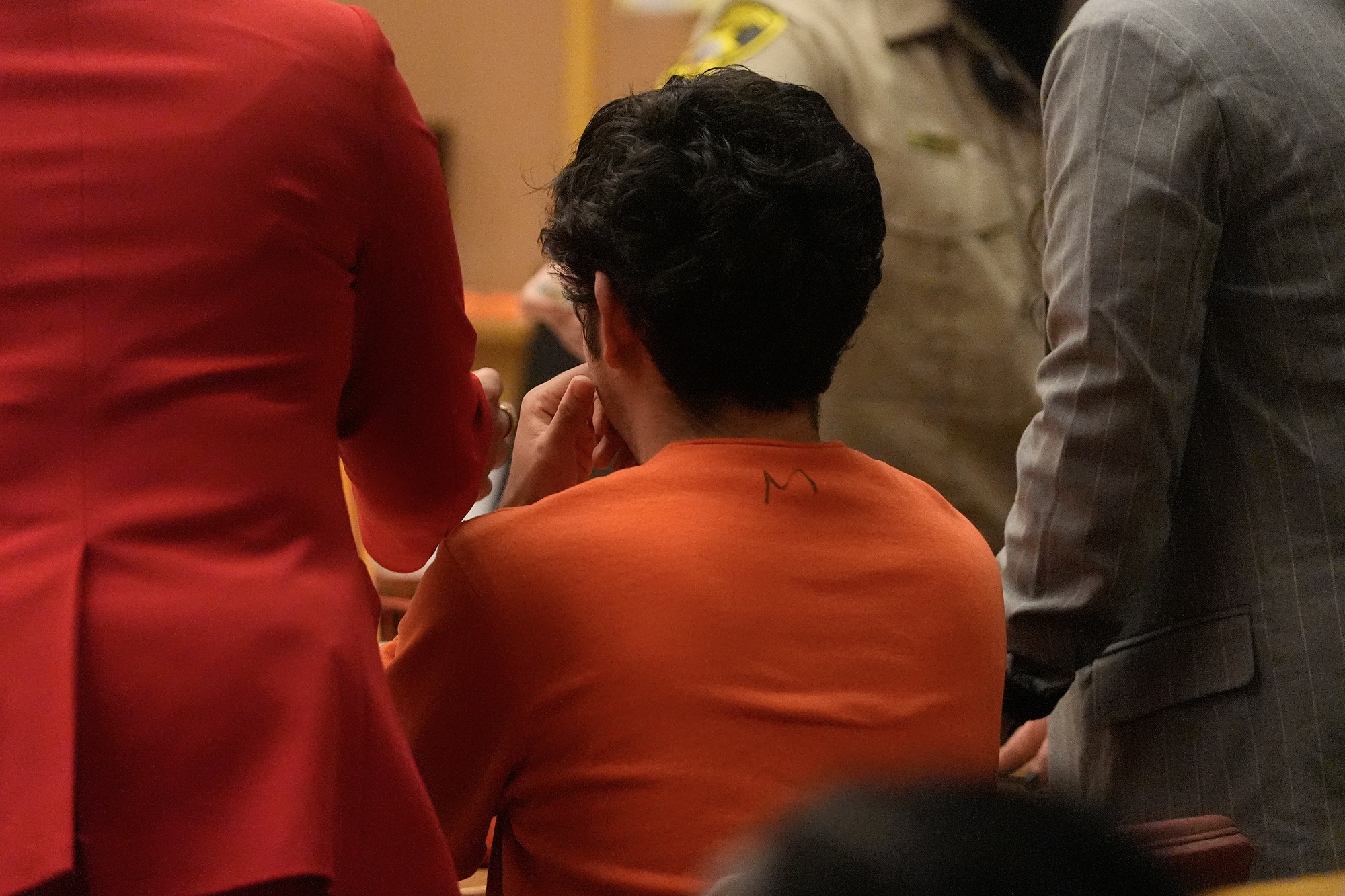
"caption": "Daniel Moreno-Gama, middle, appears in court with public defenders Diamond Ward, left, and Nuha Abusamra on Tuesday, April 14, 2026, in San Francisco. The San Francisco Public Defender’s office said 20-year-old Moreno-Gama was in the midst of acute mental illness when he attacked the OpenAI CEO’s home and offices, and was “overcharged” by local and national authorities.",
"credit": "Jeff Chiu/AP Photo",
"altTag": null,
"description": null,
"imgSizes": {
"thumbnail": {
"file": "https://cdn.kqed.org/wp-content/uploads/sites/10/2026/04/Daniel-Moreno-Gama-AP-160x107.jpg",
"width": 160,
"height": 107,
"mimeType": "image/jpeg"
},
"1536x1536": {
"file": "https://cdn.kqed.org/wp-content/uploads/sites/10/2026/04/Daniel-Moreno-Gama-AP-1536x1024.jpg",
"width": 1536,
"height": 1024,
"mimeType": "image/jpeg"
},
"post-thumbnail": {
"file": "https://cdn.kqed.org/wp-content/uploads/sites/10/2026/04/Daniel-Moreno-Gama-AP-672x372.jpg",
"width": 672,
"height": 372,
"mimeType": "image/jpeg"
},
"twentyfourteen-full-width": {
"file": "https://cdn.kqed.org/wp-content/uploads/sites/10/2026/04/Daniel-Moreno-Gama-AP-1038x576.jpg",
"width": 1038,
"height": 576,
"mimeType": "image/jpeg"
},
"npr-cds-wide": {
"file": "https://cdn.kqed.org/wp-content/uploads/sites/10/2026/04/Daniel-Moreno-Gama-AP-1200x675.jpg",
"width": 1200,
"height": 675,
"mimeType": "image/jpeg"
},
"npr-cds-square": {
"file": "https://cdn.kqed.org/wp-content/uploads/sites/10/2026/04/Daniel-Moreno-Gama-AP-600x600.jpg",
"width": 600,
"height": 600,
"mimeType": "image/jpeg"
},
"kqedFullSize": {
"file": "https://cdn.kqed.org/wp-content/uploads/sites/10/2026/04/Daniel-Moreno-Gama-AP.jpg",
"width": 2000,
"height": 1333
}
},
"isLoading": false,
"fetchFailed": false
},
"news_12079890": {
"type": "attachments",
"id": "news_12079890",
"meta": {
"index": "attachments_1716263798",
"site": "news",
"id": "12079890",
"found": true
},
"title": "Google Parent Company Alphabet Reports Quarterly Earnings",
"publishDate": 1776197138,
"status": "inherit",
"parent": 12079887,
"modified": 1788308193,
"caption": "A sign is posted at Google headquarters in Mountain View, California, on Feb. 4, 2026. ",
"credit": "Justin Sullivan/Getty Images",
"altTag": null,
"description": null,
"imgSizes": {
"thumbnail": {
"file": "https://cdn.kqed.org/wp-content/uploads/sites/10/2026/04/GettyImages-2259952730-160x111.jpg",
"width": 160,
"height": 111,
"mimeType": "image/jpeg"
},
"1536x1536": {
"file": "https://cdn.kqed.org/wp-content/uploads/sites/10/2026/04/GettyImages-2259952730-1536x1066.jpg",
"width": 1536,
"height": 1066,
"mimeType": "image/jpeg"
},
"post-thumbnail": {
"file": "https://cdn.kqed.org/wp-content/uploads/sites/10/2026/04/GettyImages-2259952730-672x372.jpg",
"width": 672,
"height": 372,
"mimeType": "image/jpeg"
},
"twentyfourteen-full-width": {
"file": "https://cdn.kqed.org/wp-content/uploads/sites/10/2026/04/GettyImages-2259952730-1038x576.jpg",
"width": 1038,
"height": 576,
"mimeType": "image/jpeg"
},
"npr-cds-wide": {
"file": "https://cdn.kqed.org/wp-content/uploads/sites/10/2026/04/GettyImages-2259952730-1200x675.jpg",
"width": 1200,
"height": 675,
"mimeType": "image/jpeg"
},
"npr-cds-square": {
"file": "https://cdn.kqed.org/wp-content/uploads/sites/10/2026/04/GettyImages-2259952730-600x600.jpg",
"width": 600,
"height": 600,
"mimeType": "image/jpeg"
},
"kqedFullSize": {
"file": "https://cdn.kqed.org/wp-content/uploads/sites/10/2026/04/GettyImages-2259952730.jpg",
"width": 1980,
"height": 1374
}
},
"isLoading": false,
"fetchFailed": false
},
"news_12079761": {
"type": "attachments",
"id": "news_12079761",
"meta": {
"index": "attachments_1716263798",
"site": "news",
"id": "12079761",
"found": true
},
"title": "BlackRock Infrastructure Summit Held In Washington, DC",
"publishDate": 1776120110,
"status": "inherit",
"parent": 12079741,
"modified": 1776126677,
"caption": "OpenAI CEO Sam Altman speaks during the BlackRock Infrastructure Summit on March 11, 2026, in Washington, D.C. The global investment management company held the summit, consisting of leaders from government, business, and labor, to address expanding U.S. infrastructure. ",
"credit": "Anna Moneymaker/Getty Images",
"altTag": null,
"description": null,
"imgSizes": {
"thumbnail": {
"file": "https://cdn.kqed.org/wp-content/uploads/sites/10/2026/04/SamAltmanGetty2-160x107.jpg",
"width": 160,
"height": 107,
"mimeType": "image/jpeg"
},
"1536x1536": {
"file": "https://cdn.kqed.org/wp-content/uploads/sites/10/2026/04/SamAltmanGetty2-1536x1024.jpg",
"width": 1536,
"height": 1024,
"mimeType": "image/jpeg"
},
"post-thumbnail": {
"file": "https://cdn.kqed.org/wp-content/uploads/sites/10/2026/04/SamAltmanGetty2-672x372.jpg",
"width": 672,
"height": 372,
"mimeType": "image/jpeg"
},
"twentyfourteen-full-width": {
"file": "https://cdn.kqed.org/wp-content/uploads/sites/10/2026/04/SamAltmanGetty2-1038x576.jpg",
"width": 1038,
"height": 576,
"mimeType": "image/jpeg"
},
"npr-cds-wide": {
"file": "https://cdn.kqed.org/wp-content/uploads/sites/10/2026/04/SamAltmanGetty2-1200x675.jpg",
"width": 1200,
"height": 675,
"mimeType": "image/jpeg"
},
"npr-cds-square": {
"file": "https://cdn.kqed.org/wp-content/uploads/sites/10/2026/04/SamAltmanGetty2-600x600.jpg",
"width": 600,
"height": 600,
"mimeType": "image/jpeg"
},
"kqedFullSize": {
"file": "https://cdn.kqed.org/wp-content/uploads/sites/10/2026/04/SamAltmanGetty2.jpg",
"width": 2000,
"height": 1333
}
},
"isLoading": false,
"fetchFailed": false
},
"news_12079474": {
"type": "attachments",
"id": "news_12079474",
"meta": {
"index": "attachments_1716263798",
"site": "news",
"id": "12079474",
"found": true
},
"title": "Stanford student Gabe Mukobi",
"publishDate": 1775850088,
"status": "inherit",
"parent": 12079472,
"modified": 1776104174,
"caption": "A student works in the hallway at Stanford University's Institute for Human-Centered AI inside the Gates Computer Science building in Stanford, California, on March 23, 2023. ",
"credit": "Kori Suzuki for The Washington Post via Getty Images",
"altTag": null,
"description": null,
"imgSizes": {
"thumbnail": {
"file": "https://cdn.kqed.org/wp-content/uploads/sites/10/2026/04/GettyImages-1501991882-160x106.jpg",
"width": 160,
"height": 106,
"mimeType": "image/jpeg"
},
"1536x1536": {
"file": "https://cdn.kqed.org/wp-content/uploads/sites/10/2026/04/GettyImages-1501991882-1536x1022.jpg",
"width": 1536,
"height": 1022,
"mimeType": "image/jpeg"
},
"post-thumbnail": {
"file": "https://cdn.kqed.org/wp-content/uploads/sites/10/2026/04/GettyImages-1501991882-672x372.jpg",
"width": 672,
"height": 372,
"mimeType": "image/jpeg"
},
"twentyfourteen-full-width": {
"file": "https://cdn.kqed.org/wp-content/uploads/sites/10/2026/04/GettyImages-1501991882-1038x576.jpg",
"width": 1038,
"height": 576,
"mimeType": "image/jpeg"
},
"npr-cds-wide": {
"file": "https://cdn.kqed.org/wp-content/uploads/sites/10/2026/04/GettyImages-1501991882-1200x675.jpg",
"width": 1200,
"height": 675,
"mimeType": "image/jpeg"
},
"npr-cds-square": {
"file": "https://cdn.kqed.org/wp-content/uploads/sites/10/2026/04/GettyImages-1501991882-600x600.jpg",
"width": 600,
"height": 600,
"mimeType": "image/jpeg"
},
"kqedFullSize": {
"file": "https://cdn.kqed.org/wp-content/uploads/sites/10/2026/04/GettyImages-1501991882.jpg",
"width": 1980,
"height": 1317
}
},
"isLoading": false,
"fetchFailed": false
},
"news_12062600": {
"type": "attachments",
"id": "news_12062600",
"meta": {
"index": "attachments_1716263798",
"site": "news",
"id": "12062600",
"found": true
},
"title": "111623_Sam-Altman_AP_CM_01",
"publishDate": 1761950606,
"status": "inherit",
"parent": 12062523,
"modified": 1775852918,
"caption": "OpenAI restructured to a for-profit company in a move tied to an agreement with California Attorney General Rob Bonta. Company CEO Sam Altman participates in a discussion in San Francisco on Nov. 16, 2023.",
"credit": "Photo by Eric Risberg, AP Photo",
"altTag": null,
"description": null,
"imgSizes": {
"thumbnail": {
"file": "https://cdn.kqed.org/wp-content/uploads/sites/10/2025/10/111623_Sam-Altman_AP_CM_01-160x107.jpeg",
"width": 160,
"height": 107,
"mimeType": "image/jpeg"
},
"1536x1536": {
"file": "https://cdn.kqed.org/wp-content/uploads/sites/10/2025/10/111623_Sam-Altman_AP_CM_01-1536x1024.jpeg",
"width": 1536,
"height": 1024,
"mimeType": "image/jpeg"
},
"post-thumbnail": {
"file": "https://cdn.kqed.org/wp-content/uploads/sites/10/2025/10/111623_Sam-Altman_AP_CM_01-672x372.jpeg",
"width": 672,
"height": 372,
"mimeType": "image/jpeg"
},
"twentyfourteen-full-width": {
"file": "https://cdn.kqed.org/wp-content/uploads/sites/10/2025/10/111623_Sam-Altman_AP_CM_01-1038x576.jpeg",
"width": 1038,
"height": 576,
"mimeType": "image/jpeg"
},
"npr-cds-wide": {
"file": "https://cdn.kqed.org/wp-content/uploads/sites/10/2025/10/111623_Sam-Altman_AP_CM_01-1200x675.jpeg",
"width": 1200,
"height": 675,
"mimeType": "image/jpeg"
},
"kqedFullSize": {
"file": "https://cdn.kqed.org/wp-content/uploads/sites/10/2025/10/111623_Sam-Altman_AP_CM_01.jpeg",
"width": 2000,
"height": 1333
}
},
"isLoading": false,
"fetchFailed": false
},
"news_12079281": {
"type": "attachments",
"id": "news_12079281",
"meta": {
"index": "attachments_1716263798",
"site": "news",
"id": "12079281",
"found": true
},
"title": "Hegseth Side by Side - c",
"publishDate": 1775761682,
"status": "inherit",
"parent": 12079267,
"modified": 1775770242,
"caption": "Left: Anthropic co-founder and CEO Dario Amodei speaks at INBOUND 2025 on Sept. 4, 2025, in San Francisco, California. Right: Defense Secretary Pete Hegseth listens during a Pentagon briefing on April 8, 2026, in Arlington, Virginia.",
"credit": "Chance Yeh/Getty Images for HubSpot; Andrew Harnik/Getty Images",
"altTag": null,
"description": null,
"imgSizes": {
"thumbnail": {
"file": "https://cdn.kqed.org/wp-content/uploads/sites/10/2026/04/Hegseth-Side-by-Side-c-160x118.jpg",
"width": 160,
"height": 118,
"mimeType": "image/jpeg"
},
"1536x1536": {
"file": "https://cdn.kqed.org/wp-content/uploads/sites/10/2026/04/Hegseth-Side-by-Side-c-1536x1133.jpg",
"width": 1536,
"height": 1133,
"mimeType": "image/jpeg"
},
"post-thumbnail": {
"file": "https://cdn.kqed.org/wp-content/uploads/sites/10/2026/04/Hegseth-Side-by-Side-c-672x372.jpg",
"width": 672,
"height": 372,
"mimeType": "image/jpeg"
},
"twentyfourteen-full-width": {
"file": "https://cdn.kqed.org/wp-content/uploads/sites/10/2026/04/Hegseth-Side-by-Side-c-1038x576.jpg",
"width": 1038,
"height": 576,
"mimeType": "image/jpeg"
},
"npr-cds-wide": {
"file": "https://cdn.kqed.org/wp-content/uploads/sites/10/2026/04/Hegseth-Side-by-Side-c-1200x675.jpg",
"width": 1200,
"height": 675,
"mimeType": "image/jpeg"
},
"npr-cds-square": {
"file": "https://cdn.kqed.org/wp-content/uploads/sites/10/2026/04/Hegseth-Side-by-Side-c-600x600.jpg",
"width": 600,
"height": 600,
"mimeType": "image/jpeg"
},
"kqedFullSize": {
"file": "https://cdn.kqed.org/wp-content/uploads/sites/10/2026/04/Hegseth-Side-by-Side-c.jpg",
"width": 1980,
"height": 1460
}
},
"isLoading": false,
"fetchFailed": false
},
"news_12079042": {
"type": "attachments",
"id": "news_12079042",
"meta": {
"index": "attachments_1716263798",
"site": "news",
"id": "12079042",
"found": true
},
"title": "Mobile World Congress 2026",
"publishDate": 1775603208,
"status": "inherit",
"parent": 12078982,
"modified": 1775608280,
"caption": "A logo is seen at the Gemini booth in Mobile World Congress 2026 on March 2, 2026, in Barcelona, Spain. ",
"credit": "Xavi Torrent/Getty Images",
"altTag": null,
"description": null,
"imgSizes": {
"thumbnail": {
"file": "https://cdn.kqed.org/wp-content/uploads/sites/10/2026/04/GettyImages-2264783645-160x107.jpg",
"width": 160,
"height": 107,
"mimeType": "image/jpeg"
},
"1536x1536": {
"file": "https://cdn.kqed.org/wp-content/uploads/sites/10/2026/04/GettyImages-2264783645-1536x1024.jpg",
"width": 1536,
"height": 1024,
"mimeType": "image/jpeg"
},
"post-thumbnail": {
"file": "https://cdn.kqed.org/wp-content/uploads/sites/10/2026/04/GettyImages-2264783645-672x372.jpg",
"width": 672,
"height": 372,
"mimeType": "image/jpeg"
},
"twentyfourteen-full-width": {
"file": "https://cdn.kqed.org/wp-content/uploads/sites/10/2026/04/GettyImages-2264783645-1038x576.jpg",
"width": 1038,
"height": 576,
"mimeType": "image/jpeg"
},
"npr-cds-wide": {
"file": "https://cdn.kqed.org/wp-content/uploads/sites/10/2026/04/GettyImages-2264783645-1200x675.jpg",
"width": 1200,
"height": 675,
"mimeType": "image/jpeg"
},
"npr-cds-square": {
"file": "https://cdn.kqed.org/wp-content/uploads/sites/10/2026/04/GettyImages-2264783645-600x600.jpg",
"width": 600,
"height": 600,
"mimeType": "image/jpeg"
},
"kqedFullSize": {
"file": "https://cdn.kqed.org/wp-content/uploads/sites/10/2026/04/GettyImages-2264783645.jpg",
"width": 1980,
"height": 1320
}
},
"isLoading": false,
"fetchFailed": false
},
"news_12078864": {
"type": "attachments",
"id": "news_12078864",
"meta": {
"index": "attachments_1716263798",
"site": "news",
"id": "12078864",
"found": true
},
"title": "An e-bike parked in Mill Valley on July 24, 2025.",
"publishDate": 1775512916,
"status": "inherit",
"parent": 12078862,
"modified": 1775512931,
"caption": "An e-bike parked in Mill Valley on July 24, 2025.",
"credit": "Martin do Nascimento/KQED",
"altTag": null,
"description": null,
"imgSizes": {
"thumbnail": {
"file": "https://cdn.kqed.org/wp-content/uploads/sites/10/2026/04/250724-MARIN-EBIKES-MD-06_qed-160x107.jpg",
"width": 160,
"height": 107,
"mimeType": "image/jpeg"
},
"1536x1536": {
"file": "https://cdn.kqed.org/wp-content/uploads/sites/10/2026/04/250724-MARIN-EBIKES-MD-06_qed-1536x1024.jpg",
"width": 1536,
"height": 1024,
"mimeType": "image/jpeg"
},
"post-thumbnail": {
"file": "https://cdn.kqed.org/wp-content/uploads/sites/10/2026/04/250724-MARIN-EBIKES-MD-06_qed-672x372.jpg",
"width": 672,
"height": 372,
"mimeType": "image/jpeg"
},
"twentyfourteen-full-width": {
"file": "https://cdn.kqed.org/wp-content/uploads/sites/10/2026/04/250724-MARIN-EBIKES-MD-06_qed-1038x576.jpg",
"width": 1038,
"height": 576,
"mimeType": "image/jpeg"
},
"npr-cds-wide": {
"file": "https://cdn.kqed.org/wp-content/uploads/sites/10/2026/04/250724-MARIN-EBIKES-MD-06_qed-1200x675.jpg",
"width": 1200,
"height": 675,
"mimeType": "image/jpeg"
},
"npr-cds-square": {
"file": "https://cdn.kqed.org/wp-content/uploads/sites/10/2026/04/250724-MARIN-EBIKES-MD-06_qed-600x600.jpg",
"width": 600,
"height": 600,
"mimeType": "image/jpeg"
},
"kqedFullSize": {
"file": "https://cdn.kqed.org/wp-content/uploads/sites/10/2026/04/250724-MARIN-EBIKES-MD-06_qed.jpg",
"width": 1999,
"height": 1333
}
},
"isLoading": false,
"fetchFailed": false
},
"news_12077810": {
"type": "attachments",
"id": "news_12077810",
"meta": {
"index": "attachments_1716263798",
"site": "news",
"id": "12077810",
"found": true
},
"title": "NASA_Artemis_Crew1",
"publishDate": 1774631539,
"status": "inherit",
"parent": 12077807,
"modified": 1774655334,
"caption": "From left: Artemis II backup crewmembers NASA astronaut Andre Douglas and CSA (Canadian Space Agency) astronaut Jenni Gibbons and prime crewmembers NASA astronauts Victor Glover, Reid Wiseman, CSA (Canadian Space Agency) astronaut Jeremy Hansen, and NASA astronaut Christina Koch, pose for a picture with NASA’s Space Launch System (SLS) rocket and Orion spacecraft, secured to the mobile launcher, as it makes the 4.2 mile journey from the Vehicle Assembly Building to Launch Pad 39B, Saturday, Jan. 17, 2026, at NASA’s Kennedy Space Center in Florida.",
"credit": "Joel Kowsky/NASA",
"altTag": null,
"description": null,
"imgSizes": {
"thumbnail": {
"file": "https://cdn.kqed.org/wp-content/uploads/sites/10/2026/03/NASA_Artemis_Crew1-160x102.jpg",
"width": 160,
"height": 102,
"mimeType": "image/jpeg"
},
"1536x1536": {
"file": "https://cdn.kqed.org/wp-content/uploads/sites/10/2026/03/NASA_Artemis_Crew1-1536x978.jpg",
"width": 1536,
"height": 978,
"mimeType": "image/jpeg"
},
"post-thumbnail": {
"file": "https://cdn.kqed.org/wp-content/uploads/sites/10/2026/03/NASA_Artemis_Crew1-672x372.jpg",
"width": 672,
"height": 372,
"mimeType": "image/jpeg"
},
"twentyfourteen-full-width": {
"file": "https://cdn.kqed.org/wp-content/uploads/sites/10/2026/03/NASA_Artemis_Crew1-1038x576.jpg",
"width": 1038,
"height": 576,
"mimeType": "image/jpeg"
},
"npr-cds-wide": {
"file": "https://cdn.kqed.org/wp-content/uploads/sites/10/2026/03/NASA_Artemis_Crew1-1200x675.jpg",
"width": 1200,
"height": 675,
"mimeType": "image/jpeg"
},
"npr-cds-square": {
"file": "https://cdn.kqed.org/wp-content/uploads/sites/10/2026/03/NASA_Artemis_Crew1-600x600.jpg",
"width": 600,
"height": 600,
"mimeType": "image/jpeg"
},
"kqedFullSize": {
"file": "https://cdn.kqed.org/wp-content/uploads/sites/10/2026/03/NASA_Artemis_Crew1.jpg",
"width": 1920,
"height": 1223
}
},
"isLoading": false,
"fetchFailed": false
},
"news_12077553": {
"type": "attachments",
"id": "news_12077553",
"meta": {
"index": "attachments_1716263798",
"site": "news",
"id": "12077553",
"found": true
},
"title": "US-TECH-META-INTERNET-TRIAL-COMPUTERS-ADDICTION",
"publishDate": 1774469979,
"status": "inherit",
"parent": 12077549,
"modified": 1774469979,
"caption": "Laura Marquez-Garrett (C, gray blazer), plaintiffs' attorney for SMVLC (Social Media Victims Law Center), gathers with parents and family members of victims as they react to news that the jury has found Meta and YouTube liable in the social media addiction trial, outside the Los Angeles Superior Court , in Los Angeles, on March 25, 2026. A Los Angeles jury on Wednesday found Meta and YouTube liable for harming a young woman through the addictive design of their social media platforms and ordered the companies to pay $3 million in damages. The decision delivering a landmark verdict that could reshape how the tech industry faces legal accountability for the mental health of young users. (Photo by Frederic J. Brown / AFP via Getty Images)",
"credit": null,
"altTag": null,
"description": null,
"imgSizes": {
"thumbnail": {
"file": "https://cdn.kqed.org/wp-content/uploads/sites/10/2026/03/GettyImages-2267811581_qed-160x107.jpg",
"width": 160,
"height": 107,
"mimeType": "image/jpeg"
},
"1536x1536": {
"file": "https://cdn.kqed.org/wp-content/uploads/sites/10/2026/03/GettyImages-2267811581_qed-1536x1024.jpg",
"width": 1536,
"height": 1024,
"mimeType": "image/jpeg"
},
"post-thumbnail": {
"file": "https://cdn.kqed.org/wp-content/uploads/sites/10/2026/03/GettyImages-2267811581_qed-672x372.jpg",
"width": 672,
"height": 372,
"mimeType": "image/jpeg"
},
"twentyfourteen-full-width": {
"file": "https://cdn.kqed.org/wp-content/uploads/sites/10/2026/03/GettyImages-2267811581_qed-1038x576.jpg",
"width": 1038,
"height": 576,
"mimeType": "image/jpeg"
},
"npr-cds-wide": {
"file": "https://cdn.kqed.org/wp-content/uploads/sites/10/2026/03/GettyImages-2267811581_qed-1200x675.jpg",
"width": 1200,
"height": 675,
"mimeType": "image/jpeg"
},
"npr-cds-square": {
"file": "https://cdn.kqed.org/wp-content/uploads/sites/10/2026/03/GettyImages-2267811581_qed-600x600.jpg",
"width": 600,
"height": 600,
"mimeType": "image/jpeg"
},
"kqedFullSize": {
"file": "https://cdn.kqed.org/wp-content/uploads/sites/10/2026/03/GettyImages-2267811581_qed.jpg",
"width": 1999,
"height": 1333
}
},
"isLoading": false,
"fetchFailed": false
},
"news_12075430": {
"type": "attachments",
"id": "news_12075430",
"meta": {
"index": "attachments_1716263798",
"site": "news",
"id": "12075430",
"found": true
},
"title": "260304-Elon-Musk-Trial-03-KQED",
"publishDate": 1772664124,
"status": "inherit",
"parent": 12081290,
"modified": 1777070671,
"caption": "A courtroom sketch depicts Elon Musk on the stand on March 4, 2026.",
"credit": "Vicki Behringer for KQED",
"altTag": null,
"description": null,
"imgSizes": {
"thumbnail": {
"file": "https://cdn.kqed.org/wp-content/uploads/sites/10/2026/03/260304-Elon-Musk-Trial-03-KQED-160x107.jpg",
"width": 160,
"height": 107,
"mimeType": "image/jpeg"
},
"1536x1536": {
"file": "https://cdn.kqed.org/wp-content/uploads/sites/10/2026/03/260304-Elon-Musk-Trial-03-KQED-1536x1024.jpg",
"width": 1536,
"height": 1024,
"mimeType": "image/jpeg"
},
"post-thumbnail": {
"file": "https://cdn.kqed.org/wp-content/uploads/sites/10/2026/03/260304-Elon-Musk-Trial-03-KQED-672x372.jpg",
"width": 672,
"height": 372,
"mimeType": "image/jpeg"
},
"twentyfourteen-full-width": {
"file": "https://cdn.kqed.org/wp-content/uploads/sites/10/2026/03/260304-Elon-Musk-Trial-03-KQED-1038x576.jpg",
"width": 1038,
"height": 576,
"mimeType": "image/jpeg"
},
"npr-cds-wide": {
"file": "https://cdn.kqed.org/wp-content/uploads/sites/10/2026/03/260304-Elon-Musk-Trial-03-KQED-1200x675.jpg",
"width": 1200,
"height": 675,
"mimeType": "image/jpeg"
},
"kqedFullSize": {
"file": "https://cdn.kqed.org/wp-content/uploads/sites/10/2026/03/260304-Elon-Musk-Trial-03-KQED.jpg",
"width": 2000,
"height": 1333
}
},
"isLoading": false,
"fetchFailed": false
},
"news_12076961": {
"type": "attachments",
"id": "news_12076961",
"meta": {
"index": "attachments_1716263798",
"site": "news",
"id": "12076961",
"found": true
},
"title": "031826-Wiener-Tan-KQED",
"publishDate": 1773871110,
"status": "inherit",
"parent": 0,
"modified": 1773871293,
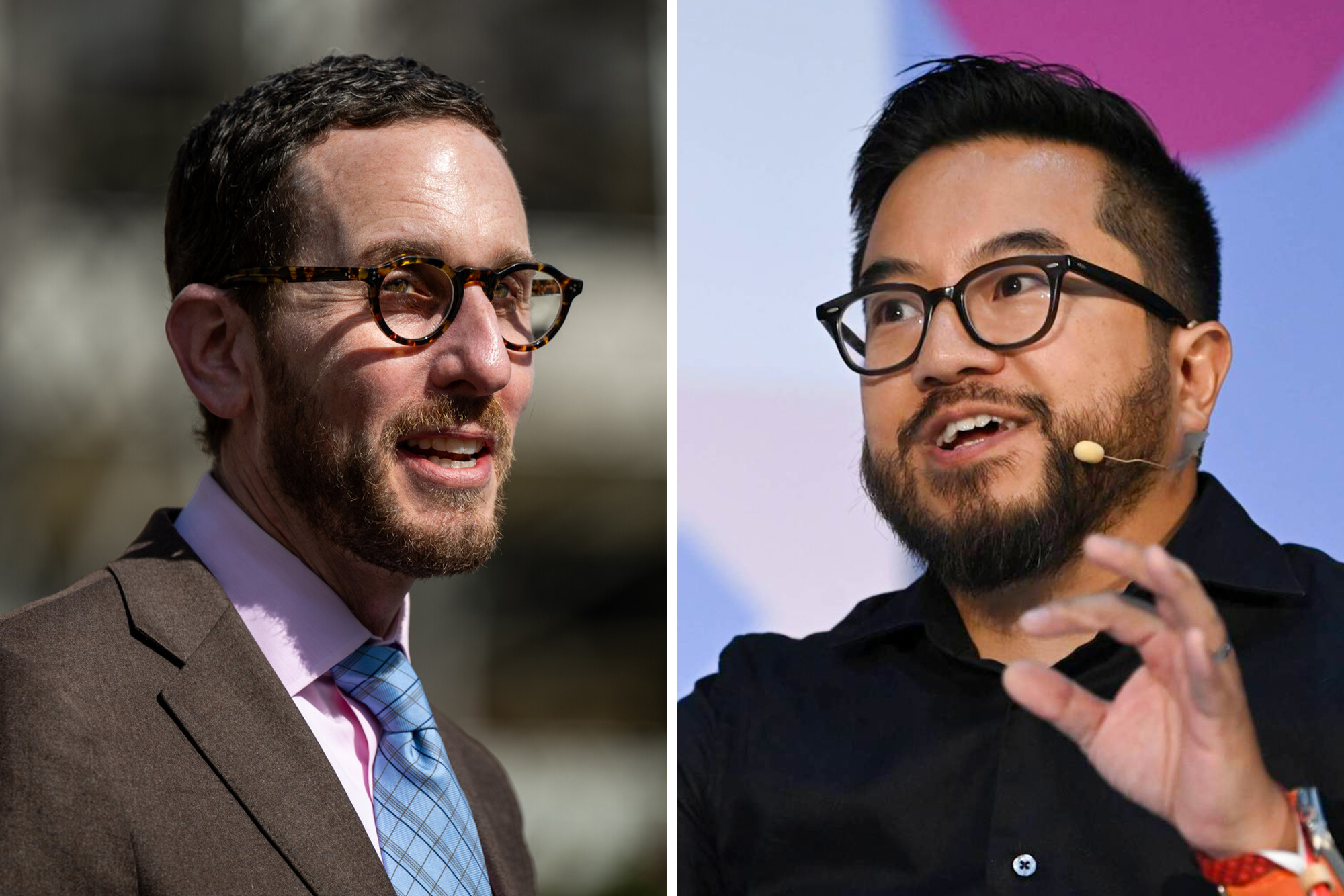
"caption": "Left: Sen. Scott Wiener; Right: Garry Tan.",
"credit": "Beth LaBerge/KQED; Harry Murphy/Sportsfile for Web Summit via Getty Images",
"altTag": null,
"description": null,
"imgSizes": {
"thumbnail": {
"file": "https://cdn.kqed.org/wp-content/uploads/sites/10/2026/03/031826-Wiener-Tan-KQED-160x107.jpg",
"width": 160,
"height": 107,
"mimeType": "image/jpeg"
},
"1536x1536": {
"file": "https://cdn.kqed.org/wp-content/uploads/sites/10/2026/03/031826-Wiener-Tan-KQED-1536x1025.jpg",
"width": 1536,
"height": 1025,
"mimeType": "image/jpeg"
},
"post-thumbnail": {
"file": "https://cdn.kqed.org/wp-content/uploads/sites/10/2026/03/031826-Wiener-Tan-KQED-672x372.jpg",
"width": 672,
"height": 372,
"mimeType": "image/jpeg"
},
"twentyfourteen-full-width": {
"file": "https://cdn.kqed.org/wp-content/uploads/sites/10/2026/03/031826-Wiener-Tan-KQED-1038x576.jpg",
"width": 1038,
"height": 576,
"mimeType": "image/jpeg"
},
"npr-cds-wide": {
"file": "https://cdn.kqed.org/wp-content/uploads/sites/10/2026/03/031826-Wiener-Tan-KQED-1200x675.jpg",
"width": 1200,
"height": 675,
"mimeType": "image/jpeg"
},
"kqedFullSize": {
"file": "https://cdn.kqed.org/wp-content/uploads/sites/10/2026/03/031826-Wiener-Tan-KQED.jpg",
"width": 2000,
"height": 1334
}
},
"isLoading": false,
"fetchFailed": false
}
},
"audioPlayerReducer": {
"postId": "stream_live",
"isPaused": true,
"isPlaying": false,
"pfsActive": false,
"pledgeModalIsOpen": true,
"playerDrawerIsOpen": false,
"liveAudioPlayStartedAt": 0,
"liveAudioPlayContext": ""
},
"authorsReducer": {
"byline_news_12077549": {
"type": "authors",
"id": "byline_news_12077549",
"meta": {
"override": true
},
"slug": "byline_news_12077549",
"name": "Bobby Allyn, NPR",
"isLoading": false
},
"rachael-myrow": {
"type": "authors",
"id": "251",
"meta": {
"index": "authors_1716337520",
"id": "251",
"found": true
},
"name": "Rachael Myrow",
"firstName": "Rachael",
"lastName": "Myrow",
"slug": "rachael-myrow",
"email": "rmyrow@kqed.org",
"display_author_email": true,
"staff_mastheads": [
"news"
],
"title": "Senior Editor of KQED's Silicon Valley News Desk",
"bio": "• I write and edit stories about how Silicon Valley power and policies shape everyday life in California. I’m also passionate about making Bay Area history and culture more accessible to a broad public. • I’ve been a journalist for most of my life, starting in high school with The Franklin Press in Los Angeles, where I grew up. While earning my first degree in English at UC Berkeley, I got my start in public radio at KALX-FM. After completing a second degree in journalism at Cal, I landed my first professional job at Marketplace, then moved on to KPCC (now LAist), and then KQED, where I hosted The California Report for more than seven years. • My reporting has appeared on NPR, The World, WBUR’s \u003ci>Here & Now\u003c/i>, and the BBC. I also guest host for KQED’s \u003ci>Forum\u003c/i>, as well as the Commonwealth Club in San Francisco. • I speak periodically on media, democracy and technology issues, and do voiceover work for documentaries and educational video projects. • Outside of the studio, you'll find me hiking Bay Area trails and whipping up Insta-ready meals in my kitchen. • I do not accept gifts, money, or favors from anyone connected to my reporting, I don't pay people for information, and I do not support or donate to political causes. • I strive to treat the people I report on with fairness, honesty, and respect. I also recognize there are often multiple sides to a story and work to verify information through multiple sources and documentation. If I get something wrong, I correct it.",
"avatar": "https://secure.gravatar.com/avatar/3ed8a3c5f26025e4a805ba634cda8cd764906b97438a6d9ce216b044e340da4e?s=600&d=blank&r=g",
"twitter": "rachaelmyrow",
"bluesky": null,
"facebook": null,
"instagram": null,
"linkedin": "https://www.linkedin.com/in/rachaelmyrow/",
"sites": [
{
"site": "arts",
"roles": [
"administrator"
]
},
{
"site": "news",
"roles": [
"edit_others_posts",
"editor"
]
},
{
"site": "futureofyou",
"roles": [
"editor"
]
},
{
"site": "bayareabites",
"roles": [
"editor"
]
},
{
"site": "stateofhealth",
"roles": [
"editor"
]
},
{
"site": "science",
"roles": [
"editor"
]
},
{
"site": "food",
"roles": [
"editor"
]
},
{
"site": "forum",
"roles": [
"editor"
]
},
{
"site": "liveblog",
"roles": [
"author"
]
}
],
"headData": {
"title": "Rachael Myrow | KQED",
"description": "Senior Editor of KQED's Silicon Valley News Desk",
"ogImgSrc": "https://secure.gravatar.com/avatar/3ed8a3c5f26025e4a805ba634cda8cd764906b97438a6d9ce216b044e340da4e?s=600&d=blank&r=g",
"twImgSrc": "https://secure.gravatar.com/avatar/3ed8a3c5f26025e4a805ba634cda8cd764906b97438a6d9ce216b044e340da4e?s=600&d=blank&r=g"
},
"isLoading": false,
"link": "/author/rachael-myrow"
},
"jgeha": {
"type": "authors",
"id": "11906",
"meta": {
"index": "authors_1716337520",
"id": "11906",
"found": true
},
"name": "Joseph Geha",
"firstName": "Joseph",
"lastName": "Geha",
"slug": "jgeha",
"email": "jgeha@kqed.org",
"display_author_email": false,
"staff_mastheads": [
"news",
"science"
],
"title": "KQED Contributor",
"bio": null,
"avatar": "https://secure.gravatar.com/avatar/ea84d2b6dd93d6369d453edf19dd583f117cd1759d2d9c9c92f9de77017354fe?s=600&d=blank&r=g",
"twitter": null,
"bluesky": null,
"facebook": null,
"instagram": null,
"linkedin": null,
"sites": [
{
"site": "news",
"roles": [
"editor"
]
},
{
"site": "liveblog",
"roles": [
"author"
]
}
],
"headData": {
"title": "Joseph Geha | KQED",
"description": "KQED Contributor",
"ogImgSrc": "https://secure.gravatar.com/avatar/ea84d2b6dd93d6369d453edf19dd583f117cd1759d2d9c9c92f9de77017354fe?s=600&d=blank&r=g",
"twImgSrc": "https://secure.gravatar.com/avatar/ea84d2b6dd93d6369d453edf19dd583f117cd1759d2d9c9c92f9de77017354fe?s=600&d=blank&r=g"
},
"isLoading": false,
"link": "/author/jgeha"
},
"kdebenedetti": {
"type": "authors",
"id": "11913",
"meta": {
"index": "authors_1716337520",
"id": "11913",
"found": true
},
"name": "Katie DeBenedetti",
"firstName": "Katie",
"lastName": "DeBenedetti",
"slug": "kdebenedetti",
"email": "kdebenedetti@kqed.org",
"display_author_email": false,
"staff_mastheads": [
"news",
"science"
],
"title": "KQED Contributor",
"bio": "Katie DeBenedetti is a digital reporter covering daily news for the Express Desk. Prior to joining KQED as a culture reporting intern in January 2024, she covered education and city government for the Napa Valley Register.",
"avatar": "https://secure.gravatar.com/avatar/6e31073cb8f7e4214ab03f42771d0f45?s=600&d=blank&r=g",
"twitter": null,
"facebook": null,
"instagram": null,
"linkedin": null,
"sites": [
{
"site": "news",
"roles": [
"author"
]
},
{
"site": "science",
"roles": [
"author"
]
},
{
"site": "liveblog",
"roles": [
"author"
]
}
],
"headData": {
"title": "Katie DeBenedetti | KQED",
"description": "KQED Contributor",
"ogImgSrc": "https://secure.gravatar.com/avatar/6e31073cb8f7e4214ab03f42771d0f45?s=600&d=blank&r=g",
"twImgSrc": "https://secure.gravatar.com/avatar/6e31073cb8f7e4214ab03f42771d0f45?s=600&d=blank&r=g"
},
"isLoading": false,
"link": "/author/kdebenedetti"
},
"mbernal": {
"type": "authors",
"id": "11977",
"meta": {
"index": "authors_1716337520",
"id": "11977",
"found": true
},
"name": "María Fernanda Bernal",
"firstName": "María Fernanda",
"lastName": "Bernal",
"slug": "mbernal",
"email": "mbernal@kqed.org",
"display_author_email": false,
"staff_mastheads": [
"news"
],
"title": "KQED Contributor",
"bio": "Maria Fernanda is a UC Berkeley J-School alum and was named Innovation Fellow in 2023. She was the 2022 White House Correspondents' Fellow and Cokie Roberts Scholar. In her time at the Investigative Reporting Program, she led an investigative team and received a National Press Award in 2025 for the story on Chevron's Manipulation of Media. She is most proud of her international recognition with the first place podcast award from the Insituto Mexicano de la radio in 2021. Maria Fernanda is a Bay Area-based journalist who is currently working as a general assignment reporter, weekend host and producer at KQED.",
"avatar": "https://secure.gravatar.com/avatar/f44c9ad4bd3426006b0def803428a08a?s=600&d=blank&r=g",
"twitter": null,
"facebook": null,
"instagram": null,
"linkedin": null,
"sites": [
{
"site": "arts",
"roles": [
"editor"
]
},
{
"site": "news",
"roles": [
"editor",
"author"
]
},
{
"site": "science",
"roles": [
"editor"
]
}
],
"headData": {
"title": "María Fernanda Bernal | KQED",
"description": "KQED Contributor",
"ogImgSrc": "https://secure.gravatar.com/avatar/f44c9ad4bd3426006b0def803428a08a?s=600&d=blank&r=g",
"twImgSrc": "https://secure.gravatar.com/avatar/f44c9ad4bd3426006b0def803428a08a?s=600&d=blank&r=g"
},
"isLoading": false,
"link": "/author/mbernal"
}
},
"pagesReducer": {
"news_category_technology": {
"type": "terms",
"id": "news_248",
"meta": {
"index": "terms_1716263798",
"site": "news",
"id": "248",
"score": 10.931067
},
"featImg": null,
"name": "Technology",
"description": null,
"taxonomy": "category",
"headData": {
"twImgId": null,
"twTitle": null,
"ogTitle": null,
"ogImgId": null,
"twDescription": null,
"description": null,
"title": "Technology Archives | KQED News",
"ogDescription": null
},
"ttid": 256,
"slug": "technology",
"isLoading": false,
"title": "Technology",
"pageMeta": {
"site": "news",
"WpPageTemplate": "page-topic-editorial",
"currentPage": 10
},
"blocks": [
{
"blockName": "kqed/post-list",
"attrs": {
"layout": "cardArticle2",
"query": "posts/news?category=technology",
"seeMore": false,
"paginated": true,
"page": 10
}
},
{
"blockName": "kqed/ad"
}
]
}
},
"pfsSessionReducer": {},
"postsReducer": {
"stream_live": {
"type": "live",
"id": "stream_live",
"audioUrl": "https://streams.kqed.org/kqedradio",
"title": "Live Stream",
"excerpt": "Live Stream information currently unavailable.",
"link": "/radio",
"featImg": "",
"label": {
"name": "KQED Live",
"link": "/"
}
},
"stream_kqedNewscast": {
"type": "posts",
"id": "stream_kqedNewscast",
"audioUrl": "https://www.kqed.org/.stream/anon/radio/RDnews/newscast.mp3?_=1",
"title": "KQED Newscast",
"featImg": "",
"label": {
"name": "88.5 FM",
"link": "/"
}
},
"news_12079896": {
"type": "posts",
"id": "news_12079896",
"meta": {
"index": "posts_1716263798",
"site": "news",
"id": "12079896",
"score": null,
"sort": [
1776208191000
]
},
"guestAuthors": [],
"slug": "suspect-was-in-apparent-mental-health-crisis-during-attack-on-sam-altmans-house",
"title": "Suspect Was in Apparent Mental Health Crisis During Attack on Sam Altman’s House",
"publishDate": 1776208191,
"format": "standard",
"headTitle": "Suspect Was in Apparent Mental Health Crisis During Attack on Sam Altman’s House | KQED",
"labelTerm": {
"site": "news"
},
"content": "\u003cp>The man accused of \u003ca href=\"https://www.kqed.org/news/12079446/man-threw-molotov-at-sam-altmans-home-then-threatened-to-burn-down-openai-police-say\">firebombing Sam Altman’s home\u003c/a> was experiencing a mental health crisis when he attacked the OpenAI CEO’s residence and company headquarters last week, his attorneys said Tuesday.\u003c/p>\n\u003cp>Following his first court appearance in San Francisco Superior Court, defense attorneys suggested Daniel Moreno-Gama, 20, of Spring, Texas, was overcharged and that his attacks should be tried as property crime.\u003c/p>\n\u003cp>“It is unfair and is unjust for the San Francisco district attorney and the federal government to fearmonger and to exploit the mental illness of a vulnerable young man by turning a vandalism case into an attempted murder life exposure case to gain support of a billionaire,” Deputy Public Defender Diamond Ward said.\u003c/p>\n\u003cp>[ad fullwidth]\u003c/p>\n\u003cp>Moreno-Gama is accused of traveling from Texas to San Francisco to target Altman and his company. Authorities said he threw a Molotov cocktail at the CEO’s Russian Hill home before threatening to burn down OpenAI’s Mission Bay building early Friday morning.\u003c/p>\n\u003cp>No one was harmed in either of the incidents. Moreno-Gama’s attorneys said that there was some damage to a gate at Altman’s house.\u003c/p>\n\u003cp>“Daniel is entitled to due process and fair proceedings. Myself, as well as my co-counsel and the rest of my team, will zealously defend Daniel and seek a just outcome in this case,” Ward told reporters on Tuesday.\u003c/p>\n\u003cfigure id=\"attachment_12079905\" class=\"wp-caption alignleft\" style=\"max-width: 885px\">\u003cimg loading=\"lazy\" decoding=\"async\" class=\"size-full wp-image-12079905\" src=\"https://cdn.kqed.org/wp-content/uploads/sites/10/2026/04/260414-ALTMAN-ATTACK-KQED.jpg\" alt=\"\" width=\"885\" height=\"540\" srcset=\"https://cdn.kqed.org/wp-content/uploads/sites/10/2026/04/260414-ALTMAN-ATTACK-KQED.jpg 885w, https://cdn.kqed.org/wp-content/uploads/sites/10/2026/04/260414-ALTMAN-ATTACK-KQED-160x98.jpg 160w\" sizes=\"auto, (max-width: 885px) 100vw, 885px\">\u003cfigcaption class=\"wp-caption-text\">An image posted by the FBI shows Daniel Moreno-Gama, 20, of Spring, Texas, who authorities allege traveled to San Francisco to target Sam Altman, CEO of OpenAI. \u003ccite>(Courtesy of the Federal Bureau of Investigations)\u003c/cite>\u003c/figcaption>\u003c/figure>\n\u003cp>Moreno-Gama faces two counts of attempted murder, arson and attempted arson, among other charges, from the San Francisco District Attorney’s office, as well as federal charges for attempted damage and destruction of property by means of explosives and possession of an unregistered firearm, brought by the U.S. Attorney’s office. If found guilty, he could face up to life in prison.\u003c/p>\n\u003cp>At a press conference announcing the charges against him on Monday, Matt Cobo, the Federal Bureau of Investigation’s acting special agent in charge of San Francisco, said Moreno-Gama’s actions reflected a “dangerous and deliberate plan to bring violence into San Francisco.\u003c/p>\n\u003cp>“The defendant is alleged to have traveled across state lines with the intent to go target an individual and a major technology company,” Cobo continued. “This was not spontaneous. This was planned, targeted, and extremely serious.”\u003c/p>\n\u003cp>Moreno-Gama has been in custody since Friday, when he was arrested outside of OpenAI’s San Francisco headquarters. After throwing the Molotov cocktail at Altman’s home, he fled on foot and turned up at the office, where he rammed a chair into the building’s glass doors and threatened to burn it down, killing anybody inside.\u003c/p>\n\u003cp>SFPD officers said Moreno-Gama was carrying additional incendiary devices, kerosene and a lighter. He also had a document titled “Your Last Warning,” which identified himself as the author, when he was arrested.\u003c/p>\n\u003cfigure id=\"attachment_12079900\" class=\"wp-caption aligncenter\" style=\"max-width: 2000px\">\u003cimg loading=\"lazy\" decoding=\"async\" class=\"size-full wp-image-12079900\" src=\"https://cdn.kqed.org/wp-content/uploads/sites/10/2026/04/BrookeJenkinsAltmanGetty1.jpg\" alt=\"\" width=\"2000\" height=\"1334\" srcset=\"https://cdn.kqed.org/wp-content/uploads/sites/10/2026/04/BrookeJenkinsAltmanGetty1.jpg 2000w, https://cdn.kqed.org/wp-content/uploads/sites/10/2026/04/BrookeJenkinsAltmanGetty1-160x107.jpg 160w, https://cdn.kqed.org/wp-content/uploads/sites/10/2026/04/BrookeJenkinsAltmanGetty1-1536x1025.jpg 1536w\" sizes=\"auto, (max-width: 2000px) 100vw, 2000px\">\u003cfigcaption class=\"wp-caption-text\">San Francisco District Attorney Brooke Jenkins speaks during a press conference where charges against the suspect in the OpenAI CEO Sam Altman mansion firebombing was announced at SFPD headquarters on Monday, April 13, 2026, in San Francisco. \u003ccite>(Lea Suzuki/San Francisco Chronicle via Getty Images)\u003c/cite>\u003c/figcaption>\u003c/figure>\n\u003cp>The multi-part manifesto allegedly “advocated against AI and for the killing and commission of other crimes against CEOs of AI companies and their investors,” according to the Department of Justice. It also included the names and purported addresses of a number of the sector’s prominent CEOs and investors.\u003c/p>\n\u003cp>The document ended with an admission to attempting to kill Altman, and a letter addressed to the OpenAI CEO, saying, “If by some miracle you live, then I would take this as a sign from the divine to redeem yourself.”\u003c/p>\n\u003cp>Cobo said the FBI and SFPD had been in contact with the other AI leaders identified in the manifesto, and did not assess any specific threats toward them.\u003c/p>\n\u003cfigure id=\"attachment_12079884\" class=\"wp-caption aligncenter\" style=\"max-width: 2000px\">\u003cimg loading=\"lazy\" decoding=\"async\" class=\"size-full wp-image-12079884\" src=\"https://cdn.kqed.org/wp-content/uploads/sites/10/2026/04/SamAltmanHomeGetty2.jpg\" alt=\"\" width=\"2000\" height=\"1333\" srcset=\"https://cdn.kqed.org/wp-content/uploads/sites/10/2026/04/SamAltmanHomeGetty2.jpg 2000w, https://cdn.kqed.org/wp-content/uploads/sites/10/2026/04/SamAltmanHomeGetty2-160x107.jpg 160w, https://cdn.kqed.org/wp-content/uploads/sites/10/2026/04/SamAltmanHomeGetty2-1536x1024.jpg 1536w\" sizes=\"auto, (max-width: 2000px) 100vw, 2000px\">\u003cfigcaption class=\"wp-caption-text\">A view of OpenAI CEO Sam Altman’s house in Russian Hill after a suspected Molotov cocktail attack in San Francisco, California, on April 13, 2026. \u003ccite>(Tayfun Coskun/Anadolu via Getty Images)\u003c/cite>\u003c/figcaption>\u003c/figure>\n\u003cp>U.S. Attorney Craig Missakian said the DOJ’s investigation is still developing. He said the incident could evolve to be treated as an act of domestic terrorism if officials determine that Moreno-Gama acted with intent to sway public policy or coerce government or public officials.\u003c/p>\n\u003cp>Moreno-Gama did not enter a plea on Tuesday, but will remain in custody without bail until his arraignment in May. A court date for the federal charges hasn’t yet been set.\u003c/p>\n\u003cp>Judge Kenneth Wine also granted a protective order from the district attorney’s office, ordering Moreno-Gama not to have any contact with the people named in the manifesto, or to encourage anyone directly or indirectly to contact them.\u003c/p>\n\u003cp>“It’s extraordinarily bad,” Wine said of Moreno-Gama’s actions in court.\u003c/p>\n\u003cp>\u003c/p>\n",
"blocks": [],
"excerpt": "The San Francisco Public Defender’s office said 20-year-old Daniel Moreno-Gama was in the midst of acute mental illness when he attacked the OpenAI CEO’s home and offices, and was “overcharged” by local and national authorities.",
"status": "publish",
"parent": 0,
"modified": 1776210551,
"stats": {
"hasAudio": false,
"hasVideo": false,
"hasChartOrMap": false,
"iframeSrcs": [],
"hasGoogleForm": false,
"hasGallery": false,
"hasHearkenModule": false,
"hasPolis": false,
"paragraphCount": 20,
"wordCount": 864
},
"headData": {
"title": "Suspect Was in Apparent Mental Health Crisis During Attack on Sam Altman’s House | KQED",
"description": "The San Francisco Public Defender’s office said 20-year-old Daniel Moreno-Gama was in the midst of acute mental illness when he attacked the OpenAI CEO’s home and offices, and was “overcharged” by local and national authorities.",
"ogTitle": "",
"ogDescription": "",
"ogImgId": "",
"twTitle": "",
"twDescription": "",
"twImgId": "",
"schema": {
"@context": "https://schema.org",
"@type": "NewsArticle",
"headline": "Suspect Was in Apparent Mental Health Crisis During Attack on Sam Altman’s House",
"datePublished": "2026-04-14T16:09:51-07:00",
"dateModified": "2026-04-14T16:49:11-07:00",
"image": "https://cdn.kqed.org/wp-content/uploads/2020/02/KQED-OG-Image@1x.png",
"isAccessibleForFree": "True",
"publisher": {
"@type": "NewsMediaOrganization",
"@id": "https://www.kqed.org/#organization",
"name": "KQED",
"logo": "https://cdn.kqed.org/wp-content/uploads/2020/02/KQED-OG-Image@1x.png",
"url": "https://www.kqed.org",
"sameAs": [
"https://www.facebook.com/KQED",
"https://twitter.com/KQED",
"https://www.instagram.com/kqed/",
"https://www.tiktok.com/@kqedofficial",
"https://www.linkedin.com/company/kqed",
"https://www.youtube.com/channel/UCeC0IOo7i1P_61zVUWbJ4nw"
]
}
}
},
"primaryCategory": {
"termId": 34167,
"slug": "criminal-justice",
"name": "Criminal Justice"
},
"sticky": false,
"nprStoryId": "kqed-12079896",
"templateType": "standard",
"featuredImageType": "standard",
"excludeFromSiteSearch": "Include",
"articleAge": "0",
"path": "/news/12079896/suspect-was-in-apparent-mental-health-crisis-during-attack-on-sam-altmans-house",
"audioTrackLength": null,
"parsedContent": [
{
"type": "contentString",
"content": "\u003cdiv class=\"post-body\">\u003cp>\u003cp>The man accused of \u003ca href=\"https://www.kqed.org/news/12079446/man-threw-molotov-at-sam-altmans-home-then-threatened-to-burn-down-openai-police-say\">firebombing Sam Altman’s home\u003c/a> was experiencing a mental health crisis when he attacked the OpenAI CEO’s residence and company headquarters last week, his attorneys said Tuesday.\u003c/p>\n\u003cp>Following his first court appearance in San Francisco Superior Court, defense attorneys suggested Daniel Moreno-Gama, 20, of Spring, Texas, was overcharged and that his attacks should be tried as property crime.\u003c/p>\n\u003cp>“It is unfair and is unjust for the San Francisco district attorney and the federal government to fearmonger and to exploit the mental illness of a vulnerable young man by turning a vandalism case into an attempted murder life exposure case to gain support of a billionaire,” Deputy Public Defender Diamond Ward said.\u003c/p>\n\u003cp>\u003c/p>\u003c/div>",
"attributes": {
"named": {},
"numeric": []
}
},
{
"type": "component",
"content": "",
"name": "ad",
"attributes": {
"named": {
"label": "fullwidth"
},
"numeric": [
"fullwidth"
]
}
},
{
"type": "contentString",
"content": "\u003cdiv class=\"post-body\">\u003cp>\u003c/p>\n\u003cp>Moreno-Gama is accused of traveling from Texas to San Francisco to target Altman and his company. Authorities said he threw a Molotov cocktail at the CEO’s Russian Hill home before threatening to burn down OpenAI’s Mission Bay building early Friday morning.\u003c/p>\n\u003cp>No one was harmed in either of the incidents. Moreno-Gama’s attorneys said that there was some damage to a gate at Altman’s house.\u003c/p>\n\u003cp>“Daniel is entitled to due process and fair proceedings. Myself, as well as my co-counsel and the rest of my team, will zealously defend Daniel and seek a just outcome in this case,” Ward told reporters on Tuesday.\u003c/p>\n\u003cfigure id=\"attachment_12079905\" class=\"wp-caption alignleft\" style=\"max-width: 885px\">\u003cimg loading=\"lazy\" decoding=\"async\" class=\"size-full wp-image-12079905\" src=\"https://cdn.kqed.org/wp-content/uploads/sites/10/2026/04/260414-ALTMAN-ATTACK-KQED.jpg\" alt=\"\" width=\"885\" height=\"540\" srcset=\"https://cdn.kqed.org/wp-content/uploads/sites/10/2026/04/260414-ALTMAN-ATTACK-KQED.jpg 885w, https://cdn.kqed.org/wp-content/uploads/sites/10/2026/04/260414-ALTMAN-ATTACK-KQED-160x98.jpg 160w\" sizes=\"auto, (max-width: 885px) 100vw, 885px\">\u003cfigcaption class=\"wp-caption-text\">An image posted by the FBI shows Daniel Moreno-Gama, 20, of Spring, Texas, who authorities allege traveled to San Francisco to target Sam Altman, CEO of OpenAI. \u003ccite>(Courtesy of the Federal Bureau of Investigations)\u003c/cite>\u003c/figcaption>\u003c/figure>\n\u003cp>Moreno-Gama faces two counts of attempted murder, arson and attempted arson, among other charges, from the San Francisco District Attorney’s office, as well as federal charges for attempted damage and destruction of property by means of explosives and possession of an unregistered firearm, brought by the U.S. Attorney’s office. If found guilty, he could face up to life in prison.\u003c/p>\n\u003cp>At a press conference announcing the charges against him on Monday, Matt Cobo, the Federal Bureau of Investigation’s acting special agent in charge of San Francisco, said Moreno-Gama’s actions reflected a “dangerous and deliberate plan to bring violence into San Francisco.\u003c/p>\n\u003cp>“The defendant is alleged to have traveled across state lines with the intent to go target an individual and a major technology company,” Cobo continued. “This was not spontaneous. This was planned, targeted, and extremely serious.”\u003c/p>\n\u003cp>Moreno-Gama has been in custody since Friday, when he was arrested outside of OpenAI’s San Francisco headquarters. After throwing the Molotov cocktail at Altman’s home, he fled on foot and turned up at the office, where he rammed a chair into the building’s glass doors and threatened to burn it down, killing anybody inside.\u003c/p>\n\u003cp>SFPD officers said Moreno-Gama was carrying additional incendiary devices, kerosene and a lighter. He also had a document titled “Your Last Warning,” which identified himself as the author, when he was arrested.\u003c/p>\n\u003cfigure id=\"attachment_12079900\" class=\"wp-caption aligncenter\" style=\"max-width: 2000px\">\u003cimg loading=\"lazy\" decoding=\"async\" class=\"size-full wp-image-12079900\" src=\"https://cdn.kqed.org/wp-content/uploads/sites/10/2026/04/BrookeJenkinsAltmanGetty1.jpg\" alt=\"\" width=\"2000\" height=\"1334\" srcset=\"https://cdn.kqed.org/wp-content/uploads/sites/10/2026/04/BrookeJenkinsAltmanGetty1.jpg 2000w, https://cdn.kqed.org/wp-content/uploads/sites/10/2026/04/BrookeJenkinsAltmanGetty1-160x107.jpg 160w, https://cdn.kqed.org/wp-content/uploads/sites/10/2026/04/BrookeJenkinsAltmanGetty1-1536x1025.jpg 1536w\" sizes=\"auto, (max-width: 2000px) 100vw, 2000px\">\u003cfigcaption class=\"wp-caption-text\">San Francisco District Attorney Brooke Jenkins speaks during a press conference where charges against the suspect in the OpenAI CEO Sam Altman mansion firebombing was announced at SFPD headquarters on Monday, April 13, 2026, in San Francisco. \u003ccite>(Lea Suzuki/San Francisco Chronicle via Getty Images)\u003c/cite>\u003c/figcaption>\u003c/figure>\n\u003cp>The multi-part manifesto allegedly “advocated against AI and for the killing and commission of other crimes against CEOs of AI companies and their investors,” according to the Department of Justice. It also included the names and purported addresses of a number of the sector’s prominent CEOs and investors.\u003c/p>\n\u003cp>The document ended with an admission to attempting to kill Altman, and a letter addressed to the OpenAI CEO, saying, “If by some miracle you live, then I would take this as a sign from the divine to redeem yourself.”\u003c/p>\n\u003cp>Cobo said the FBI and SFPD had been in contact with the other AI leaders identified in the manifesto, and did not assess any specific threats toward them.\u003c/p>\n\u003cfigure id=\"attachment_12079884\" class=\"wp-caption aligncenter\" style=\"max-width: 2000px\">\u003cimg loading=\"lazy\" decoding=\"async\" class=\"size-full wp-image-12079884\" src=\"https://cdn.kqed.org/wp-content/uploads/sites/10/2026/04/SamAltmanHomeGetty2.jpg\" alt=\"\" width=\"2000\" height=\"1333\" srcset=\"https://cdn.kqed.org/wp-content/uploads/sites/10/2026/04/SamAltmanHomeGetty2.jpg 2000w, https://cdn.kqed.org/wp-content/uploads/sites/10/2026/04/SamAltmanHomeGetty2-160x107.jpg 160w, https://cdn.kqed.org/wp-content/uploads/sites/10/2026/04/SamAltmanHomeGetty2-1536x1024.jpg 1536w\" sizes=\"auto, (max-width: 2000px) 100vw, 2000px\">\u003cfigcaption class=\"wp-caption-text\">A view of OpenAI CEO Sam Altman’s house in Russian Hill after a suspected Molotov cocktail attack in San Francisco, California, on April 13, 2026. \u003ccite>(Tayfun Coskun/Anadolu via Getty Images)\u003c/cite>\u003c/figcaption>\u003c/figure>\n\u003cp>U.S. Attorney Craig Missakian said the DOJ’s investigation is still developing. He said the incident could evolve to be treated as an act of domestic terrorism if officials determine that Moreno-Gama acted with intent to sway public policy or coerce government or public officials.\u003c/p>\n\u003cp>Moreno-Gama did not enter a plea on Tuesday, but will remain in custody without bail until his arraignment in May. A court date for the federal charges hasn’t yet been set.\u003c/p>\n\u003cp>Judge Kenneth Wine also granted a protective order from the district attorney’s office, ordering Moreno-Gama not to have any contact with the people named in the manifesto, or to encourage anyone directly or indirectly to contact them.\u003c/p>\n\u003cp>“It’s extraordinarily bad,” Wine said of Moreno-Gama’s actions in court.\u003c/p>\n\u003cp>\u003c/p>\n\u003c/div>\u003c/p>",
"attributes": {
"named": {},
"numeric": []
}
}
],
"link": "/news/12079896/suspect-was-in-apparent-mental-health-crisis-during-attack-on-sam-altmans-house",
"authors": [
"11913"
],
"categories": [
"news_34167",
"news_28250",
"news_8",
"news_248"
],
"tags": [
"news_25184",
"news_34755",
"news_17626",
"news_17725",
"news_33542",
"news_33543",
"news_38",
"news_34586",
"news_1631"
],
"featImg": "news_12079958",
"label": "news"
},
"news_12079887": {
"type": "posts",
"id": "news_12079887",
"meta": {
"index": "posts_1716263798",
"site": "news",
"id": "12079887",
"score": null,
"sort": [
1776203425000
]
},
"guestAuthors": [],
"slug": "what-is-the-point-of-californias-privacy-laws-if-big-tech-ignores-them",
"title": "What Is the Point of California’s Privacy Laws if Big Tech Ignores Them?",
"publishDate": 1776203425,
"format": "standard",
"headTitle": "What Is the Point of California’s Privacy Laws if Big Tech Ignores Them? | KQED",
"labelTerm": {
"site": "news"
},
"content": "\u003cp>An independent review of \u003ca href=\"https://www.kqed.org/news/category/technology\">Microsoft, Meta and Google\u003c/a> web traffic in \u003ca href=\"https://www.kqed.org/news/tag/california\">California\u003c/a> in March found the tech companies may have violated state regulations around internet privacy.\u003c/p>\n\u003cp>The \u003ca href=\"https://globalprivacyaudit.org/2026/california\">audit\u003c/a>, by \u003ca href=\"https://webxray.ai/\">webXray\u003c/a>, also said that nearly 200 online advertising services ignored “legally defined, globally standard, opt-out signals” around data sharing, along with more than half of nearly 7,000 websites in California, despite user requests to opt-out of cookie tracking, the most visible opt-out mechanism the laws require.\u003c/p>\n\u003cp>This is despite the \u003ca href=\"https://www.kqed.org/news/11792899/the-california-consumer-privacy-act-mandates-what-again-exactly\">California Consumer Privacy Act\u003c/a>, as expanded by the\u003ca href=\"https://www.kqed.org/news/11801063/get-ready-for-another-consumer-privacy-initiative-in-california#:~:text=Listen,to%20the%20Attorney%20General's%20Office.\"> California Privacy Rights Act\u003c/a> and\u003ca href=\"https://www.kqed.org/news/11844163/proposition-24-californians-say-yes-to-expanding-on-nations-toughest-data-privacy-law\"> other state privacy legislation\u003c/a>, enforced by both the state attorney general’s office and the California Privacy Protection Agency.\u003c/p>\n\u003cp>[ad fullwidth]\u003c/p>\n\u003cp>“Our findings reveal major technology companies simply ignore globally defined opt-out signals, raising the spectre of industrial-scale non-compliance with California requirements,” the \u003ca href=\"https://globalprivacyaudit.org/2026/california\">report’s\u003c/a> website states.\u003c/p>\n\u003cp>Businesses that sell or share your personal information are legally required to honor the \u003ca href=\"https://oag.ca.gov/privacy/ccpa/gpc\">Global Privacy Control\u003c/a>, a “stop selling or sharing my data” switch available on web browsers, or as a browser extension.\u003c/p>\n\u003cp>The company that conducted the audit, webXray, was founded by Timothy Libert, a privacy expert who led cookie policy and compliance at \u003ca href=\"https://www.kqed.org/news/tag/google\">Google\u003c/a> offices in Sunnyvale from 2021 to 2023. Libert spent 15 years in academia studying the topic and worked as a consultant for national and state regulators before his time at Google.\u003c/p>\n\u003cfigure id=\"attachment_11773481\" class=\"wp-caption aligncenter\" style=\"max-width: 1920px\">\u003cimg loading=\"lazy\" decoding=\"async\" class=\"size-full wp-image-11773481\" src=\"https://cdn.kqed.org/wp-content/uploads/sites/10/2019/09/RS38974_GettyImages1091956764-qut.jpg\" alt=\"computer screen stock image\" width=\"1920\" height=\"1280\" srcset=\"https://cdn.kqed.org/wp-content/uploads/sites/10/2019/09/RS38974_GettyImages1091956764-qut.jpg 1920w, https://cdn.kqed.org/wp-content/uploads/sites/10/2019/09/RS38974_GettyImages1091956764-qut-160x107.jpg 160w, https://cdn.kqed.org/wp-content/uploads/sites/10/2019/09/RS38974_GettyImages1091956764-qut-800x533.jpg 800w, https://cdn.kqed.org/wp-content/uploads/sites/10/2019/09/RS38974_GettyImages1091956764-qut-1020x680.jpg 1020w, https://cdn.kqed.org/wp-content/uploads/sites/10/2019/09/RS38974_GettyImages1091956764-qut-1200x800.jpg 1200w\" sizes=\"auto, (max-width: 1920px) 100vw, 1920px\">\u003cfigcaption class=\"wp-caption-text\">With no federal law governing digital privacy, California’s Consumer Privacy Act was the first to offer state residents some control over the use of their data by companies. \u003ccite>(Jack Guez/AFP/Getty Images)\u003c/cite>\u003c/figcaption>\u003c/figure>\n\u003cp>webXray, his current venture, functions as a white-hat hacker outfit for hire, advising Silicon Valley companies on legal compliance and scouring the internet for privacy violations for law firms pursuing class action suits.\u003c/p>\n\u003cp>“Ask the average Californian if they feel they have more privacy now than before the CCPA was passed. I think the answer’s going to be no. And as somebody who has the ability, knowledge and background to measure it, I’m going to say scientifically, the answer is also no,” Libert told KQED.\u003c/p>\n\u003cp>According to the webXray audit, Google failed to let users opt out 86% of the time, Meta 69% and Microsoft 50%.[aside postID=news_12079472 hero='https://cdn.kqed.org/wp-content/uploads/sites/10/2026/04/GettyImages-1501991882.jpg']“Google’s failure to honor the [Global Privacy Control] opt-out signal is easy to find in network traffic,” the report noted, concluding, “This non-compliance is easy to spot, hiding in plain sight.”\u003c/p>\n\u003cp>“Consumer privacy is a top priority for us, and we remain committed to transparency and compliance with applicable privacy requirements,” a Microsoft spokesperson said by email. “As outlined in our Privacy Statement, when we receive a GPC signal, we opt the user out of sharing personal data with third parties for personalized advertising, and our advertising systems are designed to reflect that choice.\u003c/p>\n\u003cp>Certain Microsoft cookies are necessary for operational purposes, and may therefore be placed and read even when a GPC signal is detected.”\u003c/p>\n\u003cp>“This report is based on a fundamental misunderstanding of how our products work. We honor opt-outs provided by advertisers and publishers as required by law,” a Google spokesperson wrote KQED.\u003c/p>\n\u003cp>In an emailed statement, a Meta spokesperson called webXray’s audit “a blatant marketing ploy that misrepresents how the Global Privacy Control setting works,” and the company’s role.\u003c/p>\n\u003cp>“The control setting restricts how data is shared, not collected, and Meta already requires that when using the Meta pixel, advertisers only share with us information they have obtained the right to share,” the statement continued. “Meta further encourages websites to use our Limited Data Use feature so they can clearly indicate to us when they have permission to share certain information – and when we get information identified that way, we restrict its use.”\u003c/p>\n\u003cp>Libert disagreed, arguing as he did in his audit that “just adding a couple lines of code” would bring the companies into compliance with California law. “Their claims that I ‘misunderstood’ anything are farcical. I wrote the cookie policy,” he said.\u003c/p>\n\u003cfigure id=\"attachment_12031243\" class=\"wp-caption aligncenter\" style=\"max-width: 1568px\">\u003cimg loading=\"lazy\" decoding=\"async\" class=\"size-full wp-image-12031243\" src=\"https://cdn.kqed.org/wp-content/uploads/sites/10/2025/03/041922-ATTORNEY-GENERAL-OFFICE-MHN-03-CM-copy.jpg\" alt=\"\" width=\"1568\" height=\"1045\" srcset=\"https://cdn.kqed.org/wp-content/uploads/sites/10/2025/03/041922-ATTORNEY-GENERAL-OFFICE-MHN-03-CM-copy.jpg 1568w, https://cdn.kqed.org/wp-content/uploads/sites/10/2025/03/041922-ATTORNEY-GENERAL-OFFICE-MHN-03-CM-copy-800x533.jpg 800w, https://cdn.kqed.org/wp-content/uploads/sites/10/2025/03/041922-ATTORNEY-GENERAL-OFFICE-MHN-03-CM-copy-1020x680.jpg 1020w, https://cdn.kqed.org/wp-content/uploads/sites/10/2025/03/041922-ATTORNEY-GENERAL-OFFICE-MHN-03-CM-copy-160x107.jpg 160w, https://cdn.kqed.org/wp-content/uploads/sites/10/2025/03/041922-ATTORNEY-GENERAL-OFFICE-MHN-03-CM-copy-1536x1024.jpg 1536w\" sizes=\"auto, (max-width: 1568px) 100vw, 1568px\">\u003cfigcaption class=\"wp-caption-text\">The seal above the offices of the California Department of Justice in Sacramento on April 19, 2022. \u003ccite>(Martin do Nascimento/CalMatters)\u003c/cite>\u003c/figcaption>\u003c/figure>\n\u003cp>Under the CCPA, each violation carries a $2,500 fine, or $7,500 if intentional. The companies, he said, are wealthy enough to pay fines and shrug them off without changing how they do business. “If you make them change the code, the whole system falls apart, and that’s what they’re terrified of,” he said.\u003c/p>\n\u003cp>A spokesperson for the California Department of Justice declined to comment on the specific issues raised by the report, but wrote in an email, “We always welcome reporting about potential CCPA violations — anyone interested in reporting a potential violation to our office can go to \u003ca href=\"http://oag.ca.gov/report\">oag.ca.gov/report\u003c/a>.”\u003c/p>\n\u003cp>The\u003ca href=\"https://cppa.ca.gov\"> California Privacy Protection Agency\u003c/a> declined to comment.\u003c/p>\n\u003cp>The state attorney general’s office has settled with a wide variety of companies in\u003ca href=\"https://oag.ca.gov/news/press-releases/attorney-general-bonta-la-city-attorney-feldstein-soto-announce-500000\"> gaming\u003c/a>,\u003ca href=\"https://oag.ca.gov/news/press-releases/attorney-general-bonta-announces-largest-ccpa-settlement-date-secures-155\"> health\u003c/a> and\u003ca href=\"https://www.kqed.org/news/12030969/california-privacy-agency-fines-american-honda-over-consumer-data-violations\"> automotive\u003c/a> industries; conducted sweeps of\u003ca href=\"https://oag.ca.gov/news/press-releases/attorney-general-bonta-announces-investigative-sweep-location-data-industry\"> location data\u003c/a>,\u003ca href=\"https://oag.ca.gov/news/press-releases/attorney-general-bonta-announces-investigative-sweep-focuses-streaming-services\"> streaming apps and devices\u003c/a> and\u003ca href=\"https://oag.ca.gov/news/press-releases/data-privacy-day-attorney-general-bonta-focuses-surveillance-pricing-compliance\"> surveillance pricing\u003c/a>; and formed information-sharing\u003ca href=\"https://oag.ca.gov/news/press-releases/state-privacy-regulators-assemble-attorney-general-bonta-announces-bipartisan\"> partnerships\u003c/a> with other state regulators.\u003c/p>\n\u003cp>The largest privacy settlement specifically under the CCPA reached by Attorney General Rob Bonta’s office was a $2.75 million settlement with\u003ca href=\"https://oag.ca.gov/news/press-releases/california-wont-let-it-go-attorney-general-bonta-announces-275-million\"> the Walt Disney Company\u003c/a>, announced Feb.11, 2026.\u003c/p>\n\u003cfigure id=\"attachment_12036125\" class=\"wp-caption aligncenter\" style=\"max-width: 2000px\">\u003cimg loading=\"lazy\" decoding=\"async\" class=\"size-full wp-image-12036125\" src=\"https://cdn.kqed.org/wp-content/uploads/sites/10/2025/04/MetaGetty2.jpg\" alt=\"\" width=\"2000\" height=\"1333\" srcset=\"https://cdn.kqed.org/wp-content/uploads/sites/10/2025/04/MetaGetty2.jpg 2000w, https://cdn.kqed.org/wp-content/uploads/sites/10/2025/04/MetaGetty2-800x533.jpg 800w, https://cdn.kqed.org/wp-content/uploads/sites/10/2025/04/MetaGetty2-1020x680.jpg 1020w, https://cdn.kqed.org/wp-content/uploads/sites/10/2025/04/MetaGetty2-160x107.jpg 160w, https://cdn.kqed.org/wp-content/uploads/sites/10/2025/04/MetaGetty2-1536x1024.jpg 1536w, https://cdn.kqed.org/wp-content/uploads/sites/10/2025/04/MetaGetty2-1920x1280.jpg 1920w\" sizes=\"auto, (max-width: 2000px) 100vw, 2000px\">\u003cfigcaption class=\"wp-caption-text\">The Meta, Facebook, Instagram, WhatsApp, Messenger and Threads logos are screened on a mobile phone on Jan. 25, 2025. \u003ccite>(Beata Zawrzel/NurPhoto via Getty Images)\u003c/cite>\u003c/figcaption>\u003c/figure>\n\u003cp>According to \u003ca href=\"https://www.404media.co/google-microsoft-meta-all-tracking-you-even-when-you-opt-out-according-to-an-independent-audit/?ref=daily-stories-newsletter%3Chttps://www.404media.co/google-microsoft-meta-all-tracking-you-even-when-you-opt-out-according-to-an-independent-audit/?ref=daily-stories-newsletter%3E%3Chttps://www.404media.co/google-microsoft-meta-all-tracking-you-even-when-you-opt-out-according-to-an-independent-audit/?ref=daily-stories-newsletter%3Chttps://www.404media.co/google-microsoft-meta-all-tracking-you-even-when-you-opt-out-according-to-an-independent-audit/?ref=daily-stories-newsletter%3E%3E%3Chttps://www.404media.co/google-microsoft-meta-all-tracking-you-even-when-you-opt-out-according-to-an-independent-audit/?ref=daily-stories-newsletter%3Chttps://www.404media.co/google-microsoft-meta-all-tracking-you-even-when-you-opt-out-according-to-an-independent-audit/?ref=daily-stories-newsletter%3E%3Chttps://www.404media.co/google-microsoft-meta-all-tracking-you-even-when-you-opt-out-according-to-an-independent-audit/?ref=daily-stories-newsletter%3Chttps://www.404media.co/google-microsoft-meta-all-tracking-you-even-when-you-opt-out-according-to-an-independent-audit/?ref=daily-stories-newsletter%3E%3E%3E%3Chttps://www.404media.co/google-microsoft-meta-all-tracking-you-even-when-you-opt-out-according-to-an-independent-audit/?ref=daily-stories-newsletter%3Chttps://www.404media.co/google-microsoft-meta-all-tracking-you-even-when-you-opt-out-according-to-an-independent-audit/?ref=daily-stories-newsletter%3E%3Chttps://www.404media.co/google-microsoft-meta-all-tracking-you-even-when-you-opt-out-according-to-an-independent-audit/?ref=daily-stories-newsletter%3Chttps://www.404media.co/google-microsoft-meta-all-tracking-you-even-when-you-opt-out-according-to-an-independent-audit/?ref=daily-stories-newsletter%3E%3E%3Chttps://www.404media.co/google-microsoft-meta-all-tracking-you-even-when-you-opt-out-according-to-an-independent-audit/?ref=daily-stories-newsletter%3Chttps://www.404media.co/google-microsoft-meta-all-tracking-you-even-when-you-opt-out-according-to-an-independent-audit/?ref=daily-stories-newsletter%3E%3Chttps://www.404media.co/google-microsoft-meta-all-tracking-you-even-when-you-opt-out-according-to-an-independent-audit/?ref=daily-stories-newsletter%3Chttps://www.404media.co/google-microsoft-meta-all-tracking-you-even-when-you-opt-out-according-to-an-independent-audit/?ref=daily-stories-newsletter%3E%3E%3E%3E%3Chttps://www.404media.co/google-microsoft-meta-all-tracking-you-even-when-you-opt-out-according-to-an-independent-audit/?ref=daily-stories-newsletter%3Chttps://www.404media.co/google-microsoft-meta-all-tracking-you-even-when-you-opt-out-according-to-an-independent-audit/?ref=daily-stories-newsletter%3E%3Chttps://www.404media.co/google-microsoft-meta-all-tracking-you-even-when-you-opt-out-according-to-an-independent-audit/?ref=daily-stories-newsletter%3Chttps://www.404media.co/google-microsoft-meta-all-tracking-you-even-when-you-opt-out-according-to-an-independent-audit/?ref=daily-stories-newsletter%3E%3E%3Chttps://www.404media.co/google-microsoft-meta-all-tracking-you-even-when-you-opt-out-according-to-an-independent-audit/?ref=daily-stories-newsletter%3Chttps://www.404media.co/google-microsoft-meta-all-tracking-you-even-when-you-opt-out-according-to-an-independent-audit/?ref=daily-stories-newsletter%3E%3Chttps://www.404media.co/google-microsoft-meta-all-tracking-you-even-when-you-opt-out-according-to-an-independent-audit/?ref=daily-stories-newsletter%3Chttps://www.404media.co/google-microsoft-meta-all-tracking-you-even-when-you-opt-out-according-to-an-independent-audit/?ref=daily-stories-newsletter%3E%3E%3E%3Chttps://www.404media.co/google-microsoft-meta-all-tracking-you-even-when-you-opt-out-according-to-an-independent-audit/?ref=daily-stories-newsletter%3Chttps://www.404media.co/google-microsoft-meta-all-tracking-you-even-when-you-opt-out-according-to-an-independent-audit/?ref=daily-stories-newsletter%3E%3Chttps://www.404media.co/google-microsoft-meta-all-tracking-you-even-when-you-opt-out-according-to-an-\">404 Media,\u003c/a> Microsoft, Meta, and Google have collectively\u003ca href=\"https://www.ftc.gov/news-events/news/press-releases/2019/07/ftc-imposes-5-billion-penalty-sweeping-new-privacy-restrictions-facebook\"> paid billions\u003c/a> in\u003ca href=\"https://www.reuters.com/sustainability/boards-policy-regulation/google-must-pay-425-million-class-action-over-privacy-jury-rules-2025-09-03/?ref=404media.co\"> fees for\u003c/a> previous\u003ca href=\"https://home.treasury.gov/news/press-releases/jy1394?ref=404media.co\"> privacy violations\u003c/a> similar to the ones found during the audit.\u003c/p>\n\u003cp>“I don’t really see that shifting the needle,” Libert said, adding the agencies’ actions provide only a “veneer of enforcement.”\u003c/p>\n\u003cp>State legislators, meanwhile, said they are working to address the apparent lack of accountability by big tech companies.\u003c/p>\n\u003cp>“Companies that refuse to comply with the law should face real consequences,” state Sen. Josh Becker, D-Menlo Park, said.\u003c/p>\n\u003cp>Becker is the author of multiple bills giving Californians more power over their data, including the still-pending Expanding Privacy Rights Act, \u003ca href=\"https://privacy.ca.gov/2026/01/calprivacy-sponsors-bill-that-expands-deletion-rights-and-accessibility-requirements/'\">SB 923\u003c/a>.\u003c/p>\n\u003cp>One of those laws, \u003ca href=\"https://www.kqed.org/news/11947039/delete-act-seeks-to-give-californians-more-power-to-block-data-tracking\">the Delete Act\u003c/a>, allowed residents to \u003ca href=\"https://privacy.ca.gov/drop/about-drop-and-the-delete-act/\">request\u003c/a> that all registered companies that buy and sell your data delete your personal information. Data brokers must begin honoring these requests by Aug. 1, 2026.\u003c/p>\n\u003cfigure id=\"attachment_12064635\" class=\"wp-caption aligncenter\" style=\"max-width: 2000px\">\u003cimg loading=\"lazy\" decoding=\"async\" class=\"size-full wp-image-12064635\" src=\"https://cdn.kqed.org/wp-content/uploads/sites/10/2025/11/251119-MICROSOFT-GAZA-PROTEST-MD-01-KQED.jpg\" alt=\"\" width=\"2000\" height=\"1333\" srcset=\"https://cdn.kqed.org/wp-content/uploads/sites/10/2025/11/251119-MICROSOFT-GAZA-PROTEST-MD-01-KQED.jpg 2000w, https://cdn.kqed.org/wp-content/uploads/sites/10/2025/11/251119-MICROSOFT-GAZA-PROTEST-MD-01-KQED-160x107.jpg 160w, https://cdn.kqed.org/wp-content/uploads/sites/10/2025/11/251119-MICROSOFT-GAZA-PROTEST-MD-01-KQED-1536x1024.jpg 1536w\" sizes=\"auto, (max-width: 2000px) 100vw, 2000px\">\u003cfigcaption class=\"wp-caption-text\">Attendees of the Microsoft Ignite conference walk through downtown San Francisco on Nov. 18, 2025. \u003ccite>(Martin do Nascimento/KQED)\u003c/cite>\u003c/figcaption>\u003c/figure>\n\u003cp>“I don’t think we’re nibbling around the edges” of the\u003ca href=\"https://www.kqed.org/news/12028137/california-lawmakers-take-on-predatory-surveillance-pricing\"> ad-surveillance economy\u003c/a> Becker told KQED. “The Delete Act fundamentally gets to the heart of it.”\u003c/p>\n\u003cp>However, he added, he acknowledged the challenges of fighting for this cause at the state level, versus the federal or even international.\u003c/p>\n\u003cp>“Ultimately, all this is about reclaiming control over our data. When someone searches for medical care, manages their finances, looks for a job — that information is deeply personal, it should not be tracked, sold or weaponized without their consent,” Becker said.\u003c/p>\n\u003cp>[ad floatright]\u003c/p>\n",
"blocks": [],
"excerpt": "An independent privacy audit of Microsoft, Meta and Google web traffic in California found the companies appear to be violating state regulations, potentially exposing themselves to significant fines.",
"status": "publish",
"parent": 0,
"modified": 1776276249,
"stats": {
"hasAudio": false,
"hasVideo": false,
"hasChartOrMap": false,
"iframeSrcs": [],
"hasGoogleForm": false,
"hasGallery": false,
"hasHearkenModule": false,
"hasPolis": false,
"paragraphCount": 31,
"wordCount": 1243
},
"headData": {
"title": "What Is the Point of California’s Privacy Laws if Big Tech Ignores Them? | KQED",
"description": "An independent privacy audit of Microsoft, Meta and Google web traffic in California found the companies appear to be violating state regulations, potentially exposing themselves to significant fines.",
"ogTitle": "",
"ogDescription": "",
"ogImgId": "",
"twTitle": "",
"twDescription": "",
"twImgId": "",
"schema": {
"@context": "https://schema.org",
"@type": "NewsArticle",
"headline": "What Is the Point of California’s Privacy Laws if Big Tech Ignores Them?",
"datePublished": "2026-04-14T14:50:25-07:00",
"dateModified": "2026-04-15T11:04:09-07:00",
"image": "https://cdn.kqed.org/wp-content/uploads/2020/02/KQED-OG-Image@1x.png",
"isAccessibleForFree": "True",
"publisher": {
"@type": "NewsMediaOrganization",
"@id": "https://www.kqed.org/#organization",
"name": "KQED",
"logo": "https://cdn.kqed.org/wp-content/uploads/2020/02/KQED-OG-Image@1x.png",
"url": "https://www.kqed.org",
"sameAs": [
"https://www.facebook.com/KQED",
"https://twitter.com/KQED",
"https://www.instagram.com/kqed/",
"https://www.tiktok.com/@kqedofficial",
"https://www.linkedin.com/company/kqed",
"https://www.youtube.com/channel/UCeC0IOo7i1P_61zVUWbJ4nw"
]
}
}
},
"primaryCategory": {
"termId": 248,
"slug": "technology",
"name": "Technology"
},
"audioUrl": "https://traffic.omny.fm/d/clips/0af137ef-751e-4b19-a055-aaef00d2d578/ffca7e9f-6831-41c5-bcaf-aaef00f5a073/963c5e33-a0a8-44ad-863a-b42d0123ef77/audio.mp3",
"sticky": false,
"nprStoryId": "kqed-12079887",
"templateType": "standard",
"featuredImageType": "standard",
"excludeFromSiteSearch": "Include",
"articleAge": "0",
"path": "/news/12079887/what-is-the-point-of-californias-privacy-laws-if-big-tech-ignores-them",
"audioTrackLength": null,
"parsedContent": [
{
"type": "contentString",
"content": "\u003cdiv class=\"post-body\">\u003cp>\u003cp>An independent review of \u003ca href=\"https://www.kqed.org/news/category/technology\">Microsoft, Meta and Google\u003c/a> web traffic in \u003ca href=\"https://www.kqed.org/news/tag/california\">California\u003c/a> in March found the tech companies may have violated state regulations around internet privacy.\u003c/p>\n\u003cp>The \u003ca href=\"https://globalprivacyaudit.org/2026/california\">audit\u003c/a>, by \u003ca href=\"https://webxray.ai/\">webXray\u003c/a>, also said that nearly 200 online advertising services ignored “legally defined, globally standard, opt-out signals” around data sharing, along with more than half of nearly 7,000 websites in California, despite user requests to opt-out of cookie tracking, the most visible opt-out mechanism the laws require.\u003c/p>\n\u003cp>This is despite the \u003ca href=\"https://www.kqed.org/news/11792899/the-california-consumer-privacy-act-mandates-what-again-exactly\">California Consumer Privacy Act\u003c/a>, as expanded by the\u003ca href=\"https://www.kqed.org/news/11801063/get-ready-for-another-consumer-privacy-initiative-in-california#:~:text=Listen,to%20the%20Attorney%20General's%20Office.\"> California Privacy Rights Act\u003c/a> and\u003ca href=\"https://www.kqed.org/news/11844163/proposition-24-californians-say-yes-to-expanding-on-nations-toughest-data-privacy-law\"> other state privacy legislation\u003c/a>, enforced by both the state attorney general’s office and the California Privacy Protection Agency.\u003c/p>\n\u003cp>\u003c/p>\u003c/div>",
"attributes": {
"named": {},
"numeric": []
}
},
{
"type": "component",
"content": "",
"name": "ad",
"attributes": {
"named": {
"label": "fullwidth"
},
"numeric": [
"fullwidth"
]
}
},
{
"type": "contentString",
"content": "\u003cdiv class=\"post-body\">\u003cp>\u003c/p>\n\u003cp>“Our findings reveal major technology companies simply ignore globally defined opt-out signals, raising the spectre of industrial-scale non-compliance with California requirements,” the \u003ca href=\"https://globalprivacyaudit.org/2026/california\">report’s\u003c/a> website states.\u003c/p>\n\u003cp>Businesses that sell or share your personal information are legally required to honor the \u003ca href=\"https://oag.ca.gov/privacy/ccpa/gpc\">Global Privacy Control\u003c/a>, a “stop selling or sharing my data” switch available on web browsers, or as a browser extension.\u003c/p>\n\u003cp>The company that conducted the audit, webXray, was founded by Timothy Libert, a privacy expert who led cookie policy and compliance at \u003ca href=\"https://www.kqed.org/news/tag/google\">Google\u003c/a> offices in Sunnyvale from 2021 to 2023. Libert spent 15 years in academia studying the topic and worked as a consultant for national and state regulators before his time at Google.\u003c/p>\n\u003cfigure id=\"attachment_11773481\" class=\"wp-caption aligncenter\" style=\"max-width: 1920px\">\u003cimg loading=\"lazy\" decoding=\"async\" class=\"size-full wp-image-11773481\" src=\"https://cdn.kqed.org/wp-content/uploads/sites/10/2019/09/RS38974_GettyImages1091956764-qut.jpg\" alt=\"computer screen stock image\" width=\"1920\" height=\"1280\" srcset=\"https://cdn.kqed.org/wp-content/uploads/sites/10/2019/09/RS38974_GettyImages1091956764-qut.jpg 1920w, https://cdn.kqed.org/wp-content/uploads/sites/10/2019/09/RS38974_GettyImages1091956764-qut-160x107.jpg 160w, https://cdn.kqed.org/wp-content/uploads/sites/10/2019/09/RS38974_GettyImages1091956764-qut-800x533.jpg 800w, https://cdn.kqed.org/wp-content/uploads/sites/10/2019/09/RS38974_GettyImages1091956764-qut-1020x680.jpg 1020w, https://cdn.kqed.org/wp-content/uploads/sites/10/2019/09/RS38974_GettyImages1091956764-qut-1200x800.jpg 1200w\" sizes=\"auto, (max-width: 1920px) 100vw, 1920px\">\u003cfigcaption class=\"wp-caption-text\">With no federal law governing digital privacy, California’s Consumer Privacy Act was the first to offer state residents some control over the use of their data by companies. \u003ccite>(Jack Guez/AFP/Getty Images)\u003c/cite>\u003c/figcaption>\u003c/figure>\n\u003cp>webXray, his current venture, functions as a white-hat hacker outfit for hire, advising Silicon Valley companies on legal compliance and scouring the internet for privacy violations for law firms pursuing class action suits.\u003c/p>\n\u003cp>“Ask the average Californian if they feel they have more privacy now than before the CCPA was passed. I think the answer’s going to be no. And as somebody who has the ability, knowledge and background to measure it, I’m going to say scientifically, the answer is also no,” Libert told KQED.\u003c/p>\n\u003cp>According to the webXray audit, Google failed to let users opt out 86% of the time, Meta 69% and Microsoft 50%.\u003c/p>\u003c/div>",
"attributes": {
"named": {},
"numeric": []
}
},
{
"type": "component",
"content": "",
"name": "aside",
"attributes": {
"named": {
"postid": "news_12079472",
"hero": "https://cdn.kqed.org/wp-content/uploads/sites/10/2026/04/GettyImages-1501991882.jpg",
"label": ""
},
"numeric": []
}
},
{
"type": "contentString",
"content": "\u003cdiv class=\"post-body\">\u003cp>“Google’s failure to honor the [Global Privacy Control] opt-out signal is easy to find in network traffic,” the report noted, concluding, “This non-compliance is easy to spot, hiding in plain sight.”\u003c/p>\n\u003cp>“Consumer privacy is a top priority for us, and we remain committed to transparency and compliance with applicable privacy requirements,” a Microsoft spokesperson said by email. “As outlined in our Privacy Statement, when we receive a GPC signal, we opt the user out of sharing personal data with third parties for personalized advertising, and our advertising systems are designed to reflect that choice.\u003c/p>\n\u003cp>Certain Microsoft cookies are necessary for operational purposes, and may therefore be placed and read even when a GPC signal is detected.”\u003c/p>\n\u003cp>“This report is based on a fundamental misunderstanding of how our products work. We honor opt-outs provided by advertisers and publishers as required by law,” a Google spokesperson wrote KQED.\u003c/p>\n\u003cp>In an emailed statement, a Meta spokesperson called webXray’s audit “a blatant marketing ploy that misrepresents how the Global Privacy Control setting works,” and the company’s role.\u003c/p>\n\u003cp>“The control setting restricts how data is shared, not collected, and Meta already requires that when using the Meta pixel, advertisers only share with us information they have obtained the right to share,” the statement continued. “Meta further encourages websites to use our Limited Data Use feature so they can clearly indicate to us when they have permission to share certain information – and when we get information identified that way, we restrict its use.”\u003c/p>\n\u003cp>Libert disagreed, arguing as he did in his audit that “just adding a couple lines of code” would bring the companies into compliance with California law. “Their claims that I ‘misunderstood’ anything are farcical. I wrote the cookie policy,” he said.\u003c/p>\n\u003cfigure id=\"attachment_12031243\" class=\"wp-caption aligncenter\" style=\"max-width: 1568px\">\u003cimg loading=\"lazy\" decoding=\"async\" class=\"size-full wp-image-12031243\" src=\"https://cdn.kqed.org/wp-content/uploads/sites/10/2025/03/041922-ATTORNEY-GENERAL-OFFICE-MHN-03-CM-copy.jpg\" alt=\"\" width=\"1568\" height=\"1045\" srcset=\"https://cdn.kqed.org/wp-content/uploads/sites/10/2025/03/041922-ATTORNEY-GENERAL-OFFICE-MHN-03-CM-copy.jpg 1568w, https://cdn.kqed.org/wp-content/uploads/sites/10/2025/03/041922-ATTORNEY-GENERAL-OFFICE-MHN-03-CM-copy-800x533.jpg 800w, https://cdn.kqed.org/wp-content/uploads/sites/10/2025/03/041922-ATTORNEY-GENERAL-OFFICE-MHN-03-CM-copy-1020x680.jpg 1020w, https://cdn.kqed.org/wp-content/uploads/sites/10/2025/03/041922-ATTORNEY-GENERAL-OFFICE-MHN-03-CM-copy-160x107.jpg 160w, https://cdn.kqed.org/wp-content/uploads/sites/10/2025/03/041922-ATTORNEY-GENERAL-OFFICE-MHN-03-CM-copy-1536x1024.jpg 1536w\" sizes=\"auto, (max-width: 1568px) 100vw, 1568px\">\u003cfigcaption class=\"wp-caption-text\">The seal above the offices of the California Department of Justice in Sacramento on April 19, 2022. \u003ccite>(Martin do Nascimento/CalMatters)\u003c/cite>\u003c/figcaption>\u003c/figure>\n\u003cp>Under the CCPA, each violation carries a $2,500 fine, or $7,500 if intentional. The companies, he said, are wealthy enough to pay fines and shrug them off without changing how they do business. “If you make them change the code, the whole system falls apart, and that’s what they’re terrified of,” he said.\u003c/p>\n\u003cp>A spokesperson for the California Department of Justice declined to comment on the specific issues raised by the report, but wrote in an email, “We always welcome reporting about potential CCPA violations — anyone interested in reporting a potential violation to our office can go to \u003ca href=\"http://oag.ca.gov/report\">oag.ca.gov/report\u003c/a>.”\u003c/p>\n\u003cp>The\u003ca href=\"https://cppa.ca.gov\"> California Privacy Protection Agency\u003c/a> declined to comment.\u003c/p>\n\u003cp>The state attorney general’s office has settled with a wide variety of companies in\u003ca href=\"https://oag.ca.gov/news/press-releases/attorney-general-bonta-la-city-attorney-feldstein-soto-announce-500000\"> gaming\u003c/a>,\u003ca href=\"https://oag.ca.gov/news/press-releases/attorney-general-bonta-announces-largest-ccpa-settlement-date-secures-155\"> health\u003c/a> and\u003ca href=\"https://www.kqed.org/news/12030969/california-privacy-agency-fines-american-honda-over-consumer-data-violations\"> automotive\u003c/a> industries; conducted sweeps of\u003ca href=\"https://oag.ca.gov/news/press-releases/attorney-general-bonta-announces-investigative-sweep-location-data-industry\"> location data\u003c/a>,\u003ca href=\"https://oag.ca.gov/news/press-releases/attorney-general-bonta-announces-investigative-sweep-focuses-streaming-services\"> streaming apps and devices\u003c/a> and\u003ca href=\"https://oag.ca.gov/news/press-releases/data-privacy-day-attorney-general-bonta-focuses-surveillance-pricing-compliance\"> surveillance pricing\u003c/a>; and formed information-sharing\u003ca href=\"https://oag.ca.gov/news/press-releases/state-privacy-regulators-assemble-attorney-general-bonta-announces-bipartisan\"> partnerships\u003c/a> with other state regulators.\u003c/p>\n\u003cp>The largest privacy settlement specifically under the CCPA reached by Attorney General Rob Bonta’s office was a $2.75 million settlement with\u003ca href=\"https://oag.ca.gov/news/press-releases/california-wont-let-it-go-attorney-general-bonta-announces-275-million\"> the Walt Disney Company\u003c/a>, announced Feb.11, 2026.\u003c/p>\n\u003cfigure id=\"attachment_12036125\" class=\"wp-caption aligncenter\" style=\"max-width: 2000px\">\u003cimg loading=\"lazy\" decoding=\"async\" class=\"size-full wp-image-12036125\" src=\"https://cdn.kqed.org/wp-content/uploads/sites/10/2025/04/MetaGetty2.jpg\" alt=\"\" width=\"2000\" height=\"1333\" srcset=\"https://cdn.kqed.org/wp-content/uploads/sites/10/2025/04/MetaGetty2.jpg 2000w, https://cdn.kqed.org/wp-content/uploads/sites/10/2025/04/MetaGetty2-800x533.jpg 800w, https://cdn.kqed.org/wp-content/uploads/sites/10/2025/04/MetaGetty2-1020x680.jpg 1020w, https://cdn.kqed.org/wp-content/uploads/sites/10/2025/04/MetaGetty2-160x107.jpg 160w, https://cdn.kqed.org/wp-content/uploads/sites/10/2025/04/MetaGetty2-1536x1024.jpg 1536w, https://cdn.kqed.org/wp-content/uploads/sites/10/2025/04/MetaGetty2-1920x1280.jpg 1920w\" sizes=\"auto, (max-width: 2000px) 100vw, 2000px\">\u003cfigcaption class=\"wp-caption-text\">The Meta, Facebook, Instagram, WhatsApp, Messenger and Threads logos are screened on a mobile phone on Jan. 25, 2025. \u003ccite>(Beata Zawrzel/NurPhoto via Getty Images)\u003c/cite>\u003c/figcaption>\u003c/figure>\n\u003cp>According to \u003ca href=\"https://www.404media.co/google-microsoft-meta-all-tracking-you-even-when-you-opt-out-according-to-an-independent-audit/?ref=daily-stories-newsletter%3Chttps://www.404media.co/google-microsoft-meta-all-tracking-you-even-when-you-opt-out-according-to-an-independent-audit/?ref=daily-stories-newsletter%3E%3Chttps://www.404media.co/google-microsoft-meta-all-tracking-you-even-when-you-opt-out-according-to-an-independent-audit/?ref=daily-stories-newsletter%3Chttps://www.404media.co/google-microsoft-meta-all-tracking-you-even-when-you-opt-out-according-to-an-independent-audit/?ref=daily-stories-newsletter%3E%3E%3Chttps://www.404media.co/google-microsoft-meta-all-tracking-you-even-when-you-opt-out-according-to-an-independent-audit/?ref=daily-stories-newsletter%3Chttps://www.404media.co/google-microsoft-meta-all-tracking-you-even-when-you-opt-out-according-to-an-independent-audit/?ref=daily-stories-newsletter%3E%3Chttps://www.404media.co/google-microsoft-meta-all-tracking-you-even-when-you-opt-out-according-to-an-independent-audit/?ref=daily-stories-newsletter%3Chttps://www.404media.co/google-microsoft-meta-all-tracking-you-even-when-you-opt-out-according-to-an-independent-audit/?ref=daily-stories-newsletter%3E%3E%3E%3Chttps://www.404media.co/google-microsoft-meta-all-tracking-you-even-when-you-opt-out-according-to-an-independent-audit/?ref=daily-stories-newsletter%3Chttps://www.404media.co/google-microsoft-meta-all-tracking-you-even-when-you-opt-out-according-to-an-independent-audit/?ref=daily-stories-newsletter%3E%3Chttps://www.404media.co/google-microsoft-meta-all-tracking-you-even-when-you-opt-out-according-to-an-independent-audit/?ref=daily-stories-newsletter%3Chttps://www.404media.co/google-microsoft-meta-all-tracking-you-even-when-you-opt-out-according-to-an-independent-audit/?ref=daily-stories-newsletter%3E%3E%3Chttps://www.404media.co/google-microsoft-meta-all-tracking-you-even-when-you-opt-out-according-to-an-independent-audit/?ref=daily-stories-newsletter%3Chttps://www.404media.co/google-microsoft-meta-all-tracking-you-even-when-you-opt-out-according-to-an-independent-audit/?ref=daily-stories-newsletter%3E%3Chttps://www.404media.co/google-microsoft-meta-all-tracking-you-even-when-you-opt-out-according-to-an-independent-audit/?ref=daily-stories-newsletter%3Chttps://www.404media.co/google-microsoft-meta-all-tracking-you-even-when-you-opt-out-according-to-an-independent-audit/?ref=daily-stories-newsletter%3E%3E%3E%3E%3Chttps://www.404media.co/google-microsoft-meta-all-tracking-you-even-when-you-opt-out-according-to-an-independent-audit/?ref=daily-stories-newsletter%3Chttps://www.404media.co/google-microsoft-meta-all-tracking-you-even-when-you-opt-out-according-to-an-independent-audit/?ref=daily-stories-newsletter%3E%3Chttps://www.404media.co/google-microsoft-meta-all-tracking-you-even-when-you-opt-out-according-to-an-independent-audit/?ref=daily-stories-newsletter%3Chttps://www.404media.co/google-microsoft-meta-all-tracking-you-even-when-you-opt-out-according-to-an-independent-audit/?ref=daily-stories-newsletter%3E%3E%3Chttps://www.404media.co/google-microsoft-meta-all-tracking-you-even-when-you-opt-out-according-to-an-independent-audit/?ref=daily-stories-newsletter%3Chttps://www.404media.co/google-microsoft-meta-all-tracking-you-even-when-you-opt-out-according-to-an-independent-audit/?ref=daily-stories-newsletter%3E%3Chttps://www.404media.co/google-microsoft-meta-all-tracking-you-even-when-you-opt-out-according-to-an-independent-audit/?ref=daily-stories-newsletter%3Chttps://www.404media.co/google-microsoft-meta-all-tracking-you-even-when-you-opt-out-according-to-an-independent-audit/?ref=daily-stories-newsletter%3E%3E%3E%3Chttps://www.404media.co/google-microsoft-meta-all-tracking-you-even-when-you-opt-out-according-to-an-independent-audit/?ref=daily-stories-newsletter%3Chttps://www.404media.co/google-microsoft-meta-all-tracking-you-even-when-you-opt-out-according-to-an-independent-audit/?ref=daily-stories-newsletter%3E%3Chttps://www.404media.co/google-microsoft-meta-all-tracking-you-even-when-you-opt-out-according-to-an-\">404 Media,\u003c/a> Microsoft, Meta, and Google have collectively\u003ca href=\"https://www.ftc.gov/news-events/news/press-releases/2019/07/ftc-imposes-5-billion-penalty-sweeping-new-privacy-restrictions-facebook\"> paid billions\u003c/a> in\u003ca href=\"https://www.reuters.com/sustainability/boards-policy-regulation/google-must-pay-425-million-class-action-over-privacy-jury-rules-2025-09-03/?ref=404media.co\"> fees for\u003c/a> previous\u003ca href=\"https://home.treasury.gov/news/press-releases/jy1394?ref=404media.co\"> privacy violations\u003c/a> similar to the ones found during the audit.\u003c/p>\n\u003cp>“I don’t really see that shifting the needle,” Libert said, adding the agencies’ actions provide only a “veneer of enforcement.”\u003c/p>\n\u003cp>State legislators, meanwhile, said they are working to address the apparent lack of accountability by big tech companies.\u003c/p>\n\u003cp>“Companies that refuse to comply with the law should face real consequences,” state Sen. Josh Becker, D-Menlo Park, said.\u003c/p>\n\u003cp>Becker is the author of multiple bills giving Californians more power over their data, including the still-pending Expanding Privacy Rights Act, \u003ca href=\"https://privacy.ca.gov/2026/01/calprivacy-sponsors-bill-that-expands-deletion-rights-and-accessibility-requirements/'\">SB 923\u003c/a>.\u003c/p>\n\u003cp>One of those laws, \u003ca href=\"https://www.kqed.org/news/11947039/delete-act-seeks-to-give-californians-more-power-to-block-data-tracking\">the Delete Act\u003c/a>, allowed residents to \u003ca href=\"https://privacy.ca.gov/drop/about-drop-and-the-delete-act/\">request\u003c/a> that all registered companies that buy and sell your data delete your personal information. Data brokers must begin honoring these requests by Aug. 1, 2026.\u003c/p>\n\u003cfigure id=\"attachment_12064635\" class=\"wp-caption aligncenter\" style=\"max-width: 2000px\">\u003cimg loading=\"lazy\" decoding=\"async\" class=\"size-full wp-image-12064635\" src=\"https://cdn.kqed.org/wp-content/uploads/sites/10/2025/11/251119-MICROSOFT-GAZA-PROTEST-MD-01-KQED.jpg\" alt=\"\" width=\"2000\" height=\"1333\" srcset=\"https://cdn.kqed.org/wp-content/uploads/sites/10/2025/11/251119-MICROSOFT-GAZA-PROTEST-MD-01-KQED.jpg 2000w, https://cdn.kqed.org/wp-content/uploads/sites/10/2025/11/251119-MICROSOFT-GAZA-PROTEST-MD-01-KQED-160x107.jpg 160w, https://cdn.kqed.org/wp-content/uploads/sites/10/2025/11/251119-MICROSOFT-GAZA-PROTEST-MD-01-KQED-1536x1024.jpg 1536w\" sizes=\"auto, (max-width: 2000px) 100vw, 2000px\">\u003cfigcaption class=\"wp-caption-text\">Attendees of the Microsoft Ignite conference walk through downtown San Francisco on Nov. 18, 2025. \u003ccite>(Martin do Nascimento/KQED)\u003c/cite>\u003c/figcaption>\u003c/figure>\n\u003cp>“I don’t think we’re nibbling around the edges” of the\u003ca href=\"https://www.kqed.org/news/12028137/california-lawmakers-take-on-predatory-surveillance-pricing\"> ad-surveillance economy\u003c/a> Becker told KQED. “The Delete Act fundamentally gets to the heart of it.”\u003c/p>\n\u003cp>However, he added, he acknowledged the challenges of fighting for this cause at the state level, versus the federal or even international.\u003c/p>\n\u003cp>“Ultimately, all this is about reclaiming control over our data. When someone searches for medical care, manages their finances, looks for a job — that information is deeply personal, it should not be tracked, sold or weaponized without their consent,” Becker said.\u003c/p>\n\u003cp>\u003c/p>\u003c/div>",
"attributes": {
"named": {},
"numeric": []
}
},
{
"type": "component",
"content": "",
"name": "ad",
"attributes": {
"named": {
"label": "floatright"
},
"numeric": [
"floatright"
]
}
},
{
"type": "contentString",
"content": "\u003cdiv class=\"post-body\">\u003cp>\u003c/p>\n\u003c/div>\u003c/p>",
"attributes": {
"named": {},
"numeric": []
}
}
],
"link": "/news/12079887/what-is-the-point-of-californias-privacy-laws-if-big-tech-ignores-them",
"authors": [
"251"
],
"categories": [
"news_31795",
"news_6188",
"news_8",
"news_248"
],
"tags": [
"news_93",
"news_30214",
"news_3952",
"news_29795",
"news_1859",
"news_34586",
"news_1631"
],
"featImg": "news_12079890",
"label": "news"
},
"news_12079741": {
"type": "posts",
"id": "news_12079741",
"meta": {
"index": "posts_1716263798",
"site": "news",
"id": "12079741",
"score": null,
"sort": [
1776182413000
]
},
"guestAuthors": [],
"slug": "doj-man-who-attacked-sam-altmans-house-threatened-to-kill-other-tech-ceos",
"title": "DOJ: Man Who Attacked Sam Altman’s House Threatened to Kill Other Tech CEOs",
"publishDate": 1776182413,
"format": "standard",
"headTitle": "DOJ: Man Who Attacked Sam Altman’s House Threatened to Kill Other Tech CEOs | KQED",
"labelTerm": {
"site": "news"
},
"content": "\u003cp>Federal and local authorities charged a Texas man with the attempted murder of \u003ca href=\"https://www.kqed.org/news/tag/openai\">OpenAI\u003c/a> CEO Sam Altman on Monday after attacks at his \u003ca href=\"https://www.kqed.org/news/tag/san-francisco\">San Francisco\u003c/a> home and company headquarters last week.\u003c/p>\n\u003cp>Daniel Moreno-Gama, 20, of Spring, Texas, faces two counts of attempted murder, arson and attempted arson, among other charges, from the San Francisco District Attorney’s office, as well as charges brought by the U.S. Attorney’s office.\u003c/p>\n\u003cp>“Today’s charges outline a dangerous and deliberate plan to bring violence into San Francisco,” said Matt Cobo, the Federal Bureau of Investigation’s acting special agent in charge of San Francisco. “The defendant is alleged to have traveled across state lines with the intent to go target an individual and a major technology company. This was not spontaneous. This was planned, targeted, and extremely serious.”\u003c/p>\n\u003cp>[ad fullwidth]\u003c/p>\n\u003cp>Moreno-Gama was arrested Friday in San Francisco after allegedly throwing the improvised explosive at Altman’s residence in Russian Hill. He fled on foot and was arrested shortly after, outside of OpenAI’s Mission Bay headquarters. There, he attempted to break the glass doors of the building with a chair, and said that he had come to burn down the building and kill anyone inside, according to the U.S. Department of Justice.\u003c/p>\n\u003cp>According to the complaint, when arrested, Moreno-Gama was carrying additional incendiary devices, a jug of kerosene, a lighter, and a document titled “Your Last Warning,” a manifesto, which identified himself as the author.\u003c/p>\n\u003cp>The document allegedly “advocated against AI and for the killing and commission of other crimes against CEOs of AI companies and their investors,” the DOJ said in a press release. It included the names and addresses believed to belong to some of the sector’s prominent CEOs and investors.\u003c/p>\n\u003cfigure id=\"attachment_12079756\" class=\"wp-caption aligncenter\" style=\"max-width: 2000px\">\u003cimg loading=\"lazy\" decoding=\"async\" class=\"size-full wp-image-12079756\" src=\"https://cdn.kqed.org/wp-content/uploads/sites/10/2026/04/SamAltmanHomeGetty1.jpg\" alt=\"\" width=\"2000\" height=\"1334\" srcset=\"https://cdn.kqed.org/wp-content/uploads/sites/10/2026/04/SamAltmanHomeGetty1.jpg 2000w, https://cdn.kqed.org/wp-content/uploads/sites/10/2026/04/SamAltmanHomeGetty1-160x107.jpg 160w, https://cdn.kqed.org/wp-content/uploads/sites/10/2026/04/SamAltmanHomeGetty1-1536x1025.jpg 1536w\" sizes=\"auto, (max-width: 2000px) 100vw, 2000px\">\u003cfigcaption class=\"wp-caption-text\">Security cameras are seen at an entrance to the home of Sam Altman on Lombard Street on Friday, April 10, 2026, in San Francisco. \u003ccite>(Lea Suzuki/San Francisco Chronicle via Getty Images)\u003c/cite>\u003c/figcaption>\u003c/figure>\n\u003cp>The document also included an admission to attempting to kill Altman, and ended with a letter addressed to the CEO, which said: “If by some miracle you love, then I would take this as a sign from the divine to redeem yourself.” In the document, Moreno-Gama also urged others to join his effort.\u003c/p>\n\u003cp>Cobo said the FBI and SFPD have gone through the document thoroughly, and made contact with people referenced in it. He said they did not assess that there was any specific threat toward the named people.\u003c/p>\n\u003cp>“We interpret this behavior for just what it is, an attempt on Mr. Altman’s life,” District Attorney Brooke Jenkins said at a press conference on Monday. “It’s an extreme danger to those around him and those who work for his company. My office will prosecute this case to the fullest extent of the law.”\u003c/p>\n\u003cp>Moreno-Gama faces a slew of charges in San Francisco Superior Court in addition to attempted murder and arson, including possession of a destructive device, exploding or igniting a destructive device with the intent to murder. If found guilty, Moreno-Gama could face 19 years to life in prison, Jenkins said.\u003c/p>\n\u003cp>At the federal level, Moreno-Gama is charged with attempted damage and destruction of property by means of explosives and possession of an unregistered firearm.[aside postID=news_12079446 hero='https://cdn.kqed.org/wp-content/uploads/sites/10/2025/10/111623_Sam-Altman_AP_CM_01.jpeg'] U.S. Attorney Craig Missakian said the DOJ’s investigation is still developing, but if evidence shows Moreno-Gama attempted to execute the attacks to sway public policy, or coerce government or public officials, it could be treated as an act of domestic terrorism.\u003c/p>\n\u003cp>“It is okay to disagree, it is okay to debate, this is a country that was built on both,” Missakian said. “But remember, the truth is often found in that very narrow space where two competing ideas come together and clash, and we will not tolerate any attempt to change the way Americans live and work or think through fear or violence.”\u003c/p>\n\u003cp>In the months leading up to Friday’s attack, a person writing under the \u003ca href=\"https://morenogama.substack.com/p/ai-existential-risk-is-real\">same name \u003c/a>as Moreno-Gama published a series of posts on Substack about the danger of artificial intelligence, calling it an existential threat, and referring to Altman as a pathological liar. The articles also include allegations of criminal conduct against Altman, for which the writer said, “he has faced zero consequences and is very likely to never face any, given his deep connections and ample resources.”\u003c/p>\n\u003cp>“This should be a moment where our nation reflects on the often incendiary rhetoric that is being used in discussions about artificial intelligence and its future impact on our society,” Jenkins said. “In no way should we have hit the point where a man could have lost his life over differences of opinion and concerns.”\u003c/p>\n\u003cp>Following Friday’s incident, Altman published a \u003ca href=\"https://blog.samaltman.com/2279512\">photograph \u003c/a>of his daughter and husband on his online blog, alluding to a possible connection between the growing fear of AI and the attack.\u003c/p>\n\u003cp>“I am sharing a photo in the hopes that it might dissuade the next person from throwing a Molotov cocktail at our house, no matter what they think about me,” he wrote.\u003c/p>\n\u003cp>Altman went on to reference an “incendiary” article published about him days prior, likely referring to a critical \u003ca href=\"https://www.newyorker.com/magazine/2026/04/13/sam-altman-may-control-our-future-can-he-be-trusted\">\u003cem>New Yorker\u003c/em>\u003c/a> piece about the head of OpenAI, which was published earlier this month.\u003c/p>\n\u003cfigure id=\"attachment_11999100\" class=\"wp-caption aligncenter\" style=\"max-width: 2000px\">\u003cimg loading=\"lazy\" decoding=\"async\" class=\"size-full wp-image-11999100\" src=\"https://cdn.kqed.org/wp-content/uploads/sites/10/2024/08/240806-JacoboArraignment-22-BL_qed.jpg\" alt=\"\" width=\"2000\" height=\"1333\" srcset=\"https://cdn.kqed.org/wp-content/uploads/sites/10/2024/08/240806-JacoboArraignment-22-BL_qed.jpg 2000w, https://cdn.kqed.org/wp-content/uploads/sites/10/2024/08/240806-JacoboArraignment-22-BL_qed-800x533.jpg 800w, https://cdn.kqed.org/wp-content/uploads/sites/10/2024/08/240806-JacoboArraignment-22-BL_qed-1020x680.jpg 1020w, https://cdn.kqed.org/wp-content/uploads/sites/10/2024/08/240806-JacoboArraignment-22-BL_qed-160x107.jpg 160w, https://cdn.kqed.org/wp-content/uploads/sites/10/2024/08/240806-JacoboArraignment-22-BL_qed-1536x1024.jpg 1536w, https://cdn.kqed.org/wp-content/uploads/sites/10/2024/08/240806-JacoboArraignment-22-BL_qed-1920x1280.jpg 1920w\" sizes=\"auto, (max-width: 2000px) 100vw, 2000px\">\u003cfigcaption class=\"wp-caption-text\">The door for Superior Court Criminal Division Department 10 at the Hall of Justice in San Francisco on Aug. 6, 2024. \u003ccite>(Beth LaBerge/KQED)\u003c/cite>\u003c/figcaption>\u003c/figure>\n\u003cp>“Someone said to me yesterday they thought it was coming at a time of great anxiety about AI and that it made things more dangerous for me. I brushed it aside,” Altman wrote. “Now I am awake in the middle of the night and pissed, and thinking that I have underestimated the power of words and narratives.”\u003c/p>\n\u003cp>On Sunday, a second incident appeared to target Altman’s home, the \u003ca href=\"https://sfstandard.com/2026/04/12/sam-altman-s-home-targeted-second-attack/\">\u003cem>San Francisco Standard \u003c/em>\u003c/a>reported. According to a police report obtained by the publication, two people detained for negligent discharge of a firearm early Sunday fired shots outside of Altman’s home.\u003c/p>\n\u003cp>The District Attorney’s office said it does not have any evidence that the incidents are related.\u003c/p>\n\u003cp>Moreno-Gama is currently in state custody and is expected to appear in district court on Tuesday afternoon. A federal court date has not yet been set. The charges announced Monday came hours after the FBI conducted a search at his home in Texas.\u003c/p>\n\u003cp>The two people detained early Sunday also remained in custody as of Monday afternoon, according to the city’s jail logs. No court date has been set.\u003c/p>\n\u003cp>[ad floatright]\u003c/p>\n",
"blocks": [],
"excerpt": "The suspect, a 20-year-old Texas man, faces state and federal charges for his attacks on the OpenAI offices and the CEO’s home.",
"status": "publish",
"parent": 0,
"modified": 1776182382,
"stats": {
"hasAudio": false,
"hasVideo": false,
"hasChartOrMap": false,
"iframeSrcs": [],
"hasGoogleForm": false,
"hasGallery": false,
"hasHearkenModule": false,
"hasPolis": false,
"paragraphCount": 24,
"wordCount": 1166
},
"headData": {
"title": "DOJ: Man Who Attacked Sam Altman’s House Threatened to Kill Other Tech CEOs | KQED",
"description": "The suspect, a 20-year-old Texas man, faces state and federal charges for his attacks on the OpenAI offices and the CEO’s home.",
"ogTitle": "",
"ogDescription": "",
"ogImgId": "",
"twTitle": "",
"twDescription": "",
"twImgId": "",
"schema": {
"@context": "https://schema.org",
"@type": "NewsArticle",
"headline": "DOJ: Man Who Attacked Sam Altman’s House Threatened to Kill Other Tech CEOs",
"datePublished": "2026-04-14T09:00:13-07:00",
"dateModified": "2026-04-14T08:59:42-07:00",
"image": "https://cdn.kqed.org/wp-content/uploads/2020/02/KQED-OG-Image@1x.png",
"isAccessibleForFree": "True",
"publisher": {
"@type": "NewsMediaOrganization",
"@id": "https://www.kqed.org/#organization",
"name": "KQED",
"logo": "https://cdn.kqed.org/wp-content/uploads/2020/02/KQED-OG-Image@1x.png",
"url": "https://www.kqed.org",
"sameAs": [
"https://www.facebook.com/KQED",
"https://twitter.com/KQED",
"https://www.instagram.com/kqed/",
"https://www.tiktok.com/@kqedofficial",
"https://www.linkedin.com/company/kqed",
"https://www.youtube.com/channel/UCeC0IOo7i1P_61zVUWbJ4nw"
]
}
}
},
"primaryCategory": {
"termId": 28250,
"slug": "local",
"name": "Local"
},
"sticky": false,
"nprStoryId": "kqed-12079741",
"templateType": "standard",
"featuredImageType": "standard",
"excludeFromSiteSearch": "Include",
"articleAge": "0",
"path": "/news/12079741/doj-man-who-attacked-sam-altmans-house-threatened-to-kill-other-tech-ceos",
"audioTrackLength": null,
"parsedContent": [
{
"type": "contentString",
"content": "\u003cdiv class=\"post-body\">\u003cp>\u003cp>Federal and local authorities charged a Texas man with the attempted murder of \u003ca href=\"https://www.kqed.org/news/tag/openai\">OpenAI\u003c/a> CEO Sam Altman on Monday after attacks at his \u003ca href=\"https://www.kqed.org/news/tag/san-francisco\">San Francisco\u003c/a> home and company headquarters last week.\u003c/p>\n\u003cp>Daniel Moreno-Gama, 20, of Spring, Texas, faces two counts of attempted murder, arson and attempted arson, among other charges, from the San Francisco District Attorney’s office, as well as charges brought by the U.S. Attorney’s office.\u003c/p>\n\u003cp>“Today’s charges outline a dangerous and deliberate plan to bring violence into San Francisco,” said Matt Cobo, the Federal Bureau of Investigation’s acting special agent in charge of San Francisco. “The defendant is alleged to have traveled across state lines with the intent to go target an individual and a major technology company. This was not spontaneous. This was planned, targeted, and extremely serious.”\u003c/p>\n\u003cp>\u003c/p>\u003c/div>",
"attributes": {
"named": {},
"numeric": []
}
},
{
"type": "component",
"content": "",
"name": "ad",
"attributes": {
"named": {
"label": "fullwidth"
},
"numeric": [
"fullwidth"
]
}
},
{
"type": "contentString",
"content": "\u003cdiv class=\"post-body\">\u003cp>\u003c/p>\n\u003cp>Moreno-Gama was arrested Friday in San Francisco after allegedly throwing the improvised explosive at Altman’s residence in Russian Hill. He fled on foot and was arrested shortly after, outside of OpenAI’s Mission Bay headquarters. There, he attempted to break the glass doors of the building with a chair, and said that he had come to burn down the building and kill anyone inside, according to the U.S. Department of Justice.\u003c/p>\n\u003cp>According to the complaint, when arrested, Moreno-Gama was carrying additional incendiary devices, a jug of kerosene, a lighter, and a document titled “Your Last Warning,” a manifesto, which identified himself as the author.\u003c/p>\n\u003cp>The document allegedly “advocated against AI and for the killing and commission of other crimes against CEOs of AI companies and their investors,” the DOJ said in a press release. It included the names and addresses believed to belong to some of the sector’s prominent CEOs and investors.\u003c/p>\n\u003cfigure id=\"attachment_12079756\" class=\"wp-caption aligncenter\" style=\"max-width: 2000px\">\u003cimg loading=\"lazy\" decoding=\"async\" class=\"size-full wp-image-12079756\" src=\"https://cdn.kqed.org/wp-content/uploads/sites/10/2026/04/SamAltmanHomeGetty1.jpg\" alt=\"\" width=\"2000\" height=\"1334\" srcset=\"https://cdn.kqed.org/wp-content/uploads/sites/10/2026/04/SamAltmanHomeGetty1.jpg 2000w, https://cdn.kqed.org/wp-content/uploads/sites/10/2026/04/SamAltmanHomeGetty1-160x107.jpg 160w, https://cdn.kqed.org/wp-content/uploads/sites/10/2026/04/SamAltmanHomeGetty1-1536x1025.jpg 1536w\" sizes=\"auto, (max-width: 2000px) 100vw, 2000px\">\u003cfigcaption class=\"wp-caption-text\">Security cameras are seen at an entrance to the home of Sam Altman on Lombard Street on Friday, April 10, 2026, in San Francisco. \u003ccite>(Lea Suzuki/San Francisco Chronicle via Getty Images)\u003c/cite>\u003c/figcaption>\u003c/figure>\n\u003cp>The document also included an admission to attempting to kill Altman, and ended with a letter addressed to the CEO, which said: “If by some miracle you love, then I would take this as a sign from the divine to redeem yourself.” In the document, Moreno-Gama also urged others to join his effort.\u003c/p>\n\u003cp>Cobo said the FBI and SFPD have gone through the document thoroughly, and made contact with people referenced in it. He said they did not assess that there was any specific threat toward the named people.\u003c/p>\n\u003cp>“We interpret this behavior for just what it is, an attempt on Mr. Altman’s life,” District Attorney Brooke Jenkins said at a press conference on Monday. “It’s an extreme danger to those around him and those who work for his company. My office will prosecute this case to the fullest extent of the law.”\u003c/p>\n\u003cp>Moreno-Gama faces a slew of charges in San Francisco Superior Court in addition to attempted murder and arson, including possession of a destructive device, exploding or igniting a destructive device with the intent to murder. If found guilty, Moreno-Gama could face 19 years to life in prison, Jenkins said.\u003c/p>\n\u003cp>At the federal level, Moreno-Gama is charged with attempted damage and destruction of property by means of explosives and possession of an unregistered firearm.\u003c/p>\u003c/div>",
"attributes": {
"named": {},
"numeric": []
}
},
{
"type": "component",
"content": "",
"name": "aside",
"attributes": {
"named": {
"postid": "news_12079446",
"hero": "https://cdn.kqed.org/wp-content/uploads/sites/10/2025/10/111623_Sam-Altman_AP_CM_01.jpeg",
"label": ""
},
"numeric": []
}
},
{
"type": "contentString",
"content": "\u003cdiv class=\"post-body\">\u003cp> U.S. Attorney Craig Missakian said the DOJ’s investigation is still developing, but if evidence shows Moreno-Gama attempted to execute the attacks to sway public policy, or coerce government or public officials, it could be treated as an act of domestic terrorism.\u003c/p>\n\u003cp>“It is okay to disagree, it is okay to debate, this is a country that was built on both,” Missakian said. “But remember, the truth is often found in that very narrow space where two competing ideas come together and clash, and we will not tolerate any attempt to change the way Americans live and work or think through fear or violence.”\u003c/p>\n\u003cp>In the months leading up to Friday’s attack, a person writing under the \u003ca href=\"https://morenogama.substack.com/p/ai-existential-risk-is-real\">same name \u003c/a>as Moreno-Gama published a series of posts on Substack about the danger of artificial intelligence, calling it an existential threat, and referring to Altman as a pathological liar. The articles also include allegations of criminal conduct against Altman, for which the writer said, “he has faced zero consequences and is very likely to never face any, given his deep connections and ample resources.”\u003c/p>\n\u003cp>“This should be a moment where our nation reflects on the often incendiary rhetoric that is being used in discussions about artificial intelligence and its future impact on our society,” Jenkins said. “In no way should we have hit the point where a man could have lost his life over differences of opinion and concerns.”\u003c/p>\n\u003cp>Following Friday’s incident, Altman published a \u003ca href=\"https://blog.samaltman.com/2279512\">photograph \u003c/a>of his daughter and husband on his online blog, alluding to a possible connection between the growing fear of AI and the attack.\u003c/p>\n\u003cp>“I am sharing a photo in the hopes that it might dissuade the next person from throwing a Molotov cocktail at our house, no matter what they think about me,” he wrote.\u003c/p>\n\u003cp>Altman went on to reference an “incendiary” article published about him days prior, likely referring to a critical \u003ca href=\"https://www.newyorker.com/magazine/2026/04/13/sam-altman-may-control-our-future-can-he-be-trusted\">\u003cem>New Yorker\u003c/em>\u003c/a> piece about the head of OpenAI, which was published earlier this month.\u003c/p>\n\u003cfigure id=\"attachment_11999100\" class=\"wp-caption aligncenter\" style=\"max-width: 2000px\">\u003cimg loading=\"lazy\" decoding=\"async\" class=\"size-full wp-image-11999100\" src=\"https://cdn.kqed.org/wp-content/uploads/sites/10/2024/08/240806-JacoboArraignment-22-BL_qed.jpg\" alt=\"\" width=\"2000\" height=\"1333\" srcset=\"https://cdn.kqed.org/wp-content/uploads/sites/10/2024/08/240806-JacoboArraignment-22-BL_qed.jpg 2000w, https://cdn.kqed.org/wp-content/uploads/sites/10/2024/08/240806-JacoboArraignment-22-BL_qed-800x533.jpg 800w, https://cdn.kqed.org/wp-content/uploads/sites/10/2024/08/240806-JacoboArraignment-22-BL_qed-1020x680.jpg 1020w, https://cdn.kqed.org/wp-content/uploads/sites/10/2024/08/240806-JacoboArraignment-22-BL_qed-160x107.jpg 160w, https://cdn.kqed.org/wp-content/uploads/sites/10/2024/08/240806-JacoboArraignment-22-BL_qed-1536x1024.jpg 1536w, https://cdn.kqed.org/wp-content/uploads/sites/10/2024/08/240806-JacoboArraignment-22-BL_qed-1920x1280.jpg 1920w\" sizes=\"auto, (max-width: 2000px) 100vw, 2000px\">\u003cfigcaption class=\"wp-caption-text\">The door for Superior Court Criminal Division Department 10 at the Hall of Justice in San Francisco on Aug. 6, 2024. \u003ccite>(Beth LaBerge/KQED)\u003c/cite>\u003c/figcaption>\u003c/figure>\n\u003cp>“Someone said to me yesterday they thought it was coming at a time of great anxiety about AI and that it made things more dangerous for me. I brushed it aside,” Altman wrote. “Now I am awake in the middle of the night and pissed, and thinking that I have underestimated the power of words and narratives.”\u003c/p>\n\u003cp>On Sunday, a second incident appeared to target Altman’s home, the \u003ca href=\"https://sfstandard.com/2026/04/12/sam-altman-s-home-targeted-second-attack/\">\u003cem>San Francisco Standard \u003c/em>\u003c/a>reported. According to a police report obtained by the publication, two people detained for negligent discharge of a firearm early Sunday fired shots outside of Altman’s home.\u003c/p>\n\u003cp>The District Attorney’s office said it does not have any evidence that the incidents are related.\u003c/p>\n\u003cp>Moreno-Gama is currently in state custody and is expected to appear in district court on Tuesday afternoon. A federal court date has not yet been set. The charges announced Monday came hours after the FBI conducted a search at his home in Texas.\u003c/p>\n\u003cp>The two people detained early Sunday also remained in custody as of Monday afternoon, according to the city’s jail logs. No court date has been set.\u003c/p>\n\u003cp>\u003c/p>\u003c/div>",
"attributes": {
"named": {},
"numeric": []
}
},
{
"type": "component",
"content": "",
"name": "ad",
"attributes": {
"named": {
"label": "floatright"
},
"numeric": [
"floatright"
]
}
},
{
"type": "contentString",
"content": "\u003cdiv class=\"post-body\">\u003cp>\u003c/p>\n\u003c/div>\u003c/p>",
"attributes": {
"named": {},
"numeric": []
}
}
],
"link": "/news/12079741/doj-man-who-attacked-sam-altmans-house-threatened-to-kill-other-tech-ceos",
"authors": [
"11913"
],
"categories": [
"news_34167",
"news_6188",
"news_28250",
"news_8",
"news_248"
],
"tags": [
"news_31298",
"news_17626",
"news_17725",
"news_33542",
"news_33543",
"news_38",
"news_545",
"news_20331",
"news_1631"
],
"featImg": "news_12079761",
"label": "news"
},
"news_12079472": {
"type": "posts",
"id": "news_12079472",
"meta": {
"index": "posts_1716263798",
"site": "news",
"id": "12079472",
"score": null,
"sort": [
1776099422000
]
},
"guestAuthors": [],
"slug": "stanford-study-ai-experts-are-optimistic-about-ai-the-rest-of-us-not-so-much",
"title": "Stanford Study: AI Experts Are Optimistic About AI. The Rest of Us … Not So Much",
"publishDate": 1776099422,
"format": "standard",
"headTitle": "Stanford Study: AI Experts Are Optimistic About AI. The Rest of Us … Not So Much | KQED",
"labelTerm": {
"site": "news"
},
"content": "\u003cp>For nine years now, the \u003ca href=\"https://hai.stanford.edu/ai-index/2026-ai-index-report\">AI Index Report\u003c/a> from the Stanford Institute for Human-Centered AI (HAI) has combed through data from across academia, industry and government to produce an annual snapshot of where artificial intelligence stands, and suggest where it’s heading.\u003c/p>\n\u003cp>The report covers the biggest technical advances, investments, trends in education, \u003ca href=\"https://www.kqed.org/news/12078982/google-updates-suicide-self-harm-safeguards-in-gemini-as-ai-lawsuits-mount\">health\u003c/a>, \u003ca href=\"https://www.kqed.org/news/12076862/scott-wiener-and-garry-tan-team-up-to-tackle-big-techs-anti-competitive-behavior\">legislation \u003c/a>and \u003ca href=\"https://www.kqed.org/news/12063587/ai-boom-leads-to-increased-concerns-of-environmental-impacts-of-data-centers\">the environment\u003c/a>, offering an empirical foundation for understanding AI’s rapid evolution and real-world adoption.\u003c/p>\n\u003cp>The \u003ca href=\"https://hai.stanford.edu/ai-index/2026-ai-index-report\">2026 report\u003c/a> also details a growing tension, especially among Americans: expert excitement about what AI is capable of, and public fear for what it all means for their \u003ca href=\"https://www.kqed.org/news/12034490/ai-companions-seductive-risk-teens-senators-want-more-guardrails\">personal lives\u003c/a> and \u003ca href=\"https://www.kqed.org/news/12076726/ai-is-changing-tech-work-heres-why-it-matters-for-the-rest-of-us\">jobs\u003c/a>.\u003c/p>\n\u003cp>[ad fullwidth]\u003c/p>\n\u003cp>“Are we well-positioned as a society to manage its direction, absorb its disruption and ultimately decide how we’re going to leverage this technology?” said Sha Sajadieh, who leads the AI Index for Stanford’s Institute for Human-Centered Artificial Intelligence.\u003c/p>\n\u003cp>She added that the general public needs to channel their fear of the unknown, not to mention news of \u003ca href=\"https://www.kqed.org/news/11939910/a-layoff-spree-at-bay-area-tech-companies\">mass layoffs\u003c/a> in one industry after another, and move past reactivity to take advantage of the best AI has to offer. “Part of that is up-skilling at every age, in every way. There’s a lot of opportunity, but the onus is on us to fully realize the opportunity this technology presents us, and understand it.”[aside postID=news_12079267 hero='https://cdn.kqed.org/wp-content/uploads/sites/10/2026/04/Hegseth-Side-by-Side-c.jpg']The survey is considered a must-read for policymakers in academia, business and politics. But as transparency from top AI developers declines, Sajadieh acknowledged it’s harder to know what needs to be addressed, especially with regulation or legislation, “for us to understand what risks we want to mitigate first as a society.”\u003c/p>\n\u003cp>“Enthusiasm and evangelism around AI have relegated considerations about how to responsibly manage its applications and use cases to the back burner,” Stephen Baiter, executive director of the East Bay Economic Development Alliance, wrote KQED.\u003c/p>\n\u003cp>He observed that jobs tied to the physical world, especially in areas like construction, \u003ca href=\"https://www.kqed.org/news/12076753/northern-california-kaiser-therapists-hold-1-day-strike-over-ai-patient-care-concerns\">health care\u003c/a>, and public safety, seem to be at the least risk of disruption. But he has concerns beyond AI’s \u003ca href=\"https://www.kqed.org/news/12076726/ai-is-changing-tech-work-heres-why-it-matters-for-the-rest-of-us\">immediate impacts on labor\u003c/a> markets. “There has been strong deference toward delaying or ignoring sensitive core human rights and \u003ca href=\"https://www.kqed.org/news/12026604/bay-areas-ai-boom-fuels-a-dirty-energy-dilemma/\">quality of life issues\u003c/a> related to individual/personal privacy, safety, and security.”\u003c/p>\n\u003cp>Other critics of AI go further. “The ones who don’t see eye to eye with the leading experts and the general public are the companies themselves, which are engaged in a race to replace humans as quickly as possible,” e-mailed Chase Hardin, spokesman for the non-profit The Future of Life Institute, which is dedicated to reducing global catastrophic and existential risks from transformative technologies.\u003c/p>\n\u003cp>Hardin said that public polling is unambiguously negative about the risks of AI. “We can argue about why that is, but the public is \u003ca href=\"https://www.kqed.org/news/12076608/what-\">deeply skeptical\u003c/a> of the companies themselves, the technology, and it is incredibly anxious about what it means for their children.”\u003c/p>\n\u003ch2>Top takeaways of the AI Index Report include:\u003c/h2>\n\u003cp>\u003cstrong style=\"font-size: 16px\">1. \u003c/strong>\u003cstrong>AI experts and the public have very different perspectives on the technology’s future.\u003c/strong> Assessing AI’s impact on jobs, 73% of U.S. AI experts said the technology’s impacts on jobs are positive, compared with only 23% of the public, a 50 percentage-point gap. Similar divides emerge regarding the economy and medical care.\u003c/p>\n\u003cp>Globally, trust in governments to regulate AI varies. Among surveyed countries, the United States reported the lowest level of trust in its own government to regulate AI, at 31%. Globally, the EU is trusted more than the United States or China to regulate AI effectively.\u003c/p>\n\u003cp>\u003cstrong>2. AI capability is accelerating and reaching more people than ever.\u003c/strong> Private companies built more than 9 in 10 of the world’s most powerful AI models in 2025, and some of those models are now beating human experts on PhD-level science and advanced math exams.\u003c/p>\n\u003cp>\u003cstrong>3. Productivity gains from AI are appearing in many of the same fields where entry-level employment is starting to decline. \u003c/strong>Studies show productivity gains of 14% to 26% in customer support and software development, with weaker or negative effects in tasks requiring more judgment.\u003c/p>\n\u003cp>In software development, where AI’s measured productivity gains are clearest, U.S. developers ages 22 to 25 saw employment fall nearly 20% from 2024, even as the headcount for older developers continues to grow.\u003c/p>\n\u003cp>\u003cstrong>4. Students are using AI, but their educational institutions are still playing catch-up. \u003c/strong>Four out of five U.S. high school and college students now \u003ca href=\"https://www.kqed.org/news/12053799/not-even-ai-can-save-me-students-teachers-on-ai-this-school-year\">use AI for schoolwork\u003c/a>, but only half of middle and high schools have AI policies in place, and just 6% of teachers say those policies are clear.\u003c/p>\n\u003cfigure id=\"attachment_12063947\" class=\"wp-caption aligncenter\" style=\"max-width: 2000px\">\u003cimg loading=\"lazy\" decoding=\"async\" class=\"wp-image-12063947 size-full\" src=\"https://cdn.kqed.org/wp-content/uploads/sites/10/2025/11/CaregiverGetty.jpg\" alt=\"\" width=\"2000\" height=\"1333\" srcset=\"https://cdn.kqed.org/wp-content/uploads/sites/10/2025/11/CaregiverGetty.jpg 2000w, https://cdn.kqed.org/wp-content/uploads/sites/10/2025/11/CaregiverGetty-160x107.jpg 160w, https://cdn.kqed.org/wp-content/uploads/sites/10/2025/11/CaregiverGetty-1536x1024.jpg 1536w\" sizes=\"auto, (max-width: 2000px) 100vw, 2000px\">\u003cfigcaption class=\"wp-caption-text\">A review of more than 500 clinical AI studies found nearly half relied on exam-style questions instead of real patient data, while just 5% used actual clinical data. \u003ccite>(LPETTET via Getty Images)\u003c/cite>\u003c/figcaption>\u003c/figure>\n\u003cp>\u003cstrong>5. AI is transforming clinical health care, but rigorous evidence remains limited. \u003c/strong>AI tools that automatically generate clinical notes from patient visits saw substantial adoption in 2025. Across multiple hospital systems, physicians reported up to 83% less time spent writing notes and significant reductions in burnout.\u003c/p>\n\u003cp>Beyond certain tools, however, the evidence base for clinical AI remains thin. A review of more than 500 clinical AI studies found that nearly half relied on exam-style questions rather than real patient data, with only 5% using real clinical data.\u003c/p>\n\u003cp>\u003cstrong>6. AI’s environmental footprint is expanding alongside its capabilities.\u003c/strong> Training a single AI model last year generated roughly as much carbon as 16,000 round-trip flights from San Francisco to New York. Researchers estimate that running just one widely-used AI model, GPT-4o, may consume enough water annually to meet the drinking needs of every person in Los Angeles and San Francisco combined.\u003c/p>\n\u003cp>\u003cstrong>7. The United States leads the world in AI investment, but its ability to attract global talent is declining.\u003c/strong> U.S. private AI investment reached $285.9 billion in 2025, more than 23 times the $12.4 billion invested in China — though looking at just private investment figures likely understates China’s total AI spending, given its government guidance funds.\u003c/p>\n\u003cp>The U.S. also led in entrepreneurial activity with 1,953 newly funded AI companies in 2025, more than 10 times the next closest country, which was the U.K. However, the number of AI researchers and developers moving to the U.S. has dropped 89% since 2017, with an 80% decline in the last year alone.\u003c/p>\n\u003cp>\u003cstrong>8. The U.S.-China AI model performance gap has effectively closed. \u003c/strong>U.S. and Chinese models have traded the lead multiple times since early 2025.\u003c/p>\n\u003cp>The U.S. still builds more of the world’s most powerful AI models, but China is publishing more research, filing more patents, and installing more robots in its factories. South Korea stands out for its innovation density, leading the world in AI patents per capita.\u003c/p>\n\u003cp>[ad floatright]\u003c/p>\n",
"blocks": [],
"excerpt": "The Stanford Institute for Human-Centered AI released its 2026 AI Index report, which reveals that the technology is advancing faster than society’s ability to understand, govern, or trust it.",
"status": "publish",
"parent": 0,
"modified": 1776108472,
"stats": {
"hasAudio": false,
"hasVideo": false,
"hasChartOrMap": false,
"iframeSrcs": [],
"hasGoogleForm": false,
"hasGallery": false,
"hasHearkenModule": false,
"hasPolis": false,
"paragraphCount": 24,
"wordCount": 1211
},
"headData": {
"title": "Stanford Study: AI Experts Are Optimistic About AI. The Rest of Us … Not So Much | KQED",
"description": "The Stanford Institute for Human-Centered AI released its 2026 AI Index report, which reveals that the technology is advancing faster than society’s ability to understand, govern, or trust it.",
"ogTitle": "",
"ogDescription": "",
"ogImgId": "",
"twTitle": "",
"twDescription": "",
"twImgId": "",
"schema": {
"@context": "https://schema.org",
"@type": "NewsArticle",
"headline": "Stanford Study: AI Experts Are Optimistic About AI. The Rest of Us … Not So Much",
"datePublished": "2026-04-13T09:57:02-07:00",
"dateModified": "2026-04-13T12:27:52-07:00",
"image": "https://cdn.kqed.org/wp-content/uploads/2020/02/KQED-OG-Image@1x.png",
"isAccessibleForFree": "True",
"publisher": {
"@type": "NewsMediaOrganization",
"@id": "https://www.kqed.org/#organization",
"name": "KQED",
"logo": "https://cdn.kqed.org/wp-content/uploads/2020/02/KQED-OG-Image@1x.png",
"url": "https://www.kqed.org",
"sameAs": [
"https://www.facebook.com/KQED",
"https://twitter.com/KQED",
"https://www.instagram.com/kqed/",
"https://www.tiktok.com/@kqedofficial",
"https://www.linkedin.com/company/kqed",
"https://www.youtube.com/channel/UCeC0IOo7i1P_61zVUWbJ4nw"
]
}
}
},
"primaryCategory": {
"termId": 248,
"slug": "technology",
"name": "Technology"
},
"sticky": false,
"nprStoryId": "kqed-12079472",
"templateType": "standard",
"featuredImageType": "standard",
"excludeFromSiteSearch": "Include",
"articleAge": "0",
"path": "/news/12079472/stanford-study-ai-experts-are-optimistic-about-ai-the-rest-of-us-not-so-much",
"audioTrackLength": null,
"parsedContent": [
{
"type": "contentString",
"content": "\u003cdiv class=\"post-body\">\u003cp>\u003cp>For nine years now, the \u003ca href=\"https://hai.stanford.edu/ai-index/2026-ai-index-report\">AI Index Report\u003c/a> from the Stanford Institute for Human-Centered AI (HAI) has combed through data from across academia, industry and government to produce an annual snapshot of where artificial intelligence stands, and suggest where it’s heading.\u003c/p>\n\u003cp>The report covers the biggest technical advances, investments, trends in education, \u003ca href=\"https://www.kqed.org/news/12078982/google-updates-suicide-self-harm-safeguards-in-gemini-as-ai-lawsuits-mount\">health\u003c/a>, \u003ca href=\"https://www.kqed.org/news/12076862/scott-wiener-and-garry-tan-team-up-to-tackle-big-techs-anti-competitive-behavior\">legislation \u003c/a>and \u003ca href=\"https://www.kqed.org/news/12063587/ai-boom-leads-to-increased-concerns-of-environmental-impacts-of-data-centers\">the environment\u003c/a>, offering an empirical foundation for understanding AI’s rapid evolution and real-world adoption.\u003c/p>\n\u003cp>The \u003ca href=\"https://hai.stanford.edu/ai-index/2026-ai-index-report\">2026 report\u003c/a> also details a growing tension, especially among Americans: expert excitement about what AI is capable of, and public fear for what it all means for their \u003ca href=\"https://www.kqed.org/news/12034490/ai-companions-seductive-risk-teens-senators-want-more-guardrails\">personal lives\u003c/a> and \u003ca href=\"https://www.kqed.org/news/12076726/ai-is-changing-tech-work-heres-why-it-matters-for-the-rest-of-us\">jobs\u003c/a>.\u003c/p>\n\u003cp>\u003c/p>\u003c/div>",
"attributes": {
"named": {},
"numeric": []
}
},
{
"type": "component",
"content": "",
"name": "ad",
"attributes": {
"named": {
"label": "fullwidth"
},
"numeric": [
"fullwidth"
]
}
},
{
"type": "contentString",
"content": "\u003cdiv class=\"post-body\">\u003cp>\u003c/p>\n\u003cp>“Are we well-positioned as a society to manage its direction, absorb its disruption and ultimately decide how we’re going to leverage this technology?” said Sha Sajadieh, who leads the AI Index for Stanford’s Institute for Human-Centered Artificial Intelligence.\u003c/p>\n\u003cp>She added that the general public needs to channel their fear of the unknown, not to mention news of \u003ca href=\"https://www.kqed.org/news/11939910/a-layoff-spree-at-bay-area-tech-companies\">mass layoffs\u003c/a> in one industry after another, and move past reactivity to take advantage of the best AI has to offer. “Part of that is up-skilling at every age, in every way. There’s a lot of opportunity, but the onus is on us to fully realize the opportunity this technology presents us, and understand it.”\u003c/p>\u003c/div>",
"attributes": {
"named": {},
"numeric": []
}
},
{
"type": "component",
"content": "",
"name": "aside",
"attributes": {
"named": {
"postid": "news_12079267",
"hero": "https://cdn.kqed.org/wp-content/uploads/sites/10/2026/04/Hegseth-Side-by-Side-c.jpg",
"label": ""
},
"numeric": []
}
},
{
"type": "contentString",
"content": "\u003cdiv class=\"post-body\">\u003cp>The survey is considered a must-read for policymakers in academia, business and politics. But as transparency from top AI developers declines, Sajadieh acknowledged it’s harder to know what needs to be addressed, especially with regulation or legislation, “for us to understand what risks we want to mitigate first as a society.”\u003c/p>\n\u003cp>“Enthusiasm and evangelism around AI have relegated considerations about how to responsibly manage its applications and use cases to the back burner,” Stephen Baiter, executive director of the East Bay Economic Development Alliance, wrote KQED.\u003c/p>\n\u003cp>He observed that jobs tied to the physical world, especially in areas like construction, \u003ca href=\"https://www.kqed.org/news/12076753/northern-california-kaiser-therapists-hold-1-day-strike-over-ai-patient-care-concerns\">health care\u003c/a>, and public safety, seem to be at the least risk of disruption. But he has concerns beyond AI’s \u003ca href=\"https://www.kqed.org/news/12076726/ai-is-changing-tech-work-heres-why-it-matters-for-the-rest-of-us\">immediate impacts on labor\u003c/a> markets. “There has been strong deference toward delaying or ignoring sensitive core human rights and \u003ca href=\"https://www.kqed.org/news/12026604/bay-areas-ai-boom-fuels-a-dirty-energy-dilemma/\">quality of life issues\u003c/a> related to individual/personal privacy, safety, and security.”\u003c/p>\n\u003cp>Other critics of AI go further. “The ones who don’t see eye to eye with the leading experts and the general public are the companies themselves, which are engaged in a race to replace humans as quickly as possible,” e-mailed Chase Hardin, spokesman for the non-profit The Future of Life Institute, which is dedicated to reducing global catastrophic and existential risks from transformative technologies.\u003c/p>\n\u003cp>Hardin said that public polling is unambiguously negative about the risks of AI. “We can argue about why that is, but the public is \u003ca href=\"https://www.kqed.org/news/12076608/what-\">deeply skeptical\u003c/a> of the companies themselves, the technology, and it is incredibly anxious about what it means for their children.”\u003c/p>\n\u003ch2>Top takeaways of the AI Index Report include:\u003c/h2>\n\u003cp>\u003cstrong style=\"font-size: 16px\">1. \u003c/strong>\u003cstrong>AI experts and the public have very different perspectives on the technology’s future.\u003c/strong> Assessing AI’s impact on jobs, 73% of U.S. AI experts said the technology’s impacts on jobs are positive, compared with only 23% of the public, a 50 percentage-point gap. Similar divides emerge regarding the economy and medical care.\u003c/p>\n\u003cp>Globally, trust in governments to regulate AI varies. Among surveyed countries, the United States reported the lowest level of trust in its own government to regulate AI, at 31%. Globally, the EU is trusted more than the United States or China to regulate AI effectively.\u003c/p>\n\u003cp>\u003cstrong>2. AI capability is accelerating and reaching more people than ever.\u003c/strong> Private companies built more than 9 in 10 of the world’s most powerful AI models in 2025, and some of those models are now beating human experts on PhD-level science and advanced math exams.\u003c/p>\n\u003cp>\u003cstrong>3. Productivity gains from AI are appearing in many of the same fields where entry-level employment is starting to decline. \u003c/strong>Studies show productivity gains of 14% to 26% in customer support and software development, with weaker or negative effects in tasks requiring more judgment.\u003c/p>\n\u003cp>In software development, where AI’s measured productivity gains are clearest, U.S. developers ages 22 to 25 saw employment fall nearly 20% from 2024, even as the headcount for older developers continues to grow.\u003c/p>\n\u003cp>\u003cstrong>4. Students are using AI, but their educational institutions are still playing catch-up. \u003c/strong>Four out of five U.S. high school and college students now \u003ca href=\"https://www.kqed.org/news/12053799/not-even-ai-can-save-me-students-teachers-on-ai-this-school-year\">use AI for schoolwork\u003c/a>, but only half of middle and high schools have AI policies in place, and just 6% of teachers say those policies are clear.\u003c/p>\n\u003cfigure id=\"attachment_12063947\" class=\"wp-caption aligncenter\" style=\"max-width: 2000px\">\u003cimg loading=\"lazy\" decoding=\"async\" class=\"wp-image-12063947 size-full\" src=\"https://cdn.kqed.org/wp-content/uploads/sites/10/2025/11/CaregiverGetty.jpg\" alt=\"\" width=\"2000\" height=\"1333\" srcset=\"https://cdn.kqed.org/wp-content/uploads/sites/10/2025/11/CaregiverGetty.jpg 2000w, https://cdn.kqed.org/wp-content/uploads/sites/10/2025/11/CaregiverGetty-160x107.jpg 160w, https://cdn.kqed.org/wp-content/uploads/sites/10/2025/11/CaregiverGetty-1536x1024.jpg 1536w\" sizes=\"auto, (max-width: 2000px) 100vw, 2000px\">\u003cfigcaption class=\"wp-caption-text\">A review of more than 500 clinical AI studies found nearly half relied on exam-style questions instead of real patient data, while just 5% used actual clinical data. \u003ccite>(LPETTET via Getty Images)\u003c/cite>\u003c/figcaption>\u003c/figure>\n\u003cp>\u003cstrong>5. AI is transforming clinical health care, but rigorous evidence remains limited. \u003c/strong>AI tools that automatically generate clinical notes from patient visits saw substantial adoption in 2025. Across multiple hospital systems, physicians reported up to 83% less time spent writing notes and significant reductions in burnout.\u003c/p>\n\u003cp>Beyond certain tools, however, the evidence base for clinical AI remains thin. A review of more than 500 clinical AI studies found that nearly half relied on exam-style questions rather than real patient data, with only 5% using real clinical data.\u003c/p>\n\u003cp>\u003cstrong>6. AI’s environmental footprint is expanding alongside its capabilities.\u003c/strong> Training a single AI model last year generated roughly as much carbon as 16,000 round-trip flights from San Francisco to New York. Researchers estimate that running just one widely-used AI model, GPT-4o, may consume enough water annually to meet the drinking needs of every person in Los Angeles and San Francisco combined.\u003c/p>\n\u003cp>\u003cstrong>7. The United States leads the world in AI investment, but its ability to attract global talent is declining.\u003c/strong> U.S. private AI investment reached $285.9 billion in 2025, more than 23 times the $12.4 billion invested in China — though looking at just private investment figures likely understates China’s total AI spending, given its government guidance funds.\u003c/p>\n\u003cp>The U.S. also led in entrepreneurial activity with 1,953 newly funded AI companies in 2025, more than 10 times the next closest country, which was the U.K. However, the number of AI researchers and developers moving to the U.S. has dropped 89% since 2017, with an 80% decline in the last year alone.\u003c/p>\n\u003cp>\u003cstrong>8. The U.S.-China AI model performance gap has effectively closed. \u003c/strong>U.S. and Chinese models have traded the lead multiple times since early 2025.\u003c/p>\n\u003cp>The U.S. still builds more of the world’s most powerful AI models, but China is publishing more research, filing more patents, and installing more robots in its factories. South Korea stands out for its innovation density, leading the world in AI patents per capita.\u003c/p>\n\u003cp>\u003c/p>\u003c/div>",
"attributes": {
"named": {},
"numeric": []
}
},
{
"type": "component",
"content": "",
"name": "ad",
"attributes": {
"named": {
"label": "floatright"
},
"numeric": [
"floatright"
]
}
},
{
"type": "contentString",
"content": "\u003cdiv class=\"post-body\">\u003cp>\u003c/p>\n\u003c/div>\u003c/p>",
"attributes": {
"named": {},
"numeric": []
}
}
],
"link": "/news/12079472/stanford-study-ai-experts-are-optimistic-about-ai-the-rest-of-us-not-so-much",
"authors": [
"251"
],
"categories": [
"news_31795",
"news_8",
"news_248"
],
"tags": [
"news_25184",
"news_34755",
"news_35118",
"news_24939",
"news_34586",
"news_21285",
"news_1928",
"news_1631"
],
"featImg": "news_12079474",
"label": "news"
},
"news_12079446": {
"type": "posts",
"id": "news_12079446",
"meta": {
"index": "posts_1716263798",
"site": "news",
"id": "12079446",
"score": null,
"sort": [
1775851563000
]
},
"guestAuthors": [],
"slug": "man-threw-molotov-at-sam-altmans-home-then-threatened-to-burn-down-openai-police-say",
"title": "Man Threw Molotov at Sam Altman’s Home, Then Threatened to Burn Down OpenAI, Police Say",
"publishDate": 1775851563,
"format": "standard",
"headTitle": "Man Threw Molotov at Sam Altman’s Home, Then Threatened to Burn Down OpenAI, Police Say | KQED",
"labelTerm": {
"site": "news"
},
"content": "\u003cp>A 20-year-old man was arrested Friday after throwing a Molotov cocktail at \u003ca href=\"https://www.kqed.org/news/tag/openai\">OpenAI\u003c/a> CEO Sam Altman’s San Francisco home and threatening to burn down the company’s headquarters, according to police and the company.\u003c/p>\n\u003cp>The man was arrested outside OpenAI’s headquarters in Mission Bay early Friday after threatening to burn down the building, according to the San Francisco Police Department. He is in custody pending charges, and his identity has not been released.\u003c/p>\n\u003cp>“Early this morning, someone threw a Molotov cocktail at Sam Altman’s home and also made threats at our San Francisco headquarters,” OpenAI spokesperson Jamie Radice said. “We deeply appreciate how quickly SFPD responded and the support from the city in helping keep our employees safe. The individual is in custody, and we’re assisting law enforcement with their investigation.”\u003c/p>\n\u003cp>[ad fullwidth]\u003c/p>\n\u003cp>Police responded around 4:12 a.m. Friday, to a fire investigation at Altman’s North Beach residence. They found that the Molotov cocktail, an improvised explosive, had caused the gate outside the home to catch fire, but no injuries have been reported, the department said.\u003c/p>\n\u003cp>The man fled on foot, police said, while a physical description was broadcast to all officers.\u003c/p>\n\u003cp>Less than an hour later, a man matching the same description turned up outside the company’s headquarters on the 1400 block of Third Street, threatening to burn down the building, according to police.\u003c/p>\n\u003cp>“When officers arrived on scene, they recognized the male to be the same suspect from the earlier incident and immediately detained him,” SFPD said in a statement.\u003c/p>\n\u003cp>The department said an investigation into the incident is ongoing.\u003c/p>\n\u003cp>\u003cem>This is a developing story, and it may be updated.\u003c/em>\u003c/p>\n\u003cp>\u003c/p>\n",
"blocks": [],
"excerpt": "A 20-year-old man was arrested early Friday outside OpenAI’s headquarters in Mission Bay. He is in custody pending charges.",
"status": "publish",
"parent": 0,
"modified": 1775853482,
"stats": {
"hasAudio": false,
"hasVideo": false,
"hasChartOrMap": false,
"iframeSrcs": [],
"hasGoogleForm": false,
"hasGallery": false,
"hasHearkenModule": false,
"hasPolis": false,
"paragraphCount": 11,
"wordCount": 295
},
"headData": {
"title": "Man Threw Molotov at Sam Altman’s Home, Then Threatened to Burn Down OpenAI, Police Say | KQED",
"description": "A 20-year-old man was arrested early Friday outside OpenAI’s headquarters in Mission Bay. He is in custody pending charges.",
"ogTitle": "",
"ogDescription": "",
"ogImgId": "",
"twTitle": "",
"twDescription": "",
"twImgId": "",
"schema": {
"@context": "https://schema.org",
"@type": "NewsArticle",
"headline": "Man Threw Molotov at Sam Altman’s Home, Then Threatened to Burn Down OpenAI, Police Say",
"datePublished": "2026-04-10T13:06:03-07:00",
"dateModified": "2026-04-10T13:38:02-07:00",
"image": "https://cdn.kqed.org/wp-content/uploads/2020/02/KQED-OG-Image@1x.png",
"isAccessibleForFree": "True",
"publisher": {
"@type": "NewsMediaOrganization",
"@id": "https://www.kqed.org/#organization",
"name": "KQED",
"logo": "https://cdn.kqed.org/wp-content/uploads/2020/02/KQED-OG-Image@1x.png",
"url": "https://www.kqed.org",
"sameAs": [
"https://www.facebook.com/KQED",
"https://twitter.com/KQED",
"https://www.instagram.com/kqed/",
"https://www.tiktok.com/@kqedofficial",
"https://www.linkedin.com/company/kqed",
"https://www.youtube.com/channel/UCeC0IOo7i1P_61zVUWbJ4nw"
]
}
}
},
"primaryCategory": {
"termId": 28250,
"slug": "local",
"name": "Local"
},
"sticky": false,
"nprStoryId": "kqed-12079446",
"templateType": "standard",
"featuredImageType": "standard",
"excludeFromSiteSearch": "Include",
"articleAge": "0",
"path": "/news/12079446/man-threw-molotov-at-sam-altmans-home-then-threatened-to-burn-down-openai-police-say",
"audioTrackLength": null,
"parsedContent": [
{
"type": "contentString",
"content": "\u003cdiv class=\"post-body\">\u003cp>\u003cp>A 20-year-old man was arrested Friday after throwing a Molotov cocktail at \u003ca href=\"https://www.kqed.org/news/tag/openai\">OpenAI\u003c/a> CEO Sam Altman’s San Francisco home and threatening to burn down the company’s headquarters, according to police and the company.\u003c/p>\n\u003cp>The man was arrested outside OpenAI’s headquarters in Mission Bay early Friday after threatening to burn down the building, according to the San Francisco Police Department. He is in custody pending charges, and his identity has not been released.\u003c/p>\n\u003cp>“Early this morning, someone threw a Molotov cocktail at Sam Altman’s home and also made threats at our San Francisco headquarters,” OpenAI spokesperson Jamie Radice said. “We deeply appreciate how quickly SFPD responded and the support from the city in helping keep our employees safe. The individual is in custody, and we’re assisting law enforcement with their investigation.”\u003c/p>\n\u003cp>\u003c/p>\u003c/div>",
"attributes": {
"named": {},
"numeric": []
}
},
{
"type": "component",
"content": "",
"name": "ad",
"attributes": {
"named": {
"label": "fullwidth"
},
"numeric": [
"fullwidth"
]
}
},
{
"type": "contentString",
"content": "\u003cdiv class=\"post-body\">\u003cp>\u003c/p>\n\u003cp>Police responded around 4:12 a.m. Friday, to a fire investigation at Altman’s North Beach residence. They found that the Molotov cocktail, an improvised explosive, had caused the gate outside the home to catch fire, but no injuries have been reported, the department said.\u003c/p>\n\u003cp>The man fled on foot, police said, while a physical description was broadcast to all officers.\u003c/p>\n\u003cp>Less than an hour later, a man matching the same description turned up outside the company’s headquarters on the 1400 block of Third Street, threatening to burn down the building, according to police.\u003c/p>\n\u003cp>“When officers arrived on scene, they recognized the male to be the same suspect from the earlier incident and immediately detained him,” SFPD said in a statement.\u003c/p>\n\u003cp>The department said an investigation into the incident is ongoing.\u003c/p>\n\u003cp>\u003cem>This is a developing story, and it may be updated.\u003c/em>\u003c/p>\n\u003cp>\u003c/p>\n\u003c/div>\u003c/p>",
"attributes": {
"named": {},
"numeric": []
}
}
],
"link": "/news/12079446/man-threw-molotov-at-sam-altmans-home-then-threatened-to-burn-down-openai-police-say",
"authors": [
"11913"
],
"categories": [
"news_34167",
"news_28250",
"news_8",
"news_248"
],
"tags": [
"news_17626",
"news_17725",
"news_33542",
"news_33543",
"news_38",
"news_34586",
"news_1631"
],
"featImg": "news_12062600",
"label": "news"
},
"news_12079267": {
"type": "posts",
"id": "news_12079267",
"meta": {
"index": "posts_1716263798",
"site": "news",
"id": "12079267",
"score": null,
"sort": [
1775771786000
]
},
"guestAuthors": [],
"slug": "anthropics-bid-to-lift-supply-chain-risk-label-suffers-setback-in-u-s-appeals-court",
"title": "Anthropic’s Bid to Lift ‘Supply Chain Risk’ Label Suffers Setback in US Appeals Court",
"publishDate": 1775771786,
"format": "standard",
"headTitle": "Anthropic’s Bid to Lift ‘Supply Chain Risk’ Label Suffers Setback in US Appeals Court | KQED",
"labelTerm": {
"site": "news"
},
"content": "\u003cp>A federal appeals court in Washington on Wednesday\u003ca href=\"http://www.apple.com\"> denied\u003c/a> Anthropic’s\u003ca href=\"https://www.courtlistener.com/docket/72380208/01208838678/anthropic-pbc-v-united-states-department-of-war/\"> request for relief\u003c/a> from the Defense Department’s declaration that the company is a supply-chain risk.\u003c/p>\n\u003cp>The ruling is the latest battle in the multi-front war the U.S. government and one of the country’s leading AI companies are waging with each other — even as they’re also reportedly working with each other in the war with Iran.\u003c/p>\n\u003cp>A\u003ca href=\"https://storage.courtlistener.com/recap/gov.uscourts.cand.465515/gov.uscourts.cand.465515.113.0_1.pdf\"> separate court\u003c/a> in San Francisco\u003ca href=\"https://www.npr.org/2026/03/26/nx-s1-5762971/judge-temporarily-blocks-anthropic-ban\"> recently\u003c/a> blocked President Donald Trump’s broader ban on government use of Anthropic’s model, Claude.\u003c/p>\n\u003cp>[ad fullwidth]\u003c/p>\n\u003cp>U.S. District Judge Rita F. Lin said the ban “looked like an attempt to \u003ca href=\"https://www.npr.org/2026/03/24/nx-s1-5759276/anthropic-pentagon-claude-preliminary-injunction-hearing\">cripple\u003c/a> Anthropic,” after the company went public about its dispute over the use of Claude by the military.\u003c/p>\n\u003cp>“Nothing … supports the Orwellian notion that an American company may be branded a potential adversary and saboteur of the U.S. for expressing disagreement with the government,” Lin wrote.\u003c/p>\n\u003cp>But the three-judge panel in Washington wrote that “the equitable balance here cuts in favor of the government,” though it acknowledged Anthropic will continue to be excluded from new contracts and Pentagon systems.\u003c/p>\n\u003cfigure id=\"attachment_12079282\" class=\"wp-caption aligncenter\" style=\"max-width: 1980px\">\u003cimg loading=\"lazy\" decoding=\"async\" class=\"size-full wp-image-12079282\" src=\"https://cdn.kqed.org/wp-content/uploads/sites/10/2026/04/GettyImages-2233287472.jpg\" alt=\"\" width=\"1980\" height=\"1320\" srcset=\"https://cdn.kqed.org/wp-content/uploads/sites/10/2026/04/GettyImages-2233287472.jpg 1980w, https://cdn.kqed.org/wp-content/uploads/sites/10/2026/04/GettyImages-2233287472-160x107.jpg 160w, https://cdn.kqed.org/wp-content/uploads/sites/10/2026/04/GettyImages-2233287472-1536x1024.jpg 1536w\" sizes=\"auto, (max-width: 1980px) 100vw, 1980px\">\u003cfigcaption class=\"wp-caption-text\">The Salesforce Tower is seen reflected in windows of 500 Howard Street, where AI firm Anthropic subleased Slack’s office, in downtown San Francisco, California on Oct. 19, 2023. \u003ccite>(Loren Elliott for The Washington Post via Getty Images)\u003c/cite>\u003c/figcaption>\u003c/figure>\n\u003cp>The appeals court said that granting a stay would “force the United States military to prolong its dealings with an unwanted vendor of critical AI services in the middle of a significant ongoing military conflict.”\u003c/p>\n\u003cp>The court set oral arguments in the case for May 19.\u003c/p>\n\u003cp>The feud between Anthropic and the Trump administration publicly escalated in February. Following tense behind-the-scenes negotiations and an announcement from CEO Dario Amodei that he would not allow Claude to be used for autonomous weapons or to surveil American citizens, Defense Department officials responded with a series of punishments.[aside postID=news_12078982 hero='https://cdn.kqed.org/wp-content/uploads/sites/10/2026/04/GettyImages-2264783645.jpg']Anthropic’s complaints lean heavily on statements by Pentagon officials on social media, including posts by \u003ca href=\"https://truthsocial.com/@realDonaldTrump/116144552969293195/\">Trump\u003c/a>, Defense Secretary \u003ca href=\"https://twitter.com/SecWar/status/2027507717469049070\">Pete Hegseth\u003c/a> and others, as “evidence of ideological motivation,” as well as “arbitrary, capricious and an abuse of discretion.”\u003c/p>\n\u003cp>Trump \u003ca href=\"https://storage.courtlistener.com/recap/gov.uscourts.cand.465515/gov.uscourts.cand.465515.1.1_4.pdf\">called\u003c/a> Anthropic “a radical left, woke company” populated by “leftwing nut jobs,” and Hegseth attacked the company as arrogant and duplicitous. Anthropic’s lawyers argued these posts expose the ideological, rather than national security, motivation behind the government’s actions.\u003c/p>\n\u003cp>That said, the \u003ca href=\"https://www.wsj.com/livecoverage/iran-strikes-2026/card/u-s-strikes-in-middle-east-use-anthropic-hours-after-trump-ban-ozNO0iClZpfpL7K7ElJ2?mod=article_inline\">\u003cem>Wall Street Journal\u003c/em>\u003c/a> reported that the Defense Department continues to use Claude in the war in Iran.\u003c/p>\n\u003cp>“We’re grateful the court recognized these issues need to be resolved quickly and remain confident the courts will ultimately agree that these supply chain designations were unlawful,” an Anthropic spokesperson wrote KQED following the appeals court decision in Washington on Wednesday. “While this case was necessary to protect Anthropic, our customers, and our partners, our focus remains on working productively with the government to ensure all Americans benefit from safe, reliable AI.”\u003c/p>\n\u003cp>Noted AI scientist and skeptic Gary Marcus said he favored Anthropic’s chances, and that the government’s supply chain risk designation “made no sense.”\u003c/p>\n\u003cfigure id=\"attachment_12079283\" class=\"wp-caption aligncenter\" style=\"max-width: 1980px\">\u003cimg loading=\"lazy\" decoding=\"async\" class=\"size-full wp-image-12079283\" src=\"https://cdn.kqed.org/wp-content/uploads/sites/10/2026/04/GettyImages-2268688942.jpg\" alt=\"\" width=\"1980\" height=\"1320\" srcset=\"https://cdn.kqed.org/wp-content/uploads/sites/10/2026/04/GettyImages-2268688942.jpg 1980w, https://cdn.kqed.org/wp-content/uploads/sites/10/2026/04/GettyImages-2268688942-160x107.jpg 160w, https://cdn.kqed.org/wp-content/uploads/sites/10/2026/04/GettyImages-2268688942-1536x1024.jpg 1536w\" sizes=\"auto, (max-width: 1980px) 100vw, 1980px\">\u003cfigcaption class=\"wp-caption-text\">The Anthropic logo is displayed on a smartphone screen on March 31, 2026. \u003ccite>(Jonathan Raa/NurPhoto)\u003c/cite>\u003c/figcaption>\u003c/figure>\n\u003cp>“At the moment Anthropic seems to have something of a technical lead, and it would just be cutting off DoD’s nose to spite their face to exclude them. Especially in wartime, that’s just ridiculous,” he told KQED by email.\u003c/p>\n\u003cp>In recent weeks, \u003ca href=\"https://www.cnbc.com/2025/06/16/openai-wins-200-million-us-defense-contract.html\">OpenAI\u003c/a> swooped in to claim the $200 million contract Anthropic was negotiating for with the Defense Department. But the deal likely cost Anthropic’s rival more than that in subscriber defections alone. A \u003ca href=\"https://quitgpt.org/\">website \u003c/a>where people pledged to cancel their subscriptions claims OpenAI lost 1.5 million paying users, as the company faces an estimated $14 billion loss in operational costs.\u003c/p>\n\u003cp>“The DoD contract is small potatoes in itself,” UC Berkeley AI pioneer Stuart Russell wrote. The real play, he argued, is indispensability. “I think the intent was to make OpenAI indispensable to the government, raising the likelihood of a bailout (a possibility suggested by OpenAI last year).”\u003c/p>\n\u003cp>The “supply chain risk” designation for Anthropic? “I assume it will eventually be rescinded,” Russell said.\u003c/p>\n\u003cp>\u003c/p>\n",
"blocks": [],
"excerpt": "The artificial intelligence company is fighting the Pentagon over the use of its technology during warfare, as the U.S. government reportedly continues to deploy its Claude model in Iran.",
"status": "publish",
"parent": 0,
"modified": 1775778278,
"stats": {
"hasAudio": false,
"hasVideo": false,
"hasChartOrMap": false,
"iframeSrcs": [],
"hasGoogleForm": false,
"hasGallery": false,
"hasHearkenModule": false,
"hasPolis": false,
"paragraphCount": 19,
"wordCount": 776
},
"headData": {
"title": "Anthropic’s Bid to Lift ‘Supply Chain Risk’ Label Suffers Setback in US Appeals Court | KQED",
"description": "The artificial intelligence company is fighting the Pentagon over the use of its technology during warfare, as the U.S. government reportedly continues to deploy its Claude model in Iran.",
"ogTitle": "",
"ogDescription": "",
"ogImgId": "",
"twTitle": "",
"twDescription": "",
"twImgId": "",
"schema": {
"@context": "https://schema.org",
"@type": "NewsArticle",
"headline": "Anthropic’s Bid to Lift ‘Supply Chain Risk’ Label Suffers Setback in US Appeals Court",
"datePublished": "2026-04-09T14:56:26-07:00",
"dateModified": "2026-04-09T16:44:38-07:00",
"image": "https://cdn.kqed.org/wp-content/uploads/2020/02/KQED-OG-Image@1x.png",
"isAccessibleForFree": "True",
"publisher": {
"@type": "NewsMediaOrganization",
"@id": "https://www.kqed.org/#organization",
"name": "KQED",
"logo": "https://cdn.kqed.org/wp-content/uploads/2020/02/KQED-OG-Image@1x.png",
"url": "https://www.kqed.org",
"sameAs": [
"https://www.facebook.com/KQED",
"https://twitter.com/KQED",
"https://www.instagram.com/kqed/",
"https://www.tiktok.com/@kqedofficial",
"https://www.linkedin.com/company/kqed",
"https://www.youtube.com/channel/UCeC0IOo7i1P_61zVUWbJ4nw"
]
}
}
},
"primaryCategory": {
"termId": 248,
"slug": "technology",
"name": "Technology"
},
"sticky": false,
"nprStoryId": "kqed-12079267",
"templateType": "standard",
"featuredImageType": "standard",
"excludeFromSiteSearch": "Include",
"articleAge": "0",
"path": "/news/12079267/anthropics-bid-to-lift-supply-chain-risk-label-suffers-setback-in-u-s-appeals-court",
"audioTrackLength": null,
"parsedContent": [
{
"type": "contentString",
"content": "\u003cdiv class=\"post-body\">\u003cp>\u003cp>A federal appeals court in Washington on Wednesday\u003ca href=\"http://www.apple.com\"> denied\u003c/a> Anthropic’s\u003ca href=\"https://www.courtlistener.com/docket/72380208/01208838678/anthropic-pbc-v-united-states-department-of-war/\"> request for relief\u003c/a> from the Defense Department’s declaration that the company is a supply-chain risk.\u003c/p>\n\u003cp>The ruling is the latest battle in the multi-front war the U.S. government and one of the country’s leading AI companies are waging with each other — even as they’re also reportedly working with each other in the war with Iran.\u003c/p>\n\u003cp>A\u003ca href=\"https://storage.courtlistener.com/recap/gov.uscourts.cand.465515/gov.uscourts.cand.465515.113.0_1.pdf\"> separate court\u003c/a> in San Francisco\u003ca href=\"https://www.npr.org/2026/03/26/nx-s1-5762971/judge-temporarily-blocks-anthropic-ban\"> recently\u003c/a> blocked President Donald Trump’s broader ban on government use of Anthropic’s model, Claude.\u003c/p>\n\u003cp>\u003c/p>\u003c/div>",
"attributes": {
"named": {},
"numeric": []
}
},
{
"type": "component",
"content": "",
"name": "ad",
"attributes": {
"named": {
"label": "fullwidth"
},
"numeric": [
"fullwidth"
]
}
},
{
"type": "contentString",
"content": "\u003cdiv class=\"post-body\">\u003cp>\u003c/p>\n\u003cp>U.S. District Judge Rita F. Lin said the ban “looked like an attempt to \u003ca href=\"https://www.npr.org/2026/03/24/nx-s1-5759276/anthropic-pentagon-claude-preliminary-injunction-hearing\">cripple\u003c/a> Anthropic,” after the company went public about its dispute over the use of Claude by the military.\u003c/p>\n\u003cp>“Nothing … supports the Orwellian notion that an American company may be branded a potential adversary and saboteur of the U.S. for expressing disagreement with the government,” Lin wrote.\u003c/p>\n\u003cp>But the three-judge panel in Washington wrote that “the equitable balance here cuts in favor of the government,” though it acknowledged Anthropic will continue to be excluded from new contracts and Pentagon systems.\u003c/p>\n\u003cfigure id=\"attachment_12079282\" class=\"wp-caption aligncenter\" style=\"max-width: 1980px\">\u003cimg loading=\"lazy\" decoding=\"async\" class=\"size-full wp-image-12079282\" src=\"https://cdn.kqed.org/wp-content/uploads/sites/10/2026/04/GettyImages-2233287472.jpg\" alt=\"\" width=\"1980\" height=\"1320\" srcset=\"https://cdn.kqed.org/wp-content/uploads/sites/10/2026/04/GettyImages-2233287472.jpg 1980w, https://cdn.kqed.org/wp-content/uploads/sites/10/2026/04/GettyImages-2233287472-160x107.jpg 160w, https://cdn.kqed.org/wp-content/uploads/sites/10/2026/04/GettyImages-2233287472-1536x1024.jpg 1536w\" sizes=\"auto, (max-width: 1980px) 100vw, 1980px\">\u003cfigcaption class=\"wp-caption-text\">The Salesforce Tower is seen reflected in windows of 500 Howard Street, where AI firm Anthropic subleased Slack’s office, in downtown San Francisco, California on Oct. 19, 2023. \u003ccite>(Loren Elliott for The Washington Post via Getty Images)\u003c/cite>\u003c/figcaption>\u003c/figure>\n\u003cp>The appeals court said that granting a stay would “force the United States military to prolong its dealings with an unwanted vendor of critical AI services in the middle of a significant ongoing military conflict.”\u003c/p>\n\u003cp>The court set oral arguments in the case for May 19.\u003c/p>\n\u003cp>The feud between Anthropic and the Trump administration publicly escalated in February. Following tense behind-the-scenes negotiations and an announcement from CEO Dario Amodei that he would not allow Claude to be used for autonomous weapons or to surveil American citizens, Defense Department officials responded with a series of punishments.\u003c/p>\u003c/div>",
"attributes": {
"named": {},
"numeric": []
}
},
{
"type": "component",
"content": "",
"name": "aside",
"attributes": {
"named": {
"postid": "news_12078982",
"hero": "https://cdn.kqed.org/wp-content/uploads/sites/10/2026/04/GettyImages-2264783645.jpg",
"label": ""
},
"numeric": []
}
},
{
"type": "contentString",
"content": "\u003cdiv class=\"post-body\">\u003cp>Anthropic’s complaints lean heavily on statements by Pentagon officials on social media, including posts by \u003ca href=\"https://truthsocial.com/@realDonaldTrump/116144552969293195/\">Trump\u003c/a>, Defense Secretary \u003ca href=\"https://twitter.com/SecWar/status/2027507717469049070\">Pete Hegseth\u003c/a> and others, as “evidence of ideological motivation,” as well as “arbitrary, capricious and an abuse of discretion.”\u003c/p>\n\u003cp>Trump \u003ca href=\"https://storage.courtlistener.com/recap/gov.uscourts.cand.465515/gov.uscourts.cand.465515.1.1_4.pdf\">called\u003c/a> Anthropic “a radical left, woke company” populated by “leftwing nut jobs,” and Hegseth attacked the company as arrogant and duplicitous. Anthropic’s lawyers argued these posts expose the ideological, rather than national security, motivation behind the government’s actions.\u003c/p>\n\u003cp>That said, the \u003ca href=\"https://www.wsj.com/livecoverage/iran-strikes-2026/card/u-s-strikes-in-middle-east-use-anthropic-hours-after-trump-ban-ozNO0iClZpfpL7K7ElJ2?mod=article_inline\">\u003cem>Wall Street Journal\u003c/em>\u003c/a> reported that the Defense Department continues to use Claude in the war in Iran.\u003c/p>\n\u003cp>“We’re grateful the court recognized these issues need to be resolved quickly and remain confident the courts will ultimately agree that these supply chain designations were unlawful,” an Anthropic spokesperson wrote KQED following the appeals court decision in Washington on Wednesday. “While this case was necessary to protect Anthropic, our customers, and our partners, our focus remains on working productively with the government to ensure all Americans benefit from safe, reliable AI.”\u003c/p>\n\u003cp>Noted AI scientist and skeptic Gary Marcus said he favored Anthropic’s chances, and that the government’s supply chain risk designation “made no sense.”\u003c/p>\n\u003cfigure id=\"attachment_12079283\" class=\"wp-caption aligncenter\" style=\"max-width: 1980px\">\u003cimg loading=\"lazy\" decoding=\"async\" class=\"size-full wp-image-12079283\" src=\"https://cdn.kqed.org/wp-content/uploads/sites/10/2026/04/GettyImages-2268688942.jpg\" alt=\"\" width=\"1980\" height=\"1320\" srcset=\"https://cdn.kqed.org/wp-content/uploads/sites/10/2026/04/GettyImages-2268688942.jpg 1980w, https://cdn.kqed.org/wp-content/uploads/sites/10/2026/04/GettyImages-2268688942-160x107.jpg 160w, https://cdn.kqed.org/wp-content/uploads/sites/10/2026/04/GettyImages-2268688942-1536x1024.jpg 1536w\" sizes=\"auto, (max-width: 1980px) 100vw, 1980px\">\u003cfigcaption class=\"wp-caption-text\">The Anthropic logo is displayed on a smartphone screen on March 31, 2026. \u003ccite>(Jonathan Raa/NurPhoto)\u003c/cite>\u003c/figcaption>\u003c/figure>\n\u003cp>“At the moment Anthropic seems to have something of a technical lead, and it would just be cutting off DoD’s nose to spite their face to exclude them. Especially in wartime, that’s just ridiculous,” he told KQED by email.\u003c/p>\n\u003cp>In recent weeks, \u003ca href=\"https://www.cnbc.com/2025/06/16/openai-wins-200-million-us-defense-contract.html\">OpenAI\u003c/a> swooped in to claim the $200 million contract Anthropic was negotiating for with the Defense Department. But the deal likely cost Anthropic’s rival more than that in subscriber defections alone. A \u003ca href=\"https://quitgpt.org/\">website \u003c/a>where people pledged to cancel their subscriptions claims OpenAI lost 1.5 million paying users, as the company faces an estimated $14 billion loss in operational costs.\u003c/p>\n\u003cp>“The DoD contract is small potatoes in itself,” UC Berkeley AI pioneer Stuart Russell wrote. The real play, he argued, is indispensability. “I think the intent was to make OpenAI indispensable to the government, raising the likelihood of a bailout (a possibility suggested by OpenAI last year).”\u003c/p>\n\u003cp>The “supply chain risk” designation for Anthropic? “I assume it will eventually be rescinded,” Russell said.\u003c/p>\n\u003cp>\u003c/p>\n\u003c/div>\u003c/p>",
"attributes": {
"named": {},
"numeric": []
}
}
],
"link": "/news/12079267/anthropics-bid-to-lift-supply-chain-risk-label-suffers-setback-in-u-s-appeals-court",
"authors": [
"251"
],
"categories": [
"news_6188",
"news_8",
"news_248"
],
"tags": [
"news_1323",
"news_20199",
"news_34586",
"news_1631"
],
"featImg": "news_12079281",
"label": "news"
},
"news_12078982": {
"type": "posts",
"id": "news_12078982",
"meta": {
"index": "posts_1716263798",
"site": "news",
"id": "12078982",
"score": null,
"sort": [
1775606786000
]
},
"guestAuthors": [],
"slug": "google-updates-suicide-self-harm-safeguards-in-gemini-as-ai-lawsuits-mount",
"title": "Google Updates Suicide, Self-Harm Safeguards in Gemini as AI Lawsuits Mount",
"publishDate": 1775606786,
"format": "standard",
"headTitle": "Google Updates Suicide, Self-Harm Safeguards in Gemini as AI Lawsuits Mount | KQED",
"labelTerm": {
"site": "news"
},
"content": "\u003cp>As a growing number of lawsuits allege AI chatbots are cultivating emotional dependency loops with humans, Alphabet’s \u003ca href=\"https://www.kqed.org/news/tag/google\">Google\u003c/a> announced it will direct Gemini chatbot users to a support hotline if the conversation indicates a “potential crisis related to suicide or self-harm.”\u003c/p>\n\u003cp>In a\u003ca href=\"https://blog.google/innovation-and-ai/technology/health/mental-health-updates/\"> blog post\u003c/a>, Google wrote that Gemini will introduce a redesigned “Help is available” feature, developed in collaboration with clinical experts. “Once the interface is activated, the option to reach out for professional help will remain clearly available throughout the remainder of the conversation,” the post stated.\u003c/p>\n\u003cp>Google wrote that it has trained Gemini “not to agree with or reinforce false beliefs, and instead gently distinguish subjective experience from objective fact.”\u003c/p>\n\u003cp>[ad fullwidth]\u003c/p>\n\u003cp>Psychologically vulnerable people turning to chatbots to \u003ca href=\"https://www.kqed.org/news/12049674\">go down rabbit holes\u003c/a> could have been predicted, according to Jennifer King, a privacy and data policy fellow at the Stanford Institute for Human-Centered Artificial Intelligence. “To some extent, you can anticipate some of the harms we see,” she told KQED. “We’ve seen people acting bad with technology across a variety of behaviors for a very long time.”\u003c/p>\n\u003cp>Although the blog post does not mention lawsuits, the family of a 36-year-old man who died in Florida\u003ca href=\"https://www.bloomberg.com/news/articles/2026-03-04/google-gemini-accused-of-coaching-user-to-suicide-in-new-suit\"> sued Google\u003c/a> in the U.S. District Court for the Northern District of California last month, claiming that his use of Gemini devolved into a “\u003ca href=\"https://news.bloomberglaw.com/artificial-intelligence/google-gemini-accused-of-coaching-user-to-suicide-in-new-suit\">four-day descent into violent missions and coached suicide\u003c/a>.” At the time, Google said the chatbot repeatedly referred the man to a crisis hotline, but the company also promised to improve Gemini’s safeguards.\u003c/p>\n\u003cp>https://www.youtube.com/embed/DR-vBOsyQPE\u003c/p>\n\u003cp>Google is \u003ca href=\"https://www.kqed.org/news/12063401/openai-faces-legal-storm-over-claims-its-ai-drove-users-to-suicide-delusions\">not the only AI developer\u003c/a> facing lawsuits over allegations that its chatbots encourage some users to form obsessive relationships with them, feed delusions and even contribute to plans for suicide or murder. Research also suggests users\u003ca href=\"https://www.kqed.org/news/12038154/kids-talking-ai-companion-chatbots-stanford-researchers-say-thats-bad-idea\"> form intense, quasi-romantic bonds\u003c/a> with chatbots.\u003c/p>\n\u003cp>The guardrails are obviously necessary, King said. “There have been many cases of users experiencing psychosis and other problems,” she added, noting the sycophancy or agreeability built into the chatbots’ design encourages unstable behavior, “as well as their propensity to get people to believe things that just aren’t true.”[aside postID=news_12069286 hero='https://cdn.kqed.org/wp-content/uploads/sites/10/2026/01/OpenAI.jpg']Guadalupe Hayes-Mota, director of the bioethics program at Santa Clara University, wants to see proof that AI chatbot developers are using clinically validated guidelines for interactions where mental health care is an issue. “Who’s actually making the decision when the crisis pops up for the individual, and how is that being done?” he asked.\u003c/p>\n\u003cp>“There’s an awful lot of people who study these things,” King said. “But they’re often not consulted. They’re not part of the process.”\u003c/p>\n\u003cp>In the past year and a half, OpenAI and Anthropic have also adjusted their mental-health guardrails, amid growing public scrutiny and lawsuits. Experts say that in the \u003ca href=\"https://www.kqed.org/news/12059714/newsom-vetoes-most-watched-childrens-ai-bill-signs-16-others-targeting-tech\">absence of federal regulation\u003c/a>, court rulings appear to be most effectively inspiring tech companies to take proactive measures like Google’s.\u003c/p>\n\u003cp>In March, a Los Angeles jury found Meta and YouTube negligent in a case centered around \u003ca href=\"https://www.kqed.org/news/12063401/openai-faces-legal-storm-over-claims-its-ai-drove-users-to-suicide-delusions\">social media addiction\u003c/a>, using arguments centered around product liability and negligence — sidestepping Section 230, a longstanding legal shield that protects platforms from liability for harmful content that users post.\u003c/p>\n\u003cp>\u003c/p>\n",
"blocks": [],
"excerpt": "The updated mental health support features arrive on the heels of lawsuits alleging that Alphabet’s Google, as well as rivals like OpenAI, design chatbots that lead users to self-harm.",
"status": "publish",
"parent": 0,
"modified": 1775613861,
"stats": {
"hasAudio": false,
"hasVideo": true,
"hasChartOrMap": false,
"iframeSrcs": [],
"hasGoogleForm": false,
"hasGallery": false,
"hasHearkenModule": false,
"hasPolis": false,
"paragraphCount": 12,
"wordCount": 593
},
"headData": {
"title": "Google Updates Suicide, Self-Harm Safeguards in Gemini as AI Lawsuits Mount | KQED",
"description": "The updated mental health support features arrive on the heels of lawsuits alleging that Alphabet’s Google, as well as rivals like OpenAI, design chatbots that lead users to self-harm.",
"ogTitle": "",
"ogDescription": "",
"ogImgId": "",
"twTitle": "",
"twDescription": "",
"twImgId": "",
"schema": {
"@context": "https://schema.org",
"@type": "NewsArticle",
"headline": "Google Updates Suicide, Self-Harm Safeguards in Gemini as AI Lawsuits Mount",
"datePublished": "2026-04-07T17:06:26-07:00",
"dateModified": "2026-04-07T19:04:21-07:00",
"image": "https://cdn.kqed.org/wp-content/uploads/2020/02/KQED-OG-Image@1x.png",
"isAccessibleForFree": "True",
"publisher": {
"@type": "NewsMediaOrganization",
"@id": "https://www.kqed.org/#organization",
"name": "KQED",
"logo": "https://cdn.kqed.org/wp-content/uploads/2020/02/KQED-OG-Image@1x.png",
"url": "https://www.kqed.org",
"sameAs": [
"https://www.facebook.com/KQED",
"https://twitter.com/KQED",
"https://www.instagram.com/kqed/",
"https://www.tiktok.com/@kqedofficial",
"https://www.linkedin.com/company/kqed",
"https://www.youtube.com/channel/UCeC0IOo7i1P_61zVUWbJ4nw"
]
}
}
},
"primaryCategory": {
"termId": 248,
"slug": "technology",
"name": "Technology"
},
"sticky": false,
"nprStoryId": "kqed-12078982",
"templateType": "standard",
"featuredImageType": "standard",
"excludeFromSiteSearch": "Include",
"articleAge": "0",
"path": "/news/12078982/google-updates-suicide-self-harm-safeguards-in-gemini-as-ai-lawsuits-mount",
"audioTrackLength": null,
"parsedContent": [
{
"type": "contentString",
"content": "\u003cdiv class=\"post-body\">\u003cp>\u003cp>As a growing number of lawsuits allege AI chatbots are cultivating emotional dependency loops with humans, Alphabet’s \u003ca href=\"https://www.kqed.org/news/tag/google\">Google\u003c/a> announced it will direct Gemini chatbot users to a support hotline if the conversation indicates a “potential crisis related to suicide or self-harm.”\u003c/p>\n\u003cp>In a\u003ca href=\"https://blog.google/innovation-and-ai/technology/health/mental-health-updates/\"> blog post\u003c/a>, Google wrote that Gemini will introduce a redesigned “Help is available” feature, developed in collaboration with clinical experts. “Once the interface is activated, the option to reach out for professional help will remain clearly available throughout the remainder of the conversation,” the post stated.\u003c/p>\n\u003cp>Google wrote that it has trained Gemini “not to agree with or reinforce false beliefs, and instead gently distinguish subjective experience from objective fact.”\u003c/p>\n\u003cp>\u003c/p>\u003c/div>",
"attributes": {
"named": {},
"numeric": []
}
},
{
"type": "component",
"content": "",
"name": "ad",
"attributes": {
"named": {
"label": "fullwidth"
},
"numeric": [
"fullwidth"
]
}
},
{
"type": "contentString",
"content": "\u003cdiv class=\"post-body\">\u003cp>\u003c/p>\n\u003cp>Psychologically vulnerable people turning to chatbots to \u003ca href=\"https://www.kqed.org/news/12049674\">go down rabbit holes\u003c/a> could have been predicted, according to Jennifer King, a privacy and data policy fellow at the Stanford Institute for Human-Centered Artificial Intelligence. “To some extent, you can anticipate some of the harms we see,” she told KQED. “We’ve seen people acting bad with technology across a variety of behaviors for a very long time.”\u003c/p>\n\u003cp>Although the blog post does not mention lawsuits, the family of a 36-year-old man who died in Florida\u003ca href=\"https://www.bloomberg.com/news/articles/2026-03-04/google-gemini-accused-of-coaching-user-to-suicide-in-new-suit\"> sued Google\u003c/a> in the U.S. District Court for the Northern District of California last month, claiming that his use of Gemini devolved into a “\u003ca href=\"https://news.bloomberglaw.com/artificial-intelligence/google-gemini-accused-of-coaching-user-to-suicide-in-new-suit\">four-day descent into violent missions and coached suicide\u003c/a>.” At the time, Google said the chatbot repeatedly referred the man to a crisis hotline, but the company also promised to improve Gemini’s safeguards.\u003c/p>\u003c/p>\u003cp>\u003cspan class='utils-parseShortcode-shortcodes-__youtubeShortcode__embedYoutube'>\n \u003cspan class='utils-parseShortcode-shortcodes-__youtubeShortcode__embedYoutubeInside'>\n \u003ciframe\n loading='lazy'\n class='utils-parseShortcode-shortcodes-__youtubeShortcode__youtubePlayer'\n type='text/html'\n src='//www.youtube.com/embed/DR-vBOsyQPE'\n title='//www.youtube.com/embed/DR-vBOsyQPE'\n allowfullscreen='true'\n style='border:0;'>\u003c/iframe>\n \u003c/span>\n \u003c/span>\u003c/p>\u003cp>\u003cp>Google is \u003ca href=\"https://www.kqed.org/news/12063401/openai-faces-legal-storm-over-claims-its-ai-drove-users-to-suicide-delusions\">not the only AI developer\u003c/a> facing lawsuits over allegations that its chatbots encourage some users to form obsessive relationships with them, feed delusions and even contribute to plans for suicide or murder. Research also suggests users\u003ca href=\"https://www.kqed.org/news/12038154/kids-talking-ai-companion-chatbots-stanford-researchers-say-thats-bad-idea\"> form intense, quasi-romantic bonds\u003c/a> with chatbots.\u003c/p>\n\u003cp>The guardrails are obviously necessary, King said. “There have been many cases of users experiencing psychosis and other problems,” she added, noting the sycophancy or agreeability built into the chatbots’ design encourages unstable behavior, “as well as their propensity to get people to believe things that just aren’t true.”\u003c/p>\u003c/div>",
"attributes": {
"named": {},
"numeric": []
}
},
{
"type": "component",
"content": "",
"name": "aside",
"attributes": {
"named": {
"postid": "news_12069286",
"hero": "https://cdn.kqed.org/wp-content/uploads/sites/10/2026/01/OpenAI.jpg",
"label": ""
},
"numeric": []
}
},
{
"type": "contentString",
"content": "\u003cdiv class=\"post-body\">\u003cp>Guadalupe Hayes-Mota, director of the bioethics program at Santa Clara University, wants to see proof that AI chatbot developers are using clinically validated guidelines for interactions where mental health care is an issue. “Who’s actually making the decision when the crisis pops up for the individual, and how is that being done?” he asked.\u003c/p>\n\u003cp>“There’s an awful lot of people who study these things,” King said. “But they’re often not consulted. They’re not part of the process.”\u003c/p>\n\u003cp>In the past year and a half, OpenAI and Anthropic have also adjusted their mental-health guardrails, amid growing public scrutiny and lawsuits. Experts say that in the \u003ca href=\"https://www.kqed.org/news/12059714/newsom-vetoes-most-watched-childrens-ai-bill-signs-16-others-targeting-tech\">absence of federal regulation\u003c/a>, court rulings appear to be most effectively inspiring tech companies to take proactive measures like Google’s.\u003c/p>\n\u003cp>In March, a Los Angeles jury found Meta and YouTube negligent in a case centered around \u003ca href=\"https://www.kqed.org/news/12063401/openai-faces-legal-storm-over-claims-its-ai-drove-users-to-suicide-delusions\">social media addiction\u003c/a>, using arguments centered around product liability and negligence — sidestepping Section 230, a longstanding legal shield that protects platforms from liability for harmful content that users post.\u003c/p>\n\u003cp>\u003c/p>\n\u003c/div>\u003c/p>",
"attributes": {
"named": {},
"numeric": []
}
}
],
"link": "/news/12078982/google-updates-suicide-self-harm-safeguards-in-gemini-as-ai-lawsuits-mount",
"authors": [
"251"
],
"categories": [
"news_457",
"news_8",
"news_248"
],
"tags": [
"news_25184",
"news_32664",
"news_34755",
"news_36279",
"news_93",
"news_18543",
"news_21891",
"news_2109",
"news_34586",
"news_1631"
],
"featImg": "news_12079042",
"label": "news"
},
"news_12078862": {
"type": "posts",
"id": "news_12078862",
"meta": {
"index": "posts_1716263798",
"site": "news",
"id": "12078862",
"score": null,
"sort": [
1775581246000
]
},
"guestAuthors": [],
"slug": "fire-bike-officials-urge-caution-after-e-bike-fire-death-in-san-jose",
"title": "Fire, Bike Officials Urge Caution After E-Bike Fire Death in San José",
"publishDate": 1775581246,
"format": "standard",
"headTitle": "Fire, Bike Officials Urge Caution After E-Bike Fire Death in San José | KQED",
"labelTerm": {
"site": "news"
},
"content": "\u003cp>Fire officials and bike advocates are warning people to take precautions when buying, charging and storing \u003ca href=\"https://www.kqed.org/news/tag/e-bikes\">e-bikes\u003c/a> following the death of a man who tried to extinguish a battery fire in the \u003ca href=\"https://www.kqed.org/news/tag/south-bay\">South Bay\u003c/a> last week.\u003c/p>\n\u003cp>As the popularity of e-bikes grows, so does the risk of fires from damaged, failing or lower-quality battery packs that power them. Taking safety measures, such as never leaving an e-bike charging unattended, can help reduce the likelihood of a fire, injuries or death if the batteries do ignite, officials said.\u003c/p>\n\u003cp>“All across the country, we’re seeing a rapid increase in lithium-ion battery fires,” San José Fire Department Battalion Chief Jeff Fielding said Monday during a news conference. “It is becoming a much more common problem.”\u003c/p>\n\u003cp>[ad fullwidth]\u003c/p>\n\u003cp>Around 8:30 a.m. on Friday, fire officials received reports of a fire in an apartment on Norwalk Drive in West San José. Firefighters arrived to find one person collapsed in a hallway, and another who had escaped the fire.\u003c/p>\n\u003cp>According to the incident report from SJFD, a woman who lived in the apartment told fire investigators she heard “buzzing and popping” coming from the e-bike, and it immediately caught fire, looking like “it had fireworks coming from it.”\u003c/p>\n\u003cp>The woman ran to the balcony, while a man came out of a bedroom and tried to extinguish the fire amid thick smoke. The man went out to the balcony briefly, as he was struggling to breathe, then went back in to attempt to control the fire before going to the hallway, where he collapsed, officials and the report said.\u003c/p>\n\u003cfigure id=\"attachment_12078946\" class=\"wp-caption aligncenter\" style=\"max-width: 1770px\">\u003cimg loading=\"lazy\" decoding=\"async\" class=\"size-full wp-image-12078946\" src=\"https://cdn.kqed.org/wp-content/uploads/sites/10/2026/04/260406-EBIKEFIRE-KQED-1_qed.jpg\" alt=\"\" width=\"1770\" height=\"1333\" srcset=\"https://cdn.kqed.org/wp-content/uploads/sites/10/2026/04/260406-EBIKEFIRE-KQED-1_qed.jpg 1770w, https://cdn.kqed.org/wp-content/uploads/sites/10/2026/04/260406-EBIKEFIRE-KQED-1_qed-160x120.jpg 160w, https://cdn.kqed.org/wp-content/uploads/sites/10/2026/04/260406-EBIKEFIRE-KQED-1_qed-1536x1157.jpg 1536w\" sizes=\"auto, (max-width: 1770px) 100vw, 1770px\">\u003cfigcaption class=\"wp-caption-text\">Battalion Chief Jeff Fielding of the San José Fire Department speaks about an e-bike fire during a press conference on April 6, 2026. \u003ccite>(Joseph Geha/KQED)\u003c/cite>\u003c/figcaption>\u003c/figure>\n\u003cp>A neighbor ran to the balcony to rescue the woman, and then performed CPR on the man, who was taken by paramedics to a hospital, where he was pronounced dead a short time later. He has not yet been publicly identified.\u003c/p>\n\u003cp>The fire department said the cause of the fire was the failure of the battery, which ignited while it was plugged into a wall outlet. The crews were able to contain the fire quickly enough that there was little damage to the structure, and it didn’t spread outside of the apartment where the bike was stored.\u003c/p>\n\u003cp>Fielding said that when lithium-ion batteries fail or catch fire, they do so with little to no warning.\u003c/p>\n\u003cp>“The fire spreads very rapidly and produces a very large amount of toxic smoke that spreads very quickly,” he said. ”It can overwhelm victims very quickly and can also make it very, very difficult to escape the fire.”\u003c/p>\n\u003cp>“There’s a lot of toxic chemicals in them, a lot of heavy metals, a lot of different chemicals in that smoke that is very, very much different than traditional structure-fire smoke, which is what makes them so deadly,” he said.[aside postID=news_12070694 hero='https://cdn.kqed.org/wp-content/uploads/sites/10/2025/08/250805-MARINEBIKES-03-KQED-1.jpg']Lithium-ion batteries power many consumer products, from cell phones to vacuum cleaners, as well as electric vehicles, and the e-bike market is a fast-growing one.\u003c/p>\n\u003cp>Battery packs for e-bikes are much larger than those for personal electronics, and they are exposed to the elements more. Bicycle advocates and fire officials have raised concerns about regulations on manufacturing standards, user modifications to enhance speed or power and the risk of damage to the batteries from impacts.\u003c/p>\n\u003cp>Fielding said if e-bike users notice a battery beginning to show signs that it might be damaged, like an odor, bulging shape, or if it is starting to smoke, and they have time, they can take it outside to avoid a fire in a living space. But more often, he said, firefighters recommend simply evacuating.\u003c/p>\n\u003cp>“Try and enclose that living space and get out. Your life is not worth any property, so close that living place, shut all the doors, get out and call 911. It’s the best advice,” he said.\u003c/p>\n\u003cp>There have been an estimated 198,000 lithium-ion battery fires in structures since 2011, according to an \u003ca href=\"https://www.nist.gov/publications/understanding-risk-lithium-ion-battery-fires-multi-source-data-analysis\">analysis\u003c/a> of multiple data sources on such incidents by the National Institute of Standards and Technology last month.\u003c/p>\n\u003cp>Consumer-level lithium-ion battery fires appear to be growing at a rate of about 10% per year, the analysis said. Fires starting with e-bikes and micromobility devices “are among the leading causes of home-related lithium-ion battery fires, especially in urban areas,” the analysis said.\u003c/p>\n\u003cfigure id=\"attachment_12078945\" class=\"wp-caption alignleft\" style=\"max-width: 1066px\">\u003cimg loading=\"lazy\" decoding=\"async\" class=\"size-full wp-image-12078945\" src=\"https://cdn.kqed.org/wp-content/uploads/sites/10/2026/04/260406-EBIKEFIRE-KQED-2_qed.jpg\" alt=\"\" width=\"1066\" height=\"1333\" srcset=\"https://cdn.kqed.org/wp-content/uploads/sites/10/2026/04/260406-EBIKEFIRE-KQED-2_qed.jpg 1066w, https://cdn.kqed.org/wp-content/uploads/sites/10/2026/04/260406-EBIKEFIRE-KQED-2_qed-160x200.jpg 160w\" sizes=\"auto, (max-width: 1066px) 100vw, 1066px\">\u003cfigcaption class=\"wp-caption-text\">The San José Fire Department shared this photo of an e-bike that ignited causing a fire at an apartment on Friday, April 3, 2026. \u003ccite>(Courtesy of San José Fire Department)\u003c/cite>\u003c/figcaption>\u003c/figure>\n\u003cp>Fielding and biking advocates said following some simple steps can help avoid a fire in the first place, including only charging e-bike batteries under supervision.\u003c/p>\n\u003cp>“When a lithium e-bike battery is plugged in for too long, it can get overheated and for a variety of reasons, it can catch on fire. Not leaving your battery plugged in overnight is key, and then keeping an eye on it while it’s charging is very important,” said Jared Sanchez, the policy director at the nonprofit California Bicycle Coalition, known as CalBike.\u003c/p>\n\u003cp>In 2024, California passed SB 1271, a law that went into effect this year and requires all e-bikes sold in the state to include batteries that meet certain standards based on lab testing. But Sanchez said it’s still important to verify that an e-bike a rider is considering buying or renting meets and displays those certifications, and to use manufacturer parts if anything needs to be replaced.\u003c/p>\n\u003cp>“As we often see, most battery fires are in unregulated or aftermarket products that will often be more likely to catch fire than the certified ones,” he said. “Make sure the battery is designed for the motor for your particular bike. Extension cords have been linked to battery fires, so always plug in your battery charger directly into an outlet.”\u003c/p>\n\u003cp>After a fire sparked by a lithium-ion battery displaced dozens of residents of an apartment building in the Tenderloin neighborhood of San Francisco, lawmakers there are \u003ca href=\"https://www.kqed.org/news/12078969/sf-legislation-aims-to-crack-down-on-uncertified-batteries-as-fires-grow-more-common\">considering legislation\u003c/a> to outlaw uncertified batteries and devices in the city.\u003c/p>\n\u003cp>A good way for cyclists to ensure they are purchasing a quality product is to buy directly from a reputable bike store or dealer. They will be required to follow the laws around battery certification, he said.\u003c/p>\n\u003cp>If you’re concerned about making the right choices, you can also seek help or advice from local organizations, like the Silicon Valley Bicycle Coalition, which offers an “\u003ca href=\"https://bikesiliconvalley.org/learn-ride/learn\">E-Bike Basics\u003c/a>” class in San Mateo and Santa Clara counties.\u003c/p>\n\u003cp>“As we see e-bikes really surge in popularity, it’s so important that people know what they’re buying so that they can use this transportation tool that really does have the power to be transformative safely and effectively and never put themselves in harm’s way,” said Amy Thomson, the policy director at Silicon Valley Bicycle Coalition.\u003c/p>\n\u003cfigure id=\"attachment_12051118\" class=\"wp-caption aligncenter\" style=\"max-width: 2000px\">\u003cimg loading=\"lazy\" decoding=\"async\" class=\"size-full wp-image-12051118\" src=\"https://cdn.kqed.org/wp-content/uploads/sites/10/2025/08/250729-MARINEBIKES-03-KQED.jpg\" alt=\"\" width=\"2000\" height=\"1333\" srcset=\"https://cdn.kqed.org/wp-content/uploads/sites/10/2025/08/250729-MARINEBIKES-03-KQED.jpg 2000w, https://cdn.kqed.org/wp-content/uploads/sites/10/2025/08/250729-MARINEBIKES-03-KQED-160x107.jpg 160w, https://cdn.kqed.org/wp-content/uploads/sites/10/2025/08/250729-MARINEBIKES-03-KQED-1536x1024.jpg 1536w\" sizes=\"auto, (max-width: 2000px) 100vw, 2000px\">\u003cfigcaption class=\"wp-caption-text\">An electric bicycle sits on display at Tam Bikes in Mill Valley on July 29, 2025. \u003ccite>(Beth LaBerge/KQED)\u003c/cite>\u003c/figcaption>\u003c/figure>\n\u003cp>She said the class helps people understand what they’re buying, including whether the products have the proper \u003ca href=\"https://www.kqed.org/news/12070694/these-bay-area-researchers-say-the-e-bike-problem-may-be-an-e-moto-problem\">power levels\u003c/a>. Many products on the market have motors with too much power and too high a top speed — above 28 miles per hour — to be classified as an e-bike in California. Instead, experts say those devices are more akin to an e-motorcycle or an e-moped.\u003c/p>\n\u003cp>“There are a lot of options out there, and not all of them are legitimate. We see e-devices called e-bikes when they are not legal e-bikes. And you run the same risk with the battery that’s inside the bike,” Thomson said.\u003c/p>\n\u003cp>Thomson said that because an e-bike can be plugged in, some consumers might think it can be treated like any rechargeable home item.\u003c/p>\n\u003cp>“This is a transportation tool. It’s a powerful device, and that brings us really great mobility in terms of getting places more comfortably, in terms of carrying heavy objects or putting children on the back,” she said. “But that does require more powerful batteries, and so it is necessary to know what you’re buying and take a look at the instructions on how to charge it, how to take care of it.”\u003c/p>\n\u003cp>[ad floatright]\u003c/p>\n",
"blocks": [],
"excerpt": "Lithium-ion batteries pose a dangerous fire risk if damaged or overheated, and create toxic plumes of smoke. ",
"status": "publish",
"parent": 0,
"modified": 1775620771,
"stats": {
"hasAudio": false,
"hasVideo": false,
"hasChartOrMap": false,
"iframeSrcs": [],
"hasGoogleForm": false,
"hasGallery": false,
"hasHearkenModule": false,
"hasPolis": false,
"paragraphCount": 30,
"wordCount": 1483
},
"headData": {
"title": "Fire, Bike Officials Urge Caution After E-Bike Fire Death in San José | KQED",
"description": "Lithium-ion batteries pose a dangerous fire risk if damaged or overheated, and create toxic plumes of smoke. ",
"ogTitle": "",
"ogDescription": "",
"ogImgId": "",
"twTitle": "",
"twDescription": "",
"twImgId": "",
"schema": {
"@context": "https://schema.org",
"@type": "NewsArticle",
"headline": "Fire, Bike Officials Urge Caution After E-Bike Fire Death in San José",
"datePublished": "2026-04-07T10:00:46-07:00",
"dateModified": "2026-04-07T20:59:31-07:00",
"image": "https://cdn.kqed.org/wp-content/uploads/2020/02/KQED-OG-Image@1x.png",
"isAccessibleForFree": "True",
"publisher": {
"@type": "NewsMediaOrganization",
"@id": "https://www.kqed.org/#organization",
"name": "KQED",
"logo": "https://cdn.kqed.org/wp-content/uploads/2020/02/KQED-OG-Image@1x.png",
"url": "https://www.kqed.org",
"sameAs": [
"https://www.facebook.com/KQED",
"https://twitter.com/KQED",
"https://www.instagram.com/kqed/",
"https://www.tiktok.com/@kqedofficial",
"https://www.linkedin.com/company/kqed",
"https://www.youtube.com/channel/UCeC0IOo7i1P_61zVUWbJ4nw"
]
}
}
},
"primaryCategory": {
"termId": 1397,
"slug": "transportation",
"name": "Transportation"
},
"sticky": false,
"nprStoryId": "kqed-12078862",
"templateType": "standard",
"featuredImageType": "standard",
"excludeFromSiteSearch": "Include",
"articleAge": "0",
"path": "/news/12078862/fire-bike-officials-urge-caution-after-e-bike-fire-death-in-san-jose",
"audioTrackLength": null,
"parsedContent": [
{
"type": "contentString",
"content": "\u003cdiv class=\"post-body\">\u003cp>\u003cp>Fire officials and bike advocates are warning people to take precautions when buying, charging and storing \u003ca href=\"https://www.kqed.org/news/tag/e-bikes\">e-bikes\u003c/a> following the death of a man who tried to extinguish a battery fire in the \u003ca href=\"https://www.kqed.org/news/tag/south-bay\">South Bay\u003c/a> last week.\u003c/p>\n\u003cp>As the popularity of e-bikes grows, so does the risk of fires from damaged, failing or lower-quality battery packs that power them. Taking safety measures, such as never leaving an e-bike charging unattended, can help reduce the likelihood of a fire, injuries or death if the batteries do ignite, officials said.\u003c/p>\n\u003cp>“All across the country, we’re seeing a rapid increase in lithium-ion battery fires,” San José Fire Department Battalion Chief Jeff Fielding said Monday during a news conference. “It is becoming a much more common problem.”\u003c/p>\n\u003cp>\u003c/p>\u003c/div>",
"attributes": {
"named": {},
"numeric": []
}
},
{
"type": "component",
"content": "",
"name": "ad",
"attributes": {
"named": {
"label": "fullwidth"
},
"numeric": [
"fullwidth"
]
}
},
{
"type": "contentString",
"content": "\u003cdiv class=\"post-body\">\u003cp>\u003c/p>\n\u003cp>Around 8:30 a.m. on Friday, fire officials received reports of a fire in an apartment on Norwalk Drive in West San José. Firefighters arrived to find one person collapsed in a hallway, and another who had escaped the fire.\u003c/p>\n\u003cp>According to the incident report from SJFD, a woman who lived in the apartment told fire investigators she heard “buzzing and popping” coming from the e-bike, and it immediately caught fire, looking like “it had fireworks coming from it.”\u003c/p>\n\u003cp>The woman ran to the balcony, while a man came out of a bedroom and tried to extinguish the fire amid thick smoke. The man went out to the balcony briefly, as he was struggling to breathe, then went back in to attempt to control the fire before going to the hallway, where he collapsed, officials and the report said.\u003c/p>\n\u003cfigure id=\"attachment_12078946\" class=\"wp-caption aligncenter\" style=\"max-width: 1770px\">\u003cimg loading=\"lazy\" decoding=\"async\" class=\"size-full wp-image-12078946\" src=\"https://cdn.kqed.org/wp-content/uploads/sites/10/2026/04/260406-EBIKEFIRE-KQED-1_qed.jpg\" alt=\"\" width=\"1770\" height=\"1333\" srcset=\"https://cdn.kqed.org/wp-content/uploads/sites/10/2026/04/260406-EBIKEFIRE-KQED-1_qed.jpg 1770w, https://cdn.kqed.org/wp-content/uploads/sites/10/2026/04/260406-EBIKEFIRE-KQED-1_qed-160x120.jpg 160w, https://cdn.kqed.org/wp-content/uploads/sites/10/2026/04/260406-EBIKEFIRE-KQED-1_qed-1536x1157.jpg 1536w\" sizes=\"auto, (max-width: 1770px) 100vw, 1770px\">\u003cfigcaption class=\"wp-caption-text\">Battalion Chief Jeff Fielding of the San José Fire Department speaks about an e-bike fire during a press conference on April 6, 2026. \u003ccite>(Joseph Geha/KQED)\u003c/cite>\u003c/figcaption>\u003c/figure>\n\u003cp>A neighbor ran to the balcony to rescue the woman, and then performed CPR on the man, who was taken by paramedics to a hospital, where he was pronounced dead a short time later. He has not yet been publicly identified.\u003c/p>\n\u003cp>The fire department said the cause of the fire was the failure of the battery, which ignited while it was plugged into a wall outlet. The crews were able to contain the fire quickly enough that there was little damage to the structure, and it didn’t spread outside of the apartment where the bike was stored.\u003c/p>\n\u003cp>Fielding said that when lithium-ion batteries fail or catch fire, they do so with little to no warning.\u003c/p>\n\u003cp>“The fire spreads very rapidly and produces a very large amount of toxic smoke that spreads very quickly,” he said. ”It can overwhelm victims very quickly and can also make it very, very difficult to escape the fire.”\u003c/p>\n\u003cp>“There’s a lot of toxic chemicals in them, a lot of heavy metals, a lot of different chemicals in that smoke that is very, very much different than traditional structure-fire smoke, which is what makes them so deadly,” he said.\u003c/p>\u003c/div>",
"attributes": {
"named": {},
"numeric": []
}
},
{
"type": "component",
"content": "",
"name": "aside",
"attributes": {
"named": {
"postid": "news_12070694",
"hero": "https://cdn.kqed.org/wp-content/uploads/sites/10/2025/08/250805-MARINEBIKES-03-KQED-1.jpg",
"label": ""
},
"numeric": []
}
},
{
"type": "contentString",
"content": "\u003cdiv class=\"post-body\">\u003cp>Lithium-ion batteries power many consumer products, from cell phones to vacuum cleaners, as well as electric vehicles, and the e-bike market is a fast-growing one.\u003c/p>\n\u003cp>Battery packs for e-bikes are much larger than those for personal electronics, and they are exposed to the elements more. Bicycle advocates and fire officials have raised concerns about regulations on manufacturing standards, user modifications to enhance speed or power and the risk of damage to the batteries from impacts.\u003c/p>\n\u003cp>Fielding said if e-bike users notice a battery beginning to show signs that it might be damaged, like an odor, bulging shape, or if it is starting to smoke, and they have time, they can take it outside to avoid a fire in a living space. But more often, he said, firefighters recommend simply evacuating.\u003c/p>\n\u003cp>“Try and enclose that living space and get out. Your life is not worth any property, so close that living place, shut all the doors, get out and call 911. It’s the best advice,” he said.\u003c/p>\n\u003cp>There have been an estimated 198,000 lithium-ion battery fires in structures since 2011, according to an \u003ca href=\"https://www.nist.gov/publications/understanding-risk-lithium-ion-battery-fires-multi-source-data-analysis\">analysis\u003c/a> of multiple data sources on such incidents by the National Institute of Standards and Technology last month.\u003c/p>\n\u003cp>Consumer-level lithium-ion battery fires appear to be growing at a rate of about 10% per year, the analysis said. Fires starting with e-bikes and micromobility devices “are among the leading causes of home-related lithium-ion battery fires, especially in urban areas,” the analysis said.\u003c/p>\n\u003cfigure id=\"attachment_12078945\" class=\"wp-caption alignleft\" style=\"max-width: 1066px\">\u003cimg loading=\"lazy\" decoding=\"async\" class=\"size-full wp-image-12078945\" src=\"https://cdn.kqed.org/wp-content/uploads/sites/10/2026/04/260406-EBIKEFIRE-KQED-2_qed.jpg\" alt=\"\" width=\"1066\" height=\"1333\" srcset=\"https://cdn.kqed.org/wp-content/uploads/sites/10/2026/04/260406-EBIKEFIRE-KQED-2_qed.jpg 1066w, https://cdn.kqed.org/wp-content/uploads/sites/10/2026/04/260406-EBIKEFIRE-KQED-2_qed-160x200.jpg 160w\" sizes=\"auto, (max-width: 1066px) 100vw, 1066px\">\u003cfigcaption class=\"wp-caption-text\">The San José Fire Department shared this photo of an e-bike that ignited causing a fire at an apartment on Friday, April 3, 2026. \u003ccite>(Courtesy of San José Fire Department)\u003c/cite>\u003c/figcaption>\u003c/figure>\n\u003cp>Fielding and biking advocates said following some simple steps can help avoid a fire in the first place, including only charging e-bike batteries under supervision.\u003c/p>\n\u003cp>“When a lithium e-bike battery is plugged in for too long, it can get overheated and for a variety of reasons, it can catch on fire. Not leaving your battery plugged in overnight is key, and then keeping an eye on it while it’s charging is very important,” said Jared Sanchez, the policy director at the nonprofit California Bicycle Coalition, known as CalBike.\u003c/p>\n\u003cp>In 2024, California passed SB 1271, a law that went into effect this year and requires all e-bikes sold in the state to include batteries that meet certain standards based on lab testing. But Sanchez said it’s still important to verify that an e-bike a rider is considering buying or renting meets and displays those certifications, and to use manufacturer parts if anything needs to be replaced.\u003c/p>\n\u003cp>“As we often see, most battery fires are in unregulated or aftermarket products that will often be more likely to catch fire than the certified ones,” he said. “Make sure the battery is designed for the motor for your particular bike. Extension cords have been linked to battery fires, so always plug in your battery charger directly into an outlet.”\u003c/p>\n\u003cp>After a fire sparked by a lithium-ion battery displaced dozens of residents of an apartment building in the Tenderloin neighborhood of San Francisco, lawmakers there are \u003ca href=\"https://www.kqed.org/news/12078969/sf-legislation-aims-to-crack-down-on-uncertified-batteries-as-fires-grow-more-common\">considering legislation\u003c/a> to outlaw uncertified batteries and devices in the city.\u003c/p>\n\u003cp>A good way for cyclists to ensure they are purchasing a quality product is to buy directly from a reputable bike store or dealer. They will be required to follow the laws around battery certification, he said.\u003c/p>\n\u003cp>If you’re concerned about making the right choices, you can also seek help or advice from local organizations, like the Silicon Valley Bicycle Coalition, which offers an “\u003ca href=\"https://bikesiliconvalley.org/learn-ride/learn\">E-Bike Basics\u003c/a>” class in San Mateo and Santa Clara counties.\u003c/p>\n\u003cp>“As we see e-bikes really surge in popularity, it’s so important that people know what they’re buying so that they can use this transportation tool that really does have the power to be transformative safely and effectively and never put themselves in harm’s way,” said Amy Thomson, the policy director at Silicon Valley Bicycle Coalition.\u003c/p>\n\u003cfigure id=\"attachment_12051118\" class=\"wp-caption aligncenter\" style=\"max-width: 2000px\">\u003cimg loading=\"lazy\" decoding=\"async\" class=\"size-full wp-image-12051118\" src=\"https://cdn.kqed.org/wp-content/uploads/sites/10/2025/08/250729-MARINEBIKES-03-KQED.jpg\" alt=\"\" width=\"2000\" height=\"1333\" srcset=\"https://cdn.kqed.org/wp-content/uploads/sites/10/2025/08/250729-MARINEBIKES-03-KQED.jpg 2000w, https://cdn.kqed.org/wp-content/uploads/sites/10/2025/08/250729-MARINEBIKES-03-KQED-160x107.jpg 160w, https://cdn.kqed.org/wp-content/uploads/sites/10/2025/08/250729-MARINEBIKES-03-KQED-1536x1024.jpg 1536w\" sizes=\"auto, (max-width: 2000px) 100vw, 2000px\">\u003cfigcaption class=\"wp-caption-text\">An electric bicycle sits on display at Tam Bikes in Mill Valley on July 29, 2025. \u003ccite>(Beth LaBerge/KQED)\u003c/cite>\u003c/figcaption>\u003c/figure>\n\u003cp>She said the class helps people understand what they’re buying, including whether the products have the proper \u003ca href=\"https://www.kqed.org/news/12070694/these-bay-area-researchers-say-the-e-bike-problem-may-be-an-e-moto-problem\">power levels\u003c/a>. Many products on the market have motors with too much power and too high a top speed — above 28 miles per hour — to be classified as an e-bike in California. Instead, experts say those devices are more akin to an e-motorcycle or an e-moped.\u003c/p>\n\u003cp>“There are a lot of options out there, and not all of them are legitimate. We see e-devices called e-bikes when they are not legal e-bikes. And you run the same risk with the battery that’s inside the bike,” Thomson said.\u003c/p>\n\u003cp>Thomson said that because an e-bike can be plugged in, some consumers might think it can be treated like any rechargeable home item.\u003c/p>\n\u003cp>“This is a transportation tool. It’s a powerful device, and that brings us really great mobility in terms of getting places more comfortably, in terms of carrying heavy objects or putting children on the back,” she said. “But that does require more powerful batteries, and so it is necessary to know what you’re buying and take a look at the instructions on how to charge it, how to take care of it.”\u003c/p>\n\u003cp>\u003c/p>\u003c/div>",
"attributes": {
"named": {},
"numeric": []
}
},
{
"type": "component",
"content": "",
"name": "ad",
"attributes": {
"named": {
"label": "floatright"
},
"numeric": [
"floatright"
]
}
},
{
"type": "contentString",
"content": "\u003cdiv class=\"post-body\">\u003cp>\u003c/p>\n\u003c/div>\u003c/p>",
"attributes": {
"named": {},
"numeric": []
}
}
],
"link": "/news/12078862/fire-bike-officials-urge-caution-after-e-bike-fire-death-in-san-jose",
"authors": [
"11906"
],
"categories": [
"news_28250",
"news_8",
"news_248",
"news_1397"
],
"tags": [
"news_1386",
"news_18956",
"news_36306",
"news_4462",
"news_34990",
"news_22456",
"news_18541",
"news_667",
"news_21285",
"news_20517"
],
"featImg": "news_12078864",
"label": "news"
},
"news_12077807": {
"type": "posts",
"id": "news_12077807",
"meta": {
"index": "posts_1716263798",
"site": "news",
"id": "12077807",
"score": null,
"sort": [
1774695605000
]
},
"guestAuthors": [],
"slug": "nasas-astronauts-are-going-to-the-moon-with-help-from-silicon-valley",
"title": "NASA’s Astronauts Are Going to the Moon, With Help From Silicon Valley",
"publishDate": 1774695605,
"format": "standard",
"headTitle": "NASA’s Astronauts Are Going to the Moon, With Help From Silicon Valley | KQED",
"labelTerm": {
"site": "news"
},
"content": "\u003cp>When astronauts soar to the moon next week for the first time in more than 50 years, NASA’s research center in \u003ca href=\"https://www.kqed.org/siliconvalley\">Silicon Valley\u003c/a> will play a critical role in the comeback.\u003c/p>\n\u003cp>Eugene Tu, director of \u003ca href=\"https://www.kqed.org/news/tag/nasa-ames\">Ames Research Center\u003c/a> at Moffett Federal Airfield, said his team was instrumental in making sure Artemis II, which launches April 1, is ready for launch.\u003c/p>\n\u003cp>“We’re very proud to be part of this mission,” Tu told KQED. “The center was really instrumental in looking at the performance of the heat shield … We feel that this is ready to go, and we’re very happy about that.”\u003c/p>\n\u003cp>[ad fullwidth]\u003c/p>\n\u003cp>Artemis II is NASA’s first lunar mission since Apollo 17, which launched Dec. 7, 1972. It will also be the farthest that humans have ever gone from Earth, because the moon happens to be in a high orbit.\u003c/p>\n\u003cp>Tu said Artemis II is the first crewed test flight of the Artemis System, which carried Artemis I successfully in 2022. The mission is expected to circle the moon without landing, and then return to Earth in a 10-day trip.\u003c/p>\n\u003cfigure id=\"attachment_12077812\" class=\"wp-caption aligncenter\" style=\"max-width: 1920px\">\u003cimg loading=\"lazy\" decoding=\"async\" class=\"size-full wp-image-12077812\" src=\"https://cdn.kqed.org/wp-content/uploads/sites/10/2026/03/NASA_Artemis_Crew2.jpg\" alt=\"\" width=\"1920\" height=\"1355\" srcset=\"https://cdn.kqed.org/wp-content/uploads/sites/10/2026/03/NASA_Artemis_Crew2.jpg 1920w, https://cdn.kqed.org/wp-content/uploads/sites/10/2026/03/NASA_Artemis_Crew2-160x113.jpg 160w, https://cdn.kqed.org/wp-content/uploads/sites/10/2026/03/NASA_Artemis_Crew2-1536x1084.jpg 1536w\" sizes=\"auto, (max-width: 1920px) 100vw, 1920px\">\u003cfigcaption class=\"wp-caption-text\">From right to left, NASA astronauts Reid Wiseman, commander; Victor Glover, pilot; Christina Koch, mission specialist; and CSA (Canadian Space Agency) astronaut Jeremy Hansen, mission specialist are seen as they depart the Neil A. Armstrong Operations and Checkout Building to board their Orion spacecraft atop NASA’s Space Launch System rocket inside the Vehicle Assembly Building as part of the Artemis II countdown demonstration test, on Dec. 20, 2025, at NASA’s Kennedy Space Center in Florida. \u003ccite>(Aubrey Gemignani/NASA)\u003c/cite>\u003c/figcaption>\u003c/figure>\n\u003cp>The four astronauts on the voyage include Reid Wiseman, the mission commander, Victor Glover, pilot and Christina Koch and Jeremy Hansen, mission specialists.\u003c/p>\n\u003cp>The crew will travel in Orion, the deep-space capsule rocketed by the Space Launch System.\u003c/p>\n\u003cp>Glover will be the first Black man to travel around the world, and Koch will be the first woman, and Hansen, who is Canadian, will be the first non-U.S. citizen to make the voyage, according to reporting from the \u003ca href=\"https://www.nytimes.com/2026/03/12/science/nasa-moon-artemis-launch-april.html\">\u003cem>New York Times\u003c/em>\u003c/a>.[aside postID=news_12039807 hero='https://cdn.kqed.org/wp-content/uploads/sites/10/2025/05/1567215597970-XMM-Newton_TidalDisruptionEvent-1020x574.jpg']The astronauts have been quarantined since March 18. Tu said the astronauts are very excited about this trip.\u003c/p>\n\u003cp>“This is going to be historic,” Tu said. “They have been training for a while, certainly years.”\u003c/p>\n\u003cp>The schedule for launch was previously delayed by a hydrogen leak issue discovered in a previous attempt. NASA had to roll the vehicle back to the Vehicle Assembly Building to address the challenge.\u003c/p>\n\u003cp>The launch also faced delays by what Tu called “orbital mechanics,” or the factors shaping the ideal window to go to the moon.\u003c/p>\n\u003cp>“But we’ve addressed those issues, and we feel we’re ready to go,” Tu said.\u003c/p>\n\u003cp>Artemis II is part of a system intended to get humans to the moon more frequently, with the goal of eventually exploring further out into outer space. NASA’s administrator said earlier this week that there are plans to build a moon base.\u003c/p>\n\u003cfigure id=\"attachment_12077814\" class=\"wp-caption aligncenter\" style=\"max-width: 2000px\">\u003cimg loading=\"lazy\" decoding=\"async\" class=\"size-full wp-image-12077814\" src=\"https://cdn.kqed.org/wp-content/uploads/sites/10/2026/03/NASA_Artemis_Crew3.jpg\" alt=\"\" width=\"2000\" height=\"1333\" srcset=\"https://cdn.kqed.org/wp-content/uploads/sites/10/2026/03/NASA_Artemis_Crew3.jpg 2000w, https://cdn.kqed.org/wp-content/uploads/sites/10/2026/03/NASA_Artemis_Crew3-160x107.jpg 160w, https://cdn.kqed.org/wp-content/uploads/sites/10/2026/03/NASA_Artemis_Crew3-1536x1024.jpg 1536w\" sizes=\"auto, (max-width: 2000px) 100vw, 2000px\">\u003cfigcaption class=\"wp-caption-text\">Artemis II Post Insertion and Deorbit Prep Training with crew members Reid Wiseman, Victor Glover, Christina Koch and Jeremy Hansen on Jan. 30, 2025, at the Johnson Space Center in Houston, Texas. \u003ccite>(Mark Sowa/NASA)\u003c/cite>\u003c/figcaption>\u003c/figure>\n\u003cp>“The Apollo missions … were only on the surface of the moon for a number of days,” Tu said. “But this time, we are going back to the moon to establish a permanent presence, a sustained presence, and also learn what we need to learn to eventually bring humans to Mars.”\u003c/p>\n\u003cp>He said there are industries and commercial entities interested in the moon, and Artemis 2 is a stepping stone to space tourism.\u003c/p>\n\u003cp>“There’s the commercial aspects of lunar exploration. There are industries and commercial entities that are interested in potentially resources on the moon, maybe even eventually tourism on space, tourism to the moon. And so this is really a stepping stone to that, to that future of sustained presence beyond low Earth orbit,” he said.\u003c/p>\n\u003cp>Mission Artemis II has been years in the making, but NASA is already planning to launch Artemis III next year with further testing.\u003c/p>\n\u003cp>Artemis IV, a lunar landing mission, is also on the horizon. Artemis V will continue that work, and future plans could include commercial launch vehicles.\u003c/p>\n\u003cfigure id=\"attachment_12077815\" class=\"wp-caption aligncenter\" style=\"max-width: 2000px\">\u003cimg loading=\"lazy\" decoding=\"async\" class=\"size-full wp-image-12077815\" src=\"https://cdn.kqed.org/wp-content/uploads/sites/10/2026/03/NASA_Artemis_Crew4.jpg\" alt=\"\" width=\"2000\" height=\"1333\" srcset=\"https://cdn.kqed.org/wp-content/uploads/sites/10/2026/03/NASA_Artemis_Crew4.jpg 2000w, https://cdn.kqed.org/wp-content/uploads/sites/10/2026/03/NASA_Artemis_Crew4-160x107.jpg 160w, https://cdn.kqed.org/wp-content/uploads/sites/10/2026/03/NASA_Artemis_Crew4-1536x1024.jpg 1536w\" sizes=\"auto, (max-width: 2000px) 100vw, 2000px\">\u003cfigcaption class=\"wp-caption-text\">Artemis II Post Insertion and Deorbit Prep Training with crew members Reid Wiseman, Victor Glover, Christina Koch and Jeremy Hansen on Jan. 30, 2025, at the Johnson Space Center in Houston, Texas. \u003ccite>(Mark Sowa/NASA)\u003c/cite>\u003c/figcaption>\u003c/figure>\n\u003cp>Tu said it’s too soon to speculate on Mars because there is much to learn from the Artemis missions.\u003c/p>\n\u003cp>“The journey to Mars is going to take a bigger effort and is going to require partnerships with the commercial sector, maybe even international partnerships,” he said. “But this is the first stepping stone.”\u003c/p>\n\u003cp>The Artemis II launch, from Florida’s Kennedy Space Center, can be livestreamed via \u003ca href=\"https://www.youtube.com/NASA\">NASA’s YouTube channel\u003c/a>.\u003c/p>\n\u003cp>\u003c/p>\n",
"blocks": [],
"excerpt": " Artemis II will launch four astronauts into lunar orbit using technology developed at NASA Ames in Mountain View.",
"status": "publish",
"parent": 0,
"modified": 1774655911,
"stats": {
"hasAudio": false,
"hasVideo": false,
"hasChartOrMap": false,
"iframeSrcs": [],
"hasGoogleForm": false,
"hasGallery": false,
"hasHearkenModule": false,
"hasPolis": false,
"paragraphCount": 23,
"wordCount": 872
},
"headData": {
"title": "NASA’s Astronauts Are Going to the Moon, With Help From Silicon Valley | KQED",
"description": " Artemis II will launch four astronauts into lunar orbit using technology developed at NASA Ames in Mountain View.",
"ogTitle": "",
"ogDescription": "",
"ogImgId": "",
"twTitle": "",
"twDescription": "",
"twImgId": "",
"schema": {
"@context": "https://schema.org",
"@type": "NewsArticle",
"headline": "NASA’s Astronauts Are Going to the Moon, With Help From Silicon Valley",
"datePublished": "2026-03-28T04:00:05-07:00",
"dateModified": "2026-03-27T16:58:31-07:00",
"image": "https://cdn.kqed.org/wp-content/uploads/2020/02/KQED-OG-Image@1x.png",
"isAccessibleForFree": "True",
"publisher": {
"@type": "NewsMediaOrganization",
"@id": "https://www.kqed.org/#organization",
"name": "KQED",
"logo": "https://cdn.kqed.org/wp-content/uploads/2020/02/KQED-OG-Image@1x.png",
"url": "https://www.kqed.org",
"sameAs": [
"https://www.facebook.com/KQED",
"https://twitter.com/KQED",
"https://www.instagram.com/kqed/",
"https://www.tiktok.com/@kqedofficial",
"https://www.linkedin.com/company/kqed",
"https://www.youtube.com/channel/UCeC0IOo7i1P_61zVUWbJ4nw"
]
}
}
},
"primaryCategory": {
"termId": 356,
"slug": "science",
"name": "Science"
},
"sticky": false,
"templateType": "standard",
"featuredImageType": "standard",
"excludeFromSiteSearch": "Include",
"articleAge": "0",
"path": "/news/12077807/nasas-astronauts-are-going-to-the-moon-with-help-from-silicon-valley",
"audioTrackLength": null,
"parsedContent": [
{
"type": "contentString",
"content": "\u003cdiv class=\"post-body\">\u003cp>\u003cp>When astronauts soar to the moon next week for the first time in more than 50 years, NASA’s research center in \u003ca href=\"https://www.kqed.org/siliconvalley\">Silicon Valley\u003c/a> will play a critical role in the comeback.\u003c/p>\n\u003cp>Eugene Tu, director of \u003ca href=\"https://www.kqed.org/news/tag/nasa-ames\">Ames Research Center\u003c/a> at Moffett Federal Airfield, said his team was instrumental in making sure Artemis II, which launches April 1, is ready for launch.\u003c/p>\n\u003cp>“We’re very proud to be part of this mission,” Tu told KQED. “The center was really instrumental in looking at the performance of the heat shield … We feel that this is ready to go, and we’re very happy about that.”\u003c/p>\n\u003cp>\u003c/p>\u003c/div>",
"attributes": {
"named": {},
"numeric": []
}
},
{
"type": "component",
"content": "",
"name": "ad",
"attributes": {
"named": {
"label": "fullwidth"
},
"numeric": [
"fullwidth"
]
}
},
{
"type": "contentString",
"content": "\u003cdiv class=\"post-body\">\u003cp>\u003c/p>\n\u003cp>Artemis II is NASA’s first lunar mission since Apollo 17, which launched Dec. 7, 1972. It will also be the farthest that humans have ever gone from Earth, because the moon happens to be in a high orbit.\u003c/p>\n\u003cp>Tu said Artemis II is the first crewed test flight of the Artemis System, which carried Artemis I successfully in 2022. The mission is expected to circle the moon without landing, and then return to Earth in a 10-day trip.\u003c/p>\n\u003cfigure id=\"attachment_12077812\" class=\"wp-caption aligncenter\" style=\"max-width: 1920px\">\u003cimg loading=\"lazy\" decoding=\"async\" class=\"size-full wp-image-12077812\" src=\"https://cdn.kqed.org/wp-content/uploads/sites/10/2026/03/NASA_Artemis_Crew2.jpg\" alt=\"\" width=\"1920\" height=\"1355\" srcset=\"https://cdn.kqed.org/wp-content/uploads/sites/10/2026/03/NASA_Artemis_Crew2.jpg 1920w, https://cdn.kqed.org/wp-content/uploads/sites/10/2026/03/NASA_Artemis_Crew2-160x113.jpg 160w, https://cdn.kqed.org/wp-content/uploads/sites/10/2026/03/NASA_Artemis_Crew2-1536x1084.jpg 1536w\" sizes=\"auto, (max-width: 1920px) 100vw, 1920px\">\u003cfigcaption class=\"wp-caption-text\">From right to left, NASA astronauts Reid Wiseman, commander; Victor Glover, pilot; Christina Koch, mission specialist; and CSA (Canadian Space Agency) astronaut Jeremy Hansen, mission specialist are seen as they depart the Neil A. Armstrong Operations and Checkout Building to board their Orion spacecraft atop NASA’s Space Launch System rocket inside the Vehicle Assembly Building as part of the Artemis II countdown demonstration test, on Dec. 20, 2025, at NASA’s Kennedy Space Center in Florida. \u003ccite>(Aubrey Gemignani/NASA)\u003c/cite>\u003c/figcaption>\u003c/figure>\n\u003cp>The four astronauts on the voyage include Reid Wiseman, the mission commander, Victor Glover, pilot and Christina Koch and Jeremy Hansen, mission specialists.\u003c/p>\n\u003cp>The crew will travel in Orion, the deep-space capsule rocketed by the Space Launch System.\u003c/p>\n\u003cp>Glover will be the first Black man to travel around the world, and Koch will be the first woman, and Hansen, who is Canadian, will be the first non-U.S. citizen to make the voyage, according to reporting from the \u003ca href=\"https://www.nytimes.com/2026/03/12/science/nasa-moon-artemis-launch-april.html\">\u003cem>New York Times\u003c/em>\u003c/a>.\u003c/p>\u003c/div>",
"attributes": {
"named": {},
"numeric": []
}
},
{
"type": "component",
"content": "",
"name": "aside",
"attributes": {
"named": {
"postid": "news_12039807",
"hero": "https://cdn.kqed.org/wp-content/uploads/sites/10/2025/05/1567215597970-XMM-Newton_TidalDisruptionEvent-1020x574.jpg",
"label": ""
},
"numeric": []
}
},
{
"type": "contentString",
"content": "\u003cdiv class=\"post-body\">\u003cp>The astronauts have been quarantined since March 18. Tu said the astronauts are very excited about this trip.\u003c/p>\n\u003cp>“This is going to be historic,” Tu said. “They have been training for a while, certainly years.”\u003c/p>\n\u003cp>The schedule for launch was previously delayed by a hydrogen leak issue discovered in a previous attempt. NASA had to roll the vehicle back to the Vehicle Assembly Building to address the challenge.\u003c/p>\n\u003cp>The launch also faced delays by what Tu called “orbital mechanics,” or the factors shaping the ideal window to go to the moon.\u003c/p>\n\u003cp>“But we’ve addressed those issues, and we feel we’re ready to go,” Tu said.\u003c/p>\n\u003cp>Artemis II is part of a system intended to get humans to the moon more frequently, with the goal of eventually exploring further out into outer space. NASA’s administrator said earlier this week that there are plans to build a moon base.\u003c/p>\n\u003cfigure id=\"attachment_12077814\" class=\"wp-caption aligncenter\" style=\"max-width: 2000px\">\u003cimg loading=\"lazy\" decoding=\"async\" class=\"size-full wp-image-12077814\" src=\"https://cdn.kqed.org/wp-content/uploads/sites/10/2026/03/NASA_Artemis_Crew3.jpg\" alt=\"\" width=\"2000\" height=\"1333\" srcset=\"https://cdn.kqed.org/wp-content/uploads/sites/10/2026/03/NASA_Artemis_Crew3.jpg 2000w, https://cdn.kqed.org/wp-content/uploads/sites/10/2026/03/NASA_Artemis_Crew3-160x107.jpg 160w, https://cdn.kqed.org/wp-content/uploads/sites/10/2026/03/NASA_Artemis_Crew3-1536x1024.jpg 1536w\" sizes=\"auto, (max-width: 2000px) 100vw, 2000px\">\u003cfigcaption class=\"wp-caption-text\">Artemis II Post Insertion and Deorbit Prep Training with crew members Reid Wiseman, Victor Glover, Christina Koch and Jeremy Hansen on Jan. 30, 2025, at the Johnson Space Center in Houston, Texas. \u003ccite>(Mark Sowa/NASA)\u003c/cite>\u003c/figcaption>\u003c/figure>\n\u003cp>“The Apollo missions … were only on the surface of the moon for a number of days,” Tu said. “But this time, we are going back to the moon to establish a permanent presence, a sustained presence, and also learn what we need to learn to eventually bring humans to Mars.”\u003c/p>\n\u003cp>He said there are industries and commercial entities interested in the moon, and Artemis 2 is a stepping stone to space tourism.\u003c/p>\n\u003cp>“There’s the commercial aspects of lunar exploration. There are industries and commercial entities that are interested in potentially resources on the moon, maybe even eventually tourism on space, tourism to the moon. And so this is really a stepping stone to that, to that future of sustained presence beyond low Earth orbit,” he said.\u003c/p>\n\u003cp>Mission Artemis II has been years in the making, but NASA is already planning to launch Artemis III next year with further testing.\u003c/p>\n\u003cp>Artemis IV, a lunar landing mission, is also on the horizon. Artemis V will continue that work, and future plans could include commercial launch vehicles.\u003c/p>\n\u003cfigure id=\"attachment_12077815\" class=\"wp-caption aligncenter\" style=\"max-width: 2000px\">\u003cimg loading=\"lazy\" decoding=\"async\" class=\"size-full wp-image-12077815\" src=\"https://cdn.kqed.org/wp-content/uploads/sites/10/2026/03/NASA_Artemis_Crew4.jpg\" alt=\"\" width=\"2000\" height=\"1333\" srcset=\"https://cdn.kqed.org/wp-content/uploads/sites/10/2026/03/NASA_Artemis_Crew4.jpg 2000w, https://cdn.kqed.org/wp-content/uploads/sites/10/2026/03/NASA_Artemis_Crew4-160x107.jpg 160w, https://cdn.kqed.org/wp-content/uploads/sites/10/2026/03/NASA_Artemis_Crew4-1536x1024.jpg 1536w\" sizes=\"auto, (max-width: 2000px) 100vw, 2000px\">\u003cfigcaption class=\"wp-caption-text\">Artemis II Post Insertion and Deorbit Prep Training with crew members Reid Wiseman, Victor Glover, Christina Koch and Jeremy Hansen on Jan. 30, 2025, at the Johnson Space Center in Houston, Texas. \u003ccite>(Mark Sowa/NASA)\u003c/cite>\u003c/figcaption>\u003c/figure>\n\u003cp>Tu said it’s too soon to speculate on Mars because there is much to learn from the Artemis missions.\u003c/p>\n\u003cp>“The journey to Mars is going to take a bigger effort and is going to require partnerships with the commercial sector, maybe even international partnerships,” he said. “But this is the first stepping stone.”\u003c/p>\n\u003cp>The Artemis II launch, from Florida’s Kennedy Space Center, can be livestreamed via \u003ca href=\"https://www.youtube.com/NASA\">NASA’s YouTube channel\u003c/a>.\u003c/p>\n\u003cp>\u003c/p>\n\u003c/div>\u003c/p>",
"attributes": {
"named": {},
"numeric": []
}
}
],
"link": "/news/12077807/nasas-astronauts-are-going-to-the-moon-with-help-from-silicon-valley",
"authors": [
"11977"
],
"categories": [
"news_8",
"news_356",
"news_248"
],
"tags": [
"news_27626",
"news_28199",
"news_355",
"news_3187",
"news_1770"
],
"featImg": "news_12077810",
"label": "news"
},
"news_12077549": {
"type": "posts",
"id": "news_12077549",
"meta": {
"index": "posts_1716263798",
"site": "news",
"id": "12077549",
"score": null,
"sort": [
1774470754000
]
},
"guestAuthors": [],
"slug": "meta-google-ordered-to-pay-6-million-in-social-media-addiction-trial",
"title": "Meta, Google Ordered to Pay $6 Million in Social Media Addiction Trial",
"publishDate": 1774470754,
"format": "standard",
"headTitle": "Meta, Google Ordered to Pay $6 Million in Social Media Addiction Trial | KQED",
"labelTerm": {},
"content": "\u003cp>A \u003ca href=\"https://www.kqed.org/news/tag/california\">California\u003c/a> jury on Wednesday found that Meta and Google’s YouTube were to blame for the depression and anxiety of a woman who compulsively used social media as a small child, awarding her $6 million in a rare verdict holding Silicon Valley accountable for its role in fueling a youth mental health crisis.\u003c/p>\n\u003cp>The jurors concluded that Meta and Google should pay the woman $3 million in compensatory damages and an additional $3 million in punitive damages, with Meta on the hook for 70% of that amount.\u003c/p>\n\u003cp>As the verdict was read, the plaintiff, known only as Kaley, looked straight ahead stony-faced, while her lawyers shook their heads in approval. The lawyers for Meta and Google did not react to the jury’s decision.\u003c/p>\n\u003cp>The outcome of this case could influence thousands of other consolidated cases against the social media companies. The litigation has drawn comparisons to the legal crusade that led to industry changes against Big Tobacco in the 1990s.\u003c/p>\n\u003cp>[ad fullwidth]\u003c/p>\n\u003cp>Joseph VanZandt, the co-lead lawyer for families and others suing social media companies, said Wednesday’s judgement is a step toward holding Silicon Valley giants accountable.\u003c/p>\n\u003cp>“But this verdict is bigger than one case. For years, social media companies have profited from targeting children while concealing their addictive and dangerous design features. Today’s verdict is a referendum — from a jury, to an entire industry — that accountability has arrived,” he said in a joint statement with the plaintiff’s legal team.\u003c/p>\n\u003cp>Meta and Google said they disagree with the verdict. Meta said it is weighing its legal options and Google plans to appeal.\u003c/p>\n\u003cp>“This case misunderstands YouTube, which is a responsibly built streaming platform, not a social media site,” said Google spokesman José Castañeda.\u003c/p>\n\u003cp>The verdict from a Los Angeles jury over the harms of social media comes a day after a separate jury in New Mexico ordered Meta to \u003ca href=\"https://www.npr.org/2026/03/24/g-s1-115019/new-mexico-meta-children-mental-health\">pay $375 million in damages\u003c/a> for failing to protect young users from child predators on Instagram and Facebook. The New Mexico jury found Meta responsible for misleading consumers about the safety of its platforms, declaring that the tech company had flouted state consumer protection laws.\u003c/p>\n\u003cp>That trial will also enter a second phase, in May, in which a judge will decide whether Meta created a public nuisance and if the company must pay additional penalties to address harms. New Mexico Attorney General Raúl Torrez said he will also ask the court to force changes to make Meta’s apps safer.\u003c/p>\n\u003cp>“Juries in New Mexico and California have recognized that Meta’s public deception and design features are putting children in harm’s way,” Torrez said in a statement on Wednesday.\u003c/p>\n\u003cfigure id=\"attachment_12077556\" class=\"wp-caption aligncenter\" style=\"max-width: 2560px\">\u003cimg loading=\"lazy\" decoding=\"async\" class=\"size-full wp-image-12077556\" src=\"https://cdn.kqed.org/wp-content/uploads/sites/10/2026/03/GettyImages-2261837336-1-scaled.jpg\" alt=\"\" width=\"2560\" height=\"1707\" srcset=\"https://cdn.kqed.org/wp-content/uploads/sites/10/2026/03/GettyImages-2261837336-1-scaled.jpg 2560w, https://cdn.kqed.org/wp-content/uploads/sites/10/2026/03/GettyImages-2261837336-1-2000x1333.jpg 2000w, https://cdn.kqed.org/wp-content/uploads/sites/10/2026/03/GettyImages-2261837336-1-160x107.jpg 160w, https://cdn.kqed.org/wp-content/uploads/sites/10/2026/03/GettyImages-2261837336-1-1536x1024.jpg 1536w, https://cdn.kqed.org/wp-content/uploads/sites/10/2026/03/GettyImages-2261837336-1-2048x1365.jpg 2048w\" sizes=\"auto, (max-width: 2560px) 100vw, 2560px\">\u003cfigcaption class=\"wp-caption-text\">Meta CEO Mark Zuckerberg leaves Los Angeles Superior Court after testifying in a trial examining whether social media companies designed their platforms to be addictive to children on Feb. 18, 2026. (Photo by Apu GOMES / AFP via Getty Images)\u003c/figcaption>\u003c/figure>\n\u003cp>The blockbuster verdicts land against the backdrop of school districts and state lawmakers around the country limiting or banning phone use in schools. This week’s verdicts mark the first time juries have decided that tech companies are at least partially liable for online and off-line dangers kids and teenagers encounter after incessantly using social media.\u003c/p>\n\u003cp>Over a more than month-long trial in Los Angeles, the jury of five men and seven women heard competing narratives about what role social media platforms played in the mental health struggles of a woman identified as KGM, or Kaley, a now-20-year-old from Chico, Calif., who said she first started using YouTube at 6 years old and Instagram when she was 11.\u003c/p>\n\u003cp>Lawyers for KGM argued that Instagram and YouTube were deliberately designed to be addictive and the companies knew the platforms were harming young people, while the tech companies countered that their services cannot be blamed for complex mental health issues.\u003c/p>\n\u003cp>KGM’s legal team showed the jury internal documents from Meta in which CEO Mark Zuckerberg and other executives described the company’s efforts to attract and keep kids and teens on its platforms. One document said: “If we wanna win big with teens, we must bring them in as tweens,” and another internal memo showed that 11-year-olds were four times as likely to keep coming back to Instagram, compared with competing apps, despite the platform requiring users to be at least 13 years old.\u003c/p>\n\u003cp>Under questioning about these documents, Zuckerberg told the jury that keeping young users safe has always been a company priority. “If people feel like they’re not having a good experience, why would they keep using the product?” Zuckerberg said.\u003c/p>\n\u003cp>The trial is a test case, known as a bellwether, tied to about 2,000 other pending lawsuits brought by parents and school districts arguing that social media giants should be considered manufacturers of defective products for hooking a generation of young people to social media feeds.\u003c/p>\n\u003cp>Throughout the case, the companies insisted that there is no scientific proof that social media causes mental health issues, suggesting that they are being used as a scapegoat for the multi-faceted emotional issues children face that can have many root causes.\u003c/p>\n\u003cp>Snapchat and TikTok were also defendants in the case, but both companies \u003ca href=\"https://www.npr.org/2026/01/27/nx-s1-5684196/social-media-kids-addiction-mental-health-trial\">settled\u003c/a> before the trial began.\u003cbr>\nL.A. case focused on design of social media platforms to overcome liability shield\u003c/p>\n\u003cp>For decades, tech companies have avoided legal liability over the content that appears on their sites because of a federal law known as \u003ca href=\"https://www.npr.org/2021/05/11/994395889/how-one-mans-fight-against-an-aol-troll-sealed-the-tech-industrys-power\">Section 230\u003c/a> of the 1996 Communications Decency Act, which says that tech companies are not legally responsible for what their users post. This has made it difficult to bring cases over social media harms to trial.\u003c/p>\n\u003cp>In the Los Angeles case, lawyers took a different approach by focusing on how tech companies built their platforms. They argued that features like infinite scroll, constant notifications, autoplay and beauty filters made apps like Instagram and YouTube equivalent to a “digital casino,” which young people found too irresistible to put down.\u003c/p>\n\u003cp>By taking this tack, the lawyers pursued a case alleging defective design that was able to get around the high bar set by Section 230. It’s not what users post, the lawyers argued, but the very architecture of social media platforms.\u003c/p>\n\u003cp>“How do you make a child never put down the phone? That’s called the engineering of addiction,” said KGM’s lawyer Mark Lanier, a Texas trial attorney and part-time pastor who had a penchant for drawing on documents with markers on overhead project slides to keep the jury engaged.\u003c/p>\n\u003cp>Over the course of five weeks, jurors heard from therapists, engineers, tech executives including Zuckerberg, and the plaintiff herself about just how culpable big tech companies should be for contributing to KGM’s mental health struggles.\u003c/p>\n\u003cp>Were her issues pre-existing, or exacerbated by her home life, or deepened by social media?\u003c/p>\n\u003cp>Meta and Google fought back by underscoring the emotional and physical abuse her medical records indicated she experienced at home. Lawyers for the tech companies also hammered the point that Kaley’s own therapist never documented that social media use was a factor in her mental health problems.\u003c/p>\n\u003cp>From the witness stand, KGM testified that using social media affected her self-worth, as she got further drawn into the apps and withdrew from friends and family. She developed depression and body dysmorphia, she said, as she continuously compared herself to others and used beauty filters to enhance her appearance.\u003c/p>\n\u003cp>She so craved the validation of social media, she said, that she would run off to the bathroom at school to check the number of “likes” her posts had received. She testified that it was hard to concentrate on school because all she wanted to do was stay glued to her social media feeds.\u003c/p>\n\u003cp>The jury was not tasked with deciding whether Meta and Google had created Kaley’s mental health woes, but rather if her compulsive social media use was a “substantial factor” in her struggles and if the defective design of the platforms was the direct cause of the distress.\u003c/p>\n\u003cp>Lanier, who is known for trotting out large exhibits for trial spectacle, closed his questioning of Zuckerberg with one such display.\u003c/p>\n\u003cp>Lanier and several of his associates held up a 35-foot collage featuring hundreds of selfies Kaley had posted to Instagram, many of which used beauty filters, just as she was struggling with body-image issues. Zuckerberg looked on, as Lanier peppered him with questions about how and why a girl under the age of 13, Meta’s minimum age to create an account, was able to post to the app so obsessively.\u003c/p>\n\u003cp>In his closing argument, Lanier drew the jury’s attention to internal documents showing how top officials at Meta and Google were aware of how its products were causing harm to young people.\u003c/p>\n\u003cp>“I don’t naysay the opportunity to make money,” Lanier said. “But when you’re making money off of kids, you have to do it responsibly.\u003c/p>\n\u003cp>\u003cem>NPR’s Shannon Bond contributed to this report.\u003c/em>\u003c/p>\n\u003cp>[ad floatright]\u003c/p>\n",
"blocks": [],
"excerpt": "A California jury ordered Meta and Google’s YouTube to pay $6 million to a woman who developed depression and anxiety from compulsive social media use as a child, a landmark verdict that could shape thousands of lawsuits over youth mental health and tech platform design.",
"status": "publish",
"parent": 0,
"modified": 1774470754,
"stats": {
"hasAudio": false,
"hasVideo": false,
"hasChartOrMap": false,
"iframeSrcs": [],
"hasGoogleForm": false,
"hasGallery": false,
"hasHearkenModule": false,
"hasPolis": false,
"paragraphCount": 36,
"wordCount": 1566
},
"headData": {
"title": "Meta, Google Ordered to Pay $6 Million in Social Media Addiction Trial | KQED",
"description": "A California jury ordered Meta and Google’s YouTube to pay $6 million to a woman who developed depression and anxiety from compulsive social media use as a child, a landmark verdict that could shape thousands of lawsuits over youth mental health and tech platform design.",
"ogTitle": "",
"ogDescription": "",
"ogImgId": "",
"twTitle": "",
"twDescription": "",
"twImgId": "",
"schema": {
"@context": "https://schema.org",
"@type": "NewsArticle",
"headline": "Meta, Google Ordered to Pay $6 Million in Social Media Addiction Trial",
"datePublished": "2026-03-25T13:32:34-07:00",
"dateModified": "2026-03-25T13:32:34-07:00",
"image": "https://cdn.kqed.org/wp-content/uploads/2020/02/KQED-OG-Image@1x.png",
"isAccessibleForFree": "True",
"publisher": {
"@type": "NewsMediaOrganization",
"@id": "https://www.kqed.org/#organization",
"name": "KQED",
"logo": "https://cdn.kqed.org/wp-content/uploads/2020/02/KQED-OG-Image@1x.png",
"url": "https://www.kqed.org",
"sameAs": [
"https://www.facebook.com/KQED",
"https://twitter.com/KQED",
"https://www.instagram.com/kqed/",
"https://www.tiktok.com/@kqedofficial",
"https://www.linkedin.com/company/kqed",
"https://www.youtube.com/channel/UCeC0IOo7i1P_61zVUWbJ4nw"
]
}
}
},
"primaryCategory": {
"termId": 248,
"slug": "technology",
"name": "Technology"
},
"source": "NPR",
"sticky": false,
"nprByline": "Bobby Allyn, NPR",
"nprStoryId": "kqed-12077549",
"templateType": "standard",
"featuredImageType": "standard",
"excludeFromSiteSearch": "Include",
"showOnAuthorArchivePages": "No",
"articleAge": "0",
"path": "/news/12077549/meta-google-ordered-to-pay-6-million-in-social-media-addiction-trial",
"audioTrackLength": null,
"parsedContent": [
{
"type": "contentString",
"content": "\u003cdiv class=\"post-body\">\u003cp>\u003cp>A \u003ca href=\"https://www.kqed.org/news/tag/california\">California\u003c/a> jury on Wednesday found that Meta and Google’s YouTube were to blame for the depression and anxiety of a woman who compulsively used social media as a small child, awarding her $6 million in a rare verdict holding Silicon Valley accountable for its role in fueling a youth mental health crisis.\u003c/p>\n\u003cp>The jurors concluded that Meta and Google should pay the woman $3 million in compensatory damages and an additional $3 million in punitive damages, with Meta on the hook for 70% of that amount.\u003c/p>\n\u003cp>As the verdict was read, the plaintiff, known only as Kaley, looked straight ahead stony-faced, while her lawyers shook their heads in approval. The lawyers for Meta and Google did not react to the jury’s decision.\u003c/p>\n\u003cp>The outcome of this case could influence thousands of other consolidated cases against the social media companies. The litigation has drawn comparisons to the legal crusade that led to industry changes against Big Tobacco in the 1990s.\u003c/p>\n\u003cp>\u003c/p>\u003c/div>",
"attributes": {
"named": {},
"numeric": []
}
},
{
"type": "component",
"content": "",
"name": "ad",
"attributes": {
"named": {
"label": "fullwidth"
},
"numeric": [
"fullwidth"
]
}
},
{
"type": "contentString",
"content": "\u003cdiv class=\"post-body\">\u003cp>\u003c/p>\n\u003cp>Joseph VanZandt, the co-lead lawyer for families and others suing social media companies, said Wednesday’s judgement is a step toward holding Silicon Valley giants accountable.\u003c/p>\n\u003cp>“But this verdict is bigger than one case. For years, social media companies have profited from targeting children while concealing their addictive and dangerous design features. Today’s verdict is a referendum — from a jury, to an entire industry — that accountability has arrived,” he said in a joint statement with the plaintiff’s legal team.\u003c/p>\n\u003cp>Meta and Google said they disagree with the verdict. Meta said it is weighing its legal options and Google plans to appeal.\u003c/p>\n\u003cp>“This case misunderstands YouTube, which is a responsibly built streaming platform, not a social media site,” said Google spokesman José Castañeda.\u003c/p>\n\u003cp>The verdict from a Los Angeles jury over the harms of social media comes a day after a separate jury in New Mexico ordered Meta to \u003ca href=\"https://www.npr.org/2026/03/24/g-s1-115019/new-mexico-meta-children-mental-health\">pay $375 million in damages\u003c/a> for failing to protect young users from child predators on Instagram and Facebook. The New Mexico jury found Meta responsible for misleading consumers about the safety of its platforms, declaring that the tech company had flouted state consumer protection laws.\u003c/p>\n\u003cp>That trial will also enter a second phase, in May, in which a judge will decide whether Meta created a public nuisance and if the company must pay additional penalties to address harms. New Mexico Attorney General Raúl Torrez said he will also ask the court to force changes to make Meta’s apps safer.\u003c/p>\n\u003cp>“Juries in New Mexico and California have recognized that Meta’s public deception and design features are putting children in harm’s way,” Torrez said in a statement on Wednesday.\u003c/p>\n\u003cfigure id=\"attachment_12077556\" class=\"wp-caption aligncenter\" style=\"max-width: 2560px\">\u003cimg loading=\"lazy\" decoding=\"async\" class=\"size-full wp-image-12077556\" src=\"https://cdn.kqed.org/wp-content/uploads/sites/10/2026/03/GettyImages-2261837336-1-scaled.jpg\" alt=\"\" width=\"2560\" height=\"1707\" srcset=\"https://cdn.kqed.org/wp-content/uploads/sites/10/2026/03/GettyImages-2261837336-1-scaled.jpg 2560w, https://cdn.kqed.org/wp-content/uploads/sites/10/2026/03/GettyImages-2261837336-1-2000x1333.jpg 2000w, https://cdn.kqed.org/wp-content/uploads/sites/10/2026/03/GettyImages-2261837336-1-160x107.jpg 160w, https://cdn.kqed.org/wp-content/uploads/sites/10/2026/03/GettyImages-2261837336-1-1536x1024.jpg 1536w, https://cdn.kqed.org/wp-content/uploads/sites/10/2026/03/GettyImages-2261837336-1-2048x1365.jpg 2048w\" sizes=\"auto, (max-width: 2560px) 100vw, 2560px\">\u003cfigcaption class=\"wp-caption-text\">Meta CEO Mark Zuckerberg leaves Los Angeles Superior Court after testifying in a trial examining whether social media companies designed their platforms to be addictive to children on Feb. 18, 2026. (Photo by Apu GOMES / AFP via Getty Images)\u003c/figcaption>\u003c/figure>\n\u003cp>The blockbuster verdicts land against the backdrop of school districts and state lawmakers around the country limiting or banning phone use in schools. This week’s verdicts mark the first time juries have decided that tech companies are at least partially liable for online and off-line dangers kids and teenagers encounter after incessantly using social media.\u003c/p>\n\u003cp>Over a more than month-long trial in Los Angeles, the jury of five men and seven women heard competing narratives about what role social media platforms played in the mental health struggles of a woman identified as KGM, or Kaley, a now-20-year-old from Chico, Calif., who said she first started using YouTube at 6 years old and Instagram when she was 11.\u003c/p>\n\u003cp>Lawyers for KGM argued that Instagram and YouTube were deliberately designed to be addictive and the companies knew the platforms were harming young people, while the tech companies countered that their services cannot be blamed for complex mental health issues.\u003c/p>\n\u003cp>KGM’s legal team showed the jury internal documents from Meta in which CEO Mark Zuckerberg and other executives described the company’s efforts to attract and keep kids and teens on its platforms. One document said: “If we wanna win big with teens, we must bring them in as tweens,” and another internal memo showed that 11-year-olds were four times as likely to keep coming back to Instagram, compared with competing apps, despite the platform requiring users to be at least 13 years old.\u003c/p>\n\u003cp>Under questioning about these documents, Zuckerberg told the jury that keeping young users safe has always been a company priority. “If people feel like they’re not having a good experience, why would they keep using the product?” Zuckerberg said.\u003c/p>\n\u003cp>The trial is a test case, known as a bellwether, tied to about 2,000 other pending lawsuits brought by parents and school districts arguing that social media giants should be considered manufacturers of defective products for hooking a generation of young people to social media feeds.\u003c/p>\n\u003cp>Throughout the case, the companies insisted that there is no scientific proof that social media causes mental health issues, suggesting that they are being used as a scapegoat for the multi-faceted emotional issues children face that can have many root causes.\u003c/p>\n\u003cp>Snapchat and TikTok were also defendants in the case, but both companies \u003ca href=\"https://www.npr.org/2026/01/27/nx-s1-5684196/social-media-kids-addiction-mental-health-trial\">settled\u003c/a> before the trial began.\u003cbr>\nL.A. case focused on design of social media platforms to overcome liability shield\u003c/p>\n\u003cp>For decades, tech companies have avoided legal liability over the content that appears on their sites because of a federal law known as \u003ca href=\"https://www.npr.org/2021/05/11/994395889/how-one-mans-fight-against-an-aol-troll-sealed-the-tech-industrys-power\">Section 230\u003c/a> of the 1996 Communications Decency Act, which says that tech companies are not legally responsible for what their users post. This has made it difficult to bring cases over social media harms to trial.\u003c/p>\n\u003cp>In the Los Angeles case, lawyers took a different approach by focusing on how tech companies built their platforms. They argued that features like infinite scroll, constant notifications, autoplay and beauty filters made apps like Instagram and YouTube equivalent to a “digital casino,” which young people found too irresistible to put down.\u003c/p>\n\u003cp>By taking this tack, the lawyers pursued a case alleging defective design that was able to get around the high bar set by Section 230. It’s not what users post, the lawyers argued, but the very architecture of social media platforms.\u003c/p>\n\u003cp>“How do you make a child never put down the phone? That’s called the engineering of addiction,” said KGM’s lawyer Mark Lanier, a Texas trial attorney and part-time pastor who had a penchant for drawing on documents with markers on overhead project slides to keep the jury engaged.\u003c/p>\n\u003cp>Over the course of five weeks, jurors heard from therapists, engineers, tech executives including Zuckerberg, and the plaintiff herself about just how culpable big tech companies should be for contributing to KGM’s mental health struggles.\u003c/p>\n\u003cp>Were her issues pre-existing, or exacerbated by her home life, or deepened by social media?\u003c/p>\n\u003cp>Meta and Google fought back by underscoring the emotional and physical abuse her medical records indicated she experienced at home. Lawyers for the tech companies also hammered the point that Kaley’s own therapist never documented that social media use was a factor in her mental health problems.\u003c/p>\n\u003cp>From the witness stand, KGM testified that using social media affected her self-worth, as she got further drawn into the apps and withdrew from friends and family. She developed depression and body dysmorphia, she said, as she continuously compared herself to others and used beauty filters to enhance her appearance.\u003c/p>\n\u003cp>She so craved the validation of social media, she said, that she would run off to the bathroom at school to check the number of “likes” her posts had received. She testified that it was hard to concentrate on school because all she wanted to do was stay glued to her social media feeds.\u003c/p>\n\u003cp>The jury was not tasked with deciding whether Meta and Google had created Kaley’s mental health woes, but rather if her compulsive social media use was a “substantial factor” in her struggles and if the defective design of the platforms was the direct cause of the distress.\u003c/p>\n\u003cp>Lanier, who is known for trotting out large exhibits for trial spectacle, closed his questioning of Zuckerberg with one such display.\u003c/p>\n\u003cp>Lanier and several of his associates held up a 35-foot collage featuring hundreds of selfies Kaley had posted to Instagram, many of which used beauty filters, just as she was struggling with body-image issues. Zuckerberg looked on, as Lanier peppered him with questions about how and why a girl under the age of 13, Meta’s minimum age to create an account, was able to post to the app so obsessively.\u003c/p>\n\u003cp>In his closing argument, Lanier drew the jury’s attention to internal documents showing how top officials at Meta and Google were aware of how its products were causing harm to young people.\u003c/p>\n\u003cp>“I don’t naysay the opportunity to make money,” Lanier said. “But when you’re making money off of kids, you have to do it responsibly.\u003c/p>\n\u003cp>\u003cem>NPR’s Shannon Bond contributed to this report.\u003c/em>\u003c/p>\n\u003cp>\u003c/p>\u003c/div>",
"attributes": {
"named": {},
"numeric": []
}
},
{
"type": "component",
"content": "",
"name": "ad",
"attributes": {
"named": {
"label": "floatright"
},
"numeric": [
"floatright"
]
}
},
{
"type": "contentString",
"content": "\u003cdiv class=\"post-body\">\u003cp>\u003c/p>\n\u003c/div>\u003c/p>",
"attributes": {
"named": {},
"numeric": []
}
}
],
"link": "/news/12077549/meta-google-ordered-to-pay-6-million-in-social-media-addiction-trial",
"authors": [
"byline_news_12077549"
],
"categories": [
"news_31795",
"news_457",
"news_8",
"news_248"
],
"tags": [
"news_18538",
"news_93",
"news_30214",
"news_19960",
"news_1089"
],
"featImg": "news_12077553",
"label": "source_news_12077549"
},
"news_12077222": {
"type": "posts",
"id": "news_12077222",
"meta": {
"index": "posts_1716263798",
"site": "news",
"id": "12077222",
"score": null,
"sort": [
1774045527000
]
},
"guestAuthors": [],
"slug": "elon-musk-to-owe-billions-after-jury-finds-he-misled-twitter-investors-before-takeover",
"title": "Elon Musk to Owe Billions After Jury Finds He Misled Twitter Investors Before Takeover",
"publishDate": 1774045527,
"format": "standard",
"headTitle": "Elon Musk to Owe Billions After Jury Finds He Misled Twitter Investors Before Takeover | KQED",
"labelTerm": {
"site": "news"
},
"content": "\u003cp>\u003ca href=\"https://www.kqed.org/news/tag/elon-musk\">Elon Musk\u003c/a> has been found liable for attempting to drive down Twitter’s stock price ahead of his $44 billion takeover of the company four years ago, a federal jury in San Francisco decided Friday.\u003c/p>\n\u003cp>Attorneys said the world’s wealthiest person will owe an estimated $2.1 billion in damages to former shareholders in the company, who say they lost out on earnings when they sold their stocks at deflated prices amid Musk’s public waffling over his 2022 acquisition deal.\u003c/p>\n\u003cp>“The jury’s verdict sends a strong message that just because you’re a rich and powerful person, you still have to obey the law and no man is above the law,” attorney Mark Molumphy, who represented the shareholders, said after the verdict was read Friday.\u003c/p>\n\u003cp>[ad fullwidth]\u003c/p>\n\u003cp>Attorneys for Musk declined to comment on the verdict.\u003c/p>\n\u003cp>The class action lawsuit accused Musk of \u003ca href=\"https://www.kqed.org/news/12076663/lawsuit-accusing-elon-musk-of-tanking-twitter-share-price-goes-to-jury\">making misleading statements\u003c/a> to hurt Twitter’s stock price with the intent to renegotiate a cheaper price in the months it took to close the deal.\u003c/p>\n\u003cp>The weekslong civil trial focused primarily on statements he made in May 2022, a month after signing the binding purchase agreement, speculating that the number of bots on Twitter was much higher than the company publicly reported and suggesting that the deal could be put on pause as a result.\u003c/p>\n\u003cfigure id=\"attachment_12029287\" class=\"wp-caption aligncenter\" style=\"max-width: 2000px\">\u003ca href=\"https://cdn.kqed.org/wp-content/uploads/sites/10/2025/02/ElonMuskGetty.jpg\">\u003cimg loading=\"lazy\" decoding=\"async\" class=\"size-full wp-image-12029287\" src=\"https://cdn.kqed.org/wp-content/uploads/sites/10/2025/02/ElonMuskGetty.jpg\" alt=\"\" width=\"2000\" height=\"1333\" srcset=\"https://cdn.kqed.org/wp-content/uploads/sites/10/2025/02/ElonMuskGetty.jpg 2000w, https://cdn.kqed.org/wp-content/uploads/sites/10/2025/02/ElonMuskGetty-800x533.jpg 800w, https://cdn.kqed.org/wp-content/uploads/sites/10/2025/02/ElonMuskGetty-1020x680.jpg 1020w, https://cdn.kqed.org/wp-content/uploads/sites/10/2025/02/ElonMuskGetty-160x107.jpg 160w, https://cdn.kqed.org/wp-content/uploads/sites/10/2025/02/ElonMuskGetty-1536x1024.jpg 1536w, https://cdn.kqed.org/wp-content/uploads/sites/10/2025/02/ElonMuskGetty-1920x1280.jpg 1920w\" sizes=\"auto, (max-width: 2000px) 100vw, 2000px\">\u003c/a>\u003cfigcaption class=\"wp-caption-text\">Elon Musk speaks at the Conservative Political Action Conference (CPAC) at the National Harbor in Oxon Hill, Maryland, on Feb. 20, 2025. \u003ccite>(Valerie Plesch/The Washington Post via Getty Images)\u003c/cite>\u003c/figcaption>\u003c/figure>\n\u003cp>In Securities and Exchange Commission filings at the time, Twitter reported that spam accounts made up about 5% of its daily users.\u003c/p>\n\u003cp>Testifying earlier this month, Musk said that in early May 2022, he asked then-CEO Parag Agrawal and CFO Ned Segal how the company determined that percentage, and did not get a clear answer.\u003c/p>\n\u003cp>Days later, he tweeted that the deal was “temporarily on hold” pending that information.\u003c/p>\n\u003cp>Hours after that, he posted that he was “still committed to the acquisition,” but the following Monday, he tweeted again, suggesting that up to 20% of Twitter users could be bots. In the time between those posts, the company’s stock dropped nearly 18%.\u003c/p>\n\u003cp>On the stand, Musk said he was only speaking his mind with his tweets and had not intended to manipulate the market. He also maintained his belief that the company had misrepresented the number of bots, saying at times he felt like up to 90% of comments on his posts were from spam accounts.\u003c/p>\n\u003cp>He deflected blame for investors’ lost earnings, saying that “if somebody had simply held on to their position … the vast number of people benefited greatly from the acquisition.”[aside postID=news_12076608 hero='https://cdn.kqed.org/wp-content/uploads/sites/10/2026/03/Billboard-AI-Illustration_6.jpg'] Ultimately, the deal closed at its original price point in October 2022, after Twitter sued Musk, accusing him of trying to back out of the deal.\u003c/p>\n\u003cp>Molumphy told reporters on Friday that the verdict was a victory not only for shareholders but also for Twitter as a company.\u003c/p>\n\u003cp>“He was basically saying the company was a sham,” he said. Before Musk’s takeover, he said, “Twitter was an important institution in San Francisco. It was not a sham; it was a real company, and the way he dragged it through the mud in order to basically get a better deal was atrocious.”\u003c/p>\n\u003cp>Attorneys believed the ruling was the first time a jury had held Musk liable for his statements on Twitter.\u003c/p>\n\u003cp>“Going forward, this will have a real chilling effect,” said Monte Mann, a Chicago-based business litigation partner. “Executives and dealmakers will need to think carefully about how public statements can be interpreted — not just as disclosure, but as part of the negotiation itself.”\u003c/p>\n\u003cp>The maximum cost to Musk could be closer to $2.6 billion, accounting for both shares and stock options, the plaintiffs’ lawyers estimated. They said that it will likely take about six months for class members to receive damages.\u003c/p>\n\u003cp>“But it’ll be well earned,” attorney Joseph Cotchett said.\u003cstrong> \u003c/strong>\u003c/p>\n\u003cp>\u003c/p>\n",
"blocks": [],
"excerpt": "A federal jury in San Francisco found Elon Musk liable for attempting to drive down Twitter’s stock price with misleading statements ahead of his 2022 acquisition of the company.",
"status": "publish",
"parent": 0,
"modified": 1774048980,
"stats": {
"hasAudio": false,
"hasVideo": false,
"hasChartOrMap": false,
"iframeSrcs": [],
"hasGoogleForm": false,
"hasGallery": false,
"hasHearkenModule": false,
"hasPolis": false,
"paragraphCount": 20,
"wordCount": 713
},
"headData": {
"title": "Elon Musk to Owe Billions After Jury Finds He Misled Twitter Investors Before Takeover | KQED",
"description": "A federal jury in San Francisco found Elon Musk liable for attempting to drive down Twitter’s stock price with misleading statements ahead of his 2022 acquisition of the company.",
"ogTitle": "",
"ogDescription": "",
"ogImgId": "",
"twTitle": "",
"twDescription": "",
"twImgId": "",
"schema": {
"@context": "https://schema.org",
"@type": "NewsArticle",
"headline": "Elon Musk to Owe Billions After Jury Finds He Misled Twitter Investors Before Takeover",
"datePublished": "2026-03-20T15:25:27-07:00",
"dateModified": "2026-03-20T16:23:00-07:00",
"image": "https://cdn.kqed.org/wp-content/uploads/2020/02/KQED-OG-Image@1x.png",
"isAccessibleForFree": "True",
"publisher": {
"@type": "NewsMediaOrganization",
"@id": "https://www.kqed.org/#organization",
"name": "KQED",
"logo": "https://cdn.kqed.org/wp-content/uploads/2020/02/KQED-OG-Image@1x.png",
"url": "https://www.kqed.org",
"sameAs": [
"https://www.facebook.com/KQED",
"https://twitter.com/KQED",
"https://www.instagram.com/kqed/",
"https://www.tiktok.com/@kqedofficial",
"https://www.linkedin.com/company/kqed",
"https://www.youtube.com/channel/UCeC0IOo7i1P_61zVUWbJ4nw"
]
}
}
},
"primaryCategory": {
"termId": 34167,
"slug": "criminal-justice",
"name": "Criminal Justice"
},
"sticky": false,
"nprStoryId": "kqed-12077222",
"templateType": "standard",
"featuredImageType": "standard",
"excludeFromSiteSearch": "Include",
"articleAge": "0",
"path": "/news/12077222/elon-musk-to-owe-billions-after-jury-finds-he-misled-twitter-investors-before-takeover",
"audioTrackLength": null,
"parsedContent": [
{
"type": "contentString",
"content": "\u003cdiv class=\"post-body\">\u003cp>\u003cp>\u003ca href=\"https://www.kqed.org/news/tag/elon-musk\">Elon Musk\u003c/a> has been found liable for attempting to drive down Twitter’s stock price ahead of his $44 billion takeover of the company four years ago, a federal jury in San Francisco decided Friday.\u003c/p>\n\u003cp>Attorneys said the world’s wealthiest person will owe an estimated $2.1 billion in damages to former shareholders in the company, who say they lost out on earnings when they sold their stocks at deflated prices amid Musk’s public waffling over his 2022 acquisition deal.\u003c/p>\n\u003cp>“The jury’s verdict sends a strong message that just because you’re a rich and powerful person, you still have to obey the law and no man is above the law,” attorney Mark Molumphy, who represented the shareholders, said after the verdict was read Friday.\u003c/p>\n\u003cp>\u003c/p>\u003c/div>",
"attributes": {
"named": {},
"numeric": []
}
},
{
"type": "component",
"content": "",
"name": "ad",
"attributes": {
"named": {
"label": "fullwidth"
},
"numeric": [
"fullwidth"
]
}
},
{
"type": "contentString",
"content": "\u003cdiv class=\"post-body\">\u003cp>\u003c/p>\n\u003cp>Attorneys for Musk declined to comment on the verdict.\u003c/p>\n\u003cp>The class action lawsuit accused Musk of \u003ca href=\"https://www.kqed.org/news/12076663/lawsuit-accusing-elon-musk-of-tanking-twitter-share-price-goes-to-jury\">making misleading statements\u003c/a> to hurt Twitter’s stock price with the intent to renegotiate a cheaper price in the months it took to close the deal.\u003c/p>\n\u003cp>The weekslong civil trial focused primarily on statements he made in May 2022, a month after signing the binding purchase agreement, speculating that the number of bots on Twitter was much higher than the company publicly reported and suggesting that the deal could be put on pause as a result.\u003c/p>\n\u003cfigure id=\"attachment_12029287\" class=\"wp-caption aligncenter\" style=\"max-width: 2000px\">\u003ca href=\"https://cdn.kqed.org/wp-content/uploads/sites/10/2025/02/ElonMuskGetty.jpg\">\u003cimg loading=\"lazy\" decoding=\"async\" class=\"size-full wp-image-12029287\" src=\"https://cdn.kqed.org/wp-content/uploads/sites/10/2025/02/ElonMuskGetty.jpg\" alt=\"\" width=\"2000\" height=\"1333\" srcset=\"https://cdn.kqed.org/wp-content/uploads/sites/10/2025/02/ElonMuskGetty.jpg 2000w, https://cdn.kqed.org/wp-content/uploads/sites/10/2025/02/ElonMuskGetty-800x533.jpg 800w, https://cdn.kqed.org/wp-content/uploads/sites/10/2025/02/ElonMuskGetty-1020x680.jpg 1020w, https://cdn.kqed.org/wp-content/uploads/sites/10/2025/02/ElonMuskGetty-160x107.jpg 160w, https://cdn.kqed.org/wp-content/uploads/sites/10/2025/02/ElonMuskGetty-1536x1024.jpg 1536w, https://cdn.kqed.org/wp-content/uploads/sites/10/2025/02/ElonMuskGetty-1920x1280.jpg 1920w\" sizes=\"auto, (max-width: 2000px) 100vw, 2000px\">\u003c/a>\u003cfigcaption class=\"wp-caption-text\">Elon Musk speaks at the Conservative Political Action Conference (CPAC) at the National Harbor in Oxon Hill, Maryland, on Feb. 20, 2025. \u003ccite>(Valerie Plesch/The Washington Post via Getty Images)\u003c/cite>\u003c/figcaption>\u003c/figure>\n\u003cp>In Securities and Exchange Commission filings at the time, Twitter reported that spam accounts made up about 5% of its daily users.\u003c/p>\n\u003cp>Testifying earlier this month, Musk said that in early May 2022, he asked then-CEO Parag Agrawal and CFO Ned Segal how the company determined that percentage, and did not get a clear answer.\u003c/p>\n\u003cp>Days later, he tweeted that the deal was “temporarily on hold” pending that information.\u003c/p>\n\u003cp>Hours after that, he posted that he was “still committed to the acquisition,” but the following Monday, he tweeted again, suggesting that up to 20% of Twitter users could be bots. In the time between those posts, the company’s stock dropped nearly 18%.\u003c/p>\n\u003cp>On the stand, Musk said he was only speaking his mind with his tweets and had not intended to manipulate the market. He also maintained his belief that the company had misrepresented the number of bots, saying at times he felt like up to 90% of comments on his posts were from spam accounts.\u003c/p>\n\u003cp>He deflected blame for investors’ lost earnings, saying that “if somebody had simply held on to their position … the vast number of people benefited greatly from the acquisition.”\u003c/p>\u003c/div>",
"attributes": {
"named": {},
"numeric": []
}
},
{
"type": "component",
"content": "",
"name": "aside",
"attributes": {
"named": {
"postid": "news_12076608",
"hero": "https://cdn.kqed.org/wp-content/uploads/sites/10/2026/03/Billboard-AI-Illustration_6.jpg",
"label": ""
},
"numeric": []
}
},
{
"type": "contentString",
"content": "\u003cdiv class=\"post-body\">\u003cp> Ultimately, the deal closed at its original price point in October 2022, after Twitter sued Musk, accusing him of trying to back out of the deal.\u003c/p>\n\u003cp>Molumphy told reporters on Friday that the verdict was a victory not only for shareholders but also for Twitter as a company.\u003c/p>\n\u003cp>“He was basically saying the company was a sham,” he said. Before Musk’s takeover, he said, “Twitter was an important institution in San Francisco. It was not a sham; it was a real company, and the way he dragged it through the mud in order to basically get a better deal was atrocious.”\u003c/p>\n\u003cp>Attorneys believed the ruling was the first time a jury had held Musk liable for his statements on Twitter.\u003c/p>\n\u003cp>“Going forward, this will have a real chilling effect,” said Monte Mann, a Chicago-based business litigation partner. “Executives and dealmakers will need to think carefully about how public statements can be interpreted — not just as disclosure, but as part of the negotiation itself.”\u003c/p>\n\u003cp>The maximum cost to Musk could be closer to $2.6 billion, accounting for both shares and stock options, the plaintiffs’ lawyers estimated. They said that it will likely take about six months for class members to receive damages.\u003c/p>\n\u003cp>“But it’ll be well earned,” attorney Joseph Cotchett said.\u003cstrong> \u003c/strong>\u003c/p>\n\u003cp>\u003c/p>\n\u003c/div>\u003c/p>",
"attributes": {
"named": {},
"numeric": []
}
}
],
"link": "/news/12077222/elon-musk-to-owe-billions-after-jury-finds-he-misled-twitter-investors-before-takeover",
"authors": [
"11913"
],
"categories": [
"news_34167",
"news_6188",
"news_8",
"news_248"
],
"tags": [
"news_1386",
"news_18538",
"news_17725",
"news_3897",
"news_27626",
"news_23052",
"news_21891",
"news_38",
"news_34586",
"news_1089",
"news_1631",
"news_346"
],
"featImg": "news_12075430",
"label": "news"
},
"news_12076862": {
"type": "posts",
"id": "news_12076862",
"meta": {
"index": "posts_1716263798",
"site": "news",
"id": "12076862",
"score": null,
"sort": [
1773932422000
]
},
"guestAuthors": [],
"slug": "scott-wiener-and-garry-tan-team-up-to-tackle-big-techs-anti-competitive-behavior",
"title": "Scott Wiener and Garry Tan Team Up to Tackle Big Tech’s Anti-Competitive Behavior",
"publishDate": 1773932422,
"format": "standard",
"headTitle": "Scott Wiener and Garry Tan Team Up to Tackle Big Tech’s Anti-Competitive Behavior | KQED",
"labelTerm": {
"site": "news"
},
"content": "\u003cp>An unlikely duo of moderate Democrats has teamed up once again to \u003ca href=\"https://sd11.senate.ca.gov/news/senator-wiener-announces-landmark-legislation-crack-down-big-techs-anticompetitive-behavior\">introduce a bill\u003c/a> banning anticompetitive behavior from Big Tech.\u003c/p>\n\u003cp>State Sen. Scott Wiener, who represents San Francisco, announced the new legislation on Wednesday at the San Francisco headquarters of Y Combinator. Immediately following Wiener, CEO and political lightning rod Garry Tan extolled the virtues of SB 1074, which would prohibit any company with a market capitalization greater than $1 trillion \u003cu>and\u003c/u> with 100 million or more monthly users in the U.S., from favoring their own products and services on their own platforms.\u003c/p>\n\u003cp>“At the end of the day, all of these behaviors come down to one thing: massive, dominant corporations favoring their own products and services over their competitors,” Wiener said. “Our economic system is premised on fair competition and open markets with over a century of federal law. But a few platforms have gotten so big that the old tools have proven inadequate.”\u003c/p>\n\u003cp>[ad fullwidth]\u003c/p>\n\u003cp>\u003ca href=\"https://www.kqed.org/news/11738727/while-american-politicians-dither-europe-gets-busy-crafting-artificial-intelligence-regulations\">European regulators\u003c/a> have already begun to pressure Big Tech companies that function as gatekeepers to play nice and stop self-preferencing their own products at the expense of smaller companies with competing products.\u003c/p>\n\u003cp>Wiener cited examples from four of the largest Big Tech companies: Apple’s App Store, which can charge up to a 30% commission fee on digital purchases, and also blocks some apps, claiming they are insecure or malicious. Some developers have successfully sued over false claims and had their apps reinstated onto the store.\u003c/p>\n\u003cp>Google has expanded the number of ads at the top of search engine results pages, often presenting several sponsored results before the first organic link. Paid ads are now integrated directly into AI-powered search overviews, appearing in high-volume, commercial searches rather than just top-of-funnel queries\u003c/p>\n\u003cfigure id=\"attachment_11951943\" class=\"wp-caption aligncenter\" style=\"max-width: 1920px\">\u003cimg loading=\"lazy\" decoding=\"async\" class=\"wp-image-11951943 size-full\" src=\"https://cdn.kqed.org/wp-content/uploads/sites/10/2023/06/060123-Meta-Facebook-Instagram-AP-JC-KQED.jpg\" alt=\"The Meta booth at the Game Developers Conference 2023 in San Francisco.\" width=\"1920\" height=\"1280\" srcset=\"https://cdn.kqed.org/wp-content/uploads/sites/10/2023/06/060123-Meta-Facebook-Instagram-AP-JC-KQED.jpg 1920w, https://cdn.kqed.org/wp-content/uploads/sites/10/2023/06/060123-Meta-Facebook-Instagram-AP-JC-KQED-800x533.jpg 800w, https://cdn.kqed.org/wp-content/uploads/sites/10/2023/06/060123-Meta-Facebook-Instagram-AP-JC-KQED-1020x680.jpg 1020w, https://cdn.kqed.org/wp-content/uploads/sites/10/2023/06/060123-Meta-Facebook-Instagram-AP-JC-KQED-160x107.jpg 160w, https://cdn.kqed.org/wp-content/uploads/sites/10/2023/06/060123-Meta-Facebook-Instagram-AP-JC-KQED-1536x1024.jpg 1536w\" sizes=\"auto, (max-width: 1920px) 100vw, 1920px\">\u003cfigcaption class=\"wp-caption-text\">Meta has been accused of disadvantaging rival apps, while Amazon faces ongoing scrutiny over copying competitors’ products and downranking third-party sellers. \u003ccite>(Jeff Chiu/AP Photo)\u003c/cite>\u003c/figcaption>\u003c/figure>\n\u003cp>Meta has been accused of restricting or disadvantaging competing apps on its platforms, and Amazon has faced repeated allegations and investigations over practices such as manufacturing its own versions of competitive products and burying third-party retailers in consumer search results.\u003c/p>\n\u003cp>“The open web — the thing that made the first generation of internet companies possible — is being quietly swallowed,” Tan said, sounding not unlike a politician himself. “We’re not here to punish companies for being good at what they do. And we’re not against Big Tech. But we are for Little Tech.”\u003c/p>\n\u003cp>Wiener noted that Big Tech’s behavior has been the subject of litigation as well. The 9th Circuit Court of Appeals and lower courts have largely \u003ca href=\"https://www.bloomberg.com/news/articles/2025-12-11/apple-loses-appeals-court-ruling-in-app-store-fight-with-epic\">upheld\u003c/a> rulings against Apple’s App Store “anti-steering” policies, forcing Apple to allow developers to link to external payment options.[aside postID=news_12076663 hero='https://cdn.kqed.org/wp-content/uploads/sites/10/2026/03/260304-Elon-Musk-Trial-05-KQED.jpg']In 2023, the Federal Trade Commission and 17 state attorneys general \u003ca href=\"https://www.ftc.gov/news-events/news/press-releases/2023/09/ftc-sues-amazon-illegally-maintaining-monopoly-power\">sued Amazon\u003c/a> for its anti-discounting policies. In 2024, a federal judge ruled \u003ca href=\"https://www.kqed.org/news/12036593/the-most-important-case-about-the-internet-since-the-internet-was-invented-enters-its-final-phase\">Google held monopoly power\u003c/a> in the markets for general search engine services and text advertising, and had unlawfully used that power to keep competitors out.\u003c/p>\n\u003cp>Tan has helped lead the effort \u003ca href=\"https://www.kqed.org/news/12017551/is-san-francisco-a-bellwether-for-cryptocurrency-influence-on-local-elections\">to shift San Francisco’s Democratic politics\u003c/a> away from progressivism, and he’s worked with Wiener since 2023. Along with the California Democratic Party, Tan endorsed Wiener for his bid to fill Rep. Nancy Pelosi’s seat when she retires this year.\u003c/p>\n\u003cp>Tan \u003ca href=\"https://www.kqed.org/news/11994184/it-really-hits-home-bay-area-leaders-reflect-on-political-violence-after-trump-shooting\">made headlines in 2024\u003c/a> when he drunkenly tweeted: “Die slow” at eight San Francisco supervisors to his more than 400,000 followers. Tan has since apologized and deleted the post.\u003c/p>\n\u003cp>Given Gov. Gavin Newsom’s cultivation of Silicon Valley donors as he eyes a potential bid for the White House, some question the prospects of SB 1074 in Sacramento, along with that of its companion bill in the state Assembly, AB 1776.\u003c/p>\n\u003cp>Wiener, whose initial, provocative attempt to regulate Big Tech and AI was \u003ca href=\"https://www.kqed.org/news/12007087/california-blinks-governor-newsom-vetoes-ai-bill-aimed-at-catastrophic-harms\">crushed by the governor\u003c/a> in 2024, acknowledged the challenge.\u003c/p>\n\u003cp>“We’re going up against some of the largest corporations in the history of Planet Earth. And it’s going to be a bruising fight, but we’re on the right side, and we’re going to have a big grassroots coalition, and we will make the case to Gov. Newsom,” Wiener said.\u003c/p>\n\u003cfigure id=\"attachment_12076865\" class=\"wp-caption aligncenter\" style=\"max-width: 2000px\">\u003cimg loading=\"lazy\" decoding=\"async\" class=\"size-full wp-image-12076865\" src=\"https://cdn.kqed.org/wp-content/uploads/sites/10/2026/03/260123-signaturekickoff00448_TV_qed.jpg\" alt=\"\" width=\"2000\" height=\"1333\" srcset=\"https://cdn.kqed.org/wp-content/uploads/sites/10/2026/03/260123-signaturekickoff00448_TV_qed.jpg 2000w, https://cdn.kqed.org/wp-content/uploads/sites/10/2026/03/260123-signaturekickoff00448_TV_qed-160x107.jpg 160w, https://cdn.kqed.org/wp-content/uploads/sites/10/2026/03/260123-signaturekickoff00448_TV_qed-1536x1024.jpg 1536w\" sizes=\"auto, (max-width: 2000px) 100vw, 2000px\">\u003cfigcaption class=\"wp-caption-text\">Sen. Scott Wiener speaks on his support for California Senate Bill 63 at a press conference at Embarcadero Plaza in San Francisco on Jan. 23, 2026. \u003ccite>(Tâm Vũ/KQED)\u003c/cite>\u003c/figcaption>\u003c/figure>\n\u003cp>Wiener also said his bill could help consumers see the full benefit from the AI boom playing out in San Francisco today and build public confidence. This presumably includes San Francisco voters and entrepreneurs who feel Big Tech has thwarted their interests in conversations over legislation and regulation in Sacramento and Washington. SB 1074’s name, the “BASED Act,” winks at internet slang while spelling out its full ambition: \u003cstrong>B\u003c/strong>locking \u003cstrong>A\u003c/strong>nti-Competitive \u003cstrong>S\u003c/strong>elf-Preferencing by \u003cstrong>E\u003c/strong>ntrenched \u003cstrong>D\u003c/strong>ominant Platforms.\u003c/p>\n\u003cp>AI also hands malicious actors the same speed and scale as would-be entrepreneurs, making it easier than ever to flood the web with fraudulent apps and convincing scams. It’s the kind of threat that might make less technologically sophisticated consumers grateful for Apple’s app review process or Google’s spam filters.\u003c/p>\n\u003cp>But Tan waved away the concern that the BASED Act might make average consumers more vulnerable as a classic Big Tech talking point. Instead, he argued, AI is so democratizing that “having a truly secure computing environment is now in the hands of the end user,” a claim that may land differently for San Francisco voters who aren’t techies.\u003c/p>\n\u003cp>\u003c/p>\n",
"blocks": [],
"excerpt": "The Y Combinator CEO has endorsed the state senator in his bid for Rep. Nancy Pelosi’s seat. Now, they’re joining forces to protect “fair competition” in tech.",
"status": "publish",
"parent": 0,
"modified": 1774289978,
"stats": {
"hasAudio": false,
"hasVideo": false,
"hasChartOrMap": false,
"iframeSrcs": [],
"hasGoogleForm": false,
"hasGallery": false,
"hasHearkenModule": false,
"hasPolis": false,
"paragraphCount": 19,
"wordCount": 991
},
"headData": {
"title": "Scott Wiener and Garry Tan Team Up to Tackle Big Tech’s Anti-Competitive Behavior | KQED",
"description": "The Y Combinator CEO has endorsed the state senator in his bid for Rep. Nancy Pelosi’s seat. Now, they’re joining forces to protect “fair competition” in tech.",
"ogTitle": "",
"ogDescription": "",
"ogImgId": "",
"twTitle": "",
"twDescription": "",
"twImgId": "",
"schema": {
"@context": "https://schema.org",
"@type": "NewsArticle",
"headline": "Scott Wiener and Garry Tan Team Up to Tackle Big Tech’s Anti-Competitive Behavior",
"datePublished": "2026-03-19T08:00:22-07:00",
"dateModified": "2026-03-23T11:19:38-07:00",
"image": "https://cdn.kqed.org/wp-content/uploads/2020/02/KQED-OG-Image@1x.png",
"isAccessibleForFree": "True",
"publisher": {
"@type": "NewsMediaOrganization",
"@id": "https://www.kqed.org/#organization",
"name": "KQED",
"logo": "https://cdn.kqed.org/wp-content/uploads/2020/02/KQED-OG-Image@1x.png",
"url": "https://www.kqed.org",
"sameAs": [
"https://www.facebook.com/KQED",
"https://twitter.com/KQED",
"https://www.instagram.com/kqed/",
"https://www.tiktok.com/@kqedofficial",
"https://www.linkedin.com/company/kqed",
"https://www.youtube.com/channel/UCeC0IOo7i1P_61zVUWbJ4nw"
]
}
}
},
"primaryCategory": {
"termId": 13,
"slug": "politics",
"name": "Politics"
},
"sticky": false,
"nprStoryId": "kqed-12076862",
"templateType": "standard",
"featuredImageType": "standard",
"excludeFromSiteSearch": "Include",
"articleAge": "0",
"path": "/news/12076862/scott-wiener-and-garry-tan-team-up-to-tackle-big-techs-anti-competitive-behavior",
"audioTrackLength": null,
"parsedContent": [
{
"type": "contentString",
"content": "\u003cdiv class=\"post-body\">\u003cp>\u003cp>An unlikely duo of moderate Democrats has teamed up once again to \u003ca href=\"https://sd11.senate.ca.gov/news/senator-wiener-announces-landmark-legislation-crack-down-big-techs-anticompetitive-behavior\">introduce a bill\u003c/a> banning anticompetitive behavior from Big Tech.\u003c/p>\n\u003cp>State Sen. Scott Wiener, who represents San Francisco, announced the new legislation on Wednesday at the San Francisco headquarters of Y Combinator. Immediately following Wiener, CEO and political lightning rod Garry Tan extolled the virtues of SB 1074, which would prohibit any company with a market capitalization greater than $1 trillion \u003cu>and\u003c/u> with 100 million or more monthly users in the U.S., from favoring their own products and services on their own platforms.\u003c/p>\n\u003cp>“At the end of the day, all of these behaviors come down to one thing: massive, dominant corporations favoring their own products and services over their competitors,” Wiener said. “Our economic system is premised on fair competition and open markets with over a century of federal law. But a few platforms have gotten so big that the old tools have proven inadequate.”\u003c/p>\n\u003cp>\u003c/p>\u003c/div>",
"attributes": {
"named": {},
"numeric": []
}
},
{
"type": "component",
"content": "",
"name": "ad",
"attributes": {
"named": {
"label": "fullwidth"
},
"numeric": [
"fullwidth"
]
}
},
{
"type": "contentString",
"content": "\u003cdiv class=\"post-body\">\u003cp>\u003c/p>\n\u003cp>\u003ca href=\"https://www.kqed.org/news/11738727/while-american-politicians-dither-europe-gets-busy-crafting-artificial-intelligence-regulations\">European regulators\u003c/a> have already begun to pressure Big Tech companies that function as gatekeepers to play nice and stop self-preferencing their own products at the expense of smaller companies with competing products.\u003c/p>\n\u003cp>Wiener cited examples from four of the largest Big Tech companies: Apple’s App Store, which can charge up to a 30% commission fee on digital purchases, and also blocks some apps, claiming they are insecure or malicious. Some developers have successfully sued over false claims and had their apps reinstated onto the store.\u003c/p>\n\u003cp>Google has expanded the number of ads at the top of search engine results pages, often presenting several sponsored results before the first organic link. Paid ads are now integrated directly into AI-powered search overviews, appearing in high-volume, commercial searches rather than just top-of-funnel queries\u003c/p>\n\u003cfigure id=\"attachment_11951943\" class=\"wp-caption aligncenter\" style=\"max-width: 1920px\">\u003cimg loading=\"lazy\" decoding=\"async\" class=\"wp-image-11951943 size-full\" src=\"https://cdn.kqed.org/wp-content/uploads/sites/10/2023/06/060123-Meta-Facebook-Instagram-AP-JC-KQED.jpg\" alt=\"The Meta booth at the Game Developers Conference 2023 in San Francisco.\" width=\"1920\" height=\"1280\" srcset=\"https://cdn.kqed.org/wp-content/uploads/sites/10/2023/06/060123-Meta-Facebook-Instagram-AP-JC-KQED.jpg 1920w, https://cdn.kqed.org/wp-content/uploads/sites/10/2023/06/060123-Meta-Facebook-Instagram-AP-JC-KQED-800x533.jpg 800w, https://cdn.kqed.org/wp-content/uploads/sites/10/2023/06/060123-Meta-Facebook-Instagram-AP-JC-KQED-1020x680.jpg 1020w, https://cdn.kqed.org/wp-content/uploads/sites/10/2023/06/060123-Meta-Facebook-Instagram-AP-JC-KQED-160x107.jpg 160w, https://cdn.kqed.org/wp-content/uploads/sites/10/2023/06/060123-Meta-Facebook-Instagram-AP-JC-KQED-1536x1024.jpg 1536w\" sizes=\"auto, (max-width: 1920px) 100vw, 1920px\">\u003cfigcaption class=\"wp-caption-text\">Meta has been accused of disadvantaging rival apps, while Amazon faces ongoing scrutiny over copying competitors’ products and downranking third-party sellers. \u003ccite>(Jeff Chiu/AP Photo)\u003c/cite>\u003c/figcaption>\u003c/figure>\n\u003cp>Meta has been accused of restricting or disadvantaging competing apps on its platforms, and Amazon has faced repeated allegations and investigations over practices such as manufacturing its own versions of competitive products and burying third-party retailers in consumer search results.\u003c/p>\n\u003cp>“The open web — the thing that made the first generation of internet companies possible — is being quietly swallowed,” Tan said, sounding not unlike a politician himself. “We’re not here to punish companies for being good at what they do. And we’re not against Big Tech. But we are for Little Tech.”\u003c/p>\n\u003cp>Wiener noted that Big Tech’s behavior has been the subject of litigation as well. The 9th Circuit Court of Appeals and lower courts have largely \u003ca href=\"https://www.bloomberg.com/news/articles/2025-12-11/apple-loses-appeals-court-ruling-in-app-store-fight-with-epic\">upheld\u003c/a> rulings against Apple’s App Store “anti-steering” policies, forcing Apple to allow developers to link to external payment options.\u003c/p>\u003c/div>",
"attributes": {
"named": {},
"numeric": []
}
},
{
"type": "component",
"content": "",
"name": "aside",
"attributes": {
"named": {
"postid": "news_12076663",
"hero": "https://cdn.kqed.org/wp-content/uploads/sites/10/2026/03/260304-Elon-Musk-Trial-05-KQED.jpg",
"label": ""
},
"numeric": []
}
},
{
"type": "contentString",
"content": "\u003cdiv class=\"post-body\">\u003cp>In 2023, the Federal Trade Commission and 17 state attorneys general \u003ca href=\"https://www.ftc.gov/news-events/news/press-releases/2023/09/ftc-sues-amazon-illegally-maintaining-monopoly-power\">sued Amazon\u003c/a> for its anti-discounting policies. In 2024, a federal judge ruled \u003ca href=\"https://www.kqed.org/news/12036593/the-most-important-case-about-the-internet-since-the-internet-was-invented-enters-its-final-phase\">Google held monopoly power\u003c/a> in the markets for general search engine services and text advertising, and had unlawfully used that power to keep competitors out.\u003c/p>\n\u003cp>Tan has helped lead the effort \u003ca href=\"https://www.kqed.org/news/12017551/is-san-francisco-a-bellwether-for-cryptocurrency-influence-on-local-elections\">to shift San Francisco’s Democratic politics\u003c/a> away from progressivism, and he’s worked with Wiener since 2023. Along with the California Democratic Party, Tan endorsed Wiener for his bid to fill Rep. Nancy Pelosi’s seat when she retires this year.\u003c/p>\n\u003cp>Tan \u003ca href=\"https://www.kqed.org/news/11994184/it-really-hits-home-bay-area-leaders-reflect-on-political-violence-after-trump-shooting\">made headlines in 2024\u003c/a> when he drunkenly tweeted: “Die slow” at eight San Francisco supervisors to his more than 400,000 followers. Tan has since apologized and deleted the post.\u003c/p>\n\u003cp>Given Gov. Gavin Newsom’s cultivation of Silicon Valley donors as he eyes a potential bid for the White House, some question the prospects of SB 1074 in Sacramento, along with that of its companion bill in the state Assembly, AB 1776.\u003c/p>\n\u003cp>Wiener, whose initial, provocative attempt to regulate Big Tech and AI was \u003ca href=\"https://www.kqed.org/news/12007087/california-blinks-governor-newsom-vetoes-ai-bill-aimed-at-catastrophic-harms\">crushed by the governor\u003c/a> in 2024, acknowledged the challenge.\u003c/p>\n\u003cp>“We’re going up against some of the largest corporations in the history of Planet Earth. And it’s going to be a bruising fight, but we’re on the right side, and we’re going to have a big grassroots coalition, and we will make the case to Gov. Newsom,” Wiener said.\u003c/p>\n\u003cfigure id=\"attachment_12076865\" class=\"wp-caption aligncenter\" style=\"max-width: 2000px\">\u003cimg loading=\"lazy\" decoding=\"async\" class=\"size-full wp-image-12076865\" src=\"https://cdn.kqed.org/wp-content/uploads/sites/10/2026/03/260123-signaturekickoff00448_TV_qed.jpg\" alt=\"\" width=\"2000\" height=\"1333\" srcset=\"https://cdn.kqed.org/wp-content/uploads/sites/10/2026/03/260123-signaturekickoff00448_TV_qed.jpg 2000w, https://cdn.kqed.org/wp-content/uploads/sites/10/2026/03/260123-signaturekickoff00448_TV_qed-160x107.jpg 160w, https://cdn.kqed.org/wp-content/uploads/sites/10/2026/03/260123-signaturekickoff00448_TV_qed-1536x1024.jpg 1536w\" sizes=\"auto, (max-width: 2000px) 100vw, 2000px\">\u003cfigcaption class=\"wp-caption-text\">Sen. Scott Wiener speaks on his support for California Senate Bill 63 at a press conference at Embarcadero Plaza in San Francisco on Jan. 23, 2026. \u003ccite>(Tâm Vũ/KQED)\u003c/cite>\u003c/figcaption>\u003c/figure>\n\u003cp>Wiener also said his bill could help consumers see the full benefit from the AI boom playing out in San Francisco today and build public confidence. This presumably includes San Francisco voters and entrepreneurs who feel Big Tech has thwarted their interests in conversations over legislation and regulation in Sacramento and Washington. SB 1074’s name, the “BASED Act,” winks at internet slang while spelling out its full ambition: \u003cstrong>B\u003c/strong>locking \u003cstrong>A\u003c/strong>nti-Competitive \u003cstrong>S\u003c/strong>elf-Preferencing by \u003cstrong>E\u003c/strong>ntrenched \u003cstrong>D\u003c/strong>ominant Platforms.\u003c/p>\n\u003cp>AI also hands malicious actors the same speed and scale as would-be entrepreneurs, making it easier than ever to flood the web with fraudulent apps and convincing scams. It’s the kind of threat that might make less technologically sophisticated consumers grateful for Apple’s app review process or Google’s spam filters.\u003c/p>\n\u003cp>But Tan waved away the concern that the BASED Act might make average consumers more vulnerable as a classic Big Tech talking point. Instead, he argued, AI is so democratizing that “having a truly secure computing environment is now in the hands of the end user,” a claim that may land differently for San Francisco voters who aren’t techies.\u003c/p>\n\u003cp>\u003c/p>\n\u003c/div>\u003c/p>",
"attributes": {
"named": {},
"numeric": []
}
}
],
"link": "/news/12076862/scott-wiener-and-garry-tan-team-up-to-tackle-big-techs-anti-competitive-behavior",
"authors": [
"251"
],
"categories": [
"news_31795",
"news_28250",
"news_13",
"news_248"
],
"tags": [
"news_18538",
"news_17968",
"news_38",
"news_1217",
"news_34586",
"news_1631"
],
"featImg": "news_12076961",
"label": "news"
}
},
"podcastsReducer": {
"isFetching": false,
"fetchFailed": false,
"hasFetched": false,
"podcasts": {}
},
"radioProgramsReducer": {
"isFetching": false,
"fetchFailed": false,
"hasFetched": false,
"radioPrograms": {}
},
"radioSearchSegmentsReducer": {},
"programsReducer": {
"all-things-considered": {
"id": "all-things-considered",
"title": "All Things Considered",
"info": "Every weekday, \u003cem>All Things Considered\u003c/em> hosts Robert Siegel, Audie Cornish, Ari Shapiro, and Kelly McEvers present the program's trademark mix of news, interviews, commentaries, reviews, and offbeat features. Michel Martin hosts on the weekends.",
"airtime": "MON-FRI 1pm-2pm, 4:30pm-6:30pm\u003cbr />SAT-SUN 5pm-6pm",
"imageSrc": "https://cdn.kqed.org/wp-content/uploads/2024/04/All-Things-Considered-Podcast-Tile-360x360-1.jpg",
"officialWebsiteLink": "https://www.npr.org/programs/all-things-considered/",
"meta": {
"site": "news",
"source": "npr"
},
"link": "/radio/program/all-things-considered"
},
"american-suburb-podcast": {
"id": "american-suburb-podcast",
"title": "American Suburb: The Podcast",
"tagline": "The flip side of gentrification, told through one town",
"info": "Gentrification is changing cities across America, forcing people from neighborhoods they have long called home. Call them the displaced. Now those priced out of the Bay Area are looking for a better life in an unlikely place. American Suburb follows this migration to one California town along the Delta, 45 miles from San Francisco. But is this once sleepy suburb ready for them?",
"imageSrc": "https://cdn.kqed.org/wp-content/uploads/2024/04/American-Suburb-Podcast-Tile-703x703-1.jpg",
"officialWebsiteLink": "/news/series/american-suburb-podcast",
"meta": {
"site": "news",
"source": "kqed",
"order": 19
},
"link": "/news/series/american-suburb-podcast/",
"subscribe": {
"npr": "https://rpb3r.app.goo.gl/RBrW",
"apple": "https://itunes.apple.com/WebObjects/MZStore.woa/wa/viewPodcast?mt=2&id=1287748328",
"tuneIn": "https://tunein.com/radio/American-Suburb-p1086805/",
"rss": "https://ww2.kqed.org/news/series/american-suburb-podcast/feed/podcast",
"google": "https://podcasts.google.com/feed/aHR0cHM6Ly9mZWVkcy5tZWdhcGhvbmUuZm0vS1FJTkMzMDExODgxNjA5"
}
},
"baycurious": {
"id": "baycurious",
"title": "Bay Curious",
"tagline": "Exploring the Bay Area, one question at a time",
"info": "KQED’s new podcast, Bay Curious, gets to the bottom of the mysteries — both profound and peculiar — that give the Bay Area its unique identity. And we’ll do it with your help! You ask the questions. You decide what Bay Curious investigates. And you join us on the journey to find the answers.",
"imageSrc": "https://cdn.kqed.org/wp-content/uploads/2024/04/Bay-Curious-Podcast-Tile-703x703-1.jpg",
"imageAlt": "KQED Bay Curious",
"officialWebsiteLink": "/news/series/baycurious",
"meta": {
"site": "news",
"source": "kqed",
"order": 3
},
"link": "/podcasts/baycurious",
"subscribe": {
"apple": "https://podcasts.apple.com/us/podcast/bay-curious/id1172473406",
"npr": "https://www.npr.org/podcasts/500557090/bay-curious",
"rss": "https://ww2.kqed.org/news/category/bay-curious-podcast/feed/podcast",
"amazon": "https://music.amazon.com/podcasts/9a90d476-aa04-455d-9a4c-0871ed6216d4/bay-curious",
"stitcher": "https://www.stitcher.com/podcast/kqed/bay-curious",
"spotify": "https://open.spotify.com/show/6O76IdmhixfijmhTZLIJ8k"
}
},
"bbc-world-service": {
"id": "bbc-world-service",
"title": "BBC World Service",
"info": "The day's top stories from BBC News compiled twice daily in the week, once at weekends.",
"airtime": "MON-FRI 9pm-10pm, TUE-FRI 1am-2am",
"imageSrc": "https://cdn.kqed.org/wp-content/uploads/2024/04/BBC-World-Service-Podcast-Tile-360x360-1.jpg",
"officialWebsiteLink": "https://www.bbc.co.uk/sounds/play/live:bbc_world_service",
"meta": {
"site": "news",
"source": "BBC World Service"
},
"link": "/radio/program/bbc-world-service",
"subscribe": {
"apple": "https://itunes.apple.com/us/podcast/global-news-podcast/id135067274?mt=2",
"tuneIn": "https://tunein.com/radio/BBC-World-Service-p455581/",
"rss": "https://podcasts.files.bbci.co.uk/p02nq0gn.rss"
}
},
"californiareport": {
"id": "californiareport",
"title": "The California Report",
"tagline": "California, day by day",
"info": "KQED’s statewide radio news program providing daily coverage of issues, trends and public policy decisions.",
"imageSrc": "https://cdn.kqed.org/wp-content/uploads/2024/04/The-California-Report-Podcast-Tile-703x703-1.jpg",
"imageAlt": "KQED The California Report",
"officialWebsiteLink": "/californiareport",
"meta": {
"site": "news",
"source": "kqed",
"order": 8
},
"link": "/californiareport",
"subscribe": {
"apple": "https://podcasts.apple.com/us/podcast/kqeds-the-california-report/id79681292",
"amazon": "https://music.amazon.com/podcasts/26099305-72af-4542-9dde-ac1807fe36d5/kqed-s-the-california-report",
"npr": "https://www.npr.org/podcasts/432285393/the-california-report",
"stitcher": "https://www.stitcher.com/podcast/kqedfm-kqeds-the-california-report-podcast-8838",
"rss": "https://ww2.kqed.org/news/tag/tcram/feed/podcast"
}
},
"californiareportmagazine": {
"id": "californiareportmagazine",
"title": "The California Report Magazine",
"tagline": "Your state, your stories",
"info": "Every week, The California Report Magazine takes you on a road trip for the ears: to visit the places and meet the people who make California unique. The in-depth storytelling podcast from the California Report.",
"airtime": "FRI 4:30pm-5pm, 6:30pm-7pm, 11pm-11:30pm",
"imageSrc": "https://cdn.kqed.org/wp-content/uploads/2024/04/The-California-Report-Magazine-Podcast-Tile-703x703-1.jpg",
"imageAlt": "KQED The California Report Magazine",
"officialWebsiteLink": "/californiareportmagazine",
"meta": {
"site": "news",
"source": "kqed",
"order": 10
},
"link": "/californiareportmagazine",
"subscribe": {
"apple": "https://podcasts.apple.com/us/podcast/the-california-report-magazine/id1314750545",
"google": "https://podcasts.google.com/feed/aHR0cHM6Ly9mZWVkcy5tZWdhcGhvbmUuZm0vS1FJTkM3NjkwNjk1OTAz",
"npr": "https://www.npr.org/podcasts/564733126/the-california-report-magazine",
"stitcher": "https://www.stitcher.com/podcast/kqed/the-california-report-magazine",
"rss": "https://ww2.kqed.org/news/tag/tcrmag/feed/podcast"
}
},
"city-arts": {
"id": "city-arts",
"title": "City Arts & Lectures",
"info": "A one-hour radio program to hear celebrated writers, artists and thinkers address contemporary ideas and values, often discussing the creative process. Please note: tapes or transcripts are not available",
"imageSrc": "https://ww2.kqed.org/radio/wp-content/uploads/sites/50/2018/05/cityartsandlecture-300x300.jpg",
"officialWebsiteLink": "https://www.cityarts.net/",
"airtime": "SUN 1pm-2pm, TUE 10pm, WED 1am",
"meta": {
"site": "news",
"source": "City Arts & Lectures"
},
"link": "https://www.cityarts.net",
"subscribe": {
"tuneIn": "https://tunein.com/radio/City-Arts-and-Lectures-p692/",
"rss": "https://www.cityarts.net/feed/"
}
},
"closealltabs": {
"id": "closealltabs",
"title": "Close All Tabs",
"tagline": "Your irreverent guide to the trends redefining our world",
"info": "Close All Tabs breaks down how digital culture shapes our world through thoughtful insights and irreverent humor.",
"imageSrc": "https://cdn.kqed.org/wp-content/uploads/2025/02/CAT_2_Tile-scaled.jpg",
"imageAlt": "KQED Close All Tabs",
"officialWebsiteLink": "/podcasts/closealltabs",
"meta": {
"site": "news",
"source": "kqed",
"order": 1
},
"link": "/podcasts/closealltabs",
"subscribe": {
"apple": "https://podcasts.apple.com/us/podcast/close-all-tabs/id214663465",
"rss": "https://feeds.megaphone.fm/KQINC6993880386",
"amazon": "https://music.amazon.com/podcasts/92d9d4ac-67a3-4eed-b10a-fb45d45b1ef2/close-all-tabs",
"spotify": "https://open.spotify.com/show/6LAJFHnGK1pYXYzv6SIol6?si=deb0cae19813417c"
}
},
"code-switch-life-kit": {
"id": "code-switch-life-kit",
"title": "Code Switch / Life Kit",
"info": "\u003cem>Code Switch\u003c/em>, which listeners will hear in the first part of the hour, has fearless and much-needed conversations about race. Hosted by journalists of color, the show tackles the subject of race head-on, exploring how it impacts every part of society — from politics and pop culture to history, sports and more.\u003cbr />\u003cbr />\u003cem>Life Kit\u003c/em>, which will be in the second part of the hour, guides you through spaces and feelings no one prepares you for — from finances to mental health, from workplace microaggressions to imposter syndrome, from relationships to parenting. The show features experts with real world experience and shares their knowledge. Because everyone needs a little help being human.\u003cbr />\u003cbr />\u003ca href=\"https://www.npr.org/podcasts/510312/codeswitch\">\u003cem>Code Switch\u003c/em> offical site and podcast\u003c/a>\u003cbr />\u003ca href=\"https://www.npr.org/lifekit\">\u003cem>Life Kit\u003c/em> offical site and podcast\u003c/a>\u003cbr />",
"airtime": "SUN 9pm-10pm",
"imageSrc": "https://cdn.kqed.org/wp-content/uploads/2024/04/Code-Switch-Life-Kit-Podcast-Tile-360x360-1.jpg",
"meta": {
"site": "radio",
"source": "npr"
},
"link": "/radio/program/code-switch-life-kit",
"subscribe": {
"apple": "https://podcasts.apple.com/podcast/1112190608?mt=2&at=11l79Y&ct=nprdirectory",
"google": "https://podcasts.google.com/feed/aHR0cHM6Ly93d3cubnByLm9yZy9yc3MvcG9kY2FzdC5waHA_aWQ9NTEwMzEy",
"spotify": "https://open.spotify.com/show/3bExJ9JQpkwNhoHvaIIuyV",
"rss": "https://feeds.npr.org/510312/podcast.xml"
}
},
"commonwealth-club": {
"id": "commonwealth-club",
"title": "Commonwealth Club of California Podcast",
"info": "The Commonwealth Club of California is the nation's oldest and largest public affairs forum. As a non-partisan forum, The Club brings to the public airwaves diverse viewpoints on important topics. The Club's weekly radio broadcast - the oldest in the U.S., dating back to 1924 - is carried across the nation on public radio stations and is now podcasting. Our website archive features audio of our recent programs, as well as selected speeches from our long and distinguished history. This podcast feed is usually updated twice a week and is always un-edited.",
"airtime": "THU 10pm, FRI 1am",
"imageSrc": "https://cdn.kqed.org/wp-content/uploads/2024/04/Commonwealth-Club-Podcast-Tile-360x360-1.jpg",
"officialWebsiteLink": "https://www.commonwealthclub.org/podcasts",
"meta": {
"site": "news",
"source": "Commonwealth Club of California"
},
"link": "/radio/program/commonwealth-club",
"subscribe": {
"apple": "https://itunes.apple.com/us/podcast/commonwealth-club-of-california-podcast/id976334034?mt=2",
"google": "https://podcasts.google.com/feed/aHR0cDovL3d3dy5jb21tb253ZWFsdGhjbHViLm9yZy9hdWRpby9wb2RjYXN0L3dlZWtseS54bWw",
"tuneIn": "https://tunein.com/radio/Commonwealth-Club-of-California-p1060/"
}
},
"forum": {
"id": "forum",
"title": "Forum",
"tagline": "The conversation starts here",
"info": "KQED’s live call-in program discussing local, state, national and international issues, as well as in-depth interviews.",
"airtime": "MON-FRI 9am-11am, 10pm-11pm",
"imageSrc": "https://cdn.kqed.org/wp-content/uploads/2024/04/Forum-Podcast-Tile-703x703-1.jpg",
"imageAlt": "KQED Forum with Mina Kim and Alexis Madrigal",
"officialWebsiteLink": "/forum",
"meta": {
"site": "news",
"source": "kqed",
"order": 9
},
"link": "/forum",
"subscribe": {
"apple": "https://podcasts.apple.com/us/podcast/kqeds-forum/id73329719",
"google": "https://podcasts.google.com/feed/aHR0cHM6Ly9mZWVkcy5tZWdhcGhvbmUuZm0vS1FJTkM5NTU3MzgxNjMz",
"npr": "https://www.npr.org/podcasts/432307980/forum",
"stitcher": "https://www.stitcher.com/podcast/kqedfm-kqeds-forum-podcast",
"rss": "https://feeds.megaphone.fm/KQINC9557381633"
}
},
"freakonomics-radio": {
"id": "freakonomics-radio",
"title": "Freakonomics Radio",
"info": "Freakonomics Radio is a one-hour award-winning podcast and public-radio project hosted by Stephen Dubner, with co-author Steve Levitt as a regular guest. It is produced in partnership with WNYC.",
"imageSrc": "https://ww2.kqed.org/news/wp-content/uploads/sites/10/2018/05/freakonomicsRadio.png",
"officialWebsiteLink": "http://freakonomics.com/",
"airtime": "SUN 1am-2am, SAT 3pm-4pm",
"meta": {
"site": "radio",
"source": "WNYC"
},
"link": "/radio/program/freakonomics-radio",
"subscribe": {
"npr": "https://rpb3r.app.goo.gl/4s8b",
"apple": "https://itunes.apple.com/us/podcast/freakonomics-radio/id354668519",
"tuneIn": "https://tunein.com/podcasts/WNYC-Podcasts/Freakonomics-Radio-p272293/",
"rss": "https://feeds.feedburner.com/freakonomicsradio"
}
},
"fresh-air": {
"id": "fresh-air",
"title": "Fresh Air",
"info": "Hosted by Terry Gross, \u003cem>Fresh Air from WHYY\u003c/em> is the Peabody Award-winning weekday magazine of contemporary arts and issues. One of public radio's most popular programs, Fresh Air features intimate conversations with today's biggest luminaries.",
"airtime": "MON-FRI 7pm-8pm",
"imageSrc": "https://cdn.kqed.org/wp-content/uploads/2024/04/Fresh-Air-Podcast-Tile-360x360-1.jpg",
"officialWebsiteLink": "https://www.npr.org/programs/fresh-air/",
"meta": {
"site": "radio",
"source": "npr"
},
"link": "/radio/program/fresh-air",
"subscribe": {
"npr": "https://rpb3r.app.goo.gl/4s8b",
"apple": "https://itunes.apple.com/WebObjects/MZStore.woa/wa/viewPodcast?s=143441&mt=2&id=214089682&at=11l79Y&ct=nprdirectory",
"tuneIn": "https://tunein.com/radio/Fresh-Air-p17/",
"rss": "https://feeds.npr.org/381444908/podcast.xml"
}
},
"here-and-now": {
"id": "here-and-now",
"title": "Here & Now",
"info": "A live production of NPR and WBUR Boston, in collaboration with stations across the country, Here & Now reflects the fluid world of news as it's happening in the middle of the day, with timely, in-depth news, interviews and conversation. Hosted by Robin Young, Jeremy Hobson and Tonya Mosley.",
"airtime": "MON-THU 11am-12pm",
"imageSrc": "https://cdn.kqed.org/wp-content/uploads/2024/04/Here-And-Now-Podcast-Tile-360x360-1.jpg",
"officialWebsiteLink": "http://www.wbur.org/hereandnow",
"meta": {
"site": "news",
"source": "npr"
},
"link": "/radio/program/here-and-now",
"subsdcribe": {
"apple": "https://itunes.apple.com/WebObjects/MZStore.woa/wa/viewPodcast?mt=2&id=426698661",
"tuneIn": "https://tunein.com/radio/Here--Now-p211/",
"rss": "https://feeds.npr.org/510051/podcast.xml"
}
},
"hidden-brain": {
"id": "hidden-brain",
"title": "Hidden Brain",
"info": "Shankar Vedantam uses science and storytelling to reveal the unconscious patterns that drive human behavior, shape our choices and direct our relationships.",
"imageSrc": "https://ww2.kqed.org/radio/wp-content/uploads/sites/50/2018/05/hiddenbrain.jpg",
"officialWebsiteLink": "https://www.npr.org/series/423302056/hidden-brain",
"airtime": "SUN 7pm-8pm",
"meta": {
"site": "news",
"source": "NPR"
},
"link": "/radio/program/hidden-brain",
"subscribe": {
"apple": "https://itunes.apple.com/us/podcast/hidden-brain/id1028908750?mt=2",
"tuneIn": "https://tunein.com/podcasts/Science-Podcasts/Hidden-Brain-p787503/",
"rss": "https://feeds.npr.org/510308/podcast.xml"
}
},
"how-i-built-this": {
"id": "how-i-built-this",
"title": "How I Built This with Guy Raz",
"info": "Guy Raz dives into the stories behind some of the world's best known companies. How I Built This weaves a narrative journey about innovators, entrepreneurs and idealists—and the movements they built.",
"imageSrc": "https://ww2.kqed.org/news/wp-content/uploads/sites/10/2018/05/howIBuiltThis.png",
"officialWebsiteLink": "https://www.npr.org/podcasts/510313/how-i-built-this",
"airtime": "SUN 7:30pm-8pm",
"meta": {
"site": "news",
"source": "npr"
},
"link": "/radio/program/how-i-built-this",
"subscribe": {
"npr": "https://rpb3r.app.goo.gl/3zxy",
"apple": "https://itunes.apple.com/us/podcast/how-i-built-this-with-guy-raz/id1150510297?mt=2",
"tuneIn": "https://tunein.com/podcasts/Arts--Culture-Podcasts/How-I-Built-This-p910896/",
"rss": "https://feeds.npr.org/510313/podcast.xml"
}
},
"hyphenacion": {
"id": "hyphenacion",
"title": "Hyphenación",
"tagline": "Where conversation and cultura meet",
"info": "What kind of no sabo word is Hyphenación? For us, it’s about living within a hyphenation. Like being a third-gen Mexican-American from the Texas border now living that Bay Area Chicano life. Like Xorje! Each week we bring together a couple of hyphenated Latinos to talk all about personal life choices: family, careers, relationships, belonging … everything is on the table. ",
"imageSrc": "https://cdn.kqed.org/wp-content/uploads/2025/03/Hyphenacion_FinalAssets_PodcastTile.png",
"imageAlt": "KQED Hyphenación",
"officialWebsiteLink": "/podcasts/hyphenacion",
"meta": {
"site": "news",
"source": "kqed",
"order": 15
},
"link": "/podcasts/hyphenacion",
"subscribe": {
"apple": "https://podcasts.apple.com/us/podcast/hyphenaci%C3%B3n/id1191591838",
"spotify": "https://open.spotify.com/show/2p3Fifq96nw9BPcmFdIq0o?si=39209f7b25774f38",
"youtube": "https://www.youtube.com/c/kqedarts",
"amazon": "https://music.amazon.com/podcasts/6c3dd23c-93fb-4aab-97ba-1725fa6315f1/hyphenaci%C3%B3n",
"rss": "https://feeds.megaphone.fm/KQINC2275451163"
}
},
"jerrybrown": {
"id": "jerrybrown",
"title": "The Political Mind of Jerry Brown",
"tagline": "Lessons from a lifetime in politics",
"info": "The Political Mind of Jerry Brown brings listeners the wisdom of the former Governor, Mayor, and presidential candidate. Scott Shafer interviewed Brown for more than 40 hours, covering the former governor's life and half-century in the political game – and Brown has some lessons he'd like to share. ",
"imageSrc": "https://cdn.kqed.org/wp-content/uploads/2024/04/The-Political-Mind-of-Jerry-Brown-Podcast-Tile-703x703-1.jpg",
"imageAlt": "KQED The Political Mind of Jerry Brown",
"officialWebsiteLink": "/podcasts/jerrybrown",
"meta": {
"site": "news",
"source": "kqed",
"order": 18
},
"link": "/podcasts/jerrybrown",
"subscribe": {
"npr": "https://www.npr.org/podcasts/790253322/the-political-mind-of-jerry-brown",
"apple": "https://itunes.apple.com/us/podcast/id1492194549",
"rss": "https://ww2.kqed.org/news/series/jerrybrown/feed/podcast/",
"tuneIn": "http://tun.in/pjGcK",
"stitcher": "https://www.stitcher.com/podcast/kqed/the-political-mind-of-jerry-brown",
"spotify": "https://open.spotify.com/show/54C1dmuyFyKMFttY6X2j6r?si=K8SgRCoISNK6ZbjpXrX5-w",
"amazon": "https://music.amazon.com/podcasts/44420f75-3b0e-4301-ab3b-16da6b09e543/the-political-mind-of-jerry-brown"
}
},
"latino-usa": {
"id": "latino-usa",
"title": "Latino USA",
"airtime": "MON 1am-2am, SUN 6pm-7pm",
"info": "Latino USA, the radio journal of news and culture, is the only national, English-language radio program produced from a Latino perspective.",
"imageSrc": "https://ww2.kqed.org/radio/wp-content/uploads/sites/50/2018/04/latinoUsa.jpg",
"officialWebsiteLink": "http://latinousa.org/",
"meta": {
"site": "news",
"source": "npr"
},
"link": "/radio/program/latino-usa",
"subscribe": {
"npr": "https://rpb3r.app.goo.gl/xtTd",
"apple": "https://itunes.apple.com/WebObjects/MZStore.woa/wa/viewPodcast?s=143441&mt=2&id=79681317&at=11l79Y&ct=nprdirectory",
"tuneIn": "https://tunein.com/radio/Latino-USA-p621/",
"rss": "https://feeds.npr.org/510016/podcast.xml"
}
},
"marketplace": {
"id": "marketplace",
"title": "Marketplace",
"info": "Our flagship program, helmed by Kai Ryssdal, examines what the day in money delivered, through stories, conversations, newsworthy numbers and more. Updated Monday through Friday at about 3:30 p.m. PT.",
"airtime": "MON-FRI 4pm-4:30pm, MON-WED 6:30pm-7pm",
"imageSrc": "https://cdn.kqed.org/wp-content/uploads/2024/04/Marketplace-Podcast-Tile-360x360-1.jpg",
"officialWebsiteLink": "https://www.marketplace.org/",
"meta": {
"site": "news",
"source": "American Public Media"
},
"link": "/radio/program/marketplace",
"subscribe": {
"apple": "https://itunes.apple.com/WebObjects/MZStore.woa/wa/viewPodcast?s=143441&mt=2&id=201853034&at=11l79Y&ct=nprdirectory",
"tuneIn": "https://tunein.com/radio/APM-Marketplace-p88/",
"rss": "https://feeds.publicradio.org/public_feeds/marketplace-pm/rss/rss"
}
},
"masters-of-scale": {
"id": "masters-of-scale",
"title": "Masters of Scale",
"info": "Masters of Scale is an original podcast in which LinkedIn co-founder and Greylock Partner Reid Hoffman sets out to describe and prove theories that explain how great entrepreneurs take their companies from zero to a gazillion in ingenious fashion.",
"airtime": "Every other Wednesday June 12 through October 16 at 8pm (repeats Thursdays at 2am)",
"imageSrc": "https://cdn.kqed.org/wp-content/uploads/2024/04/Masters-of-Scale-Podcast-Tile-360x360-1.jpg",
"officialWebsiteLink": "https://mastersofscale.com/",
"meta": {
"site": "radio",
"source": "WaitWhat"
},
"link": "/radio/program/masters-of-scale",
"subscribe": {
"apple": "http://mastersofscale.app.link/",
"rss": "https://rss.art19.com/masters-of-scale"
}
},
"mindshift": {
"id": "mindshift",
"title": "MindShift",
"tagline": "A podcast about the future of learning and how we raise our kids",
"info": "The MindShift podcast explores the innovations in education that are shaping how kids learn. Hosts Ki Sung and Katrina Schwartz introduce listeners to educators, researchers, parents and students who are developing effective ways to improve how kids learn. We cover topics like how fed-up administrators are developing surprising tactics to deal with classroom disruptions; how listening to podcasts are helping kids develop reading skills; the consequences of overparenting; and why interdisciplinary learning can engage students on all ends of the traditional achievement spectrum. This podcast is part of the MindShift education site, a division of KQED News. KQED is an NPR/PBS member station based in San Francisco. You can also visit the MindShift website for episodes and supplemental blog posts or tweet us \u003ca href=\"https://twitter.com/MindShiftKQED\">@MindShiftKQED\u003c/a> or visit us at \u003ca href=\"/mindshift\">MindShift.KQED.org\u003c/a>",
"imageSrc": "https://cdn.kqed.org/wp-content/uploads/2024/04/Mindshift-Podcast-Tile-703x703-1.jpg",
"imageAlt": "KQED MindShift: How We Will Learn",
"officialWebsiteLink": "/mindshift/",
"meta": {
"site": "news",
"source": "kqed",
"order": 12
},
"link": "/podcasts/mindshift",
"subscribe": {
"apple": "https://podcasts.apple.com/us/podcast/mindshift-podcast/id1078765985",
"google": "https://podcasts.google.com/feed/aHR0cHM6Ly9mZWVkcy5tZWdhcGhvbmUuZm0vS1FJTkM1NzY0NjAwNDI5",
"npr": "https://www.npr.org/podcasts/464615685/mind-shift-podcast",
"stitcher": "https://www.stitcher.com/podcast/kqed/stories-teachers-share",
"spotify": "https://open.spotify.com/show/0MxSpNYZKNprFLCl7eEtyx"
}
},
"morning-edition": {
"id": "morning-edition",
"title": "Morning Edition",
"info": "\u003cem>Morning Edition\u003c/em> takes listeners around the country and the world with multi-faceted stories and commentaries every weekday. Hosts Steve Inskeep, David Greene and Rachel Martin bring you the latest breaking news and features to prepare you for the day.",
"airtime": "MON-FRI 3am-9am",
"imageSrc": "https://cdn.kqed.org/wp-content/uploads/2024/04/Morning-Edition-Podcast-Tile-360x360-1.jpg",
"officialWebsiteLink": "https://www.npr.org/programs/morning-edition/",
"meta": {
"site": "news",
"source": "npr"
},
"link": "/radio/program/morning-edition"
},
"onourwatch": {
"id": "onourwatch",
"title": "On Our Watch",
"tagline": "Deeply-reported investigative journalism",
"info": "For decades, the process for how police police themselves has been inconsistent – if not opaque. In some states, like California, these proceedings were completely hidden. After a new police transparency law unsealed scores of internal affairs files, our reporters set out to examine these cases and the shadow world of police discipline. On Our Watch brings listeners into the rooms where officers are questioned and witnesses are interrogated to find out who this system is really protecting. Is it the officers, or the public they've sworn to serve?",
"imageSrc": "https://cdn.kqed.org/wp-content/uploads/2024/04/On-Our-Watch-Podcast-Tile-703x703-1.jpg",
"imageAlt": "On Our Watch from NPR and KQED",
"officialWebsiteLink": "/podcasts/onourwatch",
"meta": {
"site": "news",
"source": "kqed",
"order": 11
},
"link": "/podcasts/onourwatch",
"subscribe": {
"apple": "https://podcasts.apple.com/podcast/id1567098962",
"google": "https://podcasts.google.com/feed/aHR0cHM6Ly9mZWVkcy5ucHIub3JnLzUxMDM2MC9wb2RjYXN0LnhtbD9zYz1nb29nbGVwb2RjYXN0cw",
"npr": "https://rpb3r.app.goo.gl/onourwatch",
"spotify": "https://open.spotify.com/show/0OLWoyizopu6tY1XiuX70x",
"tuneIn": "https://tunein.com/radio/On-Our-Watch-p1436229/",
"stitcher": "https://www.stitcher.com/show/on-our-watch",
"rss": "https://feeds.npr.org/510360/podcast.xml"
}
},
"on-the-media": {
"id": "on-the-media",
"title": "On The Media",
"info": "Our weekly podcast explores how the media 'sausage' is made, casts an incisive eye on fluctuations in the marketplace of ideas, and examines threats to the freedom of information and expression in America and abroad. For one hour a week, the show tries to lift the veil from the process of \"making media,\" especially news media, because it's through that lens that we see the world and the world sees us",
"airtime": "SUN 2pm-3pm, MON 12am-1am",
"imageSrc": "https://ww2.kqed.org/radio/wp-content/uploads/sites/50/2018/04/onTheMedia.png",
"officialWebsiteLink": "https://www.wnycstudios.org/shows/otm",
"meta": {
"site": "news",
"source": "wnyc"
},
"link": "/radio/program/on-the-media",
"subscribe": {
"apple": "https://itunes.apple.com/us/podcast/on-the-media/id73330715?mt=2",
"tuneIn": "https://tunein.com/radio/On-the-Media-p69/",
"rss": "http://feeds.wnyc.org/onthemedia"
}
},
"pbs-newshour": {
"id": "pbs-newshour",
"title": "PBS NewsHour",
"info": "Analysis, background reports and updates from the PBS NewsHour putting today's news in context.",
"airtime": "MON-FRI 3pm-4pm",
"imageSrc": "https://cdn.kqed.org/wp-content/uploads/2024/04/PBS-News-Hour-Podcast-Tile-360x360-1.jpg",
"officialWebsiteLink": "https://www.pbs.org/newshour/",
"meta": {
"site": "news",
"source": "pbs"
},
"link": "/radio/program/pbs-newshour",
"subscribe": {
"apple": "https://itunes.apple.com/us/podcast/pbs-newshour-full-show/id394432287?mt=2",
"tuneIn": "https://tunein.com/radio/PBS-NewsHour---Full-Show-p425698/",
"rss": "https://www.pbs.org/newshour/feeds/rss/podcasts/show"
}
},
"perspectives": {
"id": "perspectives",
"title": "Perspectives",
"tagline": "KQED's series of daily listener commentaries since 1991",
"info": "KQED's series of daily listener commentaries since 1991.",
"imageSrc": "https://cdn.kqed.org/wp-content/uploads/2025/01/Perspectives_Tile_Final.jpg",
"imageAlt": "KQED Perspectives",
"officialWebsiteLink": "/perspectives/",
"meta": {
"site": "radio",
"source": "kqed",
"order": 14
},
"link": "/perspectives",
"subscribe": {
"apple": "https://podcasts.apple.com/us/podcast/id73801135",
"npr": "https://www.npr.org/podcasts/432309616/perspectives",
"rss": "https://ww2.kqed.org/perspectives/category/perspectives/feed/",
"google": "https://podcasts.google.com/feed/aHR0cHM6Ly93dzIua3FlZC5vcmcvcGVyc3BlY3RpdmVzL2NhdGVnb3J5L3BlcnNwZWN0aXZlcy9mZWVkLw"
}
},
"planet-money": {
"id": "planet-money",
"title": "Planet Money",
"info": "The economy explained. Imagine you could call up a friend and say, Meet me at the bar and tell me what's going on with the economy. Now imagine that's actually a fun evening.",
"airtime": "SUN 3pm-4pm",
"imageSrc": "https://ww2.kqed.org/radio/wp-content/uploads/sites/50/2018/04/planetmoney.jpg",
"officialWebsiteLink": "https://www.npr.org/sections/money/",
"meta": {
"site": "news",
"source": "npr"
},
"link": "/radio/program/planet-money",
"subscribe": {
"npr": "https://rpb3r.app.goo.gl/M4f5",
"apple": "https://itunes.apple.com/us/podcast/planet-money/id290783428?mt=2",
"tuneIn": "https://tunein.com/podcasts/Business--Economics-Podcasts/Planet-Money-p164680/",
"rss": "https://feeds.npr.org/510289/podcast.xml"
}
},
"politicalbreakdown": {
"id": "politicalbreakdown",
"title": "Political Breakdown",
"tagline": "Politics from a personal perspective",
"info": "Political Breakdown is a new series that explores the political intersection of California and the nation. Each week hosts Scott Shafer and Marisa Lagos are joined with a new special guest to unpack politics -- with personality — and offer an insider’s glimpse at how politics happens.",
"airtime": "THU 6:30pm-7pm",
"imageSrc": "https://cdn.kqed.org/wp-content/uploads/2024/04/Political-Breakdown-2024-Podcast-Tile-703x703-1.jpg",
"imageAlt": "KQED Political Breakdown",
"officialWebsiteLink": "/podcasts/politicalbreakdown",
"meta": {
"site": "radio",
"source": "kqed",
"order": 5
},
"link": "/podcasts/politicalbreakdown",
"subscribe": {
"apple": "https://podcasts.apple.com/us/podcast/political-breakdown/id1327641087",
"amazon": "https://music.amazon.com/podcasts/e0c2d153-ad36-4c8d-901d-f1da6a724824/political-breakdown",
"npr": "https://www.npr.org/podcasts/572155894/political-breakdown",
"stitcher": "https://www.stitcher.com/podcast/kqed/political-breakdown",
"spotify": "https://open.spotify.com/show/07RVyIjIdk2WDuVehvBMoN",
"rss": "https://ww2.kqed.org/news/tag/political-breakdown/feed/podcast"
}
},
"possible": {
"id": "possible",
"title": "Possible",
"info": "Possible is hosted by entrepreneur Reid Hoffman and writer Aria Finger. Together in Possible, Hoffman and Finger lead enlightening discussions about building a brighter collective future. The show features interviews with visionary guests like Trevor Noah, Sam Altman and Janette Sadik-Khan. Possible paints an optimistic portrait of the world we can create through science, policy, business, art and our shared humanity. It asks: What if everything goes right for once? How can we get there? Each episode also includes a short fiction story generated by advanced AI GPT-4, serving as a thought-provoking springboard to speculate how humanity could leverage technology for good.",
"airtime": "SUN 2pm",
"imageSrc": "https://cdn.kqed.org/wp-content/uploads/2024/04/Possible-Podcast-Tile-360x360-1.jpg",
"officialWebsiteLink": "https://www.possible.fm/",
"meta": {
"site": "news",
"source": "Possible"
},
"link": "/radio/program/possible",
"subscribe": {
"apple": "https://podcasts.apple.com/us/podcast/possible/id1677184070",
"spotify": "https://open.spotify.com/show/730YpdUSNlMyPQwNnyjp4k"
}
},
"pri-the-world": {
"id": "pri-the-world",
"title": "PRI's The World: Latest Edition",
"info": "Each weekday, host Marco Werman and his team of producers bring you the world's most interesting stories in an hour of radio that reminds us just how small our planet really is.",
"airtime": "MON-FRI 2pm-3pm",
"imageSrc": "https://cdn.kqed.org/wp-content/uploads/2024/04/The-World-Podcast-Tile-360x360-1.jpg",
"officialWebsiteLink": "https://www.pri.org/programs/the-world",
"meta": {
"site": "news",
"source": "PRI"
},
"link": "/radio/program/pri-the-world",
"subscribe": {
"apple": "https://itunes.apple.com/us/podcast/pris-the-world-latest-edition/id278196007?mt=2",
"tuneIn": "https://tunein.com/podcasts/News--Politics-Podcasts/PRIs-The-World-p24/",
"rss": "http://feeds.feedburner.com/pri/theworld"
}
},
"radiolab": {
"id": "radiolab",
"title": "Radiolab",
"info": "A two-time Peabody Award-winner, Radiolab is an investigation told through sounds and stories, and centered around one big idea. In the Radiolab world, information sounds like music and science and culture collide. Hosted by Jad Abumrad and Robert Krulwich, the show is designed for listeners who demand skepticism, but appreciate wonder. WNYC Studios is the producer of other leading podcasts including Freakonomics Radio, Death, Sex & Money, On the Media and many more.",
"airtime": "SUN 12am-1am, SAT 2pm-3pm",
"imageSrc": "https://ww2.kqed.org/radio/wp-content/uploads/sites/50/2018/04/radiolab1400.png",
"officialWebsiteLink": "https://www.wnycstudios.org/shows/radiolab/",
"meta": {
"site": "science",
"source": "WNYC"
},
"link": "/radio/program/radiolab",
"subscribe": {
"apple": "https://itunes.apple.com/us/podcast/radiolab/id152249110?mt=2",
"tuneIn": "https://tunein.com/radio/RadioLab-p68032/",
"rss": "https://feeds.wnyc.org/radiolab"
}
},
"reveal": {
"id": "reveal",
"title": "Reveal",
"info": "Created by The Center for Investigative Reporting and PRX, Reveal is public radios first one-hour weekly radio show and podcast dedicated to investigative reporting. Credible, fact based and without a partisan agenda, Reveal combines the power and artistry of driveway moment storytelling with data-rich reporting on critically important issues. The result is stories that inform and inspire, arming our listeners with information to right injustices, hold the powerful accountable and improve lives.Reveal is hosted by Al Letson and showcases the award-winning work of CIR and newsrooms large and small across the nation. In a radio and podcast market crowded with choices, Reveal focuses on important and often surprising stories that illuminate the world for our listeners.",
"airtime": "SAT 4pm-5pm",
"imageSrc": "https://ww2.kqed.org/radio/wp-content/uploads/sites/50/2018/04/reveal300px.png",
"officialWebsiteLink": "https://www.revealnews.org/episodes/",
"meta": {
"site": "news",
"source": "npr"
},
"link": "/radio/program/reveal",
"subscribe": {
"apple": "https://itunes.apple.com/us/podcast/reveal/id886009669",
"tuneIn": "https://tunein.com/radio/Reveal-p679597/",
"rss": "http://feeds.revealradio.org/revealpodcast"
}
},
"rightnowish": {
"id": "rightnowish",
"title": "Rightnowish",
"tagline": "Art is where you find it",
"info": "Rightnowish digs into life in the Bay Area right now… ish. Journalist Pendarvis Harshaw takes us to galleries painted on the sides of liquor stores in West Oakland. We'll dance in warehouses in the Bayview, make smoothies with kids in South Berkeley, and listen to classical music in a 1984 Cutlass Supreme in Richmond. Every week, Pen talks to movers and shakers about how the Bay Area shapes what they create, and how they shape the place we call home.",
"imageSrc": "https://cdn.kqed.org/wp-content/uploads/2024/04/Rightnowish-Podcast-Tile-500x500-1.jpg",
"imageAlt": "KQED Rightnowish with Pendarvis Harshaw",
"officialWebsiteLink": "/podcasts/rightnowish",
"meta": {
"site": "arts",
"source": "kqed",
"order": 16
},
"link": "/podcasts/rightnowish",
"subscribe": {
"npr": "https://www.npr.org/podcasts/721590300/rightnowish",
"rss": "https://ww2.kqed.org/arts/programs/rightnowish/feed/podcast",
"apple": "https://podcasts.apple.com/us/podcast/rightnowish/id1482187648",
"stitcher": "https://www.stitcher.com/podcast/kqed/rightnowish",
"google": "https://podcasts.google.com/feed/aHR0cHM6Ly9mZWVkcy5tZWdhcGhvbmUuZm0vS1FJTkMxMjU5MTY3NDc4",
"spotify": "https://open.spotify.com/show/7kEJuafTzTVan7B78ttz1I"
}
},
"science-friday": {
"id": "science-friday",
"title": "Science Friday",
"info": "Science Friday is a weekly science talk show, broadcast live over public radio stations nationwide. Each week, the show focuses on science topics that are in the news and tries to bring an educated, balanced discussion to bear on the scientific issues at hand. Panels of expert guests join host Ira Flatow, a veteran science journalist, to discuss science and to take questions from listeners during the call-in portion of the program.",
"airtime": "FRI 11am-1pm",
"imageSrc": "https://cdn.kqed.org/wp-content/uploads/2024/04/Science-Friday-Podcast-Tile-360x360-1.jpg",
"officialWebsiteLink": "https://www.wnycstudios.org/shows/science-friday",
"meta": {
"site": "news",
"source": "npr"
},
"link": "/radio/program/science-friday",
"subscribe": {
"apple": "https://itunes.apple.com/WebObjects/MZStore.woa/wa/viewPodcast?s=143441&mt=2&id=73329284&at=11l79Y&ct=nprdirectory",
"tuneIn": "https://tunein.com/radio/Science-Friday-p394/",
"rss": "http://feeds.wnyc.org/science-friday"
}
},
"snap-judgment": {
"id": "snap-judgment",
"title": "Snap Judgment",
"tagline": "Real stories with killer beats",
"info": "The Snap Judgment radio show and podcast mixes real stories with killer beats to produce cinematic, dramatic radio. Snap's musical brand of storytelling dares listeners to see the world through the eyes of another. This is storytelling... with a BEAT!! Snap first aired on public radio stations nationwide in July 2010. Today, Snap Judgment airs on over 450 public radio stations and is brought to the airwaves by KQED & PRX.",
"airtime": "SAT 1pm-2pm, 9pm-10pm",
"imageSrc": "https://cdn.kqed.org/wp-content/uploads/2024/05/Snap-Judgment-Podcast-Tile-703x703-1.jpg",
"imageAlt": "KQED Snap Judgment",
"officialWebsiteLink": "https://snapjudgment.org",
"meta": {
"site": "arts",
"source": "kqed",
"order": 4
},
"link": "https://snapjudgment.org",
"subscribe": {
"apple": "https://podcasts.apple.com/us/podcast/snap-judgment/id283657561",
"npr": "https://www.npr.org/podcasts/449018144/snap-judgment",
"stitcher": "https://www.pandora.com/podcast/snap-judgment/PC:241?source=stitcher-sunset",
"spotify": "https://open.spotify.com/show/3Cct7ZWmxHNAtLgBTqjC5v",
"rss": "https://snap.feed.snapjudgment.org/"
}
},
"soldout": {
"id": "soldout",
"title": "SOLD OUT: Rethinking Housing in America",
"tagline": "A new future for housing",
"info": "Sold Out: Rethinking Housing in America",
"imageSrc": "https://cdn.kqed.org/wp-content/uploads/2024/04/Sold-Out-Podcast-Tile-703x703-1.jpg",
"imageAlt": "KQED Sold Out: Rethinking Housing in America",
"officialWebsiteLink": "/podcasts/soldout",
"meta": {
"site": "news",
"source": "kqed",
"order": 13
},
"link": "/podcasts/soldout",
"subscribe": {
"npr": "https://www.npr.org/podcasts/911586047/s-o-l-d-o-u-t-a-new-future-for-housing",
"apple": "https://podcasts.apple.com/us/podcast/introducing-sold-out-rethinking-housing-in-america/id1531354937",
"rss": "https://feeds.megaphone.fm/soldout",
"spotify": "https://open.spotify.com/show/38dTBSk2ISFoPiyYNoKn1X",
"stitcher": "https://www.stitcher.com/podcast/kqed/sold-out-rethinking-housing-in-america",
"tunein": "https://tunein.com/radio/SOLD-OUT-Rethinking-Housing-in-America-p1365871/"
}
},
"spooked": {
"id": "spooked",
"title": "Spooked",
"tagline": "True-life supernatural stories",
"info": "",
"imageSrc": "https://cdn.kqed.org/wp-content/uploads/2024/10/Spooked-Podcast-Tile-703x703-1.jpg",
"imageAlt": "KQED Spooked",
"officialWebsiteLink": "https://spookedpodcast.org/",
"meta": {
"site": "news",
"source": "kqed",
"order": 7
},
"link": "https://spookedpodcast.org/",
"subscribe": {
"apple": "https://podcasts.apple.com/us/podcast/spooked/id1279361017",
"npr": "https://www.npr.org/podcasts/549547848/snap-judgment-presents-spooked",
"spotify": "https://open.spotify.com/show/76571Rfl3m7PLJQZKQIGCT",
"rss": "https://feeds.simplecast.com/TBotaapn"
}
},
"tech-nation": {
"id": "tech-nation",
"title": "Tech Nation Radio Podcast",
"info": "Tech Nation is a weekly public radio program, hosted by Dr. Moira Gunn. Founded in 1993, it has grown from a simple interview show to a multi-faceted production, featuring conversations with noted technology and science leaders, and a weekly science and technology-related commentary.",
"airtime": "FRI 10pm",
"imageSrc": "https://cdn.kqed.org/wp-content/uploads/2024/04/Tech-Nation-Radio-Podcast-Tile-360x360-1.jpg",
"officialWebsiteLink": "http://technation.podomatic.com/",
"meta": {
"site": "science",
"source": "Tech Nation Media"
},
"link": "/radio/program/tech-nation",
"subscribe": {
"rss": "https://technation.podomatic.com/rss2.xml"
}
},
"ted-radio-hour": {
"id": "ted-radio-hour",
"title": "TED Radio Hour",
"info": "The TED Radio Hour is a journey through fascinating ideas, astonishing inventions, fresh approaches to old problems, and new ways to think and create.",
"airtime": "SUN 3pm-4pm, SAT 10pm-11pm",
"imageSrc": "https://ww2.kqed.org/radio/wp-content/uploads/sites/50/2018/04/tedRadioHour.jpg",
"officialWebsiteLink": "https://www.npr.org/programs/ted-radio-hour/?showDate=2018-06-22",
"meta": {
"site": "news",
"source": "npr"
},
"link": "/radio/program/ted-radio-hour",
"subscribe": {
"npr": "https://rpb3r.app.goo.gl/8vsS",
"apple": "https://itunes.apple.com/WebObjects/MZStore.woa/wa/viewPodcast?s=143441&mt=2&id=523121474&at=11l79Y&ct=nprdirectory",
"tuneIn": "https://tunein.com/radio/TED-Radio-Hour-p418021/",
"rss": "https://feeds.npr.org/510298/podcast.xml"
}
},
"thebay": {
"id": "thebay",
"title": "The Bay",
"tagline": "Local news to keep you rooted",
"info": "Host Devin Katayama walks you through the biggest story of the day with reporters and newsmakers.",
"imageSrc": "https://cdn.kqed.org/wp-content/uploads/2024/04/The-Bay-Podcast-Tile-703x703-1.jpg",
"imageAlt": "KQED The Bay",
"officialWebsiteLink": "/podcasts/thebay",
"meta": {
"site": "radio",
"source": "kqed",
"order": 2
},
"link": "/podcasts/thebay",
"subscribe": {
"apple": "https://podcasts.apple.com/us/podcast/the-bay/id1350043452",
"amazon": "https://music.amazon.com/podcasts/d800ea4c-7a2c-42f2-b861-edaf78a5db0b/the-bay",
"npr": "https://www.npr.org/podcasts/586725995/the-bay",
"stitcher": "https://www.stitcher.com/podcast/kqed/the-bay",
"spotify": "https://open.spotify.com/show/4BIKBKIujizLHlIlBNaAqQ",
"rss": "https://feeds.megaphone.fm/KQINC8259786327"
}
},
"thelatest": {
"id": "thelatest",
"title": "The Latest",
"tagline": "Trusted local news in real time",
"info": "",
"imageSrc": "https://cdn.kqed.org/wp-content/uploads/2025/05/The-Latest-2025-Podcast-Tile-703x703-1.jpg",
"imageAlt": "KQED The Latest",
"officialWebsiteLink": "/thelatest",
"meta": {
"site": "news",
"source": "kqed",
"order": 6
},
"link": "/thelatest",
"subscribe": {
"apple": "https://podcasts.apple.com/us/podcast/the-latest-from-kqed/id1197721799",
"npr": "https://www.npr.org/podcasts/1257949365/the-latest-from-k-q-e-d",
"spotify": "https://open.spotify.com/show/5KIIXMgM9GTi5AepwOYvIZ?si=bd3053fec7244dba",
"rss": "https://feeds.megaphone.fm/KQINC9137121918"
}
},
"theleap": {
"id": "theleap",
"title": "The Leap",
"tagline": "What if you closed your eyes, and jumped?",
"info": "Stories about people making dramatic, risky changes, told by award-winning public radio reporter Judy Campbell.",
"imageSrc": "https://cdn.kqed.org/wp-content/uploads/2024/04/The-Leap-Podcast-Tile-703x703-1.jpg",
"imageAlt": "KQED The Leap",
"officialWebsiteLink": "/podcasts/theleap",
"meta": {
"site": "news",
"source": "kqed",
"order": 17
},
"link": "/podcasts/theleap",
"subscribe": {
"apple": "https://podcasts.apple.com/us/podcast/the-leap/id1046668171",
"npr": "https://www.npr.org/podcasts/447248267/the-leap",
"stitcher": "https://www.stitcher.com/podcast/kqed/the-leap",
"spotify": "https://open.spotify.com/show/3sSlVHHzU0ytLwuGs1SD1U",
"rss": "https://ww2.kqed.org/news/programs/the-leap/feed/podcast"
}
},
"the-moth-radio-hour": {
"id": "the-moth-radio-hour",
"title": "The Moth Radio Hour",
"info": "Since its launch in 1997, The Moth has presented thousands of true stories, told live and without notes, to standing-room-only crowds worldwide. Moth storytellers stand alone, under a spotlight, with only a microphone and a roomful of strangers. The storyteller and the audience embark on a high-wire act of shared experience which is both terrifying and exhilarating. Since 2008, The Moth podcast has featured many of our favorite stories told live on Moth stages around the country. For information on all of our programs and live events, visit themoth.org.",
"airtime": "SAT 8pm-9pm and SUN 11am-12pm",
"imageSrc": "https://ww2.kqed.org/radio/wp-content/uploads/sites/50/2018/04/theMoth.jpg",
"officialWebsiteLink": "https://themoth.org/",
"meta": {
"site": "arts",
"source": "prx"
},
"link": "/radio/program/the-moth-radio-hour",
"subscribe": {
"apple": "https://itunes.apple.com/us/podcast/the-moth-podcast/id275699983?mt=2",
"tuneIn": "https://tunein.com/radio/The-Moth-p273888/",
"rss": "http://feeds.themoth.org/themothpodcast"
}
},
"the-new-yorker-radio-hour": {
"id": "the-new-yorker-radio-hour",
"title": "The New Yorker Radio Hour",
"info": "The New Yorker Radio Hour is a weekly program presented by the magazine's editor, David Remnick, and produced by WNYC Studios and The New Yorker. Each episode features a diverse mix of interviews, profiles, storytelling, and an occasional burst of humor inspired by the magazine, and shaped by its writers, artists, and editors. This isn't a radio version of a magazine, but something all its own, reflecting the rich possibilities of audio storytelling and conversation. Theme music for the show was composed and performed by Merrill Garbus of tUnE-YArDs.",
"airtime": "SAT 10am-11am",
"imageSrc": "https://cdn.kqed.org/wp-content/uploads/2024/04/The-New-Yorker-Podcast-Tile-360x360-1.jpg",
"officialWebsiteLink": "https://www.wnycstudios.org/shows/tnyradiohour",
"meta": {
"site": "arts",
"source": "WNYC"
},
"link": "/radio/program/the-new-yorker-radio-hour",
"subscribe": {
"apple": "https://itunes.apple.com/us/podcast/id1050430296",
"tuneIn": "https://tunein.com/podcasts/WNYC-Podcasts/New-Yorker-Radio-Hour-p803804/",
"rss": "https://feeds.feedburner.com/newyorkerradiohour"
}
},
"the-sam-sanders-show": {
"id": "the-sam-sanders-show",
"title": "The Sam Sanders Show",
"info": "One of public radio's most dynamic voices, Sam Sanders helped launch The NPR Politics Podcast and hosted NPR's hit show It's Been A Minute. Now, the award-winning host returns with something brand new, The Sam Sanders Show. Every week, Sam Sanders and friends dig into the culture that shapes our lives: what's driving the biggest trends, how artists really think, and even the memes you can't stop scrolling past. Sam is beloved for his way of unpacking the world and bringing you up close to fresh currents and engaging conversations. The Sam Sanders Show is smart, funny and always a good time.",
"airtime": "FRI 12-1pm AND SAT 11am-12pm",
"imageSrc": "https://cdn.kqed.org/wp-content/uploads/2025/11/The-Sam-Sanders-Show-Podcast-Tile-400x400-1.jpg",
"officialWebsiteLink": "https://www.kcrw.com/shows/the-sam-sanders-show/latest",
"meta": {
"site": "arts",
"source": "KCRW"
},
"link": "https://www.kcrw.com/shows/the-sam-sanders-show/latest",
"subscribe": {
"rss": "https://feed.cdnstream1.com/zjb/feed/download/ac/28/59/ac28594c-e1d0-4231-8728-61865cdc80e8.xml"
}
},
"the-splendid-table": {
"id": "the-splendid-table",
"title": "The Splendid Table",
"info": "\u003cem>The Splendid Table\u003c/em> hosts our nation's conversations about cooking, sustainability and food culture.",
"imageSrc": "https://cdn.kqed.org/wp-content/uploads/2024/04/The-Splendid-Table-Podcast-Tile-360x360-1.jpg",
"officialWebsiteLink": "https://www.splendidtable.org/",
"airtime": "SUN 10-11 pm",
"meta": {
"site": "radio",
"source": "npr"
},
"link": "/radio/program/the-splendid-table"
},
"this-american-life": {
"id": "this-american-life",
"title": "This American Life",
"info": "This American Life is a weekly public radio show, heard by 2.2 million people on more than 500 stations. Another 2.5 million people download the weekly podcast. It is hosted by Ira Glass, produced in collaboration with Chicago Public Media, delivered to stations by PRX The Public Radio Exchange, and has won all of the major broadcasting awards.",
"airtime": "SAT 12pm-1pm, 7pm-8pm",
"imageSrc": "https://ww2.kqed.org/radio/wp-content/uploads/sites/50/2018/04/thisAmericanLife.png",
"officialWebsiteLink": "https://www.thisamericanlife.org/",
"meta": {
"site": "news",
"source": "wbez"
},
"link": "/radio/program/this-american-life",
"subscribe": {
"apple": "https://itunes.apple.com/WebObjects/MZStore.woa/wa/viewPodcast?s=143441&mt=2&id=201671138&at=11l79Y&ct=nprdirectory",
"rss": "https://www.thisamericanlife.org/podcast/rss.xml"
}
},
"tinydeskradio": {
"id": "tinydeskradio",
"title": "Tiny Desk Radio",
"info": "We're bringing the best of Tiny Desk to the airwaves, only on public radio.",
"airtime": "SUN 8pm and SAT 9pm",
"imageSrc": "https://cdn.kqed.org/wp-content/uploads/2025/04/300x300-For-Member-Station-Logo-Tiny-Desk-Radio-@2x.png",
"officialWebsiteLink": "https://www.npr.org/series/g-s1-52030/tiny-desk-radio",
"meta": {
"site": "news",
"source": "npr"
},
"link": "/radio/program/tinydeskradio",
"subscribe": {
"rss": "https://feeds.npr.org/g-s1-52030/rss.xml"
}
},
"wait-wait-dont-tell-me": {
"id": "wait-wait-dont-tell-me",
"title": "Wait Wait... Don't Tell Me!",
"info": "Peter Sagal and Bill Kurtis host the weekly NPR News quiz show alongside some of the best and brightest news and entertainment personalities.",
"airtime": "SUN 10am-11am, SAT 11am-12pm, SAT 6pm-7pm",
"imageSrc": "https://cdn.kqed.org/wp-content/uploads/2024/04/Wait-Wait-Podcast-Tile-300x300-1.jpg",
"officialWebsiteLink": "https://www.npr.org/programs/wait-wait-dont-tell-me/",
"meta": {
"site": "news",
"source": "npr"
},
"link": "/radio/program/wait-wait-dont-tell-me",
"subscribe": {
"npr": "https://rpb3r.app.goo.gl/Xogv",
"apple": "https://itunes.apple.com/WebObjects/MZStore.woa/wa/viewPodcast?s=143441&mt=2&id=121493804&at=11l79Y&ct=nprdirectory",
"tuneIn": "https://tunein.com/radio/Wait-Wait-Dont-Tell-Me-p46/",
"rss": "https://feeds.npr.org/344098539/podcast.xml"
}
},
"weekend-edition-saturday": {
"id": "weekend-edition-saturday",
"title": "Weekend Edition Saturday",
"info": "Weekend Edition Saturday wraps up the week's news and offers a mix of analysis and features on a wide range of topics, including arts, sports, entertainment, and human interest stories. The two-hour program is hosted by NPR's Peabody Award-winning Scott Simon.",
"airtime": "SAT 5am-10am",
"imageSrc": "https://cdn.kqed.org/wp-content/uploads/2024/04/Weekend-Edition-Podcast-Tile-360x360-1.jpg",
"officialWebsiteLink": "https://www.npr.org/programs/weekend-edition-saturday/",
"meta": {
"site": "news",
"source": "npr"
},
"link": "/radio/program/weekend-edition-saturday"
},
"weekend-edition-sunday": {
"id": "weekend-edition-sunday",
"title": "Weekend Edition Sunday",
"info": "Weekend Edition Sunday features interviews with newsmakers, artists, scientists, politicians, musicians, writers, theologians and historians. The program has covered news events from Nelson Mandela's 1990 release from a South African prison to the capture of Saddam Hussein.",
"airtime": "SUN 5am-10am",
"imageSrc": "https://cdn.kqed.org/wp-content/uploads/2024/04/Weekend-Edition-Podcast-Tile-360x360-1.jpg",
"officialWebsiteLink": "https://www.npr.org/programs/weekend-edition-sunday/",
"meta": {
"site": "news",
"source": "npr"
},
"link": "/radio/program/weekend-edition-sunday"
}
},
"racesReducer": {},
"racesGenElectionReducer": {},
"racesGenElection2026Reducer": {},
"racesGenElection2026PresidentialReducer": {},
"radioSchedulesReducer": {},
"listsReducer": {
"posts/news?category=technology": {
"isFetching": false,
"latestQuery": {
"from": 108,
"size": 12
},
"vitalsOnly": false,
"totalRequested": 12,
"isLoading": false,
"isLoadingMore": true,
"total": {
"value": 2460,
"relation": "eq"
},
"items": [
"news_12079896",
"news_12079887",
"news_12079741",
"news_12079472",
"news_12079446",
"news_12079267",
"news_12078982",
"news_12078862",
"news_12077807",
"news_12077549",
"news_12077222",
"news_12076862"
],
"complete": true
}
},
"recallGuideReducer": {
"intros": {},
"policy": {},
"candidates": {}
},
"savedArticleReducer": {
"articles": [],
"status": {}
},
"newslettersReducer": {
"isFetching": false,
"fetchFailed": false,
"hasFetched": false,
"newsletters": {},
"isSubscribing": false,
"isUnsubscribing": false,
"subscribedNewsletters": {}
},
"termsReducer": {
"about": {
"name": "About",
"type": "terms",
"id": "about",
"slug": "about",
"link": "/about",
"taxonomy": "site"
},
"arts": {
"name": "Arts & Culture",
"grouping": [
"arts",
"pop",
"trulyca"
],
"description": "KQED Arts provides daily in-depth coverage of the Bay Area's music, art, film, performing arts, literature and arts news, as well as cultural commentary and criticism.",
"type": "terms",
"id": "arts",
"slug": "arts",
"link": "/arts",
"taxonomy": "site"
},
"artschool": {
"name": "Art School",
"parent": "arts",
"type": "terms",
"id": "artschool",
"slug": "artschool",
"link": "/artschool",
"taxonomy": "site"
},
"bayareabites": {
"name": "KQED food",
"grouping": [
"food",
"bayareabites",
"checkplease"
],
"parent": "food",
"type": "terms",
"id": "bayareabites",
"slug": "bayareabites",
"link": "/food",
"taxonomy": "site"
},
"bayareahiphop": {
"name": "Bay Area Hiphop",
"type": "terms",
"id": "bayareahiphop",
"slug": "bayareahiphop",
"link": "/bayareahiphop",
"taxonomy": "site"
},
"campaign21": {
"name": "Campaign 21",
"type": "terms",
"id": "campaign21",
"slug": "campaign21",
"link": "/campaign21",
"taxonomy": "site"
},
"careers": {
"name": "Careers",
"type": "terms",
"id": "careers",
"slug": "careers",
"link": "/careers",
"taxonomy": "site"
},
"checkplease": {
"name": "KQED food",
"grouping": [
"food",
"bayareabites",
"checkplease"
],
"parent": "food",
"type": "terms",
"id": "checkplease",
"slug": "checkplease",
"link": "/food",
"taxonomy": "site"
},
"education": {
"name": "Education",
"grouping": [
"education"
],
"type": "terms",
"id": "education",
"slug": "education",
"link": "/education",
"taxonomy": "site"
},
"elections": {
"name": "Elections",
"type": "terms",
"id": "elections",
"slug": "elections",
"link": "/elections",
"taxonomy": "site"
},
"events": {
"name": "Events",
"type": "terms",
"id": "events",
"slug": "events",
"link": "/events",
"taxonomy": "site"
},
"event": {
"name": "Event",
"alias": "events",
"type": "terms",
"id": "event",
"slug": "event",
"link": "/event",
"taxonomy": "site"
},
"filmschoolshorts": {
"name": "Film School Shorts",
"type": "terms",
"id": "filmschoolshorts",
"slug": "filmschoolshorts",
"link": "/filmschoolshorts",
"taxonomy": "site"
},
"food": {
"name": "KQED food",
"grouping": [
"food",
"bayareabites",
"checkplease"
],
"type": "terms",
"id": "food",
"slug": "food",
"link": "/food",
"taxonomy": "site"
},
"forum": {
"name": "Forum",
"relatedContentQuery": "posts/forum?",
"parent": "news",
"type": "terms",
"id": "forum",
"slug": "forum",
"link": "/forum",
"taxonomy": "site"
},
"futureofyou": {
"name": "Future of You",
"grouping": [
"science",
"futureofyou"
],
"parent": "science",
"type": "terms",
"id": "futureofyou",
"slug": "futureofyou",
"link": "/futureofyou",
"taxonomy": "site"
},
"jpepinheart": {
"name": "KQED food",
"relatedContentQuery": "posts/food,bayareabites,checkplease",
"parent": "food",
"type": "terms",
"id": "jpepinheart",
"slug": "jpepinheart",
"link": "/food",
"taxonomy": "site"
},
"liveblog": {
"name": "Live Blog",
"type": "terms",
"id": "liveblog",
"slug": "liveblog",
"link": "/liveblog",
"taxonomy": "site"
},
"livetv": {
"name": "Live TV",
"parent": "tv",
"type": "terms",
"id": "livetv",
"slug": "livetv",
"link": "/livetv",
"taxonomy": "site"
},
"lowdown": {
"name": "The Lowdown",
"relatedContentQuery": "posts/lowdown?",
"parent": "news",
"type": "terms",
"id": "lowdown",
"slug": "lowdown",
"link": "/lowdown",
"taxonomy": "site"
},
"mindshift": {
"name": "Mindshift",
"parent": "news",
"description": "MindShift explores the future of education by highlighting the innovative – and sometimes counterintuitive – ways educators and parents are helping all children succeed.",
"type": "terms",
"id": "mindshift",
"slug": "mindshift",
"link": "/mindshift",
"taxonomy": "site"
},
"news": {
"name": "News",
"grouping": [
"news",
"forum"
],
"type": "terms",
"id": "news",
"slug": "news",
"link": "/news",
"taxonomy": "site"
},
"newsletters": {
"name": "newsletters",
"type": "terms",
"id": "newsletters",
"slug": "newsletters",
"link": "/newsletters",
"taxonomy": "site"
},
"perspectives": {
"name": "Perspectives",
"parent": "radio",
"type": "terms",
"id": "perspectives",
"slug": "perspectives",
"link": "/perspectives",
"taxonomy": "site"
},
"podcasts": {
"name": "Podcasts",
"type": "terms",
"id": "podcasts",
"slug": "podcasts",
"link": "/podcasts",
"taxonomy": "site"
},
"pop": {
"name": "Pop",
"parent": "arts",
"type": "terms",
"id": "pop",
"slug": "pop",
"link": "/pop",
"taxonomy": "site"
},
"pressroom": {
"name": "Pressroom",
"type": "terms",
"id": "pressroom",
"slug": "pressroom",
"link": "/pressroom",
"taxonomy": "site"
},
"quest": {
"name": "Quest",
"parent": "science",
"type": "terms",
"id": "quest",
"slug": "quest",
"link": "/quest",
"taxonomy": "site"
},
"radio": {
"name": "Radio",
"grouping": [
"forum",
"perspectives"
],
"description": "Listen to KQED Public Radio – home of Forum and The California Report – on 88.5 FM in San Francisco, 89.3 FM in Sacramento, 88.3 FM in Santa Rosa and 88.1 FM in Martinez.",
"type": "terms",
"id": "radio",
"slug": "radio",
"link": "/radio",
"taxonomy": "site"
},
"root": {
"name": "KQED",
"image": "https://ww2.kqed.org/app/uploads/2020/02/KQED-OG-Image@1x.png",
"imageWidth": 1200,
"imageHeight": 630,
"headData": {
"title": "KQED | News, Radio, Podcasts, TV | Public Media for Northern California",
"description": "KQED provides public radio, television, and independent reporting on issues that matter to the Bay Area. We’re the NPR and PBS member station for Northern California."
},
"type": "terms",
"id": "root",
"slug": "root",
"link": "/root",
"taxonomy": "site"
},
"science": {
"name": "Science",
"grouping": [
"science",
"futureofyou"
],
"description": "KQED Science brings you award-winning science and environment coverage from the Bay Area and beyond.",
"type": "terms",
"id": "science",
"slug": "science",
"link": "/science",
"taxonomy": "site"
},
"stateofhealth": {
"name": "State of Health",
"parent": "science",
"type": "terms",
"id": "stateofhealth",
"slug": "stateofhealth",
"link": "/stateofhealth",
"taxonomy": "site"
},
"support": {
"name": "Support",
"type": "terms",
"id": "support",
"slug": "support",
"link": "/support",
"taxonomy": "site"
},
"thedolist": {
"name": "The Do List",
"parent": "arts",
"type": "terms",
"id": "thedolist",
"slug": "thedolist",
"link": "/thedolist",
"taxonomy": "site"
},
"trulyca": {
"name": "Truly CA",
"grouping": [
"arts",
"pop",
"trulyca"
],
"parent": "arts",
"type": "terms",
"id": "trulyca",
"slug": "trulyca",
"link": "/trulyca",
"taxonomy": "site"
},
"tv": {
"name": "TV",
"type": "terms",
"id": "tv",
"slug": "tv",
"link": "/tv",
"taxonomy": "site"
},
"voterguide": {
"name": "Voter Guide",
"parent": "elections",
"alias": "elections",
"type": "terms",
"id": "voterguide",
"slug": "voterguide",
"link": "/voterguide",
"taxonomy": "site"
},
"guiaelectoral": {
"name": "Guia Electoral",
"parent": "elections",
"alias": "elections",
"type": "terms",
"id": "guiaelectoral",
"slug": "guiaelectoral",
"link": "/guiaelectoral",
"taxonomy": "site"
},
"news_category_technology": {
"isLoading": true
},
"news_248": {
"type": "terms",
"id": "news_248",
"meta": {
"index": "terms_1716263798",
"site": "news",
"id": "248",
"found": true
},
"relationships": {},
"featImg": null,
"name": "Technology",
"description": null,
"taxonomy": "category",
"headData": {
"twImgId": null,
"twTitle": null,
"ogTitle": null,
"ogImgId": null,
"twDescription": null,
"description": null,
"title": "Technology Archives | KQED News",
"ogDescription": null
},
"ttid": 256,
"slug": "technology",
"isLoading": false,
"link": "/news/category/technology"
},
"source_news_12077549": {
"type": "terms",
"id": "source_news_12077549",
"meta": {
"override": true
},
"name": "NPR",
"isLoading": false
},
"news_34167": {
"type": "terms",
"id": "news_34167",
"meta": {
"index": "terms_1716263798",
"site": "news",
"id": "34167",
"found": true
},
"relationships": {},
"name": "Criminal Justice",
"slug": "criminal-justice",
"taxonomy": "category",
"description": null,
"featImg": null,
"headData": {
"title": "Criminal Justice Archives | KQED News",
"description": null,
"ogTitle": null,
"ogDescription": null,
"ogImgId": null,
"twTitle": null,
"twDescription": null,
"twImgId": null
},
"ttid": 34184,
"isLoading": false,
"link": "/news/category/criminal-justice"
},
"news_28250": {
"type": "terms",
"id": "news_28250",
"meta": {
"index": "terms_1716263798",
"site": "news",
"id": "28250",
"found": true
},
"relationships": {},
"featImg": null,
"name": "Local",
"description": null,
"taxonomy": "category",
"headData": {
"twImgId": null,
"twTitle": null,
"ogTitle": null,
"ogImgId": null,
"twDescription": null,
"description": null,
"title": "Local Archives | KQED News",
"ogDescription": null
},
"ttid": 28267,
"slug": "local",
"isLoading": false,
"link": "/news/category/local"
},
"news_8": {
"type": "terms",
"id": "news_8",
"meta": {
"index": "terms_1716263798",
"site": "news",
"id": "8",
"found": true
},
"relationships": {},
"featImg": null,
"name": "News",
"description": null,
"taxonomy": "category",
"headData": {
"twImgId": null,
"twTitle": null,
"ogTitle": null,
"ogImgId": null,
"twDescription": null,
"description": null,
"title": "News Archives | KQED News",
"ogDescription": null
},
"ttid": 8,
"slug": "news",
"isLoading": false,
"link": "/news/category/news"
},
"news_25184": {
"type": "terms",
"id": "news_25184",
"meta": {
"index": "terms_1716263798",
"site": "news",
"id": "25184",
"found": true
},
"relationships": {},
"featImg": null,
"name": "AI",
"description": null,
"taxonomy": "tag",
"headData": {
"twImgId": null,
"twTitle": null,
"ogTitle": null,
"ogImgId": null,
"twDescription": null,
"description": null,
"title": "AI Archives | KQED News",
"ogDescription": null
},
"ttid": 25201,
"slug": "ai",
"isLoading": false,
"link": "/news/tag/ai"
},
"news_34755": {
"type": "terms",
"id": "news_34755",
"meta": {
"index": "terms_1716263798",
"site": "news",
"id": "34755",
"found": true
},
"relationships": {},
"name": "artificial intelligence",
"slug": "artificial-intelligence",
"taxonomy": "tag",
"description": null,
"featImg": null,
"headData": {
"title": "artificial intelligence | KQED News",
"description": null,
"ogTitle": null,
"ogDescription": null,
"ogImgId": null,
"twTitle": null,
"twDescription": null,
"twImgId": null
},
"ttid": 34772,
"isLoading": false,
"link": "/news/tag/artificial-intelligence"
},
"news_17626": {
"type": "terms",
"id": "news_17626",
"meta": {
"index": "terms_1716263798",
"site": "news",
"id": "17626",
"found": true
},
"relationships": {},
"featImg": null,
"name": "crime",
"description": null,
"taxonomy": "tag",
"headData": {
"twImgId": null,
"twTitle": null,
"ogTitle": null,
"ogImgId": null,
"twDescription": null,
"description": null,
"title": "crime Archives | KQED News",
"ogDescription": null
},
"ttid": 17660,
"slug": "crime",
"isLoading": false,
"link": "/news/tag/crime"
},
"news_17725": {
"type": "terms",
"id": "news_17725",
"meta": {
"index": "terms_1716263798",
"site": "news",
"id": "17725",
"found": true
},
"relationships": {},
"featImg": null,
"name": "criminal justice",
"description": null,
"taxonomy": "tag",
"headData": {
"twImgId": null,
"twTitle": null,
"ogTitle": null,
"ogImgId": null,
"twDescription": null,
"description": null,
"title": "criminal justice Archives | KQED News",
"ogDescription": null
},
"ttid": 17759,
"slug": "criminal-justice",
"isLoading": false,
"link": "/news/tag/criminal-justice"
},
"news_33542": {
"type": "terms",
"id": "news_33542",
"meta": {
"index": "terms_1716263798",
"site": "news",
"id": "33542",
"found": true
},
"relationships": {},
"featImg": null,
"name": "OpenAI",
"description": null,
"taxonomy": "tag",
"headData": {
"twImgId": null,
"twTitle": null,
"ogTitle": null,
"ogImgId": null,
"twDescription": null,
"description": null,
"title": "OpenAI Archives | KQED News",
"ogDescription": null
},
"ttid": 33559,
"slug": "openai",
"isLoading": false,
"link": "/news/tag/openai"
},
"news_33543": {
"type": "terms",
"id": "news_33543",
"meta": {
"index": "terms_1716263798",
"site": "news",
"id": "33543",
"found": true
},
"relationships": {},
"name": "Sam Altman",
"slug": "sam-altman",
"taxonomy": "tag",
"description": null,
"featImg": null,
"headData": {
"title": "Sam Altman | KQED News",
"description": null,
"ogTitle": null,
"ogDescription": null,
"ogImgId": null,
"twTitle": null,
"twDescription": null,
"twImgId": null,
"metaRobotsNoIndex": "noindex"
},
"ttid": 33560,
"isLoading": false,
"link": "/news/tag/sam-altman"
},
"news_38": {
"type": "terms",
"id": "news_38",
"meta": {
"index": "terms_1716263798",
"site": "news",
"id": "38",
"found": true
},
"relationships": {},
"featImg": null,
"name": "San Francisco",
"description": null,
"taxonomy": "tag",
"headData": {
"twImgId": null,
"twTitle": null,
"ogTitle": null,
"ogImgId": null,
"twDescription": null,
"description": null,
"title": "San Francisco Archives | KQED News",
"ogDescription": null
},
"ttid": 58,
"slug": "san-francisco",
"isLoading": false,
"link": "/news/tag/san-francisco"
},
"news_34586": {
"type": "terms",
"id": "news_34586",
"meta": {
"index": "terms_1716263798",
"site": "news",
"id": "34586",
"found": true
},
"relationships": {},
"name": "Silicon Valley",
"slug": "silicon-valley",
"taxonomy": "tag",
"description": null,
"featImg": null,
"headData": {
"title": "Silicon Valley | KQED News",
"description": null,
"ogTitle": null,
"ogDescription": null,
"ogImgId": null,
"twTitle": null,
"twDescription": null,
"twImgId": null
},
"ttid": 34603,
"isLoading": false,
"link": "/news/tag/silicon-valley"
},
"news_1631": {
"type": "terms",
"id": "news_1631",
"meta": {
"index": "terms_1716263798",
"site": "news",
"id": "1631",
"found": true
},
"relationships": {},
"name": "Technology",
"slug": "technology",
"taxonomy": "tag",
"description": null,
"featImg": null,
"headData": {
"title": "Technology | KQED News",
"description": null,
"ogTitle": null,
"ogDescription": null,
"ogImgId": null,
"twTitle": null,
"twDescription": null,
"twImgId": null
},
"ttid": 1643,
"isLoading": false,
"link": "/news/tag/technology"
},
"news_33745": {
"type": "terms",
"id": "news_33745",
"meta": {
"index": "terms_1716263798",
"site": "news",
"id": "33745",
"found": true
},
"relationships": {},
"featImg": null,
"name": "Criminal Justice",
"description": null,
"taxonomy": "interest",
"headData": {
"twImgId": null,
"twTitle": null,
"ogTitle": null,
"ogImgId": null,
"twDescription": null,
"description": null,
"title": "Criminal Justice Archives | KQED News",
"ogDescription": null
},
"ttid": 33762,
"slug": "criminal-justice",
"isLoading": false,
"link": "/news/interest/criminal-justice"
},
"news_33733": {
"type": "terms",
"id": "news_33733",
"meta": {
"index": "terms_1716263798",
"site": "news",
"id": "33733",
"found": true
},
"relationships": {},
"featImg": null,
"name": "News",
"description": null,
"taxonomy": "interest",
"headData": {
"twImgId": null,
"twTitle": null,
"ogTitle": null,
"ogImgId": null,
"twDescription": null,
"description": null,
"title": "News Archives | KQED News",
"ogDescription": null
},
"ttid": 33750,
"slug": "news",
"isLoading": false,
"link": "/news/interest/news"
},
"news_33729": {
"type": "terms",
"id": "news_33729",
"meta": {
"index": "terms_1716263798",
"site": "news",
"id": "33729",
"found": true
},
"relationships": {},
"featImg": null,
"name": "San Francisco",
"description": null,
"taxonomy": "interest",
"headData": {
"twImgId": null,
"twTitle": null,
"ogTitle": null,
"ogImgId": null,
"twDescription": null,
"description": null,
"title": "San Francisco Archives | KQED News",
"ogDescription": null
},
"ttid": 33746,
"slug": "san-francisco",
"isLoading": false,
"link": "/news/interest/san-francisco"
},
"news_31795": {
"type": "terms",
"id": "news_31795",
"meta": {
"index": "terms_1716263798",
"site": "news",
"id": "31795",
"found": true
},
"relationships": {},
"featImg": null,
"name": "California",
"description": null,
"taxonomy": "category",
"headData": {
"twImgId": null,
"twTitle": null,
"ogTitle": null,
"ogImgId": null,
"twDescription": null,
"description": null,
"title": "California Archives | KQED News",
"ogDescription": null
},
"ttid": 31812,
"slug": "california",
"isLoading": false,
"link": "/news/category/california"
},
"news_6188": {
"type": "terms",
"id": "news_6188",
"meta": {
"index": "terms_1716263798",
"site": "news",
"id": "6188",
"found": true
},
"relationships": {},
"featImg": null,
"name": "Law and Justice",
"description": null,
"taxonomy": "category",
"headData": {
"twImgId": null,
"twTitle": null,
"ogTitle": null,
"ogImgId": null,
"twDescription": null,
"description": null,
"title": "Law and Justice Archives | KQED News",
"ogDescription": null
},
"ttid": 6212,
"slug": "law-and-justice",
"isLoading": false,
"link": "/news/category/law-and-justice"
},
"news_93": {
"type": "terms",
"id": "news_93",
"meta": {
"index": "terms_1716263798",
"site": "news",
"id": "93",
"found": true
},
"relationships": {},
"featImg": null,
"name": "Google",
"description": null,
"taxonomy": "tag",
"headData": {
"twImgId": null,
"twTitle": null,
"ogTitle": null,
"ogImgId": null,
"twDescription": null,
"description": null,
"title": "Google Archives | KQED News",
"ogDescription": null
},
"ttid": 96,
"slug": "google",
"isLoading": false,
"link": "/news/tag/google"
},
"news_30214": {
"type": "terms",
"id": "news_30214",
"meta": {
"index": "terms_1716263798",
"site": "news",
"id": "30214",
"found": true
},
"relationships": {},
"featImg": null,
"name": "Meta",
"description": null,
"taxonomy": "tag",
"headData": {
"twImgId": null,
"twTitle": null,
"ogTitle": null,
"ogImgId": null,
"twDescription": null,
"description": null,
"title": "Meta Archives | KQED News",
"ogDescription": null
},
"ttid": 30231,
"slug": "meta",
"isLoading": false,
"link": "/news/tag/meta"
},
"news_3952": {
"type": "terms",
"id": "news_3952",
"meta": {
"index": "terms_1716263798",
"site": "news",
"id": "3952",
"found": true
},
"relationships": {},
"featImg": null,
"name": "Microsoft",
"description": null,
"taxonomy": "tag",
"headData": {
"twImgId": null,
"twTitle": null,
"ogTitle": null,
"ogImgId": null,
"twDescription": null,
"description": null,
"title": "Microsoft Archives | KQED News",
"ogDescription": null
},
"ttid": 3971,
"slug": "microsoft",
"isLoading": false,
"link": "/news/tag/microsoft"
},
"news_29795": {
"type": "terms",
"id": "news_29795",
"meta": {
"index": "terms_1716263798",
"site": "news",
"id": "29795",
"found": true
},
"relationships": {},
"name": "policy",
"slug": "policy",
"taxonomy": "tag",
"description": null,
"featImg": null,
"headData": {
"title": "policy | KQED News",
"description": null,
"ogTitle": null,
"ogDescription": null,
"ogImgId": null,
"twTitle": null,
"twDescription": null,
"twImgId": null,
"metaRobotsNoIndex": "noindex"
},
"ttid": 29812,
"isLoading": false,
"link": "/news/tag/policy"
},
"news_1859": {
"type": "terms",
"id": "news_1859",
"meta": {
"index": "terms_1716263798",
"site": "news",
"id": "1859",
"found": true
},
"relationships": {},
"featImg": null,
"name": "privacy",
"description": null,
"taxonomy": "tag",
"headData": {
"twImgId": null,
"twTitle": null,
"ogTitle": null,
"ogImgId": null,
"twDescription": null,
"description": null,
"title": "privacy Archives | KQED News",
"ogDescription": null
},
"ttid": 1874,
"slug": "privacy",
"isLoading": false,
"link": "/news/tag/privacy"
},
"news_33738": {
"type": "terms",
"id": "news_33738",
"meta": {
"index": "terms_1716263798",
"site": "news",
"id": "33738",
"found": true
},
"relationships": {},
"featImg": null,
"name": "California",
"description": null,
"taxonomy": "interest",
"headData": {
"twImgId": null,
"twTitle": null,
"ogTitle": null,
"ogImgId": null,
"twDescription": null,
"description": null,
"title": "California Archives | KQED News",
"ogDescription": null
},
"ttid": 33755,
"slug": "california",
"isLoading": false,
"link": "/news/interest/california"
},
"news_33732": {
"type": "terms",
"id": "news_33732",
"meta": {
"index": "terms_1716263798",
"site": "news",
"id": "33732",
"found": true
},
"relationships": {},
"featImg": null,
"name": "Technology",
"description": null,
"taxonomy": "interest",
"headData": {
"twImgId": null,
"twTitle": null,
"ogTitle": null,
"ogImgId": null,
"twDescription": null,
"description": null,
"title": "Technology Archives | KQED News",
"ogDescription": null
},
"ttid": 33749,
"slug": "technology",
"isLoading": false,
"link": "/news/interest/technology"
},
"news_31298": {
"type": "terms",
"id": "news_31298",
"meta": {
"index": "terms_1716263798",
"site": "news",
"id": "31298",
"found": true
},
"relationships": {},
"name": "Brooke Jenkins",
"slug": "brooke-jenkins",
"taxonomy": "tag",
"description": null,
"featImg": null,
"headData": {
"title": "Brooke Jenkins | KQED News",
"description": null,
"ogTitle": null,
"ogDescription": null,
"ogImgId": null,
"twTitle": null,
"twDescription": null,
"twImgId": null,
"metaRobotsNoIndex": "index"
},
"ttid": 31315,
"isLoading": false,
"link": "/news/tag/brooke-jenkins"
},
"news_545": {
"type": "terms",
"id": "news_545",
"meta": {
"index": "terms_1716263798",
"site": "news",
"id": "545",
"found": true
},
"relationships": {},
"featImg": null,
"name": "San Francisco Police Department",
"description": null,
"taxonomy": "tag",
"headData": {
"twImgId": null,
"twTitle": null,
"ogTitle": null,
"ogImgId": null,
"twDescription": null,
"description": null,
"title": "San Francisco Police Department Archives | KQED News",
"ogDescription": null
},
"ttid": 554,
"slug": "san-francisco-police-department",
"isLoading": false,
"link": "/news/tag/san-francisco-police-department"
},
"news_20331": {
"type": "terms",
"id": "news_20331",
"meta": {
"index": "terms_1716263798",
"site": "news",
"id": "20331",
"found": true
},
"relationships": {},
"featImg": null,
"name": "SFPD",
"description": null,
"taxonomy": "tag",
"headData": {
"twImgId": null,
"twTitle": null,
"ogTitle": null,
"ogImgId": null,
"twDescription": null,
"description": null,
"title": "SFPD Archives | KQED News",
"ogDescription": null
},
"ttid": 20348,
"slug": "sfpd",
"isLoading": false,
"link": "/news/tag/sfpd"
},
"news_35118": {
"type": "terms",
"id": "news_35118",
"meta": {
"index": "terms_1716263798",
"site": "news",
"id": "35118",
"found": true
},
"relationships": {},
"name": "health care",
"slug": "health-care",
"taxonomy": "tag",
"description": null,
"featImg": null,
"headData": {
"title": "health care | KQED News",
"description": null,
"ogTitle": null,
"ogDescription": null,
"ogImgId": null,
"twTitle": null,
"twDescription": null,
"twImgId": null
},
"ttid": 35135,
"isLoading": false,
"link": "/news/tag/health-care"
},
"news_24939": {
"type": "terms",
"id": "news_24939",
"meta": {
"index": "terms_1716263798",
"site": "news",
"id": "24939",
"found": true
},
"relationships": {},
"featImg": null,
"name": "health care workers",
"description": null,
"taxonomy": "tag",
"headData": {
"twImgId": null,
"twTitle": null,
"ogTitle": null,
"ogImgId": null,
"twDescription": null,
"description": null,
"title": "health care workers Archives | KQED News",
"ogDescription": null
},
"ttid": 24956,
"slug": "health-care-workers",
"isLoading": false,
"link": "/news/tag/health-care-workers"
},
"news_21285": {
"type": "terms",
"id": "news_21285",
"meta": {
"index": "terms_1716263798",
"site": "news",
"id": "21285",
"found": true
},
"relationships": {},
"featImg": null,
"name": "South Bay",
"description": null,
"taxonomy": "tag",
"headData": {
"twImgId": null,
"twTitle": null,
"ogTitle": null,
"ogImgId": null,
"twDescription": null,
"description": null,
"title": "South Bay Archives | KQED News",
"ogDescription": null
},
"ttid": 21302,
"slug": "south-bay",
"isLoading": false,
"link": "/news/tag/south-bay"
},
"news_1928": {
"type": "terms",
"id": "news_1928",
"meta": {
"index": "terms_1716263798",
"site": "news",
"id": "1928",
"found": true
},
"relationships": {},
"featImg": null,
"name": "Stanford University",
"description": null,
"taxonomy": "tag",
"headData": {
"twImgId": null,
"twTitle": null,
"ogTitle": null,
"ogImgId": null,
"twDescription": null,
"description": null,
"title": "Stanford University Archives | KQED News",
"ogDescription": null
},
"ttid": 1943,
"slug": "stanford-university",
"isLoading": false,
"link": "/news/tag/stanford-university"
},
"news_33737": {
"type": "terms",
"id": "news_33737",
"meta": {
"index": "terms_1716263798",
"site": "news",
"id": "33737",
"found": true
},
"relationships": {},
"featImg": null,
"name": "Science",
"description": null,
"taxonomy": "interest",
"headData": {
"twImgId": null,
"twTitle": null,
"ogTitle": null,
"ogImgId": null,
"twDescription": null,
"description": null,
"title": "Science Archives | KQED News",
"ogDescription": null
},
"ttid": 33754,
"slug": "science",
"isLoading": false,
"link": "/news/interest/science"
},
"news_33731": {
"type": "terms",
"id": "news_33731",
"meta": {
"index": "terms_1716263798",
"site": "news",
"id": "33731",
"found": true
},
"relationships": {},
"featImg": null,
"name": "South Bay",
"description": null,
"taxonomy": "interest",
"headData": {
"twImgId": null,
"twTitle": null,
"ogTitle": null,
"ogImgId": null,
"twDescription": null,
"description": null,
"title": "South Bay Archives | KQED News",
"ogDescription": null
},
"ttid": 33748,
"slug": "south-bay",
"isLoading": false,
"link": "/news/interest/south-bay"
},
"news_1323": {
"type": "terms",
"id": "news_1323",
"meta": {
"index": "terms_1716263798",
"site": "news",
"id": "1323",
"found": true
},
"relationships": {},
"featImg": null,
"name": "Donald Trump",
"description": null,
"taxonomy": "tag",
"headData": {
"twImgId": null,
"twTitle": null,
"ogTitle": null,
"ogImgId": null,
"twDescription": null,
"description": null,
"title": "Donald Trump Archives | KQED News",
"ogDescription": null
},
"ttid": 1335,
"slug": "donald-trump",
"isLoading": false,
"link": "/news/tag/donald-trump"
},
"news_20199": {
"type": "terms",
"id": "news_20199",
"meta": {
"index": "terms_1716263798",
"site": "news",
"id": "20199",
"found": true
},
"relationships": {},
"featImg": null,
"name": "lawsuit",
"description": null,
"taxonomy": "tag",
"headData": {
"twImgId": null,
"twTitle": null,
"ogTitle": null,
"ogImgId": null,
"twDescription": null,
"description": null,
"title": "lawsuit Archives | KQED News",
"ogDescription": null
},
"ttid": 20216,
"slug": "lawsuit",
"isLoading": false,
"link": "/news/tag/lawsuit"
},
"news_457": {
"type": "terms",
"id": "news_457",
"meta": {
"index": "terms_1716263798",
"site": "news",
"id": "457",
"found": true
},
"relationships": {},
"featImg": null,
"name": "Health",
"description": null,
"taxonomy": "category",
"headData": {
"twImgId": null,
"twTitle": null,
"ogTitle": null,
"ogImgId": null,
"twDescription": null,
"description": null,
"title": "Health Archives | KQED News",
"ogDescription": null
},
"ttid": 16998,
"slug": "health",
"isLoading": false,
"link": "/news/category/health"
},
"news_32664": {
"type": "terms",
"id": "news_32664",
"meta": {
"index": "terms_1716263798",
"site": "news",
"id": "32664",
"found": true
},
"relationships": {},
"name": "AI software",
"slug": "ai-software",
"taxonomy": "tag",
"description": null,
"featImg": null,
"headData": {
"title": "AI software | KQED News",
"description": null,
"ogTitle": null,
"ogDescription": null,
"ogImgId": null,
"twTitle": null,
"twDescription": null,
"twImgId": null
},
"ttid": 32681,
"isLoading": false,
"link": "/news/tag/ai-software"
},
"news_36279": {
"type": "terms",
"id": "news_36279",
"meta": {
"index": "terms_1716263798",
"site": "news",
"id": "36279",
"found": true
},
"relationships": {},
"name": "chatbot",
"slug": "chatbot",
"taxonomy": "tag",
"description": null,
"featImg": null,
"headData": {
"title": "chatbot | KQED News",
"description": null,
"ogTitle": null,
"ogDescription": null,
"ogImgId": null,
"twTitle": null,
"twDescription": null,
"twImgId": null
},
"ttid": 36296,
"isLoading": false,
"link": "/news/tag/chatbot"
},
"news_18543": {
"type": "terms",
"id": "news_18543",
"meta": {
"index": "terms_1716263798",
"site": "news",
"id": "18543",
"found": true
},
"relationships": {},
"featImg": null,
"name": "Health",
"description": null,
"taxonomy": "tag",
"headData": {
"twImgId": null,
"twTitle": null,
"ogTitle": null,
"ogImgId": null,
"twDescription": null,
"description": null,
"title": "Health Archives | KQED News",
"ogDescription": null
},
"ttid": 466,
"slug": "health",
"isLoading": false,
"link": "/news/tag/health"
},
"news_21891": {
"type": "terms",
"id": "news_21891",
"meta": {
"index": "terms_1716263798",
"site": "news",
"id": "21891",
"found": true
},
"relationships": {},
"featImg": null,
"name": "lawsuits",
"description": null,
"taxonomy": "tag",
"headData": {
"twImgId": null,
"twTitle": null,
"ogTitle": null,
"ogImgId": null,
"twDescription": null,
"description": null,
"title": "lawsuits Archives | KQED News",
"ogDescription": null
},
"ttid": 21908,
"slug": "lawsuits",
"isLoading": false,
"link": "/news/tag/lawsuits"
},
"news_2109": {
"type": "terms",
"id": "news_2109",
"meta": {
"index": "terms_1716263798",
"site": "news",
"id": "2109",
"found": true
},
"relationships": {},
"featImg": null,
"name": "mental health",
"description": null,
"taxonomy": "tag",
"headData": {
"twImgId": null,
"twTitle": null,
"ogTitle": null,
"ogImgId": null,
"twDescription": null,
"description": null,
"title": "mental health Archives | KQED News",
"ogDescription": null
},
"ttid": 2124,
"slug": "mental-health",
"isLoading": false,
"link": "/news/tag/mental-health"
},
"news_33747": {
"type": "terms",
"id": "news_33747",
"meta": {
"index": "terms_1716263798",
"site": "news",
"id": "33747",
"found": true
},
"relationships": {},
"featImg": null,
"name": "Health",
"description": null,
"taxonomy": "interest",
"headData": {
"twImgId": null,
"twTitle": null,
"ogTitle": null,
"ogImgId": null,
"twDescription": null,
"description": null,
"title": "Health Archives | KQED News",
"ogDescription": null
},
"ttid": 33764,
"slug": "health",
"isLoading": false,
"link": "/news/interest/health"
},
"news_1397": {
"type": "terms",
"id": "news_1397",
"meta": {
"index": "terms_1716263798",
"site": "news",
"id": "1397",
"found": true
},
"relationships": {},
"featImg": null,
"name": "Transportation",
"description": null,
"taxonomy": "category",
"headData": {
"twImgId": null,
"twTitle": null,
"ogTitle": null,
"ogImgId": null,
"twDescription": null,
"description": null,
"title": "Transportation Archives | KQED News",
"ogDescription": null
},
"ttid": 1409,
"slug": "transportation",
"isLoading": false,
"link": "/news/category/transportation"
},
"news_1386": {
"type": "terms",
"id": "news_1386",
"meta": {
"index": "terms_1716263798",
"site": "news",
"id": "1386",
"found": true
},
"relationships": {},
"featImg": null,
"name": "Bay Area",
"description": null,
"taxonomy": "tag",
"headData": {
"twImgId": null,
"twTitle": null,
"ogTitle": null,
"ogImgId": null,
"twDescription": null,
"description": null,
"title": "Bay Area Archives | KQED News",
"ogDescription": null
},
"ttid": 1398,
"slug": "bay-area",
"isLoading": false,
"link": "/news/tag/bay-area"
},
"news_18956": {
"type": "terms",
"id": "news_18956",
"meta": {
"index": "terms_1716263798",
"site": "news",
"id": "18956",
"found": true
},
"relationships": {},
"featImg": null,
"name": "bike safety",
"description": null,
"taxonomy": "tag",
"headData": {
"twImgId": null,
"twTitle": null,
"ogTitle": null,
"ogImgId": null,
"twDescription": null,
"description": null,
"title": "bike safety Archives | KQED News",
"ogDescription": null
},
"ttid": 18973,
"slug": "bike-safety",
"isLoading": false,
"link": "/news/tag/bike-safety"
},
"news_36306": {
"type": "terms",
"id": "news_36306",
"meta": {
"index": "terms_1716263798",
"site": "news",
"id": "36306",
"found": true
},
"relationships": {},
"name": "e-bikes",
"slug": "e-bikes",
"taxonomy": "tag",
"description": null,
"featImg": null,
"headData": {
"title": "e-bikes | KQED News",
"description": null,
"ogTitle": null,
"ogDescription": null,
"ogImgId": null,
"twTitle": null,
"twDescription": null,
"twImgId": null
},
"ttid": 36323,
"isLoading": false,
"link": "/news/tag/e-bikes"
},
"news_4462": {
"type": "terms",
"id": "news_4462",
"meta": {
"index": "terms_1716263798",
"site": "news",
"id": "4462",
"found": true
},
"relationships": {},
"featImg": null,
"name": "fires",
"description": null,
"taxonomy": "tag",
"headData": {
"twImgId": null,
"twTitle": null,
"ogTitle": null,
"ogImgId": null,
"twDescription": null,
"description": null,
"title": "fires Archives | KQED News",
"ogDescription": null
},
"ttid": 4481,
"slug": "fires",
"isLoading": false,
"link": "/news/tag/fires"
},
"news_34990": {
"type": "terms",
"id": "news_34990",
"meta": {
"index": "terms_1716263798",
"site": "news",
"id": "34990",
"found": true
},
"relationships": {},
"name": "lithium",
"slug": "lithium",
"taxonomy": "tag",
"description": null,
"featImg": null,
"headData": {
"title": "lithium | KQED News",
"description": null,
"ogTitle": null,
"ogDescription": null,
"ogImgId": null,
"twTitle": null,
"twDescription": null,
"twImgId": null
},
"ttid": 35007,
"isLoading": false,
"link": "/news/tag/lithium"
},
"news_22456": {
"type": "terms",
"id": "news_22456",
"meta": {
"index": "terms_1716263798",
"site": "news",
"id": "22456",
"found": true
},
"relationships": {},
"featImg": null,
"name": "public safety",
"description": null,
"taxonomy": "tag",
"headData": {
"twImgId": null,
"twTitle": null,
"ogTitle": null,
"ogImgId": null,
"twDescription": null,
"description": null,
"title": "public safety Archives | KQED News",
"ogDescription": null
},
"ttid": 22473,
"slug": "public-safety",
"isLoading": false,
"link": "/news/tag/public-safety"
},
"news_18541": {
"type": "terms",
"id": "news_18541",
"meta": {
"index": "terms_1716263798",
"site": "news",
"id": "18541",
"found": true
},
"relationships": {},
"featImg": null,
"name": "San Jose",
"description": null,
"taxonomy": "tag",
"headData": {
"twImgId": null,
"twTitle": null,
"ogTitle": null,
"ogImgId": null,
"twDescription": null,
"description": null,
"title": "San Jose Archives | KQED News",
"ogDescription": null
},
"ttid": 91,
"slug": "san-jose",
"isLoading": false,
"link": "/news/tag/san-jose"
},
"news_667": {
"type": "terms",
"id": "news_667",
"meta": {
"index": "terms_1716263798",
"site": "news",
"id": "667",
"found": true
},
"relationships": {},
"featImg": null,
"name": "San Jose police",
"description": null,
"taxonomy": "tag",
"headData": {
"twImgId": null,
"twTitle": null,
"ogTitle": null,
"ogImgId": null,
"twDescription": null,
"description": null,
"title": "San Jose police Archives | KQED News",
"ogDescription": null
},
"ttid": 676,
"slug": "san-jose-police",
"isLoading": false,
"link": "/news/tag/san-jose-police"
},
"news_20517": {
"type": "terms",
"id": "news_20517",
"meta": {
"index": "terms_1716263798",
"site": "news",
"id": "20517",
"found": true
},
"relationships": {},
"featImg": null,
"name": "transportation",
"description": null,
"taxonomy": "tag",
"headData": {
"twImgId": null,
"twTitle": null,
"ogTitle": null,
"ogImgId": null,
"twDescription": null,
"description": null,
"title": "transportation Archives | KQED News",
"ogDescription": null
},
"ttid": 20534,
"slug": "transportation",
"isLoading": false,
"link": "/news/tag/transportation"
},
"news_356": {
"type": "terms",
"id": "news_356",
"meta": {
"index": "terms_1716263798",
"site": "news",
"id": "356",
"found": true
},
"relationships": {},
"featImg": null,
"name": "Science",
"description": null,
"taxonomy": "category",
"headData": {
"twImgId": null,
"twTitle": null,
"ogTitle": null,
"ogImgId": null,
"twDescription": null,
"description": null,
"title": "Science Archives | KQED News",
"ogDescription": null
},
"ttid": 364,
"slug": "science",
"isLoading": false,
"link": "/news/category/science"
},
"news_27626": {
"type": "terms",
"id": "news_27626",
"meta": {
"index": "terms_1716263798",
"site": "news",
"id": "27626",
"found": true
},
"relationships": {},
"featImg": null,
"name": "featured-news",
"description": null,
"taxonomy": "tag",
"headData": {
"twImgId": null,
"twTitle": null,
"ogTitle": null,
"ogImgId": null,
"twDescription": null,
"description": null,
"title": "featured-news Archives | KQED News",
"ogDescription": null
},
"ttid": 27643,
"slug": "featured-news",
"isLoading": false,
"link": "/news/tag/featured-news"
},
"news_28199": {
"type": "terms",
"id": "news_28199",
"meta": {
"index": "terms_1716263798",
"site": "news",
"id": "28199",
"found": true
},
"relationships": {},
"featImg": null,
"name": "featured-science",
"description": null,
"taxonomy": "tag",
"headData": {
"twImgId": null,
"twTitle": null,
"ogTitle": null,
"ogImgId": null,
"twDescription": null,
"description": null,
"title": "featured-science Archives | KQED News",
"ogDescription": null
},
"ttid": 28216,
"slug": "featured-science",
"isLoading": false,
"link": "/news/tag/featured-science"
},
"news_355": {
"type": "terms",
"id": "news_355",
"meta": {
"index": "terms_1716263798",
"site": "news",
"id": "355",
"found": true
},
"relationships": {},
"featImg": null,
"name": "NASA",
"description": null,
"taxonomy": "tag",
"headData": {
"twImgId": null,
"twTitle": null,
"ogTitle": null,
"ogImgId": null,
"twDescription": null,
"description": null,
"title": "NASA Archives | KQED News",
"ogDescription": null
},
"ttid": 363,
"slug": "nasa",
"isLoading": false,
"link": "/news/tag/nasa"
},
"news_3187": {
"type": "terms",
"id": "news_3187",
"meta": {
"index": "terms_1716263798",
"site": "news",
"id": "3187",
"found": true
},
"relationships": {},
"featImg": null,
"name": "science",
"description": null,
"taxonomy": "tag",
"headData": {
"twImgId": null,
"twTitle": null,
"ogTitle": null,
"ogImgId": null,
"twDescription": null,
"description": null,
"title": "science Archives | KQED News",
"ogDescription": null
},
"ttid": 3205,
"slug": "science-2",
"isLoading": false,
"link": "/news/tag/science-2"
},
"news_1770": {
"type": "terms",
"id": "news_1770",
"meta": {
"index": "terms_1716263798",
"site": "news",
"id": "1770",
"found": true
},
"relationships": {},
"featImg": null,
"name": "space",
"description": null,
"taxonomy": "tag",
"headData": {
"twImgId": null,
"twTitle": null,
"ogTitle": null,
"ogImgId": null,
"twDescription": null,
"description": null,
"title": "space Archives | KQED News",
"ogDescription": null
},
"ttid": 1785,
"slug": "space",
"isLoading": false,
"link": "/news/tag/space"
},
"news_18538": {
"type": "terms",
"id": "news_18538",
"meta": {
"index": "terms_1716263798",
"site": "news",
"id": "18538",
"found": true
},
"relationships": {},
"featImg": null,
"name": "California",
"description": null,
"taxonomy": "tag",
"headData": {
"twImgId": null,
"twTitle": null,
"ogTitle": null,
"ogImgId": null,
"twDescription": null,
"description": null,
"title": "California Archives | KQED News",
"ogDescription": null
},
"ttid": 31,
"slug": "california",
"isLoading": false,
"link": "/news/tag/california"
},
"news_19960": {
"type": "terms",
"id": "news_19960",
"meta": {
"index": "terms_1716263798",
"site": "news",
"id": "19960",
"found": true
},
"relationships": {},
"featImg": null,
"name": "public health",
"description": null,
"taxonomy": "tag",
"headData": {
"twImgId": null,
"twTitle": null,
"ogTitle": null,
"ogImgId": null,
"twDescription": null,
"description": null,
"title": "public health Archives | KQED News",
"ogDescription": null
},
"ttid": 19977,
"slug": "public-health",
"isLoading": false,
"link": "/news/tag/public-health"
},
"news_1089": {
"type": "terms",
"id": "news_1089",
"meta": {
"index": "terms_1716263798",
"site": "news",
"id": "1089",
"found": true
},
"relationships": {},
"featImg": null,
"name": "social media",
"description": null,
"taxonomy": "tag",
"headData": {
"twImgId": null,
"twTitle": null,
"ogTitle": null,
"ogImgId": null,
"twDescription": null,
"description": null,
"title": "social media Archives | KQED News",
"ogDescription": null
},
"ttid": 1100,
"slug": "social-media",
"isLoading": false,
"link": "/news/tag/social-media"
},
"news_3897": {
"type": "terms",
"id": "news_3897",
"meta": {
"index": "terms_1716263798",
"site": "news",
"id": "3897",
"found": true
},
"relationships": {},
"featImg": null,
"name": "Elon Musk",
"description": null,
"taxonomy": "tag",
"headData": {
"twImgId": null,
"twTitle": null,
"ogTitle": null,
"ogImgId": null,
"twDescription": null,
"description": null,
"title": "Elon Musk Archives | KQED News",
"ogDescription": null
},
"ttid": 3916,
"slug": "elon-musk",
"isLoading": false,
"link": "/news/tag/elon-musk"
},
"news_23052": {
"type": "terms",
"id": "news_23052",
"meta": {
"index": "terms_1716263798",
"site": "news",
"id": "23052",
"found": true
},
"relationships": {},
"featImg": null,
"name": "fraud",
"description": null,
"taxonomy": "tag",
"headData": {
"twImgId": null,
"twTitle": null,
"ogTitle": null,
"ogImgId": null,
"twDescription": null,
"description": null,
"title": "fraud Archives | KQED News",
"ogDescription": null
},
"ttid": 23069,
"slug": "fraud",
"isLoading": false,
"link": "/news/tag/fraud"
},
"news_346": {
"type": "terms",
"id": "news_346",
"meta": {
"index": "terms_1716263798",
"site": "news",
"id": "346",
"found": true
},
"relationships": {},
"featImg": null,
"name": "Twitter",
"description": null,
"taxonomy": "tag",
"headData": {
"twImgId": null,
"twTitle": null,
"ogTitle": null,
"ogImgId": null,
"twDescription": null,
"description": null,
"title": "Twitter Archives | KQED News",
"ogDescription": null
},
"ttid": 354,
"slug": "twitter",
"isLoading": false,
"link": "/news/tag/twitter"
},
"news_13": {
"type": "terms",
"id": "news_13",
"meta": {
"index": "terms_1716263798",
"site": "news",
"id": "13",
"found": true
},
"relationships": {},
"name": "Politics",
"slug": "politics",
"taxonomy": "category",
"description": null,
"featImg": null,
"headData": {
"title": "Politics | KQED News",
"description": null,
"ogTitle": null,
"ogDescription": null,
"ogImgId": null,
"twTitle": null,
"twDescription": null,
"twImgId": null
},
"ttid": 13,
"isLoading": false,
"link": "/news/category/politics"
},
"news_17968": {
"type": "terms",
"id": "news_17968",
"meta": {
"index": "terms_1716263798",
"site": "news",
"id": "17968",
"found": true
},
"relationships": {},
"name": "Politics",
"slug": "politics",
"taxonomy": "tag",
"description": null,
"featImg": null,
"headData": {
"title": "Politics | KQED News",
"description": null,
"ogTitle": null,
"ogDescription": null,
"ogImgId": null,
"twTitle": null,
"twDescription": null,
"twImgId": null
},
"ttid": 18002,
"isLoading": false,
"link": "/news/tag/politics"
},
"news_1217": {
"type": "terms",
"id": "news_1217",
"meta": {
"index": "terms_1716263798",
"site": "news",
"id": "1217",
"found": true
},
"relationships": {},
"featImg": null,
"name": "Scott Wiener",
"description": null,
"taxonomy": "tag",
"headData": {
"twImgId": null,
"twTitle": null,
"ogTitle": null,
"ogImgId": null,
"twDescription": null,
"description": null,
"title": "Scott Wiener Archives | KQED News",
"ogDescription": null
},
"ttid": 1229,
"slug": "scott-wiener",
"isLoading": false,
"link": "/news/tag/scott-wiener"
},
"news_33734": {
"type": "terms",
"id": "news_33734",
"meta": {
"index": "terms_1716263798",
"site": "news",
"id": "33734",
"found": true
},
"relationships": {},
"featImg": null,
"name": "Local Politics",
"description": null,
"taxonomy": "interest",
"headData": {
"twImgId": null,
"twTitle": null,
"ogTitle": null,
"ogImgId": null,
"twDescription": null,
"description": null,
"title": "Local Politics Archives | KQED News",
"ogDescription": null
},
"ttid": 33751,
"slug": "local-politics",
"isLoading": false,
"link": "/news/interest/local-politics"
}
},
"userPermissionsReducer": {
"wpLoggedIn": false
},
"eventsReducer": {},
"fssReducer": {},
"tvDailyScheduleReducer": {},
"tvWeeklyScheduleReducer": {},
"tvPrimetimeScheduleReducer": {},
"tvMonthlyScheduleReducer": {},
"userAccountReducer": {
"user": {
"email": null,
"emailStatus": "EMAIL_UNVALIDATED",
"loggedStatus": "LOGGED_OUT",
"loggingChecked": false,
"articles": [],
"firstName": null,
"lastName": null,
"phoneNumber": null,
"fetchingMembership": false,
"membershipError": false,
"memberships": [
{
"id": null,
"startDate": null,
"firstName": null,
"lastName": null,
"familyNumber": null,
"memberNumber": null,
"memberSince": null,
"expirationDate": null,
"pfsEligible": false,
"isSustaining": false,
"membershipLevel": "Prospect",
"membershipStatus": "Non Member",
"lastGiftDate": null,
"renewalDate": null,
"lastDonationAmount": null
}
]
},
"authModal": {
"isOpen": false,
"view": "LANDING_VIEW"
},
"error": null
},
"youthMediaReducer": {},
"checkPleaseReducer": {
"filterData": {
"region": {
"key": "Restaurant Region",
"filters": [
"Any Region"
]
},
"cuisine": {
"key": "Restaurant Cuisine",
"filters": [
"Any Cuisine"
]
}
},
"restaurantDataById": {},
"restaurantIdsSorted": [],
"error": null
},
"userAgentReducer": {
"userAgent": "Mozilla/5.0 AppleWebKit/537.36 (KHTML, like Gecko; compatible; ClaudeBot/1.0; +claudebot@anthropic.com)",
"isBot": true
},
"requestOutcomesReducer": {
"notFound": []
}
}