window.__IS_SSR__=true
window.__INITIAL_STATE__={
"attachmentsReducer": {
"audio_0": {
"type": "attachments",
"id": "audio_0",
"imgSizes": {
"kqedFullSize": {
"file": "https://ww2.kqed.org/news/wp-content/themes/KQED-unified/img/audio_bgs/background0.jpg"
}
}
},
"audio_1": {
"type": "attachments",
"id": "audio_1",
"imgSizes": {
"kqedFullSize": {
"file": "https://ww2.kqed.org/news/wp-content/themes/KQED-unified/img/audio_bgs/background1.jpg"
}
}
},
"audio_2": {
"type": "attachments",
"id": "audio_2",
"imgSizes": {
"kqedFullSize": {
"file": "https://ww2.kqed.org/news/wp-content/themes/KQED-unified/img/audio_bgs/background2.jpg"
}
}
},
"audio_3": {
"type": "attachments",
"id": "audio_3",
"imgSizes": {
"kqedFullSize": {
"file": "https://ww2.kqed.org/news/wp-content/themes/KQED-unified/img/audio_bgs/background3.jpg"
}
}
},
"audio_4": {
"type": "attachments",
"id": "audio_4",
"imgSizes": {
"kqedFullSize": {
"file": "https://ww2.kqed.org/news/wp-content/themes/KQED-unified/img/audio_bgs/background4.jpg"
}
}
},
"placeholder": {
"type": "attachments",
"id": "placeholder",
"imgSizes": {
"thumbnail": {
"file": "https://cdn.kqed.org/wp-content/uploads/2024/12/KQED-Default-Image-816638274-2000x1333-1-160x107.jpg",
"width": 160,
"height": 107,
"mimeType": "image/jpeg"
},
"medium": {
"file": "https://cdn.kqed.org/wp-content/uploads/2024/12/KQED-Default-Image-816638274-2000x1333-1-800x533.jpg",
"width": 800,
"height": 533,
"mimeType": "image/jpeg"
},
"medium_large": {
"file": "https://cdn.kqed.org/wp-content/uploads/2024/12/KQED-Default-Image-816638274-2000x1333-1-768x512.jpg",
"width": 768,
"height": 512,
"mimeType": "image/jpeg"
},
"large": {
"file": "https://cdn.kqed.org/wp-content/uploads/2024/12/KQED-Default-Image-816638274-2000x1333-1-1020x680.jpg",
"width": 1020,
"height": 680,
"mimeType": "image/jpeg"
},
"1536x1536": {
"file": "https://cdn.kqed.org/wp-content/uploads/2024/12/KQED-Default-Image-816638274-2000x1333-1-1536x1024.jpg",
"width": 1536,
"height": 1024,
"mimeType": "image/jpeg"
},
"fd-lrg": {
"file": "https://cdn.kqed.org/wp-content/uploads/2024/12/KQED-Default-Image-816638274-2000x1333-1-1536x1024.jpg",
"width": 1536,
"height": 1024,
"mimeType": "image/jpeg"
},
"fd-med": {
"file": "https://cdn.kqed.org/wp-content/uploads/2024/12/KQED-Default-Image-816638274-2000x1333-1-1020x680.jpg",
"width": 1020,
"height": 680,
"mimeType": "image/jpeg"
},
"fd-sm": {
"file": "https://cdn.kqed.org/wp-content/uploads/2024/12/KQED-Default-Image-816638274-2000x1333-1-800x533.jpg",
"width": 800,
"height": 533,
"mimeType": "image/jpeg"
},
"post-thumbnail": {
"file": "https://cdn.kqed.org/wp-content/uploads/2024/12/KQED-Default-Image-816638274-2000x1333-1-672x372.jpg",
"width": 672,
"height": 372,
"mimeType": "image/jpeg"
},
"twentyfourteen-full-width": {
"file": "https://cdn.kqed.org/wp-content/uploads/2024/12/KQED-Default-Image-816638274-2000x1333-1-1038x576.jpg",
"width": 1038,
"height": 576,
"mimeType": "image/jpeg"
},
"xxsmall": {
"file": "https://cdn.kqed.org/wp-content/uploads/2024/12/KQED-Default-Image-816638274-2000x1333-1-160x107.jpg",
"width": 160,
"height": 107,
"mimeType": "image/jpeg"
},
"xsmall": {
"file": "https://cdn.kqed.org/wp-content/uploads/2024/12/KQED-Default-Image-816638274-2000x1333-1-672x372.jpg",
"width": 672,
"height": 372,
"mimeType": "image/jpeg"
},
"small": {
"file": "https://cdn.kqed.org/wp-content/uploads/2024/12/KQED-Default-Image-816638274-2000x1333-1-672x372.jpg",
"width": 672,
"height": 372,
"mimeType": "image/jpeg"
},
"xlarge": {
"file": "https://cdn.kqed.org/wp-content/uploads/2024/12/KQED-Default-Image-816638274-2000x1333-1-1020x680.jpg",
"width": 1020,
"height": 680,
"mimeType": "image/jpeg"
},
"full-width": {
"file": "https://cdn.kqed.org/wp-content/uploads/2024/12/KQED-Default-Image-816638274-2000x1333-1-1920x1280.jpg",
"width": 1920,
"height": 1280,
"mimeType": "image/jpeg"
},
"guest-author-32": {
"file": "https://cdn.kqed.org/wp-content/uploads/2025/01/KQED-Default-Image-816638274-1333x1333-1-160x160.jpg",
"width": 32,
"height": 32,
"mimeType": "image/jpeg"
},
"guest-author-50": {
"file": "https://cdn.kqed.org/wp-content/uploads/2025/01/KQED-Default-Image-816638274-1333x1333-1-160x160.jpg",
"width": 50,
"height": 50,
"mimeType": "image/jpeg"
},
"guest-author-64": {
"file": "https://cdn.kqed.org/wp-content/uploads/2025/01/KQED-Default-Image-816638274-1333x1333-1-160x160.jpg",
"width": 64,
"height": 64,
"mimeType": "image/jpeg"
},
"guest-author-96": {
"file": "https://cdn.kqed.org/wp-content/uploads/2025/01/KQED-Default-Image-816638274-1333x1333-1-160x160.jpg",
"width": 96,
"height": 96,
"mimeType": "image/jpeg"
},
"guest-author-128": {
"file": "https://cdn.kqed.org/wp-content/uploads/2025/01/KQED-Default-Image-816638274-1333x1333-1-160x160.jpg",
"width": 128,
"height": 128,
"mimeType": "image/jpeg"
},
"detail": {
"file": "https://cdn.kqed.org/wp-content/uploads/2025/01/KQED-Default-Image-816638274-1333x1333-1-160x160.jpg",
"width": 160,
"height": 160,
"mimeType": "image/jpeg"
},
"kqedFullSize": {
"file": "https://cdn.kqed.org/wp-content/uploads/2024/12/KQED-Default-Image-816638274-2000x1333-1.jpg",
"width": 2000,
"height": 1333
}
}
},
"news_12085130": {
"type": "attachments",
"id": "news_12085130",
"meta": {
"index": "attachments_1716263798",
"site": "news",
"id": "12085130",
"found": true
},
"title": "40,000 Evacuated As Volatile Toxic Chemical Tank Threatens To Explode",
"publishDate": 1779716779,
"status": "inherit",
"parent": 12085129,
"modified": 1779716867,
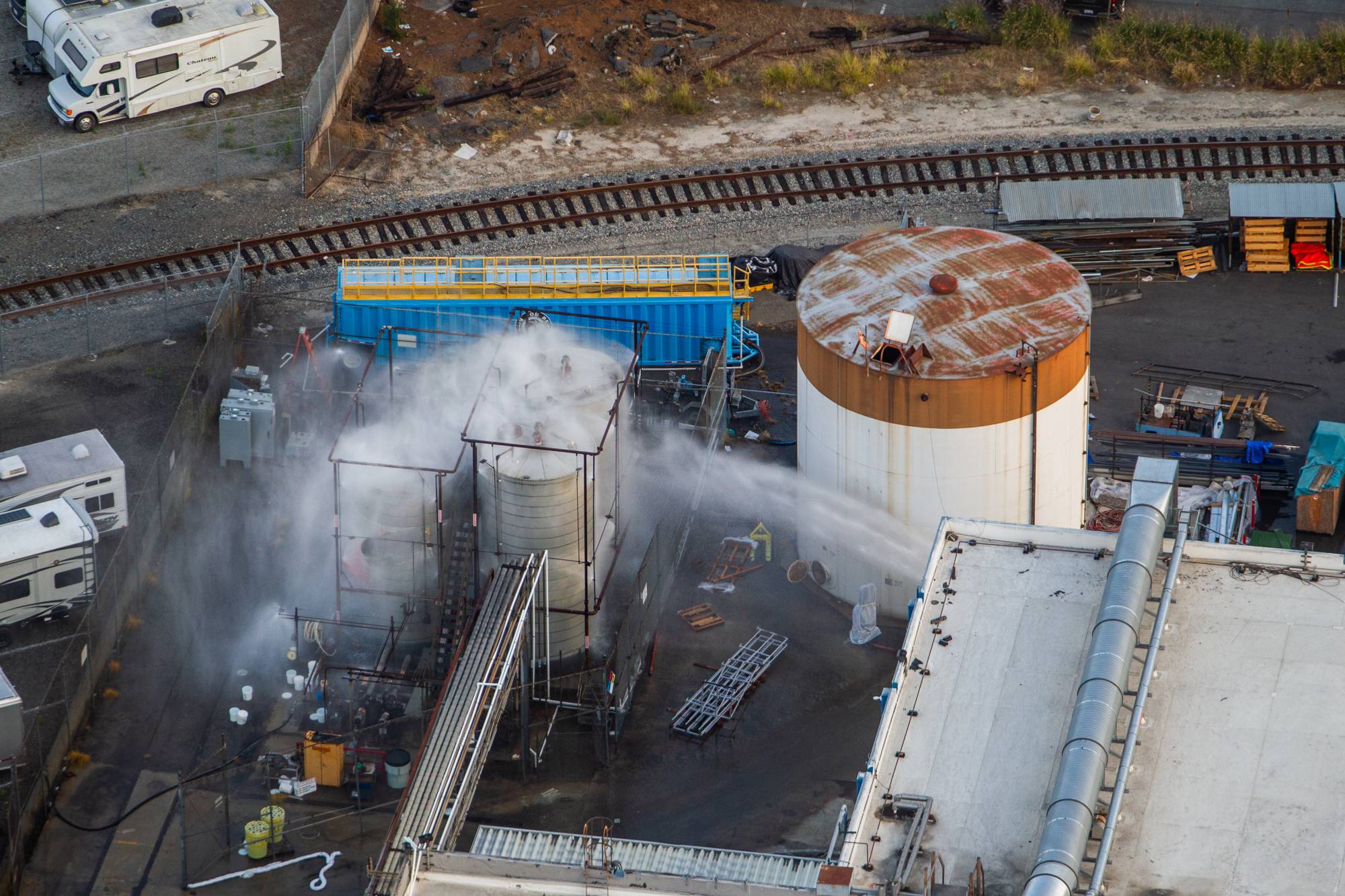
"caption": "GARDEN GROVE, CALIFORNIA - MAY 23: An aerial view of water being sprayed onto an overheated 34,000-gallon tank at GKN Aerospace on May 23, 2026 in Garden Grove, California. A malfunctioning tank at an aerospace plant has the potential of a chemical leak or explosion. An incident at GKN Aerospace, a manufacturer of components for commercial and military aircraft, triggered the facility's automatic sprinkler system. Investigators are expected to examine the cause of the hazardous leak once the site has been fully stabilized. ",
"credit": "Photo by Apu Gomes/Getty Images",
"altTag": null,
"description": null,
"imgSizes": {
"medium": {
"file": "https://cdn.kqed.org/wp-content/uploads/sites/10/2026/05/GettyImages-2277390453-2000x1333.jpg",
"width": 2000,
"height": 1333,
"mimeType": "image/jpeg"
},
"large": {
"file": "https://cdn.kqed.org/wp-content/uploads/sites/10/2026/05/GettyImages-2277390453-2000x1333.jpg",
"width": 2000,
"height": 1333,
"mimeType": "image/jpeg"
},
"thumbnail": {
"file": "https://cdn.kqed.org/wp-content/uploads/sites/10/2026/05/GettyImages-2277390453-160x107.jpg",
"width": 160,
"height": 107,
"mimeType": "image/jpeg"
},
"1536x1536": {
"file": "https://cdn.kqed.org/wp-content/uploads/sites/10/2026/05/GettyImages-2277390453-1536x1024.jpg",
"width": 1536,
"height": 1024,
"mimeType": "image/jpeg"
},
"2048x2048": {
"file": "https://cdn.kqed.org/wp-content/uploads/sites/10/2026/05/GettyImages-2277390453-2048x1365.jpg",
"width": 2048,
"height": 1365,
"mimeType": "image/jpeg"
},
"post-thumbnail": {
"file": "https://cdn.kqed.org/wp-content/uploads/sites/10/2026/05/GettyImages-2277390453-672x372.jpg",
"width": 672,
"height": 372,
"mimeType": "image/jpeg"
},
"twentyfourteen-full-width": {
"file": "https://cdn.kqed.org/wp-content/uploads/sites/10/2026/05/GettyImages-2277390453-1038x576.jpg",
"width": 1038,
"height": 576,
"mimeType": "image/jpeg"
},
"full-width": {
"file": "https://cdn.kqed.org/wp-content/uploads/sites/10/2026/05/GettyImages-2277390453-2000x1333.jpg",
"width": 2000,
"height": 1333,
"mimeType": "image/jpeg"
},
"npr-cds-wide": {
"file": "https://cdn.kqed.org/wp-content/uploads/sites/10/2026/05/GettyImages-2277390453-1200x675.jpg",
"width": 1200,
"height": 675,
"mimeType": "image/jpeg"
},
"npr-cds-square": {
"file": "https://cdn.kqed.org/wp-content/uploads/sites/10/2026/05/GettyImages-2277390453-600x600.jpg",
"width": 600,
"height": 600,
"mimeType": "image/jpeg"
},
"kqedFullSize": {
"file": "https://cdn.kqed.org/wp-content/uploads/sites/10/2026/05/GettyImages-2277390453-scaled.jpg",
"width": 2560,
"height": 1707
}
},
"isLoading": false,
"fetchFailed": false
},
"news_12073370": {
"type": "attachments",
"id": "news_12073370",
"meta": {
"index": "attachments_1716263798",
"site": "news",
"id": "12073370",
"found": true
},
"title": "250519-AffordableHousingFile-04-BL_qed",
"publishDate": 1770935618,
"status": "inherit",
"parent": 12073193,
"modified": 1772759203,
"caption": "Construction is underway on an affordable housing apartment building at 2550 Irving St. in San Francisco’s Sunset District on May 19, 2025.",
"credit": "Beth LaBerge/KQED",
"altTag": null,
"description": null,
"imgSizes": {
"thumbnail": {
"file": "https://cdn.kqed.org/wp-content/uploads/sites/10/2026/02/250519-AffordableHousingFile-04-BL_qed-160x107.jpg",
"width": 160,
"height": 107,
"mimeType": "image/jpeg"
},
"1536x1536": {
"file": "https://cdn.kqed.org/wp-content/uploads/sites/10/2026/02/250519-AffordableHousingFile-04-BL_qed-1536x1024.jpg",
"width": 1536,
"height": 1024,
"mimeType": "image/jpeg"
},
"post-thumbnail": {
"file": "https://cdn.kqed.org/wp-content/uploads/sites/10/2026/02/250519-AffordableHousingFile-04-BL_qed-672x372.jpg",
"width": 672,
"height": 372,
"mimeType": "image/jpeg"
},
"twentyfourteen-full-width": {
"file": "https://cdn.kqed.org/wp-content/uploads/sites/10/2026/02/250519-AffordableHousingFile-04-BL_qed-1038x576.jpg",
"width": 1038,
"height": 576,
"mimeType": "image/jpeg"
},
"npr-cds-wide": {
"file": "https://cdn.kqed.org/wp-content/uploads/sites/10/2026/02/250519-AffordableHousingFile-04-BL_qed-1200x675.jpg",
"width": 1200,
"height": 675,
"mimeType": "image/jpeg"
},
"kqedFullSize": {
"file": "https://cdn.kqed.org/wp-content/uploads/sites/10/2026/02/250519-AffordableHousingFile-04-BL_qed.jpg",
"width": 2000,
"height": 1333
}
},
"isLoading": false,
"fetchFailed": false
},
"news_12082018": {
"type": "attachments",
"id": "news_12082018",
"meta": {
"index": "attachments_1716263798",
"site": "news",
"id": "12082018",
"found": true
},
"title": "260430-WEREWOLF OF ALTADENA-SC-01-KQED",
"publishDate": 1777593016,
"status": "inherit",
"parent": 12082092,
"modified": 1778863465,
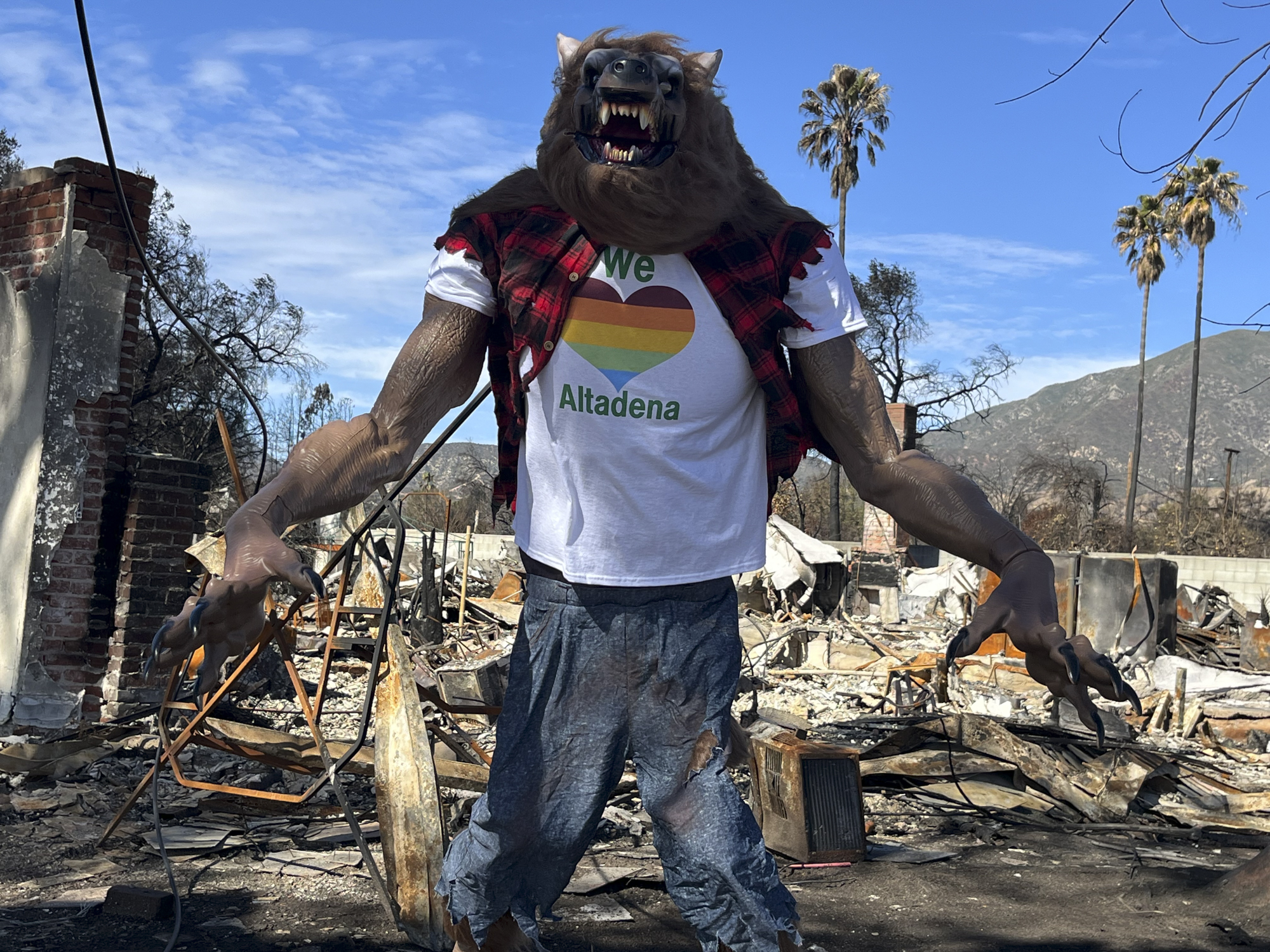
"caption": "Norman Jr., an 8-foot prop werewolf, was erected by Pastor Tim Hartley on the scorched lot of a sobering living house in West Altadena operated by the Episcopalian Diocese of Los Angeles. ",
"credit": "Steven Cuevas for KQED",
"altTag": null,
"description": null,
"imgSizes": {
"thumbnail": {
"file": "https://cdn.kqed.org/wp-content/uploads/sites/10/2026/04/260430-WEREWOLF-OF-ALTADENA-SC-01-KQED-160x120.jpg",
"width": 160,
"height": 120,
"mimeType": "image/jpeg"
},
"1536x1536": {
"file": "https://cdn.kqed.org/wp-content/uploads/sites/10/2026/04/260430-WEREWOLF-OF-ALTADENA-SC-01-KQED-1536x1152.jpg",
"width": 1536,
"height": 1152,
"mimeType": "image/jpeg"
},
"post-thumbnail": {
"file": "https://cdn.kqed.org/wp-content/uploads/sites/10/2026/04/260430-WEREWOLF-OF-ALTADENA-SC-01-KQED-672x372.jpg",
"width": 672,
"height": 372,
"mimeType": "image/jpeg"
},
"twentyfourteen-full-width": {
"file": "https://cdn.kqed.org/wp-content/uploads/sites/10/2026/04/260430-WEREWOLF-OF-ALTADENA-SC-01-KQED-1038x576.jpg",
"width": 1038,
"height": 576,
"mimeType": "image/jpeg"
},
"npr-cds-wide": {
"file": "https://cdn.kqed.org/wp-content/uploads/sites/10/2026/04/260430-WEREWOLF-OF-ALTADENA-SC-01-KQED-1200x675.jpg",
"width": 1200,
"height": 675,
"mimeType": "image/jpeg"
},
"npr-cds-square": {
"file": "https://cdn.kqed.org/wp-content/uploads/sites/10/2026/04/260430-WEREWOLF-OF-ALTADENA-SC-01-KQED-600x600.jpg",
"width": 600,
"height": 600,
"mimeType": "image/jpeg"
},
"kqedFullSize": {
"file": "https://cdn.kqed.org/wp-content/uploads/sites/10/2026/04/260430-WEREWOLF-OF-ALTADENA-SC-01-KQED.jpg",
"width": 2000,
"height": 1500
}
},
"isLoading": false,
"fetchFailed": false
},
"news_12084618": {
"type": "attachments",
"id": "news_12084618",
"meta": {
"index": "attachments_1716263798",
"site": "news",
"id": "12084618",
"found": true
},
"title": "iranian-students-6a0f07d66b22b",
"publishDate": 1779370062,
"status": "inherit",
"parent": 12084617,
"modified": 1779370111,
"caption": "Members of the Iranian Student Union at UC Santa Cruz gather on campus for a regular meeting on May 5, 2026.",
"credit": "Elena Neale-Sacks/KAZU News",
"altTag": null,
"description": null,
"imgSizes": {
"thumbnail": {
"file": "https://cdn.kqed.org/wp-content/uploads/sites/10/2026/05/iranian-students-6a0f07d66b22b-160x107.jpg",
"width": 160,
"height": 107,
"mimeType": "image/jpeg"
},
"1536x1536": {
"file": "https://cdn.kqed.org/wp-content/uploads/sites/10/2026/05/iranian-students-6a0f07d66b22b-1536x1025.jpg",
"width": 1536,
"height": 1025,
"mimeType": "image/jpeg"
},
"post-thumbnail": {
"file": "https://cdn.kqed.org/wp-content/uploads/sites/10/2026/05/iranian-students-6a0f07d66b22b-672x372.jpg",
"width": 672,
"height": 372,
"mimeType": "image/jpeg"
},
"twentyfourteen-full-width": {
"file": "https://cdn.kqed.org/wp-content/uploads/sites/10/2026/05/iranian-students-6a0f07d66b22b-1038x576.jpg",
"width": 1038,
"height": 576,
"mimeType": "image/jpeg"
},
"npr-cds-wide": {
"file": "https://cdn.kqed.org/wp-content/uploads/sites/10/2026/05/iranian-students-6a0f07d66b22b-1200x675.jpg",
"width": 1200,
"height": 675,
"mimeType": "image/jpeg"
},
"npr-cds-square": {
"file": "https://cdn.kqed.org/wp-content/uploads/sites/10/2026/05/iranian-students-6a0f07d66b22b-600x600.jpg",
"width": 600,
"height": 600,
"mimeType": "image/jpeg"
},
"kqedFullSize": {
"file": "https://cdn.kqed.org/wp-content/uploads/sites/10/2026/05/iranian-students-6a0f07d66b22b.jpg",
"width": 1760,
"height": 1174
}
},
"isLoading": false,
"fetchFailed": false
},
"news_12084219": {
"type": "attachments",
"id": "news_12084219",
"meta": {
"index": "attachments_1716263798",
"site": "news",
"id": "12084219",
"found": true
},
"title": "US-RELIGION-CRIME",
"publishDate": 1779198594,
"status": "inherit",
"parent": 12084218,
"modified": 1779198621,
"caption": "Two women cry as they leave a reunification center following the shooting at the Islamic Center of San Diego in southern California, on May 18, 2026. A shooting at the largest mosque complex in San Diego killed three people, with two suspected teenage gunmen later found dead in a car from self-inflicted gunshot wounds, police said. ",
"credit": "Photo by Zoë Meyers / AFP via Getty Images",
"altTag": null,
"description": null,
"imgSizes": {
"thumbnail": {
"file": "https://cdn.kqed.org/wp-content/uploads/sites/10/2026/05/GettyImages-2276455001-160x107.jpg",
"width": 160,
"height": 107,
"mimeType": "image/jpeg"
},
"1536x1536": {
"file": "https://cdn.kqed.org/wp-content/uploads/sites/10/2026/05/GettyImages-2276455001-1536x1024.jpg",
"width": 1536,
"height": 1024,
"mimeType": "image/jpeg"
},
"post-thumbnail": {
"file": "https://cdn.kqed.org/wp-content/uploads/sites/10/2026/05/GettyImages-2276455001-672x372.jpg",
"width": 672,
"height": 372,
"mimeType": "image/jpeg"
},
"twentyfourteen-full-width": {
"file": "https://cdn.kqed.org/wp-content/uploads/sites/10/2026/05/GettyImages-2276455001-1038x576.jpg",
"width": 1038,
"height": 576,
"mimeType": "image/jpeg"
},
"npr-cds-wide": {
"file": "https://cdn.kqed.org/wp-content/uploads/sites/10/2026/05/GettyImages-2276455001-1200x675.jpg",
"width": 1200,
"height": 675,
"mimeType": "image/jpeg"
},
"npr-cds-square": {
"file": "https://cdn.kqed.org/wp-content/uploads/sites/10/2026/05/GettyImages-2276455001-600x600.jpg",
"width": 600,
"height": 600,
"mimeType": "image/jpeg"
},
"kqedFullSize": {
"file": "https://cdn.kqed.org/wp-content/uploads/sites/10/2026/05/GettyImages-2276455001.jpg",
"width": 1662,
"height": 1108
}
},
"isLoading": false,
"fetchFailed": false
},
"news_12084026": {
"type": "attachments",
"id": "news_12084026",
"meta": {
"index": "attachments_1716263798",
"site": "news",
"id": "12084026",
"found": true
},
"title": "260213-DiabloCanyonNuclearPowerPlant-60-BL_qed-1536x1024",
"publishDate": 1779105741,
"status": "inherit",
"parent": 12084025,
"modified": 1779105771,
"caption": "Spent nuclear fuel in dry storage behind a raw water reservoir with desalinated ocean water at the Diablo Canyon Power Plant in San Luis Obispo on Feb. 13, 2026, the state’s only active nuclear power plant.",
"credit": "Beth LaBerge/KQED",
"altTag": null,
"description": null,
"imgSizes": {
"thumbnail": {
"file": "https://cdn.kqed.org/wp-content/uploads/sites/10/2026/05/260213-DiabloCanyonNuclearPowerPlant-60-BL_qed-1536x1024-1-160x107.jpg",
"width": 160,
"height": 107,
"mimeType": "image/jpeg"
},
"post-thumbnail": {
"file": "https://cdn.kqed.org/wp-content/uploads/sites/10/2026/05/260213-DiabloCanyonNuclearPowerPlant-60-BL_qed-1536x1024-1-672x372.jpg",
"width": 672,
"height": 372,
"mimeType": "image/jpeg"
},
"twentyfourteen-full-width": {
"file": "https://cdn.kqed.org/wp-content/uploads/sites/10/2026/05/260213-DiabloCanyonNuclearPowerPlant-60-BL_qed-1536x1024-1-1038x576.jpg",
"width": 1038,
"height": 576,
"mimeType": "image/jpeg"
},
"npr-cds-wide": {
"file": "https://cdn.kqed.org/wp-content/uploads/sites/10/2026/05/260213-DiabloCanyonNuclearPowerPlant-60-BL_qed-1536x1024-1-1200x675.jpg",
"width": 1200,
"height": 675,
"mimeType": "image/jpeg"
},
"npr-cds-square": {
"file": "https://cdn.kqed.org/wp-content/uploads/sites/10/2026/05/260213-DiabloCanyonNuclearPowerPlant-60-BL_qed-1536x1024-1-600x600.jpg",
"width": 600,
"height": 600,
"mimeType": "image/jpeg"
},
"kqedFullSize": {
"file": "https://cdn.kqed.org/wp-content/uploads/sites/10/2026/05/260213-DiabloCanyonNuclearPowerPlant-60-BL_qed-1536x1024-1.jpg",
"width": 1536,
"height": 1024
}
},
"isLoading": false,
"fetchFailed": false
},
"news_12081454": {
"type": "attachments",
"id": "news_12081454",
"meta": {
"index": "attachments_1716263798",
"site": "news",
"id": "12081454",
"found": true
},
"title": "260416-COSTOFDRIVING00574_TV-KQED",
"publishDate": 1777308649,
"status": "inherit",
"parent": 12081471,
"modified": 1777317163,
"caption": "Shekinah Samaya-Thomas fills up her gas tank at a Costco gas station in Oakland on April 16, 2026.",
"credit": "Tâm Vũ/KQED",
"altTag": null,
"description": null,
"imgSizes": {
"thumbnail": {
"file": "https://cdn.kqed.org/wp-content/uploads/sites/10/2026/04/260416-COSTOFDRIVING00574_TV-KQED-160x107.jpg",
"width": 160,
"height": 107,
"mimeType": "image/jpeg"
},
"1536x1536": {
"file": "https://cdn.kqed.org/wp-content/uploads/sites/10/2026/04/260416-COSTOFDRIVING00574_TV-KQED-1536x1024.jpg",
"width": 1536,
"height": 1024,
"mimeType": "image/jpeg"
},
"post-thumbnail": {
"file": "https://cdn.kqed.org/wp-content/uploads/sites/10/2026/04/260416-COSTOFDRIVING00574_TV-KQED-672x372.jpg",
"width": 672,
"height": 372,
"mimeType": "image/jpeg"
},
"twentyfourteen-full-width": {
"file": "https://cdn.kqed.org/wp-content/uploads/sites/10/2026/04/260416-COSTOFDRIVING00574_TV-KQED-1038x576.jpg",
"width": 1038,
"height": 576,
"mimeType": "image/jpeg"
},
"npr-cds-wide": {
"file": "https://cdn.kqed.org/wp-content/uploads/sites/10/2026/04/260416-COSTOFDRIVING00574_TV-KQED-1200x675.jpg",
"width": 1200,
"height": 675,
"mimeType": "image/jpeg"
},
"npr-cds-square": {
"file": "https://cdn.kqed.org/wp-content/uploads/sites/10/2026/04/260416-COSTOFDRIVING00574_TV-KQED-600x600.jpg",
"width": 600,
"height": 600,
"mimeType": "image/jpeg"
},
"kqedFullSize": {
"file": "https://cdn.kqed.org/wp-content/uploads/sites/10/2026/04/260416-COSTOFDRIVING00574_TV-KQED.jpg",
"width": 2000,
"height": 1333
}
},
"isLoading": false,
"fetchFailed": false
},
"news_12079665": {
"type": "attachments",
"id": "news_12079665",
"meta": {
"index": "attachments_1716263798",
"site": "news",
"id": "12079665",
"found": true
},
"title": "Workers grind and polish stone for countertops 4",
"publishDate": 1776104114,
"status": "inherit",
"parent": 12079653,
"modified": 1776104180,
"caption": "A stone countertop fabricator wears a mask to help protect against airborne particles which can contribute to silicosis at a shop on Tuesday, Oct. 31, 2023, in Sun Valley, California.",
"credit": "Brian van der Brug/Los Angeles Times via Getty Images",
"altTag": null,
"description": null,
"imgSizes": {
"thumbnail": {
"file": "https://cdn.kqed.org/wp-content/uploads/sites/10/2026/04/StoneworkerGetty-160x107.jpg",
"width": 160,
"height": 107,
"mimeType": "image/jpeg"
},
"1536x1536": {
"file": "https://cdn.kqed.org/wp-content/uploads/sites/10/2026/04/StoneworkerGetty-1536x1024.jpg",
"width": 1536,
"height": 1024,
"mimeType": "image/jpeg"
},
"post-thumbnail": {
"file": "https://cdn.kqed.org/wp-content/uploads/sites/10/2026/04/StoneworkerGetty-672x372.jpg",
"width": 672,
"height": 372,
"mimeType": "image/jpeg"
},
"twentyfourteen-full-width": {
"file": "https://cdn.kqed.org/wp-content/uploads/sites/10/2026/04/StoneworkerGetty-1038x576.jpg",
"width": 1038,
"height": 576,
"mimeType": "image/jpeg"
},
"npr-cds-wide": {
"file": "https://cdn.kqed.org/wp-content/uploads/sites/10/2026/04/StoneworkerGetty-1200x675.jpg",
"width": 1200,
"height": 675,
"mimeType": "image/jpeg"
},
"npr-cds-square": {
"file": "https://cdn.kqed.org/wp-content/uploads/sites/10/2026/04/StoneworkerGetty-600x600.jpg",
"width": 600,
"height": 600,
"mimeType": "image/jpeg"
},
"kqedFullSize": {
"file": "https://cdn.kqed.org/wp-content/uploads/sites/10/2026/04/StoneworkerGetty.jpg",
"width": 2000,
"height": 1333
}
},
"isLoading": false,
"fetchFailed": false
},
"news_12081158": {
"type": "attachments",
"id": "news_12081158",
"meta": {
"index": "attachments_1716263798",
"site": "news",
"id": "12081158",
"found": true
},
"title": "260423-CHADBIANCOPB-05-BL-KQED",
"publishDate": 1776974721,
"status": "inherit",
"parent": 0,
"modified": 1776974743,
"caption": "Sheriff Chad Bianco speaks with KQED politics reporter Marisa Lagos for Political Breakdown at the KQED offices in San Francisco on April 23, 2026.",
"credit": "Beth LaBerge/KQED",
"altTag": null,
"description": null,
"imgSizes": {
"thumbnail": {
"file": "https://cdn.kqed.org/wp-content/uploads/sites/10/2026/04/260423-CHADBIANCOPB-05-BL-KQED-160x107.jpg",
"width": 160,
"height": 107,
"mimeType": "image/jpeg"
},
"1536x1536": {
"file": "https://cdn.kqed.org/wp-content/uploads/sites/10/2026/04/260423-CHADBIANCOPB-05-BL-KQED-1536x1024.jpg",
"width": 1536,
"height": 1024,
"mimeType": "image/jpeg"
},
"post-thumbnail": {
"file": "https://cdn.kqed.org/wp-content/uploads/sites/10/2026/04/260423-CHADBIANCOPB-05-BL-KQED-672x372.jpg",
"width": 672,
"height": 372,
"mimeType": "image/jpeg"
},
"twentyfourteen-full-width": {
"file": "https://cdn.kqed.org/wp-content/uploads/sites/10/2026/04/260423-CHADBIANCOPB-05-BL-KQED-1038x576.jpg",
"width": 1038,
"height": 576,
"mimeType": "image/jpeg"
},
"npr-cds-wide": {
"file": "https://cdn.kqed.org/wp-content/uploads/sites/10/2026/04/260423-CHADBIANCOPB-05-BL-KQED-1200x675.jpg",
"width": 1200,
"height": 675,
"mimeType": "image/jpeg"
},
"npr-cds-square": {
"file": "https://cdn.kqed.org/wp-content/uploads/sites/10/2026/04/260423-CHADBIANCOPB-05-BL-KQED-600x600.jpg",
"width": 600,
"height": 600,
"mimeType": "image/jpeg"
},
"kqedFullSize": {
"file": "https://cdn.kqed.org/wp-content/uploads/sites/10/2026/04/260423-CHADBIANCOPB-05-BL-KQED.jpg",
"width": 2000,
"height": 1333
}
},
"isLoading": false,
"fetchFailed": false
},
"news_12082861": {
"type": "attachments",
"id": "news_12082861",
"meta": {
"index": "attachments_1716263798",
"site": "news",
"id": "12082861",
"found": true
},
"title": "260417-ProPublica-CATeacherDiscipline-02",
"publishDate": 1778255871,
"status": "inherit",
"parent": 12082980,
"modified": 1778523733,
"caption": "Clifford School, a prekindergarten through eighth grade public school in\nRedwood City, California.",
"credit": "Beth LaBerge/KQED",
"altTag": "A school building with a sign in front of it that reads, “Clifford School”",
"description": null,
"imgSizes": {
"thumbnail": {
"file": "https://cdn.kqed.org/wp-content/uploads/sites/10/2026/05/260417-ProPublica-CATeacherDiscipline-02-160x107.jpg",
"width": 160,
"height": 107,
"mimeType": "image/jpeg"
},
"1536x1536": {
"file": "https://cdn.kqed.org/wp-content/uploads/sites/10/2026/05/260417-ProPublica-CATeacherDiscipline-02-1536x1024.jpg",
"width": 1536,
"height": 1024,
"mimeType": "image/jpeg"
},
"post-thumbnail": {
"file": "https://cdn.kqed.org/wp-content/uploads/sites/10/2026/05/260417-ProPublica-CATeacherDiscipline-02-672x372.jpg",
"width": 672,
"height": 372,
"mimeType": "image/jpeg"
},
"twentyfourteen-full-width": {
"file": "https://cdn.kqed.org/wp-content/uploads/sites/10/2026/05/260417-ProPublica-CATeacherDiscipline-02-1038x576.jpg",
"width": 1038,
"height": 576,
"mimeType": "image/jpeg"
},
"npr-cds-wide": {
"file": "https://cdn.kqed.org/wp-content/uploads/sites/10/2026/05/260417-ProPublica-CATeacherDiscipline-02-1200x675.jpg",
"width": 1200,
"height": 675,
"mimeType": "image/jpeg"
},
"npr-cds-square": {
"file": "https://cdn.kqed.org/wp-content/uploads/sites/10/2026/05/260417-ProPublica-CATeacherDiscipline-02-600x600.jpg",
"width": 600,
"height": 600,
"mimeType": "image/jpeg"
},
"kqedFullSize": {
"file": "https://cdn.kqed.org/wp-content/uploads/sites/10/2026/05/260417-ProPublica-CATeacherDiscipline-02.jpg",
"width": 2000,
"height": 1333
}
},
"isLoading": false,
"fetchFailed": false
},
"news_12082854": {
"type": "attachments",
"id": "news_12082854",
"meta": {
"index": "attachments_1716263798",
"site": "news",
"id": "12082854",
"found": true
},
"title": "elkhorn-otters-69fdea6ea81e9",
"publishDate": 1778248337,
"status": "inherit",
"parent": 12082853,
"modified": 1778248419,
"caption": "Elkhorn Slough National Estuarine Research Reserve volunteer Ron Eby on an otter monitoring boat ride on April 1, 2026.",
"credit": "Jerimiah Oetting/KAZU",
"altTag": null,
"description": null,
"imgSizes": {
"thumbnail": {
"file": "https://cdn.kqed.org/wp-content/uploads/sites/10/2026/05/elkhorn-otters-69fdea6ea81e9-160x107.jpg",
"width": 160,
"height": 107,
"mimeType": "image/jpeg"
},
"1536x1536": {
"file": "https://cdn.kqed.org/wp-content/uploads/sites/10/2026/05/elkhorn-otters-69fdea6ea81e9-1536x1025.jpg",
"width": 1536,
"height": 1025,
"mimeType": "image/jpeg"
},
"post-thumbnail": {
"file": "https://cdn.kqed.org/wp-content/uploads/sites/10/2026/05/elkhorn-otters-69fdea6ea81e9-672x372.jpg",
"width": 672,
"height": 372,
"mimeType": "image/jpeg"
},
"twentyfourteen-full-width": {
"file": "https://cdn.kqed.org/wp-content/uploads/sites/10/2026/05/elkhorn-otters-69fdea6ea81e9-1038x576.jpg",
"width": 1038,
"height": 576,
"mimeType": "image/jpeg"
},
"npr-cds-wide": {
"file": "https://cdn.kqed.org/wp-content/uploads/sites/10/2026/05/elkhorn-otters-69fdea6ea81e9-1200x675.jpg",
"width": 1200,
"height": 675,
"mimeType": "image/jpeg"
},
"npr-cds-square": {
"file": "https://cdn.kqed.org/wp-content/uploads/sites/10/2026/05/elkhorn-otters-69fdea6ea81e9-600x600.jpg",
"width": 600,
"height": 600,
"mimeType": "image/jpeg"
},
"kqedFullSize": {
"file": "https://cdn.kqed.org/wp-content/uploads/sites/10/2026/05/elkhorn-otters-69fdea6ea81e9.jpg",
"width": 1760,
"height": 1174
}
},
"isLoading": false,
"fetchFailed": false
},
"news_12082655": {
"type": "attachments",
"id": "news_12082655",
"meta": {
"index": "attachments_1716263798",
"site": "news",
"id": "12082655",
"found": true
},
"title": "human-remains-training-69fc99665f22a",
"publishDate": 1778162069,
"status": "inherit",
"parent": 12082654,
"modified": 1778162117,
"caption": "From left, Torres, Herrick and Aponte-Guante search through debris from a structure fire scenario. No human remains are pictured in this photo.",
"credit": "Photo courtesy of Central California Forensic Fire Death Investigation Academy",
"altTag": null,
"description": null,
"imgSizes": {
"thumbnail": {
"file": "https://cdn.kqed.org/wp-content/uploads/sites/10/2026/05/human-remains-training-69fc99665f22a-160x107.jpg",
"width": 160,
"height": 107,
"mimeType": "image/jpeg"
},
"1536x1536": {
"file": "https://cdn.kqed.org/wp-content/uploads/sites/10/2026/05/human-remains-training-69fc99665f22a-1536x1025.jpg",
"width": 1536,
"height": 1025,
"mimeType": "image/jpeg"
},
"post-thumbnail": {
"file": "https://cdn.kqed.org/wp-content/uploads/sites/10/2026/05/human-remains-training-69fc99665f22a-672x372.jpg",
"width": 672,
"height": 372,
"mimeType": "image/jpeg"
},
"twentyfourteen-full-width": {
"file": "https://cdn.kqed.org/wp-content/uploads/sites/10/2026/05/human-remains-training-69fc99665f22a-1038x576.jpg",
"width": 1038,
"height": 576,
"mimeType": "image/jpeg"
},
"npr-cds-wide": {
"file": "https://cdn.kqed.org/wp-content/uploads/sites/10/2026/05/human-remains-training-69fc99665f22a-1200x675.jpg",
"width": 1200,
"height": 675,
"mimeType": "image/jpeg"
},
"npr-cds-square": {
"file": "https://cdn.kqed.org/wp-content/uploads/sites/10/2026/05/human-remains-training-69fc99665f22a-600x600.jpg",
"width": 600,
"height": 600,
"mimeType": "image/jpeg"
},
"kqedFullSize": {
"file": "https://cdn.kqed.org/wp-content/uploads/sites/10/2026/05/human-remains-training-69fc99665f22a.jpg",
"width": 1760,
"height": 1174
}
},
"isLoading": false,
"fetchFailed": false
}
},
"audioPlayerReducer": {
"postId": "stream_live",
"isPaused": true,
"isPlaying": false,
"pfsActive": false,
"pledgeModalIsOpen": true,
"playerDrawerIsOpen": false,
"liveAudioPlayStartedAt": 0,
"liveAudioPlayContext": ""
},
"authorsReducer": {
"kqed": {
"type": "authors",
"id": "236",
"meta": {
"index": "authors_1716337520",
"id": "236",
"found": true
},
"name": "KQED News Staff",
"firstName": "KQED News Staff",
"lastName": null,
"slug": "kqed",
"email": "faq@kqed.org",
"display_author_email": false,
"staff_mastheads": [],
"title": null,
"bio": null,
"avatar": "https://secure.gravatar.com/avatar/ef0e801a68c4c54afa9180db14084167?s=600&d=blank&r=g",
"twitter": null,
"facebook": null,
"instagram": null,
"linkedin": null,
"sites": [
{
"site": "arts",
"roles": [
"contributor"
]
},
{
"site": "news",
"roles": [
"editor"
]
},
{
"site": "futureofyou",
"roles": [
"author"
]
}
],
"headData": {
"title": "KQED News Staff | KQED",
"description": null,
"ogImgSrc": "https://secure.gravatar.com/avatar/ef0e801a68c4c54afa9180db14084167?s=600&d=blank&r=g",
"twImgSrc": "https://secure.gravatar.com/avatar/ef0e801a68c4c54afa9180db14084167?s=600&d=blank&r=g"
},
"isLoading": false,
"link": "/author/kqed"
},
"scuevas": {
"type": "authors",
"id": "2600",
"meta": {
"index": "authors_1716337520",
"id": "2600",
"found": true
},
"name": "Steven Cuevas",
"firstName": "Steven",
"lastName": "Cuevas",
"slug": "scuevas",
"email": "scuevas@kqed.org",
"display_author_email": false,
"staff_mastheads": [],
"title": "KQED Contributor",
"bio": "Steven is a former Los Angeles bureau chief for The California Report.\r\n\r\nHe reports on an array of issues across the Southland, from immigration and regional politics to religion, the performing arts and pop culture.\r\n\r\nPrior to joining KQED in 2012, Steven covered Inland southern California for KPCC in Pasadena. He also helped establish the first newsroom at \u003ca href=\"http://kut.org/\">KUT\u003c/a> in Austin, Texas where he was a general assignment reporter.\r\n\r\nSteven has received numerous awards for his reporting including an RTNDA Edward R. Murrow Award for investigative reporting in addition to awards from the LA Press Club, the Associated Press and the Society for Professional Journalists.\r\n\r\nSteven grew up in and around San Francisco and now lives in Pasadena just a short jog from the foot of the San Gabriel Mountains.",
"avatar": "https://secure.gravatar.com/avatar/2d253580794f8e026100fae05cfabbbd4889b4fe15146146cacb82a01974c538?s=600&d=blank&r=g",
"twitter": null,
"bluesky": null,
"facebook": null,
"instagram": null,
"linkedin": null,
"sites": [
{
"site": "news",
"roles": [
"subscriber"
]
}
],
"headData": {
"title": "Steven Cuevas | KQED",
"description": "KQED Contributor",
"ogImgSrc": "https://secure.gravatar.com/avatar/2d253580794f8e026100fae05cfabbbd4889b4fe15146146cacb82a01974c538?s=600&d=blank&r=g",
"twImgSrc": "https://secure.gravatar.com/avatar/2d253580794f8e026100fae05cfabbbd4889b4fe15146146cacb82a01974c538?s=600&d=blank&r=g"
},
"isLoading": false,
"link": "/author/scuevas"
},
"kmizuguchi": {
"type": "authors",
"id": "11739",
"meta": {
"index": "authors_1716337520",
"id": "11739",
"found": true
},
"name": "Keith Mizuguchi",
"firstName": "Keith",
"lastName": "Mizuguchi",
"slug": "kmizuguchi",
"email": "kmizuguchi@kqed.org",
"display_author_email": false,
"staff_mastheads": [],
"title": "KQED Contributor",
"bio": null,
"avatar": "https://secure.gravatar.com/avatar/64d8a7de0723d4099b9fe4e915136103febcc20809abce228ee4415bcb237023?s=600&d=blank&r=g",
"twitter": null,
"bluesky": null,
"facebook": null,
"instagram": null,
"linkedin": null,
"sites": [
{
"site": "news",
"roles": [
"editor"
]
},
{
"site": "science",
"roles": [
"editor"
]
}
],
"headData": {
"title": "Keith Mizuguchi | KQED",
"description": "KQED Contributor",
"ogImgSrc": "https://secure.gravatar.com/avatar/64d8a7de0723d4099b9fe4e915136103febcc20809abce228ee4415bcb237023?s=600&d=blank&r=g",
"twImgSrc": "https://secure.gravatar.com/avatar/64d8a7de0723d4099b9fe4e915136103febcc20809abce228ee4415bcb237023?s=600&d=blank&r=g"
},
"isLoading": false,
"link": "/author/kmizuguchi"
}
},
"pagesReducer": {
"news_category_tcr": {
"type": "terms",
"id": "news_34018",
"meta": {
"index": "terms_1716263798",
"site": "news",
"id": "34018",
"score": 13.30514
},
"featImg": null,
"name": "tcr",
"description": null,
"taxonomy": "category",
"headData": {
"twImgId": null,
"twTitle": null,
"ogTitle": null,
"ogImgId": null,
"twDescription": null,
"description": null,
"title": "tcr Archives | KQED News",
"ogDescription": null
},
"ttid": 34035,
"slug": "tcr",
"isLoading": false,
"title": "tcr",
"pageMeta": {
"site": "news",
"WpPageTemplate": "page-topic-editorial",
"currentPage": 7
},
"blocks": [
{
"blockName": "kqed/post-list",
"attrs": {
"layout": "cardArticle2",
"query": "posts/news?category=tcr",
"seeMore": false,
"paginated": true,
"page": 7
}
},
{
"blockName": "kqed/ad"
}
]
}
},
"pfsSessionReducer": {},
"postsReducer": {
"stream_live": {
"type": "live",
"id": "stream_live",
"audioUrl": "https://hls.kqed.org/hls/kqed_app/playlist.m3u8",
"title": "Live Stream",
"excerpt": "Live Stream information currently unavailable.",
"link": "/radio",
"featImg": "",
"label": {
"name": "KQED Live",
"link": "/"
}
},
"stream_kqedNewscast": {
"type": "posts",
"id": "stream_kqedNewscast",
"audioUrl": "https://www.kqed.org/.stream/anon/radio/RDnews/newscast.mp3?_=1",
"title": "KQED Newscast",
"featImg": "",
"label": {
"name": "88.5 FM",
"link": "/"
}
},
"news_12085129": {
"type": "posts",
"id": "news_12085129",
"meta": {
"index": "posts_1716263798",
"site": "news",
"id": "12085129",
"score": null,
"sort": [
1779736114000
]
},
"guestAuthors": [],
"slug": "fire-officials-rule-out-threat-of-explosion-from-damaged-oc-chemical-tank",
"title": "Fire Officials Rule Out Threat of Explosion From Damaged OC Chemical Tank",
"publishDate": 1779736114,
"format": "standard",
"headTitle": "Fire Officials Rule Out Threat of Explosion From Damaged OC Chemical Tank | KQED",
"labelTerm": {},
"content": "\u003cp>\u003cb>Here are the morning’s top stories on Monday, May 25, 2026\u003c/b>\u003c/p>\n\u003cul>\n\u003cli style=\"font-weight: 400\">\u003cspan data-slate-fragment=\"JTVCJTdCJTIydHlwZSUyMiUzQSUyMnBhcmFncmFwaCUyMiUyQyUyMmNoaWxkcmVuJTIyJTNBJTVCJTdCJTIydGV4dCUyMiUzQSUyMlNvbWUlMjBnb29kJTIwbmV3cyUyMGZyb20lMjBPcmFuZ2UlMjBDb3VudHklMkMlMjBhcyUyMGZpcmUlMjBvZmZpY2lhbHMlMjBoYXZlJTIwcnVsZWQlMjBvdXQlMjB0aGUlMjBwb3NzaWJpbGl0eSUyMHRoYXQlMjBhJTIwZGFtYWdlZCUyMGNoZW1pY2FsJTIwdGFuayUyMHdpbGwlMjBleHBsb2RlLiUyMEFib3V0JTIwNTAlMkMwMDAlMjBwZW9wbGUlMjByZW1haW4lMjB1bmRlciUyMGV2YWN1YXRpb24lMjBvcmRlcnMlMjBpbiUyME9yYW5nZSUyMENvdW50eSUyQyUyMGFuZCUyMHNldmVyYWwlMjBzaGVsdGVycyUyMGhhdmUlMjBxdWlja2x5JTIwZmlsbGVkJTIwdXAuJTIwSXQncyUyMHVuY2xlYXIlMjB3aGVuJTIwZXZhY3VlZXMlMjBtaWdodCUyMGJlJTIwYWJsZSUyMHRvJTIwcmV0dXJuJTIwaG9tZS4lMjIlN0QlNUQlN0QlNUQ=\">Some good news from Orange County, as fire officials have ruled out the possibility that \u003ca href=\"https://apnews.com/article/california-tank-leak-explosion-garden-grove-770af6de585b1771824539b163555eaa\">a damaged chemical tank will explode\u003c/a>. About 50,000 people remain under evacuation orders in Orange County, and several shelters have quickly filled up. It’s unclear when evacuees might be able to return home.\u003c/span>\u003c/li>\n\u003cli style=\"font-weight: 400\">\u003cspan style=\"font-weight: 400\">A young boxer from the remote Fresno County town of Huron \u003ca href=\"https://www.kvpr.org/community/2026-05-14/a-california-boxer-represents-her-town-in-national-championship-her-family-helped-her-get-there\">won bronze in her weight class\u003c/a> in the national Golden Gloves tournament in Tulsa, Oklahoma this month. To get there, she had to win the California Golden Gloves State Championship in Pasadena in April. But her road to success hasn’t been easy.\u003c/span>\u003c/li>\n\u003c/ul>\n\u003ch2 class=\"Page-headline\">\u003ca href=\"https://apnews.com/article/california-tank-leak-explosion-garden-grove-770af6de585b1771824539b163555eaa\">\u003cstrong>Risk of a catastrophic explosion has been eliminated at chemical tank in California\u003c/strong>\u003c/a>\u003c/h2>\n\u003cp>The risk of a catastrophic explosion at a \u003cspan class=\"LinkEnhancement\">\u003ca class=\"Link AnClick-LinkEnhancement\" href=\"https://apnews.com/article/storage-tank-chemical-leak-california-e0da10097b68b7f48ed512225eb487fa\" data-gtm-enhancement-style=\"LinkEnhancementA\">damaged chemical tank\u003c/a>\u003c/span> in Southern California has been eliminated following a close overnight inspection that confirmed a crack in the tank relieved pressure and cooled the chemical, authorities said Monday.\u003c/p>\n\u003cp>The results of the evaluation was “incredibly positive news,” and allowed officials to turn the corner after days of concern about a possible explosion, said Orange County Fire Authority division chief Craig Covey. However, evacuation orders remained in place for about 50,000 people in Garden Grove. There has been no chemical leak as of early Monday, but the Orange County Fire Authority said the risk to public safety is “ongoing.”\u003c/p>\n\u003cp>Covey didn’t say in the recorded message what the most likely outcome might be but officials had previously said they hoped to cool off the chemical inside the tank so it wouldn’t leak or explode. The tank’s interior had cooled to 93 degrees F, Covey said, down from 100 degrees Sunday.\u003c/p>\n\u003cp>After the tank at GKN Aerospace overheated Thursday and began venting vapors, firefighters have repeatedly sprayed the tank with water in an attempt to cool the chemical inside, methyl methacrylate, which is used to make plastic parts. As the interior temperature rises, methyl methacrylate converts from a liquid to a gas and increases the pressure, according to Purdue University engineering professor Andrew Whelton. Exposure to methyl methacrylate can cause serious respiratory problems, neurological problems and irritation to the skin, eyes and throat, according to fact sheets about the chemical.\u003c/p>\n\u003cp>[ad fullwidth]\u003c/p>\n\u003cp>Some 50,000 people in Orange County are still under evacuation orders. It’s unclear when they might be lifted.\u003c/p>\n\u003ch2 class=\"ArtP-headline\">\u003ca href=\"https://www.kvpr.org/community/2026-05-14/a-california-boxer-represents-her-town-in-national-championship-her-family-helped-her-get-there\">\u003cstrong>A California boxer represents her town in national championship\u003c/strong>\u003c/a>\u003c/h2>\n\u003cp>If you met 21-year-old Shavana Trejo on the street, your first thought would not be “boxer.” She’s small – about 5 feet 3 inches – and weighs 119 pounds. Her comportment is understated – gentle, even. But watch her in the ring at the Underdogs Boxing Club in the rural town of Avenal in Kings County and there’s a huge transformation. She punches with a gusto that comes from deep within her. She’s fiery and aggressive.\u003c/p>\n\u003cp>Her punches have paid off. Last month, Trejo won the California Golden Gloves State Championship in Pasadena for her weight class, which is 112 to 119 pounds. And then earlier this month, she was in Tulsa, Oklahoma, competing in the National Golden Gloves Tournament of Champions. The road to Tulsa hasn’t been easy.\u003c/p>\n\u003cp>“I’ve been through hell, honestly. I’ve been through a lot of ups and downs in my life,” she said. “Just hitting the bag. It’s like you’re releasing bad, negative energy.” Trejo said she was a shy, quiet kid, and she was bullied a lot. “I would come home with black eyes. I would come home with my hair cut, slime thrown in my hair,” she said.\u003c/p>\n\u003cp>But she never hit back – except in the ring. She started competing at age 13. She was great at other sports, too. As a high school junior, she was on her way to breaking a school record in basketball when she decided to heed her dad’s advice and focus on just one sport – boxing. Since then, she’s won 14 belts. “My dad’s like, ‘look, I believe in you. If I didn’t believe in you, I wouldn’t tell you you’ve got to pick one,’” she said.\u003c/p>\n\u003cp>She said she’s sacrificed a lot for boxing. Her daily schedule is packed and she bounces around a lot. She lives in the town of Huron and starts every day with early-morning strength training at a gym in nearby Hanford. During the day, she works a full-time job at a fast food restaurant in Kettleman City. And every evening, she’s at the boxing club in Avenal.\u003c/p>\n\u003cp>Trejo isn’t the only champion boxer who has worked out in this gym. Former world champion light welterweight and 2012 U.S. Olympic boxer Jose Ramirez trained here years ago, too. The nonprofit gym hosts a mix of pro boxers, amateurs and kids who just need a safe place to come after school. On any given day, about 20 to 30 kids are at the gym.\u003c/p>\n\u003cp>\u003c/p>\n\u003cp>So is Trejo’s father, Michael Trejo, who can be heard directing the kids to squat, lunge and jump. He started out as a volunteer coach at the gym in 2013, not long after Ramirez was in the Olympics. He said he knew his daughter was going to be a star athlete when she was just a preschooler. He remembers taking her to a track at a middle school in Huron. “She was wearing a little dress and sandals. I just sat in the bleachers. I said ‘want to try running?’ She said, ‘yeah.’ She ran about a mile and a half without stopping, at four years old,” he said.\u003c/p>\n\n",
"blocks": [],
"excerpt": "But tens of thousands of people in Orange County remain under and evacuation order.",
"status": "publish",
"parent": 0,
"modified": 1779736114,
"stats": {
"hasAudio": false,
"hasVideo": false,
"hasChartOrMap": false,
"iframeSrcs": [],
"hasGoogleForm": false,
"hasGallery": false,
"hasHearkenModule": false,
"hasPolis": false,
"paragraphCount": 15,
"wordCount": 1019
},
"headData": {
"title": "Fire Officials Rule Out Threat of Explosion From Damaged OC Chemical Tank | KQED",
"description": "But tens of thousands of people in Orange County remain under and evacuation order.",
"ogTitle": "",
"ogDescription": "",
"ogImgId": "",
"twTitle": "",
"twDescription": "",
"twImgId": "",
"schema": {
"@context": "https://schema.org",
"@type": "NewsArticle",
"headline": "Fire Officials Rule Out Threat of Explosion From Damaged OC Chemical Tank",
"datePublished": "2026-05-25T12:08:34-07:00",
"dateModified": "2026-05-25T12:08:34-07:00",
"image": "https://cdn.kqed.org/wp-content/uploads/2020/02/KQED-OG-Image@1x.png",
"isAccessibleForFree": "True",
"publisher": {
"@type": "NewsMediaOrganization",
"@id": "https://www.kqed.org/#organization",
"name": "KQED",
"logo": "https://cdn.kqed.org/wp-content/uploads/2020/02/KQED-OG-Image@1x.png",
"url": "https://www.kqed.org",
"sameAs": [
"https://www.facebook.com/KQED",
"https://twitter.com/KQED",
"https://www.instagram.com/kqed/",
"https://www.tiktok.com/@kqedofficial",
"https://www.linkedin.com/company/kqed",
"https://www.youtube.com/channel/UCeC0IOo7i1P_61zVUWbJ4nw"
]
}
}
},
"primaryCategory": {
"termId": 33520,
"slug": "podcast",
"name": "Podcast"
},
"source": "The California Report",
"sourceUrl": "https://www.kqed.org/news/tag/tcrarchive/",
"audioUrl": "https://www.podtrac.com/pts/redirect.mp3/traffic.megaphone.fm/KQINC8234924825.mp3",
"sticky": false,
"nprStoryId": "kqed-12085129",
"templateType": "standard",
"featuredImageType": "standard",
"excludeFromSiteSearch": "Include",
"articleAge": "0",
"path": "/news/12085129/fire-officials-rule-out-threat-of-explosion-from-damaged-oc-chemical-tank",
"audioTrackLength": null,
"parsedContent": [
{
"type": "contentString",
"content": "\u003cdiv class=\"post-body\">\u003cp>\u003cp>\u003cb>Here are the morning’s top stories on Monday, May 25, 2026\u003c/b>\u003c/p>\n\u003cul>\n\u003cli style=\"font-weight: 400\">\u003cspan data-slate-fragment=\"JTVCJTdCJTIydHlwZSUyMiUzQSUyMnBhcmFncmFwaCUyMiUyQyUyMmNoaWxkcmVuJTIyJTNBJTVCJTdCJTIydGV4dCUyMiUzQSUyMlNvbWUlMjBnb29kJTIwbmV3cyUyMGZyb20lMjBPcmFuZ2UlMjBDb3VudHklMkMlMjBhcyUyMGZpcmUlMjBvZmZpY2lhbHMlMjBoYXZlJTIwcnVsZWQlMjBvdXQlMjB0aGUlMjBwb3NzaWJpbGl0eSUyMHRoYXQlMjBhJTIwZGFtYWdlZCUyMGNoZW1pY2FsJTIwdGFuayUyMHdpbGwlMjBleHBsb2RlLiUyMEFib3V0JTIwNTAlMkMwMDAlMjBwZW9wbGUlMjByZW1haW4lMjB1bmRlciUyMGV2YWN1YXRpb24lMjBvcmRlcnMlMjBpbiUyME9yYW5nZSUyMENvdW50eSUyQyUyMGFuZCUyMHNldmVyYWwlMjBzaGVsdGVycyUyMGhhdmUlMjBxdWlja2x5JTIwZmlsbGVkJTIwdXAuJTIwSXQncyUyMHVuY2xlYXIlMjB3aGVuJTIwZXZhY3VlZXMlMjBtaWdodCUyMGJlJTIwYWJsZSUyMHRvJTIwcmV0dXJuJTIwaG9tZS4lMjIlN0QlNUQlN0QlNUQ=\">Some good news from Orange County, as fire officials have ruled out the possibility that \u003ca href=\"https://apnews.com/article/california-tank-leak-explosion-garden-grove-770af6de585b1771824539b163555eaa\">a damaged chemical tank will explode\u003c/a>. About 50,000 people remain under evacuation orders in Orange County, and several shelters have quickly filled up. It’s unclear when evacuees might be able to return home.\u003c/span>\u003c/li>\n\u003cli style=\"font-weight: 400\">\u003cspan style=\"font-weight: 400\">A young boxer from the remote Fresno County town of Huron \u003ca href=\"https://www.kvpr.org/community/2026-05-14/a-california-boxer-represents-her-town-in-national-championship-her-family-helped-her-get-there\">won bronze in her weight class\u003c/a> in the national Golden Gloves tournament in Tulsa, Oklahoma this month. To get there, she had to win the California Golden Gloves State Championship in Pasadena in April. But her road to success hasn’t been easy.\u003c/span>\u003c/li>\n\u003c/ul>\n\u003ch2 class=\"Page-headline\">\u003ca href=\"https://apnews.com/article/california-tank-leak-explosion-garden-grove-770af6de585b1771824539b163555eaa\">\u003cstrong>Risk of a catastrophic explosion has been eliminated at chemical tank in California\u003c/strong>\u003c/a>\u003c/h2>\n\u003cp>The risk of a catastrophic explosion at a \u003cspan class=\"LinkEnhancement\">\u003ca class=\"Link AnClick-LinkEnhancement\" href=\"https://apnews.com/article/storage-tank-chemical-leak-california-e0da10097b68b7f48ed512225eb487fa\" data-gtm-enhancement-style=\"LinkEnhancementA\">damaged chemical tank\u003c/a>\u003c/span> in Southern California has been eliminated following a close overnight inspection that confirmed a crack in the tank relieved pressure and cooled the chemical, authorities said Monday.\u003c/p>\n\u003cp>The results of the evaluation was “incredibly positive news,” and allowed officials to turn the corner after days of concern about a possible explosion, said Orange County Fire Authority division chief Craig Covey. However, evacuation orders remained in place for about 50,000 people in Garden Grove. There has been no chemical leak as of early Monday, but the Orange County Fire Authority said the risk to public safety is “ongoing.”\u003c/p>\n\u003cp>Covey didn’t say in the recorded message what the most likely outcome might be but officials had previously said they hoped to cool off the chemical inside the tank so it wouldn’t leak or explode. The tank’s interior had cooled to 93 degrees F, Covey said, down from 100 degrees Sunday.\u003c/p>\n\u003cp>After the tank at GKN Aerospace overheated Thursday and began venting vapors, firefighters have repeatedly sprayed the tank with water in an attempt to cool the chemical inside, methyl methacrylate, which is used to make plastic parts. As the interior temperature rises, methyl methacrylate converts from a liquid to a gas and increases the pressure, according to Purdue University engineering professor Andrew Whelton. Exposure to methyl methacrylate can cause serious respiratory problems, neurological problems and irritation to the skin, eyes and throat, according to fact sheets about the chemical.\u003c/p>\n\u003cp>\u003c/p>\u003c/div>",
"attributes": {
"named": {},
"numeric": []
}
},
{
"type": "component",
"content": "",
"name": "ad",
"attributes": {
"named": {
"label": "fullwidth"
},
"numeric": [
"fullwidth"
]
}
},
{
"type": "contentString",
"content": "\u003cdiv class=\"post-body\">\u003cp>\u003c/p>\n\u003cp>Some 50,000 people in Orange County are still under evacuation orders. It’s unclear when they might be lifted.\u003c/p>\n\u003ch2 class=\"ArtP-headline\">\u003ca href=\"https://www.kvpr.org/community/2026-05-14/a-california-boxer-represents-her-town-in-national-championship-her-family-helped-her-get-there\">\u003cstrong>A California boxer represents her town in national championship\u003c/strong>\u003c/a>\u003c/h2>\n\u003cp>If you met 21-year-old Shavana Trejo on the street, your first thought would not be “boxer.” She’s small – about 5 feet 3 inches – and weighs 119 pounds. Her comportment is understated – gentle, even. But watch her in the ring at the Underdogs Boxing Club in the rural town of Avenal in Kings County and there’s a huge transformation. She punches with a gusto that comes from deep within her. She’s fiery and aggressive.\u003c/p>\n\u003cp>Her punches have paid off. Last month, Trejo won the California Golden Gloves State Championship in Pasadena for her weight class, which is 112 to 119 pounds. And then earlier this month, she was in Tulsa, Oklahoma, competing in the National Golden Gloves Tournament of Champions. The road to Tulsa hasn’t been easy.\u003c/p>\n\u003cp>“I’ve been through hell, honestly. I’ve been through a lot of ups and downs in my life,” she said. “Just hitting the bag. It’s like you’re releasing bad, negative energy.” Trejo said she was a shy, quiet kid, and she was bullied a lot. “I would come home with black eyes. I would come home with my hair cut, slime thrown in my hair,” she said.\u003c/p>\n\u003cp>But she never hit back – except in the ring. She started competing at age 13. She was great at other sports, too. As a high school junior, she was on her way to breaking a school record in basketball when she decided to heed her dad’s advice and focus on just one sport – boxing. Since then, she’s won 14 belts. “My dad’s like, ‘look, I believe in you. If I didn’t believe in you, I wouldn’t tell you you’ve got to pick one,’” she said.\u003c/p>\n\u003cp>She said she’s sacrificed a lot for boxing. Her daily schedule is packed and she bounces around a lot. She lives in the town of Huron and starts every day with early-morning strength training at a gym in nearby Hanford. During the day, she works a full-time job at a fast food restaurant in Kettleman City. And every evening, she’s at the boxing club in Avenal.\u003c/p>\n\u003cp>Trejo isn’t the only champion boxer who has worked out in this gym. Former world champion light welterweight and 2012 U.S. Olympic boxer Jose Ramirez trained here years ago, too. The nonprofit gym hosts a mix of pro boxers, amateurs and kids who just need a safe place to come after school. On any given day, about 20 to 30 kids are at the gym.\u003c/p>\n\u003cp>\u003c/p>\n\u003cp>So is Trejo’s father, Michael Trejo, who can be heard directing the kids to squat, lunge and jump. He started out as a volunteer coach at the gym in 2013, not long after Ramirez was in the Olympics. He said he knew his daughter was going to be a star athlete when she was just a preschooler. He remembers taking her to a track at a middle school in Huron. “She was wearing a little dress and sandals. I just sat in the bleachers. I said ‘want to try running?’ She said, ‘yeah.’ She ran about a mile and a half without stopping, at four years old,” he said.\u003c/p>\n\n\u003c/div>\u003c/p>",
"attributes": {
"named": {},
"numeric": []
}
}
],
"link": "/news/12085129/fire-officials-rule-out-threat-of-explosion-from-damaged-oc-chemical-tank",
"authors": [
"11739"
],
"programs": [
"news_72"
],
"categories": [
"news_33520",
"news_34018"
],
"tags": [
"news_36883",
"news_36878",
"news_36879",
"news_36880",
"news_36881",
"news_36885",
"news_36884",
"news_36882",
"news_18371",
"news_21998",
"news_21268"
],
"featImg": "news_12085130",
"label": "source_news_12085129"
},
"news_12084883": {
"type": "posts",
"id": "news_12084883",
"meta": {
"index": "posts_1716263798",
"site": "news",
"id": "12084883",
"score": null,
"sort": [
1779476530000
]
},
"guestAuthors": [],
"slug": "california-gubernatorial-candidates-try-to-distinguish-themselves-on-housing-policies",
"title": "California Gubernatorial Candidates Try to Distinguish Themselves on Housing Policies",
"publishDate": 1779476530,
"format": "standard",
"headTitle": "California Gubernatorial Candidates Try to Distinguish Themselves on Housing Policies | KQED",
"labelTerm": {},
"content": "\u003cp>\u003cb>Here are the morning’s top stories on Friday, May 22, 2026\u003c/b>\u003c/p>\n\u003cul>\n\u003cli style=\"font-weight: 400\">\u003cspan style=\"font-weight: 400\">In California’s crowded race for governor, almost every candidate has made \u003ca href=\"https://www.kqed.org/news/12084487/how-californias-next-governor-would-tackle-rent-insurance-and-housing-costs\">housing affordability\u003c/a> a central part of their campaign. While the candidates have varied approaches on this issue, and there’s a lot they agree on, there are also some key differences. \u003c/span>\u003c/li>\n\u003cli style=\"font-weight: 400\">\u003cspan style=\"font-weight: 400\">Data centers are expanding into water-stressed communities across California, like the Imperial Valley. At the same time, data center operators are using loopholes to hide \u003ca href=\"https://calmatters.org/environment/water/2026/05/california-data-centers-water-transparency/\">how much water these facilities are using.\u003c/a> These findings are from a new report backed by Santa Clara University and the think tank Next10.\u003c/span>\u003c/li>\n\u003c/ul>\n\u003ch2 class=\"routes-Site-routes-Post-Title-__Title__title\">\u003ca href=\"https://www.kqed.org/news/12084487/how-californias-next-governor-would-tackle-rent-insurance-and-housing-costs\">\u003cstrong>How California’s next governor would tackle rent, insurance and housing costs\u003c/strong>\u003c/a>\u003c/h2>\n\u003cp>When it comes to affording rent or a home mortgage in \u003ca href=\"https://www.kqed.org/news/tag/california\">California\u003c/a>, every candidate in the race for governor seems to have a personal stake. Katie Porter wants her three teenage children to eventually move off her couch. Antonio Villaraigosa wants reliable home insurance. Matt Mahan doesn’t want to fight with his wife over their mortgage, as his parents did.\u003c/p>\n\u003cp>As the affordability crisis literally drives \u003ca href=\"https://www.kqed.org/news/12078787/grass-is-really-greener-for-many-californians-leaving-the-state\">residents out\u003c/a> of the state, the candidates have made housing a central point of their campaigns. That’s a sea change from previous elections, said Laura Foote, executive director for YIMBY Action. “Everybody up there was expected to have a plan and demonstrate how they were going to execute on delivering more affordable housing in California,” she said. “That’s a crazily different place than we were eight years ago, 10 years ago.”\u003c/p>\n\u003cp>Each candidate is trying to stand out in the \u003ca href=\"https://www.kqed.org/news/12082125/inside-californias-billionaire-tax-fight-and-the-wide-open-governors-race\">most competitive primary\u003c/a> for California governor in two decades. But many are hitting the same broad talking points: lower the cost of construction, make homeownership more accessible and reduce homelessness. Where they differ is in the details of how they’ll get there. Meanwhile, some voters feel discouraged by key issues they say are missing. Katherine Peoples-McGill drove to Oakland from Altadena earlier this month to attend a debate sponsored by the Housing Action Coalition and other housing nonprofits. She runs the Rebuild Center for Altadenans, which assists survivors of the \u003ca href=\"https://www.kqed.org/news/tag/la-fires\">2025 Los Angeles wildfires\u003c/a>. She was disappointed none of the candidates had visited her center, much less mentioned wildfires in their comments. “Altadena can happen anywhere in this country, anywhere in the state of California,” she said, “and for [the candidates] to really not be involved in that was a little shattering.”\u003c/p>\n\u003cp>Here are some of the key points that candidates are focusing on – Democratic candidates Katie Porter, billionaire Tom Steyer and former state attorney general Xavier Becerra have all argued that modular and factory-built construction could hasten building timelines and streamline the process.\u003c/p>\n\u003cp>[ad fullwidth]\u003c/p>\n\u003cp>Other candidates are focusing on what the state can do now to incentivize and ease the path of traditional building methods. State Superintendent Tony Thurmond has campaigned on building 2 million affordable homes on school district-owned surplus property. Riverside County Sheriff Chad Bianco wants to end the “over-regulation of our building industry.”\u003c/p>\n\u003cp>British American political commentator Steve Hilton and Mahan, mayor of San Jose, have both talked about capping fees that cities often impose on developers to offset the impact of new development. A recent \u003ca href=\"https://ternercenter.berkeley.edu/wp-content/uploads/2026/01/LIHTCImpactFees2026.pdf\">study from UC Berkeley’s Terner Center for Housing Innovation\u003c/a> found that these “impact” fees contribute to less than 5% of total development costs, but can nonetheless deter it.\u003c/p>\n\u003cp>When it comes to protecting the interests of renters, the candidates are divided on the best course. Steyer, Becerra, Villaraigosa and Thurmond have said they are in favor of some form of government-imposed rent caps, including extending and enforcing the \u003ca href=\"https://www.kqed.org/news/12069513/tenants-crushed-after-california-renter-protections-bill-stalls-in-the-legislature\">Tenant Protections Act\u003c/a>, a 2019 law that limits annual rent increases and restricts evictions. It’s set to expire in 2030, within the next governor’s term. But Porter, a former state representative, has bucked that trend. In a \u003ca href=\"https://www.youtube.com/watch?v=9XO676pq-gg\">KQED Town Hall\u003c/a>, Porter said that she opposes rent control. And while she said she supports the Tenant Protection Act, she argued that it can slow down construction and force people to stay put, regardless of whether moving would benefit their family or lifestyle.\u003c/p>\n\u003ch2 class=\"entry-title \">\u003ca href=\"https://calmatters.org/environment/water/2026/05/california-data-centers-water-transparency/\">\u003cstrong>Data centers are guzzling California’s water. We have no idea how much\u003c/strong>\u003c/a>\u003c/h2>\n\u003cp class=\"wp-block-paragraph\">Data center builders don’t tell the public how much water they use, \u003ca href=\"https://www.next10.org/sites/default/files/2026-05/Data-Centers-Water-Use-Report_0.pdf\">according to a new report\u003c/a> — and the industry is encroaching into water-stressed and vulnerable communities.\u003c/p>\n\u003cp class=\"wp-block-paragraph\">The report, by the think tank Next10 and researchers at Santa Clara University, finds that planned data centers — the ganglia of artificial intelligence — are \u003ca href=\"https://investor.pgecorp.com/news-events/press-releases/press-release-details/2025/PGE-Data-Center-Demand-Pipeline-Swells-to-10-Gigawatts-with-Potential-to-Unlock-Billions-in-Benefits-for-California/default.aspx\">spreading\u003c/a> to regions reliant on overtapped groundwater and strained surface water, with potentially major effects in the Central and Imperial Valleys. But, reinforcing \u003ca href=\"https://www.law.berkeley.edu/wp-content/uploads/archive/2026/02/Regulating-Data-Center-Water-Use-in-CA_Report_CLEE-2026.pdf\">previous studies,\u003c/a> the researchers found that a patchwork of state, federal and local policies allow data center operators to avoid publicly disclosing their actual water use.\u003c/p>\n\u003cp class=\"wp-block-paragraph\">California lawmakers tried to \u003ca href=\"https://calmatters.digitaldemocracy.org/bills/ca_202520260ab93\">address\u003c/a> this last year, but California Gov. Gavin Newsom vetoed the measure. Now, the Legislature is trying again, with \u003ca href=\"https://calmatters.digitaldemocracy.org/bills/ca_202520260ab2619\">bills\u003c/a> \u003ca href=\"https://calmatters.digitaldemocracy.org/bills/ca_202520260ab2469\">mandating\u003c/a> disclosures about water use and planning. “We have this huge build out, and we have very little data,” said \u003ca href=\"https://www.scu.edu/ethics/about-the-center/people/irina-raicu/\">Irina Raicu\u003c/a>, who directs the Internet Ethics program at the Markkula Center for Applied Ethics at Santa Clara University.\u003c/p>\n\u003cp class=\"wp-block-paragraph\">Few environmental impact reports for California’s data centers were publicly available online, the researchers found. Raicu and a team led by \u003ca href=\"https://www.scu.edu/cas/ess/faculty-and-staff/iris-stewart-frey/\">Iris Stewart-Frey\u003c/a>, a professor of environmental science and the main author of the study, went looking for the reports, \u003ca href=\"https://www.usbr.gov/mp/sod/projects/sisk/docs/esm/what-is-eis-eir.pdf\">meant to assess and disclose\u003c/a> a project’s impacts for both nature and people under the landmark California Environmental Quality Act. They found almost none. The ones they did find were largely for facilities in the city of Santa Clara.\u003c/p>\n\u003cp>[ad floatright]\u003c/p>\n\u003cp class=\"wp-block-paragraph\">Through interviews with planning officials, they discovered that projects can slip through with little environmental review if they fall under certain size or water use thresholds, or if they meet a city or county’s criteria for other approval pathways. These include something \u003ca href=\"https://www.cityofimperial.org/sites/default/files/NOE-Grading-Permit-63316-Initial-Study-%2325-0041(110625).pdf\">called ministerial approval\u003c/a>, which requires planning agencies to approve a project that meets local zoning and other standards. Even for data centers that undergo more stringent environmental scrutiny, the researchers found that documentation is rarely available to the public. In the few cases the planning documents were posted publicly, the information — on the data center’s owner or operator, size, type of cooling system, the amount of water used, whether it’s recycled or potable — was often “missing, contradictory, or vague,” the report said. The researchers said they contacted water providers in areas where data centers cluster, seeking usage data. None responded.\u003c/p>\n\n",
"blocks": [],
"excerpt": "Housing affordability is one of the central issues of the governor's race.",
"status": "publish",
"parent": 0,
"modified": 1779476530,
"stats": {
"hasAudio": false,
"hasVideo": false,
"hasChartOrMap": false,
"iframeSrcs": [],
"hasGoogleForm": false,
"hasGallery": false,
"hasHearkenModule": false,
"hasPolis": false,
"paragraphCount": 10,
"wordCount": 1173
},
"headData": {
"title": "California Gubernatorial Candidates Try to Distinguish Themselves on Housing Policies | KQED",
"description": "Housing affordability is one of the central issues of the governor's race.",
"ogTitle": "",
"ogDescription": "",
"ogImgId": "",
"twTitle": "",
"twDescription": "",
"twImgId": "",
"schema": {
"@context": "https://schema.org",
"@type": "NewsArticle",
"headline": "California Gubernatorial Candidates Try to Distinguish Themselves on Housing Policies",
"datePublished": "2026-05-22T12:02:10-07:00",
"dateModified": "2026-05-22T12:02:10-07:00",
"image": "https://cdn.kqed.org/wp-content/uploads/2020/02/KQED-OG-Image@1x.png",
"isAccessibleForFree": "True",
"publisher": {
"@type": "NewsMediaOrganization",
"@id": "https://www.kqed.org/#organization",
"name": "KQED",
"logo": "https://cdn.kqed.org/wp-content/uploads/2020/02/KQED-OG-Image@1x.png",
"url": "https://www.kqed.org",
"sameAs": [
"https://www.facebook.com/KQED",
"https://twitter.com/KQED",
"https://www.instagram.com/kqed/",
"https://www.tiktok.com/@kqedofficial",
"https://www.linkedin.com/company/kqed",
"https://www.youtube.com/channel/UCeC0IOo7i1P_61zVUWbJ4nw"
]
}
}
},
"primaryCategory": {
"termId": 33520,
"slug": "podcast",
"name": "Podcast"
},
"source": "The California Report",
"sourceUrl": "https://www.kqed.org/news/tag/tcrarchive/",
"audioUrl": "https://www.podtrac.com/pts/redirect.mp3/traffic.megaphone.fm/KQINC1647872157.mp3",
"sticky": false,
"nprStoryId": "kqed-12084883",
"templateType": "standard",
"featuredImageType": "standard",
"excludeFromSiteSearch": "Include",
"articleAge": "0",
"path": "/news/12084883/california-gubernatorial-candidates-try-to-distinguish-themselves-on-housing-policies",
"audioTrackLength": null,
"parsedContent": [
{
"type": "contentString",
"content": "\u003cdiv class=\"post-body\">\u003cp>\u003cp>\u003cb>Here are the morning’s top stories on Friday, May 22, 2026\u003c/b>\u003c/p>\n\u003cul>\n\u003cli style=\"font-weight: 400\">\u003cspan style=\"font-weight: 400\">In California’s crowded race for governor, almost every candidate has made \u003ca href=\"https://www.kqed.org/news/12084487/how-californias-next-governor-would-tackle-rent-insurance-and-housing-costs\">housing affordability\u003c/a> a central part of their campaign. While the candidates have varied approaches on this issue, and there’s a lot they agree on, there are also some key differences. \u003c/span>\u003c/li>\n\u003cli style=\"font-weight: 400\">\u003cspan style=\"font-weight: 400\">Data centers are expanding into water-stressed communities across California, like the Imperial Valley. At the same time, data center operators are using loopholes to hide \u003ca href=\"https://calmatters.org/environment/water/2026/05/california-data-centers-water-transparency/\">how much water these facilities are using.\u003c/a> These findings are from a new report backed by Santa Clara University and the think tank Next10.\u003c/span>\u003c/li>\n\u003c/ul>\n\u003ch2 class=\"routes-Site-routes-Post-Title-__Title__title\">\u003ca href=\"https://www.kqed.org/news/12084487/how-californias-next-governor-would-tackle-rent-insurance-and-housing-costs\">\u003cstrong>How California’s next governor would tackle rent, insurance and housing costs\u003c/strong>\u003c/a>\u003c/h2>\n\u003cp>When it comes to affording rent or a home mortgage in \u003ca href=\"https://www.kqed.org/news/tag/california\">California\u003c/a>, every candidate in the race for governor seems to have a personal stake. Katie Porter wants her three teenage children to eventually move off her couch. Antonio Villaraigosa wants reliable home insurance. Matt Mahan doesn’t want to fight with his wife over their mortgage, as his parents did.\u003c/p>\n\u003cp>As the affordability crisis literally drives \u003ca href=\"https://www.kqed.org/news/12078787/grass-is-really-greener-for-many-californians-leaving-the-state\">residents out\u003c/a> of the state, the candidates have made housing a central point of their campaigns. That’s a sea change from previous elections, said Laura Foote, executive director for YIMBY Action. “Everybody up there was expected to have a plan and demonstrate how they were going to execute on delivering more affordable housing in California,” she said. “That’s a crazily different place than we were eight years ago, 10 years ago.”\u003c/p>\n\u003cp>Each candidate is trying to stand out in the \u003ca href=\"https://www.kqed.org/news/12082125/inside-californias-billionaire-tax-fight-and-the-wide-open-governors-race\">most competitive primary\u003c/a> for California governor in two decades. But many are hitting the same broad talking points: lower the cost of construction, make homeownership more accessible and reduce homelessness. Where they differ is in the details of how they’ll get there. Meanwhile, some voters feel discouraged by key issues they say are missing. Katherine Peoples-McGill drove to Oakland from Altadena earlier this month to attend a debate sponsored by the Housing Action Coalition and other housing nonprofits. She runs the Rebuild Center for Altadenans, which assists survivors of the \u003ca href=\"https://www.kqed.org/news/tag/la-fires\">2025 Los Angeles wildfires\u003c/a>. She was disappointed none of the candidates had visited her center, much less mentioned wildfires in their comments. “Altadena can happen anywhere in this country, anywhere in the state of California,” she said, “and for [the candidates] to really not be involved in that was a little shattering.”\u003c/p>\n\u003cp>Here are some of the key points that candidates are focusing on – Democratic candidates Katie Porter, billionaire Tom Steyer and former state attorney general Xavier Becerra have all argued that modular and factory-built construction could hasten building timelines and streamline the process.\u003c/p>\n\u003cp>\u003c/p>\u003c/div>",
"attributes": {
"named": {},
"numeric": []
}
},
{
"type": "component",
"content": "",
"name": "ad",
"attributes": {
"named": {
"label": "fullwidth"
},
"numeric": [
"fullwidth"
]
}
},
{
"type": "contentString",
"content": "\u003cdiv class=\"post-body\">\u003cp>\u003c/p>\n\u003cp>Other candidates are focusing on what the state can do now to incentivize and ease the path of traditional building methods. State Superintendent Tony Thurmond has campaigned on building 2 million affordable homes on school district-owned surplus property. Riverside County Sheriff Chad Bianco wants to end the “over-regulation of our building industry.”\u003c/p>\n\u003cp>British American political commentator Steve Hilton and Mahan, mayor of San Jose, have both talked about capping fees that cities often impose on developers to offset the impact of new development. A recent \u003ca href=\"https://ternercenter.berkeley.edu/wp-content/uploads/2026/01/LIHTCImpactFees2026.pdf\">study from UC Berkeley’s Terner Center for Housing Innovation\u003c/a> found that these “impact” fees contribute to less than 5% of total development costs, but can nonetheless deter it.\u003c/p>\n\u003cp>When it comes to protecting the interests of renters, the candidates are divided on the best course. Steyer, Becerra, Villaraigosa and Thurmond have said they are in favor of some form of government-imposed rent caps, including extending and enforcing the \u003ca href=\"https://www.kqed.org/news/12069513/tenants-crushed-after-california-renter-protections-bill-stalls-in-the-legislature\">Tenant Protections Act\u003c/a>, a 2019 law that limits annual rent increases and restricts evictions. It’s set to expire in 2030, within the next governor’s term. But Porter, a former state representative, has bucked that trend. In a \u003ca href=\"https://www.youtube.com/watch?v=9XO676pq-gg\">KQED Town Hall\u003c/a>, Porter said that she opposes rent control. And while she said she supports the Tenant Protection Act, she argued that it can slow down construction and force people to stay put, regardless of whether moving would benefit their family or lifestyle.\u003c/p>\n\u003ch2 class=\"entry-title \">\u003ca href=\"https://calmatters.org/environment/water/2026/05/california-data-centers-water-transparency/\">\u003cstrong>Data centers are guzzling California’s water. We have no idea how much\u003c/strong>\u003c/a>\u003c/h2>\n\u003cp class=\"wp-block-paragraph\">Data center builders don’t tell the public how much water they use, \u003ca href=\"https://www.next10.org/sites/default/files/2026-05/Data-Centers-Water-Use-Report_0.pdf\">according to a new report\u003c/a> — and the industry is encroaching into water-stressed and vulnerable communities.\u003c/p>\n\u003cp class=\"wp-block-paragraph\">The report, by the think tank Next10 and researchers at Santa Clara University, finds that planned data centers — the ganglia of artificial intelligence — are \u003ca href=\"https://investor.pgecorp.com/news-events/press-releases/press-release-details/2025/PGE-Data-Center-Demand-Pipeline-Swells-to-10-Gigawatts-with-Potential-to-Unlock-Billions-in-Benefits-for-California/default.aspx\">spreading\u003c/a> to regions reliant on overtapped groundwater and strained surface water, with potentially major effects in the Central and Imperial Valleys. But, reinforcing \u003ca href=\"https://www.law.berkeley.edu/wp-content/uploads/archive/2026/02/Regulating-Data-Center-Water-Use-in-CA_Report_CLEE-2026.pdf\">previous studies,\u003c/a> the researchers found that a patchwork of state, federal and local policies allow data center operators to avoid publicly disclosing their actual water use.\u003c/p>\n\u003cp class=\"wp-block-paragraph\">California lawmakers tried to \u003ca href=\"https://calmatters.digitaldemocracy.org/bills/ca_202520260ab93\">address\u003c/a> this last year, but California Gov. Gavin Newsom vetoed the measure. Now, the Legislature is trying again, with \u003ca href=\"https://calmatters.digitaldemocracy.org/bills/ca_202520260ab2619\">bills\u003c/a> \u003ca href=\"https://calmatters.digitaldemocracy.org/bills/ca_202520260ab2469\">mandating\u003c/a> disclosures about water use and planning. “We have this huge build out, and we have very little data,” said \u003ca href=\"https://www.scu.edu/ethics/about-the-center/people/irina-raicu/\">Irina Raicu\u003c/a>, who directs the Internet Ethics program at the Markkula Center for Applied Ethics at Santa Clara University.\u003c/p>\n\u003cp class=\"wp-block-paragraph\">Few environmental impact reports for California’s data centers were publicly available online, the researchers found. Raicu and a team led by \u003ca href=\"https://www.scu.edu/cas/ess/faculty-and-staff/iris-stewart-frey/\">Iris Stewart-Frey\u003c/a>, a professor of environmental science and the main author of the study, went looking for the reports, \u003ca href=\"https://www.usbr.gov/mp/sod/projects/sisk/docs/esm/what-is-eis-eir.pdf\">meant to assess and disclose\u003c/a> a project’s impacts for both nature and people under the landmark California Environmental Quality Act. They found almost none. The ones they did find were largely for facilities in the city of Santa Clara.\u003c/p>\n\u003cp>\u003c/p>\u003c/div>",
"attributes": {
"named": {},
"numeric": []
}
},
{
"type": "component",
"content": "",
"name": "ad",
"attributes": {
"named": {
"label": "floatright"
},
"numeric": [
"floatright"
]
}
},
{
"type": "contentString",
"content": "\u003cdiv class=\"post-body\">\u003cp>\u003c/p>\n\u003cp class=\"wp-block-paragraph\">Through interviews with planning officials, they discovered that projects can slip through with little environmental review if they fall under certain size or water use thresholds, or if they meet a city or county’s criteria for other approval pathways. These include something \u003ca href=\"https://www.cityofimperial.org/sites/default/files/NOE-Grading-Permit-63316-Initial-Study-%2325-0041(110625).pdf\">called ministerial approval\u003c/a>, which requires planning agencies to approve a project that meets local zoning and other standards. Even for data centers that undergo more stringent environmental scrutiny, the researchers found that documentation is rarely available to the public. In the few cases the planning documents were posted publicly, the information — on the data center’s owner or operator, size, type of cooling system, the amount of water used, whether it’s recycled or potable — was often “missing, contradictory, or vague,” the report said. The researchers said they contacted water providers in areas where data centers cluster, seeking usage data. None responded.\u003c/p>\n\n\u003c/div>\u003c/p>",
"attributes": {
"named": {},
"numeric": []
}
}
],
"link": "/news/12084883/california-gubernatorial-candidates-try-to-distinguish-themselves-on-housing-policies",
"authors": [
"11739"
],
"programs": [
"news_72"
],
"categories": [
"news_33520",
"news_34018"
],
"tags": [
"news_26598",
"news_34755",
"news_35699",
"news_36873",
"news_5892",
"news_34178",
"news_1775",
"news_36872",
"news_21998",
"news_21268",
"news_36285"
],
"featImg": "news_12073370",
"label": "source_news_12084883"
},
"news_12082092": {
"type": "posts",
"id": "news_12082092",
"meta": {
"index": "posts_1716263798",
"site": "news",
"id": "12082092",
"score": null,
"sort": [
1779465649000
]
},
"guestAuthors": [],
"slug": "an-american-werewolf-in-altadena-how-a-local-monster-sparked-community-tensions",
"title": "An American Werewolf in Altadena? How a Local Monster Sparked Community Tensions",
"publishDate": 1779465649,
"format": "standard",
"headTitle": "An American Werewolf in Altadena? How a Local Monster Sparked Community Tensions | KQED",
"labelTerm": {},
"content": "\u003cp>After the \u003ca href=\"https://www.kqed.org/news/tag/eaton-fire\">Eaton Fire\u003c/a> burned across Altadena a year and half ago, an unusual sight reappeared up amid the ashes and debris: a giant werewolf wearing a large T-shirt, with a big rainbow-colored heart that said, “I love Altadena.”\u003c/p>\n\u003cp>“Where he sits on that hill, the sun behind him when we were there in the evening, the sun was setting and the clouds were perfect. It was just such a weirdly hopeful thing,” said Taylor Jennings, who was visiting from Fresno last summer when he saw Norman standing over the fire-torn intersection of Lincoln Avenue and Mariposa Street.\u003c/p>\n\u003cp>“All around there’s devastation, and there’s an 8-foot [tall] werewolf. At that point, I realized how Altadena is feral, and he just seemed like the perfect mascot,” Jennings said.\u003c/p>\n\u003cp>[ad fullwidth]\u003c/p>\n\u003cp>Norman Jr., as the werewolf is affectionately known, appeared on this burned-out corner lot in West Altadena just days after the fire, replacing a previous werewolf that popped up on the property a few years earlier.\u003c/p>\n\u003cp>Both belong to Jubilee House, a large sober living home for men operated by the Episcopal Diocese of Los Angeles. One of the residents bought the original werewolf just in time for Halloween a few years ago and named him Norman — a nod to the home’s eerie resemblance to Norman Bates’ house in the 1960 classic slasher film \u003cem>Psycho\u003c/em>.\u003c/p>\n\u003cfigure id=\"attachment_12082021\" class=\"wp-caption aligncenter\" style=\"max-width: 2000px\">\u003cimg loading=\"lazy\" decoding=\"async\" class=\"size-full wp-image-12082021\" src=\"https://cdn.kqed.org/wp-content/uploads/sites/10/2026/04/260430-WEREWOLF-OF-ALTADENA-SC-04-KQED.jpg\" alt=\"\" width=\"2000\" height=\"1500\" srcset=\"https://cdn.kqed.org/wp-content/uploads/sites/10/2026/04/260430-WEREWOLF-OF-ALTADENA-SC-04-KQED.jpg 2000w, https://cdn.kqed.org/wp-content/uploads/sites/10/2026/04/260430-WEREWOLF-OF-ALTADENA-SC-04-KQED-160x120.jpg 160w, https://cdn.kqed.org/wp-content/uploads/sites/10/2026/04/260430-WEREWOLF-OF-ALTADENA-SC-04-KQED-1536x1152.jpg 1536w\" sizes=\"auto, (max-width: 2000px) 100vw, 2000px\">\u003cfigcaption class=\"wp-caption-text\">Courage Escamilla hams it up with Norman Jr. on a recent weekday afternoon. \u003ccite>(Steven Cuevas for KQED)\u003c/cite>\u003c/figcaption>\u003c/figure>\n\u003cp>House manager Brian Woodruff said trick-or-treaters would never stop by the house.\u003c/p>\n\u003cp>“Every year I bought candy, every year,” Woodruff said, laughing, as he stood on the cleared lot near Norman Jr. “And I always ended up being the one eating all the candy!”\u003c/p>\n\u003cp>That changed after Norman appeared on the front lawn. The trick-or-treaters came in droves, lured by the werewolf’s grinning fangs and gnarled outstretched arms. They’d stop and take pictures with Norman and leave gifts and thank you notes. So, the guys at the house decided to keep him up year-round and started creating new outfits for Norman to mark the changing of the seasons.\u003c/p>\n\u003cp>“Summer was coming up, we can get the Big-and-Tall catalog, we can order him a tank top,” Woodruff recalled. “And then I went online, and I found some oversized sunglasses,” he said, chuckling at the memory.[aside postID=news_12071233 hero='https://cdn.kqed.org/wp-content/uploads/sites/10/2026/01/260107-Altadena-Anniversary-003-JB.jpg']Then came the fire. All ten residents of Jubilee House got out safely, but the place burned to the ground. Among the debris lay the mangled pieces of Norman’s metal limbs.\u003c/p>\n\u003cp>“The first time I came up, I didn’t expect to be so disoriented, you probably experienced this, too,” said Pastor Tim Hartley, the director of the Jubilee House program. “I didn’t know where I was.”\u003c/p>\n\u003cp>A few weeks later, hoping to boost morale, Hartley started shopping for and found a replacement: Norman Jr.\u003c/p>\n\u003cp>“Once we put up that werewolf, it became this landmark [after the fire] that people could use for where they were in Altadena, as well as this source of hope for people,” Hartley said.\u003c/p>\n\u003cp>That’s what Norman Jr. came to symbolize for longtime Altadena resident Courage Escamilla.\u003c/p>\n\u003cp>“He’s kind of a symbol for people in town who for their whole life have struggled to ever feel like they fit in because they’re eccentric or different or stand out,” Escamilla said.\u003c/p>\n\u003cfigure id=\"attachment_12082025\" class=\"wp-caption aligncenter\" style=\"max-width: 2000px\">\u003cimg loading=\"lazy\" decoding=\"async\" class=\"size-full wp-image-12082025\" src=\"https://cdn.kqed.org/wp-content/uploads/sites/10/2026/04/260430-WEREWOLF-OF-ALTADENA-SC-07-KQED.jpg\" alt=\"\" width=\"2000\" height=\"1500\" srcset=\"https://cdn.kqed.org/wp-content/uploads/sites/10/2026/04/260430-WEREWOLF-OF-ALTADENA-SC-07-KQED.jpg 2000w, https://cdn.kqed.org/wp-content/uploads/sites/10/2026/04/260430-WEREWOLF-OF-ALTADENA-SC-07-KQED-160x120.jpg 160w, https://cdn.kqed.org/wp-content/uploads/sites/10/2026/04/260430-WEREWOLF-OF-ALTADENA-SC-07-KQED-1536x1152.jpg 1536w\" sizes=\"auto, (max-width: 2000px) 100vw, 2000px\">\u003cfigcaption class=\"wp-caption-text\">Rigoberto Gonzales runs through the extensive menu of his Mexican food truck. \u003ccite>(Steven Cuevas for KQED)\u003c/cite>\u003c/figcaption>\u003c/figure>\n\u003cp>After the fire, he became an advocate and community booster, helping to organize rallies and fundraisers. Escamilla’s hard to miss, usually pulling up to community events on his motorcycle, sporting a red durag, with a raccoon tail dangling from the back of his waistband.\u003c/p>\n\u003cp>“You feel like you’re now in a community that embraces the weird, the unusual, and so for me, Norman represents the message that we embrace and appreciate the strange and unusual in this town,” Escamilla said.\u003c/p>\n\u003cp>After all, he said, fictional “monsters” are often just misunderstood.\u003c/p>\n\u003cp>“They’re often unfairly targeted, and I always felt like I related to that on some subconscious level and have always loved monsters for the fact that they can be loved,” Escamilla said.[aside postID=news_12038756 hero='https://cdn.kqed.org/wp-content/uploads/sites/10/2025/04/METTE.LAMPCOV.CHURCH.BELL-22-KQED-1020x680.jpg']“Symbols of things that were previously seen as repugnant are now seen as something that represents love and acceptance, and I find that rather special.”\u003c/p>\n\u003cp>Norman Jr.’s main character was another Altadena resident who lost her home. She stepped up to the task, creating new seasonal outfits and making sure he stayed upright when it was stormy.\u003c/p>\n\u003cp>On a spring day, she draped the werewolf’s plastic and metal body and articulated limbs in a form-fitting fake fur suit with a big red heart on its chest, hand-stitched for his frame.\u003c/p>\n\u003cp>With everyone from the sober living home scattered to new locations, Hartley welcomed her help.\u003c/p>\n\u003cp>“She honored this space in a way that I just appreciated,” Hartley said. “And then she’d say, he’s a little rickety, so I’m going to put out the word to have people come help me secure him, and these strangers would all gather to help, which I just loved.”\u003c/p>\n\u003cp>Norman Jr.’s caretaker declined to be interviewed and asked that we not use her name. But she did explain how Norman’s corner became a refuge for her after losing her home in the fire.\u003c/p>\n\u003cfigure id=\"attachment_12082022\" class=\"wp-caption aligncenter\" style=\"max-width: 2000px\">\u003cimg loading=\"lazy\" decoding=\"async\" class=\"size-full wp-image-12082022\" src=\"https://cdn.kqed.org/wp-content/uploads/sites/10/2026/04/260430-WEREWOLF-OF-ALTADENA-SC-05-KQED.jpg\" alt=\"\" width=\"2000\" height=\"1500\" srcset=\"https://cdn.kqed.org/wp-content/uploads/sites/10/2026/04/260430-WEREWOLF-OF-ALTADENA-SC-05-KQED.jpg 2000w, https://cdn.kqed.org/wp-content/uploads/sites/10/2026/04/260430-WEREWOLF-OF-ALTADENA-SC-05-KQED-160x120.jpg 160w, https://cdn.kqed.org/wp-content/uploads/sites/10/2026/04/260430-WEREWOLF-OF-ALTADENA-SC-05-KQED-1536x1152.jpg 1536w\" sizes=\"auto, (max-width: 2000px) 100vw, 2000px\">\u003cfigcaption class=\"wp-caption-text\">Pastor Tim Hartley shows off a Norman Jr. T-shirt, hand-screened by a local artist, to commemorate the Eaton Fire. \u003ccite>(Steven Cuevas for KQED)\u003c/cite>\u003c/figcaption>\u003c/figure>\n\u003cp>Photos of the wolfman wearing the outfits she created started blowing up on social media, and life started returning to the neighborhood, with the pace of rebuilding picking up speed.\u003c/p>\n\u003cp>That’s when the little green taco truck from the San Fernando Valley appeared.\u003c/p>\n\u003cp>Behind the wheel was Rigoberto Gonzales. Also, a plumber who moonlights doing work on home rebuilds around town, Gonzales saw a need for food options that could appeal to the growing army of construction workers.\u003c/p>\n\u003cp>Knowing nothing about Norman’s story, he parked his lime green truck beneath the giant oak tree that shares the same corner. Norman’s caretaker was not happy. She asked Gonzales to move, even though his vehicle didn’t disturb or block access to the werewolf.\u003c/p>\n\u003cp>“Every time I see her, she was so mad, for no reason,” Gonzales said, as he took a break from the truck on a recent afternoon.\u003c/p>\n\u003cp>“Then she later tells me what’s the reason. She just doesn’t want me to be here.”\u003c/p>\n\u003cp>The conflict simmered for weeks. Gonzales said he felt unfairly targeted. He said he asked her why he needed to move.\u003c/p>\n\u003cp>“I mean, give me the reason [why] I have to move? And she only walked away,” he said.\u003c/p>\n\u003cfigure id=\"attachment_12082027\" class=\"wp-caption alignleft\" style=\"max-width: 1500px\">\u003cimg loading=\"lazy\" decoding=\"async\" class=\"size-full wp-image-12082027\" src=\"https://cdn.kqed.org/wp-content/uploads/sites/10/2026/04/260430-WEREWOLF-OF-ALTADENA-SC-09-KQED.jpg\" alt=\"\" width=\"1500\" height=\"2000\" srcset=\"https://cdn.kqed.org/wp-content/uploads/sites/10/2026/04/260430-WEREWOLF-OF-ALTADENA-SC-09-KQED.jpg 1500w, https://cdn.kqed.org/wp-content/uploads/sites/10/2026/04/260430-WEREWOLF-OF-ALTADENA-SC-09-KQED-160x213.jpg 160w, https://cdn.kqed.org/wp-content/uploads/sites/10/2026/04/260430-WEREWOLF-OF-ALTADENA-SC-09-KQED-1152x1536.jpg 1152w\" sizes=\"auto, (max-width: 1500px) 100vw, 1500px\">\u003cfigcaption class=\"wp-caption-text\">Melissa Lopez found so much comfort and inspiration in Norman Jr. after the fire that she decided to have him tattooed on her leg. \u003ccite>(Courtesy of Melissa Lopez)\u003c/cite>\u003c/figcaption>\u003c/figure>\n\u003cp>The caretaker quit caring for Norman, claiming she felt unsafe. Gonzales insisted that not he, nor any of his staff or customers, ever harassed the caretaker in any way.\u003c/p>\n\u003cp>Then, a group of fire survivors, who never bothered talking to Gonzales or the property managers, rallied behind the caretaker. They accused Gonzales of exploiting a vulnerable, traumatized community and ruining the sacredness of Norman Jr.’s corner.\u003c/p>\n\u003cp>Then, it escalated. A disgruntled resident posted Gonzales’ license plate on social media.\u003c/p>\n\u003cp>Others threatened to call the Los Angeles County Sheriff’s Department or LA County Public Health. In a community forum on Facebook, one person “joked” about putting nails under his tires. Another person suggested setting off “stink bombs.”\u003c/p>\n\u003cp>Local therapist and activist Melissa Lopez said a few people tied to that same Facebook group later showed up to hassle Gonzales in person. After that confrontation, they appeared to have backed off.\u003c/p>\n\u003cp>“That hurts, to see some of these violent reactions, to say they were going to bring a truck and wall off the area to him,” Lopez said. “People are gathering up pitchforks, and [it’s] scary.”\u003c/p>\n\u003cp>Things eventually cooled down, but not without some sore feelings. Norman’s caretaker still hasn’t returned.\u003c/p>\n\u003cp>But Norman Jr. continues to be looked after by his community of admirers — including Lopez, who just got a colorful Norman Jr. tattoo on her calf.\u003c/p>\n\u003cp>Lopez said she found some similarity between the friction over Norman Jr. and a recent monster movie, director Guillermo del Toro’s 2025 \u003cem>Frankenstein\u003c/em> film. In the adaptation, she said, the scientist gives Frankenstein’s creature a voice, and the creature tells his story.\u003c/p>\n\u003cp>“It’s so beautiful because of that, because you get to see that he’s been dehumanized, that we created a monster,” Lopez said.” And I think that’s so true of society. We create the monsters, and how quickly we go to ostracize, to condemn people.”\u003c/p>\n\u003cp>[ad floatright]\u003c/p>\n",
"blocks": [],
"excerpt": "A prop werewolf put up for Halloween by Altadena residents became a symbol of pride after the Eaton Fire. It's also divided the community.",
"status": "publish",
"parent": 0,
"modified": 1780531467,
"stats": {
"hasAudio": false,
"hasVideo": false,
"hasChartOrMap": false,
"iframeSrcs": [],
"hasGoogleForm": false,
"hasGallery": false,
"hasHearkenModule": false,
"hasPolis": false,
"paragraphCount": 43,
"wordCount": 1631
},
"headData": {
"title": "An American Werewolf in Altadena? How a Local Monster Sparked Community Tensions | KQED",
"description": "A prop werewolf put up for Halloween by Altadena residents became a symbol of pride after the Eaton Fire. It's also divided the community.",
"ogTitle": "",
"ogDescription": "",
"ogImgId": "",
"twTitle": "",
"twDescription": "",
"twImgId": "",
"schema": {
"@context": "https://schema.org",
"@type": "NewsArticle",
"headline": "An American Werewolf in Altadena? How a Local Monster Sparked Community Tensions",
"datePublished": "2026-05-22T09:00:49-07:00",
"dateModified": "2026-06-03T17:04:27-07:00",
"image": "https://cdn.kqed.org/wp-content/uploads/2020/02/KQED-OG-Image@1x.png",
"isAccessibleForFree": "True",
"publisher": {
"@type": "NewsMediaOrganization",
"@id": "https://www.kqed.org/#organization",
"name": "KQED",
"logo": "https://cdn.kqed.org/wp-content/uploads/2020/02/KQED-OG-Image@1x.png",
"url": "https://www.kqed.org",
"sameAs": [
"https://www.facebook.com/KQED",
"https://twitter.com/KQED",
"https://www.instagram.com/kqed/",
"https://www.tiktok.com/@kqedofficial",
"https://www.linkedin.com/company/kqed",
"https://www.youtube.com/channel/UCeC0IOo7i1P_61zVUWbJ4nw"
]
}
}
},
"primaryCategory": {
"termId": 34165,
"slug": "climate",
"name": "Climate"
},
"source": "The California Report Magazine",
"sourceUrl": "https://www.kqed.org/californiareportmagazine",
"audioUrl": "https://traffic.omny.fm/d/clips/0af137ef-751e-4b19-a055-aaef00d2d578/ffca7e9f-6831-4[…]f-aaef00f5a073/dbe72652-2b83-4889-a06a-b44f01431d02/audio.mp3",
"sticky": false,
"nprStoryId": "kqed-12082092",
"templateType": "standard",
"featuredImageType": "standard",
"excludeFromSiteSearch": "Include",
"showOnAuthorArchivePages": "No",
"articleAge": "0",
"path": "/news/12082092/an-american-werewolf-in-altadena-how-a-local-monster-sparked-community-tensions",
"audioTrackLength": null,
"parsedContent": [
{
"type": "contentString",
"content": "\u003cdiv class=\"post-body\">\u003cp>\u003cp>After the \u003ca href=\"https://www.kqed.org/news/tag/eaton-fire\">Eaton Fire\u003c/a> burned across Altadena a year and half ago, an unusual sight reappeared up amid the ashes and debris: a giant werewolf wearing a large T-shirt, with a big rainbow-colored heart that said, “I love Altadena.”\u003c/p>\n\u003cp>“Where he sits on that hill, the sun behind him when we were there in the evening, the sun was setting and the clouds were perfect. It was just such a weirdly hopeful thing,” said Taylor Jennings, who was visiting from Fresno last summer when he saw Norman standing over the fire-torn intersection of Lincoln Avenue and Mariposa Street.\u003c/p>\n\u003cp>“All around there’s devastation, and there’s an 8-foot [tall] werewolf. At that point, I realized how Altadena is feral, and he just seemed like the perfect mascot,” Jennings said.\u003c/p>\n\u003cp>\u003c/p>\u003c/div>",
"attributes": {
"named": {},
"numeric": []
}
},
{
"type": "component",
"content": "",
"name": "ad",
"attributes": {
"named": {
"label": "fullwidth"
},
"numeric": [
"fullwidth"
]
}
},
{
"type": "contentString",
"content": "\u003cdiv class=\"post-body\">\u003cp>\u003c/p>\n\u003cp>Norman Jr., as the werewolf is affectionately known, appeared on this burned-out corner lot in West Altadena just days after the fire, replacing a previous werewolf that popped up on the property a few years earlier.\u003c/p>\n\u003cp>Both belong to Jubilee House, a large sober living home for men operated by the Episcopal Diocese of Los Angeles. One of the residents bought the original werewolf just in time for Halloween a few years ago and named him Norman — a nod to the home’s eerie resemblance to Norman Bates’ house in the 1960 classic slasher film \u003cem>Psycho\u003c/em>.\u003c/p>\n\u003cfigure id=\"attachment_12082021\" class=\"wp-caption aligncenter\" style=\"max-width: 2000px\">\u003cimg loading=\"lazy\" decoding=\"async\" class=\"size-full wp-image-12082021\" src=\"https://cdn.kqed.org/wp-content/uploads/sites/10/2026/04/260430-WEREWOLF-OF-ALTADENA-SC-04-KQED.jpg\" alt=\"\" width=\"2000\" height=\"1500\" srcset=\"https://cdn.kqed.org/wp-content/uploads/sites/10/2026/04/260430-WEREWOLF-OF-ALTADENA-SC-04-KQED.jpg 2000w, https://cdn.kqed.org/wp-content/uploads/sites/10/2026/04/260430-WEREWOLF-OF-ALTADENA-SC-04-KQED-160x120.jpg 160w, https://cdn.kqed.org/wp-content/uploads/sites/10/2026/04/260430-WEREWOLF-OF-ALTADENA-SC-04-KQED-1536x1152.jpg 1536w\" sizes=\"auto, (max-width: 2000px) 100vw, 2000px\">\u003cfigcaption class=\"wp-caption-text\">Courage Escamilla hams it up with Norman Jr. on a recent weekday afternoon. \u003ccite>(Steven Cuevas for KQED)\u003c/cite>\u003c/figcaption>\u003c/figure>\n\u003cp>House manager Brian Woodruff said trick-or-treaters would never stop by the house.\u003c/p>\n\u003cp>“Every year I bought candy, every year,” Woodruff said, laughing, as he stood on the cleared lot near Norman Jr. “And I always ended up being the one eating all the candy!”\u003c/p>\n\u003cp>That changed after Norman appeared on the front lawn. The trick-or-treaters came in droves, lured by the werewolf’s grinning fangs and gnarled outstretched arms. They’d stop and take pictures with Norman and leave gifts and thank you notes. So, the guys at the house decided to keep him up year-round and started creating new outfits for Norman to mark the changing of the seasons.\u003c/p>\n\u003cp>“Summer was coming up, we can get the Big-and-Tall catalog, we can order him a tank top,” Woodruff recalled. “And then I went online, and I found some oversized sunglasses,” he said, chuckling at the memory.\u003c/p>\u003c/div>",
"attributes": {
"named": {},
"numeric": []
}
},
{
"type": "component",
"content": "",
"name": "aside",
"attributes": {
"named": {
"postid": "news_12071233",
"hero": "https://cdn.kqed.org/wp-content/uploads/sites/10/2026/01/260107-Altadena-Anniversary-003-JB.jpg",
"label": ""
},
"numeric": []
}
},
{
"type": "contentString",
"content": "\u003cdiv class=\"post-body\">\u003cp>Then came the fire. All ten residents of Jubilee House got out safely, but the place burned to the ground. Among the debris lay the mangled pieces of Norman’s metal limbs.\u003c/p>\n\u003cp>“The first time I came up, I didn’t expect to be so disoriented, you probably experienced this, too,” said Pastor Tim Hartley, the director of the Jubilee House program. “I didn’t know where I was.”\u003c/p>\n\u003cp>A few weeks later, hoping to boost morale, Hartley started shopping for and found a replacement: Norman Jr.\u003c/p>\n\u003cp>“Once we put up that werewolf, it became this landmark [after the fire] that people could use for where they were in Altadena, as well as this source of hope for people,” Hartley said.\u003c/p>\n\u003cp>That’s what Norman Jr. came to symbolize for longtime Altadena resident Courage Escamilla.\u003c/p>\n\u003cp>“He’s kind of a symbol for people in town who for their whole life have struggled to ever feel like they fit in because they’re eccentric or different or stand out,” Escamilla said.\u003c/p>\n\u003cfigure id=\"attachment_12082025\" class=\"wp-caption aligncenter\" style=\"max-width: 2000px\">\u003cimg loading=\"lazy\" decoding=\"async\" class=\"size-full wp-image-12082025\" src=\"https://cdn.kqed.org/wp-content/uploads/sites/10/2026/04/260430-WEREWOLF-OF-ALTADENA-SC-07-KQED.jpg\" alt=\"\" width=\"2000\" height=\"1500\" srcset=\"https://cdn.kqed.org/wp-content/uploads/sites/10/2026/04/260430-WEREWOLF-OF-ALTADENA-SC-07-KQED.jpg 2000w, https://cdn.kqed.org/wp-content/uploads/sites/10/2026/04/260430-WEREWOLF-OF-ALTADENA-SC-07-KQED-160x120.jpg 160w, https://cdn.kqed.org/wp-content/uploads/sites/10/2026/04/260430-WEREWOLF-OF-ALTADENA-SC-07-KQED-1536x1152.jpg 1536w\" sizes=\"auto, (max-width: 2000px) 100vw, 2000px\">\u003cfigcaption class=\"wp-caption-text\">Rigoberto Gonzales runs through the extensive menu of his Mexican food truck. \u003ccite>(Steven Cuevas for KQED)\u003c/cite>\u003c/figcaption>\u003c/figure>\n\u003cp>After the fire, he became an advocate and community booster, helping to organize rallies and fundraisers. Escamilla’s hard to miss, usually pulling up to community events on his motorcycle, sporting a red durag, with a raccoon tail dangling from the back of his waistband.\u003c/p>\n\u003cp>“You feel like you’re now in a community that embraces the weird, the unusual, and so for me, Norman represents the message that we embrace and appreciate the strange and unusual in this town,” Escamilla said.\u003c/p>\n\u003cp>After all, he said, fictional “monsters” are often just misunderstood.\u003c/p>\n\u003cp>“They’re often unfairly targeted, and I always felt like I related to that on some subconscious level and have always loved monsters for the fact that they can be loved,” Escamilla said.\u003c/p>\u003c/div>",
"attributes": {
"named": {},
"numeric": []
}
},
{
"type": "component",
"content": "",
"name": "aside",
"attributes": {
"named": {
"postid": "news_12038756",
"hero": "https://cdn.kqed.org/wp-content/uploads/sites/10/2025/04/METTE.LAMPCOV.CHURCH.BELL-22-KQED-1020x680.jpg",
"label": ""
},
"numeric": []
}
},
{
"type": "contentString",
"content": "\u003cdiv class=\"post-body\">\u003cp>“Symbols of things that were previously seen as repugnant are now seen as something that represents love and acceptance, and I find that rather special.”\u003c/p>\n\u003cp>Norman Jr.’s main character was another Altadena resident who lost her home. She stepped up to the task, creating new seasonal outfits and making sure he stayed upright when it was stormy.\u003c/p>\n\u003cp>On a spring day, she draped the werewolf’s plastic and metal body and articulated limbs in a form-fitting fake fur suit with a big red heart on its chest, hand-stitched for his frame.\u003c/p>\n\u003cp>With everyone from the sober living home scattered to new locations, Hartley welcomed her help.\u003c/p>\n\u003cp>“She honored this space in a way that I just appreciated,” Hartley said. “And then she’d say, he’s a little rickety, so I’m going to put out the word to have people come help me secure him, and these strangers would all gather to help, which I just loved.”\u003c/p>\n\u003cp>Norman Jr.’s caretaker declined to be interviewed and asked that we not use her name. But she did explain how Norman’s corner became a refuge for her after losing her home in the fire.\u003c/p>\n\u003cfigure id=\"attachment_12082022\" class=\"wp-caption aligncenter\" style=\"max-width: 2000px\">\u003cimg loading=\"lazy\" decoding=\"async\" class=\"size-full wp-image-12082022\" src=\"https://cdn.kqed.org/wp-content/uploads/sites/10/2026/04/260430-WEREWOLF-OF-ALTADENA-SC-05-KQED.jpg\" alt=\"\" width=\"2000\" height=\"1500\" srcset=\"https://cdn.kqed.org/wp-content/uploads/sites/10/2026/04/260430-WEREWOLF-OF-ALTADENA-SC-05-KQED.jpg 2000w, https://cdn.kqed.org/wp-content/uploads/sites/10/2026/04/260430-WEREWOLF-OF-ALTADENA-SC-05-KQED-160x120.jpg 160w, https://cdn.kqed.org/wp-content/uploads/sites/10/2026/04/260430-WEREWOLF-OF-ALTADENA-SC-05-KQED-1536x1152.jpg 1536w\" sizes=\"auto, (max-width: 2000px) 100vw, 2000px\">\u003cfigcaption class=\"wp-caption-text\">Pastor Tim Hartley shows off a Norman Jr. T-shirt, hand-screened by a local artist, to commemorate the Eaton Fire. \u003ccite>(Steven Cuevas for KQED)\u003c/cite>\u003c/figcaption>\u003c/figure>\n\u003cp>Photos of the wolfman wearing the outfits she created started blowing up on social media, and life started returning to the neighborhood, with the pace of rebuilding picking up speed.\u003c/p>\n\u003cp>That’s when the little green taco truck from the San Fernando Valley appeared.\u003c/p>\n\u003cp>Behind the wheel was Rigoberto Gonzales. Also, a plumber who moonlights doing work on home rebuilds around town, Gonzales saw a need for food options that could appeal to the growing army of construction workers.\u003c/p>\n\u003cp>Knowing nothing about Norman’s story, he parked his lime green truck beneath the giant oak tree that shares the same corner. Norman’s caretaker was not happy. She asked Gonzales to move, even though his vehicle didn’t disturb or block access to the werewolf.\u003c/p>\n\u003cp>“Every time I see her, she was so mad, for no reason,” Gonzales said, as he took a break from the truck on a recent afternoon.\u003c/p>\n\u003cp>“Then she later tells me what’s the reason. She just doesn’t want me to be here.”\u003c/p>\n\u003cp>The conflict simmered for weeks. Gonzales said he felt unfairly targeted. He said he asked her why he needed to move.\u003c/p>\n\u003cp>“I mean, give me the reason [why] I have to move? And she only walked away,” he said.\u003c/p>\n\u003cfigure id=\"attachment_12082027\" class=\"wp-caption alignleft\" style=\"max-width: 1500px\">\u003cimg loading=\"lazy\" decoding=\"async\" class=\"size-full wp-image-12082027\" src=\"https://cdn.kqed.org/wp-content/uploads/sites/10/2026/04/260430-WEREWOLF-OF-ALTADENA-SC-09-KQED.jpg\" alt=\"\" width=\"1500\" height=\"2000\" srcset=\"https://cdn.kqed.org/wp-content/uploads/sites/10/2026/04/260430-WEREWOLF-OF-ALTADENA-SC-09-KQED.jpg 1500w, https://cdn.kqed.org/wp-content/uploads/sites/10/2026/04/260430-WEREWOLF-OF-ALTADENA-SC-09-KQED-160x213.jpg 160w, https://cdn.kqed.org/wp-content/uploads/sites/10/2026/04/260430-WEREWOLF-OF-ALTADENA-SC-09-KQED-1152x1536.jpg 1152w\" sizes=\"auto, (max-width: 1500px) 100vw, 1500px\">\u003cfigcaption class=\"wp-caption-text\">Melissa Lopez found so much comfort and inspiration in Norman Jr. after the fire that she decided to have him tattooed on her leg. \u003ccite>(Courtesy of Melissa Lopez)\u003c/cite>\u003c/figcaption>\u003c/figure>\n\u003cp>The caretaker quit caring for Norman, claiming she felt unsafe. Gonzales insisted that not he, nor any of his staff or customers, ever harassed the caretaker in any way.\u003c/p>\n\u003cp>Then, a group of fire survivors, who never bothered talking to Gonzales or the property managers, rallied behind the caretaker. They accused Gonzales of exploiting a vulnerable, traumatized community and ruining the sacredness of Norman Jr.’s corner.\u003c/p>\n\u003cp>Then, it escalated. A disgruntled resident posted Gonzales’ license plate on social media.\u003c/p>\n\u003cp>Others threatened to call the Los Angeles County Sheriff’s Department or LA County Public Health. In a community forum on Facebook, one person “joked” about putting nails under his tires. Another person suggested setting off “stink bombs.”\u003c/p>\n\u003cp>Local therapist and activist Melissa Lopez said a few people tied to that same Facebook group later showed up to hassle Gonzales in person. After that confrontation, they appeared to have backed off.\u003c/p>\n\u003cp>“That hurts, to see some of these violent reactions, to say they were going to bring a truck and wall off the area to him,” Lopez said. “People are gathering up pitchforks, and [it’s] scary.”\u003c/p>\n\u003cp>Things eventually cooled down, but not without some sore feelings. Norman’s caretaker still hasn’t returned.\u003c/p>\n\u003cp>But Norman Jr. continues to be looked after by his community of admirers — including Lopez, who just got a colorful Norman Jr. tattoo on her calf.\u003c/p>\n\u003cp>Lopez said she found some similarity between the friction over Norman Jr. and a recent monster movie, director Guillermo del Toro’s 2025 \u003cem>Frankenstein\u003c/em> film. In the adaptation, she said, the scientist gives Frankenstein’s creature a voice, and the creature tells his story.\u003c/p>\n\u003cp>“It’s so beautiful because of that, because you get to see that he’s been dehumanized, that we created a monster,” Lopez said.” And I think that’s so true of society. We create the monsters, and how quickly we go to ostracize, to condemn people.”\u003c/p>\n\u003cp>\u003c/p>\u003c/div>",
"attributes": {
"named": {},
"numeric": []
}
},
{
"type": "component",
"content": "",
"name": "ad",
"attributes": {
"named": {
"label": "floatright"
},
"numeric": [
"floatright"
]
}
},
{
"type": "contentString",
"content": "\u003cdiv class=\"post-body\">\u003cp>\u003c/p>\n\u003c/div>\u003c/p>",
"attributes": {
"named": {},
"numeric": []
}
}
],
"link": "/news/12082092/an-american-werewolf-in-altadena-how-a-local-monster-sparked-community-tensions",
"authors": [
"2600"
],
"programs": [
"news_72",
"news_26731"
],
"categories": [
"news_31795",
"news_34165",
"news_19906",
"news_8",
"news_34018"
],
"tags": [
"news_18538",
"news_34878",
"news_27626",
"news_4",
"news_21238",
"news_17996",
"news_4463"
],
"featImg": "news_12082018",
"label": "source_news_12082092"
},
"news_12084617": {
"type": "posts",
"id": "news_12084617",
"meta": {
"index": "posts_1716263798",
"site": "news",
"id": "12084617",
"score": null,
"sort": [
1779391907000
]
},
"guestAuthors": [],
"slug": "california-students-left-in-dark-trying-to-contact-relatives-in-iran",
"title": "California Students Left in Dark Trying to Contact Relatives in Iran",
"publishDate": 1779391907,
"format": "standard",
"headTitle": "California Students Left in Dark Trying to Contact Relatives in Iran | KQED",
"labelTerm": {},
"content": "\u003cp>\u003cb>Here are the morning’s top stories on Thursday, May 21, 2026\u003c/b>\u003c/p>\n\u003cul>\n\u003cli style=\"font-weight: 400\">\u003cspan style=\"font-weight: 400\">For the past four months, many people with friends and family in Iran haven’t known if their loved ones are safe. The Iranian government cut off internet access inside the country on January 8 amid widespread protests. There were moments in the weeks that followed when Iranians could access the outside world. But when the U.S. and Israel attacked the country in late February, the blackout resumed. Now, despite the fragile ceasefire, \u003ca href=\"https://www.kazu.org/kazu-news/2026-05-15/war-and-midterms-persian-students-at-ucsc-navigate-a-months-long-internet-blackout-in-iran\">many Americans of Iranian descent are left in limbo, including students at UC Santa Cruz. \u003c/a>\u003c/span>\u003c/li>\n\u003cli style=\"font-weight: 400\">\u003cspan style=\"font-weight: 400\">The First Amendment Coalition \u003ca href=\"https://firstamendmentcoalition.org/news/post/fac-sues-l-a-schools-for-concealing-teacher-misconduct-records/\">is suing Los Angeles Unified\u003c/a>, accusing the second largest school district in the country of concealing teacher misconduct records. \u003c/span>\u003c/li>\n\u003cli style=\"font-weight: 400\">\u003cspan style=\"font-weight: 400\">Immigrant detainees at a detention center in the Mojave Desert are \u003ca href=\"https://kvcr.org/news/local/2026-05-20/immigrants-at-adelanto-ice-facility-launch-hunger-strike-over-alleged-conditions\">staging a hunger and economic strike.\u003c/a>\u003c/span>\u003c/li>\n\u003c/ul>\n\u003ch2 class=\"ArtP-headline\">\u003ca href=\"https://www.kazu.org/kazu-news/2026-05-15/war-and-midterms-persian-students-at-ucsc-navigate-a-months-long-internet-blackout-in-iran\">\u003cstrong>War and midterms—Persian students at UC Santa Cruz navigate internet blackout in Iran\u003c/strong>\u003c/a>\u003c/h2>\n\u003cp>About 10 students gather in a common room at UC Santa Cruz on a Tuesday evening in May. These meetings—of the Iranian Student Union—occur every other week. For a few minutes, folks chat as everyone settles in with a tiny cup of tea. Then, Ali, a leader of ISU, kicks things off with some announcements. (\u003ci>KAZU is using the pseudonym Ali to protect his family in Iran.)\u003c/i>\u003c/p>\n\u003cp>“We have the beach barbecue,” Ali tells the other students. “We’re gonna be cooking up Joojeh kabab.” At first, the announcements and conversation seem typical of any student club on a college campus. A club leader asks people to vote on merch designs for new hoodies, and the students talk about midterms for classes that are very Santa Cruz.\u003c/p>\n\u003cp>But it’s a strange time for these students. For the past four months, many people with friends and family in Iran haven’t known if their loved ones are safe. The Iranian government cut off internet access inside the country on Jan. 8 amid widespread protests. There were moments in the weeks that followed when Iranians could access the outside world. But, when the U.S. and Israel attacked Iran on Feb. 28, the blackout resumed. Now, despite the fragile ceasefire, many Americans of Iranian descent are left in limbo. Students in ISU are hanging out with friends and going to classes, but they’re also trying to make sense of what’s happening for their relatives thousands of miles away in Iran. “I guess you could say I’m two generations removed,” says one 19-year-old student, who KAZU is referring to by his first initial, A. “It was a little weird, my relationship with being Persian. Because, especially [being] born [in] 2006, it was about five years after 9/11, the racism against Middle Eastern people was very much still present.”\u003c/p>\n\u003cp>When the Iranian government violently cracked down on protesters in January, A. worried for his grandmother, who lives there. “The blackout of communication, it had me pretty worried for a good amount of days until she called us and she’s like, ‘I got the last plane to…’ like she got a small apartment in Dubai or something like that,” he said.\u003c/p>\n\u003cp>[ad fullwidth]\u003c/p>\n\u003cp>The Iranian government has been gradually expanding access to an expensive internet service available to certain professionals and business owners. But it won’t fully restore the internet until the war ends, and there’s no clear sign of when that will happen.\u003c/p>\n\u003ch2>\u003cstrong>Lawsuit alleges LA Unified hid records related to teacher misconduct\u003c/strong>\u003c/h2>\n\u003cp>The First Amendment Coalition\u003ca href=\"https://firstamendmentcoalition.org/news/post/fac-sues-l-a-schools-for-concealing-teacher-misconduct-records/\"> is suing Los Angeles Unified School District\u003c/a> for unlawfully withholding public records related to teacher and school employee misconduct.\u003c/p>\n\u003cp>That includes sexual misconduct. The organization said this violates the California Public Records Act, and that the district concealed many of the requested documents for nearly two years, stonewalling the public’s fundamental right to government transparency and accountability.\u003c/p>\n\u003cp>KQED Reporter Holly J. McDede is being represented by the coalition. She said nearly two years ago, she made a public records request to LA Unified for misconduct complaints against educators, and related records. In May 2025, the district said it would charge $8,000 in fees to “approximately 2,500 potentially responsive personnel files.” Since then, the district has only provided records of certain settlement agreements.\u003c/p>\n\u003cp>Among the records McDede requested in June 2024 were records related to claims of misconduct against teachers or other school employees, including allegations, investigatory reports, settlement agreements, termination or transfer papers, employment reclassification documents, records of disciplinary actions, and referrals to law enforcement . A second, still-outstanding public records request made in October 2025 seeks similar records specifically related to claims of sexual misconduct. The district said it does not comment on pending or ongoing litigation.\u003c/p>\n\u003ch2 class=\"mb-0 text-4xl font-black\">\u003ca href=\"https://kvcr.org/news/local/2026-05-20/immigrants-at-adelanto-ice-facility-launch-hunger-strike-over-alleged-conditions\">\u003cstrong>Immigrants at ICE facility launch hunger strike over detention conditions\u003c/strong>\u003c/a>\u003c/h2>\n\u003cp>Immigrants at a detention center near Victorville have launched a hunger and economic strike to protest what they describe as harsh conditions inside the facility, according to immigrant rights advocates.\u003c/p>\n\u003cp>About 20 detainees at the Desert View Annex facility — one of three facilities operated by ICE and the GEO Group in Adelanto — began the strike Tuesday by refusing meals, avoiding commissary purchases and limiting phone calls, advocates with the \u003ca href=\"https://shutdownadelanto.org/\" target=\"_blank\" rel=\"noopener\">Shutdown Adelanto Coalition\u003c/a> said. The coalition also said the strike is intended to boycott the private prison operator GEO Group, which runs the facility under federal contract.\u003c/p>\n\u003cp>Eva said her husband is among the detainees participating in the strike. She refused to provide her name out of concern for her safety. “They’re willing to do this to raise their voice, even though they’re afraid, they’re intimidated, they’re yelled at,” Eva said. “They’re willing to do that.”\u003c/p>\n\u003cp>\u003c/p>\n\u003cp>Caleb Soto, an attorney with the National Day Laborer Organizing Network, said detainees turned to the strike after what he described as repeated complaints about conditions. Soto said detainees have reported inedible food, unsafe drinking water, delayed medical care and high bond amounts that he believes makes release difficult or impossible. He also said medical visits are often brief and result in minimal treatment.\u003c/p>\n\n",
"blocks": [],
"excerpt": "The Iranian government won’t fully restore the internet until the war ends.",
"status": "publish",
"parent": 0,
"modified": 1779391907,
"stats": {
"hasAudio": false,
"hasVideo": false,
"hasChartOrMap": false,
"iframeSrcs": [],
"hasGoogleForm": false,
"hasGallery": false,
"hasHearkenModule": false,
"hasPolis": false,
"paragraphCount": 16,
"wordCount": 1074
},
"headData": {
"title": "California Students Left in Dark Trying to Contact Relatives in Iran | KQED",
"description": "The Iranian government won’t fully restore the internet until the war ends.",
"ogTitle": "",
"ogDescription": "",
"ogImgId": "",
"twTitle": "",
"twDescription": "",
"twImgId": "",
"schema": {
"@context": "https://schema.org",
"@type": "NewsArticle",
"headline": "California Students Left in Dark Trying to Contact Relatives in Iran",
"datePublished": "2026-05-21T12:31:47-07:00",
"dateModified": "2026-05-21T12:31:47-07:00",
"image": "https://cdn.kqed.org/wp-content/uploads/2020/02/KQED-OG-Image@1x.png",
"isAccessibleForFree": "True",
"publisher": {
"@type": "NewsMediaOrganization",
"@id": "https://www.kqed.org/#organization",
"name": "KQED",
"logo": "https://cdn.kqed.org/wp-content/uploads/2020/02/KQED-OG-Image@1x.png",
"url": "https://www.kqed.org",
"sameAs": [
"https://www.facebook.com/KQED",
"https://twitter.com/KQED",
"https://www.instagram.com/kqed/",
"https://www.tiktok.com/@kqedofficial",
"https://www.linkedin.com/company/kqed",
"https://www.youtube.com/channel/UCeC0IOo7i1P_61zVUWbJ4nw"
]
}
}
},
"primaryCategory": {
"termId": 33520,
"slug": "podcast",
"name": "Podcast"
},
"source": "The California Report",
"sourceUrl": "https://www.kqed.org/news/tag/tcrarchive/",
"audioUrl": "https://www.podtrac.com/pts/redirect.mp3/traffic.megaphone.fm/KQINC5641023435.mp3",
"sticky": false,
"nprStoryId": "kqed-12084617",
"templateType": "standard",
"featuredImageType": "standard",
"excludeFromSiteSearch": "Include",
"articleAge": "0",
"path": "/news/12084617/california-students-left-in-dark-trying-to-contact-relatives-in-iran",
"audioTrackLength": null,
"parsedContent": [
{
"type": "contentString",
"content": "\u003cdiv class=\"post-body\">\u003cp>\u003cp>\u003cb>Here are the morning’s top stories on Thursday, May 21, 2026\u003c/b>\u003c/p>\n\u003cul>\n\u003cli style=\"font-weight: 400\">\u003cspan style=\"font-weight: 400\">For the past four months, many people with friends and family in Iran haven’t known if their loved ones are safe. The Iranian government cut off internet access inside the country on January 8 amid widespread protests. There were moments in the weeks that followed when Iranians could access the outside world. But when the U.S. and Israel attacked the country in late February, the blackout resumed. Now, despite the fragile ceasefire, \u003ca href=\"https://www.kazu.org/kazu-news/2026-05-15/war-and-midterms-persian-students-at-ucsc-navigate-a-months-long-internet-blackout-in-iran\">many Americans of Iranian descent are left in limbo, including students at UC Santa Cruz. \u003c/a>\u003c/span>\u003c/li>\n\u003cli style=\"font-weight: 400\">\u003cspan style=\"font-weight: 400\">The First Amendment Coalition \u003ca href=\"https://firstamendmentcoalition.org/news/post/fac-sues-l-a-schools-for-concealing-teacher-misconduct-records/\">is suing Los Angeles Unified\u003c/a>, accusing the second largest school district in the country of concealing teacher misconduct records. \u003c/span>\u003c/li>\n\u003cli style=\"font-weight: 400\">\u003cspan style=\"font-weight: 400\">Immigrant detainees at a detention center in the Mojave Desert are \u003ca href=\"https://kvcr.org/news/local/2026-05-20/immigrants-at-adelanto-ice-facility-launch-hunger-strike-over-alleged-conditions\">staging a hunger and economic strike.\u003c/a>\u003c/span>\u003c/li>\n\u003c/ul>\n\u003ch2 class=\"ArtP-headline\">\u003ca href=\"https://www.kazu.org/kazu-news/2026-05-15/war-and-midterms-persian-students-at-ucsc-navigate-a-months-long-internet-blackout-in-iran\">\u003cstrong>War and midterms—Persian students at UC Santa Cruz navigate internet blackout in Iran\u003c/strong>\u003c/a>\u003c/h2>\n\u003cp>About 10 students gather in a common room at UC Santa Cruz on a Tuesday evening in May. These meetings—of the Iranian Student Union—occur every other week. For a few minutes, folks chat as everyone settles in with a tiny cup of tea. Then, Ali, a leader of ISU, kicks things off with some announcements. (\u003ci>KAZU is using the pseudonym Ali to protect his family in Iran.)\u003c/i>\u003c/p>\n\u003cp>“We have the beach barbecue,” Ali tells the other students. “We’re gonna be cooking up Joojeh kabab.” At first, the announcements and conversation seem typical of any student club on a college campus. A club leader asks people to vote on merch designs for new hoodies, and the students talk about midterms for classes that are very Santa Cruz.\u003c/p>\n\u003cp>But it’s a strange time for these students. For the past four months, many people with friends and family in Iran haven’t known if their loved ones are safe. The Iranian government cut off internet access inside the country on Jan. 8 amid widespread protests. There were moments in the weeks that followed when Iranians could access the outside world. But, when the U.S. and Israel attacked Iran on Feb. 28, the blackout resumed. Now, despite the fragile ceasefire, many Americans of Iranian descent are left in limbo. Students in ISU are hanging out with friends and going to classes, but they’re also trying to make sense of what’s happening for their relatives thousands of miles away in Iran. “I guess you could say I’m two generations removed,” says one 19-year-old student, who KAZU is referring to by his first initial, A. “It was a little weird, my relationship with being Persian. Because, especially [being] born [in] 2006, it was about five years after 9/11, the racism against Middle Eastern people was very much still present.”\u003c/p>\n\u003cp>When the Iranian government violently cracked down on protesters in January, A. worried for his grandmother, who lives there. “The blackout of communication, it had me pretty worried for a good amount of days until she called us and she’s like, ‘I got the last plane to…’ like she got a small apartment in Dubai or something like that,” he said.\u003c/p>\n\u003cp>\u003c/p>\u003c/div>",
"attributes": {
"named": {},
"numeric": []
}
},
{
"type": "component",
"content": "",
"name": "ad",
"attributes": {
"named": {
"label": "fullwidth"
},
"numeric": [
"fullwidth"
]
}
},
{
"type": "contentString",
"content": "\u003cdiv class=\"post-body\">\u003cp>\u003c/p>\n\u003cp>The Iranian government has been gradually expanding access to an expensive internet service available to certain professionals and business owners. But it won’t fully restore the internet until the war ends, and there’s no clear sign of when that will happen.\u003c/p>\n\u003ch2>\u003cstrong>Lawsuit alleges LA Unified hid records related to teacher misconduct\u003c/strong>\u003c/h2>\n\u003cp>The First Amendment Coalition\u003ca href=\"https://firstamendmentcoalition.org/news/post/fac-sues-l-a-schools-for-concealing-teacher-misconduct-records/\"> is suing Los Angeles Unified School District\u003c/a> for unlawfully withholding public records related to teacher and school employee misconduct.\u003c/p>\n\u003cp>That includes sexual misconduct. The organization said this violates the California Public Records Act, and that the district concealed many of the requested documents for nearly two years, stonewalling the public’s fundamental right to government transparency and accountability.\u003c/p>\n\u003cp>KQED Reporter Holly J. McDede is being represented by the coalition. She said nearly two years ago, she made a public records request to LA Unified for misconduct complaints against educators, and related records. In May 2025, the district said it would charge $8,000 in fees to “approximately 2,500 potentially responsive personnel files.” Since then, the district has only provided records of certain settlement agreements.\u003c/p>\n\u003cp>Among the records McDede requested in June 2024 were records related to claims of misconduct against teachers or other school employees, including allegations, investigatory reports, settlement agreements, termination or transfer papers, employment reclassification documents, records of disciplinary actions, and referrals to law enforcement . A second, still-outstanding public records request made in October 2025 seeks similar records specifically related to claims of sexual misconduct. The district said it does not comment on pending or ongoing litigation.\u003c/p>\n\u003ch2 class=\"mb-0 text-4xl font-black\">\u003ca href=\"https://kvcr.org/news/local/2026-05-20/immigrants-at-adelanto-ice-facility-launch-hunger-strike-over-alleged-conditions\">\u003cstrong>Immigrants at ICE facility launch hunger strike over detention conditions\u003c/strong>\u003c/a>\u003c/h2>\n\u003cp>Immigrants at a detention center near Victorville have launched a hunger and economic strike to protest what they describe as harsh conditions inside the facility, according to immigrant rights advocates.\u003c/p>\n\u003cp>About 20 detainees at the Desert View Annex facility — one of three facilities operated by ICE and the GEO Group in Adelanto — began the strike Tuesday by refusing meals, avoiding commissary purchases and limiting phone calls, advocates with the \u003ca href=\"https://shutdownadelanto.org/\" target=\"_blank\" rel=\"noopener\">Shutdown Adelanto Coalition\u003c/a> said. The coalition also said the strike is intended to boycott the private prison operator GEO Group, which runs the facility under federal contract.\u003c/p>\n\u003cp>Eva said her husband is among the detainees participating in the strike. She refused to provide her name out of concern for her safety. “They’re willing to do this to raise their voice, even though they’re afraid, they’re intimidated, they’re yelled at,” Eva said. “They’re willing to do that.”\u003c/p>\n\u003cp>\u003c/p>\n\u003cp>Caleb Soto, an attorney with the National Day Laborer Organizing Network, said detainees turned to the strike after what he described as repeated complaints about conditions. Soto said detainees have reported inedible food, unsafe drinking water, delayed medical care and high bond amounts that he believes makes release difficult or impossible. He also said medical visits are often brief and result in minimal treatment.\u003c/p>\n\n\u003c/div>\u003c/p>",
"attributes": {
"named": {},
"numeric": []
}
}
],
"link": "/news/12084617/california-students-left-in-dark-trying-to-contact-relatives-in-iran",
"authors": [
"11739"
],
"categories": [
"news_33520",
"news_34018"
],
"tags": [
"news_36864",
"news_36862",
"news_1925",
"news_36429",
"news_31079",
"news_26833",
"news_20199",
"news_24808",
"news_3457",
"news_21998",
"news_21268",
"news_36863",
"news_25682"
],
"featImg": "news_12084618",
"label": "source_news_12084617"
},
"news_12084218": {
"type": "posts",
"id": "news_12084218",
"meta": {
"index": "posts_1716263798",
"site": "news",
"id": "12084218",
"score": null,
"sort": [
1779217248000
]
},
"guestAuthors": [],
"slug": "deadly-shooting-at-islamic-center-of-san-diego-investigated-as-hate-crime",
"title": "Deadly Shooting at Islamic Center of San Diego Investigated as Hate Crime",
"publishDate": 1779217248,
"format": "standard",
"headTitle": "Deadly Shooting at Islamic Center of San Diego Investigated as Hate Crime | KQED",
"labelTerm": {},
"content": "\u003cp>\u003cb>Here are the morning’s top stories on Tuesday, May 19, 2026\u003c/b>\u003c/p>\n\u003cul>\n\u003cli style=\"font-weight: 400\">\u003cspan style=\"font-weight: 400\">Five people are dead including two suspected gunmen after a \u003ca href=\"https://www.kpbs.org/news/public-safety/2026/05/18/san-diego-police-respond-to-reports-of-active-shooter-at-san-diego-islamic-center\">shooting at San Diego’s largest mosque.\u003c/a> The shooting is being investigated as a hate crime.\u003c/span>\u003c/li>\n\u003cli style=\"font-weight: 400\">\u003cspan style=\"font-weight: 400\">This week we’ve been taking a look at PG&E. On Monday, we talked about the utility’s efforts to keep its Diablo Canyon Nuclear Plant open. Today, we’re looking at \u003ca href=\"https://www.kqed.org/news/12083747/pge-spends-millions-against-tom-steyer-whats-behind-clash\">their political spending.\u003c/a>\u003c/span>\u003c/li>\n\u003c/ul>\n\u003ch2>\u003ca href=\"https://www.kpbs.org/news/public-safety/2026/05/18/san-diego-police-respond-to-reports-of-active-shooter-at-san-diego-islamic-center\">\u003cstrong>San Diego Police investigate Islamic Center shooting as a hate-crime\u003c/strong>\u003c/a>\u003c/h2>\n\u003cp>Police raced Monday to catch an armed teenage runaway before he and another teen \u003cspan class=\"LinkEnhancement\">\u003ca class=\"Link AnClick-LinkEnhancement\" href=\"https://apnews.com/article/islamic-center-san-diego-shooting-mosque-hate-d81d87793aa3eea836d45a9d5b1f297b\" data-gtm-enhancement-style=\"LinkEnhancementA\">opened fire on a San Diego mosque\u003c/a>\u003c/span>, \u003ca href=\"https://apnews.com/article/san-diego-islamic-center-shooting-7f74a37a58116f40e852a303ea23230d\">killing three men and then themselves.\u003c/a>\u003c/p>\n\u003cp>About two hours after one teen’s mother called to warn police that he had run away with her weapons and vehicle, shots rang out at \u003cspan class=\"LinkEnhancement\">\u003ca class=\"Link AnClick-LinkEnhancement\" href=\"https://apnews.com/photo-gallery/photos-scene-deadly-shooting-san-diego-mosque-2d0d7fd5ecce459182c79a040068b88a\" data-gtm-enhancement-style=\"LinkEnhancementA\">the Islamic Center of San Diego\u003c/a>\u003c/span>, and a mosque security guard and two others were killed, San Diego Police Chief Scott Wahl said. The gunmen, ages 17 and 18, were found dead of apparent self-inflicted gunshot wounds, the chief added. The shooting is being investigated as \u003cspan class=\"LinkEnhancement\">\u003ca class=\"Link AnClick-LinkEnhancement\" href=\"https://apnews.com/article/san-diego-mosque-shooting-60f286a5fa6ba4a1051765291137d2a7\" data-gtm-enhancement-style=\"LinkEnhancementA\">a hate crime.\u003c/a>\u003c/span>\u003c/p>\n\u003cp>Wahl said the mother, who called the police around 9:40 a.m., had described her son as suicidal. The search for the teen took on more urgency as police learned that he was dressed in camouflage and with an acquaintance — facts that were not consistent with someone about to die by suicide, the chief said.\u003c/p>\n\u003cp>Police used automated license plate readers to try to find the teens, dispatched authorities to a nearby mall and alerted Madison High School, where at least one suspect was a student, Wahl said. Officers were still interviewing the mother about places the teens might be when they received reports of a shooting at the largest mosque in San Diego County. As police arrived, gunshots rang out a few blocks away where a landscaper was shot at but uninjured. The shooters were soon found dead in a vehicle stopped in the middle of a road nearby, Wahl said.\u003c/p>\n\u003cp>[ad fullwidth]\u003c/p>\n\u003cp>There was no specific threat made against the Islamic Center of San Diego but authorities found evidence that the suspects engaged in “generalized hate rhetoric,” Wahl said. He declined to immediately share more details. The mosque’s director, Imam Taha Hassane, said the center focused on interfaith relations, and that a group of non-Muslims had been touring the mosque earlier Monday to learn about Islam. The white mosque is surrounded by homes, apartments and strip malls with Middle Eastern restaurants and markets. It is home to the Al Rashid School, which offers courses in Arabic language, Islamic studies and the Quran for students ages 5 and up, according to its website. No students were harmed, Hassane said, and aerial TV footage showed the school children holding hands as they were led out of the parking lot surrounded by police vehicles.\u003c/p>\n\u003cp>\u003ca id=\"more-section-display-name\" class=\"AnchorLink\">\u003c/a>\u003ca style=\"font-size: 24px;font-weight: bold\" href=\"https://www.kqed.org/news/12083747/pge-spends-millions-against-tom-steyer-whats-behind-clash\">\u003cstrong>PG&E spends millions against Tom Steyer. What’s behind the clash?\u003c/strong>\u003c/a>\u003c/p>\n\u003cp>\u003ca href=\"https://www.kqed.org/news/12075769/tom-steyer-lays-out-vision-for-a-more-affordable-california-in-run-for-governor\">Tom Steyer\u003c/a> is smashing self-funding records with an unprecedented $193 million poured into his own campaign as he tries to advance past California’s \u003ca href=\"https://www.kqed.org/voterguide/california/governor\">wide-open primary\u003c/a> for governor.\u003c/p>\n\u003cp>The race’s second-largest donor is trying to prevent that from happening. PG&E, the Oakland-based utility giant, has shelled out more than $12 million to oppose the Democratic investor, a historic level of spending for the utility in a governor’s race.\u003c/p>\n\u003cp>The campaign to sink Steyer’s chances (and \u003ca href=\"https://x.com/AdImpact_Pol/status/2055295439365103930?s=20\">recently\u003c/a>, boost former Health and Human Services Secretary Xavier Becerra), whose ads target Steyer’s career as a hedge-fund manager, reasons that an investor with no government experience is ill-suited to manage the difficult tradeoffs that come with the state’s top job. But central to the conflict between the progressive billionaire and the power behemoth, experts say, is Steyer’s ambitious plan to cut electricity bills. That platform is built on a pledge to wield the governor’s power over appointments to install regulators who will reduce the utilities’ guaranteed profits. “That is a material threat to utility investors,” said Michael Wara, director of the Climate and Energy Policy Program at Stanford University.\u003c/p>\n\u003cp>Few areas offer as vexing a challenge for the governor as the oversight of investor-owned utilities in the midst of California’s \u003ca href=\"https://www.kqed.org/science/1998536/newsom-signs-climate-energy-bills-charting-state-course-through-perilous-mid-transition\">energy transition\u003c/a> away from fossil fuels. Outside observers are divided over the impact that Steyer could have in a policy area that has thwarted the ambitions (and even \u003ca href=\"https://www.latimes.com/archives/la-xpm-2000-dec-31-mn-6834-story.html\">careers\u003c/a>) of previous governors. But Steyer is relishing the clash, arguing that the utility’s big-dollar effort to stop him is proof of the power it holds — and the change he vows to bring. He has cast the state’s three investor-owned utilities — PG&E, Southern California Edison and San Diego Gas & Electric — as bogeymen standing in the way of a more affordable life in California. “I’ve said that we are going to regulate them differently and introduce local competition,” Steyer told KQED. “And they clearly think it’s worth $10 million as a bet to try and defeat me because they want to preserve their monopoly. I think that’s corrupt.”\u003c/p>\n\u003cp>Californians pay the \u003ca href=\"https://www.eia.gov/electricity/monthly/epm_table_grapher.php?t=epmt_5_6_a\">second-highest\u003c/a> electricity rates in the country after Hawaii, and those rates have grown much faster than the national average this decade. At the heart of the price spike are wildfire-related costs that the utilities have passed along in part to customers. In response, Steyer is proposing to appoint reform-minded regulators to oversee the utilities. He promises that those appointees will cut utility profits, more closely examine the cost-effectiveness of wildfire spending and promote small-scale power generation, such as rooftop solar and microgrids.\u003c/p>\n\u003cp>PG&E has emerged as the top anti-Steyer spender in the closing weeks ahead of the June 2 primary. The utility has contributed $12.6 million to a committee named Californians for Resilient and Affordable Energy, No on Steyer for Governor 2026. That committee has sent $12.5 million to an anti-Steyer independent expenditure committee, called California is Not for Sale.\u003c/p>\n\u003cp>Steyer’s campaign filed a complaint with the California Fair Political Practices Commission earlier this month, arguing that PG&E is deliberately obscuring its role as the top funder of the ads by donating to the Resilient and Affordable Energy group instead of directly to California is Not for Sale. PG&E referred a request for an interview for this story to a spokesperson for the super PAC. California is Not for Sale spokesperson Amelia Matier said the group’s spending is not being driven by PG&E — or by opposition to any specific proposal from Steyer. “This is bigger than any one policy,” she said.\u003c/p>\n\u003cp>[ad floatright]\u003c/p>\n\u003cp> \u003c/p>\n\n",
"blocks": [],
"excerpt": null,
"status": "publish",
"parent": 0,
"modified": 1779217248,
"stats": {
"hasAudio": false,
"hasVideo": false,
"hasChartOrMap": false,
"iframeSrcs": [],
"hasGoogleForm": false,
"hasGallery": false,
"hasHearkenModule": false,
"hasPolis": false,
"paragraphCount": 16,
"wordCount": 1194
},
"headData": {
"title": "Deadly Shooting at Islamic Center of San Diego Investigated as Hate Crime | KQED",
"description": "Here are the morning's top stories on Tuesday, May 19, 2026 Five people are dead including two suspected gunmen after a shooting at San Diego's largest mosque. The shooting is being investigated as a hate crime. This week we’ve been taking a look at PG&E. On Monday, we talked about the utility's efforts to keep its Diablo Canyon Nuclear Plant open. Today, we’re looking at their political spending. San Diego Police investigate Islamic Center shooting as a hate-crime Police raced Monday to catch an armed teenage runaway before he and another teen opened fire on a San Diego mosque, killing three",
"ogTitle": "",
"ogDescription": "",
"ogImgId": "",
"twTitle": "",
"twDescription": "",
"twImgId": "",
"schema": {
"@context": "https://schema.org",
"@type": "NewsArticle",
"headline": "Deadly Shooting at Islamic Center of San Diego Investigated as Hate Crime",
"datePublished": "2026-05-19T12:00:48-07:00",
"dateModified": "2026-05-19T12:00:48-07:00",
"image": "https://cdn.kqed.org/wp-content/uploads/2020/02/KQED-OG-Image@1x.png",
"isAccessibleForFree": "True",
"publisher": {
"@type": "NewsMediaOrganization",
"@id": "https://www.kqed.org/#organization",
"name": "KQED",
"logo": "https://cdn.kqed.org/wp-content/uploads/2020/02/KQED-OG-Image@1x.png",
"url": "https://www.kqed.org",
"sameAs": [
"https://www.facebook.com/KQED",
"https://twitter.com/KQED",
"https://www.instagram.com/kqed/",
"https://www.tiktok.com/@kqedofficial",
"https://www.linkedin.com/company/kqed",
"https://www.youtube.com/channel/UCeC0IOo7i1P_61zVUWbJ4nw"
]
}
}
},
"primaryCategory": {
"termId": 33520,
"slug": "podcast",
"name": "Podcast"
},
"source": "The California Report ",
"sourceUrl": "https://www.kqed.org/news/tag/tcrarchive/",
"audioUrl": "https://www.podtrac.com/pts/redirect.mp3/traffic.megaphone.fm/KQINC4407849493.mp3?updated=1779199791",
"sticky": false,
"nprStoryId": "kqed-12084218",
"templateType": "standard",
"featuredImageType": "standard",
"excludeFromSiteSearch": "Include",
"articleAge": "0",
"path": "/news/12084218/deadly-shooting-at-islamic-center-of-san-diego-investigated-as-hate-crime",
"audioTrackLength": null,
"parsedContent": [
{
"type": "contentString",
"content": "\u003cdiv class=\"post-body\">\u003cp>\u003cp>\u003cb>Here are the morning’s top stories on Tuesday, May 19, 2026\u003c/b>\u003c/p>\n\u003cul>\n\u003cli style=\"font-weight: 400\">\u003cspan style=\"font-weight: 400\">Five people are dead including two suspected gunmen after a \u003ca href=\"https://www.kpbs.org/news/public-safety/2026/05/18/san-diego-police-respond-to-reports-of-active-shooter-at-san-diego-islamic-center\">shooting at San Diego’s largest mosque.\u003c/a> The shooting is being investigated as a hate crime.\u003c/span>\u003c/li>\n\u003cli style=\"font-weight: 400\">\u003cspan style=\"font-weight: 400\">This week we’ve been taking a look at PG&E. On Monday, we talked about the utility’s efforts to keep its Diablo Canyon Nuclear Plant open. Today, we’re looking at \u003ca href=\"https://www.kqed.org/news/12083747/pge-spends-millions-against-tom-steyer-whats-behind-clash\">their political spending.\u003c/a>\u003c/span>\u003c/li>\n\u003c/ul>\n\u003ch2>\u003ca href=\"https://www.kpbs.org/news/public-safety/2026/05/18/san-diego-police-respond-to-reports-of-active-shooter-at-san-diego-islamic-center\">\u003cstrong>San Diego Police investigate Islamic Center shooting as a hate-crime\u003c/strong>\u003c/a>\u003c/h2>\n\u003cp>Police raced Monday to catch an armed teenage runaway before he and another teen \u003cspan class=\"LinkEnhancement\">\u003ca class=\"Link AnClick-LinkEnhancement\" href=\"https://apnews.com/article/islamic-center-san-diego-shooting-mosque-hate-d81d87793aa3eea836d45a9d5b1f297b\" data-gtm-enhancement-style=\"LinkEnhancementA\">opened fire on a San Diego mosque\u003c/a>\u003c/span>, \u003ca href=\"https://apnews.com/article/san-diego-islamic-center-shooting-7f74a37a58116f40e852a303ea23230d\">killing three men and then themselves.\u003c/a>\u003c/p>\n\u003cp>About two hours after one teen’s mother called to warn police that he had run away with her weapons and vehicle, shots rang out at \u003cspan class=\"LinkEnhancement\">\u003ca class=\"Link AnClick-LinkEnhancement\" href=\"https://apnews.com/photo-gallery/photos-scene-deadly-shooting-san-diego-mosque-2d0d7fd5ecce459182c79a040068b88a\" data-gtm-enhancement-style=\"LinkEnhancementA\">the Islamic Center of San Diego\u003c/a>\u003c/span>, and a mosque security guard and two others were killed, San Diego Police Chief Scott Wahl said. The gunmen, ages 17 and 18, were found dead of apparent self-inflicted gunshot wounds, the chief added. The shooting is being investigated as \u003cspan class=\"LinkEnhancement\">\u003ca class=\"Link AnClick-LinkEnhancement\" href=\"https://apnews.com/article/san-diego-mosque-shooting-60f286a5fa6ba4a1051765291137d2a7\" data-gtm-enhancement-style=\"LinkEnhancementA\">a hate crime.\u003c/a>\u003c/span>\u003c/p>\n\u003cp>Wahl said the mother, who called the police around 9:40 a.m., had described her son as suicidal. The search for the teen took on more urgency as police learned that he was dressed in camouflage and with an acquaintance — facts that were not consistent with someone about to die by suicide, the chief said.\u003c/p>\n\u003cp>Police used automated license plate readers to try to find the teens, dispatched authorities to a nearby mall and alerted Madison High School, where at least one suspect was a student, Wahl said. Officers were still interviewing the mother about places the teens might be when they received reports of a shooting at the largest mosque in San Diego County. As police arrived, gunshots rang out a few blocks away where a landscaper was shot at but uninjured. The shooters were soon found dead in a vehicle stopped in the middle of a road nearby, Wahl said.\u003c/p>\n\u003cp>\u003c/p>\u003c/div>",
"attributes": {
"named": {},
"numeric": []
}
},
{
"type": "component",
"content": "",
"name": "ad",
"attributes": {
"named": {
"label": "fullwidth"
},
"numeric": [
"fullwidth"
]
}
},
{
"type": "contentString",
"content": "\u003cdiv class=\"post-body\">\u003cp>\u003c/p>\n\u003cp>There was no specific threat made against the Islamic Center of San Diego but authorities found evidence that the suspects engaged in “generalized hate rhetoric,” Wahl said. He declined to immediately share more details. The mosque’s director, Imam Taha Hassane, said the center focused on interfaith relations, and that a group of non-Muslims had been touring the mosque earlier Monday to learn about Islam. The white mosque is surrounded by homes, apartments and strip malls with Middle Eastern restaurants and markets. It is home to the Al Rashid School, which offers courses in Arabic language, Islamic studies and the Quran for students ages 5 and up, according to its website. No students were harmed, Hassane said, and aerial TV footage showed the school children holding hands as they were led out of the parking lot surrounded by police vehicles.\u003c/p>\n\u003cp>\u003ca id=\"more-section-display-name\" class=\"AnchorLink\">\u003c/a>\u003ca style=\"font-size: 24px;font-weight: bold\" href=\"https://www.kqed.org/news/12083747/pge-spends-millions-against-tom-steyer-whats-behind-clash\">\u003cstrong>PG&E spends millions against Tom Steyer. What’s behind the clash?\u003c/strong>\u003c/a>\u003c/p>\n\u003cp>\u003ca href=\"https://www.kqed.org/news/12075769/tom-steyer-lays-out-vision-for-a-more-affordable-california-in-run-for-governor\">Tom Steyer\u003c/a> is smashing self-funding records with an unprecedented $193 million poured into his own campaign as he tries to advance past California’s \u003ca href=\"https://www.kqed.org/voterguide/california/governor\">wide-open primary\u003c/a> for governor.\u003c/p>\n\u003cp>The race’s second-largest donor is trying to prevent that from happening. PG&E, the Oakland-based utility giant, has shelled out more than $12 million to oppose the Democratic investor, a historic level of spending for the utility in a governor’s race.\u003c/p>\n\u003cp>The campaign to sink Steyer’s chances (and \u003ca href=\"https://x.com/AdImpact_Pol/status/2055295439365103930?s=20\">recently\u003c/a>, boost former Health and Human Services Secretary Xavier Becerra), whose ads target Steyer’s career as a hedge-fund manager, reasons that an investor with no government experience is ill-suited to manage the difficult tradeoffs that come with the state’s top job. But central to the conflict between the progressive billionaire and the power behemoth, experts say, is Steyer’s ambitious plan to cut electricity bills. That platform is built on a pledge to wield the governor’s power over appointments to install regulators who will reduce the utilities’ guaranteed profits. “That is a material threat to utility investors,” said Michael Wara, director of the Climate and Energy Policy Program at Stanford University.\u003c/p>\n\u003cp>Few areas offer as vexing a challenge for the governor as the oversight of investor-owned utilities in the midst of California’s \u003ca href=\"https://www.kqed.org/science/1998536/newsom-signs-climate-energy-bills-charting-state-course-through-perilous-mid-transition\">energy transition\u003c/a> away from fossil fuels. Outside observers are divided over the impact that Steyer could have in a policy area that has thwarted the ambitions (and even \u003ca href=\"https://www.latimes.com/archives/la-xpm-2000-dec-31-mn-6834-story.html\">careers\u003c/a>) of previous governors. But Steyer is relishing the clash, arguing that the utility’s big-dollar effort to stop him is proof of the power it holds — and the change he vows to bring. He has cast the state’s three investor-owned utilities — PG&E, Southern California Edison and San Diego Gas & Electric — as bogeymen standing in the way of a more affordable life in California. “I’ve said that we are going to regulate them differently and introduce local competition,” Steyer told KQED. “And they clearly think it’s worth $10 million as a bet to try and defeat me because they want to preserve their monopoly. I think that’s corrupt.”\u003c/p>\n\u003cp>Californians pay the \u003ca href=\"https://www.eia.gov/electricity/monthly/epm_table_grapher.php?t=epmt_5_6_a\">second-highest\u003c/a> electricity rates in the country after Hawaii, and those rates have grown much faster than the national average this decade. At the heart of the price spike are wildfire-related costs that the utilities have passed along in part to customers. In response, Steyer is proposing to appoint reform-minded regulators to oversee the utilities. He promises that those appointees will cut utility profits, more closely examine the cost-effectiveness of wildfire spending and promote small-scale power generation, such as rooftop solar and microgrids.\u003c/p>\n\u003cp>PG&E has emerged as the top anti-Steyer spender in the closing weeks ahead of the June 2 primary. The utility has contributed $12.6 million to a committee named Californians for Resilient and Affordable Energy, No on Steyer for Governor 2026. That committee has sent $12.5 million to an anti-Steyer independent expenditure committee, called California is Not for Sale.\u003c/p>\n\u003cp>Steyer’s campaign filed a complaint with the California Fair Political Practices Commission earlier this month, arguing that PG&E is deliberately obscuring its role as the top funder of the ads by donating to the Resilient and Affordable Energy group instead of directly to California is Not for Sale. PG&E referred a request for an interview for this story to a spokesperson for the super PAC. California is Not for Sale spokesperson Amelia Matier said the group’s spending is not being driven by PG&E — or by opposition to any specific proposal from Steyer. “This is bigger than any one policy,” she said.\u003c/p>\n\u003cp>\u003c/p>\u003c/div>",
"attributes": {
"named": {},
"numeric": []
}
},
{
"type": "component",
"content": "",
"name": "ad",
"attributes": {
"named": {
"label": "floatright"
},
"numeric": [
"floatright"
]
}
},
{
"type": "contentString",
"content": "\u003cdiv class=\"post-body\">\u003cp>\u003c/p>\n\u003cp> \u003c/p>\n\n\u003c/div>\u003c/p>",
"attributes": {
"named": {},
"numeric": []
}
}
],
"link": "/news/12084218/deadly-shooting-at-islamic-center-of-san-diego-investigated-as-hate-crime",
"authors": [
"11739"
],
"programs": [
"news_72"
],
"categories": [
"news_33520",
"news_34018"
],
"tags": [
"news_35699",
"news_19905",
"news_36856",
"news_36854",
"news_36855",
"news_140",
"news_1102",
"news_21998",
"news_21268",
"news_19930",
"news_34943"
],
"featImg": "news_12084219",
"label": "source_news_12084218"
},
"news_12084025": {
"type": "posts",
"id": "news_12084025",
"meta": {
"index": "posts_1716263798",
"site": "news",
"id": "12084025",
"score": null,
"sort": [
1779133709000
]
},
"guestAuthors": [],
"slug": "theres-growing-local-support-for-extending-life-of-diablo-canyon-nuclear-plant",
"title": "There's Growing Local Support for Extending Life of Diablo Canyon Nuclear Plant",
"publishDate": 1779133709,
"format": "standard",
"headTitle": "There’s Growing Local Support for Extending Life of Diablo Canyon Nuclear Plant | KQED",
"labelTerm": {},
"content": "\u003cp>\u003cb>Here are the morning’s top stories on Monday, May 18, 2026\u003c/b>\u003c/p>\n\u003cul>\n\u003cli style=\"font-weight: 400\">\u003cspan style=\"font-weight: 400\">Nuclear advocates are pushing to keep \u003ca href=\"https://www.kqed.org/science/2000835/the-view-inside-californias-last-nuclear-power-plant\">Diablo Canyon\u003c/a> – California’s only running nuclear power plant – open even longer than planned. The plant passed its final hurdle to run until 2030 last month, but legislators are talking about extending that expiration date even further. And w\u003c/span>\u003cspan style=\"font-weight: 400\">hile lawmakers debate how long Diablo Canyon should stay open, local support for the nuclear plant is growing.\u003c/span>\u003c/li>\n\u003c/ul>\n\u003ch2>\u003cstrong>Life for California’s last nuclear power plant could be extended\u003c/strong>\u003c/h2>\n\u003cp>The most striking view off one of \u003ca href=\"https://www.kqed.org/news/12080669/should-california-keep-its-last-nuclear-power-plant-running\">San Luis Obispo County\u003c/a>’s winding coastal roads is not the lashing ocean waves of the Pacific Ocean or cows plodding out from the shade of a California live oak tree.\u003c/p>\n\u003cp>It is two enormous concrete domes that come into focus along a final climb that began 7 miles back at Avila Beach. The land sinks away, and what looks like a small town emerges, showcased in a palette of grays, whites and terracotta. \u003ca href=\"https://www.kqed.org/science/2000835/the-view-inside-californias-last-nuclear-power-plant\">This is Diablo Canyon, California’s last operating nuclear power plant.\u003c/a>\u003c/p>\n\u003cp>Just years ago, the plant was slated to close, and employees worked to decommission it, until a \u003ca href=\"https://leginfo.legislature.ca.gov/faces/billNavClient.xhtml?bill_id=202120220SB846\">2022\u003c/a> about-face by Gov. Gavin Newsom led the state to extend its operations to 2030. Now lawmakers in Sacramento are talking about allowing it to operate even longer, \u003ca href=\"https://www.kqed.org/science/2000605/the-debate-for-keeping-diablo-canyon-open-past-2030-is-on-what-could-it-mean-for-your-bills\">potentially to 2045\u003c/a>. But there’s debate locally on whether keeping the facility open is a good idea.\u003c/p>\n\u003cp>On the Cal Poly Campus in San Luis Obispo, a student advocacy club is hosting a meeting. It’s called “Nuclear is Clean Energy”, or “NICE”. Club president Zach Mousharrafie said their work on-campus has been pretty easy, since none of their fellow students seem to be anti-nuclear. “We haven’t experienced a nuclear disaster in our generation. Fukushima was in the 2010s? I was six years old,” he said.\u003c/p>\n\u003cp>[ad fullwidth]\u003c/p>\n\u003cp>Diablo Canyon is about a 20-minute drive from this classroom. Advocates, like Mousharrafie from the student club, want to keep it open until 2045. “We need to build huge amounts of clean power cause the climate crisis is a now issue,” he said.\u003c/p>\n\u003cp>Mothers for Peace is one of the activist groups that has fought against Diablo in the 70s and 80s. But Linda Seeley, who joined the movement shortly after moving to the Central Coast in 1982 said things are definitely different these days. “Nuclear is normalized now,” she said.\u003c/p>\n\u003cp>Ann Bisconti is a researcher who studies public opinion around nuclear energy. She said support has increased nationally since the 80s. “ There is lot more activism among those who are for nuclear energy.,” she said. “What we always find is that people living within the 10 mile radius are very supportive of the local plant. They know people who work there. They go to church, they go to synagogue, they play baseball. ”\u003c/p>\n\u003cp>\u003c/p>\n\u003cp>Nuclear generates nearly\u003ca href=\"https://www.energy.ca.gov/data-reports/energy-almanac/california-electricity-data/2024-total-system-electric-generation\"> 9%\u003c/a> of the state’s energy supply, part of an energy mix that includes gas, hydroelectric, solar, wind, geothermal and even small amounts of coal. While California’s demand for electricity has been flat for years, it’s now growing with the adoption of electric vehicles, people swapping gas appliances for electric ones, and data centers. The debate to keep Diablo Canyon open is spurred, in part, by this uptick in demand.\u003c/p>\n\n",
"blocks": [],
"excerpt": "The plant passed its final hurdle to run until 2030, but there are talks about extending that expiration date.",
"status": "publish",
"parent": 0,
"modified": 1779133709,
"stats": {
"hasAudio": false,
"hasVideo": false,
"hasChartOrMap": false,
"iframeSrcs": [],
"hasGoogleForm": false,
"hasGallery": false,
"hasHearkenModule": false,
"hasPolis": false,
"paragraphCount": 11,
"wordCount": 592
},
"headData": {
"title": "There's Growing Local Support for Extending Life of Diablo Canyon Nuclear Plant | KQED",
"description": "The plant passed its final hurdle to run until 2030, but there are talks about extending that expiration date.",
"ogTitle": "",
"ogDescription": "",
"ogImgId": "",
"twTitle": "",
"twDescription": "",
"twImgId": "",
"schema": {
"@context": "https://schema.org",
"@type": "NewsArticle",
"headline": "There's Growing Local Support for Extending Life of Diablo Canyon Nuclear Plant",
"datePublished": "2026-05-18T12:48:29-07:00",
"dateModified": "2026-05-18T12:48:29-07:00",
"image": "https://cdn.kqed.org/wp-content/uploads/2020/02/KQED-OG-Image@1x.png",
"isAccessibleForFree": "True",
"publisher": {
"@type": "NewsMediaOrganization",
"@id": "https://www.kqed.org/#organization",
"name": "KQED",
"logo": "https://cdn.kqed.org/wp-content/uploads/2020/02/KQED-OG-Image@1x.png",
"url": "https://www.kqed.org",
"sameAs": [
"https://www.facebook.com/KQED",
"https://twitter.com/KQED",
"https://www.instagram.com/kqed/",
"https://www.tiktok.com/@kqedofficial",
"https://www.linkedin.com/company/kqed",
"https://www.youtube.com/channel/UCeC0IOo7i1P_61zVUWbJ4nw"
]
}
}
},
"primaryCategory": {
"termId": 33520,
"slug": "podcast",
"name": "Podcast"
},
"source": "The California Report",
"sourceUrl": "https://www.kqed.org/news/tag/tcrarchive/",
"audioUrl": "https://www.podtrac.com/pts/redirect.mp3/traffic.megaphone.fm/KQINC5967309327.mp3?updated=1779113955",
"sticky": false,
"nprStoryId": "kqed-12084025",
"templateType": "standard",
"featuredImageType": "standard",
"excludeFromSiteSearch": "Include",
"articleAge": "0",
"path": "/news/12084025/theres-growing-local-support-for-extending-life-of-diablo-canyon-nuclear-plant",
"audioTrackLength": null,
"parsedContent": [
{
"type": "contentString",
"content": "\u003cdiv class=\"post-body\">\u003cp>\u003cp>\u003cb>Here are the morning’s top stories on Monday, May 18, 2026\u003c/b>\u003c/p>\n\u003cul>\n\u003cli style=\"font-weight: 400\">\u003cspan style=\"font-weight: 400\">Nuclear advocates are pushing to keep \u003ca href=\"https://www.kqed.org/science/2000835/the-view-inside-californias-last-nuclear-power-plant\">Diablo Canyon\u003c/a> – California’s only running nuclear power plant – open even longer than planned. The plant passed its final hurdle to run until 2030 last month, but legislators are talking about extending that expiration date even further. And w\u003c/span>\u003cspan style=\"font-weight: 400\">hile lawmakers debate how long Diablo Canyon should stay open, local support for the nuclear plant is growing.\u003c/span>\u003c/li>\n\u003c/ul>\n\u003ch2>\u003cstrong>Life for California’s last nuclear power plant could be extended\u003c/strong>\u003c/h2>\n\u003cp>The most striking view off one of \u003ca href=\"https://www.kqed.org/news/12080669/should-california-keep-its-last-nuclear-power-plant-running\">San Luis Obispo County\u003c/a>’s winding coastal roads is not the lashing ocean waves of the Pacific Ocean or cows plodding out from the shade of a California live oak tree.\u003c/p>\n\u003cp>It is two enormous concrete domes that come into focus along a final climb that began 7 miles back at Avila Beach. The land sinks away, and what looks like a small town emerges, showcased in a palette of grays, whites and terracotta. \u003ca href=\"https://www.kqed.org/science/2000835/the-view-inside-californias-last-nuclear-power-plant\">This is Diablo Canyon, California’s last operating nuclear power plant.\u003c/a>\u003c/p>\n\u003cp>Just years ago, the plant was slated to close, and employees worked to decommission it, until a \u003ca href=\"https://leginfo.legislature.ca.gov/faces/billNavClient.xhtml?bill_id=202120220SB846\">2022\u003c/a> about-face by Gov. Gavin Newsom led the state to extend its operations to 2030. Now lawmakers in Sacramento are talking about allowing it to operate even longer, \u003ca href=\"https://www.kqed.org/science/2000605/the-debate-for-keeping-diablo-canyon-open-past-2030-is-on-what-could-it-mean-for-your-bills\">potentially to 2045\u003c/a>. But there’s debate locally on whether keeping the facility open is a good idea.\u003c/p>\n\u003cp>On the Cal Poly Campus in San Luis Obispo, a student advocacy club is hosting a meeting. It’s called “Nuclear is Clean Energy”, or “NICE”. Club president Zach Mousharrafie said their work on-campus has been pretty easy, since none of their fellow students seem to be anti-nuclear. “We haven’t experienced a nuclear disaster in our generation. Fukushima was in the 2010s? I was six years old,” he said.\u003c/p>\n\u003cp>\u003c/p>\u003c/div>",
"attributes": {
"named": {},
"numeric": []
}
},
{
"type": "component",
"content": "",
"name": "ad",
"attributes": {
"named": {
"label": "fullwidth"
},
"numeric": [
"fullwidth"
]
}
},
{
"type": "contentString",
"content": "\u003cdiv class=\"post-body\">\u003cp>\u003c/p>\n\u003cp>Diablo Canyon is about a 20-minute drive from this classroom. Advocates, like Mousharrafie from the student club, want to keep it open until 2045. “We need to build huge amounts of clean power cause the climate crisis is a now issue,” he said.\u003c/p>\n\u003cp>Mothers for Peace is one of the activist groups that has fought against Diablo in the 70s and 80s. But Linda Seeley, who joined the movement shortly after moving to the Central Coast in 1982 said things are definitely different these days. “Nuclear is normalized now,” she said.\u003c/p>\n\u003cp>Ann Bisconti is a researcher who studies public opinion around nuclear energy. She said support has increased nationally since the 80s. “ There is lot more activism among those who are for nuclear energy.,” she said. “What we always find is that people living within the 10 mile radius are very supportive of the local plant. They know people who work there. They go to church, they go to synagogue, they play baseball. ”\u003c/p>\n\u003cp>\u003c/p>\n\u003cp>Nuclear generates nearly\u003ca href=\"https://www.energy.ca.gov/data-reports/energy-almanac/california-electricity-data/2024-total-system-electric-generation\"> 9%\u003c/a> of the state’s energy supply, part of an energy mix that includes gas, hydroelectric, solar, wind, geothermal and even small amounts of coal. While California’s demand for electricity has been flat for years, it’s now growing with the adoption of electric vehicles, people swapping gas appliances for electric ones, and data centers. The debate to keep Diablo Canyon open is spurred, in part, by this uptick in demand.\u003c/p>\n\n\u003c/div>\u003c/p>",
"attributes": {
"named": {},
"numeric": []
}
}
],
"link": "/news/12084025/theres-growing-local-support-for-extending-life-of-diablo-canyon-nuclear-plant",
"authors": [
"11739"
],
"programs": [
"news_72"
],
"categories": [
"news_33520",
"news_34018"
],
"tags": [
"news_1068",
"news_36849",
"news_1069",
"news_36848",
"news_35738",
"news_21998",
"news_21268"
],
"featImg": "news_12084026",
"label": "source_news_12084025"
},
"news_12083816": {
"type": "posts",
"id": "news_12083816",
"meta": {
"index": "posts_1716263798",
"site": "news",
"id": "12083816",
"score": null,
"sort": [
1778873044000
]
},
"guestAuthors": [],
"slug": "why-gas-prices-could-rise-even-further-in-california",
"title": "Why Gas Prices Could Rise Even Further in California",
"publishDate": 1778873044,
"format": "standard",
"headTitle": "Why Gas Prices Could Rise Even Further in California | KQED",
"labelTerm": {},
"content": "\u003cp>\u003cb>Here are the morning’s top stories on Friday, May 15, 2026\u003c/b>\u003c/p>\n\u003cul>\n\u003cli style=\"font-weight: 400\">\u003cspan style=\"font-weight: 400\">Six weeks. That’s how long state officials say California has until it \u003ca href=\"https://calmatters.org/environment/2026/05/california-gas-prices-six-weeks/\">runs out of a stable supply of gasoline.\u003c/a> After that, the supply picture gets a little murky. With the Iran War now in its third month and gas averaging more than $6 a gallon, the state is racing to lock in long-term deals with overseas refiners before that window closes. It’s a crisis that’s also exposing the tensions in California’s long push away from fossil fuels. \u003c/span>\u003c/li>\n\u003cli style=\"font-weight: 400\">\u003cspan style=\"font-weight: 400\">Governor Gavin Newsom is pushing for a November ballot measure to stash more of California’s tax revenue in a rainy day fund. It’s part of a plan for savings that Newsom outlined in his \u003ca href=\"https://www.kqed.org/news/12083617/newsom-touts-dominance-of-california-in-final-budget-proposal\">final budget proposal\u003c/a> as governor on Thursday. \u003c/span>\u003c/li>\n\u003cli style=\"font-weight: 400\">\u003cspan style=\"font-weight: 400\">The former chief of staff for Governor Newsom has pleaded guilty to three felony charges, including conspiracy to commit bank and wire fraud. \u003c/span>\u003c/li>\n\u003c/ul>\n\u003ch2 class=\"entry-title \">\u003ca href=\"https://calmatters.org/environment/2026/05/california-gas-prices-six-weeks/\">\u003cstrong>California has 6 weeks of gas supply. After that, it gets expensive\u003c/strong>\u003c/a>\u003c/h2>\n\u003cp>Eleven weeks into the Iran war and a global energy shock, California drivers are paying the highest gas prices in the nation, an average of $6.15 a gallon. The pain at the pump is colliding with California’s ambitious push away from fossil fuels, as refinery closures, supply disruptions and a deepening debate over reliance on imported oil and gas raise new questions about whether the state can keep gasoline affordable during the transition.\u003c/p>\n\u003cp>California can confidently forecast gasoline and crude oil shipments coming in through about mid-June, and supply looks stable through that window, Siva Gunda, vice chair of the California Energy Commission, \u003ca href=\"https://calmatters.digitaldemocracy.org/hearings/279528#t=873&f=3852f2436f68b119addebcdaf6a3f666\">told an Assembly oversight hearing\u003c/a> last week. After that, oil and gas will cost significantly more to secure, he said.\u003c/p>\n\u003cp>California can outbid the rest of the world for gasoline and crude oil, pulling shipments away from Asia and other markets. But that bidding war comes at a cost, and consumers will pay it at the pump, Gunda told the committee. To hedge against that uncertainty, Gunda said California is negotiating long-term supply deals with Asian refiners that could lock in another three to six months of certainty. “Liquidity, in the short-term, is okay,” \u003ca href=\"https://calmatters.digitaldemocracy.org/hearings/279528#t=1090&f=3852f2436f68b119addebcdaf6a3f666\">Gunda said\u003c/a>. “As we move forward, it’s really about making sure more ships are coming, more marine vessels are coming.”\u003c/p>\n\u003cp>The Iran war has exposed California’s growing reliance on imports of both crude oil and gasoline. The state needs to import more supply as in-state refineries shut down. Neale Mahoney, a Stanford economist, \u003ca href=\"https://calmatters.digitaldemocracy.org/hearings/279528#t=1199&f=a177f72bb48580bba5a89eb6b2297bbc\">told the committee\u003c/a> that imports can be a benefit. They add competition and lower prices, since newer overseas refineries often produce gasoline more cheaply than California’s. Other experts agree. UC Berkeley energy economist Severin Borenstein, also at the hearing, said California’s resilience now depends on building out port, pipeline and storage capacity to handle imports, not on bringing new refineries online. As the war has dragged on, California refiners have shifted crude sourcing away from the Persian Gulf toward \u003ca href=\"https://calmatters.digitaldemocracy.org/hearings/279528#t=773&f=3852f2436f68b119addebcdaf6a3f666\">Latin America, Alaska and Canada\u003c/a>, Gunda said at the hearing last week. The state met about 20% of its refined-product demand through imports in the year before the war began.\u003c/p>\n\u003cp>[ad fullwidth]\u003c/p>\n\u003cp>But the oil industry is pushing back, saying that relying on increased imports is the wrong strategy. California’s fuel system has been “weakened by design” by state policies pushing refiners out of the state, said Jodie Muller, president and CEO of the Western States Petroleum Association — a characterization energy economists dispute. Because California requires that cars \u003ca href=\"https://www.eia.gov/todayinenergy/detail.php?id=65184\">burn a specialized fuel blend\u003c/a>, shipments can be tougher to source and take longer to arrive, exposing consumers to delays and volatility every time something goes wrong globally. “Continuing to move to more and more imports will put this state at more and more risk,” \u003ca href=\"https://calmatters.digitaldemocracy.org/hearings/279528#t=516&f=7a07fecb93dd9a4fa1f8e4a1a7e43a5c\">Muller said last week\u003c/a>. “If you think we are in a precarious position right now, we will continue to see more and more volatility.”\u003c/p>\n\u003cp>Asked what consumers should expect if the conflict drags on, Gunda said California prices will likely settle “under seven, more like $6.50.” He explained that demand starts dropping once gas crosses about $5.50 a gallon, and California is already seeing drivers shift from higher-priced stations to cheaper ones. Borenstein is less optimistic. If the Strait of Hormuz, the narrow waterway that carried more than 20 million barrels of oil a day before the start of the war, stays closed another 60 days, the price of crude could climb by another $40 to $80 a barrel, he said. Each $40 increase translates into \u003ca href=\"https://energyathaas.wordpress.com/2024/07/15/oil-and-gasoline-101/\">about $1 per gallon at the pump\u003c/a>. He called that scenario plausible, and warned there’s almost nothing California policy can do about it.\u003c/p>\n\u003ch2 class=\"routes-Site-routes-Post-Title-__Title__title\">\u003ca href=\"https://www.kqed.org/news/12083617/newsom-touts-dominance-of-california-in-final-budget-proposal\">\u003cstrong>Newsom touts ‘dominance’ of California in final budget proposal\u003c/strong>\u003c/a>\u003c/h2>\n\u003cp>After eight years of wild swings between record surpluses and perilous shortfalls, Gov. \u003ca href=\"https://www.kqed.org/news/tag/gavin-newsom\">Gavin Newsom\u003c/a> touted a state of equilibrium on Thursday with his final \u003ca href=\"https://ebudget.ca.gov/budget/m/2026-27/BudgetSummary\">budget proposal\u003c/a>: a $350 billion, fully balanced spending plan that aims to backfill deep federal spending cuts but proposes no new programs and some spending reductions.\u003c/p>\n\u003cp>Newsom’s fiscal swan song comes as he gears up for a possible presidential run, as \u003ca href=\"https://www.kqed.org/voterguide/california/governor\">a crowded field of candidates\u003c/a> jockey to succeed him and as the state weathers ongoing attacks from the Trump administration. But those federal cuts are offset in part by state revenues that came in $16.5 billion higher than the governor’s office projected in January, when Newsom released his initial spending plan. Income tax revenue was higher than expected and Silicon Valley stocks showed a strong performance, driving projected surplus for the next two fiscal years.\u003c/p>\n\u003cp>That includes $4.5 billion in excess funds next year, as well as nearly $10 billion more Newsom wants to set aside in a savings account for use the following year. “It shows the nature of the economy in the state, the nature of that growth engine,” he said, though he cautioned that the state’s revenue streams remain volatile. “It spikes from year to year, it collapses. When the nation gets a cold, we get the flu.”\u003c/p>\n\u003cp>In an unusual move, Newsom administration officials did not provide a clear projection of the surplus or deficit that the governor’s plan was solving for. Joe Stephenshaw, director of the Department of Finance, said he could not provide an “apples to apples” comparison with the $2.9 billion shortfall Newsom projected in his January budget.\u003c/p>\n\u003cp>In his revised proposal, Newsom unveiled new plans to help Californians facing higher Affordable Care Act premiums and Medi-Cal cuts, and to ease the tax burden on new businesses. He also proposed more money for K-12 education and universities, and a new $100 million fund to help homeowners rebuild after a natural disaster, including the January 2025 Los Angeles wildfires. But Newsom resisted calls from fellow Democrats to raise taxes in order to offset federal cuts and rising health care costs, though he does want to cap the amount large corporations can claim on tax credits.\u003c/p>\n\u003ch2 class=\"entry-title \">\u003ca href=\"https://calmatters.org/politics/2026/05/california-newsom-chief-plea-deal/\">\u003cstrong>Former Newsom chief of staff pleads guilty to scheme that bled money from Becerra’s account\u003c/strong>\u003c/a>\u003c/h2>\n\u003cp>A former political consultant for Democratic frontrunner for governor Xavier Becerra and ex-aide to Gov. Gavin Newsom pleaded guilty Thursday to conspiracy to commit bank and wire fraud, submitting a false tax return and lying to federal investigators.\u003c/p>\n\u003cp>The consultant, Dana Williamson, \u003ca href=\"https://calmatters.org/politics/2025/11/newsom-chief-of-staff-indicted/\">was charged in a corruption scandal\u003c/a> that shocked Sacramento. Following an investigation that included FBI wiretaps and seized communications, prosecutors accused Williamson of conspiring with Becerra’s longtime chief of staff Sean McCluskie and another Sacramento lobbyist to divert $225,000 from Becerra’s dormant state campaign account into McCluskie’s hands.\u003c/p>\n\u003cp>As part of the plea deal, Williamson, McCluskie and the other lobbyist jointly agreed to pay $225,000 in restitution to Becerra. Williamson also agreed to pay $500,000 in restitution to the IRS. Prosecutors have agreed to seek the standard sentencing for the fraud charge under federal guidelines, which is about 2.5 to 3 years. Her attorney, former U.S. Attorney McGregor Scott, said he will argue against sending her to prison during a hearing scheduled for July that is likely to be delayed as Williamson recovers from a liver transplant.\u003c/p>\n\u003cp>[ad floatright]\u003c/p>\n\u003cp>According to the indictment, the money was to help McCluskie follow Becerra to Washington when he was named U.S. secretary of Health and Human Services in the Biden administration. McCluskie’s job there offered a lower salary, and he was splitting time between Washington and California, where his wife and children remained. Prosecutors say the Democratic operatives charged Becerra’s dormant campaign account $7,500 to $10,000 a month under the guise of maintaining it for legal compliance, but instead routed it to McCluskie through a no-show job for his wife, in violation of federal laws prohibiting federal employees from being involved in campaign activities. The investigation was launched during the Biden administration and the scheme began prior to Williamson’s two years serving as Newsom’s chief of staff.\u003c/p>\n\n",
"blocks": [],
"excerpt": "Six weeks. That's how long state officials say California has until it runs out of a stable supply of gasoline.",
"status": "publish",
"parent": 0,
"modified": 1778873044,
"stats": {
"hasAudio": false,
"hasVideo": false,
"hasChartOrMap": false,
"iframeSrcs": [],
"hasGoogleForm": false,
"hasGallery": false,
"hasHearkenModule": false,
"hasPolis": false,
"paragraphCount": 18,
"wordCount": 1600
},
"headData": {
"title": "Why Gas Prices Could Rise Even Further in California | KQED",
"description": "Six weeks. That's how long state officials say California has until it runs out of a stable supply of gasoline.",
"ogTitle": "",
"ogDescription": "",
"ogImgId": "",
"twTitle": "",
"twDescription": "",
"twImgId": "",
"schema": {
"@context": "https://schema.org",
"@type": "NewsArticle",
"headline": "Why Gas Prices Could Rise Even Further in California",
"datePublished": "2026-05-15T12:24:04-07:00",
"dateModified": "2026-05-15T12:24:04-07:00",
"image": "https://cdn.kqed.org/wp-content/uploads/2020/02/KQED-OG-Image@1x.png",
"isAccessibleForFree": "True",
"publisher": {
"@type": "NewsMediaOrganization",
"@id": "https://www.kqed.org/#organization",
"name": "KQED",
"logo": "https://cdn.kqed.org/wp-content/uploads/2020/02/KQED-OG-Image@1x.png",
"url": "https://www.kqed.org",
"sameAs": [
"https://www.facebook.com/KQED",
"https://twitter.com/KQED",
"https://www.instagram.com/kqed/",
"https://www.tiktok.com/@kqedofficial",
"https://www.linkedin.com/company/kqed",
"https://www.youtube.com/channel/UCeC0IOo7i1P_61zVUWbJ4nw"
]
}
}
},
"primaryCategory": {
"termId": 33520,
"slug": "podcast",
"name": "Podcast"
},
"source": "The California Report",
"sourceUrl": "https://www.kqed.org/news/tag/tcrarchive/",
"audioUrl": "https://www.podtrac.com/pts/redirect.mp3/traffic.megaphone.fm/KQINC5266181146.mp3?updated=1778859242",
"sticky": false,
"nprStoryId": "kqed-12083816",
"templateType": "standard",
"featuredImageType": "standard",
"excludeFromSiteSearch": "Include",
"articleAge": "0",
"path": "/news/12083816/why-gas-prices-could-rise-even-further-in-california",
"audioTrackLength": null,
"parsedContent": [
{
"type": "contentString",
"content": "\u003cdiv class=\"post-body\">\u003cp>\u003cp>\u003cb>Here are the morning’s top stories on Friday, May 15, 2026\u003c/b>\u003c/p>\n\u003cul>\n\u003cli style=\"font-weight: 400\">\u003cspan style=\"font-weight: 400\">Six weeks. That’s how long state officials say California has until it \u003ca href=\"https://calmatters.org/environment/2026/05/california-gas-prices-six-weeks/\">runs out of a stable supply of gasoline.\u003c/a> After that, the supply picture gets a little murky. With the Iran War now in its third month and gas averaging more than $6 a gallon, the state is racing to lock in long-term deals with overseas refiners before that window closes. It’s a crisis that’s also exposing the tensions in California’s long push away from fossil fuels. \u003c/span>\u003c/li>\n\u003cli style=\"font-weight: 400\">\u003cspan style=\"font-weight: 400\">Governor Gavin Newsom is pushing for a November ballot measure to stash more of California’s tax revenue in a rainy day fund. It’s part of a plan for savings that Newsom outlined in his \u003ca href=\"https://www.kqed.org/news/12083617/newsom-touts-dominance-of-california-in-final-budget-proposal\">final budget proposal\u003c/a> as governor on Thursday. \u003c/span>\u003c/li>\n\u003cli style=\"font-weight: 400\">\u003cspan style=\"font-weight: 400\">The former chief of staff for Governor Newsom has pleaded guilty to three felony charges, including conspiracy to commit bank and wire fraud. \u003c/span>\u003c/li>\n\u003c/ul>\n\u003ch2 class=\"entry-title \">\u003ca href=\"https://calmatters.org/environment/2026/05/california-gas-prices-six-weeks/\">\u003cstrong>California has 6 weeks of gas supply. After that, it gets expensive\u003c/strong>\u003c/a>\u003c/h2>\n\u003cp>Eleven weeks into the Iran war and a global energy shock, California drivers are paying the highest gas prices in the nation, an average of $6.15 a gallon. The pain at the pump is colliding with California’s ambitious push away from fossil fuels, as refinery closures, supply disruptions and a deepening debate over reliance on imported oil and gas raise new questions about whether the state can keep gasoline affordable during the transition.\u003c/p>\n\u003cp>California can confidently forecast gasoline and crude oil shipments coming in through about mid-June, and supply looks stable through that window, Siva Gunda, vice chair of the California Energy Commission, \u003ca href=\"https://calmatters.digitaldemocracy.org/hearings/279528#t=873&f=3852f2436f68b119addebcdaf6a3f666\">told an Assembly oversight hearing\u003c/a> last week. After that, oil and gas will cost significantly more to secure, he said.\u003c/p>\n\u003cp>California can outbid the rest of the world for gasoline and crude oil, pulling shipments away from Asia and other markets. But that bidding war comes at a cost, and consumers will pay it at the pump, Gunda told the committee. To hedge against that uncertainty, Gunda said California is negotiating long-term supply deals with Asian refiners that could lock in another three to six months of certainty. “Liquidity, in the short-term, is okay,” \u003ca href=\"https://calmatters.digitaldemocracy.org/hearings/279528#t=1090&f=3852f2436f68b119addebcdaf6a3f666\">Gunda said\u003c/a>. “As we move forward, it’s really about making sure more ships are coming, more marine vessels are coming.”\u003c/p>\n\u003cp>The Iran war has exposed California’s growing reliance on imports of both crude oil and gasoline. The state needs to import more supply as in-state refineries shut down. Neale Mahoney, a Stanford economist, \u003ca href=\"https://calmatters.digitaldemocracy.org/hearings/279528#t=1199&f=a177f72bb48580bba5a89eb6b2297bbc\">told the committee\u003c/a> that imports can be a benefit. They add competition and lower prices, since newer overseas refineries often produce gasoline more cheaply than California’s. Other experts agree. UC Berkeley energy economist Severin Borenstein, also at the hearing, said California’s resilience now depends on building out port, pipeline and storage capacity to handle imports, not on bringing new refineries online. As the war has dragged on, California refiners have shifted crude sourcing away from the Persian Gulf toward \u003ca href=\"https://calmatters.digitaldemocracy.org/hearings/279528#t=773&f=3852f2436f68b119addebcdaf6a3f666\">Latin America, Alaska and Canada\u003c/a>, Gunda said at the hearing last week. The state met about 20% of its refined-product demand through imports in the year before the war began.\u003c/p>\n\u003cp>\u003c/p>\u003c/div>",
"attributes": {
"named": {},
"numeric": []
}
},
{
"type": "component",
"content": "",
"name": "ad",
"attributes": {
"named": {
"label": "fullwidth"
},
"numeric": [
"fullwidth"
]
}
},
{
"type": "contentString",
"content": "\u003cdiv class=\"post-body\">\u003cp>\u003c/p>\n\u003cp>But the oil industry is pushing back, saying that relying on increased imports is the wrong strategy. California’s fuel system has been “weakened by design” by state policies pushing refiners out of the state, said Jodie Muller, president and CEO of the Western States Petroleum Association — a characterization energy economists dispute. Because California requires that cars \u003ca href=\"https://www.eia.gov/todayinenergy/detail.php?id=65184\">burn a specialized fuel blend\u003c/a>, shipments can be tougher to source and take longer to arrive, exposing consumers to delays and volatility every time something goes wrong globally. “Continuing to move to more and more imports will put this state at more and more risk,” \u003ca href=\"https://calmatters.digitaldemocracy.org/hearings/279528#t=516&f=7a07fecb93dd9a4fa1f8e4a1a7e43a5c\">Muller said last week\u003c/a>. “If you think we are in a precarious position right now, we will continue to see more and more volatility.”\u003c/p>\n\u003cp>Asked what consumers should expect if the conflict drags on, Gunda said California prices will likely settle “under seven, more like $6.50.” He explained that demand starts dropping once gas crosses about $5.50 a gallon, and California is already seeing drivers shift from higher-priced stations to cheaper ones. Borenstein is less optimistic. If the Strait of Hormuz, the narrow waterway that carried more than 20 million barrels of oil a day before the start of the war, stays closed another 60 days, the price of crude could climb by another $40 to $80 a barrel, he said. Each $40 increase translates into \u003ca href=\"https://energyathaas.wordpress.com/2024/07/15/oil-and-gasoline-101/\">about $1 per gallon at the pump\u003c/a>. He called that scenario plausible, and warned there’s almost nothing California policy can do about it.\u003c/p>\n\u003ch2 class=\"routes-Site-routes-Post-Title-__Title__title\">\u003ca href=\"https://www.kqed.org/news/12083617/newsom-touts-dominance-of-california-in-final-budget-proposal\">\u003cstrong>Newsom touts ‘dominance’ of California in final budget proposal\u003c/strong>\u003c/a>\u003c/h2>\n\u003cp>After eight years of wild swings between record surpluses and perilous shortfalls, Gov. \u003ca href=\"https://www.kqed.org/news/tag/gavin-newsom\">Gavin Newsom\u003c/a> touted a state of equilibrium on Thursday with his final \u003ca href=\"https://ebudget.ca.gov/budget/m/2026-27/BudgetSummary\">budget proposal\u003c/a>: a $350 billion, fully balanced spending plan that aims to backfill deep federal spending cuts but proposes no new programs and some spending reductions.\u003c/p>\n\u003cp>Newsom’s fiscal swan song comes as he gears up for a possible presidential run, as \u003ca href=\"https://www.kqed.org/voterguide/california/governor\">a crowded field of candidates\u003c/a> jockey to succeed him and as the state weathers ongoing attacks from the Trump administration. But those federal cuts are offset in part by state revenues that came in $16.5 billion higher than the governor’s office projected in January, when Newsom released his initial spending plan. Income tax revenue was higher than expected and Silicon Valley stocks showed a strong performance, driving projected surplus for the next two fiscal years.\u003c/p>\n\u003cp>That includes $4.5 billion in excess funds next year, as well as nearly $10 billion more Newsom wants to set aside in a savings account for use the following year. “It shows the nature of the economy in the state, the nature of that growth engine,” he said, though he cautioned that the state’s revenue streams remain volatile. “It spikes from year to year, it collapses. When the nation gets a cold, we get the flu.”\u003c/p>\n\u003cp>In an unusual move, Newsom administration officials did not provide a clear projection of the surplus or deficit that the governor’s plan was solving for. Joe Stephenshaw, director of the Department of Finance, said he could not provide an “apples to apples” comparison with the $2.9 billion shortfall Newsom projected in his January budget.\u003c/p>\n\u003cp>In his revised proposal, Newsom unveiled new plans to help Californians facing higher Affordable Care Act premiums and Medi-Cal cuts, and to ease the tax burden on new businesses. He also proposed more money for K-12 education and universities, and a new $100 million fund to help homeowners rebuild after a natural disaster, including the January 2025 Los Angeles wildfires. But Newsom resisted calls from fellow Democrats to raise taxes in order to offset federal cuts and rising health care costs, though he does want to cap the amount large corporations can claim on tax credits.\u003c/p>\n\u003ch2 class=\"entry-title \">\u003ca href=\"https://calmatters.org/politics/2026/05/california-newsom-chief-plea-deal/\">\u003cstrong>Former Newsom chief of staff pleads guilty to scheme that bled money from Becerra’s account\u003c/strong>\u003c/a>\u003c/h2>\n\u003cp>A former political consultant for Democratic frontrunner for governor Xavier Becerra and ex-aide to Gov. Gavin Newsom pleaded guilty Thursday to conspiracy to commit bank and wire fraud, submitting a false tax return and lying to federal investigators.\u003c/p>\n\u003cp>The consultant, Dana Williamson, \u003ca href=\"https://calmatters.org/politics/2025/11/newsom-chief-of-staff-indicted/\">was charged in a corruption scandal\u003c/a> that shocked Sacramento. Following an investigation that included FBI wiretaps and seized communications, prosecutors accused Williamson of conspiring with Becerra’s longtime chief of staff Sean McCluskie and another Sacramento lobbyist to divert $225,000 from Becerra’s dormant state campaign account into McCluskie’s hands.\u003c/p>\n\u003cp>As part of the plea deal, Williamson, McCluskie and the other lobbyist jointly agreed to pay $225,000 in restitution to Becerra. Williamson also agreed to pay $500,000 in restitution to the IRS. Prosecutors have agreed to seek the standard sentencing for the fraud charge under federal guidelines, which is about 2.5 to 3 years. Her attorney, former U.S. Attorney McGregor Scott, said he will argue against sending her to prison during a hearing scheduled for July that is likely to be delayed as Williamson recovers from a liver transplant.\u003c/p>\n\u003cp>\u003c/p>\u003c/div>",
"attributes": {
"named": {},
"numeric": []
}
},
{
"type": "component",
"content": "",
"name": "ad",
"attributes": {
"named": {
"label": "floatright"
},
"numeric": [
"floatright"
]
}
},
{
"type": "contentString",
"content": "\u003cdiv class=\"post-body\">\u003cp>\u003c/p>\n\u003cp>According to the indictment, the money was to help McCluskie follow Becerra to Washington when he was named U.S. secretary of Health and Human Services in the Biden administration. McCluskie’s job there offered a lower salary, and he was splitting time between Washington and California, where his wife and children remained. Prosecutors say the Democratic operatives charged Becerra’s dormant campaign account $7,500 to $10,000 a month under the guise of maintaining it for legal compliance, but instead routed it to McCluskie through a no-show job for his wife, in violation of federal laws prohibiting federal employees from being involved in campaign activities. The investigation was launched during the Biden administration and the scheme began prior to Williamson’s two years serving as Newsom’s chief of staff.\u003c/p>\n\n\u003c/div>\u003c/p>",
"attributes": {
"named": {},
"numeric": []
}
}
],
"link": "/news/12083816/why-gas-prices-could-rise-even-further-in-california",
"authors": [
"11739"
],
"programs": [
"news_72"
],
"categories": [
"news_33520",
"news_34018"
],
"tags": [
"news_18538",
"news_19522",
"news_36102",
"news_641",
"news_36843",
"news_36051",
"news_3111",
"news_36845",
"news_36844",
"news_70",
"news_21998",
"news_21268",
"news_20378"
],
"featImg": "news_12081454",
"label": "source_news_12083816"
},
"news_12083581": {
"type": "posts",
"id": "news_12083581",
"meta": {
"index": "posts_1716263798",
"site": "news",
"id": "12083581",
"score": null,
"sort": [
1778781604000
]
},
"guestAuthors": [],
"slug": "stonecutters-who-cant-work-struggle-through-workers-compensation-process",
"title": "Stonecutters Who Can't Work Struggle Through Workers' Compensation Process",
"publishDate": 1778781604,
"format": "standard",
"headTitle": "Stonecutters Who Can’t Work Struggle Through Workers’ Compensation Process | KQED",
"labelTerm": {},
"content": "\u003cp>\u003cb>Here are the morning’s top stories on Thursday, May 14, 2026\u003c/b>\u003c/p>\n\u003cul>\n\u003cli style=\"font-weight: 400\">\u003cspan style=\"font-weight: 400\">Hundreds of Californians who make countertops are getting sick with an often deadly, job-related lung disease. Those who can no longer work because of it are often left struggling to make ends meet, even after pursuing benefits that are supposed to help them long term. \u003c/span>\u003c/li>\n\u003cli style=\"font-weight: 400\">\u003cspan style=\"font-weight: 400\">State lawmakers \u003ca href=\"https://www.kqed.org/science/2000990/california-must-move-faster-on-wildfire-risk-experts-warn\">have a new report\u003c/a> on how California can better avoid – or recover from – wildfires and other natural disasters.\u003c/span>\u003c/li>\n\u003c/ul>\n\u003ch2>\u003cstrong>As silicosis cases increase, stonecutters struggle to get workers’ compensation\u003c/strong>\u003c/h2>\n\u003cp>In recent years, silicosis cases have surged in California’s countertop fabrication industry. It’s an aggressive and often fatal lung disease. \u003ca href=\"https://www.kqed.org/news/12079653/california-fabricators-face-artificial-stone-ban-as-silicosis-cases-mount\">At least 31 stoneworkers have died from silicosis since 2019\u003c/a>, and more than 550 in the state are confirmed to have the disease.\u003c/p>\n\u003cp>Those who can no longer work because of it are often left struggling to make ends meet, even after pursuing benefits that are supposed to help them long term. Former stoneworker Eleazar Resendiz Cortes has seen six of his co-workers suffer from silicosis. Two of the men needed oxygen machines to breathe and later underwent lung transplants. At 38, he said he fears a similar fate. Doctors have diagnosed Resendiz Cortes with silicosis. He can no longer work and has no income to support his family. The Bakersfield resident pursued worker’s compensation benefits, which are supposed to cover medical care and other expenses. But after two years, he still hasn’t been paid, and he’s struggling.\u003c/p>\n\u003cp>One insurer, AmTrust North America, denied his claim, arguing it wasn’t supported by substantial medical and other evidence. Another, Omaha National, is investigating but said it can’t comment on the specifics of the case. “These delays by the insurance company just make my clients worse,” said L.A. attorney Barry Rodich, who represents Resendiz Cortes and about 80 other sick stoneworkers. He said insurers have an economic incentive to delay claims that can be very expensive. He’s settled some silicosis claims for more than $1 million.\u003c/p>\n\u003cp>In California, all employers with at least one employee are required to have workers’ compensation insurance. A worker who gets hurt or sick on the job is supposed to file a claim with the employers’ insurer. But stoneworkers in the countertop fabrication industry often have multiple employers during their career. “When there’s multiple employers, the employers are going to point the fingers at each other,” said Yvonne Lang, who has represented insurers on silicosis claims. “And if the employers are pointing the fingers at each other, the carriers are going to point the fingers at each other.” She said insurance companies are looking to weed out fraudulent claims, and need proof that an illness came from working for an employer they insure.\u003c/p>\n\u003cp>[ad fullwidth]\u003c/p>\n\u003cp>Medical and occupational safety experts warn that current regulations won’t protect hundreds of relatively young workers from contracting the incurable illness. They say the state must act urgently to phase out hazardous engineered stone from fabrication shops. State workplace regulators could advance a proposal to ban the fabrication of artificial stone at their meeting next week.\u003c/p>\n\u003ch2 class=\"routes-Site-routes-Post-Title-__Title__title\">\u003ca href=\"https://www.kqed.org/science/2000990/california-must-move-faster-on-wildfire-risk-experts-warn\">\u003cstrong>California must move faster on wildfire risk, experts warn\u003c/strong>\u003c/a>\u003c/h2>\n\u003cp>Fire risk experts cautioned California lawmakers this week that the state needs to change course to both survive and bounce back from \u003ca href=\"https://www.kqed.org/news/12021019/la-fires-threaten-california-insurance-market-stability-housing-costs\">wildfires\u003c/a> and other natural catastrophes.\u003c/p>\n\u003cp>At the state Capitol on Tuesday, Nancy Watkins, an actuary at financial adviser Milliman who specializes in fire risk and insurance, counseled lawmakers that the state needs to stop “nibbling around the edges.” “Nobody is going to save California from our decisions,” she said. “The state has to really step in and be more strategic about how to make things happen faster.”\u003c/p>\n\u003cp>In a \u003ca href=\"https://sd18.senate.ca.gov/news/senate-leader-taps-senators-becker-and-padilla-advance-effort-wildfire-recovery-and-energy\">statement on \u003c/a>Wednesday, state Sen. Steve Padilla, D-San Diego, and Sen. Josh Becker, D-Menlo Park, said they would study the report’s findings and develop a plan to help strengthen recovery efforts and protect residents from rising energy and insurance costs. “This work is essential,” Becker said. “We must advance reforms that protect access to insurance, lower costs, support wildfire resilience, and provide fair outcomes for those impacted — while ensuring our utilities are both accountable for safety and financially stable enough to attract low-cost capital on behalf of ratepayers.”\u003c/p>\n\u003cp>Wildfires over the past decade have driven up \u003ca href=\"https://www.kqed.org/science/1985175/insurance-in-california-is-changing-heres-how-it-may-affect-you\">home insurance \u003c/a>rates and made coverage harder to obtain in many parts of California. In response, the state has invested heavily in firefighting capacity, early fire-detection technology and vegetation management. But Watkins told legislators those efforts alone are not enough. “The buildup of wildfire risk is a state and a local issue. It’s arising from climate change, it also arises from decades of decisions that we’ve made on land use, building, fire suppression, and decades of regulatory decisions,” Watkins said.\u003c/p>\n\u003cp>\u003c/p>\n\u003cp>Watkins said the state should focus more heavily on making communities less vulnerable to wildfire by making them less ready to burn, rather than relying primarily on detecting and extinguishing fires quickly.\u003c/p>\n\n",
"blocks": [],
"excerpt": "It comes as silicosis cases have surged in California’s countertop fabrication industry.",
"status": "publish",
"parent": 0,
"modified": 1778864264,
"stats": {
"hasAudio": false,
"hasVideo": false,
"hasChartOrMap": false,
"iframeSrcs": [],
"hasGoogleForm": false,
"hasGallery": false,
"hasHearkenModule": false,
"hasPolis": false,
"paragraphCount": 13,
"wordCount": 886
},
"headData": {
"title": "Stonecutters Who Can't Work Struggle Through Workers' Compensation Process | KQED",
"description": "It comes as silicosis cases have surged in California’s countertop fabrication industry.",
"ogTitle": "",
"ogDescription": "",
"ogImgId": "",
"twTitle": "",
"twDescription": "",
"twImgId": "",
"schema": {
"@context": "https://schema.org",
"@type": "NewsArticle",
"headline": "Stonecutters Who Can't Work Struggle Through Workers' Compensation Process",
"datePublished": "2026-05-14T11:00:04-07:00",
"dateModified": "2026-05-15T09:57:44-07:00",
"image": "https://cdn.kqed.org/wp-content/uploads/2020/02/KQED-OG-Image@1x.png",
"isAccessibleForFree": "True",
"publisher": {
"@type": "NewsMediaOrganization",
"@id": "https://www.kqed.org/#organization",
"name": "KQED",
"logo": "https://cdn.kqed.org/wp-content/uploads/2020/02/KQED-OG-Image@1x.png",
"url": "https://www.kqed.org",
"sameAs": [
"https://www.facebook.com/KQED",
"https://twitter.com/KQED",
"https://www.instagram.com/kqed/",
"https://www.tiktok.com/@kqedofficial",
"https://www.linkedin.com/company/kqed",
"https://www.youtube.com/channel/UCeC0IOo7i1P_61zVUWbJ4nw"
]
}
}
},
"primaryCategory": {
"termId": 33520,
"slug": "podcast",
"name": "Podcast"
},
"source": "The California Report",
"sourceUrl": "https://www.kqed.org/news/tag/tcrarchive/",
"audioUrl": "https://www.podtrac.com/pts/redirect.mp3/traffic.megaphone.fm/KQINC6784374018.mp3?updated=1778767691",
"sticky": false,
"nprStoryId": "kqed-12083581",
"templateType": "standard",
"featuredImageType": "standard",
"excludeFromSiteSearch": "Include",
"articleAge": "0",
"path": "/news/12083581/stonecutters-who-cant-work-struggle-through-workers-compensation-process",
"audioTrackLength": null,
"parsedContent": [
{
"type": "contentString",
"content": "\u003cdiv class=\"post-body\">\u003cp>\u003cp>\u003cb>Here are the morning’s top stories on Thursday, May 14, 2026\u003c/b>\u003c/p>\n\u003cul>\n\u003cli style=\"font-weight: 400\">\u003cspan style=\"font-weight: 400\">Hundreds of Californians who make countertops are getting sick with an often deadly, job-related lung disease. Those who can no longer work because of it are often left struggling to make ends meet, even after pursuing benefits that are supposed to help them long term. \u003c/span>\u003c/li>\n\u003cli style=\"font-weight: 400\">\u003cspan style=\"font-weight: 400\">State lawmakers \u003ca href=\"https://www.kqed.org/science/2000990/california-must-move-faster-on-wildfire-risk-experts-warn\">have a new report\u003c/a> on how California can better avoid – or recover from – wildfires and other natural disasters.\u003c/span>\u003c/li>\n\u003c/ul>\n\u003ch2>\u003cstrong>As silicosis cases increase, stonecutters struggle to get workers’ compensation\u003c/strong>\u003c/h2>\n\u003cp>In recent years, silicosis cases have surged in California’s countertop fabrication industry. It’s an aggressive and often fatal lung disease. \u003ca href=\"https://www.kqed.org/news/12079653/california-fabricators-face-artificial-stone-ban-as-silicosis-cases-mount\">At least 31 stoneworkers have died from silicosis since 2019\u003c/a>, and more than 550 in the state are confirmed to have the disease.\u003c/p>\n\u003cp>Those who can no longer work because of it are often left struggling to make ends meet, even after pursuing benefits that are supposed to help them long term. Former stoneworker Eleazar Resendiz Cortes has seen six of his co-workers suffer from silicosis. Two of the men needed oxygen machines to breathe and later underwent lung transplants. At 38, he said he fears a similar fate. Doctors have diagnosed Resendiz Cortes with silicosis. He can no longer work and has no income to support his family. The Bakersfield resident pursued worker’s compensation benefits, which are supposed to cover medical care and other expenses. But after two years, he still hasn’t been paid, and he’s struggling.\u003c/p>\n\u003cp>One insurer, AmTrust North America, denied his claim, arguing it wasn’t supported by substantial medical and other evidence. Another, Omaha National, is investigating but said it can’t comment on the specifics of the case. “These delays by the insurance company just make my clients worse,” said L.A. attorney Barry Rodich, who represents Resendiz Cortes and about 80 other sick stoneworkers. He said insurers have an economic incentive to delay claims that can be very expensive. He’s settled some silicosis claims for more than $1 million.\u003c/p>\n\u003cp>In California, all employers with at least one employee are required to have workers’ compensation insurance. A worker who gets hurt or sick on the job is supposed to file a claim with the employers’ insurer. But stoneworkers in the countertop fabrication industry often have multiple employers during their career. “When there’s multiple employers, the employers are going to point the fingers at each other,” said Yvonne Lang, who has represented insurers on silicosis claims. “And if the employers are pointing the fingers at each other, the carriers are going to point the fingers at each other.” She said insurance companies are looking to weed out fraudulent claims, and need proof that an illness came from working for an employer they insure.\u003c/p>\n\u003cp>\u003c/p>\u003c/div>",
"attributes": {
"named": {},
"numeric": []
}
},
{
"type": "component",
"content": "",
"name": "ad",
"attributes": {
"named": {
"label": "fullwidth"
},
"numeric": [
"fullwidth"
]
}
},
{
"type": "contentString",
"content": "\u003cdiv class=\"post-body\">\u003cp>\u003c/p>\n\u003cp>Medical and occupational safety experts warn that current regulations won’t protect hundreds of relatively young workers from contracting the incurable illness. They say the state must act urgently to phase out hazardous engineered stone from fabrication shops. State workplace regulators could advance a proposal to ban the fabrication of artificial stone at their meeting next week.\u003c/p>\n\u003ch2 class=\"routes-Site-routes-Post-Title-__Title__title\">\u003ca href=\"https://www.kqed.org/science/2000990/california-must-move-faster-on-wildfire-risk-experts-warn\">\u003cstrong>California must move faster on wildfire risk, experts warn\u003c/strong>\u003c/a>\u003c/h2>\n\u003cp>Fire risk experts cautioned California lawmakers this week that the state needs to change course to both survive and bounce back from \u003ca href=\"https://www.kqed.org/news/12021019/la-fires-threaten-california-insurance-market-stability-housing-costs\">wildfires\u003c/a> and other natural catastrophes.\u003c/p>\n\u003cp>At the state Capitol on Tuesday, Nancy Watkins, an actuary at financial adviser Milliman who specializes in fire risk and insurance, counseled lawmakers that the state needs to stop “nibbling around the edges.” “Nobody is going to save California from our decisions,” she said. “The state has to really step in and be more strategic about how to make things happen faster.”\u003c/p>\n\u003cp>In a \u003ca href=\"https://sd18.senate.ca.gov/news/senate-leader-taps-senators-becker-and-padilla-advance-effort-wildfire-recovery-and-energy\">statement on \u003c/a>Wednesday, state Sen. Steve Padilla, D-San Diego, and Sen. Josh Becker, D-Menlo Park, said they would study the report’s findings and develop a plan to help strengthen recovery efforts and protect residents from rising energy and insurance costs. “This work is essential,” Becker said. “We must advance reforms that protect access to insurance, lower costs, support wildfire resilience, and provide fair outcomes for those impacted — while ensuring our utilities are both accountable for safety and financially stable enough to attract low-cost capital on behalf of ratepayers.”\u003c/p>\n\u003cp>Wildfires over the past decade have driven up \u003ca href=\"https://www.kqed.org/science/1985175/insurance-in-california-is-changing-heres-how-it-may-affect-you\">home insurance \u003c/a>rates and made coverage harder to obtain in many parts of California. In response, the state has invested heavily in firefighting capacity, early fire-detection technology and vegetation management. But Watkins told legislators those efforts alone are not enough. “The buildup of wildfire risk is a state and a local issue. It’s arising from climate change, it also arises from decades of decisions that we’ve made on land use, building, fire suppression, and decades of regulatory decisions,” Watkins said.\u003c/p>\n\u003cp>\u003c/p>\n\u003cp>Watkins said the state should focus more heavily on making communities less vulnerable to wildfire by making them less ready to burn, rather than relying primarily on detecting and extinguishing fires quickly.\u003c/p>\n\n\u003c/div>\u003c/p>",
"attributes": {
"named": {},
"numeric": []
}
}
],
"link": "/news/12083581/stonecutters-who-cant-work-struggle-through-workers-compensation-process",
"authors": [
"11739"
],
"programs": [
"news_72"
],
"categories": [
"news_33520",
"news_34018"
],
"tags": [
"news_36139",
"news_35772",
"news_34178",
"news_36127",
"news_32943",
"news_36842",
"news_21998",
"news_21268",
"news_4463",
"news_24100"
],
"featImg": "news_12079665",
"label": "source_news_12083581"
},
"news_12083436": {
"type": "posts",
"id": "news_12083436",
"meta": {
"index": "posts_1716263798",
"site": "news",
"id": "12083436",
"score": null,
"sort": [
1778700328000
]
},
"guestAuthors": [],
"slug": "chad-bianco-wants-changes-in-sacramento-in-run-for-governor",
"title": "Chad Bianco Wants Changes in Sacramento in Run for Governor",
"publishDate": 1778700328,
"format": "standard",
"headTitle": "Chad Bianco Wants Changes in Sacramento in Run for Governor | KQED",
"labelTerm": {},
"content": "\u003cp>\u003cb>Here are the morning’s top stories on Wednesday, May 13, 2026\u003c/b>\u003c/p>\n\u003cul>\n\u003cli style=\"font-weight: 400\">\u003cspan style=\"font-weight: 400\">In the crowded field of mostly Democratic candidates vying to be California’s next governor, one MAGA Republican has had surprising staying power. That’s \u003ca href=\"https://www.kqed.org/news/12081096/riverside-county-sheriff-chad-bianco-on-his-faith-cutting-taxes-and-ballot-seizure\">Riverside County Sheriff Chad Bianco.\u003c/a> He’s recently been in national headlines for seizing hundreds of thousands of ballots, among other controversies. Bianco has built his profile on bashing the state’s Democrats and Governor Gavin Newsom. \u003c/span>\u003c/li>\n\u003cli style=\"font-weight: 400\">\u003cspan style=\"font-weight: 400\">The World Cup is officially one month away. And \u003ca href=\"https://laist.com/news/los-angeles-activities/world-cup-la-advocates-say-human-rights-are-an-afterthought\">some LA advocates\u003c/a> aren’t happy about how organizers plan to address human rights. \u003c/span>\u003c/li>\n\u003c/ul>\n\u003ch2>\u003cstrong>Riverside County Sheriff stays consistent in attack on Democrats as race for governor winds down\u003c/strong>\u003c/h2>\n\u003cp>Riverside County Sheriff \u003ca href=\"https://www.kqed.org/news/12081096/riverside-county-sheriff-chad-bianco-on-his-faith-cutting-taxes-and-ballot-seizure\">Chad Bianco\u003c/a> has consistently polled in the top 4-5 candidates since he entered the race for California governor. In the final month before the June primary, he continues his attacks on Democrats in Sacramento and Governor Gavin Newsom.\u003c/p>\n\u003cp>“I want government out of the way of growth in California so we can once again finally prosper. It’s going to be like California will be more prosperous than at any time in its history, and I will liken it to the Gold Rush years,” he said.\u003c/p>\n\u003cp>Bianco blames Democrats for ruining the state he said he fell in love with as a kid visiting from Utah. “Our businesses are leaving. Our workers are leaving. Our kids can’t afford to live here. There’s nothing good coming from the current Democrat Party,” Bianco said.\u003c/p>\n\u003cp>Bianco’s campaign has not been without controversy. He’s an ardent supporter of President Trump and recently \u003ca href=\"https://www.kvcrnews.org/local-news/2026-03-20/riverside-sheriff-says-ag-is-interfering-in-election-investigation\">seized hundreds of thousands of ballots\u003c/a> from the Riverside County Registrar of Voters, based on a tip from a citizens group that alleged election fraud. Election officials have said the claims are baseless, but Bianco said he has to investigate crime.\u003c/p>\n\u003cp>[ad fullwidth]\u003c/p>\n\u003cp>Bianco said one of his top priorities as governor would be to kill the California Environmental Quality Act, or CEQA. He’d also get rid of the Coastal Commission and the California Air Resources Board. Those are some of the state’s bedrock environmental protections.\u003cbr>\n“Those are the issues that cause our cost of living to go up,” Bianco said.\u003c/p>\n\u003ch2 class=\"ArticlePage-headline\">\u003ca href=\"https://laist.com/news/los-angeles-activities/world-cup-la-advocates-say-human-rights-are-an-afterthought\">\u003cstrong>A month out from World Cup, LA advocates say human rights are an afterthought\u003c/strong>\u003c/a>\u003c/h2>\n\u003cp>The Los Angeles World Cup host committee has quietly posted its guidance on human rights after months of speculation over where the plan was and when it would be published.\u003c/p>\n\u003cp>Advocates had pushed the committee, an arm of the Los Angeles Sports & Entertainment Commission, to produce its plan. But now that it’s out, they’re not satisfied with what they’re seeing.\u003c/p>\n\u003cp>The human rights guidance\u003ca class=\"Link\" href=\"https://www.npr.org/2026/04/29/nx-s1-5787871/world-cup-cities-slow-to-reveal-fifa-required-human-rights-protection-plans\" target=\"_blank\" rel=\"noopener\" data-cms-ai=\"0\">\u003cu> is required by FIFA\u003c/u>\u003c/a> and outlined on \u003ca class=\"Link\" href=\"https://losangelesfwc26.com/human-rights/\" target=\"_blank\" rel=\"noopener\" data-cms-ai=\"0\">\u003cu>the host committee’s website\u003c/u>\u003c/a>. It includes a list of online resources including where to file complaints with various local and state level agencies and a summary of local, state and federal laws protecting human and civil rights. The committee is also touting a partnership with L.A. County in which people can \u003ca class=\"Link\" href=\"https://211la.org/humanrights\" target=\"_blank\" rel=\"noopener\" data-cms-ai=\"0\">\u003cu>call 211 to report a concern during the tournament\u003c/u>\u003c/a>. “Los Angeles is weeks away from hosting one of the largest sporting events in the world, and yet what has been posted is not a plan,” Stephanie Richard, director of the Sunita Jain Anti‑Trafficking Initiative at Loyola Law School, said in a statement. “It is a list of laws and hotline numbers.”\u003c/p>\n\u003cp>The human rights document also skirts fears around ICE and its potential presence at the tournament and surrounding celebrations. Todd Lyons, the agency’s head, said earlier this year that ICE’s investigatory branch \u003ca class=\"Link\" href=\"https://laist.com/news/ice-confirms-at-world-cup-la-advocates-raise-alarm-over-human-rights\" data-cms-ai=\"0\">\u003cu>will play a key role in security for the tournament. \u003c/u>\u003c/a>But ICE and immigration enforcement aren’t mentioned on the host committee’s web page on human rights or in its outline of its approach to human rights. “Immigration status” only gets a mention in the list of existing anti-discrimination laws. “It certainly could have been much stronger,” Angelica Salas, executive director of the Coalition for Humane Immigrant Rights in Los Angeles, said of the plan. She added that her organization participated in a roundtable on the plan, and she was disappointed ICE and recent immigration sweeps weren’t mentioned in the resulting document.\u003c/p>\n\u003cp>\u003c/p>\n\u003cp>LAist reached out to spokespeople for the host committee for comment via email, phone and text, but did not hear back in time for publication. FIFA’s press team also did not respond to an email from LAist. According to the host committee’s website, the human rights plan is the result of coordination with the city and county of Los Angeles, the city of Inglewood, and 14 roundtable discussions held in the fall of 2025.\u003c/p>\n\n",
"blocks": [],
"excerpt": "He continues his attacks on Democrats in Sacramento and Governor Gavin Newsom.",
"status": "publish",
"parent": 0,
"modified": 1778700328,
"stats": {
"hasAudio": false,
"hasVideo": false,
"hasChartOrMap": false,
"iframeSrcs": [],
"hasGoogleForm": false,
"hasGallery": false,
"hasHearkenModule": false,
"hasPolis": false,
"paragraphCount": 13,
"wordCount": 841
},
"headData": {
"title": "Chad Bianco Wants Changes in Sacramento in Run for Governor | KQED",
"description": "He continues his attacks on Democrats in Sacramento and Governor Gavin Newsom.",
"ogTitle": "",
"ogDescription": "",
"ogImgId": "",
"twTitle": "",
"twDescription": "",
"twImgId": "",
"schema": {
"@context": "https://schema.org",
"@type": "NewsArticle",
"headline": "Chad Bianco Wants Changes in Sacramento in Run for Governor",
"datePublished": "2026-05-13T12:25:28-07:00",
"dateModified": "2026-05-13T12:25:28-07:00",
"image": "https://cdn.kqed.org/wp-content/uploads/2020/02/KQED-OG-Image@1x.png",
"isAccessibleForFree": "True",
"publisher": {
"@type": "NewsMediaOrganization",
"@id": "https://www.kqed.org/#organization",
"name": "KQED",
"logo": "https://cdn.kqed.org/wp-content/uploads/2020/02/KQED-OG-Image@1x.png",
"url": "https://www.kqed.org",
"sameAs": [
"https://www.facebook.com/KQED",
"https://twitter.com/KQED",
"https://www.instagram.com/kqed/",
"https://www.tiktok.com/@kqedofficial",
"https://www.linkedin.com/company/kqed",
"https://www.youtube.com/channel/UCeC0IOo7i1P_61zVUWbJ4nw"
]
}
}
},
"primaryCategory": {
"termId": 33520,
"slug": "podcast",
"name": "Podcast"
},
"source": "The California Report",
"sourceUrl": "https://www.kqed.org/news/tag/tcrarchive/",
"audioUrl": "https://www.podtrac.com/pts/redirect.mp3/traffic.megaphone.fm/KQINC8891905331.mp3?updated=1778680532",
"sticky": false,
"nprStoryId": "kqed-12083436",
"templateType": "standard",
"featuredImageType": "standard",
"excludeFromSiteSearch": "Include",
"articleAge": "0",
"path": "/news/12083436/chad-bianco-wants-changes-in-sacramento-in-run-for-governor",
"audioTrackLength": null,
"parsedContent": [
{
"type": "contentString",
"content": "\u003cdiv class=\"post-body\">\u003cp>\u003cp>\u003cb>Here are the morning’s top stories on Wednesday, May 13, 2026\u003c/b>\u003c/p>\n\u003cul>\n\u003cli style=\"font-weight: 400\">\u003cspan style=\"font-weight: 400\">In the crowded field of mostly Democratic candidates vying to be California’s next governor, one MAGA Republican has had surprising staying power. That’s \u003ca href=\"https://www.kqed.org/news/12081096/riverside-county-sheriff-chad-bianco-on-his-faith-cutting-taxes-and-ballot-seizure\">Riverside County Sheriff Chad Bianco.\u003c/a> He’s recently been in national headlines for seizing hundreds of thousands of ballots, among other controversies. Bianco has built his profile on bashing the state’s Democrats and Governor Gavin Newsom. \u003c/span>\u003c/li>\n\u003cli style=\"font-weight: 400\">\u003cspan style=\"font-weight: 400\">The World Cup is officially one month away. And \u003ca href=\"https://laist.com/news/los-angeles-activities/world-cup-la-advocates-say-human-rights-are-an-afterthought\">some LA advocates\u003c/a> aren’t happy about how organizers plan to address human rights. \u003c/span>\u003c/li>\n\u003c/ul>\n\u003ch2>\u003cstrong>Riverside County Sheriff stays consistent in attack on Democrats as race for governor winds down\u003c/strong>\u003c/h2>\n\u003cp>Riverside County Sheriff \u003ca href=\"https://www.kqed.org/news/12081096/riverside-county-sheriff-chad-bianco-on-his-faith-cutting-taxes-and-ballot-seizure\">Chad Bianco\u003c/a> has consistently polled in the top 4-5 candidates since he entered the race for California governor. In the final month before the June primary, he continues his attacks on Democrats in Sacramento and Governor Gavin Newsom.\u003c/p>\n\u003cp>“I want government out of the way of growth in California so we can once again finally prosper. It’s going to be like California will be more prosperous than at any time in its history, and I will liken it to the Gold Rush years,” he said.\u003c/p>\n\u003cp>Bianco blames Democrats for ruining the state he said he fell in love with as a kid visiting from Utah. “Our businesses are leaving. Our workers are leaving. Our kids can’t afford to live here. There’s nothing good coming from the current Democrat Party,” Bianco said.\u003c/p>\n\u003cp>Bianco’s campaign has not been without controversy. He’s an ardent supporter of President Trump and recently \u003ca href=\"https://www.kvcrnews.org/local-news/2026-03-20/riverside-sheriff-says-ag-is-interfering-in-election-investigation\">seized hundreds of thousands of ballots\u003c/a> from the Riverside County Registrar of Voters, based on a tip from a citizens group that alleged election fraud. Election officials have said the claims are baseless, but Bianco said he has to investigate crime.\u003c/p>\n\u003cp>\u003c/p>\u003c/div>",
"attributes": {
"named": {},
"numeric": []
}
},
{
"type": "component",
"content": "",
"name": "ad",
"attributes": {
"named": {
"label": "fullwidth"
},
"numeric": [
"fullwidth"
]
}
},
{
"type": "contentString",
"content": "\u003cdiv class=\"post-body\">\u003cp>\u003c/p>\n\u003cp>Bianco said one of his top priorities as governor would be to kill the California Environmental Quality Act, or CEQA. He’d also get rid of the Coastal Commission and the California Air Resources Board. Those are some of the state’s bedrock environmental protections.\u003cbr>\n“Those are the issues that cause our cost of living to go up,” Bianco said.\u003c/p>\n\u003ch2 class=\"ArticlePage-headline\">\u003ca href=\"https://laist.com/news/los-angeles-activities/world-cup-la-advocates-say-human-rights-are-an-afterthought\">\u003cstrong>A month out from World Cup, LA advocates say human rights are an afterthought\u003c/strong>\u003c/a>\u003c/h2>\n\u003cp>The Los Angeles World Cup host committee has quietly posted its guidance on human rights after months of speculation over where the plan was and when it would be published.\u003c/p>\n\u003cp>Advocates had pushed the committee, an arm of the Los Angeles Sports & Entertainment Commission, to produce its plan. But now that it’s out, they’re not satisfied with what they’re seeing.\u003c/p>\n\u003cp>The human rights guidance\u003ca class=\"Link\" href=\"https://www.npr.org/2026/04/29/nx-s1-5787871/world-cup-cities-slow-to-reveal-fifa-required-human-rights-protection-plans\" target=\"_blank\" rel=\"noopener\" data-cms-ai=\"0\">\u003cu> is required by FIFA\u003c/u>\u003c/a> and outlined on \u003ca class=\"Link\" href=\"https://losangelesfwc26.com/human-rights/\" target=\"_blank\" rel=\"noopener\" data-cms-ai=\"0\">\u003cu>the host committee’s website\u003c/u>\u003c/a>. It includes a list of online resources including where to file complaints with various local and state level agencies and a summary of local, state and federal laws protecting human and civil rights. The committee is also touting a partnership with L.A. County in which people can \u003ca class=\"Link\" href=\"https://211la.org/humanrights\" target=\"_blank\" rel=\"noopener\" data-cms-ai=\"0\">\u003cu>call 211 to report a concern during the tournament\u003c/u>\u003c/a>. “Los Angeles is weeks away from hosting one of the largest sporting events in the world, and yet what has been posted is not a plan,” Stephanie Richard, director of the Sunita Jain Anti‑Trafficking Initiative at Loyola Law School, said in a statement. “It is a list of laws and hotline numbers.”\u003c/p>\n\u003cp>The human rights document also skirts fears around ICE and its potential presence at the tournament and surrounding celebrations. Todd Lyons, the agency’s head, said earlier this year that ICE’s investigatory branch \u003ca class=\"Link\" href=\"https://laist.com/news/ice-confirms-at-world-cup-la-advocates-raise-alarm-over-human-rights\" data-cms-ai=\"0\">\u003cu>will play a key role in security for the tournament. \u003c/u>\u003c/a>But ICE and immigration enforcement aren’t mentioned on the host committee’s web page on human rights or in its outline of its approach to human rights. “Immigration status” only gets a mention in the list of existing anti-discrimination laws. “It certainly could have been much stronger,” Angelica Salas, executive director of the Coalition for Humane Immigrant Rights in Los Angeles, said of the plan. She added that her organization participated in a roundtable on the plan, and she was disappointed ICE and recent immigration sweeps weren’t mentioned in the resulting document.\u003c/p>\n\u003cp>\u003c/p>\n\u003cp>LAist reached out to spokespeople for the host committee for comment via email, phone and text, but did not hear back in time for publication. FIFA’s press team also did not respond to an email from LAist. According to the host committee’s website, the human rights plan is the result of coordination with the city and county of Los Angeles, the city of Inglewood, and 14 roundtable discussions held in the fall of 2025.\u003c/p>\n\n\u003c/div>\u003c/p>",
"attributes": {
"named": {},
"numeric": []
}
}
],
"link": "/news/12083436/chad-bianco-wants-changes-in-sacramento-in-run-for-governor",
"authors": [
"11739"
],
"programs": [
"news_72"
],
"categories": [
"news_33520",
"news_34018"
],
"tags": [
"news_35699",
"news_35040",
"news_36837",
"news_686",
"news_4",
"news_21998",
"news_21268",
"news_6464"
],
"featImg": "news_12081158",
"label": "source_news_12083436"
},
"news_12083246": {
"type": "posts",
"id": "news_12083246",
"meta": {
"index": "posts_1716263798",
"site": "news",
"id": "12083246",
"score": null,
"sort": [
1778595292000
]
},
"guestAuthors": [],
"slug": "how-ca-disciplines-teachers-accused-of-sexual-harassment",
"title": "How CA Disciplines Teachers Accused of Sexual Harassment",
"publishDate": 1778595292,
"format": "audio",
"headTitle": "How CA Disciplines Teachers Accused of Sexual Harassment | KQED",
"labelTerm": {},
"content": "\u003ch4>Here are the morning’s top stories on Tuesday, May 12, 2026\u003c/h4>\n\u003cul>\n\u003cli>\u003cspan data-slate-fragment=\"JTVCJTdCJTIydHlwZSUyMiUzQSUyMnBhcmFncmFwaCUyMiUyQyUyMmNoaWxkcmVuJTIyJTNBJTVCJTdCJTIydGV4dCUyMiUzQSUyMkRyaXZlbiUyMGJ5JTIwY29uY2VybnMlMjB0aGF0JTIwRGVtb2NyYXRzJTIwY291bGQlMjBiZSUyMGxvY2tlZCUyMG91dCUyMG9mJTIwdGhpcyUyMHllYXIncyUyMGdvdmVybm9yJ3MlMjByYWNlJTJDJTIwYSUyMG5ldyUyMGJhbGxvdCUyMGluaXRpYXRpdmUlMjBzZWVrcyUyMHRvJTIwcmVwZWFsJTIwQ2FsaWZvcm5pYSVFMiU4MCU5OXMlMjB0b3AtdHdvJTIwcHJpbWFyeSUyMHN5c3RlbS4lMjIlN0QlNUQlN0QlNUQ=\">Driven by concerns that Democrats could be locked out of this year’s governor’s race, a new ballot initiative seeks to repeal California’s top-two primary system.\u003c/span>\u003c/li>\n\u003cli>\u003cspan data-slate-fragment=\"JTVCJTdCJTIydHlwZSUyMiUzQSUyMnBhcmFncmFwaCUyMiUyQyUyMmNoaWxkcmVuJTIyJTNBJTVCJTdCJTIydGV4dCUyMiUzQSUyMlN0YXRlJTIwbGF3bWFrZXJzJTIwYXJlJTIwY29uc2lkZXJpbmclMjBhJTIwYmlsbCUyMHRoYXQlMjB3b3VsZCUyMHJlcXVpcmUlMjBDYWxpZm9ybmlhJUUyJTgwJTk5cyUyMERNViUyMHRvJTIwbm90aWZ5JTIwdmVoaWNsZSUyMG93bmVycyUyMHdoZW4lMjB0aGVpciUyMHRvd2VkJTIwY2FycyUyMGFyZSUyMHNvbGQlMjBmb3IlMjBwcm9maXQuJTIwJTIyJTdEJTVEJTdEJTVE\">State lawmakers are considering a bill that would require California’s DMV to notify vehicle owners when their towed cars are sold for profit. \u003c/span>\u003c/li>\n\u003cli>An investigation from KQED and ProPublica’s Local Reporting Network found dozens of cases where California has not revoked educators’ teaching credentials, despite schools determining they committed sexual harassment or misconduct of a sexual nature.\u003c/li>\n\u003c/ul>\n\u003ch2>Should California Change It’s Primary System?\u003c/h2>\n\u003cp>Under the current system, Californians can vote for any candidate in the primary, regardless of party affiliation. The top two vote-getters move to the general election. That means two Democrats or two Republicans might face off in November.\u003c/p>\n\u003cp>This year, Democrats fear that two Republican candidates for governor could advance, as a crowded field of democratic candidates threatens to split the Democratic vote.\u003c/p>\n\u003cp>The ballot initiative was filed by Democratic Strategist Steve Maviglio, who hopes the measure will be placed on the 2028 ballot. The initiative aims to repeal a state \u003ca href=\"https://lao.ca.gov/ballot/2010/14_06_2010.aspx\">proposition\u003c/a> passed in 2010 that put all candidates (regardless of political party) on the same primary ballot for most state and federal offices.\u003c/p>\n\u003ch2>\u003ca href=\"https://calmatters.org/investigation/2026/04/dmv-lien-sale-bill/\">DMV May Soon Notify Car Owners When Their Towed Car is Sold For Profit\u003c/a>\u003c/h2>\n\u003cp>State lawmakers have pushed forward legislation that would change a decades-old state law allowing the Department of Motor Vehicles to receive millions of dollars from auctioned cars without telling the owners.\u003c/p>\n\u003cp>\u003ca href=\"https://leginfo.legislature.ca.gov/faces/codes_displaySection.xhtml?lawCode=CIV§ionNum=3073.\">State law\u003c/a> does not require the agency to tell people that they could claim their money, and after three years, owners lose their right to the money.\u003c/p>\n\u003cp>[ad fullwidth]\u003c/p>\n\u003cp>Storage yards, towing companies and car repair shops can auction vehicles when the owners don’t pay and pick up their vehicles. The auctions are known as lien sales.\u003c/p>\n\u003cp>The legislation would require the department to notify owners within 14 days of receiving the surplus, detailing the amount and how the owner can claim their money. It would also require the notice to be sent through certified mail with a return receipt.\u003c/p>\n\u003ch2>\u003ca href=\"https://www.kqed.org/news/12082980/california-fired-teacher-sexual-harassment\">How a Teacher Kept Their Credentials after Being Fired For Sexual Harassment Claims\u003c/a>\u003c/h2>\n\u003cp>Jason Agan was impossible to miss at Angelo Rodriguez High School. The San Francisco Bay Area teacher was loud and gregarious, a fixture on campus since the Fairfield school opened in 2001. He ran the student government and called himself the man behind the curtain, organizing pep rallies and prom. Some considered him a mentor who inspired a love of math — and even a second father.\u003c/p>\n\u003cp>But for years, students also whispered about Agan’s behavior, according to interviews with 14 Rodriguez High graduates, most of whom he had taught. He touched some of them in public in ways that made them uncomfortable, they said, including hugging students and massaging their shoulders. By January 2019, the Fairfield-Suisun Unified School District had taken steps to fire him, suspending him without pay.\u003c/p>\n\u003cp>An independent panel convened by the state to hear his case deemed him “unfit to teach.” The panel’s decision meant that the popular educator was officially out of the job where he had spent his entire teaching career. But the panel’s review only addressed his employment at this one school district, and its finding was not shared publicly. Over the next three years, Agan was hired at a second school and then a third.\u003c/p>\n\u003cp>A broad look at California’s Commission on Teacher Credentialing by KQED and ProPublica shows a pattern of delays and inaction, combined with a lack of transparency, that has allowed educators to continue teaching after school districts reported them to the state for sexual harassment or other misconduct of a sexual nature.\u003c/p>\n\u003cp>\u003c/p>\n\u003cp>Agan’s case is one of at least 67 in which the state has not revoked the professional licenses of educators after school districts determined they had sexually harassed students or committed other types of sexual misconduct, according to a review of available records from 2019 through 2025 obtained by the news outlets.\u003c/p>\n\n",
"blocks": [],
"excerpt": null,
"status": "publish",
"parent": 0,
"modified": 1778595292,
"stats": {
"hasAudio": false,
"hasVideo": false,
"hasChartOrMap": false,
"iframeSrcs": [],
"hasGoogleForm": false,
"hasGallery": false,
"hasHearkenModule": false,
"hasPolis": false,
"paragraphCount": 14,
"wordCount": 712
},
"headData": {
"title": "How CA Disciplines Teachers Accused of Sexual Harassment | KQED",
"description": "Here are the morning's top stories on Tuesday, May 12, 2026 Driven by concerns that Democrats could be locked out of this year's governor's race, a new ballot initiative seeks to repeal California’s top-two primary system. State lawmakers are considering a bill that would require California’s DMV to notify vehicle owners when their towed cars are sold for profit. An investigation from KQED and ProPublica's Local Reporting Network found dozens of cases where California has not revoked educators’ teaching credentials, despite schools determining they committed sexual harassment or misconduct of a sexual nature. Should California Change It's Primary System? Under",
"ogTitle": "",
"ogDescription": "",
"ogImgId": "",
"twTitle": "",
"twDescription": "",
"twImgId": "",
"schema": {
"@context": "https://schema.org",
"@type": "NewsArticle",
"headline": "How CA Disciplines Teachers Accused of Sexual Harassment",
"datePublished": "2026-05-12T07:14:52-07:00",
"dateModified": "2026-05-12T07:14:52-07:00",
"image": "https://cdn.kqed.org/wp-content/uploads/2020/02/KQED-OG-Image@1x.png",
"isAccessibleForFree": "True",
"publisher": {
"@type": "NewsMediaOrganization",
"@id": "https://www.kqed.org/#organization",
"name": "KQED",
"logo": "https://cdn.kqed.org/wp-content/uploads/2020/02/KQED-OG-Image@1x.png",
"url": "https://www.kqed.org",
"sameAs": [
"https://www.facebook.com/KQED",
"https://twitter.com/KQED",
"https://www.instagram.com/kqed/",
"https://www.tiktok.com/@kqedofficial",
"https://www.linkedin.com/company/kqed",
"https://www.youtube.com/channel/UCeC0IOo7i1P_61zVUWbJ4nw"
]
}
}
},
"primaryCategory": {
"termId": 34018,
"slug": "tcr",
"name": "tcr"
},
"source": "The California Report",
"sourceUrl": "https://www.kqed.org/news/tag/tcrarchive/",
"audioUrl": "https://www.podtrac.com/pts/redirect.mp3/traffic.megaphone.fm/KQINC5941946382.mp3?updated=1778591983",
"sticky": false,
"nprStoryId": "kqed-12083246",
"templateType": "standard",
"featuredImageType": "standard",
"excludeFromSiteSearch": "Include",
"articleAge": "0",
"path": "/news/12083246/how-ca-disciplines-teachers-accused-of-sexual-harassment",
"audioTrackLength": null,
"parsedContent": [
{
"type": "contentString",
"content": "\u003cdiv class=\"post-body\">\u003cp>\u003ch4>Here are the morning’s top stories on Tuesday, May 12, 2026\u003c/h4>\n\u003cul>\n\u003cli>\u003cspan data-slate-fragment=\"JTVCJTdCJTIydHlwZSUyMiUzQSUyMnBhcmFncmFwaCUyMiUyQyUyMmNoaWxkcmVuJTIyJTNBJTVCJTdCJTIydGV4dCUyMiUzQSUyMkRyaXZlbiUyMGJ5JTIwY29uY2VybnMlMjB0aGF0JTIwRGVtb2NyYXRzJTIwY291bGQlMjBiZSUyMGxvY2tlZCUyMG91dCUyMG9mJTIwdGhpcyUyMHllYXIncyUyMGdvdmVybm9yJ3MlMjByYWNlJTJDJTIwYSUyMG5ldyUyMGJhbGxvdCUyMGluaXRpYXRpdmUlMjBzZWVrcyUyMHRvJTIwcmVwZWFsJTIwQ2FsaWZvcm5pYSVFMiU4MCU5OXMlMjB0b3AtdHdvJTIwcHJpbWFyeSUyMHN5c3RlbS4lMjIlN0QlNUQlN0QlNUQ=\">Driven by concerns that Democrats could be locked out of this year’s governor’s race, a new ballot initiative seeks to repeal California’s top-two primary system.\u003c/span>\u003c/li>\n\u003cli>\u003cspan data-slate-fragment=\"JTVCJTdCJTIydHlwZSUyMiUzQSUyMnBhcmFncmFwaCUyMiUyQyUyMmNoaWxkcmVuJTIyJTNBJTVCJTdCJTIydGV4dCUyMiUzQSUyMlN0YXRlJTIwbGF3bWFrZXJzJTIwYXJlJTIwY29uc2lkZXJpbmclMjBhJTIwYmlsbCUyMHRoYXQlMjB3b3VsZCUyMHJlcXVpcmUlMjBDYWxpZm9ybmlhJUUyJTgwJTk5cyUyMERNViUyMHRvJTIwbm90aWZ5JTIwdmVoaWNsZSUyMG93bmVycyUyMHdoZW4lMjB0aGVpciUyMHRvd2VkJTIwY2FycyUyMGFyZSUyMHNvbGQlMjBmb3IlMjBwcm9maXQuJTIwJTIyJTdEJTVEJTdEJTVE\">State lawmakers are considering a bill that would require California’s DMV to notify vehicle owners when their towed cars are sold for profit. \u003c/span>\u003c/li>\n\u003cli>An investigation from KQED and ProPublica’s Local Reporting Network found dozens of cases where California has not revoked educators’ teaching credentials, despite schools determining they committed sexual harassment or misconduct of a sexual nature.\u003c/li>\n\u003c/ul>\n\u003ch2>Should California Change It’s Primary System?\u003c/h2>\n\u003cp>Under the current system, Californians can vote for any candidate in the primary, regardless of party affiliation. The top two vote-getters move to the general election. That means two Democrats or two Republicans might face off in November.\u003c/p>\n\u003cp>This year, Democrats fear that two Republican candidates for governor could advance, as a crowded field of democratic candidates threatens to split the Democratic vote.\u003c/p>\n\u003cp>The ballot initiative was filed by Democratic Strategist Steve Maviglio, who hopes the measure will be placed on the 2028 ballot. The initiative aims to repeal a state \u003ca href=\"https://lao.ca.gov/ballot/2010/14_06_2010.aspx\">proposition\u003c/a> passed in 2010 that put all candidates (regardless of political party) on the same primary ballot for most state and federal offices.\u003c/p>\n\u003ch2>\u003ca href=\"https://calmatters.org/investigation/2026/04/dmv-lien-sale-bill/\">DMV May Soon Notify Car Owners When Their Towed Car is Sold For Profit\u003c/a>\u003c/h2>\n\u003cp>State lawmakers have pushed forward legislation that would change a decades-old state law allowing the Department of Motor Vehicles to receive millions of dollars from auctioned cars without telling the owners.\u003c/p>\n\u003cp>\u003ca href=\"https://leginfo.legislature.ca.gov/faces/codes_displaySection.xhtml?lawCode=CIV§ionNum=3073.\">State law\u003c/a> does not require the agency to tell people that they could claim their money, and after three years, owners lose their right to the money.\u003c/p>\n\u003cp>\u003c/p>\u003c/div>",
"attributes": {
"named": {},
"numeric": []
}
},
{
"type": "component",
"content": "",
"name": "ad",
"attributes": {
"named": {
"label": "fullwidth"
},
"numeric": [
"fullwidth"
]
}
},
{
"type": "contentString",
"content": "\u003cdiv class=\"post-body\">\u003cp>\u003c/p>\n\u003cp>Storage yards, towing companies and car repair shops can auction vehicles when the owners don’t pay and pick up their vehicles. The auctions are known as lien sales.\u003c/p>\n\u003cp>The legislation would require the department to notify owners within 14 days of receiving the surplus, detailing the amount and how the owner can claim their money. It would also require the notice to be sent through certified mail with a return receipt.\u003c/p>\n\u003ch2>\u003ca href=\"https://www.kqed.org/news/12082980/california-fired-teacher-sexual-harassment\">How a Teacher Kept Their Credentials after Being Fired For Sexual Harassment Claims\u003c/a>\u003c/h2>\n\u003cp>Jason Agan was impossible to miss at Angelo Rodriguez High School. The San Francisco Bay Area teacher was loud and gregarious, a fixture on campus since the Fairfield school opened in 2001. He ran the student government and called himself the man behind the curtain, organizing pep rallies and prom. Some considered him a mentor who inspired a love of math — and even a second father.\u003c/p>\n\u003cp>But for years, students also whispered about Agan’s behavior, according to interviews with 14 Rodriguez High graduates, most of whom he had taught. He touched some of them in public in ways that made them uncomfortable, they said, including hugging students and massaging their shoulders. By January 2019, the Fairfield-Suisun Unified School District had taken steps to fire him, suspending him without pay.\u003c/p>\n\u003cp>An independent panel convened by the state to hear his case deemed him “unfit to teach.” The panel’s decision meant that the popular educator was officially out of the job where he had spent his entire teaching career. But the panel’s review only addressed his employment at this one school district, and its finding was not shared publicly. Over the next three years, Agan was hired at a second school and then a third.\u003c/p>\n\u003cp>A broad look at California’s Commission on Teacher Credentialing by KQED and ProPublica shows a pattern of delays and inaction, combined with a lack of transparency, that has allowed educators to continue teaching after school districts reported them to the state for sexual harassment or other misconduct of a sexual nature.\u003c/p>\n\u003cp>\u003c/p>\n\u003cp>Agan’s case is one of at least 67 in which the state has not revoked the professional licenses of educators after school districts determined they had sexually harassed students or committed other types of sexual misconduct, according to a review of available records from 2019 through 2025 obtained by the news outlets.\u003c/p>\n\n\u003c/div>\u003c/p>",
"attributes": {
"named": {},
"numeric": []
}
}
],
"link": "/news/12083246/how-ca-disciplines-teachers-accused-of-sexual-harassment",
"authors": [
"236"
],
"programs": [
"news_72"
],
"categories": [
"news_34018"
],
"tags": [
"news_35700",
"news_35344",
"news_29125",
"news_22772",
"news_17636",
"news_21892",
"news_3322",
"news_2838",
"news_20618",
"news_21998",
"news_21268"
],
"featImg": "news_12082861",
"label": "source_news_12083246"
},
"news_12082853": {
"type": "posts",
"id": "news_12082853",
"meta": {
"index": "posts_1716263798",
"site": "news",
"id": "12082853",
"score": null,
"sort": [
1778269629000
]
},
"guestAuthors": [],
"slug": "volunteer-helps-with-monitoring-sea-otters-in-monterey-county",
"title": "Volunteer Helps With Monitoring Sea Otters in Monterey County",
"publishDate": 1778269629,
"format": "standard",
"headTitle": "Volunteer Helps With Monitoring Sea Otters in Monterey County | KQED",
"labelTerm": {},
"content": "\u003cp>\u003cb>Here are the morning’s top stories on Friday, May 8, 2026\u003c/b>\u003c/p>\n\u003cul>\n\u003cli style=\"font-weight: 400\">\u003cspan style=\"font-weight: 400\">Ron Eby spent 20 years in the Navy before he retired from his role as a commander. But after a while, he got bored – so he signed up for a new covert mission. \u003ca href=\"https://www.kazu.org/kazu-news/2026-05-07/a-retired-navy-commander-a-stakeout-and-a-new-understanding-of-sea-otters-in-elkhorn-slough\">Looking for otters.\u003c/a> Not enemy warships, but threatened sea otters, as a volunteer with the Elkhorn Slough Reserve in Moss Landing. \u003c/span>\u003c/li>\n\u003cli style=\"font-weight: 400\">\u003cspan style=\"font-weight: 400\">U.S. Senator Adam Schiff and Central Coast Congressman Salud Carbajal joined Chumash Coastal Band leaders and environmental groups on the Central Coast Thursday. They criticized the Trump administration’s support for restarting an oil pipeline linked to the 2015 Refugio spill. \u003c/span>\u003c/li>\n\u003c/ul>\n\u003ch2 class=\"ArtP-headline\">\u003ca href=\"https://www.kazu.org/kazu-news/2026-05-07/a-retired-navy-commander-a-stakeout-and-a-new-understanding-of-sea-otters-in-elkhorn-slough\">\u003cstrong>A retired Navy commander, a stakeout, and a new understanding of sea otters in Elkhorn Slough\u003c/strong>\u003c/a>\u003c/h2>\n\u003cp>On a cloudy morning in early April, Ron Eby and a couple other volunteers from the Elkhorn Slough National Estuarine Research Reserve (ESNERR) head out into the calm, blue waters of Elkhorn Slough in a very quiet electric boat.\u003c/p>\n\u003cp>Immediately, they’re surrounded by wildlife—a pile of barking sea lions, an eared grebe, harbor seals. Then, after just a few minutes, the main attraction. “There’s the otter right in front of us,” Eby says as he slows the boat.\u003c/p>\n\u003cp>A furry brown southern sea otter splashes around in the estuary. Eby spent 20 years in the Navy before he retired from his role as a commander. But after a while, he got bored. So he signed up for a new covert mission. “To go out there in the middle of the night, park, turn the lights off, kind of hide,” Eby said. And look for otters. Not enemy warships—but threatened sea otters.\u003c/p>\n\u003cp>All that surveillance led to new understandings about the marine mammals once hunted nearly to extinction for their uniquely warm coats. Twenty years ago, scientists thought these otters typically lived in the ocean. But Eby and his friend Robert Scoles, a retired sheriff’s deputy, weren’t so sure. “We would see things that didn’t fit what they were saying,” Eby said. Like otter footprints and scat on the Elkhorn Slough shore. And that made them curious. They’d just started volunteering at the estuary, and they wondered—if the otters mostly just visited, why were there so many footprints? “After all my time in the Navy and Robert’s time as a sheriff, you kind of like to check things out,” Eby said.\u003c/p>\n\u003cp>[ad fullwidth]\u003c/p>\n\u003cp>For two years, twice a month, Eby and Scoles staked out the otters overnight. No one had ever monitored the animals like this. The pair discovered that many of the otters scientists thought were visiting the estuary were actually residents. And the otters did something called “hauling out”—when they scoot out of the water and onto land as a way to rest and warm up. “And we found that otters here in Elkhorn Slough were healthier by far than all the otters along the coast,” Eby said, because they don’t have to worry about predators, and food is abundant. “So that really was a breakthrough.”\u003c/p>\n\u003cp>All the monitoring by Eby and Scoles changed scientists’ understanding of otters. For example, they realized that the estuary—which is quiet and undeveloped, unlike a lot of California’s coastline—gave the otters more opportunities to haul out. This discovery led to other research showing that not only do otters thrive in estuaries, but they’re part of an important food chain that helps the rest of the ecosystem thrive, too.\u003c/p>\n\u003ch2>\u003cstrong>Lawmakers, environmental activists denounce restart of pipeline\u003c/strong>\u003c/h2>\n\u003cp>U.S. Senator Adam Schiff and Central Coast Congressman Salud Carbajal joined Chumash Coastal Band leaders and environmental groups on the Central Coast Thursday. They criticized the Trump administration’s support for restarting an oil pipeline linked to the 2015 Refugio spill.\u003c/p>\n\u003cp>Speakers at a Santa Barbara rally accused the Trump administration and Sable Offshore Corporation of bypassing California environmental protections to restart the aging pipeline system. The pipeline was shut down after the 2015 spill released more than 100,000 gallons of crude oil along the Santa Barbara County coast.\u003c/p>\n\u003cp>Schiff said the issue goes beyond politics. “President Nixon himself, and this shows you how far the Republican Party has moved from those roots, spoke of the obligation that we had to protect the environment and how this was not just a California or a Santa Barbara issue. This is really a national issue,” he said.\u003c/p>\n\u003cp>\u003c/p>\n\u003cp>Sable said the pipeline is safe. However, environmental groups and Chumash Coastal Band tribal leaders warned another spill could threaten marine ecosystems, fisheries, and coastal communities statewide.\u003c/p>\n\n",
"blocks": [],
"excerpt": "The marine mammals were once hunted nearly to extinction for their uniquely warm coats. ",
"status": "publish",
"parent": 0,
"modified": 1778269629,
"stats": {
"hasAudio": false,
"hasVideo": false,
"hasChartOrMap": false,
"iframeSrcs": [],
"hasGoogleForm": false,
"hasGallery": false,
"hasHearkenModule": false,
"hasPolis": false,
"paragraphCount": 13,
"wordCount": 818
},
"headData": {
"title": "Volunteer Helps With Monitoring Sea Otters in Monterey County | KQED",
"description": "The marine mammals were once hunted nearly to extinction for their uniquely warm coats. ",
"ogTitle": "",
"ogDescription": "",
"ogImgId": "",
"twTitle": "",
"twDescription": "",
"twImgId": "",
"schema": {
"@context": "https://schema.org",
"@type": "NewsArticle",
"headline": "Volunteer Helps With Monitoring Sea Otters in Monterey County",
"datePublished": "2026-05-08T12:47:09-07:00",
"dateModified": "2026-05-08T12:47:09-07:00",
"image": "https://cdn.kqed.org/wp-content/uploads/2020/02/KQED-OG-Image@1x.png",
"isAccessibleForFree": "True",
"publisher": {
"@type": "NewsMediaOrganization",
"@id": "https://www.kqed.org/#organization",
"name": "KQED",
"logo": "https://cdn.kqed.org/wp-content/uploads/2020/02/KQED-OG-Image@1x.png",
"url": "https://www.kqed.org",
"sameAs": [
"https://www.facebook.com/KQED",
"https://twitter.com/KQED",
"https://www.instagram.com/kqed/",
"https://www.tiktok.com/@kqedofficial",
"https://www.linkedin.com/company/kqed",
"https://www.youtube.com/channel/UCeC0IOo7i1P_61zVUWbJ4nw"
]
}
}
},
"primaryCategory": {
"termId": 33520,
"slug": "podcast",
"name": "Podcast"
},
"source": "The California Report",
"sourceUrl": "https://www.kqed.org/news/tag/tcrarchive/",
"audioUrl": "https://www.podtrac.com/pts/redirect.mp3/traffic.megaphone.fm/KQINC9008198853.mp3?updated=1778249347",
"sticky": false,
"nprStoryId": "kqed-12082853",
"templateType": "standard",
"featuredImageType": "standard",
"excludeFromSiteSearch": "Include",
"articleAge": "0",
"path": "/news/12082853/volunteer-helps-with-monitoring-sea-otters-in-monterey-county",
"audioTrackLength": null,
"parsedContent": [
{
"type": "contentString",
"content": "\u003cdiv class=\"post-body\">\u003cp>\u003cp>\u003cb>Here are the morning’s top stories on Friday, May 8, 2026\u003c/b>\u003c/p>\n\u003cul>\n\u003cli style=\"font-weight: 400\">\u003cspan style=\"font-weight: 400\">Ron Eby spent 20 years in the Navy before he retired from his role as a commander. But after a while, he got bored – so he signed up for a new covert mission. \u003ca href=\"https://www.kazu.org/kazu-news/2026-05-07/a-retired-navy-commander-a-stakeout-and-a-new-understanding-of-sea-otters-in-elkhorn-slough\">Looking for otters.\u003c/a> Not enemy warships, but threatened sea otters, as a volunteer with the Elkhorn Slough Reserve in Moss Landing. \u003c/span>\u003c/li>\n\u003cli style=\"font-weight: 400\">\u003cspan style=\"font-weight: 400\">U.S. Senator Adam Schiff and Central Coast Congressman Salud Carbajal joined Chumash Coastal Band leaders and environmental groups on the Central Coast Thursday. They criticized the Trump administration’s support for restarting an oil pipeline linked to the 2015 Refugio spill. \u003c/span>\u003c/li>\n\u003c/ul>\n\u003ch2 class=\"ArtP-headline\">\u003ca href=\"https://www.kazu.org/kazu-news/2026-05-07/a-retired-navy-commander-a-stakeout-and-a-new-understanding-of-sea-otters-in-elkhorn-slough\">\u003cstrong>A retired Navy commander, a stakeout, and a new understanding of sea otters in Elkhorn Slough\u003c/strong>\u003c/a>\u003c/h2>\n\u003cp>On a cloudy morning in early April, Ron Eby and a couple other volunteers from the Elkhorn Slough National Estuarine Research Reserve (ESNERR) head out into the calm, blue waters of Elkhorn Slough in a very quiet electric boat.\u003c/p>\n\u003cp>Immediately, they’re surrounded by wildlife—a pile of barking sea lions, an eared grebe, harbor seals. Then, after just a few minutes, the main attraction. “There’s the otter right in front of us,” Eby says as he slows the boat.\u003c/p>\n\u003cp>A furry brown southern sea otter splashes around in the estuary. Eby spent 20 years in the Navy before he retired from his role as a commander. But after a while, he got bored. So he signed up for a new covert mission. “To go out there in the middle of the night, park, turn the lights off, kind of hide,” Eby said. And look for otters. Not enemy warships—but threatened sea otters.\u003c/p>\n\u003cp>All that surveillance led to new understandings about the marine mammals once hunted nearly to extinction for their uniquely warm coats. Twenty years ago, scientists thought these otters typically lived in the ocean. But Eby and his friend Robert Scoles, a retired sheriff’s deputy, weren’t so sure. “We would see things that didn’t fit what they were saying,” Eby said. Like otter footprints and scat on the Elkhorn Slough shore. And that made them curious. They’d just started volunteering at the estuary, and they wondered—if the otters mostly just visited, why were there so many footprints? “After all my time in the Navy and Robert’s time as a sheriff, you kind of like to check things out,” Eby said.\u003c/p>\n\u003cp>\u003c/p>\u003c/div>",
"attributes": {
"named": {},
"numeric": []
}
},
{
"type": "component",
"content": "",
"name": "ad",
"attributes": {
"named": {
"label": "fullwidth"
},
"numeric": [
"fullwidth"
]
}
},
{
"type": "contentString",
"content": "\u003cdiv class=\"post-body\">\u003cp>\u003c/p>\n\u003cp>For two years, twice a month, Eby and Scoles staked out the otters overnight. No one had ever monitored the animals like this. The pair discovered that many of the otters scientists thought were visiting the estuary were actually residents. And the otters did something called “hauling out”—when they scoot out of the water and onto land as a way to rest and warm up. “And we found that otters here in Elkhorn Slough were healthier by far than all the otters along the coast,” Eby said, because they don’t have to worry about predators, and food is abundant. “So that really was a breakthrough.”\u003c/p>\n\u003cp>All the monitoring by Eby and Scoles changed scientists’ understanding of otters. For example, they realized that the estuary—which is quiet and undeveloped, unlike a lot of California’s coastline—gave the otters more opportunities to haul out. This discovery led to other research showing that not only do otters thrive in estuaries, but they’re part of an important food chain that helps the rest of the ecosystem thrive, too.\u003c/p>\n\u003ch2>\u003cstrong>Lawmakers, environmental activists denounce restart of pipeline\u003c/strong>\u003c/h2>\n\u003cp>U.S. Senator Adam Schiff and Central Coast Congressman Salud Carbajal joined Chumash Coastal Band leaders and environmental groups on the Central Coast Thursday. They criticized the Trump administration’s support for restarting an oil pipeline linked to the 2015 Refugio spill.\u003c/p>\n\u003cp>Speakers at a Santa Barbara rally accused the Trump administration and Sable Offshore Corporation of bypassing California environmental protections to restart the aging pipeline system. The pipeline was shut down after the 2015 spill released more than 100,000 gallons of crude oil along the Santa Barbara County coast.\u003c/p>\n\u003cp>Schiff said the issue goes beyond politics. “President Nixon himself, and this shows you how far the Republican Party has moved from those roots, spoke of the obligation that we had to protect the environment and how this was not just a California or a Santa Barbara issue. This is really a national issue,” he said.\u003c/p>\n\u003cp>\u003c/p>\n\u003cp>Sable said the pipeline is safe. However, environmental groups and Chumash Coastal Band tribal leaders warned another spill could threaten marine ecosystems, fisheries, and coastal communities statewide.\u003c/p>\n\n\u003c/div>\u003c/p>",
"attributes": {
"named": {},
"numeric": []
}
}
],
"link": "/news/12082853/volunteer-helps-with-monitoring-sea-otters-in-monterey-county",
"authors": [
"11739"
],
"programs": [
"news_72"
],
"categories": [
"news_33520",
"news_34018"
],
"tags": [
"news_35006",
"news_36822",
"news_35524",
"news_35523",
"news_36642",
"news_18044",
"news_34428",
"news_21998",
"news_21268"
],
"featImg": "news_12082854",
"label": "source_news_12082853"
},
"news_12082654": {
"type": "posts",
"id": "news_12082654",
"meta": {
"index": "posts_1716263798",
"site": "news",
"id": "12082654",
"score": null,
"sort": [
1778182950000
]
},
"guestAuthors": [],
"slug": "teaching-first-responders-about-human-remains-recovery-after-wildfires",
"title": "Teaching First Responders About Human Remains Recovery After Wildfires",
"publishDate": 1778182950,
"format": "standard",
"headTitle": "Teaching First Responders About Human Remains Recovery After Wildfires | KQED",
"labelTerm": {},
"content": "\u003cp>\u003cb>Here are the morning’s top stories on Thursday, May 7, 2026\u003c/b>\u003c/p>\n\u003cul>\n\u003cli style=\"font-weight: 400\">\u003cspan style=\"font-weight: 400\">As wildfires become more destructive in California, \u003ca href=\"https://www.kvpr.org/education/2026-05-06/new-fresno-based-training-teaches-first-responders-to-find-human-remains-after-wildfires\">the need for forensic investigations is increasing.\u003c/a> Specifically – the need for finding and identifying bodies after a wildfire. A recent intensive academy at Fresno City College addressed this need by training working professionals. \u003c/span>\u003c/li>\n\u003cli style=\"font-weight: 400\">\u003cspan style=\"font-weight: 400\">Advocates are criticizing the state’s tracking of evictions, saying California has failed to accurately count them for decades, and drumming up support for a bill that would more closely monitor it. \u003c/span>\u003c/li>\n\u003cli style=\"font-weight: 400\">\u003cspan style=\"font-weight: 400\">Humboldt County Supervisors are looking at \u003ca href=\"https://www.ijpr.org/politics-government/2026-04-30/humboldt-county-sheriff-oversight-committee\">creating a civilian oversight committee\u003c/a> for the sheriff’s office. They’re trying to get ahead of a possible citizen initiative.\u003c/span>\u003c/li>\n\u003c/ul>\n\u003ch2 class=\"ArtP-headline\">\u003ca href=\"https://www.kvpr.org/education/2026-05-06/new-fresno-based-training-teaches-first-responders-to-find-human-remains-after-wildfires\">\u003cstrong>New Fresno-based training teaches first responders to find human remains after wildfires\u003c/strong>\u003c/a>\u003c/h2>\n\u003cp>On a recent morning, Fresno County Deputy Coroner Bianca Torres was kneeling at the base of a burned up car. Nearby was a grisly sight: a skeleton found in the driver’s seat – but not the whole skeleton. “Because that person was seated there in the driver’s seat, we know that we’re missing pieces,” she said – specifically, missing bones. She was looking for bone fragments with a team of professionals including a firefighter, an arson investigator, a forensic anthropologist and a homicide detective.\u003c/p>\n\u003cp>Normally, not all of them would have been doing this work, but they were enrolled in a training – and this scene was staged as part of the inaugural \u003ca class=\"Link\" href=\"https://www.firedeathacademy.com/\" target=\"_blank\" rel=\"noopener\">\u003cu>Central California Forensic Fire Death Investigation Academy\u003c/u>\u003c/a>. The intensive, weeklong course took place mid-April at Fresno City College.\u003c/p>\n\u003cp>As wildfires become more destructive in California, the need for forensic investigations afterward is increasing — specifically, the need for identifying bodies. The academy teaches first responders how to assist and recover human remains after fatal wildfire mass disasters. So as Torres swept and sifted through debris, others were pulling out pieces of the car’s carpet. It was a team effort, because they learned every piece found during an investigation is crucial. “Body preservation, bone preservation, that’s very important to us, the medical examiner and the anthropologists,” Torres said.\u003c/p>\n\u003cp>The five-day academy consisted of three days of lectures that taught attendees how a body burns and how to recover remains without accidentally damaging critical evidence. The last two days, students were set into groups to study a fire scenario and recover the remains within it. Some scenarios simulated houses, while others revolved around cars. Chelsey Juarez, a forensic anthropologist and a professor at Fresno State, led the academy. She said wildfires are becoming increasingly fatal. “As someone who responds to fire, the best time to prepare is right now,” she said.\u003c/p>\n\u003cp>[ad fullwidth]\u003c/p>\n\u003cp>In the last ten years, at least \u003ca class=\"Link\" href=\"https://34c031f8-c9fd-4018-8c5a-4159cdff6b0d-cdn-endpoint.azureedge.net/-/media/calfire-website/our-impact/fire-statistics/top-20-deadliest-ca-wildfires.pdf?rev=0d4612ff0cb447fb827fa0ac6c309d3d&hash=34718653A215C315C5E3CB5BB6A4E550\" target=\"_blank\" rel=\"noopener\">\u003cu>180 people\u003c/u>\u003c/a> have died from fires in California, including the Camp and Palisades fires that wiped out parts of Butte and Los Angeles counties. So, Juarez said, if fires at that scale continue, more people might be pulled into investigating wildfire deaths – and she wants them to have a chance to learn before the next big wildfire occurs.\u003c/p>\n\u003ch2>\u003cstrong>New report shows gaps in eviction data reporting across the state\u003c/strong>\u003c/h2>\n\u003cp>Advocates are criticizing the state’s tracking of evictions, saying California has failed to accurately count them for decades.\u003c/p>\n\u003cp>A \u003ca href=\"https://civilinjustice.net/report\">report by Strategic Actions for a Just Economy\u003c/a> covers data on eviction case outcomes in the state dating back to 2010. Its author, Kyle Nelson, said that while evictions are believed to drive homelessness in California, lawmakers are trying to prevent it without complete data. “This invites two questions: why are lawmakers crafting eviction prevention policies without fully understanding eviction data? And how do they know if these policy interventions are working?”\u003c/p>\n\u003cp>Now, advocates are drumming up support for a bill that would more closely monitor eviction data. SB 1160 would require local courts to provide California’s Judicial Council with information on eviction filings, aggregated by zip code, and require the Council to make that data public. State Senator Maria Elena Durazo supports the legislation. “Essentially we’re navigating homelessness prevention without a map. So this bill shines light on the eviction process by using eviction data from the courts,” Durazo said.\u003c/p>\n\u003cdiv>The report shows the counties with the most eviction filings report the least amount of data. It also shows multiple counties file more evictions now than they did prior to the pandemic.\u003c/div>\n\u003ch2 class=\"ArtP-headline\">\u003ca href=\"https://www.ijpr.org/politics-government/2026-04-30/humboldt-county-sheriff-oversight-committee\">\u003cstrong>Humboldt County takes first step toward sheriff oversight panel\u003c/strong>\u003c/a>\u003c/h2>\n\u003cp>Humboldt County supervisors are considering creating a civilian oversight committee for the sheriff’s office.\u003c/p>\n\u003cp>Supervisors said they trust current Sheriff William Honsal but argued that now is the time to establish oversight, before any incident could undermine that trust. Supervisor Steve Madrone introduced the idea last month, saying some community members remain skeptical of the department because complaints are investigated internally.\u003c/p>\n\u003cp>“This is the avenue forward to improve that trust,” Madrone said. “I believe that as we improve that trust, it increases the number of people that want to become deputies. Because for them, morale goes up because they’re more trusted in the community by verifiable actions that involves people outside of law enforcement.”\u003c/p>\n\u003cp>Honsal pushed back, telling supervisors that existing oversight is sufficient. “Why fix something that’s not broken?” he said. “I’ve yet to hear why, other than you have a small group of people that want to see this because of a potential future incident.”\u003c/p>\n\u003cp>\u003c/p>\n\u003cp>An example ordinance would create a citizen-led committee to review complaints and make recommendations. The group would not have authority over daily operations or personnel decisions. Supervisors said they want to establish the committee themselves, rather than through a ballot measure.\u003c/p>\n\n",
"blocks": [],
"excerpt": "A recent intensive academy at Fresno City College addressed this need.",
"status": "publish",
"parent": 0,
"modified": 1778182950,
"stats": {
"hasAudio": false,
"hasVideo": false,
"hasChartOrMap": false,
"iframeSrcs": [],
"hasGoogleForm": false,
"hasGallery": false,
"hasHearkenModule": false,
"hasPolis": false,
"paragraphCount": 16,
"wordCount": 987
},
"headData": {
"title": "Teaching First Responders About Human Remains Recovery After Wildfires | KQED",
"description": "A recent intensive academy at Fresno City College addressed this need.",
"ogTitle": "",
"ogDescription": "",
"ogImgId": "",
"twTitle": "",
"twDescription": "",
"twImgId": "",
"schema": {
"@context": "https://schema.org",
"@type": "NewsArticle",
"headline": "Teaching First Responders About Human Remains Recovery After Wildfires",
"datePublished": "2026-05-07T12:42:30-07:00",
"dateModified": "2026-05-07T12:42:30-07:00",
"image": "https://cdn.kqed.org/wp-content/uploads/2020/02/KQED-OG-Image@1x.png",
"isAccessibleForFree": "True",
"publisher": {
"@type": "NewsMediaOrganization",
"@id": "https://www.kqed.org/#organization",
"name": "KQED",
"logo": "https://cdn.kqed.org/wp-content/uploads/2020/02/KQED-OG-Image@1x.png",
"url": "https://www.kqed.org",
"sameAs": [
"https://www.facebook.com/KQED",
"https://twitter.com/KQED",
"https://www.instagram.com/kqed/",
"https://www.tiktok.com/@kqedofficial",
"https://www.linkedin.com/company/kqed",
"https://www.youtube.com/channel/UCeC0IOo7i1P_61zVUWbJ4nw"
]
}
}
},
"primaryCategory": {
"termId": 33520,
"slug": "podcast",
"name": "Podcast"
},
"source": "The California Report",
"sourceUrl": "https://www.kqed.org/news/tag/tcrarchive/",
"audioUrl": "https://www.podtrac.com/pts/redirect.mp3/traffic.megaphone.fm/KQINC2386813376.mp3?updated=1778162592",
"sticky": false,
"nprStoryId": "kqed-12082654",
"templateType": "standard",
"featuredImageType": "standard",
"excludeFromSiteSearch": "Include",
"articleAge": "0",
"path": "/news/12082654/teaching-first-responders-about-human-remains-recovery-after-wildfires",
"audioTrackLength": null,
"parsedContent": [
{
"type": "contentString",
"content": "\u003cdiv class=\"post-body\">\u003cp>\u003cp>\u003cb>Here are the morning’s top stories on Thursday, May 7, 2026\u003c/b>\u003c/p>\n\u003cul>\n\u003cli style=\"font-weight: 400\">\u003cspan style=\"font-weight: 400\">As wildfires become more destructive in California, \u003ca href=\"https://www.kvpr.org/education/2026-05-06/new-fresno-based-training-teaches-first-responders-to-find-human-remains-after-wildfires\">the need for forensic investigations is increasing.\u003c/a> Specifically – the need for finding and identifying bodies after a wildfire. A recent intensive academy at Fresno City College addressed this need by training working professionals. \u003c/span>\u003c/li>\n\u003cli style=\"font-weight: 400\">\u003cspan style=\"font-weight: 400\">Advocates are criticizing the state’s tracking of evictions, saying California has failed to accurately count them for decades, and drumming up support for a bill that would more closely monitor it. \u003c/span>\u003c/li>\n\u003cli style=\"font-weight: 400\">\u003cspan style=\"font-weight: 400\">Humboldt County Supervisors are looking at \u003ca href=\"https://www.ijpr.org/politics-government/2026-04-30/humboldt-county-sheriff-oversight-committee\">creating a civilian oversight committee\u003c/a> for the sheriff’s office. They’re trying to get ahead of a possible citizen initiative.\u003c/span>\u003c/li>\n\u003c/ul>\n\u003ch2 class=\"ArtP-headline\">\u003ca href=\"https://www.kvpr.org/education/2026-05-06/new-fresno-based-training-teaches-first-responders-to-find-human-remains-after-wildfires\">\u003cstrong>New Fresno-based training teaches first responders to find human remains after wildfires\u003c/strong>\u003c/a>\u003c/h2>\n\u003cp>On a recent morning, Fresno County Deputy Coroner Bianca Torres was kneeling at the base of a burned up car. Nearby was a grisly sight: a skeleton found in the driver’s seat – but not the whole skeleton. “Because that person was seated there in the driver’s seat, we know that we’re missing pieces,” she said – specifically, missing bones. She was looking for bone fragments with a team of professionals including a firefighter, an arson investigator, a forensic anthropologist and a homicide detective.\u003c/p>\n\u003cp>Normally, not all of them would have been doing this work, but they were enrolled in a training – and this scene was staged as part of the inaugural \u003ca class=\"Link\" href=\"https://www.firedeathacademy.com/\" target=\"_blank\" rel=\"noopener\">\u003cu>Central California Forensic Fire Death Investigation Academy\u003c/u>\u003c/a>. The intensive, weeklong course took place mid-April at Fresno City College.\u003c/p>\n\u003cp>As wildfires become more destructive in California, the need for forensic investigations afterward is increasing — specifically, the need for identifying bodies. The academy teaches first responders how to assist and recover human remains after fatal wildfire mass disasters. So as Torres swept and sifted through debris, others were pulling out pieces of the car’s carpet. It was a team effort, because they learned every piece found during an investigation is crucial. “Body preservation, bone preservation, that’s very important to us, the medical examiner and the anthropologists,” Torres said.\u003c/p>\n\u003cp>The five-day academy consisted of three days of lectures that taught attendees how a body burns and how to recover remains without accidentally damaging critical evidence. The last two days, students were set into groups to study a fire scenario and recover the remains within it. Some scenarios simulated houses, while others revolved around cars. Chelsey Juarez, a forensic anthropologist and a professor at Fresno State, led the academy. She said wildfires are becoming increasingly fatal. “As someone who responds to fire, the best time to prepare is right now,” she said.\u003c/p>\n\u003cp>\u003c/p>\u003c/div>",
"attributes": {
"named": {},
"numeric": []
}
},
{
"type": "component",
"content": "",
"name": "ad",
"attributes": {
"named": {
"label": "fullwidth"
},
"numeric": [
"fullwidth"
]
}
},
{
"type": "contentString",
"content": "\u003cdiv class=\"post-body\">\u003cp>\u003c/p>\n\u003cp>In the last ten years, at least \u003ca class=\"Link\" href=\"https://34c031f8-c9fd-4018-8c5a-4159cdff6b0d-cdn-endpoint.azureedge.net/-/media/calfire-website/our-impact/fire-statistics/top-20-deadliest-ca-wildfires.pdf?rev=0d4612ff0cb447fb827fa0ac6c309d3d&hash=34718653A215C315C5E3CB5BB6A4E550\" target=\"_blank\" rel=\"noopener\">\u003cu>180 people\u003c/u>\u003c/a> have died from fires in California, including the Camp and Palisades fires that wiped out parts of Butte and Los Angeles counties. So, Juarez said, if fires at that scale continue, more people might be pulled into investigating wildfire deaths – and she wants them to have a chance to learn before the next big wildfire occurs.\u003c/p>\n\u003ch2>\u003cstrong>New report shows gaps in eviction data reporting across the state\u003c/strong>\u003c/h2>\n\u003cp>Advocates are criticizing the state’s tracking of evictions, saying California has failed to accurately count them for decades.\u003c/p>\n\u003cp>A \u003ca href=\"https://civilinjustice.net/report\">report by Strategic Actions for a Just Economy\u003c/a> covers data on eviction case outcomes in the state dating back to 2010. Its author, Kyle Nelson, said that while evictions are believed to drive homelessness in California, lawmakers are trying to prevent it without complete data. “This invites two questions: why are lawmakers crafting eviction prevention policies without fully understanding eviction data? And how do they know if these policy interventions are working?”\u003c/p>\n\u003cp>Now, advocates are drumming up support for a bill that would more closely monitor eviction data. SB 1160 would require local courts to provide California’s Judicial Council with information on eviction filings, aggregated by zip code, and require the Council to make that data public. State Senator Maria Elena Durazo supports the legislation. “Essentially we’re navigating homelessness prevention without a map. So this bill shines light on the eviction process by using eviction data from the courts,” Durazo said.\u003c/p>\n\u003cdiv>The report shows the counties with the most eviction filings report the least amount of data. It also shows multiple counties file more evictions now than they did prior to the pandemic.\u003c/div>\n\u003ch2 class=\"ArtP-headline\">\u003ca href=\"https://www.ijpr.org/politics-government/2026-04-30/humboldt-county-sheriff-oversight-committee\">\u003cstrong>Humboldt County takes first step toward sheriff oversight panel\u003c/strong>\u003c/a>\u003c/h2>\n\u003cp>Humboldt County supervisors are considering creating a civilian oversight committee for the sheriff’s office.\u003c/p>\n\u003cp>Supervisors said they trust current Sheriff William Honsal but argued that now is the time to establish oversight, before any incident could undermine that trust. Supervisor Steve Madrone introduced the idea last month, saying some community members remain skeptical of the department because complaints are investigated internally.\u003c/p>\n\u003cp>“This is the avenue forward to improve that trust,” Madrone said. “I believe that as we improve that trust, it increases the number of people that want to become deputies. Because for them, morale goes up because they’re more trusted in the community by verifiable actions that involves people outside of law enforcement.”\u003c/p>\n\u003cp>Honsal pushed back, telling supervisors that existing oversight is sufficient. “Why fix something that’s not broken?” he said. “I’ve yet to hear why, other than you have a small group of people that want to see this because of a potential future incident.”\u003c/p>\n\u003cp>\u003c/p>\n\u003cp>An example ordinance would create a citizen-led committee to review complaints and make recommendations. The group would not have authority over daily operations or personnel decisions. Supervisors said they want to establish the committee themselves, rather than through a ballot measure.\u003c/p>\n\n\u003c/div>\u003c/p>",
"attributes": {
"named": {},
"numeric": []
}
}
],
"link": "/news/12082654/teaching-first-responders-about-human-remains-recovery-after-wildfires",
"authors": [
"11739"
],
"programs": [
"news_72"
],
"categories": [
"news_33520",
"news_34018"
],
"tags": [
"news_36816",
"news_36814",
"news_36815",
"news_5923",
"news_36817",
"news_21998",
"news_21268",
"news_4463"
],
"featImg": "news_12082655",
"label": "source_news_12082654"
}
},
"podcastsReducer": {
"isFetching": false,
"fetchFailed": false,
"hasFetched": false,
"podcasts": {}
},
"radioProgramsReducer": {
"isFetching": false,
"fetchFailed": false,
"hasFetched": false,
"radioPrograms": {}
},
"radioSearchSegmentsReducer": {},
"programsReducer": {
"all-things-considered": {
"id": "all-things-considered",
"title": "All Things Considered",
"info": "Every weekday, \u003cem>All Things Considered\u003c/em> hosts Robert Siegel, Audie Cornish, Ari Shapiro, and Kelly McEvers present the program's trademark mix of news, interviews, commentaries, reviews, and offbeat features. Michel Martin hosts on the weekends.",
"airtime": "MON-FRI 1pm-2pm, 4:30pm-6:30pm\u003cbr />SAT-SUN 5pm-6pm",
"imageSrc": "https://cdn.kqed.org/wp-content/uploads/2024/04/All-Things-Considered-Podcast-Tile-360x360-1.jpg",
"officialWebsiteLink": "https://www.npr.org/programs/all-things-considered/",
"meta": {
"site": "news",
"source": "npr"
},
"link": "/radio/program/all-things-considered"
},
"american-suburb-podcast": {
"id": "american-suburb-podcast",
"title": "American Suburb: The Podcast",
"tagline": "The flip side of gentrification, told through one town",
"info": "Gentrification is changing cities across America, forcing people from neighborhoods they have long called home. Call them the displaced. Now those priced out of the Bay Area are looking for a better life in an unlikely place. American Suburb follows this migration to one California town along the Delta, 45 miles from San Francisco. But is this once sleepy suburb ready for them?",
"imageSrc": "https://cdn.kqed.org/wp-content/uploads/2024/04/American-Suburb-Podcast-Tile-703x703-1.jpg",
"officialWebsiteLink": "/news/series/american-suburb-podcast",
"meta": {
"site": "news",
"source": "kqed",
"order": 19
},
"link": "/news/series/american-suburb-podcast/",
"subscribe": {
"npr": "https://rpb3r.app.goo.gl/RBrW",
"apple": "https://itunes.apple.com/WebObjects/MZStore.woa/wa/viewPodcast?mt=2&id=1287748328",
"tuneIn": "https://tunein.com/radio/American-Suburb-p1086805/",
"rss": "https://ww2.kqed.org/news/series/american-suburb-podcast/feed/podcast",
"google": "https://podcasts.google.com/feed/aHR0cHM6Ly9mZWVkcy5tZWdhcGhvbmUuZm0vS1FJTkMzMDExODgxNjA5"
}
},
"baycurious": {
"id": "baycurious",
"title": "Bay Curious",
"tagline": "Exploring the Bay Area, one question at a time",
"info": "KQED’s new podcast, Bay Curious, gets to the bottom of the mysteries — both profound and peculiar — that give the Bay Area its unique identity. And we’ll do it with your help! You ask the questions. You decide what Bay Curious investigates. And you join us on the journey to find the answers.",
"imageSrc": "https://cdn.kqed.org/wp-content/uploads/2024/04/Bay-Curious-Podcast-Tile-703x703-1.jpg",
"imageAlt": "KQED Bay Curious",
"officialWebsiteLink": "/news/series/baycurious",
"meta": {
"site": "news",
"source": "kqed",
"order": 3
},
"link": "/podcasts/baycurious",
"subscribe": {
"apple": "https://podcasts.apple.com/us/podcast/bay-curious/id1172473406",
"npr": "https://www.npr.org/podcasts/500557090/bay-curious",
"rss": "https://ww2.kqed.org/news/category/bay-curious-podcast/feed/podcast",
"amazon": "https://music.amazon.com/podcasts/9a90d476-aa04-455d-9a4c-0871ed6216d4/bay-curious",
"stitcher": "https://www.stitcher.com/podcast/kqed/bay-curious",
"spotify": "https://open.spotify.com/show/6O76IdmhixfijmhTZLIJ8k"
}
},
"bbc-world-service": {
"id": "bbc-world-service",
"title": "BBC World Service",
"info": "The day's top stories from BBC News compiled twice daily in the week, once at weekends.",
"airtime": "MON-FRI 9pm-10pm, TUE-FRI 1am-2am",
"imageSrc": "https://cdn.kqed.org/wp-content/uploads/2024/04/BBC-World-Service-Podcast-Tile-360x360-1.jpg",
"officialWebsiteLink": "https://www.bbc.co.uk/sounds/play/live:bbc_world_service",
"meta": {
"site": "news",
"source": "BBC World Service"
},
"link": "/radio/program/bbc-world-service",
"subscribe": {
"apple": "https://itunes.apple.com/us/podcast/global-news-podcast/id135067274?mt=2",
"tuneIn": "https://tunein.com/radio/BBC-World-Service-p455581/",
"rss": "https://podcasts.files.bbci.co.uk/p02nq0gn.rss"
}
},
"californiareport": {
"id": "californiareport",
"title": "The California Report",
"tagline": "California, day by day",
"info": "KQED’s statewide radio news program providing daily coverage of issues, trends and public policy decisions.",
"imageSrc": "https://cdn.kqed.org/wp-content/uploads/2024/04/The-California-Report-Podcast-Tile-703x703-1.jpg",
"imageAlt": "KQED The California Report",
"officialWebsiteLink": "/californiareport",
"meta": {
"site": "news",
"source": "kqed",
"order": 8
},
"link": "/californiareport",
"subscribe": {
"apple": "https://podcasts.apple.com/us/podcast/kqeds-the-california-report/id79681292",
"amazon": "https://music.amazon.com/podcasts/26099305-72af-4542-9dde-ac1807fe36d5/kqed-s-the-california-report",
"npr": "https://www.npr.org/podcasts/432285393/the-california-report",
"stitcher": "https://www.stitcher.com/podcast/kqedfm-kqeds-the-california-report-podcast-8838",
"rss": "https://ww2.kqed.org/news/tag/tcram/feed/podcast"
}
},
"californiareportmagazine": {
"id": "californiareportmagazine",
"title": "The California Report Magazine",
"tagline": "Your state, your stories",
"info": "Every week, The California Report Magazine takes you on a road trip for the ears: to visit the places and meet the people who make California unique. The in-depth storytelling podcast from the California Report.",
"airtime": "FRI 4:30pm-5pm, 6:30pm-7pm, 11pm-11:30pm",
"imageSrc": "https://cdn.kqed.org/wp-content/uploads/2024/04/The-California-Report-Magazine-Podcast-Tile-703x703-1.jpg",
"imageAlt": "KQED The California Report Magazine",
"officialWebsiteLink": "/californiareportmagazine",
"meta": {
"site": "news",
"source": "kqed",
"order": 10
},
"link": "/californiareportmagazine",
"subscribe": {
"apple": "https://podcasts.apple.com/us/podcast/the-california-report-magazine/id1314750545",
"google": "https://podcasts.google.com/feed/aHR0cHM6Ly9mZWVkcy5tZWdhcGhvbmUuZm0vS1FJTkM3NjkwNjk1OTAz",
"npr": "https://www.npr.org/podcasts/564733126/the-california-report-magazine",
"stitcher": "https://www.stitcher.com/podcast/kqed/the-california-report-magazine",
"rss": "https://ww2.kqed.org/news/tag/tcrmag/feed/podcast"
}
},
"city-arts": {
"id": "city-arts",
"title": "City Arts & Lectures",
"info": "A one-hour radio program to hear celebrated writers, artists and thinkers address contemporary ideas and values, often discussing the creative process. Please note: tapes or transcripts are not available",
"imageSrc": "https://ww2.kqed.org/radio/wp-content/uploads/sites/50/2018/05/cityartsandlecture-300x300.jpg",
"officialWebsiteLink": "https://www.cityarts.net/",
"airtime": "SUN 1pm-2pm, TUE 10pm, WED 1am",
"meta": {
"site": "news",
"source": "City Arts & Lectures"
},
"link": "https://www.cityarts.net",
"subscribe": {
"tuneIn": "https://tunein.com/radio/City-Arts-and-Lectures-p692/",
"rss": "https://www.cityarts.net/feed/"
}
},
"closealltabs": {
"id": "closealltabs",
"title": "Close All Tabs",
"tagline": "Your irreverent guide to the trends redefining our world",
"info": "Close All Tabs breaks down how digital culture shapes our world through thoughtful insights and irreverent humor.",
"imageSrc": "https://cdn.kqed.org/wp-content/uploads/2025/02/CAT_2_Tile-scaled.jpg",
"imageAlt": "KQED Close All Tabs",
"officialWebsiteLink": "/podcasts/closealltabs",
"meta": {
"site": "news",
"source": "kqed",
"order": 1
},
"link": "/podcasts/closealltabs",
"subscribe": {
"apple": "https://podcasts.apple.com/us/podcast/close-all-tabs/id214663465",
"rss": "https://feeds.megaphone.fm/KQINC6993880386",
"amazon": "https://music.amazon.com/podcasts/92d9d4ac-67a3-4eed-b10a-fb45d45b1ef2/close-all-tabs",
"spotify": "https://open.spotify.com/show/6LAJFHnGK1pYXYzv6SIol6?si=deb0cae19813417c"
}
},
"code-switch-life-kit": {
"id": "code-switch-life-kit",
"title": "Code Switch / Life Kit",
"info": "\u003cem>Code Switch\u003c/em>, which listeners will hear in the first part of the hour, has fearless and much-needed conversations about race. Hosted by journalists of color, the show tackles the subject of race head-on, exploring how it impacts every part of society — from politics and pop culture to history, sports and more.\u003cbr />\u003cbr />\u003cem>Life Kit\u003c/em>, which will be in the second part of the hour, guides you through spaces and feelings no one prepares you for — from finances to mental health, from workplace microaggressions to imposter syndrome, from relationships to parenting. The show features experts with real world experience and shares their knowledge. Because everyone needs a little help being human.\u003cbr />\u003cbr />\u003ca href=\"https://www.npr.org/podcasts/510312/codeswitch\">\u003cem>Code Switch\u003c/em> offical site and podcast\u003c/a>\u003cbr />\u003ca href=\"https://www.npr.org/lifekit\">\u003cem>Life Kit\u003c/em> offical site and podcast\u003c/a>\u003cbr />",
"airtime": "SUN 9pm-10pm",
"imageSrc": "https://cdn.kqed.org/wp-content/uploads/2024/04/Code-Switch-Life-Kit-Podcast-Tile-360x360-1.jpg",
"meta": {
"site": "radio",
"source": "npr"
},
"link": "/radio/program/code-switch-life-kit",
"subscribe": {
"apple": "https://podcasts.apple.com/podcast/1112190608?mt=2&at=11l79Y&ct=nprdirectory",
"google": "https://podcasts.google.com/feed/aHR0cHM6Ly93d3cubnByLm9yZy9yc3MvcG9kY2FzdC5waHA_aWQ9NTEwMzEy",
"spotify": "https://open.spotify.com/show/3bExJ9JQpkwNhoHvaIIuyV",
"rss": "https://feeds.npr.org/510312/podcast.xml"
}
},
"commonwealth-club": {
"id": "commonwealth-club",
"title": "Commonwealth Club of California Podcast",
"info": "The Commonwealth Club of California is the nation's oldest and largest public affairs forum. As a non-partisan forum, The Club brings to the public airwaves diverse viewpoints on important topics. The Club's weekly radio broadcast - the oldest in the U.S., dating back to 1924 - is carried across the nation on public radio stations and is now podcasting. Our website archive features audio of our recent programs, as well as selected speeches from our long and distinguished history. This podcast feed is usually updated twice a week and is always un-edited.",
"airtime": "THU 10pm, FRI 1am",
"imageSrc": "https://cdn.kqed.org/wp-content/uploads/2024/04/Commonwealth-Club-Podcast-Tile-360x360-1.jpg",
"officialWebsiteLink": "https://www.commonwealthclub.org/podcasts",
"meta": {
"site": "news",
"source": "Commonwealth Club of California"
},
"link": "/radio/program/commonwealth-club",
"subscribe": {
"apple": "https://itunes.apple.com/us/podcast/commonwealth-club-of-california-podcast/id976334034?mt=2",
"google": "https://podcasts.google.com/feed/aHR0cDovL3d3dy5jb21tb253ZWFsdGhjbHViLm9yZy9hdWRpby9wb2RjYXN0L3dlZWtseS54bWw",
"tuneIn": "https://tunein.com/radio/Commonwealth-Club-of-California-p1060/"
}
},
"forum": {
"id": "forum",
"title": "Forum",
"tagline": "The conversation starts here",
"info": "KQED’s live call-in program discussing local, state, national and international issues, as well as in-depth interviews.",
"airtime": "MON-FRI 9am-11am, 10pm-11pm",
"imageSrc": "https://cdn.kqed.org/wp-content/uploads/2024/04/Forum-Podcast-Tile-703x703-1.jpg",
"imageAlt": "KQED Forum with Mina Kim and Alexis Madrigal",
"officialWebsiteLink": "/forum",
"meta": {
"site": "news",
"source": "kqed",
"order": 9
},
"link": "/forum",
"subscribe": {
"apple": "https://podcasts.apple.com/us/podcast/kqeds-forum/id73329719",
"google": "https://podcasts.google.com/feed/aHR0cHM6Ly9mZWVkcy5tZWdhcGhvbmUuZm0vS1FJTkM5NTU3MzgxNjMz",
"npr": "https://www.npr.org/podcasts/432307980/forum",
"stitcher": "https://www.stitcher.com/podcast/kqedfm-kqeds-forum-podcast",
"rss": "https://feeds.megaphone.fm/KQINC9557381633"
}
},
"freakonomics-radio": {
"id": "freakonomics-radio",
"title": "Freakonomics Radio",
"info": "Freakonomics Radio is a one-hour award-winning podcast and public-radio project hosted by Stephen Dubner, with co-author Steve Levitt as a regular guest. It is produced in partnership with WNYC.",
"imageSrc": "https://ww2.kqed.org/news/wp-content/uploads/sites/10/2018/05/freakonomicsRadio.png",
"officialWebsiteLink": "http://freakonomics.com/",
"airtime": "SUN 1am-2am, SAT 3pm-4pm",
"meta": {
"site": "radio",
"source": "WNYC"
},
"link": "/radio/program/freakonomics-radio",
"subscribe": {
"npr": "https://rpb3r.app.goo.gl/4s8b",
"apple": "https://itunes.apple.com/us/podcast/freakonomics-radio/id354668519",
"tuneIn": "https://tunein.com/podcasts/WNYC-Podcasts/Freakonomics-Radio-p272293/",
"rss": "https://feeds.feedburner.com/freakonomicsradio"
}
},
"fresh-air": {
"id": "fresh-air",
"title": "Fresh Air",
"info": "Hosted by Terry Gross, \u003cem>Fresh Air from WHYY\u003c/em> is the Peabody Award-winning weekday magazine of contemporary arts and issues. One of public radio's most popular programs, Fresh Air features intimate conversations with today's biggest luminaries.",
"airtime": "MON-FRI 7pm-8pm",
"imageSrc": "https://cdn.kqed.org/wp-content/uploads/2024/04/Fresh-Air-Podcast-Tile-360x360-1.jpg",
"officialWebsiteLink": "https://www.npr.org/programs/fresh-air/",
"meta": {
"site": "radio",
"source": "npr"
},
"link": "/radio/program/fresh-air",
"subscribe": {
"npr": "https://rpb3r.app.goo.gl/4s8b",
"apple": "https://itunes.apple.com/WebObjects/MZStore.woa/wa/viewPodcast?s=143441&mt=2&id=214089682&at=11l79Y&ct=nprdirectory",
"tuneIn": "https://tunein.com/radio/Fresh-Air-p17/",
"rss": "https://feeds.npr.org/381444908/podcast.xml"
}
},
"here-and-now": {
"id": "here-and-now",
"title": "Here & Now",
"info": "A live production of NPR and WBUR Boston, in collaboration with stations across the country, Here & Now reflects the fluid world of news as it's happening in the middle of the day, with timely, in-depth news, interviews and conversation. Hosted by Robin Young, Jeremy Hobson and Tonya Mosley.",
"airtime": "MON-THU 11am-12pm",
"imageSrc": "https://cdn.kqed.org/wp-content/uploads/2024/04/Here-And-Now-Podcast-Tile-360x360-1.jpg",
"officialWebsiteLink": "http://www.wbur.org/hereandnow",
"meta": {
"site": "news",
"source": "npr"
},
"link": "/radio/program/here-and-now",
"subsdcribe": {
"apple": "https://itunes.apple.com/WebObjects/MZStore.woa/wa/viewPodcast?mt=2&id=426698661",
"tuneIn": "https://tunein.com/radio/Here--Now-p211/",
"rss": "https://feeds.npr.org/510051/podcast.xml"
}
},
"hidden-brain": {
"id": "hidden-brain",
"title": "Hidden Brain",
"info": "Shankar Vedantam uses science and storytelling to reveal the unconscious patterns that drive human behavior, shape our choices and direct our relationships.",
"imageSrc": "https://ww2.kqed.org/radio/wp-content/uploads/sites/50/2018/05/hiddenbrain.jpg",
"officialWebsiteLink": "https://www.npr.org/series/423302056/hidden-brain",
"airtime": "SUN 7pm-8pm",
"meta": {
"site": "news",
"source": "NPR"
},
"link": "/radio/program/hidden-brain",
"subscribe": {
"apple": "https://itunes.apple.com/us/podcast/hidden-brain/id1028908750?mt=2",
"tuneIn": "https://tunein.com/podcasts/Science-Podcasts/Hidden-Brain-p787503/",
"rss": "https://feeds.npr.org/510308/podcast.xml"
}
},
"how-i-built-this": {
"id": "how-i-built-this",
"title": "How I Built This with Guy Raz",
"info": "Guy Raz dives into the stories behind some of the world's best known companies. How I Built This weaves a narrative journey about innovators, entrepreneurs and idealists—and the movements they built.",
"imageSrc": "https://ww2.kqed.org/news/wp-content/uploads/sites/10/2018/05/howIBuiltThis.png",
"officialWebsiteLink": "https://www.npr.org/podcasts/510313/how-i-built-this",
"airtime": "SUN 7:30pm-8pm",
"meta": {
"site": "news",
"source": "npr"
},
"link": "/radio/program/how-i-built-this",
"subscribe": {
"npr": "https://rpb3r.app.goo.gl/3zxy",
"apple": "https://itunes.apple.com/us/podcast/how-i-built-this-with-guy-raz/id1150510297?mt=2",
"tuneIn": "https://tunein.com/podcasts/Arts--Culture-Podcasts/How-I-Built-This-p910896/",
"rss": "https://feeds.npr.org/510313/podcast.xml"
}
},
"hyphenacion": {
"id": "hyphenacion",
"title": "Hyphenación",
"tagline": "Where conversation and cultura meet",
"info": "What kind of no sabo word is Hyphenación? For us, it’s about living within a hyphenation. Like being a third-gen Mexican-American from the Texas border now living that Bay Area Chicano life. Like Xorje! Each week we bring together a couple of hyphenated Latinos to talk all about personal life choices: family, careers, relationships, belonging … everything is on the table. ",
"imageSrc": "https://cdn.kqed.org/wp-content/uploads/2025/03/Hyphenacion_FinalAssets_PodcastTile.png",
"imageAlt": "KQED Hyphenación",
"officialWebsiteLink": "/podcasts/hyphenacion",
"meta": {
"site": "news",
"source": "kqed",
"order": 15
},
"link": "/podcasts/hyphenacion",
"subscribe": {
"apple": "https://podcasts.apple.com/us/podcast/hyphenaci%C3%B3n/id1191591838",
"spotify": "https://open.spotify.com/show/2p3Fifq96nw9BPcmFdIq0o?si=39209f7b25774f38",
"youtube": "https://www.youtube.com/c/kqedarts",
"amazon": "https://music.amazon.com/podcasts/6c3dd23c-93fb-4aab-97ba-1725fa6315f1/hyphenaci%C3%B3n",
"rss": "https://feeds.megaphone.fm/KQINC2275451163"
}
},
"jerrybrown": {
"id": "jerrybrown",
"title": "The Political Mind of Jerry Brown",
"tagline": "Lessons from a lifetime in politics",
"info": "The Political Mind of Jerry Brown brings listeners the wisdom of the former Governor, Mayor, and presidential candidate. Scott Shafer interviewed Brown for more than 40 hours, covering the former governor's life and half-century in the political game – and Brown has some lessons he'd like to share. ",
"imageSrc": "https://cdn.kqed.org/wp-content/uploads/2024/04/The-Political-Mind-of-Jerry-Brown-Podcast-Tile-703x703-1.jpg",
"imageAlt": "KQED The Political Mind of Jerry Brown",
"officialWebsiteLink": "/podcasts/jerrybrown",
"meta": {
"site": "news",
"source": "kqed",
"order": 18
},
"link": "/podcasts/jerrybrown",
"subscribe": {
"npr": "https://www.npr.org/podcasts/790253322/the-political-mind-of-jerry-brown",
"apple": "https://itunes.apple.com/us/podcast/id1492194549",
"rss": "https://ww2.kqed.org/news/series/jerrybrown/feed/podcast/",
"tuneIn": "http://tun.in/pjGcK",
"stitcher": "https://www.stitcher.com/podcast/kqed/the-political-mind-of-jerry-brown",
"spotify": "https://open.spotify.com/show/54C1dmuyFyKMFttY6X2j6r?si=K8SgRCoISNK6ZbjpXrX5-w",
"amazon": "https://music.amazon.com/podcasts/44420f75-3b0e-4301-ab3b-16da6b09e543/the-political-mind-of-jerry-brown"
}
},
"latino-usa": {
"id": "latino-usa",
"title": "Latino USA",
"airtime": "MON 1am-2am, SUN 6pm-7pm",
"info": "Latino USA, the radio journal of news and culture, is the only national, English-language radio program produced from a Latino perspective.",
"imageSrc": "https://ww2.kqed.org/radio/wp-content/uploads/sites/50/2018/04/latinoUsa.jpg",
"officialWebsiteLink": "http://latinousa.org/",
"meta": {
"site": "news",
"source": "npr"
},
"link": "/radio/program/latino-usa",
"subscribe": {
"npr": "https://rpb3r.app.goo.gl/xtTd",
"apple": "https://itunes.apple.com/WebObjects/MZStore.woa/wa/viewPodcast?s=143441&mt=2&id=79681317&at=11l79Y&ct=nprdirectory",
"tuneIn": "https://tunein.com/radio/Latino-USA-p621/",
"rss": "https://feeds.npr.org/510016/podcast.xml"
}
},
"marketplace": {
"id": "marketplace",
"title": "Marketplace",
"info": "Our flagship program, helmed by Kai Ryssdal, examines what the day in money delivered, through stories, conversations, newsworthy numbers and more. Updated Monday through Friday at about 3:30 p.m. PT.",
"airtime": "MON-FRI 4pm-4:30pm, MON-WED 6:30pm-7pm",
"imageSrc": "https://cdn.kqed.org/wp-content/uploads/2024/04/Marketplace-Podcast-Tile-360x360-1.jpg",
"officialWebsiteLink": "https://www.marketplace.org/",
"meta": {
"site": "news",
"source": "American Public Media"
},
"link": "/radio/program/marketplace",
"subscribe": {
"apple": "https://itunes.apple.com/WebObjects/MZStore.woa/wa/viewPodcast?s=143441&mt=2&id=201853034&at=11l79Y&ct=nprdirectory",
"tuneIn": "https://tunein.com/radio/APM-Marketplace-p88/",
"rss": "https://feeds.publicradio.org/public_feeds/marketplace-pm/rss/rss"
}
},
"masters-of-scale": {
"id": "masters-of-scale",
"title": "Masters of Scale",
"info": "Masters of Scale is an original podcast in which LinkedIn co-founder and Greylock Partner Reid Hoffman sets out to describe and prove theories that explain how great entrepreneurs take their companies from zero to a gazillion in ingenious fashion.",
"airtime": "Every other Wednesday June 12 through October 16 at 8pm (repeats Thursdays at 2am)",
"imageSrc": "https://cdn.kqed.org/wp-content/uploads/2024/04/Masters-of-Scale-Podcast-Tile-360x360-1.jpg",
"officialWebsiteLink": "https://mastersofscale.com/",
"meta": {
"site": "radio",
"source": "WaitWhat"
},
"link": "/radio/program/masters-of-scale",
"subscribe": {
"apple": "http://mastersofscale.app.link/",
"rss": "https://rss.art19.com/masters-of-scale"
}
},
"mindshift": {
"id": "mindshift",
"title": "MindShift",
"tagline": "A podcast about the future of learning and how we raise our kids",
"info": "The MindShift podcast explores the innovations in education that are shaping how kids learn. Hosts Ki Sung and Katrina Schwartz introduce listeners to educators, researchers, parents and students who are developing effective ways to improve how kids learn. We cover topics like how fed-up administrators are developing surprising tactics to deal with classroom disruptions; how listening to podcasts are helping kids develop reading skills; the consequences of overparenting; and why interdisciplinary learning can engage students on all ends of the traditional achievement spectrum. This podcast is part of the MindShift education site, a division of KQED News. KQED is an NPR/PBS member station based in San Francisco. You can also visit the MindShift website for episodes and supplemental blog posts or tweet us \u003ca href=\"https://twitter.com/MindShiftKQED\">@MindShiftKQED\u003c/a> or visit us at \u003ca href=\"/mindshift\">MindShift.KQED.org\u003c/a>",
"imageSrc": "https://cdn.kqed.org/wp-content/uploads/2024/04/Mindshift-Podcast-Tile-703x703-1.jpg",
"imageAlt": "KQED MindShift: How We Will Learn",
"officialWebsiteLink": "/mindshift/",
"meta": {
"site": "news",
"source": "kqed",
"order": 12
},
"link": "/podcasts/mindshift",
"subscribe": {
"apple": "https://podcasts.apple.com/us/podcast/mindshift-podcast/id1078765985",
"google": "https://podcasts.google.com/feed/aHR0cHM6Ly9mZWVkcy5tZWdhcGhvbmUuZm0vS1FJTkM1NzY0NjAwNDI5",
"npr": "https://www.npr.org/podcasts/464615685/mind-shift-podcast",
"stitcher": "https://www.stitcher.com/podcast/kqed/stories-teachers-share",
"spotify": "https://open.spotify.com/show/0MxSpNYZKNprFLCl7eEtyx"
}
},
"morning-edition": {
"id": "morning-edition",
"title": "Morning Edition",
"info": "\u003cem>Morning Edition\u003c/em> takes listeners around the country and the world with multi-faceted stories and commentaries every weekday. Hosts Steve Inskeep, David Greene and Rachel Martin bring you the latest breaking news and features to prepare you for the day.",
"airtime": "MON-FRI 3am-9am",
"imageSrc": "https://cdn.kqed.org/wp-content/uploads/2024/04/Morning-Edition-Podcast-Tile-360x360-1.jpg",
"officialWebsiteLink": "https://www.npr.org/programs/morning-edition/",
"meta": {
"site": "news",
"source": "npr"
},
"link": "/radio/program/morning-edition"
},
"onourwatch": {
"id": "onourwatch",
"title": "On Our Watch",
"tagline": "Deeply-reported investigative journalism",
"info": "For decades, the process for how police police themselves has been inconsistent – if not opaque. In some states, like California, these proceedings were completely hidden. After a new police transparency law unsealed scores of internal affairs files, our reporters set out to examine these cases and the shadow world of police discipline. On Our Watch brings listeners into the rooms where officers are questioned and witnesses are interrogated to find out who this system is really protecting. Is it the officers, or the public they've sworn to serve?",
"imageSrc": "https://cdn.kqed.org/wp-content/uploads/2024/04/On-Our-Watch-Podcast-Tile-703x703-1.jpg",
"imageAlt": "On Our Watch from NPR and KQED",
"officialWebsiteLink": "/podcasts/onourwatch",
"meta": {
"site": "news",
"source": "kqed",
"order": 11
},
"link": "/podcasts/onourwatch",
"subscribe": {
"apple": "https://podcasts.apple.com/podcast/id1567098962",
"google": "https://podcasts.google.com/feed/aHR0cHM6Ly9mZWVkcy5ucHIub3JnLzUxMDM2MC9wb2RjYXN0LnhtbD9zYz1nb29nbGVwb2RjYXN0cw",
"npr": "https://rpb3r.app.goo.gl/onourwatch",
"spotify": "https://open.spotify.com/show/0OLWoyizopu6tY1XiuX70x",
"tuneIn": "https://tunein.com/radio/On-Our-Watch-p1436229/",
"stitcher": "https://www.stitcher.com/show/on-our-watch",
"rss": "https://feeds.npr.org/510360/podcast.xml"
}
},
"on-the-media": {
"id": "on-the-media",
"title": "On The Media",
"info": "Our weekly podcast explores how the media 'sausage' is made, casts an incisive eye on fluctuations in the marketplace of ideas, and examines threats to the freedom of information and expression in America and abroad. For one hour a week, the show tries to lift the veil from the process of \"making media,\" especially news media, because it's through that lens that we see the world and the world sees us",
"airtime": "SUN 2pm-3pm, MON 12am-1am",
"imageSrc": "https://ww2.kqed.org/radio/wp-content/uploads/sites/50/2018/04/onTheMedia.png",
"officialWebsiteLink": "https://www.wnycstudios.org/shows/otm",
"meta": {
"site": "news",
"source": "wnyc"
},
"link": "/radio/program/on-the-media",
"subscribe": {
"apple": "https://itunes.apple.com/us/podcast/on-the-media/id73330715?mt=2",
"tuneIn": "https://tunein.com/radio/On-the-Media-p69/",
"rss": "http://feeds.wnyc.org/onthemedia"
}
},
"pbs-newshour": {
"id": "pbs-newshour",
"title": "PBS NewsHour",
"info": "Analysis, background reports and updates from the PBS NewsHour putting today's news in context.",
"airtime": "MON-FRI 3pm-4pm",
"imageSrc": "https://cdn.kqed.org/wp-content/uploads/2024/04/PBS-News-Hour-Podcast-Tile-360x360-1.jpg",
"officialWebsiteLink": "https://www.pbs.org/newshour/",
"meta": {
"site": "news",
"source": "pbs"
},
"link": "/radio/program/pbs-newshour",
"subscribe": {
"apple": "https://itunes.apple.com/us/podcast/pbs-newshour-full-show/id394432287?mt=2",
"tuneIn": "https://tunein.com/radio/PBS-NewsHour---Full-Show-p425698/",
"rss": "https://www.pbs.org/newshour/feeds/rss/podcasts/show"
}
},
"perspectives": {
"id": "perspectives",
"title": "Perspectives",
"tagline": "KQED's series of daily listener commentaries since 1991",
"info": "KQED's series of daily listener commentaries since 1991.",
"imageSrc": "https://cdn.kqed.org/wp-content/uploads/2025/01/Perspectives_Tile_Final.jpg",
"imageAlt": "KQED Perspectives",
"officialWebsiteLink": "/perspectives/",
"meta": {
"site": "radio",
"source": "kqed",
"order": 14
},
"link": "/perspectives",
"subscribe": {
"apple": "https://podcasts.apple.com/us/podcast/id73801135",
"npr": "https://www.npr.org/podcasts/432309616/perspectives",
"rss": "https://ww2.kqed.org/perspectives/category/perspectives/feed/",
"google": "https://podcasts.google.com/feed/aHR0cHM6Ly93dzIua3FlZC5vcmcvcGVyc3BlY3RpdmVzL2NhdGVnb3J5L3BlcnNwZWN0aXZlcy9mZWVkLw"
}
},
"planet-money": {
"id": "planet-money",
"title": "Planet Money",
"info": "The economy explained. Imagine you could call up a friend and say, Meet me at the bar and tell me what's going on with the economy. Now imagine that's actually a fun evening.",
"airtime": "SUN 3pm-4pm",
"imageSrc": "https://ww2.kqed.org/radio/wp-content/uploads/sites/50/2018/04/planetmoney.jpg",
"officialWebsiteLink": "https://www.npr.org/sections/money/",
"meta": {
"site": "news",
"source": "npr"
},
"link": "/radio/program/planet-money",
"subscribe": {
"npr": "https://rpb3r.app.goo.gl/M4f5",
"apple": "https://itunes.apple.com/us/podcast/planet-money/id290783428?mt=2",
"tuneIn": "https://tunein.com/podcasts/Business--Economics-Podcasts/Planet-Money-p164680/",
"rss": "https://feeds.npr.org/510289/podcast.xml"
}
},
"politicalbreakdown": {
"id": "politicalbreakdown",
"title": "Political Breakdown",
"tagline": "Politics from a personal perspective",
"info": "Political Breakdown is a new series that explores the political intersection of California and the nation. Each week hosts Scott Shafer and Marisa Lagos are joined with a new special guest to unpack politics -- with personality — and offer an insider’s glimpse at how politics happens.",
"airtime": "THU 6:30pm-7pm",
"imageSrc": "https://cdn.kqed.org/wp-content/uploads/2024/04/Political-Breakdown-2024-Podcast-Tile-703x703-1.jpg",
"imageAlt": "KQED Political Breakdown",
"officialWebsiteLink": "/podcasts/politicalbreakdown",
"meta": {
"site": "radio",
"source": "kqed",
"order": 5
},
"link": "/podcasts/politicalbreakdown",
"subscribe": {
"apple": "https://podcasts.apple.com/us/podcast/political-breakdown/id1327641087",
"amazon": "https://music.amazon.com/podcasts/e0c2d153-ad36-4c8d-901d-f1da6a724824/political-breakdown",
"npr": "https://www.npr.org/podcasts/572155894/political-breakdown",
"stitcher": "https://www.stitcher.com/podcast/kqed/political-breakdown",
"spotify": "https://open.spotify.com/show/07RVyIjIdk2WDuVehvBMoN",
"rss": "https://ww2.kqed.org/news/tag/political-breakdown/feed/podcast"
}
},
"possible": {
"id": "possible",
"title": "Possible",
"info": "Possible is hosted by entrepreneur Reid Hoffman and writer Aria Finger. Together in Possible, Hoffman and Finger lead enlightening discussions about building a brighter collective future. The show features interviews with visionary guests like Trevor Noah, Sam Altman and Janette Sadik-Khan. Possible paints an optimistic portrait of the world we can create through science, policy, business, art and our shared humanity. It asks: What if everything goes right for once? How can we get there? Each episode also includes a short fiction story generated by advanced AI GPT-4, serving as a thought-provoking springboard to speculate how humanity could leverage technology for good.",
"airtime": "SUN 2pm",
"imageSrc": "https://cdn.kqed.org/wp-content/uploads/2024/04/Possible-Podcast-Tile-360x360-1.jpg",
"officialWebsiteLink": "https://www.possible.fm/",
"meta": {
"site": "news",
"source": "Possible"
},
"link": "/radio/program/possible",
"subscribe": {
"apple": "https://podcasts.apple.com/us/podcast/possible/id1677184070",
"spotify": "https://open.spotify.com/show/730YpdUSNlMyPQwNnyjp4k"
}
},
"pri-the-world": {
"id": "pri-the-world",
"title": "PRI's The World: Latest Edition",
"info": "Each weekday, host Marco Werman and his team of producers bring you the world's most interesting stories in an hour of radio that reminds us just how small our planet really is.",
"airtime": "MON-FRI 2pm-3pm",
"imageSrc": "https://cdn.kqed.org/wp-content/uploads/2024/04/The-World-Podcast-Tile-360x360-1.jpg",
"officialWebsiteLink": "https://www.pri.org/programs/the-world",
"meta": {
"site": "news",
"source": "PRI"
},
"link": "/radio/program/pri-the-world",
"subscribe": {
"apple": "https://itunes.apple.com/us/podcast/pris-the-world-latest-edition/id278196007?mt=2",
"tuneIn": "https://tunein.com/podcasts/News--Politics-Podcasts/PRIs-The-World-p24/",
"rss": "http://feeds.feedburner.com/pri/theworld"
}
},
"radiolab": {
"id": "radiolab",
"title": "Radiolab",
"info": "A two-time Peabody Award-winner, Radiolab is an investigation told through sounds and stories, and centered around one big idea. In the Radiolab world, information sounds like music and science and culture collide. Hosted by Jad Abumrad and Robert Krulwich, the show is designed for listeners who demand skepticism, but appreciate wonder. WNYC Studios is the producer of other leading podcasts including Freakonomics Radio, Death, Sex & Money, On the Media and many more.",
"airtime": "SUN 12am-1am, SAT 2pm-3pm",
"imageSrc": "https://ww2.kqed.org/radio/wp-content/uploads/sites/50/2018/04/radiolab1400.png",
"officialWebsiteLink": "https://www.wnycstudios.org/shows/radiolab/",
"meta": {
"site": "science",
"source": "WNYC"
},
"link": "/radio/program/radiolab",
"subscribe": {
"apple": "https://itunes.apple.com/us/podcast/radiolab/id152249110?mt=2",
"tuneIn": "https://tunein.com/radio/RadioLab-p68032/",
"rss": "https://feeds.wnyc.org/radiolab"
}
},
"reveal": {
"id": "reveal",
"title": "Reveal",
"info": "Created by The Center for Investigative Reporting and PRX, Reveal is public radios first one-hour weekly radio show and podcast dedicated to investigative reporting. Credible, fact based and without a partisan agenda, Reveal combines the power and artistry of driveway moment storytelling with data-rich reporting on critically important issues. The result is stories that inform and inspire, arming our listeners with information to right injustices, hold the powerful accountable and improve lives.Reveal is hosted by Al Letson and showcases the award-winning work of CIR and newsrooms large and small across the nation. In a radio and podcast market crowded with choices, Reveal focuses on important and often surprising stories that illuminate the world for our listeners.",
"airtime": "SAT 4pm-5pm",
"imageSrc": "https://ww2.kqed.org/radio/wp-content/uploads/sites/50/2018/04/reveal300px.png",
"officialWebsiteLink": "https://www.revealnews.org/episodes/",
"meta": {
"site": "news",
"source": "npr"
},
"link": "/radio/program/reveal",
"subscribe": {
"apple": "https://itunes.apple.com/us/podcast/reveal/id886009669",
"tuneIn": "https://tunein.com/radio/Reveal-p679597/",
"rss": "http://feeds.revealradio.org/revealpodcast"
}
},
"rightnowish": {
"id": "rightnowish",
"title": "Rightnowish",
"tagline": "Art is where you find it",
"info": "Rightnowish digs into life in the Bay Area right now… ish. Journalist Pendarvis Harshaw takes us to galleries painted on the sides of liquor stores in West Oakland. We'll dance in warehouses in the Bayview, make smoothies with kids in South Berkeley, and listen to classical music in a 1984 Cutlass Supreme in Richmond. Every week, Pen talks to movers and shakers about how the Bay Area shapes what they create, and how they shape the place we call home.",
"imageSrc": "https://cdn.kqed.org/wp-content/uploads/2024/04/Rightnowish-Podcast-Tile-500x500-1.jpg",
"imageAlt": "KQED Rightnowish with Pendarvis Harshaw",
"officialWebsiteLink": "/podcasts/rightnowish",
"meta": {
"site": "arts",
"source": "kqed",
"order": 16
},
"link": "/podcasts/rightnowish",
"subscribe": {
"npr": "https://www.npr.org/podcasts/721590300/rightnowish",
"rss": "https://ww2.kqed.org/arts/programs/rightnowish/feed/podcast",
"apple": "https://podcasts.apple.com/us/podcast/rightnowish/id1482187648",
"stitcher": "https://www.stitcher.com/podcast/kqed/rightnowish",
"google": "https://podcasts.google.com/feed/aHR0cHM6Ly9mZWVkcy5tZWdhcGhvbmUuZm0vS1FJTkMxMjU5MTY3NDc4",
"spotify": "https://open.spotify.com/show/7kEJuafTzTVan7B78ttz1I"
}
},
"science-friday": {
"id": "science-friday",
"title": "Science Friday",
"info": "Science Friday is a weekly science talk show, broadcast live over public radio stations nationwide. Each week, the show focuses on science topics that are in the news and tries to bring an educated, balanced discussion to bear on the scientific issues at hand. Panels of expert guests join host Ira Flatow, a veteran science journalist, to discuss science and to take questions from listeners during the call-in portion of the program.",
"airtime": "FRI 11am-1pm",
"imageSrc": "https://cdn.kqed.org/wp-content/uploads/2024/04/Science-Friday-Podcast-Tile-360x360-1.jpg",
"officialWebsiteLink": "https://www.wnycstudios.org/shows/science-friday",
"meta": {
"site": "news",
"source": "npr"
},
"link": "/radio/program/science-friday",
"subscribe": {
"apple": "https://itunes.apple.com/WebObjects/MZStore.woa/wa/viewPodcast?s=143441&mt=2&id=73329284&at=11l79Y&ct=nprdirectory",
"tuneIn": "https://tunein.com/radio/Science-Friday-p394/",
"rss": "http://feeds.wnyc.org/science-friday"
}
},
"snap-judgment": {
"id": "snap-judgment",
"title": "Snap Judgment",
"tagline": "Real stories with killer beats",
"info": "The Snap Judgment radio show and podcast mixes real stories with killer beats to produce cinematic, dramatic radio. Snap's musical brand of storytelling dares listeners to see the world through the eyes of another. This is storytelling... with a BEAT!! Snap first aired on public radio stations nationwide in July 2010. Today, Snap Judgment airs on over 450 public radio stations and is brought to the airwaves by KQED & PRX.",
"airtime": "SAT 1pm-2pm, 9pm-10pm",
"imageSrc": "https://cdn.kqed.org/wp-content/uploads/2024/05/Snap-Judgment-Podcast-Tile-703x703-1.jpg",
"imageAlt": "KQED Snap Judgment",
"officialWebsiteLink": "https://snapjudgment.org",
"meta": {
"site": "arts",
"source": "kqed",
"order": 4
},
"link": "https://snapjudgment.org",
"subscribe": {
"apple": "https://podcasts.apple.com/us/podcast/snap-judgment/id283657561",
"npr": "https://www.npr.org/podcasts/449018144/snap-judgment",
"stitcher": "https://www.pandora.com/podcast/snap-judgment/PC:241?source=stitcher-sunset",
"spotify": "https://open.spotify.com/show/3Cct7ZWmxHNAtLgBTqjC5v",
"rss": "https://snap.feed.snapjudgment.org/"
}
},
"soldout": {
"id": "soldout",
"title": "SOLD OUT: Rethinking Housing in America",
"tagline": "A new future for housing",
"info": "Sold Out: Rethinking Housing in America",
"imageSrc": "https://cdn.kqed.org/wp-content/uploads/2024/04/Sold-Out-Podcast-Tile-703x703-1.jpg",
"imageAlt": "KQED Sold Out: Rethinking Housing in America",
"officialWebsiteLink": "/podcasts/soldout",
"meta": {
"site": "news",
"source": "kqed",
"order": 13
},
"link": "/podcasts/soldout",
"subscribe": {
"npr": "https://www.npr.org/podcasts/911586047/s-o-l-d-o-u-t-a-new-future-for-housing",
"apple": "https://podcasts.apple.com/us/podcast/introducing-sold-out-rethinking-housing-in-america/id1531354937",
"rss": "https://feeds.megaphone.fm/soldout",
"spotify": "https://open.spotify.com/show/38dTBSk2ISFoPiyYNoKn1X",
"stitcher": "https://www.stitcher.com/podcast/kqed/sold-out-rethinking-housing-in-america",
"tunein": "https://tunein.com/radio/SOLD-OUT-Rethinking-Housing-in-America-p1365871/"
}
},
"spooked": {
"id": "spooked",
"title": "Spooked",
"tagline": "True-life supernatural stories",
"info": "",
"imageSrc": "https://cdn.kqed.org/wp-content/uploads/2024/10/Spooked-Podcast-Tile-703x703-1.jpg",
"imageAlt": "KQED Spooked",
"officialWebsiteLink": "https://spookedpodcast.org/",
"meta": {
"site": "news",
"source": "kqed",
"order": 7
},
"link": "https://spookedpodcast.org/",
"subscribe": {
"apple": "https://podcasts.apple.com/us/podcast/spooked/id1279361017",
"npr": "https://www.npr.org/podcasts/549547848/snap-judgment-presents-spooked",
"spotify": "https://open.spotify.com/show/76571Rfl3m7PLJQZKQIGCT",
"rss": "https://feeds.simplecast.com/TBotaapn"
}
},
"tech-nation": {
"id": "tech-nation",
"title": "Tech Nation Radio Podcast",
"info": "Tech Nation is a weekly public radio program, hosted by Dr. Moira Gunn. Founded in 1993, it has grown from a simple interview show to a multi-faceted production, featuring conversations with noted technology and science leaders, and a weekly science and technology-related commentary.",
"airtime": "FRI 10pm",
"imageSrc": "https://cdn.kqed.org/wp-content/uploads/2024/04/Tech-Nation-Radio-Podcast-Tile-360x360-1.jpg",
"officialWebsiteLink": "http://technation.podomatic.com/",
"meta": {
"site": "science",
"source": "Tech Nation Media"
},
"link": "/radio/program/tech-nation",
"subscribe": {
"rss": "https://technation.podomatic.com/rss2.xml"
}
},
"ted-radio-hour": {
"id": "ted-radio-hour",
"title": "TED Radio Hour",
"info": "The TED Radio Hour is a journey through fascinating ideas, astonishing inventions, fresh approaches to old problems, and new ways to think and create.",
"airtime": "SUN 3pm-4pm, SAT 10pm-11pm",
"imageSrc": "https://ww2.kqed.org/radio/wp-content/uploads/sites/50/2018/04/tedRadioHour.jpg",
"officialWebsiteLink": "https://www.npr.org/programs/ted-radio-hour/?showDate=2018-06-22",
"meta": {
"site": "news",
"source": "npr"
},
"link": "/radio/program/ted-radio-hour",
"subscribe": {
"npr": "https://rpb3r.app.goo.gl/8vsS",
"apple": "https://itunes.apple.com/WebObjects/MZStore.woa/wa/viewPodcast?s=143441&mt=2&id=523121474&at=11l79Y&ct=nprdirectory",
"tuneIn": "https://tunein.com/radio/TED-Radio-Hour-p418021/",
"rss": "https://feeds.npr.org/510298/podcast.xml"
}
},
"thebay": {
"id": "thebay",
"title": "The Bay",
"tagline": "Local news to keep you rooted",
"info": "Host Devin Katayama walks you through the biggest story of the day with reporters and newsmakers.",
"imageSrc": "https://cdn.kqed.org/wp-content/uploads/2024/04/The-Bay-Podcast-Tile-703x703-1.jpg",
"imageAlt": "KQED The Bay",
"officialWebsiteLink": "/podcasts/thebay",
"meta": {
"site": "radio",
"source": "kqed",
"order": 2
},
"link": "/podcasts/thebay",
"subscribe": {
"apple": "https://podcasts.apple.com/us/podcast/the-bay/id1350043452",
"amazon": "https://music.amazon.com/podcasts/d800ea4c-7a2c-42f2-b861-edaf78a5db0b/the-bay",
"npr": "https://www.npr.org/podcasts/586725995/the-bay",
"stitcher": "https://www.stitcher.com/podcast/kqed/the-bay",
"spotify": "https://open.spotify.com/show/4BIKBKIujizLHlIlBNaAqQ",
"rss": "https://feeds.megaphone.fm/KQINC8259786327"
}
},
"thelatest": {
"id": "thelatest",
"title": "The Latest",
"tagline": "Trusted local news in real time",
"info": "",
"imageSrc": "https://cdn.kqed.org/wp-content/uploads/2025/05/The-Latest-2025-Podcast-Tile-703x703-1.jpg",
"imageAlt": "KQED The Latest",
"officialWebsiteLink": "/thelatest",
"meta": {
"site": "news",
"source": "kqed",
"order": 6
},
"link": "/thelatest",
"subscribe": {
"apple": "https://podcasts.apple.com/us/podcast/the-latest-from-kqed/id1197721799",
"npr": "https://www.npr.org/podcasts/1257949365/the-latest-from-k-q-e-d",
"spotify": "https://open.spotify.com/show/5KIIXMgM9GTi5AepwOYvIZ?si=bd3053fec7244dba",
"rss": "https://feeds.megaphone.fm/KQINC9137121918"
}
},
"theleap": {
"id": "theleap",
"title": "The Leap",
"tagline": "What if you closed your eyes, and jumped?",
"info": "Stories about people making dramatic, risky changes, told by award-winning public radio reporter Judy Campbell.",
"imageSrc": "https://cdn.kqed.org/wp-content/uploads/2024/04/The-Leap-Podcast-Tile-703x703-1.jpg",
"imageAlt": "KQED The Leap",
"officialWebsiteLink": "/podcasts/theleap",
"meta": {
"site": "news",
"source": "kqed",
"order": 17
},
"link": "/podcasts/theleap",
"subscribe": {
"apple": "https://podcasts.apple.com/us/podcast/the-leap/id1046668171",
"npr": "https://www.npr.org/podcasts/447248267/the-leap",
"stitcher": "https://www.stitcher.com/podcast/kqed/the-leap",
"spotify": "https://open.spotify.com/show/3sSlVHHzU0ytLwuGs1SD1U",
"rss": "https://ww2.kqed.org/news/programs/the-leap/feed/podcast"
}
},
"the-moth-radio-hour": {
"id": "the-moth-radio-hour",
"title": "The Moth Radio Hour",
"info": "Since its launch in 1997, The Moth has presented thousands of true stories, told live and without notes, to standing-room-only crowds worldwide. Moth storytellers stand alone, under a spotlight, with only a microphone and a roomful of strangers. The storyteller and the audience embark on a high-wire act of shared experience which is both terrifying and exhilarating. Since 2008, The Moth podcast has featured many of our favorite stories told live on Moth stages around the country. For information on all of our programs and live events, visit themoth.org.",
"airtime": "SAT 8pm-9pm and SUN 11am-12pm",
"imageSrc": "https://ww2.kqed.org/radio/wp-content/uploads/sites/50/2018/04/theMoth.jpg",
"officialWebsiteLink": "https://themoth.org/",
"meta": {
"site": "arts",
"source": "prx"
},
"link": "/radio/program/the-moth-radio-hour",
"subscribe": {
"apple": "https://itunes.apple.com/us/podcast/the-moth-podcast/id275699983?mt=2",
"tuneIn": "https://tunein.com/radio/The-Moth-p273888/",
"rss": "http://feeds.themoth.org/themothpodcast"
}
},
"the-new-yorker-radio-hour": {
"id": "the-new-yorker-radio-hour",
"title": "The New Yorker Radio Hour",
"info": "The New Yorker Radio Hour is a weekly program presented by the magazine's editor, David Remnick, and produced by WNYC Studios and The New Yorker. Each episode features a diverse mix of interviews, profiles, storytelling, and an occasional burst of humor inspired by the magazine, and shaped by its writers, artists, and editors. This isn't a radio version of a magazine, but something all its own, reflecting the rich possibilities of audio storytelling and conversation. Theme music for the show was composed and performed by Merrill Garbus of tUnE-YArDs.",
"airtime": "SAT 10am-11am",
"imageSrc": "https://cdn.kqed.org/wp-content/uploads/2024/04/The-New-Yorker-Podcast-Tile-360x360-1.jpg",
"officialWebsiteLink": "https://www.wnycstudios.org/shows/tnyradiohour",
"meta": {
"site": "arts",
"source": "WNYC"
},
"link": "/radio/program/the-new-yorker-radio-hour",
"subscribe": {
"apple": "https://itunes.apple.com/us/podcast/id1050430296",
"tuneIn": "https://tunein.com/podcasts/WNYC-Podcasts/New-Yorker-Radio-Hour-p803804/",
"rss": "https://feeds.feedburner.com/newyorkerradiohour"
}
},
"the-sam-sanders-show": {
"id": "the-sam-sanders-show",
"title": "The Sam Sanders Show",
"info": "One of public radio's most dynamic voices, Sam Sanders helped launch The NPR Politics Podcast and hosted NPR's hit show It's Been A Minute. Now, the award-winning host returns with something brand new, The Sam Sanders Show. Every week, Sam Sanders and friends dig into the culture that shapes our lives: what's driving the biggest trends, how artists really think, and even the memes you can't stop scrolling past. Sam is beloved for his way of unpacking the world and bringing you up close to fresh currents and engaging conversations. The Sam Sanders Show is smart, funny and always a good time.",
"airtime": "FRI 12-1pm AND SAT 11am-12pm",
"imageSrc": "https://cdn.kqed.org/wp-content/uploads/2025/11/The-Sam-Sanders-Show-Podcast-Tile-400x400-1.jpg",
"officialWebsiteLink": "https://www.kcrw.com/shows/the-sam-sanders-show/latest",
"meta": {
"site": "arts",
"source": "KCRW"
},
"link": "https://www.kcrw.com/shows/the-sam-sanders-show/latest",
"subscribe": {
"rss": "https://feed.cdnstream1.com/zjb/feed/download/ac/28/59/ac28594c-e1d0-4231-8728-61865cdc80e8.xml"
}
},
"the-splendid-table": {
"id": "the-splendid-table",
"title": "The Splendid Table",
"info": "\u003cem>The Splendid Table\u003c/em> hosts our nation's conversations about cooking, sustainability and food culture.",
"imageSrc": "https://cdn.kqed.org/wp-content/uploads/2024/04/The-Splendid-Table-Podcast-Tile-360x360-1.jpg",
"officialWebsiteLink": "https://www.splendidtable.org/",
"airtime": "SUN 10-11 pm",
"meta": {
"site": "radio",
"source": "npr"
},
"link": "/radio/program/the-splendid-table"
},
"this-american-life": {
"id": "this-american-life",
"title": "This American Life",
"info": "This American Life is a weekly public radio show, heard by 2.2 million people on more than 500 stations. Another 2.5 million people download the weekly podcast. It is hosted by Ira Glass, produced in collaboration with Chicago Public Media, delivered to stations by PRX The Public Radio Exchange, and has won all of the major broadcasting awards.",
"airtime": "SAT 12pm-1pm, 7pm-8pm",
"imageSrc": "https://ww2.kqed.org/radio/wp-content/uploads/sites/50/2018/04/thisAmericanLife.png",
"officialWebsiteLink": "https://www.thisamericanlife.org/",
"meta": {
"site": "news",
"source": "wbez"
},
"link": "/radio/program/this-american-life",
"subscribe": {
"apple": "https://itunes.apple.com/WebObjects/MZStore.woa/wa/viewPodcast?s=143441&mt=2&id=201671138&at=11l79Y&ct=nprdirectory",
"rss": "https://www.thisamericanlife.org/podcast/rss.xml"
}
},
"tinydeskradio": {
"id": "tinydeskradio",
"title": "Tiny Desk Radio",
"info": "We're bringing the best of Tiny Desk to the airwaves, only on public radio.",
"airtime": "SUN 8pm and SAT 9pm",
"imageSrc": "https://cdn.kqed.org/wp-content/uploads/2025/04/300x300-For-Member-Station-Logo-Tiny-Desk-Radio-@2x.png",
"officialWebsiteLink": "https://www.npr.org/series/g-s1-52030/tiny-desk-radio",
"meta": {
"site": "news",
"source": "npr"
},
"link": "/radio/program/tinydeskradio",
"subscribe": {
"rss": "https://feeds.npr.org/g-s1-52030/rss.xml"
}
},
"wait-wait-dont-tell-me": {
"id": "wait-wait-dont-tell-me",
"title": "Wait Wait... Don't Tell Me!",
"info": "Peter Sagal and Bill Kurtis host the weekly NPR News quiz show alongside some of the best and brightest news and entertainment personalities.",
"airtime": "SUN 10am-11am, SAT 11am-12pm, SAT 6pm-7pm",
"imageSrc": "https://cdn.kqed.org/wp-content/uploads/2024/04/Wait-Wait-Podcast-Tile-300x300-1.jpg",
"officialWebsiteLink": "https://www.npr.org/programs/wait-wait-dont-tell-me/",
"meta": {
"site": "news",
"source": "npr"
},
"link": "/radio/program/wait-wait-dont-tell-me",
"subscribe": {
"npr": "https://rpb3r.app.goo.gl/Xogv",
"apple": "https://itunes.apple.com/WebObjects/MZStore.woa/wa/viewPodcast?s=143441&mt=2&id=121493804&at=11l79Y&ct=nprdirectory",
"tuneIn": "https://tunein.com/radio/Wait-Wait-Dont-Tell-Me-p46/",
"rss": "https://feeds.npr.org/344098539/podcast.xml"
}
},
"weekend-edition-saturday": {
"id": "weekend-edition-saturday",
"title": "Weekend Edition Saturday",
"info": "Weekend Edition Saturday wraps up the week's news and offers a mix of analysis and features on a wide range of topics, including arts, sports, entertainment, and human interest stories. The two-hour program is hosted by NPR's Peabody Award-winning Scott Simon.",
"airtime": "SAT 5am-10am",
"imageSrc": "https://cdn.kqed.org/wp-content/uploads/2024/04/Weekend-Edition-Podcast-Tile-360x360-1.jpg",
"officialWebsiteLink": "https://www.npr.org/programs/weekend-edition-saturday/",
"meta": {
"site": "news",
"source": "npr"
},
"link": "/radio/program/weekend-edition-saturday"
},
"weekend-edition-sunday": {
"id": "weekend-edition-sunday",
"title": "Weekend Edition Sunday",
"info": "Weekend Edition Sunday features interviews with newsmakers, artists, scientists, politicians, musicians, writers, theologians and historians. The program has covered news events from Nelson Mandela's 1990 release from a South African prison to the capture of Saddam Hussein.",
"airtime": "SUN 5am-10am",
"imageSrc": "https://cdn.kqed.org/wp-content/uploads/2024/04/Weekend-Edition-Podcast-Tile-360x360-1.jpg",
"officialWebsiteLink": "https://www.npr.org/programs/weekend-edition-sunday/",
"meta": {
"site": "news",
"source": "npr"
},
"link": "/radio/program/weekend-edition-sunday"
}
},
"racesReducer": {},
"racesGenElectionReducer": {},
"racesGenElection2026Reducer": {},
"racesGeneralEl2026Reducer": {},
"radioSchedulesReducer": {},
"listsReducer": {
"posts/news?category=tcr": {
"isFetching": false,
"latestQuery": {
"from": 72,
"size": 12
},
"vitalsOnly": false,
"totalRequested": 12,
"isLoading": false,
"isLoadingMore": true,
"total": {
"value": 610,
"relation": "eq"
},
"items": [
"news_12085129",
"news_12084883",
"news_12082092",
"news_12084617",
"news_12084218",
"news_12084025",
"news_12083816",
"news_12083581",
"news_12083436",
"news_12083246",
"news_12082853",
"news_12082654"
],
"complete": true
}
},
"recallGuideReducer": {
"intros": {},
"policy": {},
"candidates": {}
},
"savedArticleReducer": {
"articles": [],
"status": {}
},
"newslettersReducer": {
"isFetching": false,
"fetchFailed": false,
"hasFetched": false,
"newsletters": {},
"isSubscribing": false,
"isUnsubscribing": false,
"subscribedNewsletters": {}
},
"termsReducer": {
"about": {
"name": "About",
"type": "terms",
"id": "about",
"slug": "about",
"link": "/about",
"taxonomy": "site"
},
"arts": {
"name": "Arts & Culture",
"grouping": [
"arts",
"pop",
"trulyca"
],
"description": "KQED Arts provides daily in-depth coverage of the Bay Area's music, art, film, performing arts, literature and arts news, as well as cultural commentary and criticism.",
"type": "terms",
"id": "arts",
"slug": "arts",
"link": "/arts",
"taxonomy": "site"
},
"artschool": {
"name": "Art School",
"parent": "arts",
"type": "terms",
"id": "artschool",
"slug": "artschool",
"link": "/artschool",
"taxonomy": "site"
},
"bayareabites": {
"name": "KQED food",
"grouping": [
"food",
"bayareabites",
"checkplease"
],
"parent": "food",
"type": "terms",
"id": "bayareabites",
"slug": "bayareabites",
"link": "/food",
"taxonomy": "site"
},
"bayareahiphop": {
"name": "Bay Area Hiphop",
"type": "terms",
"id": "bayareahiphop",
"slug": "bayareahiphop",
"link": "/bayareahiphop",
"taxonomy": "site"
},
"campaign21": {
"name": "Campaign 21",
"type": "terms",
"id": "campaign21",
"slug": "campaign21",
"link": "/campaign21",
"taxonomy": "site"
},
"careers": {
"name": "Careers",
"type": "terms",
"id": "careers",
"slug": "careers",
"link": "/careers",
"taxonomy": "site"
},
"checkplease": {
"name": "KQED food",
"grouping": [
"food",
"bayareabites",
"checkplease"
],
"parent": "food",
"type": "terms",
"id": "checkplease",
"slug": "checkplease",
"link": "/food",
"taxonomy": "site"
},
"education": {
"name": "Education",
"grouping": [
"education"
],
"type": "terms",
"id": "education",
"slug": "education",
"link": "/education",
"taxonomy": "site"
},
"elections": {
"name": "Elections",
"type": "terms",
"id": "elections",
"slug": "elections",
"link": "/elections",
"taxonomy": "site"
},
"events": {
"name": "Events",
"type": "terms",
"id": "events",
"slug": "events",
"link": "/events",
"taxonomy": "site"
},
"event": {
"name": "Event",
"alias": "events",
"type": "terms",
"id": "event",
"slug": "event",
"link": "/event",
"taxonomy": "site"
},
"filmschoolshorts": {
"name": "Film School Shorts",
"type": "terms",
"id": "filmschoolshorts",
"slug": "filmschoolshorts",
"link": "/filmschoolshorts",
"taxonomy": "site"
},
"food": {
"name": "KQED food",
"grouping": [
"food",
"bayareabites",
"checkplease"
],
"type": "terms",
"id": "food",
"slug": "food",
"link": "/food",
"taxonomy": "site"
},
"forum": {
"name": "Forum",
"relatedContentQuery": "posts/forum?",
"parent": "news",
"type": "terms",
"id": "forum",
"slug": "forum",
"link": "/forum",
"taxonomy": "site"
},
"futureofyou": {
"name": "Future of You",
"grouping": [
"science",
"futureofyou"
],
"parent": "science",
"type": "terms",
"id": "futureofyou",
"slug": "futureofyou",
"link": "/futureofyou",
"taxonomy": "site"
},
"jpepinheart": {
"name": "KQED food",
"relatedContentQuery": "posts/food,bayareabites,checkplease",
"parent": "food",
"type": "terms",
"id": "jpepinheart",
"slug": "jpepinheart",
"link": "/food",
"taxonomy": "site"
},
"liveblog": {
"name": "Live Blog",
"type": "terms",
"id": "liveblog",
"slug": "liveblog",
"link": "/liveblog",
"taxonomy": "site"
},
"livetv": {
"name": "Live TV",
"parent": "tv",
"type": "terms",
"id": "livetv",
"slug": "livetv",
"link": "/livetv",
"taxonomy": "site"
},
"lowdown": {
"name": "The Lowdown",
"relatedContentQuery": "posts/lowdown?",
"parent": "news",
"type": "terms",
"id": "lowdown",
"slug": "lowdown",
"link": "/lowdown",
"taxonomy": "site"
},
"mindshift": {
"name": "Mindshift",
"parent": "news",
"description": "MindShift explores the future of education by highlighting the innovative – and sometimes counterintuitive – ways educators and parents are helping all children succeed.",
"type": "terms",
"id": "mindshift",
"slug": "mindshift",
"link": "/mindshift",
"taxonomy": "site"
},
"news": {
"name": "News",
"grouping": [
"news",
"forum"
],
"type": "terms",
"id": "news",
"slug": "news",
"link": "/news",
"taxonomy": "site"
},
"newsletters": {
"name": "newsletters",
"type": "terms",
"id": "newsletters",
"slug": "newsletters",
"link": "/newsletters",
"taxonomy": "site"
},
"perspectives": {
"name": "Perspectives",
"parent": "radio",
"type": "terms",
"id": "perspectives",
"slug": "perspectives",
"link": "/perspectives",
"taxonomy": "site"
},
"podcasts": {
"name": "Podcasts",
"type": "terms",
"id": "podcasts",
"slug": "podcasts",
"link": "/podcasts",
"taxonomy": "site"
},
"pop": {
"name": "Pop",
"parent": "arts",
"type": "terms",
"id": "pop",
"slug": "pop",
"link": "/pop",
"taxonomy": "site"
},
"pressroom": {
"name": "Pressroom",
"type": "terms",
"id": "pressroom",
"slug": "pressroom",
"link": "/pressroom",
"taxonomy": "site"
},
"quest": {
"name": "Quest",
"parent": "science",
"type": "terms",
"id": "quest",
"slug": "quest",
"link": "/quest",
"taxonomy": "site"
},
"radio": {
"name": "Radio",
"grouping": [
"forum",
"perspectives"
],
"description": "Listen to KQED Public Radio – home of Forum and The California Report – on 88.5 FM in San Francisco, 89.3 FM in Sacramento, 88.3 FM in Santa Rosa and 88.1 FM in Martinez.",
"type": "terms",
"id": "radio",
"slug": "radio",
"link": "/radio",
"taxonomy": "site"
},
"root": {
"name": "KQED",
"image": "https://ww2.kqed.org/app/uploads/2020/02/KQED-OG-Image@1x.png",
"imageWidth": 1200,
"imageHeight": 630,
"headData": {
"title": "KQED | News, Radio, Podcasts, TV | Public Media for Northern California",
"description": "KQED provides public radio, television, and independent reporting on issues that matter to the Bay Area. We’re the NPR and PBS member station for Northern California."
},
"type": "terms",
"id": "root",
"slug": "root",
"link": "/root",
"taxonomy": "site"
},
"science": {
"name": "Science",
"grouping": [
"science",
"futureofyou"
],
"description": "KQED Science brings you award-winning science and environment coverage from the Bay Area and beyond.",
"type": "terms",
"id": "science",
"slug": "science",
"link": "/science",
"taxonomy": "site"
},
"stateofhealth": {
"name": "State of Health",
"parent": "science",
"type": "terms",
"id": "stateofhealth",
"slug": "stateofhealth",
"link": "/stateofhealth",
"taxonomy": "site"
},
"support": {
"name": "Support",
"type": "terms",
"id": "support",
"slug": "support",
"link": "/support",
"taxonomy": "site"
},
"thedolist": {
"name": "The Do List",
"parent": "arts",
"type": "terms",
"id": "thedolist",
"slug": "thedolist",
"link": "/thedolist",
"taxonomy": "site"
},
"trulyca": {
"name": "Truly CA",
"grouping": [
"arts",
"pop",
"trulyca"
],
"parent": "arts",
"type": "terms",
"id": "trulyca",
"slug": "trulyca",
"link": "/trulyca",
"taxonomy": "site"
},
"tv": {
"name": "TV",
"type": "terms",
"id": "tv",
"slug": "tv",
"link": "/tv",
"taxonomy": "site"
},
"voterguide": {
"name": "Voter Guide",
"parent": "elections",
"alias": "elections",
"type": "terms",
"id": "voterguide",
"slug": "voterguide",
"link": "/voterguide",
"taxonomy": "site"
},
"guiaelectoral": {
"name": "Guia Electoral",
"parent": "elections",
"alias": "elections",
"type": "terms",
"id": "guiaelectoral",
"slug": "guiaelectoral",
"link": "/guiaelectoral",
"taxonomy": "site"
},
"news_category_tcr": {
"isLoading": true
},
"news_34018": {
"type": "terms",
"id": "news_34018",
"meta": {
"index": "terms_1716263798",
"site": "news",
"id": "34018",
"found": true
},
"relationships": {},
"featImg": null,
"name": "tcr",
"description": null,
"taxonomy": "category",
"headData": {
"twImgId": null,
"twTitle": null,
"ogTitle": null,
"ogImgId": null,
"twDescription": null,
"description": null,
"title": "tcr Archives | KQED News",
"ogDescription": null
},
"ttid": 34035,
"slug": "tcr",
"isLoading": false,
"link": "/news/category/tcr"
},
"source_news_12085129": {
"type": "terms",
"id": "source_news_12085129",
"meta": {
"override": true
},
"name": "The California Report",
"link": "https://www.kqed.org/news/tag/tcrarchive/",
"isLoading": false
},
"source_news_12084883": {
"type": "terms",
"id": "source_news_12084883",
"meta": {
"override": true
},
"name": "The California Report",
"link": "https://www.kqed.org/news/tag/tcrarchive/",
"isLoading": false
},
"source_news_12082092": {
"type": "terms",
"id": "source_news_12082092",
"meta": {
"override": true
},
"name": "The California Report Magazine",
"link": "https://www.kqed.org/californiareportmagazine",
"isLoading": false
},
"source_news_12084617": {
"type": "terms",
"id": "source_news_12084617",
"meta": {
"override": true
},
"name": "The California Report",
"link": "https://www.kqed.org/news/tag/tcrarchive/",
"isLoading": false
},
"source_news_12084218": {
"type": "terms",
"id": "source_news_12084218",
"meta": {
"override": true
},
"name": "The California Report ",
"link": "https://www.kqed.org/news/tag/tcrarchive/",
"isLoading": false
},
"source_news_12084025": {
"type": "terms",
"id": "source_news_12084025",
"meta": {
"override": true
},
"name": "The California Report",
"link": "https://www.kqed.org/news/tag/tcrarchive/",
"isLoading": false
},
"source_news_12083816": {
"type": "terms",
"id": "source_news_12083816",
"meta": {
"override": true
},
"name": "The California Report",
"link": "https://www.kqed.org/news/tag/tcrarchive/",
"isLoading": false
},
"source_news_12083581": {
"type": "terms",
"id": "source_news_12083581",
"meta": {
"override": true
},
"name": "The California Report",
"link": "https://www.kqed.org/news/tag/tcrarchive/",
"isLoading": false
},
"source_news_12083436": {
"type": "terms",
"id": "source_news_12083436",
"meta": {
"override": true
},
"name": "The California Report",
"link": "https://www.kqed.org/news/tag/tcrarchive/",
"isLoading": false
},
"source_news_12083246": {
"type": "terms",
"id": "source_news_12083246",
"meta": {
"override": true
},
"name": "The California Report",
"link": "https://www.kqed.org/news/tag/tcrarchive/",
"isLoading": false
},
"source_news_12082853": {
"type": "terms",
"id": "source_news_12082853",
"meta": {
"override": true
},
"name": "The California Report",
"link": "https://www.kqed.org/news/tag/tcrarchive/",
"isLoading": false
},
"source_news_12082654": {
"type": "terms",
"id": "source_news_12082654",
"meta": {
"override": true
},
"name": "The California Report",
"link": "https://www.kqed.org/news/tag/tcrarchive/",
"isLoading": false
},
"news_72": {
"type": "terms",
"id": "news_72",
"meta": {
"index": "terms_1716263798",
"site": "news",
"id": "72",
"found": true
},
"relationships": {},
"featImg": "https://ww2.kqed.org/app/uploads/sites/10/2014/10/TCR-2-Logo-Web-Banners-03.png",
"name": "The California Report",
"description": null,
"taxonomy": "program",
"headData": {
"twImgId": null,
"twTitle": null,
"ogTitle": null,
"ogImgId": null,
"twDescription": null,
"description": null,
"title": "The California Report Archives | KQED News",
"ogDescription": null
},
"ttid": 6969,
"slug": "the-california-report",
"isLoading": false,
"link": "/news/program/the-california-report"
},
"news_33520": {
"type": "terms",
"id": "news_33520",
"meta": {
"index": "terms_1716263798",
"site": "news",
"id": "33520",
"found": true
},
"relationships": {},
"featImg": null,
"name": "Podcast",
"description": null,
"taxonomy": "category",
"headData": {
"twImgId": null,
"twTitle": null,
"ogTitle": null,
"ogImgId": null,
"twDescription": null,
"description": null,
"title": "Podcast Archives | KQED News",
"ogDescription": null
},
"ttid": 33537,
"slug": "podcast",
"isLoading": false,
"link": "/news/category/podcast"
},
"news_36883": {
"type": "terms",
"id": "news_36883",
"meta": {
"index": "terms_1716263798",
"site": "news",
"id": "36883",
"found": true
},
"relationships": {},
"name": "boxing",
"slug": "boxing",
"taxonomy": "tag",
"description": null,
"featImg": null,
"headData": {
"title": "boxing | KQED News",
"description": null,
"ogTitle": null,
"ogDescription": null,
"ogImgId": null,
"twTitle": null,
"twDescription": null,
"twImgId": null
},
"ttid": 36900,
"isLoading": false,
"link": "/news/tag/boxing"
},
"news_36878": {
"type": "terms",
"id": "news_36878",
"meta": {
"index": "terms_1716263798",
"site": "news",
"id": "36878",
"found": true
},
"relationships": {},
"name": "chemical tank",
"slug": "chemical-tank",
"taxonomy": "tag",
"description": null,
"featImg": null,
"headData": {
"title": "chemical tank | KQED News",
"description": null,
"ogTitle": null,
"ogDescription": null,
"ogImgId": null,
"twTitle": null,
"twDescription": null,
"twImgId": null
},
"ttid": 36895,
"isLoading": false,
"link": "/news/tag/chemical-tank"
},
"news_36879": {
"type": "terms",
"id": "news_36879",
"meta": {
"index": "terms_1716263798",
"site": "news",
"id": "36879",
"found": true
},
"relationships": {},
"name": "evacuation orders",
"slug": "evacuation-orders",
"taxonomy": "tag",
"description": null,
"featImg": null,
"headData": {
"title": "evacuation orders | KQED News",
"description": null,
"ogTitle": null,
"ogDescription": null,
"ogImgId": null,
"twTitle": null,
"twDescription": null,
"twImgId": null
},
"ttid": 36896,
"isLoading": false,
"link": "/news/tag/evacuation-orders"
},
"news_36880": {
"type": "terms",
"id": "news_36880",
"meta": {
"index": "terms_1716263798",
"site": "news",
"id": "36880",
"found": true
},
"relationships": {},
"name": "Garden Grove",
"slug": "garden-grove",
"taxonomy": "tag",
"description": null,
"featImg": null,
"headData": {
"title": "Garden Grove | KQED News",
"description": null,
"ogTitle": null,
"ogDescription": null,
"ogImgId": null,
"twTitle": null,
"twDescription": null,
"twImgId": null
},
"ttid": 36897,
"isLoading": false,
"link": "/news/tag/garden-grove"
},
"news_36881": {
"type": "terms",
"id": "news_36881",
"meta": {
"index": "terms_1716263798",
"site": "news",
"id": "36881",
"found": true
},
"relationships": {},
"name": "GKN Aerospace",
"slug": "gkn-aerospace",
"taxonomy": "tag",
"description": null,
"featImg": null,
"headData": {
"title": "GKN Aerospace | KQED News",
"description": null,
"ogTitle": null,
"ogDescription": null,
"ogImgId": null,
"twTitle": null,
"twDescription": null,
"twImgId": null
},
"ttid": 36898,
"isLoading": false,
"link": "/news/tag/gkn-aerospace"
},
"news_36885": {
"type": "terms",
"id": "news_36885",
"meta": {
"index": "terms_1716263798",
"site": "news",
"id": "36885",
"found": true
},
"relationships": {},
"name": "Golden Gloves Championship",
"slug": "golden-gloves-championship",
"taxonomy": "tag",
"description": null,
"featImg": null,
"headData": {
"title": "Golden Gloves Championship | KQED News",
"description": null,
"ogTitle": null,
"ogDescription": null,
"ogImgId": null,
"twTitle": null,
"twDescription": null,
"twImgId": null
},
"ttid": 36902,
"isLoading": false,
"link": "/news/tag/golden-gloves-championship"
},
"news_36884": {
"type": "terms",
"id": "news_36884",
"meta": {
"index": "terms_1716263798",
"site": "news",
"id": "36884",
"found": true
},
"relationships": {},
"name": "Huron",
"slug": "huron",
"taxonomy": "tag",
"description": null,
"featImg": null,
"headData": {
"title": "Huron | KQED News",
"description": null,
"ogTitle": null,
"ogDescription": null,
"ogImgId": null,
"twTitle": null,
"twDescription": null,
"twImgId": null
},
"ttid": 36901,
"isLoading": false,
"link": "/news/tag/huron"
},
"news_36882": {
"type": "terms",
"id": "news_36882",
"meta": {
"index": "terms_1716263798",
"site": "news",
"id": "36882",
"found": true
},
"relationships": {},
"name": "methyl methacrylate",
"slug": "methyl-methacrylate",
"taxonomy": "tag",
"description": null,
"featImg": null,
"headData": {
"title": "methyl methacrylate | KQED News",
"description": null,
"ogTitle": null,
"ogDescription": null,
"ogImgId": null,
"twTitle": null,
"twDescription": null,
"twImgId": null
},
"ttid": 36899,
"isLoading": false,
"link": "/news/tag/methyl-methacrylate"
},
"news_18371": {
"type": "terms",
"id": "news_18371",
"meta": {
"index": "terms_1716263798",
"site": "news",
"id": "18371",
"found": true
},
"relationships": {},
"featImg": null,
"name": "orange county",
"description": null,
"taxonomy": "tag",
"headData": {
"twImgId": null,
"twTitle": null,
"ogTitle": null,
"ogImgId": null,
"twDescription": null,
"description": null,
"title": "orange county Archives | KQED News",
"ogDescription": null
},
"ttid": 18405,
"slug": "orange-county",
"isLoading": false,
"link": "/news/tag/orange-county"
},
"news_21998": {
"type": "terms",
"id": "news_21998",
"meta": {
"index": "terms_1716263798",
"site": "news",
"id": "21998",
"found": true
},
"relationships": {},
"featImg": null,
"name": "TCRAM",
"description": null,
"taxonomy": "tag",
"headData": {
"twImgId": null,
"twTitle": null,
"ogTitle": null,
"ogImgId": null,
"twDescription": null,
"description": null,
"title": "TCRAM Archives | KQED News",
"ogDescription": null
},
"ttid": 22015,
"slug": "tcram",
"isLoading": false,
"link": "/news/tag/tcram"
},
"news_21268": {
"type": "terms",
"id": "news_21268",
"meta": {
"index": "terms_1716263798",
"site": "news",
"id": "21268",
"found": true
},
"relationships": {},
"featImg": null,
"name": "tcrarchive",
"description": null,
"taxonomy": "tag",
"headData": {
"twImgId": null,
"twTitle": null,
"ogTitle": null,
"ogImgId": null,
"twDescription": null,
"description": null,
"title": "tcrarchive Archives | KQED News",
"ogDescription": null
},
"ttid": 21285,
"slug": "tcrarchive",
"isLoading": false,
"link": "/news/tag/tcrarchive"
},
"news_26598": {
"type": "terms",
"id": "news_26598",
"meta": {
"index": "terms_1716263798",
"site": "news",
"id": "26598",
"found": true
},
"relationships": {},
"name": "affordability",
"slug": "affordability",
"taxonomy": "tag",
"description": null,
"featImg": null,
"headData": {
"title": "affordability | KQED News",
"description": null,
"ogTitle": null,
"ogDescription": null,
"ogImgId": null,
"twTitle": null,
"twDescription": null,
"twImgId": null,
"metaRobotsNoIndex": "noindex"
},
"ttid": 26615,
"isLoading": false,
"link": "/news/tag/affordability"
},
"news_34755": {
"type": "terms",
"id": "news_34755",
"meta": {
"index": "terms_1716263798",
"site": "news",
"id": "34755",
"found": true
},
"relationships": {},
"name": "artificial intelligence",
"slug": "artificial-intelligence",
"taxonomy": "tag",
"description": null,
"featImg": null,
"headData": {
"title": "artificial intelligence | KQED News",
"description": null,
"ogTitle": null,
"ogDescription": null,
"ogImgId": null,
"twTitle": null,
"twDescription": null,
"twImgId": null
},
"ttid": 34772,
"isLoading": false,
"link": "/news/tag/artificial-intelligence"
},
"news_35699": {
"type": "terms",
"id": "news_35699",
"meta": {
"index": "terms_1716263798",
"site": "news",
"id": "35699",
"found": true
},
"relationships": {},
"name": "california governor's race",
"slug": "california-governors-race",
"taxonomy": "tag",
"description": null,
"featImg": null,
"headData": {
"title": "california governor's race | KQED News",
"description": null,
"ogTitle": null,
"ogDescription": null,
"ogImgId": null,
"twTitle": null,
"twDescription": null,
"twImgId": null
},
"ttid": 35716,
"isLoading": false,
"link": "/news/tag/california-governors-race"
},
"news_36873": {
"type": "terms",
"id": "news_36873",
"meta": {
"index": "terms_1716263798",
"site": "news",
"id": "36873",
"found": true
},
"relationships": {},
"name": "date centers",
"slug": "date-centers",
"taxonomy": "tag",
"description": null,
"featImg": null,
"headData": {
"title": "date centers | KQED News",
"description": null,
"ogTitle": null,
"ogDescription": null,
"ogImgId": null,
"twTitle": null,
"twDescription": null,
"twImgId": null
},
"ttid": 36890,
"isLoading": false,
"link": "/news/tag/date-centers"
},
"news_5892": {
"type": "terms",
"id": "news_5892",
"meta": {
"index": "terms_1716263798",
"site": "news",
"id": "5892",
"found": true
},
"relationships": {},
"featImg": null,
"name": "groundwater",
"description": null,
"taxonomy": "tag",
"headData": {
"twImgId": null,
"twTitle": null,
"ogTitle": null,
"ogImgId": null,
"twDescription": null,
"description": null,
"title": "groundwater Archives | KQED News",
"ogDescription": null
},
"ttid": 5916,
"slug": "groundwater",
"isLoading": false,
"link": "/news/tag/groundwater"
},
"news_34178": {
"type": "terms",
"id": "news_34178",
"meta": {
"index": "terms_1716263798",
"site": "news",
"id": "34178",
"found": true
},
"relationships": {},
"name": "home insurance",
"slug": "home-insurance",
"taxonomy": "tag",
"description": null,
"featImg": null,
"headData": {
"title": "home insurance Archives | KQED News",
"description": null,
"ogTitle": null,
"ogDescription": null,
"ogImgId": null,
"twTitle": null,
"twDescription": null,
"twImgId": null
},
"ttid": 34195,
"isLoading": false,
"link": "/news/tag/home-insurance"
},
"news_1775": {
"type": "terms",
"id": "news_1775",
"meta": {
"index": "terms_1716263798",
"site": "news",
"id": "1775",
"found": true
},
"relationships": {},
"featImg": null,
"name": "housing",
"description": null,
"taxonomy": "tag",
"headData": {
"twImgId": null,
"twTitle": null,
"ogTitle": null,
"ogImgId": null,
"twDescription": null,
"description": null,
"title": "housing Archives | KQED News",
"ogDescription": null
},
"ttid": 1790,
"slug": "housing",
"isLoading": false,
"link": "/news/tag/housing"
},
"news_36872": {
"type": "terms",
"id": "news_36872",
"meta": {
"index": "terms_1716263798",
"site": "news",
"id": "36872",
"found": true
},
"relationships": {},
"name": "renters",
"slug": "renters",
"taxonomy": "tag",
"description": null,
"featImg": null,
"headData": {
"title": "renters | KQED News",
"description": null,
"ogTitle": null,
"ogDescription": null,
"ogImgId": null,
"twTitle": null,
"twDescription": null,
"twImgId": null
},
"ttid": 36889,
"isLoading": false,
"link": "/news/tag/renters"
},
"news_36285": {
"type": "terms",
"id": "news_36285",
"meta": {
"index": "terms_1716263798",
"site": "news",
"id": "36285",
"found": true
},
"relationships": {},
"name": "water use",
"slug": "water-use",
"taxonomy": "tag",
"description": null,
"featImg": null,
"headData": {
"title": "water use | KQED News",
"description": null,
"ogTitle": null,
"ogDescription": null,
"ogImgId": null,
"twTitle": null,
"twDescription": null,
"twImgId": null
},
"ttid": 36302,
"isLoading": false,
"link": "/news/tag/water-use"
},
"news_26731": {
"type": "terms",
"id": "news_26731",
"meta": {
"index": "terms_1716263798",
"site": "news",
"id": "26731",
"found": true
},
"relationships": {},
"featImg": null,
"name": "The California Report Magazine",
"description": null,
"taxonomy": "program",
"headData": {
"twImgId": null,
"twTitle": null,
"ogTitle": null,
"ogImgId": null,
"twDescription": null,
"description": null,
"title": "The California Report Magazine Archives | KQED News",
"ogDescription": null
},
"ttid": 26748,
"slug": "the-california-report-magazine",
"isLoading": false,
"link": "/news/program/the-california-report-magazine"
},
"news_31795": {
"type": "terms",
"id": "news_31795",
"meta": {
"index": "terms_1716263798",
"site": "news",
"id": "31795",
"found": true
},
"relationships": {},
"featImg": null,
"name": "California",
"description": null,
"taxonomy": "category",
"headData": {
"twImgId": null,
"twTitle": null,
"ogTitle": null,
"ogImgId": null,
"twDescription": null,
"description": null,
"title": "California Archives | KQED News",
"ogDescription": null
},
"ttid": 31812,
"slug": "california",
"isLoading": false,
"link": "/news/category/california"
},
"news_34165": {
"type": "terms",
"id": "news_34165",
"meta": {
"index": "terms_1716263798",
"site": "news",
"id": "34165",
"found": true
},
"relationships": {},
"name": "Climate",
"slug": "climate",
"taxonomy": "category",
"description": null,
"featImg": null,
"headData": {
"title": "Climate Archives | KQED News",
"description": null,
"ogTitle": null,
"ogDescription": null,
"ogImgId": null,
"twTitle": null,
"twDescription": null,
"twImgId": null
},
"ttid": 34182,
"isLoading": false,
"link": "/news/category/climate"
},
"news_19906": {
"type": "terms",
"id": "news_19906",
"meta": {
"index": "terms_1716263798",
"site": "news",
"id": "19906",
"found": true
},
"relationships": {},
"featImg": null,
"name": "Environment",
"description": null,
"taxonomy": "category",
"headData": {
"twImgId": null,
"twTitle": null,
"ogTitle": null,
"ogImgId": null,
"twDescription": null,
"description": null,
"title": "Environment Archives | KQED News",
"ogDescription": null
},
"ttid": 19923,
"slug": "environment",
"isLoading": false,
"link": "/news/category/environment"
},
"news_8": {
"type": "terms",
"id": "news_8",
"meta": {
"index": "terms_1716263798",
"site": "news",
"id": "8",
"found": true
},
"relationships": {},
"featImg": null,
"name": "News",
"description": null,
"taxonomy": "category",
"headData": {
"twImgId": null,
"twTitle": null,
"ogTitle": null,
"ogImgId": null,
"twDescription": null,
"description": null,
"title": "News Archives | KQED News",
"ogDescription": null
},
"ttid": 8,
"slug": "news",
"isLoading": false,
"link": "/news/category/news"
},
"news_18538": {
"type": "terms",
"id": "news_18538",
"meta": {
"index": "terms_1716263798",
"site": "news",
"id": "18538",
"found": true
},
"relationships": {},
"featImg": null,
"name": "California",
"description": null,
"taxonomy": "tag",
"headData": {
"twImgId": null,
"twTitle": null,
"ogTitle": null,
"ogImgId": null,
"twDescription": null,
"description": null,
"title": "California Archives | KQED News",
"ogDescription": null
},
"ttid": 31,
"slug": "california",
"isLoading": false,
"link": "/news/tag/california"
},
"news_34878": {
"type": "terms",
"id": "news_34878",
"meta": {
"index": "terms_1716263798",
"site": "news",
"id": "34878",
"found": true
},
"relationships": {},
"name": "Eaton Fire",
"slug": "eaton-fire",
"taxonomy": "tag",
"description": null,
"featImg": null,
"headData": {
"title": "Eaton Fire | KQED News",
"description": null,
"ogTitle": null,
"ogDescription": null,
"ogImgId": null,
"twTitle": null,
"twDescription": null,
"twImgId": null
},
"ttid": 34895,
"isLoading": false,
"link": "/news/tag/eaton-fire"
},
"news_27626": {
"type": "terms",
"id": "news_27626",
"meta": {
"index": "terms_1716263798",
"site": "news",
"id": "27626",
"found": true
},
"relationships": {},
"featImg": null,
"name": "featured-news",
"description": null,
"taxonomy": "tag",
"headData": {
"twImgId": null,
"twTitle": null,
"ogTitle": null,
"ogImgId": null,
"twDescription": null,
"description": null,
"title": "featured-news Archives | KQED News",
"ogDescription": null
},
"ttid": 27643,
"slug": "featured-news",
"isLoading": false,
"link": "/news/tag/featured-news"
},
"news_4": {
"type": "terms",
"id": "news_4",
"meta": {
"index": "terms_1716263798",
"site": "news",
"id": "4",
"found": true
},
"relationships": {},
"featImg": null,
"name": "los angeles",
"description": null,
"taxonomy": "tag",
"headData": {
"twImgId": null,
"twTitle": null,
"ogTitle": null,
"ogImgId": null,
"twDescription": null,
"description": null,
"title": "los angeles Archives | KQED News",
"ogDescription": null
},
"ttid": 4,
"slug": "los-angeles",
"isLoading": false,
"link": "/news/tag/los-angeles"
},
"news_21238": {
"type": "terms",
"id": "news_21238",
"meta": {
"index": "terms_1716263798",
"site": "news",
"id": "21238",
"found": true
},
"relationships": {},
"featImg": null,
"name": "Los Angeles County",
"description": null,
"taxonomy": "tag",
"headData": {
"twImgId": null,
"twTitle": null,
"ogTitle": null,
"ogImgId": null,
"twDescription": null,
"description": null,
"title": "Los Angeles County Archives | KQED News",
"ogDescription": null
},
"ttid": 21255,
"slug": "los-angeles-county",
"isLoading": false,
"link": "/news/tag/los-angeles-county"
},
"news_17996": {
"type": "terms",
"id": "news_17996",
"meta": {
"index": "terms_1716263798",
"site": "news",
"id": "17996",
"found": true
},
"relationships": {},
"featImg": null,
"name": "News",
"description": null,
"taxonomy": "tag",
"headData": {
"twImgId": null,
"twTitle": null,
"ogTitle": null,
"ogImgId": null,
"twDescription": null,
"description": null,
"title": "News Archives | KQED News",
"ogDescription": null
},
"ttid": 18030,
"slug": "news",
"isLoading": false,
"link": "/news/tag/news"
},
"news_4463": {
"type": "terms",
"id": "news_4463",
"meta": {
"index": "terms_1716263798",
"site": "news",
"id": "4463",
"found": true
},
"relationships": {},
"featImg": null,
"name": "wildfires",
"description": null,
"taxonomy": "tag",
"headData": {
"twImgId": null,
"twTitle": null,
"ogTitle": null,
"ogImgId": null,
"twDescription": null,
"description": null,
"title": "wildfires Archives | KQED News",
"ogDescription": null
},
"ttid": 4482,
"slug": "wildfires",
"isLoading": false,
"link": "/news/tag/wildfires"
},
"news_33738": {
"type": "terms",
"id": "news_33738",
"meta": {
"index": "terms_1716263798",
"site": "news",
"id": "33738",
"found": true
},
"relationships": {},
"featImg": null,
"name": "California",
"description": null,
"taxonomy": "interest",
"headData": {
"twImgId": null,
"twTitle": null,
"ogTitle": null,
"ogImgId": null,
"twDescription": null,
"description": null,
"title": "California Archives | KQED News",
"ogDescription": null
},
"ttid": 33755,
"slug": "california",
"isLoading": false,
"link": "/news/interest/california"
},
"news_33733": {
"type": "terms",
"id": "news_33733",
"meta": {
"index": "terms_1716263798",
"site": "news",
"id": "33733",
"found": true
},
"relationships": {},
"featImg": null,
"name": "News",
"description": null,
"taxonomy": "interest",
"headData": {
"twImgId": null,
"twTitle": null,
"ogTitle": null,
"ogImgId": null,
"twDescription": null,
"description": null,
"title": "News Archives | KQED News",
"ogDescription": null
},
"ttid": 33750,
"slug": "news",
"isLoading": false,
"link": "/news/interest/news"
},
"news_36864": {
"type": "terms",
"id": "news_36864",
"meta": {
"index": "terms_1716263798",
"site": "news",
"id": "36864",
"found": true
},
"relationships": {},
"name": "Desert View Annex",
"slug": "desert-view-annex",
"taxonomy": "tag",
"description": null,
"featImg": null,
"headData": {
"title": "Desert View Annex | KQED News",
"description": null,
"ogTitle": null,
"ogDescription": null,
"ogImgId": null,
"twTitle": null,
"twDescription": null,
"twImgId": null
},
"ttid": 36881,
"isLoading": false,
"link": "/news/tag/desert-view-annex"
},
"news_36862": {
"type": "terms",
"id": "news_36862",
"meta": {
"index": "terms_1716263798",
"site": "news",
"id": "36862",
"found": true
},
"relationships": {},
"name": "First Amendment Coalition",
"slug": "first-amendment-coalition",
"taxonomy": "tag",
"description": null,
"featImg": null,
"headData": {
"title": "First Amendment Coalition | KQED News",
"description": null,
"ogTitle": null,
"ogDescription": null,
"ogImgId": null,
"twTitle": null,
"twDescription": null,
"twImgId": null
},
"ttid": 36879,
"isLoading": false,
"link": "/news/tag/first-amendment-coalition"
},
"news_1925": {
"type": "terms",
"id": "news_1925",
"meta": {
"index": "terms_1716263798",
"site": "news",
"id": "1925",
"found": true
},
"relationships": {},
"featImg": null,
"name": "hunger strike",
"description": null,
"taxonomy": "tag",
"headData": {
"twImgId": null,
"twTitle": null,
"ogTitle": null,
"ogImgId": null,
"twDescription": null,
"description": null,
"title": "hunger strike Archives | KQED News",
"ogDescription": null
},
"ttid": 1940,
"slug": "hunger-strike",
"isLoading": false,
"link": "/news/tag/hunger-strike"
},
"news_36429": {
"type": "terms",
"id": "news_36429",
"meta": {
"index": "terms_1716263798",
"site": "news",
"id": "36429",
"found": true
},
"relationships": {},
"name": "ICE facility",
"slug": "ice-facility",
"taxonomy": "tag",
"description": null,
"featImg": null,
"headData": {
"title": "ICE facility | KQED News",
"description": null,
"ogTitle": null,
"ogDescription": null,
"ogImgId": null,
"twTitle": null,
"twDescription": null,
"twImgId": null
},
"ttid": 36446,
"isLoading": false,
"link": "/news/tag/ice-facility"
},
"news_31079": {
"type": "terms",
"id": "news_31079",
"meta": {
"index": "terms_1716263798",
"site": "news",
"id": "31079",
"found": true
},
"relationships": {},
"featImg": null,
"name": "internet access",
"description": null,
"taxonomy": "tag",
"headData": {
"twImgId": null,
"twTitle": null,
"ogTitle": null,
"ogImgId": null,
"twDescription": null,
"description": null,
"title": "internet access Archives | KQED News",
"ogDescription": null
},
"ttid": 31096,
"slug": "internet-access",
"isLoading": false,
"link": "/news/tag/internet-access"
},
"news_26833": {
"type": "terms",
"id": "news_26833",
"meta": {
"index": "terms_1716263798",
"site": "news",
"id": "26833",
"found": true
},
"relationships": {},
"featImg": null,
"name": "Iranian Americans",
"description": null,
"taxonomy": "tag",
"headData": {
"twImgId": null,
"twTitle": null,
"ogTitle": null,
"ogImgId": null,
"twDescription": null,
"description": null,
"title": "Iranian Americans Archives | KQED News",
"ogDescription": null
},
"ttid": 26850,
"slug": "iranian-americans",
"isLoading": false,
"link": "/news/tag/iranian-americans"
},
"news_20199": {
"type": "terms",
"id": "news_20199",
"meta": {
"index": "terms_1716263798",
"site": "news",
"id": "20199",
"found": true
},
"relationships": {},
"featImg": null,
"name": "lawsuit",
"description": null,
"taxonomy": "tag",
"headData": {
"twImgId": null,
"twTitle": null,
"ogTitle": null,
"ogImgId": null,
"twDescription": null,
"description": null,
"title": "lawsuit Archives | KQED News",
"ogDescription": null
},
"ttid": 20216,
"slug": "lawsuit",
"isLoading": false,
"link": "/news/tag/lawsuit"
},
"news_24808": {
"type": "terms",
"id": "news_24808",
"meta": {
"index": "terms_1716263798",
"site": "news",
"id": "24808",
"found": true
},
"relationships": {},
"featImg": null,
"name": "Los Angeles Unified School District",
"description": null,
"taxonomy": "tag",
"headData": {
"twImgId": null,
"twTitle": null,
"ogTitle": null,
"ogImgId": null,
"twDescription": null,
"description": null,
"title": "Los Angeles Unified School District Archives | KQED News",
"ogDescription": null
},
"ttid": 24825,
"slug": "los-angeles-unified-school-district",
"isLoading": false,
"link": "/news/tag/los-angeles-unified-school-district"
},
"news_3457": {
"type": "terms",
"id": "news_3457",
"meta": {
"index": "terms_1716263798",
"site": "news",
"id": "3457",
"found": true
},
"relationships": {},
"name": "Students",
"slug": "students",
"taxonomy": "tag",
"description": null,
"featImg": null,
"headData": {
"title": "Students | KQED News",
"description": null,
"ogTitle": null,
"ogDescription": null,
"ogImgId": null,
"twTitle": null,
"twDescription": null,
"twImgId": null
},
"ttid": 3475,
"isLoading": false,
"link": "/news/tag/students"
},
"news_36863": {
"type": "terms",
"id": "news_36863",
"meta": {
"index": "terms_1716263798",
"site": "news",
"id": "36863",
"found": true
},
"relationships": {},
"name": "teacher misconduct",
"slug": "teacher-misconduct",
"taxonomy": "tag",
"description": null,
"featImg": null,
"headData": {
"title": "teacher misconduct | KQED News",
"description": null,
"ogTitle": null,
"ogDescription": null,
"ogImgId": null,
"twTitle": null,
"twDescription": null,
"twImgId": null
},
"ttid": 36880,
"isLoading": false,
"link": "/news/tag/teacher-misconduct"
},
"news_25682": {
"type": "terms",
"id": "news_25682",
"meta": {
"index": "terms_1716263798",
"site": "news",
"id": "25682",
"found": true
},
"relationships": {},
"featImg": null,
"name": "UC Santa Cruz",
"description": null,
"taxonomy": "tag",
"headData": {
"twImgId": null,
"twTitle": null,
"ogTitle": null,
"ogImgId": null,
"twDescription": null,
"description": null,
"title": "UC Santa Cruz Archives | KQED News",
"ogDescription": null
},
"ttid": 25699,
"slug": "uc-santa-cruz",
"isLoading": false,
"link": "/news/tag/uc-santa-cruz"
},
"news_19905": {
"type": "terms",
"id": "news_19905",
"meta": {
"index": "terms_1716263798",
"site": "news",
"id": "19905",
"found": true
},
"relationships": {},
"featImg": null,
"name": "campaign finance",
"description": null,
"taxonomy": "tag",
"headData": {
"twImgId": null,
"twTitle": null,
"ogTitle": null,
"ogImgId": null,
"twDescription": null,
"description": null,
"title": "campaign finance Archives | KQED News",
"ogDescription": null
},
"ttid": 19922,
"slug": "campaign-finance",
"isLoading": false,
"link": "/news/tag/campaign-finance"
},
"news_36856": {
"type": "terms",
"id": "news_36856",
"meta": {
"index": "terms_1716263798",
"site": "news",
"id": "36856",
"found": true
},
"relationships": {},
"name": "hate crime",
"slug": "hate-crime",
"taxonomy": "tag",
"description": null,
"featImg": null,
"headData": {
"title": "hate crime | KQED News",
"description": null,
"ogTitle": null,
"ogDescription": null,
"ogImgId": null,
"twTitle": null,
"twDescription": null,
"twImgId": null
},
"ttid": 36873,
"isLoading": false,
"link": "/news/tag/hate-crime"
},
"news_36854": {
"type": "terms",
"id": "news_36854",
"meta": {
"index": "terms_1716263798",
"site": "news",
"id": "36854",
"found": true
},
"relationships": {},
"name": "Islamic Center of San Diego",
"slug": "islamic-center-of-san-diego",
"taxonomy": "tag",
"description": null,
"featImg": null,
"headData": {
"title": "Islamic Center of San Diego | KQED News",
"description": null,
"ogTitle": null,
"ogDescription": null,
"ogImgId": null,
"twTitle": null,
"twDescription": null,
"twImgId": null
},
"ttid": 36871,
"isLoading": false,
"link": "/news/tag/islamic-center-of-san-diego"
},
"news_36855": {
"type": "terms",
"id": "news_36855",
"meta": {
"index": "terms_1716263798",
"site": "news",
"id": "36855",
"found": true
},
"relationships": {},
"name": "mosque",
"slug": "mosque",
"taxonomy": "tag",
"description": null,
"featImg": null,
"headData": {
"title": "mosque | KQED News",
"description": null,
"ogTitle": null,
"ogDescription": null,
"ogImgId": null,
"twTitle": null,
"twDescription": null,
"twImgId": null
},
"ttid": 36872,
"isLoading": false,
"link": "/news/tag/mosque"
},
"news_140": {
"type": "terms",
"id": "news_140",
"meta": {
"index": "terms_1716263798",
"site": "news",
"id": "140",
"found": true
},
"relationships": {},
"featImg": null,
"name": "PG&E",
"description": null,
"taxonomy": "tag",
"headData": {
"twImgId": null,
"twTitle": null,
"ogTitle": null,
"ogImgId": null,
"twDescription": null,
"description": null,
"title": "PG&E Archives | KQED News",
"ogDescription": null
},
"ttid": 144,
"slug": "pge",
"isLoading": false,
"link": "/news/tag/pge"
},
"news_1102": {
"type": "terms",
"id": "news_1102",
"meta": {
"index": "terms_1716263798",
"site": "news",
"id": "1102",
"found": true
},
"relationships": {},
"featImg": null,
"name": "shooting",
"description": null,
"taxonomy": "tag",
"headData": {
"twImgId": null,
"twTitle": null,
"ogTitle": null,
"ogImgId": null,
"twDescription": null,
"description": null,
"title": "shooting Archives | KQED News",
"ogDescription": null
},
"ttid": 1113,
"slug": "shooting",
"isLoading": false,
"link": "/news/tag/shooting"
},
"news_19930": {
"type": "terms",
"id": "news_19930",
"meta": {
"index": "terms_1716263798",
"site": "news",
"id": "19930",
"found": true
},
"relationships": {},
"featImg": null,
"name": "Tom Steyer",
"description": null,
"taxonomy": "tag",
"headData": {
"twImgId": null,
"twTitle": null,
"ogTitle": null,
"ogImgId": null,
"twDescription": null,
"description": null,
"title": "Tom Steyer Archives | KQED News",
"ogDescription": null
},
"ttid": 19947,
"slug": "tom-steyer",
"isLoading": false,
"link": "/news/tag/tom-steyer"
},
"news_34943": {
"type": "terms",
"id": "news_34943",
"meta": {
"index": "terms_1716263798",
"site": "news",
"id": "34943",
"found": true
},
"relationships": {},
"name": "utility rates",
"slug": "utility-rates",
"taxonomy": "tag",
"description": null,
"featImg": null,
"headData": {
"title": "utility rates | KQED News",
"description": null,
"ogTitle": null,
"ogDescription": null,
"ogImgId": null,
"twTitle": null,
"twDescription": null,
"twImgId": null
},
"ttid": 34960,
"isLoading": false,
"link": "/news/tag/utility-rates"
},
"news_1068": {
"type": "terms",
"id": "news_1068",
"meta": {
"index": "terms_1716263798",
"site": "news",
"id": "1068",
"found": true
},
"relationships": {},
"featImg": null,
"name": "Diablo Canyon",
"description": null,
"taxonomy": "tag",
"headData": {
"twImgId": null,
"twTitle": null,
"ogTitle": null,
"ogImgId": null,
"twDescription": null,
"description": null,
"title": "Diablo Canyon Archives | KQED News",
"ogDescription": null
},
"ttid": 1079,
"slug": "diablo-canyon",
"isLoading": false,
"link": "/news/tag/diablo-canyon"
},
"news_36849": {
"type": "terms",
"id": "news_36849",
"meta": {
"index": "terms_1716263798",
"site": "news",
"id": "36849",
"found": true
},
"relationships": {},
"name": "energy supply",
"slug": "energy-supply",
"taxonomy": "tag",
"description": null,
"featImg": null,
"headData": {
"title": "energy supply | KQED News",
"description": null,
"ogTitle": null,
"ogDescription": null,
"ogImgId": null,
"twTitle": null,
"twDescription": null,
"twImgId": null
},
"ttid": 36866,
"isLoading": false,
"link": "/news/tag/energy-supply"
},
"news_1069": {
"type": "terms",
"id": "news_1069",
"meta": {
"index": "terms_1716263798",
"site": "news",
"id": "1069",
"found": true
},
"relationships": {},
"featImg": null,
"name": "nuclear power",
"description": null,
"taxonomy": "tag",
"headData": {
"twImgId": null,
"twTitle": null,
"ogTitle": null,
"ogImgId": null,
"twDescription": null,
"description": null,
"title": "nuclear power Archives | KQED News",
"ogDescription": null
},
"ttid": 1080,
"slug": "nuclear-power",
"isLoading": false,
"link": "/news/tag/nuclear-power"
},
"news_36848": {
"type": "terms",
"id": "news_36848",
"meta": {
"index": "terms_1716263798",
"site": "news",
"id": "36848",
"found": true
},
"relationships": {},
"name": "nuclear power plant",
"slug": "nuclear-power-plant",
"taxonomy": "tag",
"description": null,
"featImg": null,
"headData": {
"title": "nuclear power plant | KQED News",
"description": null,
"ogTitle": null,
"ogDescription": null,
"ogImgId": null,
"twTitle": null,
"twDescription": null,
"twImgId": null
},
"ttid": 36865,
"isLoading": false,
"link": "/news/tag/nuclear-power-plant"
},
"news_35738": {
"type": "terms",
"id": "news_35738",
"meta": {
"index": "terms_1716263798",
"site": "news",
"id": "35738",
"found": true
},
"relationships": {},
"name": "San Luis Obispo County",
"slug": "san-luis-obispo-county",
"taxonomy": "tag",
"description": null,
"featImg": null,
"headData": {
"title": "San Luis Obispo County | KQED News",
"description": null,
"ogTitle": null,
"ogDescription": null,
"ogImgId": null,
"twTitle": null,
"twDescription": null,
"twImgId": null
},
"ttid": 35755,
"isLoading": false,
"link": "/news/tag/san-luis-obispo-county"
},
"news_19522": {
"type": "terms",
"id": "news_19522",
"meta": {
"index": "terms_1716263798",
"site": "news",
"id": "19522",
"found": true
},
"relationships": {},
"featImg": null,
"name": "corruption",
"description": null,
"taxonomy": "tag",
"headData": {
"twImgId": null,
"twTitle": null,
"ogTitle": null,
"ogImgId": null,
"twDescription": null,
"description": null,
"title": "corruption Archives | KQED News",
"ogDescription": null
},
"ttid": 19539,
"slug": "corruption",
"isLoading": false,
"link": "/news/tag/corruption"
},
"news_36102": {
"type": "terms",
"id": "news_36102",
"meta": {
"index": "terms_1716263798",
"site": "news",
"id": "36102",
"found": true
},
"relationships": {},
"name": "Dana Williamson",
"slug": "dana-williamson",
"taxonomy": "tag",
"description": null,
"featImg": null,
"headData": {
"title": "Dana Williamson | KQED News",
"description": null,
"ogTitle": null,
"ogDescription": null,
"ogImgId": null,
"twTitle": null,
"twDescription": null,
"twImgId": null
},
"ttid": 36119,
"isLoading": false,
"link": "/news/tag/dana-williamson"
},
"news_641": {
"type": "terms",
"id": "news_641",
"meta": {
"index": "terms_1716263798",
"site": "news",
"id": "641",
"found": true
},
"relationships": {},
"featImg": null,
"name": "gas prices",
"description": null,
"taxonomy": "tag",
"headData": {
"twImgId": null,
"twTitle": null,
"ogTitle": null,
"ogImgId": null,
"twDescription": null,
"description": null,
"title": "gas prices Archives | KQED News",
"ogDescription": null
},
"ttid": 650,
"slug": "gas-prices",
"isLoading": false,
"link": "/news/tag/gas-prices"
},
"news_36843": {
"type": "terms",
"id": "news_36843",
"meta": {
"index": "terms_1716263798",
"site": "news",
"id": "36843",
"found": true
},
"relationships": {},
"name": "gas supply",
"slug": "gas-supply",
"taxonomy": "tag",
"description": null,
"featImg": null,
"headData": {
"title": "gas supply | KQED News",
"description": null,
"ogTitle": null,
"ogDescription": null,
"ogImgId": null,
"twTitle": null,
"twDescription": null,
"twImgId": null
},
"ttid": 36860,
"isLoading": false,
"link": "/news/tag/gas-supply"
},
"news_36051": {
"type": "terms",
"id": "news_36051",
"meta": {
"index": "terms_1716263798",
"site": "news",
"id": "36051",
"found": true
},
"relationships": {},
"name": "Governor Gavin Newsom",
"slug": "governor-gavin-newsom",
"taxonomy": "tag",
"description": null,
"featImg": null,
"headData": {
"title": "Governor Gavin Newsom | KQED News",
"description": null,
"ogTitle": null,
"ogDescription": null,
"ogImgId": null,
"twTitle": null,
"twDescription": null,
"twImgId": null
},
"ttid": 36068,
"isLoading": false,
"link": "/news/tag/governor-gavin-newsom"
},
"news_3111": {
"type": "terms",
"id": "news_3111",
"meta": {
"index": "terms_1716263798",
"site": "news",
"id": "3111",
"found": true
},
"relationships": {},
"featImg": null,
"name": "oil",
"description": null,
"taxonomy": "tag",
"headData": {
"twImgId": null,
"twTitle": null,
"ogTitle": null,
"ogImgId": null,
"twDescription": null,
"description": null,
"title": "oil Archives | KQED News",
"ogDescription": null
},
"ttid": 3129,
"slug": "oil",
"isLoading": false,
"link": "/news/tag/oil"
},
"news_36845": {
"type": "terms",
"id": "news_36845",
"meta": {
"index": "terms_1716263798",
"site": "news",
"id": "36845",
"found": true
},
"relationships": {},
"name": "political consultant",
"slug": "political-consultant",
"taxonomy": "tag",
"description": null,
"featImg": null,
"headData": {
"title": "political consultant | KQED News",
"description": null,
"ogTitle": null,
"ogDescription": null,
"ogImgId": null,
"twTitle": null,
"twDescription": null,
"twImgId": null
},
"ttid": 36862,
"isLoading": false,
"link": "/news/tag/political-consultant"
},
"news_36844": {
"type": "terms",
"id": "news_36844",
"meta": {
"index": "terms_1716263798",
"site": "news",
"id": "36844",
"found": true
},
"relationships": {},
"name": "refinieries",
"slug": "refinieries",
"taxonomy": "tag",
"description": null,
"featImg": null,
"headData": {
"title": "refinieries | KQED News",
"description": null,
"ogTitle": null,
"ogDescription": null,
"ogImgId": null,
"twTitle": null,
"twDescription": null,
"twImgId": null
},
"ttid": 36861,
"isLoading": false,
"link": "/news/tag/refinieries"
},
"news_70": {
"type": "terms",
"id": "news_70",
"meta": {
"index": "terms_1716263798",
"site": "news",
"id": "70",
"found": true
},
"relationships": {},
"featImg": null,
"name": "state budget",
"description": null,
"taxonomy": "tag",
"headData": {
"twImgId": null,
"twTitle": null,
"ogTitle": null,
"ogImgId": null,
"twDescription": null,
"description": null,
"title": "state budget Archives | KQED News",
"ogDescription": null
},
"ttid": 71,
"slug": "state-budget",
"isLoading": false,
"link": "/news/tag/state-budget"
},
"news_20378": {
"type": "terms",
"id": "news_20378",
"meta": {
"index": "terms_1716263798",
"site": "news",
"id": "20378",
"found": true
},
"relationships": {},
"featImg": null,
"name": "Xavier Becerra",
"description": null,
"taxonomy": "tag",
"headData": {
"twImgId": null,
"twTitle": null,
"ogTitle": null,
"ogImgId": null,
"twDescription": null,
"description": null,
"title": "Xavier Becerra Archives | KQED News",
"ogDescription": null
},
"ttid": 20395,
"slug": "xavier-becerra",
"isLoading": false,
"link": "/news/tag/xavier-becerra"
},
"news_36139": {
"type": "terms",
"id": "news_36139",
"meta": {
"index": "terms_1716263798",
"site": "news",
"id": "36139",
"found": true
},
"relationships": {},
"name": "countertops",
"slug": "countertops",
"taxonomy": "tag",
"description": null,
"featImg": null,
"headData": {
"title": "countertops | KQED News",
"description": null,
"ogTitle": null,
"ogDescription": null,
"ogImgId": null,
"twTitle": null,
"twDescription": null,
"twImgId": null
},
"ttid": 36156,
"isLoading": false,
"link": "/news/tag/countertops"
},
"news_35772": {
"type": "terms",
"id": "news_35772",
"meta": {
"index": "terms_1716263798",
"site": "news",
"id": "35772",
"found": true
},
"relationships": {},
"name": "fire risk",
"slug": "fire-risk",
"taxonomy": "tag",
"description": null,
"featImg": null,
"headData": {
"title": "fire risk | KQED News",
"description": null,
"ogTitle": null,
"ogDescription": null,
"ogImgId": null,
"twTitle": null,
"twDescription": null,
"twImgId": null
},
"ttid": 35789,
"isLoading": false,
"link": "/news/tag/fire-risk"
},
"news_36127": {
"type": "terms",
"id": "news_36127",
"meta": {
"index": "terms_1716263798",
"site": "news",
"id": "36127",
"found": true
},
"relationships": {},
"name": "lung disease",
"slug": "lung-disease",
"taxonomy": "tag",
"description": null,
"featImg": null,
"headData": {
"title": "lung disease | KQED News",
"description": null,
"ogTitle": null,
"ogDescription": null,
"ogImgId": null,
"twTitle": null,
"twDescription": null,
"twImgId": null
},
"ttid": 36144,
"isLoading": false,
"link": "/news/tag/lung-disease"
},
"news_32943": {
"type": "terms",
"id": "news_32943",
"meta": {
"index": "terms_1716263798",
"site": "news",
"id": "32943",
"found": true
},
"relationships": {},
"featImg": null,
"name": "silicosis",
"description": null,
"taxonomy": "tag",
"headData": {
"twImgId": null,
"twTitle": null,
"ogTitle": null,
"ogImgId": null,
"twDescription": null,
"description": null,
"title": "silicosis Archives | KQED News",
"ogDescription": null
},
"ttid": 32960,
"slug": "silicosis",
"isLoading": false,
"link": "/news/tag/silicosis"
},
"news_36842": {
"type": "terms",
"id": "news_36842",
"meta": {
"index": "terms_1716263798",
"site": "news",
"id": "36842",
"found": true
},
"relationships": {},
"name": "stonecutters",
"slug": "stonecutters",
"taxonomy": "tag",
"description": null,
"featImg": null,
"headData": {
"title": "stonecutters | KQED News",
"description": null,
"ogTitle": null,
"ogDescription": null,
"ogImgId": null,
"twTitle": null,
"twDescription": null,
"twImgId": null
},
"ttid": 36859,
"isLoading": false,
"link": "/news/tag/stonecutters"
},
"news_24100": {
"type": "terms",
"id": "news_24100",
"meta": {
"index": "terms_1716263798",
"site": "news",
"id": "24100",
"found": true
},
"relationships": {},
"featImg": null,
"name": "workers' compensation",
"description": null,
"taxonomy": "tag",
"headData": {
"twImgId": null,
"twTitle": null,
"ogTitle": null,
"ogImgId": null,
"twDescription": null,
"description": null,
"title": "workers' compensation Archives | KQED News",
"ogDescription": null
},
"ttid": 24117,
"slug": "workers-compensation",
"isLoading": false,
"link": "/news/tag/workers-compensation"
},
"news_35040": {
"type": "terms",
"id": "news_35040",
"meta": {
"index": "terms_1716263798",
"site": "news",
"id": "35040",
"found": true
},
"relationships": {},
"name": "chad bianco",
"slug": "chad-bianco",
"taxonomy": "tag",
"description": null,
"featImg": null,
"headData": {
"title": "chad bianco | KQED News",
"description": null,
"ogTitle": null,
"ogDescription": null,
"ogImgId": null,
"twTitle": null,
"twDescription": null,
"twImgId": null
},
"ttid": 35057,
"isLoading": false,
"link": "/news/tag/chad-bianco"
},
"news_36837": {
"type": "terms",
"id": "news_36837",
"meta": {
"index": "terms_1716263798",
"site": "news",
"id": "36837",
"found": true
},
"relationships": {},
"name": "FIFA",
"slug": "fifa",
"taxonomy": "tag",
"description": null,
"featImg": null,
"headData": {
"title": "FIFA | KQED News",
"description": null,
"ogTitle": null,
"ogDescription": null,
"ogImgId": null,
"twTitle": null,
"twDescription": null,
"twImgId": null
},
"ttid": 36854,
"isLoading": false,
"link": "/news/tag/fifa"
},
"news_686": {
"type": "terms",
"id": "news_686",
"meta": {
"index": "terms_1716263798",
"site": "news",
"id": "686",
"found": true
},
"relationships": {},
"featImg": null,
"name": "Human Rights",
"description": null,
"taxonomy": "tag",
"headData": {
"twImgId": null,
"twTitle": null,
"ogTitle": null,
"ogImgId": null,
"twDescription": null,
"description": null,
"title": "Human Rights Archives | KQED News",
"ogDescription": null
},
"ttid": 695,
"slug": "human-rights",
"isLoading": false,
"link": "/news/tag/human-rights"
},
"news_6464": {
"type": "terms",
"id": "news_6464",
"meta": {
"index": "terms_1716263798",
"site": "news",
"id": "6464",
"found": true
},
"relationships": {},
"featImg": null,
"name": "World Cup",
"description": null,
"taxonomy": "tag",
"headData": {
"twImgId": null,
"twTitle": null,
"ogTitle": null,
"ogImgId": null,
"twDescription": null,
"description": null,
"title": "World Cup Archives | KQED News",
"ogDescription": null
},
"ttid": 6488,
"slug": "world-cup",
"isLoading": false,
"link": "/news/tag/world-cup"
},
"news_35700": {
"type": "terms",
"id": "news_35700",
"meta": {
"index": "terms_1716263798",
"site": "news",
"id": "35700",
"found": true
},
"relationships": {},
"name": "2026 governor's race",
"slug": "2026-governors-race",
"taxonomy": "tag",
"description": null,
"featImg": null,
"headData": {
"title": "2026 governor's race | KQED News",
"description": null,
"ogTitle": null,
"ogDescription": null,
"ogImgId": null,
"twTitle": null,
"twDescription": null,
"twImgId": null
},
"ttid": 35717,
"isLoading": false,
"link": "/news/tag/2026-governors-race"
},
"news_35344": {
"type": "terms",
"id": "news_35344",
"meta": {
"index": "terms_1716263798",
"site": "news",
"id": "35344",
"found": true
},
"relationships": {},
"name": "California DMV",
"slug": "california-dmv",
"taxonomy": "tag",
"description": null,
"featImg": null,
"headData": {
"title": "California DMV | KQED News",
"description": null,
"ogTitle": null,
"ogDescription": null,
"ogImgId": null,
"twTitle": null,
"twDescription": null,
"twImgId": null
},
"ttid": 35361,
"isLoading": false,
"link": "/news/tag/california-dmv"
},
"news_29125": {
"type": "terms",
"id": "news_29125",
"meta": {
"index": "terms_1716263798",
"site": "news",
"id": "29125",
"found": true
},
"relationships": {},
"featImg": null,
"name": "california governor",
"description": null,
"taxonomy": "tag",
"headData": {
"twImgId": null,
"twTitle": null,
"ogTitle": null,
"ogImgId": null,
"twDescription": null,
"description": null,
"title": "california governor Archives | KQED News",
"ogDescription": null
},
"ttid": 29142,
"slug": "california-governor",
"isLoading": false,
"link": "/news/tag/california-governor"
},
"news_22772": {
"type": "terms",
"id": "news_22772",
"meta": {
"index": "terms_1716263798",
"site": "news",
"id": "22772",
"found": true
},
"relationships": {},
"featImg": null,
"name": "CALmatters",
"description": null,
"taxonomy": "tag",
"headData": {
"twImgId": null,
"twTitle": null,
"ogTitle": null,
"ogImgId": null,
"twDescription": null,
"description": null,
"title": "CALmatters Archives | KQED News",
"ogDescription": null
},
"ttid": 22789,
"slug": "calmatters",
"isLoading": false,
"link": "/news/tag/calmatters"
},
"news_17636": {
"type": "terms",
"id": "news_17636",
"meta": {
"index": "terms_1716263798",
"site": "news",
"id": "17636",
"found": true
},
"relationships": {},
"featImg": null,
"name": "DMV",
"description": null,
"taxonomy": "tag",
"headData": {
"twImgId": null,
"twTitle": null,
"ogTitle": null,
"ogImgId": null,
"twDescription": null,
"description": null,
"title": "DMV Archives | KQED News",
"ogDescription": null
},
"ttid": 17670,
"slug": "dmv",
"isLoading": false,
"link": "/news/tag/dmv"
},
"news_21892": {
"type": "terms",
"id": "news_21892",
"meta": {
"index": "terms_1716263798",
"site": "news",
"id": "21892",
"found": true
},
"relationships": {},
"featImg": null,
"name": "Harassment",
"description": null,
"taxonomy": "tag",
"headData": {
"twImgId": null,
"twTitle": null,
"ogTitle": null,
"ogImgId": null,
"twDescription": null,
"description": null,
"title": "Harassment Archives | KQED News",
"ogDescription": null
},
"ttid": 21909,
"slug": "harassment",
"isLoading": false,
"link": "/news/tag/harassment"
},
"news_3322": {
"type": "terms",
"id": "news_3322",
"meta": {
"index": "terms_1716263798",
"site": "news",
"id": "3322",
"found": true
},
"relationships": {},
"featImg": null,
"name": "misconduct",
"description": null,
"taxonomy": "tag",
"headData": {
"twImgId": null,
"twTitle": null,
"ogTitle": null,
"ogImgId": null,
"twDescription": null,
"description": null,
"title": "misconduct Archives | KQED News",
"ogDescription": null
},
"ttid": 3340,
"slug": "misconduct",
"isLoading": false,
"link": "/news/tag/misconduct"
},
"news_2838": {
"type": "terms",
"id": "news_2838",
"meta": {
"index": "terms_1716263798",
"site": "news",
"id": "2838",
"found": true
},
"relationships": {},
"featImg": null,
"name": "sexual harassment",
"description": null,
"taxonomy": "tag",
"headData": {
"twImgId": null,
"twTitle": null,
"ogTitle": null,
"ogImgId": null,
"twDescription": null,
"description": null,
"title": "sexual harassment Archives | KQED News",
"ogDescription": null
},
"ttid": 2856,
"slug": "sexual-harassment",
"isLoading": false,
"link": "/news/tag/sexual-harassment"
},
"news_20618": {
"type": "terms",
"id": "news_20618",
"meta": {
"index": "terms_1716263798",
"site": "news",
"id": "20618",
"found": true
},
"relationships": {},
"featImg": null,
"name": "sexual misconduct",
"description": null,
"taxonomy": "tag",
"headData": {
"twImgId": null,
"twTitle": null,
"ogTitle": null,
"ogImgId": null,
"twDescription": null,
"description": null,
"title": "sexual misconduct Archives | KQED News",
"ogDescription": null
},
"ttid": 20635,
"slug": "sexual-misconduct",
"isLoading": false,
"link": "/news/tag/sexual-misconduct"
},
"news_35006": {
"type": "terms",
"id": "news_35006",
"meta": {
"index": "terms_1716263798",
"site": "news",
"id": "35006",
"found": true
},
"relationships": {},
"name": "Elkhorn Slough",
"slug": "elkhorn-slough",
"taxonomy": "tag",
"description": null,
"featImg": null,
"headData": {
"title": "Elkhorn Slough | KQED News",
"description": null,
"ogTitle": null,
"ogDescription": null,
"ogImgId": null,
"twTitle": null,
"twDescription": null,
"twImgId": null
},
"ttid": 35023,
"isLoading": false,
"link": "/news/tag/elkhorn-slough"
},
"news_36822": {
"type": "terms",
"id": "news_36822",
"meta": {
"index": "terms_1716263798",
"site": "news",
"id": "36822",
"found": true
},
"relationships": {},
"name": "estuary",
"slug": "estuary",
"taxonomy": "tag",
"description": null,
"featImg": null,
"headData": {
"title": "estuary | KQED News",
"description": null,
"ogTitle": null,
"ogDescription": null,
"ogImgId": null,
"twTitle": null,
"twDescription": null,
"twImgId": null
},
"ttid": 36839,
"isLoading": false,
"link": "/news/tag/estuary"
},
"news_35524": {
"type": "terms",
"id": "news_35524",
"meta": {
"index": "terms_1716263798",
"site": "news",
"id": "35524",
"found": true
},
"relationships": {},
"name": "pipeline",
"slug": "pipeline",
"taxonomy": "tag",
"description": null,
"featImg": null,
"headData": {
"title": "pipeline | KQED News",
"description": null,
"ogTitle": null,
"ogDescription": null,
"ogImgId": null,
"twTitle": null,
"twDescription": null,
"twImgId": null
},
"ttid": 35541,
"isLoading": false,
"link": "/news/tag/pipeline"
},
"news_35523": {
"type": "terms",
"id": "news_35523",
"meta": {
"index": "terms_1716263798",
"site": "news",
"id": "35523",
"found": true
},
"relationships": {},
"name": "Refugio oil spill",
"slug": "refugio-oil-spill",
"taxonomy": "tag",
"description": null,
"featImg": null,
"headData": {
"title": "Refugio oil spill | KQED News",
"description": null,
"ogTitle": null,
"ogDescription": null,
"ogImgId": null,
"twTitle": null,
"twDescription": null,
"twImgId": null
},
"ttid": 35540,
"isLoading": false,
"link": "/news/tag/refugio-oil-spill"
},
"news_36642": {
"type": "terms",
"id": "news_36642",
"meta": {
"index": "terms_1716263798",
"site": "news",
"id": "36642",
"found": true
},
"relationships": {},
"name": "Sable Offshore",
"slug": "sable-offshore",
"taxonomy": "tag",
"description": null,
"featImg": null,
"headData": {
"title": "Sable Offshore | KQED News",
"description": null,
"ogTitle": null,
"ogDescription": null,
"ogImgId": null,
"twTitle": null,
"twDescription": null,
"twImgId": null
},
"ttid": 36659,
"isLoading": false,
"link": "/news/tag/sable-offshore"
},
"news_18044": {
"type": "terms",
"id": "news_18044",
"meta": {
"index": "terms_1716263798",
"site": "news",
"id": "18044",
"found": true
},
"relationships": {},
"featImg": null,
"name": "Santa Barbara",
"description": null,
"taxonomy": "tag",
"headData": {
"twImgId": null,
"twTitle": null,
"ogTitle": null,
"ogImgId": null,
"twDescription": null,
"description": null,
"title": "Santa Barbara Archives | KQED News",
"ogDescription": null
},
"ttid": 18078,
"slug": "santa-barbara",
"isLoading": false,
"link": "/news/tag/santa-barbara"
},
"news_34428": {
"type": "terms",
"id": "news_34428",
"meta": {
"index": "terms_1716263798",
"site": "news",
"id": "34428",
"found": true
},
"relationships": {},
"name": "sea otters",
"slug": "sea-otters",
"taxonomy": "tag",
"description": null,
"featImg": null,
"headData": {
"title": "sea otters | KQED News",
"description": null,
"ogTitle": null,
"ogDescription": null,
"ogImgId": null,
"twTitle": null,
"twDescription": null,
"twImgId": null,
"metaRobotsNoIndex": "noindex"
},
"ttid": 34445,
"isLoading": false,
"link": "/news/tag/sea-otters"
},
"news_36816": {
"type": "terms",
"id": "news_36816",
"meta": {
"index": "terms_1716263798",
"site": "news",
"id": "36816",
"found": true
},
"relationships": {},
"name": "eviction data",
"slug": "eviction-data",
"taxonomy": "tag",
"description": null,
"featImg": null,
"headData": {
"title": "eviction data | KQED News",
"description": null,
"ogTitle": null,
"ogDescription": null,
"ogImgId": null,
"twTitle": null,
"twDescription": null,
"twImgId": null
},
"ttid": 36833,
"isLoading": false,
"link": "/news/tag/eviction-data"
},
"news_36814": {
"type": "terms",
"id": "news_36814",
"meta": {
"index": "terms_1716263798",
"site": "news",
"id": "36814",
"found": true
},
"relationships": {},
"name": "forensic investigations",
"slug": "forensic-investigations",
"taxonomy": "tag",
"description": null,
"featImg": null,
"headData": {
"title": "forensic investigations | KQED News",
"description": null,
"ogTitle": null,
"ogDescription": null,
"ogImgId": null,
"twTitle": null,
"twDescription": null,
"twImgId": null
},
"ttid": 36831,
"isLoading": false,
"link": "/news/tag/forensic-investigations"
},
"news_36815": {
"type": "terms",
"id": "news_36815",
"meta": {
"index": "terms_1716263798",
"site": "news",
"id": "36815",
"found": true
},
"relationships": {},
"name": "human remains",
"slug": "human-remains",
"taxonomy": "tag",
"description": null,
"featImg": null,
"headData": {
"title": "human remains | KQED News",
"description": null,
"ogTitle": null,
"ogDescription": null,
"ogImgId": null,
"twTitle": null,
"twDescription": null,
"twImgId": null
},
"ttid": 36832,
"isLoading": false,
"link": "/news/tag/human-remains"
},
"news_5923": {
"type": "terms",
"id": "news_5923",
"meta": {
"index": "terms_1716263798",
"site": "news",
"id": "5923",
"found": true
},
"relationships": {},
"featImg": null,
"name": "Humboldt County",
"description": null,
"taxonomy": "tag",
"headData": {
"twImgId": null,
"twTitle": null,
"ogTitle": null,
"ogImgId": null,
"twDescription": null,
"description": null,
"title": "Humboldt County Archives | KQED News",
"ogDescription": null
},
"ttid": 5947,
"slug": "humboldt-county",
"isLoading": false,
"link": "/news/tag/humboldt-county"
},
"news_36817": {
"type": "terms",
"id": "news_36817",
"meta": {
"index": "terms_1716263798",
"site": "news",
"id": "36817",
"found": true
},
"relationships": {},
"name": "sheriff oversight committee",
"slug": "sheriff-oversight-committee",
"taxonomy": "tag",
"description": null,
"featImg": null,
"headData": {
"title": "sheriff oversight committee | KQED News",
"description": null,
"ogTitle": null,
"ogDescription": null,
"ogImgId": null,
"twTitle": null,
"twDescription": null,
"twImgId": null
},
"ttid": 36834,
"isLoading": false,
"link": "/news/tag/sheriff-oversight-committee"
}
},
"userPermissionsReducer": {
"wpLoggedIn": false
},
"eventsReducer": {},
"fssReducer": {},
"tvDailyScheduleReducer": {},
"tvWeeklyScheduleReducer": {},
"tvPrimetimeScheduleReducer": {},
"tvMonthlyScheduleReducer": {},
"userAccountReducer": {
"user": {
"email": null,
"emailStatus": "EMAIL_UNVALIDATED",
"loggedStatus": "LOGGED_OUT",
"loggingChecked": false,
"articles": [],
"firstName": null,
"lastName": null,
"phoneNumber": null,
"fetchingMembership": false,
"membershipError": false,
"memberships": [
{
"id": null,
"startDate": null,
"firstName": null,
"lastName": null,
"familyNumber": null,
"memberNumber": null,
"memberSince": null,
"expirationDate": null,
"pfsEligible": false,
"isSustaining": false,
"membershipLevel": "Prospect",
"membershipStatus": "Non Member",
"lastGiftDate": null,
"renewalDate": null,
"lastDonationAmount": null
}
]
},
"authModal": {
"isOpen": false,
"view": "LANDING_VIEW"
},
"error": null
},
"youthMediaReducer": {},
"checkPleaseReducer": {
"filterData": {
"region": {
"key": "Restaurant Region",
"filters": [
"Any Region"
]
},
"cuisine": {
"key": "Restaurant Cuisine",
"filters": [
"Any Cuisine"
]
}
},
"restaurantDataById": {},
"restaurantIdsSorted": [],
"error": null
},
"userAgentReducer": {
"userAgent": "Mozilla/5.0 AppleWebKit/537.36 (KHTML, like Gecko; compatible; ClaudeBot/1.0; +claudebot@anthropic.com)",
"isBot": true
},
"requestOutcomesReducer": {
"notFound": []
},
"navPromosReducer": {
"isFetching": false,
"fetchFailed": false,
"hasFetched": true,
"promos": {
"news": {},
"podcasts-radio": {},
"video-tv": {},
"events": {},
"support": {
"name": "Shop exclusive Bay Area offers",
"link": "https://shop.kqed.org/",
"imageURL": "https://cdn.kqed.org/wp-content/uploads/2026/11/Nav-Support-KQED-Marketplace@2x-e29b8111.png",
"description": "100% of net proceeds go to support KQED’s mission."
}
}
}
}