window.__IS_SSR__=true
window.__INITIAL_STATE__={
"attachmentsReducer": {
"audio_0": {
"type": "attachments",
"id": "audio_0",
"imgSizes": {
"kqedFullSize": {
"file": "https://ww2.kqed.org/news/wp-content/themes/KQED-unified/img/audio_bgs/background0.jpg"
}
}
},
"audio_1": {
"type": "attachments",
"id": "audio_1",
"imgSizes": {
"kqedFullSize": {
"file": "https://ww2.kqed.org/news/wp-content/themes/KQED-unified/img/audio_bgs/background1.jpg"
}
}
},
"audio_2": {
"type": "attachments",
"id": "audio_2",
"imgSizes": {
"kqedFullSize": {
"file": "https://ww2.kqed.org/news/wp-content/themes/KQED-unified/img/audio_bgs/background2.jpg"
}
}
},
"audio_3": {
"type": "attachments",
"id": "audio_3",
"imgSizes": {
"kqedFullSize": {
"file": "https://ww2.kqed.org/news/wp-content/themes/KQED-unified/img/audio_bgs/background3.jpg"
}
}
},
"audio_4": {
"type": "attachments",
"id": "audio_4",
"imgSizes": {
"kqedFullSize": {
"file": "https://ww2.kqed.org/news/wp-content/themes/KQED-unified/img/audio_bgs/background4.jpg"
}
}
},
"placeholder": {
"type": "attachments",
"id": "placeholder",
"imgSizes": {
"thumbnail": {
"file": "https://cdn.kqed.org/wp-content/uploads/2024/12/KQED-Default-Image-816638274-2000x1333-1-160x107.jpg",
"width": 160,
"height": 107,
"mimeType": "image/jpeg"
},
"medium": {
"file": "https://cdn.kqed.org/wp-content/uploads/2024/12/KQED-Default-Image-816638274-2000x1333-1-800x533.jpg",
"width": 800,
"height": 533,
"mimeType": "image/jpeg"
},
"medium_large": {
"file": "https://cdn.kqed.org/wp-content/uploads/2024/12/KQED-Default-Image-816638274-2000x1333-1-768x512.jpg",
"width": 768,
"height": 512,
"mimeType": "image/jpeg"
},
"large": {
"file": "https://cdn.kqed.org/wp-content/uploads/2024/12/KQED-Default-Image-816638274-2000x1333-1-1020x680.jpg",
"width": 1020,
"height": 680,
"mimeType": "image/jpeg"
},
"1536x1536": {
"file": "https://cdn.kqed.org/wp-content/uploads/2024/12/KQED-Default-Image-816638274-2000x1333-1-1536x1024.jpg",
"width": 1536,
"height": 1024,
"mimeType": "image/jpeg"
},
"fd-lrg": {
"file": "https://cdn.kqed.org/wp-content/uploads/2024/12/KQED-Default-Image-816638274-2000x1333-1-1536x1024.jpg",
"width": 1536,
"height": 1024,
"mimeType": "image/jpeg"
},
"fd-med": {
"file": "https://cdn.kqed.org/wp-content/uploads/2024/12/KQED-Default-Image-816638274-2000x1333-1-1020x680.jpg",
"width": 1020,
"height": 680,
"mimeType": "image/jpeg"
},
"fd-sm": {
"file": "https://cdn.kqed.org/wp-content/uploads/2024/12/KQED-Default-Image-816638274-2000x1333-1-800x533.jpg",
"width": 800,
"height": 533,
"mimeType": "image/jpeg"
},
"post-thumbnail": {
"file": "https://cdn.kqed.org/wp-content/uploads/2024/12/KQED-Default-Image-816638274-2000x1333-1-672x372.jpg",
"width": 672,
"height": 372,
"mimeType": "image/jpeg"
},
"twentyfourteen-full-width": {
"file": "https://cdn.kqed.org/wp-content/uploads/2024/12/KQED-Default-Image-816638274-2000x1333-1-1038x576.jpg",
"width": 1038,
"height": 576,
"mimeType": "image/jpeg"
},
"xxsmall": {
"file": "https://cdn.kqed.org/wp-content/uploads/2024/12/KQED-Default-Image-816638274-2000x1333-1-160x107.jpg",
"width": 160,
"height": 107,
"mimeType": "image/jpeg"
},
"xsmall": {
"file": "https://cdn.kqed.org/wp-content/uploads/2024/12/KQED-Default-Image-816638274-2000x1333-1-672x372.jpg",
"width": 672,
"height": 372,
"mimeType": "image/jpeg"
},
"small": {
"file": "https://cdn.kqed.org/wp-content/uploads/2024/12/KQED-Default-Image-816638274-2000x1333-1-672x372.jpg",
"width": 672,
"height": 372,
"mimeType": "image/jpeg"
},
"xlarge": {
"file": "https://cdn.kqed.org/wp-content/uploads/2024/12/KQED-Default-Image-816638274-2000x1333-1-1020x680.jpg",
"width": 1020,
"height": 680,
"mimeType": "image/jpeg"
},
"full-width": {
"file": "https://cdn.kqed.org/wp-content/uploads/2024/12/KQED-Default-Image-816638274-2000x1333-1-1920x1280.jpg",
"width": 1920,
"height": 1280,
"mimeType": "image/jpeg"
},
"guest-author-32": {
"file": "https://cdn.kqed.org/wp-content/uploads/2025/01/KQED-Default-Image-816638274-1333x1333-1-160x160.jpg",
"width": 32,
"height": 32,
"mimeType": "image/jpeg"
},
"guest-author-50": {
"file": "https://cdn.kqed.org/wp-content/uploads/2025/01/KQED-Default-Image-816638274-1333x1333-1-160x160.jpg",
"width": 50,
"height": 50,
"mimeType": "image/jpeg"
},
"guest-author-64": {
"file": "https://cdn.kqed.org/wp-content/uploads/2025/01/KQED-Default-Image-816638274-1333x1333-1-160x160.jpg",
"width": 64,
"height": 64,
"mimeType": "image/jpeg"
},
"guest-author-96": {
"file": "https://cdn.kqed.org/wp-content/uploads/2025/01/KQED-Default-Image-816638274-1333x1333-1-160x160.jpg",
"width": 96,
"height": 96,
"mimeType": "image/jpeg"
},
"guest-author-128": {
"file": "https://cdn.kqed.org/wp-content/uploads/2025/01/KQED-Default-Image-816638274-1333x1333-1-160x160.jpg",
"width": 128,
"height": 128,
"mimeType": "image/jpeg"
},
"detail": {
"file": "https://cdn.kqed.org/wp-content/uploads/2025/01/KQED-Default-Image-816638274-1333x1333-1-160x160.jpg",
"width": 160,
"height": 160,
"mimeType": "image/jpeg"
},
"kqedFullSize": {
"file": "https://cdn.kqed.org/wp-content/uploads/2024/12/KQED-Default-Image-816638274-2000x1333-1.jpg",
"width": 2000,
"height": 1333
}
}
},
"news_12085702": {
"type": "attachments",
"id": "news_12085702",
"meta": {
"index": "attachments_1716263798",
"site": "news",
"id": "12085702",
"found": true
},
"title": "BART Clipper Card Usage",
"publishDate": 1780334022,
"status": "inherit",
"parent": 12085683,
"modified": 1780334098,
"caption": "A passenger scans their digital Clipper transit card in San Francisco, California, on Aug. 19, 2025.",
"credit": "Smith Collection/Gado via Getty Images",
"altTag": null,
"description": null,
"imgSizes": {
"thumbnail": {
"file": "https://cdn.kqed.org/wp-content/uploads/sites/10/2026/06/ClipperGetty-160x107.jpg",
"width": 160,
"height": 107,
"mimeType": "image/jpeg"
},
"1536x1536": {
"file": "https://cdn.kqed.org/wp-content/uploads/sites/10/2026/06/ClipperGetty-1536x1023.jpg",
"width": 1536,
"height": 1023,
"mimeType": "image/jpeg"
},
"post-thumbnail": {
"file": "https://cdn.kqed.org/wp-content/uploads/sites/10/2026/06/ClipperGetty-672x372.jpg",
"width": 672,
"height": 372,
"mimeType": "image/jpeg"
},
"twentyfourteen-full-width": {
"file": "https://cdn.kqed.org/wp-content/uploads/sites/10/2026/06/ClipperGetty-1038x576.jpg",
"width": 1038,
"height": 576,
"mimeType": "image/jpeg"
},
"npr-cds-wide": {
"file": "https://cdn.kqed.org/wp-content/uploads/sites/10/2026/06/ClipperGetty-1200x675.jpg",
"width": 1200,
"height": 675,
"mimeType": "image/jpeg"
},
"npr-cds-square": {
"file": "https://cdn.kqed.org/wp-content/uploads/sites/10/2026/06/ClipperGetty-600x600.jpg",
"width": 600,
"height": 600,
"mimeType": "image/jpeg"
},
"kqedFullSize": {
"file": "https://cdn.kqed.org/wp-content/uploads/sites/10/2026/06/ClipperGetty.jpg",
"width": 2000,
"height": 1332
}
},
"isLoading": false,
"fetchFailed": false
},
"news_12085720": {
"type": "attachments",
"id": "news_12085720",
"meta": {
"index": "attachments_1716263798",
"site": "news",
"id": "12085720",
"found": true
},
"title": "voter",
"publishDate": 1780339732,
"status": "inherit",
"parent": 12085513,
"modified": 1780339815,
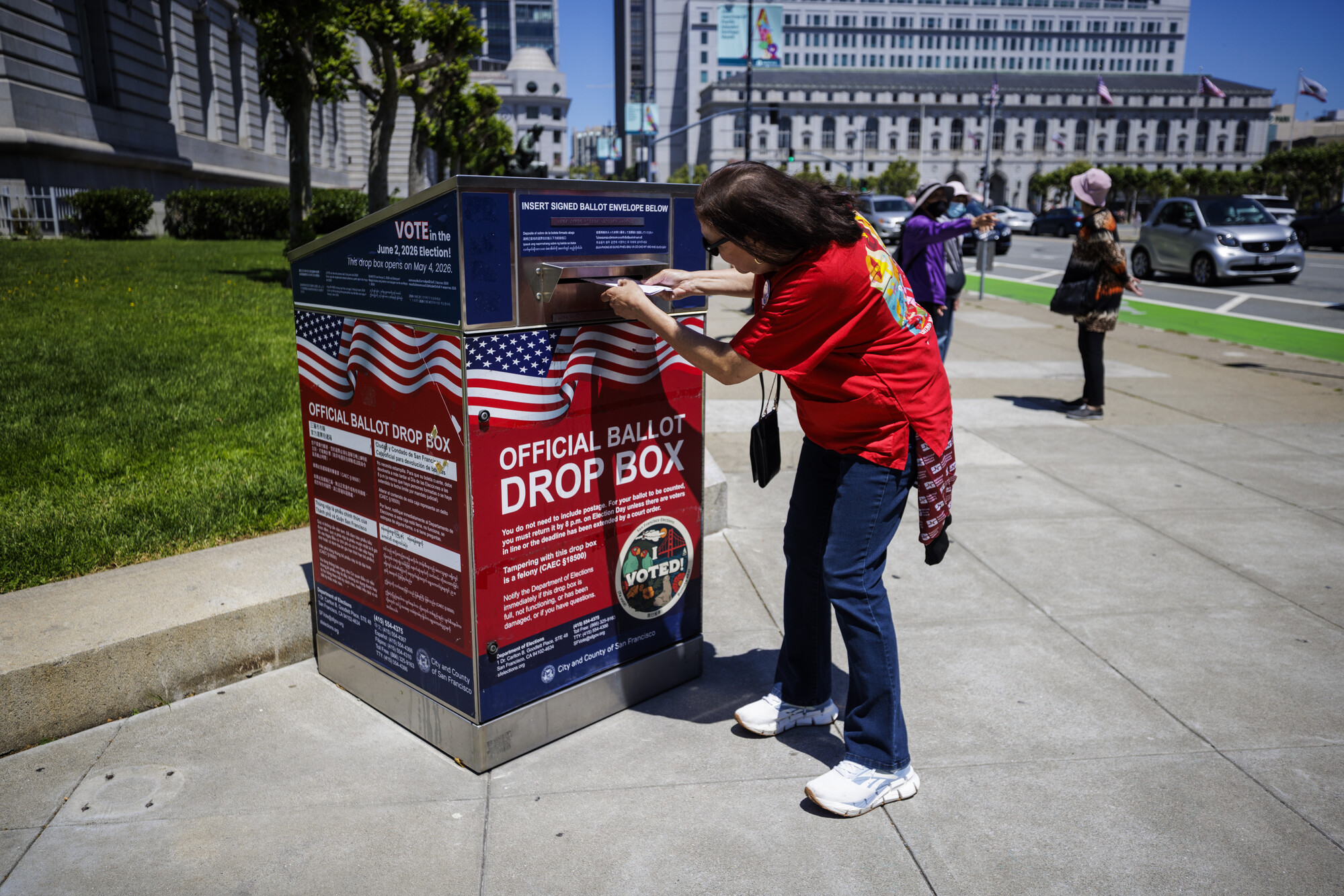
"caption": "Monica Holguin places a ballot in support of San Francisco City Supervisor and Congressional candidate Connie Chan following a get-out-the-vote rally at City Hall in San Francisco on May 15, 2026.",
"credit": "Martin do Nascimento/KQED",
"altTag": null,
"description": null,
"imgSizes": {
"thumbnail": {
"file": "https://cdn.kqed.org/wp-content/uploads/sites/10/2026/06/voter-160x107.jpg",
"width": 160,
"height": 107,
"mimeType": "image/jpeg"
},
"1536x1536": {
"file": "https://cdn.kqed.org/wp-content/uploads/sites/10/2026/06/voter-1536x1024.jpg",
"width": 1536,
"height": 1024,
"mimeType": "image/jpeg"
},
"post-thumbnail": {
"file": "https://cdn.kqed.org/wp-content/uploads/sites/10/2026/06/voter-672x372.jpg",
"width": 672,
"height": 372,
"mimeType": "image/jpeg"
},
"twentyfourteen-full-width": {
"file": "https://cdn.kqed.org/wp-content/uploads/sites/10/2026/06/voter-1038x576.jpg",
"width": 1038,
"height": 576,
"mimeType": "image/jpeg"
},
"npr-cds-wide": {
"file": "https://cdn.kqed.org/wp-content/uploads/sites/10/2026/06/voter-1200x675.jpg",
"width": 1200,
"height": 675,
"mimeType": "image/jpeg"
},
"npr-cds-square": {
"file": "https://cdn.kqed.org/wp-content/uploads/sites/10/2026/06/voter-600x600.jpg",
"width": 600,
"height": 600,
"mimeType": "image/jpeg"
},
"kqedFullSize": {
"file": "https://cdn.kqed.org/wp-content/uploads/sites/10/2026/06/voter.jpg",
"width": 1999,
"height": 1333
}
},
"isLoading": false,
"fetchFailed": false
},
"news_12070970": {
"type": "attachments",
"id": "news_12070970",
"meta": {
"index": "attachments_1716263798",
"site": "news",
"id": "12070970",
"found": true
},
"title": "260123-SIGNATUREKICKOFF00606_TV-KQED",
"publishDate": 1769210919,
"status": "inherit",
"parent": 12072392,
"modified": 1772489500,
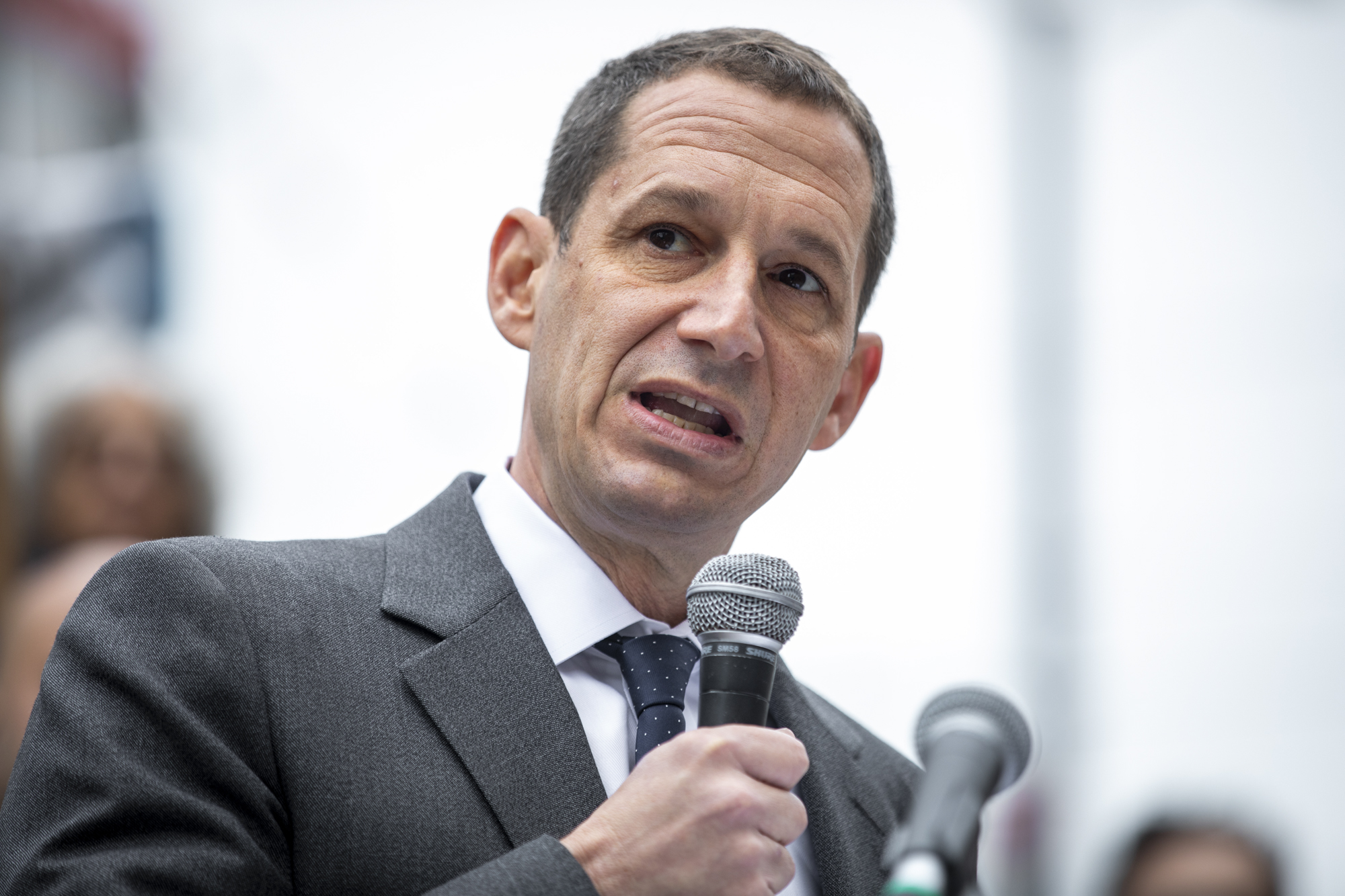
"caption": "Mayor Daniel Lurie speaks on his support for California Senate Bill 63 at a press conference at Embarcadero Plaza in San Francisco on Jan. 23, 2026.",
"credit": "Tâm Vũ/KQED",
"altTag": null,
"description": null,
"imgSizes": {
"thumbnail": {
"file": "https://cdn.kqed.org/wp-content/uploads/sites/10/2026/01/260123-SIGNATUREKICKOFF00606_TV-KQED-160x107.jpg",
"width": 160,
"height": 107,
"mimeType": "image/jpeg"
},
"1536x1536": {
"file": "https://cdn.kqed.org/wp-content/uploads/sites/10/2026/01/260123-SIGNATUREKICKOFF00606_TV-KQED-1536x1024.jpg",
"width": 1536,
"height": 1024,
"mimeType": "image/jpeg"
},
"post-thumbnail": {
"file": "https://cdn.kqed.org/wp-content/uploads/sites/10/2026/01/260123-SIGNATUREKICKOFF00606_TV-KQED-672x372.jpg",
"width": 672,
"height": 372,
"mimeType": "image/jpeg"
},
"twentyfourteen-full-width": {
"file": "https://cdn.kqed.org/wp-content/uploads/sites/10/2026/01/260123-SIGNATUREKICKOFF00606_TV-KQED-1038x576.jpg",
"width": 1038,
"height": 576,
"mimeType": "image/jpeg"
},
"npr-cds-wide": {
"file": "https://cdn.kqed.org/wp-content/uploads/sites/10/2026/01/260123-SIGNATUREKICKOFF00606_TV-KQED-1200x675.jpg",
"width": 1200,
"height": 675,
"mimeType": "image/jpeg"
},
"kqedFullSize": {
"file": "https://cdn.kqed.org/wp-content/uploads/sites/10/2026/01/260123-SIGNATUREKICKOFF00606_TV-KQED.jpg",
"width": 2000,
"height": 1333
}
},
"isLoading": false,
"fetchFailed": false
},
"news_12085638": {
"type": "attachments",
"id": "news_12085638",
"meta": {
"index": "attachments_1716263798",
"site": "news",
"id": "12085638",
"found": true
},
"title": "Camanche Reservoir",
"publishDate": 1780267034,
"status": "inherit",
"parent": 12085634,
"modified": 1780267115,
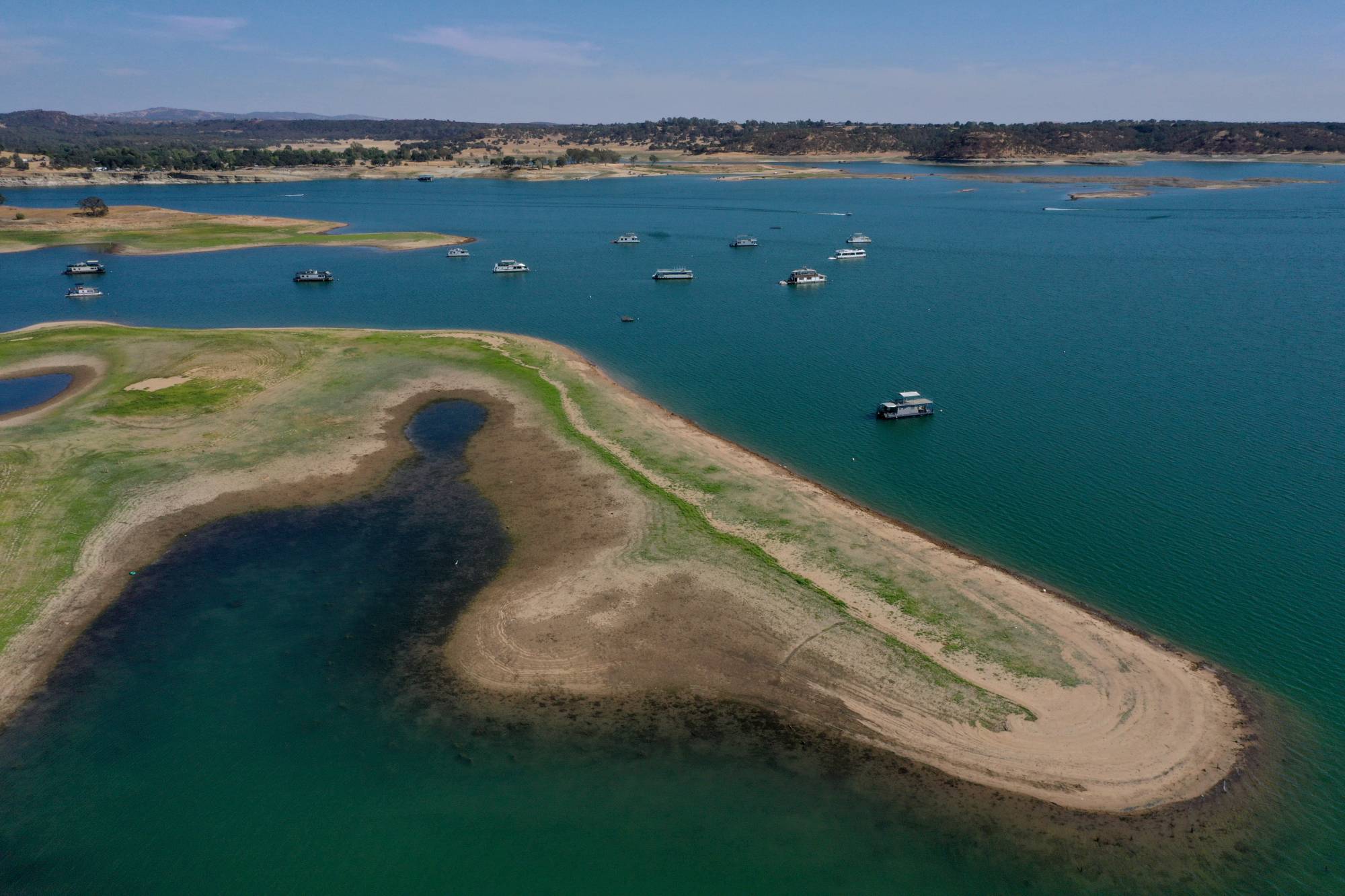
"caption": "The Camanche Reservoir at 44% capacity is seen from this drone view in Ione, California, on July 22, 2021. ",
"credit": "Jane Tyska/Digital First Media/East Bay Times via Getty Images",
"altTag": null,
"description": null,
"imgSizes": {
"medium": {
"file": "https://cdn.kqed.org/wp-content/uploads/sites/10/2026/05/GettyImages-1331194473-2000x1333.jpg",
"width": 2000,
"height": 1333,
"mimeType": "image/jpeg"
},
"large": {
"file": "https://cdn.kqed.org/wp-content/uploads/sites/10/2026/05/GettyImages-1331194473-2000x1333.jpg",
"width": 2000,
"height": 1333,
"mimeType": "image/jpeg"
},
"thumbnail": {
"file": "https://cdn.kqed.org/wp-content/uploads/sites/10/2026/05/GettyImages-1331194473-160x107.jpg",
"width": 160,
"height": 107,
"mimeType": "image/jpeg"
},
"1536x1536": {
"file": "https://cdn.kqed.org/wp-content/uploads/sites/10/2026/05/GettyImages-1331194473-1536x1024.jpg",
"width": 1536,
"height": 1024,
"mimeType": "image/jpeg"
},
"2048x2048": {
"file": "https://cdn.kqed.org/wp-content/uploads/sites/10/2026/05/GettyImages-1331194473-2048x1365.jpg",
"width": 2048,
"height": 1365,
"mimeType": "image/jpeg"
},
"post-thumbnail": {
"file": "https://cdn.kqed.org/wp-content/uploads/sites/10/2026/05/GettyImages-1331194473-672x372.jpg",
"width": 672,
"height": 372,
"mimeType": "image/jpeg"
},
"twentyfourteen-full-width": {
"file": "https://cdn.kqed.org/wp-content/uploads/sites/10/2026/05/GettyImages-1331194473-1038x576.jpg",
"width": 1038,
"height": 576,
"mimeType": "image/jpeg"
},
"full-width": {
"file": "https://cdn.kqed.org/wp-content/uploads/sites/10/2026/05/GettyImages-1331194473-2000x1333.jpg",
"width": 2000,
"height": 1333,
"mimeType": "image/jpeg"
},
"npr-cds-wide": {
"file": "https://cdn.kqed.org/wp-content/uploads/sites/10/2026/05/GettyImages-1331194473-1200x675.jpg",
"width": 1200,
"height": 675,
"mimeType": "image/jpeg"
},
"npr-cds-square": {
"file": "https://cdn.kqed.org/wp-content/uploads/sites/10/2026/05/GettyImages-1331194473-600x600.jpg",
"width": 600,
"height": 600,
"mimeType": "image/jpeg"
},
"kqedFullSize": {
"file": "https://cdn.kqed.org/wp-content/uploads/sites/10/2026/05/GettyImages-1331194473-scaled.jpg",
"width": 2560,
"height": 1707
}
},
"isLoading": false,
"fetchFailed": false
},
"news_12085618": {
"type": "attachments",
"id": "news_12085618",
"meta": {
"index": "attachments_1716263798",
"site": "news",
"id": "12085618",
"found": true
},
"title": "260530-bayviewswim01259_TV_qed",
"publishDate": 1780179112,
"status": "inherit",
"parent": 12085617,
"modified": 1780179140,
"caption": "A family boards a boat at the Bayview Splash Bash in San Francisco on May 30, 2026.",
"credit": "Tâm Vũ/KQED",
"altTag": null,
"description": null,
"imgSizes": {
"thumbnail": {
"file": "https://cdn.kqed.org/wp-content/uploads/sites/10/2026/05/260530-bayviewswim01259_TV_qed-160x107.jpg",
"width": 160,
"height": 107,
"mimeType": "image/jpeg"
},
"1536x1536": {
"file": "https://cdn.kqed.org/wp-content/uploads/sites/10/2026/05/260530-bayviewswim01259_TV_qed-1536x1024.jpg",
"width": 1536,
"height": 1024,
"mimeType": "image/jpeg"
},
"post-thumbnail": {
"file": "https://cdn.kqed.org/wp-content/uploads/sites/10/2026/05/260530-bayviewswim01259_TV_qed-672x372.jpg",
"width": 672,
"height": 372,
"mimeType": "image/jpeg"
},
"twentyfourteen-full-width": {
"file": "https://cdn.kqed.org/wp-content/uploads/sites/10/2026/05/260530-bayviewswim01259_TV_qed-1038x576.jpg",
"width": 1038,
"height": 576,
"mimeType": "image/jpeg"
},
"npr-cds-wide": {
"file": "https://cdn.kqed.org/wp-content/uploads/sites/10/2026/05/260530-bayviewswim01259_TV_qed-1200x675.jpg",
"width": 1200,
"height": 675,
"mimeType": "image/jpeg"
},
"npr-cds-square": {
"file": "https://cdn.kqed.org/wp-content/uploads/sites/10/2026/05/260530-bayviewswim01259_TV_qed-600x600.jpg",
"width": 600,
"height": 600,
"mimeType": "image/jpeg"
},
"kqedFullSize": {
"file": "https://cdn.kqed.org/wp-content/uploads/sites/10/2026/05/260530-bayviewswim01259_TV_qed.jpg",
"width": 2000,
"height": 1333
}
},
"isLoading": false,
"fetchFailed": false
},
"news_12073791": {
"type": "attachments",
"id": "news_12073791",
"meta": {
"index": "attachments_1716263798",
"site": "news",
"id": "12073791",
"found": true
},
"title": "Martinez Refining Company in Martinez on Feb. 3, 2025.",
"publishDate": 1771462997,
"status": "inherit",
"parent": 12073784,
"modified": 1771463008,
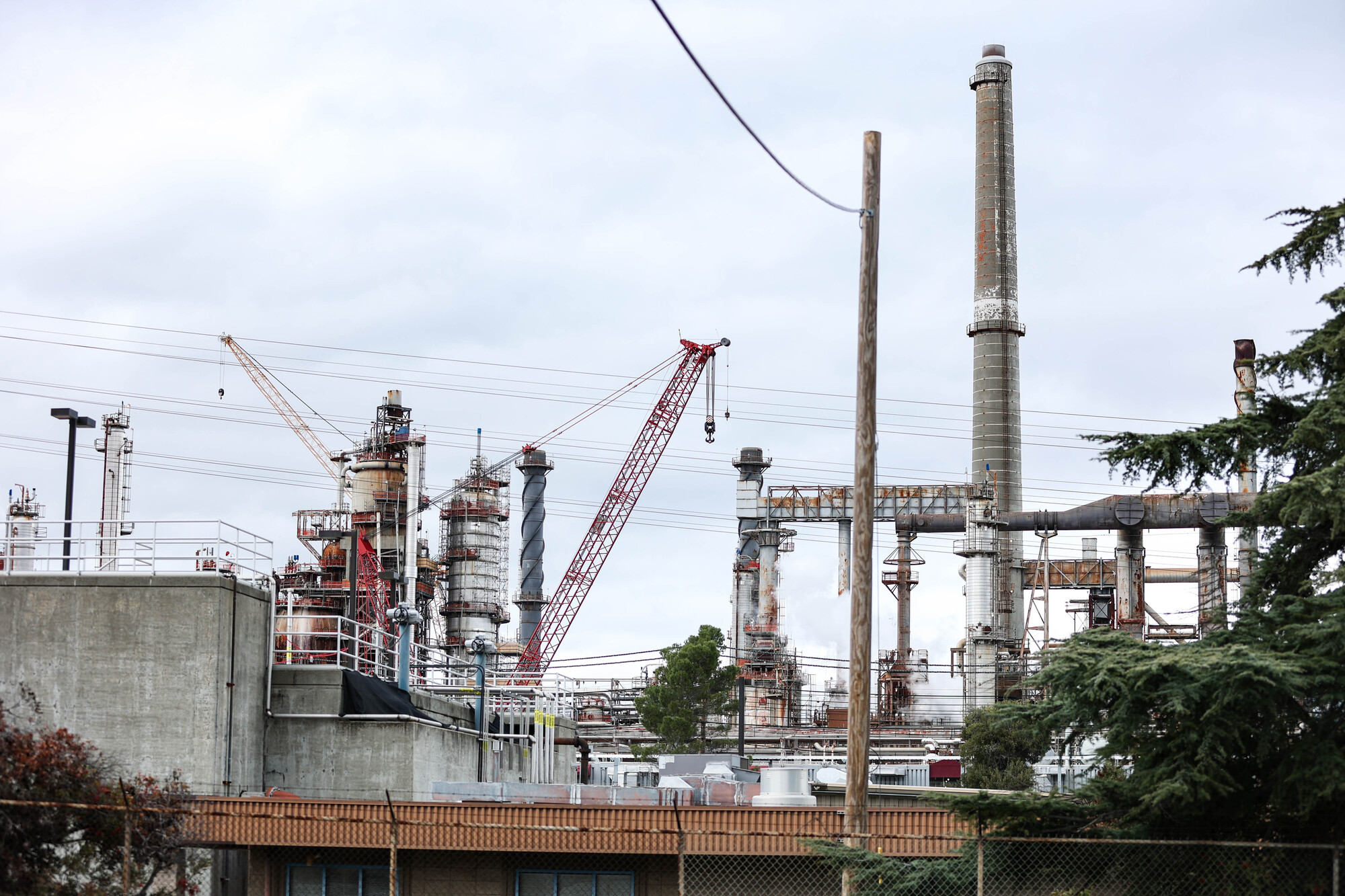
"caption": "Martinez Refining Company in Martinez on Feb. 3, 2025.",
"credit": "Gina Castro/KQED",
"altTag": null,
"description": null,
"imgSizes": {
"thumbnail": {
"file": "https://cdn.kqed.org/wp-content/uploads/sites/10/2026/02/20250203_MartinezRefineryFolo_GC-51_qed-1-160x107.jpg",
"width": 160,
"height": 107,
"mimeType": "image/jpeg"
},
"1536x1536": {
"file": "https://cdn.kqed.org/wp-content/uploads/sites/10/2026/02/20250203_MartinezRefineryFolo_GC-51_qed-1-1536x1024.jpg",
"width": 1536,
"height": 1024,
"mimeType": "image/jpeg"
},
"post-thumbnail": {
"file": "https://cdn.kqed.org/wp-content/uploads/sites/10/2026/02/20250203_MartinezRefineryFolo_GC-51_qed-1-672x372.jpg",
"width": 672,
"height": 372,
"mimeType": "image/jpeg"
},
"twentyfourteen-full-width": {
"file": "https://cdn.kqed.org/wp-content/uploads/sites/10/2026/02/20250203_MartinezRefineryFolo_GC-51_qed-1-1038x576.jpg",
"width": 1038,
"height": 576,
"mimeType": "image/jpeg"
},
"npr-cds-wide": {
"file": "https://cdn.kqed.org/wp-content/uploads/sites/10/2026/02/20250203_MartinezRefineryFolo_GC-51_qed-1-1200x675.jpg",
"width": 1200,
"height": 675,
"mimeType": "image/jpeg"
},
"kqedFullSize": {
"file": "https://cdn.kqed.org/wp-content/uploads/sites/10/2026/02/20250203_MartinezRefineryFolo_GC-51_qed-1.jpg",
"width": 2000,
"height": 1333
}
},
"isLoading": false,
"fetchFailed": false
},
"news_12085588": {
"type": "attachments",
"id": "news_12085588",
"meta": {
"index": "attachments_1716263798",
"site": "news",
"id": "12085588",
"found": true
},
"title": "260529-GGBTRIALTESTIMONY00089_TV-KQED",
"publishDate": 1780094766,
"status": "inherit",
"parent": 12089732,
"modified": 1783020771,
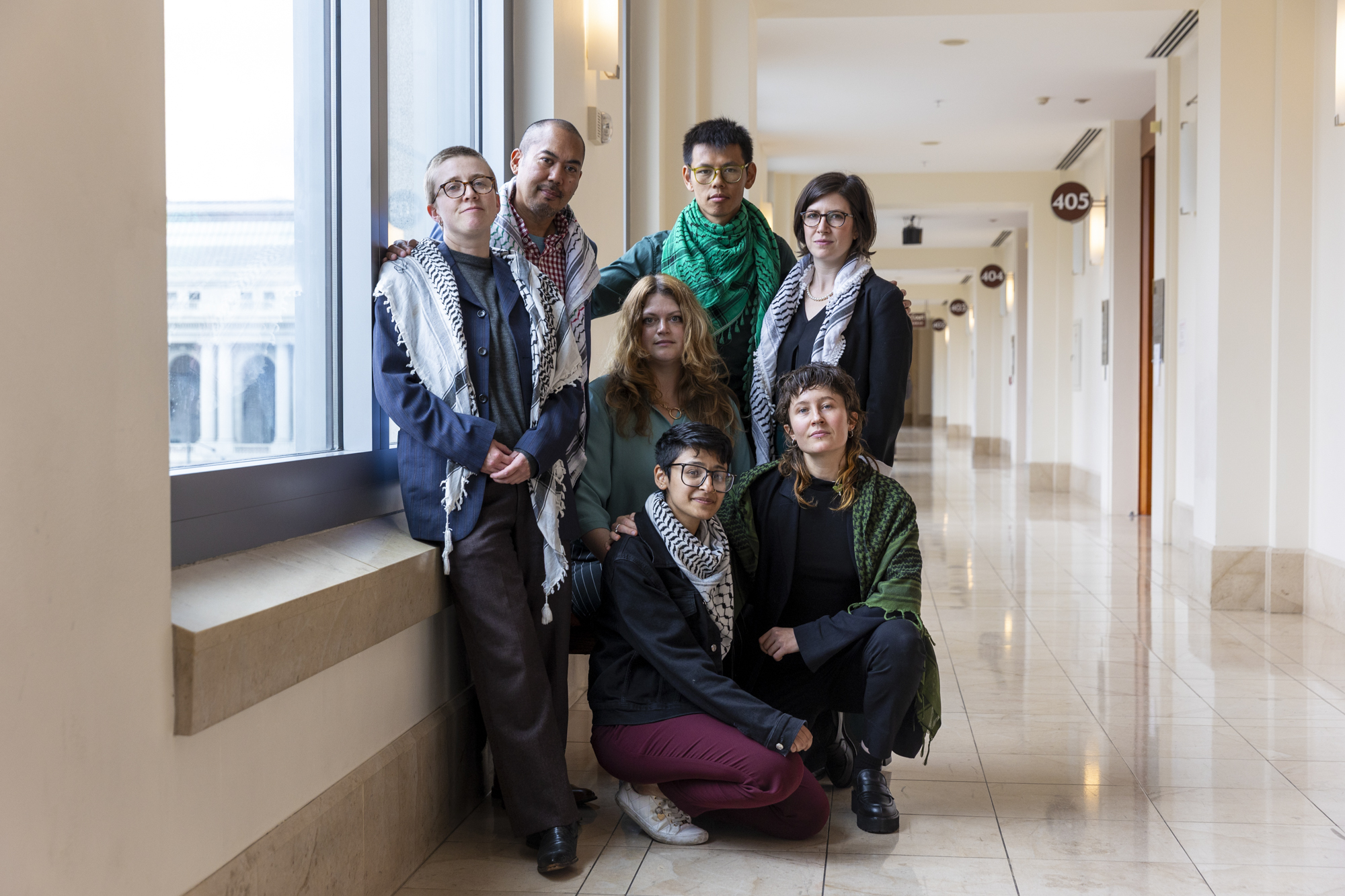
"caption": "From left, Em Tillotson, Conrad de Jesus, Sara Cantor, Rocky Chau, Sarah Ferrell, River Allen, and Bhavika Anandpura, the seven defendants on trial for blocking the Golden Gate Bridge for a pro-Palestinian protest, pose for a portrait at the San Francisco Superior Courthouse in San Francisco on May 29, 2026.",
"credit": "Tâm Vũ/KQED",
"altTag": null,
"description": null,
"imgSizes": {
"thumbnail": {
"file": "https://cdn.kqed.org/wp-content/uploads/sites/10/2026/05/260529-GGBTRIALTESTIMONY00089_TV-KQED-160x107.jpg",
"width": 160,
"height": 107,
"mimeType": "image/jpeg"
},
"1536x1536": {
"file": "https://cdn.kqed.org/wp-content/uploads/sites/10/2026/05/260529-GGBTRIALTESTIMONY00089_TV-KQED-1536x1024.jpg",
"width": 1536,
"height": 1024,
"mimeType": "image/jpeg"
},
"post-thumbnail": {
"file": "https://cdn.kqed.org/wp-content/uploads/sites/10/2026/05/260529-GGBTRIALTESTIMONY00089_TV-KQED-672x372.jpg",
"width": 672,
"height": 372,
"mimeType": "image/jpeg"
},
"twentyfourteen-full-width": {
"file": "https://cdn.kqed.org/wp-content/uploads/sites/10/2026/05/260529-GGBTRIALTESTIMONY00089_TV-KQED-1038x576.jpg",
"width": 1038,
"height": 576,
"mimeType": "image/jpeg"
},
"npr-cds-wide": {
"file": "https://cdn.kqed.org/wp-content/uploads/sites/10/2026/05/260529-GGBTRIALTESTIMONY00089_TV-KQED-1200x675.jpg",
"width": 1200,
"height": 675,
"mimeType": "image/jpeg"
},
"npr-cds-square": {
"file": "https://cdn.kqed.org/wp-content/uploads/sites/10/2026/05/260529-GGBTRIALTESTIMONY00089_TV-KQED-600x600.jpg",
"width": 600,
"height": 600,
"mimeType": "image/jpeg"
},
"kqedFullSize": {
"file": "https://cdn.kqed.org/wp-content/uploads/sites/10/2026/05/260529-GGBTRIALTESTIMONY00089_TV-KQED.jpg",
"width": 2000,
"height": 1333
}
},
"isLoading": false,
"fetchFailed": false
},
"news_12085449": {
"type": "attachments",
"id": "news_12085449",
"meta": {
"index": "attachments_1716263798",
"site": "news",
"id": "12085449",
"found": true
},
"title": "Our Climate Future: A Forum with California's Next Governor",
"publishDate": 1780010590,
"status": "inherit",
"parent": 12085443,
"modified": 1780075558,
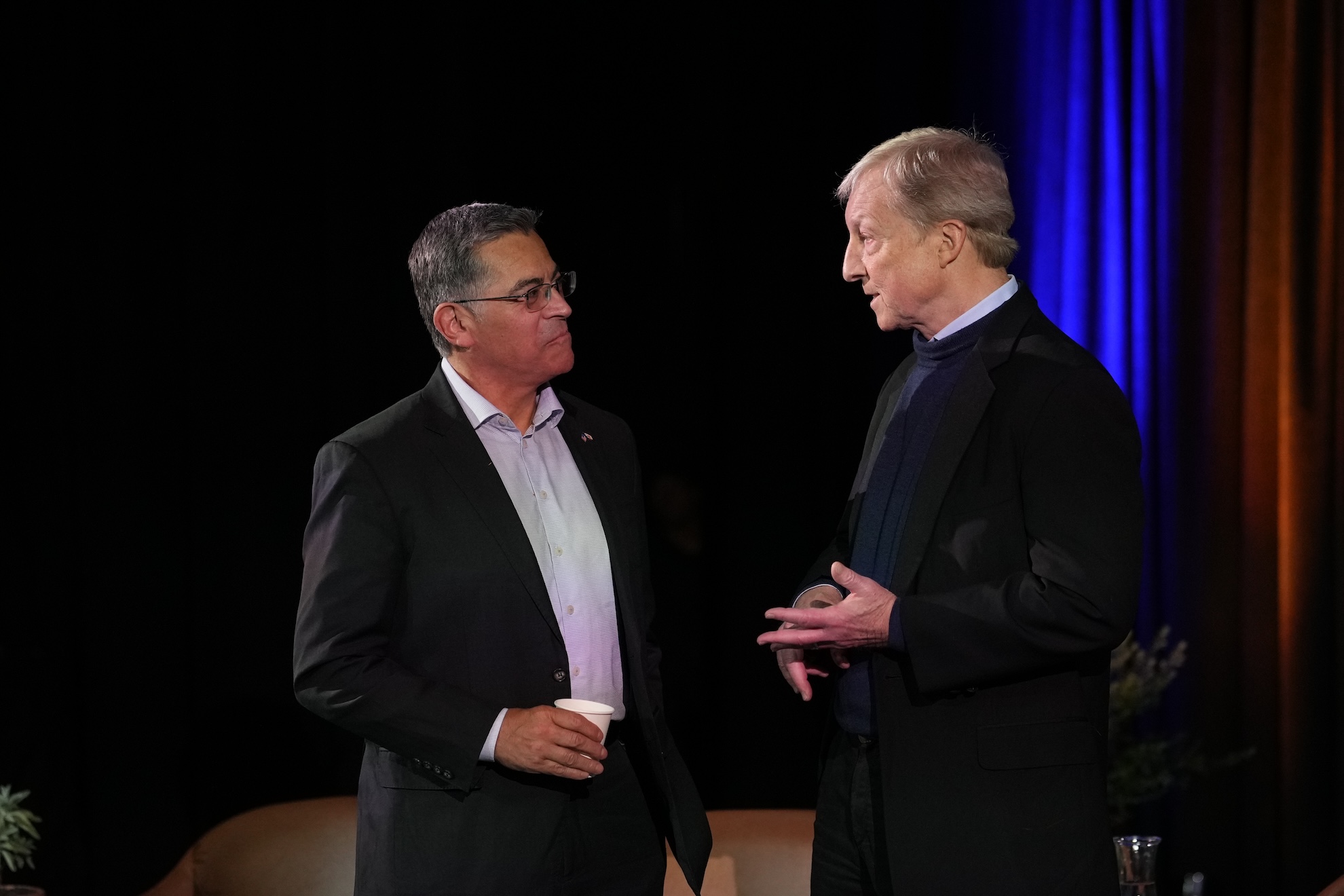
"caption": "Xavier Becerra and Tom Steyer attend \"Our Climate Future: A Forum with California's Next Governor\" on Jan. 28, 2026, in Pasadena, California.",
"credit": "Matei Horvath/Getty Images for California Environmental Voters",
"altTag": null,
"description": null,
"imgSizes": {
"thumbnail": {
"file": "https://cdn.kqed.org/wp-content/uploads/sites/10/2026/05/GettyImages-2258202243-160x107.jpg",
"width": 160,
"height": 107,
"mimeType": "image/jpeg"
},
"1536x1536": {
"file": "https://cdn.kqed.org/wp-content/uploads/sites/10/2026/05/GettyImages-2258202243-1536x1024.jpg",
"width": 1536,
"height": 1024,
"mimeType": "image/jpeg"
},
"post-thumbnail": {
"file": "https://cdn.kqed.org/wp-content/uploads/sites/10/2026/05/GettyImages-2258202243-672x372.jpg",
"width": 672,
"height": 372,
"mimeType": "image/jpeg"
},
"twentyfourteen-full-width": {
"file": "https://cdn.kqed.org/wp-content/uploads/sites/10/2026/05/GettyImages-2258202243-1038x576.jpg",
"width": 1038,
"height": 576,
"mimeType": "image/jpeg"
},
"npr-cds-wide": {
"file": "https://cdn.kqed.org/wp-content/uploads/sites/10/2026/05/GettyImages-2258202243-1200x675.jpg",
"width": 1200,
"height": 675,
"mimeType": "image/jpeg"
},
"npr-cds-square": {
"file": "https://cdn.kqed.org/wp-content/uploads/sites/10/2026/05/GettyImages-2258202243-600x600.jpg",
"width": 600,
"height": 600,
"mimeType": "image/jpeg"
},
"kqedFullSize": {
"file": "https://cdn.kqed.org/wp-content/uploads/sites/10/2026/05/GettyImages-2258202243.jpg",
"width": 1980,
"height": 1320
}
},
"isLoading": false,
"fetchFailed": false
},
"news_12085440": {
"type": "attachments",
"id": "news_12085440",
"meta": {
"index": "attachments_1716263798",
"site": "news",
"id": "12085440",
"found": true
},
"title": "Mail-in vote counting at Ballot Processing Center",
"publishDate": 1780009821,
"status": "inherit",
"parent": 12084978,
"modified": 1782773457,
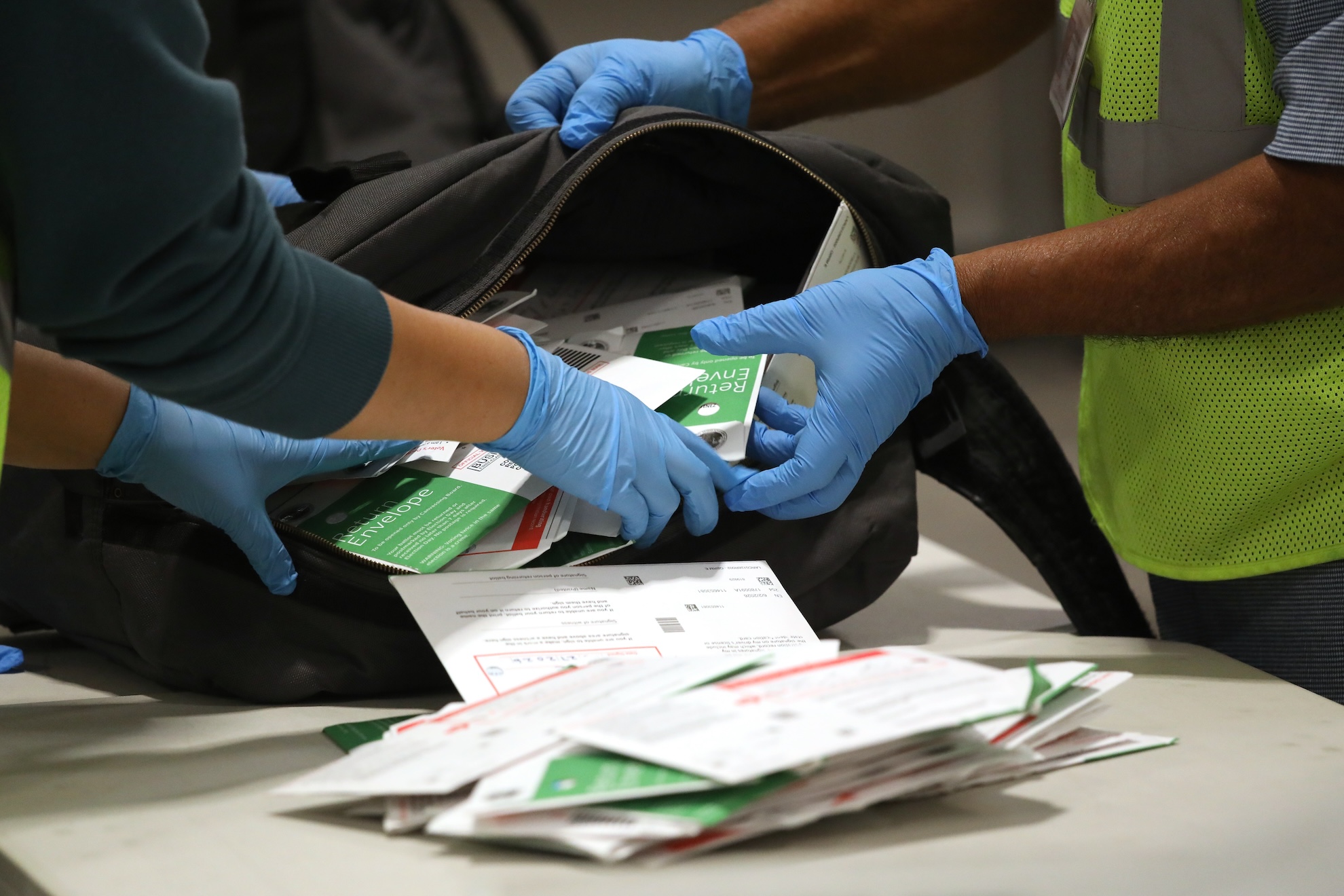
"caption": "Election workers receive vote-by-mail ballots to be tallied at the Los Angeles County Registrar-Recorder/County Clerk Ballot Processing Center on May 28, 2026. ",
"credit": "Gary Coronado/Los Angeles Times via Getty Images",
"altTag": null,
"description": null,
"imgSizes": {
"thumbnail": {
"file": "https://cdn.kqed.org/wp-content/uploads/sites/10/2026/05/GettyImages-2278677958-160x107.jpg",
"width": 160,
"height": 107,
"mimeType": "image/jpeg"
},
"1536x1536": {
"file": "https://cdn.kqed.org/wp-content/uploads/sites/10/2026/05/GettyImages-2278677958-1536x1024.jpg",
"width": 1536,
"height": 1024,
"mimeType": "image/jpeg"
},
"post-thumbnail": {
"file": "https://cdn.kqed.org/wp-content/uploads/sites/10/2026/05/GettyImages-2278677958-672x372.jpg",
"width": 672,
"height": 372,
"mimeType": "image/jpeg"
},
"twentyfourteen-full-width": {
"file": "https://cdn.kqed.org/wp-content/uploads/sites/10/2026/05/GettyImages-2278677958-1038x576.jpg",
"width": 1038,
"height": 576,
"mimeType": "image/jpeg"
},
"npr-cds-wide": {
"file": "https://cdn.kqed.org/wp-content/uploads/sites/10/2026/05/GettyImages-2278677958-1200x675.jpg",
"width": 1200,
"height": 675,
"mimeType": "image/jpeg"
},
"npr-cds-square": {
"file": "https://cdn.kqed.org/wp-content/uploads/sites/10/2026/05/GettyImages-2278677958-600x600.jpg",
"width": 600,
"height": 600,
"mimeType": "image/jpeg"
},
"kqedFullSize": {
"file": "https://cdn.kqed.org/wp-content/uploads/sites/10/2026/05/GettyImages-2278677958.jpg",
"width": 1980,
"height": 1320
}
},
"isLoading": false,
"fetchFailed": false
},
"news_12085366": {
"type": "attachments",
"id": "news_12085366",
"meta": {
"index": "attachments_1716263798",
"site": "news",
"id": "12085366",
"found": true
},
"title": "260528-Dog Search-02-KQED",
"publishDate": 1779986785,
"status": "inherit",
"parent": 0,
"modified": 1779986881,
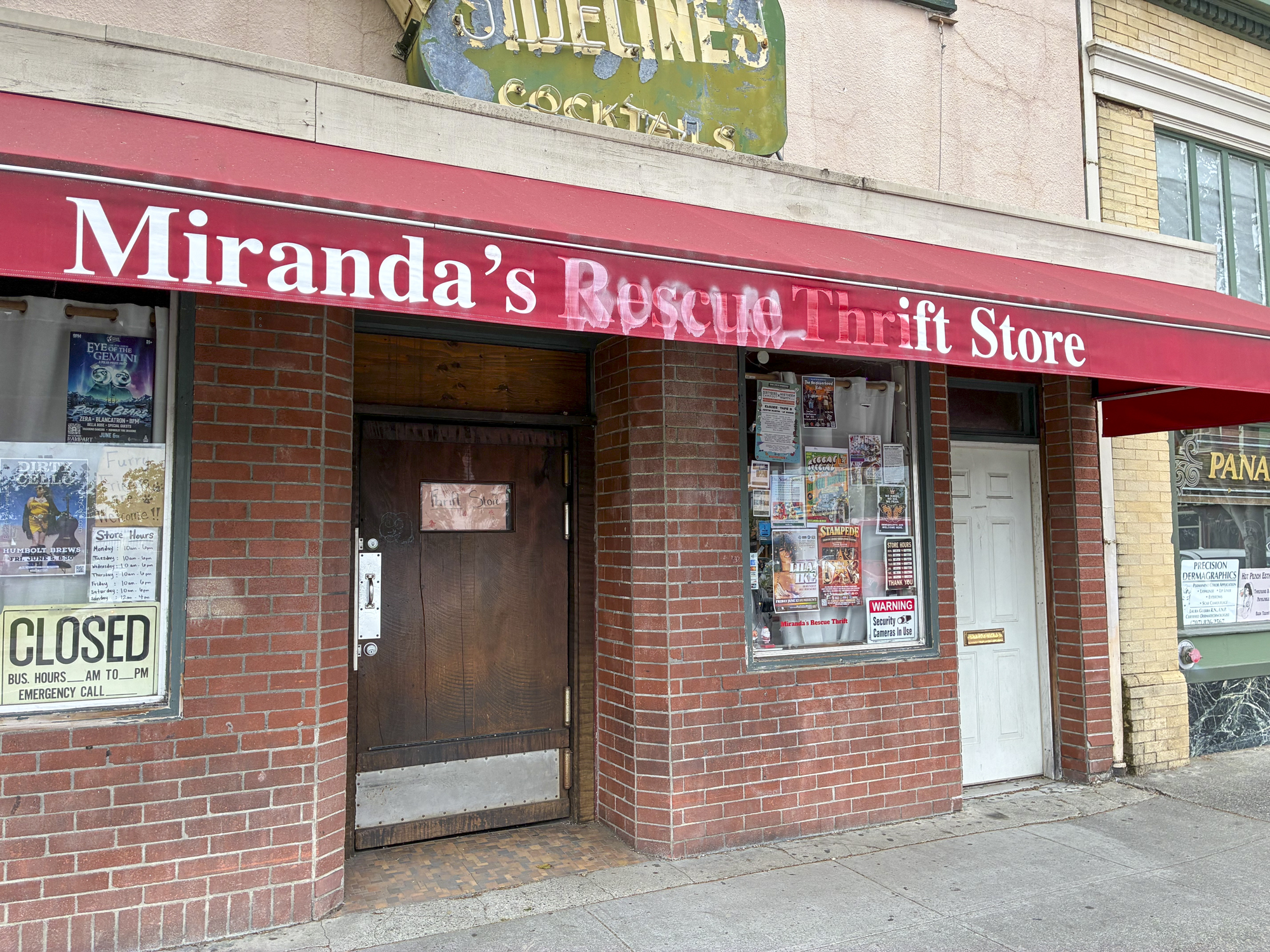
"caption": "The vandalized front entrance to Miranda’s Rescue Thrift Store in Fortuna, California. Many Bay Area animal shelters have severed ties with the Humboldt County rescue amid an investigation into allegations that dogs transferred there were improperly killed.",
"credit": "Sukey Lewis/KQED",
"altTag": null,
"description": null,
"imgSizes": {
"thumbnail": {
"file": "https://cdn.kqed.org/wp-content/uploads/sites/10/2026/05/260528-Dog-Search-02-KQED-160x120.jpg",
"width": 160,
"height": 120,
"mimeType": "image/jpeg"
},
"1536x1536": {
"file": "https://cdn.kqed.org/wp-content/uploads/sites/10/2026/05/260528-Dog-Search-02-KQED-1536x1152.jpg",
"width": 1536,
"height": 1152,
"mimeType": "image/jpeg"
},
"post-thumbnail": {
"file": "https://cdn.kqed.org/wp-content/uploads/sites/10/2026/05/260528-Dog-Search-02-KQED-672x372.jpg",
"width": 672,
"height": 372,
"mimeType": "image/jpeg"
},
"twentyfourteen-full-width": {
"file": "https://cdn.kqed.org/wp-content/uploads/sites/10/2026/05/260528-Dog-Search-02-KQED-1038x576.jpg",
"width": 1038,
"height": 576,
"mimeType": "image/jpeg"
},
"npr-cds-wide": {
"file": "https://cdn.kqed.org/wp-content/uploads/sites/10/2026/05/260528-Dog-Search-02-KQED-1200x675.jpg",
"width": 1200,
"height": 675,
"mimeType": "image/jpeg"
},
"npr-cds-square": {
"file": "https://cdn.kqed.org/wp-content/uploads/sites/10/2026/05/260528-Dog-Search-02-KQED-600x600.jpg",
"width": 600,
"height": 600,
"mimeType": "image/jpeg"
},
"kqedFullSize": {
"file": "https://cdn.kqed.org/wp-content/uploads/sites/10/2026/05/260528-Dog-Search-02-KQED.jpg",
"width": 2000,
"height": 1500
}
},
"isLoading": false,
"fetchFailed": false
},
"news_12085284": {
"type": "attachments",
"id": "news_12085284",
"meta": {
"index": "attachments_1716263798",
"site": "news",
"id": "12085284",
"found": true
},
"title": "Dangerous deer tick and small child legs in summer shoes on grass. Ixodes ricinus",
"publishDate": 1779907341,
"status": "inherit",
"parent": 12085282,
"modified": 1779907445,
"caption": "A blacklegged tick is shown. The Western blacklegged tick is the primary carrier of Lyme disease in California. ",
"credit": "Courtesy of the Bay Area Lyme Foundation",
"altTag": null,
"description": null,
"imgSizes": {
"thumbnail": {
"file": "https://cdn.kqed.org/wp-content/uploads/sites/10/2026/05/Blacklegged-tick-2_442608915-160x107.jpeg",
"width": 160,
"height": 107,
"mimeType": "image/jpeg"
},
"1536x1536": {
"file": "https://cdn.kqed.org/wp-content/uploads/sites/10/2026/05/Blacklegged-tick-2_442608915-1536x1024.jpeg",
"width": 1536,
"height": 1024,
"mimeType": "image/jpeg"
},
"post-thumbnail": {
"file": "https://cdn.kqed.org/wp-content/uploads/sites/10/2026/05/Blacklegged-tick-2_442608915-672x372.jpeg",
"width": 672,
"height": 372,
"mimeType": "image/jpeg"
},
"twentyfourteen-full-width": {
"file": "https://cdn.kqed.org/wp-content/uploads/sites/10/2026/05/Blacklegged-tick-2_442608915-1038x576.jpeg",
"width": 1038,
"height": 576,
"mimeType": "image/jpeg"
},
"npr-cds-wide": {
"file": "https://cdn.kqed.org/wp-content/uploads/sites/10/2026/05/Blacklegged-tick-2_442608915-1200x675.jpeg",
"width": 1200,
"height": 675,
"mimeType": "image/jpeg"
},
"npr-cds-square": {
"file": "https://cdn.kqed.org/wp-content/uploads/sites/10/2026/05/Blacklegged-tick-2_442608915-600x600.jpeg",
"width": 600,
"height": 600,
"mimeType": "image/jpeg"
},
"kqedFullSize": {
"file": "https://cdn.kqed.org/wp-content/uploads/sites/10/2026/05/Blacklegged-tick-2_442608915.jpeg",
"width": 1980,
"height": 1320
}
},
"isLoading": false,
"fetchFailed": false
},
"news_12081346": {
"type": "attachments",
"id": "news_12081346",
"meta": {
"index": "attachments_1716263798",
"site": "news",
"id": "12081346",
"found": true
},
"title": "Candidates For Governor Of California Debate In San Francisco",
"publishDate": 1777063219,
"status": "inherit",
"parent": 12081345,
"modified": 1777063274,
"caption": "Chad Bianco, Republican gubernatorial candidate for California, Xavier Becerra, Democratic gubernatorial candidate for California, and Steve Hilton, Republican gubernatorial candidate for California, arrive for a gubernatorial debate at KRON Studios in San Francisco on April 22, 2026. ",
"credit": "Jason Henry/Nexstar/Bloomberg",
"altTag": null,
"description": null,
"imgSizes": {
"medium": {
"file": "https://cdn.kqed.org/wp-content/uploads/sites/10/2026/04/GettyImages-2272001355-2000x1334.jpg",
"width": 2000,
"height": 1334,
"mimeType": "image/jpeg"
},
"large": {
"file": "https://cdn.kqed.org/wp-content/uploads/sites/10/2026/04/GettyImages-2272001355-2000x1334.jpg",
"width": 2000,
"height": 1334,
"mimeType": "image/jpeg"
},
"thumbnail": {
"file": "https://cdn.kqed.org/wp-content/uploads/sites/10/2026/04/GettyImages-2272001355-160x107.jpg",
"width": 160,
"height": 107,
"mimeType": "image/jpeg"
},
"1536x1536": {
"file": "https://cdn.kqed.org/wp-content/uploads/sites/10/2026/04/GettyImages-2272001355-1536x1024.jpg",
"width": 1536,
"height": 1024,
"mimeType": "image/jpeg"
},
"2048x2048": {
"file": "https://cdn.kqed.org/wp-content/uploads/sites/10/2026/04/GettyImages-2272001355-2048x1366.jpg",
"width": 2048,
"height": 1366,
"mimeType": "image/jpeg"
},
"post-thumbnail": {
"file": "https://cdn.kqed.org/wp-content/uploads/sites/10/2026/04/GettyImages-2272001355-672x372.jpg",
"width": 672,
"height": 372,
"mimeType": "image/jpeg"
},
"twentyfourteen-full-width": {
"file": "https://cdn.kqed.org/wp-content/uploads/sites/10/2026/04/GettyImages-2272001355-1038x576.jpg",
"width": 1038,
"height": 576,
"mimeType": "image/jpeg"
},
"full-width": {
"file": "https://cdn.kqed.org/wp-content/uploads/sites/10/2026/04/GettyImages-2272001355-2000x1334.jpg",
"width": 2000,
"height": 1334,
"mimeType": "image/jpeg"
},
"npr-cds-wide": {
"file": "https://cdn.kqed.org/wp-content/uploads/sites/10/2026/04/GettyImages-2272001355-1200x675.jpg",
"width": 1200,
"height": 675,
"mimeType": "image/jpeg"
},
"npr-cds-square": {
"file": "https://cdn.kqed.org/wp-content/uploads/sites/10/2026/04/GettyImages-2272001355-600x600.jpg",
"width": 600,
"height": 600,
"mimeType": "image/jpeg"
},
"kqedFullSize": {
"file": "https://cdn.kqed.org/wp-content/uploads/sites/10/2026/04/GettyImages-2272001355-scaled.jpg",
"width": 2560,
"height": 1707
}
},
"isLoading": false,
"fetchFailed": false
}
},
"audioPlayerReducer": {
"postId": "stream_live",
"isPaused": true,
"isPlaying": false,
"pfsActive": false,
"pledgeModalIsOpen": true,
"playerDrawerIsOpen": false,
"liveAudioPlayStartedAt": 0,
"liveAudioPlayContext": ""
},
"authorsReducer": {
"byline_news_12085513": {
"type": "authors",
"id": "byline_news_12085513",
"meta": {
"override": true
},
"slug": "byline_news_12085513",
"name": "Claire Morgan and Queena Kim, The California Newsroom",
"isLoading": false
},
"byline_news_12085374": {
"type": "authors",
"id": "byline_news_12085374",
"meta": {
"override": true
},
"slug": "byline_news_12085374",
"name": "Zoë Ferrigno ",
"isLoading": false
},
"gmarzorati": {
"type": "authors",
"id": "227",
"meta": {
"index": "authors_1716337520",
"id": "227",
"found": true
},
"name": "Guy Marzorati",
"firstName": "Guy",
"lastName": "Marzorati",
"slug": "gmarzorati",
"email": "gmarzorati@KQED.org",
"display_author_email": true,
"staff_mastheads": [
"news"
],
"title": "Correspondent",
"bio": "Guy Marzorati is a correspondent on KQED's California Politics and Government Desk, based in San Jose. A graduate of Santa Clara University, Guy joined KQED in 2013. He reports on state and local politics and produces KQED's digital voter guide.",
"avatar": "https://secure.gravatar.com/avatar/e7038b8dbfd55b104369b76b1cd0b9de?s=600&d=blank&r=g",
"twitter": "guymarzorati",
"facebook": null,
"instagram": null,
"linkedin": null,
"sites": [
{
"site": "",
"roles": [
"editor"
]
},
{
"site": "news",
"roles": [
"editor"
]
},
{
"site": "science",
"roles": [
"editor"
]
},
{
"site": "forum",
"roles": [
"editor"
]
},
{
"site": "elections",
"roles": [
"editor"
]
},
{
"site": "liveblog",
"roles": [
"editor"
]
}
],
"headData": {
"title": "Guy Marzorati | KQED",
"description": "Correspondent",
"ogImgSrc": "https://secure.gravatar.com/avatar/e7038b8dbfd55b104369b76b1cd0b9de?s=600&d=blank&r=g",
"twImgSrc": "https://secure.gravatar.com/avatar/e7038b8dbfd55b104369b76b1cd0b9de?s=600&d=blank&r=g"
},
"isLoading": false,
"link": "/author/gmarzorati"
},
"mlagos": {
"type": "authors",
"id": "3239",
"meta": {
"index": "authors_1716337520",
"id": "3239",
"found": true
},
"name": "Marisa Lagos",
"firstName": "Marisa",
"lastName": "Lagos",
"slug": "mlagos",
"email": "mlagos@kqed.org",
"display_author_email": false,
"staff_mastheads": [
"news"
],
"title": "KQED Contributor",
"bio": "Marisa Lagos is a correspondent for KQED’s California Politics and Government Desk and co-hosts the award-winning show and podcast, Political Breakdown. At KQED, Lagos also conducts reporting, analysis and investigations into state, local and national politics for radio, TV, online and onstage. In 2022, she and co-host, Scott Shafer, moderated the only gubernatorial debate in California. In 2020, the \u003ci>Washington Post\u003c/i> named her one of the top political journalists in California; she was nominated for a Peabody and won several other awards for her work investigating the 2017 California wildfires. She has worked at the \u003ci>San Francisco Chronicle\u003c/i>, \u003ci>San Francisco Examiner\u003c/i> and \u003ci>Los Angeles Times\u003c/i>. A UC Santa Barbara graduate, she lives in San Francisco with her two sons and husband.",
"avatar": "https://secure.gravatar.com/avatar/a261a0d3696fc066871ef96b85b5e7d2?s=600&d=blank&r=g",
"twitter": "@mlagos",
"facebook": null,
"instagram": null,
"linkedin": null,
"sites": [
{
"site": "arts",
"roles": [
"author"
]
},
{
"site": "news",
"roles": [
"editor"
]
},
{
"site": "science",
"roles": [
"editor"
]
},
{
"site": "forum",
"roles": [
"author"
]
},
{
"site": "liveblog",
"roles": [
"author"
]
}
],
"headData": {
"title": "Marisa Lagos | KQED",
"description": "KQED Contributor",
"ogImgSrc": "https://secure.gravatar.com/avatar/a261a0d3696fc066871ef96b85b5e7d2?s=600&d=blank&r=g",
"twImgSrc": "https://secure.gravatar.com/avatar/a261a0d3696fc066871ef96b85b5e7d2?s=600&d=blank&r=g"
},
"isLoading": false,
"link": "/author/mlagos"
},
"abandlamudi": {
"type": "authors",
"id": "11672",
"meta": {
"index": "authors_1716337520",
"id": "11672",
"found": true
},
"name": "Adhiti Bandlamudi",
"firstName": "Adhiti",
"lastName": "Bandlamudi",
"slug": "abandlamudi",
"email": "abandlamudi@kqed.org",
"display_author_email": false,
"staff_mastheads": [
"news"
],
"title": "KQED Housing Reporter",
"bio": "Adhiti Bandlamudi reports for KQED's Housing desk. She focuses on how housing gets built across the Bay Area. Before joining KQED in 2020, she reported for WUNC in Durham, North Carolina, WABE in Atlanta, Georgia and Capital Public Radio in Sacramento. In 2017, she was awarded a Kroc Fellowship at NPR where she reported on everything from sprinkles to the Golden State Killer's arrest. When she's not reporting, she's baking new recipes in her kitchen or watching movies with friends and family. She's originally from Georgia and has strong opinions about Great British Bake Off.",
"avatar": "https://secure.gravatar.com/avatar/868129c8b257bb99a3500e2c86a65400?s=600&d=mm&r=g",
"twitter": "oddity_adhiti",
"facebook": null,
"instagram": null,
"linkedin": null,
"sites": [
{
"site": "arts",
"roles": [
"author"
]
},
{
"site": "news",
"roles": [
"editor"
]
},
{
"site": "liveblog",
"roles": [
"author"
]
}
],
"headData": {
"title": "Adhiti Bandlamudi | KQED",
"description": "KQED Housing Reporter",
"ogImgSrc": "https://secure.gravatar.com/avatar/868129c8b257bb99a3500e2c86a65400?s=600&d=mm&r=g",
"twImgSrc": "https://secure.gravatar.com/avatar/868129c8b257bb99a3500e2c86a65400?s=600&d=mm&r=g"
},
"isLoading": false,
"link": "/author/abandlamudi"
},
"jlara": {
"type": "authors",
"id": "11761",
"meta": {
"index": "authors_1716337520",
"id": "11761",
"found": true
},
"name": "Juan Carlos Lara",
"firstName": "Juan Carlos",
"lastName": "Lara",
"slug": "jlara",
"email": "jlara@kqed.org",
"display_author_email": false,
"staff_mastheads": [],
"title": "KQED Contributor",
"bio": null,
"avatar": "https://secure.gravatar.com/avatar/19e2052b9b05657c5ff2af2121846e9c?s=600&d=blank&r=g",
"twitter": null,
"facebook": null,
"instagram": null,
"linkedin": null,
"sites": [
{
"site": "arts",
"roles": [
"editor"
]
},
{
"site": "news",
"roles": [
"editor"
]
},
{
"site": "forum",
"roles": [
"editor"
]
},
{
"site": "liveblog",
"roles": [
"contributor"
]
}
],
"headData": {
"title": "Juan Carlos Lara | KQED",
"description": "KQED Contributor",
"ogImgSrc": "https://secure.gravatar.com/avatar/19e2052b9b05657c5ff2af2121846e9c?s=600&d=blank&r=g",
"twImgSrc": "https://secure.gravatar.com/avatar/19e2052b9b05657c5ff2af2121846e9c?s=600&d=blank&r=g"
},
"isLoading": false,
"link": "/author/jlara"
},
"adahlstromeckman": {
"type": "authors",
"id": "11785",
"meta": {
"index": "authors_1716337520",
"id": "11785",
"found": true
},
"name": "Azul Dahlstrom-Eckman",
"firstName": "Azul",
"lastName": "Dahlstrom-Eckman",
"slug": "adahlstromeckman",
"email": "adahlstrom-eckman@kqed.org",
"display_author_email": true,
"staff_mastheads": [],
"title": "Reporter",
"bio": "Azul is a reporter for KQED focusing on transportation and features. He joined KQED in 2021 as an alumna of KALW's Audio Academy radio journalism training program.",
"avatar": "https://secure.gravatar.com/avatar/9cb750298435add7815a777f55bf1f46845c1386bb8452555c60a7b820b5aba3?s=600&d=blank&r=g",
"twitter": "@zuliemann",
"bluesky": "@azul415.bsky.social",
"facebook": null,
"instagram": null,
"linkedin": null,
"sites": [
{
"site": "arts",
"roles": [
"editor"
]
},
{
"site": "news",
"roles": [
"editor"
]
},
{
"site": "science",
"roles": [
"editor"
]
},
{
"site": "liveblog",
"roles": [
"author"
]
}
],
"headData": {
"title": "Azul Dahlstrom-Eckman | KQED",
"description": "Reporter",
"ogImgSrc": "https://secure.gravatar.com/avatar/9cb750298435add7815a777f55bf1f46845c1386bb8452555c60a7b820b5aba3?s=600&d=blank&r=g",
"twImgSrc": "https://secure.gravatar.com/avatar/9cb750298435add7815a777f55bf1f46845c1386bb8452555c60a7b820b5aba3?s=600&d=blank&r=g"
},
"isLoading": false,
"link": "/author/adahlstromeckman"
},
"sjohnson": {
"type": "authors",
"id": "11840",
"meta": {
"index": "authors_1716337520",
"id": "11840",
"found": true
},
"name": "Sydney Johnson",
"firstName": "Sydney",
"lastName": "Johnson",
"slug": "sjohnson",
"email": "sjohnson@kqed.org",
"display_author_email": false,
"staff_mastheads": [
"news"
],
"title": "KQED Reporter",
"bio": "Sydney Johnson is a general assignment reporter at KQED. She previously reported on public health and city government at the San Francisco Examiner, and before that, she covered statewide education policy for EdSource. Her reporting has won multiple local, state and national awards. Sydney is a graduate of the University of California, Berkeley and lives in San Francisco.",
"avatar": "https://secure.gravatar.com/avatar/97855f2719b72ad6190b7c535fe642c8?s=600&d=blank&r=g",
"twitter": "sydneyfjohnson",
"facebook": null,
"instagram": null,
"linkedin": null,
"sites": [
{
"site": "news",
"roles": [
"editor"
]
}
],
"headData": {
"title": "Sydney Johnson | KQED",
"description": "KQED Reporter",
"ogImgSrc": "https://secure.gravatar.com/avatar/97855f2719b72ad6190b7c535fe642c8?s=600&d=blank&r=g",
"twImgSrc": "https://secure.gravatar.com/avatar/97855f2719b72ad6190b7c535fe642c8?s=600&d=blank&r=g"
},
"isLoading": false,
"link": "/author/sjohnson"
},
"kdebenedetti": {
"type": "authors",
"id": "11913",
"meta": {
"index": "authors_1716337520",
"id": "11913",
"found": true
},
"name": "Katie DeBenedetti",
"firstName": "Katie",
"lastName": "DeBenedetti",
"slug": "kdebenedetti",
"email": "kdebenedetti@kqed.org",
"display_author_email": false,
"staff_mastheads": [
"news",
"science"
],
"title": "KQED Contributor",
"bio": "Katie DeBenedetti is a digital reporter covering daily news for the Express Desk. Prior to joining KQED as a culture reporting intern in January 2024, she covered education and city government for the Napa Valley Register.",
"avatar": "https://secure.gravatar.com/avatar/6e31073cb8f7e4214ab03f42771d0f45?s=600&d=blank&r=g",
"twitter": null,
"facebook": null,
"instagram": null,
"linkedin": null,
"sites": [
{
"site": "news",
"roles": [
"author"
]
},
{
"site": "science",
"roles": [
"author"
]
},
{
"site": "liveblog",
"roles": [
"author"
]
}
],
"headData": {
"title": "Katie DeBenedetti | KQED",
"description": "KQED Contributor",
"ogImgSrc": "https://secure.gravatar.com/avatar/6e31073cb8f7e4214ab03f42771d0f45?s=600&d=blank&r=g",
"twImgSrc": "https://secure.gravatar.com/avatar/6e31073cb8f7e4214ab03f42771d0f45?s=600&d=blank&r=g"
},
"isLoading": false,
"link": "/author/kdebenedetti"
},
"skennedy": {
"type": "authors",
"id": "11935",
"meta": {
"index": "authors_1716337520",
"id": "11935",
"found": true
},
"name": "Samantha Kennedy",
"firstName": "Samantha",
"lastName": "Kennedy",
"slug": "skennedy",
"email": "SKennedy@kqed.org",
"display_author_email": false,
"staff_mastheads": [],
"title": "KQED Contributor",
"bio": null,
"avatar": "https://secure.gravatar.com/avatar/adc7b14bf1e801793202a156ecc864d4ad505b0fd63162a2f3da0e5ba57222d0?s=600&d=blank&r=g",
"twitter": null,
"bluesky": null,
"facebook": null,
"instagram": null,
"linkedin": null,
"sites": [
{
"site": "arts",
"roles": [
"author"
]
},
{
"site": "news",
"roles": [
"editor"
]
},
{
"site": "science",
"roles": [
"editor"
]
}
],
"headData": {
"title": "Samantha Kennedy | KQED",
"description": "KQED Contributor",
"ogImgSrc": "https://secure.gravatar.com/avatar/adc7b14bf1e801793202a156ecc864d4ad505b0fd63162a2f3da0e5ba57222d0?s=600&d=blank&r=g",
"twImgSrc": "https://secure.gravatar.com/avatar/adc7b14bf1e801793202a156ecc864d4ad505b0fd63162a2f3da0e5ba57222d0?s=600&d=blank&r=g"
},
"isLoading": false,
"link": "/author/skennedy"
},
"sarahwright": {
"type": "authors",
"id": "11956",
"meta": {
"index": "authors_1716337520",
"id": "11956",
"found": true
},
"name": "Sarah Wright",
"firstName": "Sarah",
"lastName": "Wright",
"slug": "sarahwright",
"email": "swright@kqed.org",
"display_author_email": true,
"staff_mastheads": [],
"title": "Outdoors Engagement Reporter",
"bio": "Sarah Wright is KQED's Outdoors Engagement Reporter. Originally from Lake Tahoe, she completed a thru-hike of the Pacific Crest Trail in 2019 and was a U.S. Fulbright Program grantee to Argentina in 2023. Her journalism has appeared in The Guardian, The San Francisco Standard, The Palo Alto Weekly and the Half Moon Bay Review.",
"avatar": "https://secure.gravatar.com/avatar/c161a3d6441865cba25e6db4fa561099ad665799e9432e34da2b84d7e371524c?s=600&d=blank&r=g",
"twitter": null,
"bluesky": null,
"facebook": null,
"instagram": null,
"linkedin": null,
"sites": [
{
"site": "arts",
"roles": [
"editor"
]
},
{
"site": "news",
"roles": [
"editor"
]
},
{
"site": "science",
"roles": [
"contributor",
"author"
]
},
{
"site": "forum",
"roles": [
"editor"
]
}
],
"headData": {
"title": "Sarah Wright | KQED",
"description": "Outdoors Engagement Reporter",
"ogImgSrc": "https://secure.gravatar.com/avatar/c161a3d6441865cba25e6db4fa561099ad665799e9432e34da2b84d7e371524c?s=600&d=blank&r=g",
"twImgSrc": "https://secure.gravatar.com/avatar/c161a3d6441865cba25e6db4fa561099ad665799e9432e34da2b84d7e371524c?s=600&d=blank&r=g"
},
"isLoading": false,
"link": "/author/sarahwright"
}
},
"pagesReducer": {
"news_category_local": {
"type": "terms",
"id": "news_28250",
"meta": {
"index": "terms_1716263798",
"site": "news",
"id": "28250",
"score": 12.939732
},
"featImg": null,
"name": "Local",
"description": null,
"taxonomy": "category",
"headData": {
"twImgId": null,
"twTitle": null,
"ogTitle": null,
"ogImgId": null,
"twDescription": null,
"description": null,
"title": "Local Archives | KQED News",
"ogDescription": null
},
"ttid": 28267,
"slug": "local",
"isLoading": false,
"title": "Local",
"pageMeta": {
"site": "news",
"WpPageTemplate": "page-topic-editorial",
"currentPage": 32
},
"blocks": [
{
"blockName": "kqed/post-list",
"attrs": {
"layout": "cardArticle2",
"query": "posts/news?category=local",
"seeMore": false,
"paginated": true,
"page": 32
}
},
{
"blockName": "kqed/ad"
}
]
}
},
"pfsSessionReducer": {},
"postsReducer": {
"stream_live": {
"type": "live",
"id": "stream_live",
"audioUrl": "https://streams.kqed.org/kqedradio",
"title": "Live Stream",
"excerpt": "Live Stream information currently unavailable.",
"link": "/radio",
"featImg": "",
"label": {
"name": "KQED Live",
"link": "/"
}
},
"stream_kqedNewscast": {
"type": "posts",
"id": "stream_kqedNewscast",
"audioUrl": "https://www.kqed.org/.stream/anon/radio/RDnews/newscast.mp3?_=1",
"title": "KQED Newscast",
"featImg": "",
"label": {
"name": "88.5 FM",
"link": "/"
}
},
"news_12085683": {
"type": "posts",
"id": "news_12085683",
"meta": {
"index": "posts_1716263798",
"site": "news",
"id": "12085683",
"score": null,
"sort": [
1780422346000
]
},
"guestAuthors": [],
"slug": "zero-credibility-major-clipper-outage-caused-by-cubics-failure-to-pay-att-bill",
"title": "‘Zero Credibility’: Major Clipper Outage Caused by Cubic’s Failure to Pay AT&T Bill",
"publishDate": 1780422346,
"format": "standard",
"headTitle": "‘Zero Credibility’: Major Clipper Outage Caused by Cubic’s Failure to Pay AT&T Bill | KQED",
"labelTerm": {
"site": "news"
},
"content": "\u003cp>Frustration with Cubic Transportation Systems bubbled over at Monday’s meeting of the Clipper Executive Board, after the fare collection company revealed that a 27-hour outage that brought down \u003ca href=\"https://www.kqed.org/news/tag/bart\">BART\u003c/a>’s ticket vending machines and fare gates last month was caused by the company failing to pay its AT&T bill.\u003c/p>\n\u003cp>On May 18, Cubic and BART discovered a network outage affecting all of the transit agency’s Clipper readers, leaving customers unable to purchase or add value to their cards at BART vending machines and delaying transactions at BART’s fare gates, according to a staff memo.\u003c/p>\n\u003cp>The outage was caused by an AT&T network circuit that works between BART’s data center and Cubic’s ceasing to work, said Lalit Singh, chief operations officer at Cubic.\u003c/p>\n\u003cp>[ad fullwidth]\u003c/p>\n\u003cp>“That’s when we figured out that we have multiple accounts with AT&T. On one of the accounts, the payments were not made, and we couldn’t find where the circuits, which are in support of the BART system, were because they were not in our account system,” Singh said.\u003c/p>\n\u003cp>The admission brought a strong admonishment from BART General Manager Robert Powers.\u003c/p>\n\u003cp>”Cubic not paying their bill? Are you kidding me? That’s ridiculous. BART is so done with Cubic right now. You have zero credibility, Cubic. Zero,” Powers said.\u003c/p>\n\u003cfigure id=\"attachment_12046682\" class=\"wp-caption aligncenter\" style=\"max-width: 2000px\">\u003cimg loading=\"lazy\" decoding=\"async\" class=\"size-full wp-image-12046682\" src=\"https://cdn.kqed.org/wp-content/uploads/sites/10/2025/07/20241204-BART-JY-024_qed.jpg\" alt=\"\" width=\"2000\" height=\"1333\" srcset=\"https://cdn.kqed.org/wp-content/uploads/sites/10/2025/07/20241204-BART-JY-024_qed.jpg 2000w, https://cdn.kqed.org/wp-content/uploads/sites/10/2025/07/20241204-BART-JY-024_qed-160x107.jpg 160w, https://cdn.kqed.org/wp-content/uploads/sites/10/2025/07/20241204-BART-JY-024_qed-1536x1024.jpg 1536w\" sizes=\"auto, (max-width: 2000px) 100vw, 2000px\">\u003cfigcaption class=\"wp-caption-text\">Passengers tag their Clipper cards at Montgomery BART Station in San Francisco on Dec. 4, 2024. \u003ccite>(Juliana Yamada/KQED)\u003c/cite>\u003c/figcaption>\u003c/figure>\n\u003cp>The news came as Cubic missed a self-imposed target date of May 30 to resolve critical issues with a long-awaited upgrade to the fare payment system, known as next-generation Clipper or Clipper 2.0. Nearly six months after its launch date, the upgrade continues to cause problems for riders and transit agencies alike, with agencies reporting inconsistencies with financial reconciliation, fare inspection devices and customer service software, to name a few.\u003c/p>\n\u003cp>With frustration growing, Metropolitan Transportation Commission Executive Director Andrew Fremier announced Monday that the commission was preparing for a closed-session meeting later this month to “discuss contractual remedies.”\u003c/p>\n\u003cp>While the program has been riddled with setbacks, Fremier did note some of its accomplishments. Since Dec. 10, 1.7 million Clipper cards have been converted to Clipper 2.0, and 45% of Clipper fares are paid with Clipper 2.0 accounts, Fremier said.\u003c/p>\n\u003cp>But the depth of issues with Clipper has so far prevented Cubic from completing bulk upgrades of accounts to Clipper 2.0, instead resorting to addressing issues with the new system on a case-by-case basis. Cubic had previously identified May 30 as the target date for beginning bulk migrations, but was unable to realize that due to delays.[aside postID=news_12078144 hero='https://cdn.kqed.org/wp-content/uploads/sites/10/2026/03/Clipper2.0Getty.jpg']“Even just this morning, there was another back-office database issue that impacted Clipper sales channels for approximately one hour before Cubic restored operations,” said Angus Davol, assistant director of Clipper development and budget.\u003c/p>\n\u003cp>On Monday, the board also approved a 2-year, $124 million budget funding Clipper operations, which carries increased costs due to the Clipper 2.0 rollout requiring additional customer service center staff and the need to keep the prior version of Clipper running longer than expected.\u003c/p>\n\u003cp>Oakland resident Bryan Culbertson implored the board to sever ties with Cubic during public comment.\u003c/p>\n\u003cp>“ So that we have a future where we’re not having these meetings over and over and over again of Cubic failing transit riders,” Culbertson said.\u003c/p>\n\u003cp>Fremier said the Metropolitan Transportation Commission is also planning an after-action review to “learn more about the factors that have contributed to these challenges.”\u003c/p>\n\u003cp>Representatives from transit agencies also stressed the need to resolve issues with financial reconciliation promptly, as the end of the fiscal year for many agencies nears.\u003c/p>\n\u003cp>“ Cubic is impacting BART’s ability to provide high-quality public transportation, and that’s a problem. My board members are saying, ‘How much longer are you gonna take this?’” Powers said, adding that “BART engineering is looking at what my options are.”\u003c/p>\n\u003cp>Due to an unsuccessful attempt at fixing critical issues last weekend, Cubic’s target date for resolving major problems with Clipper 2.0 now stretches into the end of this month, at least.\u003c/p>\n\u003cp>\u003c/p>\n",
"blocks": [],
"excerpt": "A 27-hour Clipper outage last month brought down BART ticket vending machines and caused delays at fare gates. ",
"status": "publish",
"parent": 0,
"modified": 1780437721,
"stats": {
"hasAudio": false,
"hasVideo": false,
"hasChartOrMap": false,
"iframeSrcs": [],
"hasGoogleForm": false,
"hasGallery": false,
"hasHearkenModule": false,
"hasPolis": false,
"paragraphCount": 19,
"wordCount": 745
},
"headData": {
"title": "‘Zero Credibility’: Major Clipper Outage Caused by Cubic’s Failure to Pay AT&T Bill | KQED",
"description": "A 27-hour Clipper outage last month brought down BART ticket vending machines and caused delays at fare gates. ",
"ogTitle": "",
"ogDescription": "",
"ogImgId": "",
"twTitle": "",
"twDescription": "",
"twImgId": "",
"schema": {
"@context": "https://schema.org",
"@type": "NewsArticle",
"headline": "‘Zero Credibility’: Major Clipper Outage Caused by Cubic’s Failure to Pay AT&T Bill",
"datePublished": "2026-06-02T10:45:46-07:00",
"dateModified": "2026-06-02T15:02:01-07:00",
"image": "https://cdn.kqed.org/wp-content/uploads/2020/02/KQED-OG-Image@1x.png",
"isAccessibleForFree": "True",
"publisher": {
"@type": "NewsMediaOrganization",
"@id": "https://www.kqed.org/#organization",
"name": "KQED",
"logo": "https://cdn.kqed.org/wp-content/uploads/2020/02/KQED-OG-Image@1x.png",
"url": "https://www.kqed.org",
"sameAs": [
"https://www.facebook.com/KQED",
"https://twitter.com/KQED",
"https://www.instagram.com/kqed/",
"https://www.tiktok.com/@kqedofficial",
"https://www.linkedin.com/company/kqed",
"https://www.youtube.com/channel/UCeC0IOo7i1P_61zVUWbJ4nw"
]
}
}
},
"primaryCategory": {
"termId": 1397,
"slug": "transportation",
"name": "Transportation"
},
"sticky": false,
"nprStoryId": "kqed-12085683",
"templateType": "standard",
"featuredImageType": "standard",
"excludeFromSiteSearch": "Include",
"articleAge": "0",
"path": "/news/12085683/zero-credibility-major-clipper-outage-caused-by-cubics-failure-to-pay-att-bill",
"audioTrackLength": null,
"parsedContent": [
{
"type": "contentString",
"content": "\u003cdiv class=\"post-body\">\u003cp>\u003cp>Frustration with Cubic Transportation Systems bubbled over at Monday’s meeting of the Clipper Executive Board, after the fare collection company revealed that a 27-hour outage that brought down \u003ca href=\"https://www.kqed.org/news/tag/bart\">BART\u003c/a>’s ticket vending machines and fare gates last month was caused by the company failing to pay its AT&T bill.\u003c/p>\n\u003cp>On May 18, Cubic and BART discovered a network outage affecting all of the transit agency’s Clipper readers, leaving customers unable to purchase or add value to their cards at BART vending machines and delaying transactions at BART’s fare gates, according to a staff memo.\u003c/p>\n\u003cp>The outage was caused by an AT&T network circuit that works between BART’s data center and Cubic’s ceasing to work, said Lalit Singh, chief operations officer at Cubic.\u003c/p>\n\u003cp>\u003c/p>\u003c/div>",
"attributes": {
"named": {},
"numeric": []
}
},
{
"type": "component",
"content": "",
"name": "ad",
"attributes": {
"named": {
"label": "fullwidth"
},
"numeric": [
"fullwidth"
]
}
},
{
"type": "contentString",
"content": "\u003cdiv class=\"post-body\">\u003cp>\u003c/p>\n\u003cp>“That’s when we figured out that we have multiple accounts with AT&T. On one of the accounts, the payments were not made, and we couldn’t find where the circuits, which are in support of the BART system, were because they were not in our account system,” Singh said.\u003c/p>\n\u003cp>The admission brought a strong admonishment from BART General Manager Robert Powers.\u003c/p>\n\u003cp>”Cubic not paying their bill? Are you kidding me? That’s ridiculous. BART is so done with Cubic right now. You have zero credibility, Cubic. Zero,” Powers said.\u003c/p>\n\u003cfigure id=\"attachment_12046682\" class=\"wp-caption aligncenter\" style=\"max-width: 2000px\">\u003cimg loading=\"lazy\" decoding=\"async\" class=\"size-full wp-image-12046682\" src=\"https://cdn.kqed.org/wp-content/uploads/sites/10/2025/07/20241204-BART-JY-024_qed.jpg\" alt=\"\" width=\"2000\" height=\"1333\" srcset=\"https://cdn.kqed.org/wp-content/uploads/sites/10/2025/07/20241204-BART-JY-024_qed.jpg 2000w, https://cdn.kqed.org/wp-content/uploads/sites/10/2025/07/20241204-BART-JY-024_qed-160x107.jpg 160w, https://cdn.kqed.org/wp-content/uploads/sites/10/2025/07/20241204-BART-JY-024_qed-1536x1024.jpg 1536w\" sizes=\"auto, (max-width: 2000px) 100vw, 2000px\">\u003cfigcaption class=\"wp-caption-text\">Passengers tag their Clipper cards at Montgomery BART Station in San Francisco on Dec. 4, 2024. \u003ccite>(Juliana Yamada/KQED)\u003c/cite>\u003c/figcaption>\u003c/figure>\n\u003cp>The news came as Cubic missed a self-imposed target date of May 30 to resolve critical issues with a long-awaited upgrade to the fare payment system, known as next-generation Clipper or Clipper 2.0. Nearly six months after its launch date, the upgrade continues to cause problems for riders and transit agencies alike, with agencies reporting inconsistencies with financial reconciliation, fare inspection devices and customer service software, to name a few.\u003c/p>\n\u003cp>With frustration growing, Metropolitan Transportation Commission Executive Director Andrew Fremier announced Monday that the commission was preparing for a closed-session meeting later this month to “discuss contractual remedies.”\u003c/p>\n\u003cp>While the program has been riddled with setbacks, Fremier did note some of its accomplishments. Since Dec. 10, 1.7 million Clipper cards have been converted to Clipper 2.0, and 45% of Clipper fares are paid with Clipper 2.0 accounts, Fremier said.\u003c/p>\n\u003cp>But the depth of issues with Clipper has so far prevented Cubic from completing bulk upgrades of accounts to Clipper 2.0, instead resorting to addressing issues with the new system on a case-by-case basis. Cubic had previously identified May 30 as the target date for beginning bulk migrations, but was unable to realize that due to delays.\u003c/p>\u003c/div>",
"attributes": {
"named": {},
"numeric": []
}
},
{
"type": "component",
"content": "",
"name": "aside",
"attributes": {
"named": {
"postid": "news_12078144",
"hero": "https://cdn.kqed.org/wp-content/uploads/sites/10/2026/03/Clipper2.0Getty.jpg",
"label": ""
},
"numeric": []
}
},
{
"type": "contentString",
"content": "\u003cdiv class=\"post-body\">\u003cp>“Even just this morning, there was another back-office database issue that impacted Clipper sales channels for approximately one hour before Cubic restored operations,” said Angus Davol, assistant director of Clipper development and budget.\u003c/p>\n\u003cp>On Monday, the board also approved a 2-year, $124 million budget funding Clipper operations, which carries increased costs due to the Clipper 2.0 rollout requiring additional customer service center staff and the need to keep the prior version of Clipper running longer than expected.\u003c/p>\n\u003cp>Oakland resident Bryan Culbertson implored the board to sever ties with Cubic during public comment.\u003c/p>\n\u003cp>“ So that we have a future where we’re not having these meetings over and over and over again of Cubic failing transit riders,” Culbertson said.\u003c/p>\n\u003cp>Fremier said the Metropolitan Transportation Commission is also planning an after-action review to “learn more about the factors that have contributed to these challenges.”\u003c/p>\n\u003cp>Representatives from transit agencies also stressed the need to resolve issues with financial reconciliation promptly, as the end of the fiscal year for many agencies nears.\u003c/p>\n\u003cp>“ Cubic is impacting BART’s ability to provide high-quality public transportation, and that’s a problem. My board members are saying, ‘How much longer are you gonna take this?’” Powers said, adding that “BART engineering is looking at what my options are.”\u003c/p>\n\u003cp>Due to an unsuccessful attempt at fixing critical issues last weekend, Cubic’s target date for resolving major problems with Clipper 2.0 now stretches into the end of this month, at least.\u003c/p>\n\u003cp>\u003c/p>\n\u003c/div>\u003c/p>",
"attributes": {
"named": {},
"numeric": []
}
}
],
"link": "/news/12085683/zero-credibility-major-clipper-outage-caused-by-cubics-failure-to-pay-att-bill",
"authors": [
"11785"
],
"categories": [
"news_28250",
"news_8",
"news_1397"
],
"tags": [
"news_269",
"news_31530",
"news_1386",
"news_20517"
],
"featImg": "news_12085702",
"label": "news"
},
"news_12085513": {
"type": "posts",
"id": "news_12085513",
"meta": {
"index": "posts_1716263798",
"site": "news",
"id": "12085513",
"score": null,
"sort": [
1780401630000
]
},
"guestAuthors": [],
"slug": "california-primary-2026-key-congressional-races-to-watch-today",
"title": "California Primary 2026: Key Congressional Races to Watch on Election Day",
"publishDate": 1780401630,
"format": "standard",
"headTitle": "California Primary 2026: Key Congressional Races to Watch on Election Day | KQED",
"labelTerm": {},
"content": "\u003cp>It’s Primary \u003ca href=\"https://www.kqed.org/voterguide\">Election Day\u003c/a> in California. Polls are open between 7 a.m. and 8 p.m., and hundreds of thousands of Californians are expected to cast — or mail in — their votes in a host of federal, state and local races.\u003c/p>\n\u003cp>Unlike ordinary primaries, which Californians often approach with a shrug, this election has all the makings of a Trump-era dogfight. It’s the first election California has seen since approving \u003ca href=\"https://www.kqed.org/news/12062781/proposition-50-passes-in-california-boosting-democrats-in-fight-for-us-house-control\">Proposition 50\u003c/a> last year, which redrew U.S. congressional districts to favor Democrats and allow voters to flip up to five seats currently held by Republicans.\u003c/p>\n\u003cp>Republicans currently control both chambers of Congress, but by small margins — if they lose two House seats, Democrats will reclaim power in at least one chamber of government.\u003c/p>\n\u003cp>[ad fullwidth]\u003c/p>\n\u003cp>California uses a top-two primary system, in which the two candidates with the most votes — regardless of party preference — proceed to a runoff race in November’s general election.\u003c/p>\n\u003cp>NPR member stations across California have been tracking these changes to the state’s congressional map, the candidates and the issues in their communities.\u003c/p>\n\u003ch2>Congressional District 48\u003c/h2>\n\u003cp>Republican Rep. Darrell Issa has represented the San Diego area in Congress for about a quarter of a century. Democrats have long dreamed of ousting Issa, and Proposition 50 may have given Democrats the edge they’ve long needed.\u003c/p>\n\u003cp>With the passage of the controversial measure, Issa’s reelection race flipped from a double-digit Republican advantage to a 10-point lead for Democrats. In March, Issa announced he wasn’t seeking reelection.\u003c/p>\n\u003cfigure id=\"attachment_12056383\" class=\"wp-caption aligncenter\" style=\"max-width: 2000px\">\u003cimg loading=\"lazy\" decoding=\"async\" class=\"size-full wp-image-12056383\" src=\"https://cdn.kqed.org/wp-content/uploads/sites/10/2025/09/Newsom-Gerry_CalMatters.jpg\" alt=\"\" width=\"2000\" height=\"1333\" srcset=\"https://cdn.kqed.org/wp-content/uploads/sites/10/2025/09/Newsom-Gerry_CalMatters.jpg 2000w, https://cdn.kqed.org/wp-content/uploads/sites/10/2025/09/Newsom-Gerry_CalMatters-160x107.jpg 160w, https://cdn.kqed.org/wp-content/uploads/sites/10/2025/09/Newsom-Gerry_CalMatters-1536x1024.jpg 1536w\" sizes=\"auto, (max-width: 2000px) 100vw, 2000px\">\u003cfigcaption class=\"wp-caption-text\">U.S. Rep. Darrell Issa speaks to media outside of a House Republican meeting at the U.S. Capitol in Washington, D.C. on Sept. 14, 2023. \u003ccite>(Graeme Sloan/Sipa USA via Reuters)\u003c/cite>\u003c/figcaption>\u003c/figure>\n\u003cp>Despite Proposition 50, the question remains: Can the Democrats flip the 48th Congressional District?\u003c/p>\n\u003cp>Twelve candidates are in the race for Issa’s seat, including San Diego County Supervisor Jim Desmond, who’s running as a Republican; San Diego City Councilmember Marni Von Wilpert, who is running as a Democrat; and former Obama official Ammar Campa-Najjar, also a Democrat.\u003c/p>\n\u003cp>\u003cstrong>Read more from KPBS:\u003c/strong>\u003c/p>\n\u003cp>\u003ca href=\"https://www.kpbs.org/news/politics/2026/05/22/48th-congressional-district-campaigns-find-ways-around-campaign-finance-rules\">48th Congressional District campaigns find ways around campaign finance rules\u003c/a>\u003c/p>\n\u003cp>\u003ca href=\"https://www.kpbs.org/podcasts/kpbs-midday-edition/californias-48th-congressional-district-race-ammar-campa-najjar\">California’s 48th Congressional District race: Ammar Campa-Najjar\u003c/a>\u003c/p>\n\u003cp>\u003ca href=\"https://www.kpbs.org/podcasts/kpbs-midday-edition/californias-48th-congressional-district-race-marni-von-wilpert\">California’s 48th Congressional District race: Marni Von Wilpert\u003c/a>\u003c/p>\n\u003cp>\u003ca href=\"https://www.kpbs.org/podcasts/kpbs-midday-edition/californias-48th-congressional-district-race-brandon-riker\">California’s 48th Congressional District race: Brandon Riker\u003c/a>\u003c/p>\n\u003ch2>Congressional District 22\u003c/h2>\n\u003cp>One of the country’s most competitive primary races for Congress this year — and the only California race rated as a toss-up by the Cook Political Report — is a swing district in the Central Valley, where Democrats are hoping to flip a seat long held by Republican Rep. David Valadao.\u003c/p>\n\u003cp>While District 22 has been trending purple, Valadao has held his seat. But since the passage of Proposition 50, former dairy farmer Valadao faces another headwind: Californians voted to redraw his district narrowly in favor of Democrats.\u003c/p>\n\u003cfigure id=\"attachment_12071887\" class=\"wp-caption aligncenter\" style=\"max-width: 2000px\">\u003cimg loading=\"lazy\" decoding=\"async\" class=\"size-full wp-image-12071887\" src=\"https://cdn.kqed.org/wp-content/uploads/sites/10/2026/02/092222-DAVID-VALADAO-REUTERS-GS-CM.jpeg\" alt=\"\" width=\"2000\" height=\"1333\" srcset=\"https://cdn.kqed.org/wp-content/uploads/sites/10/2026/02/092222-DAVID-VALADAO-REUTERS-GS-CM.jpeg 2000w, https://cdn.kqed.org/wp-content/uploads/sites/10/2026/02/092222-DAVID-VALADAO-REUTERS-GS-CM-160x107.jpeg 160w, https://cdn.kqed.org/wp-content/uploads/sites/10/2026/02/092222-DAVID-VALADAO-REUTERS-GS-CM-1536x1024.jpeg 1536w\" sizes=\"auto, (max-width: 2000px) 100vw, 2000px\">\u003cfigcaption class=\"wp-caption-text\">Rep. David Valadao of California speaks at the U.S. Capitol in Washington, D.C., on March 17, 2021. \u003ccite>(Graeme Sloan/Sipa USA via Reuters)\u003c/cite>\u003c/figcaption>\u003c/figure>\n\u003cp>While Valadao is the last remaining House Republican who voted to impeach President Donald Trump in 2021, he did vote in favor of Trump’s “Big Beautiful Bill.”\u003c/p>\n\u003cp>The bill slashed Medicaid funding, and Valadao’s congressional district has one of the highest Medicaid enrollment rates in the country. Democratic opponents are trying to rally voters to hold him accountable for his vote to cut healthcare.\u003c/p>\n\u003cp>This congressional race is also one of many emerging around the country where progressive Democrats are challenging their party’s establishment.[aside label=\"2026 California Voter Guide\" link1='https://www.kqed.org/voterguide,Learn everything you need to cast an informed ballot for the 2026 primary election' hero=https://cdn.kqed.org/wp-content/uploads/sites/80/2026/04/Aside-California-Voter-Guide-2026-Primary-Election-1200x1200@2x.png]Democrat Randy Villegas has been endorsed by Sen. Bernie Sanders and Rep. Alexandria Ocasio-Cortez.\u003c/p>\n\u003cp>Villegas is a political science professor at a local community college and an elected trustee of the Visalia Unified School District.\u003c/p>\n\u003cp>Also vying for the number 2 spot in California’s top-two primary is state Assemblymember Dr. Jasmeet Bains. She’s been endorsed by the Democratic Congressional Campaign Committee.\u003c/p>\n\u003cp>\u003cstrong>Read more from KVPR:\u003c/strong>\u003cem> \u003c/em>\u003c/p>\n\u003cp>\u003ca href=\"https://www.kvpr.org/local-news/2026-05-27/a-tug-of-war-for-the-identity-of-the-party-why-a-valley-congressional-race-is-key-for-democrats\">‘A tug of war for the identity of the party’: Why a Valley congressional race is key for Democrats\u003c/a>\u003c/p>\n\u003cp>\u003cstrong>Read more from CalMatters:\u003c/strong>\u003c/p>\n\u003cp>\u003ca href=\"https://calmatters.org/politics/2026/05/central-valley-congress-dccc/\">National Democrats said they’d stay out of this California race. Then they picked a side\u003c/a>\u003c/p>\n\u003cp>\u003ca href=\"https://calmatters.org/politics/2026/02/bains-villegas-democrats-central-valley/\">‘Valleycrat’ or Mamdani wannabe?: California Democrats are split on how to win swing votes\u003c/a>\u003c/p>\n\u003ch2>Congressional District 11\u003c/h2>\n\u003cp>Speaker Emerita Nancy Pelosi has held her seat representing San Francisco for nearly 40 years. But with the former House speaker \u003ca href=\"https://www.kqed.org/news/12062796/nancy-pelosi-leaves-congress-after-38-years-defining-generations-of-democratic-power\">retiring\u003c/a>, all eyes are on the race to succeed her. The frontrunner is state Sen. Scott Wiener, a moderate Democrat by San Francisco standards. He’s polling at about 40% with likely voters.\u003c/p>\n\u003cp>The race to face off against Wiener includes two Democrats appealing to more progressive voters in the liberal city: San Francisco Supervisor Connie Chan and former tech engineer Saikat Chakrabarti.\u003c/p>\n\u003cfigure id=\"attachment_12067934\" class=\"wp-caption aligncenter\" style=\"max-width: 2000px\">\u003cimg loading=\"lazy\" decoding=\"async\" class=\"size-full wp-image-12067934\" src=\"https://cdn.kqed.org/wp-content/uploads/sites/10/2025/12/251218-PELOSIS-SEAT-MD-01.jpg\" alt=\"\" width=\"2000\" height=\"1334\" srcset=\"https://cdn.kqed.org/wp-content/uploads/sites/10/2025/12/251218-PELOSIS-SEAT-MD-01.jpg 2000w, https://cdn.kqed.org/wp-content/uploads/sites/10/2025/12/251218-PELOSIS-SEAT-MD-01-160x107.jpg 160w, https://cdn.kqed.org/wp-content/uploads/sites/10/2025/12/251218-PELOSIS-SEAT-MD-01-1536x1025.jpg 1536w\" sizes=\"auto, (max-width: 2000px) 100vw, 2000px\">\u003cfigcaption class=\"wp-caption-text\">(From left) San Francisco Supervisor Connie Chan, Saikat Chakrabarti and State Senator Scott Wiener. \u003ccite>(Martin do Nascimento/KQED; Beth LaBerge/KQED)\u003c/cite>\u003c/figcaption>\u003c/figure>\n\u003cp>Pelosi has \u003ca href=\"https://www.kqed.org/news/12084132/nancy-pelosi-endorses-san-francisco-supervisor-connie-chan-for-congress\">endorsed\u003c/a> Chan. Chan was born in Hong Kong and moved to San Francisco’s Chinatown as a child. She has centered her campaign on her background as an immigrant, mother and longtime civil servant.\u003c/p>\n\u003cp>Chan is running neck and neck with Chakrabarti, who has poured nearly $10 million of his own money into the race. Chakrabarti was the former chief of staff to Rep. Alexandria Ocasio-Cortez and a key organizer of Sen. Bernie Sanders’ 2020 presidential campaign.\u003c/p>\n\u003cp>\u003cstrong>Read more from KQED:\u003c/strong>\u003c/p>\n\u003cp>\u003ca href=\"https://www.kqed.org/news/12084959/after-pelosi-young-sf-voters-want-change-two-progressives-are-competing-to-offer-it\">After Pelosi, young SF voters want change. 2 progressives are competing to offer it\u003c/a>\u003c/p>\n\u003cp>\u003ca href=\"https://www.kqed.org/news/12080294/big-money-pours-into-san-francisco-race-to-replace-rep-nancy-pelosi\">Big money pours into San Francisco race to replace Rep. Nancy Pelosi\u003c/a>\u003c/p>\n\u003cp>\u003ca href=\"https://www.kqed.org/news/12078152/in-bid-to-succeed-pelosi-san-francisco-house-candidates-set-to-debate\">SF House Candidates Clash on Taxes, Transit in Debate to Replace Pelosi\u003c/a>\u003c/p>\n\u003ch2>Congressional District 1\u003c/h2>\n\u003cp>When longtime Republican Rep. \u003ca href=\"https://www.mynspr.org/news/2026-01-06/heres-what-to-know-about-congressman-doug-lamalfa-death-cause-special-election-trump\">Doug LaMalfa unexpectedly died\u003c/a> in emergency surgery earlier this year, he left his seat vacant. Gov. Gavin Newsom called for a special election to replace LaMalfa, which also falls on the day of California’s primary election.\u003c/p>\n\u003cp>Because LaMalfa’s seat was set to expire in January 2027, the winner of the special election will serve only the remaining months of his term. Some voters in the district will see these candidates on their ballots twice: once for the special election to fill the vacancy, and again in the regular primary to determine who represents the redrawn district for the full term when Congress begins in January 2027.\u003c/p>\n\u003cfigure id=\"attachment_12064004\" class=\"wp-caption aligncenter\" style=\"max-width: 2000px\">\u003cimg loading=\"lazy\" decoding=\"async\" class=\"size-full wp-image-12064004\" src=\"https://cdn.kqed.org/wp-content/uploads/sites/10/2025/11/082125_Redistricting-Newsom_MG_CM_20.jpg\" alt=\"\" width=\"2000\" height=\"1333\" srcset=\"https://cdn.kqed.org/wp-content/uploads/sites/10/2025/11/082125_Redistricting-Newsom_MG_CM_20.jpg 2000w, https://cdn.kqed.org/wp-content/uploads/sites/10/2025/11/082125_Redistricting-Newsom_MG_CM_20-160x107.jpg 160w, https://cdn.kqed.org/wp-content/uploads/sites/10/2025/11/082125_Redistricting-Newsom_MG_CM_20-1536x1024.jpg 1536w\" sizes=\"auto, (max-width: 2000px) 100vw, 2000px\">\u003cfigcaption class=\"wp-caption-text\">Sen. Mike McGuire speaks during a press conference, before Gov. Gavin Newsom signs the Election Rigging Response Act in Sacramento on Aug. 21, 2025. \u003ccite>(Miguel Gutierrez Jr./CalMatters)\u003c/cite>\u003c/figcaption>\u003c/figure>\n\u003cp>This district — which covers much of rural, inland Northern California, including Chico and Redding — has historically voted red. But the redrawn lines bring in more liberal areas like Sonoma County.\u003c/p>\n\u003cp>One long-tenured Democrat has thrown his hat into the race: Mike McGuire, who currently represents a stretch of coast from the North Bay up to the Oregon border in California’s state Senate. He’s running against fellow state Assemblymember James Gallagher, a Republican who represents the northern Sacramento Valley.\u003c/p>\n\u003cp>Democrat Audrey Denney, an educator from Chico, is also running in District 1 — for the third time. (She ran in 2018 and 2020.)\u003c/p>\n\u003cp>\u003cstrong>Read more from North State Public Radio:\u003c/strong>\u003cem> \u003c/em>\u003c/p>\n\u003cp>\u003ca href=\"https://www.mynspr.org/news/2026-01-14/james-gallagher-runs-for-doug-lamalfa-congress-seat-special-election-newsom\">What to know about James Gallagher’s run for Congress\u003c/a>\u003c/p>\n\u003cp>\u003ca href=\"https://www.mynspr.org/news/2026-05-05/james-gallagher-interview-california-1st-congressional-district-2026-primary-election\">Gallagher targets rising cost of living in 1st Congressional District\u003c/a>\u003c/p>\n\u003cp>\u003ca href=\"https://www.mynspr.org/news/2026-05-05/mike-mcguire-interview-california-1st-congressional-district-2026\">McGuire says healthcare is at a ‘crisis point’ in 1st Congressional District\u003c/a>\u003c/p>\n\u003cp>\u003ca href=\"https://www.mynspr.org/news/2026-05-05/audrey-denney-interview-california-1st-congressional-district-2026\">Denney links affordability crisis to corporate influence in 1st Congressional District\u003c/a>\u003c/p>\n\u003ch2>Congressional District 7\u003c/h2>\n\u003cp>Democrat Doris Matsui has represented California’s 7th Congressional District for over two decades. She stepped into the role in 2005, winning a special election after her husband, Robert T. Matsui, died and left the seat vacant. Prior to his death, Robert Matsui represented the district — which covers the Sacramento County area — for over 25 years.\u003c/p>\n\u003cp>Doris Matsui has easily won in past elections, but now faces her most serious challenge. Mai Vang, a Sacramento City Council member and more progressive Democrat, has pledged not to take donations from corporations or political action committees.\u003c/p>\n\u003cfigure id=\"attachment_12085750\" class=\"wp-caption aligncenter\" style=\"max-width: 1980px\">\u003cimg loading=\"lazy\" decoding=\"async\" class=\"size-full wp-image-12085750\" src=\"https://cdn.kqed.org/wp-content/uploads/sites/10/2026/06/GettyImages-2271050812.jpg\" alt=\"\" width=\"1980\" height=\"1320\" srcset=\"https://cdn.kqed.org/wp-content/uploads/sites/10/2026/06/GettyImages-2271050812.jpg 1980w, https://cdn.kqed.org/wp-content/uploads/sites/10/2026/06/GettyImages-2271050812-160x107.jpg 160w, https://cdn.kqed.org/wp-content/uploads/sites/10/2026/06/GettyImages-2271050812-1536x1024.jpg 1536w\" sizes=\"auto, (max-width: 1980px) 100vw, 1980px\">\u003cfigcaption class=\"wp-caption-text\">Rep. Doris Matsui listens during the House Energy and Commerce Subcommittee on Energy hearing on Thursday, April 16, 2026. \u003ccite>(Bill Clark/CQ-Roll Call, Inc via Getty Images)\u003c/cite>\u003c/figcaption>\u003c/figure>\n\u003cp>Several other candidates hope to unseat Matsui, including faith-based housing nonprofit employee and Sacramento State student Zachariah Wooden, who is running as a Republican; small manufacturing business owner Robby Morin, who is running as a Democrat; and entrepreneur Enayat Nazhat, also running as a Democrat.\u003c/p>\n\u003cp>The 7th Congressional District has also shifted under Proposition 50 to include some rural areas in El Dorado and San Joaquin counties, which could shift the district more red.\u003c/p>\n\u003cp>\u003cstrong>Read more from CapRadio:\u003c/strong>\u003c/p>\n\u003cp>\u003ca href=\"https://www.capradio.org/articles/2026/05/08/how-campaign-money-is-shaping-sacramentos-7th-congressional-district-race/\">How campaign money is shaping Sacramento’s 7th Congressional District race\u003c/a>\u003c/p>\n\u003cp>\u003cstrong>Read more from CalMatters:\u003cem> \u003c/em>\u003c/strong>\u003c/p>\n\u003cp>\u003ca href=\"https://calmatters.org/politics/2026/02/california-democrats-endorsements/https:/calmatters.org/politics/2026/02/california-democrats-endorsements/\">California Democrats back establishment candidates despite progressive pushback\u003c/a>\u003c/p>\n\u003cp>\u003cem>\u003ca href=\"https://california-newsroom.beehiiv.com/\">The California Newsroom\u003c/a> is a statewide public media collaboration that includes NPR, CalMatters, KQED in San Francisco, LAist and KCRW in Los Angeles, KPBS in San Diego and other partner stations across California.\u003c/em>\u003c/p>\n\u003cp>[ad floatright]\u003c/p>\n",
"blocks": [],
"excerpt": "California’s 2026 primary is the first since voters passed Proposition 50, which redrew congressional maps to give Democrats a shot at flipping up to five Republican-held seats. From the Central Valley to San Diego, here’s what’s at stake.",
"status": "publish",
"parent": 0,
"modified": 1780425572,
"stats": {
"hasAudio": false,
"hasVideo": false,
"hasChartOrMap": false,
"iframeSrcs": [],
"hasGoogleForm": false,
"hasGallery": false,
"hasHearkenModule": false,
"hasPolis": false,
"paragraphCount": 55,
"wordCount": 1606
},
"headData": {
"title": "California Primary 2026: Key Congressional Races to Watch on Election Day | KQED",
"description": "California’s 2026 primary is the first since voters passed Proposition 50, which redrew congressional maps to give Democrats a shot at flipping up to five Republican-held seats. From the Central Valley to San Diego, here’s what’s at stake.",
"ogTitle": "",
"ogDescription": "",
"ogImgId": "",
"twTitle": "",
"twDescription": "",
"twImgId": "",
"schema": {
"@context": "https://schema.org",
"@type": "NewsArticle",
"headline": "California Primary 2026: Key Congressional Races to Watch on Election Day",
"datePublished": "2026-06-02T05:00:30-07:00",
"dateModified": "2026-06-02T11:39:32-07:00",
"image": "https://cdn.kqed.org/wp-content/uploads/2020/02/KQED-OG-Image@1x.png",
"isAccessibleForFree": "True",
"publisher": {
"@type": "NewsMediaOrganization",
"@id": "https://www.kqed.org/#organization",
"name": "KQED",
"logo": "https://cdn.kqed.org/wp-content/uploads/2020/02/KQED-OG-Image@1x.png",
"url": "https://www.kqed.org",
"sameAs": [
"https://www.facebook.com/KQED",
"https://twitter.com/KQED",
"https://www.instagram.com/kqed/",
"https://www.tiktok.com/@kqedofficial",
"https://www.linkedin.com/company/kqed",
"https://www.youtube.com/channel/UCeC0IOo7i1P_61zVUWbJ4nw"
]
}
}
},
"primaryCategory": {
"termId": 13,
"slug": "politics",
"name": "Politics"
},
"source": "The California Newsroom",
"sourceUrl": "https://california-newsroom.beehiiv.com/",
"sticky": false,
"nprByline": "Claire Morgan and Queena Kim, The California Newsroom",
"nprStoryId": "kqed-12085513",
"templateType": "standard",
"featuredImageType": "standard",
"excludeFromSiteSearch": "Include",
"showOnAuthorArchivePages": "Yes",
"articleAge": "0",
"path": "/news/12085513/california-primary-2026-key-congressional-races-to-watch-today",
"audioTrackLength": null,
"parsedContent": [
{
"type": "contentString",
"content": "\u003cdiv class=\"post-body\">\u003cp>\u003cp>It’s Primary \u003ca href=\"https://www.kqed.org/voterguide\">Election Day\u003c/a> in California. Polls are open between 7 a.m. and 8 p.m., and hundreds of thousands of Californians are expected to cast — or mail in — their votes in a host of federal, state and local races.\u003c/p>\n\u003cp>Unlike ordinary primaries, which Californians often approach with a shrug, this election has all the makings of a Trump-era dogfight. It’s the first election California has seen since approving \u003ca href=\"https://www.kqed.org/news/12062781/proposition-50-passes-in-california-boosting-democrats-in-fight-for-us-house-control\">Proposition 50\u003c/a> last year, which redrew U.S. congressional districts to favor Democrats and allow voters to flip up to five seats currently held by Republicans.\u003c/p>\n\u003cp>Republicans currently control both chambers of Congress, but by small margins — if they lose two House seats, Democrats will reclaim power in at least one chamber of government.\u003c/p>\n\u003cp>\u003c/p>\u003c/div>",
"attributes": {
"named": {},
"numeric": []
}
},
{
"type": "component",
"content": "",
"name": "ad",
"attributes": {
"named": {
"label": "fullwidth"
},
"numeric": [
"fullwidth"
]
}
},
{
"type": "contentString",
"content": "\u003cdiv class=\"post-body\">\u003cp>\u003c/p>\n\u003cp>California uses a top-two primary system, in which the two candidates with the most votes — regardless of party preference — proceed to a runoff race in November’s general election.\u003c/p>\n\u003cp>NPR member stations across California have been tracking these changes to the state’s congressional map, the candidates and the issues in their communities.\u003c/p>\n\u003ch2>Congressional District 48\u003c/h2>\n\u003cp>Republican Rep. Darrell Issa has represented the San Diego area in Congress for about a quarter of a century. Democrats have long dreamed of ousting Issa, and Proposition 50 may have given Democrats the edge they’ve long needed.\u003c/p>\n\u003cp>With the passage of the controversial measure, Issa’s reelection race flipped from a double-digit Republican advantage to a 10-point lead for Democrats. In March, Issa announced he wasn’t seeking reelection.\u003c/p>\n\u003cfigure id=\"attachment_12056383\" class=\"wp-caption aligncenter\" style=\"max-width: 2000px\">\u003cimg loading=\"lazy\" decoding=\"async\" class=\"size-full wp-image-12056383\" src=\"https://cdn.kqed.org/wp-content/uploads/sites/10/2025/09/Newsom-Gerry_CalMatters.jpg\" alt=\"\" width=\"2000\" height=\"1333\" srcset=\"https://cdn.kqed.org/wp-content/uploads/sites/10/2025/09/Newsom-Gerry_CalMatters.jpg 2000w, https://cdn.kqed.org/wp-content/uploads/sites/10/2025/09/Newsom-Gerry_CalMatters-160x107.jpg 160w, https://cdn.kqed.org/wp-content/uploads/sites/10/2025/09/Newsom-Gerry_CalMatters-1536x1024.jpg 1536w\" sizes=\"auto, (max-width: 2000px) 100vw, 2000px\">\u003cfigcaption class=\"wp-caption-text\">U.S. Rep. Darrell Issa speaks to media outside of a House Republican meeting at the U.S. Capitol in Washington, D.C. on Sept. 14, 2023. \u003ccite>(Graeme Sloan/Sipa USA via Reuters)\u003c/cite>\u003c/figcaption>\u003c/figure>\n\u003cp>Despite Proposition 50, the question remains: Can the Democrats flip the 48th Congressional District?\u003c/p>\n\u003cp>Twelve candidates are in the race for Issa’s seat, including San Diego County Supervisor Jim Desmond, who’s running as a Republican; San Diego City Councilmember Marni Von Wilpert, who is running as a Democrat; and former Obama official Ammar Campa-Najjar, also a Democrat.\u003c/p>\n\u003cp>\u003cstrong>Read more from KPBS:\u003c/strong>\u003c/p>\n\u003cp>\u003ca href=\"https://www.kpbs.org/news/politics/2026/05/22/48th-congressional-district-campaigns-find-ways-around-campaign-finance-rules\">48th Congressional District campaigns find ways around campaign finance rules\u003c/a>\u003c/p>\n\u003cp>\u003ca href=\"https://www.kpbs.org/podcasts/kpbs-midday-edition/californias-48th-congressional-district-race-ammar-campa-najjar\">California’s 48th Congressional District race: Ammar Campa-Najjar\u003c/a>\u003c/p>\n\u003cp>\u003ca href=\"https://www.kpbs.org/podcasts/kpbs-midday-edition/californias-48th-congressional-district-race-marni-von-wilpert\">California’s 48th Congressional District race: Marni Von Wilpert\u003c/a>\u003c/p>\n\u003cp>\u003ca href=\"https://www.kpbs.org/podcasts/kpbs-midday-edition/californias-48th-congressional-district-race-brandon-riker\">California’s 48th Congressional District race: Brandon Riker\u003c/a>\u003c/p>\n\u003ch2>Congressional District 22\u003c/h2>\n\u003cp>One of the country’s most competitive primary races for Congress this year — and the only California race rated as a toss-up by the Cook Political Report — is a swing district in the Central Valley, where Democrats are hoping to flip a seat long held by Republican Rep. David Valadao.\u003c/p>\n\u003cp>While District 22 has been trending purple, Valadao has held his seat. But since the passage of Proposition 50, former dairy farmer Valadao faces another headwind: Californians voted to redraw his district narrowly in favor of Democrats.\u003c/p>\n\u003cfigure id=\"attachment_12071887\" class=\"wp-caption aligncenter\" style=\"max-width: 2000px\">\u003cimg loading=\"lazy\" decoding=\"async\" class=\"size-full wp-image-12071887\" src=\"https://cdn.kqed.org/wp-content/uploads/sites/10/2026/02/092222-DAVID-VALADAO-REUTERS-GS-CM.jpeg\" alt=\"\" width=\"2000\" height=\"1333\" srcset=\"https://cdn.kqed.org/wp-content/uploads/sites/10/2026/02/092222-DAVID-VALADAO-REUTERS-GS-CM.jpeg 2000w, https://cdn.kqed.org/wp-content/uploads/sites/10/2026/02/092222-DAVID-VALADAO-REUTERS-GS-CM-160x107.jpeg 160w, https://cdn.kqed.org/wp-content/uploads/sites/10/2026/02/092222-DAVID-VALADAO-REUTERS-GS-CM-1536x1024.jpeg 1536w\" sizes=\"auto, (max-width: 2000px) 100vw, 2000px\">\u003cfigcaption class=\"wp-caption-text\">Rep. David Valadao of California speaks at the U.S. Capitol in Washington, D.C., on March 17, 2021. \u003ccite>(Graeme Sloan/Sipa USA via Reuters)\u003c/cite>\u003c/figcaption>\u003c/figure>\n\u003cp>While Valadao is the last remaining House Republican who voted to impeach President Donald Trump in 2021, he did vote in favor of Trump’s “Big Beautiful Bill.”\u003c/p>\n\u003cp>The bill slashed Medicaid funding, and Valadao’s congressional district has one of the highest Medicaid enrollment rates in the country. Democratic opponents are trying to rally voters to hold him accountable for his vote to cut healthcare.\u003c/p>\n\u003cp>This congressional race is also one of many emerging around the country where progressive Democrats are challenging their party’s establishment.\u003c/p>\u003c/div>",
"attributes": {
"named": {},
"numeric": []
}
},
{
"type": "component",
"content": "",
"name": "aside",
"attributes": {
"named": {
"label": "2026 California Voter Guide ",
"link1": "https://www.kqed.org/voterguide,Learn everything you need to cast an informed ballot for the 2026 primary election",
"hero": "https://cdn.kqed.org/wp-content/uploads/sites/80/2026/04/Aside-California-Voter-Guide-2026-Primary-Election-1200x1200@2x.png"
},
"numeric": []
}
},
{
"type": "contentString",
"content": "\u003cdiv class=\"post-body\">\u003cp>Democrat Randy Villegas has been endorsed by Sen. Bernie Sanders and Rep. Alexandria Ocasio-Cortez.\u003c/p>\n\u003cp>Villegas is a political science professor at a local community college and an elected trustee of the Visalia Unified School District.\u003c/p>\n\u003cp>Also vying for the number 2 spot in California’s top-two primary is state Assemblymember Dr. Jasmeet Bains. She’s been endorsed by the Democratic Congressional Campaign Committee.\u003c/p>\n\u003cp>\u003cstrong>Read more from KVPR:\u003c/strong>\u003cem> \u003c/em>\u003c/p>\n\u003cp>\u003ca href=\"https://www.kvpr.org/local-news/2026-05-27/a-tug-of-war-for-the-identity-of-the-party-why-a-valley-congressional-race-is-key-for-democrats\">‘A tug of war for the identity of the party’: Why a Valley congressional race is key for Democrats\u003c/a>\u003c/p>\n\u003cp>\u003cstrong>Read more from CalMatters:\u003c/strong>\u003c/p>\n\u003cp>\u003ca href=\"https://calmatters.org/politics/2026/05/central-valley-congress-dccc/\">National Democrats said they’d stay out of this California race. Then they picked a side\u003c/a>\u003c/p>\n\u003cp>\u003ca href=\"https://calmatters.org/politics/2026/02/bains-villegas-democrats-central-valley/\">‘Valleycrat’ or Mamdani wannabe?: California Democrats are split on how to win swing votes\u003c/a>\u003c/p>\n\u003ch2>Congressional District 11\u003c/h2>\n\u003cp>Speaker Emerita Nancy Pelosi has held her seat representing San Francisco for nearly 40 years. But with the former House speaker \u003ca href=\"https://www.kqed.org/news/12062796/nancy-pelosi-leaves-congress-after-38-years-defining-generations-of-democratic-power\">retiring\u003c/a>, all eyes are on the race to succeed her. The frontrunner is state Sen. Scott Wiener, a moderate Democrat by San Francisco standards. He’s polling at about 40% with likely voters.\u003c/p>\n\u003cp>The race to face off against Wiener includes two Democrats appealing to more progressive voters in the liberal city: San Francisco Supervisor Connie Chan and former tech engineer Saikat Chakrabarti.\u003c/p>\n\u003cfigure id=\"attachment_12067934\" class=\"wp-caption aligncenter\" style=\"max-width: 2000px\">\u003cimg loading=\"lazy\" decoding=\"async\" class=\"size-full wp-image-12067934\" src=\"https://cdn.kqed.org/wp-content/uploads/sites/10/2025/12/251218-PELOSIS-SEAT-MD-01.jpg\" alt=\"\" width=\"2000\" height=\"1334\" srcset=\"https://cdn.kqed.org/wp-content/uploads/sites/10/2025/12/251218-PELOSIS-SEAT-MD-01.jpg 2000w, https://cdn.kqed.org/wp-content/uploads/sites/10/2025/12/251218-PELOSIS-SEAT-MD-01-160x107.jpg 160w, https://cdn.kqed.org/wp-content/uploads/sites/10/2025/12/251218-PELOSIS-SEAT-MD-01-1536x1025.jpg 1536w\" sizes=\"auto, (max-width: 2000px) 100vw, 2000px\">\u003cfigcaption class=\"wp-caption-text\">(From left) San Francisco Supervisor Connie Chan, Saikat Chakrabarti and State Senator Scott Wiener. \u003ccite>(Martin do Nascimento/KQED; Beth LaBerge/KQED)\u003c/cite>\u003c/figcaption>\u003c/figure>\n\u003cp>Pelosi has \u003ca href=\"https://www.kqed.org/news/12084132/nancy-pelosi-endorses-san-francisco-supervisor-connie-chan-for-congress\">endorsed\u003c/a> Chan. Chan was born in Hong Kong and moved to San Francisco’s Chinatown as a child. She has centered her campaign on her background as an immigrant, mother and longtime civil servant.\u003c/p>\n\u003cp>Chan is running neck and neck with Chakrabarti, who has poured nearly $10 million of his own money into the race. Chakrabarti was the former chief of staff to Rep. Alexandria Ocasio-Cortez and a key organizer of Sen. Bernie Sanders’ 2020 presidential campaign.\u003c/p>\n\u003cp>\u003cstrong>Read more from KQED:\u003c/strong>\u003c/p>\n\u003cp>\u003ca href=\"https://www.kqed.org/news/12084959/after-pelosi-young-sf-voters-want-change-two-progressives-are-competing-to-offer-it\">After Pelosi, young SF voters want change. 2 progressives are competing to offer it\u003c/a>\u003c/p>\n\u003cp>\u003ca href=\"https://www.kqed.org/news/12080294/big-money-pours-into-san-francisco-race-to-replace-rep-nancy-pelosi\">Big money pours into San Francisco race to replace Rep. Nancy Pelosi\u003c/a>\u003c/p>\n\u003cp>\u003ca href=\"https://www.kqed.org/news/12078152/in-bid-to-succeed-pelosi-san-francisco-house-candidates-set-to-debate\">SF House Candidates Clash on Taxes, Transit in Debate to Replace Pelosi\u003c/a>\u003c/p>\n\u003ch2>Congressional District 1\u003c/h2>\n\u003cp>When longtime Republican Rep. \u003ca href=\"https://www.mynspr.org/news/2026-01-06/heres-what-to-know-about-congressman-doug-lamalfa-death-cause-special-election-trump\">Doug LaMalfa unexpectedly died\u003c/a> in emergency surgery earlier this year, he left his seat vacant. Gov. Gavin Newsom called for a special election to replace LaMalfa, which also falls on the day of California’s primary election.\u003c/p>\n\u003cp>Because LaMalfa’s seat was set to expire in January 2027, the winner of the special election will serve only the remaining months of his term. Some voters in the district will see these candidates on their ballots twice: once for the special election to fill the vacancy, and again in the regular primary to determine who represents the redrawn district for the full term when Congress begins in January 2027.\u003c/p>\n\u003cfigure id=\"attachment_12064004\" class=\"wp-caption aligncenter\" style=\"max-width: 2000px\">\u003cimg loading=\"lazy\" decoding=\"async\" class=\"size-full wp-image-12064004\" src=\"https://cdn.kqed.org/wp-content/uploads/sites/10/2025/11/082125_Redistricting-Newsom_MG_CM_20.jpg\" alt=\"\" width=\"2000\" height=\"1333\" srcset=\"https://cdn.kqed.org/wp-content/uploads/sites/10/2025/11/082125_Redistricting-Newsom_MG_CM_20.jpg 2000w, https://cdn.kqed.org/wp-content/uploads/sites/10/2025/11/082125_Redistricting-Newsom_MG_CM_20-160x107.jpg 160w, https://cdn.kqed.org/wp-content/uploads/sites/10/2025/11/082125_Redistricting-Newsom_MG_CM_20-1536x1024.jpg 1536w\" sizes=\"auto, (max-width: 2000px) 100vw, 2000px\">\u003cfigcaption class=\"wp-caption-text\">Sen. Mike McGuire speaks during a press conference, before Gov. Gavin Newsom signs the Election Rigging Response Act in Sacramento on Aug. 21, 2025. \u003ccite>(Miguel Gutierrez Jr./CalMatters)\u003c/cite>\u003c/figcaption>\u003c/figure>\n\u003cp>This district — which covers much of rural, inland Northern California, including Chico and Redding — has historically voted red. But the redrawn lines bring in more liberal areas like Sonoma County.\u003c/p>\n\u003cp>One long-tenured Democrat has thrown his hat into the race: Mike McGuire, who currently represents a stretch of coast from the North Bay up to the Oregon border in California’s state Senate. He’s running against fellow state Assemblymember James Gallagher, a Republican who represents the northern Sacramento Valley.\u003c/p>\n\u003cp>Democrat Audrey Denney, an educator from Chico, is also running in District 1 — for the third time. (She ran in 2018 and 2020.)\u003c/p>\n\u003cp>\u003cstrong>Read more from North State Public Radio:\u003c/strong>\u003cem> \u003c/em>\u003c/p>\n\u003cp>\u003ca href=\"https://www.mynspr.org/news/2026-01-14/james-gallagher-runs-for-doug-lamalfa-congress-seat-special-election-newsom\">What to know about James Gallagher’s run for Congress\u003c/a>\u003c/p>\n\u003cp>\u003ca href=\"https://www.mynspr.org/news/2026-05-05/james-gallagher-interview-california-1st-congressional-district-2026-primary-election\">Gallagher targets rising cost of living in 1st Congressional District\u003c/a>\u003c/p>\n\u003cp>\u003ca href=\"https://www.mynspr.org/news/2026-05-05/mike-mcguire-interview-california-1st-congressional-district-2026\">McGuire says healthcare is at a ‘crisis point’ in 1st Congressional District\u003c/a>\u003c/p>\n\u003cp>\u003ca href=\"https://www.mynspr.org/news/2026-05-05/audrey-denney-interview-california-1st-congressional-district-2026\">Denney links affordability crisis to corporate influence in 1st Congressional District\u003c/a>\u003c/p>\n\u003ch2>Congressional District 7\u003c/h2>\n\u003cp>Democrat Doris Matsui has represented California’s 7th Congressional District for over two decades. She stepped into the role in 2005, winning a special election after her husband, Robert T. Matsui, died and left the seat vacant. Prior to his death, Robert Matsui represented the district — which covers the Sacramento County area — for over 25 years.\u003c/p>\n\u003cp>Doris Matsui has easily won in past elections, but now faces her most serious challenge. Mai Vang, a Sacramento City Council member and more progressive Democrat, has pledged not to take donations from corporations or political action committees.\u003c/p>\n\u003cfigure id=\"attachment_12085750\" class=\"wp-caption aligncenter\" style=\"max-width: 1980px\">\u003cimg loading=\"lazy\" decoding=\"async\" class=\"size-full wp-image-12085750\" src=\"https://cdn.kqed.org/wp-content/uploads/sites/10/2026/06/GettyImages-2271050812.jpg\" alt=\"\" width=\"1980\" height=\"1320\" srcset=\"https://cdn.kqed.org/wp-content/uploads/sites/10/2026/06/GettyImages-2271050812.jpg 1980w, https://cdn.kqed.org/wp-content/uploads/sites/10/2026/06/GettyImages-2271050812-160x107.jpg 160w, https://cdn.kqed.org/wp-content/uploads/sites/10/2026/06/GettyImages-2271050812-1536x1024.jpg 1536w\" sizes=\"auto, (max-width: 1980px) 100vw, 1980px\">\u003cfigcaption class=\"wp-caption-text\">Rep. Doris Matsui listens during the House Energy and Commerce Subcommittee on Energy hearing on Thursday, April 16, 2026. \u003ccite>(Bill Clark/CQ-Roll Call, Inc via Getty Images)\u003c/cite>\u003c/figcaption>\u003c/figure>\n\u003cp>Several other candidates hope to unseat Matsui, including faith-based housing nonprofit employee and Sacramento State student Zachariah Wooden, who is running as a Republican; small manufacturing business owner Robby Morin, who is running as a Democrat; and entrepreneur Enayat Nazhat, also running as a Democrat.\u003c/p>\n\u003cp>The 7th Congressional District has also shifted under Proposition 50 to include some rural areas in El Dorado and San Joaquin counties, which could shift the district more red.\u003c/p>\n\u003cp>\u003cstrong>Read more from CapRadio:\u003c/strong>\u003c/p>\n\u003cp>\u003ca href=\"https://www.capradio.org/articles/2026/05/08/how-campaign-money-is-shaping-sacramentos-7th-congressional-district-race/\">How campaign money is shaping Sacramento’s 7th Congressional District race\u003c/a>\u003c/p>\n\u003cp>\u003cstrong>Read more from CalMatters:\u003cem> \u003c/em>\u003c/strong>\u003c/p>\n\u003cp>\u003ca href=\"https://calmatters.org/politics/2026/02/california-democrats-endorsements/https:/calmatters.org/politics/2026/02/california-democrats-endorsements/\">California Democrats back establishment candidates despite progressive pushback\u003c/a>\u003c/p>\n\u003cp>\u003cem>\u003ca href=\"https://california-newsroom.beehiiv.com/\">The California Newsroom\u003c/a> is a statewide public media collaboration that includes NPR, CalMatters, KQED in San Francisco, LAist and KCRW in Los Angeles, KPBS in San Diego and other partner stations across California.\u003c/em>\u003c/p>\n\u003cp>\u003c/p>\u003c/div>",
"attributes": {
"named": {},
"numeric": []
}
},
{
"type": "component",
"content": "",
"name": "ad",
"attributes": {
"named": {
"label": "floatright"
},
"numeric": [
"floatright"
]
}
},
{
"type": "contentString",
"content": "\u003cdiv class=\"post-body\">\u003cp>\u003c/p>\n\u003c/div>\u003c/p>",
"attributes": {
"named": {},
"numeric": []
}
}
],
"link": "/news/12085513/california-primary-2026-key-congressional-races-to-watch-today",
"authors": [
"byline_news_12085513"
],
"categories": [
"news_31795",
"news_28250",
"news_8",
"news_13"
],
"tags": [
"news_18538",
"news_36765",
"news_36336",
"news_27626",
"news_34377",
"news_177",
"news_17968",
"news_186",
"news_387",
"news_20147"
],
"featImg": "news_12085720",
"label": "source_news_12085513"
},
"news_12085729": {
"type": "posts",
"id": "news_12085729",
"meta": {
"index": "posts_1716263798",
"site": "news",
"id": "12085729",
"score": null,
"sort": [
1780352612000
]
},
"guestAuthors": [],
"slug": "with-layoffs-ahead-san-francisco-mayor-lurie-unveils-17-billion-city-budget",
"title": "With Layoffs Ahead, San Francisco Mayor Lurie Unveils $17 Billion City Budget",
"publishDate": 1780352612,
"format": "standard",
"headTitle": "With Layoffs Ahead, San Francisco Mayor Lurie Unveils $17 Billion City Budget | KQED",
"labelTerm": {
"site": "news"
},
"content": "\u003cp>\u003ca href=\"https://www.kqed.org/news/tag/san-francisco\">San Francisco\u003c/a> Mayor Daniel Lurie wants to preserve the city’s law enforcement spending and boost benefits programs as departments across the city face cuts to close the city’s multimillion-dollar budget deficit.\u003c/p>\n\u003cp>On Monday, Lurie released his anticipated \u003ca href=\"https://media.api.sf.gov/documents/FY2027__FY2028_-_MAYORS_PROPOSED_INTERIM_AAO.pdf\">$16.9 billion budget proposal\u003c/a> for the next two fiscal years. It reduces the city’s more than $600 million projected budget shortfall by $300 million through a combination of department reorganizations, \u003ca href=\"https://www.kqed.org/news/12075213/san-francisco-mayor-daniel-lurie-looks-to-eliminate-500-city-jobs\">eliminating positions\u003c/a> and other spending reductions.\u003c/p>\n\u003cp>The plan has sparked pushback from some worker advocates, who say the cuts will harm residents. But Lurie said failing to address the gaping deficit now would mean even steeper reductions in the future.\u003c/p>\n\u003cp>[ad fullwidth]\u003c/p>\n\u003cp>“Under my administration, we will not fall back on temporary fixes that force deeper cuts year after year,” Lurie said as he announced his proposal on Monday outside one of the city’s Human Services Agency offices, which could receive a major boost in the budget to address federal funding cuts. “I know these decisions have very real impacts. But if we fail to act now, our structural deficit will grow to $1 billion, and the difficult choices before us today will become even more painful and costly tomorrow.”\u003c/p>\n\u003cp>The budget now goes before the Board of Supervisors, who can request and negotiate changes. The final budget must be approved by Aug. 1.\u003c/p>\n\u003cp>Last December, the mayor directed departments to determine areas where spending could be reduced. The move came after the city controller projected that San Francisco would face a $936.6 million budget deficit over the next two years. That projection improved in May to around $600 million, in part due to improvements in areas like hotel revenue, as well as hiring freezes.\u003c/p>\n\u003cfigure id=\"attachment_12079133\" class=\"wp-caption aligncenter\" style=\"max-width: 2000px\">\u003cimg loading=\"lazy\" decoding=\"async\" class=\"size-full wp-image-12079133\" src=\"https://cdn.kqed.org/wp-content/uploads/sites/10/2026/04/230808-SanFranciscoCityHall-18-BL_qed.jpg\" alt=\"\" width=\"2000\" height=\"1333\" srcset=\"https://cdn.kqed.org/wp-content/uploads/sites/10/2026/04/230808-SanFranciscoCityHall-18-BL_qed.jpg 2000w, https://cdn.kqed.org/wp-content/uploads/sites/10/2026/04/230808-SanFranciscoCityHall-18-BL_qed-160x107.jpg 160w, https://cdn.kqed.org/wp-content/uploads/sites/10/2026/04/230808-SanFranciscoCityHall-18-BL_qed-1536x1024.jpg 1536w\" sizes=\"auto, (max-width: 2000px) 100vw, 2000px\">\u003cfigcaption class=\"wp-caption-text\">Vehicles pass by City Hall in San Francisco on Aug. 8, 2023. \u003ccite>(Beth LaBerge/KQED)\u003c/cite>\u003c/figcaption>\u003c/figure>\n\u003cp>The city has already moved to \u003ca href=\"https://www.kqed.org/news/12079126/more-layoffs-ahead-as-san-franciscos-budget-woes-persist\">lay off 127 public employees\u003c/a> in an effort to reduce personnel spending by $100 million. Lurie’s budget calls for a total of 550 positions to be eliminated, including those already issued. Most of the remaining job cuts will be vacant positions, according to Sophia Kittler, the mayor’s budget director.\u003c/p>\n\u003cp>Still, nine filled positions could be cut this year, according to a spokesperson for the mayor’s office, pending approval from the Board of Supervisors. Future layoffs could also be on the table next year as the city looks to reduce salary and benefits spending by an additional $81.5 million.\u003c/p>\n\u003cp>“In practical terms, this means that city departments must develop a plan to reduce personnel costs by limiting management structures and span of control, improving workflow processes and exploring shared service models,” the budget reads.\u003c/p>\n\u003cp>But the cuts will not eliminate the structural deficit completely.\u003c/p>\n\u003cp>“Rising healthcare costs, cost of living adjustments and inflation on materials and supplies will continue to rise faster than projected revenues,” the budget proposal reads. “Future budgets will need to continue reductions and consolidations, pending overall fiscal health, local revenues and state and federal revenue outlook.”[aside postID=news_12084669 hero='https://cdn.kqed.org/wp-content/uploads/sites/10/2026/02/DanielLurieSFUSDStrike.jpg']While most departments are expected to be impacted by budget cuts, the mayor is proposing injecting more funding into programs that enroll residents in public benefits programs like CalFresh and Medi-Cal, which have been targeted for cuts by the Trump administration.\u003c/p>\n\u003cp>Under the proposal, the city’s Human Services Agency would receive $34 million to hire more caseworkers in preparation for changes to benefits enrollments and work requirements implemented at the federal level.\u003c/p>\n\u003cp>“When people lose healthcare coverage, they turn to our public hospitals. And when the federal government cuts funding, those costs fall to the city of San Francisco — unless we help people keep the benefits they need,” Lurie said. “This budget strengthens the work happening right here, using funding from the emergency reserve we set up last year to respond to sweeping federal cuts.”\u003c/p>\n\u003cp>But advocates for city workers and services impacted by proposed cuts say Lurie’s administration should focus on raising more money.\u003c/p>\n\u003cp>“The underlying concern here is the strategy of making cuts to get us out of this deficit instead of raising revenue. And it’s just utterly concerning that they’re sticking to this no matter what,” said Anya Worley-Ziegmann, an organizer with the People’s Budget Coalition, a group of nonprofit organizations, unions and community advocates working to shape the budget.\u003c/p>\n\u003cp>The group is calling for the passage of the Overpaid CEO Tax, or Proposition D, which is on the June primary ballot. The proposition would increase taxes on the city’s largest corporations.\u003c/p>\n\u003cp>Lurie has come out against Proposition D and its opposing measure, Proposition C, saying that the city needs to focus on attracting more companies and their tax dollars to the city. If Proposition D does pass, it would raise the tax rate for certain businesses beginning in 2027, after the current budget is approved.\u003c/p>\n\u003cfigure id=\"attachment_12075899\" class=\"wp-caption aligncenter\" style=\"max-width: 2000px\">\u003cimg loading=\"lazy\" decoding=\"async\" class=\"size-full wp-image-12075899\" src=\"https://cdn.kqed.org/wp-content/uploads/sites/10/2026/03/250418-SFPDFile-02-BL_qed.jpg\" alt=\"\" width=\"2000\" height=\"1333\" srcset=\"https://cdn.kqed.org/wp-content/uploads/sites/10/2026/03/250418-SFPDFile-02-BL_qed.jpg 2000w, https://cdn.kqed.org/wp-content/uploads/sites/10/2026/03/250418-SFPDFile-02-BL_qed-160x107.jpg 160w, https://cdn.kqed.org/wp-content/uploads/sites/10/2026/03/250418-SFPDFile-02-BL_qed-1536x1024.jpg 1536w\" sizes=\"auto, (max-width: 2000px) 100vw, 2000px\">\u003cfigcaption class=\"wp-caption-text\">San Francisco Police Department headquarters in San Francisco on April 18, 2025. \u003ccite>(Beth LaBerge/KQED)\u003c/cite>\u003c/figcaption>\u003c/figure>\n\u003cp>In addition to the city’s Human Services Agency, law enforcement also saw a boost in the mayor’s budget proposal, with $20 million earmarked for public safety equipment like a new fleet of police cars and fire trucks, along with a 14% pay increase over four years for both police officers and firefighters. It also includes $1.9 million to coordinate the city’s street violence reduction program, as well as targeted funds for the city’s new \u003ca href=\"https://www.kqed.org/news/12081889/not-a-jail-not-an-emergency-room-what-is-daniel-luries-new-reset-center\">RESET Center\u003c/a>, a police-run sobering center.\u003c/p>\n\u003cp>Lurie also wants to invest $71 million in street resurfacing projects to fill potholes.\u003c/p>\n\u003cp>On housing, the mayor’s plan puts $120 million toward \u003ca href=\"https://www.kqed.org/news/12081593/homeless-funding-plan-raises-concerns-as-san-francisco-looks-to-narrow-budget-deficit\">homelessness prevention\u003c/a> and legal services for families at risk of losing their housing and directs $90 million to shelter and other temporary housing, including some specifically for families, which saw the largest increase in homelessness in the city’s latest \u003ca href=\"https://www.kqed.org/news/12083310/fewer-people-are-sleeping-on-san-francisco-streets-but-family-homelessness-is-up\">federal survey\u003c/a>.\u003c/p>\n\u003cp>Groups following the mayor’s budget process closely expressed relief that the proposal did not come with a bloodbath of layoffs. But \u003ca href=\"https://www.kqed.org/news/12083599/disrespectful-and-really-chaotic-san-francisco-downsizes-public-arts-galleries-staff\">ongoing concerns about other cuts\u003c/a> have kept many residents, \u003ca href=\"https://www.kqed.org/news/12080889/with-cost-of-living-rising-cuts-to-housing-programs-put-san-francisco-on-edge\">nonprofit workers\u003c/a> and city employees on edge.\u003c/p>\n\u003cp>“We are still fighting to keep our SFDPH community clinics open — Michael Baxter Larkin Street Youth Clinic, Cole Street Youth Clinic, and South East Mission Geriatric Clinic — because they are absolutely vital to the clients who receive services there, who are some of the city’s most vulnerable residents,” said SEIU 1021 San Francisco Vice President Kristin Hardy. “We want to ensure that nonprofits providing critical public services have the funding they need to retain the frontline workers who do that hard work every day.”\u003c/p>\n\u003cp>[ad floatright]\u003c/p>\n",
"blocks": [],
"excerpt": "San Francisco Mayor Daniel Lurie’s proposal aims to narrow the city’s budget shortfall by around $300 million. ",
"status": "publish",
"parent": 0,
"modified": 1780354363,
"stats": {
"hasAudio": false,
"hasVideo": false,
"hasChartOrMap": false,
"iframeSrcs": [],
"hasGoogleForm": false,
"hasGallery": false,
"hasHearkenModule": false,
"hasPolis": false,
"paragraphCount": 24,
"wordCount": 1163
},
"headData": {
"title": "With Layoffs Ahead, San Francisco Mayor Lurie Unveils $17 Billion City Budget | KQED",
"description": "San Francisco Mayor Daniel Lurie’s proposal aims to narrow the city’s budget shortfall by around $300 million. ",
"ogTitle": "",
"ogDescription": "",
"ogImgId": "",
"twTitle": "",
"twDescription": "",
"twImgId": "",
"schema": {
"@context": "https://schema.org",
"@type": "NewsArticle",
"headline": "With Layoffs Ahead, San Francisco Mayor Lurie Unveils $17 Billion City Budget",
"datePublished": "2026-06-01T15:23:32-07:00",
"dateModified": "2026-06-01T15:52:43-07:00",
"image": "https://cdn.kqed.org/wp-content/uploads/2020/02/KQED-OG-Image@1x.png",
"isAccessibleForFree": "True",
"publisher": {
"@type": "NewsMediaOrganization",
"@id": "https://www.kqed.org/#organization",
"name": "KQED",
"logo": "https://cdn.kqed.org/wp-content/uploads/2020/02/KQED-OG-Image@1x.png",
"url": "https://www.kqed.org",
"sameAs": [
"https://www.facebook.com/KQED",
"https://twitter.com/KQED",
"https://www.instagram.com/kqed/",
"https://www.tiktok.com/@kqedofficial",
"https://www.linkedin.com/company/kqed",
"https://www.youtube.com/channel/UCeC0IOo7i1P_61zVUWbJ4nw"
]
}
}
},
"primaryCategory": {
"termId": 28250,
"slug": "local",
"name": "Local"
},
"sticky": false,
"nprStoryId": "kqed-12085729",
"templateType": "standard",
"featuredImageType": "standard",
"excludeFromSiteSearch": "Include",
"articleAge": "0",
"path": "/news/12085729/with-layoffs-ahead-san-francisco-mayor-lurie-unveils-17-billion-city-budget",
"audioTrackLength": null,
"parsedContent": [
{
"type": "contentString",
"content": "\u003cdiv class=\"post-body\">\u003cp>\u003cp>\u003ca href=\"https://www.kqed.org/news/tag/san-francisco\">San Francisco\u003c/a> Mayor Daniel Lurie wants to preserve the city’s law enforcement spending and boost benefits programs as departments across the city face cuts to close the city’s multimillion-dollar budget deficit.\u003c/p>\n\u003cp>On Monday, Lurie released his anticipated \u003ca href=\"https://media.api.sf.gov/documents/FY2027__FY2028_-_MAYORS_PROPOSED_INTERIM_AAO.pdf\">$16.9 billion budget proposal\u003c/a> for the next two fiscal years. It reduces the city’s more than $600 million projected budget shortfall by $300 million through a combination of department reorganizations, \u003ca href=\"https://www.kqed.org/news/12075213/san-francisco-mayor-daniel-lurie-looks-to-eliminate-500-city-jobs\">eliminating positions\u003c/a> and other spending reductions.\u003c/p>\n\u003cp>The plan has sparked pushback from some worker advocates, who say the cuts will harm residents. But Lurie said failing to address the gaping deficit now would mean even steeper reductions in the future.\u003c/p>\n\u003cp>\u003c/p>\u003c/div>",
"attributes": {
"named": {},
"numeric": []
}
},
{
"type": "component",
"content": "",
"name": "ad",
"attributes": {
"named": {
"label": "fullwidth"
},
"numeric": [
"fullwidth"
]
}
},
{
"type": "contentString",
"content": "\u003cdiv class=\"post-body\">\u003cp>\u003c/p>\n\u003cp>“Under my administration, we will not fall back on temporary fixes that force deeper cuts year after year,” Lurie said as he announced his proposal on Monday outside one of the city’s Human Services Agency offices, which could receive a major boost in the budget to address federal funding cuts. “I know these decisions have very real impacts. But if we fail to act now, our structural deficit will grow to $1 billion, and the difficult choices before us today will become even more painful and costly tomorrow.”\u003c/p>\n\u003cp>The budget now goes before the Board of Supervisors, who can request and negotiate changes. The final budget must be approved by Aug. 1.\u003c/p>\n\u003cp>Last December, the mayor directed departments to determine areas where spending could be reduced. The move came after the city controller projected that San Francisco would face a $936.6 million budget deficit over the next two years. That projection improved in May to around $600 million, in part due to improvements in areas like hotel revenue, as well as hiring freezes.\u003c/p>\n\u003cfigure id=\"attachment_12079133\" class=\"wp-caption aligncenter\" style=\"max-width: 2000px\">\u003cimg loading=\"lazy\" decoding=\"async\" class=\"size-full wp-image-12079133\" src=\"https://cdn.kqed.org/wp-content/uploads/sites/10/2026/04/230808-SanFranciscoCityHall-18-BL_qed.jpg\" alt=\"\" width=\"2000\" height=\"1333\" srcset=\"https://cdn.kqed.org/wp-content/uploads/sites/10/2026/04/230808-SanFranciscoCityHall-18-BL_qed.jpg 2000w, https://cdn.kqed.org/wp-content/uploads/sites/10/2026/04/230808-SanFranciscoCityHall-18-BL_qed-160x107.jpg 160w, https://cdn.kqed.org/wp-content/uploads/sites/10/2026/04/230808-SanFranciscoCityHall-18-BL_qed-1536x1024.jpg 1536w\" sizes=\"auto, (max-width: 2000px) 100vw, 2000px\">\u003cfigcaption class=\"wp-caption-text\">Vehicles pass by City Hall in San Francisco on Aug. 8, 2023. \u003ccite>(Beth LaBerge/KQED)\u003c/cite>\u003c/figcaption>\u003c/figure>\n\u003cp>The city has already moved to \u003ca href=\"https://www.kqed.org/news/12079126/more-layoffs-ahead-as-san-franciscos-budget-woes-persist\">lay off 127 public employees\u003c/a> in an effort to reduce personnel spending by $100 million. Lurie’s budget calls for a total of 550 positions to be eliminated, including those already issued. Most of the remaining job cuts will be vacant positions, according to Sophia Kittler, the mayor’s budget director.\u003c/p>\n\u003cp>Still, nine filled positions could be cut this year, according to a spokesperson for the mayor’s office, pending approval from the Board of Supervisors. Future layoffs could also be on the table next year as the city looks to reduce salary and benefits spending by an additional $81.5 million.\u003c/p>\n\u003cp>“In practical terms, this means that city departments must develop a plan to reduce personnel costs by limiting management structures and span of control, improving workflow processes and exploring shared service models,” the budget reads.\u003c/p>\n\u003cp>But the cuts will not eliminate the structural deficit completely.\u003c/p>\n\u003cp>“Rising healthcare costs, cost of living adjustments and inflation on materials and supplies will continue to rise faster than projected revenues,” the budget proposal reads. “Future budgets will need to continue reductions and consolidations, pending overall fiscal health, local revenues and state and federal revenue outlook.”\u003c/p>\u003c/div>",
"attributes": {
"named": {},
"numeric": []
}
},
{
"type": "component",
"content": "",
"name": "aside",
"attributes": {
"named": {
"postid": "news_12084669",
"hero": "https://cdn.kqed.org/wp-content/uploads/sites/10/2026/02/DanielLurieSFUSDStrike.jpg",
"label": ""
},
"numeric": []
}
},
{
"type": "contentString",
"content": "\u003cdiv class=\"post-body\">\u003cp>While most departments are expected to be impacted by budget cuts, the mayor is proposing injecting more funding into programs that enroll residents in public benefits programs like CalFresh and Medi-Cal, which have been targeted for cuts by the Trump administration.\u003c/p>\n\u003cp>Under the proposal, the city’s Human Services Agency would receive $34 million to hire more caseworkers in preparation for changes to benefits enrollments and work requirements implemented at the federal level.\u003c/p>\n\u003cp>“When people lose healthcare coverage, they turn to our public hospitals. And when the federal government cuts funding, those costs fall to the city of San Francisco — unless we help people keep the benefits they need,” Lurie said. “This budget strengthens the work happening right here, using funding from the emergency reserve we set up last year to respond to sweeping federal cuts.”\u003c/p>\n\u003cp>But advocates for city workers and services impacted by proposed cuts say Lurie’s administration should focus on raising more money.\u003c/p>\n\u003cp>“The underlying concern here is the strategy of making cuts to get us out of this deficit instead of raising revenue. And it’s just utterly concerning that they’re sticking to this no matter what,” said Anya Worley-Ziegmann, an organizer with the People’s Budget Coalition, a group of nonprofit organizations, unions and community advocates working to shape the budget.\u003c/p>\n\u003cp>The group is calling for the passage of the Overpaid CEO Tax, or Proposition D, which is on the June primary ballot. The proposition would increase taxes on the city’s largest corporations.\u003c/p>\n\u003cp>Lurie has come out against Proposition D and its opposing measure, Proposition C, saying that the city needs to focus on attracting more companies and their tax dollars to the city. If Proposition D does pass, it would raise the tax rate for certain businesses beginning in 2027, after the current budget is approved.\u003c/p>\n\u003cfigure id=\"attachment_12075899\" class=\"wp-caption aligncenter\" style=\"max-width: 2000px\">\u003cimg loading=\"lazy\" decoding=\"async\" class=\"size-full wp-image-12075899\" src=\"https://cdn.kqed.org/wp-content/uploads/sites/10/2026/03/250418-SFPDFile-02-BL_qed.jpg\" alt=\"\" width=\"2000\" height=\"1333\" srcset=\"https://cdn.kqed.org/wp-content/uploads/sites/10/2026/03/250418-SFPDFile-02-BL_qed.jpg 2000w, https://cdn.kqed.org/wp-content/uploads/sites/10/2026/03/250418-SFPDFile-02-BL_qed-160x107.jpg 160w, https://cdn.kqed.org/wp-content/uploads/sites/10/2026/03/250418-SFPDFile-02-BL_qed-1536x1024.jpg 1536w\" sizes=\"auto, (max-width: 2000px) 100vw, 2000px\">\u003cfigcaption class=\"wp-caption-text\">San Francisco Police Department headquarters in San Francisco on April 18, 2025. \u003ccite>(Beth LaBerge/KQED)\u003c/cite>\u003c/figcaption>\u003c/figure>\n\u003cp>In addition to the city’s Human Services Agency, law enforcement also saw a boost in the mayor’s budget proposal, with $20 million earmarked for public safety equipment like a new fleet of police cars and fire trucks, along with a 14% pay increase over four years for both police officers and firefighters. It also includes $1.9 million to coordinate the city’s street violence reduction program, as well as targeted funds for the city’s new \u003ca href=\"https://www.kqed.org/news/12081889/not-a-jail-not-an-emergency-room-what-is-daniel-luries-new-reset-center\">RESET Center\u003c/a>, a police-run sobering center.\u003c/p>\n\u003cp>Lurie also wants to invest $71 million in street resurfacing projects to fill potholes.\u003c/p>\n\u003cp>On housing, the mayor’s plan puts $120 million toward \u003ca href=\"https://www.kqed.org/news/12081593/homeless-funding-plan-raises-concerns-as-san-francisco-looks-to-narrow-budget-deficit\">homelessness prevention\u003c/a> and legal services for families at risk of losing their housing and directs $90 million to shelter and other temporary housing, including some specifically for families, which saw the largest increase in homelessness in the city’s latest \u003ca href=\"https://www.kqed.org/news/12083310/fewer-people-are-sleeping-on-san-francisco-streets-but-family-homelessness-is-up\">federal survey\u003c/a>.\u003c/p>\n\u003cp>Groups following the mayor’s budget process closely expressed relief that the proposal did not come with a bloodbath of layoffs. But \u003ca href=\"https://www.kqed.org/news/12083599/disrespectful-and-really-chaotic-san-francisco-downsizes-public-arts-galleries-staff\">ongoing concerns about other cuts\u003c/a> have kept many residents, \u003ca href=\"https://www.kqed.org/news/12080889/with-cost-of-living-rising-cuts-to-housing-programs-put-san-francisco-on-edge\">nonprofit workers\u003c/a> and city employees on edge.\u003c/p>\n\u003cp>“We are still fighting to keep our SFDPH community clinics open — Michael Baxter Larkin Street Youth Clinic, Cole Street Youth Clinic, and South East Mission Geriatric Clinic — because they are absolutely vital to the clients who receive services there, who are some of the city’s most vulnerable residents,” said SEIU 1021 San Francisco Vice President Kristin Hardy. “We want to ensure that nonprofits providing critical public services have the funding they need to retain the frontline workers who do that hard work every day.”\u003c/p>\n\u003cp>\u003c/p>\u003c/div>",
"attributes": {
"named": {},
"numeric": []
}
},
{
"type": "component",
"content": "",
"name": "ad",
"attributes": {
"named": {
"label": "floatright"
},
"numeric": [
"floatright"
]
}
},
{
"type": "contentString",
"content": "\u003cdiv class=\"post-body\">\u003cp>\u003c/p>\n\u003c/div>\u003c/p>",
"attributes": {
"named": {},
"numeric": []
}
}
],
"link": "/news/12085729/with-layoffs-ahead-san-francisco-mayor-lurie-unveils-17-billion-city-budget",
"authors": [
"11840"
],
"categories": [
"news_31795",
"news_28250",
"news_8",
"news_13"
],
"tags": [
"news_1759",
"news_34186",
"news_34055",
"news_27626",
"news_17968",
"news_38"
],
"featImg": "news_12070970",
"label": "news"
},
"news_12085634": {
"type": "posts",
"id": "news_12085634",
"meta": {
"index": "posts_1716263798",
"site": "news",
"id": "12085634",
"score": null,
"sort": [
1780271602000
]
},
"guestAuthors": [],
"slug": "april-showers-help-boost-summer-reservoir-levels-in-the-east-bay",
"title": "April Showers Help Boost Summer Reservoir Levels in the East Bay",
"publishDate": 1780271602,
"format": "standard",
"headTitle": "April Showers Help Boost Summer Reservoir Levels in the East Bay | KQED",
"labelTerm": {
"site": "news"
},
"content": "\u003cp>Reservoir levels in the \u003ca href=\"https://www.kqed.org/news/tag/east-bay\">East Bay\u003c/a> are above average for this time of year, signaling residents won’t have to conserve water – or incur extra drought-related charges – in the coming summer months.\u003c/p>\n\u003cp>Water storage levels are nearly full at 96%, according to the most recent East Bay Municipal Utility District \u003ca href=\"https://www.ebmud.com/water/about-your-water/water-supply/water-supply-reports/daily-water-supply-report\">water supply report\u003c/a>. Nelsy Rodriguez, a public information representative for EBMUD, said that an early Sierra Nevada snowpack melt, in addition to a lot of April rain, helped refill reservoirs.\u003c/p>\n\u003cp>“We are in a strong position heading into summer. We are well above any potential drought trigger,” Rodriguez said. “We have enough storage now to meet our customers’ needs.”\u003c/p>\n\u003cp>[ad fullwidth]\u003c/p>\n\u003cp>The District, which serves 1.5 million residents in parts of Alameda and Contra Costa counties with drinking water, \u003ca href=\"https://www.ebmud.com/water/about-your-water/water-supply\">sources\u003c/a> its water from the Mokelumne River watershed 90 miles away in the Sierra Nevada. An April snow survey showed Sierra Nevada snowpack levels were at their second-lowest ever recorded, prompting\u003ca href=\"https://www.kqed.org/science/2000372/snow-eater-heat-wave-behind-big-sierra-melt-is-a-look-at-our-climate-future\"> drought and wildfire concerns\u003c/a> by officials.\u003c/p>\n\u003cp>A subsequent heatwave was good news for users like EBMUD, who use the snowpack to gauge how much water might be available throughout the hotter months.\u003c/p>\n\u003cp>“We had an early melt, and that was great. It brought water down faster,” Rodriguez said. “But that does highlight how complicated the water situation in California is getting.”\u003c/p>\n\u003cfigure id=\"attachment_11912457\" class=\"wp-caption aligncenter\" style=\"max-width: 1024px\">\u003cimg loading=\"lazy\" decoding=\"async\" class=\"size-full wp-image-11912457\" src=\"https://cdn.kqed.org/wp-content/uploads/sites/10/2022/04/GettyImages-1331194477.jpg\" alt=\"A narrow road leading to a body of water.\" width=\"1024\" height=\"683\" srcset=\"https://cdn.kqed.org/wp-content/uploads/sites/10/2022/04/GettyImages-1331194477.jpg 1024w, https://cdn.kqed.org/wp-content/uploads/sites/10/2022/04/GettyImages-1331194477-800x534.jpg 800w, https://cdn.kqed.org/wp-content/uploads/sites/10/2022/04/GettyImages-1331194477-1020x680.jpg 1020w, https://cdn.kqed.org/wp-content/uploads/sites/10/2022/04/GettyImages-1331194477-160x107.jpg 160w\" sizes=\"auto, (max-width: 1024px) 100vw, 1024px\">\u003cfigcaption class=\"wp-caption-text\">EBMUD’s diminished Camanche Reservoir and nearby dikes, right, are seen from this drone view near Ione, California, on July 22, 2021. \u003ccite>(Jane Tyska/Digital First Media/East Bay Times via Getty Images)\u003c/cite>\u003c/figcaption>\u003c/figure>\n\u003cp>In January, California was officially declared \u003ca href=\"https://www.gov.ca.gov/2026/01/15/californias-water-resilience-strategy-shows-major-progress-after-winter-storms-state-out-of-drought-according-to-u-s-drought-monitor/\">free of drought\u003c/a> conditions by the U.S. Drought Monitor, following nearly five dry years. That changed quickly when experts at the National Integrated Drought Information System \u003ca href=\"https://www.drought.gov/drought-status-updates/drought-status-update-california-nevada-2026-04-27\">said\u003c/a> in late April that 65% of the state was “abnormally dry,” including most of the Bay Area, even with rains being above average that same month.\u003c/p>\n\u003cp>NIDIS, which monitors drought conditions across the country, said that designation was in part due to the record-breaking heat that melted the Sierra Nevada snowpack. The \u003ca href=\"https://www.kqed.org/science/2000315/record-breaking-heat-wave-bakes-the-bay-area-through-friday\">heat during March\u003c/a> broke multiple Bay Area daily temperature records, according to the National Weather Service.\u003c/p>\n\u003cp>But, at least for now, EBMUD’s water supply is more than they have most years on average, according to Rodriguez.\u003c/p>\n\u003cp>“We typically don’t have such a strong heat wave in March, but with climate change, our traditional records are becoming less and less consistent, so things are changing on that front,” Rodriguez said. “The historical patterns are less reliable. We’re seeing more variability, including big swings between dry periods and intense storms.”\u003c/p>\n\u003cp>The Mokelumne watershed has recorded lower precipitation levels in recent months compared to historical data. Berkeleyside \u003ca href=\"https://www.berkeleyside.org/2026/05/29/berkeley-reservoir-rain-water-supply-east-bay-mud-ebmud\">reported\u003c/a> that the watershed saw 40.7 inches of precipitation last week, below the average of 47.25 inches, according to EBMUD.\u003c/p>\n\u003cp>The Contra Costa Water District, which provides water to other East Bay customers across eastern and central Contra Costa County, \u003ca href=\"https://www.ccwater.com/365/The-Source-of-Your-Water\">reported\u003c/a> that 91% of its reservoir was full in April.\u003c/p>\n\u003cp>\u003c/p>\n",
"blocks": [],
"excerpt": "East Bay water officials say their supply will last through the summer months, following a spring heatwave and less-than-ideal Sierra Nevada snowpack. ",
"status": "publish",
"parent": 0,
"modified": 1780532397,
"stats": {
"hasAudio": false,
"hasVideo": false,
"hasChartOrMap": false,
"iframeSrcs": [],
"hasGoogleForm": false,
"hasGallery": false,
"hasHearkenModule": false,
"hasPolis": false,
"paragraphCount": 14,
"wordCount": 525
},
"headData": {
"title": "April Showers Help Boost Summer Reservoir Levels in the East Bay | KQED",
"description": "East Bay water officials say their supply will last through the summer months, following a spring heatwave and less-than-ideal Sierra Nevada snowpack. ",
"ogTitle": "",
"ogDescription": "",
"ogImgId": "",
"twTitle": "",
"twDescription": "",
"twImgId": "",
"schema": {
"@context": "https://schema.org",
"@type": "NewsArticle",
"headline": "April Showers Help Boost Summer Reservoir Levels in the East Bay",
"datePublished": "2026-05-31T16:53:22-07:00",
"dateModified": "2026-06-03T17:19:57-07:00",
"image": "https://cdn.kqed.org/wp-content/uploads/2020/02/KQED-OG-Image@1x.png",
"isAccessibleForFree": "True",
"publisher": {
"@type": "NewsMediaOrganization",
"@id": "https://www.kqed.org/#organization",
"name": "KQED",
"logo": "https://cdn.kqed.org/wp-content/uploads/2020/02/KQED-OG-Image@1x.png",
"url": "https://www.kqed.org",
"sameAs": [
"https://www.facebook.com/KQED",
"https://twitter.com/KQED",
"https://www.instagram.com/kqed/",
"https://www.tiktok.com/@kqedofficial",
"https://www.linkedin.com/company/kqed",
"https://www.youtube.com/channel/UCeC0IOo7i1P_61zVUWbJ4nw"
]
}
}
},
"primaryCategory": {
"termId": 356,
"slug": "science",
"name": "Science"
},
"sticky": false,
"nprStoryId": "kqed-12085634",
"templateType": "standard",
"featuredImageType": "standard",
"excludeFromSiteSearch": "Include",
"articleAge": "0",
"path": "/news/12085634/april-showers-help-boost-summer-reservoir-levels-in-the-east-bay",
"audioTrackLength": null,
"parsedContent": [
{
"type": "contentString",
"content": "\u003cdiv class=\"post-body\">\u003cp>\u003cp>Reservoir levels in the \u003ca href=\"https://www.kqed.org/news/tag/east-bay\">East Bay\u003c/a> are above average for this time of year, signaling residents won’t have to conserve water – or incur extra drought-related charges – in the coming summer months.\u003c/p>\n\u003cp>Water storage levels are nearly full at 96%, according to the most recent East Bay Municipal Utility District \u003ca href=\"https://www.ebmud.com/water/about-your-water/water-supply/water-supply-reports/daily-water-supply-report\">water supply report\u003c/a>. Nelsy Rodriguez, a public information representative for EBMUD, said that an early Sierra Nevada snowpack melt, in addition to a lot of April rain, helped refill reservoirs.\u003c/p>\n\u003cp>“We are in a strong position heading into summer. We are well above any potential drought trigger,” Rodriguez said. “We have enough storage now to meet our customers’ needs.”\u003c/p>\n\u003cp>\u003c/p>\u003c/div>",
"attributes": {
"named": {},
"numeric": []
}
},
{
"type": "component",
"content": "",
"name": "ad",
"attributes": {
"named": {
"label": "fullwidth"
},
"numeric": [
"fullwidth"
]
}
},
{
"type": "contentString",
"content": "\u003cdiv class=\"post-body\">\u003cp>\u003c/p>\n\u003cp>The District, which serves 1.5 million residents in parts of Alameda and Contra Costa counties with drinking water, \u003ca href=\"https://www.ebmud.com/water/about-your-water/water-supply\">sources\u003c/a> its water from the Mokelumne River watershed 90 miles away in the Sierra Nevada. An April snow survey showed Sierra Nevada snowpack levels were at their second-lowest ever recorded, prompting\u003ca href=\"https://www.kqed.org/science/2000372/snow-eater-heat-wave-behind-big-sierra-melt-is-a-look-at-our-climate-future\"> drought and wildfire concerns\u003c/a> by officials.\u003c/p>\n\u003cp>A subsequent heatwave was good news for users like EBMUD, who use the snowpack to gauge how much water might be available throughout the hotter months.\u003c/p>\n\u003cp>“We had an early melt, and that was great. It brought water down faster,” Rodriguez said. “But that does highlight how complicated the water situation in California is getting.”\u003c/p>\n\u003cfigure id=\"attachment_11912457\" class=\"wp-caption aligncenter\" style=\"max-width: 1024px\">\u003cimg loading=\"lazy\" decoding=\"async\" class=\"size-full wp-image-11912457\" src=\"https://cdn.kqed.org/wp-content/uploads/sites/10/2022/04/GettyImages-1331194477.jpg\" alt=\"A narrow road leading to a body of water.\" width=\"1024\" height=\"683\" srcset=\"https://cdn.kqed.org/wp-content/uploads/sites/10/2022/04/GettyImages-1331194477.jpg 1024w, https://cdn.kqed.org/wp-content/uploads/sites/10/2022/04/GettyImages-1331194477-800x534.jpg 800w, https://cdn.kqed.org/wp-content/uploads/sites/10/2022/04/GettyImages-1331194477-1020x680.jpg 1020w, https://cdn.kqed.org/wp-content/uploads/sites/10/2022/04/GettyImages-1331194477-160x107.jpg 160w\" sizes=\"auto, (max-width: 1024px) 100vw, 1024px\">\u003cfigcaption class=\"wp-caption-text\">EBMUD’s diminished Camanche Reservoir and nearby dikes, right, are seen from this drone view near Ione, California, on July 22, 2021. \u003ccite>(Jane Tyska/Digital First Media/East Bay Times via Getty Images)\u003c/cite>\u003c/figcaption>\u003c/figure>\n\u003cp>In January, California was officially declared \u003ca href=\"https://www.gov.ca.gov/2026/01/15/californias-water-resilience-strategy-shows-major-progress-after-winter-storms-state-out-of-drought-according-to-u-s-drought-monitor/\">free of drought\u003c/a> conditions by the U.S. Drought Monitor, following nearly five dry years. That changed quickly when experts at the National Integrated Drought Information System \u003ca href=\"https://www.drought.gov/drought-status-updates/drought-status-update-california-nevada-2026-04-27\">said\u003c/a> in late April that 65% of the state was “abnormally dry,” including most of the Bay Area, even with rains being above average that same month.\u003c/p>\n\u003cp>NIDIS, which monitors drought conditions across the country, said that designation was in part due to the record-breaking heat that melted the Sierra Nevada snowpack. The \u003ca href=\"https://www.kqed.org/science/2000315/record-breaking-heat-wave-bakes-the-bay-area-through-friday\">heat during March\u003c/a> broke multiple Bay Area daily temperature records, according to the National Weather Service.\u003c/p>\n\u003cp>But, at least for now, EBMUD’s water supply is more than they have most years on average, according to Rodriguez.\u003c/p>\n\u003cp>“We typically don’t have such a strong heat wave in March, but with climate change, our traditional records are becoming less and less consistent, so things are changing on that front,” Rodriguez said. “The historical patterns are less reliable. We’re seeing more variability, including big swings between dry periods and intense storms.”\u003c/p>\n\u003cp>The Mokelumne watershed has recorded lower precipitation levels in recent months compared to historical data. Berkeleyside \u003ca href=\"https://www.berkeleyside.org/2026/05/29/berkeley-reservoir-rain-water-supply-east-bay-mud-ebmud\">reported\u003c/a> that the watershed saw 40.7 inches of precipitation last week, below the average of 47.25 inches, according to EBMUD.\u003c/p>\n\u003cp>The Contra Costa Water District, which provides water to other East Bay customers across eastern and central Contra Costa County, \u003ca href=\"https://www.ccwater.com/365/The-Source-of-Your-Water\">reported\u003c/a> that 91% of its reservoir was full in April.\u003c/p>\n\u003cp>\u003c/p>\n\u003c/div>\u003c/p>",
"attributes": {
"named": {},
"numeric": []
}
}
],
"link": "/news/12085634/april-showers-help-boost-summer-reservoir-levels-in-the-east-bay",
"authors": [
"11935"
],
"categories": [
"news_34165",
"news_28250",
"news_8",
"news_356"
],
"tags": [
"news_260",
"news_19204",
"news_1467",
"news_18352",
"news_295",
"news_36551",
"news_464",
"news_3187"
],
"featImg": "news_12085638",
"label": "news"
},
"news_12085617": {
"type": "posts",
"id": "news_12085617",
"meta": {
"index": "posts_1716263798",
"site": "news",
"id": "12085617",
"score": null,
"sort": [
1780184278000
]
},
"guestAuthors": [],
"slug": "free-swim-program-breaks-generational-fear-of-water-for-bayview-families",
"title": "Free Swim Program Breaks Generational Fear of Water for Bayview Families",
"publishDate": 1780184278,
"format": "standard",
"headTitle": "Free Swim Program Breaks Generational Fear of Water for Bayview Families | KQED",
"labelTerm": {
"site": "news"
},
"content": "\u003cp>At India Basin Waterfront Park on Saturday, kids readied up their life vests and hitched a ride on a rowboat as part of the\u003ca href=\"https://www.kqed.org/news/tag/san-francisco\"> San Francisco\u003c/a> Recreation and Park Department and YMCA of Greater San Francisco-hosted Splash Bash.\u003c/p>\n\u003cp>Youth from the historically Black Bayview-Hunters Point neighborhoods in San Francisco were there to celebrate their new swimming skills, thanks to the Bayview Safety Swim and Splash Program, a four-year-old program that looks to close the racial disparity in incidents of drowning.\u003c/p>\n\u003cp>According to \u003ca href=\"https://www.cdc.gov/drowning/health-equity/index.html\">the Centers for Disease Control and Prevention\u003c/a>, Black children between the ages of 5 and 9 face rates of drowning deaths that are 2.6 times higher than white children of the same age. Black children are also more likely than their white peers to have no or little swimming ability, according to the USA Swimming Foundation.\u003c/p>\n\u003cp>[ad fullwidth]\u003c/p>\n\u003cp>Made up of predominantly Black swimmers under the age of 14, the Bayview Safety Swim and Splash program offers free swimming lessons to kids with a Bayview zip code. It began in 2022, after parents in the community expressed interest in having their children learn how to swim through the development of the India Basin Waterfront Park.\u003c/p>\n\u003cp>The event, which overlapped with a resource fair for families, featured dozens of children riding on rowboats to celebrate their accomplishments. Tamara Barak Aparton, spokesperson for the Recreation and Parks Department, said that around 100 kids are in each program cohort and, since the program’s creation, more than 1,000 have participated overall.\u003c/p>\n\u003cp>Sabrina Hall’s son, Brandon, was one of the young swimmers. She said part of what drew her to the program was ensuring he didn’t continue the negative associations with water.\u003c/p>\n\u003cfigure id=\"attachment_12085620\" class=\"wp-caption aligncenter\" style=\"max-width: 1999px\">\u003cimg loading=\"lazy\" decoding=\"async\" class=\"size-full wp-image-12085620\" src=\"https://cdn.kqed.org/wp-content/uploads/sites/10/2026/05/260530-bayviewswim00922_TV_qed.jpg\" alt=\"\" width=\"1999\" height=\"1333\" srcset=\"https://cdn.kqed.org/wp-content/uploads/sites/10/2026/05/260530-bayviewswim00922_TV_qed.jpg 1999w, https://cdn.kqed.org/wp-content/uploads/sites/10/2026/05/260530-bayviewswim00922_TV_qed-160x107.jpg 160w, https://cdn.kqed.org/wp-content/uploads/sites/10/2026/05/260530-bayviewswim00922_TV_qed-1536x1024.jpg 1536w\" sizes=\"auto, (max-width: 1999px) 100vw, 1999px\">\u003cfigcaption class=\"wp-caption-text\">Sabrina Hall (left) and her son Brandon (right) pose for a portrait together at the Bayview Splash Bash in San Francisco on May 30, 2026. \u003ccite>(Tâm Vũ/KQED)\u003c/cite>\u003c/figcaption>\u003c/figure>\n\u003cp>“There’s a lot of racial disparities in sports and a lot of African Americans are scared of the water, so I said I didn’t want that stigma on my son because I did have it as well,” Hall said. “At first, I didn’t want him to be in the program, but I said go ahead and push him because this is a new generation.”\u003c/p>\n\u003cp>Hall said that Brandon hadn’t been exposed to the water before enrolling in the program, in part because of her personal negative associations with swimming.\u003c/p>\n\u003cp>“He’s not going to be a part of that stigma, that count or that statistic,” Hall added.\u003c/p>\n\u003cfigure id=\"attachment_12085621\" class=\"wp-caption aligncenter\" style=\"max-width: 2000px\">\u003cimg loading=\"lazy\" decoding=\"async\" class=\"size-full wp-image-12085621\" src=\"https://cdn.kqed.org/wp-content/uploads/sites/10/2026/05/260530-bayviewswim01100_TV_qed.jpg\" alt=\"\" width=\"2000\" height=\"1333\" srcset=\"https://cdn.kqed.org/wp-content/uploads/sites/10/2026/05/260530-bayviewswim01100_TV_qed.jpg 2000w, https://cdn.kqed.org/wp-content/uploads/sites/10/2026/05/260530-bayviewswim01100_TV_qed-160x107.jpg 160w, https://cdn.kqed.org/wp-content/uploads/sites/10/2026/05/260530-bayviewswim01100_TV_qed-1536x1024.jpg 1536w\" sizes=\"auto, (max-width: 2000px) 100vw, 2000px\">\u003cfigcaption class=\"wp-caption-text\">People row their boats at the Bayview Splash Bash in San Francisco on May 30, 2026. \u003ccite>(Tâm Vũ/KQED)\u003c/cite>\u003c/figcaption>\u003c/figure>\n\u003cp>Dee Hillman, who has three daughters, echoed that experience. Before the program, Hillman said she had trauma associated with the water and her daughters, all of whom are enrolled in Safety Swim and Splash, had minimal exposure to the water.\u003c/p>\n\u003cp>“For me, it was, ‘I want my kids to have better swim skills than I do,’” Hillman said. “And they have completely surpassed my comfortability in the water.”\u003c/p>\n\u003cp>Hillman’s daughter Sarah expressed a simpler take on the program: It’s fun.\u003c/p>\n\u003cfigure id=\"attachment_12085622\" class=\"wp-caption aligncenter\" style=\"max-width: 1999px\">\u003cimg loading=\"lazy\" decoding=\"async\" class=\"size-full wp-image-12085622\" src=\"https://cdn.kqed.org/wp-content/uploads/sites/10/2026/05/260530-bayviewswim01171_TV_qed.jpg\" alt=\"\" width=\"1999\" height=\"1333\" srcset=\"https://cdn.kqed.org/wp-content/uploads/sites/10/2026/05/260530-bayviewswim01171_TV_qed.jpg 1999w, https://cdn.kqed.org/wp-content/uploads/sites/10/2026/05/260530-bayviewswim01171_TV_qed-160x107.jpg 160w, https://cdn.kqed.org/wp-content/uploads/sites/10/2026/05/260530-bayviewswim01171_TV_qed-1536x1024.jpg 1536w\" sizes=\"auto, (max-width: 1999px) 100vw, 1999px\">\u003cfigcaption class=\"wp-caption-text\">From left, Danielle Hillman, Abigail Hillman, Tyrone Hillman, Dee Hillman, and Sarah Hillman pose for a portrait at the Bayview Splash Bash in San Francisco on May 30, 2026. \u003ccite>(Tâm Vũ/KQED)\u003c/cite>\u003c/figcaption>\u003c/figure>\n\u003cp>“We do dolphin kicks, elementary backstroke and a lot of other things,” she said.\u003c/p>\n\u003cp>Bayview resident and father Rhett Burden said he heard about the event through an email, and that he’s considering enrolling his daughter in the swimming program.\u003c/p>\n\u003cp>“Programs like this are extremely important, especially as you’re focusing on racial and ethnic disparities. It is fairly stark that Black communities in particular don’t have the same level of exposure to the sort of outdoor activities so they can gain the skills necessary not just for survival but to have fun,” Burden said.\u003c/p>\n\u003cfigure id=\"attachment_12085623\" class=\"wp-caption aligncenter\" style=\"max-width: 2000px\">\u003cimg loading=\"lazy\" decoding=\"async\" class=\"wp-image-12085623 size-full\" src=\"https://cdn.kqed.org/wp-content/uploads/sites/10/2026/05/260530-bayviewswim00802_TV_qed.jpg\" alt=\"\" width=\"2000\" height=\"1333\" srcset=\"https://cdn.kqed.org/wp-content/uploads/sites/10/2026/05/260530-bayviewswim00802_TV_qed.jpg 2000w, https://cdn.kqed.org/wp-content/uploads/sites/10/2026/05/260530-bayviewswim00802_TV_qed-160x107.jpg 160w, https://cdn.kqed.org/wp-content/uploads/sites/10/2026/05/260530-bayviewswim00802_TV_qed-1536x1024.jpg 1536w\" sizes=\"auto, (max-width: 2000px) 100vw, 2000px\">\u003cfigcaption class=\"wp-caption-text\">Sabrina Hall (left) makes bubbles with her daughter Harleigh-Quin (center) and niece London (right) at the Bayview Splash Bash in San Francisco on May 30, 2026. \u003ccite>(Tâm Vũ/KQED)\u003c/cite>\u003c/figcaption>\u003c/figure>\n\u003cp>But there’s a waitlist, Vicky Carrillo, YMCA director of equity and aquatics, said.\u003c/p>\n\u003cp>“It’s limited and it’s popular,” Carrillo said.\u003c/p>\n\u003cp>Carrillo said they want to expand the program to offer more services, but that comes with challenges of its own. San Francisco doesn’t have a lot of pools and, because of the racial disparities in swimming, older generations with the skills needed to teach kids are limited, Carrillo added.\u003c/p>\n\u003cp>Parents of Black children also have less experience in the water than white parents. Seventy eight percent of Black parents lack swimming skills compared to 67% of white parents, data from the USA Swimming Foundation shows.\u003c/p>\n\u003cp>The YMCA is trying to help with that.\u003c/p>\n\u003cp>Carrillo said the YMCA is using a workforce program to train older kids in the neighborhood to swim and then have them train younger kids in turn.\u003c/p>\n\u003cp>“We’re really building the water safety from the community down through the generations,” Carrillo said.\u003c/p>\n\u003cp>\u003c/p>\n",
"blocks": [],
"excerpt": "The Bayview Safety Swim and Splash Program aims to close the racial disparity in drowning incidents.",
"status": "publish",
"parent": 0,
"modified": 1781544896,
"stats": {
"hasAudio": false,
"hasVideo": false,
"hasChartOrMap": false,
"iframeSrcs": [],
"hasGoogleForm": false,
"hasGallery": false,
"hasHearkenModule": false,
"hasPolis": false,
"paragraphCount": 24,
"wordCount": 897
},
"headData": {
"title": "Free Swim Program Breaks Generational Fear of Water for Bayview Families | KQED",
"description": "The Bayview Safety Swim and Splash Program aims to close the racial disparity in drowning incidents.",
"ogTitle": "",
"ogDescription": "",
"ogImgId": "",
"twTitle": "",
"twDescription": "",
"twImgId": "",
"schema": {
"@context": "https://schema.org",
"@type": "NewsArticle",
"headline": "Free Swim Program Breaks Generational Fear of Water for Bayview Families",
"datePublished": "2026-05-30T16:37:58-07:00",
"dateModified": "2026-06-15T10:34:56-07:00",
"image": "https://cdn.kqed.org/wp-content/uploads/2020/02/KQED-OG-Image@1x.png",
"isAccessibleForFree": "True",
"publisher": {
"@type": "NewsMediaOrganization",
"@id": "https://www.kqed.org/#organization",
"name": "KQED",
"logo": "https://cdn.kqed.org/wp-content/uploads/2020/02/KQED-OG-Image@1x.png",
"url": "https://www.kqed.org",
"sameAs": [
"https://www.facebook.com/KQED",
"https://twitter.com/KQED",
"https://www.instagram.com/kqed/",
"https://www.tiktok.com/@kqedofficial",
"https://www.linkedin.com/company/kqed",
"https://www.youtube.com/channel/UCeC0IOo7i1P_61zVUWbJ4nw"
]
}
}
},
"primaryCategory": {
"termId": 28250,
"slug": "local",
"name": "Local"
},
"audioUrl": "https://traffic.omny.fm/d/clips/0af137ef-751e-4b19-a055-aaef00d2d578/ffca7e9f-6831-41c5-bcaf-aaef00f5a073/0f7e7c5e-8951-4283-b302-b46a0117beeb/audio.mp3",
"sticky": false,
"nprStoryId": "kqed-12085617",
"templateType": "standard",
"featuredImageType": "standard",
"excludeFromSiteSearch": "Include",
"articleAge": "0",
"path": "/news/12085617/free-swim-program-breaks-generational-fear-of-water-for-bayview-families",
"audioTrackLength": null,
"parsedContent": [
{
"type": "contentString",
"content": "\u003cdiv class=\"post-body\">\u003cp>\u003cp>At India Basin Waterfront Park on Saturday, kids readied up their life vests and hitched a ride on a rowboat as part of the\u003ca href=\"https://www.kqed.org/news/tag/san-francisco\"> San Francisco\u003c/a> Recreation and Park Department and YMCA of Greater San Francisco-hosted Splash Bash.\u003c/p>\n\u003cp>Youth from the historically Black Bayview-Hunters Point neighborhoods in San Francisco were there to celebrate their new swimming skills, thanks to the Bayview Safety Swim and Splash Program, a four-year-old program that looks to close the racial disparity in incidents of drowning.\u003c/p>\n\u003cp>According to \u003ca href=\"https://www.cdc.gov/drowning/health-equity/index.html\">the Centers for Disease Control and Prevention\u003c/a>, Black children between the ages of 5 and 9 face rates of drowning deaths that are 2.6 times higher than white children of the same age. Black children are also more likely than their white peers to have no or little swimming ability, according to the USA Swimming Foundation.\u003c/p>\n\u003cp>\u003c/p>\u003c/div>",
"attributes": {
"named": {},
"numeric": []
}
},
{
"type": "component",
"content": "",
"name": "ad",
"attributes": {
"named": {
"label": "fullwidth"
},
"numeric": [
"fullwidth"
]
}
},
{
"type": "contentString",
"content": "\u003cdiv class=\"post-body\">\u003cp>\u003c/p>\n\u003cp>Made up of predominantly Black swimmers under the age of 14, the Bayview Safety Swim and Splash program offers free swimming lessons to kids with a Bayview zip code. It began in 2022, after parents in the community expressed interest in having their children learn how to swim through the development of the India Basin Waterfront Park.\u003c/p>\n\u003cp>The event, which overlapped with a resource fair for families, featured dozens of children riding on rowboats to celebrate their accomplishments. Tamara Barak Aparton, spokesperson for the Recreation and Parks Department, said that around 100 kids are in each program cohort and, since the program’s creation, more than 1,000 have participated overall.\u003c/p>\n\u003cp>Sabrina Hall’s son, Brandon, was one of the young swimmers. She said part of what drew her to the program was ensuring he didn’t continue the negative associations with water.\u003c/p>\n\u003cfigure id=\"attachment_12085620\" class=\"wp-caption aligncenter\" style=\"max-width: 1999px\">\u003cimg loading=\"lazy\" decoding=\"async\" class=\"size-full wp-image-12085620\" src=\"https://cdn.kqed.org/wp-content/uploads/sites/10/2026/05/260530-bayviewswim00922_TV_qed.jpg\" alt=\"\" width=\"1999\" height=\"1333\" srcset=\"https://cdn.kqed.org/wp-content/uploads/sites/10/2026/05/260530-bayviewswim00922_TV_qed.jpg 1999w, https://cdn.kqed.org/wp-content/uploads/sites/10/2026/05/260530-bayviewswim00922_TV_qed-160x107.jpg 160w, https://cdn.kqed.org/wp-content/uploads/sites/10/2026/05/260530-bayviewswim00922_TV_qed-1536x1024.jpg 1536w\" sizes=\"auto, (max-width: 1999px) 100vw, 1999px\">\u003cfigcaption class=\"wp-caption-text\">Sabrina Hall (left) and her son Brandon (right) pose for a portrait together at the Bayview Splash Bash in San Francisco on May 30, 2026. \u003ccite>(Tâm Vũ/KQED)\u003c/cite>\u003c/figcaption>\u003c/figure>\n\u003cp>“There’s a lot of racial disparities in sports and a lot of African Americans are scared of the water, so I said I didn’t want that stigma on my son because I did have it as well,” Hall said. “At first, I didn’t want him to be in the program, but I said go ahead and push him because this is a new generation.”\u003c/p>\n\u003cp>Hall said that Brandon hadn’t been exposed to the water before enrolling in the program, in part because of her personal negative associations with swimming.\u003c/p>\n\u003cp>“He’s not going to be a part of that stigma, that count or that statistic,” Hall added.\u003c/p>\n\u003cfigure id=\"attachment_12085621\" class=\"wp-caption aligncenter\" style=\"max-width: 2000px\">\u003cimg loading=\"lazy\" decoding=\"async\" class=\"size-full wp-image-12085621\" src=\"https://cdn.kqed.org/wp-content/uploads/sites/10/2026/05/260530-bayviewswim01100_TV_qed.jpg\" alt=\"\" width=\"2000\" height=\"1333\" srcset=\"https://cdn.kqed.org/wp-content/uploads/sites/10/2026/05/260530-bayviewswim01100_TV_qed.jpg 2000w, https://cdn.kqed.org/wp-content/uploads/sites/10/2026/05/260530-bayviewswim01100_TV_qed-160x107.jpg 160w, https://cdn.kqed.org/wp-content/uploads/sites/10/2026/05/260530-bayviewswim01100_TV_qed-1536x1024.jpg 1536w\" sizes=\"auto, (max-width: 2000px) 100vw, 2000px\">\u003cfigcaption class=\"wp-caption-text\">People row their boats at the Bayview Splash Bash in San Francisco on May 30, 2026. \u003ccite>(Tâm Vũ/KQED)\u003c/cite>\u003c/figcaption>\u003c/figure>\n\u003cp>Dee Hillman, who has three daughters, echoed that experience. Before the program, Hillman said she had trauma associated with the water and her daughters, all of whom are enrolled in Safety Swim and Splash, had minimal exposure to the water.\u003c/p>\n\u003cp>“For me, it was, ‘I want my kids to have better swim skills than I do,’” Hillman said. “And they have completely surpassed my comfortability in the water.”\u003c/p>\n\u003cp>Hillman’s daughter Sarah expressed a simpler take on the program: It’s fun.\u003c/p>\n\u003cfigure id=\"attachment_12085622\" class=\"wp-caption aligncenter\" style=\"max-width: 1999px\">\u003cimg loading=\"lazy\" decoding=\"async\" class=\"size-full wp-image-12085622\" src=\"https://cdn.kqed.org/wp-content/uploads/sites/10/2026/05/260530-bayviewswim01171_TV_qed.jpg\" alt=\"\" width=\"1999\" height=\"1333\" srcset=\"https://cdn.kqed.org/wp-content/uploads/sites/10/2026/05/260530-bayviewswim01171_TV_qed.jpg 1999w, https://cdn.kqed.org/wp-content/uploads/sites/10/2026/05/260530-bayviewswim01171_TV_qed-160x107.jpg 160w, https://cdn.kqed.org/wp-content/uploads/sites/10/2026/05/260530-bayviewswim01171_TV_qed-1536x1024.jpg 1536w\" sizes=\"auto, (max-width: 1999px) 100vw, 1999px\">\u003cfigcaption class=\"wp-caption-text\">From left, Danielle Hillman, Abigail Hillman, Tyrone Hillman, Dee Hillman, and Sarah Hillman pose for a portrait at the Bayview Splash Bash in San Francisco on May 30, 2026. \u003ccite>(Tâm Vũ/KQED)\u003c/cite>\u003c/figcaption>\u003c/figure>\n\u003cp>“We do dolphin kicks, elementary backstroke and a lot of other things,” she said.\u003c/p>\n\u003cp>Bayview resident and father Rhett Burden said he heard about the event through an email, and that he’s considering enrolling his daughter in the swimming program.\u003c/p>\n\u003cp>“Programs like this are extremely important, especially as you’re focusing on racial and ethnic disparities. It is fairly stark that Black communities in particular don’t have the same level of exposure to the sort of outdoor activities so they can gain the skills necessary not just for survival but to have fun,” Burden said.\u003c/p>\n\u003cfigure id=\"attachment_12085623\" class=\"wp-caption aligncenter\" style=\"max-width: 2000px\">\u003cimg loading=\"lazy\" decoding=\"async\" class=\"wp-image-12085623 size-full\" src=\"https://cdn.kqed.org/wp-content/uploads/sites/10/2026/05/260530-bayviewswim00802_TV_qed.jpg\" alt=\"\" width=\"2000\" height=\"1333\" srcset=\"https://cdn.kqed.org/wp-content/uploads/sites/10/2026/05/260530-bayviewswim00802_TV_qed.jpg 2000w, https://cdn.kqed.org/wp-content/uploads/sites/10/2026/05/260530-bayviewswim00802_TV_qed-160x107.jpg 160w, https://cdn.kqed.org/wp-content/uploads/sites/10/2026/05/260530-bayviewswim00802_TV_qed-1536x1024.jpg 1536w\" sizes=\"auto, (max-width: 2000px) 100vw, 2000px\">\u003cfigcaption class=\"wp-caption-text\">Sabrina Hall (left) makes bubbles with her daughter Harleigh-Quin (center) and niece London (right) at the Bayview Splash Bash in San Francisco on May 30, 2026. \u003ccite>(Tâm Vũ/KQED)\u003c/cite>\u003c/figcaption>\u003c/figure>\n\u003cp>But there’s a waitlist, Vicky Carrillo, YMCA director of equity and aquatics, said.\u003c/p>\n\u003cp>“It’s limited and it’s popular,” Carrillo said.\u003c/p>\n\u003cp>Carrillo said they want to expand the program to offer more services, but that comes with challenges of its own. San Francisco doesn’t have a lot of pools and, because of the racial disparities in swimming, older generations with the skills needed to teach kids are limited, Carrillo added.\u003c/p>\n\u003cp>Parents of Black children also have less experience in the water than white parents. Seventy eight percent of Black parents lack swimming skills compared to 67% of white parents, data from the USA Swimming Foundation shows.\u003c/p>\n\u003cp>The YMCA is trying to help with that.\u003c/p>\n\u003cp>Carrillo said the YMCA is using a workforce program to train older kids in the neighborhood to swim and then have them train younger kids in turn.\u003c/p>\n\u003cp>“We’re really building the water safety from the community down through the generations,” Carrillo said.\u003c/p>\n\u003cp>\u003c/p>\n\u003c/div>\u003c/p>",
"attributes": {
"named": {},
"numeric": []
}
}
],
"link": "/news/12085617/free-swim-program-breaks-generational-fear-of-water-for-bayview-families",
"authors": [
"11935"
],
"categories": [
"news_28250",
"news_8"
],
"tags": [
"news_5706",
"news_1700",
"news_38",
"news_35556"
],
"featImg": "news_12085618",
"label": "news"
},
"news_12085401": {
"type": "posts",
"id": "news_12085401",
"meta": {
"index": "posts_1716263798",
"site": "news",
"id": "12085401",
"score": null,
"sort": [
1780106812000
]
},
"guestAuthors": [],
"slug": "amid-opposition-california-regulators-approve-major-changes-to-cap-and-trade-program",
"title": "Amid Opposition, California Regulators Approve Major Changes To Cap-And-Trade Program",
"publishDate": 1780106812,
"format": "standard",
"headTitle": "Amid Opposition, California Regulators Approve Major Changes To Cap-And-Trade Program | KQED",
"labelTerm": {
"site": "news"
},
"content": "\u003cp>In a controversial move, state regulators on Friday approved major changes to California’s cap-and-invest program at a lengthy board meeting that transpired over the course of two days.\u003c/p>\n\u003cp>The California Air Resources Board (CARB) voted to create a $4 billion fund for big polluters to invest in \u003ca href=\"https://ww2.arb.ca.gov/sites/default/files/2026-04/nc-MDIF%20FAQ_April%202026.pdf\">decarbonization projects\u003c/a>. Climate, affordable housing and transit advocates, however, worry the move might mean significantly less money for their programs.\u003c/p>\n\u003cp>Gov. Gavin Newsom lauded the effort, saying it advances affordability while keeping the state on track to meet its climate targets.\u003c/p>\n\u003cp>[ad fullwidth]\u003c/p>\n\u003cp>“California’s nation-leading cap-and-invest program has proven that we can cut pollution, create jobs, and invest in a cleaner future at the same time,” he wrote. “These are real results that Californians can see and feel.”\u003c/p>\n\u003cp>Regulators said they were doing their best to strike a balance that also keeps oil and gas companies viable.\u003c/p>\n\u003cp>\u003cstrong>“\u003c/strong>There is no direction to us, as an agency, to maximize one trade-off versus another,” said Rajinder Sahota, deputy executive officer for climate change and research at CARB. “What we’re trying to do is balance all of the pieces that we’re getting.”\u003c/p>\n\u003cfigure id=\"attachment_12053871\" class=\"wp-caption aligncenter\" style=\"max-width: 1999px\">\u003cimg loading=\"lazy\" decoding=\"async\" class=\"size-full wp-image-12053871\" src=\"https://cdn.kqed.org/wp-content/uploads/sites/10/2025/08/250808-CAP-AND-TRADE-ENVIRO-JUSTICE-MD-03_qed.jpg\" alt=\"\" width=\"1999\" height=\"1333\" srcset=\"https://cdn.kqed.org/wp-content/uploads/sites/10/2025/08/250808-CAP-AND-TRADE-ENVIRO-JUSTICE-MD-03_qed.jpg 1999w, https://cdn.kqed.org/wp-content/uploads/sites/10/2025/08/250808-CAP-AND-TRADE-ENVIRO-JUSTICE-MD-03_qed-160x107.jpg 160w, https://cdn.kqed.org/wp-content/uploads/sites/10/2025/08/250808-CAP-AND-TRADE-ENVIRO-JUSTICE-MD-03_qed-1536x1024.jpg 1536w\" sizes=\"auto, (max-width: 1999px) 100vw, 1999px\">\u003cfigcaption class=\"wp-caption-text\">A sign for a petroleum pipeline in Richmond on Aug. 8, 2025. \u003ccite>(Martin do Nascimento/KQED)\u003c/cite>\u003c/figcaption>\u003c/figure>\n\u003cp>The vote comes months after the board faced pressure from the oil and gas industry, which warned that compliance with current rules would drive them out of California and increase energy prices. The war in Iran has sent gas prices soaring to \u003ca href=\"https://gasprices.aaa.com/?state=CA\">over $6 a gallon\u003c/a> in California, and in the past six months, two \u003ca href=\"https://www.kqed.org/science/2000877/californias-fuel-fears-threaten-benicias-just-transition-to-green-economy\">refineries\u003c/a> have closed.\u003c/p>\n\u003cp>Meanwhile, climate, housing and transit advocates argued they also face an uncertain future with cuts from the \u003ca href=\"https://www.kqed.org/news/12073333/trump-scraps-a-cornerstone-climate-finding-as-california-prepares-for-court\">federal government\u003c/a> and \u003ca href=\"https://www.kqed.org/news/12069177/newsoms-final-budget-disappoints-housing-homeless-advocates\">tightening state budgets\u003c/a>.\u003c/p>\n\u003cp>Adam Smith, with Southern California Edison, told regulators the proposal was the “most direct and substantial affordability action for electric customers this year and likely for years to come.”\u003c/p>\n\u003cp>“We think the overall proposal strikes the right balance between affordability and stringency to keep us on track for our shared climate goals,” he said.[aside postID=news_12037646 hero='https://cdn.kqed.org/wp-content/uploads/sites/10/2025/04/230928-EAGLE-ROCK-SETTLE-MD-09_qed.jpg']California’s \u003ca href=\"https://www.kqed.org/news/12040286/how-california-cap-and-trade-works-and-how-newsom-wants-to-change-it\">cap-and-invest\u003c/a> program currently works similarly to a carbon tax: It sets a cap on the amount of greenhouse gases oil refineries, steel and paper factories, cement plants and other big polluters are allowed to emit. Every year, the cap lowers, helping the state meet its ambitious goal to reduce greenhouse gas emissions by \u003ca href=\"https://www.gov.ca.gov/2022/11/16/california-releases-worlds-first-plan-to-achieve-net-zero-carbon-pollution/\">40% below 1990 levels by 2030 and 85% below 1990 levels\u003c/a> by 2045.\u003c/p>\n\u003cp>Regulators issue credits, or allowances, to companies for every ton of greenhouse gases they emit. Allowances are then sold to companies at auctions held four times a year.\u003c/p>\n\u003cp>The revenue generated from those auctions goes into California’s Greenhouse Gas Reduction Fund (GGRF), which has collected more than $31 billion since its first auction in 2013.\u003c/p>\n\u003cp>In January, CARB proposed dramatically lowering the number of allowances so the state could stay on track to meet its climate goals by 2030. Fewer allowances would have theoretically resulted in higher prices at auctions and potentially more money for the GGRF.\u003c/p>\n\u003cp>But leaders from the oil and gas industry pushed back on that proposal, warning that cutting too much, too quickly would lead to higher prices for consumers, especially at a time of market volatility.\u003c/p>\n\u003cfigure id=\"attachment_12032370\" class=\"wp-caption aligncenter\" style=\"max-width: 1440px\">\u003cimg loading=\"lazy\" decoding=\"async\" class=\"size-full wp-image-12032370\" src=\"https://cdn.kqed.org/wp-content/uploads/sites/10/2025/03/475966196_17941090172958161_4612211217959910985_n-e1738464480621.jpg\" alt=\"\" width=\"1440\" height=\"996\" srcset=\"https://cdn.kqed.org/wp-content/uploads/sites/10/2025/03/475966196_17941090172958161_4612211217959910985_n-e1738464480621.jpg 1440w, https://cdn.kqed.org/wp-content/uploads/sites/10/2025/03/475966196_17941090172958161_4612211217959910985_n-e1738464480621-800x553.jpg 800w, https://cdn.kqed.org/wp-content/uploads/sites/10/2025/03/475966196_17941090172958161_4612211217959910985_n-e1738464480621-1020x706.jpg 1020w, https://cdn.kqed.org/wp-content/uploads/sites/10/2025/03/475966196_17941090172958161_4612211217959910985_n-e1738464480621-160x111.jpg 160w\" sizes=\"auto, (max-width: 1440px) 100vw, 1440px\">\u003cfigcaption class=\"wp-caption-text\">Contra Costa County Fire Department firefighters outside the Martinez Refining Company as smoke billows from the refinery on Feb. 2, 2025, in Martinez. \u003ccite>(Courtesy of Contra Costa County Fire Department)\u003c/cite>\u003c/figcaption>\u003c/figure>\n\u003cp>In April, regulators returned with a new proposal to create a first-of-its-kind program called the \u003ca href=\"https://ww2.arb.ca.gov/sites/default/files/2026-04/nc-MDIF%20FAQ_April%202026.pdf\">Manufacturing Decarbonization Incentive \u003c/a>(MDI), which would offer back those allowances if the polluting companies invest in decarbonization projects, such as replacing fossil-fuel-powered equipment with clean alternatives, working on carbon sequestration, methane reduction, and other projects.\u003c/p>\n\u003cp>But climate, affordable housing and transit advocates are skeptical as to whether those projects will truly materialize. They also worry that this new program could lower the value of allowances at auction, potentially resulting in less money for GGRF programs.\u003c/p>\n\u003cp>While the state’s high-speed rail program is the largest recipient of the current GGRF funds, 20% goes towards the Affordable Housing and Sustainable Communities (AHSC) program, which provides grants and loans for affordable housing projects near public transit.\u003c/p>\n\u003cp>During Thursday’s public comment period, which lasted eight hours, Natalie Spivak, an advocate with nonprofit Housing California, pointed out that the program is the state’s largest ongoing source of funding for affordable housing.\u003c/p>\n\u003cp>“AHSC has an incredible track record of producing over \u003ca href=\"https://sgc.ca.gov/newsroom/press-releases/2025/06-13/\">22,000 affordable homes\u003c/a>, creating jobs, and reducing greenhouse gas emissions,” she said. “Increasing allowances to oil and gas companies without any guarantee that consumer prices will fall is not the way to create affordability.”\u003c/p>\n\u003cp>Transit agencies voiced concerns, too. Fifteen percent of the GGRF goes towards a variety of public transit programs and agencies. According to officials from the San Francisco Municipal Transit Agency, it has received more than $600 million in cap-and-invest funding since 2015. That has gone into replacing light rail vehicles and improving transit service.\u003c/p>\n\u003cp>Beverly Greene, chief government affairs officer for the Santa Clara Valley Transportation Authority, said the change could eliminate funding to support construction of the \u003ca href=\"https://www.kqed.org/news/12053738/bart-slams-vta-for-cost-cutting-secrecy-in-12-7b-silicon-valley-extension\">BART Silicon Valley extension project\u003c/a>.\u003c/p>\n\u003cp>“We respectfully urge you to oppose the proposed program changes and instead protect the Greenhouse Gas Reduction Fund programs,” she said at the meeting.\u003c/p>\n\u003cp>But regulators pushed back, arguing that the new decarbonization program might not dramatically lower funds for the GGRF. They also argued that the legislature controls where those GGRF funds go, not them.\u003c/p>\n\u003cfigure id=\"attachment_12051898\" class=\"wp-caption aligncenter\" style=\"max-width: 1999px\">\u003cimg loading=\"lazy\" decoding=\"async\" class=\"size-full wp-image-12051898\" src=\"https://cdn.kqed.org/wp-content/uploads/sites/10/2025/08/250623-VTAWESTPORTAL-JG-4_qed.jpg\" alt=\"\" width=\"1999\" height=\"1333\" srcset=\"https://cdn.kqed.org/wp-content/uploads/sites/10/2025/08/250623-VTAWESTPORTAL-JG-4_qed.jpg 1999w, https://cdn.kqed.org/wp-content/uploads/sites/10/2025/08/250623-VTAWESTPORTAL-JG-4_qed-160x107.jpg 160w, https://cdn.kqed.org/wp-content/uploads/sites/10/2025/08/250623-VTAWESTPORTAL-JG-4_qed-1536x1024.jpg 1536w\" sizes=\"auto, (max-width: 1999px) 100vw, 1999px\">\u003cfigcaption class=\"wp-caption-text\">An excavator operator moves material during early work on VTA’s BART to Silicon Valley Phase II Extension project at the West Portal construction site in San José on June 23, 2025. \u003ccite>(Joseph Geha/KQED)\u003c/cite>\u003c/figcaption>\u003c/figure>\n\u003cp>“Nothing that we’re doing here is setting the priority for how the legislature may decide to appropriate funds,” Sahota said.\u003c/p>\n\u003cp>Before voting on the measure, CARB members agreed to include an amendment requiring a vote to review the decarbonization projects before the allowances are issued to companies. Another amendment directed CARB staff to talk to the governor’s office about the importance of sustained funding for public transit and affordable housing programs.\u003c/p>\n\u003cp>Still, many are concerned about what the vote could mean for the future of funding for affordable housing, climate programs and transportation. Following the vote, San Francisco Mayor Daniel Lurie urged the board to reconsider.\u003c/p>\n\u003cp>“This decision puts our efforts to save transit, build affordable housing and drive our economic recovery at risk,” he said in an emailed statement. “Since that work helps achieve our emissions goals, those goals will be jeopardized, too.”\u003c/p>\n\u003cp>[ad floatright]\u003c/p>\n",
"blocks": [],
"excerpt": "Climate, transportation and affordable housing advocates worry the changes could result in a loss of funding.",
"status": "publish",
"parent": 0,
"modified": 1780334456,
"stats": {
"hasAudio": false,
"hasVideo": false,
"hasChartOrMap": false,
"iframeSrcs": [],
"hasGoogleForm": false,
"hasGallery": false,
"hasHearkenModule": false,
"hasPolis": false,
"paragraphCount": 29,
"wordCount": 1176
},
"headData": {
"title": "Amid Opposition, California Regulators Approve Major Changes To Cap-And-Trade Program | KQED",
"description": "Climate, transportation and affordable housing advocates worry the changes could result in a loss of funding.",
"ogTitle": "",
"ogDescription": "",
"ogImgId": "",
"twTitle": "",
"twDescription": "",
"twImgId": "",
"schema": {
"@context": "https://schema.org",
"@type": "NewsArticle",
"headline": "Amid Opposition, California Regulators Approve Major Changes To Cap-And-Trade Program",
"datePublished": "2026-05-29T19:06:52-07:00",
"dateModified": "2026-06-01T10:20:56-07:00",
"image": "https://cdn.kqed.org/wp-content/uploads/2020/02/KQED-OG-Image@1x.png",
"isAccessibleForFree": "True",
"publisher": {
"@type": "NewsMediaOrganization",
"@id": "https://www.kqed.org/#organization",
"name": "KQED",
"logo": "https://cdn.kqed.org/wp-content/uploads/2020/02/KQED-OG-Image@1x.png",
"url": "https://www.kqed.org",
"sameAs": [
"https://www.facebook.com/KQED",
"https://twitter.com/KQED",
"https://www.instagram.com/kqed/",
"https://www.tiktok.com/@kqedofficial",
"https://www.linkedin.com/company/kqed",
"https://www.youtube.com/channel/UCeC0IOo7i1P_61zVUWbJ4nw"
]
}
}
},
"primaryCategory": {
"termId": 28250,
"slug": "local",
"name": "Local"
},
"sticky": false,
"nprStoryId": "kqed-12085401",
"templateType": "standard",
"featuredImageType": "standard",
"excludeFromSiteSearch": "Include",
"articleAge": "0",
"path": "/news/12085401/amid-opposition-california-regulators-approve-major-changes-to-cap-and-trade-program",
"audioTrackLength": null,
"parsedContent": [
{
"type": "contentString",
"content": "\u003cdiv class=\"post-body\">\u003cp>\u003cp>In a controversial move, state regulators on Friday approved major changes to California’s cap-and-invest program at a lengthy board meeting that transpired over the course of two days.\u003c/p>\n\u003cp>The California Air Resources Board (CARB) voted to create a $4 billion fund for big polluters to invest in \u003ca href=\"https://ww2.arb.ca.gov/sites/default/files/2026-04/nc-MDIF%20FAQ_April%202026.pdf\">decarbonization projects\u003c/a>. Climate, affordable housing and transit advocates, however, worry the move might mean significantly less money for their programs.\u003c/p>\n\u003cp>Gov. Gavin Newsom lauded the effort, saying it advances affordability while keeping the state on track to meet its climate targets.\u003c/p>\n\u003cp>\u003c/p>\u003c/div>",
"attributes": {
"named": {},
"numeric": []
}
},
{
"type": "component",
"content": "",
"name": "ad",
"attributes": {
"named": {
"label": "fullwidth"
},
"numeric": [
"fullwidth"
]
}
},
{
"type": "contentString",
"content": "\u003cdiv class=\"post-body\">\u003cp>\u003c/p>\n\u003cp>“California’s nation-leading cap-and-invest program has proven that we can cut pollution, create jobs, and invest in a cleaner future at the same time,” he wrote. “These are real results that Californians can see and feel.”\u003c/p>\n\u003cp>Regulators said they were doing their best to strike a balance that also keeps oil and gas companies viable.\u003c/p>\n\u003cp>\u003cstrong>“\u003c/strong>There is no direction to us, as an agency, to maximize one trade-off versus another,” said Rajinder Sahota, deputy executive officer for climate change and research at CARB. “What we’re trying to do is balance all of the pieces that we’re getting.”\u003c/p>\n\u003cfigure id=\"attachment_12053871\" class=\"wp-caption aligncenter\" style=\"max-width: 1999px\">\u003cimg loading=\"lazy\" decoding=\"async\" class=\"size-full wp-image-12053871\" src=\"https://cdn.kqed.org/wp-content/uploads/sites/10/2025/08/250808-CAP-AND-TRADE-ENVIRO-JUSTICE-MD-03_qed.jpg\" alt=\"\" width=\"1999\" height=\"1333\" srcset=\"https://cdn.kqed.org/wp-content/uploads/sites/10/2025/08/250808-CAP-AND-TRADE-ENVIRO-JUSTICE-MD-03_qed.jpg 1999w, https://cdn.kqed.org/wp-content/uploads/sites/10/2025/08/250808-CAP-AND-TRADE-ENVIRO-JUSTICE-MD-03_qed-160x107.jpg 160w, https://cdn.kqed.org/wp-content/uploads/sites/10/2025/08/250808-CAP-AND-TRADE-ENVIRO-JUSTICE-MD-03_qed-1536x1024.jpg 1536w\" sizes=\"auto, (max-width: 1999px) 100vw, 1999px\">\u003cfigcaption class=\"wp-caption-text\">A sign for a petroleum pipeline in Richmond on Aug. 8, 2025. \u003ccite>(Martin do Nascimento/KQED)\u003c/cite>\u003c/figcaption>\u003c/figure>\n\u003cp>The vote comes months after the board faced pressure from the oil and gas industry, which warned that compliance with current rules would drive them out of California and increase energy prices. The war in Iran has sent gas prices soaring to \u003ca href=\"https://gasprices.aaa.com/?state=CA\">over $6 a gallon\u003c/a> in California, and in the past six months, two \u003ca href=\"https://www.kqed.org/science/2000877/californias-fuel-fears-threaten-benicias-just-transition-to-green-economy\">refineries\u003c/a> have closed.\u003c/p>\n\u003cp>Meanwhile, climate, housing and transit advocates argued they also face an uncertain future with cuts from the \u003ca href=\"https://www.kqed.org/news/12073333/trump-scraps-a-cornerstone-climate-finding-as-california-prepares-for-court\">federal government\u003c/a> and \u003ca href=\"https://www.kqed.org/news/12069177/newsoms-final-budget-disappoints-housing-homeless-advocates\">tightening state budgets\u003c/a>.\u003c/p>\n\u003cp>Adam Smith, with Southern California Edison, told regulators the proposal was the “most direct and substantial affordability action for electric customers this year and likely for years to come.”\u003c/p>\n\u003cp>“We think the overall proposal strikes the right balance between affordability and stringency to keep us on track for our shared climate goals,” he said.\u003c/p>\u003c/div>",
"attributes": {
"named": {},
"numeric": []
}
},
{
"type": "component",
"content": "",
"name": "aside",
"attributes": {
"named": {
"postid": "news_12037646",
"hero": "https://cdn.kqed.org/wp-content/uploads/sites/10/2025/04/230928-EAGLE-ROCK-SETTLE-MD-09_qed.jpg",
"label": ""
},
"numeric": []
}
},
{
"type": "contentString",
"content": "\u003cdiv class=\"post-body\">\u003cp>California’s \u003ca href=\"https://www.kqed.org/news/12040286/how-california-cap-and-trade-works-and-how-newsom-wants-to-change-it\">cap-and-invest\u003c/a> program currently works similarly to a carbon tax: It sets a cap on the amount of greenhouse gases oil refineries, steel and paper factories, cement plants and other big polluters are allowed to emit. Every year, the cap lowers, helping the state meet its ambitious goal to reduce greenhouse gas emissions by \u003ca href=\"https://www.gov.ca.gov/2022/11/16/california-releases-worlds-first-plan-to-achieve-net-zero-carbon-pollution/\">40% below 1990 levels by 2030 and 85% below 1990 levels\u003c/a> by 2045.\u003c/p>\n\u003cp>Regulators issue credits, or allowances, to companies for every ton of greenhouse gases they emit. Allowances are then sold to companies at auctions held four times a year.\u003c/p>\n\u003cp>The revenue generated from those auctions goes into California’s Greenhouse Gas Reduction Fund (GGRF), which has collected more than $31 billion since its first auction in 2013.\u003c/p>\n\u003cp>In January, CARB proposed dramatically lowering the number of allowances so the state could stay on track to meet its climate goals by 2030. Fewer allowances would have theoretically resulted in higher prices at auctions and potentially more money for the GGRF.\u003c/p>\n\u003cp>But leaders from the oil and gas industry pushed back on that proposal, warning that cutting too much, too quickly would lead to higher prices for consumers, especially at a time of market volatility.\u003c/p>\n\u003cfigure id=\"attachment_12032370\" class=\"wp-caption aligncenter\" style=\"max-width: 1440px\">\u003cimg loading=\"lazy\" decoding=\"async\" class=\"size-full wp-image-12032370\" src=\"https://cdn.kqed.org/wp-content/uploads/sites/10/2025/03/475966196_17941090172958161_4612211217959910985_n-e1738464480621.jpg\" alt=\"\" width=\"1440\" height=\"996\" srcset=\"https://cdn.kqed.org/wp-content/uploads/sites/10/2025/03/475966196_17941090172958161_4612211217959910985_n-e1738464480621.jpg 1440w, https://cdn.kqed.org/wp-content/uploads/sites/10/2025/03/475966196_17941090172958161_4612211217959910985_n-e1738464480621-800x553.jpg 800w, https://cdn.kqed.org/wp-content/uploads/sites/10/2025/03/475966196_17941090172958161_4612211217959910985_n-e1738464480621-1020x706.jpg 1020w, https://cdn.kqed.org/wp-content/uploads/sites/10/2025/03/475966196_17941090172958161_4612211217959910985_n-e1738464480621-160x111.jpg 160w\" sizes=\"auto, (max-width: 1440px) 100vw, 1440px\">\u003cfigcaption class=\"wp-caption-text\">Contra Costa County Fire Department firefighters outside the Martinez Refining Company as smoke billows from the refinery on Feb. 2, 2025, in Martinez. \u003ccite>(Courtesy of Contra Costa County Fire Department)\u003c/cite>\u003c/figcaption>\u003c/figure>\n\u003cp>In April, regulators returned with a new proposal to create a first-of-its-kind program called the \u003ca href=\"https://ww2.arb.ca.gov/sites/default/files/2026-04/nc-MDIF%20FAQ_April%202026.pdf\">Manufacturing Decarbonization Incentive \u003c/a>(MDI), which would offer back those allowances if the polluting companies invest in decarbonization projects, such as replacing fossil-fuel-powered equipment with clean alternatives, working on carbon sequestration, methane reduction, and other projects.\u003c/p>\n\u003cp>But climate, affordable housing and transit advocates are skeptical as to whether those projects will truly materialize. They also worry that this new program could lower the value of allowances at auction, potentially resulting in less money for GGRF programs.\u003c/p>\n\u003cp>While the state’s high-speed rail program is the largest recipient of the current GGRF funds, 20% goes towards the Affordable Housing and Sustainable Communities (AHSC) program, which provides grants and loans for affordable housing projects near public transit.\u003c/p>\n\u003cp>During Thursday’s public comment period, which lasted eight hours, Natalie Spivak, an advocate with nonprofit Housing California, pointed out that the program is the state’s largest ongoing source of funding for affordable housing.\u003c/p>\n\u003cp>“AHSC has an incredible track record of producing over \u003ca href=\"https://sgc.ca.gov/newsroom/press-releases/2025/06-13/\">22,000 affordable homes\u003c/a>, creating jobs, and reducing greenhouse gas emissions,” she said. “Increasing allowances to oil and gas companies without any guarantee that consumer prices will fall is not the way to create affordability.”\u003c/p>\n\u003cp>Transit agencies voiced concerns, too. Fifteen percent of the GGRF goes towards a variety of public transit programs and agencies. According to officials from the San Francisco Municipal Transit Agency, it has received more than $600 million in cap-and-invest funding since 2015. That has gone into replacing light rail vehicles and improving transit service.\u003c/p>\n\u003cp>Beverly Greene, chief government affairs officer for the Santa Clara Valley Transportation Authority, said the change could eliminate funding to support construction of the \u003ca href=\"https://www.kqed.org/news/12053738/bart-slams-vta-for-cost-cutting-secrecy-in-12-7b-silicon-valley-extension\">BART Silicon Valley extension project\u003c/a>.\u003c/p>\n\u003cp>“We respectfully urge you to oppose the proposed program changes and instead protect the Greenhouse Gas Reduction Fund programs,” she said at the meeting.\u003c/p>\n\u003cp>But regulators pushed back, arguing that the new decarbonization program might not dramatically lower funds for the GGRF. They also argued that the legislature controls where those GGRF funds go, not them.\u003c/p>\n\u003cfigure id=\"attachment_12051898\" class=\"wp-caption aligncenter\" style=\"max-width: 1999px\">\u003cimg loading=\"lazy\" decoding=\"async\" class=\"size-full wp-image-12051898\" src=\"https://cdn.kqed.org/wp-content/uploads/sites/10/2025/08/250623-VTAWESTPORTAL-JG-4_qed.jpg\" alt=\"\" width=\"1999\" height=\"1333\" srcset=\"https://cdn.kqed.org/wp-content/uploads/sites/10/2025/08/250623-VTAWESTPORTAL-JG-4_qed.jpg 1999w, https://cdn.kqed.org/wp-content/uploads/sites/10/2025/08/250623-VTAWESTPORTAL-JG-4_qed-160x107.jpg 160w, https://cdn.kqed.org/wp-content/uploads/sites/10/2025/08/250623-VTAWESTPORTAL-JG-4_qed-1536x1024.jpg 1536w\" sizes=\"auto, (max-width: 1999px) 100vw, 1999px\">\u003cfigcaption class=\"wp-caption-text\">An excavator operator moves material during early work on VTA’s BART to Silicon Valley Phase II Extension project at the West Portal construction site in San José on June 23, 2025. \u003ccite>(Joseph Geha/KQED)\u003c/cite>\u003c/figcaption>\u003c/figure>\n\u003cp>“Nothing that we’re doing here is setting the priority for how the legislature may decide to appropriate funds,” Sahota said.\u003c/p>\n\u003cp>Before voting on the measure, CARB members agreed to include an amendment requiring a vote to review the decarbonization projects before the allowances are issued to companies. Another amendment directed CARB staff to talk to the governor’s office about the importance of sustained funding for public transit and affordable housing programs.\u003c/p>\n\u003cp>Still, many are concerned about what the vote could mean for the future of funding for affordable housing, climate programs and transportation. Following the vote, San Francisco Mayor Daniel Lurie urged the board to reconsider.\u003c/p>\n\u003cp>“This decision puts our efforts to save transit, build affordable housing and drive our economic recovery at risk,” he said in an emailed statement. “Since that work helps achieve our emissions goals, those goals will be jeopardized, too.”\u003c/p>\n\u003cp>\u003c/p>\u003c/div>",
"attributes": {
"named": {},
"numeric": []
}
},
{
"type": "component",
"content": "",
"name": "ad",
"attributes": {
"named": {
"label": "floatright"
},
"numeric": [
"floatright"
]
}
},
{
"type": "contentString",
"content": "\u003cdiv class=\"post-body\">\u003cp>\u003c/p>\n\u003c/div>\u003c/p>",
"attributes": {
"named": {},
"numeric": []
}
}
],
"link": "/news/12085401/amid-opposition-california-regulators-approve-major-changes-to-cap-and-trade-program",
"authors": [
"11672"
],
"categories": [
"news_6266",
"news_28250",
"news_8",
"news_1397"
],
"tags": [
"news_3921",
"news_246",
"news_27626",
"news_1764"
],
"featImg": "news_12073791",
"label": "news"
},
"news_12082743": {
"type": "posts",
"id": "news_12082743",
"meta": {
"index": "posts_1716263798",
"site": "news",
"id": "12082743",
"score": null,
"sort": [
1780096381000
]
},
"guestAuthors": [],
"slug": "activists-defend-golden-gate-bridge-shutdown-in-gaza-war-protest-trial",
"title": "Activists Defend Golden Gate Bridge Shutdown in Gaza War Protest Trial",
"publishDate": 1780096381,
"format": "standard",
"headTitle": "Activists Defend Golden Gate Bridge Shutdown in Gaza War Protest Trial | KQED",
"labelTerm": {
"site": "news"
},
"content": "\u003cp>Pro-Palestinian protesters who \u003ca href=\"https://www.kqed.org/news/12084403/golden-gate-bridge-protest-trial-opens-in-san-francisco\">halted traffic across the Golden Gate Bridge\u003c/a> in 2024 say they believed their actions were necessary to save lives amid Israel’s military strikes on Gaza.\u003c/p>\n\u003cp>Activists facing more than a decade in prison told a San Francisco court on Friday that they felt they had exhausted other options to oppose the U.S.’s involvement in the war.\u003c/p>\n\u003cp>“I believed that it was an emergency; we needed to act very quickly,” said Conrad de Jesus, one of the seven defendants charged in connection with an April 15, 2024, protest that shut down travel across the Golden Gate Bridge.\u003c/p>\n\u003cp>[ad fullwidth]\u003c/p>\n\u003cp>The defendants face felony conspiracy and several misdemeanors, including unlawful assembly, willful restriction of free movement and multiple counts of false imprisonment.\u003c/p>\n\u003cp>De Jesus’ testimony marked the first time he has spoken publicly about his involvement in the protest more than two years ago.\u003c/p>\n\u003cp>The San Francisco District Attorney’s Office argues that the defendants’ actions “clearly” broke the law: they planned to block traffic and trapped commuters when they chained themselves to parked vehicles and each other across the southbound lanes of the bridge.\u003c/p>\n\u003cfigure id=\"attachment_12085595\" class=\"wp-caption aligncenter\" style=\"max-width: 2000px\">\u003cimg loading=\"lazy\" decoding=\"async\" class=\"size-full wp-image-12085595\" src=\"https://cdn.kqed.org/wp-content/uploads/sites/10/2026/05/260529-GGBTRIALTESTIMONY00445_TV-KQED.jpg\" alt=\"\" width=\"2000\" height=\"1333\" srcset=\"https://cdn.kqed.org/wp-content/uploads/sites/10/2026/05/260529-GGBTRIALTESTIMONY00445_TV-KQED.jpg 2000w, https://cdn.kqed.org/wp-content/uploads/sites/10/2026/05/260529-GGBTRIALTESTIMONY00445_TV-KQED-160x107.jpg 160w, https://cdn.kqed.org/wp-content/uploads/sites/10/2026/05/260529-GGBTRIALTESTIMONY00445_TV-KQED-1536x1024.jpg 1536w\" sizes=\"auto, (max-width: 2000px) 100vw, 2000px\">\u003cfigcaption class=\"wp-caption-text\">The San Francisco Superior Courthouse in San Francisco on May 29, 2026. \u003ccite>(Tâm Vũ/KQED)\u003c/cite>\u003c/figcaption>\u003c/figure>\n\u003cp>The demonstration was part of a multi-city effort to disrupt local and global economies and put pressure on the U.S. government to halt support for Israel’s war in Gaza. Protesters \u003ca href=\"https://www.kqed.org/news/11982940/protesters-shut-down-880-freeway-in-oakland-as-part-of-economic-blockade-for-gaza\">shut down traffic on Interstate 880 in Oakland\u003c/a> and staged similar actions in San Diego, Seattle, Philadelphia, San Antonio, Chicago and Tallahassee, Florida.\u003c/p>\n\u003cp>Witnesses who took the stand earlier this week said that they were stalled in traffic trying to cross the Golden Gate Bridge, they missed shifts at work and went hours without access to bathrooms and water.\u003c/p>\n\u003cp>Regina Schneider said she was taking U.S. Interstate 101 from Marin into San Francisco for a doctor’s appointment. Sitting in her car, she was anxious and short of breath, she said.[aside postID=news_12084628 hero='https://cdn.kqed.org/wp-content/uploads/sites/10/2026/05/GlobalSumudFlotillaGetty-scaled.jpg']But attorneys for the protesters are trying to prove that their clients believed their actions were justified under a necessity defense.\u003c/p>\n\u003cp>They’ll need to show that the activists believed they were facing a real, specific and imminent threat to themselves or others; had no reasonable alternative to the action they took; did not create a greater danger than the danger they avoided; and did not contribute to or cause the threat.\u003c/p>\n\u003cp>De Jesus said that, at the time of the protest, he’d already been involved with pro-Palestinian activism and had “exhausted” other means of trying to get the attention of political forces, including attending marches and writing to his local U.S. representative.\u003c/p>\n\u003cp>He said at the time Israel was weighing whether to invade Rafah, a city along Gaza’s southern border where 1 million displaced Palestinians were seeking refuge.\u003c/p>\n\u003cp>“We knew there were talks in the Israeli government to attack Rafah, and we knew it was a good time to take action,” he said on the stand on Friday.\u003c/p>\n\u003cp>He said he understands people’s anger and that the protest was inconvenient, but believed his actions were justified “because it was to prevent a greater evil.\u003c/p>\n\u003cfigure id=\"attachment_12085589\" class=\"wp-caption aligncenter\" style=\"max-width: 2000px\">\u003cimg loading=\"lazy\" decoding=\"async\" class=\"size-full wp-image-12085589\" src=\"https://cdn.kqed.org/wp-content/uploads/sites/10/2026/05/260529-GGBTRIALTESTIMONY00210_TV-KQED.jpg\" alt=\"\" width=\"2000\" height=\"1333\" srcset=\"https://cdn.kqed.org/wp-content/uploads/sites/10/2026/05/260529-GGBTRIALTESTIMONY00210_TV-KQED.jpg 2000w, https://cdn.kqed.org/wp-content/uploads/sites/10/2026/05/260529-GGBTRIALTESTIMONY00210_TV-KQED-160x107.jpg 160w, https://cdn.kqed.org/wp-content/uploads/sites/10/2026/05/260529-GGBTRIALTESTIMONY00210_TV-KQED-1536x1024.jpg 1536w\" sizes=\"auto, (max-width: 2000px) 100vw, 2000px\">\u003cfigcaption class=\"wp-caption-text\">Manan Kocher, one of dozens of people who blocked the Golden Gate Bridge for a pro-Palestinian protest, poses for a portrait at the San Francisco Superior Courthouse in San Francisco on May 29, 2026. \u003ccite>(Tâm Vũ/KQED)\u003c/cite>\u003c/figcaption>\u003c/figure>\n\u003cp>“I believed that, in doing so, we would be saving lives,” he testified.\u003c/p>\n\u003cp>Sara Cantor, who faces the steepest sentence of the protesters for her role as their “police liaison,” testified that she believed her actions “would save at least one life, for at least one day.”\u003c/p>\n\u003cp>She said she believed the coordinated day of action had the possibility to be more impactful than any individual protest, and that she saw herself as a “lightning rod” in the operation.\u003c/p>\n\u003cp>“It felt important for me to try to keep people safe, and I knew as a white woman, I am typically treated with respect by the police,” she said.\u003c/p>\n\u003cp>The prosecution focused much of its cross-examination of the protesters, trying to clarify the timeline of events that led up to the protest on April 15, angling to develop a record of conspiracy by the defendants.\u003c/p>\n\u003cp>Assistant District Attorney Angela Roze asked de Jesus about a call he’d gotten from a friend the day prior to the protest, telling him where to meet in the morning. She asked if de Jesus knew where he would be going and what the action was going to be.\u003c/p>\n\u003cp>He testified that he didn’t recall and said the first time he knew he was going to the Golden Gate Bridge was that day, at the meeting location.\u003c/p>\n\u003cp>Cantor testified that protesters decided to target the bridge during a planning meeting in West Berkeley the night before the demonstration, attended by roughly 50 people, including all of the other defendants except de Jesus, where participants volunteered for specific roles.\u003c/p>\n\u003cfigure id=\"attachment_12085592\" class=\"wp-caption aligncenter\" style=\"max-width: 2000px\">\u003cimg loading=\"lazy\" decoding=\"async\" class=\"size-full wp-image-12085592\" src=\"https://cdn.kqed.org/wp-content/uploads/sites/10/2026/05/260529-GGBTRIALTESTIMONY00301_TV-KQED.jpg\" alt=\"\" width=\"2000\" height=\"1333\" srcset=\"https://cdn.kqed.org/wp-content/uploads/sites/10/2026/05/260529-GGBTRIALTESTIMONY00301_TV-KQED.jpg 2000w, https://cdn.kqed.org/wp-content/uploads/sites/10/2026/05/260529-GGBTRIALTESTIMONY00301_TV-KQED-160x107.jpg 160w, https://cdn.kqed.org/wp-content/uploads/sites/10/2026/05/260529-GGBTRIALTESTIMONY00301_TV-KQED-1536x1024.jpg 1536w\" sizes=\"auto, (max-width: 2000px) 100vw, 2000px\">\u003cfigcaption class=\"wp-caption-text\">People wait at the San Francisco Superior Courthouse in San Francisco on May 29, 2026. \u003ccite>(Tâm Vũ/KQED)\u003c/cite>\u003c/figcaption>\u003c/figure>\n\u003cp>The \u003ca href=\"https://www.kqed.org/news/12011165/felony-charges-against-golden-gate-bridge-protesters-can-go-to-trial-judge-rules\">felony conspiracy\u003c/a> carries the longest sentence and is one of the harshest brought against activists involved in similar actions in the past. Six of the protesters could face 14 years in prison. Cantor could face 15.\u003c/p>\n\u003cp>Dozens of pro-Palestinian protesters who shut down westbound travel on the Bay Bridge in November 2023 were charged with misdemeanors and reached a deal with the San Francisco DA’s office to avoid jail time.\u003c/p>\n\u003cp>Attorneys asked a judge last year to downgrade the felonies to misdemeanors, arguing that the protesters had been overcharged and targeted for their political beliefs, but the judge allowed the charges to stand.\u003c/p>\n\u003cp>Charges against another 19 protesters, who rounded out the group that refers to itself as the “Golden Gate 26,” have been dropped or thrown out over the last year and a half. Sixteen defendants’ cases were dismissed after they agreed to a diversion program, which included paying restitution.\u003c/p>\n\u003cp>\u003c/p>\n",
"blocks": [],
"excerpt": "Pro-Palestinian protesters charged in the 2024 Golden Gate Bridge shutdown testified in a San Francisco court that they believed blocking traffic was necessary to save lives during Israel’s military campaign in Gaza.",
"status": "publish",
"parent": 0,
"modified": 1780352865,
"stats": {
"hasAudio": false,
"hasVideo": false,
"hasChartOrMap": false,
"iframeSrcs": [],
"hasGoogleForm": false,
"hasGallery": false,
"hasHearkenModule": false,
"hasPolis": false,
"paragraphCount": 28,
"wordCount": 1069
},
"headData": {
"title": "Activists Defend Golden Gate Bridge Shutdown in Gaza War Protest Trial | KQED",
"description": "Pro-Palestinian protesters charged in the 2024 Golden Gate Bridge shutdown testified in a San Francisco court that they believed blocking traffic was necessary to save lives during Israel’s military campaign in Gaza.",
"ogTitle": "",
"ogDescription": "",
"ogImgId": "",
"twTitle": "",
"twDescription": "",
"twImgId": "",
"schema": {
"@context": "https://schema.org",
"@type": "NewsArticle",
"headline": "Activists Defend Golden Gate Bridge Shutdown in Gaza War Protest Trial",
"datePublished": "2026-05-29T16:13:01-07:00",
"dateModified": "2026-06-01T15:27:45-07:00",
"image": "https://cdn.kqed.org/wp-content/uploads/2020/02/KQED-OG-Image@1x.png",
"isAccessibleForFree": "True",
"publisher": {
"@type": "NewsMediaOrganization",
"@id": "https://www.kqed.org/#organization",
"name": "KQED",
"logo": "https://cdn.kqed.org/wp-content/uploads/2020/02/KQED-OG-Image@1x.png",
"url": "https://www.kqed.org",
"sameAs": [
"https://www.facebook.com/KQED",
"https://twitter.com/KQED",
"https://www.instagram.com/kqed/",
"https://www.tiktok.com/@kqedofficial",
"https://www.linkedin.com/company/kqed",
"https://www.youtube.com/channel/UCeC0IOo7i1P_61zVUWbJ4nw"
]
}
}
},
"primaryCategory": {
"termId": 28250,
"slug": "local",
"name": "Local"
},
"sticky": false,
"nprStoryId": "kqed-12082743",
"templateType": "standard",
"featuredImageType": "standard",
"excludeFromSiteSearch": "Include",
"articleAge": "0",
"path": "/news/12082743/activists-defend-golden-gate-bridge-shutdown-in-gaza-war-protest-trial",
"audioTrackLength": null,
"parsedContent": [
{
"type": "contentString",
"content": "\u003cdiv class=\"post-body\">\u003cp>\u003cp>Pro-Palestinian protesters who \u003ca href=\"https://www.kqed.org/news/12084403/golden-gate-bridge-protest-trial-opens-in-san-francisco\">halted traffic across the Golden Gate Bridge\u003c/a> in 2024 say they believed their actions were necessary to save lives amid Israel’s military strikes on Gaza.\u003c/p>\n\u003cp>Activists facing more than a decade in prison told a San Francisco court on Friday that they felt they had exhausted other options to oppose the U.S.’s involvement in the war.\u003c/p>\n\u003cp>“I believed that it was an emergency; we needed to act very quickly,” said Conrad de Jesus, one of the seven defendants charged in connection with an April 15, 2024, protest that shut down travel across the Golden Gate Bridge.\u003c/p>\n\u003cp>\u003c/p>\u003c/div>",
"attributes": {
"named": {},
"numeric": []
}
},
{
"type": "component",
"content": "",
"name": "ad",
"attributes": {
"named": {
"label": "fullwidth"
},
"numeric": [
"fullwidth"
]
}
},
{
"type": "contentString",
"content": "\u003cdiv class=\"post-body\">\u003cp>\u003c/p>\n\u003cp>The defendants face felony conspiracy and several misdemeanors, including unlawful assembly, willful restriction of free movement and multiple counts of false imprisonment.\u003c/p>\n\u003cp>De Jesus’ testimony marked the first time he has spoken publicly about his involvement in the protest more than two years ago.\u003c/p>\n\u003cp>The San Francisco District Attorney’s Office argues that the defendants’ actions “clearly” broke the law: they planned to block traffic and trapped commuters when they chained themselves to parked vehicles and each other across the southbound lanes of the bridge.\u003c/p>\n\u003cfigure id=\"attachment_12085595\" class=\"wp-caption aligncenter\" style=\"max-width: 2000px\">\u003cimg loading=\"lazy\" decoding=\"async\" class=\"size-full wp-image-12085595\" src=\"https://cdn.kqed.org/wp-content/uploads/sites/10/2026/05/260529-GGBTRIALTESTIMONY00445_TV-KQED.jpg\" alt=\"\" width=\"2000\" height=\"1333\" srcset=\"https://cdn.kqed.org/wp-content/uploads/sites/10/2026/05/260529-GGBTRIALTESTIMONY00445_TV-KQED.jpg 2000w, https://cdn.kqed.org/wp-content/uploads/sites/10/2026/05/260529-GGBTRIALTESTIMONY00445_TV-KQED-160x107.jpg 160w, https://cdn.kqed.org/wp-content/uploads/sites/10/2026/05/260529-GGBTRIALTESTIMONY00445_TV-KQED-1536x1024.jpg 1536w\" sizes=\"auto, (max-width: 2000px) 100vw, 2000px\">\u003cfigcaption class=\"wp-caption-text\">The San Francisco Superior Courthouse in San Francisco on May 29, 2026. \u003ccite>(Tâm Vũ/KQED)\u003c/cite>\u003c/figcaption>\u003c/figure>\n\u003cp>The demonstration was part of a multi-city effort to disrupt local and global economies and put pressure on the U.S. government to halt support for Israel’s war in Gaza. Protesters \u003ca href=\"https://www.kqed.org/news/11982940/protesters-shut-down-880-freeway-in-oakland-as-part-of-economic-blockade-for-gaza\">shut down traffic on Interstate 880 in Oakland\u003c/a> and staged similar actions in San Diego, Seattle, Philadelphia, San Antonio, Chicago and Tallahassee, Florida.\u003c/p>\n\u003cp>Witnesses who took the stand earlier this week said that they were stalled in traffic trying to cross the Golden Gate Bridge, they missed shifts at work and went hours without access to bathrooms and water.\u003c/p>\n\u003cp>Regina Schneider said she was taking U.S. Interstate 101 from Marin into San Francisco for a doctor’s appointment. Sitting in her car, she was anxious and short of breath, she said.\u003c/p>\u003c/div>",
"attributes": {
"named": {},
"numeric": []
}
},
{
"type": "component",
"content": "",
"name": "aside",
"attributes": {
"named": {
"postid": "news_12084628",
"hero": "https://cdn.kqed.org/wp-content/uploads/sites/10/2026/05/GlobalSumudFlotillaGetty-scaled.jpg",
"label": ""
},
"numeric": []
}
},
{
"type": "contentString",
"content": "\u003cdiv class=\"post-body\">\u003cp>But attorneys for the protesters are trying to prove that their clients believed their actions were justified under a necessity defense.\u003c/p>\n\u003cp>They’ll need to show that the activists believed they were facing a real, specific and imminent threat to themselves or others; had no reasonable alternative to the action they took; did not create a greater danger than the danger they avoided; and did not contribute to or cause the threat.\u003c/p>\n\u003cp>De Jesus said that, at the time of the protest, he’d already been involved with pro-Palestinian activism and had “exhausted” other means of trying to get the attention of political forces, including attending marches and writing to his local U.S. representative.\u003c/p>\n\u003cp>He said at the time Israel was weighing whether to invade Rafah, a city along Gaza’s southern border where 1 million displaced Palestinians were seeking refuge.\u003c/p>\n\u003cp>“We knew there were talks in the Israeli government to attack Rafah, and we knew it was a good time to take action,” he said on the stand on Friday.\u003c/p>\n\u003cp>He said he understands people’s anger and that the protest was inconvenient, but believed his actions were justified “because it was to prevent a greater evil.\u003c/p>\n\u003cfigure id=\"attachment_12085589\" class=\"wp-caption aligncenter\" style=\"max-width: 2000px\">\u003cimg loading=\"lazy\" decoding=\"async\" class=\"size-full wp-image-12085589\" src=\"https://cdn.kqed.org/wp-content/uploads/sites/10/2026/05/260529-GGBTRIALTESTIMONY00210_TV-KQED.jpg\" alt=\"\" width=\"2000\" height=\"1333\" srcset=\"https://cdn.kqed.org/wp-content/uploads/sites/10/2026/05/260529-GGBTRIALTESTIMONY00210_TV-KQED.jpg 2000w, https://cdn.kqed.org/wp-content/uploads/sites/10/2026/05/260529-GGBTRIALTESTIMONY00210_TV-KQED-160x107.jpg 160w, https://cdn.kqed.org/wp-content/uploads/sites/10/2026/05/260529-GGBTRIALTESTIMONY00210_TV-KQED-1536x1024.jpg 1536w\" sizes=\"auto, (max-width: 2000px) 100vw, 2000px\">\u003cfigcaption class=\"wp-caption-text\">Manan Kocher, one of dozens of people who blocked the Golden Gate Bridge for a pro-Palestinian protest, poses for a portrait at the San Francisco Superior Courthouse in San Francisco on May 29, 2026. \u003ccite>(Tâm Vũ/KQED)\u003c/cite>\u003c/figcaption>\u003c/figure>\n\u003cp>“I believed that, in doing so, we would be saving lives,” he testified.\u003c/p>\n\u003cp>Sara Cantor, who faces the steepest sentence of the protesters for her role as their “police liaison,” testified that she believed her actions “would save at least one life, for at least one day.”\u003c/p>\n\u003cp>She said she believed the coordinated day of action had the possibility to be more impactful than any individual protest, and that she saw herself as a “lightning rod” in the operation.\u003c/p>\n\u003cp>“It felt important for me to try to keep people safe, and I knew as a white woman, I am typically treated with respect by the police,” she said.\u003c/p>\n\u003cp>The prosecution focused much of its cross-examination of the protesters, trying to clarify the timeline of events that led up to the protest on April 15, angling to develop a record of conspiracy by the defendants.\u003c/p>\n\u003cp>Assistant District Attorney Angela Roze asked de Jesus about a call he’d gotten from a friend the day prior to the protest, telling him where to meet in the morning. She asked if de Jesus knew where he would be going and what the action was going to be.\u003c/p>\n\u003cp>He testified that he didn’t recall and said the first time he knew he was going to the Golden Gate Bridge was that day, at the meeting location.\u003c/p>\n\u003cp>Cantor testified that protesters decided to target the bridge during a planning meeting in West Berkeley the night before the demonstration, attended by roughly 50 people, including all of the other defendants except de Jesus, where participants volunteered for specific roles.\u003c/p>\n\u003cfigure id=\"attachment_12085592\" class=\"wp-caption aligncenter\" style=\"max-width: 2000px\">\u003cimg loading=\"lazy\" decoding=\"async\" class=\"size-full wp-image-12085592\" src=\"https://cdn.kqed.org/wp-content/uploads/sites/10/2026/05/260529-GGBTRIALTESTIMONY00301_TV-KQED.jpg\" alt=\"\" width=\"2000\" height=\"1333\" srcset=\"https://cdn.kqed.org/wp-content/uploads/sites/10/2026/05/260529-GGBTRIALTESTIMONY00301_TV-KQED.jpg 2000w, https://cdn.kqed.org/wp-content/uploads/sites/10/2026/05/260529-GGBTRIALTESTIMONY00301_TV-KQED-160x107.jpg 160w, https://cdn.kqed.org/wp-content/uploads/sites/10/2026/05/260529-GGBTRIALTESTIMONY00301_TV-KQED-1536x1024.jpg 1536w\" sizes=\"auto, (max-width: 2000px) 100vw, 2000px\">\u003cfigcaption class=\"wp-caption-text\">People wait at the San Francisco Superior Courthouse in San Francisco on May 29, 2026. \u003ccite>(Tâm Vũ/KQED)\u003c/cite>\u003c/figcaption>\u003c/figure>\n\u003cp>The \u003ca href=\"https://www.kqed.org/news/12011165/felony-charges-against-golden-gate-bridge-protesters-can-go-to-trial-judge-rules\">felony conspiracy\u003c/a> carries the longest sentence and is one of the harshest brought against activists involved in similar actions in the past. Six of the protesters could face 14 years in prison. Cantor could face 15.\u003c/p>\n\u003cp>Dozens of pro-Palestinian protesters who shut down westbound travel on the Bay Bridge in November 2023 were charged with misdemeanors and reached a deal with the San Francisco DA’s office to avoid jail time.\u003c/p>\n\u003cp>Attorneys asked a judge last year to downgrade the felonies to misdemeanors, arguing that the protesters had been overcharged and targeted for their political beliefs, but the judge allowed the charges to stand.\u003c/p>\n\u003cp>Charges against another 19 protesters, who rounded out the group that refers to itself as the “Golden Gate 26,” have been dropped or thrown out over the last year and a half. Sixteen defendants’ cases were dismissed after they agreed to a diversion program, which included paying restitution.\u003c/p>\n\u003cp>\u003c/p>\n\u003c/div>\u003c/p>",
"attributes": {
"named": {},
"numeric": []
}
}
],
"link": "/news/12082743/activists-defend-golden-gate-bridge-shutdown-in-gaza-war-protest-trial",
"authors": [
"11913",
"11761"
],
"categories": [
"news_34167",
"news_6188",
"news_28250",
"news_8",
"news_13"
],
"tags": [
"news_17725",
"news_36810",
"news_6631",
"news_1276",
"news_1741",
"news_33333",
"news_19954",
"news_29475",
"news_33440",
"news_17968",
"news_33647",
"news_38"
],
"featImg": "news_12085588",
"label": "news"
},
"news_12085443": {
"type": "posts",
"id": "news_12085443",
"meta": {
"index": "posts_1716263798",
"site": "news",
"id": "12085443",
"score": null,
"sort": [
1780059656000
]
},
"guestAuthors": [],
"slug": "new-california-governor-poll-shows-a-slim-but-growing-chance-of-2-democrats-advancing",
"title": "New California Governor Poll Shows a Slim but Growing Chance of 2 Democrats Advancing",
"publishDate": 1780059656,
"format": "standard",
"headTitle": "New California Governor Poll Shows a Slim but Growing Chance of 2 Democrats Advancing | KQED",
"labelTerm": {
"site": "news"
},
"content": "\u003cp>After months of Democratic fears over the possibility that two Republicans could advance out of \u003ca href=\"https://www.kqed.org/voterguide/california/governor\">California’s top-two primary for governor\u003c/a>, a new poll released Friday suggests an all-Democrat general election is a more likely, if still remote, outcome.\u003c/p>\n\u003cp>Like most recent polls, the latest survey f\u003ca href=\"https://igs.berkeley.edu/research/berkeley-igs-poll\">rom the UC Berkeley Institute of Governmental Studies\u003c/a> shows Democrat \u003ca href=\"https://www.kqed.org/news/tag/xavier-becerra\">Xavier Becerra\u003c/a>, former U.S. Health and Human Services secretary, leading the field with the support of 25% of likely voters.\u003c/p>\n\u003cp>The rest of the top three remains consistent as well: Republican commentator \u003ca href=\"https://www.kqed.org/news/tag/steve-hilton\">Steve Hilton\u003c/a> had the backing of 21% of voters in the Berkeley IGS poll, narrowly leading Democratic investor \u003ca href=\"https://www.kqed.org/news/tag/tom-steyer\">Tom Steyer\u003c/a>, at 19%.\u003c/p>\n\u003cp>[ad fullwidth]\u003c/p>\n\u003cp>“Three of the candidates — Xavier Becerra, Steve Hilton and Tom Steyer — are now separating themselves from the very crowded field of candidates that we’ve had all campaign season,” said Mark DiCamillo, the poll director.\u003c/p>\n\u003cp>The survey is the latest data point marking Becerra’s consolidation of Democratic support in the weeks after former Rep. Eric Swalwell \u003ca href=\"https://www.kqed.org/news/12079583/eric-swalwell-ends-california-governor-campaign-after-sexual-assault-allegations\">ended his campaign\u003c/a> — as well as Hilton’s growing backing from Republicans after winning the \u003ca href=\"https://www.kqed.org/news/12078793/trump-endorses-steve-hilton-for-california-governor-giving-gop-a-front-runner\">endorsement of President Donald Trump\u003c/a>.\u003c/p>\n\u003cp>But the Berkeley poll finds Steyer remains within striking distance of making the general election, with an even smaller gap than other recent surveys. A poll \u003ca href=\"https://www.kqed.org/news/12085276/becerra-hilton-lead-in-california-governors-race-poll-ahead-of-june-primary\">released Wednesday night by the Public Policy Institute of California\u003c/a>, for example, had Steyer trailing Hilton by 5 points and Becerra by 8 — though the PPIC polled from May 14–18, while the Berkeley IGS surveyed voters from May 19–24.\u003c/p>\n\u003cfigure id=\"attachment_12084203\" class=\"wp-caption aligncenter\" style=\"max-width: 2000px\">\u003cimg loading=\"lazy\" decoding=\"async\" class=\"size-full wp-image-12084203\" src=\"https://cdn.kqed.org/wp-content/uploads/sites/10/2026/05/260518-ChadBiancoTownHall-11-BL.jpg\" alt=\"\" width=\"2000\" height=\"1333\" srcset=\"https://cdn.kqed.org/wp-content/uploads/sites/10/2026/05/260518-ChadBiancoTownHall-11-BL.jpg 2000w, https://cdn.kqed.org/wp-content/uploads/sites/10/2026/05/260518-ChadBiancoTownHall-11-BL-160x107.jpg 160w, https://cdn.kqed.org/wp-content/uploads/sites/10/2026/05/260518-ChadBiancoTownHall-11-BL-1536x1024.jpg 1536w\" sizes=\"auto, (max-width: 2000px) 100vw, 2000px\">\u003cfigcaption class=\"wp-caption-text\">Gubernatorial candidate Chad Bianco speaks with KQED politics reporter Marisa Lagos during a town hall at KQED in San Francisco on May 18, 2026. \u003ccite>(Beth LaBerge/KQED)\u003c/cite>\u003c/figcaption>\u003c/figure>\n\u003cp>Meanwhile, support for Riverside County Sheriff \u003ca href=\"https://www.kqed.org/news/tag/chad-bianco\">Chad Bianco\u003c/a>, a Republican, (11%) and former Rep. \u003ca href=\"https://www.kqed.org/news/tag/katie-porter\">Katie Porter\u003c/a>, a Democrat, (7%) declined from previous Berkeley IGS surveys.\u003c/p>\n\u003cp>“It’s hard to bounce back once your numbers start going down, especially this late in the campaign,” DiCamillo said.\u003c/p>\n\u003cp>The unsettled race to succeed Gov. Gavin Newsom has led to a fracturing of support among Democratic elected officials and interest groups and an avalanche of spending. Steyer, who made billions as a hedge fund manager, has given a record $213 million to his own campaign, while a s\u003ca href=\"https://www.kqed.org/news/12083747/pge-spends-millions-against-tom-steyer-whats-behind-clash\">uper PAC backed by PG&E and business groups\u003c/a> has spent $34 million to oppose Steyer.\u003c/p>\n\u003cp>The field of notable candidates also includes Democrats Matt Mahan, the mayor of San José, who garnered 4% support, and former Los Angeles Mayor Antonio Villaraigosa and State Superintendent of Public Instruction Tony Thurmond, who each received the support of 1% of voters.[aside label=\"From the 2026 Voter Guide\" link1='https://www.kqed.org/voterguide/california/governor,Learn about the California Governor Election' hero=https://cdn.kqed.org/wp-content/uploads/sites/80/2026/04/Aside-California-Governor-2026-Primary-Election-1200x1200@2x.png]This spring, Democratic leaders publicly worried that a splintered field could allow both Hilton and Bianco to \u003ca href=\"https://www.kqed.org/news/12083839/what-is-californias-jungle-primary-and-why-does-it-matter-so-much-for-the-governors-race\">advance to the general election\u003c/a>. But those fears have largely dissipated after Trump’s endorsement drove GOP voters toward Hilton and as Democrats began to consolidate behind Becerra and Steyer.\u003c/p>\n\u003cp>In the latest survey, 37% of likely GOP voters told the IGS pollsters that the Trump endorsement made them more likely to back Hilton, compared with just 6% who said it made their support of Hilton less likely.\u003c/p>\n\u003cp>While Becerra and Steyer have solidified themselves as the Democratic frontrunners, Democrats have \u003ca href=\"https://www.kqed.org/news/12084978/california-democrats-anxious-about-wasted-votes-are-clinging-to-their-ballots\">returned ballots at lower rates\u003c/a> than in the state’s last midterm election in 2022, possibly reflecting an uncertainty over the options at the top of the ticket.\u003c/p>\n\u003cp>According to data from Political Data Inc., 44% of the ballots returned through Wednesday have come from registered Democrats, compared with 53% at the same point in 2022. Republicans have accounted for 35% of ballots returned, up from their 26% share four years ago.\u003c/p>\n\u003cp>The Berkeley IGS poll reflected those turnout dynamics, finding that among voters who had already cast their ballot, Hilton received 29% support, followed by Becerra at 20% and Steyer at 17%.\u003c/p>\n\u003cp>The survey found 7% of voters remain undecided. But a further consolidation of voter preferences could boost Hilton in the election’s closing days.\u003c/p>\n\u003cp>Asked for their second choice in the governor’s race, 7 in 10 Bianco supporters named Hilton. On the Democratic side, Porter supporters were more evenly split between backing Becerra (37%) and Steyer (31%).\u003c/p>\n\u003cp>“Bianco’s supporters clearly choose Hilton as their second choice … so that’s a pretty good benefit for Hilton as the final week approaches,” DiCamillo said. “It’s not a clear picture of what might happen if [Porter] supporters should decide to leave her candidacy.”\u003c/p>\n\u003cp>\u003c/p>\n",
"blocks": [],
"excerpt": "Xavier Becerra leads the field, trailed closely by Steve Hilton and Tom Steyer, in the latest survey from the UC Berkeley Institute of Governmental Studies.",
"status": "publish",
"parent": 0,
"modified": 1780083913,
"stats": {
"hasAudio": false,
"hasVideo": false,
"hasChartOrMap": false,
"iframeSrcs": [],
"hasGoogleForm": false,
"hasGallery": false,
"hasHearkenModule": false,
"hasPolis": false,
"paragraphCount": 19,
"wordCount": 813
},
"headData": {
"title": "New California Governor Poll Shows a Slim but Growing Chance of 2 Democrats Advancing | KQED",
"description": "Xavier Becerra leads the field, trailed closely by Steve Hilton and Tom Steyer, in the latest survey from the UC Berkeley Institute of Governmental Studies.",
"ogTitle": "",
"ogDescription": "",
"ogImgId": "",
"twTitle": "",
"twDescription": "",
"twImgId": "",
"schema": {
"@context": "https://schema.org",
"@type": "NewsArticle",
"headline": "New California Governor Poll Shows a Slim but Growing Chance of 2 Democrats Advancing",
"datePublished": "2026-05-29T06:00:56-07:00",
"dateModified": "2026-05-29T12:45:13-07:00",
"image": "https://cdn.kqed.org/wp-content/uploads/2020/02/KQED-OG-Image@1x.png",
"isAccessibleForFree": "True",
"publisher": {
"@type": "NewsMediaOrganization",
"@id": "https://www.kqed.org/#organization",
"name": "KQED",
"logo": "https://cdn.kqed.org/wp-content/uploads/2020/02/KQED-OG-Image@1x.png",
"url": "https://www.kqed.org",
"sameAs": [
"https://www.facebook.com/KQED",
"https://twitter.com/KQED",
"https://www.instagram.com/kqed/",
"https://www.tiktok.com/@kqedofficial",
"https://www.linkedin.com/company/kqed",
"https://www.youtube.com/channel/UCeC0IOo7i1P_61zVUWbJ4nw"
]
}
}
},
"primaryCategory": {
"termId": 13,
"slug": "politics",
"name": "Politics"
},
"sticky": false,
"nprStoryId": "kqed-12085443",
"templateType": "standard",
"featuredImageType": "standard",
"excludeFromSiteSearch": "Include",
"articleAge": "0",
"path": "/news/12085443/new-california-governor-poll-shows-a-slim-but-growing-chance-of-2-democrats-advancing",
"audioTrackLength": null,
"parsedContent": [
{
"type": "contentString",
"content": "\u003cdiv class=\"post-body\">\u003cp>\u003cp>After months of Democratic fears over the possibility that two Republicans could advance out of \u003ca href=\"https://www.kqed.org/voterguide/california/governor\">California’s top-two primary for governor\u003c/a>, a new poll released Friday suggests an all-Democrat general election is a more likely, if still remote, outcome.\u003c/p>\n\u003cp>Like most recent polls, the latest survey f\u003ca href=\"https://igs.berkeley.edu/research/berkeley-igs-poll\">rom the UC Berkeley Institute of Governmental Studies\u003c/a> shows Democrat \u003ca href=\"https://www.kqed.org/news/tag/xavier-becerra\">Xavier Becerra\u003c/a>, former U.S. Health and Human Services secretary, leading the field with the support of 25% of likely voters.\u003c/p>\n\u003cp>The rest of the top three remains consistent as well: Republican commentator \u003ca href=\"https://www.kqed.org/news/tag/steve-hilton\">Steve Hilton\u003c/a> had the backing of 21% of voters in the Berkeley IGS poll, narrowly leading Democratic investor \u003ca href=\"https://www.kqed.org/news/tag/tom-steyer\">Tom Steyer\u003c/a>, at 19%.\u003c/p>\n\u003cp>\u003c/p>\u003c/div>",
"attributes": {
"named": {},
"numeric": []
}
},
{
"type": "component",
"content": "",
"name": "ad",
"attributes": {
"named": {
"label": "fullwidth"
},
"numeric": [
"fullwidth"
]
}
},
{
"type": "contentString",
"content": "\u003cdiv class=\"post-body\">\u003cp>\u003c/p>\n\u003cp>“Three of the candidates — Xavier Becerra, Steve Hilton and Tom Steyer — are now separating themselves from the very crowded field of candidates that we’ve had all campaign season,” said Mark DiCamillo, the poll director.\u003c/p>\n\u003cp>The survey is the latest data point marking Becerra’s consolidation of Democratic support in the weeks after former Rep. Eric Swalwell \u003ca href=\"https://www.kqed.org/news/12079583/eric-swalwell-ends-california-governor-campaign-after-sexual-assault-allegations\">ended his campaign\u003c/a> — as well as Hilton’s growing backing from Republicans after winning the \u003ca href=\"https://www.kqed.org/news/12078793/trump-endorses-steve-hilton-for-california-governor-giving-gop-a-front-runner\">endorsement of President Donald Trump\u003c/a>.\u003c/p>\n\u003cp>But the Berkeley poll finds Steyer remains within striking distance of making the general election, with an even smaller gap than other recent surveys. A poll \u003ca href=\"https://www.kqed.org/news/12085276/becerra-hilton-lead-in-california-governors-race-poll-ahead-of-june-primary\">released Wednesday night by the Public Policy Institute of California\u003c/a>, for example, had Steyer trailing Hilton by 5 points and Becerra by 8 — though the PPIC polled from May 14–18, while the Berkeley IGS surveyed voters from May 19–24.\u003c/p>\n\u003cfigure id=\"attachment_12084203\" class=\"wp-caption aligncenter\" style=\"max-width: 2000px\">\u003cimg loading=\"lazy\" decoding=\"async\" class=\"size-full wp-image-12084203\" src=\"https://cdn.kqed.org/wp-content/uploads/sites/10/2026/05/260518-ChadBiancoTownHall-11-BL.jpg\" alt=\"\" width=\"2000\" height=\"1333\" srcset=\"https://cdn.kqed.org/wp-content/uploads/sites/10/2026/05/260518-ChadBiancoTownHall-11-BL.jpg 2000w, https://cdn.kqed.org/wp-content/uploads/sites/10/2026/05/260518-ChadBiancoTownHall-11-BL-160x107.jpg 160w, https://cdn.kqed.org/wp-content/uploads/sites/10/2026/05/260518-ChadBiancoTownHall-11-BL-1536x1024.jpg 1536w\" sizes=\"auto, (max-width: 2000px) 100vw, 2000px\">\u003cfigcaption class=\"wp-caption-text\">Gubernatorial candidate Chad Bianco speaks with KQED politics reporter Marisa Lagos during a town hall at KQED in San Francisco on May 18, 2026. \u003ccite>(Beth LaBerge/KQED)\u003c/cite>\u003c/figcaption>\u003c/figure>\n\u003cp>Meanwhile, support for Riverside County Sheriff \u003ca href=\"https://www.kqed.org/news/tag/chad-bianco\">Chad Bianco\u003c/a>, a Republican, (11%) and former Rep. \u003ca href=\"https://www.kqed.org/news/tag/katie-porter\">Katie Porter\u003c/a>, a Democrat, (7%) declined from previous Berkeley IGS surveys.\u003c/p>\n\u003cp>“It’s hard to bounce back once your numbers start going down, especially this late in the campaign,” DiCamillo said.\u003c/p>\n\u003cp>The unsettled race to succeed Gov. Gavin Newsom has led to a fracturing of support among Democratic elected officials and interest groups and an avalanche of spending. Steyer, who made billions as a hedge fund manager, has given a record $213 million to his own campaign, while a s\u003ca href=\"https://www.kqed.org/news/12083747/pge-spends-millions-against-tom-steyer-whats-behind-clash\">uper PAC backed by PG&E and business groups\u003c/a> has spent $34 million to oppose Steyer.\u003c/p>\n\u003cp>The field of notable candidates also includes Democrats Matt Mahan, the mayor of San José, who garnered 4% support, and former Los Angeles Mayor Antonio Villaraigosa and State Superintendent of Public Instruction Tony Thurmond, who each received the support of 1% of voters.\u003c/p>\u003c/div>",
"attributes": {
"named": {},
"numeric": []
}
},
{
"type": "component",
"content": "",
"name": "aside",
"attributes": {
"named": {
"label": "From the 2026 Voter Guide ",
"link1": "https://www.kqed.org/voterguide/california/governor,Learn about the California Governor Election",
"hero": "https://cdn.kqed.org/wp-content/uploads/sites/80/2026/04/Aside-California-Governor-2026-Primary-Election-1200x1200@2x.png"
},
"numeric": []
}
},
{
"type": "contentString",
"content": "\u003cdiv class=\"post-body\">\u003cp>This spring, Democratic leaders publicly worried that a splintered field could allow both Hilton and Bianco to \u003ca href=\"https://www.kqed.org/news/12083839/what-is-californias-jungle-primary-and-why-does-it-matter-so-much-for-the-governors-race\">advance to the general election\u003c/a>. But those fears have largely dissipated after Trump’s endorsement drove GOP voters toward Hilton and as Democrats began to consolidate behind Becerra and Steyer.\u003c/p>\n\u003cp>In the latest survey, 37% of likely GOP voters told the IGS pollsters that the Trump endorsement made them more likely to back Hilton, compared with just 6% who said it made their support of Hilton less likely.\u003c/p>\n\u003cp>While Becerra and Steyer have solidified themselves as the Democratic frontrunners, Democrats have \u003ca href=\"https://www.kqed.org/news/12084978/california-democrats-anxious-about-wasted-votes-are-clinging-to-their-ballots\">returned ballots at lower rates\u003c/a> than in the state’s last midterm election in 2022, possibly reflecting an uncertainty over the options at the top of the ticket.\u003c/p>\n\u003cp>According to data from Political Data Inc., 44% of the ballots returned through Wednesday have come from registered Democrats, compared with 53% at the same point in 2022. Republicans have accounted for 35% of ballots returned, up from their 26% share four years ago.\u003c/p>\n\u003cp>The Berkeley IGS poll reflected those turnout dynamics, finding that among voters who had already cast their ballot, Hilton received 29% support, followed by Becerra at 20% and Steyer at 17%.\u003c/p>\n\u003cp>The survey found 7% of voters remain undecided. But a further consolidation of voter preferences could boost Hilton in the election’s closing days.\u003c/p>\n\u003cp>Asked for their second choice in the governor’s race, 7 in 10 Bianco supporters named Hilton. On the Democratic side, Porter supporters were more evenly split between backing Becerra (37%) and Steyer (31%).\u003c/p>\n\u003cp>“Bianco’s supporters clearly choose Hilton as their second choice … so that’s a pretty good benefit for Hilton as the final week approaches,” DiCamillo said. “It’s not a clear picture of what might happen if [Porter] supporters should decide to leave her candidacy.”\u003c/p>\n\u003cp>\u003c/p>\n\u003c/div>\u003c/p>",
"attributes": {
"named": {},
"numeric": []
}
}
],
"link": "/news/12085443/new-california-governor-poll-shows-a-slim-but-growing-chance-of-2-democrats-advancing",
"authors": [
"227"
],
"categories": [
"news_28250",
"news_8",
"news_13"
],
"tags": [
"news_35700",
"news_176",
"news_36336",
"news_34377",
"news_17968",
"news_19930",
"news_20378"
],
"featImg": "news_12085449",
"label": "news"
},
"news_12084978": {
"type": "posts",
"id": "news_12084978",
"meta": {
"index": "posts_1716263798",
"site": "news",
"id": "12084978",
"score": null,
"sort": [
1780052414000
]
},
"guestAuthors": [],
"slug": "california-democrats-anxious-about-wasted-votes-are-clinging-to-their-ballots",
"title": "California Democrats, Anxious About ‘Wasted’ Votes, Are Clinging to Their Ballots",
"publishDate": 1780052414,
"format": "standard",
"headTitle": "California Democrats, Anxious About ‘Wasted’ Votes, Are Clinging to Their Ballots | KQED",
"labelTerm": {
"site": "news"
},
"content": "\u003cp>With just days left to vote in \u003ca href=\"https://www.kqed.org/voterguide\">California’s primary election\u003c/a>, more Democrats are hanging on to their ballots longer than usual as they stress over a governor’s race with no runaway leader.\u003c/p>\n\u003cp>As of Thursday, 11% of registered Democrats had returned their ballots, down from 14% at the same time in the 2022 primary, according to \u003ca href=\"https://tracker.politicaldata.com/?type=statewide&tab=3\">a ballot tracker\u003c/a> from Political Data Inc.\u003c/p>\n\u003cp>Republican turnout, meanwhile, was up 2 percentage points, meaning that at this point in the race, the ballots that have been returned are skewing more Republican than they did four years ago.\u003c/p>\n\u003cp>[ad fullwidth]\u003c/p>\n\u003cp>In a governor’s race that has seen tidal shifts in momentum, from the scandalous \u003ca href=\"https://www.kqed.org/news/12079800/eric-swalwell-allegations-resign-congress-california-governor-race-who-is-running-primary\">exit of former East Bay Rep. Eric Swalwell\u003c/a> to President Donald Trump’s \u003ca href=\"https://www.kqed.org/news/12078793/trump-endorses-steve-hilton-for-california-governor-giving-gop-a-front-runner\">endorsement of Republican frontrunner Steve Hilton\u003c/a>, some Democratic voters have expressed concern that a last-minute revelation or incorrect polling could lead them to feel like their vote was wasted on a candidate who doesn’t advance out of the primary.\u003c/p>\n\u003cp>“It’s like a horse race where you see a horse at the back of the pack, and then it moves up to the front, and then back again,” said Neil Tsutsui, president of the El Cerrito Democratic Club.\u003c/p>\n\u003cp>Even more concerning for some is the idea that the two Republican candidates could come out on top of the crowded field and lock out Democrats from the general election, despite \u003ca href=\"https://www.kqed.org/news/12085276/becerra-hilton-lead-in-california-governors-race-poll-ahead-of-june-primary\">polling \u003c/a>suggesting that’s highly unlikely.\u003c/p>\n\u003cfigure id=\"attachment_12081939\" class=\"wp-caption aligncenter\" style=\"max-width: 2000px\">\u003cimg loading=\"lazy\" decoding=\"async\" class=\"size-full wp-image-12081939\" src=\"https://cdn.kqed.org/wp-content/uploads/sites/10/2026/04/VotingCM.jpg\" alt=\"\" width=\"2000\" height=\"1333\" srcset=\"https://cdn.kqed.org/wp-content/uploads/sites/10/2026/04/VotingCM.jpg 2000w, https://cdn.kqed.org/wp-content/uploads/sites/10/2026/04/VotingCM-160x107.jpg 160w, https://cdn.kqed.org/wp-content/uploads/sites/10/2026/04/VotingCM-1536x1024.jpg 1536w\" sizes=\"auto, (max-width: 2000px) 100vw, 2000px\">\u003cfigcaption class=\"wp-caption-text\">A voter fills their ballot at a voting center at Powers-Ginsburg Elementary School in Fresno on March 5, 2024. Residents all over California are participating in the primary elections throughout the state. \u003ccite>(Larry Valenzuela/CalMatters via CatchLight Local)\u003c/cite>\u003c/figcaption>\u003c/figure>\n\u003cp>“Times now just feel so uncertain, and the stakes are so high that voters like me who normally would be early voting wait much later than we normally would,” Tsutsui said.\u003c/p>\n\u003cp>With a crowded Democratic field and \u003ca href=\"https://www.kqed.org/news/12083839/what-is-californias-jungle-primary-and-why-does-it-matter-so-much-for-the-governors-race\">California’s “jungle primary” system\u003c/a> that sends the top two finishers to the November runoff regardless of party affiliation, Democratic voters have been feeling the pressure to cast their ballot for a legitimate contender.\u003c/p>\n\u003cp>The overarching theme of this election has been strategic voting, according to Paul Mitchell, the vice president of Political Data Inc.\u003c/p>\n\u003cp>“More than ever, voting has really been focused on this question of ‘Who do I vote for in order to make sure my vote counts?’” Mitchell said. “Not only voting for somebody on policy, but that my vote contributes to my party being able to get a candidate into the runoff.”[aside label=\"2026 California Voter Guide\" link1='https://www.kqed.org/voterguide,Learn everything you need to cast an informed ballot for the 2026 primary election' hero=https://cdn.kqed.org/wp-content/uploads/sites/80/2026/04/Aside-California-Voter-Guide-2026-Primary-Election-1200x1200@2x.png]But while Democrats wring their hands over their best choice in a crowded field, Republicans have just two leading candidates to choose from, which could partially explain the higher turnout so far among GOP voters, according to Mitchell.\u003c/p>\n\u003cp>\u003cspan style=\"font-weight: 400\">Two new polls released this week showed Democrat Xavier Becerra and Republican Steve Hilton leading the race, with Democrat Tom Steyer within striking distance in the latest surveys from the \u003c/span>\u003ca href=\"https://www.kqed.org/news/12085276/becerra-hilton-lead-in-california-governors-race-poll-ahead-of-june-primary\">\u003cspan style=\"font-weight: 400\">Public Policy Institute of California\u003c/span>\u003c/a>\u003cspan style=\"font-weight: 400\"> and the \u003c/span>\u003ca href=\"https://www.kqed.org/news/12085443/new-california-governor-poll-shows-a-slim-but-growing-chance-of-2-democrats-advancing\">\u003cspan style=\"font-weight: 400\">UC Berkeley Institute of Governmental Studies\u003c/span>\u003c/a>\u003cspan style=\"font-weight: 400\">. The polls show Democratic support coalescing behind either Becerra or Steyer, and Hilton pulling away with the Republican vote, making a runoff between a Democrat and a Republican the most likely outcome, although an all-Democrat primary is still a possibility. \u003c/span>\u003c/p>\n\u003cp>Not wanting to “waste” her vote was the main reason Lauren Schwartz of San Francisco decided to hang on to her ballot longer than ever.\u003c/p>\n\u003cp>“I think everyone has PTSD from Eric Swalwell,” Schwartz said, referring to the sexual assault allegations that tanked the onetime frontrunner’s campaign.\u003c/p>\n\u003cp>”The first concern was about having two Republicans, and now the concern is about wasted votes on Democrats who won’t make it to the top,” Schwartz said. She said confusion was high at a recent proposition party she hosted, where friends gathered to discuss candidates and measures.\u003c/p>\n\u003cp>“Everyone I know is holding on to their ballots until the bitter end,” Schwartz said.\u003c/p>\n\u003cp>Although Democrats have lagged in early voting in this year’s primary, Mitchell said they can be relatively confident that turnout will improve in the coming days, as the voters who have not turned in their ballots so far are largely higher propensity, older voters.\u003c/p>\n\u003cfigure id=\"attachment_12085438\" class=\"wp-caption aligncenter\" style=\"max-width: 1980px\">\u003cimg loading=\"lazy\" decoding=\"async\" class=\"size-full wp-image-12085438\" src=\"https://cdn.kqed.org/wp-content/uploads/sites/10/2026/05/GettyImages-2277856381.jpg\" alt=\"\" width=\"1980\" height=\"1320\" srcset=\"https://cdn.kqed.org/wp-content/uploads/sites/10/2026/05/GettyImages-2277856381.jpg 1980w, https://cdn.kqed.org/wp-content/uploads/sites/10/2026/05/GettyImages-2277856381-160x107.jpg 160w, https://cdn.kqed.org/wp-content/uploads/sites/10/2026/05/GettyImages-2277856381-1536x1024.jpg 1536w\" sizes=\"auto, (max-width: 1980px) 100vw, 1980px\">\u003cfigcaption class=\"wp-caption-text\">Election workers sort ballots at Contra Costa County’s election operations facility on May 27, 2026, in Martinez, California. June 2 is the last day to vote in person or return a ballot ahead of California’s statewide primary election. \u003ccite>(Benjamin Fanjoy/Getty Images)\u003c/cite>\u003c/figcaption>\u003c/figure>\n\u003cp>But he cautioned that waiting too long to vote could backfire.\u003c/p>\n\u003cp>Ballots postmarked by Election Day must be counted, but a 2025 rule \u003ca href=\"https://fairelectionscenter.org/postal-service-changes-and-mail-voting/\">change \u003c/a>by the United States Postal Service means that mail might not receive a postmark on the same day the Postal Service takes possession of it. That means that if a voter drops a ballot in a mailbox late on Election Day, \u003ca href=\"https://www.kqed.org/news/12085378/usps-changes-ballot-drop-box-near-me-deadline-california-primary-vote-for-governor\">there’s a chance it won’t be counted\u003c/a>.\u003c/p>\n\u003cp>The \u003cem>Los Angeles Times\u003c/em> \u003ca href=\"https://www.latimes.com/california/story/2026-04-04/california-election-experts-sound-alarm-as-rejected-ballots-quadruple\">reported \u003c/a>in April that this rule change led to a fourfold increase in ballots not being counted in the November 2025 special election, with rural counties seeing the biggest increases.\u003c/p>\n\u003cp>If voters mail their ballot on Election Day, California’s secretary of state \u003ca href=\"https://www.sos.ca.gov/elections\">recommends\u003c/a> getting a hand-stamped postmark from an employee inside the post office. Bay Area counties also operate \u003ca href=\"https://www.kqed.org/news/12082074/california-primary-2026-dropbox-near-me-san-francisco-bay-area-find-my-polling-place-election-day-voter-guide\">official \u003c/a>drop boxes.\u003c/p>\n\u003cp>“ I always say the easiest way to vote is to vote the minute you get the ballot in your hands and to not wait,” Mitchell said.\u003c/p>\n\u003cp>\u003c/p>\n",
"blocks": [],
"excerpt": "Amid uncertainty in the race for California governor, Democratic voters are lagging in early voting compared with the 2022 primary, while Republicans have so far cast ballots in greater numbers.",
"status": "publish",
"parent": 0,
"modified": 1780083553,
"stats": {
"hasAudio": false,
"hasVideo": false,
"hasChartOrMap": false,
"iframeSrcs": [],
"hasGoogleForm": false,
"hasGallery": false,
"hasHearkenModule": false,
"hasPolis": false,
"paragraphCount": 23,
"wordCount": 1005
},
"headData": {
"title": "California Democrats, Anxious About ‘Wasted’ Votes, Are Clinging to Their Ballots | KQED",
"description": "Amid uncertainty in the race for California governor, Democratic voters are lagging in early voting compared with the 2022 primary, while Republicans have so far cast ballots in greater numbers.",
"ogTitle": "",
"ogDescription": "",
"ogImgId": "",
"twTitle": "",
"twDescription": "",
"twImgId": "",
"schema": {
"@context": "https://schema.org",
"@type": "NewsArticle",
"headline": "California Democrats, Anxious About ‘Wasted’ Votes, Are Clinging to Their Ballots",
"datePublished": "2026-05-29T04:00:14-07:00",
"dateModified": "2026-05-29T12:39:13-07:00",
"image": "https://cdn.kqed.org/wp-content/uploads/2020/02/KQED-OG-Image@1x.png",
"isAccessibleForFree": "True",
"publisher": {
"@type": "NewsMediaOrganization",
"@id": "https://www.kqed.org/#organization",
"name": "KQED",
"logo": "https://cdn.kqed.org/wp-content/uploads/2020/02/KQED-OG-Image@1x.png",
"url": "https://www.kqed.org",
"sameAs": [
"https://www.facebook.com/KQED",
"https://twitter.com/KQED",
"https://www.instagram.com/kqed/",
"https://www.tiktok.com/@kqedofficial",
"https://www.linkedin.com/company/kqed",
"https://www.youtube.com/channel/UCeC0IOo7i1P_61zVUWbJ4nw"
]
}
}
},
"primaryCategory": {
"termId": 13,
"slug": "politics",
"name": "Politics"
},
"audioUrl": "https://traffic.omny.fm/d/clips/0af137ef-751e-4b19-a055-aaef00d2d578/ffca7e9f-6831-4[…]f-aaef00f5a073/ee88c8d5-3b09-4715-b414-b4590126f933/audio.mp3",
"sticky": false,
"nprStoryId": "kqed-12084978",
"templateType": "standard",
"featuredImageType": "standard",
"excludeFromSiteSearch": "Include",
"articleAge": "0",
"path": "/news/12084978/california-democrats-anxious-about-wasted-votes-are-clinging-to-their-ballots",
"audioTrackLength": null,
"parsedContent": [
{
"type": "contentString",
"content": "\u003cdiv class=\"post-body\">\u003cp>\u003cp>With just days left to vote in \u003ca href=\"https://www.kqed.org/voterguide\">California’s primary election\u003c/a>, more Democrats are hanging on to their ballots longer than usual as they stress over a governor’s race with no runaway leader.\u003c/p>\n\u003cp>As of Thursday, 11% of registered Democrats had returned their ballots, down from 14% at the same time in the 2022 primary, according to \u003ca href=\"https://tracker.politicaldata.com/?type=statewide&tab=3\">a ballot tracker\u003c/a> from Political Data Inc.\u003c/p>\n\u003cp>Republican turnout, meanwhile, was up 2 percentage points, meaning that at this point in the race, the ballots that have been returned are skewing more Republican than they did four years ago.\u003c/p>\n\u003cp>\u003c/p>\u003c/div>",
"attributes": {
"named": {},
"numeric": []
}
},
{
"type": "component",
"content": "",
"name": "ad",
"attributes": {
"named": {
"label": "fullwidth"
},
"numeric": [
"fullwidth"
]
}
},
{
"type": "contentString",
"content": "\u003cdiv class=\"post-body\">\u003cp>\u003c/p>\n\u003cp>In a governor’s race that has seen tidal shifts in momentum, from the scandalous \u003ca href=\"https://www.kqed.org/news/12079800/eric-swalwell-allegations-resign-congress-california-governor-race-who-is-running-primary\">exit of former East Bay Rep. Eric Swalwell\u003c/a> to President Donald Trump’s \u003ca href=\"https://www.kqed.org/news/12078793/trump-endorses-steve-hilton-for-california-governor-giving-gop-a-front-runner\">endorsement of Republican frontrunner Steve Hilton\u003c/a>, some Democratic voters have expressed concern that a last-minute revelation or incorrect polling could lead them to feel like their vote was wasted on a candidate who doesn’t advance out of the primary.\u003c/p>\n\u003cp>“It’s like a horse race where you see a horse at the back of the pack, and then it moves up to the front, and then back again,” said Neil Tsutsui, president of the El Cerrito Democratic Club.\u003c/p>\n\u003cp>Even more concerning for some is the idea that the two Republican candidates could come out on top of the crowded field and lock out Democrats from the general election, despite \u003ca href=\"https://www.kqed.org/news/12085276/becerra-hilton-lead-in-california-governors-race-poll-ahead-of-june-primary\">polling \u003c/a>suggesting that’s highly unlikely.\u003c/p>\n\u003cfigure id=\"attachment_12081939\" class=\"wp-caption aligncenter\" style=\"max-width: 2000px\">\u003cimg loading=\"lazy\" decoding=\"async\" class=\"size-full wp-image-12081939\" src=\"https://cdn.kqed.org/wp-content/uploads/sites/10/2026/04/VotingCM.jpg\" alt=\"\" width=\"2000\" height=\"1333\" srcset=\"https://cdn.kqed.org/wp-content/uploads/sites/10/2026/04/VotingCM.jpg 2000w, https://cdn.kqed.org/wp-content/uploads/sites/10/2026/04/VotingCM-160x107.jpg 160w, https://cdn.kqed.org/wp-content/uploads/sites/10/2026/04/VotingCM-1536x1024.jpg 1536w\" sizes=\"auto, (max-width: 2000px) 100vw, 2000px\">\u003cfigcaption class=\"wp-caption-text\">A voter fills their ballot at a voting center at Powers-Ginsburg Elementary School in Fresno on March 5, 2024. Residents all over California are participating in the primary elections throughout the state. \u003ccite>(Larry Valenzuela/CalMatters via CatchLight Local)\u003c/cite>\u003c/figcaption>\u003c/figure>\n\u003cp>“Times now just feel so uncertain, and the stakes are so high that voters like me who normally would be early voting wait much later than we normally would,” Tsutsui said.\u003c/p>\n\u003cp>With a crowded Democratic field and \u003ca href=\"https://www.kqed.org/news/12083839/what-is-californias-jungle-primary-and-why-does-it-matter-so-much-for-the-governors-race\">California’s “jungle primary” system\u003c/a> that sends the top two finishers to the November runoff regardless of party affiliation, Democratic voters have been feeling the pressure to cast their ballot for a legitimate contender.\u003c/p>\n\u003cp>The overarching theme of this election has been strategic voting, according to Paul Mitchell, the vice president of Political Data Inc.\u003c/p>\n\u003cp>“More than ever, voting has really been focused on this question of ‘Who do I vote for in order to make sure my vote counts?’” Mitchell said. “Not only voting for somebody on policy, but that my vote contributes to my party being able to get a candidate into the runoff.”\u003c/p>\u003c/div>",
"attributes": {
"named": {},
"numeric": []
}
},
{
"type": "component",
"content": "",
"name": "aside",
"attributes": {
"named": {
"label": "2026 California Voter Guide ",
"link1": "https://www.kqed.org/voterguide,Learn everything you need to cast an informed ballot for the 2026 primary election",
"hero": "https://cdn.kqed.org/wp-content/uploads/sites/80/2026/04/Aside-California-Voter-Guide-2026-Primary-Election-1200x1200@2x.png"
},
"numeric": []
}
},
{
"type": "contentString",
"content": "\u003cdiv class=\"post-body\">\u003cp>But while Democrats wring their hands over their best choice in a crowded field, Republicans have just two leading candidates to choose from, which could partially explain the higher turnout so far among GOP voters, according to Mitchell.\u003c/p>\n\u003cp>\u003cspan style=\"font-weight: 400\">Two new polls released this week showed Democrat Xavier Becerra and Republican Steve Hilton leading the race, with Democrat Tom Steyer within striking distance in the latest surveys from the \u003c/span>\u003ca href=\"https://www.kqed.org/news/12085276/becerra-hilton-lead-in-california-governors-race-poll-ahead-of-june-primary\">\u003cspan style=\"font-weight: 400\">Public Policy Institute of California\u003c/span>\u003c/a>\u003cspan style=\"font-weight: 400\"> and the \u003c/span>\u003ca href=\"https://www.kqed.org/news/12085443/new-california-governor-poll-shows-a-slim-but-growing-chance-of-2-democrats-advancing\">\u003cspan style=\"font-weight: 400\">UC Berkeley Institute of Governmental Studies\u003c/span>\u003c/a>\u003cspan style=\"font-weight: 400\">. The polls show Democratic support coalescing behind either Becerra or Steyer, and Hilton pulling away with the Republican vote, making a runoff between a Democrat and a Republican the most likely outcome, although an all-Democrat primary is still a possibility. \u003c/span>\u003c/p>\n\u003cp>Not wanting to “waste” her vote was the main reason Lauren Schwartz of San Francisco decided to hang on to her ballot longer than ever.\u003c/p>\n\u003cp>“I think everyone has PTSD from Eric Swalwell,” Schwartz said, referring to the sexual assault allegations that tanked the onetime frontrunner’s campaign.\u003c/p>\n\u003cp>”The first concern was about having two Republicans, and now the concern is about wasted votes on Democrats who won’t make it to the top,” Schwartz said. She said confusion was high at a recent proposition party she hosted, where friends gathered to discuss candidates and measures.\u003c/p>\n\u003cp>“Everyone I know is holding on to their ballots until the bitter end,” Schwartz said.\u003c/p>\n\u003cp>Although Democrats have lagged in early voting in this year’s primary, Mitchell said they can be relatively confident that turnout will improve in the coming days, as the voters who have not turned in their ballots so far are largely higher propensity, older voters.\u003c/p>\n\u003cfigure id=\"attachment_12085438\" class=\"wp-caption aligncenter\" style=\"max-width: 1980px\">\u003cimg loading=\"lazy\" decoding=\"async\" class=\"size-full wp-image-12085438\" src=\"https://cdn.kqed.org/wp-content/uploads/sites/10/2026/05/GettyImages-2277856381.jpg\" alt=\"\" width=\"1980\" height=\"1320\" srcset=\"https://cdn.kqed.org/wp-content/uploads/sites/10/2026/05/GettyImages-2277856381.jpg 1980w, https://cdn.kqed.org/wp-content/uploads/sites/10/2026/05/GettyImages-2277856381-160x107.jpg 160w, https://cdn.kqed.org/wp-content/uploads/sites/10/2026/05/GettyImages-2277856381-1536x1024.jpg 1536w\" sizes=\"auto, (max-width: 1980px) 100vw, 1980px\">\u003cfigcaption class=\"wp-caption-text\">Election workers sort ballots at Contra Costa County’s election operations facility on May 27, 2026, in Martinez, California. June 2 is the last day to vote in person or return a ballot ahead of California’s statewide primary election. \u003ccite>(Benjamin Fanjoy/Getty Images)\u003c/cite>\u003c/figcaption>\u003c/figure>\n\u003cp>But he cautioned that waiting too long to vote could backfire.\u003c/p>\n\u003cp>Ballots postmarked by Election Day must be counted, but a 2025 rule \u003ca href=\"https://fairelectionscenter.org/postal-service-changes-and-mail-voting/\">change \u003c/a>by the United States Postal Service means that mail might not receive a postmark on the same day the Postal Service takes possession of it. That means that if a voter drops a ballot in a mailbox late on Election Day, \u003ca href=\"https://www.kqed.org/news/12085378/usps-changes-ballot-drop-box-near-me-deadline-california-primary-vote-for-governor\">there’s a chance it won’t be counted\u003c/a>.\u003c/p>\n\u003cp>The \u003cem>Los Angeles Times\u003c/em> \u003ca href=\"https://www.latimes.com/california/story/2026-04-04/california-election-experts-sound-alarm-as-rejected-ballots-quadruple\">reported \u003c/a>in April that this rule change led to a fourfold increase in ballots not being counted in the November 2025 special election, with rural counties seeing the biggest increases.\u003c/p>\n\u003cp>If voters mail their ballot on Election Day, California’s secretary of state \u003ca href=\"https://www.sos.ca.gov/elections\">recommends\u003c/a> getting a hand-stamped postmark from an employee inside the post office. Bay Area counties also operate \u003ca href=\"https://www.kqed.org/news/12082074/california-primary-2026-dropbox-near-me-san-francisco-bay-area-find-my-polling-place-election-day-voter-guide\">official \u003c/a>drop boxes.\u003c/p>\n\u003cp>“ I always say the easiest way to vote is to vote the minute you get the ballot in your hands and to not wait,” Mitchell said.\u003c/p>\n\u003cp>\u003c/p>\n\u003c/div>\u003c/p>",
"attributes": {
"named": {},
"numeric": []
}
}
],
"link": "/news/12084978/california-democrats-anxious-about-wasted-votes-are-clinging-to-their-ballots",
"authors": [
"11785"
],
"categories": [
"news_28250",
"news_8",
"news_13"
],
"tags": [
"news_34218",
"news_36336",
"news_27626",
"news_34377",
"news_36335",
"news_17968",
"news_20147"
],
"featImg": "news_12085440",
"label": "news"
},
"news_12085374": {
"type": "posts",
"id": "news_12085374",
"meta": {
"index": "posts_1716263798",
"site": "news",
"id": "12085374",
"score": null,
"sort": [
1780002018000
]
},
"guestAuthors": [],
"slug": "over-600-dogs-posted-as-possible-victims-of-alleged-humboldt-county-nightmare-shelter",
"title": "Over 600 Dogs Posted as Possible Victims of Alleged Humboldt County Nightmare Shelter",
"publishDate": 1780002018,
"format": "standard",
"headTitle": "Over 600 Dogs Posted as Possible Victims of Alleged Humboldt County Nightmare Shelter | KQED",
"labelTerm": {
"site": "news"
},
"content": "\u003cp>Amid an investigation into a \u003ca href=\"https://www.kqed.org/news/12084725/bay-area-dogs-found-dead-at-humboldt-county-no-kill-rescue\">Humboldt County animal rescue\u003c/a> accused of faking adoptions and killing dogs, people across the state are scrambling to track down the animals that they entrusted to its care.\u003c/p>\n\u003cp>Spread across 50 acres of rural farmland in Fortuna, Miranda’s Rescue touts itself on its website as a “no-kill” safe haven for animals. In 2007, the state Assembly named it “Best Sanctuary for Abused Animals in Northern California.”\u003c/p>\n\u003cp>But on May 1, the Humboldt County Sheriff announced that it launched an investigation into the rescue for “credible allegations of animal abuse, animal cruelty, fraud, and conspiracy.”\u003c/p>\n\u003cp>[ad fullwidth]\u003c/p>\n\u003cp>The investigation was triggered after two Fortuna residents, Jennifer Raymond and Jenna Moore, presented the sheriff with evidence they’d independently collected, showing that owner Shannon Miranda had killed eight dogs and buried them in a mass grave on his property. Raymond and Moore captured footage of Miranda dumping the bodies on a trail camera set up on Raymond’s property, which sits next to the rescue.\u003c/p>\n\u003cp>Raymond and Moore said that authorities didn’t act after they sent the footage, so the two women entered Miranda’s property at night and dug up the dogs’ bodies. They believe that there are many more buried on the land. They allege that Miranda — who charges $500 on average to take in a dog — killed the animals to make space for more.\u003c/p>\n\u003cp>Moore said that after news of the investigation began to spread, she was inundated with messages from people who wanted to locate dogs they’d brought to the rescue — and who weren’t hearing back from Miranda.\u003c/p>\n\u003cfigure id=\"attachment_12085367\" class=\"wp-caption aligncenter\" style=\"max-width: 2000px\">\u003cimg loading=\"lazy\" decoding=\"async\" class=\"size-full wp-image-12085367\" src=\"https://cdn.kqed.org/wp-content/uploads/sites/10/2026/05/260528-Dog-Search-03-KQED.jpg\" alt=\"\" width=\"2000\" height=\"1334\" srcset=\"https://cdn.kqed.org/wp-content/uploads/sites/10/2026/05/260528-Dog-Search-03-KQED.jpg 2000w, https://cdn.kqed.org/wp-content/uploads/sites/10/2026/05/260528-Dog-Search-03-KQED-160x107.jpg 160w, https://cdn.kqed.org/wp-content/uploads/sites/10/2026/05/260528-Dog-Search-03-KQED-1536x1025.jpg 1536w\" sizes=\"auto, (max-width: 2000px) 100vw, 2000px\">\u003cfigcaption class=\"wp-caption-text\">Lara McCaskill, foster coordinator at Love’s Legacy Rescue in Mill Valley, said Miranda’s Rescue notified her team in March that Blu had been adopted. McCaskill is searching for the Siberian husky after Humboldt County authorities began investigating allegations that Miranda’s Rescue improperly killed dogs in its care. \u003ccite>(Courtesy of Lara McCaskill)\u003c/cite>\u003c/figcaption>\u003c/figure>\n\u003cp>“I’m a doer, I’m a fixer,” Moore said. “And so I thought, you know what? If we can’t get the truth out of Miranda himself and his staff, let’s let the community help.”\u003c/p>\n\u003cp>She started the\u003ca href=\"https://www.facebook.com/profile.php?id=61589532659768\"> Facebook page\u003c/a> “Where are the Dogs Sent to Miranda’s Rescue in Fortuna CA?” and invited shelters to send photos and information about the dogs that had been transferred to the rescue. She soon began accepting requests from individuals as well. Since May 9, Moore has posted about over 600 dogs, and said her inbox contains messages describing hundreds more.\u003c/p>\n\u003cp>Many of the people messaging Moore said Miranda told them that the dogs they brought to the rescue had been adopted. But the allegations against Miranda have caused some to question his claims.\u003c/p>\n\u003cp>One of the eight dogs recovered from Miranda’s property was traced by microchip back to Oakland Animal Services. Director Joe DeVries said that Miranda had contacted him days before to say that the dog had been adopted. DeVries said that when he confronted Miranda about this in a phone call, Miranda admitted that he “put down” five dogs that had recently been transferred to the rescue. “And four of those five, he had told us… he had already adopted out,” DeVries said. “So we really caught him in the worst lie.”[aside postID=news_12084968 hero='https://cdn.kqed.org/wp-content/uploads/sites/10/2026/05/260522-JAILSEARCHSUIT-10-BL-KQED.jpg']Moore said that she’s received messages from people who say Miranda asked them to pose in the adoption photos featured on the Facebook page. On May 24, Moore posted two separate adoption photos that Miranda’s Rescue shared on its own page, which appear to feature the same dog, a white husky with gray markings on its head. Some commenters pointed out that huskies are high-energy dogs, and wondered if the dog was returned and then later re-adopted. Others see it as proof that Miranda was faking adoptions.\u003c/p>\n\u003cp>Lara McCaskill, the foster coordinator at Love’s Legacy Rescue in Mill Valley, said that in March, Miranda notified her team that a dog named Blu, who was transferred to his rescue in December, had been adopted. He sent a video of himself walking Blu, an all-white husky, around his property. “Just letting you guys know he’s off to his new forever home,” Miranda said in the video. “Plenty of room to run around.”\u003c/p>\n\u003cp>McCaskill said that Love’s Legacy had decided to send Blu to Miranda’s Rescue because “it had been sold as a sanctuary for dogs where they continue their training and rehabilitation and ultimately get them adopted.”\u003c/p>\n\u003cp>“It’s very remote up there,” McCaskill said, “it’s very rural.” She said that it seemed like “a safer place for a dog that has…tendencies to escape, which is the challenge with [Blu].”\u003c/p>\n\u003cp>According to McCaskill, Miranda told her that Blu’s adopters didn’t have social media and didn’t want to be contacted. She said he promised frequent updates—but those never came. After learning of the allegations against Miranda, “we’re really concerned about where this dog may have gone,” McCaskill said.\u003c/p>\n\u003cfigure id=\"attachment_12084788\" class=\"wp-caption aligncenter\" style=\"max-width: 2000px\">\u003cimg loading=\"lazy\" decoding=\"async\" class=\"size-full wp-image-12084788\" src=\"https://cdn.kqed.org/wp-content/uploads/sites/10/2026/05/260521-Dogs-Euthanized-02-KQED.jpg\" alt=\"\" width=\"2000\" height=\"1333\" srcset=\"https://cdn.kqed.org/wp-content/uploads/sites/10/2026/05/260521-Dogs-Euthanized-02-KQED.jpg 2000w, https://cdn.kqed.org/wp-content/uploads/sites/10/2026/05/260521-Dogs-Euthanized-02-KQED-160x107.jpg 160w, https://cdn.kqed.org/wp-content/uploads/sites/10/2026/05/260521-Dogs-Euthanized-02-KQED-1536x1024.jpg 1536w\" sizes=\"auto, (max-width: 2000px) 100vw, 2000px\">\u003cfigcaption class=\"wp-caption-text\">A dog sheltered at Miranda’s Rescue is seen struggling to get through the fence. \u003ccite>(Courtesy of Jennifer Raymond)\u003c/cite>\u003c/figcaption>\u003c/figure>\n\u003cp>McCaskill and Love’s Legacy founder Amanda Davis drove up to Fortuna on May 23 to look for Blu themselves. When they arrived, they were greeted by a volunteer and Miranda himself.\u003c/p>\n\u003cp>“We said, ‘We wanna come look at the dogs, is that okay?’” McCaskill said.\u003c/p>\n\u003cp>“And he was like, ‘Sure, come on in,’ she said. “It felt like he wanted to show it off, actually. Like, ‘Look, see how great everything is?’”\u003c/p>\n\u003cp>Inside the rescue, McCaskill and Davis counted around 60 dogs, and none of them were Blu. When they asked Miranda about the dog, he echoed the claim that Blu had been adopted, but said he wasn’t able to provide proof or get in touch with the adopters because the sheriff had taken his records.\u003c/p>\n\u003cp>“He kept saying as soon as he gets it back, he’ll reach out to the adopter,” McCaskill said.\u003c/p>\n\u003cp>Before heading back to Mill Valley, McCaskill and Davis stopped in the nearby town of Rio Dell to put up flyers for Blu. “We just want to know that Blu is safe,” McCaskill said.\u003c/p>\n\u003cp>Though they didn’t find Blu, they did identify a Staffordshire bull terrier named Third, who’d been brought to Miranda’s Rescue by Terry Gruwell and her partner on April 20. Gruwell’s partner had connected with McCaskill and Davis on Jenna Moore’s page.\u003c/p>\n\u003cp>Gruwell, who lives in a small town in the Mojave Desert in eastern Kern County, said she rescued Third from an abusive situation and rehabilitated him at her home. Gruwell calls Third “the friendliest dog ever,” but said he started jumping her fence when she brought home some other rescue dogs. Her local shelter was at capacity, so they suggested Gruwell bring Third to Miranda’s Rescue. They offered to help raise funds for the $500 intake fee if Gruwell would also bring another dog to the rescue.\u003c/p>\n\u003cp>When Gruwell had to reschedule the trip up to Humboldt County because of a personal emergency, she said that Miranda reached out through the local shelter to inform her that there would be no refund for the $1000 he’d already received for both dogs.\u003c/p>\n\u003cp>Gruwell said she was also asked to provide proof of sterilization and full vaccinations. Sabrina Woods, an animal-shelter volunteer in Solano County who assisted Raymond and Moore in identifying the eight dogs found on Miranda’s property, told KQED that it’s unusual for a rescue to charge a fee, other than to cover these procedures.\u003c/p>\n\u003cfigure id=\"attachment_12084787\" class=\"wp-caption aligncenter\" style=\"max-width: 2000px\">\u003cimg loading=\"lazy\" decoding=\"async\" class=\"size-full wp-image-12084787\" src=\"https://cdn.kqed.org/wp-content/uploads/sites/10/2026/05/260521-Dogs-Euthanized-01-KQED.jpg\" alt=\"\" width=\"2000\" height=\"1333\" srcset=\"https://cdn.kqed.org/wp-content/uploads/sites/10/2026/05/260521-Dogs-Euthanized-01-KQED.jpg 2000w, https://cdn.kqed.org/wp-content/uploads/sites/10/2026/05/260521-Dogs-Euthanized-01-KQED-160x107.jpg 160w, https://cdn.kqed.org/wp-content/uploads/sites/10/2026/05/260521-Dogs-Euthanized-01-KQED-1536x1024.jpg 1536w\" sizes=\"auto, (max-width: 2000px) 100vw, 2000px\">\u003cfigcaption class=\"wp-caption-text\">The front entrance to Miranda’s Rescue in Fortuna, California. Oakland and Berkeley animal shelters have severed ties with the Humboldt County rescue amid an investigation into allegations that dogs transferred there were improperly killed. \u003ccite>(Sukey Lewis/KQED)\u003c/cite>\u003c/figcaption>\u003c/figure>\n\u003cp>On April 20, Gruwell and her partner drove the ten hours to Fortuna to drop off Third. When they got there, she said Miranda seemed friendly and talkative. “And you know, the property looked really nice,” Gruwell said. “In my mind, there was no real red flags.”\u003c/p>\n\u003cp>But a week later, she learned about the investigation into Miranda’s Rescue. Gruwell feared the worst. “I felt sick,” she said.\u003c/p>\n\u003cp>Learning from Davis and McCaskill that Third was still alive at the rescue brought Gruwell enormous relief—but not closure. “Trying to find him a safe out as we speak,” she said.\u003c/p>\n\u003cp>Jenna Moore continues to update her Facebook page with information about dogs who were sent to Miranda’s Rescue. In order for an adoption to be confirmed on her page, she requires a current photo or video of the dog in its new home. So far, she’s only been able to confirm seven real adoptions.\u003c/p>\n\u003cp>She said that along with Jennifer Raymond, she’ll keep working to uncover what happened to other dogs brought to the rescue. “We are not stopping until this place is shut down and [Miranda] is behind bars.”\u003c/p>\n\u003cp>[ad floatright]\u003c/p>\n",
"blocks": [],
"excerpt": "Shelters in the Bay Area are reeling after footage emerged of an animal rescue owner dumping dogs’ bodies on his property.",
"status": "publish",
"parent": 0,
"modified": 1780943310,
"stats": {
"hasAudio": false,
"hasVideo": false,
"hasChartOrMap": false,
"iframeSrcs": [],
"hasGoogleForm": false,
"hasGallery": false,
"hasHearkenModule": false,
"hasPolis": false,
"paragraphCount": 31,
"wordCount": 1644
},
"headData": {
"title": "Over 600 Dogs Posted as Possible Victims of Alleged Humboldt County Nightmare Shelter | KQED",
"description": "Shelters in the Bay Area are reeling after footage emerged of an animal rescue owner dumping dogs’ bodies on his property.",
"ogTitle": "",
"ogDescription": "",
"ogImgId": "",
"twTitle": "",
"twDescription": "",
"twImgId": "",
"schema": {
"@context": "https://schema.org",
"@type": "NewsArticle",
"headline": "Over 600 Dogs Posted as Possible Victims of Alleged Humboldt County Nightmare Shelter",
"datePublished": "2026-05-28T14:00:18-07:00",
"dateModified": "2026-06-08T11:28:30-07:00",
"image": "https://cdn.kqed.org/wp-content/uploads/2020/02/KQED-OG-Image@1x.png",
"isAccessibleForFree": "True",
"publisher": {
"@type": "NewsMediaOrganization",
"@id": "https://www.kqed.org/#organization",
"name": "KQED",
"logo": "https://cdn.kqed.org/wp-content/uploads/2020/02/KQED-OG-Image@1x.png",
"url": "https://www.kqed.org",
"sameAs": [
"https://www.facebook.com/KQED",
"https://twitter.com/KQED",
"https://www.instagram.com/kqed/",
"https://www.tiktok.com/@kqedofficial",
"https://www.linkedin.com/company/kqed",
"https://www.youtube.com/channel/UCeC0IOo7i1P_61zVUWbJ4nw"
]
}
}
},
"primaryCategory": {
"termId": 31795,
"slug": "california",
"name": "California"
},
"sticky": false,
"nprByline": "Zoë Ferrigno ",
"nprStoryId": "kqed-12085374",
"templateType": "standard",
"featuredImageType": "standard",
"excludeFromSiteSearch": "Include",
"showOnAuthorArchivePages": "No",
"articleAge": "0",
"path": "/news/12085374/over-600-dogs-posted-as-possible-victims-of-alleged-humboldt-county-nightmare-shelter",
"audioTrackLength": null,
"parsedContent": [
{
"type": "contentString",
"content": "\u003cdiv class=\"post-body\">\u003cp>\u003cp>Amid an investigation into a \u003ca href=\"https://www.kqed.org/news/12084725/bay-area-dogs-found-dead-at-humboldt-county-no-kill-rescue\">Humboldt County animal rescue\u003c/a> accused of faking adoptions and killing dogs, people across the state are scrambling to track down the animals that they entrusted to its care.\u003c/p>\n\u003cp>Spread across 50 acres of rural farmland in Fortuna, Miranda’s Rescue touts itself on its website as a “no-kill” safe haven for animals. In 2007, the state Assembly named it “Best Sanctuary for Abused Animals in Northern California.”\u003c/p>\n\u003cp>But on May 1, the Humboldt County Sheriff announced that it launched an investigation into the rescue for “credible allegations of animal abuse, animal cruelty, fraud, and conspiracy.”\u003c/p>\n\u003cp>\u003c/p>\u003c/div>",
"attributes": {
"named": {},
"numeric": []
}
},
{
"type": "component",
"content": "",
"name": "ad",
"attributes": {
"named": {
"label": "fullwidth"
},
"numeric": [
"fullwidth"
]
}
},
{
"type": "contentString",
"content": "\u003cdiv class=\"post-body\">\u003cp>\u003c/p>\n\u003cp>The investigation was triggered after two Fortuna residents, Jennifer Raymond and Jenna Moore, presented the sheriff with evidence they’d independently collected, showing that owner Shannon Miranda had killed eight dogs and buried them in a mass grave on his property. Raymond and Moore captured footage of Miranda dumping the bodies on a trail camera set up on Raymond’s property, which sits next to the rescue.\u003c/p>\n\u003cp>Raymond and Moore said that authorities didn’t act after they sent the footage, so the two women entered Miranda’s property at night and dug up the dogs’ bodies. They believe that there are many more buried on the land. They allege that Miranda — who charges $500 on average to take in a dog — killed the animals to make space for more.\u003c/p>\n\u003cp>Moore said that after news of the investigation began to spread, she was inundated with messages from people who wanted to locate dogs they’d brought to the rescue — and who weren’t hearing back from Miranda.\u003c/p>\n\u003cfigure id=\"attachment_12085367\" class=\"wp-caption aligncenter\" style=\"max-width: 2000px\">\u003cimg loading=\"lazy\" decoding=\"async\" class=\"size-full wp-image-12085367\" src=\"https://cdn.kqed.org/wp-content/uploads/sites/10/2026/05/260528-Dog-Search-03-KQED.jpg\" alt=\"\" width=\"2000\" height=\"1334\" srcset=\"https://cdn.kqed.org/wp-content/uploads/sites/10/2026/05/260528-Dog-Search-03-KQED.jpg 2000w, https://cdn.kqed.org/wp-content/uploads/sites/10/2026/05/260528-Dog-Search-03-KQED-160x107.jpg 160w, https://cdn.kqed.org/wp-content/uploads/sites/10/2026/05/260528-Dog-Search-03-KQED-1536x1025.jpg 1536w\" sizes=\"auto, (max-width: 2000px) 100vw, 2000px\">\u003cfigcaption class=\"wp-caption-text\">Lara McCaskill, foster coordinator at Love’s Legacy Rescue in Mill Valley, said Miranda’s Rescue notified her team in March that Blu had been adopted. McCaskill is searching for the Siberian husky after Humboldt County authorities began investigating allegations that Miranda’s Rescue improperly killed dogs in its care. \u003ccite>(Courtesy of Lara McCaskill)\u003c/cite>\u003c/figcaption>\u003c/figure>\n\u003cp>“I’m a doer, I’m a fixer,” Moore said. “And so I thought, you know what? If we can’t get the truth out of Miranda himself and his staff, let’s let the community help.”\u003c/p>\n\u003cp>She started the\u003ca href=\"https://www.facebook.com/profile.php?id=61589532659768\"> Facebook page\u003c/a> “Where are the Dogs Sent to Miranda’s Rescue in Fortuna CA?” and invited shelters to send photos and information about the dogs that had been transferred to the rescue. She soon began accepting requests from individuals as well. Since May 9, Moore has posted about over 600 dogs, and said her inbox contains messages describing hundreds more.\u003c/p>\n\u003cp>Many of the people messaging Moore said Miranda told them that the dogs they brought to the rescue had been adopted. But the allegations against Miranda have caused some to question his claims.\u003c/p>\n\u003cp>One of the eight dogs recovered from Miranda’s property was traced by microchip back to Oakland Animal Services. Director Joe DeVries said that Miranda had contacted him days before to say that the dog had been adopted. DeVries said that when he confronted Miranda about this in a phone call, Miranda admitted that he “put down” five dogs that had recently been transferred to the rescue. “And four of those five, he had told us… he had already adopted out,” DeVries said. “So we really caught him in the worst lie.”\u003c/p>\u003c/div>",
"attributes": {
"named": {},
"numeric": []
}
},
{
"type": "component",
"content": "",
"name": "aside",
"attributes": {
"named": {
"postid": "news_12084968",
"hero": "https://cdn.kqed.org/wp-content/uploads/sites/10/2026/05/260522-JAILSEARCHSUIT-10-BL-KQED.jpg",
"label": ""
},
"numeric": []
}
},
{
"type": "contentString",
"content": "\u003cdiv class=\"post-body\">\u003cp>Moore said that she’s received messages from people who say Miranda asked them to pose in the adoption photos featured on the Facebook page. On May 24, Moore posted two separate adoption photos that Miranda’s Rescue shared on its own page, which appear to feature the same dog, a white husky with gray markings on its head. Some commenters pointed out that huskies are high-energy dogs, and wondered if the dog was returned and then later re-adopted. Others see it as proof that Miranda was faking adoptions.\u003c/p>\n\u003cp>Lara McCaskill, the foster coordinator at Love’s Legacy Rescue in Mill Valley, said that in March, Miranda notified her team that a dog named Blu, who was transferred to his rescue in December, had been adopted. He sent a video of himself walking Blu, an all-white husky, around his property. “Just letting you guys know he’s off to his new forever home,” Miranda said in the video. “Plenty of room to run around.”\u003c/p>\n\u003cp>McCaskill said that Love’s Legacy had decided to send Blu to Miranda’s Rescue because “it had been sold as a sanctuary for dogs where they continue their training and rehabilitation and ultimately get them adopted.”\u003c/p>\n\u003cp>“It’s very remote up there,” McCaskill said, “it’s very rural.” She said that it seemed like “a safer place for a dog that has…tendencies to escape, which is the challenge with [Blu].”\u003c/p>\n\u003cp>According to McCaskill, Miranda told her that Blu’s adopters didn’t have social media and didn’t want to be contacted. She said he promised frequent updates—but those never came. After learning of the allegations against Miranda, “we’re really concerned about where this dog may have gone,” McCaskill said.\u003c/p>\n\u003cfigure id=\"attachment_12084788\" class=\"wp-caption aligncenter\" style=\"max-width: 2000px\">\u003cimg loading=\"lazy\" decoding=\"async\" class=\"size-full wp-image-12084788\" src=\"https://cdn.kqed.org/wp-content/uploads/sites/10/2026/05/260521-Dogs-Euthanized-02-KQED.jpg\" alt=\"\" width=\"2000\" height=\"1333\" srcset=\"https://cdn.kqed.org/wp-content/uploads/sites/10/2026/05/260521-Dogs-Euthanized-02-KQED.jpg 2000w, https://cdn.kqed.org/wp-content/uploads/sites/10/2026/05/260521-Dogs-Euthanized-02-KQED-160x107.jpg 160w, https://cdn.kqed.org/wp-content/uploads/sites/10/2026/05/260521-Dogs-Euthanized-02-KQED-1536x1024.jpg 1536w\" sizes=\"auto, (max-width: 2000px) 100vw, 2000px\">\u003cfigcaption class=\"wp-caption-text\">A dog sheltered at Miranda’s Rescue is seen struggling to get through the fence. \u003ccite>(Courtesy of Jennifer Raymond)\u003c/cite>\u003c/figcaption>\u003c/figure>\n\u003cp>McCaskill and Love’s Legacy founder Amanda Davis drove up to Fortuna on May 23 to look for Blu themselves. When they arrived, they were greeted by a volunteer and Miranda himself.\u003c/p>\n\u003cp>“We said, ‘We wanna come look at the dogs, is that okay?’” McCaskill said.\u003c/p>\n\u003cp>“And he was like, ‘Sure, come on in,’ she said. “It felt like he wanted to show it off, actually. Like, ‘Look, see how great everything is?’”\u003c/p>\n\u003cp>Inside the rescue, McCaskill and Davis counted around 60 dogs, and none of them were Blu. When they asked Miranda about the dog, he echoed the claim that Blu had been adopted, but said he wasn’t able to provide proof or get in touch with the adopters because the sheriff had taken his records.\u003c/p>\n\u003cp>“He kept saying as soon as he gets it back, he’ll reach out to the adopter,” McCaskill said.\u003c/p>\n\u003cp>Before heading back to Mill Valley, McCaskill and Davis stopped in the nearby town of Rio Dell to put up flyers for Blu. “We just want to know that Blu is safe,” McCaskill said.\u003c/p>\n\u003cp>Though they didn’t find Blu, they did identify a Staffordshire bull terrier named Third, who’d been brought to Miranda’s Rescue by Terry Gruwell and her partner on April 20. Gruwell’s partner had connected with McCaskill and Davis on Jenna Moore’s page.\u003c/p>\n\u003cp>Gruwell, who lives in a small town in the Mojave Desert in eastern Kern County, said she rescued Third from an abusive situation and rehabilitated him at her home. Gruwell calls Third “the friendliest dog ever,” but said he started jumping her fence when she brought home some other rescue dogs. Her local shelter was at capacity, so they suggested Gruwell bring Third to Miranda’s Rescue. They offered to help raise funds for the $500 intake fee if Gruwell would also bring another dog to the rescue.\u003c/p>\n\u003cp>When Gruwell had to reschedule the trip up to Humboldt County because of a personal emergency, she said that Miranda reached out through the local shelter to inform her that there would be no refund for the $1000 he’d already received for both dogs.\u003c/p>\n\u003cp>Gruwell said she was also asked to provide proof of sterilization and full vaccinations. Sabrina Woods, an animal-shelter volunteer in Solano County who assisted Raymond and Moore in identifying the eight dogs found on Miranda’s property, told KQED that it’s unusual for a rescue to charge a fee, other than to cover these procedures.\u003c/p>\n\u003cfigure id=\"attachment_12084787\" class=\"wp-caption aligncenter\" style=\"max-width: 2000px\">\u003cimg loading=\"lazy\" decoding=\"async\" class=\"size-full wp-image-12084787\" src=\"https://cdn.kqed.org/wp-content/uploads/sites/10/2026/05/260521-Dogs-Euthanized-01-KQED.jpg\" alt=\"\" width=\"2000\" height=\"1333\" srcset=\"https://cdn.kqed.org/wp-content/uploads/sites/10/2026/05/260521-Dogs-Euthanized-01-KQED.jpg 2000w, https://cdn.kqed.org/wp-content/uploads/sites/10/2026/05/260521-Dogs-Euthanized-01-KQED-160x107.jpg 160w, https://cdn.kqed.org/wp-content/uploads/sites/10/2026/05/260521-Dogs-Euthanized-01-KQED-1536x1024.jpg 1536w\" sizes=\"auto, (max-width: 2000px) 100vw, 2000px\">\u003cfigcaption class=\"wp-caption-text\">The front entrance to Miranda’s Rescue in Fortuna, California. Oakland and Berkeley animal shelters have severed ties with the Humboldt County rescue amid an investigation into allegations that dogs transferred there were improperly killed. \u003ccite>(Sukey Lewis/KQED)\u003c/cite>\u003c/figcaption>\u003c/figure>\n\u003cp>On April 20, Gruwell and her partner drove the ten hours to Fortuna to drop off Third. When they got there, she said Miranda seemed friendly and talkative. “And you know, the property looked really nice,” Gruwell said. “In my mind, there was no real red flags.”\u003c/p>\n\u003cp>But a week later, she learned about the investigation into Miranda’s Rescue. Gruwell feared the worst. “I felt sick,” she said.\u003c/p>\n\u003cp>Learning from Davis and McCaskill that Third was still alive at the rescue brought Gruwell enormous relief—but not closure. “Trying to find him a safe out as we speak,” she said.\u003c/p>\n\u003cp>Jenna Moore continues to update her Facebook page with information about dogs who were sent to Miranda’s Rescue. In order for an adoption to be confirmed on her page, she requires a current photo or video of the dog in its new home. So far, she’s only been able to confirm seven real adoptions.\u003c/p>\n\u003cp>She said that along with Jennifer Raymond, she’ll keep working to uncover what happened to other dogs brought to the rescue. “We are not stopping until this place is shut down and [Miranda] is behind bars.”\u003c/p>\n\u003cp>\u003c/p>\u003c/div>",
"attributes": {
"named": {},
"numeric": []
}
},
{
"type": "component",
"content": "",
"name": "ad",
"attributes": {
"named": {
"label": "floatright"
},
"numeric": [
"floatright"
]
}
},
{
"type": "contentString",
"content": "\u003cdiv class=\"post-body\">\u003cp>\u003c/p>\n\u003c/div>\u003c/p>",
"attributes": {
"named": {},
"numeric": []
}
}
],
"link": "/news/12085374/over-600-dogs-posted-as-possible-victims-of-alleged-humboldt-county-nightmare-shelter",
"authors": [
"byline_news_12085374"
],
"categories": [
"news_31795",
"news_28250",
"news_8"
],
"tags": [
"news_18132",
"news_19201",
"news_249",
"news_34207",
"news_35354",
"news_23938"
],
"featImg": "news_12085366",
"label": "news"
},
"news_12085282": {
"type": "posts",
"id": "news_12085282",
"meta": {
"index": "posts_1716263798",
"site": "news",
"id": "12085282",
"score": null,
"sort": [
1779987699000
]
},
"guestAuthors": [],
"slug": "ticks-lyme-disease-california-bay-area-what-to-do-tick-bite-dog-deer-how-to-avoid-ticks",
"title": "How to Protect Yourself From Ticks — and Lyme Disease — in the Bay Area",
"publishDate": 1779987699,
"format": "standard",
"headTitle": "How to Protect Yourself From Ticks — and Lyme Disease — in the Bay Area | KQED",
"labelTerm": {
"site": "news"
},
"content": "\u003cp>If you’ve been out on a hike near the Bay Area recently, especially somewhere that’s shady or dense with vegetation, you or your pets might have accidentally carried home an unwanted traveler: \u003ca href=\"https://www.kqed.org/news/11880475/ticks-suck-heres-a-guide-to-identifying-them-and-avoiding-bites\">a tick\u003c/a>.\u003c/p>\n\u003cp>These tiny bugs — some as minuscule as a poppy seed in their young 1-year-old “nymph” stage — are out in full force during springtime, \u003ca href=\"https://www.kqed.org/science/1982376/after-bountiful-rains-ticks-are-out-in-force-heres-how-to-protect-yourself-bay-area\">when the weather is wet\u003c/a>. And unfortunately, they’re looking for a warm host for a “blood meal,” which is key to their survival.\u003c/p>\n\u003cp>But the diseases they can also carry, including \u003ca href=\"https://www.cdc.gov/lyme/index.html\">Lyme disease\u003c/a>, mean you \u003cem>really\u003c/em> don’t want to get bitten by a tick.\u003c/p>\n\u003cp>[ad fullwidth]\u003c/p>\n\u003cp>Even after a relatively mild and somewhat dry winter, \u003ca href=\"https://www.reddit.com/r/bayarea/comments/1snva21/out_on_the_trails_yesterday/\">Bay Area hikers have reported ticks\u003c/a> all over local trails this spring. And \u003ca href=\"https://www.ebparks.org/about-us/whats-new/news/tick-season-advisory\">local parks districts are advising\u003c/a> hikers to cover up their skin and be extra vigilant.\u003c/p>\n\u003cp>The Bay Area Lyme Foundation has seen a recent increase among people reaching out “about the explosion in ticks that they’re seeing this season,” according to David Walsey, the executive director of the organization, which funds research around diagnosing and treating Lyme disease nationwide.\u003c/p>\n\u003cp>Measuring the tick population of a place like the Bay Area can be complicated. Despite all the attention on ticks right now, the San Mateo County Mosquito and Vector Control District is currently reporting “normal-ish levels” of the creatures locally, communications director Rachel Curtis-Robles said.\u003c/p>\n\u003cfigure id=\"attachment_12085362\" class=\"wp-caption aligncenter\" style=\"max-width: 2000px\">\u003cimg loading=\"lazy\" decoding=\"async\" class=\"size-full wp-image-12085362\" src=\"https://cdn.kqed.org/wp-content/uploads/sites/10/2026/05/2-Portola-Valley-Tick-Sweep-2.jpg\" alt=\"\" width=\"2000\" height=\"1290\" srcset=\"https://cdn.kqed.org/wp-content/uploads/sites/10/2026/05/2-Portola-Valley-Tick-Sweep-2.jpg 2000w, https://cdn.kqed.org/wp-content/uploads/sites/10/2026/05/2-Portola-Valley-Tick-Sweep-2-160x103.jpg 160w, https://cdn.kqed.org/wp-content/uploads/sites/10/2026/05/2-Portola-Valley-Tick-Sweep-2-1536x991.jpg 1536w\" sizes=\"auto, (max-width: 2000px) 100vw, 2000px\">\u003cfigcaption class=\"wp-caption-text\">A number of ticks caught during the Bay Area Lyme Foundation 2025 tick sweep in Portola Valley. \u003ccite>(Courtesy of the Bay Area Lyme Foundation)\u003c/cite>\u003c/figcaption>\u003c/figure>\n\u003cp>But while neither her office nor the Bay Area Lyme Foundation collects actual population information about ticks here in the Bay Area, “ticks are around all year in our area,” warned Walsey. “There is really not a ‘tick season.'”\u003c/p>\n\u003cp>The Centers for Disease Control and Prevention estimates that Lyme disease \u003ca href=\"https://www.cdc.gov/lyme/data-research/facts-stats/index.html\">affects 500,000\u003c/a> people across the country each year. In the Western United States, the CDC is \u003ca href=\"https://www.cdc.gov/ticks/data-research/facts-stats/tick-bite-data-tracker.html\">reporting the highest number of emergency department visits for tick bites\u003c/a> this year in almost a decade. And while Lyme is generally regarded as \u003ca href=\"https://www.ucihealth.org/blog/2023/06/tick-safety\">a bigger threat on the East Coast\u003c/a> than it is to Californians, the disease \u003ca href=\"https://www.bayarealyme.org/about-lyme/lyme-disease-facts-statistics/\">is still present in nearly every county in our state\u003c/a>.\u003c/p>\n\u003cp>All of this means it’s important to protect yourself from ticks and tick bites, wherever you live. Read on to find out more about avoiding ticks, removing ticks from your body and how to keep your pets safe — plus suggestions on the Bay Area hikes where your chances of ticks might be lower.\u003c/p>\n\u003cp>\u003cstrong>Jump straight to:\u003c/strong>\u003c/p>\n\u003cul>\n\u003cli>\u003cstrong>\u003ca href=\"#HowcanIavoidticksandtickbites\"> How can I avoid ticks and tick bites?\u003c/a>\u003c/strong>\u003c/li>\n\u003cli>\u003cstrong>\u003ca href=\"#WhatshouldIdoifIgetatickbite\"> What should I do if I get a tick bite?\u003c/a>\u003c/strong>\u003c/li>\n\u003cli>\u003cstrong>\u003ca href=\"#WherecanIhikeintheBayAreatoavoidticks\"> Where can I hike in the Bay Area to avoid ticks?\u003c/a>\u003c/strong>\u003c/li>\n\u003c/ul>\n\u003ch2>What to know about Bay Area ticks\u003c/h2>\n\u003cp>Several types of ticks call the Bay Area home.\u003c/p>\n\u003cp>The American dog tick and the Pacific Coast tick are larger and don’t typically infect humans with Lyme disease (although they\u003ca href=\"http://cdph.ca.gov/Programs/CID/DCDC/CDPH%20Document%20Library/SpottedFeverRickettsiaFactSheet.pdf\"> can carry other pathogens that lead to illnesses,\u003c/a> like fevers and rashes. But the Western blacklegged tick \u003cem>does \u003c/em>pose a Lyme risk — and right now, during springtime, is when they’re the smallest and most easily missed, Curtis-Robles said.\u003c/p>\n\u003cfigure id=\"attachment_12085368\" class=\"wp-caption aligncenter\" style=\"max-width: 2000px\">\u003cimg loading=\"lazy\" decoding=\"async\" class=\"size-full wp-image-12085368\" src=\"https://cdn.kqed.org/wp-content/uploads/sites/10/2026/05/3-Portola-Valley-Tick-sweep.jpg\" alt=\"\" width=\"2000\" height=\"1505\" srcset=\"https://cdn.kqed.org/wp-content/uploads/sites/10/2026/05/3-Portola-Valley-Tick-sweep.jpg 2000w, https://cdn.kqed.org/wp-content/uploads/sites/10/2026/05/3-Portola-Valley-Tick-sweep-160x120.jpg 160w, https://cdn.kqed.org/wp-content/uploads/sites/10/2026/05/3-Portola-Valley-Tick-sweep-1536x1156.jpg 1536w\" sizes=\"auto, (max-width: 2000px) 100vw, 2000px\">\u003cfigcaption class=\"wp-caption-text\">The Bay Area Lyme Foundation’s 2025 tick sweep in Portola Valley. \u003ccite>(Courtesy of the Bay Area Lyme Foundation)\u003c/cite>\u003c/figcaption>\u003c/figure>\n\u003cp>“The danger is … they’re only the size of a poppy seed,” she said. “So those can be really hard for a person to notice if it’s on them.” (Western blacklegged ticks are different to Eastern blacklegged ticks, which are also known as deer ticks and are found outside of the western U.S.)\u003c/p>\n\u003cp>Western blacklegged ticks tend to live in tall grasses and wooded areas, where scrubs and bushes are plentiful. And when they’re young, in the nymph stage and harder to find on your body, \u003ca href=\"https://www.smcmvcd.org/lizards-ticks-and-lyme-disease\">is when they’re most likely to transmit Lyme disease.\u003c/a>\u003c/p>\n\u003cp>The vector control district in San Mateo County takes samples along public trails to get a better picture of when and where ticks live in the Bay Area, Curtis-Robles said. They also test the ticks they collect for pathogens, including the bacteria that can cause Lyme disease.\u003c/p>\n\u003cp>Some reassuring news: Less than 5% of the ticks tested in San Mateo County are carrying the bacteria that can cause Lyme disease, she said.[aside postID=news_12084907 hero='https://cdn.kqed.org/wp-content/uploads/sites/10/2026/05/LEDE-2014-02-24_PD_NU_ScenerySkiers_0001.jpg']That’s in contrast to the East Coast and Midwest, \u003ca href=\"https://www.binghamton.edu/news/story/6267/ticks-are-spreading-like-wildfire-and-more-of-them-are-carrying-lyme\">where 50%-60% of ticks have been found to carry the bacteria that cause Lyme disease\u003c/a> — and some studies even suggest that number is up to 80%, according to Curtis-Robles.\u003c/p>\n\u003cp>That’s in part due to a secret weapon we have here in California: \u003ca href=\"https://yubariver.org/posts/ticks-lizards-and-lyme-disease/\">the Western fence lizard.\u003c/a> These iridescent lizards are common hosts for ticks in their adolescent stage — and are even preferred by teenage ticks over other hosts like rodents, deer or dogs — but the \u003ca href=\"https://www.smcmvcd.org/lizards-ticks-and-lyme-disease\">lizard’s blood contains a protein\u003c/a> that kills the Lyme-causing bacteria.\u003c/p>\n\u003cp>The science, however, is complex, \u003ca href=\"https://www.smcmvcd.org/lizards-ticks-and-lyme-disease\">asserts a page from the vector control district\u003c/a>: \u003ca href=\"https://onlinelibrary.wiley.com/doi/10.1111/mec.16413\">One study\u003c/a> concluded that ticks that feed on these lizards, when feeding again, are \u003cem>more \u003c/em>likely to transmit the bacteria. \u003ca href=\"https://royalsocietypublishing.org/rspb/article-abstract/278/1720/2970/73732/Impact-of-the-experimental-removal-of-lizards-on?redirectedFrom=fulltext\">Another suggests \u003c/a>that the prevalence of lizards in California is what’s driving up mature tick populations to begin with.\u003c/p>\n\u003cp>In any case, it means that “the risk in California is much lower, but it’s not zero,” Curtis-Robles said.\u003c/p>\n\u003cp>In fact, Bay Area Lyme Foundation was founded in 2012 because few people believed Lyme disease even exists in the Bay Area and California, Walsey said, where “it was historically perceived as a Northeast and somewhat of a Midwest problem.”\u003c/p>\n\u003cp>“But in fact, we now know that ticks that carry Lyme has been found in all 50 states, including almost every county in California,” he said.\u003c/p>\n\u003cp>The group began by funding studies to detect the bacteria that cause Lyme in ticks, and now has expanded to support research to advance diagnostics and therapeutics for patients with Lyme.\u003c/p>\n\u003ch2>\u003ca id=\"HowcanIavoidticksandtickbites\">\u003c/a>How to avoid ticks and tick bites in the Bay Area\u003c/h2>\n\u003cp>\u003cstrong>Watch where you walk\u003c/strong>\u003c/p>\n\u003cp>Stay on trail — in the middle is best — and out of tall grasses. Ticks don’t tend to be in manicured lawn areas like soccer fields, but they can be found on trails near beaches at similar rates to woodland areas, Walsey said.\u003c/p>\n\u003cp>\u003cstrong>Cover up your skin (the right way)\u003c/strong>\u003c/p>\n\u003cp>Wear light-colored long pants and sleeves. Also, tuck \u003cem>in \u003c/em>your clothes: This helps keep ticks off of your skin so you can catch them before they bite.\u003c/p>\n\u003cp>\u003cstrong>Consider using chemical tick repellent\u003c/strong>\u003c/p>\n\u003cp>\u003cspan style=\"font-weight: 400\">If you’re really worried about tick bites, you can use a repellent on the skin you’re not able to cover up, Curtis-Robles said.\u003c/span>\u003c/p>\n\u003cp>There are several \u003ca href=\"https://www.epa.gov/insect-repellents/find-repellent-right-you\">insect or tick repellent\u003c/a>s that are registered with the U.S. Environmental Protection Agency, including DEET or \u003ca href=\"https://www.insectshield.com/blogs/blog/how-to-use-permethrin-on-clothing-safely\">Permethrin\u003c/a>. Be aware that DEET can erode plastic, so be careful not to use it on polyester clothing or opt for \u003ca href=\"https://www.llbean.com/llb/shop/516182?page=insect-repellent-clothing-and-gear&qs=3126198&GOOGLE&Matchtype=e&gclsrc=aw.ds&gad_source=1&gad_campaignid=665202954&gbraid=0AAAAADoqq1IMzalsVeGarMPNz3Xd1h5Tk&gclid=CjwKCAjwrNrQBhBjEiwAoR4VOzF9SZS-x6coHLH0mIxxiYx6A2YCXX6uLc3leF2k2xR025-5lFN2jRoCM9wQAvD_BwE\">Permethrin-treated clothing\u003c/a> instead.\u003c/p>\n\u003cp>“That will help deter the ticks,” she said. “If they get on you, they’re going to very quickly want to get off of you, even sort of just letting go and falling off, because it’s very uncomfortable for them to even touch the repellents.”\u003c/p>\n\u003cp>\u003cstrong>Protect your pet\u003c/strong>\u003c/p>\n\u003cp>Talk to your vet, Curtis-Robles said, and ask for a medication that repels fleas and ticks, to give them an even better chance of avoiding tick bites.\u003c/p>\n\u003cp>\u003cstrong>Watch your head \u003c/strong>\u003c/p>\n\u003cp>Ticks are commonly found on peoples’ and pets’ heads, Curtis-Robles said, and some people assume that’s because they drop from trees above.\u003c/p>\n\u003cp>But that’s not necessarily the case, she said — rather, they are doing something called “questing.”\u003c/p>\n\u003cfigure id=\"attachment_12085369\" class=\"wp-caption aligncenter\" style=\"max-width: 2000px\">\u003cimg loading=\"lazy\" decoding=\"async\" class=\"size-full wp-image-12085369\" src=\"https://cdn.kqed.org/wp-content/uploads/sites/10/2026/05/tick_size_Western_Eastern_color-REV-FINAL.jpg\" alt=\"\" width=\"2000\" height=\"1227\" srcset=\"https://cdn.kqed.org/wp-content/uploads/sites/10/2026/05/tick_size_Western_Eastern_color-REV-FINAL.jpg 2000w, https://cdn.kqed.org/wp-content/uploads/sites/10/2026/05/tick_size_Western_Eastern_color-REV-FINAL-160x98.jpg 160w, https://cdn.kqed.org/wp-content/uploads/sites/10/2026/05/tick_size_Western_Eastern_color-REV-FINAL-1536x942.jpg 1536w\" sizes=\"auto, (max-width: 2000px) 100vw, 2000px\">\u003cfigcaption class=\"wp-caption-text\">A guide to spotting the Western blacklegged tick, which can pose a threat of Lyme disease in California. \u003ccite>(Courtesy of the Bay Area Lyme Foundation)\u003c/cite>\u003c/figcaption>\u003c/figure>\n\u003cp>“They crawl to the top of the tall grass and they stick out their legs and they just hope that somebody wanders by that they can grab onto,” she said. “It just happens that when they’re questing and looking, they’re going to crawl up a person until they find a cozy spot where they feel like they’re not going to get groomed off easily.”\u003c/p>\n\u003cp>“But by the time they get to the top of the person, they run out of options,” she said. “And so quite frequently, people will find them on their heads and their hair.”\u003c/p>\n\u003ch2>How to do a proper tick check\u003c/h2>\n\u003cul>\n\u003cli>When you get home, remove the clothes you wore outside as soon as you can. If you’re not immediately planning to wash them, at least put them in the dryer, which should kill the ticks.\u003c/li>\n\u003cli>Run your hands on your entire body and through your hair, checking for any ticks. They don’t bite instantly, so double check the “cozy spots,” as Curtis-Robles calls them, like your groin area, between your toes, belly button, behind your ears and in your armpits — anywhere a tick might seek warmth.\u003c/li>\n\u003cli>Remember that ticks can be as small as a sesame or poppy seed\u003c/li>\n\u003cli>For children: Check during bathtime when you can see their whole body\u003c/li>\n\u003cli>For dogs: Run your fingers through their fur to detect little bumps — this is easier than parting their hair. Don’t forget to check their face, in and around their ears, and under their back legs, “really running your hands over their entire body — especially with dogs that have that thicker undercoat,” Curtis-Robles said.\u003c/li>\n\u003c/ul>\n\u003cp>You can even request \u003ca href=\"https://www.smcmvcd.org/tick-bite-prevention-kit\">a free tick bite prevention kit\u003c/a> from your local vector control district, which includes information about repelling ticks and tools to remove them.\u003c/p>\n\u003ch2>\u003ca id=\"WhatshouldIdoifIgetatickbite\">\u003c/a>What to do if you get a tick bite\u003c/h2>\n\u003cp>Don’t panic – not every tick has Lyme, and even those that do may not transmit it to your body immediately.\u003c/p>\n\u003cp>Safely remove the tick as soon as you can. Use tweezers to get as close to the skin as possible to remove the entire tic — but do it slowly and steadily. Do not jerk, squeeze, twist or pull off the tick. And don’t believe the various at-home remedies you may have learned from relatives: \u003ca href=\"https://osf-blog.live.imagescape.com/blog/wp-content/uploads/2018/09/ticks3.png\">Do \u003cem>not \u003c/em>try to smother it with Vaseline or nail polish or burn it off.\u003c/a>\u003c/p>\n\u003cp>\u003cstrong>Immediately after you’ve removed the tick:\u003c/strong>\u003c/p>\n\u003cp>Dispose of the tick by flushing it down the toilet or putting it in alcohol. Do not crush the tick with your fingers. Wash your hands and the bite area with soap and water. You can apply antiseptic gel and a Band-Aid to the bite.\u003c/p>\n\u003cp>\u003cstrong>For longer-term care:\u003c/strong>\u003c/p>\n\u003cp>Keep track of when and where you may have been bitten to report to your doctor if needed. For the next 30 days, monitor for any symptoms of what could be a tick-borne disease like Lyme. Symptoms include:\u003c/p>\n\u003cul>\n\u003cli>Fever, headache and other flu symptoms\u003c/li>\n\u003cli>Rash (which sometimes, but not always, resembles a bullseye)\u003c/li>\n\u003cli>Fatigue, aches and pains\u003c/li>\n\u003c/ul>\n\u003cp>Your doctor may want you to take antibiotics.\u003c/p>\n\u003cp>It’s important to remember that ticks don’t just carry Lyme, so be sure to keep an eye out for any symptoms of illness, Walsey said. Other diseases \u003ca href=\"https://www.ccjm.org/content/84/7/555\">could include Rocky Mountain Spotted Fever,\u003c/a> plus other infections and rashes whose symptoms may present similarly to Lyme.\u003c/p>\n\u003cp>\u003cstrong>Getting ticks tested for Lyme disease:\u003c/strong>\u003c/p>\n\u003cp>If you want to, you can even \u003ca href=\"https://publichealth.santaclaracounty.gov/programs-and-services/public-health-laboratory/test-ticks-lyme-disease\">save the tick and send it in for testing\u003c/a> to your local vector control district.\u003c/p>\n\u003cp>Just be aware: \u003ca href=\"https://www.cdc.gov/ticks/after-a-tick-bite/index.html\">The CDC does not recommend testing ticks\u003c/a> that have bitten humans. This is because results can be unreliable, positive results don’t guarantee the tick passed the disease to you and negative results from one tick can lead to false assurance if another may have bitten you. Delayed results can also delay treatment if you do have symptoms.\u003c/p>\n\u003cfigure id=\"attachment_12085370\" class=\"wp-caption aligncenter\" style=\"max-width: 2026px\">\u003cimg loading=\"lazy\" decoding=\"async\" class=\"size-full wp-image-12085370\" src=\"https://cdn.kqed.org/wp-content/uploads/sites/10/2026/05/GettyImages-1316528023.jpg\" alt=\"\" width=\"2026\" height=\"1335\" srcset=\"https://cdn.kqed.org/wp-content/uploads/sites/10/2026/05/GettyImages-1316528023.jpg 2026w, https://cdn.kqed.org/wp-content/uploads/sites/10/2026/05/GettyImages-1316528023-2000x1318.jpg 2000w, https://cdn.kqed.org/wp-content/uploads/sites/10/2026/05/GettyImages-1316528023-160x105.jpg 160w, https://cdn.kqed.org/wp-content/uploads/sites/10/2026/05/GettyImages-1316528023-1536x1012.jpg 1536w\" sizes=\"auto, (max-width: 2026px) 100vw, 2026px\">\u003cfigcaption class=\"wp-caption-text\">The black-legged or deer tick, which carries Lyme disease, appears to be expanding its territory. \u003ccite>(Bill Davis/Newsday via Getty Images)\u003c/cite>\u003c/figcaption>\u003c/figure>\n\u003cp>If you do contract Lyme disease, catching it early is key, Walsey said. If you don’t catch it early, it can get more serious and harder to treat.\u003c/p>\n\u003cp>“People that treat it early and treat it with the proper antibiotics, generally 80 to 90% of people will clear Lyme disease,” he said.\u003c/p>\n\u003cp>Some areas, like San Mateo County, offer free services like rodent, mosquito and tick inspections to help residents reduce the number of pests in their yards.\u003c/p>\n\u003ch2>\u003ca id=\"WherecanIhikeintheBayAreatoavoidticks\">\u003c/a>Where to hike in the Bay Area to reduce your chances of meeting a tick\u003c/h2>\n\u003cp>While ticks sure feel like they’re everywhere in the Bay Area right now, there are some areas where it’s easier to avoid them in the spring:\u003c/p>\n\u003cul>\n\u003cli>Redwood forests like \u003ca href=\"https://www.ebparks.org/parks/reinhardt-redwood\">Reinhardt Redwood Regional Park\u003c/a> in Oakland can be a good bet: The hiking trails here tend to be wide and cleared of brush underfoot.\u003c/li>\n\u003cli>Wetland and tidal flat areas like \u003ca href=\"https://parks.marincounty.gov/parkspreserves/parks/rush-creek-preserve\">Rush Creek Preserve\u003c/a> in Marin County often have elevated gravel trails.\u003c/li>\n\u003cli>Trails to mountaintops like \u003ca href=\"https://www.parks.ca.gov/?page_id=471\">Mt. Tamalpais\u003c/a>, \u003ca href=\"https://www.parks.ca.gov/?page_id=517\">Mt. Diablo\u003c/a>, \u003ca href=\"https://www.redwoodhikes.com/Skyline/Montara.html\">Montara Mountain\u003c/a> and \u003ca href=\"https://www.ebparks.org/parks/mission-peak\">Mission Peak\u003c/a> are often wide enough for fire access, so sticking to the middle of the trail may help avoid ticks.\u003c/li>\n\u003c/ul>\n\u003cp>Remember: A place being less \u003cem>likely \u003c/em>to harbor ticks doesn’t mean you won’t still find one, but the trails above will at least be wider, making it easier to avoid coming in contact with ticks. Wherever you hike in spring, you should still do a tick check.\u003c/p>\n\u003cp>\u003cem>\u003cspan style=\"font-weight: 400\">This article was corrected to reflect the location of most Lyme-carrying ticks and how to properly use repellant.\u003c/span>\u003c/em>\u003c/p>\n\u003cp>[ad floatright]\u003c/p>\n",
"blocks": [],
"excerpt": "In California we’re at less risk from tick-borne Lyme disease — but we’re not immune. Here’s what to know about keeping yourself and your pets safe.",
"status": "publish",
"parent": 0,
"modified": 1779996673,
"stats": {
"hasAudio": false,
"hasVideo": false,
"hasChartOrMap": false,
"iframeSrcs": [],
"hasGoogleForm": false,
"hasGallery": false,
"hasHearkenModule": false,
"hasPolis": false,
"paragraphCount": 57,
"wordCount": 2394
},
"headData": {
"title": "How to Protect Yourself From Ticks — and Lyme Disease — in the Bay Area | KQED",
"description": "In California we’re at less risk from tick-borne Lyme disease — but we’re not immune. Here’s what to know about keeping yourself and your pets safe.",
"ogTitle": "",
"ogDescription": "",
"ogImgId": "",
"twTitle": "",
"twDescription": "",
"twImgId": "",
"schema": {
"@context": "https://schema.org",
"@type": "NewsArticle",
"headline": "How to Protect Yourself From Ticks — and Lyme Disease — in the Bay Area",
"datePublished": "2026-05-28T10:01:39-07:00",
"dateModified": "2026-05-28T12:31:13-07:00",
"image": "https://cdn.kqed.org/wp-content/uploads/2020/02/KQED-OG-Image@1x.png",
"isAccessibleForFree": "True",
"publisher": {
"@type": "NewsMediaOrganization",
"@id": "https://www.kqed.org/#organization",
"name": "KQED",
"logo": "https://cdn.kqed.org/wp-content/uploads/2020/02/KQED-OG-Image@1x.png",
"url": "https://www.kqed.org",
"sameAs": [
"https://www.facebook.com/KQED",
"https://twitter.com/KQED",
"https://www.instagram.com/kqed/",
"https://www.tiktok.com/@kqedofficial",
"https://www.linkedin.com/company/kqed",
"https://www.youtube.com/channel/UCeC0IOo7i1P_61zVUWbJ4nw"
]
}
}
},
"primaryCategory": {
"termId": 34168,
"slug": "guides-and-explainers",
"name": "Guides and Explainers"
},
"sticky": false,
"nprStoryId": "kqed-12085282",
"templateType": "standard",
"featuredImageType": "standard",
"excludeFromSiteSearch": "Include",
"articleAge": "0",
"path": "/news/12085282/ticks-lyme-disease-california-bay-area-what-to-do-tick-bite-dog-deer-how-to-avoid-ticks",
"audioTrackLength": null,
"parsedContent": [
{
"type": "contentString",
"content": "\u003cdiv class=\"post-body\">\u003cp>\u003cp>If you’ve been out on a hike near the Bay Area recently, especially somewhere that’s shady or dense with vegetation, you or your pets might have accidentally carried home an unwanted traveler: \u003ca href=\"https://www.kqed.org/news/11880475/ticks-suck-heres-a-guide-to-identifying-them-and-avoiding-bites\">a tick\u003c/a>.\u003c/p>\n\u003cp>These tiny bugs — some as minuscule as a poppy seed in their young 1-year-old “nymph” stage — are out in full force during springtime, \u003ca href=\"https://www.kqed.org/science/1982376/after-bountiful-rains-ticks-are-out-in-force-heres-how-to-protect-yourself-bay-area\">when the weather is wet\u003c/a>. And unfortunately, they’re looking for a warm host for a “blood meal,” which is key to their survival.\u003c/p>\n\u003cp>But the diseases they can also carry, including \u003ca href=\"https://www.cdc.gov/lyme/index.html\">Lyme disease\u003c/a>, mean you \u003cem>really\u003c/em> don’t want to get bitten by a tick.\u003c/p>\n\u003cp>\u003c/p>\u003c/div>",
"attributes": {
"named": {},
"numeric": []
}
},
{
"type": "component",
"content": "",
"name": "ad",
"attributes": {
"named": {
"label": "fullwidth"
},
"numeric": [
"fullwidth"
]
}
},
{
"type": "contentString",
"content": "\u003cdiv class=\"post-body\">\u003cp>\u003c/p>\n\u003cp>Even after a relatively mild and somewhat dry winter, \u003ca href=\"https://www.reddit.com/r/bayarea/comments/1snva21/out_on_the_trails_yesterday/\">Bay Area hikers have reported ticks\u003c/a> all over local trails this spring. And \u003ca href=\"https://www.ebparks.org/about-us/whats-new/news/tick-season-advisory\">local parks districts are advising\u003c/a> hikers to cover up their skin and be extra vigilant.\u003c/p>\n\u003cp>The Bay Area Lyme Foundation has seen a recent increase among people reaching out “about the explosion in ticks that they’re seeing this season,” according to David Walsey, the executive director of the organization, which funds research around diagnosing and treating Lyme disease nationwide.\u003c/p>\n\u003cp>Measuring the tick population of a place like the Bay Area can be complicated. Despite all the attention on ticks right now, the San Mateo County Mosquito and Vector Control District is currently reporting “normal-ish levels” of the creatures locally, communications director Rachel Curtis-Robles said.\u003c/p>\n\u003cfigure id=\"attachment_12085362\" class=\"wp-caption aligncenter\" style=\"max-width: 2000px\">\u003cimg loading=\"lazy\" decoding=\"async\" class=\"size-full wp-image-12085362\" src=\"https://cdn.kqed.org/wp-content/uploads/sites/10/2026/05/2-Portola-Valley-Tick-Sweep-2.jpg\" alt=\"\" width=\"2000\" height=\"1290\" srcset=\"https://cdn.kqed.org/wp-content/uploads/sites/10/2026/05/2-Portola-Valley-Tick-Sweep-2.jpg 2000w, https://cdn.kqed.org/wp-content/uploads/sites/10/2026/05/2-Portola-Valley-Tick-Sweep-2-160x103.jpg 160w, https://cdn.kqed.org/wp-content/uploads/sites/10/2026/05/2-Portola-Valley-Tick-Sweep-2-1536x991.jpg 1536w\" sizes=\"auto, (max-width: 2000px) 100vw, 2000px\">\u003cfigcaption class=\"wp-caption-text\">A number of ticks caught during the Bay Area Lyme Foundation 2025 tick sweep in Portola Valley. \u003ccite>(Courtesy of the Bay Area Lyme Foundation)\u003c/cite>\u003c/figcaption>\u003c/figure>\n\u003cp>But while neither her office nor the Bay Area Lyme Foundation collects actual population information about ticks here in the Bay Area, “ticks are around all year in our area,” warned Walsey. “There is really not a ‘tick season.'”\u003c/p>\n\u003cp>The Centers for Disease Control and Prevention estimates that Lyme disease \u003ca href=\"https://www.cdc.gov/lyme/data-research/facts-stats/index.html\">affects 500,000\u003c/a> people across the country each year. In the Western United States, the CDC is \u003ca href=\"https://www.cdc.gov/ticks/data-research/facts-stats/tick-bite-data-tracker.html\">reporting the highest number of emergency department visits for tick bites\u003c/a> this year in almost a decade. And while Lyme is generally regarded as \u003ca href=\"https://www.ucihealth.org/blog/2023/06/tick-safety\">a bigger threat on the East Coast\u003c/a> than it is to Californians, the disease \u003ca href=\"https://www.bayarealyme.org/about-lyme/lyme-disease-facts-statistics/\">is still present in nearly every county in our state\u003c/a>.\u003c/p>\n\u003cp>All of this means it’s important to protect yourself from ticks and tick bites, wherever you live. Read on to find out more about avoiding ticks, removing ticks from your body and how to keep your pets safe — plus suggestions on the Bay Area hikes where your chances of ticks might be lower.\u003c/p>\n\u003cp>\u003cstrong>Jump straight to:\u003c/strong>\u003c/p>\n\u003cul>\n\u003cli>\u003cstrong>\u003ca href=\"#HowcanIavoidticksandtickbites\"> How can I avoid ticks and tick bites?\u003c/a>\u003c/strong>\u003c/li>\n\u003cli>\u003cstrong>\u003ca href=\"#WhatshouldIdoifIgetatickbite\"> What should I do if I get a tick bite?\u003c/a>\u003c/strong>\u003c/li>\n\u003cli>\u003cstrong>\u003ca href=\"#WherecanIhikeintheBayAreatoavoidticks\"> Where can I hike in the Bay Area to avoid ticks?\u003c/a>\u003c/strong>\u003c/li>\n\u003c/ul>\n\u003ch2>What to know about Bay Area ticks\u003c/h2>\n\u003cp>Several types of ticks call the Bay Area home.\u003c/p>\n\u003cp>The American dog tick and the Pacific Coast tick are larger and don’t typically infect humans with Lyme disease (although they\u003ca href=\"http://cdph.ca.gov/Programs/CID/DCDC/CDPH%20Document%20Library/SpottedFeverRickettsiaFactSheet.pdf\"> can carry other pathogens that lead to illnesses,\u003c/a> like fevers and rashes. But the Western blacklegged tick \u003cem>does \u003c/em>pose a Lyme risk — and right now, during springtime, is when they’re the smallest and most easily missed, Curtis-Robles said.\u003c/p>\n\u003cfigure id=\"attachment_12085368\" class=\"wp-caption aligncenter\" style=\"max-width: 2000px\">\u003cimg loading=\"lazy\" decoding=\"async\" class=\"size-full wp-image-12085368\" src=\"https://cdn.kqed.org/wp-content/uploads/sites/10/2026/05/3-Portola-Valley-Tick-sweep.jpg\" alt=\"\" width=\"2000\" height=\"1505\" srcset=\"https://cdn.kqed.org/wp-content/uploads/sites/10/2026/05/3-Portola-Valley-Tick-sweep.jpg 2000w, https://cdn.kqed.org/wp-content/uploads/sites/10/2026/05/3-Portola-Valley-Tick-sweep-160x120.jpg 160w, https://cdn.kqed.org/wp-content/uploads/sites/10/2026/05/3-Portola-Valley-Tick-sweep-1536x1156.jpg 1536w\" sizes=\"auto, (max-width: 2000px) 100vw, 2000px\">\u003cfigcaption class=\"wp-caption-text\">The Bay Area Lyme Foundation’s 2025 tick sweep in Portola Valley. \u003ccite>(Courtesy of the Bay Area Lyme Foundation)\u003c/cite>\u003c/figcaption>\u003c/figure>\n\u003cp>“The danger is … they’re only the size of a poppy seed,” she said. “So those can be really hard for a person to notice if it’s on them.” (Western blacklegged ticks are different to Eastern blacklegged ticks, which are also known as deer ticks and are found outside of the western U.S.)\u003c/p>\n\u003cp>Western blacklegged ticks tend to live in tall grasses and wooded areas, where scrubs and bushes are plentiful. And when they’re young, in the nymph stage and harder to find on your body, \u003ca href=\"https://www.smcmvcd.org/lizards-ticks-and-lyme-disease\">is when they’re most likely to transmit Lyme disease.\u003c/a>\u003c/p>\n\u003cp>The vector control district in San Mateo County takes samples along public trails to get a better picture of when and where ticks live in the Bay Area, Curtis-Robles said. They also test the ticks they collect for pathogens, including the bacteria that can cause Lyme disease.\u003c/p>\n\u003cp>Some reassuring news: Less than 5% of the ticks tested in San Mateo County are carrying the bacteria that can cause Lyme disease, she said.\u003c/p>\u003c/div>",
"attributes": {
"named": {},
"numeric": []
}
},
{
"type": "component",
"content": "",
"name": "aside",
"attributes": {
"named": {
"postid": "news_12084907",
"hero": "https://cdn.kqed.org/wp-content/uploads/sites/10/2026/05/LEDE-2014-02-24_PD_NU_ScenerySkiers_0001.jpg",
"label": ""
},
"numeric": []
}
},
{
"type": "contentString",
"content": "\u003cdiv class=\"post-body\">\u003cp>That’s in contrast to the East Coast and Midwest, \u003ca href=\"https://www.binghamton.edu/news/story/6267/ticks-are-spreading-like-wildfire-and-more-of-them-are-carrying-lyme\">where 50%-60% of ticks have been found to carry the bacteria that cause Lyme disease\u003c/a> — and some studies even suggest that number is up to 80%, according to Curtis-Robles.\u003c/p>\n\u003cp>That’s in part due to a secret weapon we have here in California: \u003ca href=\"https://yubariver.org/posts/ticks-lizards-and-lyme-disease/\">the Western fence lizard.\u003c/a> These iridescent lizards are common hosts for ticks in their adolescent stage — and are even preferred by teenage ticks over other hosts like rodents, deer or dogs — but the \u003ca href=\"https://www.smcmvcd.org/lizards-ticks-and-lyme-disease\">lizard’s blood contains a protein\u003c/a> that kills the Lyme-causing bacteria.\u003c/p>\n\u003cp>The science, however, is complex, \u003ca href=\"https://www.smcmvcd.org/lizards-ticks-and-lyme-disease\">asserts a page from the vector control district\u003c/a>: \u003ca href=\"https://onlinelibrary.wiley.com/doi/10.1111/mec.16413\">One study\u003c/a> concluded that ticks that feed on these lizards, when feeding again, are \u003cem>more \u003c/em>likely to transmit the bacteria. \u003ca href=\"https://royalsocietypublishing.org/rspb/article-abstract/278/1720/2970/73732/Impact-of-the-experimental-removal-of-lizards-on?redirectedFrom=fulltext\">Another suggests \u003c/a>that the prevalence of lizards in California is what’s driving up mature tick populations to begin with.\u003c/p>\n\u003cp>In any case, it means that “the risk in California is much lower, but it’s not zero,” Curtis-Robles said.\u003c/p>\n\u003cp>In fact, Bay Area Lyme Foundation was founded in 2012 because few people believed Lyme disease even exists in the Bay Area and California, Walsey said, where “it was historically perceived as a Northeast and somewhat of a Midwest problem.”\u003c/p>\n\u003cp>“But in fact, we now know that ticks that carry Lyme has been found in all 50 states, including almost every county in California,” he said.\u003c/p>\n\u003cp>The group began by funding studies to detect the bacteria that cause Lyme in ticks, and now has expanded to support research to advance diagnostics and therapeutics for patients with Lyme.\u003c/p>\n\u003ch2>\u003ca id=\"HowcanIavoidticksandtickbites\">\u003c/a>How to avoid ticks and tick bites in the Bay Area\u003c/h2>\n\u003cp>\u003cstrong>Watch where you walk\u003c/strong>\u003c/p>\n\u003cp>Stay on trail — in the middle is best — and out of tall grasses. Ticks don’t tend to be in manicured lawn areas like soccer fields, but they can be found on trails near beaches at similar rates to woodland areas, Walsey said.\u003c/p>\n\u003cp>\u003cstrong>Cover up your skin (the right way)\u003c/strong>\u003c/p>\n\u003cp>Wear light-colored long pants and sleeves. Also, tuck \u003cem>in \u003c/em>your clothes: This helps keep ticks off of your skin so you can catch them before they bite.\u003c/p>\n\u003cp>\u003cstrong>Consider using chemical tick repellent\u003c/strong>\u003c/p>\n\u003cp>\u003cspan style=\"font-weight: 400\">If you’re really worried about tick bites, you can use a repellent on the skin you’re not able to cover up, Curtis-Robles said.\u003c/span>\u003c/p>\n\u003cp>There are several \u003ca href=\"https://www.epa.gov/insect-repellents/find-repellent-right-you\">insect or tick repellent\u003c/a>s that are registered with the U.S. Environmental Protection Agency, including DEET or \u003ca href=\"https://www.insectshield.com/blogs/blog/how-to-use-permethrin-on-clothing-safely\">Permethrin\u003c/a>. Be aware that DEET can erode plastic, so be careful not to use it on polyester clothing or opt for \u003ca href=\"https://www.llbean.com/llb/shop/516182?page=insect-repellent-clothing-and-gear&qs=3126198&GOOGLE&Matchtype=e&gclsrc=aw.ds&gad_source=1&gad_campaignid=665202954&gbraid=0AAAAADoqq1IMzalsVeGarMPNz3Xd1h5Tk&gclid=CjwKCAjwrNrQBhBjEiwAoR4VOzF9SZS-x6coHLH0mIxxiYx6A2YCXX6uLc3leF2k2xR025-5lFN2jRoCM9wQAvD_BwE\">Permethrin-treated clothing\u003c/a> instead.\u003c/p>\n\u003cp>“That will help deter the ticks,” she said. “If they get on you, they’re going to very quickly want to get off of you, even sort of just letting go and falling off, because it’s very uncomfortable for them to even touch the repellents.”\u003c/p>\n\u003cp>\u003cstrong>Protect your pet\u003c/strong>\u003c/p>\n\u003cp>Talk to your vet, Curtis-Robles said, and ask for a medication that repels fleas and ticks, to give them an even better chance of avoiding tick bites.\u003c/p>\n\u003cp>\u003cstrong>Watch your head \u003c/strong>\u003c/p>\n\u003cp>Ticks are commonly found on peoples’ and pets’ heads, Curtis-Robles said, and some people assume that’s because they drop from trees above.\u003c/p>\n\u003cp>But that’s not necessarily the case, she said — rather, they are doing something called “questing.”\u003c/p>\n\u003cfigure id=\"attachment_12085369\" class=\"wp-caption aligncenter\" style=\"max-width: 2000px\">\u003cimg loading=\"lazy\" decoding=\"async\" class=\"size-full wp-image-12085369\" src=\"https://cdn.kqed.org/wp-content/uploads/sites/10/2026/05/tick_size_Western_Eastern_color-REV-FINAL.jpg\" alt=\"\" width=\"2000\" height=\"1227\" srcset=\"https://cdn.kqed.org/wp-content/uploads/sites/10/2026/05/tick_size_Western_Eastern_color-REV-FINAL.jpg 2000w, https://cdn.kqed.org/wp-content/uploads/sites/10/2026/05/tick_size_Western_Eastern_color-REV-FINAL-160x98.jpg 160w, https://cdn.kqed.org/wp-content/uploads/sites/10/2026/05/tick_size_Western_Eastern_color-REV-FINAL-1536x942.jpg 1536w\" sizes=\"auto, (max-width: 2000px) 100vw, 2000px\">\u003cfigcaption class=\"wp-caption-text\">A guide to spotting the Western blacklegged tick, which can pose a threat of Lyme disease in California. \u003ccite>(Courtesy of the Bay Area Lyme Foundation)\u003c/cite>\u003c/figcaption>\u003c/figure>\n\u003cp>“They crawl to the top of the tall grass and they stick out their legs and they just hope that somebody wanders by that they can grab onto,” she said. “It just happens that when they’re questing and looking, they’re going to crawl up a person until they find a cozy spot where they feel like they’re not going to get groomed off easily.”\u003c/p>\n\u003cp>“But by the time they get to the top of the person, they run out of options,” she said. “And so quite frequently, people will find them on their heads and their hair.”\u003c/p>\n\u003ch2>How to do a proper tick check\u003c/h2>\n\u003cul>\n\u003cli>When you get home, remove the clothes you wore outside as soon as you can. If you’re not immediately planning to wash them, at least put them in the dryer, which should kill the ticks.\u003c/li>\n\u003cli>Run your hands on your entire body and through your hair, checking for any ticks. They don’t bite instantly, so double check the “cozy spots,” as Curtis-Robles calls them, like your groin area, between your toes, belly button, behind your ears and in your armpits — anywhere a tick might seek warmth.\u003c/li>\n\u003cli>Remember that ticks can be as small as a sesame or poppy seed\u003c/li>\n\u003cli>For children: Check during bathtime when you can see their whole body\u003c/li>\n\u003cli>For dogs: Run your fingers through their fur to detect little bumps — this is easier than parting their hair. Don’t forget to check their face, in and around their ears, and under their back legs, “really running your hands over their entire body — especially with dogs that have that thicker undercoat,” Curtis-Robles said.\u003c/li>\n\u003c/ul>\n\u003cp>You can even request \u003ca href=\"https://www.smcmvcd.org/tick-bite-prevention-kit\">a free tick bite prevention kit\u003c/a> from your local vector control district, which includes information about repelling ticks and tools to remove them.\u003c/p>\n\u003ch2>\u003ca id=\"WhatshouldIdoifIgetatickbite\">\u003c/a>What to do if you get a tick bite\u003c/h2>\n\u003cp>Don’t panic – not every tick has Lyme, and even those that do may not transmit it to your body immediately.\u003c/p>\n\u003cp>Safely remove the tick as soon as you can. Use tweezers to get as close to the skin as possible to remove the entire tic — but do it slowly and steadily. Do not jerk, squeeze, twist or pull off the tick. And don’t believe the various at-home remedies you may have learned from relatives: \u003ca href=\"https://osf-blog.live.imagescape.com/blog/wp-content/uploads/2018/09/ticks3.png\">Do \u003cem>not \u003c/em>try to smother it with Vaseline or nail polish or burn it off.\u003c/a>\u003c/p>\n\u003cp>\u003cstrong>Immediately after you’ve removed the tick:\u003c/strong>\u003c/p>\n\u003cp>Dispose of the tick by flushing it down the toilet or putting it in alcohol. Do not crush the tick with your fingers. Wash your hands and the bite area with soap and water. You can apply antiseptic gel and a Band-Aid to the bite.\u003c/p>\n\u003cp>\u003cstrong>For longer-term care:\u003c/strong>\u003c/p>\n\u003cp>Keep track of when and where you may have been bitten to report to your doctor if needed. For the next 30 days, monitor for any symptoms of what could be a tick-borne disease like Lyme. Symptoms include:\u003c/p>\n\u003cul>\n\u003cli>Fever, headache and other flu symptoms\u003c/li>\n\u003cli>Rash (which sometimes, but not always, resembles a bullseye)\u003c/li>\n\u003cli>Fatigue, aches and pains\u003c/li>\n\u003c/ul>\n\u003cp>Your doctor may want you to take antibiotics.\u003c/p>\n\u003cp>It’s important to remember that ticks don’t just carry Lyme, so be sure to keep an eye out for any symptoms of illness, Walsey said. Other diseases \u003ca href=\"https://www.ccjm.org/content/84/7/555\">could include Rocky Mountain Spotted Fever,\u003c/a> plus other infections and rashes whose symptoms may present similarly to Lyme.\u003c/p>\n\u003cp>\u003cstrong>Getting ticks tested for Lyme disease:\u003c/strong>\u003c/p>\n\u003cp>If you want to, you can even \u003ca href=\"https://publichealth.santaclaracounty.gov/programs-and-services/public-health-laboratory/test-ticks-lyme-disease\">save the tick and send it in for testing\u003c/a> to your local vector control district.\u003c/p>\n\u003cp>Just be aware: \u003ca href=\"https://www.cdc.gov/ticks/after-a-tick-bite/index.html\">The CDC does not recommend testing ticks\u003c/a> that have bitten humans. This is because results can be unreliable, positive results don’t guarantee the tick passed the disease to you and negative results from one tick can lead to false assurance if another may have bitten you. Delayed results can also delay treatment if you do have symptoms.\u003c/p>\n\u003cfigure id=\"attachment_12085370\" class=\"wp-caption aligncenter\" style=\"max-width: 2026px\">\u003cimg loading=\"lazy\" decoding=\"async\" class=\"size-full wp-image-12085370\" src=\"https://cdn.kqed.org/wp-content/uploads/sites/10/2026/05/GettyImages-1316528023.jpg\" alt=\"\" width=\"2026\" height=\"1335\" srcset=\"https://cdn.kqed.org/wp-content/uploads/sites/10/2026/05/GettyImages-1316528023.jpg 2026w, https://cdn.kqed.org/wp-content/uploads/sites/10/2026/05/GettyImages-1316528023-2000x1318.jpg 2000w, https://cdn.kqed.org/wp-content/uploads/sites/10/2026/05/GettyImages-1316528023-160x105.jpg 160w, https://cdn.kqed.org/wp-content/uploads/sites/10/2026/05/GettyImages-1316528023-1536x1012.jpg 1536w\" sizes=\"auto, (max-width: 2026px) 100vw, 2026px\">\u003cfigcaption class=\"wp-caption-text\">The black-legged or deer tick, which carries Lyme disease, appears to be expanding its territory. \u003ccite>(Bill Davis/Newsday via Getty Images)\u003c/cite>\u003c/figcaption>\u003c/figure>\n\u003cp>If you do contract Lyme disease, catching it early is key, Walsey said. If you don’t catch it early, it can get more serious and harder to treat.\u003c/p>\n\u003cp>“People that treat it early and treat it with the proper antibiotics, generally 80 to 90% of people will clear Lyme disease,” he said.\u003c/p>\n\u003cp>Some areas, like San Mateo County, offer free services like rodent, mosquito and tick inspections to help residents reduce the number of pests in their yards.\u003c/p>\n\u003ch2>\u003ca id=\"WherecanIhikeintheBayAreatoavoidticks\">\u003c/a>Where to hike in the Bay Area to reduce your chances of meeting a tick\u003c/h2>\n\u003cp>While ticks sure feel like they’re everywhere in the Bay Area right now, there are some areas where it’s easier to avoid them in the spring:\u003c/p>\n\u003cul>\n\u003cli>Redwood forests like \u003ca href=\"https://www.ebparks.org/parks/reinhardt-redwood\">Reinhardt Redwood Regional Park\u003c/a> in Oakland can be a good bet: The hiking trails here tend to be wide and cleared of brush underfoot.\u003c/li>\n\u003cli>Wetland and tidal flat areas like \u003ca href=\"https://parks.marincounty.gov/parkspreserves/parks/rush-creek-preserve\">Rush Creek Preserve\u003c/a> in Marin County often have elevated gravel trails.\u003c/li>\n\u003cli>Trails to mountaintops like \u003ca href=\"https://www.parks.ca.gov/?page_id=471\">Mt. Tamalpais\u003c/a>, \u003ca href=\"https://www.parks.ca.gov/?page_id=517\">Mt. Diablo\u003c/a>, \u003ca href=\"https://www.redwoodhikes.com/Skyline/Montara.html\">Montara Mountain\u003c/a> and \u003ca href=\"https://www.ebparks.org/parks/mission-peak\">Mission Peak\u003c/a> are often wide enough for fire access, so sticking to the middle of the trail may help avoid ticks.\u003c/li>\n\u003c/ul>\n\u003cp>Remember: A place being less \u003cem>likely \u003c/em>to harbor ticks doesn’t mean you won’t still find one, but the trails above will at least be wider, making it easier to avoid coming in contact with ticks. Wherever you hike in spring, you should still do a tick check.\u003c/p>\n\u003cp>\u003cem>\u003cspan style=\"font-weight: 400\">This article was corrected to reflect the location of most Lyme-carrying ticks and how to properly use repellant.\u003c/span>\u003c/em>\u003c/p>\n\u003cp>\u003c/p>\u003c/div>",
"attributes": {
"named": {},
"numeric": []
}
},
{
"type": "component",
"content": "",
"name": "ad",
"attributes": {
"named": {
"label": "floatright"
},
"numeric": [
"floatright"
]
}
},
{
"type": "contentString",
"content": "\u003cdiv class=\"post-body\">\u003cp>\u003c/p>\n\u003c/div>\u003c/p>",
"attributes": {
"named": {},
"numeric": []
}
}
],
"link": "/news/12085282/ticks-lyme-disease-california-bay-area-what-to-do-tick-bite-dog-deer-how-to-avoid-ticks",
"authors": [
"11956"
],
"categories": [
"news_19906",
"news_34168",
"news_28250",
"news_8"
],
"tags": [
"news_32707",
"news_1386",
"news_22221",
"news_35888",
"news_18410",
"news_36379"
],
"featImg": "news_12085284",
"label": "news"
},
"news_12085276": {
"type": "posts",
"id": "news_12085276",
"meta": {
"index": "posts_1716263798",
"site": "news",
"id": "12085276",
"score": null,
"sort": [
1779940841000
]
},
"guestAuthors": [],
"slug": "becerra-hilton-lead-in-california-governors-race-poll-ahead-of-june-primary",
"title": "Becerra, Hilton Lead in California Governor’s Race Poll Ahead of June Primary",
"publishDate": 1779940841,
"format": "standard",
"headTitle": "Becerra, Hilton Lead in California Governor’s Race Poll Ahead of June Primary | KQED",
"labelTerm": {
"site": "news"
},
"content": "\u003cp>Democrat \u003ca href=\"https://www.kqed.org/news/tag/xavier-becerra\">Xavier Becerra\u003c/a> and Republican \u003ca href=\"https://www.kqed.org/news/tag/steve-hilton\">Steve Hilton\u003c/a> are leading the crowded field for \u003ca href=\"https://www.kqed.org/voterguide/california/governor\">California governor\u003c/a> in a new poll, which finds Democrat \u003ca href=\"https://www.kqed.org/news/tag/tom-steyer\">Tom Steyer\u003c/a> trailing the top two candidates with less than a week remaining to vote in the primary election.\u003c/p>\n\u003cp>The \u003ca href=\"https://www.ppic.org/publication/ppic-statewide-survey-californians-and-their-government-may-2026/\">survey released Wednesday night\u003c/a> by the Public Policy Institute of California is the latest poll to indicate that it’s highly unlikely the state will end up with two Republicans advancing to a November runoff, something Democrats had feared this spring when party support was fractured among an unsettled, crowded field of candidates.\u003c/p>\n\u003cp>It also shows Becerra \u003ca href=\"https://www.kqed.org/news/12084358/hilton-becerra-lead-democrats-final-poll-for-california-governor\">continuing his surge to the front\u003c/a>, despite being the target of debate attacks and critical ads, as well as Steyer’s historic self-funding wave.\u003c/p>\n\u003cp>[ad fullwidth]\u003c/p>\n\u003cp>Becerra, former U.S. Health and Human Services secretary under President Joe Biden, leads the poll with 23% support among likely voters, followed by Hilton, a former Fox News commentator and businessman, at 20%.\u003c/p>\n\u003cp>Steyer, a billionaire former hedge fund manager turned progressive activist, garnered 15% support, while Republican Riverside County Sheriff \u003ca href=\"https://www.kqed.org/news/tag/chad-bianco\">Chad Bianco\u003c/a> and former Orange County Rep. \u003ca href=\"https://www.kqed.org/news/tag/katie-porter\">Katie Porter\u003c/a>, a Democrat, rounded out the top five at 13% and 12% respectively.\u003c/p>\n\u003cp>“This is the first poll that we’ve done that showed with some clarity that we have two candidates with more than 20% of the vote — one a Democrat, one a Republican,” PPIC survey director Mark Baldassare said. “There’s always the possibility that we end up with two Democrats [in the November runoff], but it’s much more likely at this point that we have a Democrat and a Republican.”\u003c/p>\n\u003cfigure id=\"attachment_12082916\" class=\"wp-caption aligncenter\" style=\"max-width: 2000px\">\u003cimg loading=\"lazy\" decoding=\"async\" class=\"size-full wp-image-12082916\" src=\"https://cdn.kqed.org/wp-content/uploads/sites/10/2026/05/GettyImages-2274719112-scaled-e1778887506369.jpg\" alt=\"\" width=\"2000\" height=\"1316\">\u003cfigcaption class=\"wp-caption-text\">California gubernatorial candidates former U.S. Rep. Katie Porter, businessman Tom Steyer, businessman Steve Hilton, Riverside County Sheriff Chad Bianco, former U.S. Secretary of Health and Human Services Xavier Becerra, San José Mayor Matt Mahan look on during a CNN California Governor Primary Debate at East Los Angeles College on May 5, 2026, in Monterey Park, California. \u003ccite>(Justin Sullivan/Getty Images)\u003c/cite>\u003c/figcaption>\u003c/figure>\n\u003cp>Democrats have largely rallied around Becerra, who was stuck in the single digits in the PPIC poll as recently as early April, after East Bay Rep. Eric Swalwell \u003ca href=\"https://www.kqed.org/news/12079583/eric-swalwell-ends-california-governor-campaign-after-sexual-assault-allegations\">dropped out of the race\u003c/a> amid allegations of sexual assault and harassment against him.\u003c/p>\n\u003cp>“Swalwell’s exit and the circumstances surrounding it led to support for Becerra — who has experience in Sacramento, unlike really any other of the major candidates, and spoke to Democrats about something that really mattered to them, which was that he had experience taking on Donald Trump,” Baldassare said.\u003c/p>\n\u003cp>Hilton likewise surged further ahead of Bianco among Republican voters after President Donald Trump \u003ca href=\"https://www.kqed.org/news/12078793/trump-endorses-steve-hilton-for-california-governor-giving-gop-a-front-runner\">endorsed him\u003c/a> in early April. That’s despite the latest PPIC poll also finding a sharp drop in the number of Republicans saying the U.S. is going in the right direction — down to 50%, from 64% in PPIC’s \u003ca href=\"https://www.ppic.org/publication/ppic-statewide-survey-californians-and-their-government-february-2026/\">February survey\u003c/a>.[aside label=\"From the 2026 Voter Guide\" link1='https://www.kqed.org/voterguide/california/governor,Learn about the California Governor Election' hero=https://cdn.kqed.org/wp-content/uploads/sites/80/2026/04/Aside-California-Governor-2026-Primary-Election-1200x1200@2x.png]Despite that shift, Baldassare said, Trump looms large among Republicans, earning a 75% approval rating from GOP voters in California.\u003c/p>\n\u003cp>“Endorsements by President Trump, we’ve seen again and again, in primaries makes a big difference,” he said.\u003c/p>\n\u003cp>The poll indicates that Steyer, who has far surpassed California’s self-funding record by spending more than $213 million of his own fortune on his candidacy, seems to have hit a ceiling in the mid-teens, Baldassare said. He didn’t count Steyer completely out, though — and Steyer’s significant war chest means he’ll have no problem funding wall-to-wall ads in the campaign’s final days.\u003c/p>\n\u003cp>“We haven’t seen much change in support for Tom Steyer since he entered the race,” Baldassare said. “But Tom Steyer is still a contender, and we’ll watch and see what happens.”\u003c/p>\n\u003cp>The poll also found that the \u003ca href=\"https://www.kqed.org/affordability\">cost of living and affordability\u003c/a> remain Californians’ top concerns within the state, and nearly one-third of respondents see political extremism or threats to democracy as the most important problems facing the U.S. An additional quarter of Californians told PPIC the economy was their top concern nationally.\u003c/p>\n\u003cp>The poll has a sampling error of plus or minus 3.2%. It was conducted May 14-18.\u003c/p>\n\u003cp>\u003c/p>\n",
"blocks": [],
"excerpt": "The Public Policy Institute of California survey suggests it’s likely that one Democrat and one Republican will advance to the state’s top-two November runoff.",
"status": "publish",
"parent": 0,
"modified": 1779928394,
"stats": {
"hasAudio": false,
"hasVideo": false,
"hasChartOrMap": false,
"iframeSrcs": [],
"hasGoogleForm": false,
"hasGallery": false,
"hasHearkenModule": false,
"hasPolis": false,
"paragraphCount": 16,
"wordCount": 768
},
"headData": {
"title": "Becerra, Hilton Lead in California Governor’s Race Poll Ahead of June Primary | KQED",
"description": "The Public Policy Institute of California survey suggests it’s likely that one Democrat and one Republican will advance to the state’s top-two November runoff.",
"ogTitle": "",
"ogDescription": "",
"ogImgId": "",
"twTitle": "",
"twDescription": "",
"twImgId": "",
"schema": {
"@context": "https://schema.org",
"@type": "NewsArticle",
"headline": "Becerra, Hilton Lead in California Governor’s Race Poll Ahead of June Primary",
"datePublished": "2026-05-27T21:00:41-07:00",
"dateModified": "2026-05-27T17:33:14-07:00",
"image": "https://cdn.kqed.org/wp-content/uploads/2020/02/KQED-OG-Image@1x.png",
"isAccessibleForFree": "True",
"publisher": {
"@type": "NewsMediaOrganization",
"@id": "https://www.kqed.org/#organization",
"name": "KQED",
"logo": "https://cdn.kqed.org/wp-content/uploads/2020/02/KQED-OG-Image@1x.png",
"url": "https://www.kqed.org",
"sameAs": [
"https://www.facebook.com/KQED",
"https://twitter.com/KQED",
"https://www.instagram.com/kqed/",
"https://www.tiktok.com/@kqedofficial",
"https://www.linkedin.com/company/kqed",
"https://www.youtube.com/channel/UCeC0IOo7i1P_61zVUWbJ4nw"
]
}
}
},
"primaryCategory": {
"termId": 13,
"slug": "politics",
"name": "Politics"
},
"sticky": false,
"templateType": "standard",
"featuredImageType": "standard",
"excludeFromSiteSearch": "Include",
"articleAge": "0",
"path": "/news/12085276/becerra-hilton-lead-in-california-governors-race-poll-ahead-of-june-primary",
"audioTrackLength": null,
"parsedContent": [
{
"type": "contentString",
"content": "\u003cdiv class=\"post-body\">\u003cp>\u003cp>Democrat \u003ca href=\"https://www.kqed.org/news/tag/xavier-becerra\">Xavier Becerra\u003c/a> and Republican \u003ca href=\"https://www.kqed.org/news/tag/steve-hilton\">Steve Hilton\u003c/a> are leading the crowded field for \u003ca href=\"https://www.kqed.org/voterguide/california/governor\">California governor\u003c/a> in a new poll, which finds Democrat \u003ca href=\"https://www.kqed.org/news/tag/tom-steyer\">Tom Steyer\u003c/a> trailing the top two candidates with less than a week remaining to vote in the primary election.\u003c/p>\n\u003cp>The \u003ca href=\"https://www.ppic.org/publication/ppic-statewide-survey-californians-and-their-government-may-2026/\">survey released Wednesday night\u003c/a> by the Public Policy Institute of California is the latest poll to indicate that it’s highly unlikely the state will end up with two Republicans advancing to a November runoff, something Democrats had feared this spring when party support was fractured among an unsettled, crowded field of candidates.\u003c/p>\n\u003cp>It also shows Becerra \u003ca href=\"https://www.kqed.org/news/12084358/hilton-becerra-lead-democrats-final-poll-for-california-governor\">continuing his surge to the front\u003c/a>, despite being the target of debate attacks and critical ads, as well as Steyer’s historic self-funding wave.\u003c/p>\n\u003cp>\u003c/p>\u003c/div>",
"attributes": {
"named": {},
"numeric": []
}
},
{
"type": "component",
"content": "",
"name": "ad",
"attributes": {
"named": {
"label": "fullwidth"
},
"numeric": [
"fullwidth"
]
}
},
{
"type": "contentString",
"content": "\u003cdiv class=\"post-body\">\u003cp>\u003c/p>\n\u003cp>Becerra, former U.S. Health and Human Services secretary under President Joe Biden, leads the poll with 23% support among likely voters, followed by Hilton, a former Fox News commentator and businessman, at 20%.\u003c/p>\n\u003cp>Steyer, a billionaire former hedge fund manager turned progressive activist, garnered 15% support, while Republican Riverside County Sheriff \u003ca href=\"https://www.kqed.org/news/tag/chad-bianco\">Chad Bianco\u003c/a> and former Orange County Rep. \u003ca href=\"https://www.kqed.org/news/tag/katie-porter\">Katie Porter\u003c/a>, a Democrat, rounded out the top five at 13% and 12% respectively.\u003c/p>\n\u003cp>“This is the first poll that we’ve done that showed with some clarity that we have two candidates with more than 20% of the vote — one a Democrat, one a Republican,” PPIC survey director Mark Baldassare said. “There’s always the possibility that we end up with two Democrats [in the November runoff], but it’s much more likely at this point that we have a Democrat and a Republican.”\u003c/p>\n\u003cfigure id=\"attachment_12082916\" class=\"wp-caption aligncenter\" style=\"max-width: 2000px\">\u003cimg loading=\"lazy\" decoding=\"async\" class=\"size-full wp-image-12082916\" src=\"https://cdn.kqed.org/wp-content/uploads/sites/10/2026/05/GettyImages-2274719112-scaled-e1778887506369.jpg\" alt=\"\" width=\"2000\" height=\"1316\">\u003cfigcaption class=\"wp-caption-text\">California gubernatorial candidates former U.S. Rep. Katie Porter, businessman Tom Steyer, businessman Steve Hilton, Riverside County Sheriff Chad Bianco, former U.S. Secretary of Health and Human Services Xavier Becerra, San José Mayor Matt Mahan look on during a CNN California Governor Primary Debate at East Los Angeles College on May 5, 2026, in Monterey Park, California. \u003ccite>(Justin Sullivan/Getty Images)\u003c/cite>\u003c/figcaption>\u003c/figure>\n\u003cp>Democrats have largely rallied around Becerra, who was stuck in the single digits in the PPIC poll as recently as early April, after East Bay Rep. Eric Swalwell \u003ca href=\"https://www.kqed.org/news/12079583/eric-swalwell-ends-california-governor-campaign-after-sexual-assault-allegations\">dropped out of the race\u003c/a> amid allegations of sexual assault and harassment against him.\u003c/p>\n\u003cp>“Swalwell’s exit and the circumstances surrounding it led to support for Becerra — who has experience in Sacramento, unlike really any other of the major candidates, and spoke to Democrats about something that really mattered to them, which was that he had experience taking on Donald Trump,” Baldassare said.\u003c/p>\n\u003cp>Hilton likewise surged further ahead of Bianco among Republican voters after President Donald Trump \u003ca href=\"https://www.kqed.org/news/12078793/trump-endorses-steve-hilton-for-california-governor-giving-gop-a-front-runner\">endorsed him\u003c/a> in early April. That’s despite the latest PPIC poll also finding a sharp drop in the number of Republicans saying the U.S. is going in the right direction — down to 50%, from 64% in PPIC’s \u003ca href=\"https://www.ppic.org/publication/ppic-statewide-survey-californians-and-their-government-february-2026/\">February survey\u003c/a>.\u003c/p>\u003c/div>",
"attributes": {
"named": {},
"numeric": []
}
},
{
"type": "component",
"content": "",
"name": "aside",
"attributes": {
"named": {
"label": "From the 2026 Voter Guide ",
"link1": "https://www.kqed.org/voterguide/california/governor,Learn about the California Governor Election",
"hero": "https://cdn.kqed.org/wp-content/uploads/sites/80/2026/04/Aside-California-Governor-2026-Primary-Election-1200x1200@2x.png"
},
"numeric": []
}
},
{
"type": "contentString",
"content": "\u003cdiv class=\"post-body\">\u003cp>Despite that shift, Baldassare said, Trump looms large among Republicans, earning a 75% approval rating from GOP voters in California.\u003c/p>\n\u003cp>“Endorsements by President Trump, we’ve seen again and again, in primaries makes a big difference,” he said.\u003c/p>\n\u003cp>The poll indicates that Steyer, who has far surpassed California’s self-funding record by spending more than $213 million of his own fortune on his candidacy, seems to have hit a ceiling in the mid-teens, Baldassare said. He didn’t count Steyer completely out, though — and Steyer’s significant war chest means he’ll have no problem funding wall-to-wall ads in the campaign’s final days.\u003c/p>\n\u003cp>“We haven’t seen much change in support for Tom Steyer since he entered the race,” Baldassare said. “But Tom Steyer is still a contender, and we’ll watch and see what happens.”\u003c/p>\n\u003cp>The poll also found that the \u003ca href=\"https://www.kqed.org/affordability\">cost of living and affordability\u003c/a> remain Californians’ top concerns within the state, and nearly one-third of respondents see political extremism or threats to democracy as the most important problems facing the U.S. An additional quarter of Californians told PPIC the economy was their top concern nationally.\u003c/p>\n\u003cp>The poll has a sampling error of plus or minus 3.2%. It was conducted May 14-18.\u003c/p>\n\u003cp>\u003c/p>\n\u003c/div>\u003c/p>",
"attributes": {
"named": {},
"numeric": []
}
}
],
"link": "/news/12085276/becerra-hilton-lead-in-california-governors-race-poll-ahead-of-june-primary",
"authors": [
"3239"
],
"categories": [
"news_28250",
"news_8",
"news_13"
],
"tags": [
"news_35700",
"news_34061",
"news_36336",
"news_27626",
"news_34377",
"news_17968",
"news_24473",
"news_347",
"news_35821",
"news_20378"
],
"featImg": "news_12081346",
"label": "news"
}
},
"podcastsReducer": {
"isFetching": false,
"fetchFailed": false,
"hasFetched": false,
"podcasts": {}
},
"radioProgramsReducer": {
"isFetching": false,
"fetchFailed": false,
"hasFetched": false,
"radioPrograms": {}
},
"radioSearchSegmentsReducer": {},
"programsReducer": {
"all-things-considered": {
"id": "all-things-considered",
"title": "All Things Considered",
"info": "Every weekday, \u003cem>All Things Considered\u003c/em> hosts Robert Siegel, Audie Cornish, Ari Shapiro, and Kelly McEvers present the program's trademark mix of news, interviews, commentaries, reviews, and offbeat features. Michel Martin hosts on the weekends.",
"airtime": "MON-FRI 1pm-2pm, 4:30pm-6:30pm\u003cbr />SAT-SUN 5pm-6pm",
"imageSrc": "https://cdn.kqed.org/wp-content/uploads/2024/04/All-Things-Considered-Podcast-Tile-360x360-1.jpg",
"officialWebsiteLink": "https://www.npr.org/programs/all-things-considered/",
"meta": {
"site": "news",
"source": "npr"
},
"link": "/radio/program/all-things-considered"
},
"american-suburb-podcast": {
"id": "american-suburb-podcast",
"title": "American Suburb: The Podcast",
"tagline": "The flip side of gentrification, told through one town",
"info": "Gentrification is changing cities across America, forcing people from neighborhoods they have long called home. Call them the displaced. Now those priced out of the Bay Area are looking for a better life in an unlikely place. American Suburb follows this migration to one California town along the Delta, 45 miles from San Francisco. But is this once sleepy suburb ready for them?",
"imageSrc": "https://cdn.kqed.org/wp-content/uploads/2024/04/American-Suburb-Podcast-Tile-703x703-1.jpg",
"officialWebsiteLink": "/news/series/american-suburb-podcast",
"meta": {
"site": "news",
"source": "kqed",
"order": 19
},
"link": "/news/series/american-suburb-podcast/",
"subscribe": {
"npr": "https://rpb3r.app.goo.gl/RBrW",
"apple": "https://itunes.apple.com/WebObjects/MZStore.woa/wa/viewPodcast?mt=2&id=1287748328",
"tuneIn": "https://tunein.com/radio/American-Suburb-p1086805/",
"rss": "https://ww2.kqed.org/news/series/american-suburb-podcast/feed/podcast",
"google": "https://podcasts.google.com/feed/aHR0cHM6Ly9mZWVkcy5tZWdhcGhvbmUuZm0vS1FJTkMzMDExODgxNjA5"
}
},
"baycurious": {
"id": "baycurious",
"title": "Bay Curious",
"tagline": "Exploring the Bay Area, one question at a time",
"info": "KQED’s new podcast, Bay Curious, gets to the bottom of the mysteries — both profound and peculiar — that give the Bay Area its unique identity. And we’ll do it with your help! You ask the questions. You decide what Bay Curious investigates. And you join us on the journey to find the answers.",
"imageSrc": "https://cdn.kqed.org/wp-content/uploads/2024/04/Bay-Curious-Podcast-Tile-703x703-1.jpg",
"imageAlt": "KQED Bay Curious",
"officialWebsiteLink": "/news/series/baycurious",
"meta": {
"site": "news",
"source": "kqed",
"order": 3
},
"link": "/podcasts/baycurious",
"subscribe": {
"apple": "https://podcasts.apple.com/us/podcast/bay-curious/id1172473406",
"npr": "https://www.npr.org/podcasts/500557090/bay-curious",
"rss": "https://ww2.kqed.org/news/category/bay-curious-podcast/feed/podcast",
"amazon": "https://music.amazon.com/podcasts/9a90d476-aa04-455d-9a4c-0871ed6216d4/bay-curious",
"stitcher": "https://www.stitcher.com/podcast/kqed/bay-curious",
"spotify": "https://open.spotify.com/show/6O76IdmhixfijmhTZLIJ8k"
}
},
"bbc-world-service": {
"id": "bbc-world-service",
"title": "BBC World Service",
"info": "The day's top stories from BBC News compiled twice daily in the week, once at weekends.",
"airtime": "MON-FRI 9pm-10pm, TUE-FRI 1am-2am",
"imageSrc": "https://cdn.kqed.org/wp-content/uploads/2024/04/BBC-World-Service-Podcast-Tile-360x360-1.jpg",
"officialWebsiteLink": "https://www.bbc.co.uk/sounds/play/live:bbc_world_service",
"meta": {
"site": "news",
"source": "BBC World Service"
},
"link": "/radio/program/bbc-world-service",
"subscribe": {
"apple": "https://itunes.apple.com/us/podcast/global-news-podcast/id135067274?mt=2",
"tuneIn": "https://tunein.com/radio/BBC-World-Service-p455581/",
"rss": "https://podcasts.files.bbci.co.uk/p02nq0gn.rss"
}
},
"californiareport": {
"id": "californiareport",
"title": "The California Report",
"tagline": "California, day by day",
"info": "KQED’s statewide radio news program providing daily coverage of issues, trends and public policy decisions.",
"imageSrc": "https://cdn.kqed.org/wp-content/uploads/2024/04/The-California-Report-Podcast-Tile-703x703-1.jpg",
"imageAlt": "KQED The California Report",
"officialWebsiteLink": "/californiareport",
"meta": {
"site": "news",
"source": "kqed",
"order": 8
},
"link": "/californiareport",
"subscribe": {
"apple": "https://podcasts.apple.com/us/podcast/kqeds-the-california-report/id79681292",
"amazon": "https://music.amazon.com/podcasts/26099305-72af-4542-9dde-ac1807fe36d5/kqed-s-the-california-report",
"npr": "https://www.npr.org/podcasts/432285393/the-california-report",
"stitcher": "https://www.stitcher.com/podcast/kqedfm-kqeds-the-california-report-podcast-8838",
"rss": "https://ww2.kqed.org/news/tag/tcram/feed/podcast"
}
},
"californiareportmagazine": {
"id": "californiareportmagazine",
"title": "The California Report Magazine",
"tagline": "Your state, your stories",
"info": "Every week, The California Report Magazine takes you on a road trip for the ears: to visit the places and meet the people who make California unique. The in-depth storytelling podcast from the California Report.",
"airtime": "FRI 4:30pm-5pm, 6:30pm-7pm, 11pm-11:30pm",
"imageSrc": "https://cdn.kqed.org/wp-content/uploads/2024/04/The-California-Report-Magazine-Podcast-Tile-703x703-1.jpg",
"imageAlt": "KQED The California Report Magazine",
"officialWebsiteLink": "/californiareportmagazine",
"meta": {
"site": "news",
"source": "kqed",
"order": 10
},
"link": "/californiareportmagazine",
"subscribe": {
"apple": "https://podcasts.apple.com/us/podcast/the-california-report-magazine/id1314750545",
"google": "https://podcasts.google.com/feed/aHR0cHM6Ly9mZWVkcy5tZWdhcGhvbmUuZm0vS1FJTkM3NjkwNjk1OTAz",
"npr": "https://www.npr.org/podcasts/564733126/the-california-report-magazine",
"stitcher": "https://www.stitcher.com/podcast/kqed/the-california-report-magazine",
"rss": "https://ww2.kqed.org/news/tag/tcrmag/feed/podcast"
}
},
"city-arts": {
"id": "city-arts",
"title": "City Arts & Lectures",
"info": "A one-hour radio program to hear celebrated writers, artists and thinkers address contemporary ideas and values, often discussing the creative process. Please note: tapes or transcripts are not available",
"imageSrc": "https://ww2.kqed.org/radio/wp-content/uploads/sites/50/2018/05/cityartsandlecture-300x300.jpg",
"officialWebsiteLink": "https://www.cityarts.net/",
"airtime": "SUN 1pm-2pm, TUE 10pm, WED 1am",
"meta": {
"site": "news",
"source": "City Arts & Lectures"
},
"link": "https://www.cityarts.net",
"subscribe": {
"tuneIn": "https://tunein.com/radio/City-Arts-and-Lectures-p692/",
"rss": "https://www.cityarts.net/feed/"
}
},
"closealltabs": {
"id": "closealltabs",
"title": "Close All Tabs",
"tagline": "Your irreverent guide to the trends redefining our world",
"info": "Close All Tabs breaks down how digital culture shapes our world through thoughtful insights and irreverent humor.",
"imageSrc": "https://cdn.kqed.org/wp-content/uploads/2025/02/CAT_2_Tile-scaled.jpg",
"imageAlt": "KQED Close All Tabs",
"officialWebsiteLink": "/podcasts/closealltabs",
"meta": {
"site": "news",
"source": "kqed",
"order": 1
},
"link": "/podcasts/closealltabs",
"subscribe": {
"apple": "https://podcasts.apple.com/us/podcast/close-all-tabs/id214663465",
"rss": "https://feeds.megaphone.fm/KQINC6993880386",
"amazon": "https://music.amazon.com/podcasts/92d9d4ac-67a3-4eed-b10a-fb45d45b1ef2/close-all-tabs",
"spotify": "https://open.spotify.com/show/6LAJFHnGK1pYXYzv6SIol6?si=deb0cae19813417c"
}
},
"code-switch-life-kit": {
"id": "code-switch-life-kit",
"title": "Code Switch / Life Kit",
"info": "\u003cem>Code Switch\u003c/em>, which listeners will hear in the first part of the hour, has fearless and much-needed conversations about race. Hosted by journalists of color, the show tackles the subject of race head-on, exploring how it impacts every part of society — from politics and pop culture to history, sports and more.\u003cbr />\u003cbr />\u003cem>Life Kit\u003c/em>, which will be in the second part of the hour, guides you through spaces and feelings no one prepares you for — from finances to mental health, from workplace microaggressions to imposter syndrome, from relationships to parenting. The show features experts with real world experience and shares their knowledge. Because everyone needs a little help being human.\u003cbr />\u003cbr />\u003ca href=\"https://www.npr.org/podcasts/510312/codeswitch\">\u003cem>Code Switch\u003c/em> offical site and podcast\u003c/a>\u003cbr />\u003ca href=\"https://www.npr.org/lifekit\">\u003cem>Life Kit\u003c/em> offical site and podcast\u003c/a>\u003cbr />",
"airtime": "SUN 9pm-10pm",
"imageSrc": "https://cdn.kqed.org/wp-content/uploads/2024/04/Code-Switch-Life-Kit-Podcast-Tile-360x360-1.jpg",
"meta": {
"site": "radio",
"source": "npr"
},
"link": "/radio/program/code-switch-life-kit",
"subscribe": {
"apple": "https://podcasts.apple.com/podcast/1112190608?mt=2&at=11l79Y&ct=nprdirectory",
"google": "https://podcasts.google.com/feed/aHR0cHM6Ly93d3cubnByLm9yZy9yc3MvcG9kY2FzdC5waHA_aWQ9NTEwMzEy",
"spotify": "https://open.spotify.com/show/3bExJ9JQpkwNhoHvaIIuyV",
"rss": "https://feeds.npr.org/510312/podcast.xml"
}
},
"commonwealth-club": {
"id": "commonwealth-club",
"title": "Commonwealth Club of California Podcast",
"info": "The Commonwealth Club of California is the nation's oldest and largest public affairs forum. As a non-partisan forum, The Club brings to the public airwaves diverse viewpoints on important topics. The Club's weekly radio broadcast - the oldest in the U.S., dating back to 1924 - is carried across the nation on public radio stations and is now podcasting. Our website archive features audio of our recent programs, as well as selected speeches from our long and distinguished history. This podcast feed is usually updated twice a week and is always un-edited.",
"airtime": "THU 10pm, FRI 1am",
"imageSrc": "https://cdn.kqed.org/wp-content/uploads/2024/04/Commonwealth-Club-Podcast-Tile-360x360-1.jpg",
"officialWebsiteLink": "https://www.commonwealthclub.org/podcasts",
"meta": {
"site": "news",
"source": "Commonwealth Club of California"
},
"link": "/radio/program/commonwealth-club",
"subscribe": {
"apple": "https://itunes.apple.com/us/podcast/commonwealth-club-of-california-podcast/id976334034?mt=2",
"google": "https://podcasts.google.com/feed/aHR0cDovL3d3dy5jb21tb253ZWFsdGhjbHViLm9yZy9hdWRpby9wb2RjYXN0L3dlZWtseS54bWw",
"tuneIn": "https://tunein.com/radio/Commonwealth-Club-of-California-p1060/"
}
},
"forum": {
"id": "forum",
"title": "Forum",
"tagline": "The conversation starts here",
"info": "KQED’s live call-in program discussing local, state, national and international issues, as well as in-depth interviews.",
"airtime": "MON-FRI 9am-11am, 10pm-11pm",
"imageSrc": "https://cdn.kqed.org/wp-content/uploads/2024/04/Forum-Podcast-Tile-703x703-1.jpg",
"imageAlt": "KQED Forum with Mina Kim and Alexis Madrigal",
"officialWebsiteLink": "/forum",
"meta": {
"site": "news",
"source": "kqed",
"order": 9
},
"link": "/forum",
"subscribe": {
"apple": "https://podcasts.apple.com/us/podcast/kqeds-forum/id73329719",
"google": "https://podcasts.google.com/feed/aHR0cHM6Ly9mZWVkcy5tZWdhcGhvbmUuZm0vS1FJTkM5NTU3MzgxNjMz",
"npr": "https://www.npr.org/podcasts/432307980/forum",
"stitcher": "https://www.stitcher.com/podcast/kqedfm-kqeds-forum-podcast",
"rss": "https://feeds.megaphone.fm/KQINC9557381633"
}
},
"freakonomics-radio": {
"id": "freakonomics-radio",
"title": "Freakonomics Radio",
"info": "Freakonomics Radio is a one-hour award-winning podcast and public-radio project hosted by Stephen Dubner, with co-author Steve Levitt as a regular guest. It is produced in partnership with WNYC.",
"imageSrc": "https://ww2.kqed.org/news/wp-content/uploads/sites/10/2018/05/freakonomicsRadio.png",
"officialWebsiteLink": "http://freakonomics.com/",
"airtime": "SUN 1am-2am, SAT 3pm-4pm",
"meta": {
"site": "radio",
"source": "WNYC"
},
"link": "/radio/program/freakonomics-radio",
"subscribe": {
"npr": "https://rpb3r.app.goo.gl/4s8b",
"apple": "https://itunes.apple.com/us/podcast/freakonomics-radio/id354668519",
"tuneIn": "https://tunein.com/podcasts/WNYC-Podcasts/Freakonomics-Radio-p272293/",
"rss": "https://feeds.feedburner.com/freakonomicsradio"
}
},
"fresh-air": {
"id": "fresh-air",
"title": "Fresh Air",
"info": "Hosted by Terry Gross, \u003cem>Fresh Air from WHYY\u003c/em> is the Peabody Award-winning weekday magazine of contemporary arts and issues. One of public radio's most popular programs, Fresh Air features intimate conversations with today's biggest luminaries.",
"airtime": "MON-FRI 7pm-8pm",
"imageSrc": "https://cdn.kqed.org/wp-content/uploads/2024/04/Fresh-Air-Podcast-Tile-360x360-1.jpg",
"officialWebsiteLink": "https://www.npr.org/programs/fresh-air/",
"meta": {
"site": "radio",
"source": "npr"
},
"link": "/radio/program/fresh-air",
"subscribe": {
"npr": "https://rpb3r.app.goo.gl/4s8b",
"apple": "https://itunes.apple.com/WebObjects/MZStore.woa/wa/viewPodcast?s=143441&mt=2&id=214089682&at=11l79Y&ct=nprdirectory",
"tuneIn": "https://tunein.com/radio/Fresh-Air-p17/",
"rss": "https://feeds.npr.org/381444908/podcast.xml"
}
},
"here-and-now": {
"id": "here-and-now",
"title": "Here & Now",
"info": "A live production of NPR and WBUR Boston, in collaboration with stations across the country, Here & Now reflects the fluid world of news as it's happening in the middle of the day, with timely, in-depth news, interviews and conversation. Hosted by Robin Young, Jeremy Hobson and Tonya Mosley.",
"airtime": "MON-THU 11am-12pm",
"imageSrc": "https://cdn.kqed.org/wp-content/uploads/2024/04/Here-And-Now-Podcast-Tile-360x360-1.jpg",
"officialWebsiteLink": "http://www.wbur.org/hereandnow",
"meta": {
"site": "news",
"source": "npr"
},
"link": "/radio/program/here-and-now",
"subsdcribe": {
"apple": "https://itunes.apple.com/WebObjects/MZStore.woa/wa/viewPodcast?mt=2&id=426698661",
"tuneIn": "https://tunein.com/radio/Here--Now-p211/",
"rss": "https://feeds.npr.org/510051/podcast.xml"
}
},
"hidden-brain": {
"id": "hidden-brain",
"title": "Hidden Brain",
"info": "Shankar Vedantam uses science and storytelling to reveal the unconscious patterns that drive human behavior, shape our choices and direct our relationships.",
"imageSrc": "https://ww2.kqed.org/radio/wp-content/uploads/sites/50/2018/05/hiddenbrain.jpg",
"officialWebsiteLink": "https://www.npr.org/series/423302056/hidden-brain",
"airtime": "SUN 7pm-8pm",
"meta": {
"site": "news",
"source": "NPR"
},
"link": "/radio/program/hidden-brain",
"subscribe": {
"apple": "https://itunes.apple.com/us/podcast/hidden-brain/id1028908750?mt=2",
"tuneIn": "https://tunein.com/podcasts/Science-Podcasts/Hidden-Brain-p787503/",
"rss": "https://feeds.npr.org/510308/podcast.xml"
}
},
"how-i-built-this": {
"id": "how-i-built-this",
"title": "How I Built This with Guy Raz",
"info": "Guy Raz dives into the stories behind some of the world's best known companies. How I Built This weaves a narrative journey about innovators, entrepreneurs and idealists—and the movements they built.",
"imageSrc": "https://ww2.kqed.org/news/wp-content/uploads/sites/10/2018/05/howIBuiltThis.png",
"officialWebsiteLink": "https://www.npr.org/podcasts/510313/how-i-built-this",
"airtime": "SUN 7:30pm-8pm",
"meta": {
"site": "news",
"source": "npr"
},
"link": "/radio/program/how-i-built-this",
"subscribe": {
"npr": "https://rpb3r.app.goo.gl/3zxy",
"apple": "https://itunes.apple.com/us/podcast/how-i-built-this-with-guy-raz/id1150510297?mt=2",
"tuneIn": "https://tunein.com/podcasts/Arts--Culture-Podcasts/How-I-Built-This-p910896/",
"rss": "https://feeds.npr.org/510313/podcast.xml"
}
},
"hyphenacion": {
"id": "hyphenacion",
"title": "Hyphenación",
"tagline": "Where conversation and cultura meet",
"info": "What kind of no sabo word is Hyphenación? For us, it’s about living within a hyphenation. Like being a third-gen Mexican-American from the Texas border now living that Bay Area Chicano life. Like Xorje! Each week we bring together a couple of hyphenated Latinos to talk all about personal life choices: family, careers, relationships, belonging … everything is on the table. ",
"imageSrc": "https://cdn.kqed.org/wp-content/uploads/2025/03/Hyphenacion_FinalAssets_PodcastTile.png",
"imageAlt": "KQED Hyphenación",
"officialWebsiteLink": "/podcasts/hyphenacion",
"meta": {
"site": "news",
"source": "kqed",
"order": 15
},
"link": "/podcasts/hyphenacion",
"subscribe": {
"apple": "https://podcasts.apple.com/us/podcast/hyphenaci%C3%B3n/id1191591838",
"spotify": "https://open.spotify.com/show/2p3Fifq96nw9BPcmFdIq0o?si=39209f7b25774f38",
"youtube": "https://www.youtube.com/c/kqedarts",
"amazon": "https://music.amazon.com/podcasts/6c3dd23c-93fb-4aab-97ba-1725fa6315f1/hyphenaci%C3%B3n",
"rss": "https://feeds.megaphone.fm/KQINC2275451163"
}
},
"jerrybrown": {
"id": "jerrybrown",
"title": "The Political Mind of Jerry Brown",
"tagline": "Lessons from a lifetime in politics",
"info": "The Political Mind of Jerry Brown brings listeners the wisdom of the former Governor, Mayor, and presidential candidate. Scott Shafer interviewed Brown for more than 40 hours, covering the former governor's life and half-century in the political game – and Brown has some lessons he'd like to share. ",
"imageSrc": "https://cdn.kqed.org/wp-content/uploads/2024/04/The-Political-Mind-of-Jerry-Brown-Podcast-Tile-703x703-1.jpg",
"imageAlt": "KQED The Political Mind of Jerry Brown",
"officialWebsiteLink": "/podcasts/jerrybrown",
"meta": {
"site": "news",
"source": "kqed",
"order": 18
},
"link": "/podcasts/jerrybrown",
"subscribe": {
"npr": "https://www.npr.org/podcasts/790253322/the-political-mind-of-jerry-brown",
"apple": "https://itunes.apple.com/us/podcast/id1492194549",
"rss": "https://ww2.kqed.org/news/series/jerrybrown/feed/podcast/",
"tuneIn": "http://tun.in/pjGcK",
"stitcher": "https://www.stitcher.com/podcast/kqed/the-political-mind-of-jerry-brown",
"spotify": "https://open.spotify.com/show/54C1dmuyFyKMFttY6X2j6r?si=K8SgRCoISNK6ZbjpXrX5-w",
"amazon": "https://music.amazon.com/podcasts/44420f75-3b0e-4301-ab3b-16da6b09e543/the-political-mind-of-jerry-brown"
}
},
"latino-usa": {
"id": "latino-usa",
"title": "Latino USA",
"airtime": "MON 1am-2am, SUN 6pm-7pm",
"info": "Latino USA, the radio journal of news and culture, is the only national, English-language radio program produced from a Latino perspective.",
"imageSrc": "https://ww2.kqed.org/radio/wp-content/uploads/sites/50/2018/04/latinoUsa.jpg",
"officialWebsiteLink": "http://latinousa.org/",
"meta": {
"site": "news",
"source": "npr"
},
"link": "/radio/program/latino-usa",
"subscribe": {
"npr": "https://rpb3r.app.goo.gl/xtTd",
"apple": "https://itunes.apple.com/WebObjects/MZStore.woa/wa/viewPodcast?s=143441&mt=2&id=79681317&at=11l79Y&ct=nprdirectory",
"tuneIn": "https://tunein.com/radio/Latino-USA-p621/",
"rss": "https://feeds.npr.org/510016/podcast.xml"
}
},
"marketplace": {
"id": "marketplace",
"title": "Marketplace",
"info": "Our flagship program, helmed by Kai Ryssdal, examines what the day in money delivered, through stories, conversations, newsworthy numbers and more. Updated Monday through Friday at about 3:30 p.m. PT.",
"airtime": "MON-FRI 4pm-4:30pm, MON-WED 6:30pm-7pm",
"imageSrc": "https://cdn.kqed.org/wp-content/uploads/2024/04/Marketplace-Podcast-Tile-360x360-1.jpg",
"officialWebsiteLink": "https://www.marketplace.org/",
"meta": {
"site": "news",
"source": "American Public Media"
},
"link": "/radio/program/marketplace",
"subscribe": {
"apple": "https://itunes.apple.com/WebObjects/MZStore.woa/wa/viewPodcast?s=143441&mt=2&id=201853034&at=11l79Y&ct=nprdirectory",
"tuneIn": "https://tunein.com/radio/APM-Marketplace-p88/",
"rss": "https://feeds.publicradio.org/public_feeds/marketplace-pm/rss/rss"
}
},
"masters-of-scale": {
"id": "masters-of-scale",
"title": "Masters of Scale",
"info": "Masters of Scale is an original podcast in which LinkedIn co-founder and Greylock Partner Reid Hoffman sets out to describe and prove theories that explain how great entrepreneurs take their companies from zero to a gazillion in ingenious fashion.",
"airtime": "Every other Wednesday June 12 through October 16 at 8pm (repeats Thursdays at 2am)",
"imageSrc": "https://cdn.kqed.org/wp-content/uploads/2024/04/Masters-of-Scale-Podcast-Tile-360x360-1.jpg",
"officialWebsiteLink": "https://mastersofscale.com/",
"meta": {
"site": "radio",
"source": "WaitWhat"
},
"link": "/radio/program/masters-of-scale",
"subscribe": {
"apple": "http://mastersofscale.app.link/",
"rss": "https://rss.art19.com/masters-of-scale"
}
},
"mindshift": {
"id": "mindshift",
"title": "MindShift",
"tagline": "A podcast about the future of learning and how we raise our kids",
"info": "The MindShift podcast explores the innovations in education that are shaping how kids learn. Hosts Ki Sung and Katrina Schwartz introduce listeners to educators, researchers, parents and students who are developing effective ways to improve how kids learn. We cover topics like how fed-up administrators are developing surprising tactics to deal with classroom disruptions; how listening to podcasts are helping kids develop reading skills; the consequences of overparenting; and why interdisciplinary learning can engage students on all ends of the traditional achievement spectrum. This podcast is part of the MindShift education site, a division of KQED News. KQED is an NPR/PBS member station based in San Francisco. You can also visit the MindShift website for episodes and supplemental blog posts or tweet us \u003ca href=\"https://twitter.com/MindShiftKQED\">@MindShiftKQED\u003c/a> or visit us at \u003ca href=\"/mindshift\">MindShift.KQED.org\u003c/a>",
"imageSrc": "https://cdn.kqed.org/wp-content/uploads/2024/04/Mindshift-Podcast-Tile-703x703-1.jpg",
"imageAlt": "KQED MindShift: How We Will Learn",
"officialWebsiteLink": "/mindshift/",
"meta": {
"site": "news",
"source": "kqed",
"order": 12
},
"link": "/podcasts/mindshift",
"subscribe": {
"apple": "https://podcasts.apple.com/us/podcast/mindshift-podcast/id1078765985",
"google": "https://podcasts.google.com/feed/aHR0cHM6Ly9mZWVkcy5tZWdhcGhvbmUuZm0vS1FJTkM1NzY0NjAwNDI5",
"npr": "https://www.npr.org/podcasts/464615685/mind-shift-podcast",
"stitcher": "https://www.stitcher.com/podcast/kqed/stories-teachers-share",
"spotify": "https://open.spotify.com/show/0MxSpNYZKNprFLCl7eEtyx"
}
},
"morning-edition": {
"id": "morning-edition",
"title": "Morning Edition",
"info": "\u003cem>Morning Edition\u003c/em> takes listeners around the country and the world with multi-faceted stories and commentaries every weekday. Hosts Steve Inskeep, David Greene and Rachel Martin bring you the latest breaking news and features to prepare you for the day.",
"airtime": "MON-FRI 3am-9am",
"imageSrc": "https://cdn.kqed.org/wp-content/uploads/2024/04/Morning-Edition-Podcast-Tile-360x360-1.jpg",
"officialWebsiteLink": "https://www.npr.org/programs/morning-edition/",
"meta": {
"site": "news",
"source": "npr"
},
"link": "/radio/program/morning-edition"
},
"onourwatch": {
"id": "onourwatch",
"title": "On Our Watch",
"tagline": "Deeply-reported investigative journalism",
"info": "For decades, the process for how police police themselves has been inconsistent – if not opaque. In some states, like California, these proceedings were completely hidden. After a new police transparency law unsealed scores of internal affairs files, our reporters set out to examine these cases and the shadow world of police discipline. On Our Watch brings listeners into the rooms where officers are questioned and witnesses are interrogated to find out who this system is really protecting. Is it the officers, or the public they've sworn to serve?",
"imageSrc": "https://cdn.kqed.org/wp-content/uploads/2024/04/On-Our-Watch-Podcast-Tile-703x703-1.jpg",
"imageAlt": "On Our Watch from NPR and KQED",
"officialWebsiteLink": "/podcasts/onourwatch",
"meta": {
"site": "news",
"source": "kqed",
"order": 11
},
"link": "/podcasts/onourwatch",
"subscribe": {
"apple": "https://podcasts.apple.com/podcast/id1567098962",
"google": "https://podcasts.google.com/feed/aHR0cHM6Ly9mZWVkcy5ucHIub3JnLzUxMDM2MC9wb2RjYXN0LnhtbD9zYz1nb29nbGVwb2RjYXN0cw",
"npr": "https://rpb3r.app.goo.gl/onourwatch",
"spotify": "https://open.spotify.com/show/0OLWoyizopu6tY1XiuX70x",
"tuneIn": "https://tunein.com/radio/On-Our-Watch-p1436229/",
"stitcher": "https://www.stitcher.com/show/on-our-watch",
"rss": "https://feeds.npr.org/510360/podcast.xml"
}
},
"on-the-media": {
"id": "on-the-media",
"title": "On The Media",
"info": "Our weekly podcast explores how the media 'sausage' is made, casts an incisive eye on fluctuations in the marketplace of ideas, and examines threats to the freedom of information and expression in America and abroad. For one hour a week, the show tries to lift the veil from the process of \"making media,\" especially news media, because it's through that lens that we see the world and the world sees us",
"airtime": "SUN 2pm-3pm, MON 12am-1am",
"imageSrc": "https://ww2.kqed.org/radio/wp-content/uploads/sites/50/2018/04/onTheMedia.png",
"officialWebsiteLink": "https://www.wnycstudios.org/shows/otm",
"meta": {
"site": "news",
"source": "wnyc"
},
"link": "/radio/program/on-the-media",
"subscribe": {
"apple": "https://itunes.apple.com/us/podcast/on-the-media/id73330715?mt=2",
"tuneIn": "https://tunein.com/radio/On-the-Media-p69/",
"rss": "http://feeds.wnyc.org/onthemedia"
}
},
"pbs-newshour": {
"id": "pbs-newshour",
"title": "PBS NewsHour",
"info": "Analysis, background reports and updates from the PBS NewsHour putting today's news in context.",
"airtime": "MON-FRI 3pm-4pm",
"imageSrc": "https://cdn.kqed.org/wp-content/uploads/2024/04/PBS-News-Hour-Podcast-Tile-360x360-1.jpg",
"officialWebsiteLink": "https://www.pbs.org/newshour/",
"meta": {
"site": "news",
"source": "pbs"
},
"link": "/radio/program/pbs-newshour",
"subscribe": {
"apple": "https://itunes.apple.com/us/podcast/pbs-newshour-full-show/id394432287?mt=2",
"tuneIn": "https://tunein.com/radio/PBS-NewsHour---Full-Show-p425698/",
"rss": "https://www.pbs.org/newshour/feeds/rss/podcasts/show"
}
},
"perspectives": {
"id": "perspectives",
"title": "Perspectives",
"tagline": "KQED's series of daily listener commentaries since 1991",
"info": "KQED's series of daily listener commentaries since 1991.",
"imageSrc": "https://cdn.kqed.org/wp-content/uploads/2025/01/Perspectives_Tile_Final.jpg",
"imageAlt": "KQED Perspectives",
"officialWebsiteLink": "/perspectives/",
"meta": {
"site": "radio",
"source": "kqed",
"order": 14
},
"link": "/perspectives",
"subscribe": {
"apple": "https://podcasts.apple.com/us/podcast/id73801135",
"npr": "https://www.npr.org/podcasts/432309616/perspectives",
"rss": "https://ww2.kqed.org/perspectives/category/perspectives/feed/",
"google": "https://podcasts.google.com/feed/aHR0cHM6Ly93dzIua3FlZC5vcmcvcGVyc3BlY3RpdmVzL2NhdGVnb3J5L3BlcnNwZWN0aXZlcy9mZWVkLw"
}
},
"planet-money": {
"id": "planet-money",
"title": "Planet Money",
"info": "The economy explained. Imagine you could call up a friend and say, Meet me at the bar and tell me what's going on with the economy. Now imagine that's actually a fun evening.",
"airtime": "SUN 3pm-4pm",
"imageSrc": "https://ww2.kqed.org/radio/wp-content/uploads/sites/50/2018/04/planetmoney.jpg",
"officialWebsiteLink": "https://www.npr.org/sections/money/",
"meta": {
"site": "news",
"source": "npr"
},
"link": "/radio/program/planet-money",
"subscribe": {
"npr": "https://rpb3r.app.goo.gl/M4f5",
"apple": "https://itunes.apple.com/us/podcast/planet-money/id290783428?mt=2",
"tuneIn": "https://tunein.com/podcasts/Business--Economics-Podcasts/Planet-Money-p164680/",
"rss": "https://feeds.npr.org/510289/podcast.xml"
}
},
"politicalbreakdown": {
"id": "politicalbreakdown",
"title": "Political Breakdown",
"tagline": "Politics from a personal perspective",
"info": "Political Breakdown is a new series that explores the political intersection of California and the nation. Each week hosts Scott Shafer and Marisa Lagos are joined with a new special guest to unpack politics -- with personality — and offer an insider’s glimpse at how politics happens.",
"airtime": "THU 6:30pm-7pm",
"imageSrc": "https://cdn.kqed.org/wp-content/uploads/2024/04/Political-Breakdown-2024-Podcast-Tile-703x703-1.jpg",
"imageAlt": "KQED Political Breakdown",
"officialWebsiteLink": "/podcasts/politicalbreakdown",
"meta": {
"site": "radio",
"source": "kqed",
"order": 5
},
"link": "/podcasts/politicalbreakdown",
"subscribe": {
"apple": "https://podcasts.apple.com/us/podcast/political-breakdown/id1327641087",
"amazon": "https://music.amazon.com/podcasts/e0c2d153-ad36-4c8d-901d-f1da6a724824/political-breakdown",
"npr": "https://www.npr.org/podcasts/572155894/political-breakdown",
"stitcher": "https://www.stitcher.com/podcast/kqed/political-breakdown",
"spotify": "https://open.spotify.com/show/07RVyIjIdk2WDuVehvBMoN",
"rss": "https://ww2.kqed.org/news/tag/political-breakdown/feed/podcast"
}
},
"possible": {
"id": "possible",
"title": "Possible",
"info": "Possible is hosted by entrepreneur Reid Hoffman and writer Aria Finger. Together in Possible, Hoffman and Finger lead enlightening discussions about building a brighter collective future. The show features interviews with visionary guests like Trevor Noah, Sam Altman and Janette Sadik-Khan. Possible paints an optimistic portrait of the world we can create through science, policy, business, art and our shared humanity. It asks: What if everything goes right for once? How can we get there? Each episode also includes a short fiction story generated by advanced AI GPT-4, serving as a thought-provoking springboard to speculate how humanity could leverage technology for good.",
"airtime": "SUN 2pm",
"imageSrc": "https://cdn.kqed.org/wp-content/uploads/2024/04/Possible-Podcast-Tile-360x360-1.jpg",
"officialWebsiteLink": "https://www.possible.fm/",
"meta": {
"site": "news",
"source": "Possible"
},
"link": "/radio/program/possible",
"subscribe": {
"apple": "https://podcasts.apple.com/us/podcast/possible/id1677184070",
"spotify": "https://open.spotify.com/show/730YpdUSNlMyPQwNnyjp4k"
}
},
"pri-the-world": {
"id": "pri-the-world",
"title": "PRI's The World: Latest Edition",
"info": "Each weekday, host Marco Werman and his team of producers bring you the world's most interesting stories in an hour of radio that reminds us just how small our planet really is.",
"airtime": "MON-FRI 2pm-3pm",
"imageSrc": "https://cdn.kqed.org/wp-content/uploads/2024/04/The-World-Podcast-Tile-360x360-1.jpg",
"officialWebsiteLink": "https://www.pri.org/programs/the-world",
"meta": {
"site": "news",
"source": "PRI"
},
"link": "/radio/program/pri-the-world",
"subscribe": {
"apple": "https://itunes.apple.com/us/podcast/pris-the-world-latest-edition/id278196007?mt=2",
"tuneIn": "https://tunein.com/podcasts/News--Politics-Podcasts/PRIs-The-World-p24/",
"rss": "http://feeds.feedburner.com/pri/theworld"
}
},
"radiolab": {
"id": "radiolab",
"title": "Radiolab",
"info": "A two-time Peabody Award-winner, Radiolab is an investigation told through sounds and stories, and centered around one big idea. In the Radiolab world, information sounds like music and science and culture collide. Hosted by Jad Abumrad and Robert Krulwich, the show is designed for listeners who demand skepticism, but appreciate wonder. WNYC Studios is the producer of other leading podcasts including Freakonomics Radio, Death, Sex & Money, On the Media and many more.",
"airtime": "SUN 12am-1am, SAT 2pm-3pm",
"imageSrc": "https://ww2.kqed.org/radio/wp-content/uploads/sites/50/2018/04/radiolab1400.png",
"officialWebsiteLink": "https://www.wnycstudios.org/shows/radiolab/",
"meta": {
"site": "science",
"source": "WNYC"
},
"link": "/radio/program/radiolab",
"subscribe": {
"apple": "https://itunes.apple.com/us/podcast/radiolab/id152249110?mt=2",
"tuneIn": "https://tunein.com/radio/RadioLab-p68032/",
"rss": "https://feeds.wnyc.org/radiolab"
}
},
"reveal": {
"id": "reveal",
"title": "Reveal",
"info": "Created by The Center for Investigative Reporting and PRX, Reveal is public radios first one-hour weekly radio show and podcast dedicated to investigative reporting. Credible, fact based and without a partisan agenda, Reveal combines the power and artistry of driveway moment storytelling with data-rich reporting on critically important issues. The result is stories that inform and inspire, arming our listeners with information to right injustices, hold the powerful accountable and improve lives.Reveal is hosted by Al Letson and showcases the award-winning work of CIR and newsrooms large and small across the nation. In a radio and podcast market crowded with choices, Reveal focuses on important and often surprising stories that illuminate the world for our listeners.",
"airtime": "SAT 4pm-5pm",
"imageSrc": "https://ww2.kqed.org/radio/wp-content/uploads/sites/50/2018/04/reveal300px.png",
"officialWebsiteLink": "https://www.revealnews.org/episodes/",
"meta": {
"site": "news",
"source": "npr"
},
"link": "/radio/program/reveal",
"subscribe": {
"apple": "https://itunes.apple.com/us/podcast/reveal/id886009669",
"tuneIn": "https://tunein.com/radio/Reveal-p679597/",
"rss": "http://feeds.revealradio.org/revealpodcast"
}
},
"rightnowish": {
"id": "rightnowish",
"title": "Rightnowish",
"tagline": "Art is where you find it",
"info": "Rightnowish digs into life in the Bay Area right now… ish. Journalist Pendarvis Harshaw takes us to galleries painted on the sides of liquor stores in West Oakland. We'll dance in warehouses in the Bayview, make smoothies with kids in South Berkeley, and listen to classical music in a 1984 Cutlass Supreme in Richmond. Every week, Pen talks to movers and shakers about how the Bay Area shapes what they create, and how they shape the place we call home.",
"imageSrc": "https://cdn.kqed.org/wp-content/uploads/2024/04/Rightnowish-Podcast-Tile-500x500-1.jpg",
"imageAlt": "KQED Rightnowish with Pendarvis Harshaw",
"officialWebsiteLink": "/podcasts/rightnowish",
"meta": {
"site": "arts",
"source": "kqed",
"order": 16
},
"link": "/podcasts/rightnowish",
"subscribe": {
"npr": "https://www.npr.org/podcasts/721590300/rightnowish",
"rss": "https://ww2.kqed.org/arts/programs/rightnowish/feed/podcast",
"apple": "https://podcasts.apple.com/us/podcast/rightnowish/id1482187648",
"stitcher": "https://www.stitcher.com/podcast/kqed/rightnowish",
"google": "https://podcasts.google.com/feed/aHR0cHM6Ly9mZWVkcy5tZWdhcGhvbmUuZm0vS1FJTkMxMjU5MTY3NDc4",
"spotify": "https://open.spotify.com/show/7kEJuafTzTVan7B78ttz1I"
}
},
"science-friday": {
"id": "science-friday",
"title": "Science Friday",
"info": "Science Friday is a weekly science talk show, broadcast live over public radio stations nationwide. Each week, the show focuses on science topics that are in the news and tries to bring an educated, balanced discussion to bear on the scientific issues at hand. Panels of expert guests join host Ira Flatow, a veteran science journalist, to discuss science and to take questions from listeners during the call-in portion of the program.",
"airtime": "FRI 11am-1pm",
"imageSrc": "https://cdn.kqed.org/wp-content/uploads/2024/04/Science-Friday-Podcast-Tile-360x360-1.jpg",
"officialWebsiteLink": "https://www.wnycstudios.org/shows/science-friday",
"meta": {
"site": "news",
"source": "npr"
},
"link": "/radio/program/science-friday",
"subscribe": {
"apple": "https://itunes.apple.com/WebObjects/MZStore.woa/wa/viewPodcast?s=143441&mt=2&id=73329284&at=11l79Y&ct=nprdirectory",
"tuneIn": "https://tunein.com/radio/Science-Friday-p394/",
"rss": "http://feeds.wnyc.org/science-friday"
}
},
"snap-judgment": {
"id": "snap-judgment",
"title": "Snap Judgment",
"tagline": "Real stories with killer beats",
"info": "The Snap Judgment radio show and podcast mixes real stories with killer beats to produce cinematic, dramatic radio. Snap's musical brand of storytelling dares listeners to see the world through the eyes of another. This is storytelling... with a BEAT!! Snap first aired on public radio stations nationwide in July 2010. Today, Snap Judgment airs on over 450 public radio stations and is brought to the airwaves by KQED & PRX.",
"airtime": "SAT 1pm-2pm, 9pm-10pm",
"imageSrc": "https://cdn.kqed.org/wp-content/uploads/2024/05/Snap-Judgment-Podcast-Tile-703x703-1.jpg",
"imageAlt": "KQED Snap Judgment",
"officialWebsiteLink": "https://snapjudgment.org",
"meta": {
"site": "arts",
"source": "kqed",
"order": 4
},
"link": "https://snapjudgment.org",
"subscribe": {
"apple": "https://podcasts.apple.com/us/podcast/snap-judgment/id283657561",
"npr": "https://www.npr.org/podcasts/449018144/snap-judgment",
"stitcher": "https://www.pandora.com/podcast/snap-judgment/PC:241?source=stitcher-sunset",
"spotify": "https://open.spotify.com/show/3Cct7ZWmxHNAtLgBTqjC5v",
"rss": "https://snap.feed.snapjudgment.org/"
}
},
"soldout": {
"id": "soldout",
"title": "SOLD OUT: Rethinking Housing in America",
"tagline": "A new future for housing",
"info": "Sold Out: Rethinking Housing in America",
"imageSrc": "https://cdn.kqed.org/wp-content/uploads/2024/04/Sold-Out-Podcast-Tile-703x703-1.jpg",
"imageAlt": "KQED Sold Out: Rethinking Housing in America",
"officialWebsiteLink": "/podcasts/soldout",
"meta": {
"site": "news",
"source": "kqed",
"order": 13
},
"link": "/podcasts/soldout",
"subscribe": {
"npr": "https://www.npr.org/podcasts/911586047/s-o-l-d-o-u-t-a-new-future-for-housing",
"apple": "https://podcasts.apple.com/us/podcast/introducing-sold-out-rethinking-housing-in-america/id1531354937",
"rss": "https://feeds.megaphone.fm/soldout",
"spotify": "https://open.spotify.com/show/38dTBSk2ISFoPiyYNoKn1X",
"stitcher": "https://www.stitcher.com/podcast/kqed/sold-out-rethinking-housing-in-america",
"tunein": "https://tunein.com/radio/SOLD-OUT-Rethinking-Housing-in-America-p1365871/"
}
},
"spooked": {
"id": "spooked",
"title": "Spooked",
"tagline": "True-life supernatural stories",
"info": "",
"imageSrc": "https://cdn.kqed.org/wp-content/uploads/2024/10/Spooked-Podcast-Tile-703x703-1.jpg",
"imageAlt": "KQED Spooked",
"officialWebsiteLink": "https://spookedpodcast.org/",
"meta": {
"site": "news",
"source": "kqed",
"order": 7
},
"link": "https://spookedpodcast.org/",
"subscribe": {
"apple": "https://podcasts.apple.com/us/podcast/spooked/id1279361017",
"npr": "https://www.npr.org/podcasts/549547848/snap-judgment-presents-spooked",
"spotify": "https://open.spotify.com/show/76571Rfl3m7PLJQZKQIGCT",
"rss": "https://feeds.simplecast.com/TBotaapn"
}
},
"tech-nation": {
"id": "tech-nation",
"title": "Tech Nation Radio Podcast",
"info": "Tech Nation is a weekly public radio program, hosted by Dr. Moira Gunn. Founded in 1993, it has grown from a simple interview show to a multi-faceted production, featuring conversations with noted technology and science leaders, and a weekly science and technology-related commentary.",
"airtime": "FRI 10pm",
"imageSrc": "https://cdn.kqed.org/wp-content/uploads/2024/04/Tech-Nation-Radio-Podcast-Tile-360x360-1.jpg",
"officialWebsiteLink": "http://technation.podomatic.com/",
"meta": {
"site": "science",
"source": "Tech Nation Media"
},
"link": "/radio/program/tech-nation",
"subscribe": {
"rss": "https://technation.podomatic.com/rss2.xml"
}
},
"ted-radio-hour": {
"id": "ted-radio-hour",
"title": "TED Radio Hour",
"info": "The TED Radio Hour is a journey through fascinating ideas, astonishing inventions, fresh approaches to old problems, and new ways to think and create.",
"airtime": "SUN 3pm-4pm, SAT 10pm-11pm",
"imageSrc": "https://ww2.kqed.org/radio/wp-content/uploads/sites/50/2018/04/tedRadioHour.jpg",
"officialWebsiteLink": "https://www.npr.org/programs/ted-radio-hour/?showDate=2018-06-22",
"meta": {
"site": "news",
"source": "npr"
},
"link": "/radio/program/ted-radio-hour",
"subscribe": {
"npr": "https://rpb3r.app.goo.gl/8vsS",
"apple": "https://itunes.apple.com/WebObjects/MZStore.woa/wa/viewPodcast?s=143441&mt=2&id=523121474&at=11l79Y&ct=nprdirectory",
"tuneIn": "https://tunein.com/radio/TED-Radio-Hour-p418021/",
"rss": "https://feeds.npr.org/510298/podcast.xml"
}
},
"thebay": {
"id": "thebay",
"title": "The Bay",
"tagline": "Local news to keep you rooted",
"info": "Host Devin Katayama walks you through the biggest story of the day with reporters and newsmakers.",
"imageSrc": "https://cdn.kqed.org/wp-content/uploads/2024/04/The-Bay-Podcast-Tile-703x703-1.jpg",
"imageAlt": "KQED The Bay",
"officialWebsiteLink": "/podcasts/thebay",
"meta": {
"site": "radio",
"source": "kqed",
"order": 2
},
"link": "/podcasts/thebay",
"subscribe": {
"apple": "https://podcasts.apple.com/us/podcast/the-bay/id1350043452",
"amazon": "https://music.amazon.com/podcasts/d800ea4c-7a2c-42f2-b861-edaf78a5db0b/the-bay",
"npr": "https://www.npr.org/podcasts/586725995/the-bay",
"stitcher": "https://www.stitcher.com/podcast/kqed/the-bay",
"spotify": "https://open.spotify.com/show/4BIKBKIujizLHlIlBNaAqQ",
"rss": "https://feeds.megaphone.fm/KQINC8259786327"
}
},
"thelatest": {
"id": "thelatest",
"title": "The Latest",
"tagline": "Trusted local news in real time",
"info": "",
"imageSrc": "https://cdn.kqed.org/wp-content/uploads/2025/05/The-Latest-2025-Podcast-Tile-703x703-1.jpg",
"imageAlt": "KQED The Latest",
"officialWebsiteLink": "/thelatest",
"meta": {
"site": "news",
"source": "kqed",
"order": 6
},
"link": "/thelatest",
"subscribe": {
"apple": "https://podcasts.apple.com/us/podcast/the-latest-from-kqed/id1197721799",
"npr": "https://www.npr.org/podcasts/1257949365/the-latest-from-k-q-e-d",
"spotify": "https://open.spotify.com/show/5KIIXMgM9GTi5AepwOYvIZ?si=bd3053fec7244dba",
"rss": "https://feeds.megaphone.fm/KQINC9137121918"
}
},
"theleap": {
"id": "theleap",
"title": "The Leap",
"tagline": "What if you closed your eyes, and jumped?",
"info": "Stories about people making dramatic, risky changes, told by award-winning public radio reporter Judy Campbell.",
"imageSrc": "https://cdn.kqed.org/wp-content/uploads/2024/04/The-Leap-Podcast-Tile-703x703-1.jpg",
"imageAlt": "KQED The Leap",
"officialWebsiteLink": "/podcasts/theleap",
"meta": {
"site": "news",
"source": "kqed",
"order": 17
},
"link": "/podcasts/theleap",
"subscribe": {
"apple": "https://podcasts.apple.com/us/podcast/the-leap/id1046668171",
"npr": "https://www.npr.org/podcasts/447248267/the-leap",
"stitcher": "https://www.stitcher.com/podcast/kqed/the-leap",
"spotify": "https://open.spotify.com/show/3sSlVHHzU0ytLwuGs1SD1U",
"rss": "https://ww2.kqed.org/news/programs/the-leap/feed/podcast"
}
},
"the-moth-radio-hour": {
"id": "the-moth-radio-hour",
"title": "The Moth Radio Hour",
"info": "Since its launch in 1997, The Moth has presented thousands of true stories, told live and without notes, to standing-room-only crowds worldwide. Moth storytellers stand alone, under a spotlight, with only a microphone and a roomful of strangers. The storyteller and the audience embark on a high-wire act of shared experience which is both terrifying and exhilarating. Since 2008, The Moth podcast has featured many of our favorite stories told live on Moth stages around the country. For information on all of our programs and live events, visit themoth.org.",
"airtime": "SAT 8pm-9pm and SUN 11am-12pm",
"imageSrc": "https://ww2.kqed.org/radio/wp-content/uploads/sites/50/2018/04/theMoth.jpg",
"officialWebsiteLink": "https://themoth.org/",
"meta": {
"site": "arts",
"source": "prx"
},
"link": "/radio/program/the-moth-radio-hour",
"subscribe": {
"apple": "https://itunes.apple.com/us/podcast/the-moth-podcast/id275699983?mt=2",
"tuneIn": "https://tunein.com/radio/The-Moth-p273888/",
"rss": "http://feeds.themoth.org/themothpodcast"
}
},
"the-new-yorker-radio-hour": {
"id": "the-new-yorker-radio-hour",
"title": "The New Yorker Radio Hour",
"info": "The New Yorker Radio Hour is a weekly program presented by the magazine's editor, David Remnick, and produced by WNYC Studios and The New Yorker. Each episode features a diverse mix of interviews, profiles, storytelling, and an occasional burst of humor inspired by the magazine, and shaped by its writers, artists, and editors. This isn't a radio version of a magazine, but something all its own, reflecting the rich possibilities of audio storytelling and conversation. Theme music for the show was composed and performed by Merrill Garbus of tUnE-YArDs.",
"airtime": "SAT 10am-11am",
"imageSrc": "https://cdn.kqed.org/wp-content/uploads/2024/04/The-New-Yorker-Podcast-Tile-360x360-1.jpg",
"officialWebsiteLink": "https://www.wnycstudios.org/shows/tnyradiohour",
"meta": {
"site": "arts",
"source": "WNYC"
},
"link": "/radio/program/the-new-yorker-radio-hour",
"subscribe": {
"apple": "https://itunes.apple.com/us/podcast/id1050430296",
"tuneIn": "https://tunein.com/podcasts/WNYC-Podcasts/New-Yorker-Radio-Hour-p803804/",
"rss": "https://feeds.feedburner.com/newyorkerradiohour"
}
},
"the-sam-sanders-show": {
"id": "the-sam-sanders-show",
"title": "The Sam Sanders Show",
"info": "One of public radio's most dynamic voices, Sam Sanders helped launch The NPR Politics Podcast and hosted NPR's hit show It's Been A Minute. Now, the award-winning host returns with something brand new, The Sam Sanders Show. Every week, Sam Sanders and friends dig into the culture that shapes our lives: what's driving the biggest trends, how artists really think, and even the memes you can't stop scrolling past. Sam is beloved for his way of unpacking the world and bringing you up close to fresh currents and engaging conversations. The Sam Sanders Show is smart, funny and always a good time.",
"airtime": "FRI 12-1pm AND SAT 11am-12pm",
"imageSrc": "https://cdn.kqed.org/wp-content/uploads/2025/11/The-Sam-Sanders-Show-Podcast-Tile-400x400-1.jpg",
"officialWebsiteLink": "https://www.kcrw.com/shows/the-sam-sanders-show/latest",
"meta": {
"site": "arts",
"source": "KCRW"
},
"link": "https://www.kcrw.com/shows/the-sam-sanders-show/latest",
"subscribe": {
"rss": "https://feed.cdnstream1.com/zjb/feed/download/ac/28/59/ac28594c-e1d0-4231-8728-61865cdc80e8.xml"
}
},
"the-splendid-table": {
"id": "the-splendid-table",
"title": "The Splendid Table",
"info": "\u003cem>The Splendid Table\u003c/em> hosts our nation's conversations about cooking, sustainability and food culture.",
"imageSrc": "https://cdn.kqed.org/wp-content/uploads/2024/04/The-Splendid-Table-Podcast-Tile-360x360-1.jpg",
"officialWebsiteLink": "https://www.splendidtable.org/",
"airtime": "SUN 10-11 pm",
"meta": {
"site": "radio",
"source": "npr"
},
"link": "/radio/program/the-splendid-table"
},
"this-american-life": {
"id": "this-american-life",
"title": "This American Life",
"info": "This American Life is a weekly public radio show, heard by 2.2 million people on more than 500 stations. Another 2.5 million people download the weekly podcast. It is hosted by Ira Glass, produced in collaboration with Chicago Public Media, delivered to stations by PRX The Public Radio Exchange, and has won all of the major broadcasting awards.",
"airtime": "SAT 12pm-1pm, 7pm-8pm",
"imageSrc": "https://ww2.kqed.org/radio/wp-content/uploads/sites/50/2018/04/thisAmericanLife.png",
"officialWebsiteLink": "https://www.thisamericanlife.org/",
"meta": {
"site": "news",
"source": "wbez"
},
"link": "/radio/program/this-american-life",
"subscribe": {
"apple": "https://itunes.apple.com/WebObjects/MZStore.woa/wa/viewPodcast?s=143441&mt=2&id=201671138&at=11l79Y&ct=nprdirectory",
"rss": "https://www.thisamericanlife.org/podcast/rss.xml"
}
},
"tinydeskradio": {
"id": "tinydeskradio",
"title": "Tiny Desk Radio",
"info": "We're bringing the best of Tiny Desk to the airwaves, only on public radio.",
"airtime": "SUN 8pm and SAT 9pm",
"imageSrc": "https://cdn.kqed.org/wp-content/uploads/2025/04/300x300-For-Member-Station-Logo-Tiny-Desk-Radio-@2x.png",
"officialWebsiteLink": "https://www.npr.org/series/g-s1-52030/tiny-desk-radio",
"meta": {
"site": "news",
"source": "npr"
},
"link": "/radio/program/tinydeskradio",
"subscribe": {
"rss": "https://feeds.npr.org/g-s1-52030/rss.xml"
}
},
"wait-wait-dont-tell-me": {
"id": "wait-wait-dont-tell-me",
"title": "Wait Wait... Don't Tell Me!",
"info": "Peter Sagal and Bill Kurtis host the weekly NPR News quiz show alongside some of the best and brightest news and entertainment personalities.",
"airtime": "SUN 10am-11am, SAT 11am-12pm, SAT 6pm-7pm",
"imageSrc": "https://cdn.kqed.org/wp-content/uploads/2024/04/Wait-Wait-Podcast-Tile-300x300-1.jpg",
"officialWebsiteLink": "https://www.npr.org/programs/wait-wait-dont-tell-me/",
"meta": {
"site": "news",
"source": "npr"
},
"link": "/radio/program/wait-wait-dont-tell-me",
"subscribe": {
"npr": "https://rpb3r.app.goo.gl/Xogv",
"apple": "https://itunes.apple.com/WebObjects/MZStore.woa/wa/viewPodcast?s=143441&mt=2&id=121493804&at=11l79Y&ct=nprdirectory",
"tuneIn": "https://tunein.com/radio/Wait-Wait-Dont-Tell-Me-p46/",
"rss": "https://feeds.npr.org/344098539/podcast.xml"
}
},
"weekend-edition-saturday": {
"id": "weekend-edition-saturday",
"title": "Weekend Edition Saturday",
"info": "Weekend Edition Saturday wraps up the week's news and offers a mix of analysis and features on a wide range of topics, including arts, sports, entertainment, and human interest stories. The two-hour program is hosted by NPR's Peabody Award-winning Scott Simon.",
"airtime": "SAT 5am-10am",
"imageSrc": "https://cdn.kqed.org/wp-content/uploads/2024/04/Weekend-Edition-Podcast-Tile-360x360-1.jpg",
"officialWebsiteLink": "https://www.npr.org/programs/weekend-edition-saturday/",
"meta": {
"site": "news",
"source": "npr"
},
"link": "/radio/program/weekend-edition-saturday"
},
"weekend-edition-sunday": {
"id": "weekend-edition-sunday",
"title": "Weekend Edition Sunday",
"info": "Weekend Edition Sunday features interviews with newsmakers, artists, scientists, politicians, musicians, writers, theologians and historians. The program has covered news events from Nelson Mandela's 1990 release from a South African prison to the capture of Saddam Hussein.",
"airtime": "SUN 5am-10am",
"imageSrc": "https://cdn.kqed.org/wp-content/uploads/2024/04/Weekend-Edition-Podcast-Tile-360x360-1.jpg",
"officialWebsiteLink": "https://www.npr.org/programs/weekend-edition-sunday/",
"meta": {
"site": "news",
"source": "npr"
},
"link": "/radio/program/weekend-edition-sunday"
}
},
"racesReducer": {},
"racesGenElectionReducer": {},
"racesGenElection2026Reducer": {},
"radioSchedulesReducer": {},
"listsReducer": {
"posts/news?category=local": {
"isFetching": false,
"latestQuery": {
"from": 372,
"size": 12
},
"vitalsOnly": false,
"totalRequested": 12,
"isLoading": false,
"isLoadingMore": true,
"total": {
"value": 1966,
"relation": "eq"
},
"items": [
"news_12085683",
"news_12085513",
"news_12085729",
"news_12085634",
"news_12085617",
"news_12085401",
"news_12082743",
"news_12085443",
"news_12084978",
"news_12085374",
"news_12085282",
"news_12085276"
],
"complete": true
}
},
"recallGuideReducer": {
"intros": {},
"policy": {},
"candidates": {}
},
"savedArticleReducer": {
"articles": [],
"status": {}
},
"newslettersReducer": {
"isFetching": false,
"fetchFailed": false,
"hasFetched": false,
"newsletters": {},
"isSubscribing": false,
"isUnsubscribing": false,
"subscribedNewsletters": {}
},
"termsReducer": {
"about": {
"name": "About",
"type": "terms",
"id": "about",
"slug": "about",
"link": "/about",
"taxonomy": "site"
},
"arts": {
"name": "Arts & Culture",
"grouping": [
"arts",
"pop",
"trulyca"
],
"description": "KQED Arts provides daily in-depth coverage of the Bay Area's music, art, film, performing arts, literature and arts news, as well as cultural commentary and criticism.",
"type": "terms",
"id": "arts",
"slug": "arts",
"link": "/arts",
"taxonomy": "site"
},
"artschool": {
"name": "Art School",
"parent": "arts",
"type": "terms",
"id": "artschool",
"slug": "artschool",
"link": "/artschool",
"taxonomy": "site"
},
"bayareabites": {
"name": "KQED food",
"grouping": [
"food",
"bayareabites",
"checkplease"
],
"parent": "food",
"type": "terms",
"id": "bayareabites",
"slug": "bayareabites",
"link": "/food",
"taxonomy": "site"
},
"bayareahiphop": {
"name": "Bay Area Hiphop",
"type": "terms",
"id": "bayareahiphop",
"slug": "bayareahiphop",
"link": "/bayareahiphop",
"taxonomy": "site"
},
"campaign21": {
"name": "Campaign 21",
"type": "terms",
"id": "campaign21",
"slug": "campaign21",
"link": "/campaign21",
"taxonomy": "site"
},
"careers": {
"name": "Careers",
"type": "terms",
"id": "careers",
"slug": "careers",
"link": "/careers",
"taxonomy": "site"
},
"checkplease": {
"name": "KQED food",
"grouping": [
"food",
"bayareabites",
"checkplease"
],
"parent": "food",
"type": "terms",
"id": "checkplease",
"slug": "checkplease",
"link": "/food",
"taxonomy": "site"
},
"education": {
"name": "Education",
"grouping": [
"education"
],
"type": "terms",
"id": "education",
"slug": "education",
"link": "/education",
"taxonomy": "site"
},
"elections": {
"name": "Elections",
"type": "terms",
"id": "elections",
"slug": "elections",
"link": "/elections",
"taxonomy": "site"
},
"events": {
"name": "Events",
"type": "terms",
"id": "events",
"slug": "events",
"link": "/events",
"taxonomy": "site"
},
"event": {
"name": "Event",
"alias": "events",
"type": "terms",
"id": "event",
"slug": "event",
"link": "/event",
"taxonomy": "site"
},
"filmschoolshorts": {
"name": "Film School Shorts",
"type": "terms",
"id": "filmschoolshorts",
"slug": "filmschoolshorts",
"link": "/filmschoolshorts",
"taxonomy": "site"
},
"food": {
"name": "KQED food",
"grouping": [
"food",
"bayareabites",
"checkplease"
],
"type": "terms",
"id": "food",
"slug": "food",
"link": "/food",
"taxonomy": "site"
},
"forum": {
"name": "Forum",
"relatedContentQuery": "posts/forum?",
"parent": "news",
"type": "terms",
"id": "forum",
"slug": "forum",
"link": "/forum",
"taxonomy": "site"
},
"futureofyou": {
"name": "Future of You",
"grouping": [
"science",
"futureofyou"
],
"parent": "science",
"type": "terms",
"id": "futureofyou",
"slug": "futureofyou",
"link": "/futureofyou",
"taxonomy": "site"
},
"jpepinheart": {
"name": "KQED food",
"relatedContentQuery": "posts/food,bayareabites,checkplease",
"parent": "food",
"type": "terms",
"id": "jpepinheart",
"slug": "jpepinheart",
"link": "/food",
"taxonomy": "site"
},
"liveblog": {
"name": "Live Blog",
"type": "terms",
"id": "liveblog",
"slug": "liveblog",
"link": "/liveblog",
"taxonomy": "site"
},
"livetv": {
"name": "Live TV",
"parent": "tv",
"type": "terms",
"id": "livetv",
"slug": "livetv",
"link": "/livetv",
"taxonomy": "site"
},
"lowdown": {
"name": "The Lowdown",
"relatedContentQuery": "posts/lowdown?",
"parent": "news",
"type": "terms",
"id": "lowdown",
"slug": "lowdown",
"link": "/lowdown",
"taxonomy": "site"
},
"mindshift": {
"name": "Mindshift",
"parent": "news",
"description": "MindShift explores the future of education by highlighting the innovative – and sometimes counterintuitive – ways educators and parents are helping all children succeed.",
"type": "terms",
"id": "mindshift",
"slug": "mindshift",
"link": "/mindshift",
"taxonomy": "site"
},
"news": {
"name": "News",
"grouping": [
"news",
"forum"
],
"type": "terms",
"id": "news",
"slug": "news",
"link": "/news",
"taxonomy": "site"
},
"newsletters": {
"name": "newsletters",
"type": "terms",
"id": "newsletters",
"slug": "newsletters",
"link": "/newsletters",
"taxonomy": "site"
},
"perspectives": {
"name": "Perspectives",
"parent": "radio",
"type": "terms",
"id": "perspectives",
"slug": "perspectives",
"link": "/perspectives",
"taxonomy": "site"
},
"podcasts": {
"name": "Podcasts",
"type": "terms",
"id": "podcasts",
"slug": "podcasts",
"link": "/podcasts",
"taxonomy": "site"
},
"pop": {
"name": "Pop",
"parent": "arts",
"type": "terms",
"id": "pop",
"slug": "pop",
"link": "/pop",
"taxonomy": "site"
},
"pressroom": {
"name": "Pressroom",
"type": "terms",
"id": "pressroom",
"slug": "pressroom",
"link": "/pressroom",
"taxonomy": "site"
},
"quest": {
"name": "Quest",
"parent": "science",
"type": "terms",
"id": "quest",
"slug": "quest",
"link": "/quest",
"taxonomy": "site"
},
"radio": {
"name": "Radio",
"grouping": [
"forum",
"perspectives"
],
"description": "Listen to KQED Public Radio – home of Forum and The California Report – on 88.5 FM in San Francisco, 89.3 FM in Sacramento, 88.3 FM in Santa Rosa and 88.1 FM in Martinez.",
"type": "terms",
"id": "radio",
"slug": "radio",
"link": "/radio",
"taxonomy": "site"
},
"root": {
"name": "KQED",
"image": "https://ww2.kqed.org/app/uploads/2020/02/KQED-OG-Image@1x.png",
"imageWidth": 1200,
"imageHeight": 630,
"headData": {
"title": "KQED | News, Radio, Podcasts, TV | Public Media for Northern California",
"description": "KQED provides public radio, television, and independent reporting on issues that matter to the Bay Area. We’re the NPR and PBS member station for Northern California."
},
"type": "terms",
"id": "root",
"slug": "root",
"link": "/root",
"taxonomy": "site"
},
"science": {
"name": "Science",
"grouping": [
"science",
"futureofyou"
],
"description": "KQED Science brings you award-winning science and environment coverage from the Bay Area and beyond.",
"type": "terms",
"id": "science",
"slug": "science",
"link": "/science",
"taxonomy": "site"
},
"stateofhealth": {
"name": "State of Health",
"parent": "science",
"type": "terms",
"id": "stateofhealth",
"slug": "stateofhealth",
"link": "/stateofhealth",
"taxonomy": "site"
},
"support": {
"name": "Support",
"type": "terms",
"id": "support",
"slug": "support",
"link": "/support",
"taxonomy": "site"
},
"thedolist": {
"name": "The Do List",
"parent": "arts",
"type": "terms",
"id": "thedolist",
"slug": "thedolist",
"link": "/thedolist",
"taxonomy": "site"
},
"trulyca": {
"name": "Truly CA",
"grouping": [
"arts",
"pop",
"trulyca"
],
"parent": "arts",
"type": "terms",
"id": "trulyca",
"slug": "trulyca",
"link": "/trulyca",
"taxonomy": "site"
},
"tv": {
"name": "TV",
"type": "terms",
"id": "tv",
"slug": "tv",
"link": "/tv",
"taxonomy": "site"
},
"voterguide": {
"name": "Voter Guide",
"parent": "elections",
"alias": "elections",
"type": "terms",
"id": "voterguide",
"slug": "voterguide",
"link": "/voterguide",
"taxonomy": "site"
},
"guiaelectoral": {
"name": "Guia Electoral",
"parent": "elections",
"alias": "elections",
"type": "terms",
"id": "guiaelectoral",
"slug": "guiaelectoral",
"link": "/guiaelectoral",
"taxonomy": "site"
},
"news_category_local": {
"isLoading": true
},
"news_28250": {
"type": "terms",
"id": "news_28250",
"meta": {
"index": "terms_1716263798",
"site": "news",
"id": "28250",
"found": true
},
"relationships": {},
"featImg": null,
"name": "Local",
"description": null,
"taxonomy": "category",
"headData": {
"twImgId": null,
"twTitle": null,
"ogTitle": null,
"ogImgId": null,
"twDescription": null,
"description": null,
"title": "Local Archives | KQED News",
"ogDescription": null
},
"ttid": 28267,
"slug": "local",
"isLoading": false,
"link": "/news/category/local"
},
"source_news_12085513": {
"type": "terms",
"id": "source_news_12085513",
"meta": {
"override": true
},
"name": "The California Newsroom",
"link": "https://california-newsroom.beehiiv.com/",
"isLoading": false
},
"news_8": {
"type": "terms",
"id": "news_8",
"meta": {
"index": "terms_1716263798",
"site": "news",
"id": "8",
"found": true
},
"relationships": {},
"featImg": null,
"name": "News",
"description": null,
"taxonomy": "category",
"headData": {
"twImgId": null,
"twTitle": null,
"ogTitle": null,
"ogImgId": null,
"twDescription": null,
"description": null,
"title": "News Archives | KQED News",
"ogDescription": null
},
"ttid": 8,
"slug": "news",
"isLoading": false,
"link": "/news/category/news"
},
"news_1397": {
"type": "terms",
"id": "news_1397",
"meta": {
"index": "terms_1716263798",
"site": "news",
"id": "1397",
"found": true
},
"relationships": {},
"featImg": null,
"name": "Transportation",
"description": null,
"taxonomy": "category",
"headData": {
"twImgId": null,
"twTitle": null,
"ogTitle": null,
"ogImgId": null,
"twDescription": null,
"description": null,
"title": "Transportation Archives | KQED News",
"ogDescription": null
},
"ttid": 1409,
"slug": "transportation",
"isLoading": false,
"link": "/news/category/transportation"
},
"news_269": {
"type": "terms",
"id": "news_269",
"meta": {
"index": "terms_1716263798",
"site": "news",
"id": "269",
"found": true
},
"relationships": {},
"featImg": null,
"name": "BART",
"description": null,
"taxonomy": "tag",
"headData": {
"twImgId": null,
"twTitle": null,
"ogTitle": null,
"ogImgId": null,
"twDescription": null,
"description": null,
"title": "BART Archives | KQED News",
"ogDescription": null
},
"ttid": 277,
"slug": "bart",
"isLoading": false,
"link": "/news/tag/bart"
},
"news_31530": {
"type": "terms",
"id": "news_31530",
"meta": {
"index": "terms_1716263798",
"site": "news",
"id": "31530",
"found": true
},
"relationships": {},
"featImg": null,
"name": "BART fares",
"description": null,
"taxonomy": "tag",
"headData": {
"twImgId": null,
"twTitle": null,
"ogTitle": null,
"ogImgId": null,
"twDescription": null,
"description": null,
"title": "BART fares Archives | KQED News",
"ogDescription": null
},
"ttid": 31547,
"slug": "bart-fares",
"isLoading": false,
"link": "/news/tag/bart-fares"
},
"news_1386": {
"type": "terms",
"id": "news_1386",
"meta": {
"index": "terms_1716263798",
"site": "news",
"id": "1386",
"found": true
},
"relationships": {},
"featImg": null,
"name": "Bay Area",
"description": null,
"taxonomy": "tag",
"headData": {
"twImgId": null,
"twTitle": null,
"ogTitle": null,
"ogImgId": null,
"twDescription": null,
"description": null,
"title": "Bay Area Archives | KQED News",
"ogDescription": null
},
"ttid": 1398,
"slug": "bay-area",
"isLoading": false,
"link": "/news/tag/bay-area"
},
"news_20517": {
"type": "terms",
"id": "news_20517",
"meta": {
"index": "terms_1716263798",
"site": "news",
"id": "20517",
"found": true
},
"relationships": {},
"featImg": null,
"name": "transportation",
"description": null,
"taxonomy": "tag",
"headData": {
"twImgId": null,
"twTitle": null,
"ogTitle": null,
"ogImgId": null,
"twDescription": null,
"description": null,
"title": "transportation Archives | KQED News",
"ogDescription": null
},
"ttid": 20534,
"slug": "transportation",
"isLoading": false,
"link": "/news/tag/transportation"
},
"news_33741": {
"type": "terms",
"id": "news_33741",
"meta": {
"index": "terms_1716263798",
"site": "news",
"id": "33741",
"found": true
},
"relationships": {},
"featImg": null,
"name": "East Bay",
"description": null,
"taxonomy": "interest",
"headData": {
"twImgId": null,
"twTitle": null,
"ogTitle": null,
"ogImgId": null,
"twDescription": null,
"description": null,
"title": "East Bay Archives | KQED News",
"ogDescription": null
},
"ttid": 33758,
"slug": "east-bay",
"isLoading": false,
"link": "/news/interest/east-bay"
},
"news_33733": {
"type": "terms",
"id": "news_33733",
"meta": {
"index": "terms_1716263798",
"site": "news",
"id": "33733",
"found": true
},
"relationships": {},
"featImg": null,
"name": "News",
"description": null,
"taxonomy": "interest",
"headData": {
"twImgId": null,
"twTitle": null,
"ogTitle": null,
"ogImgId": null,
"twDescription": null,
"description": null,
"title": "News Archives | KQED News",
"ogDescription": null
},
"ttid": 33750,
"slug": "news",
"isLoading": false,
"link": "/news/interest/news"
},
"news_33729": {
"type": "terms",
"id": "news_33729",
"meta": {
"index": "terms_1716263798",
"site": "news",
"id": "33729",
"found": true
},
"relationships": {},
"featImg": null,
"name": "San Francisco",
"description": null,
"taxonomy": "interest",
"headData": {
"twImgId": null,
"twTitle": null,
"ogTitle": null,
"ogImgId": null,
"twDescription": null,
"description": null,
"title": "San Francisco Archives | KQED News",
"ogDescription": null
},
"ttid": 33746,
"slug": "san-francisco",
"isLoading": false,
"link": "/news/interest/san-francisco"
},
"news_31795": {
"type": "terms",
"id": "news_31795",
"meta": {
"index": "terms_1716263798",
"site": "news",
"id": "31795",
"found": true
},
"relationships": {},
"featImg": null,
"name": "California",
"description": null,
"taxonomy": "category",
"headData": {
"twImgId": null,
"twTitle": null,
"ogTitle": null,
"ogImgId": null,
"twDescription": null,
"description": null,
"title": "California Archives | KQED News",
"ogDescription": null
},
"ttid": 31812,
"slug": "california",
"isLoading": false,
"link": "/news/category/california"
},
"news_13": {
"type": "terms",
"id": "news_13",
"meta": {
"index": "terms_1716263798",
"site": "news",
"id": "13",
"found": true
},
"relationships": {},
"name": "Politics",
"slug": "politics",
"taxonomy": "category",
"description": null,
"featImg": null,
"headData": {
"title": "Politics | KQED News",
"description": null,
"ogTitle": null,
"ogDescription": null,
"ogImgId": null,
"twTitle": null,
"twDescription": null,
"twImgId": null
},
"ttid": 13,
"isLoading": false,
"link": "/news/category/politics"
},
"news_18538": {
"type": "terms",
"id": "news_18538",
"meta": {
"index": "terms_1716263798",
"site": "news",
"id": "18538",
"found": true
},
"relationships": {},
"featImg": null,
"name": "California",
"description": null,
"taxonomy": "tag",
"headData": {
"twImgId": null,
"twTitle": null,
"ogTitle": null,
"ogImgId": null,
"twDescription": null,
"description": null,
"title": "California Archives | KQED News",
"ogDescription": null
},
"ttid": 31,
"slug": "california",
"isLoading": false,
"link": "/news/tag/california"
},
"news_36765": {
"type": "terms",
"id": "news_36765",
"meta": {
"index": "terms_1716263798",
"site": "news",
"id": "36765",
"found": true
},
"relationships": {},
"name": "California Newsroom",
"slug": "california-newsroom",
"taxonomy": "tag",
"description": "Tag that will file all California Newsroom-related stories to the California Newsroom landing page.",
"featImg": null,
"headData": {
"title": "California Newsroom | KQED News",
"description": "Tag that will file all California Newsroom-related stories to the California Newsroom landing page.",
"ogTitle": null,
"ogDescription": null,
"ogImgId": null,
"twTitle": null,
"twDescription": null,
"twImgId": null
},
"ttid": 36782,
"isLoading": false,
"link": "/news/tag/california-newsroom"
},
"news_36336": {
"type": "terms",
"id": "news_36336",
"meta": {
"index": "terms_1716263798",
"site": "news",
"id": "36336",
"found": true
},
"relationships": {},
"name": "Election 2026",
"slug": "election-2026",
"taxonomy": "tag",
"description": null,
"featImg": null,
"headData": {
"title": "Election 2026 | KQED News",
"description": null,
"ogTitle": null,
"ogDescription": null,
"ogImgId": null,
"twTitle": null,
"twDescription": null,
"twImgId": null
},
"ttid": 36353,
"isLoading": false,
"link": "/news/tag/election-2026"
},
"news_27626": {
"type": "terms",
"id": "news_27626",
"meta": {
"index": "terms_1716263798",
"site": "news",
"id": "27626",
"found": true
},
"relationships": {},
"featImg": null,
"name": "featured-news",
"description": null,
"taxonomy": "tag",
"headData": {
"twImgId": null,
"twTitle": null,
"ogTitle": null,
"ogImgId": null,
"twDescription": null,
"description": null,
"title": "featured-news Archives | KQED News",
"ogDescription": null
},
"ttid": 27643,
"slug": "featured-news",
"isLoading": false,
"link": "/news/tag/featured-news"
},
"news_34377": {
"type": "terms",
"id": "news_34377",
"meta": {
"index": "terms_1716263798",
"site": "news",
"id": "34377",
"found": true
},
"relationships": {},
"name": "featured-politics",
"slug": "featured-politics",
"taxonomy": "tag",
"description": null,
"featImg": null,
"headData": {
"title": "featured-politics Archives | KQED News",
"description": null,
"ogTitle": null,
"ogDescription": null,
"ogImgId": null,
"twTitle": null,
"twDescription": null,
"twImgId": null
},
"ttid": 34394,
"isLoading": false,
"link": "/news/tag/featured-politics"
},
"news_177": {
"type": "terms",
"id": "news_177",
"meta": {
"index": "terms_1716263798",
"site": "news",
"id": "177",
"found": true
},
"relationships": {},
"featImg": null,
"name": "Nancy Pelosi",
"description": null,
"taxonomy": "tag",
"headData": {
"twImgId": null,
"twTitle": null,
"ogTitle": null,
"ogImgId": null,
"twDescription": null,
"description": null,
"title": "Nancy Pelosi Archives | KQED News",
"ogDescription": null
},
"ttid": 184,
"slug": "nancy-pelosi",
"isLoading": false,
"link": "/news/tag/nancy-pelosi"
},
"news_17968": {
"type": "terms",
"id": "news_17968",
"meta": {
"index": "terms_1716263798",
"site": "news",
"id": "17968",
"found": true
},
"relationships": {},
"name": "Politics",
"slug": "politics",
"taxonomy": "tag",
"description": null,
"featImg": null,
"headData": {
"title": "Politics | KQED News",
"description": null,
"ogTitle": null,
"ogDescription": null,
"ogImgId": null,
"twTitle": null,
"twDescription": null,
"twImgId": null
},
"ttid": 18002,
"isLoading": false,
"link": "/news/tag/politics"
},
"news_186": {
"type": "terms",
"id": "news_186",
"meta": {
"index": "terms_1716263798",
"site": "news",
"id": "186",
"found": true
},
"relationships": {},
"featImg": null,
"name": "San Francisco District 11",
"description": null,
"taxonomy": "tag",
"headData": {
"twImgId": null,
"twTitle": null,
"ogTitle": null,
"ogImgId": null,
"twDescription": null,
"description": null,
"title": "San Francisco District 11 Archives | KQED News",
"ogDescription": null
},
"ttid": 193,
"slug": "san-francisco-district-11",
"isLoading": false,
"link": "/news/tag/san-francisco-district-11"
},
"news_387": {
"type": "terms",
"id": "news_387",
"meta": {
"index": "terms_1716263798",
"site": "news",
"id": "387",
"found": true
},
"relationships": {},
"featImg": null,
"name": "U.S. House of Representatives",
"description": null,
"taxonomy": "tag",
"headData": {
"twImgId": null,
"twTitle": null,
"ogTitle": null,
"ogImgId": null,
"twDescription": null,
"description": null,
"title": "U.S. House of Representatives Archives | KQED News",
"ogDescription": null
},
"ttid": 395,
"slug": "u-s-house-of-representatives",
"isLoading": false,
"link": "/news/tag/u-s-house-of-representatives"
},
"news_20147": {
"type": "terms",
"id": "news_20147",
"meta": {
"index": "terms_1716263798",
"site": "news",
"id": "20147",
"found": true
},
"relationships": {},
"featImg": null,
"name": "voters",
"description": null,
"taxonomy": "tag",
"headData": {
"twImgId": null,
"twTitle": null,
"ogTitle": null,
"ogImgId": null,
"twDescription": null,
"description": null,
"title": "voters Archives | KQED News",
"ogDescription": null
},
"ttid": 20164,
"slug": "voters",
"isLoading": false,
"link": "/news/tag/voters"
},
"news_33738": {
"type": "terms",
"id": "news_33738",
"meta": {
"index": "terms_1716263798",
"site": "news",
"id": "33738",
"found": true
},
"relationships": {},
"featImg": null,
"name": "California",
"description": null,
"taxonomy": "interest",
"headData": {
"twImgId": null,
"twTitle": null,
"ogTitle": null,
"ogImgId": null,
"twDescription": null,
"description": null,
"title": "California Archives | KQED News",
"ogDescription": null
},
"ttid": 33755,
"slug": "california",
"isLoading": false,
"link": "/news/interest/california"
},
"news_33734": {
"type": "terms",
"id": "news_33734",
"meta": {
"index": "terms_1716263798",
"site": "news",
"id": "33734",
"found": true
},
"relationships": {},
"featImg": null,
"name": "Local Politics",
"description": null,
"taxonomy": "interest",
"headData": {
"twImgId": null,
"twTitle": null,
"ogTitle": null,
"ogImgId": null,
"twDescription": null,
"description": null,
"title": "Local Politics Archives | KQED News",
"ogDescription": null
},
"ttid": 33751,
"slug": "local-politics",
"isLoading": false,
"link": "/news/interest/local-politics"
},
"news_1759": {
"type": "terms",
"id": "news_1759",
"meta": {
"index": "terms_1716263798",
"site": "news",
"id": "1759",
"found": true
},
"relationships": {},
"featImg": null,
"name": "budget",
"description": null,
"taxonomy": "tag",
"headData": {
"twImgId": null,
"twTitle": null,
"ogTitle": null,
"ogImgId": null,
"twDescription": null,
"description": null,
"title": "budget Archives | KQED News",
"ogDescription": null
},
"ttid": 1772,
"slug": "budget",
"isLoading": false,
"link": "/news/tag/budget"
},
"news_34186": {
"type": "terms",
"id": "news_34186",
"meta": {
"index": "terms_1716263798",
"site": "news",
"id": "34186",
"found": true
},
"relationships": {},
"name": "budget deficit",
"slug": "budget-deficit",
"taxonomy": "tag",
"description": null,
"featImg": null,
"headData": {
"title": "budget deficit Archives | KQED News",
"description": null,
"ogTitle": null,
"ogDescription": null,
"ogImgId": null,
"twTitle": null,
"twDescription": null,
"twImgId": null
},
"ttid": 34203,
"isLoading": false,
"link": "/news/tag/budget-deficit"
},
"news_34055": {
"type": "terms",
"id": "news_34055",
"meta": {
"index": "terms_1716263798",
"site": "news",
"id": "34055",
"found": true
},
"relationships": {},
"name": "Daniel Lurie",
"slug": "daniel-lurie",
"taxonomy": "tag",
"description": null,
"featImg": null,
"headData": {
"title": "Daniel Lurie | KQED News",
"description": null,
"ogTitle": null,
"ogDescription": null,
"ogImgId": null,
"twTitle": null,
"twDescription": null,
"twImgId": null
},
"ttid": 34072,
"isLoading": false,
"link": "/news/tag/daniel-lurie"
},
"news_38": {
"type": "terms",
"id": "news_38",
"meta": {
"index": "terms_1716263798",
"site": "news",
"id": "38",
"found": true
},
"relationships": {},
"featImg": null,
"name": "San Francisco",
"description": null,
"taxonomy": "tag",
"headData": {
"twImgId": null,
"twTitle": null,
"ogTitle": null,
"ogImgId": null,
"twDescription": null,
"description": null,
"title": "San Francisco Archives | KQED News",
"ogDescription": null
},
"ttid": 58,
"slug": "san-francisco",
"isLoading": false,
"link": "/news/tag/san-francisco"
},
"news_34165": {
"type": "terms",
"id": "news_34165",
"meta": {
"index": "terms_1716263798",
"site": "news",
"id": "34165",
"found": true
},
"relationships": {},
"name": "Climate",
"slug": "climate",
"taxonomy": "category",
"description": null,
"featImg": null,
"headData": {
"title": "Climate Archives | KQED News",
"description": null,
"ogTitle": null,
"ogDescription": null,
"ogImgId": null,
"twTitle": null,
"twDescription": null,
"twImgId": null
},
"ttid": 34182,
"isLoading": false,
"link": "/news/category/climate"
},
"news_356": {
"type": "terms",
"id": "news_356",
"meta": {
"index": "terms_1716263798",
"site": "news",
"id": "356",
"found": true
},
"relationships": {},
"featImg": null,
"name": "Science",
"description": null,
"taxonomy": "category",
"headData": {
"twImgId": null,
"twTitle": null,
"ogTitle": null,
"ogImgId": null,
"twDescription": null,
"description": null,
"title": "Science Archives | KQED News",
"ogDescription": null
},
"ttid": 364,
"slug": "science",
"isLoading": false,
"link": "/news/category/science"
},
"news_260": {
"type": "terms",
"id": "news_260",
"meta": {
"index": "terms_1716263798",
"site": "news",
"id": "260",
"found": true
},
"relationships": {},
"featImg": null,
"name": "Alameda County",
"description": null,
"taxonomy": "tag",
"headData": {
"twImgId": null,
"twTitle": null,
"ogTitle": null,
"ogImgId": null,
"twDescription": null,
"description": null,
"title": "Alameda County Archives | KQED News",
"ogDescription": null
},
"ttid": 268,
"slug": "alameda-county",
"isLoading": false,
"link": "/news/tag/alameda-county"
},
"news_19204": {
"type": "terms",
"id": "news_19204",
"meta": {
"index": "terms_1716263798",
"site": "news",
"id": "19204",
"found": true
},
"relationships": {},
"featImg": null,
"name": "climate",
"description": null,
"taxonomy": "tag",
"headData": {
"twImgId": null,
"twTitle": null,
"ogTitle": null,
"ogImgId": null,
"twDescription": null,
"description": null,
"title": "climate Archives | KQED News",
"ogDescription": null
},
"ttid": 19221,
"slug": "climate",
"isLoading": false,
"link": "/news/tag/climate"
},
"news_1467": {
"type": "terms",
"id": "news_1467",
"meta": {
"index": "terms_1716263798",
"site": "news",
"id": "1467",
"found": true
},
"relationships": {},
"featImg": null,
"name": "Contra Costa County",
"description": null,
"taxonomy": "tag",
"headData": {
"twImgId": null,
"twTitle": null,
"ogTitle": null,
"ogImgId": null,
"twDescription": null,
"description": null,
"title": "Contra Costa County Archives | KQED News",
"ogDescription": null
},
"ttid": 1479,
"slug": "contra-costa-county",
"isLoading": false,
"link": "/news/tag/contra-costa-county"
},
"news_18352": {
"type": "terms",
"id": "news_18352",
"meta": {
"index": "terms_1716263798",
"site": "news",
"id": "18352",
"found": true
},
"relationships": {},
"featImg": null,
"name": "East Bay",
"description": null,
"taxonomy": "tag",
"headData": {
"twImgId": null,
"twTitle": null,
"ogTitle": null,
"ogImgId": null,
"twDescription": null,
"description": null,
"title": "East Bay Archives | KQED News",
"ogDescription": null
},
"ttid": 18386,
"slug": "east-bay",
"isLoading": false,
"link": "/news/tag/east-bay"
},
"news_295": {
"type": "terms",
"id": "news_295",
"meta": {
"index": "terms_1716263798",
"site": "news",
"id": "295",
"found": true
},
"relationships": {},
"featImg": null,
"name": "EBMUD",
"description": null,
"taxonomy": "tag",
"headData": {
"twImgId": null,
"twTitle": null,
"ogTitle": null,
"ogImgId": null,
"twDescription": null,
"description": null,
"title": "EBMUD Archives | KQED News",
"ogDescription": null
},
"ttid": 303,
"slug": "ebmud",
"isLoading": false,
"link": "/news/tag/ebmud"
},
"news_36551": {
"type": "terms",
"id": "news_36551",
"meta": {
"index": "terms_1716263798",
"site": "news",
"id": "36551",
"found": true
},
"relationships": {},
"name": "reservoir levels",
"slug": "reservoir-levels",
"taxonomy": "tag",
"description": null,
"featImg": null,
"headData": {
"title": "reservoir levels | KQED News",
"description": null,
"ogTitle": null,
"ogDescription": null,
"ogImgId": null,
"twTitle": null,
"twDescription": null,
"twImgId": null
},
"ttid": 36568,
"isLoading": false,
"link": "/news/tag/reservoir-levels"
},
"news_464": {
"type": "terms",
"id": "news_464",
"meta": {
"index": "terms_1716263798",
"site": "news",
"id": "464",
"found": true
},
"relationships": {},
"featImg": null,
"name": "reservoirs",
"description": null,
"taxonomy": "tag",
"headData": {
"twImgId": null,
"twTitle": null,
"ogTitle": null,
"ogImgId": null,
"twDescription": null,
"description": null,
"title": "reservoirs Archives | KQED News",
"ogDescription": null
},
"ttid": 473,
"slug": "reservoirs",
"isLoading": false,
"link": "/news/tag/reservoirs"
},
"news_3187": {
"type": "terms",
"id": "news_3187",
"meta": {
"index": "terms_1716263798",
"site": "news",
"id": "3187",
"found": true
},
"relationships": {},
"featImg": null,
"name": "science",
"description": null,
"taxonomy": "tag",
"headData": {
"twImgId": null,
"twTitle": null,
"ogTitle": null,
"ogImgId": null,
"twDescription": null,
"description": null,
"title": "science Archives | KQED News",
"ogDescription": null
},
"ttid": 3205,
"slug": "science-2",
"isLoading": false,
"link": "/news/tag/science-2"
},
"news_33737": {
"type": "terms",
"id": "news_33737",
"meta": {
"index": "terms_1716263798",
"site": "news",
"id": "33737",
"found": true
},
"relationships": {},
"featImg": null,
"name": "Science",
"description": null,
"taxonomy": "interest",
"headData": {
"twImgId": null,
"twTitle": null,
"ogTitle": null,
"ogImgId": null,
"twDescription": null,
"description": null,
"title": "Science Archives | KQED News",
"ogDescription": null
},
"ttid": 33754,
"slug": "science",
"isLoading": false,
"link": "/news/interest/science"
},
"news_5706": {
"type": "terms",
"id": "news_5706",
"meta": {
"index": "terms_1716263798",
"site": "news",
"id": "5706",
"found": true
},
"relationships": {},
"featImg": null,
"name": "Bayview",
"description": null,
"taxonomy": "tag",
"headData": {
"twImgId": null,
"twTitle": null,
"ogTitle": null,
"ogImgId": null,
"twDescription": null,
"description": null,
"title": "Bayview Archives | KQED News",
"ogDescription": null
},
"ttid": 5730,
"slug": "bayview",
"isLoading": false,
"link": "/news/tag/bayview"
},
"news_1700": {
"type": "terms",
"id": "news_1700",
"meta": {
"index": "terms_1716263798",
"site": "news",
"id": "1700",
"found": true
},
"relationships": {},
"featImg": null,
"name": "Bayview Hunters Point",
"description": null,
"taxonomy": "tag",
"headData": {
"twImgId": null,
"twTitle": null,
"ogTitle": null,
"ogImgId": null,
"twDescription": null,
"description": null,
"title": "Bayview Hunters Point Archives | KQED News",
"ogDescription": null
},
"ttid": 1712,
"slug": "bayview-hunters-point",
"isLoading": false,
"link": "/news/tag/bayview-hunters-point"
},
"news_35556": {
"type": "terms",
"id": "news_35556",
"meta": {
"index": "terms_1716263798",
"site": "news",
"id": "35556",
"found": true
},
"relationships": {},
"name": "YMCA",
"slug": "ymca",
"taxonomy": "tag",
"description": null,
"featImg": null,
"headData": {
"title": "YMCA | KQED News",
"description": null,
"ogTitle": null,
"ogDescription": null,
"ogImgId": null,
"twTitle": null,
"twDescription": null,
"twImgId": null
},
"ttid": 35573,
"isLoading": false,
"link": "/news/tag/ymca"
},
"news_6266": {
"type": "terms",
"id": "news_6266",
"meta": {
"index": "terms_1716263798",
"site": "news",
"id": "6266",
"found": true
},
"relationships": {},
"featImg": null,
"name": "Housing",
"description": null,
"taxonomy": "category",
"headData": {
"twImgId": null,
"twTitle": null,
"ogTitle": null,
"ogImgId": null,
"twDescription": null,
"description": null,
"title": "Housing Archives | KQED News",
"ogDescription": null
},
"ttid": 6290,
"slug": "housing",
"isLoading": false,
"link": "/news/category/housing"
},
"news_3921": {
"type": "terms",
"id": "news_3921",
"meta": {
"index": "terms_1716263798",
"site": "news",
"id": "3921",
"found": true
},
"relationships": {},
"featImg": null,
"name": "affordable housing",
"description": null,
"taxonomy": "tag",
"headData": {
"twImgId": null,
"twTitle": null,
"ogTitle": null,
"ogImgId": null,
"twDescription": null,
"description": null,
"title": "affordable housing Archives | KQED News",
"ogDescription": null
},
"ttid": 3940,
"slug": "affordable-housing",
"isLoading": false,
"link": "/news/tag/affordable-housing"
},
"news_246": {
"type": "terms",
"id": "news_246",
"meta": {
"index": "terms_1716263798",
"site": "news",
"id": "246",
"found": true
},
"relationships": {},
"featImg": null,
"name": "California Air Resources Board",
"description": null,
"taxonomy": "tag",
"headData": {
"twImgId": null,
"twTitle": null,
"ogTitle": null,
"ogImgId": null,
"twDescription": null,
"description": null,
"title": "California Air Resources Board Archives | KQED News",
"ogDescription": null
},
"ttid": 254,
"slug": "california-air-resources-board",
"isLoading": false,
"link": "/news/tag/california-air-resources-board"
},
"news_1764": {
"type": "terms",
"id": "news_1764",
"meta": {
"index": "terms_1716263798",
"site": "news",
"id": "1764",
"found": true
},
"relationships": {},
"featImg": null,
"name": "public transit",
"description": null,
"taxonomy": "tag",
"headData": {
"twImgId": null,
"twTitle": null,
"ogTitle": null,
"ogImgId": null,
"twDescription": null,
"description": null,
"title": "public transit Archives | KQED News",
"ogDescription": null
},
"ttid": 1777,
"slug": "public-transit",
"isLoading": false,
"link": "/news/tag/public-transit"
},
"news_33739": {
"type": "terms",
"id": "news_33739",
"meta": {
"index": "terms_1716263798",
"site": "news",
"id": "33739",
"found": true
},
"relationships": {},
"featImg": null,
"name": "Housing",
"description": null,
"taxonomy": "interest",
"headData": {
"twImgId": null,
"twTitle": null,
"ogTitle": null,
"ogImgId": null,
"twDescription": null,
"description": null,
"title": "Housing Archives | KQED News",
"ogDescription": null
},
"ttid": 33756,
"slug": "housing",
"isLoading": false,
"link": "/news/interest/housing"
},
"news_34167": {
"type": "terms",
"id": "news_34167",
"meta": {
"index": "terms_1716263798",
"site": "news",
"id": "34167",
"found": true
},
"relationships": {},
"name": "Criminal Justice",
"slug": "criminal-justice",
"taxonomy": "category",
"description": null,
"featImg": null,
"headData": {
"title": "Criminal Justice Archives | KQED News",
"description": null,
"ogTitle": null,
"ogDescription": null,
"ogImgId": null,
"twTitle": null,
"twDescription": null,
"twImgId": null
},
"ttid": 34184,
"isLoading": false,
"link": "/news/category/criminal-justice"
},
"news_6188": {
"type": "terms",
"id": "news_6188",
"meta": {
"index": "terms_1716263798",
"site": "news",
"id": "6188",
"found": true
},
"relationships": {},
"featImg": null,
"name": "Law and Justice",
"description": null,
"taxonomy": "category",
"headData": {
"twImgId": null,
"twTitle": null,
"ogTitle": null,
"ogImgId": null,
"twDescription": null,
"description": null,
"title": "Law and Justice Archives | KQED News",
"ogDescription": null
},
"ttid": 6212,
"slug": "law-and-justice",
"isLoading": false,
"link": "/news/category/law-and-justice"
},
"news_17725": {
"type": "terms",
"id": "news_17725",
"meta": {
"index": "terms_1716263798",
"site": "news",
"id": "17725",
"found": true
},
"relationships": {},
"featImg": null,
"name": "criminal justice",
"description": null,
"taxonomy": "tag",
"headData": {
"twImgId": null,
"twTitle": null,
"ogTitle": null,
"ogImgId": null,
"twDescription": null,
"description": null,
"title": "criminal justice Archives | KQED News",
"ogDescription": null
},
"ttid": 17759,
"slug": "criminal-justice",
"isLoading": false,
"link": "/news/tag/criminal-justice"
},
"news_36810": {
"type": "terms",
"id": "news_36810",
"meta": {
"index": "terms_1716263798",
"site": "news",
"id": "36810",
"found": true
},
"relationships": {},
"name": "federal trial",
"slug": "federal-trial",
"taxonomy": "tag",
"description": null,
"featImg": null,
"headData": {
"title": "federal trial | KQED News",
"description": null,
"ogTitle": null,
"ogDescription": null,
"ogImgId": null,
"twTitle": null,
"twDescription": null,
"twImgId": null
},
"ttid": 36827,
"isLoading": false,
"link": "/news/tag/federal-trial"
},
"news_6631": {
"type": "terms",
"id": "news_6631",
"meta": {
"index": "terms_1716263798",
"site": "news",
"id": "6631",
"found": true
},
"relationships": {},
"featImg": null,
"name": "Gaza",
"description": null,
"taxonomy": "tag",
"headData": {
"twImgId": null,
"twTitle": null,
"ogTitle": null,
"ogImgId": null,
"twDescription": null,
"description": null,
"title": "Gaza Archives | KQED News",
"ogDescription": null
},
"ttid": 6655,
"slug": "gaza",
"isLoading": false,
"link": "/news/tag/gaza"
},
"news_1276": {
"type": "terms",
"id": "news_1276",
"meta": {
"index": "terms_1716263798",
"site": "news",
"id": "1276",
"found": true
},
"relationships": {},
"featImg": null,
"name": "Golden Gate Bridge",
"description": null,
"taxonomy": "tag",
"headData": {
"twImgId": null,
"twTitle": null,
"ogTitle": null,
"ogImgId": null,
"twDescription": null,
"description": null,
"title": "Golden Gate Bridge Archives | KQED News",
"ogDescription": null
},
"ttid": 1288,
"slug": "golden-gate-bridge",
"isLoading": false,
"link": "/news/tag/golden-gate-bridge"
},
"news_1741": {
"type": "terms",
"id": "news_1741",
"meta": {
"index": "terms_1716263798",
"site": "news",
"id": "1741",
"found": true
},
"relationships": {},
"featImg": null,
"name": "Israel",
"description": null,
"taxonomy": "tag",
"headData": {
"twImgId": null,
"twTitle": null,
"ogTitle": null,
"ogImgId": null,
"twDescription": null,
"description": null,
"title": "Israel Archives | KQED News",
"ogDescription": null
},
"ttid": 1753,
"slug": "israel",
"isLoading": false,
"link": "/news/tag/israel"
},
"news_33333": {
"type": "terms",
"id": "news_33333",
"meta": {
"index": "terms_1716263798",
"site": "news",
"id": "33333",
"found": true
},
"relationships": {},
"featImg": null,
"name": "Israel-Hamas War",
"description": null,
"taxonomy": "tag",
"headData": {
"twImgId": null,
"twTitle": null,
"ogTitle": null,
"ogImgId": null,
"twDescription": null,
"description": null,
"title": "Israel-Hamas War Archives | KQED News",
"ogDescription": null
},
"ttid": 33350,
"slug": "israel-hamas-war",
"isLoading": false,
"link": "/news/tag/israel-hamas-war"
},
"news_19954": {
"type": "terms",
"id": "news_19954",
"meta": {
"index": "terms_1716263798",
"site": "news",
"id": "19954",
"found": true
},
"relationships": {},
"featImg": null,
"name": "Law and Justice",
"description": null,
"taxonomy": "tag",
"headData": {
"twImgId": null,
"twTitle": null,
"ogTitle": null,
"ogImgId": null,
"twDescription": null,
"description": null,
"title": "Law and Justice Archives | KQED News",
"ogDescription": null
},
"ttid": 19971,
"slug": "law-and-justice",
"isLoading": false,
"link": "/news/tag/law-and-justice"
},
"news_29475": {
"type": "terms",
"id": "news_29475",
"meta": {
"index": "terms_1716263798",
"site": "news",
"id": "29475",
"found": true
},
"relationships": {},
"featImg": null,
"name": "palestine",
"description": null,
"taxonomy": "tag",
"headData": {
"twImgId": null,
"twTitle": null,
"ogTitle": null,
"ogImgId": null,
"twDescription": null,
"description": null,
"title": "palestine Archives | KQED News",
"ogDescription": null
},
"ttid": 29492,
"slug": "palestine",
"isLoading": false,
"link": "/news/tag/palestine"
},
"news_33440": {
"type": "terms",
"id": "news_33440",
"meta": {
"index": "terms_1716263798",
"site": "news",
"id": "33440",
"found": true
},
"relationships": {},
"featImg": null,
"name": "Palestinians",
"description": null,
"taxonomy": "tag",
"headData": {
"twImgId": null,
"twTitle": null,
"ogTitle": null,
"ogImgId": null,
"twDescription": null,
"description": null,
"title": "Palestinians Archives | KQED News",
"ogDescription": null
},
"ttid": 33457,
"slug": "palestinians",
"isLoading": false,
"link": "/news/tag/palestinians"
},
"news_33647": {
"type": "terms",
"id": "news_33647",
"meta": {
"index": "terms_1716263798",
"site": "news",
"id": "33647",
"found": true
},
"relationships": {},
"featImg": null,
"name": "pro-palestinian protest",
"description": null,
"taxonomy": "tag",
"headData": {
"twImgId": null,
"twTitle": null,
"ogTitle": null,
"ogImgId": null,
"twDescription": null,
"description": null,
"title": "pro-palestinian protest Archives | KQED News",
"ogDescription": null
},
"ttid": 33664,
"slug": "pro-palestinian-protest",
"isLoading": false,
"link": "/news/tag/pro-palestinian-protest"
},
"news_35700": {
"type": "terms",
"id": "news_35700",
"meta": {
"index": "terms_1716263798",
"site": "news",
"id": "35700",
"found": true
},
"relationships": {},
"name": "2026 governor's race",
"slug": "2026-governors-race",
"taxonomy": "tag",
"description": null,
"featImg": null,
"headData": {
"title": "2026 governor's race | KQED News",
"description": null,
"ogTitle": null,
"ogDescription": null,
"ogImgId": null,
"twTitle": null,
"twDescription": null,
"twImgId": null
},
"ttid": 35717,
"isLoading": false,
"link": "/news/tag/2026-governors-race"
},
"news_176": {
"type": "terms",
"id": "news_176",
"meta": {
"index": "terms_1716263798",
"site": "news",
"id": "176",
"found": true
},
"relationships": {},
"featImg": null,
"name": "Democrats",
"description": null,
"taxonomy": "tag",
"headData": {
"twImgId": null,
"twTitle": null,
"ogTitle": null,
"ogImgId": null,
"twDescription": null,
"description": null,
"title": "Democrats Archives | KQED News",
"ogDescription": null
},
"ttid": 183,
"slug": "democrats",
"isLoading": false,
"link": "/news/tag/democrats"
},
"news_19930": {
"type": "terms",
"id": "news_19930",
"meta": {
"index": "terms_1716263798",
"site": "news",
"id": "19930",
"found": true
},
"relationships": {},
"featImg": null,
"name": "Tom Steyer",
"description": null,
"taxonomy": "tag",
"headData": {
"twImgId": null,
"twTitle": null,
"ogTitle": null,
"ogImgId": null,
"twDescription": null,
"description": null,
"title": "Tom Steyer Archives | KQED News",
"ogDescription": null
},
"ttid": 19947,
"slug": "tom-steyer",
"isLoading": false,
"link": "/news/tag/tom-steyer"
},
"news_20378": {
"type": "terms",
"id": "news_20378",
"meta": {
"index": "terms_1716263798",
"site": "news",
"id": "20378",
"found": true
},
"relationships": {},
"featImg": null,
"name": "Xavier Becerra",
"description": null,
"taxonomy": "tag",
"headData": {
"twImgId": null,
"twTitle": null,
"ogTitle": null,
"ogImgId": null,
"twDescription": null,
"description": null,
"title": "Xavier Becerra Archives | KQED News",
"ogDescription": null
},
"ttid": 20395,
"slug": "xavier-becerra",
"isLoading": false,
"link": "/news/tag/xavier-becerra"
},
"news_34218": {
"type": "terms",
"id": "news_34218",
"meta": {
"index": "terms_1716263798",
"site": "news",
"id": "34218",
"found": true
},
"relationships": {},
"name": "ballot",
"slug": "ballot",
"taxonomy": "tag",
"description": null,
"featImg": null,
"headData": {
"title": "ballot | KQED News",
"description": null,
"ogTitle": null,
"ogDescription": null,
"ogImgId": null,
"twTitle": null,
"twDescription": null,
"twImgId": null,
"metaRobotsNoIndex": "noindex"
},
"ttid": 34235,
"isLoading": false,
"link": "/news/tag/ballot"
},
"news_36335": {
"type": "terms",
"id": "news_36335",
"meta": {
"index": "terms_1716263798",
"site": "news",
"id": "36335",
"found": true
},
"relationships": {},
"name": "Governor 2026",
"slug": "governor-2026",
"taxonomy": "tag",
"description": null,
"featImg": null,
"headData": {
"title": "Governor 2026 | KQED News",
"description": null,
"ogTitle": null,
"ogDescription": null,
"ogImgId": null,
"twTitle": null,
"twDescription": null,
"twImgId": null
},
"ttid": 36352,
"isLoading": false,
"link": "/news/tag/governor-2026"
},
"news_18132": {
"type": "terms",
"id": "news_18132",
"meta": {
"index": "terms_1716263798",
"site": "news",
"id": "18132",
"found": true
},
"relationships": {},
"featImg": null,
"name": "animals",
"description": null,
"taxonomy": "tag",
"headData": {
"twImgId": null,
"twTitle": null,
"ogTitle": null,
"ogImgId": null,
"twDescription": null,
"description": null,
"title": "animals Archives | KQED News",
"ogDescription": null
},
"ttid": 18166,
"slug": "animals",
"isLoading": false,
"link": "/news/tag/animals"
},
"news_19201": {
"type": "terms",
"id": "news_19201",
"meta": {
"index": "terms_1716263798",
"site": "news",
"id": "19201",
"found": true
},
"relationships": {},
"featImg": null,
"name": "Dogs",
"description": null,
"taxonomy": "tag",
"headData": {
"twImgId": null,
"twTitle": null,
"ogTitle": null,
"ogImgId": null,
"twDescription": null,
"description": null,
"title": "Dogs Archives | KQED News",
"ogDescription": null
},
"ttid": 19218,
"slug": "dogs",
"isLoading": false,
"link": "/news/tag/dogs"
},
"news_249": {
"type": "terms",
"id": "news_249",
"meta": {
"index": "terms_1716263798",
"site": "news",
"id": "249",
"found": true
},
"relationships": {},
"featImg": null,
"name": "Facebook",
"description": null,
"taxonomy": "tag",
"headData": {
"twImgId": null,
"twTitle": null,
"ogTitle": null,
"ogImgId": null,
"twDescription": null,
"description": null,
"title": "Facebook Archives | KQED News",
"ogDescription": null
},
"ttid": 257,
"slug": "facebook",
"isLoading": false,
"link": "/news/tag/facebook"
},
"news_34207": {
"type": "terms",
"id": "news_34207",
"meta": {
"index": "terms_1716263798",
"site": "news",
"id": "34207",
"found": true
},
"relationships": {},
"name": "Humboldt",
"slug": "humboldt",
"taxonomy": "tag",
"description": null,
"featImg": null,
"headData": {
"title": "Humboldt Archives | KQED News",
"description": null,
"ogTitle": null,
"ogDescription": null,
"ogImgId": null,
"twTitle": null,
"twDescription": null,
"twImgId": null
},
"ttid": 34224,
"isLoading": false,
"link": "/news/tag/humboldt"
},
"news_35354": {
"type": "terms",
"id": "news_35354",
"meta": {
"index": "terms_1716263798",
"site": "news",
"id": "35354",
"found": true
},
"relationships": {},
"name": "investigation",
"slug": "investigation",
"taxonomy": "tag",
"description": null,
"featImg": null,
"headData": {
"title": "investigation | KQED News",
"description": null,
"ogTitle": null,
"ogDescription": null,
"ogImgId": null,
"twTitle": null,
"twDescription": null,
"twImgId": null
},
"ttid": 35371,
"isLoading": false,
"link": "/news/tag/investigation"
},
"news_23938": {
"type": "terms",
"id": "news_23938",
"meta": {
"index": "terms_1716263798",
"site": "news",
"id": "23938",
"found": true
},
"relationships": {},
"featImg": null,
"name": "Solano County",
"description": null,
"taxonomy": "tag",
"headData": {
"twImgId": null,
"twTitle": null,
"ogTitle": null,
"ogImgId": null,
"twDescription": null,
"description": null,
"title": "Solano County Archives | KQED News",
"ogDescription": null
},
"ttid": 23955,
"slug": "solano-county",
"isLoading": false,
"link": "/news/tag/solano-county"
},
"news_33743": {
"type": "terms",
"id": "news_33743",
"meta": {
"index": "terms_1716263798",
"site": "news",
"id": "33743",
"found": true
},
"relationships": {},
"featImg": null,
"name": "North Bay",
"description": null,
"taxonomy": "interest",
"headData": {
"twImgId": null,
"twTitle": null,
"ogTitle": null,
"ogImgId": null,
"twDescription": null,
"description": null,
"title": "North Bay Archives | KQED News",
"ogDescription": null
},
"ttid": 33760,
"slug": "north-bay",
"isLoading": false,
"link": "/news/interest/north-bay"
},
"news_19906": {
"type": "terms",
"id": "news_19906",
"meta": {
"index": "terms_1716263798",
"site": "news",
"id": "19906",
"found": true
},
"relationships": {},
"featImg": null,
"name": "Environment",
"description": null,
"taxonomy": "category",
"headData": {
"twImgId": null,
"twTitle": null,
"ogTitle": null,
"ogImgId": null,
"twDescription": null,
"description": null,
"title": "Environment Archives | KQED News",
"ogDescription": null
},
"ttid": 19923,
"slug": "environment",
"isLoading": false,
"link": "/news/category/environment"
},
"news_34168": {
"type": "terms",
"id": "news_34168",
"meta": {
"index": "terms_1716263798",
"site": "news",
"id": "34168",
"found": true
},
"relationships": {},
"name": "Guides and Explainers",
"slug": "guides-and-explainers",
"taxonomy": "category",
"description": null,
"featImg": null,
"headData": {
"title": "Guides and Explainers Archives | KQED News",
"description": null,
"ogTitle": null,
"ogDescription": null,
"ogImgId": null,
"twTitle": null,
"twDescription": null,
"twImgId": null
},
"ttid": 34185,
"isLoading": false,
"link": "/news/category/guides-and-explainers"
},
"news_32707": {
"type": "terms",
"id": "news_32707",
"meta": {
"index": "terms_1716263798",
"site": "news",
"id": "32707",
"found": true
},
"relationships": {},
"featImg": null,
"name": "audience-news",
"description": null,
"taxonomy": "tag",
"headData": {
"twImgId": null,
"twTitle": null,
"ogTitle": null,
"ogImgId": null,
"twDescription": null,
"description": null,
"title": "audience-news Archives | KQED News",
"ogDescription": null
},
"ttid": 32724,
"slug": "audience-news",
"isLoading": false,
"link": "/news/tag/audience-news"
},
"news_22221": {
"type": "terms",
"id": "news_22221",
"meta": {
"index": "terms_1716263798",
"site": "news",
"id": "22221",
"found": true
},
"relationships": {},
"featImg": null,
"name": "cdc",
"description": null,
"taxonomy": "tag",
"headData": {
"twImgId": null,
"twTitle": null,
"ogTitle": null,
"ogImgId": null,
"twDescription": null,
"description": null,
"title": "cdc Archives | KQED News",
"ogDescription": null
},
"ttid": 22238,
"slug": "cdc",
"isLoading": false,
"link": "/news/tag/cdc"
},
"news_35888": {
"type": "terms",
"id": "news_35888",
"meta": {
"index": "terms_1716263798",
"site": "news",
"id": "35888",
"found": true
},
"relationships": {},
"name": "featured-audience-news",
"slug": "featured-audience-news",
"taxonomy": "tag",
"description": null,
"featImg": null,
"headData": {
"title": "featured-audience-news | KQED News",
"description": null,
"ogTitle": null,
"ogDescription": null,
"ogImgId": null,
"twTitle": null,
"twDescription": null,
"twImgId": null
},
"ttid": 35905,
"isLoading": false,
"link": "/news/tag/featured-audience-news"
},
"news_18410": {
"type": "terms",
"id": "news_18410",
"meta": {
"index": "terms_1716263798",
"site": "news",
"id": "18410",
"found": true
},
"relationships": {},
"featImg": null,
"name": "insects",
"description": null,
"taxonomy": "tag",
"headData": {
"twImgId": null,
"twTitle": null,
"ogTitle": null,
"ogImgId": null,
"twDescription": null,
"description": null,
"title": "insects Archives | KQED News",
"ogDescription": null
},
"ttid": 18444,
"slug": "insects",
"isLoading": false,
"link": "/news/tag/insects"
},
"news_36379": {
"type": "terms",
"id": "news_36379",
"meta": {
"index": "terms_1716263798",
"site": "news",
"id": "36379",
"found": true
},
"relationships": {},
"name": "outdoors",
"slug": "outdoors",
"taxonomy": "tag",
"description": null,
"featImg": null,
"headData": {
"title": "outdoors | KQED News",
"description": null,
"ogTitle": null,
"ogDescription": null,
"ogImgId": null,
"twTitle": null,
"twDescription": null,
"twImgId": null
},
"ttid": 36396,
"isLoading": false,
"link": "/news/tag/outdoors"
},
"news_34061": {
"type": "terms",
"id": "news_34061",
"meta": {
"index": "terms_1716263798",
"site": "news",
"id": "34061",
"found": true
},
"relationships": {},
"featImg": null,
"name": "billionaires",
"description": null,
"taxonomy": "tag",
"headData": {
"twImgId": null,
"twTitle": null,
"ogTitle": null,
"ogImgId": null,
"twDescription": null,
"description": null,
"title": "billionaires Archives | KQED News",
"ogDescription": null
},
"ttid": 34078,
"slug": "billionaires",
"isLoading": false,
"link": "/news/tag/billionaires"
},
"news_24473": {
"type": "terms",
"id": "news_24473",
"meta": {
"index": "terms_1716263798",
"site": "news",
"id": "24473",
"found": true
},
"relationships": {},
"featImg": null,
"name": "polls",
"description": null,
"taxonomy": "tag",
"headData": {
"twImgId": null,
"twTitle": null,
"ogTitle": null,
"ogImgId": null,
"twDescription": null,
"description": null,
"title": "polls Archives | KQED News",
"ogDescription": null
},
"ttid": 24490,
"slug": "polls",
"isLoading": false,
"link": "/news/tag/polls"
},
"news_347": {
"type": "terms",
"id": "news_347",
"meta": {
"index": "terms_1716263798",
"site": "news",
"id": "347",
"found": true
},
"relationships": {},
"featImg": null,
"name": "PPIC",
"description": null,
"taxonomy": "tag",
"headData": {
"twImgId": null,
"twTitle": null,
"ogTitle": null,
"ogImgId": null,
"twDescription": null,
"description": null,
"title": "PPIC Archives | KQED News",
"ogDescription": null
},
"ttid": 355,
"slug": "ppic",
"isLoading": false,
"link": "/news/tag/ppic"
},
"news_35821": {
"type": "terms",
"id": "news_35821",
"meta": {
"index": "terms_1716263798",
"site": "news",
"id": "35821",
"found": true
},
"relationships": {},
"name": "Steve Hilton",
"slug": "steve-hilton",
"taxonomy": "tag",
"description": null,
"featImg": null,
"headData": {
"title": "Steve Hilton | KQED News",
"description": null,
"ogTitle": null,
"ogDescription": null,
"ogImgId": null,
"twTitle": null,
"twDescription": null,
"twImgId": null
},
"ttid": 35838,
"isLoading": false,
"link": "/news/tag/steve-hilton"
}
},
"userPermissionsReducer": {
"wpLoggedIn": false
},
"eventsReducer": {},
"fssReducer": {},
"tvDailyScheduleReducer": {},
"tvWeeklyScheduleReducer": {},
"tvPrimetimeScheduleReducer": {},
"tvMonthlyScheduleReducer": {},
"userAccountReducer": {
"user": {
"email": null,
"emailStatus": "EMAIL_UNVALIDATED",
"loggedStatus": "LOGGED_OUT",
"loggingChecked": false,
"articles": [],
"firstName": null,
"lastName": null,
"phoneNumber": null,
"fetchingMembership": false,
"membershipError": false,
"memberships": [
{
"id": null,
"startDate": null,
"firstName": null,
"lastName": null,
"familyNumber": null,
"memberNumber": null,
"memberSince": null,
"expirationDate": null,
"pfsEligible": false,
"isSustaining": false,
"membershipLevel": "Prospect",
"membershipStatus": "Non Member",
"lastGiftDate": null,
"renewalDate": null,
"lastDonationAmount": null
}
]
},
"authModal": {
"isOpen": false,
"view": "LANDING_VIEW"
},
"error": null
},
"youthMediaReducer": {},
"checkPleaseReducer": {
"filterData": {
"region": {
"key": "Restaurant Region",
"filters": [
"Any Region"
]
},
"cuisine": {
"key": "Restaurant Cuisine",
"filters": [
"Any Cuisine"
]
}
},
"restaurantDataById": {},
"restaurantIdsSorted": [],
"error": null
},
"userAgentReducer": {
"userAgent": "Mozilla/5.0 AppleWebKit/537.36 (KHTML, like Gecko; compatible; ClaudeBot/1.0; +claudebot@anthropic.com)",
"isBot": true
},
"requestOutcomesReducer": {
"notFound": []
}
}