window.__IS_SSR__=true
window.__INITIAL_STATE__={
"attachmentsReducer": {
"audio_0": {
"type": "attachments",
"id": "audio_0",
"imgSizes": {
"kqedFullSize": {
"file": "https://ww2.kqed.org/news/wp-content/themes/KQED-unified/img/audio_bgs/background0.jpg"
}
}
},
"audio_1": {
"type": "attachments",
"id": "audio_1",
"imgSizes": {
"kqedFullSize": {
"file": "https://ww2.kqed.org/news/wp-content/themes/KQED-unified/img/audio_bgs/background1.jpg"
}
}
},
"audio_2": {
"type": "attachments",
"id": "audio_2",
"imgSizes": {
"kqedFullSize": {
"file": "https://ww2.kqed.org/news/wp-content/themes/KQED-unified/img/audio_bgs/background2.jpg"
}
}
},
"audio_3": {
"type": "attachments",
"id": "audio_3",
"imgSizes": {
"kqedFullSize": {
"file": "https://ww2.kqed.org/news/wp-content/themes/KQED-unified/img/audio_bgs/background3.jpg"
}
}
},
"audio_4": {
"type": "attachments",
"id": "audio_4",
"imgSizes": {
"kqedFullSize": {
"file": "https://ww2.kqed.org/news/wp-content/themes/KQED-unified/img/audio_bgs/background4.jpg"
}
}
},
"placeholder": {
"type": "attachments",
"id": "placeholder",
"imgSizes": {
"thumbnail": {
"file": "https://cdn.kqed.org/wp-content/uploads/2024/12/KQED-Default-Image-816638274-2000x1333-1-160x107.jpg",
"width": 160,
"height": 107,
"mimeType": "image/jpeg"
},
"medium": {
"file": "https://cdn.kqed.org/wp-content/uploads/2024/12/KQED-Default-Image-816638274-2000x1333-1-800x533.jpg",
"width": 800,
"height": 533,
"mimeType": "image/jpeg"
},
"medium_large": {
"file": "https://cdn.kqed.org/wp-content/uploads/2024/12/KQED-Default-Image-816638274-2000x1333-1-768x512.jpg",
"width": 768,
"height": 512,
"mimeType": "image/jpeg"
},
"large": {
"file": "https://cdn.kqed.org/wp-content/uploads/2024/12/KQED-Default-Image-816638274-2000x1333-1-1020x680.jpg",
"width": 1020,
"height": 680,
"mimeType": "image/jpeg"
},
"1536x1536": {
"file": "https://cdn.kqed.org/wp-content/uploads/2024/12/KQED-Default-Image-816638274-2000x1333-1-1536x1024.jpg",
"width": 1536,
"height": 1024,
"mimeType": "image/jpeg"
},
"fd-lrg": {
"file": "https://cdn.kqed.org/wp-content/uploads/2024/12/KQED-Default-Image-816638274-2000x1333-1-1536x1024.jpg",
"width": 1536,
"height": 1024,
"mimeType": "image/jpeg"
},
"fd-med": {
"file": "https://cdn.kqed.org/wp-content/uploads/2024/12/KQED-Default-Image-816638274-2000x1333-1-1020x680.jpg",
"width": 1020,
"height": 680,
"mimeType": "image/jpeg"
},
"fd-sm": {
"file": "https://cdn.kqed.org/wp-content/uploads/2024/12/KQED-Default-Image-816638274-2000x1333-1-800x533.jpg",
"width": 800,
"height": 533,
"mimeType": "image/jpeg"
},
"post-thumbnail": {
"file": "https://cdn.kqed.org/wp-content/uploads/2024/12/KQED-Default-Image-816638274-2000x1333-1-672x372.jpg",
"width": 672,
"height": 372,
"mimeType": "image/jpeg"
},
"twentyfourteen-full-width": {
"file": "https://cdn.kqed.org/wp-content/uploads/2024/12/KQED-Default-Image-816638274-2000x1333-1-1038x576.jpg",
"width": 1038,
"height": 576,
"mimeType": "image/jpeg"
},
"xxsmall": {
"file": "https://cdn.kqed.org/wp-content/uploads/2024/12/KQED-Default-Image-816638274-2000x1333-1-160x107.jpg",
"width": 160,
"height": 107,
"mimeType": "image/jpeg"
},
"xsmall": {
"file": "https://cdn.kqed.org/wp-content/uploads/2024/12/KQED-Default-Image-816638274-2000x1333-1-672x372.jpg",
"width": 672,
"height": 372,
"mimeType": "image/jpeg"
},
"small": {
"file": "https://cdn.kqed.org/wp-content/uploads/2024/12/KQED-Default-Image-816638274-2000x1333-1-672x372.jpg",
"width": 672,
"height": 372,
"mimeType": "image/jpeg"
},
"xlarge": {
"file": "https://cdn.kqed.org/wp-content/uploads/2024/12/KQED-Default-Image-816638274-2000x1333-1-1020x680.jpg",
"width": 1020,
"height": 680,
"mimeType": "image/jpeg"
},
"full-width": {
"file": "https://cdn.kqed.org/wp-content/uploads/2024/12/KQED-Default-Image-816638274-2000x1333-1-1920x1280.jpg",
"width": 1920,
"height": 1280,
"mimeType": "image/jpeg"
},
"guest-author-32": {
"file": "https://cdn.kqed.org/wp-content/uploads/2025/01/KQED-Default-Image-816638274-1333x1333-1-160x160.jpg",
"width": 32,
"height": 32,
"mimeType": "image/jpeg"
},
"guest-author-50": {
"file": "https://cdn.kqed.org/wp-content/uploads/2025/01/KQED-Default-Image-816638274-1333x1333-1-160x160.jpg",
"width": 50,
"height": 50,
"mimeType": "image/jpeg"
},
"guest-author-64": {
"file": "https://cdn.kqed.org/wp-content/uploads/2025/01/KQED-Default-Image-816638274-1333x1333-1-160x160.jpg",
"width": 64,
"height": 64,
"mimeType": "image/jpeg"
},
"guest-author-96": {
"file": "https://cdn.kqed.org/wp-content/uploads/2025/01/KQED-Default-Image-816638274-1333x1333-1-160x160.jpg",
"width": 96,
"height": 96,
"mimeType": "image/jpeg"
},
"guest-author-128": {
"file": "https://cdn.kqed.org/wp-content/uploads/2025/01/KQED-Default-Image-816638274-1333x1333-1-160x160.jpg",
"width": 128,
"height": 128,
"mimeType": "image/jpeg"
},
"detail": {
"file": "https://cdn.kqed.org/wp-content/uploads/2025/01/KQED-Default-Image-816638274-1333x1333-1-160x160.jpg",
"width": 160,
"height": 160,
"mimeType": "image/jpeg"
},
"kqedFullSize": {
"file": "https://cdn.kqed.org/wp-content/uploads/2024/12/KQED-Default-Image-816638274-2000x1333-1.jpg",
"width": 2000,
"height": 1333
}
}
},
"news_11845752": {
"type": "attachments",
"id": "news_11845752",
"meta": {
"index": "attachments_1716263798",
"site": "news",
"id": "11845752",
"found": true
},
"parent": 11845616,
"imgSizes": {
"apple_news_ca_landscape_5_5": {
"file": "https://ww2.kqed.org/app/uploads/sites/10/2020/11/bartcars_danbrekke-1044x783.jpg",
"width": 1044,
"mimeType": "image/jpeg",
"height": 783
},
"apple_news_ca_square_4_0": {
"file": "https://ww2.kqed.org/app/uploads/sites/10/2020/11/bartcars_danbrekke-470x470.jpg",
"width": 470,
"mimeType": "image/jpeg",
"height": 470
},
"twentyfourteen-full-width": {
"file": "https://ww2.kqed.org/app/uploads/sites/10/2020/11/bartcars_danbrekke-1038x576.jpg",
"width": 1038,
"mimeType": "image/jpeg",
"height": 576
},
"thumbnail": {
"file": "https://ww2.kqed.org/app/uploads/sites/10/2020/11/bartcars_danbrekke-160x107.jpg",
"width": 160,
"mimeType": "image/jpeg",
"height": 107
},
"post-thumbnail": {
"file": "https://ww2.kqed.org/app/uploads/sites/10/2020/11/bartcars_danbrekke-672x372.jpg",
"width": 672,
"mimeType": "image/jpeg",
"height": 372
},
"kqedFullSize": {
"file": "https://ww2.kqed.org/app/uploads/sites/10/2020/11/bartcars_danbrekke.jpg",
"width": 1920,
"height": 1280
},
"apple_news_ca_landscape_4_7": {
"file": "https://ww2.kqed.org/app/uploads/sites/10/2020/11/bartcars_danbrekke-632x474.jpg",
"width": 632,
"mimeType": "image/jpeg",
"height": 474
},
"large": {
"file": "https://ww2.kqed.org/app/uploads/sites/10/2020/11/bartcars_danbrekke-1020x680.jpg",
"width": 1020,
"mimeType": "image/jpeg",
"height": 680
},
"apple_news_ca_landscape_4_0": {
"file": "https://ww2.kqed.org/app/uploads/sites/10/2020/11/bartcars_danbrekke-536x402.jpg",
"width": 536,
"mimeType": "image/jpeg",
"height": 402
},
"apple_news_ca_portrait_12_9": {
"file": "https://ww2.kqed.org/app/uploads/sites/10/2020/11/bartcars_danbrekke-1122x1280.jpg",
"width": 1122,
"mimeType": "image/jpeg",
"height": 1280
},
"medium": {
"file": "https://ww2.kqed.org/app/uploads/sites/10/2020/11/bartcars_danbrekke-800x533.jpg",
"width": 800,
"mimeType": "image/jpeg",
"height": 533
},
"apple_news_ca_portrait_4_0": {
"file": "https://ww2.kqed.org/app/uploads/sites/10/2020/11/bartcars_danbrekke-354x472.jpg",
"width": 354,
"mimeType": "image/jpeg",
"height": 472
},
"apple_news_ca_portrait_9_7": {
"file": "https://ww2.kqed.org/app/uploads/sites/10/2020/11/bartcars_danbrekke-840x1120.jpg",
"width": 840,
"mimeType": "image/jpeg",
"height": 1120
},
"apple_news_ca_landscape_12_9": {
"file": "https://ww2.kqed.org/app/uploads/sites/10/2020/11/bartcars_danbrekke-1832x1280.jpg",
"width": 1832,
"mimeType": "image/jpeg",
"height": 1280
},
"apple_news_ca_square_9_7": {
"file": "https://ww2.kqed.org/app/uploads/sites/10/2020/11/bartcars_danbrekke-1104x1104.jpg",
"width": 1104,
"mimeType": "image/jpeg",
"height": 1104
},
"1536x1536": {
"file": "https://ww2.kqed.org/app/uploads/sites/10/2020/11/bartcars_danbrekke-1536x1024.jpg",
"width": 1536,
"mimeType": "image/jpeg",
"height": 1024
},
"apple_news_ca_portrait_4_7": {
"file": "https://ww2.kqed.org/app/uploads/sites/10/2020/11/bartcars_danbrekke-414x552.jpg",
"width": 414,
"mimeType": "image/jpeg",
"height": 552
},
"apple_news_ca_square_12_9": {
"file": "https://ww2.kqed.org/app/uploads/sites/10/2020/11/bartcars_danbrekke-1472x1280.jpg",
"width": 1472,
"mimeType": "image/jpeg",
"height": 1280
},
"apple_news_ca_portrait_5_5": {
"file": "https://ww2.kqed.org/app/uploads/sites/10/2020/11/bartcars_danbrekke-687x916.jpg",
"width": 687,
"mimeType": "image/jpeg",
"height": 916
},
"apple_news_ca_square_4_7": {
"file": "https://ww2.kqed.org/app/uploads/sites/10/2020/11/bartcars_danbrekke-550x550.jpg",
"width": 550,
"mimeType": "image/jpeg",
"height": 550
},
"apple_news_ca_landscape_9_7": {
"file": "https://ww2.kqed.org/app/uploads/sites/10/2020/11/bartcars_danbrekke-1376x1032.jpg",
"width": 1376,
"mimeType": "image/jpeg",
"height": 1032
},
"apple_news_ca_square_5_5": {
"file": "https://ww2.kqed.org/app/uploads/sites/10/2020/11/bartcars_danbrekke-912x912.jpg",
"width": 912,
"mimeType": "image/jpeg",
"height": 912
}
},
"publishDate": 1604536771,
"modified": 1609535714,
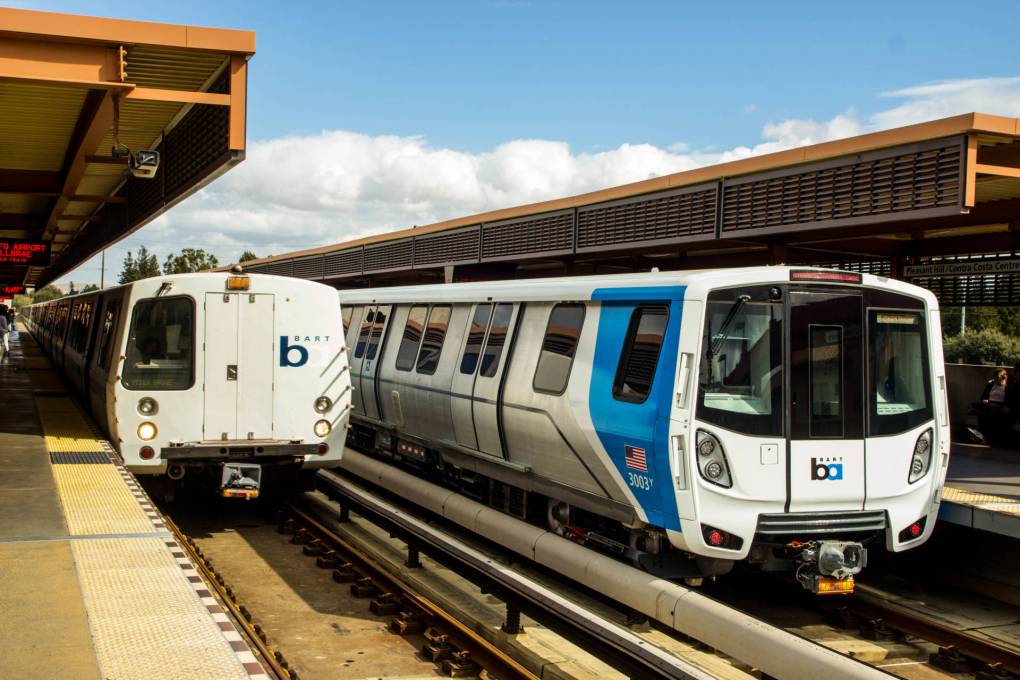
"caption": "A car from BART's 'Fleet of the Future' (right) alongside one of the transit agency's old cars at Pleasant Hill Station in October 2016.",
"description": "A car from BART's 'Fleet of the Future' (right) alongside one of the transit agency's old cars at Pleasant Hill Station in October 2016.",
"title": "bartcars_danbrekke",
"credit": "Dan Brekke/KQED",
"status": "inherit",
"altTag": "\"\"",
"isLoading": false,
"fetchFailed": false
},
"news_11844061": {
"type": "attachments",
"id": "news_11844061",
"meta": {
"index": "attachments_1716263798",
"site": "news",
"id": "11844061",
"found": true
},
"parent": 11844019,
"imgSizes": {
"apple_news_ca_landscape_5_5": {
"file": "https://ww2.kqed.org/app/uploads/sites/10/2020/10/2-Lakefull-1044x783.png",
"width": 1044,
"mimeType": "image/png",
"height": 783
},
"apple_news_ca_square_4_0": {
"file": "https://ww2.kqed.org/app/uploads/sites/10/2020/10/2-Lakefull-470x470.png",
"width": 470,
"mimeType": "image/png",
"height": 470
},
"twentyfourteen-full-width": {
"file": "https://ww2.kqed.org/app/uploads/sites/10/2020/10/2-Lakefull-1038x576.png",
"width": 1038,
"mimeType": "image/png",
"height": 576
},
"thumbnail": {
"file": "https://ww2.kqed.org/app/uploads/sites/10/2020/10/2-Lakefull-160x107.png",
"width": 160,
"mimeType": "image/png",
"height": 107
},
"post-thumbnail": {
"file": "https://ww2.kqed.org/app/uploads/sites/10/2020/10/2-Lakefull-672x372.png",
"width": 672,
"mimeType": "image/png",
"height": 372
},
"kqedFullSize": {
"file": "https://ww2.kqed.org/app/uploads/sites/10/2020/10/2-Lakefull.png",
"width": 1920,
"height": 1280
},
"apple_news_ca_landscape_4_7": {
"file": "https://ww2.kqed.org/app/uploads/sites/10/2020/10/2-Lakefull-632x474.png",
"width": 632,
"mimeType": "image/png",
"height": 474
},
"large": {
"file": "https://ww2.kqed.org/app/uploads/sites/10/2020/10/2-Lakefull-1020x680.png",
"width": 1020,
"mimeType": "image/png",
"height": 680
},
"apple_news_ca_landscape_4_0": {
"file": "https://ww2.kqed.org/app/uploads/sites/10/2020/10/2-Lakefull-536x402.png",
"width": 536,
"mimeType": "image/png",
"height": 402
},
"apple_news_ca_portrait_12_9": {
"file": "https://ww2.kqed.org/app/uploads/sites/10/2020/10/2-Lakefull-1122x1280.png",
"width": 1122,
"mimeType": "image/png",
"height": 1280
},
"medium": {
"file": "https://ww2.kqed.org/app/uploads/sites/10/2020/10/2-Lakefull-800x533.png",
"width": 800,
"mimeType": "image/png",
"height": 533
},
"apple_news_ca_portrait_4_0": {
"file": "https://ww2.kqed.org/app/uploads/sites/10/2020/10/2-Lakefull-354x472.png",
"width": 354,
"mimeType": "image/png",
"height": 472
},
"apple_news_ca_portrait_9_7": {
"file": "https://ww2.kqed.org/app/uploads/sites/10/2020/10/2-Lakefull-840x1120.png",
"width": 840,
"mimeType": "image/png",
"height": 1120
},
"apple_news_ca_landscape_12_9": {
"file": "https://ww2.kqed.org/app/uploads/sites/10/2020/10/2-Lakefull-1832x1280.png",
"width": 1832,
"mimeType": "image/png",
"height": 1280
},
"apple_news_ca_square_9_7": {
"file": "https://ww2.kqed.org/app/uploads/sites/10/2020/10/2-Lakefull-1104x1104.png",
"width": 1104,
"mimeType": "image/png",
"height": 1104
},
"1536x1536": {
"file": "https://ww2.kqed.org/app/uploads/sites/10/2020/10/2-Lakefull-1536x1024.png",
"width": 1536,
"mimeType": "image/png",
"height": 1024
},
"apple_news_ca_portrait_4_7": {
"file": "https://ww2.kqed.org/app/uploads/sites/10/2020/10/2-Lakefull-414x552.png",
"width": 414,
"mimeType": "image/png",
"height": 552
},
"apple_news_ca_square_12_9": {
"file": "https://ww2.kqed.org/app/uploads/sites/10/2020/10/2-Lakefull-1472x1280.png",
"width": 1472,
"mimeType": "image/png",
"height": 1280
},
"apple_news_ca_portrait_5_5": {
"file": "https://ww2.kqed.org/app/uploads/sites/10/2020/10/2-Lakefull-687x916.png",
"width": 687,
"mimeType": "image/png",
"height": 916
},
"apple_news_ca_square_4_7": {
"file": "https://ww2.kqed.org/app/uploads/sites/10/2020/10/2-Lakefull-550x550.png",
"width": 550,
"mimeType": "image/png",
"height": 550
},
"apple_news_ca_landscape_9_7": {
"file": "https://ww2.kqed.org/app/uploads/sites/10/2020/10/2-Lakefull-1376x1032.png",
"width": 1376,
"mimeType": "image/png",
"height": 1032
},
"apple_news_ca_square_5_5": {
"file": "https://ww2.kqed.org/app/uploads/sites/10/2020/10/2-Lakefull-912x912.png",
"width": 912,
"mimeType": "image/png",
"height": 912
}
},
"publishDate": 1603861833,
"modified": 1603861908,
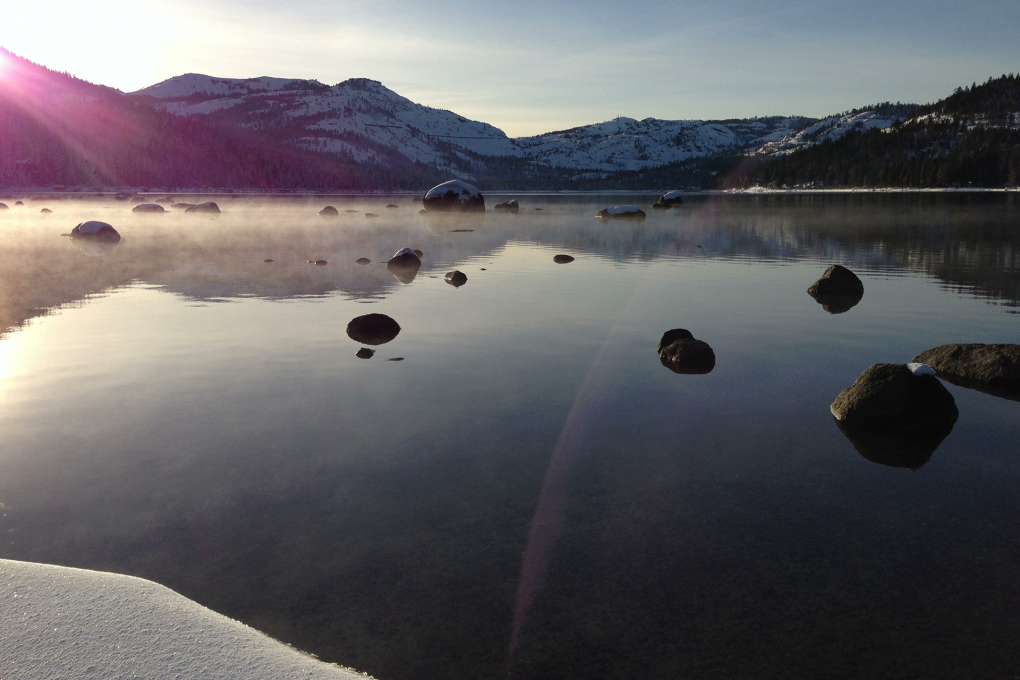
"caption": "Donner Lake in the winter. The lake was frozen solid for much of the Donner Party's ordeal here.",
"description": null,
"title": "2-Lakefull",
"credit": "Cyril Fluck/Flickr",
"status": "inherit",
"isLoading": false,
"fetchFailed": false
},
"news_11844081": {
"type": "attachments",
"id": "news_11844081",
"meta": {
"index": "attachments_1716263798",
"site": "news",
"id": "11844081",
"found": true
},
"parent": 11844011,
"imgSizes": {
"apple_news_ca_landscape_5_5": {
"file": "https://ww2.kqed.org/app/uploads/sites/10/2020/10/1-4-1044x783.png",
"width": 1044,
"mimeType": "image/png",
"height": 783
},
"apple_news_ca_square_4_0": {
"file": "https://ww2.kqed.org/app/uploads/sites/10/2020/10/1-4-470x470.png",
"width": 470,
"mimeType": "image/png",
"height": 470
},
"twentyfourteen-full-width": {
"file": "https://ww2.kqed.org/app/uploads/sites/10/2020/10/1-4-1038x576.png",
"width": 1038,
"mimeType": "image/png",
"height": 576
},
"thumbnail": {
"file": "https://ww2.kqed.org/app/uploads/sites/10/2020/10/1-4-160x107.png",
"width": 160,
"mimeType": "image/png",
"height": 107
},
"post-thumbnail": {
"file": "https://ww2.kqed.org/app/uploads/sites/10/2020/10/1-4-672x372.png",
"width": 672,
"mimeType": "image/png",
"height": 372
},
"kqedFullSize": {
"file": "https://ww2.kqed.org/app/uploads/sites/10/2020/10/1-4.png",
"width": 1920,
"height": 1280
},
"apple_news_ca_landscape_4_7": {
"file": "https://ww2.kqed.org/app/uploads/sites/10/2020/10/1-4-632x474.png",
"width": 632,
"mimeType": "image/png",
"height": 474
},
"large": {
"file": "https://ww2.kqed.org/app/uploads/sites/10/2020/10/1-4-1020x680.png",
"width": 1020,
"mimeType": "image/png",
"height": 680
},
"apple_news_ca_landscape_4_0": {
"file": "https://ww2.kqed.org/app/uploads/sites/10/2020/10/1-4-536x402.png",
"width": 536,
"mimeType": "image/png",
"height": 402
},
"apple_news_ca_portrait_12_9": {
"file": "https://ww2.kqed.org/app/uploads/sites/10/2020/10/1-4-1122x1280.png",
"width": 1122,
"mimeType": "image/png",
"height": 1280
},
"medium": {
"file": "https://ww2.kqed.org/app/uploads/sites/10/2020/10/1-4-800x533.png",
"width": 800,
"mimeType": "image/png",
"height": 533
},
"apple_news_ca_portrait_4_0": {
"file": "https://ww2.kqed.org/app/uploads/sites/10/2020/10/1-4-354x472.png",
"width": 354,
"mimeType": "image/png",
"height": 472
},
"apple_news_ca_portrait_9_7": {
"file": "https://ww2.kqed.org/app/uploads/sites/10/2020/10/1-4-840x1120.png",
"width": 840,
"mimeType": "image/png",
"height": 1120
},
"apple_news_ca_landscape_12_9": {
"file": "https://ww2.kqed.org/app/uploads/sites/10/2020/10/1-4-1832x1280.png",
"width": 1832,
"mimeType": "image/png",
"height": 1280
},
"apple_news_ca_square_9_7": {
"file": "https://ww2.kqed.org/app/uploads/sites/10/2020/10/1-4-1104x1104.png",
"width": 1104,
"mimeType": "image/png",
"height": 1104
},
"1536x1536": {
"file": "https://ww2.kqed.org/app/uploads/sites/10/2020/10/1-4-1536x1024.png",
"width": 1536,
"mimeType": "image/png",
"height": 1024
},
"apple_news_ca_portrait_4_7": {
"file": "https://ww2.kqed.org/app/uploads/sites/10/2020/10/1-4-414x552.png",
"width": 414,
"mimeType": "image/png",
"height": 552
},
"apple_news_ca_square_12_9": {
"file": "https://ww2.kqed.org/app/uploads/sites/10/2020/10/1-4-1472x1280.png",
"width": 1472,
"mimeType": "image/png",
"height": 1280
},
"apple_news_ca_portrait_5_5": {
"file": "https://ww2.kqed.org/app/uploads/sites/10/2020/10/1-4-687x916.png",
"width": 687,
"mimeType": "image/png",
"height": 916
},
"apple_news_ca_square_4_7": {
"file": "https://ww2.kqed.org/app/uploads/sites/10/2020/10/1-4-550x550.png",
"width": 550,
"mimeType": "image/png",
"height": 550
},
"apple_news_ca_landscape_9_7": {
"file": "https://ww2.kqed.org/app/uploads/sites/10/2020/10/1-4-1376x1032.png",
"width": 1376,
"mimeType": "image/png",
"height": 1032
},
"apple_news_ca_square_5_5": {
"file": "https://ww2.kqed.org/app/uploads/sites/10/2020/10/1-4-912x912.png",
"width": 912,
"mimeType": "image/png",
"height": 912
}
},
"publishDate": 1603863976,
"modified": 1603864020,
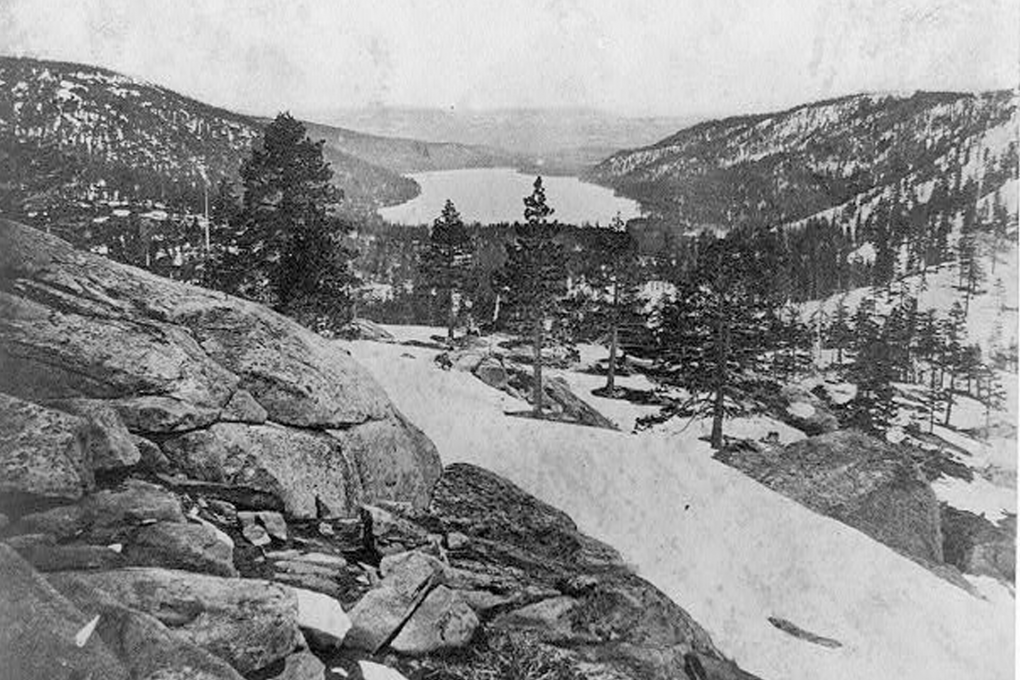
"caption": "Donner Lake from the summit, photographed in 1866 Lawrence & Houseworth",
"description": null,
"title": "1-4",
"credit": "Library of Congress",
"status": "inherit",
"isLoading": false,
"fetchFailed": false
},
"news_11703286": {
"type": "attachments",
"id": "news_11703286",
"meta": {
"index": "attachments_1716263798",
"site": "news",
"id": "11703286",
"found": true
},
"parent": 11703159,
"imgSizes": {
"small": {
"file": "https://ww2.kqed.org/app/uploads/sites/10/2018/11/ValeroRefinery-520x375.jpg",
"width": 520,
"mimeType": "image/jpeg",
"height": 375
},
"twentyfourteen-full-width": {
"file": "https://ww2.kqed.org/app/uploads/sites/10/2018/11/ValeroRefinery-1038x576.jpg",
"width": 1038,
"mimeType": "image/jpeg",
"height": 576
},
"thumbnail": {
"file": "https://ww2.kqed.org/app/uploads/sites/10/2018/11/ValeroRefinery-160x116.jpg",
"width": 160,
"mimeType": "image/jpeg",
"height": 116
},
"fd-sm": {
"file": "https://ww2.kqed.org/app/uploads/sites/10/2018/11/ValeroRefinery-960x693.jpg",
"width": 960,
"mimeType": "image/jpeg",
"height": 693
},
"post-thumbnail": {
"file": "https://ww2.kqed.org/app/uploads/sites/10/2018/11/ValeroRefinery-672x372.jpg",
"width": 672,
"mimeType": "image/jpeg",
"height": 372
},
"xsmall": {
"file": "https://ww2.kqed.org/app/uploads/sites/10/2018/11/ValeroRefinery-375x271.jpg",
"width": 375,
"mimeType": "image/jpeg",
"height": 271
},
"kqedFullSize": {
"file": "https://ww2.kqed.org/app/uploads/sites/10/2018/11/ValeroRefinery.jpg",
"width": 1920,
"height": 1386
},
"large": {
"file": "https://ww2.kqed.org/app/uploads/sites/10/2018/11/ValeroRefinery-1020x736.jpg",
"width": 1020,
"mimeType": "image/jpeg",
"height": 736
},
"xlarge": {
"file": "https://ww2.kqed.org/app/uploads/sites/10/2018/11/ValeroRefinery-1180x852.jpg",
"width": 1180,
"mimeType": "image/jpeg",
"height": 852
},
"complete_open_graph": {
"file": "https://ww2.kqed.org/app/uploads/sites/10/2018/11/ValeroRefinery-1200x866.jpg",
"width": 1200,
"mimeType": "image/jpeg",
"height": 866
},
"guest-author-50": {
"file": "https://ww2.kqed.org/app/uploads/sites/10/2018/11/ValeroRefinery-50x50.jpg",
"width": 50,
"mimeType": "image/jpeg",
"height": 50
},
"guest-author-96": {
"file": "https://ww2.kqed.org/app/uploads/sites/10/2018/11/ValeroRefinery-96x96.jpg",
"width": 96,
"mimeType": "image/jpeg",
"height": 96
},
"medium": {
"file": "https://ww2.kqed.org/app/uploads/sites/10/2018/11/ValeroRefinery-800x578.jpg",
"width": 800,
"mimeType": "image/jpeg",
"height": 578
},
"guest-author-64": {
"file": "https://ww2.kqed.org/app/uploads/sites/10/2018/11/ValeroRefinery-64x64.jpg",
"width": 64,
"mimeType": "image/jpeg",
"height": 64
},
"guest-author-32": {
"file": "https://ww2.kqed.org/app/uploads/sites/10/2018/11/ValeroRefinery-32x32.jpg",
"width": 32,
"mimeType": "image/jpeg",
"height": 32
},
"fd-lrg": {
"file": "https://ww2.kqed.org/app/uploads/sites/10/2018/11/ValeroRefinery-1920x1386.jpg",
"width": 1920,
"mimeType": "image/jpeg",
"height": 1386
},
"fd-med": {
"file": "https://ww2.kqed.org/app/uploads/sites/10/2018/11/ValeroRefinery-1180x852.jpg",
"width": 1180,
"mimeType": "image/jpeg",
"height": 852
},
"full-width": {
"file": "https://ww2.kqed.org/app/uploads/sites/10/2018/11/ValeroRefinery-1920x1386.jpg",
"width": 1920,
"mimeType": "image/jpeg",
"height": 1386
},
"detail": {
"file": "https://ww2.kqed.org/app/uploads/sites/10/2018/11/ValeroRefinery-150x150.jpg",
"width": 150,
"mimeType": "image/jpeg",
"height": 150
},
"guest-author-128": {
"file": "https://ww2.kqed.org/app/uploads/sites/10/2018/11/ValeroRefinery-128x128.jpg",
"width": 128,
"mimeType": "image/jpeg",
"height": 128
},
"xxsmall": {
"file": "https://ww2.kqed.org/app/uploads/sites/10/2018/11/ValeroRefinery-240x173.jpg",
"width": 240,
"mimeType": "image/jpeg",
"height": 173
}
},
"publishDate": 1541190731,
"modified": 1634605165,
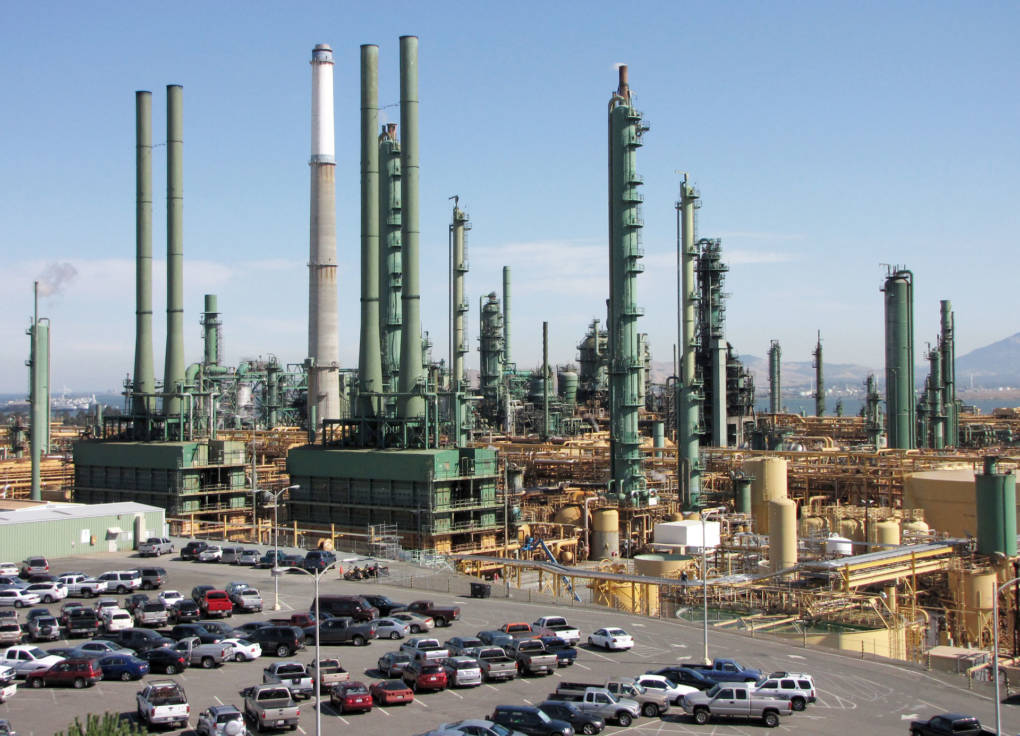
"caption": "Valero's oil refinery in the Solano County city of Benicia.",
"description": "The Valero refinery in Benicia.",
"title": "ValeroRefinery",
"credit": "Craig Miller/KQED",
"status": "inherit",
"altTag": "Dozens of tall smokestacks beside a parking lot.",
"isLoading": false,
"fetchFailed": false
},
"news_11842681": {
"type": "attachments",
"id": "news_11842681",
"meta": {
"index": "attachments_1716263798",
"site": "news",
"id": "11842681",
"found": true
},
"parent": 11842679,
"imgSizes": {
"apple_news_ca_landscape_5_5": {
"file": "https://ww2.kqed.org/app/uploads/sites/10/2020/10/803_MARQUEE-1044x720.jpg",
"width": 1044,
"mimeType": "image/jpeg",
"height": 720
},
"apple_news_ca_square_4_0": {
"file": "https://ww2.kqed.org/app/uploads/sites/10/2020/10/803_MARQUEE-470x470.jpg",
"width": 470,
"mimeType": "image/jpeg",
"height": 470
},
"twentyfourteen-full-width": {
"file": "https://ww2.kqed.org/app/uploads/sites/10/2020/10/803_MARQUEE-1038x576.jpg",
"width": 1038,
"mimeType": "image/jpeg",
"height": 576
},
"thumbnail": {
"file": "https://ww2.kqed.org/app/uploads/sites/10/2020/10/803_MARQUEE-160x90.jpg",
"width": 160,
"mimeType": "image/jpeg",
"height": 90
},
"post-thumbnail": {
"file": "https://ww2.kqed.org/app/uploads/sites/10/2020/10/803_MARQUEE-672x372.jpg",
"width": 672,
"mimeType": "image/jpeg",
"height": 372
},
"kqedFullSize": {
"file": "https://ww2.kqed.org/app/uploads/sites/10/2020/10/803_MARQUEE.jpg",
"width": 1280,
"height": 720
},
"apple_news_ca_landscape_4_7": {
"file": "https://ww2.kqed.org/app/uploads/sites/10/2020/10/803_MARQUEE-632x474.jpg",
"width": 632,
"mimeType": "image/jpeg",
"height": 474
},
"large": {
"file": "https://ww2.kqed.org/app/uploads/sites/10/2020/10/803_MARQUEE-1020x574.jpg",
"width": 1020,
"mimeType": "image/jpeg",
"height": 574
},
"apple_news_ca_landscape_4_0": {
"file": "https://ww2.kqed.org/app/uploads/sites/10/2020/10/803_MARQUEE-536x402.jpg",
"width": 536,
"mimeType": "image/jpeg",
"height": 402
},
"apple_news_ca_portrait_12_9": {
"file": "https://ww2.kqed.org/app/uploads/sites/10/2020/10/803_MARQUEE-1122x720.jpg",
"width": 1122,
"mimeType": "image/jpeg",
"height": 720
},
"medium": {
"file": "https://ww2.kqed.org/app/uploads/sites/10/2020/10/803_MARQUEE-800x450.jpg",
"width": 800,
"mimeType": "image/jpeg",
"height": 450
},
"apple_news_ca_portrait_4_0": {
"file": "https://ww2.kqed.org/app/uploads/sites/10/2020/10/803_MARQUEE-354x472.jpg",
"width": 354,
"mimeType": "image/jpeg",
"height": 472
},
"apple_news_ca_portrait_9_7": {
"file": "https://ww2.kqed.org/app/uploads/sites/10/2020/10/803_MARQUEE-840x720.jpg",
"width": 840,
"mimeType": "image/jpeg",
"height": 720
},
"apple_news_ca_square_9_7": {
"file": "https://ww2.kqed.org/app/uploads/sites/10/2020/10/803_MARQUEE-1104x720.jpg",
"width": 1104,
"mimeType": "image/jpeg",
"height": 720
},
"apple_news_ca_portrait_4_7": {
"file": "https://ww2.kqed.org/app/uploads/sites/10/2020/10/803_MARQUEE-414x552.jpg",
"width": 414,
"mimeType": "image/jpeg",
"height": 552
},
"apple_news_ca_portrait_5_5": {
"file": "https://ww2.kqed.org/app/uploads/sites/10/2020/10/803_MARQUEE-687x720.jpg",
"width": 687,
"mimeType": "image/jpeg",
"height": 720
},
"apple_news_ca_square_4_7": {
"file": "https://ww2.kqed.org/app/uploads/sites/10/2020/10/803_MARQUEE-550x550.jpg",
"width": 550,
"mimeType": "image/jpeg",
"height": 550
},
"apple_news_ca_square_5_5": {
"file": "https://ww2.kqed.org/app/uploads/sites/10/2020/10/803_MARQUEE-912x720.jpg",
"width": 912,
"mimeType": "image/jpeg",
"height": 720
}
},
"publishDate": 1602881336,
"modified": 1602881336,
"caption": null,
"description": null,
"title": "803_MARQUEE",
"credit": null,
"status": "inherit",
"isLoading": false,
"fetchFailed": false
},
"news_11842220": {
"type": "attachments",
"id": "news_11842220",
"meta": {
"index": "attachments_1716263798",
"site": "news",
"id": "11842220",
"found": true
},
"parent": 11841878,
"imgSizes": {
"apple_news_ca_landscape_5_5": {
"file": "https://ww2.kqed.org/app/uploads/sites/10/2020/10/1920_IMG_2213-copy-1044x783.jpg",
"width": 1044,
"mimeType": "image/jpeg",
"height": 783
},
"apple_news_ca_square_4_0": {
"file": "https://ww2.kqed.org/app/uploads/sites/10/2020/10/1920_IMG_2213-copy-470x470.jpg",
"width": 470,
"mimeType": "image/jpeg",
"height": 470
},
"twentyfourteen-full-width": {
"file": "https://ww2.kqed.org/app/uploads/sites/10/2020/10/1920_IMG_2213-copy-1038x576.jpg",
"width": 1038,
"mimeType": "image/jpeg",
"height": 576
},
"thumbnail": {
"file": "https://ww2.kqed.org/app/uploads/sites/10/2020/10/1920_IMG_2213-copy-160x90.jpg",
"width": 160,
"mimeType": "image/jpeg",
"height": 90
},
"post-thumbnail": {
"file": "https://ww2.kqed.org/app/uploads/sites/10/2020/10/1920_IMG_2213-copy-672x372.jpg",
"width": 672,
"mimeType": "image/jpeg",
"height": 372
},
"kqedFullSize": {
"file": "https://ww2.kqed.org/app/uploads/sites/10/2020/10/1920_IMG_2213-copy-scaled.jpg",
"width": 2560,
"height": 1440
},
"2048x2048": {
"file": "https://ww2.kqed.org/app/uploads/sites/10/2020/10/1920_IMG_2213-copy-2048x1152.jpg",
"width": 2048,
"mimeType": "image/jpeg",
"height": 1152
},
"apple_news_ca_landscape_4_7": {
"file": "https://ww2.kqed.org/app/uploads/sites/10/2020/10/1920_IMG_2213-copy-632x474.jpg",
"width": 632,
"mimeType": "image/jpeg",
"height": 474
},
"large": {
"file": "https://ww2.kqed.org/app/uploads/sites/10/2020/10/1920_IMG_2213-copy-1020x574.jpg",
"width": 1020,
"mimeType": "image/jpeg",
"height": 574
},
"apple_news_ca_landscape_4_0": {
"file": "https://ww2.kqed.org/app/uploads/sites/10/2020/10/1920_IMG_2213-copy-536x402.jpg",
"width": 536,
"mimeType": "image/jpeg",
"height": 402
},
"apple_news_ca_portrait_12_9": {
"file": "https://ww2.kqed.org/app/uploads/sites/10/2020/10/1920_IMG_2213-copy-1122x1496.jpg",
"width": 1122,
"mimeType": "image/jpeg",
"height": 1496
},
"medium": {
"file": "https://ww2.kqed.org/app/uploads/sites/10/2020/10/1920_IMG_2213-copy-800x450.jpg",
"width": 800,
"mimeType": "image/jpeg",
"height": 450
},
"apple_news_ca_portrait_4_0": {
"file": "https://ww2.kqed.org/app/uploads/sites/10/2020/10/1920_IMG_2213-copy-354x472.jpg",
"width": 354,
"mimeType": "image/jpeg",
"height": 472
},
"apple_news_ca_portrait_9_7": {
"file": "https://ww2.kqed.org/app/uploads/sites/10/2020/10/1920_IMG_2213-copy-840x1120.jpg",
"width": 840,
"mimeType": "image/jpeg",
"height": 1120
},
"apple_news_ca_landscape_12_9": {
"file": "https://ww2.kqed.org/app/uploads/sites/10/2020/10/1920_IMG_2213-copy-1832x1374.jpg",
"width": 1832,
"mimeType": "image/jpeg",
"height": 1374
},
"apple_news_ca_square_9_7": {
"file": "https://ww2.kqed.org/app/uploads/sites/10/2020/10/1920_IMG_2213-copy-1104x1104.jpg",
"width": 1104,
"mimeType": "image/jpeg",
"height": 1104
},
"1536x1536": {
"file": "https://ww2.kqed.org/app/uploads/sites/10/2020/10/1920_IMG_2213-copy-1536x864.jpg",
"width": 1536,
"mimeType": "image/jpeg",
"height": 864
},
"apple_news_ca_portrait_4_7": {
"file": "https://ww2.kqed.org/app/uploads/sites/10/2020/10/1920_IMG_2213-copy-414x552.jpg",
"width": 414,
"mimeType": "image/jpeg",
"height": 552
},
"apple_news_ca_square_12_9": {
"file": "https://ww2.kqed.org/app/uploads/sites/10/2020/10/1920_IMG_2213-copy-1472x1472.jpg",
"width": 1472,
"mimeType": "image/jpeg",
"height": 1472
},
"apple_news_ca_portrait_5_5": {
"file": "https://ww2.kqed.org/app/uploads/sites/10/2020/10/1920_IMG_2213-copy-687x916.jpg",
"width": 687,
"mimeType": "image/jpeg",
"height": 916
},
"full-width": {
"file": "https://ww2.kqed.org/app/uploads/sites/10/2020/10/1920_IMG_2213-copy-1920x1080.jpg",
"width": 1920,
"mimeType": "image/jpeg",
"height": 1080
},
"apple_news_ca_square_4_7": {
"file": "https://ww2.kqed.org/app/uploads/sites/10/2020/10/1920_IMG_2213-copy-550x550.jpg",
"width": 550,
"mimeType": "image/jpeg",
"height": 550
},
"apple_news_ca_landscape_9_7": {
"file": "https://ww2.kqed.org/app/uploads/sites/10/2020/10/1920_IMG_2213-copy-1376x1032.jpg",
"width": 1376,
"mimeType": "image/jpeg",
"height": 1032
},
"apple_news_ca_square_5_5": {
"file": "https://ww2.kqed.org/app/uploads/sites/10/2020/10/1920_IMG_2213-copy-912x912.jpg",
"width": 912,
"mimeType": "image/jpeg",
"height": 912
}
},
"publishDate": 1602641910,
"modified": 1602641944,
"caption": "Tat Ohanyan, Hrach Saroyan, and Khachik Saroyan at a rally on the Golden Gate Bridge on Saturday October 11, 2020.",
"description": null,
"title": "1920_IMG_2213 copy",
"credit": "Nina Sparling/KQED",
"status": "inherit",
"isLoading": false,
"fetchFailed": false
},
"news_11839199": {
"type": "attachments",
"id": "news_11839199",
"meta": {
"index": "attachments_1716263798",
"site": "news",
"id": "11839199",
"found": true
},
"parent": 11839198,
"imgSizes": {
"apple_news_ca_landscape_5_5": {
"file": "https://ww2.kqed.org/app/uploads/sites/10/2020/09/NorthAmerPleistocene-1044x783.jpg",
"width": 1044,
"mimeType": "image/jpeg",
"height": 783
},
"apple_news_ca_square_4_0": {
"file": "https://ww2.kqed.org/app/uploads/sites/10/2020/09/NorthAmerPleistocene-470x470.jpg",
"width": 470,
"mimeType": "image/jpeg",
"height": 470
},
"twentyfourteen-full-width": {
"file": "https://ww2.kqed.org/app/uploads/sites/10/2020/09/NorthAmerPleistocene-1038x576.jpg",
"width": 1038,
"mimeType": "image/jpeg",
"height": 576
},
"thumbnail": {
"file": "https://ww2.kqed.org/app/uploads/sites/10/2020/09/NorthAmerPleistocene-160x133.jpg",
"width": 160,
"mimeType": "image/jpeg",
"height": 133
},
"post-thumbnail": {
"file": "https://ww2.kqed.org/app/uploads/sites/10/2020/09/NorthAmerPleistocene-672x372.jpg",
"width": 672,
"mimeType": "image/jpeg",
"height": 372
},
"kqedFullSize": {
"file": "https://ww2.kqed.org/app/uploads/sites/10/2020/09/NorthAmerPleistocene-scaled.jpg",
"width": 2560,
"height": 2133
},
"2048x2048": {
"file": "https://ww2.kqed.org/app/uploads/sites/10/2020/09/NorthAmerPleistocene-2048x1707.jpg",
"width": 2048,
"mimeType": "image/jpeg",
"height": 1707
},
"apple_news_ca_landscape_4_7": {
"file": "https://ww2.kqed.org/app/uploads/sites/10/2020/09/NorthAmerPleistocene-632x474.jpg",
"width": 632,
"mimeType": "image/jpeg",
"height": 474
},
"large": {
"file": "https://ww2.kqed.org/app/uploads/sites/10/2020/09/NorthAmerPleistocene-1020x850.jpg",
"width": 1020,
"mimeType": "image/jpeg",
"height": 850
},
"apple_news_ca_landscape_4_0": {
"file": "https://ww2.kqed.org/app/uploads/sites/10/2020/09/NorthAmerPleistocene-536x402.jpg",
"width": 536,
"mimeType": "image/jpeg",
"height": 402
},
"apple_news_ca_portrait_12_9": {
"file": "https://ww2.kqed.org/app/uploads/sites/10/2020/09/NorthAmerPleistocene-1122x1496.jpg",
"width": 1122,
"mimeType": "image/jpeg",
"height": 1496
},
"medium": {
"file": "https://ww2.kqed.org/app/uploads/sites/10/2020/09/NorthAmerPleistocene-800x667.jpg",
"width": 800,
"mimeType": "image/jpeg",
"height": 667
},
"apple_news_ca_portrait_4_0": {
"file": "https://ww2.kqed.org/app/uploads/sites/10/2020/09/NorthAmerPleistocene-354x472.jpg",
"width": 354,
"mimeType": "image/jpeg",
"height": 472
},
"apple_news_ca_portrait_9_7": {
"file": "https://ww2.kqed.org/app/uploads/sites/10/2020/09/NorthAmerPleistocene-840x1120.jpg",
"width": 840,
"mimeType": "image/jpeg",
"height": 1120
},
"apple_news_ca_landscape_12_9": {
"file": "https://ww2.kqed.org/app/uploads/sites/10/2020/09/NorthAmerPleistocene-1832x1374.jpg",
"width": 1832,
"mimeType": "image/jpeg",
"height": 1374
},
"apple_news_ca_square_9_7": {
"file": "https://ww2.kqed.org/app/uploads/sites/10/2020/09/NorthAmerPleistocene-1104x1104.jpg",
"width": 1104,
"mimeType": "image/jpeg",
"height": 1104
},
"1536x1536": {
"file": "https://ww2.kqed.org/app/uploads/sites/10/2020/09/NorthAmerPleistocene-1536x1280.jpg",
"width": 1536,
"mimeType": "image/jpeg",
"height": 1280
},
"apple_news_ca_portrait_4_7": {
"file": "https://ww2.kqed.org/app/uploads/sites/10/2020/09/NorthAmerPleistocene-414x552.jpg",
"width": 414,
"mimeType": "image/jpeg",
"height": 552
},
"apple_news_ca_square_12_9": {
"file": "https://ww2.kqed.org/app/uploads/sites/10/2020/09/NorthAmerPleistocene-1472x1472.jpg",
"width": 1472,
"mimeType": "image/jpeg",
"height": 1472
},
"apple_news_ca_portrait_5_5": {
"file": "https://ww2.kqed.org/app/uploads/sites/10/2020/09/NorthAmerPleistocene-687x916.jpg",
"width": 687,
"mimeType": "image/jpeg",
"height": 916
},
"full-width": {
"file": "https://ww2.kqed.org/app/uploads/sites/10/2020/09/NorthAmerPleistocene-1920x1600.jpg",
"width": 1920,
"mimeType": "image/jpeg",
"height": 1600
},
"apple_news_ca_square_4_7": {
"file": "https://ww2.kqed.org/app/uploads/sites/10/2020/09/NorthAmerPleistocene-550x550.jpg",
"width": 550,
"mimeType": "image/jpeg",
"height": 550
},
"apple_news_ca_landscape_9_7": {
"file": "https://ww2.kqed.org/app/uploads/sites/10/2020/09/NorthAmerPleistocene-1376x1032.jpg",
"width": 1376,
"mimeType": "image/jpeg",
"height": 1032
},
"apple_news_ca_square_5_5": {
"file": "https://ww2.kqed.org/app/uploads/sites/10/2020/09/NorthAmerPleistocene-912x912.jpg",
"width": 912,
"mimeType": "image/jpeg",
"height": 912
}
},
"publishDate": 1600819392,
"modified": 1600819458,
"caption": "Creatures that would have been seen in the Bay Area at the tail end of the last ice age.",
"description": "Creatures that would have been seen in the Bay Area at the tail end of the last ice age.",
"title": "NorthAmerPleistocene",
"credit": "Illustration by Karen Carr",
"status": "inherit",
"isLoading": false,
"fetchFailed": false
},
"news_11838197": {
"type": "attachments",
"id": "news_11838197",
"meta": {
"index": "attachments_1716263798",
"site": "news",
"id": "11838197",
"found": true
},
"parent": 11838178,
"imgSizes": {
"apple_news_ca_landscape_5_5": {
"file": "https://ww2.kqed.org/app/uploads/sites/10/2020/09/Napa-Valley-CB-1044x783.jpg",
"width": 1044,
"mimeType": "image/jpeg",
"height": 783
},
"apple_news_ca_square_4_0": {
"file": "https://ww2.kqed.org/app/uploads/sites/10/2020/09/Napa-Valley-CB-470x470.jpg",
"width": 470,
"mimeType": "image/jpeg",
"height": 470
},
"twentyfourteen-full-width": {
"file": "https://ww2.kqed.org/app/uploads/sites/10/2020/09/Napa-Valley-CB-1038x576.jpg",
"width": 1038,
"mimeType": "image/jpeg",
"height": 576
},
"thumbnail": {
"file": "https://ww2.kqed.org/app/uploads/sites/10/2020/09/Napa-Valley-CB-160x90.jpg",
"width": 160,
"mimeType": "image/jpeg",
"height": 90
},
"post-thumbnail": {
"file": "https://ww2.kqed.org/app/uploads/sites/10/2020/09/Napa-Valley-CB-672x372.jpg",
"width": 672,
"mimeType": "image/jpeg",
"height": 372
},
"kqedFullSize": {
"file": "https://ww2.kqed.org/app/uploads/sites/10/2020/09/Napa-Valley-CB.jpg",
"width": 1920,
"height": 1080
},
"apple_news_ca_landscape_4_7": {
"file": "https://ww2.kqed.org/app/uploads/sites/10/2020/09/Napa-Valley-CB-632x474.jpg",
"width": 632,
"mimeType": "image/jpeg",
"height": 474
},
"large": {
"file": "https://ww2.kqed.org/app/uploads/sites/10/2020/09/Napa-Valley-CB-1020x574.jpg",
"width": 1020,
"mimeType": "image/jpeg",
"height": 574
},
"apple_news_ca_landscape_4_0": {
"file": "https://ww2.kqed.org/app/uploads/sites/10/2020/09/Napa-Valley-CB-536x402.jpg",
"width": 536,
"mimeType": "image/jpeg",
"height": 402
},
"apple_news_ca_portrait_12_9": {
"file": "https://ww2.kqed.org/app/uploads/sites/10/2020/09/Napa-Valley-CB-1122x1080.jpg",
"width": 1122,
"mimeType": "image/jpeg",
"height": 1080
},
"medium": {
"file": "https://ww2.kqed.org/app/uploads/sites/10/2020/09/Napa-Valley-CB-800x450.jpg",
"width": 800,
"mimeType": "image/jpeg",
"height": 450
},
"apple_news_ca_portrait_4_0": {
"file": "https://ww2.kqed.org/app/uploads/sites/10/2020/09/Napa-Valley-CB-354x472.jpg",
"width": 354,
"mimeType": "image/jpeg",
"height": 472
},
"apple_news_ca_portrait_9_7": {
"file": "https://ww2.kqed.org/app/uploads/sites/10/2020/09/Napa-Valley-CB-840x1080.jpg",
"width": 840,
"mimeType": "image/jpeg",
"height": 1080
},
"apple_news_ca_landscape_12_9": {
"file": "https://ww2.kqed.org/app/uploads/sites/10/2020/09/Napa-Valley-CB-1832x1080.jpg",
"width": 1832,
"mimeType": "image/jpeg",
"height": 1080
},
"apple_news_ca_square_9_7": {
"file": "https://ww2.kqed.org/app/uploads/sites/10/2020/09/Napa-Valley-CB-1104x1080.jpg",
"width": 1104,
"mimeType": "image/jpeg",
"height": 1080
},
"1536x1536": {
"file": "https://ww2.kqed.org/app/uploads/sites/10/2020/09/Napa-Valley-CB-1536x864.jpg",
"width": 1536,
"mimeType": "image/jpeg",
"height": 864
},
"apple_news_ca_portrait_4_7": {
"file": "https://ww2.kqed.org/app/uploads/sites/10/2020/09/Napa-Valley-CB-414x552.jpg",
"width": 414,
"mimeType": "image/jpeg",
"height": 552
},
"apple_news_ca_square_12_9": {
"file": "https://ww2.kqed.org/app/uploads/sites/10/2020/09/Napa-Valley-CB-1472x1080.jpg",
"width": 1472,
"mimeType": "image/jpeg",
"height": 1080
},
"apple_news_ca_portrait_5_5": {
"file": "https://ww2.kqed.org/app/uploads/sites/10/2020/09/Napa-Valley-CB-687x916.jpg",
"width": 687,
"mimeType": "image/jpeg",
"height": 916
},
"apple_news_ca_square_4_7": {
"file": "https://ww2.kqed.org/app/uploads/sites/10/2020/09/Napa-Valley-CB-550x550.jpg",
"width": 550,
"mimeType": "image/jpeg",
"height": 550
},
"apple_news_ca_landscape_9_7": {
"file": "https://ww2.kqed.org/app/uploads/sites/10/2020/09/Napa-Valley-CB-1376x1032.jpg",
"width": 1376,
"mimeType": "image/jpeg",
"height": 1032
},
"apple_news_ca_square_5_5": {
"file": "https://ww2.kqed.org/app/uploads/sites/10/2020/09/Napa-Valley-CB-912x912.jpg",
"width": 912,
"mimeType": "image/jpeg",
"height": 912
}
},
"publishDate": 1600280795,
"modified": 1600291377,
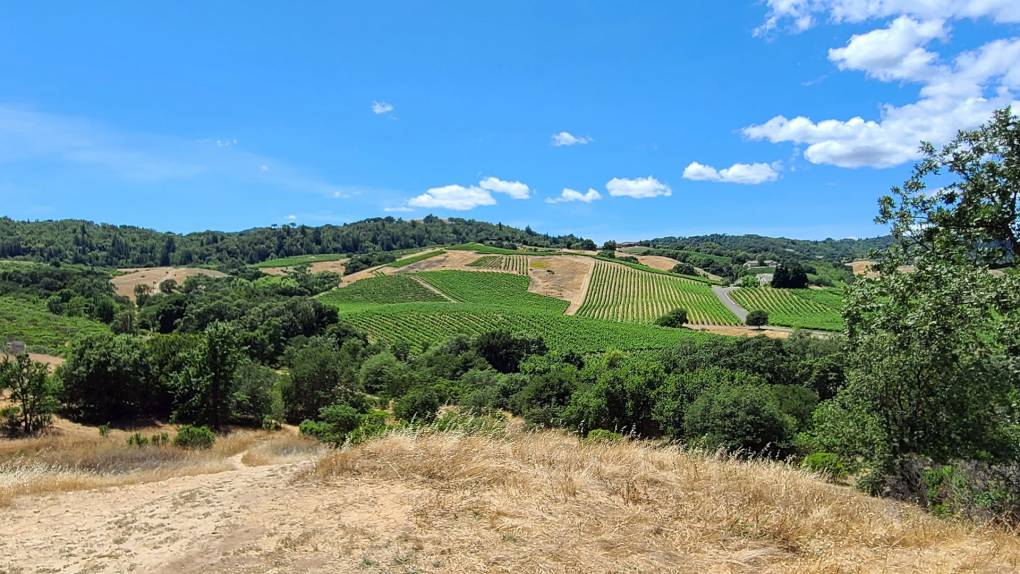
"caption": "Napa Valley today is covered in vineyards. But it wasn't always that way.",
"description": null,
"title": "Napa-Valley-CB",
"credit": "Christopher Beale/KQED",
"status": "inherit",
"isLoading": false,
"fetchFailed": false
},
"news_11837724": {
"type": "attachments",
"id": "news_11837724",
"meta": {
"index": "attachments_1716263798",
"site": "news",
"id": "11837724",
"found": true
},
"parent": 11837585,
"imgSizes": {
"apple_news_ca_landscape_5_5": {
"file": "https://ww2.kqed.org/app/uploads/sites/10/2020/09/743_MARQUEE-2-1-1044x720.jpg",
"width": 1044,
"mimeType": "image/jpeg",
"height": 720
},
"apple_news_ca_square_4_0": {
"file": "https://ww2.kqed.org/app/uploads/sites/10/2020/09/743_MARQUEE-2-1-470x470.jpg",
"width": 470,
"mimeType": "image/jpeg",
"height": 470
},
"twentyfourteen-full-width": {
"file": "https://ww2.kqed.org/app/uploads/sites/10/2020/09/743_MARQUEE-2-1-1038x576.jpg",
"width": 1038,
"mimeType": "image/jpeg",
"height": 576
},
"thumbnail": {
"file": "https://ww2.kqed.org/app/uploads/sites/10/2020/09/743_MARQUEE-2-1-160x90.jpg",
"width": 160,
"mimeType": "image/jpeg",
"height": 90
},
"post-thumbnail": {
"file": "https://ww2.kqed.org/app/uploads/sites/10/2020/09/743_MARQUEE-2-1-672x372.jpg",
"width": 672,
"mimeType": "image/jpeg",
"height": 372
},
"kqedFullSize": {
"file": "https://ww2.kqed.org/app/uploads/sites/10/2020/09/743_MARQUEE-2-1.jpg",
"width": 1280,
"height": 720
},
"apple_news_ca_landscape_4_7": {
"file": "https://ww2.kqed.org/app/uploads/sites/10/2020/09/743_MARQUEE-2-1-632x474.jpg",
"width": 632,
"mimeType": "image/jpeg",
"height": 474
},
"large": {
"file": "https://ww2.kqed.org/app/uploads/sites/10/2020/09/743_MARQUEE-2-1-1020x574.jpg",
"width": 1020,
"mimeType": "image/jpeg",
"height": 574
},
"apple_news_ca_landscape_4_0": {
"file": "https://ww2.kqed.org/app/uploads/sites/10/2020/09/743_MARQUEE-2-1-536x402.jpg",
"width": 536,
"mimeType": "image/jpeg",
"height": 402
},
"apple_news_ca_portrait_12_9": {
"file": "https://ww2.kqed.org/app/uploads/sites/10/2020/09/743_MARQUEE-2-1-1122x720.jpg",
"width": 1122,
"mimeType": "image/jpeg",
"height": 720
},
"medium": {
"file": "https://ww2.kqed.org/app/uploads/sites/10/2020/09/743_MARQUEE-2-1-800x450.jpg",
"width": 800,
"mimeType": "image/jpeg",
"height": 450
},
"apple_news_ca_portrait_4_0": {
"file": "https://ww2.kqed.org/app/uploads/sites/10/2020/09/743_MARQUEE-2-1-354x472.jpg",
"width": 354,
"mimeType": "image/jpeg",
"height": 472
},
"apple_news_ca_portrait_9_7": {
"file": "https://ww2.kqed.org/app/uploads/sites/10/2020/09/743_MARQUEE-2-1-840x720.jpg",
"width": 840,
"mimeType": "image/jpeg",
"height": 720
},
"apple_news_ca_square_9_7": {
"file": "https://ww2.kqed.org/app/uploads/sites/10/2020/09/743_MARQUEE-2-1-1104x720.jpg",
"width": 1104,
"mimeType": "image/jpeg",
"height": 720
},
"apple_news_ca_portrait_4_7": {
"file": "https://ww2.kqed.org/app/uploads/sites/10/2020/09/743_MARQUEE-2-1-414x552.jpg",
"width": 414,
"mimeType": "image/jpeg",
"height": 552
},
"apple_news_ca_portrait_5_5": {
"file": "https://ww2.kqed.org/app/uploads/sites/10/2020/09/743_MARQUEE-2-1-687x720.jpg",
"width": 687,
"mimeType": "image/jpeg",
"height": 720
},
"apple_news_ca_square_4_7": {
"file": "https://ww2.kqed.org/app/uploads/sites/10/2020/09/743_MARQUEE-2-1-550x550.jpg",
"width": 550,
"mimeType": "image/jpeg",
"height": 550
},
"apple_news_ca_square_5_5": {
"file": "https://ww2.kqed.org/app/uploads/sites/10/2020/09/743_MARQUEE-2-1-912x720.jpg",
"width": 912,
"mimeType": "image/jpeg",
"height": 720
}
},
"publishDate": 1599871671,
"modified": 1599871671,
"caption": null,
"description": null,
"title": "743_MARQUEE 2",
"credit": null,
"status": "inherit",
"isLoading": false,
"fetchFailed": false
},
"news_11837060": {
"type": "attachments",
"id": "news_11837060",
"meta": {
"index": "attachments_1716263798",
"site": "news",
"id": "11837060",
"found": true
},
"parent": 11837051,
"imgSizes": {
"apple_news_ca_landscape_5_5": {
"file": "https://ww2.kqed.org/app/uploads/sites/10/2020/09/GoldenGateBridge-1044x783.jpg",
"width": 1044,
"mimeType": "image/jpeg",
"height": 783
},
"apple_news_ca_square_4_0": {
"file": "https://ww2.kqed.org/app/uploads/sites/10/2020/09/GoldenGateBridge-470x470.jpg",
"width": 470,
"mimeType": "image/jpeg",
"height": 470
},
"twentyfourteen-full-width": {
"file": "https://ww2.kqed.org/app/uploads/sites/10/2020/09/GoldenGateBridge-1038x576.jpg",
"width": 1038,
"mimeType": "image/jpeg",
"height": 576
},
"thumbnail": {
"file": "https://ww2.kqed.org/app/uploads/sites/10/2020/09/GoldenGateBridge-160x112.jpg",
"width": 160,
"mimeType": "image/jpeg",
"height": 112
},
"post-thumbnail": {
"file": "https://ww2.kqed.org/app/uploads/sites/10/2020/09/GoldenGateBridge-672x372.jpg",
"width": 672,
"mimeType": "image/jpeg",
"height": 372
},
"kqedFullSize": {
"file": "https://ww2.kqed.org/app/uploads/sites/10/2020/09/GoldenGateBridge.jpg",
"width": 1920,
"height": 1349
},
"apple_news_ca_landscape_4_7": {
"file": "https://ww2.kqed.org/app/uploads/sites/10/2020/09/GoldenGateBridge-632x474.jpg",
"width": 632,
"mimeType": "image/jpeg",
"height": 474
},
"large": {
"file": "https://ww2.kqed.org/app/uploads/sites/10/2020/09/GoldenGateBridge-1020x717.jpg",
"width": 1020,
"mimeType": "image/jpeg",
"height": 717
},
"apple_news_ca_landscape_4_0": {
"file": "https://ww2.kqed.org/app/uploads/sites/10/2020/09/GoldenGateBridge-536x402.jpg",
"width": 536,
"mimeType": "image/jpeg",
"height": 402
},
"apple_news_ca_portrait_12_9": {
"file": "https://ww2.kqed.org/app/uploads/sites/10/2020/09/GoldenGateBridge-1122x1349.jpg",
"width": 1122,
"mimeType": "image/jpeg",
"height": 1349
},
"medium": {
"file": "https://ww2.kqed.org/app/uploads/sites/10/2020/09/GoldenGateBridge-800x562.jpg",
"width": 800,
"mimeType": "image/jpeg",
"height": 562
},
"apple_news_ca_portrait_4_0": {
"file": "https://ww2.kqed.org/app/uploads/sites/10/2020/09/GoldenGateBridge-354x472.jpg",
"width": 354,
"mimeType": "image/jpeg",
"height": 472
},
"apple_news_ca_portrait_9_7": {
"file": "https://ww2.kqed.org/app/uploads/sites/10/2020/09/GoldenGateBridge-840x1120.jpg",
"width": 840,
"mimeType": "image/jpeg",
"height": 1120
},
"apple_news_ca_landscape_12_9": {
"file": "https://ww2.kqed.org/app/uploads/sites/10/2020/09/GoldenGateBridge-1832x1349.jpg",
"width": 1832,
"mimeType": "image/jpeg",
"height": 1349
},
"apple_news_ca_square_9_7": {
"file": "https://ww2.kqed.org/app/uploads/sites/10/2020/09/GoldenGateBridge-1104x1104.jpg",
"width": 1104,
"mimeType": "image/jpeg",
"height": 1104
},
"1536x1536": {
"file": "https://ww2.kqed.org/app/uploads/sites/10/2020/09/GoldenGateBridge-1536x1079.jpg",
"width": 1536,
"mimeType": "image/jpeg",
"height": 1079
},
"apple_news_ca_portrait_4_7": {
"file": "https://ww2.kqed.org/app/uploads/sites/10/2020/09/GoldenGateBridge-414x552.jpg",
"width": 414,
"mimeType": "image/jpeg",
"height": 552
},
"apple_news_ca_square_12_9": {
"file": "https://ww2.kqed.org/app/uploads/sites/10/2020/09/GoldenGateBridge-1472x1349.jpg",
"width": 1472,
"mimeType": "image/jpeg",
"height": 1349
},
"apple_news_ca_portrait_5_5": {
"file": "https://ww2.kqed.org/app/uploads/sites/10/2020/09/GoldenGateBridge-687x916.jpg",
"width": 687,
"mimeType": "image/jpeg",
"height": 916
},
"apple_news_ca_square_4_7": {
"file": "https://ww2.kqed.org/app/uploads/sites/10/2020/09/GoldenGateBridge-550x550.jpg",
"width": 550,
"mimeType": "image/jpeg",
"height": 550
},
"apple_news_ca_landscape_9_7": {
"file": "https://ww2.kqed.org/app/uploads/sites/10/2020/09/GoldenGateBridge-1376x1032.jpg",
"width": 1376,
"mimeType": "image/jpeg",
"height": 1032
},
"apple_news_ca_square_5_5": {
"file": "https://ww2.kqed.org/app/uploads/sites/10/2020/09/GoldenGateBridge-912x912.jpg",
"width": 912,
"mimeType": "image/jpeg",
"height": 912
}
},
"publishDate": 1599602597,
"modified": 1599602661,
"caption": "After a wind retrofit the slats along the pedestrian walkway make a howling noise when the wind hits them just right.",
"description": null,
"title": "GoldenGateBridge",
"credit": "Lindsey Moore/KQED",
"status": "inherit",
"isLoading": false,
"fetchFailed": false
},
"news_11836348": {
"type": "attachments",
"id": "news_11836348",
"meta": {
"index": "attachments_1716263798",
"site": "news",
"id": "11836348",
"found": true
},
"parent": 11836346,
"imgSizes": {
"apple_news_ca_landscape_5_5": {
"file": "https://ww2.kqed.org/app/uploads/sites/10/2020/09/Fresno_Transit_082820_03-Spanish-Article-Use-Only-1044x742.jpg",
"width": 1044,
"mimeType": "image/jpeg",
"height": 742
},
"apple_news_ca_square_4_0": {
"file": "https://ww2.kqed.org/app/uploads/sites/10/2020/09/Fresno_Transit_082820_03-Spanish-Article-Use-Only-470x470.jpg",
"width": 470,
"mimeType": "image/jpeg",
"height": 470
},
"twentyfourteen-full-width": {
"file": "https://ww2.kqed.org/app/uploads/sites/10/2020/09/Fresno_Transit_082820_03-Spanish-Article-Use-Only-1038x576.jpg",
"width": 1038,
"mimeType": "image/jpeg",
"height": 576
},
"thumbnail": {
"file": "https://ww2.kqed.org/app/uploads/sites/10/2020/09/Fresno_Transit_082820_03-Spanish-Article-Use-Only-160x99.jpg",
"width": 160,
"mimeType": "image/jpeg",
"height": 99
},
"post-thumbnail": {
"file": "https://ww2.kqed.org/app/uploads/sites/10/2020/09/Fresno_Transit_082820_03-Spanish-Article-Use-Only-672x372.jpg",
"width": 672,
"mimeType": "image/jpeg",
"height": 372
},
"kqedFullSize": {
"file": "https://ww2.kqed.org/app/uploads/sites/10/2020/09/Fresno_Transit_082820_03-Spanish-Article-Use-Only.jpg",
"width": 1200,
"height": 742
},
"apple_news_ca_landscape_4_7": {
"file": "https://ww2.kqed.org/app/uploads/sites/10/2020/09/Fresno_Transit_082820_03-Spanish-Article-Use-Only-632x474.jpg",
"width": 632,
"mimeType": "image/jpeg",
"height": 474
},
"large": {
"file": "https://ww2.kqed.org/app/uploads/sites/10/2020/09/Fresno_Transit_082820_03-Spanish-Article-Use-Only-1020x631.jpg",
"width": 1020,
"mimeType": "image/jpeg",
"height": 631
},
"apple_news_ca_landscape_4_0": {
"file": "https://ww2.kqed.org/app/uploads/sites/10/2020/09/Fresno_Transit_082820_03-Spanish-Article-Use-Only-536x402.jpg",
"width": 536,
"mimeType": "image/jpeg",
"height": 402
},
"apple_news_ca_portrait_12_9": {
"file": "https://ww2.kqed.org/app/uploads/sites/10/2020/09/Fresno_Transit_082820_03-Spanish-Article-Use-Only-1122x742.jpg",
"width": 1122,
"mimeType": "image/jpeg",
"height": 742
},
"medium": {
"file": "https://ww2.kqed.org/app/uploads/sites/10/2020/09/Fresno_Transit_082820_03-Spanish-Article-Use-Only-800x495.jpg",
"width": 800,
"mimeType": "image/jpeg",
"height": 495
},
"apple_news_ca_portrait_4_0": {
"file": "https://ww2.kqed.org/app/uploads/sites/10/2020/09/Fresno_Transit_082820_03-Spanish-Article-Use-Only-354x472.jpg",
"width": 354,
"mimeType": "image/jpeg",
"height": 472
},
"apple_news_ca_portrait_9_7": {
"file": "https://ww2.kqed.org/app/uploads/sites/10/2020/09/Fresno_Transit_082820_03-Spanish-Article-Use-Only-840x742.jpg",
"width": 840,
"mimeType": "image/jpeg",
"height": 742
},
"apple_news_ca_square_9_7": {
"file": "https://ww2.kqed.org/app/uploads/sites/10/2020/09/Fresno_Transit_082820_03-Spanish-Article-Use-Only-1104x742.jpg",
"width": 1104,
"mimeType": "image/jpeg",
"height": 742
},
"apple_news_ca_portrait_4_7": {
"file": "https://ww2.kqed.org/app/uploads/sites/10/2020/09/Fresno_Transit_082820_03-Spanish-Article-Use-Only-414x552.jpg",
"width": 414,
"mimeType": "image/jpeg",
"height": 552
},
"apple_news_ca_portrait_5_5": {
"file": "https://ww2.kqed.org/app/uploads/sites/10/2020/09/Fresno_Transit_082820_03-Spanish-Article-Use-Only-687x742.jpg",
"width": 687,
"mimeType": "image/jpeg",
"height": 742
},
"apple_news_ca_square_4_7": {
"file": "https://ww2.kqed.org/app/uploads/sites/10/2020/09/Fresno_Transit_082820_03-Spanish-Article-Use-Only-550x550.jpg",
"width": 550,
"mimeType": "image/jpeg",
"height": 550
},
"apple_news_ca_square_5_5": {
"file": "https://ww2.kqed.org/app/uploads/sites/10/2020/09/Fresno_Transit_082820_03-Spanish-Article-Use-Only-912x742.jpg",
"width": 912,
"mimeType": "image/jpeg",
"height": 742
}
},
"publishDate": 1599065049,
"modified": 1599092720,
"caption": "Yonas Paulos, que tiene problemas de visión y depende de los autobuses para ir a sus citas médicas, toma asiento en un autobús de Fresno Area Express en el centro de Fresno el 28 de agosto de 2020. Le preocupa contraer el coronavirus mientras viaja en el autobús o espera en una parada.",
"description": "Yonas Paulos, que tiene problemas de visión y depende de los autobuses para ir a sus citas médicas, toma asiento en un autobús de Fresno Area Express en el centro de Fresno el 28 de agosto de 2020. Le preocupa contraer el coronavirus mientras viaja en el autobús o espera en una parada.",
"title": "COVID transit FAX",
"credit": "Fotografía de Craig Kohlruss, The Fresno Bee",
"status": "inherit",
"isLoading": false,
"fetchFailed": false
},
"news_11836100": {
"type": "attachments",
"id": "news_11836100",
"meta": {
"index": "attachments_1716263798",
"site": "news",
"id": "11836100",
"found": true
},
"parent": 11836098,
"imgSizes": {
"apple_news_ca_landscape_5_5": {
"file": "https://ww2.kqed.org/app/uploads/sites/10/2020/08/KQED_Oakland_OUSDTechGiveaway_08172020-qut-1-1044x783.jpg",
"width": 1044,
"mimeType": "image/jpeg",
"height": 783
},
"apple_news_ca_square_4_0": {
"file": "https://ww2.kqed.org/app/uploads/sites/10/2020/08/KQED_Oakland_OUSDTechGiveaway_08172020-qut-1-470x470.jpg",
"width": 470,
"mimeType": "image/jpeg",
"height": 470
},
"twentyfourteen-full-width": {
"file": "https://ww2.kqed.org/app/uploads/sites/10/2020/08/KQED_Oakland_OUSDTechGiveaway_08172020-qut-1-1038x576.jpg",
"width": 1038,
"mimeType": "image/jpeg",
"height": 576
},
"thumbnail": {
"file": "https://ww2.kqed.org/app/uploads/sites/10/2020/08/KQED_Oakland_OUSDTechGiveaway_08172020-qut-1-160x107.jpg",
"width": 160,
"mimeType": "image/jpeg",
"height": 107
},
"post-thumbnail": {
"file": "https://ww2.kqed.org/app/uploads/sites/10/2020/08/KQED_Oakland_OUSDTechGiveaway_08172020-qut-1-672x372.jpg",
"width": 672,
"mimeType": "image/jpeg",
"height": 372
},
"kqedFullSize": {
"file": "https://ww2.kqed.org/app/uploads/sites/10/2020/08/KQED_Oakland_OUSDTechGiveaway_08172020-qut-1.jpg",
"width": 1920,
"height": 1280
},
"apple_news_ca_landscape_4_7": {
"file": "https://ww2.kqed.org/app/uploads/sites/10/2020/08/KQED_Oakland_OUSDTechGiveaway_08172020-qut-1-632x474.jpg",
"width": 632,
"mimeType": "image/jpeg",
"height": 474
},
"large": {
"file": "https://ww2.kqed.org/app/uploads/sites/10/2020/08/KQED_Oakland_OUSDTechGiveaway_08172020-qut-1-1020x680.jpg",
"width": 1020,
"mimeType": "image/jpeg",
"height": 680
},
"apple_news_ca_landscape_4_0": {
"file": "https://ww2.kqed.org/app/uploads/sites/10/2020/08/KQED_Oakland_OUSDTechGiveaway_08172020-qut-1-536x402.jpg",
"width": 536,
"mimeType": "image/jpeg",
"height": 402
},
"apple_news_ca_portrait_12_9": {
"file": "https://ww2.kqed.org/app/uploads/sites/10/2020/08/KQED_Oakland_OUSDTechGiveaway_08172020-qut-1-1122x1280.jpg",
"width": 1122,
"mimeType": "image/jpeg",
"height": 1280
},
"medium": {
"file": "https://ww2.kqed.org/app/uploads/sites/10/2020/08/KQED_Oakland_OUSDTechGiveaway_08172020-qut-1-800x533.jpg",
"width": 800,
"mimeType": "image/jpeg",
"height": 533
},
"apple_news_ca_portrait_4_0": {
"file": "https://ww2.kqed.org/app/uploads/sites/10/2020/08/KQED_Oakland_OUSDTechGiveaway_08172020-qut-1-354x472.jpg",
"width": 354,
"mimeType": "image/jpeg",
"height": 472
},
"apple_news_ca_portrait_9_7": {
"file": "https://ww2.kqed.org/app/uploads/sites/10/2020/08/KQED_Oakland_OUSDTechGiveaway_08172020-qut-1-840x1120.jpg",
"width": 840,
"mimeType": "image/jpeg",
"height": 1120
},
"apple_news_ca_landscape_12_9": {
"file": "https://ww2.kqed.org/app/uploads/sites/10/2020/08/KQED_Oakland_OUSDTechGiveaway_08172020-qut-1-1832x1280.jpg",
"width": 1832,
"mimeType": "image/jpeg",
"height": 1280
},
"apple_news_ca_square_9_7": {
"file": "https://ww2.kqed.org/app/uploads/sites/10/2020/08/KQED_Oakland_OUSDTechGiveaway_08172020-qut-1-1104x1104.jpg",
"width": 1104,
"mimeType": "image/jpeg",
"height": 1104
},
"1536x1536": {
"file": "https://ww2.kqed.org/app/uploads/sites/10/2020/08/KQED_Oakland_OUSDTechGiveaway_08172020-qut-1-1536x1024.jpg",
"width": 1536,
"mimeType": "image/jpeg",
"height": 1024
},
"apple_news_ca_portrait_4_7": {
"file": "https://ww2.kqed.org/app/uploads/sites/10/2020/08/KQED_Oakland_OUSDTechGiveaway_08172020-qut-1-414x552.jpg",
"width": 414,
"mimeType": "image/jpeg",
"height": 552
},
"apple_news_ca_square_12_9": {
"file": "https://ww2.kqed.org/app/uploads/sites/10/2020/08/KQED_Oakland_OUSDTechGiveaway_08172020-qut-1-1472x1280.jpg",
"width": 1472,
"mimeType": "image/jpeg",
"height": 1280
},
"apple_news_ca_portrait_5_5": {
"file": "https://ww2.kqed.org/app/uploads/sites/10/2020/08/KQED_Oakland_OUSDTechGiveaway_08172020-qut-1-687x916.jpg",
"width": 687,
"mimeType": "image/jpeg",
"height": 916
},
"apple_news_ca_square_4_7": {
"file": "https://ww2.kqed.org/app/uploads/sites/10/2020/08/KQED_Oakland_OUSDTechGiveaway_08172020-qut-1-550x550.jpg",
"width": 550,
"mimeType": "image/jpeg",
"height": 550
},
"apple_news_ca_landscape_9_7": {
"file": "https://ww2.kqed.org/app/uploads/sites/10/2020/08/KQED_Oakland_OUSDTechGiveaway_08172020-qut-1-1376x1032.jpg",
"width": 1376,
"mimeType": "image/jpeg",
"height": 1032
},
"apple_news_ca_square_5_5": {
"file": "https://ww2.kqed.org/app/uploads/sites/10/2020/08/KQED_Oakland_OUSDTechGiveaway_08172020-qut-1-912x912.jpg",
"width": 912,
"mimeType": "image/jpeg",
"height": 912
}
},
"publishDate": 1598895708,
"modified": 1599000020,
"caption": "Micaela Ramirez, 13, a student at Coliseum College Prep Academy, receives a laptop at the school during a #OaklandUndivided Campaign on Aug. 17, 2020.",
"description": null,
"title": "KQED_Oakland_OUSDTechGiveaway_08172020-qut",
"credit": "Beth LaBerge/KQED",
"status": "inherit",
"isLoading": false,
"fetchFailed": false
}
},
"audioPlayerReducer": {
"postId": "stream_live",
"isPaused": true,
"isPlaying": false,
"pfsActive": false,
"pledgeModalIsOpen": true,
"playerDrawerIsOpen": false,
"liveAudioPlayStartedAt": 0,
"liveAudioPlayContext": ""
},
"authorsReducer": {
"byline_news_11839198": {
"type": "authors",
"id": "byline_news_11839198",
"meta": {
"override": true
},
"slug": "byline_news_11839198",
"name": "Daniel Potter",
"isLoading": false
},
"byline_news_11837051": {
"type": "authors",
"id": "byline_news_11837051",
"meta": {
"override": true
},
"slug": "byline_news_11837051",
"name": "Katrina Schwartz and Rob Speight",
"isLoading": false
},
"byline_news_11836346": {
"type": "authors",
"id": "byline_news_11836346",
"meta": {
"override": true
},
"slug": "byline_news_11836346",
"name": "Elizabeth Castillo, Cal Matters",
"isLoading": false
},
"danbrekke": {
"type": "authors",
"id": "222",
"meta": {
"index": "authors_1716337520",
"id": "222",
"found": true
},
"name": "Dan Brekke",
"firstName": "Dan",
"lastName": "Brekke",
"slug": "danbrekke",
"email": "dbrekke@kqed.org",
"display_author_email": true,
"staff_mastheads": [
"news",
"science"
],
"title": "KQED Editor and Reporter",
"bio": "Dan Brekke is a reporter and editor for KQED News, responsible for coverage of topics ranging from California water issues to the Bay Area's transportation challenges. In a newsroom career that began in Chicago in 1972, Dan has worked for \u003cem>The San Francisco Examiner,\u003c/em> Wired and TechTV and has been published in The New York Times, The New York Times Magazine, Business 2.0, Salon and elsewhere.\r\n\r\nSince joining KQED in 2007, Dan has reported, edited and produced both radio and online features and breaking news pieces. He has shared as both editor and reporter in four Society of Professional Journalists Norcal Excellence in Journalism awards and one Edward R. Murrow regional award. He was chosen for a spring 2017 residency at the Mesa Refuge to advance his research on California salmon.\r\n\r\nEmail Dan at: \u003ca href=\"mailto:dbrekke@kqed.org\">dbrekke@kqed.org\u003c/a>\r\n\r\n\u003cstrong>Twitter:\u003c/strong> \u003ca href=\"https://twitter.com/danbrekke\" rel=\"noopener noreferrer\">twitter.com/danbrekke\u003c/a>\r\n\u003cstrong>Facebook:\u003c/strong> \u003ca href=\"https://www.facebook.com/danbrekke\" rel=\"noopener noreferrer\">www.facebook.com/danbrekke\u003c/a>\r\n\u003cstrong>LinkedIn:\u003c/strong> \u003ca href=\"https://www.linkedin.com/in/danbrekke\" rel=\"noopener noreferrer\">www.linkedin.com/in/danbrekke\u003c/a>",
"avatar": "https://secure.gravatar.com/avatar/8f1f0d2a978fb3b23426c922c7e2af558fa36905b49c4ce76a97dc3c72d27226?s=600&d=mm&r=g",
"twitter": "danbrekke",
"bluesky": null,
"facebook": null,
"instagram": "https://www.instagram.com/dan.brekke/",
"linkedin": "https://www.linkedin.com/in/danbrekke/",
"sites": [
{
"site": "news",
"roles": [
"administrator",
"create_posts"
]
},
{
"site": "stateofhealth",
"roles": [
"editor"
]
},
{
"site": "science",
"roles": [
"editor"
]
},
{
"site": "quest",
"roles": [
"contributor"
]
},
{
"site": "food",
"roles": [
"contributor"
]
},
{
"site": "forum",
"roles": [
"contributor"
]
},
{
"site": "elections",
"roles": [
"editor"
]
},
{
"site": "liveblog",
"roles": [
"editor"
]
}
],
"headData": {
"title": "Dan Brekke | KQED",
"description": "KQED Editor and Reporter",
"ogImgSrc": "https://secure.gravatar.com/avatar/8f1f0d2a978fb3b23426c922c7e2af558fa36905b49c4ce76a97dc3c72d27226?s=600&d=mm&r=g",
"twImgSrc": "https://secure.gravatar.com/avatar/8f1f0d2a978fb3b23426c922c7e2af558fa36905b49c4ce76a97dc3c72d27226?s=600&d=mm&r=g"
},
"isLoading": false,
"link": "/author/danbrekke"
},
"katrinaschwartz": {
"type": "authors",
"id": "234",
"meta": {
"index": "authors_1716337520",
"id": "234",
"found": true
},
"name": "Katrina Schwartz",
"firstName": "Katrina",
"lastName": "Schwartz",
"slug": "katrinaschwartz",
"email": "kschwartz@kqed.org",
"display_author_email": false,
"staff_mastheads": [
"news"
],
"title": "Producer",
"bio": "Katrina Schwartz is a journalist based in San Francisco. She's worked at KPCC public radio in LA and has reported on air and online for KQED since 2010. She covered how teaching and learning is changing for MindShift between 2012 and 2020. She is the co-host of the MindShift podcast and now produces KQED's Bay Curious podcast.",
"avatar": "https://secure.gravatar.com/avatar/edb4ee79070447a018538c9aae6eeecf28786515b8a0c30e43b6b7dce5aa44c8?s=600&d=blank&r=g",
"twitter": "kschwart",
"bluesky": null,
"facebook": null,
"instagram": null,
"linkedin": null,
"sites": [
{
"site": "",
"roles": [
"editor"
]
},
{
"site": "news",
"roles": [
"editor"
]
},
{
"site": "mindshift",
"roles": [
"administrator"
]
},
{
"site": "stateofhealth",
"roles": [
"author"
]
},
{
"site": "science",
"roles": [
"editor"
]
}
],
"headData": {
"title": "Katrina Schwartz | KQED",
"description": "Producer",
"ogImgSrc": "https://secure.gravatar.com/avatar/edb4ee79070447a018538c9aae6eeecf28786515b8a0c30e43b6b7dce5aa44c8?s=600&d=blank&r=g",
"twImgSrc": "https://secure.gravatar.com/avatar/edb4ee79070447a018538c9aae6eeecf28786515b8a0c30e43b6b7dce5aa44c8?s=600&d=blank&r=g"
},
"isLoading": false,
"link": "/author/katrinaschwartz"
},
"kqed": {
"type": "authors",
"id": "236",
"meta": {
"index": "authors_1716337520",
"id": "236",
"found": true
},
"name": "KQED News Staff",
"firstName": "KQED News Staff",
"lastName": null,
"slug": "kqed",
"email": "faq@kqed.org",
"display_author_email": false,
"staff_mastheads": [],
"title": null,
"bio": null,
"avatar": "https://secure.gravatar.com/avatar/ef0e801a68c4c54afa9180db14084167?s=600&d=blank&r=g",
"twitter": null,
"facebook": null,
"instagram": null,
"linkedin": null,
"sites": [
{
"site": "arts",
"roles": [
"contributor"
]
},
{
"site": "news",
"roles": [
"editor"
]
},
{
"site": "futureofyou",
"roles": [
"author"
]
}
],
"headData": {
"title": "KQED News Staff | KQED",
"description": null,
"ogImgSrc": "https://secure.gravatar.com/avatar/ef0e801a68c4c54afa9180db14084167?s=600&d=blank&r=g",
"twImgSrc": "https://secure.gravatar.com/avatar/ef0e801a68c4c54afa9180db14084167?s=600&d=blank&r=g"
},
"isLoading": false,
"link": "/author/kqed"
},
"tgoldberg": {
"type": "authors",
"id": "258",
"meta": {
"index": "authors_1716337520",
"id": "258",
"found": true
},
"name": "Ted Goldberg",
"firstName": "Ted",
"lastName": "Goldberg",
"slug": "tgoldberg",
"email": "tgoldberg@kqed.org",
"display_author_email": true,
"staff_mastheads": [
"news"
],
"title": "KQED Managing Editor, News and Newscasts",
"bio": "Ted Goldberg is Managing Editor of News and Newscasts at KQED. His main reporting beat is the Bay Area's oil refining industry.\r\n\r\nPrior to joining KQED in 2014, Ted worked at CBS News and WCBS AM in New York and Bay City News and KCBS Radio in San Francisco. He graduated from Oberlin College in Ohio in 1998.",
"avatar": "https://secure.gravatar.com/avatar/30ce2e4fe89135e104f89be2394d16225b9d36c121b5b3cb7651ce642978b96f?s=600&d=blank&r=g",
"twitter": "TedrickG",
"bluesky": null,
"facebook": null,
"instagram": null,
"linkedin": null,
"sites": [
{
"site": "news",
"roles": [
"editor"
]
},
{
"site": "science",
"roles": [
"editor"
]
}
],
"headData": {
"title": "Ted Goldberg | KQED",
"description": "KQED Managing Editor, News and Newscasts",
"ogImgSrc": "https://secure.gravatar.com/avatar/30ce2e4fe89135e104f89be2394d16225b9d36c121b5b3cb7651ce642978b96f?s=600&d=blank&r=g",
"twImgSrc": "https://secure.gravatar.com/avatar/30ce2e4fe89135e104f89be2394d16225b9d36c121b5b3cb7651ce642978b96f?s=600&d=blank&r=g"
},
"isLoading": false,
"link": "/author/tgoldberg"
},
"carlysevern": {
"type": "authors",
"id": "3243",
"meta": {
"index": "authors_1716337520",
"id": "3243",
"found": true
},
"name": "Carly Severn",
"firstName": "Carly",
"lastName": "Severn",
"slug": "carlysevern",
"email": "csevern@kqed.org",
"display_author_email": false,
"staff_mastheads": [
"news"
],
"title": "Senior Editor, Audience News ",
"bio": "Carly is KQED's Senior Editor of Audience News on the Digital News team, and has reported for the California Report Magazine, Bay Curious and KQED Arts. She's formerly the host of \u003ca href=\"http://ww2.kqed.org/pop/category/the-cooler/\" rel=\"noopener noreferrer\">The Cooler\u003c/a> podcast.",
"avatar": "https://secure.gravatar.com/avatar/54037bf5c128fe678f0ef26cec97a93f2e7f220a22d7285703328f12c42c1b1d?s=600&d=blank&r=g",
"twitter": "teacupinthebay",
"bluesky": null,
"facebook": null,
"instagram": null,
"linkedin": null,
"sites": [
{
"site": "",
"roles": [
"editor"
]
},
{
"site": "arts",
"roles": [
"editor"
]
},
{
"site": "news",
"roles": [
"administrator"
]
},
{
"site": "pop",
"roles": [
"editor"
]
},
{
"site": "futureofyou",
"roles": [
"editor"
]
},
{
"site": "about",
"roles": [
"administrator"
]
},
{
"site": "mindshift",
"roles": [
"editor"
]
},
{
"site": "bayareabites",
"roles": [
"editor"
]
},
{
"site": "stateofhealth",
"roles": [
"editor"
]
},
{
"site": "science",
"roles": [
"editor"
]
},
{
"site": "food",
"roles": [
"contributor"
]
},
{
"site": "forum",
"roles": [
"editor"
]
},
{
"site": "perspectives",
"roles": [
"administrator"
]
},
{
"site": "liveblog",
"roles": [
"editor"
]
}
],
"headData": {
"title": "Carly Severn | KQED",
"description": "Senior Editor, Audience News ",
"ogImgSrc": "https://secure.gravatar.com/avatar/54037bf5c128fe678f0ef26cec97a93f2e7f220a22d7285703328f12c42c1b1d?s=600&d=blank&r=g",
"twImgSrc": "https://secure.gravatar.com/avatar/54037bf5c128fe678f0ef26cec97a93f2e7f220a22d7285703328f12c42c1b1d?s=600&d=blank&r=g"
},
"isLoading": false,
"link": "/author/carlysevern"
},
"vrancano": {
"type": "authors",
"id": "11276",
"meta": {
"index": "authors_1716337520",
"id": "11276",
"found": true
},
"name": "Vanessa Rancaño",
"firstName": "Vanessa",
"lastName": "Rancaño",
"slug": "vrancano",
"email": "vrancano@kqed.org",
"display_author_email": false,
"staff_mastheads": [
"news"
],
"title": "Reporter",
"bio": "Vanessa Rancaño is a features reporter for KQED. She’s also covered homelessness and education for the station and reported from the Central Valley. Her work has aired across public radio, from flagship national news shows to longform narrative podcasts. Before taking up a mic, she worked as a freelance print journalist. She’s been recognized with a number of national and regional awards. Vanessa grew up in California's Central Valley. She's a former NPR Kroc Fellow, and a graduate of the UC Berkeley Graduate School of Journalism.",
"avatar": "https://secure.gravatar.com/avatar/b3a383dfb0e7ee1c17568f2cf067904ab654d6e3de9743fc661f3c788ade1bed?s=600&d=blank&r=g",
"twitter": "vanessarancano",
"bluesky": null,
"facebook": null,
"instagram": null,
"linkedin": null,
"sites": [
{
"site": "arts",
"roles": [
"editor"
]
},
{
"site": "news",
"roles": [
"editor"
]
},
{
"site": "liveblog",
"roles": [
"contributor"
]
}
],
"headData": {
"title": "Vanessa Rancaño | KQED",
"description": "Reporter",
"ogImgSrc": "https://secure.gravatar.com/avatar/b3a383dfb0e7ee1c17568f2cf067904ab654d6e3de9743fc661f3c788ade1bed?s=600&d=blank&r=g",
"twImgSrc": "https://secure.gravatar.com/avatar/b3a383dfb0e7ee1c17568f2cf067904ab654d6e3de9743fc661f3c788ade1bed?s=600&d=blank&r=g"
},
"isLoading": false,
"link": "/author/vrancano"
},
"lsarah": {
"type": "authors",
"id": "11626",
"meta": {
"index": "authors_1716337520",
"id": "11626",
"found": true
},
"name": "Lakshmi Sarah",
"firstName": "Lakshmi",
"lastName": "Sarah",
"slug": "lsarah",
"email": "lsarah@kqed.org",
"display_author_email": false,
"staff_mastheads": [],
"title": "Digital Producer",
"bio": "Lakshmi Sarah is an educator, author and journalist with a focus on innovative storytelling. She has worked with newspapers, radio and magazines from Ahmedabad, India to Los Angeles, California. She has written and produced for Die Zeit, Global Voices, AJ+, KQED, Fusion Media Group and the New York Times.",
"avatar": "https://secure.gravatar.com/avatar/652dcaecd8b28826fc17a8b2d6bb4e93?s=600&d=blank&r=g",
"twitter": "lakitalki",
"facebook": null,
"instagram": "https://www.instagram.com/laki.talki/",
"linkedin": "https://www.linkedin.com/in/lakisarah/",
"sites": [
{
"site": "arts",
"roles": []
},
{
"site": "news",
"roles": []
},
{
"site": "bayareabites",
"roles": []
},
{
"site": "science",
"roles": []
}
],
"headData": {
"title": "Lakshmi Sarah | KQED",
"description": "Digital Producer",
"ogImgSrc": "https://secure.gravatar.com/avatar/652dcaecd8b28826fc17a8b2d6bb4e93?s=600&d=blank&r=g",
"twImgSrc": "https://secure.gravatar.com/avatar/652dcaecd8b28826fc17a8b2d6bb4e93?s=600&d=blank&r=g"
},
"isLoading": false,
"link": "/author/lsarah"
},
"cbeale": {
"type": "authors",
"id": "11749",
"meta": {
"index": "authors_1716337520",
"id": "11749",
"found": true
},
"name": "Christopher Beale",
"firstName": "Christopher",
"lastName": "Beale",
"slug": "cbeale",
"email": "cbeale@kqed.org",
"display_author_email": true,
"staff_mastheads": [
"news"
],
"title": "Engineer/Producer/Reporter",
"bio": "\u003ca href=\"https://linktr.ee/realchrisjbeale\" rel=\"noopener noreferrer\">Christopher J. Beale\u003c/a> is an award winning journalist, audio engineer, and media host living in San Francisco. \r\n\r\nChristopher works primarily as an audio engineer at KQED and serves as the sound designer for both the Bay Curious and Rightnowish podcasts. He is the host and producer of the LGBTQIA podcast and radio segment \u003ca href=\"https://stereotypespodcast.org\">Stereotypes\u003c/a>.",
"avatar": "https://secure.gravatar.com/avatar/dc485bf84788eb7e7414eb638e72407e?s=600&d=blank&r=g",
"twitter": "realchrisjbeale",
"facebook": null,
"instagram": "http://instagram.com/realchrisjbeale",
"linkedin": null,
"sites": [
{
"site": "arts",
"roles": [
"contributor"
]
},
{
"site": "news",
"roles": [
"editor"
]
},
{
"site": "forum",
"roles": [
"editor"
]
}
],
"headData": {
"title": "Christopher Beale | KQED",
"description": "Engineer/Producer/Reporter",
"ogImgSrc": "https://secure.gravatar.com/avatar/dc485bf84788eb7e7414eb638e72407e?s=600&d=blank&r=g",
"twImgSrc": "https://secure.gravatar.com/avatar/dc485bf84788eb7e7414eb638e72407e?s=600&d=blank&r=g"
},
"isLoading": false,
"link": "/author/cbeale"
}
},
"pagesReducer": {
"news_category_local": {
"type": "terms",
"id": "news_28250",
"meta": {
"index": "terms_1716263798",
"site": "news",
"id": "28250",
"score": 12.939732
},
"featImg": null,
"name": "Local",
"description": null,
"taxonomy": "category",
"headData": {
"twImgId": null,
"twTitle": null,
"ogTitle": null,
"ogImgId": null,
"twDescription": null,
"description": null,
"title": "Local Archives | KQED News",
"ogDescription": null
},
"ttid": 28267,
"slug": "local",
"isLoading": false,
"title": "Local",
"pageMeta": {
"site": "news",
"WpPageTemplate": "page-topic-editorial",
"currentPage": 162
},
"blocks": [
{
"blockName": "kqed/post-list",
"attrs": {
"layout": "cardArticle2",
"query": "posts/news?category=local",
"seeMore": false,
"paginated": true,
"page": 162
}
},
{
"blockName": "kqed/ad"
}
]
}
},
"pfsSessionReducer": {},
"postsReducer": {
"stream_live": {
"type": "live",
"id": "stream_live",
"audioUrl": "https://streams.kqed.org/kqedradio",
"title": "Live Stream",
"excerpt": "Live Stream information currently unavailable.",
"link": "/radio",
"featImg": "",
"label": {
"name": "KQED Live",
"link": "/"
}
},
"stream_kqedNewscast": {
"type": "posts",
"id": "stream_kqedNewscast",
"audioUrl": "https://www.kqed.org/.stream/anon/radio/RDnews/newscast.mp3?_=1",
"title": "KQED Newscast",
"featImg": "",
"label": {
"name": "88.5 FM",
"link": "/"
}
},
"news_11845616": {
"type": "posts",
"id": "news_11845616",
"meta": {
"index": "posts_1716263798",
"site": "news",
"id": "11845616",
"score": null,
"sort": [
1604536959000
]
},
"guestAuthors": [],
"slug": "bart-board-races-incumbents-allen-simon-dufty-poised-to-win",
"title": "BART Board Races: Incumbents Allen, Simon, Dufty Poised to Win",
"publishDate": 1604536959,
"format": "standard",
"headTitle": "BART Board Races: Incumbents Allen, Simon, Dufty Poised to Win | KQED",
"labelTerm": {
"site": "news"
},
"content": "\u003cp>Four seats on the BART board of directors were on the ballot Tuesday, and incumbents appear to have prevailed in every race as of Wednesday afternoon. That includes Contra Costa County board member Debora Allen, who was actively opposed by six of her eight fellow directors.\u003c/p>\n\u003cp>Allen, a conservative Contra Costa County Republican on a largely progressive board, has insisted the agency needs tougher policing in response to rider concerns about crime, fare evasion and passengers experiencing homelessness or behavioral health problems on the system. She has been critical of efforts to refocus agency resources to have uniformed but unarmed staff deal with nonviolent issues.\u003c/p>\n\u003cp>Allen has also pressed the board and agency management to consider deep budget cuts, including layoffs, to survive the fiscal crisis brought on by the coronavirus pandemic. She calls the current crisis, in which BART has suffered a decline of more than 85% of weekday riders, an opportunity to “right-size” the agency. Agency managers, with board support, have instead shifted workers from operating to capital projects, instituted a hiring freeze and redirected some planned expenditures to try to avoid a large-scale dismissal of employees.\u003c/p>\n\u003cp>Allen’s differences with other board members led half a dozen of them to endorse Jamie Salcido, a member of the Walnut Creek transportation commission\u003cstrong>.\u003c/strong> The latest campaign finance reports show Salcido was able to out-raise Allen by about $93,000 to $65,000 — thanks in large part to a $20,000 contribution from San Francisco board member Bevan Dufty.\u003c/p>\n\u003cp>But with more than half the expected ballots counted, Allen racked up what appears to be an unbeatable lead — 64% to Salcido’s 26%.\u003c/p>\n\u003cp>[ad fullwidth]\u003c/p>\n\u003cp>Dufty, whose district covers central and southern San Francisco, is leading in his race with 66.6% of the vote over David Wei Wen Young (18.5%), Michael Petrelis (9%) and Patrick Mortiere (5.9%).\u003c/p>\n\u003cp>Board President Lateefah Simon, representing a district that includes slices of western Contra Costa, northwestern Alameda and southeastern San Francisco, is leading with 69% support over Sharon Kidd’s 30%.\u003c/p>\n\u003cp>In his bid for a fourth term, Director John McPartland held a narrow lead in his Alameda County district, with 37.7% of the vote over rivals Steven Dunbar (33.7%) and Mike Wallace (28.4%). Wallace was endorsed by Debora Allen and state Sen. Steve Glazer, D-Orinda, a perennial BART critic.\u003c/p>\n\u003cp>Director Rebecca Saltzman was unopposed and returns to the board for a second term.\u003c/p>\n\u003cp>\u003c/p>\n\u003cp>\u003cem>— Dan Brekke (\u003ca href=\"https://twitter.com/danbrekke\" target=\"_blank\" rel=\"noopener noreferrer\">@danbrekke\u003c/a>)\u003c/em>\u003c/p>\n\n",
"blocks": [],
"excerpt": "Incumbent board member John McPartland, representing Alameda County, also appears to be leading in a race that's still too close to call. ",
"status": "publish",
"parent": 0,
"modified": 1728430562,
"stats": {
"hasAudio": false,
"hasVideo": false,
"hasChartOrMap": false,
"iframeSrcs": [],
"hasGoogleForm": false,
"hasGallery": false,
"hasHearkenModule": false,
"hasPolis": false,
"paragraphCount": 12,
"wordCount": 421
},
"headData": {
"title": "BART Board Races: Incumbents Allen, Simon, Dufty Poised to Win | KQED",
"description": "Incumbent board member John McPartland, representing Alameda County, also appears to be leading in a race that's still too close to call. ",
"ogTitle": "",
"ogDescription": "",
"ogImgId": "",
"twTitle": "",
"twDescription": "",
"twImgId": "",
"schema": {
"@context": "https://schema.org",
"@type": "NewsArticle",
"headline": "BART Board Races: Incumbents Allen, Simon, Dufty Poised to Win",
"datePublished": "2020-11-04T16:42:39-08:00",
"dateModified": "2024-10-08T16:36:02-07:00",
"image": "https://cdn.kqed.org/wp-content/uploads/2020/02/KQED-OG-Image@1x.png",
"isAccessibleForFree": "True",
"publisher": {
"@type": "NewsMediaOrganization",
"@id": "https://www.kqed.org/#organization",
"name": "KQED",
"logo": "https://cdn.kqed.org/wp-content/uploads/2020/02/KQED-OG-Image@1x.png",
"url": "https://www.kqed.org",
"sameAs": [
"https://www.facebook.com/KQED",
"https://twitter.com/KQED",
"https://www.instagram.com/kqed/",
"https://www.tiktok.com/@kqedofficial",
"https://www.linkedin.com/company/kqed",
"https://www.youtube.com/channel/UCeC0IOo7i1P_61zVUWbJ4nw"
]
}
}
},
"sticky": false,
"templateType": "standard",
"featuredImageType": "standard",
"justInHeadline": "BART board: incumbents Allen, Simon, Dufty poised to win",
"excludeFromSiteSearch": "Include",
"articleAge": "0",
"path": "/news/11845616/bart-board-races-incumbents-allen-simon-dufty-poised-to-win",
"audioTrackLength": null,
"parsedContent": [
{
"type": "contentString",
"content": "\u003cdiv class=\"post-body\">\u003cp>\u003cp>Four seats on the BART board of directors were on the ballot Tuesday, and incumbents appear to have prevailed in every race as of Wednesday afternoon. That includes Contra Costa County board member Debora Allen, who was actively opposed by six of her eight fellow directors.\u003c/p>\n\u003cp>Allen, a conservative Contra Costa County Republican on a largely progressive board, has insisted the agency needs tougher policing in response to rider concerns about crime, fare evasion and passengers experiencing homelessness or behavioral health problems on the system. She has been critical of efforts to refocus agency resources to have uniformed but unarmed staff deal with nonviolent issues.\u003c/p>\n\u003cp>Allen has also pressed the board and agency management to consider deep budget cuts, including layoffs, to survive the fiscal crisis brought on by the coronavirus pandemic. She calls the current crisis, in which BART has suffered a decline of more than 85% of weekday riders, an opportunity to “right-size” the agency. Agency managers, with board support, have instead shifted workers from operating to capital projects, instituted a hiring freeze and redirected some planned expenditures to try to avoid a large-scale dismissal of employees.\u003c/p>\n\u003cp>Allen’s differences with other board members led half a dozen of them to endorse Jamie Salcido, a member of the Walnut Creek transportation commission\u003cstrong>.\u003c/strong> The latest campaign finance reports show Salcido was able to out-raise Allen by about $93,000 to $65,000 — thanks in large part to a $20,000 contribution from San Francisco board member Bevan Dufty.\u003c/p>\n\u003cp>But with more than half the expected ballots counted, Allen racked up what appears to be an unbeatable lead — 64% to Salcido’s 26%.\u003c/p>\n\u003cp>\u003c/p>\u003c/div>",
"attributes": {
"named": {},
"numeric": []
}
},
{
"type": "component",
"content": "",
"name": "ad",
"attributes": {
"named": {
"label": "fullwidth"
},
"numeric": [
"fullwidth"
]
}
},
{
"type": "contentString",
"content": "\u003cdiv class=\"post-body\">\u003cp>\u003c/p>\n\u003cp>Dufty, whose district covers central and southern San Francisco, is leading in his race with 66.6% of the vote over David Wei Wen Young (18.5%), Michael Petrelis (9%) and Patrick Mortiere (5.9%).\u003c/p>\n\u003cp>Board President Lateefah Simon, representing a district that includes slices of western Contra Costa, northwestern Alameda and southeastern San Francisco, is leading with 69% support over Sharon Kidd’s 30%.\u003c/p>\n\u003cp>In his bid for a fourth term, Director John McPartland held a narrow lead in his Alameda County district, with 37.7% of the vote over rivals Steven Dunbar (33.7%) and Mike Wallace (28.4%). Wallace was endorsed by Debora Allen and state Sen. Steve Glazer, D-Orinda, a perennial BART critic.\u003c/p>\n\u003cp>Director Rebecca Saltzman was unopposed and returns to the board for a second term.\u003c/p>\n\u003cp>\u003c/p>\n\u003cp>\u003cem>— Dan Brekke (\u003ca href=\"https://twitter.com/danbrekke\" target=\"_blank\" rel=\"noopener noreferrer\">@danbrekke\u003c/a>)\u003c/em>\u003c/p>\n\n\u003c/div>\u003c/p>",
"attributes": {
"named": {},
"numeric": []
}
}
],
"link": "/news/11845616/bart-board-races-incumbents-allen-simon-dufty-poised-to-win",
"authors": [
"222"
],
"categories": [
"news_28250",
"news_8",
"news_1397"
],
"tags": [
"news_269",
"news_800",
"news_28756",
"news_28057"
],
"featImg": "news_11845752",
"label": "news"
},
"news_11844019": {
"type": "posts",
"id": "news_11844019",
"meta": {
"index": "posts_1716263798",
"site": "news",
"id": "11844019",
"score": null,
"sort": [
1603965689000
]
},
"parent": 0,
"labelTerm": {
"site": "news",
"term": 33523
},
"blocks": [],
"publishDate": 1603965689,
"format": "image",
"title": "Surviving the Donner Party: California, Gold and Lifelong Secrets",
"headTitle": "Surviving the Donner Party: California, Gold and Lifelong Secrets | KQED",
"content": "\u003cp>\u003cem>\u003cstrong>This is Part Two of the Bay Curious series on the Donner Party. \u003ca href=\"https://www.kqed.org/news/11844011/donner-party-pt-1\">Read Part One of this story here.\u003c/a>\u003c/strong>\u003c/em>\u003c/p>\n\u003cp>[dropcap]W[/dropcap]hen the snow finally melted in spring of 1847, the grisly evidence of the Donner Party’s ordeal — the things that had been buried under feet of snow at Donner Lake — were revealed in full.\u003c/p>\n\u003cp>Word of the Donner Party disaster had spread across the country and was already creating “lousy PR” for California, says Donner Party historian Greg Palmer. The story spooked would-be emigrants to the state, making officials wish “they could just wipe the slate clean.”\u003c/p>\n\u003cp>The solution was a California military detachment, led by Gen. Stephen Kearny. On their way over the mountains to Kansas in summer 1847, these men were given new orders to go to Donner Lake and clean up the mess.\u003c/p>\n\u003cp>Writer Edwin Bryant was with them — himself a recent emigrant who’d been on the Oregon Trail just ahead of the Donner Party. What he later wrote about that day was stomach-churning.\u003c/p>\n\u003cp>“Near the principal lake cabin I saw two bodies entire, except the abdomens had been cut open and entrails extracted,” Bryant wrote. “Their flesh had been either wasted by famine or evaporated by exposure to dry atmosphere, and presented the appearance of mummies.”\u003c/p>\n\u003cfigure id=\"attachment_11844056\" class=\"wp-caption alignnone\" style=\"max-width: 1920px\">\u003cimg decoding=\"async\" loading=\"lazy\" class=\"size-full wp-image-11844056\" src=\"https://ww2.kqed.org/app/uploads/sites/10/2020/10/2-Creek.png\" alt=\"\" width=\"1920\" height=\"1280\" srcset=\"https://ww2.kqed.org/app/uploads/sites/10/2020/10/2-Creek.png 1920w, https://ww2.kqed.org/app/uploads/sites/10/2020/10/2-Creek-800x533.png 800w, https://ww2.kqed.org/app/uploads/sites/10/2020/10/2-Creek-1020x680.png 1020w, https://ww2.kqed.org/app/uploads/sites/10/2020/10/2-Creek-160x107.png 160w, https://ww2.kqed.org/app/uploads/sites/10/2020/10/2-Creek-1536x1024.png 1536w\" sizes=\"(max-width: 1920px) 100vw, 1920px\">\u003cfigcaption class=\"wp-caption-text\">Donner Memorial State Park in summer \u003ccite>(Carly Severn/KQED)\u003c/cite>\u003c/figcaption>\u003c/figure>\n\u003cp>Bryant and the other soldiers were looking at what remained of the Donner Party: evidence of sheer desperation, and what it looks like when human bodies are stripped for food. “Human skeletons, in short, in every variety of mutilation,” Bryant wrote. “A more appalling spectacle I never witnessed.”\u003c/p>\n\u003cp>Bryant reported how that military party scraped all the remains they could find up from the forest floor, dug a hole in the floor of one of the cabins, and set fire to the whole thing: “With everything surrounding them connected with the horrible and melancholy tragedy, consumed.”\u003c/p>\n\u003cp>These soldiers weren’t just performing a physical clean-up job. They were taking a truly shameful part of the state’s history and erasing it from human sight. This new California demanded it.\u003c/p>\n\u003ch3>Survivors in the Spotlight\u003c/h3>\n\u003cp>As soldiers were burning the Donner Party’s dead up at Donner Lake, their family members who’d made it out alive were safe and warm miles away in the west.\u003c/p>\n\u003cp>A lot of the survivors spent the immediate aftermath recovering in present-day Sacramento at Sutter’s Fort. Presided over by colonizer John Sutter, this was the same place that had acted as a kind of Donner Party rescue command center during those long winter months.\u003c/p>\n\u003cp>Once the first survivors had escaped and brought the terrible news to California, public interest in the Donner Party saga soared. “The fact that it wasn’t just a bunch of mountain men … but these were women and children,” made it even more compelling, Palmer says. And of course, there was the cannibalism.\u003c/p>\n\u003cp>Like many people who find themselves at the center of disaster, the Donner Party survivors quickly found that other people were already writing their story for them. The same month that the last survivor, Lewis Keseberg, was rescued from Donner Lake, the California Star newspaper published an account it claimed was based on eyewitness accounts from the rescuers.\u003c/p>\n\u003cp>“A more shocking scene cannot be imagined than was witnessed by the party of men who went to the relief of the unfortunate emigrants in the California Mountains … A woman sat by the side of the body of her dead husband cutting out his tongue ; the heart she had already taken out, broiled, and eaten.”\u003c/p>\n\u003cp>The California Star cast the Donner Party as terrifying ghouls, so hooked on the taste of humans that they’d been somehow transformed by it into cannibalistic monsters:\u003c/p>\n\u003cp>“So changed had the emigrants become that when the rescuing party arrived with food, some of them cast it aside, and seemed to prefer the putrid human flesh that still remained.”\u003c/p>\n\u003cfigure id=\"attachment_11844051\" class=\"wp-caption alignnone\" style=\"max-width: 1920px\">\u003cimg decoding=\"async\" loading=\"lazy\" class=\"size-full wp-image-11844051\" src=\"https://ww2.kqed.org/app/uploads/sites/10/2020/10/2-6.png\" alt=\"\" width=\"1920\" height=\"1280\" srcset=\"https://ww2.kqed.org/app/uploads/sites/10/2020/10/2-6.png 1920w, https://ww2.kqed.org/app/uploads/sites/10/2020/10/2-6-800x533.png 800w, https://ww2.kqed.org/app/uploads/sites/10/2020/10/2-6-1020x680.png 1020w, https://ww2.kqed.org/app/uploads/sites/10/2020/10/2-6-160x107.png 160w, https://ww2.kqed.org/app/uploads/sites/10/2020/10/2-6-1536x1024.png 1536w\" sizes=\"(max-width: 1920px) 100vw, 1920px\">\u003cfigcaption class=\"wp-caption-text\">A man poses by stumps of trees cut above the snow line by the Donner Party in Summit Valley, Placer County, photographed in1866 by Lawrence & Houseworth, \u003ccite>(Library of Congress)\u003c/cite>\u003c/figcaption>\u003c/figure>\n\u003cp>This account drips with revulsion at what cannibalism might have done to the Donner Party’s very humanity:\u003c/p>\n\u003cp>“Calculations were coldly made, as they sat around their gloomy camp fires, for the next succeeding meals… Language can not describe the awful change that a few weeks of dire suffering had wrought in the minds of the wretched and pitiable beings.”\u003c/p>\n\u003cp>A lot of what was published in the California Star is undoubtedly sensationalized, or just flat-out wrong. But this story, published hot on the heels of the disaster, set the tone for how California looked at the Donner Party, and it haunted the survivors for years.\u003c/p>\n\u003cp>Eliza Donner was just three years old when the Sierras orphaned her. It wasn’t until 1911 that she felt able to write her memoir, and to talk publicly about what she remembered of the disaster, but also about her life as a Donner Party survivor. In her book “The Expedition of the Donner Party and its Tragic Fate” she detailed how for years afterward, people came up to her and quoted that newspaper story.\u003c/p>\n\u003cp>“Evidently, it was written without malice, but in ignorance, and by some warmly clad, well nourished person, who did not know the humanizing effect of suffering and sorrow,” she wrote.\u003c/p>\n\u003ch3>Two Survivors, Two Stories\u003c/h3>\n\u003cp>A lot of the public outcry was directed at the final man to leave Donner Lake: Lewis Keseberg. Much of this was owing to another bit of lurid reportage, this time courtesy of one of the men who’d rescued Keseberg, Capt. William Fallon. He wrote how he “discovered Keseberg lying down amid the human bones, and beside him a large pan full of fresh liver and lights [lungs]”, and heavily insinuated that Keseberg had murdered Eliza Donner’s mother, Tamsen Donner, to consume her flesh and keep himself alive.\u003c/p>\n\u003cp>From almost the moment he came down from the mountain, Keseberg was a marked man. “Some declared him crazy, others called him a monster,” wrote Eliza Donner, who knew all too well how fast — and how effectively — the written word could be used against someone. She described “blood-curdling editorials” that were written about Keseberg, “stamping him with the mark of Cain, and closing the door of every home against him.”\u003c/p>\n\u003cfigure id=\"attachment_11844052\" class=\"wp-caption alignnone\" style=\"max-width: 1920px\">\u003cimg decoding=\"async\" loading=\"lazy\" class=\"size-full wp-image-11844052\" src=\"https://ww2.kqed.org/app/uploads/sites/10/2020/10/2-Lakeside.png\" alt=\"\" width=\"1920\" height=\"1280\" srcset=\"https://ww2.kqed.org/app/uploads/sites/10/2020/10/2-Lakeside.png 1920w, https://ww2.kqed.org/app/uploads/sites/10/2020/10/2-Lakeside-800x533.png 800w, https://ww2.kqed.org/app/uploads/sites/10/2020/10/2-Lakeside-1020x680.png 1020w, https://ww2.kqed.org/app/uploads/sites/10/2020/10/2-Lakeside-160x107.png 160w, https://ww2.kqed.org/app/uploads/sites/10/2020/10/2-Lakeside-1536x1024.png 1536w\" sizes=\"(max-width: 1920px) 100vw, 1920px\">\u003cfigcaption class=\"wp-caption-text\">Donner Lake, pictured in summer \u003ccite>(Carly Severn/KQED)\u003c/cite>\u003c/figcaption>\u003c/figure>\n\u003cp>Yet all the while, another man — the only actual, confirmed murderer of the Donner Party — received quite different treatment. It was no secret that William Foster had murdered the two Miwok men Luis and Salvador so that the first “Folorn Hope” group to escape Donner Lake could eat their flesh. But because of who he’d killed — two Native Americans, rather than a white woman like Tamsen Donner — Foster never faced a reckoning for his crime.\u003c/p>\n\u003cp>As Greg Palmer says, it wasn’t even seen as a crime. “‘They’re only Indian’: That was the mentality of the day,” he says.\u003c/p>\n\u003cp>What’s more, Foster had chosen to join the third rescue party, to voluntarily return to Donner Lake to bring more people to safety. To the white world in California, Foster was a hero, not a murderer —and condemning him would have meant condemning a mindset and a way of life that had greatly benefited many people who came to California to claim it for their own.\u003c/p>\n\u003cp>And the many more were about to make the journey.\u003c/p>\n\u003ch3>The Gold Rush Takes Over\u003c/h3>\n\u003cp>As brutal as the Donner Party’s life and death story is, the immediate aftermath actually marks a calm before the storm in California’s history.\u003c/p>\n\u003cp>In the short-term, the Donner Party horror scared people in California, but also would-be emigrants contemplating the same trip. The overland traffic of settlers in 1847 and 1848 dropped sharply, says Greg Palmer “because of what happened.”\u003c/p>\n\u003cp>In January, 1848, just nine months after final survivor Lewis Keseberg was dragged off the mountain, gold was discovered in California. As if to demonstrate the interconnectedness of the players in this period of time, that gold was found on land claimed by none other than John Sutter, on a site he was developing as an expansion of his Sutter’s Fort empire.\u003c/p>\n\u003cfigure id=\"attachment_11844049\" class=\"wp-caption alignnone\" style=\"max-width: 1920px\">\u003cimg decoding=\"async\" loading=\"lazy\" class=\"size-full wp-image-11844049\" src=\"https://ww2.kqed.org/app/uploads/sites/10/2020/10/2-9.png\" alt=\"\" width=\"1920\" height=\"1280\" srcset=\"https://ww2.kqed.org/app/uploads/sites/10/2020/10/2-9.png 1920w, https://ww2.kqed.org/app/uploads/sites/10/2020/10/2-9-800x533.png 800w, https://ww2.kqed.org/app/uploads/sites/10/2020/10/2-9-1020x680.png 1020w, https://ww2.kqed.org/app/uploads/sites/10/2020/10/2-9-160x107.png 160w, https://ww2.kqed.org/app/uploads/sites/10/2020/10/2-9-1536x1024.png 1536w\" sizes=\"(max-width: 1920px) 100vw, 1920px\">\u003cfigcaption class=\"wp-caption-text\">Gold miners in El Dorado, California, between ca. 1848 and ca. 1853 \u003ccite>(Library of Congress)\u003c/cite>\u003c/figcaption>\u003c/figure>\n\u003cp>Those small flakes of gold in a river on Sutter’s land changed California forever — and most of all, for those Indigenous communities that had lived here for centuries.\u003c/p>\n\u003cp>Dahlton Brown is Executive Director for the \u003ca href=\"http://wiltonrancheria-nsn.gov/\">Wilton Rancheria\u003c/a> tribe in Elk Grove, outside Sacramento. And says he still finds it “just incredible” how the Miwok and Nisenan people of this region “could go from being the ancestral stewards of a place since time immemorial to just being a resource to be used, for the kind of capitalistic growth and entrenchment of an American society that hadn’t even been on this continent, established as a nation for 100 years.”\u003c/p>\n\u003cp>Earlier colonizers had already hugely disrupted the lives of California’s Indigenous residents. Settlers like the Donner Party had then wanted their land — and now with gold, everybody else did, too. White migration into California had been a trickle, but now it became a flood.\u003c/p>\n\u003cp>It’s estimated that in the first 20 years after gold was discovered, 80% of California’s Indigenous population was wiped out — not just by disease, but by destruction and murder. Those that survived found themselves displaced, and their customs, cultures and lives irrevocably altered — by design.\u003c/p>\n\u003cp>There were “insane restrictions put on our tribal communities that were meant to suffocate our life ways,” Brown says. These limitations were meant to “rob our communities and land, to make way for these miners and for these folks looking to make their riches.”\u003c/p>\n\u003cfigure id=\"attachment_11844048\" class=\"wp-caption alignnone\" style=\"max-width: 1920px\">\u003cimg decoding=\"async\" loading=\"lazy\" class=\"size-full wp-image-11844048\" src=\"https://ww2.kqed.org/app/uploads/sites/10/2020/10/2-8.png\" alt=\"\" width=\"1920\" height=\"1280\" srcset=\"https://ww2.kqed.org/app/uploads/sites/10/2020/10/2-8.png 1920w, https://ww2.kqed.org/app/uploads/sites/10/2020/10/2-8-800x533.png 800w, https://ww2.kqed.org/app/uploads/sites/10/2020/10/2-8-1020x680.png 1020w, https://ww2.kqed.org/app/uploads/sites/10/2020/10/2-8-160x107.png 160w, https://ww2.kqed.org/app/uploads/sites/10/2020/10/2-8-1536x1024.png 1536w\" sizes=\"(max-width: 1920px) 100vw, 1920px\">\u003cfigcaption class=\"wp-caption-text\">Gold prospectors amid log cabins in El Dorado, California, between ca. 1848 and ca. 1853 \u003ccite>(Library of Congress)\u003c/cite>\u003c/figcaption>\u003c/figure>\n\u003cp>California had a new image, a new way of being. And everything that came before that didn’t fit was treated like dirt in the gold pan: discarded in the name of “progress.”\u003c/p>\n\u003ch3>Hidden From Sight\u003c/h3>\n\u003cp>As California bloomed under the Gold Rush, virtually all of the survivors of the Donner Party quietly, deliberately retreated from view, and scattered throughout the Bay Area and Northern California. For almost all of them, what happened up by Donner Lake was something they never wanted to talk about publicly.\u003c/p>\n\u003cp>If you’re imagining the remaining members of the Donner Party might have wanted to stick together, think again, says Greg Palmer. After what happened, there seems to have been very little desire to even speak to any of the others ever again. “There were animosities that weren’t forgotten,” Palmer says. “Which is totally natural.”\u003c/p>\n\u003cp>Of the families that entered the mountains, only two survived intact: The Reed and Breen families. Of all of the survivors, the Reed clan probably made the best of it — something you could attribute to the fact that patriarch James Reed hadn’t actually been trapped in the Sierras with his family. His earlier banishment from the trail ensured his safe arrival into California, where he’d been able to find time to do some land deals in San Jose while he was raising money to go rescue his wife and children. These included the purchase of the land where San Jose State University now lies.\u003c/p>\n\u003cp>When the Reed family escaped the mountains, they relocated down to the new home waiting for them in South Bay, where they settled into civic life with relative ease. After striking it rich in the Gold Rush, James Reed even became the Chief of Police in the San Jose Police Department. The family also welcomed two of the Donner family orphans into their home.\u003c/p>\n\u003cp>After recuperating at Sutter’s Fort, the Breens quietly moved south to San Juan Bautista, outside Gilroy. The other survivors, who had all watched at least one family member die in the Sierras, scattered more quietly around Northern California — from Petaluma and Sonoma to Sebastopol and Tomales Bay. Marysville, just outside Yuba City, is named after one of the Donner Party survivors, Mary Murphy.\u003c/p>\n\u003cp>And what about Lewis Keseberg, the man who had ‘cannibal’ yelled at him in the street? He sued a bunch of people for calling him a murderer — but the judge sneeringly awarded him damages of just one dollar in each case. He lived for almost fifty more miserable years after being dragged off the mountain, beset by misfortune and bereavement.\u003c/p>\n\u003cfigure id=\"attachment_11844053\" class=\"wp-caption alignnone\" style=\"max-width: 1920px\">\u003cimg decoding=\"async\" loading=\"lazy\" class=\"size-full wp-image-11844053\" src=\"https://ww2.kqed.org/app/uploads/sites/10/2020/10/2-Rock.png\" alt=\"\" width=\"1920\" height=\"1280\" srcset=\"https://ww2.kqed.org/app/uploads/sites/10/2020/10/2-Rock.png 1920w, https://ww2.kqed.org/app/uploads/sites/10/2020/10/2-Rock-800x533.png 800w, https://ww2.kqed.org/app/uploads/sites/10/2020/10/2-Rock-1020x680.png 1020w, https://ww2.kqed.org/app/uploads/sites/10/2020/10/2-Rock-160x107.png 160w, https://ww2.kqed.org/app/uploads/sites/10/2020/10/2-Rock-1536x1024.png 1536w\" sizes=\"(max-width: 1920px) 100vw, 1920px\">\u003cfigcaption class=\"wp-caption-text\">The large rock in Donner Memorial State Park that formed the back wall of the Murphy cabin, which now holds a plaque bearing the Donner Party’s names \u003ccite>(Carly Severn/KQED)\u003c/cite>\u003c/figcaption>\u003c/figure>\n\u003cp>Lansford Hastings, the entrepreneur whose wrong-headed guidebook was the blueprint for the Donner Party’s demise, became a lawyer in San Francisco, and then abandoned it to go into the Gold Rush business with none other than John Sutter. Even Sutter — the enslaving colonizer — described Hastings as “a bad man.”\u003c/p>\n\u003cp>Hastings then became a Civil War major, on the Confederate side. Having been at least the semi-architect of one disastrous journey, his last voyage was to Brazil, where he was attempting to start a colony for Confederates. He died on the ship on the way.\u003c/p>\n\u003cfigure id=\"attachment_11844059\" class=\"wp-caption alignnone\" style=\"max-width: 1920px\">\u003cimg decoding=\"async\" loading=\"lazy\" class=\"size-full wp-image-11844059\" src=\"https://ww2.kqed.org/app/uploads/sites/10/2020/10/2-Plaque2.png\" alt=\"\" width=\"1920\" height=\"1280\" srcset=\"https://ww2.kqed.org/app/uploads/sites/10/2020/10/2-Plaque2.png 1920w, https://ww2.kqed.org/app/uploads/sites/10/2020/10/2-Plaque2-800x533.png 800w, https://ww2.kqed.org/app/uploads/sites/10/2020/10/2-Plaque2-1020x680.png 1020w, https://ww2.kqed.org/app/uploads/sites/10/2020/10/2-Plaque2-160x107.png 160w, https://ww2.kqed.org/app/uploads/sites/10/2020/10/2-Plaque2-1536x1024.png 1536w\" sizes=\"(max-width: 1920px) 100vw, 1920px\">\u003cfigcaption class=\"wp-caption-text\">A plaque at Donner Memorial State Park bears the names of the Donner Party. The large boulder that holds the plaque was used as the back wall of the Murphy family cabin \u003ccite>(Carly Severn/KQED)\u003c/cite>\u003c/figcaption>\u003c/figure>\n\u003cp>Many of the survivors never even spoke about that winter with their own families, says Greg Palmer. “I guess you could call it the code of silence, remembering that this is the Victorian era … speaking of anything that’s very personal, particularly something as taboo as eating the flesh of people was just not done. And so the shameful stigma of it pervaded most of the members.”\u003c/p>\n\u003cp>When you remember that first newspaper story in the California Star, who could blame them? The public seized on what they’d read and if anything, remembered it as even worse. Eliza Donner recalled being taunted by a stranger years after the disaster, who “insisted that the Donner Party was responsible for its own misfortune” and who proclaimed “that he himself felt that the miserable wretches brought from starvation were not worth the price it had cost to save them.”\u003c/p>\n\u003cp>Perhaps this new California — swollen with people, gold and self-regard — didn’t want any reminder of early failures. Desperation and degradation, after all, hardly makes for a satisfying origin myth.\u003c/p>\n\u003ch3>A Legend Resurrected\u003c/h3>\n\u003cp>For three decades after the disaster, little more was heard from or about the Donner Party survivors. But in 1878, a historian and newspaper editor in Truckee named Charles McGlashan had a chance encounter with a Donner Party survivor. This was James Breen — who, like Eliza Donner, had only been a tiny child when his family lived through the disaster. But the meeting was enough to get Charles McGlashan instantly obsessed with this local, infamous history.\u003c/p>\n\u003cp>[ad fullwidth]\u003c/p>\n\u003cp>McGlashan’s exhaustive research resulted in him writing the first comprehensive book on the Donner disaster: “The History of the Donner Party.” It reignited interest in this horrible part of California history, and those who had survived it. McGlashan even took a role in those survivors’ lives, urging Eliza Donner — then in her thirties —to meet with Lewis Keseberg and give him the chance to confess if he really had killed her mother up at Donner Lake. She agreed, and later wrote how Keseberg sank to the ground and cried out “On my knees before you, and in the sight of God, I want to assert my innocence.”\u003c/p>\n\u003cp>She chose to believe him — and if Keseberg was lying, then he held on to his secrets for another 16 years until his death, age 81, penniless in Sacramento.\u003c/p>\n\u003cp>Eliza Donner lived many years more. She was born before the railroads, but lived to see the First World War, and died in 1922 just before her 80th birthday.\u003c/p>\n\u003cp>And thirteen years after that, a woman named Isabel Breen died in the South Bay, in 1935. She’d been just one year old when her family fought for their lives up at Donner Lake. With her death, the very last of the Donner Party survivors quietly left the earth.\u003c/p>\n\u003ch3>The Secret Tomb\u003c/h3>\n\u003cp>At Donner Memorial State Park, you can wander the site of the camps where the Breens, the Reeds and all those other families lived, and died. You can explore the museum, and pose for photos by the huge Pioneer Monument that stretches over 20 feet into the blue Truckee sky.\u003c/p>\n\u003cfigure id=\"attachment_11844044\" class=\"wp-caption alignnone\" style=\"max-width: 1920px\">\u003cimg decoding=\"async\" loading=\"lazy\" class=\"size-full wp-image-11844044\" src=\"https://ww2.kqed.org/app/uploads/sites/10/2020/10/2-Monument.png\" alt=\"\" width=\"1920\" height=\"1280\" srcset=\"https://ww2.kqed.org/app/uploads/sites/10/2020/10/2-Monument.png 1920w, https://ww2.kqed.org/app/uploads/sites/10/2020/10/2-Monument-800x533.png 800w, https://ww2.kqed.org/app/uploads/sites/10/2020/10/2-Monument-1020x680.png 1020w, https://ww2.kqed.org/app/uploads/sites/10/2020/10/2-Monument-160x107.png 160w, https://ww2.kqed.org/app/uploads/sites/10/2020/10/2-Monument-1536x1024.png 1536w\" sizes=\"(max-width: 1920px) 100vw, 1920px\">\u003cfigcaption class=\"wp-caption-text\">The Pioneer Monument in Donner Memorial State Park \u003ccite>(Carly Severn/KQED)\u003c/cite>\u003c/figcaption>\u003c/figure>\n\u003cp>This massive statue was erected in the warm sun of summer in 1918. The crowd that watched included 80-year-old Patty Reed, who’d been just eight when her family survived the Sierras, and who’d returned to this place that had brought her family such unimaginable pain.\u003c/p>\n\u003cp>In summer, Donner Lake hums with the sound of campers and holidaymakers. In winter, when the snow shrouds everything, it’s much more silent. And that’s when your mind might turn to wondering: Where did all those bodies find their resting place?\u003c/p>\n\u003cp>That military party that first swept this place when the snows thawed in 1847 had buried all the corpses they could find in a pit they’d dug in one the cabins, and then burned it all. But for a long time, nobody was able to work out which cabin that was.\u003c/p>\n\u003cp>Greg Palmer says they’ve excavated various parts of the park looking for the burial site: “They found rifle balls, jewelry, coins, buttons, various fragments of broken china and whatnot,” he says. “But they did not find evidence of a mass grave.”\u003c/p>\n\u003cp>When they built Interstate 80 in the 1960s, they excavated another cabin site too. Nothing. That left one more place, hiding in plain sight.\u003c/p>\n\u003cp>“The only conclusion that we can reach is that the cabin that had the mass grave was the Breen family cabin, located where the monument is standing right now,” says Palmer.\u003c/p>\n\u003cfigure id=\"attachment_11844045\" class=\"wp-caption alignnone\" style=\"max-width: 474px\">\u003cimg decoding=\"async\" loading=\"lazy\" class=\"size-full wp-image-11844045\" src=\"https://ww2.kqed.org/app/uploads/sites/10/2020/10/2-1918.jpg\" alt=\"\" width=\"474\" height=\"400\" srcset=\"https://ww2.kqed.org/app/uploads/sites/10/2020/10/2-1918.jpg 474w, https://ww2.kqed.org/app/uploads/sites/10/2020/10/2-1918-160x135.jpg 160w\" sizes=\"(max-width: 474px) 100vw, 474px\">\u003cfigcaption class=\"wp-caption-text\">A group of people including then-California Gov. William D. Stephens at the 1918 unveiling of the Pioneer Monument \u003ccite>(Shades of San Francisco, San Francisco Public Library )\u003c/cite>\u003c/figcaption>\u003c/figure>\n\u003cp>Meaning that buried under this landmark — the one that every visitor to this place poses for photographs in front of — is very probably a mass grave. Palmer says that cadaver dogs trained to detect the presence of human bodies have reacted to it in a way that leaves almost no doubt.\u003c/p>\n\u003cp>That makes the monument “more than just a testament,” Palmer says. “It’s a tomb, and should be respected as such.”\u003c/p>\n\u003ch3>A Lasting Legacy\u003c/h3>\n\u003cp>We humans like to make meaning from things. We’re compelled toward the idea that there are lessons to be found within history, even the bad parts, like quartz concealed in Sierra granite.\u003c/p>\n\u003cp>Looking back at the Donner Party in 2020 — yes, it’s sometimes still treated like a pop culture punchline: the cannibalism, the grand plans gone spectacularly awry. Yet it’s also seen by many as kind of an American tragedy. A group of questing “pioneers” in search of the California dream, cruelly denied — but fate couldn’t stop some of them from prevailing.\u003c/p>\n\u003cp>For Dahlton Brown, of the Wilton Rancheria tribe, the Donner Party saga tells a very different story about California, and the United States as a whole. In this story, he sees “kind of this glorification of the American spirit, and having to do what needed to be done in order to survive — that has become pretty synonymous with the way that America treats itself. There’s this idea that ‘if I gotta step on a few necks to survive, then I’ll do it.’”\u003c/p>\n\u003cp>The Donner Party wanted what many people have wanted throughout history: something better for them and their families. All the while, they knew that came at a cost for others — for the people whose land they were claiming for their own — and they did it anyway. For Brown, their drive to acquire and extract — that zeal to stretch out to grab more — doesn’t just prefigure the Gold Rush: it’s America in a nutshell. He says many Americans still often act like manifest destiny is their creed: “that there is this God-given and inherently given right that American citizens have to colonize a place because, in their view, it is making it better,” he says.\u003c/p>\n\u003cfigure id=\"attachment_11844064\" class=\"wp-caption alignnone\" style=\"max-width: 1920px\">\u003cimg decoding=\"async\" loading=\"lazy\" class=\"size-full wp-image-11844064\" src=\"https://ww2.kqed.org/app/uploads/sites/10/2020/10/2-Flickr-1.png\" alt=\"\" width=\"1920\" height=\"1280\" srcset=\"https://ww2.kqed.org/app/uploads/sites/10/2020/10/2-Flickr-1.png 1920w, https://ww2.kqed.org/app/uploads/sites/10/2020/10/2-Flickr-1-800x533.png 800w, https://ww2.kqed.org/app/uploads/sites/10/2020/10/2-Flickr-1-1020x680.png 1020w, https://ww2.kqed.org/app/uploads/sites/10/2020/10/2-Flickr-1-160x107.png 160w, https://ww2.kqed.org/app/uploads/sites/10/2020/10/2-Flickr-1-1536x1024.png 1536w\" sizes=\"(max-width: 1920px) 100vw, 1920px\">\u003cfigcaption class=\"wp-caption-text\">A snowy peak on the route from Reno to Donner \u003ccite>(Alisha Vargas/Flickr)\u003c/cite>\u003c/figcaption>\u003c/figure>\n\u003cp>The Donner disaster might even show us what happens when such an impulse isn’t accompanied by knowledge of the land you’re coming to claim. Knowledge that the Indigenous people who already lived here absolutely prized.\u003c/p>\n\u003cp>As 81 people learned in the winter of 1846, if you misjudge this landscape it can consume you whole.\u003c/p>\n\u003cp>[ad floatright]\u003c/p>\n",
"stats": {
"hasVideo": false,
"hasChartOrMap": false,
"hasAudio": false,
"hasPolis": false,
"wordCount": 3698,
"hasGoogleForm": false,
"hasGallery": false,
"hasHearkenModule": false,
"iframeSrcs": [],
"paragraphCount": 69
},
"modified": 1700589181,
"excerpt": "Where did those who survived the Sierras and cannibalism end up? And how did this notorious disaster come to represent everything California wanted to forget?",
"headData": {
"twImgId": "",
"twTitle": "",
"ogTitle": "",
"ogImgId": "",
"twDescription": "",
"description": "Where did those who survived the Sierras and cannibalism end up? And how did this notorious disaster come to represent everything California wanted to forget?",
"title": "Surviving the Donner Party: California, Gold and Lifelong Secrets | KQED",
"ogDescription": "",
"schema": {
"@context": "https://schema.org",
"@type": "NewsArticle",
"headline": "Surviving the Donner Party: California, Gold and Lifelong Secrets",
"datePublished": "2020-10-29T03:01:29-07:00",
"dateModified": "2023-11-21T09:53:01-08:00",
"image": "https://cdn.kqed.org/wp-content/uploads/2020/02/KQED-OG-Image@1x.png",
"isAccessibleForFree": "True",
"publisher": {
"@type": "NewsMediaOrganization",
"@id": "https://www.kqed.org/#organization",
"name": "KQED",
"logo": "https://cdn.kqed.org/wp-content/uploads/2020/02/KQED-OG-Image@1x.png",
"url": "https://www.kqed.org",
"sameAs": [
"https://www.facebook.com/KQED",
"https://twitter.com/KQED",
"https://www.instagram.com/kqed/",
"https://www.tiktok.com/@kqedofficial",
"https://www.linkedin.com/company/kqed",
"https://www.youtube.com/channel/UCeC0IOo7i1P_61zVUWbJ4nw"
]
}
}
},
"guestAuthors": [],
"slug": "donner-party-pt2",
"status": "publish",
"audioUrl": "https://www.podtrac.com/pts/redirect.mp3/traffic.megaphone.fm/KQINC3095203718.mp3?updated=1603849639",
"path": "/news/11844019/donner-party-pt2",
"audioTrackLength": null,
"parsedContent": [
{
"type": "contentString",
"content": "\u003cdiv class=\"post-body\">\u003cp>\u003cp>\u003cem>\u003cstrong>This is Part Two of the Bay Curious series on the Donner Party. \u003ca href=\"https://www.kqed.org/news/11844011/donner-party-pt-1\">Read Part One of this story here.\u003c/a>\u003c/strong>\u003c/em>\u003c/p>\n\u003cp>\u003c/p>\u003cp>\u003cspan class=\"utils-parseShortcode-shortcodes-__dropcapShortcode__dropcap\">W\u003c/span>\u003c/p>\u003cp>hen the snow finally melted in spring of 1847, the grisly evidence of the Donner Party’s ordeal — the things that had been buried under feet of snow at Donner Lake — were revealed in full.\u003c/p>\n\u003cp>Word of the Donner Party disaster had spread across the country and was already creating “lousy PR” for California, says Donner Party historian Greg Palmer. The story spooked would-be emigrants to the state, making officials wish “they could just wipe the slate clean.”\u003c/p>\n\u003cp>The solution was a California military detachment, led by Gen. Stephen Kearny. On their way over the mountains to Kansas in summer 1847, these men were given new orders to go to Donner Lake and clean up the mess.\u003c/p>\n\u003cp>Writer Edwin Bryant was with them — himself a recent emigrant who’d been on the Oregon Trail just ahead of the Donner Party. What he later wrote about that day was stomach-churning.\u003c/p>\n\u003cp>“Near the principal lake cabin I saw two bodies entire, except the abdomens had been cut open and entrails extracted,” Bryant wrote. “Their flesh had been either wasted by famine or evaporated by exposure to dry atmosphere, and presented the appearance of mummies.”\u003c/p>\n\u003cfigure id=\"attachment_11844056\" class=\"wp-caption alignnone\" style=\"max-width: 1920px\">\u003cimg decoding=\"async\" loading=\"lazy\" class=\"size-full wp-image-11844056\" src=\"https://ww2.kqed.org/app/uploads/sites/10/2020/10/2-Creek.png\" alt=\"\" width=\"1920\" height=\"1280\" srcset=\"https://ww2.kqed.org/app/uploads/sites/10/2020/10/2-Creek.png 1920w, https://ww2.kqed.org/app/uploads/sites/10/2020/10/2-Creek-800x533.png 800w, https://ww2.kqed.org/app/uploads/sites/10/2020/10/2-Creek-1020x680.png 1020w, https://ww2.kqed.org/app/uploads/sites/10/2020/10/2-Creek-160x107.png 160w, https://ww2.kqed.org/app/uploads/sites/10/2020/10/2-Creek-1536x1024.png 1536w\" sizes=\"(max-width: 1920px) 100vw, 1920px\">\u003cfigcaption class=\"wp-caption-text\">Donner Memorial State Park in summer \u003ccite>(Carly Severn/KQED)\u003c/cite>\u003c/figcaption>\u003c/figure>\n\u003cp>Bryant and the other soldiers were looking at what remained of the Donner Party: evidence of sheer desperation, and what it looks like when human bodies are stripped for food. “Human skeletons, in short, in every variety of mutilation,” Bryant wrote. “A more appalling spectacle I never witnessed.”\u003c/p>\n\u003cp>Bryant reported how that military party scraped all the remains they could find up from the forest floor, dug a hole in the floor of one of the cabins, and set fire to the whole thing: “With everything surrounding them connected with the horrible and melancholy tragedy, consumed.”\u003c/p>\n\u003cp>These soldiers weren’t just performing a physical clean-up job. They were taking a truly shameful part of the state’s history and erasing it from human sight. This new California demanded it.\u003c/p>\n\u003ch3>Survivors in the Spotlight\u003c/h3>\n\u003cp>As soldiers were burning the Donner Party’s dead up at Donner Lake, their family members who’d made it out alive were safe and warm miles away in the west.\u003c/p>\n\u003cp>A lot of the survivors spent the immediate aftermath recovering in present-day Sacramento at Sutter’s Fort. Presided over by colonizer John Sutter, this was the same place that had acted as a kind of Donner Party rescue command center during those long winter months.\u003c/p>\n\u003cp>Once the first survivors had escaped and brought the terrible news to California, public interest in the Donner Party saga soared. “The fact that it wasn’t just a bunch of mountain men … but these were women and children,” made it even more compelling, Palmer says. And of course, there was the cannibalism.\u003c/p>\n\u003cp>Like many people who find themselves at the center of disaster, the Donner Party survivors quickly found that other people were already writing their story for them. The same month that the last survivor, Lewis Keseberg, was rescued from Donner Lake, the California Star newspaper published an account it claimed was based on eyewitness accounts from the rescuers.\u003c/p>\n\u003cp>“A more shocking scene cannot be imagined than was witnessed by the party of men who went to the relief of the unfortunate emigrants in the California Mountains … A woman sat by the side of the body of her dead husband cutting out his tongue ; the heart she had already taken out, broiled, and eaten.”\u003c/p>\n\u003cp>The California Star cast the Donner Party as terrifying ghouls, so hooked on the taste of humans that they’d been somehow transformed by it into cannibalistic monsters:\u003c/p>\n\u003cp>“So changed had the emigrants become that when the rescuing party arrived with food, some of them cast it aside, and seemed to prefer the putrid human flesh that still remained.”\u003c/p>\n\u003cfigure id=\"attachment_11844051\" class=\"wp-caption alignnone\" style=\"max-width: 1920px\">\u003cimg decoding=\"async\" loading=\"lazy\" class=\"size-full wp-image-11844051\" src=\"https://ww2.kqed.org/app/uploads/sites/10/2020/10/2-6.png\" alt=\"\" width=\"1920\" height=\"1280\" srcset=\"https://ww2.kqed.org/app/uploads/sites/10/2020/10/2-6.png 1920w, https://ww2.kqed.org/app/uploads/sites/10/2020/10/2-6-800x533.png 800w, https://ww2.kqed.org/app/uploads/sites/10/2020/10/2-6-1020x680.png 1020w, https://ww2.kqed.org/app/uploads/sites/10/2020/10/2-6-160x107.png 160w, https://ww2.kqed.org/app/uploads/sites/10/2020/10/2-6-1536x1024.png 1536w\" sizes=\"(max-width: 1920px) 100vw, 1920px\">\u003cfigcaption class=\"wp-caption-text\">A man poses by stumps of trees cut above the snow line by the Donner Party in Summit Valley, Placer County, photographed in1866 by Lawrence & Houseworth, \u003ccite>(Library of Congress)\u003c/cite>\u003c/figcaption>\u003c/figure>\n\u003cp>This account drips with revulsion at what cannibalism might have done to the Donner Party’s very humanity:\u003c/p>\n\u003cp>“Calculations were coldly made, as they sat around their gloomy camp fires, for the next succeeding meals… Language can not describe the awful change that a few weeks of dire suffering had wrought in the minds of the wretched and pitiable beings.”\u003c/p>\n\u003cp>A lot of what was published in the California Star is undoubtedly sensationalized, or just flat-out wrong. But this story, published hot on the heels of the disaster, set the tone for how California looked at the Donner Party, and it haunted the survivors for years.\u003c/p>\n\u003cp>Eliza Donner was just three years old when the Sierras orphaned her. It wasn’t until 1911 that she felt able to write her memoir, and to talk publicly about what she remembered of the disaster, but also about her life as a Donner Party survivor. In her book “The Expedition of the Donner Party and its Tragic Fate” she detailed how for years afterward, people came up to her and quoted that newspaper story.\u003c/p>\n\u003cp>“Evidently, it was written without malice, but in ignorance, and by some warmly clad, well nourished person, who did not know the humanizing effect of suffering and sorrow,” she wrote.\u003c/p>\n\u003ch3>Two Survivors, Two Stories\u003c/h3>\n\u003cp>A lot of the public outcry was directed at the final man to leave Donner Lake: Lewis Keseberg. Much of this was owing to another bit of lurid reportage, this time courtesy of one of the men who’d rescued Keseberg, Capt. William Fallon. He wrote how he “discovered Keseberg lying down amid the human bones, and beside him a large pan full of fresh liver and lights [lungs]”, and heavily insinuated that Keseberg had murdered Eliza Donner’s mother, Tamsen Donner, to consume her flesh and keep himself alive.\u003c/p>\n\u003cp>From almost the moment he came down from the mountain, Keseberg was a marked man. “Some declared him crazy, others called him a monster,” wrote Eliza Donner, who knew all too well how fast — and how effectively — the written word could be used against someone. She described “blood-curdling editorials” that were written about Keseberg, “stamping him with the mark of Cain, and closing the door of every home against him.”\u003c/p>\n\u003cfigure id=\"attachment_11844052\" class=\"wp-caption alignnone\" style=\"max-width: 1920px\">\u003cimg decoding=\"async\" loading=\"lazy\" class=\"size-full wp-image-11844052\" src=\"https://ww2.kqed.org/app/uploads/sites/10/2020/10/2-Lakeside.png\" alt=\"\" width=\"1920\" height=\"1280\" srcset=\"https://ww2.kqed.org/app/uploads/sites/10/2020/10/2-Lakeside.png 1920w, https://ww2.kqed.org/app/uploads/sites/10/2020/10/2-Lakeside-800x533.png 800w, https://ww2.kqed.org/app/uploads/sites/10/2020/10/2-Lakeside-1020x680.png 1020w, https://ww2.kqed.org/app/uploads/sites/10/2020/10/2-Lakeside-160x107.png 160w, https://ww2.kqed.org/app/uploads/sites/10/2020/10/2-Lakeside-1536x1024.png 1536w\" sizes=\"(max-width: 1920px) 100vw, 1920px\">\u003cfigcaption class=\"wp-caption-text\">Donner Lake, pictured in summer \u003ccite>(Carly Severn/KQED)\u003c/cite>\u003c/figcaption>\u003c/figure>\n\u003cp>Yet all the while, another man — the only actual, confirmed murderer of the Donner Party — received quite different treatment. It was no secret that William Foster had murdered the two Miwok men Luis and Salvador so that the first “Folorn Hope” group to escape Donner Lake could eat their flesh. But because of who he’d killed — two Native Americans, rather than a white woman like Tamsen Donner — Foster never faced a reckoning for his crime.\u003c/p>\n\u003cp>As Greg Palmer says, it wasn’t even seen as a crime. “‘They’re only Indian’: That was the mentality of the day,” he says.\u003c/p>\n\u003cp>What’s more, Foster had chosen to join the third rescue party, to voluntarily return to Donner Lake to bring more people to safety. To the white world in California, Foster was a hero, not a murderer —and condemning him would have meant condemning a mindset and a way of life that had greatly benefited many people who came to California to claim it for their own.\u003c/p>\n\u003cp>And the many more were about to make the journey.\u003c/p>\n\u003ch3>The Gold Rush Takes Over\u003c/h3>\n\u003cp>As brutal as the Donner Party’s life and death story is, the immediate aftermath actually marks a calm before the storm in California’s history.\u003c/p>\n\u003cp>In the short-term, the Donner Party horror scared people in California, but also would-be emigrants contemplating the same trip. The overland traffic of settlers in 1847 and 1848 dropped sharply, says Greg Palmer “because of what happened.”\u003c/p>\n\u003cp>In January, 1848, just nine months after final survivor Lewis Keseberg was dragged off the mountain, gold was discovered in California. As if to demonstrate the interconnectedness of the players in this period of time, that gold was found on land claimed by none other than John Sutter, on a site he was developing as an expansion of his Sutter’s Fort empire.\u003c/p>\n\u003cfigure id=\"attachment_11844049\" class=\"wp-caption alignnone\" style=\"max-width: 1920px\">\u003cimg decoding=\"async\" loading=\"lazy\" class=\"size-full wp-image-11844049\" src=\"https://ww2.kqed.org/app/uploads/sites/10/2020/10/2-9.png\" alt=\"\" width=\"1920\" height=\"1280\" srcset=\"https://ww2.kqed.org/app/uploads/sites/10/2020/10/2-9.png 1920w, https://ww2.kqed.org/app/uploads/sites/10/2020/10/2-9-800x533.png 800w, https://ww2.kqed.org/app/uploads/sites/10/2020/10/2-9-1020x680.png 1020w, https://ww2.kqed.org/app/uploads/sites/10/2020/10/2-9-160x107.png 160w, https://ww2.kqed.org/app/uploads/sites/10/2020/10/2-9-1536x1024.png 1536w\" sizes=\"(max-width: 1920px) 100vw, 1920px\">\u003cfigcaption class=\"wp-caption-text\">Gold miners in El Dorado, California, between ca. 1848 and ca. 1853 \u003ccite>(Library of Congress)\u003c/cite>\u003c/figcaption>\u003c/figure>\n\u003cp>Those small flakes of gold in a river on Sutter’s land changed California forever — and most of all, for those Indigenous communities that had lived here for centuries.\u003c/p>\n\u003cp>Dahlton Brown is Executive Director for the \u003ca href=\"http://wiltonrancheria-nsn.gov/\">Wilton Rancheria\u003c/a> tribe in Elk Grove, outside Sacramento. And says he still finds it “just incredible” how the Miwok and Nisenan people of this region “could go from being the ancestral stewards of a place since time immemorial to just being a resource to be used, for the kind of capitalistic growth and entrenchment of an American society that hadn’t even been on this continent, established as a nation for 100 years.”\u003c/p>\n\u003cp>Earlier colonizers had already hugely disrupted the lives of California’s Indigenous residents. Settlers like the Donner Party had then wanted their land — and now with gold, everybody else did, too. White migration into California had been a trickle, but now it became a flood.\u003c/p>\n\u003cp>It’s estimated that in the first 20 years after gold was discovered, 80% of California’s Indigenous population was wiped out — not just by disease, but by destruction and murder. Those that survived found themselves displaced, and their customs, cultures and lives irrevocably altered — by design.\u003c/p>\n\u003cp>There were “insane restrictions put on our tribal communities that were meant to suffocate our life ways,” Brown says. These limitations were meant to “rob our communities and land, to make way for these miners and for these folks looking to make their riches.”\u003c/p>\n\u003cfigure id=\"attachment_11844048\" class=\"wp-caption alignnone\" style=\"max-width: 1920px\">\u003cimg decoding=\"async\" loading=\"lazy\" class=\"size-full wp-image-11844048\" src=\"https://ww2.kqed.org/app/uploads/sites/10/2020/10/2-8.png\" alt=\"\" width=\"1920\" height=\"1280\" srcset=\"https://ww2.kqed.org/app/uploads/sites/10/2020/10/2-8.png 1920w, https://ww2.kqed.org/app/uploads/sites/10/2020/10/2-8-800x533.png 800w, https://ww2.kqed.org/app/uploads/sites/10/2020/10/2-8-1020x680.png 1020w, https://ww2.kqed.org/app/uploads/sites/10/2020/10/2-8-160x107.png 160w, https://ww2.kqed.org/app/uploads/sites/10/2020/10/2-8-1536x1024.png 1536w\" sizes=\"(max-width: 1920px) 100vw, 1920px\">\u003cfigcaption class=\"wp-caption-text\">Gold prospectors amid log cabins in El Dorado, California, between ca. 1848 and ca. 1853 \u003ccite>(Library of Congress)\u003c/cite>\u003c/figcaption>\u003c/figure>\n\u003cp>California had a new image, a new way of being. And everything that came before that didn’t fit was treated like dirt in the gold pan: discarded in the name of “progress.”\u003c/p>\n\u003ch3>Hidden From Sight\u003c/h3>\n\u003cp>As California bloomed under the Gold Rush, virtually all of the survivors of the Donner Party quietly, deliberately retreated from view, and scattered throughout the Bay Area and Northern California. For almost all of them, what happened up by Donner Lake was something they never wanted to talk about publicly.\u003c/p>\n\u003cp>If you’re imagining the remaining members of the Donner Party might have wanted to stick together, think again, says Greg Palmer. After what happened, there seems to have been very little desire to even speak to any of the others ever again. “There were animosities that weren’t forgotten,” Palmer says. “Which is totally natural.”\u003c/p>\n\u003cp>Of the families that entered the mountains, only two survived intact: The Reed and Breen families. Of all of the survivors, the Reed clan probably made the best of it — something you could attribute to the fact that patriarch James Reed hadn’t actually been trapped in the Sierras with his family. His earlier banishment from the trail ensured his safe arrival into California, where he’d been able to find time to do some land deals in San Jose while he was raising money to go rescue his wife and children. These included the purchase of the land where San Jose State University now lies.\u003c/p>\n\u003cp>When the Reed family escaped the mountains, they relocated down to the new home waiting for them in South Bay, where they settled into civic life with relative ease. After striking it rich in the Gold Rush, James Reed even became the Chief of Police in the San Jose Police Department. The family also welcomed two of the Donner family orphans into their home.\u003c/p>\n\u003cp>After recuperating at Sutter’s Fort, the Breens quietly moved south to San Juan Bautista, outside Gilroy. The other survivors, who had all watched at least one family member die in the Sierras, scattered more quietly around Northern California — from Petaluma and Sonoma to Sebastopol and Tomales Bay. Marysville, just outside Yuba City, is named after one of the Donner Party survivors, Mary Murphy.\u003c/p>\n\u003cp>And what about Lewis Keseberg, the man who had ‘cannibal’ yelled at him in the street? He sued a bunch of people for calling him a murderer — but the judge sneeringly awarded him damages of just one dollar in each case. He lived for almost fifty more miserable years after being dragged off the mountain, beset by misfortune and bereavement.\u003c/p>\n\u003cfigure id=\"attachment_11844053\" class=\"wp-caption alignnone\" style=\"max-width: 1920px\">\u003cimg decoding=\"async\" loading=\"lazy\" class=\"size-full wp-image-11844053\" src=\"https://ww2.kqed.org/app/uploads/sites/10/2020/10/2-Rock.png\" alt=\"\" width=\"1920\" height=\"1280\" srcset=\"https://ww2.kqed.org/app/uploads/sites/10/2020/10/2-Rock.png 1920w, https://ww2.kqed.org/app/uploads/sites/10/2020/10/2-Rock-800x533.png 800w, https://ww2.kqed.org/app/uploads/sites/10/2020/10/2-Rock-1020x680.png 1020w, https://ww2.kqed.org/app/uploads/sites/10/2020/10/2-Rock-160x107.png 160w, https://ww2.kqed.org/app/uploads/sites/10/2020/10/2-Rock-1536x1024.png 1536w\" sizes=\"(max-width: 1920px) 100vw, 1920px\">\u003cfigcaption class=\"wp-caption-text\">The large rock in Donner Memorial State Park that formed the back wall of the Murphy cabin, which now holds a plaque bearing the Donner Party’s names \u003ccite>(Carly Severn/KQED)\u003c/cite>\u003c/figcaption>\u003c/figure>\n\u003cp>Lansford Hastings, the entrepreneur whose wrong-headed guidebook was the blueprint for the Donner Party’s demise, became a lawyer in San Francisco, and then abandoned it to go into the Gold Rush business with none other than John Sutter. Even Sutter — the enslaving colonizer — described Hastings as “a bad man.”\u003c/p>\n\u003cp>Hastings then became a Civil War major, on the Confederate side. Having been at least the semi-architect of one disastrous journey, his last voyage was to Brazil, where he was attempting to start a colony for Confederates. He died on the ship on the way.\u003c/p>\n\u003cfigure id=\"attachment_11844059\" class=\"wp-caption alignnone\" style=\"max-width: 1920px\">\u003cimg decoding=\"async\" loading=\"lazy\" class=\"size-full wp-image-11844059\" src=\"https://ww2.kqed.org/app/uploads/sites/10/2020/10/2-Plaque2.png\" alt=\"\" width=\"1920\" height=\"1280\" srcset=\"https://ww2.kqed.org/app/uploads/sites/10/2020/10/2-Plaque2.png 1920w, https://ww2.kqed.org/app/uploads/sites/10/2020/10/2-Plaque2-800x533.png 800w, https://ww2.kqed.org/app/uploads/sites/10/2020/10/2-Plaque2-1020x680.png 1020w, https://ww2.kqed.org/app/uploads/sites/10/2020/10/2-Plaque2-160x107.png 160w, https://ww2.kqed.org/app/uploads/sites/10/2020/10/2-Plaque2-1536x1024.png 1536w\" sizes=\"(max-width: 1920px) 100vw, 1920px\">\u003cfigcaption class=\"wp-caption-text\">A plaque at Donner Memorial State Park bears the names of the Donner Party. The large boulder that holds the plaque was used as the back wall of the Murphy family cabin \u003ccite>(Carly Severn/KQED)\u003c/cite>\u003c/figcaption>\u003c/figure>\n\u003cp>Many of the survivors never even spoke about that winter with their own families, says Greg Palmer. “I guess you could call it the code of silence, remembering that this is the Victorian era … speaking of anything that’s very personal, particularly something as taboo as eating the flesh of people was just not done. And so the shameful stigma of it pervaded most of the members.”\u003c/p>\n\u003cp>When you remember that first newspaper story in the California Star, who could blame them? The public seized on what they’d read and if anything, remembered it as even worse. Eliza Donner recalled being taunted by a stranger years after the disaster, who “insisted that the Donner Party was responsible for its own misfortune” and who proclaimed “that he himself felt that the miserable wretches brought from starvation were not worth the price it had cost to save them.”\u003c/p>\n\u003cp>Perhaps this new California — swollen with people, gold and self-regard — didn’t want any reminder of early failures. Desperation and degradation, after all, hardly makes for a satisfying origin myth.\u003c/p>\n\u003ch3>A Legend Resurrected\u003c/h3>\n\u003cp>For three decades after the disaster, little more was heard from or about the Donner Party survivors. But in 1878, a historian and newspaper editor in Truckee named Charles McGlashan had a chance encounter with a Donner Party survivor. This was James Breen — who, like Eliza Donner, had only been a tiny child when his family lived through the disaster. But the meeting was enough to get Charles McGlashan instantly obsessed with this local, infamous history.\u003c/p>\n\u003cp>\u003c/p>\u003c/div>",
"attributes": {
"named": {},
"numeric": []
}
},
{
"type": "component",
"content": "",
"name": "ad",
"attributes": {
"named": {
"label": "fullwidth"
},
"numeric": [
"fullwidth"
]
}
},
{
"type": "contentString",
"content": "\u003cdiv class=\"post-body\">\u003cp>\u003c/p>\n\u003cp>McGlashan’s exhaustive research resulted in him writing the first comprehensive book on the Donner disaster: “The History of the Donner Party.” It reignited interest in this horrible part of California history, and those who had survived it. McGlashan even took a role in those survivors’ lives, urging Eliza Donner — then in her thirties —to meet with Lewis Keseberg and give him the chance to confess if he really had killed her mother up at Donner Lake. She agreed, and later wrote how Keseberg sank to the ground and cried out “On my knees before you, and in the sight of God, I want to assert my innocence.”\u003c/p>\n\u003cp>She chose to believe him — and if Keseberg was lying, then he held on to his secrets for another 16 years until his death, age 81, penniless in Sacramento.\u003c/p>\n\u003cp>Eliza Donner lived many years more. She was born before the railroads, but lived to see the First World War, and died in 1922 just before her 80th birthday.\u003c/p>\n\u003cp>And thirteen years after that, a woman named Isabel Breen died in the South Bay, in 1935. She’d been just one year old when her family fought for their lives up at Donner Lake. With her death, the very last of the Donner Party survivors quietly left the earth.\u003c/p>\n\u003ch3>The Secret Tomb\u003c/h3>\n\u003cp>At Donner Memorial State Park, you can wander the site of the camps where the Breens, the Reeds and all those other families lived, and died. You can explore the museum, and pose for photos by the huge Pioneer Monument that stretches over 20 feet into the blue Truckee sky.\u003c/p>\n\u003cfigure id=\"attachment_11844044\" class=\"wp-caption alignnone\" style=\"max-width: 1920px\">\u003cimg decoding=\"async\" loading=\"lazy\" class=\"size-full wp-image-11844044\" src=\"https://ww2.kqed.org/app/uploads/sites/10/2020/10/2-Monument.png\" alt=\"\" width=\"1920\" height=\"1280\" srcset=\"https://ww2.kqed.org/app/uploads/sites/10/2020/10/2-Monument.png 1920w, https://ww2.kqed.org/app/uploads/sites/10/2020/10/2-Monument-800x533.png 800w, https://ww2.kqed.org/app/uploads/sites/10/2020/10/2-Monument-1020x680.png 1020w, https://ww2.kqed.org/app/uploads/sites/10/2020/10/2-Monument-160x107.png 160w, https://ww2.kqed.org/app/uploads/sites/10/2020/10/2-Monument-1536x1024.png 1536w\" sizes=\"(max-width: 1920px) 100vw, 1920px\">\u003cfigcaption class=\"wp-caption-text\">The Pioneer Monument in Donner Memorial State Park \u003ccite>(Carly Severn/KQED)\u003c/cite>\u003c/figcaption>\u003c/figure>\n\u003cp>This massive statue was erected in the warm sun of summer in 1918. The crowd that watched included 80-year-old Patty Reed, who’d been just eight when her family survived the Sierras, and who’d returned to this place that had brought her family such unimaginable pain.\u003c/p>\n\u003cp>In summer, Donner Lake hums with the sound of campers and holidaymakers. In winter, when the snow shrouds everything, it’s much more silent. And that’s when your mind might turn to wondering: Where did all those bodies find their resting place?\u003c/p>\n\u003cp>That military party that first swept this place when the snows thawed in 1847 had buried all the corpses they could find in a pit they’d dug in one the cabins, and then burned it all. But for a long time, nobody was able to work out which cabin that was.\u003c/p>\n\u003cp>Greg Palmer says they’ve excavated various parts of the park looking for the burial site: “They found rifle balls, jewelry, coins, buttons, various fragments of broken china and whatnot,” he says. “But they did not find evidence of a mass grave.”\u003c/p>\n\u003cp>When they built Interstate 80 in the 1960s, they excavated another cabin site too. Nothing. That left one more place, hiding in plain sight.\u003c/p>\n\u003cp>“The only conclusion that we can reach is that the cabin that had the mass grave was the Breen family cabin, located where the monument is standing right now,” says Palmer.\u003c/p>\n\u003cfigure id=\"attachment_11844045\" class=\"wp-caption alignnone\" style=\"max-width: 474px\">\u003cimg decoding=\"async\" loading=\"lazy\" class=\"size-full wp-image-11844045\" src=\"https://ww2.kqed.org/app/uploads/sites/10/2020/10/2-1918.jpg\" alt=\"\" width=\"474\" height=\"400\" srcset=\"https://ww2.kqed.org/app/uploads/sites/10/2020/10/2-1918.jpg 474w, https://ww2.kqed.org/app/uploads/sites/10/2020/10/2-1918-160x135.jpg 160w\" sizes=\"(max-width: 474px) 100vw, 474px\">\u003cfigcaption class=\"wp-caption-text\">A group of people including then-California Gov. William D. Stephens at the 1918 unveiling of the Pioneer Monument \u003ccite>(Shades of San Francisco, San Francisco Public Library )\u003c/cite>\u003c/figcaption>\u003c/figure>\n\u003cp>Meaning that buried under this landmark — the one that every visitor to this place poses for photographs in front of — is very probably a mass grave. Palmer says that cadaver dogs trained to detect the presence of human bodies have reacted to it in a way that leaves almost no doubt.\u003c/p>\n\u003cp>That makes the monument “more than just a testament,” Palmer says. “It’s a tomb, and should be respected as such.”\u003c/p>\n\u003ch3>A Lasting Legacy\u003c/h3>\n\u003cp>We humans like to make meaning from things. We’re compelled toward the idea that there are lessons to be found within history, even the bad parts, like quartz concealed in Sierra granite.\u003c/p>\n\u003cp>Looking back at the Donner Party in 2020 — yes, it’s sometimes still treated like a pop culture punchline: the cannibalism, the grand plans gone spectacularly awry. Yet it’s also seen by many as kind of an American tragedy. A group of questing “pioneers” in search of the California dream, cruelly denied — but fate couldn’t stop some of them from prevailing.\u003c/p>\n\u003cp>For Dahlton Brown, of the Wilton Rancheria tribe, the Donner Party saga tells a very different story about California, and the United States as a whole. In this story, he sees “kind of this glorification of the American spirit, and having to do what needed to be done in order to survive — that has become pretty synonymous with the way that America treats itself. There’s this idea that ‘if I gotta step on a few necks to survive, then I’ll do it.’”\u003c/p>\n\u003cp>The Donner Party wanted what many people have wanted throughout history: something better for them and their families. All the while, they knew that came at a cost for others — for the people whose land they were claiming for their own — and they did it anyway. For Brown, their drive to acquire and extract — that zeal to stretch out to grab more — doesn’t just prefigure the Gold Rush: it’s America in a nutshell. He says many Americans still often act like manifest destiny is their creed: “that there is this God-given and inherently given right that American citizens have to colonize a place because, in their view, it is making it better,” he says.\u003c/p>\n\u003cfigure id=\"attachment_11844064\" class=\"wp-caption alignnone\" style=\"max-width: 1920px\">\u003cimg decoding=\"async\" loading=\"lazy\" class=\"size-full wp-image-11844064\" src=\"https://ww2.kqed.org/app/uploads/sites/10/2020/10/2-Flickr-1.png\" alt=\"\" width=\"1920\" height=\"1280\" srcset=\"https://ww2.kqed.org/app/uploads/sites/10/2020/10/2-Flickr-1.png 1920w, https://ww2.kqed.org/app/uploads/sites/10/2020/10/2-Flickr-1-800x533.png 800w, https://ww2.kqed.org/app/uploads/sites/10/2020/10/2-Flickr-1-1020x680.png 1020w, https://ww2.kqed.org/app/uploads/sites/10/2020/10/2-Flickr-1-160x107.png 160w, https://ww2.kqed.org/app/uploads/sites/10/2020/10/2-Flickr-1-1536x1024.png 1536w\" sizes=\"(max-width: 1920px) 100vw, 1920px\">\u003cfigcaption class=\"wp-caption-text\">A snowy peak on the route from Reno to Donner \u003ccite>(Alisha Vargas/Flickr)\u003c/cite>\u003c/figcaption>\u003c/figure>\n\u003cp>The Donner disaster might even show us what happens when such an impulse isn’t accompanied by knowledge of the land you’re coming to claim. Knowledge that the Indigenous people who already lived here absolutely prized.\u003c/p>\n\u003cp>As 81 people learned in the winter of 1846, if you misjudge this landscape it can consume you whole.\u003c/p>\n\u003cp>\u003c/p>\u003c/div>",
"attributes": {
"named": {},
"numeric": []
}
},
{
"type": "component",
"content": "",
"name": "ad",
"attributes": {
"named": {
"label": "floatright"
},
"numeric": [
"floatright"
]
}
},
{
"type": "contentString",
"content": "\u003cdiv class=\"post-body\">\u003cp>\u003c/p>\n\u003c/div>\u003c/p>",
"attributes": {
"named": {},
"numeric": []
}
}
],
"link": "/news/11844019/donner-party-pt2",
"authors": [
"3243"
],
"programs": [
"news_33523"
],
"series": [
"news_17986"
],
"categories": [
"news_28250",
"news_8",
"news_33520"
],
"tags": [
"news_18538",
"news_20397",
"news_18607",
"news_4747"
],
"featImg": "news_11844061",
"label": "news_33523"
},
"news_11844011": {
"type": "posts",
"id": "news_11844011",
"meta": {
"index": "posts_1716263798",
"site": "news",
"id": "11844011",
"score": null,
"sort": [
1603965644000
]
},
"parent": 0,
"labelTerm": {
"site": "news",
"term": 33523
},
"blocks": [],
"publishDate": 1603965644,
"format": "image",
"title": "Endless Winter: A Fresh Look at the Donner Party Saga",
"headTitle": "Endless Winter: A Fresh Look at the Donner Party Saga | KQED",
"content": "\u003cp>\u003cstrong>This is Part One of a two-part Bay Curious series. \u003ca href=\"https://www.kqed.org/news/11844019/donner-party-pt2\">Read Part Two here.\u003c/a>\u003c/strong>\u003c/p>\n\u003cp>[dropcap]D[/dropcap]onner Memorial State Park is a serene place. You might even call it low key, considering its outsized place in history.\u003c/p>\n\u003cp>If you’ve driven I-80 east towards Reno, and climbed the road high into the mountains around Truckee, you’ve passed it. Safe in your car, up on the ridge on the freeway above Donner Lake, you’ve sped by the site of one of the grisliest, most infamous events in California history.\u003c/p>\n\u003cp>Here in Donner Memorial State Park, visitors are greeted by the towering Pioneer Monument: a giant column with a statue of a family at its top. It pays tribute to those people, like the Donner Party, who came from the midwest and walked over these mountains in the 1800s, on their way to make new lives in California.\u003c/p>\n\u003cfigure id=\"attachment_11844079\" class=\"wp-caption alignnone\" style=\"max-width: 1920px\">\u003cimg decoding=\"async\" loading=\"lazy\" class=\"size-full wp-image-11844079\" src=\"https://ww2.kqed.org/app/uploads/sites/10/2020/10/1-Monument.png\" alt=\"\" width=\"1920\" height=\"1280\" srcset=\"https://ww2.kqed.org/app/uploads/sites/10/2020/10/1-Monument.png 1920w, https://ww2.kqed.org/app/uploads/sites/10/2020/10/1-Monument-800x533.png 800w, https://ww2.kqed.org/app/uploads/sites/10/2020/10/1-Monument-1020x680.png 1020w, https://ww2.kqed.org/app/uploads/sites/10/2020/10/1-Monument-160x107.png 160w, https://ww2.kqed.org/app/uploads/sites/10/2020/10/1-Monument-1536x1024.png 1536w\" sizes=\"(max-width: 1920px) 100vw, 1920px\">\u003cfigcaption class=\"wp-caption-text\">The Pioneer Monument in Donner Memorial State Park \u003ccite>(Carly Severn/KQED)\u003c/cite>\u003c/figcaption>\u003c/figure>\n\u003cp>Long before the railroad, these emigrants made the journey with animals and wagons full of everything they owned. Gold hadn’t yet been found in California, that would come later in 1848. At this time, it was land and total freedom, not nuggets, they wanted to claim.\u003c/p>\n\u003ch3>The Age of ‘Manifest Destiny’\u003c/h3>\n\u003cp>In 1846, the “California” to which the Donner Party was journeying wasn’t actually part of the United States. This was still Mexican territory — called Alta California — and it wouldn’t become officially part of the U.S. for another four years.\u003c/p>\n\u003cp>Of course, this wasn’t empty land either. Before European colonization, California was home to an estimated 300,000 Indigenous people. From the Washoe tribe of the Lake Tahoe area to \u003ca href=\"https://www.kqed.org/news/11704679/there-were-once-more-than-425-shellmounds-in-the-bay-area-where-did-they-go\">the Ohlone\u003c/a> in what is now San Francisco, the wider Bay Area alone was — and still is — home to many longstanding tribes with incredibly diverse cultures and languages.\u003c/p>\n\u003cp>Pre-colonization, California was “a bountiful, bountiful place where communities were free to trade, free and interact,” says Dahlton Brown, Executive Director for the \u003ca href=\"http://wiltonrancheria-nsn.gov/\">Wilton Rancheria\u003c/a> tribe in Elk Grove, outside Sacramento.\u003c/p>\n\u003cp>It was, he says, a life with “no restrictions on existence” for the Miwok and Nisenan people of this region.\u003c/p>\n\u003cp>Brown’s ancestors are a part of the Donner Party’s story that often gets left out. It was their land that settlers like the Donner Party were trying to reach. What made these white migrants think they could pack up, relocate their entire families and everything they owned to claim this land for their own?\u003c/p>\n\u003cfigure id=\"attachment_11844075\" class=\"wp-caption alignnone\" style=\"max-width: 1920px\">\u003cimg decoding=\"async\" loading=\"lazy\" class=\"size-full wp-image-11844075\" src=\"https://ww2.kqed.org/app/uploads/sites/10/2020/10/1-2.png\" alt=\"\" width=\"1920\" height=\"1280\" srcset=\"https://ww2.kqed.org/app/uploads/sites/10/2020/10/1-2.png 1920w, https://ww2.kqed.org/app/uploads/sites/10/2020/10/1-2-800x533.png 800w, https://ww2.kqed.org/app/uploads/sites/10/2020/10/1-2-1020x680.png 1020w, https://ww2.kqed.org/app/uploads/sites/10/2020/10/1-2-160x107.png 160w, https://ww2.kqed.org/app/uploads/sites/10/2020/10/1-2-1536x1024.png 1536w\" sizes=\"(max-width: 1920px) 100vw, 1920px\">\u003cfigcaption class=\"wp-caption-text\">A covered wagon camp of emigrants on the Humboldt River in western Nevada pictured in 1859 by Daniel A. Jenks \u003ccite>(Library of Congress)\u003c/cite>\u003c/figcaption>\u003c/figure>\n\u003cp>It’s simple, says Greg Palmer, a Donner Party historian who’s worked with the Donner Memorial State Park museum for several decades: “This is the era of Manifest Destiny. President James Polk has propagated the idea that it’s our divine right and duty to build a country coast to coast after the Louisiana Purchase.”\u003c/p>\n\u003cp>The fact that this land was home for the Indigenous people who’d lived here for centuries, or that it was legally Mexican territory, didn’t stop self-styled pioneers from coming to California. In addition to almost limitless real estate opportunities, settlers like the Donner Party saw an escape from unfavorable situations in their own midwest homelands: places where diseases like cholera and malaria abounded.\u003c/p>\n\u003cp>“Many people prior to gold were moving west for a more healthful environment,” Palmer says. “Free land, ‘the land of milk and honey,’ opportunity.”\u003c/p>\n\u003cp>The Donner Party wasn’t just one family called Donner. It was a blended bunch of multiple families, plus some lone travelers and hired hands brought on board to assist: all bound together on a journey of over one thousand miles west.\u003c/p>\n\u003cp>They were joining many other migrants and traveling in one long snaking party of wheels and livestock along what was called the Oregon Trail; through the grasslands of Illinois, across the desert and, finally, over the mountains into California. And to fully understand just how shocking and unique what happened to the Donner Party was, it’s important to understand that their party was just one of many like them that season. “Hundreds of wagons and thousands of people,” as Palmer says, made it to the West safely.\u003c/p>\n\u003cp>The Donner Party took a very different path — literally.\u003c/p>\n\u003ch3>Who Were the Donner Party?\u003c/h3>\n\u003cp>Emigrants making the journey west in the 1840s traveled in parties, and the Donner Party was led by 60-year-old George Donner from Illinois, accompanied by not just his own large family, but that of his brother, Jacob Donner. They set out with another local family, the Reeds. That’s the reason this group is sometimes also referred to as the Donner-Reed Party.\u003c/p>\n\u003cp>Setting off from Independence, Missouri, the group was gradually joined by other would-be settlers: the Breen family from Ireland, the Graves clan, the Keseberg family and many more. At its largest, the Donner Party numbered almost 100 people, including children of all ages — from babies and toddlers to teens.\u003c/p>\n\u003cp>The majority of the Donner Party weren’t the hardscrabble travelers you might be conjuring in your mind. As Palmer reminds us, “in the 1840s, to go overland to California or Oregon, poor people couldn’t do it. They couldn’t afford it.”\u003c/p>\n\u003cp>Aside from the hired hands in the party — single men being paid to do the hard work on the journey — most of these families on the trail with the Donners had money and land already. They just wanted a little more of it.\u003c/p>\n\u003cfigure id=\"attachment_11844076\" class=\"wp-caption alignnone\" style=\"max-width: 1920px\">\u003cimg decoding=\"async\" loading=\"lazy\" class=\"size-full wp-image-11844076\" src=\"https://ww2.kqed.org/app/uploads/sites/10/2020/10/1-Museum.png\" alt=\"\" width=\"1920\" height=\"1280\" srcset=\"https://ww2.kqed.org/app/uploads/sites/10/2020/10/1-Museum.png 1920w, https://ww2.kqed.org/app/uploads/sites/10/2020/10/1-Museum-800x533.png 800w, https://ww2.kqed.org/app/uploads/sites/10/2020/10/1-Museum-1020x680.png 1020w, https://ww2.kqed.org/app/uploads/sites/10/2020/10/1-Museum-160x107.png 160w, https://ww2.kqed.org/app/uploads/sites/10/2020/10/1-Museum-1536x1024.png 1536w\" sizes=\"(max-width: 1920px) 100vw, 1920px\">\u003cfigcaption class=\"wp-caption-text\">A recreation of one of the Donner Party’s covered wagons in the Donner Memorial State Park museum \u003ccite>(Carly Severn/KQED)\u003c/cite>\u003c/figcaption>\u003c/figure>\n\u003cp>So if there were a lot of folks making this journey West that year, what made the Donner Party different? Put simply, they were the only travelers on the trail who collectively decided to follow not the trusted path into California with all those others, but to take a chance on a new route.\u003c/p>\n\u003cp>By 1846, migration West had become an industry — and any industry attracts its grifters. One of those was a guy called Lansford Hastings. He’d written a guide to making the journey into California that told travelers of a “cutoff” — a shortcut he promised would save them weeks, and cut out up to 400 miles.\u003c/p>\n\u003cp>Unfortunately, this route was little short of a scam, based on guesswork. Hastings himself had never taken it, and his travel “guide” primarily recommended it because he wanted to divert travelers into places where he himself had money-making schemes set up to profit off them.\u003c/p>\n\u003cp>Far from saving them time, Hasting’s cutoff actually added 30 days to the Donner Party’s journey — through heinously difficult terrain that was utterly unsuitable for wagons.\u003c/p>\n\u003cp>In addition, they were already too late setting off. Hastings’s terrible guide had gotten one thing right: in order not to cross the Sierra Nevada in the snow, travelers needed to leave the midwest at the right time. It warned would-be settlers “unless you pass over the mountains early in the fall, you are very liable to be detained, be impassable mountains of snow, until the next spring, or, perhaps, forever.”\u003c/p>\n\u003cp>By the time members of the Donner Party left the midwest, they were already three weeks behind schedule. As the last wagons on the trail, their fate was sealed.\u003c/p>\n\u003ch3>Struggles in the Desert\u003c/h3>\n\u003cp>Understandably, a lot of the focus on the Donner Party story tends to fall on the unbelievable horror that befell them in the mountains. One aspect of their saga that this focus tends to obscure: this band of travelers was in dangerous disarray far before they reached any snow.\u003c/p>\n\u003cp>The extra weeks and miles on their journey from Hasting’s cutoff meant they were already running out of food. Their livestock, which pulled their wagons, were frequently taken by the Indigenous people through whose tribal land they were trekking. They often had to hitch themselves to their wagons when crossing rivers, exhausting themselves as they continued to trudge over inhospitable, jagged terrain they should never have been in.\u003c/p>\n\u003cfigure id=\"attachment_11844070\" class=\"wp-caption alignnone\" style=\"max-width: 1920px\">\u003cimg decoding=\"async\" loading=\"lazy\" class=\"size-full wp-image-11844070\" src=\"https://ww2.kqed.org/app/uploads/sites/10/2020/10/1-7.png\" alt=\"\" width=\"1920\" height=\"1280\" srcset=\"https://ww2.kqed.org/app/uploads/sites/10/2020/10/1-7.png 1920w, https://ww2.kqed.org/app/uploads/sites/10/2020/10/1-7-800x533.png 800w, https://ww2.kqed.org/app/uploads/sites/10/2020/10/1-7-1020x680.png 1020w, https://ww2.kqed.org/app/uploads/sites/10/2020/10/1-7-160x107.png 160w, https://ww2.kqed.org/app/uploads/sites/10/2020/10/1-7-1536x1024.png 1536w\" sizes=\"(max-width: 1920px) 100vw, 1920px\">\u003cfigcaption class=\"wp-caption-text\">Weber Cañon in the Wasatch Mountains, photographed by Andrew J. Russell between 1868 and 1869 \u003ccite>(Library of Congress)\u003c/cite>\u003c/figcaption>\u003c/figure>\n\u003cp>After having to literally hack a path through the Wasatch Mountains, the 80-mile ordeal of crossing the Great Salt Lake Desert alone took them a week. Hastings had told them it was 40 miles — it was double that.\u003c/p>\n\u003cp>The death began far before the Sierras. As they desperately pulled their wagons over steep rock, 19th century road rage kicked in — resulting in patriarch James Reed shooting another man dead. For this, Reed was banished and released into the wilderness to make his own way to California without his family. They stayed behind with the Donner Party.\u003c/p>\n\u003cp>Reed wasn’t the only one to leave the wagon trail. When it became clear that things were already going very wrong for this crew, two other men were sent ahead to California to bring back supplies. Their destination was a sprawling settlement located where Sacramento is now, a place called Sutter’s Fort, presided over by the Swiss colonizer John Sutter.\u003c/p>\n\u003cp>Sutter’s Fort was Sutter’s miniature empire, and it represented the kind of opportunity that the Donner Party — miserably struggling on the other side of the Sierras — hoped to find in the California sun.\u003c/p>\n\u003cp>But to the Indigenous people whose land Sutter had claimed, this place held only loss and pain. Sutter first sought to entice the local Miwok and Nisesan people to work for pay at his fort, but when he met those who wouldn’t, he forced them into what a visiting settler called “a complete state of slavery.”\u003c/p>\n\u003cfigure id=\"attachment_11844069\" class=\"wp-caption alignnone\" style=\"max-width: 1920px\">\u003cimg decoding=\"async\" loading=\"lazy\" class=\"size-full wp-image-11844069\" src=\"https://ww2.kqed.org/app/uploads/sites/10/2020/10/1-3.png\" alt=\"\" width=\"1920\" height=\"1280\" srcset=\"https://ww2.kqed.org/app/uploads/sites/10/2020/10/1-3.png 1920w, https://ww2.kqed.org/app/uploads/sites/10/2020/10/1-3-800x533.png 800w, https://ww2.kqed.org/app/uploads/sites/10/2020/10/1-3-1020x680.png 1020w, https://ww2.kqed.org/app/uploads/sites/10/2020/10/1-3-160x107.png 160w, https://ww2.kqed.org/app/uploads/sites/10/2020/10/1-3-1536x1024.png 1536w\" sizes=\"(max-width: 1920px) 100vw, 1920px\">\u003cfigcaption class=\"wp-caption-text\">Sutter’s Fort in present-day Sacramento, pictured in 1847 \u003ccite>(Library of Congress)\u003c/cite>\u003c/figcaption>\u003c/figure>\n\u003cp>For Dahlton Brown of Wilton Rancheria, tales of Sutter’s cruelty to his ancestors echo to this day. “The man burned down Miwok and Nisenan roundhouses as a way of motivating people to work harder,” Brown says. “And that’s the equivalent of burning down somebody’s church.”\u003c/p>\n\u003cp>When the men from the Donner Party finally arrived at Sutter’s Fort, Sutter agreed to provide the supplies they requested. But he also “gave” them two young Miwok men to accompany them back into the desert with those lifesaving supplies, and to then help them complete their journey into California. A great deal still remains unknown about these two men, including whether they labored by choice at Sutter’s Fort or were enslaved.\u003c/p>\n\u003cp>These two men were called Luis and Salvador — names given to them when they were converted to Catholicism by the Spanish missionaries. Their story often gets lost or overlooked in the Donner Party saga.\u003c/p>\n\u003cp>What was later done to Luis and Salvador by the very people they were sent to help makes that fact all the more painful.\u003c/p>\n\u003ch3>Reaching the Sierras\u003c/h3>\n\u003cp>After multiple weeks in the desert, the Donner Party — already dangerously exhausted, and with barely any provisions — reached the granite cliff-faces of the Sierra Nevada. Just as it was starting to snow.\u003c/p>\n\u003cp>They approached from where Reno is now, rested, then edged slowly toward where Truckee now lies. Their slowness was another pivotal delay: it could be said, Greg Palmer says, that had they left the Reno area even one day earlier, they might have made it through the mountains safely, and the name “Donner Party” would just be a historical footnote.\u003c/p>\n\u003cp>On October 20, 1846, this group of 81 adults and children was attacked by a shockingly early snowstorm that kept piling snow multiple feet deep on the ground around them. It didn’t stop for days. The snowstorms most of us have seen in our lives are nothing compared to what the Donner Party saw that year. It was snow that literally buried them.\u003c/p>\n\u003cfigure id=\"attachment_11844086\" class=\"wp-caption alignnone\" style=\"max-width: 1920px\">\u003cimg decoding=\"async\" loading=\"lazy\" class=\"size-full wp-image-11844086\" src=\"https://ww2.kqed.org/app/uploads/sites/10/2020/10/1-5.png\" alt=\"\" width=\"1920\" height=\"1280\" srcset=\"https://ww2.kqed.org/app/uploads/sites/10/2020/10/1-5.png 1920w, https://ww2.kqed.org/app/uploads/sites/10/2020/10/1-5-800x533.png 800w, https://ww2.kqed.org/app/uploads/sites/10/2020/10/1-5-1020x680.png 1020w, https://ww2.kqed.org/app/uploads/sites/10/2020/10/1-5-160x107.png 160w, https://ww2.kqed.org/app/uploads/sites/10/2020/10/1-5-1536x1024.png 1536w\" sizes=\"(max-width: 1920px) 100vw, 1920px\">\u003cfigcaption class=\"wp-caption-text\">Deep snow photographed in the Donner area (Dutch Flat and Donner Lake Wagon Road) in 1866, twenty years after the Donner Party’s ordeal (Lawrence & Houseworth) \u003ccite>(Library of Congress)\u003c/cite>\u003c/figcaption>\u003c/figure>\n\u003cp>When the travelers realized they could not go any further, they made camp by what’s now called Donner Lake, at the place where Donner Memorial State Park now lies. But several of them, including the Donner family themselves, were stuck miles behind at a place called Alder Creek.\u003c/p>\n\u003cp>The Donner Party started desperately constructing shelter from the elements. Some had the strength to fashion rough cabins — but in the unbelievable conditions and nonstop snow, others managed nothing more than lean-to tents made from sticks and canvas.\u003c/p>\n\u003cp>The families of the Donner Party built their cabins and shelters startlingly far apart. After six months of chaos and violence on the trail these people were sick of the sight of each other. There truly was, Palmer says, “no love lost between the families. It’s every family out for themselves.”\u003c/p>\n\u003cp>Already running dangerously low on provisions, the travelers trapped in the snow killed the last of their oxen for food — eating first the meat, then the hides. A few attempted to travel through the snow to the other side of the mountain, but were repeatedly forced to turn back by impassable snowdrifts.\u003c/p>\n\u003cp>As the weeks turned into months, Patrick Breen, the father of the Breen family, began to keep a diary. It’s the only first-person account of the Donner Party horror written at the time that’s seen the light of day.\u003c/p>\n\u003cblockquote>\u003cp>Wednesday 13th Jan 1847 Snowing fast, snow higher than the shanty, must be 13 feet deep. Don’t know how to get wood this morning. It is dreadful to look at.\u003c/p>\n\u003cp>Thursday Jan 26 1847 Provisions getting very scant. People getting weak, liveing [sic] on short allowance of hides.\u003c/p>\u003c/blockquote>\n\u003cp>A true battle for survival had begun. And all around them, as the days turned into weeks, the freezing snow just kept coming.\u003c/p>\n\u003cfigure id=\"attachment_11844068\" class=\"wp-caption alignnone\" style=\"max-width: 1920px\">\u003cimg decoding=\"async\" loading=\"lazy\" class=\"size-full wp-image-11844068\" src=\"https://ww2.kqed.org/app/uploads/sites/10/2020/10/1-Diary.png\" alt=\"\" width=\"1920\" height=\"1280\" srcset=\"https://ww2.kqed.org/app/uploads/sites/10/2020/10/1-Diary.png 1920w, https://ww2.kqed.org/app/uploads/sites/10/2020/10/1-Diary-800x533.png 800w, https://ww2.kqed.org/app/uploads/sites/10/2020/10/1-Diary-1020x680.png 1020w, https://ww2.kqed.org/app/uploads/sites/10/2020/10/1-Diary-160x107.png 160w, https://ww2.kqed.org/app/uploads/sites/10/2020/10/1-Diary-1536x1024.png 1536w\" sizes=\"(max-width: 1920px) 100vw, 1920px\">\u003cfigcaption class=\"wp-caption-text\">2017 reproduction of the Patrick Breen diary \u003ccite>(Carly Severn/KQED)\u003c/cite>\u003c/figcaption>\u003c/figure>\n\u003ch3>Snowbound Suffering\u003c/h3>\n\u003cp>Both the Donner Party camps were filled with children of all ages, enduring one of the most traumatic events imaginable.\u003c/p>\n\u003cp>Eliza Donner was the youngest child in the Donner family, and was only three years old at the time. One of the few to survive in the family, she eventually wrote a memoir in much later life. In it, she emphasized the relentless isolation experienced by those trapped up in the Sierras: “Oh, it was painfully quiet some days in those great mountains, and lonesome upon the snow. The pines had a whispering homesick murmur, and we children had lost all inclination to play.”\u003c/p>\n\u003cp>Inside their makeshift cabins, where weak and hungry families huddled to escape the elements, it was dark, and increasingly fetid — especially when the deaths began.\u003c/p>\n\u003cp>“Days at a time sequestered in the cabins: you can use your imagination and imagine just how gross that was,” Palmer says.\u003c/p>\n\u003cp>After several weeks, it became clear that if anyone was going to survive, someone needed to go for help.\u003c/p>\n\u003cp>Fifteen of the strongest people in the Donner Party strapped on makeshift snowshoes, said goodbye to their families and hiked away high onto the peaks above Donner Lake to cross the mountains. With them were Luis and Salvador, the two Miwok men that John Sutter had delivered into this grueling ordeal.\u003c/p>\n\u003cp>And if things at the camps were bad, things out on the pass, fully exposed to the elements, got much worse quickly. This was where the members of the Donner Party first gave in to their desperate hunger and took the irreversible step towards cannibalism.\u003c/p>\n\u003cfigure id=\"attachment_11844039\" class=\"wp-caption alignnone\" style=\"max-width: 1920px\">\u003cimg decoding=\"async\" loading=\"lazy\" class=\"size-full wp-image-11844039\" src=\"https://ww2.kqed.org/app/uploads/sites/10/2020/10/2-Flickr.png\" alt=\"\" width=\"1920\" height=\"1280\" srcset=\"https://ww2.kqed.org/app/uploads/sites/10/2020/10/2-Flickr.png 1920w, https://ww2.kqed.org/app/uploads/sites/10/2020/10/2-Flickr-800x533.png 800w, https://ww2.kqed.org/app/uploads/sites/10/2020/10/2-Flickr-1020x680.png 1020w, https://ww2.kqed.org/app/uploads/sites/10/2020/10/2-Flickr-160x107.png 160w, https://ww2.kqed.org/app/uploads/sites/10/2020/10/2-Flickr-1536x1024.png 1536w\" sizes=\"(max-width: 1920px) 100vw, 1920px\">\u003cfigcaption class=\"wp-caption-text\">Snow on the route from Reno to Donner \u003ccite>(Alisha Vargas/Flickr)\u003c/cite>\u003c/figcaption>\u003c/figure>\n\u003ch3>Cannibalism and Murder\u003c/h3>\n\u003cp>The snowshoe party — known in Donner Party lore as “the Forlorn Hope” — desperately pressed on with bleeding feet, virtually blinded by the glare of the snow. First one died, then another.\u003c/p>\n\u003cp>They were too far to return to the camps, so for the first time, the famished, freezing people of the Forlorn Hope band started to talk about the possibility of sustaining themselves on human flesh. When a third man died, the remaining survivors finally took that step, stripped his bones for flesh, and began to eat it.\u003c/p>\n\u003cp>The notion persists to this day that the Donner Party’s cannibalism never extended to outright murder for food, and that they only ate the flesh of the already-deceased. But unfortunately, that’s not accurate.\u003c/p>\n\u003cp>When the snowshoe party started to eat their dead, Luis and Salvador were the only ones to refuse, even though they themselves were dying of hunger. For the two Miwok men, to have eaten human flesh would have been “culturally taboo, and an absolute no” says Dahlton Brown.\u003c/p>\n\u003cp>Seeing their strength waning, that’s when one of the Donner Party, William Foster, murdered Luis and Salvador with his gun — so that the rest of the snowshoe party could eat their bodies, and keep themselves alive.\u003c/p>\n\u003cp>The fact that Luis and Salvador had brought the Donner Party lifesaving supplies from John Sutter many weeks earlier — effectively saving their lives — made no difference. For Dahlton Brown, Sutter was “sending them up there as a sacrifice whether or not he knew it.” Ultimately, in being killed and used as meat, Luis and Salvador “were treated as no different than any animal the party may have come across.”\u003c/p>\n\u003cfigure id=\"attachment_11844072\" class=\"wp-caption alignnone\" style=\"max-width: 1920px\">\u003cimg decoding=\"async\" loading=\"lazy\" class=\"size-full wp-image-11844072\" src=\"https://ww2.kqed.org/app/uploads/sites/10/2020/10/1-Plaque.png\" alt=\"\" width=\"1920\" height=\"1280\" srcset=\"https://ww2.kqed.org/app/uploads/sites/10/2020/10/1-Plaque.png 1920w, https://ww2.kqed.org/app/uploads/sites/10/2020/10/1-Plaque-800x533.png 800w, https://ww2.kqed.org/app/uploads/sites/10/2020/10/1-Plaque-1020x680.png 1020w, https://ww2.kqed.org/app/uploads/sites/10/2020/10/1-Plaque-160x107.png 160w, https://ww2.kqed.org/app/uploads/sites/10/2020/10/1-Plaque-1536x1024.png 1536w\" sizes=\"(max-width: 1920px) 100vw, 1920px\">\u003cfigcaption class=\"wp-caption-text\">A plaque at Donner Memorial State Park bearing the name of the members of the Donner Party. Luis is here spelled ‘Lewis’ \u003ccite>(Carly Severn/KQED)\u003c/cite>\u003c/figcaption>\u003c/figure>\n\u003cp>In 1995, historian Joseph King used records at Mission San Jose, where he believed Luis and Salvador had been converted, to try to divine more information about the two murdered men. From this, King believed that Salvador might have been a Miwok of the Cosumne tribelet, whose birth name was Queyuen — and that he’d have been around 28 when he was murdered. King believed Luis might have been an Ochehamne Miwok, with the birth name Eema, who was just 19 when he was killed for food.\u003c/p>\n\u003cp>For Dahlton Brown, it all comes down to who “gets” to write history. “The way the story has been shaped and evolved over time. It really shows you where emphasis was placed when it came to human life,” he says.\u003c/p>\n\u003cp>“These men’s story deserves to be told,” Brown says. “They’ve really almost been erased from history.”\u003c/p>\n\u003cp>After 33 days crossing the mountains, sustained by murdering and eating two men, the survivors of the Forlorn Hope party had the strength to stagger into the valley below. And the first people they saw — the ones who helped these half-dead survivors, giving them food and shelter — were people from the Miwok village they stumbled into. These villagers had no idea the party they were helping had murdered and eaten two of their own people just days before.\u003c/p>\n\u003ch3>The First Rescue\u003c/h3>\n\u003cp>Once the survivors made it to Sutter’s Fort, news of the disaster spread like wildfire. As Eliza Donner later characterized the news they brought in her memoir: “Men, women, and little children are snow bound in the Sierras, and starving to death!”\u003c/p>\n\u003cp>A rescue had to be mounted, but ensuring the safe return of that many people would cost money. An open letter asking for assistance was written from Sutter’s Fort to the people of San Francisco, and was read aloud in the dining room of one of the city’s hotels.\u003c/p>\n\u003cfigure id=\"attachment_11844073\" class=\"wp-caption alignnone\" style=\"max-width: 1920px\">\u003cimg decoding=\"async\" loading=\"lazy\" class=\"size-full wp-image-11844073\" src=\"https://ww2.kqed.org/app/uploads/sites/10/2020/10/1-10.png\" alt=\"\" width=\"1920\" height=\"1280\" srcset=\"https://ww2.kqed.org/app/uploads/sites/10/2020/10/1-10.png 1920w, https://ww2.kqed.org/app/uploads/sites/10/2020/10/1-10-800x533.png 800w, https://ww2.kqed.org/app/uploads/sites/10/2020/10/1-10-1020x680.png 1020w, https://ww2.kqed.org/app/uploads/sites/10/2020/10/1-10-160x107.png 160w, https://ww2.kqed.org/app/uploads/sites/10/2020/10/1-10-1536x1024.png 1536w\" sizes=\"(max-width: 1920px) 100vw, 1920px\">\u003cfigcaption class=\"wp-caption-text\">A view of San Francisco looking towards the bay by Frank Marryat, ca. 1850 \u003ccite>(Library of Congress)\u003c/cite>\u003c/figcaption>\u003c/figure>\n\u003cp>Pre-gold, San Francisco was not a large town — and some of those people listening to that letter had actually been on the emigrant trail with the Donner Party before they took that fateful cutoff. To these travelers safe and warm in that hotel dining room, this glimpse into what might have been their fate was horrifying, and as Eliza Donner later wrote, “the misfortunes which had since befallen the party seemed incredible.”\u003c/p>\n\u003cp>While San Francisco was digging into its pockets, James Reed — the Reed family patriarch who’d been banished from the Donner Party months before they reached the Sierras — had found that exile had saved his life. He made his way safely to California, and he too was now fundraising for a rescue party, knowing that his wife and children were running out of food fast.\u003c/p>\n\u003cp>Meanwhile, a rag-tag rescue party of seven men was dispatched from Sutter’s Fort into the mountains. This first rescue party is known as the First Relief.\u003c/p>\n\u003cp>By the time the First Relief reached the Donner Party camps, 13 people there had already died. And the people they found still living were essentially living under the snow, their cabins blanketed by drifts as high as 15 feet.\u003c/p>\n\u003cp>What those rescuers first saw when they arrived at the site, says Greg Palmer, were rudimentary chimneys: just “plumes of smoke coming out of a hole in the snow,” and “a woman crawling up out of a hole in the snow, kind of like coming out of a gopher hole.”\u003c/p>\n\u003cp>One of those rescuers recollected how a woman, gaunt and delirious from hunger, asked him “Are you men from California or do you come from heaven?” But that first rescue party was only seven men, and all they could do was distribute a little food among the survivors, then lead the ones who were strong enough to walk out of the camps.\u003c/p>\n\u003cp>This was no modern Medevac to safety, but instead the start of a days-long march over the mountains, through snow drifts as high as buildings. In these desperate conditions, and still lacking enough food, several of them died on the rescue route.\u003c/p>\n\u003ch3>Cannibalism Comes to the Camps\u003c/h3>\n\u003cp>Back at the camps, the members of the Donner Party who’d had to watch others being led away to hopeful safety while they themselves were left behind, returned to trying to survive in those rotting, dark cabins.\u003c/p>\n\u003cp>Eliza Donner was one of them. She recalled the desperation for food — any food. “The little field mice that had crept into camp were caught then and used to ease the pangs of hunger,” she wrote, years later. “Even the bark and twigs of pine were chewed in the vain effort to soothe the gnawings which made one cry for bread and meat.”\u003c/p>\n\u003cfigure id=\"attachment_11844084\" class=\"wp-caption alignnone\" style=\"max-width: 1920px\">\u003cimg decoding=\"async\" loading=\"lazy\" class=\"size-full wp-image-11844084\" src=\"https://ww2.kqed.org/app/uploads/sites/10/2020/10/1-Dol.png\" alt=\"\" width=\"1920\" height=\"1280\" srcset=\"https://ww2.kqed.org/app/uploads/sites/10/2020/10/1-Dol.png 1920w, https://ww2.kqed.org/app/uploads/sites/10/2020/10/1-Dol-800x533.png 800w, https://ww2.kqed.org/app/uploads/sites/10/2020/10/1-Dol-1020x680.png 1020w, https://ww2.kqed.org/app/uploads/sites/10/2020/10/1-Dol-160x107.png 160w, https://ww2.kqed.org/app/uploads/sites/10/2020/10/1-Dol-1536x1024.png 1536w\" sizes=\"(max-width: 1920px) 100vw, 1920px\">\u003cfigcaption class=\"wp-caption-text\">A display in Donner Memorial State Park museum contains a replica of a doll owned by Patty Reed, a daughter of the Reed family in the Donner Party \u003ccite>(Carly Severn/KQED)\u003c/cite>\u003c/figcaption>\u003c/figure>\n\u003cp>It was then that Patrick Breen’s diary made the first mention of cannibalism at the camp, after the death of a young man named Milt:\u003c/p>\n\u003cblockquote>\u003cp>Friday Feb 26th 1847 Mrs Murphy said here yesterday that she thought she would commence on Milt and eat him.\u003c/p>\u003c/blockquote>\n\u003cp>Eliza Donner’s memoir confirms the fact that the starving survivors at the camp used the dead to “sustain the living.” But not, she said, until mothers had watched their children eat the very last of the food the first relief party had left them days ago — and until wolves had found the snowed-over graves they’d dug for the dead.\u003c/p>\n\u003cp>“Perhaps God sent the wolves to show Mrs. Murphy and also Mrs. Graves where to get sustenance for their dependent little ones… Was it culpable, or cannibalistic to seek and use the only life-saving means left them?” she wrote.\u003c/p>\n\u003cp>It was several weeks until a second rescue party arrived, led by none other than James Reed, who’d finally raised enough money and men to go rescue his family.\u003c/p>\n\u003cp>This time, 17 people were evacuated — leaving only a few members of the Donner Party behind. This included most of the Donner family themselves at their creek camp, which had become a horrific site of death and bodies.\u003c/p>\n\u003cp>Two weeks later, a third rescue party arrived and evacuated the remaining Donner children.\u003c/p>\n\u003cp>After surviving being stuck in an incredible blizzard near where Sugar Bowl ski resort now stands, Eliza Donner recalled reaching the safety of the Sacramento Valley, five months after they’d first been stranded in the Sierras:\u003c/p>\n\u003cp>“There, we caught the first breath of springtide, touched the warm dry earth, and saw green fields far beyond the foot of that cold, cruel mountain range.”\u003c/p>\n\u003ch3>The Final Rescue\u003c/h3>\n\u003cp>Only a handful of the Donner Party were now left behind at the camps, walking skeletons kept barely alive by human flesh. They were either too weak to travel or refused to leave. Eliza Donner’s own mother wouldn’t leave her sick husband and watched her children leave without her.\u003c/p>\n\u003cp>The very last “rescuers” who made it to Donner Lake in April 1847 were really only making the journey for the salvage. And after so many months of survival, the landscape that greeted these people was one of total horror. Body parts — including heads — were reportedly strewn around the snow.\u003c/p>\n\u003cp>[ad fullwidth]\u003c/p>\n\u003cp>They found one last survivor: an injured man called Lewis Keseberg, whose family had been rescued by the first party. Suspiciously, Keseberg was now in possession of a great deal of the Donner family’s possessions, and coins.\u003c/p>\n\u003cp>The disgusted rescuers dragged Keseberg out of the camp along the same frozen path to freedom his own family had taken weeks before. Having been left for weeks back at the lake camp, watching others die around him until he entered complete isolation, Keseberg was utterly unaware that his young daughter had died on this path, and had been buried under the snow where she fell.\u003c/p>\n\u003cfigure id=\"attachment_11844083\" class=\"wp-caption alignnone\" style=\"max-width: 1920px\">\u003cimg decoding=\"async\" loading=\"lazy\" class=\"size-full wp-image-11844083\" src=\"https://ww2.kqed.org/app/uploads/sites/10/2020/10/2-Night.png\" alt=\"\" width=\"1920\" height=\"1280\" srcset=\"https://ww2.kqed.org/app/uploads/sites/10/2020/10/2-Night.png 1920w, https://ww2.kqed.org/app/uploads/sites/10/2020/10/2-Night-800x533.png 800w, https://ww2.kqed.org/app/uploads/sites/10/2020/10/2-Night-1020x680.png 1020w, https://ww2.kqed.org/app/uploads/sites/10/2020/10/2-Night-160x107.png 160w, https://ww2.kqed.org/app/uploads/sites/10/2020/10/2-Night-1536x1024.png 1536w\" sizes=\"(max-width: 1920px) 100vw, 1920px\">\u003cfigcaption class=\"wp-caption-text\">Donner Lake at night \u003ccite>(Carly Severn/KQED)\u003c/cite>\u003c/figcaption>\u003c/figure>\n\u003cp> \u003c/p>\n\u003cp>Stopping to rest, the exhausted Keseburg saw a piece of cloth sticking up from the snow and pulled it to find out what it was. He exhumed his own daughter’s body.\u003c/p>\n\u003cp>It’s a ghastly ending to a horrific saga. But as the last of the Donner Party was brought down from the mountains, and a silence settled over Donner Lake once more, California’s true reckoning with this disaster — and its own mythology — was only just beginning.\u003c/p>\n\u003cp>\u003cstrong>This was Part One of a two-part Bay Curious series. \u003ca href=\"https://www.kqed.org/news/11844019/donner-party-pt2\">Read Part Two here.\u003c/a>\u003c/strong>\u003c/p>\n\u003cp>[ad floatright]\u003c/p>\n",
"stats": {
"hasVideo": false,
"hasChartOrMap": false,
"hasAudio": false,
"hasPolis": false,
"wordCount": 4555,
"hasGoogleForm": false,
"hasGallery": false,
"hasHearkenModule": false,
"iframeSrcs": [],
"paragraphCount": 94
},
"modified": 1700589195,
"excerpt": "Cannibalism, death, suffering: Most know the broad strokes of the infamous Donner Party. But there are crucial elements to this story that get left out.",
"headData": {
"twImgId": "",
"twTitle": "",
"ogTitle": "",
"ogImgId": "",
"twDescription": "",
"description": "Cannibalism, death, suffering: Most know the broad strokes of the infamous Donner Party. But there are crucial elements to this story that get left out.",
"title": "Endless Winter: A Fresh Look at the Donner Party Saga | KQED",
"ogDescription": "",
"schema": {
"@context": "https://schema.org",
"@type": "NewsArticle",
"headline": "Endless Winter: A Fresh Look at the Donner Party Saga",
"datePublished": "2020-10-29T03:00:44-07:00",
"dateModified": "2023-11-21T09:53:15-08:00",
"image": "https://cdn.kqed.org/wp-content/uploads/2020/02/KQED-OG-Image@1x.png",
"isAccessibleForFree": "True",
"publisher": {
"@type": "NewsMediaOrganization",
"@id": "https://www.kqed.org/#organization",
"name": "KQED",
"logo": "https://cdn.kqed.org/wp-content/uploads/2020/02/KQED-OG-Image@1x.png",
"url": "https://www.kqed.org",
"sameAs": [
"https://www.facebook.com/KQED",
"https://twitter.com/KQED",
"https://www.instagram.com/kqed/",
"https://www.tiktok.com/@kqedofficial",
"https://www.linkedin.com/company/kqed",
"https://www.youtube.com/channel/UCeC0IOo7i1P_61zVUWbJ4nw"
]
}
}
},
"guestAuthors": [],
"slug": "donner-party-pt-1",
"status": "publish",
"audioUrl": "https://www.podtrac.com/pts/redirect.mp3/traffic.megaphone.fm/KQINC7041325219.mp3",
"path": "/news/11844011/donner-party-pt-1",
"audioTrackLength": null,
"parsedContent": [
{
"type": "contentString",
"content": "\u003cdiv class=\"post-body\">\u003cp>\u003cp>\u003cstrong>This is Part One of a two-part Bay Curious series. \u003ca href=\"https://www.kqed.org/news/11844019/donner-party-pt2\">Read Part Two here.\u003c/a>\u003c/strong>\u003c/p>\n\u003cp>\u003c/p>\u003cp>\u003cspan class=\"utils-parseShortcode-shortcodes-__dropcapShortcode__dropcap\">D\u003c/span>\u003c/p>\u003cp>onner Memorial State Park is a serene place. You might even call it low key, considering its outsized place in history.\u003c/p>\n\u003cp>If you’ve driven I-80 east towards Reno, and climbed the road high into the mountains around Truckee, you’ve passed it. Safe in your car, up on the ridge on the freeway above Donner Lake, you’ve sped by the site of one of the grisliest, most infamous events in California history.\u003c/p>\n\u003cp>Here in Donner Memorial State Park, visitors are greeted by the towering Pioneer Monument: a giant column with a statue of a family at its top. It pays tribute to those people, like the Donner Party, who came from the midwest and walked over these mountains in the 1800s, on their way to make new lives in California.\u003c/p>\n\u003cfigure id=\"attachment_11844079\" class=\"wp-caption alignnone\" style=\"max-width: 1920px\">\u003cimg decoding=\"async\" loading=\"lazy\" class=\"size-full wp-image-11844079\" src=\"https://ww2.kqed.org/app/uploads/sites/10/2020/10/1-Monument.png\" alt=\"\" width=\"1920\" height=\"1280\" srcset=\"https://ww2.kqed.org/app/uploads/sites/10/2020/10/1-Monument.png 1920w, https://ww2.kqed.org/app/uploads/sites/10/2020/10/1-Monument-800x533.png 800w, https://ww2.kqed.org/app/uploads/sites/10/2020/10/1-Monument-1020x680.png 1020w, https://ww2.kqed.org/app/uploads/sites/10/2020/10/1-Monument-160x107.png 160w, https://ww2.kqed.org/app/uploads/sites/10/2020/10/1-Monument-1536x1024.png 1536w\" sizes=\"(max-width: 1920px) 100vw, 1920px\">\u003cfigcaption class=\"wp-caption-text\">The Pioneer Monument in Donner Memorial State Park \u003ccite>(Carly Severn/KQED)\u003c/cite>\u003c/figcaption>\u003c/figure>\n\u003cp>Long before the railroad, these emigrants made the journey with animals and wagons full of everything they owned. Gold hadn’t yet been found in California, that would come later in 1848. At this time, it was land and total freedom, not nuggets, they wanted to claim.\u003c/p>\n\u003ch3>The Age of ‘Manifest Destiny’\u003c/h3>\n\u003cp>In 1846, the “California” to which the Donner Party was journeying wasn’t actually part of the United States. This was still Mexican territory — called Alta California — and it wouldn’t become officially part of the U.S. for another four years.\u003c/p>\n\u003cp>Of course, this wasn’t empty land either. Before European colonization, California was home to an estimated 300,000 Indigenous people. From the Washoe tribe of the Lake Tahoe area to \u003ca href=\"https://www.kqed.org/news/11704679/there-were-once-more-than-425-shellmounds-in-the-bay-area-where-did-they-go\">the Ohlone\u003c/a> in what is now San Francisco, the wider Bay Area alone was — and still is — home to many longstanding tribes with incredibly diverse cultures and languages.\u003c/p>\n\u003cp>Pre-colonization, California was “a bountiful, bountiful place where communities were free to trade, free and interact,” says Dahlton Brown, Executive Director for the \u003ca href=\"http://wiltonrancheria-nsn.gov/\">Wilton Rancheria\u003c/a> tribe in Elk Grove, outside Sacramento.\u003c/p>\n\u003cp>It was, he says, a life with “no restrictions on existence” for the Miwok and Nisenan people of this region.\u003c/p>\n\u003cp>Brown’s ancestors are a part of the Donner Party’s story that often gets left out. It was their land that settlers like the Donner Party were trying to reach. What made these white migrants think they could pack up, relocate their entire families and everything they owned to claim this land for their own?\u003c/p>\n\u003cfigure id=\"attachment_11844075\" class=\"wp-caption alignnone\" style=\"max-width: 1920px\">\u003cimg decoding=\"async\" loading=\"lazy\" class=\"size-full wp-image-11844075\" src=\"https://ww2.kqed.org/app/uploads/sites/10/2020/10/1-2.png\" alt=\"\" width=\"1920\" height=\"1280\" srcset=\"https://ww2.kqed.org/app/uploads/sites/10/2020/10/1-2.png 1920w, https://ww2.kqed.org/app/uploads/sites/10/2020/10/1-2-800x533.png 800w, https://ww2.kqed.org/app/uploads/sites/10/2020/10/1-2-1020x680.png 1020w, https://ww2.kqed.org/app/uploads/sites/10/2020/10/1-2-160x107.png 160w, https://ww2.kqed.org/app/uploads/sites/10/2020/10/1-2-1536x1024.png 1536w\" sizes=\"(max-width: 1920px) 100vw, 1920px\">\u003cfigcaption class=\"wp-caption-text\">A covered wagon camp of emigrants on the Humboldt River in western Nevada pictured in 1859 by Daniel A. Jenks \u003ccite>(Library of Congress)\u003c/cite>\u003c/figcaption>\u003c/figure>\n\u003cp>It’s simple, says Greg Palmer, a Donner Party historian who’s worked with the Donner Memorial State Park museum for several decades: “This is the era of Manifest Destiny. President James Polk has propagated the idea that it’s our divine right and duty to build a country coast to coast after the Louisiana Purchase.”\u003c/p>\n\u003cp>The fact that this land was home for the Indigenous people who’d lived here for centuries, or that it was legally Mexican territory, didn’t stop self-styled pioneers from coming to California. In addition to almost limitless real estate opportunities, settlers like the Donner Party saw an escape from unfavorable situations in their own midwest homelands: places where diseases like cholera and malaria abounded.\u003c/p>\n\u003cp>“Many people prior to gold were moving west for a more healthful environment,” Palmer says. “Free land, ‘the land of milk and honey,’ opportunity.”\u003c/p>\n\u003cp>The Donner Party wasn’t just one family called Donner. It was a blended bunch of multiple families, plus some lone travelers and hired hands brought on board to assist: all bound together on a journey of over one thousand miles west.\u003c/p>\n\u003cp>They were joining many other migrants and traveling in one long snaking party of wheels and livestock along what was called the Oregon Trail; through the grasslands of Illinois, across the desert and, finally, over the mountains into California. And to fully understand just how shocking and unique what happened to the Donner Party was, it’s important to understand that their party was just one of many like them that season. “Hundreds of wagons and thousands of people,” as Palmer says, made it to the West safely.\u003c/p>\n\u003cp>The Donner Party took a very different path — literally.\u003c/p>\n\u003ch3>Who Were the Donner Party?\u003c/h3>\n\u003cp>Emigrants making the journey west in the 1840s traveled in parties, and the Donner Party was led by 60-year-old George Donner from Illinois, accompanied by not just his own large family, but that of his brother, Jacob Donner. They set out with another local family, the Reeds. That’s the reason this group is sometimes also referred to as the Donner-Reed Party.\u003c/p>\n\u003cp>Setting off from Independence, Missouri, the group was gradually joined by other would-be settlers: the Breen family from Ireland, the Graves clan, the Keseberg family and many more. At its largest, the Donner Party numbered almost 100 people, including children of all ages — from babies and toddlers to teens.\u003c/p>\n\u003cp>The majority of the Donner Party weren’t the hardscrabble travelers you might be conjuring in your mind. As Palmer reminds us, “in the 1840s, to go overland to California or Oregon, poor people couldn’t do it. They couldn’t afford it.”\u003c/p>\n\u003cp>Aside from the hired hands in the party — single men being paid to do the hard work on the journey — most of these families on the trail with the Donners had money and land already. They just wanted a little more of it.\u003c/p>\n\u003cfigure id=\"attachment_11844076\" class=\"wp-caption alignnone\" style=\"max-width: 1920px\">\u003cimg decoding=\"async\" loading=\"lazy\" class=\"size-full wp-image-11844076\" src=\"https://ww2.kqed.org/app/uploads/sites/10/2020/10/1-Museum.png\" alt=\"\" width=\"1920\" height=\"1280\" srcset=\"https://ww2.kqed.org/app/uploads/sites/10/2020/10/1-Museum.png 1920w, https://ww2.kqed.org/app/uploads/sites/10/2020/10/1-Museum-800x533.png 800w, https://ww2.kqed.org/app/uploads/sites/10/2020/10/1-Museum-1020x680.png 1020w, https://ww2.kqed.org/app/uploads/sites/10/2020/10/1-Museum-160x107.png 160w, https://ww2.kqed.org/app/uploads/sites/10/2020/10/1-Museum-1536x1024.png 1536w\" sizes=\"(max-width: 1920px) 100vw, 1920px\">\u003cfigcaption class=\"wp-caption-text\">A recreation of one of the Donner Party’s covered wagons in the Donner Memorial State Park museum \u003ccite>(Carly Severn/KQED)\u003c/cite>\u003c/figcaption>\u003c/figure>\n\u003cp>So if there were a lot of folks making this journey West that year, what made the Donner Party different? Put simply, they were the only travelers on the trail who collectively decided to follow not the trusted path into California with all those others, but to take a chance on a new route.\u003c/p>\n\u003cp>By 1846, migration West had become an industry — and any industry attracts its grifters. One of those was a guy called Lansford Hastings. He’d written a guide to making the journey into California that told travelers of a “cutoff” — a shortcut he promised would save them weeks, and cut out up to 400 miles.\u003c/p>\n\u003cp>Unfortunately, this route was little short of a scam, based on guesswork. Hastings himself had never taken it, and his travel “guide” primarily recommended it because he wanted to divert travelers into places where he himself had money-making schemes set up to profit off them.\u003c/p>\n\u003cp>Far from saving them time, Hasting’s cutoff actually added 30 days to the Donner Party’s journey — through heinously difficult terrain that was utterly unsuitable for wagons.\u003c/p>\n\u003cp>In addition, they were already too late setting off. Hastings’s terrible guide had gotten one thing right: in order not to cross the Sierra Nevada in the snow, travelers needed to leave the midwest at the right time. It warned would-be settlers “unless you pass over the mountains early in the fall, you are very liable to be detained, be impassable mountains of snow, until the next spring, or, perhaps, forever.”\u003c/p>\n\u003cp>By the time members of the Donner Party left the midwest, they were already three weeks behind schedule. As the last wagons on the trail, their fate was sealed.\u003c/p>\n\u003ch3>Struggles in the Desert\u003c/h3>\n\u003cp>Understandably, a lot of the focus on the Donner Party story tends to fall on the unbelievable horror that befell them in the mountains. One aspect of their saga that this focus tends to obscure: this band of travelers was in dangerous disarray far before they reached any snow.\u003c/p>\n\u003cp>The extra weeks and miles on their journey from Hasting’s cutoff meant they were already running out of food. Their livestock, which pulled their wagons, were frequently taken by the Indigenous people through whose tribal land they were trekking. They often had to hitch themselves to their wagons when crossing rivers, exhausting themselves as they continued to trudge over inhospitable, jagged terrain they should never have been in.\u003c/p>\n\u003cfigure id=\"attachment_11844070\" class=\"wp-caption alignnone\" style=\"max-width: 1920px\">\u003cimg decoding=\"async\" loading=\"lazy\" class=\"size-full wp-image-11844070\" src=\"https://ww2.kqed.org/app/uploads/sites/10/2020/10/1-7.png\" alt=\"\" width=\"1920\" height=\"1280\" srcset=\"https://ww2.kqed.org/app/uploads/sites/10/2020/10/1-7.png 1920w, https://ww2.kqed.org/app/uploads/sites/10/2020/10/1-7-800x533.png 800w, https://ww2.kqed.org/app/uploads/sites/10/2020/10/1-7-1020x680.png 1020w, https://ww2.kqed.org/app/uploads/sites/10/2020/10/1-7-160x107.png 160w, https://ww2.kqed.org/app/uploads/sites/10/2020/10/1-7-1536x1024.png 1536w\" sizes=\"(max-width: 1920px) 100vw, 1920px\">\u003cfigcaption class=\"wp-caption-text\">Weber Cañon in the Wasatch Mountains, photographed by Andrew J. Russell between 1868 and 1869 \u003ccite>(Library of Congress)\u003c/cite>\u003c/figcaption>\u003c/figure>\n\u003cp>After having to literally hack a path through the Wasatch Mountains, the 80-mile ordeal of crossing the Great Salt Lake Desert alone took them a week. Hastings had told them it was 40 miles — it was double that.\u003c/p>\n\u003cp>The death began far before the Sierras. As they desperately pulled their wagons over steep rock, 19th century road rage kicked in — resulting in patriarch James Reed shooting another man dead. For this, Reed was banished and released into the wilderness to make his own way to California without his family. They stayed behind with the Donner Party.\u003c/p>\n\u003cp>Reed wasn’t the only one to leave the wagon trail. When it became clear that things were already going very wrong for this crew, two other men were sent ahead to California to bring back supplies. Their destination was a sprawling settlement located where Sacramento is now, a place called Sutter’s Fort, presided over by the Swiss colonizer John Sutter.\u003c/p>\n\u003cp>Sutter’s Fort was Sutter’s miniature empire, and it represented the kind of opportunity that the Donner Party — miserably struggling on the other side of the Sierras — hoped to find in the California sun.\u003c/p>\n\u003cp>But to the Indigenous people whose land Sutter had claimed, this place held only loss and pain. Sutter first sought to entice the local Miwok and Nisesan people to work for pay at his fort, but when he met those who wouldn’t, he forced them into what a visiting settler called “a complete state of slavery.”\u003c/p>\n\u003cfigure id=\"attachment_11844069\" class=\"wp-caption alignnone\" style=\"max-width: 1920px\">\u003cimg decoding=\"async\" loading=\"lazy\" class=\"size-full wp-image-11844069\" src=\"https://ww2.kqed.org/app/uploads/sites/10/2020/10/1-3.png\" alt=\"\" width=\"1920\" height=\"1280\" srcset=\"https://ww2.kqed.org/app/uploads/sites/10/2020/10/1-3.png 1920w, https://ww2.kqed.org/app/uploads/sites/10/2020/10/1-3-800x533.png 800w, https://ww2.kqed.org/app/uploads/sites/10/2020/10/1-3-1020x680.png 1020w, https://ww2.kqed.org/app/uploads/sites/10/2020/10/1-3-160x107.png 160w, https://ww2.kqed.org/app/uploads/sites/10/2020/10/1-3-1536x1024.png 1536w\" sizes=\"(max-width: 1920px) 100vw, 1920px\">\u003cfigcaption class=\"wp-caption-text\">Sutter’s Fort in present-day Sacramento, pictured in 1847 \u003ccite>(Library of Congress)\u003c/cite>\u003c/figcaption>\u003c/figure>\n\u003cp>For Dahlton Brown of Wilton Rancheria, tales of Sutter’s cruelty to his ancestors echo to this day. “The man burned down Miwok and Nisenan roundhouses as a way of motivating people to work harder,” Brown says. “And that’s the equivalent of burning down somebody’s church.”\u003c/p>\n\u003cp>When the men from the Donner Party finally arrived at Sutter’s Fort, Sutter agreed to provide the supplies they requested. But he also “gave” them two young Miwok men to accompany them back into the desert with those lifesaving supplies, and to then help them complete their journey into California. A great deal still remains unknown about these two men, including whether they labored by choice at Sutter’s Fort or were enslaved.\u003c/p>\n\u003cp>These two men were called Luis and Salvador — names given to them when they were converted to Catholicism by the Spanish missionaries. Their story often gets lost or overlooked in the Donner Party saga.\u003c/p>\n\u003cp>What was later done to Luis and Salvador by the very people they were sent to help makes that fact all the more painful.\u003c/p>\n\u003ch3>Reaching the Sierras\u003c/h3>\n\u003cp>After multiple weeks in the desert, the Donner Party — already dangerously exhausted, and with barely any provisions — reached the granite cliff-faces of the Sierra Nevada. Just as it was starting to snow.\u003c/p>\n\u003cp>They approached from where Reno is now, rested, then edged slowly toward where Truckee now lies. Their slowness was another pivotal delay: it could be said, Greg Palmer says, that had they left the Reno area even one day earlier, they might have made it through the mountains safely, and the name “Donner Party” would just be a historical footnote.\u003c/p>\n\u003cp>On October 20, 1846, this group of 81 adults and children was attacked by a shockingly early snowstorm that kept piling snow multiple feet deep on the ground around them. It didn’t stop for days. The snowstorms most of us have seen in our lives are nothing compared to what the Donner Party saw that year. It was snow that literally buried them.\u003c/p>\n\u003cfigure id=\"attachment_11844086\" class=\"wp-caption alignnone\" style=\"max-width: 1920px\">\u003cimg decoding=\"async\" loading=\"lazy\" class=\"size-full wp-image-11844086\" src=\"https://ww2.kqed.org/app/uploads/sites/10/2020/10/1-5.png\" alt=\"\" width=\"1920\" height=\"1280\" srcset=\"https://ww2.kqed.org/app/uploads/sites/10/2020/10/1-5.png 1920w, https://ww2.kqed.org/app/uploads/sites/10/2020/10/1-5-800x533.png 800w, https://ww2.kqed.org/app/uploads/sites/10/2020/10/1-5-1020x680.png 1020w, https://ww2.kqed.org/app/uploads/sites/10/2020/10/1-5-160x107.png 160w, https://ww2.kqed.org/app/uploads/sites/10/2020/10/1-5-1536x1024.png 1536w\" sizes=\"(max-width: 1920px) 100vw, 1920px\">\u003cfigcaption class=\"wp-caption-text\">Deep snow photographed in the Donner area (Dutch Flat and Donner Lake Wagon Road) in 1866, twenty years after the Donner Party’s ordeal (Lawrence & Houseworth) \u003ccite>(Library of Congress)\u003c/cite>\u003c/figcaption>\u003c/figure>\n\u003cp>When the travelers realized they could not go any further, they made camp by what’s now called Donner Lake, at the place where Donner Memorial State Park now lies. But several of them, including the Donner family themselves, were stuck miles behind at a place called Alder Creek.\u003c/p>\n\u003cp>The Donner Party started desperately constructing shelter from the elements. Some had the strength to fashion rough cabins — but in the unbelievable conditions and nonstop snow, others managed nothing more than lean-to tents made from sticks and canvas.\u003c/p>\n\u003cp>The families of the Donner Party built their cabins and shelters startlingly far apart. After six months of chaos and violence on the trail these people were sick of the sight of each other. There truly was, Palmer says, “no love lost between the families. It’s every family out for themselves.”\u003c/p>\n\u003cp>Already running dangerously low on provisions, the travelers trapped in the snow killed the last of their oxen for food — eating first the meat, then the hides. A few attempted to travel through the snow to the other side of the mountain, but were repeatedly forced to turn back by impassable snowdrifts.\u003c/p>\n\u003cp>As the weeks turned into months, Patrick Breen, the father of the Breen family, began to keep a diary. It’s the only first-person account of the Donner Party horror written at the time that’s seen the light of day.\u003c/p>\n\u003cblockquote>\u003cp>Wednesday 13th Jan 1847 Snowing fast, snow higher than the shanty, must be 13 feet deep. Don’t know how to get wood this morning. It is dreadful to look at.\u003c/p>\n\u003cp>Thursday Jan 26 1847 Provisions getting very scant. People getting weak, liveing [sic] on short allowance of hides.\u003c/p>\u003c/blockquote>\n\u003cp>A true battle for survival had begun. And all around them, as the days turned into weeks, the freezing snow just kept coming.\u003c/p>\n\u003cfigure id=\"attachment_11844068\" class=\"wp-caption alignnone\" style=\"max-width: 1920px\">\u003cimg decoding=\"async\" loading=\"lazy\" class=\"size-full wp-image-11844068\" src=\"https://ww2.kqed.org/app/uploads/sites/10/2020/10/1-Diary.png\" alt=\"\" width=\"1920\" height=\"1280\" srcset=\"https://ww2.kqed.org/app/uploads/sites/10/2020/10/1-Diary.png 1920w, https://ww2.kqed.org/app/uploads/sites/10/2020/10/1-Diary-800x533.png 800w, https://ww2.kqed.org/app/uploads/sites/10/2020/10/1-Diary-1020x680.png 1020w, https://ww2.kqed.org/app/uploads/sites/10/2020/10/1-Diary-160x107.png 160w, https://ww2.kqed.org/app/uploads/sites/10/2020/10/1-Diary-1536x1024.png 1536w\" sizes=\"(max-width: 1920px) 100vw, 1920px\">\u003cfigcaption class=\"wp-caption-text\">2017 reproduction of the Patrick Breen diary \u003ccite>(Carly Severn/KQED)\u003c/cite>\u003c/figcaption>\u003c/figure>\n\u003ch3>Snowbound Suffering\u003c/h3>\n\u003cp>Both the Donner Party camps were filled with children of all ages, enduring one of the most traumatic events imaginable.\u003c/p>\n\u003cp>Eliza Donner was the youngest child in the Donner family, and was only three years old at the time. One of the few to survive in the family, she eventually wrote a memoir in much later life. In it, she emphasized the relentless isolation experienced by those trapped up in the Sierras: “Oh, it was painfully quiet some days in those great mountains, and lonesome upon the snow. The pines had a whispering homesick murmur, and we children had lost all inclination to play.”\u003c/p>\n\u003cp>Inside their makeshift cabins, where weak and hungry families huddled to escape the elements, it was dark, and increasingly fetid — especially when the deaths began.\u003c/p>\n\u003cp>“Days at a time sequestered in the cabins: you can use your imagination and imagine just how gross that was,” Palmer says.\u003c/p>\n\u003cp>After several weeks, it became clear that if anyone was going to survive, someone needed to go for help.\u003c/p>\n\u003cp>Fifteen of the strongest people in the Donner Party strapped on makeshift snowshoes, said goodbye to their families and hiked away high onto the peaks above Donner Lake to cross the mountains. With them were Luis and Salvador, the two Miwok men that John Sutter had delivered into this grueling ordeal.\u003c/p>\n\u003cp>And if things at the camps were bad, things out on the pass, fully exposed to the elements, got much worse quickly. This was where the members of the Donner Party first gave in to their desperate hunger and took the irreversible step towards cannibalism.\u003c/p>\n\u003cfigure id=\"attachment_11844039\" class=\"wp-caption alignnone\" style=\"max-width: 1920px\">\u003cimg decoding=\"async\" loading=\"lazy\" class=\"size-full wp-image-11844039\" src=\"https://ww2.kqed.org/app/uploads/sites/10/2020/10/2-Flickr.png\" alt=\"\" width=\"1920\" height=\"1280\" srcset=\"https://ww2.kqed.org/app/uploads/sites/10/2020/10/2-Flickr.png 1920w, https://ww2.kqed.org/app/uploads/sites/10/2020/10/2-Flickr-800x533.png 800w, https://ww2.kqed.org/app/uploads/sites/10/2020/10/2-Flickr-1020x680.png 1020w, https://ww2.kqed.org/app/uploads/sites/10/2020/10/2-Flickr-160x107.png 160w, https://ww2.kqed.org/app/uploads/sites/10/2020/10/2-Flickr-1536x1024.png 1536w\" sizes=\"(max-width: 1920px) 100vw, 1920px\">\u003cfigcaption class=\"wp-caption-text\">Snow on the route from Reno to Donner \u003ccite>(Alisha Vargas/Flickr)\u003c/cite>\u003c/figcaption>\u003c/figure>\n\u003ch3>Cannibalism and Murder\u003c/h3>\n\u003cp>The snowshoe party — known in Donner Party lore as “the Forlorn Hope” — desperately pressed on with bleeding feet, virtually blinded by the glare of the snow. First one died, then another.\u003c/p>\n\u003cp>They were too far to return to the camps, so for the first time, the famished, freezing people of the Forlorn Hope band started to talk about the possibility of sustaining themselves on human flesh. When a third man died, the remaining survivors finally took that step, stripped his bones for flesh, and began to eat it.\u003c/p>\n\u003cp>The notion persists to this day that the Donner Party’s cannibalism never extended to outright murder for food, and that they only ate the flesh of the already-deceased. But unfortunately, that’s not accurate.\u003c/p>\n\u003cp>When the snowshoe party started to eat their dead, Luis and Salvador were the only ones to refuse, even though they themselves were dying of hunger. For the two Miwok men, to have eaten human flesh would have been “culturally taboo, and an absolute no” says Dahlton Brown.\u003c/p>\n\u003cp>Seeing their strength waning, that’s when one of the Donner Party, William Foster, murdered Luis and Salvador with his gun — so that the rest of the snowshoe party could eat their bodies, and keep themselves alive.\u003c/p>\n\u003cp>The fact that Luis and Salvador had brought the Donner Party lifesaving supplies from John Sutter many weeks earlier — effectively saving their lives — made no difference. For Dahlton Brown, Sutter was “sending them up there as a sacrifice whether or not he knew it.” Ultimately, in being killed and used as meat, Luis and Salvador “were treated as no different than any animal the party may have come across.”\u003c/p>\n\u003cfigure id=\"attachment_11844072\" class=\"wp-caption alignnone\" style=\"max-width: 1920px\">\u003cimg decoding=\"async\" loading=\"lazy\" class=\"size-full wp-image-11844072\" src=\"https://ww2.kqed.org/app/uploads/sites/10/2020/10/1-Plaque.png\" alt=\"\" width=\"1920\" height=\"1280\" srcset=\"https://ww2.kqed.org/app/uploads/sites/10/2020/10/1-Plaque.png 1920w, https://ww2.kqed.org/app/uploads/sites/10/2020/10/1-Plaque-800x533.png 800w, https://ww2.kqed.org/app/uploads/sites/10/2020/10/1-Plaque-1020x680.png 1020w, https://ww2.kqed.org/app/uploads/sites/10/2020/10/1-Plaque-160x107.png 160w, https://ww2.kqed.org/app/uploads/sites/10/2020/10/1-Plaque-1536x1024.png 1536w\" sizes=\"(max-width: 1920px) 100vw, 1920px\">\u003cfigcaption class=\"wp-caption-text\">A plaque at Donner Memorial State Park bearing the name of the members of the Donner Party. Luis is here spelled ‘Lewis’ \u003ccite>(Carly Severn/KQED)\u003c/cite>\u003c/figcaption>\u003c/figure>\n\u003cp>In 1995, historian Joseph King used records at Mission San Jose, where he believed Luis and Salvador had been converted, to try to divine more information about the two murdered men. From this, King believed that Salvador might have been a Miwok of the Cosumne tribelet, whose birth name was Queyuen — and that he’d have been around 28 when he was murdered. King believed Luis might have been an Ochehamne Miwok, with the birth name Eema, who was just 19 when he was killed for food.\u003c/p>\n\u003cp>For Dahlton Brown, it all comes down to who “gets” to write history. “The way the story has been shaped and evolved over time. It really shows you where emphasis was placed when it came to human life,” he says.\u003c/p>\n\u003cp>“These men’s story deserves to be told,” Brown says. “They’ve really almost been erased from history.”\u003c/p>\n\u003cp>After 33 days crossing the mountains, sustained by murdering and eating two men, the survivors of the Forlorn Hope party had the strength to stagger into the valley below. And the first people they saw — the ones who helped these half-dead survivors, giving them food and shelter — were people from the Miwok village they stumbled into. These villagers had no idea the party they were helping had murdered and eaten two of their own people just days before.\u003c/p>\n\u003ch3>The First Rescue\u003c/h3>\n\u003cp>Once the survivors made it to Sutter’s Fort, news of the disaster spread like wildfire. As Eliza Donner later characterized the news they brought in her memoir: “Men, women, and little children are snow bound in the Sierras, and starving to death!”\u003c/p>\n\u003cp>A rescue had to be mounted, but ensuring the safe return of that many people would cost money. An open letter asking for assistance was written from Sutter’s Fort to the people of San Francisco, and was read aloud in the dining room of one of the city’s hotels.\u003c/p>\n\u003cfigure id=\"attachment_11844073\" class=\"wp-caption alignnone\" style=\"max-width: 1920px\">\u003cimg decoding=\"async\" loading=\"lazy\" class=\"size-full wp-image-11844073\" src=\"https://ww2.kqed.org/app/uploads/sites/10/2020/10/1-10.png\" alt=\"\" width=\"1920\" height=\"1280\" srcset=\"https://ww2.kqed.org/app/uploads/sites/10/2020/10/1-10.png 1920w, https://ww2.kqed.org/app/uploads/sites/10/2020/10/1-10-800x533.png 800w, https://ww2.kqed.org/app/uploads/sites/10/2020/10/1-10-1020x680.png 1020w, https://ww2.kqed.org/app/uploads/sites/10/2020/10/1-10-160x107.png 160w, https://ww2.kqed.org/app/uploads/sites/10/2020/10/1-10-1536x1024.png 1536w\" sizes=\"(max-width: 1920px) 100vw, 1920px\">\u003cfigcaption class=\"wp-caption-text\">A view of San Francisco looking towards the bay by Frank Marryat, ca. 1850 \u003ccite>(Library of Congress)\u003c/cite>\u003c/figcaption>\u003c/figure>\n\u003cp>Pre-gold, San Francisco was not a large town — and some of those people listening to that letter had actually been on the emigrant trail with the Donner Party before they took that fateful cutoff. To these travelers safe and warm in that hotel dining room, this glimpse into what might have been their fate was horrifying, and as Eliza Donner later wrote, “the misfortunes which had since befallen the party seemed incredible.”\u003c/p>\n\u003cp>While San Francisco was digging into its pockets, James Reed — the Reed family patriarch who’d been banished from the Donner Party months before they reached the Sierras — had found that exile had saved his life. He made his way safely to California, and he too was now fundraising for a rescue party, knowing that his wife and children were running out of food fast.\u003c/p>\n\u003cp>Meanwhile, a rag-tag rescue party of seven men was dispatched from Sutter’s Fort into the mountains. This first rescue party is known as the First Relief.\u003c/p>\n\u003cp>By the time the First Relief reached the Donner Party camps, 13 people there had already died. And the people they found still living were essentially living under the snow, their cabins blanketed by drifts as high as 15 feet.\u003c/p>\n\u003cp>What those rescuers first saw when they arrived at the site, says Greg Palmer, were rudimentary chimneys: just “plumes of smoke coming out of a hole in the snow,” and “a woman crawling up out of a hole in the snow, kind of like coming out of a gopher hole.”\u003c/p>\n\u003cp>One of those rescuers recollected how a woman, gaunt and delirious from hunger, asked him “Are you men from California or do you come from heaven?” But that first rescue party was only seven men, and all they could do was distribute a little food among the survivors, then lead the ones who were strong enough to walk out of the camps.\u003c/p>\n\u003cp>This was no modern Medevac to safety, but instead the start of a days-long march over the mountains, through snow drifts as high as buildings. In these desperate conditions, and still lacking enough food, several of them died on the rescue route.\u003c/p>\n\u003ch3>Cannibalism Comes to the Camps\u003c/h3>\n\u003cp>Back at the camps, the members of the Donner Party who’d had to watch others being led away to hopeful safety while they themselves were left behind, returned to trying to survive in those rotting, dark cabins.\u003c/p>\n\u003cp>Eliza Donner was one of them. She recalled the desperation for food — any food. “The little field mice that had crept into camp were caught then and used to ease the pangs of hunger,” she wrote, years later. “Even the bark and twigs of pine were chewed in the vain effort to soothe the gnawings which made one cry for bread and meat.”\u003c/p>\n\u003cfigure id=\"attachment_11844084\" class=\"wp-caption alignnone\" style=\"max-width: 1920px\">\u003cimg decoding=\"async\" loading=\"lazy\" class=\"size-full wp-image-11844084\" src=\"https://ww2.kqed.org/app/uploads/sites/10/2020/10/1-Dol.png\" alt=\"\" width=\"1920\" height=\"1280\" srcset=\"https://ww2.kqed.org/app/uploads/sites/10/2020/10/1-Dol.png 1920w, https://ww2.kqed.org/app/uploads/sites/10/2020/10/1-Dol-800x533.png 800w, https://ww2.kqed.org/app/uploads/sites/10/2020/10/1-Dol-1020x680.png 1020w, https://ww2.kqed.org/app/uploads/sites/10/2020/10/1-Dol-160x107.png 160w, https://ww2.kqed.org/app/uploads/sites/10/2020/10/1-Dol-1536x1024.png 1536w\" sizes=\"(max-width: 1920px) 100vw, 1920px\">\u003cfigcaption class=\"wp-caption-text\">A display in Donner Memorial State Park museum contains a replica of a doll owned by Patty Reed, a daughter of the Reed family in the Donner Party \u003ccite>(Carly Severn/KQED)\u003c/cite>\u003c/figcaption>\u003c/figure>\n\u003cp>It was then that Patrick Breen’s diary made the first mention of cannibalism at the camp, after the death of a young man named Milt:\u003c/p>\n\u003cblockquote>\u003cp>Friday Feb 26th 1847 Mrs Murphy said here yesterday that she thought she would commence on Milt and eat him.\u003c/p>\u003c/blockquote>\n\u003cp>Eliza Donner’s memoir confirms the fact that the starving survivors at the camp used the dead to “sustain the living.” But not, she said, until mothers had watched their children eat the very last of the food the first relief party had left them days ago — and until wolves had found the snowed-over graves they’d dug for the dead.\u003c/p>\n\u003cp>“Perhaps God sent the wolves to show Mrs. Murphy and also Mrs. Graves where to get sustenance for their dependent little ones… Was it culpable, or cannibalistic to seek and use the only life-saving means left them?” she wrote.\u003c/p>\n\u003cp>It was several weeks until a second rescue party arrived, led by none other than James Reed, who’d finally raised enough money and men to go rescue his family.\u003c/p>\n\u003cp>This time, 17 people were evacuated — leaving only a few members of the Donner Party behind. This included most of the Donner family themselves at their creek camp, which had become a horrific site of death and bodies.\u003c/p>\n\u003cp>Two weeks later, a third rescue party arrived and evacuated the remaining Donner children.\u003c/p>\n\u003cp>After surviving being stuck in an incredible blizzard near where Sugar Bowl ski resort now stands, Eliza Donner recalled reaching the safety of the Sacramento Valley, five months after they’d first been stranded in the Sierras:\u003c/p>\n\u003cp>“There, we caught the first breath of springtide, touched the warm dry earth, and saw green fields far beyond the foot of that cold, cruel mountain range.”\u003c/p>\n\u003ch3>The Final Rescue\u003c/h3>\n\u003cp>Only a handful of the Donner Party were now left behind at the camps, walking skeletons kept barely alive by human flesh. They were either too weak to travel or refused to leave. Eliza Donner’s own mother wouldn’t leave her sick husband and watched her children leave without her.\u003c/p>\n\u003cp>The very last “rescuers” who made it to Donner Lake in April 1847 were really only making the journey for the salvage. And after so many months of survival, the landscape that greeted these people was one of total horror. Body parts — including heads — were reportedly strewn around the snow.\u003c/p>\n\u003cp>\u003c/p>\u003c/div>",
"attributes": {
"named": {},
"numeric": []
}
},
{
"type": "component",
"content": "",
"name": "ad",
"attributes": {
"named": {
"label": "fullwidth"
},
"numeric": [
"fullwidth"
]
}
},
{
"type": "contentString",
"content": "\u003cdiv class=\"post-body\">\u003cp>\u003c/p>\n\u003cp>They found one last survivor: an injured man called Lewis Keseberg, whose family had been rescued by the first party. Suspiciously, Keseberg was now in possession of a great deal of the Donner family’s possessions, and coins.\u003c/p>\n\u003cp>The disgusted rescuers dragged Keseberg out of the camp along the same frozen path to freedom his own family had taken weeks before. Having been left for weeks back at the lake camp, watching others die around him until he entered complete isolation, Keseberg was utterly unaware that his young daughter had died on this path, and had been buried under the snow where she fell.\u003c/p>\n\u003cfigure id=\"attachment_11844083\" class=\"wp-caption alignnone\" style=\"max-width: 1920px\">\u003cimg decoding=\"async\" loading=\"lazy\" class=\"size-full wp-image-11844083\" src=\"https://ww2.kqed.org/app/uploads/sites/10/2020/10/2-Night.png\" alt=\"\" width=\"1920\" height=\"1280\" srcset=\"https://ww2.kqed.org/app/uploads/sites/10/2020/10/2-Night.png 1920w, https://ww2.kqed.org/app/uploads/sites/10/2020/10/2-Night-800x533.png 800w, https://ww2.kqed.org/app/uploads/sites/10/2020/10/2-Night-1020x680.png 1020w, https://ww2.kqed.org/app/uploads/sites/10/2020/10/2-Night-160x107.png 160w, https://ww2.kqed.org/app/uploads/sites/10/2020/10/2-Night-1536x1024.png 1536w\" sizes=\"(max-width: 1920px) 100vw, 1920px\">\u003cfigcaption class=\"wp-caption-text\">Donner Lake at night \u003ccite>(Carly Severn/KQED)\u003c/cite>\u003c/figcaption>\u003c/figure>\n\u003cp> \u003c/p>\n\u003cp>Stopping to rest, the exhausted Keseburg saw a piece of cloth sticking up from the snow and pulled it to find out what it was. He exhumed his own daughter’s body.\u003c/p>\n\u003cp>It’s a ghastly ending to a horrific saga. But as the last of the Donner Party was brought down from the mountains, and a silence settled over Donner Lake once more, California’s true reckoning with this disaster — and its own mythology — was only just beginning.\u003c/p>\n\u003cp>\u003cstrong>This was Part One of a two-part Bay Curious series. \u003ca href=\"https://www.kqed.org/news/11844019/donner-party-pt2\">Read Part Two here.\u003c/a>\u003c/strong>\u003c/p>\n\u003cp>\u003c/p>\u003c/div>",
"attributes": {
"named": {},
"numeric": []
}
},
{
"type": "component",
"content": "",
"name": "ad",
"attributes": {
"named": {
"label": "floatright"
},
"numeric": [
"floatright"
]
}
},
{
"type": "contentString",
"content": "\u003cdiv class=\"post-body\">\u003cp>\u003c/p>\n\u003c/div>\u003c/p>",
"attributes": {
"named": {},
"numeric": []
}
}
],
"link": "/news/11844011/donner-party-pt-1",
"authors": [
"3243"
],
"programs": [
"news_33523"
],
"series": [
"news_17986"
],
"categories": [
"news_28250",
"news_8",
"news_33520"
],
"tags": [
"news_18538",
"news_20397",
"news_27626",
"news_1430",
"news_4747"
],
"featImg": "news_11844081",
"label": "news_33523"
},
"news_11843632": {
"type": "posts",
"id": "news_11843632",
"meta": {
"index": "posts_1716263798",
"site": "news",
"id": "11843632",
"score": null,
"sort": [
1603924302000
]
},
"parent": 0,
"labelTerm": {
"site": "news",
"term": 72
},
"blocks": [],
"publishDate": 1603924302,
"format": "standard",
"disqusTitle": "Valero-Funded PAC Pours More Than $250,000 Into Benicia Mayor's Race",
"title": "Valero-Funded PAC Pours More Than $250,000 Into Benicia Mayor's Race",
"headTitle": "The California Report | KQED News",
"content": "\u003cp>A political action committee funded mainly by the Valero Energy company has raised more than a quarter-million dollars to convince Benicia residents to vote for its preferred candidate in the city's mayoral race.\u003c/p>\n\u003cp>The San Antonio-based oil giant runs the Benicia refinery, one of California's largest, which is located in the small Solano County city.\u003c/p>\n\u003cp>[pullquote align=\"right\" size=\"medium\" citation=\"Christina Strawbridge, Benicia city councilwoman and mayoral candidate\"]'Once again, Valero has gone after my opponent with negative ads. That does not work in Benicia.'[/pullquote]\u003c/p>\n\u003cp>Contributions to the Working Families for a Strong Benicia PAC represent four times the total combined amount raised from individual donations by the city's three mayoral candidates.\u003c/p>\n\u003cp>In the mayor's race, Valero and one of its allied unions are supporting \u003ca href=\"https://www.ci.benicia.ca.us/vertical/sites/%7BF991A639-AAED-4E1A-9735-86EA195E2C8D%7D/uploads/Christina_Strawbridge_Candidate_Statement.pdf\" target=\"_blank\" rel=\"noopener noreferrer\">Christina Strawbridge\u003c/a>, a councilwoman and vice mayor, against Councilman \u003ca href=\"https://www.ci.benicia.ca.us/vertical/sites/%7BF991A639-AAED-4E1A-9735-86EA195E2C8D%7D/uploads/Steve_Young_Candidate_Statement.pdf\" target=\"_blank\" rel=\"noopener noreferrer\">Steve Young\u003c/a> — both Democrats — funding phone polls, digital ads and mailers and reigniting a debate over the city's future.\u003c/p>\n\u003cp>Since 2019, Valero has donated $240,000 to the committee. The donations come two years after the Valero-funded PAC spent thousands to help Strawbridge and Lionel Largaespada \u003ca href=\"https://www.kqed.org/news/11704576/valero-backed-candidates-win-benicia-city-council-election\" target=\"_blank\" rel=\"noopener noreferrer\">win seats\u003c/a> on the Benicia City Council and defeat Kari Birdseye, an environmentalist candidate who supported tighter regulation of the refinery.\u003c/p>\n\u003cp>The PAC also received a $25,000 contribution from the International Brotherhood of Boilermakers Lodge 549 in what the union calls an effort to stop \"coastal politicians\" from killing manufacturing jobs.\u003c/p>\n\u003cp>\"Steve Young wants Benicia to be a town where tech professionals buy a latte and telecommute. Christina Strawbridge wants it to be a place where our members who live in Benicia, who come home from work dirty and tired, can continue to raise their families, too,\" said Timothy Jefferies, the union's business manager.\u003c/p>\n\u003cp>Elizabeth Patterson, Benicia's current mayor and one of Valero's leading critics, is leaving office after serving in that position for 13 years and on the City Council for 17 years prior to that.\u003c/p>\n\u003cp>The election arrives as Valero and other oil companies that produce and process petroleum in California face declining sales because of the coronavirus pandemic and \u003ca href=\"https://www.kqed.org/news/11841676/behind-the-battle-for-the-future-of-californias-oil\" target=\"_blank\" rel=\"noopener noreferrer\">increasing calls\u003c/a> for the state to move away from fossil fuels as it battles climate change-driven wildfires.\u003c/p>\n\u003cp>With \u003ca href=\"https://www.kqed.org/news/11839077/strong-california-gas-demand-unlikely-to-return-as-even-refineries-go-renewable\" target=\"_blank\" rel=\"noopener noreferrer\">gasoline demand dropping\u003c/a>, two of the Bay Area's refineries, the Marathon plant in Martinez and Phillips 66 in Rodeo, are shifting to producing renewable fuels.\u003c/p>\n\u003cp>[ad fullwidth]\u003c/p>\n\u003cp>Last Thursday, Valero announced a \u003ca href=\"https://investorvalero.com/news/news-details/2020/Valero-Energy-Reports-Third-Quarter-2020-Results/default.aspx\" target=\"_blank\" rel=\"noopener noreferrer\">loss of $464 million in the third quarter\u003c/a> of this year.\u003c/p>\n\u003cp>The two worst refinery accidents in the Bay Area in the last three years took place at Valero's Benicia refinery. \u003c/p>\n\u003cp>A May 2017 \u003ca href=\"https://www.kqed.org/news/11681218/cpuc-probe-says-pge-mistakes-led-to-benicia-refinery-outage\" target=\"_blank\" rel=\"noopener noreferrer\">power outage at the refinery\u003c/a> led to a major release of toxic sulfur, prompting city leaders to call for an industrial safety ordinance. In March 2019, the plant had a series of malfunctions that led to \u003ca href=\"https://www.kqed.org/news/11737076/valeros-pollution-release-exposes-weaknesses-in-benicias-air-monitoring-system\" target=\"_blank\" rel=\"noopener noreferrer\">another significant pollution release\u003c/a>.\u003c/p>\n\u003cp>Patterson and Young have since pushed for the city to have more regulatory control over the refinery. Attacks from the Valero PAC followed.\u003c/p>\n\u003cp>\"Steve Young doesn't need a job because he is supported by the taxpayers of California. He has no reason to protect Benicia's jobs and tax base,\" states one of the recent mailers from the Valero PAC that was widely distributed to Benicia voters.\u003c/p>\n\u003cp>\"Christina is a local business owner and knows how important it is to keep Benicia working. Now, more than ever, we need leaders like Christina Strawbridge,\" it states.\u003c/p>\n\u003cp>Benicia residents have also received several rounds of calls paid for by the Valero-funded PAC, aimed at convincing voters to back Strawbridge.\u003c/p>\n\u003ch3>Young: 'Leave it to Benicia Voters'\u003c/h3>\n\u003cp>Young says he's not against the refinery, noting that it's a major part of Benicia's economy and that Valero frequently contributes to \"worthy local causes.\"\u003c/p>\n\u003cp>He says the PAC is targeting him because he led a Planning Commission vote several years ago that ultimately led to the \u003ca href=\"https://www.ci.benicia.ca.us/index.asp?SEC=B7EDC93A-FFF0-4A14-9B1A-1C8563BC256A\" target=\"_blank\" rel=\"noopener noreferrer\">rejection of Valero's crude-by-rail application\u003c/a>.\u003c/p>\n\u003cp>\"Their ongoing attempts to influence the makeup of the City Council go far beyond normal corporate interest in local affairs,\" Young said in an email. \"Leave it to Benicia voters to elect their own representatives.\"\u003c/p>\n\u003cp>Young says he wants the company to be more transparent about problems and accidents at the refinery and to send out immediate alerts to Benicia residents when accidents occur. He also says the city should have stronger air quality monitoring systems in place.\u003c/p>\n\u003cp>\"The relationship between Valero and the community is strained,\" Young said, adding that city officials and refinery executives can change that by holding monthly meetings.\u003c/p>\n\u003cp>Young says he's a stronger candidate than Strawbridge because of his career working in local government and his better understanding of how to address problems facing the city.\u003c/p>\n\u003ch3>Strawbridge: 'Heal the Divide'\u003c/h3>\n\u003cp>Strawbridge says that since she was elected to the City Council in 2018, relations between Benicia and the refinery have improved.\u003c/p>\n\u003cp>She notes that while the city did not put in place the more stringent regulations that Young and Patterson wanted, Benicia reached an agreement with Valero that includes the addition of portable air monitors, notifications during hazardous material incidents and increased disclosure on incident investigations.\u003c/p>\n\u003cp>[aside label=\"related coverage\" tag=\"valero\"]But she also acknowledges that the campaign work by the company's PAC is not helping the two sides get along.\u003c/p>\n\u003cp>\"The relationship needs to improve and may have had a setback with this election cycle and Valero's formation of a PAC,\" Strawbridge said in an email.\u003c/p>\n\u003cp>\"There is now a continued lack of trust within the community about the methods used during the election that were similar to 2018,\" she added. \"Once again, Valero has gone after my opponent with negative ads. That does not work in Benicia.\"\u003c/p>\n\u003cp>Strawbridge believes the pushback from Valero's critics has also gone too far.\u003c/p>\n\u003cp>\"There has been a concerted effort to discredit me on social media and the local paper by supporters of my opponent,\" Strawbridge said. \"As mayor of Benicia, I plan to heal the divide our city has experienced for many years.\"\u003c/p>\n\u003cp>Strawbridge touts her experience promoting nonprofits, preserving historic buildings and advocating for parks and local tourism. She says her background in small business will help guide the city through the pandemic.\u003c/p>\n\u003cp>A third mayoral candidate, \u003ca href=\"https://www.ci.benicia.ca.us/vertical/sites/%7BF991A639-AAED-4E1A-9735-86EA195E2C8D%7D/uploads/Jason_Diavatis_Candidate_Statement.pdf\" target=\"_blank\" rel=\"noopener noreferrer\">Jason Diavatis\u003c/a>, who has not been supported or opposed by the Valero PAC, did not respond to a request for comment.\u003c/p>\n\u003ch3>Influence in California\u003c/h3>\n\u003cp>Valero's donations to the PAC represent just one place the oil company has made campaign contributions to influence California races.\u003c/p>\n\u003cp>The oil giant and its various political action committees have contributed at least $14.1 million to California groups and congressional candidates in the state since 2015, according to a review of state and federal campaign finance data by \u003ca href=\"https://maplight.org/data/\">MapLight\u003c/a>, a Berkeley-based nonprofit that follows money in politics.\u003c/p>\n\u003cp>Jason Kaune, the Benicia PAC's treasurer and head of political law at Nielsen Merksamer, a Sacramento-based lobbying firm, declined to comment. A Valero spokeswoman also did not return a request for comment.\u003c/p>\n\u003cp>The \u003ca href=\"https://www.kqed.org/news/11700855/valero-backed-group-spends-heavily-to-sway-benicia-city-council-election\" target=\"_blank\" rel=\"noopener noreferrer\">work of a similar PAC in the 2018 election\u003c/a> led to a significant divide in Benicia, pitting environmentalists against refinery workers.\u003c/p>\n\u003cp>During that election, the city filed a complaint with state campaign finance regulators, alleging that Valero sponsored a so-called push poll intended to negatively characterize Birdseye, the environmental candidate. The state's Fair Political Practices Commission, though, declined to investigate the calls.\u003c/p>\n\u003cp>The dispute led the City Council to approve stronger disclosure rules for political committees involved in local elections.\u003c/p>\n\u003cp>[ad floatright]\u003c/p>\n",
"disqusIdentifier": "11843632 https://ww2.kqed.org/news/?p=11843632",
"disqusUrl": "https://ww2.kqed.org/news/2020/10/28/valero-funded-pac-pours-more-than-250000-into-benicia-mayors-race/",
"stats": {
"hasVideo": false,
"hasChartOrMap": false,
"hasAudio": false,
"hasPolis": false,
"wordCount": 1267,
"hasGoogleForm": false,
"hasGallery": false,
"hasHearkenModule": false,
"iframeSrcs": [],
"paragraphCount": 41
},
"modified": 1603989207,
"excerpt": "Two years ago, a political action committee funded mostly by the oil giant targeted a Benicia City Council contest. Now it's focused on the mayor's race, with a war chest aimed at electing a candidate friendlier to its interests.",
"headData": {
"twImgId": "",
"twTitle": "",
"ogTitle": "",
"ogImgId": "",
"twDescription": "",
"description": "Two years ago, a political action committee funded mostly by the oil giant targeted a Benicia City Council contest. Now it's focused on the mayor's race, with a war chest aimed at electing a candidate friendlier to its interests.",
"title": "Valero-Funded PAC Pours More Than $250,000 Into Benicia Mayor's Race | KQED",
"ogDescription": "",
"schema": {
"@context": "https://schema.org",
"@type": "NewsArticle",
"headline": "Valero-Funded PAC Pours More Than $250,000 Into Benicia Mayor's Race",
"datePublished": "2020-10-28T15:31:42-07:00",
"dateModified": "2020-10-29T09:33:27-07:00",
"image": "https://cdn.kqed.org/wp-content/uploads/2020/02/KQED-OG-Image@1x.png",
"isAccessibleForFree": "True",
"publisher": {
"@type": "NewsMediaOrganization",
"@id": "https://www.kqed.org/#organization",
"name": "KQED",
"logo": "https://cdn.kqed.org/wp-content/uploads/2020/02/KQED-OG-Image@1x.png",
"url": "https://www.kqed.org",
"sameAs": [
"https://www.facebook.com/KQED",
"https://twitter.com/KQED",
"https://www.instagram.com/kqed/",
"https://www.tiktok.com/@kqedofficial",
"https://www.linkedin.com/company/kqed",
"https://www.youtube.com/channel/UCeC0IOo7i1P_61zVUWbJ4nw"
]
}
}
},
"guestAuthors": [],
"slug": "valero-funded-pac-pours-more-than-250000-into-benicia-mayors-race",
"status": "publish",
"path": "/news/11843632/valero-funded-pac-pours-more-than-250000-into-benicia-mayors-race",
"audioTrackLength": null,
"parsedContent": [
{
"type": "contentString",
"content": "\u003cdiv class=\"post-body\">\u003cp>\u003cp>A political action committee funded mainly by the Valero Energy company has raised more than a quarter-million dollars to convince Benicia residents to vote for its preferred candidate in the city's mayoral race.\u003c/p>\n\u003cp>The San Antonio-based oil giant runs the Benicia refinery, one of California's largest, which is located in the small Solano County city.\u003c/p>\n\u003cp>\u003c/p>\u003c/div>",
"attributes": {
"named": {},
"numeric": []
}
},
{
"type": "component",
"content": "'Once again, Valero has gone after my opponent with negative ads. That does not work in Benicia.'",
"name": "pullquote",
"attributes": {
"named": {
"align": "right",
"size": "medium",
"citation": "Christina Strawbridge, Benicia city councilwoman and mayoral candidate",
"label": ""
},
"numeric": []
}
},
{
"type": "contentString",
"content": "\u003cdiv class=\"post-body\">\u003cp>\u003c/p>\n\u003cp>Contributions to the Working Families for a Strong Benicia PAC represent four times the total combined amount raised from individual donations by the city's three mayoral candidates.\u003c/p>\n\u003cp>In the mayor's race, Valero and one of its allied unions are supporting \u003ca href=\"https://www.ci.benicia.ca.us/vertical/sites/%7BF991A639-AAED-4E1A-9735-86EA195E2C8D%7D/uploads/Christina_Strawbridge_Candidate_Statement.pdf\" target=\"_blank\" rel=\"noopener noreferrer\">Christina Strawbridge\u003c/a>, a councilwoman and vice mayor, against Councilman \u003ca href=\"https://www.ci.benicia.ca.us/vertical/sites/%7BF991A639-AAED-4E1A-9735-86EA195E2C8D%7D/uploads/Steve_Young_Candidate_Statement.pdf\" target=\"_blank\" rel=\"noopener noreferrer\">Steve Young\u003c/a> — both Democrats — funding phone polls, digital ads and mailers and reigniting a debate over the city's future.\u003c/p>\n\u003cp>Since 2019, Valero has donated $240,000 to the committee. The donations come two years after the Valero-funded PAC spent thousands to help Strawbridge and Lionel Largaespada \u003ca href=\"https://www.kqed.org/news/11704576/valero-backed-candidates-win-benicia-city-council-election\" target=\"_blank\" rel=\"noopener noreferrer\">win seats\u003c/a> on the Benicia City Council and defeat Kari Birdseye, an environmentalist candidate who supported tighter regulation of the refinery.\u003c/p>\n\u003cp>The PAC also received a $25,000 contribution from the International Brotherhood of Boilermakers Lodge 549 in what the union calls an effort to stop \"coastal politicians\" from killing manufacturing jobs.\u003c/p>\n\u003cp>\"Steve Young wants Benicia to be a town where tech professionals buy a latte and telecommute. Christina Strawbridge wants it to be a place where our members who live in Benicia, who come home from work dirty and tired, can continue to raise their families, too,\" said Timothy Jefferies, the union's business manager.\u003c/p>\n\u003cp>Elizabeth Patterson, Benicia's current mayor and one of Valero's leading critics, is leaving office after serving in that position for 13 years and on the City Council for 17 years prior to that.\u003c/p>\n\u003cp>The election arrives as Valero and other oil companies that produce and process petroleum in California face declining sales because of the coronavirus pandemic and \u003ca href=\"https://www.kqed.org/news/11841676/behind-the-battle-for-the-future-of-californias-oil\" target=\"_blank\" rel=\"noopener noreferrer\">increasing calls\u003c/a> for the state to move away from fossil fuels as it battles climate change-driven wildfires.\u003c/p>\n\u003cp>With \u003ca href=\"https://www.kqed.org/news/11839077/strong-california-gas-demand-unlikely-to-return-as-even-refineries-go-renewable\" target=\"_blank\" rel=\"noopener noreferrer\">gasoline demand dropping\u003c/a>, two of the Bay Area's refineries, the Marathon plant in Martinez and Phillips 66 in Rodeo, are shifting to producing renewable fuels.\u003c/p>\n\u003cp>\u003c/p>\u003c/div>",
"attributes": {
"named": {},
"numeric": []
}
},
{
"type": "component",
"content": "",
"name": "ad",
"attributes": {
"named": {
"label": "fullwidth"
},
"numeric": [
"fullwidth"
]
}
},
{
"type": "contentString",
"content": "\u003cdiv class=\"post-body\">\u003cp>\u003c/p>\n\u003cp>Last Thursday, Valero announced a \u003ca href=\"https://investorvalero.com/news/news-details/2020/Valero-Energy-Reports-Third-Quarter-2020-Results/default.aspx\" target=\"_blank\" rel=\"noopener noreferrer\">loss of $464 million in the third quarter\u003c/a> of this year.\u003c/p>\n\u003cp>The two worst refinery accidents in the Bay Area in the last three years took place at Valero's Benicia refinery. \u003c/p>\n\u003cp>A May 2017 \u003ca href=\"https://www.kqed.org/news/11681218/cpuc-probe-says-pge-mistakes-led-to-benicia-refinery-outage\" target=\"_blank\" rel=\"noopener noreferrer\">power outage at the refinery\u003c/a> led to a major release of toxic sulfur, prompting city leaders to call for an industrial safety ordinance. In March 2019, the plant had a series of malfunctions that led to \u003ca href=\"https://www.kqed.org/news/11737076/valeros-pollution-release-exposes-weaknesses-in-benicias-air-monitoring-system\" target=\"_blank\" rel=\"noopener noreferrer\">another significant pollution release\u003c/a>.\u003c/p>\n\u003cp>Patterson and Young have since pushed for the city to have more regulatory control over the refinery. Attacks from the Valero PAC followed.\u003c/p>\n\u003cp>\"Steve Young doesn't need a job because he is supported by the taxpayers of California. He has no reason to protect Benicia's jobs and tax base,\" states one of the recent mailers from the Valero PAC that was widely distributed to Benicia voters.\u003c/p>\n\u003cp>\"Christina is a local business owner and knows how important it is to keep Benicia working. Now, more than ever, we need leaders like Christina Strawbridge,\" it states.\u003c/p>\n\u003cp>Benicia residents have also received several rounds of calls paid for by the Valero-funded PAC, aimed at convincing voters to back Strawbridge.\u003c/p>\n\u003ch3>Young: 'Leave it to Benicia Voters'\u003c/h3>\n\u003cp>Young says he's not against the refinery, noting that it's a major part of Benicia's economy and that Valero frequently contributes to \"worthy local causes.\"\u003c/p>\n\u003cp>He says the PAC is targeting him because he led a Planning Commission vote several years ago that ultimately led to the \u003ca href=\"https://www.ci.benicia.ca.us/index.asp?SEC=B7EDC93A-FFF0-4A14-9B1A-1C8563BC256A\" target=\"_blank\" rel=\"noopener noreferrer\">rejection of Valero's crude-by-rail application\u003c/a>.\u003c/p>\n\u003cp>\"Their ongoing attempts to influence the makeup of the City Council go far beyond normal corporate interest in local affairs,\" Young said in an email. \"Leave it to Benicia voters to elect their own representatives.\"\u003c/p>\n\u003cp>Young says he wants the company to be more transparent about problems and accidents at the refinery and to send out immediate alerts to Benicia residents when accidents occur. He also says the city should have stronger air quality monitoring systems in place.\u003c/p>\n\u003cp>\"The relationship between Valero and the community is strained,\" Young said, adding that city officials and refinery executives can change that by holding monthly meetings.\u003c/p>\n\u003cp>Young says he's a stronger candidate than Strawbridge because of his career working in local government and his better understanding of how to address problems facing the city.\u003c/p>\n\u003ch3>Strawbridge: 'Heal the Divide'\u003c/h3>\n\u003cp>Strawbridge says that since she was elected to the City Council in 2018, relations between Benicia and the refinery have improved.\u003c/p>\n\u003cp>She notes that while the city did not put in place the more stringent regulations that Young and Patterson wanted, Benicia reached an agreement with Valero that includes the addition of portable air monitors, notifications during hazardous material incidents and increased disclosure on incident investigations.\u003c/p>\n\u003cp>\u003c/p>\u003c/div>",
"attributes": {
"named": {},
"numeric": []
}
},
{
"type": "component",
"content": "",
"name": "aside",
"attributes": {
"named": {
"label": "related coverage ",
"tag": "valero"
},
"numeric": []
}
},
{
"type": "contentString",
"content": "\u003cdiv class=\"post-body\">\u003cp>But she also acknowledges that the campaign work by the company's PAC is not helping the two sides get along.\u003c/p>\n\u003cp>\"The relationship needs to improve and may have had a setback with this election cycle and Valero's formation of a PAC,\" Strawbridge said in an email.\u003c/p>\n\u003cp>\"There is now a continued lack of trust within the community about the methods used during the election that were similar to 2018,\" she added. \"Once again, Valero has gone after my opponent with negative ads. That does not work in Benicia.\"\u003c/p>\n\u003cp>Strawbridge believes the pushback from Valero's critics has also gone too far.\u003c/p>\n\u003cp>\"There has been a concerted effort to discredit me on social media and the local paper by supporters of my opponent,\" Strawbridge said. \"As mayor of Benicia, I plan to heal the divide our city has experienced for many years.\"\u003c/p>\n\u003cp>Strawbridge touts her experience promoting nonprofits, preserving historic buildings and advocating for parks and local tourism. She says her background in small business will help guide the city through the pandemic.\u003c/p>\n\u003cp>A third mayoral candidate, \u003ca href=\"https://www.ci.benicia.ca.us/vertical/sites/%7BF991A639-AAED-4E1A-9735-86EA195E2C8D%7D/uploads/Jason_Diavatis_Candidate_Statement.pdf\" target=\"_blank\" rel=\"noopener noreferrer\">Jason Diavatis\u003c/a>, who has not been supported or opposed by the Valero PAC, did not respond to a request for comment.\u003c/p>\n\u003ch3>Influence in California\u003c/h3>\n\u003cp>Valero's donations to the PAC represent just one place the oil company has made campaign contributions to influence California races.\u003c/p>\n\u003cp>The oil giant and its various political action committees have contributed at least $14.1 million to California groups and congressional candidates in the state since 2015, according to a review of state and federal campaign finance data by \u003ca href=\"https://maplight.org/data/\">MapLight\u003c/a>, a Berkeley-based nonprofit that follows money in politics.\u003c/p>\n\u003cp>Jason Kaune, the Benicia PAC's treasurer and head of political law at Nielsen Merksamer, a Sacramento-based lobbying firm, declined to comment. A Valero spokeswoman also did not return a request for comment.\u003c/p>\n\u003cp>The \u003ca href=\"https://www.kqed.org/news/11700855/valero-backed-group-spends-heavily-to-sway-benicia-city-council-election\" target=\"_blank\" rel=\"noopener noreferrer\">work of a similar PAC in the 2018 election\u003c/a> led to a significant divide in Benicia, pitting environmentalists against refinery workers.\u003c/p>\n\u003cp>During that election, the city filed a complaint with state campaign finance regulators, alleging that Valero sponsored a so-called push poll intended to negatively characterize Birdseye, the environmental candidate. The state's Fair Political Practices Commission, though, declined to investigate the calls.\u003c/p>\n\u003cp>The dispute led the City Council to approve stronger disclosure rules for political committees involved in local elections.\u003c/p>\n\u003cp>\u003c/p>\u003c/div>",
"attributes": {
"named": {},
"numeric": []
}
},
{
"type": "component",
"content": "",
"name": "ad",
"attributes": {
"named": {
"label": "floatright"
},
"numeric": [
"floatright"
]
}
},
{
"type": "contentString",
"content": "\u003cdiv class=\"post-body\">\u003cp>\u003c/p>\n\u003c/div>\u003c/p>",
"attributes": {
"named": {},
"numeric": []
}
}
],
"link": "/news/11843632/valero-funded-pac-pours-more-than-250000-into-benicia-mayors-race",
"authors": [
"258"
],
"programs": [
"news_72"
],
"categories": [
"news_1758",
"news_19906",
"news_457",
"news_6188",
"news_28250",
"news_8",
"news_13"
],
"tags": [
"news_20902",
"news_21826",
"news_28722",
"news_20022",
"news_21030"
],
"featImg": "news_11703286",
"label": "news_72"
},
"news_11842679": {
"type": "posts",
"id": "news_11842679",
"meta": {
"index": "posts_1716263798",
"site": "news",
"id": "11842679",
"score": null,
"sort": [
1602894741000
]
},
"guestAuthors": [],
"slug": "election-2020-and-the-youth-vote",
"title": "Election 2020 and the Youth Vote",
"publishDate": 1602894741,
"format": "video",
"headTitle": "Election 2020 and the Youth Vote | KQED",
"labelTerm": {
"term": 7052,
"site": "news"
},
"content": "\u003cp>\u003cb>Election 2020: Barrett, Presidential Race, Unofficial Ballot Boxes\u003cbr>\n\u003c/b>\u003cspan style=\"font-weight: 400\">Supreme Court nominee Amy Coney Barrett appeared before the Senate Judiciary Committee this week for her confirmation hearings to replace Justice Ruth Bader Ginsburg who died last month. Democratic members of the committee, including California Senators Dianne Feinstein and Kamala Harris, tried in vain to press Barrett for her opinions on abortion rights, the Affordable Care Act, presidential power limits and climate change. Republicans on the committee extolled her credentials and pushed ahead with scheduling a vote next week to advance her nomination despite Democrats’ objections. Also this week, the California Republican Party admitted to placing unofficial vote-by-mail drop boxes at churches, gun stores and other locations in Fresno, Orange and Los Angeles counties last weekend. Although party officials refused to comply with a cease-and-desist letter sent this week by California Attorney General Xavier Becerra, they agreed to enact safeguards for the collection of ballots and to deliver them within 72 hours, as required under state law. \u003c/span>\u003c/p>\n\u003cp>\u003cspan style=\"font-weight: 400\"> \u003c/span>\u003cb>Guests:\u003c/b>\u003c/p>\n\u003cul>\n\u003cli style=\"font-weight: 400\">\u003cspan style=\"font-weight: 400\">Scott Shafer, KQED senior editor of politics and government\u003c/span>\u003c/li>\n\u003cli style=\"font-weight: 400\">\u003cspan style=\"font-weight: 400\">Marisa Lagos, KQED politics and government correspondent \u003c/span>\u003c/li>\n\u003c/ul>\n\u003cp>\u003cb>Generation Z and the 2020 Election\u003cbr>\n\u003c/b>\u003cspan style=\"font-weight: 400\">Roughly 24 million members of Generation Z, people born after 1996, will be eligible to vote this November and comprise 10 percent of all voters, according to the Pew Research Center. They are more racially and ethnically diverse than other generations, including Millennials, with nearly one in four identifying as Latinx. Among the issues of greatest concern to Gen Z members are climate change, racism and income inequality, according to recent surveys. But the most digitally savvy generation may also be especially vulnerable to misinformation disseminated through social media platforms like YouTube, Instagram and Snapchat, which are popular with teens. \u003c/span>\u003c/p>\n\u003cp>\u003cb>Guests:\u003c/b>\u003c/p>\n\u003cul>\n\u003cli style=\"font-weight: 400\">\u003cspan style=\"font-weight: 400\">Samantha Ivey, senior, Skyline High School \u003c/span>\u003c/li>\n\u003cli style=\"font-weight: 400\">\u003cspan style=\"font-weight: 400\">Alexa Volland, multimedia reporter and teen fact-checking network editor, MediaWise \u003c/span>\u003c/li>\n\u003c/ul>\n\u003cp>\u003cb>Something Beautiful: Coyote Creek Parkway\u003cbr>\n\u003c/b>\u003cspan style=\"font-weight: 400\">We end the show this week with a visit to Coyote Creek Parkway, a popular destination in San Jose that stretches for 15 miles, replete with trails for hikers, bicyclists and birdwatchers spying song sparrows and other species residing in a riparian habitat teeming with wildlife. \u003c/span>\u003c/p>\n\u003cp>[ad fullwidth]\u003c/p>\u003cp>\u003c/p>\n",
"blocks": [],
"excerpt": null,
"status": "publish",
"parent": 0,
"modified": 1721127148,
"stats": {
"hasAudio": false,
"hasVideo": false,
"hasChartOrMap": false,
"iframeSrcs": [],
"hasGoogleForm": false,
"hasGallery": false,
"hasHearkenModule": false,
"hasPolis": false,
"paragraphCount": 6,
"wordCount": 371
},
"headData": {
"title": "Election 2020 and the Youth Vote | KQED",
"description": "Election 2020: Barrett, Presidential Race, Unofficial Ballot Boxes Supreme Court nominee Amy Coney Barrett appeared before the Senate Judiciary Committee this week for her confirmation hearings to replace Justice Ruth Bader Ginsburg who died last month. Democratic members of the committee, including California Senators Dianne Feinstein and Kamala Harris, tried in vain to press Barrett",
"ogTitle": "",
"ogDescription": "",
"ogImgId": "",
"twTitle": "",
"twDescription": "",
"twImgId": "",
"schema": {
"@context": "https://schema.org",
"@type": "NewsArticle",
"headline": "Election 2020 and the Youth Vote",
"datePublished": "2020-10-16T17:32:21-07:00",
"dateModified": "2024-07-16T03:52:28-07:00",
"image": "https://cdn.kqed.org/wp-content/uploads/2020/02/KQED-OG-Image@1x.png",
"isAccessibleForFree": "True",
"publisher": {
"@type": "NewsMediaOrganization",
"@id": "https://www.kqed.org/#organization",
"name": "KQED",
"logo": "https://cdn.kqed.org/wp-content/uploads/2020/02/KQED-OG-Image@1x.png",
"url": "https://www.kqed.org",
"sameAs": [
"https://www.facebook.com/KQED",
"https://twitter.com/KQED",
"https://www.instagram.com/kqed/",
"https://www.tiktok.com/@kqedofficial",
"https://www.linkedin.com/company/kqed",
"https://www.youtube.com/channel/UCeC0IOo7i1P_61zVUWbJ4nw"
]
}
}
},
"videoEmbed": "https://youtu.be/TEtwmeVyUEo ",
"sticky": false,
"path": "/news/11842679/election-2020-and-the-youth-vote",
"audioTrackLength": null,
"parsedContent": [
{
"type": "contentString",
"content": "\u003cdiv class=\"post-body\">\u003cp>\u003cp>\u003cb>Election 2020: Barrett, Presidential Race, Unofficial Ballot Boxes\u003cbr>\n\u003c/b>\u003cspan style=\"font-weight: 400\">Supreme Court nominee Amy Coney Barrett appeared before the Senate Judiciary Committee this week for her confirmation hearings to replace Justice Ruth Bader Ginsburg who died last month. Democratic members of the committee, including California Senators Dianne Feinstein and Kamala Harris, tried in vain to press Barrett for her opinions on abortion rights, the Affordable Care Act, presidential power limits and climate change. Republicans on the committee extolled her credentials and pushed ahead with scheduling a vote next week to advance her nomination despite Democrats’ objections. Also this week, the California Republican Party admitted to placing unofficial vote-by-mail drop boxes at churches, gun stores and other locations in Fresno, Orange and Los Angeles counties last weekend. Although party officials refused to comply with a cease-and-desist letter sent this week by California Attorney General Xavier Becerra, they agreed to enact safeguards for the collection of ballots and to deliver them within 72 hours, as required under state law. \u003c/span>\u003c/p>\n\u003cp>\u003cspan style=\"font-weight: 400\"> \u003c/span>\u003cb>Guests:\u003c/b>\u003c/p>\n\u003cul>\n\u003cli style=\"font-weight: 400\">\u003cspan style=\"font-weight: 400\">Scott Shafer, KQED senior editor of politics and government\u003c/span>\u003c/li>\n\u003cli style=\"font-weight: 400\">\u003cspan style=\"font-weight: 400\">Marisa Lagos, KQED politics and government correspondent \u003c/span>\u003c/li>\n\u003c/ul>\n\u003cp>\u003cb>Generation Z and the 2020 Election\u003cbr>\n\u003c/b>\u003cspan style=\"font-weight: 400\">Roughly 24 million members of Generation Z, people born after 1996, will be eligible to vote this November and comprise 10 percent of all voters, according to the Pew Research Center. They are more racially and ethnically diverse than other generations, including Millennials, with nearly one in four identifying as Latinx. Among the issues of greatest concern to Gen Z members are climate change, racism and income inequality, according to recent surveys. But the most digitally savvy generation may also be especially vulnerable to misinformation disseminated through social media platforms like YouTube, Instagram and Snapchat, which are popular with teens. \u003c/span>\u003c/p>\n\u003cp>\u003cb>Guests:\u003c/b>\u003c/p>\n\u003cul>\n\u003cli style=\"font-weight: 400\">\u003cspan style=\"font-weight: 400\">Samantha Ivey, senior, Skyline High School \u003c/span>\u003c/li>\n\u003cli style=\"font-weight: 400\">\u003cspan style=\"font-weight: 400\">Alexa Volland, multimedia reporter and teen fact-checking network editor, MediaWise \u003c/span>\u003c/li>\n\u003c/ul>\n\u003cp>\u003cb>Something Beautiful: Coyote Creek Parkway\u003cbr>\n\u003c/b>\u003cspan style=\"font-weight: 400\">We end the show this week with a visit to Coyote Creek Parkway, a popular destination in San Jose that stretches for 15 miles, replete with trails for hikers, bicyclists and birdwatchers spying song sparrows and other species residing in a riparian habitat teeming with wildlife. \u003c/span>\u003c/p>\n\u003cp>\u003c/p>\u003c/div>",
"attributes": {
"named": {},
"numeric": []
}
},
{
"type": "component",
"content": "",
"name": "ad",
"attributes": {
"named": {
"label": "fullwidth"
},
"numeric": [
"fullwidth"
]
}
},
{
"type": "contentString",
"content": "\u003cdiv class=\"post-body\">\u003cp>\u003c/p>\u003cp>\u003c/p>\n\u003c/div>\u003c/p>",
"attributes": {
"named": {},
"numeric": []
}
}
],
"link": "/news/11842679/election-2020-and-the-youth-vote",
"authors": [
"236"
],
"programs": [
"news_7052"
],
"categories": [
"news_457",
"news_28250",
"news_8",
"news_13"
],
"tags": [
"news_1323",
"news_28756",
"news_717",
"news_20297",
"news_19177",
"news_20562",
"news_17968",
"news_163",
"news_201",
"news_24431"
],
"featImg": "news_11842681",
"label": "news_7052"
},
"news_11841878": {
"type": "posts",
"id": "news_11841878",
"meta": {
"index": "posts_1716263798",
"site": "news",
"id": "11841878",
"score": null,
"sort": [
1602635057000
]
},
"guestAuthors": [],
"slug": "this-one-feels-different-bay-area-armenians-call-for-solidarity-as-homeland-faces-attacks",
"title": "'Frightening to Watch': Bay Area Armenians Call for Solidarity as Homeland Faces Attack",
"publishDate": 1602635057,
"format": "audio",
"headTitle": "‘Frightening to Watch’: Bay Area Armenians Call for Solidarity as Homeland Faces Attack | KQED",
"labelTerm": {
"site": "news"
},
"content": "\u003cp>\u003cem>This story includes a correction.\u003c/em>\u003c/p>\n\u003cp>For many Armenians in the Bay Area, the recent outbreak of violence in part of their homeland has sparked grave concerns and painful memories of past conflicts.\u003c/p>\n\u003cp>“It’s been a tense time,” said Oakland resident Greg Nemet, who was among thousands of protesters walking across the Golden Gate Bridge on Saturday in a show of solidarity with the Armenian people. “Everybody is extremely on guard.”\u003c/p>\n\u003cp>[pullquote align=\"right\" size=\"medium\" citation=\"Roxanne Makasdjian, executive director of the Genocide Education Project\"]‘It’s very frightening to watch — somewhat helplessly — when your homeland, the very survival is at stake.’[/pullquote]In late September, \u003ca href=\"https://www.vox.com/21507583/armenia-azerbaijan-nagorno-karabakh-explained\">fighting reignited\u003c/a> in the Nagorno-Karabakh region, a territory of roughly 150,000 mostly ethnic Armenians, located in the Caucasus Mountains. Although internationally recognized as part of neighboring Azerbaijan, the region has been governed by Armenians since the fall of the Soviet Union nearly 30 years ago.\u003c/p>\n\u003cp>At least 350 people have already been killed in the escalating military conflict over the last few weeks, with Turkish forces backing Azerbaijan, and violence spreading to the civilian population. It’s the worst fighting the region — \u003ca href=\"https://www.nytimes.com/2020/10/08/opinion/nagorno-karabakh-armenia-azerbaijan.html?\" target=\"_blank\" rel=\"noopener noreferrer\">known to Armenians as Artsakh\u003c/a> — has seen since a\u003ca href=\"https://www.politico.eu/article/the-nagorno-karabakh-conflict-explained-armenia-azerbaijan/\"> bloody ethnic war\u003c/a> in the 1990s that killed upward of 30,000 people, and ended in a ceasefire but no lasting resolution.\u003c/p>\n\u003cp>Armenians in the Bay Area are “praying for a peaceful resolution” and “rallying together to make sure that the world at large understands,” Nemet said.\u003c/p>\n\u003cp>Concern has also risen sharply among the Bay Area’s sizable Armenian community, which includes roughly 50,000 people, following three suspected\u003ca href=\"https://www.kqed.org/arts/13886652/shaken-by-three-suspected-hate-crimes-sfs-armenian-community-gathers-hope\" target=\"_blank\" rel=\"noopener noreferrer\"> hate crime\u003c/a> incidents last month.\u003c/p>\n\u003cp>https://twitter.com/nina_spar/status/1315002813559103488\u003c/p>\n\u003cp>Many observers also see a disturbing connection between the current conflict and the \u003ca href=\"https://www.ushmm.org/information/exhibitions/online-exhibitions/special-focus/armenia\">Armenian Genocide in 1915\u003c/a>, when more than a million ethnic Armenians were killed or expelled from Turkey by Ottoman authorities.\u003c/p>\n\u003cp>San Francisco resident Lena Dakessian Halteh, who attended Saturday’s protest, has been channeling her response into art. “My most recent piece, titled ‘Soaring Cranes,’ was inspired by Diasporan Armenian identity, particularly within the context of the current humanitarian crisis stemming from the attacks,” she wrote in an email.\u003c/p>\n\u003cp>https://www.instagram.com/p/CGIGqYgH4ct/?igshid=1nvy8p6nqe36p\u003c/p>\n\u003cp>“After Armenians were expelled from their homeland following the Armenian Genocide, the ‘Krounk’ (Crane) emerged as a Diasporic symbol — one of our displacement and also our call to return,” she wrote.\u003c/p>\n\u003cp>Halteh says what is happening is personal for her and many Bay Area Armenians because they are descendants of survivors of genocide. “My grandparents were refugees who fled the Genocide and settled in Palestine, Syria and later Lebanon,” she added.\u003c/p>\n\u003cfigure id=\"attachment_11841903\" class=\"wp-caption alignnone\" style=\"max-width: 800px\">\u003cimg loading=\"lazy\" decoding=\"async\" class=\"size-medium wp-image-11841903\" src=\"https://ww2.kqed.org/app/uploads/sites/10/2020/10/Lena_Nimer-800x1067.jpg\" alt=\"\" width=\"800\" height=\"1067\">\u003cfigcaption class=\"wp-caption-text\">Lena Dakessian Halteh’s son holds a ‘Palestinians for Armenia’ sign on the Golden Gate Bridge on Saturday, Oct. 10, 2020. \u003ccite>(Courtesy of Lena Dakessian Halteh)\u003c/cite>\u003c/figcaption>\u003c/figure>\n\u003cp>Roxanne Makasdjian, executive director of the Bay Area-based Genocide Education Project, says she has barely slept since the attacks began several weeks ago.\u003c/p>\n\u003cp>“It’s very frightening to watch — somewhat helplessly — when your homeland, the very survival is at stake,” she said.\u003c/p>\n\u003cp>Like Halteh, Makasdjian’s grandparents survived the Armenian Genocide, and she now helps educators in California teach about the tragedy. “We’re in serious crisis mode,” she said.\u003c/p>\n\u003cp>It wasn’t until 2019 that the U.S. government \u003ca href=\"https://www.nytimes.com/2019/12/12/us/politics/senate-armenian-genocide.html\" target=\"_blank\" rel=\"noopener noreferrer\">officially recognized the 1915 Armenian genocide\u003c/a>. “When perpetrators of genocide see that they can get away with it … they keep going,” she said.\u003c/p>\n\u003cp>[aside postID=\"news_13886652\"]Makasdjian wants Americans to know that the U.S. government, which she says has supplied weapons to Turkey, is complicit in the current unrest. “Our American friends need to understand that and work with us — we hope to call upon our government to sanction Turkey and stop selling arms to [Azerbaijan],” she said.\u003c/p>\n\u003cp>Makasdjian is also asking House Speaker Nancy Pelosi to call for a vote on a resolution introduced by U.S. Rep Jackie Speier, D-San Mateo,\u003ca href=\"https://thehill.com/policy/international/519263-lawmakers-introduce-resolution-condemning-azerbaijan-turkey-for-conflict\" target=\"_blank\" rel=\"noopener noreferrer\"> that condemns Azerbaijan \u003c/a>for instigating the current conflict in the Nagorno-Karabakh region.\u003c/p>\n\u003cp>[ad fullwidth]\u003c/p>\n\u003cp>Nanor Balabanian, a longtime Bay Area resident and teacher, spoke to KQED by phone from Armenia, where she had relocated just days before this latest conflict began.\u003c/p>\n\u003cp>“The reason this issue is different than other world issues is because this is a repetition of a genocide. … In 1915, the genocide happened because the world was silent,” said Balabanian, who is of Armenian descent, but was born in Syria, raised in Lebanon and moved to California as a teenager. She most recently taught history and English at a high school in East Palo Alto.\u003c/p>\n\u003cp>“I left the Bay to come here [to Armenia] and start a learning center,” she said, speaking from Armenia’s capital. “But now I’m going to focus on rebuilding houses.”\u003c/p>\n\u003cp>Balabanian says the silence from the international community feels personal. She’d like to see social justice movements in the Bay Area, as well as civil society more broadly, show support for her people.\u003c/p>\n\u003cp>“I’ve always supported every movement, Black Lives Matter — we were there at the protests. Issues against immigrants and the immigrant community and the deportation centers — we were there protesting,” she said. “Do you know what’s going on here? How many times do I have to tell you how I need your help? I need your advocacy.”\u003c/p>\n\u003cp>\u003cem>Correction: The original version of this article stated that hundreds of people participated in the march on Saturday across the Golden Gate Bridge. There were, in fact, thousands of demonstrators — roughly 3,000 by one estimate. \u003c/em>\u003c/p>\n\u003cp>\u003cem>KQED’s Nina Sparling and Kate Wolffe contributed to this report. \u003c/em>\u003c/p>\n\u003cp>\u003c/p>\n",
"blocks": [],
"excerpt": "More than 350 people have already been killed in the conflict that some say bears a disturbing resemblance to the early days of the Armenian Genocide in 1915.",
"status": "publish",
"parent": 0,
"modified": 1761267736,
"stats": {
"hasAudio": false,
"hasVideo": false,
"hasChartOrMap": false,
"iframeSrcs": [],
"hasGoogleForm": false,
"hasGallery": false,
"hasHearkenModule": false,
"hasPolis": false,
"paragraphCount": 26,
"wordCount": 1004
},
"headData": {
"title": "'Frightening to Watch': Bay Area Armenians Call for Solidarity as Homeland Faces Attack | KQED",
"description": "More than 350 people have already been killed in the conflict that some say bears a disturbing resemblance to the early days of the Armenian Genocide in 1915.",
"ogTitle": "",
"ogDescription": "",
"ogImgId": "",
"twTitle": "",
"twDescription": "",
"twImgId": "",
"schema": {
"@context": "https://schema.org",
"@type": "NewsArticle",
"headline": "'Frightening to Watch': Bay Area Armenians Call for Solidarity as Homeland Faces Attack",
"datePublished": "2020-10-13T17:24:17-07:00",
"dateModified": "2025-10-23T18:02:16-07:00",
"image": "https://cdn.kqed.org/wp-content/uploads/2020/02/KQED-OG-Image@1x.png",
"isAccessibleForFree": "True",
"publisher": {
"@type": "NewsMediaOrganization",
"@id": "https://www.kqed.org/#organization",
"name": "KQED",
"logo": "https://cdn.kqed.org/wp-content/uploads/2020/02/KQED-OG-Image@1x.png",
"url": "https://www.kqed.org",
"sameAs": [
"https://www.facebook.com/KQED",
"https://twitter.com/KQED",
"https://www.instagram.com/kqed/",
"https://www.tiktok.com/@kqedofficial",
"https://www.linkedin.com/company/kqed",
"https://www.youtube.com/channel/UCeC0IOo7i1P_61zVUWbJ4nw"
]
}
}
},
"primaryCategory": {
"termId": 8,
"slug": "news",
"name": "News"
},
"audioUrl": "https://www.kqed.org/.stream/anon/radio/RDnews/2020/10/WolffeArmenianOrganizer.mp3",
"sticky": false,
"templateType": "standard",
"featuredImageType": "standard",
"excludeFromSiteSearch": "Include",
"articleAge": "0",
"path": "/news/11841878/this-one-feels-different-bay-area-armenians-call-for-solidarity-as-homeland-faces-attacks",
"audioTrackLength": null,
"parsedContent": [
{
"type": "contentString",
"content": "\u003cdiv class=\"post-body\">\u003cp>\u003cp>\u003cem>This story includes a correction.\u003c/em>\u003c/p>\n\u003cp>For many Armenians in the Bay Area, the recent outbreak of violence in part of their homeland has sparked grave concerns and painful memories of past conflicts.\u003c/p>\n\u003cp>“It’s been a tense time,” said Oakland resident Greg Nemet, who was among thousands of protesters walking across the Golden Gate Bridge on Saturday in a show of solidarity with the Armenian people. “Everybody is extremely on guard.”\u003c/p>\n\u003cp>\u003c/p>\u003c/div>",
"attributes": {
"named": {},
"numeric": []
}
},
{
"type": "component",
"content": "‘It’s very frightening to watch — somewhat helplessly — when your homeland, the very survival is at stake.’",
"name": "pullquote",
"attributes": {
"named": {
"align": "right",
"size": "medium",
"citation": "Roxanne Makasdjian, executive director of the Genocide Education Project",
"label": ""
},
"numeric": []
}
},
{
"type": "contentString",
"content": "\u003cdiv class=\"post-body\">\u003cp>In late September, \u003ca href=\"https://www.vox.com/21507583/armenia-azerbaijan-nagorno-karabakh-explained\">fighting reignited\u003c/a> in the Nagorno-Karabakh region, a territory of roughly 150,000 mostly ethnic Armenians, located in the Caucasus Mountains. Although internationally recognized as part of neighboring Azerbaijan, the region has been governed by Armenians since the fall of the Soviet Union nearly 30 years ago.\u003c/p>\n\u003cp>At least 350 people have already been killed in the escalating military conflict over the last few weeks, with Turkish forces backing Azerbaijan, and violence spreading to the civilian population. It’s the worst fighting the region — \u003ca href=\"https://www.nytimes.com/2020/10/08/opinion/nagorno-karabakh-armenia-azerbaijan.html?\" target=\"_blank\" rel=\"noopener noreferrer\">known to Armenians as Artsakh\u003c/a> — has seen since a\u003ca href=\"https://www.politico.eu/article/the-nagorno-karabakh-conflict-explained-armenia-azerbaijan/\"> bloody ethnic war\u003c/a> in the 1990s that killed upward of 30,000 people, and ended in a ceasefire but no lasting resolution.\u003c/p>\n\u003cp>Armenians in the Bay Area are “praying for a peaceful resolution” and “rallying together to make sure that the world at large understands,” Nemet said.\u003c/p>\n\u003cp>Concern has also risen sharply among the Bay Area’s sizable Armenian community, which includes roughly 50,000 people, following three suspected\u003ca href=\"https://www.kqed.org/arts/13886652/shaken-by-three-suspected-hate-crimes-sfs-armenian-community-gathers-hope\" target=\"_blank\" rel=\"noopener noreferrer\"> hate crime\u003c/a> incidents last month.\u003c/p>\u003c/p>\u003c/div>",
"attributes": {
"named": {},
"numeric": []
}
},
{
"type": "component",
"content": "",
"name": "singleTwitterStatus",
"attributes": {
"named": {
"id": "1315002813559103488"
},
"numeric": []
}
},
{
"type": "contentString",
"content": "\u003cdiv class=\"post-body\">\u003cp>\n\u003cp>Many observers also see a disturbing connection between the current conflict and the \u003ca href=\"https://www.ushmm.org/information/exhibitions/online-exhibitions/special-focus/armenia\">Armenian Genocide in 1915\u003c/a>, when more than a million ethnic Armenians were killed or expelled from Turkey by Ottoman authorities.\u003c/p>\n\u003cp>San Francisco resident Lena Dakessian Halteh, who attended Saturday’s protest, has been channeling her response into art. “My most recent piece, titled ‘Soaring Cranes,’ was inspired by Diasporan Armenian identity, particularly within the context of the current humanitarian crisis stemming from the attacks,” she wrote in an email.\u003c/p>\u003c/p>\u003c/div>",
"attributes": {
"named": {},
"numeric": []
}
},
{
"type": "component",
"content": "",
"name": "instagramLink",
"attributes": {
"named": {
"instagramUrl": "https://www.instagram.com/p/CGIGqYgH4ct/?igshid=1nvy8p6nqe36p"
},
"numeric": []
}
},
{
"type": "contentString",
"content": "\u003cdiv class=\"post-body\">\u003cp>\u003cp>“After Armenians were expelled from their homeland following the Armenian Genocide, the ‘Krounk’ (Crane) emerged as a Diasporic symbol — one of our displacement and also our call to return,” she wrote.\u003c/p>\n\u003cp>Halteh says what is happening is personal for her and many Bay Area Armenians because they are descendants of survivors of genocide. “My grandparents were refugees who fled the Genocide and settled in Palestine, Syria and later Lebanon,” she added.\u003c/p>\n\u003cfigure id=\"attachment_11841903\" class=\"wp-caption alignnone\" style=\"max-width: 800px\">\u003cimg loading=\"lazy\" decoding=\"async\" class=\"size-medium wp-image-11841903\" src=\"https://ww2.kqed.org/app/uploads/sites/10/2020/10/Lena_Nimer-800x1067.jpg\" alt=\"\" width=\"800\" height=\"1067\">\u003cfigcaption class=\"wp-caption-text\">Lena Dakessian Halteh’s son holds a ‘Palestinians for Armenia’ sign on the Golden Gate Bridge on Saturday, Oct. 10, 2020. \u003ccite>(Courtesy of Lena Dakessian Halteh)\u003c/cite>\u003c/figcaption>\u003c/figure>\n\u003cp>Roxanne Makasdjian, executive director of the Bay Area-based Genocide Education Project, says she has barely slept since the attacks began several weeks ago.\u003c/p>\n\u003cp>“It’s very frightening to watch — somewhat helplessly — when your homeland, the very survival is at stake,” she said.\u003c/p>\n\u003cp>Like Halteh, Makasdjian’s grandparents survived the Armenian Genocide, and she now helps educators in California teach about the tragedy. “We’re in serious crisis mode,” she said.\u003c/p>\n\u003cp>It wasn’t until 2019 that the U.S. government \u003ca href=\"https://www.nytimes.com/2019/12/12/us/politics/senate-armenian-genocide.html\" target=\"_blank\" rel=\"noopener noreferrer\">officially recognized the 1915 Armenian genocide\u003c/a>. “When perpetrators of genocide see that they can get away with it … they keep going,” she said.\u003c/p>\n\u003cp>\u003c/p>\u003c/div>",
"attributes": {
"named": {},
"numeric": []
}
},
{
"type": "component",
"content": "",
"name": "aside",
"attributes": {
"named": {
"postid": "news_13886652",
"label": ""
},
"numeric": []
}
},
{
"type": "contentString",
"content": "\u003cdiv class=\"post-body\">\u003cp>Makasdjian wants Americans to know that the U.S. government, which she says has supplied weapons to Turkey, is complicit in the current unrest. “Our American friends need to understand that and work with us — we hope to call upon our government to sanction Turkey and stop selling arms to [Azerbaijan],” she said.\u003c/p>\n\u003cp>Makasdjian is also asking House Speaker Nancy Pelosi to call for a vote on a resolution introduced by U.S. Rep Jackie Speier, D-San Mateo,\u003ca href=\"https://thehill.com/policy/international/519263-lawmakers-introduce-resolution-condemning-azerbaijan-turkey-for-conflict\" target=\"_blank\" rel=\"noopener noreferrer\"> that condemns Azerbaijan \u003c/a>for instigating the current conflict in the Nagorno-Karabakh region.\u003c/p>\n\u003cp>\u003c/p>\u003c/div>",
"attributes": {
"named": {},
"numeric": []
}
},
{
"type": "component",
"content": "",
"name": "ad",
"attributes": {
"named": {
"label": "fullwidth"
},
"numeric": [
"fullwidth"
]
}
},
{
"type": "contentString",
"content": "\u003cdiv class=\"post-body\">\u003cp>\u003c/p>\n\u003cp>Nanor Balabanian, a longtime Bay Area resident and teacher, spoke to KQED by phone from Armenia, where she had relocated just days before this latest conflict began.\u003c/p>\n\u003cp>“The reason this issue is different than other world issues is because this is a repetition of a genocide. … In 1915, the genocide happened because the world was silent,” said Balabanian, who is of Armenian descent, but was born in Syria, raised in Lebanon and moved to California as a teenager. She most recently taught history and English at a high school in East Palo Alto.\u003c/p>\n\u003cp>“I left the Bay to come here [to Armenia] and start a learning center,” she said, speaking from Armenia’s capital. “But now I’m going to focus on rebuilding houses.”\u003c/p>\n\u003cp>Balabanian says the silence from the international community feels personal. She’d like to see social justice movements in the Bay Area, as well as civil society more broadly, show support for her people.\u003c/p>\n\u003cp>“I’ve always supported every movement, Black Lives Matter — we were there at the protests. Issues against immigrants and the immigrant community and the deportation centers — we were there protesting,” she said. “Do you know what’s going on here? How many times do I have to tell you how I need your help? I need your advocacy.”\u003c/p>\n\u003cp>\u003cem>Correction: The original version of this article stated that hundreds of people participated in the march on Saturday across the Golden Gate Bridge. There were, in fact, thousands of demonstrators — roughly 3,000 by one estimate. \u003c/em>\u003c/p>\n\u003cp>\u003cem>KQED’s Nina Sparling and Kate Wolffe contributed to this report. \u003c/em>\u003c/p>\n\u003cp>\u003c/p>\n\u003c/div>\u003c/p>",
"attributes": {
"named": {},
"numeric": []
}
}
],
"link": "/news/11841878/this-one-feels-different-bay-area-armenians-call-for-solidarity-as-homeland-faces-attacks",
"authors": [
"11626"
],
"categories": [
"news_28250",
"news_8",
"news_13"
],
"tags": [
"news_28659",
"news_17909",
"news_1276"
],
"featImg": "news_11842220",
"label": "news"
},
"news_11839198": {
"type": "posts",
"id": "news_11839198",
"meta": {
"index": "posts_1716263798",
"site": "news",
"id": "11839198",
"score": null,
"sort": [
1600941613000
]
},
"guestAuthors": [],
"slug": "the-bay-area-during-the-ice-age-think-saber-tooth-cats-and-mammoths",
"title": "The Bay Area During the Ice Age (Think Saber-Tooth Cats and Mammoths)",
"publishDate": 1600941613,
"format": "standard",
"headTitle": "The Bay Area During the Ice Age (Think Saber-Tooth Cats and Mammoths) | KQED",
"labelTerm": {
"term": 28779,
"site": "news"
},
"content": "\u003cp>Sometimes one great question begets another, and then another. Such was the case when Bronwyn Pidgeon, an eighth-grader from Half Moon Bay, began wondering what the Bay Area was like during the last ice age.\u003c/p>\n\u003cp>An avowed cat aficionado — she has two, shouts to Molly and Coraline — Bronwyn especially wanted to know what large felines once roamed here. And she didn’t stop there. What about other animals — or for that matter, people? Was the coastline different? Was the landscape covered in ice, or were there many plants?\u003c/p>\n\u003cp>[baycuriouspodcastinfo]\u003c/p>\n\u003cp>We at Bay Curious live for lists of questions such as these. Thank you, Bronwyn.\u003c/p>\n\u003cp>It turns out there have been several ice ages throughout our planet’s long history. We’ll concern ourselves with the most recent, and specifically what the Bay Area was like around 12,000 years ago, near the end of a \u003ca href=\"https://stratigraphy.org/timescale/\">geological period\u003c/a> called the Pleistocene, which started more than 2.5 million years ago.\u003c/p>\n\u003cp>[ad fullwidth]\u003c/p>\n\u003cp>What causes ice ages, you ask? In a word, gravity. Not every circle the Earth makes as it revolves ceaselessly around the sun is exactly the same. Over thousands of years, our planet sometimes wobbles a bit due to gravitational nudges from the sun and the moon. Also, sometimes those circles are stretched slightly by the gravitational pull of Jupiter and Saturn.\u003c/p>\n\u003cp>Over time, these patterns, called \u003ca href=\"https://climate.nasa.gov/news/2948/milankovitch-orbital-cycles-and-their-role-in-earths-climate/\">Milankovitch cycles\u003c/a>, change how much solar radiation the Earth gets, which affects our long-term climate.\u003c/p>\n\u003ch2>Neat. So what was the landscape like?\u003c/h2>\n\u003cp>If your mental picture of the ice age involves a frozen wasteland, you’re thinking of someplace besides the Bay Area.\u003c/p>\n\u003cp>“The Bay Area during the peak of the ice age was not covered with snow and ice. In fact, not much of California was,” says Doris Sloan, a retired UC Berkeley geologist and author of \u003ca href=\"https://www.ucpress.edu/book.php?isbn=9780520241268\">\u003cem>Geology of the San Francisco Bay Region\u003c/em>\u003c/a>. “The main ice sheets covered Canada and the northern parts of the states in the midwest. Here in California, the ice sheet covered the Sierra Nevada.”\u003c/p>\n\u003cp>[aside postID='news_11487363' label='You might also like']\u003c/p>\n\u003cp>By contrast, the Bay Area would have been lush, verdant, and grassy, with several species of oak and perhaps more annual rainfall. Also, in place of the Bay, picture a valley, with a river flowing through what’s now known as Raccoon Strait, in between Angel Island and Tiburon. Also, \u003ca href=\"https://www.kqed.org/quest/7788/the-importance-of-studying-the-history-of-sea-level-change-in-san-francisco-bay\">the Pacific coastline is not where you remember leaving it\u003c/a>.\u003c/p>\n\u003cp>“Sea level went down about 400 feet because so much of the Earth’s water was tied up on land in glaciers and ice sheets. Ocean level dropped. And that put the shoreline out past the Farallones, which is really quite amazing,” Sloan says.\u003c/p>\n\u003cp>If you’ve ever squinted west out over the ocean on a clear day at Land’s End, you may have seen the Farallon Islands. Or, maybe you’ve been lucky enough to go whale watching out there. During the last ice age, Sloan says, there wouldn’t have been all that pesky water between you and what she refers to as the Farallon Ridge — just a 20-odd-mile hike slightly downhill along a coastal plain.\u003c/p>\n\u003cp>“You could have ridden your bicycle out to the Farallones and had a picnic on the mountaintops,” she says.\u003c/p>\n\u003ch2>Rad. What about those prehistoric beasts?\u003c/h2>\n\u003cp>Pat Holroyd, the scientist in charge of Vertebrate Collections at the University of California Museum of Paleontology in Berkeley, says a non-exhaustive list of the remarkable creatures that roamed the Bay Area during the last ice age would include: mammoths, mastodons, camels, sloths, a muskox relative called a shrub-ox, short-faced bears, dire wolves, and, much to Bronwyn’s delight, \u003ca href=\"https://igws.indiana.edu/FossilsAndTime/Sabertooth\">saber-toothed cats\u003c/a>.\u003c/p>\n\u003cp>https://youtu.be/GqNmG1NUKdY\u003c/p>\n\u003cp>Those cats would have preyed on herding animals like horses, Holroyd says, not necessarily mammoths or mastodons, except perhaps young ones. But wait, you ask, mammoths and mastodons weren’t the same thing? Nope — the Bay Area was graced by two different extinct elephant relatives.\u003c/p>\n\u003cp>“The way they differ is they have different types of teeth, and that made it possible for them to eat different things,” Holroyd says. Mastodon teeth have big cusps suited to crushing whatever. “They would have been eating shrubs, parts of trees, even fruit. It gives them the ability to eat quite a bit of food,” she says.\u003c/p>\n\u003cp>Mammoths, on the other hand, were grass specialists, with teeth more like flat grinding surfaces.\u003c/p>\n\u003cp>There were other cats here as well, including the cougars, or mountain lions, still present today. Also perhaps lynx, which we associate with cooler climates. And maybe one called the American lion, the bones of which have appeared elsewhere in California; Holroyd says it wouldn’t be a shock for some to turn up in the Bay Area.\u003c/p>\n\u003cblockquote class=\"twitter-tweet\">\n\u003cp dir=\"ltr\" lang=\"en\">Ayo big shouts goin out to the good folks at Indiana University’s Alumni Magazine for commissioning this 2 page spread about their \u003ca href=\"https://twitter.com/hashtag/Megalonyx?src=hash&ref_src=twsrc%5Etfw\">#Megalonyx\u003c/a> giant ground \u003ca href=\"https://twitter.com/hashtag/sloth?src=hash&ref_src=twsrc%5Etfw\">#sloth\u003c/a> restoration project \u003ca href=\"https://twitter.com/hashtag/MEGAJEFF?src=hash&ref_src=twsrc%5Etfw\">#MEGAJEFF\u003c/a>! I also owe a big thanks (& a print 😉 to \u003ca href=\"https://twitter.com/eawilloughby?ref_src=twsrc%5Etfw\">@Eawilloughby\u003c/a> for linking me with this client. \u003ca href=\"https://t.co/SHM9KqT0md\">pic.twitter.com/SHM9KqT0md\u003c/a>\u003c/p>\n\u003cp>— Brian Engh (@BrianEngh_Art) \u003ca href=\"https://twitter.com/BrianEngh_Art/status/1172561569164791808?ref_src=twsrc%5Etfw\">September 13, 2019\u003c/a>\u003c/p>\u003c/blockquote>\n\u003cp>As it happens, ice age bones turn up here \u003cem>all the time\u003c/em>. People have found mammoth teeth and bones while doing construction or out walking the dog. There was even a sloth femur a short walk from Holroyd’s work, in what’s now the Downtown Berkeley BART station.\u003c/p>\n\u003cp>“What I tell people who call and ask about the likelihood of finding a fossil when they’re doing construction work in the Bay Area is that if you dig a big enough hole, you’ll probably find a fossil,” Holroyd says.\u003c/p>\n\u003ch2>Were people here during the ice age?\u003c/h2>\n\u003cp>“When people got to California is very controversial,” Holroyd says. “There’s no doubt that people were here by 12,000 years ago, and would have overlapped with some of these megafauna.” (Megafauna is a slightly more dignified term for “terrific beasts.” Tomayto, tomahto.)\u003c/p>\n\u003cp>There are signs of people here much earlier, she says, but it’s not easy to say exactly when — at least yet. Another problem is a lot of their early sites may now be underwater, “because just like today, the coastline is a great place to travel along. And so there were probably many coastal archaeological sites of the first peopling of North America that are now underwater out in the Bay.”\u003c/p>\n\u003cp>Alas.\u003c/p>\n\u003cp>As for Bronwyn, she was quite pleased to hear about the Bay Area’s prehistoric cats, as well as the mammoths and mastodons:\u003c/p>\n\u003cp>“I think the most interesting thing was probably the fact that there were two different kinds of very large hairy elephants in this area,” she said. “And it’s really interesting that you used to be able to walk out to the Farallones.”\u003c/p>\n\u003cp>It turns out she can see the islands from her house in Half Moon Bay.\u003c/p>\n\u003cp>[ad floatright]\u003c/p>\n\u003cp>[baycuriousquestion]\u003c/p>\n\n",
"blocks": [],
"excerpt": "Ever wonder what the ice age looked like during the last ice age? Eighth grader Bronwyn Pidgeon does. And she's particularly fascinated by the strange creatures that roamed our region back then.",
"status": "publish",
"parent": 0,
"modified": 1727905593,
"stats": {
"hasAudio": false,
"hasVideo": false,
"hasChartOrMap": false,
"iframeSrcs": [],
"hasGoogleForm": false,
"hasGallery": false,
"hasHearkenModule": true,
"hasPolis": false,
"paragraphCount": 31,
"wordCount": 1212
},
"headData": {
"title": "The Bay Area During the Ice Age (Think Saber-Tooth Cats and Mammoths) | KQED",
"description": "Ever wonder what the ice age looked like during the last ice age? Eighth grader Bronwyn Pidgeon does. And she's particularly fascinated by the strange creatures that roamed our region back then.",
"ogTitle": "",
"ogDescription": "",
"ogImgId": "",
"twTitle": "",
"twDescription": "",
"twImgId": "",
"schema": {
"@context": "https://schema.org",
"@type": "NewsArticle",
"headline": "The Bay Area During the Ice Age (Think Saber-Tooth Cats and Mammoths)",
"datePublished": "2020-09-24T03:00:13-07:00",
"dateModified": "2024-10-02T14:46:33-07:00",
"image": "https://cdn.kqed.org/wp-content/uploads/2020/02/KQED-OG-Image@1x.png",
"isAccessibleForFree": "True",
"publisher": {
"@type": "NewsMediaOrganization",
"@id": "https://www.kqed.org/#organization",
"name": "KQED",
"logo": "https://cdn.kqed.org/wp-content/uploads/2020/02/KQED-OG-Image@1x.png",
"url": "https://www.kqed.org",
"sameAs": [
"https://www.facebook.com/KQED",
"https://twitter.com/KQED",
"https://www.instagram.com/kqed/",
"https://www.tiktok.com/@kqedofficial",
"https://www.linkedin.com/company/kqed",
"https://www.youtube.com/channel/UCeC0IOo7i1P_61zVUWbJ4nw"
]
}
}
},
"audioUrl": "https://dcs.megaphone.fm/KQINC1531495713.mp3?key=ddf750b14354f514a8a95919c1c20755",
"sticky": false,
"nprByline": "Daniel Potter",
"path": "/news/11839198/the-bay-area-during-the-ice-age-think-saber-tooth-cats-and-mammoths",
"audioTrackLength": null,
"parsedContent": [
{
"type": "contentString",
"content": "\u003cdiv class=\"post-body\">\u003cp>\u003cp>Sometimes one great question begets another, and then another. Such was the case when Bronwyn Pidgeon, an eighth-grader from Half Moon Bay, began wondering what the Bay Area was like during the last ice age.\u003c/p>\n\u003cp>An avowed cat aficionado — she has two, shouts to Molly and Coraline — Bronwyn especially wanted to know what large felines once roamed here. And she didn’t stop there. What about other animals — or for that matter, people? Was the coastline different? Was the landscape covered in ice, or were there many plants?\u003c/p>\n\u003cp>\u003c/p>\u003cp>\u003caside class=\"alignleft utils-parseShortcode-shortcodes-__bayCuriousPodcastShortcode__bayCurious\">\u003cimg src=https://cdn.kqed.org/wp-content/uploads/2023/02/bayCuriousLogo.png alt=\"Bay Curious Podcast\" loading=\"lazy\" />\n \u003ca href=\"/news/series/baycurious\">Bay Curious\u003c/a> is a podcast that answers your questions about the Bay Area.\n Subscribe on \u003ca href=\"https://itunes.apple.com/us/podcast/bay-curious/id1172473406\" target=\"_blank\" rel=\"noopener noreferrer\">Apple Podcasts\u003c/a>,\n \u003ca href=\"http://www.npr.org/podcasts/500557090/bay-curious\" target=\"_blank\" rel=\"noopener noreferrer\">NPR One\u003c/a> or your favorite podcast platform.\u003c/aside>\u003c/p>\u003cp>\u003c/p>\n\u003cp>We at Bay Curious live for lists of questions such as these. Thank you, Bronwyn.\u003c/p>\n\u003cp>It turns out there have been several ice ages throughout our planet’s long history. We’ll concern ourselves with the most recent, and specifically what the Bay Area was like around 12,000 years ago, near the end of a \u003ca href=\"https://stratigraphy.org/timescale/\">geological period\u003c/a> called the Pleistocene, which started more than 2.5 million years ago.\u003c/p>\n\u003cp>\u003c/p>\u003c/div>",
"attributes": {
"named": {},
"numeric": []
}
},
{
"type": "component",
"content": "",
"name": "ad",
"attributes": {
"named": {
"label": "fullwidth"
},
"numeric": [
"fullwidth"
]
}
},
{
"type": "contentString",
"content": "\u003cdiv class=\"post-body\">\u003cp>\u003c/p>\n\u003cp>What causes ice ages, you ask? In a word, gravity. Not every circle the Earth makes as it revolves ceaselessly around the sun is exactly the same. Over thousands of years, our planet sometimes wobbles a bit due to gravitational nudges from the sun and the moon. Also, sometimes those circles are stretched slightly by the gravitational pull of Jupiter and Saturn.\u003c/p>\n\u003cp>Over time, these patterns, called \u003ca href=\"https://climate.nasa.gov/news/2948/milankovitch-orbital-cycles-and-their-role-in-earths-climate/\">Milankovitch cycles\u003c/a>, change how much solar radiation the Earth gets, which affects our long-term climate.\u003c/p>\n\u003ch2>Neat. So what was the landscape like?\u003c/h2>\n\u003cp>If your mental picture of the ice age involves a frozen wasteland, you’re thinking of someplace besides the Bay Area.\u003c/p>\n\u003cp>“The Bay Area during the peak of the ice age was not covered with snow and ice. In fact, not much of California was,” says Doris Sloan, a retired UC Berkeley geologist and author of \u003ca href=\"https://www.ucpress.edu/book.php?isbn=9780520241268\">\u003cem>Geology of the San Francisco Bay Region\u003c/em>\u003c/a>. “The main ice sheets covered Canada and the northern parts of the states in the midwest. Here in California, the ice sheet covered the Sierra Nevada.”\u003c/p>\n\u003cp>\u003c/p>\u003c/div>",
"attributes": {
"named": {},
"numeric": []
}
},
{
"type": "component",
"content": "",
"name": "aside",
"attributes": {
"named": {
"postid": "news_11487363",
"label": "You might also like "
},
"numeric": []
}
},
{
"type": "contentString",
"content": "\u003cdiv class=\"post-body\">\u003cp>\u003c/p>\n\u003cp>By contrast, the Bay Area would have been lush, verdant, and grassy, with several species of oak and perhaps more annual rainfall. Also, in place of the Bay, picture a valley, with a river flowing through what’s now known as Raccoon Strait, in between Angel Island and Tiburon. Also, \u003ca href=\"https://www.kqed.org/quest/7788/the-importance-of-studying-the-history-of-sea-level-change-in-san-francisco-bay\">the Pacific coastline is not where you remember leaving it\u003c/a>.\u003c/p>\n\u003cp>“Sea level went down about 400 feet because so much of the Earth’s water was tied up on land in glaciers and ice sheets. Ocean level dropped. And that put the shoreline out past the Farallones, which is really quite amazing,” Sloan says.\u003c/p>\n\u003cp>If you’ve ever squinted west out over the ocean on a clear day at Land’s End, you may have seen the Farallon Islands. Or, maybe you’ve been lucky enough to go whale watching out there. During the last ice age, Sloan says, there wouldn’t have been all that pesky water between you and what she refers to as the Farallon Ridge — just a 20-odd-mile hike slightly downhill along a coastal plain.\u003c/p>\n\u003cp>“You could have ridden your bicycle out to the Farallones and had a picnic on the mountaintops,” she says.\u003c/p>\n\u003ch2>Rad. What about those prehistoric beasts?\u003c/h2>\n\u003cp>Pat Holroyd, the scientist in charge of Vertebrate Collections at the University of California Museum of Paleontology in Berkeley, says a non-exhaustive list of the remarkable creatures that roamed the Bay Area during the last ice age would include: mammoths, mastodons, camels, sloths, a muskox relative called a shrub-ox, short-faced bears, dire wolves, and, much to Bronwyn’s delight, \u003ca href=\"https://igws.indiana.edu/FossilsAndTime/Sabertooth\">saber-toothed cats\u003c/a>.\u003c/p>\u003c/p>\u003cp>\u003cspan class='utils-parseShortcode-shortcodes-__youtubeShortcode__embedYoutube'>\n \u003cspan class='utils-parseShortcode-shortcodes-__youtubeShortcode__embedYoutubeInside'>\n \u003ciframe\n loading='lazy'\n class='utils-parseShortcode-shortcodes-__youtubeShortcode__youtubePlayer'\n type='text/html'\n src='//www.youtube.com/embed/GqNmG1NUKdY'\n title='//www.youtube.com/embed/GqNmG1NUKdY'\n allowfullscreen='true'\n style='border:0;'>\u003c/iframe>\n \u003c/span>\n \u003c/span>\u003c/p>\u003cp>\u003cp>Those cats would have preyed on herding animals like horses, Holroyd says, not necessarily mammoths or mastodons, except perhaps young ones. But wait, you ask, mammoths and mastodons weren’t the same thing? Nope — the Bay Area was graced by two different extinct elephant relatives.\u003c/p>\n\u003cp>“The way they differ is they have different types of teeth, and that made it possible for them to eat different things,” Holroyd says. Mastodon teeth have big cusps suited to crushing whatever. “They would have been eating shrubs, parts of trees, even fruit. It gives them the ability to eat quite a bit of food,” she says.\u003c/p>\n\u003cp>Mammoths, on the other hand, were grass specialists, with teeth more like flat grinding surfaces.\u003c/p>\n\u003cp>There were other cats here as well, including the cougars, or mountain lions, still present today. Also perhaps lynx, which we associate with cooler climates. And maybe one called the American lion, the bones of which have appeared elsewhere in California; Holroyd says it wouldn’t be a shock for some to turn up in the Bay Area.\u003c/p>\n\u003cblockquote class=\"twitter-tweet\">\n\u003cp dir=\"ltr\" lang=\"en\">Ayo big shouts goin out to the good folks at Indiana University’s Alumni Magazine for commissioning this 2 page spread about their \u003ca href=\"https://twitter.com/hashtag/Megalonyx?src=hash&ref_src=twsrc%5Etfw\">#Megalonyx\u003c/a> giant ground \u003ca href=\"https://twitter.com/hashtag/sloth?src=hash&ref_src=twsrc%5Etfw\">#sloth\u003c/a> restoration project \u003ca href=\"https://twitter.com/hashtag/MEGAJEFF?src=hash&ref_src=twsrc%5Etfw\">#MEGAJEFF\u003c/a>! I also owe a big thanks (& a print 😉 to \u003ca href=\"https://twitter.com/eawilloughby?ref_src=twsrc%5Etfw\">@Eawilloughby\u003c/a> for linking me with this client. \u003ca href=\"https://t.co/SHM9KqT0md\">pic.twitter.com/SHM9KqT0md\u003c/a>\u003c/p>\n\u003cp>— Brian Engh (@BrianEngh_Art) \u003ca href=\"https://twitter.com/BrianEngh_Art/status/1172561569164791808?ref_src=twsrc%5Etfw\">September 13, 2019\u003c/a>\u003c/p>\u003c/blockquote>\n\u003cp>As it happens, ice age bones turn up here \u003cem>all the time\u003c/em>. People have found mammoth teeth and bones while doing construction or out walking the dog. There was even a sloth femur a short walk from Holroyd’s work, in what’s now the Downtown Berkeley BART station.\u003c/p>\n\u003cp>“What I tell people who call and ask about the likelihood of finding a fossil when they’re doing construction work in the Bay Area is that if you dig a big enough hole, you’ll probably find a fossil,” Holroyd says.\u003c/p>\n\u003ch2>Were people here during the ice age?\u003c/h2>\n\u003cp>“When people got to California is very controversial,” Holroyd says. “There’s no doubt that people were here by 12,000 years ago, and would have overlapped with some of these megafauna.” (Megafauna is a slightly more dignified term for “terrific beasts.” Tomayto, tomahto.)\u003c/p>\n\u003cp>There are signs of people here much earlier, she says, but it’s not easy to say exactly when — at least yet. Another problem is a lot of their early sites may now be underwater, “because just like today, the coastline is a great place to travel along. And so there were probably many coastal archaeological sites of the first peopling of North America that are now underwater out in the Bay.”\u003c/p>\n\u003cp>Alas.\u003c/p>\n\u003cp>As for Bronwyn, she was quite pleased to hear about the Bay Area’s prehistoric cats, as well as the mammoths and mastodons:\u003c/p>\n\u003cp>“I think the most interesting thing was probably the fact that there were two different kinds of very large hairy elephants in this area,” she said. “And it’s really interesting that you used to be able to walk out to the Farallones.”\u003c/p>\n\u003cp>It turns out she can see the islands from her house in Half Moon Bay.\u003c/p>\n\u003cp>\u003c/p>\u003c/div>",
"attributes": {
"named": {},
"numeric": []
}
},
{
"type": "component",
"content": "",
"name": "ad",
"attributes": {
"named": {
"label": "floatright"
},
"numeric": [
"floatright"
]
}
},
{
"type": "contentString",
"content": "\u003cdiv class=\"post-body\">\u003cp>\u003c/p>\n\u003cp>\u003c/p>\u003c/div>",
"attributes": {
"named": {},
"numeric": []
}
},
{
"type": "component",
"content": "",
"name": "baycuriousquestion",
"attributes": {
"named": {
"label": ""
},
"numeric": []
}
},
{
"type": "contentString",
"content": "\u003cdiv class=\"post-body\">\u003cp>\u003c/p>\n\n\u003c/div>\u003c/p>",
"attributes": {
"named": {},
"numeric": []
}
}
],
"link": "/news/11839198/the-bay-area-during-the-ice-age-think-saber-tooth-cats-and-mammoths",
"authors": [
"byline_news_11839198"
],
"programs": [
"news_33523",
"news_34552",
"news_28779"
],
"series": [
"news_17986"
],
"categories": [
"news_34165",
"news_28250",
"news_33520",
"news_356"
],
"tags": [
"news_3631",
"news_19204",
"news_28582"
],
"featImg": "news_11839199",
"label": "news_28779"
},
"news_11838178": {
"type": "posts",
"id": "news_11838178",
"meta": {
"index": "posts_1716263798",
"site": "news",
"id": "11838178",
"score": null,
"sort": [
1600336854000
]
},
"parent": 0,
"labelTerm": {
"site": "news",
"term": 33523
},
"blocks": [],
"publishDate": 1600336854,
"format": "image",
"title": "The Birth of 'Wine Country' Is a Story of Bugs, Taxes and War",
"headTitle": "The Birth of ‘Wine Country’ Is a Story of Bugs, Taxes and War | KQED",
"content": "\u003cp>Nestled in the hills just north of San Francisco is one of the most famous wine-producing regions in the world. Visitors come from all over to sip wine at bucolic wineries overlooking thousands of acres of grapes. But how did this region become famous for wine? That’s what Bay Curious listener Michael Viray wanted to know. The temperate Mediterranean climate would be good for growing all types of crops. How did wine come to dominate here?\u003c/p>\n\u003ch3>The First Wine\u003c/h3>\n\u003cp>Catholic priests planted the first wine grapes in Sonoma County in the early 1820s at the \u003ca href=\"https://missionscalifornia.com/san-francisco-solano-mission/key-facts\">Mission San Francisco Solano\u003c/a>. And just a decade later, in the 1830s, when European settlers began making their homes in the Napa Valley, wine grapes would have been one of their crops. Commercial winemaking in what we now know as “wine country,” however, traces its roots back to a German immigrant named Charles Krug.\u003c/p>\n\u003cfigure id=\"attachment_11838201\" class=\"wp-caption aligncenter\" style=\"max-width: 400px\">\u003cimg decoding=\"async\" loading=\"lazy\" class=\"wp-image-11838201\" src=\"https://ww2.kqed.org/app/uploads/sites/10/2020/09/CharlesKrug-1020x1541.jpg\" alt=\"Charles Krug started one of the oldest wineries in Napa Valley back in 1861.\" width=\"400\" height=\"604\" srcset=\"https://ww2.kqed.org/app/uploads/sites/10/2020/09/CharlesKrug-1020x1541.jpg 1020w, https://ww2.kqed.org/app/uploads/sites/10/2020/09/CharlesKrug-800x1208.jpg 800w, https://ww2.kqed.org/app/uploads/sites/10/2020/09/CharlesKrug-160x242.jpg 160w, https://ww2.kqed.org/app/uploads/sites/10/2020/09/CharlesKrug-1017x1536.jpg 1017w, https://ww2.kqed.org/app/uploads/sites/10/2020/09/CharlesKrug.jpg 1350w\" sizes=\"(max-width: 400px) 100vw, 400px\">\u003cfigcaption class=\"wp-caption-text\">Charles Krug started one of the oldest wineries in Napa Valley back in 1861. \u003ccite>(Peter Mondavi Family Winery/\u003ca href=\"https://commons.wikimedia.org/wiki/File:CharlesKrug.jpg\">Wikimedia Commons\u003c/a>)\u003c/cite>\u003c/figcaption>\u003c/figure>\n\u003cp>While living in San Francisco, Krug managed a German language newspaper and \u003ca href=\"https://napavalleyregister.com/wine/columnists/allison-levine/allison-levine-please-the-palate-mondavis-celebrate-75-years-at-krug-winery-in-napa-valley/article_249afd84-cabf-5a4e-a730-3b3c9b5e9a1b.html\">is said to have experimented with winemaking\u003c/a> as a hobby. When Krug married Carolina Bale in 1860, her family offered land just north of St. Helena for her dowry, says \u003ca href=\"https://gsm.ucdavis.edu/profile/dr-james-t-lapsley\">Jim Lapsley\u003c/a>, professor of viticulture and enology at UC Davis. The Charles Krug Winery opened there in 1861 and is considered to be the first commercial winery in Napa Valley.\u003c/p>\n\u003ch3>\u003cstrong>The Gold Rush\u003cbr>\n\u003c/strong>\u003c/h3>\n\u003cp>The Gold Rush \u003ca href=\"https://www.sfgenealogy.org/sf/history/hgpop.htm\">rapidly increased \u003c/a>California’s population, and the state joined the union in 1850. In 1840, California had about 8,000 people. Just 10 years later, the population had grown to roughly 100,000. Meanwhile, San Francisco was booming. In July 1849, 5,000 people called it home. Six months later, the population was five times that. By 1870, the population of the city had reached 100,000 people.\u003c/p>\n\u003cp>[baycuriouspodcastinfo]\u003c/p>\n\u003cp>In reaction to this population boom, more and more grape growers began to plant grapes in what we now know as wine country, an area that stretches through Napa, Sonoma, Mendocino, Lake and Solano counties. But California wines only represented a fraction of the wine consumed in the United States. California had no bottling plants, so grapes were shipped east on trains for bottling. And it was cheaper for consumers on the East Coast to import wine from Europe by boat.\u003c/p>\n\u003cp>[ad fullwidth]\u003c/p>\n\u003cp>In 1875, the federal government stepped in and increased import taxes on European wines. That made shipping wine from California more financially competitive, and California began to dominate the domestic table wine market. The more expensive wines still tended to come from Europe.\u003c/p>\n\u003ch3>\u003cstrong>Booms and Busts\u003cbr>\n\u003c/strong>\u003c/h3>\n\u003cp>By the 1880s, a small bug related to an aphid \u003ca href=\"https://www.nytimes.com/1999/05/05/dining/wine-talk-after-phylloxera-the-first-taste-of-a-better-grape.html\">arrived in the Napa Valley\u003c/a>. Phylloxera ate the roots of European grape varieties like Vitis Vinifera. Jim Lapsley says that when phylloxera arrived in wine country, “It killed the vineyards. And the only way you could really come up with a solution was to plant on grafted vines. The bottom, the rootstock would be a native variety,” which the bugs didn’t like, “And then on the top we have a graft with the European vinifera.”\u003c/p>\n\u003cfigure id=\"attachment_11838202\" class=\"wp-caption aligncenter\" style=\"max-width: 640px\">\u003cimg decoding=\"async\" loading=\"lazy\" class=\"size-large wp-image-11838202\" src=\"https://ww2.kqed.org/app/uploads/sites/10/2020/09/PhylloxeraGallsOnLeaf-1020x677.jpg\" alt=\"Phylloxera galls on a leaf.\" width=\"640\" height=\"425\" srcset=\"https://ww2.kqed.org/app/uploads/sites/10/2020/09/PhylloxeraGallsOnLeaf-1020x677.jpg 1020w, https://ww2.kqed.org/app/uploads/sites/10/2020/09/PhylloxeraGallsOnLeaf-800x531.jpg 800w, https://ww2.kqed.org/app/uploads/sites/10/2020/09/PhylloxeraGallsOnLeaf-160x106.jpg 160w, https://ww2.kqed.org/app/uploads/sites/10/2020/09/PhylloxeraGallsOnLeaf-1536x1020.jpg 1536w, https://ww2.kqed.org/app/uploads/sites/10/2020/09/PhylloxeraGallsOnLeaf-1920x1275.jpg 1920w, https://ww2.kqed.org/app/uploads/sites/10/2020/09/PhylloxeraGallsOnLeaf.jpg 2048w\" sizes=\"(max-width: 640px) 100vw, 640px\">\u003cfigcaption class=\"wp-caption-text\">Phylloxera galls on a grape leaf. This aphid-like insect decimated North Bay vineyards between 1870-1890, although probably due to the regions dry climate it never went into its winged form, as pictured here. In California, Phylloxera stayed underground, eating the roots. \u003ccite>(\u003ca href=\"https://www.flickr.com/photos/28061028@N07/35287648956\">Candiru\u003c/a>/Flickr)\u003c/cite>\u003c/figcaption>\u003c/figure>\n\u003cp>Grape growers also tried a few other solutions, including pumping poisonous gas into the soil and flooding entire vineyards. But the grafted rootstocks worked best, and they are still used widely on vineyards in Sonoma, Napa and surrounding counties today.\u003c/p>\n\u003cp>The 1920s brought another rough patch to California winemakers. The U.S. Congress passed the 18th Amendment — better known as Prohibition — in 1919. Prohibition outlawed the production and sale of alcoholic beverages. Many wineries went out of business, and Lapsley says those that survived took advantage of a loophole in the law that allowed people to produce wine at home.\u003c/p>\n\u003cp>“The grape industry in California switched from producing wine grapes to be sold to wineries, to grapes that could be shipped back east to home wine producers,” Lapsley said.\u003c/p>\n\u003cp>Despite Prohibition, \u003ca href=\"https://theconversation.com/how-prohibition-changed-the-way-americans-drink-100-years-ago-129854\">by the end of 1921 Americans were drinking again\u003c/a> at almost two-thirds the level they had before the law was passed. And eventually lawmakers gave in, overturning the 18th Amendment in 1933, and making alcohol of all types legal again in the United States.\u003c/p>\n\u003ch3>\u003cstrong>The War Years Changed Everything\u003cbr>\n\u003c/strong>\u003c/h3>\n\u003cp>Before World War II, the wine produced in the North Bay still \u003ca href=\"https://www.kqed.org/bayareabites/111499/distilling-the-story-of-california-wine-one-label-at-a-time\">didn’t look much like what we see today\u003c/a>.\u003c/p>\n\u003cp>“California wineries were producing bulk wine and shipping it out of state to bottlers,” Lapsley says. ”So most of the wine that was produced in California was not bottled under a California label.”\u003c/p>\n\u003cfigure id=\"attachment_11838206\" class=\"wp-caption aligncenter\" style=\"max-width: 640px\">\u003cimg decoding=\"async\" loading=\"lazy\" class=\"size-large wp-image-11838206\" src=\"https://ww2.kqed.org/app/uploads/sites/10/2020/09/GrapesToKalonVineyard-CB-1020x574.jpg\" alt=\"Bunch of green wine grapes.\" width=\"640\" height=\"360\" srcset=\"https://ww2.kqed.org/app/uploads/sites/10/2020/09/GrapesToKalonVineyard-CB-1020x574.jpg 1020w, https://ww2.kqed.org/app/uploads/sites/10/2020/09/GrapesToKalonVineyard-CB-800x450.jpg 800w, https://ww2.kqed.org/app/uploads/sites/10/2020/09/GrapesToKalonVineyard-CB-160x90.jpg 160w, https://ww2.kqed.org/app/uploads/sites/10/2020/09/GrapesToKalonVineyard-CB-1536x864.jpg 1536w, https://ww2.kqed.org/app/uploads/sites/10/2020/09/GrapesToKalonVineyard-CB.jpg 1920w\" sizes=\"(max-width: 640px) 100vw, 640px\">\u003cfigcaption class=\"wp-caption-text\">A bunch of green wine grapes on the vine at To-Kalon Vineyard. \u003ccite>(Christopher Beale/KQED)\u003c/cite>\u003c/figcaption>\u003c/figure>\n\u003cp>This would change as the government took over various parts of American industry for the war effort. The railroad cars that used to send wine east for bottling, were commandeered, leaving the wine industry with one solution — move their operation to California. So, Lapsley says, “In ‘43 bottlers start bottling in California for the first time.” And, those new bottles printed the locale on the label — making California wine a bottled and branded commodity.\u003c/p>\n\u003cp>The popularity of wine produced in the North Bay \u003ca href=\"https://www.wsetglobal.com/media/3010/changing-face-of-the-us-consumer.pdf\">exploded in the 1970s\u003c/a> thanks to the millions of baby boomers coming of age. They loved white wine. Around this time, new innovations were arriving at wineries around the region. Things like refrigeration and stainless steel tanks not only helped sterilize and streamline the winemaking process, but also made it taste better.\u003c/p>\n\u003cp>“When we ferment grapes, and especially white grapes, at lower temperatures, the fruity characteristics that are inherent in the grapes are enhanced and maintained,” Lapsley says.\u003c/p>\n\u003ch3>\u003cstrong>Judgement of Paris Brings Respectability and Renown\u003cbr>\n\u003c/strong>\u003c/h3>\n\u003cfigure id=\"attachment_11838203\" class=\"wp-caption aligncenter\" style=\"max-width: 640px\">\u003cimg decoding=\"async\" loading=\"lazy\" class=\"size-large wp-image-11838203\" src=\"https://ww2.kqed.org/app/uploads/sites/10/2020/09/GrapevinesJuddsHillWinery-CB-1020x574.jpg\" alt=\"Grapevines at Judds Hill Winery\" width=\"640\" height=\"360\" srcset=\"https://ww2.kqed.org/app/uploads/sites/10/2020/09/GrapevinesJuddsHillWinery-CB-1020x574.jpg 1020w, https://ww2.kqed.org/app/uploads/sites/10/2020/09/GrapevinesJuddsHillWinery-CB-800x450.jpg 800w, https://ww2.kqed.org/app/uploads/sites/10/2020/09/GrapevinesJuddsHillWinery-CB-160x90.jpg 160w, https://ww2.kqed.org/app/uploads/sites/10/2020/09/GrapevinesJuddsHillWinery-CB-1536x864.jpg 1536w, https://ww2.kqed.org/app/uploads/sites/10/2020/09/GrapevinesJuddsHillWinery-CB.jpg 1920w\" sizes=\"(max-width: 640px) 100vw, 640px\">\u003cfigcaption class=\"wp-caption-text\">Grapevines at Judds Hill Winery. \u003ccite>(Christopher Beale/KQED)\u003c/cite>\u003c/figcaption>\u003c/figure>\n\u003cp>The real turning point for the respectability of California wines came in 1975 at the so-called \u003ca href=\"https://www.kqed.org/bayareabites/109705/the-judgment-of-paris-the-blind-taste-test-that-decanted-the-wine-world\">“Judgement of Paris.”\u003c/a> California wines went head-to-head with European favorites and won a blind-taste test by French judges. The results sent a shockwave through the wine industry.\u003c/p>\n\u003cp>“It was a feature article [in] \u003ca href=\"http://content.time.com/time/magazine/article/0,9171,947719,00.html\">Time Magazine\u003c/a>,” Lapsley says. “And basically it was a shot in the arm for the industry. It was validation. And we had even more people coming in and wanting to start wineries or plant vineyards.”\u003c/p>\n\u003cp>Today, wineries and grape growing operations work side by side in wine country. The industry has survived a lot in the past 160 years, but its challenges aren’t over. Climate change has led to \u003ca href=\"https://ww2.kqed.org/climatewatch/2011/08/15/climate-change-offers-up-a-new-wine-list/\">hotter, drier weather\u003c/a> and is forcing the industry to \u003ca href=\"https://www.kqed.org/science/1926662/wineries-hedge-against-climate-change-move-to-cool-climates\">plan for and adapt to\u003c/a> an uncertain future.\u003c/p>\n\u003cp>But don’t worry. People in the know say with absolute confidence that wine country — and its spirit of innovation — are here to stay. Cheers!\u003c/p>\n\u003cp>[ad floatright]\u003c/p>\n\u003cp>[baycuriousquestion]\u003c/p>\n\n",
"stats": {
"hasVideo": false,
"hasChartOrMap": false,
"hasAudio": false,
"hasPolis": false,
"wordCount": 1208,
"hasGoogleForm": false,
"hasGallery": false,
"hasHearkenModule": true,
"iframeSrcs": [],
"paragraphCount": 24
},
"modified": 1700590196,
"excerpt": "The story of Bay Area wine country spans 160 years and features an aphid-like bug that nearly ruined it all. Learn how Napa and Sonoma counties came to be world famous for wine.",
"headData": {
"twImgId": "",
"twTitle": "",
"ogTitle": "",
"ogImgId": "",
"twDescription": "",
"description": "The story of Bay Area wine country spans 160 years and features an aphid-like bug that nearly ruined it all. Learn how Napa and Sonoma counties came to be world famous for wine.",
"title": "The Birth of 'Wine Country' Is a Story of Bugs, Taxes and War | KQED",
"ogDescription": "",
"schema": {
"@context": "https://schema.org",
"@type": "NewsArticle",
"headline": "The Birth of 'Wine Country' Is a Story of Bugs, Taxes and War",
"datePublished": "2020-09-17T03:00:54-07:00",
"dateModified": "2023-11-21T10:09:56-08:00",
"image": "https://cdn.kqed.org/wp-content/uploads/2020/02/KQED-OG-Image@1x.png",
"isAccessibleForFree": "True",
"publisher": {
"@type": "NewsMediaOrganization",
"@id": "https://www.kqed.org/#organization",
"name": "KQED",
"logo": "https://cdn.kqed.org/wp-content/uploads/2020/02/KQED-OG-Image@1x.png",
"url": "https://www.kqed.org",
"sameAs": [
"https://www.facebook.com/KQED",
"https://twitter.com/KQED",
"https://www.instagram.com/kqed/",
"https://www.tiktok.com/@kqedofficial",
"https://www.linkedin.com/company/kqed",
"https://www.youtube.com/channel/UCeC0IOo7i1P_61zVUWbJ4nw"
]
}
}
},
"guestAuthors": [],
"slug": "the-birth-of-wine-country-is-a-story-of-bugs-taxes-and-war",
"status": "publish",
"audioUrl": "https://dcs.megaphone.fm/KQINC5717055541.mp3?key=58cf7b02eaa5560c5685b71ec9c8aa91",
"subhead": "The History of Wine Country: How Sonoma and Napa Became World Famous For Wine",
"path": "/news/11838178/the-birth-of-wine-country-is-a-story-of-bugs-taxes-and-war",
"audioTrackLength": null,
"parsedContent": [
{
"type": "contentString",
"content": "\u003cdiv class=\"post-body\">\u003cp>\u003cp>Nestled in the hills just north of San Francisco is one of the most famous wine-producing regions in the world. Visitors come from all over to sip wine at bucolic wineries overlooking thousands of acres of grapes. But how did this region become famous for wine? That’s what Bay Curious listener Michael Viray wanted to know. The temperate Mediterranean climate would be good for growing all types of crops. How did wine come to dominate here?\u003c/p>\n\u003ch3>The First Wine\u003c/h3>\n\u003cp>Catholic priests planted the first wine grapes in Sonoma County in the early 1820s at the \u003ca href=\"https://missionscalifornia.com/san-francisco-solano-mission/key-facts\">Mission San Francisco Solano\u003c/a>. And just a decade later, in the 1830s, when European settlers began making their homes in the Napa Valley, wine grapes would have been one of their crops. Commercial winemaking in what we now know as “wine country,” however, traces its roots back to a German immigrant named Charles Krug.\u003c/p>\n\u003cfigure id=\"attachment_11838201\" class=\"wp-caption aligncenter\" style=\"max-width: 400px\">\u003cimg decoding=\"async\" loading=\"lazy\" class=\"wp-image-11838201\" src=\"https://ww2.kqed.org/app/uploads/sites/10/2020/09/CharlesKrug-1020x1541.jpg\" alt=\"Charles Krug started one of the oldest wineries in Napa Valley back in 1861.\" width=\"400\" height=\"604\" srcset=\"https://ww2.kqed.org/app/uploads/sites/10/2020/09/CharlesKrug-1020x1541.jpg 1020w, https://ww2.kqed.org/app/uploads/sites/10/2020/09/CharlesKrug-800x1208.jpg 800w, https://ww2.kqed.org/app/uploads/sites/10/2020/09/CharlesKrug-160x242.jpg 160w, https://ww2.kqed.org/app/uploads/sites/10/2020/09/CharlesKrug-1017x1536.jpg 1017w, https://ww2.kqed.org/app/uploads/sites/10/2020/09/CharlesKrug.jpg 1350w\" sizes=\"(max-width: 400px) 100vw, 400px\">\u003cfigcaption class=\"wp-caption-text\">Charles Krug started one of the oldest wineries in Napa Valley back in 1861. \u003ccite>(Peter Mondavi Family Winery/\u003ca href=\"https://commons.wikimedia.org/wiki/File:CharlesKrug.jpg\">Wikimedia Commons\u003c/a>)\u003c/cite>\u003c/figcaption>\u003c/figure>\n\u003cp>While living in San Francisco, Krug managed a German language newspaper and \u003ca href=\"https://napavalleyregister.com/wine/columnists/allison-levine/allison-levine-please-the-palate-mondavis-celebrate-75-years-at-krug-winery-in-napa-valley/article_249afd84-cabf-5a4e-a730-3b3c9b5e9a1b.html\">is said to have experimented with winemaking\u003c/a> as a hobby. When Krug married Carolina Bale in 1860, her family offered land just north of St. Helena for her dowry, says \u003ca href=\"https://gsm.ucdavis.edu/profile/dr-james-t-lapsley\">Jim Lapsley\u003c/a>, professor of viticulture and enology at UC Davis. The Charles Krug Winery opened there in 1861 and is considered to be the first commercial winery in Napa Valley.\u003c/p>\n\u003ch3>\u003cstrong>The Gold Rush\u003cbr>\n\u003c/strong>\u003c/h3>\n\u003cp>The Gold Rush \u003ca href=\"https://www.sfgenealogy.org/sf/history/hgpop.htm\">rapidly increased \u003c/a>California’s population, and the state joined the union in 1850. In 1840, California had about 8,000 people. Just 10 years later, the population had grown to roughly 100,000. Meanwhile, San Francisco was booming. In July 1849, 5,000 people called it home. Six months later, the population was five times that. By 1870, the population of the city had reached 100,000 people.\u003c/p>\n\u003cp>\u003c/p>\u003cp>\u003caside class=\"alignleft utils-parseShortcode-shortcodes-__bayCuriousPodcastShortcode__bayCurious\">\u003cimg src=https://cdn.kqed.org/wp-content/uploads/2023/02/bayCuriousLogo.png alt=\"Bay Curious Podcast\" loading=\"lazy\" />\n \u003ca href=\"/news/series/baycurious\">Bay Curious\u003c/a> is a podcast that answers your questions about the Bay Area.\n Subscribe on \u003ca href=\"https://itunes.apple.com/us/podcast/bay-curious/id1172473406\" target=\"_blank\" rel=\"noopener noreferrer\">Apple Podcasts\u003c/a>,\n \u003ca href=\"http://www.npr.org/podcasts/500557090/bay-curious\" target=\"_blank\" rel=\"noopener noreferrer\">NPR One\u003c/a> or your favorite podcast platform.\u003c/aside>\u003c/p>\u003cp>\u003c/p>\n\u003cp>In reaction to this population boom, more and more grape growers began to plant grapes in what we now know as wine country, an area that stretches through Napa, Sonoma, Mendocino, Lake and Solano counties. But California wines only represented a fraction of the wine consumed in the United States. California had no bottling plants, so grapes were shipped east on trains for bottling. And it was cheaper for consumers on the East Coast to import wine from Europe by boat.\u003c/p>\n\u003cp>\u003c/p>\u003c/div>",
"attributes": {
"named": {},
"numeric": []
}
},
{
"type": "component",
"content": "",
"name": "ad",
"attributes": {
"named": {
"label": "fullwidth"
},
"numeric": [
"fullwidth"
]
}
},
{
"type": "contentString",
"content": "\u003cdiv class=\"post-body\">\u003cp>\u003c/p>\n\u003cp>In 1875, the federal government stepped in and increased import taxes on European wines. That made shipping wine from California more financially competitive, and California began to dominate the domestic table wine market. The more expensive wines still tended to come from Europe.\u003c/p>\n\u003ch3>\u003cstrong>Booms and Busts\u003cbr>\n\u003c/strong>\u003c/h3>\n\u003cp>By the 1880s, a small bug related to an aphid \u003ca href=\"https://www.nytimes.com/1999/05/05/dining/wine-talk-after-phylloxera-the-first-taste-of-a-better-grape.html\">arrived in the Napa Valley\u003c/a>. Phylloxera ate the roots of European grape varieties like Vitis Vinifera. Jim Lapsley says that when phylloxera arrived in wine country, “It killed the vineyards. And the only way you could really come up with a solution was to plant on grafted vines. The bottom, the rootstock would be a native variety,” which the bugs didn’t like, “And then on the top we have a graft with the European vinifera.”\u003c/p>\n\u003cfigure id=\"attachment_11838202\" class=\"wp-caption aligncenter\" style=\"max-width: 640px\">\u003cimg decoding=\"async\" loading=\"lazy\" class=\"size-large wp-image-11838202\" src=\"https://ww2.kqed.org/app/uploads/sites/10/2020/09/PhylloxeraGallsOnLeaf-1020x677.jpg\" alt=\"Phylloxera galls on a leaf.\" width=\"640\" height=\"425\" srcset=\"https://ww2.kqed.org/app/uploads/sites/10/2020/09/PhylloxeraGallsOnLeaf-1020x677.jpg 1020w, https://ww2.kqed.org/app/uploads/sites/10/2020/09/PhylloxeraGallsOnLeaf-800x531.jpg 800w, https://ww2.kqed.org/app/uploads/sites/10/2020/09/PhylloxeraGallsOnLeaf-160x106.jpg 160w, https://ww2.kqed.org/app/uploads/sites/10/2020/09/PhylloxeraGallsOnLeaf-1536x1020.jpg 1536w, https://ww2.kqed.org/app/uploads/sites/10/2020/09/PhylloxeraGallsOnLeaf-1920x1275.jpg 1920w, https://ww2.kqed.org/app/uploads/sites/10/2020/09/PhylloxeraGallsOnLeaf.jpg 2048w\" sizes=\"(max-width: 640px) 100vw, 640px\">\u003cfigcaption class=\"wp-caption-text\">Phylloxera galls on a grape leaf. This aphid-like insect decimated North Bay vineyards between 1870-1890, although probably due to the regions dry climate it never went into its winged form, as pictured here. In California, Phylloxera stayed underground, eating the roots. \u003ccite>(\u003ca href=\"https://www.flickr.com/photos/28061028@N07/35287648956\">Candiru\u003c/a>/Flickr)\u003c/cite>\u003c/figcaption>\u003c/figure>\n\u003cp>Grape growers also tried a few other solutions, including pumping poisonous gas into the soil and flooding entire vineyards. But the grafted rootstocks worked best, and they are still used widely on vineyards in Sonoma, Napa and surrounding counties today.\u003c/p>\n\u003cp>The 1920s brought another rough patch to California winemakers. The U.S. Congress passed the 18th Amendment — better known as Prohibition — in 1919. Prohibition outlawed the production and sale of alcoholic beverages. Many wineries went out of business, and Lapsley says those that survived took advantage of a loophole in the law that allowed people to produce wine at home.\u003c/p>\n\u003cp>“The grape industry in California switched from producing wine grapes to be sold to wineries, to grapes that could be shipped back east to home wine producers,” Lapsley said.\u003c/p>\n\u003cp>Despite Prohibition, \u003ca href=\"https://theconversation.com/how-prohibition-changed-the-way-americans-drink-100-years-ago-129854\">by the end of 1921 Americans were drinking again\u003c/a> at almost two-thirds the level they had before the law was passed. And eventually lawmakers gave in, overturning the 18th Amendment in 1933, and making alcohol of all types legal again in the United States.\u003c/p>\n\u003ch3>\u003cstrong>The War Years Changed Everything\u003cbr>\n\u003c/strong>\u003c/h3>\n\u003cp>Before World War II, the wine produced in the North Bay still \u003ca href=\"https://www.kqed.org/bayareabites/111499/distilling-the-story-of-california-wine-one-label-at-a-time\">didn’t look much like what we see today\u003c/a>.\u003c/p>\n\u003cp>“California wineries were producing bulk wine and shipping it out of state to bottlers,” Lapsley says. ”So most of the wine that was produced in California was not bottled under a California label.”\u003c/p>\n\u003cfigure id=\"attachment_11838206\" class=\"wp-caption aligncenter\" style=\"max-width: 640px\">\u003cimg decoding=\"async\" loading=\"lazy\" class=\"size-large wp-image-11838206\" src=\"https://ww2.kqed.org/app/uploads/sites/10/2020/09/GrapesToKalonVineyard-CB-1020x574.jpg\" alt=\"Bunch of green wine grapes.\" width=\"640\" height=\"360\" srcset=\"https://ww2.kqed.org/app/uploads/sites/10/2020/09/GrapesToKalonVineyard-CB-1020x574.jpg 1020w, https://ww2.kqed.org/app/uploads/sites/10/2020/09/GrapesToKalonVineyard-CB-800x450.jpg 800w, https://ww2.kqed.org/app/uploads/sites/10/2020/09/GrapesToKalonVineyard-CB-160x90.jpg 160w, https://ww2.kqed.org/app/uploads/sites/10/2020/09/GrapesToKalonVineyard-CB-1536x864.jpg 1536w, https://ww2.kqed.org/app/uploads/sites/10/2020/09/GrapesToKalonVineyard-CB.jpg 1920w\" sizes=\"(max-width: 640px) 100vw, 640px\">\u003cfigcaption class=\"wp-caption-text\">A bunch of green wine grapes on the vine at To-Kalon Vineyard. \u003ccite>(Christopher Beale/KQED)\u003c/cite>\u003c/figcaption>\u003c/figure>\n\u003cp>This would change as the government took over various parts of American industry for the war effort. The railroad cars that used to send wine east for bottling, were commandeered, leaving the wine industry with one solution — move their operation to California. So, Lapsley says, “In ‘43 bottlers start bottling in California for the first time.” And, those new bottles printed the locale on the label — making California wine a bottled and branded commodity.\u003c/p>\n\u003cp>The popularity of wine produced in the North Bay \u003ca href=\"https://www.wsetglobal.com/media/3010/changing-face-of-the-us-consumer.pdf\">exploded in the 1970s\u003c/a> thanks to the millions of baby boomers coming of age. They loved white wine. Around this time, new innovations were arriving at wineries around the region. Things like refrigeration and stainless steel tanks not only helped sterilize and streamline the winemaking process, but also made it taste better.\u003c/p>\n\u003cp>“When we ferment grapes, and especially white grapes, at lower temperatures, the fruity characteristics that are inherent in the grapes are enhanced and maintained,” Lapsley says.\u003c/p>\n\u003ch3>\u003cstrong>Judgement of Paris Brings Respectability and Renown\u003cbr>\n\u003c/strong>\u003c/h3>\n\u003cfigure id=\"attachment_11838203\" class=\"wp-caption aligncenter\" style=\"max-width: 640px\">\u003cimg decoding=\"async\" loading=\"lazy\" class=\"size-large wp-image-11838203\" src=\"https://ww2.kqed.org/app/uploads/sites/10/2020/09/GrapevinesJuddsHillWinery-CB-1020x574.jpg\" alt=\"Grapevines at Judds Hill Winery\" width=\"640\" height=\"360\" srcset=\"https://ww2.kqed.org/app/uploads/sites/10/2020/09/GrapevinesJuddsHillWinery-CB-1020x574.jpg 1020w, https://ww2.kqed.org/app/uploads/sites/10/2020/09/GrapevinesJuddsHillWinery-CB-800x450.jpg 800w, https://ww2.kqed.org/app/uploads/sites/10/2020/09/GrapevinesJuddsHillWinery-CB-160x90.jpg 160w, https://ww2.kqed.org/app/uploads/sites/10/2020/09/GrapevinesJuddsHillWinery-CB-1536x864.jpg 1536w, https://ww2.kqed.org/app/uploads/sites/10/2020/09/GrapevinesJuddsHillWinery-CB.jpg 1920w\" sizes=\"(max-width: 640px) 100vw, 640px\">\u003cfigcaption class=\"wp-caption-text\">Grapevines at Judds Hill Winery. \u003ccite>(Christopher Beale/KQED)\u003c/cite>\u003c/figcaption>\u003c/figure>\n\u003cp>The real turning point for the respectability of California wines came in 1975 at the so-called \u003ca href=\"https://www.kqed.org/bayareabites/109705/the-judgment-of-paris-the-blind-taste-test-that-decanted-the-wine-world\">“Judgement of Paris.”\u003c/a> California wines went head-to-head with European favorites and won a blind-taste test by French judges. The results sent a shockwave through the wine industry.\u003c/p>\n\u003cp>“It was a feature article [in] \u003ca href=\"http://content.time.com/time/magazine/article/0,9171,947719,00.html\">Time Magazine\u003c/a>,” Lapsley says. “And basically it was a shot in the arm for the industry. It was validation. And we had even more people coming in and wanting to start wineries or plant vineyards.”\u003c/p>\n\u003cp>Today, wineries and grape growing operations work side by side in wine country. The industry has survived a lot in the past 160 years, but its challenges aren’t over. Climate change has led to \u003ca href=\"https://ww2.kqed.org/climatewatch/2011/08/15/climate-change-offers-up-a-new-wine-list/\">hotter, drier weather\u003c/a> and is forcing the industry to \u003ca href=\"https://www.kqed.org/science/1926662/wineries-hedge-against-climate-change-move-to-cool-climates\">plan for and adapt to\u003c/a> an uncertain future.\u003c/p>\n\u003cp>But don’t worry. People in the know say with absolute confidence that wine country — and its spirit of innovation — are here to stay. Cheers!\u003c/p>\n\u003cp>\u003c/p>\u003c/div>",
"attributes": {
"named": {},
"numeric": []
}
},
{
"type": "component",
"content": "",
"name": "ad",
"attributes": {
"named": {
"label": "floatright"
},
"numeric": [
"floatright"
]
}
},
{
"type": "contentString",
"content": "\u003cdiv class=\"post-body\">\u003cp>\u003c/p>\n\u003cp>\u003c/p>\u003c/div>",
"attributes": {
"named": {},
"numeric": []
}
},
{
"type": "component",
"content": "",
"name": "baycuriousquestion",
"attributes": {
"named": {
"label": ""
},
"numeric": []
}
},
{
"type": "contentString",
"content": "\u003cdiv class=\"post-body\">\u003cp>\u003c/p>\n\n\u003c/div>\u003c/p>",
"attributes": {
"named": {},
"numeric": []
}
}
],
"link": "/news/11838178/the-birth-of-wine-country-is-a-story-of-bugs-taxes-and-war",
"authors": [
"234",
"11749"
],
"programs": [
"news_33523"
],
"series": [
"news_17986"
],
"categories": [
"news_28250",
"news_8",
"news_33520"
],
"tags": [
"news_6565",
"news_4981",
"news_21765",
"news_6926"
],
"featImg": "news_11838197",
"label": "news_33523"
},
"news_11837585": {
"type": "posts",
"id": "news_11837585",
"meta": {
"index": "posts_1716263798",
"site": "news",
"id": "11837585",
"score": null,
"sort": [
1599871824000
]
},
"guestAuthors": [],
"slug": "wildfires-and-covid-19-vaccine-arms-race",
"title": "Wildfires and COVID-19 Vaccine Arms Race",
"publishDate": 1599871824,
"format": "video",
"headTitle": "Wildfires and COVID-19 Vaccine Arms Race | KQED",
"labelTerm": {
"term": 7052,
"site": "news"
},
"content": "\u003cp>\u003cb>Blazing New Paths to Better Study and Respond to Wildfires\u003cbr>\n\u003c/b>\u003cspan style=\"font-weight: 400\">Record-breaking, deadly wildfires are ripping through the West Coast, burning millions of acres, destroying thousands of structures and leading to the evacuation of half a million people in Oregon alone. In California, October is the month historically associated with the most destructive wildfires in the state. But this year, California wildfires have already burned more than 3 million acres, shattering the previous record set in 2018. According to Cal Fire, nearly 15,000 firefighters are currently battling 28 major blazes across the state that have claimed at least 12 lives and forced thousands of residents to flee their homes. But amid the destruction comes opportunity, guided by science. Last week, San José State University recently unveiled a new academic wildfire research center, the largest one of its kind in the nation. The scientists and professors there span a range of disciplines — from meteorology to ecology to social science — to pioneer new tools and techniques to better study, predict and adapt to living with wildfires made more intense by climate change. \u003c/span>\u003c/p>\n\u003cp>\u003cspan style=\"font-weight: 400\"> \u003c/span>\u003cb>Guests:\u003c/b>\u003c/p>\n\u003cul>\n\u003cli style=\"font-weight: 400\">\u003cspan style=\"font-weight: 400\">Craig Clements, professor of meteorology and director, Wildfire Interdisciplinary Research Center, San José State University\u003c/span>\u003c/li>\n\u003cli style=\"font-weight: 400\">\u003cspan style=\"font-weight: 400\">Amanda Stasiewicz, assistant professor of wildfire management, Wildfire Interdisciplinary Research Center, San José State University \u003c/span>\u003c/li>\n\u003c/ul>\n\u003cp>\u003cb>The COVID-19 Vaccine Arms Race\u003cbr>\n\u003c/b>\u003cspan style=\"font-weight: 400\">There are roughly 170 COVID-19 vaccine candidates being developed around the world right now, according to the World Health Organization. This week, a Phase 3 clinical trial of a vaccine candidate being developed by AstraZeneca and Oxford University was halted temporarily to investigate whether the vaccine was responsible for one of the study participants falling ill. Earlier this month, the Centers for Disease Control and Prevention informed public health officials across the U.S. to prepare to distribute a vaccine as early as October or November. The Trump administration has already spent $10 billion to invest in the development of a coronavirus vaccine with the goal of distributing 300 million doses by January 2021. But concerns are mounting that the race to develop a vaccine is being politicized and rushed out to help President Trump win reelection in November. Access to a safe and effective vaccine may also be an issue, with priority being given to health care workers and first responders but not necessarily to communities who have been disproportionately impacted by the coronavirus. \u003c/span>\u003c/p>\n\u003cp>\u003cspan style=\"font-weight: 400\"> \u003c/span>\u003cb>Guests:\u003c/b>\u003c/p>\n\u003cul>\n\u003cli style=\"font-weight: 400\">\u003cspan style=\"font-weight: 400\">Dr. Yvonne Maldonado, professor of pediatrics and infectious disease epidemiologist, Stanford University\u003c/span>\u003c/li>\n\u003cli style=\"font-weight: 400\">\u003cspan style=\"font-weight: 400\">Dr. Peter Chin-Hong, professor of medicine and infectious disease specialist, UCSF\u003c/span>\u003c/li>\n\u003c/ul>\n\u003cp>[ad fullwidth]\u003c/p>\u003cp>\u003c/p>\n",
"blocks": [],
"excerpt": null,
"status": "publish",
"parent": 0,
"modified": 1726006871,
"stats": {
"hasAudio": false,
"hasVideo": false,
"hasChartOrMap": false,
"iframeSrcs": [],
"hasGoogleForm": false,
"hasGallery": false,
"hasHearkenModule": false,
"hasPolis": false,
"paragraphCount": 4,
"wordCount": 432
},
"headData": {
"title": "Wildfires and COVID-19 Vaccine Arms Race | KQED",
"description": "Blazing New Paths to Better Study and Respond to Wildfires Record-breaking, deadly wildfires are ripping through the West Coast, burning millions of acres, destroying thousands of structures and leading to the evacuation of half a million people in Oregon alone. In California, October is the month historically associated with the most destructive wildfires in the state. But this year, California wildfires have already burned more than 3 million acres, shattering the previous record set in 2018. According to Cal Fire, nearly 15,000 firefighters are currently battling 28 major blazes across the state that have claimed at least 12 lives and",
"ogTitle": "",
"ogDescription": "",
"ogImgId": "",
"twTitle": "",
"twDescription": "",
"twImgId": "",
"schema": {
"@context": "https://schema.org",
"@type": "NewsArticle",
"headline": "Wildfires and COVID-19 Vaccine Arms Race",
"datePublished": "2020-09-11T17:50:24-07:00",
"dateModified": "2024-09-10T15:21:11-07:00",
"image": "https://cdn.kqed.org/wp-content/uploads/2020/02/KQED-OG-Image@1x.png",
"isAccessibleForFree": "True",
"publisher": {
"@type": "NewsMediaOrganization",
"@id": "https://www.kqed.org/#organization",
"name": "KQED",
"logo": "https://cdn.kqed.org/wp-content/uploads/2020/02/KQED-OG-Image@1x.png",
"url": "https://www.kqed.org",
"sameAs": [
"https://www.facebook.com/KQED",
"https://twitter.com/KQED",
"https://www.instagram.com/kqed/",
"https://www.tiktok.com/@kqedofficial",
"https://www.linkedin.com/company/kqed",
"https://www.youtube.com/channel/UCeC0IOo7i1P_61zVUWbJ4nw"
]
}
}
},
"videoEmbed": "https://youtu.be/Hk_NbXFDxTU ",
"sticky": false,
"path": "/news/11837585/wildfires-and-covid-19-vaccine-arms-race",
"audioTrackLength": null,
"parsedContent": [
{
"type": "contentString",
"content": "\u003cdiv class=\"post-body\">\u003cp>\u003cp>\u003cb>Blazing New Paths to Better Study and Respond to Wildfires\u003cbr>\n\u003c/b>\u003cspan style=\"font-weight: 400\">Record-breaking, deadly wildfires are ripping through the West Coast, burning millions of acres, destroying thousands of structures and leading to the evacuation of half a million people in Oregon alone. In California, October is the month historically associated with the most destructive wildfires in the state. But this year, California wildfires have already burned more than 3 million acres, shattering the previous record set in 2018. According to Cal Fire, nearly 15,000 firefighters are currently battling 28 major blazes across the state that have claimed at least 12 lives and forced thousands of residents to flee their homes. But amid the destruction comes opportunity, guided by science. Last week, San José State University recently unveiled a new academic wildfire research center, the largest one of its kind in the nation. The scientists and professors there span a range of disciplines — from meteorology to ecology to social science — to pioneer new tools and techniques to better study, predict and adapt to living with wildfires made more intense by climate change. \u003c/span>\u003c/p>\n\u003cp>\u003cspan style=\"font-weight: 400\"> \u003c/span>\u003cb>Guests:\u003c/b>\u003c/p>\n\u003cul>\n\u003cli style=\"font-weight: 400\">\u003cspan style=\"font-weight: 400\">Craig Clements, professor of meteorology and director, Wildfire Interdisciplinary Research Center, San José State University\u003c/span>\u003c/li>\n\u003cli style=\"font-weight: 400\">\u003cspan style=\"font-weight: 400\">Amanda Stasiewicz, assistant professor of wildfire management, Wildfire Interdisciplinary Research Center, San José State University \u003c/span>\u003c/li>\n\u003c/ul>\n\u003cp>\u003cb>The COVID-19 Vaccine Arms Race\u003cbr>\n\u003c/b>\u003cspan style=\"font-weight: 400\">There are roughly 170 COVID-19 vaccine candidates being developed around the world right now, according to the World Health Organization. This week, a Phase 3 clinical trial of a vaccine candidate being developed by AstraZeneca and Oxford University was halted temporarily to investigate whether the vaccine was responsible for one of the study participants falling ill. Earlier this month, the Centers for Disease Control and Prevention informed public health officials across the U.S. to prepare to distribute a vaccine as early as October or November. The Trump administration has already spent $10 billion to invest in the development of a coronavirus vaccine with the goal of distributing 300 million doses by January 2021. But concerns are mounting that the race to develop a vaccine is being politicized and rushed out to help President Trump win reelection in November. Access to a safe and effective vaccine may also be an issue, with priority being given to health care workers and first responders but not necessarily to communities who have been disproportionately impacted by the coronavirus. \u003c/span>\u003c/p>\n\u003cp>\u003cspan style=\"font-weight: 400\"> \u003c/span>\u003cb>Guests:\u003c/b>\u003c/p>\n\u003cul>\n\u003cli style=\"font-weight: 400\">\u003cspan style=\"font-weight: 400\">Dr. Yvonne Maldonado, professor of pediatrics and infectious disease epidemiologist, Stanford University\u003c/span>\u003c/li>\n\u003cli style=\"font-weight: 400\">\u003cspan style=\"font-weight: 400\">Dr. Peter Chin-Hong, professor of medicine and infectious disease specialist, UCSF\u003c/span>\u003c/li>\n\u003c/ul>\n\u003cp>\u003c/p>\u003c/div>",
"attributes": {
"named": {},
"numeric": []
}
},
{
"type": "component",
"content": "",
"name": "ad",
"attributes": {
"named": {
"label": "fullwidth"
},
"numeric": [
"fullwidth"
]
}
},
{
"type": "contentString",
"content": "\u003cdiv class=\"post-body\">\u003cp>\u003c/p>\u003cp>\u003c/p>\n\u003c/div>\u003c/p>",
"attributes": {
"named": {},
"numeric": []
}
}
],
"link": "/news/11837585/wildfires-and-covid-19-vaccine-arms-race",
"authors": [
"236"
],
"programs": [
"news_7052"
],
"categories": [
"news_19906",
"news_457",
"news_28250",
"news_8",
"news_13",
"news_356"
],
"tags": [
"news_27504",
"news_18543",
"news_20297",
"news_19177",
"news_5711",
"news_981",
"news_4463"
],
"featImg": "news_11837724",
"label": "news_7052"
},
"news_11837051": {
"type": "posts",
"id": "news_11837051",
"meta": {
"index": "posts_1716263798",
"site": "news",
"id": "11837051",
"score": null,
"sort": [
1599732041000
]
},
"parent": 0,
"labelTerm": {
"site": "news",
"term": 33523
},
"blocks": [],
"publishDate": 1599732041,
"format": "standard",
"title": "The Story Behind the Golden Gate Bridge's New Howl",
"headTitle": "The Story Behind the Golden Gate Bridge’s New Howl | KQED",
"content": "\u003cp>If you’ve driven across the Golden Gate Bridge in the last couple of months, you may have heard a startlingly loud humming noise coming from the bridge itself. Bay Curious listener Ryan heard it one day while driving his motorcycle across the bridge.\u003c/p>\n\u003cp>“Once COVID started it was just fun to go on 20-minute rides,” Ryan said. “It was a pretty easy way to get out of the house and not talk to people.”\u003c/p>\n\u003cp>[baycuriouspodcastinfo]\u003c/p>\n\u003cp>Ryan normally avoids crossing the bridge on windy days, but had no choice one day after missing his exit. That’s when he heard it.\u003c/p>\n\u003cp>“It made this really really loud noise, it sounded like, I don’t know, like a howl or a whistle or something like that,” he said. “It kinda sounded like when you blow into a beer bottle.”\u003c/p>\n\u003cp>Ryan is not the only person wondering what’s going on with the bridge. Residents report hearing it across the bay, at Lands End, and from other points miles away.\u003c/p>\n\u003cblockquote class=\"twitter-tweet\">\n\u003cp dir=\"ltr\" lang=\"en\">As much as I would‘ve loved this eerie sound to be aliens coming for us, apparently it’s the installation of new wind resistance railing that has turned the Golden Gate Bridge into a huge instrument that can be heard all around the Bay! Hypnotizing! \u003ca href=\"https://twitter.com/hashtag/goldengatebridge?src=hash&ref_src=twsrc%5Etfw\">#goldengatebridge\u003c/a> \u003ca href=\"https://twitter.com/hashtag/SanFrancisco?src=hash&ref_src=twsrc%5Etfw\">#SanFrancisco\u003c/a> \u003ca href=\"https://t.co/DhWEnttp2X\">pic.twitter.com/DhWEnttp2X\u003c/a>\u003c/p>\n\u003cp>— Shirin (@Shirin_Jnk) \u003ca href=\"https://twitter.com/Shirin_Jnk/status/1269143410268467200?ref_src=twsrc%5Etfw\">June 6, 2020\u003c/a>\u003c/p>\u003c/blockquote>\n\u003cp>KQED’s senior editor for Arts, Gabe Meline, \u003ca href=\"https://www.kqed.org/arts/13881451/the-golden-gate-bridge-sounds-like-a-david-lynch-movie-now\">looked into the strange phenomenon\u003c/a> back in June. The sound is coming from new sidewalk railing slats installed as part of a wind retrofit meant to make the bridge safer and more resilient.\u003c/p>\n\u003cp>But Bay Curious’ sound engineer, Rob Speight, wanted to know a lot more. He dug into the issue further, wondering why bridge engineers decided to change the slats in the first place.\u003c/p>\n\u003cp>[ad fullwidth]\u003c/p>\n\u003cp>“When bridge engineers were designing the original railings, they wanted to provide pedestrians a sense of safety while allowing drivers to take in views of San Francisco to the east and the Pacific Ocean to the west, while on the roadway,” says Paolo Cosulich-Schwartz, spokesperson for the Golden Gate Bridge, Highway and Transportation District.\u003c/p>\n\u003cp>The slats used to be fairly big, like two-by-fours, but in the recent retrofit the engineers made them thinner. They noticed that when the wind hit the slats just right, it made a sound. But they were unprepared for how distinctive — and loud — the howling would be. They also may have underestimated how much people would hate it.\u003c/p>\n\u003cfigure id=\"attachment_11837053\" class=\"wp-caption aligncenter\" style=\"max-width: 640px\">\u003cimg decoding=\"async\" loading=\"lazy\" class=\"size-large wp-image-11837053\" src=\"https://ww2.kqed.org/app/uploads/sites/10/2020/09/Screen-Shot-2020-09-08-at-2.47.05-PM-1020x421.png\" alt=\"\" width=\"640\" height=\"264\" srcset=\"https://ww2.kqed.org/app/uploads/sites/10/2020/09/Screen-Shot-2020-09-08-at-2.47.05-PM-1020x421.png 1020w, https://ww2.kqed.org/app/uploads/sites/10/2020/09/Screen-Shot-2020-09-08-at-2.47.05-PM-800x330.png 800w, https://ww2.kqed.org/app/uploads/sites/10/2020/09/Screen-Shot-2020-09-08-at-2.47.05-PM-160x66.png 160w, https://ww2.kqed.org/app/uploads/sites/10/2020/09/Screen-Shot-2020-09-08-at-2.47.05-PM.png 1448w\" sizes=\"(max-width: 640px) 100vw, 640px\">\u003cfigcaption class=\"wp-caption-text\">Screenshot of a Reddit discussion about the Golden Gate Bridge’s new howl. The \u003ca href=\"https://www.reddit.com/r/engineering/comments/gxvg7i/golden_gate_bridge_side_path_redesign/\">whole thread\u003c/a> is interesting. \u003ccite>(\u003ca href=\"https://www.reddit.com/r/engineering/comments/gxvg7i/golden_gate_bridge_side_path_redesign/\">Reddit\u003c/a>)\u003c/cite>\u003c/figcaption>\u003c/figure>\n\u003cp>“In order to create the effect, we do need to see winds with a little bit of northwest or southwest [direction to them],” says Cosulich-Schwartz. “We’re only hearing it when there’s a bit of an angle to it.”\u003c/p>\n\u003cp>Wind speeds have to be fairly high, too, although engineers are still looking into the specifics. So, the bridge definitely isn’t making this sound all the time, one reason why it can be so eerie when it does.\u003c/p>\n\u003cp>One other cool thing about the howl is its frequency — 440Hz. As any musician will know, A440 is the tuning standard for the musical note A above C. In general, all western instruments use this frequency as the basis of a standard tuning.\u003c/p>\n\u003cblockquote class=\"twitter-tweet\">\n\u003cp dir=\"ltr\" lang=\"en\">Golden Gate Bridge be like \u003ca href=\"https://t.co/VQD0f9jcHg\">pic.twitter.com/VQD0f9jcHg\u003c/a>\u003c/p>\n\u003cp>— Gina Linetti (@GinaLin88822273) \u003ca href=\"https://twitter.com/GinaLin88822273/status/1269136844689559552?ref_src=twsrc%5Etfw\">June 6, 2020\u003c/a>\u003c/p>\u003c/blockquote>\n\u003cp>“It’s a happy coincidence that the bridge making a new noise is a musical feature,” Cosulich-Schwartz says. “[It’s] certainly not something we designed for, which is why we’re doing testing. And we’ll be evaluating mitigation measures to dampen or eliminate the noise based on feedback we’ve heard from the community.”\u003c/p>\n\u003cp>That means you have a short window to hear the bridge singing it’s mysterious song across the bay before the district implements a fix. Keep an eye on the forecast for north-westerly or south-westerly winds and then go listen.\u003c/p>\n\u003cp>[baycuriousquestion]\u003c/p>\n\u003cp>\u003c/p>\n",
"stats": {
"hasVideo": false,
"hasChartOrMap": false,
"hasAudio": false,
"hasPolis": false,
"wordCount": 713,
"hasGoogleForm": false,
"hasGallery": false,
"hasHearkenModule": true,
"iframeSrcs": [],
"paragraphCount": 20
},
"modified": 1700590206,
"excerpt": "Have you heard the strange, ethereal noise coming from the Golden Gate Bridge?",
"headData": {
"twImgId": "",
"twTitle": "",
"ogTitle": "",
"ogImgId": "",
"twDescription": "",
"description": "Have you heard the strange, ethereal noise coming from the Golden Gate Bridge?",
"title": "The Story Behind the Golden Gate Bridge's New Howl | KQED",
"ogDescription": "",
"schema": {
"@context": "https://schema.org",
"@type": "NewsArticle",
"headline": "The Story Behind the Golden Gate Bridge's New Howl",
"datePublished": "2020-09-10T03:00:41-07:00",
"dateModified": "2023-11-21T10:10:06-08:00",
"image": "https://cdn.kqed.org/wp-content/uploads/2020/02/KQED-OG-Image@1x.png",
"isAccessibleForFree": "True",
"publisher": {
"@type": "NewsMediaOrganization",
"@id": "https://www.kqed.org/#organization",
"name": "KQED",
"logo": "https://cdn.kqed.org/wp-content/uploads/2020/02/KQED-OG-Image@1x.png",
"url": "https://www.kqed.org",
"sameAs": [
"https://www.facebook.com/KQED",
"https://twitter.com/KQED",
"https://www.instagram.com/kqed/",
"https://www.tiktok.com/@kqedofficial",
"https://www.linkedin.com/company/kqed",
"https://www.youtube.com/channel/UCeC0IOo7i1P_61zVUWbJ4nw"
]
}
}
},
"guestAuthors": [],
"slug": "the-story-behind-the-golden-gate-bridges-new-howl",
"status": "publish",
"audioUrl": "https://dcs.megaphone.fm/KQINC7759503830.mp3?key=fa21997cc66491ccb310e82ef423da83",
"nprByline": "Katrina Schwartz and Rob Speight",
"path": "/news/11837051/the-story-behind-the-golden-gate-bridges-new-howl",
"audioTrackLength": null,
"parsedContent": [
{
"type": "contentString",
"content": "\u003cdiv class=\"post-body\">\u003cp>\u003cp>If you’ve driven across the Golden Gate Bridge in the last couple of months, you may have heard a startlingly loud humming noise coming from the bridge itself. Bay Curious listener Ryan heard it one day while driving his motorcycle across the bridge.\u003c/p>\n\u003cp>“Once COVID started it was just fun to go on 20-minute rides,” Ryan said. “It was a pretty easy way to get out of the house and not talk to people.”\u003c/p>\n\u003cp>\u003c/p>\u003cp>\u003caside class=\"alignleft utils-parseShortcode-shortcodes-__bayCuriousPodcastShortcode__bayCurious\">\u003cimg src=https://cdn.kqed.org/wp-content/uploads/2023/02/bayCuriousLogo.png alt=\"Bay Curious Podcast\" loading=\"lazy\" />\n \u003ca href=\"/news/series/baycurious\">Bay Curious\u003c/a> is a podcast that answers your questions about the Bay Area.\n Subscribe on \u003ca href=\"https://itunes.apple.com/us/podcast/bay-curious/id1172473406\" target=\"_blank\" rel=\"noopener noreferrer\">Apple Podcasts\u003c/a>,\n \u003ca href=\"http://www.npr.org/podcasts/500557090/bay-curious\" target=\"_blank\" rel=\"noopener noreferrer\">NPR One\u003c/a> or your favorite podcast platform.\u003c/aside>\u003c/p>\u003cp>\u003c/p>\n\u003cp>Ryan normally avoids crossing the bridge on windy days, but had no choice one day after missing his exit. That’s when he heard it.\u003c/p>\n\u003cp>“It made this really really loud noise, it sounded like, I don’t know, like a howl or a whistle or something like that,” he said. “It kinda sounded like when you blow into a beer bottle.”\u003c/p>\n\u003cp>Ryan is not the only person wondering what’s going on with the bridge. Residents report hearing it across the bay, at Lands End, and from other points miles away.\u003c/p>\n\u003cblockquote class=\"twitter-tweet\">\n\u003cp dir=\"ltr\" lang=\"en\">As much as I would‘ve loved this eerie sound to be aliens coming for us, apparently it’s the installation of new wind resistance railing that has turned the Golden Gate Bridge into a huge instrument that can be heard all around the Bay! Hypnotizing! \u003ca href=\"https://twitter.com/hashtag/goldengatebridge?src=hash&ref_src=twsrc%5Etfw\">#goldengatebridge\u003c/a> \u003ca href=\"https://twitter.com/hashtag/SanFrancisco?src=hash&ref_src=twsrc%5Etfw\">#SanFrancisco\u003c/a> \u003ca href=\"https://t.co/DhWEnttp2X\">pic.twitter.com/DhWEnttp2X\u003c/a>\u003c/p>\n\u003cp>— Shirin (@Shirin_Jnk) \u003ca href=\"https://twitter.com/Shirin_Jnk/status/1269143410268467200?ref_src=twsrc%5Etfw\">June 6, 2020\u003c/a>\u003c/p>\u003c/blockquote>\n\u003cp>KQED’s senior editor for Arts, Gabe Meline, \u003ca href=\"https://www.kqed.org/arts/13881451/the-golden-gate-bridge-sounds-like-a-david-lynch-movie-now\">looked into the strange phenomenon\u003c/a> back in June. The sound is coming from new sidewalk railing slats installed as part of a wind retrofit meant to make the bridge safer and more resilient.\u003c/p>\n\u003cp>But Bay Curious’ sound engineer, Rob Speight, wanted to know a lot more. He dug into the issue further, wondering why bridge engineers decided to change the slats in the first place.\u003c/p>\n\u003cp>\u003c/p>\u003c/div>",
"attributes": {
"named": {},
"numeric": []
}
},
{
"type": "component",
"content": "",
"name": "ad",
"attributes": {
"named": {
"label": "fullwidth"
},
"numeric": [
"fullwidth"
]
}
},
{
"type": "contentString",
"content": "\u003cdiv class=\"post-body\">\u003cp>\u003c/p>\n\u003cp>“When bridge engineers were designing the original railings, they wanted to provide pedestrians a sense of safety while allowing drivers to take in views of San Francisco to the east and the Pacific Ocean to the west, while on the roadway,” says Paolo Cosulich-Schwartz, spokesperson for the Golden Gate Bridge, Highway and Transportation District.\u003c/p>\n\u003cp>The slats used to be fairly big, like two-by-fours, but in the recent retrofit the engineers made them thinner. They noticed that when the wind hit the slats just right, it made a sound. But they were unprepared for how distinctive — and loud — the howling would be. They also may have underestimated how much people would hate it.\u003c/p>\n\u003cfigure id=\"attachment_11837053\" class=\"wp-caption aligncenter\" style=\"max-width: 640px\">\u003cimg decoding=\"async\" loading=\"lazy\" class=\"size-large wp-image-11837053\" src=\"https://ww2.kqed.org/app/uploads/sites/10/2020/09/Screen-Shot-2020-09-08-at-2.47.05-PM-1020x421.png\" alt=\"\" width=\"640\" height=\"264\" srcset=\"https://ww2.kqed.org/app/uploads/sites/10/2020/09/Screen-Shot-2020-09-08-at-2.47.05-PM-1020x421.png 1020w, https://ww2.kqed.org/app/uploads/sites/10/2020/09/Screen-Shot-2020-09-08-at-2.47.05-PM-800x330.png 800w, https://ww2.kqed.org/app/uploads/sites/10/2020/09/Screen-Shot-2020-09-08-at-2.47.05-PM-160x66.png 160w, https://ww2.kqed.org/app/uploads/sites/10/2020/09/Screen-Shot-2020-09-08-at-2.47.05-PM.png 1448w\" sizes=\"(max-width: 640px) 100vw, 640px\">\u003cfigcaption class=\"wp-caption-text\">Screenshot of a Reddit discussion about the Golden Gate Bridge’s new howl. The \u003ca href=\"https://www.reddit.com/r/engineering/comments/gxvg7i/golden_gate_bridge_side_path_redesign/\">whole thread\u003c/a> is interesting. \u003ccite>(\u003ca href=\"https://www.reddit.com/r/engineering/comments/gxvg7i/golden_gate_bridge_side_path_redesign/\">Reddit\u003c/a>)\u003c/cite>\u003c/figcaption>\u003c/figure>\n\u003cp>“In order to create the effect, we do need to see winds with a little bit of northwest or southwest [direction to them],” says Cosulich-Schwartz. “We’re only hearing it when there’s a bit of an angle to it.”\u003c/p>\n\u003cp>Wind speeds have to be fairly high, too, although engineers are still looking into the specifics. So, the bridge definitely isn’t making this sound all the time, one reason why it can be so eerie when it does.\u003c/p>\n\u003cp>One other cool thing about the howl is its frequency — 440Hz. As any musician will know, A440 is the tuning standard for the musical note A above C. In general, all western instruments use this frequency as the basis of a standard tuning.\u003c/p>\n\u003cblockquote class=\"twitter-tweet\">\n\u003cp dir=\"ltr\" lang=\"en\">Golden Gate Bridge be like \u003ca href=\"https://t.co/VQD0f9jcHg\">pic.twitter.com/VQD0f9jcHg\u003c/a>\u003c/p>\n\u003cp>— Gina Linetti (@GinaLin88822273) \u003ca href=\"https://twitter.com/GinaLin88822273/status/1269136844689559552?ref_src=twsrc%5Etfw\">June 6, 2020\u003c/a>\u003c/p>\u003c/blockquote>\n\u003cp>“It’s a happy coincidence that the bridge making a new noise is a musical feature,” Cosulich-Schwartz says. “[It’s] certainly not something we designed for, which is why we’re doing testing. And we’ll be evaluating mitigation measures to dampen or eliminate the noise based on feedback we’ve heard from the community.”\u003c/p>\n\u003cp>That means you have a short window to hear the bridge singing it’s mysterious song across the bay before the district implements a fix. Keep an eye on the forecast for north-westerly or south-westerly winds and then go listen.\u003c/p>\n\u003cp>\u003c/p>\u003c/div>",
"attributes": {
"named": {},
"numeric": []
}
},
{
"type": "component",
"content": "",
"name": "baycuriousquestion",
"attributes": {
"named": {
"label": ""
},
"numeric": []
}
},
{
"type": "contentString",
"content": "\u003cdiv class=\"post-body\">\u003cp>\u003c/p>\n\u003cp>\u003c/p>\n\u003c/div>\u003c/p>",
"attributes": {
"named": {},
"numeric": []
}
}
],
"link": "/news/11837051/the-story-behind-the-golden-gate-bridges-new-howl",
"authors": [
"byline_news_11837051"
],
"programs": [
"news_33523"
],
"series": [
"news_17986"
],
"categories": [
"news_28250",
"news_33520",
"news_1397"
],
"tags": [
"news_1276"
],
"featImg": "news_11837060",
"label": "news_33523"
},
"news_11836346": {
"type": "posts",
"id": "news_11836346",
"meta": {
"index": "posts_1716263798",
"site": "news",
"id": "11836346",
"score": null,
"sort": [
1599092886000
]
},
"parent": 0,
"labelTerm": {
"site": "news",
"term": 18481
},
"blocks": [],
"publishDate": 1599092886,
"format": "standard",
"disqusTitle": "Más esperas y menos autobuses: La pandemia empeora las deficiencias y los recortes de servicio",
"title": "Más esperas y menos autobuses: La pandemia empeora las deficiencias y los recortes de servicio",
"headTitle": "KQED en Espanol | CALmatters | KQED News",
"content": "\u003cp>\u003cem>Suscribáse al boletín semanal de KQED en Español \u003ca href=\"http://kqed.org/newsletters\">en este enlace\u003c/a>.\u003c/em>\u003c/p>\n\u003cp>Yonas Paulos, quien es discapacitado visual, depende de los autobuses de Fresno para llegar a sus citas con el doctor.\u003c/p>\n\u003cp>Pero ahora, durante la pandemia, sólo se permiten 10 pasajeros en cada autobús para lograr el distanciamiento social. Eso significa que Paulos, de 49 años, a veces tiene que esperar media hora más en una parada de autobús. La espera, dijo, puede ser cruel con el calor.\u003c/p>\n\u003cp>“Es muy difícil subir a un autobús en ciertas intersecciones”, explicó Paulos. “Trato de cumplir con todas mis citas por la mañana, así que ahora tengo un cambio en mi rutina”.\u003c/p>\n\u003cp>Además de los cambios en su agenda, teme contraer el virus en un autobús o en la parada del mismo. “Se suma a mi ansiedad, y se intensifica”, comentó Paulos.\u003c/p>\n\u003cp>[aside tag='elcoronavirus' label='Leer más noticias en español']\u003c/p>\n\u003cp>En todo California, las agencias de transporte están luchando simultáneamente con una disminución sin precedentes de los ingresos, un fuerte descenso en el número de pasajeros y un aumento de los gastos debido a las nuevas políticas de pandemia. Como resultado, los pasajeros como Paulos —especialmente los trabajadores esenciales de bajos ingresos y las personas con discapacidades— se ven afectados por el recorte del servicio de autobuses.\u003c/p>\n\u003cp>“Estamos lidiando con un número reducido de pasajeros del transporte público desde el comienzo de la pandemia”, dijo Michael Pimentel, director ejecutivo adjunto de la Asociación de Transporte Público de California, que representa a más de 80 agencias de transporte público. “Y ahora estamos lidiando con la segunda ola de impacto debido en gran parte a la disminución de los ingresos por impuestos de ventas”.\u003c/p>\n\u003cp>El número de pasajeros de autobús ha disminuido entre el 60 y el 90% comparado con el año pasado, según la agencia de transporte. Al mismo tiempo, se espera que los ingresos del impuesto sobre las ventas —una fuente importante de financiación para las agencias de transporte— disminuyan alrededor del 30%.\u003c/p>\n\u003cp>“Estamos hablando de miles de millones de dólares en impactos que están ocurriendo en los próximos años que realmente diezmarán los presupuestos operativos del transporte”, señaló Pimentel.\u003c/p>\n\u003cp>Las agencias de transporte dicen que están preocupadas por los recortes adicionales en el servicio de autobuses y ferrocarriles el próximo año, ya que la financiación federal de la Ley CARES se agota. A las agencias de transporte de California se les concedieron $3.75 mil millones en marzo, pero para algunas agencias, eso no será suficiente ya que continúan enfrentando déficits en el presupuesto por las pérdidas en los ingresos de tarifas e impuestos.\u003c/p>\n\u003cfigure id=\"attachment_11836356\" class=\"wp-caption alignnone\" style=\"max-width: 800px\">\u003cimg class=\"size-medium wp-image-11836356\" src=\"https://ww2.kqed.org/app/uploads/sites/10/2020/09/082720_SFTransit_AW_sized_01-800x547.jpg\" alt=\"\" width=\"800\" height=\"547\" srcset=\"https://ww2.kqed.org/app/uploads/sites/10/2020/09/082720_SFTransit_AW_sized_01-800x547.jpg 800w, https://ww2.kqed.org/app/uploads/sites/10/2020/09/082720_SFTransit_AW_sized_01-1020x697.jpg 1020w, https://ww2.kqed.org/app/uploads/sites/10/2020/09/082720_SFTransit_AW_sized_01-160x109.jpg 160w, https://ww2.kqed.org/app/uploads/sites/10/2020/09/082720_SFTransit_AW_sized_01.jpg 1024w\" sizes=\"(max-width: 800px) 100vw, 800px\">\u003cfigcaption class=\"wp-caption-text\">People wait for the 38 bus on Geary Blvd in San Francisco on Aug. 27, 2020. San Francisco eliminated all but 17 bus routes in April and risks permanently losing 40 of the original 68 lines running before the pandemic. Photo by Anne Wernikoff for CalMatters \u003ccite>(Fotografía de Anne Wernikoff para CalMatters)\u003c/cite>\u003c/figcaption>\u003c/figure>\n\u003cp>En respuesta, la Agencia de Transporte de California ha pedido al \u003ca href=\"https://calmatters.org/wp-content/uploads/2020/08/California-Transit-Association-Coalition-Letter.pdf\">gobernador y a los legisladores estatales\u003c/a> y \u003ca href=\"https://calmatters.org/wp-content/uploads/2020/08/California-Transit-Association-Federal-Coalition-Letter.pdf\">federales\u003c/a> $3.1 mil millones de dólares en fondos adicionales para asegurar que las caídas en el servicio no se vuelvan permanentes.\u003c/p>\n\u003cp>Pero los funcionarios estatales, que han estado luchando con múltiples emergencias y severos déficits presupuestarios, dicen que no hay alivio a la vista.\u003c/p>\n\u003cp>“No hay una fuente de financiación existente que el estado pueda aumentar para financiar las operaciones del transporte”, dijo Garin Casaleggio, un portavoz de la Agencia de Transporte del Estado de California, en una declaración escrita a CalMatters.\u003c/p>\n\u003cp>A pesar de la reducción de los ingresos, las agencias de transporte están gastando más durante la pandemia en limpiezas frecuentes de los autobuses, protección contra estornudos y otras barreras para los conductores de autobuses y mascarillas para los pasajeros.\u003c/p>\n\u003cp>Ganarse la confianza de los pasajeros durante la pandemia es esencial para el futuro del transporte público.\u003c/p>\n\u003cp>“Tendremos que seguir operando a un costo mucho más alto que es mucho menos eficiente para mantener a nuestros empleados y pasajeros seguros”, dijo Carl Sedoryk, director ejecutivo de Monterey-Salinas Transit.\u003c/p>\n\u003cp>En muchas áreas de California, los pasajeros de los autobuses han experimentado cortes en el servicio que aumentan sus tiempos de espera o eliminan rutas.\u003c/p>\n\u003cp>En Sacramento, los autobuses han estado funcionando al 75% del servicio pre-pandémico, declaró Jessica González, portavoz del Distrito Regional de Transporte de Sacramento. En las últimas semanas hubo un aumento constante en el número de pasajeros, así que el servicio completo, excepto al aeropuerto, comienza el domingo.\u003c/p>\n\u003cfigure id=\"attachment_11836357\" class=\"wp-caption alignright\" style=\"max-width: 400px\">\u003cimg class=\"size-full wp-image-11836357\" src=\"https://ww2.kqed.org/app/uploads/sites/10/2020/09/Angela_Tabarez.jpg\" alt=\"\" width=\"400\" height=\"300\" srcset=\"https://ww2.kqed.org/app/uploads/sites/10/2020/09/Angela_Tabarez.jpg 400w, https://ww2.kqed.org/app/uploads/sites/10/2020/09/Angela_Tabarez-160x120.jpg 160w\" sizes=\"(max-width: 400px) 100vw, 400px\">\u003cfigcaption class=\"wp-caption-text\">Ángela Tabárez ha viajado en autobús durante casi 20 años. Ella dijo que el servicio de Sacramento es confiable. \u003ccite>( Fotografía de Elizabeth Castillo para CalMatters)\u003c/cite>\u003c/figcaption>\u003c/figure>\n\u003cp>“Muchas personas tienen que esperar a otro autobús: personas en silla de ruedas, personas con movilidad reducida, personas con discapacidades”, dijo King Harris, quien usa un bastón. Comentó que ha esperado más de 30 minutos, a veces en días de temperatura de tres dígitos. “Su comida se estropea fácilmente cuando va al supermercado”.\u003c/p>\n\u003cp>Aaron Armer, otro pasajero, dijo que “a veces no hay suficiente espacio en el autobús. Así que me dejarán pasar, o dejaremos pasar a otras personas”.\u003c/p>\n\u003cp>Se permiten de 10 a 14 pasajeros en cada autobús de Sacramento, pero los conductores pueden pedir por radio un autobús “de relevo”. Se despachan de seis a ocho autobuses de reserva al día dependiendo de la disponibilidad de los operadores, lo que significa que los tiempos de espera pueden variar.\u003c/p>\n\u003cp>Ángela Tabárez, usuaria de autobús desde hace 18 años, dijo que depende de los autobuses así que no le importa esperar.\u003c/p>\n\u003cp>“El autobús siempre está ahí”, dijo. “Ha sido un salvavidas para mí”.\u003c/p>\n\u003ch3>\u003cstrong>Los Ángeles y San Francisco registran pérdidas sin precedentes\u003c/strong>\u003c/h3>\n\u003cp>El sistema de transporte más grande de California, LA Metro, prevé una pérdida sin precedentes de ingresos de $1.8 mil millones este año fiscal, mientras que sus costos operativos aumentarán más de $200 millones durante el próximo año fiscal.\u003c/p>\n\u003cp>A mediados de agosto, aproximadamente 550,000 pasajeros suben a bordo cada día en Los Ángeles.\u003c/p>\n\u003cp>“Normalmente tenemos 1.2 millones de pasajeros al día, por lo que es aproximadamente la mitad de lo que con normalidad tenemos diariamente”, explicó Dave Sotero, un portavoz de LA Metro. “Esta es la nueva normalidad”.\u003c/p>\n\u003cp>Las repercusiones en el transporte en Los Ángeles han superado con creces cualquier otra recesión económica.\u003c/p>\n\u003cp>[pullquote size='small' align='right' citation='Dave Sotero, Portavoz de la Metro']'Normalmente tenemos 1.2 millones de pasajeros al día, así que es aproximadamente la mitad de lo que con normalidad tenemos diariamente.'[/pullquote]\u003c/p>\n\u003cp>“Con los ingresos del impuesto sobre las ventas que constituyen un mayor porcentaje de nuestro presupuesto ahora que durante la Gran Recesión, esto resulta en un mayor impacto para Metro”, añadió. “Los efectos prolongados de la pandemia deteriorarán aún más nuestro pronóstico de pérdidas actuales”.\u003c/p>\n\u003cp>El sistema de autobuses funciona actualmente los siete días de la semana con un horario de servicio dominical modificado, lo que significa un 80% de servicio, y el transporte por tren se ha reducido en un 14%.\u003c/p>\n\u003cp>“Las agencias de transporte ya han reducido los servicios, pero sin fondos adicionales, no queremos que eso se convierta en la realidad de lo que podemos ofrecer al público mientras nos recuperamos de esto”, dijo Sotero.\u003c/p>\n\u003cp>Los residentes de bajos ingresos de Los Ángeles son los más afectados por el servicio reducido. El típico usuario del Metro de Los Ángeles tiene un ingreso familiar anual de $15,000, que está por debajo de la línea de pobreza federal para un hogar de dos personas. Muchos trabajadores de oficina pueden trabajar desde su casa, pero muchos de los que viajan en el Metro no pueden, y no tienen automóviles para ir a trabajar.\u003c/p>\n\u003cp>San Francisco está en una situación aún más difícil. Se prevé que su agencia de transporte pierda más de 500 millones de dólares en ingresos en los próximos cuatro años, y podría perder permanentemente unas 40 de sus 68 líneas de autobuses, dijo Jeffrey Tumlin, director de transporte de la Agencia Municipal de Transporte de San Francisco, en una reunión de la junta directiva celebrada en junio.\u003c/p>\n\u003cfigure id=\"attachment_11836358\" class=\"wp-caption alignnone\" style=\"max-width: 800px\">\u003cimg class=\"size-medium wp-image-11836358\" src=\"https://ww2.kqed.org/app/uploads/sites/10/2020/09/082720_SFTransit_AW_sized_03-800x533.jpg\" alt=\"\" width=\"800\" height=\"533\" srcset=\"https://ww2.kqed.org/app/uploads/sites/10/2020/09/082720_SFTransit_AW_sized_03-800x533.jpg 800w, https://ww2.kqed.org/app/uploads/sites/10/2020/09/082720_SFTransit_AW_sized_03-1020x679.jpg 1020w, https://ww2.kqed.org/app/uploads/sites/10/2020/09/082720_SFTransit_AW_sized_03-160x107.jpg 160w, https://ww2.kqed.org/app/uploads/sites/10/2020/09/082720_SFTransit_AW_sized_03.jpg 1024w\" sizes=\"(max-width: 800px) 100vw, 800px\">\u003cfigcaption class=\"wp-caption-text\">Un pasajero espera el autobús 44 en el Boulevard Geary en San Francisco el 27 de agosto de 2020. Fotografía de Anne Wernikoff para CalMatters.\u003c/figcaption>\u003c/figure>\n\u003cp>Un pasajero espera el autobús 44 en el Boulevard Geary en San Francisco el 27 de agosto de 2020. Fotografía de Anne Wernikoff para CalMatters.\u003cbr>\n“Los recortes que estamos haciendo son terriblemente dolorosos”, expresó.\u003c/p>\n\u003cp>A partir de junio, los ingresos de transporte han bajado un 93%.\u003c/p>\n\u003cp>“Incluso en enero, en el pico de una economía en auge, tuvimos un sustancial y creciente déficit estructural. Así que este año nuestro déficit es ahora de 200 millones de dólares”, dijo Tumlin en una reunión de la junta directiva este mes.\u003c/p>\n\u003ch3>Los autobuses en áreas rurales también están en riesgo\u003c/h3>\n\u003cp>Ya sea que el transporte público se encuentre en un centro urbano altamente poblado o en una parte más rural de California, el denominador común es que las personas de bajos ingresos dependen del transporte público y no tienen otras opciones. Cuesta casi $9.300 anuales tener un auto, según l\u003ca href=\"https://newsroom.aaa.com/auto/your-driving-costs/\">os cálculos\u003c/a> de la AAA.\u003c/p>\n\u003cp>Mariah Thompson, abogada del grupo de defensa California Rural Legal Assistance, dijo que para las personas que no tienen automóvil, el acceso limitado al transporte público ha sido un problema de larga data. Significa planificar las citas y los recados en torno a la disponibilidad de autobuses.\u003c/p>\n\u003cp>“Cuando el autobús sólo viene una vez al día, se planifica todo el día en torno a esa jornada única de autobús, y la vida no funciona así”, dijo.\u003c/p>\n\u003cp>En Fresno, el servicio no se interrumpió durante la pandemia, aunque los tiempos de espera han aumentado debido al distanciamiento social. La ciudad despacha uno o dos autobuses “de relevo” diariamente para recoger a los pasajeros que se quedan atrás cuando los autobuses están llenos.\u003c/p>\n\u003cp>[pullquote size='small' align='right' citation='MARIAH THOMPSON, ABOGADA DE CALIFORNIA RURAL LEGAL ASSISTANCE]'Cuando el autobús sólo viene una vez al día, se planifica todo el día en torno a esa jornada única, y la vida no funciona así.'[/pullquote]\u003c/p>\n\u003cp>Gregory Barfield, director del Departamento de Transporte de Fresno, dijo que el número de pasajeros se ha reducido a la mitad en comparación con el año pasado. El sistema ha incurrido en unos $2.7 millones en gastos relacionados con el coronavirus, pero tiene una caída del 37% en los ingresos. A pesar de los más de 32 millones de dólares en fondos de la Ley CARES, está preocupado por el próximo año.\u003c/p>\n\u003cp>En el condado de Monterey, la mayoría de los pasajeros de los autobuses son trabajadores agrícolas.\u003c/p>\n\u003cp>“El pasajero promedio es una familia con un ingreso familiar combinado de $20,000 o menos. Por lo general, hay alguien que trabaja en el campo agrícola y alguien que trabaja en la hostelería”, dijo Sedoryk. “No podemos teletrabajar con nuestros trabajadores agrícolas… Estos trabajos tienen que hacerse en persona. La demanda sigue existiendo”.\u003c/p>\n\u003cp>Varias rutas pasan por varias instalaciones militares en la zona de Monterey, pero los edificios se han cerrado en gran parte durante la pandemia. Esas rutas ya no funcionan, aunque también servían a los civiles.\u003c/p>\n\u003cp>El Sistema de Tránsito Metropolitano de San Diego, que recibió 220 millones de dólares en fondos de la Ley CARES, dice que ha resistido el impacto y restaurado el servicio completo a pesar de una caída del 58% en los ingresos por tarifas.\u003c/p>\n\u003cp>“Estábamos realmente fuertes financieramente al entrar en esto”, dijo Rob Schupp, un portavoz del sistema de autobuses.\u003c/p>\n\u003cp>“Esperemos que tengamos suficiente dinero de la Ley CARES para aguantar toda la tormenta, porque no creemos que los pasajeros vayan a volver rápidamente”, dijo. “Va a ser un largo y lento camino para volver a los números anteriores a COVID”.\u003c/p>\n\u003chr>\n\u003cp>\u003cem>La cobertura de atención médica de CalMatters está apoyada por una subvención por parte de la Fundación Blue Shield de California.\u003c/em>\u003c/p>\n\u003cp>\u003cem>\u003ca href=\"https://www.kqed.org/elcoronavirus\">Leer más reportes de KQED en Español.\u003c/a>\u003c/em>\u003c/p>\n\u003cp>\u003cem>Síga CalMatters en Twitter y Facebook. Siga su canal RSS para artículos en español.\u003c/em>\u003c/p>\n\u003cp>\u003cem>CalMatters.org es una organización de medios de comunicación sin fines de lucro, no partidista, que explica las políticas públicas y los temas políticos de California.\u003c/em>\u003c/p>\n\u003cp>[ad fullwidth]\u003c/p>\n\u003cp>[ad floatright]\u003c/p>\n",
"disqusIdentifier": "11836346 https://ww2.kqed.org/news/?p=11836346",
"disqusUrl": "https://ww2.kqed.org/news/2020/09/02/mas-esperas-y-menos-autobuses-la-pandemia-empeora-las-deficiencias-y-los-recortes-de-servicio/",
"stats": {
"hasVideo": false,
"hasChartOrMap": false,
"hasAudio": false,
"hasPolis": false,
"wordCount": 2506,
"hasGoogleForm": false,
"hasGallery": false,
"hasHearkenModule": false,
"iframeSrcs": [],
"paragraphCount": 55
},
"modified": 1599092886,
"excerpt": "En todo California, las agencias de transporte están luchando simultáneamente con una disminución sin precedentes de los ingresos, un fuerte descenso en el número de pasajeros y un aumento de los gastos debido a las nuevas políticas de pandemia. Y los trabajadores esenciales de bajos ingresos y las personas con discapacidades — se ven afectados por el recorte del servicio de autobuses.",
"headData": {
"twImgId": "",
"twTitle": "",
"ogTitle": "",
"ogImgId": "",
"twDescription": "",
"description": "En todo California, las agencias de transporte están luchando simultáneamente con una disminución sin precedentes de los ingresos, un fuerte descenso en el número de pasajeros y un aumento de los gastos debido a las nuevas políticas de pandemia. Y los trabajadores esenciales de bajos ingresos y las personas con discapacidades — se ven afectados por el recorte del servicio de autobuses.",
"title": "Más esperas y menos autobuses: La pandemia empeora las deficiencias y los recortes de servicio | KQED",
"ogDescription": "",
"schema": {
"@context": "https://schema.org",
"@type": "NewsArticle",
"headline": "Más esperas y menos autobuses: La pandemia empeora las deficiencias y los recortes de servicio",
"datePublished": "2020-09-02T17:28:06-07:00",
"dateModified": "2020-09-02T17:28:06-07:00",
"image": "https://cdn.kqed.org/wp-content/uploads/2020/02/KQED-OG-Image@1x.png",
"isAccessibleForFree": "True",
"publisher": {
"@type": "NewsMediaOrganization",
"@id": "https://www.kqed.org/#organization",
"name": "KQED",
"logo": "https://cdn.kqed.org/wp-content/uploads/2020/02/KQED-OG-Image@1x.png",
"url": "https://www.kqed.org",
"sameAs": [
"https://www.facebook.com/KQED",
"https://twitter.com/KQED",
"https://www.instagram.com/kqed/",
"https://www.tiktok.com/@kqedofficial",
"https://www.linkedin.com/company/kqed",
"https://www.youtube.com/channel/UCeC0IOo7i1P_61zVUWbJ4nw"
]
}
}
},
"guestAuthors": [],
"slug": "mas-esperas-y-menos-autobuses-la-pandemia-empeora-las-deficiencias-y-los-recortes-de-servicio",
"status": "publish",
"nprByline": "Elizabeth Castillo, Cal Matters",
"path": "/news/11836346/mas-esperas-y-menos-autobuses-la-pandemia-empeora-las-deficiencias-y-los-recortes-de-servicio",
"audioTrackLength": null,
"parsedContent": [
{
"type": "contentString",
"content": "\u003cdiv class=\"post-body\">\u003cp>\u003cp>\u003cem>Suscribáse al boletín semanal de KQED en Español \u003ca href=\"http://kqed.org/newsletters\">en este enlace\u003c/a>.\u003c/em>\u003c/p>\n\u003cp>Yonas Paulos, quien es discapacitado visual, depende de los autobuses de Fresno para llegar a sus citas con el doctor.\u003c/p>\n\u003cp>Pero ahora, durante la pandemia, sólo se permiten 10 pasajeros en cada autobús para lograr el distanciamiento social. Eso significa que Paulos, de 49 años, a veces tiene que esperar media hora más en una parada de autobús. La espera, dijo, puede ser cruel con el calor.\u003c/p>\n\u003cp>“Es muy difícil subir a un autobús en ciertas intersecciones”, explicó Paulos. “Trato de cumplir con todas mis citas por la mañana, así que ahora tengo un cambio en mi rutina”.\u003c/p>\n\u003cp>Además de los cambios en su agenda, teme contraer el virus en un autobús o en la parada del mismo. “Se suma a mi ansiedad, y se intensifica”, comentó Paulos.\u003c/p>\n\u003cp>\u003c/p>\u003c/div>",
"attributes": {
"named": {},
"numeric": []
}
},
{
"type": "component",
"content": "",
"name": "aside",
"attributes": {
"named": {
"tag": "elcoronavirus",
"label": "Leer más noticias en español "
},
"numeric": []
}
},
{
"type": "contentString",
"content": "\u003cdiv class=\"post-body\">\u003cp>\u003c/p>\n\u003cp>En todo California, las agencias de transporte están luchando simultáneamente con una disminución sin precedentes de los ingresos, un fuerte descenso en el número de pasajeros y un aumento de los gastos debido a las nuevas políticas de pandemia. Como resultado, los pasajeros como Paulos —especialmente los trabajadores esenciales de bajos ingresos y las personas con discapacidades— se ven afectados por el recorte del servicio de autobuses.\u003c/p>\n\u003cp>“Estamos lidiando con un número reducido de pasajeros del transporte público desde el comienzo de la pandemia”, dijo Michael Pimentel, director ejecutivo adjunto de la Asociación de Transporte Público de California, que representa a más de 80 agencias de transporte público. “Y ahora estamos lidiando con la segunda ola de impacto debido en gran parte a la disminución de los ingresos por impuestos de ventas”.\u003c/p>\n\u003cp>El número de pasajeros de autobús ha disminuido entre el 60 y el 90% comparado con el año pasado, según la agencia de transporte. Al mismo tiempo, se espera que los ingresos del impuesto sobre las ventas —una fuente importante de financiación para las agencias de transporte— disminuyan alrededor del 30%.\u003c/p>\n\u003cp>“Estamos hablando de miles de millones de dólares en impactos que están ocurriendo en los próximos años que realmente diezmarán los presupuestos operativos del transporte”, señaló Pimentel.\u003c/p>\n\u003cp>Las agencias de transporte dicen que están preocupadas por los recortes adicionales en el servicio de autobuses y ferrocarriles el próximo año, ya que la financiación federal de la Ley CARES se agota. A las agencias de transporte de California se les concedieron $3.75 mil millones en marzo, pero para algunas agencias, eso no será suficiente ya que continúan enfrentando déficits en el presupuesto por las pérdidas en los ingresos de tarifas e impuestos.\u003c/p>\n\u003cfigure id=\"attachment_11836356\" class=\"wp-caption alignnone\" style=\"max-width: 800px\">\u003cimg class=\"size-medium wp-image-11836356\" src=\"https://ww2.kqed.org/app/uploads/sites/10/2020/09/082720_SFTransit_AW_sized_01-800x547.jpg\" alt=\"\" width=\"800\" height=\"547\" srcset=\"https://ww2.kqed.org/app/uploads/sites/10/2020/09/082720_SFTransit_AW_sized_01-800x547.jpg 800w, https://ww2.kqed.org/app/uploads/sites/10/2020/09/082720_SFTransit_AW_sized_01-1020x697.jpg 1020w, https://ww2.kqed.org/app/uploads/sites/10/2020/09/082720_SFTransit_AW_sized_01-160x109.jpg 160w, https://ww2.kqed.org/app/uploads/sites/10/2020/09/082720_SFTransit_AW_sized_01.jpg 1024w\" sizes=\"(max-width: 800px) 100vw, 800px\">\u003cfigcaption class=\"wp-caption-text\">People wait for the 38 bus on Geary Blvd in San Francisco on Aug. 27, 2020. San Francisco eliminated all but 17 bus routes in April and risks permanently losing 40 of the original 68 lines running before the pandemic. Photo by Anne Wernikoff for CalMatters \u003ccite>(Fotografía de Anne Wernikoff para CalMatters)\u003c/cite>\u003c/figcaption>\u003c/figure>\n\u003cp>En respuesta, la Agencia de Transporte de California ha pedido al \u003ca href=\"https://calmatters.org/wp-content/uploads/2020/08/California-Transit-Association-Coalition-Letter.pdf\">gobernador y a los legisladores estatales\u003c/a> y \u003ca href=\"https://calmatters.org/wp-content/uploads/2020/08/California-Transit-Association-Federal-Coalition-Letter.pdf\">federales\u003c/a> $3.1 mil millones de dólares en fondos adicionales para asegurar que las caídas en el servicio no se vuelvan permanentes.\u003c/p>\n\u003cp>Pero los funcionarios estatales, que han estado luchando con múltiples emergencias y severos déficits presupuestarios, dicen que no hay alivio a la vista.\u003c/p>\n\u003cp>“No hay una fuente de financiación existente que el estado pueda aumentar para financiar las operaciones del transporte”, dijo Garin Casaleggio, un portavoz de la Agencia de Transporte del Estado de California, en una declaración escrita a CalMatters.\u003c/p>\n\u003cp>A pesar de la reducción de los ingresos, las agencias de transporte están gastando más durante la pandemia en limpiezas frecuentes de los autobuses, protección contra estornudos y otras barreras para los conductores de autobuses y mascarillas para los pasajeros.\u003c/p>\n\u003cp>Ganarse la confianza de los pasajeros durante la pandemia es esencial para el futuro del transporte público.\u003c/p>\n\u003cp>“Tendremos que seguir operando a un costo mucho más alto que es mucho menos eficiente para mantener a nuestros empleados y pasajeros seguros”, dijo Carl Sedoryk, director ejecutivo de Monterey-Salinas Transit.\u003c/p>\n\u003cp>En muchas áreas de California, los pasajeros de los autobuses han experimentado cortes en el servicio que aumentan sus tiempos de espera o eliminan rutas.\u003c/p>\n\u003cp>En Sacramento, los autobuses han estado funcionando al 75% del servicio pre-pandémico, declaró Jessica González, portavoz del Distrito Regional de Transporte de Sacramento. En las últimas semanas hubo un aumento constante en el número de pasajeros, así que el servicio completo, excepto al aeropuerto, comienza el domingo.\u003c/p>\n\u003cfigure id=\"attachment_11836357\" class=\"wp-caption alignright\" style=\"max-width: 400px\">\u003cimg class=\"size-full wp-image-11836357\" src=\"https://ww2.kqed.org/app/uploads/sites/10/2020/09/Angela_Tabarez.jpg\" alt=\"\" width=\"400\" height=\"300\" srcset=\"https://ww2.kqed.org/app/uploads/sites/10/2020/09/Angela_Tabarez.jpg 400w, https://ww2.kqed.org/app/uploads/sites/10/2020/09/Angela_Tabarez-160x120.jpg 160w\" sizes=\"(max-width: 400px) 100vw, 400px\">\u003cfigcaption class=\"wp-caption-text\">Ángela Tabárez ha viajado en autobús durante casi 20 años. Ella dijo que el servicio de Sacramento es confiable. \u003ccite>( Fotografía de Elizabeth Castillo para CalMatters)\u003c/cite>\u003c/figcaption>\u003c/figure>\n\u003cp>“Muchas personas tienen que esperar a otro autobús: personas en silla de ruedas, personas con movilidad reducida, personas con discapacidades”, dijo King Harris, quien usa un bastón. Comentó que ha esperado más de 30 minutos, a veces en días de temperatura de tres dígitos. “Su comida se estropea fácilmente cuando va al supermercado”.\u003c/p>\n\u003cp>Aaron Armer, otro pasajero, dijo que “a veces no hay suficiente espacio en el autobús. Así que me dejarán pasar, o dejaremos pasar a otras personas”.\u003c/p>\n\u003cp>Se permiten de 10 a 14 pasajeros en cada autobús de Sacramento, pero los conductores pueden pedir por radio un autobús “de relevo”. Se despachan de seis a ocho autobuses de reserva al día dependiendo de la disponibilidad de los operadores, lo que significa que los tiempos de espera pueden variar.\u003c/p>\n\u003cp>Ángela Tabárez, usuaria de autobús desde hace 18 años, dijo que depende de los autobuses así que no le importa esperar.\u003c/p>\n\u003cp>“El autobús siempre está ahí”, dijo. “Ha sido un salvavidas para mí”.\u003c/p>\n\u003ch3>\u003cstrong>Los Ángeles y San Francisco registran pérdidas sin precedentes\u003c/strong>\u003c/h3>\n\u003cp>El sistema de transporte más grande de California, LA Metro, prevé una pérdida sin precedentes de ingresos de $1.8 mil millones este año fiscal, mientras que sus costos operativos aumentarán más de $200 millones durante el próximo año fiscal.\u003c/p>\n\u003cp>A mediados de agosto, aproximadamente 550,000 pasajeros suben a bordo cada día en Los Ángeles.\u003c/p>\n\u003cp>“Normalmente tenemos 1.2 millones de pasajeros al día, por lo que es aproximadamente la mitad de lo que con normalidad tenemos diariamente”, explicó Dave Sotero, un portavoz de LA Metro. “Esta es la nueva normalidad”.\u003c/p>\n\u003cp>Las repercusiones en el transporte en Los Ángeles han superado con creces cualquier otra recesión económica.\u003c/p>\n\u003cp>\u003c/p>\u003c/div>",
"attributes": {
"named": {},
"numeric": []
}
},
{
"type": "component",
"content": "'Normalmente tenemos 1.2 millones de pasajeros al día, así que es aproximadamente la mitad de lo que con normalidad tenemos diariamente.'",
"name": "pullquote",
"attributes": {
"named": {
"size": "small",
"align": "right",
"citation": "Dave Sotero, Portavoz de la Metro",
"label": ""
},
"numeric": []
}
},
{
"type": "contentString",
"content": "\u003cdiv class=\"post-body\">\u003cp>\u003c/p>\n\u003cp>“Con los ingresos del impuesto sobre las ventas que constituyen un mayor porcentaje de nuestro presupuesto ahora que durante la Gran Recesión, esto resulta en un mayor impacto para Metro”, añadió. “Los efectos prolongados de la pandemia deteriorarán aún más nuestro pronóstico de pérdidas actuales”.\u003c/p>\n\u003cp>El sistema de autobuses funciona actualmente los siete días de la semana con un horario de servicio dominical modificado, lo que significa un 80% de servicio, y el transporte por tren se ha reducido en un 14%.\u003c/p>\n\u003cp>“Las agencias de transporte ya han reducido los servicios, pero sin fondos adicionales, no queremos que eso se convierta en la realidad de lo que podemos ofrecer al público mientras nos recuperamos de esto”, dijo Sotero.\u003c/p>\n\u003cp>Los residentes de bajos ingresos de Los Ángeles son los más afectados por el servicio reducido. El típico usuario del Metro de Los Ángeles tiene un ingreso familiar anual de $15,000, que está por debajo de la línea de pobreza federal para un hogar de dos personas. Muchos trabajadores de oficina pueden trabajar desde su casa, pero muchos de los que viajan en el Metro no pueden, y no tienen automóviles para ir a trabajar.\u003c/p>\n\u003cp>San Francisco está en una situación aún más difícil. Se prevé que su agencia de transporte pierda más de 500 millones de dólares en ingresos en los próximos cuatro años, y podría perder permanentemente unas 40 de sus 68 líneas de autobuses, dijo Jeffrey Tumlin, director de transporte de la Agencia Municipal de Transporte de San Francisco, en una reunión de la junta directiva celebrada en junio.\u003c/p>\n\u003cfigure id=\"attachment_11836358\" class=\"wp-caption alignnone\" style=\"max-width: 800px\">\u003cimg class=\"size-medium wp-image-11836358\" src=\"https://ww2.kqed.org/app/uploads/sites/10/2020/09/082720_SFTransit_AW_sized_03-800x533.jpg\" alt=\"\" width=\"800\" height=\"533\" srcset=\"https://ww2.kqed.org/app/uploads/sites/10/2020/09/082720_SFTransit_AW_sized_03-800x533.jpg 800w, https://ww2.kqed.org/app/uploads/sites/10/2020/09/082720_SFTransit_AW_sized_03-1020x679.jpg 1020w, https://ww2.kqed.org/app/uploads/sites/10/2020/09/082720_SFTransit_AW_sized_03-160x107.jpg 160w, https://ww2.kqed.org/app/uploads/sites/10/2020/09/082720_SFTransit_AW_sized_03.jpg 1024w\" sizes=\"(max-width: 800px) 100vw, 800px\">\u003cfigcaption class=\"wp-caption-text\">Un pasajero espera el autobús 44 en el Boulevard Geary en San Francisco el 27 de agosto de 2020. Fotografía de Anne Wernikoff para CalMatters.\u003c/figcaption>\u003c/figure>\n\u003cp>Un pasajero espera el autobús 44 en el Boulevard Geary en San Francisco el 27 de agosto de 2020. Fotografía de Anne Wernikoff para CalMatters.\u003cbr>\n“Los recortes que estamos haciendo son terriblemente dolorosos”, expresó.\u003c/p>\n\u003cp>A partir de junio, los ingresos de transporte han bajado un 93%.\u003c/p>\n\u003cp>“Incluso en enero, en el pico de una economía en auge, tuvimos un sustancial y creciente déficit estructural. Así que este año nuestro déficit es ahora de 200 millones de dólares”, dijo Tumlin en una reunión de la junta directiva este mes.\u003c/p>\n\u003ch3>Los autobuses en áreas rurales también están en riesgo\u003c/h3>\n\u003cp>Ya sea que el transporte público se encuentre en un centro urbano altamente poblado o en una parte más rural de California, el denominador común es que las personas de bajos ingresos dependen del transporte público y no tienen otras opciones. Cuesta casi $9.300 anuales tener un auto, según l\u003ca href=\"https://newsroom.aaa.com/auto/your-driving-costs/\">os cálculos\u003c/a> de la AAA.\u003c/p>\n\u003cp>Mariah Thompson, abogada del grupo de defensa California Rural Legal Assistance, dijo que para las personas que no tienen automóvil, el acceso limitado al transporte público ha sido un problema de larga data. Significa planificar las citas y los recados en torno a la disponibilidad de autobuses.\u003c/p>\n\u003cp>“Cuando el autobús sólo viene una vez al día, se planifica todo el día en torno a esa jornada única de autobús, y la vida no funciona así”, dijo.\u003c/p>\n\u003cp>En Fresno, el servicio no se interrumpió durante la pandemia, aunque los tiempos de espera han aumentado debido al distanciamiento social. La ciudad despacha uno o dos autobuses “de relevo” diariamente para recoger a los pasajeros que se quedan atrás cuando los autobuses están llenos.\u003c/p>\n\u003cp>\u003c/p>\u003c/div>",
"attributes": {
"named": {},
"numeric": []
}
},
{
"type": "component",
"content": "'Cuando el autobús sólo viene una vez al día, se planifica todo el día en torno a esa jornada única, y la vida no funciona así.'",
"name": "pullquote",
"attributes": {
"named": {
"size": "small",
"align": "right",
"label": "citation='MARIAH THOMPSON, ABOGADA DE CALIFORNIA RURAL LEGAL ASSISTANCE"
},
"numeric": [
"citation='MARIAH",
"THOMPSON,",
"ABOGADA",
"DE",
"CALIFORNIA",
"RURAL",
"LEGAL",
"ASSISTANCE"
]
}
},
{
"type": "contentString",
"content": "\u003cdiv class=\"post-body\">\u003cp>\u003c/p>\n\u003cp>Gregory Barfield, director del Departamento de Transporte de Fresno, dijo que el número de pasajeros se ha reducido a la mitad en comparación con el año pasado. El sistema ha incurrido en unos $2.7 millones en gastos relacionados con el coronavirus, pero tiene una caída del 37% en los ingresos. A pesar de los más de 32 millones de dólares en fondos de la Ley CARES, está preocupado por el próximo año.\u003c/p>\n\u003cp>En el condado de Monterey, la mayoría de los pasajeros de los autobuses son trabajadores agrícolas.\u003c/p>\n\u003cp>“El pasajero promedio es una familia con un ingreso familiar combinado de $20,000 o menos. Por lo general, hay alguien que trabaja en el campo agrícola y alguien que trabaja en la hostelería”, dijo Sedoryk. “No podemos teletrabajar con nuestros trabajadores agrícolas… Estos trabajos tienen que hacerse en persona. La demanda sigue existiendo”.\u003c/p>\n\u003cp>Varias rutas pasan por varias instalaciones militares en la zona de Monterey, pero los edificios se han cerrado en gran parte durante la pandemia. Esas rutas ya no funcionan, aunque también servían a los civiles.\u003c/p>\n\u003cp>El Sistema de Tránsito Metropolitano de San Diego, que recibió 220 millones de dólares en fondos de la Ley CARES, dice que ha resistido el impacto y restaurado el servicio completo a pesar de una caída del 58% en los ingresos por tarifas.\u003c/p>\n\u003cp>“Estábamos realmente fuertes financieramente al entrar en esto”, dijo Rob Schupp, un portavoz del sistema de autobuses.\u003c/p>\n\u003cp>“Esperemos que tengamos suficiente dinero de la Ley CARES para aguantar toda la tormenta, porque no creemos que los pasajeros vayan a volver rápidamente”, dijo. “Va a ser un largo y lento camino para volver a los números anteriores a COVID”.\u003c/p>\n\u003chr>\n\u003cp>\u003cem>La cobertura de atención médica de CalMatters está apoyada por una subvención por parte de la Fundación Blue Shield de California.\u003c/em>\u003c/p>\n\u003cp>\u003cem>\u003ca href=\"https://www.kqed.org/elcoronavirus\">Leer más reportes de KQED en Español.\u003c/a>\u003c/em>\u003c/p>\n\u003cp>\u003cem>Síga CalMatters en Twitter y Facebook. Siga su canal RSS para artículos en español.\u003c/em>\u003c/p>\n\u003cp>\u003cem>CalMatters.org es una organización de medios de comunicación sin fines de lucro, no partidista, que explica las políticas públicas y los temas políticos de California.\u003c/em>\u003c/p>\n\u003cp>\u003c/p>\u003c/div>",
"attributes": {
"named": {},
"numeric": []
}
},
{
"type": "component",
"content": "",
"name": "ad",
"attributes": {
"named": {
"label": "fullwidth"
},
"numeric": [
"fullwidth"
]
}
},
{
"type": "contentString",
"content": "\u003cdiv class=\"post-body\">\u003cp>\u003c/p>\n\u003cp>\u003c/p>\u003c/div>",
"attributes": {
"named": {},
"numeric": []
}
},
{
"type": "component",
"content": "",
"name": "ad",
"attributes": {
"named": {
"label": "floatright"
},
"numeric": [
"floatright"
]
}
},
{
"type": "contentString",
"content": "\u003cdiv class=\"post-body\">\u003cp>\u003c/p>\n\u003c/div>\u003c/p>",
"attributes": {
"named": {},
"numeric": []
}
}
],
"link": "/news/11836346/mas-esperas-y-menos-autobuses-la-pandemia-empeora-las-deficiencias-y-los-recortes-de-servicio",
"authors": [
"byline_news_11836346"
],
"series": [
"news_28487"
],
"categories": [
"news_28250",
"news_8",
"news_1397"
],
"tags": [
"news_22772",
"news_27735",
"news_27775",
"news_28444",
"news_27160"
],
"affiliates": [
"news_18481"
],
"featImg": "news_11836348",
"label": "news_18481"
},
"news_11836098": {
"type": "posts",
"id": "news_11836098",
"meta": {
"index": "posts_1716263798",
"site": "news",
"id": "11836098",
"score": null,
"sort": [
1598961651000
]
},
"guestAuthors": [],
"slug": "from-teaching-to-tech-support-helping-oakland-students-through-it-woes",
"title": "From Teaching to Tech Support: Helping Oakland Students Through IT Woes",
"publishDate": 1598961651,
"format": "standard",
"headTitle": "From Teaching to Tech Support: Helping Oakland Students Through IT Woes | KQED",
"labelTerm": {},
"content": "\u003cp>Avi Zellman was supposed to be teaching an advanced math class at Bret Harte Middle School this year; it would have been his 12th year teaching in the Oakland Unified School District. Instead, he has a new job: tech support guy. He’d been doing some IT work on top of his teaching duties for years, but now it’s all tech support, all the time.\u003c/p>\n\u003cp>He spends his days on the phone and on video chats helping staff, students and their families navigate the transition to distance learning.\u003c/p>\n\u003cp>“You have the computer in front of you?” he asked a 12-year-old student on the phone as they launch into a troubleshooting session. “All right, what we’re gonna do is we’re going to totally reset the computer.”\u003c/p>\n\u003cp>As online school rolls out in Oakland and across much of the country, kids are being forced to contend with the bane of every office worker’s existence: tech issues. And in Oakland, in some cases, it’s teachers like Zellman who’ve been tasked with doing IT.\u003c/p>\n\u003cfigure id=\"attachment_11836103\" class=\"wp-caption aligncenter\" style=\"max-width: 800px\">\u003cimg loading=\"lazy\" decoding=\"async\" class=\"wp-image-11836103 size-medium\" src=\"https://ww2.kqed.org/app/uploads/sites/10/2020/08/RS44460_024_KQED_Oakland_OUSDTechGiveaway_08172020-qut-800x533.jpg\" alt=\"\" width=\"800\" height=\"533\" srcset=\"https://cdn.kqed.org/wp-content/uploads/sites/10/2020/08/RS44460_024_KQED_Oakland_OUSDTechGiveaway_08172020-qut-800x533.jpg 800w, https://cdn.kqed.org/wp-content/uploads/sites/10/2020/08/RS44460_024_KQED_Oakland_OUSDTechGiveaway_08172020-qut-1020x680.jpg 1020w, https://cdn.kqed.org/wp-content/uploads/sites/10/2020/08/RS44460_024_KQED_Oakland_OUSDTechGiveaway_08172020-qut-160x107.jpg 160w, https://cdn.kqed.org/wp-content/uploads/sites/10/2020/08/RS44460_024_KQED_Oakland_OUSDTechGiveaway_08172020-qut-1536x1024.jpg 1536w, https://cdn.kqed.org/wp-content/uploads/sites/10/2020/08/RS44460_024_KQED_Oakland_OUSDTechGiveaway_08172020-qut.jpg 1920w\" sizes=\"(max-width: 800px) 100vw, 800px\">\u003cfigcaption class=\"wp-caption-text\">Students Xavia Butler and Tamari Smith speak with Oakland Mayor Libby Schaaf during a technology giveaway for eligible students in Oakland on Aug. 17, 2020. \u003ccite>(Beth LaBerge/KQED)\u003c/cite>\u003c/figcaption>\u003c/figure>\n\u003cp>Each of the district’s schools has a new role this year, distance learning lead, which oversees technology distribution and support. Some teachers, like Zellman, have been reassigned to these jobs full time, while other staff, including teachers, administrators, librarians and community schools managers, are being paid to take on the duties on top of other responsibilities, said OUSD Chief Systems and Services Officer Preston Thomas.\u003c/p>\n\u003cp>[ad fullwidth]\u003c/p>\n\u003cp>At the district level, OUSD plans to expand its technology team by four full-time equivalent positions, Thomas said.\u003c/p>\n\u003cp>Since mid-March, the district has fielded an additional 3,041 requests for tech support compared to the same period last year. At this point, district spokesman John Sasaki said, most of the issues families are raising involve the quality of internet connectivity. [pullquote size=\"medium\" align=\"right\" citation=\"Avi Zellman, Tech Support at Bret Harte Middle School in Oakland\"]‘Families get frustrated very easily … A lot of the conversations that I have, I’m playing the role of both support, but also doing a little bit of therapy.’[/pullquote]\u003c/p>\n\u003cp>For Zellman and other newly minted distance learning leads, the first challenge has been getting technology into students’ hands. Across Oakland Unified, of nearly 25,000 students surveyed, over 19,000 don’t have access to a computer without district help, Thomas said.\u003c/p>\n\u003cp>Since learning went online in the spring, \u003ca href=\"https://t.e2ma.net/message/5ir8cd/xsl0zg\" target=\"_blank\" rel=\"noopener noreferrer\">OUSD has loaned out\u003c/a> 23,000 Chromebooks and 5,000 Wi-Fi hotspots.\u003c/p>\n\u003cp>At Bret Harte, survey results show that half of the roughly 550 students don’t have the computer or internet access they need for distance learning without school resources. Some borrowed devices in the spring, and Zellman got loner devices out to most of the rest during the first week of school.\u003c/p>\n\u003cp>But as soon as students got the tech, another set of issues cropped up.\u003c/p>\n\u003cp>“Even when families get home with that Chromebook in hand or that hotspot in hand, they don’t always know how to use it,” Zellman said.\u003c/p>\n\u003cp>And then, of course, things can go wrong. Seventh-grader Darriah Andrews has been borrowing a Chromebook from her school since the spring. On the phone with Zellman, she explained that it was working fine, then suddenly stopped recognizing her home Wi-Fi network.\u003c/p>\n\u003cp>“This internet thing, which is not our internet, keeps popping up and I was trying to delete off the screen, but it wouldn’t come off,” she said.\u003c/p>\n\u003cp>“Well, I’m happy to help you,” Zellman said. “This is actually a problem that a lot of the school computers have been having. I actually have a way of fixing it, OK? We’re going to put the computer into what’s called developer mode.”\u003c/p>\n\u003cp>Darriah got connected to Zellman in the second week of school because her teachers noticed she hadn’t been able to connect to Zoom. She’d been trying to use her phone, but, “I lost my phone for a minute,” she said. “I’m not gonna lie.”\u003c/p>\n\u003cp>After she and Zellman got the Wi-Fi dilemma fixed, they moved on to enrolling the computer in the district’s network through \u003ca href=\"https://support.google.com/chrome/a/answer/1360534?hl=en\" target=\"_blank\" rel=\"noopener noreferrer\">Chrome Enterprise\u003c/a>. This enables the district’s content filtering settings, which block kids from gaming sites and other web material deemed inappropriate, and automatically installs certain browser extensions and apps students need for school.\u003c/p>\n\u003cfigure id=\"attachment_11836104\" class=\"wp-caption aligncenter\" style=\"max-width: 800px\">\u003cimg loading=\"lazy\" decoding=\"async\" class=\"size-medium wp-image-11836104\" src=\"https://ww2.kqed.org/app/uploads/sites/10/2020/08/RS44438_002_KQED_Oakland_OUSDTechGiveaway_08172020-qut-800x533.jpg\" alt=\"\" width=\"800\" height=\"533\" srcset=\"https://cdn.kqed.org/wp-content/uploads/sites/10/2020/08/RS44438_002_KQED_Oakland_OUSDTechGiveaway_08172020-qut-800x533.jpg 800w, https://cdn.kqed.org/wp-content/uploads/sites/10/2020/08/RS44438_002_KQED_Oakland_OUSDTechGiveaway_08172020-qut-1020x680.jpg 1020w, https://cdn.kqed.org/wp-content/uploads/sites/10/2020/08/RS44438_002_KQED_Oakland_OUSDTechGiveaway_08172020-qut-160x107.jpg 160w, https://cdn.kqed.org/wp-content/uploads/sites/10/2020/08/RS44438_002_KQED_Oakland_OUSDTechGiveaway_08172020-qut-1536x1024.jpg 1536w, https://cdn.kqed.org/wp-content/uploads/sites/10/2020/08/RS44438_002_KQED_Oakland_OUSDTechGiveaway_08172020-qut.jpg 1920w\" sizes=\"(max-width: 800px) 100vw, 800px\">\u003cfigcaption class=\"wp-caption-text\">School staff help to handout laptops at three co-located schools, Futures Elementary, Community United Elementary and Coliseum College Prep Academy during the #OaklandUndivided Campaign on Aug. 17, 2020. \u003ccite>(Beth LaBerge/KQED)\u003c/cite>\u003c/figcaption>\u003c/figure>\n\u003cp>“I want you to hit control shift and the letter E, like elephant,” Zellman said.\u003c/p>\n\u003cp>Darriah was on it.\u003c/p>\n\u003cp>“All right, now, does it say enterprise enrollment?” he asked.\u003c/p>\n\u003cp>It did.\u003c/p>\n\u003cp>“So you’re gonna type in a special email address,” Zellman continued.\u003c/p>\n\u003cp>Finally, Zellman walked Darriah through logging into her school email account, where her teachers have been sending emails she hasn’t been able to access. Here they hit a familiar snag.\u003c/p>\n\u003cp>“It’s saying the email and password you entered don’t match,” Darriah said.\u003c/p>\n\u003cp>“This is going to sound silly, but I want you to make sure that you spelled your name correctly,” Zellman said.\u003c/p>\n\u003cp>He knew there had to be some mistake, he told her, because he tested the login on his end and it worked. “I’m going to spell it out for you. Ready?” he said. “So, S for student, and then underscore — that’s where you have to hit shift and then the key that’s next to the zero.”\u003c/p>\n\u003cp>Eventually they got things sorted out.\u003c/p>\n\u003cp>“It works!” she said. “Hurray!” Zellman responded, with the enthusiasm of a person who too often sees things work out less well.\u003c/p>\n\u003cp>Before hanging up with Darriah, he reminded her to email her teachers to let them know she’s set for class the following day.\u003c/p>\n\u003cp>The whole process took less than 15 minutes, but sometimes the problems aren’t so simple. If a phone call doesn’t cut it, Zellman uses Zoom or FaceTime, and in the most complicated cases, meets people in person.\u003c/p>\n\u003cp>“Families get frustrated very easily,” he said. “A lot of the conversations that I have, I’m playing the role of both support, but also doing a little bit of therapy, of ‘It’s OK. This is hard for everybody.’ ”\u003c/p>\n\u003cp>Since school started, Zellman estimated he’s helped 40 to 50 students and families. “This feels like all I do,” he said, although his duties also include supporting all Bret Harte’s teachers with their own tech woes. [aside tag=\"education\" label=\"More Related Coverage\"]\u003c/p>\n\u003cp>In Darriah’s case, a couple days later, the Wi-Fi network issue came back. Darriah’s mother ended up having to switch it out for another borrowed school computer, which so far has been working. Three weeks into the semester, Darriah was finally ready to start school.\u003c/p>\n\u003cp>Darriah and about 225 other Bret Harte students are expected to get a brand new Chromebook — for keeps — through OUSD and the city of Oakland’s “\u003ca href=\"https://www.oaklandedfund.org/oaklandundivided/\" target=\"_blank\" rel=\"noopener noreferrer\">Oakland Undivided\u003c/a>” campaign, which raised $13 million to buy 25,000 computers and 15,000 hotspots for district and charter school students. To date, the district has handed out about 6,500 of those computers and 2,800 of the hotspots.\u003c/p>\n\u003cp>[ad floatright]\u003c/p>\n\u003cp>While Zellman expects the new devices will be free of some of the problems he sees with the current school loaners, many of which are more than 6 years old, he anticipates a new set of troubles will present themselves. Because these computers won’t be district property, they won’t be enrolled in the district network with its many automatic settings and updates. That’s going to mean more work for parents, and, Zellman suspects, a lot more questions for him.\u003c/p>\n\n",
"blocks": [],
"excerpt": "Once they've got the tools for online school, kids face another challenge: tech troubles.",
"status": "publish",
"parent": 0,
"modified": 1721124476,
"stats": {
"hasAudio": false,
"hasVideo": false,
"hasChartOrMap": false,
"iframeSrcs": [],
"hasGoogleForm": false,
"hasGallery": false,
"hasHearkenModule": false,
"hasPolis": false,
"paragraphCount": 37,
"wordCount": 1427
},
"headData": {
"title": "From Teaching to Tech Support: Helping Oakland Students Through IT Woes | KQED",
"description": "Once they've got the tools for online school, kids face another challenge: tech troubles.",
"ogTitle": "",
"ogDescription": "",
"ogImgId": "",
"twTitle": "",
"twDescription": "",
"twImgId": "",
"schema": {
"@context": "https://schema.org",
"@type": "NewsArticle",
"headline": "From Teaching to Tech Support: Helping Oakland Students Through IT Woes",
"datePublished": "2020-09-01T05:00:51-07:00",
"dateModified": "2024-07-16T03:07:56-07:00",
"image": "https://cdn.kqed.org/wp-content/uploads/2020/02/KQED-OG-Image@1x.png",
"isAccessibleForFree": "True",
"publisher": {
"@type": "NewsMediaOrganization",
"@id": "https://www.kqed.org/#organization",
"name": "KQED",
"logo": "https://cdn.kqed.org/wp-content/uploads/2020/02/KQED-OG-Image@1x.png",
"url": "https://www.kqed.org",
"sameAs": [
"https://www.facebook.com/KQED",
"https://twitter.com/KQED",
"https://www.instagram.com/kqed/",
"https://www.tiktok.com/@kqedofficial",
"https://www.linkedin.com/company/kqed",
"https://www.youtube.com/channel/UCeC0IOo7i1P_61zVUWbJ4nw"
]
}
}
},
"source": "News",
"sourceUrl": "http://kqed.org/",
"sticky": false,
"path": "/news/11836098/from-teaching-to-tech-support-helping-oakland-students-through-it-woes",
"audioTrackLength": null,
"parsedContent": [
{
"type": "contentString",
"content": "\u003cdiv class=\"post-body\">\u003cp>\u003cp>Avi Zellman was supposed to be teaching an advanced math class at Bret Harte Middle School this year; it would have been his 12th year teaching in the Oakland Unified School District. Instead, he has a new job: tech support guy. He’d been doing some IT work on top of his teaching duties for years, but now it’s all tech support, all the time.\u003c/p>\n\u003cp>He spends his days on the phone and on video chats helping staff, students and their families navigate the transition to distance learning.\u003c/p>\n\u003cp>“You have the computer in front of you?” he asked a 12-year-old student on the phone as they launch into a troubleshooting session. “All right, what we’re gonna do is we’re going to totally reset the computer.”\u003c/p>\n\u003cp>As online school rolls out in Oakland and across much of the country, kids are being forced to contend with the bane of every office worker’s existence: tech issues. And in Oakland, in some cases, it’s teachers like Zellman who’ve been tasked with doing IT.\u003c/p>\n\u003cfigure id=\"attachment_11836103\" class=\"wp-caption aligncenter\" style=\"max-width: 800px\">\u003cimg loading=\"lazy\" decoding=\"async\" class=\"wp-image-11836103 size-medium\" src=\"https://ww2.kqed.org/app/uploads/sites/10/2020/08/RS44460_024_KQED_Oakland_OUSDTechGiveaway_08172020-qut-800x533.jpg\" alt=\"\" width=\"800\" height=\"533\" srcset=\"https://cdn.kqed.org/wp-content/uploads/sites/10/2020/08/RS44460_024_KQED_Oakland_OUSDTechGiveaway_08172020-qut-800x533.jpg 800w, https://cdn.kqed.org/wp-content/uploads/sites/10/2020/08/RS44460_024_KQED_Oakland_OUSDTechGiveaway_08172020-qut-1020x680.jpg 1020w, https://cdn.kqed.org/wp-content/uploads/sites/10/2020/08/RS44460_024_KQED_Oakland_OUSDTechGiveaway_08172020-qut-160x107.jpg 160w, https://cdn.kqed.org/wp-content/uploads/sites/10/2020/08/RS44460_024_KQED_Oakland_OUSDTechGiveaway_08172020-qut-1536x1024.jpg 1536w, https://cdn.kqed.org/wp-content/uploads/sites/10/2020/08/RS44460_024_KQED_Oakland_OUSDTechGiveaway_08172020-qut.jpg 1920w\" sizes=\"(max-width: 800px) 100vw, 800px\">\u003cfigcaption class=\"wp-caption-text\">Students Xavia Butler and Tamari Smith speak with Oakland Mayor Libby Schaaf during a technology giveaway for eligible students in Oakland on Aug. 17, 2020. \u003ccite>(Beth LaBerge/KQED)\u003c/cite>\u003c/figcaption>\u003c/figure>\n\u003cp>Each of the district’s schools has a new role this year, distance learning lead, which oversees technology distribution and support. Some teachers, like Zellman, have been reassigned to these jobs full time, while other staff, including teachers, administrators, librarians and community schools managers, are being paid to take on the duties on top of other responsibilities, said OUSD Chief Systems and Services Officer Preston Thomas.\u003c/p>\n\u003cp>\u003c/p>\u003c/div>",
"attributes": {
"named": {},
"numeric": []
}
},
{
"type": "component",
"content": "",
"name": "ad",
"attributes": {
"named": {
"label": "fullwidth"
},
"numeric": [
"fullwidth"
]
}
},
{
"type": "contentString",
"content": "\u003cdiv class=\"post-body\">\u003cp>\u003c/p>\n\u003cp>At the district level, OUSD plans to expand its technology team by four full-time equivalent positions, Thomas said.\u003c/p>\n\u003cp>Since mid-March, the district has fielded an additional 3,041 requests for tech support compared to the same period last year. At this point, district spokesman John Sasaki said, most of the issues families are raising involve the quality of internet connectivity. \u003c/p>\u003c/div>",
"attributes": {
"named": {},
"numeric": []
}
},
{
"type": "component",
"content": "‘Families get frustrated very easily … A lot of the conversations that I have, I’m playing the role of both support, but also doing a little bit of therapy.’",
"name": "pullquote",
"attributes": {
"named": {
"size": "medium",
"align": "right",
"citation": "Avi Zellman, Tech Support at Bret Harte Middle School in Oakland",
"label": ""
},
"numeric": []
}
},
{
"type": "contentString",
"content": "\u003cdiv class=\"post-body\">\u003cp>\u003c/p>\n\u003cp>For Zellman and other newly minted distance learning leads, the first challenge has been getting technology into students’ hands. Across Oakland Unified, of nearly 25,000 students surveyed, over 19,000 don’t have access to a computer without district help, Thomas said.\u003c/p>\n\u003cp>Since learning went online in the spring, \u003ca href=\"https://t.e2ma.net/message/5ir8cd/xsl0zg\" target=\"_blank\" rel=\"noopener noreferrer\">OUSD has loaned out\u003c/a> 23,000 Chromebooks and 5,000 Wi-Fi hotspots.\u003c/p>\n\u003cp>At Bret Harte, survey results show that half of the roughly 550 students don’t have the computer or internet access they need for distance learning without school resources. Some borrowed devices in the spring, and Zellman got loner devices out to most of the rest during the first week of school.\u003c/p>\n\u003cp>But as soon as students got the tech, another set of issues cropped up.\u003c/p>\n\u003cp>“Even when families get home with that Chromebook in hand or that hotspot in hand, they don’t always know how to use it,” Zellman said.\u003c/p>\n\u003cp>And then, of course, things can go wrong. Seventh-grader Darriah Andrews has been borrowing a Chromebook from her school since the spring. On the phone with Zellman, she explained that it was working fine, then suddenly stopped recognizing her home Wi-Fi network.\u003c/p>\n\u003cp>“This internet thing, which is not our internet, keeps popping up and I was trying to delete off the screen, but it wouldn’t come off,” she said.\u003c/p>\n\u003cp>“Well, I’m happy to help you,” Zellman said. “This is actually a problem that a lot of the school computers have been having. I actually have a way of fixing it, OK? We’re going to put the computer into what’s called developer mode.”\u003c/p>\n\u003cp>Darriah got connected to Zellman in the second week of school because her teachers noticed she hadn’t been able to connect to Zoom. She’d been trying to use her phone, but, “I lost my phone for a minute,” she said. “I’m not gonna lie.”\u003c/p>\n\u003cp>After she and Zellman got the Wi-Fi dilemma fixed, they moved on to enrolling the computer in the district’s network through \u003ca href=\"https://support.google.com/chrome/a/answer/1360534?hl=en\" target=\"_blank\" rel=\"noopener noreferrer\">Chrome Enterprise\u003c/a>. This enables the district’s content filtering settings, which block kids from gaming sites and other web material deemed inappropriate, and automatically installs certain browser extensions and apps students need for school.\u003c/p>\n\u003cfigure id=\"attachment_11836104\" class=\"wp-caption aligncenter\" style=\"max-width: 800px\">\u003cimg loading=\"lazy\" decoding=\"async\" class=\"size-medium wp-image-11836104\" src=\"https://ww2.kqed.org/app/uploads/sites/10/2020/08/RS44438_002_KQED_Oakland_OUSDTechGiveaway_08172020-qut-800x533.jpg\" alt=\"\" width=\"800\" height=\"533\" srcset=\"https://cdn.kqed.org/wp-content/uploads/sites/10/2020/08/RS44438_002_KQED_Oakland_OUSDTechGiveaway_08172020-qut-800x533.jpg 800w, https://cdn.kqed.org/wp-content/uploads/sites/10/2020/08/RS44438_002_KQED_Oakland_OUSDTechGiveaway_08172020-qut-1020x680.jpg 1020w, https://cdn.kqed.org/wp-content/uploads/sites/10/2020/08/RS44438_002_KQED_Oakland_OUSDTechGiveaway_08172020-qut-160x107.jpg 160w, https://cdn.kqed.org/wp-content/uploads/sites/10/2020/08/RS44438_002_KQED_Oakland_OUSDTechGiveaway_08172020-qut-1536x1024.jpg 1536w, https://cdn.kqed.org/wp-content/uploads/sites/10/2020/08/RS44438_002_KQED_Oakland_OUSDTechGiveaway_08172020-qut.jpg 1920w\" sizes=\"(max-width: 800px) 100vw, 800px\">\u003cfigcaption class=\"wp-caption-text\">School staff help to handout laptops at three co-located schools, Futures Elementary, Community United Elementary and Coliseum College Prep Academy during the #OaklandUndivided Campaign on Aug. 17, 2020. \u003ccite>(Beth LaBerge/KQED)\u003c/cite>\u003c/figcaption>\u003c/figure>\n\u003cp>“I want you to hit control shift and the letter E, like elephant,” Zellman said.\u003c/p>\n\u003cp>Darriah was on it.\u003c/p>\n\u003cp>“All right, now, does it say enterprise enrollment?” he asked.\u003c/p>\n\u003cp>It did.\u003c/p>\n\u003cp>“So you’re gonna type in a special email address,” Zellman continued.\u003c/p>\n\u003cp>Finally, Zellman walked Darriah through logging into her school email account, where her teachers have been sending emails she hasn’t been able to access. Here they hit a familiar snag.\u003c/p>\n\u003cp>“It’s saying the email and password you entered don’t match,” Darriah said.\u003c/p>\n\u003cp>“This is going to sound silly, but I want you to make sure that you spelled your name correctly,” Zellman said.\u003c/p>\n\u003cp>He knew there had to be some mistake, he told her, because he tested the login on his end and it worked. “I’m going to spell it out for you. Ready?” he said. “So, S for student, and then underscore — that’s where you have to hit shift and then the key that’s next to the zero.”\u003c/p>\n\u003cp>Eventually they got things sorted out.\u003c/p>\n\u003cp>“It works!” she said. “Hurray!” Zellman responded, with the enthusiasm of a person who too often sees things work out less well.\u003c/p>\n\u003cp>Before hanging up with Darriah, he reminded her to email her teachers to let them know she’s set for class the following day.\u003c/p>\n\u003cp>The whole process took less than 15 minutes, but sometimes the problems aren’t so simple. If a phone call doesn’t cut it, Zellman uses Zoom or FaceTime, and in the most complicated cases, meets people in person.\u003c/p>\n\u003cp>“Families get frustrated very easily,” he said. “A lot of the conversations that I have, I’m playing the role of both support, but also doing a little bit of therapy, of ‘It’s OK. This is hard for everybody.’ ”\u003c/p>\n\u003cp>Since school started, Zellman estimated he’s helped 40 to 50 students and families. “This feels like all I do,” he said, although his duties also include supporting all Bret Harte’s teachers with their own tech woes. \u003c/p>\u003c/div>",
"attributes": {
"named": {},
"numeric": []
}
},
{
"type": "component",
"content": "",
"name": "aside",
"attributes": {
"named": {
"tag": "education",
"label": "More Related Coverage "
},
"numeric": []
}
},
{
"type": "contentString",
"content": "\u003cdiv class=\"post-body\">\u003cp>\u003c/p>\n\u003cp>In Darriah’s case, a couple days later, the Wi-Fi network issue came back. Darriah’s mother ended up having to switch it out for another borrowed school computer, which so far has been working. Three weeks into the semester, Darriah was finally ready to start school.\u003c/p>\n\u003cp>Darriah and about 225 other Bret Harte students are expected to get a brand new Chromebook — for keeps — through OUSD and the city of Oakland’s “\u003ca href=\"https://www.oaklandedfund.org/oaklandundivided/\" target=\"_blank\" rel=\"noopener noreferrer\">Oakland Undivided\u003c/a>” campaign, which raised $13 million to buy 25,000 computers and 15,000 hotspots for district and charter school students. To date, the district has handed out about 6,500 of those computers and 2,800 of the hotspots.\u003c/p>\n\u003cp>\u003c/p>\u003c/div>",
"attributes": {
"named": {},
"numeric": []
}
},
{
"type": "component",
"content": "",
"name": "ad",
"attributes": {
"named": {
"label": "floatright"
},
"numeric": [
"floatright"
]
}
},
{
"type": "contentString",
"content": "\u003cdiv class=\"post-body\">\u003cp>\u003c/p>\n\u003cp>While Zellman expects the new devices will be free of some of the problems he sees with the current school loaners, many of which are more than 6 years old, he anticipates a new set of troubles will present themselves. Because these computers won’t be district property, they won’t be enrolled in the district network with its many automatic settings and updates. That’s going to mean more work for parents, and, Zellman suspects, a lot more questions for him.\u003c/p>\n\n\u003c/div>\u003c/p>",
"attributes": {
"named": {},
"numeric": []
}
}
],
"link": "/news/11836098/from-teaching-to-tech-support-helping-oakland-students-through-it-woes",
"authors": [
"11276"
],
"categories": [
"news_18540",
"news_28250",
"news_8"
],
"tags": [
"news_27666",
"news_20013",
"news_27626",
"news_1826",
"news_20661",
"news_1631"
],
"featImg": "news_11836100",
"label": "source_news_11836098"
}
},
"podcastsReducer": {
"isFetching": false,
"fetchFailed": false,
"hasFetched": false,
"podcasts": {}
},
"radioProgramsReducer": {
"isFetching": false,
"fetchFailed": false,
"hasFetched": false,
"radioPrograms": {}
},
"radioSearchSegmentsReducer": {},
"programsReducer": {
"all-things-considered": {
"id": "all-things-considered",
"title": "All Things Considered",
"info": "Every weekday, \u003cem>All Things Considered\u003c/em> hosts Robert Siegel, Audie Cornish, Ari Shapiro, and Kelly McEvers present the program's trademark mix of news, interviews, commentaries, reviews, and offbeat features. Michel Martin hosts on the weekends.",
"airtime": "MON-FRI 1pm-2pm, 4:30pm-6:30pm\u003cbr />SAT-SUN 5pm-6pm",
"imageSrc": "https://cdn.kqed.org/wp-content/uploads/2024/04/All-Things-Considered-Podcast-Tile-360x360-1.jpg",
"officialWebsiteLink": "https://www.npr.org/programs/all-things-considered/",
"meta": {
"site": "news",
"source": "npr"
},
"link": "/radio/program/all-things-considered"
},
"american-suburb-podcast": {
"id": "american-suburb-podcast",
"title": "American Suburb: The Podcast",
"tagline": "The flip side of gentrification, told through one town",
"info": "Gentrification is changing cities across America, forcing people from neighborhoods they have long called home. Call them the displaced. Now those priced out of the Bay Area are looking for a better life in an unlikely place. American Suburb follows this migration to one California town along the Delta, 45 miles from San Francisco. But is this once sleepy suburb ready for them?",
"imageSrc": "https://cdn.kqed.org/wp-content/uploads/2024/04/American-Suburb-Podcast-Tile-703x703-1.jpg",
"officialWebsiteLink": "/news/series/american-suburb-podcast",
"meta": {
"site": "news",
"source": "kqed",
"order": 19
},
"link": "/news/series/american-suburb-podcast/",
"subscribe": {
"npr": "https://rpb3r.app.goo.gl/RBrW",
"apple": "https://itunes.apple.com/WebObjects/MZStore.woa/wa/viewPodcast?mt=2&id=1287748328",
"tuneIn": "https://tunein.com/radio/American-Suburb-p1086805/",
"rss": "https://ww2.kqed.org/news/series/american-suburb-podcast/feed/podcast",
"google": "https://podcasts.google.com/feed/aHR0cHM6Ly9mZWVkcy5tZWdhcGhvbmUuZm0vS1FJTkMzMDExODgxNjA5"
}
},
"baycurious": {
"id": "baycurious",
"title": "Bay Curious",
"tagline": "Exploring the Bay Area, one question at a time",
"info": "KQED’s new podcast, Bay Curious, gets to the bottom of the mysteries — both profound and peculiar — that give the Bay Area its unique identity. And we’ll do it with your help! You ask the questions. You decide what Bay Curious investigates. And you join us on the journey to find the answers.",
"imageSrc": "https://cdn.kqed.org/wp-content/uploads/2024/04/Bay-Curious-Podcast-Tile-703x703-1.jpg",
"imageAlt": "KQED Bay Curious",
"officialWebsiteLink": "/news/series/baycurious",
"meta": {
"site": "news",
"source": "kqed",
"order": 3
},
"link": "/podcasts/baycurious",
"subscribe": {
"apple": "https://podcasts.apple.com/us/podcast/bay-curious/id1172473406",
"npr": "https://www.npr.org/podcasts/500557090/bay-curious",
"rss": "https://ww2.kqed.org/news/category/bay-curious-podcast/feed/podcast",
"amazon": "https://music.amazon.com/podcasts/9a90d476-aa04-455d-9a4c-0871ed6216d4/bay-curious",
"stitcher": "https://www.stitcher.com/podcast/kqed/bay-curious",
"spotify": "https://open.spotify.com/show/6O76IdmhixfijmhTZLIJ8k"
}
},
"bbc-world-service": {
"id": "bbc-world-service",
"title": "BBC World Service",
"info": "The day's top stories from BBC News compiled twice daily in the week, once at weekends.",
"airtime": "MON-FRI 9pm-10pm, TUE-FRI 1am-2am",
"imageSrc": "https://cdn.kqed.org/wp-content/uploads/2024/04/BBC-World-Service-Podcast-Tile-360x360-1.jpg",
"officialWebsiteLink": "https://www.bbc.co.uk/sounds/play/live:bbc_world_service",
"meta": {
"site": "news",
"source": "BBC World Service"
},
"link": "/radio/program/bbc-world-service",
"subscribe": {
"apple": "https://itunes.apple.com/us/podcast/global-news-podcast/id135067274?mt=2",
"tuneIn": "https://tunein.com/radio/BBC-World-Service-p455581/",
"rss": "https://podcasts.files.bbci.co.uk/p02nq0gn.rss"
}
},
"californiareport": {
"id": "californiareport",
"title": "The California Report",
"tagline": "California, day by day",
"info": "KQED’s statewide radio news program providing daily coverage of issues, trends and public policy decisions.",
"imageSrc": "https://cdn.kqed.org/wp-content/uploads/2024/04/The-California-Report-Podcast-Tile-703x703-1.jpg",
"imageAlt": "KQED The California Report",
"officialWebsiteLink": "/californiareport",
"meta": {
"site": "news",
"source": "kqed",
"order": 8
},
"link": "/californiareport",
"subscribe": {
"apple": "https://podcasts.apple.com/us/podcast/kqeds-the-california-report/id79681292",
"amazon": "https://music.amazon.com/podcasts/26099305-72af-4542-9dde-ac1807fe36d5/kqed-s-the-california-report",
"npr": "https://www.npr.org/podcasts/432285393/the-california-report",
"stitcher": "https://www.stitcher.com/podcast/kqedfm-kqeds-the-california-report-podcast-8838",
"rss": "https://ww2.kqed.org/news/tag/tcram/feed/podcast"
}
},
"californiareportmagazine": {
"id": "californiareportmagazine",
"title": "The California Report Magazine",
"tagline": "Your state, your stories",
"info": "Every week, The California Report Magazine takes you on a road trip for the ears: to visit the places and meet the people who make California unique. The in-depth storytelling podcast from the California Report.",
"airtime": "FRI 4:30pm-5pm, 6:30pm-7pm, 11pm-11:30pm",
"imageSrc": "https://cdn.kqed.org/wp-content/uploads/2024/04/The-California-Report-Magazine-Podcast-Tile-703x703-1.jpg",
"imageAlt": "KQED The California Report Magazine",
"officialWebsiteLink": "/californiareportmagazine",
"meta": {
"site": "news",
"source": "kqed",
"order": 10
},
"link": "/californiareportmagazine",
"subscribe": {
"apple": "https://podcasts.apple.com/us/podcast/the-california-report-magazine/id1314750545",
"google": "https://podcasts.google.com/feed/aHR0cHM6Ly9mZWVkcy5tZWdhcGhvbmUuZm0vS1FJTkM3NjkwNjk1OTAz",
"npr": "https://www.npr.org/podcasts/564733126/the-california-report-magazine",
"stitcher": "https://www.stitcher.com/podcast/kqed/the-california-report-magazine",
"rss": "https://ww2.kqed.org/news/tag/tcrmag/feed/podcast"
}
},
"city-arts": {
"id": "city-arts",
"title": "City Arts & Lectures",
"info": "A one-hour radio program to hear celebrated writers, artists and thinkers address contemporary ideas and values, often discussing the creative process. Please note: tapes or transcripts are not available",
"imageSrc": "https://ww2.kqed.org/radio/wp-content/uploads/sites/50/2018/05/cityartsandlecture-300x300.jpg",
"officialWebsiteLink": "https://www.cityarts.net/",
"airtime": "SUN 1pm-2pm, TUE 10pm, WED 1am",
"meta": {
"site": "news",
"source": "City Arts & Lectures"
},
"link": "https://www.cityarts.net",
"subscribe": {
"tuneIn": "https://tunein.com/radio/City-Arts-and-Lectures-p692/",
"rss": "https://www.cityarts.net/feed/"
}
},
"closealltabs": {
"id": "closealltabs",
"title": "Close All Tabs",
"tagline": "Your irreverent guide to the trends redefining our world",
"info": "Close All Tabs breaks down how digital culture shapes our world through thoughtful insights and irreverent humor.",
"imageSrc": "https://cdn.kqed.org/wp-content/uploads/2025/02/CAT_2_Tile-scaled.jpg",
"imageAlt": "KQED Close All Tabs",
"officialWebsiteLink": "/podcasts/closealltabs",
"meta": {
"site": "news",
"source": "kqed",
"order": 1
},
"link": "/podcasts/closealltabs",
"subscribe": {
"apple": "https://podcasts.apple.com/us/podcast/close-all-tabs/id214663465",
"rss": "https://feeds.megaphone.fm/KQINC6993880386",
"amazon": "https://music.amazon.com/podcasts/92d9d4ac-67a3-4eed-b10a-fb45d45b1ef2/close-all-tabs",
"spotify": "https://open.spotify.com/show/6LAJFHnGK1pYXYzv6SIol6?si=deb0cae19813417c"
}
},
"code-switch-life-kit": {
"id": "code-switch-life-kit",
"title": "Code Switch / Life Kit",
"info": "\u003cem>Code Switch\u003c/em>, which listeners will hear in the first part of the hour, has fearless and much-needed conversations about race. Hosted by journalists of color, the show tackles the subject of race head-on, exploring how it impacts every part of society — from politics and pop culture to history, sports and more.\u003cbr />\u003cbr />\u003cem>Life Kit\u003c/em>, which will be in the second part of the hour, guides you through spaces and feelings no one prepares you for — from finances to mental health, from workplace microaggressions to imposter syndrome, from relationships to parenting. The show features experts with real world experience and shares their knowledge. Because everyone needs a little help being human.\u003cbr />\u003cbr />\u003ca href=\"https://www.npr.org/podcasts/510312/codeswitch\">\u003cem>Code Switch\u003c/em> offical site and podcast\u003c/a>\u003cbr />\u003ca href=\"https://www.npr.org/lifekit\">\u003cem>Life Kit\u003c/em> offical site and podcast\u003c/a>\u003cbr />",
"airtime": "SUN 9pm-10pm",
"imageSrc": "https://cdn.kqed.org/wp-content/uploads/2024/04/Code-Switch-Life-Kit-Podcast-Tile-360x360-1.jpg",
"meta": {
"site": "radio",
"source": "npr"
},
"link": "/radio/program/code-switch-life-kit",
"subscribe": {
"apple": "https://podcasts.apple.com/podcast/1112190608?mt=2&at=11l79Y&ct=nprdirectory",
"google": "https://podcasts.google.com/feed/aHR0cHM6Ly93d3cubnByLm9yZy9yc3MvcG9kY2FzdC5waHA_aWQ9NTEwMzEy",
"spotify": "https://open.spotify.com/show/3bExJ9JQpkwNhoHvaIIuyV",
"rss": "https://feeds.npr.org/510312/podcast.xml"
}
},
"commonwealth-club": {
"id": "commonwealth-club",
"title": "Commonwealth Club of California Podcast",
"info": "The Commonwealth Club of California is the nation's oldest and largest public affairs forum. As a non-partisan forum, The Club brings to the public airwaves diverse viewpoints on important topics. The Club's weekly radio broadcast - the oldest in the U.S., dating back to 1924 - is carried across the nation on public radio stations and is now podcasting. Our website archive features audio of our recent programs, as well as selected speeches from our long and distinguished history. This podcast feed is usually updated twice a week and is always un-edited.",
"airtime": "THU 10pm, FRI 1am",
"imageSrc": "https://cdn.kqed.org/wp-content/uploads/2024/04/Commonwealth-Club-Podcast-Tile-360x360-1.jpg",
"officialWebsiteLink": "https://www.commonwealthclub.org/podcasts",
"meta": {
"site": "news",
"source": "Commonwealth Club of California"
},
"link": "/radio/program/commonwealth-club",
"subscribe": {
"apple": "https://itunes.apple.com/us/podcast/commonwealth-club-of-california-podcast/id976334034?mt=2",
"google": "https://podcasts.google.com/feed/aHR0cDovL3d3dy5jb21tb253ZWFsdGhjbHViLm9yZy9hdWRpby9wb2RjYXN0L3dlZWtseS54bWw",
"tuneIn": "https://tunein.com/radio/Commonwealth-Club-of-California-p1060/"
}
},
"forum": {
"id": "forum",
"title": "Forum",
"tagline": "The conversation starts here",
"info": "KQED’s live call-in program discussing local, state, national and international issues, as well as in-depth interviews.",
"airtime": "MON-FRI 9am-11am, 10pm-11pm",
"imageSrc": "https://cdn.kqed.org/wp-content/uploads/2024/04/Forum-Podcast-Tile-703x703-1.jpg",
"imageAlt": "KQED Forum with Mina Kim and Alexis Madrigal",
"officialWebsiteLink": "/forum",
"meta": {
"site": "news",
"source": "kqed",
"order": 9
},
"link": "/forum",
"subscribe": {
"apple": "https://podcasts.apple.com/us/podcast/kqeds-forum/id73329719",
"google": "https://podcasts.google.com/feed/aHR0cHM6Ly9mZWVkcy5tZWdhcGhvbmUuZm0vS1FJTkM5NTU3MzgxNjMz",
"npr": "https://www.npr.org/podcasts/432307980/forum",
"stitcher": "https://www.stitcher.com/podcast/kqedfm-kqeds-forum-podcast",
"rss": "https://feeds.megaphone.fm/KQINC9557381633"
}
},
"freakonomics-radio": {
"id": "freakonomics-radio",
"title": "Freakonomics Radio",
"info": "Freakonomics Radio is a one-hour award-winning podcast and public-radio project hosted by Stephen Dubner, with co-author Steve Levitt as a regular guest. It is produced in partnership with WNYC.",
"imageSrc": "https://ww2.kqed.org/news/wp-content/uploads/sites/10/2018/05/freakonomicsRadio.png",
"officialWebsiteLink": "http://freakonomics.com/",
"airtime": "SUN 1am-2am, SAT 3pm-4pm",
"meta": {
"site": "radio",
"source": "WNYC"
},
"link": "/radio/program/freakonomics-radio",
"subscribe": {
"npr": "https://rpb3r.app.goo.gl/4s8b",
"apple": "https://itunes.apple.com/us/podcast/freakonomics-radio/id354668519",
"tuneIn": "https://tunein.com/podcasts/WNYC-Podcasts/Freakonomics-Radio-p272293/",
"rss": "https://feeds.feedburner.com/freakonomicsradio"
}
},
"fresh-air": {
"id": "fresh-air",
"title": "Fresh Air",
"info": "Hosted by Terry Gross, \u003cem>Fresh Air from WHYY\u003c/em> is the Peabody Award-winning weekday magazine of contemporary arts and issues. One of public radio's most popular programs, Fresh Air features intimate conversations with today's biggest luminaries.",
"airtime": "MON-FRI 7pm-8pm",
"imageSrc": "https://cdn.kqed.org/wp-content/uploads/2024/04/Fresh-Air-Podcast-Tile-360x360-1.jpg",
"officialWebsiteLink": "https://www.npr.org/programs/fresh-air/",
"meta": {
"site": "radio",
"source": "npr"
},
"link": "/radio/program/fresh-air",
"subscribe": {
"npr": "https://rpb3r.app.goo.gl/4s8b",
"apple": "https://itunes.apple.com/WebObjects/MZStore.woa/wa/viewPodcast?s=143441&mt=2&id=214089682&at=11l79Y&ct=nprdirectory",
"tuneIn": "https://tunein.com/radio/Fresh-Air-p17/",
"rss": "https://feeds.npr.org/381444908/podcast.xml"
}
},
"here-and-now": {
"id": "here-and-now",
"title": "Here & Now",
"info": "A live production of NPR and WBUR Boston, in collaboration with stations across the country, Here & Now reflects the fluid world of news as it's happening in the middle of the day, with timely, in-depth news, interviews and conversation. Hosted by Robin Young, Jeremy Hobson and Tonya Mosley.",
"airtime": "MON-THU 11am-12pm",
"imageSrc": "https://cdn.kqed.org/wp-content/uploads/2024/04/Here-And-Now-Podcast-Tile-360x360-1.jpg",
"officialWebsiteLink": "http://www.wbur.org/hereandnow",
"meta": {
"site": "news",
"source": "npr"
},
"link": "/radio/program/here-and-now",
"subsdcribe": {
"apple": "https://itunes.apple.com/WebObjects/MZStore.woa/wa/viewPodcast?mt=2&id=426698661",
"tuneIn": "https://tunein.com/radio/Here--Now-p211/",
"rss": "https://feeds.npr.org/510051/podcast.xml"
}
},
"hidden-brain": {
"id": "hidden-brain",
"title": "Hidden Brain",
"info": "Shankar Vedantam uses science and storytelling to reveal the unconscious patterns that drive human behavior, shape our choices and direct our relationships.",
"imageSrc": "https://ww2.kqed.org/radio/wp-content/uploads/sites/50/2018/05/hiddenbrain.jpg",
"officialWebsiteLink": "https://www.npr.org/series/423302056/hidden-brain",
"airtime": "SUN 7pm-8pm",
"meta": {
"site": "news",
"source": "NPR"
},
"link": "/radio/program/hidden-brain",
"subscribe": {
"apple": "https://itunes.apple.com/us/podcast/hidden-brain/id1028908750?mt=2",
"tuneIn": "https://tunein.com/podcasts/Science-Podcasts/Hidden-Brain-p787503/",
"rss": "https://feeds.npr.org/510308/podcast.xml"
}
},
"how-i-built-this": {
"id": "how-i-built-this",
"title": "How I Built This with Guy Raz",
"info": "Guy Raz dives into the stories behind some of the world's best known companies. How I Built This weaves a narrative journey about innovators, entrepreneurs and idealists—and the movements they built.",
"imageSrc": "https://ww2.kqed.org/news/wp-content/uploads/sites/10/2018/05/howIBuiltThis.png",
"officialWebsiteLink": "https://www.npr.org/podcasts/510313/how-i-built-this",
"airtime": "SUN 7:30pm-8pm",
"meta": {
"site": "news",
"source": "npr"
},
"link": "/radio/program/how-i-built-this",
"subscribe": {
"npr": "https://rpb3r.app.goo.gl/3zxy",
"apple": "https://itunes.apple.com/us/podcast/how-i-built-this-with-guy-raz/id1150510297?mt=2",
"tuneIn": "https://tunein.com/podcasts/Arts--Culture-Podcasts/How-I-Built-This-p910896/",
"rss": "https://feeds.npr.org/510313/podcast.xml"
}
},
"hyphenacion": {
"id": "hyphenacion",
"title": "Hyphenación",
"tagline": "Where conversation and cultura meet",
"info": "What kind of no sabo word is Hyphenación? For us, it’s about living within a hyphenation. Like being a third-gen Mexican-American from the Texas border now living that Bay Area Chicano life. Like Xorje! Each week we bring together a couple of hyphenated Latinos to talk all about personal life choices: family, careers, relationships, belonging … everything is on the table. ",
"imageSrc": "https://cdn.kqed.org/wp-content/uploads/2025/03/Hyphenacion_FinalAssets_PodcastTile.png",
"imageAlt": "KQED Hyphenación",
"officialWebsiteLink": "/podcasts/hyphenacion",
"meta": {
"site": "news",
"source": "kqed",
"order": 15
},
"link": "/podcasts/hyphenacion",
"subscribe": {
"apple": "https://podcasts.apple.com/us/podcast/hyphenaci%C3%B3n/id1191591838",
"spotify": "https://open.spotify.com/show/2p3Fifq96nw9BPcmFdIq0o?si=39209f7b25774f38",
"youtube": "https://www.youtube.com/c/kqedarts",
"amazon": "https://music.amazon.com/podcasts/6c3dd23c-93fb-4aab-97ba-1725fa6315f1/hyphenaci%C3%B3n",
"rss": "https://feeds.megaphone.fm/KQINC2275451163"
}
},
"jerrybrown": {
"id": "jerrybrown",
"title": "The Political Mind of Jerry Brown",
"tagline": "Lessons from a lifetime in politics",
"info": "The Political Mind of Jerry Brown brings listeners the wisdom of the former Governor, Mayor, and presidential candidate. Scott Shafer interviewed Brown for more than 40 hours, covering the former governor's life and half-century in the political game – and Brown has some lessons he'd like to share. ",
"imageSrc": "https://cdn.kqed.org/wp-content/uploads/2024/04/The-Political-Mind-of-Jerry-Brown-Podcast-Tile-703x703-1.jpg",
"imageAlt": "KQED The Political Mind of Jerry Brown",
"officialWebsiteLink": "/podcasts/jerrybrown",
"meta": {
"site": "news",
"source": "kqed",
"order": 18
},
"link": "/podcasts/jerrybrown",
"subscribe": {
"npr": "https://www.npr.org/podcasts/790253322/the-political-mind-of-jerry-brown",
"apple": "https://itunes.apple.com/us/podcast/id1492194549",
"rss": "https://ww2.kqed.org/news/series/jerrybrown/feed/podcast/",
"tuneIn": "http://tun.in/pjGcK",
"stitcher": "https://www.stitcher.com/podcast/kqed/the-political-mind-of-jerry-brown",
"spotify": "https://open.spotify.com/show/54C1dmuyFyKMFttY6X2j6r?si=K8SgRCoISNK6ZbjpXrX5-w",
"amazon": "https://music.amazon.com/podcasts/44420f75-3b0e-4301-ab3b-16da6b09e543/the-political-mind-of-jerry-brown"
}
},
"latino-usa": {
"id": "latino-usa",
"title": "Latino USA",
"airtime": "MON 1am-2am, SUN 6pm-7pm",
"info": "Latino USA, the radio journal of news and culture, is the only national, English-language radio program produced from a Latino perspective.",
"imageSrc": "https://ww2.kqed.org/radio/wp-content/uploads/sites/50/2018/04/latinoUsa.jpg",
"officialWebsiteLink": "http://latinousa.org/",
"meta": {
"site": "news",
"source": "npr"
},
"link": "/radio/program/latino-usa",
"subscribe": {
"npr": "https://rpb3r.app.goo.gl/xtTd",
"apple": "https://itunes.apple.com/WebObjects/MZStore.woa/wa/viewPodcast?s=143441&mt=2&id=79681317&at=11l79Y&ct=nprdirectory",
"tuneIn": "https://tunein.com/radio/Latino-USA-p621/",
"rss": "https://feeds.npr.org/510016/podcast.xml"
}
},
"marketplace": {
"id": "marketplace",
"title": "Marketplace",
"info": "Our flagship program, helmed by Kai Ryssdal, examines what the day in money delivered, through stories, conversations, newsworthy numbers and more. Updated Monday through Friday at about 3:30 p.m. PT.",
"airtime": "MON-FRI 4pm-4:30pm, MON-WED 6:30pm-7pm",
"imageSrc": "https://cdn.kqed.org/wp-content/uploads/2024/04/Marketplace-Podcast-Tile-360x360-1.jpg",
"officialWebsiteLink": "https://www.marketplace.org/",
"meta": {
"site": "news",
"source": "American Public Media"
},
"link": "/radio/program/marketplace",
"subscribe": {
"apple": "https://itunes.apple.com/WebObjects/MZStore.woa/wa/viewPodcast?s=143441&mt=2&id=201853034&at=11l79Y&ct=nprdirectory",
"tuneIn": "https://tunein.com/radio/APM-Marketplace-p88/",
"rss": "https://feeds.publicradio.org/public_feeds/marketplace-pm/rss/rss"
}
},
"masters-of-scale": {
"id": "masters-of-scale",
"title": "Masters of Scale",
"info": "Masters of Scale is an original podcast in which LinkedIn co-founder and Greylock Partner Reid Hoffman sets out to describe and prove theories that explain how great entrepreneurs take their companies from zero to a gazillion in ingenious fashion.",
"airtime": "Every other Wednesday June 12 through October 16 at 8pm (repeats Thursdays at 2am)",
"imageSrc": "https://cdn.kqed.org/wp-content/uploads/2024/04/Masters-of-Scale-Podcast-Tile-360x360-1.jpg",
"officialWebsiteLink": "https://mastersofscale.com/",
"meta": {
"site": "radio",
"source": "WaitWhat"
},
"link": "/radio/program/masters-of-scale",
"subscribe": {
"apple": "http://mastersofscale.app.link/",
"rss": "https://rss.art19.com/masters-of-scale"
}
},
"mindshift": {
"id": "mindshift",
"title": "MindShift",
"tagline": "A podcast about the future of learning and how we raise our kids",
"info": "The MindShift podcast explores the innovations in education that are shaping how kids learn. Hosts Ki Sung and Katrina Schwartz introduce listeners to educators, researchers, parents and students who are developing effective ways to improve how kids learn. We cover topics like how fed-up administrators are developing surprising tactics to deal with classroom disruptions; how listening to podcasts are helping kids develop reading skills; the consequences of overparenting; and why interdisciplinary learning can engage students on all ends of the traditional achievement spectrum. This podcast is part of the MindShift education site, a division of KQED News. KQED is an NPR/PBS member station based in San Francisco. You can also visit the MindShift website for episodes and supplemental blog posts or tweet us \u003ca href=\"https://twitter.com/MindShiftKQED\">@MindShiftKQED\u003c/a> or visit us at \u003ca href=\"/mindshift\">MindShift.KQED.org\u003c/a>",
"imageSrc": "https://cdn.kqed.org/wp-content/uploads/2024/04/Mindshift-Podcast-Tile-703x703-1.jpg",
"imageAlt": "KQED MindShift: How We Will Learn",
"officialWebsiteLink": "/mindshift/",
"meta": {
"site": "news",
"source": "kqed",
"order": 12
},
"link": "/podcasts/mindshift",
"subscribe": {
"apple": "https://podcasts.apple.com/us/podcast/mindshift-podcast/id1078765985",
"google": "https://podcasts.google.com/feed/aHR0cHM6Ly9mZWVkcy5tZWdhcGhvbmUuZm0vS1FJTkM1NzY0NjAwNDI5",
"npr": "https://www.npr.org/podcasts/464615685/mind-shift-podcast",
"stitcher": "https://www.stitcher.com/podcast/kqed/stories-teachers-share",
"spotify": "https://open.spotify.com/show/0MxSpNYZKNprFLCl7eEtyx"
}
},
"morning-edition": {
"id": "morning-edition",
"title": "Morning Edition",
"info": "\u003cem>Morning Edition\u003c/em> takes listeners around the country and the world with multi-faceted stories and commentaries every weekday. Hosts Steve Inskeep, David Greene and Rachel Martin bring you the latest breaking news and features to prepare you for the day.",
"airtime": "MON-FRI 3am-9am",
"imageSrc": "https://cdn.kqed.org/wp-content/uploads/2024/04/Morning-Edition-Podcast-Tile-360x360-1.jpg",
"officialWebsiteLink": "https://www.npr.org/programs/morning-edition/",
"meta": {
"site": "news",
"source": "npr"
},
"link": "/radio/program/morning-edition"
},
"onourwatch": {
"id": "onourwatch",
"title": "On Our Watch",
"tagline": "Deeply-reported investigative journalism",
"info": "For decades, the process for how police police themselves has been inconsistent – if not opaque. In some states, like California, these proceedings were completely hidden. After a new police transparency law unsealed scores of internal affairs files, our reporters set out to examine these cases and the shadow world of police discipline. On Our Watch brings listeners into the rooms where officers are questioned and witnesses are interrogated to find out who this system is really protecting. Is it the officers, or the public they've sworn to serve?",
"imageSrc": "https://cdn.kqed.org/wp-content/uploads/2024/04/On-Our-Watch-Podcast-Tile-703x703-1.jpg",
"imageAlt": "On Our Watch from NPR and KQED",
"officialWebsiteLink": "/podcasts/onourwatch",
"meta": {
"site": "news",
"source": "kqed",
"order": 11
},
"link": "/podcasts/onourwatch",
"subscribe": {
"apple": "https://podcasts.apple.com/podcast/id1567098962",
"google": "https://podcasts.google.com/feed/aHR0cHM6Ly9mZWVkcy5ucHIub3JnLzUxMDM2MC9wb2RjYXN0LnhtbD9zYz1nb29nbGVwb2RjYXN0cw",
"npr": "https://rpb3r.app.goo.gl/onourwatch",
"spotify": "https://open.spotify.com/show/0OLWoyizopu6tY1XiuX70x",
"tuneIn": "https://tunein.com/radio/On-Our-Watch-p1436229/",
"stitcher": "https://www.stitcher.com/show/on-our-watch",
"rss": "https://feeds.npr.org/510360/podcast.xml"
}
},
"on-the-media": {
"id": "on-the-media",
"title": "On The Media",
"info": "Our weekly podcast explores how the media 'sausage' is made, casts an incisive eye on fluctuations in the marketplace of ideas, and examines threats to the freedom of information and expression in America and abroad. For one hour a week, the show tries to lift the veil from the process of \"making media,\" especially news media, because it's through that lens that we see the world and the world sees us",
"airtime": "SUN 2pm-3pm, MON 12am-1am",
"imageSrc": "https://ww2.kqed.org/radio/wp-content/uploads/sites/50/2018/04/onTheMedia.png",
"officialWebsiteLink": "https://www.wnycstudios.org/shows/otm",
"meta": {
"site": "news",
"source": "wnyc"
},
"link": "/radio/program/on-the-media",
"subscribe": {
"apple": "https://itunes.apple.com/us/podcast/on-the-media/id73330715?mt=2",
"tuneIn": "https://tunein.com/radio/On-the-Media-p69/",
"rss": "http://feeds.wnyc.org/onthemedia"
}
},
"pbs-newshour": {
"id": "pbs-newshour",
"title": "PBS NewsHour",
"info": "Analysis, background reports and updates from the PBS NewsHour putting today's news in context.",
"airtime": "MON-FRI 3pm-4pm",
"imageSrc": "https://cdn.kqed.org/wp-content/uploads/2024/04/PBS-News-Hour-Podcast-Tile-360x360-1.jpg",
"officialWebsiteLink": "https://www.pbs.org/newshour/",
"meta": {
"site": "news",
"source": "pbs"
},
"link": "/radio/program/pbs-newshour",
"subscribe": {
"apple": "https://itunes.apple.com/us/podcast/pbs-newshour-full-show/id394432287?mt=2",
"tuneIn": "https://tunein.com/radio/PBS-NewsHour---Full-Show-p425698/",
"rss": "https://www.pbs.org/newshour/feeds/rss/podcasts/show"
}
},
"perspectives": {
"id": "perspectives",
"title": "Perspectives",
"tagline": "KQED's series of daily listener commentaries since 1991",
"info": "KQED's series of daily listener commentaries since 1991.",
"imageSrc": "https://cdn.kqed.org/wp-content/uploads/2025/01/Perspectives_Tile_Final.jpg",
"imageAlt": "KQED Perspectives",
"officialWebsiteLink": "/perspectives/",
"meta": {
"site": "radio",
"source": "kqed",
"order": 14
},
"link": "/perspectives",
"subscribe": {
"apple": "https://podcasts.apple.com/us/podcast/id73801135",
"npr": "https://www.npr.org/podcasts/432309616/perspectives",
"rss": "https://ww2.kqed.org/perspectives/category/perspectives/feed/",
"google": "https://podcasts.google.com/feed/aHR0cHM6Ly93dzIua3FlZC5vcmcvcGVyc3BlY3RpdmVzL2NhdGVnb3J5L3BlcnNwZWN0aXZlcy9mZWVkLw"
}
},
"planet-money": {
"id": "planet-money",
"title": "Planet Money",
"info": "The economy explained. Imagine you could call up a friend and say, Meet me at the bar and tell me what's going on with the economy. Now imagine that's actually a fun evening.",
"airtime": "SUN 3pm-4pm",
"imageSrc": "https://ww2.kqed.org/radio/wp-content/uploads/sites/50/2018/04/planetmoney.jpg",
"officialWebsiteLink": "https://www.npr.org/sections/money/",
"meta": {
"site": "news",
"source": "npr"
},
"link": "/radio/program/planet-money",
"subscribe": {
"npr": "https://rpb3r.app.goo.gl/M4f5",
"apple": "https://itunes.apple.com/us/podcast/planet-money/id290783428?mt=2",
"tuneIn": "https://tunein.com/podcasts/Business--Economics-Podcasts/Planet-Money-p164680/",
"rss": "https://feeds.npr.org/510289/podcast.xml"
}
},
"politicalbreakdown": {
"id": "politicalbreakdown",
"title": "Political Breakdown",
"tagline": "Politics from a personal perspective",
"info": "Political Breakdown is a new series that explores the political intersection of California and the nation. Each week hosts Scott Shafer and Marisa Lagos are joined with a new special guest to unpack politics -- with personality — and offer an insider’s glimpse at how politics happens.",
"airtime": "THU 6:30pm-7pm",
"imageSrc": "https://cdn.kqed.org/wp-content/uploads/2024/04/Political-Breakdown-2024-Podcast-Tile-703x703-1.jpg",
"imageAlt": "KQED Political Breakdown",
"officialWebsiteLink": "/podcasts/politicalbreakdown",
"meta": {
"site": "radio",
"source": "kqed",
"order": 5
},
"link": "/podcasts/politicalbreakdown",
"subscribe": {
"apple": "https://podcasts.apple.com/us/podcast/political-breakdown/id1327641087",
"amazon": "https://music.amazon.com/podcasts/e0c2d153-ad36-4c8d-901d-f1da6a724824/political-breakdown",
"npr": "https://www.npr.org/podcasts/572155894/political-breakdown",
"stitcher": "https://www.stitcher.com/podcast/kqed/political-breakdown",
"spotify": "https://open.spotify.com/show/07RVyIjIdk2WDuVehvBMoN",
"rss": "https://ww2.kqed.org/news/tag/political-breakdown/feed/podcast"
}
},
"possible": {
"id": "possible",
"title": "Possible",
"info": "Possible is hosted by entrepreneur Reid Hoffman and writer Aria Finger. Together in Possible, Hoffman and Finger lead enlightening discussions about building a brighter collective future. The show features interviews with visionary guests like Trevor Noah, Sam Altman and Janette Sadik-Khan. Possible paints an optimistic portrait of the world we can create through science, policy, business, art and our shared humanity. It asks: What if everything goes right for once? How can we get there? Each episode also includes a short fiction story generated by advanced AI GPT-4, serving as a thought-provoking springboard to speculate how humanity could leverage technology for good.",
"airtime": "SUN 2pm",
"imageSrc": "https://cdn.kqed.org/wp-content/uploads/2024/04/Possible-Podcast-Tile-360x360-1.jpg",
"officialWebsiteLink": "https://www.possible.fm/",
"meta": {
"site": "news",
"source": "Possible"
},
"link": "/radio/program/possible",
"subscribe": {
"apple": "https://podcasts.apple.com/us/podcast/possible/id1677184070",
"spotify": "https://open.spotify.com/show/730YpdUSNlMyPQwNnyjp4k"
}
},
"pri-the-world": {
"id": "pri-the-world",
"title": "PRI's The World: Latest Edition",
"info": "Each weekday, host Marco Werman and his team of producers bring you the world's most interesting stories in an hour of radio that reminds us just how small our planet really is.",
"airtime": "MON-FRI 2pm-3pm",
"imageSrc": "https://cdn.kqed.org/wp-content/uploads/2024/04/The-World-Podcast-Tile-360x360-1.jpg",
"officialWebsiteLink": "https://www.pri.org/programs/the-world",
"meta": {
"site": "news",
"source": "PRI"
},
"link": "/radio/program/pri-the-world",
"subscribe": {
"apple": "https://itunes.apple.com/us/podcast/pris-the-world-latest-edition/id278196007?mt=2",
"tuneIn": "https://tunein.com/podcasts/News--Politics-Podcasts/PRIs-The-World-p24/",
"rss": "http://feeds.feedburner.com/pri/theworld"
}
},
"radiolab": {
"id": "radiolab",
"title": "Radiolab",
"info": "A two-time Peabody Award-winner, Radiolab is an investigation told through sounds and stories, and centered around one big idea. In the Radiolab world, information sounds like music and science and culture collide. Hosted by Jad Abumrad and Robert Krulwich, the show is designed for listeners who demand skepticism, but appreciate wonder. WNYC Studios is the producer of other leading podcasts including Freakonomics Radio, Death, Sex & Money, On the Media and many more.",
"airtime": "SUN 12am-1am, SAT 2pm-3pm",
"imageSrc": "https://ww2.kqed.org/radio/wp-content/uploads/sites/50/2018/04/radiolab1400.png",
"officialWebsiteLink": "https://www.wnycstudios.org/shows/radiolab/",
"meta": {
"site": "science",
"source": "WNYC"
},
"link": "/radio/program/radiolab",
"subscribe": {
"apple": "https://itunes.apple.com/us/podcast/radiolab/id152249110?mt=2",
"tuneIn": "https://tunein.com/radio/RadioLab-p68032/",
"rss": "https://feeds.wnyc.org/radiolab"
}
},
"reveal": {
"id": "reveal",
"title": "Reveal",
"info": "Created by The Center for Investigative Reporting and PRX, Reveal is public radios first one-hour weekly radio show and podcast dedicated to investigative reporting. Credible, fact based and without a partisan agenda, Reveal combines the power and artistry of driveway moment storytelling with data-rich reporting on critically important issues. The result is stories that inform and inspire, arming our listeners with information to right injustices, hold the powerful accountable and improve lives.Reveal is hosted by Al Letson and showcases the award-winning work of CIR and newsrooms large and small across the nation. In a radio and podcast market crowded with choices, Reveal focuses on important and often surprising stories that illuminate the world for our listeners.",
"airtime": "SAT 4pm-5pm",
"imageSrc": "https://ww2.kqed.org/radio/wp-content/uploads/sites/50/2018/04/reveal300px.png",
"officialWebsiteLink": "https://www.revealnews.org/episodes/",
"meta": {
"site": "news",
"source": "npr"
},
"link": "/radio/program/reveal",
"subscribe": {
"apple": "https://itunes.apple.com/us/podcast/reveal/id886009669",
"tuneIn": "https://tunein.com/radio/Reveal-p679597/",
"rss": "http://feeds.revealradio.org/revealpodcast"
}
},
"rightnowish": {
"id": "rightnowish",
"title": "Rightnowish",
"tagline": "Art is where you find it",
"info": "Rightnowish digs into life in the Bay Area right now… ish. Journalist Pendarvis Harshaw takes us to galleries painted on the sides of liquor stores in West Oakland. We'll dance in warehouses in the Bayview, make smoothies with kids in South Berkeley, and listen to classical music in a 1984 Cutlass Supreme in Richmond. Every week, Pen talks to movers and shakers about how the Bay Area shapes what they create, and how they shape the place we call home.",
"imageSrc": "https://cdn.kqed.org/wp-content/uploads/2024/04/Rightnowish-Podcast-Tile-500x500-1.jpg",
"imageAlt": "KQED Rightnowish with Pendarvis Harshaw",
"officialWebsiteLink": "/podcasts/rightnowish",
"meta": {
"site": "arts",
"source": "kqed",
"order": 16
},
"link": "/podcasts/rightnowish",
"subscribe": {
"npr": "https://www.npr.org/podcasts/721590300/rightnowish",
"rss": "https://ww2.kqed.org/arts/programs/rightnowish/feed/podcast",
"apple": "https://podcasts.apple.com/us/podcast/rightnowish/id1482187648",
"stitcher": "https://www.stitcher.com/podcast/kqed/rightnowish",
"google": "https://podcasts.google.com/feed/aHR0cHM6Ly9mZWVkcy5tZWdhcGhvbmUuZm0vS1FJTkMxMjU5MTY3NDc4",
"spotify": "https://open.spotify.com/show/7kEJuafTzTVan7B78ttz1I"
}
},
"science-friday": {
"id": "science-friday",
"title": "Science Friday",
"info": "Science Friday is a weekly science talk show, broadcast live over public radio stations nationwide. Each week, the show focuses on science topics that are in the news and tries to bring an educated, balanced discussion to bear on the scientific issues at hand. Panels of expert guests join host Ira Flatow, a veteran science journalist, to discuss science and to take questions from listeners during the call-in portion of the program.",
"airtime": "FRI 11am-1pm",
"imageSrc": "https://cdn.kqed.org/wp-content/uploads/2024/04/Science-Friday-Podcast-Tile-360x360-1.jpg",
"officialWebsiteLink": "https://www.wnycstudios.org/shows/science-friday",
"meta": {
"site": "news",
"source": "npr"
},
"link": "/radio/program/science-friday",
"subscribe": {
"apple": "https://itunes.apple.com/WebObjects/MZStore.woa/wa/viewPodcast?s=143441&mt=2&id=73329284&at=11l79Y&ct=nprdirectory",
"tuneIn": "https://tunein.com/radio/Science-Friday-p394/",
"rss": "http://feeds.wnyc.org/science-friday"
}
},
"snap-judgment": {
"id": "snap-judgment",
"title": "Snap Judgment",
"tagline": "Real stories with killer beats",
"info": "The Snap Judgment radio show and podcast mixes real stories with killer beats to produce cinematic, dramatic radio. Snap's musical brand of storytelling dares listeners to see the world through the eyes of another. This is storytelling... with a BEAT!! Snap first aired on public radio stations nationwide in July 2010. Today, Snap Judgment airs on over 450 public radio stations and is brought to the airwaves by KQED & PRX.",
"airtime": "SAT 1pm-2pm, 9pm-10pm",
"imageSrc": "https://cdn.kqed.org/wp-content/uploads/2024/05/Snap-Judgment-Podcast-Tile-703x703-1.jpg",
"imageAlt": "KQED Snap Judgment",
"officialWebsiteLink": "https://snapjudgment.org",
"meta": {
"site": "arts",
"source": "kqed",
"order": 4
},
"link": "https://snapjudgment.org",
"subscribe": {
"apple": "https://podcasts.apple.com/us/podcast/snap-judgment/id283657561",
"npr": "https://www.npr.org/podcasts/449018144/snap-judgment",
"stitcher": "https://www.pandora.com/podcast/snap-judgment/PC:241?source=stitcher-sunset",
"spotify": "https://open.spotify.com/show/3Cct7ZWmxHNAtLgBTqjC5v",
"rss": "https://snap.feed.snapjudgment.org/"
}
},
"soldout": {
"id": "soldout",
"title": "SOLD OUT: Rethinking Housing in America",
"tagline": "A new future for housing",
"info": "Sold Out: Rethinking Housing in America",
"imageSrc": "https://cdn.kqed.org/wp-content/uploads/2024/04/Sold-Out-Podcast-Tile-703x703-1.jpg",
"imageAlt": "KQED Sold Out: Rethinking Housing in America",
"officialWebsiteLink": "/podcasts/soldout",
"meta": {
"site": "news",
"source": "kqed",
"order": 13
},
"link": "/podcasts/soldout",
"subscribe": {
"npr": "https://www.npr.org/podcasts/911586047/s-o-l-d-o-u-t-a-new-future-for-housing",
"apple": "https://podcasts.apple.com/us/podcast/introducing-sold-out-rethinking-housing-in-america/id1531354937",
"rss": "https://feeds.megaphone.fm/soldout",
"spotify": "https://open.spotify.com/show/38dTBSk2ISFoPiyYNoKn1X",
"stitcher": "https://www.stitcher.com/podcast/kqed/sold-out-rethinking-housing-in-america",
"tunein": "https://tunein.com/radio/SOLD-OUT-Rethinking-Housing-in-America-p1365871/"
}
},
"spooked": {
"id": "spooked",
"title": "Spooked",
"tagline": "True-life supernatural stories",
"info": "",
"imageSrc": "https://cdn.kqed.org/wp-content/uploads/2024/10/Spooked-Podcast-Tile-703x703-1.jpg",
"imageAlt": "KQED Spooked",
"officialWebsiteLink": "https://spookedpodcast.org/",
"meta": {
"site": "news",
"source": "kqed",
"order": 7
},
"link": "https://spookedpodcast.org/",
"subscribe": {
"apple": "https://podcasts.apple.com/us/podcast/spooked/id1279361017",
"npr": "https://www.npr.org/podcasts/549547848/snap-judgment-presents-spooked",
"spotify": "https://open.spotify.com/show/76571Rfl3m7PLJQZKQIGCT",
"rss": "https://feeds.simplecast.com/TBotaapn"
}
},
"tech-nation": {
"id": "tech-nation",
"title": "Tech Nation Radio Podcast",
"info": "Tech Nation is a weekly public radio program, hosted by Dr. Moira Gunn. Founded in 1993, it has grown from a simple interview show to a multi-faceted production, featuring conversations with noted technology and science leaders, and a weekly science and technology-related commentary.",
"airtime": "FRI 10pm",
"imageSrc": "https://cdn.kqed.org/wp-content/uploads/2024/04/Tech-Nation-Radio-Podcast-Tile-360x360-1.jpg",
"officialWebsiteLink": "http://technation.podomatic.com/",
"meta": {
"site": "science",
"source": "Tech Nation Media"
},
"link": "/radio/program/tech-nation",
"subscribe": {
"rss": "https://technation.podomatic.com/rss2.xml"
}
},
"ted-radio-hour": {
"id": "ted-radio-hour",
"title": "TED Radio Hour",
"info": "The TED Radio Hour is a journey through fascinating ideas, astonishing inventions, fresh approaches to old problems, and new ways to think and create.",
"airtime": "SUN 3pm-4pm, SAT 10pm-11pm",
"imageSrc": "https://ww2.kqed.org/radio/wp-content/uploads/sites/50/2018/04/tedRadioHour.jpg",
"officialWebsiteLink": "https://www.npr.org/programs/ted-radio-hour/?showDate=2018-06-22",
"meta": {
"site": "news",
"source": "npr"
},
"link": "/radio/program/ted-radio-hour",
"subscribe": {
"npr": "https://rpb3r.app.goo.gl/8vsS",
"apple": "https://itunes.apple.com/WebObjects/MZStore.woa/wa/viewPodcast?s=143441&mt=2&id=523121474&at=11l79Y&ct=nprdirectory",
"tuneIn": "https://tunein.com/radio/TED-Radio-Hour-p418021/",
"rss": "https://feeds.npr.org/510298/podcast.xml"
}
},
"thebay": {
"id": "thebay",
"title": "The Bay",
"tagline": "Local news to keep you rooted",
"info": "Host Devin Katayama walks you through the biggest story of the day with reporters and newsmakers.",
"imageSrc": "https://cdn.kqed.org/wp-content/uploads/2024/04/The-Bay-Podcast-Tile-703x703-1.jpg",
"imageAlt": "KQED The Bay",
"officialWebsiteLink": "/podcasts/thebay",
"meta": {
"site": "radio",
"source": "kqed",
"order": 2
},
"link": "/podcasts/thebay",
"subscribe": {
"apple": "https://podcasts.apple.com/us/podcast/the-bay/id1350043452",
"amazon": "https://music.amazon.com/podcasts/d800ea4c-7a2c-42f2-b861-edaf78a5db0b/the-bay",
"npr": "https://www.npr.org/podcasts/586725995/the-bay",
"stitcher": "https://www.stitcher.com/podcast/kqed/the-bay",
"spotify": "https://open.spotify.com/show/4BIKBKIujizLHlIlBNaAqQ",
"rss": "https://feeds.megaphone.fm/KQINC8259786327"
}
},
"thelatest": {
"id": "thelatest",
"title": "The Latest",
"tagline": "Trusted local news in real time",
"info": "",
"imageSrc": "https://cdn.kqed.org/wp-content/uploads/2025/05/The-Latest-2025-Podcast-Tile-703x703-1.jpg",
"imageAlt": "KQED The Latest",
"officialWebsiteLink": "/thelatest",
"meta": {
"site": "news",
"source": "kqed",
"order": 6
},
"link": "/thelatest",
"subscribe": {
"apple": "https://podcasts.apple.com/us/podcast/the-latest-from-kqed/id1197721799",
"npr": "https://www.npr.org/podcasts/1257949365/the-latest-from-k-q-e-d",
"spotify": "https://open.spotify.com/show/5KIIXMgM9GTi5AepwOYvIZ?si=bd3053fec7244dba",
"rss": "https://feeds.megaphone.fm/KQINC9137121918"
}
},
"theleap": {
"id": "theleap",
"title": "The Leap",
"tagline": "What if you closed your eyes, and jumped?",
"info": "Stories about people making dramatic, risky changes, told by award-winning public radio reporter Judy Campbell.",
"imageSrc": "https://cdn.kqed.org/wp-content/uploads/2024/04/The-Leap-Podcast-Tile-703x703-1.jpg",
"imageAlt": "KQED The Leap",
"officialWebsiteLink": "/podcasts/theleap",
"meta": {
"site": "news",
"source": "kqed",
"order": 17
},
"link": "/podcasts/theleap",
"subscribe": {
"apple": "https://podcasts.apple.com/us/podcast/the-leap/id1046668171",
"npr": "https://www.npr.org/podcasts/447248267/the-leap",
"stitcher": "https://www.stitcher.com/podcast/kqed/the-leap",
"spotify": "https://open.spotify.com/show/3sSlVHHzU0ytLwuGs1SD1U",
"rss": "https://ww2.kqed.org/news/programs/the-leap/feed/podcast"
}
},
"the-moth-radio-hour": {
"id": "the-moth-radio-hour",
"title": "The Moth Radio Hour",
"info": "Since its launch in 1997, The Moth has presented thousands of true stories, told live and without notes, to standing-room-only crowds worldwide. Moth storytellers stand alone, under a spotlight, with only a microphone and a roomful of strangers. The storyteller and the audience embark on a high-wire act of shared experience which is both terrifying and exhilarating. Since 2008, The Moth podcast has featured many of our favorite stories told live on Moth stages around the country. For information on all of our programs and live events, visit themoth.org.",
"airtime": "SAT 8pm-9pm and SUN 11am-12pm",
"imageSrc": "https://ww2.kqed.org/radio/wp-content/uploads/sites/50/2018/04/theMoth.jpg",
"officialWebsiteLink": "https://themoth.org/",
"meta": {
"site": "arts",
"source": "prx"
},
"link": "/radio/program/the-moth-radio-hour",
"subscribe": {
"apple": "https://itunes.apple.com/us/podcast/the-moth-podcast/id275699983?mt=2",
"tuneIn": "https://tunein.com/radio/The-Moth-p273888/",
"rss": "http://feeds.themoth.org/themothpodcast"
}
},
"the-new-yorker-radio-hour": {
"id": "the-new-yorker-radio-hour",
"title": "The New Yorker Radio Hour",
"info": "The New Yorker Radio Hour is a weekly program presented by the magazine's editor, David Remnick, and produced by WNYC Studios and The New Yorker. Each episode features a diverse mix of interviews, profiles, storytelling, and an occasional burst of humor inspired by the magazine, and shaped by its writers, artists, and editors. This isn't a radio version of a magazine, but something all its own, reflecting the rich possibilities of audio storytelling and conversation. Theme music for the show was composed and performed by Merrill Garbus of tUnE-YArDs.",
"airtime": "SAT 10am-11am",
"imageSrc": "https://cdn.kqed.org/wp-content/uploads/2024/04/The-New-Yorker-Podcast-Tile-360x360-1.jpg",
"officialWebsiteLink": "https://www.wnycstudios.org/shows/tnyradiohour",
"meta": {
"site": "arts",
"source": "WNYC"
},
"link": "/radio/program/the-new-yorker-radio-hour",
"subscribe": {
"apple": "https://itunes.apple.com/us/podcast/id1050430296",
"tuneIn": "https://tunein.com/podcasts/WNYC-Podcasts/New-Yorker-Radio-Hour-p803804/",
"rss": "https://feeds.feedburner.com/newyorkerradiohour"
}
},
"the-sam-sanders-show": {
"id": "the-sam-sanders-show",
"title": "The Sam Sanders Show",
"info": "One of public radio's most dynamic voices, Sam Sanders helped launch The NPR Politics Podcast and hosted NPR's hit show It's Been A Minute. Now, the award-winning host returns with something brand new, The Sam Sanders Show. Every week, Sam Sanders and friends dig into the culture that shapes our lives: what's driving the biggest trends, how artists really think, and even the memes you can't stop scrolling past. Sam is beloved for his way of unpacking the world and bringing you up close to fresh currents and engaging conversations. The Sam Sanders Show is smart, funny and always a good time.",
"airtime": "FRI 12-1pm AND SAT 11am-12pm",
"imageSrc": "https://cdn.kqed.org/wp-content/uploads/2025/11/The-Sam-Sanders-Show-Podcast-Tile-400x400-1.jpg",
"officialWebsiteLink": "https://www.kcrw.com/shows/the-sam-sanders-show/latest",
"meta": {
"site": "arts",
"source": "KCRW"
},
"link": "https://www.kcrw.com/shows/the-sam-sanders-show/latest",
"subscribe": {
"rss": "https://feed.cdnstream1.com/zjb/feed/download/ac/28/59/ac28594c-e1d0-4231-8728-61865cdc80e8.xml"
}
},
"the-splendid-table": {
"id": "the-splendid-table",
"title": "The Splendid Table",
"info": "\u003cem>The Splendid Table\u003c/em> hosts our nation's conversations about cooking, sustainability and food culture.",
"imageSrc": "https://cdn.kqed.org/wp-content/uploads/2024/04/The-Splendid-Table-Podcast-Tile-360x360-1.jpg",
"officialWebsiteLink": "https://www.splendidtable.org/",
"airtime": "SUN 10-11 pm",
"meta": {
"site": "radio",
"source": "npr"
},
"link": "/radio/program/the-splendid-table"
},
"this-american-life": {
"id": "this-american-life",
"title": "This American Life",
"info": "This American Life is a weekly public radio show, heard by 2.2 million people on more than 500 stations. Another 2.5 million people download the weekly podcast. It is hosted by Ira Glass, produced in collaboration with Chicago Public Media, delivered to stations by PRX The Public Radio Exchange, and has won all of the major broadcasting awards.",
"airtime": "SAT 12pm-1pm, 7pm-8pm",
"imageSrc": "https://ww2.kqed.org/radio/wp-content/uploads/sites/50/2018/04/thisAmericanLife.png",
"officialWebsiteLink": "https://www.thisamericanlife.org/",
"meta": {
"site": "news",
"source": "wbez"
},
"link": "/radio/program/this-american-life",
"subscribe": {
"apple": "https://itunes.apple.com/WebObjects/MZStore.woa/wa/viewPodcast?s=143441&mt=2&id=201671138&at=11l79Y&ct=nprdirectory",
"rss": "https://www.thisamericanlife.org/podcast/rss.xml"
}
},
"tinydeskradio": {
"id": "tinydeskradio",
"title": "Tiny Desk Radio",
"info": "We're bringing the best of Tiny Desk to the airwaves, only on public radio.",
"airtime": "SUN 8pm and SAT 9pm",
"imageSrc": "https://cdn.kqed.org/wp-content/uploads/2025/04/300x300-For-Member-Station-Logo-Tiny-Desk-Radio-@2x.png",
"officialWebsiteLink": "https://www.npr.org/series/g-s1-52030/tiny-desk-radio",
"meta": {
"site": "news",
"source": "npr"
},
"link": "/radio/program/tinydeskradio",
"subscribe": {
"rss": "https://feeds.npr.org/g-s1-52030/rss.xml"
}
},
"wait-wait-dont-tell-me": {
"id": "wait-wait-dont-tell-me",
"title": "Wait Wait... Don't Tell Me!",
"info": "Peter Sagal and Bill Kurtis host the weekly NPR News quiz show alongside some of the best and brightest news and entertainment personalities.",
"airtime": "SUN 10am-11am, SAT 11am-12pm, SAT 6pm-7pm",
"imageSrc": "https://cdn.kqed.org/wp-content/uploads/2024/04/Wait-Wait-Podcast-Tile-300x300-1.jpg",
"officialWebsiteLink": "https://www.npr.org/programs/wait-wait-dont-tell-me/",
"meta": {
"site": "news",
"source": "npr"
},
"link": "/radio/program/wait-wait-dont-tell-me",
"subscribe": {
"npr": "https://rpb3r.app.goo.gl/Xogv",
"apple": "https://itunes.apple.com/WebObjects/MZStore.woa/wa/viewPodcast?s=143441&mt=2&id=121493804&at=11l79Y&ct=nprdirectory",
"tuneIn": "https://tunein.com/radio/Wait-Wait-Dont-Tell-Me-p46/",
"rss": "https://feeds.npr.org/344098539/podcast.xml"
}
},
"weekend-edition-saturday": {
"id": "weekend-edition-saturday",
"title": "Weekend Edition Saturday",
"info": "Weekend Edition Saturday wraps up the week's news and offers a mix of analysis and features on a wide range of topics, including arts, sports, entertainment, and human interest stories. The two-hour program is hosted by NPR's Peabody Award-winning Scott Simon.",
"airtime": "SAT 5am-10am",
"imageSrc": "https://cdn.kqed.org/wp-content/uploads/2024/04/Weekend-Edition-Podcast-Tile-360x360-1.jpg",
"officialWebsiteLink": "https://www.npr.org/programs/weekend-edition-saturday/",
"meta": {
"site": "news",
"source": "npr"
},
"link": "/radio/program/weekend-edition-saturday"
},
"weekend-edition-sunday": {
"id": "weekend-edition-sunday",
"title": "Weekend Edition Sunday",
"info": "Weekend Edition Sunday features interviews with newsmakers, artists, scientists, politicians, musicians, writers, theologians and historians. The program has covered news events from Nelson Mandela's 1990 release from a South African prison to the capture of Saddam Hussein.",
"airtime": "SUN 5am-10am",
"imageSrc": "https://cdn.kqed.org/wp-content/uploads/2024/04/Weekend-Edition-Podcast-Tile-360x360-1.jpg",
"officialWebsiteLink": "https://www.npr.org/programs/weekend-edition-sunday/",
"meta": {
"site": "news",
"source": "npr"
},
"link": "/radio/program/weekend-edition-sunday"
}
},
"racesReducer": {},
"racesGenElectionReducer": {},
"racesGenElection2026Reducer": {},
"radioSchedulesReducer": {},
"listsReducer": {
"posts/news?category=local": {
"isFetching": false,
"latestQuery": {
"from": 1932,
"size": 12
},
"vitalsOnly": false,
"totalRequested": 12,
"isLoading": false,
"isLoadingMore": true,
"total": {
"value": 1966,
"relation": "eq"
},
"items": [
"news_11845616",
"news_11844019",
"news_11844011",
"news_11843632",
"news_11842679",
"news_11841878",
"news_11839198",
"news_11838178",
"news_11837585",
"news_11837051",
"news_11836346",
"news_11836098"
],
"complete": true
}
},
"recallGuideReducer": {
"intros": {},
"policy": {},
"candidates": {}
},
"savedArticleReducer": {
"articles": [],
"status": {}
},
"newslettersReducer": {
"isFetching": false,
"fetchFailed": false,
"hasFetched": false,
"newsletters": {},
"isSubscribing": false,
"isUnsubscribing": false,
"subscribedNewsletters": {}
},
"termsReducer": {
"about": {
"name": "About",
"type": "terms",
"id": "about",
"slug": "about",
"link": "/about",
"taxonomy": "site"
},
"arts": {
"name": "Arts & Culture",
"grouping": [
"arts",
"pop",
"trulyca"
],
"description": "KQED Arts provides daily in-depth coverage of the Bay Area's music, art, film, performing arts, literature and arts news, as well as cultural commentary and criticism.",
"type": "terms",
"id": "arts",
"slug": "arts",
"link": "/arts",
"taxonomy": "site"
},
"artschool": {
"name": "Art School",
"parent": "arts",
"type": "terms",
"id": "artschool",
"slug": "artschool",
"link": "/artschool",
"taxonomy": "site"
},
"bayareabites": {
"name": "KQED food",
"grouping": [
"food",
"bayareabites",
"checkplease"
],
"parent": "food",
"type": "terms",
"id": "bayareabites",
"slug": "bayareabites",
"link": "/food",
"taxonomy": "site"
},
"bayareahiphop": {
"name": "Bay Area Hiphop",
"type": "terms",
"id": "bayareahiphop",
"slug": "bayareahiphop",
"link": "/bayareahiphop",
"taxonomy": "site"
},
"campaign21": {
"name": "Campaign 21",
"type": "terms",
"id": "campaign21",
"slug": "campaign21",
"link": "/campaign21",
"taxonomy": "site"
},
"careers": {
"name": "Careers",
"type": "terms",
"id": "careers",
"slug": "careers",
"link": "/careers",
"taxonomy": "site"
},
"checkplease": {
"name": "KQED food",
"grouping": [
"food",
"bayareabites",
"checkplease"
],
"parent": "food",
"type": "terms",
"id": "checkplease",
"slug": "checkplease",
"link": "/food",
"taxonomy": "site"
},
"education": {
"name": "Education",
"grouping": [
"education"
],
"type": "terms",
"id": "education",
"slug": "education",
"link": "/education",
"taxonomy": "site"
},
"elections": {
"name": "Elections",
"type": "terms",
"id": "elections",
"slug": "elections",
"link": "/elections",
"taxonomy": "site"
},
"events": {
"name": "Events",
"type": "terms",
"id": "events",
"slug": "events",
"link": "/events",
"taxonomy": "site"
},
"event": {
"name": "Event",
"alias": "events",
"type": "terms",
"id": "event",
"slug": "event",
"link": "/event",
"taxonomy": "site"
},
"filmschoolshorts": {
"name": "Film School Shorts",
"type": "terms",
"id": "filmschoolshorts",
"slug": "filmschoolshorts",
"link": "/filmschoolshorts",
"taxonomy": "site"
},
"food": {
"name": "KQED food",
"grouping": [
"food",
"bayareabites",
"checkplease"
],
"type": "terms",
"id": "food",
"slug": "food",
"link": "/food",
"taxonomy": "site"
},
"forum": {
"name": "Forum",
"relatedContentQuery": "posts/forum?",
"parent": "news",
"type": "terms",
"id": "forum",
"slug": "forum",
"link": "/forum",
"taxonomy": "site"
},
"futureofyou": {
"name": "Future of You",
"grouping": [
"science",
"futureofyou"
],
"parent": "science",
"type": "terms",
"id": "futureofyou",
"slug": "futureofyou",
"link": "/futureofyou",
"taxonomy": "site"
},
"jpepinheart": {
"name": "KQED food",
"relatedContentQuery": "posts/food,bayareabites,checkplease",
"parent": "food",
"type": "terms",
"id": "jpepinheart",
"slug": "jpepinheart",
"link": "/food",
"taxonomy": "site"
},
"liveblog": {
"name": "Live Blog",
"type": "terms",
"id": "liveblog",
"slug": "liveblog",
"link": "/liveblog",
"taxonomy": "site"
},
"livetv": {
"name": "Live TV",
"parent": "tv",
"type": "terms",
"id": "livetv",
"slug": "livetv",
"link": "/livetv",
"taxonomy": "site"
},
"lowdown": {
"name": "The Lowdown",
"relatedContentQuery": "posts/lowdown?",
"parent": "news",
"type": "terms",
"id": "lowdown",
"slug": "lowdown",
"link": "/lowdown",
"taxonomy": "site"
},
"mindshift": {
"name": "Mindshift",
"parent": "news",
"description": "MindShift explores the future of education by highlighting the innovative – and sometimes counterintuitive – ways educators and parents are helping all children succeed.",
"type": "terms",
"id": "mindshift",
"slug": "mindshift",
"link": "/mindshift",
"taxonomy": "site"
},
"news": {
"name": "News",
"grouping": [
"news",
"forum"
],
"type": "terms",
"id": "news",
"slug": "news",
"link": "/news",
"taxonomy": "site"
},
"newsletters": {
"name": "newsletters",
"type": "terms",
"id": "newsletters",
"slug": "newsletters",
"link": "/newsletters",
"taxonomy": "site"
},
"perspectives": {
"name": "Perspectives",
"parent": "radio",
"type": "terms",
"id": "perspectives",
"slug": "perspectives",
"link": "/perspectives",
"taxonomy": "site"
},
"podcasts": {
"name": "Podcasts",
"type": "terms",
"id": "podcasts",
"slug": "podcasts",
"link": "/podcasts",
"taxonomy": "site"
},
"pop": {
"name": "Pop",
"parent": "arts",
"type": "terms",
"id": "pop",
"slug": "pop",
"link": "/pop",
"taxonomy": "site"
},
"pressroom": {
"name": "Pressroom",
"type": "terms",
"id": "pressroom",
"slug": "pressroom",
"link": "/pressroom",
"taxonomy": "site"
},
"quest": {
"name": "Quest",
"parent": "science",
"type": "terms",
"id": "quest",
"slug": "quest",
"link": "/quest",
"taxonomy": "site"
},
"radio": {
"name": "Radio",
"grouping": [
"forum",
"perspectives"
],
"description": "Listen to KQED Public Radio – home of Forum and The California Report – on 88.5 FM in San Francisco, 89.3 FM in Sacramento, 88.3 FM in Santa Rosa and 88.1 FM in Martinez.",
"type": "terms",
"id": "radio",
"slug": "radio",
"link": "/radio",
"taxonomy": "site"
},
"root": {
"name": "KQED",
"image": "https://ww2.kqed.org/app/uploads/2020/02/KQED-OG-Image@1x.png",
"imageWidth": 1200,
"imageHeight": 630,
"headData": {
"title": "KQED | News, Radio, Podcasts, TV | Public Media for Northern California",
"description": "KQED provides public radio, television, and independent reporting on issues that matter to the Bay Area. We’re the NPR and PBS member station for Northern California."
},
"type": "terms",
"id": "root",
"slug": "root",
"link": "/root",
"taxonomy": "site"
},
"science": {
"name": "Science",
"grouping": [
"science",
"futureofyou"
],
"description": "KQED Science brings you award-winning science and environment coverage from the Bay Area and beyond.",
"type": "terms",
"id": "science",
"slug": "science",
"link": "/science",
"taxonomy": "site"
},
"stateofhealth": {
"name": "State of Health",
"parent": "science",
"type": "terms",
"id": "stateofhealth",
"slug": "stateofhealth",
"link": "/stateofhealth",
"taxonomy": "site"
},
"support": {
"name": "Support",
"type": "terms",
"id": "support",
"slug": "support",
"link": "/support",
"taxonomy": "site"
},
"thedolist": {
"name": "The Do List",
"parent": "arts",
"type": "terms",
"id": "thedolist",
"slug": "thedolist",
"link": "/thedolist",
"taxonomy": "site"
},
"trulyca": {
"name": "Truly CA",
"grouping": [
"arts",
"pop",
"trulyca"
],
"parent": "arts",
"type": "terms",
"id": "trulyca",
"slug": "trulyca",
"link": "/trulyca",
"taxonomy": "site"
},
"tv": {
"name": "TV",
"type": "terms",
"id": "tv",
"slug": "tv",
"link": "/tv",
"taxonomy": "site"
},
"voterguide": {
"name": "Voter Guide",
"parent": "elections",
"alias": "elections",
"type": "terms",
"id": "voterguide",
"slug": "voterguide",
"link": "/voterguide",
"taxonomy": "site"
},
"guiaelectoral": {
"name": "Guia Electoral",
"parent": "elections",
"alias": "elections",
"type": "terms",
"id": "guiaelectoral",
"slug": "guiaelectoral",
"link": "/guiaelectoral",
"taxonomy": "site"
},
"news_category_local": {
"isLoading": true
},
"news_28250": {
"type": "terms",
"id": "news_28250",
"meta": {
"index": "terms_1716263798",
"site": "news",
"id": "28250",
"found": true
},
"relationships": {},
"featImg": null,
"name": "Local",
"description": null,
"taxonomy": "category",
"headData": {
"twImgId": null,
"twTitle": null,
"ogTitle": null,
"ogImgId": null,
"twDescription": null,
"description": null,
"title": "Local Archives | KQED News",
"ogDescription": null
},
"ttid": 28267,
"slug": "local",
"isLoading": false,
"link": "/news/category/local"
},
"source_news_11836098": {
"type": "terms",
"id": "source_news_11836098",
"meta": {
"override": true
},
"name": "News",
"link": "http://kqed.org/",
"isLoading": false
},
"news_8": {
"type": "terms",
"id": "news_8",
"meta": {
"index": "terms_1716263798",
"site": "news",
"id": "8",
"found": true
},
"relationships": {},
"featImg": null,
"name": "News",
"description": null,
"taxonomy": "category",
"headData": {
"twImgId": null,
"twTitle": null,
"ogTitle": null,
"ogImgId": null,
"twDescription": null,
"description": null,
"title": "News Archives | KQED News",
"ogDescription": null
},
"ttid": 8,
"slug": "news",
"isLoading": false,
"link": "/news/category/news"
},
"news_1397": {
"type": "terms",
"id": "news_1397",
"meta": {
"index": "terms_1716263798",
"site": "news",
"id": "1397",
"found": true
},
"relationships": {},
"featImg": null,
"name": "Transportation",
"description": null,
"taxonomy": "category",
"headData": {
"twImgId": null,
"twTitle": null,
"ogTitle": null,
"ogImgId": null,
"twDescription": null,
"description": null,
"title": "Transportation Archives | KQED News",
"ogDescription": null
},
"ttid": 1409,
"slug": "transportation",
"isLoading": false,
"link": "/news/category/transportation"
},
"news_269": {
"type": "terms",
"id": "news_269",
"meta": {
"index": "terms_1716263798",
"site": "news",
"id": "269",
"found": true
},
"relationships": {},
"featImg": null,
"name": "BART",
"description": null,
"taxonomy": "tag",
"headData": {
"twImgId": null,
"twTitle": null,
"ogTitle": null,
"ogImgId": null,
"twDescription": null,
"description": null,
"title": "BART Archives | KQED News",
"ogDescription": null
},
"ttid": 277,
"slug": "bart",
"isLoading": false,
"link": "/news/tag/bart"
},
"news_800": {
"type": "terms",
"id": "news_800",
"meta": {
"index": "terms_1716263798",
"site": "news",
"id": "800",
"found": true
},
"relationships": {},
"featImg": null,
"name": "Bevan Dufty",
"description": null,
"taxonomy": "tag",
"headData": {
"twImgId": null,
"twTitle": null,
"ogTitle": null,
"ogImgId": null,
"twDescription": null,
"description": null,
"title": "Bevan Dufty Archives | KQED News",
"ogDescription": null
},
"ttid": 810,
"slug": "bevan-dufty",
"isLoading": false,
"link": "/news/tag/bevan-dufty"
},
"news_28756": {
"type": "terms",
"id": "news_28756",
"meta": {
"index": "terms_1716263798",
"site": "news",
"id": "28756",
"found": true
},
"relationships": {},
"name": "Election 2020",
"slug": "election-2020",
"taxonomy": "tag",
"description": null,
"featImg": null,
"headData": {
"title": "Election 2020 | KQED News",
"description": null,
"ogTitle": null,
"ogDescription": null,
"ogImgId": null,
"twTitle": null,
"twDescription": null,
"twImgId": null
},
"ttid": 28773,
"isLoading": false,
"link": "/news/tag/election-2020"
},
"news_28057": {
"type": "terms",
"id": "news_28057",
"meta": {
"index": "terms_1716263798",
"site": "news",
"id": "28057",
"found": true
},
"relationships": {},
"featImg": null,
"name": "Lateefah Simon",
"description": null,
"taxonomy": "tag",
"headData": {
"twImgId": null,
"twTitle": null,
"ogTitle": null,
"ogImgId": null,
"twDescription": null,
"description": null,
"title": "Lateefah Simon Archives | KQED News",
"ogDescription": null
},
"ttid": 28074,
"slug": "lateefah-simon",
"isLoading": false,
"link": "/news/tag/lateefah-simon"
},
"news_33523": {
"type": "terms",
"id": "news_33523",
"meta": {
"index": "terms_1716263798",
"site": "news",
"id": "33523",
"found": true
},
"relationships": {},
"featImg": null,
"name": "Bay Curious",
"description": null,
"taxonomy": "program",
"headData": {
"twImgId": null,
"twTitle": null,
"ogTitle": null,
"ogImgId": null,
"twDescription": null,
"description": null,
"title": "Bay Curious Archives | KQED News",
"ogDescription": null
},
"ttid": 33540,
"slug": "bay-curious",
"isLoading": false,
"link": "/news/program/bay-curious"
},
"news_17986": {
"type": "terms",
"id": "news_17986",
"meta": {
"index": "terms_1716263798",
"site": "news",
"id": "17986",
"found": true
},
"relationships": {},
"featImg": "https://ww2.kqed.org/app/uploads/sites/10/2016/11/BayCuriousLogoFinal01-e1493662037229.png",
"name": "Bay Curious",
"description": "\u003ch2>A podcast exploring the Bay Area one question at a time\u003c/h2>\r\n\r\n\u003caside>\r\n\u003cdiv style=\"width: 100%; padding-right: 20px;\">\r\n\r\nKQED’s \u003cstrong>Bay Curious\u003c/strong> gets to the bottom of the mysteries — both profound and peculiar — that give the Bay Area its unique identity. And we’ll do it with your help! You ask the questions. You decide what Bay Curious investigates. And you join us on the journey to find the answers.\r\n\u003cbr />\r\n\u003cspan class=\"alignleft\">\u003ca href=\"https://itunes.apple.com/us/podcast/id1172473406\">\u003cimg width=\"75px\" src=\"https://ww2.kqed.org/news/wp-content/uploads/sites/10/2016/11/DownloadOniTunes_100x100.png\">\u003c/a> \u003ca href=\"https://goo.gl/app/playmusic?ibi=com.google.PlayMusic&isi=691797987&ius=googleplaymusic&link=https://play.google.com/music/m/Ipi2mc5aqfen4nr2daayiziiyuy?t%3DBay_Curious\">\u003cimg width=\"75px\" src=\"https://ww2.kqed.org/news/wp-content/uploads/sites/10/2016/11/Google_Play_100x100.png\">\u003c/a>\u003c/span>\u003c/div>\r\n\u003c/aside> \r\n\u003ch2>What's your question?\u003c/h2>\r\n\u003cdiv id=\"huxq6\" class=\"curiosity-module\" data-pym-src=\"//modules.wearehearken.com/kqed/curiosity_modules/133\">\u003c/div>\r\n\u003cscript src=\"//assets.wearehearken.com/production/thirdparty/p.m.js\">\u003c/script>\r\n\u003ch2>Bay Curious monthly newsletter\u003c/h2>\r\nWe're launching it soon! \u003ca href=\"https://docs.google.com/forms/d/e/1FAIpQLSdEtzbyNbSQkRHCCAkKhoGiAl3Bd0zWxhk0ZseJ1KH_o_ZDjQ/viewform\" target=\"_blank\">Sign up\u003c/a> so you don't miss it when it drops.\r\n",
"taxonomy": "series",
"headData": {
"twImgId": null,
"twTitle": null,
"ogTitle": null,
"ogImgId": null,
"twDescription": null,
"description": "A podcast exploring the Bay Area one question at a time KQED’s Bay Curious gets to the bottom of the mysteries — both profound and peculiar — that give the Bay Area its unique identity. And we’ll do it with your help! You ask the questions. You decide what Bay Curious investigates. And you join us on the journey to find the answers. What's your question? Bay Curious monthly newsletter We're launching it soon! Sign up so you don't miss it when it drops.",
"title": "Bay Curious Archives | KQED News",
"ogDescription": null
},
"ttid": 18020,
"slug": "baycurious",
"isLoading": false,
"link": "/news/series/baycurious"
},
"news_33520": {
"type": "terms",
"id": "news_33520",
"meta": {
"index": "terms_1716263798",
"site": "news",
"id": "33520",
"found": true
},
"relationships": {},
"featImg": null,
"name": "Podcast",
"description": null,
"taxonomy": "category",
"headData": {
"twImgId": null,
"twTitle": null,
"ogTitle": null,
"ogImgId": null,
"twDescription": null,
"description": null,
"title": "Podcast Archives | KQED News",
"ogDescription": null
},
"ttid": 33537,
"slug": "podcast",
"isLoading": false,
"link": "/news/category/podcast"
},
"news_18538": {
"type": "terms",
"id": "news_18538",
"meta": {
"index": "terms_1716263798",
"site": "news",
"id": "18538",
"found": true
},
"relationships": {},
"featImg": null,
"name": "California",
"description": null,
"taxonomy": "tag",
"headData": {
"twImgId": null,
"twTitle": null,
"ogTitle": null,
"ogImgId": null,
"twDescription": null,
"description": null,
"title": "California Archives | KQED News",
"ogDescription": null
},
"ttid": 31,
"slug": "california",
"isLoading": false,
"link": "/news/tag/california"
},
"news_20397": {
"type": "terms",
"id": "news_20397",
"meta": {
"index": "terms_1716263798",
"site": "news",
"id": "20397",
"found": true
},
"relationships": {},
"featImg": null,
"name": "California history",
"description": null,
"taxonomy": "tag",
"headData": {
"twImgId": null,
"twTitle": null,
"ogTitle": null,
"ogImgId": null,
"twDescription": null,
"description": null,
"title": "California history Archives | KQED News",
"ogDescription": null
},
"ttid": 20414,
"slug": "california-history",
"isLoading": false,
"link": "/news/tag/california-history"
},
"news_18607": {
"type": "terms",
"id": "news_18607",
"meta": {
"index": "terms_1716263798",
"site": "news",
"id": "18607",
"found": true
},
"relationships": {},
"featImg": null,
"name": "Gold rush",
"description": null,
"taxonomy": "tag",
"headData": {
"twImgId": null,
"twTitle": null,
"ogTitle": null,
"ogImgId": null,
"twDescription": null,
"description": null,
"title": "Gold rush Archives | KQED News",
"ogDescription": null
},
"ttid": 18624,
"slug": "gold-rush",
"isLoading": false,
"link": "/news/tag/gold-rush"
},
"news_4747": {
"type": "terms",
"id": "news_4747",
"meta": {
"index": "terms_1716263798",
"site": "news",
"id": "4747",
"found": true
},
"relationships": {},
"featImg": null,
"name": "Sierra Nevada",
"description": null,
"taxonomy": "tag",
"headData": {
"twImgId": null,
"twTitle": null,
"ogTitle": null,
"ogImgId": null,
"twDescription": null,
"description": null,
"title": "Sierra Nevada Archives | KQED News",
"ogDescription": null
},
"ttid": 4766,
"slug": "sierra-nevada",
"isLoading": false,
"link": "/news/tag/sierra-nevada"
},
"news_27626": {
"type": "terms",
"id": "news_27626",
"meta": {
"index": "terms_1716263798",
"site": "news",
"id": "27626",
"found": true
},
"relationships": {},
"featImg": null,
"name": "featured-news",
"description": null,
"taxonomy": "tag",
"headData": {
"twImgId": null,
"twTitle": null,
"ogTitle": null,
"ogImgId": null,
"twDescription": null,
"description": null,
"title": "featured-news Archives | KQED News",
"ogDescription": null
},
"ttid": 27643,
"slug": "featured-news",
"isLoading": false,
"link": "/news/tag/featured-news"
},
"news_1430": {
"type": "terms",
"id": "news_1430",
"meta": {
"index": "terms_1716263798",
"site": "news",
"id": "1430",
"found": true
},
"relationships": {},
"featImg": null,
"name": "Lake Tahoe",
"description": null,
"taxonomy": "tag",
"headData": {
"twImgId": null,
"twTitle": null,
"ogTitle": null,
"ogImgId": null,
"twDescription": null,
"description": null,
"title": "Lake Tahoe Archives | KQED News",
"ogDescription": null
},
"ttid": 1442,
"slug": "lake-tahoe",
"isLoading": false,
"link": "/news/tag/lake-tahoe"
},
"news_72": {
"type": "terms",
"id": "news_72",
"meta": {
"index": "terms_1716263798",
"site": "news",
"id": "72",
"found": true
},
"relationships": {},
"featImg": "https://ww2.kqed.org/app/uploads/sites/10/2014/10/TCR-2-Logo-Web-Banners-03.png",
"name": "The California Report",
"description": null,
"taxonomy": "program",
"headData": {
"twImgId": null,
"twTitle": null,
"ogTitle": null,
"ogImgId": null,
"twDescription": null,
"description": null,
"title": "The California Report Archives | KQED News",
"ogDescription": null
},
"ttid": 6969,
"slug": "the-california-report",
"isLoading": false,
"link": "/news/program/the-california-report"
},
"news_1758": {
"type": "terms",
"id": "news_1758",
"meta": {
"index": "terms_1716263798",
"site": "news",
"id": "1758",
"found": true
},
"relationships": {},
"featImg": null,
"name": "Economy",
"description": null,
"taxonomy": "category",
"headData": {
"twImgId": null,
"twTitle": null,
"ogTitle": null,
"ogImgId": null,
"twDescription": null,
"description": "Full coverage of the economy",
"title": "Economy Archives | KQED News",
"ogDescription": null
},
"ttid": 2648,
"slug": "economy",
"isLoading": false,
"link": "/news/category/economy"
},
"news_19906": {
"type": "terms",
"id": "news_19906",
"meta": {
"index": "terms_1716263798",
"site": "news",
"id": "19906",
"found": true
},
"relationships": {},
"featImg": null,
"name": "Environment",
"description": null,
"taxonomy": "category",
"headData": {
"twImgId": null,
"twTitle": null,
"ogTitle": null,
"ogImgId": null,
"twDescription": null,
"description": null,
"title": "Environment Archives | KQED News",
"ogDescription": null
},
"ttid": 19923,
"slug": "environment",
"isLoading": false,
"link": "/news/category/environment"
},
"news_457": {
"type": "terms",
"id": "news_457",
"meta": {
"index": "terms_1716263798",
"site": "news",
"id": "457",
"found": true
},
"relationships": {},
"featImg": null,
"name": "Health",
"description": null,
"taxonomy": "category",
"headData": {
"twImgId": null,
"twTitle": null,
"ogTitle": null,
"ogImgId": null,
"twDescription": null,
"description": null,
"title": "Health Archives | KQED News",
"ogDescription": null
},
"ttid": 16998,
"slug": "health",
"isLoading": false,
"link": "/news/category/health"
},
"news_6188": {
"type": "terms",
"id": "news_6188",
"meta": {
"index": "terms_1716263798",
"site": "news",
"id": "6188",
"found": true
},
"relationships": {},
"featImg": null,
"name": "Law and Justice",
"description": null,
"taxonomy": "category",
"headData": {
"twImgId": null,
"twTitle": null,
"ogTitle": null,
"ogImgId": null,
"twDescription": null,
"description": null,
"title": "Law and Justice Archives | KQED News",
"ogDescription": null
},
"ttid": 6212,
"slug": "law-and-justice",
"isLoading": false,
"link": "/news/category/law-and-justice"
},
"news_13": {
"type": "terms",
"id": "news_13",
"meta": {
"index": "terms_1716263798",
"site": "news",
"id": "13",
"found": true
},
"relationships": {},
"name": "Politics",
"slug": "politics",
"taxonomy": "category",
"description": null,
"featImg": null,
"headData": {
"title": "Politics | KQED News",
"description": null,
"ogTitle": null,
"ogDescription": null,
"ogImgId": null,
"twTitle": null,
"twDescription": null,
"twImgId": null
},
"ttid": 13,
"isLoading": false,
"link": "/news/category/politics"
},
"news_20902": {
"type": "terms",
"id": "news_20902",
"meta": {
"index": "terms_1716263798",
"site": "news",
"id": "20902",
"found": true
},
"relationships": {},
"featImg": null,
"name": "Benicia",
"description": null,
"taxonomy": "tag",
"headData": {
"twImgId": null,
"twTitle": null,
"ogTitle": null,
"ogImgId": null,
"twDescription": null,
"description": null,
"title": "Benicia Archives | KQED News",
"ogDescription": null
},
"ttid": 20919,
"slug": "benicia",
"isLoading": false,
"link": "/news/tag/benicia"
},
"news_21826": {
"type": "terms",
"id": "news_21826",
"meta": {
"index": "terms_1716263798",
"site": "news",
"id": "21826",
"found": true
},
"relationships": {},
"featImg": null,
"name": "Benicia Refinery",
"description": null,
"taxonomy": "tag",
"headData": {
"twImgId": null,
"twTitle": null,
"ogTitle": null,
"ogImgId": null,
"twDescription": null,
"description": null,
"title": "Benicia Refinery Archives | KQED News",
"ogDescription": null
},
"ttid": 21843,
"slug": "benicia-refinery",
"isLoading": false,
"link": "/news/tag/benicia-refinery"
},
"news_20022": {
"type": "terms",
"id": "news_20022",
"meta": {
"index": "terms_1716263798",
"site": "news",
"id": "20022",
"found": true
},
"relationships": {},
"featImg": null,
"name": "Valero",
"description": null,
"taxonomy": "tag",
"headData": {
"twImgId": null,
"twTitle": null,
"ogTitle": null,
"ogImgId": null,
"twDescription": null,
"description": null,
"title": "Valero Archives | KQED News",
"ogDescription": null
},
"ttid": 20039,
"slug": "valero",
"isLoading": false,
"link": "/news/tag/valero"
},
"news_21030": {
"type": "terms",
"id": "news_21030",
"meta": {
"index": "terms_1716263798",
"site": "news",
"id": "21030",
"found": true
},
"relationships": {},
"featImg": null,
"name": "Valero Refinery",
"description": null,
"taxonomy": "tag",
"headData": {
"twImgId": null,
"twTitle": null,
"ogTitle": null,
"ogImgId": null,
"twDescription": null,
"description": null,
"title": "Valero Refinery Archives | KQED News",
"ogDescription": null
},
"ttid": 21047,
"slug": "valero-refinery",
"isLoading": false,
"link": "/news/tag/valero-refinery"
},
"news_7052": {
"type": "terms",
"id": "news_7052",
"meta": {
"index": "terms_1716263798",
"site": "news",
"id": "7052",
"found": true
},
"relationships": {
"ogImgId": {
"data": {
"type": "attachments",
"id": "news_117396"
}
}
},
"featImg": "https://ww2.kqed.org/app/uploads/sites/10/2014/10/KQED-Newsroom-Logo-Web-Banners-051.png",
"name": "KQED Newsroom",
"description": null,
"taxonomy": "program",
"headData": {
"twImgId": null,
"twTitle": null,
"ogTitle": "KQED Newsroom",
"ogImgId": "news_117396",
"twDescription": null,
"description": "KQED Newsroom airs every Friday on KQED-9",
"title": "KQED Newsroom | KQED Arts",
"ogDescription": "KQED Newsroom is our weekly show highlighting the issues that matter most to the people of Northern California."
},
"ttid": 7078,
"slug": "kqed-newsroom",
"isLoading": false,
"link": "/news/program/kqed-newsroom"
},
"news_1323": {
"type": "terms",
"id": "news_1323",
"meta": {
"index": "terms_1716263798",
"site": "news",
"id": "1323",
"found": true
},
"relationships": {},
"featImg": null,
"name": "Donald Trump",
"description": null,
"taxonomy": "tag",
"headData": {
"twImgId": null,
"twTitle": null,
"ogTitle": null,
"ogImgId": null,
"twDescription": null,
"description": null,
"title": "Donald Trump Archives | KQED News",
"ogDescription": null
},
"ttid": 1335,
"slug": "donald-trump",
"isLoading": false,
"link": "/news/tag/donald-trump"
},
"news_717": {
"type": "terms",
"id": "news_717",
"meta": {
"index": "terms_1716263798",
"site": "news",
"id": "717",
"found": true
},
"relationships": {},
"featImg": null,
"name": "Joe Biden",
"description": null,
"taxonomy": "tag",
"headData": {
"twImgId": null,
"twTitle": null,
"ogTitle": null,
"ogImgId": null,
"twDescription": null,
"description": null,
"title": "Joe Biden Archives | KQED News",
"ogDescription": null
},
"ttid": 726,
"slug": "joe-biden",
"isLoading": false,
"link": "/news/tag/joe-biden"
},
"news_20297": {
"type": "terms",
"id": "news_20297",
"meta": {
"index": "terms_1716263798",
"site": "news",
"id": "20297",
"found": true
},
"relationships": {},
"featImg": "https://ww2.kqed.org/app/uploads/sites/10/2014/10/KQED-Newsroom-Logo-Web-Banners-051.png",
"name": "KQED Newsroom Full Episodes",
"description": null,
"taxonomy": "tag",
"headData": {
"twImgId": null,
"twTitle": null,
"ogTitle": null,
"ogImgId": null,
"twDescription": null,
"description": null,
"title": "KQED Newsroom Full Episodes Archives | KQED News",
"ogDescription": null
},
"ttid": 20314,
"slug": "kqed-newsroom-episode",
"isLoading": false,
"link": "/news/tag/kqed-newsroom-episode"
},
"news_19177": {
"type": "terms",
"id": "news_19177",
"meta": {
"index": "terms_1716263798",
"site": "news",
"id": "19177",
"found": true
},
"relationships": {},
"featImg": null,
"name": "kqed-newsroom-featured",
"description": null,
"taxonomy": "tag",
"headData": {
"twImgId": null,
"twTitle": null,
"ogTitle": null,
"ogImgId": null,
"twDescription": null,
"description": null,
"title": "kqed-newsroom-featured Archives | KQED News",
"ogDescription": null
},
"ttid": 19194,
"slug": "kqed-newsroom-featured",
"isLoading": false,
"link": "/news/tag/kqed-newsroom-featured"
},
"news_20562": {
"type": "terms",
"id": "news_20562",
"meta": {
"index": "terms_1716263798",
"site": "news",
"id": "20562",
"found": true
},
"relationships": {},
"featImg": null,
"name": "Marisa Lagos",
"description": null,
"taxonomy": "tag",
"headData": {
"twImgId": null,
"twTitle": null,
"ogTitle": null,
"ogImgId": null,
"twDescription": null,
"description": null,
"title": "Marisa Lagos Archives | KQED News",
"ogDescription": null
},
"ttid": 20579,
"slug": "marisa-lagos",
"isLoading": false,
"link": "/news/tag/marisa-lagos"
},
"news_17968": {
"type": "terms",
"id": "news_17968",
"meta": {
"index": "terms_1716263798",
"site": "news",
"id": "17968",
"found": true
},
"relationships": {},
"name": "Politics",
"slug": "politics",
"taxonomy": "tag",
"description": null,
"featImg": null,
"headData": {
"title": "Politics | KQED News",
"description": null,
"ogTitle": null,
"ogDescription": null,
"ogImgId": null,
"twTitle": null,
"twDescription": null,
"twImgId": null
},
"ttid": 18002,
"isLoading": false,
"link": "/news/tag/politics"
},
"news_163": {
"type": "terms",
"id": "news_163",
"meta": {
"index": "terms_1716263798",
"site": "news",
"id": "163",
"found": true
},
"relationships": {},
"featImg": null,
"name": "Scott Shafer",
"description": null,
"taxonomy": "tag",
"headData": {
"twImgId": null,
"twTitle": null,
"ogTitle": null,
"ogImgId": null,
"twDescription": null,
"description": null,
"title": "Scott Shafer Archives | KQED News",
"ogDescription": null
},
"ttid": 170,
"slug": "scott-shafer",
"isLoading": false,
"link": "/news/tag/scott-shafer"
},
"news_201": {
"type": "terms",
"id": "news_201",
"meta": {
"index": "terms_1716263798",
"site": "news",
"id": "201",
"found": true
},
"relationships": {},
"featImg": null,
"name": "SCOTUS",
"description": null,
"taxonomy": "tag",
"headData": {
"twImgId": null,
"twTitle": null,
"ogTitle": null,
"ogImgId": null,
"twDescription": null,
"description": null,
"title": "SCOTUS Archives | KQED News",
"ogDescription": null
},
"ttid": 209,
"slug": "scotus",
"isLoading": false,
"link": "/news/tag/scotus"
},
"news_24431": {
"type": "terms",
"id": "news_24431",
"meta": {
"index": "terms_1716263798",
"site": "news",
"id": "24431",
"found": true
},
"relationships": {},
"featImg": null,
"name": "youth vote",
"description": null,
"taxonomy": "tag",
"headData": {
"twImgId": null,
"twTitle": null,
"ogTitle": null,
"ogImgId": null,
"twDescription": null,
"description": null,
"title": "youth vote Archives | KQED News",
"ogDescription": null
},
"ttid": 24448,
"slug": "youth-vote",
"isLoading": false,
"link": "/news/tag/youth-vote"
},
"news_28659": {
"type": "terms",
"id": "news_28659",
"meta": {
"index": "terms_1716263798",
"site": "news",
"id": "28659",
"found": true
},
"relationships": {},
"name": "Armenia",
"slug": "armenia",
"taxonomy": "tag",
"description": null,
"featImg": null,
"headData": {
"title": "Armenia | KQED News",
"description": null,
"ogTitle": null,
"ogDescription": null,
"ogImgId": null,
"twTitle": null,
"twDescription": null,
"twImgId": null,
"metaRobotsNoIndex": "noindex"
},
"ttid": 28676,
"isLoading": false,
"link": "/news/tag/armenia"
},
"news_17909": {
"type": "terms",
"id": "news_17909",
"meta": {
"index": "terms_1716263798",
"site": "news",
"id": "17909",
"found": true
},
"relationships": {},
"featImg": null,
"name": "Armenian genocide",
"description": null,
"taxonomy": "tag",
"headData": {
"twImgId": null,
"twTitle": null,
"ogTitle": null,
"ogImgId": null,
"twDescription": null,
"description": null,
"title": "Armenian genocide Archives | KQED News",
"ogDescription": null
},
"ttid": 17943,
"slug": "armenian-genocide",
"isLoading": false,
"link": "/news/tag/armenian-genocide"
},
"news_1276": {
"type": "terms",
"id": "news_1276",
"meta": {
"index": "terms_1716263798",
"site": "news",
"id": "1276",
"found": true
},
"relationships": {},
"featImg": null,
"name": "Golden Gate Bridge",
"description": null,
"taxonomy": "tag",
"headData": {
"twImgId": null,
"twTitle": null,
"ogTitle": null,
"ogImgId": null,
"twDescription": null,
"description": null,
"title": "Golden Gate Bridge Archives | KQED News",
"ogDescription": null
},
"ttid": 1288,
"slug": "golden-gate-bridge",
"isLoading": false,
"link": "/news/tag/golden-gate-bridge"
},
"news_34552": {
"type": "terms",
"id": "news_34552",
"meta": {
"index": "terms_1716263798",
"site": "news",
"id": "34552",
"found": true
},
"relationships": {},
"name": "baycurious",
"slug": "baycurious",
"taxonomy": "program",
"description": null,
"featImg": null,
"headData": {
"title": "baycurious | KQED News",
"description": null,
"ogTitle": null,
"ogDescription": null,
"ogImgId": null,
"twTitle": null,
"twDescription": null,
"twImgId": null
},
"ttid": 34569,
"isLoading": false,
"link": "/news/program/baycurious"
},
"news_28779": {
"type": "terms",
"id": "news_28779",
"meta": {
"index": "terms_1716263798",
"site": "news",
"id": "28779",
"found": true
},
"relationships": {},
"featImg": null,
"name": "The Bay",
"description": null,
"taxonomy": "program",
"headData": {
"twImgId": null,
"twTitle": null,
"ogTitle": null,
"ogImgId": null,
"twDescription": null,
"description": "The Bay is a daily news and culture program from KQED that covers the latest headlines, trends, and stories that matter to the Bay Area.",
"title": "The Bay Area Archives | KQED",
"ogDescription": null
},
"ttid": 28796,
"slug": "the-bay",
"isLoading": false,
"link": "/news/program/the-bay"
},
"news_34165": {
"type": "terms",
"id": "news_34165",
"meta": {
"index": "terms_1716263798",
"site": "news",
"id": "34165",
"found": true
},
"relationships": {},
"name": "Climate",
"slug": "climate",
"taxonomy": "category",
"description": null,
"featImg": null,
"headData": {
"title": "Climate Archives | KQED News",
"description": null,
"ogTitle": null,
"ogDescription": null,
"ogImgId": null,
"twTitle": null,
"twDescription": null,
"twImgId": null
},
"ttid": 34182,
"isLoading": false,
"link": "/news/category/climate"
},
"news_356": {
"type": "terms",
"id": "news_356",
"meta": {
"index": "terms_1716263798",
"site": "news",
"id": "356",
"found": true
},
"relationships": {},
"featImg": null,
"name": "Science",
"description": null,
"taxonomy": "category",
"headData": {
"twImgId": null,
"twTitle": null,
"ogTitle": null,
"ogImgId": null,
"twDescription": null,
"description": null,
"title": "Science Archives | KQED News",
"ogDescription": null
},
"ttid": 364,
"slug": "science",
"isLoading": false,
"link": "/news/category/science"
},
"news_3631": {
"type": "terms",
"id": "news_3631",
"meta": {
"index": "terms_1716263798",
"site": "news",
"id": "3631",
"found": true
},
"relationships": {},
"featImg": null,
"name": "Bay Area History",
"description": null,
"taxonomy": "tag",
"headData": {
"twImgId": null,
"twTitle": null,
"ogTitle": null,
"ogImgId": null,
"twDescription": null,
"description": null,
"title": "Bay Area History Archives | KQED News",
"ogDescription": null
},
"ttid": 3649,
"slug": "bay-area-history",
"isLoading": false,
"link": "/news/tag/bay-area-history"
},
"news_19204": {
"type": "terms",
"id": "news_19204",
"meta": {
"index": "terms_1716263798",
"site": "news",
"id": "19204",
"found": true
},
"relationships": {},
"featImg": null,
"name": "climate",
"description": null,
"taxonomy": "tag",
"headData": {
"twImgId": null,
"twTitle": null,
"ogTitle": null,
"ogImgId": null,
"twDescription": null,
"description": null,
"title": "climate Archives | KQED News",
"ogDescription": null
},
"ttid": 19221,
"slug": "climate",
"isLoading": false,
"link": "/news/tag/climate"
},
"news_28582": {
"type": "terms",
"id": "news_28582",
"meta": {
"index": "terms_1716263798",
"site": "news",
"id": "28582",
"found": true
},
"relationships": {},
"name": "Paleontology",
"slug": "paleontology",
"taxonomy": "tag",
"description": null,
"featImg": null,
"headData": {
"title": "Paleontology | KQED News",
"description": null,
"ogTitle": null,
"ogDescription": null,
"ogImgId": null,
"twTitle": null,
"twDescription": null,
"twImgId": null,
"metaRobotsNoIndex": "noindex"
},
"ttid": 28599,
"isLoading": false,
"link": "/news/tag/paleontology"
},
"news_6565": {
"type": "terms",
"id": "news_6565",
"meta": {
"index": "terms_1716263798",
"site": "news",
"id": "6565",
"found": true
},
"relationships": {},
"featImg": null,
"name": "Napa County",
"description": null,
"taxonomy": "tag",
"headData": {
"twImgId": null,
"twTitle": null,
"ogTitle": null,
"ogImgId": null,
"twDescription": null,
"description": null,
"title": "Napa County Archives | KQED News",
"ogDescription": null
},
"ttid": 6589,
"slug": "napa-county",
"isLoading": false,
"link": "/news/tag/napa-county"
},
"news_4981": {
"type": "terms",
"id": "news_4981",
"meta": {
"index": "terms_1716263798",
"site": "news",
"id": "4981",
"found": true
},
"relationships": {},
"featImg": null,
"name": "Sonoma County",
"description": null,
"taxonomy": "tag",
"headData": {
"twImgId": null,
"twTitle": null,
"ogTitle": null,
"ogImgId": null,
"twDescription": null,
"description": null,
"title": "Sonoma County Archives | KQED News",
"ogDescription": null
},
"ttid": 5000,
"slug": "sonoma-county",
"isLoading": false,
"link": "/news/tag/sonoma-county"
},
"news_21765": {
"type": "terms",
"id": "news_21765",
"meta": {
"index": "terms_1716263798",
"site": "news",
"id": "21765",
"found": true
},
"relationships": {},
"featImg": null,
"name": "wine country",
"description": null,
"taxonomy": "tag",
"headData": {
"twImgId": null,
"twTitle": null,
"ogTitle": null,
"ogImgId": null,
"twDescription": null,
"description": null,
"title": "wine country Archives | KQED News",
"ogDescription": null
},
"ttid": 21782,
"slug": "wine-country",
"isLoading": false,
"link": "/news/tag/wine-country"
},
"news_6926": {
"type": "terms",
"id": "news_6926",
"meta": {
"index": "terms_1716263798",
"site": "news",
"id": "6926",
"found": true
},
"relationships": {},
"featImg": null,
"name": "wine industry",
"description": null,
"taxonomy": "tag",
"headData": {
"twImgId": null,
"twTitle": null,
"ogTitle": null,
"ogImgId": null,
"twDescription": null,
"description": null,
"title": "wine industry Archives | KQED News",
"ogDescription": null
},
"ttid": 6950,
"slug": "wine-industry",
"isLoading": false,
"link": "/news/tag/wine-industry"
},
"news_27504": {
"type": "terms",
"id": "news_27504",
"meta": {
"index": "terms_1716263798",
"site": "news",
"id": "27504",
"found": true
},
"relationships": {},
"featImg": null,
"name": "covid-19",
"description": null,
"taxonomy": "tag",
"headData": {
"twImgId": null,
"twTitle": null,
"ogTitle": null,
"ogImgId": null,
"twDescription": null,
"description": null,
"title": "covid-19 Archives | KQED News",
"ogDescription": null
},
"ttid": 27521,
"slug": "covid-19",
"isLoading": false,
"link": "/news/tag/covid-19"
},
"news_18543": {
"type": "terms",
"id": "news_18543",
"meta": {
"index": "terms_1716263798",
"site": "news",
"id": "18543",
"found": true
},
"relationships": {},
"featImg": null,
"name": "Health",
"description": null,
"taxonomy": "tag",
"headData": {
"twImgId": null,
"twTitle": null,
"ogTitle": null,
"ogImgId": null,
"twDescription": null,
"description": null,
"title": "Health Archives | KQED News",
"ogDescription": null
},
"ttid": 466,
"slug": "health",
"isLoading": false,
"link": "/news/tag/health"
},
"news_5711": {
"type": "terms",
"id": "news_5711",
"meta": {
"index": "terms_1716263798",
"site": "news",
"id": "5711",
"found": true
},
"relationships": {},
"featImg": null,
"name": "San Jose State University",
"description": null,
"taxonomy": "tag",
"headData": {
"twImgId": null,
"twTitle": null,
"ogTitle": null,
"ogImgId": null,
"twDescription": null,
"description": null,
"title": "San Jose State University Archives | KQED News",
"ogDescription": null
},
"ttid": 5735,
"slug": "san-jose-state-university",
"isLoading": false,
"link": "/news/tag/san-jose-state-university"
},
"news_981": {
"type": "terms",
"id": "news_981",
"meta": {
"index": "terms_1716263798",
"site": "news",
"id": "981",
"found": true
},
"relationships": {},
"name": "Vaccines",
"slug": "vaccines",
"taxonomy": "tag",
"description": null,
"featImg": null,
"headData": {
"title": "Vaccines | KQED News",
"description": null,
"ogTitle": null,
"ogDescription": null,
"ogImgId": null,
"twTitle": null,
"twDescription": null,
"twImgId": null
},
"ttid": 991,
"isLoading": false,
"link": "/news/tag/vaccines"
},
"news_4463": {
"type": "terms",
"id": "news_4463",
"meta": {
"index": "terms_1716263798",
"site": "news",
"id": "4463",
"found": true
},
"relationships": {},
"featImg": null,
"name": "wildfires",
"description": null,
"taxonomy": "tag",
"headData": {
"twImgId": null,
"twTitle": null,
"ogTitle": null,
"ogImgId": null,
"twDescription": null,
"description": null,
"title": "wildfires Archives | KQED News",
"ogDescription": null
},
"ttid": 4482,
"slug": "wildfires",
"isLoading": false,
"link": "/news/tag/wildfires"
},
"news_28487": {
"type": "terms",
"id": "news_28487",
"meta": {
"index": "terms_1716263798",
"site": "news",
"id": "28487",
"found": true
},
"relationships": {},
"featImg": null,
"name": "KQED en Espanol",
"description": null,
"taxonomy": "series",
"headData": {
"twImgId": null,
"twTitle": null,
"ogTitle": null,
"ogImgId": null,
"twDescription": null,
"description": null,
"title": "KQED en Espanol Archives | KQED News",
"ogDescription": null
},
"ttid": 28504,
"slug": "kqed-en-espanol",
"isLoading": false,
"link": "/news/series/kqed-en-espanol"
},
"news_22772": {
"type": "terms",
"id": "news_22772",
"meta": {
"index": "terms_1716263798",
"site": "news",
"id": "22772",
"found": true
},
"relationships": {},
"featImg": null,
"name": "CALmatters",
"description": null,
"taxonomy": "tag",
"headData": {
"twImgId": null,
"twTitle": null,
"ogTitle": null,
"ogImgId": null,
"twDescription": null,
"description": null,
"title": "CALmatters Archives | KQED News",
"ogDescription": null
},
"ttid": 22789,
"slug": "calmatters",
"isLoading": false,
"link": "/news/tag/calmatters"
},
"news_27735": {
"type": "terms",
"id": "news_27735",
"meta": {
"index": "terms_1716263798",
"site": "news",
"id": "27735",
"found": true
},
"relationships": {},
"featImg": null,
"name": "elcoronavirus",
"description": null,
"taxonomy": "tag",
"headData": {
"twImgId": null,
"twTitle": null,
"ogTitle": null,
"ogImgId": null,
"twDescription": null,
"description": null,
"title": "elcoronavirus Archives | KQED News",
"ogDescription": null
},
"ttid": 27752,
"slug": "elcoronavirus",
"isLoading": false,
"link": "/news/tag/elcoronavirus"
},
"news_27775": {
"type": "terms",
"id": "news_27775",
"meta": {
"index": "terms_1716263798",
"site": "news",
"id": "27775",
"found": true
},
"relationships": {},
"featImg": null,
"name": "kqed en español",
"description": null,
"taxonomy": "tag",
"headData": {
"twImgId": null,
"twTitle": null,
"ogTitle": null,
"ogImgId": null,
"twDescription": null,
"description": null,
"title": "kqed en español Archives | KQED News",
"ogDescription": null
},
"ttid": 27792,
"slug": "kqed-en-espanol",
"isLoading": false,
"link": "/news/tag/kqed-en-espanol"
},
"news_28444": {
"type": "terms",
"id": "news_28444",
"meta": {
"index": "terms_1716263798",
"site": "news",
"id": "28444",
"found": true
},
"relationships": {},
"featImg": null,
"name": "kqedenespanol",
"description": null,
"taxonomy": "tag",
"headData": {
"twImgId": null,
"twTitle": null,
"ogTitle": null,
"ogImgId": null,
"twDescription": null,
"description": null,
"title": "kqedenespanol Archives | KQED News",
"ogDescription": null
},
"ttid": 28461,
"slug": "kqedenespanol",
"isLoading": false,
"link": "/news/tag/kqedenespanol"
},
"news_27160": {
"type": "terms",
"id": "news_27160",
"meta": {
"index": "terms_1716263798",
"site": "news",
"id": "27160",
"found": true
},
"relationships": {},
"featImg": null,
"name": "Spanish",
"description": null,
"taxonomy": "tag",
"headData": {
"twImgId": null,
"twTitle": null,
"ogTitle": null,
"ogImgId": null,
"twDescription": null,
"description": null,
"title": "Spanish Archives | KQED News",
"ogDescription": null
},
"ttid": 27177,
"slug": "spanish",
"isLoading": false,
"link": "/news/tag/spanish"
},
"news_18481": {
"type": "terms",
"id": "news_18481",
"meta": {
"index": "terms_1716263798",
"site": "news",
"id": "18481",
"found": true
},
"relationships": {},
"featImg": null,
"name": "CALmatters",
"description": null,
"taxonomy": "affiliate",
"headData": {
"twImgId": null,
"twTitle": null,
"ogTitle": null,
"ogImgId": null,
"twDescription": null,
"description": null,
"title": "CALmatters Archives | KQED Arts",
"ogDescription": null
},
"ttid": 18515,
"slug": "calmatters",
"isLoading": false,
"link": "/news/affiliate/calmatters"
},
"news_18540": {
"type": "terms",
"id": "news_18540",
"meta": {
"index": "terms_1716263798",
"site": "news",
"id": "18540",
"found": true
},
"relationships": {},
"featImg": null,
"name": "Education",
"description": null,
"taxonomy": "category",
"headData": {
"twImgId": null,
"twTitle": null,
"ogTitle": null,
"ogImgId": null,
"twDescription": null,
"description": null,
"title": "Education Archives | KQED News",
"ogDescription": null
},
"ttid": 2595,
"slug": "education",
"isLoading": false,
"link": "/news/category/education"
},
"news_27666": {
"type": "terms",
"id": "news_27666",
"meta": {
"index": "terms_1716263798",
"site": "news",
"id": "27666",
"found": true
},
"relationships": {},
"featImg": null,
"name": "distance learning",
"description": null,
"taxonomy": "tag",
"headData": {
"twImgId": null,
"twTitle": null,
"ogTitle": null,
"ogImgId": null,
"twDescription": null,
"description": null,
"title": "distance learning Archives | KQED News",
"ogDescription": null
},
"ttid": 27683,
"slug": "distance-learning",
"isLoading": false,
"link": "/news/tag/distance-learning"
},
"news_20013": {
"type": "terms",
"id": "news_20013",
"meta": {
"index": "terms_1716263798",
"site": "news",
"id": "20013",
"found": true
},
"relationships": {},
"featImg": null,
"name": "education",
"description": null,
"taxonomy": "tag",
"headData": {
"twImgId": null,
"twTitle": null,
"ogTitle": null,
"ogImgId": null,
"twDescription": null,
"description": null,
"title": "education Archives | KQED News",
"ogDescription": null
},
"ttid": 20030,
"slug": "education",
"isLoading": false,
"link": "/news/tag/education"
},
"news_1826": {
"type": "terms",
"id": "news_1826",
"meta": {
"index": "terms_1716263798",
"site": "news",
"id": "1826",
"found": true
},
"relationships": {},
"featImg": null,
"name": "Oakland Unified School District",
"description": null,
"taxonomy": "tag",
"headData": {
"twImgId": null,
"twTitle": null,
"ogTitle": null,
"ogImgId": null,
"twDescription": null,
"description": null,
"title": "Oakland Unified School District Archives | KQED News",
"ogDescription": null
},
"ttid": 1841,
"slug": "oakland-unified-school-district",
"isLoading": false,
"link": "/news/tag/oakland-unified-school-district"
},
"news_20661": {
"type": "terms",
"id": "news_20661",
"meta": {
"index": "terms_1716263798",
"site": "news",
"id": "20661",
"found": true
},
"relationships": {},
"featImg": null,
"name": "online learning",
"description": null,
"taxonomy": "tag",
"headData": {
"twImgId": null,
"twTitle": null,
"ogTitle": null,
"ogImgId": null,
"twDescription": null,
"description": null,
"title": "online learning Archives | KQED News",
"ogDescription": null
},
"ttid": 20678,
"slug": "online-learning",
"isLoading": false,
"link": "/news/tag/online-learning"
},
"news_1631": {
"type": "terms",
"id": "news_1631",
"meta": {
"index": "terms_1716263798",
"site": "news",
"id": "1631",
"found": true
},
"relationships": {},
"name": "Technology",
"slug": "technology",
"taxonomy": "tag",
"description": null,
"featImg": null,
"headData": {
"title": "Technology | KQED News",
"description": null,
"ogTitle": null,
"ogDescription": null,
"ogImgId": null,
"twTitle": null,
"twDescription": null,
"twImgId": null
},
"ttid": 1643,
"isLoading": false,
"link": "/news/tag/technology"
}
},
"userPermissionsReducer": {
"wpLoggedIn": false
},
"eventsReducer": {},
"fssReducer": {},
"tvDailyScheduleReducer": {},
"tvWeeklyScheduleReducer": {},
"tvPrimetimeScheduleReducer": {},
"tvMonthlyScheduleReducer": {},
"userAccountReducer": {
"user": {
"email": null,
"emailStatus": "EMAIL_UNVALIDATED",
"loggedStatus": "LOGGED_OUT",
"loggingChecked": false,
"articles": [],
"firstName": null,
"lastName": null,
"phoneNumber": null,
"fetchingMembership": false,
"membershipError": false,
"memberships": [
{
"id": null,
"startDate": null,
"firstName": null,
"lastName": null,
"familyNumber": null,
"memberNumber": null,
"memberSince": null,
"expirationDate": null,
"pfsEligible": false,
"isSustaining": false,
"membershipLevel": "Prospect",
"membershipStatus": "Non Member",
"lastGiftDate": null,
"renewalDate": null,
"lastDonationAmount": null
}
]
},
"authModal": {
"isOpen": false,
"view": "LANDING_VIEW"
},
"error": null
},
"youthMediaReducer": {},
"checkPleaseReducer": {
"filterData": {
"region": {
"key": "Restaurant Region",
"filters": [
"Any Region"
]
},
"cuisine": {
"key": "Restaurant Cuisine",
"filters": [
"Any Cuisine"
]
}
},
"restaurantDataById": {},
"restaurantIdsSorted": [],
"error": null
},
"userAgentReducer": {
"userAgent": "Mozilla/5.0 AppleWebKit/537.36 (KHTML, like Gecko; compatible; ClaudeBot/1.0; +claudebot@anthropic.com)",
"isBot": true
},
"requestOutcomesReducer": {
"notFound": []
}
}