window.__IS_SSR__=true
window.__INITIAL_STATE__={
"attachmentsReducer": {
"audio_0": {
"type": "attachments",
"id": "audio_0",
"imgSizes": {
"kqedFullSize": {
"file": "https://ww2.kqed.org/news/wp-content/themes/KQED-unified/img/audio_bgs/background0.jpg"
}
}
},
"audio_1": {
"type": "attachments",
"id": "audio_1",
"imgSizes": {
"kqedFullSize": {
"file": "https://ww2.kqed.org/news/wp-content/themes/KQED-unified/img/audio_bgs/background1.jpg"
}
}
},
"audio_2": {
"type": "attachments",
"id": "audio_2",
"imgSizes": {
"kqedFullSize": {
"file": "https://ww2.kqed.org/news/wp-content/themes/KQED-unified/img/audio_bgs/background2.jpg"
}
}
},
"audio_3": {
"type": "attachments",
"id": "audio_3",
"imgSizes": {
"kqedFullSize": {
"file": "https://ww2.kqed.org/news/wp-content/themes/KQED-unified/img/audio_bgs/background3.jpg"
}
}
},
"audio_4": {
"type": "attachments",
"id": "audio_4",
"imgSizes": {
"kqedFullSize": {
"file": "https://ww2.kqed.org/news/wp-content/themes/KQED-unified/img/audio_bgs/background4.jpg"
}
}
},
"placeholder": {
"type": "attachments",
"id": "placeholder",
"imgSizes": {
"thumbnail": {
"file": "https://cdn.kqed.org/wp-content/uploads/2024/12/KQED-Default-Image-816638274-2000x1333-1-160x107.jpg",
"width": 160,
"height": 107,
"mimeType": "image/jpeg"
},
"medium": {
"file": "https://cdn.kqed.org/wp-content/uploads/2024/12/KQED-Default-Image-816638274-2000x1333-1-800x533.jpg",
"width": 800,
"height": 533,
"mimeType": "image/jpeg"
},
"medium_large": {
"file": "https://cdn.kqed.org/wp-content/uploads/2024/12/KQED-Default-Image-816638274-2000x1333-1-768x512.jpg",
"width": 768,
"height": 512,
"mimeType": "image/jpeg"
},
"large": {
"file": "https://cdn.kqed.org/wp-content/uploads/2024/12/KQED-Default-Image-816638274-2000x1333-1-1020x680.jpg",
"width": 1020,
"height": 680,
"mimeType": "image/jpeg"
},
"1536x1536": {
"file": "https://cdn.kqed.org/wp-content/uploads/2024/12/KQED-Default-Image-816638274-2000x1333-1-1536x1024.jpg",
"width": 1536,
"height": 1024,
"mimeType": "image/jpeg"
},
"fd-lrg": {
"file": "https://cdn.kqed.org/wp-content/uploads/2024/12/KQED-Default-Image-816638274-2000x1333-1-1536x1024.jpg",
"width": 1536,
"height": 1024,
"mimeType": "image/jpeg"
},
"fd-med": {
"file": "https://cdn.kqed.org/wp-content/uploads/2024/12/KQED-Default-Image-816638274-2000x1333-1-1020x680.jpg",
"width": 1020,
"height": 680,
"mimeType": "image/jpeg"
},
"fd-sm": {
"file": "https://cdn.kqed.org/wp-content/uploads/2024/12/KQED-Default-Image-816638274-2000x1333-1-800x533.jpg",
"width": 800,
"height": 533,
"mimeType": "image/jpeg"
},
"post-thumbnail": {
"file": "https://cdn.kqed.org/wp-content/uploads/2024/12/KQED-Default-Image-816638274-2000x1333-1-672x372.jpg",
"width": 672,
"height": 372,
"mimeType": "image/jpeg"
},
"twentyfourteen-full-width": {
"file": "https://cdn.kqed.org/wp-content/uploads/2024/12/KQED-Default-Image-816638274-2000x1333-1-1038x576.jpg",
"width": 1038,
"height": 576,
"mimeType": "image/jpeg"
},
"xxsmall": {
"file": "https://cdn.kqed.org/wp-content/uploads/2024/12/KQED-Default-Image-816638274-2000x1333-1-160x107.jpg",
"width": 160,
"height": 107,
"mimeType": "image/jpeg"
},
"xsmall": {
"file": "https://cdn.kqed.org/wp-content/uploads/2024/12/KQED-Default-Image-816638274-2000x1333-1-672x372.jpg",
"width": 672,
"height": 372,
"mimeType": "image/jpeg"
},
"small": {
"file": "https://cdn.kqed.org/wp-content/uploads/2024/12/KQED-Default-Image-816638274-2000x1333-1-672x372.jpg",
"width": 672,
"height": 372,
"mimeType": "image/jpeg"
},
"xlarge": {
"file": "https://cdn.kqed.org/wp-content/uploads/2024/12/KQED-Default-Image-816638274-2000x1333-1-1020x680.jpg",
"width": 1020,
"height": 680,
"mimeType": "image/jpeg"
},
"full-width": {
"file": "https://cdn.kqed.org/wp-content/uploads/2024/12/KQED-Default-Image-816638274-2000x1333-1-1920x1280.jpg",
"width": 1920,
"height": 1280,
"mimeType": "image/jpeg"
},
"guest-author-32": {
"file": "https://cdn.kqed.org/wp-content/uploads/2025/01/KQED-Default-Image-816638274-1333x1333-1-160x160.jpg",
"width": 32,
"height": 32,
"mimeType": "image/jpeg"
},
"guest-author-50": {
"file": "https://cdn.kqed.org/wp-content/uploads/2025/01/KQED-Default-Image-816638274-1333x1333-1-160x160.jpg",
"width": 50,
"height": 50,
"mimeType": "image/jpeg"
},
"guest-author-64": {
"file": "https://cdn.kqed.org/wp-content/uploads/2025/01/KQED-Default-Image-816638274-1333x1333-1-160x160.jpg",
"width": 64,
"height": 64,
"mimeType": "image/jpeg"
},
"guest-author-96": {
"file": "https://cdn.kqed.org/wp-content/uploads/2025/01/KQED-Default-Image-816638274-1333x1333-1-160x160.jpg",
"width": 96,
"height": 96,
"mimeType": "image/jpeg"
},
"guest-author-128": {
"file": "https://cdn.kqed.org/wp-content/uploads/2025/01/KQED-Default-Image-816638274-1333x1333-1-160x160.jpg",
"width": 128,
"height": 128,
"mimeType": "image/jpeg"
},
"detail": {
"file": "https://cdn.kqed.org/wp-content/uploads/2025/01/KQED-Default-Image-816638274-1333x1333-1-160x160.jpg",
"width": 160,
"height": 160,
"mimeType": "image/jpeg"
},
"kqedFullSize": {
"file": "https://cdn.kqed.org/wp-content/uploads/2024/12/KQED-Default-Image-816638274-2000x1333-1.jpg",
"width": 2000,
"height": 1333
}
}
},
"news_12078612": {
"type": "attachments",
"id": "news_12078612",
"meta": {
"index": "attachments_1716263798",
"site": "news",
"id": "12078612",
"found": true
},
"title": "Trucking company in Bakersfield affected by license pause",
"publishDate": 1775233581,
"status": "inherit",
"parent": 12078260,
"modified": 1775237391,
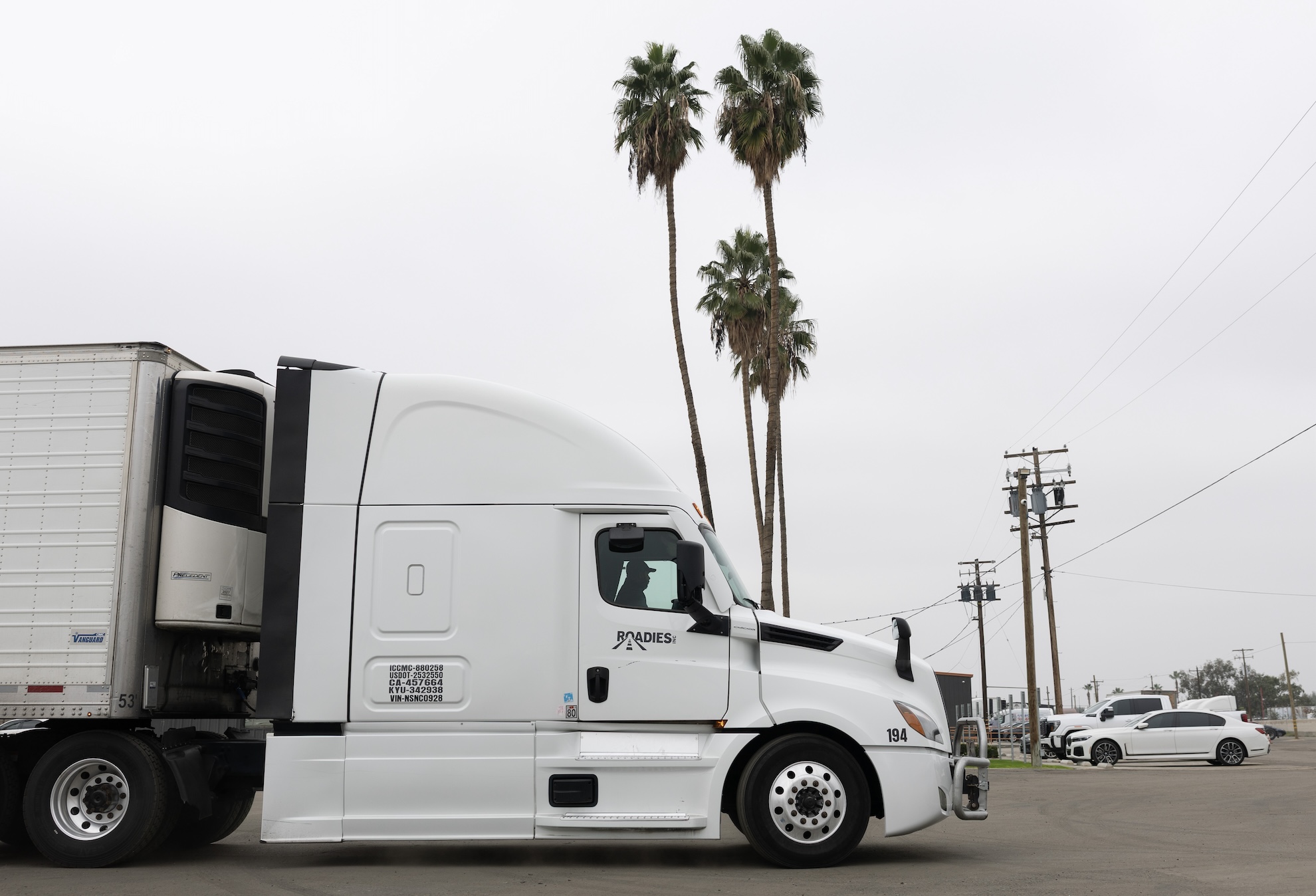
"caption": "A truck leaves for a delivery at Roadies Inc. in Bakersfield, CA on Saturday, Nov. 29, 2025. Avie Nagra, the CEO, says the license pause will affect about 100 of his 300 drivers. A California judge said she will oversee the DMV until it reissues corrected licenses to about 13,000 drivers, as federal actions threaten to push thousands of immigrant truck and bus drivers out of jobs.",
"credit": "Myung J. Chun/Los Angeles Times",
"altTag": null,
"description": null,
"imgSizes": {
"thumbnail": {
"file": "https://cdn.kqed.org/wp-content/uploads/sites/10/2026/04/GettyImages-2248825788-160x109.jpg",
"width": 160,
"height": 109,
"mimeType": "image/jpeg"
},
"1536x1536": {
"file": "https://cdn.kqed.org/wp-content/uploads/sites/10/2026/04/GettyImages-2248825788-1536x1046.jpg",
"width": 1536,
"height": 1046,
"mimeType": "image/jpeg"
},
"post-thumbnail": {
"file": "https://cdn.kqed.org/wp-content/uploads/sites/10/2026/04/GettyImages-2248825788-672x372.jpg",
"width": 672,
"height": 372,
"mimeType": "image/jpeg"
},
"twentyfourteen-full-width": {
"file": "https://cdn.kqed.org/wp-content/uploads/sites/10/2026/04/GettyImages-2248825788-1038x576.jpg",
"width": 1038,
"height": 576,
"mimeType": "image/jpeg"
},
"npr-cds-wide": {
"file": "https://cdn.kqed.org/wp-content/uploads/sites/10/2026/04/GettyImages-2248825788-1200x675.jpg",
"width": 1200,
"height": 675,
"mimeType": "image/jpeg"
},
"npr-cds-square": {
"file": "https://cdn.kqed.org/wp-content/uploads/sites/10/2026/04/GettyImages-2248825788-600x600.jpg",
"width": 600,
"height": 600,
"mimeType": "image/jpeg"
},
"kqedFullSize": {
"file": "https://cdn.kqed.org/wp-content/uploads/sites/10/2026/04/GettyImages-2248825788.jpg",
"width": 1980,
"height": 1348
}
},
"isLoading": false,
"fetchFailed": false
},
"news_12078506": {
"type": "attachments",
"id": "news_12078506",
"meta": {
"index": "attachments_1716263798",
"site": "news",
"id": "12078506",
"found": true
},
"title": "Escuela Popular in San José on Apr. 2, 2026.",
"publishDate": 1775163823,
"status": "inherit",
"parent": 0,
"modified": 1775163974,
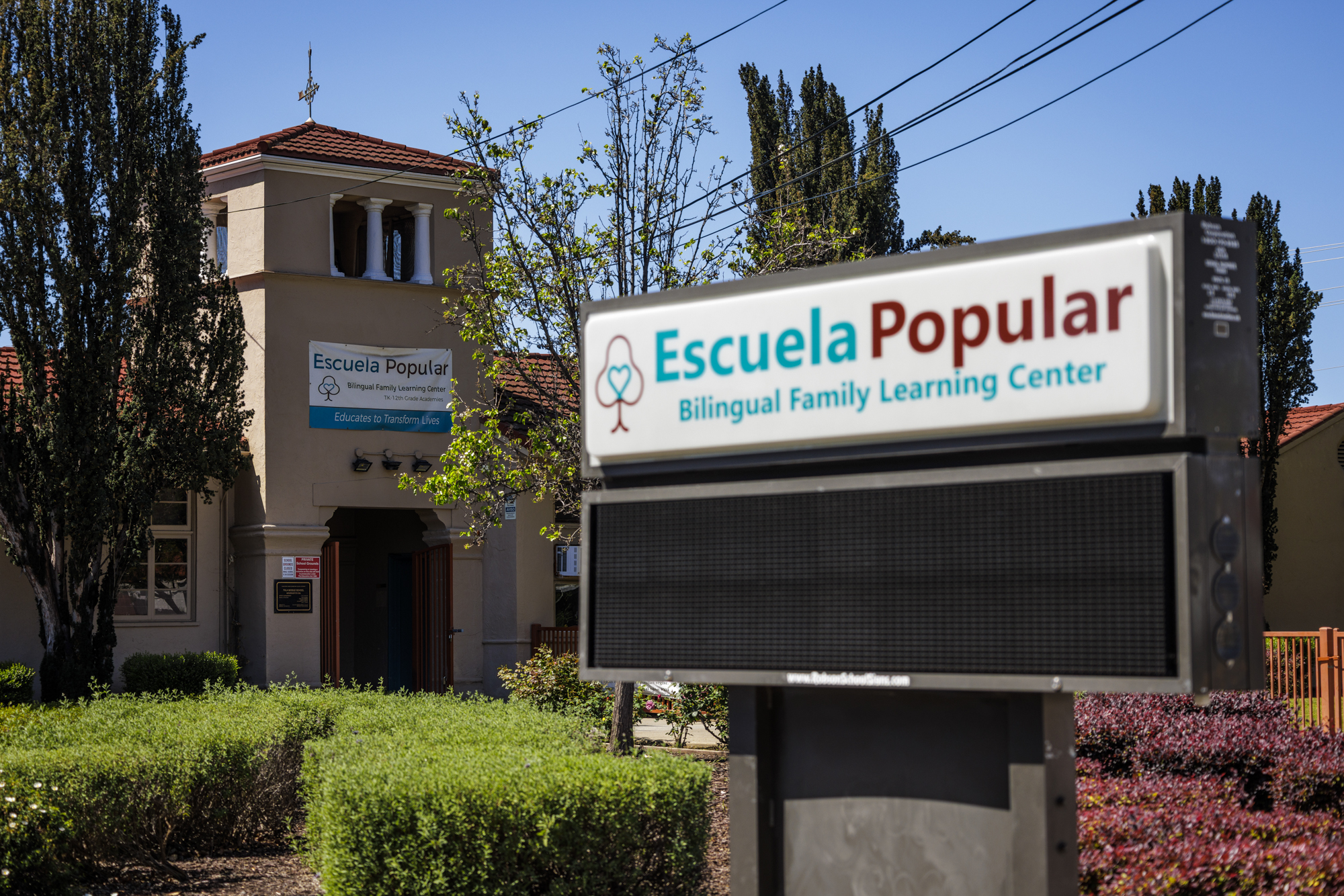
"caption": "Escuela Popular in San José on April 2, 2026.",
"credit": "Martin do Nascimento/KQED",
"altTag": null,
"description": null,
"imgSizes": {
"thumbnail": {
"file": "https://cdn.kqed.org/wp-content/uploads/sites/10/2026/04/260402-ESCUELA-POPULAR-MD-02-KQED-160x107.jpg",
"width": 160,
"height": 107,
"mimeType": "image/jpeg"
},
"1536x1536": {
"file": "https://cdn.kqed.org/wp-content/uploads/sites/10/2026/04/260402-ESCUELA-POPULAR-MD-02-KQED-1536x1025.jpg",
"width": 1536,
"height": 1025,
"mimeType": "image/jpeg"
},
"post-thumbnail": {
"file": "https://cdn.kqed.org/wp-content/uploads/sites/10/2026/04/260402-ESCUELA-POPULAR-MD-02-KQED-672x372.jpg",
"width": 672,
"height": 372,
"mimeType": "image/jpeg"
},
"twentyfourteen-full-width": {
"file": "https://cdn.kqed.org/wp-content/uploads/sites/10/2026/04/260402-ESCUELA-POPULAR-MD-02-KQED-1038x576.jpg",
"width": 1038,
"height": 576,
"mimeType": "image/jpeg"
},
"npr-cds-wide": {
"file": "https://cdn.kqed.org/wp-content/uploads/sites/10/2026/04/260402-ESCUELA-POPULAR-MD-02-KQED-1200x675.jpg",
"width": 1200,
"height": 675,
"mimeType": "image/jpeg"
},
"npr-cds-square": {
"file": "https://cdn.kqed.org/wp-content/uploads/sites/10/2026/04/260402-ESCUELA-POPULAR-MD-02-KQED-600x600.jpg",
"width": 600,
"height": 600,
"mimeType": "image/jpeg"
},
"kqedFullSize": {
"file": "https://cdn.kqed.org/wp-content/uploads/sites/10/2026/04/260402-ESCUELA-POPULAR-MD-02-KQED.jpg",
"width": 2000,
"height": 1334
}
},
"isLoading": false,
"fetchFailed": false
},
"news_12078484": {
"type": "attachments",
"id": "news_12078484",
"meta": {
"index": "attachments_1716263798",
"site": "news",
"id": "12078484",
"found": true
},
"title": "112018_AW_AlamedaCountyFood Bank_05_qed",
"publishDate": 1775157605,
"status": "inherit",
"parent": 12078390,
"modified": 1775157636,
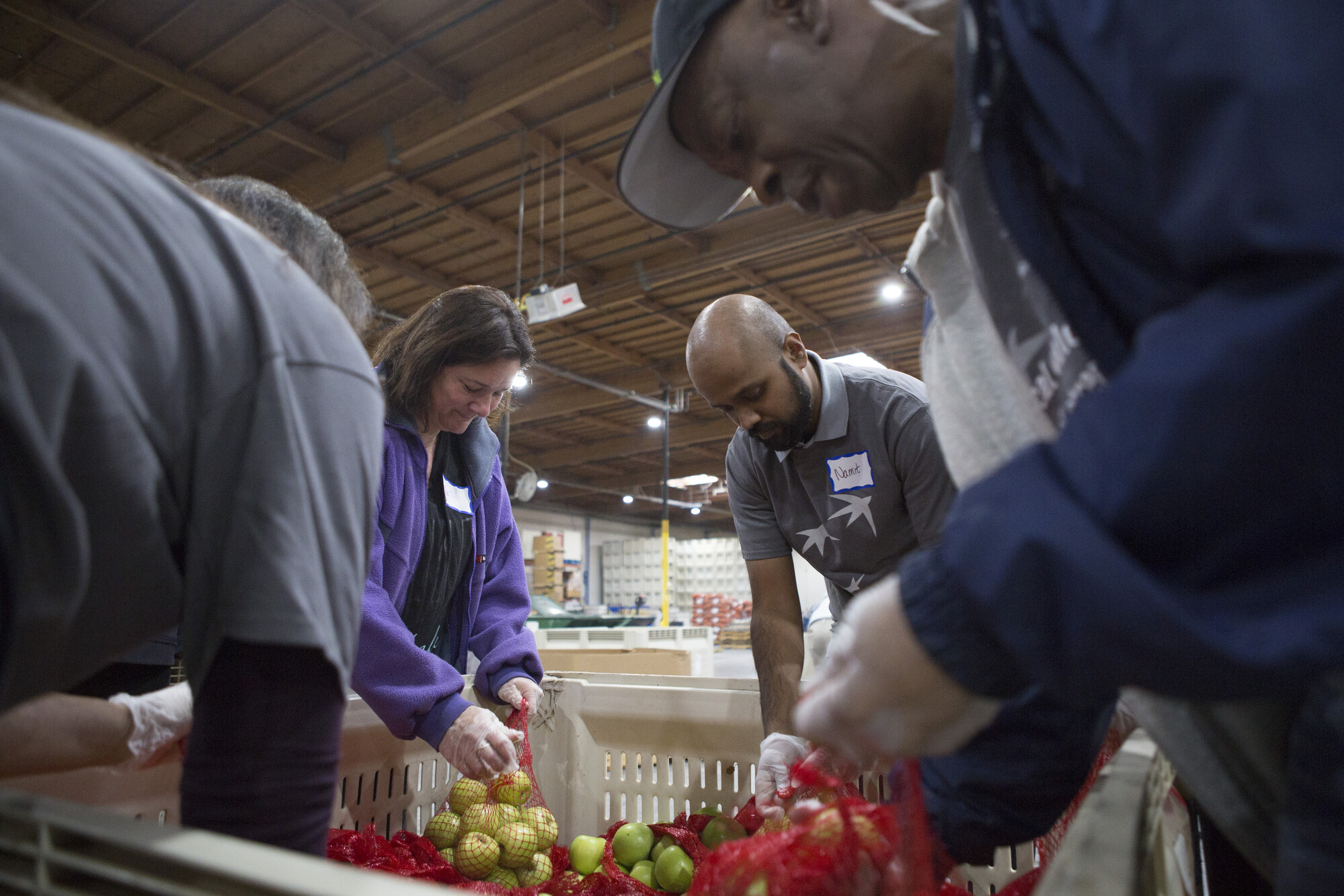
"caption": "Volunteers from Bank of the West and Boys Team Charity sort apples from the produce bins at the Alameda County Community Food Bank on Nov. 20, 2018. ",
"credit": "Anne Wernikoff/KQED",
"altTag": null,
"description": null,
"imgSizes": {
"thumbnail": {
"file": "https://cdn.kqed.org/wp-content/uploads/sites/10/2026/04/112018_AW_AlamedaCountyFood-Bank_05_qed-160x107.jpg",
"width": 160,
"height": 107,
"mimeType": "image/jpeg"
},
"1536x1536": {
"file": "https://cdn.kqed.org/wp-content/uploads/sites/10/2026/04/112018_AW_AlamedaCountyFood-Bank_05_qed-1536x1024.jpg",
"width": 1536,
"height": 1024,
"mimeType": "image/jpeg"
},
"post-thumbnail": {
"file": "https://cdn.kqed.org/wp-content/uploads/sites/10/2026/04/112018_AW_AlamedaCountyFood-Bank_05_qed-672x372.jpg",
"width": 672,
"height": 372,
"mimeType": "image/jpeg"
},
"twentyfourteen-full-width": {
"file": "https://cdn.kqed.org/wp-content/uploads/sites/10/2026/04/112018_AW_AlamedaCountyFood-Bank_05_qed-1038x576.jpg",
"width": 1038,
"height": 576,
"mimeType": "image/jpeg"
},
"npr-cds-wide": {
"file": "https://cdn.kqed.org/wp-content/uploads/sites/10/2026/04/112018_AW_AlamedaCountyFood-Bank_05_qed-1200x675.jpg",
"width": 1200,
"height": 675,
"mimeType": "image/jpeg"
},
"npr-cds-square": {
"file": "https://cdn.kqed.org/wp-content/uploads/sites/10/2026/04/112018_AW_AlamedaCountyFood-Bank_05_qed-600x600.jpg",
"width": 600,
"height": 600,
"mimeType": "image/jpeg"
},
"kqedFullSize": {
"file": "https://cdn.kqed.org/wp-content/uploads/sites/10/2026/04/112018_AW_AlamedaCountyFood-Bank_05_qed.jpg",
"width": 1999,
"height": 1333
}
},
"isLoading": false,
"fetchFailed": false
},
"news_12062564": {
"type": "attachments",
"id": "news_12062564",
"meta": {
"index": "attachments_1716263798",
"site": "news",
"id": "12062564",
"found": true
},
"title": "251031-SFMARINFOODBANK-11-BL-KQED",
"publishDate": 1761943580,
"status": "inherit",
"parent": 12062577,
"modified": 1761948469,
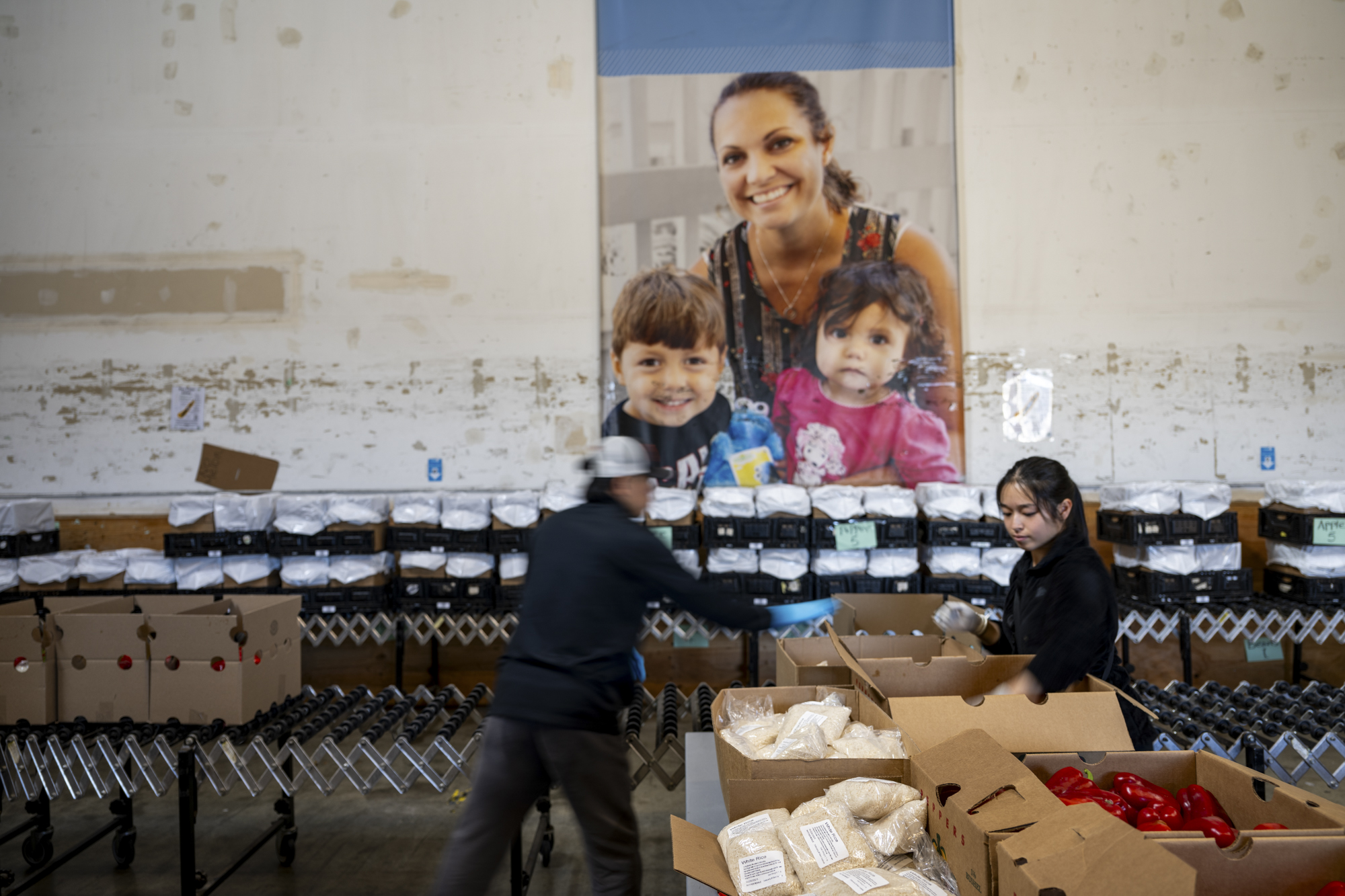
"caption": "Filmark Bernante (left) and Megan Feria sort fresh produce into boxes at the San Francisco‑Marin Food Bank warehouse in San Francisco on Oct. 31, 2025.",
"credit": "Beth LaBerge/KQED",
"altTag": null,
"description": null,
"imgSizes": {
"thumbnail": {
"file": "https://cdn.kqed.org/wp-content/uploads/sites/10/2025/10/251031-SFMARINFOODBANK-11-BL-KQED-160x107.jpg",
"width": 160,
"height": 107,
"mimeType": "image/jpeg"
},
"1536x1536": {
"file": "https://cdn.kqed.org/wp-content/uploads/sites/10/2025/10/251031-SFMARINFOODBANK-11-BL-KQED-1536x1024.jpg",
"width": 1536,
"height": 1024,
"mimeType": "image/jpeg"
},
"post-thumbnail": {
"file": "https://cdn.kqed.org/wp-content/uploads/sites/10/2025/10/251031-SFMARINFOODBANK-11-BL-KQED-672x372.jpg",
"width": 672,
"height": 372,
"mimeType": "image/jpeg"
},
"twentyfourteen-full-width": {
"file": "https://cdn.kqed.org/wp-content/uploads/sites/10/2025/10/251031-SFMARINFOODBANK-11-BL-KQED-1038x576.jpg",
"width": 1038,
"height": 576,
"mimeType": "image/jpeg"
},
"npr-cds-wide": {
"file": "https://cdn.kqed.org/wp-content/uploads/sites/10/2025/10/251031-SFMARINFOODBANK-11-BL-KQED-1200x675.jpg",
"width": 1200,
"height": 675,
"mimeType": "image/jpeg"
},
"kqedFullSize": {
"file": "https://cdn.kqed.org/wp-content/uploads/sites/10/2025/10/251031-SFMARINFOODBANK-11-BL-KQED.jpg",
"width": 2000,
"height": 1333
}
},
"isLoading": false,
"fetchFailed": false
},
"news_12078405": {
"type": "attachments",
"id": "news_12078405",
"meta": {
"index": "attachments_1716263798",
"site": "news",
"id": "12078405",
"found": true
},
"title": "US-POLITICS-TRUMP-SCOTUS-CITIZENSHIP",
"publishDate": 1775079746,
"status": "inherit",
"parent": 12078171,
"modified": 1775079793,
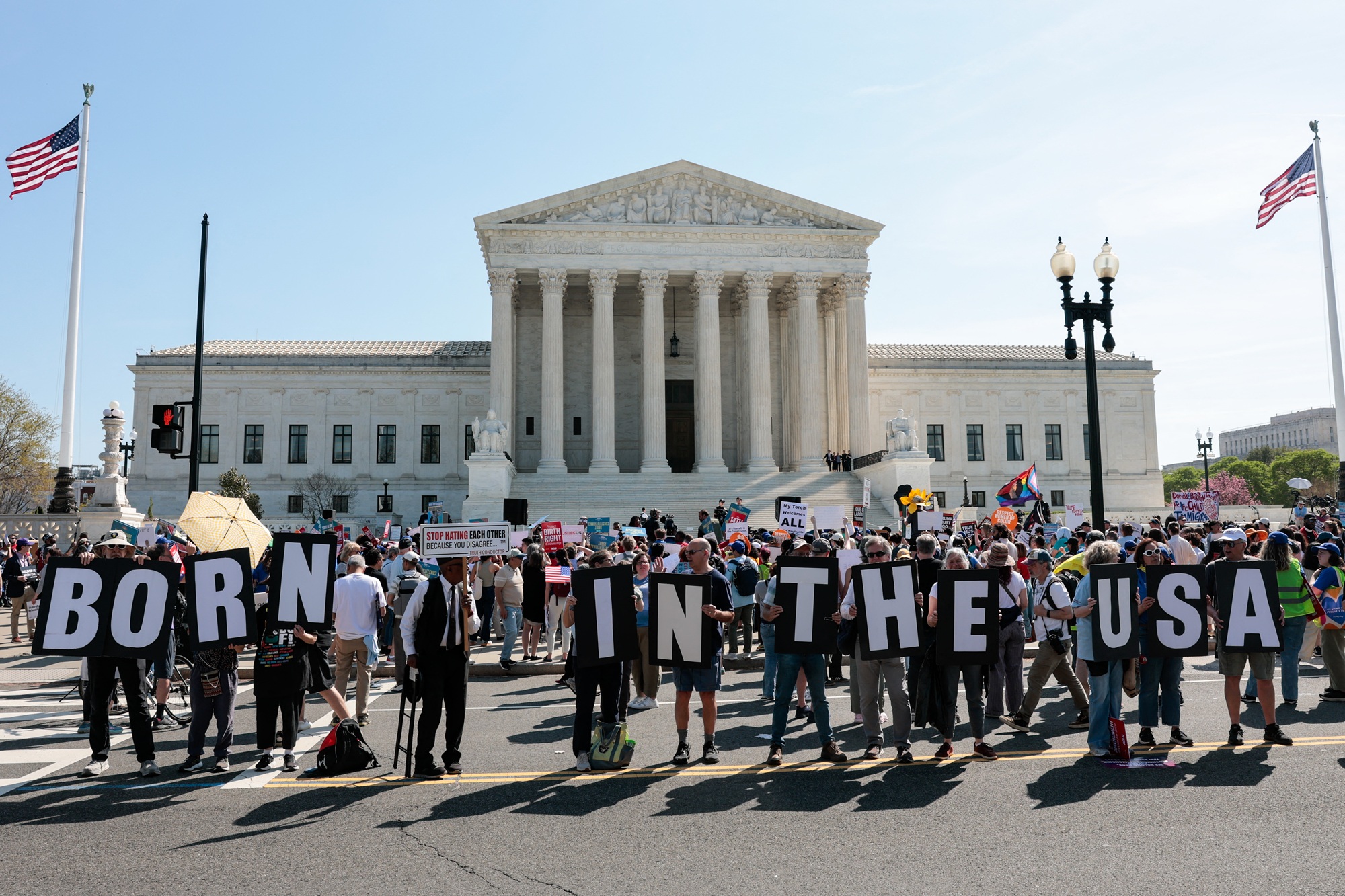
"caption": "Demonstrators rally in support of birthright citizenship outside the U.S. Supreme Court as President Donald Trump attends oral arguments in Washington, D.C. on April 1, 2026. President Donald Trump is watching in person as the US Supreme Court hears a landmark case weighing the constitutionality of his contentious bid to end birthright citizenship, an extraordinary and possibly unprecedented move for the nation's highest office. ",
"credit": "Kent Nishimura/AFP via Getty Images",
"altTag": null,
"description": null,
"imgSizes": {
"thumbnail": {
"file": "https://cdn.kqed.org/wp-content/uploads/sites/10/2026/04/BirthrightCitizenshipGetty4-160x107.jpg",
"width": 160,
"height": 107,
"mimeType": "image/jpeg"
},
"1536x1536": {
"file": "https://cdn.kqed.org/wp-content/uploads/sites/10/2026/04/BirthrightCitizenshipGetty4-1536x1024.jpg",
"width": 1536,
"height": 1024,
"mimeType": "image/jpeg"
},
"post-thumbnail": {
"file": "https://cdn.kqed.org/wp-content/uploads/sites/10/2026/04/BirthrightCitizenshipGetty4-672x372.jpg",
"width": 672,
"height": 372,
"mimeType": "image/jpeg"
},
"twentyfourteen-full-width": {
"file": "https://cdn.kqed.org/wp-content/uploads/sites/10/2026/04/BirthrightCitizenshipGetty4-1038x576.jpg",
"width": 1038,
"height": 576,
"mimeType": "image/jpeg"
},
"npr-cds-wide": {
"file": "https://cdn.kqed.org/wp-content/uploads/sites/10/2026/04/BirthrightCitizenshipGetty4-1200x675.jpg",
"width": 1200,
"height": 675,
"mimeType": "image/jpeg"
},
"npr-cds-square": {
"file": "https://cdn.kqed.org/wp-content/uploads/sites/10/2026/04/BirthrightCitizenshipGetty4-600x600.jpg",
"width": 600,
"height": 600,
"mimeType": "image/jpeg"
},
"kqedFullSize": {
"file": "https://cdn.kqed.org/wp-content/uploads/sites/10/2026/04/BirthrightCitizenshipGetty4.jpg",
"width": 2000,
"height": 1333
}
},
"isLoading": false,
"fetchFailed": false
},
"news_12078178": {
"type": "attachments",
"id": "news_12078178",
"meta": {
"index": "attachments_1716263798",
"site": "news",
"id": "12078178",
"found": true
},
"title": "Mother holding her baby in her arms",
"publishDate": 1774980967,
"status": "inherit",
"parent": 12078161,
"modified": 1774981014,
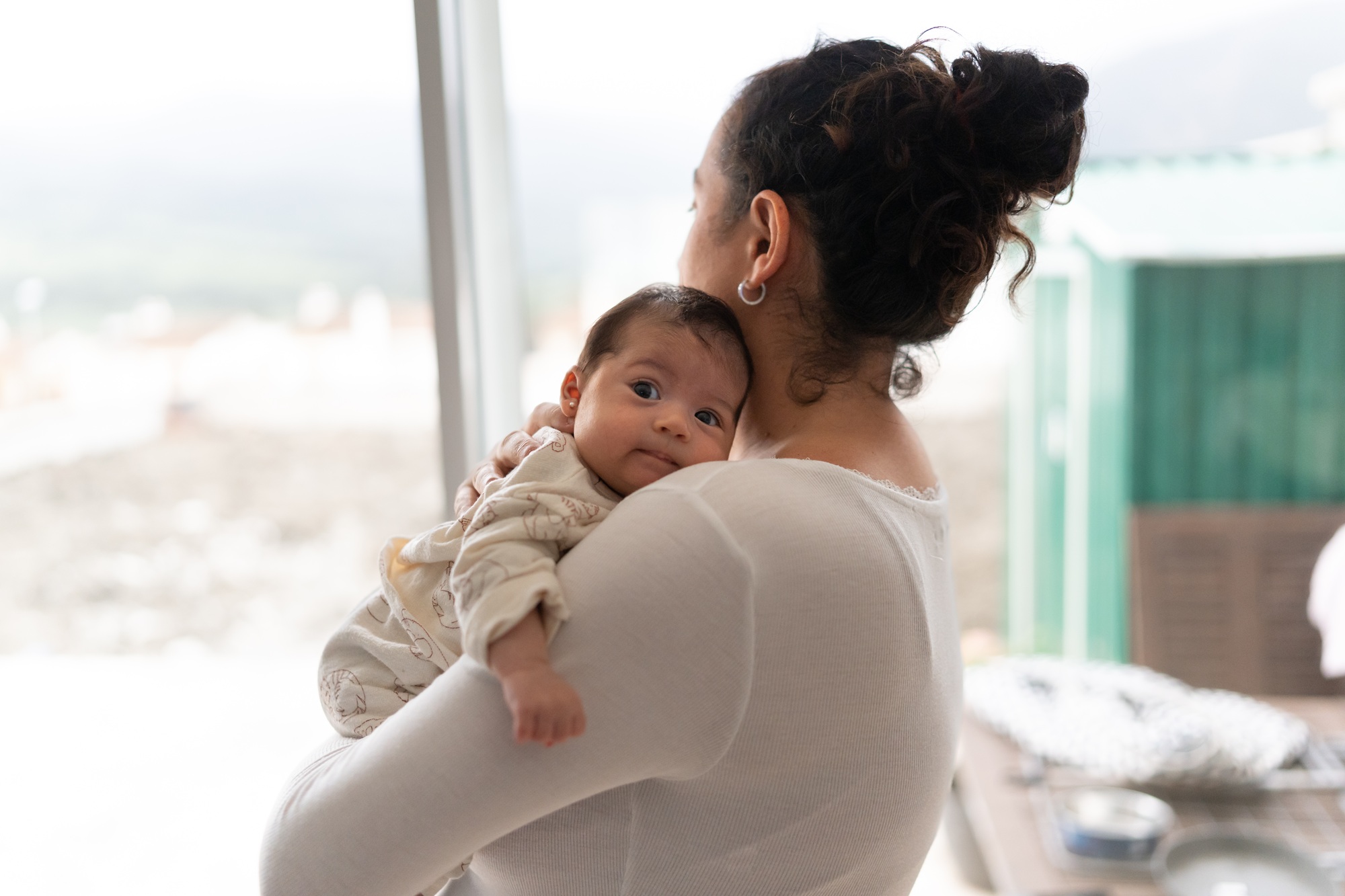
"caption": "A mother looking out the window while holding the baby in her arms.",
"credit": "Rawl Stock/Getty Images",
"altTag": null,
"description": null,
"imgSizes": {
"thumbnail": {
"file": "https://cdn.kqed.org/wp-content/uploads/sites/10/2026/03/BirthrightCitizenshipGetty1-160x107.jpg",
"width": 160,
"height": 107,
"mimeType": "image/jpeg"
},
"1536x1536": {
"file": "https://cdn.kqed.org/wp-content/uploads/sites/10/2026/03/BirthrightCitizenshipGetty1-1536x1024.jpg",
"width": 1536,
"height": 1024,
"mimeType": "image/jpeg"
},
"post-thumbnail": {
"file": "https://cdn.kqed.org/wp-content/uploads/sites/10/2026/03/BirthrightCitizenshipGetty1-672x372.jpg",
"width": 672,
"height": 372,
"mimeType": "image/jpeg"
},
"twentyfourteen-full-width": {
"file": "https://cdn.kqed.org/wp-content/uploads/sites/10/2026/03/BirthrightCitizenshipGetty1-1038x576.jpg",
"width": 1038,
"height": 576,
"mimeType": "image/jpeg"
},
"npr-cds-wide": {
"file": "https://cdn.kqed.org/wp-content/uploads/sites/10/2026/03/BirthrightCitizenshipGetty1-1200x675.jpg",
"width": 1200,
"height": 675,
"mimeType": "image/jpeg"
},
"npr-cds-square": {
"file": "https://cdn.kqed.org/wp-content/uploads/sites/10/2026/03/BirthrightCitizenshipGetty1-600x600.jpg",
"width": 600,
"height": 600,
"mimeType": "image/jpeg"
},
"kqedFullSize": {
"file": "https://cdn.kqed.org/wp-content/uploads/sites/10/2026/03/BirthrightCitizenshipGetty1.jpg",
"width": 2000,
"height": 1333
}
},
"isLoading": false,
"fetchFailed": false
},
"news_12077941": {
"type": "attachments",
"id": "news_12077941",
"meta": {
"index": "attachments_1716263798",
"site": "news",
"id": "12077941",
"found": true
},
"title": "TSA LINES",
"publishDate": 1774652697,
"status": "inherit",
"parent": 12077938,
"modified": 1774652706,
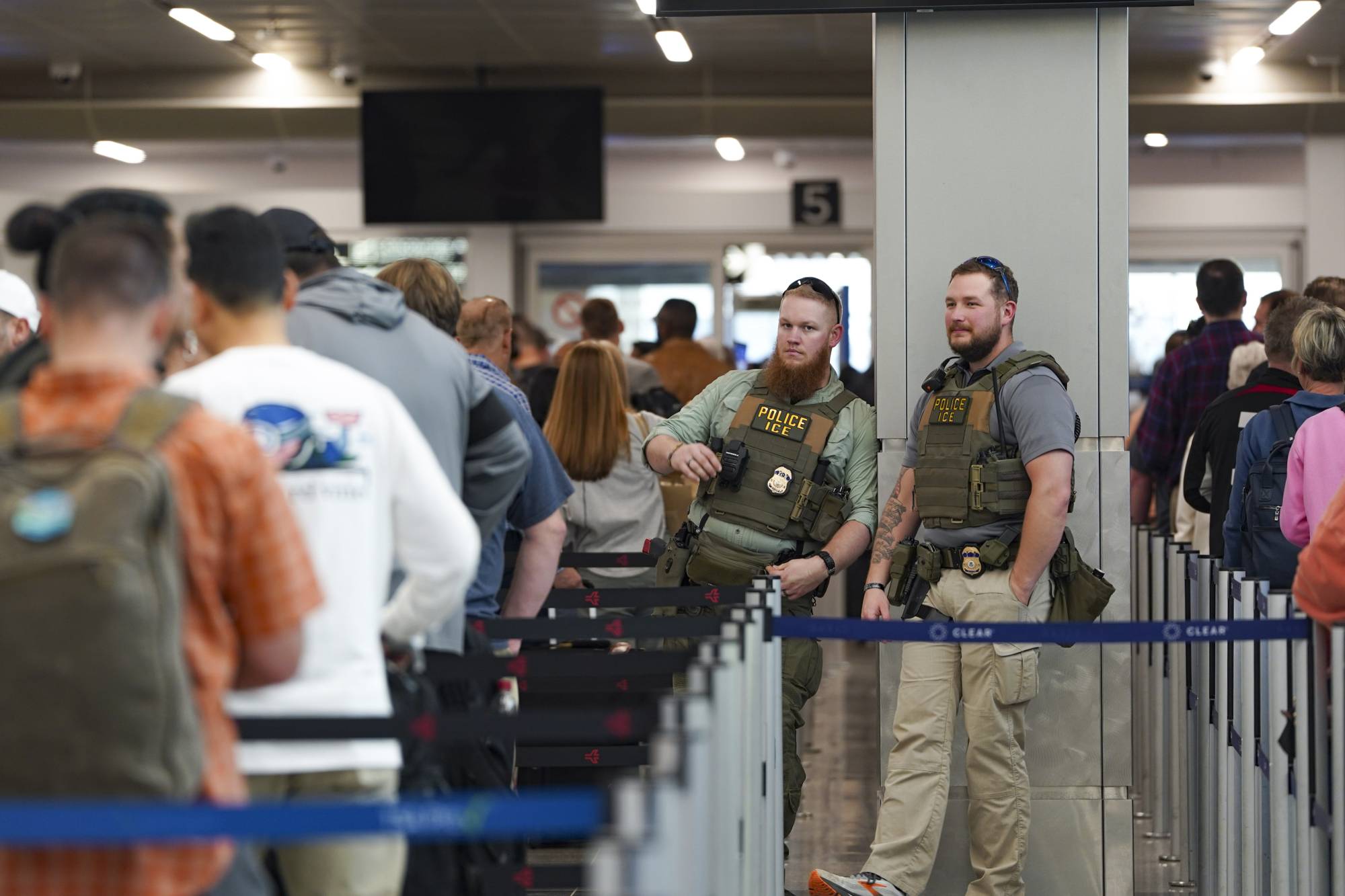
"caption": "Agentes de ICE se encuentran junto a la fila de seguridad en el Aeropuerto Internacional Hartsfield-Jackson de Atlanta el 23 de marzo de 2026 en Atlanta, Georgia. Las perturbaciones en los viajes continúan, ya que cientos de agentes de la TSA han dimitido o trabajan sin cobrar durante un cierre parcial del Gobierno. El presidente de EE. UU., Donald Trump, ha anunciado que el lunes se desplegarán agentes de ICE en los aeropuertos estadounidenses, bajo la dirección del responsable de fronteras, Tom Homan.",
"credit": null,
"altTag": null,
"description": null,
"imgSizes": {
"thumbnail": {
"file": "https://cdn.kqed.org/wp-content/uploads/sites/10/2026/03/TSA-LINES-160x107.jpg",
"width": 160,
"height": 107,
"mimeType": "image/jpeg"
},
"1536x1536": {
"file": "https://cdn.kqed.org/wp-content/uploads/sites/10/2026/03/TSA-LINES-1536x1024.jpg",
"width": 1536,
"height": 1024,
"mimeType": "image/jpeg"
},
"post-thumbnail": {
"file": "https://cdn.kqed.org/wp-content/uploads/sites/10/2026/03/TSA-LINES-672x372.jpg",
"width": 672,
"height": 372,
"mimeType": "image/jpeg"
},
"twentyfourteen-full-width": {
"file": "https://cdn.kqed.org/wp-content/uploads/sites/10/2026/03/TSA-LINES-1038x576.jpg",
"width": 1038,
"height": 576,
"mimeType": "image/jpeg"
},
"npr-cds-wide": {
"file": "https://cdn.kqed.org/wp-content/uploads/sites/10/2026/03/TSA-LINES-1200x675.jpg",
"width": 1200,
"height": 675,
"mimeType": "image/jpeg"
},
"npr-cds-square": {
"file": "https://cdn.kqed.org/wp-content/uploads/sites/10/2026/03/TSA-LINES-600x600.jpg",
"width": 600,
"height": 600,
"mimeType": "image/jpeg"
},
"kqedFullSize": {
"file": "https://cdn.kqed.org/wp-content/uploads/sites/10/2026/03/TSA-LINES.jpg",
"width": 2000,
"height": 1333
}
},
"isLoading": false,
"fetchFailed": false
},
"news_12073780": {
"type": "attachments",
"id": "news_12073780",
"meta": {
"index": "attachments_1716263798",
"site": "news",
"id": "12073780",
"found": true
},
"title": "ICE Raid At Southern California Farm Sparks Protests",
"publishDate": 1771461614,
"status": "inherit",
"parent": 12073728,
"modified": 1776964377,
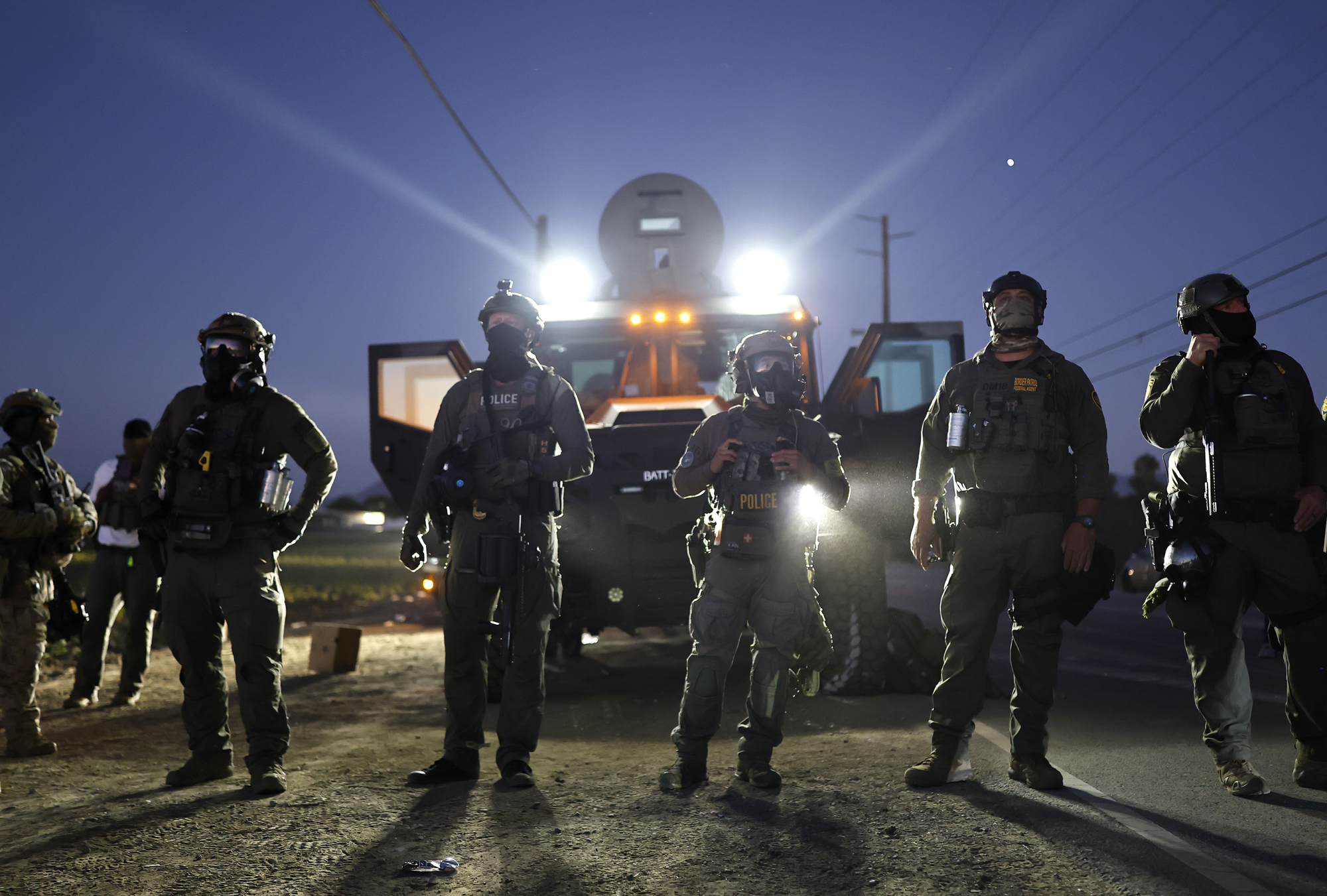
"caption": "Federal agents at an immigration raid near Camarillo in Southern California on July 10, 2025.",
"credit": "Mario Tama/Getty Images",
"altTag": null,
"description": null,
"imgSizes": {
"thumbnail": {
"file": "https://cdn.kqed.org/wp-content/uploads/sites/10/2026/02/GETTYIMAGES-2224603707-KQED-160x108.jpg",
"width": 160,
"height": 108,
"mimeType": "image/jpeg"
},
"1536x1536": {
"file": "https://cdn.kqed.org/wp-content/uploads/sites/10/2026/02/GETTYIMAGES-2224603707-KQED-1536x1038.jpg",
"width": 1536,
"height": 1038,
"mimeType": "image/jpeg"
},
"post-thumbnail": {
"file": "https://cdn.kqed.org/wp-content/uploads/sites/10/2026/02/GETTYIMAGES-2224603707-KQED-672x372.jpg",
"width": 672,
"height": 372,
"mimeType": "image/jpeg"
},
"twentyfourteen-full-width": {
"file": "https://cdn.kqed.org/wp-content/uploads/sites/10/2026/02/GETTYIMAGES-2224603707-KQED-1038x576.jpg",
"width": 1038,
"height": 576,
"mimeType": "image/jpeg"
},
"npr-cds-wide": {
"file": "https://cdn.kqed.org/wp-content/uploads/sites/10/2026/02/GETTYIMAGES-2224603707-KQED-1200x675.jpg",
"width": 1200,
"height": 675,
"mimeType": "image/jpeg"
},
"kqedFullSize": {
"file": "https://cdn.kqed.org/wp-content/uploads/sites/10/2026/02/GETTYIMAGES-2224603707-KQED.jpg",
"width": 2000,
"height": 1351
}
},
"isLoading": false,
"fetchFailed": false
},
"news_12072113": {
"type": "attachments",
"id": "news_12072113",
"meta": {
"index": "attachments_1716263798",
"site": "news",
"id": "12072113",
"found": true
},
"title": "260203-TEEN SHOOTING ARREST-MD-10-KQED-1",
"publishDate": 1770154993,
"status": "inherit",
"parent": 12073229,
"modified": 1770940522,
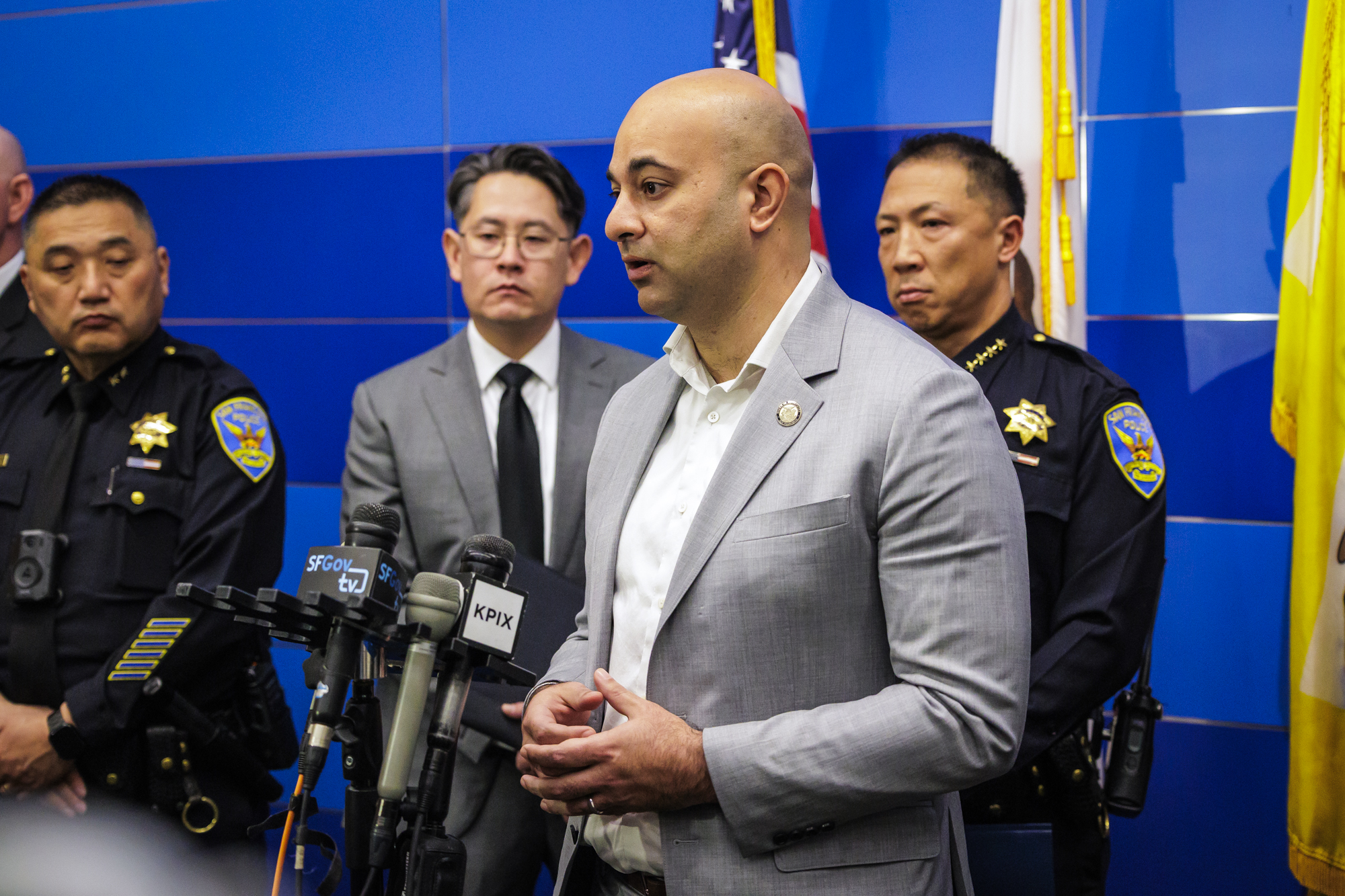
"caption": "San Francisco Supervisor Bilal Mahmood addresses the press at SFPD Headquarters in San Francisco on Feb. 3, 2026.",
"credit": "Martin do Nascimento/KQED",
"altTag": null,
"description": null,
"imgSizes": {
"thumbnail": {
"file": "https://cdn.kqed.org/wp-content/uploads/sites/10/2026/02/260203-TEEN-SHOOTING-ARREST-MD-10-KQED-1-160x107.jpg",
"width": 160,
"height": 107,
"mimeType": "image/jpeg"
},
"1536x1536": {
"file": "https://cdn.kqed.org/wp-content/uploads/sites/10/2026/02/260203-TEEN-SHOOTING-ARREST-MD-10-KQED-1-1536x1024.jpg",
"width": 1536,
"height": 1024,
"mimeType": "image/jpeg"
},
"post-thumbnail": {
"file": "https://cdn.kqed.org/wp-content/uploads/sites/10/2026/02/260203-TEEN-SHOOTING-ARREST-MD-10-KQED-1-672x372.jpg",
"width": 672,
"height": 372,
"mimeType": "image/jpeg"
},
"twentyfourteen-full-width": {
"file": "https://cdn.kqed.org/wp-content/uploads/sites/10/2026/02/260203-TEEN-SHOOTING-ARREST-MD-10-KQED-1-1038x576.jpg",
"width": 1038,
"height": 576,
"mimeType": "image/jpeg"
},
"npr-cds-wide": {
"file": "https://cdn.kqed.org/wp-content/uploads/sites/10/2026/02/260203-TEEN-SHOOTING-ARREST-MD-10-KQED-1-1200x675.jpg",
"width": 1200,
"height": 675,
"mimeType": "image/jpeg"
},
"kqedFullSize": {
"file": "https://cdn.kqed.org/wp-content/uploads/sites/10/2026/02/260203-TEEN-SHOOTING-ARREST-MD-10-KQED-1.jpg",
"width": 2000,
"height": 1333
}
},
"isLoading": false,
"fetchFailed": false
},
"news_12078016": {
"type": "attachments",
"id": "news_12078016",
"meta": {
"index": "attachments_1716263798",
"site": "news",
"id": "12078016",
"found": true
},
"title": "022026_Padilla-Otay-Mesa_AH_08_CM_scr",
"publishDate": 1774823289,
"status": "inherit",
"parent": 12078010,
"modified": 1778870896,
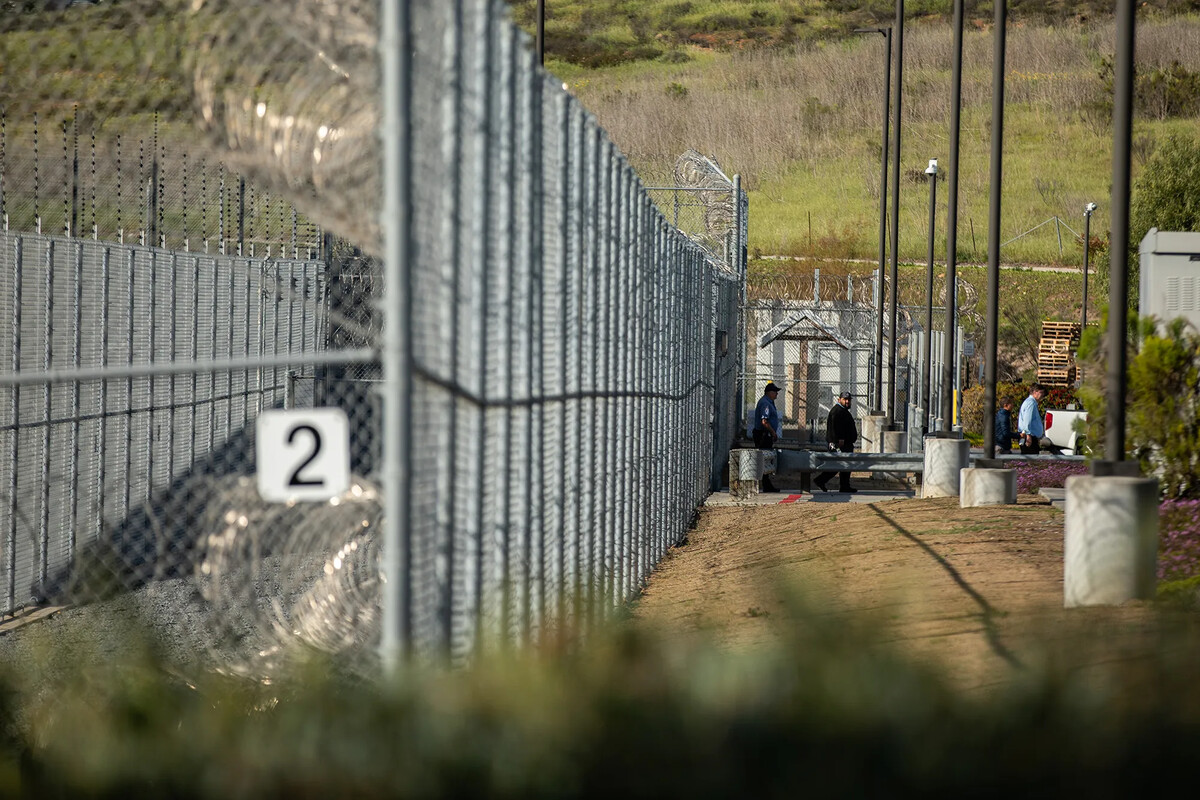
"caption": "People walk out the main entrance of the Otay Mesa Detention Center in San Diego on Feb. 20, 2026.",
"credit": "Adriana Heldiz/CalMatters",
"altTag": null,
"description": null,
"imgSizes": {
"thumbnail": {
"file": "https://cdn.kqed.org/wp-content/uploads/sites/10/2026/03/022026_Padilla-Otay-Mesa_AH_08_CM_scr-160x107.jpg",
"width": 160,
"height": 107,
"mimeType": "image/jpeg"
},
"post-thumbnail": {
"file": "https://cdn.kqed.org/wp-content/uploads/sites/10/2026/03/022026_Padilla-Otay-Mesa_AH_08_CM_scr-672x372.jpg",
"width": 672,
"height": 372,
"mimeType": "image/jpeg"
},
"twentyfourteen-full-width": {
"file": "https://cdn.kqed.org/wp-content/uploads/sites/10/2026/03/022026_Padilla-Otay-Mesa_AH_08_CM_scr-1038x576.jpg",
"width": 1038,
"height": 576,
"mimeType": "image/jpeg"
},
"npr-cds-wide": {
"file": "https://cdn.kqed.org/wp-content/uploads/sites/10/2026/03/022026_Padilla-Otay-Mesa_AH_08_CM_scr-1200x675.jpg",
"width": 1200,
"height": 675,
"mimeType": "image/jpeg"
},
"npr-cds-square": {
"file": "https://cdn.kqed.org/wp-content/uploads/sites/10/2026/03/022026_Padilla-Otay-Mesa_AH_08_CM_scr-600x600.jpg",
"width": 600,
"height": 600,
"mimeType": "image/jpeg"
},
"kqedFullSize": {
"file": "https://cdn.kqed.org/wp-content/uploads/sites/10/2026/03/022026_Padilla-Otay-Mesa_AH_08_CM_scr.jpg",
"width": 1200,
"height": 800
}
},
"isLoading": false,
"fetchFailed": false
},
"news_12074618": {
"type": "attachments",
"id": "news_12074618",
"meta": {
"index": "attachments_1716263798",
"site": "news",
"id": "12074618",
"found": true
},
"title": "260219-SUNNYVALEDEPORTED-02-BL-KQED",
"publishDate": 1772053519,
"status": "inherit",
"parent": 12075152,
"modified": 1772586436,
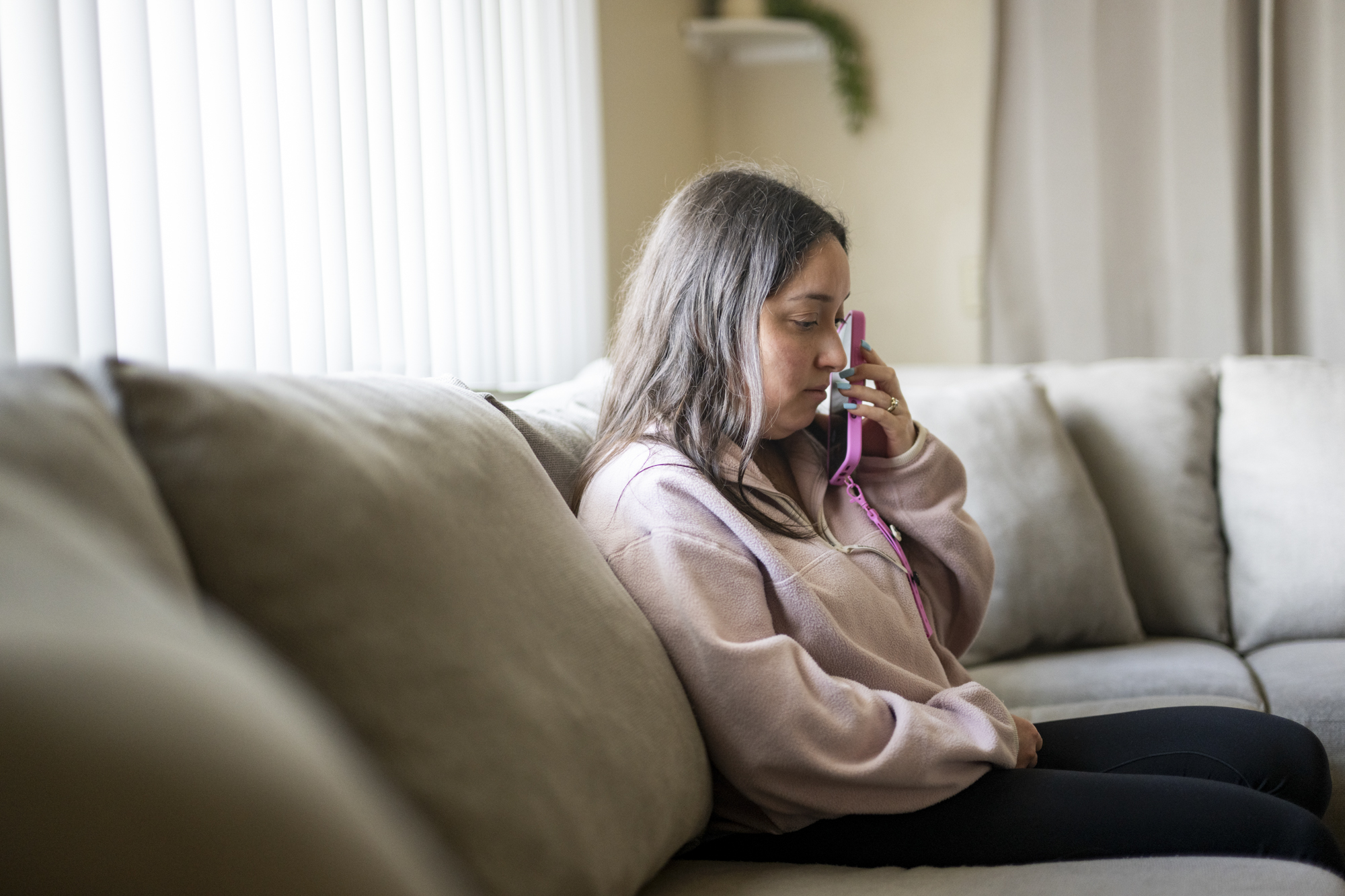
"caption": "Aby Peña speaks by phone with her husband, Ulises Peña Lopez, from their home in Sunnyvale on Feb. 19, 2026. Peña Lopez was deported to Mexico after being taken into ICE custody outside their home in February 2025, leaving his wife and young daughter in the Bay Area.",
"credit": "Beth LaBerge/KQED",
"altTag": null,
"description": null,
"imgSizes": {
"thumbnail": {
"file": "https://cdn.kqed.org/wp-content/uploads/sites/10/2026/02/260219-SUNNYVALEDEPORTED-02-BL-KQED-160x107.jpg",
"width": 160,
"height": 107,
"mimeType": "image/jpeg"
},
"1536x1536": {
"file": "https://cdn.kqed.org/wp-content/uploads/sites/10/2026/02/260219-SUNNYVALEDEPORTED-02-BL-KQED-1536x1024.jpg",
"width": 1536,
"height": 1024,
"mimeType": "image/jpeg"
},
"post-thumbnail": {
"file": "https://cdn.kqed.org/wp-content/uploads/sites/10/2026/02/260219-SUNNYVALEDEPORTED-02-BL-KQED-672x372.jpg",
"width": 672,
"height": 372,
"mimeType": "image/jpeg"
},
"twentyfourteen-full-width": {
"file": "https://cdn.kqed.org/wp-content/uploads/sites/10/2026/02/260219-SUNNYVALEDEPORTED-02-BL-KQED-1038x576.jpg",
"width": 1038,
"height": 576,
"mimeType": "image/jpeg"
},
"npr-cds-wide": {
"file": "https://cdn.kqed.org/wp-content/uploads/sites/10/2026/02/260219-SUNNYVALEDEPORTED-02-BL-KQED-1200x675.jpg",
"width": 1200,
"height": 675,
"mimeType": "image/jpeg"
},
"kqedFullSize": {
"file": "https://cdn.kqed.org/wp-content/uploads/sites/10/2026/02/260219-SUNNYVALEDEPORTED-02-BL-KQED.jpg",
"width": 2000,
"height": 1333
}
},
"isLoading": false,
"fetchFailed": false
},
"news_12077661": {
"type": "attachments",
"id": "news_12077661",
"meta": {
"index": "attachments_1716263798",
"site": "news",
"id": "12077661",
"found": true
},
"title": "020_Antioch_AngeloQuintoMemorial_03102021_qed",
"publishDate": 1774550525,
"status": "inherit",
"parent": 12077656,
"modified": 1774550600,
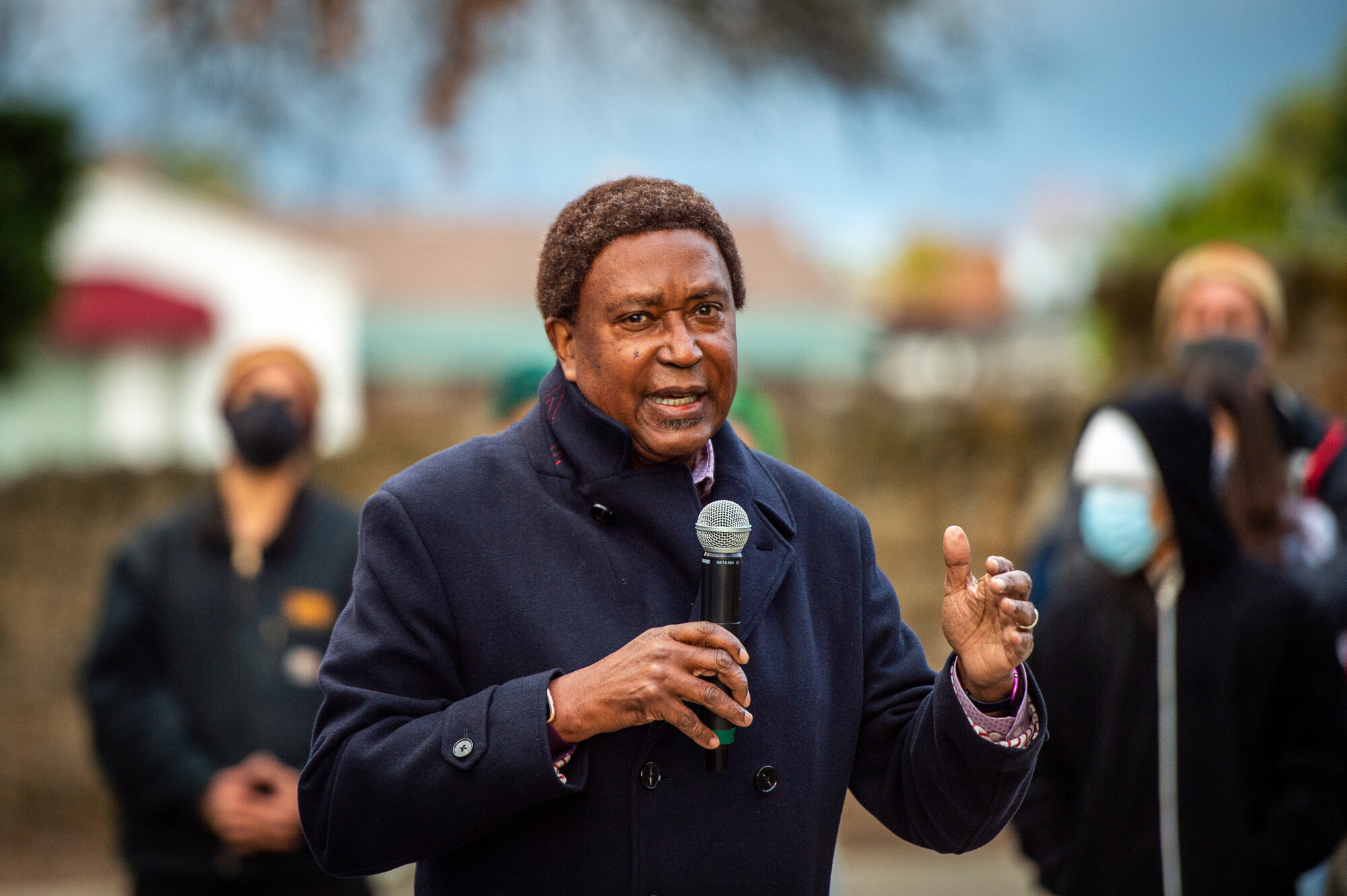
"caption": "Attorney John Burris speaks during a candlelight vigil in remembrance of Angelo Quinto at Antioch City Park on March 10, 2021. ",
"credit": "Beth LaBerge/KQED",
"altTag": null,
"description": null,
"imgSizes": {
"thumbnail": {
"file": "https://cdn.kqed.org/wp-content/uploads/sites/10/2026/03/020_Antioch_AngeloQuintoMemorial_03102021_qed-160x106.jpg",
"width": 160,
"height": 106,
"mimeType": "image/jpeg"
},
"1536x1536": {
"file": "https://cdn.kqed.org/wp-content/uploads/sites/10/2026/03/020_Antioch_AngeloQuintoMemorial_03102021_qed-1536x1022.jpg",
"width": 1536,
"height": 1022,
"mimeType": "image/jpeg"
},
"post-thumbnail": {
"file": "https://cdn.kqed.org/wp-content/uploads/sites/10/2026/03/020_Antioch_AngeloQuintoMemorial_03102021_qed-672x372.jpg",
"width": 672,
"height": 372,
"mimeType": "image/jpeg"
},
"twentyfourteen-full-width": {
"file": "https://cdn.kqed.org/wp-content/uploads/sites/10/2026/03/020_Antioch_AngeloQuintoMemorial_03102021_qed-1038x576.jpg",
"width": 1038,
"height": 576,
"mimeType": "image/jpeg"
},
"npr-cds-wide": {
"file": "https://cdn.kqed.org/wp-content/uploads/sites/10/2026/03/020_Antioch_AngeloQuintoMemorial_03102021_qed-1200x675.jpg",
"width": 1200,
"height": 675,
"mimeType": "image/jpeg"
},
"npr-cds-square": {
"file": "https://cdn.kqed.org/wp-content/uploads/sites/10/2026/03/020_Antioch_AngeloQuintoMemorial_03102021_qed-600x600.jpg",
"width": 600,
"height": 600,
"mimeType": "image/jpeg"
},
"kqedFullSize": {
"file": "https://cdn.kqed.org/wp-content/uploads/sites/10/2026/03/020_Antioch_AngeloQuintoMemorial_03102021_qed.jpg",
"width": 2000,
"height": 1331
}
},
"isLoading": false,
"fetchFailed": false
}
},
"audioPlayerReducer": {
"postId": "stream_live",
"isPaused": true,
"isPlaying": false,
"pfsActive": false,
"pledgeModalIsOpen": true,
"playerDrawerIsOpen": false,
"liveAudioPlayStartedAt": 0,
"liveAudioPlayContext": ""
},
"authorsReducer": {
"byline_news_12078084": {
"type": "authors",
"id": "byline_news_12078084",
"meta": {
"override": true
},
"slug": "byline_news_12078084",
"name": "Sergio Olmos, CalMatters",
"isLoading": false
},
"byline_news_12078010": {
"type": "authors",
"id": "byline_news_12078010",
"meta": {
"override": true
},
"slug": "byline_news_12078010",
"name": "Wendy Fry and Nigel Duara, CalMatters",
"isLoading": false
},
"tychehendricks": {
"type": "authors",
"id": "259",
"meta": {
"index": "authors_1716337520",
"id": "259",
"found": true
},
"name": "Tyche Hendricks",
"firstName": "Tyche",
"lastName": "Hendricks",
"slug": "tychehendricks",
"email": "thendricks@kqed.org",
"display_author_email": true,
"staff_mastheads": [
"news"
],
"title": "KQED Senior Editor, Immigration",
"bio": "\u003cspan style=\"font-weight: 400;\">Tyche Hendricks is KQED’s senior editor for immigration, leading coverage of the policy and politics that affect California’s immigrant communities. Her work for KQED’s radio and online audiences is also carried on NPR and other national outlets. She has been recognized with awards from the Radio and Television News Directors Association, the Society for Professional Journalists; the Education Writers Association; the Best of the West and the National Federation of Community Broadcasters. Before joining KQED in 2010, Tyche spent more than a dozen years as a newspaper reporter, notably at the \u003c/span>\u003ci>\u003cspan style=\"font-weight: 400;\">San Francisco Chronicle\u003c/span>\u003c/i>\u003cspan style=\"font-weight: 400;\">. At different times she has covered criminal justice, government and politics and urban planning. Tyche has taught in the MFA Creative Writing program at the University of San Francisco and at UC Berkeley’s Graduate School of Journalism, where she was co-director of a national immigration symposium for professional journalists. She is the author of \u003c/span>\u003ci>\u003cspan style=\"font-weight: 400;\">The Wind Doesn't Need a Passport: Stories from the U.S.-Mexico Borderlands\u003c/span>\u003c/i>\u003cspan style=\"font-weight: 400;\"> (University of California Press). \u003c/span>",
"avatar": "https://secure.gravatar.com/avatar/b8ee458e2731c2d43df86882ce17267e?s=600&d=blank&r=g",
"twitter": "tychehendricks",
"facebook": null,
"instagram": null,
"linkedin": null,
"sites": [
{
"site": "news",
"roles": [
"editor"
]
},
{
"site": "stateofhealth",
"roles": [
"editor"
]
}
],
"headData": {
"title": "Tyche Hendricks | KQED",
"description": "KQED Senior Editor, Immigration",
"ogImgSrc": "https://secure.gravatar.com/avatar/b8ee458e2731c2d43df86882ce17267e?s=600&d=blank&r=g",
"twImgSrc": "https://secure.gravatar.com/avatar/b8ee458e2731c2d43df86882ce17267e?s=600&d=blank&r=g"
},
"isLoading": false,
"link": "/author/tychehendricks"
},
"ecruzguevarra": {
"type": "authors",
"id": "8654",
"meta": {
"index": "authors_1716337520",
"id": "8654",
"found": true
},
"name": "Ericka Cruz Guevarra",
"firstName": "Ericka",
"lastName": "Cruz Guevarra",
"slug": "ecruzguevarra",
"email": "ecruzguevarra@kqed.org",
"display_author_email": true,
"staff_mastheads": [
"news"
],
"title": "Producer, The Bay Podcast",
"bio": "Ericka Cruz Guevarra is host of \u003ca href=\"https://www.kqed.org/podcasts/thebay\">\u003cem>The Bay\u003c/em>\u003c/a> podcast at KQED. Before host, she was the show’s producer. Her work in that capacity includes a three-part reported series on policing in Vallejo, which won a 2020 excellence in journalism award from the Society of Professional Journalists. Ericka has worked as a breaking news reporter at Oregon Public Broadcasting, helped produce the Code Switch podcast, and was KQED’s inaugural Raul Ramirez Diversity Fund intern. She’s also an alumna of NPR’s Next Generation Radio program. Send her an email if you have strong feelings about whether Fairfield and Suisun City are the Bay. Ericka is represented by SAG-AFTRA.",
"avatar": "https://secure.gravatar.com/avatar/accefc1de4bafc7e234b69bcb9b6f6536c130fd84709bc3069ef11a78787e1bb?s=600&d=blank&r=g",
"twitter": "NotoriousECG",
"bluesky": null,
"facebook": null,
"instagram": null,
"linkedin": null,
"sites": [
{
"site": "arts",
"roles": [
"subscriber"
]
},
{
"site": "news",
"roles": [
"editor",
"manage_categories"
]
},
{
"site": "futureofyou",
"roles": [
"subscriber"
]
},
{
"site": "stateofhealth",
"roles": [
"subscriber"
]
},
{
"site": "science",
"roles": [
"editor"
]
},
{
"site": "forum",
"roles": [
"subscriber"
]
}
],
"headData": {
"title": "Ericka Cruz Guevarra | KQED",
"description": "Producer, The Bay Podcast",
"ogImgSrc": "https://secure.gravatar.com/avatar/accefc1de4bafc7e234b69bcb9b6f6536c130fd84709bc3069ef11a78787e1bb?s=600&d=blank&r=g",
"twImgSrc": "https://secure.gravatar.com/avatar/accefc1de4bafc7e234b69bcb9b6f6536c130fd84709bc3069ef11a78787e1bb?s=600&d=blank&r=g"
},
"isLoading": false,
"link": "/author/ecruzguevarra"
},
"fjhabvala": {
"type": "authors",
"id": "8659",
"meta": {
"index": "authors_1716337520",
"id": "8659",
"found": true
},
"name": "Farida Jhabvala Romero",
"firstName": "Farida",
"lastName": "Jhabvala Romero",
"slug": "fjhabvala",
"email": "fjhabvala@kqed.org",
"display_author_email": true,
"staff_mastheads": [
"news"
],
"title": "KQED Contributor",
"bio": "Farida Jhabvala Romero is a Labor Correspondent for KQED. She previously covered immigration. Farida was \u003ca href=\"https://www.ccnma.org/2022-most-influential-latina-journalists\">named\u003c/a> one of the 10 Most Influential Latina Journalists in California in 2022 by the California Chicano News Media Association. Her work has won awards from the Society of Professional Journalists (Northern California), as well as a national and regional Edward M. Murrow Award for the collaborative reporting projects “Dangerous Air” and “Graying California.” Before joining KQED, Farida worked as a producer at Radio Bilingüe, a national public radio network. Farida earned her master’s degree in journalism from Stanford University.",
"avatar": "https://secure.gravatar.com/avatar/f9f022d4e2609741874222a1e9d41f48fea74011aa7c615eef91d9a50c944ebe?s=600&d=blank&r=g",
"twitter": "FaridaJhabvala",
"bluesky": null,
"facebook": null,
"instagram": null,
"linkedin": "https://www.linkedin.com/in/faridajhabvala/",
"sites": [
{
"site": "news",
"roles": [
"editor"
]
},
{
"site": "stateofhealth",
"roles": [
"author"
]
},
{
"site": "liveblog",
"roles": [
"author"
]
}
],
"headData": {
"title": "Farida Jhabvala Romero | KQED",
"description": "KQED Contributor",
"ogImgSrc": "https://secure.gravatar.com/avatar/f9f022d4e2609741874222a1e9d41f48fea74011aa7c615eef91d9a50c944ebe?s=600&d=blank&r=g",
"twImgSrc": "https://secure.gravatar.com/avatar/f9f022d4e2609741874222a1e9d41f48fea74011aa7c615eef91d9a50c944ebe?s=600&d=blank&r=g"
},
"isLoading": false,
"link": "/author/fjhabvala"
},
"amontecillo": {
"type": "authors",
"id": "11649",
"meta": {
"index": "authors_1716337520",
"id": "11649",
"found": true
},
"name": "Alan Montecillo",
"firstName": "Alan",
"lastName": "Montecillo",
"slug": "amontecillo",
"email": "amontecillo@kqed.org",
"display_author_email": false,
"staff_mastheads": [
"news"
],
"title": "KQED Contributor",
"bio": "Alan Montecillo is the senior editor of \u003cem>\u003ca href=\"http://kqed.org/thebay\">The Bay\u003c/a>, \u003c/em> KQED's local news podcast. Before moving to the Bay Area, he worked as a senior talk show producer for WILL in Champaign-Urbana, Illinois and at Oregon Public Broadcasting in Portland, Oregon. He has won journalism awards from the Society of Professional Journalists Northern California, the Public Media Journalists Association, The Signal Awards, and has also received a regional Edward R. Murrow award. Alan is a Filipino American from Hong Kong and a graduate of Reed College.",
"avatar": "https://secure.gravatar.com/avatar/268f53a2066899ea9efdd8a5900218b17c822d9862cbc9326cccec53ef41d349?s=600&d=blank&r=g",
"twitter": "alanmontecillo",
"bluesky": null,
"facebook": null,
"instagram": null,
"linkedin": null,
"sites": [
{
"site": "",
"roles": [
"editor"
]
},
{
"site": "news",
"roles": [
"editor",
"manage_categories"
]
}
],
"headData": {
"title": "Alan Montecillo | KQED",
"description": "KQED Contributor",
"ogImgSrc": "https://secure.gravatar.com/avatar/268f53a2066899ea9efdd8a5900218b17c822d9862cbc9326cccec53ef41d349?s=600&d=blank&r=g",
"twImgSrc": "https://secure.gravatar.com/avatar/268f53a2066899ea9efdd8a5900218b17c822d9862cbc9326cccec53ef41d349?s=600&d=blank&r=g"
},
"isLoading": false,
"link": "/author/amontecillo"
},
"ccabreralomeli": {
"type": "authors",
"id": "11708",
"meta": {
"index": "authors_1716337520",
"id": "11708",
"found": true
},
"name": "Carlos Cabrera-Lomelí",
"firstName": "Carlos",
"lastName": "Cabrera-Lomelí",
"slug": "ccabreralomeli",
"email": "ccabreralomeli@KQED.org",
"display_author_email": true,
"staff_mastheads": [
"news"
],
"title": "Community Reporter",
"bio": "Carlos Cabrera-Lomelí is a community reporter with KQED's digital engagement team. He also reports and co-produces for KQED's bilingual news hub KQED en Español. He grew up in San Francisco's Mission District and has previously worked with Univision, 48 Hills and REFORMA in Mexico City.",
"avatar": "https://secure.gravatar.com/avatar/c309be9665e484f887b818c89e273ecc673004f426f36b24d00a4d813a2e0518?s=600&d=blank&r=g",
"twitter": "@LomeliCabrera",
"bluesky": null,
"facebook": null,
"instagram": null,
"linkedin": null,
"sites": [
{
"site": "arts",
"roles": [
"editor"
]
},
{
"site": "news",
"roles": [
"editor"
]
},
{
"site": "about",
"roles": [
"editor"
]
},
{
"site": "science",
"roles": [
"editor"
]
},
{
"site": "perspectives",
"roles": [
"editor"
]
},
{
"site": "elections",
"roles": [
"editor"
]
},
{
"site": "liveblog",
"roles": [
"contributor"
]
}
],
"headData": {
"title": "Carlos Cabrera-Lomelí | KQED",
"description": "Community Reporter",
"ogImgSrc": "https://secure.gravatar.com/avatar/c309be9665e484f887b818c89e273ecc673004f426f36b24d00a4d813a2e0518?s=600&d=blank&r=g",
"twImgSrc": "https://secure.gravatar.com/avatar/c309be9665e484f887b818c89e273ecc673004f426f36b24d00a4d813a2e0518?s=600&d=blank&r=g"
},
"isLoading": false,
"link": "/author/ccabreralomeli"
},
"jessicakariisa": {
"type": "authors",
"id": "11831",
"meta": {
"index": "authors_1716337520",
"id": "11831",
"found": true
},
"name": "Jessica Kariisa",
"firstName": "Jessica",
"lastName": "Kariisa",
"slug": "jessicakariisa",
"email": "jkariisa@kqed.org",
"display_author_email": false,
"staff_mastheads": [],
"title": "Producer, The Bay",
"bio": "Jessica Kariisa is the producer of The Bay. She first joined KQED as an intern for The California Report Magazine, after which she became an on-call producer. She reported a Bay Curious episode on the use of rap lyrics in criminal trials which won a Society of Professional Journalists award in 2023 for Excellence in Features Journalism and the 2023 Signal Award for Best Conversation Starter. She’s worked on podcasts for Snap Judgment and American Public Media. Before embarking on her audio career, she was a music journalist.\r\n\r\nJessica Kariisa is represented by SAG-AFTRA.",
"avatar": "https://secure.gravatar.com/avatar/522e97b28ac0b3d411621c0fde8f3419c7b71ea2c5c262c57c4bb600963f328c?s=600&d=blank&r=g",
"twitter": null,
"bluesky": null,
"facebook": null,
"instagram": null,
"linkedin": null,
"sites": [
{
"site": "arts",
"roles": [
"author"
]
},
{
"site": "news",
"roles": [
"editor",
"manage_categories"
]
}
],
"headData": {
"title": "Jessica Kariisa | KQED",
"description": "Producer, The Bay",
"ogImgSrc": "https://secure.gravatar.com/avatar/522e97b28ac0b3d411621c0fde8f3419c7b71ea2c5c262c57c4bb600963f328c?s=600&d=blank&r=g",
"twImgSrc": "https://secure.gravatar.com/avatar/522e97b28ac0b3d411621c0fde8f3419c7b71ea2c5c262c57c4bb600963f328c?s=600&d=blank&r=g"
},
"isLoading": false,
"link": "/author/jessicakariisa"
},
"nkhan": {
"type": "authors",
"id": "11867",
"meta": {
"index": "authors_1716337520",
"id": "11867",
"found": true
},
"name": "Nisa Khan",
"firstName": "Nisa",
"lastName": "Khan",
"slug": "nkhan",
"email": "nkhan@kqed.org",
"display_author_email": false,
"staff_mastheads": [],
"title": "KQED Contributor",
"bio": "Nisa Khan is a reporter for KQED's Audience News Desk. She was formerly a data reporter at Michigan Radio. She earned a Bachelor of Science in Information from the University of Michigan and a Master of Arts in Communication from Stanford University.",
"avatar": "https://secure.gravatar.com/avatar/8720459eef081ff64582b3506b124d58523e80e120704a0cbd9892533c914991?s=600&d=blank&r=g",
"twitter": "mnisakhan",
"bluesky": null,
"facebook": null,
"instagram": null,
"linkedin": null,
"sites": [
{
"site": "arts",
"roles": [
"editor"
]
},
{
"site": "news",
"roles": [
"editor"
]
},
{
"site": "science",
"roles": [
"editor",
"author"
]
},
{
"site": "forum",
"roles": [
"editor"
]
},
{
"site": "liveblog",
"roles": [
"contributor"
]
}
],
"headData": {
"title": "Nisa Khan | KQED",
"description": "KQED Contributor",
"ogImgSrc": "https://secure.gravatar.com/avatar/8720459eef081ff64582b3506b124d58523e80e120704a0cbd9892533c914991?s=600&d=blank&r=g",
"twImgSrc": "https://secure.gravatar.com/avatar/8720459eef081ff64582b3506b124d58523e80e120704a0cbd9892533c914991?s=600&d=blank&r=g"
},
"isLoading": false,
"link": "/author/nkhan"
},
"kdebenedetti": {
"type": "authors",
"id": "11913",
"meta": {
"index": "authors_1716337520",
"id": "11913",
"found": true
},
"name": "Katie DeBenedetti",
"firstName": "Katie",
"lastName": "DeBenedetti",
"slug": "kdebenedetti",
"email": "kdebenedetti@kqed.org",
"display_author_email": false,
"staff_mastheads": [
"news",
"science"
],
"title": "KQED Contributor",
"bio": "Katie DeBenedetti is a digital reporter covering daily news for the Express Desk. Prior to joining KQED as a culture reporting intern in January 2024, she covered education and city government for the Napa Valley Register.",
"avatar": "https://secure.gravatar.com/avatar/6e31073cb8f7e4214ab03f42771d0f45?s=600&d=blank&r=g",
"twitter": null,
"facebook": null,
"instagram": null,
"linkedin": null,
"sites": [
{
"site": "news",
"roles": [
"author"
]
},
{
"site": "science",
"roles": [
"author"
]
},
{
"site": "liveblog",
"roles": [
"author"
]
}
],
"headData": {
"title": "Katie DeBenedetti | KQED",
"description": "KQED Contributor",
"ogImgSrc": "https://secure.gravatar.com/avatar/6e31073cb8f7e4214ab03f42771d0f45?s=600&d=blank&r=g",
"twImgSrc": "https://secure.gravatar.com/avatar/6e31073cb8f7e4214ab03f42771d0f45?s=600&d=blank&r=g"
},
"isLoading": false,
"link": "/author/kdebenedetti"
},
"psibulo": {
"type": "authors",
"id": "11995",
"meta": {
"index": "authors_1716337520",
"id": "11995",
"found": true
},
"name": "Paula Sibulo",
"firstName": "Paula",
"lastName": "Sibulo",
"slug": "psibulo",
"email": "psibulo@kqed.org",
"display_author_email": false,
"staff_mastheads": [
"news"
],
"title": "KQED Contributor",
"bio": "Paula Sibulo is a reporter at KQED. She graduated from San Francisco State University, where she studied broadcast journalism and served as the editor-in-chief of its student-run newspaper, \u003cem>Golden Gate Xpress\u003c/em>. Her work has been recognized with awards from Society of Professional Journalists NorCal, College Media Association, Associated Collegiate Press, and Best of SNO.",
"avatar": "https://secure.gravatar.com/avatar/0548c07ed39b61edb3e76faad378e49a997fd03a43541c27edf5392b1e0738f6?s=600&d=blank&r=g",
"twitter": null,
"bluesky": null,
"facebook": null,
"instagram": null,
"linkedin": null,
"sites": [
{
"site": "news",
"roles": [
"contributor"
]
}
],
"headData": {
"title": "Paula Sibulo | KQED",
"description": "KQED Contributor",
"ogImgSrc": "https://secure.gravatar.com/avatar/0548c07ed39b61edb3e76faad378e49a997fd03a43541c27edf5392b1e0738f6?s=600&d=blank&r=g",
"twImgSrc": "https://secure.gravatar.com/avatar/0548c07ed39b61edb3e76faad378e49a997fd03a43541c27edf5392b1e0738f6?s=600&d=blank&r=g"
},
"isLoading": false,
"link": "/author/psibulo"
},
"ejackson": {
"type": "authors",
"id": "12003",
"meta": {
"index": "authors_1716337520",
"id": "12003",
"found": true
},
"name": "Ella Jackson",
"firstName": "Ella",
"lastName": "Jackson",
"slug": "ejackson",
"email": "ejackson@kqed.org",
"display_author_email": false,
"staff_mastheads": [],
"title": "KQED Contributor",
"bio": null,
"avatar": "https://secure.gravatar.com/avatar/3c688edc62aec1dcae096e1475956d245f72bde99cff316455871c9b22a7205b?s=600&d=blank&r=g",
"twitter": null,
"bluesky": null,
"facebook": null,
"instagram": null,
"linkedin": null,
"sites": [
{
"site": "news",
"roles": [
"author"
]
},
{
"site": "science",
"roles": [
"author"
]
}
],
"headData": {
"title": "Ella Jackson | KQED",
"description": "KQED Contributor",
"ogImgSrc": "https://secure.gravatar.com/avatar/3c688edc62aec1dcae096e1475956d245f72bde99cff316455871c9b22a7205b?s=600&d=blank&r=g",
"twImgSrc": "https://secure.gravatar.com/avatar/3c688edc62aec1dcae096e1475956d245f72bde99cff316455871c9b22a7205b?s=600&d=blank&r=g"
},
"isLoading": false,
"link": "/author/ejackson"
}
},
"pagesReducer": {
"news_category_immigration": {
"type": "terms",
"id": "news_1169",
"meta": {
"index": "terms_1716263798",
"site": "news",
"id": "1169",
"score": 10.909731
},
"featImg": null,
"name": "Immigration",
"description": null,
"taxonomy": "category",
"headData": {
"twImgId": null,
"twTitle": null,
"ogTitle": null,
"ogImgId": null,
"twDescription": null,
"description": null,
"title": "Immigration Archives | KQED News",
"ogDescription": null
},
"ttid": 1180,
"slug": "immigration",
"isLoading": false,
"title": "Immigration",
"pageMeta": {
"site": "news",
"WpPageTemplate": "page-topic-editorial",
"currentPage": 8
},
"blocks": [
{
"blockName": "kqed/post-list",
"attrs": {
"layout": "cardArticle2",
"query": "posts/news?category=immigration",
"seeMore": false,
"paginated": true,
"page": 8
}
},
{
"blockName": "kqed/ad"
}
]
}
},
"pfsSessionReducer": {},
"postsReducer": {
"stream_live": {
"type": "live",
"id": "stream_live",
"audioUrl": "https://streams.kqed.org/kqedradio",
"title": "Live Stream",
"excerpt": "Live Stream information currently unavailable.",
"link": "/radio",
"featImg": "",
"label": {
"name": "KQED Live",
"link": "/"
}
},
"stream_kqedNewscast": {
"type": "posts",
"id": "stream_kqedNewscast",
"audioUrl": "https://www.kqed.org/.stream/anon/radio/RDnews/newscast.mp3?_=1",
"title": "KQED Newscast",
"featImg": "",
"label": {
"name": "88.5 FM",
"link": "/"
}
},
"news_12078260": {
"type": "posts",
"id": "news_12078260",
"meta": {
"index": "posts_1716263798",
"site": "news",
"id": "12078260",
"score": null,
"sort": [
1775233735000
]
},
"guestAuthors": [],
"slug": "thousands-of-california-immigrant-drivers-face-delays-after-dmv-license-revocations",
"title": "Thousands of California Immigrant Drivers Face Delays After DMV License Revocations",
"publishDate": 1775233735,
"format": "standard",
"headTitle": "Thousands of California Immigrant Drivers Face Delays After DMV License Revocations | KQED",
"labelTerm": {
"site": "news"
},
"content": "\u003cp>Thousands of immigrant truckers and bus drivers could wait months to find out whether they’ll recover commercial driver’s licenses that the California Department of Motor Vehicles revoked on March 6 under federal pressure because they contained a clerical error.\u003c/p>\n\u003cp>A California state judge said Thursday she will oversee the DMV until it complies with her earlier order to \u003ca href=\"https://www.kqed.org/news/12075169/advocates-worry-california-immigrant-truckers-still-face-uncertainty-after-license-debacle\">reissue corrected licenses\u003c/a> to about 13,000 impacted drivers, which the agency maintains it cannot do yet due to a directive from the Trump administration.\u003c/p>\n\u003cp>Defying that federal mandate could cost California significant highway funding and its authority to license all commercial drivers.\u003c/p>\n\u003cp>[ad fullwidth]\u003c/p>\n\u003cp>Alameda County Superior Judge Karin Schwartz recognized those limitations but considered them a “temporary obstacle.”\u003c/p>\n\u003cp>The U.S. Department of Transportation already \u003ca href=\"https://www.kqed.org/news/12069236/retribution-bay-area-lawmakers-slam-160-million-loss-in-federal-highway-funds\">withheld about $158 million\u003c/a> in highway funds from California, arguing that the DMV should have canceled the contested licenses earlier, which expired on a different date than the holder’s work authorization.\u003c/p>\n\u003cfigure id=\"attachment_11699281\" class=\"wp-caption aligncenter\" style=\"max-width: 1920px\">\u003cimg loading=\"lazy\" decoding=\"async\" class=\"size-full wp-image-11699281\" src=\"https://cdn.kqed.org/wp-content/uploads/sites/10/2018/10/DMVEntrance.jpg\" alt=\"The entrance to a California Department of Motor Vehicles (DMV) office in Corte Madera.\" width=\"1920\" height=\"1356\" srcset=\"https://cdn.kqed.org/wp-content/uploads/sites/10/2018/10/DMVEntrance.jpg 1920w, https://cdn.kqed.org/wp-content/uploads/sites/10/2018/10/DMVEntrance-160x113.jpg 160w, https://cdn.kqed.org/wp-content/uploads/sites/10/2018/10/DMVEntrance-800x565.jpg 800w, https://cdn.kqed.org/wp-content/uploads/sites/10/2018/10/DMVEntrance-1020x720.jpg 1020w, https://cdn.kqed.org/wp-content/uploads/sites/10/2018/10/DMVEntrance-1200x848.jpg 1200w, https://cdn.kqed.org/wp-content/uploads/sites/10/2018/10/DMVEntrance-1180x833.jpg 1180w, https://cdn.kqed.org/wp-content/uploads/sites/10/2018/10/DMVEntrance-960x678.jpg 960w, https://cdn.kqed.org/wp-content/uploads/sites/10/2018/10/DMVEntrance-240x170.jpg 240w, https://cdn.kqed.org/wp-content/uploads/sites/10/2018/10/DMVEntrance-375x265.jpg 375w, https://cdn.kqed.org/wp-content/uploads/sites/10/2018/10/DMVEntrance-520x367.jpg 520w\" sizes=\"auto, (max-width: 1920px) 100vw, 1920px\">\u003cfigcaption class=\"wp-caption-text\">The entrance to a California Department of Motor Vehicles (DMV) office in Corte Madera. \u003ccite>(Justin Sullivan/Getty Images)\u003c/cite>\u003c/figcaption>\u003c/figure>\n\u003cp>California challenged the funding cut and the hold on its processing of non-domiciled licenses in a case pending in federal court.\u003c/p>\n\u003cp>Schwartz told the DMV to report back to her on any progress in that federal case, and scheduled the next hearing for Oct. 20.[aside postID=news_12075169 hero='https://cdn.kqed.org/wp-content/uploads/sites/10/2025/03/IMG_6476-2_qed-1020x680.jpg']“Let’s hope that things move forward and that this temporary pause concludes so that DMV may get in compliance,” she said.\u003c/p>\n\u003cp>Many of those impacted by the mass license revocation in California are Sikh asylum seekers originally from Punjab, India, who can’t afford the delays, said Munmeeth Kaur Soni, legal director with the Sikh Coalition, a co-counsel for drivers.\u003c/p>\n\u003cp>“There has been a huge economic devastation that they’re experiencing right now,” Soni said. “They are trying to not be defeated by this, but it is hard. It’s hard right now in our economy.”\u003c/p>\n\u003cp>Some drivers are trying to pivot to rideshare or other jobs, she said, but others who have lost their livelihoods are struggling to pay for mortgages and loans they took out to purchase trucks.\u003c/p>\n\u003cp>The cancellations are also causing some employers, including local governments, school districts and transportation and logistics companies, to lose part of their workforce.\u003c/p>\n\u003cfigure id=\"attachment_12074813\" class=\"wp-caption aligncenter\" style=\"max-width: 2000px\">\u003cimg loading=\"lazy\" decoding=\"async\" class=\"size-full wp-image-12074813\" src=\"https://cdn.kqed.org/wp-content/uploads/sites/10/2026/02/ImmigrantTruckLicensesAP.jpg\" alt=\"\" width=\"2000\" height=\"1333\" srcset=\"https://cdn.kqed.org/wp-content/uploads/sites/10/2026/02/ImmigrantTruckLicensesAP.jpg 2000w, https://cdn.kqed.org/wp-content/uploads/sites/10/2026/02/ImmigrantTruckLicensesAP-160x107.jpg 160w, https://cdn.kqed.org/wp-content/uploads/sites/10/2026/02/ImmigrantTruckLicensesAP-1536x1024.jpg 1536w\" sizes=\"auto, (max-width: 2000px) 100vw, 2000px\">\u003cfigcaption class=\"wp-caption-text\">Freight trucks travel northbound on Interstate 5 Highway on Wednesday, Sept. 3, 2025, in Tracy, California. \u003ccite>(Godofredo A. Vásquez/AP Photo)\u003c/cite>\u003c/figcaption>\u003c/figure>\n\u003cp>Until recently, states issued non-domiciled commercial driver’s licenses to asylum seekers, refugees and other noncitizens with valid federal work authorization but who lacked a green card.\u003c/p>\n\u003cp>\u003cspan style=\"background-color: transparent\">The U.S. Department of Transportation has ordered dozens of states to pause their processing of these licenses, including Colorado, New York and Texas, according to the Asian Law Caucus, one of the organizations representing drivers.\u003c/span>\u003c/p>\n\u003cp>Adding to the uncertainty is a new Federal Motor Carrier Safety Administration rule that went into effect last month, which aims to gradually exclude about 200,000 immigrants from jobs behind the wheel as their non-domiciled licenses expire.\u003c/p>\n\u003cp>The Trump administration argues the policy closes a public safety gap because it is difficult to verify their foreign driving records.\u003c/p>\n\u003cfigure id=\"attachment_10845986\" class=\"wp-caption aligncenter\" style=\"max-width: 1920px\">\u003cimg loading=\"lazy\" decoding=\"async\" class=\"size-full wp-image-10845986\" src=\"https://cdn.kqed.org/wp-content/uploads/sites/10/2016/01/DMVLine.jpg\" alt=\"People wait in line outside a DMV branch in Los Angeles.\" width=\"1920\" height=\"1241\" srcset=\"https://cdn.kqed.org/wp-content/uploads/sites/10/2016/01/DMVLine.jpg 1920w, https://cdn.kqed.org/wp-content/uploads/sites/10/2016/01/DMVLine-400x259.jpg 400w, https://cdn.kqed.org/wp-content/uploads/sites/10/2016/01/DMVLine-800x517.jpg 800w, https://cdn.kqed.org/wp-content/uploads/sites/10/2016/01/DMVLine-768x496.jpg 768w, https://cdn.kqed.org/wp-content/uploads/sites/10/2016/01/DMVLine-1440x931.jpg 1440w, https://cdn.kqed.org/wp-content/uploads/sites/10/2016/01/DMVLine-1180x763.jpg 1180w, https://cdn.kqed.org/wp-content/uploads/sites/10/2016/01/DMVLine-960x621.jpg 960w\" sizes=\"auto, (max-width: 1920px) 100vw, 1920px\">\u003cfigcaption class=\"wp-caption-text\">People wait in line outside a DMV branch in Los Angeles. License suspensions disproportionately impact low-income black and Latino drivers, say civil rights legal organizations. \u003ccite>(Robyn Beck/AFP/Getty Images)\u003c/cite>\u003c/figcaption>\u003c/figure>\n\u003cp>In California, most of the estimated 62,000 non-domiciled license holders face losing jobs, even though the FMCSA itself acknowledged \u003ca href=\"https://oag.ca.gov/news/press-releases/attorney-general-bonta-trump-administration%E2%80%99s-plan-threatens-upend-trucking\">insufficient evidence\u003c/a> linking a driver’s immigration status to safety on the road. Drivers and unions sued, seeking to block that rule.\u003c/p>\n\u003cp>The DMV initially planned to cancel nearly 21,000 non-domiciled licenses it found with expiration dates that differed from the holder’s work permit.\u003c/p>\n\u003cp>But the agency found 1,100 drivers had been erroneously targeted for revocations, while more than 6,000 others voluntarily relinquished the document or changed their immigration status to green card holders or U.S. citizens.\u003c/p>\n\u003cp>\u003c/p>\n",
"blocks": [],
"excerpt": "A California judge said she will oversee the DMV until it reissues corrected licenses to about 13,000 drivers, as federal actions threaten to push thousands of immigrant truck and bus drivers out of jobs.",
"status": "publish",
"parent": 0,
"modified": 1775238697,
"stats": {
"hasAudio": false,
"hasVideo": false,
"hasChartOrMap": false,
"iframeSrcs": [],
"hasGoogleForm": false,
"hasGallery": false,
"hasHearkenModule": false,
"hasPolis": false,
"paragraphCount": 20,
"wordCount": 697
},
"headData": {
"title": "Thousands of California Immigrant Drivers Face Delays After DMV License Revocations | KQED",
"description": "A California judge said she will oversee the DMV until it reissues corrected licenses to about 13,000 drivers, as federal actions threaten to push thousands of immigrant truck and bus drivers out of jobs.",
"ogTitle": "",
"ogDescription": "",
"ogImgId": "",
"twTitle": "",
"twDescription": "",
"twImgId": "",
"schema": {
"@context": "https://schema.org",
"@type": "NewsArticle",
"headline": "Thousands of California Immigrant Drivers Face Delays After DMV License Revocations",
"datePublished": "2026-04-03T09:28:55-07:00",
"dateModified": "2026-04-03T10:51:37-07:00",
"image": "https://cdn.kqed.org/wp-content/uploads/2020/02/KQED-OG-Image@1x.png",
"isAccessibleForFree": "True",
"publisher": {
"@type": "NewsMediaOrganization",
"@id": "https://www.kqed.org/#organization",
"name": "KQED",
"logo": "https://cdn.kqed.org/wp-content/uploads/2020/02/KQED-OG-Image@1x.png",
"url": "https://www.kqed.org",
"sameAs": [
"https://www.facebook.com/KQED",
"https://twitter.com/KQED",
"https://www.instagram.com/kqed/",
"https://www.tiktok.com/@kqedofficial",
"https://www.linkedin.com/company/kqed",
"https://www.youtube.com/channel/UCeC0IOo7i1P_61zVUWbJ4nw"
]
}
}
},
"primaryCategory": {
"termId": 34551,
"slug": "labor",
"name": "Labor"
},
"sticky": false,
"nprStoryId": "kqed-12078260",
"templateType": "standard",
"featuredImageType": "standard",
"excludeFromSiteSearch": "Include",
"articleAge": "0",
"path": "/news/12078260/thousands-of-california-immigrant-drivers-face-delays-after-dmv-license-revocations",
"audioTrackLength": null,
"parsedContent": [
{
"type": "contentString",
"content": "\u003cdiv class=\"post-body\">\u003cp>\u003cp>Thousands of immigrant truckers and bus drivers could wait months to find out whether they’ll recover commercial driver’s licenses that the California Department of Motor Vehicles revoked on March 6 under federal pressure because they contained a clerical error.\u003c/p>\n\u003cp>A California state judge said Thursday she will oversee the DMV until it complies with her earlier order to \u003ca href=\"https://www.kqed.org/news/12075169/advocates-worry-california-immigrant-truckers-still-face-uncertainty-after-license-debacle\">reissue corrected licenses\u003c/a> to about 13,000 impacted drivers, which the agency maintains it cannot do yet due to a directive from the Trump administration.\u003c/p>\n\u003cp>Defying that federal mandate could cost California significant highway funding and its authority to license all commercial drivers.\u003c/p>\n\u003cp>\u003c/p>\u003c/div>",
"attributes": {
"named": {},
"numeric": []
}
},
{
"type": "component",
"content": "",
"name": "ad",
"attributes": {
"named": {
"label": "fullwidth"
},
"numeric": [
"fullwidth"
]
}
},
{
"type": "contentString",
"content": "\u003cdiv class=\"post-body\">\u003cp>\u003c/p>\n\u003cp>Alameda County Superior Judge Karin Schwartz recognized those limitations but considered them a “temporary obstacle.”\u003c/p>\n\u003cp>The U.S. Department of Transportation already \u003ca href=\"https://www.kqed.org/news/12069236/retribution-bay-area-lawmakers-slam-160-million-loss-in-federal-highway-funds\">withheld about $158 million\u003c/a> in highway funds from California, arguing that the DMV should have canceled the contested licenses earlier, which expired on a different date than the holder’s work authorization.\u003c/p>\n\u003cfigure id=\"attachment_11699281\" class=\"wp-caption aligncenter\" style=\"max-width: 1920px\">\u003cimg loading=\"lazy\" decoding=\"async\" class=\"size-full wp-image-11699281\" src=\"https://cdn.kqed.org/wp-content/uploads/sites/10/2018/10/DMVEntrance.jpg\" alt=\"The entrance to a California Department of Motor Vehicles (DMV) office in Corte Madera.\" width=\"1920\" height=\"1356\" srcset=\"https://cdn.kqed.org/wp-content/uploads/sites/10/2018/10/DMVEntrance.jpg 1920w, https://cdn.kqed.org/wp-content/uploads/sites/10/2018/10/DMVEntrance-160x113.jpg 160w, https://cdn.kqed.org/wp-content/uploads/sites/10/2018/10/DMVEntrance-800x565.jpg 800w, https://cdn.kqed.org/wp-content/uploads/sites/10/2018/10/DMVEntrance-1020x720.jpg 1020w, https://cdn.kqed.org/wp-content/uploads/sites/10/2018/10/DMVEntrance-1200x848.jpg 1200w, https://cdn.kqed.org/wp-content/uploads/sites/10/2018/10/DMVEntrance-1180x833.jpg 1180w, https://cdn.kqed.org/wp-content/uploads/sites/10/2018/10/DMVEntrance-960x678.jpg 960w, https://cdn.kqed.org/wp-content/uploads/sites/10/2018/10/DMVEntrance-240x170.jpg 240w, https://cdn.kqed.org/wp-content/uploads/sites/10/2018/10/DMVEntrance-375x265.jpg 375w, https://cdn.kqed.org/wp-content/uploads/sites/10/2018/10/DMVEntrance-520x367.jpg 520w\" sizes=\"auto, (max-width: 1920px) 100vw, 1920px\">\u003cfigcaption class=\"wp-caption-text\">The entrance to a California Department of Motor Vehicles (DMV) office in Corte Madera. \u003ccite>(Justin Sullivan/Getty Images)\u003c/cite>\u003c/figcaption>\u003c/figure>\n\u003cp>California challenged the funding cut and the hold on its processing of non-domiciled licenses in a case pending in federal court.\u003c/p>\n\u003cp>Schwartz told the DMV to report back to her on any progress in that federal case, and scheduled the next hearing for Oct. 20.\u003c/p>\u003c/div>",
"attributes": {
"named": {},
"numeric": []
}
},
{
"type": "component",
"content": "",
"name": "aside",
"attributes": {
"named": {
"postid": "news_12075169",
"hero": "https://cdn.kqed.org/wp-content/uploads/sites/10/2025/03/IMG_6476-2_qed-1020x680.jpg",
"label": ""
},
"numeric": []
}
},
{
"type": "contentString",
"content": "\u003cdiv class=\"post-body\">\u003cp>“Let’s hope that things move forward and that this temporary pause concludes so that DMV may get in compliance,” she said.\u003c/p>\n\u003cp>Many of those impacted by the mass license revocation in California are Sikh asylum seekers originally from Punjab, India, who can’t afford the delays, said Munmeeth Kaur Soni, legal director with the Sikh Coalition, a co-counsel for drivers.\u003c/p>\n\u003cp>“There has been a huge economic devastation that they’re experiencing right now,” Soni said. “They are trying to not be defeated by this, but it is hard. It’s hard right now in our economy.”\u003c/p>\n\u003cp>Some drivers are trying to pivot to rideshare or other jobs, she said, but others who have lost their livelihoods are struggling to pay for mortgages and loans they took out to purchase trucks.\u003c/p>\n\u003cp>The cancellations are also causing some employers, including local governments, school districts and transportation and logistics companies, to lose part of their workforce.\u003c/p>\n\u003cfigure id=\"attachment_12074813\" class=\"wp-caption aligncenter\" style=\"max-width: 2000px\">\u003cimg loading=\"lazy\" decoding=\"async\" class=\"size-full wp-image-12074813\" src=\"https://cdn.kqed.org/wp-content/uploads/sites/10/2026/02/ImmigrantTruckLicensesAP.jpg\" alt=\"\" width=\"2000\" height=\"1333\" srcset=\"https://cdn.kqed.org/wp-content/uploads/sites/10/2026/02/ImmigrantTruckLicensesAP.jpg 2000w, https://cdn.kqed.org/wp-content/uploads/sites/10/2026/02/ImmigrantTruckLicensesAP-160x107.jpg 160w, https://cdn.kqed.org/wp-content/uploads/sites/10/2026/02/ImmigrantTruckLicensesAP-1536x1024.jpg 1536w\" sizes=\"auto, (max-width: 2000px) 100vw, 2000px\">\u003cfigcaption class=\"wp-caption-text\">Freight trucks travel northbound on Interstate 5 Highway on Wednesday, Sept. 3, 2025, in Tracy, California. \u003ccite>(Godofredo A. Vásquez/AP Photo)\u003c/cite>\u003c/figcaption>\u003c/figure>\n\u003cp>Until recently, states issued non-domiciled commercial driver’s licenses to asylum seekers, refugees and other noncitizens with valid federal work authorization but who lacked a green card.\u003c/p>\n\u003cp>\u003cspan style=\"background-color: transparent\">The U.S. Department of Transportation has ordered dozens of states to pause their processing of these licenses, including Colorado, New York and Texas, according to the Asian Law Caucus, one of the organizations representing drivers.\u003c/span>\u003c/p>\n\u003cp>Adding to the uncertainty is a new Federal Motor Carrier Safety Administration rule that went into effect last month, which aims to gradually exclude about 200,000 immigrants from jobs behind the wheel as their non-domiciled licenses expire.\u003c/p>\n\u003cp>The Trump administration argues the policy closes a public safety gap because it is difficult to verify their foreign driving records.\u003c/p>\n\u003cfigure id=\"attachment_10845986\" class=\"wp-caption aligncenter\" style=\"max-width: 1920px\">\u003cimg loading=\"lazy\" decoding=\"async\" class=\"size-full wp-image-10845986\" src=\"https://cdn.kqed.org/wp-content/uploads/sites/10/2016/01/DMVLine.jpg\" alt=\"People wait in line outside a DMV branch in Los Angeles.\" width=\"1920\" height=\"1241\" srcset=\"https://cdn.kqed.org/wp-content/uploads/sites/10/2016/01/DMVLine.jpg 1920w, https://cdn.kqed.org/wp-content/uploads/sites/10/2016/01/DMVLine-400x259.jpg 400w, https://cdn.kqed.org/wp-content/uploads/sites/10/2016/01/DMVLine-800x517.jpg 800w, https://cdn.kqed.org/wp-content/uploads/sites/10/2016/01/DMVLine-768x496.jpg 768w, https://cdn.kqed.org/wp-content/uploads/sites/10/2016/01/DMVLine-1440x931.jpg 1440w, https://cdn.kqed.org/wp-content/uploads/sites/10/2016/01/DMVLine-1180x763.jpg 1180w, https://cdn.kqed.org/wp-content/uploads/sites/10/2016/01/DMVLine-960x621.jpg 960w\" sizes=\"auto, (max-width: 1920px) 100vw, 1920px\">\u003cfigcaption class=\"wp-caption-text\">People wait in line outside a DMV branch in Los Angeles. License suspensions disproportionately impact low-income black and Latino drivers, say civil rights legal organizations. \u003ccite>(Robyn Beck/AFP/Getty Images)\u003c/cite>\u003c/figcaption>\u003c/figure>\n\u003cp>In California, most of the estimated 62,000 non-domiciled license holders face losing jobs, even though the FMCSA itself acknowledged \u003ca href=\"https://oag.ca.gov/news/press-releases/attorney-general-bonta-trump-administration%E2%80%99s-plan-threatens-upend-trucking\">insufficient evidence\u003c/a> linking a driver’s immigration status to safety on the road. Drivers and unions sued, seeking to block that rule.\u003c/p>\n\u003cp>The DMV initially planned to cancel nearly 21,000 non-domiciled licenses it found with expiration dates that differed from the holder’s work permit.\u003c/p>\n\u003cp>But the agency found 1,100 drivers had been erroneously targeted for revocations, while more than 6,000 others voluntarily relinquished the document or changed their immigration status to green card holders or U.S. citizens.\u003c/p>\n\u003cp>\u003c/p>\n\u003c/div>\u003c/p>",
"attributes": {
"named": {},
"numeric": []
}
}
],
"link": "/news/12078260/thousands-of-california-immigrant-drivers-face-delays-after-dmv-license-revocations",
"authors": [
"8659"
],
"categories": [
"news_31795",
"news_1169",
"news_34551",
"news_8",
"news_13"
],
"tags": [
"news_18538",
"news_1323",
"news_35346",
"news_17940",
"news_36248",
"news_36267",
"news_20202",
"news_19904",
"news_17968"
],
"featImg": "news_12078612",
"label": "news"
},
"news_12078467": {
"type": "posts",
"id": "news_12078467",
"meta": {
"index": "posts_1716263798",
"site": "news",
"id": "12078467",
"score": null,
"sort": [
1775176066000
]
},
"guestAuthors": [],
"slug": "beloved-san-jose-charter-school-faces-potential-closure",
"title": "Beloved San José Charter School Faces Potential Closure",
"publishDate": 1775176066,
"format": "standard",
"headTitle": "Beloved San José Charter School Faces Potential Closure | KQED",
"labelTerm": {
"site": "news"
},
"content": "\u003cp>Escuela Popular, a beloved charter school that has served immigrant families in \u003ca href=\"https://www.kqed.org/news/tag/san-jose\">San José\u003c/a> for more than 40 years, may be forced to close its doors for good.\u003c/p>\n\u003cp>The East Side Union High School District’s Board of Trustees meets \u003ca href=\"https://esuhsd.community.diligentoneplatform.com/Portal/MeetingInformation.aspx?Org=Cal&Id=757\">Thursday evening \u003c/a>to provide a final decision on whether to revoke Escuela Popular’s charter. The superintendent and district staff \u003ca href=\"https://esuhsd.community.diligentoneplatform.com/document/f0359982-ade5-4335-b463-f1ac037b9cdf/\">recommended\u003c/a> that the Board revoke both of the charters after finding that teachers at the school did not meet credential requirements.\u003c/p>\n\u003cp>Patricia Reguerin, executive director of Escuela Popular and daughter of the school’s founder, said she hopes that the upcoming vote will instead redirect the staff and the school to work together for the sake of the students.\u003c/p>\n\u003cp>[ad fullwidth]\u003c/p>\n\u003cp>“Our students … cannot be served by traditional school systems. They need a customized, supportive environment to be successful. And that doesn’t exist in San José. We are the only ones that do that,” Reguerin said.\u003c/p>\n\u003cp>Escuela Popular was founded in 1986 by \u003ca href=\"https://info.ccsa.org/blog/escuela-popular-a-community-school-worth-fighting-for\">Lidia Reguerin\u003c/a> as a grassroots school to address the growing needs of the South Bay’s immigrant community. The school operated as a nonprofit until 2001, when it received its charter from the district. Of Escuela Popular’s roughly 750 students today, more than 80% are English learners.\u003c/p>\n\u003cp>Two of Escuela Popular’s charters — a K-12 school serving primarily first and second-generation immigrant students as well as unaccompanied minors, and the Center for Training and Careers, a high school serving students over the age of 19 — now face the prospect of being revoked.\u003c/p>\n\u003cfigure id=\"attachment_12078507\" class=\"wp-caption aligncenter\" style=\"max-width: 2000px\">\u003cimg loading=\"lazy\" decoding=\"async\" class=\"size-full wp-image-12078507\" src=\"https://cdn.kqed.org/wp-content/uploads/sites/10/2026/04/260402-ESCUELA-POPULAR-MD-03-KQED.jpg\" alt=\"\" width=\"2000\" height=\"1334\" srcset=\"https://cdn.kqed.org/wp-content/uploads/sites/10/2026/04/260402-ESCUELA-POPULAR-MD-03-KQED.jpg 2000w, https://cdn.kqed.org/wp-content/uploads/sites/10/2026/04/260402-ESCUELA-POPULAR-MD-03-KQED-160x107.jpg 160w, https://cdn.kqed.org/wp-content/uploads/sites/10/2026/04/260402-ESCUELA-POPULAR-MD-03-KQED-1536x1025.jpg 1536w\" sizes=\"auto, (max-width: 2000px) 100vw, 2000px\">\u003cfigcaption class=\"wp-caption-text\">Escuela Popular in San José on Apr. 2, 2026. \u003ccite>(Martin do Nascimento/KQED)\u003c/cite>\u003c/figcaption>\u003c/figure>\n\u003cp>In 2019, California passed a \u003ca href=\"https://leginfo.legislature.ca.gov/faces/billTextClient.xhtml?bill_id=201920200AB1505\">law\u003c/a> that tightened charter school oversight. While Escuela Popular said it has spent the past five years working to get its teaching staff the appropriate credentials, experts acknowledge the process is long and complex in California.\u003c/p>\n\u003cp>“ Typically, a teacher needs to go through a pretty traditional pathway where they have to get a bachelor’s degree, and then they have to get a certification in teaching that requires a master’s,” said Carrie Hahnel, senior associate partner at Bellwether, an education consulting firm. “It can be a time-consuming and expensive pathway for a lot of people.”\u003c/p>\n\u003cp>The bar is even higher for teachers at Escuela Popular — where teachers are being asked to receive an additional bilingual teaching certification, in addition to a regular teaching certification. According to the district \u003ca href=\"https://esuhsd.community.diligentoneplatform.com/document/3f0146c0-baa8-4e3f-9753-94c539e49475/\">staff report\u003c/a> issued ahead of Thursday’s meeting, Escuela Popular has “failed to take sufficient corrective actions to address the violations.”[aside postID=news_12077803 hero='https://cdn.kqed.org/wp-content/uploads/sites/10/2026/03/260326-SJSchoolClosures-02-BL.jpg']“Any of the items that they feel that we are out of compliance, are circumstances that all districts and charter schools in the nation are struggling with,” Reguerin said. “There’s a national shortage of credentialing and credentialed teachers.”\u003c/p>\n\u003cp>The East Side Unified School District and board of trustees did not respond to requests for comment.\u003c/p>\n\u003cp>To the school’s leadership, the severity of the decision seems out of step with past decisions.\u003c/p>\n\u003cp>“The fact that East Side has moved very quickly in this direction has been very surprising to us,” Reguerin said.\u003c/p>\n\u003cp>Reguerin said that the school “demonstrated compliance and, at the very least, demonstrated measurable progress towards that.”\u003c/p>\n\u003cp>Vanessa Gutierrez, an Escuela Popular parent, said her kids have been worried, asking her if their school is going to close. While she said she keeps assuring them that they’re “trying to fix this as adults,” the closure would be devastating.\u003c/p>\n\u003cp>“I know there’s no other school like Escuela Popular,” Gutierrez said.\u003c/p>\n\u003cp>When Gutierrez decided to return to school to earn a high school diploma, Escuela Popular provided child care. As her children grew up, she knew she wanted to send them to Escuela Popular because the school felt like a family.\u003c/p>\n\u003cp>“I was born in the U.S., so I know what it feels like to be at a regular school, and it honestly has no comparison.”\u003c/p>\n\u003cp>\u003cem>KQED’s \u003c/em>\u003ca href=\"https://www.kqed.org/author/tychehendricks\">\u003cem>Tyche Hendricks\u003c/em>\u003c/a>\u003cem> contributed to this report. \u003c/em>\u003c/p>\n\u003cp>\u003c/p>\n",
"blocks": [],
"excerpt": "Advocates rally to protect their schools ahead of a Thursday evening East Side Union High School District’s vote to shutter the 750-student campus.",
"status": "publish",
"parent": 0,
"modified": 1783642125,
"stats": {
"hasAudio": false,
"hasVideo": false,
"hasChartOrMap": false,
"iframeSrcs": [],
"hasGoogleForm": false,
"hasGallery": false,
"hasHearkenModule": false,
"hasPolis": false,
"paragraphCount": 20,
"wordCount": 732
},
"headData": {
"title": "Beloved San José Charter School Faces Potential Closure | KQED",
"description": "Advocates rally to protect their schools ahead of a Thursday evening East Side Union High School District’s vote to shutter the 750-student campus.",
"ogTitle": "",
"ogDescription": "",
"ogImgId": "",
"twTitle": "",
"twDescription": "",
"twImgId": "",
"schema": {
"@context": "https://schema.org",
"@type": "NewsArticle",
"headline": "Beloved San José Charter School Faces Potential Closure",
"datePublished": "2026-04-02T17:27:46-07:00",
"dateModified": "2026-07-09T17:08:45-07:00",
"image": "https://cdn.kqed.org/wp-content/uploads/2020/02/KQED-OG-Image@1x.png",
"isAccessibleForFree": "True",
"publisher": {
"@type": "NewsMediaOrganization",
"@id": "https://www.kqed.org/#organization",
"name": "KQED",
"logo": "https://cdn.kqed.org/wp-content/uploads/2020/02/KQED-OG-Image@1x.png",
"url": "https://www.kqed.org",
"sameAs": [
"https://www.facebook.com/KQED",
"https://twitter.com/KQED",
"https://www.instagram.com/kqed/",
"https://www.tiktok.com/@kqedofficial",
"https://www.linkedin.com/company/kqed",
"https://www.youtube.com/channel/UCeC0IOo7i1P_61zVUWbJ4nw"
]
}
}
},
"primaryCategory": {
"termId": 18540,
"slug": "education",
"name": "Education"
},
"sticky": false,
"nprStoryId": "kqed-12078467",
"templateType": "standard",
"featuredImageType": "standard",
"excludeFromSiteSearch": "Include",
"showOnAuthorArchivePages": "No",
"articleAge": "0",
"path": "/news/12078467/beloved-san-jose-charter-school-faces-potential-closure",
"audioTrackLength": null,
"parsedContent": [
{
"type": "contentString",
"content": "\u003cdiv class=\"post-body\">\u003cp>\u003cp>Escuela Popular, a beloved charter school that has served immigrant families in \u003ca href=\"https://www.kqed.org/news/tag/san-jose\">San José\u003c/a> for more than 40 years, may be forced to close its doors for good.\u003c/p>\n\u003cp>The East Side Union High School District’s Board of Trustees meets \u003ca href=\"https://esuhsd.community.diligentoneplatform.com/Portal/MeetingInformation.aspx?Org=Cal&Id=757\">Thursday evening \u003c/a>to provide a final decision on whether to revoke Escuela Popular’s charter. The superintendent and district staff \u003ca href=\"https://esuhsd.community.diligentoneplatform.com/document/f0359982-ade5-4335-b463-f1ac037b9cdf/\">recommended\u003c/a> that the Board revoke both of the charters after finding that teachers at the school did not meet credential requirements.\u003c/p>\n\u003cp>Patricia Reguerin, executive director of Escuela Popular and daughter of the school’s founder, said she hopes that the upcoming vote will instead redirect the staff and the school to work together for the sake of the students.\u003c/p>\n\u003cp>\u003c/p>\u003c/div>",
"attributes": {
"named": {},
"numeric": []
}
},
{
"type": "component",
"content": "",
"name": "ad",
"attributes": {
"named": {
"label": "fullwidth"
},
"numeric": [
"fullwidth"
]
}
},
{
"type": "contentString",
"content": "\u003cdiv class=\"post-body\">\u003cp>\u003c/p>\n\u003cp>“Our students … cannot be served by traditional school systems. They need a customized, supportive environment to be successful. And that doesn’t exist in San José. We are the only ones that do that,” Reguerin said.\u003c/p>\n\u003cp>Escuela Popular was founded in 1986 by \u003ca href=\"https://info.ccsa.org/blog/escuela-popular-a-community-school-worth-fighting-for\">Lidia Reguerin\u003c/a> as a grassroots school to address the growing needs of the South Bay’s immigrant community. The school operated as a nonprofit until 2001, when it received its charter from the district. Of Escuela Popular’s roughly 750 students today, more than 80% are English learners.\u003c/p>\n\u003cp>Two of Escuela Popular’s charters — a K-12 school serving primarily first and second-generation immigrant students as well as unaccompanied minors, and the Center for Training and Careers, a high school serving students over the age of 19 — now face the prospect of being revoked.\u003c/p>\n\u003cfigure id=\"attachment_12078507\" class=\"wp-caption aligncenter\" style=\"max-width: 2000px\">\u003cimg loading=\"lazy\" decoding=\"async\" class=\"size-full wp-image-12078507\" src=\"https://cdn.kqed.org/wp-content/uploads/sites/10/2026/04/260402-ESCUELA-POPULAR-MD-03-KQED.jpg\" alt=\"\" width=\"2000\" height=\"1334\" srcset=\"https://cdn.kqed.org/wp-content/uploads/sites/10/2026/04/260402-ESCUELA-POPULAR-MD-03-KQED.jpg 2000w, https://cdn.kqed.org/wp-content/uploads/sites/10/2026/04/260402-ESCUELA-POPULAR-MD-03-KQED-160x107.jpg 160w, https://cdn.kqed.org/wp-content/uploads/sites/10/2026/04/260402-ESCUELA-POPULAR-MD-03-KQED-1536x1025.jpg 1536w\" sizes=\"auto, (max-width: 2000px) 100vw, 2000px\">\u003cfigcaption class=\"wp-caption-text\">Escuela Popular in San José on Apr. 2, 2026. \u003ccite>(Martin do Nascimento/KQED)\u003c/cite>\u003c/figcaption>\u003c/figure>\n\u003cp>In 2019, California passed a \u003ca href=\"https://leginfo.legislature.ca.gov/faces/billTextClient.xhtml?bill_id=201920200AB1505\">law\u003c/a> that tightened charter school oversight. While Escuela Popular said it has spent the past five years working to get its teaching staff the appropriate credentials, experts acknowledge the process is long and complex in California.\u003c/p>\n\u003cp>“ Typically, a teacher needs to go through a pretty traditional pathway where they have to get a bachelor’s degree, and then they have to get a certification in teaching that requires a master’s,” said Carrie Hahnel, senior associate partner at Bellwether, an education consulting firm. “It can be a time-consuming and expensive pathway for a lot of people.”\u003c/p>\n\u003cp>The bar is even higher for teachers at Escuela Popular — where teachers are being asked to receive an additional bilingual teaching certification, in addition to a regular teaching certification. According to the district \u003ca href=\"https://esuhsd.community.diligentoneplatform.com/document/3f0146c0-baa8-4e3f-9753-94c539e49475/\">staff report\u003c/a> issued ahead of Thursday’s meeting, Escuela Popular has “failed to take sufficient corrective actions to address the violations.”\u003c/p>\u003c/div>",
"attributes": {
"named": {},
"numeric": []
}
},
{
"type": "component",
"content": "",
"name": "aside",
"attributes": {
"named": {
"postid": "news_12077803",
"hero": "https://cdn.kqed.org/wp-content/uploads/sites/10/2026/03/260326-SJSchoolClosures-02-BL.jpg",
"label": ""
},
"numeric": []
}
},
{
"type": "contentString",
"content": "\u003cdiv class=\"post-body\">\u003cp>“Any of the items that they feel that we are out of compliance, are circumstances that all districts and charter schools in the nation are struggling with,” Reguerin said. “There’s a national shortage of credentialing and credentialed teachers.”\u003c/p>\n\u003cp>The East Side Unified School District and board of trustees did not respond to requests for comment.\u003c/p>\n\u003cp>To the school’s leadership, the severity of the decision seems out of step with past decisions.\u003c/p>\n\u003cp>“The fact that East Side has moved very quickly in this direction has been very surprising to us,” Reguerin said.\u003c/p>\n\u003cp>Reguerin said that the school “demonstrated compliance and, at the very least, demonstrated measurable progress towards that.”\u003c/p>\n\u003cp>Vanessa Gutierrez, an Escuela Popular parent, said her kids have been worried, asking her if their school is going to close. While she said she keeps assuring them that they’re “trying to fix this as adults,” the closure would be devastating.\u003c/p>\n\u003cp>“I know there’s no other school like Escuela Popular,” Gutierrez said.\u003c/p>\n\u003cp>When Gutierrez decided to return to school to earn a high school diploma, Escuela Popular provided child care. As her children grew up, she knew she wanted to send them to Escuela Popular because the school felt like a family.\u003c/p>\n\u003cp>“I was born in the U.S., so I know what it feels like to be at a regular school, and it honestly has no comparison.”\u003c/p>\n\u003cp>\u003cem>KQED’s \u003c/em>\u003ca href=\"https://www.kqed.org/author/tychehendricks\">\u003cem>Tyche Hendricks\u003c/em>\u003c/a>\u003cem> contributed to this report. \u003c/em>\u003c/p>\n\u003cp>\u003c/p>\n\u003c/div>\u003c/p>",
"attributes": {
"named": {},
"numeric": []
}
}
],
"link": "/news/12078467/beloved-san-jose-charter-school-faces-potential-closure",
"authors": [
"12003"
],
"categories": [
"news_18540",
"news_1169",
"news_8"
],
"tags": [
"news_20013",
"news_27626",
"news_35558",
"news_20202",
"news_35629"
],
"featImg": "news_12078506",
"label": "news"
},
"news_12078390": {
"type": "posts",
"id": "news_12078390",
"meta": {
"index": "posts_1716263798",
"site": "news",
"id": "12078390",
"score": null,
"sort": [
1775157874000
]
},
"guestAuthors": [],
"slug": "east-bay-communities-prepare-for-increased-food-demand-amid-snap-cuts",
"title": "East Bay Communities Prepare for Increased Food Demand Amid SNAP Cuts",
"publishDate": 1775157874,
"format": "standard",
"headTitle": "East Bay Communities Prepare for Increased Food Demand Amid SNAP Cuts | KQED",
"labelTerm": {
"site": "news"
},
"content": "\u003cp>In 2007, Nwe Oo, a mother of three, fled from a civil war in Burma to the U.S. She remembers relying heavily on government assistance like the \u003ca href=\"https://www.kqed.org/news/tag/snap\">Supplemental Nutrition Assistance Program\u003c/a> to feed her family.\u003c/p>\n\u003cp>“As a single mother, I always believed that I wanted to be independent, serve my family first, meet my needs,” Oo said.\u003c/p>\n\u003cp>But in reality, she continued, raising three children by herself without any extra support is difficult. “Food stamps fed my family,” Oo said. “Without that support, my family would be hungry and die.”\u003c/p>\n\u003cp>[ad fullwidth]\u003c/p>\n\u003cp>Oo’s reflections unfold upon a troubling and rocky timeline for refugees and people claiming asylum across the country — President Trump’s\u003ca href=\"https://www.kqed.org/news/12065310/trumps-big-beautiful-bill-to-cost-san-francisco-400m-end-care-for-thousands\"> H.R. 1 federal cuts\u003c/a> took effect Wednesday, causing recipients to \u003ca href=\"https://www.kqed.org/news/12078168/april-1-snap-food-stamps-cal-fresh-eligibility-change-2026-immigrants-refugees-asylum-seekers-recertify-where-to-find-food-bank\">lose eligibility\u003c/a> for numerous social safety and government assistance programs.\u003c/p>\n\u003cp>Today, Oo works at the Community Health for Asian Americans in Oakland, California, helping immigrants like herself access health benefits that they might have been previously unaware of. But after tens of thousands of Californians became ineligible for programs like SNAP, known as CalFresh in California, her clients and many others are facing enormous setbacks in maintaining those benefits.\u003c/p>\n\u003cfigure id=\"attachment_12064446\" class=\"wp-caption aligncenter\" style=\"max-width: 2000px\">\u003cimg loading=\"lazy\" decoding=\"async\" class=\"size-full wp-image-12064446\" src=\"https://cdn.kqed.org/wp-content/uploads/sites/10/2025/11/251113-SNAPDELAYSFEATURE00936_TV-KQED.jpg\" alt=\"\" width=\"2000\" height=\"1333\" srcset=\"https://cdn.kqed.org/wp-content/uploads/sites/10/2025/11/251113-SNAPDELAYSFEATURE00936_TV-KQED.jpg 2000w, https://cdn.kqed.org/wp-content/uploads/sites/10/2025/11/251113-SNAPDELAYSFEATURE00936_TV-KQED-160x107.jpg 160w, https://cdn.kqed.org/wp-content/uploads/sites/10/2025/11/251113-SNAPDELAYSFEATURE00936_TV-KQED-1536x1024.jpg 1536w\" sizes=\"auto, (max-width: 2000px) 100vw, 2000px\">\u003cfigcaption class=\"wp-caption-text\">Shopping carts are parked around the Alameda Food Bank on Nov. 14, 2025. \u003ccite>(Tâm Vũ/KQED)\u003c/cite>\u003c/figcaption>\u003c/figure>\n\u003cp>According to the Alameda County Community Food Bank, the East Bay is bracing for an increased food demand, with 5,400 CalFresh recipients at risk of losing their benefits.\u003c/p>\n\u003cp>County Supervisor Elisa Marquez said the county has raised millions of dollars for food assistance, but they still need the state’s support.\u003c/p>\n\u003cp>“We cannot brag that we are the fourth largest economy while our immigrants and refugee community members stay hungry,” Marquez said. “Now it’s time for the governor and our state legislators to do their part.”\u003c/p>\n\u003cp>Meanwhile, a bill ensuring tens of thousands of Californians do not lose their CalFresh and Medi-Cal coverage is one step closer to law. On March 25, West Sacramento lawmaker state Sen. Christopher Cabaldon’s \u003ca href=\"https://legiscan.com/CA/text/SB1054/id/3406264\">SB 1054\u003c/a> unanimously passed the labor committee with bipartisan support, although it would not restore benefits for immigrants who are set to lose eligibility. Instead, it focuses on new federal work requirements for SNAP and Medicaid.[aside postID=news_12078168 hero='https://cdn.kqed.org/wp-content/uploads/sites/10/2025/10/251031-SFMARINFOODBANK-11-BL-KQED.jpg']\u003c/p>\n\u003cp>In \u003ca href=\"https://nourishca.org/wp-content/uploads/2024/05/2024-Food4All-infographic.pdf\">a 2024 report\u003c/a> from Nourish California, an organization advocating for accessible food and resources, 64% of undocumented Californians are living in or near poverty, compared to the 35% overall statewide.\u003c/p>\n\u003cp>Silvia Garcia, a resident of the East Bay Cherryland community, said that although she won’t be affected by the new eligibility requirements, she fears that this is just the beginning of immigrants being stripped of their resources.\u003c/p>\n\u003cp>Garcia said that after her husband was deported two years ago, taking care of her three children alone has been an expensive and mentally taxing experience.\u003c/p>\n\u003cp>“Many times I find myself having to set aside other basic needs my children have in order to prioritize buying food,” Garcia said in Spanish.\u003c/p>\n\u003cp>“Other times I wake up in the middle of the night, and that terrifying panic hits me about how I’ll manage this month’s expenses,” she added.\u003c/p>\n\u003cp>“And just like me,” Garcia said, “There are many families facing the same situation and uncertainty.”\u003c/p>\n\u003cp>By June 1, California is poised to implement \u003ca href=\"https://www.cdss.ca.gov/benefits-services/food-nutrition-services/calfresh/frequently-asked-questions\">a new rule\u003c/a> making requirements for CalFresh more stringent — recipients who are 18-64 years old without young children at home must fulfill more work or community engagement hours in order to maintain their eligibility.\u003c/p>\n\u003cp>Oo said, regardless of immigration status, people who live in the U.S. deserve access to government assistance.\u003c/p>\n\u003cp>“They work hard,” Oo said. “We’re Americans here serving not only our family, serving the community.”\u003c/p>\n\u003cp>\u003cem>April 7: This story was updated to clarify the scope of state Sen. Christopher Cabaldon’s SB 1054, which focuses on federal work requirements for SNAP and Medicaid but would not restore benefits for immigrants who are set to lose eligibility.\u003c/em>\u003c/p>\n\u003cp>\u003c/p>\n",
"blocks": [],
"excerpt": "As the H.R. 1 cuts started to take effect on Wednesday, Alameda County leaders called on state legislators to assist in filling the hole for food aid.",
"status": "publish",
"parent": 0,
"modified": 1775588657,
"stats": {
"hasAudio": false,
"hasVideo": false,
"hasChartOrMap": false,
"iframeSrcs": [],
"hasGoogleForm": false,
"hasGallery": false,
"hasHearkenModule": false,
"hasPolis": false,
"paragraphCount": 21,
"wordCount": 711
},
"headData": {
"title": "East Bay Communities Prepare for Increased Food Demand Amid SNAP Cuts | KQED",
"description": "As the H.R. 1 cuts started to take effect on Wednesday, Alameda County leaders called on state legislators to assist in filling the hole for food aid.",
"ogTitle": "",
"ogDescription": "",
"ogImgId": "",
"twTitle": "",
"twDescription": "",
"twImgId": "",
"schema": {
"@context": "https://schema.org",
"@type": "NewsArticle",
"headline": "East Bay Communities Prepare for Increased Food Demand Amid SNAP Cuts",
"datePublished": "2026-04-02T12:24:34-07:00",
"dateModified": "2026-04-07T12:04:17-07:00",
"image": "https://cdn.kqed.org/wp-content/uploads/2020/02/KQED-OG-Image@1x.png",
"isAccessibleForFree": "True",
"publisher": {
"@type": "NewsMediaOrganization",
"@id": "https://www.kqed.org/#organization",
"name": "KQED",
"logo": "https://cdn.kqed.org/wp-content/uploads/2020/02/KQED-OG-Image@1x.png",
"url": "https://www.kqed.org",
"sameAs": [
"https://www.facebook.com/KQED",
"https://twitter.com/KQED",
"https://www.instagram.com/kqed/",
"https://www.tiktok.com/@kqedofficial",
"https://www.linkedin.com/company/kqed",
"https://www.youtube.com/channel/UCeC0IOo7i1P_61zVUWbJ4nw"
]
}
}
},
"primaryCategory": {
"termId": 457,
"slug": "health",
"name": "Health"
},
"sticky": false,
"nprStoryId": "kqed-12078390",
"templateType": "standard",
"featuredImageType": "standard",
"excludeFromSiteSearch": "Include",
"articleAge": "0",
"path": "/news/12078390/east-bay-communities-prepare-for-increased-food-demand-amid-snap-cuts",
"audioTrackLength": null,
"parsedContent": [
{
"type": "contentString",
"content": "\u003cdiv class=\"post-body\">\u003cp>\u003cp>In 2007, Nwe Oo, a mother of three, fled from a civil war in Burma to the U.S. She remembers relying heavily on government assistance like the \u003ca href=\"https://www.kqed.org/news/tag/snap\">Supplemental Nutrition Assistance Program\u003c/a> to feed her family.\u003c/p>\n\u003cp>“As a single mother, I always believed that I wanted to be independent, serve my family first, meet my needs,” Oo said.\u003c/p>\n\u003cp>But in reality, she continued, raising three children by herself without any extra support is difficult. “Food stamps fed my family,” Oo said. “Without that support, my family would be hungry and die.”\u003c/p>\n\u003cp>\u003c/p>\u003c/div>",
"attributes": {
"named": {},
"numeric": []
}
},
{
"type": "component",
"content": "",
"name": "ad",
"attributes": {
"named": {
"label": "fullwidth"
},
"numeric": [
"fullwidth"
]
}
},
{
"type": "contentString",
"content": "\u003cdiv class=\"post-body\">\u003cp>\u003c/p>\n\u003cp>Oo’s reflections unfold upon a troubling and rocky timeline for refugees and people claiming asylum across the country — President Trump’s\u003ca href=\"https://www.kqed.org/news/12065310/trumps-big-beautiful-bill-to-cost-san-francisco-400m-end-care-for-thousands\"> H.R. 1 federal cuts\u003c/a> took effect Wednesday, causing recipients to \u003ca href=\"https://www.kqed.org/news/12078168/april-1-snap-food-stamps-cal-fresh-eligibility-change-2026-immigrants-refugees-asylum-seekers-recertify-where-to-find-food-bank\">lose eligibility\u003c/a> for numerous social safety and government assistance programs.\u003c/p>\n\u003cp>Today, Oo works at the Community Health for Asian Americans in Oakland, California, helping immigrants like herself access health benefits that they might have been previously unaware of. But after tens of thousands of Californians became ineligible for programs like SNAP, known as CalFresh in California, her clients and many others are facing enormous setbacks in maintaining those benefits.\u003c/p>\n\u003cfigure id=\"attachment_12064446\" class=\"wp-caption aligncenter\" style=\"max-width: 2000px\">\u003cimg loading=\"lazy\" decoding=\"async\" class=\"size-full wp-image-12064446\" src=\"https://cdn.kqed.org/wp-content/uploads/sites/10/2025/11/251113-SNAPDELAYSFEATURE00936_TV-KQED.jpg\" alt=\"\" width=\"2000\" height=\"1333\" srcset=\"https://cdn.kqed.org/wp-content/uploads/sites/10/2025/11/251113-SNAPDELAYSFEATURE00936_TV-KQED.jpg 2000w, https://cdn.kqed.org/wp-content/uploads/sites/10/2025/11/251113-SNAPDELAYSFEATURE00936_TV-KQED-160x107.jpg 160w, https://cdn.kqed.org/wp-content/uploads/sites/10/2025/11/251113-SNAPDELAYSFEATURE00936_TV-KQED-1536x1024.jpg 1536w\" sizes=\"auto, (max-width: 2000px) 100vw, 2000px\">\u003cfigcaption class=\"wp-caption-text\">Shopping carts are parked around the Alameda Food Bank on Nov. 14, 2025. \u003ccite>(Tâm Vũ/KQED)\u003c/cite>\u003c/figcaption>\u003c/figure>\n\u003cp>According to the Alameda County Community Food Bank, the East Bay is bracing for an increased food demand, with 5,400 CalFresh recipients at risk of losing their benefits.\u003c/p>\n\u003cp>County Supervisor Elisa Marquez said the county has raised millions of dollars for food assistance, but they still need the state’s support.\u003c/p>\n\u003cp>“We cannot brag that we are the fourth largest economy while our immigrants and refugee community members stay hungry,” Marquez said. “Now it’s time for the governor and our state legislators to do their part.”\u003c/p>\n\u003cp>Meanwhile, a bill ensuring tens of thousands of Californians do not lose their CalFresh and Medi-Cal coverage is one step closer to law. On March 25, West Sacramento lawmaker state Sen. Christopher Cabaldon’s \u003ca href=\"https://legiscan.com/CA/text/SB1054/id/3406264\">SB 1054\u003c/a> unanimously passed the labor committee with bipartisan support, although it would not restore benefits for immigrants who are set to lose eligibility. Instead, it focuses on new federal work requirements for SNAP and Medicaid.\u003c/p>\u003c/div>",
"attributes": {
"named": {},
"numeric": []
}
},
{
"type": "component",
"content": "",
"name": "aside",
"attributes": {
"named": {
"postid": "news_12078168",
"hero": "https://cdn.kqed.org/wp-content/uploads/sites/10/2025/10/251031-SFMARINFOODBANK-11-BL-KQED.jpg",
"label": ""
},
"numeric": []
}
},
{
"type": "contentString",
"content": "\u003cdiv class=\"post-body\">\u003cp>\u003c/p>\n\u003cp>In \u003ca href=\"https://nourishca.org/wp-content/uploads/2024/05/2024-Food4All-infographic.pdf\">a 2024 report\u003c/a> from Nourish California, an organization advocating for accessible food and resources, 64% of undocumented Californians are living in or near poverty, compared to the 35% overall statewide.\u003c/p>\n\u003cp>Silvia Garcia, a resident of the East Bay Cherryland community, said that although she won’t be affected by the new eligibility requirements, she fears that this is just the beginning of immigrants being stripped of their resources.\u003c/p>\n\u003cp>Garcia said that after her husband was deported two years ago, taking care of her three children alone has been an expensive and mentally taxing experience.\u003c/p>\n\u003cp>“Many times I find myself having to set aside other basic needs my children have in order to prioritize buying food,” Garcia said in Spanish.\u003c/p>\n\u003cp>“Other times I wake up in the middle of the night, and that terrifying panic hits me about how I’ll manage this month’s expenses,” she added.\u003c/p>\n\u003cp>“And just like me,” Garcia said, “There are many families facing the same situation and uncertainty.”\u003c/p>\n\u003cp>By June 1, California is poised to implement \u003ca href=\"https://www.cdss.ca.gov/benefits-services/food-nutrition-services/calfresh/frequently-asked-questions\">a new rule\u003c/a> making requirements for CalFresh more stringent — recipients who are 18-64 years old without young children at home must fulfill more work or community engagement hours in order to maintain their eligibility.\u003c/p>\n\u003cp>Oo said, regardless of immigration status, people who live in the U.S. deserve access to government assistance.\u003c/p>\n\u003cp>“They work hard,” Oo said. “We’re Americans here serving not only our family, serving the community.”\u003c/p>\n\u003cp>\u003cem>April 7: This story was updated to clarify the scope of state Sen. Christopher Cabaldon’s SB 1054, which focuses on federal work requirements for SNAP and Medicaid but would not restore benefits for immigrants who are set to lose eligibility.\u003c/em>\u003c/p>\n\u003cp>\u003c/p>\n\u003c/div>\u003c/p>",
"attributes": {
"named": {},
"numeric": []
}
}
],
"link": "/news/12078390/east-bay-communities-prepare-for-increased-food-demand-amid-snap-cuts",
"authors": [
"11995"
],
"categories": [
"news_31795",
"news_457",
"news_1169",
"news_28250",
"news_8"
],
"tags": [
"news_26598",
"news_260",
"news_1386",
"news_18538",
"news_1323",
"news_18352",
"news_23122",
"news_20337",
"news_21602",
"news_35558",
"news_17708",
"news_20202",
"news_21308",
"news_22992",
"news_35629"
],
"featImg": "news_12078484",
"label": "news"
},
"news_12078168": {
"type": "posts",
"id": "news_12078168",
"meta": {
"index": "posts_1716263798",
"site": "news",
"id": "12078168",
"score": null,
"sort": [
1775052015000
]
},
"guestAuthors": [],
"slug": "april-1-snap-food-stamps-cal-fresh-eligibility-change-2026-immigrants-refugees-asylum-seekers-recertify-where-to-find-food-bank",
"title": "Thousands of Immigrants Will Lose Access to CalFresh This Week. Here’s What to Know",
"publishDate": 1775052015,
"format": "standard",
"headTitle": "Thousands of Immigrants Will Lose Access to CalFresh This Week. Here’s What to Know | KQED",
"labelTerm": {
"site": "news"
},
"content": "\u003cp>Starting Wednesday, tens of thousands of humanitarian immigrants across California will \u003ca href=\"https://www.kqed.org/news/12065310/trumps-big-beautiful-bill-to-cost-san-francisco-400m-end-care-for-thousands\">no longer be eligible for food assistance through the Supplemental Nutrition Assistance Program\u003c/a>, benefits that are still sometimes referred to as food stamps.\u003c/p>\n\u003cp>The changes in who’s eligible for benefits through SNAP — called CalFresh in California — are among the huge cuts to social safety programs in the United States enacted by President Donald Trump’s 2025 H.R. 1 spending bill”, the “\u003ca href=\"https://www.kqed.org/forum/2010101910533/what-the-big-beautiful-bill-means-for-california\">One Big Beautiful Bill Act.\u003c/a>”\u003c/p>\n\u003cp>Some states have already implemented these restrictions, but California will be following suit starting April 1.\u003c/p>\n\u003cp>\u003cstrong>Jump straight to: \u003c/strong>\u003c/p>\n\u003cul>\n\u003cli>\u003cstrong>\u003ca href=\"#eligibility\">Who will lose eligibility for CalFresh benefits starting April 1?\u003c/a>\u003c/strong>\u003c/li>\n\u003cli>\u003cstrong>\u003ca href=\"#straightaway\">Do impacted people lose benefits straightaway?\u003c/a>\u003c/strong>\u003c/li>\n\u003c/ul>\n\u003cp>While not all immigrants will be pushed out of CalFresh, Trump’s bill specifically targets individuals like refugees and people claiming asylum in the U.S.\u003c/p>\n\u003cp>[ad fullwidth]\u003c/p>\n\u003cp>“There are people who have come here after escaping violence and persecution and torture,” said Jackie Mendelson, policy advocate with nonprofit organization \u003ca href=\"https://nourishca.org/\">Nourish California\u003c/a>. “These are communities that we have historically said, ‘You are welcome here. We have the support for you. We’re going to help you get established in our country.’ And now, the federal government is abandoning them.”\u003c/p>\n\u003cp>Around 72,000 lawfully present immigrants in the state will be impacted, according to the \u003ca href=\"https://nourishca.org/our-work/food4all/\">Food4All Coalition\u003c/a>, a statewide advocacy campaign, and the Alameda County Community Food Bank.\u003c/p>\n\u003cp>While exact numbers are not available for the Bay Area, the organizations in a news release estimate that over 5,000 of these individuals are in Alameda County alone.\u003c/p>\n\u003cfigure id=\"attachment_12064448\" class=\"wp-caption aligncenter\" style=\"max-width: 2000px\">\u003ca href=\"https://cdn.kqed.org/wp-content/uploads/sites/10/2025/11/251113-SNAPDELAYSFEATURE01284_TV-KQED.jpg\">\u003cimg loading=\"lazy\" decoding=\"async\" class=\"size-full wp-image-12064448\" src=\"https://cdn.kqed.org/wp-content/uploads/sites/10/2025/11/251113-SNAPDELAYSFEATURE01284_TV-KQED.jpg\" alt=\"\" width=\"2000\" height=\"1333\" srcset=\"https://cdn.kqed.org/wp-content/uploads/sites/10/2025/11/251113-SNAPDELAYSFEATURE01284_TV-KQED.jpg 2000w, https://cdn.kqed.org/wp-content/uploads/sites/10/2025/11/251113-SNAPDELAYSFEATURE01284_TV-KQED-160x107.jpg 160w, https://cdn.kqed.org/wp-content/uploads/sites/10/2025/11/251113-SNAPDELAYSFEATURE01284_TV-KQED-1536x1024.jpg 1536w\" sizes=\"auto, (max-width: 2000px) 100vw, 2000px\">\u003c/a>\u003cfigcaption class=\"wp-caption-text\">Trozalla Smith stands across advertisements for CalFresh as she holds her groceries from the Alameda Food Bank at the 12th Street BART Station in Oakland on Nov. 14, 2025. \u003ccite>(Tâm Vũ/KQED)\u003c/cite>\u003c/figcaption>\u003c/figure>\n\u003cp>Impacted groups already enrolled in CalFresh will \u003cem>not\u003c/em> lose their benefits right away. However, they will not be able to continue using CalFresh when they recertify their benefits after April 1. For most households, \u003ca href=\"https://www.cdss.ca.gov/cdssweb/entres/forms/english/cf37.pdf\">recertification \u003c/a>usually takes place every 12 months.\u003c/p>\n\u003cp>Keep reading to learn more about the bill’s impact on CalFresh, who will be most affected, and where you can find access to food in the Bay Area regardless of your situation or immigration status.\u003c/p>\n\u003ch2>\u003cstrong>\u003ca id=\"eligibility\">\u003c/a>Who will no longer be eligible for CalFresh food benefits starting April 1?\u003c/strong>\u003c/h2>\n\u003cp>According to \u003ca href=\"https://www.cdss.ca.gov/benefits-services/food-nutrition-services/calfresh/frequently-asked-questions\">the California Department of Social Services\u003c/a>, the following groups will no longer be eligible to apply for new CalFresh benefits starting April 1:\u003c/p>\n\u003cul>\n\u003cli>Asylees\u003c/li>\n\u003cli>Refugees\u003c/li>\n\u003cli>Parolees (unless they are \u003ca href=\"https://acf.gov/sites/default/files/documents/orr/orr_fact_sheet_cuban_haitian_entrant.pdf\">Cuban and Haitian Entrants\u003c/a>)\u003c/li>\n\u003cli>Individuals with deportation or removal withheld\u003c/li>\n\u003cli>Conditional entrants\u003c/li>\n\u003cli>Survivors of trafficking\u003c/li>\n\u003cli>“Battered noncitizens” \u003ca href=\"https://stgenssa.sccgov.org/debs/program_handbooks/common_place/assets/2CSI/05NCitCatCd/05_05BattrdNoncitiz.htm\">(victims of abuse)\u003c/a>\u003c/li>\n\u003cli>Iraqis or Afghans with Special Immigrant Visas (SIV) who are not Lawful Permanent Residents (LPR)\u003c/li>\n\u003cli>Certain Afghan Nationals granted parole between July 31, 2021, and September 30, 2023\u003c/li>\n\u003cli>Certain Ukrainian Nationals granted parole between February 24, 2022, and September 30, 2024\u003c/li>\n\u003c/ul>\n\u003cp>According to CDSS, “if there are multiple people in your household with different immigration statuses, \u003ca href=\"https://cdss.ca.gov/Portals/9/CalFreshResourceCenter/CalFresh%20Noncitizen%20Eligibility%20FAQ_Color.pdf\">you will receive a notice showing who is approved and who is denied.”\u003c/a>\u003c/p>\n\u003cp>\u003ca href=\"https://www.sfhsa.org/services/immigrants/public-benefits-immigrants\">Undocumented immigrants are not eligible for CalFresh.\u003c/a>\u003c/p>\n\u003ch2>\u003cstrong>Who is still eligible for CalFresh?\u003c/strong>\u003c/h2>\n\u003cp>You are still \u003ca href=\"https://cdss.ca.gov/Portals/9/CalFreshResourceCenter/CalFresh%20Noncitizen%20Eligibility%20FAQ_Color.pdf\">eligible for CalFresh\u003c/a> if you are:\u003c/p>\n\u003cul>\n\u003cli>A citizen of the United States\u003c/li>\n\u003cli>A \u003ca href=\"https://travel.state.gov/content/travel/en/legal/travel-legal-considerations/us-citizenship/Certificates-Non-Citizen-Nationality.html\">U.S. national\u003c/a> (for example, without citizenship but born in American Samoa or Swains Island)\u003c/li>\n\u003cli>\u003ca href=\"https://acf.gov/sites/default/files/documents/orr/orr_fact_sheet_cuban_haitian_entrant.pdf\">A Cuban and Haitian entrant (CHE) \u003c/a>\u003c/li>\n\u003cli>A citizen of Micronesia, the Marshall Islands, or Palau\u003c/li>\n\u003cli>A Lawful Permanent Resident (LPR) who has met the five-year waiting period or has an \u003ca href=\"https://cdss.ca.gov/Portals/9/CalFreshResourceCenter/CalFresh%20Noncitizen%20Eligibility%20FAQ_Color.pdf\">exemption from the five-year waiting period\u003c/a>.\u003c/li>\n\u003c/ul>\n\u003cp>If your immigration status \u003cem>changes\u003c/em> to one of the above (for example, you’ve become a lawful permanent resident), you may be eligible for CalFresh again and \u003ca href=\"https://calfresh.dss.ca.gov/food/officelocator/\">should contact your county worker\u003c/a> to learn more.\u003c/p>\n\u003ch2>\u003cstrong>What other changes to CalFresh eligibility should I know about now?\u003c/strong>\u003c/h2>\n\u003cp>The changes to eligibility for certain lawfully present immigrants. This will be on top of the restrictions that kicked in in November 2025, \u003ca href=\"https://www.cdss.ca.gov/benefits-services/food-nutrition-services/calfresh/frequently-asked-questions\">“must have heating or cooling costs separate from their housing costs” \u003c/a>to claim the Standard Utility Allowance. This does not apply to households that don’t include anyone over the age of 60 or someone with a disability.\u003c/p>\n\u003cp>There will be more changes to CalFresh eligibility coming on June 1, when some people receiving these benefits will need to complete \u003ca href=\"https://www.cdss.ca.gov/benefits-services/food-nutrition-services/calfresh/frequently-asked-questions\">new work or community engagement hours\u003c/a>.\u003c/p>\n\u003ch2>\u003cstrong>Will I lose my CalFresh benefits right away on April 1?\u003ca id=\"straightaway\">\u003c/a>\u003c/strong>\u003c/h2>\n\u003cp>No: According to \u003ca href=\"https://cdss.ca.gov/Portals/9/CalFreshResourceCenter/CalFresh%20Noncitizen%20Eligibility%20FAQ_Color.pdf\">CDSS\u003c/a>, your benefits will continue until your \u003cem>next\u003c/em> recertification, “as long as you continue to meet all other non-immigration eligibility criteria” to receive CalFresh.\u003c/p>\n\u003cp>[aside postID=news_12064126 hero='https://cdn.kqed.org/wp-content/uploads/sites/10/2025/11/251113-SNAPDELAYSFEATURE01472_TV-KQED.jpg']\u003c/p>\n\u003cp>Most households \u003ca href=\"https://cdss.ca.gov/Portals/9/CalFreshResourceCenter/CalFresh%20Noncitizen%20Eligibility%20FAQ_Color.pdf\">recertify every 12 months\u003c/a>, but some units may have longer periods than others. You can find out your recertification date on \u003ca href=\"http://benefitscal.com\">BenefitsCal.com\u003c/a>.\u003c/p>\n\u003cp>At that appointment, “a county worker will determine if you are still eligible for benefits at that time,” CDSS said. According to the agency, you will then receive a notification if you no longer meet CalFresh requirements.\u003c/p>\n\u003cp>Nourish California’s Mendelson said that her organization anticipates they’ll “see the majority drop-off for all of these folks” in the next six months.\u003c/p>\n\u003cp>“It also means that beginning April 1st, if someone has one of these immigration statuses, and they have not yet applied for CalFresh, and they apply on April 1st, they will be denied benefits,” she said.\u003c/p>\n\u003ch2>\u003cstrong>I still have questions about my CalFresh eligibility. Who do I go to?\u003c/strong>\u003c/h2>\n\u003cp>You can call 1-877-847-3663 or \u003ca href=\"https://calfresh.dss.ca.gov/food/officelocator/\">visit a local office\u003c/a> to receive help with any CalFresh questions you might still have.\u003c/p>\n\u003cp>Mendelson said people should also consider consulting with an immigration legal expert or attorney to learn more about their public health benefits.\u003c/p>\n\u003cfigure id=\"attachment_12066124\" class=\"wp-caption aligncenter\" style=\"max-width: 2000px\">\u003ca href=\"https://cdn.kqed.org/wp-content/uploads/sites/10/2025/12/CalFreshGetty.jpg\">\u003cimg loading=\"lazy\" decoding=\"async\" class=\"size-full wp-image-12066124\" src=\"https://cdn.kqed.org/wp-content/uploads/sites/10/2025/12/CalFreshGetty.jpg\" alt=\"\" width=\"2000\" height=\"1333\" srcset=\"https://cdn.kqed.org/wp-content/uploads/sites/10/2025/12/CalFreshGetty.jpg 2000w, https://cdn.kqed.org/wp-content/uploads/sites/10/2025/12/CalFreshGetty-160x107.jpg 160w, https://cdn.kqed.org/wp-content/uploads/sites/10/2025/12/CalFreshGetty-1536x1024.jpg 1536w\" sizes=\"auto, (max-width: 2000px) 100vw, 2000px\">\u003c/a>\u003cfigcaption class=\"wp-caption-text\">While not all immigrants will be pushed out of CalFresh, Trump’s bill specifically targets individuals like refugees and people claiming asylum in the U.S. \u003ccite>(Oscar Wong/Getty Images)\u003c/cite>\u003c/figcaption>\u003c/figure>\n\u003cp>The new SNAP eligibility restrictions are “on top of the fears some immigrants already had under the Trump administration and \u003ca href=\"https://www.kqed.org/news/12030564/who-can-see-my-tax-information-when-i-file\">data sharing between agencies\u003c/a>,” Mendelson said — which she sees as another part of a “greater fear and chilling effect that the Trump administration has been creating, attached to receiving public benefits.”\u003c/p>\n\u003cp>KQED has \u003ca href=\"https://www.kqed.org/news/12013522/free-legal-aid-in-the-bay-area-how-it-works-where-to-find-it\">a thorough guide on finding free or low-cost legal aid in the Bay Area\u003c/a>.\u003c/p>\n\u003ch2>\u003cstrong>If I’m losing CalFresh, are there government programs I can still use?\u003c/strong>\u003c/h2>\n\u003cp>\u003cstrong>The California Food Assistance Program\u003c/strong>\u003c/p>\n\u003cp>Some — but not all — humanitarian immigrants may be qualified for\u003ca href=\"https://www.cdss.ca.gov/inforesources/calfresh/california-food-assistance-program\"> the California Food Assistance Program\u003c/a>. For example, some battered noncitizens and certain parolees who will lose CalFresh eligibility starting April 1 \u003cem>may \u003c/em>be \u003ca href=\"https://cdss.ca.gov/Portals/9/CalFreshResourceCenter/CalFresh%20Noncitizen%20Eligibility%20FAQ_Color.pdf\">eligible for CFAP\u003c/a>.\u003c/p>\n\u003cp>CFAP uses \u003ca href=\"https://www.cdss.ca.gov/inforesources/cdss-programs/calfresh/cfap/how-to-apply\">the same application as CalFresh\u003c/a>.[aside postID=news_12077353 hero='https://cdn.kqed.org/wp-content/uploads/sites/10/2026/03/GettyImages-2267571375-2000x1333.jpg'] “At recertification, your county worker will determine your eligibility for CalFresh,” \u003ca href=\"https://cdss.ca.gov/Portals/9/CalFreshResourceCenter/CalFresh%20Noncitizen%20Eligibility%20FAQ_Color.pdf\">CDSS’ guidance\u003c/a> reads. “If you are no longer eligible for CalFresh due to H.R. 1 but you are eligible for CFAP, your county worker will adjust your benefits at that time.”\u003c/p>\n\u003cp>According to \u003ca href=\"https://cdss.ca.gov/Portals/9/CalFreshResourceCenter/CalFresh%20Noncitizen%20Eligibility%20FAQ_Color.pdf\">the CDSS\u003c/a>, “To be eligible for CFAP benefits, you must be ineligible for CalFresh benefits solely due to your immigration status under \u003ca href=\"https://aspe.hhs.gov/reports/personal-responsibility-work-opportunity-reconciliation-act-1996\">the Personal Responsibility and Work Opportunity Reconciliation Act (PRWORA) of 1996.\u003c/a>”\u003c/p>\n\u003cp>Examples of CFAP eligible individuals are noncitizens \u003ca href=\"https://cdss.ca.gov/Portals/9/CalFreshResourceCenter/CalFresh%20Noncitizen%20Eligibility%20FAQ_Color.pdf\">include\u003c/a>:\u003c/p>\n\u003cul>\n\u003cli>Legal permanent residents who have not met the five-year U.S. residency requirement or the 40 qualifying work quarters criteria\u003c/li>\n\u003cli>Conditional entrants\u003c/li>\n\u003cli>Battered or abused\u003c/li>\n\u003cli>As of June 1, \u003ca href=\"https://cdss.ca.gov/Portals/9/CalFreshResourceCenter/CalFresh%20Noncitizen%20Eligibility%20FAQ_Color.pdf\">parolees\u003c/a> \u003ca href=\"https://cdss.ca.gov/Portals/9/CalFreshResourceCenter/CalFresh%20Noncitizen%20Eligibility%20FAQ_Color.pdf\">who have not met the five-year waiting period or an exemption. \u003c/a>\u003c/li>\n\u003c/ul>\n\u003cp>Mendelson said advocates like her are “working to expand our food assistance program to remove immigration status as a barrier.” Starting Oct. 2027, for example, CFAP will be \u003ca href=\"https://calfresh.guide/california-food-assistance-program-cfap/\">available for people 55 and older regardless of immigration status\u003c/a>.\u003c/p>\n\u003cp>This kind of expansion, Mendelson said, “would actually protect immigrant communities from any future attacks by any future federal government.”\u003c/p>\n\u003cp>\u003cstrong>Women, Infants, and Children (WIC) \u003c/strong>\u003c/p>\n\u003cp>The Women, Infants, and Children Program is \u003cem>not \u003c/em>impacted by the changes going into effect on April 1. WIC provides support — \u003ca href=\"https://myfamily.wic.ca.gov/Home/HowWICHelps\">including food assistance\u003c/a> — for families with young children.\u003c/p>\n\u003cp>You can check if you are eligible for WIC benefits by \u003ca href=\"https://myfamily.wic.ca.gov/Home/AmIEligible\">taking the state’s assessment online\u003c/a>.\u003c/p>\n\u003ch2>\u003cstrong>Will applying to these programs impact my immigration status?\u003c/strong>\u003c/h2>\n\u003cp>According to \u003ca href=\"https://www.chhs.ca.gov/public-charge-guide/\">California’s Health and Human Services\u003c/a> agency, the Trump administration has proposed removing a 2022 rule that \u003ca href=\"https://www.chhs.ca.gov/public-charge-guide/\">“removes barriers to accessing public benefits for most immigrants.”\u003c/a>\u003c/p>\n\u003cp>However, the Trump administration’s proposal is not yet in effect. That means that right now, using CFAP and CalFresh will \u003ca href=\"https://cdss.ca.gov/Portals/9/CalFreshResourceCenter/CalFresh%20Noncitizen%20Eligibility%20FAQ_Color.pdf\">“not affect your application for a U.S. visa or your family-based application for a green card,”\u003c/a> according to CDSS.\u003c/p>\n\u003cfigure id=\"attachment_12062568\" class=\"wp-caption aligncenter\" style=\"max-width: 2000px\">\u003ca href=\"https://cdn.kqed.org/wp-content/uploads/sites/10/2025/10/251031-SFMARINFOODBANK-26-BL-KQED.jpg\">\u003cimg loading=\"lazy\" decoding=\"async\" class=\"size-full wp-image-12062568\" src=\"https://cdn.kqed.org/wp-content/uploads/sites/10/2025/10/251031-SFMARINFOODBANK-26-BL-KQED.jpg\" alt=\"\" width=\"2000\" height=\"1333\" srcset=\"https://cdn.kqed.org/wp-content/uploads/sites/10/2025/10/251031-SFMARINFOODBANK-26-BL-KQED.jpg 2000w, https://cdn.kqed.org/wp-content/uploads/sites/10/2025/10/251031-SFMARINFOODBANK-26-BL-KQED-160x107.jpg 160w, https://cdn.kqed.org/wp-content/uploads/sites/10/2025/10/251031-SFMARINFOODBANK-26-BL-KQED-1536x1024.jpg 1536w\" sizes=\"auto, (max-width: 2000px) 100vw, 2000px\">\u003c/a>\u003cfigcaption class=\"wp-caption-text\">Workers sort fresh produce into boxes at the San Francisco‑Marin Food Bank warehouse in San Francisco on Oct. 31, 2025. \u003ccite>(Beth LaBerge/KQED)\u003c/cite>\u003c/figcaption>\u003c/figure>\n\u003cp>If you have more questions about \u003ca href=\"https://www.chhs.ca.gov/public-charge-guide/\">public charges\u003c/a>, the CDSS guide suggests you\u003ca href=\"https://www.kqed.org/news/12013522/free-legal-aid-in-the-bay-area-how-it-works-where-to-find-it\"> reach out to a legal expert\u003c/a>.\u003c/p>\n\u003ch2>\u003cstrong>Where else can I find food assistance? \u003c/strong>\u003c/h2>\n\u003cp>KQED has a thorough guide on \u003ca href=\"https://www.kqed.org/news/12061440/calfresh-snap-ebt-shutdown-find-food-banks-near-me-san-francisco-bay-area-alameda-oakland-contra-costa-newsom-national-guard\">using food banks or food pantries near you\u003c/a>. Keep in mind that most food banks are not the actual site to get your meals, but rather a distributor to participating food pantries, organizations, nonprofits and churches.\u003c/p>\n\u003cul>\n\u003cli>\u003cstrong>Read in Spanish: \u003ca href=\"https://www.kqed.org/news/12062427/como-encontrar-un-banco-de-alimentos-o-despensa-cerca-de-usted-en-el-area-de-la-bahia\">Cómo encontrar un banco de alimentos o despensa cerca de usted en el Área de la Bahía\u003c/a>\u003c/strong>\u003c/li>\n\u003c/ul>\n\u003cdiv class=\"mceTemp\">\u003c/div>\n\u003cp>Many food banks serve people regardless of immigration status. For example, the SF-Marin Food Bank states on \u003ca href=\"https://www.sfmfoodbank.org/find-food/\">its website\u003c/a> that it “is committed to serving residents regardless of their immigration status or identity” and as a non-government agency, does “not collect the immigration status of participants.”\u003c/p>\n\u003cp>“For food banks across the states, typically you don’t need to provide information to get food,” Mendelson said.\u003c/p>\n\u003cp>But she also said that anyone visiting a food bank that provides food through \u003ca href=\"https://www.fns.usda.gov/tefap/emergency-food-assistance-program\">the Emergency Food Assistance Program\u003c/a> — a federal project — “might have to” give some identifying information.\u003c/p>\n\u003cp>“So the best course of action is for folks to call their local food bank to ask about reporting requirements,” she said.\u003c/p>\n\u003cp>\u003ca href=\"https://www.foodnow.net/do-you-need-food-delivered-to-your-home/\">Some food banks, like the Alameda County Community Food Bank, also make home deliveries\u003c/a> if you’re physically unable to get to the food bank location. ACCFB said late last year that it’s seeing a significant increase in home delivery requests right now, which \u003ca href=\"https://www.sfchronicle.com/politics/article/bay-area-snap-benefits-21122988.php\">Alameda County Supervisor Nikki Fortunato Bas has attributed \u003c/a>to fears many immigrants have about leaving their homes amid\u003ca href=\"https://www.kqed.org/news/12061545/bay-area-spared-from-federal-immigration-enforcement-surge-officials-say\"> threats of an immigration crackdown\u003c/a>.\u003c/p>\n\u003cp>For a regularly updated map or tool, you can use:\u003c/p>\n\u003cul>\n\u003cli>\u003ca href=\"https://www.cafoodbanks.org/our-members/\">The California Association of Food Banks’ online tool\u003c/a>, which lists all the major food banks in the state\u003c/li>\n\u003cli>\u003ca href=\"https://211ca.org/\">The state’s 211 hotline\u003c/a>\u003c/li>\n\u003cli>\u003ca href=\"https://www.sfmfoodbank.org/find-food/\">The SF-Marin Food Bank search tool\u003c/a>\u003c/li>\n\u003cli>\u003ca href=\"https://www.cityteam.org/get-help/san-francisco\">CityTeam San Francisco\u003c/a>\u003c/li>\n\u003cli>\u003ca href=\"https://www.missionaction.org/find-services/#health\">Mission Action’s\u003c/a> food assistance number, 415-633-6192\u003c/li>\n\u003cli>\u003ca href=\"https://www.foodnow.net/find-a-food-pantry/\">Alameda County Community Food Bank\u003c/a>; you can also call 510-635-3663\u003c/li>\n\u003cli>\u003ca href=\"https://www.foodbankccs.org/find-food/foodbycity/?_gl=1*3ajdlo*_up*MQ..*_ga*MjA5ODkyMDQ5NS4xNzYxMjQ2NjU0*_ga_8BLR9BK6YN*czE3NjEyNDY2NTMkbzEkZzAkdDE3NjEyNDY2NTMkajYwJGwwJGgw\">Food Bank of Contra Costa and Solano\u003c/a>; you can also call for help at 855-309-3663\u003c/li>\n\u003cli>\u003ca href=\"https://getfood.refb.org/getfood.html\">Redwood Empire\u003c/a> of Sonoma County; you can also text “FOOD” to 707-353-3882\u003c/li>\n\u003cli>\u003ca href=\"https://www.shfb.org/get-food/?filter_mode=distribution/\">Second Harvest of Silicon Valley\u003c/a>\u003c/li>\n\u003c/ul>\n\u003cp>Local trusted community organizations, like \u003ca href=\"https://www.womensbuilding.org/programs/food-pantry\">the Women’s Building in San Francisco\u003c/a> and\u003ca href=\"https://sirenimmigrantrights.org/\"> SIREN in the South Bay\u003c/a>, are also a major way for people to connect to food resources, Mendelson said.\u003c/p>\n\u003cp>Once you find a spot, be sure to check out the food bank or pantry online before heading out. Note what hours they are open, and for how long.\u003c/p>\n\u003cp>Some locations are open to anyone from any city or county and accept walk-ins, but some may require people to register for a spot beforehand or live in a specific zip code.\u003c/p>\n\u003ch2>\u003cstrong>Where can my family find CalFresh eligibility information in other languages?\u003c/strong>\u003c/h2>\n\u003cp>CDSS has Q&A PDFs about the CalFresh changes in the following languages:\u003c/p>\n\u003cul>\n\u003cli>\u003ca href=\"https://cdss.ca.gov/Portals/9/CalFreshResourceCenter/CalFresh%20Noncitizen%20Eligibility%20FAQ_Color%20-%20Spanish.pdf\">Spanish\u003c/a>\u003c/li>\n\u003cli>\u003ca href=\"https://cdss.ca.gov/Portals/9/CalFreshResourceCenter/CalFresh%20Noncitizen%20Eligibility%20FAQ_Color_Arabic.pdf\">Arabic\u003c/a>\u003c/li>\n\u003cli>\u003ca href=\"https://cdss.ca.gov/Portals/9/CalFreshResourceCenter/CalFresh%20Noncitizen%20Eligibility%20FAQ_Color_Farsi_Dari.pdf\">Farsi/Dari\u003c/a>\u003c/li>\n\u003cli>\u003ca href=\"https://cdss.ca.gov/Portals/9/CalFreshResourceCenter/CalFresh%20Noncitizen%20Eligibility%20FAQ_Color_Ukrainian.pdf\">Ukrainian\u003c/a>\u003c/li>\n\u003cli>\u003ca href=\"https://cdss.ca.gov/Portals/9/CalFreshResourceCenter/CalFresh%20Noncitizen%20Eligibility%20FAQ_Color_Hmong.pdf\">Hmong\u003c/a>\u003c/li>\n\u003cli>\u003ca href=\"https://cdss.ca.gov/Portals/9/CalFreshResourceCenter/CalFresh%20Noncitizen%20Eligibility%20FAQ_Color_Cambodian.pdf\">Cambodian\u003c/a>\u003c/li>\n\u003cli>\u003ca href=\"https://cdss.ca.gov/Portals/9/CalFreshResourceCenter/CalFresh%20Noncitizen%20Eligibility%20FAQ_Color_Armenian.pdf\">Armenian\u003c/a>\u003c/li>\n\u003cli>\u003ca href=\"https://cdss.ca.gov/Portals/9/CalFreshResourceCenter/CalFresh_Noncitizen_Eligibility_FAQ_Color_Chinese.pdf\">Chinese\u003c/a>\u003c/li>\n\u003cli>\u003ca href=\"https://cdss.ca.gov/Portals/9/CalFreshResourceCenter/CalFresh%20Noncitizen%20Eligibility%20FAQ_Color_Hindi.pdf\">Hindi\u003c/a>\u003c/li>\n\u003cli>\u003ca href=\"https://cdss.ca.gov/Portals/9/CalFreshResourceCenter/CalFresh%20Noncitizen%20Eligibility%20FAQ_Color_Japanese.pdf\">Japanese\u003c/a>\u003c/li>\n\u003cli>\u003ca href=\"https://cdss.ca.gov/Portals/9/CalFreshResourceCenter/CalFresh%20Noncitizen%20Eligibility%20FAQ_Color_Korean.pdf\">Korean\u003c/a>\u003c/li>\n\u003cli>\u003ca href=\"https://cdss.ca.gov/Portals/9/CalFreshResourceCenter/CalFresh%20Noncitizen%20Eligibility%20FAQ_Color_Lao.pdf\">Lao\u003c/a>\u003c/li>\n\u003cli>\u003ca href=\"https://cdss.ca.gov/Portals/9/CalFreshResourceCenter/CalFresh%20Noncitizen%20Eligibility%20FAQ_Color_Mien.pdf\">Mien\u003c/a>\u003c/li>\n\u003cli>\u003ca href=\"https://cdss.ca.gov/Portals/9/CalFreshResourceCenter/CalFresh%20Noncitizen%20Eligibility%20FAQ_Color_Portuguese.pdf\">Portuguese\u003c/a>\u003c/li>\n\u003cli>\u003ca href=\"https://cdss.ca.gov/Portals/9/CalFreshResourceCenter/CalFresh%20Noncitizen%20Eligibility%20FAQ_Color_Punjabi.pdf\">Punjabi\u003c/a>\u003c/li>\n\u003cli>\u003ca href=\"https://cdss.ca.gov/Portals/9/CalFreshResourceCenter/CalFresh%20Noncitizen%20Eligibility%20FAQ_Color_Russian.pdf\">Russian\u003c/a>\u003c/li>\n\u003cli>\u003ca href=\"https://cdss.ca.gov/Portals/9/CalFreshResourceCenter/CalFresh%20Noncitizen%20Eligibility%20FAQ_Color_Tagalog.pdf\">Tagalog\u003c/a>\u003c/li>\n\u003cli>\u003ca href=\"https://cdss.ca.gov/Portals/9/CalFreshResourceCenter/CalFresh%20Noncitizen%20Eligibility%20FAQ_Color_Thai.pdf\">Thai\u003c/a>\u003c/li>\n\u003cli>\u003ca href=\"https://cdss.ca.gov/Portals/9/CalFreshResourceCenter/CalFresh%20Noncitizen%20Eligibility%20FAQ_Color_Vietnamese.pdf\">Vietnamese\u003c/a>\u003c/li>\n\u003c/ul>\n\u003cp>\u003cem>This story contains reporting from KQED’s \u003ca href=\"https://www.kqed.org/author/carlysevern\">Carly Severn\u003c/a> and \u003ca href=\"https://www.kqed.org/author/shossaini\">Sara Hossaini\u003c/a>.\u003c/em>\u003c/p>\n\u003cp>[ad floatright]\u003c/p>\n",
"blocks": [],
"excerpt": "The changes are among the huge cuts to social safety programs in the U.S. enacted by President Donald Trump’s 2025 H.R. 1 spending bill, the “One Big Beautiful Bill Act.” ",
"status": "publish",
"parent": 0,
"modified": 1775173497,
"stats": {
"hasAudio": false,
"hasVideo": false,
"hasChartOrMap": false,
"iframeSrcs": [],
"hasGoogleForm": false,
"hasGallery": false,
"hasHearkenModule": false,
"hasPolis": false,
"paragraphCount": 54,
"wordCount": 2104
},
"headData": {
"title": "Thousands of Immigrants Will Lose Access to CalFresh This Week. Here’s What to Know | KQED",
"description": "The changes are among the huge cuts to social safety programs in the U.S. enacted by President Donald Trump’s 2025 H.R. 1 spending bill, the “One Big Beautiful Bill Act.” ",
"ogTitle": "",
"ogDescription": "",
"ogImgId": "",
"twTitle": "",
"twDescription": "",
"twImgId": "",
"schema": {
"@context": "https://schema.org",
"@type": "NewsArticle",
"headline": "Thousands of Immigrants Will Lose Access to CalFresh This Week. Here’s What to Know",
"datePublished": "2026-04-01T07:00:15-07:00",
"dateModified": "2026-04-02T16:44:57-07:00",
"image": "https://cdn.kqed.org/wp-content/uploads/2020/02/KQED-OG-Image@1x.png",
"isAccessibleForFree": "True",
"publisher": {
"@type": "NewsMediaOrganization",
"@id": "https://www.kqed.org/#organization",
"name": "KQED",
"logo": "https://cdn.kqed.org/wp-content/uploads/2020/02/KQED-OG-Image@1x.png",
"url": "https://www.kqed.org",
"sameAs": [
"https://www.facebook.com/KQED",
"https://twitter.com/KQED",
"https://www.instagram.com/kqed/",
"https://www.tiktok.com/@kqedofficial",
"https://www.linkedin.com/company/kqed",
"https://www.youtube.com/channel/UCeC0IOo7i1P_61zVUWbJ4nw"
]
}
}
},
"primaryCategory": {
"termId": 34168,
"slug": "guides-and-explainers",
"name": "Guides and Explainers"
},
"sticky": false,
"nprStoryId": "kqed-12078168",
"templateType": "standard",
"featuredImageType": "standard",
"excludeFromSiteSearch": "Include",
"articleAge": "0",
"path": "/news/12078168/april-1-snap-food-stamps-cal-fresh-eligibility-change-2026-immigrants-refugees-asylum-seekers-recertify-where-to-find-food-bank",
"audioTrackLength": null,
"parsedContent": [
{
"type": "contentString",
"content": "\u003cdiv class=\"post-body\">\u003cp>\u003cp>Starting Wednesday, tens of thousands of humanitarian immigrants across California will \u003ca href=\"https://www.kqed.org/news/12065310/trumps-big-beautiful-bill-to-cost-san-francisco-400m-end-care-for-thousands\">no longer be eligible for food assistance through the Supplemental Nutrition Assistance Program\u003c/a>, benefits that are still sometimes referred to as food stamps.\u003c/p>\n\u003cp>The changes in who’s eligible for benefits through SNAP — called CalFresh in California — are among the huge cuts to social safety programs in the United States enacted by President Donald Trump’s 2025 H.R. 1 spending bill”, the “\u003ca href=\"https://www.kqed.org/forum/2010101910533/what-the-big-beautiful-bill-means-for-california\">One Big Beautiful Bill Act.\u003c/a>”\u003c/p>\n\u003cp>Some states have already implemented these restrictions, but California will be following suit starting April 1.\u003c/p>\n\u003cp>\u003cstrong>Jump straight to: \u003c/strong>\u003c/p>\n\u003cul>\n\u003cli>\u003cstrong>\u003ca href=\"#eligibility\">Who will lose eligibility for CalFresh benefits starting April 1?\u003c/a>\u003c/strong>\u003c/li>\n\u003cli>\u003cstrong>\u003ca href=\"#straightaway\">Do impacted people lose benefits straightaway?\u003c/a>\u003c/strong>\u003c/li>\n\u003c/ul>\n\u003cp>While not all immigrants will be pushed out of CalFresh, Trump’s bill specifically targets individuals like refugees and people claiming asylum in the U.S.\u003c/p>\n\u003cp>\u003c/p>\u003c/div>",
"attributes": {
"named": {},
"numeric": []
}
},
{
"type": "component",
"content": "",
"name": "ad",
"attributes": {
"named": {
"label": "fullwidth"
},
"numeric": [
"fullwidth"
]
}
},
{
"type": "contentString",
"content": "\u003cdiv class=\"post-body\">\u003cp>\u003c/p>\n\u003cp>“There are people who have come here after escaping violence and persecution and torture,” said Jackie Mendelson, policy advocate with nonprofit organization \u003ca href=\"https://nourishca.org/\">Nourish California\u003c/a>. “These are communities that we have historically said, ‘You are welcome here. We have the support for you. We’re going to help you get established in our country.’ And now, the federal government is abandoning them.”\u003c/p>\n\u003cp>Around 72,000 lawfully present immigrants in the state will be impacted, according to the \u003ca href=\"https://nourishca.org/our-work/food4all/\">Food4All Coalition\u003c/a>, a statewide advocacy campaign, and the Alameda County Community Food Bank.\u003c/p>\n\u003cp>While exact numbers are not available for the Bay Area, the organizations in a news release estimate that over 5,000 of these individuals are in Alameda County alone.\u003c/p>\n\u003cfigure id=\"attachment_12064448\" class=\"wp-caption aligncenter\" style=\"max-width: 2000px\">\u003ca href=\"https://cdn.kqed.org/wp-content/uploads/sites/10/2025/11/251113-SNAPDELAYSFEATURE01284_TV-KQED.jpg\">\u003cimg loading=\"lazy\" decoding=\"async\" class=\"size-full wp-image-12064448\" src=\"https://cdn.kqed.org/wp-content/uploads/sites/10/2025/11/251113-SNAPDELAYSFEATURE01284_TV-KQED.jpg\" alt=\"\" width=\"2000\" height=\"1333\" srcset=\"https://cdn.kqed.org/wp-content/uploads/sites/10/2025/11/251113-SNAPDELAYSFEATURE01284_TV-KQED.jpg 2000w, https://cdn.kqed.org/wp-content/uploads/sites/10/2025/11/251113-SNAPDELAYSFEATURE01284_TV-KQED-160x107.jpg 160w, https://cdn.kqed.org/wp-content/uploads/sites/10/2025/11/251113-SNAPDELAYSFEATURE01284_TV-KQED-1536x1024.jpg 1536w\" sizes=\"auto, (max-width: 2000px) 100vw, 2000px\">\u003c/a>\u003cfigcaption class=\"wp-caption-text\">Trozalla Smith stands across advertisements for CalFresh as she holds her groceries from the Alameda Food Bank at the 12th Street BART Station in Oakland on Nov. 14, 2025. \u003ccite>(Tâm Vũ/KQED)\u003c/cite>\u003c/figcaption>\u003c/figure>\n\u003cp>Impacted groups already enrolled in CalFresh will \u003cem>not\u003c/em> lose their benefits right away. However, they will not be able to continue using CalFresh when they recertify their benefits after April 1. For most households, \u003ca href=\"https://www.cdss.ca.gov/cdssweb/entres/forms/english/cf37.pdf\">recertification \u003c/a>usually takes place every 12 months.\u003c/p>\n\u003cp>Keep reading to learn more about the bill’s impact on CalFresh, who will be most affected, and where you can find access to food in the Bay Area regardless of your situation or immigration status.\u003c/p>\n\u003ch2>\u003cstrong>\u003ca id=\"eligibility\">\u003c/a>Who will no longer be eligible for CalFresh food benefits starting April 1?\u003c/strong>\u003c/h2>\n\u003cp>According to \u003ca href=\"https://www.cdss.ca.gov/benefits-services/food-nutrition-services/calfresh/frequently-asked-questions\">the California Department of Social Services\u003c/a>, the following groups will no longer be eligible to apply for new CalFresh benefits starting April 1:\u003c/p>\n\u003cul>\n\u003cli>Asylees\u003c/li>\n\u003cli>Refugees\u003c/li>\n\u003cli>Parolees (unless they are \u003ca href=\"https://acf.gov/sites/default/files/documents/orr/orr_fact_sheet_cuban_haitian_entrant.pdf\">Cuban and Haitian Entrants\u003c/a>)\u003c/li>\n\u003cli>Individuals with deportation or removal withheld\u003c/li>\n\u003cli>Conditional entrants\u003c/li>\n\u003cli>Survivors of trafficking\u003c/li>\n\u003cli>“Battered noncitizens” \u003ca href=\"https://stgenssa.sccgov.org/debs/program_handbooks/common_place/assets/2CSI/05NCitCatCd/05_05BattrdNoncitiz.htm\">(victims of abuse)\u003c/a>\u003c/li>\n\u003cli>Iraqis or Afghans with Special Immigrant Visas (SIV) who are not Lawful Permanent Residents (LPR)\u003c/li>\n\u003cli>Certain Afghan Nationals granted parole between July 31, 2021, and September 30, 2023\u003c/li>\n\u003cli>Certain Ukrainian Nationals granted parole between February 24, 2022, and September 30, 2024\u003c/li>\n\u003c/ul>\n\u003cp>According to CDSS, “if there are multiple people in your household with different immigration statuses, \u003ca href=\"https://cdss.ca.gov/Portals/9/CalFreshResourceCenter/CalFresh%20Noncitizen%20Eligibility%20FAQ_Color.pdf\">you will receive a notice showing who is approved and who is denied.”\u003c/a>\u003c/p>\n\u003cp>\u003ca href=\"https://www.sfhsa.org/services/immigrants/public-benefits-immigrants\">Undocumented immigrants are not eligible for CalFresh.\u003c/a>\u003c/p>\n\u003ch2>\u003cstrong>Who is still eligible for CalFresh?\u003c/strong>\u003c/h2>\n\u003cp>You are still \u003ca href=\"https://cdss.ca.gov/Portals/9/CalFreshResourceCenter/CalFresh%20Noncitizen%20Eligibility%20FAQ_Color.pdf\">eligible for CalFresh\u003c/a> if you are:\u003c/p>\n\u003cul>\n\u003cli>A citizen of the United States\u003c/li>\n\u003cli>A \u003ca href=\"https://travel.state.gov/content/travel/en/legal/travel-legal-considerations/us-citizenship/Certificates-Non-Citizen-Nationality.html\">U.S. national\u003c/a> (for example, without citizenship but born in American Samoa or Swains Island)\u003c/li>\n\u003cli>\u003ca href=\"https://acf.gov/sites/default/files/documents/orr/orr_fact_sheet_cuban_haitian_entrant.pdf\">A Cuban and Haitian entrant (CHE) \u003c/a>\u003c/li>\n\u003cli>A citizen of Micronesia, the Marshall Islands, or Palau\u003c/li>\n\u003cli>A Lawful Permanent Resident (LPR) who has met the five-year waiting period or has an \u003ca href=\"https://cdss.ca.gov/Portals/9/CalFreshResourceCenter/CalFresh%20Noncitizen%20Eligibility%20FAQ_Color.pdf\">exemption from the five-year waiting period\u003c/a>.\u003c/li>\n\u003c/ul>\n\u003cp>If your immigration status \u003cem>changes\u003c/em> to one of the above (for example, you’ve become a lawful permanent resident), you may be eligible for CalFresh again and \u003ca href=\"https://calfresh.dss.ca.gov/food/officelocator/\">should contact your county worker\u003c/a> to learn more.\u003c/p>\n\u003ch2>\u003cstrong>What other changes to CalFresh eligibility should I know about now?\u003c/strong>\u003c/h2>\n\u003cp>The changes to eligibility for certain lawfully present immigrants. This will be on top of the restrictions that kicked in in November 2025, \u003ca href=\"https://www.cdss.ca.gov/benefits-services/food-nutrition-services/calfresh/frequently-asked-questions\">“must have heating or cooling costs separate from their housing costs” \u003c/a>to claim the Standard Utility Allowance. This does not apply to households that don’t include anyone over the age of 60 or someone with a disability.\u003c/p>\n\u003cp>There will be more changes to CalFresh eligibility coming on June 1, when some people receiving these benefits will need to complete \u003ca href=\"https://www.cdss.ca.gov/benefits-services/food-nutrition-services/calfresh/frequently-asked-questions\">new work or community engagement hours\u003c/a>.\u003c/p>\n\u003ch2>\u003cstrong>Will I lose my CalFresh benefits right away on April 1?\u003ca id=\"straightaway\">\u003c/a>\u003c/strong>\u003c/h2>\n\u003cp>No: According to \u003ca href=\"https://cdss.ca.gov/Portals/9/CalFreshResourceCenter/CalFresh%20Noncitizen%20Eligibility%20FAQ_Color.pdf\">CDSS\u003c/a>, your benefits will continue until your \u003cem>next\u003c/em> recertification, “as long as you continue to meet all other non-immigration eligibility criteria” to receive CalFresh.\u003c/p>\n\u003cp>\u003c/p>\u003c/div>",
"attributes": {
"named": {},
"numeric": []
}
},
{
"type": "component",
"content": "",
"name": "aside",
"attributes": {
"named": {
"postid": "news_12064126",
"hero": "https://cdn.kqed.org/wp-content/uploads/sites/10/2025/11/251113-SNAPDELAYSFEATURE01472_TV-KQED.jpg",
"label": ""
},
"numeric": []
}
},
{
"type": "contentString",
"content": "\u003cdiv class=\"post-body\">\u003cp>\u003c/p>\n\u003cp>Most households \u003ca href=\"https://cdss.ca.gov/Portals/9/CalFreshResourceCenter/CalFresh%20Noncitizen%20Eligibility%20FAQ_Color.pdf\">recertify every 12 months\u003c/a>, but some units may have longer periods than others. You can find out your recertification date on \u003ca href=\"http://benefitscal.com\">BenefitsCal.com\u003c/a>.\u003c/p>\n\u003cp>At that appointment, “a county worker will determine if you are still eligible for benefits at that time,” CDSS said. According to the agency, you will then receive a notification if you no longer meet CalFresh requirements.\u003c/p>\n\u003cp>Nourish California’s Mendelson said that her organization anticipates they’ll “see the majority drop-off for all of these folks” in the next six months.\u003c/p>\n\u003cp>“It also means that beginning April 1st, if someone has one of these immigration statuses, and they have not yet applied for CalFresh, and they apply on April 1st, they will be denied benefits,” she said.\u003c/p>\n\u003ch2>\u003cstrong>I still have questions about my CalFresh eligibility. Who do I go to?\u003c/strong>\u003c/h2>\n\u003cp>You can call 1-877-847-3663 or \u003ca href=\"https://calfresh.dss.ca.gov/food/officelocator/\">visit a local office\u003c/a> to receive help with any CalFresh questions you might still have.\u003c/p>\n\u003cp>Mendelson said people should also consider consulting with an immigration legal expert or attorney to learn more about their public health benefits.\u003c/p>\n\u003cfigure id=\"attachment_12066124\" class=\"wp-caption aligncenter\" style=\"max-width: 2000px\">\u003ca href=\"https://cdn.kqed.org/wp-content/uploads/sites/10/2025/12/CalFreshGetty.jpg\">\u003cimg loading=\"lazy\" decoding=\"async\" class=\"size-full wp-image-12066124\" src=\"https://cdn.kqed.org/wp-content/uploads/sites/10/2025/12/CalFreshGetty.jpg\" alt=\"\" width=\"2000\" height=\"1333\" srcset=\"https://cdn.kqed.org/wp-content/uploads/sites/10/2025/12/CalFreshGetty.jpg 2000w, https://cdn.kqed.org/wp-content/uploads/sites/10/2025/12/CalFreshGetty-160x107.jpg 160w, https://cdn.kqed.org/wp-content/uploads/sites/10/2025/12/CalFreshGetty-1536x1024.jpg 1536w\" sizes=\"auto, (max-width: 2000px) 100vw, 2000px\">\u003c/a>\u003cfigcaption class=\"wp-caption-text\">While not all immigrants will be pushed out of CalFresh, Trump’s bill specifically targets individuals like refugees and people claiming asylum in the U.S. \u003ccite>(Oscar Wong/Getty Images)\u003c/cite>\u003c/figcaption>\u003c/figure>\n\u003cp>The new SNAP eligibility restrictions are “on top of the fears some immigrants already had under the Trump administration and \u003ca href=\"https://www.kqed.org/news/12030564/who-can-see-my-tax-information-when-i-file\">data sharing between agencies\u003c/a>,” Mendelson said — which she sees as another part of a “greater fear and chilling effect that the Trump administration has been creating, attached to receiving public benefits.”\u003c/p>\n\u003cp>KQED has \u003ca href=\"https://www.kqed.org/news/12013522/free-legal-aid-in-the-bay-area-how-it-works-where-to-find-it\">a thorough guide on finding free or low-cost legal aid in the Bay Area\u003c/a>.\u003c/p>\n\u003ch2>\u003cstrong>If I’m losing CalFresh, are there government programs I can still use?\u003c/strong>\u003c/h2>\n\u003cp>\u003cstrong>The California Food Assistance Program\u003c/strong>\u003c/p>\n\u003cp>Some — but not all — humanitarian immigrants may be qualified for\u003ca href=\"https://www.cdss.ca.gov/inforesources/calfresh/california-food-assistance-program\"> the California Food Assistance Program\u003c/a>. For example, some battered noncitizens and certain parolees who will lose CalFresh eligibility starting April 1 \u003cem>may \u003c/em>be \u003ca href=\"https://cdss.ca.gov/Portals/9/CalFreshResourceCenter/CalFresh%20Noncitizen%20Eligibility%20FAQ_Color.pdf\">eligible for CFAP\u003c/a>.\u003c/p>\n\u003cp>CFAP uses \u003ca href=\"https://www.cdss.ca.gov/inforesources/cdss-programs/calfresh/cfap/how-to-apply\">the same application as CalFresh\u003c/a>.\u003c/p>\u003c/div>",
"attributes": {
"named": {},
"numeric": []
}
},
{
"type": "component",
"content": "",
"name": "aside",
"attributes": {
"named": {
"postid": "news_12077353",
"hero": "https://cdn.kqed.org/wp-content/uploads/sites/10/2026/03/GettyImages-2267571375-2000x1333.jpg",
"label": ""
},
"numeric": []
}
},
{
"type": "contentString",
"content": "\u003cdiv class=\"post-body\">\u003cp> “At recertification, your county worker will determine your eligibility for CalFresh,” \u003ca href=\"https://cdss.ca.gov/Portals/9/CalFreshResourceCenter/CalFresh%20Noncitizen%20Eligibility%20FAQ_Color.pdf\">CDSS’ guidance\u003c/a> reads. “If you are no longer eligible for CalFresh due to H.R. 1 but you are eligible for CFAP, your county worker will adjust your benefits at that time.”\u003c/p>\n\u003cp>According to \u003ca href=\"https://cdss.ca.gov/Portals/9/CalFreshResourceCenter/CalFresh%20Noncitizen%20Eligibility%20FAQ_Color.pdf\">the CDSS\u003c/a>, “To be eligible for CFAP benefits, you must be ineligible for CalFresh benefits solely due to your immigration status under \u003ca href=\"https://aspe.hhs.gov/reports/personal-responsibility-work-opportunity-reconciliation-act-1996\">the Personal Responsibility and Work Opportunity Reconciliation Act (PRWORA) of 1996.\u003c/a>”\u003c/p>\n\u003cp>Examples of CFAP eligible individuals are noncitizens \u003ca href=\"https://cdss.ca.gov/Portals/9/CalFreshResourceCenter/CalFresh%20Noncitizen%20Eligibility%20FAQ_Color.pdf\">include\u003c/a>:\u003c/p>\n\u003cul>\n\u003cli>Legal permanent residents who have not met the five-year U.S. residency requirement or the 40 qualifying work quarters criteria\u003c/li>\n\u003cli>Conditional entrants\u003c/li>\n\u003cli>Battered or abused\u003c/li>\n\u003cli>As of June 1, \u003ca href=\"https://cdss.ca.gov/Portals/9/CalFreshResourceCenter/CalFresh%20Noncitizen%20Eligibility%20FAQ_Color.pdf\">parolees\u003c/a> \u003ca href=\"https://cdss.ca.gov/Portals/9/CalFreshResourceCenter/CalFresh%20Noncitizen%20Eligibility%20FAQ_Color.pdf\">who have not met the five-year waiting period or an exemption. \u003c/a>\u003c/li>\n\u003c/ul>\n\u003cp>Mendelson said advocates like her are “working to expand our food assistance program to remove immigration status as a barrier.” Starting Oct. 2027, for example, CFAP will be \u003ca href=\"https://calfresh.guide/california-food-assistance-program-cfap/\">available for people 55 and older regardless of immigration status\u003c/a>.\u003c/p>\n\u003cp>This kind of expansion, Mendelson said, “would actually protect immigrant communities from any future attacks by any future federal government.”\u003c/p>\n\u003cp>\u003cstrong>Women, Infants, and Children (WIC) \u003c/strong>\u003c/p>\n\u003cp>The Women, Infants, and Children Program is \u003cem>not \u003c/em>impacted by the changes going into effect on April 1. WIC provides support — \u003ca href=\"https://myfamily.wic.ca.gov/Home/HowWICHelps\">including food assistance\u003c/a> — for families with young children.\u003c/p>\n\u003cp>You can check if you are eligible for WIC benefits by \u003ca href=\"https://myfamily.wic.ca.gov/Home/AmIEligible\">taking the state’s assessment online\u003c/a>.\u003c/p>\n\u003ch2>\u003cstrong>Will applying to these programs impact my immigration status?\u003c/strong>\u003c/h2>\n\u003cp>According to \u003ca href=\"https://www.chhs.ca.gov/public-charge-guide/\">California’s Health and Human Services\u003c/a> agency, the Trump administration has proposed removing a 2022 rule that \u003ca href=\"https://www.chhs.ca.gov/public-charge-guide/\">“removes barriers to accessing public benefits for most immigrants.”\u003c/a>\u003c/p>\n\u003cp>However, the Trump administration’s proposal is not yet in effect. That means that right now, using CFAP and CalFresh will \u003ca href=\"https://cdss.ca.gov/Portals/9/CalFreshResourceCenter/CalFresh%20Noncitizen%20Eligibility%20FAQ_Color.pdf\">“not affect your application for a U.S. visa or your family-based application for a green card,”\u003c/a> according to CDSS.\u003c/p>\n\u003cfigure id=\"attachment_12062568\" class=\"wp-caption aligncenter\" style=\"max-width: 2000px\">\u003ca href=\"https://cdn.kqed.org/wp-content/uploads/sites/10/2025/10/251031-SFMARINFOODBANK-26-BL-KQED.jpg\">\u003cimg loading=\"lazy\" decoding=\"async\" class=\"size-full wp-image-12062568\" src=\"https://cdn.kqed.org/wp-content/uploads/sites/10/2025/10/251031-SFMARINFOODBANK-26-BL-KQED.jpg\" alt=\"\" width=\"2000\" height=\"1333\" srcset=\"https://cdn.kqed.org/wp-content/uploads/sites/10/2025/10/251031-SFMARINFOODBANK-26-BL-KQED.jpg 2000w, https://cdn.kqed.org/wp-content/uploads/sites/10/2025/10/251031-SFMARINFOODBANK-26-BL-KQED-160x107.jpg 160w, https://cdn.kqed.org/wp-content/uploads/sites/10/2025/10/251031-SFMARINFOODBANK-26-BL-KQED-1536x1024.jpg 1536w\" sizes=\"auto, (max-width: 2000px) 100vw, 2000px\">\u003c/a>\u003cfigcaption class=\"wp-caption-text\">Workers sort fresh produce into boxes at the San Francisco‑Marin Food Bank warehouse in San Francisco on Oct. 31, 2025. \u003ccite>(Beth LaBerge/KQED)\u003c/cite>\u003c/figcaption>\u003c/figure>\n\u003cp>If you have more questions about \u003ca href=\"https://www.chhs.ca.gov/public-charge-guide/\">public charges\u003c/a>, the CDSS guide suggests you\u003ca href=\"https://www.kqed.org/news/12013522/free-legal-aid-in-the-bay-area-how-it-works-where-to-find-it\"> reach out to a legal expert\u003c/a>.\u003c/p>\n\u003ch2>\u003cstrong>Where else can I find food assistance? \u003c/strong>\u003c/h2>\n\u003cp>KQED has a thorough guide on \u003ca href=\"https://www.kqed.org/news/12061440/calfresh-snap-ebt-shutdown-find-food-banks-near-me-san-francisco-bay-area-alameda-oakland-contra-costa-newsom-national-guard\">using food banks or food pantries near you\u003c/a>. Keep in mind that most food banks are not the actual site to get your meals, but rather a distributor to participating food pantries, organizations, nonprofits and churches.\u003c/p>\n\u003cul>\n\u003cli>\u003cstrong>Read in Spanish: \u003ca href=\"https://www.kqed.org/news/12062427/como-encontrar-un-banco-de-alimentos-o-despensa-cerca-de-usted-en-el-area-de-la-bahia\">Cómo encontrar un banco de alimentos o despensa cerca de usted en el Área de la Bahía\u003c/a>\u003c/strong>\u003c/li>\n\u003c/ul>\n\u003cdiv class=\"mceTemp\">\u003c/div>\n\u003cp>Many food banks serve people regardless of immigration status. For example, the SF-Marin Food Bank states on \u003ca href=\"https://www.sfmfoodbank.org/find-food/\">its website\u003c/a> that it “is committed to serving residents regardless of their immigration status or identity” and as a non-government agency, does “not collect the immigration status of participants.”\u003c/p>\n\u003cp>“For food banks across the states, typically you don’t need to provide information to get food,” Mendelson said.\u003c/p>\n\u003cp>But she also said that anyone visiting a food bank that provides food through \u003ca href=\"https://www.fns.usda.gov/tefap/emergency-food-assistance-program\">the Emergency Food Assistance Program\u003c/a> — a federal project — “might have to” give some identifying information.\u003c/p>\n\u003cp>“So the best course of action is for folks to call their local food bank to ask about reporting requirements,” she said.\u003c/p>\n\u003cp>\u003ca href=\"https://www.foodnow.net/do-you-need-food-delivered-to-your-home/\">Some food banks, like the Alameda County Community Food Bank, also make home deliveries\u003c/a> if you’re physically unable to get to the food bank location. ACCFB said late last year that it’s seeing a significant increase in home delivery requests right now, which \u003ca href=\"https://www.sfchronicle.com/politics/article/bay-area-snap-benefits-21122988.php\">Alameda County Supervisor Nikki Fortunato Bas has attributed \u003c/a>to fears many immigrants have about leaving their homes amid\u003ca href=\"https://www.kqed.org/news/12061545/bay-area-spared-from-federal-immigration-enforcement-surge-officials-say\"> threats of an immigration crackdown\u003c/a>.\u003c/p>\n\u003cp>For a regularly updated map or tool, you can use:\u003c/p>\n\u003cul>\n\u003cli>\u003ca href=\"https://www.cafoodbanks.org/our-members/\">The California Association of Food Banks’ online tool\u003c/a>, which lists all the major food banks in the state\u003c/li>\n\u003cli>\u003ca href=\"https://211ca.org/\">The state’s 211 hotline\u003c/a>\u003c/li>\n\u003cli>\u003ca href=\"https://www.sfmfoodbank.org/find-food/\">The SF-Marin Food Bank search tool\u003c/a>\u003c/li>\n\u003cli>\u003ca href=\"https://www.cityteam.org/get-help/san-francisco\">CityTeam San Francisco\u003c/a>\u003c/li>\n\u003cli>\u003ca href=\"https://www.missionaction.org/find-services/#health\">Mission Action’s\u003c/a> food assistance number, 415-633-6192\u003c/li>\n\u003cli>\u003ca href=\"https://www.foodnow.net/find-a-food-pantry/\">Alameda County Community Food Bank\u003c/a>; you can also call 510-635-3663\u003c/li>\n\u003cli>\u003ca href=\"https://www.foodbankccs.org/find-food/foodbycity/?_gl=1*3ajdlo*_up*MQ..*_ga*MjA5ODkyMDQ5NS4xNzYxMjQ2NjU0*_ga_8BLR9BK6YN*czE3NjEyNDY2NTMkbzEkZzAkdDE3NjEyNDY2NTMkajYwJGwwJGgw\">Food Bank of Contra Costa and Solano\u003c/a>; you can also call for help at 855-309-3663\u003c/li>\n\u003cli>\u003ca href=\"https://getfood.refb.org/getfood.html\">Redwood Empire\u003c/a> of Sonoma County; you can also text “FOOD” to 707-353-3882\u003c/li>\n\u003cli>\u003ca href=\"https://www.shfb.org/get-food/?filter_mode=distribution/\">Second Harvest of Silicon Valley\u003c/a>\u003c/li>\n\u003c/ul>\n\u003cp>Local trusted community organizations, like \u003ca href=\"https://www.womensbuilding.org/programs/food-pantry\">the Women’s Building in San Francisco\u003c/a> and\u003ca href=\"https://sirenimmigrantrights.org/\"> SIREN in the South Bay\u003c/a>, are also a major way for people to connect to food resources, Mendelson said.\u003c/p>\n\u003cp>Once you find a spot, be sure to check out the food bank or pantry online before heading out. Note what hours they are open, and for how long.\u003c/p>\n\u003cp>Some locations are open to anyone from any city or county and accept walk-ins, but some may require people to register for a spot beforehand or live in a specific zip code.\u003c/p>\n\u003ch2>\u003cstrong>Where can my family find CalFresh eligibility information in other languages?\u003c/strong>\u003c/h2>\n\u003cp>CDSS has Q&A PDFs about the CalFresh changes in the following languages:\u003c/p>\n\u003cul>\n\u003cli>\u003ca href=\"https://cdss.ca.gov/Portals/9/CalFreshResourceCenter/CalFresh%20Noncitizen%20Eligibility%20FAQ_Color%20-%20Spanish.pdf\">Spanish\u003c/a>\u003c/li>\n\u003cli>\u003ca href=\"https://cdss.ca.gov/Portals/9/CalFreshResourceCenter/CalFresh%20Noncitizen%20Eligibility%20FAQ_Color_Arabic.pdf\">Arabic\u003c/a>\u003c/li>\n\u003cli>\u003ca href=\"https://cdss.ca.gov/Portals/9/CalFreshResourceCenter/CalFresh%20Noncitizen%20Eligibility%20FAQ_Color_Farsi_Dari.pdf\">Farsi/Dari\u003c/a>\u003c/li>\n\u003cli>\u003ca href=\"https://cdss.ca.gov/Portals/9/CalFreshResourceCenter/CalFresh%20Noncitizen%20Eligibility%20FAQ_Color_Ukrainian.pdf\">Ukrainian\u003c/a>\u003c/li>\n\u003cli>\u003ca href=\"https://cdss.ca.gov/Portals/9/CalFreshResourceCenter/CalFresh%20Noncitizen%20Eligibility%20FAQ_Color_Hmong.pdf\">Hmong\u003c/a>\u003c/li>\n\u003cli>\u003ca href=\"https://cdss.ca.gov/Portals/9/CalFreshResourceCenter/CalFresh%20Noncitizen%20Eligibility%20FAQ_Color_Cambodian.pdf\">Cambodian\u003c/a>\u003c/li>\n\u003cli>\u003ca href=\"https://cdss.ca.gov/Portals/9/CalFreshResourceCenter/CalFresh%20Noncitizen%20Eligibility%20FAQ_Color_Armenian.pdf\">Armenian\u003c/a>\u003c/li>\n\u003cli>\u003ca href=\"https://cdss.ca.gov/Portals/9/CalFreshResourceCenter/CalFresh_Noncitizen_Eligibility_FAQ_Color_Chinese.pdf\">Chinese\u003c/a>\u003c/li>\n\u003cli>\u003ca href=\"https://cdss.ca.gov/Portals/9/CalFreshResourceCenter/CalFresh%20Noncitizen%20Eligibility%20FAQ_Color_Hindi.pdf\">Hindi\u003c/a>\u003c/li>\n\u003cli>\u003ca href=\"https://cdss.ca.gov/Portals/9/CalFreshResourceCenter/CalFresh%20Noncitizen%20Eligibility%20FAQ_Color_Japanese.pdf\">Japanese\u003c/a>\u003c/li>\n\u003cli>\u003ca href=\"https://cdss.ca.gov/Portals/9/CalFreshResourceCenter/CalFresh%20Noncitizen%20Eligibility%20FAQ_Color_Korean.pdf\">Korean\u003c/a>\u003c/li>\n\u003cli>\u003ca href=\"https://cdss.ca.gov/Portals/9/CalFreshResourceCenter/CalFresh%20Noncitizen%20Eligibility%20FAQ_Color_Lao.pdf\">Lao\u003c/a>\u003c/li>\n\u003cli>\u003ca href=\"https://cdss.ca.gov/Portals/9/CalFreshResourceCenter/CalFresh%20Noncitizen%20Eligibility%20FAQ_Color_Mien.pdf\">Mien\u003c/a>\u003c/li>\n\u003cli>\u003ca href=\"https://cdss.ca.gov/Portals/9/CalFreshResourceCenter/CalFresh%20Noncitizen%20Eligibility%20FAQ_Color_Portuguese.pdf\">Portuguese\u003c/a>\u003c/li>\n\u003cli>\u003ca href=\"https://cdss.ca.gov/Portals/9/CalFreshResourceCenter/CalFresh%20Noncitizen%20Eligibility%20FAQ_Color_Punjabi.pdf\">Punjabi\u003c/a>\u003c/li>\n\u003cli>\u003ca href=\"https://cdss.ca.gov/Portals/9/CalFreshResourceCenter/CalFresh%20Noncitizen%20Eligibility%20FAQ_Color_Russian.pdf\">Russian\u003c/a>\u003c/li>\n\u003cli>\u003ca href=\"https://cdss.ca.gov/Portals/9/CalFreshResourceCenter/CalFresh%20Noncitizen%20Eligibility%20FAQ_Color_Tagalog.pdf\">Tagalog\u003c/a>\u003c/li>\n\u003cli>\u003ca href=\"https://cdss.ca.gov/Portals/9/CalFreshResourceCenter/CalFresh%20Noncitizen%20Eligibility%20FAQ_Color_Thai.pdf\">Thai\u003c/a>\u003c/li>\n\u003cli>\u003ca href=\"https://cdss.ca.gov/Portals/9/CalFreshResourceCenter/CalFresh%20Noncitizen%20Eligibility%20FAQ_Color_Vietnamese.pdf\">Vietnamese\u003c/a>\u003c/li>\n\u003c/ul>\n\u003cp>\u003cem>This story contains reporting from KQED’s \u003ca href=\"https://www.kqed.org/author/carlysevern\">Carly Severn\u003c/a> and \u003ca href=\"https://www.kqed.org/author/shossaini\">Sara Hossaini\u003c/a>.\u003c/em>\u003c/p>\n\u003cp>\u003c/p>\u003c/div>",
"attributes": {
"named": {},
"numeric": []
}
},
{
"type": "component",
"content": "",
"name": "ad",
"attributes": {
"named": {
"label": "floatright"
},
"numeric": [
"floatright"
]
}
},
{
"type": "contentString",
"content": "\u003cdiv class=\"post-body\">\u003cp>\u003c/p>\n\u003c/div>\u003c/p>",
"attributes": {
"named": {},
"numeric": []
}
}
],
"link": "/news/12078168/april-1-snap-food-stamps-cal-fresh-eligibility-change-2026-immigrants-refugees-asylum-seekers-recertify-where-to-find-food-bank",
"authors": [
"11867"
],
"categories": [
"news_31795",
"news_34168",
"news_1169",
"news_13"
],
"tags": [
"news_26598",
"news_32707",
"news_22578",
"news_18538",
"news_35888",
"news_23122",
"news_21602",
"news_19994",
"news_17708",
"news_20202",
"news_22992"
],
"featImg": "news_12062564",
"label": "news"
},
"news_12078171": {
"type": "posts",
"id": "news_12078171",
"meta": {
"index": "posts_1716263798",
"site": "news",
"id": "12078171",
"score": null,
"sort": [
1775044805000
]
},
"guestAuthors": [],
"slug": "as-supreme-court-weighs-birthright-citizenship-sf-advocates-are-ready-to-stand-up",
"title": "Supreme Court Justices Skeptical of Trump’s Challenge to Birthright Citizenship",
"publishDate": 1775044805,
"format": "standard",
"headTitle": "Supreme Court Justices Skeptical of Trump’s Challenge to Birthright Citizenship | KQED",
"labelTerm": {
"site": "news"
},
"content": "\u003cp>Justices appeared to lean toward rejecting the Trump administration’s challenge to \u003ca href=\"https://www.kqed.org/news/12078161/trump-executive-order-ending-birthright-citizenship-supreme-court-ruling-who-is-affected-can-citizen-be-revoked\">birthright citizenship\u003c/a> during Wednesday’s oral arguments at the U.S. Supreme Court, where advocates from San Francisco showed up to defend the long-standing principle.\u003c/p>\n\u003cp>Despite 128 years of Supreme Court precedent holding that babies born on U.S. soil are U.S. citizens regardless of their parents’ immigration status — dating back to a \u003ca href=\"https://www.kqed.org/news/12015449/a-129-year-old-san-francisco-lawsuit-could-stop-trump-from-ending-birthright-citizenship\">case out of San Francisco\u003c/a> — the justices agreed to hear arguments in Trump v. Barbara. The Trump administration is seeking to defend a January 2025 \u003ca href=\"https://www.whitehouse.gov/presidential-actions/2025/01/protecting-the-meaning-and-value-of-american-citizenship/\">executive order\u003c/a> from the president stating that, unless a child has a parent who’s a U.S. citizen or lawful permanent resident, they are not a U.S. citizen by birth.\u003c/p>\n\u003cp>Every lower court that has weighed in, including the 9th U.S. Circuit Court of Appeals in San Francisco, \u003ca href=\"https://apnews.com/article/supreme-court-birthright-citizenship-trump-judges-immigration-be729b836581858a118ca92a0d083336?user_email=2a0bd7f2418d4be9198f23bf99a161f3f7a98fb9bf6d3820763d49b5c5f8fc81&utm_medium=Afternoon_Wire&utm_source=Sailthru_AP&utm_campaign=AfternoonWire_Mon_March30_2026&utm_term=Afternoon%20Wire\">has ruled\u003c/a> Trump’s order unconstitutional.\u003c/p>\n\u003cp>[ad fullwidth]\u003c/p>\n\u003cp>During oral arguments Wednesday morning in Washington, conservative justices, whose votes will be key, \u003ca href=\"https://apnews.com/article/supreme-court-trump-birthright-citizenship-immigrants-4dca3a4e06f58d4378412ed711fab3a8?user_email=2a0bd7f2418d4be9198f23bf99a161f3f7a98fb9bf6d3820763d49b5c5f8fc81&utm_medium=Afternoon_Wire&utm_source=Sailthru_AP&utm_campaign=AfternoonWire_Wed_Apr1_2026&utm_term=Afternoon%20Wire\">posed difficult questions\u003c/a> to Solicitor General John Sauer, the federal government’s representative in the Supreme Court.\u003c/p>\n\u003cp>Justice Amy Coney Barrett questioned the Trump administration’s interpretation of the 14th Amendment. The administration argued the amendment was ratified specifically to grant citizenship to former slaves born in the U.S., rather than children of immigrants, regardless of their legal status, but Coney Barrett pointed out that that isn’t in the amendment text.\u003c/p>\n\u003cp>And Chief Justice John G. Roberts Jr. suggested that Sauer’s argument relied on outlier exceptions to the 14th Amendment to argue against broader birthright citizenship.\u003c/p>\n\u003cfigure id=\"attachment_12055174\" class=\"wp-caption aligncenter\" style=\"max-width: 2000px\">\u003cimg loading=\"lazy\" decoding=\"async\" class=\"wp-image-12055174 size-full\" src=\"https://cdn.kqed.org/wp-content/uploads/sites/10/2025/09/Brett-Kavanaugh-Getty.jpg\" alt=\"\" width=\"2000\" height=\"1333\" srcset=\"https://cdn.kqed.org/wp-content/uploads/sites/10/2025/09/Brett-Kavanaugh-Getty.jpg 2000w, https://cdn.kqed.org/wp-content/uploads/sites/10/2025/09/Brett-Kavanaugh-Getty-160x107.jpg 160w, https://cdn.kqed.org/wp-content/uploads/sites/10/2025/09/Brett-Kavanaugh-Getty-1536x1024.jpg 1536w\" sizes=\"auto, (max-width: 2000px) 100vw, 2000px\">\u003cfigcaption class=\"wp-caption-text\">Left to right: Chief Justice of the Supreme Court John Roberts, Justice Elena Kagan, Justice Brett Kavanaugh, Justice Amy Coney Barrett, and retired Justice Anthony Kennedy attend U.S. President Donald Trump’s address to a joint session of Congress at the U.S. Capitol on March 04, 2025, in Washington, D.C. \u003ccite>(Win McNamee/Getty Images)\u003c/cite>\u003c/figcaption>\u003c/figure>\n\u003cp>“I’m not quite sure how you can get to that big group from such tiny and sort of idiosyncratic examples,” Roberts said.\u003c/p>\n\u003cp>The precedent behind birthright citizenship goes back to an 1898 ruling in the case brought by San Francisco-born Wong Kim Ark, who was barred from reentry under the Chinese Exclusion Act after a trip to visit family in China, even though he carried paperwork attesting to his U.S. birth.\u003c/p>\n\u003cp>Justices ruled in Wong’s favor, pointing to the 14th Amendment, added to the Constitution in 1868 after the abolition of slavery, which states: “All persons born or naturalized in the United States, and subject to the jurisdiction thereof, are citizens of the United States.”\u003c/p>\n\u003cp>The Trump administration’s current argument seeking to restrict birthright citizenship hinges on the clause “subject to the jurisdiction thereof,” which Sauer has asserted promises citizenship only to people who are “completely subject” to the U.S. and owe “direct and immediate allegiance” to the government.\u003c/p>\n\u003cp>In legal filings, Sauer said the Wong Kim Ark decision has been read too generously and does not apply to the children of undocumented immigrants and people in the U.S. temporarily because that “degrades the meaning and value of American citizenship.” He wrote that that interpretation has “incentivized” illegal immigration and “birth tourism” by people who want to gain a toehold to a life in the U.S.[aside postID=news_12078161 hero='https://cdn.kqed.org/wp-content/uploads/sites/10/2026/03/BirthrightCitizenshipGetty1.jpg']Among those outside the Supreme Court on Wednesday was Norman Wong. An East Bay resident and retired carpenter, Wong, 76, is the great-grandson of Wong Kim Ark.\u003c/p>\n\u003cp>Wong was born in San Francisco but didn’t grow up knowing the story of his ancestor or the role he played in U.S. history. He says when he first learned about Wong Kim Ark’s case 25 years ago, he thought it was “a curiosity of history” because birthright citizenship was settled law.\u003c/p>\n\u003cp>“I grew up knowing that I was American. All the kids that I ran around with, they knew they were American. Why? They were born here,” he told KQED ahead of the hearing. “It’s like assuming every time you breathe in and out, you get air. It was part of your whole being. We were proud to be American.”\u003c/p>\n\u003cp>After the Supreme Court hearing, California Attorney General Rob Bonta said birthright citizenship is foundational to American democracy and promises equality under law to all children, regardless of race, class or parental background.\u003c/p>\n\u003cp>“It’s a guarantee that every child born here has a personal stake in the American dream,” Bonta said. “It tells you something that President Trump willfully chose to start his second term by trying to knock down this fundamental and long-standing right. Fortunately, I believe he will fail.”\u003c/p>\n\u003cp>Speaking outside the courtroom, Cecillia Wang, who argued on behalf of the ACLU, said the case was “nerve-wracking,” but appeared hopeful.\u003c/p>\n\u003cp>“We could not be more confident that despite the policy preferences of the current administration, that this attack on what it means to be American in the most fundamental way … will be turned down,” she said.\u003c/p>\n\u003cp>\u003cimg loading=\"lazy\" decoding=\"async\" class=\"wp-image-12078174 size-full\" style=\"font-weight: bold; background-color: transparent; color: #767676;\" src=\"https://cdn.kqed.org/wp-content/uploads/sites/10/2026/03/SCOTUSBirthrightCitizenshipGetty.jpg\" alt=\"\" width=\"2000\" height=\"1333\" srcset=\"https://cdn.kqed.org/wp-content/uploads/sites/10/2026/03/SCOTUSBirthrightCitizenshipGetty.jpg 2000w, https://cdn.kqed.org/wp-content/uploads/sites/10/2026/03/SCOTUSBirthrightCitizenshipGetty-160x107.jpg 160w, https://cdn.kqed.org/wp-content/uploads/sites/10/2026/03/SCOTUSBirthrightCitizenshipGetty-1536x1024.jpg 1536w\" sizes=\"auto, (max-width: 2000px) 100vw, 2000px\">\u003c/p>\n\u003cp>People wait in line outside the Supreme Court Justice building to attend oral arguments on birthright citizenship, a day before the court is scheduled to address the case, on March 31, 2026, in Washington, DC. The Supreme Court is set to convene on April 1 to consider the legality of President Trump’s executive order that seeks to end birthright citizenship.\u003c/p>\n\u003cp>Overturning the principle of birthright citizenship would create a bureaucratic nightmare and threaten the very fabric of American society, according to Winnie Kao, senior counsel with San Francisco’s Asian Law Caucus, who is an attorney of record on the Barbara case.\u003c/p>\n\u003cp>“It would be a radical departure from over 120 years of precedent and understanding,” said Kao, whose organization had attorneys in court Wednesday alongside the ACLU and others. “It would be really hard for the public to understand and, I think, to accept.”[aside postID=news_12015449 hero='https://cdn.kqed.org/wp-content/uploads/sites/10/2024/11/20241119_BirthrightCitizenshipExplainer_GC-16_qed-1020x680.jpg']Since Trump’s executive order, Kao said her office has been fielding “powerful and upsetting” questions from people who are either undocumented or in the U.S. on temporary work or student visas.\u003c/p>\n\u003cp>“How do you prove citizenship for your newborn when it’s not based on a birth certificate anymore?” she said. “Parents are calling us, wondering if their baby’s going to be subject to deportation … and what will statelessness mean for my baby?”\u003c/p>\n\u003cp>But some in California believe the executive order would impose a useful limit on birthright citizenship. Rep. Tom McClintock, R-Elk Grove, said the increased number of migrants who entered the U.S. during the Biden administration was justification for that.\u003c/p>\n\u003cp>“It … brought to a head the fundamental question of whether any person in the world can break into our country, have a baby at taxpayer expense, have that baby declared an American citizen and then use that as a pretext to remain,” McClintock wrote in a Washington Times op-ed. “President Trump has issued an executive order challenging that notion for all future births.”\u003c/p>\n\u003cp>After Trump’s executive order, \u003ca href=\"https://www.kqed.org/news/12023126/california-leaders-to-sue-trump-over-birthright-citizenship-border-policies\">California immediately filed suit\u003c/a> along with 23 other states, the city of San Francisco and the District of Columbia. While that case was not before the Supreme Court on Wednesday, Bonta has \u003ca href=\"https://oag.ca.gov/news/press-releases/attorney-general-bonta-continues-fight-defend-birthright-citizenship-us-supreme\">filed a “friend of the court” brief\u003c/a> in the Barbara case.\u003c/p>\n\u003cp>He’s said that California stands to lose federal funding for key health and education programs if nearly 25,000 babies born in the state each year lose the right to citizenship because of their parentage.\u003c/p>\n\u003cfigure id=\"attachment_12032980\" class=\"wp-caption aligncenter\" style=\"max-width: 2000px\">\u003cimg loading=\"lazy\" decoding=\"async\" class=\"size-full wp-image-12032980\" src=\"https://cdn.kqed.org/wp-content/uploads/sites/10/2025/03/250324-WongKimArk-02-BL_qed.jpg\" alt=\"\" width=\"2000\" height=\"1333\" srcset=\"https://cdn.kqed.org/wp-content/uploads/sites/10/2025/03/250324-WongKimArk-02-BL_qed.jpg 2000w, https://cdn.kqed.org/wp-content/uploads/sites/10/2025/03/250324-WongKimArk-02-BL_qed-800x533.jpg 800w, https://cdn.kqed.org/wp-content/uploads/sites/10/2025/03/250324-WongKimArk-02-BL_qed-1020x680.jpg 1020w, https://cdn.kqed.org/wp-content/uploads/sites/10/2025/03/250324-WongKimArk-02-BL_qed-160x107.jpg 160w, https://cdn.kqed.org/wp-content/uploads/sites/10/2025/03/250324-WongKimArk-02-BL_qed-1536x1024.jpg 1536w, https://cdn.kqed.org/wp-content/uploads/sites/10/2025/03/250324-WongKimArk-02-BL_qed-1920x1280.jpg 1920w\" sizes=\"auto, (max-width: 2000px) 100vw, 2000px\">\u003cfigcaption class=\"wp-caption-text\">Norman Wong, the great-grandson of Wong Kim Ark, stands in front of a mural featuring his great-grandfather in San Francisco’s Chinatown on March 24, 2025, where Wong Kim Ark was born. \u003ccite>(Beth LaBerge/KQED)\u003c/cite>\u003c/figcaption>\u003c/figure>\n\u003cp>The effort to repeal birthright citizenship is part of a broader campaign by the Trump administration to restrict immigration and the rights of immigrants, including increasing arrests and deportations, halting refugee admissions, stripping temporary legal status from people fleeing war and instability, and invoking a travel ban against 39 countries.\u003c/p>\n\u003cp>Wong, whose great-grandfather’s case established the bedrock principle, said he considers Trump’s executive order limiting birthright citizenship a first step in a larger effort to chip away at civil rights and the rule of law in this country.\u003c/p>\n\u003cp>“We have to stop it,” he said. “We need to be a principled people — with clear laws and clear ideas of who we are.”\u003c/p>\n\u003cp>Wong said he’s watched that erosion accelerate over the past 15 months, culminating in the shooting deaths this winter of two Minneapolis protesters by immigration agents. He sees parallels between the bravery of his ancestors facing down anti-Chinese bigotry in the 19th century and Renee Good and Alex Pretti standing up for immigrants today.\u003c/p>\n\u003cp>“They weren’t violent. They didn’t do anything that deserved their lives. … We all should stand up, because two people died for all of us,” Wong said. “Are we just going to let it happen? Or are we going to stand up? Wong Kim Ark, he stood up.”\u003c/p>\n\u003cp>[ad floatright]\u003c/p>\n",
"blocks": [],
"excerpt": "Despite 128 years of precedent dating back to a landmark case out of San Francisco, justices heard arguments in a case with massive implications for birthright citizenship.",
"status": "publish",
"parent": 0,
"modified": 1775086962,
"stats": {
"hasAudio": false,
"hasVideo": false,
"hasChartOrMap": false,
"iframeSrcs": [],
"hasGoogleForm": false,
"hasGallery": false,
"hasHearkenModule": false,
"hasPolis": false,
"paragraphCount": 33,
"wordCount": 1636
},
"headData": {
"title": "Supreme Court Justices Skeptical of Trump’s Challenge to Birthright Citizenship | KQED",
"description": "Despite 128 years of precedent dating back to a landmark case out of San Francisco, justices heard arguments in a case with massive implications for birthright citizenship.",
"ogTitle": "",
"ogDescription": "",
"ogImgId": "",
"twTitle": "",
"twDescription": "",
"twImgId": "",
"schema": {
"@context": "https://schema.org",
"@type": "NewsArticle",
"headline": "Supreme Court Justices Skeptical of Trump’s Challenge to Birthright Citizenship",
"datePublished": "2026-04-01T05:00:05-07:00",
"dateModified": "2026-04-01T16:42:42-07:00",
"image": "https://cdn.kqed.org/wp-content/uploads/2020/02/KQED-OG-Image@1x.png",
"isAccessibleForFree": "True",
"publisher": {
"@type": "NewsMediaOrganization",
"@id": "https://www.kqed.org/#organization",
"name": "KQED",
"logo": "https://cdn.kqed.org/wp-content/uploads/2020/02/KQED-OG-Image@1x.png",
"url": "https://www.kqed.org",
"sameAs": [
"https://www.facebook.com/KQED",
"https://twitter.com/KQED",
"https://www.instagram.com/kqed/",
"https://www.tiktok.com/@kqedofficial",
"https://www.linkedin.com/company/kqed",
"https://www.youtube.com/channel/UCeC0IOo7i1P_61zVUWbJ4nw"
]
}
}
},
"primaryCategory": {
"termId": 1169,
"slug": "immigration",
"name": "Immigration"
},
"audioUrl": "https://traffic.omny.fm/d/clips/0af137ef-751e-4b19-a055-aaef00d2d578/ffca7e9f-6831-41c5-bcaf-aaef00f5a073/e58fafba-8aa4-4b18-944b-b41f01127db9/audio.mp3",
"sticky": false,
"nprStoryId": "kqed-12078171",
"templateType": "standard",
"featuredImageType": "standard",
"excludeFromSiteSearch": "Include",
"articleAge": "0",
"path": "/news/12078171/as-supreme-court-weighs-birthright-citizenship-sf-advocates-are-ready-to-stand-up",
"audioTrackLength": null,
"parsedContent": [
{
"type": "contentString",
"content": "\u003cdiv class=\"post-body\">\u003cp>\u003cp>Justices appeared to lean toward rejecting the Trump administration’s challenge to \u003ca href=\"https://www.kqed.org/news/12078161/trump-executive-order-ending-birthright-citizenship-supreme-court-ruling-who-is-affected-can-citizen-be-revoked\">birthright citizenship\u003c/a> during Wednesday’s oral arguments at the U.S. Supreme Court, where advocates from San Francisco showed up to defend the long-standing principle.\u003c/p>\n\u003cp>Despite 128 years of Supreme Court precedent holding that babies born on U.S. soil are U.S. citizens regardless of their parents’ immigration status — dating back to a \u003ca href=\"https://www.kqed.org/news/12015449/a-129-year-old-san-francisco-lawsuit-could-stop-trump-from-ending-birthright-citizenship\">case out of San Francisco\u003c/a> — the justices agreed to hear arguments in Trump v. Barbara. The Trump administration is seeking to defend a January 2025 \u003ca href=\"https://www.whitehouse.gov/presidential-actions/2025/01/protecting-the-meaning-and-value-of-american-citizenship/\">executive order\u003c/a> from the president stating that, unless a child has a parent who’s a U.S. citizen or lawful permanent resident, they are not a U.S. citizen by birth.\u003c/p>\n\u003cp>Every lower court that has weighed in, including the 9th U.S. Circuit Court of Appeals in San Francisco, \u003ca href=\"https://apnews.com/article/supreme-court-birthright-citizenship-trump-judges-immigration-be729b836581858a118ca92a0d083336?user_email=2a0bd7f2418d4be9198f23bf99a161f3f7a98fb9bf6d3820763d49b5c5f8fc81&utm_medium=Afternoon_Wire&utm_source=Sailthru_AP&utm_campaign=AfternoonWire_Mon_March30_2026&utm_term=Afternoon%20Wire\">has ruled\u003c/a> Trump’s order unconstitutional.\u003c/p>\n\u003cp>\u003c/p>\u003c/div>",
"attributes": {
"named": {},
"numeric": []
}
},
{
"type": "component",
"content": "",
"name": "ad",
"attributes": {
"named": {
"label": "fullwidth"
},
"numeric": [
"fullwidth"
]
}
},
{
"type": "contentString",
"content": "\u003cdiv class=\"post-body\">\u003cp>\u003c/p>\n\u003cp>During oral arguments Wednesday morning in Washington, conservative justices, whose votes will be key, \u003ca href=\"https://apnews.com/article/supreme-court-trump-birthright-citizenship-immigrants-4dca3a4e06f58d4378412ed711fab3a8?user_email=2a0bd7f2418d4be9198f23bf99a161f3f7a98fb9bf6d3820763d49b5c5f8fc81&utm_medium=Afternoon_Wire&utm_source=Sailthru_AP&utm_campaign=AfternoonWire_Wed_Apr1_2026&utm_term=Afternoon%20Wire\">posed difficult questions\u003c/a> to Solicitor General John Sauer, the federal government’s representative in the Supreme Court.\u003c/p>\n\u003cp>Justice Amy Coney Barrett questioned the Trump administration’s interpretation of the 14th Amendment. The administration argued the amendment was ratified specifically to grant citizenship to former slaves born in the U.S., rather than children of immigrants, regardless of their legal status, but Coney Barrett pointed out that that isn’t in the amendment text.\u003c/p>\n\u003cp>And Chief Justice John G. Roberts Jr. suggested that Sauer’s argument relied on outlier exceptions to the 14th Amendment to argue against broader birthright citizenship.\u003c/p>\n\u003cfigure id=\"attachment_12055174\" class=\"wp-caption aligncenter\" style=\"max-width: 2000px\">\u003cimg loading=\"lazy\" decoding=\"async\" class=\"wp-image-12055174 size-full\" src=\"https://cdn.kqed.org/wp-content/uploads/sites/10/2025/09/Brett-Kavanaugh-Getty.jpg\" alt=\"\" width=\"2000\" height=\"1333\" srcset=\"https://cdn.kqed.org/wp-content/uploads/sites/10/2025/09/Brett-Kavanaugh-Getty.jpg 2000w, https://cdn.kqed.org/wp-content/uploads/sites/10/2025/09/Brett-Kavanaugh-Getty-160x107.jpg 160w, https://cdn.kqed.org/wp-content/uploads/sites/10/2025/09/Brett-Kavanaugh-Getty-1536x1024.jpg 1536w\" sizes=\"auto, (max-width: 2000px) 100vw, 2000px\">\u003cfigcaption class=\"wp-caption-text\">Left to right: Chief Justice of the Supreme Court John Roberts, Justice Elena Kagan, Justice Brett Kavanaugh, Justice Amy Coney Barrett, and retired Justice Anthony Kennedy attend U.S. President Donald Trump’s address to a joint session of Congress at the U.S. Capitol on March 04, 2025, in Washington, D.C. \u003ccite>(Win McNamee/Getty Images)\u003c/cite>\u003c/figcaption>\u003c/figure>\n\u003cp>“I’m not quite sure how you can get to that big group from such tiny and sort of idiosyncratic examples,” Roberts said.\u003c/p>\n\u003cp>The precedent behind birthright citizenship goes back to an 1898 ruling in the case brought by San Francisco-born Wong Kim Ark, who was barred from reentry under the Chinese Exclusion Act after a trip to visit family in China, even though he carried paperwork attesting to his U.S. birth.\u003c/p>\n\u003cp>Justices ruled in Wong’s favor, pointing to the 14th Amendment, added to the Constitution in 1868 after the abolition of slavery, which states: “All persons born or naturalized in the United States, and subject to the jurisdiction thereof, are citizens of the United States.”\u003c/p>\n\u003cp>The Trump administration’s current argument seeking to restrict birthright citizenship hinges on the clause “subject to the jurisdiction thereof,” which Sauer has asserted promises citizenship only to people who are “completely subject” to the U.S. and owe “direct and immediate allegiance” to the government.\u003c/p>\n\u003cp>In legal filings, Sauer said the Wong Kim Ark decision has been read too generously and does not apply to the children of undocumented immigrants and people in the U.S. temporarily because that “degrades the meaning and value of American citizenship.” He wrote that that interpretation has “incentivized” illegal immigration and “birth tourism” by people who want to gain a toehold to a life in the U.S.\u003c/p>\u003c/div>",
"attributes": {
"named": {},
"numeric": []
}
},
{
"type": "component",
"content": "",
"name": "aside",
"attributes": {
"named": {
"postid": "news_12078161",
"hero": "https://cdn.kqed.org/wp-content/uploads/sites/10/2026/03/BirthrightCitizenshipGetty1.jpg",
"label": ""
},
"numeric": []
}
},
{
"type": "contentString",
"content": "\u003cdiv class=\"post-body\">\u003cp>Among those outside the Supreme Court on Wednesday was Norman Wong. An East Bay resident and retired carpenter, Wong, 76, is the great-grandson of Wong Kim Ark.\u003c/p>\n\u003cp>Wong was born in San Francisco but didn’t grow up knowing the story of his ancestor or the role he played in U.S. history. He says when he first learned about Wong Kim Ark’s case 25 years ago, he thought it was “a curiosity of history” because birthright citizenship was settled law.\u003c/p>\n\u003cp>“I grew up knowing that I was American. All the kids that I ran around with, they knew they were American. Why? They were born here,” he told KQED ahead of the hearing. “It’s like assuming every time you breathe in and out, you get air. It was part of your whole being. We were proud to be American.”\u003c/p>\n\u003cp>After the Supreme Court hearing, California Attorney General Rob Bonta said birthright citizenship is foundational to American democracy and promises equality under law to all children, regardless of race, class or parental background.\u003c/p>\n\u003cp>“It’s a guarantee that every child born here has a personal stake in the American dream,” Bonta said. “It tells you something that President Trump willfully chose to start his second term by trying to knock down this fundamental and long-standing right. Fortunately, I believe he will fail.”\u003c/p>\n\u003cp>Speaking outside the courtroom, Cecillia Wang, who argued on behalf of the ACLU, said the case was “nerve-wracking,” but appeared hopeful.\u003c/p>\n\u003cp>“We could not be more confident that despite the policy preferences of the current administration, that this attack on what it means to be American in the most fundamental way … will be turned down,” she said.\u003c/p>\n\u003cp>\u003cimg loading=\"lazy\" decoding=\"async\" class=\"wp-image-12078174 size-full\" style=\"font-weight: bold; background-color: transparent; color: #767676;\" src=\"https://cdn.kqed.org/wp-content/uploads/sites/10/2026/03/SCOTUSBirthrightCitizenshipGetty.jpg\" alt=\"\" width=\"2000\" height=\"1333\" srcset=\"https://cdn.kqed.org/wp-content/uploads/sites/10/2026/03/SCOTUSBirthrightCitizenshipGetty.jpg 2000w, https://cdn.kqed.org/wp-content/uploads/sites/10/2026/03/SCOTUSBirthrightCitizenshipGetty-160x107.jpg 160w, https://cdn.kqed.org/wp-content/uploads/sites/10/2026/03/SCOTUSBirthrightCitizenshipGetty-1536x1024.jpg 1536w\" sizes=\"auto, (max-width: 2000px) 100vw, 2000px\">\u003c/p>\n\u003cp>People wait in line outside the Supreme Court Justice building to attend oral arguments on birthright citizenship, a day before the court is scheduled to address the case, on March 31, 2026, in Washington, DC. The Supreme Court is set to convene on April 1 to consider the legality of President Trump’s executive order that seeks to end birthright citizenship.\u003c/p>\n\u003cp>Overturning the principle of birthright citizenship would create a bureaucratic nightmare and threaten the very fabric of American society, according to Winnie Kao, senior counsel with San Francisco’s Asian Law Caucus, who is an attorney of record on the Barbara case.\u003c/p>\n\u003cp>“It would be a radical departure from over 120 years of precedent and understanding,” said Kao, whose organization had attorneys in court Wednesday alongside the ACLU and others. “It would be really hard for the public to understand and, I think, to accept.”\u003c/p>\u003c/div>",
"attributes": {
"named": {},
"numeric": []
}
},
{
"type": "component",
"content": "",
"name": "aside",
"attributes": {
"named": {
"postid": "news_12015449",
"hero": "https://cdn.kqed.org/wp-content/uploads/sites/10/2024/11/20241119_BirthrightCitizenshipExplainer_GC-16_qed-1020x680.jpg",
"label": ""
},
"numeric": []
}
},
{
"type": "contentString",
"content": "\u003cdiv class=\"post-body\">\u003cp>Since Trump’s executive order, Kao said her office has been fielding “powerful and upsetting” questions from people who are either undocumented or in the U.S. on temporary work or student visas.\u003c/p>\n\u003cp>“How do you prove citizenship for your newborn when it’s not based on a birth certificate anymore?” she said. “Parents are calling us, wondering if their baby’s going to be subject to deportation … and what will statelessness mean for my baby?”\u003c/p>\n\u003cp>But some in California believe the executive order would impose a useful limit on birthright citizenship. Rep. Tom McClintock, R-Elk Grove, said the increased number of migrants who entered the U.S. during the Biden administration was justification for that.\u003c/p>\n\u003cp>“It … brought to a head the fundamental question of whether any person in the world can break into our country, have a baby at taxpayer expense, have that baby declared an American citizen and then use that as a pretext to remain,” McClintock wrote in a Washington Times op-ed. “President Trump has issued an executive order challenging that notion for all future births.”\u003c/p>\n\u003cp>After Trump’s executive order, \u003ca href=\"https://www.kqed.org/news/12023126/california-leaders-to-sue-trump-over-birthright-citizenship-border-policies\">California immediately filed suit\u003c/a> along with 23 other states, the city of San Francisco and the District of Columbia. While that case was not before the Supreme Court on Wednesday, Bonta has \u003ca href=\"https://oag.ca.gov/news/press-releases/attorney-general-bonta-continues-fight-defend-birthright-citizenship-us-supreme\">filed a “friend of the court” brief\u003c/a> in the Barbara case.\u003c/p>\n\u003cp>He’s said that California stands to lose federal funding for key health and education programs if nearly 25,000 babies born in the state each year lose the right to citizenship because of their parentage.\u003c/p>\n\u003cfigure id=\"attachment_12032980\" class=\"wp-caption aligncenter\" style=\"max-width: 2000px\">\u003cimg loading=\"lazy\" decoding=\"async\" class=\"size-full wp-image-12032980\" src=\"https://cdn.kqed.org/wp-content/uploads/sites/10/2025/03/250324-WongKimArk-02-BL_qed.jpg\" alt=\"\" width=\"2000\" height=\"1333\" srcset=\"https://cdn.kqed.org/wp-content/uploads/sites/10/2025/03/250324-WongKimArk-02-BL_qed.jpg 2000w, https://cdn.kqed.org/wp-content/uploads/sites/10/2025/03/250324-WongKimArk-02-BL_qed-800x533.jpg 800w, https://cdn.kqed.org/wp-content/uploads/sites/10/2025/03/250324-WongKimArk-02-BL_qed-1020x680.jpg 1020w, https://cdn.kqed.org/wp-content/uploads/sites/10/2025/03/250324-WongKimArk-02-BL_qed-160x107.jpg 160w, https://cdn.kqed.org/wp-content/uploads/sites/10/2025/03/250324-WongKimArk-02-BL_qed-1536x1024.jpg 1536w, https://cdn.kqed.org/wp-content/uploads/sites/10/2025/03/250324-WongKimArk-02-BL_qed-1920x1280.jpg 1920w\" sizes=\"auto, (max-width: 2000px) 100vw, 2000px\">\u003cfigcaption class=\"wp-caption-text\">Norman Wong, the great-grandson of Wong Kim Ark, stands in front of a mural featuring his great-grandfather in San Francisco’s Chinatown on March 24, 2025, where Wong Kim Ark was born. \u003ccite>(Beth LaBerge/KQED)\u003c/cite>\u003c/figcaption>\u003c/figure>\n\u003cp>The effort to repeal birthright citizenship is part of a broader campaign by the Trump administration to restrict immigration and the rights of immigrants, including increasing arrests and deportations, halting refugee admissions, stripping temporary legal status from people fleeing war and instability, and invoking a travel ban against 39 countries.\u003c/p>\n\u003cp>Wong, whose great-grandfather’s case established the bedrock principle, said he considers Trump’s executive order limiting birthright citizenship a first step in a larger effort to chip away at civil rights and the rule of law in this country.\u003c/p>\n\u003cp>“We have to stop it,” he said. “We need to be a principled people — with clear laws and clear ideas of who we are.”\u003c/p>\n\u003cp>Wong said he’s watched that erosion accelerate over the past 15 months, culminating in the shooting deaths this winter of two Minneapolis protesters by immigration agents. He sees parallels between the bravery of his ancestors facing down anti-Chinese bigotry in the 19th century and Renee Good and Alex Pretti standing up for immigrants today.\u003c/p>\n\u003cp>“They weren’t violent. They didn’t do anything that deserved their lives. … We all should stand up, because two people died for all of us,” Wong said. “Are we just going to let it happen? Or are we going to stand up? Wong Kim Ark, he stood up.”\u003c/p>\n\u003cp>\u003c/p>\u003c/div>",
"attributes": {
"named": {},
"numeric": []
}
},
{
"type": "component",
"content": "",
"name": "ad",
"attributes": {
"named": {
"label": "floatright"
},
"numeric": [
"floatright"
]
}
},
{
"type": "contentString",
"content": "\u003cdiv class=\"post-body\">\u003cp>\u003c/p>\n\u003c/div>\u003c/p>",
"attributes": {
"named": {},
"numeric": []
}
}
],
"link": "/news/12078171/as-supreme-court-weighs-birthright-citizenship-sf-advocates-are-ready-to-stand-up",
"authors": [
"259",
"11913"
],
"categories": [
"news_1169",
"news_8",
"news_13"
],
"tags": [
"news_34903",
"news_4750",
"news_27626",
"news_686",
"news_20579",
"news_17708",
"news_20202",
"news_17968",
"news_201"
],
"featImg": "news_12078405",
"label": "news"
},
"news_12078161": {
"type": "posts",
"id": "news_12078161",
"meta": {
"index": "posts_1716263798",
"site": "news",
"id": "12078161",
"score": null,
"sort": [
1775041216000
]
},
"guestAuthors": [],
"slug": "trump-executive-order-ending-birthright-citizenship-supreme-court-ruling-who-is-affected-can-citizen-be-revoked",
"title": "Birthright Citizenship at the Supreme Court: Who Could Be Affected by Trump’s Order?",
"publishDate": 1775041216,
"format": "standard",
"headTitle": "Birthright Citizenship at the Supreme Court: Who Could Be Affected by Trump’s Order? | KQED",
"labelTerm": {
"site": "news"
},
"content": "\u003cp>On the same day he returned to the White House in 2025, President \u003ca href=\"https://www.kqed.org/news/tag/donald-trump\">Donald Trump\u003c/a> signed \u003ca href=\"https://www.kqed.org/news/12046217/what-the-supreme-courts-latest-ruling-means-for-birthright-citizenship%5C\">an executive order\u003c/a> that would severely limit birthright citizenship in the United States.\u003c/p>\n\u003cp>This week, a lawsuit challenging this policy has reached the Supreme Court. On Wednesday, the justices will hear arguments in \u003cem>Trump v. Barbara\u003c/em> and decide if the president’s order — which would deny American citizenship to babies born in the country to parents who aren’t U.S. citizens or permanent legal residents— is in line with the Constitution.\u003c/p>\n\u003ch2>What’s at stake in \u003cem>Trump v. Barbara\u003c/em>\u003c/h2>\n\u003cp>Several lower courts have already ruled against the Trump administration and blocked the executive order from being enforced in the last 14 months. If the Supreme Court strikes down the order, that would confirm the \u003ca href=\"https://www.kqed.org/news/12015449/a-129-year-old-san-francisco-lawsuit-could-stop-trump-from-ending-birthright-citizenship\">longstanding interpretation\u003c/a> of the Constitution’s Fourteenth Amendment, which states that “All persons born or naturalized in the United States, and subject to the jurisdiction thereof, are citizens of the United States.”\u003c/p>\n\u003cp>[ad fullwidth]\u003c/p>\n\u003cp>\u003cstrong>Jump straight to: \u003c/strong>\u003c/p>\n\u003cul>\n\u003cli>\u003cstrong>\u003ca href=\"#CouldTrumpsexecutiveorderrevokeanyonesAmericancitizenship\">Could Trump’s executive order revoke anyone’s American citizenship?\u003c/a>\u003c/strong>\u003c/li>\n\u003cli>\u003cstrong>\u003ca href=\"#ImhavingababysoonCouldmyfamilybeaffected\">I’m having a baby soon. Could my family be affected?\u003c/a>\u003c/strong>\u003c/li>\n\u003c/ul>\n\u003cp>The White House, however, \u003ca href=\"https://www.whitehouse.gov/presidential-actions/2025/01/protecting-the-meaning-and-value-of-american-citizenship/\">argues\u003c/a> that unless a child has a parent who’s a U.S. citizen or lawful permanent resident, they should not be a U.S. citizen by birth.\u003c/p>\n\u003cp>If both parents are immigrants with no permanent legal status — a category that includes parents with no immigration documents, but also those with a student visa or temporary work permit — Trump’s executive order would deny those children U.S. citizenship at birth.\u003c/p>\n\u003cfigure id=\"attachment_11954996\" class=\"wp-caption aligncenter\" style=\"max-width: 2000px\">\u003cimg loading=\"lazy\" decoding=\"async\" class=\"size-full wp-image-11954996\" src=\"https://cdn.kqed.org/wp-content/uploads/sites/10/2023/07/230705-SUPREME-COURT-SCOTUS-AP-JM-KQED.jpg\" alt=\"The ornate columned facade of the US Supreme Court.\" width=\"2000\" height=\"1333\" srcset=\"https://cdn.kqed.org/wp-content/uploads/sites/10/2023/07/230705-SUPREME-COURT-SCOTUS-AP-JM-KQED.jpg 2000w, https://cdn.kqed.org/wp-content/uploads/sites/10/2023/07/230705-SUPREME-COURT-SCOTUS-AP-JM-KQED-800x533.jpg 800w, https://cdn.kqed.org/wp-content/uploads/sites/10/2023/07/230705-SUPREME-COURT-SCOTUS-AP-JM-KQED-1020x680.jpg 1020w, https://cdn.kqed.org/wp-content/uploads/sites/10/2023/07/230705-SUPREME-COURT-SCOTUS-AP-JM-KQED-160x107.jpg 160w, https://cdn.kqed.org/wp-content/uploads/sites/10/2023/07/230705-SUPREME-COURT-SCOTUS-AP-JM-KQED-1536x1024.jpg 1536w, https://cdn.kqed.org/wp-content/uploads/sites/10/2023/07/230705-SUPREME-COURT-SCOTUS-AP-JM-KQED-1920x1280.jpg 1920w\" sizes=\"auto, (max-width: 2000px) 100vw, 2000px\">\u003cfigcaption class=\"wp-caption-text\">The Supreme Court in Washington on April 19, 2023. \u003ccite>(Jacquelyn Martin/AP Photo)\u003c/cite>\u003c/figcaption>\u003c/figure>\n\u003cp>In 2023, around 300,000 babies were born to undocumented parents, \u003ca href=\"https://www.pewresearch.org/race-and-ethnicity/2025/08/21/u-s-unauthorized-immigrant-population-reached-a-record-14-million-in-2023/\">according to the Pew Research Center\u003c/a>. According to Trump’s order, these babies are “not subject to the jurisdiction” of the U.S. government and therefore do not qualify for citizenship. But the federal government has not provided clear information on what legal status would be provided to children born in this situation.\u003c/p>\n\u003cp>“Our community members would be stateless,” said Roslyne Shiao, co-executive director for AAPI New Jersey, an advocacy group for Asian Americans and Pacific Islanders that has also organized a rally at the Supreme Court on Wednesday in defense of birthright citizenship.\u003c/p>\n\u003cp>The court is expected to deliver its ruling sometime between June and July. As the country waits for this decision, KQED will be responding to questions from audience members about what’s at stake in this legal battle and what families need to know about the potential impacts of this Supreme Court ruling.\u003c/p>\n\u003ch2>What does Trump’s birthright citizenship order say?\u003c/h2>\n\u003cp>On Jan. 20, Trump signed \u003ca href=\"https://www.whitehouse.gov/presidential-actions/2025/01/protecting-the-meaning-and-value-of-american-citizenship/\">an executive order\u003c/a> declaring that the federal government would no longer grant documents that confirm citizenship, like a Social Security Number or passport, to children born on or after Feb. 19, 2025, who are in the following situations:\u003c/p>\n\u003cul>\n\u003cli>At the time of birth, the baby’s biological mother was “unlawfully present” (with no legal status) in the U.S., and the biological father was not a U.S. citizen or lawful permanent resident.\u003c/li>\n\u003cli>At the time of birth, the baby’s biological mother was in the U.S. with a temporary visa or permit, and the biological father was not a U.S. citizen or lawful permanent resident.\u003c/li>\n\u003c/ul>\n\u003cfigure id=\"attachment_12074482\" class=\"wp-caption aligncenter\" style=\"max-width: 2000px\">\u003cimg loading=\"lazy\" decoding=\"async\" class=\"size-full wp-image-12074482\" src=\"https://cdn.kqed.org/wp-content/uploads/sites/10/2026/02/GettyImages-2262729717-scaled-e1773182284895.jpg\" alt=\"\" width=\"2000\" height=\"1413\">\u003cfigcaption class=\"wp-caption-text\">President Donald Trump speaks during a press briefing at the White House on Feb. 20, 2026, in Washington, D.C. \u003ccite>(Chen Mengtong/China News Service/VCG via Getty Images)\u003c/cite>\u003c/figcaption>\u003c/figure>\n\u003cp>The text of the executive order, while written in legal language that is often opaque to the general public, suggests that the following families could be affected by Trump’s order:\u003c/p>\n\u003cul>\n\u003cli>Families where both parents have no legal immigration documents at the time of their baby’s birth\u003c/li>\n\u003cli>Families where both parents only have a \u003cem>temporary \u003c/em>legal status, which could include: Temporary Protected Status (TPS), Deferred Action for Childhood Arrivals (DACA), H1-B holders, a student J-1 visa or an H-2A visa for agricultural workers, another temporary visa or humanitarian parole\u003c/li>\n\u003cli>If one parent has no legal status and the other only has a temporary legal status, which could include: TPS, DACA, H1-B holders, a student J-1 visa or an H-2A visa for agricultural workers, another temporary visa or humanitarian parole.\u003c/li>\n\u003c/ul>\n\u003cp>If the executive order is allowed to take effect, babies born to families in the above situations would not have birthright citizenship.\u003c/p>\n\u003ch2>Is the federal government enforcing this order right now?\u003c/h2>\n\u003cp>No. The Trump administration currently cannot enforce the executive order due to a nationwide injunction \u003ca href=\"https://www.npr.org/2025/07/11/nx-s1-5463808/new-hampshire-judge-blocks-trump-birthright-citizenship-executive-order-nationwide\">issued last summer\u003c/a> by a federal judge in New Hampshire.\u003c/p>\n\u003cp>The order remains frozen until the Supreme Court makes a final decision over its legality. In the meantime, U.S. citizenship is still guaranteed to babies born to immigrant parents without permanent legal status.\u003c/p>\n\u003ch2>Who is behind \u003cem>Trump v. Barbara\u003c/em>?\u003c/h2>\n\u003cp>From the moment that Trump signed his executive order in 2025, different groups have sought to stop this policy in the courtroom.\u003c/p>\n\u003cp>Twenty-two states — including California — announced a lawsuit the day after, and soon were able to obtain multiple nationwide injunctions from federal district judges. However, the Supreme Court \u003ca href=\"https://www.kqed.org/news/12044886/supreme-court-birthright-citizenship-ruling-limits-nationwide-injunctions\">overturned these injunctions\u003c/a> last summer and ruled that lower courts had exceeded their authority.\u003c/p>\n\u003cfigure id=\"attachment_12078180\" class=\"wp-caption aligncenter\" style=\"max-width: 2000px\">\u003cimg loading=\"lazy\" decoding=\"async\" class=\"size-full wp-image-12078180\" src=\"https://cdn.kqed.org/wp-content/uploads/sites/10/2026/03/BirthrightCitizenshipGetty2.jpg\" alt=\"\" width=\"2000\" height=\"1296\" srcset=\"https://cdn.kqed.org/wp-content/uploads/sites/10/2026/03/BirthrightCitizenshipGetty2.jpg 2000w, https://cdn.kqed.org/wp-content/uploads/sites/10/2026/03/BirthrightCitizenshipGetty2-160x104.jpg 160w, https://cdn.kqed.org/wp-content/uploads/sites/10/2026/03/BirthrightCitizenshipGetty2-1536x995.jpg 1536w\" sizes=\"auto, (max-width: 2000px) 100vw, 2000px\">\u003cfigcaption class=\"wp-caption-text\">Nine-month-old Tyler Colt enjoys a ride on his grandfather, Keith Kennedy’s, shoulders on June 30, 2016, in League City. \u003ccite>(Steve Gonzales/Houston Chronicle via Getty Images)\u003c/cite>\u003c/figcaption>\u003c/figure>\n\u003cp>But the court still allows for nationwide injunctions in class-action cases. So in response, a coalition of civil rights groups presented the \u003ca href=\"https://www.asianlawcaucus.org/news-resources/news/brief-birthright-citizenship-scotus\">class-action \u003cem>Trump v. Barbara\u003c/em>\u003c/a> on behalf of newborn babies affected by the executive order.\u003c/p>\n\u003cp>One of those groups is the San Francisco-based Asian Law Caucus, whose legal team is arguing that the question of birthright citizenship was established a long time ago — \u003ca href=\"https://www.kqed.org/news/12015449/a-129-year-old-san-francisco-lawsuit-could-stop-trump-from-ending-birthright-citizenship\">128 years ago\u003c/a>, specifically, in the landmark case \u003cem>United States v. Wong Kim Ark\u003c/em>.[aside postID=news_12015449 hero='https://cdn.kqed.org/wp-content/uploads/sites/10/2024/11/20241119_BirthrightCitizenshipExplainer_GC-16_qed-1020x680.jpg']Born in San Francisco in the 1870s to Chinese immigrants, Wong Kim Ark sued the federal government when he was denied reentry into the U.S. after a trip to China.\u003c/p>\n\u003cp>Officials said that Wong was not a U.S. citizen but rather a Chinese national: a population that at the time was restricted from entering the country.\u003c/p>\n\u003cp>Wong’s case made it all the way to the Supreme Court, where the federal government asserted that Wong could not be a citizen because his parents were not under the jurisdiction of the U.S. government at the time of his birth — a very similar claim to the one the Trump administration has used to defend its executive order.\u003c/p>\n\u003cp>The justices did not accept this argument and \u003ca href=\"https://www.law.cornell.edu/supremecourt/text/169/649\">sided with Wong\u003c/a> in 1898. In its ruling, the court declared that the Fourteenth Amendment — initially written to defend the rights of formerly enslaved African Americans and their children — also “includes the children born within the territory of the United States of all other persons, of whatever race or color.”\u003c/p>\n\u003cp>This legal battle is about defending the legacy of Wong Kim Ark and the Bay Area’s Chinese-American community that stood by him, said Winnie Kao, senior counsel for Asian Law Caucus.\u003c/p>\n\u003cp>“In the 120-plus years since, the decision has been understood to affirm that U.S.-born children are citizens, regardless of their parents’ immigration status,” Kao said. “All three branches of government — Republican and Democratic — have relied upon that understanding since.”\u003c/p>\n\u003ch2>\u003ca id=\"CouldTrumpsexecutiveorderrevokeanyonesAmericancitizenship\">\u003c/a>Would Trump’s executive order take away anyone’s American citizenship?\u003c/h2>\n\u003cp>Trump’s executive order said nothing about rescinding the citizenship of people born in the U.S. before Feb. 19, 2025, regardless of the immigration status of their parents.\u003c/p>\n\u003ch2>I’m worried: Is my newborn baby still a U.S. citizen?\u003c/h2>\n\u003cp>Trump’s executive order is still blocked nationwide as the Supreme Court makes a final decision, which isn’t expected until late June or early July.\u003c/p>\n\u003cp>At this moment, if your baby was born on or after Feb. 19, 2025, the federal government will still recognize them as a U.S. citizen, regardless of your own immigration status or what state the child was born in.\u003c/p>\n\u003ch2>If the Supreme Court rules in favor of the Trump administration, what will happen to babies excluded from U.S. citizenship?\u003c/h2>\n\u003cp>This remains unclear. The White House did not directly answer KQED’s question regarding what legal status would be available for affected babies if the Supreme Court rules in its favor.[aside postID=news_12078171 hero='https://cdn.kqed.org/wp-content/uploads/sites/10/2025/05/gettyimages-2157829281-11-1020x680.jpeg']Instead, White House spokeswoman Abigail Jackson wrote in an email to KQED that “[t]he Supreme Court has the opportunity to review the Fourteenth Amendment’s Citizenship Clause and restore the meaning of citizenship in the United States to its original public meaning.”\u003c/p>\n\u003cp>Officials also did not provide information on how children excluded from U.S. citizenship at birth would be able to attain this status in the future.\u003c/p>\n\u003cp>“Birthright citizenship is this really powerful idea that if you’re born in this country, you belong,” said Asian Law Caucus’s Kao. “You start as a full member of this democracy, regardless of your parents’ status or circumstances.”\u003c/p>\n\u003cp>While some children could seek the citizenship of their parents’ home countries, that’s not guaranteed. Some nations — like \u003ca href=\"https://consulmex.sre.gob.mx/losangeles/index.php/es/regcivil-podnotariales-menu2020/registro-de-nacimiento-de-hijos-de-mexicanos-nacidos-en-el-extranjero\">Mexico\u003c/a> or \u003ca href=\"https://www.gov.br/pt-br/servicos/registrar-nascimento-no-exterior\">Brazil\u003c/a> — do make it possible for parents to register their baby for citizenship at a consulate in the U.S.\u003c/p>\n\u003cp>But other nations, including \u003ca href=\"https://en.nia.gov.cn/n147418/n147458/c155976/content.html\">China\u003c/a>, prevent someone from seeking that country’s citizenship if that person lives elsewhere. And traveling abroad would be almost impossible for U.S.-born babies affected by the order, as they would lack a passport from any country.\u003c/p>\n\u003ch2>\u003ca id=\"ImhavingababysoonCouldmyfamilybeaffected\">\u003c/a>I’m currently expecting a baby, and my family could be affected by this executive order. Should I do anything to prepare?\u003c/h2>\n\u003cp>Some legal scholars told KQED that they’d be surprised if the Supreme Court sided with the Trump administration. One major reason they point out: every lower-ranking judge involved in this legal battle has said that the executive order goes against established law.\u003c/p>\n\u003cp>Just three days after Trump signed the executive order in January 2025, U.S. District Judge John C. Coughenour blocked the policy. “I have been on the bench for over four decades,” Coughenour said. “I can’t remember another case where the question presented is as clear as it is here. This is a blatantly unconstitutional order.”\u003c/p>\n\u003cfigure id=\"attachment_12078279\" class=\"wp-caption aligncenter\" style=\"max-width: 2000px\">\u003cimg loading=\"lazy\" decoding=\"async\" class=\"size-full wp-image-12078279\" src=\"https://cdn.kqed.org/wp-content/uploads/sites/10/2026/03/BirthrightCitizenshipGetty3.jpg\" alt=\"\" width=\"2000\" height=\"1333\" srcset=\"https://cdn.kqed.org/wp-content/uploads/sites/10/2026/03/BirthrightCitizenshipGetty3.jpg 2000w, https://cdn.kqed.org/wp-content/uploads/sites/10/2026/03/BirthrightCitizenshipGetty3-160x107.jpg 160w, https://cdn.kqed.org/wp-content/uploads/sites/10/2026/03/BirthrightCitizenshipGetty3-1536x1024.jpg 1536w\" sizes=\"auto, (max-width: 2000px) 100vw, 2000px\">\u003cfigcaption class=\"wp-caption-text\">A student carries her baby at Lincoln Park High School, a school for pregnant students and young mothers, in Brownsville, Texas, on Nov. 1, 2023. \u003ccite>(Veronica G. Cardenas/AFP via Getty Images)\u003c/cite>\u003c/figcaption>\u003c/figure>\n\u003cp>However, the possibility still exists that the conservative-leaning Supreme Court could hand Trump an unexpected victory and overturn historical precedent — as happened \u003ca href=\"https://www.kqed.org/news/11917776/supreme-court-overturns-roe-v-wade\">in 2022\u003c/a> when the justices struck down \u003cem>Roe. v Wade\u003c/em>.\u003c/p>\n\u003cp>Kao from Asian Law Caucus said that even if the Supreme Court upholds the executive order, families could nonetheless anticipate an “implementation period” before the order took effect.\u003c/p>\n\u003cp>But to anyone expecting a baby very soon, Kao said, talk with an immigration lawyer as soon as possible. “Get a passport [for the baby] immediately,” she said. “Don’t sit and wait.”\u003c/p>\n\u003cp>[ad floatright]\u003c/p>\n",
"blocks": [],
"excerpt": "For more than a year, the Trump administration has fought a legal battle to enforce an executive order that will severely limit who can be a U.S. citizen at birth. Now, the Supreme Court must make a final, binding decision on the legality of this order.",
"status": "publish",
"parent": 0,
"modified": 1775064695,
"stats": {
"hasAudio": false,
"hasVideo": false,
"hasChartOrMap": false,
"iframeSrcs": [],
"hasGoogleForm": false,
"hasGallery": false,
"hasHearkenModule": false,
"hasPolis": false,
"paragraphCount": 38,
"wordCount": 1979
},
"headData": {
"title": "Birthright Citizenship at the Supreme Court: Who Could Be Affected by Trump’s Order? | KQED",
"description": "For more than a year, the Trump administration has fought a legal battle to enforce an executive order that will severely limit who can be a U.S. citizen at birth. Now, the Supreme Court must make a final, binding decision on the legality of this order.",
"ogTitle": "",
"ogDescription": "",
"ogImgId": "",
"twTitle": "",
"twDescription": "",
"twImgId": "",
"schema": {
"@context": "https://schema.org",
"@type": "NewsArticle",
"headline": "Birthright Citizenship at the Supreme Court: Who Could Be Affected by Trump’s Order?",
"datePublished": "2026-04-01T04:00:16-07:00",
"dateModified": "2026-04-01T10:31:35-07:00",
"image": "https://cdn.kqed.org/wp-content/uploads/2020/02/KQED-OG-Image@1x.png",
"isAccessibleForFree": "True",
"publisher": {
"@type": "NewsMediaOrganization",
"@id": "https://www.kqed.org/#organization",
"name": "KQED",
"logo": "https://cdn.kqed.org/wp-content/uploads/2020/02/KQED-OG-Image@1x.png",
"url": "https://www.kqed.org",
"sameAs": [
"https://www.facebook.com/KQED",
"https://twitter.com/KQED",
"https://www.instagram.com/kqed/",
"https://www.tiktok.com/@kqedofficial",
"https://www.linkedin.com/company/kqed",
"https://www.youtube.com/channel/UCeC0IOo7i1P_61zVUWbJ4nw"
]
}
}
},
"primaryCategory": {
"termId": 34168,
"slug": "guides-and-explainers",
"name": "Guides and Explainers"
},
"sticky": false,
"nprStoryId": "kqed-12078161",
"templateType": "standard",
"featuredImageType": "standard",
"excludeFromSiteSearch": "Include",
"articleAge": "0",
"path": "/news/12078161/trump-executive-order-ending-birthright-citizenship-supreme-court-ruling-who-is-affected-can-citizen-be-revoked",
"audioTrackLength": null,
"parsedContent": [
{
"type": "contentString",
"content": "\u003cdiv class=\"post-body\">\u003cp>\u003cp>On the same day he returned to the White House in 2025, President \u003ca href=\"https://www.kqed.org/news/tag/donald-trump\">Donald Trump\u003c/a> signed \u003ca href=\"https://www.kqed.org/news/12046217/what-the-supreme-courts-latest-ruling-means-for-birthright-citizenship%5C\">an executive order\u003c/a> that would severely limit birthright citizenship in the United States.\u003c/p>\n\u003cp>This week, a lawsuit challenging this policy has reached the Supreme Court. On Wednesday, the justices will hear arguments in \u003cem>Trump v. Barbara\u003c/em> and decide if the president’s order — which would deny American citizenship to babies born in the country to parents who aren’t U.S. citizens or permanent legal residents— is in line with the Constitution.\u003c/p>\n\u003ch2>What’s at stake in \u003cem>Trump v. Barbara\u003c/em>\u003c/h2>\n\u003cp>Several lower courts have already ruled against the Trump administration and blocked the executive order from being enforced in the last 14 months. If the Supreme Court strikes down the order, that would confirm the \u003ca href=\"https://www.kqed.org/news/12015449/a-129-year-old-san-francisco-lawsuit-could-stop-trump-from-ending-birthright-citizenship\">longstanding interpretation\u003c/a> of the Constitution’s Fourteenth Amendment, which states that “All persons born or naturalized in the United States, and subject to the jurisdiction thereof, are citizens of the United States.”\u003c/p>\n\u003cp>\u003c/p>\u003c/div>",
"attributes": {
"named": {},
"numeric": []
}
},
{
"type": "component",
"content": "",
"name": "ad",
"attributes": {
"named": {
"label": "fullwidth"
},
"numeric": [
"fullwidth"
]
}
},
{
"type": "contentString",
"content": "\u003cdiv class=\"post-body\">\u003cp>\u003c/p>\n\u003cp>\u003cstrong>Jump straight to: \u003c/strong>\u003c/p>\n\u003cul>\n\u003cli>\u003cstrong>\u003ca href=\"#CouldTrumpsexecutiveorderrevokeanyonesAmericancitizenship\">Could Trump’s executive order revoke anyone’s American citizenship?\u003c/a>\u003c/strong>\u003c/li>\n\u003cli>\u003cstrong>\u003ca href=\"#ImhavingababysoonCouldmyfamilybeaffected\">I’m having a baby soon. Could my family be affected?\u003c/a>\u003c/strong>\u003c/li>\n\u003c/ul>\n\u003cp>The White House, however, \u003ca href=\"https://www.whitehouse.gov/presidential-actions/2025/01/protecting-the-meaning-and-value-of-american-citizenship/\">argues\u003c/a> that unless a child has a parent who’s a U.S. citizen or lawful permanent resident, they should not be a U.S. citizen by birth.\u003c/p>\n\u003cp>If both parents are immigrants with no permanent legal status — a category that includes parents with no immigration documents, but also those with a student visa or temporary work permit — Trump’s executive order would deny those children U.S. citizenship at birth.\u003c/p>\n\u003cfigure id=\"attachment_11954996\" class=\"wp-caption aligncenter\" style=\"max-width: 2000px\">\u003cimg loading=\"lazy\" decoding=\"async\" class=\"size-full wp-image-11954996\" src=\"https://cdn.kqed.org/wp-content/uploads/sites/10/2023/07/230705-SUPREME-COURT-SCOTUS-AP-JM-KQED.jpg\" alt=\"The ornate columned facade of the US Supreme Court.\" width=\"2000\" height=\"1333\" srcset=\"https://cdn.kqed.org/wp-content/uploads/sites/10/2023/07/230705-SUPREME-COURT-SCOTUS-AP-JM-KQED.jpg 2000w, https://cdn.kqed.org/wp-content/uploads/sites/10/2023/07/230705-SUPREME-COURT-SCOTUS-AP-JM-KQED-800x533.jpg 800w, https://cdn.kqed.org/wp-content/uploads/sites/10/2023/07/230705-SUPREME-COURT-SCOTUS-AP-JM-KQED-1020x680.jpg 1020w, https://cdn.kqed.org/wp-content/uploads/sites/10/2023/07/230705-SUPREME-COURT-SCOTUS-AP-JM-KQED-160x107.jpg 160w, https://cdn.kqed.org/wp-content/uploads/sites/10/2023/07/230705-SUPREME-COURT-SCOTUS-AP-JM-KQED-1536x1024.jpg 1536w, https://cdn.kqed.org/wp-content/uploads/sites/10/2023/07/230705-SUPREME-COURT-SCOTUS-AP-JM-KQED-1920x1280.jpg 1920w\" sizes=\"auto, (max-width: 2000px) 100vw, 2000px\">\u003cfigcaption class=\"wp-caption-text\">The Supreme Court in Washington on April 19, 2023. \u003ccite>(Jacquelyn Martin/AP Photo)\u003c/cite>\u003c/figcaption>\u003c/figure>\n\u003cp>In 2023, around 300,000 babies were born to undocumented parents, \u003ca href=\"https://www.pewresearch.org/race-and-ethnicity/2025/08/21/u-s-unauthorized-immigrant-population-reached-a-record-14-million-in-2023/\">according to the Pew Research Center\u003c/a>. According to Trump’s order, these babies are “not subject to the jurisdiction” of the U.S. government and therefore do not qualify for citizenship. But the federal government has not provided clear information on what legal status would be provided to children born in this situation.\u003c/p>\n\u003cp>“Our community members would be stateless,” said Roslyne Shiao, co-executive director for AAPI New Jersey, an advocacy group for Asian Americans and Pacific Islanders that has also organized a rally at the Supreme Court on Wednesday in defense of birthright citizenship.\u003c/p>\n\u003cp>The court is expected to deliver its ruling sometime between June and July. As the country waits for this decision, KQED will be responding to questions from audience members about what’s at stake in this legal battle and what families need to know about the potential impacts of this Supreme Court ruling.\u003c/p>\n\u003ch2>What does Trump’s birthright citizenship order say?\u003c/h2>\n\u003cp>On Jan. 20, Trump signed \u003ca href=\"https://www.whitehouse.gov/presidential-actions/2025/01/protecting-the-meaning-and-value-of-american-citizenship/\">an executive order\u003c/a> declaring that the federal government would no longer grant documents that confirm citizenship, like a Social Security Number or passport, to children born on or after Feb. 19, 2025, who are in the following situations:\u003c/p>\n\u003cul>\n\u003cli>At the time of birth, the baby’s biological mother was “unlawfully present” (with no legal status) in the U.S., and the biological father was not a U.S. citizen or lawful permanent resident.\u003c/li>\n\u003cli>At the time of birth, the baby’s biological mother was in the U.S. with a temporary visa or permit, and the biological father was not a U.S. citizen or lawful permanent resident.\u003c/li>\n\u003c/ul>\n\u003cfigure id=\"attachment_12074482\" class=\"wp-caption aligncenter\" style=\"max-width: 2000px\">\u003cimg loading=\"lazy\" decoding=\"async\" class=\"size-full wp-image-12074482\" src=\"https://cdn.kqed.org/wp-content/uploads/sites/10/2026/02/GettyImages-2262729717-scaled-e1773182284895.jpg\" alt=\"\" width=\"2000\" height=\"1413\">\u003cfigcaption class=\"wp-caption-text\">President Donald Trump speaks during a press briefing at the White House on Feb. 20, 2026, in Washington, D.C. \u003ccite>(Chen Mengtong/China News Service/VCG via Getty Images)\u003c/cite>\u003c/figcaption>\u003c/figure>\n\u003cp>The text of the executive order, while written in legal language that is often opaque to the general public, suggests that the following families could be affected by Trump’s order:\u003c/p>\n\u003cul>\n\u003cli>Families where both parents have no legal immigration documents at the time of their baby’s birth\u003c/li>\n\u003cli>Families where both parents only have a \u003cem>temporary \u003c/em>legal status, which could include: Temporary Protected Status (TPS), Deferred Action for Childhood Arrivals (DACA), H1-B holders, a student J-1 visa or an H-2A visa for agricultural workers, another temporary visa or humanitarian parole\u003c/li>\n\u003cli>If one parent has no legal status and the other only has a temporary legal status, which could include: TPS, DACA, H1-B holders, a student J-1 visa or an H-2A visa for agricultural workers, another temporary visa or humanitarian parole.\u003c/li>\n\u003c/ul>\n\u003cp>If the executive order is allowed to take effect, babies born to families in the above situations would not have birthright citizenship.\u003c/p>\n\u003ch2>Is the federal government enforcing this order right now?\u003c/h2>\n\u003cp>No. The Trump administration currently cannot enforce the executive order due to a nationwide injunction \u003ca href=\"https://www.npr.org/2025/07/11/nx-s1-5463808/new-hampshire-judge-blocks-trump-birthright-citizenship-executive-order-nationwide\">issued last summer\u003c/a> by a federal judge in New Hampshire.\u003c/p>\n\u003cp>The order remains frozen until the Supreme Court makes a final decision over its legality. In the meantime, U.S. citizenship is still guaranteed to babies born to immigrant parents without permanent legal status.\u003c/p>\n\u003ch2>Who is behind \u003cem>Trump v. Barbara\u003c/em>?\u003c/h2>\n\u003cp>From the moment that Trump signed his executive order in 2025, different groups have sought to stop this policy in the courtroom.\u003c/p>\n\u003cp>Twenty-two states — including California — announced a lawsuit the day after, and soon were able to obtain multiple nationwide injunctions from federal district judges. However, the Supreme Court \u003ca href=\"https://www.kqed.org/news/12044886/supreme-court-birthright-citizenship-ruling-limits-nationwide-injunctions\">overturned these injunctions\u003c/a> last summer and ruled that lower courts had exceeded their authority.\u003c/p>\n\u003cfigure id=\"attachment_12078180\" class=\"wp-caption aligncenter\" style=\"max-width: 2000px\">\u003cimg loading=\"lazy\" decoding=\"async\" class=\"size-full wp-image-12078180\" src=\"https://cdn.kqed.org/wp-content/uploads/sites/10/2026/03/BirthrightCitizenshipGetty2.jpg\" alt=\"\" width=\"2000\" height=\"1296\" srcset=\"https://cdn.kqed.org/wp-content/uploads/sites/10/2026/03/BirthrightCitizenshipGetty2.jpg 2000w, https://cdn.kqed.org/wp-content/uploads/sites/10/2026/03/BirthrightCitizenshipGetty2-160x104.jpg 160w, https://cdn.kqed.org/wp-content/uploads/sites/10/2026/03/BirthrightCitizenshipGetty2-1536x995.jpg 1536w\" sizes=\"auto, (max-width: 2000px) 100vw, 2000px\">\u003cfigcaption class=\"wp-caption-text\">Nine-month-old Tyler Colt enjoys a ride on his grandfather, Keith Kennedy’s, shoulders on June 30, 2016, in League City. \u003ccite>(Steve Gonzales/Houston Chronicle via Getty Images)\u003c/cite>\u003c/figcaption>\u003c/figure>\n\u003cp>But the court still allows for nationwide injunctions in class-action cases. So in response, a coalition of civil rights groups presented the \u003ca href=\"https://www.asianlawcaucus.org/news-resources/news/brief-birthright-citizenship-scotus\">class-action \u003cem>Trump v. Barbara\u003c/em>\u003c/a> on behalf of newborn babies affected by the executive order.\u003c/p>\n\u003cp>One of those groups is the San Francisco-based Asian Law Caucus, whose legal team is arguing that the question of birthright citizenship was established a long time ago — \u003ca href=\"https://www.kqed.org/news/12015449/a-129-year-old-san-francisco-lawsuit-could-stop-trump-from-ending-birthright-citizenship\">128 years ago\u003c/a>, specifically, in the landmark case \u003cem>United States v. Wong Kim Ark\u003c/em>.\u003c/p>\u003c/div>",
"attributes": {
"named": {},
"numeric": []
}
},
{
"type": "component",
"content": "",
"name": "aside",
"attributes": {
"named": {
"postid": "news_12015449",
"hero": "https://cdn.kqed.org/wp-content/uploads/sites/10/2024/11/20241119_BirthrightCitizenshipExplainer_GC-16_qed-1020x680.jpg",
"label": ""
},
"numeric": []
}
},
{
"type": "contentString",
"content": "\u003cdiv class=\"post-body\">\u003cp>Born in San Francisco in the 1870s to Chinese immigrants, Wong Kim Ark sued the federal government when he was denied reentry into the U.S. after a trip to China.\u003c/p>\n\u003cp>Officials said that Wong was not a U.S. citizen but rather a Chinese national: a population that at the time was restricted from entering the country.\u003c/p>\n\u003cp>Wong’s case made it all the way to the Supreme Court, where the federal government asserted that Wong could not be a citizen because his parents were not under the jurisdiction of the U.S. government at the time of his birth — a very similar claim to the one the Trump administration has used to defend its executive order.\u003c/p>\n\u003cp>The justices did not accept this argument and \u003ca href=\"https://www.law.cornell.edu/supremecourt/text/169/649\">sided with Wong\u003c/a> in 1898. In its ruling, the court declared that the Fourteenth Amendment — initially written to defend the rights of formerly enslaved African Americans and their children — also “includes the children born within the territory of the United States of all other persons, of whatever race or color.”\u003c/p>\n\u003cp>This legal battle is about defending the legacy of Wong Kim Ark and the Bay Area’s Chinese-American community that stood by him, said Winnie Kao, senior counsel for Asian Law Caucus.\u003c/p>\n\u003cp>“In the 120-plus years since, the decision has been understood to affirm that U.S.-born children are citizens, regardless of their parents’ immigration status,” Kao said. “All three branches of government — Republican and Democratic — have relied upon that understanding since.”\u003c/p>\n\u003ch2>\u003ca id=\"CouldTrumpsexecutiveorderrevokeanyonesAmericancitizenship\">\u003c/a>Would Trump’s executive order take away anyone’s American citizenship?\u003c/h2>\n\u003cp>Trump’s executive order said nothing about rescinding the citizenship of people born in the U.S. before Feb. 19, 2025, regardless of the immigration status of their parents.\u003c/p>\n\u003ch2>I’m worried: Is my newborn baby still a U.S. citizen?\u003c/h2>\n\u003cp>Trump’s executive order is still blocked nationwide as the Supreme Court makes a final decision, which isn’t expected until late June or early July.\u003c/p>\n\u003cp>At this moment, if your baby was born on or after Feb. 19, 2025, the federal government will still recognize them as a U.S. citizen, regardless of your own immigration status or what state the child was born in.\u003c/p>\n\u003ch2>If the Supreme Court rules in favor of the Trump administration, what will happen to babies excluded from U.S. citizenship?\u003c/h2>\n\u003cp>This remains unclear. The White House did not directly answer KQED’s question regarding what legal status would be available for affected babies if the Supreme Court rules in its favor.\u003c/p>\u003c/div>",
"attributes": {
"named": {},
"numeric": []
}
},
{
"type": "component",
"content": "",
"name": "aside",
"attributes": {
"named": {
"postid": "news_12078171",
"hero": "https://cdn.kqed.org/wp-content/uploads/sites/10/2025/05/gettyimages-2157829281-11-1020x680.jpeg",
"label": ""
},
"numeric": []
}
},
{
"type": "contentString",
"content": "\u003cdiv class=\"post-body\">\u003cp>Instead, White House spokeswoman Abigail Jackson wrote in an email to KQED that “[t]he Supreme Court has the opportunity to review the Fourteenth Amendment’s Citizenship Clause and restore the meaning of citizenship in the United States to its original public meaning.”\u003c/p>\n\u003cp>Officials also did not provide information on how children excluded from U.S. citizenship at birth would be able to attain this status in the future.\u003c/p>\n\u003cp>“Birthright citizenship is this really powerful idea that if you’re born in this country, you belong,” said Asian Law Caucus’s Kao. “You start as a full member of this democracy, regardless of your parents’ status or circumstances.”\u003c/p>\n\u003cp>While some children could seek the citizenship of their parents’ home countries, that’s not guaranteed. Some nations — like \u003ca href=\"https://consulmex.sre.gob.mx/losangeles/index.php/es/regcivil-podnotariales-menu2020/registro-de-nacimiento-de-hijos-de-mexicanos-nacidos-en-el-extranjero\">Mexico\u003c/a> or \u003ca href=\"https://www.gov.br/pt-br/servicos/registrar-nascimento-no-exterior\">Brazil\u003c/a> — do make it possible for parents to register their baby for citizenship at a consulate in the U.S.\u003c/p>\n\u003cp>But other nations, including \u003ca href=\"https://en.nia.gov.cn/n147418/n147458/c155976/content.html\">China\u003c/a>, prevent someone from seeking that country’s citizenship if that person lives elsewhere. And traveling abroad would be almost impossible for U.S.-born babies affected by the order, as they would lack a passport from any country.\u003c/p>\n\u003ch2>\u003ca id=\"ImhavingababysoonCouldmyfamilybeaffected\">\u003c/a>I’m currently expecting a baby, and my family could be affected by this executive order. Should I do anything to prepare?\u003c/h2>\n\u003cp>Some legal scholars told KQED that they’d be surprised if the Supreme Court sided with the Trump administration. One major reason they point out: every lower-ranking judge involved in this legal battle has said that the executive order goes against established law.\u003c/p>\n\u003cp>Just three days after Trump signed the executive order in January 2025, U.S. District Judge John C. Coughenour blocked the policy. “I have been on the bench for over four decades,” Coughenour said. “I can’t remember another case where the question presented is as clear as it is here. This is a blatantly unconstitutional order.”\u003c/p>\n\u003cfigure id=\"attachment_12078279\" class=\"wp-caption aligncenter\" style=\"max-width: 2000px\">\u003cimg loading=\"lazy\" decoding=\"async\" class=\"size-full wp-image-12078279\" src=\"https://cdn.kqed.org/wp-content/uploads/sites/10/2026/03/BirthrightCitizenshipGetty3.jpg\" alt=\"\" width=\"2000\" height=\"1333\" srcset=\"https://cdn.kqed.org/wp-content/uploads/sites/10/2026/03/BirthrightCitizenshipGetty3.jpg 2000w, https://cdn.kqed.org/wp-content/uploads/sites/10/2026/03/BirthrightCitizenshipGetty3-160x107.jpg 160w, https://cdn.kqed.org/wp-content/uploads/sites/10/2026/03/BirthrightCitizenshipGetty3-1536x1024.jpg 1536w\" sizes=\"auto, (max-width: 2000px) 100vw, 2000px\">\u003cfigcaption class=\"wp-caption-text\">A student carries her baby at Lincoln Park High School, a school for pregnant students and young mothers, in Brownsville, Texas, on Nov. 1, 2023. \u003ccite>(Veronica G. Cardenas/AFP via Getty Images)\u003c/cite>\u003c/figcaption>\u003c/figure>\n\u003cp>However, the possibility still exists that the conservative-leaning Supreme Court could hand Trump an unexpected victory and overturn historical precedent — as happened \u003ca href=\"https://www.kqed.org/news/11917776/supreme-court-overturns-roe-v-wade\">in 2022\u003c/a> when the justices struck down \u003cem>Roe. v Wade\u003c/em>.\u003c/p>\n\u003cp>Kao from Asian Law Caucus said that even if the Supreme Court upholds the executive order, families could nonetheless anticipate an “implementation period” before the order took effect.\u003c/p>\n\u003cp>But to anyone expecting a baby very soon, Kao said, talk with an immigration lawyer as soon as possible. “Get a passport [for the baby] immediately,” she said. “Don’t sit and wait.”\u003c/p>\n\u003cp>\u003c/p>\u003c/div>",
"attributes": {
"named": {},
"numeric": []
}
},
{
"type": "component",
"content": "",
"name": "ad",
"attributes": {
"named": {
"label": "floatright"
},
"numeric": [
"floatright"
]
}
},
{
"type": "contentString",
"content": "\u003cdiv class=\"post-body\">\u003cp>\u003c/p>\n\u003c/div>\u003c/p>",
"attributes": {
"named": {},
"numeric": []
}
}
],
"link": "/news/12078161/trump-executive-order-ending-birthright-citizenship-supreme-court-ruling-who-is-affected-can-citizen-be-revoked",
"authors": [
"11708"
],
"categories": [
"news_34168",
"news_1169",
"news_13"
],
"tags": [
"news_32707",
"news_34903",
"news_4750",
"news_35888",
"news_27626",
"news_686",
"news_20579",
"news_20202",
"news_17968",
"news_201"
],
"featImg": "news_12078178",
"label": "news"
},
"news_12077938": {
"type": "posts",
"id": "news_12077938",
"meta": {
"index": "posts_1716263798",
"site": "news",
"id": "12077938",
"score": null,
"sort": [
1774983638000
]
},
"guestAuthors": [],
"slug": "ice-inmigracion-aeropuertos-conozca-sus-derechos",
"title": "¿Cuáles son sus derechos si ve a ICE en el aeropuerto?",
"publishDate": 1774983638,
"format": "standard",
"headTitle": "¿Cuáles son sus derechos si ve a ICE en el aeropuerto? | KQED",
"labelTerm": {},
"content": "\u003cp>\u003ca href=\"https://www.kqed.org/news/12077353/ice-airports-tsa-trump-deployed-shutdown-sfo-incident-your-rights-what-to-know\">\u003cem>Read in English\u003c/em>\u003c/a>\u003c/p>\n\u003cp>Desde \u003ca href=\"https://www.npr.org/2026/03/13/nx-s1-5744648/as-partial-shutdown-drags-on-morning-edition-checks-out-tsa-lines-at-3-airports\">el 14 de febrero\u003c/a>, el personal de la \u003ca href=\"https://www.kqed.org/news/tag/air-travel\">Administración de Seguridad en el Transporte\u003c/a> (o TSA por sus siglas en inglés) ha estado trabajando sin sueldo debido al cierre parcial del Gobierno que sigue vigente; y, dado que muchos han decidido no acudir al trabajo, los pasajeros en todo Estados Unidos han tenido que \u003ca href=\"https://www.npr.org/2026/03/21/nx-s1-5755796/airport-security-tsa-lines-travel-tips\">esperar durante horas en las filas de control de seguridad\u003c/a>.\u003c/p>\n\u003cp>El pasado fin de semana, el presidente Donald Trump anunció que, a partir del lunes , se desplegarían agentes del Servicio de Inmigración y Control de Aduanas (o ICE por sus siglas en inglés) en los aeropuertos para apoyar las operaciones de la TSA.\u003c/p>\n\u003cp>[ad fullwidth]\u003c/p>\n\u003cp>La administración de Trump dijo que los agentes de ICE permanecerían en servicio para \u003ca href=\"https://www.kqed.org/news/12077292/is-ice-at-sfo-heres-what-we-know-about-videos-of-woman-being-forcefully-detained\">ayudar con la capacidad de personal de seguridad en los aeropuertos\u003c/a>. Pero la presencia de los agentes de ICE ha \u003ca href=\"https://www.azcentral.com/story/news/politics/immigration/2026/03/23/ice-officers-at-airports-could-sow-fear-latino-group-warns/89294194007/?gnt-cfr=1&gca-cat=p&gca-uir=true&gca-epti=z116320p119050l004550c119050e1123xxv116320d--45--b--45--&gca-ft=168&gca-ds=sophi\">despertado el temor y la incertidumbre\u003c/a> entre los viajeros.\u003c/p>\n\u003cp>El Aeropuerto Internacional de San Francisco, el más grande del Área de la Bahía, se ha librado de las largas esperas gracias a que los controles de seguridad están \u003ca href=\"https://www.instagram.com/flysfo/p/DWHseVzDnnc/\">a cargo de una empresa privada\u003c/a> en lugar de la TSA.\u003c/p>\n\u003cp>Sin embargo, el domingo por la noche, en un incidente \u003ca href=\"https://www.reddit.com/r/sanfrancisco/comments/1s1a3lq/ice_already_causing_havoc_at_sfo/\">captado en vídeo\u003c/a>, se vio a agentes de inmigración vestidos de civiles en el Aeropuerto Internacional de San Francisco (o SFO por sus siglas en inglés) \u003ca href=\"https://www.kqed.org/news/12077292/is-ice-at-sfo-heres-what-we-know-about-videos-of-woman-being-forcefully-detained\">tratando con fuerza a una mujer delante de su hijo pequeño\u003c/a>. El SFO no figuraba en la lista de los 14 aeropuertos \u003ca href=\"https://www.cnn.com/us/live-news/tsa-wait-times-ice-airports-03-23-26?post-id=cmn37qf65000q3b6rfo32wpep\">obtenida por la cadena de noticias CNN\u003c/a> en los que iba a intervenir el ICE.\u003c/p>\n\u003cp>Ir directo a:\u003c/p>\n\u003cul>\n\u003cli>\u003ca href=\"#ICE\">\u003cstrong>¿Por qué estaba el ICE en el SFO con respecto al domingo?\u003c/strong>\u003c/a>\u003c/li>\n\u003cli>\u003ca href=\"#aeropuerto\">\u003cstrong>¿Tengo que responder a las preguntas del ICE en un aeropuerto?\u003c/strong>\u003c/a>\u003c/li>\n\u003cli>\u003ca href=\"#grabar\">\u003cstrong>¿Es legal grabar al ICE en un aeropuerto?\u003c/strong>\u003c/a>\u003c/li>\n\u003c/ul>\n\u003cfigure id=\"attachment_12077951\" class=\"wp-caption aligncenter\" style=\"max-width: 2000px\">\u003cimg loading=\"lazy\" decoding=\"async\" class=\"size-full wp-image-12077951\" src=\"https://cdn.kqed.org/wp-content/uploads/sites/10/2026/03/sfo-international-terminal.jpg\" alt=\"\" width=\"2000\" height=\"1333\" srcset=\"https://cdn.kqed.org/wp-content/uploads/sites/10/2026/03/sfo-international-terminal.jpg 2000w, https://cdn.kqed.org/wp-content/uploads/sites/10/2026/03/sfo-international-terminal-160x107.jpg 160w, https://cdn.kqed.org/wp-content/uploads/sites/10/2026/03/sfo-international-terminal-1536x1024.jpg 1536w\" sizes=\"auto, (max-width: 2000px) 100vw, 2000px\">\u003cfigcaption class=\"wp-caption-text\">La terminal internacional del Aeropuerto Internacional de San Francisco, con respecto al 10 de diciembre de 2025. \u003ccite>(Beth LaBerge/KQED)\u003c/cite>\u003c/figcaption>\u003c/figure>\n\u003cp>Entonces, ¿qué debe saber ahora mismo sobre el ICE en los aeropuertos de EE. UU.? Siga leyendo para conocer lo que sabemos sobre los agentes de inmigración, los viajes aéreos y sus derechos ante los agentes del ICE.\u003c/p>\n\u003cp>Tenga en cuenta que la siguiente información no constituye asesoramiento legal, y que debe dirigir cualquier pregunta específica sobre su situación particular a un abogado.\u003c/p>\n\u003ch3>¿A qué aeropuertos de EE. UU. se ha desplegado al ICE?\u003c/h3>\n\u003cp>De acuerdo con \u003ca href=\"https://www.nytimes.com/2026/03/22/us/politics/ice-airports-homan-trump.html?smid=url-share\">información publicada por The New York Times\u003c/a>, 14 aeropuertos de todo el país contarán con agentes del ICE.\u003c/p>\n\u003cp>\u003ca href=\"https://www.cnn.com/us/live-news/tsa-wait-times-ice-airports-03-23-26?post-id=cmn37qf65000q3b6rfo32wpep\">La cadena CNN informó\u003c/a> de que entre estos se encuentran el Aeropuerto Internacional O’Hare de Chicago, el Aeropuerto Internacional Hartsfield-Jackson de Atlanta, los aeropuertos internacionales John F. Kennedy y LaGuardia de Nueva York, y el Aeropuerto Internacional Louis Armstrong de Nueva Orleans.\u003c/p>\n\u003cp>Ningún aeropuerto de California figura en la lista actual de CNN.\u003c/p>\n\u003cp>El martes, un portavoz de la TSA confirmó a KQED que el ICE se desplegaría en “los aeropuertos que se ven afectados negativamente” por las ausencias y dimisiones de la TSA, y que ninguno de ellos se encontraba en el Área de la Bahía.\u003c/p>\n\u003ch3>\u003ca id=\"ICE\">\u003c/a>¿Por qué estaba el ICE en el aeropuerto de San Francisco el domingo?\u003c/h3>\n\u003cp>En unas imágenes grabadas alrededor de las 10 de la noche del domingo y publicadas en las redes sociales, se ve a unos hombres vestidos con ropa oscura en el aeropuerto de San Francisco sacando a una mujer que lloraba de un banquillo de la terminal y empujándola luego a una silla de ruedas, mientras se oye llorar cerca a una niña de unos 10 años. Se puede ver a agentes de la policía de San Francisco observando la escena mientras se producía la detención.\u003c/p>\n\u003cp>Los hombres no llevan insignias visibles ni distintivos de la agencia, pero el Departamento de Seguridad Nacional (o DHS por sus siglas en inglés) \u003ca href=\"https://x.com/dhsgov/status/2036158826341077203?s=46&t=PMxn5DJx4Cr-fWgaQBUvVA\">afirmó\u003c/a> el lunes en la red social X que, de hecho, se trataba de agentes de ICE.\u003c/p>\n\u003cp>Según un portavoz del DHS, la mujer y su hija fueron detenidas en el aeropuerto y estaban siendo “escoltadas a la terminal internacional para ser procesadas” cuando la mujer intentó huir. \u003ca href=\"https://www.kqed.org/news/12077292/is-ice-at-sfo-heres-what-we-know-about-videos-of-woman-being-forcefully-detained\">Lea más información sobre el incidente del domingo por la noche en el aeropuerto de San Francisco\u003c/a> (SFO). Según informó The New York Times el martes por la noche, \u003ca href=\"https://www.nytimes.com/2026/03/24/us/tsa-data-ice-deportation-san-francisco-airport.html\">el ICE había sido alertado inicialmente\u003c/a> de la presencia de ambas en el SFO por la TSA.\u003c/p>\n\u003cp>Según \u003ca href=\"https://www.instagram.com/flysfo/p/DWPA-h5D_QG/\">un comunicado emitido por el SFO\u003c/a>, el aeropuerto “no participó en este incidente ni fue notificado de antemano”.\u003c/p>\n\u003cp>“Entendemos que los agentes federales transportaban a dos personas en un vuelo con destino al extranjero cuando se produjo este incidente”, señala el comunicado. “Creemos que se trata de un incidente aislado y no tenemos motivos para sospechar que se esté llevando a cabo una operación de control más amplia en el Aeropuerto Internacional de San Francisco.\u003c/p>\n\u003cp>\u003ca href=\"https://www.instagram.com/p/DWPGTBvmGX9/\">El alcalde de San Francisco, Daniel Lurie, se hizo eco del comunicado del aeropuerto el lunes en una publicación en las redes sociales\u003c/a>. Lurie afirmó en su comunicado que las fuerzas del orden locales “no participan en la aplicación de la ley federal de inmigración civil”, \u003ca href=\"https://missionlocal.org/2026/03/attorneys-say-sfpd-may-have-violated-the-law-during-ice-arrest-at-sfo/\">aunque algunos abogados de inmigración han cuestionado, no obstante, la presencia de la Policía de San Francisco\u003c/a> (SFPD) durante la detención.\u003c/p>\n\u003cp>Hasta el lunes por la tarde, los defensores locales de los derechos de los inmigrantes afirmaron que \u003ca href=\"https://www.instagram.com/sfrrn_/p/DWPQRS4lMjl/\">seguían evaluando la situación\u003c/a> y trabajando para “confirmar todos los hechos relacionados con este incidente”.\u003c/p>\n\u003cp>“Tras haber matado a personas en nuestras calles y detenido a ciudadanos estadounidenses, el ICE ha perdido toda credibilidad y confianza ante la opinión pública”, afirmaron el representante del Área de la Bahía Kevin Mullin y la presidenta emérita de la Cámara de Representantes, Nancy Pelosi, en una declaración conjunta. “Exigimos respuestas inmediatas sobre el estado de la madre y su hijo, así como sobre los motivos de su detención”.\u003c/p>\n\u003ch3>¿Puede el ICE detener a personas en el aeropuerto?\u003c/h3>\n\u003cp>Sí, existen casos documentados de \u003ca href=\"https://www.nilc.org/resources/community-alert-immigration-arrests-at-airports/\">detenciones por parte del ICE en aeropuertos\u003c/a>.\u003c/p>\n\u003cp>Jonathan Blazer, director de estrategias fronterizas y asesor principal de la Unión Americana por las Libertades Civiles (o ACLU por sus siglas en inglés), afirmó que “no hay nada que prohíba categóricamente a ICE entrar en un aeropuerto en calidad de agente de control de inmigración”.\u003c/p>\n\u003cp>Por ejemplo, señaló Blazer, los agentes de ICE han utilizado vuelos comerciales anteriormente para transportar a personas en vuelos de deportación, o para trasladar a personas detenidas a centros de detención de inmigrantes.\u003c/p>\n\u003cfigure id=\"attachment_12077958\" class=\"wp-caption aligncenter\" style=\"max-width: 1536px\">\u003cimg loading=\"lazy\" decoding=\"async\" class=\"size-full wp-image-12077958\" src=\"https://cdn.kqed.org/wp-content/uploads/sites/10/2026/03/United-Airlines.jpg\" alt=\"\" width=\"1536\" height=\"1024\" srcset=\"https://cdn.kqed.org/wp-content/uploads/sites/10/2026/03/United-Airlines.jpg 1536w, https://cdn.kqed.org/wp-content/uploads/sites/10/2026/03/United-Airlines-160x107.jpg 160w\" sizes=\"auto, (max-width: 1536px) 100vw, 1536px\">\u003cfigcaption class=\"wp-caption-text\">Los pasajeros esperan su vuelo en el Aeropuerto Internacional de San Francisco el 10 de diciembre de 2025. \u003ccite>(Beth LaBerge/KQED)\u003c/cite>\u003c/figcaption>\u003c/figure>\n\u003cp>Además, tal y como informó por primera vez \u003ca href=\"https://www.nytimes.com/2025/12/12/us/politics/immigration-tsa-passenger-data.html?unlocked_article_code=1.9U8.1lIj.Qa1WfLVCwcJB&smid=url-share\">The New York Times\u003c/a> en diciembre de 2025, el TSA ha compartido con el ICE información sobre pasajeros de vuelos que se cree que están sujetos a órdenes de deportación, facilitando así a los agentes de inmigración la realización de detenciones en el aeropuerto.\u003c/p>\n\u003cp>Sin embargo, Blazer afirmó que el despliegue del ICE en los aeropuertos de esta semana —la simple presencia con este fin, de forma no selectiva y en gran número— es «sin precedentes»\u003c/p>\n\u003cp>Según \u003ca href=\"https://www.cnn.com/us/live-news/ice-tsa-wait-times-shutdown-03-24-26?post-id=cmn48kb0y00823b6p6u9q5bxl\">la cadena CNN el martes por la mañana\u003c/a>, Trump dijo que los agentes seguirán deteniendo a personas indocumentadas, pero dijo sobre los agentes del ICE en los aeropuertos “no es por eso por lo que están allí; en realidad están allí para ayudar”. (La mayoría de los agentes del TSA \u003ca href=\"https://www.aclu.org/know-your-rights/what-do-when-encountering-law-enforcement-airports-and-other-ports-entry-us#what-types-of-law-enforcement-officers-and-other-government-officials-could-i-encounter-during-the-security-screening-process-at-the-airport\">no son agentes de policía\u003c/a>.)\u003c/p>\n\u003cp>“Parte de lo que resulta tan complicado aquí es que la administración Trump no ha aclarado cuáles son las competencias que está otorgando a ICE como parte de esta misión”, dijo Blazer. En su resumen de \u003ca href=\"https://www.nilc.org/resources/community-alert-immigration-arrests-at-airports/\">los riesgos de los viajes aéreos\u003c/a>, el Centro Nacional de Leyes de Inmigración (o NILC por sus siglas en inglés) señaló que, para las personas indocumentadas, con estatus migratorio temporal o sujetas a una orden de deportación, existe “un riesgo significativo de ser detenidas en un aeropuerto de EE. UU.”.\u003c/p>\n\u003cp>Sin embargo, el NILC también señaló que “todos los no ciudadanos corren algún riesgo” al viajar por los aeropuertos de EE. UU., incluidos aquellos con residencia permanente, si tienen determinadas condenas penales o si gozan del estatus de Acción Diferida para los Llegados en la Infancia (o DACA por sus siglas en inglés).\u003c/p>\n\u003cp>Los defensores animan a \u003ca href=\"https://www.instagram.com/p/DWMjSDSgeoZ/?igsh=NTc4MTIwNjQ2YQ%3D%3D\">los pasajeros que no sean ciudadanos estadounidenses a consultar con un abogado\u003c/a> sobre su situación particular antes de viajar.\u003c/p>\n\u003cp>Blazer, de la ACLU, señaló que, aunque la CBP tiene mucho “poder a la hora de controlar a las personas que llegan en un vuelo internacional”, eso no es aplicable a los \u003ca href=\"https://www.aclu.org/news/national-security/cbp-cant-detain-domestic-flight-passengers-refusing-suspicionless-id-checks#:~:text=CBP%20is%20bound%20by%20those,actions%20that%20participation%20is%20voluntary.\">vuelos nacionales\u003c/a>. Por ejemplo, ni la CBP ni el ICE pueden inspeccionar sus dispositivos electrónicos sin una orden judicial en un vuelo nacional.\u003c/p>\n\u003cp>Nicole Hallett, directora de la Clínica de Derechos de los Inmigrantes y profesora clínica de Derecho en la Universidad de Chicago, declaró al \u003ca href=\"https://www.washingtonpost.com/travel/tips/ice-agents-tsa-airports/\">Washington Post\u003c/a> que el ICE no puede registrar las pertenencias personales de un pasajero sin una orden judicial, y solo puede hacerlo si actúa en nombre de una agencia que sí pueda, como la CBP.\u003c/p>\n\u003cp>“Si están actuando como agentes de la TSA, deben seguir las normas de la TSA. Si actúan como agentes de la CBP y realizan labores de la Patrulla Fronteriza, entonces tienen la autoridad que tiene la Patrulla Fronteriza”, dijo Hallett.\u003c/p>\n\u003cp>“Y si simplemente se encuentran en el aeropuerto como agentes de ICE, entonces tienen la misma autoridad legal que cualquier agente de ICE que se encuentre en un lugar público”, afirmó. (En cualquier caso, señaló que ICE puede \u003ca href=\"https://archive.ph/YWJ1z#selection-853.62-853.119\">acercarse a los pasajeros en cualquier lugar\u003c/a> del aeropuerto, incluso después del control de seguridad.)\u003c/p>\n\u003ch3>¿Qué debo hacer si ICE se me acerca en el aeropuerto?\u003c/h3>\n\u003cp>En los puestos de control fronterizos, incluidos los aeropuertos, los agentes pueden hacer preguntas, realizar registros personales y detener a personas con amplia discrecionalidad, explicó \u003ca href=\"https://www.npr.org/2025/09/05/nx-s1-5517998/ice-arrest-rules-explained\">a al cadena radial NPR\u003c/a> Ahilan Arulanantham, codirector del Centro de Derecho y Política Migratoria de la Facultad de Derecho de la Universidad de California en Los Angeles (o UCLA, pos sus siglas en inglés).\u003c/p>\n\u003cp>Sin embargo, Blazer señaló que, para que ICE pueda detener a alguien por una infracción de inmigración sin una orden judicial, \u003ca href=\"https://immigrantjustice.org/sites/default/files/content-type/page/documents/2025-01/Castanon-Nava_training_slides_2025-01-16-english.pdf\">debería demostrar que existen motivos fundados\u003c/a> para creer que la persona se encuentra en EE. UU. infringiendo las leyes de inmigración del país, y que es probable que huya antes de que se pueda obtener una orden de detención. Según él, \u003ca href=\"https://www.aclu.org/press-releases/five-individuals-launch-class-action-lawsuit-over-warrantless-immigration-arrests-in-north-carolina\">recientemente se han producido litigios en todo el país\u003c/a> que cuestionan algunas de las detenciones sin orden judicial llevadas a cabo por ICE.\u003c/p>\n\u003cfigure id=\"attachment_12077962\" class=\"wp-caption aligncenter\" style=\"max-width: 1536px\">\u003cimg loading=\"lazy\" decoding=\"async\" class=\"size-full wp-image-12077962\" src=\"https://cdn.kqed.org/wp-content/uploads/sites/10/2026/03/flight-boards.jpg\" alt=\"\" width=\"1536\" height=\"1024\" srcset=\"https://cdn.kqed.org/wp-content/uploads/sites/10/2026/03/flight-boards.jpg 1536w, https://cdn.kqed.org/wp-content/uploads/sites/10/2026/03/flight-boards-160x107.jpg 160w\" sizes=\"auto, (max-width: 1536px) 100vw, 1536px\">\u003cfigcaption class=\"wp-caption-text\">Unos pasajeros pasan junto a un panel de información de vuelos en la Terminal 1 “Harvey Milk” del Aeropuerto Internacional de San Francisco el 10 de diciembre de 2025. \u003ccite>(Beth LaBerge/KQED)\u003c/cite>\u003c/figcaption>\u003c/figure>\n\u003cp>Los agentes del ICE “no tienen ninguna autoridad adicional en un aeropuerto”, afirmó Blazer. Pero, en realidad, señaló, las garantías constitucionales y los derechos que tienen las personas pueden resultar “mucho más complicados de ejercer” en el contexto de un aeropuerto para la mayoría de la gente, que no solo tiene que lidiar con la presión añadida de perder vuelos caros, sino también con la impaciencia de los demás pasajeros en la fila de seguridad.\u003c/p>\n\u003cp>Por ejemplo, las personas, ya sean ciudadanos o inmigrantes, tienen derecho a preguntar a un agente de inmigración “¿Puedo marcharme?”. Si no tienen una sospecha concreta, individualizada y razonable de que ha cometido un delito, no pueden seguir interrogándole y usted puede marcharse, explicó Blazer.\u003c/p>\n\u003cp>“Pero pensemos sobre cómo funciona esto en el contexto del aeropuerto», dijo. ““¿Puedo marcharme?” Y marcharme significa que probablemente esté saliendo del aeropuerto para alejarme de una situación, y en ese momento podría perder mi vuelo”.\u003c/p>\n\u003ch3>\u003ca id=\"aeropuerto\">\u003c/a>¿Tengo que responder a las preguntas de ICE en el aeropuerto?\u003c/h3>\n\u003cp>Si un agente de ICE le hace preguntas en el aeropuerto, usted “tiene el mismo derecho a guardar silencio que en la vía pública””, afirmó Blazer. “Nada cambia por el mero hecho de estar en un aeropuerto”.\u003c/p>\n\u003cp>Pero este es otro ejemplo de cómo la presión del entorno aeroportuario puede afectar a su situación, señaló Blazer. Si decide ejercer su derecho a guardar silencio, el agente puede retirarle de la fila de seguridad e intentar hacerle más preguntas.\u003c/p>\n\u003cp>“Tenemos los mismos derechos, pero en ese entorno, el ejercitar esos derechos conlleva costos adicionales” , dijo Blazer. “Muchas personas en esa situación, por su propio interés… ‘siguen la corriente’ en la mayor medida posible”\u003c/p>\n\u003ch3>¿Qué pasa si ICE me pide la identificación?\u003c/h3>\n\u003cp>Según \u003ca href=\"https://www.usatoday.com/story/travel/news/2026/03/23/ice-agents-airports-tsa-my-rights/89278550007/\">una información publicada por USA Today\u003c/a>, los viajeros deben presentar un documento de identidad y someterse al control de seguridad de la TSA para embarcar en un vuelo. Sin embargo, por lo general, \u003ca href=\"https://www.ilrc.org/community-resources/know-your-rights-faq#item-5131\">tanto los ciudadanos como los inmigrantes\u003c/a> tienen derecho a guardar silencio cuando se dirigen a las fuerzas del orden, incluido ICE.\u003c/p>\n\u003cp>El Asian Law Caucus ha señalado que, si cree que va a ser detenido por ICE, \u003ca href=\"https://www.asianlawcaucus.org/news-resources/guides-reports/know-your-rights-at-airports\">debe ejercer su derecho a guardar silencio y no responder a ninguna pregunta\u003c/a>. La organización también ha indicado que no debe firmar ningún documento sin que lo revise un abogado.\u003c/p>\n\u003cp>Blazer señaló que, según \u003ca href=\"https://www.kqed.org/news/12065885/ice-immigration-us-citizens-detained-carry-passports-documentation-green-card\">la ley federal\u003c/a>, las personas con residencia permanente legal u otros visados que les otorguen un estatus legal deben llevar consigo una prueba de dicho estatus, como su tarjeta de residencia. “Y puede que les convenga, para evitar más interrogatorios indebidos o detenciones ilegales, responder a esas preguntas y mostrar dicha prueba de estatus”, afirmó Blazer.\u003c/p>\n\u003cp>“Así que, aunque usted tiene derecho a no hacerlo, quiero dejar claro que las personas tendrán que tomar una decisión personal sobre si les conviene ejercer ese derecho”, dijo. Especialmente si son titulares adultos de tarjetas de residente permanente o cualquier otra persona sujeta a una ley federal que les obligue a llevar consigo una prueba de su estatus en todo momento”.\u003c/p>\n\u003ch3>\u003ca id=\"grabar\">\u003c/a>¿Es legal grabar a los agentes de ICE?\u003c/h3>\n\u003cp>“Tomar fotografías y grabar vídeos de lo que es claramente visible en espacios públicos es \u003ca href=\"https://www.aclu.org/issues/free-speech/photographers-rights/filming-and-photographing-police\">un derecho constitucional\u003c/a>, y eso incluye a la policía y a otros funcionarios públicos en el ejercicio de sus funciones”, señala la guía de la ACLU.\u003c/p>\n\u003cp>Y aunque no existe una sentencia del Tribunal Supremo que establezca de forma inequívoca el derecho, amparado por la Primera Enmienda, a grabar a los agentes del orden, “los siete Tribunales Federales de Circuito de EE. UU. que han examinado la cuestión han afirmado prácticamente unánimemente que existe \u003ca href=\"https://www.kqed.org/news/12069590/are-you-allowed-to-record-ice\">un derecho, amparado por la Primera Enmienda, a grabar a la policía y a observarla\u003c/a>”, declaró a principios de este año el reportero de justicia penal C.J. Ciaramella, colaborador de Reason, en el podcast Close All Tabs de KQED.\u003c/p>\n\u003cfigure id=\"attachment_12077964\" class=\"wp-caption aligncenter\" style=\"max-width: 1536px\">\u003cimg loading=\"lazy\" decoding=\"async\" class=\"size-full wp-image-12077964\" src=\"https://cdn.kqed.org/wp-content/uploads/sites/10/2026/03/border-patrol-bovino.jpeg\" alt=\"\" width=\"1536\" height=\"1025\" srcset=\"https://cdn.kqed.org/wp-content/uploads/sites/10/2026/03/border-patrol-bovino.jpeg 1536w, https://cdn.kqed.org/wp-content/uploads/sites/10/2026/03/border-patrol-bovino-160x107.jpeg 160w\" sizes=\"auto, (max-width: 1536px) 100vw, 1536px\">\u003cfigcaption class=\"wp-caption-text\">Gregory Bovino, excomandante general de la Patrulla Fronteriza (en el centro), se dirige junto a agentes federales hacia el Edificio Federal Edward R. Roybal después de que agentes de la Patrulla Fronteriza de EE. UU. realizaran una demostración de fuerza frente al Museo Nacional Japonés-Americano, donde el gobernador Newsom ofrecía una rueda de prensa con respecto a la redistribución de distritos el jueves 14 de agosto de 2025, en Los Ángeles. \u003ccite>(Carlin Stiehl / Los Angeles Times vía Getty Images)\u003c/cite>\u003c/figcaption>\u003c/figure>\n\u003cp>Sin embargo, los aeropuertos podrían ser un entorno potencialmente más complicado para grabar, señaló Blazer.\u003c/p>\n\u003cp>“No es que la Primera Enmienda no se aplique en los aeropuertos, pero estos no son un espacio público tradicional como lo son los parques”, explicó Blazer. Por ejemplo, en algunas filas de seguridad de la TSA hay un aviso que dice “prohibido tomar fotos”\u003c/p>\n\u003cp>“Rara vez hacen cumplir esa norma, pero eso solo demuestra que ya se trata de un entorno más regulado en el que pueden imponer ciertas restricciones”, señaló Blazer.\u003c/p>\n\u003cp>Sí es legal grabar a las fuerzas del orden en “cualquier lugar abierto y visible mientras desempeñan sus funciones”, dijo Blazer, haciendo eco de las directrices establecidas en \u003ca href=\"https://www.aclu.org/issues/free-speech/photographers-rights/filming-and-photographing-police\">esta exhaustiva guía de la ACLU\u003c/a>.\u003c/p>\n\u003cp>“Pero, al mismo tiempo, puede ser permitido que los operadores aeroportuarios impongan ciertas normas razonables, y esas normas podrían incluir la restricción de tomar fotografías en áreas particulares del aeropuerto” dijo Blazer.\u003c/p>\n\u003cp>De hecho, podría ser difícil discutir con un funcionario del aeropuerto que le diga que no tome fotos en una zona determinada, señaló Blazer. Y podría haber una batalla legal después de los hechos, “si una persona no obedece esa orden y es detenida o retirada de la fila” señaló.\u003c/p>\n\u003cp>“Pero creo que la verdad es que, en un entorno aeroportuario, resulta más difícil ejercer ese derecho”, afirmó.\u003c/p>\n\u003cp>\u003ca href=\"https://www.kqed.org/news/11871364/recording-the-police-what-to-know-and-how-to-stay-safe-doing-it\">Los vídeos de testigos presenciales también ofrecen importantes narrativas alternativas\u003c/a> a las versiones oficiales de las fuerzas del orden. Tras el tiroteo mortal de Alex Pretti a manos de agentes de ICE en Minnesota a principios de este año, los funcionarios de la administración Trump afirmaron inmediatamente que Pretti era un “terrorista naciona” que pretendía “masacrar” a los agentes, \u003ca href=\"https://www.npr.org/2026/01/25/nx-s1-5687875/minneapolis-shooting-minnesota-ice-alex-pretti-dhs-investigation\">afirmaciones contradichas\u003c/a> por los múltiples vídeos de testigos presenciales grabados durante el tiroteo.\u003c/p>\n\u003cp>Sin embargo, funcionarios de la administración Trump han \u003ca href=\"https://abc3340.com/news/nation-world/secretary-kristi-noem-addresses-surge-in-attacks-on-ice-agents-in-tampa-dhs-us-immigration-and-customs-enforcement-agents-florida-department-of-homeland-security-july-13-2025\">calificado la filmación de ICE como “violencia” y “doxing”\u003c/a>, y \u003ca href=\"https://www.kqed.org/news/12069590/are-you-allowed-to-record-ice\">los estadounidenses se han enfrentado a la detención\u003c/a> por parte de ICE \u003ca href=\"https://www.fox9.com/news/ice-detains-woodbury-man-filming-agents\">tras filmar a los agentes\u003c/a>.\u003c/p>\n\u003cp>Así que, en definitiva, aunque grabar a ICE pueda ser un derecho constitucional, también conlleva riesgos cada vez mayores. \u003ca href=\"https://www.kqed.org/news/11871364/recording-the-police-what-to-know-and-how-to-stay-safe-doing-it\">Lea más sobre la logística, y los riesgos, de grabar a agentes de las fuerzas del orden como los de ICE\u003c/a>.\u003c/p>\n\u003ch3>¿Qué dicen los defensores de los inmigrantes sobre viajar en estos momentos?\u003c/h3>\n\u003cp>El grupo de defensa de San Francisco \u003ca href=\"https://www.instagram.com/sfrrn_/p/DWPQRS4lMjl/?img_index=2\">Mission Action\u003c/a> advierte de que los no ciudadanos que actualmente no tienen estatus legal “deberían considerar cuidadosamente los riesgos de viajar en avión, incluidos los vuelos nacionales dentro de los EE. UU.”.\u003c/p>\n\u003cp>“Informes recientes apuntan a un aumento de los riesgos, entre ellos la posibilidad de que la TSA esté compartiendo información sobre los viajeros con el ICE, lo que podría exponer a las personas a medidas legales”, se lee \u003ca href=\"https://www.instagram.com/sfrrn_/p/DWPQRS4lMjl/?img_index=2\">en su publicación en redes sociales\u003c/a>.\u003c/p>\n\u003cfigure id=\"attachment_12077966\" class=\"wp-caption aligncenter\" style=\"max-width: 2000px\">\u003cimg loading=\"lazy\" decoding=\"async\" class=\"size-full wp-image-12077966\" src=\"https://cdn.kqed.org/wp-content/uploads/sites/10/2026/03/Atlanta-police.jpg\" alt=\"\" width=\"2000\" height=\"1334\" srcset=\"https://cdn.kqed.org/wp-content/uploads/sites/10/2026/03/Atlanta-police.jpg 2000w, https://cdn.kqed.org/wp-content/uploads/sites/10/2026/03/Atlanta-police-160x107.jpg 160w, https://cdn.kqed.org/wp-content/uploads/sites/10/2026/03/Atlanta-police-1536x1025.jpg 1536w\" sizes=\"auto, (max-width: 2000px) 100vw, 2000px\">\u003cfigcaption class=\"wp-caption-text\">Agentes del Departamento de Policía de Atlanta observan con respecto a los viajeros que hacen largas colas en el Aeropuerto Internacional Hartsfield-Jackson de Atlanta el 23 de marzo de 2026, en Atlanta, Georgia. \u003ccite>(Foto de Megan Varner/Getty Images)\u003c/cite>\u003c/figcaption>\u003c/figure>\n\u003cp>La Asociación para la Educación Legal en materia de Inmigración del Condado de Alameda recomendó que las personas “\u003ca href=\"https://www.instagram.com/p/DWMjSDSgeoZ/?igsh=NTc4MTIwNjQ2YQ%3D%3D\">consulten con un abogado antes de volar para conocer los riesgos a los que se exponen\u003c/a>“. Las \u003ca href=\"https://www.instagram.com/p/DWMjSDSgeoZ/?igsh=NTc4MTIwNjQ2YQ%3D%3D\">recomendaciones\u003c/a> sugerían que las personas planificaran con tiempo suficiente antes de viajar y tuvieran a mano documentos clave, como \u003ca href=\"https://www.nilc.org/resources/community-alert-immigration-arrests-at-airports/\">pruebas de su situación legal, solicitudes pendientes o copias certificadas de expedientes penales si el caso se había cerrado\u003c/a>. La organización hizo hincapié en que las personas no deben “firmar nada» que les entreguen los agentes de inmigración y que «no entiendan”.\u003c/p>\n\u003cp>La ACLU del Norte de California tiene una \u003ca href=\"https://www.aclunorcal.org/know-your-rights/know-your-rights-us-airports-and-ports-entry/\">página que detalla sus derechos en el aeropuerto\u003c/a> y si los agentes fronterizos pueden o no preguntarle sobre su estatus migratorio.\u003c/p>\n\u003cp>Según la ACLU NorCal, los ciudadanos de los EE. UU. solo tienen que “\u003ca href=\"https://www.aclunorcal.org/know-your-rights/know-your-rights-us-airports-and-ports-entry/\">responder a preguntas que establezcan su identidad y ciudadanía\u003c/a> (además de preguntas relacionadas con la aduana)”.\u003c/p>\n\u003cp>Sin embargo, la organización advierte que “\u003ca href=\"https://www.aclu.org/know-your-rights/what-do-when-encountering-law-enforcement-airports-and-other-ports-entry-us\">negarse a responder a preguntas rutinarias\u003c/a> sobre la naturaleza y el propósito de su viaje podría dar lugar a retrasos y/o a una inspección más exhaustiva”.\u003c/p>\n\u003cp>Los titulares de visados que no sean ciudadanos y los visitantes que se nieguen a responder a las preguntas podrían sufrir un retraso o que se les deniegue la entrada. Los residentes permanentes legales, como los titulares de la tarjeta verde, solo tienen que responder a preguntas sobre su identidad y su residencia permanente, según \u003ca href=\"https://www.aclunorcal.org/know-your-rights/know-your-rights-us-airports-and-ports-entry/\">la ACLU del norte de California\u003c/a>.\u003c/p>\n\u003cp>“Negarse a responder a otras preguntas probablemente causará retrasos, pero es posible que los funcionarios no le denieguen la entrada a los EE. UU. por no responder a otras preguntas”, aconsejó \u003ca href=\"https://www.aclunorcal.org/know-your-rights/know-your-rights-us-airports-and-ports-entry/\">ACLU del norte de California\u003c/a> a los residentes permanentes legales, señalando que el estatus de tarjeta verde “solo puede ser revocado por un juez de inmigración” y advirtiendo: “¡No renuncie a su tarjeta verde voluntariamente!”.\u003c/p>\n\u003cp>El Asian Law Caucus también cuenta con \u003ca href=\"https://www.asianlawcaucus.org/news-resources/guides-reports/know-your-rights-at-airports\">una tabla muy útil\u003c/a> con respecto a lo que pueden esperar en los aeropuertos las personas con diferentes estatus en lo que respecta a su equipaje, los registros de dispositivos y la duración de una posible detención.\u003c/p>\n\u003ch3>¿Qué debo hacer si creo haber visto a agentes de ICE en un aeropuerto?\u003c/h3>\n\u003cp>En lugar de publicar posibles encuentros con agentes de ICE en las redes sociales, defensores de inmigrantes \u003ca href=\"https://www.kqed.org/news/12025647/what-to-do-if-you-encounter-ice\">recomiendan encarecidamente\u003c/a> que la gente les llamen primero. A través de estas líneas directas, los defensores pueden \u003ca href=\"https://www.kqed.org/news/12024332/ice-raids-in-california-how-to-sort-fact-from-rumor-online\">verificar estos avistamientos\u003c/a>, con el fin de evitar la difusión de información errónea en Internet.\u003c/p>\n\u003cp>Puede consultar la lista completa y actualizada de números de respuesta rápida en \u003ca href=\"https://www.ccijustice.org/carrn\">la página web de California Collaborative for Immigrant Justice\u003c/a>.\u003c/p>\n\u003cp>También puede seguir a estas organizaciones en \u003ca href=\"https://www.instagram.com/acilep_rapidresponse/\">sus cuentas de redes sociales\u003c/a> para ver si se trata de avistamientos confirmados o solo de rumores.\u003c/p>\n\u003ch3>Los agentes de inmigración han detenido a alguien que conozco. ¿Cómo puedo encontrarlo?\u003c/h3>\n\u003cp>Por lo general, cualquier persona, independientemente de su estatus, puede ser \u003ca href=\"https://www.asianlawcaucus.org/news-resources/guides-reports/know-your-rights-at-airports\">detenida hasta 72 horas en un puerto de entrada\u003c/a>, según el Asian Law Caucus. También puede ser trasladada a un centro de detención penal o a la custodia de ICE.\u003c/p>\n\u003cp>KQED ofrece \u003ca href=\"https://www.kqed.org/news/12047506/searching-for-a-loved-one-in-ice-custody-heres-what-you-need-to-know\">una guía que le explica paso a paso\u003c/a> cómo localizar a alguien en diferentes centros de detención.\u003c/p>\n\u003cp>La principal manera de encontrar a alguien es a través del \u003ca href=\"https://locator.ice.gov/odls/#/search\">Sistema de Localización de Detenidos en Línea de ICE\u003c/a>. También puede llamar a ICE al \u003ca href=\"https://www.help.cbp.gov/s/article/Article-1706?language=en_US\">866-347-2423\u003c/a>.\u003c/p>\n\u003cp>Según el \u003ca href=\"https://help.asylumadvocacy.org/faqs-other-topics/#detained-loved-one\">Asylum Seeker Advocacy Project\u003c/a>, pueden pasar unos días hasta que una persona aparezca en la base de datos de ICE. Si el nombre que busca no aparece en el sistema de ICE, o si le preocupa su seguridad y una posible deportación, puede solicitar ayuda a organizaciones de defensa como \u003ca href=\"https://www.freedomforimmigrants.org/hotline\">Freedom for Immigrants\u003c/a>.\u003c/p>\n\u003cp>\u003ca href=\"https://www.kqed.org/news/12013522/free-legal-aid-in-the-bay-area-how-it-works-where-to-find-it\">Lea más sobre cómo encontrar asistencia jurídica gratuita o de bajo costo en el Área de la Bahía.\u003c/a>\u003c/p>\n\u003cp>Este reportaje incluye información de Katie DeBenedetti, Carlos Cabrera-Lomelí, Tyche Hendricks y Carly Severn, de KQED.\u003c/p>\n\u003chr>\n\u003cp>\u003cem>Este artículo fue traducido por la periodista \u003ca href=\"https://www.kqed.org/author/mpena/\">María Peña\u003c/a> y esa traducción fue editada por el periodista \u003ca href=\"https://www.kqed.org/author/ccabreralomeli\">Carlos Cabrera-Lomelí\u003c/a>.\u003c/em>\u003c/p>\n\u003cp>[ad fullwidth]\u003c/p>\n\u003cp>[ad floatright]\u003c/p>\n",
"blocks": [],
"excerpt": "Agentes del ICE siguen presentes en varios aeropuertos de Estados Unidos y el gobierno de Donald Trump no ha aclarado cuando se irán. Expertos nos dicen qué hacer si se topa con agentes de esta dependencia en el aerupuerto.",
"status": "publish",
"parent": 0,
"modified": 1774984899,
"stats": {
"hasAudio": false,
"hasVideo": false,
"hasChartOrMap": false,
"iframeSrcs": [],
"hasGoogleForm": false,
"hasGallery": false,
"hasHearkenModule": false,
"hasPolis": false,
"paragraphCount": 80,
"wordCount": 4438
},
"headData": {
"title": "¿Cuáles son sus derechos si ve a ICE en el aeropuerto? | KQED",
"description": "Agentes del ICE siguen presentes en varios aeropuertos de Estados Unidos y el gobierno de Donald Trump no ha aclarado cuando se irán. Expertos nos dicen qué hacer si se topa con agentes de esta dependencia en el aerupuerto.",
"ogTitle": "",
"ogDescription": "",
"ogImgId": "",
"twTitle": "",
"twDescription": "",
"twImgId": "",
"schema": {
"@context": "https://schema.org",
"@type": "NewsArticle",
"headline": "¿Cuáles son sus derechos si ve a ICE en el aeropuerto?",
"datePublished": "2026-03-31T12:00:38-07:00",
"dateModified": "2026-03-31T12:21:39-07:00",
"image": "https://cdn.kqed.org/wp-content/uploads/2020/02/KQED-OG-Image@1x.png",
"isAccessibleForFree": "True",
"publisher": {
"@type": "NewsMediaOrganization",
"@id": "https://www.kqed.org/#organization",
"name": "KQED",
"logo": "https://cdn.kqed.org/wp-content/uploads/2020/02/KQED-OG-Image@1x.png",
"url": "https://www.kqed.org",
"sameAs": [
"https://www.facebook.com/KQED",
"https://twitter.com/KQED",
"https://www.instagram.com/kqed/",
"https://www.tiktok.com/@kqedofficial",
"https://www.linkedin.com/company/kqed",
"https://www.youtube.com/channel/UCeC0IOo7i1P_61zVUWbJ4nw"
]
}
}
},
"primaryCategory": {
"termId": 28523,
"slug": "kqed-en-espanol",
"name": "KQED en Español"
},
"source": "KQED en Español",
"sourceUrl": "https://www.kqed.org/kqedenespanol",
"sticky": false,
"nprStoryId": "kqed-12077938",
"templateType": "standard",
"featuredImageType": "standard",
"excludeFromSiteSearch": "Include",
"articleAge": "0",
"path": "/news/12077938/ice-inmigracion-aeropuertos-conozca-sus-derechos",
"audioTrackLength": null,
"parsedContent": [
{
"type": "contentString",
"content": "\u003cdiv class=\"post-body\">\u003cp>\u003cp>\u003ca href=\"https://www.kqed.org/news/12077353/ice-airports-tsa-trump-deployed-shutdown-sfo-incident-your-rights-what-to-know\">\u003cem>Read in English\u003c/em>\u003c/a>\u003c/p>\n\u003cp>Desde \u003ca href=\"https://www.npr.org/2026/03/13/nx-s1-5744648/as-partial-shutdown-drags-on-morning-edition-checks-out-tsa-lines-at-3-airports\">el 14 de febrero\u003c/a>, el personal de la \u003ca href=\"https://www.kqed.org/news/tag/air-travel\">Administración de Seguridad en el Transporte\u003c/a> (o TSA por sus siglas en inglés) ha estado trabajando sin sueldo debido al cierre parcial del Gobierno que sigue vigente; y, dado que muchos han decidido no acudir al trabajo, los pasajeros en todo Estados Unidos han tenido que \u003ca href=\"https://www.npr.org/2026/03/21/nx-s1-5755796/airport-security-tsa-lines-travel-tips\">esperar durante horas en las filas de control de seguridad\u003c/a>.\u003c/p>\n\u003cp>El pasado fin de semana, el presidente Donald Trump anunció que, a partir del lunes , se desplegarían agentes del Servicio de Inmigración y Control de Aduanas (o ICE por sus siglas en inglés) en los aeropuertos para apoyar las operaciones de la TSA.\u003c/p>\n\u003cp>\u003c/p>\u003c/div>",
"attributes": {
"named": {},
"numeric": []
}
},
{
"type": "component",
"content": "",
"name": "ad",
"attributes": {
"named": {
"label": "fullwidth"
},
"numeric": [
"fullwidth"
]
}
},
{
"type": "contentString",
"content": "\u003cdiv class=\"post-body\">\u003cp>\u003c/p>\n\u003cp>La administración de Trump dijo que los agentes de ICE permanecerían en servicio para \u003ca href=\"https://www.kqed.org/news/12077292/is-ice-at-sfo-heres-what-we-know-about-videos-of-woman-being-forcefully-detained\">ayudar con la capacidad de personal de seguridad en los aeropuertos\u003c/a>. Pero la presencia de los agentes de ICE ha \u003ca href=\"https://www.azcentral.com/story/news/politics/immigration/2026/03/23/ice-officers-at-airports-could-sow-fear-latino-group-warns/89294194007/?gnt-cfr=1&gca-cat=p&gca-uir=true&gca-epti=z116320p119050l004550c119050e1123xxv116320d--45--b--45--&gca-ft=168&gca-ds=sophi\">despertado el temor y la incertidumbre\u003c/a> entre los viajeros.\u003c/p>\n\u003cp>El Aeropuerto Internacional de San Francisco, el más grande del Área de la Bahía, se ha librado de las largas esperas gracias a que los controles de seguridad están \u003ca href=\"https://www.instagram.com/flysfo/p/DWHseVzDnnc/\">a cargo de una empresa privada\u003c/a> en lugar de la TSA.\u003c/p>\n\u003cp>Sin embargo, el domingo por la noche, en un incidente \u003ca href=\"https://www.reddit.com/r/sanfrancisco/comments/1s1a3lq/ice_already_causing_havoc_at_sfo/\">captado en vídeo\u003c/a>, se vio a agentes de inmigración vestidos de civiles en el Aeropuerto Internacional de San Francisco (o SFO por sus siglas en inglés) \u003ca href=\"https://www.kqed.org/news/12077292/is-ice-at-sfo-heres-what-we-know-about-videos-of-woman-being-forcefully-detained\">tratando con fuerza a una mujer delante de su hijo pequeño\u003c/a>. El SFO no figuraba en la lista de los 14 aeropuertos \u003ca href=\"https://www.cnn.com/us/live-news/tsa-wait-times-ice-airports-03-23-26?post-id=cmn37qf65000q3b6rfo32wpep\">obtenida por la cadena de noticias CNN\u003c/a> en los que iba a intervenir el ICE.\u003c/p>\n\u003cp>Ir directo a:\u003c/p>\n\u003cul>\n\u003cli>\u003ca href=\"#ICE\">\u003cstrong>¿Por qué estaba el ICE en el SFO con respecto al domingo?\u003c/strong>\u003c/a>\u003c/li>\n\u003cli>\u003ca href=\"#aeropuerto\">\u003cstrong>¿Tengo que responder a las preguntas del ICE en un aeropuerto?\u003c/strong>\u003c/a>\u003c/li>\n\u003cli>\u003ca href=\"#grabar\">\u003cstrong>¿Es legal grabar al ICE en un aeropuerto?\u003c/strong>\u003c/a>\u003c/li>\n\u003c/ul>\n\u003cfigure id=\"attachment_12077951\" class=\"wp-caption aligncenter\" style=\"max-width: 2000px\">\u003cimg loading=\"lazy\" decoding=\"async\" class=\"size-full wp-image-12077951\" src=\"https://cdn.kqed.org/wp-content/uploads/sites/10/2026/03/sfo-international-terminal.jpg\" alt=\"\" width=\"2000\" height=\"1333\" srcset=\"https://cdn.kqed.org/wp-content/uploads/sites/10/2026/03/sfo-international-terminal.jpg 2000w, https://cdn.kqed.org/wp-content/uploads/sites/10/2026/03/sfo-international-terminal-160x107.jpg 160w, https://cdn.kqed.org/wp-content/uploads/sites/10/2026/03/sfo-international-terminal-1536x1024.jpg 1536w\" sizes=\"auto, (max-width: 2000px) 100vw, 2000px\">\u003cfigcaption class=\"wp-caption-text\">La terminal internacional del Aeropuerto Internacional de San Francisco, con respecto al 10 de diciembre de 2025. \u003ccite>(Beth LaBerge/KQED)\u003c/cite>\u003c/figcaption>\u003c/figure>\n\u003cp>Entonces, ¿qué debe saber ahora mismo sobre el ICE en los aeropuertos de EE. UU.? Siga leyendo para conocer lo que sabemos sobre los agentes de inmigración, los viajes aéreos y sus derechos ante los agentes del ICE.\u003c/p>\n\u003cp>Tenga en cuenta que la siguiente información no constituye asesoramiento legal, y que debe dirigir cualquier pregunta específica sobre su situación particular a un abogado.\u003c/p>\n\u003ch3>¿A qué aeropuertos de EE. UU. se ha desplegado al ICE?\u003c/h3>\n\u003cp>De acuerdo con \u003ca href=\"https://www.nytimes.com/2026/03/22/us/politics/ice-airports-homan-trump.html?smid=url-share\">información publicada por The New York Times\u003c/a>, 14 aeropuertos de todo el país contarán con agentes del ICE.\u003c/p>\n\u003cp>\u003ca href=\"https://www.cnn.com/us/live-news/tsa-wait-times-ice-airports-03-23-26?post-id=cmn37qf65000q3b6rfo32wpep\">La cadena CNN informó\u003c/a> de que entre estos se encuentran el Aeropuerto Internacional O’Hare de Chicago, el Aeropuerto Internacional Hartsfield-Jackson de Atlanta, los aeropuertos internacionales John F. Kennedy y LaGuardia de Nueva York, y el Aeropuerto Internacional Louis Armstrong de Nueva Orleans.\u003c/p>\n\u003cp>Ningún aeropuerto de California figura en la lista actual de CNN.\u003c/p>\n\u003cp>El martes, un portavoz de la TSA confirmó a KQED que el ICE se desplegaría en “los aeropuertos que se ven afectados negativamente” por las ausencias y dimisiones de la TSA, y que ninguno de ellos se encontraba en el Área de la Bahía.\u003c/p>\n\u003ch3>\u003ca id=\"ICE\">\u003c/a>¿Por qué estaba el ICE en el aeropuerto de San Francisco el domingo?\u003c/h3>\n\u003cp>En unas imágenes grabadas alrededor de las 10 de la noche del domingo y publicadas en las redes sociales, se ve a unos hombres vestidos con ropa oscura en el aeropuerto de San Francisco sacando a una mujer que lloraba de un banquillo de la terminal y empujándola luego a una silla de ruedas, mientras se oye llorar cerca a una niña de unos 10 años. Se puede ver a agentes de la policía de San Francisco observando la escena mientras se producía la detención.\u003c/p>\n\u003cp>Los hombres no llevan insignias visibles ni distintivos de la agencia, pero el Departamento de Seguridad Nacional (o DHS por sus siglas en inglés) \u003ca href=\"https://x.com/dhsgov/status/2036158826341077203?s=46&t=PMxn5DJx4Cr-fWgaQBUvVA\">afirmó\u003c/a> el lunes en la red social X que, de hecho, se trataba de agentes de ICE.\u003c/p>\n\u003cp>Según un portavoz del DHS, la mujer y su hija fueron detenidas en el aeropuerto y estaban siendo “escoltadas a la terminal internacional para ser procesadas” cuando la mujer intentó huir. \u003ca href=\"https://www.kqed.org/news/12077292/is-ice-at-sfo-heres-what-we-know-about-videos-of-woman-being-forcefully-detained\">Lea más información sobre el incidente del domingo por la noche en el aeropuerto de San Francisco\u003c/a> (SFO). Según informó The New York Times el martes por la noche, \u003ca href=\"https://www.nytimes.com/2026/03/24/us/tsa-data-ice-deportation-san-francisco-airport.html\">el ICE había sido alertado inicialmente\u003c/a> de la presencia de ambas en el SFO por la TSA.\u003c/p>\n\u003cp>Según \u003ca href=\"https://www.instagram.com/flysfo/p/DWPA-h5D_QG/\">un comunicado emitido por el SFO\u003c/a>, el aeropuerto “no participó en este incidente ni fue notificado de antemano”.\u003c/p>\n\u003cp>“Entendemos que los agentes federales transportaban a dos personas en un vuelo con destino al extranjero cuando se produjo este incidente”, señala el comunicado. “Creemos que se trata de un incidente aislado y no tenemos motivos para sospechar que se esté llevando a cabo una operación de control más amplia en el Aeropuerto Internacional de San Francisco.\u003c/p>\n\u003cp>\u003ca href=\"https://www.instagram.com/p/DWPGTBvmGX9/\">El alcalde de San Francisco, Daniel Lurie, se hizo eco del comunicado del aeropuerto el lunes en una publicación en las redes sociales\u003c/a>. Lurie afirmó en su comunicado que las fuerzas del orden locales “no participan en la aplicación de la ley federal de inmigración civil”, \u003ca href=\"https://missionlocal.org/2026/03/attorneys-say-sfpd-may-have-violated-the-law-during-ice-arrest-at-sfo/\">aunque algunos abogados de inmigración han cuestionado, no obstante, la presencia de la Policía de San Francisco\u003c/a> (SFPD) durante la detención.\u003c/p>\n\u003cp>Hasta el lunes por la tarde, los defensores locales de los derechos de los inmigrantes afirmaron que \u003ca href=\"https://www.instagram.com/sfrrn_/p/DWPQRS4lMjl/\">seguían evaluando la situación\u003c/a> y trabajando para “confirmar todos los hechos relacionados con este incidente”.\u003c/p>\n\u003cp>“Tras haber matado a personas en nuestras calles y detenido a ciudadanos estadounidenses, el ICE ha perdido toda credibilidad y confianza ante la opinión pública”, afirmaron el representante del Área de la Bahía Kevin Mullin y la presidenta emérita de la Cámara de Representantes, Nancy Pelosi, en una declaración conjunta. “Exigimos respuestas inmediatas sobre el estado de la madre y su hijo, así como sobre los motivos de su detención”.\u003c/p>\n\u003ch3>¿Puede el ICE detener a personas en el aeropuerto?\u003c/h3>\n\u003cp>Sí, existen casos documentados de \u003ca href=\"https://www.nilc.org/resources/community-alert-immigration-arrests-at-airports/\">detenciones por parte del ICE en aeropuertos\u003c/a>.\u003c/p>\n\u003cp>Jonathan Blazer, director de estrategias fronterizas y asesor principal de la Unión Americana por las Libertades Civiles (o ACLU por sus siglas en inglés), afirmó que “no hay nada que prohíba categóricamente a ICE entrar en un aeropuerto en calidad de agente de control de inmigración”.\u003c/p>\n\u003cp>Por ejemplo, señaló Blazer, los agentes de ICE han utilizado vuelos comerciales anteriormente para transportar a personas en vuelos de deportación, o para trasladar a personas detenidas a centros de detención de inmigrantes.\u003c/p>\n\u003cfigure id=\"attachment_12077958\" class=\"wp-caption aligncenter\" style=\"max-width: 1536px\">\u003cimg loading=\"lazy\" decoding=\"async\" class=\"size-full wp-image-12077958\" src=\"https://cdn.kqed.org/wp-content/uploads/sites/10/2026/03/United-Airlines.jpg\" alt=\"\" width=\"1536\" height=\"1024\" srcset=\"https://cdn.kqed.org/wp-content/uploads/sites/10/2026/03/United-Airlines.jpg 1536w, https://cdn.kqed.org/wp-content/uploads/sites/10/2026/03/United-Airlines-160x107.jpg 160w\" sizes=\"auto, (max-width: 1536px) 100vw, 1536px\">\u003cfigcaption class=\"wp-caption-text\">Los pasajeros esperan su vuelo en el Aeropuerto Internacional de San Francisco el 10 de diciembre de 2025. \u003ccite>(Beth LaBerge/KQED)\u003c/cite>\u003c/figcaption>\u003c/figure>\n\u003cp>Además, tal y como informó por primera vez \u003ca href=\"https://www.nytimes.com/2025/12/12/us/politics/immigration-tsa-passenger-data.html?unlocked_article_code=1.9U8.1lIj.Qa1WfLVCwcJB&smid=url-share\">The New York Times\u003c/a> en diciembre de 2025, el TSA ha compartido con el ICE información sobre pasajeros de vuelos que se cree que están sujetos a órdenes de deportación, facilitando así a los agentes de inmigración la realización de detenciones en el aeropuerto.\u003c/p>\n\u003cp>Sin embargo, Blazer afirmó que el despliegue del ICE en los aeropuertos de esta semana —la simple presencia con este fin, de forma no selectiva y en gran número— es «sin precedentes»\u003c/p>\n\u003cp>Según \u003ca href=\"https://www.cnn.com/us/live-news/ice-tsa-wait-times-shutdown-03-24-26?post-id=cmn48kb0y00823b6p6u9q5bxl\">la cadena CNN el martes por la mañana\u003c/a>, Trump dijo que los agentes seguirán deteniendo a personas indocumentadas, pero dijo sobre los agentes del ICE en los aeropuertos “no es por eso por lo que están allí; en realidad están allí para ayudar”. (La mayoría de los agentes del TSA \u003ca href=\"https://www.aclu.org/know-your-rights/what-do-when-encountering-law-enforcement-airports-and-other-ports-entry-us#what-types-of-law-enforcement-officers-and-other-government-officials-could-i-encounter-during-the-security-screening-process-at-the-airport\">no son agentes de policía\u003c/a>.)\u003c/p>\n\u003cp>“Parte de lo que resulta tan complicado aquí es que la administración Trump no ha aclarado cuáles son las competencias que está otorgando a ICE como parte de esta misión”, dijo Blazer. En su resumen de \u003ca href=\"https://www.nilc.org/resources/community-alert-immigration-arrests-at-airports/\">los riesgos de los viajes aéreos\u003c/a>, el Centro Nacional de Leyes de Inmigración (o NILC por sus siglas en inglés) señaló que, para las personas indocumentadas, con estatus migratorio temporal o sujetas a una orden de deportación, existe “un riesgo significativo de ser detenidas en un aeropuerto de EE. UU.”.\u003c/p>\n\u003cp>Sin embargo, el NILC también señaló que “todos los no ciudadanos corren algún riesgo” al viajar por los aeropuertos de EE. UU., incluidos aquellos con residencia permanente, si tienen determinadas condenas penales o si gozan del estatus de Acción Diferida para los Llegados en la Infancia (o DACA por sus siglas en inglés).\u003c/p>\n\u003cp>Los defensores animan a \u003ca href=\"https://www.instagram.com/p/DWMjSDSgeoZ/?igsh=NTc4MTIwNjQ2YQ%3D%3D\">los pasajeros que no sean ciudadanos estadounidenses a consultar con un abogado\u003c/a> sobre su situación particular antes de viajar.\u003c/p>\n\u003cp>Blazer, de la ACLU, señaló que, aunque la CBP tiene mucho “poder a la hora de controlar a las personas que llegan en un vuelo internacional”, eso no es aplicable a los \u003ca href=\"https://www.aclu.org/news/national-security/cbp-cant-detain-domestic-flight-passengers-refusing-suspicionless-id-checks#:~:text=CBP%20is%20bound%20by%20those,actions%20that%20participation%20is%20voluntary.\">vuelos nacionales\u003c/a>. Por ejemplo, ni la CBP ni el ICE pueden inspeccionar sus dispositivos electrónicos sin una orden judicial en un vuelo nacional.\u003c/p>\n\u003cp>Nicole Hallett, directora de la Clínica de Derechos de los Inmigrantes y profesora clínica de Derecho en la Universidad de Chicago, declaró al \u003ca href=\"https://www.washingtonpost.com/travel/tips/ice-agents-tsa-airports/\">Washington Post\u003c/a> que el ICE no puede registrar las pertenencias personales de un pasajero sin una orden judicial, y solo puede hacerlo si actúa en nombre de una agencia que sí pueda, como la CBP.\u003c/p>\n\u003cp>“Si están actuando como agentes de la TSA, deben seguir las normas de la TSA. Si actúan como agentes de la CBP y realizan labores de la Patrulla Fronteriza, entonces tienen la autoridad que tiene la Patrulla Fronteriza”, dijo Hallett.\u003c/p>\n\u003cp>“Y si simplemente se encuentran en el aeropuerto como agentes de ICE, entonces tienen la misma autoridad legal que cualquier agente de ICE que se encuentre en un lugar público”, afirmó. (En cualquier caso, señaló que ICE puede \u003ca href=\"https://archive.ph/YWJ1z#selection-853.62-853.119\">acercarse a los pasajeros en cualquier lugar\u003c/a> del aeropuerto, incluso después del control de seguridad.)\u003c/p>\n\u003ch3>¿Qué debo hacer si ICE se me acerca en el aeropuerto?\u003c/h3>\n\u003cp>En los puestos de control fronterizos, incluidos los aeropuertos, los agentes pueden hacer preguntas, realizar registros personales y detener a personas con amplia discrecionalidad, explicó \u003ca href=\"https://www.npr.org/2025/09/05/nx-s1-5517998/ice-arrest-rules-explained\">a al cadena radial NPR\u003c/a> Ahilan Arulanantham, codirector del Centro de Derecho y Política Migratoria de la Facultad de Derecho de la Universidad de California en Los Angeles (o UCLA, pos sus siglas en inglés).\u003c/p>\n\u003cp>Sin embargo, Blazer señaló que, para que ICE pueda detener a alguien por una infracción de inmigración sin una orden judicial, \u003ca href=\"https://immigrantjustice.org/sites/default/files/content-type/page/documents/2025-01/Castanon-Nava_training_slides_2025-01-16-english.pdf\">debería demostrar que existen motivos fundados\u003c/a> para creer que la persona se encuentra en EE. UU. infringiendo las leyes de inmigración del país, y que es probable que huya antes de que se pueda obtener una orden de detención. Según él, \u003ca href=\"https://www.aclu.org/press-releases/five-individuals-launch-class-action-lawsuit-over-warrantless-immigration-arrests-in-north-carolina\">recientemente se han producido litigios en todo el país\u003c/a> que cuestionan algunas de las detenciones sin orden judicial llevadas a cabo por ICE.\u003c/p>\n\u003cfigure id=\"attachment_12077962\" class=\"wp-caption aligncenter\" style=\"max-width: 1536px\">\u003cimg loading=\"lazy\" decoding=\"async\" class=\"size-full wp-image-12077962\" src=\"https://cdn.kqed.org/wp-content/uploads/sites/10/2026/03/flight-boards.jpg\" alt=\"\" width=\"1536\" height=\"1024\" srcset=\"https://cdn.kqed.org/wp-content/uploads/sites/10/2026/03/flight-boards.jpg 1536w, https://cdn.kqed.org/wp-content/uploads/sites/10/2026/03/flight-boards-160x107.jpg 160w\" sizes=\"auto, (max-width: 1536px) 100vw, 1536px\">\u003cfigcaption class=\"wp-caption-text\">Unos pasajeros pasan junto a un panel de información de vuelos en la Terminal 1 “Harvey Milk” del Aeropuerto Internacional de San Francisco el 10 de diciembre de 2025. \u003ccite>(Beth LaBerge/KQED)\u003c/cite>\u003c/figcaption>\u003c/figure>\n\u003cp>Los agentes del ICE “no tienen ninguna autoridad adicional en un aeropuerto”, afirmó Blazer. Pero, en realidad, señaló, las garantías constitucionales y los derechos que tienen las personas pueden resultar “mucho más complicados de ejercer” en el contexto de un aeropuerto para la mayoría de la gente, que no solo tiene que lidiar con la presión añadida de perder vuelos caros, sino también con la impaciencia de los demás pasajeros en la fila de seguridad.\u003c/p>\n\u003cp>Por ejemplo, las personas, ya sean ciudadanos o inmigrantes, tienen derecho a preguntar a un agente de inmigración “¿Puedo marcharme?”. Si no tienen una sospecha concreta, individualizada y razonable de que ha cometido un delito, no pueden seguir interrogándole y usted puede marcharse, explicó Blazer.\u003c/p>\n\u003cp>“Pero pensemos sobre cómo funciona esto en el contexto del aeropuerto», dijo. ““¿Puedo marcharme?” Y marcharme significa que probablemente esté saliendo del aeropuerto para alejarme de una situación, y en ese momento podría perder mi vuelo”.\u003c/p>\n\u003ch3>\u003ca id=\"aeropuerto\">\u003c/a>¿Tengo que responder a las preguntas de ICE en el aeropuerto?\u003c/h3>\n\u003cp>Si un agente de ICE le hace preguntas en el aeropuerto, usted “tiene el mismo derecho a guardar silencio que en la vía pública””, afirmó Blazer. “Nada cambia por el mero hecho de estar en un aeropuerto”.\u003c/p>\n\u003cp>Pero este es otro ejemplo de cómo la presión del entorno aeroportuario puede afectar a su situación, señaló Blazer. Si decide ejercer su derecho a guardar silencio, el agente puede retirarle de la fila de seguridad e intentar hacerle más preguntas.\u003c/p>\n\u003cp>“Tenemos los mismos derechos, pero en ese entorno, el ejercitar esos derechos conlleva costos adicionales” , dijo Blazer. “Muchas personas en esa situación, por su propio interés… ‘siguen la corriente’ en la mayor medida posible”\u003c/p>\n\u003ch3>¿Qué pasa si ICE me pide la identificación?\u003c/h3>\n\u003cp>Según \u003ca href=\"https://www.usatoday.com/story/travel/news/2026/03/23/ice-agents-airports-tsa-my-rights/89278550007/\">una información publicada por USA Today\u003c/a>, los viajeros deben presentar un documento de identidad y someterse al control de seguridad de la TSA para embarcar en un vuelo. Sin embargo, por lo general, \u003ca href=\"https://www.ilrc.org/community-resources/know-your-rights-faq#item-5131\">tanto los ciudadanos como los inmigrantes\u003c/a> tienen derecho a guardar silencio cuando se dirigen a las fuerzas del orden, incluido ICE.\u003c/p>\n\u003cp>El Asian Law Caucus ha señalado que, si cree que va a ser detenido por ICE, \u003ca href=\"https://www.asianlawcaucus.org/news-resources/guides-reports/know-your-rights-at-airports\">debe ejercer su derecho a guardar silencio y no responder a ninguna pregunta\u003c/a>. La organización también ha indicado que no debe firmar ningún documento sin que lo revise un abogado.\u003c/p>\n\u003cp>Blazer señaló que, según \u003ca href=\"https://www.kqed.org/news/12065885/ice-immigration-us-citizens-detained-carry-passports-documentation-green-card\">la ley federal\u003c/a>, las personas con residencia permanente legal u otros visados que les otorguen un estatus legal deben llevar consigo una prueba de dicho estatus, como su tarjeta de residencia. “Y puede que les convenga, para evitar más interrogatorios indebidos o detenciones ilegales, responder a esas preguntas y mostrar dicha prueba de estatus”, afirmó Blazer.\u003c/p>\n\u003cp>“Así que, aunque usted tiene derecho a no hacerlo, quiero dejar claro que las personas tendrán que tomar una decisión personal sobre si les conviene ejercer ese derecho”, dijo. Especialmente si son titulares adultos de tarjetas de residente permanente o cualquier otra persona sujeta a una ley federal que les obligue a llevar consigo una prueba de su estatus en todo momento”.\u003c/p>\n\u003ch3>\u003ca id=\"grabar\">\u003c/a>¿Es legal grabar a los agentes de ICE?\u003c/h3>\n\u003cp>“Tomar fotografías y grabar vídeos de lo que es claramente visible en espacios públicos es \u003ca href=\"https://www.aclu.org/issues/free-speech/photographers-rights/filming-and-photographing-police\">un derecho constitucional\u003c/a>, y eso incluye a la policía y a otros funcionarios públicos en el ejercicio de sus funciones”, señala la guía de la ACLU.\u003c/p>\n\u003cp>Y aunque no existe una sentencia del Tribunal Supremo que establezca de forma inequívoca el derecho, amparado por la Primera Enmienda, a grabar a los agentes del orden, “los siete Tribunales Federales de Circuito de EE. UU. que han examinado la cuestión han afirmado prácticamente unánimemente que existe \u003ca href=\"https://www.kqed.org/news/12069590/are-you-allowed-to-record-ice\">un derecho, amparado por la Primera Enmienda, a grabar a la policía y a observarla\u003c/a>”, declaró a principios de este año el reportero de justicia penal C.J. Ciaramella, colaborador de Reason, en el podcast Close All Tabs de KQED.\u003c/p>\n\u003cfigure id=\"attachment_12077964\" class=\"wp-caption aligncenter\" style=\"max-width: 1536px\">\u003cimg loading=\"lazy\" decoding=\"async\" class=\"size-full wp-image-12077964\" src=\"https://cdn.kqed.org/wp-content/uploads/sites/10/2026/03/border-patrol-bovino.jpeg\" alt=\"\" width=\"1536\" height=\"1025\" srcset=\"https://cdn.kqed.org/wp-content/uploads/sites/10/2026/03/border-patrol-bovino.jpeg 1536w, https://cdn.kqed.org/wp-content/uploads/sites/10/2026/03/border-patrol-bovino-160x107.jpeg 160w\" sizes=\"auto, (max-width: 1536px) 100vw, 1536px\">\u003cfigcaption class=\"wp-caption-text\">Gregory Bovino, excomandante general de la Patrulla Fronteriza (en el centro), se dirige junto a agentes federales hacia el Edificio Federal Edward R. Roybal después de que agentes de la Patrulla Fronteriza de EE. UU. realizaran una demostración de fuerza frente al Museo Nacional Japonés-Americano, donde el gobernador Newsom ofrecía una rueda de prensa con respecto a la redistribución de distritos el jueves 14 de agosto de 2025, en Los Ángeles. \u003ccite>(Carlin Stiehl / Los Angeles Times vía Getty Images)\u003c/cite>\u003c/figcaption>\u003c/figure>\n\u003cp>Sin embargo, los aeropuertos podrían ser un entorno potencialmente más complicado para grabar, señaló Blazer.\u003c/p>\n\u003cp>“No es que la Primera Enmienda no se aplique en los aeropuertos, pero estos no son un espacio público tradicional como lo son los parques”, explicó Blazer. Por ejemplo, en algunas filas de seguridad de la TSA hay un aviso que dice “prohibido tomar fotos”\u003c/p>\n\u003cp>“Rara vez hacen cumplir esa norma, pero eso solo demuestra que ya se trata de un entorno más regulado en el que pueden imponer ciertas restricciones”, señaló Blazer.\u003c/p>\n\u003cp>Sí es legal grabar a las fuerzas del orden en “cualquier lugar abierto y visible mientras desempeñan sus funciones”, dijo Blazer, haciendo eco de las directrices establecidas en \u003ca href=\"https://www.aclu.org/issues/free-speech/photographers-rights/filming-and-photographing-police\">esta exhaustiva guía de la ACLU\u003c/a>.\u003c/p>\n\u003cp>“Pero, al mismo tiempo, puede ser permitido que los operadores aeroportuarios impongan ciertas normas razonables, y esas normas podrían incluir la restricción de tomar fotografías en áreas particulares del aeropuerto” dijo Blazer.\u003c/p>\n\u003cp>De hecho, podría ser difícil discutir con un funcionario del aeropuerto que le diga que no tome fotos en una zona determinada, señaló Blazer. Y podría haber una batalla legal después de los hechos, “si una persona no obedece esa orden y es detenida o retirada de la fila” señaló.\u003c/p>\n\u003cp>“Pero creo que la verdad es que, en un entorno aeroportuario, resulta más difícil ejercer ese derecho”, afirmó.\u003c/p>\n\u003cp>\u003ca href=\"https://www.kqed.org/news/11871364/recording-the-police-what-to-know-and-how-to-stay-safe-doing-it\">Los vídeos de testigos presenciales también ofrecen importantes narrativas alternativas\u003c/a> a las versiones oficiales de las fuerzas del orden. Tras el tiroteo mortal de Alex Pretti a manos de agentes de ICE en Minnesota a principios de este año, los funcionarios de la administración Trump afirmaron inmediatamente que Pretti era un “terrorista naciona” que pretendía “masacrar” a los agentes, \u003ca href=\"https://www.npr.org/2026/01/25/nx-s1-5687875/minneapolis-shooting-minnesota-ice-alex-pretti-dhs-investigation\">afirmaciones contradichas\u003c/a> por los múltiples vídeos de testigos presenciales grabados durante el tiroteo.\u003c/p>\n\u003cp>Sin embargo, funcionarios de la administración Trump han \u003ca href=\"https://abc3340.com/news/nation-world/secretary-kristi-noem-addresses-surge-in-attacks-on-ice-agents-in-tampa-dhs-us-immigration-and-customs-enforcement-agents-florida-department-of-homeland-security-july-13-2025\">calificado la filmación de ICE como “violencia” y “doxing”\u003c/a>, y \u003ca href=\"https://www.kqed.org/news/12069590/are-you-allowed-to-record-ice\">los estadounidenses se han enfrentado a la detención\u003c/a> por parte de ICE \u003ca href=\"https://www.fox9.com/news/ice-detains-woodbury-man-filming-agents\">tras filmar a los agentes\u003c/a>.\u003c/p>\n\u003cp>Así que, en definitiva, aunque grabar a ICE pueda ser un derecho constitucional, también conlleva riesgos cada vez mayores. \u003ca href=\"https://www.kqed.org/news/11871364/recording-the-police-what-to-know-and-how-to-stay-safe-doing-it\">Lea más sobre la logística, y los riesgos, de grabar a agentes de las fuerzas del orden como los de ICE\u003c/a>.\u003c/p>\n\u003ch3>¿Qué dicen los defensores de los inmigrantes sobre viajar en estos momentos?\u003c/h3>\n\u003cp>El grupo de defensa de San Francisco \u003ca href=\"https://www.instagram.com/sfrrn_/p/DWPQRS4lMjl/?img_index=2\">Mission Action\u003c/a> advierte de que los no ciudadanos que actualmente no tienen estatus legal “deberían considerar cuidadosamente los riesgos de viajar en avión, incluidos los vuelos nacionales dentro de los EE. UU.”.\u003c/p>\n\u003cp>“Informes recientes apuntan a un aumento de los riesgos, entre ellos la posibilidad de que la TSA esté compartiendo información sobre los viajeros con el ICE, lo que podría exponer a las personas a medidas legales”, se lee \u003ca href=\"https://www.instagram.com/sfrrn_/p/DWPQRS4lMjl/?img_index=2\">en su publicación en redes sociales\u003c/a>.\u003c/p>\n\u003cfigure id=\"attachment_12077966\" class=\"wp-caption aligncenter\" style=\"max-width: 2000px\">\u003cimg loading=\"lazy\" decoding=\"async\" class=\"size-full wp-image-12077966\" src=\"https://cdn.kqed.org/wp-content/uploads/sites/10/2026/03/Atlanta-police.jpg\" alt=\"\" width=\"2000\" height=\"1334\" srcset=\"https://cdn.kqed.org/wp-content/uploads/sites/10/2026/03/Atlanta-police.jpg 2000w, https://cdn.kqed.org/wp-content/uploads/sites/10/2026/03/Atlanta-police-160x107.jpg 160w, https://cdn.kqed.org/wp-content/uploads/sites/10/2026/03/Atlanta-police-1536x1025.jpg 1536w\" sizes=\"auto, (max-width: 2000px) 100vw, 2000px\">\u003cfigcaption class=\"wp-caption-text\">Agentes del Departamento de Policía de Atlanta observan con respecto a los viajeros que hacen largas colas en el Aeropuerto Internacional Hartsfield-Jackson de Atlanta el 23 de marzo de 2026, en Atlanta, Georgia. \u003ccite>(Foto de Megan Varner/Getty Images)\u003c/cite>\u003c/figcaption>\u003c/figure>\n\u003cp>La Asociación para la Educación Legal en materia de Inmigración del Condado de Alameda recomendó que las personas “\u003ca href=\"https://www.instagram.com/p/DWMjSDSgeoZ/?igsh=NTc4MTIwNjQ2YQ%3D%3D\">consulten con un abogado antes de volar para conocer los riesgos a los que se exponen\u003c/a>“. Las \u003ca href=\"https://www.instagram.com/p/DWMjSDSgeoZ/?igsh=NTc4MTIwNjQ2YQ%3D%3D\">recomendaciones\u003c/a> sugerían que las personas planificaran con tiempo suficiente antes de viajar y tuvieran a mano documentos clave, como \u003ca href=\"https://www.nilc.org/resources/community-alert-immigration-arrests-at-airports/\">pruebas de su situación legal, solicitudes pendientes o copias certificadas de expedientes penales si el caso se había cerrado\u003c/a>. La organización hizo hincapié en que las personas no deben “firmar nada» que les entreguen los agentes de inmigración y que «no entiendan”.\u003c/p>\n\u003cp>La ACLU del Norte de California tiene una \u003ca href=\"https://www.aclunorcal.org/know-your-rights/know-your-rights-us-airports-and-ports-entry/\">página que detalla sus derechos en el aeropuerto\u003c/a> y si los agentes fronterizos pueden o no preguntarle sobre su estatus migratorio.\u003c/p>\n\u003cp>Según la ACLU NorCal, los ciudadanos de los EE. UU. solo tienen que “\u003ca href=\"https://www.aclunorcal.org/know-your-rights/know-your-rights-us-airports-and-ports-entry/\">responder a preguntas que establezcan su identidad y ciudadanía\u003c/a> (además de preguntas relacionadas con la aduana)”.\u003c/p>\n\u003cp>Sin embargo, la organización advierte que “\u003ca href=\"https://www.aclu.org/know-your-rights/what-do-when-encountering-law-enforcement-airports-and-other-ports-entry-us\">negarse a responder a preguntas rutinarias\u003c/a> sobre la naturaleza y el propósito de su viaje podría dar lugar a retrasos y/o a una inspección más exhaustiva”.\u003c/p>\n\u003cp>Los titulares de visados que no sean ciudadanos y los visitantes que se nieguen a responder a las preguntas podrían sufrir un retraso o que se les deniegue la entrada. Los residentes permanentes legales, como los titulares de la tarjeta verde, solo tienen que responder a preguntas sobre su identidad y su residencia permanente, según \u003ca href=\"https://www.aclunorcal.org/know-your-rights/know-your-rights-us-airports-and-ports-entry/\">la ACLU del norte de California\u003c/a>.\u003c/p>\n\u003cp>“Negarse a responder a otras preguntas probablemente causará retrasos, pero es posible que los funcionarios no le denieguen la entrada a los EE. UU. por no responder a otras preguntas”, aconsejó \u003ca href=\"https://www.aclunorcal.org/know-your-rights/know-your-rights-us-airports-and-ports-entry/\">ACLU del norte de California\u003c/a> a los residentes permanentes legales, señalando que el estatus de tarjeta verde “solo puede ser revocado por un juez de inmigración” y advirtiendo: “¡No renuncie a su tarjeta verde voluntariamente!”.\u003c/p>\n\u003cp>El Asian Law Caucus también cuenta con \u003ca href=\"https://www.asianlawcaucus.org/news-resources/guides-reports/know-your-rights-at-airports\">una tabla muy útil\u003c/a> con respecto a lo que pueden esperar en los aeropuertos las personas con diferentes estatus en lo que respecta a su equipaje, los registros de dispositivos y la duración de una posible detención.\u003c/p>\n\u003ch3>¿Qué debo hacer si creo haber visto a agentes de ICE en un aeropuerto?\u003c/h3>\n\u003cp>En lugar de publicar posibles encuentros con agentes de ICE en las redes sociales, defensores de inmigrantes \u003ca href=\"https://www.kqed.org/news/12025647/what-to-do-if-you-encounter-ice\">recomiendan encarecidamente\u003c/a> que la gente les llamen primero. A través de estas líneas directas, los defensores pueden \u003ca href=\"https://www.kqed.org/news/12024332/ice-raids-in-california-how-to-sort-fact-from-rumor-online\">verificar estos avistamientos\u003c/a>, con el fin de evitar la difusión de información errónea en Internet.\u003c/p>\n\u003cp>Puede consultar la lista completa y actualizada de números de respuesta rápida en \u003ca href=\"https://www.ccijustice.org/carrn\">la página web de California Collaborative for Immigrant Justice\u003c/a>.\u003c/p>\n\u003cp>También puede seguir a estas organizaciones en \u003ca href=\"https://www.instagram.com/acilep_rapidresponse/\">sus cuentas de redes sociales\u003c/a> para ver si se trata de avistamientos confirmados o solo de rumores.\u003c/p>\n\u003ch3>Los agentes de inmigración han detenido a alguien que conozco. ¿Cómo puedo encontrarlo?\u003c/h3>\n\u003cp>Por lo general, cualquier persona, independientemente de su estatus, puede ser \u003ca href=\"https://www.asianlawcaucus.org/news-resources/guides-reports/know-your-rights-at-airports\">detenida hasta 72 horas en un puerto de entrada\u003c/a>, según el Asian Law Caucus. También puede ser trasladada a un centro de detención penal o a la custodia de ICE.\u003c/p>\n\u003cp>KQED ofrece \u003ca href=\"https://www.kqed.org/news/12047506/searching-for-a-loved-one-in-ice-custody-heres-what-you-need-to-know\">una guía que le explica paso a paso\u003c/a> cómo localizar a alguien en diferentes centros de detención.\u003c/p>\n\u003cp>La principal manera de encontrar a alguien es a través del \u003ca href=\"https://locator.ice.gov/odls/#/search\">Sistema de Localización de Detenidos en Línea de ICE\u003c/a>. También puede llamar a ICE al \u003ca href=\"https://www.help.cbp.gov/s/article/Article-1706?language=en_US\">866-347-2423\u003c/a>.\u003c/p>\n\u003cp>Según el \u003ca href=\"https://help.asylumadvocacy.org/faqs-other-topics/#detained-loved-one\">Asylum Seeker Advocacy Project\u003c/a>, pueden pasar unos días hasta que una persona aparezca en la base de datos de ICE. Si el nombre que busca no aparece en el sistema de ICE, o si le preocupa su seguridad y una posible deportación, puede solicitar ayuda a organizaciones de defensa como \u003ca href=\"https://www.freedomforimmigrants.org/hotline\">Freedom for Immigrants\u003c/a>.\u003c/p>\n\u003cp>\u003ca href=\"https://www.kqed.org/news/12013522/free-legal-aid-in-the-bay-area-how-it-works-where-to-find-it\">Lea más sobre cómo encontrar asistencia jurídica gratuita o de bajo costo en el Área de la Bahía.\u003c/a>\u003c/p>\n\u003cp>Este reportaje incluye información de Katie DeBenedetti, Carlos Cabrera-Lomelí, Tyche Hendricks y Carly Severn, de KQED.\u003c/p>\n\u003chr>\n\u003cp>\u003cem>Este artículo fue traducido por la periodista \u003ca href=\"https://www.kqed.org/author/mpena/\">María Peña\u003c/a> y esa traducción fue editada por el periodista \u003ca href=\"https://www.kqed.org/author/ccabreralomeli\">Carlos Cabrera-Lomelí\u003c/a>.\u003c/em>\u003c/p>\n\u003cp>\u003c/p>\u003c/div>",
"attributes": {
"named": {},
"numeric": []
}
},
{
"type": "component",
"content": "",
"name": "ad",
"attributes": {
"named": {
"label": "fullwidth"
},
"numeric": [
"fullwidth"
]
}
},
{
"type": "contentString",
"content": "\u003cdiv class=\"post-body\">\u003cp>\u003c/p>\n\u003cp>\u003c/p>\u003c/div>",
"attributes": {
"named": {},
"numeric": []
}
},
{
"type": "component",
"content": "",
"name": "ad",
"attributes": {
"named": {
"label": "floatright"
},
"numeric": [
"floatright"
]
}
},
{
"type": "contentString",
"content": "\u003cdiv class=\"post-body\">\u003cp>\u003c/p>\n\u003c/div>\u003c/p>",
"attributes": {
"named": {},
"numeric": []
}
}
],
"link": "/news/12077938/ice-inmigracion-aeropuertos-conozca-sus-derechos",
"authors": [
"11867"
],
"categories": [
"news_1169",
"news_28523"
],
"tags": [
"news_32707",
"news_28586",
"news_30152",
"news_27775",
"news_26702",
"news_28444",
"news_2767",
"news_20529"
],
"featImg": "news_12077941",
"label": "source_news_12077938"
},
"news_12078084": {
"type": "posts",
"id": "news_12078084",
"meta": {
"index": "posts_1716263798",
"site": "news",
"id": "12078084",
"score": null,
"sort": [
1774976457000
]
},
"guestAuthors": [],
"slug": "agents-of-chaos-border-patrols-year-of-unchecked-force",
"title": "Agents of Chaos: Border Patrol’s Year of Unchecked Force",
"publishDate": 1774976457,
"format": "video",
"headTitle": "Agents of Chaos: Border Patrol’s Year of Unchecked Force | KQED",
"labelTerm": {},
"content": "\u003cp>\u003c!-- Creative Commons Attribution-NonCommercial-NoDerivatives https://creativecommons.org/licenses/by-nc-nd/4.0/ -->\u003c/p>\n\u003cp>\u003cem>This story was originally published by \u003ca href=\"https://calmatters.org/\">CalMatters\u003c/a>. \u003ca href=\"https://calmatters.org/subscribe-to-calmatters/\">Sign up\u003c/a> for their newsletters.\u003c/em>\u003c/p>\n\u003cp>Border Patrol agents have been roving from city to city over the last 15 months, far from their home bases in California and elsewhere along the U.S.-Mexico border, engaged in an \u003ca href=\"https://www.kqed.org/news/tag/ice\">unprecedented mass deportation campaign\u003c/a>.\u003c/p>\n\u003cp>A collaboration between CalMatters, \u003ca href=\"https://www.evidentmedia.org/\">Evident Media\u003c/a> and \u003ca href=\"https://www.bellingcat.com/news/2026/03/17/border-patrol-agents-of-chaos/\">Bellingcat\u003c/a> has tracked these agents, documenting their tactics on the ground and through mountains of video footage, since their first proof-of-concept raid in Bakersfield in January 2025.\u003c/p>\n\u003cp>[ad fullwidth]\u003c/p>\n\u003cp>Exactly one year later, an Immigration and Customs Enforcement agent shot and killed Renée Good in Minneapolis, followed weeks later by the killing of Alex Pretti by a Border Patrol agent.\u003c/p>\n\u003cp>Our investigation shows that, beyond those two shootings, immigration agents engaged in a pattern of force and questionable detention, aggressive tactics that courts have said likely violated the constitution, as they moved from Bakersfield to Los Angeles, and then Chicago and Minneapolis.\u003c/p>\n\u003cfigure id=\"attachment_12068316\" class=\"wp-caption aligncenter\" style=\"max-width: 2000px\">\u003cimg loading=\"lazy\" decoding=\"async\" class=\"size-full wp-image-12068316\" src=\"https://cdn.kqed.org/wp-content/uploads/sites/10/2025/12/BorderPatrolAgentsGetty.jpeg\" alt=\"\" width=\"2000\" height=\"1334\" srcset=\"https://cdn.kqed.org/wp-content/uploads/sites/10/2025/12/BorderPatrolAgentsGetty.jpeg 2000w, https://cdn.kqed.org/wp-content/uploads/sites/10/2025/12/BorderPatrolAgentsGetty-160x107.jpeg 160w, https://cdn.kqed.org/wp-content/uploads/sites/10/2025/12/BorderPatrolAgentsGetty-1536x1025.jpeg 1536w\" sizes=\"auto, (max-width: 2000px) 100vw, 2000px\">\u003cfigcaption class=\"wp-caption-text\">Gregory Bovino, Chief Patrol Agent of the El Centro Sector and Commander-Operation At Large CA (center), marches with federal agents to the Edward R. Roybal Federal Building after US Border Patrol agents produced a show of force outside the Japanese American National Museum where Gov. Newsom was holding a redistricting press conference on Thursday, Aug. 14, 2025 in Los Angeles, CA. \u003ccite>(Carlin Stiehl / Los Angeles Times via Getty Images)\u003c/cite>\u003c/figcaption>\u003c/figure>\n\u003cp>In each city, federal courts stepped in to restrain them from violating civil liberties in that jurisdiction. Agents later deployed to another city. The video evidence suggests that agents’ tactics became more brazen with each stop.\u003c/p>\n\u003cp>Under President Donald Trump, immigration agents have operated without typical public accountability. Many agents wear masks. Incident reports are largely hidden from the public.[aside postID=news_12077581 hero='https://cdn.kqed.org/wp-content/uploads/sites/10/2026/03/GettyImages-2267820367-2000x1333.jpg']“We are in a completely uncharted world now with these masked agents,” said John Roth, who served as inspector general of the Department of Homeland Security under Presidents Obama and Trump.\u003c/p>\n\u003cp>“The first thing that you do when you give an agent a gun and a badge and the authority over American people is to make sure that they follow the Constitution, period,” he said.\u003c/p>\n\u003cp>In this new film, we focus on the activity of five agents from the US-Mexico border whose identities we’ve been able to confirm.\u003c/p>\n\u003cp>We are not aware of any disciplinary action taken against these agents. DHS did not respond to requests for comment; the individual agents either declined to comment or didn’t respond to calls or emails.\u003c/p>\n\u003cp>We showed the incidents to Roth and Steve Bunnell, former DHS general counsel.\u003c/p>\n\u003cp>Both have testified before Congress raising the alarm about what they see as a dismantling of the department’s accountability and credibility. Roth called the incidents “difficult to watch.”\u003c/p>\n\u003cfigure id=\"attachment_12077525\" class=\"wp-caption aligncenter\" style=\"max-width: 2000px\">\u003cimg loading=\"lazy\" decoding=\"async\" class=\"size-full wp-image-12077525\" src=\"https://cdn.kqed.org/wp-content/uploads/sites/10/2026/03/GettyImages-2267556279-scaled-e1774466569963.jpg\" alt=\"\" width=\"2000\" height=\"1334\">\u003cfigcaption class=\"wp-caption-text\">Atlanta Police Department officers look on as travelers stand in long lines at Atlanta Hartsfield-Jackson International Airport on March 23, 2026 in Atlanta, Georgia.The travel disruptions continue as hundreds of TSA agents quit or work without pay during a partial government shutdown. U.S. President Donald Trump said ICE agents will be deployed to U.S. airports on Monday, with border czar Tom Homan in charge of the effort. \u003ccite>(Photo by Megan Varner/Getty Images)\u003c/cite>\u003c/figcaption>\u003c/figure>\n\u003cp>“There are sort of two essential components of DHS and law enforcement generally being effective, and that’s trust and credibility,” Bunnell said. “And they have lost those things to the extent they had them.”\u003c/p>\n\u003cp>\u003cem>This article was \u003ca href=\"https://calmatters.org/investigation/2026/03/agents-of-chaos-border-patrol/\">originally published on CalMatters\u003c/a> and was republished under the \u003ca href=\"https://creativecommons.org/licenses/by-nc-nd/4.0/\">Creative Commons Attribution-NonCommercial-NoDerivatives\u003c/a> license.\u003c/em>\u003c/p>\n\u003cp>\u003c/p>\n",
"blocks": [],
"excerpt": "An investigation shows that over the past 15 months, immigration agents engaged in a pattern of force and questionable detention, aggressive tactics that courts have said likely violated the constitution.",
"status": "publish",
"parent": 0,
"modified": 1774908396,
"stats": {
"hasAudio": false,
"hasVideo": false,
"hasChartOrMap": false,
"iframeSrcs": [],
"hasGoogleForm": false,
"hasGallery": false,
"hasHearkenModule": false,
"hasPolis": false,
"paragraphCount": 17,
"wordCount": 623
},
"headData": {
"title": "Agents of Chaos: Border Patrol’s Year of Unchecked Force | KQED",
"description": "An investigation shows that over the past 15 months, immigration agents engaged in a pattern of force and questionable detention, aggressive tactics that courts have said likely violated the constitution.",
"ogTitle": "",
"ogDescription": "",
"ogImgId": "",
"twTitle": "",
"twDescription": "",
"twImgId": "",
"schema": {
"@context": "https://schema.org",
"@type": "NewsArticle",
"headline": "Agents of Chaos: Border Patrol’s Year of Unchecked Force",
"datePublished": "2026-03-31T10:00:57-07:00",
"dateModified": "2026-03-30T15:06:36-07:00",
"image": "https://cdn.kqed.org/wp-content/uploads/2020/02/KQED-OG-Image@1x.png",
"isAccessibleForFree": "True",
"publisher": {
"@type": "NewsMediaOrganization",
"@id": "https://www.kqed.org/#organization",
"name": "KQED",
"logo": "https://cdn.kqed.org/wp-content/uploads/2020/02/KQED-OG-Image@1x.png",
"url": "https://www.kqed.org",
"sameAs": [
"https://www.facebook.com/KQED",
"https://twitter.com/KQED",
"https://www.instagram.com/kqed/",
"https://www.tiktok.com/@kqedofficial",
"https://www.linkedin.com/company/kqed",
"https://www.youtube.com/channel/UCeC0IOo7i1P_61zVUWbJ4nw"
]
}
}
},
"primaryCategory": {
"termId": 1169,
"slug": "immigration",
"name": "Immigration"
},
"videoEmbed": "youtube.com/watch?v=evADOoRYa90&source_ve_path=MjM4NTE&embeds_referring_euri=https%3A%2F%2Fcalmatters.org%2F",
"source": "CalMatters",
"sourceUrl": "https://calmatters.org/",
"sticky": false,
"nprByline": "Sergio Olmos, CalMatters",
"templateType": "standard",
"featuredImageType": "standard",
"excludeFromSiteSearch": "Include",
"showOnAuthorArchivePages": "No",
"articleAge": "0",
"path": "/news/12078084/agents-of-chaos-border-patrols-year-of-unchecked-force",
"audioTrackLength": null,
"parsedContent": [
{
"type": "contentString",
"content": "\u003cdiv class=\"post-body\">\u003cp>\u003cp>\u003c!-- Creative Commons Attribution-NonCommercial-NoDerivatives https://creativecommons.org/licenses/by-nc-nd/4.0/ -->\u003c/p>\n\u003cp>\u003cem>This story was originally published by \u003ca href=\"https://calmatters.org/\">CalMatters\u003c/a>. \u003ca href=\"https://calmatters.org/subscribe-to-calmatters/\">Sign up\u003c/a> for their newsletters.\u003c/em>\u003c/p>\n\u003cp>Border Patrol agents have been roving from city to city over the last 15 months, far from their home bases in California and elsewhere along the U.S.-Mexico border, engaged in an \u003ca href=\"https://www.kqed.org/news/tag/ice\">unprecedented mass deportation campaign\u003c/a>.\u003c/p>\n\u003cp>A collaboration between CalMatters, \u003ca href=\"https://www.evidentmedia.org/\">Evident Media\u003c/a> and \u003ca href=\"https://www.bellingcat.com/news/2026/03/17/border-patrol-agents-of-chaos/\">Bellingcat\u003c/a> has tracked these agents, documenting their tactics on the ground and through mountains of video footage, since their first proof-of-concept raid in Bakersfield in January 2025.\u003c/p>\n\u003cp>\u003c/p>\u003c/div>",
"attributes": {
"named": {},
"numeric": []
}
},
{
"type": "component",
"content": "",
"name": "ad",
"attributes": {
"named": {
"label": "fullwidth"
},
"numeric": [
"fullwidth"
]
}
},
{
"type": "contentString",
"content": "\u003cdiv class=\"post-body\">\u003cp>\u003c/p>\n\u003cp>Exactly one year later, an Immigration and Customs Enforcement agent shot and killed Renée Good in Minneapolis, followed weeks later by the killing of Alex Pretti by a Border Patrol agent.\u003c/p>\n\u003cp>Our investigation shows that, beyond those two shootings, immigration agents engaged in a pattern of force and questionable detention, aggressive tactics that courts have said likely violated the constitution, as they moved from Bakersfield to Los Angeles, and then Chicago and Minneapolis.\u003c/p>\n\u003cfigure id=\"attachment_12068316\" class=\"wp-caption aligncenter\" style=\"max-width: 2000px\">\u003cimg loading=\"lazy\" decoding=\"async\" class=\"size-full wp-image-12068316\" src=\"https://cdn.kqed.org/wp-content/uploads/sites/10/2025/12/BorderPatrolAgentsGetty.jpeg\" alt=\"\" width=\"2000\" height=\"1334\" srcset=\"https://cdn.kqed.org/wp-content/uploads/sites/10/2025/12/BorderPatrolAgentsGetty.jpeg 2000w, https://cdn.kqed.org/wp-content/uploads/sites/10/2025/12/BorderPatrolAgentsGetty-160x107.jpeg 160w, https://cdn.kqed.org/wp-content/uploads/sites/10/2025/12/BorderPatrolAgentsGetty-1536x1025.jpeg 1536w\" sizes=\"auto, (max-width: 2000px) 100vw, 2000px\">\u003cfigcaption class=\"wp-caption-text\">Gregory Bovino, Chief Patrol Agent of the El Centro Sector and Commander-Operation At Large CA (center), marches with federal agents to the Edward R. Roybal Federal Building after US Border Patrol agents produced a show of force outside the Japanese American National Museum where Gov. Newsom was holding a redistricting press conference on Thursday, Aug. 14, 2025 in Los Angeles, CA. \u003ccite>(Carlin Stiehl / Los Angeles Times via Getty Images)\u003c/cite>\u003c/figcaption>\u003c/figure>\n\u003cp>In each city, federal courts stepped in to restrain them from violating civil liberties in that jurisdiction. Agents later deployed to another city. The video evidence suggests that agents’ tactics became more brazen with each stop.\u003c/p>\n\u003cp>Under President Donald Trump, immigration agents have operated without typical public accountability. Many agents wear masks. Incident reports are largely hidden from the public.\u003c/p>\u003c/div>",
"attributes": {
"named": {},
"numeric": []
}
},
{
"type": "component",
"content": "",
"name": "aside",
"attributes": {
"named": {
"postid": "news_12077581",
"hero": "https://cdn.kqed.org/wp-content/uploads/sites/10/2026/03/GettyImages-2267820367-2000x1333.jpg",
"label": ""
},
"numeric": []
}
},
{
"type": "contentString",
"content": "\u003cdiv class=\"post-body\">\u003cp>“We are in a completely uncharted world now with these masked agents,” said John Roth, who served as inspector general of the Department of Homeland Security under Presidents Obama and Trump.\u003c/p>\n\u003cp>“The first thing that you do when you give an agent a gun and a badge and the authority over American people is to make sure that they follow the Constitution, period,” he said.\u003c/p>\n\u003cp>In this new film, we focus on the activity of five agents from the US-Mexico border whose identities we’ve been able to confirm.\u003c/p>\n\u003cp>We are not aware of any disciplinary action taken against these agents. DHS did not respond to requests for comment; the individual agents either declined to comment or didn’t respond to calls or emails.\u003c/p>\n\u003cp>We showed the incidents to Roth and Steve Bunnell, former DHS general counsel.\u003c/p>\n\u003cp>Both have testified before Congress raising the alarm about what they see as a dismantling of the department’s accountability and credibility. Roth called the incidents “difficult to watch.”\u003c/p>\n\u003cfigure id=\"attachment_12077525\" class=\"wp-caption aligncenter\" style=\"max-width: 2000px\">\u003cimg loading=\"lazy\" decoding=\"async\" class=\"size-full wp-image-12077525\" src=\"https://cdn.kqed.org/wp-content/uploads/sites/10/2026/03/GettyImages-2267556279-scaled-e1774466569963.jpg\" alt=\"\" width=\"2000\" height=\"1334\">\u003cfigcaption class=\"wp-caption-text\">Atlanta Police Department officers look on as travelers stand in long lines at Atlanta Hartsfield-Jackson International Airport on March 23, 2026 in Atlanta, Georgia.The travel disruptions continue as hundreds of TSA agents quit or work without pay during a partial government shutdown. U.S. President Donald Trump said ICE agents will be deployed to U.S. airports on Monday, with border czar Tom Homan in charge of the effort. \u003ccite>(Photo by Megan Varner/Getty Images)\u003c/cite>\u003c/figcaption>\u003c/figure>\n\u003cp>“There are sort of two essential components of DHS and law enforcement generally being effective, and that’s trust and credibility,” Bunnell said. “And they have lost those things to the extent they had them.”\u003c/p>\n\u003cp>\u003cem>This article was \u003ca href=\"https://calmatters.org/investigation/2026/03/agents-of-chaos-border-patrol/\">originally published on CalMatters\u003c/a> and was republished under the \u003ca href=\"https://creativecommons.org/licenses/by-nc-nd/4.0/\">Creative Commons Attribution-NonCommercial-NoDerivatives\u003c/a> license.\u003c/em>\u003c/p>\n\u003cp>\u003c/p>\n\u003c/div>\u003c/p>",
"attributes": {
"named": {},
"numeric": []
}
}
],
"link": "/news/12078084/agents-of-chaos-border-patrols-year-of-unchecked-force",
"authors": [
"byline_news_12078084"
],
"categories": [
"news_1169",
"news_6188",
"news_8"
],
"tags": [
"news_18538",
"news_24239",
"news_1323",
"news_20202",
"news_20857",
"news_34468"
],
"affiliates": [
"news_18481"
],
"featImg": "news_12073780",
"label": "source_news_12078084"
},
"news_12078094": {
"type": "posts",
"id": "news_12078094",
"meta": {
"index": "posts_1716263798",
"site": "news",
"id": "12078094",
"score": null,
"sort": [
1774962025000
]
},
"guestAuthors": [],
"slug": "san-francisco-leaders-propose-new-law-requiring-police-to-id-ice-agents",
"title": "San Francisco Leaders Propose New Law Requiring Police to ID ICE Agents",
"publishDate": 1774962025,
"format": "standard",
"headTitle": "San Francisco Leaders Propose New Law Requiring Police to ID ICE Agents | KQED",
"labelTerm": {
"site": "news"
},
"content": "\u003cp>\u003ca href=\"https://www.kqed.org/news/tag/san-francisco\">San Francisco\u003c/a> supervisors plan to propose a policy directing local police to identify federal immigration agents conducting arrests in the city after a mother was arrested by plainclothes officers at San Francisco International Airport last week.\u003c/p>\n\u003cp>Supervisors Bilal Mahmood and Chyanne Chen said their ordinance would direct San Francisco Police Officers to confirm the credentials of federal agents and capture the process on body-worn cameras.\u003c/p>\n\u003cp>“With a lot of ICE agents either masked or in plain clothes or without readily identifiable information, we don’t know if someone is not even an ICE agent and is instead abusing that power. Or if they are, we don’t actually know what they’re there to do,” Mahmood told KQED.\u003c/p>\n\u003cp>[ad fullwidth]\u003c/p>\n\u003cp>Mahmood said the new legislation would create an additional measure of accountability for federal agents and clarify the expectation of local law enforcement officers’ role when interacting with federal agencies.\u003c/p>\n\u003cp>The proposal comes after a Contra Costa County woman traveling domestically with her young daughter was arrested in an airport terminal last Sunday evening by two plainclothes immigration officers, drawing wide criticism from \u003ca href=\"https://www.kqed.org/news/12077581/bay-area-officials-raise-privacy-concerns-after-ice-arrest-at-sfo\">local elected officials\u003c/a>, immigration advocates and residents.\u003c/p>\n\u003cfigure id=\"attachment_12067210\" class=\"wp-caption aligncenter\" style=\"max-width: 2000px\">\u003cimg loading=\"lazy\" decoding=\"async\" class=\"size-full wp-image-12067210\" src=\"https://cdn.kqed.org/wp-content/uploads/sites/10/2025/12/251210-SFOEating-86-BL_qed.jpg\" alt=\"\" width=\"2000\" height=\"1333\" srcset=\"https://cdn.kqed.org/wp-content/uploads/sites/10/2025/12/251210-SFOEating-86-BL_qed.jpg 2000w, https://cdn.kqed.org/wp-content/uploads/sites/10/2025/12/251210-SFOEating-86-BL_qed-160x107.jpg 160w, https://cdn.kqed.org/wp-content/uploads/sites/10/2025/12/251210-SFOEating-86-BL_qed-1536x1024.jpg 1536w\" sizes=\"auto, (max-width: 2000px) 100vw, 2000px\">\u003cfigcaption class=\"wp-caption-text\">Passengers wait for their flight at San Francisco International Airport on Dec. 10, 2025. \u003ccite>(Beth LaBerge/KQED)\u003c/cite>\u003c/figcaption>\u003c/figure>\n\u003cp>Video footage of the incident shows more than a dozen SFPD officers on the scene forming a circle around the two agents arresting the woman, between them and a group of bystanders attempting to document the incident and requesting the agents’ identification.\u003c/p>\n\u003cp>Days after the arrest, bystanders \u003ca href=\"https://www.kqed.org/news/12077581/bay-area-officials-raise-privacy-concerns-after-ice-arrest-at-sfo\">filed complaints against SFPD\u003c/a>, alleging that the officers’ response violated the city’s sanctuary policy and department directives.[aside postID=news_12077703 hero='https://cdn.kqed.org/wp-content/uploads/sites/10/2026/02/260219-SUNNYVALEDEPORTED-02-BL-KQED.jpg']San Francisco’s sanctuary city policy already prevents local law enforcement officers from aiding in federal immigration operations, and in the fall, the department issued an executive order directing officers to identify immigration agents when possible.\u003c/p>\n\u003cp>SFPD spokesperson Robert Rueca said the officers responded to a 911 call, and “were not involved in the incident but remained at the scene to maintain public safety.”\u003c/p>\n\u003cp>Formalizing the order as city policy, he said, will bolster public trust and can serve as a model for other cities.\u003c/p>\n\u003cp>“We have an opportunity from San Francisco to lead,” Mahmood said. “Showing that there are legislative tools to provide safety for San Franciscans in light of the federal government.”\u003c/p>\n\u003cp>Mahmood said it also builds on a policy the city passed last month creating “\u003ca href=\"https://www.kqed.org/news/12066486/san-francisco-supervisors-look-to-block-ice-from-city-property\">ICE-Free Zones\u003c/a>,” which bars immigration officers from using city buildings and resources for operations. \u003ca href=\"https://www.kqed.org/news/12060893/south-bay-leaders-aim-to-create-ice-free-zones\">Santa Clara\u003c/a> and \u003ca href=\"https://www.kqed.org/news/12069782/alameda-county-considers-ice-free-zones-amid-trump-immigration-crackdown\">Alameda\u003c/a> counties have also passed similar policies.\u003c/p>\n\u003cp>“This helps to increase the transparency of where [immigration enforcement] incidents might be occurring, when right now, it’s in some respect invisible to many people,” he said. “This is really, again, a broader framework about providing a legislative toolkit for legislators to be able to continue to ensure that our communities feel safe.”\u003c/p>\n\u003cp>\u003c/p>\n",
"blocks": [],
"excerpt": "The proposal comes after the highly-publicized arrest of a woman by plainclothes federal agents at San Francisco International Airport earlier this month. ",
"status": "publish",
"parent": 0,
"modified": 1774918070,
"stats": {
"hasAudio": false,
"hasVideo": false,
"hasChartOrMap": false,
"iframeSrcs": [],
"hasGoogleForm": false,
"hasGallery": false,
"hasHearkenModule": false,
"hasPolis": false,
"paragraphCount": 14,
"wordCount": 524
},
"headData": {
"title": "San Francisco Leaders Propose New Law Requiring Police to ID ICE Agents | KQED",
"description": "The proposal comes after the highly-publicized arrest of a woman by plainclothes federal agents at San Francisco International Airport earlier this month. ",
"ogTitle": "",
"ogDescription": "",
"ogImgId": "",
"twTitle": "",
"twDescription": "",
"twImgId": "",
"schema": {
"@context": "https://schema.org",
"@type": "NewsArticle",
"headline": "San Francisco Leaders Propose New Law Requiring Police to ID ICE Agents",
"datePublished": "2026-03-31T06:00:25-07:00",
"dateModified": "2026-03-30T17:47:50-07:00",
"image": "https://cdn.kqed.org/wp-content/uploads/2020/02/KQED-OG-Image@1x.png",
"isAccessibleForFree": "True",
"publisher": {
"@type": "NewsMediaOrganization",
"@id": "https://www.kqed.org/#organization",
"name": "KQED",
"logo": "https://cdn.kqed.org/wp-content/uploads/2020/02/KQED-OG-Image@1x.png",
"url": "https://www.kqed.org",
"sameAs": [
"https://www.facebook.com/KQED",
"https://twitter.com/KQED",
"https://www.instagram.com/kqed/",
"https://www.tiktok.com/@kqedofficial",
"https://www.linkedin.com/company/kqed",
"https://www.youtube.com/channel/UCeC0IOo7i1P_61zVUWbJ4nw"
]
}
}
},
"primaryCategory": {
"termId": 1169,
"slug": "immigration",
"name": "Immigration"
},
"sticky": false,
"templateType": "standard",
"featuredImageType": "standard",
"excludeFromSiteSearch": "Include",
"articleAge": "0",
"path": "/news/12078094/san-francisco-leaders-propose-new-law-requiring-police-to-id-ice-agents",
"audioTrackLength": null,
"parsedContent": [
{
"type": "contentString",
"content": "\u003cdiv class=\"post-body\">\u003cp>\u003cp>\u003ca href=\"https://www.kqed.org/news/tag/san-francisco\">San Francisco\u003c/a> supervisors plan to propose a policy directing local police to identify federal immigration agents conducting arrests in the city after a mother was arrested by plainclothes officers at San Francisco International Airport last week.\u003c/p>\n\u003cp>Supervisors Bilal Mahmood and Chyanne Chen said their ordinance would direct San Francisco Police Officers to confirm the credentials of federal agents and capture the process on body-worn cameras.\u003c/p>\n\u003cp>“With a lot of ICE agents either masked or in plain clothes or without readily identifiable information, we don’t know if someone is not even an ICE agent and is instead abusing that power. Or if they are, we don’t actually know what they’re there to do,” Mahmood told KQED.\u003c/p>\n\u003cp>\u003c/p>\u003c/div>",
"attributes": {
"named": {},
"numeric": []
}
},
{
"type": "component",
"content": "",
"name": "ad",
"attributes": {
"named": {
"label": "fullwidth"
},
"numeric": [
"fullwidth"
]
}
},
{
"type": "contentString",
"content": "\u003cdiv class=\"post-body\">\u003cp>\u003c/p>\n\u003cp>Mahmood said the new legislation would create an additional measure of accountability for federal agents and clarify the expectation of local law enforcement officers’ role when interacting with federal agencies.\u003c/p>\n\u003cp>The proposal comes after a Contra Costa County woman traveling domestically with her young daughter was arrested in an airport terminal last Sunday evening by two plainclothes immigration officers, drawing wide criticism from \u003ca href=\"https://www.kqed.org/news/12077581/bay-area-officials-raise-privacy-concerns-after-ice-arrest-at-sfo\">local elected officials\u003c/a>, immigration advocates and residents.\u003c/p>\n\u003cfigure id=\"attachment_12067210\" class=\"wp-caption aligncenter\" style=\"max-width: 2000px\">\u003cimg loading=\"lazy\" decoding=\"async\" class=\"size-full wp-image-12067210\" src=\"https://cdn.kqed.org/wp-content/uploads/sites/10/2025/12/251210-SFOEating-86-BL_qed.jpg\" alt=\"\" width=\"2000\" height=\"1333\" srcset=\"https://cdn.kqed.org/wp-content/uploads/sites/10/2025/12/251210-SFOEating-86-BL_qed.jpg 2000w, https://cdn.kqed.org/wp-content/uploads/sites/10/2025/12/251210-SFOEating-86-BL_qed-160x107.jpg 160w, https://cdn.kqed.org/wp-content/uploads/sites/10/2025/12/251210-SFOEating-86-BL_qed-1536x1024.jpg 1536w\" sizes=\"auto, (max-width: 2000px) 100vw, 2000px\">\u003cfigcaption class=\"wp-caption-text\">Passengers wait for their flight at San Francisco International Airport on Dec. 10, 2025. \u003ccite>(Beth LaBerge/KQED)\u003c/cite>\u003c/figcaption>\u003c/figure>\n\u003cp>Video footage of the incident shows more than a dozen SFPD officers on the scene forming a circle around the two agents arresting the woman, between them and a group of bystanders attempting to document the incident and requesting the agents’ identification.\u003c/p>\n\u003cp>Days after the arrest, bystanders \u003ca href=\"https://www.kqed.org/news/12077581/bay-area-officials-raise-privacy-concerns-after-ice-arrest-at-sfo\">filed complaints against SFPD\u003c/a>, alleging that the officers’ response violated the city’s sanctuary policy and department directives.\u003c/p>\u003c/div>",
"attributes": {
"named": {},
"numeric": []
}
},
{
"type": "component",
"content": "",
"name": "aside",
"attributes": {
"named": {
"postid": "news_12077703",
"hero": "https://cdn.kqed.org/wp-content/uploads/sites/10/2026/02/260219-SUNNYVALEDEPORTED-02-BL-KQED.jpg",
"label": ""
},
"numeric": []
}
},
{
"type": "contentString",
"content": "\u003cdiv class=\"post-body\">\u003cp>San Francisco’s sanctuary city policy already prevents local law enforcement officers from aiding in federal immigration operations, and in the fall, the department issued an executive order directing officers to identify immigration agents when possible.\u003c/p>\n\u003cp>SFPD spokesperson Robert Rueca said the officers responded to a 911 call, and “were not involved in the incident but remained at the scene to maintain public safety.”\u003c/p>\n\u003cp>Formalizing the order as city policy, he said, will bolster public trust and can serve as a model for other cities.\u003c/p>\n\u003cp>“We have an opportunity from San Francisco to lead,” Mahmood said. “Showing that there are legislative tools to provide safety for San Franciscans in light of the federal government.”\u003c/p>\n\u003cp>Mahmood said it also builds on a policy the city passed last month creating “\u003ca href=\"https://www.kqed.org/news/12066486/san-francisco-supervisors-look-to-block-ice-from-city-property\">ICE-Free Zones\u003c/a>,” which bars immigration officers from using city buildings and resources for operations. \u003ca href=\"https://www.kqed.org/news/12060893/south-bay-leaders-aim-to-create-ice-free-zones\">Santa Clara\u003c/a> and \u003ca href=\"https://www.kqed.org/news/12069782/alameda-county-considers-ice-free-zones-amid-trump-immigration-crackdown\">Alameda\u003c/a> counties have also passed similar policies.\u003c/p>\n\u003cp>“This helps to increase the transparency of where [immigration enforcement] incidents might be occurring, when right now, it’s in some respect invisible to many people,” he said. “This is really, again, a broader framework about providing a legislative toolkit for legislators to be able to continue to ensure that our communities feel safe.”\u003c/p>\n\u003cp>\u003c/p>\n\u003c/div>\u003c/p>",
"attributes": {
"named": {},
"numeric": []
}
}
],
"link": "/news/12078094/san-francisco-leaders-propose-new-law-requiring-police-to-id-ice-agents",
"authors": [
"11913"
],
"categories": [
"news_1169",
"news_28250",
"news_8"
],
"tags": [
"news_1386",
"news_20202",
"news_38",
"news_545",
"news_20331",
"news_20529"
],
"featImg": "news_12072113",
"label": "news"
},
"news_12078010": {
"type": "posts",
"id": "news_12078010",
"meta": {
"index": "posts_1716263798",
"site": "news",
"id": "12078010",
"score": null,
"sort": [
1774888234000
]
},
"guestAuthors": [],
"slug": "why-a-private-company-is-investigating-rapes-at-an-ice-detention-center-instead-of-the-sheriff",
"title": "Why a Private Company Is Investigating Rapes at an ICE Detention Center Instead of the Sheriff",
"publishDate": 1774888234,
"format": "standard",
"headTitle": "Why a Private Company Is Investigating Rapes at an ICE Detention Center Instead of the Sheriff | KQED",
"labelTerm": {
"site": "news"
},
"content": "\u003cp>\u003cem>This story was originally published by \u003ca href=\"https://calmatters.org/\">CalMatters\u003c/a>. \u003ca href=\"https://calmatters.org/subscribe-to-calmatters/\">Sign up\u003c/a> for their newsletters.\u003c/em>\u003c/p>\n\u003cp>People walk out the main entrance of the Otay Mesa Detention Center in San Diego on Feb. 20, 2026. Photo by Adriana Heldiz, CalMatters\u003c/p>\n\u003cp>San Diego County Sheriff’s officials failed to investigate at least seven reported sexual assaults at the privately run Otay Mesa immigration detention center in 2025, and records show the agency has ceded control of the cases to civilian administrators employed by the nation’s largest for-profit prison contractor.\u003c/p>\n\u003cp>Under a 2020 \u003ca href=\"https://www.documentcloud.org/documents/27895328-2020-corecivic-of-tennessee-llc-otay-mesa-detention-facility/\">memorandum of understanding\u003c/a> between the sheriff’s department and CoreCivic, detention center Warden Christopher LaRose has authority to decide whether to investigate rape allegations at the facility, which currently houses just under 1,500 federal immigration detainees, most of whom are in custody awaiting hearings and have not been convicted of a crime.\u003c/p>\n\u003cp>CalMatters obtained the memorandum after seeking additional information about the alleged rapes and four attempted sexual assaults through a California Public Records Act request. While a sheriff’s spokesperson said the agency was not investigating those cases, he said he was unable to turn over additional records because they were part of “a law enforcement investigation.”\u003c/p>\n\u003cp>CoreCivic in a written statement after this story first published said Otay Mesa staff conduct an administrative investigation of each sex assault allegation, though a spokesperson said the company does not conduct criminal investigations of sexual abuse allegations because it’s not a law enforcement agency.\u003c/p>\n\u003cp>“When a matter requires law enforcement intervention, we refer it to the appropriate authorities,” CoreCivic spokesperson Ryan Gustin said in a statement.\u003c/p>\n\u003cp>The company manages the detention center under a contract with the Department of Homeland Security and the Immigration and Customs Enforcement agency’s Office of Enforcement and Removal Operations. ICE officials did not immediately respond to a request for comment.\u003c/p>\n\u003cp>Gustin said all allegations are recorded in a database, and “refer any potentially criminal matter to law enforcement.”[aside postID=news_12075152 hero='https://cdn.kqed.org/wp-content/uploads/sites/10/2026/02/260219-SUNNYVALEDEPORTED-12-BL-KQED.jpg']“Substantiated allegations result in disciplinary action and, where appropriate, referral for prosecution,” Gustin said. “If an individual is found to be at substantial risk of imminent sexual abuse, immediate protective action is taken.”\u003c/p>\n\u003cp>The company said that it has a zero tolerance policy for sex abuse and sexual harassment, and said detainees, staff or anyone present at a facility can report allegations in writing or through a hotline number. The company also said it offers anyone who makes an allegation medical, mental health and emotional support services.\u003c/p>\n\u003cp>CoreCivic did not respond to questions on whether it has any similar memoranda of understanding with other agencies, or details on any previous memorandum of understanding in San Diego County.\u003c/p>\n\u003cp>Seven privately run \u003ca href=\"https://calmatters.org/justice/2025/10/ice-detention-center-inspections/\">immigrant detention centers\u003c/a> operate in California, with CoreCivic holding contracts for two of them. It could not immediately be determined if other detention centers have similar agreements with local law enforcement agencies.\u003c/p>\n\u003cp>“We’re horrified but not surprised to learn that numerous sexual assaults went uninvestigated at a CoreCivic facility,” said Susan Beaty, senior attorney with the California Collaborative for Immigrant Justice advocacy group.\u003c/p>\n\u003cp>“Local and state enforcement agencies have a responsibility to use their power to protect the rights of Californians in detention, and hold accountable both ICE and private prison companies that profit to the tune of billions of taxpayer dollars to incarcerate immigrants in our state.”\u003c/p>\n\u003cp>A 2022 audit conducted by the outside company Creative Corrections found the facility met all federal standards for preventing sexual assaults.\u003c/p>\n\u003cp>San Diego County Board of Supervisors Chair Terra Lawson-Remer said she plans to question San Diego County Sheriff Kelly Martinez at a hearing Tuesday night on ICE transfers from county jails.\u003c/p>\n\u003cp>“I do not have much confidence at all in CoreCivic’s ability to investigate these very serious allegations,” she said earlier this month.\u003c/p>\n\u003cfigure>\u003cimg decoding=\"async\" src=\"https://calmatters.org/wp-content/uploads/2026/03/032426_Truth-Forum_AH_CM_09-1024x682.jpg\" alt=\"\">\u003cfigcaption>San Diego Supervisor Terra Lawson-Remer asks San Diego Sheriff Kelly Martinez a question during a TRUTH Act Forum at the San Diego County Administration Center on March 24, 2026. Photo by Adriana Heldiz, CalMatters\u003c/figcaption>\u003c/figure>\n\u003ch2>Supervisor questions sheriff after CalMatters story\u003c/h2>\n\u003cp>A member of the San Diego County Board of Supervisors pressed San Diego County Sheriff Kelly Martinez about the memorandum of understanding after this story published Tuesday night. Sheriff Kelly Martinez said her department doesn’t have enough staff to investigate allegations of criminal misconduct at every civil and criminal detention facility in San Diego, including Otay Mesa.\u003c/p>\n\u003cp>“There’s something about an MOU that explicitly delegates to CoreCivic —” San Diego County Board of Supervisors Chair Terra Lawson-Remer began to say.\u003c/p>\n\u003cp>“Well, we could not have an MOU at all,” Martinez interrupted, “and they wouldn’t report to us and we wouldn’t investigate. So we have to also work with the people in charge of the facility, the reporting mechanism would still have to come from the facility.”[aside postID=news_12077581 hero='https://cdn.kqed.org/wp-content/uploads/sites/10/2026/03/GettyImages-2267820367-scaled.jpg']Lawson-Remer called the decision to turn over criminal investigation decisions to a private company “troubling,” and asked whether Martinez could sign an MOU that required a sheriff’s office investigation of every criminal allegation.\u003c/p>\n\u003cp>“I don’t know if we have the staff capacity for that, perhaps you could give me a bunch more positions and we could create an investigative unit,” Martinez said, and laughed.\u003c/p>\n\u003cp>“I completely understand your concern, and that it doesn’t look like it’s an appropriate way to investigate these complaints but I really don’t know how many are occurring.”\u003c/p>\n\u003cp>Martinez went on to say she was responsible for her own detention facilities, and investigating ones that don’t belong to San Diego County is “a difficult ask.”\u003c/p>\n\u003cp>San Diego County is in the midst of a separate legal battle with CoreCivic over the Otay Mesa Detention Center. In a lawsuit filed this month, the county alleges the Trump administration and Tennessee-based CoreCivic \u003ca href=\"https://calmatters.org/justice/2026/03/san-diego-otay-mesa-lawsuit/\">illegally blocked a public health inspection\u003c/a> of the Otay Mesa Detention Center. According to the lawsuit, U.S. Immigration and Customs Enforcement initially cleared county officials to enter the facility but reversed that decision when the inspection team arrived.\u003c/p>\n\u003cfigure>\u003cimg decoding=\"async\" src=\"https://calmatters.org/wp-content/uploads/2026/03/032426_Truth-Forum_AH_CM_04-1024x682.jpg\" alt=\"\">\u003cfigcaption>Attendees hold up signs as San Diego Sheriff Kelly Martinez answers questions during a TRUTH Act Forum at the San Diego County Administration Center on March 24, 2026. Photo by Adriana Heldiz, CalMatters\u003c/figcaption>\u003c/figure>\n\u003ch2>911 calls from detention center\u003c/h2>\n\u003cp>Overall, there were 142 calls for service to the San Diego County Sheriff’s Department for the \u003ca href=\"https://www.ice.gov/detain/detention-facilities/otay-mesa-detention-center\">Otay Mesa Detention Center\u003c/a> in 2024. Fourteen were identified as related to the Prison Rape Elimination Act (PREA), a 2003 federal law designed to prevent, detect and respond to sexual abuse and harassment in correctional facilities.\u003c/p>\n\u003cp>Last year, there were 159 calls for service to the Otay Mesa facility. Twenty-one calls were related to the Prison Rape Elimination Act, and of those, seven were allegations of rape.\u003c/p>\n\u003cp>CalMatters used a Public Records Act request to obtain a digital log generated by 911 dispatchers and emergency services for 2024 and 2025.\u003c/p>\n\u003cp>CalMatters attempted to obtain additional records about the sexual assault and attempted sexual assault incidents, such as the audio recordings of the 911 calls and the full dispatch log, but the sheriff’s department refused to release them stating the records were “records of a law enforcement investigation, or any investigatory or security files compiled by a law enforcement agency are exempt from disclosure.”\u003c/p>\n\u003cp>The records CalMatters obtained gave no indication whether the victims were detainees or employees. Similarly, the records gave no indication about the perpetrators.\u003c/p>\n\u003cp>The department’s memorandum of understanding with CoreCivic was signed and dated by former San Diego Sheriff Bill Gore in 2020.\u003c/p>\n\u003cp>[ad fullwidth]\u003c/p>\n\u003cp>“Under the Memorandum of Understanding…the facility’s Warden is responsible for investigating any allegation of sexual assault or abuse,” said Lt. David Collins, the media relations director for the sheriff’s department. Collins referred further questions about the incidents to CoreCivic.\u003c/p>\n\u003cp>He said CoreCivic “did not request our involvement” for any cases last year.\u003c/p>\n\u003cp>“Because no criminal investigations were initiated by the Sheriff’s Office, no reports were forwarded to the San Diego County District Attorney’s Office for consideration of charges,” he said.\u003c/p>\n\u003cp>If deputies had investigated, the MOU would require them to forward their findings to CoreCivic.\u003c/p>\n\u003cp>“Upon completion/closure of an investigation, Investigating Agency will forward a copy of the investigation report to the Facility for retention as part of Facility’s record-keeping requirements,” the MOU states.\u003c/p>\n\u003cp>[ad floatright]\u003c/p>\n",
"blocks": [],
"excerpt": "San Diego County Sheriff's officials failed to investigate at least seven reported sexual assaults at the privately run Otay Mesa immigration detention center in 2025, and records show the agency has ceded control of the cases to civilian administrators employed by the nation's largest for-profit prison contractor.",
"status": "publish",
"parent": 0,
"modified": 1775087529,
"stats": {
"hasAudio": false,
"hasVideo": false,
"hasChartOrMap": false,
"iframeSrcs": [],
"hasGoogleForm": false,
"hasGallery": false,
"hasHearkenModule": false,
"hasPolis": false,
"paragraphCount": 37,
"wordCount": 1499
},
"headData": {
"title": "Why a Private Company Is Investigating Rapes at an ICE Detention Center Instead of the Sheriff | KQED",
"description": "San Diego County Sheriff's officials failed to investigate at least seven reported sexual assaults at the privately run Otay Mesa immigration detention center in 2025, and records show the agency has ceded control of the cases to civilian administrators employed by the nation's largest for-profit prison contractor.",
"ogTitle": "",
"ogDescription": "",
"ogImgId": "",
"twTitle": "",
"twDescription": "",
"twImgId": "",
"schema": {
"@context": "https://schema.org",
"@type": "NewsArticle",
"headline": "Why a Private Company Is Investigating Rapes at an ICE Detention Center Instead of the Sheriff",
"datePublished": "2026-03-30T09:30:34-07:00",
"dateModified": "2026-04-01T16:52:09-07:00",
"image": "https://cdn.kqed.org/wp-content/uploads/2020/02/KQED-OG-Image@1x.png",
"isAccessibleForFree": "True",
"publisher": {
"@type": "NewsMediaOrganization",
"@id": "https://www.kqed.org/#organization",
"name": "KQED",
"logo": "https://cdn.kqed.org/wp-content/uploads/2020/02/KQED-OG-Image@1x.png",
"url": "https://www.kqed.org",
"sameAs": [
"https://www.facebook.com/KQED",
"https://twitter.com/KQED",
"https://www.instagram.com/kqed/",
"https://www.tiktok.com/@kqedofficial",
"https://www.linkedin.com/company/kqed",
"https://www.youtube.com/channel/UCeC0IOo7i1P_61zVUWbJ4nw"
]
}
}
},
"primaryCategory": {
"termId": 1169,
"slug": "immigration",
"name": "Immigration"
},
"sticky": false,
"nprByline": "Wendy Fry and Nigel Duara, CalMatters",
"nprStoryId": "kqed-12078010",
"templateType": "standard",
"featuredImageType": "standard",
"excludeFromSiteSearch": "Include",
"showOnAuthorArchivePages": "No",
"articleAge": "0",
"path": "/news/12078010/why-a-private-company-is-investigating-rapes-at-an-ice-detention-center-instead-of-the-sheriff",
"audioTrackLength": null,
"parsedContent": [
{
"type": "contentString",
"content": "\u003cdiv class=\"post-body\">\u003cp>\u003cp>\u003cem>This story was originally published by \u003ca href=\"https://calmatters.org/\">CalMatters\u003c/a>. \u003ca href=\"https://calmatters.org/subscribe-to-calmatters/\">Sign up\u003c/a> for their newsletters.\u003c/em>\u003c/p>\n\u003cp>People walk out the main entrance of the Otay Mesa Detention Center in San Diego on Feb. 20, 2026. Photo by Adriana Heldiz, CalMatters\u003c/p>\n\u003cp>San Diego County Sheriff’s officials failed to investigate at least seven reported sexual assaults at the privately run Otay Mesa immigration detention center in 2025, and records show the agency has ceded control of the cases to civilian administrators employed by the nation’s largest for-profit prison contractor.\u003c/p>\n\u003cp>Under a 2020 \u003ca href=\"https://www.documentcloud.org/documents/27895328-2020-corecivic-of-tennessee-llc-otay-mesa-detention-facility/\">memorandum of understanding\u003c/a> between the sheriff’s department and CoreCivic, detention center Warden Christopher LaRose has authority to decide whether to investigate rape allegations at the facility, which currently houses just under 1,500 federal immigration detainees, most of whom are in custody awaiting hearings and have not been convicted of a crime.\u003c/p>\n\u003cp>CalMatters obtained the memorandum after seeking additional information about the alleged rapes and four attempted sexual assaults through a California Public Records Act request. While a sheriff’s spokesperson said the agency was not investigating those cases, he said he was unable to turn over additional records because they were part of “a law enforcement investigation.”\u003c/p>\n\u003cp>CoreCivic in a written statement after this story first published said Otay Mesa staff conduct an administrative investigation of each sex assault allegation, though a spokesperson said the company does not conduct criminal investigations of sexual abuse allegations because it’s not a law enforcement agency.\u003c/p>\n\u003cp>“When a matter requires law enforcement intervention, we refer it to the appropriate authorities,” CoreCivic spokesperson Ryan Gustin said in a statement.\u003c/p>\n\u003cp>The company manages the detention center under a contract with the Department of Homeland Security and the Immigration and Customs Enforcement agency’s Office of Enforcement and Removal Operations. ICE officials did not immediately respond to a request for comment.\u003c/p>\n\u003cp>Gustin said all allegations are recorded in a database, and “refer any potentially criminal matter to law enforcement.”\u003c/p>\u003c/div>",
"attributes": {
"named": {},
"numeric": []
}
},
{
"type": "component",
"content": "",
"name": "aside",
"attributes": {
"named": {
"postid": "news_12075152",
"hero": "https://cdn.kqed.org/wp-content/uploads/sites/10/2026/02/260219-SUNNYVALEDEPORTED-12-BL-KQED.jpg",
"label": ""
},
"numeric": []
}
},
{
"type": "contentString",
"content": "\u003cdiv class=\"post-body\">\u003cp>“Substantiated allegations result in disciplinary action and, where appropriate, referral for prosecution,” Gustin said. “If an individual is found to be at substantial risk of imminent sexual abuse, immediate protective action is taken.”\u003c/p>\n\u003cp>The company said that it has a zero tolerance policy for sex abuse and sexual harassment, and said detainees, staff or anyone present at a facility can report allegations in writing or through a hotline number. The company also said it offers anyone who makes an allegation medical, mental health and emotional support services.\u003c/p>\n\u003cp>CoreCivic did not respond to questions on whether it has any similar memoranda of understanding with other agencies, or details on any previous memorandum of understanding in San Diego County.\u003c/p>\n\u003cp>Seven privately run \u003ca href=\"https://calmatters.org/justice/2025/10/ice-detention-center-inspections/\">immigrant detention centers\u003c/a> operate in California, with CoreCivic holding contracts for two of them. It could not immediately be determined if other detention centers have similar agreements with local law enforcement agencies.\u003c/p>\n\u003cp>“We’re horrified but not surprised to learn that numerous sexual assaults went uninvestigated at a CoreCivic facility,” said Susan Beaty, senior attorney with the California Collaborative for Immigrant Justice advocacy group.\u003c/p>\n\u003cp>“Local and state enforcement agencies have a responsibility to use their power to protect the rights of Californians in detention, and hold accountable both ICE and private prison companies that profit to the tune of billions of taxpayer dollars to incarcerate immigrants in our state.”\u003c/p>\n\u003cp>A 2022 audit conducted by the outside company Creative Corrections found the facility met all federal standards for preventing sexual assaults.\u003c/p>\n\u003cp>San Diego County Board of Supervisors Chair Terra Lawson-Remer said she plans to question San Diego County Sheriff Kelly Martinez at a hearing Tuesday night on ICE transfers from county jails.\u003c/p>\n\u003cp>“I do not have much confidence at all in CoreCivic’s ability to investigate these very serious allegations,” she said earlier this month.\u003c/p>\n\u003cfigure>\u003cimg decoding=\"async\" src=\"https://calmatters.org/wp-content/uploads/2026/03/032426_Truth-Forum_AH_CM_09-1024x682.jpg\" alt=\"\">\u003cfigcaption>San Diego Supervisor Terra Lawson-Remer asks San Diego Sheriff Kelly Martinez a question during a TRUTH Act Forum at the San Diego County Administration Center on March 24, 2026. Photo by Adriana Heldiz, CalMatters\u003c/figcaption>\u003c/figure>\n\u003ch2>Supervisor questions sheriff after CalMatters story\u003c/h2>\n\u003cp>A member of the San Diego County Board of Supervisors pressed San Diego County Sheriff Kelly Martinez about the memorandum of understanding after this story published Tuesday night. Sheriff Kelly Martinez said her department doesn’t have enough staff to investigate allegations of criminal misconduct at every civil and criminal detention facility in San Diego, including Otay Mesa.\u003c/p>\n\u003cp>“There’s something about an MOU that explicitly delegates to CoreCivic —” San Diego County Board of Supervisors Chair Terra Lawson-Remer began to say.\u003c/p>\n\u003cp>“Well, we could not have an MOU at all,” Martinez interrupted, “and they wouldn’t report to us and we wouldn’t investigate. So we have to also work with the people in charge of the facility, the reporting mechanism would still have to come from the facility.”\u003c/p>\u003c/div>",
"attributes": {
"named": {},
"numeric": []
}
},
{
"type": "component",
"content": "",
"name": "aside",
"attributes": {
"named": {
"postid": "news_12077581",
"hero": "https://cdn.kqed.org/wp-content/uploads/sites/10/2026/03/GettyImages-2267820367-scaled.jpg",
"label": ""
},
"numeric": []
}
},
{
"type": "contentString",
"content": "\u003cdiv class=\"post-body\">\u003cp>Lawson-Remer called the decision to turn over criminal investigation decisions to a private company “troubling,” and asked whether Martinez could sign an MOU that required a sheriff’s office investigation of every criminal allegation.\u003c/p>\n\u003cp>“I don’t know if we have the staff capacity for that, perhaps you could give me a bunch more positions and we could create an investigative unit,” Martinez said, and laughed.\u003c/p>\n\u003cp>“I completely understand your concern, and that it doesn’t look like it’s an appropriate way to investigate these complaints but I really don’t know how many are occurring.”\u003c/p>\n\u003cp>Martinez went on to say she was responsible for her own detention facilities, and investigating ones that don’t belong to San Diego County is “a difficult ask.”\u003c/p>\n\u003cp>San Diego County is in the midst of a separate legal battle with CoreCivic over the Otay Mesa Detention Center. In a lawsuit filed this month, the county alleges the Trump administration and Tennessee-based CoreCivic \u003ca href=\"https://calmatters.org/justice/2026/03/san-diego-otay-mesa-lawsuit/\">illegally blocked a public health inspection\u003c/a> of the Otay Mesa Detention Center. According to the lawsuit, U.S. Immigration and Customs Enforcement initially cleared county officials to enter the facility but reversed that decision when the inspection team arrived.\u003c/p>\n\u003cfigure>\u003cimg decoding=\"async\" src=\"https://calmatters.org/wp-content/uploads/2026/03/032426_Truth-Forum_AH_CM_04-1024x682.jpg\" alt=\"\">\u003cfigcaption>Attendees hold up signs as San Diego Sheriff Kelly Martinez answers questions during a TRUTH Act Forum at the San Diego County Administration Center on March 24, 2026. Photo by Adriana Heldiz, CalMatters\u003c/figcaption>\u003c/figure>\n\u003ch2>911 calls from detention center\u003c/h2>\n\u003cp>Overall, there were 142 calls for service to the San Diego County Sheriff’s Department for the \u003ca href=\"https://www.ice.gov/detain/detention-facilities/otay-mesa-detention-center\">Otay Mesa Detention Center\u003c/a> in 2024. Fourteen were identified as related to the Prison Rape Elimination Act (PREA), a 2003 federal law designed to prevent, detect and respond to sexual abuse and harassment in correctional facilities.\u003c/p>\n\u003cp>Last year, there were 159 calls for service to the Otay Mesa facility. Twenty-one calls were related to the Prison Rape Elimination Act, and of those, seven were allegations of rape.\u003c/p>\n\u003cp>CalMatters used a Public Records Act request to obtain a digital log generated by 911 dispatchers and emergency services for 2024 and 2025.\u003c/p>\n\u003cp>CalMatters attempted to obtain additional records about the sexual assault and attempted sexual assault incidents, such as the audio recordings of the 911 calls and the full dispatch log, but the sheriff’s department refused to release them stating the records were “records of a law enforcement investigation, or any investigatory or security files compiled by a law enforcement agency are exempt from disclosure.”\u003c/p>\n\u003cp>The records CalMatters obtained gave no indication whether the victims were detainees or employees. Similarly, the records gave no indication about the perpetrators.\u003c/p>\n\u003cp>The department’s memorandum of understanding with CoreCivic was signed and dated by former San Diego Sheriff Bill Gore in 2020.\u003c/p>\n\u003cp>\u003c/p>\u003c/div>",
"attributes": {
"named": {},
"numeric": []
}
},
{
"type": "component",
"content": "",
"name": "ad",
"attributes": {
"named": {
"label": "fullwidth"
},
"numeric": [
"fullwidth"
]
}
},
{
"type": "contentString",
"content": "\u003cdiv class=\"post-body\">\u003cp>\u003c/p>\n\u003cp>“Under the Memorandum of Understanding…the facility’s Warden is responsible for investigating any allegation of sexual assault or abuse,” said Lt. David Collins, the media relations director for the sheriff’s department. Collins referred further questions about the incidents to CoreCivic.\u003c/p>\n\u003cp>He said CoreCivic “did not request our involvement” for any cases last year.\u003c/p>\n\u003cp>“Because no criminal investigations were initiated by the Sheriff’s Office, no reports were forwarded to the San Diego County District Attorney’s Office for consideration of charges,” he said.\u003c/p>\n\u003cp>If deputies had investigated, the MOU would require them to forward their findings to CoreCivic.\u003c/p>\n\u003cp>“Upon completion/closure of an investigation, Investigating Agency will forward a copy of the investigation report to the Facility for retention as part of Facility’s record-keeping requirements,” the MOU states.\u003c/p>\n\u003cp>\u003c/p>\u003c/div>",
"attributes": {
"named": {},
"numeric": []
}
},
{
"type": "component",
"content": "",
"name": "ad",
"attributes": {
"named": {
"label": "floatright"
},
"numeric": [
"floatright"
]
}
},
{
"type": "contentString",
"content": "\u003cdiv class=\"post-body\">\u003cp>\u003c/p>\n\u003c/div>\u003c/p>",
"attributes": {
"named": {},
"numeric": []
}
}
],
"link": "/news/12078010/why-a-private-company-is-investigating-rapes-at-an-ice-detention-center-instead-of-the-sheriff",
"authors": [
"byline_news_12078010"
],
"categories": [
"news_31795",
"news_1169",
"news_8"
],
"tags": [
"news_18538",
"news_20202",
"news_20529"
],
"featImg": "news_12078016",
"label": "news"
},
"news_12077703": {
"type": "posts",
"id": "news_12077703",
"meta": {
"index": "posts_1716263798",
"site": "news",
"id": "12077703",
"score": null,
"sort": [
1774605602000
]
},
"guestAuthors": [],
"slug": "its-inhumane-after-sunnyvale-fathers-deportation-family-trauma-lingers",
"title": "‘It’s Inhumane’: After Sunnyvale Father’s Deportation, Family Trauma Lingers",
"publishDate": 1774605602,
"format": "audio",
"headTitle": "‘It’s Inhumane’: After Sunnyvale Father’s Deportation, Family Trauma Lingers | KQED",
"labelTerm": {},
"content": "\u003cp>In the early weeks of President Donald Trump’s second term, Ulises Peña Lopez, a husband and father, was arrested by ICE outside his home in Sunnyvale. During the encounter, he says he was severely beaten and suffered a heart attack and stroke.\u003c/p>\n\u003cp>Last October, Ulises was deported to Mexico. Here in the Bay Area, his wife Aby and 4-year old daughter Emily are still reeling from the impacts of his deportation.\u003c/p>\n\u003cp>\u003cstrong>Links:\u003c/strong>\u003c/p>\n\u003cul>\n\u003cli>\u003ca href=\"https://www.kqed.org/news/12075152/a-year-after-ice-detained-south-bay-immigrant-family-trauma-lingers\">A Year After ICE Detained South Bay Immigrant, Family Trauma Lingers\u003c/a>\u003c/li>\n\u003c/ul>\n\u003cp>\u003c!-- iframe plugin v.4.3 wordpress.org/plugins/iframe/ -->\u003cbr>\n\u003ciframe loading=\"lazy\" frameborder=\"0\" height=\"200\" scrolling=\"no\" src=\"https://playlist.megaphone.fm?e=KQINC4840678572&light=true\" width=\"100%\" class=\"iframe-class\">\u003c/iframe>\u003c/p>\n\u003cp>\u003ci>This is a computer-generated transcript. While our team has reviewed it, there may be errors.\u003c/i>\u003c/p>\n\u003cp>[ad fullwidth]\u003c/p>\n\u003cp>\u003cb>Ericka Cruz Guevarra: \u003c/b>\u003cem>[00:00:00] \u003c/em>I’m Ericka Cruz Guevara and welcome to The Bay. Local news to keep you rooted.\u003c/p>\n\u003cp>\u003cb>\u003c/b>\u003cem>[00:00:08] \u003c/em>About 10 years ago, Aby Pena was in school studying to be a nurse in the Bay Area. One day, she walked into a restaurant with her sister, not expecting to meet the man she would marry.\u003c/p>\n\u003cp>\u003cb>Aby Peña: \u003c/b>\u003cem>[00:00:24] \u003c/em>This was like on a day where I didn’t have school, it was over the weekend, and he used to work at a restaurant. So then I just went through to you with my sister, like did not expect to meet him. It was like unexpected.\u003c/p>\n\u003cp>\u003cb>Ericka Cruz Guevarra: \u003c/b>\u003cem>[00:00:35] \u003c/em>Their waiter was being flirty, but she wasn’t interested in him.\u003c/p>\n\u003cp>\u003cb>Aby Peña: \u003c/b>\u003cem>[00:00:42] \u003c/em>He waiter was a different guy. He’s like, oh, you’re not interested in anybody that works here, but he was talking about himself. And then I was like, oh yes, the guy that sat us down on the table. I was, like, I think he’s really cute. So then he ended up coming over to talk to me and that’s how it all started.\u003c/p>\n\u003cp>\u003cb>Ericka Cruz Guevarra: \u003c/b>\u003cem>[00:01:01] \u003c/em>That guy was Ulises Peña Lopez. The two would later start dating, get married, have a daughter, and move into an apartment in Sunnyvale together. And they lived like any normal working family in the Bay Area until one day when Ulises was violently arrested by immigration and customs enforcement agents outside of their home. In front of his wife. And three-year-old daughter. He was eventually deported to Mexico.\u003c/p>\n\u003cp>\u003cb>Ulises Peña Lopez: \u003c/b>\u003cem>[00:01:37] \u003c/em>My life, my routine with my family was very different compared to what it is now. All these problems came to me when ICE arrived home that day.\u003c/p>\n\u003cp>\u003cb>Ericka Cruz Guevarra: \u003c/b>\u003cem>[00:01:52] \u003c/em>During the first nine months of the Trump administration, immigration and customs enforcement arrests in the Bay Area have doubled. And with each person arrested, there’s a whole network of family members and community whose lives are upended too.\u003c/p>\n\u003cp>\u003cb>Tyche Hendricks: \u003c/b>\u003cem>[00:02:14] \u003c/em>Something I really wanted to understand was, yeah, we focus on these moments, these incidents, but then how does that ripple out? How does it unfold going forward for people? And what I found for this family was tremendous upheaval.\u003c/p>\n\u003cp>\u003cb>Ericka Cruz Guevarra: \u003c/b>\u003cem>[00:02:36] \u003c/em>Today, I talk with KQED’s senior immigration editor, Tyche Hendricks, about life after deportation.\u003c/p>\n\u003cp>\u003cb>Ericka Cruz Guevarra: \u003c/b>\u003cem>[00:03:06] \u003c/em>So Tyche, your story focuses on a man named Ulises Pena Lopez. Tell me a little bit about him and why you wanted to tell his story.\u003c/p>\n\u003cp>\u003cb>Tyche Hendricks: \u003c/b>\u003cem>[00:03:16] \u003c/em>Ulises Pena-Lopez came from Michoacan, Mexico when he was 18. He was fleeing cartel violence and the police were not protecting him.\u003c/p>\n\u003cp>\u003cb>Ericka Cruz Guevarra: \u003c/b>\u003cem>[00:03:29] \u003c/em>Tyche Hendricks is a senior immigration editor for KQED.\u003c/p>\n\u003cp>\u003cb>Tyche Hendricks: \u003c/b>\u003cem>[00:03:35] \u003c/em>His uncle and his cousin, according to his lawyers, were killed by the cartel, and he was beaten and threatened with his life.\u003c/p>\n\u003cp>\u003cb>Ulises Peña Lopez: \u003c/b>\u003cem>[00:03:42] \u003c/em>I started with my job as a carpenter.\u003c/p>\n\u003cp>\u003cb>Tyche Hendricks: \u003c/b>\u003cem>[00:03:47] \u003c/em>He came to the Bay Area, settled in Sunnyvale, became a carpenter and a member of the Carpenters’ Union.\u003c/p>\n\u003cp>\u003cb>Ericka Cruz Guevarra: \u003c/b>\u003cem>[00:03:56] \u003c/em>He is, of course, married to a woman named Abby Pena. They have a family together. They have one child. What was life like for the two of them and their family before his deportation?\u003c/p>\n\u003cp>\u003cb>Tyche Hendricks: \u003c/b>\u003cem>[00:04:11] \u003c/em>They felt like they were, you know, making a good life together.\u003c/p>\n\u003cp>\u003cb>Aby Pena: \u003c/b>\u003cem>[00:04:17] \u003c/em>He liked cooking a lot of like typical Mexican dishes like he really liked beef and like stew and like he loves rice a lot\u003c/p>\n\u003cp>\u003cb>Tyche Hendricks: \u003c/b>\u003cem>[00:04:27] \u003c/em>I met Abby at the house. She’s a licensed vocational nurse.\u003c/p>\n\u003cp>\u003cb>Aby Pena: \u003c/b>\u003cem>[00:04:32] \u003c/em>So when they told me it was a girl, like at the appointment, I, he didn’t want me, he wanted me to like wait until he got home to tell him in person. But I was just too excited to tell them that it was a girl because I knew he wanted a girl.\u003c/p>\n\u003cp>\u003cb>Tyche Hendricks: \u003c/b>\u003cem>[00:04:45] \u003c/em>She had had a challenging pregnancy with some health complications and had actually ended up staying home with their daughter, Emily, for those early years of Emily’s life.\u003c/p>\n\u003cp>\u003cb>Aby Pena: \u003c/b>\u003cem>[00:04:58] \u003c/em>And then our daughter would watch him like eating spicy stuff. So then she would ask him. And then she started getting used to it too. Now she likes like spicy food.\u003c/p>\n\u003cp>\u003cb>Tyche Hendricks: \u003c/b>\u003cem>[00:05:05] \u003c/em>And so she was loving being a full-time stay-at-home mom, and he was supporting the family. Yeah, had a little apartment in Sunnyvale on the edge of San Jose in that area. Yeah, I think they were happy with their lives.\u003c/p>\n\u003cp>\u003cb>Aby Pena: \u003c/b>\u003cem>[00:05:20] \u003c/em>She was really a daddy’s girl, and he would always spoil her. I would say no, we would go to the store, she wants a toy. I was like, you have so many at home already, and then she would go him and he’s like, oh yeah, so then she will take her toy. She always knew that she could ask him for everything that I said no about.\u003c/p>\n\u003cp>\u003cb>Tyche Hendricks: \u003c/b>\u003cem>[00:05:41] \u003c/em>He had some health challenges that had emerged in the few months prior to this arrest. Doctors found a tear inside of an artery in his neck. So he had been a little more cautious about his work schedule and had been closely monitored by doctors. That very day after he was taken by ICE was a day that he was scheduled to go in for an MRI or some kind of a scan. To monitor, check-on.\u003c/p>\n\u003cp>\u003cb>Ericka Cruz Guevarra: \u003c/b>\u003cem>[00:06:12] \u003c/em>Right, but it sounds like aside from his sort of health problems that he was monitoring, they sound like a pretty average working family in the Bay Area. And then one morning, February 21st, 2025, everything really changed for them. Can you tell me about what happened?\u003c/p>\n\u003cp>\u003cb>Tyche Hendricks: \u003c/b>\u003cem>[00:06:35] \u003c/em>They were planning to go out and run some errands.\u003c/p>\n\u003cp>\u003cb>Aby Pena: \u003c/b>\u003cem>[00:06:39] \u003c/em>He went downstairs to warm our vehicle, which you can literally see from here in our window. It’s the red vehicle that’s there.\u003c/p>\n\u003cp>\u003cb>Tyche Hendricks: \u003c/b>\u003cem>[00:06:46] \u003c/em>It was, I don’t know, seven in the morning. Abby was upstairs getting Emily ready and getting herself ready.\u003c/p>\n\u003cp>\u003cb>Aby Pena: \u003c/b>\u003cem>[00:06:52] \u003c/em>All of a sudden he called me and he’s like, ‘ICE is here, immigration’s here, they have me surrounded, I’m inside the vehicle.’ And I did not believe him at first. I was on the phone in the bathroom. I was like, cause we had just woken up. I did expect that.\u003c/p>\n\u003cp>\u003cb>Tyche Hendricks: \u003c/b>\u003cem>[00:07:16] \u003c/em>They had blocked the driveway and surrounded him in the carport.\u003c/p>\n\u003cp>\u003cb>Ulises Peña Lopez: \u003c/b>\u003cem>[00:07:20] \u003c/em>They were all covered up, they didn’t have a specific insignia that said ICE or police.\u003c/p>\n\u003cp>\u003cb>Tyche Hendricks: \u003c/b>\u003cem>[00:07:30] \u003c/em>The agents were telling him to get out of the car. They, according to him, were masked. Trust getting out of the car. So he didn’t.\u003c/p>\n\u003cp>\u003cb>Aby Pena: \u003c/b>\u003cem>[00:07:43] \u003c/em>And I stepped outside but I could only stand like at the top of the stairs since we live on the second floor. The stairs were blocked with ICE agents like I could not go down they weren’t letting me go down.\u003c/p>\n\u003cp>\u003cb>Tyche Hendricks: \u003c/b>\u003cem>[00:07:55] \u003c/em>They took a baton and started banging on the window, cracked the window at which point he did open the door.\u003c/p>\n\u003cp>\u003cb>Aby Pena: \u003c/b>\u003cem>[00:08:04] \u003c/em>The ICE agents were just screaming like there was a lot of them surrounding the vehicle and as soon as he like barely opened it, they just pulled him out violently and pushed him against the floor and the vehicle, yeah. It was scary because I didn’t know what to do.\u003c/p>\n\u003cp>\u003cb>Tyche Hendricks: \u003c/b>\u003cem>[00:08:21] \u003c/em>He, you know, at one point, like collapsed onto the ground. He said they were kicking and beating.\u003c/p>\n\u003cp>\u003cb>Ulises Peña Lopez: \u003c/b>\u003cem>[00:08:28] \u003c/em>Me sacaron de la cabaneta, me tiraron al suelo, golpeándome, diciéndome palabras racistas. Me decían en inglés, ‘Fucking Mexican.’\u003cem> \u003c/em>\u003c/p>\n\u003cp>\u003cb>Tyche Hendricks: \u003c/b>\u003cem>[00:08:37] \u003c/em>Looking at ICE’s report of the incident, they say that they saw him fumbling around and they imagined that he might be looking for a weapon and so they justified their forceful actions on the theory that he could be armed.\u003c/p>\n\u003cp>\u003cb>Aby Pena: \u003c/b>\u003cem>[00:08:59] \u003c/em>And I remember telling them, like I said, that he has an appointment. He has to take his medications daily. And I just remember running back inside, grabbing a bag and putting all his medications in there. And I told them if they could at least take his medication with him, because he needs them. And just one of them took them away from me, but I don’t know what happened to those medications.\u003c/p>\n\u003cp>\u003cb>Tyche Hendricks: \u003c/b>\u003cem>[00:09:20] \u003c/em>Then they sort of hoisted him up and held him against the car and handcuffed him and threw him in their own vehicle and drove off.\u003c/p>\n\u003cp>\u003cb>Ericka Cruz Guevarra: \u003c/b>\u003cem>[00:09:28] \u003c/em>Oh my gosh, and their daughter was watching all of that.\u003c/p>\n\u003cp>\u003cb>Tyche Hendricks: \u003c/b>\u003cem>[00:09:31] \u003c/em>Emily was screaming and crying and, you know, inconsolable.\u003c/p>\n\u003cp>\u003cb>Ericka Cruz Guevarra: \u003c/b>\u003cem>[00:09:36] \u003c/em>Where does ICE end up taking him?\u003c/p>\n\u003cp>\u003cb>Tyche Hendricks: \u003c/b>\u003cem>[00:09:38] \u003c/em>They ended up taking him, according to his lawyer and according to some records, including ICE’s own records, to an alley behind some shops, including a hardware store that was a few minutes’ drive from the house. And he says they pulled him out of the vehicle there and beat him some more.\u003c/p>\n\u003cp>\u003cb>Ulises Peña Lopez: \u003c/b>\u003cem>[00:10:01] \u003c/em>And I had my hands exposed to the back and they started hitting me.\u003c/p>\n\u003cp>\u003cb>Tyche Hendricks: \u003c/b>\u003cem>[00:10:09] \u003c/em>Legal documents that they filed with a federal court. They have doctors testifying that he had probably both a heart attack and a stroke.\u003c/p>\n\u003cp>\u003cb>Ericka Cruz Guevarra: \u003c/b>\u003cem>[00:10:20] \u003c/em>Oh my goodness.\u003c/p>\n\u003cp>\u003cb>Ulises Peña Lopez: \u003c/b>\u003cem>[00:10:22] \u003c/em>No se me perdió el conocimiento. Cuando recuperé mi conocimiento, estaba conectado al hospital.\u003c/p>\n\u003cp>\u003cb>Tyche Hendricks: \u003c/b>\u003cem>[00:10:29] \u003c/em>Says that he lost consciousness as he was being beaten, and then he came to some what and he heard an officer say, you know, call 911 basically, and he and somebody was on his chest at that point giving CPR.\u003c/p>\n\u003cp>\u003cb>Ericka Cruz Guevarra: \u003c/b>\u003cem>[00:10:58] \u003c/em>What a terrifying sequence of events. And I imagine then he woke up in the emergency room. What was that experience like for him?\u003c/p>\n\u003cp>\u003cb>Tyche Hendricks: \u003c/b>\u003cem>[00:11:09] \u003c/em>He came-to in the emergency room. I think there were a lot of wires and tubes and things attached to his body. And there were ICE agents guarding his bed. And during his stay there, he was handcuffed to the bed because he was under arrest.\u003c/p>\n\u003cp>\u003cb>Ericka Cruz Guevarra: \u003c/b>\u003cem>[00:11:29] \u003c/em>According to federal documents, ICE had flagged Ulises’ whereabouts early last year. The ICE arrest report mentions several misdemeanor convictions from his 20s. And it’s these convictions that may have marked Ulises as a target for ICE.\u003c/p>\n\u003cp>\u003cb>Tyche Hendricks: \u003c/b>\u003cem>[00:11:55] \u003c/em>Meanwhile, back at the house, at the apartment, Abby was frantic, and she called Ulises’ mother, who lives nearby, and said, this is what happened. You know, what do I do?\u003c/p>\n\u003cp>\u003cb>Aby Pena: \u003c/b>\u003cem>[00:12:09] \u003c/em>And then she’s like, Oh, I saw this number on the TV for rapid response. And she gave me the number and I just called there.\u003c/p>\n\u003cp>\u003cb>Tyche Hendricks: \u003c/b>\u003cem>[00:12:17] \u003c/em>And she spoke to a lawyer. And once Abby was able to find somebody to take care of her daughter, went to the hospital and tried to see him. And they were blocked for many, many hours and ultimately had short visits with him, but only with ICE present.\u003c/p>\n\u003cp>\u003cb>Aby Pena: \u003c/b>\u003cem>[00:12:35] \u003c/em>I was there until really, really late at the hospital that day, and the ICE agents were there the whole time with him, so they never gave him any time alone with his lawyer that day.\u003c/p>\n\u003cp>\u003cb>Tyche Hendricks: \u003c/b>\u003cem>[00:12:45] \u003c/em>Aby says that they took her phone away from her when she did get to see him, and I think this happene with the lawyer as well, so that they weren’t able to take photographs of the shape that he was in.\u003c/p>\n\u003cp>\u003cb>Ericka Cruz Guevarra: \u003c/b>\u003cem>[00:12:58] \u003c/em>Yeah of his condition.\u003c/p>\n\u003cp>\u003cb>Tyche Hendricks: \u003c/b>\u003cem>[00:13:05] \u003c/em>Ulises, within 24 hours or so, he spent a night at the hospital, and then ICE transferred him to an immigration detention center down in Kern County in McFarland. And he spent the next eight months or so in ICE detention and had very limited access to medical care. And by all accounts, it was very inadequate to his needs. Then he was deported back to Mexico.\u003c/p>\n\u003cp>\u003cb>Ericka Cruz Guevarra: \u003c/b>\u003cem>[00:13:46] \u003c/em>Coming up, how Ulises’ deportation has affected everything else. We’ll be right back.\u003c/p>\n\u003cp>\u003cb>Ericka Cruz Guevarra: \u003c/b>\u003cem>[00:14:02] \u003c/em>I think what’s so interesting about this story is that you were able to talk with this family about what these last several months have been like for them.\u003c/p>\n\u003cp>\u003cb>Tyche Hendricks: \u003c/b>\u003cem>[00:14:13] \u003c/em>Yeah, I mean, it’s been a little over a year since he was arrested, and, you know, it still brings all of them to tears.\u003c/p>\n\u003cp>\u003cb>Aby Pena: \u003c/b>\u003cem>[00:14:26] \u003c/em>It’s really sad here, especially when I look at Lisa’s stuff, like his clothes hanging in the closet, his shoes.\u003c/p>\n\u003cp>\u003cb>Tyche Hendricks: \u003c/b>\u003cem>[00:14:33] \u003c/em>Something I really wanted to understand was, yeah, we focus on these moments, these incidents, but then how does that ripple out? How does it unfold going forward for people? And what I found for this family was tremendous upheaval.\u003c/p>\n\u003cp>\u003cb>Ericka Cruz Guevarra: \u003c/b>\u003cem>[00:14:58] \u003c/em>Since he was deported in October, Ulises has been living in a room at his aunt’s house in Mexico. He says he lost some of his vision and hearing as a result of his encounter with ICE, and that the right side of his body is largely paralyzed. Ulises doesn’t have health insurance, and it takes him a two-hour bus ride to see a doctor. And all of this has had major ripple effects on his family here in the Bay Area.\u003c/p>\n\u003cp>\u003cb>Tyche Hendricks: \u003c/b>\u003cem>[00:15:37] \u003c/em>Aby, who was a stay-at-home mom, had to go back to work now to support the family and pay the rent, and also to support her husband, who can’t support himself at this point.\u003c/p>\n\u003cp>\u003cb>Aby Pena: \u003c/b>\u003cem>[00:15:49] \u003c/em>And now she’s almost going to turn five at the end of April and it’s going to be a year since she hasn’t seen her dad.\u003c/p>\n\u003cp>\u003cb>Tyche Hendricks: \u003c/b>\u003cem>[00:15:55] \u003c/em>She worked some crazy shifts, 14 hour shifts typically, three of them back to back.\u003c/p>\n\u003cp>\u003cb>Ericka Cruz Guevarra: \u003c/b>\u003cem>[00:16:02] \u003c/em>That sounds impossible childcare-wise.\u003c/p>\n\u003cp>\u003cb>\u003c/b>\u003cem>[00:16:04] \u003c/em>Right, so what she figured out for childcare was that her parents could take care of Emily, but her parents moved outside of Chico, which is a four hour drive north.\u003c/p>\n\u003cp>\u003cb>Aby Pena: \u003c/b>\u003cem>[00:16:15] \u003c/em>So it’s pretty far, so it’s kind of a sacrifice to have her like far away from us.\u003c/p>\n\u003cp>\u003cb>Tyche Hendricks: \u003c/b>\u003cem>[00:16:20] \u003c/em>On her days off, she drives four hours up to the Chico area and spends two or three nights maybe to be with her daughter and then drives back and starts the week all over again.\u003c/p>\n\u003cp>\u003cb>Aby Pena: \u003c/b>\u003cem>[00:16:31] \u003c/em>It’s hard for me, but it’s probably even harder for her. She doesn’t have me or her dad nearby now. It’s really, really hard.\u003c/p>\n\u003cp>\u003cb>Tyche Hendricks: \u003c/b>\u003cem>[00:16:39] \u003c/em>And when you’re four years old, you don’t know what’s Monday or Tuesday or two days a week, or when is mom going to show up again. And when something as traumatic as happened to her father has happened in her life, psychiatrists and psychologists will say it really, developmentally, is a huge rupture in a child’s sense of stability and security that is the foundation for them to grow in a healthy way.\u003c/p>\n\u003cp>\u003cb>Ericka Cruz Guevarra: \u003c/b>\u003cem>[00:17:08] \u003c/em>Oh my God, and she’s so young when she witnessed that too. It seems like it’s just left them with a series of difficult choices.\u003c/p>\n\u003cp>\u003cb>Tyche Hendricks: \u003c/b>\u003cem>[00:17:17] \u003c/em>Yeah, and not a lot of options. Yeah. And Emily, by all accounts, was a lovely, peaceful, pretty easy child who slept through the night as a three-year-old. And since her dad was arrested, she wakes up screaming pretty much every night, is what they say. And this is a year on now, more than a year since this happened.\u003c/p>\n\u003cp>\u003cb>Aby Pena: \u003c/b>\u003cem>[00:17:48] \u003c/em>She was fine before that and this all started with that. So like even when I have her here and when she goes to school and I’m working, it will be tough because she still doesn’t sleep through the night. Like it’s hard.\u003c/p>\n\u003cp>\u003cb>Ericka Cruz Guevarra: \u003c/b>\u003cem>[00:18:04] \u003c/em>What is next for this family, Tyche? I mean, do they plan to fight Ulises’ deportation? I mean what do they planned to do here?\u003c/p>\n\u003cp>\u003cb>Tyche Hendricks: \u003c/b>\u003cem>[00:18:15] \u003c/em>I think the options are somewhat limited, but they have been fortunate that this call to the Rapid Response Network plugged them in with some legal support that has been like incredibly stalwart. And there are actually two different, you know, nonprofit legal offices involved. One of them is helping Ulysses with his immigration case, and one filed a complaint uh, under a federal law. Against ICE for the harm that they caused him. There is a level of an appeal to the appellate level of the immigration courts, but that would be his last chance to try to return to the U.S. And get some protection to be to live here.\u003c/p>\n\u003cp>\u003cb>Ericka Cruz Guevarra: \u003c/b>\u003cem>[00:19:11] \u003c/em>I guess I wanted to ask you this final question too, Tyche, which is what does this story say about how ICE is operating now versus in years past?\u003c/p>\n\u003cp>\u003cb>Tyche Hendricks: \u003c/b>\u003cem>[00:19:23] \u003c/em>Donald Trump came into his second term very much on an explicit platform that he was going to wage a campaign of mass deportations. So we are seeing a lot more. And Ulises was, you know, this was in the very first weeks after Trump’s inauguration. One thing that we have also seen is that some of the accountability sort of watchdog agencies within DHS, Homeland Security, ICE, have really been dismantled. And that means that there’s less accountability. And so it becomes easier for behavior, bad actors, excessive use of force to go unremarked. And sort of condoned. Right, yeah. Immigration enforcement is happening twice as often here, and it’s just happening a lot more quietly. We’re not seeing street confrontations or the same kinds of sort of nabbing people out in a public setting. But we did see an arrest of a mother and daughter at SFO just the other day. There have been hundreds of thousands of people deported from the country. And it’s happening, arguably, in a more aggressive and violent way. And this administration has sort of set some benchmarks for how many arrests a day do we want. And that’s leading to a much more aggressive approach to immigration enforcement.\u003c/p>\n\u003cp>\u003cb>Ericka Cruz Guevarra: \u003c/b>\u003cem>[00:21:09] \u003c/em>Well, Tyche, thank you so much for joining us on the show. I appreciate it.\u003c/p>\n\u003cp>\u003cb>Tyche Hendricks: \u003c/b>\u003cem>[00:21:12] \u003c/em>My pleasure, Ericka.\u003c/p>\n\u003cp>[ad floatright]\u003c/p>\n\u003cp>\u003ci>Some members of the KQED podcast team are represented by The Screen Actors Guild, American Federation of Television and Radio Artists, San Francisco-Northern California Local.\u003c/i>\u003c/p>\n\n",
"blocks": [],
"excerpt": "While the Bay Area hasn’t seen mass ICE raids like in Minneapolis, Chicago, or Los Angeles, immigration arrests are still happening in the Bay Area at an increased rate.",
"status": "publish",
"parent": 0,
"modified": 1774647102,
"stats": {
"hasAudio": true,
"hasVideo": false,
"hasChartOrMap": false,
"iframeSrcs": [],
"hasGoogleForm": false,
"hasGallery": false,
"hasHearkenModule": false,
"hasPolis": false,
"paragraphCount": 93,
"wordCount": 3640
},
"headData": {
"title": "‘It’s Inhumane’: After Sunnyvale Father’s Deportation, Family Trauma Lingers | KQED",
"description": "While the Bay Area hasn’t seen mass ICE raids like in Minneapolis, Chicago, or Los Angeles, immigration arrests are still happening in the Bay Area at an increased rate.",
"ogTitle": "",
"ogDescription": "",
"ogImgId": "",
"twTitle": "",
"twDescription": "",
"twImgId": "",
"schema": {
"@context": "https://schema.org",
"@type": "NewsArticle",
"headline": "‘It’s Inhumane’: After Sunnyvale Father’s Deportation, Family Trauma Lingers",
"datePublished": "2026-03-27T03:00:02-07:00",
"dateModified": "2026-03-27T14:31:42-07:00",
"image": "https://cdn.kqed.org/wp-content/uploads/2020/02/KQED-OG-Image@1x.png",
"isAccessibleForFree": "True",
"publisher": {
"@type": "NewsMediaOrganization",
"@id": "https://www.kqed.org/#organization",
"name": "KQED",
"logo": "https://cdn.kqed.org/wp-content/uploads/2020/02/KQED-OG-Image@1x.png",
"url": "https://www.kqed.org",
"sameAs": [
"https://www.facebook.com/KQED",
"https://twitter.com/KQED",
"https://www.instagram.com/kqed/",
"https://www.tiktok.com/@kqedofficial",
"https://www.linkedin.com/company/kqed",
"https://www.youtube.com/channel/UCeC0IOo7i1P_61zVUWbJ4nw"
]
}
}
},
"primaryCategory": {
"termId": 1169,
"slug": "immigration",
"name": "Immigration"
},
"source": "The Bay",
"sourceUrl": "https://www.kqed.org/podcasts/thebay",
"audioUrl": "https://www.podtrac.com/pts/redirect.mp3/traffic.megaphone.fm/KQINC4840678572.mp3?updated=1774634451",
"sticky": false,
"nprStoryId": "kqed-12077703",
"templateType": "standard",
"featuredImageType": "standard",
"excludeFromSiteSearch": "Include",
"articleAge": "0",
"path": "/news/12077703/its-inhumane-after-sunnyvale-fathers-deportation-family-trauma-lingers",
"audioTrackLength": null,
"parsedContent": [
{
"type": "contentString",
"content": "\u003cdiv class=\"post-body\">\u003cp>\u003cp>In the early weeks of President Donald Trump’s second term, Ulises Peña Lopez, a husband and father, was arrested by ICE outside his home in Sunnyvale. During the encounter, he says he was severely beaten and suffered a heart attack and stroke.\u003c/p>\n\u003cp>Last October, Ulises was deported to Mexico. Here in the Bay Area, his wife Aby and 4-year old daughter Emily are still reeling from the impacts of his deportation.\u003c/p>\n\u003cp>\u003cstrong>Links:\u003c/strong>\u003c/p>\n\u003cul>\n\u003cli>\u003ca href=\"https://www.kqed.org/news/12075152/a-year-after-ice-detained-south-bay-immigrant-family-trauma-lingers\">A Year After ICE Detained South Bay Immigrant, Family Trauma Lingers\u003c/a>\u003c/li>\n\u003c/ul>\n\u003cp>\u003c!-- iframe plugin v.4.3 wordpress.org/plugins/iframe/ -->\u003cbr>\n\u003ciframe loading=\"lazy\" frameborder=\"0\" height=\"200\" scrolling=\"no\" src=\"https://playlist.megaphone.fm?e=KQINC4840678572&light=true\" width=\"100%\" class=\"iframe-class\">\u003c/iframe>\u003c/p>\n\u003cp>\u003ci>This is a computer-generated transcript. While our team has reviewed it, there may be errors.\u003c/i>\u003c/p>\n\u003cp>\u003c/p>\u003c/div>",
"attributes": {
"named": {},
"numeric": []
}
},
{
"type": "component",
"content": "",
"name": "ad",
"attributes": {
"named": {
"label": "fullwidth"
},
"numeric": [
"fullwidth"
]
}
},
{
"type": "contentString",
"content": "\u003cdiv class=\"post-body\">\u003cp>\u003c/p>\n\u003cp>\u003cb>Ericka Cruz Guevarra: \u003c/b>\u003cem>[00:00:00] \u003c/em>I’m Ericka Cruz Guevara and welcome to The Bay. Local news to keep you rooted.\u003c/p>\n\u003cp>\u003cb>\u003c/b>\u003cem>[00:00:08] \u003c/em>About 10 years ago, Aby Pena was in school studying to be a nurse in the Bay Area. One day, she walked into a restaurant with her sister, not expecting to meet the man she would marry.\u003c/p>\n\u003cp>\u003cb>Aby Peña: \u003c/b>\u003cem>[00:00:24] \u003c/em>This was like on a day where I didn’t have school, it was over the weekend, and he used to work at a restaurant. So then I just went through to you with my sister, like did not expect to meet him. It was like unexpected.\u003c/p>\n\u003cp>\u003cb>Ericka Cruz Guevarra: \u003c/b>\u003cem>[00:00:35] \u003c/em>Their waiter was being flirty, but she wasn’t interested in him.\u003c/p>\n\u003cp>\u003cb>Aby Peña: \u003c/b>\u003cem>[00:00:42] \u003c/em>He waiter was a different guy. He’s like, oh, you’re not interested in anybody that works here, but he was talking about himself. And then I was like, oh yes, the guy that sat us down on the table. I was, like, I think he’s really cute. So then he ended up coming over to talk to me and that’s how it all started.\u003c/p>\n\u003cp>\u003cb>Ericka Cruz Guevarra: \u003c/b>\u003cem>[00:01:01] \u003c/em>That guy was Ulises Peña Lopez. The two would later start dating, get married, have a daughter, and move into an apartment in Sunnyvale together. And they lived like any normal working family in the Bay Area until one day when Ulises was violently arrested by immigration and customs enforcement agents outside of their home. In front of his wife. And three-year-old daughter. He was eventually deported to Mexico.\u003c/p>\n\u003cp>\u003cb>Ulises Peña Lopez: \u003c/b>\u003cem>[00:01:37] \u003c/em>My life, my routine with my family was very different compared to what it is now. All these problems came to me when ICE arrived home that day.\u003c/p>\n\u003cp>\u003cb>Ericka Cruz Guevarra: \u003c/b>\u003cem>[00:01:52] \u003c/em>During the first nine months of the Trump administration, immigration and customs enforcement arrests in the Bay Area have doubled. And with each person arrested, there’s a whole network of family members and community whose lives are upended too.\u003c/p>\n\u003cp>\u003cb>Tyche Hendricks: \u003c/b>\u003cem>[00:02:14] \u003c/em>Something I really wanted to understand was, yeah, we focus on these moments, these incidents, but then how does that ripple out? How does it unfold going forward for people? And what I found for this family was tremendous upheaval.\u003c/p>\n\u003cp>\u003cb>Ericka Cruz Guevarra: \u003c/b>\u003cem>[00:02:36] \u003c/em>Today, I talk with KQED’s senior immigration editor, Tyche Hendricks, about life after deportation.\u003c/p>\n\u003cp>\u003cb>Ericka Cruz Guevarra: \u003c/b>\u003cem>[00:03:06] \u003c/em>So Tyche, your story focuses on a man named Ulises Pena Lopez. Tell me a little bit about him and why you wanted to tell his story.\u003c/p>\n\u003cp>\u003cb>Tyche Hendricks: \u003c/b>\u003cem>[00:03:16] \u003c/em>Ulises Pena-Lopez came from Michoacan, Mexico when he was 18. He was fleeing cartel violence and the police were not protecting him.\u003c/p>\n\u003cp>\u003cb>Ericka Cruz Guevarra: \u003c/b>\u003cem>[00:03:29] \u003c/em>Tyche Hendricks is a senior immigration editor for KQED.\u003c/p>\n\u003cp>\u003cb>Tyche Hendricks: \u003c/b>\u003cem>[00:03:35] \u003c/em>His uncle and his cousin, according to his lawyers, were killed by the cartel, and he was beaten and threatened with his life.\u003c/p>\n\u003cp>\u003cb>Ulises Peña Lopez: \u003c/b>\u003cem>[00:03:42] \u003c/em>I started with my job as a carpenter.\u003c/p>\n\u003cp>\u003cb>Tyche Hendricks: \u003c/b>\u003cem>[00:03:47] \u003c/em>He came to the Bay Area, settled in Sunnyvale, became a carpenter and a member of the Carpenters’ Union.\u003c/p>\n\u003cp>\u003cb>Ericka Cruz Guevarra: \u003c/b>\u003cem>[00:03:56] \u003c/em>He is, of course, married to a woman named Abby Pena. They have a family together. They have one child. What was life like for the two of them and their family before his deportation?\u003c/p>\n\u003cp>\u003cb>Tyche Hendricks: \u003c/b>\u003cem>[00:04:11] \u003c/em>They felt like they were, you know, making a good life together.\u003c/p>\n\u003cp>\u003cb>Aby Pena: \u003c/b>\u003cem>[00:04:17] \u003c/em>He liked cooking a lot of like typical Mexican dishes like he really liked beef and like stew and like he loves rice a lot\u003c/p>\n\u003cp>\u003cb>Tyche Hendricks: \u003c/b>\u003cem>[00:04:27] \u003c/em>I met Abby at the house. She’s a licensed vocational nurse.\u003c/p>\n\u003cp>\u003cb>Aby Pena: \u003c/b>\u003cem>[00:04:32] \u003c/em>So when they told me it was a girl, like at the appointment, I, he didn’t want me, he wanted me to like wait until he got home to tell him in person. But I was just too excited to tell them that it was a girl because I knew he wanted a girl.\u003c/p>\n\u003cp>\u003cb>Tyche Hendricks: \u003c/b>\u003cem>[00:04:45] \u003c/em>She had had a challenging pregnancy with some health complications and had actually ended up staying home with their daughter, Emily, for those early years of Emily’s life.\u003c/p>\n\u003cp>\u003cb>Aby Pena: \u003c/b>\u003cem>[00:04:58] \u003c/em>And then our daughter would watch him like eating spicy stuff. So then she would ask him. And then she started getting used to it too. Now she likes like spicy food.\u003c/p>\n\u003cp>\u003cb>Tyche Hendricks: \u003c/b>\u003cem>[00:05:05] \u003c/em>And so she was loving being a full-time stay-at-home mom, and he was supporting the family. Yeah, had a little apartment in Sunnyvale on the edge of San Jose in that area. Yeah, I think they were happy with their lives.\u003c/p>\n\u003cp>\u003cb>Aby Pena: \u003c/b>\u003cem>[00:05:20] \u003c/em>She was really a daddy’s girl, and he would always spoil her. I would say no, we would go to the store, she wants a toy. I was like, you have so many at home already, and then she would go him and he’s like, oh yeah, so then she will take her toy. She always knew that she could ask him for everything that I said no about.\u003c/p>\n\u003cp>\u003cb>Tyche Hendricks: \u003c/b>\u003cem>[00:05:41] \u003c/em>He had some health challenges that had emerged in the few months prior to this arrest. Doctors found a tear inside of an artery in his neck. So he had been a little more cautious about his work schedule and had been closely monitored by doctors. That very day after he was taken by ICE was a day that he was scheduled to go in for an MRI or some kind of a scan. To monitor, check-on.\u003c/p>\n\u003cp>\u003cb>Ericka Cruz Guevarra: \u003c/b>\u003cem>[00:06:12] \u003c/em>Right, but it sounds like aside from his sort of health problems that he was monitoring, they sound like a pretty average working family in the Bay Area. And then one morning, February 21st, 2025, everything really changed for them. Can you tell me about what happened?\u003c/p>\n\u003cp>\u003cb>Tyche Hendricks: \u003c/b>\u003cem>[00:06:35] \u003c/em>They were planning to go out and run some errands.\u003c/p>\n\u003cp>\u003cb>Aby Pena: \u003c/b>\u003cem>[00:06:39] \u003c/em>He went downstairs to warm our vehicle, which you can literally see from here in our window. It’s the red vehicle that’s there.\u003c/p>\n\u003cp>\u003cb>Tyche Hendricks: \u003c/b>\u003cem>[00:06:46] \u003c/em>It was, I don’t know, seven in the morning. Abby was upstairs getting Emily ready and getting herself ready.\u003c/p>\n\u003cp>\u003cb>Aby Pena: \u003c/b>\u003cem>[00:06:52] \u003c/em>All of a sudden he called me and he’s like, ‘ICE is here, immigration’s here, they have me surrounded, I’m inside the vehicle.’ And I did not believe him at first. I was on the phone in the bathroom. I was like, cause we had just woken up. I did expect that.\u003c/p>\n\u003cp>\u003cb>Tyche Hendricks: \u003c/b>\u003cem>[00:07:16] \u003c/em>They had blocked the driveway and surrounded him in the carport.\u003c/p>\n\u003cp>\u003cb>Ulises Peña Lopez: \u003c/b>\u003cem>[00:07:20] \u003c/em>They were all covered up, they didn’t have a specific insignia that said ICE or police.\u003c/p>\n\u003cp>\u003cb>Tyche Hendricks: \u003c/b>\u003cem>[00:07:30] \u003c/em>The agents were telling him to get out of the car. They, according to him, were masked. Trust getting out of the car. So he didn’t.\u003c/p>\n\u003cp>\u003cb>Aby Pena: \u003c/b>\u003cem>[00:07:43] \u003c/em>And I stepped outside but I could only stand like at the top of the stairs since we live on the second floor. The stairs were blocked with ICE agents like I could not go down they weren’t letting me go down.\u003c/p>\n\u003cp>\u003cb>Tyche Hendricks: \u003c/b>\u003cem>[00:07:55] \u003c/em>They took a baton and started banging on the window, cracked the window at which point he did open the door.\u003c/p>\n\u003cp>\u003cb>Aby Pena: \u003c/b>\u003cem>[00:08:04] \u003c/em>The ICE agents were just screaming like there was a lot of them surrounding the vehicle and as soon as he like barely opened it, they just pulled him out violently and pushed him against the floor and the vehicle, yeah. It was scary because I didn’t know what to do.\u003c/p>\n\u003cp>\u003cb>Tyche Hendricks: \u003c/b>\u003cem>[00:08:21] \u003c/em>He, you know, at one point, like collapsed onto the ground. He said they were kicking and beating.\u003c/p>\n\u003cp>\u003cb>Ulises Peña Lopez: \u003c/b>\u003cem>[00:08:28] \u003c/em>Me sacaron de la cabaneta, me tiraron al suelo, golpeándome, diciéndome palabras racistas. Me decían en inglés, ‘Fucking Mexican.’\u003cem> \u003c/em>\u003c/p>\n\u003cp>\u003cb>Tyche Hendricks: \u003c/b>\u003cem>[00:08:37] \u003c/em>Looking at ICE’s report of the incident, they say that they saw him fumbling around and they imagined that he might be looking for a weapon and so they justified their forceful actions on the theory that he could be armed.\u003c/p>\n\u003cp>\u003cb>Aby Pena: \u003c/b>\u003cem>[00:08:59] \u003c/em>And I remember telling them, like I said, that he has an appointment. He has to take his medications daily. And I just remember running back inside, grabbing a bag and putting all his medications in there. And I told them if they could at least take his medication with him, because he needs them. And just one of them took them away from me, but I don’t know what happened to those medications.\u003c/p>\n\u003cp>\u003cb>Tyche Hendricks: \u003c/b>\u003cem>[00:09:20] \u003c/em>Then they sort of hoisted him up and held him against the car and handcuffed him and threw him in their own vehicle and drove off.\u003c/p>\n\u003cp>\u003cb>Ericka Cruz Guevarra: \u003c/b>\u003cem>[00:09:28] \u003c/em>Oh my gosh, and their daughter was watching all of that.\u003c/p>\n\u003cp>\u003cb>Tyche Hendricks: \u003c/b>\u003cem>[00:09:31] \u003c/em>Emily was screaming and crying and, you know, inconsolable.\u003c/p>\n\u003cp>\u003cb>Ericka Cruz Guevarra: \u003c/b>\u003cem>[00:09:36] \u003c/em>Where does ICE end up taking him?\u003c/p>\n\u003cp>\u003cb>Tyche Hendricks: \u003c/b>\u003cem>[00:09:38] \u003c/em>They ended up taking him, according to his lawyer and according to some records, including ICE’s own records, to an alley behind some shops, including a hardware store that was a few minutes’ drive from the house. And he says they pulled him out of the vehicle there and beat him some more.\u003c/p>\n\u003cp>\u003cb>Ulises Peña Lopez: \u003c/b>\u003cem>[00:10:01] \u003c/em>And I had my hands exposed to the back and they started hitting me.\u003c/p>\n\u003cp>\u003cb>Tyche Hendricks: \u003c/b>\u003cem>[00:10:09] \u003c/em>Legal documents that they filed with a federal court. They have doctors testifying that he had probably both a heart attack and a stroke.\u003c/p>\n\u003cp>\u003cb>Ericka Cruz Guevarra: \u003c/b>\u003cem>[00:10:20] \u003c/em>Oh my goodness.\u003c/p>\n\u003cp>\u003cb>Ulises Peña Lopez: \u003c/b>\u003cem>[00:10:22] \u003c/em>No se me perdió el conocimiento. Cuando recuperé mi conocimiento, estaba conectado al hospital.\u003c/p>\n\u003cp>\u003cb>Tyche Hendricks: \u003c/b>\u003cem>[00:10:29] \u003c/em>Says that he lost consciousness as he was being beaten, and then he came to some what and he heard an officer say, you know, call 911 basically, and he and somebody was on his chest at that point giving CPR.\u003c/p>\n\u003cp>\u003cb>Ericka Cruz Guevarra: \u003c/b>\u003cem>[00:10:58] \u003c/em>What a terrifying sequence of events. And I imagine then he woke up in the emergency room. What was that experience like for him?\u003c/p>\n\u003cp>\u003cb>Tyche Hendricks: \u003c/b>\u003cem>[00:11:09] \u003c/em>He came-to in the emergency room. I think there were a lot of wires and tubes and things attached to his body. And there were ICE agents guarding his bed. And during his stay there, he was handcuffed to the bed because he was under arrest.\u003c/p>\n\u003cp>\u003cb>Ericka Cruz Guevarra: \u003c/b>\u003cem>[00:11:29] \u003c/em>According to federal documents, ICE had flagged Ulises’ whereabouts early last year. The ICE arrest report mentions several misdemeanor convictions from his 20s. And it’s these convictions that may have marked Ulises as a target for ICE.\u003c/p>\n\u003cp>\u003cb>Tyche Hendricks: \u003c/b>\u003cem>[00:11:55] \u003c/em>Meanwhile, back at the house, at the apartment, Abby was frantic, and she called Ulises’ mother, who lives nearby, and said, this is what happened. You know, what do I do?\u003c/p>\n\u003cp>\u003cb>Aby Pena: \u003c/b>\u003cem>[00:12:09] \u003c/em>And then she’s like, Oh, I saw this number on the TV for rapid response. And she gave me the number and I just called there.\u003c/p>\n\u003cp>\u003cb>Tyche Hendricks: \u003c/b>\u003cem>[00:12:17] \u003c/em>And she spoke to a lawyer. And once Abby was able to find somebody to take care of her daughter, went to the hospital and tried to see him. And they were blocked for many, many hours and ultimately had short visits with him, but only with ICE present.\u003c/p>\n\u003cp>\u003cb>Aby Pena: \u003c/b>\u003cem>[00:12:35] \u003c/em>I was there until really, really late at the hospital that day, and the ICE agents were there the whole time with him, so they never gave him any time alone with his lawyer that day.\u003c/p>\n\u003cp>\u003cb>Tyche Hendricks: \u003c/b>\u003cem>[00:12:45] \u003c/em>Aby says that they took her phone away from her when she did get to see him, and I think this happene with the lawyer as well, so that they weren’t able to take photographs of the shape that he was in.\u003c/p>\n\u003cp>\u003cb>Ericka Cruz Guevarra: \u003c/b>\u003cem>[00:12:58] \u003c/em>Yeah of his condition.\u003c/p>\n\u003cp>\u003cb>Tyche Hendricks: \u003c/b>\u003cem>[00:13:05] \u003c/em>Ulises, within 24 hours or so, he spent a night at the hospital, and then ICE transferred him to an immigration detention center down in Kern County in McFarland. And he spent the next eight months or so in ICE detention and had very limited access to medical care. And by all accounts, it was very inadequate to his needs. Then he was deported back to Mexico.\u003c/p>\n\u003cp>\u003cb>Ericka Cruz Guevarra: \u003c/b>\u003cem>[00:13:46] \u003c/em>Coming up, how Ulises’ deportation has affected everything else. We’ll be right back.\u003c/p>\n\u003cp>\u003cb>Ericka Cruz Guevarra: \u003c/b>\u003cem>[00:14:02] \u003c/em>I think what’s so interesting about this story is that you were able to talk with this family about what these last several months have been like for them.\u003c/p>\n\u003cp>\u003cb>Tyche Hendricks: \u003c/b>\u003cem>[00:14:13] \u003c/em>Yeah, I mean, it’s been a little over a year since he was arrested, and, you know, it still brings all of them to tears.\u003c/p>\n\u003cp>\u003cb>Aby Pena: \u003c/b>\u003cem>[00:14:26] \u003c/em>It’s really sad here, especially when I look at Lisa’s stuff, like his clothes hanging in the closet, his shoes.\u003c/p>\n\u003cp>\u003cb>Tyche Hendricks: \u003c/b>\u003cem>[00:14:33] \u003c/em>Something I really wanted to understand was, yeah, we focus on these moments, these incidents, but then how does that ripple out? How does it unfold going forward for people? And what I found for this family was tremendous upheaval.\u003c/p>\n\u003cp>\u003cb>Ericka Cruz Guevarra: \u003c/b>\u003cem>[00:14:58] \u003c/em>Since he was deported in October, Ulises has been living in a room at his aunt’s house in Mexico. He says he lost some of his vision and hearing as a result of his encounter with ICE, and that the right side of his body is largely paralyzed. Ulises doesn’t have health insurance, and it takes him a two-hour bus ride to see a doctor. And all of this has had major ripple effects on his family here in the Bay Area.\u003c/p>\n\u003cp>\u003cb>Tyche Hendricks: \u003c/b>\u003cem>[00:15:37] \u003c/em>Aby, who was a stay-at-home mom, had to go back to work now to support the family and pay the rent, and also to support her husband, who can’t support himself at this point.\u003c/p>\n\u003cp>\u003cb>Aby Pena: \u003c/b>\u003cem>[00:15:49] \u003c/em>And now she’s almost going to turn five at the end of April and it’s going to be a year since she hasn’t seen her dad.\u003c/p>\n\u003cp>\u003cb>Tyche Hendricks: \u003c/b>\u003cem>[00:15:55] \u003c/em>She worked some crazy shifts, 14 hour shifts typically, three of them back to back.\u003c/p>\n\u003cp>\u003cb>Ericka Cruz Guevarra: \u003c/b>\u003cem>[00:16:02] \u003c/em>That sounds impossible childcare-wise.\u003c/p>\n\u003cp>\u003cb>\u003c/b>\u003cem>[00:16:04] \u003c/em>Right, so what she figured out for childcare was that her parents could take care of Emily, but her parents moved outside of Chico, which is a four hour drive north.\u003c/p>\n\u003cp>\u003cb>Aby Pena: \u003c/b>\u003cem>[00:16:15] \u003c/em>So it’s pretty far, so it’s kind of a sacrifice to have her like far away from us.\u003c/p>\n\u003cp>\u003cb>Tyche Hendricks: \u003c/b>\u003cem>[00:16:20] \u003c/em>On her days off, she drives four hours up to the Chico area and spends two or three nights maybe to be with her daughter and then drives back and starts the week all over again.\u003c/p>\n\u003cp>\u003cb>Aby Pena: \u003c/b>\u003cem>[00:16:31] \u003c/em>It’s hard for me, but it’s probably even harder for her. She doesn’t have me or her dad nearby now. It’s really, really hard.\u003c/p>\n\u003cp>\u003cb>Tyche Hendricks: \u003c/b>\u003cem>[00:16:39] \u003c/em>And when you’re four years old, you don’t know what’s Monday or Tuesday or two days a week, or when is mom going to show up again. And when something as traumatic as happened to her father has happened in her life, psychiatrists and psychologists will say it really, developmentally, is a huge rupture in a child’s sense of stability and security that is the foundation for them to grow in a healthy way.\u003c/p>\n\u003cp>\u003cb>Ericka Cruz Guevarra: \u003c/b>\u003cem>[00:17:08] \u003c/em>Oh my God, and she’s so young when she witnessed that too. It seems like it’s just left them with a series of difficult choices.\u003c/p>\n\u003cp>\u003cb>Tyche Hendricks: \u003c/b>\u003cem>[00:17:17] \u003c/em>Yeah, and not a lot of options. Yeah. And Emily, by all accounts, was a lovely, peaceful, pretty easy child who slept through the night as a three-year-old. And since her dad was arrested, she wakes up screaming pretty much every night, is what they say. And this is a year on now, more than a year since this happened.\u003c/p>\n\u003cp>\u003cb>Aby Pena: \u003c/b>\u003cem>[00:17:48] \u003c/em>She was fine before that and this all started with that. So like even when I have her here and when she goes to school and I’m working, it will be tough because she still doesn’t sleep through the night. Like it’s hard.\u003c/p>\n\u003cp>\u003cb>Ericka Cruz Guevarra: \u003c/b>\u003cem>[00:18:04] \u003c/em>What is next for this family, Tyche? I mean, do they plan to fight Ulises’ deportation? I mean what do they planned to do here?\u003c/p>\n\u003cp>\u003cb>Tyche Hendricks: \u003c/b>\u003cem>[00:18:15] \u003c/em>I think the options are somewhat limited, but they have been fortunate that this call to the Rapid Response Network plugged them in with some legal support that has been like incredibly stalwart. And there are actually two different, you know, nonprofit legal offices involved. One of them is helping Ulysses with his immigration case, and one filed a complaint uh, under a federal law. Against ICE for the harm that they caused him. There is a level of an appeal to the appellate level of the immigration courts, but that would be his last chance to try to return to the U.S. And get some protection to be to live here.\u003c/p>\n\u003cp>\u003cb>Ericka Cruz Guevarra: \u003c/b>\u003cem>[00:19:11] \u003c/em>I guess I wanted to ask you this final question too, Tyche, which is what does this story say about how ICE is operating now versus in years past?\u003c/p>\n\u003cp>\u003cb>Tyche Hendricks: \u003c/b>\u003cem>[00:19:23] \u003c/em>Donald Trump came into his second term very much on an explicit platform that he was going to wage a campaign of mass deportations. So we are seeing a lot more. And Ulises was, you know, this was in the very first weeks after Trump’s inauguration. One thing that we have also seen is that some of the accountability sort of watchdog agencies within DHS, Homeland Security, ICE, have really been dismantled. And that means that there’s less accountability. And so it becomes easier for behavior, bad actors, excessive use of force to go unremarked. And sort of condoned. Right, yeah. Immigration enforcement is happening twice as often here, and it’s just happening a lot more quietly. We’re not seeing street confrontations or the same kinds of sort of nabbing people out in a public setting. But we did see an arrest of a mother and daughter at SFO just the other day. There have been hundreds of thousands of people deported from the country. And it’s happening, arguably, in a more aggressive and violent way. And this administration has sort of set some benchmarks for how many arrests a day do we want. And that’s leading to a much more aggressive approach to immigration enforcement.\u003c/p>\n\u003cp>\u003cb>Ericka Cruz Guevarra: \u003c/b>\u003cem>[00:21:09] \u003c/em>Well, Tyche, thank you so much for joining us on the show. I appreciate it.\u003c/p>\n\u003cp>\u003cb>Tyche Hendricks: \u003c/b>\u003cem>[00:21:12] \u003c/em>My pleasure, Ericka.\u003c/p>\n\u003cp>\u003c/p>\u003c/div>",
"attributes": {
"named": {},
"numeric": []
}
},
{
"type": "component",
"content": "",
"name": "ad",
"attributes": {
"named": {
"label": "floatright"
},
"numeric": [
"floatright"
]
}
},
{
"type": "contentString",
"content": "\u003cdiv class=\"post-body\">\u003cp>\u003c/p>\n\u003cp>\u003ci>Some members of the KQED podcast team are represented by The Screen Actors Guild, American Federation of Television and Radio Artists, San Francisco-Northern California Local.\u003c/i>\u003c/p>\n\n\u003c/div>\u003c/p>",
"attributes": {
"named": {},
"numeric": []
}
}
],
"link": "/news/12077703/its-inhumane-after-sunnyvale-fathers-deportation-family-trauma-lingers",
"authors": [
"8654",
"259",
"11831",
"11649"
],
"categories": [
"news_1169",
"news_8"
],
"tags": [
"news_20202",
"news_33812",
"news_21285",
"news_23930",
"news_22598",
"news_20529"
],
"featImg": "news_12074618",
"label": "source_news_12077703"
},
"news_12077656": {
"type": "posts",
"id": "news_12077656",
"meta": {
"index": "posts_1716263798",
"site": "news",
"id": "12077656",
"score": null,
"sort": [
1774568933000
]
},
"guestAuthors": [],
"slug": "how-a-bay-area-attorney-aims-to-hold-us-agents-accountable-for-violence-in-minneapolis",
"title": "How a Bay Area Attorney Aims to Hold US Agents Accountable for Violence in Minneapolis",
"publishDate": 1774568933,
"format": "standard",
"headTitle": "How a Bay Area Attorney Aims to Hold US Agents Accountable for Violence in Minneapolis | KQED",
"labelTerm": {
"site": "news"
},
"content": "\u003cp>A prominent Bay Area civil rights attorney led a legal coalition in Minneapolis that filed claims on Thursday alleging abuse by federal agents during the \u003ca href=\"https://www.kqed.org/news/12070016/why-a-bay-area-attorney-says-immigrants-rights-are-being-violated-in-minneapolis\">immigration enforcement surge\u003c/a> there this winter.\u003c/p>\n\u003cp>The firm of Oakland-based attorney John Burris filed 10 federal claims against the Department of Homeland Security and other agencies, charging that officers violated the rights of Minneapolis residents to protest, illegally detained them and used excessive force.\u003c/p>\n\u003cp>During the surge and subsequent protests, federal officers arrested several thousand immigrants and \u003ca href=\"https://www.kqed.org/forum/2010101912777/whats-the-endgame-in-dhs-brutality\">fatally shot\u003c/a> two U.S. citizen demonstrators.\u003c/p>\n\u003cp>“There were some bad actors involved in this, people who seemed not to be well-trained in basic law enforcement,” said Burris, who has built a long career representing plaintiffs in police brutality cases, and who got involved in the Minneapolis cases at the urging of his colleague James Cook, who’s from Minnesota.\u003c/p>\n\u003cp>[ad fullwidth]\u003c/p>\n\u003cp>He described the behavior of Border Patrol and U.S. Immigration and Customs Enforcement officers in Minneapolis as “Gestapo-type techniques.”\u003c/p>\n\u003cp>The 10 claims seek monetary damages for pain and suffering as a result of federal agents’ actions. Under the Federal Tort Claims Act, private individuals can sue the U.S. government for damages inflicted by agents acting on the government’s behalf.\u003c/p>\n\u003cp>In an emailed statement responding to the claims, a DHS spokesperson said, “Likening ICE to the Gestapo is gross.” \u003c/p>\n\u003cfigure id=\"attachment_12071712\" class=\"wp-caption aligncenter\" style=\"max-width: 2000px\">\u003cimg loading=\"lazy\" decoding=\"async\" class=\"wp-image-12071712 size-full\" src=\"https://cdn.kqed.org/wp-content/uploads/sites/10/2026/01/ICEAgentsMinnesotaGetty.jpg\" alt=\"\" width=\"2000\" height=\"1333\" srcset=\"https://cdn.kqed.org/wp-content/uploads/sites/10/2026/01/ICEAgentsMinnesotaGetty.jpg 2000w, https://cdn.kqed.org/wp-content/uploads/sites/10/2026/01/ICEAgentsMinnesotaGetty-160x107.jpg 160w, https://cdn.kqed.org/wp-content/uploads/sites/10/2026/01/ICEAgentsMinnesotaGetty-1536x1024.jpg 1536w\" sizes=\"auto, (max-width: 2000px) 100vw, 2000px\">\u003cfigcaption class=\"wp-caption-text\">Sheriff’s deputies keep an eye on protesters blocking the entrance to the Bishop Henry Whipple Federal Building in Minneapolis, Minnesota, on Jan. 30, 2026. \u003ccite>(Roberto Schmidt/AFP via Getty Images)\u003c/cite>\u003c/figcaption>\u003c/figure>\n\u003cp>DHS officers have been subject to “grave threats and dangerous situations,” the spokesperson said, and added that while the First Amendment protects free speech and peaceful assembly, it does not protect rioting. \u003c/p>\n\u003cp>“We remind the public that rioting is dangerous, obstructing law enforcement is a federal crime and assaulting law enforcement is a felony,” the statement said. did not respond to a request for comment.\u003c/p>\n\u003cp>According to the claim against DHS byof Georgia Wynn Savageford, she was blowing a whistle and engaged in peaceful protest on the morning of Jan. 24 when an officer pushed her to the pavement, dragged her face-down across the street and knelt on her back to handcuff her.\u003c/p>\n\u003cp>From the back of an ICE vehicle, she watched a federal officer shoot and kill \u003ca href=\"https://www.kqed.org/news/12071074/heres-what-california-leaders-said-about-latest-minneapolis-killing\">fellow protester Alex Pretti\u003c/a>, the claim said, then she was taken to a warehouse next to the federal building, where she said she was held all day.\u003c/p>\n\u003cp>“For approximately five hours, agents repeatedly moved Ms. Savageford between cells to ask ‘who was paying’ Ms. Savageford. Over the course of the detention, agents frequently searched beneath Ms. Savageford’s clothing and forced Ms. Savageford to undress,” according to the complaint.\u003c/p>\n\u003cp>The claim of Matt Allen said he came out to a protest later that day, after Pretti was shot. When federal agents began using tear gas and flash-bang grenades, Allen began to walk away, but he was hit in the back with projectiles. When he started to run, the claim said, agents tackled him to the ground and arrested him.[aside postID=news_12070016 hero='https://cdn.kqed.org/wp-content/uploads/sites/10/2026/01/260115-JAMES-COOK-EF-01-KQED.jpg']“The agents repeatedly told Mr. Allen to ‘stop resisting,’ but Mr. Allen was not resisting,” the claim said. “The agents called Mr. Allen names such as ‘fat ass’ and ‘black bitch.’ One agent pepper-sprayed Mr. Allen in the face.”\u003c/p>\n\u003cp>Speaking at a German restaurant in Minneapolis on Thursday in a press conference announcing the claims, Allen’s wife, Sarah Allen, said she heard a commotion behind her that day and a man’s voice crying out.\u003c/p>\n\u003cp>“When I turn around to see what was happening, all I can see is a group of masked agents violently assaulting my husband,” she said. “It is incredibly difficult to explain the kind of fear that you feel as you realize that these people who hours before had just shot and killed an innocent man in the street might now do the same to the love of your life in front of your eyes.”\u003c/p>\n\u003cp>Paramedics eventually took Matt Allen to the emergency room, according to his claim.\u003c/p>\n\u003cp>Burris said the claims are the first step toward a class-action lawsuit. He said the legal team, which also involves lawyers in Minnesota, is in the process of vetting 80 more cases, and added that additional people came forward with potential claims after the press conference.\u003c/p>\n\u003cp>But he said one obstacle to filing a lawsuit is identifying the agents involved, most of whom \u003ca href=\"https://www.kqed.org/news/12072927/after-us-judge-blocks-californias-ice-mask-ban-scott-wiener-says-he-will-make-it-enforceable\">were masked\u003c/a> and did not wear visible identification of their names or badge numbers.\u003c/p>\n\u003cp>Burris said Trump administration leadership, including then-Homeland Security Secretary \u003ca href=\"https://www.kqed.org/news/12075499/trump-fires-kristi-noem-as-dhs-chief-names-sen-markwayne-mullin-to-replace-her\">Kristi Noem\u003c/a> and White House deputy chief of staff Stephen Miller, also bear responsibility because of statements they made that officers \u003ca href=\"https://www.kqed.org/news/12070101/california-prosecutors-push-back-on-ice-immunity-claims\">had legal immunity\u003c/a> for their actions.\u003c/p>\n\u003cfigure id=\"attachment_12075500\" class=\"wp-caption aligncenter\" style=\"max-width: 2000px\">\u003cimg loading=\"lazy\" decoding=\"async\" class=\"size-full wp-image-12075500\" src=\"https://cdn.kqed.org/wp-content/uploads/sites/10/2026/03/gettyimages-2247182200-scaled-e1772739892149.jpeg\" alt=\"Homeland Security Secretary Kristi Noem attends a meeting in the Oval Office on Nov. 17, 2025.\" width=\"2000\" height=\"1344\">\u003cfigcaption class=\"wp-caption-text\">Homeland Security Secretary Kristi Noem attends a meeting in the Oval Office on Nov. 17, 2025. \u003ccite>(Win McNamee/Getty Images)\u003c/cite>\u003c/figcaption>\u003c/figure>\n\u003cp>“That gave direction, it seems to me, to the officers to believe that there were no restraints,” he said. “This goes to the very top of the agency, because they’re the ones that created this environment.”\u003c/p>\n\u003cp>Burris said he was struck by what good people the Minneapolis protesters are and feels honored to represent them.\u003c/p>\n\u003cp>“These are just ordinary citizens who are speaking up in a sense of outrage over what was happening to the people in their community,” he said.\u003c/p>\n\u003cp>Sarah Allen added that she and her husband were filing the claims to hold the Trump administration accountable for breaking the law.\u003c/p>\n\u003cp>“We cannot allow this to continue,” she said. “We’re Minnesotan through and through, which means we protect each other. If you show up here to terrorize and brutalize our neighbors and our streets, we’re going to show you just how Minnesota nice we are.”\u003c/p>\n\u003cp>\u003c/p>\n",
"blocks": [],
"excerpt": "Oakland-based civil rights attorney John Burris is leading a legal coalition filing 10 claims alleging abuse by federal agents during the immigration enforcement surge in Minneapolis.",
"status": "publish",
"parent": 0,
"modified": 1774643376,
"stats": {
"hasAudio": false,
"hasVideo": false,
"hasChartOrMap": false,
"iframeSrcs": [],
"hasGoogleForm": false,
"hasGallery": false,
"hasHearkenModule": false,
"hasPolis": false,
"paragraphCount": 26,
"wordCount": 1039
},
"headData": {
"title": "How a Bay Area Attorney Aims to Hold US Agents Accountable for Violence in Minneapolis | KQED",
"description": "Oakland-based civil rights attorney John Burris is leading a legal coalition filing 10 claims alleging abuse by federal agents during the immigration enforcement surge in Minneapolis.",
"ogTitle": "",
"ogDescription": "",
"ogImgId": "",
"twTitle": "",
"twDescription": "",
"twImgId": "",
"schema": {
"@context": "https://schema.org",
"@type": "NewsArticle",
"headline": "How a Bay Area Attorney Aims to Hold US Agents Accountable for Violence in Minneapolis",
"datePublished": "2026-03-26T16:48:53-07:00",
"dateModified": "2026-03-27T13:29:36-07:00",
"image": "https://cdn.kqed.org/wp-content/uploads/2020/02/KQED-OG-Image@1x.png",
"isAccessibleForFree": "True",
"publisher": {
"@type": "NewsMediaOrganization",
"@id": "https://www.kqed.org/#organization",
"name": "KQED",
"logo": "https://cdn.kqed.org/wp-content/uploads/2020/02/KQED-OG-Image@1x.png",
"url": "https://www.kqed.org",
"sameAs": [
"https://www.facebook.com/KQED",
"https://twitter.com/KQED",
"https://www.instagram.com/kqed/",
"https://www.tiktok.com/@kqedofficial",
"https://www.linkedin.com/company/kqed",
"https://www.youtube.com/channel/UCeC0IOo7i1P_61zVUWbJ4nw"
]
}
}
},
"primaryCategory": {
"termId": 6188,
"slug": "law-and-justice",
"name": "Law and Justice"
},
"audioUrl": "https://traffic.omny.fm/d/clips/0af137ef-751e-4b19-a055-aaef00d2d578/ffca7e9f-6831-4[…]f-aaef00f5a073/f7b18b9e-f6a4-4ac1-b7c3-b41a014d8439/audio.mp3",
"sticky": false,
"nprStoryId": "kqed-12077656",
"templateType": "standard",
"featuredImageType": "standard",
"excludeFromSiteSearch": "Include",
"articleAge": "0",
"path": "/news/12077656/how-a-bay-area-attorney-aims-to-hold-us-agents-accountable-for-violence-in-minneapolis",
"audioTrackLength": null,
"parsedContent": [
{
"type": "contentString",
"content": "\u003cdiv class=\"post-body\">\u003cp>\u003cp>A prominent Bay Area civil rights attorney led a legal coalition in Minneapolis that filed claims on Thursday alleging abuse by federal agents during the \u003ca href=\"https://www.kqed.org/news/12070016/why-a-bay-area-attorney-says-immigrants-rights-are-being-violated-in-minneapolis\">immigration enforcement surge\u003c/a> there this winter.\u003c/p>\n\u003cp>The firm of Oakland-based attorney John Burris filed 10 federal claims against the Department of Homeland Security and other agencies, charging that officers violated the rights of Minneapolis residents to protest, illegally detained them and used excessive force.\u003c/p>\n\u003cp>During the surge and subsequent protests, federal officers arrested several thousand immigrants and \u003ca href=\"https://www.kqed.org/forum/2010101912777/whats-the-endgame-in-dhs-brutality\">fatally shot\u003c/a> two U.S. citizen demonstrators.\u003c/p>\n\u003cp>“There were some bad actors involved in this, people who seemed not to be well-trained in basic law enforcement,” said Burris, who has built a long career representing plaintiffs in police brutality cases, and who got involved in the Minneapolis cases at the urging of his colleague James Cook, who’s from Minnesota.\u003c/p>\n\u003cp>\u003c/p>\u003c/div>",
"attributes": {
"named": {},
"numeric": []
}
},
{
"type": "component",
"content": "",
"name": "ad",
"attributes": {
"named": {
"label": "fullwidth"
},
"numeric": [
"fullwidth"
]
}
},
{
"type": "contentString",
"content": "\u003cdiv class=\"post-body\">\u003cp>\u003c/p>\n\u003cp>He described the behavior of Border Patrol and U.S. Immigration and Customs Enforcement officers in Minneapolis as “Gestapo-type techniques.”\u003c/p>\n\u003cp>The 10 claims seek monetary damages for pain and suffering as a result of federal agents’ actions. Under the Federal Tort Claims Act, private individuals can sue the U.S. government for damages inflicted by agents acting on the government’s behalf.\u003c/p>\n\u003cp>In an emailed statement responding to the claims, a DHS spokesperson said, “Likening ICE to the Gestapo is gross.” \u003c/p>\n\u003cfigure id=\"attachment_12071712\" class=\"wp-caption aligncenter\" style=\"max-width: 2000px\">\u003cimg loading=\"lazy\" decoding=\"async\" class=\"wp-image-12071712 size-full\" src=\"https://cdn.kqed.org/wp-content/uploads/sites/10/2026/01/ICEAgentsMinnesotaGetty.jpg\" alt=\"\" width=\"2000\" height=\"1333\" srcset=\"https://cdn.kqed.org/wp-content/uploads/sites/10/2026/01/ICEAgentsMinnesotaGetty.jpg 2000w, https://cdn.kqed.org/wp-content/uploads/sites/10/2026/01/ICEAgentsMinnesotaGetty-160x107.jpg 160w, https://cdn.kqed.org/wp-content/uploads/sites/10/2026/01/ICEAgentsMinnesotaGetty-1536x1024.jpg 1536w\" sizes=\"auto, (max-width: 2000px) 100vw, 2000px\">\u003cfigcaption class=\"wp-caption-text\">Sheriff’s deputies keep an eye on protesters blocking the entrance to the Bishop Henry Whipple Federal Building in Minneapolis, Minnesota, on Jan. 30, 2026. \u003ccite>(Roberto Schmidt/AFP via Getty Images)\u003c/cite>\u003c/figcaption>\u003c/figure>\n\u003cp>DHS officers have been subject to “grave threats and dangerous situations,” the spokesperson said, and added that while the First Amendment protects free speech and peaceful assembly, it does not protect rioting. \u003c/p>\n\u003cp>“We remind the public that rioting is dangerous, obstructing law enforcement is a federal crime and assaulting law enforcement is a felony,” the statement said. did not respond to a request for comment.\u003c/p>\n\u003cp>According to the claim against DHS byof Georgia Wynn Savageford, she was blowing a whistle and engaged in peaceful protest on the morning of Jan. 24 when an officer pushed her to the pavement, dragged her face-down across the street and knelt on her back to handcuff her.\u003c/p>\n\u003cp>From the back of an ICE vehicle, she watched a federal officer shoot and kill \u003ca href=\"https://www.kqed.org/news/12071074/heres-what-california-leaders-said-about-latest-minneapolis-killing\">fellow protester Alex Pretti\u003c/a>, the claim said, then she was taken to a warehouse next to the federal building, where she said she was held all day.\u003c/p>\n\u003cp>“For approximately five hours, agents repeatedly moved Ms. Savageford between cells to ask ‘who was paying’ Ms. Savageford. Over the course of the detention, agents frequently searched beneath Ms. Savageford’s clothing and forced Ms. Savageford to undress,” according to the complaint.\u003c/p>\n\u003cp>The claim of Matt Allen said he came out to a protest later that day, after Pretti was shot. When federal agents began using tear gas and flash-bang grenades, Allen began to walk away, but he was hit in the back with projectiles. When he started to run, the claim said, agents tackled him to the ground and arrested him.\u003c/p>\u003c/div>",
"attributes": {
"named": {},
"numeric": []
}
},
{
"type": "component",
"content": "",
"name": "aside",
"attributes": {
"named": {
"postid": "news_12070016",
"hero": "https://cdn.kqed.org/wp-content/uploads/sites/10/2026/01/260115-JAMES-COOK-EF-01-KQED.jpg",
"label": ""
},
"numeric": []
}
},
{
"type": "contentString",
"content": "\u003cdiv class=\"post-body\">\u003cp>“The agents repeatedly told Mr. Allen to ‘stop resisting,’ but Mr. Allen was not resisting,” the claim said. “The agents called Mr. Allen names such as ‘fat ass’ and ‘black bitch.’ One agent pepper-sprayed Mr. Allen in the face.”\u003c/p>\n\u003cp>Speaking at a German restaurant in Minneapolis on Thursday in a press conference announcing the claims, Allen’s wife, Sarah Allen, said she heard a commotion behind her that day and a man’s voice crying out.\u003c/p>\n\u003cp>“When I turn around to see what was happening, all I can see is a group of masked agents violently assaulting my husband,” she said. “It is incredibly difficult to explain the kind of fear that you feel as you realize that these people who hours before had just shot and killed an innocent man in the street might now do the same to the love of your life in front of your eyes.”\u003c/p>\n\u003cp>Paramedics eventually took Matt Allen to the emergency room, according to his claim.\u003c/p>\n\u003cp>Burris said the claims are the first step toward a class-action lawsuit. He said the legal team, which also involves lawyers in Minnesota, is in the process of vetting 80 more cases, and added that additional people came forward with potential claims after the press conference.\u003c/p>\n\u003cp>But he said one obstacle to filing a lawsuit is identifying the agents involved, most of whom \u003ca href=\"https://www.kqed.org/news/12072927/after-us-judge-blocks-californias-ice-mask-ban-scott-wiener-says-he-will-make-it-enforceable\">were masked\u003c/a> and did not wear visible identification of their names or badge numbers.\u003c/p>\n\u003cp>Burris said Trump administration leadership, including then-Homeland Security Secretary \u003ca href=\"https://www.kqed.org/news/12075499/trump-fires-kristi-noem-as-dhs-chief-names-sen-markwayne-mullin-to-replace-her\">Kristi Noem\u003c/a> and White House deputy chief of staff Stephen Miller, also bear responsibility because of statements they made that officers \u003ca href=\"https://www.kqed.org/news/12070101/california-prosecutors-push-back-on-ice-immunity-claims\">had legal immunity\u003c/a> for their actions.\u003c/p>\n\u003cfigure id=\"attachment_12075500\" class=\"wp-caption aligncenter\" style=\"max-width: 2000px\">\u003cimg loading=\"lazy\" decoding=\"async\" class=\"size-full wp-image-12075500\" src=\"https://cdn.kqed.org/wp-content/uploads/sites/10/2026/03/gettyimages-2247182200-scaled-e1772739892149.jpeg\" alt=\"Homeland Security Secretary Kristi Noem attends a meeting in the Oval Office on Nov. 17, 2025.\" width=\"2000\" height=\"1344\">\u003cfigcaption class=\"wp-caption-text\">Homeland Security Secretary Kristi Noem attends a meeting in the Oval Office on Nov. 17, 2025. \u003ccite>(Win McNamee/Getty Images)\u003c/cite>\u003c/figcaption>\u003c/figure>\n\u003cp>“That gave direction, it seems to me, to the officers to believe that there were no restraints,” he said. “This goes to the very top of the agency, because they’re the ones that created this environment.”\u003c/p>\n\u003cp>Burris said he was struck by what good people the Minneapolis protesters are and feels honored to represent them.\u003c/p>\n\u003cp>“These are just ordinary citizens who are speaking up in a sense of outrage over what was happening to the people in their community,” he said.\u003c/p>\n\u003cp>Sarah Allen added that she and her husband were filing the claims to hold the Trump administration accountable for breaking the law.\u003c/p>\n\u003cp>“We cannot allow this to continue,” she said. “We’re Minnesotan through and through, which means we protect each other. If you show up here to terrorize and brutalize our neighbors and our streets, we’re going to show you just how Minnesota nice we are.”\u003c/p>\n\u003cp>\u003c/p>\n\u003c/div>\u003c/p>",
"attributes": {
"named": {},
"numeric": []
}
}
],
"link": "/news/12077656/how-a-bay-area-attorney-aims-to-hold-us-agents-accountable-for-violence-in-minneapolis",
"authors": [
"259"
],
"categories": [
"news_31795",
"news_34167",
"news_1169",
"news_6188",
"news_8"
],
"tags": [
"news_18538",
"news_4750",
"news_27626",
"news_35957",
"news_20202",
"news_19954",
"news_21891",
"news_34380",
"news_20529"
],
"featImg": "news_12077661",
"label": "news"
}
},
"podcastsReducer": {
"isFetching": false,
"fetchFailed": false,
"hasFetched": false,
"podcasts": {}
},
"radioProgramsReducer": {
"isFetching": false,
"fetchFailed": false,
"hasFetched": false,
"radioPrograms": {}
},
"radioSearchSegmentsReducer": {},
"programsReducer": {
"all-things-considered": {
"id": "all-things-considered",
"title": "All Things Considered",
"info": "Every weekday, \u003cem>All Things Considered\u003c/em> hosts Robert Siegel, Audie Cornish, Ari Shapiro, and Kelly McEvers present the program's trademark mix of news, interviews, commentaries, reviews, and offbeat features. Michel Martin hosts on the weekends.",
"airtime": "MON-FRI 1pm-2pm, 4:30pm-6:30pm\u003cbr />SAT-SUN 5pm-6pm",
"imageSrc": "https://cdn.kqed.org/wp-content/uploads/2024/04/All-Things-Considered-Podcast-Tile-360x360-1.jpg",
"officialWebsiteLink": "https://www.npr.org/programs/all-things-considered/",
"meta": {
"site": "news",
"source": "npr"
},
"link": "/radio/program/all-things-considered"
},
"american-suburb-podcast": {
"id": "american-suburb-podcast",
"title": "American Suburb: The Podcast",
"tagline": "The flip side of gentrification, told through one town",
"info": "Gentrification is changing cities across America, forcing people from neighborhoods they have long called home. Call them the displaced. Now those priced out of the Bay Area are looking for a better life in an unlikely place. American Suburb follows this migration to one California town along the Delta, 45 miles from San Francisco. But is this once sleepy suburb ready for them?",
"imageSrc": "https://cdn.kqed.org/wp-content/uploads/2024/04/American-Suburb-Podcast-Tile-703x703-1.jpg",
"officialWebsiteLink": "/news/series/american-suburb-podcast",
"meta": {
"site": "news",
"source": "kqed",
"order": 19
},
"link": "/news/series/american-suburb-podcast/",
"subscribe": {
"npr": "https://rpb3r.app.goo.gl/RBrW",
"apple": "https://itunes.apple.com/WebObjects/MZStore.woa/wa/viewPodcast?mt=2&id=1287748328",
"tuneIn": "https://tunein.com/radio/American-Suburb-p1086805/",
"rss": "https://ww2.kqed.org/news/series/american-suburb-podcast/feed/podcast",
"google": "https://podcasts.google.com/feed/aHR0cHM6Ly9mZWVkcy5tZWdhcGhvbmUuZm0vS1FJTkMzMDExODgxNjA5"
}
},
"baycurious": {
"id": "baycurious",
"title": "Bay Curious",
"tagline": "Exploring the Bay Area, one question at a time",
"info": "KQED’s new podcast, Bay Curious, gets to the bottom of the mysteries — both profound and peculiar — that give the Bay Area its unique identity. And we’ll do it with your help! You ask the questions. You decide what Bay Curious investigates. And you join us on the journey to find the answers.",
"imageSrc": "https://cdn.kqed.org/wp-content/uploads/2024/04/Bay-Curious-Podcast-Tile-703x703-1.jpg",
"imageAlt": "KQED Bay Curious",
"officialWebsiteLink": "/news/series/baycurious",
"meta": {
"site": "news",
"source": "kqed",
"order": 3
},
"link": "/podcasts/baycurious",
"subscribe": {
"apple": "https://podcasts.apple.com/us/podcast/bay-curious/id1172473406",
"npr": "https://www.npr.org/podcasts/500557090/bay-curious",
"rss": "https://ww2.kqed.org/news/category/bay-curious-podcast/feed/podcast",
"amazon": "https://music.amazon.com/podcasts/9a90d476-aa04-455d-9a4c-0871ed6216d4/bay-curious",
"stitcher": "https://www.stitcher.com/podcast/kqed/bay-curious",
"spotify": "https://open.spotify.com/show/6O76IdmhixfijmhTZLIJ8k"
}
},
"bbc-world-service": {
"id": "bbc-world-service",
"title": "BBC World Service",
"info": "The day's top stories from BBC News compiled twice daily in the week, once at weekends.",
"airtime": "MON-FRI 9pm-10pm, TUE-FRI 1am-2am",
"imageSrc": "https://cdn.kqed.org/wp-content/uploads/2024/04/BBC-World-Service-Podcast-Tile-360x360-1.jpg",
"officialWebsiteLink": "https://www.bbc.co.uk/sounds/play/live:bbc_world_service",
"meta": {
"site": "news",
"source": "BBC World Service"
},
"link": "/radio/program/bbc-world-service",
"subscribe": {
"apple": "https://itunes.apple.com/us/podcast/global-news-podcast/id135067274?mt=2",
"tuneIn": "https://tunein.com/radio/BBC-World-Service-p455581/",
"rss": "https://podcasts.files.bbci.co.uk/p02nq0gn.rss"
}
},
"californiareport": {
"id": "californiareport",
"title": "The California Report",
"tagline": "California, day by day",
"info": "KQED’s statewide radio news program providing daily coverage of issues, trends and public policy decisions.",
"imageSrc": "https://cdn.kqed.org/wp-content/uploads/2024/04/The-California-Report-Podcast-Tile-703x703-1.jpg",
"imageAlt": "KQED The California Report",
"officialWebsiteLink": "/californiareport",
"meta": {
"site": "news",
"source": "kqed",
"order": 8
},
"link": "/californiareport",
"subscribe": {
"apple": "https://podcasts.apple.com/us/podcast/kqeds-the-california-report/id79681292",
"amazon": "https://music.amazon.com/podcasts/26099305-72af-4542-9dde-ac1807fe36d5/kqed-s-the-california-report",
"npr": "https://www.npr.org/podcasts/432285393/the-california-report",
"stitcher": "https://www.stitcher.com/podcast/kqedfm-kqeds-the-california-report-podcast-8838",
"rss": "https://ww2.kqed.org/news/tag/tcram/feed/podcast"
}
},
"californiareportmagazine": {
"id": "californiareportmagazine",
"title": "The California Report Magazine",
"tagline": "Your state, your stories",
"info": "Every week, The California Report Magazine takes you on a road trip for the ears: to visit the places and meet the people who make California unique. The in-depth storytelling podcast from the California Report.",
"airtime": "FRI 4:30pm-5pm, 6:30pm-7pm, 11pm-11:30pm",
"imageSrc": "https://cdn.kqed.org/wp-content/uploads/2024/04/The-California-Report-Magazine-Podcast-Tile-703x703-1.jpg",
"imageAlt": "KQED The California Report Magazine",
"officialWebsiteLink": "/californiareportmagazine",
"meta": {
"site": "news",
"source": "kqed",
"order": 10
},
"link": "/californiareportmagazine",
"subscribe": {
"apple": "https://podcasts.apple.com/us/podcast/the-california-report-magazine/id1314750545",
"google": "https://podcasts.google.com/feed/aHR0cHM6Ly9mZWVkcy5tZWdhcGhvbmUuZm0vS1FJTkM3NjkwNjk1OTAz",
"npr": "https://www.npr.org/podcasts/564733126/the-california-report-magazine",
"stitcher": "https://www.stitcher.com/podcast/kqed/the-california-report-magazine",
"rss": "https://ww2.kqed.org/news/tag/tcrmag/feed/podcast"
}
},
"city-arts": {
"id": "city-arts",
"title": "City Arts & Lectures",
"info": "A one-hour radio program to hear celebrated writers, artists and thinkers address contemporary ideas and values, often discussing the creative process. Please note: tapes or transcripts are not available",
"imageSrc": "https://ww2.kqed.org/radio/wp-content/uploads/sites/50/2018/05/cityartsandlecture-300x300.jpg",
"officialWebsiteLink": "https://www.cityarts.net/",
"airtime": "SUN 1pm-2pm, TUE 10pm, WED 1am",
"meta": {
"site": "news",
"source": "City Arts & Lectures"
},
"link": "https://www.cityarts.net",
"subscribe": {
"tuneIn": "https://tunein.com/radio/City-Arts-and-Lectures-p692/",
"rss": "https://www.cityarts.net/feed/"
}
},
"closealltabs": {
"id": "closealltabs",
"title": "Close All Tabs",
"tagline": "Your irreverent guide to the trends redefining our world",
"info": "Close All Tabs breaks down how digital culture shapes our world through thoughtful insights and irreverent humor.",
"imageSrc": "https://cdn.kqed.org/wp-content/uploads/2025/02/CAT_2_Tile-scaled.jpg",
"imageAlt": "KQED Close All Tabs",
"officialWebsiteLink": "/podcasts/closealltabs",
"meta": {
"site": "news",
"source": "kqed",
"order": 1
},
"link": "/podcasts/closealltabs",
"subscribe": {
"apple": "https://podcasts.apple.com/us/podcast/close-all-tabs/id214663465",
"rss": "https://feeds.megaphone.fm/KQINC6993880386",
"amazon": "https://music.amazon.com/podcasts/92d9d4ac-67a3-4eed-b10a-fb45d45b1ef2/close-all-tabs",
"spotify": "https://open.spotify.com/show/6LAJFHnGK1pYXYzv6SIol6?si=deb0cae19813417c"
}
},
"code-switch-life-kit": {
"id": "code-switch-life-kit",
"title": "Code Switch / Life Kit",
"info": "\u003cem>Code Switch\u003c/em>, which listeners will hear in the first part of the hour, has fearless and much-needed conversations about race. Hosted by journalists of color, the show tackles the subject of race head-on, exploring how it impacts every part of society — from politics and pop culture to history, sports and more.\u003cbr />\u003cbr />\u003cem>Life Kit\u003c/em>, which will be in the second part of the hour, guides you through spaces and feelings no one prepares you for — from finances to mental health, from workplace microaggressions to imposter syndrome, from relationships to parenting. The show features experts with real world experience and shares their knowledge. Because everyone needs a little help being human.\u003cbr />\u003cbr />\u003ca href=\"https://www.npr.org/podcasts/510312/codeswitch\">\u003cem>Code Switch\u003c/em> offical site and podcast\u003c/a>\u003cbr />\u003ca href=\"https://www.npr.org/lifekit\">\u003cem>Life Kit\u003c/em> offical site and podcast\u003c/a>\u003cbr />",
"airtime": "SUN 9pm-10pm",
"imageSrc": "https://cdn.kqed.org/wp-content/uploads/2024/04/Code-Switch-Life-Kit-Podcast-Tile-360x360-1.jpg",
"meta": {
"site": "radio",
"source": "npr"
},
"link": "/radio/program/code-switch-life-kit",
"subscribe": {
"apple": "https://podcasts.apple.com/podcast/1112190608?mt=2&at=11l79Y&ct=nprdirectory",
"google": "https://podcasts.google.com/feed/aHR0cHM6Ly93d3cubnByLm9yZy9yc3MvcG9kY2FzdC5waHA_aWQ9NTEwMzEy",
"spotify": "https://open.spotify.com/show/3bExJ9JQpkwNhoHvaIIuyV",
"rss": "https://feeds.npr.org/510312/podcast.xml"
}
},
"commonwealth-club": {
"id": "commonwealth-club",
"title": "Commonwealth Club of California Podcast",
"info": "The Commonwealth Club of California is the nation's oldest and largest public affairs forum. As a non-partisan forum, The Club brings to the public airwaves diverse viewpoints on important topics. The Club's weekly radio broadcast - the oldest in the U.S., dating back to 1924 - is carried across the nation on public radio stations and is now podcasting. Our website archive features audio of our recent programs, as well as selected speeches from our long and distinguished history. This podcast feed is usually updated twice a week and is always un-edited.",
"airtime": "THU 10pm, FRI 1am",
"imageSrc": "https://cdn.kqed.org/wp-content/uploads/2024/04/Commonwealth-Club-Podcast-Tile-360x360-1.jpg",
"officialWebsiteLink": "https://www.commonwealthclub.org/podcasts",
"meta": {
"site": "news",
"source": "Commonwealth Club of California"
},
"link": "/radio/program/commonwealth-club",
"subscribe": {
"apple": "https://itunes.apple.com/us/podcast/commonwealth-club-of-california-podcast/id976334034?mt=2",
"google": "https://podcasts.google.com/feed/aHR0cDovL3d3dy5jb21tb253ZWFsdGhjbHViLm9yZy9hdWRpby9wb2RjYXN0L3dlZWtseS54bWw",
"tuneIn": "https://tunein.com/radio/Commonwealth-Club-of-California-p1060/"
}
},
"forum": {
"id": "forum",
"title": "Forum",
"tagline": "The conversation starts here",
"info": "KQED’s live call-in program discussing local, state, national and international issues, as well as in-depth interviews.",
"airtime": "MON-FRI 9am-11am, 10pm-11pm",
"imageSrc": "https://cdn.kqed.org/wp-content/uploads/2024/04/Forum-Podcast-Tile-703x703-1.jpg",
"imageAlt": "KQED Forum with Mina Kim and Alexis Madrigal",
"officialWebsiteLink": "/forum",
"meta": {
"site": "news",
"source": "kqed",
"order": 9
},
"link": "/forum",
"subscribe": {
"apple": "https://podcasts.apple.com/us/podcast/kqeds-forum/id73329719",
"google": "https://podcasts.google.com/feed/aHR0cHM6Ly9mZWVkcy5tZWdhcGhvbmUuZm0vS1FJTkM5NTU3MzgxNjMz",
"npr": "https://www.npr.org/podcasts/432307980/forum",
"stitcher": "https://www.stitcher.com/podcast/kqedfm-kqeds-forum-podcast",
"rss": "https://feeds.megaphone.fm/KQINC9557381633"
}
},
"freakonomics-radio": {
"id": "freakonomics-radio",
"title": "Freakonomics Radio",
"info": "Freakonomics Radio is a one-hour award-winning podcast and public-radio project hosted by Stephen Dubner, with co-author Steve Levitt as a regular guest. It is produced in partnership with WNYC.",
"imageSrc": "https://ww2.kqed.org/news/wp-content/uploads/sites/10/2018/05/freakonomicsRadio.png",
"officialWebsiteLink": "http://freakonomics.com/",
"airtime": "SUN 1am-2am, SAT 3pm-4pm",
"meta": {
"site": "radio",
"source": "WNYC"
},
"link": "/radio/program/freakonomics-radio",
"subscribe": {
"npr": "https://rpb3r.app.goo.gl/4s8b",
"apple": "https://itunes.apple.com/us/podcast/freakonomics-radio/id354668519",
"tuneIn": "https://tunein.com/podcasts/WNYC-Podcasts/Freakonomics-Radio-p272293/",
"rss": "https://feeds.feedburner.com/freakonomicsradio"
}
},
"fresh-air": {
"id": "fresh-air",
"title": "Fresh Air",
"info": "Hosted by Terry Gross, \u003cem>Fresh Air from WHYY\u003c/em> is the Peabody Award-winning weekday magazine of contemporary arts and issues. One of public radio's most popular programs, Fresh Air features intimate conversations with today's biggest luminaries.",
"airtime": "MON-FRI 7pm-8pm",
"imageSrc": "https://cdn.kqed.org/wp-content/uploads/2024/04/Fresh-Air-Podcast-Tile-360x360-1.jpg",
"officialWebsiteLink": "https://www.npr.org/programs/fresh-air/",
"meta": {
"site": "radio",
"source": "npr"
},
"link": "/radio/program/fresh-air",
"subscribe": {
"npr": "https://rpb3r.app.goo.gl/4s8b",
"apple": "https://itunes.apple.com/WebObjects/MZStore.woa/wa/viewPodcast?s=143441&mt=2&id=214089682&at=11l79Y&ct=nprdirectory",
"tuneIn": "https://tunein.com/radio/Fresh-Air-p17/",
"rss": "https://feeds.npr.org/381444908/podcast.xml"
}
},
"here-and-now": {
"id": "here-and-now",
"title": "Here & Now",
"info": "A live production of NPR and WBUR Boston, in collaboration with stations across the country, Here & Now reflects the fluid world of news as it's happening in the middle of the day, with timely, in-depth news, interviews and conversation. Hosted by Robin Young, Jeremy Hobson and Tonya Mosley.",
"airtime": "MON-THU 11am-12pm",
"imageSrc": "https://cdn.kqed.org/wp-content/uploads/2024/04/Here-And-Now-Podcast-Tile-360x360-1.jpg",
"officialWebsiteLink": "http://www.wbur.org/hereandnow",
"meta": {
"site": "news",
"source": "npr"
},
"link": "/radio/program/here-and-now",
"subsdcribe": {
"apple": "https://itunes.apple.com/WebObjects/MZStore.woa/wa/viewPodcast?mt=2&id=426698661",
"tuneIn": "https://tunein.com/radio/Here--Now-p211/",
"rss": "https://feeds.npr.org/510051/podcast.xml"
}
},
"hidden-brain": {
"id": "hidden-brain",
"title": "Hidden Brain",
"info": "Shankar Vedantam uses science and storytelling to reveal the unconscious patterns that drive human behavior, shape our choices and direct our relationships.",
"imageSrc": "https://ww2.kqed.org/radio/wp-content/uploads/sites/50/2018/05/hiddenbrain.jpg",
"officialWebsiteLink": "https://www.npr.org/series/423302056/hidden-brain",
"airtime": "SUN 7pm-8pm",
"meta": {
"site": "news",
"source": "NPR"
},
"link": "/radio/program/hidden-brain",
"subscribe": {
"apple": "https://itunes.apple.com/us/podcast/hidden-brain/id1028908750?mt=2",
"tuneIn": "https://tunein.com/podcasts/Science-Podcasts/Hidden-Brain-p787503/",
"rss": "https://feeds.npr.org/510308/podcast.xml"
}
},
"how-i-built-this": {
"id": "how-i-built-this",
"title": "How I Built This with Guy Raz",
"info": "Guy Raz dives into the stories behind some of the world's best known companies. How I Built This weaves a narrative journey about innovators, entrepreneurs and idealists—and the movements they built.",
"imageSrc": "https://ww2.kqed.org/news/wp-content/uploads/sites/10/2018/05/howIBuiltThis.png",
"officialWebsiteLink": "https://www.npr.org/podcasts/510313/how-i-built-this",
"airtime": "SUN 7:30pm-8pm",
"meta": {
"site": "news",
"source": "npr"
},
"link": "/radio/program/how-i-built-this",
"subscribe": {
"npr": "https://rpb3r.app.goo.gl/3zxy",
"apple": "https://itunes.apple.com/us/podcast/how-i-built-this-with-guy-raz/id1150510297?mt=2",
"tuneIn": "https://tunein.com/podcasts/Arts--Culture-Podcasts/How-I-Built-This-p910896/",
"rss": "https://feeds.npr.org/510313/podcast.xml"
}
},
"hyphenacion": {
"id": "hyphenacion",
"title": "Hyphenación",
"tagline": "Where conversation and cultura meet",
"info": "What kind of no sabo word is Hyphenación? For us, it’s about living within a hyphenation. Like being a third-gen Mexican-American from the Texas border now living that Bay Area Chicano life. Like Xorje! Each week we bring together a couple of hyphenated Latinos to talk all about personal life choices: family, careers, relationships, belonging … everything is on the table. ",
"imageSrc": "https://cdn.kqed.org/wp-content/uploads/2025/03/Hyphenacion_FinalAssets_PodcastTile.png",
"imageAlt": "KQED Hyphenación",
"officialWebsiteLink": "/podcasts/hyphenacion",
"meta": {
"site": "news",
"source": "kqed",
"order": 15
},
"link": "/podcasts/hyphenacion",
"subscribe": {
"apple": "https://podcasts.apple.com/us/podcast/hyphenaci%C3%B3n/id1191591838",
"spotify": "https://open.spotify.com/show/2p3Fifq96nw9BPcmFdIq0o?si=39209f7b25774f38",
"youtube": "https://www.youtube.com/c/kqedarts",
"amazon": "https://music.amazon.com/podcasts/6c3dd23c-93fb-4aab-97ba-1725fa6315f1/hyphenaci%C3%B3n",
"rss": "https://feeds.megaphone.fm/KQINC2275451163"
}
},
"jerrybrown": {
"id": "jerrybrown",
"title": "The Political Mind of Jerry Brown",
"tagline": "Lessons from a lifetime in politics",
"info": "The Political Mind of Jerry Brown brings listeners the wisdom of the former Governor, Mayor, and presidential candidate. Scott Shafer interviewed Brown for more than 40 hours, covering the former governor's life and half-century in the political game – and Brown has some lessons he'd like to share. ",
"imageSrc": "https://cdn.kqed.org/wp-content/uploads/2024/04/The-Political-Mind-of-Jerry-Brown-Podcast-Tile-703x703-1.jpg",
"imageAlt": "KQED The Political Mind of Jerry Brown",
"officialWebsiteLink": "/podcasts/jerrybrown",
"meta": {
"site": "news",
"source": "kqed",
"order": 18
},
"link": "/podcasts/jerrybrown",
"subscribe": {
"npr": "https://www.npr.org/podcasts/790253322/the-political-mind-of-jerry-brown",
"apple": "https://itunes.apple.com/us/podcast/id1492194549",
"rss": "https://ww2.kqed.org/news/series/jerrybrown/feed/podcast/",
"tuneIn": "http://tun.in/pjGcK",
"stitcher": "https://www.stitcher.com/podcast/kqed/the-political-mind-of-jerry-brown",
"spotify": "https://open.spotify.com/show/54C1dmuyFyKMFttY6X2j6r?si=K8SgRCoISNK6ZbjpXrX5-w",
"amazon": "https://music.amazon.com/podcasts/44420f75-3b0e-4301-ab3b-16da6b09e543/the-political-mind-of-jerry-brown"
}
},
"latino-usa": {
"id": "latino-usa",
"title": "Latino USA",
"airtime": "MON 1am-2am, SUN 6pm-7pm",
"info": "Latino USA, the radio journal of news and culture, is the only national, English-language radio program produced from a Latino perspective.",
"imageSrc": "https://ww2.kqed.org/radio/wp-content/uploads/sites/50/2018/04/latinoUsa.jpg",
"officialWebsiteLink": "http://latinousa.org/",
"meta": {
"site": "news",
"source": "npr"
},
"link": "/radio/program/latino-usa",
"subscribe": {
"npr": "https://rpb3r.app.goo.gl/xtTd",
"apple": "https://itunes.apple.com/WebObjects/MZStore.woa/wa/viewPodcast?s=143441&mt=2&id=79681317&at=11l79Y&ct=nprdirectory",
"tuneIn": "https://tunein.com/radio/Latino-USA-p621/",
"rss": "https://feeds.npr.org/510016/podcast.xml"
}
},
"marketplace": {
"id": "marketplace",
"title": "Marketplace",
"info": "Our flagship program, helmed by Kai Ryssdal, examines what the day in money delivered, through stories, conversations, newsworthy numbers and more. Updated Monday through Friday at about 3:30 p.m. PT.",
"airtime": "MON-FRI 4pm-4:30pm, MON-WED 6:30pm-7pm",
"imageSrc": "https://cdn.kqed.org/wp-content/uploads/2024/04/Marketplace-Podcast-Tile-360x360-1.jpg",
"officialWebsiteLink": "https://www.marketplace.org/",
"meta": {
"site": "news",
"source": "American Public Media"
},
"link": "/radio/program/marketplace",
"subscribe": {
"apple": "https://itunes.apple.com/WebObjects/MZStore.woa/wa/viewPodcast?s=143441&mt=2&id=201853034&at=11l79Y&ct=nprdirectory",
"tuneIn": "https://tunein.com/radio/APM-Marketplace-p88/",
"rss": "https://feeds.publicradio.org/public_feeds/marketplace-pm/rss/rss"
}
},
"masters-of-scale": {
"id": "masters-of-scale",
"title": "Masters of Scale",
"info": "Masters of Scale is an original podcast in which LinkedIn co-founder and Greylock Partner Reid Hoffman sets out to describe and prove theories that explain how great entrepreneurs take their companies from zero to a gazillion in ingenious fashion.",
"airtime": "Every other Wednesday June 12 through October 16 at 8pm (repeats Thursdays at 2am)",
"imageSrc": "https://cdn.kqed.org/wp-content/uploads/2024/04/Masters-of-Scale-Podcast-Tile-360x360-1.jpg",
"officialWebsiteLink": "https://mastersofscale.com/",
"meta": {
"site": "radio",
"source": "WaitWhat"
},
"link": "/radio/program/masters-of-scale",
"subscribe": {
"apple": "http://mastersofscale.app.link/",
"rss": "https://rss.art19.com/masters-of-scale"
}
},
"mindshift": {
"id": "mindshift",
"title": "MindShift",
"tagline": "A podcast about the future of learning and how we raise our kids",
"info": "The MindShift podcast explores the innovations in education that are shaping how kids learn. Hosts Ki Sung and Katrina Schwartz introduce listeners to educators, researchers, parents and students who are developing effective ways to improve how kids learn. We cover topics like how fed-up administrators are developing surprising tactics to deal with classroom disruptions; how listening to podcasts are helping kids develop reading skills; the consequences of overparenting; and why interdisciplinary learning can engage students on all ends of the traditional achievement spectrum. This podcast is part of the MindShift education site, a division of KQED News. KQED is an NPR/PBS member station based in San Francisco. You can also visit the MindShift website for episodes and supplemental blog posts or tweet us \u003ca href=\"https://twitter.com/MindShiftKQED\">@MindShiftKQED\u003c/a> or visit us at \u003ca href=\"/mindshift\">MindShift.KQED.org\u003c/a>",
"imageSrc": "https://cdn.kqed.org/wp-content/uploads/2024/04/Mindshift-Podcast-Tile-703x703-1.jpg",
"imageAlt": "KQED MindShift: How We Will Learn",
"officialWebsiteLink": "/mindshift/",
"meta": {
"site": "news",
"source": "kqed",
"order": 12
},
"link": "/podcasts/mindshift",
"subscribe": {
"apple": "https://podcasts.apple.com/us/podcast/mindshift-podcast/id1078765985",
"google": "https://podcasts.google.com/feed/aHR0cHM6Ly9mZWVkcy5tZWdhcGhvbmUuZm0vS1FJTkM1NzY0NjAwNDI5",
"npr": "https://www.npr.org/podcasts/464615685/mind-shift-podcast",
"stitcher": "https://www.stitcher.com/podcast/kqed/stories-teachers-share",
"spotify": "https://open.spotify.com/show/0MxSpNYZKNprFLCl7eEtyx"
}
},
"morning-edition": {
"id": "morning-edition",
"title": "Morning Edition",
"info": "\u003cem>Morning Edition\u003c/em> takes listeners around the country and the world with multi-faceted stories and commentaries every weekday. Hosts Steve Inskeep, David Greene and Rachel Martin bring you the latest breaking news and features to prepare you for the day.",
"airtime": "MON-FRI 3am-9am",
"imageSrc": "https://cdn.kqed.org/wp-content/uploads/2024/04/Morning-Edition-Podcast-Tile-360x360-1.jpg",
"officialWebsiteLink": "https://www.npr.org/programs/morning-edition/",
"meta": {
"site": "news",
"source": "npr"
},
"link": "/radio/program/morning-edition"
},
"onourwatch": {
"id": "onourwatch",
"title": "On Our Watch",
"tagline": "Deeply-reported investigative journalism",
"info": "For decades, the process for how police police themselves has been inconsistent – if not opaque. In some states, like California, these proceedings were completely hidden. After a new police transparency law unsealed scores of internal affairs files, our reporters set out to examine these cases and the shadow world of police discipline. On Our Watch brings listeners into the rooms where officers are questioned and witnesses are interrogated to find out who this system is really protecting. Is it the officers, or the public they've sworn to serve?",
"imageSrc": "https://cdn.kqed.org/wp-content/uploads/2024/04/On-Our-Watch-Podcast-Tile-703x703-1.jpg",
"imageAlt": "On Our Watch from NPR and KQED",
"officialWebsiteLink": "/podcasts/onourwatch",
"meta": {
"site": "news",
"source": "kqed",
"order": 11
},
"link": "/podcasts/onourwatch",
"subscribe": {
"apple": "https://podcasts.apple.com/podcast/id1567098962",
"google": "https://podcasts.google.com/feed/aHR0cHM6Ly9mZWVkcy5ucHIub3JnLzUxMDM2MC9wb2RjYXN0LnhtbD9zYz1nb29nbGVwb2RjYXN0cw",
"npr": "https://rpb3r.app.goo.gl/onourwatch",
"spotify": "https://open.spotify.com/show/0OLWoyizopu6tY1XiuX70x",
"tuneIn": "https://tunein.com/radio/On-Our-Watch-p1436229/",
"stitcher": "https://www.stitcher.com/show/on-our-watch",
"rss": "https://feeds.npr.org/510360/podcast.xml"
}
},
"on-the-media": {
"id": "on-the-media",
"title": "On The Media",
"info": "Our weekly podcast explores how the media 'sausage' is made, casts an incisive eye on fluctuations in the marketplace of ideas, and examines threats to the freedom of information and expression in America and abroad. For one hour a week, the show tries to lift the veil from the process of \"making media,\" especially news media, because it's through that lens that we see the world and the world sees us",
"airtime": "SUN 2pm-3pm, MON 12am-1am",
"imageSrc": "https://ww2.kqed.org/radio/wp-content/uploads/sites/50/2018/04/onTheMedia.png",
"officialWebsiteLink": "https://www.wnycstudios.org/shows/otm",
"meta": {
"site": "news",
"source": "wnyc"
},
"link": "/radio/program/on-the-media",
"subscribe": {
"apple": "https://itunes.apple.com/us/podcast/on-the-media/id73330715?mt=2",
"tuneIn": "https://tunein.com/radio/On-the-Media-p69/",
"rss": "http://feeds.wnyc.org/onthemedia"
}
},
"pbs-newshour": {
"id": "pbs-newshour",
"title": "PBS NewsHour",
"info": "Analysis, background reports and updates from the PBS NewsHour putting today's news in context.",
"airtime": "MON-FRI 3pm-4pm",
"imageSrc": "https://cdn.kqed.org/wp-content/uploads/2024/04/PBS-News-Hour-Podcast-Tile-360x360-1.jpg",
"officialWebsiteLink": "https://www.pbs.org/newshour/",
"meta": {
"site": "news",
"source": "pbs"
},
"link": "/radio/program/pbs-newshour",
"subscribe": {
"apple": "https://itunes.apple.com/us/podcast/pbs-newshour-full-show/id394432287?mt=2",
"tuneIn": "https://tunein.com/radio/PBS-NewsHour---Full-Show-p425698/",
"rss": "https://www.pbs.org/newshour/feeds/rss/podcasts/show"
}
},
"perspectives": {
"id": "perspectives",
"title": "Perspectives",
"tagline": "KQED's series of daily listener commentaries since 1991",
"info": "KQED's series of daily listener commentaries since 1991.",
"imageSrc": "https://cdn.kqed.org/wp-content/uploads/2025/01/Perspectives_Tile_Final.jpg",
"imageAlt": "KQED Perspectives",
"officialWebsiteLink": "/perspectives/",
"meta": {
"site": "radio",
"source": "kqed",
"order": 14
},
"link": "/perspectives",
"subscribe": {
"apple": "https://podcasts.apple.com/us/podcast/id73801135",
"npr": "https://www.npr.org/podcasts/432309616/perspectives",
"rss": "https://ww2.kqed.org/perspectives/category/perspectives/feed/",
"google": "https://podcasts.google.com/feed/aHR0cHM6Ly93dzIua3FlZC5vcmcvcGVyc3BlY3RpdmVzL2NhdGVnb3J5L3BlcnNwZWN0aXZlcy9mZWVkLw"
}
},
"planet-money": {
"id": "planet-money",
"title": "Planet Money",
"info": "The economy explained. Imagine you could call up a friend and say, Meet me at the bar and tell me what's going on with the economy. Now imagine that's actually a fun evening.",
"airtime": "SUN 3pm-4pm",
"imageSrc": "https://ww2.kqed.org/radio/wp-content/uploads/sites/50/2018/04/planetmoney.jpg",
"officialWebsiteLink": "https://www.npr.org/sections/money/",
"meta": {
"site": "news",
"source": "npr"
},
"link": "/radio/program/planet-money",
"subscribe": {
"npr": "https://rpb3r.app.goo.gl/M4f5",
"apple": "https://itunes.apple.com/us/podcast/planet-money/id290783428?mt=2",
"tuneIn": "https://tunein.com/podcasts/Business--Economics-Podcasts/Planet-Money-p164680/",
"rss": "https://feeds.npr.org/510289/podcast.xml"
}
},
"politicalbreakdown": {
"id": "politicalbreakdown",
"title": "Political Breakdown",
"tagline": "Politics from a personal perspective",
"info": "Political Breakdown is a new series that explores the political intersection of California and the nation. Each week hosts Scott Shafer and Marisa Lagos are joined with a new special guest to unpack politics -- with personality — and offer an insider’s glimpse at how politics happens.",
"airtime": "THU 6:30pm-7pm",
"imageSrc": "https://cdn.kqed.org/wp-content/uploads/2024/04/Political-Breakdown-2024-Podcast-Tile-703x703-1.jpg",
"imageAlt": "KQED Political Breakdown",
"officialWebsiteLink": "/podcasts/politicalbreakdown",
"meta": {
"site": "radio",
"source": "kqed",
"order": 5
},
"link": "/podcasts/politicalbreakdown",
"subscribe": {
"apple": "https://podcasts.apple.com/us/podcast/political-breakdown/id1327641087",
"amazon": "https://music.amazon.com/podcasts/e0c2d153-ad36-4c8d-901d-f1da6a724824/political-breakdown",
"npr": "https://www.npr.org/podcasts/572155894/political-breakdown",
"stitcher": "https://www.stitcher.com/podcast/kqed/political-breakdown",
"spotify": "https://open.spotify.com/show/07RVyIjIdk2WDuVehvBMoN",
"rss": "https://ww2.kqed.org/news/tag/political-breakdown/feed/podcast"
}
},
"possible": {
"id": "possible",
"title": "Possible",
"info": "Possible is hosted by entrepreneur Reid Hoffman and writer Aria Finger. Together in Possible, Hoffman and Finger lead enlightening discussions about building a brighter collective future. The show features interviews with visionary guests like Trevor Noah, Sam Altman and Janette Sadik-Khan. Possible paints an optimistic portrait of the world we can create through science, policy, business, art and our shared humanity. It asks: What if everything goes right for once? How can we get there? Each episode also includes a short fiction story generated by advanced AI GPT-4, serving as a thought-provoking springboard to speculate how humanity could leverage technology for good.",
"airtime": "SUN 2pm",
"imageSrc": "https://cdn.kqed.org/wp-content/uploads/2024/04/Possible-Podcast-Tile-360x360-1.jpg",
"officialWebsiteLink": "https://www.possible.fm/",
"meta": {
"site": "news",
"source": "Possible"
},
"link": "/radio/program/possible",
"subscribe": {
"apple": "https://podcasts.apple.com/us/podcast/possible/id1677184070",
"spotify": "https://open.spotify.com/show/730YpdUSNlMyPQwNnyjp4k"
}
},
"pri-the-world": {
"id": "pri-the-world",
"title": "PRI's The World: Latest Edition",
"info": "Each weekday, host Marco Werman and his team of producers bring you the world's most interesting stories in an hour of radio that reminds us just how small our planet really is.",
"airtime": "MON-FRI 2pm-3pm",
"imageSrc": "https://cdn.kqed.org/wp-content/uploads/2024/04/The-World-Podcast-Tile-360x360-1.jpg",
"officialWebsiteLink": "https://www.pri.org/programs/the-world",
"meta": {
"site": "news",
"source": "PRI"
},
"link": "/radio/program/pri-the-world",
"subscribe": {
"apple": "https://itunes.apple.com/us/podcast/pris-the-world-latest-edition/id278196007?mt=2",
"tuneIn": "https://tunein.com/podcasts/News--Politics-Podcasts/PRIs-The-World-p24/",
"rss": "http://feeds.feedburner.com/pri/theworld"
}
},
"radiolab": {
"id": "radiolab",
"title": "Radiolab",
"info": "A two-time Peabody Award-winner, Radiolab is an investigation told through sounds and stories, and centered around one big idea. In the Radiolab world, information sounds like music and science and culture collide. Hosted by Jad Abumrad and Robert Krulwich, the show is designed for listeners who demand skepticism, but appreciate wonder. WNYC Studios is the producer of other leading podcasts including Freakonomics Radio, Death, Sex & Money, On the Media and many more.",
"airtime": "SUN 12am-1am, SAT 2pm-3pm",
"imageSrc": "https://ww2.kqed.org/radio/wp-content/uploads/sites/50/2018/04/radiolab1400.png",
"officialWebsiteLink": "https://www.wnycstudios.org/shows/radiolab/",
"meta": {
"site": "science",
"source": "WNYC"
},
"link": "/radio/program/radiolab",
"subscribe": {
"apple": "https://itunes.apple.com/us/podcast/radiolab/id152249110?mt=2",
"tuneIn": "https://tunein.com/radio/RadioLab-p68032/",
"rss": "https://feeds.wnyc.org/radiolab"
}
},
"reveal": {
"id": "reveal",
"title": "Reveal",
"info": "Created by The Center for Investigative Reporting and PRX, Reveal is public radios first one-hour weekly radio show and podcast dedicated to investigative reporting. Credible, fact based and without a partisan agenda, Reveal combines the power and artistry of driveway moment storytelling with data-rich reporting on critically important issues. The result is stories that inform and inspire, arming our listeners with information to right injustices, hold the powerful accountable and improve lives.Reveal is hosted by Al Letson and showcases the award-winning work of CIR and newsrooms large and small across the nation. In a radio and podcast market crowded with choices, Reveal focuses on important and often surprising stories that illuminate the world for our listeners.",
"airtime": "SAT 4pm-5pm",
"imageSrc": "https://ww2.kqed.org/radio/wp-content/uploads/sites/50/2018/04/reveal300px.png",
"officialWebsiteLink": "https://www.revealnews.org/episodes/",
"meta": {
"site": "news",
"source": "npr"
},
"link": "/radio/program/reveal",
"subscribe": {
"apple": "https://itunes.apple.com/us/podcast/reveal/id886009669",
"tuneIn": "https://tunein.com/radio/Reveal-p679597/",
"rss": "http://feeds.revealradio.org/revealpodcast"
}
},
"rightnowish": {
"id": "rightnowish",
"title": "Rightnowish",
"tagline": "Art is where you find it",
"info": "Rightnowish digs into life in the Bay Area right now… ish. Journalist Pendarvis Harshaw takes us to galleries painted on the sides of liquor stores in West Oakland. We'll dance in warehouses in the Bayview, make smoothies with kids in South Berkeley, and listen to classical music in a 1984 Cutlass Supreme in Richmond. Every week, Pen talks to movers and shakers about how the Bay Area shapes what they create, and how they shape the place we call home.",
"imageSrc": "https://cdn.kqed.org/wp-content/uploads/2024/04/Rightnowish-Podcast-Tile-500x500-1.jpg",
"imageAlt": "KQED Rightnowish with Pendarvis Harshaw",
"officialWebsiteLink": "/podcasts/rightnowish",
"meta": {
"site": "arts",
"source": "kqed",
"order": 16
},
"link": "/podcasts/rightnowish",
"subscribe": {
"npr": "https://www.npr.org/podcasts/721590300/rightnowish",
"rss": "https://ww2.kqed.org/arts/programs/rightnowish/feed/podcast",
"apple": "https://podcasts.apple.com/us/podcast/rightnowish/id1482187648",
"stitcher": "https://www.stitcher.com/podcast/kqed/rightnowish",
"google": "https://podcasts.google.com/feed/aHR0cHM6Ly9mZWVkcy5tZWdhcGhvbmUuZm0vS1FJTkMxMjU5MTY3NDc4",
"spotify": "https://open.spotify.com/show/7kEJuafTzTVan7B78ttz1I"
}
},
"science-friday": {
"id": "science-friday",
"title": "Science Friday",
"info": "Science Friday is a weekly science talk show, broadcast live over public radio stations nationwide. Each week, the show focuses on science topics that are in the news and tries to bring an educated, balanced discussion to bear on the scientific issues at hand. Panels of expert guests join host Ira Flatow, a veteran science journalist, to discuss science and to take questions from listeners during the call-in portion of the program.",
"airtime": "FRI 11am-1pm",
"imageSrc": "https://cdn.kqed.org/wp-content/uploads/2024/04/Science-Friday-Podcast-Tile-360x360-1.jpg",
"officialWebsiteLink": "https://www.wnycstudios.org/shows/science-friday",
"meta": {
"site": "news",
"source": "npr"
},
"link": "/radio/program/science-friday",
"subscribe": {
"apple": "https://itunes.apple.com/WebObjects/MZStore.woa/wa/viewPodcast?s=143441&mt=2&id=73329284&at=11l79Y&ct=nprdirectory",
"tuneIn": "https://tunein.com/radio/Science-Friday-p394/",
"rss": "http://feeds.wnyc.org/science-friday"
}
},
"snap-judgment": {
"id": "snap-judgment",
"title": "Snap Judgment",
"tagline": "Real stories with killer beats",
"info": "The Snap Judgment radio show and podcast mixes real stories with killer beats to produce cinematic, dramatic radio. Snap's musical brand of storytelling dares listeners to see the world through the eyes of another. This is storytelling... with a BEAT!! Snap first aired on public radio stations nationwide in July 2010. Today, Snap Judgment airs on over 450 public radio stations and is brought to the airwaves by KQED & PRX.",
"airtime": "SAT 1pm-2pm, 9pm-10pm",
"imageSrc": "https://cdn.kqed.org/wp-content/uploads/2024/05/Snap-Judgment-Podcast-Tile-703x703-1.jpg",
"imageAlt": "KQED Snap Judgment",
"officialWebsiteLink": "https://snapjudgment.org",
"meta": {
"site": "arts",
"source": "kqed",
"order": 4
},
"link": "https://snapjudgment.org",
"subscribe": {
"apple": "https://podcasts.apple.com/us/podcast/snap-judgment/id283657561",
"npr": "https://www.npr.org/podcasts/449018144/snap-judgment",
"stitcher": "https://www.pandora.com/podcast/snap-judgment/PC:241?source=stitcher-sunset",
"spotify": "https://open.spotify.com/show/3Cct7ZWmxHNAtLgBTqjC5v",
"rss": "https://snap.feed.snapjudgment.org/"
}
},
"soldout": {
"id": "soldout",
"title": "SOLD OUT: Rethinking Housing in America",
"tagline": "A new future for housing",
"info": "Sold Out: Rethinking Housing in America",
"imageSrc": "https://cdn.kqed.org/wp-content/uploads/2024/04/Sold-Out-Podcast-Tile-703x703-1.jpg",
"imageAlt": "KQED Sold Out: Rethinking Housing in America",
"officialWebsiteLink": "/podcasts/soldout",
"meta": {
"site": "news",
"source": "kqed",
"order": 13
},
"link": "/podcasts/soldout",
"subscribe": {
"npr": "https://www.npr.org/podcasts/911586047/s-o-l-d-o-u-t-a-new-future-for-housing",
"apple": "https://podcasts.apple.com/us/podcast/introducing-sold-out-rethinking-housing-in-america/id1531354937",
"rss": "https://feeds.megaphone.fm/soldout",
"spotify": "https://open.spotify.com/show/38dTBSk2ISFoPiyYNoKn1X",
"stitcher": "https://www.stitcher.com/podcast/kqed/sold-out-rethinking-housing-in-america",
"tunein": "https://tunein.com/radio/SOLD-OUT-Rethinking-Housing-in-America-p1365871/"
}
},
"spooked": {
"id": "spooked",
"title": "Spooked",
"tagline": "True-life supernatural stories",
"info": "",
"imageSrc": "https://cdn.kqed.org/wp-content/uploads/2024/10/Spooked-Podcast-Tile-703x703-1.jpg",
"imageAlt": "KQED Spooked",
"officialWebsiteLink": "https://spookedpodcast.org/",
"meta": {
"site": "news",
"source": "kqed",
"order": 7
},
"link": "https://spookedpodcast.org/",
"subscribe": {
"apple": "https://podcasts.apple.com/us/podcast/spooked/id1279361017",
"npr": "https://www.npr.org/podcasts/549547848/snap-judgment-presents-spooked",
"spotify": "https://open.spotify.com/show/76571Rfl3m7PLJQZKQIGCT",
"rss": "https://feeds.simplecast.com/TBotaapn"
}
},
"tech-nation": {
"id": "tech-nation",
"title": "Tech Nation Radio Podcast",
"info": "Tech Nation is a weekly public radio program, hosted by Dr. Moira Gunn. Founded in 1993, it has grown from a simple interview show to a multi-faceted production, featuring conversations with noted technology and science leaders, and a weekly science and technology-related commentary.",
"airtime": "FRI 10pm",
"imageSrc": "https://cdn.kqed.org/wp-content/uploads/2024/04/Tech-Nation-Radio-Podcast-Tile-360x360-1.jpg",
"officialWebsiteLink": "http://technation.podomatic.com/",
"meta": {
"site": "science",
"source": "Tech Nation Media"
},
"link": "/radio/program/tech-nation",
"subscribe": {
"rss": "https://technation.podomatic.com/rss2.xml"
}
},
"ted-radio-hour": {
"id": "ted-radio-hour",
"title": "TED Radio Hour",
"info": "The TED Radio Hour is a journey through fascinating ideas, astonishing inventions, fresh approaches to old problems, and new ways to think and create.",
"airtime": "SUN 3pm-4pm, SAT 10pm-11pm",
"imageSrc": "https://ww2.kqed.org/radio/wp-content/uploads/sites/50/2018/04/tedRadioHour.jpg",
"officialWebsiteLink": "https://www.npr.org/programs/ted-radio-hour/?showDate=2018-06-22",
"meta": {
"site": "news",
"source": "npr"
},
"link": "/radio/program/ted-radio-hour",
"subscribe": {
"npr": "https://rpb3r.app.goo.gl/8vsS",
"apple": "https://itunes.apple.com/WebObjects/MZStore.woa/wa/viewPodcast?s=143441&mt=2&id=523121474&at=11l79Y&ct=nprdirectory",
"tuneIn": "https://tunein.com/radio/TED-Radio-Hour-p418021/",
"rss": "https://feeds.npr.org/510298/podcast.xml"
}
},
"thebay": {
"id": "thebay",
"title": "The Bay",
"tagline": "Local news to keep you rooted",
"info": "Host Devin Katayama walks you through the biggest story of the day with reporters and newsmakers.",
"imageSrc": "https://cdn.kqed.org/wp-content/uploads/2024/04/The-Bay-Podcast-Tile-703x703-1.jpg",
"imageAlt": "KQED The Bay",
"officialWebsiteLink": "/podcasts/thebay",
"meta": {
"site": "radio",
"source": "kqed",
"order": 2
},
"link": "/podcasts/thebay",
"subscribe": {
"apple": "https://podcasts.apple.com/us/podcast/the-bay/id1350043452",
"amazon": "https://music.amazon.com/podcasts/d800ea4c-7a2c-42f2-b861-edaf78a5db0b/the-bay",
"npr": "https://www.npr.org/podcasts/586725995/the-bay",
"stitcher": "https://www.stitcher.com/podcast/kqed/the-bay",
"spotify": "https://open.spotify.com/show/4BIKBKIujizLHlIlBNaAqQ",
"rss": "https://feeds.megaphone.fm/KQINC8259786327"
}
},
"thelatest": {
"id": "thelatest",
"title": "The Latest",
"tagline": "Trusted local news in real time",
"info": "",
"imageSrc": "https://cdn.kqed.org/wp-content/uploads/2025/05/The-Latest-2025-Podcast-Tile-703x703-1.jpg",
"imageAlt": "KQED The Latest",
"officialWebsiteLink": "/thelatest",
"meta": {
"site": "news",
"source": "kqed",
"order": 6
},
"link": "/thelatest",
"subscribe": {
"apple": "https://podcasts.apple.com/us/podcast/the-latest-from-kqed/id1197721799",
"npr": "https://www.npr.org/podcasts/1257949365/the-latest-from-k-q-e-d",
"spotify": "https://open.spotify.com/show/5KIIXMgM9GTi5AepwOYvIZ?si=bd3053fec7244dba",
"rss": "https://feeds.megaphone.fm/KQINC9137121918"
}
},
"theleap": {
"id": "theleap",
"title": "The Leap",
"tagline": "What if you closed your eyes, and jumped?",
"info": "Stories about people making dramatic, risky changes, told by award-winning public radio reporter Judy Campbell.",
"imageSrc": "https://cdn.kqed.org/wp-content/uploads/2024/04/The-Leap-Podcast-Tile-703x703-1.jpg",
"imageAlt": "KQED The Leap",
"officialWebsiteLink": "/podcasts/theleap",
"meta": {
"site": "news",
"source": "kqed",
"order": 17
},
"link": "/podcasts/theleap",
"subscribe": {
"apple": "https://podcasts.apple.com/us/podcast/the-leap/id1046668171",
"npr": "https://www.npr.org/podcasts/447248267/the-leap",
"stitcher": "https://www.stitcher.com/podcast/kqed/the-leap",
"spotify": "https://open.spotify.com/show/3sSlVHHzU0ytLwuGs1SD1U",
"rss": "https://ww2.kqed.org/news/programs/the-leap/feed/podcast"
}
},
"the-moth-radio-hour": {
"id": "the-moth-radio-hour",
"title": "The Moth Radio Hour",
"info": "Since its launch in 1997, The Moth has presented thousands of true stories, told live and without notes, to standing-room-only crowds worldwide. Moth storytellers stand alone, under a spotlight, with only a microphone and a roomful of strangers. The storyteller and the audience embark on a high-wire act of shared experience which is both terrifying and exhilarating. Since 2008, The Moth podcast has featured many of our favorite stories told live on Moth stages around the country. For information on all of our programs and live events, visit themoth.org.",
"airtime": "SAT 8pm-9pm and SUN 11am-12pm",
"imageSrc": "https://ww2.kqed.org/radio/wp-content/uploads/sites/50/2018/04/theMoth.jpg",
"officialWebsiteLink": "https://themoth.org/",
"meta": {
"site": "arts",
"source": "prx"
},
"link": "/radio/program/the-moth-radio-hour",
"subscribe": {
"apple": "https://itunes.apple.com/us/podcast/the-moth-podcast/id275699983?mt=2",
"tuneIn": "https://tunein.com/radio/The-Moth-p273888/",
"rss": "http://feeds.themoth.org/themothpodcast"
}
},
"the-new-yorker-radio-hour": {
"id": "the-new-yorker-radio-hour",
"title": "The New Yorker Radio Hour",
"info": "The New Yorker Radio Hour is a weekly program presented by the magazine's editor, David Remnick, and produced by WNYC Studios and The New Yorker. Each episode features a diverse mix of interviews, profiles, storytelling, and an occasional burst of humor inspired by the magazine, and shaped by its writers, artists, and editors. This isn't a radio version of a magazine, but something all its own, reflecting the rich possibilities of audio storytelling and conversation. Theme music for the show was composed and performed by Merrill Garbus of tUnE-YArDs.",
"airtime": "SAT 10am-11am",
"imageSrc": "https://cdn.kqed.org/wp-content/uploads/2024/04/The-New-Yorker-Podcast-Tile-360x360-1.jpg",
"officialWebsiteLink": "https://www.wnycstudios.org/shows/tnyradiohour",
"meta": {
"site": "arts",
"source": "WNYC"
},
"link": "/radio/program/the-new-yorker-radio-hour",
"subscribe": {
"apple": "https://itunes.apple.com/us/podcast/id1050430296",
"tuneIn": "https://tunein.com/podcasts/WNYC-Podcasts/New-Yorker-Radio-Hour-p803804/",
"rss": "https://feeds.feedburner.com/newyorkerradiohour"
}
},
"the-sam-sanders-show": {
"id": "the-sam-sanders-show",
"title": "The Sam Sanders Show",
"info": "One of public radio's most dynamic voices, Sam Sanders helped launch The NPR Politics Podcast and hosted NPR's hit show It's Been A Minute. Now, the award-winning host returns with something brand new, The Sam Sanders Show. Every week, Sam Sanders and friends dig into the culture that shapes our lives: what's driving the biggest trends, how artists really think, and even the memes you can't stop scrolling past. Sam is beloved for his way of unpacking the world and bringing you up close to fresh currents and engaging conversations. The Sam Sanders Show is smart, funny and always a good time.",
"airtime": "FRI 12-1pm AND SAT 11am-12pm",
"imageSrc": "https://cdn.kqed.org/wp-content/uploads/2025/11/The-Sam-Sanders-Show-Podcast-Tile-400x400-1.jpg",
"officialWebsiteLink": "https://www.kcrw.com/shows/the-sam-sanders-show/latest",
"meta": {
"site": "arts",
"source": "KCRW"
},
"link": "https://www.kcrw.com/shows/the-sam-sanders-show/latest",
"subscribe": {
"rss": "https://feed.cdnstream1.com/zjb/feed/download/ac/28/59/ac28594c-e1d0-4231-8728-61865cdc80e8.xml"
}
},
"the-splendid-table": {
"id": "the-splendid-table",
"title": "The Splendid Table",
"info": "\u003cem>The Splendid Table\u003c/em> hosts our nation's conversations about cooking, sustainability and food culture.",
"imageSrc": "https://cdn.kqed.org/wp-content/uploads/2024/04/The-Splendid-Table-Podcast-Tile-360x360-1.jpg",
"officialWebsiteLink": "https://www.splendidtable.org/",
"airtime": "SUN 10-11 pm",
"meta": {
"site": "radio",
"source": "npr"
},
"link": "/radio/program/the-splendid-table"
},
"this-american-life": {
"id": "this-american-life",
"title": "This American Life",
"info": "This American Life is a weekly public radio show, heard by 2.2 million people on more than 500 stations. Another 2.5 million people download the weekly podcast. It is hosted by Ira Glass, produced in collaboration with Chicago Public Media, delivered to stations by PRX The Public Radio Exchange, and has won all of the major broadcasting awards.",
"airtime": "SAT 12pm-1pm, 7pm-8pm",
"imageSrc": "https://ww2.kqed.org/radio/wp-content/uploads/sites/50/2018/04/thisAmericanLife.png",
"officialWebsiteLink": "https://www.thisamericanlife.org/",
"meta": {
"site": "news",
"source": "wbez"
},
"link": "/radio/program/this-american-life",
"subscribe": {
"apple": "https://itunes.apple.com/WebObjects/MZStore.woa/wa/viewPodcast?s=143441&mt=2&id=201671138&at=11l79Y&ct=nprdirectory",
"rss": "https://www.thisamericanlife.org/podcast/rss.xml"
}
},
"tinydeskradio": {
"id": "tinydeskradio",
"title": "Tiny Desk Radio",
"info": "We're bringing the best of Tiny Desk to the airwaves, only on public radio.",
"airtime": "SUN 8pm and SAT 9pm",
"imageSrc": "https://cdn.kqed.org/wp-content/uploads/2025/04/300x300-For-Member-Station-Logo-Tiny-Desk-Radio-@2x.png",
"officialWebsiteLink": "https://www.npr.org/series/g-s1-52030/tiny-desk-radio",
"meta": {
"site": "news",
"source": "npr"
},
"link": "/radio/program/tinydeskradio",
"subscribe": {
"rss": "https://feeds.npr.org/g-s1-52030/rss.xml"
}
},
"wait-wait-dont-tell-me": {
"id": "wait-wait-dont-tell-me",
"title": "Wait Wait... Don't Tell Me!",
"info": "Peter Sagal and Bill Kurtis host the weekly NPR News quiz show alongside some of the best and brightest news and entertainment personalities.",
"airtime": "SUN 10am-11am, SAT 11am-12pm, SAT 6pm-7pm",
"imageSrc": "https://cdn.kqed.org/wp-content/uploads/2024/04/Wait-Wait-Podcast-Tile-300x300-1.jpg",
"officialWebsiteLink": "https://www.npr.org/programs/wait-wait-dont-tell-me/",
"meta": {
"site": "news",
"source": "npr"
},
"link": "/radio/program/wait-wait-dont-tell-me",
"subscribe": {
"npr": "https://rpb3r.app.goo.gl/Xogv",
"apple": "https://itunes.apple.com/WebObjects/MZStore.woa/wa/viewPodcast?s=143441&mt=2&id=121493804&at=11l79Y&ct=nprdirectory",
"tuneIn": "https://tunein.com/radio/Wait-Wait-Dont-Tell-Me-p46/",
"rss": "https://feeds.npr.org/344098539/podcast.xml"
}
},
"weekend-edition-saturday": {
"id": "weekend-edition-saturday",
"title": "Weekend Edition Saturday",
"info": "Weekend Edition Saturday wraps up the week's news and offers a mix of analysis and features on a wide range of topics, including arts, sports, entertainment, and human interest stories. The two-hour program is hosted by NPR's Peabody Award-winning Scott Simon.",
"airtime": "SAT 5am-10am",
"imageSrc": "https://cdn.kqed.org/wp-content/uploads/2024/04/Weekend-Edition-Podcast-Tile-360x360-1.jpg",
"officialWebsiteLink": "https://www.npr.org/programs/weekend-edition-saturday/",
"meta": {
"site": "news",
"source": "npr"
},
"link": "/radio/program/weekend-edition-saturday"
},
"weekend-edition-sunday": {
"id": "weekend-edition-sunday",
"title": "Weekend Edition Sunday",
"info": "Weekend Edition Sunday features interviews with newsmakers, artists, scientists, politicians, musicians, writers, theologians and historians. The program has covered news events from Nelson Mandela's 1990 release from a South African prison to the capture of Saddam Hussein.",
"airtime": "SUN 5am-10am",
"imageSrc": "https://cdn.kqed.org/wp-content/uploads/2024/04/Weekend-Edition-Podcast-Tile-360x360-1.jpg",
"officialWebsiteLink": "https://www.npr.org/programs/weekend-edition-sunday/",
"meta": {
"site": "news",
"source": "npr"
},
"link": "/radio/program/weekend-edition-sunday"
}
},
"racesReducer": {},
"racesGenElectionReducer": {},
"racesGenElection2026Reducer": {},
"racesGenElection2026PresidentialReducer": {},
"radioSchedulesReducer": {},
"listsReducer": {
"posts/news?category=immigration": {
"isFetching": false,
"latestQuery": {
"from": 84,
"size": 12
},
"vitalsOnly": false,
"totalRequested": 12,
"isLoading": false,
"isLoadingMore": true,
"total": {
"value": 2386,
"relation": "eq"
},
"items": [
"news_12078260",
"news_12078467",
"news_12078390",
"news_12078168",
"news_12078171",
"news_12078161",
"news_12077938",
"news_12078084",
"news_12078094",
"news_12078010",
"news_12077703",
"news_12077656"
],
"complete": true
}
},
"recallGuideReducer": {
"intros": {},
"policy": {},
"candidates": {}
},
"savedArticleReducer": {
"articles": [],
"status": {}
},
"newslettersReducer": {
"isFetching": false,
"fetchFailed": false,
"hasFetched": false,
"newsletters": {},
"isSubscribing": false,
"isUnsubscribing": false,
"subscribedNewsletters": {}
},
"termsReducer": {
"about": {
"name": "About",
"type": "terms",
"id": "about",
"slug": "about",
"link": "/about",
"taxonomy": "site"
},
"arts": {
"name": "Arts & Culture",
"grouping": [
"arts",
"pop",
"trulyca"
],
"description": "KQED Arts provides daily in-depth coverage of the Bay Area's music, art, film, performing arts, literature and arts news, as well as cultural commentary and criticism.",
"type": "terms",
"id": "arts",
"slug": "arts",
"link": "/arts",
"taxonomy": "site"
},
"artschool": {
"name": "Art School",
"parent": "arts",
"type": "terms",
"id": "artschool",
"slug": "artschool",
"link": "/artschool",
"taxonomy": "site"
},
"bayareabites": {
"name": "KQED food",
"grouping": [
"food",
"bayareabites",
"checkplease"
],
"parent": "food",
"type": "terms",
"id": "bayareabites",
"slug": "bayareabites",
"link": "/food",
"taxonomy": "site"
},
"bayareahiphop": {
"name": "Bay Area Hiphop",
"type": "terms",
"id": "bayareahiphop",
"slug": "bayareahiphop",
"link": "/bayareahiphop",
"taxonomy": "site"
},
"campaign21": {
"name": "Campaign 21",
"type": "terms",
"id": "campaign21",
"slug": "campaign21",
"link": "/campaign21",
"taxonomy": "site"
},
"careers": {
"name": "Careers",
"type": "terms",
"id": "careers",
"slug": "careers",
"link": "/careers",
"taxonomy": "site"
},
"checkplease": {
"name": "KQED food",
"grouping": [
"food",
"bayareabites",
"checkplease"
],
"parent": "food",
"type": "terms",
"id": "checkplease",
"slug": "checkplease",
"link": "/food",
"taxonomy": "site"
},
"education": {
"name": "Education",
"grouping": [
"education"
],
"type": "terms",
"id": "education",
"slug": "education",
"link": "/education",
"taxonomy": "site"
},
"elections": {
"name": "Elections",
"type": "terms",
"id": "elections",
"slug": "elections",
"link": "/elections",
"taxonomy": "site"
},
"events": {
"name": "Events",
"type": "terms",
"id": "events",
"slug": "events",
"link": "/events",
"taxonomy": "site"
},
"event": {
"name": "Event",
"alias": "events",
"type": "terms",
"id": "event",
"slug": "event",
"link": "/event",
"taxonomy": "site"
},
"filmschoolshorts": {
"name": "Film School Shorts",
"type": "terms",
"id": "filmschoolshorts",
"slug": "filmschoolshorts",
"link": "/filmschoolshorts",
"taxonomy": "site"
},
"food": {
"name": "KQED food",
"grouping": [
"food",
"bayareabites",
"checkplease"
],
"type": "terms",
"id": "food",
"slug": "food",
"link": "/food",
"taxonomy": "site"
},
"forum": {
"name": "Forum",
"relatedContentQuery": "posts/forum?",
"parent": "news",
"type": "terms",
"id": "forum",
"slug": "forum",
"link": "/forum",
"taxonomy": "site"
},
"futureofyou": {
"name": "Future of You",
"grouping": [
"science",
"futureofyou"
],
"parent": "science",
"type": "terms",
"id": "futureofyou",
"slug": "futureofyou",
"link": "/futureofyou",
"taxonomy": "site"
},
"jpepinheart": {
"name": "KQED food",
"relatedContentQuery": "posts/food,bayareabites,checkplease",
"parent": "food",
"type": "terms",
"id": "jpepinheart",
"slug": "jpepinheart",
"link": "/food",
"taxonomy": "site"
},
"liveblog": {
"name": "Live Blog",
"type": "terms",
"id": "liveblog",
"slug": "liveblog",
"link": "/liveblog",
"taxonomy": "site"
},
"livetv": {
"name": "Live TV",
"parent": "tv",
"type": "terms",
"id": "livetv",
"slug": "livetv",
"link": "/livetv",
"taxonomy": "site"
},
"lowdown": {
"name": "The Lowdown",
"relatedContentQuery": "posts/lowdown?",
"parent": "news",
"type": "terms",
"id": "lowdown",
"slug": "lowdown",
"link": "/lowdown",
"taxonomy": "site"
},
"mindshift": {
"name": "Mindshift",
"parent": "news",
"description": "MindShift explores the future of education by highlighting the innovative – and sometimes counterintuitive – ways educators and parents are helping all children succeed.",
"type": "terms",
"id": "mindshift",
"slug": "mindshift",
"link": "/mindshift",
"taxonomy": "site"
},
"news": {
"name": "News",
"grouping": [
"news",
"forum"
],
"type": "terms",
"id": "news",
"slug": "news",
"link": "/news",
"taxonomy": "site"
},
"newsletters": {
"name": "newsletters",
"type": "terms",
"id": "newsletters",
"slug": "newsletters",
"link": "/newsletters",
"taxonomy": "site"
},
"perspectives": {
"name": "Perspectives",
"parent": "radio",
"type": "terms",
"id": "perspectives",
"slug": "perspectives",
"link": "/perspectives",
"taxonomy": "site"
},
"podcasts": {
"name": "Podcasts",
"type": "terms",
"id": "podcasts",
"slug": "podcasts",
"link": "/podcasts",
"taxonomy": "site"
},
"pop": {
"name": "Pop",
"parent": "arts",
"type": "terms",
"id": "pop",
"slug": "pop",
"link": "/pop",
"taxonomy": "site"
},
"pressroom": {
"name": "Pressroom",
"type": "terms",
"id": "pressroom",
"slug": "pressroom",
"link": "/pressroom",
"taxonomy": "site"
},
"quest": {
"name": "Quest",
"parent": "science",
"type": "terms",
"id": "quest",
"slug": "quest",
"link": "/quest",
"taxonomy": "site"
},
"radio": {
"name": "Radio",
"grouping": [
"forum",
"perspectives"
],
"description": "Listen to KQED Public Radio – home of Forum and The California Report – on 88.5 FM in San Francisco, 89.3 FM in Sacramento, 88.3 FM in Santa Rosa and 88.1 FM in Martinez.",
"type": "terms",
"id": "radio",
"slug": "radio",
"link": "/radio",
"taxonomy": "site"
},
"root": {
"name": "KQED",
"image": "https://ww2.kqed.org/app/uploads/2020/02/KQED-OG-Image@1x.png",
"imageWidth": 1200,
"imageHeight": 630,
"headData": {
"title": "KQED | News, Radio, Podcasts, TV | Public Media for Northern California",
"description": "KQED provides public radio, television, and independent reporting on issues that matter to the Bay Area. We’re the NPR and PBS member station for Northern California."
},
"type": "terms",
"id": "root",
"slug": "root",
"link": "/root",
"taxonomy": "site"
},
"science": {
"name": "Science",
"grouping": [
"science",
"futureofyou"
],
"description": "KQED Science brings you award-winning science and environment coverage from the Bay Area and beyond.",
"type": "terms",
"id": "science",
"slug": "science",
"link": "/science",
"taxonomy": "site"
},
"stateofhealth": {
"name": "State of Health",
"parent": "science",
"type": "terms",
"id": "stateofhealth",
"slug": "stateofhealth",
"link": "/stateofhealth",
"taxonomy": "site"
},
"support": {
"name": "Support",
"type": "terms",
"id": "support",
"slug": "support",
"link": "/support",
"taxonomy": "site"
},
"thedolist": {
"name": "The Do List",
"parent": "arts",
"type": "terms",
"id": "thedolist",
"slug": "thedolist",
"link": "/thedolist",
"taxonomy": "site"
},
"trulyca": {
"name": "Truly CA",
"grouping": [
"arts",
"pop",
"trulyca"
],
"parent": "arts",
"type": "terms",
"id": "trulyca",
"slug": "trulyca",
"link": "/trulyca",
"taxonomy": "site"
},
"tv": {
"name": "TV",
"type": "terms",
"id": "tv",
"slug": "tv",
"link": "/tv",
"taxonomy": "site"
},
"voterguide": {
"name": "Voter Guide",
"parent": "elections",
"alias": "elections",
"type": "terms",
"id": "voterguide",
"slug": "voterguide",
"link": "/voterguide",
"taxonomy": "site"
},
"guiaelectoral": {
"name": "Guia Electoral",
"parent": "elections",
"alias": "elections",
"type": "terms",
"id": "guiaelectoral",
"slug": "guiaelectoral",
"link": "/guiaelectoral",
"taxonomy": "site"
},
"news_category_immigration": {
"isLoading": true
},
"news_1169": {
"type": "terms",
"id": "news_1169",
"meta": {
"index": "terms_1716263798",
"site": "news",
"id": "1169",
"found": true
},
"relationships": {},
"featImg": null,
"name": "Immigration",
"description": null,
"taxonomy": "category",
"headData": {
"twImgId": null,
"twTitle": null,
"ogTitle": null,
"ogImgId": null,
"twDescription": null,
"description": null,
"title": "Immigration Archives | KQED News",
"ogDescription": null
},
"ttid": 1180,
"slug": "immigration",
"isLoading": false,
"link": "/news/category/immigration"
},
"source_news_12077938": {
"type": "terms",
"id": "source_news_12077938",
"meta": {
"override": true
},
"name": "KQED en Español",
"link": "https://www.kqed.org/kqedenespanol",
"isLoading": false
},
"source_news_12078084": {
"type": "terms",
"id": "source_news_12078084",
"meta": {
"override": true
},
"name": "CalMatters",
"link": "https://calmatters.org/",
"isLoading": false
},
"source_news_12077703": {
"type": "terms",
"id": "source_news_12077703",
"meta": {
"override": true
},
"name": "The Bay",
"link": "https://www.kqed.org/podcasts/thebay",
"isLoading": false
},
"news_31795": {
"type": "terms",
"id": "news_31795",
"meta": {
"index": "terms_1716263798",
"site": "news",
"id": "31795",
"found": true
},
"relationships": {},
"featImg": null,
"name": "California",
"description": null,
"taxonomy": "category",
"headData": {
"twImgId": null,
"twTitle": null,
"ogTitle": null,
"ogImgId": null,
"twDescription": null,
"description": null,
"title": "California Archives | KQED News",
"ogDescription": null
},
"ttid": 31812,
"slug": "california",
"isLoading": false,
"link": "/news/category/california"
},
"news_34551": {
"type": "terms",
"id": "news_34551",
"meta": {
"index": "terms_1716263798",
"site": "news",
"id": "34551",
"found": true
},
"relationships": {},
"name": "Labor",
"slug": "labor",
"taxonomy": "category",
"description": "We examine worker safety, workplace regulation, employment trends and union organizing.",
"featImg": null,
"headData": {
"title": "Labor | KQED News",
"description": "We examine worker safety, workplace regulation, employment trends and union organizing.",
"ogTitle": null,
"ogDescription": null,
"ogImgId": null,
"twTitle": null,
"twDescription": null,
"twImgId": null
},
"ttid": 34568,
"isLoading": false,
"link": "/news/category/labor"
},
"news_8": {
"type": "terms",
"id": "news_8",
"meta": {
"index": "terms_1716263798",
"site": "news",
"id": "8",
"found": true
},
"relationships": {},
"featImg": null,
"name": "News",
"description": null,
"taxonomy": "category",
"headData": {
"twImgId": null,
"twTitle": null,
"ogTitle": null,
"ogImgId": null,
"twDescription": null,
"description": null,
"title": "News Archives | KQED News",
"ogDescription": null
},
"ttid": 8,
"slug": "news",
"isLoading": false,
"link": "/news/category/news"
},
"news_13": {
"type": "terms",
"id": "news_13",
"meta": {
"index": "terms_1716263798",
"site": "news",
"id": "13",
"found": true
},
"relationships": {},
"name": "Politics",
"slug": "politics",
"taxonomy": "category",
"description": null,
"featImg": null,
"headData": {
"title": "Politics | KQED News",
"description": null,
"ogTitle": null,
"ogDescription": null,
"ogImgId": null,
"twTitle": null,
"twDescription": null,
"twImgId": null
},
"ttid": 13,
"isLoading": false,
"link": "/news/category/politics"
},
"news_18538": {
"type": "terms",
"id": "news_18538",
"meta": {
"index": "terms_1716263798",
"site": "news",
"id": "18538",
"found": true
},
"relationships": {},
"featImg": null,
"name": "California",
"description": null,
"taxonomy": "tag",
"headData": {
"twImgId": null,
"twTitle": null,
"ogTitle": null,
"ogImgId": null,
"twDescription": null,
"description": null,
"title": "California Archives | KQED News",
"ogDescription": null
},
"ttid": 31,
"slug": "california",
"isLoading": false,
"link": "/news/tag/california"
},
"news_1323": {
"type": "terms",
"id": "news_1323",
"meta": {
"index": "terms_1716263798",
"site": "news",
"id": "1323",
"found": true
},
"relationships": {},
"featImg": null,
"name": "Donald Trump",
"description": null,
"taxonomy": "tag",
"headData": {
"twImgId": null,
"twTitle": null,
"ogTitle": null,
"ogImgId": null,
"twDescription": null,
"description": null,
"title": "Donald Trump Archives | KQED News",
"ogDescription": null
},
"ttid": 1335,
"slug": "donald-trump",
"isLoading": false,
"link": "/news/tag/donald-trump"
},
"news_35346": {
"type": "terms",
"id": "news_35346",
"meta": {
"index": "terms_1716263798",
"site": "news",
"id": "35346",
"found": true
},
"relationships": {},
"name": "Drivers License",
"slug": "drivers-license",
"taxonomy": "tag",
"description": null,
"featImg": null,
"headData": {
"title": "Drivers License | KQED News",
"description": null,
"ogTitle": null,
"ogDescription": null,
"ogImgId": null,
"twTitle": null,
"twDescription": null,
"twImgId": null
},
"ttid": 35363,
"isLoading": false,
"link": "/news/tag/drivers-license"
},
"news_17940": {
"type": "terms",
"id": "news_17940",
"meta": {
"index": "terms_1716263798",
"site": "news",
"id": "17940",
"found": true
},
"relationships": {},
"featImg": null,
"name": "Drivers' Licenses",
"description": null,
"taxonomy": "tag",
"headData": {
"twImgId": null,
"twTitle": null,
"ogTitle": null,
"ogImgId": null,
"twDescription": null,
"description": null,
"title": "Drivers' Licenses Archives | KQED News",
"ogDescription": null
},
"ttid": 17974,
"slug": "drivers-licenses",
"isLoading": false,
"link": "/news/tag/drivers-licenses"
},
"news_36248": {
"type": "terms",
"id": "news_36248",
"meta": {
"index": "terms_1716263798",
"site": "news",
"id": "36248",
"found": true
},
"relationships": {},
"name": "immigrant drivers",
"slug": "immigrant-drivers",
"taxonomy": "tag",
"description": null,
"featImg": null,
"headData": {
"title": "immigrant drivers | KQED News",
"description": null,
"ogTitle": null,
"ogDescription": null,
"ogImgId": null,
"twTitle": null,
"twDescription": null,
"twImgId": null
},
"ttid": 36265,
"isLoading": false,
"link": "/news/tag/immigrant-drivers"
},
"news_36267": {
"type": "terms",
"id": "news_36267",
"meta": {
"index": "terms_1716263798",
"site": "news",
"id": "36267",
"found": true
},
"relationships": {},
"name": "immigrant truck drivers",
"slug": "immigrant-truck-drivers",
"taxonomy": "tag",
"description": null,
"featImg": null,
"headData": {
"title": "immigrant truck drivers | KQED News",
"description": null,
"ogTitle": null,
"ogDescription": null,
"ogImgId": null,
"twTitle": null,
"twDescription": null,
"twImgId": null
},
"ttid": 36284,
"isLoading": false,
"link": "/news/tag/immigrant-truck-drivers"
},
"news_20202": {
"type": "terms",
"id": "news_20202",
"meta": {
"index": "terms_1716263798",
"site": "news",
"id": "20202",
"found": true
},
"relationships": {},
"featImg": null,
"name": "immigration",
"description": null,
"taxonomy": "tag",
"headData": {
"twImgId": null,
"twTitle": null,
"ogTitle": null,
"ogImgId": null,
"twDescription": null,
"description": null,
"title": "immigration Archives | KQED News",
"ogDescription": null
},
"ttid": 20219,
"slug": "immigration",
"isLoading": false,
"link": "/news/tag/immigration"
},
"news_19904": {
"type": "terms",
"id": "news_19904",
"meta": {
"index": "terms_1716263798",
"site": "news",
"id": "19904",
"found": true
},
"relationships": {},
"name": "Labor",
"slug": "labor",
"taxonomy": "tag",
"description": null,
"featImg": null,
"headData": {
"title": "Labor | KQED News",
"description": null,
"ogTitle": null,
"ogDescription": null,
"ogImgId": null,
"twTitle": null,
"twDescription": null,
"twImgId": null
},
"ttid": 19921,
"isLoading": false,
"link": "/news/tag/labor"
},
"news_17968": {
"type": "terms",
"id": "news_17968",
"meta": {
"index": "terms_1716263798",
"site": "news",
"id": "17968",
"found": true
},
"relationships": {},
"name": "Politics",
"slug": "politics",
"taxonomy": "tag",
"description": null,
"featImg": null,
"headData": {
"title": "Politics | KQED News",
"description": null,
"ogTitle": null,
"ogDescription": null,
"ogImgId": null,
"twTitle": null,
"twDescription": null,
"twImgId": null
},
"ttid": 18002,
"isLoading": false,
"link": "/news/tag/politics"
},
"news_33738": {
"type": "terms",
"id": "news_33738",
"meta": {
"index": "terms_1716263798",
"site": "news",
"id": "33738",
"found": true
},
"relationships": {},
"featImg": null,
"name": "California",
"description": null,
"taxonomy": "interest",
"headData": {
"twImgId": null,
"twTitle": null,
"ogTitle": null,
"ogImgId": null,
"twDescription": null,
"description": null,
"title": "California Archives | KQED News",
"ogDescription": null
},
"ttid": 33755,
"slug": "california",
"isLoading": false,
"link": "/news/interest/california"
},
"news_33748": {
"type": "terms",
"id": "news_33748",
"meta": {
"index": "terms_1716263798",
"site": "news",
"id": "33748",
"found": true
},
"relationships": {},
"featImg": null,
"name": "Immigration",
"description": null,
"taxonomy": "interest",
"headData": {
"twImgId": null,
"twTitle": null,
"ogTitle": null,
"ogImgId": null,
"twDescription": null,
"description": null,
"title": "Immigration Archives | KQED News",
"ogDescription": null
},
"ttid": 33765,
"slug": "immigration",
"isLoading": false,
"link": "/news/interest/immigration"
},
"news_33733": {
"type": "terms",
"id": "news_33733",
"meta": {
"index": "terms_1716263798",
"site": "news",
"id": "33733",
"found": true
},
"relationships": {},
"featImg": null,
"name": "News",
"description": null,
"taxonomy": "interest",
"headData": {
"twImgId": null,
"twTitle": null,
"ogTitle": null,
"ogImgId": null,
"twDescription": null,
"description": null,
"title": "News Archives | KQED News",
"ogDescription": null
},
"ttid": 33750,
"slug": "news",
"isLoading": false,
"link": "/news/interest/news"
},
"news_18540": {
"type": "terms",
"id": "news_18540",
"meta": {
"index": "terms_1716263798",
"site": "news",
"id": "18540",
"found": true
},
"relationships": {},
"featImg": null,
"name": "Education",
"description": null,
"taxonomy": "category",
"headData": {
"twImgId": null,
"twTitle": null,
"ogTitle": null,
"ogImgId": null,
"twDescription": null,
"description": null,
"title": "Education Archives | KQED News",
"ogDescription": null
},
"ttid": 2595,
"slug": "education",
"isLoading": false,
"link": "/news/category/education"
},
"news_20013": {
"type": "terms",
"id": "news_20013",
"meta": {
"index": "terms_1716263798",
"site": "news",
"id": "20013",
"found": true
},
"relationships": {},
"featImg": null,
"name": "education",
"description": null,
"taxonomy": "tag",
"headData": {
"twImgId": null,
"twTitle": null,
"ogTitle": null,
"ogImgId": null,
"twDescription": null,
"description": null,
"title": "education Archives | KQED News",
"ogDescription": null
},
"ttid": 20030,
"slug": "education",
"isLoading": false,
"link": "/news/tag/education"
},
"news_27626": {
"type": "terms",
"id": "news_27626",
"meta": {
"index": "terms_1716263798",
"site": "news",
"id": "27626",
"found": true
},
"relationships": {},
"featImg": null,
"name": "featured-news",
"description": null,
"taxonomy": "tag",
"headData": {
"twImgId": null,
"twTitle": null,
"ogTitle": null,
"ogImgId": null,
"twDescription": null,
"description": null,
"title": "featured-news Archives | KQED News",
"ogDescription": null
},
"ttid": 27643,
"slug": "featured-news",
"isLoading": false,
"link": "/news/tag/featured-news"
},
"news_35558": {
"type": "terms",
"id": "news_35558",
"meta": {
"index": "terms_1716263798",
"site": "news",
"id": "35558",
"found": true
},
"relationships": {},
"name": "immigrant families",
"slug": "immigrant-families",
"taxonomy": "tag",
"description": null,
"featImg": null,
"headData": {
"title": "immigrant families | KQED News",
"description": null,
"ogTitle": null,
"ogDescription": null,
"ogImgId": null,
"twTitle": null,
"twDescription": null,
"twImgId": null
},
"ttid": 35575,
"isLoading": false,
"link": "/news/tag/immigrant-families"
},
"news_35629": {
"type": "terms",
"id": "news_35629",
"meta": {
"index": "terms_1716263798",
"site": "news",
"id": "35629",
"found": true
},
"relationships": {},
"name": "working class",
"slug": "working-class",
"taxonomy": "tag",
"description": null,
"featImg": null,
"headData": {
"title": "working class | KQED News",
"description": null,
"ogTitle": null,
"ogDescription": null,
"ogImgId": null,
"twTitle": null,
"twDescription": null,
"twImgId": null
},
"ttid": 35646,
"isLoading": false,
"link": "/news/tag/working-class"
},
"news_33746": {
"type": "terms",
"id": "news_33746",
"meta": {
"index": "terms_1716263798",
"site": "news",
"id": "33746",
"found": true
},
"relationships": {},
"featImg": null,
"name": "Education",
"description": null,
"taxonomy": "interest",
"headData": {
"twImgId": null,
"twTitle": null,
"ogTitle": null,
"ogImgId": null,
"twDescription": null,
"description": null,
"title": "Education Archives | KQED News",
"ogDescription": null
},
"ttid": 33763,
"slug": "education",
"isLoading": false,
"link": "/news/interest/education"
},
"news_457": {
"type": "terms",
"id": "news_457",
"meta": {
"index": "terms_1716263798",
"site": "news",
"id": "457",
"found": true
},
"relationships": {},
"featImg": null,
"name": "Health",
"description": null,
"taxonomy": "category",
"headData": {
"twImgId": null,
"twTitle": null,
"ogTitle": null,
"ogImgId": null,
"twDescription": null,
"description": null,
"title": "Health Archives | KQED News",
"ogDescription": null
},
"ttid": 16998,
"slug": "health",
"isLoading": false,
"link": "/news/category/health"
},
"news_28250": {
"type": "terms",
"id": "news_28250",
"meta": {
"index": "terms_1716263798",
"site": "news",
"id": "28250",
"found": true
},
"relationships": {},
"featImg": null,
"name": "Local",
"description": null,
"taxonomy": "category",
"headData": {
"twImgId": null,
"twTitle": null,
"ogTitle": null,
"ogImgId": null,
"twDescription": null,
"description": null,
"title": "Local Archives | KQED News",
"ogDescription": null
},
"ttid": 28267,
"slug": "local",
"isLoading": false,
"link": "/news/category/local"
},
"news_26598": {
"type": "terms",
"id": "news_26598",
"meta": {
"index": "terms_1716263798",
"site": "news",
"id": "26598",
"found": true
},
"relationships": {},
"name": "affordability",
"slug": "affordability",
"taxonomy": "tag",
"description": null,
"featImg": null,
"headData": {
"title": "affordability | KQED News",
"description": null,
"ogTitle": null,
"ogDescription": null,
"ogImgId": null,
"twTitle": null,
"twDescription": null,
"twImgId": null,
"metaRobotsNoIndex": "noindex"
},
"ttid": 26615,
"isLoading": false,
"link": "/news/tag/affordability"
},
"news_260": {
"type": "terms",
"id": "news_260",
"meta": {
"index": "terms_1716263798",
"site": "news",
"id": "260",
"found": true
},
"relationships": {},
"featImg": null,
"name": "Alameda County",
"description": null,
"taxonomy": "tag",
"headData": {
"twImgId": null,
"twTitle": null,
"ogTitle": null,
"ogImgId": null,
"twDescription": null,
"description": null,
"title": "Alameda County Archives | KQED News",
"ogDescription": null
},
"ttid": 268,
"slug": "alameda-county",
"isLoading": false,
"link": "/news/tag/alameda-county"
},
"news_1386": {
"type": "terms",
"id": "news_1386",
"meta": {
"index": "terms_1716263798",
"site": "news",
"id": "1386",
"found": true
},
"relationships": {},
"featImg": null,
"name": "Bay Area",
"description": null,
"taxonomy": "tag",
"headData": {
"twImgId": null,
"twTitle": null,
"ogTitle": null,
"ogImgId": null,
"twDescription": null,
"description": null,
"title": "Bay Area Archives | KQED News",
"ogDescription": null
},
"ttid": 1398,
"slug": "bay-area",
"isLoading": false,
"link": "/news/tag/bay-area"
},
"news_18352": {
"type": "terms",
"id": "news_18352",
"meta": {
"index": "terms_1716263798",
"site": "news",
"id": "18352",
"found": true
},
"relationships": {},
"featImg": null,
"name": "East Bay",
"description": null,
"taxonomy": "tag",
"headData": {
"twImgId": null,
"twTitle": null,
"ogTitle": null,
"ogImgId": null,
"twDescription": null,
"description": null,
"title": "East Bay Archives | KQED News",
"ogDescription": null
},
"ttid": 18386,
"slug": "east-bay",
"isLoading": false,
"link": "/news/tag/east-bay"
},
"news_23122": {
"type": "terms",
"id": "news_23122",
"meta": {
"index": "terms_1716263798",
"site": "news",
"id": "23122",
"found": true
},
"relationships": {},
"featImg": null,
"name": "food assistance",
"description": null,
"taxonomy": "tag",
"headData": {
"twImgId": null,
"twTitle": null,
"ogTitle": null,
"ogImgId": null,
"twDescription": null,
"description": null,
"title": "food assistance Archives | KQED News",
"ogDescription": null
},
"ttid": 23139,
"slug": "food-assistance",
"isLoading": false,
"link": "/news/tag/food-assistance"
},
"news_20337": {
"type": "terms",
"id": "news_20337",
"meta": {
"index": "terms_1716263798",
"site": "news",
"id": "20337",
"found": true
},
"relationships": {},
"featImg": null,
"name": "food banks",
"description": null,
"taxonomy": "tag",
"headData": {
"twImgId": null,
"twTitle": null,
"ogTitle": null,
"ogImgId": null,
"twDescription": null,
"description": null,
"title": "food banks Archives | KQED News",
"ogDescription": null
},
"ttid": 20354,
"slug": "food-banks",
"isLoading": false,
"link": "/news/tag/food-banks"
},
"news_21602": {
"type": "terms",
"id": "news_21602",
"meta": {
"index": "terms_1716263798",
"site": "news",
"id": "21602",
"found": true
},
"relationships": {},
"featImg": null,
"name": "food insecurity",
"description": null,
"taxonomy": "tag",
"headData": {
"twImgId": null,
"twTitle": null,
"ogTitle": null,
"ogImgId": null,
"twDescription": null,
"description": null,
"title": "food insecurity Archives | KQED News",
"ogDescription": null
},
"ttid": 21619,
"slug": "food-insecurity",
"isLoading": false,
"link": "/news/tag/food-insecurity"
},
"news_17708": {
"type": "terms",
"id": "news_17708",
"meta": {
"index": "terms_1716263798",
"site": "news",
"id": "17708",
"found": true
},
"relationships": {},
"featImg": null,
"name": "immigrants",
"description": null,
"taxonomy": "tag",
"headData": {
"twImgId": null,
"twTitle": null,
"ogTitle": null,
"ogImgId": null,
"twDescription": null,
"description": null,
"title": "immigrants Archives | KQED News",
"ogDescription": null
},
"ttid": 17742,
"slug": "immigrants",
"isLoading": false,
"link": "/news/tag/immigrants"
},
"news_21308": {
"type": "terms",
"id": "news_21308",
"meta": {
"index": "terms_1716263798",
"site": "news",
"id": "21308",
"found": true
},
"relationships": {},
"featImg": null,
"name": "low-income",
"description": null,
"taxonomy": "tag",
"headData": {
"twImgId": null,
"twTitle": null,
"ogTitle": null,
"ogImgId": null,
"twDescription": null,
"description": null,
"title": "low-income Archives | KQED News",
"ogDescription": null
},
"ttid": 21325,
"slug": "low-income",
"isLoading": false,
"link": "/news/tag/low-income"
},
"news_22992": {
"type": "terms",
"id": "news_22992",
"meta": {
"index": "terms_1716263798",
"site": "news",
"id": "22992",
"found": true
},
"relationships": {},
"featImg": null,
"name": "snap",
"description": null,
"taxonomy": "tag",
"headData": {
"twImgId": null,
"twTitle": null,
"ogTitle": null,
"ogImgId": null,
"twDescription": null,
"description": null,
"title": "snap Archives | KQED News",
"ogDescription": null
},
"ttid": 23009,
"slug": "snap",
"isLoading": false,
"link": "/news/tag/snap"
},
"news_33747": {
"type": "terms",
"id": "news_33747",
"meta": {
"index": "terms_1716263798",
"site": "news",
"id": "33747",
"found": true
},
"relationships": {},
"featImg": null,
"name": "Health",
"description": null,
"taxonomy": "interest",
"headData": {
"twImgId": null,
"twTitle": null,
"ogTitle": null,
"ogImgId": null,
"twDescription": null,
"description": null,
"title": "Health Archives | KQED News",
"ogDescription": null
},
"ttid": 33764,
"slug": "health",
"isLoading": false,
"link": "/news/interest/health"
},
"news_34168": {
"type": "terms",
"id": "news_34168",
"meta": {
"index": "terms_1716263798",
"site": "news",
"id": "34168",
"found": true
},
"relationships": {},
"name": "Guides and Explainers",
"slug": "guides-and-explainers",
"taxonomy": "category",
"description": null,
"featImg": null,
"headData": {
"title": "Guides and Explainers Archives | KQED News",
"description": null,
"ogTitle": null,
"ogDescription": null,
"ogImgId": null,
"twTitle": null,
"twDescription": null,
"twImgId": null
},
"ttid": 34185,
"isLoading": false,
"link": "/news/category/guides-and-explainers"
},
"news_32707": {
"type": "terms",
"id": "news_32707",
"meta": {
"index": "terms_1716263798",
"site": "news",
"id": "32707",
"found": true
},
"relationships": {},
"featImg": null,
"name": "audience-news",
"description": null,
"taxonomy": "tag",
"headData": {
"twImgId": null,
"twTitle": null,
"ogTitle": null,
"ogImgId": null,
"twDescription": null,
"description": null,
"title": "audience-news Archives | KQED News",
"ogDescription": null
},
"ttid": 32724,
"slug": "audience-news",
"isLoading": false,
"link": "/news/tag/audience-news"
},
"news_22578": {
"type": "terms",
"id": "news_22578",
"meta": {
"index": "terms_1716263798",
"site": "news",
"id": "22578",
"found": true
},
"relationships": {},
"featImg": null,
"name": "CalFresh",
"description": null,
"taxonomy": "tag",
"headData": {
"twImgId": null,
"twTitle": null,
"ogTitle": null,
"ogImgId": null,
"twDescription": null,
"description": null,
"title": "CalFresh Archives | KQED News",
"ogDescription": null
},
"ttid": 22595,
"slug": "calfresh",
"isLoading": false,
"link": "/news/tag/calfresh"
},
"news_35888": {
"type": "terms",
"id": "news_35888",
"meta": {
"index": "terms_1716263798",
"site": "news",
"id": "35888",
"found": true
},
"relationships": {},
"name": "featured-audience-news",
"slug": "featured-audience-news",
"taxonomy": "tag",
"description": null,
"featImg": null,
"headData": {
"title": "featured-audience-news | KQED News",
"description": null,
"ogTitle": null,
"ogDescription": null,
"ogImgId": null,
"twTitle": null,
"twDescription": null,
"twImgId": null
},
"ttid": 35905,
"isLoading": false,
"link": "/news/tag/featured-audience-news"
},
"news_19994": {
"type": "terms",
"id": "news_19994",
"meta": {
"index": "terms_1716263798",
"site": "news",
"id": "19994",
"found": true
},
"relationships": {},
"featImg": null,
"name": "food stamps",
"description": null,
"taxonomy": "tag",
"headData": {
"twImgId": null,
"twTitle": null,
"ogTitle": null,
"ogImgId": null,
"twDescription": null,
"description": null,
"title": "food stamps Archives | KQED News",
"ogDescription": null
},
"ttid": 20011,
"slug": "food-stamps",
"isLoading": false,
"link": "/news/tag/food-stamps"
},
"news_34903": {
"type": "terms",
"id": "news_34903",
"meta": {
"index": "terms_1716263798",
"site": "news",
"id": "34903",
"found": true
},
"relationships": {},
"name": "birthright citizenship",
"slug": "birthright-citizenship",
"taxonomy": "tag",
"description": null,
"featImg": null,
"headData": {
"title": "birthright citizenship | KQED News",
"description": null,
"ogTitle": null,
"ogDescription": null,
"ogImgId": null,
"twTitle": null,
"twDescription": null,
"twImgId": null
},
"ttid": 34920,
"isLoading": false,
"link": "/news/tag/birthright-citizenship"
},
"news_4750": {
"type": "terms",
"id": "news_4750",
"meta": {
"index": "terms_1716263798",
"site": "news",
"id": "4750",
"found": true
},
"relationships": {},
"featImg": null,
"name": "civil rights",
"description": null,
"taxonomy": "tag",
"headData": {
"twImgId": null,
"twTitle": null,
"ogTitle": null,
"ogImgId": null,
"twDescription": null,
"description": null,
"title": "civil rights Archives | KQED News",
"ogDescription": null
},
"ttid": 4769,
"slug": "civil-rights",
"isLoading": false,
"link": "/news/tag/civil-rights"
},
"news_686": {
"type": "terms",
"id": "news_686",
"meta": {
"index": "terms_1716263798",
"site": "news",
"id": "686",
"found": true
},
"relationships": {},
"featImg": null,
"name": "Human Rights",
"description": null,
"taxonomy": "tag",
"headData": {
"twImgId": null,
"twTitle": null,
"ogTitle": null,
"ogImgId": null,
"twDescription": null,
"description": null,
"title": "Human Rights Archives | KQED News",
"ogDescription": null
},
"ttid": 695,
"slug": "human-rights",
"isLoading": false,
"link": "/news/tag/human-rights"
},
"news_20579": {
"type": "terms",
"id": "news_20579",
"meta": {
"index": "terms_1716263798",
"site": "news",
"id": "20579",
"found": true
},
"relationships": {},
"featImg": null,
"name": "immigrant rights",
"description": null,
"taxonomy": "tag",
"headData": {
"twImgId": null,
"twTitle": null,
"ogTitle": null,
"ogImgId": null,
"twDescription": null,
"description": null,
"title": "immigrant rights Archives | KQED News",
"ogDescription": null
},
"ttid": 20596,
"slug": "immigrant-rights",
"isLoading": false,
"link": "/news/tag/immigrant-rights"
},
"news_201": {
"type": "terms",
"id": "news_201",
"meta": {
"index": "terms_1716263798",
"site": "news",
"id": "201",
"found": true
},
"relationships": {},
"featImg": null,
"name": "SCOTUS",
"description": null,
"taxonomy": "tag",
"headData": {
"twImgId": null,
"twTitle": null,
"ogTitle": null,
"ogImgId": null,
"twDescription": null,
"description": null,
"title": "SCOTUS Archives | KQED News",
"ogDescription": null
},
"ttid": 209,
"slug": "scotus",
"isLoading": false,
"link": "/news/tag/scotus"
},
"news_33734": {
"type": "terms",
"id": "news_33734",
"meta": {
"index": "terms_1716263798",
"site": "news",
"id": "33734",
"found": true
},
"relationships": {},
"featImg": null,
"name": "Local Politics",
"description": null,
"taxonomy": "interest",
"headData": {
"twImgId": null,
"twTitle": null,
"ogTitle": null,
"ogImgId": null,
"twDescription": null,
"description": null,
"title": "Local Politics Archives | KQED News",
"ogDescription": null
},
"ttid": 33751,
"slug": "local-politics",
"isLoading": false,
"link": "/news/interest/local-politics"
},
"news_28523": {
"type": "terms",
"id": "news_28523",
"meta": {
"index": "terms_1716263798",
"site": "news",
"id": "28523",
"found": true
},
"relationships": {},
"featImg": null,
"name": "KQED en Español",
"description": null,
"taxonomy": "category",
"headData": {
"twImgId": null,
"twTitle": null,
"ogTitle": null,
"ogImgId": null,
"twDescription": null,
"description": null,
"title": "KQED en Español Archives | KQED News",
"ogDescription": null
},
"ttid": 28540,
"slug": "kqed-en-espanol",
"isLoading": false,
"link": "/news/category/kqed-en-espanol"
},
"news_28586": {
"type": "terms",
"id": "news_28586",
"meta": {
"index": "terms_1716263798",
"site": "news",
"id": "28586",
"found": true
},
"relationships": {},
"featImg": null,
"name": "en español",
"description": null,
"taxonomy": "tag",
"headData": {
"twImgId": null,
"twTitle": null,
"ogTitle": null,
"ogImgId": null,
"twDescription": null,
"description": null,
"title": "en español Archives | KQED News",
"ogDescription": null
},
"ttid": 28603,
"slug": "en-espanol",
"isLoading": false,
"link": "/news/tag/en-espanol"
},
"news_30152": {
"type": "terms",
"id": "news_30152",
"meta": {
"index": "terms_1716263798",
"site": "news",
"id": "30152",
"found": true
},
"relationships": {},
"featImg": null,
"name": "guías de KQED",
"description": null,
"taxonomy": "tag",
"headData": {
"twImgId": null,
"twTitle": null,
"ogTitle": null,
"ogImgId": null,
"twDescription": null,
"description": null,
"title": "guías de KQED Archives | KQED News",
"ogDescription": null
},
"ttid": 30169,
"slug": "guias-de-kqed",
"isLoading": false,
"link": "/news/tag/guias-de-kqed"
},
"news_27775": {
"type": "terms",
"id": "news_27775",
"meta": {
"index": "terms_1716263798",
"site": "news",
"id": "27775",
"found": true
},
"relationships": {},
"featImg": null,
"name": "kqed en español",
"description": null,
"taxonomy": "tag",
"headData": {
"twImgId": null,
"twTitle": null,
"ogTitle": null,
"ogImgId": null,
"twDescription": null,
"description": null,
"title": "kqed en español Archives | KQED News",
"ogDescription": null
},
"ttid": 27792,
"slug": "kqed-en-espanol",
"isLoading": false,
"link": "/news/tag/kqed-en-espanol"
},
"news_26702": {
"type": "terms",
"id": "news_26702",
"meta": {
"index": "terms_1716263798",
"site": "news",
"id": "26702",
"found": true
},
"relationships": {},
"featImg": null,
"name": "KQED guides",
"description": null,
"taxonomy": "tag",
"headData": {
"twImgId": null,
"twTitle": null,
"ogTitle": null,
"ogImgId": null,
"twDescription": null,
"description": null,
"title": "KQED guides Archives | KQED News",
"ogDescription": null
},
"ttid": 26719,
"slug": "kqed-guides",
"isLoading": false,
"link": "/news/tag/kqed-guides"
},
"news_28444": {
"type": "terms",
"id": "news_28444",
"meta": {
"index": "terms_1716263798",
"site": "news",
"id": "28444",
"found": true
},
"relationships": {},
"featImg": null,
"name": "kqedenespanol",
"description": null,
"taxonomy": "tag",
"headData": {
"twImgId": null,
"twTitle": null,
"ogTitle": null,
"ogImgId": null,
"twDescription": null,
"description": null,
"title": "kqedenespanol Archives | KQED News",
"ogDescription": null
},
"ttid": 28461,
"slug": "kqedenespanol",
"isLoading": false,
"link": "/news/tag/kqedenespanol"
},
"news_2767": {
"type": "terms",
"id": "news_2767",
"meta": {
"index": "terms_1716263798",
"site": "news",
"id": "2767",
"found": true
},
"relationships": {},
"featImg": null,
"name": "San Francisco international Airport",
"description": null,
"taxonomy": "tag",
"headData": {
"twImgId": null,
"twTitle": null,
"ogTitle": null,
"ogImgId": null,
"twDescription": null,
"description": null,
"title": "San Francisco international Airport Archives | KQED News",
"ogDescription": null
},
"ttid": 2785,
"slug": "san-francisco-international-airport",
"isLoading": false,
"link": "/news/tag/san-francisco-international-airport"
},
"news_20529": {
"type": "terms",
"id": "news_20529",
"meta": {
"index": "terms_1716263798",
"site": "news",
"id": "20529",
"found": true
},
"relationships": {},
"featImg": null,
"name": "U.S. Immigration and Customs Enforcement",
"description": null,
"taxonomy": "tag",
"headData": {
"twImgId": null,
"twTitle": null,
"ogTitle": null,
"ogImgId": null,
"twDescription": null,
"description": null,
"title": "U.S. Immigration and Customs Enforcement Archives | KQED News",
"ogDescription": null
},
"ttid": 20546,
"slug": "u-s-immigration-and-customs-enforcement",
"isLoading": false,
"link": "/news/tag/u-s-immigration-and-customs-enforcement"
},
"news_6188": {
"type": "terms",
"id": "news_6188",
"meta": {
"index": "terms_1716263798",
"site": "news",
"id": "6188",
"found": true
},
"relationships": {},
"featImg": null,
"name": "Law and Justice",
"description": null,
"taxonomy": "category",
"headData": {
"twImgId": null,
"twTitle": null,
"ogTitle": null,
"ogImgId": null,
"twDescription": null,
"description": null,
"title": "Law and Justice Archives | KQED News",
"ogDescription": null
},
"ttid": 6212,
"slug": "law-and-justice",
"isLoading": false,
"link": "/news/category/law-and-justice"
},
"news_24239": {
"type": "terms",
"id": "news_24239",
"meta": {
"index": "terms_1716263798",
"site": "news",
"id": "24239",
"found": true
},
"relationships": {},
"featImg": null,
"name": "DHS",
"description": null,
"taxonomy": "tag",
"headData": {
"twImgId": null,
"twTitle": null,
"ogTitle": null,
"ogImgId": null,
"twDescription": null,
"description": null,
"title": "DHS Archives | KQED News",
"ogDescription": null
},
"ttid": 24256,
"slug": "dhs",
"isLoading": false,
"link": "/news/tag/dhs"
},
"news_20857": {
"type": "terms",
"id": "news_20857",
"meta": {
"index": "terms_1716263798",
"site": "news",
"id": "20857",
"found": true
},
"relationships": {},
"featImg": null,
"name": "Immigration Customs and Enforcement",
"description": null,
"taxonomy": "tag",
"headData": {
"twImgId": null,
"twTitle": null,
"ogTitle": null,
"ogImgId": null,
"twDescription": null,
"description": null,
"title": "Immigration Customs and Enforcement Archives | KQED News",
"ogDescription": null
},
"ttid": 20874,
"slug": "immigration-customs-and-enforcement",
"isLoading": false,
"link": "/news/tag/immigration-customs-and-enforcement"
},
"news_34468": {
"type": "terms",
"id": "news_34468",
"meta": {
"index": "terms_1716263798",
"site": "news",
"id": "34468",
"found": true
},
"relationships": {},
"name": "mass deportations",
"slug": "mass-deportations",
"taxonomy": "tag",
"description": null,
"featImg": null,
"headData": {
"title": "mass deportations | KQED News",
"description": null,
"ogTitle": null,
"ogDescription": null,
"ogImgId": null,
"twTitle": null,
"twDescription": null,
"twImgId": null
},
"ttid": 34485,
"isLoading": false,
"link": "/news/tag/mass-deportations"
},
"news_18481": {
"type": "terms",
"id": "news_18481",
"meta": {
"index": "terms_1716263798",
"site": "news",
"id": "18481",
"found": true
},
"relationships": {},
"featImg": null,
"name": "CALmatters",
"description": null,
"taxonomy": "affiliate",
"headData": {
"twImgId": null,
"twTitle": null,
"ogTitle": null,
"ogImgId": null,
"twDescription": null,
"description": null,
"title": "CALmatters Archives | KQED Arts",
"ogDescription": null
},
"ttid": 18515,
"slug": "calmatters",
"isLoading": false,
"link": "/news/affiliate/calmatters"
},
"news_38": {
"type": "terms",
"id": "news_38",
"meta": {
"index": "terms_1716263798",
"site": "news",
"id": "38",
"found": true
},
"relationships": {},
"featImg": null,
"name": "San Francisco",
"description": null,
"taxonomy": "tag",
"headData": {
"twImgId": null,
"twTitle": null,
"ogTitle": null,
"ogImgId": null,
"twDescription": null,
"description": null,
"title": "San Francisco Archives | KQED News",
"ogDescription": null
},
"ttid": 58,
"slug": "san-francisco",
"isLoading": false,
"link": "/news/tag/san-francisco"
},
"news_545": {
"type": "terms",
"id": "news_545",
"meta": {
"index": "terms_1716263798",
"site": "news",
"id": "545",
"found": true
},
"relationships": {},
"featImg": null,
"name": "San Francisco Police Department",
"description": null,
"taxonomy": "tag",
"headData": {
"twImgId": null,
"twTitle": null,
"ogTitle": null,
"ogImgId": null,
"twDescription": null,
"description": null,
"title": "San Francisco Police Department Archives | KQED News",
"ogDescription": null
},
"ttid": 554,
"slug": "san-francisco-police-department",
"isLoading": false,
"link": "/news/tag/san-francisco-police-department"
},
"news_20331": {
"type": "terms",
"id": "news_20331",
"meta": {
"index": "terms_1716263798",
"site": "news",
"id": "20331",
"found": true
},
"relationships": {},
"featImg": null,
"name": "SFPD",
"description": null,
"taxonomy": "tag",
"headData": {
"twImgId": null,
"twTitle": null,
"ogTitle": null,
"ogImgId": null,
"twDescription": null,
"description": null,
"title": "SFPD Archives | KQED News",
"ogDescription": null
},
"ttid": 20348,
"slug": "sfpd",
"isLoading": false,
"link": "/news/tag/sfpd"
},
"news_33729": {
"type": "terms",
"id": "news_33729",
"meta": {
"index": "terms_1716263798",
"site": "news",
"id": "33729",
"found": true
},
"relationships": {},
"featImg": null,
"name": "San Francisco",
"description": null,
"taxonomy": "interest",
"headData": {
"twImgId": null,
"twTitle": null,
"ogTitle": null,
"ogImgId": null,
"twDescription": null,
"description": null,
"title": "San Francisco Archives | KQED News",
"ogDescription": null
},
"ttid": 33746,
"slug": "san-francisco",
"isLoading": false,
"link": "/news/interest/san-francisco"
},
"news_33812": {
"type": "terms",
"id": "news_33812",
"meta": {
"index": "terms_1716263798",
"site": "news",
"id": "33812",
"found": true
},
"relationships": {},
"featImg": null,
"name": "Interests",
"description": null,
"taxonomy": "tag",
"headData": {
"twImgId": null,
"twTitle": null,
"ogTitle": null,
"ogImgId": null,
"twDescription": null,
"description": null,
"title": "Interests Archives | KQED News",
"ogDescription": null
},
"ttid": 33829,
"slug": "interests",
"isLoading": false,
"link": "/news/tag/interests"
},
"news_21285": {
"type": "terms",
"id": "news_21285",
"meta": {
"index": "terms_1716263798",
"site": "news",
"id": "21285",
"found": true
},
"relationships": {},
"featImg": null,
"name": "South Bay",
"description": null,
"taxonomy": "tag",
"headData": {
"twImgId": null,
"twTitle": null,
"ogTitle": null,
"ogImgId": null,
"twDescription": null,
"description": null,
"title": "South Bay Archives | KQED News",
"ogDescription": null
},
"ttid": 21302,
"slug": "south-bay",
"isLoading": false,
"link": "/news/tag/south-bay"
},
"news_23930": {
"type": "terms",
"id": "news_23930",
"meta": {
"index": "terms_1716263798",
"site": "news",
"id": "23930",
"found": true
},
"relationships": {},
"featImg": null,
"name": "Sunnyvale",
"description": null,
"taxonomy": "tag",
"headData": {
"twImgId": null,
"twTitle": null,
"ogTitle": null,
"ogImgId": null,
"twDescription": null,
"description": null,
"title": "Sunnyvale Archives | KQED News",
"ogDescription": null
},
"ttid": 23947,
"slug": "sunnyvale",
"isLoading": false,
"link": "/news/tag/sunnyvale"
},
"news_22598": {
"type": "terms",
"id": "news_22598",
"meta": {
"index": "terms_1716263798",
"site": "news",
"id": "22598",
"found": true
},
"relationships": {},
"featImg": null,
"name": "The Bay",
"description": "\u003cimg class=\"alignnone size-medium wp-image-11638190\" src=\"https://ww2.kqed.org/news/wp-content/uploads/sites/10/2018/02/TheBay_1200x6301.png\" alt=\"\" />\r\n\u003cbr/>\r\n\r\nEvery good story starts local. So that’s where we start. \u003ci>The Bay\u003c/i> is storytelling for daily news. KQED host Devin Katayama talks with reporters to help us make sense of what’s happening in the Bay Area. One story. One conversation. One idea.\r\n\r\n\u003cstrong>Subscribe to The Bay:\u003c/strong>\r\n\r\n\u003ca href=\"https://itunes.apple.com/us/podcast/the-bay/id1350043452?mt=2\">\u003cimg src=\"https://ww2.kqed.org/news/wp-content/uploads/sites/10/2018/01/Listen_on_Apple_Podcasts_sRGB_US-e1515635079510.png\" />\u003c/a>",
"taxonomy": "tag",
"headData": {
"twImgId": null,
"twTitle": null,
"ogTitle": null,
"ogImgId": null,
"twDescription": null,
"description": "Every good story starts local. So that’s where we start. The Bay is storytelling for daily news. KQED host Devin Katayama talks with reporters to help us make sense of what’s happening in the Bay Area. One story. One conversation. One idea. Subscribe to The Bay:",
"title": "The Bay Archives | KQED News",
"ogDescription": null
},
"ttid": 22615,
"slug": "the-bay",
"isLoading": false,
"link": "/news/tag/the-bay"
},
"news_34167": {
"type": "terms",
"id": "news_34167",
"meta": {
"index": "terms_1716263798",
"site": "news",
"id": "34167",
"found": true
},
"relationships": {},
"name": "Criminal Justice",
"slug": "criminal-justice",
"taxonomy": "category",
"description": null,
"featImg": null,
"headData": {
"title": "Criminal Justice Archives | KQED News",
"description": null,
"ogTitle": null,
"ogDescription": null,
"ogImgId": null,
"twTitle": null,
"twDescription": null,
"twImgId": null
},
"ttid": 34184,
"isLoading": false,
"link": "/news/category/criminal-justice"
},
"news_35957": {
"type": "terms",
"id": "news_35957",
"meta": {
"index": "terms_1716263798",
"site": "news",
"id": "35957",
"found": true
},
"relationships": {},
"name": "ICE agents",
"slug": "ice-agents",
"taxonomy": "tag",
"description": null,
"featImg": null,
"headData": {
"title": "ICE agents | KQED News",
"description": null,
"ogTitle": null,
"ogDescription": null,
"ogImgId": null,
"twTitle": null,
"twDescription": null,
"twImgId": null
},
"ttid": 35974,
"isLoading": false,
"link": "/news/tag/ice-agents"
},
"news_19954": {
"type": "terms",
"id": "news_19954",
"meta": {
"index": "terms_1716263798",
"site": "news",
"id": "19954",
"found": true
},
"relationships": {},
"featImg": null,
"name": "Law and Justice",
"description": null,
"taxonomy": "tag",
"headData": {
"twImgId": null,
"twTitle": null,
"ogTitle": null,
"ogImgId": null,
"twDescription": null,
"description": null,
"title": "Law and Justice Archives | KQED News",
"ogDescription": null
},
"ttid": 19971,
"slug": "law-and-justice",
"isLoading": false,
"link": "/news/tag/law-and-justice"
},
"news_21891": {
"type": "terms",
"id": "news_21891",
"meta": {
"index": "terms_1716263798",
"site": "news",
"id": "21891",
"found": true
},
"relationships": {},
"featImg": null,
"name": "lawsuits",
"description": null,
"taxonomy": "tag",
"headData": {
"twImgId": null,
"twTitle": null,
"ogTitle": null,
"ogImgId": null,
"twDescription": null,
"description": null,
"title": "lawsuits Archives | KQED News",
"ogDescription": null
},
"ttid": 21908,
"slug": "lawsuits",
"isLoading": false,
"link": "/news/tag/lawsuits"
},
"news_34380": {
"type": "terms",
"id": "news_34380",
"meta": {
"index": "terms_1716263798",
"site": "news",
"id": "34380",
"found": true
},
"relationships": {},
"name": "minnesota",
"slug": "minnesota",
"taxonomy": "tag",
"description": null,
"featImg": null,
"headData": {
"title": "minnesota | KQED News",
"description": null,
"ogTitle": null,
"ogDescription": null,
"ogImgId": null,
"twTitle": null,
"twDescription": null,
"twImgId": null,
"metaRobotsNoIndex": "noindex"
},
"ttid": 34397,
"isLoading": false,
"link": "/news/tag/minnesota"
},
"news_33745": {
"type": "terms",
"id": "news_33745",
"meta": {
"index": "terms_1716263798",
"site": "news",
"id": "33745",
"found": true
},
"relationships": {},
"featImg": null,
"name": "Criminal Justice",
"description": null,
"taxonomy": "interest",
"headData": {
"twImgId": null,
"twTitle": null,
"ogTitle": null,
"ogImgId": null,
"twDescription": null,
"description": null,
"title": "Criminal Justice Archives | KQED News",
"ogDescription": null
},
"ttid": 33762,
"slug": "criminal-justice",
"isLoading": false,
"link": "/news/interest/criminal-justice"
}
},
"userPermissionsReducer": {
"wpLoggedIn": false
},
"eventsReducer": {},
"fssReducer": {},
"tvDailyScheduleReducer": {},
"tvWeeklyScheduleReducer": {},
"tvPrimetimeScheduleReducer": {},
"tvMonthlyScheduleReducer": {},
"userAccountReducer": {
"user": {
"email": null,
"emailStatus": "EMAIL_UNVALIDATED",
"loggedStatus": "LOGGED_OUT",
"loggingChecked": false,
"articles": [],
"firstName": null,
"lastName": null,
"phoneNumber": null,
"fetchingMembership": false,
"membershipError": false,
"memberships": [
{
"id": null,
"startDate": null,
"firstName": null,
"lastName": null,
"familyNumber": null,
"memberNumber": null,
"memberSince": null,
"expirationDate": null,
"pfsEligible": false,
"isSustaining": false,
"membershipLevel": "Prospect",
"membershipStatus": "Non Member",
"lastGiftDate": null,
"renewalDate": null,
"lastDonationAmount": null
}
]
},
"authModal": {
"isOpen": false,
"view": "LANDING_VIEW"
},
"error": null
},
"youthMediaReducer": {},
"checkPleaseReducer": {
"filterData": {
"region": {
"key": "Restaurant Region",
"filters": [
"Any Region"
]
},
"cuisine": {
"key": "Restaurant Cuisine",
"filters": [
"Any Cuisine"
]
}
},
"restaurantDataById": {},
"restaurantIdsSorted": [],
"error": null
},
"userAgentReducer": {
"userAgent": "Mozilla/5.0 AppleWebKit/537.36 (KHTML, like Gecko; compatible; ClaudeBot/1.0; +claudebot@anthropic.com)",
"isBot": true
},
"requestOutcomesReducer": {
"notFound": []
}
}