window.__IS_SSR__=true
window.__INITIAL_STATE__={
"attachmentsReducer": {
"audio_0": {
"type": "attachments",
"id": "audio_0",
"imgSizes": {
"kqedFullSize": {
"file": "https://ww2.kqed.org/news/wp-content/themes/KQED-unified/img/audio_bgs/background0.jpg"
}
}
},
"audio_1": {
"type": "attachments",
"id": "audio_1",
"imgSizes": {
"kqedFullSize": {
"file": "https://ww2.kqed.org/news/wp-content/themes/KQED-unified/img/audio_bgs/background1.jpg"
}
}
},
"audio_2": {
"type": "attachments",
"id": "audio_2",
"imgSizes": {
"kqedFullSize": {
"file": "https://ww2.kqed.org/news/wp-content/themes/KQED-unified/img/audio_bgs/background2.jpg"
}
}
},
"audio_3": {
"type": "attachments",
"id": "audio_3",
"imgSizes": {
"kqedFullSize": {
"file": "https://ww2.kqed.org/news/wp-content/themes/KQED-unified/img/audio_bgs/background3.jpg"
}
}
},
"audio_4": {
"type": "attachments",
"id": "audio_4",
"imgSizes": {
"kqedFullSize": {
"file": "https://ww2.kqed.org/news/wp-content/themes/KQED-unified/img/audio_bgs/background4.jpg"
}
}
},
"placeholder": {
"type": "attachments",
"id": "placeholder",
"imgSizes": {
"thumbnail": {
"file": "https://cdn.kqed.org/wp-content/uploads/2024/12/KQED-Default-Image-816638274-2000x1333-1-160x107.jpg",
"width": 160,
"height": 107,
"mimeType": "image/jpeg"
},
"medium": {
"file": "https://cdn.kqed.org/wp-content/uploads/2024/12/KQED-Default-Image-816638274-2000x1333-1-800x533.jpg",
"width": 800,
"height": 533,
"mimeType": "image/jpeg"
},
"medium_large": {
"file": "https://cdn.kqed.org/wp-content/uploads/2024/12/KQED-Default-Image-816638274-2000x1333-1-768x512.jpg",
"width": 768,
"height": 512,
"mimeType": "image/jpeg"
},
"large": {
"file": "https://cdn.kqed.org/wp-content/uploads/2024/12/KQED-Default-Image-816638274-2000x1333-1-1020x680.jpg",
"width": 1020,
"height": 680,
"mimeType": "image/jpeg"
},
"1536x1536": {
"file": "https://cdn.kqed.org/wp-content/uploads/2024/12/KQED-Default-Image-816638274-2000x1333-1-1536x1024.jpg",
"width": 1536,
"height": 1024,
"mimeType": "image/jpeg"
},
"fd-lrg": {
"file": "https://cdn.kqed.org/wp-content/uploads/2024/12/KQED-Default-Image-816638274-2000x1333-1-1536x1024.jpg",
"width": 1536,
"height": 1024,
"mimeType": "image/jpeg"
},
"fd-med": {
"file": "https://cdn.kqed.org/wp-content/uploads/2024/12/KQED-Default-Image-816638274-2000x1333-1-1020x680.jpg",
"width": 1020,
"height": 680,
"mimeType": "image/jpeg"
},
"fd-sm": {
"file": "https://cdn.kqed.org/wp-content/uploads/2024/12/KQED-Default-Image-816638274-2000x1333-1-800x533.jpg",
"width": 800,
"height": 533,
"mimeType": "image/jpeg"
},
"post-thumbnail": {
"file": "https://cdn.kqed.org/wp-content/uploads/2024/12/KQED-Default-Image-816638274-2000x1333-1-672x372.jpg",
"width": 672,
"height": 372,
"mimeType": "image/jpeg"
},
"twentyfourteen-full-width": {
"file": "https://cdn.kqed.org/wp-content/uploads/2024/12/KQED-Default-Image-816638274-2000x1333-1-1038x576.jpg",
"width": 1038,
"height": 576,
"mimeType": "image/jpeg"
},
"xxsmall": {
"file": "https://cdn.kqed.org/wp-content/uploads/2024/12/KQED-Default-Image-816638274-2000x1333-1-160x107.jpg",
"width": 160,
"height": 107,
"mimeType": "image/jpeg"
},
"xsmall": {
"file": "https://cdn.kqed.org/wp-content/uploads/2024/12/KQED-Default-Image-816638274-2000x1333-1-672x372.jpg",
"width": 672,
"height": 372,
"mimeType": "image/jpeg"
},
"small": {
"file": "https://cdn.kqed.org/wp-content/uploads/2024/12/KQED-Default-Image-816638274-2000x1333-1-672x372.jpg",
"width": 672,
"height": 372,
"mimeType": "image/jpeg"
},
"xlarge": {
"file": "https://cdn.kqed.org/wp-content/uploads/2024/12/KQED-Default-Image-816638274-2000x1333-1-1020x680.jpg",
"width": 1020,
"height": 680,
"mimeType": "image/jpeg"
},
"full-width": {
"file": "https://cdn.kqed.org/wp-content/uploads/2024/12/KQED-Default-Image-816638274-2000x1333-1-1920x1280.jpg",
"width": 1920,
"height": 1280,
"mimeType": "image/jpeg"
},
"guest-author-32": {
"file": "https://cdn.kqed.org/wp-content/uploads/2025/01/KQED-Default-Image-816638274-1333x1333-1-160x160.jpg",
"width": 32,
"height": 32,
"mimeType": "image/jpeg"
},
"guest-author-50": {
"file": "https://cdn.kqed.org/wp-content/uploads/2025/01/KQED-Default-Image-816638274-1333x1333-1-160x160.jpg",
"width": 50,
"height": 50,
"mimeType": "image/jpeg"
},
"guest-author-64": {
"file": "https://cdn.kqed.org/wp-content/uploads/2025/01/KQED-Default-Image-816638274-1333x1333-1-160x160.jpg",
"width": 64,
"height": 64,
"mimeType": "image/jpeg"
},
"guest-author-96": {
"file": "https://cdn.kqed.org/wp-content/uploads/2025/01/KQED-Default-Image-816638274-1333x1333-1-160x160.jpg",
"width": 96,
"height": 96,
"mimeType": "image/jpeg"
},
"guest-author-128": {
"file": "https://cdn.kqed.org/wp-content/uploads/2025/01/KQED-Default-Image-816638274-1333x1333-1-160x160.jpg",
"width": 128,
"height": 128,
"mimeType": "image/jpeg"
},
"detail": {
"file": "https://cdn.kqed.org/wp-content/uploads/2025/01/KQED-Default-Image-816638274-1333x1333-1-160x160.jpg",
"width": 160,
"height": 160,
"mimeType": "image/jpeg"
},
"kqedFullSize": {
"file": "https://cdn.kqed.org/wp-content/uploads/2024/12/KQED-Default-Image-816638274-2000x1333-1.jpg",
"width": 2000,
"height": 1333
}
}
},
"news_11985681": {
"type": "attachments",
"id": "news_11985681",
"meta": {
"index": "attachments_1716263798",
"site": "news",
"id": "11985681",
"found": true
},
"parent": 11985677,
"imgSizes": {
"twentyfourteen-full-width": {
"file": "https://cdn.kqed.org/wp-content/uploads/sites/10/2024/05/AP24120732437208-1038x576.jpg",
"width": 1038,
"mimeType": "image/jpeg",
"height": 576
},
"thumbnail": {
"file": "https://cdn.kqed.org/wp-content/uploads/sites/10/2024/05/AP24120732437208-160x128.jpg",
"width": 160,
"mimeType": "image/jpeg",
"height": 128
},
"post-thumbnail": {
"file": "https://cdn.kqed.org/wp-content/uploads/sites/10/2024/05/AP24120732437208-672x372.jpg",
"width": 672,
"mimeType": "image/jpeg",
"height": 372
},
"kqedFullSize": {
"file": "https://cdn.kqed.org/wp-content/uploads/sites/10/2024/05/AP24120732437208.jpg",
"width": 1920,
"height": 1532
},
"large": {
"file": "https://cdn.kqed.org/wp-content/uploads/sites/10/2024/05/AP24120732437208-1020x814.jpg",
"width": 1020,
"mimeType": "image/jpeg",
"height": 814
},
"1536x1536": {
"file": "https://cdn.kqed.org/wp-content/uploads/sites/10/2024/05/AP24120732437208-1536x1226.jpg",
"width": 1536,
"mimeType": "image/jpeg",
"height": 1226
},
"medium": {
"file": "https://cdn.kqed.org/wp-content/uploads/sites/10/2024/05/AP24120732437208-800x638.jpg",
"width": 800,
"mimeType": "image/jpeg",
"height": 638
}
},
"publishDate": 1715361519,
"modified": 1715361582,
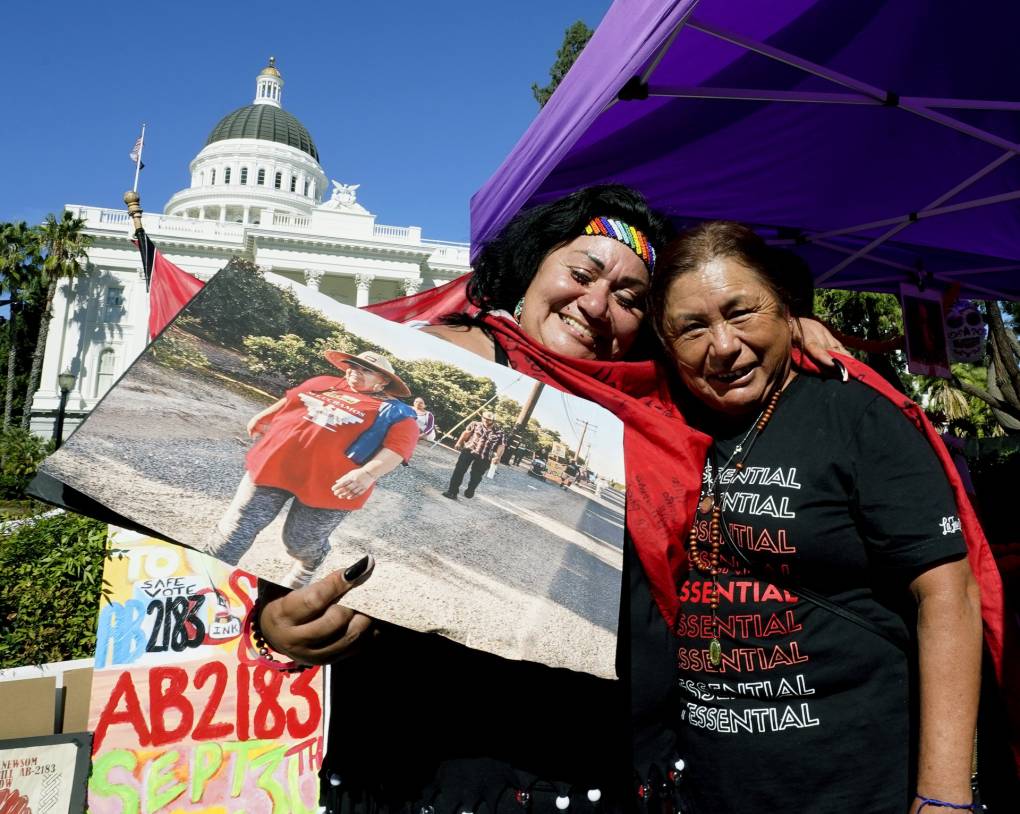
"caption": "Farmworkers Cynthia Burgos, left and Teresa Maldonado, right, hug after Gov. Gavin Newsom signed a bill aimed at making it easier for farmworkers to unionize in Sacramento, Calif., Sept. 28, 2022. A battle between The Wonderful Co. which grows pistachios, pomegranates, citrus and other crops and United Farm Workers is over new rules in California aimed at making it easier for farmworkers to form unions. ",
"description": null,
"title": "California Farmworkers Unions",
"credit": "Rich Pedroncelli/AP Photo",
"status": "inherit",
"altTag": null,
"isLoading": false,
"fetchFailed": false
},
"news_11973462": {
"type": "attachments",
"id": "news_11973462",
"meta": {
"index": "attachments_1716263798",
"site": "news",
"id": "11973462",
"found": true
},
"parent": 0,
"imgSizes": {
"twentyfourteen-full-width": {
"file": "https://cdn.kqed.org/wp-content/uploads/sites/10/2024/01/240123-HMBShootingAnniversary-18-BL-1038x576.jpg",
"width": 1038,
"mimeType": "image/jpeg",
"height": 576
},
"thumbnail": {
"file": "https://cdn.kqed.org/wp-content/uploads/sites/10/2024/01/240123-HMBShootingAnniversary-18-BL-160x107.jpg",
"width": 160,
"mimeType": "image/jpeg",
"height": 107
},
"post-thumbnail": {
"file": "https://cdn.kqed.org/wp-content/uploads/sites/10/2024/01/240123-HMBShootingAnniversary-18-BL-672x372.jpg",
"width": 672,
"mimeType": "image/jpeg",
"height": 372
},
"kqedFullSize": {
"file": "https://cdn.kqed.org/wp-content/uploads/sites/10/2024/01/240123-HMBShootingAnniversary-18-BL.jpg",
"width": 1920,
"height": 1280
},
"large": {
"file": "https://cdn.kqed.org/wp-content/uploads/sites/10/2024/01/240123-HMBShootingAnniversary-18-BL-1020x680.jpg",
"width": 1020,
"mimeType": "image/jpeg",
"height": 680
},
"1536x1536": {
"file": "https://cdn.kqed.org/wp-content/uploads/sites/10/2024/01/240123-HMBShootingAnniversary-18-BL-1536x1024.jpg",
"width": 1536,
"mimeType": "image/jpeg",
"height": 1024
},
"medium": {
"file": "https://cdn.kqed.org/wp-content/uploads/sites/10/2024/01/240123-HMBShootingAnniversary-18-BL-800x533.jpg",
"width": 800,
"mimeType": "image/jpeg",
"height": 533
}
},
"publishDate": 1706051937,
"modified": 1715292834,
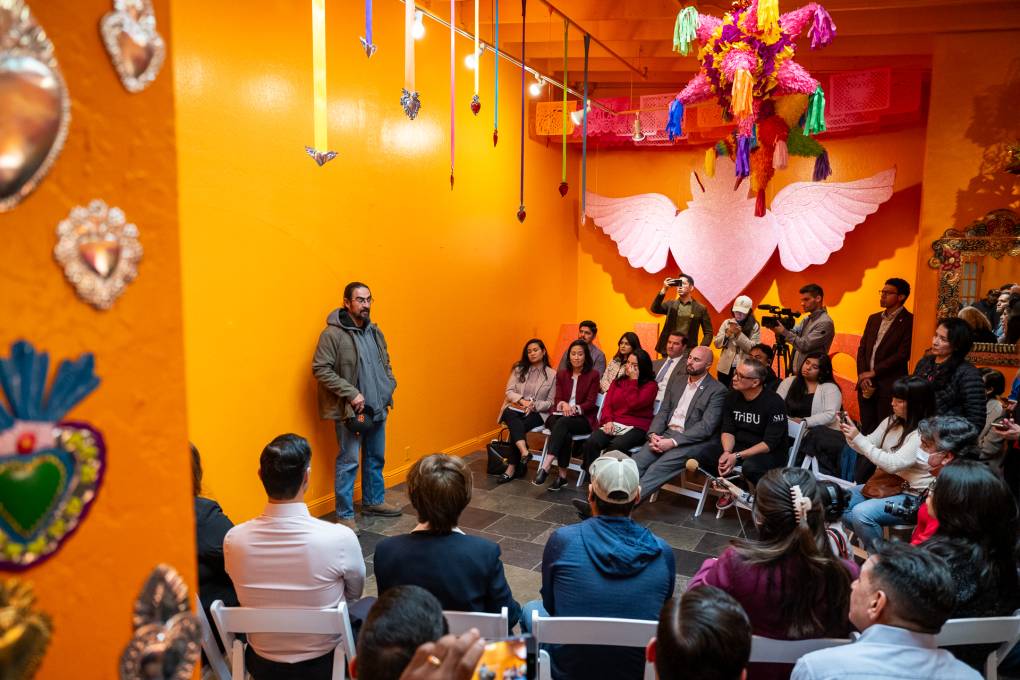
"caption": "Half Moon Bay Mayor Joaquin Jimenez speaks during a roundtable discussion at the ALAS Sueño Center in Half Moon Bay on Jan. 23, 2024, marking one year since the mass shooting at two farms claimed the lives of seven people on Jan. 23, 2023.",
"description": null,
"title": "240123-HMBShootingAnniversary-18-BL",
"credit": "Beth LaBerge/KQED",
"status": "inherit",
"altTag": "A person with a goatee stands in front of a large group of people sitting in fold-out chairs in a room painted bright orange.",
"isLoading": false,
"fetchFailed": false
},
"news_11985082": {
"type": "attachments",
"id": "news_11985082",
"meta": {
"index": "attachments_1716263798",
"site": "news",
"id": "11985082",
"found": true
},
"parent": 11985079,
"imgSizes": {
"twentyfourteen-full-width": {
"file": "https://cdn.kqed.org/wp-content/uploads/sites/10/2024/05/GettyImages-2147888087-1038x576.jpg",
"width": 1038,
"mimeType": "image/jpeg",
"height": 576
},
"thumbnail": {
"file": "https://cdn.kqed.org/wp-content/uploads/sites/10/2024/05/GettyImages-2147888087-160x107.jpg",
"width": 160,
"mimeType": "image/jpeg",
"height": 107
},
"post-thumbnail": {
"file": "https://cdn.kqed.org/wp-content/uploads/sites/10/2024/05/GettyImages-2147888087-672x372.jpg",
"width": 672,
"mimeType": "image/jpeg",
"height": 372
},
"kqedFullSize": {
"file": "https://cdn.kqed.org/wp-content/uploads/sites/10/2024/05/GettyImages-2147888087-scaled.jpg",
"width": 2560,
"height": 1707
},
"2048x2048": {
"file": "https://cdn.kqed.org/wp-content/uploads/sites/10/2024/05/GettyImages-2147888087-2048x1365.jpg",
"width": 2048,
"mimeType": "image/jpeg",
"height": 1365
},
"large": {
"file": "https://cdn.kqed.org/wp-content/uploads/sites/10/2024/05/GettyImages-2147888087-1020x680.jpg",
"width": 1020,
"mimeType": "image/jpeg",
"height": 680
},
"1536x1536": {
"file": "https://cdn.kqed.org/wp-content/uploads/sites/10/2024/05/GettyImages-2147888087-1536x1024.jpg",
"width": 1536,
"mimeType": "image/jpeg",
"height": 1024
},
"full-width": {
"file": "https://cdn.kqed.org/wp-content/uploads/sites/10/2024/05/GettyImages-2147888087-1920x1280.jpg",
"width": 1920,
"mimeType": "image/jpeg",
"height": 1280
},
"medium": {
"file": "https://cdn.kqed.org/wp-content/uploads/sites/10/2024/05/GettyImages-2147888087-800x533.jpg",
"width": 800,
"mimeType": "image/jpeg",
"height": 533
}
},
"publishDate": 1715022077,
"modified": 1715022077,
"caption": "PHOENIX, ARIZONA - APRIL 17: Members of Arizona for Abortion Access, the ballot initiative to enshrine abortion rights in the Arizona State Constitution, hold a press conference and protest condemning Arizona House Republicans and the 1864 abortion ban during a recess from a legislative session at the Arizona House of Representatives on April 17, 2024 in Phoenix, Arizona. Arizona House Republicans blocked the Democrats from holding a vote to overturn the 1864 abortion ban revived last week by the Arizona Supreme Court. (Photo by Rebecca Noble/Getty Images)",
"description": null,
"title": "Arizona's Supreme Court Revives 1864 Law Banning Abortions, Causing Backlash",
"credit": null,
"status": "inherit",
"altTag": null,
"isLoading": false,
"fetchFailed": false
},
"news_11984300": {
"type": "attachments",
"id": "news_11984300",
"meta": {
"index": "attachments_1716263798",
"site": "news",
"id": "11984300",
"found": true
},
"parent": 11984297,
"imgSizes": {
"twentyfourteen-full-width": {
"file": "https://cdn.kqed.org/wp-content/uploads/sites/10/2024/04/GettyImages-1244834396-1024x576.jpg",
"width": 1024,
"mimeType": "image/jpeg",
"height": 576
},
"thumbnail": {
"file": "https://cdn.kqed.org/wp-content/uploads/sites/10/2024/04/GettyImages-1244834396-160x107.jpg",
"width": 160,
"mimeType": "image/jpeg",
"height": 107
},
"post-thumbnail": {
"file": "https://cdn.kqed.org/wp-content/uploads/sites/10/2024/04/GettyImages-1244834396-672x372.jpg",
"width": 672,
"mimeType": "image/jpeg",
"height": 372
},
"kqedFullSize": {
"file": "https://cdn.kqed.org/wp-content/uploads/sites/10/2024/04/GettyImages-1244834396.jpg",
"width": 1024,
"height": 683
},
"large": {
"file": "https://cdn.kqed.org/wp-content/uploads/sites/10/2024/04/GettyImages-1244834396-1020x680.jpg",
"width": 1020,
"mimeType": "image/jpeg",
"height": 680
},
"medium": {
"file": "https://cdn.kqed.org/wp-content/uploads/sites/10/2024/04/GettyImages-1244834396-800x534.jpg",
"width": 800,
"mimeType": "image/jpeg",
"height": 534
}
},
"publishDate": 1714247559,
"modified": 1714247646,
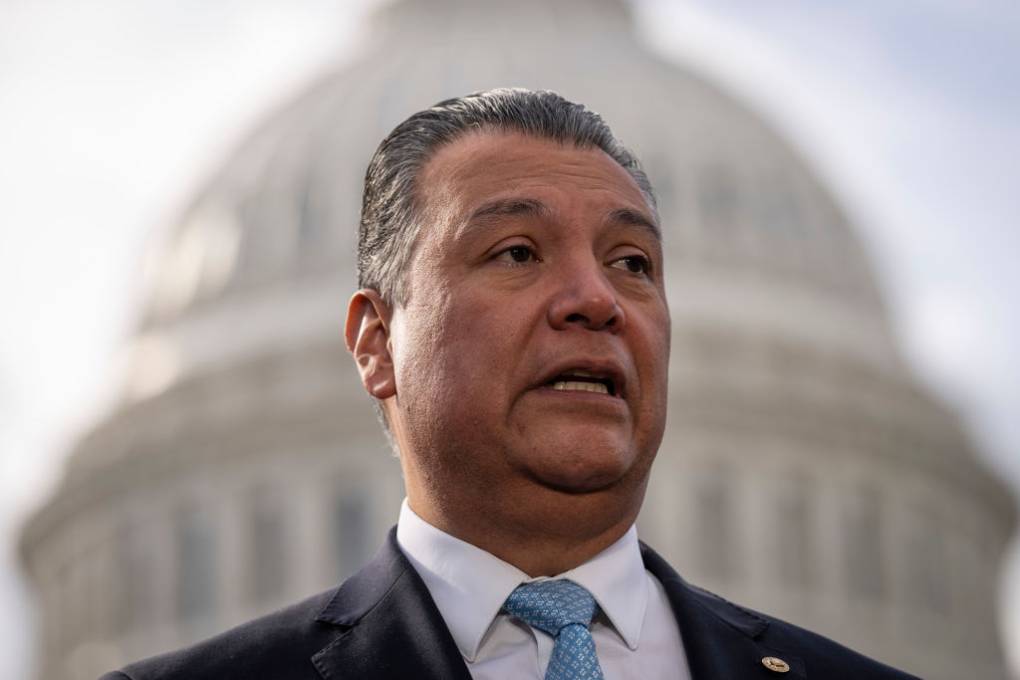
"caption": "Sen. Alex Padilla (D-Calif.) speaks during a news conference about the Deferred Action for Childhood Arrivals program (DACA) outside the US Capitol on Nov. 16, 2022 in Washington, DC. ",
"description": null,
"title": "Senate Democrats Urge Action On Dreamers Legislation",
"credit": "Drew Angerer/Getty Images",
"status": "inherit",
"altTag": null,
"isLoading": false,
"fetchFailed": false
},
"news_11984239": {
"type": "attachments",
"id": "news_11984239",
"meta": {
"index": "attachments_1716263798",
"site": "news",
"id": "11984239",
"found": true
},
"title": "20240426_DEPTOFLABORANNOUNCEMENT-22-GC-KQED",
"publishDate": 1714168037,
"status": "inherit",
"parent": 0,
"modified": 1756850534,
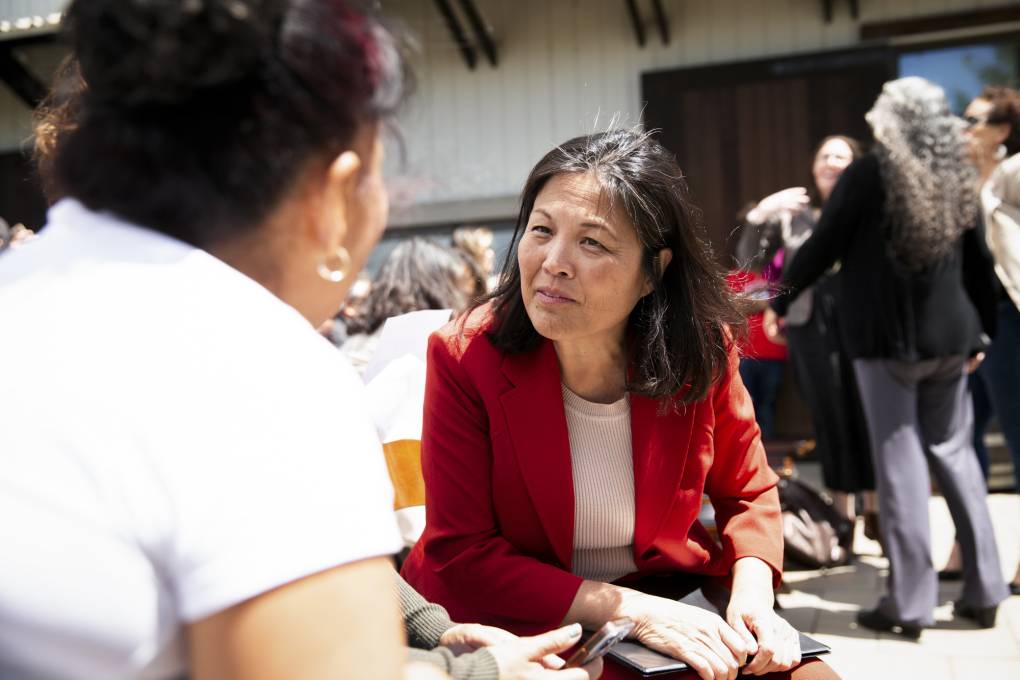
"caption": "Former acting Secretary of Labor Julie Su speaks with farmworkers during a press conference in Santa Rosa on Friday, April 26, 2024. ",
"credit": "Gina Castro/KQED",
"altTag": "An older Asian woman in a red suit leans over as she speaks to a woman seen from behind.",
"description": "Acting Secretary of Labor Julie Su speaks with farmworkers during a press conference in Santa Rosa on Friday, April 26, 2024, announcing new protections for H2A immigrant farmworkers to ensure fair labor standards are met in the U.S. agricultural industry.",
"imgSizes": {
"medium": {
"file": "https://cdn.kqed.org/wp-content/uploads/sites/10/2024/04/20240426_DEPTOFLABORANNOUNCEMENT-22-GC-KQED-800x533.jpg",
"width": 800,
"height": 533,
"mimeType": "image/jpeg"
},
"large": {
"file": "https://cdn.kqed.org/wp-content/uploads/sites/10/2024/04/20240426_DEPTOFLABORANNOUNCEMENT-22-GC-KQED-1020x680.jpg",
"width": 1020,
"height": 680,
"mimeType": "image/jpeg"
},
"thumbnail": {
"file": "https://cdn.kqed.org/wp-content/uploads/sites/10/2024/04/20240426_DEPTOFLABORANNOUNCEMENT-22-GC-KQED-160x107.jpg",
"width": 160,
"height": 107,
"mimeType": "image/jpeg"
},
"1536x1536": {
"file": "https://cdn.kqed.org/wp-content/uploads/sites/10/2024/04/20240426_DEPTOFLABORANNOUNCEMENT-22-GC-KQED-1536x1024.jpg",
"width": 1536,
"height": 1024,
"mimeType": "image/jpeg"
},
"post-thumbnail": {
"file": "https://cdn.kqed.org/wp-content/uploads/sites/10/2024/04/20240426_DEPTOFLABORANNOUNCEMENT-22-GC-KQED-672x372.jpg",
"width": 672,
"height": 372,
"mimeType": "image/jpeg"
},
"twentyfourteen-full-width": {
"file": "https://cdn.kqed.org/wp-content/uploads/sites/10/2024/04/20240426_DEPTOFLABORANNOUNCEMENT-22-GC-KQED-1038x576.jpg",
"width": 1038,
"height": 576,
"mimeType": "image/jpeg"
},
"full-width": {
"file": "https://cdn.kqed.org/wp-content/uploads/sites/10/2024/04/20240426_DEPTOFLABORANNOUNCEMENT-22-GC-KQED-1920x1280.jpg",
"width": 1920,
"height": 1280,
"mimeType": "image/jpeg"
},
"kqedFullSize": {
"file": "https://cdn.kqed.org/wp-content/uploads/sites/10/2024/04/20240426_DEPTOFLABORANNOUNCEMENT-22-GC-KQED.jpg",
"width": 2000,
"height": 1333
}
},
"isLoading": false,
"fetchFailed": false
},
"news_11983945": {
"type": "attachments",
"id": "news_11983945",
"meta": {
"index": "attachments_1716263798",
"site": "news",
"id": "11983945",
"found": true
},
"parent": 0,
"imgSizes": {
"twentyfourteen-full-width": {
"file": "https://cdn.kqed.org/wp-content/uploads/sites/10/2024/04/2024_01-Fresno-White-1038x576.jpg",
"width": 1038,
"mimeType": "image/jpeg",
"height": 576
},
"thumbnail": {
"file": "https://cdn.kqed.org/wp-content/uploads/sites/10/2024/04/2024_01-Fresno-White-160x73.jpg",
"width": 160,
"mimeType": "image/jpeg",
"height": 73
},
"post-thumbnail": {
"file": "https://cdn.kqed.org/wp-content/uploads/sites/10/2024/04/2024_01-Fresno-White-672x372.jpg",
"width": 672,
"mimeType": "image/jpeg",
"height": 372
},
"kqedFullSize": {
"file": "https://cdn.kqed.org/wp-content/uploads/sites/10/2024/04/2024_01-Fresno-White-scaled.jpg",
"width": 2560,
"height": 1174
},
"2048x2048": {
"file": "https://cdn.kqed.org/wp-content/uploads/sites/10/2024/04/2024_01-Fresno-White-2048x939.jpg",
"width": 2048,
"mimeType": "image/jpeg",
"height": 939
},
"large": {
"file": "https://cdn.kqed.org/wp-content/uploads/sites/10/2024/04/2024_01-Fresno-White-1020x468.jpg",
"width": 1020,
"mimeType": "image/jpeg",
"height": 468
},
"1536x1536": {
"file": "https://cdn.kqed.org/wp-content/uploads/sites/10/2024/04/2024_01-Fresno-White-1536x704.jpg",
"width": 1536,
"mimeType": "image/jpeg",
"height": 704
},
"full-width": {
"file": "https://cdn.kqed.org/wp-content/uploads/sites/10/2024/04/2024_01-Fresno-White-1920x880.jpg",
"width": 1920,
"mimeType": "image/jpeg",
"height": 880
},
"medium": {
"file": "https://cdn.kqed.org/wp-content/uploads/sites/10/2024/04/2024_01-Fresno-White-800x367.jpg",
"width": 800,
"mimeType": "image/jpeg",
"height": 367
}
},
"publishDate": 1713989284,
"modified": 1713989441,
"caption": "A 2024 rendering of the high-speed rail station in Fresno. Four stations in the Central Valley will be the first to be constructed. Trains are slated to start running in 2030.",
"description": null,
"title": "2024_01-Fresno White",
"credit": "Courtesy California High-Speed Rail Authority",
"status": "inherit",
"altTag": null,
"isLoading": false,
"fetchFailed": false
},
"news_11983320": {
"type": "attachments",
"id": "news_11983320",
"meta": {
"index": "attachments_1716263798",
"site": "news",
"id": "11983320",
"found": true
},
"parent": 11983313,
"imgSizes": {
"twentyfourteen-full-width": {
"file": "https://cdn.kqed.org/wp-content/uploads/sites/10/2024/04/IMG-20230604-WA0001-1038x576.jpg",
"width": 1038,
"mimeType": "image/jpeg",
"height": 576
},
"thumbnail": {
"file": "https://cdn.kqed.org/wp-content/uploads/sites/10/2024/04/IMG-20230604-WA0001-160x120.jpg",
"width": 160,
"mimeType": "image/jpeg",
"height": 120
},
"post-thumbnail": {
"file": "https://cdn.kqed.org/wp-content/uploads/sites/10/2024/04/IMG-20230604-WA0001-672x372.jpg",
"width": 672,
"mimeType": "image/jpeg",
"height": 372
},
"kqedFullSize": {
"file": "https://cdn.kqed.org/wp-content/uploads/sites/10/2024/04/IMG-20230604-WA0001.jpg",
"width": 1280,
"height": 960
},
"large": {
"file": "https://cdn.kqed.org/wp-content/uploads/sites/10/2024/04/IMG-20230604-WA0001-1020x765.jpg",
"width": 1020,
"mimeType": "image/jpeg",
"height": 765
},
"medium": {
"file": "https://cdn.kqed.org/wp-content/uploads/sites/10/2024/04/IMG-20230604-WA0001-800x600.jpg",
"width": 800,
"mimeType": "image/jpeg",
"height": 600
}
},
"publishDate": 1713401922,
"modified": 1713562494,
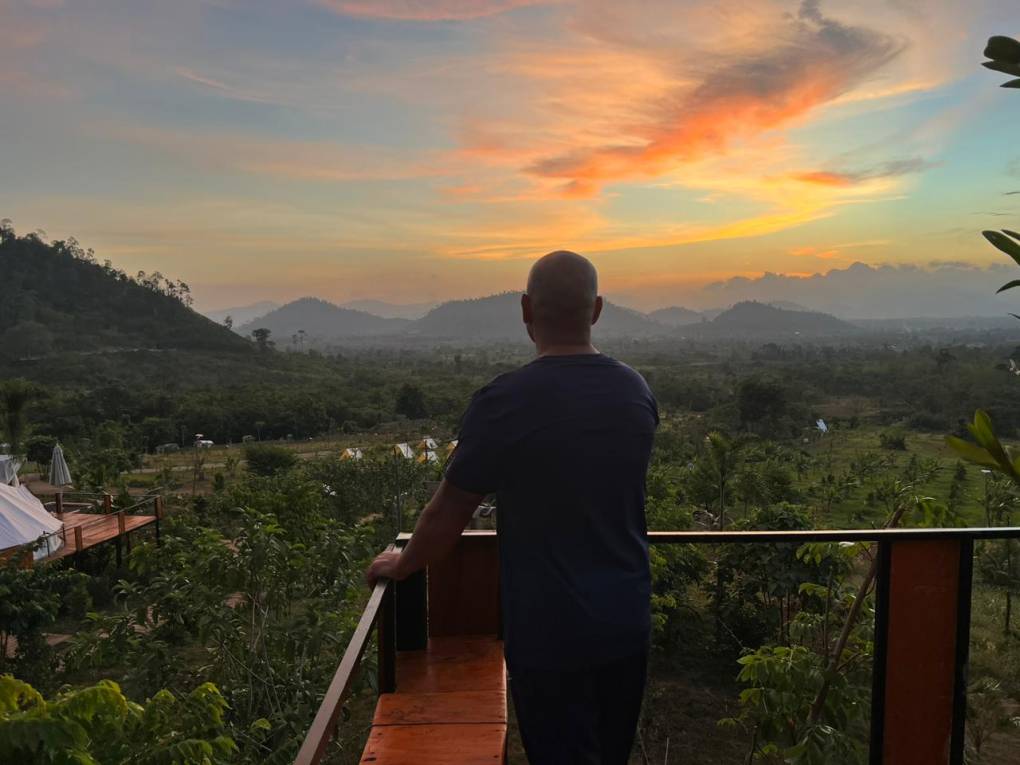
"caption": "Phoeun You looking out on the Cambodian countryside.",
"description": null,
"title": "IMG-20230604-WA0001",
"credit": "Courtesy of Phoeun You",
"status": "inherit",
"altTag": "A man seen from behind stands on a balcony at sunset, looking out at a lush forest and mountain landscape.",
"isLoading": false,
"fetchFailed": false
},
"news_11982570": {
"type": "attachments",
"id": "news_11982570",
"meta": {
"index": "attachments_1716263798",
"site": "news",
"id": "11982570",
"found": true
},
"parent": 0,
"imgSizes": {
"twentyfourteen-full-width": {
"file": "https://cdn.kqed.org/wp-content/uploads/sites/10/2024/04/240410-HMB-Farmworkers-TH-01-KQED-1038x576.jpg",
"width": 1038,
"mimeType": "image/jpeg",
"height": 576
},
"thumbnail": {
"file": "https://cdn.kqed.org/wp-content/uploads/sites/10/2024/04/240410-HMB-Farmworkers-TH-01-KQED-160x107.jpg",
"width": 160,
"mimeType": "image/jpeg",
"height": 107
},
"post-thumbnail": {
"file": "https://cdn.kqed.org/wp-content/uploads/sites/10/2024/04/240410-HMB-Farmworkers-TH-01-KQED-672x372.jpg",
"width": 672,
"mimeType": "image/jpeg",
"height": 372
},
"kqedFullSize": {
"file": "https://cdn.kqed.org/wp-content/uploads/sites/10/2024/04/240410-HMB-Farmworkers-TH-01-KQED.jpg",
"width": 2000,
"height": 1333
},
"large": {
"file": "https://cdn.kqed.org/wp-content/uploads/sites/10/2024/04/240410-HMB-Farmworkers-TH-01-KQED-1020x680.jpg",
"width": 1020,
"mimeType": "image/jpeg",
"height": 680
},
"1536x1536": {
"file": "https://cdn.kqed.org/wp-content/uploads/sites/10/2024/04/240410-HMB-Farmworkers-TH-01-KQED-1536x1024.jpg",
"width": 1536,
"mimeType": "image/jpeg",
"height": 1024
},
"full-width": {
"file": "https://cdn.kqed.org/wp-content/uploads/sites/10/2024/04/240410-HMB-Farmworkers-TH-01-KQED-1920x1280.jpg",
"width": 1920,
"mimeType": "image/jpeg",
"height": 1280
},
"medium": {
"file": "https://cdn.kqed.org/wp-content/uploads/sites/10/2024/04/240410-HMB-Farmworkers-TH-01-KQED-800x533.jpg",
"width": 800,
"mimeType": "image/jpeg",
"height": 533
}
},
"publishDate": 1712777321,
"modified": 1712959311,
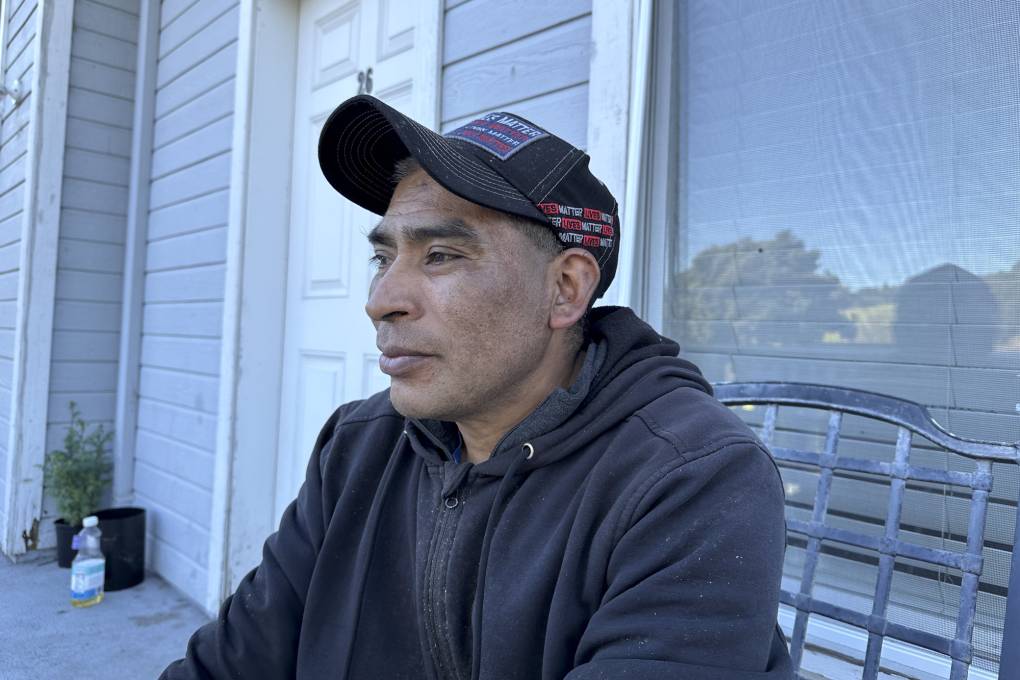
"caption": "Cornelio sits on the porch of a Half Moon Bay guesthouse, where he has a temporary room, on March 14, 2024. He survived the mass shooting at a local mushroom farm in January 2023 but continues to work there. He says he hopes the city can build safe, affordable homes for farmworkers like himself.",
"description": null,
"title": "240410-HMB Farmworkers-TH-01-KQED",
"credit": "Tyche Hendricks/KQED",
"status": "inherit",
"altTag": null,
"isLoading": false,
"fetchFailed": false
},
"news_11979390": {
"type": "attachments",
"id": "news_11979390",
"meta": {
"index": "attachments_1716263798",
"site": "news",
"id": "11979390",
"found": true
},
"title": "hispanic college student doing some home works from home with laptop",
"publishDate": 1710374837,
"status": "inherit",
"parent": 11979367,
"modified": 1759874426,
"caption": "A glitch blocking mixed-status families has caused stress for many, but some steps can be taken in the meantime when it comes to the FAFSA application.",
"credit": "Carol Yepes/Getty Images",
"altTag": "A young woman with dark brown hair stares intently at her computer screen.",
"description": null,
"imgSizes": {
"medium": {
"file": "https://cdn.kqed.org/wp-content/uploads/sites/10/2024/03/GettyImages-1403066184-800x533.jpg",
"width": 800,
"height": 533,
"mimeType": "image/jpeg"
},
"large": {
"file": "https://cdn.kqed.org/wp-content/uploads/sites/10/2024/03/GettyImages-1403066184-1020x680.jpg",
"width": 1020,
"height": 680,
"mimeType": "image/jpeg"
},
"thumbnail": {
"file": "https://cdn.kqed.org/wp-content/uploads/sites/10/2024/03/GettyImages-1403066184-160x107.jpg",
"width": 160,
"height": 107,
"mimeType": "image/jpeg"
},
"1536x1536": {
"file": "https://cdn.kqed.org/wp-content/uploads/sites/10/2024/03/GettyImages-1403066184-1536x1024.jpg",
"width": 1536,
"height": 1024,
"mimeType": "image/jpeg"
},
"2048x2048": {
"file": "https://cdn.kqed.org/wp-content/uploads/sites/10/2024/03/GettyImages-1403066184-2048x1365.jpg",
"width": 2048,
"height": 1365,
"mimeType": "image/jpeg"
},
"post-thumbnail": {
"file": "https://cdn.kqed.org/wp-content/uploads/sites/10/2024/03/GettyImages-1403066184-672x372.jpg",
"width": 672,
"height": 372,
"mimeType": "image/jpeg"
},
"twentyfourteen-full-width": {
"file": "https://cdn.kqed.org/wp-content/uploads/sites/10/2024/03/GettyImages-1403066184-1038x576.jpg",
"width": 1038,
"height": 576,
"mimeType": "image/jpeg"
},
"full-width": {
"file": "https://cdn.kqed.org/wp-content/uploads/sites/10/2024/03/GettyImages-1403066184-1920x1280.jpg",
"width": 1920,
"height": 1280,
"mimeType": "image/jpeg"
},
"kqedFullSize": {
"file": "https://cdn.kqed.org/wp-content/uploads/sites/10/2024/03/GettyImages-1403066184.jpg",
"width": 2121,
"height": 1414
}
},
"isLoading": false,
"fetchFailed": false
},
"news_11982160": {
"type": "attachments",
"id": "news_11982160",
"meta": {
"index": "attachments_1716263798",
"site": "news",
"id": "11982160",
"found": true
},
"parent": 11982158,
"imgSizes": {
"twentyfourteen-full-width": {
"file": "https://cdn.kqed.org/wp-content/uploads/sites/10/2024/04/AP24096705139335-1038x576.jpg",
"width": 1038,
"mimeType": "image/jpeg",
"height": 576
},
"thumbnail": {
"file": "https://cdn.kqed.org/wp-content/uploads/sites/10/2024/04/AP24096705139335-160x107.jpg",
"width": 160,
"mimeType": "image/jpeg",
"height": 107
},
"post-thumbnail": {
"file": "https://cdn.kqed.org/wp-content/uploads/sites/10/2024/04/AP24096705139335-672x372.jpg",
"width": 672,
"mimeType": "image/jpeg",
"height": 372
},
"kqedFullSize": {
"file": "https://cdn.kqed.org/wp-content/uploads/sites/10/2024/04/AP24096705139335-scaled.jpg",
"width": 2560,
"height": 1707
},
"2048x2048": {
"file": "https://cdn.kqed.org/wp-content/uploads/sites/10/2024/04/AP24096705139335-2048x1365.jpg",
"width": 2048,
"mimeType": "image/jpeg",
"height": 1365
},
"large": {
"file": "https://cdn.kqed.org/wp-content/uploads/sites/10/2024/04/AP24096705139335-1020x680.jpg",
"width": 1020,
"mimeType": "image/jpeg",
"height": 680
},
"1536x1536": {
"file": "https://cdn.kqed.org/wp-content/uploads/sites/10/2024/04/AP24096705139335-1536x1024.jpg",
"width": 1536,
"mimeType": "image/jpeg",
"height": 1024
},
"full-width": {
"file": "https://cdn.kqed.org/wp-content/uploads/sites/10/2024/04/AP24096705139335-1920x1280.jpg",
"width": 1920,
"mimeType": "image/jpeg",
"height": 1280
},
"medium": {
"file": "https://cdn.kqed.org/wp-content/uploads/sites/10/2024/04/AP24096705139335-800x533.jpg",
"width": 800,
"mimeType": "image/jpeg",
"height": 533
}
},
"publishDate": 1712443703,
"modified": 1712443871,
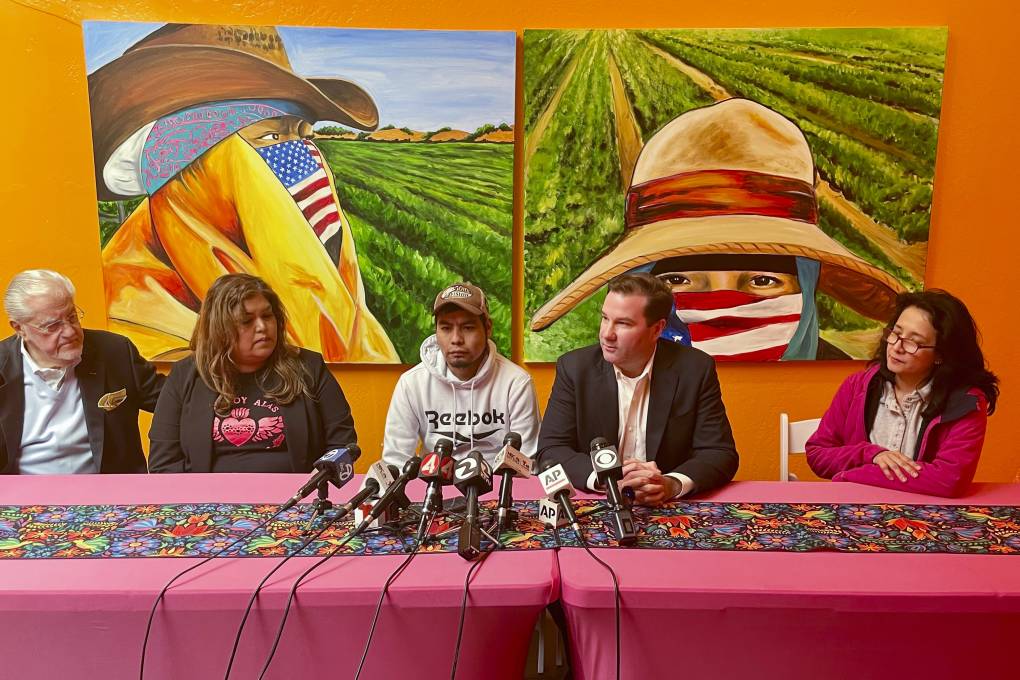
"caption": "Pedro Romero Perez (center) sits next to his attorney Donald Magilligan (second from right) during a press conference Friday, April 5, 2024, in Half Moon Bay. Perez, a migrant farmworker who survived a mass shooting at a mushroom farm, filed a lawsuit Friday against the farm owner, saying he failed to keep him safe from a coworker who last year shot and killed his brother and 3 other coworkers before driving to another mushroom farm and killing 3 former colleagues.",
"description": null,
"title": "California Farm Shooting",
"credit": "Haven Daley/AP Photo",
"status": "inherit",
"altTag": "A young immigrant man of Latino origin sits between a woman and a man with microphones in front on a desk and a mural depicting immigrant farmworkers on the wall behind.",
"isLoading": false,
"fetchFailed": false
},
"news_11982042": {
"type": "attachments",
"id": "news_11982042",
"meta": {
"index": "attachments_1716263798",
"site": "news",
"id": "11982042",
"found": true
},
"parent": 11982020,
"imgSizes": {
"twentyfourteen-full-width": {
"file": "https://cdn.kqed.org/wp-content/uploads/sites/10/2024/04/GettyImages-1858797323-1038x576.jpg",
"width": 1038,
"mimeType": "image/jpeg",
"height": 576
},
"thumbnail": {
"file": "https://cdn.kqed.org/wp-content/uploads/sites/10/2024/04/GettyImages-1858797323-160x107.jpg",
"width": 160,
"mimeType": "image/jpeg",
"height": 107
},
"post-thumbnail": {
"file": "https://cdn.kqed.org/wp-content/uploads/sites/10/2024/04/GettyImages-1858797323-672x372.jpg",
"width": 672,
"mimeType": "image/jpeg",
"height": 372
},
"kqedFullSize": {
"file": "https://cdn.kqed.org/wp-content/uploads/sites/10/2024/04/GettyImages-1858797323-scaled.jpg",
"width": 2560,
"height": 1708
},
"2048x2048": {
"file": "https://cdn.kqed.org/wp-content/uploads/sites/10/2024/04/GettyImages-1858797323-2048x1367.jpg",
"width": 2048,
"mimeType": "image/jpeg",
"height": 1367
},
"large": {
"file": "https://cdn.kqed.org/wp-content/uploads/sites/10/2024/04/GettyImages-1858797323-1020x681.jpg",
"width": 1020,
"mimeType": "image/jpeg",
"height": 681
},
"1536x1536": {
"file": "https://cdn.kqed.org/wp-content/uploads/sites/10/2024/04/GettyImages-1858797323-1536x1025.jpg",
"width": 1536,
"mimeType": "image/jpeg",
"height": 1025
},
"full-width": {
"file": "https://cdn.kqed.org/wp-content/uploads/sites/10/2024/04/GettyImages-1858797323-1920x1281.jpg",
"width": 1920,
"mimeType": "image/jpeg",
"height": 1281
},
"medium": {
"file": "https://cdn.kqed.org/wp-content/uploads/sites/10/2024/04/GettyImages-1858797323-800x534.jpg",
"width": 800,
"mimeType": "image/jpeg",
"height": 534
}
},
"publishDate": 1712348564,
"modified": 1712351566,
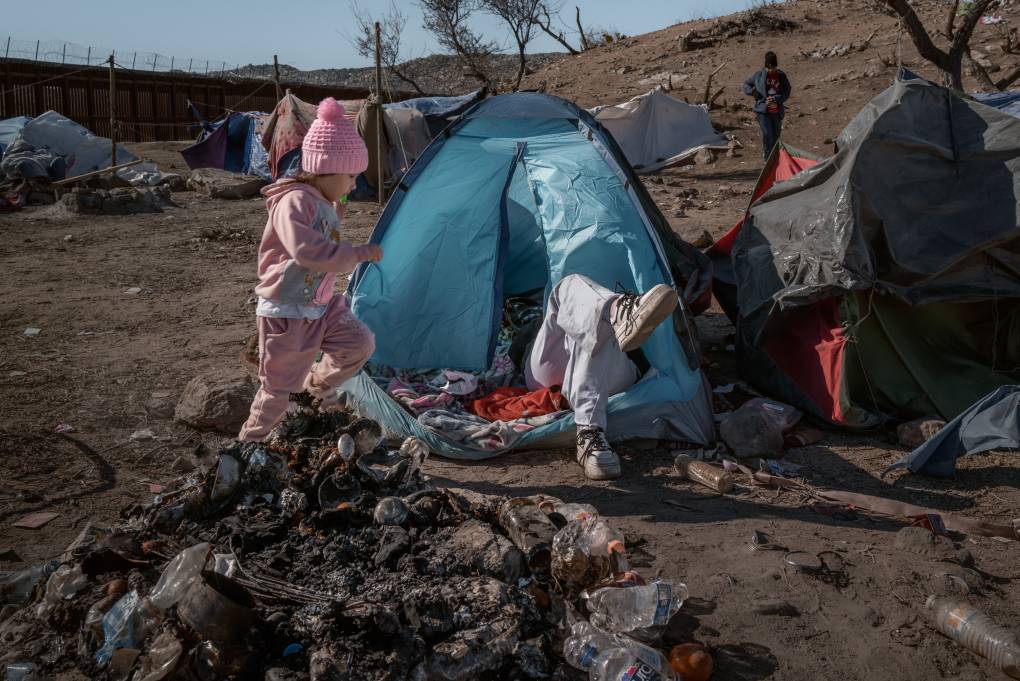
"caption": "Migrants wait at a makeshift camp in Jacumba Hot Springs, San Diego County, to be processed by the US Border Patrol after crossing from Mexico. ",
"description": null,
"title": "Migrants At The US-Mexico Border",
"credit": "Qian Weizhong/VCG via Getty Images",
"status": "inherit",
"altTag": "a little girl runs past trash in front of dilapidated tent in the desert, with more tents and trash in the background",
"isLoading": false,
"fetchFailed": false
},
"news_11980502": {
"type": "attachments",
"id": "news_11980502",
"meta": {
"index": "attachments_1716263798",
"site": "news",
"id": "11980502",
"found": true
},
"parent": 0,
"imgSizes": {
"twentyfourteen-full-width": {
"file": "https://cdn.kqed.org/wp-content/uploads/sites/10/2024/03/240322-INDOOR-HEAT-GETTY-02-KQED-1038x576.jpg",
"width": 1038,
"mimeType": "image/jpeg",
"height": 576
},
"thumbnail": {
"file": "https://cdn.kqed.org/wp-content/uploads/sites/10/2024/03/240322-INDOOR-HEAT-GETTY-02-KQED-160x98.jpg",
"width": 160,
"mimeType": "image/jpeg",
"height": 98
},
"post-thumbnail": {
"file": "https://cdn.kqed.org/wp-content/uploads/sites/10/2024/03/240322-INDOOR-HEAT-GETTY-02-KQED-672x372.jpg",
"width": 672,
"mimeType": "image/jpeg",
"height": 372
},
"kqedFullSize": {
"file": "https://cdn.kqed.org/wp-content/uploads/sites/10/2024/03/240322-INDOOR-HEAT-GETTY-02-KQED.jpg",
"width": 2000,
"height": 1221
},
"large": {
"file": "https://cdn.kqed.org/wp-content/uploads/sites/10/2024/03/240322-INDOOR-HEAT-GETTY-02-KQED-1020x623.jpg",
"width": 1020,
"mimeType": "image/jpeg",
"height": 623
},
"1536x1536": {
"file": "https://cdn.kqed.org/wp-content/uploads/sites/10/2024/03/240322-INDOOR-HEAT-GETTY-02-KQED-1536x938.jpg",
"width": 1536,
"mimeType": "image/jpeg",
"height": 938
},
"full-width": {
"file": "https://cdn.kqed.org/wp-content/uploads/sites/10/2024/03/240322-INDOOR-HEAT-GETTY-02-KQED-1920x1172.jpg",
"width": 1920,
"mimeType": "image/jpeg",
"height": 1172
},
"medium": {
"file": "https://cdn.kqed.org/wp-content/uploads/sites/10/2024/03/240322-INDOOR-HEAT-GETTY-02-KQED-800x488.jpg",
"width": 800,
"mimeType": "image/jpeg",
"height": 488
}
},
"publishDate": 1711135860,
"modified": 1711137950,
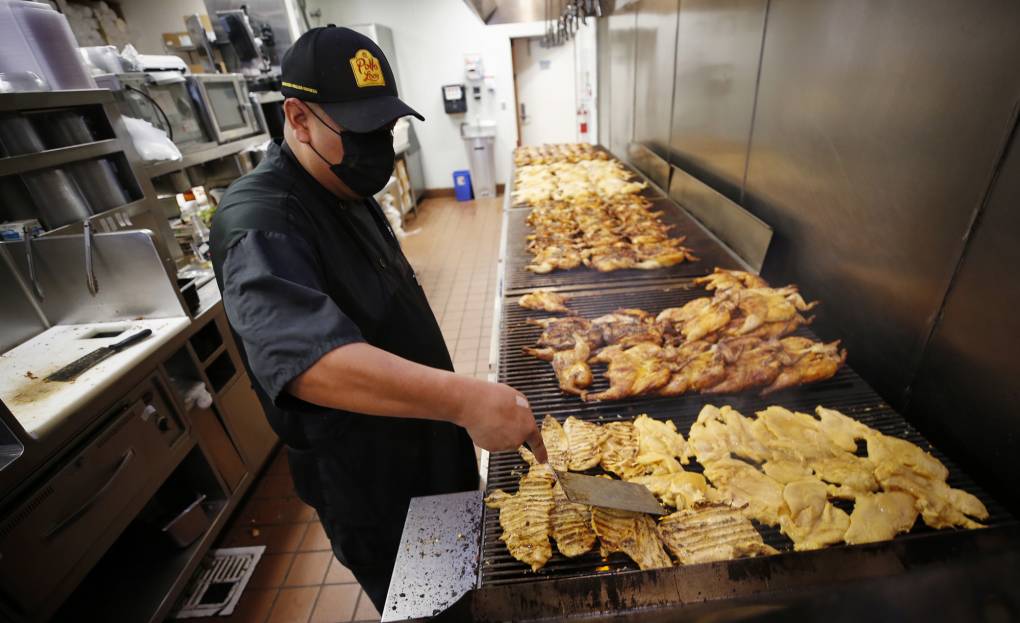
"caption": "Cook Giovanni Gomez preparing chicken on the grill for food orders in the busy kitchen of the El Pollo Loco restaurant in Agoura Hills on Aug. 18, 2021.",
"description": null,
"title": "Michaela Mendelsohn, CEO of Pollo West Corp, an Agoura Hills-based franchise company for Pollo Loco, at her Agoura Hills restaurant on August 18, 2021",
"credit": "Al Seib / Los Angeles Times via Getty Images",
"status": "inherit",
"altTag": null,
"isLoading": false,
"fetchFailed": false
}
},
"audioPlayerReducer": {
"postId": "stream_live",
"isPaused": true,
"isPlaying": false,
"pfsActive": false,
"pledgeModalIsOpen": true,
"playerDrawerIsOpen": false,
"liveAudioPlayStartedAt": 0,
"liveAudioPlayContext": ""
},
"authorsReducer": {
"byline_news_11985677": {
"type": "authors",
"id": "byline_news_11985677",
"meta": {
"override": true
},
"slug": "byline_news_11985677",
"name": "Amy Taxin, The Associated Press",
"isLoading": false
},
"byline_news_11984297": {
"type": "authors",
"id": "byline_news_11984297",
"meta": {
"override": true
},
"slug": "byline_news_11984297",
"name": "Stephen Groves\u003cbr>Associated Press",
"isLoading": false
},
"byline_news_11983313": {
"type": "authors",
"id": "byline_news_11983313",
"meta": {
"override": true
},
"slug": "byline_news_11983313",
"name": "Mateo Schimpf",
"isLoading": false
},
"byline_news_11982158": {
"type": "authors",
"id": "byline_news_11982158",
"meta": {
"override": true
},
"slug": "byline_news_11982158",
"name": "Olga R. Rodriguez, Haven Daley\u003cbr>Associated Press",
"isLoading": false
},
"scottshafer": {
"type": "authors",
"id": "255",
"meta": {
"index": "authors_1716337520",
"id": "255",
"found": true
},
"name": "Scott Shafer",
"firstName": "Scott",
"lastName": "Shafer",
"slug": "scottshafer",
"email": "sshafer@kqed.org",
"display_author_email": false,
"staff_mastheads": [
"news"
],
"title": "KQED Contributor",
"bio": "Scott Shafer is a senior editor with the KQED Politics and Government desk. He is co-host of Political Breakdown, the award-winning radio show and podcast with a personal take on the world of politics. Scott came to KQED in 1998 to host the statewide\u003cem> California Report\u003c/em>. Prior to that he had extended stints in politics and government\u003cem>.\u003c/em> He uses that inside experience at KQED in his, reporting, hosting and analysis for the politics desk. Scott collaborated \u003cem>Political Breakdown a\u003c/em>nd on \u003cem>The Political Mind of Jerry Brown, \u003c/em>an eight-part series about the life and extraordinary political career of the former governor. For fun, he plays water polo with the San Francisco Tsunami.",
"avatar": "https://secure.gravatar.com/avatar/a62ebae45b79d7aed1a39a0e3bf68104?s=600&d=blank&r=g",
"twitter": "scottshafer",
"bluesky": null,
"facebook": null,
"instagram": null,
"linkedin": null,
"sites": [
{
"site": "news",
"roles": [
"editor"
]
},
{
"site": "stateofhealth",
"roles": [
"author"
]
},
{
"site": "science",
"roles": [
"author"
]
},
{
"site": "forum",
"roles": [
"subscriber"
]
},
{
"site": "liveblog",
"roles": [
"author"
]
}
],
"headData": {
"title": "Scott Shafer | KQED",
"description": "KQED Contributor",
"ogImgSrc": "https://secure.gravatar.com/avatar/a62ebae45b79d7aed1a39a0e3bf68104?s=600&d=blank&r=g",
"twImgSrc": "https://secure.gravatar.com/avatar/a62ebae45b79d7aed1a39a0e3bf68104?s=600&d=blank&r=g"
},
"isLoading": false,
"link": "/author/scottshafer"
},
"tychehendricks": {
"type": "authors",
"id": "259",
"meta": {
"index": "authors_1716337520",
"id": "259",
"found": true
},
"name": "Tyche Hendricks",
"firstName": "Tyche",
"lastName": "Hendricks",
"slug": "tychehendricks",
"email": "thendricks@kqed.org",
"display_author_email": true,
"staff_mastheads": [
"news"
],
"title": "KQED Senior Editor, Immigration",
"bio": "\u003cspan style=\"font-weight: 400;\">Tyche Hendricks is KQED’s senior editor for immigration, leading coverage of the policy and politics that affect California’s immigrant communities. Her work for KQED’s radio and online audiences is also carried on NPR and other national outlets. She has been recognized with awards from the Radio and Television News Directors Association, the Society for Professional Journalists; the Education Writers Association; the Best of the West and the National Federation of Community Broadcasters. Before joining KQED in 2010, Tyche spent more than a dozen years as a newspaper reporter, notably at the \u003c/span>\u003ci>\u003cspan style=\"font-weight: 400;\">San Francisco Chronicle\u003c/span>\u003c/i>\u003cspan style=\"font-weight: 400;\">. At different times she has covered criminal justice, government and politics and urban planning. Tyche has taught in the MFA Creative Writing program at the University of San Francisco and at UC Berkeley’s Graduate School of Journalism, where she was co-director of a national immigration symposium for professional journalists. She is the author of \u003c/span>\u003ci>\u003cspan style=\"font-weight: 400;\">The Wind Doesn't Need a Passport: Stories from the U.S.-Mexico Borderlands\u003c/span>\u003c/i>\u003cspan style=\"font-weight: 400;\"> (University of California Press). \u003c/span>",
"avatar": "https://secure.gravatar.com/avatar/b8ee458e2731c2d43df86882ce17267e?s=600&d=blank&r=g",
"twitter": "tychehendricks",
"facebook": null,
"instagram": null,
"linkedin": null,
"sites": [
{
"site": "news",
"roles": [
"editor"
]
},
{
"site": "stateofhealth",
"roles": [
"editor"
]
}
],
"headData": {
"title": "Tyche Hendricks | KQED",
"description": "KQED Senior Editor, Immigration",
"ogImgSrc": "https://secure.gravatar.com/avatar/b8ee458e2731c2d43df86882ce17267e?s=600&d=blank&r=g",
"twImgSrc": "https://secure.gravatar.com/avatar/b8ee458e2731c2d43df86882ce17267e?s=600&d=blank&r=g"
},
"isLoading": false,
"link": "/author/tychehendricks"
},
"fjhabvala": {
"type": "authors",
"id": "8659",
"meta": {
"index": "authors_1716337520",
"id": "8659",
"found": true
},
"name": "Farida Jhabvala Romero",
"firstName": "Farida",
"lastName": "Jhabvala Romero",
"slug": "fjhabvala",
"email": "fjhabvala@kqed.org",
"display_author_email": true,
"staff_mastheads": [
"news"
],
"title": "KQED Contributor",
"bio": "Farida Jhabvala Romero is a Labor Correspondent for KQED. She previously covered immigration. Farida was \u003ca href=\"https://www.ccnma.org/2022-most-influential-latina-journalists\">named\u003c/a> one of the 10 Most Influential Latina Journalists in California in 2022 by the California Chicano News Media Association. Her work has won awards from the Society of Professional Journalists (Northern California), as well as a national and regional Edward M. Murrow Award for the collaborative reporting projects “Dangerous Air” and “Graying California.” Before joining KQED, Farida worked as a producer at Radio Bilingüe, a national public radio network. Farida earned her master’s degree in journalism from Stanford University.",
"avatar": "https://secure.gravatar.com/avatar/f9f022d4e2609741874222a1e9d41f48fea74011aa7c615eef91d9a50c944ebe?s=600&d=blank&r=g",
"twitter": "FaridaJhabvala",
"bluesky": null,
"facebook": null,
"instagram": null,
"linkedin": "https://www.linkedin.com/in/faridajhabvala/",
"sites": [
{
"site": "news",
"roles": [
"editor"
]
},
{
"site": "stateofhealth",
"roles": [
"author"
]
},
{
"site": "liveblog",
"roles": [
"author"
]
}
],
"headData": {
"title": "Farida Jhabvala Romero | KQED",
"description": "KQED Contributor",
"ogImgSrc": "https://secure.gravatar.com/avatar/f9f022d4e2609741874222a1e9d41f48fea74011aa7c615eef91d9a50c944ebe?s=600&d=blank&r=g",
"twImgSrc": "https://secure.gravatar.com/avatar/f9f022d4e2609741874222a1e9d41f48fea74011aa7c615eef91d9a50c944ebe?s=600&d=blank&r=g"
},
"isLoading": false,
"link": "/author/fjhabvala"
},
"ccabreralomeli": {
"type": "authors",
"id": "11708",
"meta": {
"index": "authors_1716337520",
"id": "11708",
"found": true
},
"name": "Carlos Cabrera-Lomelí",
"firstName": "Carlos",
"lastName": "Cabrera-Lomelí",
"slug": "ccabreralomeli",
"email": "ccabreralomeli@KQED.org",
"display_author_email": true,
"staff_mastheads": [
"news"
],
"title": "Community Reporter",
"bio": "Carlos Cabrera-Lomelí is a community reporter with KQED's digital engagement team. He also reports and co-produces for KQED's bilingual news hub KQED en Español. He grew up in San Francisco's Mission District and has previously worked with Univision, 48 Hills and REFORMA in Mexico City.",
"avatar": "https://secure.gravatar.com/avatar/c309be9665e484f887b818c89e273ecc673004f426f36b24d00a4d813a2e0518?s=600&d=blank&r=g",
"twitter": "@LomeliCabrera",
"bluesky": null,
"facebook": null,
"instagram": null,
"linkedin": null,
"sites": [
{
"site": "arts",
"roles": [
"editor"
]
},
{
"site": "news",
"roles": [
"editor"
]
},
{
"site": "about",
"roles": [
"editor"
]
},
{
"site": "science",
"roles": [
"editor"
]
},
{
"site": "perspectives",
"roles": [
"editor"
]
},
{
"site": "elections",
"roles": [
"editor"
]
},
{
"site": "liveblog",
"roles": [
"contributor"
]
}
],
"headData": {
"title": "Carlos Cabrera-Lomelí | KQED",
"description": "Community Reporter",
"ogImgSrc": "https://secure.gravatar.com/avatar/c309be9665e484f887b818c89e273ecc673004f426f36b24d00a4d813a2e0518?s=600&d=blank&r=g",
"twImgSrc": "https://secure.gravatar.com/avatar/c309be9665e484f887b818c89e273ecc673004f426f36b24d00a4d813a2e0518?s=600&d=blank&r=g"
},
"isLoading": false,
"link": "/author/ccabreralomeli"
},
"mbolanos": {
"type": "authors",
"id": "11895",
"meta": {
"index": "authors_1716337520",
"id": "11895",
"found": true
},
"name": "Madi Bolaños",
"firstName": "Madi",
"lastName": "Bolaños",
"slug": "mbolanos",
"email": "mbolanos@kqed.org",
"display_author_email": false,
"staff_mastheads": [],
"title": "KQED Contributor",
"bio": null,
"avatar": "https://secure.gravatar.com/avatar/e6df5601c1f2d951e46a3fb42764330f?s=600&d=blank&r=g",
"twitter": null,
"bluesky": null,
"facebook": null,
"instagram": null,
"linkedin": null,
"sites": [
{
"site": "news",
"roles": [
"author"
]
}
],
"headData": {
"title": "Madi Bolaños | KQED",
"description": "KQED Contributor",
"ogImgSrc": "https://secure.gravatar.com/avatar/e6df5601c1f2d951e46a3fb42764330f?s=600&d=blank&r=g",
"twImgSrc": "https://secure.gravatar.com/avatar/e6df5601c1f2d951e46a3fb42764330f?s=600&d=blank&r=g"
},
"isLoading": false,
"link": "/author/mbolanos"
}
},
"pagesReducer": {
"news_category_immigration": {
"type": "terms",
"id": "news_1169",
"meta": {
"index": "terms_1716263798",
"site": "news",
"id": "1169",
"score": 10.910194
},
"featImg": null,
"name": "Immigration",
"description": null,
"taxonomy": "category",
"headData": {
"twImgId": null,
"twTitle": null,
"ogTitle": null,
"ogImgId": null,
"twDescription": null,
"description": null,
"title": "Immigration Archives | KQED News",
"ogDescription": null
},
"ttid": 1180,
"slug": "immigration",
"isLoading": false,
"title": "Immigration",
"pageMeta": {
"site": "news",
"WpPageTemplate": "page-topic-editorial",
"currentPage": 43
},
"blocks": [
{
"blockName": "kqed/post-list",
"attrs": {
"layout": "cardArticle2",
"query": "posts/news?category=immigration",
"seeMore": false,
"paginated": true,
"page": 43
}
},
{
"blockName": "kqed/ad"
}
]
}
},
"pfsSessionReducer": {},
"postsReducer": {
"stream_live": {
"type": "live",
"id": "stream_live",
"audioUrl": "https://streams.kqed.org/kqedradio",
"title": "Live Stream",
"excerpt": "Live Stream information currently unavailable.",
"link": "/radio",
"featImg": "",
"label": {
"name": "KQED Live",
"link": "/"
}
},
"stream_kqedNewscast": {
"type": "posts",
"id": "stream_kqedNewscast",
"audioUrl": "https://www.kqed.org/.stream/anon/radio/RDnews/newscast.mp3?_=1",
"title": "KQED Newscast",
"featImg": "",
"label": {
"name": "88.5 FM",
"link": "/"
}
},
"news_11985677": {
"type": "posts",
"id": "news_11985677",
"meta": {
"index": "posts_1716263798",
"site": "news",
"id": "11985677",
"score": null,
"sort": [
1715374826000
]
},
"guestAuthors": [],
"slug": "key-california-ag-giant-and-united-farm-workers-clash-amid-union-drive-efforts",
"title": "Key California Ag Giant and United Farm Workers Clash Amid Union-Drive Efforts",
"publishDate": 1715374826,
"format": "standard",
"headTitle": "Key California Ag Giant and United Farm Workers Clash Amid Union-Drive Efforts | KQED",
"labelTerm": {
"site": "news"
},
"content": "\u003cp>In a meeting room at a hotel in California’s crop-rich Central Valley, a fight is taking place that could help shape the future of farm labor in fields that grow a chunk of the country’s food.\u003c/p>\n\u003cp>The battle between a unit of the Wonderful Co. — one of the state’s most well-known farm companies that grows pistachios, pomegranates and citrus — and United Farm Workers — the country’s biggest farm worker union — comes after California \u003ca style=\"font-weight: var(--font-weight-reg)\" href=\"https://apnews.com/article/biden-business-california-kamala-harris-gavin-newsom-d9ec4ee77d9430c4bf8ec7b17b68c3fc\">passed a law\u003c/a> in 2022 aimed at making it easier for agricultural laborers to organize.\u003c/p>\n\u003cp>Several hundred workers filed papers this year to unionize at Wonderful Nurseries in Wasco, California, a move the company claimed was fraudulent. The allegations are being heard in proceedings that could uphold the newly formed union or revoke its certification.\u003c/p>\n\u003cp>Meanwhile, farmer and labor advocates are watching closely to determine the new law’s impact in a state where most farmworkers are not organized.\u003c/p>\n\u003cp>[ad fullwidth]\u003c/p>\n\u003cp>Four groups of California farmworkers have so far organized under the law, marking the UFW’s first successful attempts at farmworker unionization since 2016, said Elizabeth Strater, the union’s director of strategic campaigns.\u003c/p>\n\u003cp>“We’re going to see a continued rise in California of farmworker organizing because there is a tremendous need,” Strater said. “Every time there’s a union win in the community, that raises the standard for other employers.”\u003c/p>\n\u003cp>Farmworkers aren’t covered by federal rules for labor organizing in the United States. However, California, which harvests much of the country’s produce, enacted a law and created a special board in 1975 to protect their right to unionize.\u003c/p>\n\u003cp>\u003ca href=\"https://apnews.com/article/biden-business-california-kamala-harris-gavin-newsom-d9ec4ee77d9430c4bf8ec7b17b68c3fc\">The 2022 law lets the workers unionize\u003c/a> by collecting a majority of signatures without holding an election at a polling place — a move proponents said would protect workers from union busting and employers said lacked safeguards to prevent fraud.\u003c/p>\n\u003cp>Democratic Gov. Gavin Newsom reluctantly approved the changes with a nudge from the White House after farmworkers led a weekslong march to the state Capitol.[aside label='Related Coverage' tag='immigration']Farmworkers in California are overwhelmingly Latino and among the state’s poorest and most vulnerable residents. Many are seasonal workers, which makes it tough to organize a job site, and many lack legal status in the United States.\u003c/p>\n\u003cp>The new law could lead to a rise in union influence and a resurgence of the UFW, which represented tens of thousands of farmworkers at its peak but has seen its numbers dwindle, said Christian Paiz, a professor of ethnic studies at UC Berkeley.\u003c/p>\n\u003cp>“It is one of the most dangerous jobs in the country,” Paiz said.\u003c/p>\n\u003cp>“There’s an absurdity to the claim these individuals would say, ‘No, I’m cool, I trust my employer.’”\u003c/p>\n\u003cp>Farm industry leaders contend that the lack of a secret ballot makes workers vulnerable to coercion by unions and fraud. They want farmworkers to be able to revoke their signatures if they change their mind about organizing, and they want unions to clarify in writing that a signature essentially constitutes a worker’s vote.\u003c/p>\n\u003cp>Bryan Little, director of labor policy for the California Farm Bureau Federation, said he expects more union filings under the new law.\u003c/p>\n\u003cp>“Our members are very concerned about it,” Little said. “You have a union, and all of a sudden, you have a business partner in effect telling you how to operate your business.”\u003c/p>\n\u003cp>The clash at Wonderful Nurseries began when a group of workers filed in February to organize over concerns about assignments and scheduling, Strater said.\u003c/p>\n\u003cp>A 640-worker unit was certified by the state’s Agricultural Labor Relations Board. But Wonderful filed a complaint saying its workers didn’t want a union and thought cards they signed were to access $600 payments under a federal pandemic relief program the UFW helps administer. The UFW denied it and claimed Wonderful was calling meetings to try to get workers to withdraw their cards.\u003c/p>\n\u003cp>The issue is now before the board with an administrative law judge taking testimony from workers during a weekslong hearing that started in person and continues remotely with lawyers sparring over computer screens while farmworkers speak from a Bakersfield meeting room with help from a Spanish interpreter.\u003c/p>\n\u003cp>Wonderful Nurseries contends the board has failed to ensure an honest process for the unit’s 60 permanent employees and as many as 1,500 seasonal workers.\u003c/p>\n\u003cp>“Our company’s history of working with agricultural workers is rooted in mutual trust, collaboration, and respect, all of which stands in contrast to the UFW actions,” Rob Yraceburu, president of Wonderful Nurseries, said in a statement.\u003c/p>\n\u003cp>The Agricultural Labor Relations Board had no immediate comment on the case but said the hearing would allow all parties to be heard.\u003c/p>\n\u003cp>The push to organize farm labor follows a \u003ca style=\"font-weight: var(--font-weight-reg)\" href=\"https://apnews.com/article/technology-starbucks-corp-labor-unions-amazoncom-inc-business-1d9ce765edef24211b5160d55b3f9c90\">decadeslong decline in union membership\u003c/a> in the United States. However, public support for unions has recently grown, and the National Labor Relations Board, which governs non-farmworkers’ right to organize, reported the \u003ca style=\"font-weight: var(--font-weight-reg)\" href=\"https://apnews.com/article/unions-membership-rates-uaw-government-a3fc7bc50dd59a89f414230e8837d7e6\">highest number of filings\u003c/a> for union representation in eight years during the 2023 fiscal year.\u003c/p>\n\u003cp>Other California companies where farmworkers have organized are much smaller than Wonderful, a $6 billion company founded by Stewart and Lynda Resnick, who have donated to \u003ca style=\"font-weight: var(--font-weight-reg)\" href=\"https://apnews.com/article/biden-farm-workers-union-endorsement-2024-labor-issues-b3259c0bfaede763c122e53c505ffa82\">President Joe Biden\u003c/a> and Newsom.\u003c/p>\n\u003cp>At DMB Packing, Guadalupe Luna said he signed up to form a union because he previously worked at a unionized farm where he earned 5 cents more for each bucket of tomatoes picked. Now, he said a contract may soon be signed.\u003c/p>\n\u003cp>“We think this year things are going to be better for us,” the 55-year-old said. “We want better pay and benefits; that’s what we’re asking the ranchers for, and they seem willing to negotiate with us.”\u003c/p>\n\u003cp>\u003c/p>\n",
"blocks": [],
"excerpt": "In California, a conflict has emerged between the Wonderful Co. and the United Farm Workers over worker organization under a new labor law. Since its enactment, four groups of farm laborers, including those from Wonderful Nurseries in Wasco, have sought to unionize.",
"status": "publish",
"parent": 0,
"modified": 1721145957,
"stats": {
"hasAudio": false,
"hasVideo": false,
"hasChartOrMap": false,
"iframeSrcs": [],
"hasGoogleForm": false,
"hasGallery": false,
"hasHearkenModule": false,
"hasPolis": false,
"paragraphCount": 27,
"wordCount": 1007
},
"headData": {
"title": "Key California Ag Giant and United Farm Workers Clash Amid Union-Drive Efforts | KQED",
"description": "In California, a conflict has emerged between the Wonderful Co. and the United Farm Workers over worker organization under a new labor law. Since its enactment, four groups of farm laborers, including those from Wonderful Nurseries in Wasco, have sought to unionize.",
"ogTitle": "",
"ogDescription": "",
"ogImgId": "",
"twTitle": "",
"twDescription": "",
"twImgId": "",
"schema": {
"@context": "https://schema.org",
"@type": "NewsArticle",
"headline": "Key California Ag Giant and United Farm Workers Clash Amid Union-Drive Efforts",
"datePublished": "2024-05-10T14:00:26-07:00",
"dateModified": "2024-07-16T09:05:57-07:00",
"image": "https://cdn.kqed.org/wp-content/uploads/2020/02/KQED-OG-Image@1x.png",
"isAccessibleForFree": "True",
"publisher": {
"@type": "NewsMediaOrganization",
"@id": "https://www.kqed.org/#organization",
"name": "KQED",
"logo": "https://cdn.kqed.org/wp-content/uploads/2020/02/KQED-OG-Image@1x.png",
"url": "https://www.kqed.org",
"sameAs": [
"https://www.facebook.com/KQED",
"https://twitter.com/KQED",
"https://www.instagram.com/kqed/",
"https://www.tiktok.com/@kqedofficial",
"https://www.linkedin.com/company/kqed",
"https://www.youtube.com/channel/UCeC0IOo7i1P_61zVUWbJ4nw"
]
}
}
},
"sticky": false,
"nprByline": "Amy Taxin, The Associated Press",
"excludeFromSiteSearch": "Include",
"showOnAuthorArchivePages": "No",
"articleAge": "0",
"path": "/news/11985677/key-california-ag-giant-and-united-farm-workers-clash-amid-union-drive-efforts",
"audioTrackLength": null,
"parsedContent": [
{
"type": "contentString",
"content": "\u003cdiv class=\"post-body\">\u003cp>\u003cp>In a meeting room at a hotel in California’s crop-rich Central Valley, a fight is taking place that could help shape the future of farm labor in fields that grow a chunk of the country’s food.\u003c/p>\n\u003cp>The battle between a unit of the Wonderful Co. — one of the state’s most well-known farm companies that grows pistachios, pomegranates and citrus — and United Farm Workers — the country’s biggest farm worker union — comes after California \u003ca style=\"font-weight: var(--font-weight-reg)\" href=\"https://apnews.com/article/biden-business-california-kamala-harris-gavin-newsom-d9ec4ee77d9430c4bf8ec7b17b68c3fc\">passed a law\u003c/a> in 2022 aimed at making it easier for agricultural laborers to organize.\u003c/p>\n\u003cp>Several hundred workers filed papers this year to unionize at Wonderful Nurseries in Wasco, California, a move the company claimed was fraudulent. The allegations are being heard in proceedings that could uphold the newly formed union or revoke its certification.\u003c/p>\n\u003cp>Meanwhile, farmer and labor advocates are watching closely to determine the new law’s impact in a state where most farmworkers are not organized.\u003c/p>\n\u003cp>\u003c/p>\u003c/div>",
"attributes": {
"named": {},
"numeric": []
}
},
{
"type": "component",
"content": "",
"name": "ad",
"attributes": {
"named": {
"label": "fullwidth"
},
"numeric": [
"fullwidth"
]
}
},
{
"type": "contentString",
"content": "\u003cdiv class=\"post-body\">\u003cp>\u003c/p>\n\u003cp>Four groups of California farmworkers have so far organized under the law, marking the UFW’s first successful attempts at farmworker unionization since 2016, said Elizabeth Strater, the union’s director of strategic campaigns.\u003c/p>\n\u003cp>“We’re going to see a continued rise in California of farmworker organizing because there is a tremendous need,” Strater said. “Every time there’s a union win in the community, that raises the standard for other employers.”\u003c/p>\n\u003cp>Farmworkers aren’t covered by federal rules for labor organizing in the United States. However, California, which harvests much of the country’s produce, enacted a law and created a special board in 1975 to protect their right to unionize.\u003c/p>\n\u003cp>\u003ca href=\"https://apnews.com/article/biden-business-california-kamala-harris-gavin-newsom-d9ec4ee77d9430c4bf8ec7b17b68c3fc\">The 2022 law lets the workers unionize\u003c/a> by collecting a majority of signatures without holding an election at a polling place — a move proponents said would protect workers from union busting and employers said lacked safeguards to prevent fraud.\u003c/p>\n\u003cp>Democratic Gov. Gavin Newsom reluctantly approved the changes with a nudge from the White House after farmworkers led a weekslong march to the state Capitol.\u003c/p>\u003c/div>",
"attributes": {
"named": {},
"numeric": []
}
},
{
"type": "component",
"content": "",
"name": "aside",
"attributes": {
"named": {
"label": "Related Coverage ",
"tag": "immigration"
},
"numeric": []
}
},
{
"type": "contentString",
"content": "\u003cdiv class=\"post-body\">\u003cp>Farmworkers in California are overwhelmingly Latino and among the state’s poorest and most vulnerable residents. Many are seasonal workers, which makes it tough to organize a job site, and many lack legal status in the United States.\u003c/p>\n\u003cp>The new law could lead to a rise in union influence and a resurgence of the UFW, which represented tens of thousands of farmworkers at its peak but has seen its numbers dwindle, said Christian Paiz, a professor of ethnic studies at UC Berkeley.\u003c/p>\n\u003cp>“It is one of the most dangerous jobs in the country,” Paiz said.\u003c/p>\n\u003cp>“There’s an absurdity to the claim these individuals would say, ‘No, I’m cool, I trust my employer.’”\u003c/p>\n\u003cp>Farm industry leaders contend that the lack of a secret ballot makes workers vulnerable to coercion by unions and fraud. They want farmworkers to be able to revoke their signatures if they change their mind about organizing, and they want unions to clarify in writing that a signature essentially constitutes a worker’s vote.\u003c/p>\n\u003cp>Bryan Little, director of labor policy for the California Farm Bureau Federation, said he expects more union filings under the new law.\u003c/p>\n\u003cp>“Our members are very concerned about it,” Little said. “You have a union, and all of a sudden, you have a business partner in effect telling you how to operate your business.”\u003c/p>\n\u003cp>The clash at Wonderful Nurseries began when a group of workers filed in February to organize over concerns about assignments and scheduling, Strater said.\u003c/p>\n\u003cp>A 640-worker unit was certified by the state’s Agricultural Labor Relations Board. But Wonderful filed a complaint saying its workers didn’t want a union and thought cards they signed were to access $600 payments under a federal pandemic relief program the UFW helps administer. The UFW denied it and claimed Wonderful was calling meetings to try to get workers to withdraw their cards.\u003c/p>\n\u003cp>The issue is now before the board with an administrative law judge taking testimony from workers during a weekslong hearing that started in person and continues remotely with lawyers sparring over computer screens while farmworkers speak from a Bakersfield meeting room with help from a Spanish interpreter.\u003c/p>\n\u003cp>Wonderful Nurseries contends the board has failed to ensure an honest process for the unit’s 60 permanent employees and as many as 1,500 seasonal workers.\u003c/p>\n\u003cp>“Our company’s history of working with agricultural workers is rooted in mutual trust, collaboration, and respect, all of which stands in contrast to the UFW actions,” Rob Yraceburu, president of Wonderful Nurseries, said in a statement.\u003c/p>\n\u003cp>The Agricultural Labor Relations Board had no immediate comment on the case but said the hearing would allow all parties to be heard.\u003c/p>\n\u003cp>The push to organize farm labor follows a \u003ca style=\"font-weight: var(--font-weight-reg)\" href=\"https://apnews.com/article/technology-starbucks-corp-labor-unions-amazoncom-inc-business-1d9ce765edef24211b5160d55b3f9c90\">decadeslong decline in union membership\u003c/a> in the United States. However, public support for unions has recently grown, and the National Labor Relations Board, which governs non-farmworkers’ right to organize, reported the \u003ca style=\"font-weight: var(--font-weight-reg)\" href=\"https://apnews.com/article/unions-membership-rates-uaw-government-a3fc7bc50dd59a89f414230e8837d7e6\">highest number of filings\u003c/a> for union representation in eight years during the 2023 fiscal year.\u003c/p>\n\u003cp>Other California companies where farmworkers have organized are much smaller than Wonderful, a $6 billion company founded by Stewart and Lynda Resnick, who have donated to \u003ca style=\"font-weight: var(--font-weight-reg)\" href=\"https://apnews.com/article/biden-farm-workers-union-endorsement-2024-labor-issues-b3259c0bfaede763c122e53c505ffa82\">President Joe Biden\u003c/a> and Newsom.\u003c/p>\n\u003cp>At DMB Packing, Guadalupe Luna said he signed up to form a union because he previously worked at a unionized farm where he earned 5 cents more for each bucket of tomatoes picked. Now, he said a contract may soon be signed.\u003c/p>\n\u003cp>“We think this year things are going to be better for us,” the 55-year-old said. “We want better pay and benefits; that’s what we’re asking the ranchers for, and they seem willing to negotiate with us.”\u003c/p>\n\u003cp>\u003c/p>\n\u003c/div>\u003c/p>",
"attributes": {
"named": {},
"numeric": []
}
}
],
"link": "/news/11985677/key-california-ag-giant-and-united-farm-workers-clash-amid-union-drive-efforts",
"authors": [
"byline_news_11985677"
],
"categories": [
"news_31795",
"news_1169",
"news_8"
],
"tags": [
"news_18269",
"news_20202",
"news_19904",
"news_1602"
],
"featImg": "news_11985681",
"label": "news"
},
"news_11985585": {
"type": "posts",
"id": "news_11985585",
"meta": {
"index": "posts_1716263798",
"site": "news",
"id": "11985585",
"score": null,
"sort": [
1715292930000
]
},
"guestAuthors": [],
"slug": "newsom-threatens-half-moon-bay-with-legal-action-over-delays-in-approving-farmworker-housing",
"title": "Half Moon Bay Mayor Calls Newsom's Legal Threat Over Farmworker Housing Unhelpful",
"publishDate": 1715292930,
"format": "standard",
"headTitle": "Half Moon Bay Mayor Calls Newsom’s Legal Threat Over Farmworker Housing Unhelpful | KQED",
"labelTerm": {
"site": "news"
},
"content": "\u003cp>Gov. Gavin Newsom weighed in on a debate over affordable housing in Half Moon Bay today, calling on the city’s planning commission to move swiftly to approve an apartment building for senior farmworkers.\u003c/p>\n\u003cp>In a \u003ca href=\"https://www.gov.ca.gov/2024/05/09/governor-newsom-calls-on-half-moon-bay-to-approve-housing-for-farmworkers-following-mass-shooting/\">statement\u003c/a>, Newsom told commissioners to “stop delaying” approval of the 40-unit project and threatened legal action against the city if they did not.\u003c/p>\n\u003cp>“The delay is egregious and jeopardizes the well-being of Californians,” Newsom said. “The state’s Housing Accountability Unit is reviewing the city’s actions and will take all necessary steps to hold Half Moon Bay accountable if the project does not move forward as state law requires.”\u003c/p>\n\u003cp>The proposed five-story apartment building is one of two low-income housing developments for farmworkers the city has pursued in the wake of a mass shooting last year on two Half Moon Bay mushroom farms that brought to light squalid living conditions for farmworkers.\u003c/p>\n\u003cp>Newsom visited the city after the Jan. 23, 2023, shooting rampage where a disgruntled farmworker killed seven co-workers and gravely injured an eighth. After touring the mushroom farms, he voiced outrage over the deplorable housing that lacked heat or running water, telling reporters: “Some of you should see where these folks are living, the conditions they’re in. Living in shipping containers.”\u003c/p>\n\u003cp>[ad fullwidth]\u003c/p>\n\u003cp>[aside label='Related Coverage' tag='half-moon-bay-shooting']\u003c/p>\n\u003cp>The planning commission held two meetings in late April with hours of public comment, but did not vote on the proposal. A third meeting is scheduled for May 14.\u003c/p>\n\u003cp>Half Moon Bay Mayor Joaquín Jiménez said that Newsom’s comments were unhelpful, and he denied that the approval was delayed, saying the commission was simply accommodating members of the public who wished to speak.\u003c/p>\n\u003cp>“If he wants to meet with me and sit down and talk about housing, I would love to sit down with him,” said Jiménez, who added that Newsom did not reach out to him before weighing in. “He needs to understand that this is a process that we have to follow. There’s nothing being delayed.”\u003c/p>\n\u003cp>Jiménez, who sits on the city council, declined to give an opinion on how the commission should vote because any appeal of its decision could go to a vote of the council. But Jiménez is a long-time farmworker advocate and has been \u003ca href=\"https://www.kqed.org/news/11941716/we-have-a-moment-here-an-urgent-push-for-farmworker-housing-in-wake-of-half-moon-bay-tragedy\">leading the call for more affordable workforce housing\u003c/a> in coastal San Mateo County.\u003c/p>\n\u003cp>“This is not new to the coast. We know we need housing. Ten years ago we knew that,” said Jiménez. “We need to provide housing for low-income farm workers. We have to and we want to.”\u003cbr>\nCity staff has recommended the commission approve the 40-unit apartment building, on a city-owned parcel at 555 Kelly St. in downtown Half Moon Bay.\u003c/p>\n\u003cp>In 2022, the Half Moon Bay City Council \u003ca href=\"https://www.coastsidebuzz.com/the-rhna-housing-element-cycle-6-demands-half-moon-bay-build-affordable-and-low-income-480-living-units/\">directed staff\u003c/a> to work with nonprofit developer Mercy Housing and a local community organization, Ayudando Latinos A Soñar. Mercy and ALAS are jointly developing the project, and the city has received millions of dollars in state and county funds for such a development.\u003c/p>\n\u003cp>If Newsom follows through on the threat to take legal action against Half Moon Bay, the responsibility would fall to the state’s \u003ca href=\"https://www.hcd.ca.gov/planning-and-community-development/accountability-and-enforcement\">Housing Accountability Unit\u003c/a>, an enforcement agency that has wielded its power to push other cities to comply with state housing laws and build sufficient housing under the state’s housing element law.\u003c/p>\n\u003cp>\u003c/p>\n\u003cp>Another Half Moon Bay farmworker housing project — \u003ca href=\"https://www.kqed.org/news/11982817/half-moon-bay-prepares-to-break-ground-on-farmworker-housing\">47 manufactured homes for very low-income families\u003c/a> on city-owned land — is due to break ground in the coming weeks. On Tuesday, the San Mateo County Board of Supervisors \u003ca href=\"https://www.smcgov.org/ceo/news/supervisors-approve-nearly-6-million-farm-labor-housing\">approved $6 million for that project\u003c/a>, which is expected to be ready for move-in by early next year.\u003c/p>\n\n",
"blocks": [],
"excerpt": "Half Moon Bay is pursuing two low-income housing developments for farmworkers in the wake of the mass shooting on two mushroom farms last year. Gov. Gavin Newsom feels the process isn't moving fast enough. ",
"status": "publish",
"parent": 0,
"modified": 1721145808,
"stats": {
"hasAudio": false,
"hasVideo": false,
"hasChartOrMap": false,
"iframeSrcs": [],
"hasGoogleForm": false,
"hasGallery": false,
"hasHearkenModule": false,
"hasPolis": false,
"paragraphCount": 16,
"wordCount": 668
},
"headData": {
"title": "Half Moon Bay Mayor Calls Newsom's Legal Threat Over Farmworker Housing Unhelpful | KQED",
"description": "Half Moon Bay is pursuing two low-income housing developments for farmworkers in the wake of the mass shooting on two mushroom farms last year. Gov. Gavin Newsom feels the process isn't moving fast enough. ",
"ogTitle": "",
"ogDescription": "",
"ogImgId": "",
"twTitle": "",
"twDescription": "",
"twImgId": "",
"schema": {
"@context": "https://schema.org",
"@type": "NewsArticle",
"headline": "Half Moon Bay Mayor Calls Newsom's Legal Threat Over Farmworker Housing Unhelpful",
"datePublished": "2024-05-09T15:15:30-07:00",
"dateModified": "2024-07-16T09:03:28-07:00",
"image": "https://cdn.kqed.org/wp-content/uploads/2020/02/KQED-OG-Image@1x.png",
"isAccessibleForFree": "True",
"publisher": {
"@type": "NewsMediaOrganization",
"@id": "https://www.kqed.org/#organization",
"name": "KQED",
"logo": "https://cdn.kqed.org/wp-content/uploads/2020/02/KQED-OG-Image@1x.png",
"url": "https://www.kqed.org",
"sameAs": [
"https://www.facebook.com/KQED",
"https://twitter.com/KQED",
"https://www.instagram.com/kqed/",
"https://www.tiktok.com/@kqedofficial",
"https://www.linkedin.com/company/kqed",
"https://www.youtube.com/channel/UCeC0IOo7i1P_61zVUWbJ4nw"
]
}
}
},
"sticky": false,
"nprStoryId": "kqed-11985585",
"excludeFromSiteSearch": "Include",
"articleAge": "0",
"path": "/news/11985585/newsom-threatens-half-moon-bay-with-legal-action-over-delays-in-approving-farmworker-housing",
"audioTrackLength": null,
"parsedContent": [
{
"type": "contentString",
"content": "\u003cdiv class=\"post-body\">\u003cp>\u003cp>Gov. Gavin Newsom weighed in on a debate over affordable housing in Half Moon Bay today, calling on the city’s planning commission to move swiftly to approve an apartment building for senior farmworkers.\u003c/p>\n\u003cp>In a \u003ca href=\"https://www.gov.ca.gov/2024/05/09/governor-newsom-calls-on-half-moon-bay-to-approve-housing-for-farmworkers-following-mass-shooting/\">statement\u003c/a>, Newsom told commissioners to “stop delaying” approval of the 40-unit project and threatened legal action against the city if they did not.\u003c/p>\n\u003cp>“The delay is egregious and jeopardizes the well-being of Californians,” Newsom said. “The state’s Housing Accountability Unit is reviewing the city’s actions and will take all necessary steps to hold Half Moon Bay accountable if the project does not move forward as state law requires.”\u003c/p>\n\u003cp>The proposed five-story apartment building is one of two low-income housing developments for farmworkers the city has pursued in the wake of a mass shooting last year on two Half Moon Bay mushroom farms that brought to light squalid living conditions for farmworkers.\u003c/p>\n\u003cp>Newsom visited the city after the Jan. 23, 2023, shooting rampage where a disgruntled farmworker killed seven co-workers and gravely injured an eighth. After touring the mushroom farms, he voiced outrage over the deplorable housing that lacked heat or running water, telling reporters: “Some of you should see where these folks are living, the conditions they’re in. Living in shipping containers.”\u003c/p>\n\u003cp>\u003c/p>\u003c/div>",
"attributes": {
"named": {},
"numeric": []
}
},
{
"type": "component",
"content": "",
"name": "ad",
"attributes": {
"named": {
"label": "fullwidth"
},
"numeric": [
"fullwidth"
]
}
},
{
"type": "contentString",
"content": "\u003cdiv class=\"post-body\">\u003cp>\u003c/p>\n\u003cp>\u003c/p>\u003c/div>",
"attributes": {
"named": {},
"numeric": []
}
},
{
"type": "component",
"content": "",
"name": "aside",
"attributes": {
"named": {
"label": "Related Coverage ",
"tag": "half-moon-bay-shooting"
},
"numeric": []
}
},
{
"type": "contentString",
"content": "\u003cdiv class=\"post-body\">\u003cp>\u003c/p>\n\u003cp>The planning commission held two meetings in late April with hours of public comment, but did not vote on the proposal. A third meeting is scheduled for May 14.\u003c/p>\n\u003cp>Half Moon Bay Mayor Joaquín Jiménez said that Newsom’s comments were unhelpful, and he denied that the approval was delayed, saying the commission was simply accommodating members of the public who wished to speak.\u003c/p>\n\u003cp>“If he wants to meet with me and sit down and talk about housing, I would love to sit down with him,” said Jiménez, who added that Newsom did not reach out to him before weighing in. “He needs to understand that this is a process that we have to follow. There’s nothing being delayed.”\u003c/p>\n\u003cp>Jiménez, who sits on the city council, declined to give an opinion on how the commission should vote because any appeal of its decision could go to a vote of the council. But Jiménez is a long-time farmworker advocate and has been \u003ca href=\"https://www.kqed.org/news/11941716/we-have-a-moment-here-an-urgent-push-for-farmworker-housing-in-wake-of-half-moon-bay-tragedy\">leading the call for more affordable workforce housing\u003c/a> in coastal San Mateo County.\u003c/p>\n\u003cp>“This is not new to the coast. We know we need housing. Ten years ago we knew that,” said Jiménez. “We need to provide housing for low-income farm workers. We have to and we want to.”\u003cbr>\nCity staff has recommended the commission approve the 40-unit apartment building, on a city-owned parcel at 555 Kelly St. in downtown Half Moon Bay.\u003c/p>\n\u003cp>In 2022, the Half Moon Bay City Council \u003ca href=\"https://www.coastsidebuzz.com/the-rhna-housing-element-cycle-6-demands-half-moon-bay-build-affordable-and-low-income-480-living-units/\">directed staff\u003c/a> to work with nonprofit developer Mercy Housing and a local community organization, Ayudando Latinos A Soñar. Mercy and ALAS are jointly developing the project, and the city has received millions of dollars in state and county funds for such a development.\u003c/p>\n\u003cp>If Newsom follows through on the threat to take legal action against Half Moon Bay, the responsibility would fall to the state’s \u003ca href=\"https://www.hcd.ca.gov/planning-and-community-development/accountability-and-enforcement\">Housing Accountability Unit\u003c/a>, an enforcement agency that has wielded its power to push other cities to comply with state housing laws and build sufficient housing under the state’s housing element law.\u003c/p>\n\u003cp>\u003c/p>\n\u003cp>Another Half Moon Bay farmworker housing project — \u003ca href=\"https://www.kqed.org/news/11982817/half-moon-bay-prepares-to-break-ground-on-farmworker-housing\">47 manufactured homes for very low-income families\u003c/a> on city-owned land — is due to break ground in the coming weeks. On Tuesday, the San Mateo County Board of Supervisors \u003ca href=\"https://www.smcgov.org/ceo/news/supervisors-approve-nearly-6-million-farm-labor-housing\">approved $6 million for that project\u003c/a>, which is expected to be ready for move-in by early next year.\u003c/p>\n\n\u003c/div>\u003c/p>",
"attributes": {
"named": {},
"numeric": []
}
}
],
"link": "/news/11985585/newsom-threatens-half-moon-bay-with-legal-action-over-delays-in-approving-farmworker-housing",
"authors": [
"259"
],
"categories": [
"news_6266",
"news_1169",
"news_8"
],
"tags": [
"news_27626",
"news_16",
"news_32332",
"news_1775",
"news_20202",
"news_25409",
"news_23074"
],
"featImg": "news_11973462",
"label": "news"
},
"news_11985079": {
"type": "posts",
"id": "news_11985079",
"meta": {
"index": "posts_1716263798",
"site": "news",
"id": "11985079",
"score": null,
"sort": [
1715041851000
]
},
"guestAuthors": [],
"slug": "how-arizona-and-nevada-could-determine-who-controls-white-house-senate",
"title": "How Arizona and Nevada Could Determine Who Controls White House, Senate",
"publishDate": 1715041851,
"format": "audio",
"headTitle": "How Arizona and Nevada Could Determine Who Controls White House, Senate | KQED",
"labelTerm": {},
"content": "\u003cp>Joe Biden narrowly won both Arizona and Nevada in 2020. Now, both states have emerged as key battleground states in 2024, as abortion, border security, election conspiracy theories and the economy are all playing out there. Scott is joined by New York Times reporter Kellen Browning to discuss what impact the two states will have on who controls the White House and Senate.\u003c/p>\n\u003cp>[ad fullwidth]\u003c/p>\u003cp>\u003c/p>\n",
"blocks": [],
"excerpt": null,
"status": "publish",
"parent": 0,
"modified": 1728427697,
"stats": {
"hasAudio": false,
"hasVideo": false,
"hasChartOrMap": false,
"iframeSrcs": [],
"hasGoogleForm": false,
"hasGallery": false,
"hasHearkenModule": false,
"hasPolis": false,
"paragraphCount": 3,
"wordCount": 65
},
"headData": {
"title": "How Arizona and Nevada Could Determine Who Controls White House, Senate | KQED",
"description": "Joe Biden narrowly won both Arizona and Nevada in 2020. Now, both states have emerged as key battleground states in 2024, as abortion, border security, election conspiracy theories and the economy are all playing out there. Scott is joined by New York Times reporter Kellen Browning to discuss what impact the two states will have on who controls the White House and Senate.",
"ogTitle": "",
"ogDescription": "",
"ogImgId": "",
"twTitle": "",
"twDescription": "",
"twImgId": "",
"schema": {
"@context": "https://schema.org",
"@type": "NewsArticle",
"headline": "How Arizona and Nevada Could Determine Who Controls White House, Senate",
"datePublished": "2024-05-06T17:30:51-07:00",
"dateModified": "2024-10-08T15:48:17-07:00",
"image": "https://cdn.kqed.org/wp-content/uploads/2020/02/KQED-OG-Image@1x.png",
"isAccessibleForFree": "True",
"publisher": {
"@type": "NewsMediaOrganization",
"@id": "https://www.kqed.org/#organization",
"name": "KQED",
"logo": "https://cdn.kqed.org/wp-content/uploads/2020/02/KQED-OG-Image@1x.png",
"url": "https://www.kqed.org",
"sameAs": [
"https://www.facebook.com/KQED",
"https://twitter.com/KQED",
"https://www.instagram.com/kqed/",
"https://www.tiktok.com/@kqedofficial",
"https://www.linkedin.com/company/kqed",
"https://www.youtube.com/channel/UCeC0IOo7i1P_61zVUWbJ4nw"
]
}
}
},
"source": "Political Breakdown",
"audioUrl": "https://www.podtrac.com/pts/redirect.mp3/chrt.fm/track/G6C7C3/traffic.megaphone.fm/KQINC9245979441.mp3?updated=1715036896",
"sticky": false,
"nprStoryId": "kqed-11985079",
"excludeFromSiteSearch": "Include",
"articleAge": "0",
"path": "/news/11985079/how-arizona-and-nevada-could-determine-who-controls-white-house-senate",
"audioTrackLength": null,
"parsedContent": [
{
"type": "contentString",
"content": "\u003cdiv class=\"post-body\">\u003cp>\u003cp>Joe Biden narrowly won both Arizona and Nevada in 2020. Now, both states have emerged as key battleground states in 2024, as abortion, border security, election conspiracy theories and the economy are all playing out there. Scott is joined by New York Times reporter Kellen Browning to discuss what impact the two states will have on who controls the White House and Senate.\u003c/p>\n\u003cp>\u003c/p>\u003c/div>",
"attributes": {
"named": {},
"numeric": []
}
},
{
"type": "component",
"content": "",
"name": "ad",
"attributes": {
"named": {
"label": "fullwidth"
},
"numeric": [
"fullwidth"
]
}
},
{
"type": "contentString",
"content": "\u003cdiv class=\"post-body\">\u003cp>\u003c/p>\u003cp>\u003c/p>\n\u003c/div>\u003c/p>",
"attributes": {
"named": {},
"numeric": []
}
}
],
"link": "/news/11985079/how-arizona-and-nevada-could-determine-who-controls-white-house-senate",
"authors": [
"255"
],
"programs": [
"news_33544"
],
"categories": [
"news_1169",
"news_8",
"news_33520"
],
"tags": [
"news_866",
"news_21477",
"news_32839",
"news_20202",
"news_3034",
"news_22235",
"news_17968"
],
"featImg": "news_11985082",
"label": "source_news_11985079"
},
"news_11984297": {
"type": "posts",
"id": "news_11984297",
"meta": {
"index": "posts_1716263798",
"site": "news",
"id": "11984297",
"score": null,
"sort": [
1714302009000
]
},
"guestAuthors": [],
"slug": "as-border-debate-shifts-right-sen-alex-padilla-emerges-as-persistent-counterforce-for-immigrants",
"title": "As Border Debate Shifts Right, Sen. Alex Padilla Emerges as Persistent Counterforce for Immigrants",
"publishDate": 1714302009,
"format": "standard",
"headTitle": "As Border Debate Shifts Right, Sen. Alex Padilla Emerges as Persistent Counterforce for Immigrants | KQED",
"labelTerm": {
"site": "news"
},
"content": "\u003cp>President Joe Biden had a question.\u003c/p>\n\u003cp>“Is it true?” Biden asked Sen. Alex Padilla, referencing the roughly 25% of U.S. students in kindergarten through high school who are Latino. Padilla said the question came as he was waiting with the president in a back room at a library in Culver City, California before an event in February.\u003c/p>\n\u003cp>It was exactly the kind of opening Padilla was hoping to get with the Democratic president. Biden was weighing his reelection campaign, \u003ca href=\"https://apnews.com/article/joe-biden-immigration-border-donald-trump-f0ca943f0f148e165bc6e8ebfd149f14\">executive actions on immigration\u003c/a> and what to do about a southern border that has been marked by \u003ca href=\"https://apnews.com/article/immigration-border-crossings-mexico-biden-18ac91ef502e0c5433f74de6cc629b32\">historic numbers of illegal crossings\u003c/a> during his tenure.\u003c/p>\n\u003cp>Padilla wanted to make sure Biden also took into account the \u003ca href=\"https://apnews.com/article/immigration-jobs-economy-wages-gdp-trump-biden-fbd1f2ec89e84fdfaf81d005054edad0\">potential of the country’s immigrants\u003c/a>. “Mr. President, do you know what I call them, those students?” Padilla recalled saying. “It’s the workforce of tomorrow.”\u003c/p>\n\u003cp>It was just one of the many times Padilla, who at 52 years old is now the \u003ca href=\"https://apnews.com/article/2022-midterm-elections-california-kamala-harris-gavin-newsom-alex-padilla-60caab4661f65771f8fa21a585de2638\">senior senator of California\u003c/a>, has taken the opportunity — from face-to-face moments with the president to regular calls with top White House staff and sometimes outspoken criticism — to put his stamp on the Democratic Party’s approach to immigration.\u003c/p>\n\u003cp>The son of Mexican immigrants and the first Latino to represent his state in the Senate, Padilla has emerged as a persistent force at a time when Democrats are increasingly focused on border security and the country’s posture toward immigrants is uncertain.\u003c/p>\n\u003cp>[ad fullwidth]\u003c/p>\n\u003cp>Illegal immigration is seen as a \u003ca href=\"https://apnews.com/article/congress-border-security-democrats-ca10e37c4f961700cdd1645e09422ac0\">growing political crisis for Democrats\u003c/a> after authorities both at the border and in cities nationwide have struggled to handle recent surges. The party may also be losing favor with Hispanic voters amid disenchantment with Biden. But Padilla, in a series of interviews with The Associated Press, expressed a deep reserve of optimism about his party’s ability to win support both from and for immigrant communities.\u003c/p>\n\u003cp>“Don’t be afraid, don’t be reluctant to talk about immigration. Lean into it,” Padilla said. “Because number one, it’s the morally right thing to do. Number two, it is key to the strength, the security and the future of our country.”\u003c/p>\n\u003cp>The senator has tried to anchor his fellow Democrats to that stance even as the politics of immigration grow increasingly toxic. Donald Trump, the presumptive Republican presidential nominee, has said immigrants who enter the U.S. illegally are \u003ca href=\"https://apnews.com/article/border-immigration-trump-biden-rhetoric-2024-election-327c08045edcc200f850d893de6a79d6\">“poisoning the blood” of the country\u003c/a> and accused Biden of allowing a “bloodbath” at the southern border. Biden, meanwhile, has \u003ca href=\"https://apnews.com/article/joe-biden-immigration-asylum-border-congress-7507034034ba49a8f170777600cad46e\">shifted to the right\u003c/a> at times in both the policies and language he is willing to use as illegal border crossings become a vulnerability for his reelection bid.\u003c/p>\n\u003cp>Such was the case when Biden, during his State of the Union address, entered into an unscripted exchange with Rep. Marjorie Taylor Greene, a Republican of Georgia, and referred to a Venezuelan man accused of killing a nursing student in Georgia as an \u003ca href=\"https://apnews.com/article/illegal-biden-backlash-laken-riley-41819b01c3942435f0f862789cd1d0f0#:~:text=Politics-,Biden's%20reference%20to%20'an%20illegal'%20rankles%20some%20Democrats%20who%20argue,he's%20still%20preferable%20to%20Trump&text=MIAMI%20(AP)%20%E2%80%94%20President%20Joe,State%20of%20the%20Union%20speech.\">“illegal” — a term anathema to immigration rights advocates\u003c/a>.\u003c/p>\n\u003cp>After the speech, Padilla discussed the moment with Rep. Tony Cárdenas in the apartment they share in Washington. Cárdenas said their conversation turned to how they wanted politicians to avoid labeling migrants as “illegals” because it deprived them of dignity.\u003c/p>\n\u003cp>Padilla told him he would call the White House.\u003c/p>\n\u003cp>“He is the kind of person who steps in and steps up, and, you know, he’s tactical about it,” Cárdenas said.\u003c/p>\n\u003cp>It’s a difficult role to play, especially as Democrats try to shore up what’s seen as a weakness on border security in the battleground states that will determine control of the White House and Congress.\u003c/p>\n\u003cp>Even in California, Republicans have been emboldened on immigration as they try to reassert statewide relevance, said Mark Meuser, a lawyer who lost elections against Padilla for the Senate in 2022 and California Secretary of State in 2018. He argued top California Democrats like Padilla “are driving hard towards the extreme edges of their party.”\u003c/p>\n\u003cp>Padilla has urged the president and fellow Democrats to hold firm to the position that border enforcement measures be paired with reforms for immigrants who are already in the country.\u003c/p>\n\u003cp>During Senate negotiations earlier this year over border policy, Padilla asserted himself as the \u003ca href=\"https://apnews.com/article/senate-border-immigration-biden-66531bcefb908d5440a52b54c543b006\">leader of congressional opposition\u003c/a> from the left.\u003c/p>\n\u003cp>Padilla, along with four other Democratic-aligned senators, eventually \u003ca href=\"https://apnews.com/article/congress-ukraine-aid-border-security-386dcc54b29a5491f8bd87b727a284f8\">voted against advancing the package\u003c/a>, ensuring its failure as Republicans also rejected it.\u003c/p>\n\u003cp>“He is a lone voice but it is a courageous voice in the Senate,” said Vanessa Cardenas, who leads the immigration advocacy organization America’s Voice.\u003c/p>\n\u003cp>It’s been a quick ascent for Padilla, who is just beginning his fourth year in Congress. Yet for Padilla, it’s the very reason he entered politics in the first place.\u003c/p>\n\u003cp>[aside label=\"Related Stories\" postID=\"news_11979131,news_11970221,news_11982020\"]When he graduated in 1994 with an engineering degree from the Massachusetts Institute of Technology, it was a dream fulfilled for his parents — his father a short order cook and his mother a house cleaner. But he was soon drawn into politics as the state’s attention turned to Proposition 187, a 1994 ballot measure that was approved to deny education, health care and other non-emergency services to immigrants who entered the country illegally.\u003c/p>\n\u003cp>It was branded by supporters as the Save Our State Initiative. Padilla still remembers the ads for the campaign.\u003c/p>\n\u003cp>“Trying to blame a downward economy on the hardest working people that I know was offensive and an outrage,” he said.\u003c/p>\n\u003cp>Now he sees parallels between California in the 1990s, which approved the ballot measure but then had it invalidated in federal court, and the wider country today: changing demographics, economic uncertainty and political opportunists “scapegoating” immigrants.\u003c/p>\n\u003cp>Yet it also spurred the state’s Latinos to get involved politically. To Padilla, it’s no coincidence that California, the state with the most immigrants, now boasts the nation’s largest economy and is a stronghold for Democrats.\u003c/p>\n\u003cp>\u003c/p>\n",
"blocks": [],
"excerpt": "Alex Padilla is taking practically every opportunity to put his stamp on the Democratic Party’s approach to immigration and pressing his case in face-to-face moments with President Joe Biden.",
"status": "publish",
"parent": 0,
"modified": 1729712406,
"stats": {
"hasAudio": false,
"hasVideo": false,
"hasChartOrMap": false,
"iframeSrcs": [],
"hasGoogleForm": false,
"hasGallery": false,
"hasHearkenModule": false,
"hasPolis": false,
"paragraphCount": 27,
"wordCount": 1061
},
"headData": {
"title": "As Border Debate Shifts Right, Sen. Alex Padilla Emerges as Persistent Counterforce for Immigrants | KQED",
"description": "Alex Padilla is taking practically every opportunity to put his stamp on the Democratic Party’s approach to immigration and pressing his case in face-to-face moments with President Joe Biden.",
"ogTitle": "",
"ogDescription": "",
"ogImgId": "",
"twTitle": "",
"twDescription": "",
"twImgId": "",
"schema": {
"@context": "https://schema.org",
"@type": "NewsArticle",
"headline": "As Border Debate Shifts Right, Sen. Alex Padilla Emerges as Persistent Counterforce for Immigrants",
"datePublished": "2024-04-28T04:00:09-07:00",
"dateModified": "2024-10-23T12:40:06-07:00",
"image": "https://cdn.kqed.org/wp-content/uploads/2020/02/KQED-OG-Image@1x.png",
"isAccessibleForFree": "True",
"publisher": {
"@type": "NewsMediaOrganization",
"@id": "https://www.kqed.org/#organization",
"name": "KQED",
"logo": "https://cdn.kqed.org/wp-content/uploads/2020/02/KQED-OG-Image@1x.png",
"url": "https://www.kqed.org",
"sameAs": [
"https://www.facebook.com/KQED",
"https://twitter.com/KQED",
"https://www.instagram.com/kqed/",
"https://www.tiktok.com/@kqedofficial",
"https://www.linkedin.com/company/kqed",
"https://www.youtube.com/channel/UCeC0IOo7i1P_61zVUWbJ4nw"
]
}
}
},
"sticky": false,
"nprByline": "Stephen Groves\u003cbr>Associated Press",
"excludeFromSiteSearch": "Include",
"showOnAuthorArchivePages": "No",
"articleAge": "0",
"path": "/news/11984297/as-border-debate-shifts-right-sen-alex-padilla-emerges-as-persistent-counterforce-for-immigrants",
"audioTrackLength": null,
"parsedContent": [
{
"type": "contentString",
"content": "\u003cdiv class=\"post-body\">\u003cp>\u003cp>President Joe Biden had a question.\u003c/p>\n\u003cp>“Is it true?” Biden asked Sen. Alex Padilla, referencing the roughly 25% of U.S. students in kindergarten through high school who are Latino. Padilla said the question came as he was waiting with the president in a back room at a library in Culver City, California before an event in February.\u003c/p>\n\u003cp>It was exactly the kind of opening Padilla was hoping to get with the Democratic president. Biden was weighing his reelection campaign, \u003ca href=\"https://apnews.com/article/joe-biden-immigration-border-donald-trump-f0ca943f0f148e165bc6e8ebfd149f14\">executive actions on immigration\u003c/a> and what to do about a southern border that has been marked by \u003ca href=\"https://apnews.com/article/immigration-border-crossings-mexico-biden-18ac91ef502e0c5433f74de6cc629b32\">historic numbers of illegal crossings\u003c/a> during his tenure.\u003c/p>\n\u003cp>Padilla wanted to make sure Biden also took into account the \u003ca href=\"https://apnews.com/article/immigration-jobs-economy-wages-gdp-trump-biden-fbd1f2ec89e84fdfaf81d005054edad0\">potential of the country’s immigrants\u003c/a>. “Mr. President, do you know what I call them, those students?” Padilla recalled saying. “It’s the workforce of tomorrow.”\u003c/p>\n\u003cp>It was just one of the many times Padilla, who at 52 years old is now the \u003ca href=\"https://apnews.com/article/2022-midterm-elections-california-kamala-harris-gavin-newsom-alex-padilla-60caab4661f65771f8fa21a585de2638\">senior senator of California\u003c/a>, has taken the opportunity — from face-to-face moments with the president to regular calls with top White House staff and sometimes outspoken criticism — to put his stamp on the Democratic Party’s approach to immigration.\u003c/p>\n\u003cp>The son of Mexican immigrants and the first Latino to represent his state in the Senate, Padilla has emerged as a persistent force at a time when Democrats are increasingly focused on border security and the country’s posture toward immigrants is uncertain.\u003c/p>\n\u003cp>\u003c/p>\u003c/div>",
"attributes": {
"named": {},
"numeric": []
}
},
{
"type": "component",
"content": "",
"name": "ad",
"attributes": {
"named": {
"label": "fullwidth"
},
"numeric": [
"fullwidth"
]
}
},
{
"type": "contentString",
"content": "\u003cdiv class=\"post-body\">\u003cp>\u003c/p>\n\u003cp>Illegal immigration is seen as a \u003ca href=\"https://apnews.com/article/congress-border-security-democrats-ca10e37c4f961700cdd1645e09422ac0\">growing political crisis for Democrats\u003c/a> after authorities both at the border and in cities nationwide have struggled to handle recent surges. The party may also be losing favor with Hispanic voters amid disenchantment with Biden. But Padilla, in a series of interviews with The Associated Press, expressed a deep reserve of optimism about his party’s ability to win support both from and for immigrant communities.\u003c/p>\n\u003cp>“Don’t be afraid, don’t be reluctant to talk about immigration. Lean into it,” Padilla said. “Because number one, it’s the morally right thing to do. Number two, it is key to the strength, the security and the future of our country.”\u003c/p>\n\u003cp>The senator has tried to anchor his fellow Democrats to that stance even as the politics of immigration grow increasingly toxic. Donald Trump, the presumptive Republican presidential nominee, has said immigrants who enter the U.S. illegally are \u003ca href=\"https://apnews.com/article/border-immigration-trump-biden-rhetoric-2024-election-327c08045edcc200f850d893de6a79d6\">“poisoning the blood” of the country\u003c/a> and accused Biden of allowing a “bloodbath” at the southern border. Biden, meanwhile, has \u003ca href=\"https://apnews.com/article/joe-biden-immigration-asylum-border-congress-7507034034ba49a8f170777600cad46e\">shifted to the right\u003c/a> at times in both the policies and language he is willing to use as illegal border crossings become a vulnerability for his reelection bid.\u003c/p>\n\u003cp>Such was the case when Biden, during his State of the Union address, entered into an unscripted exchange with Rep. Marjorie Taylor Greene, a Republican of Georgia, and referred to a Venezuelan man accused of killing a nursing student in Georgia as an \u003ca href=\"https://apnews.com/article/illegal-biden-backlash-laken-riley-41819b01c3942435f0f862789cd1d0f0#:~:text=Politics-,Biden's%20reference%20to%20'an%20illegal'%20rankles%20some%20Democrats%20who%20argue,he's%20still%20preferable%20to%20Trump&text=MIAMI%20(AP)%20%E2%80%94%20President%20Joe,State%20of%20the%20Union%20speech.\">“illegal” — a term anathema to immigration rights advocates\u003c/a>.\u003c/p>\n\u003cp>After the speech, Padilla discussed the moment with Rep. Tony Cárdenas in the apartment they share in Washington. Cárdenas said their conversation turned to how they wanted politicians to avoid labeling migrants as “illegals” because it deprived them of dignity.\u003c/p>\n\u003cp>Padilla told him he would call the White House.\u003c/p>\n\u003cp>“He is the kind of person who steps in and steps up, and, you know, he’s tactical about it,” Cárdenas said.\u003c/p>\n\u003cp>It’s a difficult role to play, especially as Democrats try to shore up what’s seen as a weakness on border security in the battleground states that will determine control of the White House and Congress.\u003c/p>\n\u003cp>Even in California, Republicans have been emboldened on immigration as they try to reassert statewide relevance, said Mark Meuser, a lawyer who lost elections against Padilla for the Senate in 2022 and California Secretary of State in 2018. He argued top California Democrats like Padilla “are driving hard towards the extreme edges of their party.”\u003c/p>\n\u003cp>Padilla has urged the president and fellow Democrats to hold firm to the position that border enforcement measures be paired with reforms for immigrants who are already in the country.\u003c/p>\n\u003cp>During Senate negotiations earlier this year over border policy, Padilla asserted himself as the \u003ca href=\"https://apnews.com/article/senate-border-immigration-biden-66531bcefb908d5440a52b54c543b006\">leader of congressional opposition\u003c/a> from the left.\u003c/p>\n\u003cp>Padilla, along with four other Democratic-aligned senators, eventually \u003ca href=\"https://apnews.com/article/congress-ukraine-aid-border-security-386dcc54b29a5491f8bd87b727a284f8\">voted against advancing the package\u003c/a>, ensuring its failure as Republicans also rejected it.\u003c/p>\n\u003cp>“He is a lone voice but it is a courageous voice in the Senate,” said Vanessa Cardenas, who leads the immigration advocacy organization America’s Voice.\u003c/p>\n\u003cp>It’s been a quick ascent for Padilla, who is just beginning his fourth year in Congress. Yet for Padilla, it’s the very reason he entered politics in the first place.\u003c/p>\n\u003cp>\u003c/p>\u003c/div>",
"attributes": {
"named": {},
"numeric": []
}
},
{
"type": "component",
"content": "",
"name": "aside",
"attributes": {
"named": {
"label": "Related Stories ",
"postid": "news_11979131,news_11970221,news_11982020"
},
"numeric": []
}
},
{
"type": "contentString",
"content": "\u003cdiv class=\"post-body\">\u003cp>When he graduated in 1994 with an engineering degree from the Massachusetts Institute of Technology, it was a dream fulfilled for his parents — his father a short order cook and his mother a house cleaner. But he was soon drawn into politics as the state’s attention turned to Proposition 187, a 1994 ballot measure that was approved to deny education, health care and other non-emergency services to immigrants who entered the country illegally.\u003c/p>\n\u003cp>It was branded by supporters as the Save Our State Initiative. Padilla still remembers the ads for the campaign.\u003c/p>\n\u003cp>“Trying to blame a downward economy on the hardest working people that I know was offensive and an outrage,” he said.\u003c/p>\n\u003cp>Now he sees parallels between California in the 1990s, which approved the ballot measure but then had it invalidated in federal court, and the wider country today: changing demographics, economic uncertainty and political opportunists “scapegoating” immigrants.\u003c/p>\n\u003cp>Yet it also spurred the state’s Latinos to get involved politically. To Padilla, it’s no coincidence that California, the state with the most immigrants, now boasts the nation’s largest economy and is a stronghold for Democrats.\u003c/p>\n\u003cp>\u003c/p>\n\u003c/div>\u003c/p>",
"attributes": {
"named": {},
"numeric": []
}
}
],
"link": "/news/11984297/as-border-debate-shifts-right-sen-alex-padilla-emerges-as-persistent-counterforce-for-immigrants",
"authors": [
"byline_news_11984297"
],
"categories": [
"news_1169",
"news_8",
"news_13"
],
"tags": [
"news_19112",
"news_27626",
"news_20202",
"news_717"
],
"featImg": "news_11984300",
"label": "news"
},
"news_11984268": {
"type": "posts",
"id": "news_11984268",
"meta": {
"index": "posts_1716263798",
"site": "news",
"id": "11984268",
"score": null,
"sort": [
1714215656000
]
},
"guestAuthors": [],
"slug": "us-department-of-labor-hails-expanded-protections-for-h-2a-farmworkers-in-santa-rosa",
"title": "US Department of Labor Hails Expanded Protections for H-2A Farmworkers in Santa Rosa",
"publishDate": 1714215656,
"format": "standard",
"headTitle": "US Department of Labor Hails Expanded Protections for H-2A Farmworkers in Santa Rosa | KQED",
"labelTerm": {
"site": "news"
},
"content": "\u003cp>Federal labor officials announced Friday increased protections for the growing number of seasonal foreign workers whom agricultural employers rely upon as they navigate domestic labor shortages.\u003c/p>\n\u003cp>The \u003ca href=\"https://www.dol.gov/agencies/whd/agriculture/h2a/final-rule\">final \u003c/a>rule aims to reduce abuses faced by temporary agricultural laborers with H-2A visas, including human trafficking and wage theft, according to the U.S. Department of Labor.\u003c/p>\n\u003cp>The regulations will help ensure the program treats workers fairly while promoting employer accountability, Acting Labor Secretary Julie Su said during a press conference in Santa Rosa.\u003c/p>\n\u003cp>“We have seen far too often the rights of those workers are violated,” said Su, who previously served as California Labor Secretary. The new rule “both strengthens existing protections and expands some protections. We are also improving the DOL’s ability to enforce the laws that are in place against fraud and bad actors who violated workers’ rights previously.”\u003c/p>\n\u003cp>The \u003ca href=\"https://www.uscis.gov/working-in-the-united-states/temporary-workers/h-2a-temporary-agricultural-workers\">H-2A\u003c/a> program allows U.S. agricultural employers to fill temporary jobs with workers from other countries when they can’t find enough workers in the U.S. The program has \u003ca href=\"https://calag.ucanr.edu/Archive/?article=ca.2021a0020\">quadrupled in size\u003c/a> since 2000, with nearly \u003ca href=\"https://www.dol.gov/sites/dolgov/files/ETA/oflc/pdfs/H-2A_Selected_Statistics_FY2023_Q4.pdf\">380,000 H-2A\u003c/a> positions certified nationwide last year.\u003c/p>\n\u003cp>[ad fullwidth]\u003c/p>\n\u003cp>The farmworkers, many who are from Mexico, depend on employers for their housing and transportation and can be deported if they are fired. That power imbalance often contributes to exploitative job conditions, according to experts who’ve studied the program.\u003c/p>\n\u003cp>H-2A workers “are afraid of retaliation from their employers. They do not raise their voice when working under abusive conditions,” said Maria Casillas, a member of the United Farm Workers Foundation who pushed for the protections. “All farmworkers, including H-2A and American workers, deserve the right to have a voice in the workplace.”\u003c/p>\n\u003cp>The labor department’s wage and hour division found violations in 88% of the H-2A investigations it opened in the last five years. However, most farm employers are never inspected by the agency because it lacks funding and staffing, according to a recent \u003ca href=\"https://www.epi.org/publication/record-low-farm-investigations/\">study\u003c/a> from the Economic Policy Institute.\u003c/p>\n\u003cp>Su said the new regulations, which include clarifying that an employer can only terminate a worker when they fail to comply with outlined job duties or employer policies, are a “significant milestone” in the Biden administration’s pro-worker efforts.\u003c/p>\n\u003cp>California employers requested almost 41,000 H-2A workers last year, making the state the second top user of these visas behind Florida.\u003c/p>\n\u003cp>Agriculture employers in California have argued the regulations would make an already burdensome program more complex and costly as they seek to bridge the gap of growing labor shortages.\u003c/p>\n\u003cfigure id=\"attachment_11984235\" class=\"wp-caption alignnone\" style=\"max-width: 2000px\">\u003cimg loading=\"lazy\" decoding=\"async\" class=\"size-full wp-image-11984235\" src=\"https://cdn.kqed.org/wp-content/uploads/sites/10/2024/04/20240426_DEPTOFLABORANNOUNCEMENT-3-GC-KQED.jpg\" alt=\"\" width=\"2000\" height=\"1247\" srcset=\"https://cdn.kqed.org/wp-content/uploads/sites/10/2024/04/20240426_DEPTOFLABORANNOUNCEMENT-3-GC-KQED.jpg 2000w, https://cdn.kqed.org/wp-content/uploads/sites/10/2024/04/20240426_DEPTOFLABORANNOUNCEMENT-3-GC-KQED-800x499.jpg 800w, https://cdn.kqed.org/wp-content/uploads/sites/10/2024/04/20240426_DEPTOFLABORANNOUNCEMENT-3-GC-KQED-1020x636.jpg 1020w, https://cdn.kqed.org/wp-content/uploads/sites/10/2024/04/20240426_DEPTOFLABORANNOUNCEMENT-3-GC-KQED-160x100.jpg 160w, https://cdn.kqed.org/wp-content/uploads/sites/10/2024/04/20240426_DEPTOFLABORANNOUNCEMENT-3-GC-KQED-1536x958.jpg 1536w, https://cdn.kqed.org/wp-content/uploads/sites/10/2024/04/20240426_DEPTOFLABORANNOUNCEMENT-3-GC-KQED-1920x1197.jpg 1920w\" sizes=\"(max-width: 2000px) 100vw, 2000px\">\u003cfigcaption class=\"wp-caption-text\">Daysi Estrada (right), a farmworker in Sonoma County, speaks next to United Farm Workers President Teresa Romero at a press conference held by Acting Secretary of Labor Julie Su in Santa Rosa on Friday, April 26, 2024. \u003ccite>(Gina Castro/KQED)\u003c/cite>\u003c/figcaption>\u003c/figure>\n\u003cp>The California Farm Bureau Federation, which has nearly 29,000 members, \u003ca href=\"https://www.regulations.gov/comment/ETA-2023-0003-0322\">encouraged\u003c/a> the labor department to drop provisions such as those granting labor groups access to workers at employer-provided housing out of privacy concerns and adding requirements to justify firing a worker.\u003c/p>\n\u003cp>Matthew Viohl, federal policy director for the California Farm Bureau, told KQED that while the organization was still processing the 600-page rule, their initial review “is one of disappointment and concern.”\u003c/p>\n\u003cp>“With the overwhelming majority of H-2A employers acting in good faith, we would ask the Acting Secretary to withdraw this rule and work more closely with industry partners to better improve our guest worker programs in a more sustainable and practical manner,” Viohl said in a statement.\u003c/p>\n\u003cp>“Despite the Department of Labor routinely referencing many of the concerns raised by the agricultural industry, it appears most of those suggestions were ignored in favor of regulatory overreach to the benefit of organized labor groups,” Viohl added.\u003c/p>\n\u003cp>Under the regulations, employers are prohibited from holding or confiscating a worker’s passport, visa or other identification documents, which is a tactic used to exploit workers, according to the labor department.\u003c/p>\n\u003cp>To make the recruitment process more transparent, U.S. employers must also disclose their agreements with agents in Mexico, Central America and elsewhere who solicit prospective H-2A workers. KQED previously \u003ca href=\"https://www.kqed.org/news/11918317/blacklisted-for-speaking-up-how-california-farmworkers-fighting-abuses-are-vulnerable-to-retaliation\">reported\u003c/a> that agents blacklist employees who speak up while employed in the U.S.\u003c/p>\n\u003cp>Most workers pay illegal recruitment fees that put them in debt even before they start working in the U.S., said attorney Daniel Costa, a former senior advisor to the California attorney general on immigration and labor.\u003c/p>\n\u003cp>[aside label=\"Related Stories\" postID=\"news_11982817,forum_2010101892120,news_11918317\"]Costa expects legal challenges to the new rule, but he said the Department of Labor has the authority to make these “modest and reasonable” changes to the H-2A program’s standards.\u003c/p>\n\u003cp>“The law requires that the U.S. government protect labor standards in the H-2A program, so they have a lot of authority to set that program up,” said Costa, director of immigration law and policy research at the Economic Policy Institute. “And I think it’s good to use that authority to have updated protections that reflect the reality for H-2A workers.”\u003c/p>\n\u003cp>The rule is set to be effective on June 28. H-2A applications filed before August 28 will be processed according to the previous standards.\u003c/p>\n\u003cp>Farmworker advocates who attended the press conference in Santa Rosa welcomed the changes, including those that allow workers to decline going to employer-sponsored meetings where they are discouraged from organizing.\u003c/p>\n\u003cp>“They peddle fear and hopelessness and tell workers that you can’t make a difference…and you should just not organize,” said Davida Sotelo Escobedo with North Bay Jobs With Justice. “It’s a matter of workers having the power to step up and hold companies accountable.”\u003c/p>\n\u003cp>\u003c/p>\n",
"blocks": [],
"excerpt": "The new regulations, which go into effect this summer, aim to reduce abuses faced by seasonal foreign farmworkers with H-2A visas. California employers worry the program will become more complex and costly as they deal with U.S. labor shortages.",
"status": "publish",
"parent": 0,
"modified": 1721130267,
"stats": {
"hasAudio": false,
"hasVideo": false,
"hasChartOrMap": false,
"iframeSrcs": [],
"hasGoogleForm": false,
"hasGallery": false,
"hasHearkenModule": false,
"hasPolis": false,
"paragraphCount": 25,
"wordCount": 989
},
"headData": {
"title": "US Department of Labor Hails Expanded Protections for H-2A Farmworkers in Santa Rosa | KQED",
"description": "The new regulations, which go into effect this summer, aim to reduce abuses faced by seasonal foreign farmworkers with H-2A visas. California employers worry the program will become more complex and costly as they deal with U.S. labor shortages.",
"ogTitle": "",
"ogDescription": "",
"ogImgId": "",
"twTitle": "",
"twDescription": "",
"twImgId": "",
"schema": {
"@context": "https://schema.org",
"@type": "NewsArticle",
"headline": "US Department of Labor Hails Expanded Protections for H-2A Farmworkers in Santa Rosa",
"datePublished": "2024-04-27T04:00:56-07:00",
"dateModified": "2024-07-16T04:44:27-07:00",
"image": "https://cdn.kqed.org/wp-content/uploads/2020/02/KQED-OG-Image@1x.png",
"isAccessibleForFree": "True",
"publisher": {
"@type": "NewsMediaOrganization",
"@id": "https://www.kqed.org/#organization",
"name": "KQED",
"logo": "https://cdn.kqed.org/wp-content/uploads/2020/02/KQED-OG-Image@1x.png",
"url": "https://www.kqed.org",
"sameAs": [
"https://www.facebook.com/KQED",
"https://twitter.com/KQED",
"https://www.instagram.com/kqed/",
"https://www.tiktok.com/@kqedofficial",
"https://www.linkedin.com/company/kqed",
"https://www.youtube.com/channel/UCeC0IOo7i1P_61zVUWbJ4nw"
]
}
}
},
"sticky": false,
"nprStoryId": "kqed-11984268",
"excludeFromSiteSearch": "Include",
"articleAge": "0",
"path": "/news/11984268/us-department-of-labor-hails-expanded-protections-for-h-2a-farmworkers-in-santa-rosa",
"audioTrackLength": null,
"parsedContent": [
{
"type": "contentString",
"content": "\u003cdiv class=\"post-body\">\u003cp>\u003cp>Federal labor officials announced Friday increased protections for the growing number of seasonal foreign workers whom agricultural employers rely upon as they navigate domestic labor shortages.\u003c/p>\n\u003cp>The \u003ca href=\"https://www.dol.gov/agencies/whd/agriculture/h2a/final-rule\">final \u003c/a>rule aims to reduce abuses faced by temporary agricultural laborers with H-2A visas, including human trafficking and wage theft, according to the U.S. Department of Labor.\u003c/p>\n\u003cp>The regulations will help ensure the program treats workers fairly while promoting employer accountability, Acting Labor Secretary Julie Su said during a press conference in Santa Rosa.\u003c/p>\n\u003cp>“We have seen far too often the rights of those workers are violated,” said Su, who previously served as California Labor Secretary. The new rule “both strengthens existing protections and expands some protections. We are also improving the DOL’s ability to enforce the laws that are in place against fraud and bad actors who violated workers’ rights previously.”\u003c/p>\n\u003cp>The \u003ca href=\"https://www.uscis.gov/working-in-the-united-states/temporary-workers/h-2a-temporary-agricultural-workers\">H-2A\u003c/a> program allows U.S. agricultural employers to fill temporary jobs with workers from other countries when they can’t find enough workers in the U.S. The program has \u003ca href=\"https://calag.ucanr.edu/Archive/?article=ca.2021a0020\">quadrupled in size\u003c/a> since 2000, with nearly \u003ca href=\"https://www.dol.gov/sites/dolgov/files/ETA/oflc/pdfs/H-2A_Selected_Statistics_FY2023_Q4.pdf\">380,000 H-2A\u003c/a> positions certified nationwide last year.\u003c/p>\n\u003cp>\u003c/p>\u003c/div>",
"attributes": {
"named": {},
"numeric": []
}
},
{
"type": "component",
"content": "",
"name": "ad",
"attributes": {
"named": {
"label": "fullwidth"
},
"numeric": [
"fullwidth"
]
}
},
{
"type": "contentString",
"content": "\u003cdiv class=\"post-body\">\u003cp>\u003c/p>\n\u003cp>The farmworkers, many who are from Mexico, depend on employers for their housing and transportation and can be deported if they are fired. That power imbalance often contributes to exploitative job conditions, according to experts who’ve studied the program.\u003c/p>\n\u003cp>H-2A workers “are afraid of retaliation from their employers. They do not raise their voice when working under abusive conditions,” said Maria Casillas, a member of the United Farm Workers Foundation who pushed for the protections. “All farmworkers, including H-2A and American workers, deserve the right to have a voice in the workplace.”\u003c/p>\n\u003cp>The labor department’s wage and hour division found violations in 88% of the H-2A investigations it opened in the last five years. However, most farm employers are never inspected by the agency because it lacks funding and staffing, according to a recent \u003ca href=\"https://www.epi.org/publication/record-low-farm-investigations/\">study\u003c/a> from the Economic Policy Institute.\u003c/p>\n\u003cp>Su said the new regulations, which include clarifying that an employer can only terminate a worker when they fail to comply with outlined job duties or employer policies, are a “significant milestone” in the Biden administration’s pro-worker efforts.\u003c/p>\n\u003cp>California employers requested almost 41,000 H-2A workers last year, making the state the second top user of these visas behind Florida.\u003c/p>\n\u003cp>Agriculture employers in California have argued the regulations would make an already burdensome program more complex and costly as they seek to bridge the gap of growing labor shortages.\u003c/p>\n\u003cfigure id=\"attachment_11984235\" class=\"wp-caption alignnone\" style=\"max-width: 2000px\">\u003cimg loading=\"lazy\" decoding=\"async\" class=\"size-full wp-image-11984235\" src=\"https://cdn.kqed.org/wp-content/uploads/sites/10/2024/04/20240426_DEPTOFLABORANNOUNCEMENT-3-GC-KQED.jpg\" alt=\"\" width=\"2000\" height=\"1247\" srcset=\"https://cdn.kqed.org/wp-content/uploads/sites/10/2024/04/20240426_DEPTOFLABORANNOUNCEMENT-3-GC-KQED.jpg 2000w, https://cdn.kqed.org/wp-content/uploads/sites/10/2024/04/20240426_DEPTOFLABORANNOUNCEMENT-3-GC-KQED-800x499.jpg 800w, https://cdn.kqed.org/wp-content/uploads/sites/10/2024/04/20240426_DEPTOFLABORANNOUNCEMENT-3-GC-KQED-1020x636.jpg 1020w, https://cdn.kqed.org/wp-content/uploads/sites/10/2024/04/20240426_DEPTOFLABORANNOUNCEMENT-3-GC-KQED-160x100.jpg 160w, https://cdn.kqed.org/wp-content/uploads/sites/10/2024/04/20240426_DEPTOFLABORANNOUNCEMENT-3-GC-KQED-1536x958.jpg 1536w, https://cdn.kqed.org/wp-content/uploads/sites/10/2024/04/20240426_DEPTOFLABORANNOUNCEMENT-3-GC-KQED-1920x1197.jpg 1920w\" sizes=\"(max-width: 2000px) 100vw, 2000px\">\u003cfigcaption class=\"wp-caption-text\">Daysi Estrada (right), a farmworker in Sonoma County, speaks next to United Farm Workers President Teresa Romero at a press conference held by Acting Secretary of Labor Julie Su in Santa Rosa on Friday, April 26, 2024. \u003ccite>(Gina Castro/KQED)\u003c/cite>\u003c/figcaption>\u003c/figure>\n\u003cp>The California Farm Bureau Federation, which has nearly 29,000 members, \u003ca href=\"https://www.regulations.gov/comment/ETA-2023-0003-0322\">encouraged\u003c/a> the labor department to drop provisions such as those granting labor groups access to workers at employer-provided housing out of privacy concerns and adding requirements to justify firing a worker.\u003c/p>\n\u003cp>Matthew Viohl, federal policy director for the California Farm Bureau, told KQED that while the organization was still processing the 600-page rule, their initial review “is one of disappointment and concern.”\u003c/p>\n\u003cp>“With the overwhelming majority of H-2A employers acting in good faith, we would ask the Acting Secretary to withdraw this rule and work more closely with industry partners to better improve our guest worker programs in a more sustainable and practical manner,” Viohl said in a statement.\u003c/p>\n\u003cp>“Despite the Department of Labor routinely referencing many of the concerns raised by the agricultural industry, it appears most of those suggestions were ignored in favor of regulatory overreach to the benefit of organized labor groups,” Viohl added.\u003c/p>\n\u003cp>Under the regulations, employers are prohibited from holding or confiscating a worker’s passport, visa or other identification documents, which is a tactic used to exploit workers, according to the labor department.\u003c/p>\n\u003cp>To make the recruitment process more transparent, U.S. employers must also disclose their agreements with agents in Mexico, Central America and elsewhere who solicit prospective H-2A workers. KQED previously \u003ca href=\"https://www.kqed.org/news/11918317/blacklisted-for-speaking-up-how-california-farmworkers-fighting-abuses-are-vulnerable-to-retaliation\">reported\u003c/a> that agents blacklist employees who speak up while employed in the U.S.\u003c/p>\n\u003cp>Most workers pay illegal recruitment fees that put them in debt even before they start working in the U.S., said attorney Daniel Costa, a former senior advisor to the California attorney general on immigration and labor.\u003c/p>\n\u003cp>\u003c/p>\u003c/div>",
"attributes": {
"named": {},
"numeric": []
}
},
{
"type": "component",
"content": "",
"name": "aside",
"attributes": {
"named": {
"label": "Related Stories ",
"postid": "news_11982817,forum_2010101892120,news_11918317"
},
"numeric": []
}
},
{
"type": "contentString",
"content": "\u003cdiv class=\"post-body\">\u003cp>Costa expects legal challenges to the new rule, but he said the Department of Labor has the authority to make these “modest and reasonable” changes to the H-2A program’s standards.\u003c/p>\n\u003cp>“The law requires that the U.S. government protect labor standards in the H-2A program, so they have a lot of authority to set that program up,” said Costa, director of immigration law and policy research at the Economic Policy Institute. “And I think it’s good to use that authority to have updated protections that reflect the reality for H-2A workers.”\u003c/p>\n\u003cp>The rule is set to be effective on June 28. H-2A applications filed before August 28 will be processed according to the previous standards.\u003c/p>\n\u003cp>Farmworker advocates who attended the press conference in Santa Rosa welcomed the changes, including those that allow workers to decline going to employer-sponsored meetings where they are discouraged from organizing.\u003c/p>\n\u003cp>“They peddle fear and hopelessness and tell workers that you can’t make a difference…and you should just not organize,” said Davida Sotelo Escobedo with North Bay Jobs With Justice. “It’s a matter of workers having the power to step up and hold companies accountable.”\u003c/p>\n\u003cp>\u003c/p>\n\u003c/div>\u003c/p>",
"attributes": {
"named": {},
"numeric": []
}
}
],
"link": "/news/11984268/us-department-of-labor-hails-expanded-protections-for-h-2a-farmworkers-in-santa-rosa",
"authors": [
"8659",
"11708"
],
"categories": [
"news_1169",
"news_8"
],
"tags": [
"news_4092",
"news_18269",
"news_27626",
"news_20202",
"news_19904",
"news_1602",
"news_31320"
],
"featImg": "news_11984239",
"label": "news"
},
"news_11983907": {
"type": "posts",
"id": "news_11983907",
"meta": {
"index": "posts_1716263798",
"site": "news",
"id": "11983907",
"score": null,
"sort": [
1714042842000
]
},
"guestAuthors": [],
"slug": "in-fresnos-chinatown-high-speed-rail-sparks-hope-and-debate-within-residents",
"title": "In Fresno’s Chinatown, High-Speed Rail Sparks Hope and Debate Within Residents",
"publishDate": 1714042842,
"format": "image",
"headTitle": "In Fresno’s Chinatown, High-Speed Rail Sparks Hope and Debate Within Residents | KQED",
"labelTerm": {
"term": 72,
"site": "news"
},
"content": "\u003cp>On a recent weekday in Fresno’s Chinatown, a steady stream of customers flow into the Central Fish Company. The Japanese grocery store doubles as a modest restaurant, where owner Morgan Doizaki serves up catfish nuggets and fish and chips.\u003c/p>\n\u003cp>This business is bustling, but around the shop, there’s not a lot of activity.\u003c/p>\n\u003cp>“When my great uncle opened the store, this was the downtown for communities of color,” Doizaki said. “Then, it became a ghost town.”\u003c/p>\n\u003cp>That’s because, in the 1960s, Fresno’s Chinatown was hit hard by \u003ca href=\"https://www.urbandisplacement.org/wp-content/uploads/2022/03/Fresno.pdf\">urban renewal\u003c/a>. A major highway cut through the once-vibrant neighborhood, resulting in demolished buildings and shuttered stores.\u003c/p>\n\u003cp>Now, the California High-Speed Rail Authority promises to bring economic prosperity back to this area by constructing a new station — one of the first to be built along the line.\u003c/p>\n\u003cp>[ad fullwidth]\u003c/p>\n\u003cp>But while some Chinatown residents said this station will be a boon to the local economy, others worry it will be a catalyst for gentrification, ultimately pushing out the very people and businesses the new station aims to benefit.\u003c/p>\n\u003cp>Margaret Cederoth, the director of planning and sustainability at the California High-Speed Rail Authority, said that after decades of segregation, she hopes the new station — with entrances on both the Chinatown and downtown sides of the tracks — will be a bridge to reknit the two neighborhoods.\u003c/p>\n\u003cp>“It’s actually a fantastic opportunity for reconnecting downtown and Chinatown,” Cederoth said.\u003c/p>\n\u003cfigure id=\"attachment_11983935\" class=\"wp-caption aligncenter\" style=\"max-width: 800px\">\u003cimg loading=\"lazy\" decoding=\"async\" class=\"size-medium wp-image-11983935\" src=\"https://cdn.kqed.org/wp-content/uploads/sites/10/2024/04/2024_01-Fresno-Crossing-Path-800x533.jpg\" alt=\"\" width=\"800\" height=\"533\" srcset=\"https://cdn.kqed.org/wp-content/uploads/sites/10/2024/04/2024_01-Fresno-Crossing-Path-800x533.jpg 800w, https://cdn.kqed.org/wp-content/uploads/sites/10/2024/04/2024_01-Fresno-Crossing-Path-1020x680.jpg 1020w, https://cdn.kqed.org/wp-content/uploads/sites/10/2024/04/2024_01-Fresno-Crossing-Path-160x107.jpg 160w, https://cdn.kqed.org/wp-content/uploads/sites/10/2024/04/2024_01-Fresno-Crossing-Path-1536x1024.jpg 1536w, https://cdn.kqed.org/wp-content/uploads/sites/10/2024/04/2024_01-Fresno-Crossing-Path.jpg 1920w\" sizes=\"(max-width: 800px) 100vw, 800px\">\u003cfigcaption class=\"wp-caption-text\">A 2024 rendering of the high-speed rail station in Fresno. \u003ccite>(Courtesy California High-Speed Rail Authority)\u003c/cite>\u003c/figcaption>\u003c/figure>\n\u003cp>To jumpstart economic activity, the authority secured a \u003ca href=\"https://hsr.ca.gov/wp-content/uploads/2023/08/RAISE-2023-Factsheet-Revised-A11Y.pdf\">$20 million grant\u003c/a> from the federal government to build a plaza in front of the new station that will host food trucks and street vendors.\u003c/p>\n\u003cp>The plaza, which will sit on the downtown side of the tracks, is slated to open in 2026, a full four years before trains are expected to start running. On the Chinatown side, the authority plans to build an electric vehicle charging station for residents. The funding will also help restore the historic train depot, which will be incorporated into the new station’s design and is believed to be one of Fresno’s oldest buildings, according to the High-Speed Rail Authority.\u003c/p>\n\u003cp>“[Fresno] was a city that was really born out of the railway, and having that historic station next to the future high-speed rail station creates this real chemistry between old and new,” Cederoth said. “We want these to be places that are enjoyed by the public, even in advance of high-speed rail service.”\u003c/p>\n\u003ch2>The history of Fresno’s Chinatown\u003c/h2>\n\u003cp>Chinese immigrants were among the first to settle in Fresno after they helped build the transcontinental railroad in the 1860s. When white landlords in the city agreed not to sell or lease homes east of the railroad to Chinese residents, they were forced to relocate to the west side of the tracks, where Chinatown is now, separating downtown Fresno from Chinese residents.\u003c/p>\n\u003cp>These residents created a bustling neighborhood filled with shops, restaurants and civic organizations. But, Jan Minami, director of the Chinatown Fresno Foundation Project, said it was also a locus of illicit activity, which took place inside a warren of underground tunnels.\u003c/p>\n\u003cp>“At one point, Chinatown was a red light district,” Minami said. “Many of the underground tunnels and basements were created to escape the heat, but they were also used to essentially hide gambling and prostitution.”\u003c/p>\n\u003cp>Chinese immigrants continued to move to the neighborhood and began working at nearby farms, picking figs, grapes, cotton and wheat.\u003c/p>\n\u003cp>Then, in the 1880s, the Chinese Exclusion Act diminished the Chinese workforce. Japanese immigrants, including Doizaki’s family, moved in with many replacing Chinese workers in the region.\u003c/p>\n\u003cfigure id=\"attachment_11983937\" class=\"wp-caption aligncenter\" style=\"max-width: 1024px\">\u003cimg loading=\"lazy\" decoding=\"async\" class=\"size-full wp-image-11983937\" src=\"https://cdn.kqed.org/wp-content/uploads/sites/10/2024/04/8A450199-F2F2-4509-AAE8-C6ED1F7A34D1_1_105_c_qut.jpg\" alt=\"\" width=\"1024\" height=\"769\" srcset=\"https://cdn.kqed.org/wp-content/uploads/sites/10/2024/04/8A450199-F2F2-4509-AAE8-C6ED1F7A34D1_1_105_c_qut.jpg 1024w, https://cdn.kqed.org/wp-content/uploads/sites/10/2024/04/8A450199-F2F2-4509-AAE8-C6ED1F7A34D1_1_105_c_qut-800x601.jpg 800w, https://cdn.kqed.org/wp-content/uploads/sites/10/2024/04/8A450199-F2F2-4509-AAE8-C6ED1F7A34D1_1_105_c_qut-1020x766.jpg 1020w, https://cdn.kqed.org/wp-content/uploads/sites/10/2024/04/8A450199-F2F2-4509-AAE8-C6ED1F7A34D1_1_105_c_qut-160x120.jpg 160w\" sizes=\"(max-width: 1024px) 100vw, 1024px\">\u003cfigcaption class=\"wp-caption-text\">Morgan Doizaki stands outside his family business, Central Fish Company, in Fresno’s Chinatown on March 26, 2024. Doizaki’s family has run the shop since 1950. \u003ccite>(Madi Bolanos/KQED)\u003c/cite>\u003c/figcaption>\u003c/figure>\n\u003cp>Doizaki’s great-grandpa first moved from Japan to Fowler, a small rural town south of Fresno, in 1898. He and his family relocated to Fresno’s Chinatown years later and began creating a life there — until World War II when Japanese immigrants were forced into internment camps.\u003c/p>\n\u003cp>Doizaki’s family was one of the few that was able to rebuild and maintain a business in the area. Over time, Fresno’s Chinatown would become home to 11 different cultures.\u003c/p>\n\u003cp>“We’ve had our ups and downs, but we’re starting to see improvements,” Doizaki said of his neighborhood. ” High-speed rail definitely has helped put a lot of focus into Chinatown.”\u003c/p>\n\u003ch2>Chinatown revitalization\u003c/h2>\n\u003cp>The High-Speed Rail Authority estimates it will spend more than \u003ca href=\"https://hsr.ca.gov/2023/06/28/news-release-high-speed-rail-authority-receives-20-million-from-federal-government-to-revitalize-historic-fresno-train-depot/#:~:text=NEWS%20RELEASE%3A%E2%80%8B%20High%2DSpeed,Revitalize%20Historic%20Fresno%20Train%20Depot&text=FRESNO%2C%20Calif.\">$33 million\u003c/a> on the plaza and other early work near the new station — an investment that’s also prompting city officials to get in on the revitalization effort.\u003c/p>\n\u003cp>Fresno City Council members recently approved a $10 million contract, with funding from the \u003ca href=\"https://sgc.ca.gov/grant-programs/tcc/\">Transforming Climate Communities Program\u003c/a>, to construct median islands with greenery and new sidewalks, as well as install street lights with Chinese lanterns to honor the neighborhood’s culture.\u003c/p>\n\u003cfigure id=\"attachment_11983940\" class=\"wp-caption aligncenter\" style=\"max-width: 800px\">\u003cimg loading=\"lazy\" decoding=\"async\" class=\"size-medium wp-image-11983940\" src=\"https://cdn.kqed.org/wp-content/uploads/sites/10/2024/04/2024_01-Fresno-800x533.jpg\" alt=\"\" width=\"800\" height=\"533\" srcset=\"https://cdn.kqed.org/wp-content/uploads/sites/10/2024/04/2024_01-Fresno-800x533.jpg 800w, https://cdn.kqed.org/wp-content/uploads/sites/10/2024/04/2024_01-Fresno-1020x680.jpg 1020w, https://cdn.kqed.org/wp-content/uploads/sites/10/2024/04/2024_01-Fresno-160x107.jpg 160w, https://cdn.kqed.org/wp-content/uploads/sites/10/2024/04/2024_01-Fresno-1536x1024.jpg 1536w, https://cdn.kqed.org/wp-content/uploads/sites/10/2024/04/2024_01-Fresno.jpg 1920w\" sizes=\"(max-width: 800px) 100vw, 800px\">\u003cfigcaption class=\"wp-caption-text\">A 2024 rendering of the high-speed rail station in Fresno. \u003ccite>(Courtesy California High-Speed Rail Authority)\u003c/cite>\u003c/figcaption>\u003c/figure>\n\u003cp>In the last year, the city has opened an apartment building with \u003ca href=\"https://fresnohousing.org/properties/the-monarch-chinatown/\">57 affordable units\u003c/a> just three blocks from the Chinatown station. Councilmember Miguel Arias, who represents the district, said the city has also acquired old motels and historic buildings that will eventually be converted into market-rate and affordable housing.\u003c/p>\n\u003cp>“We have a responsibility to these communities to not allow the next modern transit system to continue that historical redlining because the freeway system, the train system fundamentally killed Chinatown,” Arias said. “Our goal is to have about half a dozen housing projects be opened or in the final stages of construction by 2026.” [aside label='Related Coverage' tag='central-valley']But housing advocates said building more is just one piece of a much larger puzzle. Marisa Moraza, a campaign director with Power California, said the city needs to ensure that all this new development does not price out tenants and business owners.\u003c/p>\n\u003cp>For that, she’s advocating for the city to impose a rent cap, increase tenant protections and institute a new oversight board to oversee these efforts.\u003c/p>\n\u003cp>The state’s Department of Housing and Community Development has mandated that Fresno build nearly \u003ca href=\"https://fresnocog.wpenginepowered.com/wp-content/uploads/2022/11/FCOG_RHNP_Public_Review_Final_November_2022_Compiled.pdf\">37,000 new homes and apartments\u003c/a> by 2031 as part of California’s broader goal to construct \u003ca href=\"https://statewide-housing-plan-cahcd.hub.arcgis.com/\">2.5 million homes\u003c/a> in that time. And in a \u003ca href=\"https://drive.google.com/file/d/1eZOB6B6RPRgSnWfKu27p8iYwbPij2vaU/view?usp=sharing\">letter to the city\u003c/a> (PDF), the department recommended it listen and incorporate comments from community groups, such as Power California, as it plans for its share of that new housing.\u003c/p>\n\u003cp>“We want to continue to see the city of Fresno grow,” Moraza said. “However, we want to ensure that we are not increasing displacement in downtown and in southwest Fresno as well.”\u003c/p>\n\u003cp>For Doizaki, whose family business has been in Chinatown since 1950, he hopes the city and businesses can work together to provide enough housing for residents with a healthy range of incomes and backgrounds.\u003c/p>\n\u003cp>“Some of the plans that I’m seeing right now is to fill Chinatown with affordable housing. That’s not how you build a thriving community,” he said. “It’s 2024; we should be able to foresee that this is not how you treat a cultural minority district that was born through racism.”\u003c/p>\n\u003cp>[ad floatright]\u003c/p>\n",
"blocks": [],
"excerpt": "California High-Speed Rail Authorities are promising to revitalize Fresno’s Chinatown years before the first trains leave the station, intending to spur economic growth for the struggling neighborhood.",
"status": "publish",
"parent": 0,
"modified": 1725922067,
"stats": {
"hasAudio": false,
"hasVideo": false,
"hasChartOrMap": false,
"iframeSrcs": [],
"hasGoogleForm": false,
"hasGallery": false,
"hasHearkenModule": false,
"hasPolis": false,
"paragraphCount": 30,
"wordCount": 1296
},
"headData": {
"title": "In Fresno’s Chinatown, High-Speed Rail Sparks Hope and Debate Within Residents | KQED",
"description": "California High-Speed Rail Authorities are promising to revitalize Fresno’s Chinatown years before the first trains leave the station, intending to spur economic growth for the struggling neighborhood.",
"ogTitle": "",
"ogDescription": "",
"ogImgId": "",
"twTitle": "",
"twDescription": "",
"twImgId": "",
"schema": {
"@context": "https://schema.org",
"@type": "NewsArticle",
"headline": "In Fresno’s Chinatown, High-Speed Rail Sparks Hope and Debate Within Residents",
"datePublished": "2024-04-25T04:00:42-07:00",
"dateModified": "2024-09-09T15:47:47-07:00",
"image": "https://cdn.kqed.org/wp-content/uploads/2020/02/KQED-OG-Image@1x.png",
"isAccessibleForFree": "True",
"publisher": {
"@type": "NewsMediaOrganization",
"@id": "https://www.kqed.org/#organization",
"name": "KQED",
"logo": "https://cdn.kqed.org/wp-content/uploads/2020/02/KQED-OG-Image@1x.png",
"url": "https://www.kqed.org",
"sameAs": [
"https://www.facebook.com/KQED",
"https://twitter.com/KQED",
"https://www.instagram.com/kqed/",
"https://www.tiktok.com/@kqedofficial",
"https://www.linkedin.com/company/kqed",
"https://www.youtube.com/channel/UCeC0IOo7i1P_61zVUWbJ4nw"
]
}
}
},
"audioUrl": "https://traffic.omny.fm/d/clips/0af137ef-751e-4b19-a055-aaef00d2d578/ffca7e9f-6831-41c5-bcaf-aaef00f5a073/5fe27eaf-26a1-4ef5-bdf2-b15c00f545df/audio.mp3",
"sticky": false,
"excludeFromSiteSearch": "Include",
"articleAge": "0",
"path": "/news/11983907/in-fresnos-chinatown-high-speed-rail-sparks-hope-and-debate-within-residents",
"audioTrackLength": null,
"parsedContent": [
{
"type": "contentString",
"content": "\u003cdiv class=\"post-body\">\u003cp>\u003cp>On a recent weekday in Fresno’s Chinatown, a steady stream of customers flow into the Central Fish Company. The Japanese grocery store doubles as a modest restaurant, where owner Morgan Doizaki serves up catfish nuggets and fish and chips.\u003c/p>\n\u003cp>This business is bustling, but around the shop, there’s not a lot of activity.\u003c/p>\n\u003cp>“When my great uncle opened the store, this was the downtown for communities of color,” Doizaki said. “Then, it became a ghost town.”\u003c/p>\n\u003cp>That’s because, in the 1960s, Fresno’s Chinatown was hit hard by \u003ca href=\"https://www.urbandisplacement.org/wp-content/uploads/2022/03/Fresno.pdf\">urban renewal\u003c/a>. A major highway cut through the once-vibrant neighborhood, resulting in demolished buildings and shuttered stores.\u003c/p>\n\u003cp>Now, the California High-Speed Rail Authority promises to bring economic prosperity back to this area by constructing a new station — one of the first to be built along the line.\u003c/p>\n\u003cp>\u003c/p>\u003c/div>",
"attributes": {
"named": {},
"numeric": []
}
},
{
"type": "component",
"content": "",
"name": "ad",
"attributes": {
"named": {
"label": "fullwidth"
},
"numeric": [
"fullwidth"
]
}
},
{
"type": "contentString",
"content": "\u003cdiv class=\"post-body\">\u003cp>\u003c/p>\n\u003cp>But while some Chinatown residents said this station will be a boon to the local economy, others worry it will be a catalyst for gentrification, ultimately pushing out the very people and businesses the new station aims to benefit.\u003c/p>\n\u003cp>Margaret Cederoth, the director of planning and sustainability at the California High-Speed Rail Authority, said that after decades of segregation, she hopes the new station — with entrances on both the Chinatown and downtown sides of the tracks — will be a bridge to reknit the two neighborhoods.\u003c/p>\n\u003cp>“It’s actually a fantastic opportunity for reconnecting downtown and Chinatown,” Cederoth said.\u003c/p>\n\u003cfigure id=\"attachment_11983935\" class=\"wp-caption aligncenter\" style=\"max-width: 800px\">\u003cimg loading=\"lazy\" decoding=\"async\" class=\"size-medium wp-image-11983935\" src=\"https://cdn.kqed.org/wp-content/uploads/sites/10/2024/04/2024_01-Fresno-Crossing-Path-800x533.jpg\" alt=\"\" width=\"800\" height=\"533\" srcset=\"https://cdn.kqed.org/wp-content/uploads/sites/10/2024/04/2024_01-Fresno-Crossing-Path-800x533.jpg 800w, https://cdn.kqed.org/wp-content/uploads/sites/10/2024/04/2024_01-Fresno-Crossing-Path-1020x680.jpg 1020w, https://cdn.kqed.org/wp-content/uploads/sites/10/2024/04/2024_01-Fresno-Crossing-Path-160x107.jpg 160w, https://cdn.kqed.org/wp-content/uploads/sites/10/2024/04/2024_01-Fresno-Crossing-Path-1536x1024.jpg 1536w, https://cdn.kqed.org/wp-content/uploads/sites/10/2024/04/2024_01-Fresno-Crossing-Path.jpg 1920w\" sizes=\"(max-width: 800px) 100vw, 800px\">\u003cfigcaption class=\"wp-caption-text\">A 2024 rendering of the high-speed rail station in Fresno. \u003ccite>(Courtesy California High-Speed Rail Authority)\u003c/cite>\u003c/figcaption>\u003c/figure>\n\u003cp>To jumpstart economic activity, the authority secured a \u003ca href=\"https://hsr.ca.gov/wp-content/uploads/2023/08/RAISE-2023-Factsheet-Revised-A11Y.pdf\">$20 million grant\u003c/a> from the federal government to build a plaza in front of the new station that will host food trucks and street vendors.\u003c/p>\n\u003cp>The plaza, which will sit on the downtown side of the tracks, is slated to open in 2026, a full four years before trains are expected to start running. On the Chinatown side, the authority plans to build an electric vehicle charging station for residents. The funding will also help restore the historic train depot, which will be incorporated into the new station’s design and is believed to be one of Fresno’s oldest buildings, according to the High-Speed Rail Authority.\u003c/p>\n\u003cp>“[Fresno] was a city that was really born out of the railway, and having that historic station next to the future high-speed rail station creates this real chemistry between old and new,” Cederoth said. “We want these to be places that are enjoyed by the public, even in advance of high-speed rail service.”\u003c/p>\n\u003ch2>The history of Fresno’s Chinatown\u003c/h2>\n\u003cp>Chinese immigrants were among the first to settle in Fresno after they helped build the transcontinental railroad in the 1860s. When white landlords in the city agreed not to sell or lease homes east of the railroad to Chinese residents, they were forced to relocate to the west side of the tracks, where Chinatown is now, separating downtown Fresno from Chinese residents.\u003c/p>\n\u003cp>These residents created a bustling neighborhood filled with shops, restaurants and civic organizations. But, Jan Minami, director of the Chinatown Fresno Foundation Project, said it was also a locus of illicit activity, which took place inside a warren of underground tunnels.\u003c/p>\n\u003cp>“At one point, Chinatown was a red light district,” Minami said. “Many of the underground tunnels and basements were created to escape the heat, but they were also used to essentially hide gambling and prostitution.”\u003c/p>\n\u003cp>Chinese immigrants continued to move to the neighborhood and began working at nearby farms, picking figs, grapes, cotton and wheat.\u003c/p>\n\u003cp>Then, in the 1880s, the Chinese Exclusion Act diminished the Chinese workforce. Japanese immigrants, including Doizaki’s family, moved in with many replacing Chinese workers in the region.\u003c/p>\n\u003cfigure id=\"attachment_11983937\" class=\"wp-caption aligncenter\" style=\"max-width: 1024px\">\u003cimg loading=\"lazy\" decoding=\"async\" class=\"size-full wp-image-11983937\" src=\"https://cdn.kqed.org/wp-content/uploads/sites/10/2024/04/8A450199-F2F2-4509-AAE8-C6ED1F7A34D1_1_105_c_qut.jpg\" alt=\"\" width=\"1024\" height=\"769\" srcset=\"https://cdn.kqed.org/wp-content/uploads/sites/10/2024/04/8A450199-F2F2-4509-AAE8-C6ED1F7A34D1_1_105_c_qut.jpg 1024w, https://cdn.kqed.org/wp-content/uploads/sites/10/2024/04/8A450199-F2F2-4509-AAE8-C6ED1F7A34D1_1_105_c_qut-800x601.jpg 800w, https://cdn.kqed.org/wp-content/uploads/sites/10/2024/04/8A450199-F2F2-4509-AAE8-C6ED1F7A34D1_1_105_c_qut-1020x766.jpg 1020w, https://cdn.kqed.org/wp-content/uploads/sites/10/2024/04/8A450199-F2F2-4509-AAE8-C6ED1F7A34D1_1_105_c_qut-160x120.jpg 160w\" sizes=\"(max-width: 1024px) 100vw, 1024px\">\u003cfigcaption class=\"wp-caption-text\">Morgan Doizaki stands outside his family business, Central Fish Company, in Fresno’s Chinatown on March 26, 2024. Doizaki’s family has run the shop since 1950. \u003ccite>(Madi Bolanos/KQED)\u003c/cite>\u003c/figcaption>\u003c/figure>\n\u003cp>Doizaki’s great-grandpa first moved from Japan to Fowler, a small rural town south of Fresno, in 1898. He and his family relocated to Fresno’s Chinatown years later and began creating a life there — until World War II when Japanese immigrants were forced into internment camps.\u003c/p>\n\u003cp>Doizaki’s family was one of the few that was able to rebuild and maintain a business in the area. Over time, Fresno’s Chinatown would become home to 11 different cultures.\u003c/p>\n\u003cp>“We’ve had our ups and downs, but we’re starting to see improvements,” Doizaki said of his neighborhood. ” High-speed rail definitely has helped put a lot of focus into Chinatown.”\u003c/p>\n\u003ch2>Chinatown revitalization\u003c/h2>\n\u003cp>The High-Speed Rail Authority estimates it will spend more than \u003ca href=\"https://hsr.ca.gov/2023/06/28/news-release-high-speed-rail-authority-receives-20-million-from-federal-government-to-revitalize-historic-fresno-train-depot/#:~:text=NEWS%20RELEASE%3A%E2%80%8B%20High%2DSpeed,Revitalize%20Historic%20Fresno%20Train%20Depot&text=FRESNO%2C%20Calif.\">$33 million\u003c/a> on the plaza and other early work near the new station — an investment that’s also prompting city officials to get in on the revitalization effort.\u003c/p>\n\u003cp>Fresno City Council members recently approved a $10 million contract, with funding from the \u003ca href=\"https://sgc.ca.gov/grant-programs/tcc/\">Transforming Climate Communities Program\u003c/a>, to construct median islands with greenery and new sidewalks, as well as install street lights with Chinese lanterns to honor the neighborhood’s culture.\u003c/p>\n\u003cfigure id=\"attachment_11983940\" class=\"wp-caption aligncenter\" style=\"max-width: 800px\">\u003cimg loading=\"lazy\" decoding=\"async\" class=\"size-medium wp-image-11983940\" src=\"https://cdn.kqed.org/wp-content/uploads/sites/10/2024/04/2024_01-Fresno-800x533.jpg\" alt=\"\" width=\"800\" height=\"533\" srcset=\"https://cdn.kqed.org/wp-content/uploads/sites/10/2024/04/2024_01-Fresno-800x533.jpg 800w, https://cdn.kqed.org/wp-content/uploads/sites/10/2024/04/2024_01-Fresno-1020x680.jpg 1020w, https://cdn.kqed.org/wp-content/uploads/sites/10/2024/04/2024_01-Fresno-160x107.jpg 160w, https://cdn.kqed.org/wp-content/uploads/sites/10/2024/04/2024_01-Fresno-1536x1024.jpg 1536w, https://cdn.kqed.org/wp-content/uploads/sites/10/2024/04/2024_01-Fresno.jpg 1920w\" sizes=\"(max-width: 800px) 100vw, 800px\">\u003cfigcaption class=\"wp-caption-text\">A 2024 rendering of the high-speed rail station in Fresno. \u003ccite>(Courtesy California High-Speed Rail Authority)\u003c/cite>\u003c/figcaption>\u003c/figure>\n\u003cp>In the last year, the city has opened an apartment building with \u003ca href=\"https://fresnohousing.org/properties/the-monarch-chinatown/\">57 affordable units\u003c/a> just three blocks from the Chinatown station. Councilmember Miguel Arias, who represents the district, said the city has also acquired old motels and historic buildings that will eventually be converted into market-rate and affordable housing.\u003c/p>\n\u003cp>“We have a responsibility to these communities to not allow the next modern transit system to continue that historical redlining because the freeway system, the train system fundamentally killed Chinatown,” Arias said. “Our goal is to have about half a dozen housing projects be opened or in the final stages of construction by 2026.” \u003c/p>\u003c/div>",
"attributes": {
"named": {},
"numeric": []
}
},
{
"type": "component",
"content": "",
"name": "aside",
"attributes": {
"named": {
"label": "Related Coverage ",
"tag": "central-valley"
},
"numeric": []
}
},
{
"type": "contentString",
"content": "\u003cdiv class=\"post-body\">\u003cp>But housing advocates said building more is just one piece of a much larger puzzle. Marisa Moraza, a campaign director with Power California, said the city needs to ensure that all this new development does not price out tenants and business owners.\u003c/p>\n\u003cp>For that, she’s advocating for the city to impose a rent cap, increase tenant protections and institute a new oversight board to oversee these efforts.\u003c/p>\n\u003cp>The state’s Department of Housing and Community Development has mandated that Fresno build nearly \u003ca href=\"https://fresnocog.wpenginepowered.com/wp-content/uploads/2022/11/FCOG_RHNP_Public_Review_Final_November_2022_Compiled.pdf\">37,000 new homes and apartments\u003c/a> by 2031 as part of California’s broader goal to construct \u003ca href=\"https://statewide-housing-plan-cahcd.hub.arcgis.com/\">2.5 million homes\u003c/a> in that time. And in a \u003ca href=\"https://drive.google.com/file/d/1eZOB6B6RPRgSnWfKu27p8iYwbPij2vaU/view?usp=sharing\">letter to the city\u003c/a> (PDF), the department recommended it listen and incorporate comments from community groups, such as Power California, as it plans for its share of that new housing.\u003c/p>\n\u003cp>“We want to continue to see the city of Fresno grow,” Moraza said. “However, we want to ensure that we are not increasing displacement in downtown and in southwest Fresno as well.”\u003c/p>\n\u003cp>For Doizaki, whose family business has been in Chinatown since 1950, he hopes the city and businesses can work together to provide enough housing for residents with a healthy range of incomes and backgrounds.\u003c/p>\n\u003cp>“Some of the plans that I’m seeing right now is to fill Chinatown with affordable housing. That’s not how you build a thriving community,” he said. “It’s 2024; we should be able to foresee that this is not how you treat a cultural minority district that was born through racism.”\u003c/p>\n\u003cp>\u003c/p>\u003c/div>",
"attributes": {
"named": {},
"numeric": []
}
},
{
"type": "component",
"content": "",
"name": "ad",
"attributes": {
"named": {
"label": "floatright"
},
"numeric": [
"floatright"
]
}
},
{
"type": "contentString",
"content": "\u003cdiv class=\"post-body\">\u003cp>\u003c/p>\n\u003c/div>\u003c/p>",
"attributes": {
"named": {},
"numeric": []
}
}
],
"link": "/news/11983907/in-fresnos-chinatown-high-speed-rail-sparks-hope-and-debate-within-residents",
"authors": [
"11895"
],
"programs": [
"news_72"
],
"categories": [
"news_6266",
"news_1169",
"news_8"
],
"tags": [
"news_307",
"news_20290",
"news_311",
"news_23152",
"news_27626",
"news_37",
"news_309",
"news_1775",
"news_20202",
"news_20517"
],
"featImg": "news_11983945",
"label": "news_72"
},
"news_11983313": {
"type": "posts",
"id": "news_11983313",
"meta": {
"index": "posts_1716263798",
"site": "news",
"id": "11983313",
"score": null,
"sort": [
1713524452000
]
},
"parent": 0,
"labelTerm": {
"site": "news",
"term": 26731
},
"blocks": [],
"publishDate": 1713524452,
"format": "standard",
"title": "After Parole, ICE Deported This Refugee Back to a Country He Never Knew",
"headTitle": "After Parole, ICE Deported This Refugee Back to a Country He Never Knew | KQED",
"content": "\u003cp>When Phoeun You landed in Phnom Penh in March 2022, he was surprised by how tall the buildings were. “I thought about Cambodia like, man, I’m gonna see cows on the road. Dirt roads and stuff like that.”\u003c/p>\n\u003cp>He was born there, but by the time he returned at almost 50 years old, he was effectively a foreigner.\u003c/p>\n\u003cp>You was an infant when his family fled the \u003ca href=\"https://www.nytimes.com/2018/11/15/world/asia/khmer-rouge-cambodia-genocide.html\">Cambodian genocide\u003c/a> in 1976. Fifteen of them — siblings, parents, grandma, nieces and nephews — ended up in a refugee camp in Thailand. It was a harrowing but familiar path for the estimated 1 million Cambodians who escaped Pol Pot’s bloody dictatorship.\u003c/p>\n\u003cp>You spent the first five years of his life in the refugee camp in Thailand. It wasn’t until later in life that he realized how traumatic those early years were. Small things, like powdered milk, now transport him back there.\u003c/p>\n\u003cp>“That smell, that feel of chalk … it took me right back to the refugee camp,” he recently remembered.\u003c/p>\n\u003cp>In the aftermath of the Vietnam War, the State Department contracted with religious agencies to help resettle the hundreds of thousands of refugees arriving in the U.S. from Southeast Asia. After receiving his green card, Phoeun landed with a Mormon family in northern Utah.\u003c/p>\n\u003cp>His first memories in the U.S. were of eating tuna fish sandwiches and macaroni and cheese. Everything, including the enormous Wasatch Mountains, felt surreal.\u003c/p>\n\u003cp>[ad fullwidth]\u003c/p>\n\u003cp>“I remember the first time it snowed,” he said. “It scared the hell out of me. I was like, ‘Man, this is cold. Are we gonna freeze out here?’”\u003c/p>\n\u003cp>After life stabilized in Utah, You’s parents moved the family to Long Beach, California. Thanks to a student exchange program at Cal State Long Beach, the city’s Cambodian population had grown since the 1950s. By the time the Khmer Rouge fell in 1979, Long Beach had the largest population of Cambodians outside of Cambodia. In some ways, it felt like home.\u003c/p>\n\u003cp>However, the move to California also brought unwanted reminders of the country they left behind. Long Beach was a violent place in the 1980s, particularly for Southeast Asian refugees moving into historically Black and Latino neighborhoods. You was bullied at school, and when he was 13, he joined his older brother’s gang for protection. His life spiraled out of control from there.\u003c/p>\n\u003cp>In 1995, a gang beat up You and his nephew in a school parking lot. The next day, You fired a shotgun into a crowd of teenagers in retaliation. It killed one of the young men and injured four others. A year later, he was convicted of first-degree murder and given a 35-year-to-life sentence.\u003c/p>\n\u003cp>You’s first few years of adulthood began in California’s state prison system, and it was rough. He regularly witnessed fights and stabbings at Salinas Valley State Prison.\u003c/p>\n\u003cp>“You almost have to stop yourself from being human,” he recalls. “Every time you see blood, the human side of me makes me wanna care. Like, ‘Hey man, I know this is a prison, but are you OK?’ But I can’t do that.”\u003c/p>\n\u003cp>It wasn’t until You suffered his own loss that he reflected on his crime. The news came through a letter in the mail from an older sister.\u003c/p>\n\u003cp>“[It] said, ‘Hey, look, we have some news that your sister was murdered.’”\u003c/p>\n\u003cp>His sister had been shot in a parking lot by a jealous boyfriend, according to You. He felt anger but also a strange sense of clarity.\u003c/p>\n\u003cp>[aside label=\"Related Stories\" postID=\"news_11966564,news_11975246,news_11800255,news_11975904\"]“It dawned on me that this must be how the victim’s family felt when I took their son away from them,” he reflected.\u003c/p>\n\u003cp>After a dozen years in California maximum security prisons, You was transferred to San Quentin State Prison. He enrolled in rehabilitation programs, including the intensive Victim Offender Education Group. The early sessions helped him confront the magnitude of his crime and, for the first time, unpack the traumatic life events that led up to it.\u003c/p>\n\u003cp>Eventually, he started his own program for other Asian American and Pacific Islander inmates at San Quentin to talk about history, war, and how to enter back into society.\u003c/p>\n\u003cp>In 2021, after 25 years behind bars, You was up for parole. It was actually his second time presenting his case to the state’s board — the first time, he said, he completely froze up. This time, though, You was ready.\u003c/p>\n\u003cp>But when he first heard the news of his freedom through a Zoom meeting during the COVID-19 pandemic, You struggled to take it in.\u003c/p>\n\u003cp>“To finally hear those words just didn’t feel real,” he said.\u003c/p>\n\u003cp>He said that feeling joy didn’t feel right either. “It takes away from the crime I’ve committed.”\u003c/p>\n\u003cp>Unfortunately for You, things were about to become much more complicated.\u003c/p>\n\u003ch2>\u003cstrong>Deported to Cambodia\u003c/strong>\u003c/h2>\n\u003cp>A few days before he was set to be released, he got a visit from a federal official who informed him that U.S. Immigration and Customs Enforcement had placed a hold on him.\u003c/p>\n\u003cp>Although You became eligible for U.S. citizenship when he turned 18, his parents’ hectic home life — with 12 family members rotating in and out of a three-bedroom house — kept them from pursuing an application.\u003c/p>\n\u003cp>When You lost his green card status following the murder conviction, he was no longer a protected refugee. Rather, he was now illegally on U.S. soil.\u003c/p>\n\u003cfigure id=\"attachment_11983321\" class=\"wp-caption alignnone\" style=\"max-width: 1280px\">\u003cimg loading=\"lazy\" decoding=\"async\" class=\"size-full wp-image-11983321\" src=\"https://cdn.kqed.org/wp-content/uploads/sites/10/2024/04/IMG-20240413-WA0014.jpg\" alt=\"\" width=\"1280\" height=\"960\" srcset=\"https://cdn.kqed.org/wp-content/uploads/sites/10/2024/04/IMG-20240413-WA0014.jpg 1280w, https://cdn.kqed.org/wp-content/uploads/sites/10/2024/04/IMG-20240413-WA0014-800x600.jpg 800w, https://cdn.kqed.org/wp-content/uploads/sites/10/2024/04/IMG-20240413-WA0014-1020x765.jpg 1020w, https://cdn.kqed.org/wp-content/uploads/sites/10/2024/04/IMG-20240413-WA0014-160x120.jpg 160w\" sizes=\"(max-width: 1280px) 100vw, 1280px\">\u003cfigcaption class=\"wp-caption-text\">\u003cem>Phoeun \u003c/em>You takes a selfie in Phnom Penh, Cambodia. \u003ccite>(Courtesy of Pheoun You)\u003c/cite>\u003c/figcaption>\u003c/figure>\n\u003cp>The ICE hold meant that federal officials could try to deport him after his release from prison. Instead of walking out of San Quentin, a free man, You was transferred to an immigration detention center in central California where he could choose to appeal his case.\u003c/p>\n\u003cp>You said that was a difficult decision. If he fought his case, it would happen from a detention cell in central California — a process that could take years.\u003c/p>\n\u003cp>“You have to weigh it out like, does it matter when the law is already set in stone? Do you prolong your sentence and your stay if you know you’re gonna lose the case anyways?”\u003c/p>\n\u003cp>So You signed his own deportation papers.\u003c/p>\n\u003cp>When he stepped off the plane in Phnom Penh a few months later, he was accompanied by three ICE agents.\u003c/p>\n\u003cp>The entire experience left him shell-shocked. You didn’t have a job or speak Khmer and had no friends or professional contacts. And he had no proof he was a citizen of any country; documentation of his birth was destroyed during the genocide.\u003c/p>\n\u003cp>Luckily, You still had relatives in Cambodia. He spent the first few weeks of his new life in Southeast Asia, reconnecting with his aunt in the Cambodian countryside.\u003c/p>\n\u003cp>He hadn’t seen her in nearly 50 years, but she offered to sponsor his Cambodian citizenship application.\u003c/p>\n\u003ch2>\u003cstrong>New life in Cambodia\u003c/strong>\u003c/h2>\n\u003cp>You’s aunt hooked him up with a third-floor studio on the outskirts of Phnom Penh. After weeks of watching the neighborhood wake up from his balcony — food carts passing by, moms walking their kids to school — he started to feel more settled.\u003c/p>\n\u003cp>But other adjustments have come more slowly. Because of the language barrier, You spends a lot of time alone in his apartment. He uses a translator app on his phone to communicate at restaurants or the grocery store, but he’s hesitant to date or make new friends.\u003c/p>\n\u003cp>“I’m a social person,” he said. “I want to mingle. I want to connect on a deeper level, and I don’t have the words to do that. And it feels really awkward because I can’t express (myself) fully.”\u003c/p>\n\u003cp>[pullquote align=\"right\" size=\"medium\" citation=\"Phoeun You\"]‘You have to weigh it out like, does it matter when the law is already set in stone? Do you prolong your sentence and your stay if you know you’re gonna lose the case anyways?’[/pullquote]Everywhere he looks, You is reminded that he’s far away from home. Billboards are in different languages. There are no sidewalks or street lamps, and the food stalls still amaze him.\u003c/p>\n\u003cp>People stare at him — which makes him uncomfortable.\u003c/p>\n\u003cp>“They look at me, and it’s like, OK: the tattoos, the shaved head … They’ll notice my accent is a little off. They get the hint like, ‘This guy’s not completely one of us.’”\u003c/p>\n\u003cp>Very quickly, You had to start looking for a job in a country where he didn’t speak the language.\u003c/p>\n\u003cp>But his last job was more than two decades ago, working at a casino in Las Vegas. With some experience teaching English as a second language to adults at San Quentin, You thought he might land a similar gig in Phnom Penh.\u003c/p>\n\u003cp>“I was applying for a good four months,” he said — pursuing around 20 different positions — but he kept getting turned down. “I was like, ‘Man, what is going on?’”\u003c/p>\n\u003cp>You wasn’t sure, but he had a sinking feeling that his criminal record in the U.S. followed him to Cambodia. He said most hiring managers didn’t know about his conviction right away, but when interviewers asked him what a working-aged man from the U.S. was doing in Phnom Penh, You felt like they were piecing things together.\u003c/p>\n\u003cp>You spent months worrying he’d never get back on his feet. But finally, he broke through. In October 2023, he landed a job teaching English at an international school in Phnom Penh.\u003c/p>\n\u003cp>He said the work is exhausting: He teaches five grade levels and isn’t paid much. But he said it’s helping him find purpose again.\u003c/p>\n\u003cp>Recently, he assigned his ninth-grade students to interview their parents. He said it’s sometimes difficult for Cambodians to communicate on a deeper level with their parents, so his goal is for them to get to know themselves better by learning about their family’s history.\u003c/p>\n\u003cp>“I think of my own past, growing up,” he said. “I didn’t know my parents enough.”\u003c/p>\n\u003cp>You laments the lack of love and connection he felt at home as a kid. Part of him feels like life might have been different otherwise.\u003c/p>\n\u003cp>He can’t change the past, but he said that teaching helps him reflect on his childhood and look forward to a future with a family of his own.\u003c/p>\n\u003cp>[ad floatright]\u003c/p>\n",
"stats": {
"hasVideo": false,
"hasChartOrMap": false,
"hasAudio": false,
"hasPolis": false,
"wordCount": 1850,
"hasGoogleForm": false,
"hasGallery": false,
"hasHearkenModule": false,
"iframeSrcs": [],
"paragraphCount": 53
},
"modified": 1713562501,
"excerpt": "Phoeun You knows what it’s like to be a refugee in the United States, serve prison time for a violent crime, and be deported to a country he never knew. ",
"headData": {
"twImgId": "",
"twTitle": "",
"ogTitle": "",
"ogImgId": "",
"twDescription": "",
"description": "Phoeun You knows what it’s like to be a refugee in the United States, serve prison time for a violent crime, and be deported to a country he never knew. ",
"title": "After Parole, ICE Deported This Refugee Back to a Country He Never Knew | KQED",
"ogDescription": "",
"schema": {
"@context": "https://schema.org",
"@type": "NewsArticle",
"headline": "After Parole, ICE Deported This Refugee Back to a Country He Never Knew",
"datePublished": "2024-04-19T04:00:52-07:00",
"dateModified": "2024-04-19T14:35:01-07:00",
"image": "https://cdn.kqed.org/wp-content/uploads/2020/02/KQED-OG-Image@1x.png",
"isAccessibleForFree": "True",
"publisher": {
"@type": "NewsMediaOrganization",
"@id": "https://www.kqed.org/#organization",
"name": "KQED",
"logo": "https://cdn.kqed.org/wp-content/uploads/2020/02/KQED-OG-Image@1x.png",
"url": "https://www.kqed.org",
"sameAs": [
"https://www.facebook.com/KQED",
"https://twitter.com/KQED",
"https://www.instagram.com/kqed/",
"https://www.tiktok.com/@kqedofficial",
"https://www.linkedin.com/company/kqed",
"https://www.youtube.com/channel/UCeC0IOo7i1P_61zVUWbJ4nw"
]
}
}
},
"guestAuthors": [],
"slug": "after-parole-ice-deported-this-refugee-back-to-a-country-he-never-knew",
"status": "publish",
"audioUrl": "https://www.podtrac.com/pts/redirect.mp3/chrt.fm/track/G6C7C3/traffic.megaphone.fm/KQINC2374918807.mp3?updated=1713372438",
"nprByline": "Mateo Schimpf",
"excludeFromSiteSearch": "Include",
"sticky": false,
"showOnAuthorArchivePages": "No",
"articleAge": "0",
"path": "/news/11983313/after-parole-ice-deported-this-refugee-back-to-a-country-he-never-knew",
"audioTrackLength": null,
"parsedContent": [
{
"type": "contentString",
"content": "\u003cdiv class=\"post-body\">\u003cp>\u003cp>When Phoeun You landed in Phnom Penh in March 2022, he was surprised by how tall the buildings were. “I thought about Cambodia like, man, I’m gonna see cows on the road. Dirt roads and stuff like that.”\u003c/p>\n\u003cp>He was born there, but by the time he returned at almost 50 years old, he was effectively a foreigner.\u003c/p>\n\u003cp>You was an infant when his family fled the \u003ca href=\"https://www.nytimes.com/2018/11/15/world/asia/khmer-rouge-cambodia-genocide.html\">Cambodian genocide\u003c/a> in 1976. Fifteen of them — siblings, parents, grandma, nieces and nephews — ended up in a refugee camp in Thailand. It was a harrowing but familiar path for the estimated 1 million Cambodians who escaped Pol Pot’s bloody dictatorship.\u003c/p>\n\u003cp>You spent the first five years of his life in the refugee camp in Thailand. It wasn’t until later in life that he realized how traumatic those early years were. Small things, like powdered milk, now transport him back there.\u003c/p>\n\u003cp>“That smell, that feel of chalk … it took me right back to the refugee camp,” he recently remembered.\u003c/p>\n\u003cp>In the aftermath of the Vietnam War, the State Department contracted with religious agencies to help resettle the hundreds of thousands of refugees arriving in the U.S. from Southeast Asia. After receiving his green card, Phoeun landed with a Mormon family in northern Utah.\u003c/p>\n\u003cp>His first memories in the U.S. were of eating tuna fish sandwiches and macaroni and cheese. Everything, including the enormous Wasatch Mountains, felt surreal.\u003c/p>\n\u003cp>\u003c/p>\u003c/div>",
"attributes": {
"named": {},
"numeric": []
}
},
{
"type": "component",
"content": "",
"name": "ad",
"attributes": {
"named": {
"label": "fullwidth"
},
"numeric": [
"fullwidth"
]
}
},
{
"type": "contentString",
"content": "\u003cdiv class=\"post-body\">\u003cp>\u003c/p>\n\u003cp>“I remember the first time it snowed,” he said. “It scared the hell out of me. I was like, ‘Man, this is cold. Are we gonna freeze out here?’”\u003c/p>\n\u003cp>After life stabilized in Utah, You’s parents moved the family to Long Beach, California. Thanks to a student exchange program at Cal State Long Beach, the city’s Cambodian population had grown since the 1950s. By the time the Khmer Rouge fell in 1979, Long Beach had the largest population of Cambodians outside of Cambodia. In some ways, it felt like home.\u003c/p>\n\u003cp>However, the move to California also brought unwanted reminders of the country they left behind. Long Beach was a violent place in the 1980s, particularly for Southeast Asian refugees moving into historically Black and Latino neighborhoods. You was bullied at school, and when he was 13, he joined his older brother’s gang for protection. His life spiraled out of control from there.\u003c/p>\n\u003cp>In 1995, a gang beat up You and his nephew in a school parking lot. The next day, You fired a shotgun into a crowd of teenagers in retaliation. It killed one of the young men and injured four others. A year later, he was convicted of first-degree murder and given a 35-year-to-life sentence.\u003c/p>\n\u003cp>You’s first few years of adulthood began in California’s state prison system, and it was rough. He regularly witnessed fights and stabbings at Salinas Valley State Prison.\u003c/p>\n\u003cp>“You almost have to stop yourself from being human,” he recalls. “Every time you see blood, the human side of me makes me wanna care. Like, ‘Hey man, I know this is a prison, but are you OK?’ But I can’t do that.”\u003c/p>\n\u003cp>It wasn’t until You suffered his own loss that he reflected on his crime. The news came through a letter in the mail from an older sister.\u003c/p>\n\u003cp>“[It] said, ‘Hey, look, we have some news that your sister was murdered.’”\u003c/p>\n\u003cp>His sister had been shot in a parking lot by a jealous boyfriend, according to You. He felt anger but also a strange sense of clarity.\u003c/p>\n\u003cp>\u003c/p>\u003c/div>",
"attributes": {
"named": {},
"numeric": []
}
},
{
"type": "component",
"content": "",
"name": "aside",
"attributes": {
"named": {
"label": "Related Stories ",
"postid": "news_11966564,news_11975246,news_11800255,news_11975904"
},
"numeric": []
}
},
{
"type": "contentString",
"content": "\u003cdiv class=\"post-body\">\u003cp>“It dawned on me that this must be how the victim’s family felt when I took their son away from them,” he reflected.\u003c/p>\n\u003cp>After a dozen years in California maximum security prisons, You was transferred to San Quentin State Prison. He enrolled in rehabilitation programs, including the intensive Victim Offender Education Group. The early sessions helped him confront the magnitude of his crime and, for the first time, unpack the traumatic life events that led up to it.\u003c/p>\n\u003cp>Eventually, he started his own program for other Asian American and Pacific Islander inmates at San Quentin to talk about history, war, and how to enter back into society.\u003c/p>\n\u003cp>In 2021, after 25 years behind bars, You was up for parole. It was actually his second time presenting his case to the state’s board — the first time, he said, he completely froze up. This time, though, You was ready.\u003c/p>\n\u003cp>But when he first heard the news of his freedom through a Zoom meeting during the COVID-19 pandemic, You struggled to take it in.\u003c/p>\n\u003cp>“To finally hear those words just didn’t feel real,” he said.\u003c/p>\n\u003cp>He said that feeling joy didn’t feel right either. “It takes away from the crime I’ve committed.”\u003c/p>\n\u003cp>Unfortunately for You, things were about to become much more complicated.\u003c/p>\n\u003ch2>\u003cstrong>Deported to Cambodia\u003c/strong>\u003c/h2>\n\u003cp>A few days before he was set to be released, he got a visit from a federal official who informed him that U.S. Immigration and Customs Enforcement had placed a hold on him.\u003c/p>\n\u003cp>Although You became eligible for U.S. citizenship when he turned 18, his parents’ hectic home life — with 12 family members rotating in and out of a three-bedroom house — kept them from pursuing an application.\u003c/p>\n\u003cp>When You lost his green card status following the murder conviction, he was no longer a protected refugee. Rather, he was now illegally on U.S. soil.\u003c/p>\n\u003cfigure id=\"attachment_11983321\" class=\"wp-caption alignnone\" style=\"max-width: 1280px\">\u003cimg loading=\"lazy\" decoding=\"async\" class=\"size-full wp-image-11983321\" src=\"https://cdn.kqed.org/wp-content/uploads/sites/10/2024/04/IMG-20240413-WA0014.jpg\" alt=\"\" width=\"1280\" height=\"960\" srcset=\"https://cdn.kqed.org/wp-content/uploads/sites/10/2024/04/IMG-20240413-WA0014.jpg 1280w, https://cdn.kqed.org/wp-content/uploads/sites/10/2024/04/IMG-20240413-WA0014-800x600.jpg 800w, https://cdn.kqed.org/wp-content/uploads/sites/10/2024/04/IMG-20240413-WA0014-1020x765.jpg 1020w, https://cdn.kqed.org/wp-content/uploads/sites/10/2024/04/IMG-20240413-WA0014-160x120.jpg 160w\" sizes=\"(max-width: 1280px) 100vw, 1280px\">\u003cfigcaption class=\"wp-caption-text\">\u003cem>Phoeun \u003c/em>You takes a selfie in Phnom Penh, Cambodia. \u003ccite>(Courtesy of Pheoun You)\u003c/cite>\u003c/figcaption>\u003c/figure>\n\u003cp>The ICE hold meant that federal officials could try to deport him after his release from prison. Instead of walking out of San Quentin, a free man, You was transferred to an immigration detention center in central California where he could choose to appeal his case.\u003c/p>\n\u003cp>You said that was a difficult decision. If he fought his case, it would happen from a detention cell in central California — a process that could take years.\u003c/p>\n\u003cp>“You have to weigh it out like, does it matter when the law is already set in stone? Do you prolong your sentence and your stay if you know you’re gonna lose the case anyways?”\u003c/p>\n\u003cp>So You signed his own deportation papers.\u003c/p>\n\u003cp>When he stepped off the plane in Phnom Penh a few months later, he was accompanied by three ICE agents.\u003c/p>\n\u003cp>The entire experience left him shell-shocked. You didn’t have a job or speak Khmer and had no friends or professional contacts. And he had no proof he was a citizen of any country; documentation of his birth was destroyed during the genocide.\u003c/p>\n\u003cp>Luckily, You still had relatives in Cambodia. He spent the first few weeks of his new life in Southeast Asia, reconnecting with his aunt in the Cambodian countryside.\u003c/p>\n\u003cp>He hadn’t seen her in nearly 50 years, but she offered to sponsor his Cambodian citizenship application.\u003c/p>\n\u003ch2>\u003cstrong>New life in Cambodia\u003c/strong>\u003c/h2>\n\u003cp>You’s aunt hooked him up with a third-floor studio on the outskirts of Phnom Penh. After weeks of watching the neighborhood wake up from his balcony — food carts passing by, moms walking their kids to school — he started to feel more settled.\u003c/p>\n\u003cp>But other adjustments have come more slowly. Because of the language barrier, You spends a lot of time alone in his apartment. He uses a translator app on his phone to communicate at restaurants or the grocery store, but he’s hesitant to date or make new friends.\u003c/p>\n\u003cp>“I’m a social person,” he said. “I want to mingle. I want to connect on a deeper level, and I don’t have the words to do that. And it feels really awkward because I can’t express (myself) fully.”\u003c/p>\n\u003cp>\u003c/p>\u003c/div>",
"attributes": {
"named": {},
"numeric": []
}
},
{
"type": "component",
"content": "‘You have to weigh it out like, does it matter when the law is already set in stone? Do you prolong your sentence and your stay if you know you’re gonna lose the case anyways?’",
"name": "pullquote",
"attributes": {
"named": {
"align": "right",
"size": "medium",
"citation": "Phoeun You",
"label": ""
},
"numeric": []
}
},
{
"type": "contentString",
"content": "\u003cdiv class=\"post-body\">\u003cp>Everywhere he looks, You is reminded that he’s far away from home. Billboards are in different languages. There are no sidewalks or street lamps, and the food stalls still amaze him.\u003c/p>\n\u003cp>People stare at him — which makes him uncomfortable.\u003c/p>\n\u003cp>“They look at me, and it’s like, OK: the tattoos, the shaved head … They’ll notice my accent is a little off. They get the hint like, ‘This guy’s not completely one of us.’”\u003c/p>\n\u003cp>Very quickly, You had to start looking for a job in a country where he didn’t speak the language.\u003c/p>\n\u003cp>But his last job was more than two decades ago, working at a casino in Las Vegas. With some experience teaching English as a second language to adults at San Quentin, You thought he might land a similar gig in Phnom Penh.\u003c/p>\n\u003cp>“I was applying for a good four months,” he said — pursuing around 20 different positions — but he kept getting turned down. “I was like, ‘Man, what is going on?’”\u003c/p>\n\u003cp>You wasn’t sure, but he had a sinking feeling that his criminal record in the U.S. followed him to Cambodia. He said most hiring managers didn’t know about his conviction right away, but when interviewers asked him what a working-aged man from the U.S. was doing in Phnom Penh, You felt like they were piecing things together.\u003c/p>\n\u003cp>You spent months worrying he’d never get back on his feet. But finally, he broke through. In October 2023, he landed a job teaching English at an international school in Phnom Penh.\u003c/p>\n\u003cp>He said the work is exhausting: He teaches five grade levels and isn’t paid much. But he said it’s helping him find purpose again.\u003c/p>\n\u003cp>Recently, he assigned his ninth-grade students to interview their parents. He said it’s sometimes difficult for Cambodians to communicate on a deeper level with their parents, so his goal is for them to get to know themselves better by learning about their family’s history.\u003c/p>\n\u003cp>“I think of my own past, growing up,” he said. “I didn’t know my parents enough.”\u003c/p>\n\u003cp>You laments the lack of love and connection he felt at home as a kid. Part of him feels like life might have been different otherwise.\u003c/p>\n\u003cp>He can’t change the past, but he said that teaching helps him reflect on his childhood and look forward to a future with a family of his own.\u003c/p>\n\u003cp>\u003c/p>\u003c/div>",
"attributes": {
"named": {},
"numeric": []
}
},
{
"type": "component",
"content": "",
"name": "ad",
"attributes": {
"named": {
"label": "floatright"
},
"numeric": [
"floatright"
]
}
},
{
"type": "contentString",
"content": "\u003cdiv class=\"post-body\">\u003cp>\u003c/p>\n\u003c/div>\u003c/p>",
"attributes": {
"named": {},
"numeric": []
}
}
],
"link": "/news/11983313/after-parole-ice-deported-this-refugee-back-to-a-country-he-never-knew",
"authors": [
"byline_news_11983313"
],
"programs": [
"news_72",
"news_26731"
],
"categories": [
"news_1169",
"news_6188",
"news_8"
],
"tags": [
"news_17725",
"news_18123",
"news_27626",
"news_21027",
"news_20202",
"news_20463"
],
"featImg": "news_11983320",
"label": "news_26731"
},
"news_11982817": {
"type": "posts",
"id": "news_11982817",
"meta": {
"index": "posts_1716263798",
"site": "news",
"id": "11982817",
"score": null,
"sort": [
1713191457000
]
},
"parent": 0,
"labelTerm": {
"site": "news",
"term": 72
},
"blocks": [],
"publishDate": 1713191457,
"format": "standard",
"title": "Half Moon Bay Prepares to Break Ground on Farmworker Housing",
"headTitle": "Half Moon Bay Prepares to Break Ground on Farmworker Housing | KQED",
"content": "\u003cp>After their shift at a local mushroom farm one recent afternoon, two farmworkers, smudged with dirt and sawdust, trudged back to their rented rooms in Half Moon Bay.\u003c/p>\n\u003cp>The motel rooms are clean and safe and have been home for Vicente and Cornelio since shortly after a coworker opened fire at this farm and another nearby in January 2023. The men asked that we use only their first names for immigration concerns.\u003c/p>\n\u003cp>While the mass shooting claimed seven lives, it also shone a light on the terrible living conditions at the mushroom farms, which local officials decried as deplorable and heartbreaking and vowed to improve.\u003c/p>\n\u003cp>“There were four of us in the trailer,” says Vicente, 52, who has worked at the farm for three years. “We had nowhere to cook and no hot water. You endure it out of necessity. But it was not good, suffering in the cold like that.”\u003c/p>\n\u003cp>While these rooms, paid for by the county, have heat and access to a kitchen, Vicente says knowing he’ll have to move has added to his sense of vulnerability.\u003c/p>\n\u003cfigure id=\"attachment_11982572\" class=\"wp-caption alignnone\" style=\"max-width: 2000px\">\u003cimg loading=\"lazy\" decoding=\"async\" class=\"size-full wp-image-11982572\" src=\"https://cdn.kqed.org/wp-content/uploads/sites/10/2024/04/240410-HMB-Farmworkers-TH-03-KQED.jpg\" alt=\"\" width=\"2000\" height=\"1333\" srcset=\"https://cdn.kqed.org/wp-content/uploads/sites/10/2024/04/240410-HMB-Farmworkers-TH-03-KQED.jpg 2000w, https://cdn.kqed.org/wp-content/uploads/sites/10/2024/04/240410-HMB-Farmworkers-TH-03-KQED-800x533.jpg 800w, https://cdn.kqed.org/wp-content/uploads/sites/10/2024/04/240410-HMB-Farmworkers-TH-03-KQED-1020x680.jpg 1020w, https://cdn.kqed.org/wp-content/uploads/sites/10/2024/04/240410-HMB-Farmworkers-TH-03-KQED-160x107.jpg 160w, https://cdn.kqed.org/wp-content/uploads/sites/10/2024/04/240410-HMB-Farmworkers-TH-03-KQED-1536x1024.jpg 1536w, https://cdn.kqed.org/wp-content/uploads/sites/10/2024/04/240410-HMB-Farmworkers-TH-03-KQED-1920x1280.jpg 1920w\" sizes=\"(max-width: 2000px) 100vw, 2000px\">\u003cfigcaption class=\"wp-caption-text\">Half Moon Bay Mayor Joaquin Jimenez (in vest) and housing coordinator Mike Noce visit a site on March 14, 2023, where the city plans to build 47 affordable homes for farmworkers with very low incomes. The project is due to break ground next month and will include units for rent and for purchase, Noce says. \u003ccite>(Tyche Hendricks/KQED)\u003c/cite>\u003c/figcaption>\u003c/figure>\n\u003cp>“Ever since the tragedy, we feel insecure. It affected us so much,” he says, adding that he wants a home where he can reunite with his wife and 7-year-old son. The family has been separated since the shooting because they couldn’t afford a place big enough to live together, he says.\u003c/p>\n\u003cp>That desire for a permanent place could be a reality by early next year. Half Moon Bay officials plan to break ground next month to erect nearly four dozen manufactured homes. The new development, known as Stone Pine Cove, will be built on a parcel of city land, less than a 10-minute walk from downtown Half Moon Bay. It’s geared toward low-income farmworkers, like Vicente and Cornelio, and the other families displaced from the mushroom farms.\u003c/p>\n\u003cp>[pullquote align=\"right\" size=\"medium\" citation=\"Joaquín Jiménez, mayor, Half Moon Bay\"]‘We’re looking for opportunities to better the lives of our essential workers.’[/pullquote]Two other farmworker housing projects are also in the works in the area, though they’ll take longer. Together, they could create some 200 units, and make a modest dent in the acute shortage of affordable housing in coastal San Mateo County. The most recent survey available, from 2016, found \u003ca href=\"https://www.smcgov.org/housing/agricultural-workforce-housing-needs-assessment\">the county needs at least 1,000 units of farmworker housing\u003c/a>.\u003c/p>\n\u003cp>“I would be so happy to have a house like that,” says Cornelio, who still struggles with the trauma of the mass shooting, even after group therapy provided by a local community organization. “I’m so grateful to everyone who has extended a hand to us.”\u003c/p>\n\u003ch2>‘We are in an emergency’\u003c/h2>\n\u003cp>Last year, after the shooting, officials, including Gov. Gavin Newsom and Rep. Anna Eshoo, \u003ca href=\"https://www.kqed.org/news/11941716/we-have-a-moment-here-an-urgent-push-for-farmworker-housing-in-wake-of-half-moon-bay-tragedy\">pledged to transform the tragedy\u003c/a> into critically needed investments in decent farmworker housing. That’s a much more costly proposition here in the expensive Bay Area than in more rural parts of the state, and the sense of urgency continues.\u003c/p>\n\u003cp>[aside label=\"Related Stories\" postID=\"news_11939603,forum_2010101892120,news_11939470\"]“We are in an emergency,” Half Moon Bay Mayor Joaquín Jiménez says. “Families are still living crowded. They’re getting ready to move out of Half Moon Bay.”\u003c/p>\n\u003cp>Officials cobbled together the $16 million budget for Stone Pine Cove from a combination of federal, state and local sources, plus some philanthropic dollars.\u003c/p>\n\u003cp>County Supervisor Ray Mueller says ensuring good quality, affordable housing for farmworkers is not only the right thing to do, it’s important for the health of the county’s economy — where \u003ca href=\"https://www.smcgov.org/ceo/news/san-mateo-county-agriculture-production-near-100-million\">agriculture is a $100-million industry\u003c/a>, with products ranging from flowers to Brussels sprouts to Half Moon Bay’s famous pumpkins.\u003c/p>\n\u003cp>“Agriculture is incredibly important,” Mueller says. “It provides food resilience to the region. … and then obviously there’s the economics of being able to go ahead and have that thriving industry there which provides good jobs.”\u003c/p>\n\u003cp>Officials estimate San Mateo County has as many as 2,000 farmworkers overall, mostly in the area locals refer to as the “Coastside.” Mueller says he’s working to make it easier for farmers to build quality housing on their farms.\u003c/p>\n\u003cfigure id=\"attachment_11982574\" class=\"wp-caption alignnone\" style=\"max-width: 2000px\">\u003cimg loading=\"lazy\" decoding=\"async\" class=\"size-full wp-image-11982574\" src=\"https://cdn.kqed.org/wp-content/uploads/sites/10/2024/04/240410-HMB-Farmworkers-TH-05-KQED.jpg\" alt=\"\" width=\"2000\" height=\"1333\" srcset=\"https://cdn.kqed.org/wp-content/uploads/sites/10/2024/04/240410-HMB-Farmworkers-TH-05-KQED.jpg 2000w, https://cdn.kqed.org/wp-content/uploads/sites/10/2024/04/240410-HMB-Farmworkers-TH-05-KQED-800x533.jpg 800w, https://cdn.kqed.org/wp-content/uploads/sites/10/2024/04/240410-HMB-Farmworkers-TH-05-KQED-1020x680.jpg 1020w, https://cdn.kqed.org/wp-content/uploads/sites/10/2024/04/240410-HMB-Farmworkers-TH-05-KQED-160x107.jpg 160w, https://cdn.kqed.org/wp-content/uploads/sites/10/2024/04/240410-HMB-Farmworkers-TH-05-KQED-1536x1024.jpg 1536w, https://cdn.kqed.org/wp-content/uploads/sites/10/2024/04/240410-HMB-Farmworkers-TH-05-KQED-1920x1280.jpg 1920w\" sizes=\"(max-width: 2000px) 100vw, 2000px\">\u003cfigcaption class=\"wp-caption-text\">Mayor Joaquin Jimenez stops on a bridge in downtown Half Moon Bay on March 14, 2024. Jimenez, the son of a farmworker, has made farmworker housing a priority. \u003ccite>(Tyche Hendricks/KQED)\u003c/cite>\u003c/figcaption>\u003c/figure>\n\u003ch2>Affordable housing in the works\u003c/h2>\n\u003cp>The $1 million the San Mateo County Board of Supervisors committed to housing the 38 displaced mushroom farm workers for a year ran out this month, but Half Moon Bay and local foundations will cover a second year while Stone Pine Cove is built.\u003c/p>\n\u003cp>Other affordable housing projects are in the works, too, but they won’t be ready for several years. Half Moon Bay plans a 40-unit apartment building for farmworkers 55 and older. Meanwhile, the county is in the process of buying a former flower nursery where Mueller says 100 homes could be built and is eyeing two other locations.\u003c/p>\n\u003cp>“We are light years from where we were a year ago,” Mueller says. “But we haven’t crossed the finish line in terms of opening any of those housing sites. … So we can’t lose that momentum. The good news is, there’s no indication that we will.”\u003c/p>\n\u003cp>The shooting also prompted the county to create \u003ca href=\"https://www.smcgov.org/planning/farm-labor-housing-compliance\">a new task force to inspect all on-farm housing\u003c/a> in unincorporated areas to ensure it meets health and safety standards. County officials say of the roughly 50 farms they’ve visited that provide housing, they haven’t found egregious violations, but more than a quarter have been ordered to make fixes such as repairing unsafe wiring and ensuring a clean water supply.\u003c/p>\n\u003cfigure id=\"attachment_11982571\" class=\"wp-caption alignnone\" style=\"max-width: 2000px\">\u003cimg loading=\"lazy\" decoding=\"async\" class=\"size-full wp-image-11982571\" src=\"https://cdn.kqed.org/wp-content/uploads/sites/10/2024/04/240410-HMB-Farmworkers-TH-02-KQED.jpg\" alt=\"\" width=\"2000\" height=\"1333\" srcset=\"https://cdn.kqed.org/wp-content/uploads/sites/10/2024/04/240410-HMB-Farmworkers-TH-02-KQED.jpg 2000w, https://cdn.kqed.org/wp-content/uploads/sites/10/2024/04/240410-HMB-Farmworkers-TH-02-KQED-800x533.jpg 800w, https://cdn.kqed.org/wp-content/uploads/sites/10/2024/04/240410-HMB-Farmworkers-TH-02-KQED-1020x680.jpg 1020w, https://cdn.kqed.org/wp-content/uploads/sites/10/2024/04/240410-HMB-Farmworkers-TH-02-KQED-160x107.jpg 160w, https://cdn.kqed.org/wp-content/uploads/sites/10/2024/04/240410-HMB-Farmworkers-TH-02-KQED-1536x1024.jpg 1536w, https://cdn.kqed.org/wp-content/uploads/sites/10/2024/04/240410-HMB-Farmworkers-TH-02-KQED-1920x1280.jpg 1920w\" sizes=\"(max-width: 2000px) 100vw, 2000px\">\u003cfigcaption class=\"wp-caption-text\">At a Half Moon Bay City Council meeting on March 14, 2024, Mayor Joaquín Jiménez speaks about the urgency of building affordable housing for farmworkers and other essential workers with low incomes. \u003ccite>(Tyche Hendricks/KQED)\u003c/cite>\u003c/figcaption>\u003c/figure>\n\u003ch2>‘That much more severe for farmworkers’\u003c/h2>\n\u003cp>The agricultural region of coastside San Mateo County is just over a ridge from the heart of Silicon Valley, where high salaries and stock options have fueled ever-increasing housing costs.\u003c/p>\n\u003cp>A recent survey by the California Association of Realtors showed \u003ca href=\"https://www.car.org/aboutus/mediacenter/newsreleases/2024-News-Releases/4qtr2023hai#:~:text=Lassen%20(49%20percent)%20remained%20the,the%20fourth%20quarter%20of%202023.\">the median home price in San Mateo County is over $1.9 million\u003c/a>, making it the most expensive county in California.\u003c/p>\n\u003cp>Edward Flores, the faculty director at UC Merced’s Center for Community and Labor Center, says the acute housing crisis for farmworkers in San Mateo is simply a more extreme example of a statewide affordable housing problem confronting millions of workers who fill essential jobs but are paid little.\u003c/p>\n\u003cp>“Agricultural workers are among the lowest-earning occupations,” he says. “So as severe as the state’s housing crisis is for low-wage workers, it’s even that much more severe for farm workers.”\u003c/p>\n\u003cp>[ad fullwidth]\u003c/p>\n\u003cp>Most farmworkers in the Coastside earn little more than the minimum wage of $17.35/hour, Jiménez says, the Half Moon Bay mayor. But in San Mateo County, \u003ca href=\"https://livingwage.mit.edu/\">a living wage that covers the basics\u003c/a> can be well over twice that, depending on how many children a worker supports.\u003c/p>\n\u003cp>“The fact is, we need help from the county,” says Vicente, the mushroom farm worker. “Because here in Half Moon Bay the rent is really high, and we don’t earn much.”\u003c/p>\n\u003ch2>Sharing a home with 21 people\u003c/h2>\n\u003cp>As the child of farmworkers himself, Jiménez knows what it’s like when low-wage workers have to crowd into housing. During his teenage years, he says, his family shared a three-bedroom, one-bathroom house with 21 people.\u003c/p>\n\u003cp>[pullquote align=\"right\" size=\"medium\" citation=\"Vicente, farmworker\"]‘The fact is, we need help from the county. Because here in Half Moon Bay, the rent is really high, and we don’t earn much.’[/pullquote]After running \u003ca href=\"https://www.alasdreams.com\">a local\u003c/a> \u003ca href=\"https://www.alasdreams.com\">farmworker outreach program\u003c/a> for years, Jiménez is now spearheading a project to build \u003ca href=\"https://www.hmbreview.com/news/co-op-plants-opportunities-for-farmworkers/article_229f9136-7946-11ec-b1d0-1f79501ec0a3.html\">a farmworker co-op\u003c/a> in Half Moon Bay where farmworkers can profit from the produce they grow.\u003c/p>\n\u003cp>“The idea is to help them build wealth for their family,” he says. “We’re looking for opportunities to better the lives of our essential workers.”\u003c/p>\n\u003cp>On a recent visit to the future site of Stone Pine Cove, Jiménez extolled the fact that 28 of the homes will be available for purchase, using \u003ca href=\"https://www.hcd.ca.gov/grants-and-funding/programs-active/joe-serna-jr-farmworker-housing-grant\">a state program of forgivable 20-year home loans\u003c/a> geared toward agricultural workers with very low incomes.\u003c/p>\n\u003cp>“The farmworkers are going to get to own their modular home,” says Jiménez, who says home ownership is one more step toward stability.\u003c/p>\n\u003cp>The parcel sits just across a small creek from the California Terra Garden mushroom farm. When it’s developed, it will have a wildlife buffer along the creek, a walking trail and a playground for children.\u003c/p>\n\u003cp>Sitting on the porch of the guesthouse, Vicente says he can picture his son playing in a little park like that.\u003c/p>\n\u003cp>“We don’t need a fancy house,” he says. “Just a simple house with the basics, where we can be together as a family.”\u003c/p>\n\u003cp>[ad floatright]\u003c/p>\n",
"stats": {
"hasVideo": false,
"hasChartOrMap": false,
"hasAudio": false,
"hasPolis": false,
"wordCount": 1675,
"hasGoogleForm": false,
"hasGallery": false,
"hasHearkenModule": false,
"iframeSrcs": [],
"paragraphCount": 35
},
"modified": 1713195420,
"excerpt": "Last year’s mass shooting spurred local leaders to act. Dozens of homes for farmworker families should be ready in early 2024, but other projects could take years.",
"headData": {
"twImgId": "",
"twTitle": "",
"ogTitle": "",
"ogImgId": "",
"twDescription": "",
"description": "Last year’s mass shooting spurred local leaders to act. Dozens of homes for farmworker families should be ready in early 2024, but other projects could take years.",
"title": "Half Moon Bay Prepares to Break Ground on Farmworker Housing | KQED",
"ogDescription": "",
"schema": {
"@context": "https://schema.org",
"@type": "NewsArticle",
"headline": "Half Moon Bay Prepares to Break Ground on Farmworker Housing",
"datePublished": "2024-04-15T07:30:57-07:00",
"dateModified": "2024-04-15T08:37:00-07:00",
"image": "https://cdn.kqed.org/wp-content/uploads/2020/02/KQED-OG-Image@1x.png",
"isAccessibleForFree": "True",
"publisher": {
"@type": "NewsMediaOrganization",
"@id": "https://www.kqed.org/#organization",
"name": "KQED",
"logo": "https://cdn.kqed.org/wp-content/uploads/2020/02/KQED-OG-Image@1x.png",
"url": "https://www.kqed.org",
"sameAs": [
"https://www.facebook.com/KQED",
"https://twitter.com/KQED",
"https://www.instagram.com/kqed/",
"https://www.tiktok.com/@kqedofficial",
"https://www.linkedin.com/company/kqed",
"https://www.youtube.com/channel/UCeC0IOo7i1P_61zVUWbJ4nw"
]
}
}
},
"guestAuthors": [],
"slug": "half-moon-bay-prepares-to-break-ground-on-farmworker-housing",
"status": "publish",
"audioUrl": "https://traffic.omny.fm/d/clips/0af137ef-751e-4b19-a055-aaef00d2d578/ffca7e9f-6831-41c5-bcaf-aaef00f5a073/05712339-7ba0-41a4-916b-b141010298ad/audio.mp3",
"excludeFromSiteSearch": "Include",
"sticky": false,
"articleAge": "0",
"path": "/news/11982817/half-moon-bay-prepares-to-break-ground-on-farmworker-housing",
"audioTrackLength": null,
"parsedContent": [
{
"type": "contentString",
"content": "\u003cdiv class=\"post-body\">\u003cp>\u003cp>After their shift at a local mushroom farm one recent afternoon, two farmworkers, smudged with dirt and sawdust, trudged back to their rented rooms in Half Moon Bay.\u003c/p>\n\u003cp>The motel rooms are clean and safe and have been home for Vicente and Cornelio since shortly after a coworker opened fire at this farm and another nearby in January 2023. The men asked that we use only their first names for immigration concerns.\u003c/p>\n\u003cp>While the mass shooting claimed seven lives, it also shone a light on the terrible living conditions at the mushroom farms, which local officials decried as deplorable and heartbreaking and vowed to improve.\u003c/p>\n\u003cp>“There were four of us in the trailer,” says Vicente, 52, who has worked at the farm for three years. “We had nowhere to cook and no hot water. You endure it out of necessity. But it was not good, suffering in the cold like that.”\u003c/p>\n\u003cp>While these rooms, paid for by the county, have heat and access to a kitchen, Vicente says knowing he’ll have to move has added to his sense of vulnerability.\u003c/p>\n\u003cfigure id=\"attachment_11982572\" class=\"wp-caption alignnone\" style=\"max-width: 2000px\">\u003cimg loading=\"lazy\" decoding=\"async\" class=\"size-full wp-image-11982572\" src=\"https://cdn.kqed.org/wp-content/uploads/sites/10/2024/04/240410-HMB-Farmworkers-TH-03-KQED.jpg\" alt=\"\" width=\"2000\" height=\"1333\" srcset=\"https://cdn.kqed.org/wp-content/uploads/sites/10/2024/04/240410-HMB-Farmworkers-TH-03-KQED.jpg 2000w, https://cdn.kqed.org/wp-content/uploads/sites/10/2024/04/240410-HMB-Farmworkers-TH-03-KQED-800x533.jpg 800w, https://cdn.kqed.org/wp-content/uploads/sites/10/2024/04/240410-HMB-Farmworkers-TH-03-KQED-1020x680.jpg 1020w, https://cdn.kqed.org/wp-content/uploads/sites/10/2024/04/240410-HMB-Farmworkers-TH-03-KQED-160x107.jpg 160w, https://cdn.kqed.org/wp-content/uploads/sites/10/2024/04/240410-HMB-Farmworkers-TH-03-KQED-1536x1024.jpg 1536w, https://cdn.kqed.org/wp-content/uploads/sites/10/2024/04/240410-HMB-Farmworkers-TH-03-KQED-1920x1280.jpg 1920w\" sizes=\"(max-width: 2000px) 100vw, 2000px\">\u003cfigcaption class=\"wp-caption-text\">Half Moon Bay Mayor Joaquin Jimenez (in vest) and housing coordinator Mike Noce visit a site on March 14, 2023, where the city plans to build 47 affordable homes for farmworkers with very low incomes. The project is due to break ground next month and will include units for rent and for purchase, Noce says. \u003ccite>(Tyche Hendricks/KQED)\u003c/cite>\u003c/figcaption>\u003c/figure>\n\u003cp>“Ever since the tragedy, we feel insecure. It affected us so much,” he says, adding that he wants a home where he can reunite with his wife and 7-year-old son. The family has been separated since the shooting because they couldn’t afford a place big enough to live together, he says.\u003c/p>\n\u003cp>That desire for a permanent place could be a reality by early next year. Half Moon Bay officials plan to break ground next month to erect nearly four dozen manufactured homes. The new development, known as Stone Pine Cove, will be built on a parcel of city land, less than a 10-minute walk from downtown Half Moon Bay. It’s geared toward low-income farmworkers, like Vicente and Cornelio, and the other families displaced from the mushroom farms.\u003c/p>\n\u003cp>\u003c/p>\u003c/div>",
"attributes": {
"named": {},
"numeric": []
}
},
{
"type": "component",
"content": "‘We’re looking for opportunities to better the lives of our essential workers.’",
"name": "pullquote",
"attributes": {
"named": {
"align": "right",
"size": "medium",
"citation": "Joaquín Jiménez, mayor, Half Moon Bay",
"label": ""
},
"numeric": []
}
},
{
"type": "contentString",
"content": "\u003cdiv class=\"post-body\">\u003cp>Two other farmworker housing projects are also in the works in the area, though they’ll take longer. Together, they could create some 200 units, and make a modest dent in the acute shortage of affordable housing in coastal San Mateo County. The most recent survey available, from 2016, found \u003ca href=\"https://www.smcgov.org/housing/agricultural-workforce-housing-needs-assessment\">the county needs at least 1,000 units of farmworker housing\u003c/a>.\u003c/p>\n\u003cp>“I would be so happy to have a house like that,” says Cornelio, who still struggles with the trauma of the mass shooting, even after group therapy provided by a local community organization. “I’m so grateful to everyone who has extended a hand to us.”\u003c/p>\n\u003ch2>‘We are in an emergency’\u003c/h2>\n\u003cp>Last year, after the shooting, officials, including Gov. Gavin Newsom and Rep. Anna Eshoo, \u003ca href=\"https://www.kqed.org/news/11941716/we-have-a-moment-here-an-urgent-push-for-farmworker-housing-in-wake-of-half-moon-bay-tragedy\">pledged to transform the tragedy\u003c/a> into critically needed investments in decent farmworker housing. That’s a much more costly proposition here in the expensive Bay Area than in more rural parts of the state, and the sense of urgency continues.\u003c/p>\n\u003cp>\u003c/p>\u003c/div>",
"attributes": {
"named": {},
"numeric": []
}
},
{
"type": "component",
"content": "",
"name": "aside",
"attributes": {
"named": {
"label": "Related Stories ",
"postid": "news_11939603,forum_2010101892120,news_11939470"
},
"numeric": []
}
},
{
"type": "contentString",
"content": "\u003cdiv class=\"post-body\">\u003cp>“We are in an emergency,” Half Moon Bay Mayor Joaquín Jiménez says. “Families are still living crowded. They’re getting ready to move out of Half Moon Bay.”\u003c/p>\n\u003cp>Officials cobbled together the $16 million budget for Stone Pine Cove from a combination of federal, state and local sources, plus some philanthropic dollars.\u003c/p>\n\u003cp>County Supervisor Ray Mueller says ensuring good quality, affordable housing for farmworkers is not only the right thing to do, it’s important for the health of the county’s economy — where \u003ca href=\"https://www.smcgov.org/ceo/news/san-mateo-county-agriculture-production-near-100-million\">agriculture is a $100-million industry\u003c/a>, with products ranging from flowers to Brussels sprouts to Half Moon Bay’s famous pumpkins.\u003c/p>\n\u003cp>“Agriculture is incredibly important,” Mueller says. “It provides food resilience to the region. … and then obviously there’s the economics of being able to go ahead and have that thriving industry there which provides good jobs.”\u003c/p>\n\u003cp>Officials estimate San Mateo County has as many as 2,000 farmworkers overall, mostly in the area locals refer to as the “Coastside.” Mueller says he’s working to make it easier for farmers to build quality housing on their farms.\u003c/p>\n\u003cfigure id=\"attachment_11982574\" class=\"wp-caption alignnone\" style=\"max-width: 2000px\">\u003cimg loading=\"lazy\" decoding=\"async\" class=\"size-full wp-image-11982574\" src=\"https://cdn.kqed.org/wp-content/uploads/sites/10/2024/04/240410-HMB-Farmworkers-TH-05-KQED.jpg\" alt=\"\" width=\"2000\" height=\"1333\" srcset=\"https://cdn.kqed.org/wp-content/uploads/sites/10/2024/04/240410-HMB-Farmworkers-TH-05-KQED.jpg 2000w, https://cdn.kqed.org/wp-content/uploads/sites/10/2024/04/240410-HMB-Farmworkers-TH-05-KQED-800x533.jpg 800w, https://cdn.kqed.org/wp-content/uploads/sites/10/2024/04/240410-HMB-Farmworkers-TH-05-KQED-1020x680.jpg 1020w, https://cdn.kqed.org/wp-content/uploads/sites/10/2024/04/240410-HMB-Farmworkers-TH-05-KQED-160x107.jpg 160w, https://cdn.kqed.org/wp-content/uploads/sites/10/2024/04/240410-HMB-Farmworkers-TH-05-KQED-1536x1024.jpg 1536w, https://cdn.kqed.org/wp-content/uploads/sites/10/2024/04/240410-HMB-Farmworkers-TH-05-KQED-1920x1280.jpg 1920w\" sizes=\"(max-width: 2000px) 100vw, 2000px\">\u003cfigcaption class=\"wp-caption-text\">Mayor Joaquin Jimenez stops on a bridge in downtown Half Moon Bay on March 14, 2024. Jimenez, the son of a farmworker, has made farmworker housing a priority. \u003ccite>(Tyche Hendricks/KQED)\u003c/cite>\u003c/figcaption>\u003c/figure>\n\u003ch2>Affordable housing in the works\u003c/h2>\n\u003cp>The $1 million the San Mateo County Board of Supervisors committed to housing the 38 displaced mushroom farm workers for a year ran out this month, but Half Moon Bay and local foundations will cover a second year while Stone Pine Cove is built.\u003c/p>\n\u003cp>Other affordable housing projects are in the works, too, but they won’t be ready for several years. Half Moon Bay plans a 40-unit apartment building for farmworkers 55 and older. Meanwhile, the county is in the process of buying a former flower nursery where Mueller says 100 homes could be built and is eyeing two other locations.\u003c/p>\n\u003cp>“We are light years from where we were a year ago,” Mueller says. “But we haven’t crossed the finish line in terms of opening any of those housing sites. … So we can’t lose that momentum. The good news is, there’s no indication that we will.”\u003c/p>\n\u003cp>The shooting also prompted the county to create \u003ca href=\"https://www.smcgov.org/planning/farm-labor-housing-compliance\">a new task force to inspect all on-farm housing\u003c/a> in unincorporated areas to ensure it meets health and safety standards. County officials say of the roughly 50 farms they’ve visited that provide housing, they haven’t found egregious violations, but more than a quarter have been ordered to make fixes such as repairing unsafe wiring and ensuring a clean water supply.\u003c/p>\n\u003cfigure id=\"attachment_11982571\" class=\"wp-caption alignnone\" style=\"max-width: 2000px\">\u003cimg loading=\"lazy\" decoding=\"async\" class=\"size-full wp-image-11982571\" src=\"https://cdn.kqed.org/wp-content/uploads/sites/10/2024/04/240410-HMB-Farmworkers-TH-02-KQED.jpg\" alt=\"\" width=\"2000\" height=\"1333\" srcset=\"https://cdn.kqed.org/wp-content/uploads/sites/10/2024/04/240410-HMB-Farmworkers-TH-02-KQED.jpg 2000w, https://cdn.kqed.org/wp-content/uploads/sites/10/2024/04/240410-HMB-Farmworkers-TH-02-KQED-800x533.jpg 800w, https://cdn.kqed.org/wp-content/uploads/sites/10/2024/04/240410-HMB-Farmworkers-TH-02-KQED-1020x680.jpg 1020w, https://cdn.kqed.org/wp-content/uploads/sites/10/2024/04/240410-HMB-Farmworkers-TH-02-KQED-160x107.jpg 160w, https://cdn.kqed.org/wp-content/uploads/sites/10/2024/04/240410-HMB-Farmworkers-TH-02-KQED-1536x1024.jpg 1536w, https://cdn.kqed.org/wp-content/uploads/sites/10/2024/04/240410-HMB-Farmworkers-TH-02-KQED-1920x1280.jpg 1920w\" sizes=\"(max-width: 2000px) 100vw, 2000px\">\u003cfigcaption class=\"wp-caption-text\">At a Half Moon Bay City Council meeting on March 14, 2024, Mayor Joaquín Jiménez speaks about the urgency of building affordable housing for farmworkers and other essential workers with low incomes. \u003ccite>(Tyche Hendricks/KQED)\u003c/cite>\u003c/figcaption>\u003c/figure>\n\u003ch2>‘That much more severe for farmworkers’\u003c/h2>\n\u003cp>The agricultural region of coastside San Mateo County is just over a ridge from the heart of Silicon Valley, where high salaries and stock options have fueled ever-increasing housing costs.\u003c/p>\n\u003cp>A recent survey by the California Association of Realtors showed \u003ca href=\"https://www.car.org/aboutus/mediacenter/newsreleases/2024-News-Releases/4qtr2023hai#:~:text=Lassen%20(49%20percent)%20remained%20the,the%20fourth%20quarter%20of%202023.\">the median home price in San Mateo County is over $1.9 million\u003c/a>, making it the most expensive county in California.\u003c/p>\n\u003cp>Edward Flores, the faculty director at UC Merced’s Center for Community and Labor Center, says the acute housing crisis for farmworkers in San Mateo is simply a more extreme example of a statewide affordable housing problem confronting millions of workers who fill essential jobs but are paid little.\u003c/p>\n\u003cp>“Agricultural workers are among the lowest-earning occupations,” he says. “So as severe as the state’s housing crisis is for low-wage workers, it’s even that much more severe for farm workers.”\u003c/p>\n\u003cp>\u003c/p>\u003c/div>",
"attributes": {
"named": {},
"numeric": []
}
},
{
"type": "component",
"content": "",
"name": "ad",
"attributes": {
"named": {
"label": "fullwidth"
},
"numeric": [
"fullwidth"
]
}
},
{
"type": "contentString",
"content": "\u003cdiv class=\"post-body\">\u003cp>\u003c/p>\n\u003cp>Most farmworkers in the Coastside earn little more than the minimum wage of $17.35/hour, Jiménez says, the Half Moon Bay mayor. But in San Mateo County, \u003ca href=\"https://livingwage.mit.edu/\">a living wage that covers the basics\u003c/a> can be well over twice that, depending on how many children a worker supports.\u003c/p>\n\u003cp>“The fact is, we need help from the county,” says Vicente, the mushroom farm worker. “Because here in Half Moon Bay the rent is really high, and we don’t earn much.”\u003c/p>\n\u003ch2>Sharing a home with 21 people\u003c/h2>\n\u003cp>As the child of farmworkers himself, Jiménez knows what it’s like when low-wage workers have to crowd into housing. During his teenage years, he says, his family shared a three-bedroom, one-bathroom house with 21 people.\u003c/p>\n\u003cp>\u003c/p>\u003c/div>",
"attributes": {
"named": {},
"numeric": []
}
},
{
"type": "component",
"content": "‘The fact is, we need help from the county. Because here in Half Moon Bay, the rent is really high, and we don’t earn much.’",
"name": "pullquote",
"attributes": {
"named": {
"align": "right",
"size": "medium",
"citation": "Vicente, farmworker",
"label": ""
},
"numeric": []
}
},
{
"type": "contentString",
"content": "\u003cdiv class=\"post-body\">\u003cp>After running \u003ca href=\"https://www.alasdreams.com\">a local\u003c/a> \u003ca href=\"https://www.alasdreams.com\">farmworker outreach program\u003c/a> for years, Jiménez is now spearheading a project to build \u003ca href=\"https://www.hmbreview.com/news/co-op-plants-opportunities-for-farmworkers/article_229f9136-7946-11ec-b1d0-1f79501ec0a3.html\">a farmworker co-op\u003c/a> in Half Moon Bay where farmworkers can profit from the produce they grow.\u003c/p>\n\u003cp>“The idea is to help them build wealth for their family,” he says. “We’re looking for opportunities to better the lives of our essential workers.”\u003c/p>\n\u003cp>On a recent visit to the future site of Stone Pine Cove, Jiménez extolled the fact that 28 of the homes will be available for purchase, using \u003ca href=\"https://www.hcd.ca.gov/grants-and-funding/programs-active/joe-serna-jr-farmworker-housing-grant\">a state program of forgivable 20-year home loans\u003c/a> geared toward agricultural workers with very low incomes.\u003c/p>\n\u003cp>“The farmworkers are going to get to own their modular home,” says Jiménez, who says home ownership is one more step toward stability.\u003c/p>\n\u003cp>The parcel sits just across a small creek from the California Terra Garden mushroom farm. When it’s developed, it will have a wildlife buffer along the creek, a walking trail and a playground for children.\u003c/p>\n\u003cp>Sitting on the porch of the guesthouse, Vicente says he can picture his son playing in a little park like that.\u003c/p>\n\u003cp>“We don’t need a fancy house,” he says. “Just a simple house with the basics, where we can be together as a family.”\u003c/p>\n\u003cp>\u003c/p>\u003c/div>",
"attributes": {
"named": {},
"numeric": []
}
},
{
"type": "component",
"content": "",
"name": "ad",
"attributes": {
"named": {
"label": "floatright"
},
"numeric": [
"floatright"
]
}
},
{
"type": "contentString",
"content": "\u003cdiv class=\"post-body\">\u003cp>\u003c/p>\n\u003c/div>\u003c/p>",
"attributes": {
"named": {},
"numeric": []
}
}
],
"link": "/news/11982817/half-moon-bay-prepares-to-break-ground-on-farmworker-housing",
"authors": [
"259"
],
"programs": [
"news_72"
],
"categories": [
"news_6266",
"news_1169",
"news_8"
],
"tags": [
"news_18269",
"news_27626",
"news_1164",
"news_1775",
"news_20202"
],
"featImg": "news_11982570",
"label": "news_72"
},
"news_11979367": {
"type": "posts",
"id": "news_11979367",
"meta": {
"index": "posts_1716263798",
"site": "news",
"id": "11979367",
"score": null,
"sort": [
1712958644000
]
},
"guestAuthors": [],
"slug": "fafsa-2024-the-big-error-affecting-mixed-status-families-and-what-to-do-if-youre-an-affected-student",
"title": "If You're a Mixed-Status Student Still Struggling With FAFSA, You Have Options",
"publishDate": 1712958644,
"format": "standard",
"headTitle": "If You’re a Mixed-Status Student Still Struggling With FAFSA, You Have Options | KQED",
"labelTerm": {
"site": "news"
},
"content": "\u003cp>\u003cem>\u003cstrong>Note:\u003c/strong> This article includes outdated information from the 2024 FAFSA process. If you are a student from a mixed status families and are seeking up-to-date information on completing FAFSA in 2026, \u003ca href=\"https://www.kqed.org/news/12066920/what-should-mixed-status-students-know-about-fafsa-this-year\">you can read our most recent guide\u003c/a>.\u003c/em>\u003c/p>\n\u003cp>Completing the Free Application for Federal Student Aid or FAFSA this year has been \u003cem>complicated\u003c/em>, to say the least. Especially if your family is considered “mixed status” — when a student has a Social Security number but one parent does not, due to their immigration status.\u003c/p>\n\u003cp>When the Department of Education began its process of revamping FAFSA several years ago, one of the stated goals was to make the application more easily accessible for mixed-status families. Federal officials told KQED last year that \u003ca href=\"https://www.kqed.org/news/11957693/applying-for-fafsa-in-2023-will-be-different-what-to-know-including-deadlines#undocumented\">the updated FAFSA would allow undocumented parents to complete the form\u003c/a> without needing a Social Security number.\u003c/p>\n\u003cp>But that was not the case. For months, students from mixed-status families were blocked from completing the 2024–25 FAFSA form. Without a parent’s Social Security number, the form showed error messages and blocked students from submitting it. “I repeat and repeat the same thing, and it sends me back with the same error message,” Josue Hernández, high school senior in San Francisco, told KQED in February. “I’ve been trying every day for the past month, nonstop. And it still doesn’t work.”\u003c/p>\n\u003cp>[ad fullwidth]\u003c/p>\n\u003cp>And finally, on March 12, after months of delays and countless calls from students and counselors, the Department of Education announced it had successfully resolved the glitches that prevented students from mixed-status families from completing their FAFSA form. Students with “contributors without an SSN [Social Security Number] can now successfully submit the form,” said the statement.\u003c/p>\n\u003cp>Despite the glitch being fixed, mixed-status families lost months of time to complete FAFSA. And on their end, colleges also had less time to calculate students’ financial aid packages. The aftermath of the FAFSA glitches has left many mixed-status families in complicated and confusing situations, but colleges and California state officials are taking action to give students more time to seek out financial aid and make a decision about college.\u003c/p>\n\u003cp>Keep reading to learn what advice for mixed-status families KQED heard from college access advisors and financial aid offices.\u003c/p>\n\u003ch2>Keep track of deadlines — all the deadlines\u003c/h2>\n\u003cp>If you applied to colleges in California, you need to complete the FAFSA to qualify for the \u003ca href=\"https://www.csac.ca.gov/cal-grants\">Cal Grant\u003c/a>, a state financial aid program. The Cal Grant can help with tuition for schools in the UC and CSU system, along with many private universities in California.\u003c/p>\n\u003cp>Good news: You now have till May 2, 2024 to submit the 2024–25 FAFSA form and be eligible for California state financial aid, including the CalGrant. State officials extended the deadline for California students earlier this year in response to the multiple FAFSA glitches.\u003c/p>\n\u003cp>Keep in mind, however, May 2 is the new deadline \u003cem>just\u003c/em> for state aid. Each school can decide its own deadline for when students need to submit FAFSA. Some colleges have pushed back their regular deadline to give students more time to complete the form, while others have granted case-by-case extensions.\u003c/p>\n\u003cp>At this point, make sure to have an up-to-date list of the FAFSA deadline for every school you’ve completed an application for. If one of these deadlines is coming up soon — or has already passed — contact the college’s financial aid office if you haven’t done so already. Even if you haven’t spoken to the financial aid team there before, the best thing you can do is make sure they know about your situation and that you need more time.[pullquote align=\"right\" size=\"medium\" citation=\"Jill Marinelli, program director, Mission Graduates\"]‘It’s scary to ask questions and raise your hand. But it’s part of growing into an adult, something we all do throughout life.’[/pullquote]\u003c/p>\n\u003cp>If the idea of reaching out makes you feel a little nervous, remember: Not reaching out could actually make things a lot more complicated later, as schools may not consider you for certain grants or scholarships. “It’s scary to ask questions and raise your hand,” said Jill Marinelli, program director at Mission Graduates, a San Francisco-based organization that helps many immigrant and lower-income students get to college. “But it’s part of growing into an adult, something we all do throughout life.”\u003c/p>\n\u003ch2>Make sure \u003cem>you’ll\u003c/em> receive the information you need to choose your college\u003c/h2>\n\u003cp>Another set of deadlines to keep in mind later down the road — those related to Decision Day. Traditionally, most colleges ask accepted students to let them know by May 1 if they will enroll or not. However, the FAFSA delays have caused several schools to push back this deadline, too. All nine schools in the University of California system, for example, now require accepted students to make their decisions by May 15.\u003c/p>\n\u003cp>If you already submitted FAFSA, keep in mind that colleges may send a letter with a breakdown of the financial aid you qualify for much later than your peers. If you don’t know when they will send that information to you, ask them as soon as possible.\u003c/p>\n\u003cp>It’s critical you know when that information is coming in so you have it before deciding where to go to college.\u003c/p>\n\u003ch2>\u003cstrong>Is the FAFSA form still glitching for you? There are back-up options \u003c/strong>\u003c/h2>\n\u003cp>If the FAFSA form is still blocking you from submitting your information because one of your parents doesn’t have a Social Security number, depending on your circumstances you may have two back-up options open to you as a California student:\u003c/p>\n\u003cp>\u003cstrong>Use the California Dream Act Application instead\u003c/strong>\u003c/p>\n\u003cp>On April 9, the state’s Student Aid Commission announced that the California Dream Act Application (CADAA) — which has usually been reserved only for California students who don’t have a Social Security number themselves — \u003ca href=\"https://www.csac.ca.gov/cadaa-msf\">will be now available to students from mixed-status families who are still facing issues completing FAFSA.\u003c/a>\u003c/p>\n\u003cp>This does not mean that mixed-status families seeking state aid are now required to complete CADAA \u003cem>on top of\u003c/em> FAFSA. Rather, CADAA is a back-up option for students who — despite the recent fixes from the Department of Education — are still finding themselves blocked from completing FAFSA because one of their parents or guardians does not have a Social Security number.\u003c/p>\n\u003cp>“We encourage [first-time students of mixed-status families] to first attempt to complete the Free Application for Federal Student Aid (FAFSA),” said California State University Chancellor Mildred García in a statement.\u003c/p>\n\u003cp>“If they are unable to do so, students should then complete the California Dream Act Application (CADAA) well before the May 2 deadline and later complete the FAFSA as soon as that becomes feasible,” García said.\u003c/p>\n\u003cp>Something else to keep in mind: Not all colleges take CADAA. If you still haven’t been able to complete FAFSA, contact the financial aid offices of the colleges you applied to and ask if they accept CADAA so you can share your family’s financial information.\u003c/p>\n\u003cp>\u003cstrong>Submit an incomplete FAFSA\u003c/strong>\u003c/p>\n\u003cp>The second back-up option: A Department of Education spokesperson shared with KQED in February that the agency has put in place a process that allows students from mixed-status families “to submit an incomplete FAFSA.”\u003c/p>\n\u003cp>What this means is that a student, using their own FSA ID, can manually enter their parent’s information, submit their FAFSA and later come back to submit a correction when the form has been fixed later this month.[aside label=\"Related Stories\" postID=\"mindshift_63208,news_11979072\"]\u003c/p>\n\u003cp>So, can any student from a mixed-status family use this second workaround? Unfortunately not. The Department of Education clarifies that this process “should only be used in the rare cases where students face an imminent deadline” that requires a FAFSA submission.\u003c/p>\n\u003cp>If this is your case, here’s how you can access the workaround: Contact the FSAIC at 1-800-433-3243, mention your family is mixed-status and that you need to submit an incomplete FAFSA — and be ready to share detailed information on the university or scholarship you need to file FAFSA for immediately. And if you have previously requested an extension from that specific university or scholarship and were denied, make sure to mention that as well.\u003c/p>\n\u003ch2>\u003cstrong>Don’t be hesitant to call the Department of Education\u003c/strong>\u003c/h2>\n\u003cp>Marinelli from Mission Graduates in San Francisco has worked with dozens of students and families through FAFSA troubles this year. One strategy, she says, that has brought results: Calling up the Federal Student Aid Information Center (FSAIC).\u003c/p>\n\u003cp>“The more people that call and say ‘this is an issue,’ the more likely they are to fix it,” she said. “It’s teaching students self-advocacy and reminding them that it’s worth it; they are worth it.”\u003c/p>\n\u003cp>However, Marinelli added that wait times when calling FSAIC are quite long — and students should set aside 40–60 minutes when calling. You can reach the FSAIC at 1-800-433-3243.\u003c/p>\n\u003ch2>\u003cstrong>Applied to private schools? Don’t forget about the CSS Profile\u003c/strong>\u003c/h2>\n\u003cp>If you applied to private universities, you most likely also had to complete the \u003ca href=\"https://cssprofile.collegeboard.org/\">CSS Profile\u003c/a>, a separate application operated by the College Board and used by private schools to determine how much from their own funds they give out to students in financial aid.\u003c/p>\n\u003cp>The CSS Profile is a much more complex form than the FAFSA and asks very specific questions about a family’s income and assets. There have not been any delays or glitches with the CSS Profile this year, which has helped private schools determine financial aid awards while the Department of Education fixes its FAFSA errors.\u003c/p>\n\u003cp>Stanford University is just one of those private schools that’s already ahead in calculating the aid prospective students could receive because of the CSS Profile.\u003c/p>\n\u003cp>“What we’re going to be doing is telling [families], ‘Look, this is what you qualify for, the total amount based on the Profile,’” said Karen Cooper, Stanford’s director of financial aid — who also confirmed that once the FAFSA data comes in, there may not be that much that changes. “There may be some Pell Grants that may come in to help with some of that total.”\u003c/p>\n\u003cp>Stanford is a unique case, however, because it has incredibly large financial resources that allow the school to provide very generous financial aid packages to accepted students from lower-income backgrounds. Not all private schools have the same resources — and some may actually depend \u003cem>more \u003c/em>on federal and state grants to build a student’s financial aid package.\u003c/p>\n\u003cp>With that in mind, it’s best to contact each school you have applied to and ask them what information about you they are missing. If you’ve already submitted FAFSA, request a timeline for when you can expect a complete estimate of the financial aid package you qualify for. And if you need that information quickly — so you can make a decision on where to go to college — let colleges know that as well.\u003c/p>\n\u003ch2>\u003cstrong>And remember, you aren’t alone in this\u003c/strong>\u003c/h2>\n\u003cp>It’s OK to feel frustrated with the financial aid process at the best of times. And it’s \u003cem>definitely \u003c/em>OK to feel frustrated with FAFSA in 2024.\u003c/p>\n\u003cp>The problems with this year’s FAFSA can take an emotional toll — especially on seniors who’ve given their best these past four years, stayed up late working on college applications and hustled to get everything in on time. But all the glitches and delays we’ve seen with FAFSA this admissions cycle have nothing to do with you as an individual, especially if you come from a mixed-status family.\u003c/p>\n\u003cp>This problem has become so serious that even Congress is taking action. Dozens of senators, led by Sens. Alex Padilla of California and Bernie Sanders of Vermont, sent a letter to Secretary of Education Miguel Cardona urging his team to fix the error that’s preventing mixed-status families from completing the form. Earlier this week, \u003ca href=\"https://omny.fm/shows/kqed-segmented-audio/kqed-newscast-5e573249-5500-4ec2-a2a7-78383ae57787\">Padilla told KQED\u003c/a> that having a parent or guardian without a Social Security number “should not be an inhibitor to be able to access financial aid a student is otherwise eligible for.”\u003c/p>\n\u003cp>“It’s the first time that a lot of students are filling out a government form or paperwork like this,” said Marinelli of Mission Graduates. “Just doing it alone is overwhelming — and when it’s glitching and having problems, it just makes them want to give up and say, ‘what’s even the point?’”[pullquote align=\"left\" size=\"medium\" citation=\"Charles Bailey-Gates, associate director of financial aid, San Francisco State University\"]‘We are not going to let any student fall through the cracks … We see you. We know that it’s a struggle.’[/pullquote]But there \u003cem>is \u003c/em>a point to all of this, she reminds you. Students who are working towards a college education, Marinelli says, belong in school. “They deserve this money. It’s there for them,” she said. “We have to keep reminding them to advocate for themselves and not give up.”\u003c/p>\n\u003cp>\u003cem>This story was originally published on March 14.\u003c/em>\u003c/p>\n\u003ch2>\u003ca id=\"tellus\">\u003c/a>Tell us: What else do you need information about?\u003c/h2>\n\u003cp>At KQED News, we know that it can sometimes be hard to track down the answers to navigate life in the Bay Area in 2024. We’ve published \u003ca href=\"https://www.kqed.org/news/tag/coronavirus-resources-and-explainers\">clear, practical explainers and guides about COVID\u003c/a>, \u003ca href=\"https://www.kqed.org/news/11936674/how-to-prepare-for-this-weeks-atmospheric-river-storm-sandbags-emergency-kits-and-more\">how to cope with intense winter weather\u003c/a> and \u003ca href=\"https://www.kqed.org/news/11821950/how-to-safely-attend-a-protest-in-the-bay-area\">how to exercise your right to protest safely\u003c/a>.\u003c/p>\n\u003cp>So tell us: What do you need to know more about? Tell us, and you could see your question answered online or on social media. What you submit will make our reporting stronger, and help us decide what to cover here on our site, and on KQED Public Radio, too.\u003c/p>\n\u003cp>[hearken id=\"10483\" src=\"https://modules.wearehearken.com/kqed/embed/10483.js\"]\u003c/p>\n\u003cp>[ad fullwidth]\u003c/p>\n\u003cp>[ad floatright]\u003c/p>\n",
"blocks": [],
"excerpt": "Why are students with undocumented parents particularly affected by the errors plaguing the 2024–25 Free Application for Federal Student Aid or FAFSA — and what you can do if you’re among them.",
"status": "publish",
"parent": 0,
"modified": 1766520150,
"stats": {
"hasAudio": false,
"hasVideo": false,
"hasChartOrMap": false,
"iframeSrcs": [],
"hasGoogleForm": false,
"hasGallery": false,
"hasHearkenModule": true,
"hasPolis": false,
"paragraphCount": 47,
"wordCount": 2447
},
"headData": {
"title": "If You're a Mixed-Status Student Still Struggling With FAFSA, You Have Options | KQED",
"description": "Why are students with undocumented parents particularly affected by the errors plaguing the 2024–25 Free Application for Federal Student Aid or FAFSA — and what you can do if you’re among them.",
"ogTitle": "",
"ogDescription": "",
"ogImgId": "",
"twTitle": "",
"twDescription": "",
"twImgId": "",
"schema": {
"@context": "https://schema.org",
"@type": "NewsArticle",
"headline": "If You're a Mixed-Status Student Still Struggling With FAFSA, You Have Options",
"datePublished": "2024-04-12T14:50:44-07:00",
"dateModified": "2025-12-23T12:02:30-08:00",
"image": "https://cdn.kqed.org/wp-content/uploads/2020/02/KQED-OG-Image@1x.png",
"isAccessibleForFree": "True",
"publisher": {
"@type": "NewsMediaOrganization",
"@id": "https://www.kqed.org/#organization",
"name": "KQED",
"logo": "https://cdn.kqed.org/wp-content/uploads/2020/02/KQED-OG-Image@1x.png",
"url": "https://www.kqed.org",
"sameAs": [
"https://www.facebook.com/KQED",
"https://twitter.com/KQED",
"https://www.instagram.com/kqed/",
"https://www.tiktok.com/@kqedofficial",
"https://www.linkedin.com/company/kqed",
"https://www.youtube.com/channel/UCeC0IOo7i1P_61zVUWbJ4nw"
]
}
}
},
"primaryCategory": {
"termId": 8,
"slug": "news",
"name": "News"
},
"sticky": false,
"templateType": "standard",
"featuredImageType": "standard",
"excludeFromSiteSearch": "Include",
"articleAge": "0",
"path": "/news/11979367/fafsa-2024-the-big-error-affecting-mixed-status-families-and-what-to-do-if-youre-an-affected-student",
"audioTrackLength": null,
"parsedContent": [
{
"type": "contentString",
"content": "\u003cdiv class=\"post-body\">\u003cp>\u003cp>\u003cem>\u003cstrong>Note:\u003c/strong> This article includes outdated information from the 2024 FAFSA process. If you are a student from a mixed status families and are seeking up-to-date information on completing FAFSA in 2026, \u003ca href=\"https://www.kqed.org/news/12066920/what-should-mixed-status-students-know-about-fafsa-this-year\">you can read our most recent guide\u003c/a>.\u003c/em>\u003c/p>\n\u003cp>Completing the Free Application for Federal Student Aid or FAFSA this year has been \u003cem>complicated\u003c/em>, to say the least. Especially if your family is considered “mixed status” — when a student has a Social Security number but one parent does not, due to their immigration status.\u003c/p>\n\u003cp>When the Department of Education began its process of revamping FAFSA several years ago, one of the stated goals was to make the application more easily accessible for mixed-status families. Federal officials told KQED last year that \u003ca href=\"https://www.kqed.org/news/11957693/applying-for-fafsa-in-2023-will-be-different-what-to-know-including-deadlines#undocumented\">the updated FAFSA would allow undocumented parents to complete the form\u003c/a> without needing a Social Security number.\u003c/p>\n\u003cp>But that was not the case. For months, students from mixed-status families were blocked from completing the 2024–25 FAFSA form. Without a parent’s Social Security number, the form showed error messages and blocked students from submitting it. “I repeat and repeat the same thing, and it sends me back with the same error message,” Josue Hernández, high school senior in San Francisco, told KQED in February. “I’ve been trying every day for the past month, nonstop. And it still doesn’t work.”\u003c/p>\n\u003cp>\u003c/p>\u003c/div>",
"attributes": {
"named": {},
"numeric": []
}
},
{
"type": "component",
"content": "",
"name": "ad",
"attributes": {
"named": {
"label": "fullwidth"
},
"numeric": [
"fullwidth"
]
}
},
{
"type": "contentString",
"content": "\u003cdiv class=\"post-body\">\u003cp>\u003c/p>\n\u003cp>And finally, on March 12, after months of delays and countless calls from students and counselors, the Department of Education announced it had successfully resolved the glitches that prevented students from mixed-status families from completing their FAFSA form. Students with “contributors without an SSN [Social Security Number] can now successfully submit the form,” said the statement.\u003c/p>\n\u003cp>Despite the glitch being fixed, mixed-status families lost months of time to complete FAFSA. And on their end, colleges also had less time to calculate students’ financial aid packages. The aftermath of the FAFSA glitches has left many mixed-status families in complicated and confusing situations, but colleges and California state officials are taking action to give students more time to seek out financial aid and make a decision about college.\u003c/p>\n\u003cp>Keep reading to learn what advice for mixed-status families KQED heard from college access advisors and financial aid offices.\u003c/p>\n\u003ch2>Keep track of deadlines — all the deadlines\u003c/h2>\n\u003cp>If you applied to colleges in California, you need to complete the FAFSA to qualify for the \u003ca href=\"https://www.csac.ca.gov/cal-grants\">Cal Grant\u003c/a>, a state financial aid program. The Cal Grant can help with tuition for schools in the UC and CSU system, along with many private universities in California.\u003c/p>\n\u003cp>Good news: You now have till May 2, 2024 to submit the 2024–25 FAFSA form and be eligible for California state financial aid, including the CalGrant. State officials extended the deadline for California students earlier this year in response to the multiple FAFSA glitches.\u003c/p>\n\u003cp>Keep in mind, however, May 2 is the new deadline \u003cem>just\u003c/em> for state aid. Each school can decide its own deadline for when students need to submit FAFSA. Some colleges have pushed back their regular deadline to give students more time to complete the form, while others have granted case-by-case extensions.\u003c/p>\n\u003cp>At this point, make sure to have an up-to-date list of the FAFSA deadline for every school you’ve completed an application for. If one of these deadlines is coming up soon — or has already passed — contact the college’s financial aid office if you haven’t done so already. Even if you haven’t spoken to the financial aid team there before, the best thing you can do is make sure they know about your situation and that you need more time.\u003c/p>\u003c/div>",
"attributes": {
"named": {},
"numeric": []
}
},
{
"type": "component",
"content": "‘It’s scary to ask questions and raise your hand. But it’s part of growing into an adult, something we all do throughout life.’",
"name": "pullquote",
"attributes": {
"named": {
"align": "right",
"size": "medium",
"citation": "Jill Marinelli, program director, Mission Graduates",
"label": ""
},
"numeric": []
}
},
{
"type": "contentString",
"content": "\u003cdiv class=\"post-body\">\u003cp>\u003c/p>\n\u003cp>If the idea of reaching out makes you feel a little nervous, remember: Not reaching out could actually make things a lot more complicated later, as schools may not consider you for certain grants or scholarships. “It’s scary to ask questions and raise your hand,” said Jill Marinelli, program director at Mission Graduates, a San Francisco-based organization that helps many immigrant and lower-income students get to college. “But it’s part of growing into an adult, something we all do throughout life.”\u003c/p>\n\u003ch2>Make sure \u003cem>you’ll\u003c/em> receive the information you need to choose your college\u003c/h2>\n\u003cp>Another set of deadlines to keep in mind later down the road — those related to Decision Day. Traditionally, most colleges ask accepted students to let them know by May 1 if they will enroll or not. However, the FAFSA delays have caused several schools to push back this deadline, too. All nine schools in the University of California system, for example, now require accepted students to make their decisions by May 15.\u003c/p>\n\u003cp>If you already submitted FAFSA, keep in mind that colleges may send a letter with a breakdown of the financial aid you qualify for much later than your peers. If you don’t know when they will send that information to you, ask them as soon as possible.\u003c/p>\n\u003cp>It’s critical you know when that information is coming in so you have it before deciding where to go to college.\u003c/p>\n\u003ch2>\u003cstrong>Is the FAFSA form still glitching for you? There are back-up options \u003c/strong>\u003c/h2>\n\u003cp>If the FAFSA form is still blocking you from submitting your information because one of your parents doesn’t have a Social Security number, depending on your circumstances you may have two back-up options open to you as a California student:\u003c/p>\n\u003cp>\u003cstrong>Use the California Dream Act Application instead\u003c/strong>\u003c/p>\n\u003cp>On April 9, the state’s Student Aid Commission announced that the California Dream Act Application (CADAA) — which has usually been reserved only for California students who don’t have a Social Security number themselves — \u003ca href=\"https://www.csac.ca.gov/cadaa-msf\">will be now available to students from mixed-status families who are still facing issues completing FAFSA.\u003c/a>\u003c/p>\n\u003cp>This does not mean that mixed-status families seeking state aid are now required to complete CADAA \u003cem>on top of\u003c/em> FAFSA. Rather, CADAA is a back-up option for students who — despite the recent fixes from the Department of Education — are still finding themselves blocked from completing FAFSA because one of their parents or guardians does not have a Social Security number.\u003c/p>\n\u003cp>“We encourage [first-time students of mixed-status families] to first attempt to complete the Free Application for Federal Student Aid (FAFSA),” said California State University Chancellor Mildred García in a statement.\u003c/p>\n\u003cp>“If they are unable to do so, students should then complete the California Dream Act Application (CADAA) well before the May 2 deadline and later complete the FAFSA as soon as that becomes feasible,” García said.\u003c/p>\n\u003cp>Something else to keep in mind: Not all colleges take CADAA. If you still haven’t been able to complete FAFSA, contact the financial aid offices of the colleges you applied to and ask if they accept CADAA so you can share your family’s financial information.\u003c/p>\n\u003cp>\u003cstrong>Submit an incomplete FAFSA\u003c/strong>\u003c/p>\n\u003cp>The second back-up option: A Department of Education spokesperson shared with KQED in February that the agency has put in place a process that allows students from mixed-status families “to submit an incomplete FAFSA.”\u003c/p>\n\u003cp>What this means is that a student, using their own FSA ID, can manually enter their parent’s information, submit their FAFSA and later come back to submit a correction when the form has been fixed later this month.\u003c/p>\u003c/div>",
"attributes": {
"named": {},
"numeric": []
}
},
{
"type": "component",
"content": "",
"name": "aside",
"attributes": {
"named": {
"label": "Related Stories ",
"postid": "mindshift_63208,news_11979072"
},
"numeric": []
}
},
{
"type": "contentString",
"content": "\u003cdiv class=\"post-body\">\u003cp>\u003c/p>\n\u003cp>So, can any student from a mixed-status family use this second workaround? Unfortunately not. The Department of Education clarifies that this process “should only be used in the rare cases where students face an imminent deadline” that requires a FAFSA submission.\u003c/p>\n\u003cp>If this is your case, here’s how you can access the workaround: Contact the FSAIC at 1-800-433-3243, mention your family is mixed-status and that you need to submit an incomplete FAFSA — and be ready to share detailed information on the university or scholarship you need to file FAFSA for immediately. And if you have previously requested an extension from that specific university or scholarship and were denied, make sure to mention that as well.\u003c/p>\n\u003ch2>\u003cstrong>Don’t be hesitant to call the Department of Education\u003c/strong>\u003c/h2>\n\u003cp>Marinelli from Mission Graduates in San Francisco has worked with dozens of students and families through FAFSA troubles this year. One strategy, she says, that has brought results: Calling up the Federal Student Aid Information Center (FSAIC).\u003c/p>\n\u003cp>“The more people that call and say ‘this is an issue,’ the more likely they are to fix it,” she said. “It’s teaching students self-advocacy and reminding them that it’s worth it; they are worth it.”\u003c/p>\n\u003cp>However, Marinelli added that wait times when calling FSAIC are quite long — and students should set aside 40–60 minutes when calling. You can reach the FSAIC at 1-800-433-3243.\u003c/p>\n\u003ch2>\u003cstrong>Applied to private schools? Don’t forget about the CSS Profile\u003c/strong>\u003c/h2>\n\u003cp>If you applied to private universities, you most likely also had to complete the \u003ca href=\"https://cssprofile.collegeboard.org/\">CSS Profile\u003c/a>, a separate application operated by the College Board and used by private schools to determine how much from their own funds they give out to students in financial aid.\u003c/p>\n\u003cp>The CSS Profile is a much more complex form than the FAFSA and asks very specific questions about a family’s income and assets. There have not been any delays or glitches with the CSS Profile this year, which has helped private schools determine financial aid awards while the Department of Education fixes its FAFSA errors.\u003c/p>\n\u003cp>Stanford University is just one of those private schools that’s already ahead in calculating the aid prospective students could receive because of the CSS Profile.\u003c/p>\n\u003cp>“What we’re going to be doing is telling [families], ‘Look, this is what you qualify for, the total amount based on the Profile,’” said Karen Cooper, Stanford’s director of financial aid — who also confirmed that once the FAFSA data comes in, there may not be that much that changes. “There may be some Pell Grants that may come in to help with some of that total.”\u003c/p>\n\u003cp>Stanford is a unique case, however, because it has incredibly large financial resources that allow the school to provide very generous financial aid packages to accepted students from lower-income backgrounds. Not all private schools have the same resources — and some may actually depend \u003cem>more \u003c/em>on federal and state grants to build a student’s financial aid package.\u003c/p>\n\u003cp>With that in mind, it’s best to contact each school you have applied to and ask them what information about you they are missing. If you’ve already submitted FAFSA, request a timeline for when you can expect a complete estimate of the financial aid package you qualify for. And if you need that information quickly — so you can make a decision on where to go to college — let colleges know that as well.\u003c/p>\n\u003ch2>\u003cstrong>And remember, you aren’t alone in this\u003c/strong>\u003c/h2>\n\u003cp>It’s OK to feel frustrated with the financial aid process at the best of times. And it’s \u003cem>definitely \u003c/em>OK to feel frustrated with FAFSA in 2024.\u003c/p>\n\u003cp>The problems with this year’s FAFSA can take an emotional toll — especially on seniors who’ve given their best these past four years, stayed up late working on college applications and hustled to get everything in on time. But all the glitches and delays we’ve seen with FAFSA this admissions cycle have nothing to do with you as an individual, especially if you come from a mixed-status family.\u003c/p>\n\u003cp>This problem has become so serious that even Congress is taking action. Dozens of senators, led by Sens. Alex Padilla of California and Bernie Sanders of Vermont, sent a letter to Secretary of Education Miguel Cardona urging his team to fix the error that’s preventing mixed-status families from completing the form. Earlier this week, \u003ca href=\"https://omny.fm/shows/kqed-segmented-audio/kqed-newscast-5e573249-5500-4ec2-a2a7-78383ae57787\">Padilla told KQED\u003c/a> that having a parent or guardian without a Social Security number “should not be an inhibitor to be able to access financial aid a student is otherwise eligible for.”\u003c/p>\n\u003cp>“It’s the first time that a lot of students are filling out a government form or paperwork like this,” said Marinelli of Mission Graduates. “Just doing it alone is overwhelming — and when it’s glitching and having problems, it just makes them want to give up and say, ‘what’s even the point?’”\u003c/p>\u003c/div>",
"attributes": {
"named": {},
"numeric": []
}
},
{
"type": "component",
"content": "‘We are not going to let any student fall through the cracks … We see you. We know that it’s a struggle.’",
"name": "pullquote",
"attributes": {
"named": {
"align": "left",
"size": "medium",
"citation": "Charles Bailey-Gates, associate director of financial aid, San Francisco State University",
"label": ""
},
"numeric": []
}
},
{
"type": "contentString",
"content": "\u003cdiv class=\"post-body\">\u003cp>But there \u003cem>is \u003c/em>a point to all of this, she reminds you. Students who are working towards a college education, Marinelli says, belong in school. “They deserve this money. It’s there for them,” she said. “We have to keep reminding them to advocate for themselves and not give up.”\u003c/p>\n\u003cp>\u003cem>This story was originally published on March 14.\u003c/em>\u003c/p>\n\u003ch2>\u003ca id=\"tellus\">\u003c/a>Tell us: What else do you need information about?\u003c/h2>\n\u003cp>At KQED News, we know that it can sometimes be hard to track down the answers to navigate life in the Bay Area in 2024. We’ve published \u003ca href=\"https://www.kqed.org/news/tag/coronavirus-resources-and-explainers\">clear, practical explainers and guides about COVID\u003c/a>, \u003ca href=\"https://www.kqed.org/news/11936674/how-to-prepare-for-this-weeks-atmospheric-river-storm-sandbags-emergency-kits-and-more\">how to cope with intense winter weather\u003c/a> and \u003ca href=\"https://www.kqed.org/news/11821950/how-to-safely-attend-a-protest-in-the-bay-area\">how to exercise your right to protest safely\u003c/a>.\u003c/p>\n\u003cp>So tell us: What do you need to know more about? Tell us, and you could see your question answered online or on social media. What you submit will make our reporting stronger, and help us decide what to cover here on our site, and on KQED Public Radio, too.\u003c/p>\n\u003cp>\u003c/p>\u003c/div>",
"attributes": {
"named": {},
"numeric": []
}
},
{
"type": "component",
"content": "",
"name": "hearken",
"attributes": {
"named": {
"id": "10483",
"src": "https://modules.wearehearken.com/kqed/embed/10483.js",
"label": ""
},
"numeric": []
}
},
{
"type": "contentString",
"content": "\u003cdiv class=\"post-body\">\u003cp>\u003c/p>\n\u003cp>\u003c/p>\u003c/div>",
"attributes": {
"named": {},
"numeric": []
}
},
{
"type": "component",
"content": "",
"name": "ad",
"attributes": {
"named": {
"label": "fullwidth"
},
"numeric": [
"fullwidth"
]
}
},
{
"type": "contentString",
"content": "\u003cdiv class=\"post-body\">\u003cp>\u003c/p>\n\u003cp>\u003c/p>\u003c/div>",
"attributes": {
"named": {},
"numeric": []
}
},
{
"type": "component",
"content": "",
"name": "ad",
"attributes": {
"named": {
"label": "floatright"
},
"numeric": [
"floatright"
]
}
},
{
"type": "contentString",
"content": "\u003cdiv class=\"post-body\">\u003cp>\u003c/p>\n\u003c/div>\u003c/p>",
"attributes": {
"named": {},
"numeric": []
}
}
],
"link": "/news/11979367/fafsa-2024-the-big-error-affecting-mixed-status-families-and-what-to-do-if-youre-an-affected-student",
"authors": [
"11708"
],
"categories": [
"news_18540",
"news_1169",
"news_8"
],
"tags": [
"news_32707",
"news_20013",
"news_31715",
"news_20202"
],
"featImg": "news_11979390",
"label": "news"
},
"news_11982158": {
"type": "posts",
"id": "news_11982158",
"meta": {
"index": "posts_1716263798",
"site": "news",
"id": "11982158",
"score": null,
"sort": [
1712444712000
]
},
"parent": 0,
"labelTerm": {
"site": "news"
},
"blocks": [],
"publishDate": 1712444712,
"format": "standard",
"title": "Farmworker Who Survived Half Moon Bay Mass Shooting Sues Farm and Its Owner",
"headTitle": "Farmworker Who Survived Half Moon Bay Mass Shooting Sues Farm and Its Owner | KQED",
"content": "\u003cp>A migrant farmworker who survived a mass shooting last year at a Northern California mushroom farm has filed a lawsuit against the farm and one of its owners, saying they failed to keep him safe from the colleague who authorities say committed the killings, the worker and his attorneys said Friday.\u003c/p>\n\u003cp>Pedro Romero Perez, 24, was in the shipping container that served as his and his brother’s home at California Terra Gardens in Half Moon Bay when authorities say Chunli Zhao barged in and opened fire, killing his brother Jose Romero Perez and shooting him five times, including once in the face.\u003c/p>\n\u003cp>\u003ca href=\"https://apnews.com/article/half-moon-bay-california-farms-mass-shooting-e780cbe2c76b374a51f6e445fec05805\">Prosecutors say Zhao killed three other colleagues\u003c/a> at the farm on Jan. 23, 2023, after his supervisor demanded he pay a $100 repair bill for damage to his work forklift.\u003c/p>\n\u003cp>[pullquote align=\"right\" size=\"medium\" citation=\"Pedro Romero Perez\"]‘I had two bullets in my stomach, one in my face, one in my arm and a bullet in my back. And I’m still healing. I’m still in pain and still trying to get better.’[/pullquote]They say he then drove to Concord Farms, a mushroom farm he was fired from in 2015, and shot to death three former coworkers. Zhao pleaded not guilty during his arraignment in February.\u003c/p>\n\u003cp>The lawsuit by Pedro Romero Perez and another lawsuit by his brother’s wife and children against California Terra Garden, Inc. and Xianmin Guan, one of its owners, say there was a documented history of violence at the farm and that the company failed to take action to protect workers after another shooting at the property involving a then-manager in July 2022.\u003c/p>\n\u003cp>“All landlords have a duty to protect their tenants from the criminal acts of people who come onto the property,” said Donald Magilligan, an attorney representing Pedro Romero Perez and his brother’s family. “And California Terra Gardens did nothing to protect Pedro or his brother or the other victims of that shooting.”\u003c/p>\n\u003cp>[ad fullwidth]\u003c/p>\n\u003cp>Guan did not immediately respond to a phone message from The Associated Press seeking comment. A phone number or email couldn’t be found for California Terra Garden.\u003c/p>\n\u003cp>The complaints say the company knew Zhao had a history of violence. In 2013, a Santa Clara County court issued a temporary restraining order against Zhao after he tried to suffocate his roommate at the farm with a pillow. Two days later, Zhao threatened that same person by saying that he could use a knife to cut his head, according to the complaints.\u003c/p>\n\u003cp>Zhao told investigators that he slept with the loaded gun under his pillow for two years and that he purchased it because he was being bullied, according to the lawsuits.\u003c/p>\n\u003cp>[aside label=\"Related Stories\" postID=\"news_11973396,news_11974555,news_11975091\"]\u003ca href=\"https://apnews.com/article/california-47d4ea404c0db9a20027b3d85149e0b4\">The killings shed light on the substandard housing\u003c/a> the farms rented to their workers. After the shooting, San Mateo County Supervisor Ray Mueller visited the housing at California Terra Garden, where some of its workers lived with their families, and he described it as “deplorable” and “heartbreaking.”\u003c/p>\n\u003cp>Muller, who represents Half Moon Bay and other agricultural towns, \u003ca href=\"https://twitter.com/Ray_Mueller_/status/1618694092506152960/photo/4\">posted photos on social media\u003c/a> showing a shipping container and sheds used as homes.\u003c/p>\n\u003cp>Pedro Romero Perez migrated to California from Oaxaca, Mexico, and lived and worked at California Terra Garden starting in 2021. His brother Jose later joined him, and they rented a shipping container from the farm that had no running water, no insulation, and no sanitary area to prepare food, according to the lawsuit.\u003c/p>\n\u003cp>He said at a news conference Friday that he hasn’t been able to work since the shooting and that he and his brother’s family in Mexico are still struggling.\u003c/p>\n\u003cp>“I had two bullets in my stomach, one in my face, one in my arm and a bullet in my back,” Romero Perez said. “And I’m still healing. I’m still in pain and still trying to get better.”\u003c/p>\n\u003cp>\u003c/p>\n",
"stats": {
"hasVideo": false,
"hasChartOrMap": false,
"hasAudio": false,
"hasPolis": false,
"wordCount": 683,
"hasGoogleForm": false,
"hasGallery": false,
"hasHearkenModule": false,
"iframeSrcs": [],
"paragraphCount": 16
},
"modified": 1712444712,
"excerpt": "The lawsuit filed this week says the owner failed to keep him safe from the coworker who authorities say committed the killings last year.",
"headData": {
"twImgId": "",
"twTitle": "",
"ogTitle": "",
"ogImgId": "",
"twDescription": "",
"description": "The lawsuit filed this week says the owner failed to keep him safe from the coworker who authorities say committed the killings last year.",
"title": "Farmworker Who Survived Half Moon Bay Mass Shooting Sues Farm and Its Owner | KQED",
"ogDescription": "",
"schema": {
"@context": "https://schema.org",
"@type": "NewsArticle",
"headline": "Farmworker Who Survived Half Moon Bay Mass Shooting Sues Farm and Its Owner",
"datePublished": "2024-04-06T16:05:12-07:00",
"dateModified": "2024-04-06T16:05:12-07:00",
"image": "https://cdn.kqed.org/wp-content/uploads/2020/02/KQED-OG-Image@1x.png",
"isAccessibleForFree": "True",
"publisher": {
"@type": "NewsMediaOrganization",
"@id": "https://www.kqed.org/#organization",
"name": "KQED",
"logo": "https://cdn.kqed.org/wp-content/uploads/2020/02/KQED-OG-Image@1x.png",
"url": "https://www.kqed.org",
"sameAs": [
"https://www.facebook.com/KQED",
"https://twitter.com/KQED",
"https://www.instagram.com/kqed/",
"https://www.tiktok.com/@kqedofficial",
"https://www.linkedin.com/company/kqed",
"https://www.youtube.com/channel/UCeC0IOo7i1P_61zVUWbJ4nw"
]
}
}
},
"guestAuthors": [],
"slug": "farmworker-who-survived-half-moon-bay-mass-shooting-sues-farm-and-its-owner",
"status": "publish",
"nprByline": "Olga R. Rodriguez, Haven Daley\u003cbr>Associated Press",
"excludeFromSiteSearch": "Include",
"sticky": false,
"showOnAuthorArchivePages": "No",
"articleAge": "0",
"path": "/news/11982158/farmworker-who-survived-half-moon-bay-mass-shooting-sues-farm-and-its-owner",
"audioTrackLength": null,
"parsedContent": [
{
"type": "contentString",
"content": "\u003cdiv class=\"post-body\">\u003cp>\u003cp>A migrant farmworker who survived a mass shooting last year at a Northern California mushroom farm has filed a lawsuit against the farm and one of its owners, saying they failed to keep him safe from the colleague who authorities say committed the killings, the worker and his attorneys said Friday.\u003c/p>\n\u003cp>Pedro Romero Perez, 24, was in the shipping container that served as his and his brother’s home at California Terra Gardens in Half Moon Bay when authorities say Chunli Zhao barged in and opened fire, killing his brother Jose Romero Perez and shooting him five times, including once in the face.\u003c/p>\n\u003cp>\u003ca href=\"https://apnews.com/article/half-moon-bay-california-farms-mass-shooting-e780cbe2c76b374a51f6e445fec05805\">Prosecutors say Zhao killed three other colleagues\u003c/a> at the farm on Jan. 23, 2023, after his supervisor demanded he pay a $100 repair bill for damage to his work forklift.\u003c/p>\n\u003cp>\u003c/p>\u003c/div>",
"attributes": {
"named": {},
"numeric": []
}
},
{
"type": "component",
"content": "‘I had two bullets in my stomach, one in my face, one in my arm and a bullet in my back. And I’m still healing. I’m still in pain and still trying to get better.’",
"name": "pullquote",
"attributes": {
"named": {
"align": "right",
"size": "medium",
"citation": "Pedro Romero Perez",
"label": ""
},
"numeric": []
}
},
{
"type": "contentString",
"content": "\u003cdiv class=\"post-body\">\u003cp>They say he then drove to Concord Farms, a mushroom farm he was fired from in 2015, and shot to death three former coworkers. Zhao pleaded not guilty during his arraignment in February.\u003c/p>\n\u003cp>The lawsuit by Pedro Romero Perez and another lawsuit by his brother’s wife and children against California Terra Garden, Inc. and Xianmin Guan, one of its owners, say there was a documented history of violence at the farm and that the company failed to take action to protect workers after another shooting at the property involving a then-manager in July 2022.\u003c/p>\n\u003cp>“All landlords have a duty to protect their tenants from the criminal acts of people who come onto the property,” said Donald Magilligan, an attorney representing Pedro Romero Perez and his brother’s family. “And California Terra Gardens did nothing to protect Pedro or his brother or the other victims of that shooting.”\u003c/p>\n\u003cp>\u003c/p>\u003c/div>",
"attributes": {
"named": {},
"numeric": []
}
},
{
"type": "component",
"content": "",
"name": "ad",
"attributes": {
"named": {
"label": "fullwidth"
},
"numeric": [
"fullwidth"
]
}
},
{
"type": "contentString",
"content": "\u003cdiv class=\"post-body\">\u003cp>\u003c/p>\n\u003cp>Guan did not immediately respond to a phone message from The Associated Press seeking comment. A phone number or email couldn’t be found for California Terra Garden.\u003c/p>\n\u003cp>The complaints say the company knew Zhao had a history of violence. In 2013, a Santa Clara County court issued a temporary restraining order against Zhao after he tried to suffocate his roommate at the farm with a pillow. Two days later, Zhao threatened that same person by saying that he could use a knife to cut his head, according to the complaints.\u003c/p>\n\u003cp>Zhao told investigators that he slept with the loaded gun under his pillow for two years and that he purchased it because he was being bullied, according to the lawsuits.\u003c/p>\n\u003cp>\u003c/p>\u003c/div>",
"attributes": {
"named": {},
"numeric": []
}
},
{
"type": "component",
"content": "",
"name": "aside",
"attributes": {
"named": {
"label": "Related Stories ",
"postid": "news_11973396,news_11974555,news_11975091"
},
"numeric": []
}
},
{
"type": "contentString",
"content": "\u003cdiv class=\"post-body\">\u003cp>\u003ca href=\"https://apnews.com/article/california-47d4ea404c0db9a20027b3d85149e0b4\">The killings shed light on the substandard housing\u003c/a> the farms rented to their workers. After the shooting, San Mateo County Supervisor Ray Mueller visited the housing at California Terra Garden, where some of its workers lived with their families, and he described it as “deplorable” and “heartbreaking.”\u003c/p>\n\u003cp>Muller, who represents Half Moon Bay and other agricultural towns, \u003ca href=\"https://twitter.com/Ray_Mueller_/status/1618694092506152960/photo/4\">posted photos on social media\u003c/a> showing a shipping container and sheds used as homes.\u003c/p>\n\u003cp>Pedro Romero Perez migrated to California from Oaxaca, Mexico, and lived and worked at California Terra Garden starting in 2021. His brother Jose later joined him, and they rented a shipping container from the farm that had no running water, no insulation, and no sanitary area to prepare food, according to the lawsuit.\u003c/p>\n\u003cp>He said at a news conference Friday that he hasn’t been able to work since the shooting and that he and his brother’s family in Mexico are still struggling.\u003c/p>\n\u003cp>“I had two bullets in my stomach, one in my face, one in my arm and a bullet in my back,” Romero Perez said. “And I’m still healing. I’m still in pain and still trying to get better.”\u003c/p>\n\u003cp>\u003c/p>\n\u003c/div>\u003c/p>",
"attributes": {
"named": {},
"numeric": []
}
}
],
"link": "/news/11982158/farmworker-who-survived-half-moon-bay-mass-shooting-sues-farm-and-its-owner",
"authors": [
"byline_news_11982158"
],
"categories": [
"news_1169",
"news_6188",
"news_8"
],
"tags": [
"news_32332",
"news_32889"
],
"featImg": "news_11982160",
"label": "news"
},
"news_11982020": {
"type": "posts",
"id": "news_11982020",
"meta": {
"index": "posts_1716263798",
"site": "news",
"id": "11982020",
"score": null,
"sort": [
1712350826000
]
},
"parent": 0,
"labelTerm": {
"site": "news"
},
"blocks": [],
"publishDate": 1712350826,
"format": "audio",
"title": "Judge Rules Border Patrol Must Care for Migrant Children Waiting in Camps",
"headTitle": "Judge Rules Border Patrol Must Care for Migrant Children Waiting in Camps | KQED",
"content": "\u003cp>A federal judge in California has ruled that the government is responsible for the well-being of migrant children who are waiting in makeshift encampments on the California side of the U.S.-Mexico border.\u003c/p>\n\u003cp>U.S. District Judge Dolly Gee issued an order Wednesday evening directing federal agents to stop holding minors at the open-air sites while they wait for their turn to make their case to the U.S. Border Patrol, and to move the children “expeditiously” to facilities better suited for their care.\u003c/p>\n\u003cp>The ruling came after advocates called on Gee to intervene. They said that the way Border Patrol agents monitor the sites and limit migrants’ movement means children there are effectively in government custody, so the government is legally obligated to protect their welfare. Gee agreed.\u003c/p>\n\u003cp>Leecia Welch, deputy legal director at \u003ca href=\"https://www.childrensrights.org/\">Children’s Rights\u003c/a> and one of the lawyers representing children in the case, said she was gratified with the court’s ruling.\u003c/p>\n\u003cp>[aside label=\"Related Stories\" postID=news_11957568,news_11981399,news_11977405]“Children were being left to fend for themselves outside in dangerous conditions, without adequate food, without water, without shelter, without medical care,” she said. “By arguing that these children were not in government custody, it basically meant that the government could just kind of wipe their hands of these children and their needs while they were at these sites.”\u003c/p>\n\u003cp>Lawyers for the government had argued people in the camps were not in custody. They said the Border Patrol did not have a policy of restricting people to the sites and did not maintain constant supervision.\u003c/p>\n\u003cp>A spokesperson for U.S. Customs and Border Protection, the agency that includes the Border Patrol, said the agency is reviewing the court’s order.\u003c/p>\n\u003cp>“CBP will continue to transport vulnerable individuals and children encountered on the border to its facilities as quickly as possible,” said CBP spokesperson Jason Givens in an emailed statement.\u003c/p>\n\u003ch2>Not ‘safe and sanitary’: Where did these border camps come from?\u003c/h2>\n\u003cp>The encampments along the border developed over the past year, as thousands of migrants from different countries — who had entered the United States unlawfully — congregated at several locations near the border and waited to be heard by immigration authorities. Most people in the encampments are adults, but some are children traveling alone or with family members. And they’re not trying to run away from the Border Patrol or hide; they’re waiting to ask for asylum.\u003c/p>\n\u003cp>U.S. Customs and Border Protection says, with the high numbers of migrants, agents don’t have the staff or detention space to process everyone immediately. So migrants have spent hours, or in some cases days, waiting in these outdoor areas.\u003c/p>\n\u003cp>Some encampments are in the high desert outside of small towns in eastern San Diego County. Others are closer to San Diego, sandwiched between two 30-foot-high fences. Border Patrol agents have provided portable toilets and snacks, while volunteers have delivered food and water and administered first aid.\u003c/p>\n\u003cp>While the government didn’t create the camps, advocates for the migrant children \u003ca href=\"https://youthlaw.org/sites/default/files/2024-02/Motion%20to%20Enforce%20Settlement%20re%20Open-Air%20Detention%20Sites.pdf\">presented evidence to the court (PDF)\u003c/a> that Border Patrol agents often directed, or even drove, migrants to the locations, then monitored them and told them not to leave unless they wanted to be deported.\u003c/p>\n\u003cp>[ad fullwidth]\u003c/p>\n\u003cp>Judge Gee ruled that children in the camps “are in the legal custody of CBP because CBP exerts control over their health, welfare and physical movement.”\u003c/p>\n\u003cp>Gee then \u003ca href=\"https://youthlaw.org/sites/default/files/2024-04/ORDER%20-%20Motion%20to%20Enforce%20%28OADS%29.pdf\">ordered the government (PDF)\u003c/a> to place children “in facilities that are safe and sanitary and that are consistent with [the agency]’s concern for the particular vulnerability of minors.” And she said the combined amount of time that kids spend in the open-air sites and in Border Patrol stations must not exceed 72 hours.\u003c/p>\n\u003cp>The order came as part of Gee’s ongoing enforcement of a class action legal settlement, known as the Flores Agreement, that dates back to 1997. The Flores case covers “all minors who are detained in the legal custody of the INS,” referring to the Immigration and Naturalization Service, the nation’s immigration enforcement agency at the time.\u003c/p>\n\u003cp>\u003ca href=\"https://www.aclu.org/sites/default/files/assets/flores_settlement_final_plus_extension_of_settlement011797.pdf\">The Flores Agreement (PDF)\u003c/a> declares that the government shall treat children with “dignity, respect and special concern for their particular vulnerability as minors.” And when kids are arrested, they are to be held in facilities that are “safe and sanitary.”\u003c/p>\n\u003cp>At a hearing last week, lawyers for the Biden administration argued that the children at the open-air encampments are not under arrest or in Border Patrol custody. They said agents were simply giving directions to better manage people and transport them to Border Patrol stations efficiently. And they said agents are now transporting people out of the camps faster: within 12 hours, on average.\u003c/p>\n\u003cp>But no one disputed that conditions at the sites are not safe or sanitary. Advocates gave testimony saying they saw children taking shelter from the wind and rain inside porta potties. And they said children suffered medical emergencies without adequate care.\u003c/p>\n\u003cfigure id=\"attachment_11982043\" class=\"wp-caption aligncenter\" style=\"max-width: 2560px\">\u003ca href=\"https://ww2.kqed.org/news/2024/04/05/judge-rules-border-patrol-must-care-for-migrant-children-waiting-in-open-air-camps/migrants-at-the-us-mexico-border-3/\" rel=\"attachment wp-att-11982043\">\u003cimg loading=\"lazy\" decoding=\"async\" class=\"size-full wp-image-11982043\" src=\"https://cdn.kqed.org/wp-content/uploads/sites/10/2024/04/GettyImages-1858797305-scaled.jpg\" alt=\"a line of people on a dusty road, with tents in the background and trucks and officials on the side of the road\" width=\"2560\" height=\"1707\" srcset=\"https://cdn.kqed.org/wp-content/uploads/sites/10/2024/04/GettyImages-1858797305-scaled.jpg 2560w, https://cdn.kqed.org/wp-content/uploads/sites/10/2024/04/GettyImages-1858797305-800x533.jpg 800w, https://cdn.kqed.org/wp-content/uploads/sites/10/2024/04/GettyImages-1858797305-1020x680.jpg 1020w, https://cdn.kqed.org/wp-content/uploads/sites/10/2024/04/GettyImages-1858797305-160x107.jpg 160w, https://cdn.kqed.org/wp-content/uploads/sites/10/2024/04/GettyImages-1858797305-1536x1024.jpg 1536w, https://cdn.kqed.org/wp-content/uploads/sites/10/2024/04/GettyImages-1858797305-2048x1365.jpg 2048w, https://cdn.kqed.org/wp-content/uploads/sites/10/2024/04/GettyImages-1858797305-1920x1280.jpg 1920w\" sizes=\"(max-width: 2560px) 100vw, 2560px\">\u003c/a>\u003cfigcaption class=\"wp-caption-text\">Migrants waiting to be processed by US Border Patrol near the border in California. \u003ccite>(Qian Weizhong/VCG via Getty Images)\u003c/cite>\u003c/figcaption>\u003c/figure>\n\u003ch2>Border unequipped for 21st Century migration\u003c/h2>\n\u003cp>The number of migrants arriving at the U.S.-Mexico border has been at historic highs in recent years, though it has declined some since the beginning of this year. \u003ca href=\"https://www.cbp.gov/newsroom/stats/southwest-land-border-encounters\">During the five months from October through February\u003c/a>, more than 57,000 children were encountered by border authorities, slightly fewer than the past three years.\u003c/p>\n\u003cp>Kathleen Bush-Joseph, a policy analyst at the nonpartisan Migration Policy Institute in Washington, D.C., said the staffing and infrastructure of border enforcement was designed for an earlier era, in the 1980s and ’90s, when mostly single men from Mexico were trying to enter the U.S. to find work.\u003c/p>\n\u003cp>Today, beefed up enforcement makes it harder to cross undetected. There are few legal pathways for people to come and work or to reunite with family. The U.S. asylum system is backlogged. And migration is on the rise globally, as people flee corruption, repression and economic collapse in their home countries.\u003c/p>\n\u003cp>“The system does not match our 21st Century immigration needs,” said Bush-Joseph. “And this decision is a reflection of how that fails children and puts them in really dangerous conditions.”\u003c/p>\n\u003cp>[pullquote size=\"medium\" align=\"right\" citation=\"Kathleen Bush-Joseph, policy analyst, Migration Policy Institute\"]‘The system does not match our 21st Century immigration needs.’[/pullquote]To reduce pressure at the border, she said Congress needs to overhaul the legal immigration system and the asylum process. For starters, she pointed to a bipartisan Senate bill supported by the Biden administration — but abandoned by Republicans after Trump criticized it — that would have created a more streamlined asylum system.\u003c/p>\n\u003cp>“Under the Senate bill, the process would have been sped up to be done in six months, which would have been a huge difference,” she said.\u003c/p>\n\u003cp>Meanwhile, Bush-Joseph said, the Border Patrol is struggling to meet the demands of the current situation, especially in the wake of a federal court ruling in Florida last year that ordered officials to spend more time on background checks and issue notices for migrants to appear in court, which has slowed the process at the border. The Biden administration \u003ca href=\"https://www.courthousenews.com/biden-administration-defends-migrant-parole-release-policy-at-eleventh-circuit/\">appealed that ruling earlier Friday\u003c/a>.\u003c/p>\n\u003cp>She said the Department of Homeland Security, the parent agency for both CBP and the Border Patrol, will have to scramble to comply now with Judge Gee’s order.\u003c/p>\n\u003cp>“DHS does try to process kids and family units as quickly as they can. But this could require them to dedicate more officers and move resources around, maybe from other border posts,” she said. “It’s difficult to imagine how they’re really going to be able to dramatically change conditions. And my fear is, numbers increase over the summer. … And it might get worse.”\u003c/p>\n\u003cp>But Welch, the plaintiffs’ lawyer, said Gee’s ruling was needed to light a fire under border agents and force them to address the children’s welfare with more urgency. And she said the heated political rhetoric about uncontrolled migration at the border is beside the point.\u003c/p>\n\u003cp>“When children show up in your backyard — whether you’re Democrat or Republican or what[ever] your politics are — most people’s first inclination is to want to make sure they’re cared for,” she said. “So for me, this isn’t really about politics. This is about how we, as a country, want to take care of children.”\u003c/p>\n\u003cp>Judge Gee also ordered the CBP Juvenile Coordinator to file a report by May 10 on the number of kids still in open-air sites and how the government is making conditions better for children.\u003c/p>\n\u003cp>[ad floatright]\u003c/p>\n",
"stats": {
"hasVideo": false,
"hasChartOrMap": false,
"hasAudio": false,
"hasPolis": false,
"wordCount": 1515,
"hasGoogleForm": false,
"hasGallery": false,
"hasHearkenModule": false,
"iframeSrcs": [],
"paragraphCount": 32
},
"modified": 1712681946,
"excerpt": "As migrants, including children, cross into the US and wait to ask for asylum, they’ve been stuck in makeshift encampments along the California border.",
"headData": {
"twImgId": "",
"twTitle": "",
"ogTitle": "",
"ogImgId": "",
"twDescription": "",
"description": "As migrants, including children, cross into the US and wait to ask for asylum, they’ve been stuck in makeshift encampments along the California border.",
"title": "Judge Rules Border Patrol Must Care for Migrant Children Waiting in Camps | KQED",
"ogDescription": "",
"schema": {
"@context": "https://schema.org",
"@type": "NewsArticle",
"headline": "Judge Rules Border Patrol Must Care for Migrant Children Waiting in Camps",
"datePublished": "2024-04-05T14:00:26-07:00",
"dateModified": "2024-04-09T09:59:06-07:00",
"image": "https://cdn.kqed.org/wp-content/uploads/2020/02/KQED-OG-Image@1x.png",
"isAccessibleForFree": "True",
"publisher": {
"@type": "NewsMediaOrganization",
"@id": "https://www.kqed.org/#organization",
"name": "KQED",
"logo": "https://cdn.kqed.org/wp-content/uploads/2020/02/KQED-OG-Image@1x.png",
"url": "https://www.kqed.org",
"sameAs": [
"https://www.facebook.com/KQED",
"https://twitter.com/KQED",
"https://www.instagram.com/kqed/",
"https://www.tiktok.com/@kqedofficial",
"https://www.linkedin.com/company/kqed",
"https://www.youtube.com/channel/UCeC0IOo7i1P_61zVUWbJ4nw"
]
}
}
},
"guestAuthors": [],
"slug": "judge-rules-border-patrol-must-care-for-migrant-children-waiting-in-open-air-camps",
"status": "publish",
"audioUrl": "https://traffic.omny.fm/d/clips/0af137ef-751e-4b19-a055-aaef00d2d578/ffca7e9f-6831-4[…]f-aaef00f5a073/b468c320-eeba-4c2f-ba1f-b1490103dd03/audio.mp3",
"excludeFromSiteSearch": "Include",
"sticky": false,
"articleAge": "0",
"path": "/news/11982020/judge-rules-border-patrol-must-care-for-migrant-children-waiting-in-open-air-camps",
"audioTrackLength": null,
"parsedContent": [
{
"type": "contentString",
"content": "\u003cdiv class=\"post-body\">\u003cp>\u003cp>A federal judge in California has ruled that the government is responsible for the well-being of migrant children who are waiting in makeshift encampments on the California side of the U.S.-Mexico border.\u003c/p>\n\u003cp>U.S. District Judge Dolly Gee issued an order Wednesday evening directing federal agents to stop holding minors at the open-air sites while they wait for their turn to make their case to the U.S. Border Patrol, and to move the children “expeditiously” to facilities better suited for their care.\u003c/p>\n\u003cp>The ruling came after advocates called on Gee to intervene. They said that the way Border Patrol agents monitor the sites and limit migrants’ movement means children there are effectively in government custody, so the government is legally obligated to protect their welfare. Gee agreed.\u003c/p>\n\u003cp>Leecia Welch, deputy legal director at \u003ca href=\"https://www.childrensrights.org/\">Children’s Rights\u003c/a> and one of the lawyers representing children in the case, said she was gratified with the court’s ruling.\u003c/p>\n\u003cp>\u003c/p>\u003c/div>",
"attributes": {
"named": {},
"numeric": []
}
},
{
"type": "component",
"content": "",
"name": "aside",
"attributes": {
"named": {
"label": "Related Stories ",
"postid": "news_11957568,news_11981399,news_11977405"
},
"numeric": []
}
},
{
"type": "contentString",
"content": "\u003cdiv class=\"post-body\">\u003cp>“Children were being left to fend for themselves outside in dangerous conditions, without adequate food, without water, without shelter, without medical care,” she said. “By arguing that these children were not in government custody, it basically meant that the government could just kind of wipe their hands of these children and their needs while they were at these sites.”\u003c/p>\n\u003cp>Lawyers for the government had argued people in the camps were not in custody. They said the Border Patrol did not have a policy of restricting people to the sites and did not maintain constant supervision.\u003c/p>\n\u003cp>A spokesperson for U.S. Customs and Border Protection, the agency that includes the Border Patrol, said the agency is reviewing the court’s order.\u003c/p>\n\u003cp>“CBP will continue to transport vulnerable individuals and children encountered on the border to its facilities as quickly as possible,” said CBP spokesperson Jason Givens in an emailed statement.\u003c/p>\n\u003ch2>Not ‘safe and sanitary’: Where did these border camps come from?\u003c/h2>\n\u003cp>The encampments along the border developed over the past year, as thousands of migrants from different countries — who had entered the United States unlawfully — congregated at several locations near the border and waited to be heard by immigration authorities. Most people in the encampments are adults, but some are children traveling alone or with family members. And they’re not trying to run away from the Border Patrol or hide; they’re waiting to ask for asylum.\u003c/p>\n\u003cp>U.S. Customs and Border Protection says, with the high numbers of migrants, agents don’t have the staff or detention space to process everyone immediately. So migrants have spent hours, or in some cases days, waiting in these outdoor areas.\u003c/p>\n\u003cp>Some encampments are in the high desert outside of small towns in eastern San Diego County. Others are closer to San Diego, sandwiched between two 30-foot-high fences. Border Patrol agents have provided portable toilets and snacks, while volunteers have delivered food and water and administered first aid.\u003c/p>\n\u003cp>While the government didn’t create the camps, advocates for the migrant children \u003ca href=\"https://youthlaw.org/sites/default/files/2024-02/Motion%20to%20Enforce%20Settlement%20re%20Open-Air%20Detention%20Sites.pdf\">presented evidence to the court (PDF)\u003c/a> that Border Patrol agents often directed, or even drove, migrants to the locations, then monitored them and told them not to leave unless they wanted to be deported.\u003c/p>\n\u003cp>\u003c/p>\u003c/div>",
"attributes": {
"named": {},
"numeric": []
}
},
{
"type": "component",
"content": "",
"name": "ad",
"attributes": {
"named": {
"label": "fullwidth"
},
"numeric": [
"fullwidth"
]
}
},
{
"type": "contentString",
"content": "\u003cdiv class=\"post-body\">\u003cp>\u003c/p>\n\u003cp>Judge Gee ruled that children in the camps “are in the legal custody of CBP because CBP exerts control over their health, welfare and physical movement.”\u003c/p>\n\u003cp>Gee then \u003ca href=\"https://youthlaw.org/sites/default/files/2024-04/ORDER%20-%20Motion%20to%20Enforce%20%28OADS%29.pdf\">ordered the government (PDF)\u003c/a> to place children “in facilities that are safe and sanitary and that are consistent with [the agency]’s concern for the particular vulnerability of minors.” And she said the combined amount of time that kids spend in the open-air sites and in Border Patrol stations must not exceed 72 hours.\u003c/p>\n\u003cp>The order came as part of Gee’s ongoing enforcement of a class action legal settlement, known as the Flores Agreement, that dates back to 1997. The Flores case covers “all minors who are detained in the legal custody of the INS,” referring to the Immigration and Naturalization Service, the nation’s immigration enforcement agency at the time.\u003c/p>\n\u003cp>\u003ca href=\"https://www.aclu.org/sites/default/files/assets/flores_settlement_final_plus_extension_of_settlement011797.pdf\">The Flores Agreement (PDF)\u003c/a> declares that the government shall treat children with “dignity, respect and special concern for their particular vulnerability as minors.” And when kids are arrested, they are to be held in facilities that are “safe and sanitary.”\u003c/p>\n\u003cp>At a hearing last week, lawyers for the Biden administration argued that the children at the open-air encampments are not under arrest or in Border Patrol custody. They said agents were simply giving directions to better manage people and transport them to Border Patrol stations efficiently. And they said agents are now transporting people out of the camps faster: within 12 hours, on average.\u003c/p>\n\u003cp>But no one disputed that conditions at the sites are not safe or sanitary. Advocates gave testimony saying they saw children taking shelter from the wind and rain inside porta potties. And they said children suffered medical emergencies without adequate care.\u003c/p>\n\u003cfigure id=\"attachment_11982043\" class=\"wp-caption aligncenter\" style=\"max-width: 2560px\">\u003ca href=\"https://ww2.kqed.org/news/2024/04/05/judge-rules-border-patrol-must-care-for-migrant-children-waiting-in-open-air-camps/migrants-at-the-us-mexico-border-3/\" rel=\"attachment wp-att-11982043\">\u003cimg loading=\"lazy\" decoding=\"async\" class=\"size-full wp-image-11982043\" src=\"https://cdn.kqed.org/wp-content/uploads/sites/10/2024/04/GettyImages-1858797305-scaled.jpg\" alt=\"a line of people on a dusty road, with tents in the background and trucks and officials on the side of the road\" width=\"2560\" height=\"1707\" srcset=\"https://cdn.kqed.org/wp-content/uploads/sites/10/2024/04/GettyImages-1858797305-scaled.jpg 2560w, https://cdn.kqed.org/wp-content/uploads/sites/10/2024/04/GettyImages-1858797305-800x533.jpg 800w, https://cdn.kqed.org/wp-content/uploads/sites/10/2024/04/GettyImages-1858797305-1020x680.jpg 1020w, https://cdn.kqed.org/wp-content/uploads/sites/10/2024/04/GettyImages-1858797305-160x107.jpg 160w, https://cdn.kqed.org/wp-content/uploads/sites/10/2024/04/GettyImages-1858797305-1536x1024.jpg 1536w, https://cdn.kqed.org/wp-content/uploads/sites/10/2024/04/GettyImages-1858797305-2048x1365.jpg 2048w, https://cdn.kqed.org/wp-content/uploads/sites/10/2024/04/GettyImages-1858797305-1920x1280.jpg 1920w\" sizes=\"(max-width: 2560px) 100vw, 2560px\">\u003c/a>\u003cfigcaption class=\"wp-caption-text\">Migrants waiting to be processed by US Border Patrol near the border in California. \u003ccite>(Qian Weizhong/VCG via Getty Images)\u003c/cite>\u003c/figcaption>\u003c/figure>\n\u003ch2>Border unequipped for 21st Century migration\u003c/h2>\n\u003cp>The number of migrants arriving at the U.S.-Mexico border has been at historic highs in recent years, though it has declined some since the beginning of this year. \u003ca href=\"https://www.cbp.gov/newsroom/stats/southwest-land-border-encounters\">During the five months from October through February\u003c/a>, more than 57,000 children were encountered by border authorities, slightly fewer than the past three years.\u003c/p>\n\u003cp>Kathleen Bush-Joseph, a policy analyst at the nonpartisan Migration Policy Institute in Washington, D.C., said the staffing and infrastructure of border enforcement was designed for an earlier era, in the 1980s and ’90s, when mostly single men from Mexico were trying to enter the U.S. to find work.\u003c/p>\n\u003cp>Today, beefed up enforcement makes it harder to cross undetected. There are few legal pathways for people to come and work or to reunite with family. The U.S. asylum system is backlogged. And migration is on the rise globally, as people flee corruption, repression and economic collapse in their home countries.\u003c/p>\n\u003cp>“The system does not match our 21st Century immigration needs,” said Bush-Joseph. “And this decision is a reflection of how that fails children and puts them in really dangerous conditions.”\u003c/p>\n\u003cp>\u003c/p>\u003c/div>",
"attributes": {
"named": {},
"numeric": []
}
},
{
"type": "component",
"content": "‘The system does not match our 21st Century immigration needs.’",
"name": "pullquote",
"attributes": {
"named": {
"size": "medium",
"align": "right",
"citation": "Kathleen Bush-Joseph, policy analyst, Migration Policy Institute",
"label": ""
},
"numeric": []
}
},
{
"type": "contentString",
"content": "\u003cdiv class=\"post-body\">\u003cp>To reduce pressure at the border, she said Congress needs to overhaul the legal immigration system and the asylum process. For starters, she pointed to a bipartisan Senate bill supported by the Biden administration — but abandoned by Republicans after Trump criticized it — that would have created a more streamlined asylum system.\u003c/p>\n\u003cp>“Under the Senate bill, the process would have been sped up to be done in six months, which would have been a huge difference,” she said.\u003c/p>\n\u003cp>Meanwhile, Bush-Joseph said, the Border Patrol is struggling to meet the demands of the current situation, especially in the wake of a federal court ruling in Florida last year that ordered officials to spend more time on background checks and issue notices for migrants to appear in court, which has slowed the process at the border. The Biden administration \u003ca href=\"https://www.courthousenews.com/biden-administration-defends-migrant-parole-release-policy-at-eleventh-circuit/\">appealed that ruling earlier Friday\u003c/a>.\u003c/p>\n\u003cp>She said the Department of Homeland Security, the parent agency for both CBP and the Border Patrol, will have to scramble to comply now with Judge Gee’s order.\u003c/p>\n\u003cp>“DHS does try to process kids and family units as quickly as they can. But this could require them to dedicate more officers and move resources around, maybe from other border posts,” she said. “It’s difficult to imagine how they’re really going to be able to dramatically change conditions. And my fear is, numbers increase over the summer. … And it might get worse.”\u003c/p>\n\u003cp>But Welch, the plaintiffs’ lawyer, said Gee’s ruling was needed to light a fire under border agents and force them to address the children’s welfare with more urgency. And she said the heated political rhetoric about uncontrolled migration at the border is beside the point.\u003c/p>\n\u003cp>“When children show up in your backyard — whether you’re Democrat or Republican or what[ever] your politics are — most people’s first inclination is to want to make sure they’re cared for,” she said. “So for me, this isn’t really about politics. This is about how we, as a country, want to take care of children.”\u003c/p>\n\u003cp>Judge Gee also ordered the CBP Juvenile Coordinator to file a report by May 10 on the number of kids still in open-air sites and how the government is making conditions better for children.\u003c/p>\n\u003cp>\u003c/p>\u003c/div>",
"attributes": {
"named": {},
"numeric": []
}
},
{
"type": "component",
"content": "",
"name": "ad",
"attributes": {
"named": {
"label": "floatright"
},
"numeric": [
"floatright"
]
}
},
{
"type": "contentString",
"content": "\u003cdiv class=\"post-body\">\u003cp>\u003c/p>\n\u003c/div>\u003c/p>",
"attributes": {
"named": {},
"numeric": []
}
}
],
"link": "/news/11982020/judge-rules-border-patrol-must-care-for-migrant-children-waiting-in-open-air-camps",
"authors": [
"259"
],
"categories": [
"news_1169",
"news_8"
],
"tags": [
"news_24736",
"news_3716",
"news_27626",
"news_23687",
"news_20202",
"news_23796",
"news_244"
],
"featImg": "news_11982042",
"label": "news"
},
"news_11980459": {
"type": "posts",
"id": "news_11980459",
"meta": {
"index": "posts_1716263798",
"site": "news",
"id": "11980459",
"score": null,
"sort": [
1711127451000
]
},
"guestAuthors": [],
"slug": "california-workers-heat-illness-protections",
"title": "'They Are at Risk': California Workers May Wait Longer for Heat-Illness Protections",
"publishDate": 1711127451,
"format": "standard",
"headTitle": "‘They Are at Risk’: California Workers May Wait Longer for Heat-Illness Protections | KQED",
"labelTerm": {
"site": "news"
},
"content": "\u003cp>Gov. Gavin Newsom’s administration withdrew support of new heat-illness protections for indoor workers, which was widely expected to win final approval from state regulators on Thursday.\u003c/p>\n\u003cp>The decision by the Department of Finance, revealed just hours before the scheduled vote, shocked and angered workplace safety advocates who view the proposed requirements as critically urgent for tens of thousands of workers who face heat hazards at warehouses, restaurants, packing houses and other indoor facilities.[pullquote size=\"medium\" align=\"right\" citation=\"Stephen Knight, executive director, Worksafe\"]‘It’s an extraordinary disappointment. It was a moment for the State of California to step into its climate change leadership in a way that could provide relief and support for people at the bottom of the economy.’[/pullquote]The \u003ca href=\"https://www.dir.ca.gov/oshsb/Indoor-Heat.html\">indoor heat rule\u003c/a> would require employers to keep work areas below 87 degrees, if feasible, or reduce hazards by adjusting employees’ shifts or taking other steps. Concerns about compliance costs may delay implementation of the regulations, which have already taken the state years to develop.\u003c/p>\n\u003cp>“It’s an extraordinary disappointment,” Stephen Knight, the executive director of the nonprofit Worksafe, told KQED. “It was a moment for the State of California to step into its climate change leadership in a way that could provide relief and support for people at the bottom of the economy. Instead, the concern is still, ‘When are we going to have heat protections for workers?’”\u003c/p>\n\u003cp>Heat stress \u003ca href=\"https://www.cdc.gov/niosh/topics/heatstress/heatrelillness.html#:~:text=Symptoms%20of%20heat%20syncope%20include,a%20sitting%20or%20lying%20position\">can cause\u003c/a> nausea, fainting, seizures and even death.\u003c/p>\n\u003cp>California has had heat illness \u003ca href=\"https://www.dir.ca.gov/dosh/heatillnessinfo.html\">prevention rules for outdoor\u003c/a> workplaces since 2006, a standard spurred by a string of farmworker deaths the previous year.\u003c/p>\n\u003cp>[ad fullwidth]\u003c/p>\n\u003cp>A \u003ca href=\"https://leginfo.legislature.ca.gov/faces/billNavClient.xhtml?bill_id=201520160SB1167\">2016 law\u003c/a> called on the state to formally propose regulations to minimize heat-related injuries and illnesses at indoor workplaces by 2019. Still, the contentious \u003ca href=\"https://www.dir.ca.gov/dosh/steps-to-develop-an-ohs.html\">rulemaking process\u003c/a> lagged for five more years.\u003c/p>\n\u003cp>Extreme temperatures have become more common due to climate change. Jassy Grewal, legislative director with the United Food and Commercial Workers Western States Council, said additional setbacks would result in sickened or killed indoor workers.[pullquote size=\"medium\" align=\"right\" citation=\"Jassy Grewal, legislative director, United Food and Commercial Workers Western States Council\"]‘By delaying the standard, we are going to harm low-income workers the most. They are at risk.’[/pullquote]“By delaying the standard, we are going to harm low-income workers the most. They are at risk,” Grewal said at Thursday’s occupational safety standards board meeting. “Heat in California is a public health emergency and a worker health emergency and needs to be treated as such.”\u003c/p>\n\u003cp>The hold-up comes as the Department of Finance must review the fiscal impact of major regulations on state agencies before they are approved. The department has already commented on the indoor heat rule through the formal rulemaking process.\u003c/p>\n\u003cp>However, new estimates it received recently signaled that the standard could cost correctional institutions billions of dollars to implement, said H.D. Palmer, a department spokesman. The agency lacked enough time to assess whether those figures were accurate or fiscally responsible at a time when California braces for a budget shortfall, he added.\u003c/p>\n\u003cp>“This wasn’t us trying to say we want to stop this from a policy standpoint,” Palmer told KQED. “It wasn’t a policy-based decision. It was simply that we could not sign off on — late in the game — cost estimates that could potentially be in the billions of dollars.”[aside postID=news_11974555 hero='https://cdn.kqed.org/wp-content/uploads/sites/10/2023/02/GettyImages-1459869829-1020x584.jpg']If the heat standard is not formally adopted by a March 29 administrative deadline, the California Division of Occupational Safety and Health, also known as Cal/OSHA, may have to start the rulemaking process from scratch, according to worker advocates. Cal/OSHA did not immediately return a request for comment to confirm the impact of missing that time limit.\u003c/p>\n\u003cp>At its packed meeting, interrupted by chants from angered workers and advocates, the Occupational Safety & Health Standards Board held a largely symbolic vote on the regulations anyway. It passed unanimously.\u003c/p>\n\u003cp>“We’re in uncharted waters,” Laura Stock, a board member, said. “We just voted for it. We don’t know yet whether that’s going to have any impact whatsoever. We don’t know yet whether there’s going to be any pressure that is able to be put to bear on the Department of Finance.”\u003c/p>\n\u003cp>\u003c/p>\n",
"blocks": [],
"excerpt": "Gov. Gavin Newsom’s administration withdrew support of new heat-illness protections for indoor workers, which was widely expected to win final approval from California regulators on Thursday.",
"status": "publish",
"parent": 0,
"modified": 1740182229,
"stats": {
"hasAudio": false,
"hasVideo": false,
"hasChartOrMap": false,
"iframeSrcs": [],
"hasGoogleForm": false,
"hasGallery": false,
"hasHearkenModule": false,
"hasPolis": false,
"paragraphCount": 14,
"wordCount": 768
},
"headData": {
"title": "'They Are at Risk': California Workers May Wait Longer for Heat-Illness Protections | KQED",
"description": "Gov. Gavin Newsom’s administration withdrew support of new heat-illness protections for indoor workers, which was widely expected to win final approval from California regulators on Thursday.",
"ogTitle": "",
"ogDescription": "",
"ogImgId": "",
"twTitle": "",
"twDescription": "",
"twImgId": "",
"schema": {
"@context": "https://schema.org",
"@type": "NewsArticle",
"headline": "'They Are at Risk': California Workers May Wait Longer for Heat-Illness Protections",
"datePublished": "2024-03-22T10:10:51-07:00",
"dateModified": "2025-02-21T15:57:09-08:00",
"image": "https://cdn.kqed.org/wp-content/uploads/2020/02/KQED-OG-Image@1x.png",
"isAccessibleForFree": "True",
"publisher": {
"@type": "NewsMediaOrganization",
"@id": "https://www.kqed.org/#organization",
"name": "KQED",
"logo": "https://cdn.kqed.org/wp-content/uploads/2020/02/KQED-OG-Image@1x.png",
"url": "https://www.kqed.org",
"sameAs": [
"https://www.facebook.com/KQED",
"https://twitter.com/KQED",
"https://www.instagram.com/kqed/",
"https://www.tiktok.com/@kqedofficial",
"https://www.linkedin.com/company/kqed",
"https://www.youtube.com/channel/UCeC0IOo7i1P_61zVUWbJ4nw"
]
}
}
},
"audioUrl": "https://traffic.omny.fm/d/clips/0af137ef-751e-4b19-a055-aaef00d2d578/ffca7e9f-6831-41c5-bcaf-aaef00f5a073/9bac7d6f-6e51-4750-8f97-b13b00f80939/audio.mp3",
"sticky": false,
"WpOldSlug": "__trashed-7",
"excludeFromSiteSearch": "Include",
"articleAge": "0",
"path": "/news/11980459/california-workers-heat-illness-protections",
"audioTrackLength": null,
"parsedContent": [
{
"type": "contentString",
"content": "\u003cdiv class=\"post-body\">\u003cp>\u003cp>Gov. Gavin Newsom’s administration withdrew support of new heat-illness protections for indoor workers, which was widely expected to win final approval from state regulators on Thursday.\u003c/p>\n\u003cp>The decision by the Department of Finance, revealed just hours before the scheduled vote, shocked and angered workplace safety advocates who view the proposed requirements as critically urgent for tens of thousands of workers who face heat hazards at warehouses, restaurants, packing houses and other indoor facilities.\u003c/p>\u003c/div>",
"attributes": {
"named": {},
"numeric": []
}
},
{
"type": "component",
"content": "‘It’s an extraordinary disappointment. It was a moment for the State of California to step into its climate change leadership in a way that could provide relief and support for people at the bottom of the economy.’",
"name": "pullquote",
"attributes": {
"named": {
"size": "medium",
"align": "right",
"citation": "Stephen Knight, executive director, Worksafe",
"label": ""
},
"numeric": []
}
},
{
"type": "contentString",
"content": "\u003cdiv class=\"post-body\">\u003cp>The \u003ca href=\"https://www.dir.ca.gov/oshsb/Indoor-Heat.html\">indoor heat rule\u003c/a> would require employers to keep work areas below 87 degrees, if feasible, or reduce hazards by adjusting employees’ shifts or taking other steps. Concerns about compliance costs may delay implementation of the regulations, which have already taken the state years to develop.\u003c/p>\n\u003cp>“It’s an extraordinary disappointment,” Stephen Knight, the executive director of the nonprofit Worksafe, told KQED. “It was a moment for the State of California to step into its climate change leadership in a way that could provide relief and support for people at the bottom of the economy. Instead, the concern is still, ‘When are we going to have heat protections for workers?’”\u003c/p>\n\u003cp>Heat stress \u003ca href=\"https://www.cdc.gov/niosh/topics/heatstress/heatrelillness.html#:~:text=Symptoms%20of%20heat%20syncope%20include,a%20sitting%20or%20lying%20position\">can cause\u003c/a> nausea, fainting, seizures and even death.\u003c/p>\n\u003cp>California has had heat illness \u003ca href=\"https://www.dir.ca.gov/dosh/heatillnessinfo.html\">prevention rules for outdoor\u003c/a> workplaces since 2006, a standard spurred by a string of farmworker deaths the previous year.\u003c/p>\n\u003cp>\u003c/p>\u003c/div>",
"attributes": {
"named": {},
"numeric": []
}
},
{
"type": "component",
"content": "",
"name": "ad",
"attributes": {
"named": {
"label": "fullwidth"
},
"numeric": [
"fullwidth"
]
}
},
{
"type": "contentString",
"content": "\u003cdiv class=\"post-body\">\u003cp>\u003c/p>\n\u003cp>A \u003ca href=\"https://leginfo.legislature.ca.gov/faces/billNavClient.xhtml?bill_id=201520160SB1167\">2016 law\u003c/a> called on the state to formally propose regulations to minimize heat-related injuries and illnesses at indoor workplaces by 2019. Still, the contentious \u003ca href=\"https://www.dir.ca.gov/dosh/steps-to-develop-an-ohs.html\">rulemaking process\u003c/a> lagged for five more years.\u003c/p>\n\u003cp>Extreme temperatures have become more common due to climate change. Jassy Grewal, legislative director with the United Food and Commercial Workers Western States Council, said additional setbacks would result in sickened or killed indoor workers.\u003c/p>\u003c/div>",
"attributes": {
"named": {},
"numeric": []
}
},
{
"type": "component",
"content": "‘By delaying the standard, we are going to harm low-income workers the most. They are at risk.’",
"name": "pullquote",
"attributes": {
"named": {
"size": "medium",
"align": "right",
"citation": "Jassy Grewal, legislative director, United Food and Commercial Workers Western States Council",
"label": ""
},
"numeric": []
}
},
{
"type": "contentString",
"content": "\u003cdiv class=\"post-body\">\u003cp>“By delaying the standard, we are going to harm low-income workers the most. They are at risk,” Grewal said at Thursday’s occupational safety standards board meeting. “Heat in California is a public health emergency and a worker health emergency and needs to be treated as such.”\u003c/p>\n\u003cp>The hold-up comes as the Department of Finance must review the fiscal impact of major regulations on state agencies before they are approved. The department has already commented on the indoor heat rule through the formal rulemaking process.\u003c/p>\n\u003cp>However, new estimates it received recently signaled that the standard could cost correctional institutions billions of dollars to implement, said H.D. Palmer, a department spokesman. The agency lacked enough time to assess whether those figures were accurate or fiscally responsible at a time when California braces for a budget shortfall, he added.\u003c/p>\n\u003cp>“This wasn’t us trying to say we want to stop this from a policy standpoint,” Palmer told KQED. “It wasn’t a policy-based decision. It was simply that we could not sign off on — late in the game — cost estimates that could potentially be in the billions of dollars.”\u003c/p>\u003c/div>",
"attributes": {
"named": {},
"numeric": []
}
},
{
"type": "component",
"content": "",
"name": "aside",
"attributes": {
"named": {
"postid": "news_11974555",
"hero": "https://cdn.kqed.org/wp-content/uploads/sites/10/2023/02/GettyImages-1459869829-1020x584.jpg",
"label": ""
},
"numeric": []
}
},
{
"type": "contentString",
"content": "\u003cdiv class=\"post-body\">\u003cp>If the heat standard is not formally adopted by a March 29 administrative deadline, the California Division of Occupational Safety and Health, also known as Cal/OSHA, may have to start the rulemaking process from scratch, according to worker advocates. Cal/OSHA did not immediately return a request for comment to confirm the impact of missing that time limit.\u003c/p>\n\u003cp>At its packed meeting, interrupted by chants from angered workers and advocates, the Occupational Safety & Health Standards Board held a largely symbolic vote on the regulations anyway. It passed unanimously.\u003c/p>\n\u003cp>“We’re in uncharted waters,” Laura Stock, a board member, said. “We just voted for it. We don’t know yet whether that’s going to have any impact whatsoever. We don’t know yet whether there’s going to be any pressure that is able to be put to bear on the Department of Finance.”\u003c/p>\n\u003cp>\u003c/p>\n\u003c/div>\u003c/p>",
"attributes": {
"named": {},
"numeric": []
}
}
],
"link": "/news/11980459/california-workers-heat-illness-protections",
"authors": [
"8659"
],
"categories": [
"news_457",
"news_1169",
"news_8"
],
"tags": [
"news_18269",
"news_29044",
"news_27626",
"news_16",
"news_20202",
"news_19904",
"news_23063"
],
"featImg": "news_11980502",
"label": "news"
}
},
"podcastsReducer": {
"isFetching": false,
"fetchFailed": false,
"hasFetched": false,
"podcasts": {}
},
"radioProgramsReducer": {
"isFetching": false,
"fetchFailed": false,
"hasFetched": false,
"radioPrograms": {}
},
"radioSearchSegmentsReducer": {},
"programsReducer": {
"all-things-considered": {
"id": "all-things-considered",
"title": "All Things Considered",
"info": "Every weekday, \u003cem>All Things Considered\u003c/em> hosts Robert Siegel, Audie Cornish, Ari Shapiro, and Kelly McEvers present the program's trademark mix of news, interviews, commentaries, reviews, and offbeat features. Michel Martin hosts on the weekends.",
"airtime": "MON-FRI 1pm-2pm, 4:30pm-6:30pm\u003cbr />SAT-SUN 5pm-6pm",
"imageSrc": "https://cdn.kqed.org/wp-content/uploads/2024/04/All-Things-Considered-Podcast-Tile-360x360-1.jpg",
"officialWebsiteLink": "https://www.npr.org/programs/all-things-considered/",
"meta": {
"site": "news",
"source": "npr"
},
"link": "/radio/program/all-things-considered"
},
"american-suburb-podcast": {
"id": "american-suburb-podcast",
"title": "American Suburb: The Podcast",
"tagline": "The flip side of gentrification, told through one town",
"info": "Gentrification is changing cities across America, forcing people from neighborhoods they have long called home. Call them the displaced. Now those priced out of the Bay Area are looking for a better life in an unlikely place. American Suburb follows this migration to one California town along the Delta, 45 miles from San Francisco. But is this once sleepy suburb ready for them?",
"imageSrc": "https://cdn.kqed.org/wp-content/uploads/2024/04/American-Suburb-Podcast-Tile-703x703-1.jpg",
"officialWebsiteLink": "/news/series/american-suburb-podcast",
"meta": {
"site": "news",
"source": "kqed",
"order": 19
},
"link": "/news/series/american-suburb-podcast/",
"subscribe": {
"npr": "https://rpb3r.app.goo.gl/RBrW",
"apple": "https://itunes.apple.com/WebObjects/MZStore.woa/wa/viewPodcast?mt=2&id=1287748328",
"tuneIn": "https://tunein.com/radio/American-Suburb-p1086805/",
"rss": "https://ww2.kqed.org/news/series/american-suburb-podcast/feed/podcast",
"google": "https://podcasts.google.com/feed/aHR0cHM6Ly9mZWVkcy5tZWdhcGhvbmUuZm0vS1FJTkMzMDExODgxNjA5"
}
},
"baycurious": {
"id": "baycurious",
"title": "Bay Curious",
"tagline": "Exploring the Bay Area, one question at a time",
"info": "KQED’s new podcast, Bay Curious, gets to the bottom of the mysteries — both profound and peculiar — that give the Bay Area its unique identity. And we’ll do it with your help! You ask the questions. You decide what Bay Curious investigates. And you join us on the journey to find the answers.",
"imageSrc": "https://cdn.kqed.org/wp-content/uploads/2024/04/Bay-Curious-Podcast-Tile-703x703-1.jpg",
"imageAlt": "KQED Bay Curious",
"officialWebsiteLink": "/news/series/baycurious",
"meta": {
"site": "news",
"source": "kqed",
"order": 3
},
"link": "/podcasts/baycurious",
"subscribe": {
"apple": "https://podcasts.apple.com/us/podcast/bay-curious/id1172473406",
"npr": "https://www.npr.org/podcasts/500557090/bay-curious",
"rss": "https://ww2.kqed.org/news/category/bay-curious-podcast/feed/podcast",
"amazon": "https://music.amazon.com/podcasts/9a90d476-aa04-455d-9a4c-0871ed6216d4/bay-curious",
"stitcher": "https://www.stitcher.com/podcast/kqed/bay-curious",
"spotify": "https://open.spotify.com/show/6O76IdmhixfijmhTZLIJ8k"
}
},
"bbc-world-service": {
"id": "bbc-world-service",
"title": "BBC World Service",
"info": "The day's top stories from BBC News compiled twice daily in the week, once at weekends.",
"airtime": "MON-FRI 9pm-10pm, TUE-FRI 1am-2am",
"imageSrc": "https://cdn.kqed.org/wp-content/uploads/2024/04/BBC-World-Service-Podcast-Tile-360x360-1.jpg",
"officialWebsiteLink": "https://www.bbc.co.uk/sounds/play/live:bbc_world_service",
"meta": {
"site": "news",
"source": "BBC World Service"
},
"link": "/radio/program/bbc-world-service",
"subscribe": {
"apple": "https://itunes.apple.com/us/podcast/global-news-podcast/id135067274?mt=2",
"tuneIn": "https://tunein.com/radio/BBC-World-Service-p455581/",
"rss": "https://podcasts.files.bbci.co.uk/p02nq0gn.rss"
}
},
"californiareport": {
"id": "californiareport",
"title": "The California Report",
"tagline": "California, day by day",
"info": "KQED’s statewide radio news program providing daily coverage of issues, trends and public policy decisions.",
"imageSrc": "https://cdn.kqed.org/wp-content/uploads/2024/04/The-California-Report-Podcast-Tile-703x703-1.jpg",
"imageAlt": "KQED The California Report",
"officialWebsiteLink": "/californiareport",
"meta": {
"site": "news",
"source": "kqed",
"order": 8
},
"link": "/californiareport",
"subscribe": {
"apple": "https://podcasts.apple.com/us/podcast/kqeds-the-california-report/id79681292",
"amazon": "https://music.amazon.com/podcasts/26099305-72af-4542-9dde-ac1807fe36d5/kqed-s-the-california-report",
"npr": "https://www.npr.org/podcasts/432285393/the-california-report",
"stitcher": "https://www.stitcher.com/podcast/kqedfm-kqeds-the-california-report-podcast-8838",
"rss": "https://ww2.kqed.org/news/tag/tcram/feed/podcast"
}
},
"californiareportmagazine": {
"id": "californiareportmagazine",
"title": "The California Report Magazine",
"tagline": "Your state, your stories",
"info": "Every week, The California Report Magazine takes you on a road trip for the ears: to visit the places and meet the people who make California unique. The in-depth storytelling podcast from the California Report.",
"airtime": "FRI 4:30pm-5pm, 6:30pm-7pm, 11pm-11:30pm",
"imageSrc": "https://cdn.kqed.org/wp-content/uploads/2024/04/The-California-Report-Magazine-Podcast-Tile-703x703-1.jpg",
"imageAlt": "KQED The California Report Magazine",
"officialWebsiteLink": "/californiareportmagazine",
"meta": {
"site": "news",
"source": "kqed",
"order": 10
},
"link": "/californiareportmagazine",
"subscribe": {
"apple": "https://podcasts.apple.com/us/podcast/the-california-report-magazine/id1314750545",
"google": "https://podcasts.google.com/feed/aHR0cHM6Ly9mZWVkcy5tZWdhcGhvbmUuZm0vS1FJTkM3NjkwNjk1OTAz",
"npr": "https://www.npr.org/podcasts/564733126/the-california-report-magazine",
"stitcher": "https://www.stitcher.com/podcast/kqed/the-california-report-magazine",
"rss": "https://ww2.kqed.org/news/tag/tcrmag/feed/podcast"
}
},
"city-arts": {
"id": "city-arts",
"title": "City Arts & Lectures",
"info": "A one-hour radio program to hear celebrated writers, artists and thinkers address contemporary ideas and values, often discussing the creative process. Please note: tapes or transcripts are not available",
"imageSrc": "https://ww2.kqed.org/radio/wp-content/uploads/sites/50/2018/05/cityartsandlecture-300x300.jpg",
"officialWebsiteLink": "https://www.cityarts.net/",
"airtime": "SUN 1pm-2pm, TUE 10pm, WED 1am",
"meta": {
"site": "news",
"source": "City Arts & Lectures"
},
"link": "https://www.cityarts.net",
"subscribe": {
"tuneIn": "https://tunein.com/radio/City-Arts-and-Lectures-p692/",
"rss": "https://www.cityarts.net/feed/"
}
},
"closealltabs": {
"id": "closealltabs",
"title": "Close All Tabs",
"tagline": "Your irreverent guide to the trends redefining our world",
"info": "Close All Tabs breaks down how digital culture shapes our world through thoughtful insights and irreverent humor.",
"imageSrc": "https://cdn.kqed.org/wp-content/uploads/2025/02/CAT_2_Tile-scaled.jpg",
"imageAlt": "KQED Close All Tabs",
"officialWebsiteLink": "/podcasts/closealltabs",
"meta": {
"site": "news",
"source": "kqed",
"order": 1
},
"link": "/podcasts/closealltabs",
"subscribe": {
"apple": "https://podcasts.apple.com/us/podcast/close-all-tabs/id214663465",
"rss": "https://feeds.megaphone.fm/KQINC6993880386",
"amazon": "https://music.amazon.com/podcasts/92d9d4ac-67a3-4eed-b10a-fb45d45b1ef2/close-all-tabs",
"spotify": "https://open.spotify.com/show/6LAJFHnGK1pYXYzv6SIol6?si=deb0cae19813417c"
}
},
"code-switch-life-kit": {
"id": "code-switch-life-kit",
"title": "Code Switch / Life Kit",
"info": "\u003cem>Code Switch\u003c/em>, which listeners will hear in the first part of the hour, has fearless and much-needed conversations about race. Hosted by journalists of color, the show tackles the subject of race head-on, exploring how it impacts every part of society — from politics and pop culture to history, sports and more.\u003cbr />\u003cbr />\u003cem>Life Kit\u003c/em>, which will be in the second part of the hour, guides you through spaces and feelings no one prepares you for — from finances to mental health, from workplace microaggressions to imposter syndrome, from relationships to parenting. The show features experts with real world experience and shares their knowledge. Because everyone needs a little help being human.\u003cbr />\u003cbr />\u003ca href=\"https://www.npr.org/podcasts/510312/codeswitch\">\u003cem>Code Switch\u003c/em> offical site and podcast\u003c/a>\u003cbr />\u003ca href=\"https://www.npr.org/lifekit\">\u003cem>Life Kit\u003c/em> offical site and podcast\u003c/a>\u003cbr />",
"airtime": "SUN 9pm-10pm",
"imageSrc": "https://cdn.kqed.org/wp-content/uploads/2024/04/Code-Switch-Life-Kit-Podcast-Tile-360x360-1.jpg",
"meta": {
"site": "radio",
"source": "npr"
},
"link": "/radio/program/code-switch-life-kit",
"subscribe": {
"apple": "https://podcasts.apple.com/podcast/1112190608?mt=2&at=11l79Y&ct=nprdirectory",
"google": "https://podcasts.google.com/feed/aHR0cHM6Ly93d3cubnByLm9yZy9yc3MvcG9kY2FzdC5waHA_aWQ9NTEwMzEy",
"spotify": "https://open.spotify.com/show/3bExJ9JQpkwNhoHvaIIuyV",
"rss": "https://feeds.npr.org/510312/podcast.xml"
}
},
"commonwealth-club": {
"id": "commonwealth-club",
"title": "Commonwealth Club of California Podcast",
"info": "The Commonwealth Club of California is the nation's oldest and largest public affairs forum. As a non-partisan forum, The Club brings to the public airwaves diverse viewpoints on important topics. The Club's weekly radio broadcast - the oldest in the U.S., dating back to 1924 - is carried across the nation on public radio stations and is now podcasting. Our website archive features audio of our recent programs, as well as selected speeches from our long and distinguished history. This podcast feed is usually updated twice a week and is always un-edited.",
"airtime": "THU 10pm, FRI 1am",
"imageSrc": "https://cdn.kqed.org/wp-content/uploads/2024/04/Commonwealth-Club-Podcast-Tile-360x360-1.jpg",
"officialWebsiteLink": "https://www.commonwealthclub.org/podcasts",
"meta": {
"site": "news",
"source": "Commonwealth Club of California"
},
"link": "/radio/program/commonwealth-club",
"subscribe": {
"apple": "https://itunes.apple.com/us/podcast/commonwealth-club-of-california-podcast/id976334034?mt=2",
"google": "https://podcasts.google.com/feed/aHR0cDovL3d3dy5jb21tb253ZWFsdGhjbHViLm9yZy9hdWRpby9wb2RjYXN0L3dlZWtseS54bWw",
"tuneIn": "https://tunein.com/radio/Commonwealth-Club-of-California-p1060/"
}
},
"forum": {
"id": "forum",
"title": "Forum",
"tagline": "The conversation starts here",
"info": "KQED’s live call-in program discussing local, state, national and international issues, as well as in-depth interviews.",
"airtime": "MON-FRI 9am-11am, 10pm-11pm",
"imageSrc": "https://cdn.kqed.org/wp-content/uploads/2024/04/Forum-Podcast-Tile-703x703-1.jpg",
"imageAlt": "KQED Forum with Mina Kim and Alexis Madrigal",
"officialWebsiteLink": "/forum",
"meta": {
"site": "news",
"source": "kqed",
"order": 9
},
"link": "/forum",
"subscribe": {
"apple": "https://podcasts.apple.com/us/podcast/kqeds-forum/id73329719",
"google": "https://podcasts.google.com/feed/aHR0cHM6Ly9mZWVkcy5tZWdhcGhvbmUuZm0vS1FJTkM5NTU3MzgxNjMz",
"npr": "https://www.npr.org/podcasts/432307980/forum",
"stitcher": "https://www.stitcher.com/podcast/kqedfm-kqeds-forum-podcast",
"rss": "https://feeds.megaphone.fm/KQINC9557381633"
}
},
"freakonomics-radio": {
"id": "freakonomics-radio",
"title": "Freakonomics Radio",
"info": "Freakonomics Radio is a one-hour award-winning podcast and public-radio project hosted by Stephen Dubner, with co-author Steve Levitt as a regular guest. It is produced in partnership with WNYC.",
"imageSrc": "https://ww2.kqed.org/news/wp-content/uploads/sites/10/2018/05/freakonomicsRadio.png",
"officialWebsiteLink": "http://freakonomics.com/",
"airtime": "SUN 1am-2am, SAT 3pm-4pm",
"meta": {
"site": "radio",
"source": "WNYC"
},
"link": "/radio/program/freakonomics-radio",
"subscribe": {
"npr": "https://rpb3r.app.goo.gl/4s8b",
"apple": "https://itunes.apple.com/us/podcast/freakonomics-radio/id354668519",
"tuneIn": "https://tunein.com/podcasts/WNYC-Podcasts/Freakonomics-Radio-p272293/",
"rss": "https://feeds.feedburner.com/freakonomicsradio"
}
},
"fresh-air": {
"id": "fresh-air",
"title": "Fresh Air",
"info": "Hosted by Terry Gross, \u003cem>Fresh Air from WHYY\u003c/em> is the Peabody Award-winning weekday magazine of contemporary arts and issues. One of public radio's most popular programs, Fresh Air features intimate conversations with today's biggest luminaries.",
"airtime": "MON-FRI 7pm-8pm",
"imageSrc": "https://cdn.kqed.org/wp-content/uploads/2024/04/Fresh-Air-Podcast-Tile-360x360-1.jpg",
"officialWebsiteLink": "https://www.npr.org/programs/fresh-air/",
"meta": {
"site": "radio",
"source": "npr"
},
"link": "/radio/program/fresh-air",
"subscribe": {
"npr": "https://rpb3r.app.goo.gl/4s8b",
"apple": "https://itunes.apple.com/WebObjects/MZStore.woa/wa/viewPodcast?s=143441&mt=2&id=214089682&at=11l79Y&ct=nprdirectory",
"tuneIn": "https://tunein.com/radio/Fresh-Air-p17/",
"rss": "https://feeds.npr.org/381444908/podcast.xml"
}
},
"here-and-now": {
"id": "here-and-now",
"title": "Here & Now",
"info": "A live production of NPR and WBUR Boston, in collaboration with stations across the country, Here & Now reflects the fluid world of news as it's happening in the middle of the day, with timely, in-depth news, interviews and conversation. Hosted by Robin Young, Jeremy Hobson and Tonya Mosley.",
"airtime": "MON-THU 11am-12pm",
"imageSrc": "https://cdn.kqed.org/wp-content/uploads/2024/04/Here-And-Now-Podcast-Tile-360x360-1.jpg",
"officialWebsiteLink": "http://www.wbur.org/hereandnow",
"meta": {
"site": "news",
"source": "npr"
},
"link": "/radio/program/here-and-now",
"subsdcribe": {
"apple": "https://itunes.apple.com/WebObjects/MZStore.woa/wa/viewPodcast?mt=2&id=426698661",
"tuneIn": "https://tunein.com/radio/Here--Now-p211/",
"rss": "https://feeds.npr.org/510051/podcast.xml"
}
},
"hidden-brain": {
"id": "hidden-brain",
"title": "Hidden Brain",
"info": "Shankar Vedantam uses science and storytelling to reveal the unconscious patterns that drive human behavior, shape our choices and direct our relationships.",
"imageSrc": "https://ww2.kqed.org/radio/wp-content/uploads/sites/50/2018/05/hiddenbrain.jpg",
"officialWebsiteLink": "https://www.npr.org/series/423302056/hidden-brain",
"airtime": "SUN 7pm-8pm",
"meta": {
"site": "news",
"source": "NPR"
},
"link": "/radio/program/hidden-brain",
"subscribe": {
"apple": "https://itunes.apple.com/us/podcast/hidden-brain/id1028908750?mt=2",
"tuneIn": "https://tunein.com/podcasts/Science-Podcasts/Hidden-Brain-p787503/",
"rss": "https://feeds.npr.org/510308/podcast.xml"
}
},
"how-i-built-this": {
"id": "how-i-built-this",
"title": "How I Built This with Guy Raz",
"info": "Guy Raz dives into the stories behind some of the world's best known companies. How I Built This weaves a narrative journey about innovators, entrepreneurs and idealists—and the movements they built.",
"imageSrc": "https://ww2.kqed.org/news/wp-content/uploads/sites/10/2018/05/howIBuiltThis.png",
"officialWebsiteLink": "https://www.npr.org/podcasts/510313/how-i-built-this",
"airtime": "SUN 7:30pm-8pm",
"meta": {
"site": "news",
"source": "npr"
},
"link": "/radio/program/how-i-built-this",
"subscribe": {
"npr": "https://rpb3r.app.goo.gl/3zxy",
"apple": "https://itunes.apple.com/us/podcast/how-i-built-this-with-guy-raz/id1150510297?mt=2",
"tuneIn": "https://tunein.com/podcasts/Arts--Culture-Podcasts/How-I-Built-This-p910896/",
"rss": "https://feeds.npr.org/510313/podcast.xml"
}
},
"hyphenacion": {
"id": "hyphenacion",
"title": "Hyphenación",
"tagline": "Where conversation and cultura meet",
"info": "What kind of no sabo word is Hyphenación? For us, it’s about living within a hyphenation. Like being a third-gen Mexican-American from the Texas border now living that Bay Area Chicano life. Like Xorje! Each week we bring together a couple of hyphenated Latinos to talk all about personal life choices: family, careers, relationships, belonging … everything is on the table. ",
"imageSrc": "https://cdn.kqed.org/wp-content/uploads/2025/03/Hyphenacion_FinalAssets_PodcastTile.png",
"imageAlt": "KQED Hyphenación",
"officialWebsiteLink": "/podcasts/hyphenacion",
"meta": {
"site": "news",
"source": "kqed",
"order": 15
},
"link": "/podcasts/hyphenacion",
"subscribe": {
"apple": "https://podcasts.apple.com/us/podcast/hyphenaci%C3%B3n/id1191591838",
"spotify": "https://open.spotify.com/show/2p3Fifq96nw9BPcmFdIq0o?si=39209f7b25774f38",
"youtube": "https://www.youtube.com/c/kqedarts",
"amazon": "https://music.amazon.com/podcasts/6c3dd23c-93fb-4aab-97ba-1725fa6315f1/hyphenaci%C3%B3n",
"rss": "https://feeds.megaphone.fm/KQINC2275451163"
}
},
"jerrybrown": {
"id": "jerrybrown",
"title": "The Political Mind of Jerry Brown",
"tagline": "Lessons from a lifetime in politics",
"info": "The Political Mind of Jerry Brown brings listeners the wisdom of the former Governor, Mayor, and presidential candidate. Scott Shafer interviewed Brown for more than 40 hours, covering the former governor's life and half-century in the political game – and Brown has some lessons he'd like to share. ",
"imageSrc": "https://cdn.kqed.org/wp-content/uploads/2024/04/The-Political-Mind-of-Jerry-Brown-Podcast-Tile-703x703-1.jpg",
"imageAlt": "KQED The Political Mind of Jerry Brown",
"officialWebsiteLink": "/podcasts/jerrybrown",
"meta": {
"site": "news",
"source": "kqed",
"order": 18
},
"link": "/podcasts/jerrybrown",
"subscribe": {
"npr": "https://www.npr.org/podcasts/790253322/the-political-mind-of-jerry-brown",
"apple": "https://itunes.apple.com/us/podcast/id1492194549",
"rss": "https://ww2.kqed.org/news/series/jerrybrown/feed/podcast/",
"tuneIn": "http://tun.in/pjGcK",
"stitcher": "https://www.stitcher.com/podcast/kqed/the-political-mind-of-jerry-brown",
"spotify": "https://open.spotify.com/show/54C1dmuyFyKMFttY6X2j6r?si=K8SgRCoISNK6ZbjpXrX5-w",
"amazon": "https://music.amazon.com/podcasts/44420f75-3b0e-4301-ab3b-16da6b09e543/the-political-mind-of-jerry-brown"
}
},
"latino-usa": {
"id": "latino-usa",
"title": "Latino USA",
"airtime": "MON 1am-2am, SUN 6pm-7pm",
"info": "Latino USA, the radio journal of news and culture, is the only national, English-language radio program produced from a Latino perspective.",
"imageSrc": "https://ww2.kqed.org/radio/wp-content/uploads/sites/50/2018/04/latinoUsa.jpg",
"officialWebsiteLink": "http://latinousa.org/",
"meta": {
"site": "news",
"source": "npr"
},
"link": "/radio/program/latino-usa",
"subscribe": {
"npr": "https://rpb3r.app.goo.gl/xtTd",
"apple": "https://itunes.apple.com/WebObjects/MZStore.woa/wa/viewPodcast?s=143441&mt=2&id=79681317&at=11l79Y&ct=nprdirectory",
"tuneIn": "https://tunein.com/radio/Latino-USA-p621/",
"rss": "https://feeds.npr.org/510016/podcast.xml"
}
},
"marketplace": {
"id": "marketplace",
"title": "Marketplace",
"info": "Our flagship program, helmed by Kai Ryssdal, examines what the day in money delivered, through stories, conversations, newsworthy numbers and more. Updated Monday through Friday at about 3:30 p.m. PT.",
"airtime": "MON-FRI 4pm-4:30pm, MON-WED 6:30pm-7pm",
"imageSrc": "https://cdn.kqed.org/wp-content/uploads/2024/04/Marketplace-Podcast-Tile-360x360-1.jpg",
"officialWebsiteLink": "https://www.marketplace.org/",
"meta": {
"site": "news",
"source": "American Public Media"
},
"link": "/radio/program/marketplace",
"subscribe": {
"apple": "https://itunes.apple.com/WebObjects/MZStore.woa/wa/viewPodcast?s=143441&mt=2&id=201853034&at=11l79Y&ct=nprdirectory",
"tuneIn": "https://tunein.com/radio/APM-Marketplace-p88/",
"rss": "https://feeds.publicradio.org/public_feeds/marketplace-pm/rss/rss"
}
},
"masters-of-scale": {
"id": "masters-of-scale",
"title": "Masters of Scale",
"info": "Masters of Scale is an original podcast in which LinkedIn co-founder and Greylock Partner Reid Hoffman sets out to describe and prove theories that explain how great entrepreneurs take their companies from zero to a gazillion in ingenious fashion.",
"airtime": "Every other Wednesday June 12 through October 16 at 8pm (repeats Thursdays at 2am)",
"imageSrc": "https://cdn.kqed.org/wp-content/uploads/2024/04/Masters-of-Scale-Podcast-Tile-360x360-1.jpg",
"officialWebsiteLink": "https://mastersofscale.com/",
"meta": {
"site": "radio",
"source": "WaitWhat"
},
"link": "/radio/program/masters-of-scale",
"subscribe": {
"apple": "http://mastersofscale.app.link/",
"rss": "https://rss.art19.com/masters-of-scale"
}
},
"mindshift": {
"id": "mindshift",
"title": "MindShift",
"tagline": "A podcast about the future of learning and how we raise our kids",
"info": "The MindShift podcast explores the innovations in education that are shaping how kids learn. Hosts Ki Sung and Katrina Schwartz introduce listeners to educators, researchers, parents and students who are developing effective ways to improve how kids learn. We cover topics like how fed-up administrators are developing surprising tactics to deal with classroom disruptions; how listening to podcasts are helping kids develop reading skills; the consequences of overparenting; and why interdisciplinary learning can engage students on all ends of the traditional achievement spectrum. This podcast is part of the MindShift education site, a division of KQED News. KQED is an NPR/PBS member station based in San Francisco. You can also visit the MindShift website for episodes and supplemental blog posts or tweet us \u003ca href=\"https://twitter.com/MindShiftKQED\">@MindShiftKQED\u003c/a> or visit us at \u003ca href=\"/mindshift\">MindShift.KQED.org\u003c/a>",
"imageSrc": "https://cdn.kqed.org/wp-content/uploads/2024/04/Mindshift-Podcast-Tile-703x703-1.jpg",
"imageAlt": "KQED MindShift: How We Will Learn",
"officialWebsiteLink": "/mindshift/",
"meta": {
"site": "news",
"source": "kqed",
"order": 12
},
"link": "/podcasts/mindshift",
"subscribe": {
"apple": "https://podcasts.apple.com/us/podcast/mindshift-podcast/id1078765985",
"google": "https://podcasts.google.com/feed/aHR0cHM6Ly9mZWVkcy5tZWdhcGhvbmUuZm0vS1FJTkM1NzY0NjAwNDI5",
"npr": "https://www.npr.org/podcasts/464615685/mind-shift-podcast",
"stitcher": "https://www.stitcher.com/podcast/kqed/stories-teachers-share",
"spotify": "https://open.spotify.com/show/0MxSpNYZKNprFLCl7eEtyx"
}
},
"morning-edition": {
"id": "morning-edition",
"title": "Morning Edition",
"info": "\u003cem>Morning Edition\u003c/em> takes listeners around the country and the world with multi-faceted stories and commentaries every weekday. Hosts Steve Inskeep, David Greene and Rachel Martin bring you the latest breaking news and features to prepare you for the day.",
"airtime": "MON-FRI 3am-9am",
"imageSrc": "https://cdn.kqed.org/wp-content/uploads/2024/04/Morning-Edition-Podcast-Tile-360x360-1.jpg",
"officialWebsiteLink": "https://www.npr.org/programs/morning-edition/",
"meta": {
"site": "news",
"source": "npr"
},
"link": "/radio/program/morning-edition"
},
"onourwatch": {
"id": "onourwatch",
"title": "On Our Watch",
"tagline": "Deeply-reported investigative journalism",
"info": "For decades, the process for how police police themselves has been inconsistent – if not opaque. In some states, like California, these proceedings were completely hidden. After a new police transparency law unsealed scores of internal affairs files, our reporters set out to examine these cases and the shadow world of police discipline. On Our Watch brings listeners into the rooms where officers are questioned and witnesses are interrogated to find out who this system is really protecting. Is it the officers, or the public they've sworn to serve?",
"imageSrc": "https://cdn.kqed.org/wp-content/uploads/2024/04/On-Our-Watch-Podcast-Tile-703x703-1.jpg",
"imageAlt": "On Our Watch from NPR and KQED",
"officialWebsiteLink": "/podcasts/onourwatch",
"meta": {
"site": "news",
"source": "kqed",
"order": 11
},
"link": "/podcasts/onourwatch",
"subscribe": {
"apple": "https://podcasts.apple.com/podcast/id1567098962",
"google": "https://podcasts.google.com/feed/aHR0cHM6Ly9mZWVkcy5ucHIub3JnLzUxMDM2MC9wb2RjYXN0LnhtbD9zYz1nb29nbGVwb2RjYXN0cw",
"npr": "https://rpb3r.app.goo.gl/onourwatch",
"spotify": "https://open.spotify.com/show/0OLWoyizopu6tY1XiuX70x",
"tuneIn": "https://tunein.com/radio/On-Our-Watch-p1436229/",
"stitcher": "https://www.stitcher.com/show/on-our-watch",
"rss": "https://feeds.npr.org/510360/podcast.xml"
}
},
"on-the-media": {
"id": "on-the-media",
"title": "On The Media",
"info": "Our weekly podcast explores how the media 'sausage' is made, casts an incisive eye on fluctuations in the marketplace of ideas, and examines threats to the freedom of information and expression in America and abroad. For one hour a week, the show tries to lift the veil from the process of \"making media,\" especially news media, because it's through that lens that we see the world and the world sees us",
"airtime": "SUN 2pm-3pm, MON 12am-1am",
"imageSrc": "https://ww2.kqed.org/radio/wp-content/uploads/sites/50/2018/04/onTheMedia.png",
"officialWebsiteLink": "https://www.wnycstudios.org/shows/otm",
"meta": {
"site": "news",
"source": "wnyc"
},
"link": "/radio/program/on-the-media",
"subscribe": {
"apple": "https://itunes.apple.com/us/podcast/on-the-media/id73330715?mt=2",
"tuneIn": "https://tunein.com/radio/On-the-Media-p69/",
"rss": "http://feeds.wnyc.org/onthemedia"
}
},
"pbs-newshour": {
"id": "pbs-newshour",
"title": "PBS NewsHour",
"info": "Analysis, background reports and updates from the PBS NewsHour putting today's news in context.",
"airtime": "MON-FRI 3pm-4pm",
"imageSrc": "https://cdn.kqed.org/wp-content/uploads/2024/04/PBS-News-Hour-Podcast-Tile-360x360-1.jpg",
"officialWebsiteLink": "https://www.pbs.org/newshour/",
"meta": {
"site": "news",
"source": "pbs"
},
"link": "/radio/program/pbs-newshour",
"subscribe": {
"apple": "https://itunes.apple.com/us/podcast/pbs-newshour-full-show/id394432287?mt=2",
"tuneIn": "https://tunein.com/radio/PBS-NewsHour---Full-Show-p425698/",
"rss": "https://www.pbs.org/newshour/feeds/rss/podcasts/show"
}
},
"perspectives": {
"id": "perspectives",
"title": "Perspectives",
"tagline": "KQED's series of daily listener commentaries since 1991",
"info": "KQED's series of daily listener commentaries since 1991.",
"imageSrc": "https://cdn.kqed.org/wp-content/uploads/2025/01/Perspectives_Tile_Final.jpg",
"imageAlt": "KQED Perspectives",
"officialWebsiteLink": "/perspectives/",
"meta": {
"site": "radio",
"source": "kqed",
"order": 14
},
"link": "/perspectives",
"subscribe": {
"apple": "https://podcasts.apple.com/us/podcast/id73801135",
"npr": "https://www.npr.org/podcasts/432309616/perspectives",
"rss": "https://ww2.kqed.org/perspectives/category/perspectives/feed/",
"google": "https://podcasts.google.com/feed/aHR0cHM6Ly93dzIua3FlZC5vcmcvcGVyc3BlY3RpdmVzL2NhdGVnb3J5L3BlcnNwZWN0aXZlcy9mZWVkLw"
}
},
"planet-money": {
"id": "planet-money",
"title": "Planet Money",
"info": "The economy explained. Imagine you could call up a friend and say, Meet me at the bar and tell me what's going on with the economy. Now imagine that's actually a fun evening.",
"airtime": "SUN 3pm-4pm",
"imageSrc": "https://ww2.kqed.org/radio/wp-content/uploads/sites/50/2018/04/planetmoney.jpg",
"officialWebsiteLink": "https://www.npr.org/sections/money/",
"meta": {
"site": "news",
"source": "npr"
},
"link": "/radio/program/planet-money",
"subscribe": {
"npr": "https://rpb3r.app.goo.gl/M4f5",
"apple": "https://itunes.apple.com/us/podcast/planet-money/id290783428?mt=2",
"tuneIn": "https://tunein.com/podcasts/Business--Economics-Podcasts/Planet-Money-p164680/",
"rss": "https://feeds.npr.org/510289/podcast.xml"
}
},
"politicalbreakdown": {
"id": "politicalbreakdown",
"title": "Political Breakdown",
"tagline": "Politics from a personal perspective",
"info": "Political Breakdown is a new series that explores the political intersection of California and the nation. Each week hosts Scott Shafer and Marisa Lagos are joined with a new special guest to unpack politics -- with personality — and offer an insider’s glimpse at how politics happens.",
"airtime": "THU 6:30pm-7pm",
"imageSrc": "https://cdn.kqed.org/wp-content/uploads/2024/04/Political-Breakdown-2024-Podcast-Tile-703x703-1.jpg",
"imageAlt": "KQED Political Breakdown",
"officialWebsiteLink": "/podcasts/politicalbreakdown",
"meta": {
"site": "radio",
"source": "kqed",
"order": 5
},
"link": "/podcasts/politicalbreakdown",
"subscribe": {
"apple": "https://podcasts.apple.com/us/podcast/political-breakdown/id1327641087",
"amazon": "https://music.amazon.com/podcasts/e0c2d153-ad36-4c8d-901d-f1da6a724824/political-breakdown",
"npr": "https://www.npr.org/podcasts/572155894/political-breakdown",
"stitcher": "https://www.stitcher.com/podcast/kqed/political-breakdown",
"spotify": "https://open.spotify.com/show/07RVyIjIdk2WDuVehvBMoN",
"rss": "https://ww2.kqed.org/news/tag/political-breakdown/feed/podcast"
}
},
"possible": {
"id": "possible",
"title": "Possible",
"info": "Possible is hosted by entrepreneur Reid Hoffman and writer Aria Finger. Together in Possible, Hoffman and Finger lead enlightening discussions about building a brighter collective future. The show features interviews with visionary guests like Trevor Noah, Sam Altman and Janette Sadik-Khan. Possible paints an optimistic portrait of the world we can create through science, policy, business, art and our shared humanity. It asks: What if everything goes right for once? How can we get there? Each episode also includes a short fiction story generated by advanced AI GPT-4, serving as a thought-provoking springboard to speculate how humanity could leverage technology for good.",
"airtime": "SUN 2pm",
"imageSrc": "https://cdn.kqed.org/wp-content/uploads/2024/04/Possible-Podcast-Tile-360x360-1.jpg",
"officialWebsiteLink": "https://www.possible.fm/",
"meta": {
"site": "news",
"source": "Possible"
},
"link": "/radio/program/possible",
"subscribe": {
"apple": "https://podcasts.apple.com/us/podcast/possible/id1677184070",
"spotify": "https://open.spotify.com/show/730YpdUSNlMyPQwNnyjp4k"
}
},
"pri-the-world": {
"id": "pri-the-world",
"title": "PRI's The World: Latest Edition",
"info": "Each weekday, host Marco Werman and his team of producers bring you the world's most interesting stories in an hour of radio that reminds us just how small our planet really is.",
"airtime": "MON-FRI 2pm-3pm",
"imageSrc": "https://cdn.kqed.org/wp-content/uploads/2024/04/The-World-Podcast-Tile-360x360-1.jpg",
"officialWebsiteLink": "https://www.pri.org/programs/the-world",
"meta": {
"site": "news",
"source": "PRI"
},
"link": "/radio/program/pri-the-world",
"subscribe": {
"apple": "https://itunes.apple.com/us/podcast/pris-the-world-latest-edition/id278196007?mt=2",
"tuneIn": "https://tunein.com/podcasts/News--Politics-Podcasts/PRIs-The-World-p24/",
"rss": "http://feeds.feedburner.com/pri/theworld"
}
},
"radiolab": {
"id": "radiolab",
"title": "Radiolab",
"info": "A two-time Peabody Award-winner, Radiolab is an investigation told through sounds and stories, and centered around one big idea. In the Radiolab world, information sounds like music and science and culture collide. Hosted by Jad Abumrad and Robert Krulwich, the show is designed for listeners who demand skepticism, but appreciate wonder. WNYC Studios is the producer of other leading podcasts including Freakonomics Radio, Death, Sex & Money, On the Media and many more.",
"airtime": "SUN 12am-1am, SAT 2pm-3pm",
"imageSrc": "https://ww2.kqed.org/radio/wp-content/uploads/sites/50/2018/04/radiolab1400.png",
"officialWebsiteLink": "https://www.wnycstudios.org/shows/radiolab/",
"meta": {
"site": "science",
"source": "WNYC"
},
"link": "/radio/program/radiolab",
"subscribe": {
"apple": "https://itunes.apple.com/us/podcast/radiolab/id152249110?mt=2",
"tuneIn": "https://tunein.com/radio/RadioLab-p68032/",
"rss": "https://feeds.wnyc.org/radiolab"
}
},
"reveal": {
"id": "reveal",
"title": "Reveal",
"info": "Created by The Center for Investigative Reporting and PRX, Reveal is public radios first one-hour weekly radio show and podcast dedicated to investigative reporting. Credible, fact based and without a partisan agenda, Reveal combines the power and artistry of driveway moment storytelling with data-rich reporting on critically important issues. The result is stories that inform and inspire, arming our listeners with information to right injustices, hold the powerful accountable and improve lives.Reveal is hosted by Al Letson and showcases the award-winning work of CIR and newsrooms large and small across the nation. In a radio and podcast market crowded with choices, Reveal focuses on important and often surprising stories that illuminate the world for our listeners.",
"airtime": "SAT 4pm-5pm",
"imageSrc": "https://ww2.kqed.org/radio/wp-content/uploads/sites/50/2018/04/reveal300px.png",
"officialWebsiteLink": "https://www.revealnews.org/episodes/",
"meta": {
"site": "news",
"source": "npr"
},
"link": "/radio/program/reveal",
"subscribe": {
"apple": "https://itunes.apple.com/us/podcast/reveal/id886009669",
"tuneIn": "https://tunein.com/radio/Reveal-p679597/",
"rss": "http://feeds.revealradio.org/revealpodcast"
}
},
"rightnowish": {
"id": "rightnowish",
"title": "Rightnowish",
"tagline": "Art is where you find it",
"info": "Rightnowish digs into life in the Bay Area right now… ish. Journalist Pendarvis Harshaw takes us to galleries painted on the sides of liquor stores in West Oakland. We'll dance in warehouses in the Bayview, make smoothies with kids in South Berkeley, and listen to classical music in a 1984 Cutlass Supreme in Richmond. Every week, Pen talks to movers and shakers about how the Bay Area shapes what they create, and how they shape the place we call home.",
"imageSrc": "https://cdn.kqed.org/wp-content/uploads/2024/04/Rightnowish-Podcast-Tile-500x500-1.jpg",
"imageAlt": "KQED Rightnowish with Pendarvis Harshaw",
"officialWebsiteLink": "/podcasts/rightnowish",
"meta": {
"site": "arts",
"source": "kqed",
"order": 16
},
"link": "/podcasts/rightnowish",
"subscribe": {
"npr": "https://www.npr.org/podcasts/721590300/rightnowish",
"rss": "https://ww2.kqed.org/arts/programs/rightnowish/feed/podcast",
"apple": "https://podcasts.apple.com/us/podcast/rightnowish/id1482187648",
"stitcher": "https://www.stitcher.com/podcast/kqed/rightnowish",
"google": "https://podcasts.google.com/feed/aHR0cHM6Ly9mZWVkcy5tZWdhcGhvbmUuZm0vS1FJTkMxMjU5MTY3NDc4",
"spotify": "https://open.spotify.com/show/7kEJuafTzTVan7B78ttz1I"
}
},
"science-friday": {
"id": "science-friday",
"title": "Science Friday",
"info": "Science Friday is a weekly science talk show, broadcast live over public radio stations nationwide. Each week, the show focuses on science topics that are in the news and tries to bring an educated, balanced discussion to bear on the scientific issues at hand. Panels of expert guests join host Ira Flatow, a veteran science journalist, to discuss science and to take questions from listeners during the call-in portion of the program.",
"airtime": "FRI 11am-1pm",
"imageSrc": "https://cdn.kqed.org/wp-content/uploads/2024/04/Science-Friday-Podcast-Tile-360x360-1.jpg",
"officialWebsiteLink": "https://www.wnycstudios.org/shows/science-friday",
"meta": {
"site": "news",
"source": "npr"
},
"link": "/radio/program/science-friday",
"subscribe": {
"apple": "https://itunes.apple.com/WebObjects/MZStore.woa/wa/viewPodcast?s=143441&mt=2&id=73329284&at=11l79Y&ct=nprdirectory",
"tuneIn": "https://tunein.com/radio/Science-Friday-p394/",
"rss": "http://feeds.wnyc.org/science-friday"
}
},
"snap-judgment": {
"id": "snap-judgment",
"title": "Snap Judgment",
"tagline": "Real stories with killer beats",
"info": "The Snap Judgment radio show and podcast mixes real stories with killer beats to produce cinematic, dramatic radio. Snap's musical brand of storytelling dares listeners to see the world through the eyes of another. This is storytelling... with a BEAT!! Snap first aired on public radio stations nationwide in July 2010. Today, Snap Judgment airs on over 450 public radio stations and is brought to the airwaves by KQED & PRX.",
"airtime": "SAT 1pm-2pm, 9pm-10pm",
"imageSrc": "https://cdn.kqed.org/wp-content/uploads/2024/05/Snap-Judgment-Podcast-Tile-703x703-1.jpg",
"imageAlt": "KQED Snap Judgment",
"officialWebsiteLink": "https://snapjudgment.org",
"meta": {
"site": "arts",
"source": "kqed",
"order": 4
},
"link": "https://snapjudgment.org",
"subscribe": {
"apple": "https://podcasts.apple.com/us/podcast/snap-judgment/id283657561",
"npr": "https://www.npr.org/podcasts/449018144/snap-judgment",
"stitcher": "https://www.pandora.com/podcast/snap-judgment/PC:241?source=stitcher-sunset",
"spotify": "https://open.spotify.com/show/3Cct7ZWmxHNAtLgBTqjC5v",
"rss": "https://snap.feed.snapjudgment.org/"
}
},
"soldout": {
"id": "soldout",
"title": "SOLD OUT: Rethinking Housing in America",
"tagline": "A new future for housing",
"info": "Sold Out: Rethinking Housing in America",
"imageSrc": "https://cdn.kqed.org/wp-content/uploads/2024/04/Sold-Out-Podcast-Tile-703x703-1.jpg",
"imageAlt": "KQED Sold Out: Rethinking Housing in America",
"officialWebsiteLink": "/podcasts/soldout",
"meta": {
"site": "news",
"source": "kqed",
"order": 13
},
"link": "/podcasts/soldout",
"subscribe": {
"npr": "https://www.npr.org/podcasts/911586047/s-o-l-d-o-u-t-a-new-future-for-housing",
"apple": "https://podcasts.apple.com/us/podcast/introducing-sold-out-rethinking-housing-in-america/id1531354937",
"rss": "https://feeds.megaphone.fm/soldout",
"spotify": "https://open.spotify.com/show/38dTBSk2ISFoPiyYNoKn1X",
"stitcher": "https://www.stitcher.com/podcast/kqed/sold-out-rethinking-housing-in-america",
"tunein": "https://tunein.com/radio/SOLD-OUT-Rethinking-Housing-in-America-p1365871/"
}
},
"spooked": {
"id": "spooked",
"title": "Spooked",
"tagline": "True-life supernatural stories",
"info": "",
"imageSrc": "https://cdn.kqed.org/wp-content/uploads/2024/10/Spooked-Podcast-Tile-703x703-1.jpg",
"imageAlt": "KQED Spooked",
"officialWebsiteLink": "https://spookedpodcast.org/",
"meta": {
"site": "news",
"source": "kqed",
"order": 7
},
"link": "https://spookedpodcast.org/",
"subscribe": {
"apple": "https://podcasts.apple.com/us/podcast/spooked/id1279361017",
"npr": "https://www.npr.org/podcasts/549547848/snap-judgment-presents-spooked",
"spotify": "https://open.spotify.com/show/76571Rfl3m7PLJQZKQIGCT",
"rss": "https://feeds.simplecast.com/TBotaapn"
}
},
"tech-nation": {
"id": "tech-nation",
"title": "Tech Nation Radio Podcast",
"info": "Tech Nation is a weekly public radio program, hosted by Dr. Moira Gunn. Founded in 1993, it has grown from a simple interview show to a multi-faceted production, featuring conversations with noted technology and science leaders, and a weekly science and technology-related commentary.",
"airtime": "FRI 10pm",
"imageSrc": "https://cdn.kqed.org/wp-content/uploads/2024/04/Tech-Nation-Radio-Podcast-Tile-360x360-1.jpg",
"officialWebsiteLink": "http://technation.podomatic.com/",
"meta": {
"site": "science",
"source": "Tech Nation Media"
},
"link": "/radio/program/tech-nation",
"subscribe": {
"rss": "https://technation.podomatic.com/rss2.xml"
}
},
"ted-radio-hour": {
"id": "ted-radio-hour",
"title": "TED Radio Hour",
"info": "The TED Radio Hour is a journey through fascinating ideas, astonishing inventions, fresh approaches to old problems, and new ways to think and create.",
"airtime": "SUN 3pm-4pm, SAT 10pm-11pm",
"imageSrc": "https://ww2.kqed.org/radio/wp-content/uploads/sites/50/2018/04/tedRadioHour.jpg",
"officialWebsiteLink": "https://www.npr.org/programs/ted-radio-hour/?showDate=2018-06-22",
"meta": {
"site": "news",
"source": "npr"
},
"link": "/radio/program/ted-radio-hour",
"subscribe": {
"npr": "https://rpb3r.app.goo.gl/8vsS",
"apple": "https://itunes.apple.com/WebObjects/MZStore.woa/wa/viewPodcast?s=143441&mt=2&id=523121474&at=11l79Y&ct=nprdirectory",
"tuneIn": "https://tunein.com/radio/TED-Radio-Hour-p418021/",
"rss": "https://feeds.npr.org/510298/podcast.xml"
}
},
"thebay": {
"id": "thebay",
"title": "The Bay",
"tagline": "Local news to keep you rooted",
"info": "Host Devin Katayama walks you through the biggest story of the day with reporters and newsmakers.",
"imageSrc": "https://cdn.kqed.org/wp-content/uploads/2024/04/The-Bay-Podcast-Tile-703x703-1.jpg",
"imageAlt": "KQED The Bay",
"officialWebsiteLink": "/podcasts/thebay",
"meta": {
"site": "radio",
"source": "kqed",
"order": 2
},
"link": "/podcasts/thebay",
"subscribe": {
"apple": "https://podcasts.apple.com/us/podcast/the-bay/id1350043452",
"amazon": "https://music.amazon.com/podcasts/d800ea4c-7a2c-42f2-b861-edaf78a5db0b/the-bay",
"npr": "https://www.npr.org/podcasts/586725995/the-bay",
"stitcher": "https://www.stitcher.com/podcast/kqed/the-bay",
"spotify": "https://open.spotify.com/show/4BIKBKIujizLHlIlBNaAqQ",
"rss": "https://feeds.megaphone.fm/KQINC8259786327"
}
},
"thelatest": {
"id": "thelatest",
"title": "The Latest",
"tagline": "Trusted local news in real time",
"info": "",
"imageSrc": "https://cdn.kqed.org/wp-content/uploads/2025/05/The-Latest-2025-Podcast-Tile-703x703-1.jpg",
"imageAlt": "KQED The Latest",
"officialWebsiteLink": "/thelatest",
"meta": {
"site": "news",
"source": "kqed",
"order": 6
},
"link": "/thelatest",
"subscribe": {
"apple": "https://podcasts.apple.com/us/podcast/the-latest-from-kqed/id1197721799",
"npr": "https://www.npr.org/podcasts/1257949365/the-latest-from-k-q-e-d",
"spotify": "https://open.spotify.com/show/5KIIXMgM9GTi5AepwOYvIZ?si=bd3053fec7244dba",
"rss": "https://feeds.megaphone.fm/KQINC9137121918"
}
},
"theleap": {
"id": "theleap",
"title": "The Leap",
"tagline": "What if you closed your eyes, and jumped?",
"info": "Stories about people making dramatic, risky changes, told by award-winning public radio reporter Judy Campbell.",
"imageSrc": "https://cdn.kqed.org/wp-content/uploads/2024/04/The-Leap-Podcast-Tile-703x703-1.jpg",
"imageAlt": "KQED The Leap",
"officialWebsiteLink": "/podcasts/theleap",
"meta": {
"site": "news",
"source": "kqed",
"order": 17
},
"link": "/podcasts/theleap",
"subscribe": {
"apple": "https://podcasts.apple.com/us/podcast/the-leap/id1046668171",
"npr": "https://www.npr.org/podcasts/447248267/the-leap",
"stitcher": "https://www.stitcher.com/podcast/kqed/the-leap",
"spotify": "https://open.spotify.com/show/3sSlVHHzU0ytLwuGs1SD1U",
"rss": "https://ww2.kqed.org/news/programs/the-leap/feed/podcast"
}
},
"the-moth-radio-hour": {
"id": "the-moth-radio-hour",
"title": "The Moth Radio Hour",
"info": "Since its launch in 1997, The Moth has presented thousands of true stories, told live and without notes, to standing-room-only crowds worldwide. Moth storytellers stand alone, under a spotlight, with only a microphone and a roomful of strangers. The storyteller and the audience embark on a high-wire act of shared experience which is both terrifying and exhilarating. Since 2008, The Moth podcast has featured many of our favorite stories told live on Moth stages around the country. For information on all of our programs and live events, visit themoth.org.",
"airtime": "SAT 8pm-9pm and SUN 11am-12pm",
"imageSrc": "https://ww2.kqed.org/radio/wp-content/uploads/sites/50/2018/04/theMoth.jpg",
"officialWebsiteLink": "https://themoth.org/",
"meta": {
"site": "arts",
"source": "prx"
},
"link": "/radio/program/the-moth-radio-hour",
"subscribe": {
"apple": "https://itunes.apple.com/us/podcast/the-moth-podcast/id275699983?mt=2",
"tuneIn": "https://tunein.com/radio/The-Moth-p273888/",
"rss": "http://feeds.themoth.org/themothpodcast"
}
},
"the-new-yorker-radio-hour": {
"id": "the-new-yorker-radio-hour",
"title": "The New Yorker Radio Hour",
"info": "The New Yorker Radio Hour is a weekly program presented by the magazine's editor, David Remnick, and produced by WNYC Studios and The New Yorker. Each episode features a diverse mix of interviews, profiles, storytelling, and an occasional burst of humor inspired by the magazine, and shaped by its writers, artists, and editors. This isn't a radio version of a magazine, but something all its own, reflecting the rich possibilities of audio storytelling and conversation. Theme music for the show was composed and performed by Merrill Garbus of tUnE-YArDs.",
"airtime": "SAT 10am-11am",
"imageSrc": "https://cdn.kqed.org/wp-content/uploads/2024/04/The-New-Yorker-Podcast-Tile-360x360-1.jpg",
"officialWebsiteLink": "https://www.wnycstudios.org/shows/tnyradiohour",
"meta": {
"site": "arts",
"source": "WNYC"
},
"link": "/radio/program/the-new-yorker-radio-hour",
"subscribe": {
"apple": "https://itunes.apple.com/us/podcast/id1050430296",
"tuneIn": "https://tunein.com/podcasts/WNYC-Podcasts/New-Yorker-Radio-Hour-p803804/",
"rss": "https://feeds.feedburner.com/newyorkerradiohour"
}
},
"the-sam-sanders-show": {
"id": "the-sam-sanders-show",
"title": "The Sam Sanders Show",
"info": "One of public radio's most dynamic voices, Sam Sanders helped launch The NPR Politics Podcast and hosted NPR's hit show It's Been A Minute. Now, the award-winning host returns with something brand new, The Sam Sanders Show. Every week, Sam Sanders and friends dig into the culture that shapes our lives: what's driving the biggest trends, how artists really think, and even the memes you can't stop scrolling past. Sam is beloved for his way of unpacking the world and bringing you up close to fresh currents and engaging conversations. The Sam Sanders Show is smart, funny and always a good time.",
"airtime": "FRI 12-1pm AND SAT 11am-12pm",
"imageSrc": "https://cdn.kqed.org/wp-content/uploads/2025/11/The-Sam-Sanders-Show-Podcast-Tile-400x400-1.jpg",
"officialWebsiteLink": "https://www.kcrw.com/shows/the-sam-sanders-show/latest",
"meta": {
"site": "arts",
"source": "KCRW"
},
"link": "https://www.kcrw.com/shows/the-sam-sanders-show/latest",
"subscribe": {
"rss": "https://feed.cdnstream1.com/zjb/feed/download/ac/28/59/ac28594c-e1d0-4231-8728-61865cdc80e8.xml"
}
},
"the-splendid-table": {
"id": "the-splendid-table",
"title": "The Splendid Table",
"info": "\u003cem>The Splendid Table\u003c/em> hosts our nation's conversations about cooking, sustainability and food culture.",
"imageSrc": "https://cdn.kqed.org/wp-content/uploads/2024/04/The-Splendid-Table-Podcast-Tile-360x360-1.jpg",
"officialWebsiteLink": "https://www.splendidtable.org/",
"airtime": "SUN 10-11 pm",
"meta": {
"site": "radio",
"source": "npr"
},
"link": "/radio/program/the-splendid-table"
},
"this-american-life": {
"id": "this-american-life",
"title": "This American Life",
"info": "This American Life is a weekly public radio show, heard by 2.2 million people on more than 500 stations. Another 2.5 million people download the weekly podcast. It is hosted by Ira Glass, produced in collaboration with Chicago Public Media, delivered to stations by PRX The Public Radio Exchange, and has won all of the major broadcasting awards.",
"airtime": "SAT 12pm-1pm, 7pm-8pm",
"imageSrc": "https://ww2.kqed.org/radio/wp-content/uploads/sites/50/2018/04/thisAmericanLife.png",
"officialWebsiteLink": "https://www.thisamericanlife.org/",
"meta": {
"site": "news",
"source": "wbez"
},
"link": "/radio/program/this-american-life",
"subscribe": {
"apple": "https://itunes.apple.com/WebObjects/MZStore.woa/wa/viewPodcast?s=143441&mt=2&id=201671138&at=11l79Y&ct=nprdirectory",
"rss": "https://www.thisamericanlife.org/podcast/rss.xml"
}
},
"tinydeskradio": {
"id": "tinydeskradio",
"title": "Tiny Desk Radio",
"info": "We're bringing the best of Tiny Desk to the airwaves, only on public radio.",
"airtime": "SUN 8pm and SAT 9pm",
"imageSrc": "https://cdn.kqed.org/wp-content/uploads/2025/04/300x300-For-Member-Station-Logo-Tiny-Desk-Radio-@2x.png",
"officialWebsiteLink": "https://www.npr.org/series/g-s1-52030/tiny-desk-radio",
"meta": {
"site": "news",
"source": "npr"
},
"link": "/radio/program/tinydeskradio",
"subscribe": {
"rss": "https://feeds.npr.org/g-s1-52030/rss.xml"
}
},
"wait-wait-dont-tell-me": {
"id": "wait-wait-dont-tell-me",
"title": "Wait Wait... Don't Tell Me!",
"info": "Peter Sagal and Bill Kurtis host the weekly NPR News quiz show alongside some of the best and brightest news and entertainment personalities.",
"airtime": "SUN 10am-11am, SAT 11am-12pm, SAT 6pm-7pm",
"imageSrc": "https://cdn.kqed.org/wp-content/uploads/2024/04/Wait-Wait-Podcast-Tile-300x300-1.jpg",
"officialWebsiteLink": "https://www.npr.org/programs/wait-wait-dont-tell-me/",
"meta": {
"site": "news",
"source": "npr"
},
"link": "/radio/program/wait-wait-dont-tell-me",
"subscribe": {
"npr": "https://rpb3r.app.goo.gl/Xogv",
"apple": "https://itunes.apple.com/WebObjects/MZStore.woa/wa/viewPodcast?s=143441&mt=2&id=121493804&at=11l79Y&ct=nprdirectory",
"tuneIn": "https://tunein.com/radio/Wait-Wait-Dont-Tell-Me-p46/",
"rss": "https://feeds.npr.org/344098539/podcast.xml"
}
},
"weekend-edition-saturday": {
"id": "weekend-edition-saturday",
"title": "Weekend Edition Saturday",
"info": "Weekend Edition Saturday wraps up the week's news and offers a mix of analysis and features on a wide range of topics, including arts, sports, entertainment, and human interest stories. The two-hour program is hosted by NPR's Peabody Award-winning Scott Simon.",
"airtime": "SAT 5am-10am",
"imageSrc": "https://cdn.kqed.org/wp-content/uploads/2024/04/Weekend-Edition-Podcast-Tile-360x360-1.jpg",
"officialWebsiteLink": "https://www.npr.org/programs/weekend-edition-saturday/",
"meta": {
"site": "news",
"source": "npr"
},
"link": "/radio/program/weekend-edition-saturday"
},
"weekend-edition-sunday": {
"id": "weekend-edition-sunday",
"title": "Weekend Edition Sunday",
"info": "Weekend Edition Sunday features interviews with newsmakers, artists, scientists, politicians, musicians, writers, theologians and historians. The program has covered news events from Nelson Mandela's 1990 release from a South African prison to the capture of Saddam Hussein.",
"airtime": "SUN 5am-10am",
"imageSrc": "https://cdn.kqed.org/wp-content/uploads/2024/04/Weekend-Edition-Podcast-Tile-360x360-1.jpg",
"officialWebsiteLink": "https://www.npr.org/programs/weekend-edition-sunday/",
"meta": {
"site": "news",
"source": "npr"
},
"link": "/radio/program/weekend-edition-sunday"
}
},
"racesReducer": {},
"racesGenElectionReducer": {},
"racesGenElection2026Reducer": {},
"racesGenElection2026PresidentialReducer": {},
"radioSchedulesReducer": {},
"listsReducer": {
"posts/news?category=immigration": {
"isFetching": false,
"latestQuery": {
"from": 504,
"size": 12
},
"vitalsOnly": false,
"totalRequested": 12,
"isLoading": false,
"isLoadingMore": true,
"total": {
"value": 2388,
"relation": "eq"
},
"items": [
"news_11985677",
"news_11985585",
"news_11985079",
"news_11984297",
"news_11984268",
"news_11983907",
"news_11983313",
"news_11982817",
"news_11979367",
"news_11982158",
"news_11982020",
"news_11980459"
],
"complete": true
}
},
"recallGuideReducer": {
"intros": {},
"policy": {},
"candidates": {}
},
"savedArticleReducer": {
"articles": [],
"status": {}
},
"newslettersReducer": {
"isFetching": false,
"fetchFailed": false,
"hasFetched": false,
"newsletters": {},
"isSubscribing": false,
"isUnsubscribing": false,
"subscribedNewsletters": {}
},
"termsReducer": {
"about": {
"name": "About",
"type": "terms",
"id": "about",
"slug": "about",
"link": "/about",
"taxonomy": "site"
},
"arts": {
"name": "Arts & Culture",
"grouping": [
"arts",
"pop",
"trulyca"
],
"description": "KQED Arts provides daily in-depth coverage of the Bay Area's music, art, film, performing arts, literature and arts news, as well as cultural commentary and criticism.",
"type": "terms",
"id": "arts",
"slug": "arts",
"link": "/arts",
"taxonomy": "site"
},
"artschool": {
"name": "Art School",
"parent": "arts",
"type": "terms",
"id": "artschool",
"slug": "artschool",
"link": "/artschool",
"taxonomy": "site"
},
"bayareabites": {
"name": "KQED food",
"grouping": [
"food",
"bayareabites",
"checkplease"
],
"parent": "food",
"type": "terms",
"id": "bayareabites",
"slug": "bayareabites",
"link": "/food",
"taxonomy": "site"
},
"bayareahiphop": {
"name": "Bay Area Hiphop",
"type": "terms",
"id": "bayareahiphop",
"slug": "bayareahiphop",
"link": "/bayareahiphop",
"taxonomy": "site"
},
"campaign21": {
"name": "Campaign 21",
"type": "terms",
"id": "campaign21",
"slug": "campaign21",
"link": "/campaign21",
"taxonomy": "site"
},
"careers": {
"name": "Careers",
"type": "terms",
"id": "careers",
"slug": "careers",
"link": "/careers",
"taxonomy": "site"
},
"checkplease": {
"name": "KQED food",
"grouping": [
"food",
"bayareabites",
"checkplease"
],
"parent": "food",
"type": "terms",
"id": "checkplease",
"slug": "checkplease",
"link": "/food",
"taxonomy": "site"
},
"education": {
"name": "Education",
"grouping": [
"education"
],
"type": "terms",
"id": "education",
"slug": "education",
"link": "/education",
"taxonomy": "site"
},
"elections": {
"name": "Elections",
"type": "terms",
"id": "elections",
"slug": "elections",
"link": "/elections",
"taxonomy": "site"
},
"events": {
"name": "Events",
"type": "terms",
"id": "events",
"slug": "events",
"link": "/events",
"taxonomy": "site"
},
"event": {
"name": "Event",
"alias": "events",
"type": "terms",
"id": "event",
"slug": "event",
"link": "/event",
"taxonomy": "site"
},
"filmschoolshorts": {
"name": "Film School Shorts",
"type": "terms",
"id": "filmschoolshorts",
"slug": "filmschoolshorts",
"link": "/filmschoolshorts",
"taxonomy": "site"
},
"food": {
"name": "KQED food",
"grouping": [
"food",
"bayareabites",
"checkplease"
],
"type": "terms",
"id": "food",
"slug": "food",
"link": "/food",
"taxonomy": "site"
},
"forum": {
"name": "Forum",
"relatedContentQuery": "posts/forum?",
"parent": "news",
"type": "terms",
"id": "forum",
"slug": "forum",
"link": "/forum",
"taxonomy": "site"
},
"futureofyou": {
"name": "Future of You",
"grouping": [
"science",
"futureofyou"
],
"parent": "science",
"type": "terms",
"id": "futureofyou",
"slug": "futureofyou",
"link": "/futureofyou",
"taxonomy": "site"
},
"jpepinheart": {
"name": "KQED food",
"relatedContentQuery": "posts/food,bayareabites,checkplease",
"parent": "food",
"type": "terms",
"id": "jpepinheart",
"slug": "jpepinheart",
"link": "/food",
"taxonomy": "site"
},
"liveblog": {
"name": "Live Blog",
"type": "terms",
"id": "liveblog",
"slug": "liveblog",
"link": "/liveblog",
"taxonomy": "site"
},
"livetv": {
"name": "Live TV",
"parent": "tv",
"type": "terms",
"id": "livetv",
"slug": "livetv",
"link": "/livetv",
"taxonomy": "site"
},
"lowdown": {
"name": "The Lowdown",
"relatedContentQuery": "posts/lowdown?",
"parent": "news",
"type": "terms",
"id": "lowdown",
"slug": "lowdown",
"link": "/lowdown",
"taxonomy": "site"
},
"mindshift": {
"name": "Mindshift",
"parent": "news",
"description": "MindShift explores the future of education by highlighting the innovative – and sometimes counterintuitive – ways educators and parents are helping all children succeed.",
"type": "terms",
"id": "mindshift",
"slug": "mindshift",
"link": "/mindshift",
"taxonomy": "site"
},
"news": {
"name": "News",
"grouping": [
"news",
"forum"
],
"type": "terms",
"id": "news",
"slug": "news",
"link": "/news",
"taxonomy": "site"
},
"newsletters": {
"name": "newsletters",
"type": "terms",
"id": "newsletters",
"slug": "newsletters",
"link": "/newsletters",
"taxonomy": "site"
},
"perspectives": {
"name": "Perspectives",
"parent": "radio",
"type": "terms",
"id": "perspectives",
"slug": "perspectives",
"link": "/perspectives",
"taxonomy": "site"
},
"podcasts": {
"name": "Podcasts",
"type": "terms",
"id": "podcasts",
"slug": "podcasts",
"link": "/podcasts",
"taxonomy": "site"
},
"pop": {
"name": "Pop",
"parent": "arts",
"type": "terms",
"id": "pop",
"slug": "pop",
"link": "/pop",
"taxonomy": "site"
},
"pressroom": {
"name": "Pressroom",
"type": "terms",
"id": "pressroom",
"slug": "pressroom",
"link": "/pressroom",
"taxonomy": "site"
},
"quest": {
"name": "Quest",
"parent": "science",
"type": "terms",
"id": "quest",
"slug": "quest",
"link": "/quest",
"taxonomy": "site"
},
"radio": {
"name": "Radio",
"grouping": [
"forum",
"perspectives"
],
"description": "Listen to KQED Public Radio – home of Forum and The California Report – on 88.5 FM in San Francisco, 89.3 FM in Sacramento, 88.3 FM in Santa Rosa and 88.1 FM in Martinez.",
"type": "terms",
"id": "radio",
"slug": "radio",
"link": "/radio",
"taxonomy": "site"
},
"root": {
"name": "KQED",
"image": "https://ww2.kqed.org/app/uploads/2020/02/KQED-OG-Image@1x.png",
"imageWidth": 1200,
"imageHeight": 630,
"headData": {
"title": "KQED | News, Radio, Podcasts, TV | Public Media for Northern California",
"description": "KQED provides public radio, television, and independent reporting on issues that matter to the Bay Area. We’re the NPR and PBS member station for Northern California."
},
"type": "terms",
"id": "root",
"slug": "root",
"link": "/root",
"taxonomy": "site"
},
"science": {
"name": "Science",
"grouping": [
"science",
"futureofyou"
],
"description": "KQED Science brings you award-winning science and environment coverage from the Bay Area and beyond.",
"type": "terms",
"id": "science",
"slug": "science",
"link": "/science",
"taxonomy": "site"
},
"stateofhealth": {
"name": "State of Health",
"parent": "science",
"type": "terms",
"id": "stateofhealth",
"slug": "stateofhealth",
"link": "/stateofhealth",
"taxonomy": "site"
},
"support": {
"name": "Support",
"type": "terms",
"id": "support",
"slug": "support",
"link": "/support",
"taxonomy": "site"
},
"thedolist": {
"name": "The Do List",
"parent": "arts",
"type": "terms",
"id": "thedolist",
"slug": "thedolist",
"link": "/thedolist",
"taxonomy": "site"
},
"trulyca": {
"name": "Truly CA",
"grouping": [
"arts",
"pop",
"trulyca"
],
"parent": "arts",
"type": "terms",
"id": "trulyca",
"slug": "trulyca",
"link": "/trulyca",
"taxonomy": "site"
},
"tv": {
"name": "TV",
"type": "terms",
"id": "tv",
"slug": "tv",
"link": "/tv",
"taxonomy": "site"
},
"voterguide": {
"name": "Voter Guide",
"parent": "elections",
"alias": "elections",
"type": "terms",
"id": "voterguide",
"slug": "voterguide",
"link": "/voterguide",
"taxonomy": "site"
},
"guiaelectoral": {
"name": "Guia Electoral",
"parent": "elections",
"alias": "elections",
"type": "terms",
"id": "guiaelectoral",
"slug": "guiaelectoral",
"link": "/guiaelectoral",
"taxonomy": "site"
},
"news_category_immigration": {
"isLoading": true
},
"news_1169": {
"type": "terms",
"id": "news_1169",
"meta": {
"index": "terms_1716263798",
"site": "news",
"id": "1169",
"found": true
},
"relationships": {},
"featImg": null,
"name": "Immigration",
"description": null,
"taxonomy": "category",
"headData": {
"twImgId": null,
"twTitle": null,
"ogTitle": null,
"ogImgId": null,
"twDescription": null,
"description": null,
"title": "Immigration Archives | KQED News",
"ogDescription": null
},
"ttid": 1180,
"slug": "immigration",
"isLoading": false,
"link": "/news/category/immigration"
},
"source_news_11985079": {
"type": "terms",
"id": "source_news_11985079",
"meta": {
"override": true
},
"name": "Political Breakdown",
"isLoading": false
},
"news_31795": {
"type": "terms",
"id": "news_31795",
"meta": {
"index": "terms_1716263798",
"site": "news",
"id": "31795",
"found": true
},
"relationships": {},
"featImg": null,
"name": "California",
"description": null,
"taxonomy": "category",
"headData": {
"twImgId": null,
"twTitle": null,
"ogTitle": null,
"ogImgId": null,
"twDescription": null,
"description": null,
"title": "California Archives | KQED News",
"ogDescription": null
},
"ttid": 31812,
"slug": "california",
"isLoading": false,
"link": "/news/category/california"
},
"news_8": {
"type": "terms",
"id": "news_8",
"meta": {
"index": "terms_1716263798",
"site": "news",
"id": "8",
"found": true
},
"relationships": {},
"featImg": null,
"name": "News",
"description": null,
"taxonomy": "category",
"headData": {
"twImgId": null,
"twTitle": null,
"ogTitle": null,
"ogImgId": null,
"twDescription": null,
"description": null,
"title": "News Archives | KQED News",
"ogDescription": null
},
"ttid": 8,
"slug": "news",
"isLoading": false,
"link": "/news/category/news"
},
"news_18269": {
"type": "terms",
"id": "news_18269",
"meta": {
"index": "terms_1716263798",
"site": "news",
"id": "18269",
"found": true
},
"relationships": {},
"featImg": null,
"name": "farmworkers",
"description": null,
"taxonomy": "tag",
"headData": {
"twImgId": null,
"twTitle": null,
"ogTitle": null,
"ogImgId": null,
"twDescription": null,
"description": null,
"title": "farmworkers Archives | KQED News",
"ogDescription": null
},
"ttid": 18303,
"slug": "farmworkers",
"isLoading": false,
"link": "/news/tag/farmworkers"
},
"news_20202": {
"type": "terms",
"id": "news_20202",
"meta": {
"index": "terms_1716263798",
"site": "news",
"id": "20202",
"found": true
},
"relationships": {},
"featImg": null,
"name": "immigration",
"description": null,
"taxonomy": "tag",
"headData": {
"twImgId": null,
"twTitle": null,
"ogTitle": null,
"ogImgId": null,
"twDescription": null,
"description": null,
"title": "immigration Archives | KQED News",
"ogDescription": null
},
"ttid": 20219,
"slug": "immigration",
"isLoading": false,
"link": "/news/tag/immigration"
},
"news_19904": {
"type": "terms",
"id": "news_19904",
"meta": {
"index": "terms_1716263798",
"site": "news",
"id": "19904",
"found": true
},
"relationships": {},
"name": "Labor",
"slug": "labor",
"taxonomy": "tag",
"description": null,
"featImg": null,
"headData": {
"title": "Labor | KQED News",
"description": null,
"ogTitle": null,
"ogDescription": null,
"ogImgId": null,
"twTitle": null,
"twDescription": null,
"twImgId": null
},
"ttid": 19921,
"isLoading": false,
"link": "/news/tag/labor"
},
"news_1602": {
"type": "terms",
"id": "news_1602",
"meta": {
"index": "terms_1716263798",
"site": "news",
"id": "1602",
"found": true
},
"relationships": {},
"featImg": null,
"name": "united farm workers",
"description": null,
"taxonomy": "tag",
"headData": {
"twImgId": null,
"twTitle": null,
"ogTitle": null,
"ogImgId": null,
"twDescription": null,
"description": null,
"title": "united farm workers Archives | KQED News",
"ogDescription": null
},
"ttid": 1614,
"slug": "united-farm-workers",
"isLoading": false,
"link": "/news/tag/united-farm-workers"
},
"news_33738": {
"type": "terms",
"id": "news_33738",
"meta": {
"index": "terms_1716263798",
"site": "news",
"id": "33738",
"found": true
},
"relationships": {},
"featImg": null,
"name": "California",
"description": null,
"taxonomy": "interest",
"headData": {
"twImgId": null,
"twTitle": null,
"ogTitle": null,
"ogImgId": null,
"twDescription": null,
"description": null,
"title": "California Archives | KQED News",
"ogDescription": null
},
"ttid": 33755,
"slug": "california",
"isLoading": false,
"link": "/news/interest/california"
},
"news_33748": {
"type": "terms",
"id": "news_33748",
"meta": {
"index": "terms_1716263798",
"site": "news",
"id": "33748",
"found": true
},
"relationships": {},
"featImg": null,
"name": "Immigration",
"description": null,
"taxonomy": "interest",
"headData": {
"twImgId": null,
"twTitle": null,
"ogTitle": null,
"ogImgId": null,
"twDescription": null,
"description": null,
"title": "Immigration Archives | KQED News",
"ogDescription": null
},
"ttid": 33765,
"slug": "immigration",
"isLoading": false,
"link": "/news/interest/immigration"
},
"news_33733": {
"type": "terms",
"id": "news_33733",
"meta": {
"index": "terms_1716263798",
"site": "news",
"id": "33733",
"found": true
},
"relationships": {},
"featImg": null,
"name": "News",
"description": null,
"taxonomy": "interest",
"headData": {
"twImgId": null,
"twTitle": null,
"ogTitle": null,
"ogImgId": null,
"twDescription": null,
"description": null,
"title": "News Archives | KQED News",
"ogDescription": null
},
"ttid": 33750,
"slug": "news",
"isLoading": false,
"link": "/news/interest/news"
},
"news_6266": {
"type": "terms",
"id": "news_6266",
"meta": {
"index": "terms_1716263798",
"site": "news",
"id": "6266",
"found": true
},
"relationships": {},
"featImg": null,
"name": "Housing",
"description": null,
"taxonomy": "category",
"headData": {
"twImgId": null,
"twTitle": null,
"ogTitle": null,
"ogImgId": null,
"twDescription": null,
"description": null,
"title": "Housing Archives | KQED News",
"ogDescription": null
},
"ttid": 6290,
"slug": "housing",
"isLoading": false,
"link": "/news/category/housing"
},
"news_27626": {
"type": "terms",
"id": "news_27626",
"meta": {
"index": "terms_1716263798",
"site": "news",
"id": "27626",
"found": true
},
"relationships": {},
"featImg": null,
"name": "featured-news",
"description": null,
"taxonomy": "tag",
"headData": {
"twImgId": null,
"twTitle": null,
"ogTitle": null,
"ogImgId": null,
"twDescription": null,
"description": null,
"title": "featured-news Archives | KQED News",
"ogDescription": null
},
"ttid": 27643,
"slug": "featured-news",
"isLoading": false,
"link": "/news/tag/featured-news"
},
"news_16": {
"type": "terms",
"id": "news_16",
"meta": {
"index": "terms_1716263798",
"site": "news",
"id": "16",
"found": true
},
"relationships": {},
"featImg": null,
"name": "Gavin Newsom",
"description": null,
"taxonomy": "tag",
"headData": {
"twImgId": null,
"twTitle": null,
"ogTitle": null,
"ogImgId": null,
"twDescription": null,
"description": null,
"title": "Gavin Newsom Archives | KQED News",
"ogDescription": null
},
"ttid": 16,
"slug": "gavin-newsom",
"isLoading": false,
"link": "/news/tag/gavin-newsom"
},
"news_32332": {
"type": "terms",
"id": "news_32332",
"meta": {
"index": "terms_1716263798",
"site": "news",
"id": "32332",
"found": true
},
"relationships": {},
"featImg": null,
"name": "half moon bay shooting",
"description": null,
"taxonomy": "tag",
"headData": {
"twImgId": null,
"twTitle": null,
"ogTitle": null,
"ogImgId": null,
"twDescription": null,
"description": null,
"title": "half moon bay shooting Archives | KQED News",
"ogDescription": null
},
"ttid": 32349,
"slug": "half-moon-bay-shooting",
"isLoading": false,
"link": "/news/tag/half-moon-bay-shooting"
},
"news_1775": {
"type": "terms",
"id": "news_1775",
"meta": {
"index": "terms_1716263798",
"site": "news",
"id": "1775",
"found": true
},
"relationships": {},
"featImg": null,
"name": "housing",
"description": null,
"taxonomy": "tag",
"headData": {
"twImgId": null,
"twTitle": null,
"ogTitle": null,
"ogImgId": null,
"twDescription": null,
"description": null,
"title": "housing Archives | KQED News",
"ogDescription": null
},
"ttid": 1790,
"slug": "housing",
"isLoading": false,
"link": "/news/tag/housing"
},
"news_25409": {
"type": "terms",
"id": "news_25409",
"meta": {
"index": "terms_1716263798",
"site": "news",
"id": "25409",
"found": true
},
"relationships": {},
"featImg": null,
"name": "Latinx",
"description": null,
"taxonomy": "tag",
"headData": {
"twImgId": null,
"twTitle": null,
"ogTitle": null,
"ogImgId": null,
"twDescription": null,
"description": null,
"title": "Latinx Archives | KQED News",
"ogDescription": null
},
"ttid": 25426,
"slug": "latinx",
"isLoading": false,
"link": "/news/tag/latinx"
},
"news_23074": {
"type": "terms",
"id": "news_23074",
"meta": {
"index": "terms_1716263798",
"site": "news",
"id": "23074",
"found": true
},
"relationships": {},
"featImg": null,
"name": "shootings",
"description": null,
"taxonomy": "tag",
"headData": {
"twImgId": null,
"twTitle": null,
"ogTitle": null,
"ogImgId": null,
"twDescription": null,
"description": null,
"title": "shootings Archives | KQED News",
"ogDescription": null
},
"ttid": 23091,
"slug": "shootings",
"isLoading": false,
"link": "/news/tag/shootings"
},
"news_33739": {
"type": "terms",
"id": "news_33739",
"meta": {
"index": "terms_1716263798",
"site": "news",
"id": "33739",
"found": true
},
"relationships": {},
"featImg": null,
"name": "Housing",
"description": null,
"taxonomy": "interest",
"headData": {
"twImgId": null,
"twTitle": null,
"ogTitle": null,
"ogImgId": null,
"twDescription": null,
"description": null,
"title": "Housing Archives | KQED News",
"ogDescription": null
},
"ttid": 33756,
"slug": "housing",
"isLoading": false,
"link": "/news/interest/housing"
},
"news_33744": {
"type": "terms",
"id": "news_33744",
"meta": {
"index": "terms_1716263798",
"site": "news",
"id": "33744",
"found": true
},
"relationships": {},
"featImg": null,
"name": "Peninsula",
"description": null,
"taxonomy": "interest",
"headData": {
"twImgId": null,
"twTitle": null,
"ogTitle": null,
"ogImgId": null,
"twDescription": null,
"description": null,
"title": "Peninsula Archives | KQED News",
"ogDescription": null
},
"ttid": 33761,
"slug": "peninsula",
"isLoading": false,
"link": "/news/interest/peninsula"
},
"news_33731": {
"type": "terms",
"id": "news_33731",
"meta": {
"index": "terms_1716263798",
"site": "news",
"id": "33731",
"found": true
},
"relationships": {},
"featImg": null,
"name": "South Bay",
"description": null,
"taxonomy": "interest",
"headData": {
"twImgId": null,
"twTitle": null,
"ogTitle": null,
"ogImgId": null,
"twDescription": null,
"description": null,
"title": "South Bay Archives | KQED News",
"ogDescription": null
},
"ttid": 33748,
"slug": "south-bay",
"isLoading": false,
"link": "/news/interest/south-bay"
},
"news_33544": {
"type": "terms",
"id": "news_33544",
"meta": {
"index": "terms_1716263798",
"site": "news",
"id": "33544",
"found": true
},
"relationships": {},
"featImg": null,
"name": "Political Breakdown",
"description": null,
"taxonomy": "program",
"headData": {
"twImgId": null,
"twTitle": null,
"ogTitle": null,
"ogImgId": null,
"twDescription": null,
"description": null,
"title": "Political Breakdown Archives | KQED News",
"ogDescription": null
},
"ttid": 33561,
"slug": "political-breakdown",
"isLoading": false,
"link": "/news/program/political-breakdown"
},
"news_33520": {
"type": "terms",
"id": "news_33520",
"meta": {
"index": "terms_1716263798",
"site": "news",
"id": "33520",
"found": true
},
"relationships": {},
"featImg": null,
"name": "Podcast",
"description": null,
"taxonomy": "category",
"headData": {
"twImgId": null,
"twTitle": null,
"ogTitle": null,
"ogImgId": null,
"twDescription": null,
"description": null,
"title": "Podcast Archives | KQED News",
"ogDescription": null
},
"ttid": 33537,
"slug": "podcast",
"isLoading": false,
"link": "/news/category/podcast"
},
"news_866": {
"type": "terms",
"id": "news_866",
"meta": {
"index": "terms_1716263798",
"site": "news",
"id": "866",
"found": true
},
"relationships": {},
"featImg": null,
"name": "abortion",
"description": null,
"taxonomy": "tag",
"headData": {
"twImgId": null,
"twTitle": null,
"ogTitle": null,
"ogImgId": null,
"twDescription": null,
"description": null,
"title": "abortion Archives | KQED News",
"ogDescription": null
},
"ttid": 876,
"slug": "abortion",
"isLoading": false,
"link": "/news/tag/abortion"
},
"news_21477": {
"type": "terms",
"id": "news_21477",
"meta": {
"index": "terms_1716263798",
"site": "news",
"id": "21477",
"found": true
},
"relationships": {},
"featImg": null,
"name": "Arizona",
"description": null,
"taxonomy": "tag",
"headData": {
"twImgId": null,
"twTitle": null,
"ogTitle": null,
"ogImgId": null,
"twDescription": null,
"description": null,
"title": "Arizona Archives | KQED News",
"ogDescription": null
},
"ttid": 21494,
"slug": "arizona",
"isLoading": false,
"link": "/news/tag/arizona"
},
"news_32839": {
"type": "terms",
"id": "news_32839",
"meta": {
"index": "terms_1716263798",
"site": "news",
"id": "32839",
"found": true
},
"relationships": {},
"featImg": null,
"name": "Election 2024",
"description": null,
"taxonomy": "tag",
"headData": {
"twImgId": null,
"twTitle": null,
"ogTitle": null,
"ogImgId": null,
"twDescription": null,
"description": null,
"title": "Election 2024 Archives | KQED News",
"ogDescription": null
},
"ttid": 32856,
"slug": "election-2024",
"isLoading": false,
"link": "/news/tag/election-2024"
},
"news_3034": {
"type": "terms",
"id": "news_3034",
"meta": {
"index": "terms_1716263798",
"site": "news",
"id": "3034",
"found": true
},
"relationships": {},
"featImg": null,
"name": "Nevada",
"description": null,
"taxonomy": "tag",
"headData": {
"twImgId": null,
"twTitle": null,
"ogTitle": null,
"ogImgId": null,
"twDescription": null,
"description": null,
"title": "Nevada Archives | KQED News",
"ogDescription": null
},
"ttid": 3052,
"slug": "nevada",
"isLoading": false,
"link": "/news/tag/nevada"
},
"news_22235": {
"type": "terms",
"id": "news_22235",
"meta": {
"index": "terms_1716263798",
"site": "news",
"id": "22235",
"found": true
},
"relationships": {},
"featImg": null,
"name": "Political Breakdown",
"description": "\u003cimg class=\"alignnone size-medium wp-image-11638190\" src=\"https://ww2.kqed.org/news/wp-content/uploads/sites/10/2018/01/PB-for-FB-links.png\" alt=\"\" />\r\n\r\nJoin hosts\u003cstrong> Scott Shafer\u003c/strong> and \u003cstrong>Marisa Lagos\u003c/strong> as they unpack the week in politics with a California perspective. Featuring interviews with reporters and other insiders involved in the craft of politics—including elected officials, candidates, pollsters, campaign managers, fundraisers, and other political players—\u003ci>Political Breakdown \u003c/i>pulls back the curtain to offer an insider’s glimpse at how politics works today.\r\n\r\n\u003ca href=\"https://itunes.apple.com/us/podcast/political-breakdown/id1327641087?mt=2\">\u003cimg src=\"https://ww2.kqed.org/news/wp-content/uploads/sites/10/2018/01/Listen_on_Apple_Podcasts_sRGB_US-e1515635079510.png\" />\u003c/a>",
"taxonomy": "tag",
"headData": {
"twImgId": null,
"twTitle": null,
"ogTitle": null,
"ogImgId": null,
"twDescription": null,
"description": "Join hosts Scott Shafer and Marisa Lagos as they unpack the week in politics with a California perspective. Featuring interviews with reporters and other insiders involved in the craft of politics—including elected officials, candidates, pollsters, campaign managers, fundraisers, and other political players—Political Breakdown pulls back the curtain to offer an insider’s glimpse at how politics works today.",
"title": "Political Breakdown Archives | KQED News",
"ogDescription": null
},
"ttid": 22252,
"slug": "political-breakdown",
"isLoading": false,
"link": "/news/tag/political-breakdown"
},
"news_17968": {
"type": "terms",
"id": "news_17968",
"meta": {
"index": "terms_1716263798",
"site": "news",
"id": "17968",
"found": true
},
"relationships": {},
"name": "Politics",
"slug": "politics",
"taxonomy": "tag",
"description": null,
"featImg": null,
"headData": {
"title": "Politics | KQED News",
"description": null,
"ogTitle": null,
"ogDescription": null,
"ogImgId": null,
"twTitle": null,
"twDescription": null,
"twImgId": null
},
"ttid": 18002,
"isLoading": false,
"link": "/news/tag/politics"
},
"news_13": {
"type": "terms",
"id": "news_13",
"meta": {
"index": "terms_1716263798",
"site": "news",
"id": "13",
"found": true
},
"relationships": {},
"name": "Politics",
"slug": "politics",
"taxonomy": "category",
"description": null,
"featImg": null,
"headData": {
"title": "Politics | KQED News",
"description": null,
"ogTitle": null,
"ogDescription": null,
"ogImgId": null,
"twTitle": null,
"twDescription": null,
"twImgId": null
},
"ttid": 13,
"isLoading": false,
"link": "/news/category/politics"
},
"news_19112": {
"type": "terms",
"id": "news_19112",
"meta": {
"index": "terms_1716263798",
"site": "news",
"id": "19112",
"found": true
},
"relationships": {},
"featImg": null,
"name": "Alex Padilla",
"description": null,
"taxonomy": "tag",
"headData": {
"twImgId": null,
"twTitle": null,
"ogTitle": null,
"ogImgId": null,
"twDescription": null,
"description": null,
"title": "Alex Padilla Archives | KQED News",
"ogDescription": null
},
"ttid": 19129,
"slug": "alex-padilla",
"isLoading": false,
"link": "/news/tag/alex-padilla"
},
"news_717": {
"type": "terms",
"id": "news_717",
"meta": {
"index": "terms_1716263798",
"site": "news",
"id": "717",
"found": true
},
"relationships": {},
"featImg": null,
"name": "Joe Biden",
"description": null,
"taxonomy": "tag",
"headData": {
"twImgId": null,
"twTitle": null,
"ogTitle": null,
"ogImgId": null,
"twDescription": null,
"description": null,
"title": "Joe Biden Archives | KQED News",
"ogDescription": null
},
"ttid": 726,
"slug": "joe-biden",
"isLoading": false,
"link": "/news/tag/joe-biden"
},
"news_4092": {
"type": "terms",
"id": "news_4092",
"meta": {
"index": "terms_1716263798",
"site": "news",
"id": "4092",
"found": true
},
"relationships": {},
"featImg": null,
"name": "agriculture",
"description": null,
"taxonomy": "tag",
"headData": {
"twImgId": null,
"twTitle": null,
"ogTitle": null,
"ogImgId": null,
"twDescription": null,
"description": null,
"title": "agriculture Archives | KQED News",
"ogDescription": null
},
"ttid": 4111,
"slug": "agriculture-2",
"isLoading": false,
"link": "/news/tag/agriculture-2"
},
"news_31320": {
"type": "terms",
"id": "news_31320",
"meta": {
"index": "terms_1716263798",
"site": "news",
"id": "31320",
"found": true
},
"relationships": {},
"name": "visa H-2A",
"slug": "visa-h-2a",
"taxonomy": "tag",
"description": null,
"featImg": null,
"headData": {
"title": "visa H-2A | KQED News",
"description": null,
"ogTitle": null,
"ogDescription": null,
"ogImgId": null,
"twTitle": null,
"twDescription": null,
"twImgId": null,
"metaRobotsNoIndex": "noindex"
},
"ttid": 31337,
"isLoading": false,
"link": "/news/tag/visa-h-2a"
},
"news_72": {
"type": "terms",
"id": "news_72",
"meta": {
"index": "terms_1716263798",
"site": "news",
"id": "72",
"found": true
},
"relationships": {},
"featImg": "https://ww2.kqed.org/app/uploads/sites/10/2014/10/TCR-2-Logo-Web-Banners-03.png",
"name": "The California Report",
"description": null,
"taxonomy": "program",
"headData": {
"twImgId": null,
"twTitle": null,
"ogTitle": null,
"ogImgId": null,
"twDescription": null,
"description": null,
"title": "The California Report Archives | KQED News",
"ogDescription": null
},
"ttid": 6969,
"slug": "the-california-report",
"isLoading": false,
"link": "/news/program/the-california-report"
},
"news_307": {
"type": "terms",
"id": "news_307",
"meta": {
"index": "terms_1716263798",
"site": "news",
"id": "307",
"found": true
},
"relationships": {},
"featImg": null,
"name": "California High Speed Rail Authority",
"description": null,
"taxonomy": "tag",
"headData": {
"twImgId": null,
"twTitle": null,
"ogTitle": null,
"ogImgId": null,
"twDescription": null,
"description": null,
"title": "California High Speed Rail Authority Archives | KQED News",
"ogDescription": null
},
"ttid": 315,
"slug": "california-high-speed-rail-authority",
"isLoading": false,
"link": "/news/tag/california-high-speed-rail-authority"
},
"news_20290": {
"type": "terms",
"id": "news_20290",
"meta": {
"index": "terms_1716263798",
"site": "news",
"id": "20290",
"found": true
},
"relationships": {},
"featImg": null,
"name": "California High-Speed Rail",
"description": null,
"taxonomy": "tag",
"headData": {
"twImgId": null,
"twTitle": null,
"ogTitle": null,
"ogImgId": null,
"twDescription": null,
"description": null,
"title": "California High-Speed Rail Archives | KQED News",
"ogDescription": null
},
"ttid": 20307,
"slug": "california-high-speed-rail",
"isLoading": false,
"link": "/news/tag/california-high-speed-rail"
},
"news_311": {
"type": "terms",
"id": "news_311",
"meta": {
"index": "terms_1716263798",
"site": "news",
"id": "311",
"found": true
},
"relationships": {},
"featImg": null,
"name": "Central Valley",
"description": null,
"taxonomy": "tag",
"headData": {
"twImgId": null,
"twTitle": null,
"ogTitle": null,
"ogImgId": null,
"twDescription": null,
"description": null,
"title": "Central Valley Archives | KQED News",
"ogDescription": null
},
"ttid": 319,
"slug": "central-valley",
"isLoading": false,
"link": "/news/tag/central-valley"
},
"news_23152": {
"type": "terms",
"id": "news_23152",
"meta": {
"index": "terms_1716263798",
"site": "news",
"id": "23152",
"found": true
},
"relationships": {},
"featImg": null,
"name": "Chinese immigrants",
"description": null,
"taxonomy": "tag",
"headData": {
"twImgId": null,
"twTitle": null,
"ogTitle": null,
"ogImgId": null,
"twDescription": null,
"description": null,
"title": "Chinese immigrants Archives | KQED News",
"ogDescription": null
},
"ttid": 23169,
"slug": "chinese-immigrants",
"isLoading": false,
"link": "/news/tag/chinese-immigrants"
},
"news_37": {
"type": "terms",
"id": "news_37",
"meta": {
"index": "terms_1716263798",
"site": "news",
"id": "37",
"found": true
},
"relationships": {},
"featImg": null,
"name": "Fresno",
"description": null,
"taxonomy": "tag",
"headData": {
"twImgId": null,
"twTitle": null,
"ogTitle": null,
"ogImgId": null,
"twDescription": null,
"description": null,
"title": "Fresno Archives | KQED News",
"ogDescription": null
},
"ttid": 37,
"slug": "fresno",
"isLoading": false,
"link": "/news/tag/fresno"
},
"news_309": {
"type": "terms",
"id": "news_309",
"meta": {
"index": "terms_1716263798",
"site": "news",
"id": "309",
"found": true
},
"relationships": {},
"featImg": null,
"name": "high-speed rail",
"description": null,
"taxonomy": "tag",
"headData": {
"twImgId": null,
"twTitle": null,
"ogTitle": null,
"ogImgId": null,
"twDescription": null,
"description": null,
"title": "high-speed rail Archives | KQED News",
"ogDescription": null
},
"ttid": 317,
"slug": "high-speed-rail",
"isLoading": false,
"link": "/news/tag/high-speed-rail"
},
"news_20517": {
"type": "terms",
"id": "news_20517",
"meta": {
"index": "terms_1716263798",
"site": "news",
"id": "20517",
"found": true
},
"relationships": {},
"featImg": null,
"name": "transportation",
"description": null,
"taxonomy": "tag",
"headData": {
"twImgId": null,
"twTitle": null,
"ogTitle": null,
"ogImgId": null,
"twDescription": null,
"description": null,
"title": "transportation Archives | KQED News",
"ogDescription": null
},
"ttid": 20534,
"slug": "transportation",
"isLoading": false,
"link": "/news/tag/transportation"
},
"news_26731": {
"type": "terms",
"id": "news_26731",
"meta": {
"index": "terms_1716263798",
"site": "news",
"id": "26731",
"found": true
},
"relationships": {},
"featImg": null,
"name": "The California Report Magazine",
"description": null,
"taxonomy": "program",
"headData": {
"twImgId": null,
"twTitle": null,
"ogTitle": null,
"ogImgId": null,
"twDescription": null,
"description": null,
"title": "The California Report Magazine Archives | KQED News",
"ogDescription": null
},
"ttid": 26748,
"slug": "the-california-report-magazine",
"isLoading": false,
"link": "/news/program/the-california-report-magazine"
},
"news_6188": {
"type": "terms",
"id": "news_6188",
"meta": {
"index": "terms_1716263798",
"site": "news",
"id": "6188",
"found": true
},
"relationships": {},
"featImg": null,
"name": "Law and Justice",
"description": null,
"taxonomy": "category",
"headData": {
"twImgId": null,
"twTitle": null,
"ogTitle": null,
"ogImgId": null,
"twDescription": null,
"description": null,
"title": "Law and Justice Archives | KQED News",
"ogDescription": null
},
"ttid": 6212,
"slug": "law-and-justice",
"isLoading": false,
"link": "/news/category/law-and-justice"
},
"news_17725": {
"type": "terms",
"id": "news_17725",
"meta": {
"index": "terms_1716263798",
"site": "news",
"id": "17725",
"found": true
},
"relationships": {},
"featImg": null,
"name": "criminal justice",
"description": null,
"taxonomy": "tag",
"headData": {
"twImgId": null,
"twTitle": null,
"ogTitle": null,
"ogImgId": null,
"twDescription": null,
"description": null,
"title": "criminal justice Archives | KQED News",
"ogDescription": null
},
"ttid": 17759,
"slug": "criminal-justice",
"isLoading": false,
"link": "/news/tag/criminal-justice"
},
"news_18123": {
"type": "terms",
"id": "news_18123",
"meta": {
"index": "terms_1716263798",
"site": "news",
"id": "18123",
"found": true
},
"relationships": {},
"featImg": null,
"name": "deportation",
"description": null,
"taxonomy": "tag",
"headData": {
"twImgId": null,
"twTitle": null,
"ogTitle": null,
"ogImgId": null,
"twDescription": null,
"description": null,
"title": "deportation Archives | KQED News",
"ogDescription": null
},
"ttid": 18157,
"slug": "deportation",
"isLoading": false,
"link": "/news/tag/deportation"
},
"news_21027": {
"type": "terms",
"id": "news_21027",
"meta": {
"index": "terms_1716263798",
"site": "news",
"id": "21027",
"found": true
},
"relationships": {},
"featImg": null,
"name": "ICE",
"description": null,
"taxonomy": "tag",
"headData": {
"twImgId": null,
"twTitle": null,
"ogTitle": null,
"ogImgId": null,
"twDescription": null,
"description": null,
"title": "ICE Archives | KQED News",
"ogDescription": null
},
"ttid": 21044,
"slug": "ice",
"isLoading": false,
"link": "/news/tag/ice"
},
"news_20463": {
"type": "terms",
"id": "news_20463",
"meta": {
"index": "terms_1716263798",
"site": "news",
"id": "20463",
"found": true
},
"relationships": {},
"featImg": null,
"name": "refugee",
"description": null,
"taxonomy": "tag",
"headData": {
"twImgId": null,
"twTitle": null,
"ogTitle": null,
"ogImgId": null,
"twDescription": null,
"description": null,
"title": "refugee Archives | KQED News",
"ogDescription": null
},
"ttid": 20480,
"slug": "refugee",
"isLoading": false,
"link": "/news/tag/refugee"
},
"news_33745": {
"type": "terms",
"id": "news_33745",
"meta": {
"index": "terms_1716263798",
"site": "news",
"id": "33745",
"found": true
},
"relationships": {},
"featImg": null,
"name": "Criminal Justice",
"description": null,
"taxonomy": "interest",
"headData": {
"twImgId": null,
"twTitle": null,
"ogTitle": null,
"ogImgId": null,
"twDescription": null,
"description": null,
"title": "Criminal Justice Archives | KQED News",
"ogDescription": null
},
"ttid": 33762,
"slug": "criminal-justice",
"isLoading": false,
"link": "/news/interest/criminal-justice"
},
"news_1164": {
"type": "terms",
"id": "news_1164",
"meta": {
"index": "terms_1716263798",
"site": "news",
"id": "1164",
"found": true
},
"relationships": {},
"featImg": null,
"name": "Half Moon Bay",
"description": null,
"taxonomy": "tag",
"headData": {
"twImgId": null,
"twTitle": null,
"ogTitle": null,
"ogImgId": null,
"twDescription": null,
"description": null,
"title": "Half Moon Bay Archives | KQED News",
"ogDescription": null
},
"ttid": 1175,
"slug": "half-moon-bay",
"isLoading": false,
"link": "/news/tag/half-moon-bay"
},
"news_18540": {
"type": "terms",
"id": "news_18540",
"meta": {
"index": "terms_1716263798",
"site": "news",
"id": "18540",
"found": true
},
"relationships": {},
"featImg": null,
"name": "Education",
"description": null,
"taxonomy": "category",
"headData": {
"twImgId": null,
"twTitle": null,
"ogTitle": null,
"ogImgId": null,
"twDescription": null,
"description": null,
"title": "Education Archives | KQED News",
"ogDescription": null
},
"ttid": 2595,
"slug": "education",
"isLoading": false,
"link": "/news/category/education"
},
"news_32707": {
"type": "terms",
"id": "news_32707",
"meta": {
"index": "terms_1716263798",
"site": "news",
"id": "32707",
"found": true
},
"relationships": {},
"featImg": null,
"name": "audience-news",
"description": null,
"taxonomy": "tag",
"headData": {
"twImgId": null,
"twTitle": null,
"ogTitle": null,
"ogImgId": null,
"twDescription": null,
"description": null,
"title": "audience-news Archives | KQED News",
"ogDescription": null
},
"ttid": 32724,
"slug": "audience-news",
"isLoading": false,
"link": "/news/tag/audience-news"
},
"news_20013": {
"type": "terms",
"id": "news_20013",
"meta": {
"index": "terms_1716263798",
"site": "news",
"id": "20013",
"found": true
},
"relationships": {},
"featImg": null,
"name": "education",
"description": null,
"taxonomy": "tag",
"headData": {
"twImgId": null,
"twTitle": null,
"ogTitle": null,
"ogImgId": null,
"twDescription": null,
"description": null,
"title": "education Archives | KQED News",
"ogDescription": null
},
"ttid": 20030,
"slug": "education",
"isLoading": false,
"link": "/news/tag/education"
},
"news_31715": {
"type": "terms",
"id": "news_31715",
"meta": {
"index": "terms_1716263798",
"site": "news",
"id": "31715",
"found": true
},
"relationships": {},
"featImg": null,
"name": "FAFSA",
"description": null,
"taxonomy": "tag",
"headData": {
"twImgId": null,
"twTitle": null,
"ogTitle": null,
"ogImgId": null,
"twDescription": null,
"description": null,
"title": "FAFSA Archives | KQED News",
"ogDescription": null
},
"ttid": 31732,
"slug": "fafsa",
"isLoading": false,
"link": "/news/tag/fafsa"
},
"news_33746": {
"type": "terms",
"id": "news_33746",
"meta": {
"index": "terms_1716263798",
"site": "news",
"id": "33746",
"found": true
},
"relationships": {},
"featImg": null,
"name": "Education",
"description": null,
"taxonomy": "interest",
"headData": {
"twImgId": null,
"twTitle": null,
"ogTitle": null,
"ogImgId": null,
"twDescription": null,
"description": null,
"title": "Education Archives | KQED News",
"ogDescription": null
},
"ttid": 33763,
"slug": "education",
"isLoading": false,
"link": "/news/interest/education"
},
"news_32889": {
"type": "terms",
"id": "news_32889",
"meta": {
"index": "terms_1716263798",
"site": "news",
"id": "32889",
"found": true
},
"relationships": {},
"featImg": null,
"name": "immigrant farmworkers",
"description": null,
"taxonomy": "tag",
"headData": {
"twImgId": null,
"twTitle": null,
"ogTitle": null,
"ogImgId": null,
"twDescription": null,
"description": null,
"title": "immigrant farmworkers Archives | KQED News",
"ogDescription": null
},
"ttid": 32906,
"slug": "immigrant-farmworkers",
"isLoading": false,
"link": "/news/tag/immigrant-farmworkers"
},
"news_24736": {
"type": "terms",
"id": "news_24736",
"meta": {
"index": "terms_1716263798",
"site": "news",
"id": "24736",
"found": true
},
"relationships": {},
"featImg": null,
"name": "CBP",
"description": null,
"taxonomy": "tag",
"headData": {
"twImgId": null,
"twTitle": null,
"ogTitle": null,
"ogImgId": null,
"twDescription": null,
"description": null,
"title": "CBP Archives | KQED News",
"ogDescription": null
},
"ttid": 24753,
"slug": "cbp",
"isLoading": false,
"link": "/news/tag/cbp"
},
"news_3716": {
"type": "terms",
"id": "news_3716",
"meta": {
"index": "terms_1716263798",
"site": "news",
"id": "3716",
"found": true
},
"relationships": {},
"featImg": null,
"name": "Department of Homeland Security",
"description": null,
"taxonomy": "tag",
"headData": {
"twImgId": null,
"twTitle": null,
"ogTitle": null,
"ogImgId": null,
"twDescription": null,
"description": null,
"title": "Department of Homeland Security Archives | KQED News",
"ogDescription": null
},
"ttid": 3734,
"slug": "department-of-homeland-security",
"isLoading": false,
"link": "/news/tag/department-of-homeland-security"
},
"news_23687": {
"type": "terms",
"id": "news_23687",
"meta": {
"index": "terms_1716263798",
"site": "news",
"id": "23687",
"found": true
},
"relationships": {},
"featImg": null,
"name": "immigrant detention",
"description": null,
"taxonomy": "tag",
"headData": {
"twImgId": null,
"twTitle": null,
"ogTitle": null,
"ogImgId": null,
"twDescription": null,
"description": null,
"title": "immigrant detention Archives | KQED News",
"ogDescription": null
},
"ttid": 23704,
"slug": "immigrant-detention",
"isLoading": false,
"link": "/news/tag/immigrant-detention"
},
"news_23796": {
"type": "terms",
"id": "news_23796",
"meta": {
"index": "terms_1716263798",
"site": "news",
"id": "23796",
"found": true
},
"relationships": {},
"featImg": null,
"name": "U.S. Border Patrol",
"description": null,
"taxonomy": "tag",
"headData": {
"twImgId": null,
"twTitle": null,
"ogTitle": null,
"ogImgId": null,
"twDescription": null,
"description": null,
"title": "U.S. Border Patrol Archives | KQED News",
"ogDescription": null
},
"ttid": 23813,
"slug": "u-s-border-patrol",
"isLoading": false,
"link": "/news/tag/u-s-border-patrol"
},
"news_244": {
"type": "terms",
"id": "news_244",
"meta": {
"index": "terms_1716263798",
"site": "news",
"id": "244",
"found": true
},
"relationships": {},
"featImg": null,
"name": "undocumented immigrants",
"description": null,
"taxonomy": "tag",
"headData": {
"twImgId": null,
"twTitle": null,
"ogTitle": null,
"ogImgId": null,
"twDescription": null,
"description": null,
"title": "undocumented immigrants Archives | KQED News",
"ogDescription": null
},
"ttid": 252,
"slug": "undocumented-immigrants",
"isLoading": false,
"link": "/news/tag/undocumented-immigrants"
},
"news_457": {
"type": "terms",
"id": "news_457",
"meta": {
"index": "terms_1716263798",
"site": "news",
"id": "457",
"found": true
},
"relationships": {},
"featImg": null,
"name": "Health",
"description": null,
"taxonomy": "category",
"headData": {
"twImgId": null,
"twTitle": null,
"ogTitle": null,
"ogImgId": null,
"twDescription": null,
"description": null,
"title": "Health Archives | KQED News",
"ogDescription": null
},
"ttid": 16998,
"slug": "health",
"isLoading": false,
"link": "/news/category/health"
},
"news_29044": {
"type": "terms",
"id": "news_29044",
"meta": {
"index": "terms_1716263798",
"site": "news",
"id": "29044",
"found": true
},
"relationships": {},
"featImg": null,
"name": "fast food workers",
"description": null,
"taxonomy": "tag",
"headData": {
"twImgId": null,
"twTitle": null,
"ogTitle": null,
"ogImgId": null,
"twDescription": null,
"description": null,
"title": "fast food workers Archives | KQED News",
"ogDescription": null
},
"ttid": 29061,
"slug": "fast-food-workers",
"isLoading": false,
"link": "/news/tag/fast-food-workers"
},
"news_23063": {
"type": "terms",
"id": "news_23063",
"meta": {
"index": "terms_1716263798",
"site": "news",
"id": "23063",
"found": true
},
"relationships": {},
"featImg": null,
"name": "workplace safety",
"description": null,
"taxonomy": "tag",
"headData": {
"twImgId": null,
"twTitle": null,
"ogTitle": null,
"ogImgId": null,
"twDescription": null,
"description": null,
"title": "workplace safety Archives | KQED News",
"ogDescription": null
},
"ttid": 23080,
"slug": "workplace-safety",
"isLoading": false,
"link": "/news/tag/workplace-safety"
}
},
"userPermissionsReducer": {
"wpLoggedIn": false
},
"eventsReducer": {},
"fssReducer": {},
"tvDailyScheduleReducer": {},
"tvWeeklyScheduleReducer": {},
"tvPrimetimeScheduleReducer": {},
"tvMonthlyScheduleReducer": {},
"userAccountReducer": {
"user": {
"email": null,
"emailStatus": "EMAIL_UNVALIDATED",
"loggedStatus": "LOGGED_OUT",
"loggingChecked": false,
"articles": [],
"firstName": null,
"lastName": null,
"phoneNumber": null,
"fetchingMembership": false,
"membershipError": false,
"memberships": [
{
"id": null,
"startDate": null,
"firstName": null,
"lastName": null,
"familyNumber": null,
"memberNumber": null,
"memberSince": null,
"expirationDate": null,
"pfsEligible": false,
"isSustaining": false,
"membershipLevel": "Prospect",
"membershipStatus": "Non Member",
"lastGiftDate": null,
"renewalDate": null,
"lastDonationAmount": null
}
]
},
"authModal": {
"isOpen": false,
"view": "LANDING_VIEW"
},
"error": null
},
"youthMediaReducer": {},
"checkPleaseReducer": {
"filterData": {
"region": {
"key": "Restaurant Region",
"filters": [
"Any Region"
]
},
"cuisine": {
"key": "Restaurant Cuisine",
"filters": [
"Any Cuisine"
]
}
},
"restaurantDataById": {},
"restaurantIdsSorted": [],
"error": null
},
"userAgentReducer": {
"userAgent": "Mozilla/5.0 AppleWebKit/537.36 (KHTML, like Gecko; compatible; ClaudeBot/1.0; +claudebot@anthropic.com)",
"isBot": true
},
"requestOutcomesReducer": {
"notFound": []
}
}