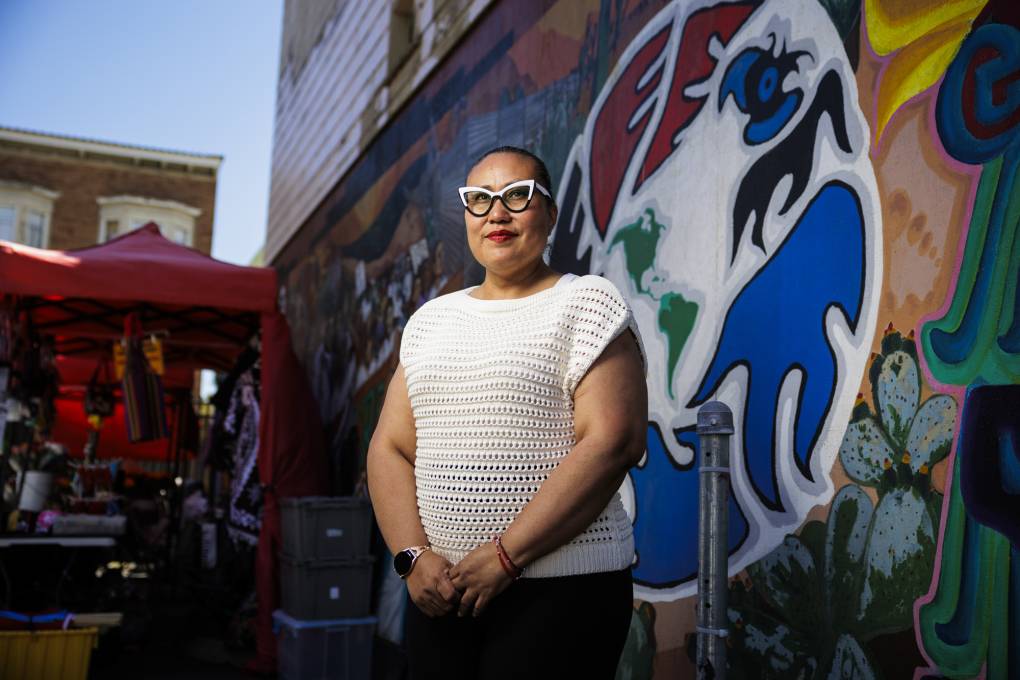
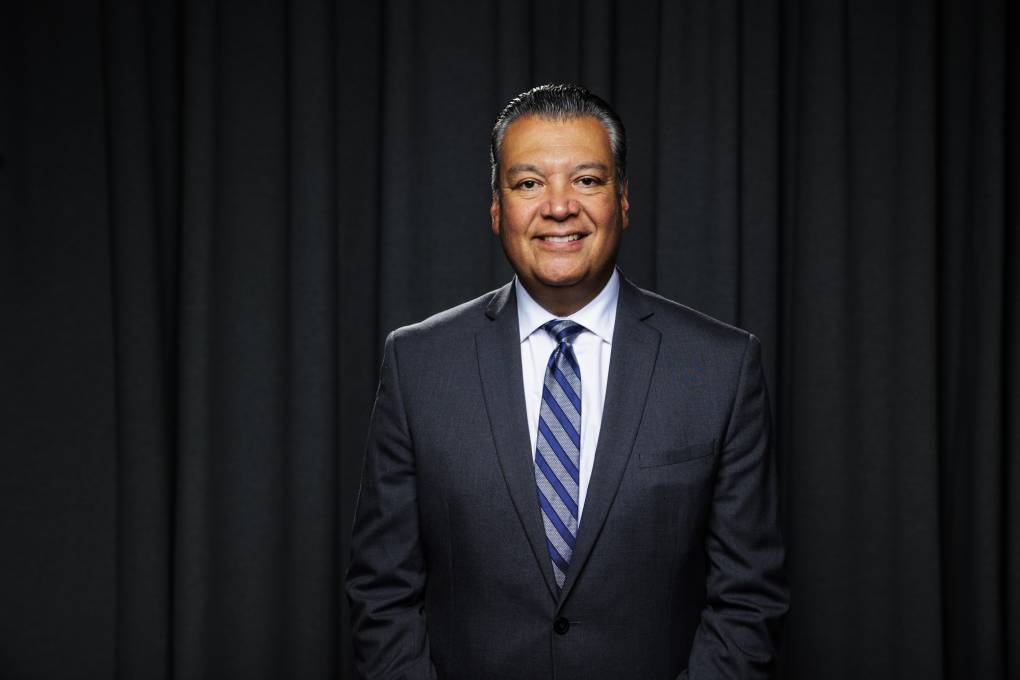
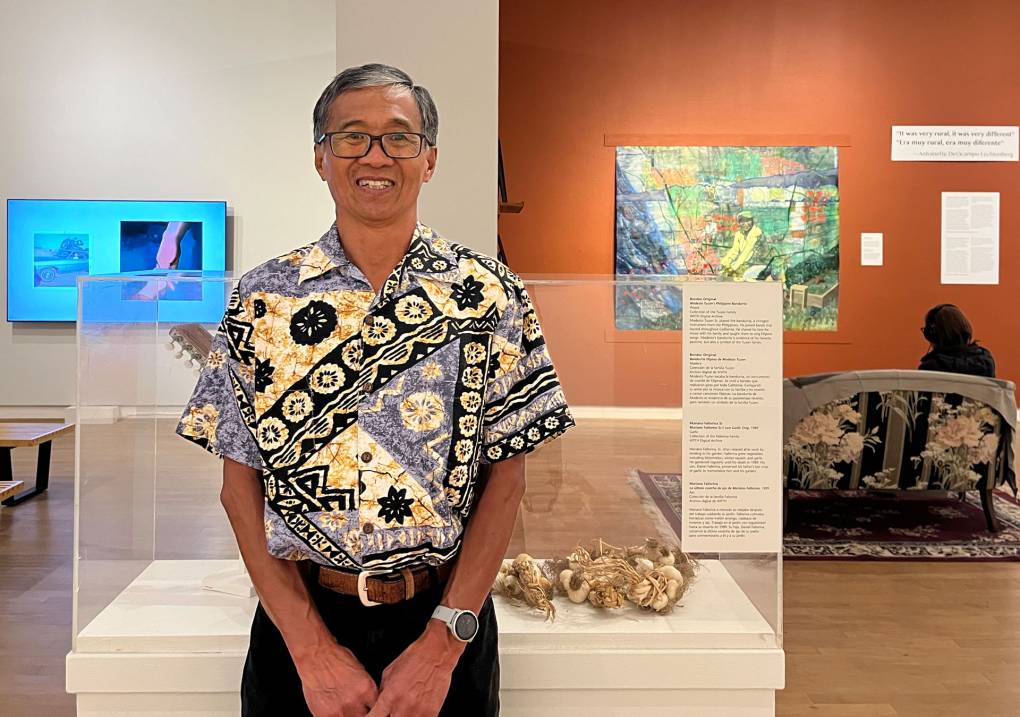
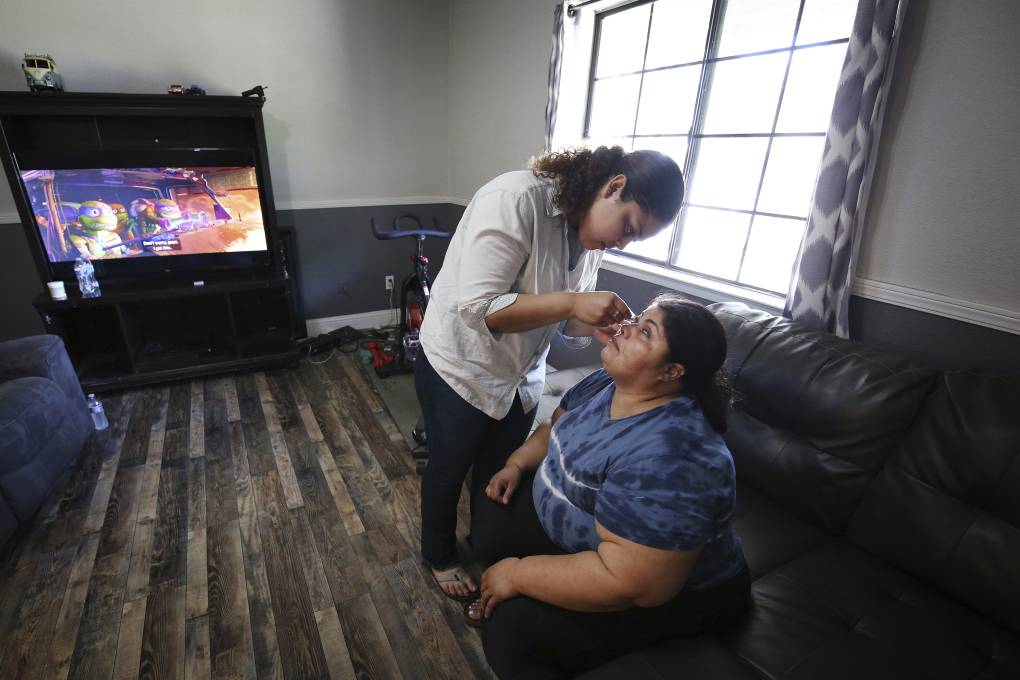
window.__IS_SSR__=true
window.__INITIAL_STATE__={
"attachmentsReducer": {
"audio_0": {
"type": "attachments",
"id": "audio_0",
"imgSizes": {
"kqedFullSize": {
"file": "https://ww2.kqed.org/news/wp-content/themes/KQED-unified/img/audio_bgs/background0.jpg"
}
}
},
"audio_1": {
"type": "attachments",
"id": "audio_1",
"imgSizes": {
"kqedFullSize": {
"file": "https://ww2.kqed.org/news/wp-content/themes/KQED-unified/img/audio_bgs/background1.jpg"
}
}
},
"audio_2": {
"type": "attachments",
"id": "audio_2",
"imgSizes": {
"kqedFullSize": {
"file": "https://ww2.kqed.org/news/wp-content/themes/KQED-unified/img/audio_bgs/background2.jpg"
}
}
},
"audio_3": {
"type": "attachments",
"id": "audio_3",
"imgSizes": {
"kqedFullSize": {
"file": "https://ww2.kqed.org/news/wp-content/themes/KQED-unified/img/audio_bgs/background3.jpg"
}
}
},
"audio_4": {
"type": "attachments",
"id": "audio_4",
"imgSizes": {
"kqedFullSize": {
"file": "https://ww2.kqed.org/news/wp-content/themes/KQED-unified/img/audio_bgs/background4.jpg"
}
}
},
"placeholder": {
"type": "attachments",
"id": "placeholder",
"imgSizes": {
"thumbnail": {
"file": "https://cdn.kqed.org/wp-content/uploads/2024/12/KQED-Default-Image-816638274-2000x1333-1-160x107.jpg",
"width": 160,
"height": 107,
"mimeType": "image/jpeg"
},
"medium": {
"file": "https://cdn.kqed.org/wp-content/uploads/2024/12/KQED-Default-Image-816638274-2000x1333-1-800x533.jpg",
"width": 800,
"height": 533,
"mimeType": "image/jpeg"
},
"medium_large": {
"file": "https://cdn.kqed.org/wp-content/uploads/2024/12/KQED-Default-Image-816638274-2000x1333-1-768x512.jpg",
"width": 768,
"height": 512,
"mimeType": "image/jpeg"
},
"large": {
"file": "https://cdn.kqed.org/wp-content/uploads/2024/12/KQED-Default-Image-816638274-2000x1333-1-1020x680.jpg",
"width": 1020,
"height": 680,
"mimeType": "image/jpeg"
},
"1536x1536": {
"file": "https://cdn.kqed.org/wp-content/uploads/2024/12/KQED-Default-Image-816638274-2000x1333-1-1536x1024.jpg",
"width": 1536,
"height": 1024,
"mimeType": "image/jpeg"
},
"fd-lrg": {
"file": "https://cdn.kqed.org/wp-content/uploads/2024/12/KQED-Default-Image-816638274-2000x1333-1-1536x1024.jpg",
"width": 1536,
"height": 1024,
"mimeType": "image/jpeg"
},
"fd-med": {
"file": "https://cdn.kqed.org/wp-content/uploads/2024/12/KQED-Default-Image-816638274-2000x1333-1-1020x680.jpg",
"width": 1020,
"height": 680,
"mimeType": "image/jpeg"
},
"fd-sm": {
"file": "https://cdn.kqed.org/wp-content/uploads/2024/12/KQED-Default-Image-816638274-2000x1333-1-800x533.jpg",
"width": 800,
"height": 533,
"mimeType": "image/jpeg"
},
"post-thumbnail": {
"file": "https://cdn.kqed.org/wp-content/uploads/2024/12/KQED-Default-Image-816638274-2000x1333-1-672x372.jpg",
"width": 672,
"height": 372,
"mimeType": "image/jpeg"
},
"twentyfourteen-full-width": {
"file": "https://cdn.kqed.org/wp-content/uploads/2024/12/KQED-Default-Image-816638274-2000x1333-1-1038x576.jpg",
"width": 1038,
"height": 576,
"mimeType": "image/jpeg"
},
"xxsmall": {
"file": "https://cdn.kqed.org/wp-content/uploads/2024/12/KQED-Default-Image-816638274-2000x1333-1-160x107.jpg",
"width": 160,
"height": 107,
"mimeType": "image/jpeg"
},
"xsmall": {
"file": "https://cdn.kqed.org/wp-content/uploads/2024/12/KQED-Default-Image-816638274-2000x1333-1-672x372.jpg",
"width": 672,
"height": 372,
"mimeType": "image/jpeg"
},
"small": {
"file": "https://cdn.kqed.org/wp-content/uploads/2024/12/KQED-Default-Image-816638274-2000x1333-1-672x372.jpg",
"width": 672,
"height": 372,
"mimeType": "image/jpeg"
},
"xlarge": {
"file": "https://cdn.kqed.org/wp-content/uploads/2024/12/KQED-Default-Image-816638274-2000x1333-1-1020x680.jpg",
"width": 1020,
"height": 680,
"mimeType": "image/jpeg"
},
"full-width": {
"file": "https://cdn.kqed.org/wp-content/uploads/2024/12/KQED-Default-Image-816638274-2000x1333-1-1920x1280.jpg",
"width": 1920,
"height": 1280,
"mimeType": "image/jpeg"
},
"guest-author-32": {
"file": "https://cdn.kqed.org/wp-content/uploads/2025/01/KQED-Default-Image-816638274-1333x1333-1-160x160.jpg",
"width": 32,
"height": 32,
"mimeType": "image/jpeg"
},
"guest-author-50": {
"file": "https://cdn.kqed.org/wp-content/uploads/2025/01/KQED-Default-Image-816638274-1333x1333-1-160x160.jpg",
"width": 50,
"height": 50,
"mimeType": "image/jpeg"
},
"guest-author-64": {
"file": "https://cdn.kqed.org/wp-content/uploads/2025/01/KQED-Default-Image-816638274-1333x1333-1-160x160.jpg",
"width": 64,
"height": 64,
"mimeType": "image/jpeg"
},
"guest-author-96": {
"file": "https://cdn.kqed.org/wp-content/uploads/2025/01/KQED-Default-Image-816638274-1333x1333-1-160x160.jpg",
"width": 96,
"height": 96,
"mimeType": "image/jpeg"
},
"guest-author-128": {
"file": "https://cdn.kqed.org/wp-content/uploads/2025/01/KQED-Default-Image-816638274-1333x1333-1-160x160.jpg",
"width": 128,
"height": 128,
"mimeType": "image/jpeg"
},
"detail": {
"file": "https://cdn.kqed.org/wp-content/uploads/2025/01/KQED-Default-Image-816638274-1333x1333-1-160x160.jpg",
"width": 160,
"height": 160,
"mimeType": "image/jpeg"
},
"kqedFullSize": {
"file": "https://cdn.kqed.org/wp-content/uploads/2024/12/KQED-Default-Image-816638274-2000x1333-1.jpg",
"width": 2000,
"height": 1333
}
}
},
"news_11814875": {
"type": "attachments",
"id": "news_11814875",
"meta": {
"index": "attachments_1716263798",
"site": "news",
"id": "11814875",
"found": true
},
"title": "RS42922_003_KQED_SanFrancisco_MarriottMarquis_04262020-qut",
"publishDate": 1588119869,
"status": "inherit",
"parent": 11813671,
"modified": 1721767257,
"caption": "A pedestrian walks past a closed-off entrance to the Mariott Marquis Hotel in San Francisco on April 26, 2020.",
"credit": "Beth LaBerge/KQED",
"altTag": "The front of a building with a barricade closing entry. The front doors are boarded up with wood.",
"description": "A pedestrian walks past a closed off entrance to the Mariott Marquis hotel in San Francisco on April 26, 2020.",
"imgSizes": {
"thumbnail": {
"file": "https://cdn.kqed.org/wp-content/uploads/sites/10/2020/04/RS42922_003_KQED_SanFrancisco_MarriottMarquis_04262020-qut-160x107.jpg",
"width": 160,
"height": 107,
"mimeType": "image/jpeg"
},
"medium": {
"file": "https://cdn.kqed.org/wp-content/uploads/sites/10/2020/04/RS42922_003_KQED_SanFrancisco_MarriottMarquis_04262020-qut-800x533.jpg",
"width": 800,
"height": 533,
"mimeType": "image/jpeg"
},
"large": {
"file": "https://cdn.kqed.org/wp-content/uploads/sites/10/2020/04/RS42922_003_KQED_SanFrancisco_MarriottMarquis_04262020-qut-1020x680.jpg",
"width": 1020,
"height": 680,
"mimeType": "image/jpeg"
},
"post-thumbnail": {
"file": "https://cdn.kqed.org/wp-content/uploads/sites/10/2020/04/RS42922_003_KQED_SanFrancisco_MarriottMarquis_04262020-qut-672x372.jpg",
"width": 672,
"height": 372,
"mimeType": "image/jpeg"
},
"twentyfourteen-full-width": {
"file": "https://cdn.kqed.org/wp-content/uploads/sites/10/2020/04/RS42922_003_KQED_SanFrancisco_MarriottMarquis_04262020-qut-1038x576.jpg",
"width": 1038,
"height": 576,
"mimeType": "image/jpeg"
},
"full-width": {
"file": "https://cdn.kqed.org/wp-content/uploads/sites/10/2020/04/RS42922_003_KQED_SanFrancisco_MarriottMarquis_04262020-qut-1920x1280.jpg",
"width": 1920,
"height": 1280,
"mimeType": "image/jpeg"
},
"apple_news_ca_landscape_12_9": {
"file": "https://cdn.kqed.org/wp-content/uploads/sites/10/2020/04/RS42922_003_KQED_SanFrancisco_MarriottMarquis_04262020-qut-1832x1280.jpg",
"width": 1832,
"height": 1280,
"mimeType": "image/jpeg"
},
"apple_news_ca_landscape_9_7": {
"file": "https://cdn.kqed.org/wp-content/uploads/sites/10/2020/04/RS42922_003_KQED_SanFrancisco_MarriottMarquis_04262020-qut-1376x1032.jpg",
"width": 1376,
"height": 1032,
"mimeType": "image/jpeg"
},
"apple_news_ca_landscape_5_5": {
"file": "https://cdn.kqed.org/wp-content/uploads/sites/10/2020/04/RS42922_003_KQED_SanFrancisco_MarriottMarquis_04262020-qut-1044x783.jpg",
"width": 1044,
"height": 783,
"mimeType": "image/jpeg"
},
"apple_news_ca_landscape_4_7": {
"file": "https://cdn.kqed.org/wp-content/uploads/sites/10/2020/04/RS42922_003_KQED_SanFrancisco_MarriottMarquis_04262020-qut-632x474.jpg",
"width": 632,
"height": 474,
"mimeType": "image/jpeg"
},
"apple_news_ca_landscape_4_0": {
"file": "https://cdn.kqed.org/wp-content/uploads/sites/10/2020/04/RS42922_003_KQED_SanFrancisco_MarriottMarquis_04262020-qut-536x402.jpg",
"width": 536,
"height": 402,
"mimeType": "image/jpeg"
},
"apple_news_ca_portrait_12_9": {
"file": "https://cdn.kqed.org/wp-content/uploads/sites/10/2020/04/RS42922_003_KQED_SanFrancisco_MarriottMarquis_04262020-qut-1122x1280.jpg",
"width": 1122,
"height": 1280,
"mimeType": "image/jpeg"
},
"apple_news_ca_portrait_9_7": {
"file": "https://cdn.kqed.org/wp-content/uploads/sites/10/2020/04/RS42922_003_KQED_SanFrancisco_MarriottMarquis_04262020-qut-840x1120.jpg",
"width": 840,
"height": 1120,
"mimeType": "image/jpeg"
},
"apple_news_ca_portrait_5_5": {
"file": "https://cdn.kqed.org/wp-content/uploads/sites/10/2020/04/RS42922_003_KQED_SanFrancisco_MarriottMarquis_04262020-qut-687x916.jpg",
"width": 687,
"height": 916,
"mimeType": "image/jpeg"
},
"apple_news_ca_portrait_4_7": {
"file": "https://cdn.kqed.org/wp-content/uploads/sites/10/2020/04/RS42922_003_KQED_SanFrancisco_MarriottMarquis_04262020-qut-414x552.jpg",
"width": 414,
"height": 552,
"mimeType": "image/jpeg"
},
"apple_news_ca_portrait_4_0": {
"file": "https://cdn.kqed.org/wp-content/uploads/sites/10/2020/04/RS42922_003_KQED_SanFrancisco_MarriottMarquis_04262020-qut-354x472.jpg",
"width": 354,
"height": 472,
"mimeType": "image/jpeg"
},
"apple_news_ca_square_12_9": {
"file": "https://cdn.kqed.org/wp-content/uploads/sites/10/2020/04/RS42922_003_KQED_SanFrancisco_MarriottMarquis_04262020-qut-1472x1280.jpg",
"width": 1472,
"height": 1280,
"mimeType": "image/jpeg"
},
"apple_news_ca_square_9_7": {
"file": "https://cdn.kqed.org/wp-content/uploads/sites/10/2020/04/RS42922_003_KQED_SanFrancisco_MarriottMarquis_04262020-qut-1104x1104.jpg",
"width": 1104,
"height": 1104,
"mimeType": "image/jpeg"
},
"apple_news_ca_square_5_5": {
"file": "https://cdn.kqed.org/wp-content/uploads/sites/10/2020/04/RS42922_003_KQED_SanFrancisco_MarriottMarquis_04262020-qut-912x912.jpg",
"width": 912,
"height": 912,
"mimeType": "image/jpeg"
},
"apple_news_ca_square_4_7": {
"file": "https://cdn.kqed.org/wp-content/uploads/sites/10/2020/04/RS42922_003_KQED_SanFrancisco_MarriottMarquis_04262020-qut-550x550.jpg",
"width": 550,
"height": 550,
"mimeType": "image/jpeg"
},
"apple_news_ca_square_4_0": {
"file": "https://cdn.kqed.org/wp-content/uploads/sites/10/2020/04/RS42922_003_KQED_SanFrancisco_MarriottMarquis_04262020-qut-470x470.jpg",
"width": 470,
"height": 470,
"mimeType": "image/jpeg"
},
"kqedFullSize": {
"file": "https://cdn.kqed.org/wp-content/uploads/sites/10/2020/04/RS42922_003_KQED_SanFrancisco_MarriottMarquis_04262020-qut.jpg",
"width": 1920,
"height": 1280
}
},
"isLoading": false,
"fetchFailed": false
},
"news_11992083": {
"type": "attachments",
"id": "news_11992083",
"meta": {
"index": "attachments_1716263798",
"site": "news",
"id": "11992083",
"found": true
},
"title": "Susana Rojas outside of the Calle 24 Offices in San Francisco on June 26, 2024.",
"publishDate": 1719431731,
"status": "inherit",
"parent": 0,
"modified": 1719433248,
"caption": "Susana Rojas in La Placita on 24th Street in San Francisco on June 26, 2024.",
"credit": "Martin do Nascimento/KQED",
"altTag": null,
"description": null,
"imgSizes": {
"medium": {
"file": "https://cdn.kqed.org/wp-content/uploads/sites/10/2024/06/240626-SUSANA-ROJAS-MD-04-KQED-800x533.jpg",
"width": 800,
"height": 533,
"mimeType": "image/jpeg"
},
"large": {
"file": "https://cdn.kqed.org/wp-content/uploads/sites/10/2024/06/240626-SUSANA-ROJAS-MD-04-KQED-1020x680.jpg",
"width": 1020,
"height": 680,
"mimeType": "image/jpeg"
},
"thumbnail": {
"file": "https://cdn.kqed.org/wp-content/uploads/sites/10/2024/06/240626-SUSANA-ROJAS-MD-04-KQED-160x107.jpg",
"width": 160,
"height": 107,
"mimeType": "image/jpeg"
},
"1536x1536": {
"file": "https://cdn.kqed.org/wp-content/uploads/sites/10/2024/06/240626-SUSANA-ROJAS-MD-04-KQED-1536x1024.jpg",
"width": 1536,
"height": 1024,
"mimeType": "image/jpeg"
},
"post-thumbnail": {
"file": "https://cdn.kqed.org/wp-content/uploads/sites/10/2024/06/240626-SUSANA-ROJAS-MD-04-KQED-672x372.jpg",
"width": 672,
"height": 372,
"mimeType": "image/jpeg"
},
"twentyfourteen-full-width": {
"file": "https://cdn.kqed.org/wp-content/uploads/sites/10/2024/06/240626-SUSANA-ROJAS-MD-04-KQED-1038x576.jpg",
"width": 1038,
"height": 576,
"mimeType": "image/jpeg"
},
"full-width": {
"file": "https://cdn.kqed.org/wp-content/uploads/sites/10/2024/06/240626-SUSANA-ROJAS-MD-04-KQED-1920x1280.jpg",
"width": 1920,
"height": 1280,
"mimeType": "image/jpeg"
},
"kqedFullSize": {
"file": "https://cdn.kqed.org/wp-content/uploads/sites/10/2024/06/240626-SUSANA-ROJAS-MD-04-KQED.jpg",
"width": 2000,
"height": 1333
}
},
"isLoading": false,
"fetchFailed": false
},
"news_11990371": {
"type": "attachments",
"id": "news_11990371",
"meta": {
"index": "attachments_1716263798",
"site": "news",
"id": "11990371",
"found": true
},
"title": "DEMONSTRATORS PICTURE",
"publishDate": 1718337373,
"status": "inherit",
"parent": 11990370,
"modified": 1718337398,
"caption": "Manifestantes contra la reelección del presidente salvadoreño Nayib Bukele en San Francisco el día de su toma de posesión el 1 de junio de 2024.",
"credit": "Gina Castro/KQED",
"altTag": null,
"description": null,
"imgSizes": {
"medium": {
"file": "https://cdn.kqed.org/wp-content/uploads/sites/10/2024/06/DEMONSTRATORS-PICTURE-800x533.jpg",
"width": 800,
"height": 533,
"mimeType": "image/jpeg"
},
"thumbnail": {
"file": "https://cdn.kqed.org/wp-content/uploads/sites/10/2024/06/DEMONSTRATORS-PICTURE-160x107.jpg",
"width": 160,
"height": 107,
"mimeType": "image/jpeg"
},
"post-thumbnail": {
"file": "https://cdn.kqed.org/wp-content/uploads/sites/10/2024/06/DEMONSTRATORS-PICTURE-672x372.jpg",
"width": 672,
"height": 372,
"mimeType": "image/jpeg"
},
"twentyfourteen-full-width": {
"file": "https://cdn.kqed.org/wp-content/uploads/sites/10/2024/06/DEMONSTRATORS-PICTURE-1020x576.jpg",
"width": 1020,
"height": 576,
"mimeType": "image/jpeg"
},
"kqedFullSize": {
"file": "https://cdn.kqed.org/wp-content/uploads/sites/10/2024/06/DEMONSTRATORS-PICTURE.jpg",
"width": 1020,
"height": 680
}
},
"isLoading": false,
"fetchFailed": false
},
"news_11992155": {
"type": "attachments",
"id": "news_11992155",
"meta": {
"index": "attachments_1716263798",
"site": "news",
"id": "11992155",
"found": true
},
"title": "Sen. Alex Padilla at KQED in San Francisco on June 26, 2024.",
"publishDate": 1719442787,
"status": "inherit",
"parent": 0,
"modified": 1719453964,
"caption": "Sen. Alex Padilla at KQED Headquarters in San Francisco on June 26, 2024.",
"credit": "Martin do Nascimento/KQED",
"altTag": null,
"description": null,
"imgSizes": {
"medium": {
"file": "https://cdn.kqed.org/wp-content/uploads/sites/10/2024/06/240626-ALEX-PADILLA-ON-PB-MD-01-KQED-800x533.jpg",
"width": 800,
"height": 533,
"mimeType": "image/jpeg"
},
"large": {
"file": "https://cdn.kqed.org/wp-content/uploads/sites/10/2024/06/240626-ALEX-PADILLA-ON-PB-MD-01-KQED-1020x680.jpg",
"width": 1020,
"height": 680,
"mimeType": "image/jpeg"
},
"thumbnail": {
"file": "https://cdn.kqed.org/wp-content/uploads/sites/10/2024/06/240626-ALEX-PADILLA-ON-PB-MD-01-KQED-160x107.jpg",
"width": 160,
"height": 107,
"mimeType": "image/jpeg"
},
"1536x1536": {
"file": "https://cdn.kqed.org/wp-content/uploads/sites/10/2024/06/240626-ALEX-PADILLA-ON-PB-MD-01-KQED-1536x1024.jpg",
"width": 1536,
"height": 1024,
"mimeType": "image/jpeg"
},
"post-thumbnail": {
"file": "https://cdn.kqed.org/wp-content/uploads/sites/10/2024/06/240626-ALEX-PADILLA-ON-PB-MD-01-KQED-672x372.jpg",
"width": 672,
"height": 372,
"mimeType": "image/jpeg"
},
"twentyfourteen-full-width": {
"file": "https://cdn.kqed.org/wp-content/uploads/sites/10/2024/06/240626-ALEX-PADILLA-ON-PB-MD-01-KQED-1038x576.jpg",
"width": 1038,
"height": 576,
"mimeType": "image/jpeg"
},
"full-width": {
"file": "https://cdn.kqed.org/wp-content/uploads/sites/10/2024/06/240626-ALEX-PADILLA-ON-PB-MD-01-KQED-1920x1280.jpg",
"width": 1920,
"height": 1280,
"mimeType": "image/jpeg"
},
"kqedFullSize": {
"file": "https://cdn.kqed.org/wp-content/uploads/sites/10/2024/06/240626-ALEX-PADILLA-ON-PB-MD-01-KQED.jpg?ver=1719449828",
"width": 2000,
"height": 1333
}
},
"isLoading": false,
"fetchFailed": false
},
"news_11992126": {
"type": "attachments",
"id": "news_11992126",
"meta": {
"index": "attachments_1716263798",
"site": "news",
"id": "11992126",
"found": true
},
"title": "MEXICO-US-MIGRATION-BORDER-TITLE 42",
"publishDate": 1719436811,
"status": "inherit",
"parent": 11991893,
"modified": 1719436888,
"caption": "Unidentified migrants wait to be processed by United States authorities on the US side of the US-Mexico border, seen from Tijuana, Baja California state, Mexico, on May 11, 2023. ",
"credit": "Guillermo Arias/AFP via Getty Images",
"altTag": null,
"description": null,
"imgSizes": {
"medium": {
"file": "https://cdn.kqed.org/wp-content/uploads/sites/10/2024/06/GettyImages-1253838467-800x534.jpg",
"width": 800,
"height": 534,
"mimeType": "image/jpeg"
},
"large": {
"file": "https://cdn.kqed.org/wp-content/uploads/sites/10/2024/06/GettyImages-1253838467-1020x680.jpg",
"width": 1020,
"height": 680,
"mimeType": "image/jpeg"
},
"thumbnail": {
"file": "https://cdn.kqed.org/wp-content/uploads/sites/10/2024/06/GettyImages-1253838467-160x107.jpg",
"width": 160,
"height": 107,
"mimeType": "image/jpeg"
},
"post-thumbnail": {
"file": "https://cdn.kqed.org/wp-content/uploads/sites/10/2024/06/GettyImages-1253838467-672x372.jpg",
"width": 672,
"height": 372,
"mimeType": "image/jpeg"
},
"twentyfourteen-full-width": {
"file": "https://cdn.kqed.org/wp-content/uploads/sites/10/2024/06/GettyImages-1253838467-1024x576.jpg",
"width": 1024,
"height": 576,
"mimeType": "image/jpeg"
},
"kqedFullSize": {
"file": "https://cdn.kqed.org/wp-content/uploads/sites/10/2024/06/GettyImages-1253838467.jpg",
"width": 1024,
"height": 683
}
},
"isLoading": false,
"fetchFailed": false
},
"news_11989923": {
"type": "attachments",
"id": "news_11989923",
"meta": {
"index": "attachments_1716263798",
"site": "news",
"id": "11989923",
"found": true
},
"title": "Dan-garlic",
"publishDate": 1718214017,
"status": "inherit",
"parent": 0,
"modified": 1718308748,
"caption": "Daniel Fallorina, 67, stands in front of a display showing his father's last crop of braided garlic at the exhibit 'Sowing Seeds: Filipino American Stories from the Pajaro Valley' at the Santa Cruz Museum of Art & History.",
"credit": "Courtesy Janelle Salanga",
"altTag": "A man wearing glasses and a shirt with exotic designs stands in front of a display of old garlic.",
"description": null,
"imgSizes": {
"medium": {
"file": "https://cdn.kqed.org/wp-content/uploads/sites/10/2024/06/Dan-garlic-800x563.jpg",
"width": 800,
"height": 563,
"mimeType": "image/jpeg"
},
"large": {
"file": "https://cdn.kqed.org/wp-content/uploads/sites/10/2024/06/Dan-garlic-1020x717.jpg",
"width": 1020,
"height": 717,
"mimeType": "image/jpeg"
},
"thumbnail": {
"file": "https://cdn.kqed.org/wp-content/uploads/sites/10/2024/06/Dan-garlic-160x113.jpg",
"width": 160,
"height": 113,
"mimeType": "image/jpeg"
},
"1536x1536": {
"file": "https://cdn.kqed.org/wp-content/uploads/sites/10/2024/06/Dan-garlic-1536x1080.jpg",
"width": 1536,
"height": 1080,
"mimeType": "image/jpeg"
},
"post-thumbnail": {
"file": "https://cdn.kqed.org/wp-content/uploads/sites/10/2024/06/Dan-garlic-672x372.jpg",
"width": 672,
"height": 372,
"mimeType": "image/jpeg"
},
"twentyfourteen-full-width": {
"file": "https://cdn.kqed.org/wp-content/uploads/sites/10/2024/06/Dan-garlic-1038x576.jpg",
"width": 1038,
"height": 576,
"mimeType": "image/jpeg"
},
"kqedFullSize": {
"file": "https://cdn.kqed.org/wp-content/uploads/sites/10/2024/06/Dan-garlic.jpg",
"width": 1920,
"height": 1350
}
},
"isLoading": false,
"fetchFailed": false
},
"news_11988055": {
"type": "attachments",
"id": "news_11988055",
"meta": {
"index": "attachments_1716263798",
"site": "news",
"id": "11988055",
"found": true
},
"title": "240517-TKBilingualLearners-27-BL_qut",
"publishDate": 1717006968,
"status": "inherit",
"parent": 0,
"modified": 1717794201,
"caption": "Teacher Cintya Valdivia sits with transitional kindergarten students during snack time at the International Community School in Oakland on May 17, 2024.",
"credit": "Beth LaBerge/KQED",
"altTag": "A teacher sits at a classroom table with young students as one student puts his arm tenderly around her neck",
"description": null,
"imgSizes": {
"medium": {
"file": "https://cdn.kqed.org/wp-content/uploads/sites/10/2024/05/240517-TKBilingualLearners-27-BL_qut-800x533.jpg",
"width": 800,
"height": 533,
"mimeType": "image/jpeg"
},
"large": {
"file": "https://cdn.kqed.org/wp-content/uploads/sites/10/2024/05/240517-TKBilingualLearners-27-BL_qut-1020x680.jpg",
"width": 1020,
"height": 680,
"mimeType": "image/jpeg"
},
"thumbnail": {
"file": "https://cdn.kqed.org/wp-content/uploads/sites/10/2024/05/240517-TKBilingualLearners-27-BL_qut-160x107.jpg",
"width": 160,
"height": 107,
"mimeType": "image/jpeg"
},
"1536x1536": {
"file": "https://cdn.kqed.org/wp-content/uploads/sites/10/2024/05/240517-TKBilingualLearners-27-BL_qut-1536x1024.jpg",
"width": 1536,
"height": 1024,
"mimeType": "image/jpeg"
},
"post-thumbnail": {
"file": "https://cdn.kqed.org/wp-content/uploads/sites/10/2024/05/240517-TKBilingualLearners-27-BL_qut-672x372.jpg",
"width": 672,
"height": 372,
"mimeType": "image/jpeg"
},
"twentyfourteen-full-width": {
"file": "https://cdn.kqed.org/wp-content/uploads/sites/10/2024/05/240517-TKBilingualLearners-27-BL_qut-1038x576.jpg",
"width": 1038,
"height": 576,
"mimeType": "image/jpeg"
},
"kqedFullSize": {
"file": "https://cdn.kqed.org/wp-content/uploads/sites/10/2024/05/240517-TKBilingualLearners-27-BL_qut.jpg",
"width": 1920,
"height": 1280
}
},
"isLoading": false,
"fetchFailed": false
},
"news_11988517": {
"type": "attachments",
"id": "news_11988517",
"meta": {
"index": "attachments_1716263798",
"site": "news",
"id": "11988517",
"found": true
},
"title": "APTOPIX California Budget Immigrants",
"publishDate": 1717195841,
"status": "inherit",
"parent": 11988511,
"modified": 1717195876,
"caption": "Marvin Estela Pineda, right, originally from El Salvador and blind from glaucoma, gets eye drops from her daughter Mayde at their home in Madera, Calif., Thursday, May 30, 2024. California Gov. Gavin Newsom is facing criticism for his proposal to eliminate an optional Medicaid benefit for some disabled immigrants.",
"credit": "Gary Kazanjian/AP Photo",
"altTag": null,
"description": null,
"imgSizes": {
"medium": {
"file": "https://cdn.kqed.org/wp-content/uploads/sites/10/2024/05/AP24152173453216-800x533.jpg",
"width": 800,
"height": 533,
"mimeType": "image/jpeg"
},
"large": {
"file": "https://cdn.kqed.org/wp-content/uploads/sites/10/2024/05/AP24152173453216-1020x680.jpg",
"width": 1020,
"height": 680,
"mimeType": "image/jpeg"
},
"thumbnail": {
"file": "https://cdn.kqed.org/wp-content/uploads/sites/10/2024/05/AP24152173453216-160x107.jpg",
"width": 160,
"height": 107,
"mimeType": "image/jpeg"
},
"1536x1536": {
"file": "https://cdn.kqed.org/wp-content/uploads/sites/10/2024/05/AP24152173453216-1536x1024.jpg",
"width": 1536,
"height": 1024,
"mimeType": "image/jpeg"
},
"2048x2048": {
"file": "https://cdn.kqed.org/wp-content/uploads/sites/10/2024/05/AP24152173453216-2048x1365.jpg",
"width": 2048,
"height": 1365,
"mimeType": "image/jpeg"
},
"post-thumbnail": {
"file": "https://cdn.kqed.org/wp-content/uploads/sites/10/2024/05/AP24152173453216-672x372.jpg",
"width": 672,
"height": 372,
"mimeType": "image/jpeg"
},
"twentyfourteen-full-width": {
"file": "https://cdn.kqed.org/wp-content/uploads/sites/10/2024/05/AP24152173453216-1038x576.jpg",
"width": 1038,
"height": 576,
"mimeType": "image/jpeg"
},
"full-width": {
"file": "https://cdn.kqed.org/wp-content/uploads/sites/10/2024/05/AP24152173453216-1920x1280.jpg",
"width": 1920,
"height": 1280,
"mimeType": "image/jpeg"
},
"kqedFullSize": {
"file": "https://cdn.kqed.org/wp-content/uploads/sites/10/2024/05/AP24152173453216-scaled.jpg",
"width": 2560,
"height": 1707
}
},
"isLoading": false,
"fetchFailed": false
},
"news_11988205": {
"type": "attachments",
"id": "news_11988205",
"meta": {
"index": "attachments_1716263798",
"site": "news",
"id": "11988205",
"found": true
},
"title": "CMWageTheft01",
"publishDate": 1717089459,
"status": "inherit",
"parent": 11988204,
"modified": 1717089490,
"caption": "Pizza Hut employees strike in protest of allegations of wage theft and abusive scheduling practices in Los Angeles on Jan. 26, 2024.",
"credit": "Lauren Justice/CalMatters",
"altTag": null,
"description": null,
"imgSizes": {
"medium": {
"file": "https://cdn.kqed.org/wp-content/uploads/sites/10/2024/05/CMWageTheft01-800x533.jpg",
"width": 800,
"height": 533,
"mimeType": "image/jpeg"
},
"large": {
"file": "https://cdn.kqed.org/wp-content/uploads/sites/10/2024/05/CMWageTheft01-1020x680.jpg",
"width": 1020,
"height": 680,
"mimeType": "image/jpeg"
},
"thumbnail": {
"file": "https://cdn.kqed.org/wp-content/uploads/sites/10/2024/05/CMWageTheft01-160x107.jpg",
"width": 160,
"height": 107,
"mimeType": "image/jpeg"
},
"1536x1536": {
"file": "https://cdn.kqed.org/wp-content/uploads/sites/10/2024/05/CMWageTheft01-1536x1024.jpg",
"width": 1536,
"height": 1024,
"mimeType": "image/jpeg"
},
"post-thumbnail": {
"file": "https://cdn.kqed.org/wp-content/uploads/sites/10/2024/05/CMWageTheft01-672x372.jpg",
"width": 672,
"height": 372,
"mimeType": "image/jpeg"
},
"twentyfourteen-full-width": {
"file": "https://cdn.kqed.org/wp-content/uploads/sites/10/2024/05/CMWageTheft01-1038x576.jpg",
"width": 1038,
"height": 576,
"mimeType": "image/jpeg"
},
"full-width": {
"file": "https://cdn.kqed.org/wp-content/uploads/sites/10/2024/05/CMWageTheft01-1920x1280.jpg",
"width": 1920,
"height": 1280,
"mimeType": "image/jpeg"
},
"kqedFullSize": {
"file": "https://cdn.kqed.org/wp-content/uploads/sites/10/2024/05/CMWageTheft01.jpg",
"width": 2000,
"height": 1333
}
},
"isLoading": false,
"fetchFailed": false
},
"news_11986482": {
"type": "attachments",
"id": "news_11986482",
"meta": {
"index": "attachments_1716263798",
"site": "news",
"id": "11986482",
"found": true
},
"parent": 0,
"imgSizes": {
"twentyfourteen-full-width": {
"file": "https://cdn.kqed.org/wp-content/uploads/sites/10/2024/05/FEBMAY2024-LONGCOVID-ET-PU-13-KQED-1038x576.jpg",
"width": 1038,
"mimeType": "image/jpeg",
"height": 576
},
"thumbnail": {
"file": "https://cdn.kqed.org/wp-content/uploads/sites/10/2024/05/FEBMAY2024-LONGCOVID-ET-PU-13-KQED-160x107.jpg",
"width": 160,
"mimeType": "image/jpeg",
"height": 107
},
"post-thumbnail": {
"file": "https://cdn.kqed.org/wp-content/uploads/sites/10/2024/05/FEBMAY2024-LONGCOVID-ET-PU-13-KQED-672x372.jpg",
"width": 672,
"mimeType": "image/jpeg",
"height": 372
},
"kqedFullSize": {
"file": "https://cdn.kqed.org/wp-content/uploads/sites/10/2024/05/FEBMAY2024-LONGCOVID-ET-PU-13-KQED.jpg",
"width": 2000,
"height": 1333
},
"large": {
"file": "https://cdn.kqed.org/wp-content/uploads/sites/10/2024/05/FEBMAY2024-LONGCOVID-ET-PU-13-KQED-1020x680.jpg",
"width": 1020,
"mimeType": "image/jpeg",
"height": 680
},
"1536x1536": {
"file": "https://cdn.kqed.org/wp-content/uploads/sites/10/2024/05/FEBMAY2024-LONGCOVID-ET-PU-13-KQED-1536x1024.jpg",
"width": 1536,
"mimeType": "image/jpeg",
"height": 1024
},
"full-width": {
"file": "https://cdn.kqed.org/wp-content/uploads/sites/10/2024/05/FEBMAY2024-LONGCOVID-ET-PU-13-KQED-1920x1280.jpg",
"width": 1920,
"mimeType": "image/jpeg",
"height": 1280
},
"medium": {
"file": "https://cdn.kqed.org/wp-content/uploads/sites/10/2024/05/FEBMAY2024-LONGCOVID-ET-PU-13-KQED-800x533.jpg",
"width": 800,
"mimeType": "image/jpeg",
"height": 533
}
},
"publishDate": 1715818507,
"modified": 1715978534,
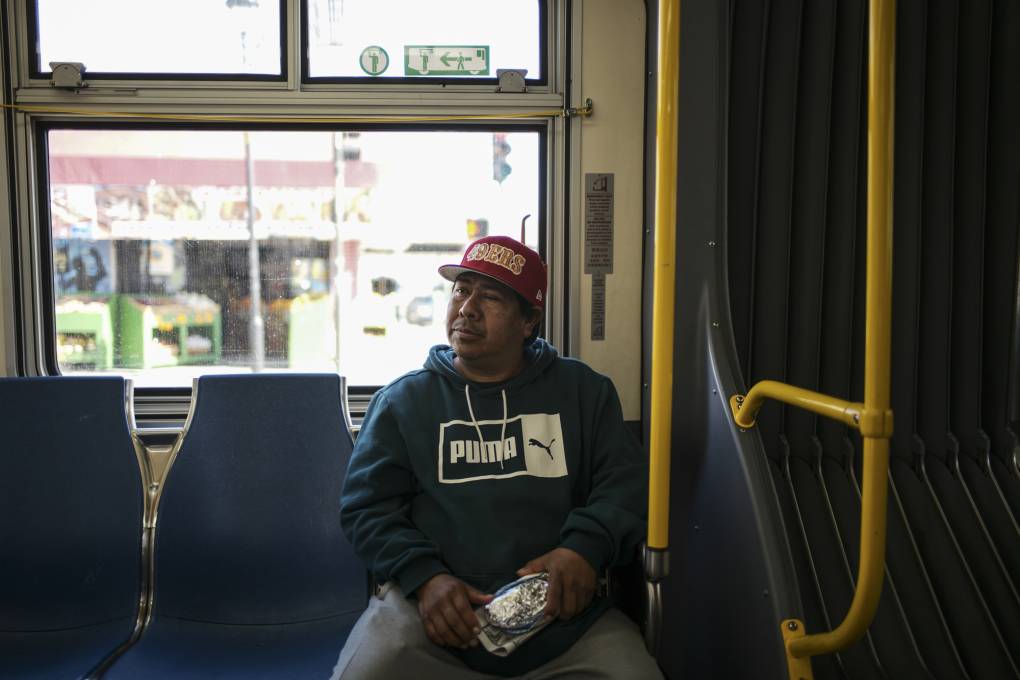
"caption": "Osbaldo Varilla-Aguilar, 46, rides the bus back home in San Francisco on Feb. 26, 2024. ",
"description": null,
"title": "FEBMAY2024-LONGCOVID-ET-PU-13-KQED",
"credit": "Pablo Unzueta for El Tecolote/CatchLight Local",
"status": "inherit",
"altTag": "A middle-aged Latino man with a hat sits on a bus.",
"isLoading": false,
"fetchFailed": false
},
"news_11984328": {
"type": "attachments",
"id": "news_11984328",
"meta": {
"index": "attachments_1716263798",
"site": "news",
"id": "11984328",
"found": true
},
"parent": 0,
"imgSizes": {
"twentyfourteen-full-width": {
"file": "https://cdn.kqed.org/wp-content/uploads/sites/10/2024/04/240429-CENTRAL-AMERICAN-MINORS-MD-01-KQED-1038x576.jpg",
"width": 1038,
"mimeType": "image/jpeg",
"height": 576
},
"thumbnail": {
"file": "https://cdn.kqed.org/wp-content/uploads/sites/10/2024/04/240429-CENTRAL-AMERICAN-MINORS-MD-01-KQED-160x107.jpg",
"width": 160,
"mimeType": "image/jpeg",
"height": 107
},
"post-thumbnail": {
"file": "https://cdn.kqed.org/wp-content/uploads/sites/10/2024/04/240429-CENTRAL-AMERICAN-MINORS-MD-01-KQED-672x372.jpg",
"width": 672,
"mimeType": "image/jpeg",
"height": 372
},
"kqedFullSize": {
"file": "https://cdn.kqed.org/wp-content/uploads/sites/10/2024/04/240429-CENTRAL-AMERICAN-MINORS-MD-01-KQED.jpg",
"width": 2000,
"height": 1333
},
"large": {
"file": "https://cdn.kqed.org/wp-content/uploads/sites/10/2024/04/240429-CENTRAL-AMERICAN-MINORS-MD-01-KQED-1020x680.jpg",
"width": 1020,
"mimeType": "image/jpeg",
"height": 680
},
"1536x1536": {
"file": "https://cdn.kqed.org/wp-content/uploads/sites/10/2024/04/240429-CENTRAL-AMERICAN-MINORS-MD-01-KQED-1536x1024.jpg",
"width": 1536,
"mimeType": "image/jpeg",
"height": 1024
},
"full-width": {
"file": "https://cdn.kqed.org/wp-content/uploads/sites/10/2024/04/240429-CENTRAL-AMERICAN-MINORS-MD-01-KQED-1920x1280.jpg",
"width": 1920,
"mimeType": "image/jpeg",
"height": 1280
},
"medium": {
"file": "https://cdn.kqed.org/wp-content/uploads/sites/10/2024/04/240429-CENTRAL-AMERICAN-MINORS-MD-01-KQED-800x533.jpg",
"width": 800,
"mimeType": "image/jpeg",
"height": 533
}
},
"publishDate": 1714396318,
"modified": 1715881628,
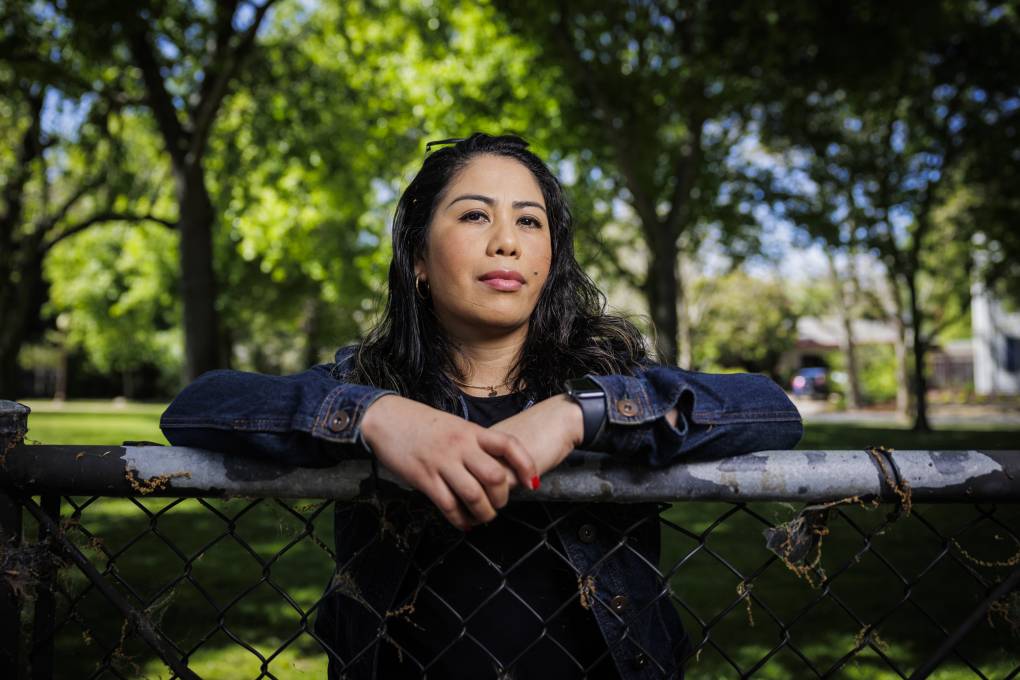
"caption": "Norma Lima in Menlo Park on April 28, 2024.",
"description": null,
"title": "Norma Lima in Menlo Park on Apr. 28, 2024.",
"credit": "Martin do Nascimento/KQED",
"status": "inherit",
"altTag": "A Latino woman leans against a fence.",
"isLoading": false,
"fetchFailed": false
},
"news_11966205": {
"type": "attachments",
"id": "news_11966205",
"meta": {
"index": "attachments_1716263798",
"site": "news",
"id": "11966205",
"found": true
},
"parent": 0,
"imgSizes": {
"twentyfourteen-full-width": {
"file": "https://cdn.kqed.org/wp-content/uploads/sites/10/2023/11/231102-CRISTINA-MORA-MD-08-KQED-1038x576.jpg",
"width": 1038,
"mimeType": "image/jpeg",
"height": 576
},
"thumbnail": {
"file": "https://cdn.kqed.org/wp-content/uploads/sites/10/2023/11/231102-CRISTINA-MORA-MD-08-KQED-160x107.jpg",
"width": 160,
"mimeType": "image/jpeg",
"height": 107
},
"post-thumbnail": {
"file": "https://cdn.kqed.org/wp-content/uploads/sites/10/2023/11/231102-CRISTINA-MORA-MD-08-KQED-672x372.jpg",
"width": 672,
"mimeType": "image/jpeg",
"height": 372
},
"kqedFullSize": {
"file": "https://cdn.kqed.org/wp-content/uploads/sites/10/2023/11/231102-CRISTINA-MORA-MD-08-KQED.jpg?ver=1698939138",
"width": 2000,
"height": 1333
},
"large": {
"file": "https://cdn.kqed.org/wp-content/uploads/sites/10/2023/11/231102-CRISTINA-MORA-MD-08-KQED-1020x680.jpg",
"width": 1020,
"mimeType": "image/jpeg",
"height": 680
},
"1536x1536": {
"file": "https://cdn.kqed.org/wp-content/uploads/sites/10/2023/11/231102-CRISTINA-MORA-MD-08-KQED-1536x1024.jpg",
"width": 1536,
"mimeType": "image/jpeg",
"height": 1024
},
"full-width": {
"file": "https://cdn.kqed.org/wp-content/uploads/sites/10/2023/11/231102-CRISTINA-MORA-MD-08-KQED-1920x1280.jpg",
"width": 1920,
"mimeType": "image/jpeg",
"height": 1280
},
"medium": {
"file": "https://cdn.kqed.org/wp-content/uploads/sites/10/2023/11/231102-CRISTINA-MORA-MD-08-KQED-800x533.jpg",
"width": 800,
"mimeType": "image/jpeg",
"height": 533
}
},
"publishDate": 1698932680,
"modified": 1715721173,
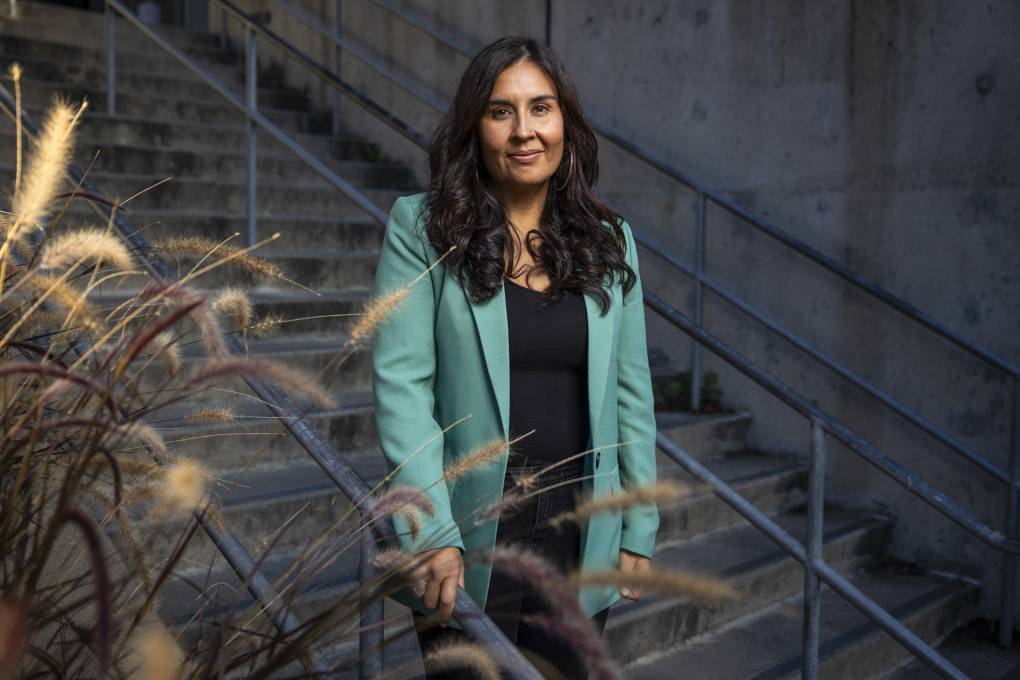
"caption": "UC Berkeley Professor G. Cristina Mora outside the Social Sciences Building on Nov. 1, 2023.",
"description": null,
"title": "231102-CRISTINA MORA-MD-08-KQED",
"credit": "Martin do Nascimento/KQED",
"status": "inherit",
"altTag": "A person with long hair in a teal sport coat stands on a cement outdoor staircase and looks at the camera.",
"isLoading": false,
"fetchFailed": false
}
},
"audioPlayerReducer": {
"postId": "stream_live",
"isPaused": true,
"isPlaying": false,
"pfsActive": false,
"pledgeModalIsOpen": true,
"playerDrawerIsOpen": false,
"liveAudioPlayStartedAt": 0,
"liveAudioPlayContext": ""
},
"authorsReducer": {
"byline_news_11990370": {
"type": "authors",
"id": "byline_news_11990370",
"meta": {
"override": true
},
"slug": "byline_news_11990370",
"name": "\u003ca href=\"https://twitter.com/latinidan\">Daniel Eduardo Hernández\u003c/a>",
"isLoading": false
},
"byline_news_11990010": {
"type": "authors",
"id": "byline_news_11990010",
"meta": {
"override": true
},
"slug": "byline_news_11990010",
"name": "Janelle Salanga",
"isLoading": false
},
"byline_news_11988511": {
"type": "authors",
"id": "byline_news_11988511",
"meta": {
"override": true
},
"slug": "byline_news_11988511",
"name": "Adam Beam, The Associated Press",
"isLoading": false
},
"byline_news_11988204": {
"type": "authors",
"id": "byline_news_11988204",
"meta": {
"override": true
},
"slug": "byline_news_11988204",
"name": "Jeanne Kuang, CalMatters",
"isLoading": false
},
"byline_news_11986724": {
"type": "authors",
"id": "byline_news_11986724",
"meta": {
"override": true
},
"slug": "byline_news_11986724",
"name": "\u003ca href=\"https://eltecolote.org/content/en/author/pablo-unzueta/\">Pablo Unzueta\u003c/a>",
"isLoading": false
},
"tychehendricks": {
"type": "authors",
"id": "259",
"meta": {
"index": "authors_1716337520",
"id": "259",
"found": true
},
"name": "Tyche Hendricks",
"firstName": "Tyche",
"lastName": "Hendricks",
"slug": "tychehendricks",
"email": "thendricks@kqed.org",
"display_author_email": true,
"staff_mastheads": [
"news"
],
"title": "KQED Senior Editor, Immigration",
"bio": "\u003cspan style=\"font-weight: 400;\">Tyche Hendricks is KQED’s senior editor for immigration, leading coverage of the policy and politics that affect California’s immigrant communities. Her work for KQED’s radio and online audiences is also carried on NPR and other national outlets. She has been recognized with awards from the Radio and Television News Directors Association, the Society for Professional Journalists; the Education Writers Association; the Best of the West and the National Federation of Community Broadcasters. Before joining KQED in 2010, Tyche spent more than a dozen years as a newspaper reporter, notably at the \u003c/span>\u003ci>\u003cspan style=\"font-weight: 400;\">San Francisco Chronicle\u003c/span>\u003c/i>\u003cspan style=\"font-weight: 400;\">. At different times she has covered criminal justice, government and politics and urban planning. Tyche has taught in the MFA Creative Writing program at the University of San Francisco and at UC Berkeley’s Graduate School of Journalism, where she was co-director of a national immigration symposium for professional journalists. She is the author of \u003c/span>\u003ci>\u003cspan style=\"font-weight: 400;\">The Wind Doesn't Need a Passport: Stories from the U.S.-Mexico Borderlands\u003c/span>\u003c/i>\u003cspan style=\"font-weight: 400;\"> (University of California Press). \u003c/span>",
"avatar": "https://secure.gravatar.com/avatar/b8ee458e2731c2d43df86882ce17267e?s=600&d=blank&r=g",
"twitter": "tychehendricks",
"facebook": null,
"instagram": null,
"linkedin": null,
"sites": [
{
"site": "news",
"roles": [
"editor"
]
},
{
"site": "stateofhealth",
"roles": [
"editor"
]
}
],
"headData": {
"title": "Tyche Hendricks | KQED",
"description": "KQED Senior Editor, Immigration",
"ogImgSrc": "https://secure.gravatar.com/avatar/b8ee458e2731c2d43df86882ce17267e?s=600&d=blank&r=g",
"twImgSrc": "https://secure.gravatar.com/avatar/b8ee458e2731c2d43df86882ce17267e?s=600&d=blank&r=g"
},
"isLoading": false,
"link": "/author/tychehendricks"
},
"mlagos": {
"type": "authors",
"id": "3239",
"meta": {
"index": "authors_1716337520",
"id": "3239",
"found": true
},
"name": "Marisa Lagos",
"firstName": "Marisa",
"lastName": "Lagos",
"slug": "mlagos",
"email": "mlagos@kqed.org",
"display_author_email": false,
"staff_mastheads": [
"news"
],
"title": "KQED Contributor",
"bio": "Marisa Lagos is a correspondent for KQED’s California Politics and Government Desk and co-hosts the award-winning show and podcast, Political Breakdown. At KQED, Lagos also conducts reporting, analysis and investigations into state, local and national politics for radio, TV, online and onstage. In 2022, she and co-host, Scott Shafer, moderated the only gubernatorial debate in California. In 2020, the \u003ci>Washington Post\u003c/i> named her one of the top political journalists in California; she was nominated for a Peabody and won several other awards for her work investigating the 2017 California wildfires. She has worked at the \u003ci>San Francisco Chronicle\u003c/i>, \u003ci>San Francisco Examiner\u003c/i> and \u003ci>Los Angeles Times\u003c/i>. A UC Santa Barbara graduate, she lives in San Francisco with her two sons and husband.",
"avatar": "https://secure.gravatar.com/avatar/a261a0d3696fc066871ef96b85b5e7d2?s=600&d=blank&r=g",
"twitter": "@mlagos",
"facebook": null,
"instagram": null,
"linkedin": null,
"sites": [
{
"site": "arts",
"roles": [
"author"
]
},
{
"site": "news",
"roles": [
"editor"
]
},
{
"site": "science",
"roles": [
"editor"
]
},
{
"site": "forum",
"roles": [
"author"
]
},
{
"site": "liveblog",
"roles": [
"author"
]
}
],
"headData": {
"title": "Marisa Lagos | KQED",
"description": "KQED Contributor",
"ogImgSrc": "https://secure.gravatar.com/avatar/a261a0d3696fc066871ef96b85b5e7d2?s=600&d=blank&r=g",
"twImgSrc": "https://secure.gravatar.com/avatar/a261a0d3696fc066871ef96b85b5e7d2?s=600&d=blank&r=g"
},
"isLoading": false,
"link": "/author/mlagos"
},
"fjhabvala": {
"type": "authors",
"id": "8659",
"meta": {
"index": "authors_1716337520",
"id": "8659",
"found": true
},
"name": "Farida Jhabvala Romero",
"firstName": "Farida",
"lastName": "Jhabvala Romero",
"slug": "fjhabvala",
"email": "fjhabvala@kqed.org",
"display_author_email": true,
"staff_mastheads": [
"news"
],
"title": "KQED Contributor",
"bio": "Farida Jhabvala Romero is a Labor Correspondent for KQED. She previously covered immigration. Farida was \u003ca href=\"https://www.ccnma.org/2022-most-influential-latina-journalists\">named\u003c/a> one of the 10 Most Influential Latina Journalists in California in 2022 by the California Chicano News Media Association. Her work has won awards from the Society of Professional Journalists (Northern California), as well as a national and regional Edward M. Murrow Award for the collaborative reporting projects “Dangerous Air” and “Graying California.” Before joining KQED, Farida worked as a producer at Radio Bilingüe, a national public radio network. Farida earned her master’s degree in journalism from Stanford University.",
"avatar": "https://secure.gravatar.com/avatar/f9f022d4e2609741874222a1e9d41f48fea74011aa7c615eef91d9a50c944ebe?s=600&d=blank&r=g",
"twitter": "FaridaJhabvala",
"bluesky": null,
"facebook": null,
"instagram": null,
"linkedin": "https://www.linkedin.com/in/faridajhabvala/",
"sites": [
{
"site": "news",
"roles": [
"editor"
]
},
{
"site": "stateofhealth",
"roles": [
"author"
]
},
{
"site": "liveblog",
"roles": [
"author"
]
}
],
"headData": {
"title": "Farida Jhabvala Romero | KQED",
"description": "KQED Contributor",
"ogImgSrc": "https://secure.gravatar.com/avatar/f9f022d4e2609741874222a1e9d41f48fea74011aa7c615eef91d9a50c944ebe?s=600&d=blank&r=g",
"twImgSrc": "https://secure.gravatar.com/avatar/f9f022d4e2609741874222a1e9d41f48fea74011aa7c615eef91d9a50c944ebe?s=600&d=blank&r=g"
},
"isLoading": false,
"link": "/author/fjhabvala"
},
"btorres": {
"type": "authors",
"id": "11666",
"meta": {
"index": "authors_1716337520",
"id": "11666",
"found": true
},
"name": "Blanca Torres",
"firstName": "Blanca",
"lastName": "Torres",
"slug": "btorres",
"email": "btorres@kqed.org",
"display_author_email": true,
"staff_mastheads": [
"news"
],
"title": "Producer, Forum",
"bio": "Blanca Torres brings sharp news judgement and keen sense of lively conversation to her work as producer for Forum. She loves producing shows that leave listeners feeling like they heard distinctive voices, learned something new and gained a fresh perspective.\r\n\r\nShe joined KQED in January of 2020 after 16 years of working as a newspaper reporter most recently at the \u003cem>San Francisco Business Times,\u003c/em> where she wrote about real estate and economic development. Before that, she covered a variety of beats including crime, education, retail, workplace, the economy, consumer issues, and small business for the \u003cem>Contra Costa Times, Baltimore Sun\u003c/em> and\u003cem> The Seattle Times\u003c/em>. In addition to reporting, she worked as an editorial writer and columnist for the \u003cem>Seattle Times\u003c/em>. From 2017 to 2020, Blanca won a total of ten awards from the National Association of Real Estate Editors and won first place for land use reporting from the California News Publishers Association two years in a row. She is also a member and former board member for the National Association of Hispanic Journalists.\r\n\r\nA native of the Pacific Northwest, Blanca earned her bachelor's degree from Vanderbilt University in Nashville and a master's in fine arts in creative writing at Mills College. She lives in the East Bay with her family.",
"avatar": "https://secure.gravatar.com/avatar/50b49d19b14a1eed34f26ebf4681152cdd81574ed21851100871ccd29e578cdc?s=600&d=blank&r=g",
"twitter": "@blancawrites",
"bluesky": null,
"facebook": null,
"instagram": null,
"linkedin": null,
"sites": [
{
"site": "arts",
"roles": [
"editor"
]
},
{
"site": "news",
"roles": [
"editor"
]
},
{
"site": "forum",
"roles": [
"editor"
]
}
],
"headData": {
"title": "Blanca Torres | KQED",
"description": "Producer, Forum",
"ogImgSrc": "https://secure.gravatar.com/avatar/50b49d19b14a1eed34f26ebf4681152cdd81574ed21851100871ccd29e578cdc?s=600&d=blank&r=g",
"twImgSrc": "https://secure.gravatar.com/avatar/50b49d19b14a1eed34f26ebf4681152cdd81574ed21851100871ccd29e578cdc?s=600&d=blank&r=g"
},
"isLoading": false,
"link": "/author/btorres"
},
"daisynguyen": {
"type": "authors",
"id": "11829",
"meta": {
"index": "authors_1716337520",
"id": "11829",
"found": true
},
"name": "Daisy Nguyen",
"firstName": "Daisy",
"lastName": "Nguyen",
"slug": "daisynguyen",
"email": "daisynguyen@kqed.org",
"display_author_email": true,
"staff_mastheads": [
"news"
],
"title": "KQED Contributor",
"bio": "I have covered early childhood education and child care for KQED since 2022. I focus on policies aimed at increasing access to early care and education and how they shape individual lives. I've been a journalist for more than two decades, with most of that time devoted to covering breaking news throughout California for The Associated Press. I grew up in San Francisco and studied at UC Davis and Columbia University's Graduate School of Journalism. I live in Oakland with my husband and two kids.",
"avatar": "https://secure.gravatar.com/avatar/2da2127c27f7143b53ebd419800fd55f?s=600&d=blank&r=g",
"twitter": null,
"facebook": null,
"instagram": null,
"linkedin": "https://www.linkedin.com/in/daisynguyen/",
"sites": [
{
"site": "news",
"roles": [
"author"
]
},
{
"site": "liveblog",
"roles": [
"author"
]
}
],
"headData": {
"title": "Daisy Nguyen | KQED",
"description": "KQED Contributor",
"ogImgSrc": "https://secure.gravatar.com/avatar/2da2127c27f7143b53ebd419800fd55f?s=600&d=blank&r=g",
"twImgSrc": "https://secure.gravatar.com/avatar/2da2127c27f7143b53ebd419800fd55f?s=600&d=blank&r=g"
},
"isLoading": false,
"link": "/author/daisynguyen"
},
"kmonahan": {
"type": "authors",
"id": "11842",
"meta": {
"index": "authors_1716337520",
"id": "11842",
"found": true
},
"name": "Katherine Monahan",
"firstName": "Katherine",
"lastName": "Monahan",
"slug": "kmonahan",
"email": "kmonahan@kqed.org",
"display_author_email": true,
"staff_mastheads": [],
"title": "Reporter / Sound Engineer",
"bio": "I cover state and local news. I’m also a sound engineer at the station, mixing stories and running live broadcasts. I link to source materials so that readers can draw their own conclusions, and seek comment from a range of perspectives, including from people directly affected by events. Awards received include from the Society of Professional Journalists, Northern California chapter and the Alaska Press Club. I speak multiple languages and have reported and engineered in the Bay Area, Alaska, West Africa and Latin America.",
"avatar": "https://secure.gravatar.com/avatar/ff257b3a5da88893781a3d3266904b2d2f91c7f0e1bbf728f61f5fb81b74a669?s=600&d=blank&r=g",
"twitter": null,
"bluesky": null,
"facebook": null,
"instagram": null,
"linkedin": null,
"sites": [
{
"site": "news",
"roles": [
"editor"
]
},
{
"site": "science",
"roles": [
"contributor"
]
}
],
"headData": {
"title": "Katherine Monahan | KQED",
"description": "Reporter / Sound Engineer",
"ogImgSrc": "https://secure.gravatar.com/avatar/ff257b3a5da88893781a3d3266904b2d2f91c7f0e1bbf728f61f5fb81b74a669?s=600&d=blank&r=g",
"twImgSrc": "https://secure.gravatar.com/avatar/ff257b3a5da88893781a3d3266904b2d2f91c7f0e1bbf728f61f5fb81b74a669?s=600&d=blank&r=g"
},
"isLoading": false,
"link": "/author/kmonahan"
}
},
"pagesReducer": {
"news_category_immigration": {
"type": "terms",
"id": "news_1169",
"meta": {
"index": "terms_1716263798",
"site": "news",
"id": "1169",
"score": 10.910236
},
"featImg": null,
"name": "Immigration",
"description": null,
"taxonomy": "category",
"headData": {
"twImgId": null,
"twTitle": null,
"ogTitle": null,
"ogImgId": null,
"twDescription": null,
"description": null,
"title": "Immigration Archives | KQED News",
"ogDescription": null
},
"ttid": 1180,
"slug": "immigration",
"isLoading": false,
"title": "Immigration",
"pageMeta": {
"site": "news",
"WpPageTemplate": "page-topic-editorial",
"currentPage": 42
},
"blocks": [
{
"blockName": "kqed/post-list",
"attrs": {
"layout": "cardArticle2",
"query": "posts/news?category=immigration",
"seeMore": false,
"paginated": true,
"page": 42
}
},
{
"blockName": "kqed/ad"
}
]
}
},
"pfsSessionReducer": {},
"postsReducer": {
"stream_live": {
"type": "live",
"id": "stream_live",
"audioUrl": "https://streams.kqed.org/kqedradio",
"title": "Live Stream",
"excerpt": "Live Stream information currently unavailable.",
"link": "/radio",
"featImg": "",
"label": {
"name": "KQED Live",
"link": "/"
}
},
"stream_kqedNewscast": {
"type": "posts",
"id": "stream_kqedNewscast",
"audioUrl": "https://www.kqed.org/.stream/anon/radio/RDnews/newscast.mp3?_=1",
"title": "KQED Newscast",
"featImg": "",
"label": {
"name": "88.5 FM",
"link": "/"
}
},
"news_11996902": {
"type": "posts",
"id": "news_11996902",
"meta": {
"index": "posts_1716263798",
"site": "news",
"id": "11996902",
"score": null,
"sort": [
1721765737000
]
},
"guestAuthors": [],
"slug": "thousands-of-san-francisco-hotel-workers-ready-for-strike-vote",
"title": "Thousands of San Francisco Hotel Workers Ready for Strike Vote",
"publishDate": 1721765737,
"format": "standard",
"headTitle": "Thousands of San Francisco Hotel Workers Ready for Strike Vote | KQED",
"labelTerm": {
"site": "news"
},
"content": "\u003cp>After months of contract negotiations have yet to produce a deal, some of San Francisco’s largest hotel brands could have to contend with a strike by thousands of their workers as early as next month.\u003c/p>\n\u003cp>About 3,000 employees at Marriott, Hilton and Hyatt \u003ca href=\"https://www.kqed.org/news/tag/hotels\">hotels\u003c/a> are set to hold a strike authorization vote, their union, Unite Here Local 2, said Tuesday. If it passes, they could walk off the job soon after their contracts expire on Aug. 14.\u003c/p>\n\u003cp>A strike would be the latest disruption for a San Francisco hospitality industry still struggling to recover from the COVID-19 pandemic. It also comes amid a nationwide wave of hotel labor unrest; across the U.S., 40,000 Unite Here workers have contracts set to expire this year, and union locals in cities such as Boston and Providence, Rhode Island, have announced similar strike votes, inching up the heat on employers as they negotiate new contracts.\u003c/p>\n\u003cp>In San Francisco, workers at the eight downtown hotels said they are calling for wage increases and pensions that keep up with the cost of living, as well as fixes to what they see as frequent understaffing during very busy shifts.\u003c/p>\n\u003cp>[ad fullwidth]\u003c/p>\n\u003cp>Management proposals have included smaller raises and cuts to benefits, which most union members consider as “trash” and “unacceptable,” said Bill Fung, who has worked at the Hilton San Francisco Union Square for 29 years.\u003c/p>\n\u003cp>“Nobody wants to go on strike,” said Fung, a 59-year-old carpet cleaner who has sat in recent negotiations. “But the hotels are going too far.”\u003c/p>\n\u003cp>Marriott, Hyatt and Hilton did not immediately respond to a request for comment.\u003c/p>\n\u003cp>Even as tourism in other California cities has \u003ca href=\"https://www.sfchronicle.com/california/article/california-tourism-recovers-pandemic-s-f-beats-19440850.php\">rebounded\u003c/a> from the pandemic, in San Francisco, the hotel industry “is hurting significantly, with some owners surrendering their properties,” said Alex Bastian, president and CEO of the Hotel Council of San Francisco, an industry trade group that is not involved in the contract negotiations.[aside postID=news_11995935 hero='https://cdn.kqed.org/wp-content/uploads/sites/10/2024/07/20240716_SANJOSEHOTELWORKERSMARCH_GC-10-KQED-1020x680.jpg']“The decrease in visitors has led to fewer shifts for workers,” Bastian said in a statement, adding that other challenges include soaring interest rates and inflation. “In the immediate future, we must make tough decisions to sustain the industry. By approaching this year with objectivity and unity, we can overcome these unprecedented obstacles, ensuring our community’s survival.”\u003c/p>\n\u003cp>San Francisco’s hotel sector relies heavily on business tourism and conventions, both of which have been slow to return since the pandemic, said Ted Egan, the city’s chief economist.\u003c/p>\n\u003cp>Hotel occupancy rates remain lower than in 2019, and the city’s hotel tax revenue was $283 million for the 2022–23 fiscal year, down from $414 million in 2018–19, Egan said.\u003c/p>\n\u003cp>Despite the downturn, Marriott International, Hyatt and Hilton are very profitable corporations that can afford to improve conditions for their local housekeepers, cooks, dishwashers, bartenders and other staffers, said Lizzy Tapia, president at Unite Here Local 2.\u003c/p>\n\u003cp>The workers’ proposals “are really about what we need, and not about what we want,” Tapia said. “And the way the companies have responded to us, it’s almost as if they went backwards.”\u003c/p>\n\u003cp>The hotels are “taking advantage” of fluctuating business to keep staffing levels low even when there is a surge of guests, which stresses out workers on the clock while keeping others without a paycheck at home, she said.\u003c/p>\n\u003cp>“What we know for a fact is that business is actually back some of the time,” Tapia told KQED. “When business picks up, will they then staff accordingly? Can we get folks brought back to work when they are actually needed?”\u003c/p>\n\u003cp>The San Francisco hotels where workers announced a strike vote are the Grand Hyatt, Hilton Union Square, Hyatt Regency Embarcadero, Marriott Marquis, Marriott Union Square, Palace Hotel, Parc 55 and Westin St. Francis.\u003c/p>\n\u003cp>\u003c/p>\n",
"blocks": [],
"excerpt": "The union representing about 3,000 employees at Marriott, Hilton and Hyatt hotels is holding a strike authorization vote as contracts are set to expire next month.",
"status": "publish",
"parent": 0,
"modified": 1740182205,
"stats": {
"hasAudio": false,
"hasVideo": false,
"hasChartOrMap": false,
"iframeSrcs": [],
"hasGoogleForm": false,
"hasGallery": false,
"hasHearkenModule": false,
"hasPolis": false,
"paragraphCount": 17,
"wordCount": 684
},
"headData": {
"title": "Thousands of San Francisco Hotel Workers Ready for Strike Vote | KQED",
"description": "The union representing about 3,000 employees at Marriott, Hilton and Hyatt hotels is holding a strike authorization vote as contracts are set to expire next month.",
"ogTitle": "",
"ogDescription": "",
"ogImgId": "",
"twTitle": "",
"twDescription": "",
"twImgId": "",
"schema": {
"@context": "https://schema.org",
"@type": "NewsArticle",
"headline": "Thousands of San Francisco Hotel Workers Ready for Strike Vote",
"datePublished": "2024-07-23T13:15:37-07:00",
"dateModified": "2025-02-21T15:56:45-08:00",
"image": "https://cdn.kqed.org/wp-content/uploads/2020/02/KQED-OG-Image@1x.png",
"isAccessibleForFree": "True",
"publisher": {
"@type": "NewsMediaOrganization",
"@id": "https://www.kqed.org/#organization",
"name": "KQED",
"logo": "https://cdn.kqed.org/wp-content/uploads/2020/02/KQED-OG-Image@1x.png",
"url": "https://www.kqed.org",
"sameAs": [
"https://www.facebook.com/KQED",
"https://twitter.com/KQED",
"https://www.instagram.com/kqed/",
"https://www.tiktok.com/@kqedofficial",
"https://www.linkedin.com/company/kqed",
"https://www.youtube.com/channel/UCeC0IOo7i1P_61zVUWbJ4nw"
]
}
}
},
"sticky": false,
"nprStoryId": "kqed-11996902",
"excludeFromSiteSearch": "Include",
"articleAge": "0",
"path": "/news/11996902/thousands-of-san-francisco-hotel-workers-ready-for-strike-vote",
"audioTrackLength": null,
"parsedContent": [
{
"type": "contentString",
"content": "\u003cdiv class=\"post-body\">\u003cp>\u003cp>After months of contract negotiations have yet to produce a deal, some of San Francisco’s largest hotel brands could have to contend with a strike by thousands of their workers as early as next month.\u003c/p>\n\u003cp>About 3,000 employees at Marriott, Hilton and Hyatt \u003ca href=\"https://www.kqed.org/news/tag/hotels\">hotels\u003c/a> are set to hold a strike authorization vote, their union, Unite Here Local 2, said Tuesday. If it passes, they could walk off the job soon after their contracts expire on Aug. 14.\u003c/p>\n\u003cp>A strike would be the latest disruption for a San Francisco hospitality industry still struggling to recover from the COVID-19 pandemic. It also comes amid a nationwide wave of hotel labor unrest; across the U.S., 40,000 Unite Here workers have contracts set to expire this year, and union locals in cities such as Boston and Providence, Rhode Island, have announced similar strike votes, inching up the heat on employers as they negotiate new contracts.\u003c/p>\n\u003cp>In San Francisco, workers at the eight downtown hotels said they are calling for wage increases and pensions that keep up with the cost of living, as well as fixes to what they see as frequent understaffing during very busy shifts.\u003c/p>\n\u003cp>\u003c/p>\u003c/div>",
"attributes": {
"named": {},
"numeric": []
}
},
{
"type": "component",
"content": "",
"name": "ad",
"attributes": {
"named": {
"label": "fullwidth"
},
"numeric": [
"fullwidth"
]
}
},
{
"type": "contentString",
"content": "\u003cdiv class=\"post-body\">\u003cp>\u003c/p>\n\u003cp>Management proposals have included smaller raises and cuts to benefits, which most union members consider as “trash” and “unacceptable,” said Bill Fung, who has worked at the Hilton San Francisco Union Square for 29 years.\u003c/p>\n\u003cp>“Nobody wants to go on strike,” said Fung, a 59-year-old carpet cleaner who has sat in recent negotiations. “But the hotels are going too far.”\u003c/p>\n\u003cp>Marriott, Hyatt and Hilton did not immediately respond to a request for comment.\u003c/p>\n\u003cp>Even as tourism in other California cities has \u003ca href=\"https://www.sfchronicle.com/california/article/california-tourism-recovers-pandemic-s-f-beats-19440850.php\">rebounded\u003c/a> from the pandemic, in San Francisco, the hotel industry “is hurting significantly, with some owners surrendering their properties,” said Alex Bastian, president and CEO of the Hotel Council of San Francisco, an industry trade group that is not involved in the contract negotiations.\u003c/p>\u003c/div>",
"attributes": {
"named": {},
"numeric": []
}
},
{
"type": "component",
"content": "",
"name": "aside",
"attributes": {
"named": {
"postid": "news_11995935",
"hero": "https://cdn.kqed.org/wp-content/uploads/sites/10/2024/07/20240716_SANJOSEHOTELWORKERSMARCH_GC-10-KQED-1020x680.jpg",
"label": ""
},
"numeric": []
}
},
{
"type": "contentString",
"content": "\u003cdiv class=\"post-body\">\u003cp>“The decrease in visitors has led to fewer shifts for workers,” Bastian said in a statement, adding that other challenges include soaring interest rates and inflation. “In the immediate future, we must make tough decisions to sustain the industry. By approaching this year with objectivity and unity, we can overcome these unprecedented obstacles, ensuring our community’s survival.”\u003c/p>\n\u003cp>San Francisco’s hotel sector relies heavily on business tourism and conventions, both of which have been slow to return since the pandemic, said Ted Egan, the city’s chief economist.\u003c/p>\n\u003cp>Hotel occupancy rates remain lower than in 2019, and the city’s hotel tax revenue was $283 million for the 2022–23 fiscal year, down from $414 million in 2018–19, Egan said.\u003c/p>\n\u003cp>Despite the downturn, Marriott International, Hyatt and Hilton are very profitable corporations that can afford to improve conditions for their local housekeepers, cooks, dishwashers, bartenders and other staffers, said Lizzy Tapia, president at Unite Here Local 2.\u003c/p>\n\u003cp>The workers’ proposals “are really about what we need, and not about what we want,” Tapia said. “And the way the companies have responded to us, it’s almost as if they went backwards.”\u003c/p>\n\u003cp>The hotels are “taking advantage” of fluctuating business to keep staffing levels low even when there is a surge of guests, which stresses out workers on the clock while keeping others without a paycheck at home, she said.\u003c/p>\n\u003cp>“What we know for a fact is that business is actually back some of the time,” Tapia told KQED. “When business picks up, will they then staff accordingly? Can we get folks brought back to work when they are actually needed?”\u003c/p>\n\u003cp>The San Francisco hotels where workers announced a strike vote are the Grand Hyatt, Hilton Union Square, Hyatt Regency Embarcadero, Marriott Marquis, Marriott Union Square, Palace Hotel, Parc 55 and Westin St. Francis.\u003c/p>\n\u003cp>\u003c/p>\n\u003c/div>\u003c/p>",
"attributes": {
"named": {},
"numeric": []
}
}
],
"link": "/news/11996902/thousands-of-san-francisco-hotel-workers-ready-for-strike-vote",
"authors": [
"8659"
],
"categories": [
"news_1169",
"news_34551",
"news_8"
],
"tags": [
"news_32885",
"news_6114",
"news_20202",
"news_19904",
"news_32652",
"news_24590",
"news_23738",
"news_38"
],
"featImg": "news_11814875",
"label": "news"
},
"news_11993172": {
"type": "posts",
"id": "news_11993172",
"meta": {
"index": "posts_1716263798",
"site": "news",
"id": "11993172",
"score": null,
"sort": [
1720522831000
]
},
"guestAuthors": [],
"slug": "susana-rojas-and-calle-24-embody-latinidad-in-sfs-mission-district",
"title": "Susana Rojas and Calle 24 Embody Latinidad in SF's Mission District",
"publishDate": 1720522831,
"format": "standard",
"headTitle": "Susana Rojas and Calle 24 Embody Latinidad in SF’s Mission District | KQED",
"labelTerm": {
"site": "news"
},
"content": "\u003cp>On a recent weekday afternoon, Susana Rojas showed me around La Placita, an outdoor marketplace in a city-owned parking lot at 24th and Capp streets in San Francisco.\u003c/p>\n\u003cp>Calle 24 Latino Cultural District assembled the site after the city \u003ca href=\"https://www.kqed.org/news/11968298/sfs-mission-street-vending-ban-begins\">banned street vending on Mission Street\u003c/a> in November. The parking lot was mostly vacant with only a few vendors displaying jewelry, clothes, accessories and toys on the day I visited. Rojas, Calle 24’s executive director, told me this was a good thing because vendors are now back on Mission Street “where they belong.”\u003c/p>\n\u003cp>“Whenever you go to any Latin American country, you will see street vendors. You see artesanias and colorful things,” Rojas said. “[Street vending] not only represents our culture, but it also provides diversity of economy in our community.”\u003c/p>\n\u003cp>Culture can’t thrive without economic support, Rojas explained. The belief is central to Calle 24’s purpose of fostering a neighborhood where Latinx residents, entrepreneurs and immigrants feel welcomed and celebrated.\u003c/p>\n\u003cfigure id=\"attachment_11968232\" class=\"wp-caption aligncenter\" style=\"max-width: 1920px\">\u003cimg loading=\"lazy\" decoding=\"async\" class=\"size-full wp-image-11968232\" src=\"https://cdn.kqed.org/wp-content/uploads/sites/10/2023/11/231122-MissionStVendors-06-BL.jpg\" alt=\"A man holds a neon green protest sign with several people around him on a city street.\" width=\"1920\" height=\"1280\" srcset=\"https://cdn.kqed.org/wp-content/uploads/sites/10/2023/11/231122-MissionStVendors-06-BL.jpg 1920w, https://cdn.kqed.org/wp-content/uploads/sites/10/2023/11/231122-MissionStVendors-06-BL-800x533.jpg 800w, https://cdn.kqed.org/wp-content/uploads/sites/10/2023/11/231122-MissionStVendors-06-BL-1020x680.jpg 1020w, https://cdn.kqed.org/wp-content/uploads/sites/10/2023/11/231122-MissionStVendors-06-BL-160x107.jpg 160w, https://cdn.kqed.org/wp-content/uploads/sites/10/2023/11/231122-MissionStVendors-06-BL-1536x1024.jpg 1536w\" sizes=\"(max-width: 1920px) 100vw, 1920px\">\u003cfigcaption class=\"wp-caption-text\">Members of the recently formed Mission Vendor Association gather at the 24th Street BART plaza for a press conference in San Francisco on Nov. 22, 2023, condemning an upcoming rule banning vending on Mission Street. The ban would extend from Cesar Chavez Street to 14th Street on Mission Street, with some exceptions, and is set to begin on November 27. \u003ccite>(Beth LaBerge/KQED)\u003c/cite>\u003c/figcaption>\u003c/figure>\n\u003cp>The Mission’s culture, however, has been under threat for decades. Many people think efforts to combat gentrification are aimless, but Rojas disagreed. She said the community needs an organization that elevates Latinx culture now more than ever.\u003c/p>\n\u003cp>“We try to stop gentrification,” Rojas said. “We try to stop it one event at a time, one business at a time.”\u003c/p>\n\u003cp>[ad fullwidth]\u003c/p>\n\u003cp>Calle 24’s future as an organization is also under siege. Last year, the group’s annual budget was $1.7 million. But with the city facing an $800 million budget deficit, Calle 24’s funding was slashed to $430,000 for the 2024 fiscal year. Since December, Rojas has laid off five staff members.\u003c/p>\n\u003cp>The group is one of nine cultural districts San Francisco funds to preserve cultural heritage, promote arts and culture, protect vulnerable tenants, have a say in land use decisions and support business and workforce development.\u003c/p>\n\u003cp>Calle 24, established a decade ago, spans from Mission Street to Potrero Avenue and covers the area between 22nd Street and Cesar Chavez Street.\u003c/p>\n\u003cp>Calle 24 sponsors numerous festivals throughout the year. It holds educational workshops on topics such as tenants rights to help struggling residents stay in their homes, and the organization is working to bring more affordable housing to the neighborhood. The group provides financial support in the form of vouchers residents can spend at nearby grocery stores.\u003c/p>\n\u003cp>“We give a lot of resources straight to the community to keep the money circulating in the community,” Rojas said.\u003c/p>\n\u003cp>Calle 24 also meets with prospective business owners to see how they would elevate the neighborhood’s cultural legacy.\u003c/p>\n\u003cp>“We don’t block the investment. We want investment,” Rojas said. “We’re trying to make sure that when you come to the Mission, and in particular to our district, that you are valuing and honoring the Latino heritage and you’re not looking to push us out.”\u003c/p>\n\u003cp>[aside label='Related Coverage' tag='latinx']Calle 24 was criticized for keeping Jon Jacobo, who has faced allegations of rape and abusive behavior from multiple women, on its board. Jacobo, who resigned in April, was first publicly accused of rape in August 2021, according to \u003ca href=\"https://missionlocal.org/2024/04/jon-jacobo-newly-accused-rape-sexual-assault-resigns-todco/\">reporting\u003c/a> by Mission Local. Rojas declined to comment on Jacobo, as the San Francisco Democratic Party \u003ca href=\"https://www.sfchronicle.com/sf/article/new-allegations-against-s-f-politico-democrats-19552577.php\">confronts\u003c/a> sexual assault and harassment in local politics.\u003c/p>\n\u003cp>When I first met Rojas last year, I questioned how a Colombian immigrant is running the influential Calle 24. The Mission is known as San Francisco’s Latino neighborhood, but the culture has been steeped in Mexican and Central American heritage for generations.\u003c/p>\n\u003cp>For Rojas, leaning into her Latinidad was a lifeline. She spent the early part of her life in Colombia before immigrating to New York City as a child.\u003c/p>\n\u003cp>Thirty years ago, she came to San Francisco for the first time to visit her older sister, who lived in the Mission. Rojas was 20, pregnant and engaged to a man she said was abusive. During the trip, he left a threatening voicemail on her sister’s answering machine. It was clear she needed to leave New York for her safety. A few months after her daughter was born, she moved to the Mission with $200 in her pocket.\u003c/p>\n\u003cp>She felt like she belonged.\u003c/p>\n\u003cp>“The Colombianness wasn’t there, but the Latin — that was there,” said Rojas, 51, who attended City College before building a career running programs for service organizations, including Mission Neighborhood Centers and the Boys and Girls Club of San Francisco. “You’re walking down the street and you’re hearing the music, you’re hearing your language, you’re smelling that delicious food and you just feel at home.”\u003c/p>\n\u003cp>For Rojas, the feeling of home doesn’t mean that a place replicates how or where you grew up. Home is a place that provides connection, comfort and belonging.\u003c/p>\n\u003cp>The Mission is still a hub for recent immigrants to find community and familiarity, but it’s also a neighborhood where skyrocketing rents and home prices have displaced thousands of former residents, Rojas among them. She now lives in the Tenderloin.\u003c/p>\n\u003cp>Rojas remains committed to her work on 24th Street, what she calls the heart of the Mission with its tree-lined streets, Victorian homes and low building heights that create a more intimate feeling than Mission Street.\u003c/p>\n\u003cp>When I think of 24th Street, I recall visiting Casa Lucas to stock up on Mexican produce when my mom was in town, La Reyna Bakery & Coffee Shop that made conchas for my wedding and shopping at Medicine for Nightmares, one of my favorite bookstores. Another destination for me was the original Philz Coffee, which closed last year.\u003c/p>\n\u003cp>Neighborhoods change over time. Residents and businesses inevitably come and go, but the feeling of home can remain — as long as people like Rojas fight for it. But in order to keep going, Rojas said she needs to recoup funding from the city and secure money from other sources.\u003c/p>\n\u003cp>“We’re fighting for the soul of what makes San Francisco the city that [it] is — the city where dreamers come. The city where artists want to be. The city where people with hopes are coming,” she said. “What makes this city great is at stake. And I’m excited to be part of the resistance.”\u003c/p>\n\u003cp>\u003cem>This story was reported for K Onda KQED, a monthly newsletter focused on the Bay Area’s Latinx community. \u003ca href=\"https://www.kqed.org/newsletters/k-onda\">Click here to subscribe\u003c/a>.\u003c/em>\u003c/p>\n\u003cp>[ad floatright]\u003c/p>\n",
"blocks": [],
"excerpt": "In the Mission, Calle 24 fosters a neighborhood where Latinx residents, entrepreneurs and immigrants feel welcomed and celebrated. \r\n",
"status": "publish",
"parent": 0,
"modified": 1720559424,
"stats": {
"hasAudio": false,
"hasVideo": false,
"hasChartOrMap": false,
"iframeSrcs": [],
"hasGoogleForm": false,
"hasGallery": false,
"hasHearkenModule": false,
"hasPolis": false,
"paragraphCount": 28,
"wordCount": 1185
},
"headData": {
"title": "Susana Rojas and Calle 24 Embody Latinidad in SF's Mission District | KQED",
"description": "In the Mission, Calle 24 fosters a neighborhood where Latinx residents, entrepreneurs and immigrants feel welcomed and celebrated. \r\n",
"ogTitle": "",
"ogDescription": "",
"ogImgId": "",
"twTitle": "",
"twDescription": "",
"twImgId": "",
"schema": {
"@context": "https://schema.org",
"@type": "NewsArticle",
"headline": "Susana Rojas and Calle 24 Embody Latinidad in SF's Mission District",
"datePublished": "2024-07-09T04:00:31-07:00",
"dateModified": "2024-07-09T14:10:24-07:00",
"image": "https://cdn.kqed.org/wp-content/uploads/2020/02/KQED-OG-Image@1x.png",
"isAccessibleForFree": "True",
"publisher": {
"@type": "NewsMediaOrganization",
"@id": "https://www.kqed.org/#organization",
"name": "KQED",
"logo": "https://cdn.kqed.org/wp-content/uploads/2020/02/KQED-OG-Image@1x.png",
"url": "https://www.kqed.org",
"sameAs": [
"https://www.facebook.com/KQED",
"https://twitter.com/KQED",
"https://www.instagram.com/kqed/",
"https://www.tiktok.com/@kqedofficial",
"https://www.linkedin.com/company/kqed",
"https://www.youtube.com/channel/UCeC0IOo7i1P_61zVUWbJ4nw"
]
}
}
},
"sticky": false,
"nprStoryId": "kqed-11993172",
"excludeFromSiteSearch": "Include",
"articleAge": "0",
"path": "/news/11993172/susana-rojas-and-calle-24-embody-latinidad-in-sfs-mission-district",
"audioTrackLength": null,
"parsedContent": [
{
"type": "contentString",
"content": "\u003cdiv class=\"post-body\">\u003cp>\u003cp>On a recent weekday afternoon, Susana Rojas showed me around La Placita, an outdoor marketplace in a city-owned parking lot at 24th and Capp streets in San Francisco.\u003c/p>\n\u003cp>Calle 24 Latino Cultural District assembled the site after the city \u003ca href=\"https://www.kqed.org/news/11968298/sfs-mission-street-vending-ban-begins\">banned street vending on Mission Street\u003c/a> in November. The parking lot was mostly vacant with only a few vendors displaying jewelry, clothes, accessories and toys on the day I visited. Rojas, Calle 24’s executive director, told me this was a good thing because vendors are now back on Mission Street “where they belong.”\u003c/p>\n\u003cp>“Whenever you go to any Latin American country, you will see street vendors. You see artesanias and colorful things,” Rojas said. “[Street vending] not only represents our culture, but it also provides diversity of economy in our community.”\u003c/p>\n\u003cp>Culture can’t thrive without economic support, Rojas explained. The belief is central to Calle 24’s purpose of fostering a neighborhood where Latinx residents, entrepreneurs and immigrants feel welcomed and celebrated.\u003c/p>\n\u003cfigure id=\"attachment_11968232\" class=\"wp-caption aligncenter\" style=\"max-width: 1920px\">\u003cimg loading=\"lazy\" decoding=\"async\" class=\"size-full wp-image-11968232\" src=\"https://cdn.kqed.org/wp-content/uploads/sites/10/2023/11/231122-MissionStVendors-06-BL.jpg\" alt=\"A man holds a neon green protest sign with several people around him on a city street.\" width=\"1920\" height=\"1280\" srcset=\"https://cdn.kqed.org/wp-content/uploads/sites/10/2023/11/231122-MissionStVendors-06-BL.jpg 1920w, https://cdn.kqed.org/wp-content/uploads/sites/10/2023/11/231122-MissionStVendors-06-BL-800x533.jpg 800w, https://cdn.kqed.org/wp-content/uploads/sites/10/2023/11/231122-MissionStVendors-06-BL-1020x680.jpg 1020w, https://cdn.kqed.org/wp-content/uploads/sites/10/2023/11/231122-MissionStVendors-06-BL-160x107.jpg 160w, https://cdn.kqed.org/wp-content/uploads/sites/10/2023/11/231122-MissionStVendors-06-BL-1536x1024.jpg 1536w\" sizes=\"(max-width: 1920px) 100vw, 1920px\">\u003cfigcaption class=\"wp-caption-text\">Members of the recently formed Mission Vendor Association gather at the 24th Street BART plaza for a press conference in San Francisco on Nov. 22, 2023, condemning an upcoming rule banning vending on Mission Street. The ban would extend from Cesar Chavez Street to 14th Street on Mission Street, with some exceptions, and is set to begin on November 27. \u003ccite>(Beth LaBerge/KQED)\u003c/cite>\u003c/figcaption>\u003c/figure>\n\u003cp>The Mission’s culture, however, has been under threat for decades. Many people think efforts to combat gentrification are aimless, but Rojas disagreed. She said the community needs an organization that elevates Latinx culture now more than ever.\u003c/p>\n\u003cp>“We try to stop gentrification,” Rojas said. “We try to stop it one event at a time, one business at a time.”\u003c/p>\n\u003cp>\u003c/p>\u003c/div>",
"attributes": {
"named": {},
"numeric": []
}
},
{
"type": "component",
"content": "",
"name": "ad",
"attributes": {
"named": {
"label": "fullwidth"
},
"numeric": [
"fullwidth"
]
}
},
{
"type": "contentString",
"content": "\u003cdiv class=\"post-body\">\u003cp>\u003c/p>\n\u003cp>Calle 24’s future as an organization is also under siege. Last year, the group’s annual budget was $1.7 million. But with the city facing an $800 million budget deficit, Calle 24’s funding was slashed to $430,000 for the 2024 fiscal year. Since December, Rojas has laid off five staff members.\u003c/p>\n\u003cp>The group is one of nine cultural districts San Francisco funds to preserve cultural heritage, promote arts and culture, protect vulnerable tenants, have a say in land use decisions and support business and workforce development.\u003c/p>\n\u003cp>Calle 24, established a decade ago, spans from Mission Street to Potrero Avenue and covers the area between 22nd Street and Cesar Chavez Street.\u003c/p>\n\u003cp>Calle 24 sponsors numerous festivals throughout the year. It holds educational workshops on topics such as tenants rights to help struggling residents stay in their homes, and the organization is working to bring more affordable housing to the neighborhood. The group provides financial support in the form of vouchers residents can spend at nearby grocery stores.\u003c/p>\n\u003cp>“We give a lot of resources straight to the community to keep the money circulating in the community,” Rojas said.\u003c/p>\n\u003cp>Calle 24 also meets with prospective business owners to see how they would elevate the neighborhood’s cultural legacy.\u003c/p>\n\u003cp>“We don’t block the investment. We want investment,” Rojas said. “We’re trying to make sure that when you come to the Mission, and in particular to our district, that you are valuing and honoring the Latino heritage and you’re not looking to push us out.”\u003c/p>\n\u003cp>\u003c/p>\u003c/div>",
"attributes": {
"named": {},
"numeric": []
}
},
{
"type": "component",
"content": "",
"name": "aside",
"attributes": {
"named": {
"label": "Related Coverage ",
"tag": "latinx"
},
"numeric": []
}
},
{
"type": "contentString",
"content": "\u003cdiv class=\"post-body\">\u003cp>Calle 24 was criticized for keeping Jon Jacobo, who has faced allegations of rape and abusive behavior from multiple women, on its board. Jacobo, who resigned in April, was first publicly accused of rape in August 2021, according to \u003ca href=\"https://missionlocal.org/2024/04/jon-jacobo-newly-accused-rape-sexual-assault-resigns-todco/\">reporting\u003c/a> by Mission Local. Rojas declined to comment on Jacobo, as the San Francisco Democratic Party \u003ca href=\"https://www.sfchronicle.com/sf/article/new-allegations-against-s-f-politico-democrats-19552577.php\">confronts\u003c/a> sexual assault and harassment in local politics.\u003c/p>\n\u003cp>When I first met Rojas last year, I questioned how a Colombian immigrant is running the influential Calle 24. The Mission is known as San Francisco’s Latino neighborhood, but the culture has been steeped in Mexican and Central American heritage for generations.\u003c/p>\n\u003cp>For Rojas, leaning into her Latinidad was a lifeline. She spent the early part of her life in Colombia before immigrating to New York City as a child.\u003c/p>\n\u003cp>Thirty years ago, she came to San Francisco for the first time to visit her older sister, who lived in the Mission. Rojas was 20, pregnant and engaged to a man she said was abusive. During the trip, he left a threatening voicemail on her sister’s answering machine. It was clear she needed to leave New York for her safety. A few months after her daughter was born, she moved to the Mission with $200 in her pocket.\u003c/p>\n\u003cp>She felt like she belonged.\u003c/p>\n\u003cp>“The Colombianness wasn’t there, but the Latin — that was there,” said Rojas, 51, who attended City College before building a career running programs for service organizations, including Mission Neighborhood Centers and the Boys and Girls Club of San Francisco. “You’re walking down the street and you’re hearing the music, you’re hearing your language, you’re smelling that delicious food and you just feel at home.”\u003c/p>\n\u003cp>For Rojas, the feeling of home doesn’t mean that a place replicates how or where you grew up. Home is a place that provides connection, comfort and belonging.\u003c/p>\n\u003cp>The Mission is still a hub for recent immigrants to find community and familiarity, but it’s also a neighborhood where skyrocketing rents and home prices have displaced thousands of former residents, Rojas among them. She now lives in the Tenderloin.\u003c/p>\n\u003cp>Rojas remains committed to her work on 24th Street, what she calls the heart of the Mission with its tree-lined streets, Victorian homes and low building heights that create a more intimate feeling than Mission Street.\u003c/p>\n\u003cp>When I think of 24th Street, I recall visiting Casa Lucas to stock up on Mexican produce when my mom was in town, La Reyna Bakery & Coffee Shop that made conchas for my wedding and shopping at Medicine for Nightmares, one of my favorite bookstores. Another destination for me was the original Philz Coffee, which closed last year.\u003c/p>\n\u003cp>Neighborhoods change over time. Residents and businesses inevitably come and go, but the feeling of home can remain — as long as people like Rojas fight for it. But in order to keep going, Rojas said she needs to recoup funding from the city and secure money from other sources.\u003c/p>\n\u003cp>“We’re fighting for the soul of what makes San Francisco the city that [it] is — the city where dreamers come. The city where artists want to be. The city where people with hopes are coming,” she said. “What makes this city great is at stake. And I’m excited to be part of the resistance.”\u003c/p>\n\u003cp>\u003cem>This story was reported for K Onda KQED, a monthly newsletter focused on the Bay Area’s Latinx community. \u003ca href=\"https://www.kqed.org/newsletters/k-onda\">Click here to subscribe\u003c/a>.\u003c/em>\u003c/p>\n\u003cp>\u003c/p>\u003c/div>",
"attributes": {
"named": {},
"numeric": []
}
},
{
"type": "component",
"content": "",
"name": "ad",
"attributes": {
"named": {
"label": "floatright"
},
"numeric": [
"floatright"
]
}
},
{
"type": "contentString",
"content": "\u003cdiv class=\"post-body\">\u003cp>\u003c/p>\n\u003c/div>\u003c/p>",
"attributes": {
"named": {},
"numeric": []
}
}
],
"link": "/news/11993172/susana-rojas-and-calle-24-embody-latinidad-in-sfs-mission-district",
"authors": [
"11666"
],
"categories": [
"news_34169",
"news_1169",
"news_28250",
"news_8",
"news_13"
],
"tags": [
"news_31116",
"news_27626",
"news_20605",
"news_25409"
],
"featImg": "news_11992083",
"label": "news"
},
"news_11990370": {
"type": "posts",
"id": "news_11990370",
"meta": {
"index": "posts_1716263798",
"site": "news",
"id": "11990370",
"score": null,
"sort": [
1719940851000
]
},
"guestAuthors": [],
"slug": "diaspora-salvadorena-san-francisco-bukele",
"title": "Bukele transformó la política de El Salvador, ¿cómo ha influido esto en la diáspora salvadoreña?",
"publishDate": 1719940851,
"format": "standard",
"headTitle": "Bukele transformó la política de El Salvador, ¿cómo ha influido esto en la diáspora salvadoreña? | KQED",
"labelTerm": {},
"content": "\u003cp>\u003cem>\u003ca href=\"https://www.kqed.org/news/11989118/salvadoran-american-voters-in-san-francisco-divided-over-tough-on-crime-approach\">Read in English\u003c/a>\u003c/em>\u003c/p>\n\u003cp>Sentada en una mesa dentro de su pupusería en San Francisco, Aminta Calderón recuerda cómo fue votar por internet en las recientes elecciones para la presidencia de El Salvador. Ella votó por el actual presidente Nayib Bukele.\u003c/p>\n\u003cp>“Mi hija me ayudó a votar desde mi teléfono móvil”, dijo Calderón. Añadió que sacó su tarjeta de identificación emitida por el gobierno salvadoreño, e “ingresé en la página web y así de fácil”.\u003c/p>\n\u003cp>Poder votar por Bukele desde el extranjero era algo que la entusiasmaba.\u003c/p>\n\u003cp>Calderón es una de los 322 mil salvadoreños que viven en el extranjero. En las elecciones presidenciales que se realizaron el pasado 4 de febrero, la mayoría de este grupo votó por Bukele. La controvertida, pero popular política de mano dura contra la delincuencia de Bukele, resultó en que el mandatario recibiera un promedio del 96.5% de los votos en línea y presenciales de saladoreños radicados en el extranjero.\u003c/p>\n\u003cp>Los salvadoreños son la segunda población latina más numerosa de San Francisco y ante la preocupación por el aumento de la delincuencia en toda la ciudad, también en la diáspora salvadoreña se ha vuelto más popular votar por un candidato que promueva una mano dura contra delincuencia. La popularidad de Bukele, sin embargo, también ha impulsado a grupos progresistas a movilizarse contra la influencia del presidente salvadoreño en San Francisco.\u003c/p>\n\u003cfigure id=\"attachment_11990372\" class=\"wp-caption aligncenter\" style=\"max-width: 1536px\">\u003cimg loading=\"lazy\" decoding=\"async\" class=\"size-full wp-image-11990372\" src=\"https://cdn.kqed.org/wp-content/uploads/sites/10/2024/06/ANA-CALDERON-1.jpg\" alt=\"\" width=\"1536\" height=\"1024\" srcset=\"https://cdn.kqed.org/wp-content/uploads/sites/10/2024/06/ANA-CALDERON-1.jpg 1536w, https://cdn.kqed.org/wp-content/uploads/sites/10/2024/06/ANA-CALDERON-1-800x533.jpg 800w, https://cdn.kqed.org/wp-content/uploads/sites/10/2024/06/ANA-CALDERON-1-1020x680.jpg 1020w, https://cdn.kqed.org/wp-content/uploads/sites/10/2024/06/ANA-CALDERON-1-160x107.jpg 160w\" sizes=\"(max-width: 1536px) 100vw, 1536px\">\u003cfigcaption class=\"wp-caption-text\">Aminta Calderón posa para una foto en el interior de la pupusería de su familia en el Distrito de la Misión, en San Francisco, el 3 de junio de 2024. Calderón votó en línea por el presidente salvadoreño Nayib Bukele en las elecciones del 4 de febrero. \u003ccite>(Gina Castro/KQED)\u003c/cite>\u003c/figcaption>\u003c/figure>\n\u003cp>Calderón, de 73 años, apoya firmemente un sistema de ley y el orden. Relata el peligro que vivió en El Salvador, tanto por la guerra civil como por la creciente violencia de las pandillas. Decidió huir de su país en 1995 tras ser tiroteada por unos hombres que intentaban robar mercancías de su negocio de transporte. Vendió lo poco que tenía y emigró a San Francisco, donde ha emprendido varios negocios de comida en el Área de la Bahía.\u003c/p>\n\u003cp>Su trabajo le permitía enviar remesas a su familia en El Salvador para que pudieran cubrir sus necesidades básicas. También se mantuvo informada sobre la violencia en su país natal y creyó que las cosas nunca cambiarían, hasta que Bukele asumió la presidencia en 2019.\u003c/p>\n\u003cp>“Eliminó todas esas masacres metiendo a muchos pandilleros en la cárcel”, dijo Calderón.\u003cbr>\n[ad fullwidth]\u003c/p>\n\u003ch3>\u003cstrong>La influencia de Bukele en los votantes latinos de EE.UU.\u003c/strong>\u003c/h3>\n\u003cp>Dos semanas después de que Bukele fuera reelegido, visitó a los Estados Unidos. El 22 de febrero dio un discurso en la Conferencia anual de Acción Política Conservadora (o CPAC por sus siglas en inglés), en Maryland. Cuando subió al escenario, la multitud lo recibió con gran entusiasmo. Algunos ondeaban banderas salvadoreñas, mientras otros coreaban su nombre.\u003c/p>\n\u003cp>En su discurso, instó a los asistentes a “luchar” contra quienes no se alinean con los valores de Bukele y sus seguidores. También criticó a los funcionarios de las principales ciudades estadounidenses por aceptar la delincuencia y promover el consumo de drogas ilícitas.\u003c/p>\n\u003cfigure id=\"attachment_11990373\" class=\"wp-caption aligncenter\" style=\"max-width: 1536px\">\u003cimg loading=\"lazy\" decoding=\"async\" class=\"size-full wp-image-11990373\" src=\"https://cdn.kqed.org/wp-content/uploads/sites/10/2024/06/MORENA-RAMIREZ-WITH-HUSBAND.jpg\" alt=\"\" width=\"1536\" height=\"1025\" srcset=\"https://cdn.kqed.org/wp-content/uploads/sites/10/2024/06/MORENA-RAMIREZ-WITH-HUSBAND.jpg 1536w, https://cdn.kqed.org/wp-content/uploads/sites/10/2024/06/MORENA-RAMIREZ-WITH-HUSBAND-800x534.jpg 800w, https://cdn.kqed.org/wp-content/uploads/sites/10/2024/06/MORENA-RAMIREZ-WITH-HUSBAND-1020x681.jpg 1020w, https://cdn.kqed.org/wp-content/uploads/sites/10/2024/06/MORENA-RAMIREZ-WITH-HUSBAND-160x107.jpg 160w\" sizes=\"(max-width: 1536px) 100vw, 1536px\">\u003cfigcaption class=\"wp-caption-text\">Morena Ramírez (derecha) y su marido observan el 45º desfile anual del Carnaval de San Francisco, en San Francisco, el 26 de mayo de 2024. La gorra de Ramírez lleva el logotipo del recién creado partido del presidente salvadoreño Nayib Bukele, Nuevas Ideas, y una camiseta con la cara del presidente. Votó a Bukele en las elecciones del 4 de febrero y tiene previsto regresar a El Salvador el año que viene. \u003ccite>(Daniel Eduardo Hernández/KQED)\u003c/cite>\u003c/figcaption>\u003c/figure>\n\u003cp>“¿Cuántos jóvenes hemos perdido en las calles de Filadelfia o San Francisco a causa del fentanilo?”, preguntó Bukele. “Lo mismo ocurría en El Salvador. En menos de una década, las pandillas tomaron el control del país y de nuestra sociedad”.\u003c/p>\n\u003cp>Bukele dijo que su administración detuvo a los pandilleros, expulsó a jueces corruptos y destituyó a fiscales corruptos para reformar El Salvador.\u003c/p>\n\u003cp>La tasa de homicidios de El Salvador alcanzó su punto máximo en 2015, llegando a 102 muertes por cada 100 mil habitantes, \u003ca href=\"https://www.pnc.gob.sv/logros-y-memorias/\">según datos del gobierno salvadoreño\u003c/a>. La tasa de homicidios disminuyó lentamente, y en 2019, el año en que Bukele asumió la presidencia, la tasa se situó en 36 por cada 100 mil. En sus cinco años de mandato, \u003ca href=\"https://www.fiscalia.gob.sv/estadisticas/\">la tasa cayó a 2.4 por 100 mil\u003c/a>, convirtiendo al pequeño país en uno de los más seguros de América Latina.\u003c/p>\n\u003cp>Muchos salvadoreños observaron el primer mandato de Bukele desde lejos, aplaudiendo al presidente por sus logros. Calderón es uno de ellos.\u003c/p>\n\u003cp>“Esperemos que esta paz que tenemos ahora perdure”, dijo Calderón. “Porque si [Bukele] deja de gobernar, y llega otro corrupto como antes, dejarán libre a los delincuentes de la cárcel, y la cosa va empeorar”.\u003c/p>\n\u003cp>Pero las medidas enérgicas contra la violencia por parte de Bukele ha preocupado a las organizacione de derechos humanos. El presidente salvadoreño ordenó un \u003ca href=\"https://travel.state.gov/content/travel/en/traveladvisories/traveladvisories/el-salvador-travel-advisory.html#:~:text=The%20State%20of%20Exception%20grants,Prison%20conditions%20are%20harsh\">“rég\u003c/a>\u003ca href=\"https://travel.state.gov/content/travel/en/traveladvisories/traveladvisories/el-salvador-travel-advisory.html#:~:text=The%20State%20of%20Exception%20grants,Prison%20conditions%20are%20harsh\">imen de excepción”\u003c/a> en marzo de 2022, una medida que suspendió cuatro derechos básicos de la Constitución de El Salvador, entre ellos el derecho a la defensa en caso de detención, la libertad de reunión, la privacidad en las comunicaciones digitales sin interceptación policial, y un plazo de detención antes del juicio.\u003c/p>\n\u003cp>Bukele dijo que era una medida necesaria para luchar contra la delincuencia violenta. En esos dos años, mientras la tasa de homicidios caía precipitadamente, la de los encarcelamientos aumentaba y ahora es una de las \u003ca href=\"https://travel.state.gov/content/travel/en/traveladvisories/traveladvisories/el-salvador-travel-advisory.html#:~:text=The%20State%20of%20Exception%20grants,Prison%20conditions%20are%20harsh\">más elevadas del mundo\u003c/a>.\u003c/p>\n\u003cp>“Si la policía se creó para imponer la ley y el orden, que imponga la ley y el orden”, dijo Bukele en su discurso en la CPAC. “Si el sistema judicial se creó para hacer justicia, que hagan justicia”\u003c/p>\n\u003ch3>\u003cstrong>Cambio en la justicia penal de San Francisco\u003c/strong>\u003c/h3>\n\u003cp>San Francisco ha sido criticada por alejarse lentamente de lo que se ha considerado una política de justicia penal progresista desde que los votantes destituyeron al entonces fiscal del distrito, Chesa Boudin, hace casi dos años.\u003c/p>\n\u003cp>La alcaldesa London Breed nombró a Brooke Jenkins como la nueva fiscal de San Francisco en 2022. Jenkins prometió dar prioridad a la seguridad en la ciudad. Fue reelegida ese mismo año.\u003c/p>\n\u003cfigure id=\"attachment_11990374\" class=\"wp-caption aligncenter\" style=\"max-width: 1536px\">\u003cimg loading=\"lazy\" decoding=\"async\" class=\"size-full wp-image-11990374\" src=\"https://cdn.kqed.org/wp-content/uploads/sites/10/2024/06/MISSION-DEMONSTATORS.jpg\" alt=\"\" width=\"1536\" height=\"1024\" srcset=\"https://cdn.kqed.org/wp-content/uploads/sites/10/2024/06/MISSION-DEMONSTATORS.jpg 1536w, https://cdn.kqed.org/wp-content/uploads/sites/10/2024/06/MISSION-DEMONSTATORS-800x533.jpg 800w, https://cdn.kqed.org/wp-content/uploads/sites/10/2024/06/MISSION-DEMONSTATORS-1020x680.jpg 1020w, https://cdn.kqed.org/wp-content/uploads/sites/10/2024/06/MISSION-DEMONSTATORS-160x107.jpg 160w\" sizes=\"(max-width: 1536px) 100vw, 1536px\">\u003cfigcaption class=\"wp-caption-text\">Manifestantes contra la reelección del presidente salvadoreño Nayib Bukele en San Francisco el día de su toma de posesión el 1 de junio de 2024. \u003ccite>(Gina Castro/KQED)\u003c/cite>\u003c/figcaption>\u003c/figure>\n\u003cp>“Sería fácil interpretar algunas de mis expresiones como un regreso a las políticas de mano dura contra la delincuencia o una estrategia que se centra exclusivamente en el encarcelamiento”, dijo Jenkins en su discurso de investidura. “Para algunos, la rendición de cuentas puede tener que ser la cárcel”.\u003c/p>\n\u003cp>Los fiscales lograron condenas en el 42% de los casos durante el primer año completo de Jenkins en el cargo, un aumento con respecto a la tasa de condenas del 36% del año anterior.\u003c/p>\n\u003cp>Jenkins también anunció un grupo de trabajo sobre opioides a finales de 2023 junto con Breed y el gobernador Gavin Newsom. Esto forma parte de una ofensiva general contra la venta de drogas en San Francisco. Mientras que en El Salvador, Bukele ha emprendido su propia campaña contra el narcotráfico.\u003c/p>\n\u003cp>Calderón dijo que la venta de fentanilo está destruyendo comunidades en los EE.UU., incluida San Francisco.\u003c/p>\n\u003cp>“Aquí hay mucha delincuencia, y si no hay mano dura”, dijo, “la delincuencia, en lugar de disminuir, aumenta”.\u003c/p>\n\u003cp>El grupo de trabajo sobre opioides, que pretende estar implementado a finales de este año, trataría las muertes por sobredosis en San Francisco atribuibles directmente a un traficante de drogas. Esta es una medida que los fiscales de otros condados de California están adoptando, como el de Riverside, para combatir el aumento de las muertes por sobredosis y a presuntos traficantes de fentanilo.\u003c/p>\n\u003cp>El sentir hacia políticas más conservadoras para hacer frente a la delincuencia y el consumo de drogas obtuvo el respaldo de los votantes de San Francisco en marzo, cuando se aprobaron dos iniciativas apoyadas por Breed.\u003c/p>\n\u003cp>La propuesta “E” permitirá al departamento de policía de la ciudad desplegar más herramientas de vigilancia pública y reducir los requisitos de notificación de los agentes cuando se produzca una situación de uso de fuerza. Mientras que la propuesta “F” exigirá que los beneficiarios de la asistencia social, sospechosos de consumir drogas, se sometan a pruebas y reciban tratamiento.[aside label='Más en español' tag='kqed-en-espanol']Breed también apoya una medida electoral de noviembre para reformar la \u003ca href=\"https://www.kqed.org/news/11982070/campaign-to-roll-back-prop-47-criminal-justice-reforms-could-head-to-voters\">Proposición 47\u003c/a>, la cual actualmente limita el poder de los fiscales para procesar ciertos delitos no violentos.\u003c/p>\n\u003cp>“Creo que se está produciendo un cambio fundamental en la economía política de San Francisco”, afirmó Roberto Lovato.\u003c/p>\n\u003cp>Lovato, de 61 años, es autor de \u003cem>Unforgetting\u003c/em>, un libro sobre el trauma intergeneracional entre EE.UU. y El Salvador. Él ha documentado los efectos a largo plazo que la violenta historia de El Salvador ha tenido en los inmigrantes.\u003c/p>\n\u003cp>Lovato compara la política del Área de la Bahía con la estrategia política actual de El Salvador: crear soluciones a corto plazo para promoverlas en las redes sociales y recibir apoyo. Es una estrategia que Lovato cree que ha funcionado con la población salvadoreña en EE.UU. a la hora de votar por Bukele.\u003c/p>\n\u003cp>“En el caso de los salvadoreños, existe una cultura fascista que influyó en nuestras familias”, dijo Lovato. “Cada vez hay menos alternativas para que la gente pueda evaluar fuera del marco fascista. Así que el recurso de Bukele no debería sorprendernos”.\u003c/p>\n\u003ch3>\u003cstrong>Salvadoreños estadounidenses en San Francisco\u003c/strong>\u003c/h3>\n\u003cp>Por varias décadas, El Salvador fue considerado uno de los países más violentos de América Latina. En el siglo XX, el país vivió el aumento de la militarización dentro de su gobierno al mismo tiempo que crecía su exportación de café. El descontento con el gobierno provocó levantamientos que fueron rápidamente sofocados, uno de etos sucedió en 1932, cuando se produjo un suceso llamado “La Matanza”.\u003c/p>\n\u003cfigure id=\"attachment_11990376\" class=\"wp-caption aligncenter\" style=\"max-width: 1536px\">\u003cimg loading=\"lazy\" decoding=\"async\" class=\"size-full wp-image-11990376\" src=\"https://cdn.kqed.org/wp-content/uploads/sites/10/2024/06/SALVADORAN-FLAG.jpg\" alt=\"\" width=\"1536\" height=\"1024\" srcset=\"https://cdn.kqed.org/wp-content/uploads/sites/10/2024/06/SALVADORAN-FLAG.jpg 1536w, https://cdn.kqed.org/wp-content/uploads/sites/10/2024/06/SALVADORAN-FLAG-800x533.jpg 800w, https://cdn.kqed.org/wp-content/uploads/sites/10/2024/06/SALVADORAN-FLAG-1020x680.jpg 1020w, https://cdn.kqed.org/wp-content/uploads/sites/10/2024/06/SALVADORAN-FLAG-160x107.jpg 160w\" sizes=\"(max-width: 1536px) 100vw, 1536px\">\u003cfigcaption class=\"wp-caption-text\">Una bandera salvadoreña ondea durante el 45º Carnaval anual de San Francisco celebrado en el Distrito de la Misión en San Francisco el 26 de mayo de 2024. \u003ccite>(Daniel Eduardo Hernández/KQED)\u003c/cite>\u003c/figcaption>\u003c/figure>\n\u003cp>Los padres de Roberto Lovato emigraron al Distrito de la Misión en San Francisco durante la década de 1940 para huir de esa violencia.\u003c/p>\n\u003cp>“Sé que es una de las sociedades en el mundo que ha experimentado el mayor número de dictaturas”, dijo Lovato. “Así que si quieres entender a nuestras familias, son familias que han huido o han sido moldeadas por el fascismo que está profundamente arraigado en el corazón de El Salvador luego de una larga dictadura militar”.\u003c/p>\n\u003cp>Durante décadas, los salvadoreños vivieron en un estado de militarización . En respuesta a estas condiciones sociopolíticas, creció un movimiento guerrillero de izquierdas llamado Frente Farabundo Martí para la Liberación Nacional (FMLN) que prometió derrocar al gobierno, un movimiento que condujo a una guerra civil en 1980 que duró 12 años.\u003c/p>\n\u003cp>La guerra mató a decenas de miles de personas, incluidas múltiples masacres de civiles, mujeres y niños. Esto impulsó otra oleada migratoria fuera de El Salvador, dijo Lovato.\u003c/p>\n\u003cp>Cuando vivía en San Francisco, Lovato estaba rodeado de activistas centroamericanos que se oponían al gobierno derechista de El Salvador. Muchos de ellos residían en el Distrito de la Misión y se reunían para planificar cómo proporcionar ayuda a los revolucionarios de toda América Latina.\u003c/p>\n\u003cp>Lovato dice que él era uno de los salvadoreños que en ese entonces vivían en San Francisco y viajaron a El Salvador para unirse al movimiento guerrillero y luchar en la guerra.\u003c/p>\n\u003cp>“Hay una larga historia de cultura revolucionaria en la Misión”, afirmó Lovato.\u003c/p>\n\u003cfigure id=\"attachment_11990381\" class=\"wp-caption aligncenter\" style=\"max-width: 1536px\">\u003cimg loading=\"lazy\" decoding=\"async\" class=\"size-full wp-image-11990381\" src=\"https://cdn.kqed.org/wp-content/uploads/sites/10/2024/06/PHYL-JOSSELYN.jpg\" alt=\"\" width=\"1536\" height=\"1024\" srcset=\"https://cdn.kqed.org/wp-content/uploads/sites/10/2024/06/PHYL-JOSSELYN.jpg 1536w, https://cdn.kqed.org/wp-content/uploads/sites/10/2024/06/PHYL-JOSSELYN-800x533.jpg 800w, https://cdn.kqed.org/wp-content/uploads/sites/10/2024/06/PHYL-JOSSELYN-1020x680.jpg 1020w, https://cdn.kqed.org/wp-content/uploads/sites/10/2024/06/PHYL-JOSSELYN-160x107.jpg 160w\" sizes=\"(max-width: 1536px) 100vw, 1536px\">\u003cfigcaption class=\"wp-caption-text\">Phil Josselyn, antiguo miembro del Comité de Solidaridad con el Pueblo de El Salvador (CISPES), asiste a una concentración contra la reelección del presidente salvadoreño Nayib Bukele en San Francisco el día de su toma de posesión, el 1 de junio de 2024. \u003ccite>(Gina Castro/KQED)\u003c/cite>\u003c/figcaption>\u003c/figure>\n\u003cp>Phil Josselyn, de 76 años, es miembro del Comité de Solidaridad con el Pueblo de El Salvador (o CISPES por sus siglas en inglés). La organización participó en el activismo en San Francisco durante la guerra civil salvadoreña.\u003c/p>\n\u003cp>Josselyn recuerda cómo ayudó a enviar vehículos con suministros donados a El Salvador y marchó por las calles de San Francisco pidiendo al alcalde que condenara el papel de los EE.UU. en la guerra.\u003c/p>\n\u003cp>“Hicimos una gran manifestación en el Centro de Suministros Navales de Oakland”, dijo Josselyn. “Había 200 personas bloqueando la entrada, y la policía entró y arrestó a todo el mundo.”.\u003c/p>\n\u003cp>Tras el fin de la guerra civil salvadoreña en 1992, el FMLN se convirtió en partido político. El partido conservador que gobernó durante la guerra civil, llamado Alianza Republicana Nacionalista, siguió siendo una fuerza opositora en la política salvadoreña durante los años posteriores a la guerra. En los últimos años, ha surgido un movimiento populista que condujo a la elección de un tercer partido creado y liderado por Bukele, debido a la percepción popular que los dos partidos históricos se habían corrompido demasiado.\u003c/p>\n\u003cp>CISPES ha continuado con su activismo en el Área de la Bahía después del fin de la guerra. En la actualidad, el grupo se centra en protestar contra las acciones presidenciales de Bukele. También mantienen comunciación con activistas en El Salvador, quienes afirman haber sufrido represalias por criticar el gobierno de Bukele. Otros miembros de CISPES llevan años observando las elecciones salvadoreñas para garantizar un proceso democrático sin problemas.\u003c/p>\n\u003cp>Leti Morales, integrante de CISPES, observó el proceso electoral en San Francisco en dos centros de votación ubicados en salas de conferencias de hoteles.\u003c/p>\n\u003cp>“El primer lugar en el que estuve era el hotel más grande. Creo que el recuento final fue de unos 2 mil 500 votantes”, dijo Morales. “En la segunda ubicación, eran como 1 mil 300 personas”.\u003c/p>\n\u003ch3>\u003cstrong>Cómo votan los salvadoreños del Área de la Bahía\u003c/strong>\u003c/h3>\n\u003cp>Según Marcela García-Castañón, profesora de ciencias políticas en la Universidad Estatal de San Francisco, los latinos de Área de la Bahía se han desenvuelto en la política de forma muy diferente a como lo han hecho en otras partes de California. Lleva casi una década estudiando los sentimientos políticos de las diferentes comunidades latinas en la región.\u003c/p>\n\u003cfigure id=\"attachment_11990385\" class=\"wp-caption aligncenter\" style=\"max-width: 1536px\">\u003cimg loading=\"lazy\" decoding=\"async\" class=\"size-full wp-image-11990385\" src=\"https://cdn.kqed.org/wp-content/uploads/sites/10/2024/06/ANA-CALDERON-2.jpg\" alt=\"\" width=\"1536\" height=\"1024\" srcset=\"https://cdn.kqed.org/wp-content/uploads/sites/10/2024/06/ANA-CALDERON-2.jpg 1536w, https://cdn.kqed.org/wp-content/uploads/sites/10/2024/06/ANA-CALDERON-2-800x533.jpg 800w, https://cdn.kqed.org/wp-content/uploads/sites/10/2024/06/ANA-CALDERON-2-1020x680.jpg 1020w, https://cdn.kqed.org/wp-content/uploads/sites/10/2024/06/ANA-CALDERON-2-160x107.jpg 160w\" sizes=\"(max-width: 1536px) 100vw, 1536px\">\u003cfigcaption class=\"wp-caption-text\">Aminta Calderón, 73 años, izquierda, entrega una olla grande a su compañera de trabajo en la pupusería de su familia en el Distrito de la Misión en San Francisco el 3 de junio de 2024. \u003ccite>(Gina Castro/KQED)\u003c/cite>\u003c/figcaption>\u003c/figure>\n\u003cp>“Una de las preguntas que hacemos, por ejemplo, es “¿Cuáles son los temas más importantes para su comunidad? Y en el Área de la Bahía, vemos que la gente se comunica de una manera muy concreta”, dijo García-Castañón. “Usan términos como la brutalidad policial o Black Lives Matter. Dan nombre a los movimientos y utilizan el lenguaje relevante”.\u003c/p>\n\u003cp>Su encuesta más reciente se realizó en el 2022. Señaló que aquellos que habían sido víctimas de la delincuencia o la violencia a mano armada buscaban que el sistema de justicia penal responda más a la realidad que ellos experimentan.\u003c/p>\n\u003cp>Pero, agrega la investigadora, esto no signica que esta comunidad ve el encarcelamiento como la única solución. La más reciente encuesta de García-Castañón incluyó un gran porcentaje de jóvenes, muchos de los cuales procedían de familias inmigrantes. Y según los resultados, muchos de los encuestados no se sienten representados por el gobierno.[aside postID=\"news_11955907\" hero=\"https://ww2.kqed.org/app/uploads/sites/10/2023/07/RS50596_019_SanFrancisco_HeatWaveImpacts_08062021-qut-1020x680-1.jpg\"]Otras encuestas recientes han demostrado que los latinos que durante mucho tiempo han sido votantes de izquierda, ahora \u003ca href=\"https://www.kqed.org/news/11982586/whats-behind-the-rightward-shift-of-voters-of-color\">se han pasado a la derecha\u003c/a>. Lovato cree que existe una mayoría silenciosa de ideología izquierdista, especialmente entre los salvadoreños más jóvenes.\u003c/p>\n\u003cp>“Creo que factores como la presión social, el dominio de los medios de comunicación y sus efectos en la sociedad tienen un efecto silenciador”, dijo Lovato. “¿Realmente quieres hablar claro cuando parece que todo el mundo, en línea y fuera de línea, está a favor de Bukele?”.\u003c/p>\n\u003cp>Por su parte, Aminta Calderón, propietaria de una pupusería en el Distrito de la Misión, dijo que ella votaría a favor de alguien en San Francisco cuya política reflejara la gestión de Bukele.\u003c/p>\n\u003cp>“Este país es muy tolerante, y muchos se aprovechan de ello”, dijo Calderón. “Si no hubiera tanta tolerancia aquí, no habrían más delincuentes”.\u003c/p>\n\u003chr>\n\u003cp>\u003cem>Este artículo fue traducido por la periodista \u003ca href=\"https://www.kqed.org/author/mpena/\">María Peña\u003c/a> y esa traducción fue editada por el periodista \u003ca href=\"https://www.kqed.org/author/ccabreralomeli\">Carlos Cabrera-Lomelí\u003c/a>.\u003c/em>\u003c/p>\n\u003cp>[ad fullwidth]\u003c/p>\n\u003cp>[ad floatright]\u003c/p>\n",
"blocks": [],
"excerpt": "En San Francisco, algunos en la comunidad salvadoreña ven la política de mano dura promovida por el presidente Nayib Bukele como una solución a los problemas que enfrenta la ciudad californiana. Pero otros están en desacuerdo.",
"status": "publish",
"parent": 0,
"modified": 1719945208,
"stats": {
"hasAudio": false,
"hasVideo": false,
"hasChartOrMap": false,
"iframeSrcs": [],
"hasGoogleForm": false,
"hasGallery": false,
"hasHearkenModule": false,
"hasPolis": false,
"paragraphCount": 58,
"wordCount": 3417
},
"headData": {
"title": "Bukele transformó la política de El Salvador, ¿cómo ha influido esto en la diáspora salvadoreña? | KQED",
"description": "En San Francisco, algunos en la comunidad salvadoreña ven la política de mano dura promovida por el presidente Nayib Bukele como una solución a los problemas que enfrenta la ciudad californiana. Pero otros están en desacuerdo.",
"ogTitle": "",
"ogDescription": "",
"ogImgId": "",
"twTitle": "",
"twDescription": "",
"twImgId": "",
"schema": {
"@context": "https://schema.org",
"@type": "NewsArticle",
"headline": "Bukele transformó la política de El Salvador, ¿cómo ha influido esto en la diáspora salvadoreña?",
"datePublished": "2024-07-02T10:20:51-07:00",
"dateModified": "2024-07-02T11:33:28-07:00",
"image": "https://cdn.kqed.org/wp-content/uploads/2020/02/KQED-OG-Image@1x.png",
"isAccessibleForFree": "True",
"publisher": {
"@type": "NewsMediaOrganization",
"@id": "https://www.kqed.org/#organization",
"name": "KQED",
"logo": "https://cdn.kqed.org/wp-content/uploads/2020/02/KQED-OG-Image@1x.png",
"url": "https://www.kqed.org",
"sameAs": [
"https://www.facebook.com/KQED",
"https://twitter.com/KQED",
"https://www.instagram.com/kqed/",
"https://www.tiktok.com/@kqedofficial",
"https://www.linkedin.com/company/kqed",
"https://www.youtube.com/channel/UCeC0IOo7i1P_61zVUWbJ4nw"
]
}
}
},
"source": "KQED en Español",
"sourceUrl": "https://www.kqed.org/kqedenespanol",
"audioUrl": "https://traffic.omny.fm/d/clips/0af137ef-751e-4b19-a055-aaef00d2d578/ffca7e9f-6831-41c5-bcaf-aaef00f5a073/7c50bea1-57cd-4db0-b26c-b18f01046e52/audio.mp3",
"sticky": false,
"nprByline": "\u003ca href=\"https://twitter.com/latinidan\">Daniel Eduardo Hernández\u003c/a>",
"nprStoryId": "kqed-11990370",
"excludeFromSiteSearch": "Include",
"showOnAuthorArchivePages": "No",
"articleAge": "0",
"path": "/news/11990370/diaspora-salvadorena-san-francisco-bukele",
"audioTrackLength": null,
"parsedContent": [
{
"type": "contentString",
"content": "\u003cdiv class=\"post-body\">\u003cp>\u003cp>\u003cem>\u003ca href=\"https://www.kqed.org/news/11989118/salvadoran-american-voters-in-san-francisco-divided-over-tough-on-crime-approach\">Read in English\u003c/a>\u003c/em>\u003c/p>\n\u003cp>Sentada en una mesa dentro de su pupusería en San Francisco, Aminta Calderón recuerda cómo fue votar por internet en las recientes elecciones para la presidencia de El Salvador. Ella votó por el actual presidente Nayib Bukele.\u003c/p>\n\u003cp>“Mi hija me ayudó a votar desde mi teléfono móvil”, dijo Calderón. Añadió que sacó su tarjeta de identificación emitida por el gobierno salvadoreño, e “ingresé en la página web y así de fácil”.\u003c/p>\n\u003cp>Poder votar por Bukele desde el extranjero era algo que la entusiasmaba.\u003c/p>\n\u003cp>Calderón es una de los 322 mil salvadoreños que viven en el extranjero. En las elecciones presidenciales que se realizaron el pasado 4 de febrero, la mayoría de este grupo votó por Bukele. La controvertida, pero popular política de mano dura contra la delincuencia de Bukele, resultó en que el mandatario recibiera un promedio del 96.5% de los votos en línea y presenciales de saladoreños radicados en el extranjero.\u003c/p>\n\u003cp>Los salvadoreños son la segunda población latina más numerosa de San Francisco y ante la preocupación por el aumento de la delincuencia en toda la ciudad, también en la diáspora salvadoreña se ha vuelto más popular votar por un candidato que promueva una mano dura contra delincuencia. La popularidad de Bukele, sin embargo, también ha impulsado a grupos progresistas a movilizarse contra la influencia del presidente salvadoreño en San Francisco.\u003c/p>\n\u003cfigure id=\"attachment_11990372\" class=\"wp-caption aligncenter\" style=\"max-width: 1536px\">\u003cimg loading=\"lazy\" decoding=\"async\" class=\"size-full wp-image-11990372\" src=\"https://cdn.kqed.org/wp-content/uploads/sites/10/2024/06/ANA-CALDERON-1.jpg\" alt=\"\" width=\"1536\" height=\"1024\" srcset=\"https://cdn.kqed.org/wp-content/uploads/sites/10/2024/06/ANA-CALDERON-1.jpg 1536w, https://cdn.kqed.org/wp-content/uploads/sites/10/2024/06/ANA-CALDERON-1-800x533.jpg 800w, https://cdn.kqed.org/wp-content/uploads/sites/10/2024/06/ANA-CALDERON-1-1020x680.jpg 1020w, https://cdn.kqed.org/wp-content/uploads/sites/10/2024/06/ANA-CALDERON-1-160x107.jpg 160w\" sizes=\"(max-width: 1536px) 100vw, 1536px\">\u003cfigcaption class=\"wp-caption-text\">Aminta Calderón posa para una foto en el interior de la pupusería de su familia en el Distrito de la Misión, en San Francisco, el 3 de junio de 2024. Calderón votó en línea por el presidente salvadoreño Nayib Bukele en las elecciones del 4 de febrero. \u003ccite>(Gina Castro/KQED)\u003c/cite>\u003c/figcaption>\u003c/figure>\n\u003cp>Calderón, de 73 años, apoya firmemente un sistema de ley y el orden. Relata el peligro que vivió en El Salvador, tanto por la guerra civil como por la creciente violencia de las pandillas. Decidió huir de su país en 1995 tras ser tiroteada por unos hombres que intentaban robar mercancías de su negocio de transporte. Vendió lo poco que tenía y emigró a San Francisco, donde ha emprendido varios negocios de comida en el Área de la Bahía.\u003c/p>\n\u003cp>Su trabajo le permitía enviar remesas a su familia en El Salvador para que pudieran cubrir sus necesidades básicas. También se mantuvo informada sobre la violencia en su país natal y creyó que las cosas nunca cambiarían, hasta que Bukele asumió la presidencia en 2019.\u003c/p>\n\u003cp>“Eliminó todas esas masacres metiendo a muchos pandilleros en la cárcel”, dijo Calderón.\u003cbr>\n\u003c/p>\u003c/div>",
"attributes": {
"named": {},
"numeric": []
}
},
{
"type": "component",
"content": "",
"name": "ad",
"attributes": {
"named": {
"label": "fullwidth"
},
"numeric": [
"fullwidth"
]
}
},
{
"type": "contentString",
"content": "\u003cdiv class=\"post-body\">\u003cp>\u003c/p>\n\u003ch3>\u003cstrong>La influencia de Bukele en los votantes latinos de EE.UU.\u003c/strong>\u003c/h3>\n\u003cp>Dos semanas después de que Bukele fuera reelegido, visitó a los Estados Unidos. El 22 de febrero dio un discurso en la Conferencia anual de Acción Política Conservadora (o CPAC por sus siglas en inglés), en Maryland. Cuando subió al escenario, la multitud lo recibió con gran entusiasmo. Algunos ondeaban banderas salvadoreñas, mientras otros coreaban su nombre.\u003c/p>\n\u003cp>En su discurso, instó a los asistentes a “luchar” contra quienes no se alinean con los valores de Bukele y sus seguidores. También criticó a los funcionarios de las principales ciudades estadounidenses por aceptar la delincuencia y promover el consumo de drogas ilícitas.\u003c/p>\n\u003cfigure id=\"attachment_11990373\" class=\"wp-caption aligncenter\" style=\"max-width: 1536px\">\u003cimg loading=\"lazy\" decoding=\"async\" class=\"size-full wp-image-11990373\" src=\"https://cdn.kqed.org/wp-content/uploads/sites/10/2024/06/MORENA-RAMIREZ-WITH-HUSBAND.jpg\" alt=\"\" width=\"1536\" height=\"1025\" srcset=\"https://cdn.kqed.org/wp-content/uploads/sites/10/2024/06/MORENA-RAMIREZ-WITH-HUSBAND.jpg 1536w, https://cdn.kqed.org/wp-content/uploads/sites/10/2024/06/MORENA-RAMIREZ-WITH-HUSBAND-800x534.jpg 800w, https://cdn.kqed.org/wp-content/uploads/sites/10/2024/06/MORENA-RAMIREZ-WITH-HUSBAND-1020x681.jpg 1020w, https://cdn.kqed.org/wp-content/uploads/sites/10/2024/06/MORENA-RAMIREZ-WITH-HUSBAND-160x107.jpg 160w\" sizes=\"(max-width: 1536px) 100vw, 1536px\">\u003cfigcaption class=\"wp-caption-text\">Morena Ramírez (derecha) y su marido observan el 45º desfile anual del Carnaval de San Francisco, en San Francisco, el 26 de mayo de 2024. La gorra de Ramírez lleva el logotipo del recién creado partido del presidente salvadoreño Nayib Bukele, Nuevas Ideas, y una camiseta con la cara del presidente. Votó a Bukele en las elecciones del 4 de febrero y tiene previsto regresar a El Salvador el año que viene. \u003ccite>(Daniel Eduardo Hernández/KQED)\u003c/cite>\u003c/figcaption>\u003c/figure>\n\u003cp>“¿Cuántos jóvenes hemos perdido en las calles de Filadelfia o San Francisco a causa del fentanilo?”, preguntó Bukele. “Lo mismo ocurría en El Salvador. En menos de una década, las pandillas tomaron el control del país y de nuestra sociedad”.\u003c/p>\n\u003cp>Bukele dijo que su administración detuvo a los pandilleros, expulsó a jueces corruptos y destituyó a fiscales corruptos para reformar El Salvador.\u003c/p>\n\u003cp>La tasa de homicidios de El Salvador alcanzó su punto máximo en 2015, llegando a 102 muertes por cada 100 mil habitantes, \u003ca href=\"https://www.pnc.gob.sv/logros-y-memorias/\">según datos del gobierno salvadoreño\u003c/a>. La tasa de homicidios disminuyó lentamente, y en 2019, el año en que Bukele asumió la presidencia, la tasa se situó en 36 por cada 100 mil. En sus cinco años de mandato, \u003ca href=\"https://www.fiscalia.gob.sv/estadisticas/\">la tasa cayó a 2.4 por 100 mil\u003c/a>, convirtiendo al pequeño país en uno de los más seguros de América Latina.\u003c/p>\n\u003cp>Muchos salvadoreños observaron el primer mandato de Bukele desde lejos, aplaudiendo al presidente por sus logros. Calderón es uno de ellos.\u003c/p>\n\u003cp>“Esperemos que esta paz que tenemos ahora perdure”, dijo Calderón. “Porque si [Bukele] deja de gobernar, y llega otro corrupto como antes, dejarán libre a los delincuentes de la cárcel, y la cosa va empeorar”.\u003c/p>\n\u003cp>Pero las medidas enérgicas contra la violencia por parte de Bukele ha preocupado a las organizacione de derechos humanos. El presidente salvadoreño ordenó un \u003ca href=\"https://travel.state.gov/content/travel/en/traveladvisories/traveladvisories/el-salvador-travel-advisory.html#:~:text=The%20State%20of%20Exception%20grants,Prison%20conditions%20are%20harsh\">“rég\u003c/a>\u003ca href=\"https://travel.state.gov/content/travel/en/traveladvisories/traveladvisories/el-salvador-travel-advisory.html#:~:text=The%20State%20of%20Exception%20grants,Prison%20conditions%20are%20harsh\">imen de excepción”\u003c/a> en marzo de 2022, una medida que suspendió cuatro derechos básicos de la Constitución de El Salvador, entre ellos el derecho a la defensa en caso de detención, la libertad de reunión, la privacidad en las comunicaciones digitales sin interceptación policial, y un plazo de detención antes del juicio.\u003c/p>\n\u003cp>Bukele dijo que era una medida necesaria para luchar contra la delincuencia violenta. En esos dos años, mientras la tasa de homicidios caía precipitadamente, la de los encarcelamientos aumentaba y ahora es una de las \u003ca href=\"https://travel.state.gov/content/travel/en/traveladvisories/traveladvisories/el-salvador-travel-advisory.html#:~:text=The%20State%20of%20Exception%20grants,Prison%20conditions%20are%20harsh\">más elevadas del mundo\u003c/a>.\u003c/p>\n\u003cp>“Si la policía se creó para imponer la ley y el orden, que imponga la ley y el orden”, dijo Bukele en su discurso en la CPAC. “Si el sistema judicial se creó para hacer justicia, que hagan justicia”\u003c/p>\n\u003ch3>\u003cstrong>Cambio en la justicia penal de San Francisco\u003c/strong>\u003c/h3>\n\u003cp>San Francisco ha sido criticada por alejarse lentamente de lo que se ha considerado una política de justicia penal progresista desde que los votantes destituyeron al entonces fiscal del distrito, Chesa Boudin, hace casi dos años.\u003c/p>\n\u003cp>La alcaldesa London Breed nombró a Brooke Jenkins como la nueva fiscal de San Francisco en 2022. Jenkins prometió dar prioridad a la seguridad en la ciudad. Fue reelegida ese mismo año.\u003c/p>\n\u003cfigure id=\"attachment_11990374\" class=\"wp-caption aligncenter\" style=\"max-width: 1536px\">\u003cimg loading=\"lazy\" decoding=\"async\" class=\"size-full wp-image-11990374\" src=\"https://cdn.kqed.org/wp-content/uploads/sites/10/2024/06/MISSION-DEMONSTATORS.jpg\" alt=\"\" width=\"1536\" height=\"1024\" srcset=\"https://cdn.kqed.org/wp-content/uploads/sites/10/2024/06/MISSION-DEMONSTATORS.jpg 1536w, https://cdn.kqed.org/wp-content/uploads/sites/10/2024/06/MISSION-DEMONSTATORS-800x533.jpg 800w, https://cdn.kqed.org/wp-content/uploads/sites/10/2024/06/MISSION-DEMONSTATORS-1020x680.jpg 1020w, https://cdn.kqed.org/wp-content/uploads/sites/10/2024/06/MISSION-DEMONSTATORS-160x107.jpg 160w\" sizes=\"(max-width: 1536px) 100vw, 1536px\">\u003cfigcaption class=\"wp-caption-text\">Manifestantes contra la reelección del presidente salvadoreño Nayib Bukele en San Francisco el día de su toma de posesión el 1 de junio de 2024. \u003ccite>(Gina Castro/KQED)\u003c/cite>\u003c/figcaption>\u003c/figure>\n\u003cp>“Sería fácil interpretar algunas de mis expresiones como un regreso a las políticas de mano dura contra la delincuencia o una estrategia que se centra exclusivamente en el encarcelamiento”, dijo Jenkins en su discurso de investidura. “Para algunos, la rendición de cuentas puede tener que ser la cárcel”.\u003c/p>\n\u003cp>Los fiscales lograron condenas en el 42% de los casos durante el primer año completo de Jenkins en el cargo, un aumento con respecto a la tasa de condenas del 36% del año anterior.\u003c/p>\n\u003cp>Jenkins también anunció un grupo de trabajo sobre opioides a finales de 2023 junto con Breed y el gobernador Gavin Newsom. Esto forma parte de una ofensiva general contra la venta de drogas en San Francisco. Mientras que en El Salvador, Bukele ha emprendido su propia campaña contra el narcotráfico.\u003c/p>\n\u003cp>Calderón dijo que la venta de fentanilo está destruyendo comunidades en los EE.UU., incluida San Francisco.\u003c/p>\n\u003cp>“Aquí hay mucha delincuencia, y si no hay mano dura”, dijo, “la delincuencia, en lugar de disminuir, aumenta”.\u003c/p>\n\u003cp>El grupo de trabajo sobre opioides, que pretende estar implementado a finales de este año, trataría las muertes por sobredosis en San Francisco atribuibles directmente a un traficante de drogas. Esta es una medida que los fiscales de otros condados de California están adoptando, como el de Riverside, para combatir el aumento de las muertes por sobredosis y a presuntos traficantes de fentanilo.\u003c/p>\n\u003cp>El sentir hacia políticas más conservadoras para hacer frente a la delincuencia y el consumo de drogas obtuvo el respaldo de los votantes de San Francisco en marzo, cuando se aprobaron dos iniciativas apoyadas por Breed.\u003c/p>\n\u003cp>La propuesta “E” permitirá al departamento de policía de la ciudad desplegar más herramientas de vigilancia pública y reducir los requisitos de notificación de los agentes cuando se produzca una situación de uso de fuerza. Mientras que la propuesta “F” exigirá que los beneficiarios de la asistencia social, sospechosos de consumir drogas, se sometan a pruebas y reciban tratamiento.\u003c/p>\u003c/div>",
"attributes": {
"named": {},
"numeric": []
}
},
{
"type": "component",
"content": "",
"name": "aside",
"attributes": {
"named": {
"label": "Más en español ",
"tag": "kqed-en-espanol"
},
"numeric": []
}
},
{
"type": "contentString",
"content": "\u003cdiv class=\"post-body\">\u003cp>Breed también apoya una medida electoral de noviembre para reformar la \u003ca href=\"https://www.kqed.org/news/11982070/campaign-to-roll-back-prop-47-criminal-justice-reforms-could-head-to-voters\">Proposición 47\u003c/a>, la cual actualmente limita el poder de los fiscales para procesar ciertos delitos no violentos.\u003c/p>\n\u003cp>“Creo que se está produciendo un cambio fundamental en la economía política de San Francisco”, afirmó Roberto Lovato.\u003c/p>\n\u003cp>Lovato, de 61 años, es autor de \u003cem>Unforgetting\u003c/em>, un libro sobre el trauma intergeneracional entre EE.UU. y El Salvador. Él ha documentado los efectos a largo plazo que la violenta historia de El Salvador ha tenido en los inmigrantes.\u003c/p>\n\u003cp>Lovato compara la política del Área de la Bahía con la estrategia política actual de El Salvador: crear soluciones a corto plazo para promoverlas en las redes sociales y recibir apoyo. Es una estrategia que Lovato cree que ha funcionado con la población salvadoreña en EE.UU. a la hora de votar por Bukele.\u003c/p>\n\u003cp>“En el caso de los salvadoreños, existe una cultura fascista que influyó en nuestras familias”, dijo Lovato. “Cada vez hay menos alternativas para que la gente pueda evaluar fuera del marco fascista. Así que el recurso de Bukele no debería sorprendernos”.\u003c/p>\n\u003ch3>\u003cstrong>Salvadoreños estadounidenses en San Francisco\u003c/strong>\u003c/h3>\n\u003cp>Por varias décadas, El Salvador fue considerado uno de los países más violentos de América Latina. En el siglo XX, el país vivió el aumento de la militarización dentro de su gobierno al mismo tiempo que crecía su exportación de café. El descontento con el gobierno provocó levantamientos que fueron rápidamente sofocados, uno de etos sucedió en 1932, cuando se produjo un suceso llamado “La Matanza”.\u003c/p>\n\u003cfigure id=\"attachment_11990376\" class=\"wp-caption aligncenter\" style=\"max-width: 1536px\">\u003cimg loading=\"lazy\" decoding=\"async\" class=\"size-full wp-image-11990376\" src=\"https://cdn.kqed.org/wp-content/uploads/sites/10/2024/06/SALVADORAN-FLAG.jpg\" alt=\"\" width=\"1536\" height=\"1024\" srcset=\"https://cdn.kqed.org/wp-content/uploads/sites/10/2024/06/SALVADORAN-FLAG.jpg 1536w, https://cdn.kqed.org/wp-content/uploads/sites/10/2024/06/SALVADORAN-FLAG-800x533.jpg 800w, https://cdn.kqed.org/wp-content/uploads/sites/10/2024/06/SALVADORAN-FLAG-1020x680.jpg 1020w, https://cdn.kqed.org/wp-content/uploads/sites/10/2024/06/SALVADORAN-FLAG-160x107.jpg 160w\" sizes=\"(max-width: 1536px) 100vw, 1536px\">\u003cfigcaption class=\"wp-caption-text\">Una bandera salvadoreña ondea durante el 45º Carnaval anual de San Francisco celebrado en el Distrito de la Misión en San Francisco el 26 de mayo de 2024. \u003ccite>(Daniel Eduardo Hernández/KQED)\u003c/cite>\u003c/figcaption>\u003c/figure>\n\u003cp>Los padres de Roberto Lovato emigraron al Distrito de la Misión en San Francisco durante la década de 1940 para huir de esa violencia.\u003c/p>\n\u003cp>“Sé que es una de las sociedades en el mundo que ha experimentado el mayor número de dictaturas”, dijo Lovato. “Así que si quieres entender a nuestras familias, son familias que han huido o han sido moldeadas por el fascismo que está profundamente arraigado en el corazón de El Salvador luego de una larga dictadura militar”.\u003c/p>\n\u003cp>Durante décadas, los salvadoreños vivieron en un estado de militarización . En respuesta a estas condiciones sociopolíticas, creció un movimiento guerrillero de izquierdas llamado Frente Farabundo Martí para la Liberación Nacional (FMLN) que prometió derrocar al gobierno, un movimiento que condujo a una guerra civil en 1980 que duró 12 años.\u003c/p>\n\u003cp>La guerra mató a decenas de miles de personas, incluidas múltiples masacres de civiles, mujeres y niños. Esto impulsó otra oleada migratoria fuera de El Salvador, dijo Lovato.\u003c/p>\n\u003cp>Cuando vivía en San Francisco, Lovato estaba rodeado de activistas centroamericanos que se oponían al gobierno derechista de El Salvador. Muchos de ellos residían en el Distrito de la Misión y se reunían para planificar cómo proporcionar ayuda a los revolucionarios de toda América Latina.\u003c/p>\n\u003cp>Lovato dice que él era uno de los salvadoreños que en ese entonces vivían en San Francisco y viajaron a El Salvador para unirse al movimiento guerrillero y luchar en la guerra.\u003c/p>\n\u003cp>“Hay una larga historia de cultura revolucionaria en la Misión”, afirmó Lovato.\u003c/p>\n\u003cfigure id=\"attachment_11990381\" class=\"wp-caption aligncenter\" style=\"max-width: 1536px\">\u003cimg loading=\"lazy\" decoding=\"async\" class=\"size-full wp-image-11990381\" src=\"https://cdn.kqed.org/wp-content/uploads/sites/10/2024/06/PHYL-JOSSELYN.jpg\" alt=\"\" width=\"1536\" height=\"1024\" srcset=\"https://cdn.kqed.org/wp-content/uploads/sites/10/2024/06/PHYL-JOSSELYN.jpg 1536w, https://cdn.kqed.org/wp-content/uploads/sites/10/2024/06/PHYL-JOSSELYN-800x533.jpg 800w, https://cdn.kqed.org/wp-content/uploads/sites/10/2024/06/PHYL-JOSSELYN-1020x680.jpg 1020w, https://cdn.kqed.org/wp-content/uploads/sites/10/2024/06/PHYL-JOSSELYN-160x107.jpg 160w\" sizes=\"(max-width: 1536px) 100vw, 1536px\">\u003cfigcaption class=\"wp-caption-text\">Phil Josselyn, antiguo miembro del Comité de Solidaridad con el Pueblo de El Salvador (CISPES), asiste a una concentración contra la reelección del presidente salvadoreño Nayib Bukele en San Francisco el día de su toma de posesión, el 1 de junio de 2024. \u003ccite>(Gina Castro/KQED)\u003c/cite>\u003c/figcaption>\u003c/figure>\n\u003cp>Phil Josselyn, de 76 años, es miembro del Comité de Solidaridad con el Pueblo de El Salvador (o CISPES por sus siglas en inglés). La organización participó en el activismo en San Francisco durante la guerra civil salvadoreña.\u003c/p>\n\u003cp>Josselyn recuerda cómo ayudó a enviar vehículos con suministros donados a El Salvador y marchó por las calles de San Francisco pidiendo al alcalde que condenara el papel de los EE.UU. en la guerra.\u003c/p>\n\u003cp>“Hicimos una gran manifestación en el Centro de Suministros Navales de Oakland”, dijo Josselyn. “Había 200 personas bloqueando la entrada, y la policía entró y arrestó a todo el mundo.”.\u003c/p>\n\u003cp>Tras el fin de la guerra civil salvadoreña en 1992, el FMLN se convirtió en partido político. El partido conservador que gobernó durante la guerra civil, llamado Alianza Republicana Nacionalista, siguió siendo una fuerza opositora en la política salvadoreña durante los años posteriores a la guerra. En los últimos años, ha surgido un movimiento populista que condujo a la elección de un tercer partido creado y liderado por Bukele, debido a la percepción popular que los dos partidos históricos se habían corrompido demasiado.\u003c/p>\n\u003cp>CISPES ha continuado con su activismo en el Área de la Bahía después del fin de la guerra. En la actualidad, el grupo se centra en protestar contra las acciones presidenciales de Bukele. También mantienen comunciación con activistas en El Salvador, quienes afirman haber sufrido represalias por criticar el gobierno de Bukele. Otros miembros de CISPES llevan años observando las elecciones salvadoreñas para garantizar un proceso democrático sin problemas.\u003c/p>\n\u003cp>Leti Morales, integrante de CISPES, observó el proceso electoral en San Francisco en dos centros de votación ubicados en salas de conferencias de hoteles.\u003c/p>\n\u003cp>“El primer lugar en el que estuve era el hotel más grande. Creo que el recuento final fue de unos 2 mil 500 votantes”, dijo Morales. “En la segunda ubicación, eran como 1 mil 300 personas”.\u003c/p>\n\u003ch3>\u003cstrong>Cómo votan los salvadoreños del Área de la Bahía\u003c/strong>\u003c/h3>\n\u003cp>Según Marcela García-Castañón, profesora de ciencias políticas en la Universidad Estatal de San Francisco, los latinos de Área de la Bahía se han desenvuelto en la política de forma muy diferente a como lo han hecho en otras partes de California. Lleva casi una década estudiando los sentimientos políticos de las diferentes comunidades latinas en la región.\u003c/p>\n\u003cfigure id=\"attachment_11990385\" class=\"wp-caption aligncenter\" style=\"max-width: 1536px\">\u003cimg loading=\"lazy\" decoding=\"async\" class=\"size-full wp-image-11990385\" src=\"https://cdn.kqed.org/wp-content/uploads/sites/10/2024/06/ANA-CALDERON-2.jpg\" alt=\"\" width=\"1536\" height=\"1024\" srcset=\"https://cdn.kqed.org/wp-content/uploads/sites/10/2024/06/ANA-CALDERON-2.jpg 1536w, https://cdn.kqed.org/wp-content/uploads/sites/10/2024/06/ANA-CALDERON-2-800x533.jpg 800w, https://cdn.kqed.org/wp-content/uploads/sites/10/2024/06/ANA-CALDERON-2-1020x680.jpg 1020w, https://cdn.kqed.org/wp-content/uploads/sites/10/2024/06/ANA-CALDERON-2-160x107.jpg 160w\" sizes=\"(max-width: 1536px) 100vw, 1536px\">\u003cfigcaption class=\"wp-caption-text\">Aminta Calderón, 73 años, izquierda, entrega una olla grande a su compañera de trabajo en la pupusería de su familia en el Distrito de la Misión en San Francisco el 3 de junio de 2024. \u003ccite>(Gina Castro/KQED)\u003c/cite>\u003c/figcaption>\u003c/figure>\n\u003cp>“Una de las preguntas que hacemos, por ejemplo, es “¿Cuáles son los temas más importantes para su comunidad? Y en el Área de la Bahía, vemos que la gente se comunica de una manera muy concreta”, dijo García-Castañón. “Usan términos como la brutalidad policial o Black Lives Matter. Dan nombre a los movimientos y utilizan el lenguaje relevante”.\u003c/p>\n\u003cp>Su encuesta más reciente se realizó en el 2022. Señaló que aquellos que habían sido víctimas de la delincuencia o la violencia a mano armada buscaban que el sistema de justicia penal responda más a la realidad que ellos experimentan.\u003c/p>\n\u003cp>Pero, agrega la investigadora, esto no signica que esta comunidad ve el encarcelamiento como la única solución. La más reciente encuesta de García-Castañón incluyó un gran porcentaje de jóvenes, muchos de los cuales procedían de familias inmigrantes. Y según los resultados, muchos de los encuestados no se sienten representados por el gobierno.\u003c/p>\u003c/div>",
"attributes": {
"named": {},
"numeric": []
}
},
{
"type": "component",
"content": "",
"name": "aside",
"attributes": {
"named": {
"postid": "news_11955907",
"hero": "https://ww2.kqed.org/app/uploads/sites/10/2023/07/RS50596_019_SanFrancisco_HeatWaveImpacts_08062021-qut-1020x680-1.jpg",
"label": ""
},
"numeric": []
}
},
{
"type": "contentString",
"content": "\u003cdiv class=\"post-body\">\u003cp>Otras encuestas recientes han demostrado que los latinos que durante mucho tiempo han sido votantes de izquierda, ahora \u003ca href=\"https://www.kqed.org/news/11982586/whats-behind-the-rightward-shift-of-voters-of-color\">se han pasado a la derecha\u003c/a>. Lovato cree que existe una mayoría silenciosa de ideología izquierdista, especialmente entre los salvadoreños más jóvenes.\u003c/p>\n\u003cp>“Creo que factores como la presión social, el dominio de los medios de comunicación y sus efectos en la sociedad tienen un efecto silenciador”, dijo Lovato. “¿Realmente quieres hablar claro cuando parece que todo el mundo, en línea y fuera de línea, está a favor de Bukele?”.\u003c/p>\n\u003cp>Por su parte, Aminta Calderón, propietaria de una pupusería en el Distrito de la Misión, dijo que ella votaría a favor de alguien en San Francisco cuya política reflejara la gestión de Bukele.\u003c/p>\n\u003cp>“Este país es muy tolerante, y muchos se aprovechan de ello”, dijo Calderón. “Si no hubiera tanta tolerancia aquí, no habrían más delincuentes”.\u003c/p>\n\u003chr>\n\u003cp>\u003cem>Este artículo fue traducido por la periodista \u003ca href=\"https://www.kqed.org/author/mpena/\">María Peña\u003c/a> y esa traducción fue editada por el periodista \u003ca href=\"https://www.kqed.org/author/ccabreralomeli\">Carlos Cabrera-Lomelí\u003c/a>.\u003c/em>\u003c/p>\n\u003cp>\u003c/p>\u003c/div>",
"attributes": {
"named": {},
"numeric": []
}
},
{
"type": "component",
"content": "",
"name": "ad",
"attributes": {
"named": {
"label": "fullwidth"
},
"numeric": [
"fullwidth"
]
}
},
{
"type": "contentString",
"content": "\u003cdiv class=\"post-body\">\u003cp>\u003c/p>\n\u003cp>\u003c/p>\u003c/div>",
"attributes": {
"named": {},
"numeric": []
}
},
{
"type": "component",
"content": "",
"name": "ad",
"attributes": {
"named": {
"label": "floatright"
},
"numeric": [
"floatright"
]
}
},
{
"type": "contentString",
"content": "\u003cdiv class=\"post-body\">\u003cp>\u003c/p>\n\u003c/div>\u003c/p>",
"attributes": {
"named": {},
"numeric": []
}
}
],
"link": "/news/11990370/diaspora-salvadorena-san-francisco-bukele",
"authors": [
"byline_news_11990370"
],
"categories": [
"news_31795",
"news_34167",
"news_1169",
"news_28523",
"news_28250",
"news_8"
],
"tags": [
"news_31298",
"news_17626",
"news_22334",
"news_27775",
"news_28444",
"news_25409",
"news_5270",
"news_38"
],
"featImg": "news_11990371",
"label": "source_news_11990370"
},
"news_11992174": {
"type": "posts",
"id": "news_11992174",
"meta": {
"index": "posts_1716263798",
"site": "news",
"id": "11992174",
"score": null,
"sort": [
1719534603000
]
},
"guestAuthors": [],
"slug": "sen-padilla-on-the-presidential-debate-immigration-two-years-since-dobbs",
"title": "Sen. Padilla on the Presidential Debate, Immigration, 2 Years Since Dobbs",
"publishDate": 1719534603,
"format": "audio",
"headTitle": "Sen. Padilla on the Presidential Debate, Immigration, 2 Years Since Dobbs | KQED",
"labelTerm": {},
"content": "\u003cp>U.S. Senator Alex Padilla was sworn in to represent California in January 2021. Since then, he’s made a name as an outspoken advocate for immigration reform and reproductive rights — someone who’s not afraid to take on his own party over their rightward lurch on border policy. Senator Padilla joins Marisa just moments before the first 2024 presidential debate between Joe Biden and Donald Trump and shares what he’s hoping to see in the debate.\u003c/p>\n\u003cp>[ad fullwidth]\u003c/p>\u003cp>\u003c/p>\n",
"blocks": [],
"excerpt": null,
"status": "publish",
"parent": 0,
"modified": 1729712399,
"stats": {
"hasAudio": false,
"hasVideo": false,
"hasChartOrMap": false,
"iframeSrcs": [],
"hasGoogleForm": false,
"hasGallery": false,
"hasHearkenModule": false,
"hasPolis": false,
"paragraphCount": 3,
"wordCount": 85
},
"headData": {
"title": "Sen. Padilla on the Presidential Debate, Immigration, 2 Years Since Dobbs | KQED",
"description": "U.S. Senator Alex Padilla was sworn in to represent California in January 2021. Since then, he’s made a name as an outspoken advocate for immigration reform and reproductive rights — someone who’s not afraid to take on his own party over their rightward lurch on border policy. Senator Padilla joins Marisa just moments before the first 2024 presidential debate between Joe Biden and Donald Trump and shares what he’s hoping to see in the debate.",
"ogTitle": "",
"ogDescription": "",
"ogImgId": "",
"twTitle": "",
"twDescription": "",
"twImgId": "",
"schema": {
"@context": "https://schema.org",
"@type": "NewsArticle",
"headline": "Sen. Padilla on the Presidential Debate, Immigration, 2 Years Since Dobbs",
"datePublished": "2024-06-27T17:30:03-07:00",
"dateModified": "2024-10-23T12:39:59-07:00",
"image": "https://cdn.kqed.org/wp-content/uploads/2020/02/KQED-OG-Image@1x.png",
"isAccessibleForFree": "True",
"publisher": {
"@type": "NewsMediaOrganization",
"@id": "https://www.kqed.org/#organization",
"name": "KQED",
"logo": "https://cdn.kqed.org/wp-content/uploads/2020/02/KQED-OG-Image@1x.png",
"url": "https://www.kqed.org",
"sameAs": [
"https://www.facebook.com/KQED",
"https://twitter.com/KQED",
"https://www.instagram.com/kqed/",
"https://www.tiktok.com/@kqedofficial",
"https://www.linkedin.com/company/kqed",
"https://www.youtube.com/channel/UCeC0IOo7i1P_61zVUWbJ4nw"
]
}
}
},
"source": "Political Breakdown",
"audioUrl": "https://www.podtrac.com/pts/redirect.mp3/chrt.fm/track/G6C7C3/traffic.megaphone.fm/KQINC2510005821.mp3?updated=1719446445",
"sticky": false,
"nprStoryId": "kqed-11992174",
"excludeFromSiteSearch": "Include",
"articleAge": "0",
"path": "/news/11992174/sen-padilla-on-the-presidential-debate-immigration-two-years-since-dobbs",
"audioTrackLength": null,
"parsedContent": [
{
"type": "contentString",
"content": "\u003cdiv class=\"post-body\">\u003cp>\u003cp>U.S. Senator Alex Padilla was sworn in to represent California in January 2021. Since then, he’s made a name as an outspoken advocate for immigration reform and reproductive rights — someone who’s not afraid to take on his own party over their rightward lurch on border policy. Senator Padilla joins Marisa just moments before the first 2024 presidential debate between Joe Biden and Donald Trump and shares what he’s hoping to see in the debate.\u003c/p>\n\u003cp>\u003c/p>\u003c/div>",
"attributes": {
"named": {},
"numeric": []
}
},
{
"type": "component",
"content": "",
"name": "ad",
"attributes": {
"named": {
"label": "fullwidth"
},
"numeric": [
"fullwidth"
]
}
},
{
"type": "contentString",
"content": "\u003cdiv class=\"post-body\">\u003cp>\u003c/p>\u003cp>\u003c/p>\n\u003c/div>\u003c/p>",
"attributes": {
"named": {},
"numeric": []
}
}
],
"link": "/news/11992174/sen-padilla-on-the-presidential-debate-immigration-two-years-since-dobbs",
"authors": [
"3239"
],
"programs": [
"news_33544"
],
"categories": [
"news_1169",
"news_8",
"news_33520"
],
"tags": [
"news_866",
"news_19112",
"news_31238",
"news_32839",
"news_20202",
"news_22235",
"news_17968",
"news_29111"
],
"featImg": "news_11992155",
"label": "source_news_11992174"
},
"news_11991893": {
"type": "posts",
"id": "news_11991893",
"meta": {
"index": "posts_1716263798",
"site": "news",
"id": "11991893",
"score": null,
"sort": [
1719486028000
]
},
"guestAuthors": [],
"slug": "more-west-africans-making-risky-journey-to-us-where-an-uncertain-fate-awaits-them",
"title": "More West Africans Making Risky Journey to US, Where an Uncertain Fate Awaits Them",
"publishDate": 1719486028,
"format": "standard",
"headTitle": "More West Africans Making Risky Journey to US, Where an Uncertain Fate Awaits Them | KQED",
"labelTerm": {
"site": "news"
},
"content": "\u003cp>At the Home Depot in Emeryville on a recent morning, a young man from Senegal is sliding boards onto the top of a pickup truck. It’s a way to make a few bucks from customers who want help loading their purchases.\u003c/p>\n\u003cp>In the corner of the parking lot, about 10 other recently arrived migrants chat in Wolof, a language spoken widely in Senegal and Gambia, while they wait their turn. One of them is 25-year-old Pape — who is using his nickname because of his undocumented status. He’s been in the U.S. for nine months now.\u003c/p>\n\u003cp>He said in French, “We don’t like to leave our dear country, Senegal, but there are conditions that pushed us.”\u003c/p>\n\u003cp>\u003ca href=\"https://www.hrw.org/news/2023/06/05/senegal-violent-crackdown-opposition-dissent\">Political violence\u003c/a> has shaken Senegal in recent years, and \u003ca href=\"https://www.cia.gov/the-world-factbook/countries/senegal/#introduction\">unemployment is high\u003c/a>.\u003c/p>\n\u003cp>[ad fullwidth]\u003c/p>\n\u003cp>However, for West Africans, attempting the long, dangerous journey overland to the U.S. is something new.\u003c/p>\n\u003cp>They used to head for Europe and \u003ca href=\"https://missingmigrants.iom.int/region/mediterranean\">those who made it\u003c/a> said that the living was better there. But Europe has \u003ca href=\"https://cmsny.org/how-europe-closing-doors-to-asylum-seekers/\">cracked down on immigration\u003c/a> in recent years, paying North African countries to detain migrants from further south and speeding up deportations.\u003c/p>\n\u003cp>In Gambia, which borders Senegal, a business owner who gave his name as Bilal said he has seen people leaving his country give up on Europe as well.\u003c/p>\n\u003cp>“Europe has been overloaded with people taking the ‘back way,’” said Bilal, who has an import/export business in the capital city, Banjul. “So much so that it becomes harder for immigrants to have a regular job or get decent wages to sustain themselves.”\u003c/p>\n\u003cp>Just in the last two years, he said, word spread about a new route to America. Businesses sprang up, with self-styled agents selling package trips for as much as $10,000.\u003c/p>\n\u003cp>West Africans still make up only a tiny fraction of all those trying to reach the U.S. for protection or opportunity. But since 2021, more than \u003ca href=\"https://www.dhs.gov/ohss/topics/immigration/enforcement-and-legal-processes-monthly-tables\">30,000\u003c/a> Senegalese and Gambians have crossed the U.S.-Mexico border — up from just dozens a year before then. Pape is one of them.\u003c/p>\n\u003cp>\u003ca href=\"https://www.uscis.gov/policy-manual/volume-8-part-g-chapter-1\">By policy,\u003c/a> the U.S. denies visa applications from people who are considered likely to become a drain on public resources — people from poor countries like Senegal, for example.\u003c/p>\n\u003cp>So Pape flew to Nicaragua, one of only two countries in the Americas that do not require Senegalese to have a visa. (The other is Bolivia, which would mean crossing the dangerous \u003ca href=\"https://www.cfr.org/article/crossing-darien-gap-migrants-risk-death-journey-us\">Darién Gap\u003c/a> to get to the U.S.)\u003c/p>\n\u003cp>Analysts say Nicaragua’s government is facilitating migration to the U.S., partly \u003ca href=\"https://apnews.com/article/cuba-nicaragua-migration-charter-flights-daniel-ortega-3abf2fc16e51e86eb8b25c913b8ec464\">in retaliation against U.S. sanctions\u003c/a> — and profiting from it. Pape paid a fee of about $200 on arriving at the Managua airport, he said, and so did every other migrant who passed through.\u003c/p>\n\u003cp>A chain of smugglers then brought him through Honduras, Guatemala and Mexico, demanding more and more money along the way. He said they were like the mafia, threatening him and his fellow migrants with machetes and guns.\u003c/p>\n\u003cp>“If I die here,” he wondered, “how will my family know?”\u003c/p>\n\u003ch2>The hard part isn’t over\u003c/h2>\n\u003cp>After about a month, Pape arrived in Tijuana and surrendered himself to U.S. border patrol agents. They chained him by the wrists and ankles and put him in detention.\u003c/p>\n\u003cp>“I’d never even seen a person handcuffed like that,” Pape said. “In Senegal, all I knew was school and my house.”\u003c/p>\n\u003cp>Detention can be a terrible shock to young migrants, said Adoubou Traore, who directs the African Advocacy Network in San Francisco. The nonprofit organization helps the growing number of African migrants in the Bay Area.\u003c/p>\n\u003cp>“They’re thinking, well, I didn’t kill anybody. I didn’t steal. I didn’t hurt anybody,” Traore said. “So even if they want to keep me, they shouldn’t chain me like I’m a dangerous person. No, no, no, no, no. I’m just trying to cross through.”\u003c/p>\n\u003cp>Over 90% of detained migrants in the U.S. are held in facilities run by \u003ca href=\"https://www.aclu.org/news/immigrants-rights/unchecked-growth-private-prison-corporations-and-immigration-detention-three-years-into-the-biden-administration\">private prison corporations\u003c/a>. Advocacy groups report that detained \u003ca href=\"https://static1.squarespace.com/static/5a33042eb078691c386e7bce/t/615defe5e76a986c1af29d7a/1633546214397/Multi-Individual+CRCL+Anti-Blackness+and+Other+Abuse+of+Black+immigrants+at+Krome+Oct+2021.pdf\">black migrants (PDF)\u003c/a> are more likely to be put into solitary confinement, or denied medical treatment, or assaulted. And then, after release, Traore said, they remain at a disadvantage — even those with a university education like Pape.\u003c/p>\n\u003cp>[aside label=\"Related Stories\" postID=\"forum_2010101906125,forum_2010101905785,news_11974484\"]“Black migrants, particularly on the West Coast, we’re kind of invisible,” Traore said. “We are heavily, heavily underemployed, and this is such a waste because how can you leave all these bright young people on the sidewalk?’\u003c/p>\n\u003cp>To apply for asylum, migrants like Pape must complete a 12-page form \u003ca href=\"https://www.uscis.gov/sites/default/files/document/forms/i-589instr.pdf\">in English (PDF)\u003c/a>. Those who don’t apply in the first year are no longer eligible. Yet many West Africans need translation into their unique tribal languages, and the current surge in migration means that many translation and legal services are stretched thin.\u003c/p>\n\u003cp>“Immigration law is really complex,” said Maria Arrine, an immigration attorney with the African Advocacy Network. “And really, what we find is they don’t even understand what they’re supposed to be doing.”\u003c/p>\n\u003cp>Because Pape speaks French, it was a little easier. He was able to find a lawyer and submit his asylum application. He hopes to receive a work permit after his first court appearance in October.\u003c/p>\n\u003cp>In the meantime, he’s scraping by, helping contractors load lumber onto their trucks at the Emeryville Home Depot. He said his dream is to continue his education and get an MBA.\u003c/p>\n\u003cp>“We have to apologize to the Americans and to the United States,” he said, “for making the journey illegally. But understand us because we, too, are humans like you. We are brothers and sisters.”\u003c/p>\n\u003cp>\u003c/p>\n",
"blocks": [],
"excerpt": "As Europe cracks down on immigration and speeds up deportations, the U.S. has emerged as a destination for West Africans fleeing their countries. But getting here is only half the struggle. ",
"status": "publish",
"parent": 0,
"modified": 1719437018,
"stats": {
"hasAudio": false,
"hasVideo": false,
"hasChartOrMap": false,
"iframeSrcs": [],
"hasGoogleForm": false,
"hasGallery": false,
"hasHearkenModule": false,
"hasPolis": false,
"paragraphCount": 28,
"wordCount": 1012
},
"headData": {
"title": "More West Africans Making Risky Journey to US, Where an Uncertain Fate Awaits Them | KQED",
"description": "As Europe cracks down on immigration and speeds up deportations, the U.S. has emerged as a destination for West Africans fleeing their countries. But getting here is only half the struggle. ",
"ogTitle": "",
"ogDescription": "",
"ogImgId": "",
"twTitle": "",
"twDescription": "",
"twImgId": "",
"schema": {
"@context": "https://schema.org",
"@type": "NewsArticle",
"headline": "More West Africans Making Risky Journey to US, Where an Uncertain Fate Awaits Them",
"datePublished": "2024-06-27T04:00:28-07:00",
"dateModified": "2024-06-26T14:23:38-07:00",
"image": "https://cdn.kqed.org/wp-content/uploads/2020/02/KQED-OG-Image@1x.png",
"isAccessibleForFree": "True",
"publisher": {
"@type": "NewsMediaOrganization",
"@id": "https://www.kqed.org/#organization",
"name": "KQED",
"logo": "https://cdn.kqed.org/wp-content/uploads/2020/02/KQED-OG-Image@1x.png",
"url": "https://www.kqed.org",
"sameAs": [
"https://www.facebook.com/KQED",
"https://twitter.com/KQED",
"https://www.instagram.com/kqed/",
"https://www.tiktok.com/@kqedofficial",
"https://www.linkedin.com/company/kqed",
"https://www.youtube.com/channel/UCeC0IOo7i1P_61zVUWbJ4nw"
]
}
}
},
"audioUrl": "https://traffic.omny.fm/d/clips/0af137ef-751e-4b19-a055-aaef00d2d578/ffca7e9f-6831-4[…]f-aaef00f5a073/2bc5c148-8efc-4abd-8dcc-b192010a33c4/audio.mp3",
"sticky": false,
"excludeFromSiteSearch": "Include",
"articleAge": "0",
"path": "/news/11991893/more-west-africans-making-risky-journey-to-us-where-an-uncertain-fate-awaits-them",
"audioTrackLength": null,
"parsedContent": [
{
"type": "contentString",
"content": "\u003cdiv class=\"post-body\">\u003cp>\u003cp>At the Home Depot in Emeryville on a recent morning, a young man from Senegal is sliding boards onto the top of a pickup truck. It’s a way to make a few bucks from customers who want help loading their purchases.\u003c/p>\n\u003cp>In the corner of the parking lot, about 10 other recently arrived migrants chat in Wolof, a language spoken widely in Senegal and Gambia, while they wait their turn. One of them is 25-year-old Pape — who is using his nickname because of his undocumented status. He’s been in the U.S. for nine months now.\u003c/p>\n\u003cp>He said in French, “We don’t like to leave our dear country, Senegal, but there are conditions that pushed us.”\u003c/p>\n\u003cp>\u003ca href=\"https://www.hrw.org/news/2023/06/05/senegal-violent-crackdown-opposition-dissent\">Political violence\u003c/a> has shaken Senegal in recent years, and \u003ca href=\"https://www.cia.gov/the-world-factbook/countries/senegal/#introduction\">unemployment is high\u003c/a>.\u003c/p>\n\u003cp>\u003c/p>\u003c/div>",
"attributes": {
"named": {},
"numeric": []
}
},
{
"type": "component",
"content": "",
"name": "ad",
"attributes": {
"named": {
"label": "fullwidth"
},
"numeric": [
"fullwidth"
]
}
},
{
"type": "contentString",
"content": "\u003cdiv class=\"post-body\">\u003cp>\u003c/p>\n\u003cp>However, for West Africans, attempting the long, dangerous journey overland to the U.S. is something new.\u003c/p>\n\u003cp>They used to head for Europe and \u003ca href=\"https://missingmigrants.iom.int/region/mediterranean\">those who made it\u003c/a> said that the living was better there. But Europe has \u003ca href=\"https://cmsny.org/how-europe-closing-doors-to-asylum-seekers/\">cracked down on immigration\u003c/a> in recent years, paying North African countries to detain migrants from further south and speeding up deportations.\u003c/p>\n\u003cp>In Gambia, which borders Senegal, a business owner who gave his name as Bilal said he has seen people leaving his country give up on Europe as well.\u003c/p>\n\u003cp>“Europe has been overloaded with people taking the ‘back way,’” said Bilal, who has an import/export business in the capital city, Banjul. “So much so that it becomes harder for immigrants to have a regular job or get decent wages to sustain themselves.”\u003c/p>\n\u003cp>Just in the last two years, he said, word spread about a new route to America. Businesses sprang up, with self-styled agents selling package trips for as much as $10,000.\u003c/p>\n\u003cp>West Africans still make up only a tiny fraction of all those trying to reach the U.S. for protection or opportunity. But since 2021, more than \u003ca href=\"https://www.dhs.gov/ohss/topics/immigration/enforcement-and-legal-processes-monthly-tables\">30,000\u003c/a> Senegalese and Gambians have crossed the U.S.-Mexico border — up from just dozens a year before then. Pape is one of them.\u003c/p>\n\u003cp>\u003ca href=\"https://www.uscis.gov/policy-manual/volume-8-part-g-chapter-1\">By policy,\u003c/a> the U.S. denies visa applications from people who are considered likely to become a drain on public resources — people from poor countries like Senegal, for example.\u003c/p>\n\u003cp>So Pape flew to Nicaragua, one of only two countries in the Americas that do not require Senegalese to have a visa. (The other is Bolivia, which would mean crossing the dangerous \u003ca href=\"https://www.cfr.org/article/crossing-darien-gap-migrants-risk-death-journey-us\">Darién Gap\u003c/a> to get to the U.S.)\u003c/p>\n\u003cp>Analysts say Nicaragua’s government is facilitating migration to the U.S., partly \u003ca href=\"https://apnews.com/article/cuba-nicaragua-migration-charter-flights-daniel-ortega-3abf2fc16e51e86eb8b25c913b8ec464\">in retaliation against U.S. sanctions\u003c/a> — and profiting from it. Pape paid a fee of about $200 on arriving at the Managua airport, he said, and so did every other migrant who passed through.\u003c/p>\n\u003cp>A chain of smugglers then brought him through Honduras, Guatemala and Mexico, demanding more and more money along the way. He said they were like the mafia, threatening him and his fellow migrants with machetes and guns.\u003c/p>\n\u003cp>“If I die here,” he wondered, “how will my family know?”\u003c/p>\n\u003ch2>The hard part isn’t over\u003c/h2>\n\u003cp>After about a month, Pape arrived in Tijuana and surrendered himself to U.S. border patrol agents. They chained him by the wrists and ankles and put him in detention.\u003c/p>\n\u003cp>“I’d never even seen a person handcuffed like that,” Pape said. “In Senegal, all I knew was school and my house.”\u003c/p>\n\u003cp>Detention can be a terrible shock to young migrants, said Adoubou Traore, who directs the African Advocacy Network in San Francisco. The nonprofit organization helps the growing number of African migrants in the Bay Area.\u003c/p>\n\u003cp>“They’re thinking, well, I didn’t kill anybody. I didn’t steal. I didn’t hurt anybody,” Traore said. “So even if they want to keep me, they shouldn’t chain me like I’m a dangerous person. No, no, no, no, no. I’m just trying to cross through.”\u003c/p>\n\u003cp>Over 90% of detained migrants in the U.S. are held in facilities run by \u003ca href=\"https://www.aclu.org/news/immigrants-rights/unchecked-growth-private-prison-corporations-and-immigration-detention-three-years-into-the-biden-administration\">private prison corporations\u003c/a>. Advocacy groups report that detained \u003ca href=\"https://static1.squarespace.com/static/5a33042eb078691c386e7bce/t/615defe5e76a986c1af29d7a/1633546214397/Multi-Individual+CRCL+Anti-Blackness+and+Other+Abuse+of+Black+immigrants+at+Krome+Oct+2021.pdf\">black migrants (PDF)\u003c/a> are more likely to be put into solitary confinement, or denied medical treatment, or assaulted. And then, after release, Traore said, they remain at a disadvantage — even those with a university education like Pape.\u003c/p>\n\u003cp>\u003c/p>\u003c/div>",
"attributes": {
"named": {},
"numeric": []
}
},
{
"type": "component",
"content": "",
"name": "aside",
"attributes": {
"named": {
"label": "Related Stories ",
"postid": "forum_2010101906125,forum_2010101905785,news_11974484"
},
"numeric": []
}
},
{
"type": "contentString",
"content": "\u003cdiv class=\"post-body\">\u003cp>“Black migrants, particularly on the West Coast, we’re kind of invisible,” Traore said. “We are heavily, heavily underemployed, and this is such a waste because how can you leave all these bright young people on the sidewalk?’\u003c/p>\n\u003cp>To apply for asylum, migrants like Pape must complete a 12-page form \u003ca href=\"https://www.uscis.gov/sites/default/files/document/forms/i-589instr.pdf\">in English (PDF)\u003c/a>. Those who don’t apply in the first year are no longer eligible. Yet many West Africans need translation into their unique tribal languages, and the current surge in migration means that many translation and legal services are stretched thin.\u003c/p>\n\u003cp>“Immigration law is really complex,” said Maria Arrine, an immigration attorney with the African Advocacy Network. “And really, what we find is they don’t even understand what they’re supposed to be doing.”\u003c/p>\n\u003cp>Because Pape speaks French, it was a little easier. He was able to find a lawyer and submit his asylum application. He hopes to receive a work permit after his first court appearance in October.\u003c/p>\n\u003cp>In the meantime, he’s scraping by, helping contractors load lumber onto their trucks at the Emeryville Home Depot. He said his dream is to continue his education and get an MBA.\u003c/p>\n\u003cp>“We have to apologize to the Americans and to the United States,” he said, “for making the journey illegally. But understand us because we, too, are humans like you. We are brothers and sisters.”\u003c/p>\n\u003cp>\u003c/p>\n\u003c/div>\u003c/p>",
"attributes": {
"named": {},
"numeric": []
}
}
],
"link": "/news/11991893/more-west-africans-making-risky-journey-to-us-where-an-uncertain-fate-awaits-them",
"authors": [
"11842"
],
"categories": [
"news_1169",
"news_8"
],
"tags": [
"news_26233",
"news_27626",
"news_20202",
"news_244",
"news_32380"
],
"featImg": "news_11992126",
"label": "news"
},
"news_11990010": {
"type": "posts",
"id": "news_11990010",
"meta": {
"index": "posts_1716263798",
"site": "news",
"id": "11990010",
"score": null,
"sort": [
1718375422000
]
},
"guestAuthors": [],
"slug": "fathers-at-the-heart-of-santa-cruz-exhibit-celebrating-early-filipino-farmworkers",
"title": "Fathers at the Heart of Santa Cruz Exhibit Celebrating Early Filipino Farmworkers",
"publishDate": 1718375422,
"format": "standard",
"headTitle": "Fathers at the Heart of Santa Cruz Exhibit Celebrating Early Filipino Farmworkers | KQED",
"labelTerm": {
"term": 26731,
"site": "news"
},
"content": "\u003cp>Joanne De Los Reyes-Hilario, 51, still lives in the Watsonville house where she spent her childhood.\u003c/p>\n\u003cp>She said it wasn’t a coincidence that her dad, Johnny Tabol Irao De Los Reyes, chose to live near the coast.\u003c/p>\n\u003cp>“Their little town where he grew up [in the Philippines] … was right on the water,” De Los Reyes-Hilario said.\u003c/p>\n\u003cp>Her dad was one of the first Filipinos to immigrate to the United States in the 1920s and ’30s, part of what’s called the Manong generation. ‘Manong’ means elder in Ilokano.\u003c/p>\n\u003cp>Because many of the early manongs worked in the fields, De Los Reyes-Hilario said the lineage of Watsonville Filipinos begins ‘in the ground.’\u003c/p>\n\u003cp>[ad fullwidth]\u003c/p>\n\u003cp>“I remember my dad coming home and just smelling the fresh dirt, just the way he smelled in his flannel, and the dust,” she said. “We came from dirt.”\u003c/p>\n\u003cp>Her family story is now part of a new exhibit at the Santa Cruz Museum of Art and History that runs through August called \u003ca href=\"https://www.santacruzmah.org/exhibitions/sowing-seeds\">Sowing Seeds: Filipino American Stories from the Pajaro Valley\u003c/a>.\u003c/p>\n\u003cfigure id=\"attachment_11989922\" class=\"wp-caption aligncenter\" style=\"max-width: 1920px\">\u003ca href=\"https://cdn.kqed.org/wp-content/uploads/sites/10/2024/06/Exhibit-family-photos.jpg\">\u003cimg loading=\"lazy\" decoding=\"async\" class=\"size-full wp-image-11989922\" src=\"https://cdn.kqed.org/wp-content/uploads/sites/10/2024/06/Exhibit-family-photos.jpg\" alt=\"A wall showing family photos from different eras.\" width=\"1920\" height=\"1329\" srcset=\"https://cdn.kqed.org/wp-content/uploads/sites/10/2024/06/Exhibit-family-photos.jpg 1920w, https://cdn.kqed.org/wp-content/uploads/sites/10/2024/06/Exhibit-family-photos-800x554.jpg 800w, https://cdn.kqed.org/wp-content/uploads/sites/10/2024/06/Exhibit-family-photos-1020x706.jpg 1020w, https://cdn.kqed.org/wp-content/uploads/sites/10/2024/06/Exhibit-family-photos-160x111.jpg 160w, https://cdn.kqed.org/wp-content/uploads/sites/10/2024/06/Exhibit-family-photos-1536x1063.jpg 1536w\" sizes=\"(max-width: 1920px) 100vw, 1920px\">\u003c/a>\u003cfigcaption class=\"wp-caption-text\">Many family photos are on-view as part of the exhibit ‘Sowing Seeds: Filipino American Stories from the Pajaro Valley,’ at the Santa Cruz Museum of Art & History. \u003ccite>(Courtesy Janelle Salanga)\u003c/cite>\u003c/figcaption>\u003c/figure>\n\u003cp>The manongs were predominantly men, and Sowing Seeds chronicles how they became fathers, built families and made a community. Fathers are featured in the family photos on display and in personal artifacts that tell the manongs’ stories. A dining table set with porcelain. Framed family photos mounted on shelves. Childhood Maria Clara dress sleeves hanging on the walls.\u003c/p>\n\u003cp>There’s even a braid of garlic heads that’s decades old — the last garlic crop Mariano Fallorina harvested from his personal garden before he died.\u003c/p>\n\u003cp>“Even though he worked out in [the] fields, he still had a garden at home because he was able to plant the things that he wanted to and enjoy those things,” his son, Daniel Fallorina, 67, said at the exhibit’s reception.\u003c/p>\n\u003cp>“When I was growing up, I didn’t know anything about the Filipino stories,” added Fallorina. “As I’ve grown older, [I’ve found out] how hard all these older Filipinos worked. Their stories weren’t captured.”\u003c/p>\n\u003cfigure id=\"attachment_11989924\" class=\"wp-caption aligncenter\" style=\"max-width: 1920px\">\u003ca href=\"https://cdn.kqed.org/wp-content/uploads/sites/10/2024/06/Christina-show.jpg\">\u003cimg loading=\"lazy\" decoding=\"async\" class=\"size-full wp-image-11989924\" src=\"https://cdn.kqed.org/wp-content/uploads/sites/10/2024/06/Christina-show.jpg\" alt=\"A woman wearing a jean jacket and red dress stands near a map on a wall with another person looking on to the right of her.\" width=\"1920\" height=\"1300\" srcset=\"https://cdn.kqed.org/wp-content/uploads/sites/10/2024/06/Christina-show.jpg 1920w, https://cdn.kqed.org/wp-content/uploads/sites/10/2024/06/Christina-show-800x542.jpg 800w, https://cdn.kqed.org/wp-content/uploads/sites/10/2024/06/Christina-show-1020x691.jpg 1020w, https://cdn.kqed.org/wp-content/uploads/sites/10/2024/06/Christina-show-160x108.jpg 160w, https://cdn.kqed.org/wp-content/uploads/sites/10/2024/06/Christina-show-1536x1040.jpg 1536w\" sizes=\"(max-width: 1920px) 100vw, 1920px\">\u003c/a>\u003cfigcaption class=\"wp-caption-text\">Curator Christina Ayson-Plank explains a section of the exhibit ‘Sowing Seeds: Filipino American Stories from the Pajaro Valley’ to Santa Cruz Museum of Art & History staff just before opening on April 12. \u003ccite>(Courtesy Janelle Salanga)\u003c/cite>\u003c/figcaption>\u003c/figure>\n\u003cp>Fallorino’s father wasn’t the only Pajaro Valley farmworker who had grown a personal garden for himself. That’s part of why the exhibit is called Sowing Seeds, said Christina Ayson-Plank, who curated the exhibit.\u003c/p>\n\u003cp>“Their gardening practice was their way of taking back the narrative,” she said.\u003c/p>\n\u003cp>While gathering oral histories for Watsonville is in the Heart, Ayson-Plank and her fellow researchers asked themselves, “Why would this group of farmworkers who worked several hours of their day, doing this intensive labor, want to come back home to garden?”\u003c/p>\n\u003cp>“[They’re] saying, ‘This garden that we’ve created is for us, and we are doing this for our community,’” she explained.\u003c/p>\n\u003cp>The title of the exhibit, Sowing Seeds, is multifaceted, Ayson-Plank said. It reflects the predominantly agricultural community and is a metaphor for the exhibit itself, which sows seeds for future research.\u003c/p>\n\u003cp>But it also represents how the Filipino American community has been “recording, preserving and developing all of these amazing research and histories that are just waiting to be told,” she said.\u003c/p>\n\u003ch2>For manongs’ children, anti-Filipino race riots a “hidden history”\u003c/h2>\n\u003cp>As the former mayor of Watsonville, Manuel Bersamin is familiar with Watsonville Plaza, which is kitty-corner to the city hall. He also remembers it as a place his late father, Max Bersamin, used to come and hang out during his lifetime.\u003c/p>\n\u003cp>“I’m holding a picture of my father now, and I remember he actually used to sit in a bench over there — and he would sit not only with Filipinos, but he would sit with retired Mexicans, retired Anglo, Euro Americans,” he said. “I kind of think that that’s how I like to remember him. He was a friend to everyone.”\u003c/p>\n\u003cp>Bersamin contributed several memories of his father to an oral history archive called \u003ca href=\"https://wiith.ucsc.edu/\">Watsonville is in the Heart\u003c/a>, a partnership between the \u003ca href=\"https://www.toberaproject.com/\">Tobera Project\u003c/a>, a community organization, and UC Santa Cruz. The oral histories, accounts of Pajaro Valley life through the eyes of manongs’ children, are the backbone of the exhibit. Visitors can listen to snippets from fourteen oral histories, including Fallorina’s and Bersamin’s, through the exhibit’s audio guide.\u003c/p>\n\u003cp>Bersamin wanted to share his father’s story to honor his dad’s life and decades of work in the fields.\u003c/p>\n\u003cp>“I hope his essence isn’t just blown away in the smoke trails of history,” he said.\u003c/p>\n\u003cfigure id=\"attachment_11989920\" class=\"wp-caption aligncenter\" style=\"max-width: 1920px\">\u003ca href=\"https://cdn.kqed.org/wp-content/uploads/sites/10/2024/06/Max-Bersamin.jpg\">\u003cimg loading=\"lazy\" decoding=\"async\" class=\"size-full wp-image-11989920\" src=\"https://cdn.kqed.org/wp-content/uploads/sites/10/2024/06/Max-Bersamin.jpg\" alt=\"A hand holds a small picture of a man wearing a hat.\" width=\"1920\" height=\"1173\" srcset=\"https://cdn.kqed.org/wp-content/uploads/sites/10/2024/06/Max-Bersamin.jpg 1920w, https://cdn.kqed.org/wp-content/uploads/sites/10/2024/06/Max-Bersamin-800x489.jpg 800w, https://cdn.kqed.org/wp-content/uploads/sites/10/2024/06/Max-Bersamin-1020x623.jpg 1020w, https://cdn.kqed.org/wp-content/uploads/sites/10/2024/06/Max-Bersamin-160x98.jpg 160w, https://cdn.kqed.org/wp-content/uploads/sites/10/2024/06/Max-Bersamin-1536x938.jpg 1536w\" sizes=\"(max-width: 1920px) 100vw, 1920px\">\u003c/a>\u003cfigcaption class=\"wp-caption-text\">A photo shows Max Bersamin, the late father of former Watsonville mayor Manuel Bersamin. Manuel said he told his sisters to take their grandkids to see the ‘Sowing Seeds’ exhibit ‘so they can actually start to teach their own children, and my father’s great-grandchildren, about what my father went through when he came to this country.’ \u003ccite>(Courtesy Janelle Salanga)\u003c/cite>\u003c/figcaption>\u003c/figure>\n\u003cp>In \u003ca href=\"https://soundcloud.com/ucsclibrary/manuel-bersamin-interviewed-by-steve-mckay?in=ucsclibrary/sets/watsonville-is-in-the-heart\">his oral history\u003c/a>, Bersamin remembers his dad as a great cook, chicken fighter, gambler, and a laborer active in the burgeoning United Farm Workers union in the ‘60s and ‘70s.\u003c/p>\n\u003cp>But he said his father never mentioned the \u003ca href=\"https://www.ksbw.com/article/aapi-heritage-remembering-the-watsonville-riots-of-1930/36482159\">anti-Filipino riots\u003c/a> that happened in Watsonville in the 1930s.\u003c/p>\n\u003cp>Racism and economic anxieties during the Great Depression heightened tensions between early Filipino immigrants, who were mostly single men, and local white men.\u003c/p>\n\u003cp>They saw Filipinos as competition for jobs. And when Filipino men were seen dancing with white women at a newly opened dance hall, white men’s frustrations and prejudice boiled over.\u003c/p>\n\u003cp>Over three days, more than 500 men ransacked Filipino laborers’ homes. They \u003ca href=\"https://calendar.eji.org/racial-injustice/jan/19\">killed Fermin Tobera\u003c/a>, a 22-year-old Filipino farmworker.\u003c/p>\n\u003cp>It wasn’t until 2020 that Watsonville \u003ca href=\"https://www.watsonville.gov/AgendaCenter/ViewFile/Agenda/_11102020-563\">passed a resolution\u003c/a> apologizing to its Filipino community for the racist violence decades earlier. The Monterey County Board of Supervisors \u003ca href=\"https://www.ksbw.com/article/monterey-county-honors-aapi-month-issues-apology-to-filipino-community/43843468\">followed suit last year\u003c/a>, apologizing for jailing Filipinos across the Pajaro River during the riots.\u003c/p>\n\u003cp>Bersamin said that painful part of local Filipino American history wasn’t dinner table conversation as he grew up. Instead, it was a “hidden history” that scarred the manong generation.\u003c/p>\n\u003cp>“I didn’t hear any of that [history] from my father or the older Filipinos that we called uncles,” he said.\u003c/p>\n\u003cp>Bersamin first learned about the riots and the deep history of Filipinos in Watsonville when he went to college at UC Irvine and took an Asian American history class.\u003c/p>\n\u003cp>Bersamin said he wishes he and his dad could have had a more open dialogue about that history. Not just about the riots but the persistence it took to survive and build a life despite intense racism and the low wages many early Filipino immigrants earned as farmworkers.\u003c/p>\n\u003ch2>Recontextualizing the history of Filipinos in the Pajaro Valley\u003c/h2>\n\u003cp>Filipino history in Watsonville is often reduced to just the anti-Filipino riots of the 1930s, said UC Santa Cruz history professor Kathleen Gutierrez, who is the co-principal investigator for the \u003ca href=\"https://wiith.ucsc.edu/\">oral history and digital research archive\u003c/a>.\u003c/p>\n\u003cp>“That moment gets very, very much cemented in Asian American history, Filipino American history, even U.S. history as really, this kind of incredible shame,” she said.\u003c/p>\n\u003cp>But the Sowing Seeds exhibit opens a window into a fuller history of the Filipino community’s resilience despite racism and prejudice.\u003c/p>\n\u003cp>“We’re … hearing from Filipino Americans themselves here, about not only that event but other aspects of that history,” she said.\u003c/p>\n\u003cp>Many oral histories focus on families spending time at beaches or fishing and foraging — something distinct from other agrarian Filipino enclaves in California, like Delano, Stockton and Bakersfield.\u003c/p>\n\u003cfigure id=\"attachment_11989921\" class=\"wp-caption aligncenter\" style=\"max-width: 1920px\">\u003ca href=\"https://cdn.kqed.org/wp-content/uploads/sites/10/2024/06/Joanne-library.jpg\">\u003cimg loading=\"lazy\" decoding=\"async\" class=\"size-full wp-image-11989921\" src=\"https://cdn.kqed.org/wp-content/uploads/sites/10/2024/06/Joanne-library.jpg\" alt=\"A woman wearing a navy blue jacket stands outside of a home. \" width=\"1920\" height=\"1260\" srcset=\"https://cdn.kqed.org/wp-content/uploads/sites/10/2024/06/Joanne-library.jpg 1920w, https://cdn.kqed.org/wp-content/uploads/sites/10/2024/06/Joanne-library-800x525.jpg 800w, https://cdn.kqed.org/wp-content/uploads/sites/10/2024/06/Joanne-library-1020x669.jpg 1020w, https://cdn.kqed.org/wp-content/uploads/sites/10/2024/06/Joanne-library-160x105.jpg 160w, https://cdn.kqed.org/wp-content/uploads/sites/10/2024/06/Joanne-library-1536x1008.jpg 1536w\" sizes=\"(max-width: 1920px) 100vw, 1920px\">\u003c/a>\u003cfigcaption class=\"wp-caption-text\">Joanne De Los Reyes-Hilario stands in front of the library in Marina, Calif. Her family’s story is part of the exhibit ‘Sowing Seeds: Filipino American Stories from the Pajaro Valley’ at the Santa Cruz Museum of Art & History. \u003ccite>(Courtesy Janelle Salanga)\u003c/cite>\u003c/figcaption>\u003c/figure>\n\u003cp>That includes Joanne De Los Reyes-Hilario, whose oral history talks about how she inherited her father’s love of fishing and the ocean.\u003c/p>\n\u003cp>On the last Father’s Day before he passed away, De Los Reyes-Hilario drove her dad to the nearest body of water she could think of — the Elkhorn Slough, about a ten-minute drive south of Watsonville. He had been in a convalescent home after a stroke in 1986 and hadn’t been near the shore since then.\u003c/p>\n\u003cp>At the time, she said, she remembers thinking: “Dad loved the fish — I know he would appreciate being close to the water.”\u003c/p>\n\u003cp>Decades after his passing, she realized that Father’s Day outing was the best gift she could’ve given him.\u003c/p>\n\u003cp>“I loved him so much. And I know that he would do the best that he could,” she said.\u003c/p>\n\u003cp>As she’s grown older, Joanne said she’s thought about how these stories of fathers from the manong generation and their kids could be lost if they aren’t archived and shared.\u003c/p>\n\u003cp>For her, the archive and exhibit’s value also lies in its ability to help her daughter understand her lineage.\u003c/p>\n\u003cp>“This is a gift that I’m gonna leave for you,” she said, tearing up. “This is gonna be forever. It’s gonna be there — once I’m gone, if you miss my voice, you can go back and hear my voice. If there’s anything that you can leave behind, it’s the stories that you tell, and it’s things like this.”\u003c/p>\n\u003cp>[ad floatright]\u003c/p>\n\u003cp>\u003ci>The exhibit is \u003c/i>\u003ca href=\"https://www.santacruzmah.org/exhibitions/sowing-seeds\">\u003ci>on display through August\u003c/i>\u003c/a>\u003ci>, and the Watsonville is in the Heart archive is \u003c/i>\u003ca href=\"https://wiith-archive.ucsc.edu/\">\u003ci>viewable online\u003c/i>\u003c/a>\u003ci>. \u003c/i>\u003c/p>\n\n",
"blocks": [],
"excerpt": "The multimedia exhibit at the Santa Cruz Museum of Art and History highlights the first generation of Filipinos who worked in the fields in California and their descendants.",
"status": "publish",
"parent": 0,
"modified": 1718726125,
"stats": {
"hasAudio": false,
"hasVideo": false,
"hasChartOrMap": false,
"iframeSrcs": [],
"hasGoogleForm": false,
"hasGallery": false,
"hasHearkenModule": false,
"hasPolis": false,
"paragraphCount": 48,
"wordCount": 1757
},
"headData": {
"title": "Fathers at the Heart of Santa Cruz Exhibit Celebrating Early Filipino Farmworkers | KQED",
"description": "The multimedia exhibit at the Santa Cruz Museum of Art and History highlights the first generation of Filipinos who worked in the fields in California and their descendants.",
"ogTitle": "",
"ogDescription": "",
"ogImgId": "",
"twTitle": "",
"twDescription": "",
"twImgId": "",
"schema": {
"@context": "https://schema.org",
"@type": "NewsArticle",
"headline": "Fathers at the Heart of Santa Cruz Exhibit Celebrating Early Filipino Farmworkers",
"datePublished": "2024-06-14T07:30:22-07:00",
"dateModified": "2024-06-18T08:55:25-07:00",
"image": "https://cdn.kqed.org/wp-content/uploads/2020/02/KQED-OG-Image@1x.png",
"isAccessibleForFree": "True",
"publisher": {
"@type": "NewsMediaOrganization",
"@id": "https://www.kqed.org/#organization",
"name": "KQED",
"logo": "https://cdn.kqed.org/wp-content/uploads/2020/02/KQED-OG-Image@1x.png",
"url": "https://www.kqed.org",
"sameAs": [
"https://www.facebook.com/KQED",
"https://twitter.com/KQED",
"https://www.instagram.com/kqed/",
"https://www.tiktok.com/@kqedofficial",
"https://www.linkedin.com/company/kqed",
"https://www.youtube.com/channel/UCeC0IOo7i1P_61zVUWbJ4nw"
]
}
}
},
"audioUrl": "https://traffic.omny.fm/d/clips/0af137ef-751e-4b19-a055-aaef00d2d578/ffca7e9f-6831-41c5-bcaf-aaef00f5a073/77f5d36a-810a-4354-a228-b18d012f1c35/audio.mp3",
"sticky": false,
"nprByline": "Janelle Salanga",
"nprStoryId": "kqed-11990010",
"excludeFromSiteSearch": "Include",
"showOnAuthorArchivePages": "No",
"articleAge": "0",
"path": "/news/11990010/fathers-at-the-heart-of-santa-cruz-exhibit-celebrating-early-filipino-farmworkers",
"audioTrackLength": null,
"parsedContent": [
{
"type": "contentString",
"content": "\u003cdiv class=\"post-body\">\u003cp>\u003cp>Joanne De Los Reyes-Hilario, 51, still lives in the Watsonville house where she spent her childhood.\u003c/p>\n\u003cp>She said it wasn’t a coincidence that her dad, Johnny Tabol Irao De Los Reyes, chose to live near the coast.\u003c/p>\n\u003cp>“Their little town where he grew up [in the Philippines] … was right on the water,” De Los Reyes-Hilario said.\u003c/p>\n\u003cp>Her dad was one of the first Filipinos to immigrate to the United States in the 1920s and ’30s, part of what’s called the Manong generation. ‘Manong’ means elder in Ilokano.\u003c/p>\n\u003cp>Because many of the early manongs worked in the fields, De Los Reyes-Hilario said the lineage of Watsonville Filipinos begins ‘in the ground.’\u003c/p>\n\u003cp>\u003c/p>\u003c/div>",
"attributes": {
"named": {},
"numeric": []
}
},
{
"type": "component",
"content": "",
"name": "ad",
"attributes": {
"named": {
"label": "fullwidth"
},
"numeric": [
"fullwidth"
]
}
},
{
"type": "contentString",
"content": "\u003cdiv class=\"post-body\">\u003cp>\u003c/p>\n\u003cp>“I remember my dad coming home and just smelling the fresh dirt, just the way he smelled in his flannel, and the dust,” she said. “We came from dirt.”\u003c/p>\n\u003cp>Her family story is now part of a new exhibit at the Santa Cruz Museum of Art and History that runs through August called \u003ca href=\"https://www.santacruzmah.org/exhibitions/sowing-seeds\">Sowing Seeds: Filipino American Stories from the Pajaro Valley\u003c/a>.\u003c/p>\n\u003cfigure id=\"attachment_11989922\" class=\"wp-caption aligncenter\" style=\"max-width: 1920px\">\u003ca href=\"https://cdn.kqed.org/wp-content/uploads/sites/10/2024/06/Exhibit-family-photos.jpg\">\u003cimg loading=\"lazy\" decoding=\"async\" class=\"size-full wp-image-11989922\" src=\"https://cdn.kqed.org/wp-content/uploads/sites/10/2024/06/Exhibit-family-photos.jpg\" alt=\"A wall showing family photos from different eras.\" width=\"1920\" height=\"1329\" srcset=\"https://cdn.kqed.org/wp-content/uploads/sites/10/2024/06/Exhibit-family-photos.jpg 1920w, https://cdn.kqed.org/wp-content/uploads/sites/10/2024/06/Exhibit-family-photos-800x554.jpg 800w, https://cdn.kqed.org/wp-content/uploads/sites/10/2024/06/Exhibit-family-photos-1020x706.jpg 1020w, https://cdn.kqed.org/wp-content/uploads/sites/10/2024/06/Exhibit-family-photos-160x111.jpg 160w, https://cdn.kqed.org/wp-content/uploads/sites/10/2024/06/Exhibit-family-photos-1536x1063.jpg 1536w\" sizes=\"(max-width: 1920px) 100vw, 1920px\">\u003c/a>\u003cfigcaption class=\"wp-caption-text\">Many family photos are on-view as part of the exhibit ‘Sowing Seeds: Filipino American Stories from the Pajaro Valley,’ at the Santa Cruz Museum of Art & History. \u003ccite>(Courtesy Janelle Salanga)\u003c/cite>\u003c/figcaption>\u003c/figure>\n\u003cp>The manongs were predominantly men, and Sowing Seeds chronicles how they became fathers, built families and made a community. Fathers are featured in the family photos on display and in personal artifacts that tell the manongs’ stories. A dining table set with porcelain. Framed family photos mounted on shelves. Childhood Maria Clara dress sleeves hanging on the walls.\u003c/p>\n\u003cp>There’s even a braid of garlic heads that’s decades old — the last garlic crop Mariano Fallorina harvested from his personal garden before he died.\u003c/p>\n\u003cp>“Even though he worked out in [the] fields, he still had a garden at home because he was able to plant the things that he wanted to and enjoy those things,” his son, Daniel Fallorina, 67, said at the exhibit’s reception.\u003c/p>\n\u003cp>“When I was growing up, I didn’t know anything about the Filipino stories,” added Fallorina. “As I’ve grown older, [I’ve found out] how hard all these older Filipinos worked. Their stories weren’t captured.”\u003c/p>\n\u003cfigure id=\"attachment_11989924\" class=\"wp-caption aligncenter\" style=\"max-width: 1920px\">\u003ca href=\"https://cdn.kqed.org/wp-content/uploads/sites/10/2024/06/Christina-show.jpg\">\u003cimg loading=\"lazy\" decoding=\"async\" class=\"size-full wp-image-11989924\" src=\"https://cdn.kqed.org/wp-content/uploads/sites/10/2024/06/Christina-show.jpg\" alt=\"A woman wearing a jean jacket and red dress stands near a map on a wall with another person looking on to the right of her.\" width=\"1920\" height=\"1300\" srcset=\"https://cdn.kqed.org/wp-content/uploads/sites/10/2024/06/Christina-show.jpg 1920w, https://cdn.kqed.org/wp-content/uploads/sites/10/2024/06/Christina-show-800x542.jpg 800w, https://cdn.kqed.org/wp-content/uploads/sites/10/2024/06/Christina-show-1020x691.jpg 1020w, https://cdn.kqed.org/wp-content/uploads/sites/10/2024/06/Christina-show-160x108.jpg 160w, https://cdn.kqed.org/wp-content/uploads/sites/10/2024/06/Christina-show-1536x1040.jpg 1536w\" sizes=\"(max-width: 1920px) 100vw, 1920px\">\u003c/a>\u003cfigcaption class=\"wp-caption-text\">Curator Christina Ayson-Plank explains a section of the exhibit ‘Sowing Seeds: Filipino American Stories from the Pajaro Valley’ to Santa Cruz Museum of Art & History staff just before opening on April 12. \u003ccite>(Courtesy Janelle Salanga)\u003c/cite>\u003c/figcaption>\u003c/figure>\n\u003cp>Fallorino’s father wasn’t the only Pajaro Valley farmworker who had grown a personal garden for himself. That’s part of why the exhibit is called Sowing Seeds, said Christina Ayson-Plank, who curated the exhibit.\u003c/p>\n\u003cp>“Their gardening practice was their way of taking back the narrative,” she said.\u003c/p>\n\u003cp>While gathering oral histories for Watsonville is in the Heart, Ayson-Plank and her fellow researchers asked themselves, “Why would this group of farmworkers who worked several hours of their day, doing this intensive labor, want to come back home to garden?”\u003c/p>\n\u003cp>“[They’re] saying, ‘This garden that we’ve created is for us, and we are doing this for our community,’” she explained.\u003c/p>\n\u003cp>The title of the exhibit, Sowing Seeds, is multifaceted, Ayson-Plank said. It reflects the predominantly agricultural community and is a metaphor for the exhibit itself, which sows seeds for future research.\u003c/p>\n\u003cp>But it also represents how the Filipino American community has been “recording, preserving and developing all of these amazing research and histories that are just waiting to be told,” she said.\u003c/p>\n\u003ch2>For manongs’ children, anti-Filipino race riots a “hidden history”\u003c/h2>\n\u003cp>As the former mayor of Watsonville, Manuel Bersamin is familiar with Watsonville Plaza, which is kitty-corner to the city hall. He also remembers it as a place his late father, Max Bersamin, used to come and hang out during his lifetime.\u003c/p>\n\u003cp>“I’m holding a picture of my father now, and I remember he actually used to sit in a bench over there — and he would sit not only with Filipinos, but he would sit with retired Mexicans, retired Anglo, Euro Americans,” he said. “I kind of think that that’s how I like to remember him. He was a friend to everyone.”\u003c/p>\n\u003cp>Bersamin contributed several memories of his father to an oral history archive called \u003ca href=\"https://wiith.ucsc.edu/\">Watsonville is in the Heart\u003c/a>, a partnership between the \u003ca href=\"https://www.toberaproject.com/\">Tobera Project\u003c/a>, a community organization, and UC Santa Cruz. The oral histories, accounts of Pajaro Valley life through the eyes of manongs’ children, are the backbone of the exhibit. Visitors can listen to snippets from fourteen oral histories, including Fallorina’s and Bersamin’s, through the exhibit’s audio guide.\u003c/p>\n\u003cp>Bersamin wanted to share his father’s story to honor his dad’s life and decades of work in the fields.\u003c/p>\n\u003cp>“I hope his essence isn’t just blown away in the smoke trails of history,” he said.\u003c/p>\n\u003cfigure id=\"attachment_11989920\" class=\"wp-caption aligncenter\" style=\"max-width: 1920px\">\u003ca href=\"https://cdn.kqed.org/wp-content/uploads/sites/10/2024/06/Max-Bersamin.jpg\">\u003cimg loading=\"lazy\" decoding=\"async\" class=\"size-full wp-image-11989920\" src=\"https://cdn.kqed.org/wp-content/uploads/sites/10/2024/06/Max-Bersamin.jpg\" alt=\"A hand holds a small picture of a man wearing a hat.\" width=\"1920\" height=\"1173\" srcset=\"https://cdn.kqed.org/wp-content/uploads/sites/10/2024/06/Max-Bersamin.jpg 1920w, https://cdn.kqed.org/wp-content/uploads/sites/10/2024/06/Max-Bersamin-800x489.jpg 800w, https://cdn.kqed.org/wp-content/uploads/sites/10/2024/06/Max-Bersamin-1020x623.jpg 1020w, https://cdn.kqed.org/wp-content/uploads/sites/10/2024/06/Max-Bersamin-160x98.jpg 160w, https://cdn.kqed.org/wp-content/uploads/sites/10/2024/06/Max-Bersamin-1536x938.jpg 1536w\" sizes=\"(max-width: 1920px) 100vw, 1920px\">\u003c/a>\u003cfigcaption class=\"wp-caption-text\">A photo shows Max Bersamin, the late father of former Watsonville mayor Manuel Bersamin. Manuel said he told his sisters to take their grandkids to see the ‘Sowing Seeds’ exhibit ‘so they can actually start to teach their own children, and my father’s great-grandchildren, about what my father went through when he came to this country.’ \u003ccite>(Courtesy Janelle Salanga)\u003c/cite>\u003c/figcaption>\u003c/figure>\n\u003cp>In \u003ca href=\"https://soundcloud.com/ucsclibrary/manuel-bersamin-interviewed-by-steve-mckay?in=ucsclibrary/sets/watsonville-is-in-the-heart\">his oral history\u003c/a>, Bersamin remembers his dad as a great cook, chicken fighter, gambler, and a laborer active in the burgeoning United Farm Workers union in the ‘60s and ‘70s.\u003c/p>\n\u003cp>But he said his father never mentioned the \u003ca href=\"https://www.ksbw.com/article/aapi-heritage-remembering-the-watsonville-riots-of-1930/36482159\">anti-Filipino riots\u003c/a> that happened in Watsonville in the 1930s.\u003c/p>\n\u003cp>Racism and economic anxieties during the Great Depression heightened tensions between early Filipino immigrants, who were mostly single men, and local white men.\u003c/p>\n\u003cp>They saw Filipinos as competition for jobs. And when Filipino men were seen dancing with white women at a newly opened dance hall, white men’s frustrations and prejudice boiled over.\u003c/p>\n\u003cp>Over three days, more than 500 men ransacked Filipino laborers’ homes. They \u003ca href=\"https://calendar.eji.org/racial-injustice/jan/19\">killed Fermin Tobera\u003c/a>, a 22-year-old Filipino farmworker.\u003c/p>\n\u003cp>It wasn’t until 2020 that Watsonville \u003ca href=\"https://www.watsonville.gov/AgendaCenter/ViewFile/Agenda/_11102020-563\">passed a resolution\u003c/a> apologizing to its Filipino community for the racist violence decades earlier. The Monterey County Board of Supervisors \u003ca href=\"https://www.ksbw.com/article/monterey-county-honors-aapi-month-issues-apology-to-filipino-community/43843468\">followed suit last year\u003c/a>, apologizing for jailing Filipinos across the Pajaro River during the riots.\u003c/p>\n\u003cp>Bersamin said that painful part of local Filipino American history wasn’t dinner table conversation as he grew up. Instead, it was a “hidden history” that scarred the manong generation.\u003c/p>\n\u003cp>“I didn’t hear any of that [history] from my father or the older Filipinos that we called uncles,” he said.\u003c/p>\n\u003cp>Bersamin first learned about the riots and the deep history of Filipinos in Watsonville when he went to college at UC Irvine and took an Asian American history class.\u003c/p>\n\u003cp>Bersamin said he wishes he and his dad could have had a more open dialogue about that history. Not just about the riots but the persistence it took to survive and build a life despite intense racism and the low wages many early Filipino immigrants earned as farmworkers.\u003c/p>\n\u003ch2>Recontextualizing the history of Filipinos in the Pajaro Valley\u003c/h2>\n\u003cp>Filipino history in Watsonville is often reduced to just the anti-Filipino riots of the 1930s, said UC Santa Cruz history professor Kathleen Gutierrez, who is the co-principal investigator for the \u003ca href=\"https://wiith.ucsc.edu/\">oral history and digital research archive\u003c/a>.\u003c/p>\n\u003cp>“That moment gets very, very much cemented in Asian American history, Filipino American history, even U.S. history as really, this kind of incredible shame,” she said.\u003c/p>\n\u003cp>But the Sowing Seeds exhibit opens a window into a fuller history of the Filipino community’s resilience despite racism and prejudice.\u003c/p>\n\u003cp>“We’re … hearing from Filipino Americans themselves here, about not only that event but other aspects of that history,” she said.\u003c/p>\n\u003cp>Many oral histories focus on families spending time at beaches or fishing and foraging — something distinct from other agrarian Filipino enclaves in California, like Delano, Stockton and Bakersfield.\u003c/p>\n\u003cfigure id=\"attachment_11989921\" class=\"wp-caption aligncenter\" style=\"max-width: 1920px\">\u003ca href=\"https://cdn.kqed.org/wp-content/uploads/sites/10/2024/06/Joanne-library.jpg\">\u003cimg loading=\"lazy\" decoding=\"async\" class=\"size-full wp-image-11989921\" src=\"https://cdn.kqed.org/wp-content/uploads/sites/10/2024/06/Joanne-library.jpg\" alt=\"A woman wearing a navy blue jacket stands outside of a home. \" width=\"1920\" height=\"1260\" srcset=\"https://cdn.kqed.org/wp-content/uploads/sites/10/2024/06/Joanne-library.jpg 1920w, https://cdn.kqed.org/wp-content/uploads/sites/10/2024/06/Joanne-library-800x525.jpg 800w, https://cdn.kqed.org/wp-content/uploads/sites/10/2024/06/Joanne-library-1020x669.jpg 1020w, https://cdn.kqed.org/wp-content/uploads/sites/10/2024/06/Joanne-library-160x105.jpg 160w, https://cdn.kqed.org/wp-content/uploads/sites/10/2024/06/Joanne-library-1536x1008.jpg 1536w\" sizes=\"(max-width: 1920px) 100vw, 1920px\">\u003c/a>\u003cfigcaption class=\"wp-caption-text\">Joanne De Los Reyes-Hilario stands in front of the library in Marina, Calif. Her family’s story is part of the exhibit ‘Sowing Seeds: Filipino American Stories from the Pajaro Valley’ at the Santa Cruz Museum of Art & History. \u003ccite>(Courtesy Janelle Salanga)\u003c/cite>\u003c/figcaption>\u003c/figure>\n\u003cp>That includes Joanne De Los Reyes-Hilario, whose oral history talks about how she inherited her father’s love of fishing and the ocean.\u003c/p>\n\u003cp>On the last Father’s Day before he passed away, De Los Reyes-Hilario drove her dad to the nearest body of water she could think of — the Elkhorn Slough, about a ten-minute drive south of Watsonville. He had been in a convalescent home after a stroke in 1986 and hadn’t been near the shore since then.\u003c/p>\n\u003cp>At the time, she said, she remembers thinking: “Dad loved the fish — I know he would appreciate being close to the water.”\u003c/p>\n\u003cp>Decades after his passing, she realized that Father’s Day outing was the best gift she could’ve given him.\u003c/p>\n\u003cp>“I loved him so much. And I know that he would do the best that he could,” she said.\u003c/p>\n\u003cp>As she’s grown older, Joanne said she’s thought about how these stories of fathers from the manong generation and their kids could be lost if they aren’t archived and shared.\u003c/p>\n\u003cp>For her, the archive and exhibit’s value also lies in its ability to help her daughter understand her lineage.\u003c/p>\n\u003cp>“This is a gift that I’m gonna leave for you,” she said, tearing up. “This is gonna be forever. It’s gonna be there — once I’m gone, if you miss my voice, you can go back and hear my voice. If there’s anything that you can leave behind, it’s the stories that you tell, and it’s things like this.”\u003c/p>\n\u003cp>\u003c/p>\u003c/div>",
"attributes": {
"named": {},
"numeric": []
}
},
{
"type": "component",
"content": "",
"name": "ad",
"attributes": {
"named": {
"label": "floatright"
},
"numeric": [
"floatright"
]
}
},
{
"type": "contentString",
"content": "\u003cdiv class=\"post-body\">\u003cp>\u003c/p>\n\u003cp>\u003ci>The exhibit is \u003c/i>\u003ca href=\"https://www.santacruzmah.org/exhibitions/sowing-seeds\">\u003ci>on display through August\u003c/i>\u003c/a>\u003ci>, and the Watsonville is in the Heart archive is \u003c/i>\u003ca href=\"https://wiith-archive.ucsc.edu/\">\u003ci>viewable online\u003c/i>\u003c/a>\u003ci>. \u003c/i>\u003c/p>\n\n\u003c/div>\u003c/p>",
"attributes": {
"named": {},
"numeric": []
}
}
],
"link": "/news/11990010/fathers-at-the-heart-of-santa-cruz-exhibit-celebrating-early-filipino-farmworkers",
"authors": [
"byline_news_11990010"
],
"programs": [
"news_72",
"news_26731"
],
"categories": [
"news_1169",
"news_8"
],
"tags": [
"news_18163",
"news_27626",
"news_5056",
"news_160",
"news_639"
],
"featImg": "news_11989923",
"label": "news_26731"
},
"news_11989465": {
"type": "posts",
"id": "news_11989465",
"meta": {
"index": "posts_1716263798",
"site": "news",
"id": "11989465",
"score": null,
"sort": [
1718017231000
]
},
"guestAuthors": [],
"slug": "california-teacher-shortage-hinders-transitional-kindergarten-and-bilingual-education-goals",
"title": "California Teacher Shortage Hinders Transitional Kindergarten and Bilingual Education Goals",
"publishDate": 1718017231,
"format": "standard",
"headTitle": "California Teacher Shortage Hinders Transitional Kindergarten and Bilingual Education Goals | KQED",
"labelTerm": {
"term": 72,
"site": "news"
},
"content": "\u003cp>\u003cem>California is in the middle of an ambitious plan to offer transitional kindergarten to all 4-year-olds by the 2025–26 school year in what’s poised to be the largest free preschool program in the country. KQED and LAist are teaming up on a series examining the challenges the state faces as it tries to add a new grade to its sprawling public school system.\u003c/em>\u003c/p>\n\u003cp>[dropcap]F[/dropcap]or students in the transitional kindergarten classroom at Oakland’s International Community Elementary School, the day is split in half. They spend their mornings speaking and learning Spanish from teacher Cintya Valdivia. After lunch, they learn everything in English from teacher Sophie Siebert.\u003c/p>\n\u003cp>When the school year began, the 4- and 5-year-olds dreaded switching to English, Seibert said. The school is in Fruitvale, home to the city’s largest Latin American immigrant community, and with many students speaking Spanish or a Mayan language called Mam at home, they were not yet comfortable with English.\u003c/p>\n\u003cp>But by the end of the year, assessments showed that the students were picking up a lot of English, Seibert said.\u003c/p>\n\u003cp>[ad fullwidth]\u003c/p>\n\u003cp>One student she called her “favorite, rebellious Venezuelan kid” often avoided talking to her by saying, “I can’t speak English, Miss.” He wound up passing his assessments with flying colors, she said.\u003c/p>\n\u003cp>“I just looked at him like, ‘OK, you can’t understand me? You did pretty well, bilingual genius,’” Seibert said. “And so, it’s really cool to see their confidence grow in another language.”\u003c/p>\n\u003cfigure id=\"attachment_11988058\" class=\"wp-caption aligncenter\" style=\"max-width: 1920px\">\u003cimg loading=\"lazy\" decoding=\"async\" class=\"size-full wp-image-11988058\" src=\"https://cdn.kqed.org/wp-content/uploads/sites/10/2024/05/240517-TKBilingualLearners-55-BL_qut.jpg\" alt=\"A teacher smiles as she plays with students at an outdoor play gym slide\" width=\"1920\" height=\"1280\" srcset=\"https://cdn.kqed.org/wp-content/uploads/sites/10/2024/05/240517-TKBilingualLearners-55-BL_qut.jpg 1920w, https://cdn.kqed.org/wp-content/uploads/sites/10/2024/05/240517-TKBilingualLearners-55-BL_qut-800x533.jpg 800w, https://cdn.kqed.org/wp-content/uploads/sites/10/2024/05/240517-TKBilingualLearners-55-BL_qut-1020x680.jpg 1020w, https://cdn.kqed.org/wp-content/uploads/sites/10/2024/05/240517-TKBilingualLearners-55-BL_qut-160x107.jpg 160w, https://cdn.kqed.org/wp-content/uploads/sites/10/2024/05/240517-TKBilingualLearners-55-BL_qut-1536x1024.jpg 1536w\" sizes=\"(max-width: 1920px) 100vw, 1920px\">\u003cfigcaption class=\"wp-caption-text\">Teacher Sophie Seiberth speaks with transitional kindergarten students during recess at the International Community School in Oakland. \u003ccite>(Beth LaBerge/KQED)\u003c/cite>\u003c/figcaption>\u003c/figure>\n\u003cp>Meanwhile, Valdivia said the Spanish-speaking students’ vocabulary grew in their native language, and their sentence structures became more complex.\u003c/p>\n\u003cp>Valdivia and Siebert’s classroom is a model of California’s effort to boost bilingual education while it also works to make transitional kindergarten available to all 4-year-olds by next fall. School districts are offering TK classes in Spanish, Vietnamese, Korean and other languages that reflect the linguistic diversity of their community and to seize upon the window when young learners are most open to language development.\u003c/p>\n\u003cp>They have a lot of catching up to do: California\u003ca href=\"https://tcf.org/content/report/moving-from-vision-to-reality-establishing-california-as-a-national-bilingual-education-and-dual-language-immersion-leader/\"> is behind other states\u003c/a> when it comes to investing in bilingual education and enrolling English learners in dual-language immersion programs, experts said, and the state may not have enough teachers to reach its big goals.\u003c/p>\n\u003cfigure id=\"attachment_11988062\" class=\"wp-caption aligncenter\" style=\"max-width: 1920px\">\u003cimg loading=\"lazy\" decoding=\"async\" class=\"size-full wp-image-11988062\" src=\"https://cdn.kqed.org/wp-content/uploads/sites/10/2024/05/240517-TKBilingualLearners-98-BL_qut.jpg\" alt=\"A young student stands and raises her hand in class as other students around her remain seated in a classroom\" width=\"1920\" height=\"1280\" srcset=\"https://cdn.kqed.org/wp-content/uploads/sites/10/2024/05/240517-TKBilingualLearners-98-BL_qut.jpg 1920w, https://cdn.kqed.org/wp-content/uploads/sites/10/2024/05/240517-TKBilingualLearners-98-BL_qut-800x533.jpg 800w, https://cdn.kqed.org/wp-content/uploads/sites/10/2024/05/240517-TKBilingualLearners-98-BL_qut-1020x680.jpg 1020w, https://cdn.kqed.org/wp-content/uploads/sites/10/2024/05/240517-TKBilingualLearners-98-BL_qut-160x107.jpg 160w, https://cdn.kqed.org/wp-content/uploads/sites/10/2024/05/240517-TKBilingualLearners-98-BL_qut-1536x1024.jpg 1536w\" sizes=\"(max-width: 1920px) 100vw, 1920px\">\u003cfigcaption class=\"wp-caption-text\">Students raise their hands in a bilingual transitional kindergarten class at Global Family Elementary School in Oakland. \u003ccite>(Beth LaBerge/KQED)\u003c/cite>\u003c/figcaption>\u003c/figure>\n\u003cp>“There are enormous numbers of dual language learners in California, and taking advantage of those children’s languages and helping them develop them fully is going to be a really big lift,” said Conor Williams, a researcher at The Century Foundation who examined the state’s bilingual education policies. “Could the state do more? Absolutely.”\u003c/p>\n\u003cp>In California, nearly 60% of children under the age of 6 live in homes where a language other than English is spoken, according to \u003ca href=\"https://www.migrationpolicy.org/sites/default/files/publications/mpi-nciip_dll-fact-sheet2022_ca-final.pdf\">an analysis of U.S Census data\u003c/a>. [aside postID=news_11979071 hero='https://cdn.kqed.org/wp-content/uploads/sites/10/2024/03/240309-EARLY-START-DEVELOPMENTAL-DELAYS-MD-02-KQED-1-1020x680.jpg']\u003ca href=\"https://www.air.org/resource/blog-post/how-expanding-transitional-kindergarten-california-can-benefit-dual-language\">A five-year study shows\u003c/a> these dual language learners, who are more likely to live in low-income households, benefit the most from a year of transitional kindergarten. When they get to kindergarten, they’re ahead of their peers in math and literacy skills.\u003c/p>\n\u003cp>“Sometimes, we hear, ‘Oh, if they want to learn English, we need to get them in English classrooms,’ but actually, the opposite is true,” said Carolyne Crolotte, who promotes dual language learner programs for Early Edge California. “If children have a very strong foundation in their home language, they actually learn English more easily.”\u003cstrong> \u003c/strong>\u003c/p>\n\u003cp>School districts across the state are promoting the value of bilingualism. In Oakland, parents can attend district-sponsored presentations on how to keep a child’s home language alive so they don’t lose it when they start going to school. In Los Angeles County, billboards and bus stop benches are plastered with the message “two languages, twice the opportunities.”\u003c/p>\n\u003cp>It’s a dramatic shift in public attitude and policy toward bilingual education.\u003c/p>\n\u003cp>In 1998, California voters passed Proposition 227, which limited bilingual education in public schools. Backers of the measure were worried bilingual instruction was delaying dual language learners’ ability to read, write and speak English because they were spending too much time learning in their home language.\u003c/p>\n\u003cfigure id=\"attachment_11988060\" class=\"wp-caption aligncenter\" style=\"max-width: 1920px\">\u003cimg loading=\"lazy\" decoding=\"async\" class=\"size-full wp-image-11988060\" src=\"https://cdn.kqed.org/wp-content/uploads/sites/10/2024/05/240517-TKBilingualLearners-80-BL_qut.jpg\" alt=\"Three young students hold hands outside as they walk away from the camera towards a play gym structure during recess\" width=\"1920\" height=\"1280\" srcset=\"https://cdn.kqed.org/wp-content/uploads/sites/10/2024/05/240517-TKBilingualLearners-80-BL_qut.jpg 1920w, https://cdn.kqed.org/wp-content/uploads/sites/10/2024/05/240517-TKBilingualLearners-80-BL_qut-800x533.jpg 800w, https://cdn.kqed.org/wp-content/uploads/sites/10/2024/05/240517-TKBilingualLearners-80-BL_qut-1020x680.jpg 1020w, https://cdn.kqed.org/wp-content/uploads/sites/10/2024/05/240517-TKBilingualLearners-80-BL_qut-160x107.jpg 160w, https://cdn.kqed.org/wp-content/uploads/sites/10/2024/05/240517-TKBilingualLearners-80-BL_qut-1536x1024.jpg 1536w\" sizes=\"(max-width: 1920px) 100vw, 1920px\">\u003cfigcaption class=\"wp-caption-text\">Transitional kindergarten students play outside during recess at the International Community School in Oakland on May 17, 2024. \u003ccite>(Beth LaBerge/KQED)\u003c/cite>\u003c/figcaption>\u003c/figure>\n\u003cp>Then, in 2016, \u003ca href=\"https://www.kqed.org/news/11146643/the-return-of-bilingual-education-in-california\">voters overturned that policy\u003c/a>, paving the way for language immersion programs.\u003c/p>\n\u003cp>But by that time, the damage was done. Proposition 227 dismantled bilingual teacher training programs, Crolotte said, and now school districts struggle to find qualified teachers as the demand for language immersion programs grows.\u003c/p>\n\u003cp>“It’s been a challenge trying to get teachers back into the classroom and then also to get new bilingual teachers to fill these classrooms,” she said.\u003c/p>\n\u003cp>The shortage affects all grades, but is particularly acute at the TK level because each classroom needs more teachers.\u003c/p>\n\u003cfigure id=\"attachment_11988071\" class=\"wp-caption aligncenter\" style=\"max-width: 1920px\">\u003cimg loading=\"lazy\" decoding=\"async\" class=\"size-full wp-image-11988071\" src=\"https://cdn.kqed.org/wp-content/uploads/sites/10/2024/05/240517-TKBilingualLearners-130-BL_qut.jpg\" alt=\"A young girl reads a bilingual exercise book at a classroom table\" width=\"1920\" height=\"1280\" srcset=\"https://cdn.kqed.org/wp-content/uploads/sites/10/2024/05/240517-TKBilingualLearners-130-BL_qut.jpg 1920w, https://cdn.kqed.org/wp-content/uploads/sites/10/2024/05/240517-TKBilingualLearners-130-BL_qut-800x533.jpg 800w, https://cdn.kqed.org/wp-content/uploads/sites/10/2024/05/240517-TKBilingualLearners-130-BL_qut-1020x680.jpg 1020w, https://cdn.kqed.org/wp-content/uploads/sites/10/2024/05/240517-TKBilingualLearners-130-BL_qut-160x107.jpg 160w, https://cdn.kqed.org/wp-content/uploads/sites/10/2024/05/240517-TKBilingualLearners-130-BL_qut-1536x1024.jpg 1536w\" sizes=\"(max-width: 1920px) 100vw, 1920px\">\u003cfigcaption class=\"wp-caption-text\">A student reads a book in English and Spanish in a bilingual transitional kindergarten class at Global Family Elementary School in Oakland on May 17, 2024. \u003ccite>(Beth LaBerge/KQED)\u003c/cite>\u003c/figcaption>\u003c/figure>\n\u003cp>Currently, the state sets the average class size for transitional kindergarten at 24, with one adult for every 12 students to ensure they receive enough attention and supervision — two marks of a high-quality early childhood education program. By the 2025–26 school year, the demand for teachers will be greater as the state lowers the average class size to 20, or one adult for every 10 students.\u003c/p>\n\u003cp>Already, school districts and charter schools surveyed by the California Department of Education said they’re having a hard time finding fully credentialed teachers to teach TK by the 2025–26 school year.\u003c/p>\n\u003cp>These agencies also had challenges hiring assistant teachers to maintain adult-child ratios, resulting in a 12% vacancy rate for the position at the beginning of the 2022–23 school year. That number slightly improved to 8% by the middle of that year.\u003c/p>\n\u003cp>“These positions are some of the most difficult to staff because pay is lower, and often those positions are part-day,” said Hanna Melnick, senior policy advisor at the Learning Policy Institute, who analyzed the survey results.\u003c/p>\n\u003cfigure id=\"attachment_11988057\" class=\"wp-caption aligncenter\" style=\"max-width: 1920px\">\u003cimg loading=\"lazy\" decoding=\"async\" class=\"size-full wp-image-11988057\" src=\"https://cdn.kqed.org/wp-content/uploads/sites/10/2024/05/240517-TKBilingualLearners-45-BL_qut.jpg\" alt=\"A teacher smiles in a classroom as a line of young children line up in front of her\" width=\"1920\" height=\"1280\" srcset=\"https://cdn.kqed.org/wp-content/uploads/sites/10/2024/05/240517-TKBilingualLearners-45-BL_qut.jpg 1920w, https://cdn.kqed.org/wp-content/uploads/sites/10/2024/05/240517-TKBilingualLearners-45-BL_qut-800x533.jpg 800w, https://cdn.kqed.org/wp-content/uploads/sites/10/2024/05/240517-TKBilingualLearners-45-BL_qut-1020x680.jpg 1020w, https://cdn.kqed.org/wp-content/uploads/sites/10/2024/05/240517-TKBilingualLearners-45-BL_qut-160x107.jpg 160w, https://cdn.kqed.org/wp-content/uploads/sites/10/2024/05/240517-TKBilingualLearners-45-BL_qut-1536x1024.jpg 1536w\" sizes=\"(max-width: 1920px) 100vw, 1920px\">\u003cfigcaption class=\"wp-caption-text\">Teacher Cintya Valdivia prepares to take transitional kindergarten students outside for recess at the International Community School in Oakland on May 17, 2024. \u003ccite>(Beth LaBerge/KQED)\u003c/cite>\u003c/figcaption>\u003c/figure>\n\u003cp>A sample audit of school districts found that at least 20 school districts and 50 charter schools failed to comply with the TK class size requirement and/or adult-to-child ratio in the 2022–23 year when the four-year expansion began. These districts and charter schools faced fines ranging from $1,706 to nearly $7 million, \u003ca href=\"https://edsource.org/2024/these-districts-charters-were-fined-for-violating-tk-requirements/712207\">according to a report by EdSource\u003c/a>.\u003c/p>\n\u003cp>The districts blamed the problem on a nationwide teacher shortage and difficulty hiring assistant teachers.\u003c/p>\n\u003cp>California invested $25 million to address the shortage to prepare teachers to work in dual-language classroom settings. As part of the TK expansion, the state also invested hundreds of millions of dollars to increase the number of early educators in TK and the California State Preschool Program, which serves income-eligible 3- to 4-year-olds.\u003c/p>\n\u003cp>Critics say the state is missing out on \u003ca href=\"https://cscce.berkeley.edu/publications/data-snapshot/early-educators-equipped-to-teach-tk/\">a valuable source of teachers\u003c/a>: those who already have experience working with 4-year-olds in private and nonprofit child care settings and may already have met some of the requirements for a teaching credential.\u003c/p>\n\u003cfigure id=\"attachment_11988064\" class=\"wp-caption aligncenter\" style=\"max-width: 1920px\">\u003cimg loading=\"lazy\" decoding=\"async\" class=\"size-full wp-image-11988064\" src=\"https://cdn.kqed.org/wp-content/uploads/sites/10/2024/05/240517-TKBilingualLearners-107-BL_qut.jpg\" alt=\"A young girl looks at a bilingual calendar on a classroom wall\" width=\"1920\" height=\"1280\" srcset=\"https://cdn.kqed.org/wp-content/uploads/sites/10/2024/05/240517-TKBilingualLearners-107-BL_qut.jpg 1920w, https://cdn.kqed.org/wp-content/uploads/sites/10/2024/05/240517-TKBilingualLearners-107-BL_qut-800x533.jpg 800w, https://cdn.kqed.org/wp-content/uploads/sites/10/2024/05/240517-TKBilingualLearners-107-BL_qut-1020x680.jpg 1020w, https://cdn.kqed.org/wp-content/uploads/sites/10/2024/05/240517-TKBilingualLearners-107-BL_qut-160x107.jpg 160w, https://cdn.kqed.org/wp-content/uploads/sites/10/2024/05/240517-TKBilingualLearners-107-BL_qut-1536x1024.jpg 1536w\" sizes=\"(max-width: 1920px) 100vw, 1920px\">\u003cfigcaption class=\"wp-caption-text\">A student works on a language exercise in a bilingual transitional kindergarten class at Global Family Elementary School in Oakland. \u003ccite>(Beth LaBerge/KQED)\u003c/cite>\u003c/figcaption>\u003c/figure>\n\u003cp>They also point out that women of color and immigrant women form the backbone of the early child care workforce, and by easing their way into the TK classrooms, they could better reflect the diversity of the student body and improve their wages.\u003c/p>\n\u003cp>“When it comes to young children, you come to work with your entire heart and your full emotional self. That requires training and experience, and just having more education [from a credentialing program] isn’t going to create that,” said Krystell Guzman, co-director of La Plazita Preschool, a private preschool chain in Oakland and San Leandro.\u003c/p>\n\u003cp>She said most 4-year-old students are leaving her program to attend the Spanish immersion TK classes at OUSD, leaving her to scramble to preserve jobs for the immigrant women on her staff.\u003c/p>\n\u003cp>Advocates for racial equity in public education support \u003ca href=\"https://legiscan.com/CA/text/AB1106/id/2829894\">a bill by Central Valley Assemblymember Esmeralda Soria\u003c/a> that would incentivize educators already in the early learning and care field to train to become TK teachers. Offering stipends, child care, transportation and academic support to those educators — many of whom already have bachelor’s degrees — would give them a boost as they pursue their credential, said Natalie Wheatfall-Lum, director of TK–12 policy at EdTrust-West.\u003c/p>\n\u003cfigure id=\"attachment_11988066\" class=\"wp-caption aligncenter\" style=\"max-width: 1920px\">\u003cimg loading=\"lazy\" decoding=\"async\" class=\"size-full wp-image-11988066\" src=\"https://cdn.kqed.org/wp-content/uploads/sites/10/2024/05/240517-TKBilingualLearners-113-BL_qut.jpg\" alt=\"Two young students, photographed from above, work on an exercise at a classroom table\" width=\"1920\" height=\"1280\" srcset=\"https://cdn.kqed.org/wp-content/uploads/sites/10/2024/05/240517-TKBilingualLearners-113-BL_qut.jpg 1920w, https://cdn.kqed.org/wp-content/uploads/sites/10/2024/05/240517-TKBilingualLearners-113-BL_qut-800x533.jpg 800w, https://cdn.kqed.org/wp-content/uploads/sites/10/2024/05/240517-TKBilingualLearners-113-BL_qut-1020x680.jpg 1020w, https://cdn.kqed.org/wp-content/uploads/sites/10/2024/05/240517-TKBilingualLearners-113-BL_qut-160x107.jpg 160w, https://cdn.kqed.org/wp-content/uploads/sites/10/2024/05/240517-TKBilingualLearners-113-BL_qut-1536x1024.jpg 1536w\" sizes=\"(max-width: 1920px) 100vw, 1920px\">\u003cfigcaption class=\"wp-caption-text\">Students work on language exercises in a bilingual transitional kindergarten class at Global Family Elementary School in Oakland. \u003ccite>(Beth LaBerge/KQED)\u003c/cite>\u003c/figcaption>\u003c/figure>\n\u003cp>“We know that being in a culturally and linguistically affirming environment and being taught by culturally and linguistically diverse educators is an effective equity strategy — that’s part of what ‘quality’ means,” she said. “So we want families to be able to choose TK without having to compromise on quality — including a space where they feel welcomed and can see themselves represented.”\u003c/p>\n\u003cp>The California Department of Education is responding to this concern by advising educators that even when they don’t speak their student’s home language, they can learn a few words or provide books that recognize the child’s home language. This recommendation will be included in a new edition of the Preschool/Transitional Kindergarten Learning Foundations, which the department will release this summer.\u003c/p>\n\u003cp>Meanwhile, school districts like Oakland Unified are partnering with a local college to recruit new teachers and offering financial aid to current staff who want to work in TK classrooms.\u003c/p>\n\u003cp>Seibert received an emergency permit through the district to co-teach the dual immersion TK classroom at International Community Elementary School while she earned her credential.\u003c/p>\n\u003cfigure id=\"attachment_11988068\" class=\"wp-caption aligncenter\" style=\"max-width: 1920px\">\u003cimg loading=\"lazy\" decoding=\"async\" class=\"size-full wp-image-11988068\" src=\"https://cdn.kqed.org/wp-content/uploads/sites/10/2024/05/240517-TKBilingualLearners-123-BL_qut.jpg\" alt=\"Three young children in the foreground work on an exercise as a bilingual alphabet hangs on the wall of a classroom behind them\" width=\"1920\" height=\"1280\" srcset=\"https://cdn.kqed.org/wp-content/uploads/sites/10/2024/05/240517-TKBilingualLearners-123-BL_qut.jpg 1920w, https://cdn.kqed.org/wp-content/uploads/sites/10/2024/05/240517-TKBilingualLearners-123-BL_qut-800x533.jpg 800w, https://cdn.kqed.org/wp-content/uploads/sites/10/2024/05/240517-TKBilingualLearners-123-BL_qut-1020x680.jpg 1020w, https://cdn.kqed.org/wp-content/uploads/sites/10/2024/05/240517-TKBilingualLearners-123-BL_qut-160x107.jpg 160w, https://cdn.kqed.org/wp-content/uploads/sites/10/2024/05/240517-TKBilingualLearners-123-BL_qut-1536x1024.jpg 1536w\" sizes=\"(max-width: 1920px) 100vw, 1920px\">\u003cfigcaption class=\"wp-caption-text\">Students work on language exercises in a bilingual transitional kindergarten class at Global Family Elementary School in Oakland. \u003ccite>(Beth LaBerge/KQED)\u003c/cite>\u003c/figcaption>\u003c/figure>\n\u003cp>The 29-year-old has experience working at a private preschool but said she was drawn to the statewide effort to provide free early education for all children. She said working side-by-side with Valdivia, and getting additional support from a classroom aide, gave her a chance to hone her teaching skills and provide one-on-one support to the students who needed it.\u003c/p>\n\u003cp>Her goal was to help students get used to the routines of the school day, learn to solve problems and collaborate with their peers — skills that she said would help them succeed in kindergarten and beyond.\u003c/p>\n\u003cp>“Those are key goals we’re trying to reach. All the letter recognition, rhyming skills and counting are just like the icing on top,” she said.\u003c/p>\n\u003cp>She knows she’s fortunate.\u003c/p>\n\u003cp>Next year, the district won’t have enough funding to put two teachers and an aide in one classroom.\u003c/p>\n\u003cp>[ad floatright]\u003c/p>\n",
"blocks": [],
"excerpt": "It’s uncertain whether California will have enough teachers to meet its ambitious goals of providing transitional kindergarten to all 4-year-olds and increasing bilingual education for dual language learners.",
"status": "publish",
"parent": 0,
"modified": 1727211879,
"stats": {
"hasAudio": false,
"hasVideo": false,
"hasChartOrMap": false,
"iframeSrcs": [],
"hasGoogleForm": false,
"hasGallery": false,
"hasHearkenModule": false,
"hasPolis": false,
"paragraphCount": 42,
"wordCount": 1975
},
"headData": {
"title": "California Teacher Shortage Hinders Transitional Kindergarten and Bilingual Education Goals | KQED",
"description": "It’s uncertain whether California will have enough teachers to meet its ambitious goals of providing transitional kindergarten to all 4-year-olds and increasing bilingual education for dual language learners.",
"ogTitle": "",
"ogDescription": "",
"ogImgId": "",
"twTitle": "",
"twDescription": "",
"twImgId": "",
"schema": {
"@context": "https://schema.org",
"@type": "NewsArticle",
"headline": "California Teacher Shortage Hinders Transitional Kindergarten and Bilingual Education Goals",
"datePublished": "2024-06-10T04:00:31-07:00",
"dateModified": "2024-09-24T14:04:39-07:00",
"image": "https://cdn.kqed.org/wp-content/uploads/2020/02/KQED-OG-Image@1x.png",
"isAccessibleForFree": "True",
"publisher": {
"@type": "NewsMediaOrganization",
"@id": "https://www.kqed.org/#organization",
"name": "KQED",
"logo": "https://cdn.kqed.org/wp-content/uploads/2020/02/KQED-OG-Image@1x.png",
"url": "https://www.kqed.org",
"sameAs": [
"https://www.facebook.com/KQED",
"https://twitter.com/KQED",
"https://www.instagram.com/kqed/",
"https://www.tiktok.com/@kqedofficial",
"https://www.linkedin.com/company/kqed",
"https://www.youtube.com/channel/UCeC0IOo7i1P_61zVUWbJ4nw"
]
}
}
},
"audioUrl": "https://traffic.omny.fm/d/clips/0af137ef-751e-4b19-a055-aaef00d2d578/ffca7e9f-6831-41c5-bcaf-aaef00f5a073/e2f48c4a-0aa2-408f-b750-b18b0103b91a/audio.mp3",
"sticky": false,
"nprStoryId": "kqed-11989465",
"excludeFromSiteSearch": "Include",
"articleAge": "0",
"path": "/news/11989465/california-teacher-shortage-hinders-transitional-kindergarten-and-bilingual-education-goals",
"audioTrackLength": null,
"parsedContent": [
{
"type": "contentString",
"content": "\u003cdiv class=\"post-body\">\u003cp>\u003cp>\u003cem>California is in the middle of an ambitious plan to offer transitional kindergarten to all 4-year-olds by the 2025–26 school year in what’s poised to be the largest free preschool program in the country. KQED and LAist are teaming up on a series examining the challenges the state faces as it tries to add a new grade to its sprawling public school system.\u003c/em>\u003c/p>\n\u003cp>\u003c/p>\u003cp>\u003cspan class=\"utils-parseShortcode-shortcodes-__dropcapShortcode__dropcap\">F\u003c/span>\u003c/p>\u003cp>or students in the transitional kindergarten classroom at Oakland’s International Community Elementary School, the day is split in half. They spend their mornings speaking and learning Spanish from teacher Cintya Valdivia. After lunch, they learn everything in English from teacher Sophie Siebert.\u003c/p>\n\u003cp>When the school year began, the 4- and 5-year-olds dreaded switching to English, Seibert said. The school is in Fruitvale, home to the city’s largest Latin American immigrant community, and with many students speaking Spanish or a Mayan language called Mam at home, they were not yet comfortable with English.\u003c/p>\n\u003cp>But by the end of the year, assessments showed that the students were picking up a lot of English, Seibert said.\u003c/p>\n\u003cp>\u003c/p>\u003c/div>",
"attributes": {
"named": {},
"numeric": []
}
},
{
"type": "component",
"content": "",
"name": "ad",
"attributes": {
"named": {
"label": "fullwidth"
},
"numeric": [
"fullwidth"
]
}
},
{
"type": "contentString",
"content": "\u003cdiv class=\"post-body\">\u003cp>\u003c/p>\n\u003cp>One student she called her “favorite, rebellious Venezuelan kid” often avoided talking to her by saying, “I can’t speak English, Miss.” He wound up passing his assessments with flying colors, she said.\u003c/p>\n\u003cp>“I just looked at him like, ‘OK, you can’t understand me? You did pretty well, bilingual genius,’” Seibert said. “And so, it’s really cool to see their confidence grow in another language.”\u003c/p>\n\u003cfigure id=\"attachment_11988058\" class=\"wp-caption aligncenter\" style=\"max-width: 1920px\">\u003cimg loading=\"lazy\" decoding=\"async\" class=\"size-full wp-image-11988058\" src=\"https://cdn.kqed.org/wp-content/uploads/sites/10/2024/05/240517-TKBilingualLearners-55-BL_qut.jpg\" alt=\"A teacher smiles as she plays with students at an outdoor play gym slide\" width=\"1920\" height=\"1280\" srcset=\"https://cdn.kqed.org/wp-content/uploads/sites/10/2024/05/240517-TKBilingualLearners-55-BL_qut.jpg 1920w, https://cdn.kqed.org/wp-content/uploads/sites/10/2024/05/240517-TKBilingualLearners-55-BL_qut-800x533.jpg 800w, https://cdn.kqed.org/wp-content/uploads/sites/10/2024/05/240517-TKBilingualLearners-55-BL_qut-1020x680.jpg 1020w, https://cdn.kqed.org/wp-content/uploads/sites/10/2024/05/240517-TKBilingualLearners-55-BL_qut-160x107.jpg 160w, https://cdn.kqed.org/wp-content/uploads/sites/10/2024/05/240517-TKBilingualLearners-55-BL_qut-1536x1024.jpg 1536w\" sizes=\"(max-width: 1920px) 100vw, 1920px\">\u003cfigcaption class=\"wp-caption-text\">Teacher Sophie Seiberth speaks with transitional kindergarten students during recess at the International Community School in Oakland. \u003ccite>(Beth LaBerge/KQED)\u003c/cite>\u003c/figcaption>\u003c/figure>\n\u003cp>Meanwhile, Valdivia said the Spanish-speaking students’ vocabulary grew in their native language, and their sentence structures became more complex.\u003c/p>\n\u003cp>Valdivia and Siebert’s classroom is a model of California’s effort to boost bilingual education while it also works to make transitional kindergarten available to all 4-year-olds by next fall. School districts are offering TK classes in Spanish, Vietnamese, Korean and other languages that reflect the linguistic diversity of their community and to seize upon the window when young learners are most open to language development.\u003c/p>\n\u003cp>They have a lot of catching up to do: California\u003ca href=\"https://tcf.org/content/report/moving-from-vision-to-reality-establishing-california-as-a-national-bilingual-education-and-dual-language-immersion-leader/\"> is behind other states\u003c/a> when it comes to investing in bilingual education and enrolling English learners in dual-language immersion programs, experts said, and the state may not have enough teachers to reach its big goals.\u003c/p>\n\u003cfigure id=\"attachment_11988062\" class=\"wp-caption aligncenter\" style=\"max-width: 1920px\">\u003cimg loading=\"lazy\" decoding=\"async\" class=\"size-full wp-image-11988062\" src=\"https://cdn.kqed.org/wp-content/uploads/sites/10/2024/05/240517-TKBilingualLearners-98-BL_qut.jpg\" alt=\"A young student stands and raises her hand in class as other students around her remain seated in a classroom\" width=\"1920\" height=\"1280\" srcset=\"https://cdn.kqed.org/wp-content/uploads/sites/10/2024/05/240517-TKBilingualLearners-98-BL_qut.jpg 1920w, https://cdn.kqed.org/wp-content/uploads/sites/10/2024/05/240517-TKBilingualLearners-98-BL_qut-800x533.jpg 800w, https://cdn.kqed.org/wp-content/uploads/sites/10/2024/05/240517-TKBilingualLearners-98-BL_qut-1020x680.jpg 1020w, https://cdn.kqed.org/wp-content/uploads/sites/10/2024/05/240517-TKBilingualLearners-98-BL_qut-160x107.jpg 160w, https://cdn.kqed.org/wp-content/uploads/sites/10/2024/05/240517-TKBilingualLearners-98-BL_qut-1536x1024.jpg 1536w\" sizes=\"(max-width: 1920px) 100vw, 1920px\">\u003cfigcaption class=\"wp-caption-text\">Students raise their hands in a bilingual transitional kindergarten class at Global Family Elementary School in Oakland. \u003ccite>(Beth LaBerge/KQED)\u003c/cite>\u003c/figcaption>\u003c/figure>\n\u003cp>“There are enormous numbers of dual language learners in California, and taking advantage of those children’s languages and helping them develop them fully is going to be a really big lift,” said Conor Williams, a researcher at The Century Foundation who examined the state’s bilingual education policies. “Could the state do more? Absolutely.”\u003c/p>\n\u003cp>In California, nearly 60% of children under the age of 6 live in homes where a language other than English is spoken, according to \u003ca href=\"https://www.migrationpolicy.org/sites/default/files/publications/mpi-nciip_dll-fact-sheet2022_ca-final.pdf\">an analysis of U.S Census data\u003c/a>. \u003c/p>\u003c/div>",
"attributes": {
"named": {},
"numeric": []
}
},
{
"type": "component",
"content": "",
"name": "aside",
"attributes": {
"named": {
"postid": "news_11979071",
"hero": "https://cdn.kqed.org/wp-content/uploads/sites/10/2024/03/240309-EARLY-START-DEVELOPMENTAL-DELAYS-MD-02-KQED-1-1020x680.jpg",
"label": ""
},
"numeric": []
}
},
{
"type": "contentString",
"content": "\u003cdiv class=\"post-body\">\u003cp>\u003ca href=\"https://www.air.org/resource/blog-post/how-expanding-transitional-kindergarten-california-can-benefit-dual-language\">A five-year study shows\u003c/a> these dual language learners, who are more likely to live in low-income households, benefit the most from a year of transitional kindergarten. When they get to kindergarten, they’re ahead of their peers in math and literacy skills.\u003c/p>\n\u003cp>“Sometimes, we hear, ‘Oh, if they want to learn English, we need to get them in English classrooms,’ but actually, the opposite is true,” said Carolyne Crolotte, who promotes dual language learner programs for Early Edge California. “If children have a very strong foundation in their home language, they actually learn English more easily.”\u003cstrong> \u003c/strong>\u003c/p>\n\u003cp>School districts across the state are promoting the value of bilingualism. In Oakland, parents can attend district-sponsored presentations on how to keep a child’s home language alive so they don’t lose it when they start going to school. In Los Angeles County, billboards and bus stop benches are plastered with the message “two languages, twice the opportunities.”\u003c/p>\n\u003cp>It’s a dramatic shift in public attitude and policy toward bilingual education.\u003c/p>\n\u003cp>In 1998, California voters passed Proposition 227, which limited bilingual education in public schools. Backers of the measure were worried bilingual instruction was delaying dual language learners’ ability to read, write and speak English because they were spending too much time learning in their home language.\u003c/p>\n\u003cfigure id=\"attachment_11988060\" class=\"wp-caption aligncenter\" style=\"max-width: 1920px\">\u003cimg loading=\"lazy\" decoding=\"async\" class=\"size-full wp-image-11988060\" src=\"https://cdn.kqed.org/wp-content/uploads/sites/10/2024/05/240517-TKBilingualLearners-80-BL_qut.jpg\" alt=\"Three young students hold hands outside as they walk away from the camera towards a play gym structure during recess\" width=\"1920\" height=\"1280\" srcset=\"https://cdn.kqed.org/wp-content/uploads/sites/10/2024/05/240517-TKBilingualLearners-80-BL_qut.jpg 1920w, https://cdn.kqed.org/wp-content/uploads/sites/10/2024/05/240517-TKBilingualLearners-80-BL_qut-800x533.jpg 800w, https://cdn.kqed.org/wp-content/uploads/sites/10/2024/05/240517-TKBilingualLearners-80-BL_qut-1020x680.jpg 1020w, https://cdn.kqed.org/wp-content/uploads/sites/10/2024/05/240517-TKBilingualLearners-80-BL_qut-160x107.jpg 160w, https://cdn.kqed.org/wp-content/uploads/sites/10/2024/05/240517-TKBilingualLearners-80-BL_qut-1536x1024.jpg 1536w\" sizes=\"(max-width: 1920px) 100vw, 1920px\">\u003cfigcaption class=\"wp-caption-text\">Transitional kindergarten students play outside during recess at the International Community School in Oakland on May 17, 2024. \u003ccite>(Beth LaBerge/KQED)\u003c/cite>\u003c/figcaption>\u003c/figure>\n\u003cp>Then, in 2016, \u003ca href=\"https://www.kqed.org/news/11146643/the-return-of-bilingual-education-in-california\">voters overturned that policy\u003c/a>, paving the way for language immersion programs.\u003c/p>\n\u003cp>But by that time, the damage was done. Proposition 227 dismantled bilingual teacher training programs, Crolotte said, and now school districts struggle to find qualified teachers as the demand for language immersion programs grows.\u003c/p>\n\u003cp>“It’s been a challenge trying to get teachers back into the classroom and then also to get new bilingual teachers to fill these classrooms,” she said.\u003c/p>\n\u003cp>The shortage affects all grades, but is particularly acute at the TK level because each classroom needs more teachers.\u003c/p>\n\u003cfigure id=\"attachment_11988071\" class=\"wp-caption aligncenter\" style=\"max-width: 1920px\">\u003cimg loading=\"lazy\" decoding=\"async\" class=\"size-full wp-image-11988071\" src=\"https://cdn.kqed.org/wp-content/uploads/sites/10/2024/05/240517-TKBilingualLearners-130-BL_qut.jpg\" alt=\"A young girl reads a bilingual exercise book at a classroom table\" width=\"1920\" height=\"1280\" srcset=\"https://cdn.kqed.org/wp-content/uploads/sites/10/2024/05/240517-TKBilingualLearners-130-BL_qut.jpg 1920w, https://cdn.kqed.org/wp-content/uploads/sites/10/2024/05/240517-TKBilingualLearners-130-BL_qut-800x533.jpg 800w, https://cdn.kqed.org/wp-content/uploads/sites/10/2024/05/240517-TKBilingualLearners-130-BL_qut-1020x680.jpg 1020w, https://cdn.kqed.org/wp-content/uploads/sites/10/2024/05/240517-TKBilingualLearners-130-BL_qut-160x107.jpg 160w, https://cdn.kqed.org/wp-content/uploads/sites/10/2024/05/240517-TKBilingualLearners-130-BL_qut-1536x1024.jpg 1536w\" sizes=\"(max-width: 1920px) 100vw, 1920px\">\u003cfigcaption class=\"wp-caption-text\">A student reads a book in English and Spanish in a bilingual transitional kindergarten class at Global Family Elementary School in Oakland on May 17, 2024. \u003ccite>(Beth LaBerge/KQED)\u003c/cite>\u003c/figcaption>\u003c/figure>\n\u003cp>Currently, the state sets the average class size for transitional kindergarten at 24, with one adult for every 12 students to ensure they receive enough attention and supervision — two marks of a high-quality early childhood education program. By the 2025–26 school year, the demand for teachers will be greater as the state lowers the average class size to 20, or one adult for every 10 students.\u003c/p>\n\u003cp>Already, school districts and charter schools surveyed by the California Department of Education said they’re having a hard time finding fully credentialed teachers to teach TK by the 2025–26 school year.\u003c/p>\n\u003cp>These agencies also had challenges hiring assistant teachers to maintain adult-child ratios, resulting in a 12% vacancy rate for the position at the beginning of the 2022–23 school year. That number slightly improved to 8% by the middle of that year.\u003c/p>\n\u003cp>“These positions are some of the most difficult to staff because pay is lower, and often those positions are part-day,” said Hanna Melnick, senior policy advisor at the Learning Policy Institute, who analyzed the survey results.\u003c/p>\n\u003cfigure id=\"attachment_11988057\" class=\"wp-caption aligncenter\" style=\"max-width: 1920px\">\u003cimg loading=\"lazy\" decoding=\"async\" class=\"size-full wp-image-11988057\" src=\"https://cdn.kqed.org/wp-content/uploads/sites/10/2024/05/240517-TKBilingualLearners-45-BL_qut.jpg\" alt=\"A teacher smiles in a classroom as a line of young children line up in front of her\" width=\"1920\" height=\"1280\" srcset=\"https://cdn.kqed.org/wp-content/uploads/sites/10/2024/05/240517-TKBilingualLearners-45-BL_qut.jpg 1920w, https://cdn.kqed.org/wp-content/uploads/sites/10/2024/05/240517-TKBilingualLearners-45-BL_qut-800x533.jpg 800w, https://cdn.kqed.org/wp-content/uploads/sites/10/2024/05/240517-TKBilingualLearners-45-BL_qut-1020x680.jpg 1020w, https://cdn.kqed.org/wp-content/uploads/sites/10/2024/05/240517-TKBilingualLearners-45-BL_qut-160x107.jpg 160w, https://cdn.kqed.org/wp-content/uploads/sites/10/2024/05/240517-TKBilingualLearners-45-BL_qut-1536x1024.jpg 1536w\" sizes=\"(max-width: 1920px) 100vw, 1920px\">\u003cfigcaption class=\"wp-caption-text\">Teacher Cintya Valdivia prepares to take transitional kindergarten students outside for recess at the International Community School in Oakland on May 17, 2024. \u003ccite>(Beth LaBerge/KQED)\u003c/cite>\u003c/figcaption>\u003c/figure>\n\u003cp>A sample audit of school districts found that at least 20 school districts and 50 charter schools failed to comply with the TK class size requirement and/or adult-to-child ratio in the 2022–23 year when the four-year expansion began. These districts and charter schools faced fines ranging from $1,706 to nearly $7 million, \u003ca href=\"https://edsource.org/2024/these-districts-charters-were-fined-for-violating-tk-requirements/712207\">according to a report by EdSource\u003c/a>.\u003c/p>\n\u003cp>The districts blamed the problem on a nationwide teacher shortage and difficulty hiring assistant teachers.\u003c/p>\n\u003cp>California invested $25 million to address the shortage to prepare teachers to work in dual-language classroom settings. As part of the TK expansion, the state also invested hundreds of millions of dollars to increase the number of early educators in TK and the California State Preschool Program, which serves income-eligible 3- to 4-year-olds.\u003c/p>\n\u003cp>Critics say the state is missing out on \u003ca href=\"https://cscce.berkeley.edu/publications/data-snapshot/early-educators-equipped-to-teach-tk/\">a valuable source of teachers\u003c/a>: those who already have experience working with 4-year-olds in private and nonprofit child care settings and may already have met some of the requirements for a teaching credential.\u003c/p>\n\u003cfigure id=\"attachment_11988064\" class=\"wp-caption aligncenter\" style=\"max-width: 1920px\">\u003cimg loading=\"lazy\" decoding=\"async\" class=\"size-full wp-image-11988064\" src=\"https://cdn.kqed.org/wp-content/uploads/sites/10/2024/05/240517-TKBilingualLearners-107-BL_qut.jpg\" alt=\"A young girl looks at a bilingual calendar on a classroom wall\" width=\"1920\" height=\"1280\" srcset=\"https://cdn.kqed.org/wp-content/uploads/sites/10/2024/05/240517-TKBilingualLearners-107-BL_qut.jpg 1920w, https://cdn.kqed.org/wp-content/uploads/sites/10/2024/05/240517-TKBilingualLearners-107-BL_qut-800x533.jpg 800w, https://cdn.kqed.org/wp-content/uploads/sites/10/2024/05/240517-TKBilingualLearners-107-BL_qut-1020x680.jpg 1020w, https://cdn.kqed.org/wp-content/uploads/sites/10/2024/05/240517-TKBilingualLearners-107-BL_qut-160x107.jpg 160w, https://cdn.kqed.org/wp-content/uploads/sites/10/2024/05/240517-TKBilingualLearners-107-BL_qut-1536x1024.jpg 1536w\" sizes=\"(max-width: 1920px) 100vw, 1920px\">\u003cfigcaption class=\"wp-caption-text\">A student works on a language exercise in a bilingual transitional kindergarten class at Global Family Elementary School in Oakland. \u003ccite>(Beth LaBerge/KQED)\u003c/cite>\u003c/figcaption>\u003c/figure>\n\u003cp>They also point out that women of color and immigrant women form the backbone of the early child care workforce, and by easing their way into the TK classrooms, they could better reflect the diversity of the student body and improve their wages.\u003c/p>\n\u003cp>“When it comes to young children, you come to work with your entire heart and your full emotional self. That requires training and experience, and just having more education [from a credentialing program] isn’t going to create that,” said Krystell Guzman, co-director of La Plazita Preschool, a private preschool chain in Oakland and San Leandro.\u003c/p>\n\u003cp>She said most 4-year-old students are leaving her program to attend the Spanish immersion TK classes at OUSD, leaving her to scramble to preserve jobs for the immigrant women on her staff.\u003c/p>\n\u003cp>Advocates for racial equity in public education support \u003ca href=\"https://legiscan.com/CA/text/AB1106/id/2829894\">a bill by Central Valley Assemblymember Esmeralda Soria\u003c/a> that would incentivize educators already in the early learning and care field to train to become TK teachers. Offering stipends, child care, transportation and academic support to those educators — many of whom already have bachelor’s degrees — would give them a boost as they pursue their credential, said Natalie Wheatfall-Lum, director of TK–12 policy at EdTrust-West.\u003c/p>\n\u003cfigure id=\"attachment_11988066\" class=\"wp-caption aligncenter\" style=\"max-width: 1920px\">\u003cimg loading=\"lazy\" decoding=\"async\" class=\"size-full wp-image-11988066\" src=\"https://cdn.kqed.org/wp-content/uploads/sites/10/2024/05/240517-TKBilingualLearners-113-BL_qut.jpg\" alt=\"Two young students, photographed from above, work on an exercise at a classroom table\" width=\"1920\" height=\"1280\" srcset=\"https://cdn.kqed.org/wp-content/uploads/sites/10/2024/05/240517-TKBilingualLearners-113-BL_qut.jpg 1920w, https://cdn.kqed.org/wp-content/uploads/sites/10/2024/05/240517-TKBilingualLearners-113-BL_qut-800x533.jpg 800w, https://cdn.kqed.org/wp-content/uploads/sites/10/2024/05/240517-TKBilingualLearners-113-BL_qut-1020x680.jpg 1020w, https://cdn.kqed.org/wp-content/uploads/sites/10/2024/05/240517-TKBilingualLearners-113-BL_qut-160x107.jpg 160w, https://cdn.kqed.org/wp-content/uploads/sites/10/2024/05/240517-TKBilingualLearners-113-BL_qut-1536x1024.jpg 1536w\" sizes=\"(max-width: 1920px) 100vw, 1920px\">\u003cfigcaption class=\"wp-caption-text\">Students work on language exercises in a bilingual transitional kindergarten class at Global Family Elementary School in Oakland. \u003ccite>(Beth LaBerge/KQED)\u003c/cite>\u003c/figcaption>\u003c/figure>\n\u003cp>“We know that being in a culturally and linguistically affirming environment and being taught by culturally and linguistically diverse educators is an effective equity strategy — that’s part of what ‘quality’ means,” she said. “So we want families to be able to choose TK without having to compromise on quality — including a space where they feel welcomed and can see themselves represented.”\u003c/p>\n\u003cp>The California Department of Education is responding to this concern by advising educators that even when they don’t speak their student’s home language, they can learn a few words or provide books that recognize the child’s home language. This recommendation will be included in a new edition of the Preschool/Transitional Kindergarten Learning Foundations, which the department will release this summer.\u003c/p>\n\u003cp>Meanwhile, school districts like Oakland Unified are partnering with a local college to recruit new teachers and offering financial aid to current staff who want to work in TK classrooms.\u003c/p>\n\u003cp>Seibert received an emergency permit through the district to co-teach the dual immersion TK classroom at International Community Elementary School while she earned her credential.\u003c/p>\n\u003cfigure id=\"attachment_11988068\" class=\"wp-caption aligncenter\" style=\"max-width: 1920px\">\u003cimg loading=\"lazy\" decoding=\"async\" class=\"size-full wp-image-11988068\" src=\"https://cdn.kqed.org/wp-content/uploads/sites/10/2024/05/240517-TKBilingualLearners-123-BL_qut.jpg\" alt=\"Three young children in the foreground work on an exercise as a bilingual alphabet hangs on the wall of a classroom behind them\" width=\"1920\" height=\"1280\" srcset=\"https://cdn.kqed.org/wp-content/uploads/sites/10/2024/05/240517-TKBilingualLearners-123-BL_qut.jpg 1920w, https://cdn.kqed.org/wp-content/uploads/sites/10/2024/05/240517-TKBilingualLearners-123-BL_qut-800x533.jpg 800w, https://cdn.kqed.org/wp-content/uploads/sites/10/2024/05/240517-TKBilingualLearners-123-BL_qut-1020x680.jpg 1020w, https://cdn.kqed.org/wp-content/uploads/sites/10/2024/05/240517-TKBilingualLearners-123-BL_qut-160x107.jpg 160w, https://cdn.kqed.org/wp-content/uploads/sites/10/2024/05/240517-TKBilingualLearners-123-BL_qut-1536x1024.jpg 1536w\" sizes=\"(max-width: 1920px) 100vw, 1920px\">\u003cfigcaption class=\"wp-caption-text\">Students work on language exercises in a bilingual transitional kindergarten class at Global Family Elementary School in Oakland. \u003ccite>(Beth LaBerge/KQED)\u003c/cite>\u003c/figcaption>\u003c/figure>\n\u003cp>The 29-year-old has experience working at a private preschool but said she was drawn to the statewide effort to provide free early education for all children. She said working side-by-side with Valdivia, and getting additional support from a classroom aide, gave her a chance to hone her teaching skills and provide one-on-one support to the students who needed it.\u003c/p>\n\u003cp>Her goal was to help students get used to the routines of the school day, learn to solve problems and collaborate with their peers — skills that she said would help them succeed in kindergarten and beyond.\u003c/p>\n\u003cp>“Those are key goals we’re trying to reach. All the letter recognition, rhyming skills and counting are just like the icing on top,” she said.\u003c/p>\n\u003cp>She knows she’s fortunate.\u003c/p>\n\u003cp>Next year, the district won’t have enough funding to put two teachers and an aide in one classroom.\u003c/p>\n\u003cp>\u003c/p>\u003c/div>",
"attributes": {
"named": {},
"numeric": []
}
},
{
"type": "component",
"content": "",
"name": "ad",
"attributes": {
"named": {
"label": "floatright"
},
"numeric": [
"floatright"
]
}
},
{
"type": "contentString",
"content": "\u003cdiv class=\"post-body\">\u003cp>\u003c/p>\n\u003c/div>\u003c/p>",
"attributes": {
"named": {},
"numeric": []
}
}
],
"link": "/news/11989465/california-teacher-shortage-hinders-transitional-kindergarten-and-bilingual-education-goals",
"authors": [
"11829"
],
"programs": [
"news_72"
],
"categories": [
"news_18540",
"news_1169",
"news_8",
"news_33520"
],
"tags": [
"news_18177",
"news_18538",
"news_32102",
"news_20013",
"news_27626",
"news_6904",
"news_20202",
"news_25409",
"news_2672",
"news_2044",
"news_2252"
],
"featImg": "news_11988055",
"label": "news_72"
},
"news_11988511": {
"type": "posts",
"id": "news_11988511",
"meta": {
"index": "posts_1716263798",
"site": "news",
"id": "11988511",
"score": null,
"sort": [
1717201461000
]
},
"guestAuthors": [],
"slug": "newsom-faces-backlash-for-plan-to-cut-in-home-care-for-undocumented-disabled-adults",
"title": "Newsom Faces Backlash for Plan to Cut In-Home Care for Undocumented Disabled Adults",
"publishDate": 1717201461,
"format": "standard",
"headTitle": "Newsom Faces Backlash for Plan to Cut In-Home Care for Undocumented Disabled Adults | KQED",
"labelTerm": {
"site": "news"
},
"content": "\u003cp>Gov. Gavin Newsom vowed he would not fix the state’s budget deficit by removing health insurance from low-income adults living in the country without legal permission, calling the state’s policy “something I believe in.”\u003c/p>\n\u003cp>But Newsom would eliminate an important health benefit for some low-income immigrants with disabilities, angering his allies who are now accusing the second-term governor of breaking his word.\u003c/p>\n\u003cp>California was one of the first states to give free health insurance to all low-income adults \u003ca href=\"https://apnews.com/article/california-medicaid-expansion-undocumented-immigrants-34d8deb2186e9195b253f499e81a3d77\">regardless of their immigration status\u003c/a>. The multibillion-dollar project, completed in January, made more than 1 million people eligible for California’s Medicaid program, including many people who had never before had health insurance.\u003c/p>\n\u003cp>Now, just five months later and with California facing an estimated \u003ca href=\"https://apnews.com/article/california-budget-deficit-gov-gavin-newsom-8f502d57d00d551c0b6b6331367f7a25#:~:text=Officially%2C%20Newsom%20said%20the%20state's,Legislature%20agreed%20to%20in%20March.\">$45 billion deficit\u003c/a>, Newsom wants the state to stop paying for caregivers to come to the homes of some disabled people — who are living in the country without legal permission — to help them with cooking, cleaning and other tasks so they can stay out of nursing homes. Everyone else would keep that benefit.\u003c/p>\n\u003cp>[ad fullwidth]\u003c/p>\n\u003cp>The Newsom administration said this would save about $94 million and impact fewer than 3,000 people out of the more than 15 million enrolled in the state’s Medicaid program, known as Medi-Cal. However, eliminating the benefit would also prevent thousands more from becoming eligible in the future.\u003c/p>\n\u003cp>Newom’s proposal “is a betrayal,” said David Kane, an attorney with the Western Center on Law and Poverty. Ronald Coleman Baeza, managing policy director for California Pan-Ethnic Health Network, called it “indefensible” and compared the proposal to a notorious ballot proposition from the 1990s that sought to bar immigrants from accessing government assistance programs.\u003c/p>\n\u003cfigure id=\"attachment_11988527\" class=\"wp-caption aligncenter\" style=\"max-width: 2560px\">\u003cimg loading=\"lazy\" decoding=\"async\" class=\"wp-image-11988527 size-full\" src=\"https://cdn.kqed.org/wp-content/uploads/sites/10/2024/05/AP24152173581917-scaled.jpg\" alt=\"\" width=\"2560\" height=\"1707\" srcset=\"https://cdn.kqed.org/wp-content/uploads/sites/10/2024/05/AP24152173581917-scaled.jpg 2560w, https://cdn.kqed.org/wp-content/uploads/sites/10/2024/05/AP24152173581917-800x533.jpg 800w, https://cdn.kqed.org/wp-content/uploads/sites/10/2024/05/AP24152173581917-1020x680.jpg 1020w, https://cdn.kqed.org/wp-content/uploads/sites/10/2024/05/AP24152173581917-160x107.jpg 160w, https://cdn.kqed.org/wp-content/uploads/sites/10/2024/05/AP24152173581917-1536x1024.jpg 1536w, https://cdn.kqed.org/wp-content/uploads/sites/10/2024/05/AP24152173581917-2048x1365.jpg 2048w, https://cdn.kqed.org/wp-content/uploads/sites/10/2024/05/AP24152173581917-1920x1280.jpg 1920w\" sizes=\"auto, (max-width: 2560px) 100vw, 2560px\">\u003cfigcaption class=\"wp-caption-text\">Marvin Estela Pineda poses for a photo at her home in Madera, Madera County, on Thursday, May 30, 2024. \u003ccite>(Gary Kazanjian/AP Photo)\u003c/cite>\u003c/figcaption>\u003c/figure>\n\u003cp>“I think it could move us back in the sense of treating undocumented as different,” said state Sen. Maria Elena Durazo, a Democrat from Los Angeles who has pushed for the Medicaid expansion for years.\u003c/p>\n\u003cp>Newsom’s proposal for immigrants would impact a benefit known as in-home supportive services, which are becoming more expensive for the state to provide. The average hourly wage for caregivers has gone up 6% since 2014. And starting this year, with some emergency federal funding provided during the pandemic expiring, there have been cost increases of about $200 million.\u003c/p>\n\u003cp>Once people qualify for the program, they get to hire their own caregiver. It’s often a relative, meaning the program often acts as financial assistance for families.\u003c/p>\n\u003cp>Marvin Estela Pineda, a 42-year-old woman originally from El Salvador who now lives in California’s Central Valley, lost her eyesight at 30 because of glaucoma. She started getting in-home supportive services earlier this year.\u003c/p>\n\u003cp>Her daughter, Mayde Pineda, said the government has been paying her $16.50 per hour for a total of 84 hours a month to care for her mother, which includes things like cooking, cleaning and laundry. Mayde Pineda, 22, said the money helped stabilize the family financially while she finished college.\u003c/p>\n\u003cfigure id=\"attachment_11988531\" class=\"wp-caption aligncenter\" style=\"max-width: 2560px\">\u003cimg loading=\"lazy\" decoding=\"async\" class=\"wp-image-11988531 size-full\" src=\"https://cdn.kqed.org/wp-content/uploads/sites/10/2024/05/AP24152173841689-scaled.jpg\" alt=\"\" width=\"2560\" height=\"1707\" srcset=\"https://cdn.kqed.org/wp-content/uploads/sites/10/2024/05/AP24152173841689-scaled.jpg 2560w, https://cdn.kqed.org/wp-content/uploads/sites/10/2024/05/AP24152173841689-800x533.jpg 800w, https://cdn.kqed.org/wp-content/uploads/sites/10/2024/05/AP24152173841689-1020x680.jpg 1020w, https://cdn.kqed.org/wp-content/uploads/sites/10/2024/05/AP24152173841689-160x107.jpg 160w, https://cdn.kqed.org/wp-content/uploads/sites/10/2024/05/AP24152173841689-1536x1024.jpg 1536w, https://cdn.kqed.org/wp-content/uploads/sites/10/2024/05/AP24152173841689-2048x1365.jpg 2048w, https://cdn.kqed.org/wp-content/uploads/sites/10/2024/05/AP24152173841689-1920x1280.jpg 1920w\" sizes=\"auto, (max-width: 2560px) 100vw, 2560px\">\u003cfigcaption class=\"wp-caption-text\">Marvin Estela Pineda, holding a mirror, gets makeup applied by her daughter Mayde at their home in Madera, on Thursday, May 30, 2024. \u003ccite>(Gary Kazanjian/AP Photo)\u003c/cite>\u003c/figcaption>\u003c/figure>\n\u003cp>“Without (this program), I won’t be able to care for her without significant hardships,” Mayde Pineda said.\u003c/p>\n\u003cp>The California Department of Social Services, which administers the program, said it would work “to mitigate any negative impact to currently assisted individuals,” including helping them find other government-funded programs that could provide similar services. One option would be Medi-Cal’s community-based adult services program, which pays for things like personal care, food and professional nursing services.\u003c/p>\n\u003cp>Asked for comment on his proposal, the governor’s office pointed to remarks Newsom made earlier this month when he announced his budget plan that included an array of painful cuts.\u003c/p>\n\u003cp>“We don’t find any joy in this — but we’ve got to do it, we have to be responsible. We have to be accountable. We have to balance the budget,” Newsom said.[aside postID=news_11979626 hero='https://cdn.kqed.org/wp-content/uploads/sites/10/2024/03/SAUL-PEDROZA-26-KQED-1020x680.jpg']Newsom for much of his tenure has basked in the praises of progressives as he used a string of \u003ca href=\"https://apnews.com/article/immigration-california-gavin-newsom-5aa5ab19800a5e91c209ff1268ac40bc\">historic surpluses\u003c/a> to expand government services. However, back-to-back multibillion-dollar deficits are forcing Newsom to make some hard choices that have put him on a collision course with some of his most vocal supporters.\u003c/p>\n\u003cp>Navigating these conflicts will be critical for Newsom, who has been building his national profile ahead of a potential presidential campaign. So far, Newsom has been moving quickly to address them. When the state’s largest teachers union ran ads \u003ca href=\"https://apnews.com/article/california-budget-deficit-schools-newsom-teachers-union-e8de3476bfdec82f916b54223d9bf061\">criticizing him\u003c/a> for his proposed cuts to education, Newsom struck a deal with them that resolved much of their concerns. That deal still must be approved by the state Legislature.\u003c/p>\n\u003cp>Other negotiations will be more difficult. Newsom’s health care proposal for immigrants is just one of many proposed cuts across the state’s wide array of social services programs.\u003c/p>\n\u003cp>The state Legislature, which is controlled by Democrats, plans to pass its version of the budget by June 15. This plan would restore nearly all of those cuts, including the health care cuts for some immigrants. It does this by increasing a temporary tax hike on businesses while also slashing about $1 billion from the state’s prison budget.\u003c/p>\n\u003cp>“We have ensured that the budget is not balanced on our most vulnerable populations,” said Assemblymember Corey Jackson, a Democrat from Moreno Valley.\u003c/p>\n\u003cp>Newsom and legislative leaders will negotiate over the next few weeks on a final spending plan, with the goal of passing a budget around the start of the new fiscal year on July 1. While the Legislature votes on the budget, Newsom has a lot of influence. He decides whether to sign the budget into law. California lawmakers have rarely ever overturned a governor’s veto.\u003c/p>\n\u003cp>\u003c/p>\n",
"blocks": [],
"excerpt": "Gov. Gavin Newsom faces criticism for proposing to cut a Medicaid benefit that provides in-home caregivers for some disabled immigrants. Advocates feel betrayed, but Newsom argues the budget requires difficult decisions.",
"status": "publish",
"parent": 0,
"modified": 1738186211,
"stats": {
"hasAudio": false,
"hasVideo": false,
"hasChartOrMap": false,
"iframeSrcs": [],
"hasGoogleForm": false,
"hasGallery": false,
"hasHearkenModule": false,
"hasPolis": false,
"paragraphCount": 22,
"wordCount": 1055
},
"headData": {
"title": "Newsom Faces Backlash for Plan to Cut In-Home Care for Undocumented Disabled Adults | KQED",
"description": "Gov. Gavin Newsom faces criticism for proposing to cut a Medicaid benefit that provides in-home caregivers for some disabled immigrants. Advocates feel betrayed, but Newsom argues the budget requires difficult decisions.",
"ogTitle": "",
"ogDescription": "",
"ogImgId": "",
"twTitle": "",
"twDescription": "",
"twImgId": "",
"schema": {
"@context": "https://schema.org",
"@type": "NewsArticle",
"headline": "Newsom Faces Backlash for Plan to Cut In-Home Care for Undocumented Disabled Adults",
"datePublished": "2024-05-31T17:24:21-07:00",
"dateModified": "2025-01-29T13:30:11-08:00",
"image": "https://cdn.kqed.org/wp-content/uploads/2020/02/KQED-OG-Image@1x.png",
"isAccessibleForFree": "True",
"publisher": {
"@type": "NewsMediaOrganization",
"@id": "https://www.kqed.org/#organization",
"name": "KQED",
"logo": "https://cdn.kqed.org/wp-content/uploads/2020/02/KQED-OG-Image@1x.png",
"url": "https://www.kqed.org",
"sameAs": [
"https://www.facebook.com/KQED",
"https://twitter.com/KQED",
"https://www.instagram.com/kqed/",
"https://www.tiktok.com/@kqedofficial",
"https://www.linkedin.com/company/kqed",
"https://www.youtube.com/channel/UCeC0IOo7i1P_61zVUWbJ4nw"
]
}
}
},
"sticky": false,
"nprByline": "Adam Beam, The Associated Press",
"nprStoryId": "kqed-11988511",
"excludeFromSiteSearch": "Include",
"showOnAuthorArchivePages": "No",
"articleAge": "0",
"path": "/news/11988511/newsom-faces-backlash-for-plan-to-cut-in-home-care-for-undocumented-disabled-adults",
"audioTrackLength": null,
"parsedContent": [
{
"type": "contentString",
"content": "\u003cdiv class=\"post-body\">\u003cp>\u003cp>Gov. Gavin Newsom vowed he would not fix the state’s budget deficit by removing health insurance from low-income adults living in the country without legal permission, calling the state’s policy “something I believe in.”\u003c/p>\n\u003cp>But Newsom would eliminate an important health benefit for some low-income immigrants with disabilities, angering his allies who are now accusing the second-term governor of breaking his word.\u003c/p>\n\u003cp>California was one of the first states to give free health insurance to all low-income adults \u003ca href=\"https://apnews.com/article/california-medicaid-expansion-undocumented-immigrants-34d8deb2186e9195b253f499e81a3d77\">regardless of their immigration status\u003c/a>. The multibillion-dollar project, completed in January, made more than 1 million people eligible for California’s Medicaid program, including many people who had never before had health insurance.\u003c/p>\n\u003cp>Now, just five months later and with California facing an estimated \u003ca href=\"https://apnews.com/article/california-budget-deficit-gov-gavin-newsom-8f502d57d00d551c0b6b6331367f7a25#:~:text=Officially%2C%20Newsom%20said%20the%20state's,Legislature%20agreed%20to%20in%20March.\">$45 billion deficit\u003c/a>, Newsom wants the state to stop paying for caregivers to come to the homes of some disabled people — who are living in the country without legal permission — to help them with cooking, cleaning and other tasks so they can stay out of nursing homes. Everyone else would keep that benefit.\u003c/p>\n\u003cp>\u003c/p>\u003c/div>",
"attributes": {
"named": {},
"numeric": []
}
},
{
"type": "component",
"content": "",
"name": "ad",
"attributes": {
"named": {
"label": "fullwidth"
},
"numeric": [
"fullwidth"
]
}
},
{
"type": "contentString",
"content": "\u003cdiv class=\"post-body\">\u003cp>\u003c/p>\n\u003cp>The Newsom administration said this would save about $94 million and impact fewer than 3,000 people out of the more than 15 million enrolled in the state’s Medicaid program, known as Medi-Cal. However, eliminating the benefit would also prevent thousands more from becoming eligible in the future.\u003c/p>\n\u003cp>Newom’s proposal “is a betrayal,” said David Kane, an attorney with the Western Center on Law and Poverty. Ronald Coleman Baeza, managing policy director for California Pan-Ethnic Health Network, called it “indefensible” and compared the proposal to a notorious ballot proposition from the 1990s that sought to bar immigrants from accessing government assistance programs.\u003c/p>\n\u003cfigure id=\"attachment_11988527\" class=\"wp-caption aligncenter\" style=\"max-width: 2560px\">\u003cimg loading=\"lazy\" decoding=\"async\" class=\"wp-image-11988527 size-full\" src=\"https://cdn.kqed.org/wp-content/uploads/sites/10/2024/05/AP24152173581917-scaled.jpg\" alt=\"\" width=\"2560\" height=\"1707\" srcset=\"https://cdn.kqed.org/wp-content/uploads/sites/10/2024/05/AP24152173581917-scaled.jpg 2560w, https://cdn.kqed.org/wp-content/uploads/sites/10/2024/05/AP24152173581917-800x533.jpg 800w, https://cdn.kqed.org/wp-content/uploads/sites/10/2024/05/AP24152173581917-1020x680.jpg 1020w, https://cdn.kqed.org/wp-content/uploads/sites/10/2024/05/AP24152173581917-160x107.jpg 160w, https://cdn.kqed.org/wp-content/uploads/sites/10/2024/05/AP24152173581917-1536x1024.jpg 1536w, https://cdn.kqed.org/wp-content/uploads/sites/10/2024/05/AP24152173581917-2048x1365.jpg 2048w, https://cdn.kqed.org/wp-content/uploads/sites/10/2024/05/AP24152173581917-1920x1280.jpg 1920w\" sizes=\"auto, (max-width: 2560px) 100vw, 2560px\">\u003cfigcaption class=\"wp-caption-text\">Marvin Estela Pineda poses for a photo at her home in Madera, Madera County, on Thursday, May 30, 2024. \u003ccite>(Gary Kazanjian/AP Photo)\u003c/cite>\u003c/figcaption>\u003c/figure>\n\u003cp>“I think it could move us back in the sense of treating undocumented as different,” said state Sen. Maria Elena Durazo, a Democrat from Los Angeles who has pushed for the Medicaid expansion for years.\u003c/p>\n\u003cp>Newsom’s proposal for immigrants would impact a benefit known as in-home supportive services, which are becoming more expensive for the state to provide. The average hourly wage for caregivers has gone up 6% since 2014. And starting this year, with some emergency federal funding provided during the pandemic expiring, there have been cost increases of about $200 million.\u003c/p>\n\u003cp>Once people qualify for the program, they get to hire their own caregiver. It’s often a relative, meaning the program often acts as financial assistance for families.\u003c/p>\n\u003cp>Marvin Estela Pineda, a 42-year-old woman originally from El Salvador who now lives in California’s Central Valley, lost her eyesight at 30 because of glaucoma. She started getting in-home supportive services earlier this year.\u003c/p>\n\u003cp>Her daughter, Mayde Pineda, said the government has been paying her $16.50 per hour for a total of 84 hours a month to care for her mother, which includes things like cooking, cleaning and laundry. Mayde Pineda, 22, said the money helped stabilize the family financially while she finished college.\u003c/p>\n\u003cfigure id=\"attachment_11988531\" class=\"wp-caption aligncenter\" style=\"max-width: 2560px\">\u003cimg loading=\"lazy\" decoding=\"async\" class=\"wp-image-11988531 size-full\" src=\"https://cdn.kqed.org/wp-content/uploads/sites/10/2024/05/AP24152173841689-scaled.jpg\" alt=\"\" width=\"2560\" height=\"1707\" srcset=\"https://cdn.kqed.org/wp-content/uploads/sites/10/2024/05/AP24152173841689-scaled.jpg 2560w, https://cdn.kqed.org/wp-content/uploads/sites/10/2024/05/AP24152173841689-800x533.jpg 800w, https://cdn.kqed.org/wp-content/uploads/sites/10/2024/05/AP24152173841689-1020x680.jpg 1020w, https://cdn.kqed.org/wp-content/uploads/sites/10/2024/05/AP24152173841689-160x107.jpg 160w, https://cdn.kqed.org/wp-content/uploads/sites/10/2024/05/AP24152173841689-1536x1024.jpg 1536w, https://cdn.kqed.org/wp-content/uploads/sites/10/2024/05/AP24152173841689-2048x1365.jpg 2048w, https://cdn.kqed.org/wp-content/uploads/sites/10/2024/05/AP24152173841689-1920x1280.jpg 1920w\" sizes=\"auto, (max-width: 2560px) 100vw, 2560px\">\u003cfigcaption class=\"wp-caption-text\">Marvin Estela Pineda, holding a mirror, gets makeup applied by her daughter Mayde at their home in Madera, on Thursday, May 30, 2024. \u003ccite>(Gary Kazanjian/AP Photo)\u003c/cite>\u003c/figcaption>\u003c/figure>\n\u003cp>“Without (this program), I won’t be able to care for her without significant hardships,” Mayde Pineda said.\u003c/p>\n\u003cp>The California Department of Social Services, which administers the program, said it would work “to mitigate any negative impact to currently assisted individuals,” including helping them find other government-funded programs that could provide similar services. One option would be Medi-Cal’s community-based adult services program, which pays for things like personal care, food and professional nursing services.\u003c/p>\n\u003cp>Asked for comment on his proposal, the governor’s office pointed to remarks Newsom made earlier this month when he announced his budget plan that included an array of painful cuts.\u003c/p>\n\u003cp>“We don’t find any joy in this — but we’ve got to do it, we have to be responsible. We have to be accountable. We have to balance the budget,” Newsom said.\u003c/p>\u003c/div>",
"attributes": {
"named": {},
"numeric": []
}
},
{
"type": "component",
"content": "",
"name": "aside",
"attributes": {
"named": {
"postid": "news_11979626",
"hero": "https://cdn.kqed.org/wp-content/uploads/sites/10/2024/03/SAUL-PEDROZA-26-KQED-1020x680.jpg",
"label": ""
},
"numeric": []
}
},
{
"type": "contentString",
"content": "\u003cdiv class=\"post-body\">\u003cp>Newsom for much of his tenure has basked in the praises of progressives as he used a string of \u003ca href=\"https://apnews.com/article/immigration-california-gavin-newsom-5aa5ab19800a5e91c209ff1268ac40bc\">historic surpluses\u003c/a> to expand government services. However, back-to-back multibillion-dollar deficits are forcing Newsom to make some hard choices that have put him on a collision course with some of his most vocal supporters.\u003c/p>\n\u003cp>Navigating these conflicts will be critical for Newsom, who has been building his national profile ahead of a potential presidential campaign. So far, Newsom has been moving quickly to address them. When the state’s largest teachers union ran ads \u003ca href=\"https://apnews.com/article/california-budget-deficit-schools-newsom-teachers-union-e8de3476bfdec82f916b54223d9bf061\">criticizing him\u003c/a> for his proposed cuts to education, Newsom struck a deal with them that resolved much of their concerns. That deal still must be approved by the state Legislature.\u003c/p>\n\u003cp>Other negotiations will be more difficult. Newsom’s health care proposal for immigrants is just one of many proposed cuts across the state’s wide array of social services programs.\u003c/p>\n\u003cp>The state Legislature, which is controlled by Democrats, plans to pass its version of the budget by June 15. This plan would restore nearly all of those cuts, including the health care cuts for some immigrants. It does this by increasing a temporary tax hike on businesses while also slashing about $1 billion from the state’s prison budget.\u003c/p>\n\u003cp>“We have ensured that the budget is not balanced on our most vulnerable populations,” said Assemblymember Corey Jackson, a Democrat from Moreno Valley.\u003c/p>\n\u003cp>Newsom and legislative leaders will negotiate over the next few weeks on a final spending plan, with the goal of passing a budget around the start of the new fiscal year on July 1. While the Legislature votes on the budget, Newsom has a lot of influence. He decides whether to sign the budget into law. California lawmakers have rarely ever overturned a governor’s veto.\u003c/p>\n\u003cp>\u003c/p>\n\u003c/div>\u003c/p>",
"attributes": {
"named": {},
"numeric": []
}
}
],
"link": "/news/11988511/newsom-faces-backlash-for-plan-to-cut-in-home-care-for-undocumented-disabled-adults",
"authors": [
"byline_news_11988511"
],
"categories": [
"news_1169",
"news_8"
],
"tags": [
"news_21845",
"news_25262",
"news_16",
"news_18543",
"news_20202",
"news_19960"
],
"featImg": "news_11988517",
"label": "news"
},
"news_11988204": {
"type": "posts",
"id": "news_11988204",
"meta": {
"index": "posts_1716263798",
"site": "news",
"id": "11988204",
"score": null,
"sort": [
1717100863000
]
},
"guestAuthors": [],
"slug": "mounting-backlog-of-wage-theft-claims-in-california-due-to-severe-understaffing-and-poor-training-labor-commission-audit-finds",
"title": "Major Wage-Theft Claim Backlog Due to Severe Understaffing at California Labor Agency, Audit Finds",
"publishDate": 1717100863,
"format": "standard",
"headTitle": "Major Wage-Theft Claim Backlog Due to Severe Understaffing at California Labor Agency, Audit Finds | KQED",
"labelTerm": {},
"content": "\u003cp>Severe understaffing, slow hiring, poor training and inefficient bureaucracy combine to slow California’s investigations of wage theft claims, the state auditor’s office concluded Wednesday.\u003c/p>\n\u003cp>The result, according to the \u003ca href=\"https://www.auditor.ca.gov/reports/the-california-labor-commissioners-office/\">audit of the state Labor Commissioner’s Office\u003c/a>, is a backlog of 47,000 claims that take six times longer to resolve than the four months set in state law.\u003c/p>\n\u003cp>Workers are left waiting years for money they claim they are owed when their employers fail to pay the minimum wage, overtime premiums or legally required break times. Then, those who need the office’s help to collect on their back pay only get all their money back 12% of the time.\u003c/p>\n\u003cp>The audit confirms the findings of several recent news reports on the problem, including a \u003ca href=\"https://calmatters.org/series/unpaid-wages-california-workers/\">2022 CalMatters series detailing long waits\u003c/a> and low payouts for workers making claims.\u003c/p>\n\u003cp>[ad fullwidth]\u003c/p>\n\u003cp>The audit stated that it would take the Labor Commissioner’s Office wage claims unit nearly 900 staff members to fully address the backlogs and handle claims in the time required by law. That’s almost three times the positions the unit currently has — about a third of which are vacant.\u003c/p>\n\u003cp>Though auditors pinned the office’s crisis largely to the understaffing, it also found:\u003c/p>\n\u003cul>\n\u003cli>The office has a unit to help workers who win their claims recover the money from resistant employers by placing liens on property, levying bank accounts or, in some cases, revoking the employers’ business licenses. However, that unit didn’t recover any of the money in most cases and often did not use all the methods available.\u003c/li>\n\u003cli>Hiring is overseen by two different human resources departments: the Labor Commissioner and that of the larger Department of Industrial Relations. The auditor found the slow process resulted in the office losing qualified candidates. Pay is also sometimes lower than comparable state and local government jobs, the audit found, particularly for hearing officers.\u003c/li>\n\u003cli>The audit criticized the office for failing to adequately train new staff and supervisors and for using a case management system that was rife with inaccuracies and unreliable data, making it difficult for the office to track the progress of wage claims.\u003c/li>\n\u003c/ul>\n\u003cp>In response to the report, Katrina S. Hagen, the industrial relations director, wrote that the office is working on improvements to the case management system and conducting a study of staff salaries to improve retention. She also noted California is passing increasingly complex new labor laws that may prevent the office from meeting case deadlines even with enough staffing.\u003c/p>\n\u003cp>The wage claim system is decades old. In recent years, California labor officials have increasingly tried alternative enforcement methods, including workplace-wide investigations in low-wage industries with the help of worker advocates. Last week, they announced they would award $8.5 million to 17 local prosecutors to bring criminal charges against problem employers. [aside postID=news_11979626 hero='https://cdn.kqed.org/wp-content/uploads/sites/10/2024/03/SAUL-PEDROZA-26-KQED-1020x680.jpg']However, advocates said the individual claim system is still an important way for workers who believe they’ve been underpaid to recover small amounts without hiring a lawyer.\u003c/p>\n\u003cp>The audit immediately prompted labor leaders to call for the state to prioritize hiring at the Labor Commissioner’s Office. The California Labor Federation said the office should get emergency hiring authority.\u003c/p>\n\u003cp>“Today’s audit findings demonstrate that California workers face an enforcement crisis,” federation leader Lorena Gonzalez said in a statement. “Our state enforcement agencies weren’t designed to handle this magnitude of labor law violations.”\u003c/p>\n\u003cp>Sen. \u003ca href=\"https://digitaldemocracy.calmatters.org/legislators/steven-glazer-165414\">Steve Glazer\u003c/a>, an Orinda Democrat who pushed for the audit last year in response to the news reports, lambasted the office.\u003c/p>\n\u003cp>“The California State Auditor’s report makes clear that our State Labor Commissioner is a toothless enforcer of our wage theft laws,” he said in a statement. “Immediate and decisive action to restore integrity and effectiveness to the Labor Commissioner’s office is needed.”\u003c/p>\n\u003cp>But Glazer isn’t planning any bills to address the issue, his spokesperson Steven Harmon said.\u003cbr>\n[aside label='Related Coverage' tag='immigration']The release of the audit puts pressure on lawmakers and business and labor lobbyists to reach a deal in a simmering battle over another California labor law. A longtime target of the California Chamber of Commerce and other employers’ groups, the Private Attorneys General Act allows workers with private lawyers to take on the role of the state in suing their employers for alleged violations.\u003c/p>\n\u003cp>The class-action suits brought against employers generate about $200 million a year in penalties that get deposited into a fund for state labor enforcement efforts. Workers’ advocates argue those cases are also diverted from what would be an even worse backlog for the Labor Commissioner’s Office.\u003c/p>\n\u003cp>A Chamber-backed measure to repeal the law is scheduled to be on voters’ ballots in November, though business and labor groups have until late June to reach a compromise that could be passed by the Legislature instead.\u003c/p>\n\u003cp>“This is absolutely the worst time to even consider” repealing the law, said Alexandra Suh, co-president of the California Coalition for Worker Power and executive director of the Koreatown Immigrant Workers’ Alliance in LA.\u003c/p>\n\u003cp>The alliance has been helping workers file wage claims for more than 30 years, and Suh said delays at the office have been a longstanding problem.\u003c/p>\n\u003cp>“This audit is even more clear evidence in my mind that we need to preserve PAGA, preserve the right of workers to stand in the shoes of the state to address violations and relieve pressure on the Labor Commissioner’s Office,” Suh said.\u003c/p>\n\u003cp>\u003c/p>\n",
"blocks": [],
"excerpt": "The result, according to the audit of the state Labor Commissioner’s Office, is a backlog of 47,000 claims that take six times longer to resolve than the four months set in state law.",
"status": "publish",
"parent": 0,
"modified": 1717113437,
"stats": {
"hasAudio": false,
"hasVideo": false,
"hasChartOrMap": false,
"iframeSrcs": [],
"hasGoogleForm": false,
"hasGallery": false,
"hasHearkenModule": false,
"hasPolis": false,
"paragraphCount": 20,
"wordCount": 971
},
"headData": {
"title": "Major Wage-Theft Claim Backlog Due to Severe Understaffing at California Labor Agency, Audit Finds | KQED",
"description": "The result, according to the audit of the state Labor Commissioner’s Office, is a backlog of 47,000 claims that take six times longer to resolve than the four months set in state law.",
"ogTitle": "",
"ogDescription": "",
"ogImgId": "",
"twTitle": "",
"twDescription": "",
"twImgId": "",
"schema": {
"@context": "https://schema.org",
"@type": "NewsArticle",
"headline": "Major Wage-Theft Claim Backlog Due to Severe Understaffing at California Labor Agency, Audit Finds",
"datePublished": "2024-05-30T13:27:43-07:00",
"dateModified": "2024-05-30T16:57:17-07:00",
"image": "https://cdn.kqed.org/wp-content/uploads/2020/02/KQED-OG-Image@1x.png",
"isAccessibleForFree": "True",
"publisher": {
"@type": "NewsMediaOrganization",
"@id": "https://www.kqed.org/#organization",
"name": "KQED",
"logo": "https://cdn.kqed.org/wp-content/uploads/2020/02/KQED-OG-Image@1x.png",
"url": "https://www.kqed.org",
"sameAs": [
"https://www.facebook.com/KQED",
"https://twitter.com/KQED",
"https://www.instagram.com/kqed/",
"https://www.tiktok.com/@kqedofficial",
"https://www.linkedin.com/company/kqed",
"https://www.youtube.com/channel/UCeC0IOo7i1P_61zVUWbJ4nw"
]
}
}
},
"source": "CalMatters",
"sourceUrl": "https://calmatters.org/",
"sticky": false,
"nprByline": "Jeanne Kuang, CalMatters",
"nprStoryId": "kqed-11988204",
"excludeFromSiteSearch": "Include",
"showOnAuthorArchivePages": "No",
"articleAge": "0",
"path": "/news/11988204/mounting-backlog-of-wage-theft-claims-in-california-due-to-severe-understaffing-and-poor-training-labor-commission-audit-finds",
"audioTrackLength": null,
"parsedContent": [
{
"type": "contentString",
"content": "\u003cdiv class=\"post-body\">\u003cp>\u003cp>Severe understaffing, slow hiring, poor training and inefficient bureaucracy combine to slow California’s investigations of wage theft claims, the state auditor’s office concluded Wednesday.\u003c/p>\n\u003cp>The result, according to the \u003ca href=\"https://www.auditor.ca.gov/reports/the-california-labor-commissioners-office/\">audit of the state Labor Commissioner’s Office\u003c/a>, is a backlog of 47,000 claims that take six times longer to resolve than the four months set in state law.\u003c/p>\n\u003cp>Workers are left waiting years for money they claim they are owed when their employers fail to pay the minimum wage, overtime premiums or legally required break times. Then, those who need the office’s help to collect on their back pay only get all their money back 12% of the time.\u003c/p>\n\u003cp>The audit confirms the findings of several recent news reports on the problem, including a \u003ca href=\"https://calmatters.org/series/unpaid-wages-california-workers/\">2022 CalMatters series detailing long waits\u003c/a> and low payouts for workers making claims.\u003c/p>\n\u003cp>\u003c/p>\u003c/div>",
"attributes": {
"named": {},
"numeric": []
}
},
{
"type": "component",
"content": "",
"name": "ad",
"attributes": {
"named": {
"label": "fullwidth"
},
"numeric": [
"fullwidth"
]
}
},
{
"type": "contentString",
"content": "\u003cdiv class=\"post-body\">\u003cp>\u003c/p>\n\u003cp>The audit stated that it would take the Labor Commissioner’s Office wage claims unit nearly 900 staff members to fully address the backlogs and handle claims in the time required by law. That’s almost three times the positions the unit currently has — about a third of which are vacant.\u003c/p>\n\u003cp>Though auditors pinned the office’s crisis largely to the understaffing, it also found:\u003c/p>\n\u003cul>\n\u003cli>The office has a unit to help workers who win their claims recover the money from resistant employers by placing liens on property, levying bank accounts or, in some cases, revoking the employers’ business licenses. However, that unit didn’t recover any of the money in most cases and often did not use all the methods available.\u003c/li>\n\u003cli>Hiring is overseen by two different human resources departments: the Labor Commissioner and that of the larger Department of Industrial Relations. The auditor found the slow process resulted in the office losing qualified candidates. Pay is also sometimes lower than comparable state and local government jobs, the audit found, particularly for hearing officers.\u003c/li>\n\u003cli>The audit criticized the office for failing to adequately train new staff and supervisors and for using a case management system that was rife with inaccuracies and unreliable data, making it difficult for the office to track the progress of wage claims.\u003c/li>\n\u003c/ul>\n\u003cp>In response to the report, Katrina S. Hagen, the industrial relations director, wrote that the office is working on improvements to the case management system and conducting a study of staff salaries to improve retention. She also noted California is passing increasingly complex new labor laws that may prevent the office from meeting case deadlines even with enough staffing.\u003c/p>\n\u003cp>The wage claim system is decades old. In recent years, California labor officials have increasingly tried alternative enforcement methods, including workplace-wide investigations in low-wage industries with the help of worker advocates. Last week, they announced they would award $8.5 million to 17 local prosecutors to bring criminal charges against problem employers. \u003c/p>\u003c/div>",
"attributes": {
"named": {},
"numeric": []
}
},
{
"type": "component",
"content": "",
"name": "aside",
"attributes": {
"named": {
"postid": "news_11979626",
"hero": "https://cdn.kqed.org/wp-content/uploads/sites/10/2024/03/SAUL-PEDROZA-26-KQED-1020x680.jpg",
"label": ""
},
"numeric": []
}
},
{
"type": "contentString",
"content": "\u003cdiv class=\"post-body\">\u003cp>However, advocates said the individual claim system is still an important way for workers who believe they’ve been underpaid to recover small amounts without hiring a lawyer.\u003c/p>\n\u003cp>The audit immediately prompted labor leaders to call for the state to prioritize hiring at the Labor Commissioner’s Office. The California Labor Federation said the office should get emergency hiring authority.\u003c/p>\n\u003cp>“Today’s audit findings demonstrate that California workers face an enforcement crisis,” federation leader Lorena Gonzalez said in a statement. “Our state enforcement agencies weren’t designed to handle this magnitude of labor law violations.”\u003c/p>\n\u003cp>Sen. \u003ca href=\"https://digitaldemocracy.calmatters.org/legislators/steven-glazer-165414\">Steve Glazer\u003c/a>, an Orinda Democrat who pushed for the audit last year in response to the news reports, lambasted the office.\u003c/p>\n\u003cp>“The California State Auditor’s report makes clear that our State Labor Commissioner is a toothless enforcer of our wage theft laws,” he said in a statement. “Immediate and decisive action to restore integrity and effectiveness to the Labor Commissioner’s office is needed.”\u003c/p>\n\u003cp>But Glazer isn’t planning any bills to address the issue, his spokesperson Steven Harmon said.\u003cbr>\n\u003c/p>\u003c/div>",
"attributes": {
"named": {},
"numeric": []
}
},
{
"type": "component",
"content": "",
"name": "aside",
"attributes": {
"named": {
"label": "Related Coverage ",
"tag": "immigration"
},
"numeric": []
}
},
{
"type": "contentString",
"content": "\u003cdiv class=\"post-body\">\u003cp>The release of the audit puts pressure on lawmakers and business and labor lobbyists to reach a deal in a simmering battle over another California labor law. A longtime target of the California Chamber of Commerce and other employers’ groups, the Private Attorneys General Act allows workers with private lawyers to take on the role of the state in suing their employers for alleged violations.\u003c/p>\n\u003cp>The class-action suits brought against employers generate about $200 million a year in penalties that get deposited into a fund for state labor enforcement efforts. Workers’ advocates argue those cases are also diverted from what would be an even worse backlog for the Labor Commissioner’s Office.\u003c/p>\n\u003cp>A Chamber-backed measure to repeal the law is scheduled to be on voters’ ballots in November, though business and labor groups have until late June to reach a compromise that could be passed by the Legislature instead.\u003c/p>\n\u003cp>“This is absolutely the worst time to even consider” repealing the law, said Alexandra Suh, co-president of the California Coalition for Worker Power and executive director of the Koreatown Immigrant Workers’ Alliance in LA.\u003c/p>\n\u003cp>The alliance has been helping workers file wage claims for more than 30 years, and Suh said delays at the office have been a longstanding problem.\u003c/p>\n\u003cp>“This audit is even more clear evidence in my mind that we need to preserve PAGA, preserve the right of workers to stand in the shoes of the state to address violations and relieve pressure on the Labor Commissioner’s Office,” Suh said.\u003c/p>\n\u003cp>\u003c/p>\n\u003c/div>\u003c/p>",
"attributes": {
"named": {},
"numeric": []
}
}
],
"link": "/news/11988204/mounting-backlog-of-wage-theft-claims-in-california-due-to-severe-understaffing-and-poor-training-labor-commission-audit-finds",
"authors": [
"byline_news_11988204"
],
"categories": [
"news_31795",
"news_1169",
"news_8"
],
"tags": [
"news_18538",
"news_29044",
"news_20202",
"news_18208"
],
"affiliates": [
"news_18481"
],
"featImg": "news_11988205",
"label": "source_news_11988204"
},
"news_11986724": {
"type": "posts",
"id": "news_11986724",
"meta": {
"index": "posts_1716263798",
"site": "news",
"id": "11986724",
"score": null,
"sort": [
1716037239000
]
},
"parent": 0,
"labelTerm": {
"site": "news",
"term": 28184
},
"blocks": [],
"publishDate": 1716037239,
"format": "standard",
"title": "After Months-Long Coma, This Latino Immigrant Worker Is Still Fighting Mysterious Long COVID Symptoms",
"headTitle": "After Months-Long Coma, This Latino Immigrant Worker Is Still Fighting Mysterious Long COVID Symptoms | KQED",
"content": "\u003cp>\u003cem>This story was produced by \u003c/em>\u003ca href=\"https://eltecolote.org/content/en/\">\u003cem>El Tecolote\u003c/em>\u003c/a>\u003cem>, a bilingual publication that documents and amplifies the voices of San Francisco’s Latinx communities.\u003c/em>\u003c/p>\n\u003cp>Osbaldo Varilla-Aguilar rarely worried about his health. As a construction worker, he had enough gigs to earn more than $500 a week under the table, allowing him to rent a studio for $600 a month with two other Latinx construction workers in San Francisco’s Mission District. Despite working nearly full-time, he was barely able to make ends meet. So, when the pandemic hit, Varilla-Aguilar continued working. He got critically sick in December 2020. To this day, Varilla-Aguilar still wonders whether he got COVID-19 on the job or at the grocery store.\u003c/p>\n\u003cp>Either way, it landed him in a coma — for more than three months.\u003c/p>\n\u003cp>“It was such a difficult time,” said his sister, Araceli Aguilar-Perez. “To see him like that, it affected me a lot,” Aguilar-Perez said the doctors recommended disconnecting Varilla-Aguilar from the ventilator after two months. The family refused. Hoping for a miracle, Aguilar-Perez talked to her unconscious brother through a hospital monitor via Zoom calls every week. Then, in March 2021, Varilla-Aguilar woke up. “When I opened my eyes, it felt like a few days [had passed],” Varilla-Aguilar said. “But they told me it had been three months … It was a shock.”\u003c/p>\n\u003cfigure id=\"attachment_11986483\" class=\"wp-caption alignnone\" style=\"max-width: 2000px\">\u003cimg loading=\"lazy\" decoding=\"async\" class=\"size-full wp-image-11986483\" src=\"https://cdn.kqed.org/wp-content/uploads/sites/10/2024/05/FEBMAY2024-LONGCOVID-ET-PU-16-KQED.jpg\" alt=\"A middle-aged Latino man puts on an oxygen mask at home.\" width=\"2000\" height=\"1333\" srcset=\"https://cdn.kqed.org/wp-content/uploads/sites/10/2024/05/FEBMAY2024-LONGCOVID-ET-PU-16-KQED.jpg 2000w, https://cdn.kqed.org/wp-content/uploads/sites/10/2024/05/FEBMAY2024-LONGCOVID-ET-PU-16-KQED-800x533.jpg 800w, https://cdn.kqed.org/wp-content/uploads/sites/10/2024/05/FEBMAY2024-LONGCOVID-ET-PU-16-KQED-1020x680.jpg 1020w, https://cdn.kqed.org/wp-content/uploads/sites/10/2024/05/FEBMAY2024-LONGCOVID-ET-PU-16-KQED-160x107.jpg 160w, https://cdn.kqed.org/wp-content/uploads/sites/10/2024/05/FEBMAY2024-LONGCOVID-ET-PU-16-KQED-1536x1024.jpg 1536w, https://cdn.kqed.org/wp-content/uploads/sites/10/2024/05/FEBMAY2024-LONGCOVID-ET-PU-16-KQED-1920x1280.jpg 1920w\" sizes=\"(max-width: 2000px) 100vw, 2000px\">\u003cfigcaption class=\"wp-caption-text\">Osbaldo Varilla-Aguilar, 46, puts on the oxygen ventilator he uses every night in San Francisco on Feb. 26, 2024. \u003ccite>(Pablo Unzueta for El Tecolote/CatchLight Local)\u003c/cite>\u003c/figcaption>\u003c/figure>\n\u003cp>Today, more than three years after he was discharged from the hospital, Varilla-Aguilar still depends on the oxygen respirator next to his bed. He has since moved out from his shared Mission District studio and lives in Sunnydale in a shared home with other Latinx workers.\u003c/p>\n\u003cp>He and his housemates are among the community that COVID-19 hit the hardest in San Francisco: immigrants, especially those working unprotected essential jobs. As the devastating impact of \u003ca href=\"https://ldi.upenn.edu/our-work/research-updates/a-health-equity-voice-from-san-franciscos-latino-covid-pandemic/\">COVID-19 in Latinx communities\u003c/a> in the Mission District and Bayview is increasingly documented, the lingering, and sometimes extreme, symptoms of infection are much less understood.\u003c/p>\n\u003cp>Weeks after being discharged from the hospital, Varilla-Aguilar noticed his vision was going blurry while waiting at a bus stop. Within four hours, his left eye went permanently blind.\u003c/p>\n\u003cfigure id=\"attachment_11986484\" class=\"wp-caption alignnone\" style=\"max-width: 2000px\">\u003cimg loading=\"lazy\" decoding=\"async\" class=\"size-full wp-image-11986484\" src=\"https://cdn.kqed.org/wp-content/uploads/sites/10/2024/05/FEBMAY2024-LONGCOVID-ET-PU-33-KQED.jpg\" alt=\"A middle-aged Latinx couple, a woman seated and a man standing with his right arm around her as they both look at the camera in their home kitchen with a refrigerator behind them.\" width=\"2000\" height=\"1322\" srcset=\"https://cdn.kqed.org/wp-content/uploads/sites/10/2024/05/FEBMAY2024-LONGCOVID-ET-PU-33-KQED.jpg 2000w, https://cdn.kqed.org/wp-content/uploads/sites/10/2024/05/FEBMAY2024-LONGCOVID-ET-PU-33-KQED-800x529.jpg 800w, https://cdn.kqed.org/wp-content/uploads/sites/10/2024/05/FEBMAY2024-LONGCOVID-ET-PU-33-KQED-1020x674.jpg 1020w, https://cdn.kqed.org/wp-content/uploads/sites/10/2024/05/FEBMAY2024-LONGCOVID-ET-PU-33-KQED-160x106.jpg 160w, https://cdn.kqed.org/wp-content/uploads/sites/10/2024/05/FEBMAY2024-LONGCOVID-ET-PU-33-KQED-1536x1015.jpg 1536w, https://cdn.kqed.org/wp-content/uploads/sites/10/2024/05/FEBMAY2024-LONGCOVID-ET-PU-33-KQED-1920x1269.jpg 1920w\" sizes=\"(max-width: 2000px) 100vw, 2000px\">\u003cfigcaption class=\"wp-caption-text\">Siblings Araceli Aguilar-Perez (left) and Osbaldo Varilla-Aguilar inside Aguilar-Perez’s home in San Francisco on April 25, 2024. \u003ccite>(Pablo Unzueta for El Tecolote/CatchLight Local)\u003c/cite>\u003c/figcaption>\u003c/figure>\n\u003cp>“[COVID] can cause many things, one of them being thrombosis,” said Dr. Hector Bonilla, a clinical infectious disease expert and associate professor at Stanford University. According to\u003ca href=\"https://www.ncbi.nlm.nih.gov/pmc/articles/PMC10123679/\"> medical research\u003c/a>, critically ill COVID-19 patients like Varilla-Aguilar are especially at risk for severe health outcomes like thrombosis or blood clots. “It can happen any place [in the body],” Bonilla said. “Maybe this can explain what happened in the eye.”\u003c/p>\n\u003cp>Combined with his deteriorated eyesight, Varilla-Aguilar also endures fatigue, brain fog and depression, which are among the more common symptoms cited by people who experience long COVID. He said he also never fully recovered the strength he lost during his monthslong coma despite a year in physical therapy.\u003c/p>\n\u003cp>[ad fullwidth]\u003c/p>\n\u003cp>“I don’t have the strength that I used to, and I run out of breath when I try,” Varilla-Aguilar said. “So it’s hard finding steady work.” Despite his physical weaknesses, he continues to take on physically demanding jobs like landscaping and, on occasion, roofing gigs. “I have no choice. I need to pay the rent. If I don’t do it, who else is going to help me?”\u003c/p>\n\u003cp>According to the 46-year-old, doctors have not been able to determine why COVID-19 took an extreme toll on his health. Instead, doctors have prescribed him several prescription pills to help reduce some of his ongoing symptoms. Still, he believes this hasn’t been enough and that the cost of medication is expensive. His experience is one faced by millions of long COVID patients across the country as researchers continue to look for the underlying causes of the mysterious symptoms.\u003c/p>\n\u003cfigure id=\"attachment_11986481\" class=\"wp-caption alignnone\" style=\"max-width: 2000px\">\u003cimg loading=\"lazy\" decoding=\"async\" class=\"size-full wp-image-11986481\" src=\"https://cdn.kqed.org/wp-content/uploads/sites/10/2024/05/FEBMAY2024-LONGCOVID-ET-PU-8-KQED.jpg\" alt=\"A middle-aged Latino man gestures during a presentation as he talks into a microphone.\" width=\"2000\" height=\"1330\" srcset=\"https://cdn.kqed.org/wp-content/uploads/sites/10/2024/05/FEBMAY2024-LONGCOVID-ET-PU-8-KQED.jpg 2000w, https://cdn.kqed.org/wp-content/uploads/sites/10/2024/05/FEBMAY2024-LONGCOVID-ET-PU-8-KQED-800x532.jpg 800w, https://cdn.kqed.org/wp-content/uploads/sites/10/2024/05/FEBMAY2024-LONGCOVID-ET-PU-8-KQED-1020x678.jpg 1020w, https://cdn.kqed.org/wp-content/uploads/sites/10/2024/05/FEBMAY2024-LONGCOVID-ET-PU-8-KQED-160x106.jpg 160w, https://cdn.kqed.org/wp-content/uploads/sites/10/2024/05/FEBMAY2024-LONGCOVID-ET-PU-8-KQED-1536x1021.jpg 1536w, https://cdn.kqed.org/wp-content/uploads/sites/10/2024/05/FEBMAY2024-LONGCOVID-ET-PU-8-KQED-1920x1277.jpg 1920w\" sizes=\"(max-width: 2000px) 100vw, 2000px\">\u003cfigcaption class=\"wp-caption-text\">Osbaldo Varilla-Aguilar, 46, shares his experience with mysterious symptoms during a ‘Somos Remedios’ event inside the Latino Task Force building in the Mission District in San Francisco on Jan. 13, 2024. \u003ccite>(Pablo Unzueta for El Tecolote/CatchLight Local)\u003c/cite>\u003c/figcaption>\u003c/figure>\n\u003cfigure id=\"attachment_11986486\" class=\"wp-caption alignnone\" style=\"max-width: 2500px\">\u003cimg loading=\"lazy\" decoding=\"async\" class=\"size-full wp-image-11986486\" src=\"https://cdn.kqed.org/wp-content/uploads/sites/10/2024/05/FEBMAY2024-LONGCOVID-ET-PU-DYPTICH-KQED.jpg\" alt=\"\" width=\"2500\" height=\"821\" srcset=\"https://cdn.kqed.org/wp-content/uploads/sites/10/2024/05/FEBMAY2024-LONGCOVID-ET-PU-DYPTICH-KQED.jpg 2500w, https://cdn.kqed.org/wp-content/uploads/sites/10/2024/05/FEBMAY2024-LONGCOVID-ET-PU-DYPTICH-KQED-800x263.jpg 800w, https://cdn.kqed.org/wp-content/uploads/sites/10/2024/05/FEBMAY2024-LONGCOVID-ET-PU-DYPTICH-KQED-1020x335.jpg 1020w, https://cdn.kqed.org/wp-content/uploads/sites/10/2024/05/FEBMAY2024-LONGCOVID-ET-PU-DYPTICH-KQED-160x53.jpg 160w, https://cdn.kqed.org/wp-content/uploads/sites/10/2024/05/FEBMAY2024-LONGCOVID-ET-PU-DYPTICH-KQED-1536x504.jpg 1536w, https://cdn.kqed.org/wp-content/uploads/sites/10/2024/05/FEBMAY2024-LONGCOVID-ET-PU-DYPTICH-KQED-2048x673.jpg 2048w, https://cdn.kqed.org/wp-content/uploads/sites/10/2024/05/FEBMAY2024-LONGCOVID-ET-PU-DYPTICH-KQED-1920x631.jpg 1920w\" sizes=\"(max-width: 2500px) 100vw, 2500px\">\u003cfigcaption class=\"wp-caption-text\">Left: (From left) Rosario Ortegón, Martin Rodríguez, and Osbaldo Varilla-Aguilar bag fresh produce during a ‘Somos Remedios’ event at the Latino Task Force building in the Mission District in San Francisco on Jan. 13, 2024. Right: Herbs and remedies on display at a ‘Somos Remedios’ event. \u003ccite>(Pablo Unzueta for El Tecolote/CatchLight Local)\u003c/cite>\u003c/figcaption>\u003c/figure>\n\u003cp>Amid medical uncertainty, Varilla-Aguilar, like other sufferers of long COVID, has turned elsewhere for solutions. Previously skeptical of alternative medicine, Varilla-Aguilar agreed to his sister’s “baño de pies” after months of coping with numbness in his feet. The foot bath was infused with herbs like Santa Maria, rue, rose buds and eucalyptus, which his sister blended into a bucket of hot water. The effort was meant to reduce stress and inflammation. After a few treatments, he said he was shocked to have gained back sensations in his feet.\u003c/p>\n\u003cp>Since then, Varilla-Aguilar has used and advocated for natural remedies rooted in Indigenous practice, including the consumption of teas, herbs, and whole foods. He is also a member of “Somos Remedios,” a Mission-based grassroots research group that documents Latinx solutions to treating long COVID.\u003c/p>\n\u003cp>Though Varilla-Aguilar now prioritizes his health, he admits that he will never be the same again. “Every day, there is an effort to live, to work, and to have enough money to eat,” Varilla-Aguilar said. “I found [strength] within myself, [when] there was nowhere else to find it.”\u003c/p>\n\u003cfigure id=\"attachment_11986485\" class=\"wp-caption alignnone\" style=\"max-width: 2000px\">\u003cimg loading=\"lazy\" decoding=\"async\" class=\"size-full wp-image-11986485\" src=\"https://cdn.kqed.org/wp-content/uploads/sites/10/2024/05/FEBMAY2024-LONGCOVID-ET-PU-34-KQED.jpg\" alt=\"A middle-aged Latino man outside of his house, photographed from inside the house, with a car parked on the street outside his house.\" width=\"2000\" height=\"1322\" srcset=\"https://cdn.kqed.org/wp-content/uploads/sites/10/2024/05/FEBMAY2024-LONGCOVID-ET-PU-34-KQED.jpg 2000w, https://cdn.kqed.org/wp-content/uploads/sites/10/2024/05/FEBMAY2024-LONGCOVID-ET-PU-34-KQED-800x529.jpg 800w, https://cdn.kqed.org/wp-content/uploads/sites/10/2024/05/FEBMAY2024-LONGCOVID-ET-PU-34-KQED-1020x674.jpg 1020w, https://cdn.kqed.org/wp-content/uploads/sites/10/2024/05/FEBMAY2024-LONGCOVID-ET-PU-34-KQED-160x106.jpg 160w, https://cdn.kqed.org/wp-content/uploads/sites/10/2024/05/FEBMAY2024-LONGCOVID-ET-PU-34-KQED-1536x1015.jpg 1536w, https://cdn.kqed.org/wp-content/uploads/sites/10/2024/05/FEBMAY2024-LONGCOVID-ET-PU-34-KQED-1920x1269.jpg 1920w\" sizes=\"(max-width: 2000px) 100vw, 2000px\">\u003cfigcaption class=\"wp-caption-text\">Osbaldo Varilla-Aguilar, 46, steps outside of his sister’s home in San Francisco on April 25, 2024. \u003ccite>(Pablo Unzueta for El Tecolote/CatchLight Local)\u003c/cite>\u003c/figcaption>\u003c/figure>\n\u003cp>\u003ca href=\"https://eltecolote.org/content/en/long-covid-latino-immigrant-worker/\">\u003cem>El Tecolote’s original version of the story can be found here.\u003c/em>\u003c/a>\u003c/p>\n\u003cp>\u003c/p>\n",
"stats": {
"hasVideo": false,
"hasChartOrMap": false,
"hasAudio": false,
"hasPolis": false,
"wordCount": 1058,
"hasGoogleForm": false,
"hasGallery": false,
"hasHearkenModule": false,
"iframeSrcs": [],
"paragraphCount": 17
},
"modified": 1716012580,
"excerpt": "Construction worker Osbaldo Varilla-Aguilar is still fighting mysterious symptoms after emerging from a 3-month coma and going blind in his left eye. His experience is just one example of the devastating impact that COVID continues to have on Latinx communities in San Francisco.",
"headData": {
"twImgId": "",
"twTitle": "",
"ogTitle": "",
"ogImgId": "",
"twDescription": "",
"description": "Construction worker Osbaldo Varilla-Aguilar is still fighting mysterious symptoms after emerging from a 3-month coma and going blind in his left eye. His experience is just one example of the devastating impact that COVID continues to have on Latinx communities in San Francisco.",
"title": "After Months-Long Coma, This Latino Immigrant Worker Is Still Fighting Mysterious Long COVID Symptoms | KQED",
"ogDescription": "",
"schema": {
"@context": "https://schema.org",
"@type": "NewsArticle",
"headline": "After Months-Long Coma, This Latino Immigrant Worker Is Still Fighting Mysterious Long COVID Symptoms",
"datePublished": "2024-05-18T06:00:39-07:00",
"dateModified": "2024-05-17T23:09:40-07:00",
"image": "https://cdn.kqed.org/wp-content/uploads/2020/02/KQED-OG-Image@1x.png",
"isAccessibleForFree": "True",
"publisher": {
"@type": "NewsMediaOrganization",
"@id": "https://www.kqed.org/#organization",
"name": "KQED",
"logo": "https://cdn.kqed.org/wp-content/uploads/2020/02/KQED-OG-Image@1x.png",
"url": "https://www.kqed.org",
"sameAs": [
"https://www.facebook.com/KQED",
"https://twitter.com/KQED",
"https://www.instagram.com/kqed/",
"https://www.tiktok.com/@kqedofficial",
"https://www.linkedin.com/company/kqed",
"https://www.youtube.com/channel/UCeC0IOo7i1P_61zVUWbJ4nw"
]
}
}
},
"guestAuthors": [],
"slug": "after-months-long-coma-this-latino-immigrant-worker-is-still-fighting-mysterious-symptoms",
"status": "publish",
"nprByline": "\u003ca href=\"https://eltecolote.org/content/en/author/pablo-unzueta/\">Pablo Unzueta\u003c/a>",
"excludeFromSiteSearch": "Include",
"sticky": false,
"showOnAuthorArchivePages": "No",
"articleAge": "0",
"path": "/news/11986724/after-months-long-coma-this-latino-immigrant-worker-is-still-fighting-mysterious-symptoms",
"audioTrackLength": null,
"parsedContent": [
{
"type": "contentString",
"content": "\u003cdiv class=\"post-body\">\u003cp>\u003cp>\u003cem>This story was produced by \u003c/em>\u003ca href=\"https://eltecolote.org/content/en/\">\u003cem>El Tecolote\u003c/em>\u003c/a>\u003cem>, a bilingual publication that documents and amplifies the voices of San Francisco’s Latinx communities.\u003c/em>\u003c/p>\n\u003cp>Osbaldo Varilla-Aguilar rarely worried about his health. As a construction worker, he had enough gigs to earn more than $500 a week under the table, allowing him to rent a studio for $600 a month with two other Latinx construction workers in San Francisco’s Mission District. Despite working nearly full-time, he was barely able to make ends meet. So, when the pandemic hit, Varilla-Aguilar continued working. He got critically sick in December 2020. To this day, Varilla-Aguilar still wonders whether he got COVID-19 on the job or at the grocery store.\u003c/p>\n\u003cp>Either way, it landed him in a coma — for more than three months.\u003c/p>\n\u003cp>“It was such a difficult time,” said his sister, Araceli Aguilar-Perez. “To see him like that, it affected me a lot,” Aguilar-Perez said the doctors recommended disconnecting Varilla-Aguilar from the ventilator after two months. The family refused. Hoping for a miracle, Aguilar-Perez talked to her unconscious brother through a hospital monitor via Zoom calls every week. Then, in March 2021, Varilla-Aguilar woke up. “When I opened my eyes, it felt like a few days [had passed],” Varilla-Aguilar said. “But they told me it had been three months … It was a shock.”\u003c/p>\n\u003cfigure id=\"attachment_11986483\" class=\"wp-caption alignnone\" style=\"max-width: 2000px\">\u003cimg loading=\"lazy\" decoding=\"async\" class=\"size-full wp-image-11986483\" src=\"https://cdn.kqed.org/wp-content/uploads/sites/10/2024/05/FEBMAY2024-LONGCOVID-ET-PU-16-KQED.jpg\" alt=\"A middle-aged Latino man puts on an oxygen mask at home.\" width=\"2000\" height=\"1333\" srcset=\"https://cdn.kqed.org/wp-content/uploads/sites/10/2024/05/FEBMAY2024-LONGCOVID-ET-PU-16-KQED.jpg 2000w, https://cdn.kqed.org/wp-content/uploads/sites/10/2024/05/FEBMAY2024-LONGCOVID-ET-PU-16-KQED-800x533.jpg 800w, https://cdn.kqed.org/wp-content/uploads/sites/10/2024/05/FEBMAY2024-LONGCOVID-ET-PU-16-KQED-1020x680.jpg 1020w, https://cdn.kqed.org/wp-content/uploads/sites/10/2024/05/FEBMAY2024-LONGCOVID-ET-PU-16-KQED-160x107.jpg 160w, https://cdn.kqed.org/wp-content/uploads/sites/10/2024/05/FEBMAY2024-LONGCOVID-ET-PU-16-KQED-1536x1024.jpg 1536w, https://cdn.kqed.org/wp-content/uploads/sites/10/2024/05/FEBMAY2024-LONGCOVID-ET-PU-16-KQED-1920x1280.jpg 1920w\" sizes=\"(max-width: 2000px) 100vw, 2000px\">\u003cfigcaption class=\"wp-caption-text\">Osbaldo Varilla-Aguilar, 46, puts on the oxygen ventilator he uses every night in San Francisco on Feb. 26, 2024. \u003ccite>(Pablo Unzueta for El Tecolote/CatchLight Local)\u003c/cite>\u003c/figcaption>\u003c/figure>\n\u003cp>Today, more than three years after he was discharged from the hospital, Varilla-Aguilar still depends on the oxygen respirator next to his bed. He has since moved out from his shared Mission District studio and lives in Sunnydale in a shared home with other Latinx workers.\u003c/p>\n\u003cp>He and his housemates are among the community that COVID-19 hit the hardest in San Francisco: immigrants, especially those working unprotected essential jobs. As the devastating impact of \u003ca href=\"https://ldi.upenn.edu/our-work/research-updates/a-health-equity-voice-from-san-franciscos-latino-covid-pandemic/\">COVID-19 in Latinx communities\u003c/a> in the Mission District and Bayview is increasingly documented, the lingering, and sometimes extreme, symptoms of infection are much less understood.\u003c/p>\n\u003cp>Weeks after being discharged from the hospital, Varilla-Aguilar noticed his vision was going blurry while waiting at a bus stop. Within four hours, his left eye went permanently blind.\u003c/p>\n\u003cfigure id=\"attachment_11986484\" class=\"wp-caption alignnone\" style=\"max-width: 2000px\">\u003cimg loading=\"lazy\" decoding=\"async\" class=\"size-full wp-image-11986484\" src=\"https://cdn.kqed.org/wp-content/uploads/sites/10/2024/05/FEBMAY2024-LONGCOVID-ET-PU-33-KQED.jpg\" alt=\"A middle-aged Latinx couple, a woman seated and a man standing with his right arm around her as they both look at the camera in their home kitchen with a refrigerator behind them.\" width=\"2000\" height=\"1322\" srcset=\"https://cdn.kqed.org/wp-content/uploads/sites/10/2024/05/FEBMAY2024-LONGCOVID-ET-PU-33-KQED.jpg 2000w, https://cdn.kqed.org/wp-content/uploads/sites/10/2024/05/FEBMAY2024-LONGCOVID-ET-PU-33-KQED-800x529.jpg 800w, https://cdn.kqed.org/wp-content/uploads/sites/10/2024/05/FEBMAY2024-LONGCOVID-ET-PU-33-KQED-1020x674.jpg 1020w, https://cdn.kqed.org/wp-content/uploads/sites/10/2024/05/FEBMAY2024-LONGCOVID-ET-PU-33-KQED-160x106.jpg 160w, https://cdn.kqed.org/wp-content/uploads/sites/10/2024/05/FEBMAY2024-LONGCOVID-ET-PU-33-KQED-1536x1015.jpg 1536w, https://cdn.kqed.org/wp-content/uploads/sites/10/2024/05/FEBMAY2024-LONGCOVID-ET-PU-33-KQED-1920x1269.jpg 1920w\" sizes=\"(max-width: 2000px) 100vw, 2000px\">\u003cfigcaption class=\"wp-caption-text\">Siblings Araceli Aguilar-Perez (left) and Osbaldo Varilla-Aguilar inside Aguilar-Perez’s home in San Francisco on April 25, 2024. \u003ccite>(Pablo Unzueta for El Tecolote/CatchLight Local)\u003c/cite>\u003c/figcaption>\u003c/figure>\n\u003cp>“[COVID] can cause many things, one of them being thrombosis,” said Dr. Hector Bonilla, a clinical infectious disease expert and associate professor at Stanford University. According to\u003ca href=\"https://www.ncbi.nlm.nih.gov/pmc/articles/PMC10123679/\"> medical research\u003c/a>, critically ill COVID-19 patients like Varilla-Aguilar are especially at risk for severe health outcomes like thrombosis or blood clots. “It can happen any place [in the body],” Bonilla said. “Maybe this can explain what happened in the eye.”\u003c/p>\n\u003cp>Combined with his deteriorated eyesight, Varilla-Aguilar also endures fatigue, brain fog and depression, which are among the more common symptoms cited by people who experience long COVID. He said he also never fully recovered the strength he lost during his monthslong coma despite a year in physical therapy.\u003c/p>\n\u003cp>\u003c/p>\u003c/div>",
"attributes": {
"named": {},
"numeric": []
}
},
{
"type": "component",
"content": "",
"name": "ad",
"attributes": {
"named": {
"label": "fullwidth"
},
"numeric": [
"fullwidth"
]
}
},
{
"type": "contentString",
"content": "\u003cdiv class=\"post-body\">\u003cp>\u003c/p>\n\u003cp>“I don’t have the strength that I used to, and I run out of breath when I try,” Varilla-Aguilar said. “So it’s hard finding steady work.” Despite his physical weaknesses, he continues to take on physically demanding jobs like landscaping and, on occasion, roofing gigs. “I have no choice. I need to pay the rent. If I don’t do it, who else is going to help me?”\u003c/p>\n\u003cp>According to the 46-year-old, doctors have not been able to determine why COVID-19 took an extreme toll on his health. Instead, doctors have prescribed him several prescription pills to help reduce some of his ongoing symptoms. Still, he believes this hasn’t been enough and that the cost of medication is expensive. His experience is one faced by millions of long COVID patients across the country as researchers continue to look for the underlying causes of the mysterious symptoms.\u003c/p>\n\u003cfigure id=\"attachment_11986481\" class=\"wp-caption alignnone\" style=\"max-width: 2000px\">\u003cimg loading=\"lazy\" decoding=\"async\" class=\"size-full wp-image-11986481\" src=\"https://cdn.kqed.org/wp-content/uploads/sites/10/2024/05/FEBMAY2024-LONGCOVID-ET-PU-8-KQED.jpg\" alt=\"A middle-aged Latino man gestures during a presentation as he talks into a microphone.\" width=\"2000\" height=\"1330\" srcset=\"https://cdn.kqed.org/wp-content/uploads/sites/10/2024/05/FEBMAY2024-LONGCOVID-ET-PU-8-KQED.jpg 2000w, https://cdn.kqed.org/wp-content/uploads/sites/10/2024/05/FEBMAY2024-LONGCOVID-ET-PU-8-KQED-800x532.jpg 800w, https://cdn.kqed.org/wp-content/uploads/sites/10/2024/05/FEBMAY2024-LONGCOVID-ET-PU-8-KQED-1020x678.jpg 1020w, https://cdn.kqed.org/wp-content/uploads/sites/10/2024/05/FEBMAY2024-LONGCOVID-ET-PU-8-KQED-160x106.jpg 160w, https://cdn.kqed.org/wp-content/uploads/sites/10/2024/05/FEBMAY2024-LONGCOVID-ET-PU-8-KQED-1536x1021.jpg 1536w, https://cdn.kqed.org/wp-content/uploads/sites/10/2024/05/FEBMAY2024-LONGCOVID-ET-PU-8-KQED-1920x1277.jpg 1920w\" sizes=\"(max-width: 2000px) 100vw, 2000px\">\u003cfigcaption class=\"wp-caption-text\">Osbaldo Varilla-Aguilar, 46, shares his experience with mysterious symptoms during a ‘Somos Remedios’ event inside the Latino Task Force building in the Mission District in San Francisco on Jan. 13, 2024. \u003ccite>(Pablo Unzueta for El Tecolote/CatchLight Local)\u003c/cite>\u003c/figcaption>\u003c/figure>\n\u003cfigure id=\"attachment_11986486\" class=\"wp-caption alignnone\" style=\"max-width: 2500px\">\u003cimg loading=\"lazy\" decoding=\"async\" class=\"size-full wp-image-11986486\" src=\"https://cdn.kqed.org/wp-content/uploads/sites/10/2024/05/FEBMAY2024-LONGCOVID-ET-PU-DYPTICH-KQED.jpg\" alt=\"\" width=\"2500\" height=\"821\" srcset=\"https://cdn.kqed.org/wp-content/uploads/sites/10/2024/05/FEBMAY2024-LONGCOVID-ET-PU-DYPTICH-KQED.jpg 2500w, https://cdn.kqed.org/wp-content/uploads/sites/10/2024/05/FEBMAY2024-LONGCOVID-ET-PU-DYPTICH-KQED-800x263.jpg 800w, https://cdn.kqed.org/wp-content/uploads/sites/10/2024/05/FEBMAY2024-LONGCOVID-ET-PU-DYPTICH-KQED-1020x335.jpg 1020w, https://cdn.kqed.org/wp-content/uploads/sites/10/2024/05/FEBMAY2024-LONGCOVID-ET-PU-DYPTICH-KQED-160x53.jpg 160w, https://cdn.kqed.org/wp-content/uploads/sites/10/2024/05/FEBMAY2024-LONGCOVID-ET-PU-DYPTICH-KQED-1536x504.jpg 1536w, https://cdn.kqed.org/wp-content/uploads/sites/10/2024/05/FEBMAY2024-LONGCOVID-ET-PU-DYPTICH-KQED-2048x673.jpg 2048w, https://cdn.kqed.org/wp-content/uploads/sites/10/2024/05/FEBMAY2024-LONGCOVID-ET-PU-DYPTICH-KQED-1920x631.jpg 1920w\" sizes=\"(max-width: 2500px) 100vw, 2500px\">\u003cfigcaption class=\"wp-caption-text\">Left: (From left) Rosario Ortegón, Martin Rodríguez, and Osbaldo Varilla-Aguilar bag fresh produce during a ‘Somos Remedios’ event at the Latino Task Force building in the Mission District in San Francisco on Jan. 13, 2024. Right: Herbs and remedies on display at a ‘Somos Remedios’ event. \u003ccite>(Pablo Unzueta for El Tecolote/CatchLight Local)\u003c/cite>\u003c/figcaption>\u003c/figure>\n\u003cp>Amid medical uncertainty, Varilla-Aguilar, like other sufferers of long COVID, has turned elsewhere for solutions. Previously skeptical of alternative medicine, Varilla-Aguilar agreed to his sister’s “baño de pies” after months of coping with numbness in his feet. The foot bath was infused with herbs like Santa Maria, rue, rose buds and eucalyptus, which his sister blended into a bucket of hot water. The effort was meant to reduce stress and inflammation. After a few treatments, he said he was shocked to have gained back sensations in his feet.\u003c/p>\n\u003cp>Since then, Varilla-Aguilar has used and advocated for natural remedies rooted in Indigenous practice, including the consumption of teas, herbs, and whole foods. He is also a member of “Somos Remedios,” a Mission-based grassroots research group that documents Latinx solutions to treating long COVID.\u003c/p>\n\u003cp>Though Varilla-Aguilar now prioritizes his health, he admits that he will never be the same again. “Every day, there is an effort to live, to work, and to have enough money to eat,” Varilla-Aguilar said. “I found [strength] within myself, [when] there was nowhere else to find it.”\u003c/p>\n\u003cfigure id=\"attachment_11986485\" class=\"wp-caption alignnone\" style=\"max-width: 2000px\">\u003cimg loading=\"lazy\" decoding=\"async\" class=\"size-full wp-image-11986485\" src=\"https://cdn.kqed.org/wp-content/uploads/sites/10/2024/05/FEBMAY2024-LONGCOVID-ET-PU-34-KQED.jpg\" alt=\"A middle-aged Latino man outside of his house, photographed from inside the house, with a car parked on the street outside his house.\" width=\"2000\" height=\"1322\" srcset=\"https://cdn.kqed.org/wp-content/uploads/sites/10/2024/05/FEBMAY2024-LONGCOVID-ET-PU-34-KQED.jpg 2000w, https://cdn.kqed.org/wp-content/uploads/sites/10/2024/05/FEBMAY2024-LONGCOVID-ET-PU-34-KQED-800x529.jpg 800w, https://cdn.kqed.org/wp-content/uploads/sites/10/2024/05/FEBMAY2024-LONGCOVID-ET-PU-34-KQED-1020x674.jpg 1020w, https://cdn.kqed.org/wp-content/uploads/sites/10/2024/05/FEBMAY2024-LONGCOVID-ET-PU-34-KQED-160x106.jpg 160w, https://cdn.kqed.org/wp-content/uploads/sites/10/2024/05/FEBMAY2024-LONGCOVID-ET-PU-34-KQED-1536x1015.jpg 1536w, https://cdn.kqed.org/wp-content/uploads/sites/10/2024/05/FEBMAY2024-LONGCOVID-ET-PU-34-KQED-1920x1269.jpg 1920w\" sizes=\"(max-width: 2000px) 100vw, 2000px\">\u003cfigcaption class=\"wp-caption-text\">Osbaldo Varilla-Aguilar, 46, steps outside of his sister’s home in San Francisco on April 25, 2024. \u003ccite>(Pablo Unzueta for El Tecolote/CatchLight Local)\u003c/cite>\u003c/figcaption>\u003c/figure>\n\u003cp>\u003ca href=\"https://eltecolote.org/content/en/long-covid-latino-immigrant-worker/\">\u003cem>El Tecolote’s original version of the story can be found here.\u003c/em>\u003c/a>\u003c/p>\n\u003cp>\u003c/p>\n\u003c/div>\u003c/p>",
"attributes": {
"named": {},
"numeric": []
}
}
],
"link": "/news/11986724/after-months-long-coma-this-latino-immigrant-worker-is-still-fighting-mysterious-symptoms",
"authors": [
"byline_news_11986724"
],
"categories": [
"news_457",
"news_1169",
"news_6188",
"news_8",
"news_356"
],
"tags": [
"news_27989",
"news_18543",
"news_20202",
"news_30415",
"news_2672"
],
"affiliates": [
"news_28184"
],
"featImg": "news_11986482",
"label": "news_28184"
},
"news_11986437": {
"type": "posts",
"id": "news_11986437",
"meta": {
"index": "posts_1716263798",
"site": "news",
"id": "11986437",
"score": null,
"sort": [
1715875243000
]
},
"guestAuthors": [],
"slug": "political-football-future-uncertain-for-program-reuniting-migrant-families",
"title": "'Political Football:' Future Uncertain for Program Reuniting Migrant Families",
"publishDate": 1715875243,
"format": "standard",
"headTitle": "‘Political Football:’ Future Uncertain for Program Reuniting Migrant Families | KQED",
"labelTerm": {
"site": "news"
},
"content": "\u003cp>In her driveway in East Palo Alto, Norma Lima watched her two boys zip around on their scooters in the spring sunshine. After years of separation from her younger son, it gave her a thrill to see Diego, 6, playing with his 10-year-old brother José.\u003c/p>\n\u003cp>Lima used to be a police officer in her native El Salvador. But in 2019, facing death threats from an organized criminal gang, she fled and sought asylum at the U.S.-Mexico border. Knowing she couldn’t manage the dangerous journey from El Salvador to the U.S. with two young children, she took only José with her. She left Diego, still in diapers, with his grandmother, not knowing how they’d ever reunite.\u003c/p>\n\u003cp>Then, last fall, Diego was approved to come join her in the U.S. with refugee status under something called \u003ca href=\"https://www.uscis.gov/CAM\">the Central American Minors program (CAM)\u003c/a>. In September, he boarded a plane in San Salvador, and Lima met him at San Francisco International Airport with their first hug in four years.\u003c/p>\n\u003cp>“It’s so immense,” Lima said. “I’ll be forever grateful.”\u003c/p>\n\u003cp>At a time when thousands of unaccompanied children are showing up at the U.S.-Mexico border every month, the Biden administration has been trying to build an alternative pathway through CAM. But just as the program, which started under President Barack Obama, has gotten reestablished, supporters and critics alike question whether it will survive this year’s presidential election.\u003c/p>\n\u003ch2>What is the Central American Minors program?\u003c/h2>\n\u003cp>The CAM program was created in 2014 during the Obama administration when the number of children traveling alone into the U.S. first spiked. A \u003ca href=\"https://www.cbp.gov/newsroom/stats/southwest-border-unaccompanied-children/fy-2014\">then-record 68,000 unaccompanied kids\u003c/a> arrived at the border that year, most from the tumultuous countries of Central America’s “Northern Triangle.”\u003c/p>\n\u003cp>The idea was to let parents who were already lawfully in the U.S. bring the children they had left behind in Guatemala, Honduras or El Salvador through a safe, legal pathway, as well as certain adult siblings and caretakers with them. This, the administration hoped, would deter desperate parents from putting their kids into the hands of smugglers.\u003c/p>\n\u003cfigure id=\"attachment_11986452\" class=\"wp-caption aligncenter\" style=\"max-width: 2560px\">\u003ca href=\"https://ww2.kqed.org/news/2024/05/16/political-football-future-uncertain-for-program-reuniting-migrant-families/flood-of-migrants-overwhelms-arizona-border-crossings/\" rel=\"attachment wp-att-11986452\">\u003cimg loading=\"lazy\" decoding=\"async\" class=\"size-full wp-image-11986452\" src=\"https://cdn.kqed.org/wp-content/uploads/sites/10/2024/05/GettyImages-1838184632-scaled.jpg\" alt=\"a line of kids outside in the desert\" width=\"2560\" height=\"1707\" srcset=\"https://cdn.kqed.org/wp-content/uploads/sites/10/2024/05/GettyImages-1838184632-scaled.jpg 2560w, https://cdn.kqed.org/wp-content/uploads/sites/10/2024/05/GettyImages-1838184632-800x533.jpg 800w, https://cdn.kqed.org/wp-content/uploads/sites/10/2024/05/GettyImages-1838184632-1020x680.jpg 1020w, https://cdn.kqed.org/wp-content/uploads/sites/10/2024/05/GettyImages-1838184632-160x107.jpg 160w, https://cdn.kqed.org/wp-content/uploads/sites/10/2024/05/GettyImages-1838184632-1536x1024.jpg 1536w, https://cdn.kqed.org/wp-content/uploads/sites/10/2024/05/GettyImages-1838184632-2048x1365.jpg 2048w, https://cdn.kqed.org/wp-content/uploads/sites/10/2024/05/GettyImages-1838184632-1920x1280.jpg 1920w\" sizes=\"(max-width: 2560px) 100vw, 2560px\">\u003c/a>\u003cfigcaption class=\"wp-caption-text\">Immigrant children await transport from the U.S.-Mexico border in December 2023. \u003ccite>(John Moore/Getty Images)\u003c/cite>\u003c/figcaption>\u003c/figure>\n\u003cp>However, the history of the program has been rocky.\u003c/p>\n\u003cp>Over the final two years of the Obama administration, \u003ca href=\"https://www.migrationpolicy.org/research/relaunching-central-american-minors-program\">more than 6,000 CAM applications were approved\u003c/a>. However, soon after Donald Trump became president, \u003ca href=\"https://www.reuters.com/article/idUSKCN1AW2OY/\">he ended the program\u003c/a> as part of a broad crackdown on immigration.\u003c/p>\n\u003cp>Then, in 2021, President Joe Biden \u003ca href=\"https://www.state.gov/restarting-the-central-american-minors-program/\">brought it back\u003c/a>, saying CAM “reflects our values as a nation” by protecting vulnerable children. It was also part of a comprehensive approach to managing the current surge of migration in the Americas.\u003c/p>\n\u003cp>It’s unclear how many kids have come through CAM since the program restarted because the government has not been forthcoming with data. But the number must be tiny when compared to \u003ca href=\"https://www.cbp.gov/newsroom/stats/southwest-land-border-encounters\">the 137,000 unaccompanied minors\u003c/a> encountered at the border last year.\u003c/p>\n\u003cp>A spokesman for the U.S. State Department said more than 800 people have come into the U.S. as refugees under CAM since 2021. In addition, those who don’t qualify for \u003ca href=\"https://www.uscis.gov/humanitarian/refugees-and-asylum/refugees/refugee-eligibility-determination\">refugee status\u003c/a> (which offers legal permanent residence and eventual citizenship) are considered for a temporary status called \u003ca href=\"https://www.uscis.gov/humanitarian/humanitarian_parole\">humanitarian parole\u003c/a>. Advocates estimate that roughly twice as many people are approved for parole as refugee status. However, the agency that handles parole, U.S. Citizenship and Immigration Services, declined KQED’s request for data on the program.\u003c/p>\n\u003ch2>The lucky and the not-so-lucky\u003c/h2>\n\u003cp>As Diego and José chased each other around the driveway, Lima stood on her porch and spoke in a hushed voice about the death threats that led her to leave her toddler behind in El Salvador.\u003c/p>\n\u003cp>Her city, \u003ca href=\"https://insightcrime.org/el-salvador-organized-crime-news/santa-ana-el-salvador/\">Santa Ana, was dominated by gangs\u003c/a>, and her work as a police officer made her a target. After a warning from colleagues, she said, she began moving where she slept — at the police station, at her parents’ home — but gang members tracked her down and threatened her directly.\u003c/p>\n\u003cp>Finally, she said, she turned in her badge and her uniform, scraped together money for a smuggler, and prepared for a risky journey to reach her sister in California.\u003c/p>\n\u003cp>“I knew if I had to run, my older boy could run with me. But I couldn’t carry one in my arms and hold the other by the hand,” she said. “It was the hardest decision I’ve ever made.”\u003c/p>\n\u003cp>[pullquote size=\"medium\" align=\"right\" citation=\"Norma Lima\"]‘I knew if I had to run, my older boy could run with me. But I couldn’t carry one in my arms and hold the other by the hand.’[/pullquote]Lima got to the U.S. border with José, passed an initial asylum screening and moved in with her sister in East Palo Alto. After six months, she qualified for a work permit and began delivering pizzas, then waitressing, she said.\u003c/p>\n\u003cp>José was thriving in school and learning English, Lima said, but without Diego, she fell into a depression. Then, a friend showed her a YouTube video about the Central American Minors program. She jotted down the phone number and called the next morning. She applied in November of 2022, and 10 months later, she met Diego at the airport.\u003c/p>\n\u003cp>“It was incredibly fast,” she said. “I still can’t believe it.”\u003c/p>\n\u003cp>Other parents have not been so lucky.\u003c/p>\n\u003cp>Elda Coreas, a construction worker in Virginia, applied to the CAM program in 2016 to bring her son from El Salvador. She said she had left him with family as a little boy years earlier.\u003c/p>\n\u003cp>Coreas’s son, Ricardo, was approved for parole. She paid for his plane ticket, and he packed his bag, she said. Then, in 2017, President Trump abruptly shut the program down. An official called and told her Ricardo could not come.\u003c/p>\n\u003cp>“I felt as if the sky had fallen,” Coreas said. “I didn’t know how to tell him.”\u003c/p>\n\u003cp>Then, the International Refugee Assistance Program sued the Trump administration on behalf of families like hers. And in 2019, a judge ordered the government to admit the more than 2,800 people, including Ricardo, who had already been approved when CAM was terminated.\u003c/p>\n\u003cp>Since then, 1,769 of them have arrived in the U.S., and just 107 cases remain pending, though hundreds of others have simply been closed, \u003ca href=\"https://refugeerights.org/wp-content/uploads/2024/04/ECF-124-20th-Quarterly-Report.pdf\">according to a court-ordered update last month (PDF)\u003c/a>.\u003c/p>\n\u003cp>Eventually, Coreas’s case was reopened. Though Ricardo is now an adult with a degree in computer engineering, he was still eligible to join her, and he again went through interviews, background checks and a physical exam. Coreas said last November officials told her Ricardo was qualified and that they would notify him of his travel date. But she said they’ve heard nothing since.\u003c/p>\n\u003cp>“So many years of waiting,” she said. “They give you hope, then they take it away. They’re treating us as if we were toys.”\u003c/p>\n\u003cp>Tatiana Méndez with the International Rescue Committee, which is assisting Coreas with her case, said it’s unclear what’s causing the delay.\u003c/p>\n\u003cp>[ad fullwidth]\u003c/p>\n\u003ch2>‘A political football’\u003c/h2>\n\u003cp>Advocates said the relaunch of the CAM program has been slowed by the fact that refugee resettlement agencies, which assist parents in filing applications, are only now rebuilding after losing funding and staff when Trump drastically cut the U.S. refugee program.\u003c/p>\n\u003cp>The other issue, after so much political back-and-forth, has simply been getting the word out that the program exists — and convincing parents that applying is worth their trouble.\u003c/p>\n\u003cp>“Frankly, a lot of folks who are now eligible may not even be aware that the program exists,” said Michelle Villegas, an attorney with Kids in Need of Defense.\u003c/p>\n\u003cp>Villegas’ organization received a grant from the U.S. State Department to raise awareness of CAM through outreach to legal service providers, schools, clinics and churches in the U.S. and in Central America.\u003c/p>\n\u003cp>Part of the challenge she said she faces is rebuilding trust with those who do know about CAM because the program has had so many stops and starts. She said word travels about cases like Coreas’.\u003c/p>\n\u003cp>“Unfortunately, it’s the reality that many immigration policies are political footballs,” Villegas said. “And CAM is one of these programs that is affected by the policies of different administrations.”\u003c/p>\n\u003cp>Villegas and other supporters believe that, given time and consistency, the CAM program could grow to be a humane and effective tool for making a dent in illegal border crossings. However, political football is still being tossed about, and what will happen in the future is unclear.\u003c/p>\n\u003cp>Confronted with a global migration crisis and record numbers of migrants at the U.S.-Mexico border, Biden has used parole programs liberally. However, parole — including through CAM — has become increasingly controversial.\u003c/p>\n\u003cp>In a campaign video, Trump said that, if elected, he would “\u003ca href=\"https://www.donaldjtrump.com/agenda47/agenda47-no-welfare-for-illegal-aliens\">stop the outrageous abuse of parole authority.\u003c/a>” His press secretary wouldn’t say whether Trump would terminate CAM a second time, but advocates on both the right and the left believe he would.\u003c/p>\n\u003cp>Mark Krikorian, executive director of the Center for Immigration Studies in Washington, D.C., which advocates for reducing immigration, expects Trump would end CAM because, he said, its parole provisions overstep presidential power.\u003c/p>\n\u003cp>“Parole is supposed to be a narrow emergency power. And this administration, in particular, has used it as a kind of blank check,” he said. “The CAM program, regardless of whom it benefits, is illegitimate in itself. Now, Congress could create a program like that if they wanted to, but they didn’t.”\u003c/p>\n\u003cp>At the same time, the CAM program is also being challenged \u003ca href=\"https://refugeerights.org/wp-content/uploads/2022/06/March-14-2022-Amended-Complaint.pdf\">in a lawsuit brought by the attorneys general of Texas and other Republican-led states (PDF)\u003c/a>. Lawyers for parents who’ve intervened in the suit have \u003ca href=\"https://refugeerights.org/wp-content/uploads/2023/10/ECF-124-Defendant-Intervenors-MTD-1.pdf\">asked the federal judge to dismiss the case (PDF)\u003c/a>, saying the states don’t have standing to challenge the program. The judge heard that argument in January and could rule at any time.\u003c/p>\n\u003cp>Hannah Flamm, a policy counsel with the International Refugee Assistance Program, said the migrant journey across Mexico remains extremely dangerous, so lawful pathways for kids are crucial.\u003c/p>\n\u003cp>“For many of these families, there is no alternative,” she said. “So maintaining and improving the Central American Minors program is the only way that the United States can offer a meaningful alternative to the dangerous journey that many children undertake… due to their circumstances.”\u003c/p>\n\u003cfigure id=\"attachment_11984330\" class=\"wp-caption aligncenter\" style=\"max-width: 2000px\">\u003ca href=\"https://ww2.kqed.org/news/norma-lima-and-her-son-diego-6-in-menlo-park-on-apr-28-2024-2/\">\u003cimg loading=\"lazy\" decoding=\"async\" class=\"size-full wp-image-11984330\" src=\"https://cdn.kqed.org/wp-content/uploads/sites/10/2024/04/240429-CENTRAL-AMERICAN-MINORS-MD-08-KQED.jpg\" alt=\"woman pushes a kid in a swing\" width=\"2000\" height=\"1333\" srcset=\"https://cdn.kqed.org/wp-content/uploads/sites/10/2024/04/240429-CENTRAL-AMERICAN-MINORS-MD-08-KQED.jpg 2000w, https://cdn.kqed.org/wp-content/uploads/sites/10/2024/04/240429-CENTRAL-AMERICAN-MINORS-MD-08-KQED-800x533.jpg 800w, https://cdn.kqed.org/wp-content/uploads/sites/10/2024/04/240429-CENTRAL-AMERICAN-MINORS-MD-08-KQED-1020x680.jpg 1020w, https://cdn.kqed.org/wp-content/uploads/sites/10/2024/04/240429-CENTRAL-AMERICAN-MINORS-MD-08-KQED-160x107.jpg 160w, https://cdn.kqed.org/wp-content/uploads/sites/10/2024/04/240429-CENTRAL-AMERICAN-MINORS-MD-08-KQED-1536x1024.jpg 1536w, https://cdn.kqed.org/wp-content/uploads/sites/10/2024/04/240429-CENTRAL-AMERICAN-MINORS-MD-08-KQED-1920x1280.jpg 1920w\" sizes=\"(max-width: 2000px) 100vw, 2000px\">\u003c/a>\u003cfigcaption class=\"wp-caption-text\">Norma Lima and her son Diego, 6, in Menlo Park. \u003ccite>(Martin do Nascimento/KQED)\u003c/cite>\u003c/figcaption>\u003c/figure>\n\u003ch2>A safe alternative\u003c/h2>\n\u003cp>Norma Lima didn’t want to risk her little boy’s life with a smuggler, yet the separation was unbearable. So, she has nothing but gratitude that Diego could come to her safely through CAM. Getting reacquainted after four years apart took a little time — she said at first, she didn’t even know what foods her son liked.\u003c/p>\n\u003cp>But now she can see a future for her children to grow up without fear. She recently won her asylum case, which means they are all on a path to U.S. citizenship.\u003c/p>\n\u003cp>“I’m proud they can grow up here,” she said. “And I’m committed to raising them to respect authority and the values of this country that has opened its doors and helped us so much.”\u003c/p>\n\u003cp>And Lima said bedtime is the time when her heart is fullest because now she can kiss both of her boys goodnight.\u003c/p>\n\u003cp>[ad floatright]\u003c/p>\n",
"blocks": [],
"excerpt": "The little-known Central American Minors program has started, stopped and started again under successive presidential administrations.",
"status": "publish",
"parent": 0,
"modified": 1721117520,
"stats": {
"hasAudio": false,
"hasVideo": false,
"hasChartOrMap": false,
"iframeSrcs": [],
"hasGoogleForm": false,
"hasGallery": false,
"hasHearkenModule": false,
"hasPolis": false,
"paragraphCount": 48,
"wordCount": 2018
},
"headData": {
"title": "'Political Football:' Future Uncertain for Program Reuniting Migrant Families | KQED",
"description": "The little-known Central American Minors program has started, stopped and started again under successive presidential administrations.",
"ogTitle": "",
"ogDescription": "",
"ogImgId": "",
"twTitle": "",
"twDescription": "",
"twImgId": "",
"schema": {
"@context": "https://schema.org",
"@type": "NewsArticle",
"headline": "'Political Football:' Future Uncertain for Program Reuniting Migrant Families",
"datePublished": "2024-05-16T09:00:43-07:00",
"dateModified": "2024-07-16T01:12:00-07:00",
"image": "https://cdn.kqed.org/wp-content/uploads/2020/02/KQED-OG-Image@1x.png",
"isAccessibleForFree": "True",
"publisher": {
"@type": "NewsMediaOrganization",
"@id": "https://www.kqed.org/#organization",
"name": "KQED",
"logo": "https://cdn.kqed.org/wp-content/uploads/2020/02/KQED-OG-Image@1x.png",
"url": "https://www.kqed.org",
"sameAs": [
"https://www.facebook.com/KQED",
"https://twitter.com/KQED",
"https://www.instagram.com/kqed/",
"https://www.tiktok.com/@kqedofficial",
"https://www.linkedin.com/company/kqed",
"https://www.youtube.com/channel/UCeC0IOo7i1P_61zVUWbJ4nw"
]
}
}
},
"audioUrl": "https://traffic.omny.fm/d/clips/0af137ef-751e-4b19-a055-aaef00d2d578/ffca7e9f-6831-4[…]f-aaef00f5a073/14d03b7e-3f3c-42c9-b6f9-b16a0108035e/audio.mp3",
"sticky": false,
"nprStoryId": "kqed-11986437",
"excludeFromSiteSearch": "Include",
"articleAge": "0",
"path": "/news/11986437/political-football-future-uncertain-for-program-reuniting-migrant-families",
"audioTrackLength": null,
"parsedContent": [
{
"type": "contentString",
"content": "\u003cdiv class=\"post-body\">\u003cp>\u003cp>In her driveway in East Palo Alto, Norma Lima watched her two boys zip around on their scooters in the spring sunshine. After years of separation from her younger son, it gave her a thrill to see Diego, 6, playing with his 10-year-old brother José.\u003c/p>\n\u003cp>Lima used to be a police officer in her native El Salvador. But in 2019, facing death threats from an organized criminal gang, she fled and sought asylum at the U.S.-Mexico border. Knowing she couldn’t manage the dangerous journey from El Salvador to the U.S. with two young children, she took only José with her. She left Diego, still in diapers, with his grandmother, not knowing how they’d ever reunite.\u003c/p>\n\u003cp>Then, last fall, Diego was approved to come join her in the U.S. with refugee status under something called \u003ca href=\"https://www.uscis.gov/CAM\">the Central American Minors program (CAM)\u003c/a>. In September, he boarded a plane in San Salvador, and Lima met him at San Francisco International Airport with their first hug in four years.\u003c/p>\n\u003cp>“It’s so immense,” Lima said. “I’ll be forever grateful.”\u003c/p>\n\u003cp>At a time when thousands of unaccompanied children are showing up at the U.S.-Mexico border every month, the Biden administration has been trying to build an alternative pathway through CAM. But just as the program, which started under President Barack Obama, has gotten reestablished, supporters and critics alike question whether it will survive this year’s presidential election.\u003c/p>\n\u003ch2>What is the Central American Minors program?\u003c/h2>\n\u003cp>The CAM program was created in 2014 during the Obama administration when the number of children traveling alone into the U.S. first spiked. A \u003ca href=\"https://www.cbp.gov/newsroom/stats/southwest-border-unaccompanied-children/fy-2014\">then-record 68,000 unaccompanied kids\u003c/a> arrived at the border that year, most from the tumultuous countries of Central America’s “Northern Triangle.”\u003c/p>\n\u003cp>The idea was to let parents who were already lawfully in the U.S. bring the children they had left behind in Guatemala, Honduras or El Salvador through a safe, legal pathway, as well as certain adult siblings and caretakers with them. This, the administration hoped, would deter desperate parents from putting their kids into the hands of smugglers.\u003c/p>\n\u003cfigure id=\"attachment_11986452\" class=\"wp-caption aligncenter\" style=\"max-width: 2560px\">\u003ca href=\"https://ww2.kqed.org/news/2024/05/16/political-football-future-uncertain-for-program-reuniting-migrant-families/flood-of-migrants-overwhelms-arizona-border-crossings/\" rel=\"attachment wp-att-11986452\">\u003cimg loading=\"lazy\" decoding=\"async\" class=\"size-full wp-image-11986452\" src=\"https://cdn.kqed.org/wp-content/uploads/sites/10/2024/05/GettyImages-1838184632-scaled.jpg\" alt=\"a line of kids outside in the desert\" width=\"2560\" height=\"1707\" srcset=\"https://cdn.kqed.org/wp-content/uploads/sites/10/2024/05/GettyImages-1838184632-scaled.jpg 2560w, https://cdn.kqed.org/wp-content/uploads/sites/10/2024/05/GettyImages-1838184632-800x533.jpg 800w, https://cdn.kqed.org/wp-content/uploads/sites/10/2024/05/GettyImages-1838184632-1020x680.jpg 1020w, https://cdn.kqed.org/wp-content/uploads/sites/10/2024/05/GettyImages-1838184632-160x107.jpg 160w, https://cdn.kqed.org/wp-content/uploads/sites/10/2024/05/GettyImages-1838184632-1536x1024.jpg 1536w, https://cdn.kqed.org/wp-content/uploads/sites/10/2024/05/GettyImages-1838184632-2048x1365.jpg 2048w, https://cdn.kqed.org/wp-content/uploads/sites/10/2024/05/GettyImages-1838184632-1920x1280.jpg 1920w\" sizes=\"(max-width: 2560px) 100vw, 2560px\">\u003c/a>\u003cfigcaption class=\"wp-caption-text\">Immigrant children await transport from the U.S.-Mexico border in December 2023. \u003ccite>(John Moore/Getty Images)\u003c/cite>\u003c/figcaption>\u003c/figure>\n\u003cp>However, the history of the program has been rocky.\u003c/p>\n\u003cp>Over the final two years of the Obama administration, \u003ca href=\"https://www.migrationpolicy.org/research/relaunching-central-american-minors-program\">more than 6,000 CAM applications were approved\u003c/a>. However, soon after Donald Trump became president, \u003ca href=\"https://www.reuters.com/article/idUSKCN1AW2OY/\">he ended the program\u003c/a> as part of a broad crackdown on immigration.\u003c/p>\n\u003cp>Then, in 2021, President Joe Biden \u003ca href=\"https://www.state.gov/restarting-the-central-american-minors-program/\">brought it back\u003c/a>, saying CAM “reflects our values as a nation” by protecting vulnerable children. It was also part of a comprehensive approach to managing the current surge of migration in the Americas.\u003c/p>\n\u003cp>It’s unclear how many kids have come through CAM since the program restarted because the government has not been forthcoming with data. But the number must be tiny when compared to \u003ca href=\"https://www.cbp.gov/newsroom/stats/southwest-land-border-encounters\">the 137,000 unaccompanied minors\u003c/a> encountered at the border last year.\u003c/p>\n\u003cp>A spokesman for the U.S. State Department said more than 800 people have come into the U.S. as refugees under CAM since 2021. In addition, those who don’t qualify for \u003ca href=\"https://www.uscis.gov/humanitarian/refugees-and-asylum/refugees/refugee-eligibility-determination\">refugee status\u003c/a> (which offers legal permanent residence and eventual citizenship) are considered for a temporary status called \u003ca href=\"https://www.uscis.gov/humanitarian/humanitarian_parole\">humanitarian parole\u003c/a>. Advocates estimate that roughly twice as many people are approved for parole as refugee status. However, the agency that handles parole, U.S. Citizenship and Immigration Services, declined KQED’s request for data on the program.\u003c/p>\n\u003ch2>The lucky and the not-so-lucky\u003c/h2>\n\u003cp>As Diego and José chased each other around the driveway, Lima stood on her porch and spoke in a hushed voice about the death threats that led her to leave her toddler behind in El Salvador.\u003c/p>\n\u003cp>Her city, \u003ca href=\"https://insightcrime.org/el-salvador-organized-crime-news/santa-ana-el-salvador/\">Santa Ana, was dominated by gangs\u003c/a>, and her work as a police officer made her a target. After a warning from colleagues, she said, she began moving where she slept — at the police station, at her parents’ home — but gang members tracked her down and threatened her directly.\u003c/p>\n\u003cp>Finally, she said, she turned in her badge and her uniform, scraped together money for a smuggler, and prepared for a risky journey to reach her sister in California.\u003c/p>\n\u003cp>“I knew if I had to run, my older boy could run with me. But I couldn’t carry one in my arms and hold the other by the hand,” she said. “It was the hardest decision I’ve ever made.”\u003c/p>\n\u003cp>\u003c/p>\u003c/div>",
"attributes": {
"named": {},
"numeric": []
}
},
{
"type": "component",
"content": "‘I knew if I had to run, my older boy could run with me. But I couldn’t carry one in my arms and hold the other by the hand.’",
"name": "pullquote",
"attributes": {
"named": {
"size": "medium",
"align": "right",
"citation": "Norma Lima",
"label": ""
},
"numeric": []
}
},
{
"type": "contentString",
"content": "\u003cdiv class=\"post-body\">\u003cp>Lima got to the U.S. border with José, passed an initial asylum screening and moved in with her sister in East Palo Alto. After six months, she qualified for a work permit and began delivering pizzas, then waitressing, she said.\u003c/p>\n\u003cp>José was thriving in school and learning English, Lima said, but without Diego, she fell into a depression. Then, a friend showed her a YouTube video about the Central American Minors program. She jotted down the phone number and called the next morning. She applied in November of 2022, and 10 months later, she met Diego at the airport.\u003c/p>\n\u003cp>“It was incredibly fast,” she said. “I still can’t believe it.”\u003c/p>\n\u003cp>Other parents have not been so lucky.\u003c/p>\n\u003cp>Elda Coreas, a construction worker in Virginia, applied to the CAM program in 2016 to bring her son from El Salvador. She said she had left him with family as a little boy years earlier.\u003c/p>\n\u003cp>Coreas’s son, Ricardo, was approved for parole. She paid for his plane ticket, and he packed his bag, she said. Then, in 2017, President Trump abruptly shut the program down. An official called and told her Ricardo could not come.\u003c/p>\n\u003cp>“I felt as if the sky had fallen,” Coreas said. “I didn’t know how to tell him.”\u003c/p>\n\u003cp>Then, the International Refugee Assistance Program sued the Trump administration on behalf of families like hers. And in 2019, a judge ordered the government to admit the more than 2,800 people, including Ricardo, who had already been approved when CAM was terminated.\u003c/p>\n\u003cp>Since then, 1,769 of them have arrived in the U.S., and just 107 cases remain pending, though hundreds of others have simply been closed, \u003ca href=\"https://refugeerights.org/wp-content/uploads/2024/04/ECF-124-20th-Quarterly-Report.pdf\">according to a court-ordered update last month (PDF)\u003c/a>.\u003c/p>\n\u003cp>Eventually, Coreas’s case was reopened. Though Ricardo is now an adult with a degree in computer engineering, he was still eligible to join her, and he again went through interviews, background checks and a physical exam. Coreas said last November officials told her Ricardo was qualified and that they would notify him of his travel date. But she said they’ve heard nothing since.\u003c/p>\n\u003cp>“So many years of waiting,” she said. “They give you hope, then they take it away. They’re treating us as if we were toys.”\u003c/p>\n\u003cp>Tatiana Méndez with the International Rescue Committee, which is assisting Coreas with her case, said it’s unclear what’s causing the delay.\u003c/p>\n\u003cp>\u003c/p>\u003c/div>",
"attributes": {
"named": {},
"numeric": []
}
},
{
"type": "component",
"content": "",
"name": "ad",
"attributes": {
"named": {
"label": "fullwidth"
},
"numeric": [
"fullwidth"
]
}
},
{
"type": "contentString",
"content": "\u003cdiv class=\"post-body\">\u003cp>\u003c/p>\n\u003ch2>‘A political football’\u003c/h2>\n\u003cp>Advocates said the relaunch of the CAM program has been slowed by the fact that refugee resettlement agencies, which assist parents in filing applications, are only now rebuilding after losing funding and staff when Trump drastically cut the U.S. refugee program.\u003c/p>\n\u003cp>The other issue, after so much political back-and-forth, has simply been getting the word out that the program exists — and convincing parents that applying is worth their trouble.\u003c/p>\n\u003cp>“Frankly, a lot of folks who are now eligible may not even be aware that the program exists,” said Michelle Villegas, an attorney with Kids in Need of Defense.\u003c/p>\n\u003cp>Villegas’ organization received a grant from the U.S. State Department to raise awareness of CAM through outreach to legal service providers, schools, clinics and churches in the U.S. and in Central America.\u003c/p>\n\u003cp>Part of the challenge she said she faces is rebuilding trust with those who do know about CAM because the program has had so many stops and starts. She said word travels about cases like Coreas’.\u003c/p>\n\u003cp>“Unfortunately, it’s the reality that many immigration policies are political footballs,” Villegas said. “And CAM is one of these programs that is affected by the policies of different administrations.”\u003c/p>\n\u003cp>Villegas and other supporters believe that, given time and consistency, the CAM program could grow to be a humane and effective tool for making a dent in illegal border crossings. However, political football is still being tossed about, and what will happen in the future is unclear.\u003c/p>\n\u003cp>Confronted with a global migration crisis and record numbers of migrants at the U.S.-Mexico border, Biden has used parole programs liberally. However, parole — including through CAM — has become increasingly controversial.\u003c/p>\n\u003cp>In a campaign video, Trump said that, if elected, he would “\u003ca href=\"https://www.donaldjtrump.com/agenda47/agenda47-no-welfare-for-illegal-aliens\">stop the outrageous abuse of parole authority.\u003c/a>” His press secretary wouldn’t say whether Trump would terminate CAM a second time, but advocates on both the right and the left believe he would.\u003c/p>\n\u003cp>Mark Krikorian, executive director of the Center for Immigration Studies in Washington, D.C., which advocates for reducing immigration, expects Trump would end CAM because, he said, its parole provisions overstep presidential power.\u003c/p>\n\u003cp>“Parole is supposed to be a narrow emergency power. And this administration, in particular, has used it as a kind of blank check,” he said. “The CAM program, regardless of whom it benefits, is illegitimate in itself. Now, Congress could create a program like that if they wanted to, but they didn’t.”\u003c/p>\n\u003cp>At the same time, the CAM program is also being challenged \u003ca href=\"https://refugeerights.org/wp-content/uploads/2022/06/March-14-2022-Amended-Complaint.pdf\">in a lawsuit brought by the attorneys general of Texas and other Republican-led states (PDF)\u003c/a>. Lawyers for parents who’ve intervened in the suit have \u003ca href=\"https://refugeerights.org/wp-content/uploads/2023/10/ECF-124-Defendant-Intervenors-MTD-1.pdf\">asked the federal judge to dismiss the case (PDF)\u003c/a>, saying the states don’t have standing to challenge the program. The judge heard that argument in January and could rule at any time.\u003c/p>\n\u003cp>Hannah Flamm, a policy counsel with the International Refugee Assistance Program, said the migrant journey across Mexico remains extremely dangerous, so lawful pathways for kids are crucial.\u003c/p>\n\u003cp>“For many of these families, there is no alternative,” she said. “So maintaining and improving the Central American Minors program is the only way that the United States can offer a meaningful alternative to the dangerous journey that many children undertake… due to their circumstances.”\u003c/p>\n\u003cfigure id=\"attachment_11984330\" class=\"wp-caption aligncenter\" style=\"max-width: 2000px\">\u003ca href=\"https://ww2.kqed.org/news/norma-lima-and-her-son-diego-6-in-menlo-park-on-apr-28-2024-2/\">\u003cimg loading=\"lazy\" decoding=\"async\" class=\"size-full wp-image-11984330\" src=\"https://cdn.kqed.org/wp-content/uploads/sites/10/2024/04/240429-CENTRAL-AMERICAN-MINORS-MD-08-KQED.jpg\" alt=\"woman pushes a kid in a swing\" width=\"2000\" height=\"1333\" srcset=\"https://cdn.kqed.org/wp-content/uploads/sites/10/2024/04/240429-CENTRAL-AMERICAN-MINORS-MD-08-KQED.jpg 2000w, https://cdn.kqed.org/wp-content/uploads/sites/10/2024/04/240429-CENTRAL-AMERICAN-MINORS-MD-08-KQED-800x533.jpg 800w, https://cdn.kqed.org/wp-content/uploads/sites/10/2024/04/240429-CENTRAL-AMERICAN-MINORS-MD-08-KQED-1020x680.jpg 1020w, https://cdn.kqed.org/wp-content/uploads/sites/10/2024/04/240429-CENTRAL-AMERICAN-MINORS-MD-08-KQED-160x107.jpg 160w, https://cdn.kqed.org/wp-content/uploads/sites/10/2024/04/240429-CENTRAL-AMERICAN-MINORS-MD-08-KQED-1536x1024.jpg 1536w, https://cdn.kqed.org/wp-content/uploads/sites/10/2024/04/240429-CENTRAL-AMERICAN-MINORS-MD-08-KQED-1920x1280.jpg 1920w\" sizes=\"(max-width: 2000px) 100vw, 2000px\">\u003c/a>\u003cfigcaption class=\"wp-caption-text\">Norma Lima and her son Diego, 6, in Menlo Park. \u003ccite>(Martin do Nascimento/KQED)\u003c/cite>\u003c/figcaption>\u003c/figure>\n\u003ch2>A safe alternative\u003c/h2>\n\u003cp>Norma Lima didn’t want to risk her little boy’s life with a smuggler, yet the separation was unbearable. So, she has nothing but gratitude that Diego could come to her safely through CAM. Getting reacquainted after four years apart took a little time — she said at first, she didn’t even know what foods her son liked.\u003c/p>\n\u003cp>But now she can see a future for her children to grow up without fear. She recently won her asylum case, which means they are all on a path to U.S. citizenship.\u003c/p>\n\u003cp>“I’m proud they can grow up here,” she said. “And I’m committed to raising them to respect authority and the values of this country that has opened its doors and helped us so much.”\u003c/p>\n\u003cp>And Lima said bedtime is the time when her heart is fullest because now she can kiss both of her boys goodnight.\u003c/p>\n\u003cp>\u003c/p>\u003c/div>",
"attributes": {
"named": {},
"numeric": []
}
},
{
"type": "component",
"content": "",
"name": "ad",
"attributes": {
"named": {
"label": "floatright"
},
"numeric": [
"floatright"
]
}
},
{
"type": "contentString",
"content": "\u003cdiv class=\"post-body\">\u003cp>\u003c/p>\n\u003c/div>\u003c/p>",
"attributes": {
"named": {},
"numeric": []
}
}
],
"link": "/news/11986437/political-football-future-uncertain-for-program-reuniting-migrant-families",
"authors": [
"259"
],
"categories": [
"news_1169",
"news_8",
"news_13"
],
"tags": [
"news_20458",
"news_1323",
"news_20202",
"news_717"
],
"featImg": "news_11984328",
"label": "news"
},
"news_11985985": {
"type": "posts",
"id": "news_11985985",
"meta": {
"index": "posts_1716263798",
"site": "news",
"id": "11985985",
"score": null,
"sort": [
1715649799000
]
},
"parent": 0,
"labelTerm": {
"site": "news"
},
"blocks": [],
"publishDate": 1715649799,
"format": "standard",
"title": "The UC Berkeley Professor Centering the Latino Experience on Campus",
"headTitle": "The UC Berkeley Professor Centering the Latino Experience on Campus | KQED",
"content": "\u003cp>I met UC Berkeley professor G. Cristina Mora a year ago when she invited me to one of her classes about Latinos in the media.\u003c/p>\n\u003cp>She created Latino Sociology, a course that “examines the historical and contemporary experiences of Latinxs in the United States.” It’s exactly the kind of class Mora wished she had been able to take as an undergraduate at Berkeley.\u003c/p>\n\u003cp>I wanted to learn more about what she is doing to make Berkeley a place that welcomes and celebrates the Latinx experience.\u003c/p>\n\u003cp>When Mora, a UC Berkeley graduate, arrived for her freshman year, she thought she would become a teacher and maybe a principal. Growing up in Pacoima, a city in the San Fernando Valley, the only people she knew who had college degrees worked in education.\u003c/p>\n\u003cp>In her first two years at Berkeley, she took some part-time jobs working with middle school students and quickly realized she didn’t want to be a teacher. In her junior year, the ambition to become a professor materialized. She knew she was facing difficult odds. Higher education is a competitive field, especially for a first-generation college student from a working-class, Mexican American background.\u003c/p>\n\u003cp>[ad fullwidth]\u003c/p>\n\u003cp>At Berkeley and across academia, Latinx college students need institutions to recognize Latinidad as an academic discipline, Mora told me.\u003c/p>\n\u003cp>Roughly 50% of students who graduate from high school in California are Latino. Meanwhile, Latinos make up about \u003ca href=\"https://thriving.berkeley.edu/initiatives/latinx-thriving-initiatives-lti/hsi-data\">19% of Berkeley undergraduate students\u003c/a>. The university has a \u003ca href=\"https://thriving.berkeley.edu/initiatives/lti/overview\">goal of reaching 25%\u003c/a> by 2027.\u003c/p>\n\u003cp>\u003ca href=\"https://thriving.berkeley.edu/initiatives/latinx-thriving-initiatives-lti/hsi-data\">However, Latinos only make up 7% of Berkeley’s core faculty\u003c/a>. Mora recalled that when she was an undergraduate majoring in sociology, she took a lot of amazing classes that completely left out the Latinx experience.\u003c/p>\n\u003cp>“I hardly ever got to read texts about my own community,” she said. “I always remember thinking there was this huge gap. I ask myself, ‘What are the things that I can produce and do that I would have loved to read?’”\u003c/p>\n\u003cp>Mora graduated in 2003 and earned a doctorate in sociology from Princeton University. She is now a tenured professor of sociology and co-director of UC Berkeley’s Institute of Governmental Studies, which conducts research and polls on politics and policy issues. As a Latina in higher education, she feels a duty to also fight against the erasure of our value.\u003c/p>\n\u003cp>A \u003ca href=\"https://lrc.berkeley.edu/2023/04/05/latino-studies-stagnation/\">2023 report\u003c/a> she co-authored found that only 4% of colleges and universities in the U.S. offer a major centered on the Latinx experience. She and her fellow researchers scoured course catalogs for majors such as Latino Studies, Mexican American Studies, Chicano Studies and Puerto Rican Studies.\u003c/p>\n\u003cp>“It’s incredibly easy for [academia] to write off Latinos as foreigners, as newcomers, as people that live in the outside over there and to overlook the tremendous contributions of Latino communities in the founding history and development of the country,” Mora said.\u003c/p>\n\u003cp>In the Bay Area, schools such as San Francisco State University and San Jose State University were pioneers in establishing robust Chicano and Latino studies programs, whereas more prestigious schools such as Berkeley and Stanford have lagged, she said.\u003c/p>\n\u003cp>Many Latinx students go to college to land a well-paying job. So why would it matter if a school offers a Latinx-centered major, given that it may not lead directly into a career?\u003c/p>\n\u003cp>“The world is complex,” Mora said. “To really understand engineering, you probably need to know society really well, right? You probably need to understand what are the social dynamics around what happens when a freeway is constructed or a bridge is constructed.”\u003c/p>\n\u003cp>She shared her insights in her office in the social sciences building. I sat on the same couch as dozens of students who had unburdened themselves to her.\u003c/p>\n\u003cp>Even students not enrolled in her classes, who hear about her through word of mouth, seek her out for guidance and support. They see a part of themselves in her, whether because she’s a child of immigrants or because she, too, had to juggle working multiple jobs while attending Berkeley.\u003c/p>\n\u003cp>I see some of myself in Mora. We are both in our early 40s, moms and live in the East Bay. I felt like an outsider on my college campus. I want future generations of Latinx students, including my own children, to feel welcomed and represented.\u003c/p>\n\u003cp>Talking with Mora made me think of how complicated higher education is for many Latinos. On one hand, attending college allows you to access knowledge, pursue careers, achieve financial stability and become a more conscious member of society. On the other hand, you might feel like you have to find a way to blend in or constantly feel at odds with your surroundings.\u003c/p>\n\u003cp>When I attended Vanderbilt University 20 years ago, the percentage of Hispanic students was 3.4 to 4.1% (now close to 12%). I majored in English and minored in Latin American Studies, with an emphasis on Mexico.\u003c/p>\n\u003cp>The only class I took that centered on the Latino experience in the U.S., as opposed to Latin America, was a Latino literature course taught by acclaimed Puerto Rican writer Judith Ortiz Cofer, who was a visiting professor. It exposed me to a world of writers I had never encountered and showed me that Latino literature was a thriving genre.\u003c/p>\n\u003cp>Chicana writer Lorraine Lopez was the only professor who encouraged me to go to graduate school. I earned a master’s in creative writing from Mills College.\u003c/p>\n\u003cp>I mention all of this to second what Mora told me: The ability for students to see themselves reflected in faculty and course material isn’t the be-all and end-all, but it can lead to meaningful, life-altering connections.\u003c/p>\n\u003cp>What I really admire about Mora is that she is focused on changing how Latino students experience higher education in ways that benefit non-Latino students and faculty, too. Still, revamping any longstanding, powerful institution is challenging and daunting. I asked what keeps her going.\u003c/p>\n\u003cp>“I don’t have an option but to keep pushing,” Mora said. “I’ve had the chance to move to the East Coast or become a professor at an elite private school. I choose to stay here, and many of my colleagues choose to stay here.\u003c/p>\n\u003cp>“We stay here because we believe in teaching the students here. We believe in the future of California. We believe that this place can be better.”\u003c/p>\n\u003cp>[ad floatright]\u003c/p>\n\u003cp>\u003cem>This story was reported for K Onda KQED, a monthly newsletter focused on the Bay Area’s Latinx community. \u003ca href=\"https://www.kqed.org/newsletters/k-onda\">Click here to subscribe.\u003c/a>\u003c/em>\u003c/p>\n\n",
"stats": {
"hasVideo": false,
"hasChartOrMap": false,
"hasAudio": false,
"hasPolis": false,
"wordCount": 1127,
"hasGoogleForm": false,
"hasGallery": false,
"hasHearkenModule": false,
"iframeSrcs": [],
"paragraphCount": 29
},
"modified": 1715721492,
"excerpt": "Latinos are roughly 19% of UC Berkeley's undergraduate students. The university has a goal of reaching 25% in three years. \r\n",
"headData": {
"twImgId": "",
"twTitle": "",
"ogTitle": "",
"ogImgId": "",
"twDescription": "",
"description": "Latinos are roughly 19% of UC Berkeley's undergraduate students. The university has a goal of reaching 25% in three years. \r\n",
"title": "The UC Berkeley Professor Centering the Latino Experience on Campus | KQED",
"ogDescription": "",
"schema": {
"@context": "https://schema.org",
"@type": "NewsArticle",
"headline": "The UC Berkeley Professor Centering the Latino Experience on Campus",
"datePublished": "2024-05-13T18:23:19-07:00",
"dateModified": "2024-05-14T14:18:12-07:00",
"image": "https://cdn.kqed.org/wp-content/uploads/2020/02/KQED-OG-Image@1x.png",
"isAccessibleForFree": "True",
"publisher": {
"@type": "NewsMediaOrganization",
"@id": "https://www.kqed.org/#organization",
"name": "KQED",
"logo": "https://cdn.kqed.org/wp-content/uploads/2020/02/KQED-OG-Image@1x.png",
"url": "https://www.kqed.org",
"sameAs": [
"https://www.facebook.com/KQED",
"https://twitter.com/KQED",
"https://www.instagram.com/kqed/",
"https://www.tiktok.com/@kqedofficial",
"https://www.linkedin.com/company/kqed",
"https://www.youtube.com/channel/UCeC0IOo7i1P_61zVUWbJ4nw"
]
}
}
},
"guestAuthors": [],
"slug": "the-uc-berkeley-professor-centering-the-latino-experience-on-campus",
"status": "publish",
"excludeFromSiteSearch": "Include",
"sticky": false,
"articleAge": "0",
"nprStoryId": "kqed-11985985",
"path": "/news/11985985/the-uc-berkeley-professor-centering-the-latino-experience-on-campus",
"audioTrackLength": null,
"parsedContent": [
{
"type": "contentString",
"content": "\u003cdiv class=\"post-body\">\u003cp>\u003cp>I met UC Berkeley professor G. Cristina Mora a year ago when she invited me to one of her classes about Latinos in the media.\u003c/p>\n\u003cp>She created Latino Sociology, a course that “examines the historical and contemporary experiences of Latinxs in the United States.” It’s exactly the kind of class Mora wished she had been able to take as an undergraduate at Berkeley.\u003c/p>\n\u003cp>I wanted to learn more about what she is doing to make Berkeley a place that welcomes and celebrates the Latinx experience.\u003c/p>\n\u003cp>When Mora, a UC Berkeley graduate, arrived for her freshman year, she thought she would become a teacher and maybe a principal. Growing up in Pacoima, a city in the San Fernando Valley, the only people she knew who had college degrees worked in education.\u003c/p>\n\u003cp>In her first two years at Berkeley, she took some part-time jobs working with middle school students and quickly realized she didn’t want to be a teacher. In her junior year, the ambition to become a professor materialized. She knew she was facing difficult odds. Higher education is a competitive field, especially for a first-generation college student from a working-class, Mexican American background.\u003c/p>\n\u003cp>\u003c/p>\u003c/div>",
"attributes": {
"named": {},
"numeric": []
}
},
{
"type": "component",
"content": "",
"name": "ad",
"attributes": {
"named": {
"label": "fullwidth"
},
"numeric": [
"fullwidth"
]
}
},
{
"type": "contentString",
"content": "\u003cdiv class=\"post-body\">\u003cp>\u003c/p>\n\u003cp>At Berkeley and across academia, Latinx college students need institutions to recognize Latinidad as an academic discipline, Mora told me.\u003c/p>\n\u003cp>Roughly 50% of students who graduate from high school in California are Latino. Meanwhile, Latinos make up about \u003ca href=\"https://thriving.berkeley.edu/initiatives/latinx-thriving-initiatives-lti/hsi-data\">19% of Berkeley undergraduate students\u003c/a>. The university has a \u003ca href=\"https://thriving.berkeley.edu/initiatives/lti/overview\">goal of reaching 25%\u003c/a> by 2027.\u003c/p>\n\u003cp>\u003ca href=\"https://thriving.berkeley.edu/initiatives/latinx-thriving-initiatives-lti/hsi-data\">However, Latinos only make up 7% of Berkeley’s core faculty\u003c/a>. Mora recalled that when she was an undergraduate majoring in sociology, she took a lot of amazing classes that completely left out the Latinx experience.\u003c/p>\n\u003cp>“I hardly ever got to read texts about my own community,” she said. “I always remember thinking there was this huge gap. I ask myself, ‘What are the things that I can produce and do that I would have loved to read?’”\u003c/p>\n\u003cp>Mora graduated in 2003 and earned a doctorate in sociology from Princeton University. She is now a tenured professor of sociology and co-director of UC Berkeley’s Institute of Governmental Studies, which conducts research and polls on politics and policy issues. As a Latina in higher education, she feels a duty to also fight against the erasure of our value.\u003c/p>\n\u003cp>A \u003ca href=\"https://lrc.berkeley.edu/2023/04/05/latino-studies-stagnation/\">2023 report\u003c/a> she co-authored found that only 4% of colleges and universities in the U.S. offer a major centered on the Latinx experience. She and her fellow researchers scoured course catalogs for majors such as Latino Studies, Mexican American Studies, Chicano Studies and Puerto Rican Studies.\u003c/p>\n\u003cp>“It’s incredibly easy for [academia] to write off Latinos as foreigners, as newcomers, as people that live in the outside over there and to overlook the tremendous contributions of Latino communities in the founding history and development of the country,” Mora said.\u003c/p>\n\u003cp>In the Bay Area, schools such as San Francisco State University and San Jose State University were pioneers in establishing robust Chicano and Latino studies programs, whereas more prestigious schools such as Berkeley and Stanford have lagged, she said.\u003c/p>\n\u003cp>Many Latinx students go to college to land a well-paying job. So why would it matter if a school offers a Latinx-centered major, given that it may not lead directly into a career?\u003c/p>\n\u003cp>“The world is complex,” Mora said. “To really understand engineering, you probably need to know society really well, right? You probably need to understand what are the social dynamics around what happens when a freeway is constructed or a bridge is constructed.”\u003c/p>\n\u003cp>She shared her insights in her office in the social sciences building. I sat on the same couch as dozens of students who had unburdened themselves to her.\u003c/p>\n\u003cp>Even students not enrolled in her classes, who hear about her through word of mouth, seek her out for guidance and support. They see a part of themselves in her, whether because she’s a child of immigrants or because she, too, had to juggle working multiple jobs while attending Berkeley.\u003c/p>\n\u003cp>I see some of myself in Mora. We are both in our early 40s, moms and live in the East Bay. I felt like an outsider on my college campus. I want future generations of Latinx students, including my own children, to feel welcomed and represented.\u003c/p>\n\u003cp>Talking with Mora made me think of how complicated higher education is for many Latinos. On one hand, attending college allows you to access knowledge, pursue careers, achieve financial stability and become a more conscious member of society. On the other hand, you might feel like you have to find a way to blend in or constantly feel at odds with your surroundings.\u003c/p>\n\u003cp>When I attended Vanderbilt University 20 years ago, the percentage of Hispanic students was 3.4 to 4.1% (now close to 12%). I majored in English and minored in Latin American Studies, with an emphasis on Mexico.\u003c/p>\n\u003cp>The only class I took that centered on the Latino experience in the U.S., as opposed to Latin America, was a Latino literature course taught by acclaimed Puerto Rican writer Judith Ortiz Cofer, who was a visiting professor. It exposed me to a world of writers I had never encountered and showed me that Latino literature was a thriving genre.\u003c/p>\n\u003cp>Chicana writer Lorraine Lopez was the only professor who encouraged me to go to graduate school. I earned a master’s in creative writing from Mills College.\u003c/p>\n\u003cp>I mention all of this to second what Mora told me: The ability for students to see themselves reflected in faculty and course material isn’t the be-all and end-all, but it can lead to meaningful, life-altering connections.\u003c/p>\n\u003cp>What I really admire about Mora is that she is focused on changing how Latino students experience higher education in ways that benefit non-Latino students and faculty, too. Still, revamping any longstanding, powerful institution is challenging and daunting. I asked what keeps her going.\u003c/p>\n\u003cp>“I don’t have an option but to keep pushing,” Mora said. “I’ve had the chance to move to the East Coast or become a professor at an elite private school. I choose to stay here, and many of my colleagues choose to stay here.\u003c/p>\n\u003cp>“We stay here because we believe in teaching the students here. We believe in the future of California. We believe that this place can be better.”\u003c/p>\n\u003cp>\u003c/p>\u003c/div>",
"attributes": {
"named": {},
"numeric": []
}
},
{
"type": "component",
"content": "",
"name": "ad",
"attributes": {
"named": {
"label": "floatright"
},
"numeric": [
"floatright"
]
}
},
{
"type": "contentString",
"content": "\u003cdiv class=\"post-body\">\u003cp>\u003c/p>\n\u003cp>\u003cem>This story was reported for K Onda KQED, a monthly newsletter focused on the Bay Area’s Latinx community. \u003ca href=\"https://www.kqed.org/newsletters/k-onda\">Click here to subscribe.\u003c/a>\u003c/em>\u003c/p>\n\n\u003c/div>\u003c/p>",
"attributes": {
"named": {},
"numeric": []
}
}
],
"link": "/news/11985985/the-uc-berkeley-professor-centering-the-latino-experience-on-campus",
"authors": [
"11666"
],
"categories": [
"news_31795",
"news_18540",
"news_1169",
"news_8"
],
"tags": [
"news_25409",
"news_17597"
],
"featImg": "news_11966205",
"label": "news"
}
},
"podcastsReducer": {
"isFetching": false,
"fetchFailed": false,
"hasFetched": false,
"podcasts": {}
},
"radioProgramsReducer": {
"isFetching": false,
"fetchFailed": false,
"hasFetched": false,
"radioPrograms": {}
},
"radioSearchSegmentsReducer": {},
"programsReducer": {
"all-things-considered": {
"id": "all-things-considered",
"title": "All Things Considered",
"info": "Every weekday, \u003cem>All Things Considered\u003c/em> hosts Robert Siegel, Audie Cornish, Ari Shapiro, and Kelly McEvers present the program's trademark mix of news, interviews, commentaries, reviews, and offbeat features. Michel Martin hosts on the weekends.",
"airtime": "MON-FRI 1pm-2pm, 4:30pm-6:30pm\u003cbr />SAT-SUN 5pm-6pm",
"imageSrc": "https://cdn.kqed.org/wp-content/uploads/2024/04/All-Things-Considered-Podcast-Tile-360x360-1.jpg",
"officialWebsiteLink": "https://www.npr.org/programs/all-things-considered/",
"meta": {
"site": "news",
"source": "npr"
},
"link": "/radio/program/all-things-considered"
},
"american-suburb-podcast": {
"id": "american-suburb-podcast",
"title": "American Suburb: The Podcast",
"tagline": "The flip side of gentrification, told through one town",
"info": "Gentrification is changing cities across America, forcing people from neighborhoods they have long called home. Call them the displaced. Now those priced out of the Bay Area are looking for a better life in an unlikely place. American Suburb follows this migration to one California town along the Delta, 45 miles from San Francisco. But is this once sleepy suburb ready for them?",
"imageSrc": "https://cdn.kqed.org/wp-content/uploads/2024/04/American-Suburb-Podcast-Tile-703x703-1.jpg",
"officialWebsiteLink": "/news/series/american-suburb-podcast",
"meta": {
"site": "news",
"source": "kqed",
"order": 19
},
"link": "/news/series/american-suburb-podcast/",
"subscribe": {
"npr": "https://rpb3r.app.goo.gl/RBrW",
"apple": "https://itunes.apple.com/WebObjects/MZStore.woa/wa/viewPodcast?mt=2&id=1287748328",
"tuneIn": "https://tunein.com/radio/American-Suburb-p1086805/",
"rss": "https://ww2.kqed.org/news/series/american-suburb-podcast/feed/podcast",
"google": "https://podcasts.google.com/feed/aHR0cHM6Ly9mZWVkcy5tZWdhcGhvbmUuZm0vS1FJTkMzMDExODgxNjA5"
}
},
"baycurious": {
"id": "baycurious",
"title": "Bay Curious",
"tagline": "Exploring the Bay Area, one question at a time",
"info": "KQED’s new podcast, Bay Curious, gets to the bottom of the mysteries — both profound and peculiar — that give the Bay Area its unique identity. And we’ll do it with your help! You ask the questions. You decide what Bay Curious investigates. And you join us on the journey to find the answers.",
"imageSrc": "https://cdn.kqed.org/wp-content/uploads/2024/04/Bay-Curious-Podcast-Tile-703x703-1.jpg",
"imageAlt": "KQED Bay Curious",
"officialWebsiteLink": "/news/series/baycurious",
"meta": {
"site": "news",
"source": "kqed",
"order": 3
},
"link": "/podcasts/baycurious",
"subscribe": {
"apple": "https://podcasts.apple.com/us/podcast/bay-curious/id1172473406",
"npr": "https://www.npr.org/podcasts/500557090/bay-curious",
"rss": "https://ww2.kqed.org/news/category/bay-curious-podcast/feed/podcast",
"amazon": "https://music.amazon.com/podcasts/9a90d476-aa04-455d-9a4c-0871ed6216d4/bay-curious",
"stitcher": "https://www.stitcher.com/podcast/kqed/bay-curious",
"spotify": "https://open.spotify.com/show/6O76IdmhixfijmhTZLIJ8k"
}
},
"bbc-world-service": {
"id": "bbc-world-service",
"title": "BBC World Service",
"info": "The day's top stories from BBC News compiled twice daily in the week, once at weekends.",
"airtime": "MON-FRI 9pm-10pm, TUE-FRI 1am-2am",
"imageSrc": "https://cdn.kqed.org/wp-content/uploads/2024/04/BBC-World-Service-Podcast-Tile-360x360-1.jpg",
"officialWebsiteLink": "https://www.bbc.co.uk/sounds/play/live:bbc_world_service",
"meta": {
"site": "news",
"source": "BBC World Service"
},
"link": "/radio/program/bbc-world-service",
"subscribe": {
"apple": "https://itunes.apple.com/us/podcast/global-news-podcast/id135067274?mt=2",
"tuneIn": "https://tunein.com/radio/BBC-World-Service-p455581/",
"rss": "https://podcasts.files.bbci.co.uk/p02nq0gn.rss"
}
},
"californiareport": {
"id": "californiareport",
"title": "The California Report",
"tagline": "California, day by day",
"info": "KQED’s statewide radio news program providing daily coverage of issues, trends and public policy decisions.",
"imageSrc": "https://cdn.kqed.org/wp-content/uploads/2024/04/The-California-Report-Podcast-Tile-703x703-1.jpg",
"imageAlt": "KQED The California Report",
"officialWebsiteLink": "/californiareport",
"meta": {
"site": "news",
"source": "kqed",
"order": 8
},
"link": "/californiareport",
"subscribe": {
"apple": "https://podcasts.apple.com/us/podcast/kqeds-the-california-report/id79681292",
"amazon": "https://music.amazon.com/podcasts/26099305-72af-4542-9dde-ac1807fe36d5/kqed-s-the-california-report",
"npr": "https://www.npr.org/podcasts/432285393/the-california-report",
"stitcher": "https://www.stitcher.com/podcast/kqedfm-kqeds-the-california-report-podcast-8838",
"rss": "https://ww2.kqed.org/news/tag/tcram/feed/podcast"
}
},
"californiareportmagazine": {
"id": "californiareportmagazine",
"title": "The California Report Magazine",
"tagline": "Your state, your stories",
"info": "Every week, The California Report Magazine takes you on a road trip for the ears: to visit the places and meet the people who make California unique. The in-depth storytelling podcast from the California Report.",
"airtime": "FRI 4:30pm-5pm, 6:30pm-7pm, 11pm-11:30pm",
"imageSrc": "https://cdn.kqed.org/wp-content/uploads/2024/04/The-California-Report-Magazine-Podcast-Tile-703x703-1.jpg",
"imageAlt": "KQED The California Report Magazine",
"officialWebsiteLink": "/californiareportmagazine",
"meta": {
"site": "news",
"source": "kqed",
"order": 10
},
"link": "/californiareportmagazine",
"subscribe": {
"apple": "https://podcasts.apple.com/us/podcast/the-california-report-magazine/id1314750545",
"google": "https://podcasts.google.com/feed/aHR0cHM6Ly9mZWVkcy5tZWdhcGhvbmUuZm0vS1FJTkM3NjkwNjk1OTAz",
"npr": "https://www.npr.org/podcasts/564733126/the-california-report-magazine",
"stitcher": "https://www.stitcher.com/podcast/kqed/the-california-report-magazine",
"rss": "https://ww2.kqed.org/news/tag/tcrmag/feed/podcast"
}
},
"city-arts": {
"id": "city-arts",
"title": "City Arts & Lectures",
"info": "A one-hour radio program to hear celebrated writers, artists and thinkers address contemporary ideas and values, often discussing the creative process. Please note: tapes or transcripts are not available",
"imageSrc": "https://ww2.kqed.org/radio/wp-content/uploads/sites/50/2018/05/cityartsandlecture-300x300.jpg",
"officialWebsiteLink": "https://www.cityarts.net/",
"airtime": "SUN 1pm-2pm, TUE 10pm, WED 1am",
"meta": {
"site": "news",
"source": "City Arts & Lectures"
},
"link": "https://www.cityarts.net",
"subscribe": {
"tuneIn": "https://tunein.com/radio/City-Arts-and-Lectures-p692/",
"rss": "https://www.cityarts.net/feed/"
}
},
"closealltabs": {
"id": "closealltabs",
"title": "Close All Tabs",
"tagline": "Your irreverent guide to the trends redefining our world",
"info": "Close All Tabs breaks down how digital culture shapes our world through thoughtful insights and irreverent humor.",
"imageSrc": "https://cdn.kqed.org/wp-content/uploads/2025/02/CAT_2_Tile-scaled.jpg",
"imageAlt": "KQED Close All Tabs",
"officialWebsiteLink": "/podcasts/closealltabs",
"meta": {
"site": "news",
"source": "kqed",
"order": 1
},
"link": "/podcasts/closealltabs",
"subscribe": {
"apple": "https://podcasts.apple.com/us/podcast/close-all-tabs/id214663465",
"rss": "https://feeds.megaphone.fm/KQINC6993880386",
"amazon": "https://music.amazon.com/podcasts/92d9d4ac-67a3-4eed-b10a-fb45d45b1ef2/close-all-tabs",
"spotify": "https://open.spotify.com/show/6LAJFHnGK1pYXYzv6SIol6?si=deb0cae19813417c"
}
},
"code-switch-life-kit": {
"id": "code-switch-life-kit",
"title": "Code Switch / Life Kit",
"info": "\u003cem>Code Switch\u003c/em>, which listeners will hear in the first part of the hour, has fearless and much-needed conversations about race. Hosted by journalists of color, the show tackles the subject of race head-on, exploring how it impacts every part of society — from politics and pop culture to history, sports and more.\u003cbr />\u003cbr />\u003cem>Life Kit\u003c/em>, which will be in the second part of the hour, guides you through spaces and feelings no one prepares you for — from finances to mental health, from workplace microaggressions to imposter syndrome, from relationships to parenting. The show features experts with real world experience and shares their knowledge. Because everyone needs a little help being human.\u003cbr />\u003cbr />\u003ca href=\"https://www.npr.org/podcasts/510312/codeswitch\">\u003cem>Code Switch\u003c/em> offical site and podcast\u003c/a>\u003cbr />\u003ca href=\"https://www.npr.org/lifekit\">\u003cem>Life Kit\u003c/em> offical site and podcast\u003c/a>\u003cbr />",
"airtime": "SUN 9pm-10pm",
"imageSrc": "https://cdn.kqed.org/wp-content/uploads/2024/04/Code-Switch-Life-Kit-Podcast-Tile-360x360-1.jpg",
"meta": {
"site": "radio",
"source": "npr"
},
"link": "/radio/program/code-switch-life-kit",
"subscribe": {
"apple": "https://podcasts.apple.com/podcast/1112190608?mt=2&at=11l79Y&ct=nprdirectory",
"google": "https://podcasts.google.com/feed/aHR0cHM6Ly93d3cubnByLm9yZy9yc3MvcG9kY2FzdC5waHA_aWQ9NTEwMzEy",
"spotify": "https://open.spotify.com/show/3bExJ9JQpkwNhoHvaIIuyV",
"rss": "https://feeds.npr.org/510312/podcast.xml"
}
},
"commonwealth-club": {
"id": "commonwealth-club",
"title": "Commonwealth Club of California Podcast",
"info": "The Commonwealth Club of California is the nation's oldest and largest public affairs forum. As a non-partisan forum, The Club brings to the public airwaves diverse viewpoints on important topics. The Club's weekly radio broadcast - the oldest in the U.S., dating back to 1924 - is carried across the nation on public radio stations and is now podcasting. Our website archive features audio of our recent programs, as well as selected speeches from our long and distinguished history. This podcast feed is usually updated twice a week and is always un-edited.",
"airtime": "THU 10pm, FRI 1am",
"imageSrc": "https://cdn.kqed.org/wp-content/uploads/2024/04/Commonwealth-Club-Podcast-Tile-360x360-1.jpg",
"officialWebsiteLink": "https://www.commonwealthclub.org/podcasts",
"meta": {
"site": "news",
"source": "Commonwealth Club of California"
},
"link": "/radio/program/commonwealth-club",
"subscribe": {
"apple": "https://itunes.apple.com/us/podcast/commonwealth-club-of-california-podcast/id976334034?mt=2",
"google": "https://podcasts.google.com/feed/aHR0cDovL3d3dy5jb21tb253ZWFsdGhjbHViLm9yZy9hdWRpby9wb2RjYXN0L3dlZWtseS54bWw",
"tuneIn": "https://tunein.com/radio/Commonwealth-Club-of-California-p1060/"
}
},
"forum": {
"id": "forum",
"title": "Forum",
"tagline": "The conversation starts here",
"info": "KQED’s live call-in program discussing local, state, national and international issues, as well as in-depth interviews.",
"airtime": "MON-FRI 9am-11am, 10pm-11pm",
"imageSrc": "https://cdn.kqed.org/wp-content/uploads/2024/04/Forum-Podcast-Tile-703x703-1.jpg",
"imageAlt": "KQED Forum with Mina Kim and Alexis Madrigal",
"officialWebsiteLink": "/forum",
"meta": {
"site": "news",
"source": "kqed",
"order": 9
},
"link": "/forum",
"subscribe": {
"apple": "https://podcasts.apple.com/us/podcast/kqeds-forum/id73329719",
"google": "https://podcasts.google.com/feed/aHR0cHM6Ly9mZWVkcy5tZWdhcGhvbmUuZm0vS1FJTkM5NTU3MzgxNjMz",
"npr": "https://www.npr.org/podcasts/432307980/forum",
"stitcher": "https://www.stitcher.com/podcast/kqedfm-kqeds-forum-podcast",
"rss": "https://feeds.megaphone.fm/KQINC9557381633"
}
},
"freakonomics-radio": {
"id": "freakonomics-radio",
"title": "Freakonomics Radio",
"info": "Freakonomics Radio is a one-hour award-winning podcast and public-radio project hosted by Stephen Dubner, with co-author Steve Levitt as a regular guest. It is produced in partnership with WNYC.",
"imageSrc": "https://ww2.kqed.org/news/wp-content/uploads/sites/10/2018/05/freakonomicsRadio.png",
"officialWebsiteLink": "http://freakonomics.com/",
"airtime": "SUN 1am-2am, SAT 3pm-4pm",
"meta": {
"site": "radio",
"source": "WNYC"
},
"link": "/radio/program/freakonomics-radio",
"subscribe": {
"npr": "https://rpb3r.app.goo.gl/4s8b",
"apple": "https://itunes.apple.com/us/podcast/freakonomics-radio/id354668519",
"tuneIn": "https://tunein.com/podcasts/WNYC-Podcasts/Freakonomics-Radio-p272293/",
"rss": "https://feeds.feedburner.com/freakonomicsradio"
}
},
"fresh-air": {
"id": "fresh-air",
"title": "Fresh Air",
"info": "Hosted by Terry Gross, \u003cem>Fresh Air from WHYY\u003c/em> is the Peabody Award-winning weekday magazine of contemporary arts and issues. One of public radio's most popular programs, Fresh Air features intimate conversations with today's biggest luminaries.",
"airtime": "MON-FRI 7pm-8pm",
"imageSrc": "https://cdn.kqed.org/wp-content/uploads/2024/04/Fresh-Air-Podcast-Tile-360x360-1.jpg",
"officialWebsiteLink": "https://www.npr.org/programs/fresh-air/",
"meta": {
"site": "radio",
"source": "npr"
},
"link": "/radio/program/fresh-air",
"subscribe": {
"npr": "https://rpb3r.app.goo.gl/4s8b",
"apple": "https://itunes.apple.com/WebObjects/MZStore.woa/wa/viewPodcast?s=143441&mt=2&id=214089682&at=11l79Y&ct=nprdirectory",
"tuneIn": "https://tunein.com/radio/Fresh-Air-p17/",
"rss": "https://feeds.npr.org/381444908/podcast.xml"
}
},
"here-and-now": {
"id": "here-and-now",
"title": "Here & Now",
"info": "A live production of NPR and WBUR Boston, in collaboration with stations across the country, Here & Now reflects the fluid world of news as it's happening in the middle of the day, with timely, in-depth news, interviews and conversation. Hosted by Robin Young, Jeremy Hobson and Tonya Mosley.",
"airtime": "MON-THU 11am-12pm",
"imageSrc": "https://cdn.kqed.org/wp-content/uploads/2024/04/Here-And-Now-Podcast-Tile-360x360-1.jpg",
"officialWebsiteLink": "http://www.wbur.org/hereandnow",
"meta": {
"site": "news",
"source": "npr"
},
"link": "/radio/program/here-and-now",
"subsdcribe": {
"apple": "https://itunes.apple.com/WebObjects/MZStore.woa/wa/viewPodcast?mt=2&id=426698661",
"tuneIn": "https://tunein.com/radio/Here--Now-p211/",
"rss": "https://feeds.npr.org/510051/podcast.xml"
}
},
"hidden-brain": {
"id": "hidden-brain",
"title": "Hidden Brain",
"info": "Shankar Vedantam uses science and storytelling to reveal the unconscious patterns that drive human behavior, shape our choices and direct our relationships.",
"imageSrc": "https://ww2.kqed.org/radio/wp-content/uploads/sites/50/2018/05/hiddenbrain.jpg",
"officialWebsiteLink": "https://www.npr.org/series/423302056/hidden-brain",
"airtime": "SUN 7pm-8pm",
"meta": {
"site": "news",
"source": "NPR"
},
"link": "/radio/program/hidden-brain",
"subscribe": {
"apple": "https://itunes.apple.com/us/podcast/hidden-brain/id1028908750?mt=2",
"tuneIn": "https://tunein.com/podcasts/Science-Podcasts/Hidden-Brain-p787503/",
"rss": "https://feeds.npr.org/510308/podcast.xml"
}
},
"how-i-built-this": {
"id": "how-i-built-this",
"title": "How I Built This with Guy Raz",
"info": "Guy Raz dives into the stories behind some of the world's best known companies. How I Built This weaves a narrative journey about innovators, entrepreneurs and idealists—and the movements they built.",
"imageSrc": "https://ww2.kqed.org/news/wp-content/uploads/sites/10/2018/05/howIBuiltThis.png",
"officialWebsiteLink": "https://www.npr.org/podcasts/510313/how-i-built-this",
"airtime": "SUN 7:30pm-8pm",
"meta": {
"site": "news",
"source": "npr"
},
"link": "/radio/program/how-i-built-this",
"subscribe": {
"npr": "https://rpb3r.app.goo.gl/3zxy",
"apple": "https://itunes.apple.com/us/podcast/how-i-built-this-with-guy-raz/id1150510297?mt=2",
"tuneIn": "https://tunein.com/podcasts/Arts--Culture-Podcasts/How-I-Built-This-p910896/",
"rss": "https://feeds.npr.org/510313/podcast.xml"
}
},
"hyphenacion": {
"id": "hyphenacion",
"title": "Hyphenación",
"tagline": "Where conversation and cultura meet",
"info": "What kind of no sabo word is Hyphenación? For us, it’s about living within a hyphenation. Like being a third-gen Mexican-American from the Texas border now living that Bay Area Chicano life. Like Xorje! Each week we bring together a couple of hyphenated Latinos to talk all about personal life choices: family, careers, relationships, belonging … everything is on the table. ",
"imageSrc": "https://cdn.kqed.org/wp-content/uploads/2025/03/Hyphenacion_FinalAssets_PodcastTile.png",
"imageAlt": "KQED Hyphenación",
"officialWebsiteLink": "/podcasts/hyphenacion",
"meta": {
"site": "news",
"source": "kqed",
"order": 15
},
"link": "/podcasts/hyphenacion",
"subscribe": {
"apple": "https://podcasts.apple.com/us/podcast/hyphenaci%C3%B3n/id1191591838",
"spotify": "https://open.spotify.com/show/2p3Fifq96nw9BPcmFdIq0o?si=39209f7b25774f38",
"youtube": "https://www.youtube.com/c/kqedarts",
"amazon": "https://music.amazon.com/podcasts/6c3dd23c-93fb-4aab-97ba-1725fa6315f1/hyphenaci%C3%B3n",
"rss": "https://feeds.megaphone.fm/KQINC2275451163"
}
},
"jerrybrown": {
"id": "jerrybrown",
"title": "The Political Mind of Jerry Brown",
"tagline": "Lessons from a lifetime in politics",
"info": "The Political Mind of Jerry Brown brings listeners the wisdom of the former Governor, Mayor, and presidential candidate. Scott Shafer interviewed Brown for more than 40 hours, covering the former governor's life and half-century in the political game – and Brown has some lessons he'd like to share. ",
"imageSrc": "https://cdn.kqed.org/wp-content/uploads/2024/04/The-Political-Mind-of-Jerry-Brown-Podcast-Tile-703x703-1.jpg",
"imageAlt": "KQED The Political Mind of Jerry Brown",
"officialWebsiteLink": "/podcasts/jerrybrown",
"meta": {
"site": "news",
"source": "kqed",
"order": 18
},
"link": "/podcasts/jerrybrown",
"subscribe": {
"npr": "https://www.npr.org/podcasts/790253322/the-political-mind-of-jerry-brown",
"apple": "https://itunes.apple.com/us/podcast/id1492194549",
"rss": "https://ww2.kqed.org/news/series/jerrybrown/feed/podcast/",
"tuneIn": "http://tun.in/pjGcK",
"stitcher": "https://www.stitcher.com/podcast/kqed/the-political-mind-of-jerry-brown",
"spotify": "https://open.spotify.com/show/54C1dmuyFyKMFttY6X2j6r?si=K8SgRCoISNK6ZbjpXrX5-w",
"amazon": "https://music.amazon.com/podcasts/44420f75-3b0e-4301-ab3b-16da6b09e543/the-political-mind-of-jerry-brown"
}
},
"latino-usa": {
"id": "latino-usa",
"title": "Latino USA",
"airtime": "MON 1am-2am, SUN 6pm-7pm",
"info": "Latino USA, the radio journal of news and culture, is the only national, English-language radio program produced from a Latino perspective.",
"imageSrc": "https://ww2.kqed.org/radio/wp-content/uploads/sites/50/2018/04/latinoUsa.jpg",
"officialWebsiteLink": "http://latinousa.org/",
"meta": {
"site": "news",
"source": "npr"
},
"link": "/radio/program/latino-usa",
"subscribe": {
"npr": "https://rpb3r.app.goo.gl/xtTd",
"apple": "https://itunes.apple.com/WebObjects/MZStore.woa/wa/viewPodcast?s=143441&mt=2&id=79681317&at=11l79Y&ct=nprdirectory",
"tuneIn": "https://tunein.com/radio/Latino-USA-p621/",
"rss": "https://feeds.npr.org/510016/podcast.xml"
}
},
"marketplace": {
"id": "marketplace",
"title": "Marketplace",
"info": "Our flagship program, helmed by Kai Ryssdal, examines what the day in money delivered, through stories, conversations, newsworthy numbers and more. Updated Monday through Friday at about 3:30 p.m. PT.",
"airtime": "MON-FRI 4pm-4:30pm, MON-WED 6:30pm-7pm",
"imageSrc": "https://cdn.kqed.org/wp-content/uploads/2024/04/Marketplace-Podcast-Tile-360x360-1.jpg",
"officialWebsiteLink": "https://www.marketplace.org/",
"meta": {
"site": "news",
"source": "American Public Media"
},
"link": "/radio/program/marketplace",
"subscribe": {
"apple": "https://itunes.apple.com/WebObjects/MZStore.woa/wa/viewPodcast?s=143441&mt=2&id=201853034&at=11l79Y&ct=nprdirectory",
"tuneIn": "https://tunein.com/radio/APM-Marketplace-p88/",
"rss": "https://feeds.publicradio.org/public_feeds/marketplace-pm/rss/rss"
}
},
"masters-of-scale": {
"id": "masters-of-scale",
"title": "Masters of Scale",
"info": "Masters of Scale is an original podcast in which LinkedIn co-founder and Greylock Partner Reid Hoffman sets out to describe and prove theories that explain how great entrepreneurs take their companies from zero to a gazillion in ingenious fashion.",
"airtime": "Every other Wednesday June 12 through October 16 at 8pm (repeats Thursdays at 2am)",
"imageSrc": "https://cdn.kqed.org/wp-content/uploads/2024/04/Masters-of-Scale-Podcast-Tile-360x360-1.jpg",
"officialWebsiteLink": "https://mastersofscale.com/",
"meta": {
"site": "radio",
"source": "WaitWhat"
},
"link": "/radio/program/masters-of-scale",
"subscribe": {
"apple": "http://mastersofscale.app.link/",
"rss": "https://rss.art19.com/masters-of-scale"
}
},
"mindshift": {
"id": "mindshift",
"title": "MindShift",
"tagline": "A podcast about the future of learning and how we raise our kids",
"info": "The MindShift podcast explores the innovations in education that are shaping how kids learn. Hosts Ki Sung and Katrina Schwartz introduce listeners to educators, researchers, parents and students who are developing effective ways to improve how kids learn. We cover topics like how fed-up administrators are developing surprising tactics to deal with classroom disruptions; how listening to podcasts are helping kids develop reading skills; the consequences of overparenting; and why interdisciplinary learning can engage students on all ends of the traditional achievement spectrum. This podcast is part of the MindShift education site, a division of KQED News. KQED is an NPR/PBS member station based in San Francisco. You can also visit the MindShift website for episodes and supplemental blog posts or tweet us \u003ca href=\"https://twitter.com/MindShiftKQED\">@MindShiftKQED\u003c/a> or visit us at \u003ca href=\"/mindshift\">MindShift.KQED.org\u003c/a>",
"imageSrc": "https://cdn.kqed.org/wp-content/uploads/2024/04/Mindshift-Podcast-Tile-703x703-1.jpg",
"imageAlt": "KQED MindShift: How We Will Learn",
"officialWebsiteLink": "/mindshift/",
"meta": {
"site": "news",
"source": "kqed",
"order": 12
},
"link": "/podcasts/mindshift",
"subscribe": {
"apple": "https://podcasts.apple.com/us/podcast/mindshift-podcast/id1078765985",
"google": "https://podcasts.google.com/feed/aHR0cHM6Ly9mZWVkcy5tZWdhcGhvbmUuZm0vS1FJTkM1NzY0NjAwNDI5",
"npr": "https://www.npr.org/podcasts/464615685/mind-shift-podcast",
"stitcher": "https://www.stitcher.com/podcast/kqed/stories-teachers-share",
"spotify": "https://open.spotify.com/show/0MxSpNYZKNprFLCl7eEtyx"
}
},
"morning-edition": {
"id": "morning-edition",
"title": "Morning Edition",
"info": "\u003cem>Morning Edition\u003c/em> takes listeners around the country and the world with multi-faceted stories and commentaries every weekday. Hosts Steve Inskeep, David Greene and Rachel Martin bring you the latest breaking news and features to prepare you for the day.",
"airtime": "MON-FRI 3am-9am",
"imageSrc": "https://cdn.kqed.org/wp-content/uploads/2024/04/Morning-Edition-Podcast-Tile-360x360-1.jpg",
"officialWebsiteLink": "https://www.npr.org/programs/morning-edition/",
"meta": {
"site": "news",
"source": "npr"
},
"link": "/radio/program/morning-edition"
},
"onourwatch": {
"id": "onourwatch",
"title": "On Our Watch",
"tagline": "Deeply-reported investigative journalism",
"info": "For decades, the process for how police police themselves has been inconsistent – if not opaque. In some states, like California, these proceedings were completely hidden. After a new police transparency law unsealed scores of internal affairs files, our reporters set out to examine these cases and the shadow world of police discipline. On Our Watch brings listeners into the rooms where officers are questioned and witnesses are interrogated to find out who this system is really protecting. Is it the officers, or the public they've sworn to serve?",
"imageSrc": "https://cdn.kqed.org/wp-content/uploads/2024/04/On-Our-Watch-Podcast-Tile-703x703-1.jpg",
"imageAlt": "On Our Watch from NPR and KQED",
"officialWebsiteLink": "/podcasts/onourwatch",
"meta": {
"site": "news",
"source": "kqed",
"order": 11
},
"link": "/podcasts/onourwatch",
"subscribe": {
"apple": "https://podcasts.apple.com/podcast/id1567098962",
"google": "https://podcasts.google.com/feed/aHR0cHM6Ly9mZWVkcy5ucHIub3JnLzUxMDM2MC9wb2RjYXN0LnhtbD9zYz1nb29nbGVwb2RjYXN0cw",
"npr": "https://rpb3r.app.goo.gl/onourwatch",
"spotify": "https://open.spotify.com/show/0OLWoyizopu6tY1XiuX70x",
"tuneIn": "https://tunein.com/radio/On-Our-Watch-p1436229/",
"stitcher": "https://www.stitcher.com/show/on-our-watch",
"rss": "https://feeds.npr.org/510360/podcast.xml"
}
},
"on-the-media": {
"id": "on-the-media",
"title": "On The Media",
"info": "Our weekly podcast explores how the media 'sausage' is made, casts an incisive eye on fluctuations in the marketplace of ideas, and examines threats to the freedom of information and expression in America and abroad. For one hour a week, the show tries to lift the veil from the process of \"making media,\" especially news media, because it's through that lens that we see the world and the world sees us",
"airtime": "SUN 2pm-3pm, MON 12am-1am",
"imageSrc": "https://ww2.kqed.org/radio/wp-content/uploads/sites/50/2018/04/onTheMedia.png",
"officialWebsiteLink": "https://www.wnycstudios.org/shows/otm",
"meta": {
"site": "news",
"source": "wnyc"
},
"link": "/radio/program/on-the-media",
"subscribe": {
"apple": "https://itunes.apple.com/us/podcast/on-the-media/id73330715?mt=2",
"tuneIn": "https://tunein.com/radio/On-the-Media-p69/",
"rss": "http://feeds.wnyc.org/onthemedia"
}
},
"pbs-newshour": {
"id": "pbs-newshour",
"title": "PBS NewsHour",
"info": "Analysis, background reports and updates from the PBS NewsHour putting today's news in context.",
"airtime": "MON-FRI 3pm-4pm",
"imageSrc": "https://cdn.kqed.org/wp-content/uploads/2024/04/PBS-News-Hour-Podcast-Tile-360x360-1.jpg",
"officialWebsiteLink": "https://www.pbs.org/newshour/",
"meta": {
"site": "news",
"source": "pbs"
},
"link": "/radio/program/pbs-newshour",
"subscribe": {
"apple": "https://itunes.apple.com/us/podcast/pbs-newshour-full-show/id394432287?mt=2",
"tuneIn": "https://tunein.com/radio/PBS-NewsHour---Full-Show-p425698/",
"rss": "https://www.pbs.org/newshour/feeds/rss/podcasts/show"
}
},
"perspectives": {
"id": "perspectives",
"title": "Perspectives",
"tagline": "KQED's series of daily listener commentaries since 1991",
"info": "KQED's series of daily listener commentaries since 1991.",
"imageSrc": "https://cdn.kqed.org/wp-content/uploads/2025/01/Perspectives_Tile_Final.jpg",
"imageAlt": "KQED Perspectives",
"officialWebsiteLink": "/perspectives/",
"meta": {
"site": "radio",
"source": "kqed",
"order": 14
},
"link": "/perspectives",
"subscribe": {
"apple": "https://podcasts.apple.com/us/podcast/id73801135",
"npr": "https://www.npr.org/podcasts/432309616/perspectives",
"rss": "https://ww2.kqed.org/perspectives/category/perspectives/feed/",
"google": "https://podcasts.google.com/feed/aHR0cHM6Ly93dzIua3FlZC5vcmcvcGVyc3BlY3RpdmVzL2NhdGVnb3J5L3BlcnNwZWN0aXZlcy9mZWVkLw"
}
},
"planet-money": {
"id": "planet-money",
"title": "Planet Money",
"info": "The economy explained. Imagine you could call up a friend and say, Meet me at the bar and tell me what's going on with the economy. Now imagine that's actually a fun evening.",
"airtime": "SUN 3pm-4pm",
"imageSrc": "https://ww2.kqed.org/radio/wp-content/uploads/sites/50/2018/04/planetmoney.jpg",
"officialWebsiteLink": "https://www.npr.org/sections/money/",
"meta": {
"site": "news",
"source": "npr"
},
"link": "/radio/program/planet-money",
"subscribe": {
"npr": "https://rpb3r.app.goo.gl/M4f5",
"apple": "https://itunes.apple.com/us/podcast/planet-money/id290783428?mt=2",
"tuneIn": "https://tunein.com/podcasts/Business--Economics-Podcasts/Planet-Money-p164680/",
"rss": "https://feeds.npr.org/510289/podcast.xml"
}
},
"politicalbreakdown": {
"id": "politicalbreakdown",
"title": "Political Breakdown",
"tagline": "Politics from a personal perspective",
"info": "Political Breakdown is a new series that explores the political intersection of California and the nation. Each week hosts Scott Shafer and Marisa Lagos are joined with a new special guest to unpack politics -- with personality — and offer an insider’s glimpse at how politics happens.",
"airtime": "THU 6:30pm-7pm",
"imageSrc": "https://cdn.kqed.org/wp-content/uploads/2024/04/Political-Breakdown-2024-Podcast-Tile-703x703-1.jpg",
"imageAlt": "KQED Political Breakdown",
"officialWebsiteLink": "/podcasts/politicalbreakdown",
"meta": {
"site": "radio",
"source": "kqed",
"order": 5
},
"link": "/podcasts/politicalbreakdown",
"subscribe": {
"apple": "https://podcasts.apple.com/us/podcast/political-breakdown/id1327641087",
"amazon": "https://music.amazon.com/podcasts/e0c2d153-ad36-4c8d-901d-f1da6a724824/political-breakdown",
"npr": "https://www.npr.org/podcasts/572155894/political-breakdown",
"stitcher": "https://www.stitcher.com/podcast/kqed/political-breakdown",
"spotify": "https://open.spotify.com/show/07RVyIjIdk2WDuVehvBMoN",
"rss": "https://ww2.kqed.org/news/tag/political-breakdown/feed/podcast"
}
},
"possible": {
"id": "possible",
"title": "Possible",
"info": "Possible is hosted by entrepreneur Reid Hoffman and writer Aria Finger. Together in Possible, Hoffman and Finger lead enlightening discussions about building a brighter collective future. The show features interviews with visionary guests like Trevor Noah, Sam Altman and Janette Sadik-Khan. Possible paints an optimistic portrait of the world we can create through science, policy, business, art and our shared humanity. It asks: What if everything goes right for once? How can we get there? Each episode also includes a short fiction story generated by advanced AI GPT-4, serving as a thought-provoking springboard to speculate how humanity could leverage technology for good.",
"airtime": "SUN 2pm",
"imageSrc": "https://cdn.kqed.org/wp-content/uploads/2024/04/Possible-Podcast-Tile-360x360-1.jpg",
"officialWebsiteLink": "https://www.possible.fm/",
"meta": {
"site": "news",
"source": "Possible"
},
"link": "/radio/program/possible",
"subscribe": {
"apple": "https://podcasts.apple.com/us/podcast/possible/id1677184070",
"spotify": "https://open.spotify.com/show/730YpdUSNlMyPQwNnyjp4k"
}
},
"pri-the-world": {
"id": "pri-the-world",
"title": "PRI's The World: Latest Edition",
"info": "Each weekday, host Marco Werman and his team of producers bring you the world's most interesting stories in an hour of radio that reminds us just how small our planet really is.",
"airtime": "MON-FRI 2pm-3pm",
"imageSrc": "https://cdn.kqed.org/wp-content/uploads/2024/04/The-World-Podcast-Tile-360x360-1.jpg",
"officialWebsiteLink": "https://www.pri.org/programs/the-world",
"meta": {
"site": "news",
"source": "PRI"
},
"link": "/radio/program/pri-the-world",
"subscribe": {
"apple": "https://itunes.apple.com/us/podcast/pris-the-world-latest-edition/id278196007?mt=2",
"tuneIn": "https://tunein.com/podcasts/News--Politics-Podcasts/PRIs-The-World-p24/",
"rss": "http://feeds.feedburner.com/pri/theworld"
}
},
"radiolab": {
"id": "radiolab",
"title": "Radiolab",
"info": "A two-time Peabody Award-winner, Radiolab is an investigation told through sounds and stories, and centered around one big idea. In the Radiolab world, information sounds like music and science and culture collide. Hosted by Jad Abumrad and Robert Krulwich, the show is designed for listeners who demand skepticism, but appreciate wonder. WNYC Studios is the producer of other leading podcasts including Freakonomics Radio, Death, Sex & Money, On the Media and many more.",
"airtime": "SUN 12am-1am, SAT 2pm-3pm",
"imageSrc": "https://ww2.kqed.org/radio/wp-content/uploads/sites/50/2018/04/radiolab1400.png",
"officialWebsiteLink": "https://www.wnycstudios.org/shows/radiolab/",
"meta": {
"site": "science",
"source": "WNYC"
},
"link": "/radio/program/radiolab",
"subscribe": {
"apple": "https://itunes.apple.com/us/podcast/radiolab/id152249110?mt=2",
"tuneIn": "https://tunein.com/radio/RadioLab-p68032/",
"rss": "https://feeds.wnyc.org/radiolab"
}
},
"reveal": {
"id": "reveal",
"title": "Reveal",
"info": "Created by The Center for Investigative Reporting and PRX, Reveal is public radios first one-hour weekly radio show and podcast dedicated to investigative reporting. Credible, fact based and without a partisan agenda, Reveal combines the power and artistry of driveway moment storytelling with data-rich reporting on critically important issues. The result is stories that inform and inspire, arming our listeners with information to right injustices, hold the powerful accountable and improve lives.Reveal is hosted by Al Letson and showcases the award-winning work of CIR and newsrooms large and small across the nation. In a radio and podcast market crowded with choices, Reveal focuses on important and often surprising stories that illuminate the world for our listeners.",
"airtime": "SAT 4pm-5pm",
"imageSrc": "https://ww2.kqed.org/radio/wp-content/uploads/sites/50/2018/04/reveal300px.png",
"officialWebsiteLink": "https://www.revealnews.org/episodes/",
"meta": {
"site": "news",
"source": "npr"
},
"link": "/radio/program/reveal",
"subscribe": {
"apple": "https://itunes.apple.com/us/podcast/reveal/id886009669",
"tuneIn": "https://tunein.com/radio/Reveal-p679597/",
"rss": "http://feeds.revealradio.org/revealpodcast"
}
},
"rightnowish": {
"id": "rightnowish",
"title": "Rightnowish",
"tagline": "Art is where you find it",
"info": "Rightnowish digs into life in the Bay Area right now… ish. Journalist Pendarvis Harshaw takes us to galleries painted on the sides of liquor stores in West Oakland. We'll dance in warehouses in the Bayview, make smoothies with kids in South Berkeley, and listen to classical music in a 1984 Cutlass Supreme in Richmond. Every week, Pen talks to movers and shakers about how the Bay Area shapes what they create, and how they shape the place we call home.",
"imageSrc": "https://cdn.kqed.org/wp-content/uploads/2024/04/Rightnowish-Podcast-Tile-500x500-1.jpg",
"imageAlt": "KQED Rightnowish with Pendarvis Harshaw",
"officialWebsiteLink": "/podcasts/rightnowish",
"meta": {
"site": "arts",
"source": "kqed",
"order": 16
},
"link": "/podcasts/rightnowish",
"subscribe": {
"npr": "https://www.npr.org/podcasts/721590300/rightnowish",
"rss": "https://ww2.kqed.org/arts/programs/rightnowish/feed/podcast",
"apple": "https://podcasts.apple.com/us/podcast/rightnowish/id1482187648",
"stitcher": "https://www.stitcher.com/podcast/kqed/rightnowish",
"google": "https://podcasts.google.com/feed/aHR0cHM6Ly9mZWVkcy5tZWdhcGhvbmUuZm0vS1FJTkMxMjU5MTY3NDc4",
"spotify": "https://open.spotify.com/show/7kEJuafTzTVan7B78ttz1I"
}
},
"science-friday": {
"id": "science-friday",
"title": "Science Friday",
"info": "Science Friday is a weekly science talk show, broadcast live over public radio stations nationwide. Each week, the show focuses on science topics that are in the news and tries to bring an educated, balanced discussion to bear on the scientific issues at hand. Panels of expert guests join host Ira Flatow, a veteran science journalist, to discuss science and to take questions from listeners during the call-in portion of the program.",
"airtime": "FRI 11am-1pm",
"imageSrc": "https://cdn.kqed.org/wp-content/uploads/2024/04/Science-Friday-Podcast-Tile-360x360-1.jpg",
"officialWebsiteLink": "https://www.wnycstudios.org/shows/science-friday",
"meta": {
"site": "news",
"source": "npr"
},
"link": "/radio/program/science-friday",
"subscribe": {
"apple": "https://itunes.apple.com/WebObjects/MZStore.woa/wa/viewPodcast?s=143441&mt=2&id=73329284&at=11l79Y&ct=nprdirectory",
"tuneIn": "https://tunein.com/radio/Science-Friday-p394/",
"rss": "http://feeds.wnyc.org/science-friday"
}
},
"snap-judgment": {
"id": "snap-judgment",
"title": "Snap Judgment",
"tagline": "Real stories with killer beats",
"info": "The Snap Judgment radio show and podcast mixes real stories with killer beats to produce cinematic, dramatic radio. Snap's musical brand of storytelling dares listeners to see the world through the eyes of another. This is storytelling... with a BEAT!! Snap first aired on public radio stations nationwide in July 2010. Today, Snap Judgment airs on over 450 public radio stations and is brought to the airwaves by KQED & PRX.",
"airtime": "SAT 1pm-2pm, 9pm-10pm",
"imageSrc": "https://cdn.kqed.org/wp-content/uploads/2024/05/Snap-Judgment-Podcast-Tile-703x703-1.jpg",
"imageAlt": "KQED Snap Judgment",
"officialWebsiteLink": "https://snapjudgment.org",
"meta": {
"site": "arts",
"source": "kqed",
"order": 4
},
"link": "https://snapjudgment.org",
"subscribe": {
"apple": "https://podcasts.apple.com/us/podcast/snap-judgment/id283657561",
"npr": "https://www.npr.org/podcasts/449018144/snap-judgment",
"stitcher": "https://www.pandora.com/podcast/snap-judgment/PC:241?source=stitcher-sunset",
"spotify": "https://open.spotify.com/show/3Cct7ZWmxHNAtLgBTqjC5v",
"rss": "https://snap.feed.snapjudgment.org/"
}
},
"soldout": {
"id": "soldout",
"title": "SOLD OUT: Rethinking Housing in America",
"tagline": "A new future for housing",
"info": "Sold Out: Rethinking Housing in America",
"imageSrc": "https://cdn.kqed.org/wp-content/uploads/2024/04/Sold-Out-Podcast-Tile-703x703-1.jpg",
"imageAlt": "KQED Sold Out: Rethinking Housing in America",
"officialWebsiteLink": "/podcasts/soldout",
"meta": {
"site": "news",
"source": "kqed",
"order": 13
},
"link": "/podcasts/soldout",
"subscribe": {
"npr": "https://www.npr.org/podcasts/911586047/s-o-l-d-o-u-t-a-new-future-for-housing",
"apple": "https://podcasts.apple.com/us/podcast/introducing-sold-out-rethinking-housing-in-america/id1531354937",
"rss": "https://feeds.megaphone.fm/soldout",
"spotify": "https://open.spotify.com/show/38dTBSk2ISFoPiyYNoKn1X",
"stitcher": "https://www.stitcher.com/podcast/kqed/sold-out-rethinking-housing-in-america",
"tunein": "https://tunein.com/radio/SOLD-OUT-Rethinking-Housing-in-America-p1365871/"
}
},
"spooked": {
"id": "spooked",
"title": "Spooked",
"tagline": "True-life supernatural stories",
"info": "",
"imageSrc": "https://cdn.kqed.org/wp-content/uploads/2024/10/Spooked-Podcast-Tile-703x703-1.jpg",
"imageAlt": "KQED Spooked",
"officialWebsiteLink": "https://spookedpodcast.org/",
"meta": {
"site": "news",
"source": "kqed",
"order": 7
},
"link": "https://spookedpodcast.org/",
"subscribe": {
"apple": "https://podcasts.apple.com/us/podcast/spooked/id1279361017",
"npr": "https://www.npr.org/podcasts/549547848/snap-judgment-presents-spooked",
"spotify": "https://open.spotify.com/show/76571Rfl3m7PLJQZKQIGCT",
"rss": "https://feeds.simplecast.com/TBotaapn"
}
},
"tech-nation": {
"id": "tech-nation",
"title": "Tech Nation Radio Podcast",
"info": "Tech Nation is a weekly public radio program, hosted by Dr. Moira Gunn. Founded in 1993, it has grown from a simple interview show to a multi-faceted production, featuring conversations with noted technology and science leaders, and a weekly science and technology-related commentary.",
"airtime": "FRI 10pm",
"imageSrc": "https://cdn.kqed.org/wp-content/uploads/2024/04/Tech-Nation-Radio-Podcast-Tile-360x360-1.jpg",
"officialWebsiteLink": "http://technation.podomatic.com/",
"meta": {
"site": "science",
"source": "Tech Nation Media"
},
"link": "/radio/program/tech-nation",
"subscribe": {
"rss": "https://technation.podomatic.com/rss2.xml"
}
},
"ted-radio-hour": {
"id": "ted-radio-hour",
"title": "TED Radio Hour",
"info": "The TED Radio Hour is a journey through fascinating ideas, astonishing inventions, fresh approaches to old problems, and new ways to think and create.",
"airtime": "SUN 3pm-4pm, SAT 10pm-11pm",
"imageSrc": "https://ww2.kqed.org/radio/wp-content/uploads/sites/50/2018/04/tedRadioHour.jpg",
"officialWebsiteLink": "https://www.npr.org/programs/ted-radio-hour/?showDate=2018-06-22",
"meta": {
"site": "news",
"source": "npr"
},
"link": "/radio/program/ted-radio-hour",
"subscribe": {
"npr": "https://rpb3r.app.goo.gl/8vsS",
"apple": "https://itunes.apple.com/WebObjects/MZStore.woa/wa/viewPodcast?s=143441&mt=2&id=523121474&at=11l79Y&ct=nprdirectory",
"tuneIn": "https://tunein.com/radio/TED-Radio-Hour-p418021/",
"rss": "https://feeds.npr.org/510298/podcast.xml"
}
},
"thebay": {
"id": "thebay",
"title": "The Bay",
"tagline": "Local news to keep you rooted",
"info": "Host Devin Katayama walks you through the biggest story of the day with reporters and newsmakers.",
"imageSrc": "https://cdn.kqed.org/wp-content/uploads/2024/04/The-Bay-Podcast-Tile-703x703-1.jpg",
"imageAlt": "KQED The Bay",
"officialWebsiteLink": "/podcasts/thebay",
"meta": {
"site": "radio",
"source": "kqed",
"order": 2
},
"link": "/podcasts/thebay",
"subscribe": {
"apple": "https://podcasts.apple.com/us/podcast/the-bay/id1350043452",
"amazon": "https://music.amazon.com/podcasts/d800ea4c-7a2c-42f2-b861-edaf78a5db0b/the-bay",
"npr": "https://www.npr.org/podcasts/586725995/the-bay",
"stitcher": "https://www.stitcher.com/podcast/kqed/the-bay",
"spotify": "https://open.spotify.com/show/4BIKBKIujizLHlIlBNaAqQ",
"rss": "https://feeds.megaphone.fm/KQINC8259786327"
}
},
"thelatest": {
"id": "thelatest",
"title": "The Latest",
"tagline": "Trusted local news in real time",
"info": "",
"imageSrc": "https://cdn.kqed.org/wp-content/uploads/2025/05/The-Latest-2025-Podcast-Tile-703x703-1.jpg",
"imageAlt": "KQED The Latest",
"officialWebsiteLink": "/thelatest",
"meta": {
"site": "news",
"source": "kqed",
"order": 6
},
"link": "/thelatest",
"subscribe": {
"apple": "https://podcasts.apple.com/us/podcast/the-latest-from-kqed/id1197721799",
"npr": "https://www.npr.org/podcasts/1257949365/the-latest-from-k-q-e-d",
"spotify": "https://open.spotify.com/show/5KIIXMgM9GTi5AepwOYvIZ?si=bd3053fec7244dba",
"rss": "https://feeds.megaphone.fm/KQINC9137121918"
}
},
"theleap": {
"id": "theleap",
"title": "The Leap",
"tagline": "What if you closed your eyes, and jumped?",
"info": "Stories about people making dramatic, risky changes, told by award-winning public radio reporter Judy Campbell.",
"imageSrc": "https://cdn.kqed.org/wp-content/uploads/2024/04/The-Leap-Podcast-Tile-703x703-1.jpg",
"imageAlt": "KQED The Leap",
"officialWebsiteLink": "/podcasts/theleap",
"meta": {
"site": "news",
"source": "kqed",
"order": 17
},
"link": "/podcasts/theleap",
"subscribe": {
"apple": "https://podcasts.apple.com/us/podcast/the-leap/id1046668171",
"npr": "https://www.npr.org/podcasts/447248267/the-leap",
"stitcher": "https://www.stitcher.com/podcast/kqed/the-leap",
"spotify": "https://open.spotify.com/show/3sSlVHHzU0ytLwuGs1SD1U",
"rss": "https://ww2.kqed.org/news/programs/the-leap/feed/podcast"
}
},
"the-moth-radio-hour": {
"id": "the-moth-radio-hour",
"title": "The Moth Radio Hour",
"info": "Since its launch in 1997, The Moth has presented thousands of true stories, told live and without notes, to standing-room-only crowds worldwide. Moth storytellers stand alone, under a spotlight, with only a microphone and a roomful of strangers. The storyteller and the audience embark on a high-wire act of shared experience which is both terrifying and exhilarating. Since 2008, The Moth podcast has featured many of our favorite stories told live on Moth stages around the country. For information on all of our programs and live events, visit themoth.org.",
"airtime": "SAT 8pm-9pm and SUN 11am-12pm",
"imageSrc": "https://ww2.kqed.org/radio/wp-content/uploads/sites/50/2018/04/theMoth.jpg",
"officialWebsiteLink": "https://themoth.org/",
"meta": {
"site": "arts",
"source": "prx"
},
"link": "/radio/program/the-moth-radio-hour",
"subscribe": {
"apple": "https://itunes.apple.com/us/podcast/the-moth-podcast/id275699983?mt=2",
"tuneIn": "https://tunein.com/radio/The-Moth-p273888/",
"rss": "http://feeds.themoth.org/themothpodcast"
}
},
"the-new-yorker-radio-hour": {
"id": "the-new-yorker-radio-hour",
"title": "The New Yorker Radio Hour",
"info": "The New Yorker Radio Hour is a weekly program presented by the magazine's editor, David Remnick, and produced by WNYC Studios and The New Yorker. Each episode features a diverse mix of interviews, profiles, storytelling, and an occasional burst of humor inspired by the magazine, and shaped by its writers, artists, and editors. This isn't a radio version of a magazine, but something all its own, reflecting the rich possibilities of audio storytelling and conversation. Theme music for the show was composed and performed by Merrill Garbus of tUnE-YArDs.",
"airtime": "SAT 10am-11am",
"imageSrc": "https://cdn.kqed.org/wp-content/uploads/2024/04/The-New-Yorker-Podcast-Tile-360x360-1.jpg",
"officialWebsiteLink": "https://www.wnycstudios.org/shows/tnyradiohour",
"meta": {
"site": "arts",
"source": "WNYC"
},
"link": "/radio/program/the-new-yorker-radio-hour",
"subscribe": {
"apple": "https://itunes.apple.com/us/podcast/id1050430296",
"tuneIn": "https://tunein.com/podcasts/WNYC-Podcasts/New-Yorker-Radio-Hour-p803804/",
"rss": "https://feeds.feedburner.com/newyorkerradiohour"
}
},
"the-sam-sanders-show": {
"id": "the-sam-sanders-show",
"title": "The Sam Sanders Show",
"info": "One of public radio's most dynamic voices, Sam Sanders helped launch The NPR Politics Podcast and hosted NPR's hit show It's Been A Minute. Now, the award-winning host returns with something brand new, The Sam Sanders Show. Every week, Sam Sanders and friends dig into the culture that shapes our lives: what's driving the biggest trends, how artists really think, and even the memes you can't stop scrolling past. Sam is beloved for his way of unpacking the world and bringing you up close to fresh currents and engaging conversations. The Sam Sanders Show is smart, funny and always a good time.",
"airtime": "FRI 12-1pm AND SAT 11am-12pm",
"imageSrc": "https://cdn.kqed.org/wp-content/uploads/2025/11/The-Sam-Sanders-Show-Podcast-Tile-400x400-1.jpg",
"officialWebsiteLink": "https://www.kcrw.com/shows/the-sam-sanders-show/latest",
"meta": {
"site": "arts",
"source": "KCRW"
},
"link": "https://www.kcrw.com/shows/the-sam-sanders-show/latest",
"subscribe": {
"rss": "https://feed.cdnstream1.com/zjb/feed/download/ac/28/59/ac28594c-e1d0-4231-8728-61865cdc80e8.xml"
}
},
"the-splendid-table": {
"id": "the-splendid-table",
"title": "The Splendid Table",
"info": "\u003cem>The Splendid Table\u003c/em> hosts our nation's conversations about cooking, sustainability and food culture.",
"imageSrc": "https://cdn.kqed.org/wp-content/uploads/2024/04/The-Splendid-Table-Podcast-Tile-360x360-1.jpg",
"officialWebsiteLink": "https://www.splendidtable.org/",
"airtime": "SUN 10-11 pm",
"meta": {
"site": "radio",
"source": "npr"
},
"link": "/radio/program/the-splendid-table"
},
"this-american-life": {
"id": "this-american-life",
"title": "This American Life",
"info": "This American Life is a weekly public radio show, heard by 2.2 million people on more than 500 stations. Another 2.5 million people download the weekly podcast. It is hosted by Ira Glass, produced in collaboration with Chicago Public Media, delivered to stations by PRX The Public Radio Exchange, and has won all of the major broadcasting awards.",
"airtime": "SAT 12pm-1pm, 7pm-8pm",
"imageSrc": "https://ww2.kqed.org/radio/wp-content/uploads/sites/50/2018/04/thisAmericanLife.png",
"officialWebsiteLink": "https://www.thisamericanlife.org/",
"meta": {
"site": "news",
"source": "wbez"
},
"link": "/radio/program/this-american-life",
"subscribe": {
"apple": "https://itunes.apple.com/WebObjects/MZStore.woa/wa/viewPodcast?s=143441&mt=2&id=201671138&at=11l79Y&ct=nprdirectory",
"rss": "https://www.thisamericanlife.org/podcast/rss.xml"
}
},
"tinydeskradio": {
"id": "tinydeskradio",
"title": "Tiny Desk Radio",
"info": "We're bringing the best of Tiny Desk to the airwaves, only on public radio.",
"airtime": "SUN 8pm and SAT 9pm",
"imageSrc": "https://cdn.kqed.org/wp-content/uploads/2025/04/300x300-For-Member-Station-Logo-Tiny-Desk-Radio-@2x.png",
"officialWebsiteLink": "https://www.npr.org/series/g-s1-52030/tiny-desk-radio",
"meta": {
"site": "news",
"source": "npr"
},
"link": "/radio/program/tinydeskradio",
"subscribe": {
"rss": "https://feeds.npr.org/g-s1-52030/rss.xml"
}
},
"wait-wait-dont-tell-me": {
"id": "wait-wait-dont-tell-me",
"title": "Wait Wait... Don't Tell Me!",
"info": "Peter Sagal and Bill Kurtis host the weekly NPR News quiz show alongside some of the best and brightest news and entertainment personalities.",
"airtime": "SUN 10am-11am, SAT 11am-12pm, SAT 6pm-7pm",
"imageSrc": "https://cdn.kqed.org/wp-content/uploads/2024/04/Wait-Wait-Podcast-Tile-300x300-1.jpg",
"officialWebsiteLink": "https://www.npr.org/programs/wait-wait-dont-tell-me/",
"meta": {
"site": "news",
"source": "npr"
},
"link": "/radio/program/wait-wait-dont-tell-me",
"subscribe": {
"npr": "https://rpb3r.app.goo.gl/Xogv",
"apple": "https://itunes.apple.com/WebObjects/MZStore.woa/wa/viewPodcast?s=143441&mt=2&id=121493804&at=11l79Y&ct=nprdirectory",
"tuneIn": "https://tunein.com/radio/Wait-Wait-Dont-Tell-Me-p46/",
"rss": "https://feeds.npr.org/344098539/podcast.xml"
}
},
"weekend-edition-saturday": {
"id": "weekend-edition-saturday",
"title": "Weekend Edition Saturday",
"info": "Weekend Edition Saturday wraps up the week's news and offers a mix of analysis and features on a wide range of topics, including arts, sports, entertainment, and human interest stories. The two-hour program is hosted by NPR's Peabody Award-winning Scott Simon.",
"airtime": "SAT 5am-10am",
"imageSrc": "https://cdn.kqed.org/wp-content/uploads/2024/04/Weekend-Edition-Podcast-Tile-360x360-1.jpg",
"officialWebsiteLink": "https://www.npr.org/programs/weekend-edition-saturday/",
"meta": {
"site": "news",
"source": "npr"
},
"link": "/radio/program/weekend-edition-saturday"
},
"weekend-edition-sunday": {
"id": "weekend-edition-sunday",
"title": "Weekend Edition Sunday",
"info": "Weekend Edition Sunday features interviews with newsmakers, artists, scientists, politicians, musicians, writers, theologians and historians. The program has covered news events from Nelson Mandela's 1990 release from a South African prison to the capture of Saddam Hussein.",
"airtime": "SUN 5am-10am",
"imageSrc": "https://cdn.kqed.org/wp-content/uploads/2024/04/Weekend-Edition-Podcast-Tile-360x360-1.jpg",
"officialWebsiteLink": "https://www.npr.org/programs/weekend-edition-sunday/",
"meta": {
"site": "news",
"source": "npr"
},
"link": "/radio/program/weekend-edition-sunday"
}
},
"racesReducer": {},
"racesGenElectionReducer": {},
"racesGenElection2026Reducer": {},
"racesGenElection2026PresidentialReducer": {},
"radioSchedulesReducer": {},
"listsReducer": {
"posts/news?category=immigration": {
"isFetching": false,
"latestQuery": {
"from": 492,
"size": 12
},
"vitalsOnly": false,
"totalRequested": 12,
"isLoading": false,
"isLoadingMore": true,
"total": {
"value": 2388,
"relation": "eq"
},
"items": [
"news_11996902",
"news_11993172",
"news_11990370",
"news_11992174",
"news_11991893",
"news_11990010",
"news_11989465",
"news_11988511",
"news_11988204",
"news_11986724",
"news_11986437",
"news_11985985"
],
"complete": true
}
},
"recallGuideReducer": {
"intros": {},
"policy": {},
"candidates": {}
},
"savedArticleReducer": {
"articles": [],
"status": {}
},
"newslettersReducer": {
"isFetching": false,
"fetchFailed": false,
"hasFetched": false,
"newsletters": {},
"isSubscribing": false,
"isUnsubscribing": false,
"subscribedNewsletters": {}
},
"termsReducer": {
"about": {
"name": "About",
"type": "terms",
"id": "about",
"slug": "about",
"link": "/about",
"taxonomy": "site"
},
"arts": {
"name": "Arts & Culture",
"grouping": [
"arts",
"pop",
"trulyca"
],
"description": "KQED Arts provides daily in-depth coverage of the Bay Area's music, art, film, performing arts, literature and arts news, as well as cultural commentary and criticism.",
"type": "terms",
"id": "arts",
"slug": "arts",
"link": "/arts",
"taxonomy": "site"
},
"artschool": {
"name": "Art School",
"parent": "arts",
"type": "terms",
"id": "artschool",
"slug": "artschool",
"link": "/artschool",
"taxonomy": "site"
},
"bayareabites": {
"name": "KQED food",
"grouping": [
"food",
"bayareabites",
"checkplease"
],
"parent": "food",
"type": "terms",
"id": "bayareabites",
"slug": "bayareabites",
"link": "/food",
"taxonomy": "site"
},
"bayareahiphop": {
"name": "Bay Area Hiphop",
"type": "terms",
"id": "bayareahiphop",
"slug": "bayareahiphop",
"link": "/bayareahiphop",
"taxonomy": "site"
},
"campaign21": {
"name": "Campaign 21",
"type": "terms",
"id": "campaign21",
"slug": "campaign21",
"link": "/campaign21",
"taxonomy": "site"
},
"careers": {
"name": "Careers",
"type": "terms",
"id": "careers",
"slug": "careers",
"link": "/careers",
"taxonomy": "site"
},
"checkplease": {
"name": "KQED food",
"grouping": [
"food",
"bayareabites",
"checkplease"
],
"parent": "food",
"type": "terms",
"id": "checkplease",
"slug": "checkplease",
"link": "/food",
"taxonomy": "site"
},
"education": {
"name": "Education",
"grouping": [
"education"
],
"type": "terms",
"id": "education",
"slug": "education",
"link": "/education",
"taxonomy": "site"
},
"elections": {
"name": "Elections",
"type": "terms",
"id": "elections",
"slug": "elections",
"link": "/elections",
"taxonomy": "site"
},
"events": {
"name": "Events",
"type": "terms",
"id": "events",
"slug": "events",
"link": "/events",
"taxonomy": "site"
},
"event": {
"name": "Event",
"alias": "events",
"type": "terms",
"id": "event",
"slug": "event",
"link": "/event",
"taxonomy": "site"
},
"filmschoolshorts": {
"name": "Film School Shorts",
"type": "terms",
"id": "filmschoolshorts",
"slug": "filmschoolshorts",
"link": "/filmschoolshorts",
"taxonomy": "site"
},
"food": {
"name": "KQED food",
"grouping": [
"food",
"bayareabites",
"checkplease"
],
"type": "terms",
"id": "food",
"slug": "food",
"link": "/food",
"taxonomy": "site"
},
"forum": {
"name": "Forum",
"relatedContentQuery": "posts/forum?",
"parent": "news",
"type": "terms",
"id": "forum",
"slug": "forum",
"link": "/forum",
"taxonomy": "site"
},
"futureofyou": {
"name": "Future of You",
"grouping": [
"science",
"futureofyou"
],
"parent": "science",
"type": "terms",
"id": "futureofyou",
"slug": "futureofyou",
"link": "/futureofyou",
"taxonomy": "site"
},
"jpepinheart": {
"name": "KQED food",
"relatedContentQuery": "posts/food,bayareabites,checkplease",
"parent": "food",
"type": "terms",
"id": "jpepinheart",
"slug": "jpepinheart",
"link": "/food",
"taxonomy": "site"
},
"liveblog": {
"name": "Live Blog",
"type": "terms",
"id": "liveblog",
"slug": "liveblog",
"link": "/liveblog",
"taxonomy": "site"
},
"livetv": {
"name": "Live TV",
"parent": "tv",
"type": "terms",
"id": "livetv",
"slug": "livetv",
"link": "/livetv",
"taxonomy": "site"
},
"lowdown": {
"name": "The Lowdown",
"relatedContentQuery": "posts/lowdown?",
"parent": "news",
"type": "terms",
"id": "lowdown",
"slug": "lowdown",
"link": "/lowdown",
"taxonomy": "site"
},
"mindshift": {
"name": "Mindshift",
"parent": "news",
"description": "MindShift explores the future of education by highlighting the innovative – and sometimes counterintuitive – ways educators and parents are helping all children succeed.",
"type": "terms",
"id": "mindshift",
"slug": "mindshift",
"link": "/mindshift",
"taxonomy": "site"
},
"news": {
"name": "News",
"grouping": [
"news",
"forum"
],
"type": "terms",
"id": "news",
"slug": "news",
"link": "/news",
"taxonomy": "site"
},
"newsletters": {
"name": "newsletters",
"type": "terms",
"id": "newsletters",
"slug": "newsletters",
"link": "/newsletters",
"taxonomy": "site"
},
"perspectives": {
"name": "Perspectives",
"parent": "radio",
"type": "terms",
"id": "perspectives",
"slug": "perspectives",
"link": "/perspectives",
"taxonomy": "site"
},
"podcasts": {
"name": "Podcasts",
"type": "terms",
"id": "podcasts",
"slug": "podcasts",
"link": "/podcasts",
"taxonomy": "site"
},
"pop": {
"name": "Pop",
"parent": "arts",
"type": "terms",
"id": "pop",
"slug": "pop",
"link": "/pop",
"taxonomy": "site"
},
"pressroom": {
"name": "Pressroom",
"type": "terms",
"id": "pressroom",
"slug": "pressroom",
"link": "/pressroom",
"taxonomy": "site"
},
"quest": {
"name": "Quest",
"parent": "science",
"type": "terms",
"id": "quest",
"slug": "quest",
"link": "/quest",
"taxonomy": "site"
},
"radio": {
"name": "Radio",
"grouping": [
"forum",
"perspectives"
],
"description": "Listen to KQED Public Radio – home of Forum and The California Report – on 88.5 FM in San Francisco, 89.3 FM in Sacramento, 88.3 FM in Santa Rosa and 88.1 FM in Martinez.",
"type": "terms",
"id": "radio",
"slug": "radio",
"link": "/radio",
"taxonomy": "site"
},
"root": {
"name": "KQED",
"image": "https://ww2.kqed.org/app/uploads/2020/02/KQED-OG-Image@1x.png",
"imageWidth": 1200,
"imageHeight": 630,
"headData": {
"title": "KQED | News, Radio, Podcasts, TV | Public Media for Northern California",
"description": "KQED provides public radio, television, and independent reporting on issues that matter to the Bay Area. We’re the NPR and PBS member station for Northern California."
},
"type": "terms",
"id": "root",
"slug": "root",
"link": "/root",
"taxonomy": "site"
},
"science": {
"name": "Science",
"grouping": [
"science",
"futureofyou"
],
"description": "KQED Science brings you award-winning science and environment coverage from the Bay Area and beyond.",
"type": "terms",
"id": "science",
"slug": "science",
"link": "/science",
"taxonomy": "site"
},
"stateofhealth": {
"name": "State of Health",
"parent": "science",
"type": "terms",
"id": "stateofhealth",
"slug": "stateofhealth",
"link": "/stateofhealth",
"taxonomy": "site"
},
"support": {
"name": "Support",
"type": "terms",
"id": "support",
"slug": "support",
"link": "/support",
"taxonomy": "site"
},
"thedolist": {
"name": "The Do List",
"parent": "arts",
"type": "terms",
"id": "thedolist",
"slug": "thedolist",
"link": "/thedolist",
"taxonomy": "site"
},
"trulyca": {
"name": "Truly CA",
"grouping": [
"arts",
"pop",
"trulyca"
],
"parent": "arts",
"type": "terms",
"id": "trulyca",
"slug": "trulyca",
"link": "/trulyca",
"taxonomy": "site"
},
"tv": {
"name": "TV",
"type": "terms",
"id": "tv",
"slug": "tv",
"link": "/tv",
"taxonomy": "site"
},
"voterguide": {
"name": "Voter Guide",
"parent": "elections",
"alias": "elections",
"type": "terms",
"id": "voterguide",
"slug": "voterguide",
"link": "/voterguide",
"taxonomy": "site"
},
"guiaelectoral": {
"name": "Guia Electoral",
"parent": "elections",
"alias": "elections",
"type": "terms",
"id": "guiaelectoral",
"slug": "guiaelectoral",
"link": "/guiaelectoral",
"taxonomy": "site"
},
"news_category_immigration": {
"isLoading": true
},
"news_1169": {
"type": "terms",
"id": "news_1169",
"meta": {
"index": "terms_1716263798",
"site": "news",
"id": "1169",
"found": true
},
"relationships": {},
"featImg": null,
"name": "Immigration",
"description": null,
"taxonomy": "category",
"headData": {
"twImgId": null,
"twTitle": null,
"ogTitle": null,
"ogImgId": null,
"twDescription": null,
"description": null,
"title": "Immigration Archives | KQED News",
"ogDescription": null
},
"ttid": 1180,
"slug": "immigration",
"isLoading": false,
"link": "/news/category/immigration"
},
"source_news_11990370": {
"type": "terms",
"id": "source_news_11990370",
"meta": {
"override": true
},
"name": "KQED en Español",
"link": "https://www.kqed.org/kqedenespanol",
"isLoading": false
},
"source_news_11992174": {
"type": "terms",
"id": "source_news_11992174",
"meta": {
"override": true
},
"name": "Political Breakdown",
"isLoading": false
},
"source_news_11988204": {
"type": "terms",
"id": "source_news_11988204",
"meta": {
"override": true
},
"name": "CalMatters",
"link": "https://calmatters.org/",
"isLoading": false
},
"news_34551": {
"type": "terms",
"id": "news_34551",
"meta": {
"index": "terms_1716263798",
"site": "news",
"id": "34551",
"found": true
},
"relationships": {},
"name": "Labor",
"slug": "labor",
"taxonomy": "category",
"description": "We examine worker safety, workplace regulation, employment trends and union organizing.",
"featImg": null,
"headData": {
"title": "Labor | KQED News",
"description": "We examine worker safety, workplace regulation, employment trends and union organizing.",
"ogTitle": null,
"ogDescription": null,
"ogImgId": null,
"twTitle": null,
"twDescription": null,
"twImgId": null
},
"ttid": 34568,
"isLoading": false,
"link": "/news/category/labor"
},
"news_8": {
"type": "terms",
"id": "news_8",
"meta": {
"index": "terms_1716263798",
"site": "news",
"id": "8",
"found": true
},
"relationships": {},
"featImg": null,
"name": "News",
"description": null,
"taxonomy": "category",
"headData": {
"twImgId": null,
"twTitle": null,
"ogTitle": null,
"ogImgId": null,
"twDescription": null,
"description": null,
"title": "News Archives | KQED News",
"ogDescription": null
},
"ttid": 8,
"slug": "news",
"isLoading": false,
"link": "/news/category/news"
},
"news_32885": {
"type": "terms",
"id": "news_32885",
"meta": {
"index": "terms_1716263798",
"site": "news",
"id": "32885",
"found": true
},
"relationships": {},
"featImg": null,
"name": "higher wages",
"description": null,
"taxonomy": "tag",
"headData": {
"twImgId": null,
"twTitle": null,
"ogTitle": null,
"ogImgId": null,
"twDescription": null,
"description": null,
"title": "higher wages Archives | KQED News",
"ogDescription": null
},
"ttid": 32902,
"slug": "higher-wages",
"isLoading": false,
"link": "/news/tag/higher-wages"
},
"news_6114": {
"type": "terms",
"id": "news_6114",
"meta": {
"index": "terms_1716263798",
"site": "news",
"id": "6114",
"found": true
},
"relationships": {},
"featImg": null,
"name": "hotels",
"description": null,
"taxonomy": "tag",
"headData": {
"twImgId": null,
"twTitle": null,
"ogTitle": null,
"ogImgId": null,
"twDescription": null,
"description": null,
"title": "hotels Archives | KQED News",
"ogDescription": null
},
"ttid": 6138,
"slug": "hotels",
"isLoading": false,
"link": "/news/tag/hotels"
},
"news_20202": {
"type": "terms",
"id": "news_20202",
"meta": {
"index": "terms_1716263798",
"site": "news",
"id": "20202",
"found": true
},
"relationships": {},
"featImg": null,
"name": "immigration",
"description": null,
"taxonomy": "tag",
"headData": {
"twImgId": null,
"twTitle": null,
"ogTitle": null,
"ogImgId": null,
"twDescription": null,
"description": null,
"title": "immigration Archives | KQED News",
"ogDescription": null
},
"ttid": 20219,
"slug": "immigration",
"isLoading": false,
"link": "/news/tag/immigration"
},
"news_19904": {
"type": "terms",
"id": "news_19904",
"meta": {
"index": "terms_1716263798",
"site": "news",
"id": "19904",
"found": true
},
"relationships": {},
"name": "Labor",
"slug": "labor",
"taxonomy": "tag",
"description": null,
"featImg": null,
"headData": {
"title": "Labor | KQED News",
"description": null,
"ogTitle": null,
"ogDescription": null,
"ogImgId": null,
"twTitle": null,
"twDescription": null,
"twImgId": null
},
"ttid": 19921,
"isLoading": false,
"link": "/news/tag/labor"
},
"news_32652": {
"type": "terms",
"id": "news_32652",
"meta": {
"index": "terms_1716263798",
"site": "news",
"id": "32652",
"found": true
},
"relationships": {},
"name": "labor actions",
"slug": "labor-actions",
"taxonomy": "tag",
"description": null,
"featImg": null,
"headData": {
"title": "labor actions | KQED News",
"description": null,
"ogTitle": null,
"ogDescription": null,
"ogImgId": null,
"twTitle": null,
"twDescription": null,
"twImgId": null,
"metaRobotsNoIndex": "noindex"
},
"ttid": 32669,
"isLoading": false,
"link": "/news/tag/labor-actions"
},
"news_24590": {
"type": "terms",
"id": "news_24590",
"meta": {
"index": "terms_1716263798",
"site": "news",
"id": "24590",
"found": true
},
"relationships": {},
"featImg": null,
"name": "labor strikes",
"description": null,
"taxonomy": "tag",
"headData": {
"twImgId": null,
"twTitle": null,
"ogTitle": null,
"ogImgId": null,
"twDescription": null,
"description": null,
"title": "labor strikes Archives | KQED News",
"ogDescription": null
},
"ttid": 24607,
"slug": "labor-strikes",
"isLoading": false,
"link": "/news/tag/labor-strikes"
},
"news_23738": {
"type": "terms",
"id": "news_23738",
"meta": {
"index": "terms_1716263798",
"site": "news",
"id": "23738",
"found": true
},
"relationships": {},
"featImg": null,
"name": "marriott",
"description": null,
"taxonomy": "tag",
"headData": {
"twImgId": null,
"twTitle": null,
"ogTitle": null,
"ogImgId": null,
"twDescription": null,
"description": null,
"title": "marriott Archives | KQED News",
"ogDescription": null
},
"ttid": 23755,
"slug": "marriott",
"isLoading": false,
"link": "/news/tag/marriott"
},
"news_38": {
"type": "terms",
"id": "news_38",
"meta": {
"index": "terms_1716263798",
"site": "news",
"id": "38",
"found": true
},
"relationships": {},
"featImg": null,
"name": "San Francisco",
"description": null,
"taxonomy": "tag",
"headData": {
"twImgId": null,
"twTitle": null,
"ogTitle": null,
"ogImgId": null,
"twDescription": null,
"description": null,
"title": "San Francisco Archives | KQED News",
"ogDescription": null
},
"ttid": 58,
"slug": "san-francisco",
"isLoading": false,
"link": "/news/tag/san-francisco"
},
"news_33733": {
"type": "terms",
"id": "news_33733",
"meta": {
"index": "terms_1716263798",
"site": "news",
"id": "33733",
"found": true
},
"relationships": {},
"featImg": null,
"name": "News",
"description": null,
"taxonomy": "interest",
"headData": {
"twImgId": null,
"twTitle": null,
"ogTitle": null,
"ogImgId": null,
"twDescription": null,
"description": null,
"title": "News Archives | KQED News",
"ogDescription": null
},
"ttid": 33750,
"slug": "news",
"isLoading": false,
"link": "/news/interest/news"
},
"news_33729": {
"type": "terms",
"id": "news_33729",
"meta": {
"index": "terms_1716263798",
"site": "news",
"id": "33729",
"found": true
},
"relationships": {},
"featImg": null,
"name": "San Francisco",
"description": null,
"taxonomy": "interest",
"headData": {
"twImgId": null,
"twTitle": null,
"ogTitle": null,
"ogImgId": null,
"twDescription": null,
"description": null,
"title": "San Francisco Archives | KQED News",
"ogDescription": null
},
"ttid": 33746,
"slug": "san-francisco",
"isLoading": false,
"link": "/news/interest/san-francisco"
},
"news_34169": {
"type": "terms",
"id": "news_34169",
"meta": {
"index": "terms_1716263798",
"site": "news",
"id": "34169",
"found": true
},
"relationships": {},
"name": "Cultural Commentary",
"slug": "cultural-commentary",
"taxonomy": "category",
"description": null,
"featImg": null,
"headData": {
"title": "Cultural Commentary Archives | KQED News",
"description": null,
"ogTitle": null,
"ogDescription": null,
"ogImgId": null,
"twTitle": null,
"twDescription": null,
"twImgId": null
},
"ttid": 34186,
"isLoading": false,
"link": "/news/category/cultural-commentary"
},
"news_28250": {
"type": "terms",
"id": "news_28250",
"meta": {
"index": "terms_1716263798",
"site": "news",
"id": "28250",
"found": true
},
"relationships": {},
"featImg": null,
"name": "Local",
"description": null,
"taxonomy": "category",
"headData": {
"twImgId": null,
"twTitle": null,
"ogTitle": null,
"ogImgId": null,
"twDescription": null,
"description": null,
"title": "Local Archives | KQED News",
"ogDescription": null
},
"ttid": 28267,
"slug": "local",
"isLoading": false,
"link": "/news/category/local"
},
"news_13": {
"type": "terms",
"id": "news_13",
"meta": {
"index": "terms_1716263798",
"site": "news",
"id": "13",
"found": true
},
"relationships": {},
"name": "Politics",
"slug": "politics",
"taxonomy": "category",
"description": null,
"featImg": null,
"headData": {
"title": "Politics | KQED News",
"description": null,
"ogTitle": null,
"ogDescription": null,
"ogImgId": null,
"twTitle": null,
"twDescription": null,
"twImgId": null
},
"ttid": 13,
"isLoading": false,
"link": "/news/category/politics"
},
"news_31116": {
"type": "terms",
"id": "news_31116",
"meta": {
"index": "terms_1716263798",
"site": "news",
"id": "31116",
"found": true
},
"relationships": {},
"featImg": null,
"name": "commentary",
"description": null,
"taxonomy": "tag",
"headData": {
"twImgId": null,
"twTitle": null,
"ogTitle": null,
"ogImgId": null,
"twDescription": null,
"description": null,
"title": "commentary Archives | KQED News",
"ogDescription": null
},
"ttid": 31133,
"slug": "commentary",
"isLoading": false,
"link": "/news/tag/commentary"
},
"news_27626": {
"type": "terms",
"id": "news_27626",
"meta": {
"index": "terms_1716263798",
"site": "news",
"id": "27626",
"found": true
},
"relationships": {},
"featImg": null,
"name": "featured-news",
"description": null,
"taxonomy": "tag",
"headData": {
"twImgId": null,
"twTitle": null,
"ogTitle": null,
"ogImgId": null,
"twDescription": null,
"description": null,
"title": "featured-news Archives | KQED News",
"ogDescription": null
},
"ttid": 27643,
"slug": "featured-news",
"isLoading": false,
"link": "/news/tag/featured-news"
},
"news_20605": {
"type": "terms",
"id": "news_20605",
"meta": {
"index": "terms_1716263798",
"site": "news",
"id": "20605",
"found": true
},
"relationships": {},
"featImg": null,
"name": "Latino",
"description": null,
"taxonomy": "tag",
"headData": {
"twImgId": null,
"twTitle": null,
"ogTitle": null,
"ogImgId": null,
"twDescription": null,
"description": null,
"title": "Latino Archives | KQED News",
"ogDescription": null
},
"ttid": 20622,
"slug": "latino",
"isLoading": false,
"link": "/news/tag/latino"
},
"news_25409": {
"type": "terms",
"id": "news_25409",
"meta": {
"index": "terms_1716263798",
"site": "news",
"id": "25409",
"found": true
},
"relationships": {},
"featImg": null,
"name": "Latinx",
"description": null,
"taxonomy": "tag",
"headData": {
"twImgId": null,
"twTitle": null,
"ogTitle": null,
"ogImgId": null,
"twDescription": null,
"description": null,
"title": "Latinx Archives | KQED News",
"ogDescription": null
},
"ttid": 25426,
"slug": "latinx",
"isLoading": false,
"link": "/news/tag/latinx"
},
"news_33734": {
"type": "terms",
"id": "news_33734",
"meta": {
"index": "terms_1716263798",
"site": "news",
"id": "33734",
"found": true
},
"relationships": {},
"featImg": null,
"name": "Local Politics",
"description": null,
"taxonomy": "interest",
"headData": {
"twImgId": null,
"twTitle": null,
"ogTitle": null,
"ogImgId": null,
"twDescription": null,
"description": null,
"title": "Local Politics Archives | KQED News",
"ogDescription": null
},
"ttid": 33751,
"slug": "local-politics",
"isLoading": false,
"link": "/news/interest/local-politics"
},
"news_31795": {
"type": "terms",
"id": "news_31795",
"meta": {
"index": "terms_1716263798",
"site": "news",
"id": "31795",
"found": true
},
"relationships": {},
"featImg": null,
"name": "California",
"description": null,
"taxonomy": "category",
"headData": {
"twImgId": null,
"twTitle": null,
"ogTitle": null,
"ogImgId": null,
"twDescription": null,
"description": null,
"title": "California Archives | KQED News",
"ogDescription": null
},
"ttid": 31812,
"slug": "california",
"isLoading": false,
"link": "/news/category/california"
},
"news_34167": {
"type": "terms",
"id": "news_34167",
"meta": {
"index": "terms_1716263798",
"site": "news",
"id": "34167",
"found": true
},
"relationships": {},
"name": "Criminal Justice",
"slug": "criminal-justice",
"taxonomy": "category",
"description": null,
"featImg": null,
"headData": {
"title": "Criminal Justice Archives | KQED News",
"description": null,
"ogTitle": null,
"ogDescription": null,
"ogImgId": null,
"twTitle": null,
"twDescription": null,
"twImgId": null
},
"ttid": 34184,
"isLoading": false,
"link": "/news/category/criminal-justice"
},
"news_28523": {
"type": "terms",
"id": "news_28523",
"meta": {
"index": "terms_1716263798",
"site": "news",
"id": "28523",
"found": true
},
"relationships": {},
"featImg": null,
"name": "KQED en Español",
"description": null,
"taxonomy": "category",
"headData": {
"twImgId": null,
"twTitle": null,
"ogTitle": null,
"ogImgId": null,
"twDescription": null,
"description": null,
"title": "KQED en Español Archives | KQED News",
"ogDescription": null
},
"ttid": 28540,
"slug": "kqed-en-espanol",
"isLoading": false,
"link": "/news/category/kqed-en-espanol"
},
"news_31298": {
"type": "terms",
"id": "news_31298",
"meta": {
"index": "terms_1716263798",
"site": "news",
"id": "31298",
"found": true
},
"relationships": {},
"name": "Brooke Jenkins",
"slug": "brooke-jenkins",
"taxonomy": "tag",
"description": null,
"featImg": null,
"headData": {
"title": "Brooke Jenkins | KQED News",
"description": null,
"ogTitle": null,
"ogDescription": null,
"ogImgId": null,
"twTitle": null,
"twDescription": null,
"twImgId": null,
"metaRobotsNoIndex": "index"
},
"ttid": 31315,
"isLoading": false,
"link": "/news/tag/brooke-jenkins"
},
"news_17626": {
"type": "terms",
"id": "news_17626",
"meta": {
"index": "terms_1716263798",
"site": "news",
"id": "17626",
"found": true
},
"relationships": {},
"featImg": null,
"name": "crime",
"description": null,
"taxonomy": "tag",
"headData": {
"twImgId": null,
"twTitle": null,
"ogTitle": null,
"ogImgId": null,
"twDescription": null,
"description": null,
"title": "crime Archives | KQED News",
"ogDescription": null
},
"ttid": 17660,
"slug": "crime",
"isLoading": false,
"link": "/news/tag/crime"
},
"news_22334": {
"type": "terms",
"id": "news_22334",
"meta": {
"index": "terms_1716263798",
"site": "news",
"id": "22334",
"found": true
},
"relationships": {},
"featImg": null,
"name": "El Salvador",
"description": null,
"taxonomy": "tag",
"headData": {
"twImgId": null,
"twTitle": null,
"ogTitle": null,
"ogImgId": null,
"twDescription": null,
"description": null,
"title": "El Salvador Archives | KQED News",
"ogDescription": null
},
"ttid": 22351,
"slug": "el-salvador",
"isLoading": false,
"link": "/news/tag/el-salvador"
},
"news_27775": {
"type": "terms",
"id": "news_27775",
"meta": {
"index": "terms_1716263798",
"site": "news",
"id": "27775",
"found": true
},
"relationships": {},
"featImg": null,
"name": "kqed en español",
"description": null,
"taxonomy": "tag",
"headData": {
"twImgId": null,
"twTitle": null,
"ogTitle": null,
"ogImgId": null,
"twDescription": null,
"description": null,
"title": "kqed en español Archives | KQED News",
"ogDescription": null
},
"ttid": 27792,
"slug": "kqed-en-espanol",
"isLoading": false,
"link": "/news/tag/kqed-en-espanol"
},
"news_28444": {
"type": "terms",
"id": "news_28444",
"meta": {
"index": "terms_1716263798",
"site": "news",
"id": "28444",
"found": true
},
"relationships": {},
"featImg": null,
"name": "kqedenespanol",
"description": null,
"taxonomy": "tag",
"headData": {
"twImgId": null,
"twTitle": null,
"ogTitle": null,
"ogImgId": null,
"twDescription": null,
"description": null,
"title": "kqedenespanol Archives | KQED News",
"ogDescription": null
},
"ttid": 28461,
"slug": "kqedenespanol",
"isLoading": false,
"link": "/news/tag/kqedenespanol"
},
"news_5270": {
"type": "terms",
"id": "news_5270",
"meta": {
"index": "terms_1716263798",
"site": "news",
"id": "5270",
"found": true
},
"relationships": {},
"featImg": null,
"name": "Mission District",
"description": null,
"taxonomy": "tag",
"headData": {
"twImgId": null,
"twTitle": null,
"ogTitle": null,
"ogImgId": null,
"twDescription": null,
"description": null,
"title": "Mission District Archives | KQED News",
"ogDescription": null
},
"ttid": 5292,
"slug": "mission-district",
"isLoading": false,
"link": "/news/tag/mission-district"
},
"news_33544": {
"type": "terms",
"id": "news_33544",
"meta": {
"index": "terms_1716263798",
"site": "news",
"id": "33544",
"found": true
},
"relationships": {},
"featImg": null,
"name": "Political Breakdown",
"description": null,
"taxonomy": "program",
"headData": {
"twImgId": null,
"twTitle": null,
"ogTitle": null,
"ogImgId": null,
"twDescription": null,
"description": null,
"title": "Political Breakdown Archives | KQED News",
"ogDescription": null
},
"ttid": 33561,
"slug": "political-breakdown",
"isLoading": false,
"link": "/news/program/political-breakdown"
},
"news_33520": {
"type": "terms",
"id": "news_33520",
"meta": {
"index": "terms_1716263798",
"site": "news",
"id": "33520",
"found": true
},
"relationships": {},
"featImg": null,
"name": "Podcast",
"description": null,
"taxonomy": "category",
"headData": {
"twImgId": null,
"twTitle": null,
"ogTitle": null,
"ogImgId": null,
"twDescription": null,
"description": null,
"title": "Podcast Archives | KQED News",
"ogDescription": null
},
"ttid": 33537,
"slug": "podcast",
"isLoading": false,
"link": "/news/category/podcast"
},
"news_866": {
"type": "terms",
"id": "news_866",
"meta": {
"index": "terms_1716263798",
"site": "news",
"id": "866",
"found": true
},
"relationships": {},
"featImg": null,
"name": "abortion",
"description": null,
"taxonomy": "tag",
"headData": {
"twImgId": null,
"twTitle": null,
"ogTitle": null,
"ogImgId": null,
"twDescription": null,
"description": null,
"title": "abortion Archives | KQED News",
"ogDescription": null
},
"ttid": 876,
"slug": "abortion",
"isLoading": false,
"link": "/news/tag/abortion"
},
"news_19112": {
"type": "terms",
"id": "news_19112",
"meta": {
"index": "terms_1716263798",
"site": "news",
"id": "19112",
"found": true
},
"relationships": {},
"featImg": null,
"name": "Alex Padilla",
"description": null,
"taxonomy": "tag",
"headData": {
"twImgId": null,
"twTitle": null,
"ogTitle": null,
"ogImgId": null,
"twDescription": null,
"description": null,
"title": "Alex Padilla Archives | KQED News",
"ogDescription": null
},
"ttid": 19129,
"slug": "alex-padilla",
"isLoading": false,
"link": "/news/tag/alex-padilla"
},
"news_31238": {
"type": "terms",
"id": "news_31238",
"meta": {
"index": "terms_1716263798",
"site": "news",
"id": "31238",
"found": true
},
"relationships": {},
"featImg": null,
"name": "Dobbs v. Jackson Women's Health Organization",
"description": null,
"taxonomy": "tag",
"headData": {
"twImgId": null,
"twTitle": null,
"ogTitle": null,
"ogImgId": null,
"twDescription": null,
"description": null,
"title": "Dobbs v. Jackson Women's Health Organization Archives | KQED News",
"ogDescription": null
},
"ttid": 31255,
"slug": "dobbs-v-jackson-womens-health-organization",
"isLoading": false,
"link": "/news/tag/dobbs-v-jackson-womens-health-organization"
},
"news_32839": {
"type": "terms",
"id": "news_32839",
"meta": {
"index": "terms_1716263798",
"site": "news",
"id": "32839",
"found": true
},
"relationships": {},
"featImg": null,
"name": "Election 2024",
"description": null,
"taxonomy": "tag",
"headData": {
"twImgId": null,
"twTitle": null,
"ogTitle": null,
"ogImgId": null,
"twDescription": null,
"description": null,
"title": "Election 2024 Archives | KQED News",
"ogDescription": null
},
"ttid": 32856,
"slug": "election-2024",
"isLoading": false,
"link": "/news/tag/election-2024"
},
"news_22235": {
"type": "terms",
"id": "news_22235",
"meta": {
"index": "terms_1716263798",
"site": "news",
"id": "22235",
"found": true
},
"relationships": {},
"featImg": null,
"name": "Political Breakdown",
"description": "\u003cimg class=\"alignnone size-medium wp-image-11638190\" src=\"https://ww2.kqed.org/news/wp-content/uploads/sites/10/2018/01/PB-for-FB-links.png\" alt=\"\" />\r\n\r\nJoin hosts\u003cstrong> Scott Shafer\u003c/strong> and \u003cstrong>Marisa Lagos\u003c/strong> as they unpack the week in politics with a California perspective. Featuring interviews with reporters and other insiders involved in the craft of politics—including elected officials, candidates, pollsters, campaign managers, fundraisers, and other political players—\u003ci>Political Breakdown \u003c/i>pulls back the curtain to offer an insider’s glimpse at how politics works today.\r\n\r\n\u003ca href=\"https://itunes.apple.com/us/podcast/political-breakdown/id1327641087?mt=2\">\u003cimg src=\"https://ww2.kqed.org/news/wp-content/uploads/sites/10/2018/01/Listen_on_Apple_Podcasts_sRGB_US-e1515635079510.png\" />\u003c/a>",
"taxonomy": "tag",
"headData": {
"twImgId": null,
"twTitle": null,
"ogTitle": null,
"ogImgId": null,
"twDescription": null,
"description": "Join hosts Scott Shafer and Marisa Lagos as they unpack the week in politics with a California perspective. Featuring interviews with reporters and other insiders involved in the craft of politics—including elected officials, candidates, pollsters, campaign managers, fundraisers, and other political players—Political Breakdown pulls back the curtain to offer an insider’s glimpse at how politics works today.",
"title": "Political Breakdown Archives | KQED News",
"ogDescription": null
},
"ttid": 22252,
"slug": "political-breakdown",
"isLoading": false,
"link": "/news/tag/political-breakdown"
},
"news_17968": {
"type": "terms",
"id": "news_17968",
"meta": {
"index": "terms_1716263798",
"site": "news",
"id": "17968",
"found": true
},
"relationships": {},
"name": "Politics",
"slug": "politics",
"taxonomy": "tag",
"description": null,
"featImg": null,
"headData": {
"title": "Politics | KQED News",
"description": null,
"ogTitle": null,
"ogDescription": null,
"ogImgId": null,
"twTitle": null,
"twDescription": null,
"twImgId": null
},
"ttid": 18002,
"isLoading": false,
"link": "/news/tag/politics"
},
"news_29111": {
"type": "terms",
"id": "news_29111",
"meta": {
"index": "terms_1716263798",
"site": "news",
"id": "29111",
"found": true
},
"relationships": {},
"name": "Presidential Election",
"slug": "presidential-election",
"taxonomy": "tag",
"description": null,
"featImg": null,
"headData": {
"title": "Presidential Election Archives | KQED News",
"description": null,
"ogTitle": null,
"ogDescription": null,
"ogImgId": null,
"twTitle": null,
"twDescription": null,
"twImgId": null
},
"ttid": 29128,
"isLoading": false,
"link": "/news/tag/presidential-election"
},
"news_26233": {
"type": "terms",
"id": "news_26233",
"meta": {
"index": "terms_1716263798",
"site": "news",
"id": "26233",
"found": true
},
"relationships": {},
"featImg": null,
"name": "asylum seeker",
"description": null,
"taxonomy": "tag",
"headData": {
"twImgId": null,
"twTitle": null,
"ogTitle": null,
"ogImgId": null,
"twDescription": null,
"description": null,
"title": "asylum seeker Archives | KQED News",
"ogDescription": null
},
"ttid": 26250,
"slug": "asylum-seeker",
"isLoading": false,
"link": "/news/tag/asylum-seeker"
},
"news_244": {
"type": "terms",
"id": "news_244",
"meta": {
"index": "terms_1716263798",
"site": "news",
"id": "244",
"found": true
},
"relationships": {},
"featImg": null,
"name": "undocumented immigrants",
"description": null,
"taxonomy": "tag",
"headData": {
"twImgId": null,
"twTitle": null,
"ogTitle": null,
"ogImgId": null,
"twDescription": null,
"description": null,
"title": "undocumented immigrants Archives | KQED News",
"ogDescription": null
},
"ttid": 252,
"slug": "undocumented-immigrants",
"isLoading": false,
"link": "/news/tag/undocumented-immigrants"
},
"news_32380": {
"type": "terms",
"id": "news_32380",
"meta": {
"index": "terms_1716263798",
"site": "news",
"id": "32380",
"found": true
},
"relationships": {},
"featImg": null,
"name": "undocumented workers",
"description": null,
"taxonomy": "tag",
"headData": {
"twImgId": null,
"twTitle": null,
"ogTitle": null,
"ogImgId": null,
"twDescription": null,
"description": null,
"title": "undocumented workers Archives | KQED News",
"ogDescription": null
},
"ttid": 32397,
"slug": "undocumented-workers",
"isLoading": false,
"link": "/news/tag/undocumented-workers"
},
"news_33738": {
"type": "terms",
"id": "news_33738",
"meta": {
"index": "terms_1716263798",
"site": "news",
"id": "33738",
"found": true
},
"relationships": {},
"featImg": null,
"name": "California",
"description": null,
"taxonomy": "interest",
"headData": {
"twImgId": null,
"twTitle": null,
"ogTitle": null,
"ogImgId": null,
"twDescription": null,
"description": null,
"title": "California Archives | KQED News",
"ogDescription": null
},
"ttid": 33755,
"slug": "california",
"isLoading": false,
"link": "/news/interest/california"
},
"news_33748": {
"type": "terms",
"id": "news_33748",
"meta": {
"index": "terms_1716263798",
"site": "news",
"id": "33748",
"found": true
},
"relationships": {},
"featImg": null,
"name": "Immigration",
"description": null,
"taxonomy": "interest",
"headData": {
"twImgId": null,
"twTitle": null,
"ogTitle": null,
"ogImgId": null,
"twDescription": null,
"description": null,
"title": "Immigration Archives | KQED News",
"ogDescription": null
},
"ttid": 33765,
"slug": "immigration",
"isLoading": false,
"link": "/news/interest/immigration"
},
"news_72": {
"type": "terms",
"id": "news_72",
"meta": {
"index": "terms_1716263798",
"site": "news",
"id": "72",
"found": true
},
"relationships": {},
"featImg": "https://ww2.kqed.org/app/uploads/sites/10/2014/10/TCR-2-Logo-Web-Banners-03.png",
"name": "The California Report",
"description": null,
"taxonomy": "program",
"headData": {
"twImgId": null,
"twTitle": null,
"ogTitle": null,
"ogImgId": null,
"twDescription": null,
"description": null,
"title": "The California Report Archives | KQED News",
"ogDescription": null
},
"ttid": 6969,
"slug": "the-california-report",
"isLoading": false,
"link": "/news/program/the-california-report"
},
"news_26731": {
"type": "terms",
"id": "news_26731",
"meta": {
"index": "terms_1716263798",
"site": "news",
"id": "26731",
"found": true
},
"relationships": {},
"featImg": null,
"name": "The California Report Magazine",
"description": null,
"taxonomy": "program",
"headData": {
"twImgId": null,
"twTitle": null,
"ogTitle": null,
"ogImgId": null,
"twDescription": null,
"description": null,
"title": "The California Report Magazine Archives | KQED News",
"ogDescription": null
},
"ttid": 26748,
"slug": "the-california-report-magazine",
"isLoading": false,
"link": "/news/program/the-california-report-magazine"
},
"news_18163": {
"type": "terms",
"id": "news_18163",
"meta": {
"index": "terms_1716263798",
"site": "news",
"id": "18163",
"found": true
},
"relationships": {},
"featImg": null,
"name": "Farmers",
"description": null,
"taxonomy": "tag",
"headData": {
"twImgId": null,
"twTitle": null,
"ogTitle": null,
"ogImgId": null,
"twDescription": null,
"description": null,
"title": "Farmers Archives | KQED News",
"ogDescription": null
},
"ttid": 18197,
"slug": "farmers",
"isLoading": false,
"link": "/news/tag/farmers"
},
"news_5056": {
"type": "terms",
"id": "news_5056",
"meta": {
"index": "terms_1716263798",
"site": "news",
"id": "5056",
"found": true
},
"relationships": {},
"featImg": null,
"name": "Filipino Americans",
"description": null,
"taxonomy": "tag",
"headData": {
"twImgId": null,
"twTitle": null,
"ogTitle": null,
"ogImgId": null,
"twDescription": null,
"description": null,
"title": "Filipino Americans Archives | KQED News",
"ogDescription": null
},
"ttid": 5077,
"slug": "filipino-americans",
"isLoading": false,
"link": "/news/tag/filipino-americans"
},
"news_160": {
"type": "terms",
"id": "news_160",
"meta": {
"index": "terms_1716263798",
"site": "news",
"id": "160",
"found": true
},
"relationships": {},
"featImg": null,
"name": "history",
"description": null,
"taxonomy": "tag",
"headData": {
"twImgId": null,
"twTitle": null,
"ogTitle": null,
"ogImgId": null,
"twDescription": null,
"description": null,
"title": "history Archives | KQED News",
"ogDescription": null
},
"ttid": 167,
"slug": "history",
"isLoading": false,
"link": "/news/tag/history"
},
"news_639": {
"type": "terms",
"id": "news_639",
"meta": {
"index": "terms_1716263798",
"site": "news",
"id": "639",
"found": true
},
"relationships": {},
"featImg": null,
"name": "museums",
"description": null,
"taxonomy": "tag",
"headData": {
"twImgId": null,
"twTitle": null,
"ogTitle": null,
"ogImgId": null,
"twDescription": null,
"description": null,
"title": "museums Archives | KQED News",
"ogDescription": null
},
"ttid": 648,
"slug": "museums",
"isLoading": false,
"link": "/news/tag/museums"
},
"news_18540": {
"type": "terms",
"id": "news_18540",
"meta": {
"index": "terms_1716263798",
"site": "news",
"id": "18540",
"found": true
},
"relationships": {},
"featImg": null,
"name": "Education",
"description": null,
"taxonomy": "category",
"headData": {
"twImgId": null,
"twTitle": null,
"ogTitle": null,
"ogImgId": null,
"twDescription": null,
"description": null,
"title": "Education Archives | KQED News",
"ogDescription": null
},
"ttid": 2595,
"slug": "education",
"isLoading": false,
"link": "/news/category/education"
},
"news_18177": {
"type": "terms",
"id": "news_18177",
"meta": {
"index": "terms_1716263798",
"site": "news",
"id": "18177",
"found": true
},
"relationships": {},
"featImg": null,
"name": "bilingual",
"description": null,
"taxonomy": "tag",
"headData": {
"twImgId": null,
"twTitle": null,
"ogTitle": null,
"ogImgId": null,
"twDescription": null,
"description": null,
"title": "bilingual Archives | KQED News",
"ogDescription": null
},
"ttid": 18211,
"slug": "bilingual",
"isLoading": false,
"link": "/news/tag/bilingual"
},
"news_18538": {
"type": "terms",
"id": "news_18538",
"meta": {
"index": "terms_1716263798",
"site": "news",
"id": "18538",
"found": true
},
"relationships": {},
"featImg": null,
"name": "California",
"description": null,
"taxonomy": "tag",
"headData": {
"twImgId": null,
"twTitle": null,
"ogTitle": null,
"ogImgId": null,
"twDescription": null,
"description": null,
"title": "California Archives | KQED News",
"ogDescription": null
},
"ttid": 31,
"slug": "california",
"isLoading": false,
"link": "/news/tag/california"
},
"news_32102": {
"type": "terms",
"id": "news_32102",
"meta": {
"index": "terms_1716263798",
"site": "news",
"id": "32102",
"found": true
},
"relationships": {},
"featImg": null,
"name": "early childhood education and care",
"description": null,
"taxonomy": "tag",
"headData": {
"twImgId": null,
"twTitle": null,
"ogTitle": null,
"ogImgId": null,
"twDescription": null,
"description": null,
"title": "early childhood education and care Archives | KQED News",
"ogDescription": null
},
"ttid": 32119,
"slug": "early-childhood-education-and-care",
"isLoading": false,
"link": "/news/tag/early-childhood-education-and-care"
},
"news_20013": {
"type": "terms",
"id": "news_20013",
"meta": {
"index": "terms_1716263798",
"site": "news",
"id": "20013",
"found": true
},
"relationships": {},
"featImg": null,
"name": "education",
"description": null,
"taxonomy": "tag",
"headData": {
"twImgId": null,
"twTitle": null,
"ogTitle": null,
"ogImgId": null,
"twDescription": null,
"description": null,
"title": "education Archives | KQED News",
"ogDescription": null
},
"ttid": 20030,
"slug": "education",
"isLoading": false,
"link": "/news/tag/education"
},
"news_6904": {
"type": "terms",
"id": "news_6904",
"meta": {
"index": "terms_1716263798",
"site": "news",
"id": "6904",
"found": true
},
"relationships": {},
"featImg": null,
"name": "immigrant children",
"description": null,
"taxonomy": "tag",
"headData": {
"twImgId": null,
"twTitle": null,
"ogTitle": null,
"ogImgId": null,
"twDescription": null,
"description": null,
"title": "immigrant children Archives | KQED News",
"ogDescription": null
},
"ttid": 6928,
"slug": "immigrant-children",
"isLoading": false,
"link": "/news/tag/immigrant-children"
},
"news_2672": {
"type": "terms",
"id": "news_2672",
"meta": {
"index": "terms_1716263798",
"site": "news",
"id": "2672",
"found": true
},
"relationships": {},
"featImg": null,
"name": "Photography",
"description": "Witness the Bay Area through captivating images and compelling narratives. Explore the latest visually-driven storytelling by KQED and immerse yourself in the heart of our community.",
"taxonomy": "tag",
"headData": {
"twImgId": null,
"twTitle": null,
"ogTitle": null,
"ogImgId": null,
"twDescription": null,
"description": "Witness the Bay Area through captivating images and compelling narratives. Explore the latest visually-driven storytelling by KQED and immerse yourself in the heart of our community.",
"title": "Photography Archives | KQED News",
"ogDescription": null
},
"ttid": 2689,
"slug": "photography",
"isLoading": false,
"link": "/news/tag/photography"
},
"news_2044": {
"type": "terms",
"id": "news_2044",
"meta": {
"index": "terms_1716263798",
"site": "news",
"id": "2044",
"found": true
},
"relationships": {},
"featImg": null,
"name": "teachers",
"description": null,
"taxonomy": "tag",
"headData": {
"twImgId": null,
"twTitle": null,
"ogTitle": null,
"ogImgId": null,
"twDescription": null,
"description": null,
"title": "teachers Archives | KQED News",
"ogDescription": null
},
"ttid": 2059,
"slug": "teachers",
"isLoading": false,
"link": "/news/tag/teachers"
},
"news_2252": {
"type": "terms",
"id": "news_2252",
"meta": {
"index": "terms_1716263798",
"site": "news",
"id": "2252",
"found": true
},
"relationships": {},
"featImg": null,
"name": "transitional kindergarten",
"description": null,
"taxonomy": "tag",
"headData": {
"twImgId": null,
"twTitle": null,
"ogTitle": null,
"ogImgId": null,
"twDescription": null,
"description": null,
"title": "transitional kindergarten Archives | KQED News",
"ogDescription": null
},
"ttid": 2267,
"slug": "transitional-kindergarten",
"isLoading": false,
"link": "/news/tag/transitional-kindergarten"
},
"news_33746": {
"type": "terms",
"id": "news_33746",
"meta": {
"index": "terms_1716263798",
"site": "news",
"id": "33746",
"found": true
},
"relationships": {},
"featImg": null,
"name": "Education",
"description": null,
"taxonomy": "interest",
"headData": {
"twImgId": null,
"twTitle": null,
"ogTitle": null,
"ogImgId": null,
"twDescription": null,
"description": null,
"title": "Education Archives | KQED News",
"ogDescription": null
},
"ttid": 33763,
"slug": "education",
"isLoading": false,
"link": "/news/interest/education"
},
"news_21845": {
"type": "terms",
"id": "news_21845",
"meta": {
"index": "terms_1716263798",
"site": "news",
"id": "21845",
"found": true
},
"relationships": {},
"featImg": null,
"name": "disability",
"description": null,
"taxonomy": "tag",
"headData": {
"twImgId": null,
"twTitle": null,
"ogTitle": null,
"ogImgId": null,
"twDescription": null,
"description": null,
"title": "disability Archives | KQED News",
"ogDescription": null
},
"ttid": 21862,
"slug": "disability",
"isLoading": false,
"link": "/news/tag/disability"
},
"news_25262": {
"type": "terms",
"id": "news_25262",
"meta": {
"index": "terms_1716263798",
"site": "news",
"id": "25262",
"found": true
},
"relationships": {},
"featImg": null,
"name": "disability rights",
"description": null,
"taxonomy": "tag",
"headData": {
"twImgId": null,
"twTitle": null,
"ogTitle": null,
"ogImgId": null,
"twDescription": null,
"description": null,
"title": "disability rights Archives | KQED News",
"ogDescription": null
},
"ttid": 25279,
"slug": "disability-rights",
"isLoading": false,
"link": "/news/tag/disability-rights"
},
"news_16": {
"type": "terms",
"id": "news_16",
"meta": {
"index": "terms_1716263798",
"site": "news",
"id": "16",
"found": true
},
"relationships": {},
"featImg": null,
"name": "Gavin Newsom",
"description": null,
"taxonomy": "tag",
"headData": {
"twImgId": null,
"twTitle": null,
"ogTitle": null,
"ogImgId": null,
"twDescription": null,
"description": null,
"title": "Gavin Newsom Archives | KQED News",
"ogDescription": null
},
"ttid": 16,
"slug": "gavin-newsom",
"isLoading": false,
"link": "/news/tag/gavin-newsom"
},
"news_18543": {
"type": "terms",
"id": "news_18543",
"meta": {
"index": "terms_1716263798",
"site": "news",
"id": "18543",
"found": true
},
"relationships": {},
"featImg": null,
"name": "Health",
"description": null,
"taxonomy": "tag",
"headData": {
"twImgId": null,
"twTitle": null,
"ogTitle": null,
"ogImgId": null,
"twDescription": null,
"description": null,
"title": "Health Archives | KQED News",
"ogDescription": null
},
"ttid": 466,
"slug": "health",
"isLoading": false,
"link": "/news/tag/health"
},
"news_19960": {
"type": "terms",
"id": "news_19960",
"meta": {
"index": "terms_1716263798",
"site": "news",
"id": "19960",
"found": true
},
"relationships": {},
"featImg": null,
"name": "public health",
"description": null,
"taxonomy": "tag",
"headData": {
"twImgId": null,
"twTitle": null,
"ogTitle": null,
"ogImgId": null,
"twDescription": null,
"description": null,
"title": "public health Archives | KQED News",
"ogDescription": null
},
"ttid": 19977,
"slug": "public-health",
"isLoading": false,
"link": "/news/tag/public-health"
},
"news_29044": {
"type": "terms",
"id": "news_29044",
"meta": {
"index": "terms_1716263798",
"site": "news",
"id": "29044",
"found": true
},
"relationships": {},
"featImg": null,
"name": "fast food workers",
"description": null,
"taxonomy": "tag",
"headData": {
"twImgId": null,
"twTitle": null,
"ogTitle": null,
"ogImgId": null,
"twDescription": null,
"description": null,
"title": "fast food workers Archives | KQED News",
"ogDescription": null
},
"ttid": 29061,
"slug": "fast-food-workers",
"isLoading": false,
"link": "/news/tag/fast-food-workers"
},
"news_18208": {
"type": "terms",
"id": "news_18208",
"meta": {
"index": "terms_1716263798",
"site": "news",
"id": "18208",
"found": true
},
"relationships": {},
"featImg": null,
"name": "wage theft",
"description": null,
"taxonomy": "tag",
"headData": {
"twImgId": null,
"twTitle": null,
"ogTitle": null,
"ogImgId": null,
"twDescription": null,
"description": null,
"title": "wage theft Archives | KQED News",
"ogDescription": null
},
"ttid": 18242,
"slug": "wage-theft",
"isLoading": false,
"link": "/news/tag/wage-theft"
},
"news_18481": {
"type": "terms",
"id": "news_18481",
"meta": {
"index": "terms_1716263798",
"site": "news",
"id": "18481",
"found": true
},
"relationships": {},
"featImg": null,
"name": "CALmatters",
"description": null,
"taxonomy": "affiliate",
"headData": {
"twImgId": null,
"twTitle": null,
"ogTitle": null,
"ogImgId": null,
"twDescription": null,
"description": null,
"title": "CALmatters Archives | KQED Arts",
"ogDescription": null
},
"ttid": 18515,
"slug": "calmatters",
"isLoading": false,
"link": "/news/affiliate/calmatters"
},
"news_457": {
"type": "terms",
"id": "news_457",
"meta": {
"index": "terms_1716263798",
"site": "news",
"id": "457",
"found": true
},
"relationships": {},
"featImg": null,
"name": "Health",
"description": null,
"taxonomy": "category",
"headData": {
"twImgId": null,
"twTitle": null,
"ogTitle": null,
"ogImgId": null,
"twDescription": null,
"description": null,
"title": "Health Archives | KQED News",
"ogDescription": null
},
"ttid": 16998,
"slug": "health",
"isLoading": false,
"link": "/news/category/health"
},
"news_6188": {
"type": "terms",
"id": "news_6188",
"meta": {
"index": "terms_1716263798",
"site": "news",
"id": "6188",
"found": true
},
"relationships": {},
"featImg": null,
"name": "Law and Justice",
"description": null,
"taxonomy": "category",
"headData": {
"twImgId": null,
"twTitle": null,
"ogTitle": null,
"ogImgId": null,
"twDescription": null,
"description": null,
"title": "Law and Justice Archives | KQED News",
"ogDescription": null
},
"ttid": 6212,
"slug": "law-and-justice",
"isLoading": false,
"link": "/news/category/law-and-justice"
},
"news_356": {
"type": "terms",
"id": "news_356",
"meta": {
"index": "terms_1716263798",
"site": "news",
"id": "356",
"found": true
},
"relationships": {},
"featImg": null,
"name": "Science",
"description": null,
"taxonomy": "category",
"headData": {
"twImgId": null,
"twTitle": null,
"ogTitle": null,
"ogImgId": null,
"twDescription": null,
"description": null,
"title": "Science Archives | KQED News",
"ogDescription": null
},
"ttid": 364,
"slug": "science",
"isLoading": false,
"link": "/news/category/science"
},
"news_27989": {
"type": "terms",
"id": "news_27989",
"meta": {
"index": "terms_1716263798",
"site": "news",
"id": "27989",
"found": true
},
"relationships": {},
"featImg": null,
"name": "covid",
"description": null,
"taxonomy": "tag",
"headData": {
"twImgId": null,
"twTitle": null,
"ogTitle": null,
"ogImgId": null,
"twDescription": null,
"description": null,
"title": "covid Archives | KQED News",
"ogDescription": null
},
"ttid": 28006,
"slug": "covid",
"isLoading": false,
"link": "/news/tag/covid"
},
"news_30415": {
"type": "terms",
"id": "news_30415",
"meta": {
"index": "terms_1716263798",
"site": "news",
"id": "30415",
"found": true
},
"relationships": {},
"featImg": null,
"name": "long covid",
"description": null,
"taxonomy": "tag",
"headData": {
"twImgId": null,
"twTitle": null,
"ogTitle": null,
"ogImgId": null,
"twDescription": null,
"description": null,
"title": "long covid Archives | KQED News",
"ogDescription": null
},
"ttid": 30432,
"slug": "long-covid",
"isLoading": false,
"link": "/news/tag/long-covid"
},
"news_28184": {
"type": "terms",
"id": "news_28184",
"meta": {
"index": "terms_1716263798",
"site": "news",
"id": "28184",
"found": true
},
"relationships": {},
"featImg": null,
"name": "El Tecolote",
"description": null,
"taxonomy": "affiliate",
"headData": {
"twImgId": null,
"twTitle": null,
"ogTitle": null,
"ogImgId": null,
"twDescription": null,
"description": null,
"title": "El Tecolote Archives | KQED Arts",
"ogDescription": null
},
"ttid": 28201,
"slug": "el-tecolote",
"isLoading": false,
"link": "/news/affiliate/el-tecolote"
},
"news_33747": {
"type": "terms",
"id": "news_33747",
"meta": {
"index": "terms_1716263798",
"site": "news",
"id": "33747",
"found": true
},
"relationships": {},
"featImg": null,
"name": "Health",
"description": null,
"taxonomy": "interest",
"headData": {
"twImgId": null,
"twTitle": null,
"ogTitle": null,
"ogImgId": null,
"twDescription": null,
"description": null,
"title": "Health Archives | KQED News",
"ogDescription": null
},
"ttid": 33764,
"slug": "health",
"isLoading": false,
"link": "/news/interest/health"
},
"news_33737": {
"type": "terms",
"id": "news_33737",
"meta": {
"index": "terms_1716263798",
"site": "news",
"id": "33737",
"found": true
},
"relationships": {},
"featImg": null,
"name": "Science",
"description": null,
"taxonomy": "interest",
"headData": {
"twImgId": null,
"twTitle": null,
"ogTitle": null,
"ogImgId": null,
"twDescription": null,
"description": null,
"title": "Science Archives | KQED News",
"ogDescription": null
},
"ttid": 33754,
"slug": "science",
"isLoading": false,
"link": "/news/interest/science"
},
"news_20458": {
"type": "terms",
"id": "news_20458",
"meta": {
"index": "terms_1716263798",
"site": "news",
"id": "20458",
"found": true
},
"relationships": {},
"featImg": null,
"name": "border",
"description": null,
"taxonomy": "tag",
"headData": {
"twImgId": null,
"twTitle": null,
"ogTitle": null,
"ogImgId": null,
"twDescription": null,
"description": null,
"title": "border Archives | KQED News",
"ogDescription": null
},
"ttid": 20475,
"slug": "border",
"isLoading": false,
"link": "/news/tag/border"
},
"news_1323": {
"type": "terms",
"id": "news_1323",
"meta": {
"index": "terms_1716263798",
"site": "news",
"id": "1323",
"found": true
},
"relationships": {},
"featImg": null,
"name": "Donald Trump",
"description": null,
"taxonomy": "tag",
"headData": {
"twImgId": null,
"twTitle": null,
"ogTitle": null,
"ogImgId": null,
"twDescription": null,
"description": null,
"title": "Donald Trump Archives | KQED News",
"ogDescription": null
},
"ttid": 1335,
"slug": "donald-trump",
"isLoading": false,
"link": "/news/tag/donald-trump"
},
"news_717": {
"type": "terms",
"id": "news_717",
"meta": {
"index": "terms_1716263798",
"site": "news",
"id": "717",
"found": true
},
"relationships": {},
"featImg": null,
"name": "Joe Biden",
"description": null,
"taxonomy": "tag",
"headData": {
"twImgId": null,
"twTitle": null,
"ogTitle": null,
"ogImgId": null,
"twDescription": null,
"description": null,
"title": "Joe Biden Archives | KQED News",
"ogDescription": null
},
"ttid": 726,
"slug": "joe-biden",
"isLoading": false,
"link": "/news/tag/joe-biden"
},
"news_17597": {
"type": "terms",
"id": "news_17597",
"meta": {
"index": "terms_1716263798",
"site": "news",
"id": "17597",
"found": true
},
"relationships": {},
"featImg": null,
"name": "UC Berkeley",
"description": null,
"taxonomy": "tag",
"headData": {
"twImgId": null,
"twTitle": null,
"ogTitle": null,
"ogImgId": null,
"twDescription": null,
"description": null,
"title": "UC Berkeley Archives | KQED News",
"ogDescription": null
},
"ttid": 17631,
"slug": "uc-berkeley",
"isLoading": false,
"link": "/news/tag/uc-berkeley"
},
"news_33741": {
"type": "terms",
"id": "news_33741",
"meta": {
"index": "terms_1716263798",
"site": "news",
"id": "33741",
"found": true
},
"relationships": {},
"featImg": null,
"name": "East Bay",
"description": null,
"taxonomy": "interest",
"headData": {
"twImgId": null,
"twTitle": null,
"ogTitle": null,
"ogImgId": null,
"twDescription": null,
"description": null,
"title": "East Bay Archives | KQED News",
"ogDescription": null
},
"ttid": 33758,
"slug": "east-bay",
"isLoading": false,
"link": "/news/interest/east-bay"
}
},
"userPermissionsReducer": {
"wpLoggedIn": false
},
"eventsReducer": {},
"fssReducer": {},
"tvDailyScheduleReducer": {},
"tvWeeklyScheduleReducer": {},
"tvPrimetimeScheduleReducer": {},
"tvMonthlyScheduleReducer": {},
"userAccountReducer": {
"user": {
"email": null,
"emailStatus": "EMAIL_UNVALIDATED",
"loggedStatus": "LOGGED_OUT",
"loggingChecked": false,
"articles": [],
"firstName": null,
"lastName": null,
"phoneNumber": null,
"fetchingMembership": false,
"membershipError": false,
"memberships": [
{
"id": null,
"startDate": null,
"firstName": null,
"lastName": null,
"familyNumber": null,
"memberNumber": null,
"memberSince": null,
"expirationDate": null,
"pfsEligible": false,
"isSustaining": false,
"membershipLevel": "Prospect",
"membershipStatus": "Non Member",
"lastGiftDate": null,
"renewalDate": null,
"lastDonationAmount": null
}
]
},
"authModal": {
"isOpen": false,
"view": "LANDING_VIEW"
},
"error": null
},
"youthMediaReducer": {},
"checkPleaseReducer": {
"filterData": {
"region": {
"key": "Restaurant Region",
"filters": [
"Any Region"
]
},
"cuisine": {
"key": "Restaurant Cuisine",
"filters": [
"Any Cuisine"
]
}
},
"restaurantDataById": {},
"restaurantIdsSorted": [],
"error": null
},
"userAgentReducer": {
"userAgent": "Mozilla/5.0 AppleWebKit/537.36 (KHTML, like Gecko; compatible; ClaudeBot/1.0; +claudebot@anthropic.com)",
"isBot": true
},
"requestOutcomesReducer": {
"notFound": []
}
}