window.__IS_SSR__=true
window.__INITIAL_STATE__={
"attachmentsReducer": {
"audio_0": {
"type": "attachments",
"id": "audio_0",
"imgSizes": {
"kqedFullSize": {
"file": "https://ww2.kqed.org/news/wp-content/themes/KQED-unified/img/audio_bgs/background0.jpg"
}
}
},
"audio_1": {
"type": "attachments",
"id": "audio_1",
"imgSizes": {
"kqedFullSize": {
"file": "https://ww2.kqed.org/news/wp-content/themes/KQED-unified/img/audio_bgs/background1.jpg"
}
}
},
"audio_2": {
"type": "attachments",
"id": "audio_2",
"imgSizes": {
"kqedFullSize": {
"file": "https://ww2.kqed.org/news/wp-content/themes/KQED-unified/img/audio_bgs/background2.jpg"
}
}
},
"audio_3": {
"type": "attachments",
"id": "audio_3",
"imgSizes": {
"kqedFullSize": {
"file": "https://ww2.kqed.org/news/wp-content/themes/KQED-unified/img/audio_bgs/background3.jpg"
}
}
},
"audio_4": {
"type": "attachments",
"id": "audio_4",
"imgSizes": {
"kqedFullSize": {
"file": "https://ww2.kqed.org/news/wp-content/themes/KQED-unified/img/audio_bgs/background4.jpg"
}
}
},
"placeholder": {
"type": "attachments",
"id": "placeholder",
"imgSizes": {
"thumbnail": {
"file": "https://cdn.kqed.org/wp-content/uploads/2024/12/KQED-Default-Image-816638274-2000x1333-1-160x107.jpg",
"width": 160,
"height": 107,
"mimeType": "image/jpeg"
},
"medium": {
"file": "https://cdn.kqed.org/wp-content/uploads/2024/12/KQED-Default-Image-816638274-2000x1333-1-800x533.jpg",
"width": 800,
"height": 533,
"mimeType": "image/jpeg"
},
"medium_large": {
"file": "https://cdn.kqed.org/wp-content/uploads/2024/12/KQED-Default-Image-816638274-2000x1333-1-768x512.jpg",
"width": 768,
"height": 512,
"mimeType": "image/jpeg"
},
"large": {
"file": "https://cdn.kqed.org/wp-content/uploads/2024/12/KQED-Default-Image-816638274-2000x1333-1-1020x680.jpg",
"width": 1020,
"height": 680,
"mimeType": "image/jpeg"
},
"1536x1536": {
"file": "https://cdn.kqed.org/wp-content/uploads/2024/12/KQED-Default-Image-816638274-2000x1333-1-1536x1024.jpg",
"width": 1536,
"height": 1024,
"mimeType": "image/jpeg"
},
"fd-lrg": {
"file": "https://cdn.kqed.org/wp-content/uploads/2024/12/KQED-Default-Image-816638274-2000x1333-1-1536x1024.jpg",
"width": 1536,
"height": 1024,
"mimeType": "image/jpeg"
},
"fd-med": {
"file": "https://cdn.kqed.org/wp-content/uploads/2024/12/KQED-Default-Image-816638274-2000x1333-1-1020x680.jpg",
"width": 1020,
"height": 680,
"mimeType": "image/jpeg"
},
"fd-sm": {
"file": "https://cdn.kqed.org/wp-content/uploads/2024/12/KQED-Default-Image-816638274-2000x1333-1-800x533.jpg",
"width": 800,
"height": 533,
"mimeType": "image/jpeg"
},
"post-thumbnail": {
"file": "https://cdn.kqed.org/wp-content/uploads/2024/12/KQED-Default-Image-816638274-2000x1333-1-672x372.jpg",
"width": 672,
"height": 372,
"mimeType": "image/jpeg"
},
"twentyfourteen-full-width": {
"file": "https://cdn.kqed.org/wp-content/uploads/2024/12/KQED-Default-Image-816638274-2000x1333-1-1038x576.jpg",
"width": 1038,
"height": 576,
"mimeType": "image/jpeg"
},
"xxsmall": {
"file": "https://cdn.kqed.org/wp-content/uploads/2024/12/KQED-Default-Image-816638274-2000x1333-1-160x107.jpg",
"width": 160,
"height": 107,
"mimeType": "image/jpeg"
},
"xsmall": {
"file": "https://cdn.kqed.org/wp-content/uploads/2024/12/KQED-Default-Image-816638274-2000x1333-1-672x372.jpg",
"width": 672,
"height": 372,
"mimeType": "image/jpeg"
},
"small": {
"file": "https://cdn.kqed.org/wp-content/uploads/2024/12/KQED-Default-Image-816638274-2000x1333-1-672x372.jpg",
"width": 672,
"height": 372,
"mimeType": "image/jpeg"
},
"xlarge": {
"file": "https://cdn.kqed.org/wp-content/uploads/2024/12/KQED-Default-Image-816638274-2000x1333-1-1020x680.jpg",
"width": 1020,
"height": 680,
"mimeType": "image/jpeg"
},
"full-width": {
"file": "https://cdn.kqed.org/wp-content/uploads/2024/12/KQED-Default-Image-816638274-2000x1333-1-1920x1280.jpg",
"width": 1920,
"height": 1280,
"mimeType": "image/jpeg"
},
"guest-author-32": {
"file": "https://cdn.kqed.org/wp-content/uploads/2025/01/KQED-Default-Image-816638274-1333x1333-1-160x160.jpg",
"width": 32,
"height": 32,
"mimeType": "image/jpeg"
},
"guest-author-50": {
"file": "https://cdn.kqed.org/wp-content/uploads/2025/01/KQED-Default-Image-816638274-1333x1333-1-160x160.jpg",
"width": 50,
"height": 50,
"mimeType": "image/jpeg"
},
"guest-author-64": {
"file": "https://cdn.kqed.org/wp-content/uploads/2025/01/KQED-Default-Image-816638274-1333x1333-1-160x160.jpg",
"width": 64,
"height": 64,
"mimeType": "image/jpeg"
},
"guest-author-96": {
"file": "https://cdn.kqed.org/wp-content/uploads/2025/01/KQED-Default-Image-816638274-1333x1333-1-160x160.jpg",
"width": 96,
"height": 96,
"mimeType": "image/jpeg"
},
"guest-author-128": {
"file": "https://cdn.kqed.org/wp-content/uploads/2025/01/KQED-Default-Image-816638274-1333x1333-1-160x160.jpg",
"width": 128,
"height": 128,
"mimeType": "image/jpeg"
},
"detail": {
"file": "https://cdn.kqed.org/wp-content/uploads/2025/01/KQED-Default-Image-816638274-1333x1333-1-160x160.jpg",
"width": 160,
"height": 160,
"mimeType": "image/jpeg"
},
"kqedFullSize": {
"file": "https://cdn.kqed.org/wp-content/uploads/2024/12/KQED-Default-Image-816638274-2000x1333-1.jpg",
"width": 2000,
"height": 1333
}
}
},
"news_11976294": {
"type": "attachments",
"id": "news_11976294",
"meta": {
"index": "attachments_1716263798",
"site": "news",
"id": "11976294",
"found": true
},
"parent": 11976293,
"imgSizes": {
"twentyfourteen-full-width": {
"file": "https://cdn.kqed.org/wp-content/uploads/sites/10/2024/02/37171854475_48cedb447b_k-1038x576.jpg",
"width": 1038,
"mimeType": "image/jpeg",
"height": 576
},
"thumbnail": {
"file": "https://cdn.kqed.org/wp-content/uploads/sites/10/2024/02/37171854475_48cedb447b_k-160x107.jpg",
"width": 160,
"mimeType": "image/jpeg",
"height": 107
},
"post-thumbnail": {
"file": "https://cdn.kqed.org/wp-content/uploads/sites/10/2024/02/37171854475_48cedb447b_k-672x372.jpg",
"width": 672,
"mimeType": "image/jpeg",
"height": 372
},
"kqedFullSize": {
"file": "https://cdn.kqed.org/wp-content/uploads/sites/10/2024/02/37171854475_48cedb447b_k.jpg",
"width": 2048,
"height": 1365
},
"large": {
"file": "https://cdn.kqed.org/wp-content/uploads/sites/10/2024/02/37171854475_48cedb447b_k-1020x680.jpg",
"width": 1020,
"mimeType": "image/jpeg",
"height": 680
},
"1536x1536": {
"file": "https://cdn.kqed.org/wp-content/uploads/sites/10/2024/02/37171854475_48cedb447b_k-1536x1024.jpg",
"width": 1536,
"mimeType": "image/jpeg",
"height": 1024
},
"full-width": {
"file": "https://cdn.kqed.org/wp-content/uploads/sites/10/2024/02/37171854475_48cedb447b_k-1920x1280.jpg",
"width": 1920,
"mimeType": "image/jpeg",
"height": 1280
},
"medium": {
"file": "https://cdn.kqed.org/wp-content/uploads/sites/10/2024/02/37171854475_48cedb447b_k-800x533.jpg",
"width": 800,
"mimeType": "image/jpeg",
"height": 533
}
},
"publishDate": 1708198135,
"modified": 1708198247,
"caption": "March for immigrant rights in Los Angeles in September 2017.",
"description": null,
"title": "37171854475_48cedb447b_k",
"credit": "Molly Adams/Flickr",
"status": "inherit",
"altTag": "People protesting, including adults and children, with a young girl holding a sign that says \"We're not done dreaming.\"",
"isLoading": false,
"fetchFailed": false
},
"news_11975031": {
"type": "attachments",
"id": "news_11975031",
"meta": {
"index": "attachments_1716263798",
"site": "news",
"id": "11975031",
"found": true
},
"parent": 0,
"imgSizes": {
"twentyfourteen-full-width": {
"file": "https://cdn.kqed.org/wp-content/uploads/sites/10/2024/02/240206-ImmigrationCourt-02-BL_qut-1038x576.jpg",
"width": 1038,
"mimeType": "image/jpeg",
"height": 576
},
"thumbnail": {
"file": "https://cdn.kqed.org/wp-content/uploads/sites/10/2024/02/240206-ImmigrationCourt-02-BL_qut-160x107.jpg",
"width": 160,
"mimeType": "image/jpeg",
"height": 107
},
"post-thumbnail": {
"file": "https://cdn.kqed.org/wp-content/uploads/sites/10/2024/02/240206-ImmigrationCourt-02-BL_qut-672x372.jpg",
"width": 672,
"mimeType": "image/jpeg",
"height": 372
},
"kqedFullSize": {
"file": "https://cdn.kqed.org/wp-content/uploads/sites/10/2024/02/240206-ImmigrationCourt-02-BL_qut.jpg",
"width": 1920,
"height": 1280
},
"large": {
"file": "https://cdn.kqed.org/wp-content/uploads/sites/10/2024/02/240206-ImmigrationCourt-02-BL_qut-1020x680.jpg",
"width": 1020,
"mimeType": "image/jpeg",
"height": 680
},
"1536x1536": {
"file": "https://cdn.kqed.org/wp-content/uploads/sites/10/2024/02/240206-ImmigrationCourt-02-BL_qut-1536x1024.jpg",
"width": 1536,
"mimeType": "image/jpeg",
"height": 1024
},
"medium": {
"file": "https://cdn.kqed.org/wp-content/uploads/sites/10/2024/02/240206-ImmigrationCourt-02-BL_qut-800x533.jpg",
"width": 800,
"mimeType": "image/jpeg",
"height": 533
}
},
"publishDate": 1707340133,
"modified": 1707947535,
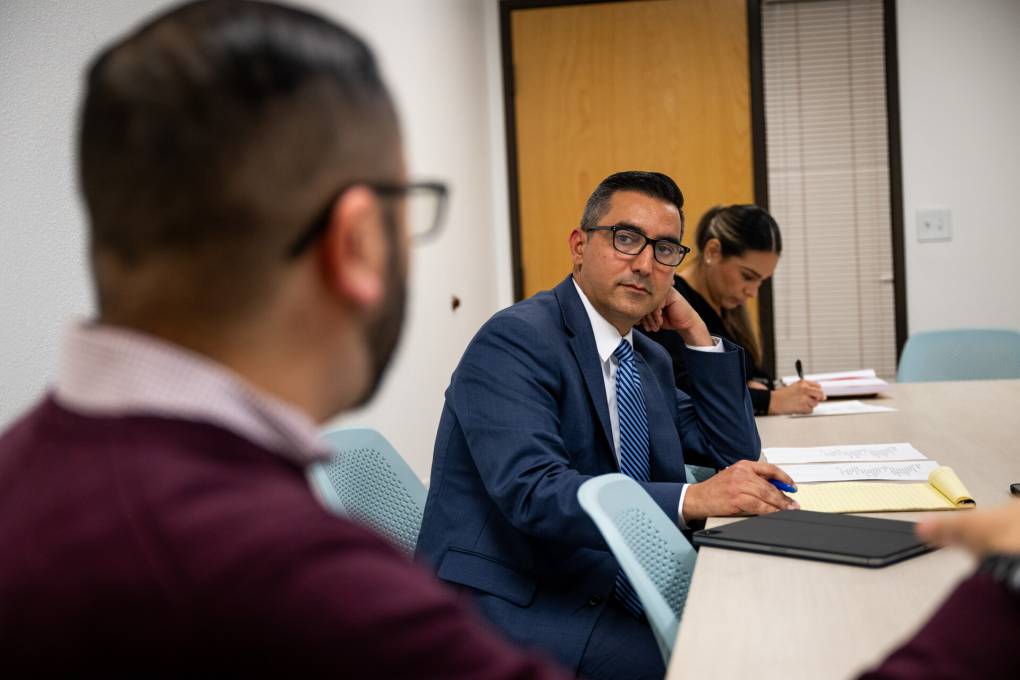
"caption": "Deputy Public Defender Ali Saidi meets with his deportation defense team at the the Martinez office of the Contra Costa County Public Defender on Feb. 6, 2024, to strategize about serving immigrants going to the new Concord court.",
"description": null,
"title": "240206-ImmigrationCourt-02-BL_qut",
"credit": "Beth LaBerge/KQED",
"status": "inherit",
"altTag": "A man wearing glasses and a business suit sits at a desk, looking at another man with glasses with a woman seated in the background.",
"isLoading": false,
"fetchFailed": false
},
"news_11975267": {
"type": "attachments",
"id": "news_11975267",
"meta": {
"index": "attachments_1716263798",
"site": "news",
"id": "11975267",
"found": true
},
"parent": 11975246,
"imgSizes": {
"thumbnail": {
"file": "https://cdn.kqed.org/wp-content/uploads/sites/10/2024/02/RS45759__MG_0162-qut-800x533-1-160x107.jpg",
"width": 160,
"mimeType": "image/jpeg",
"height": 107
},
"post-thumbnail": {
"file": "https://cdn.kqed.org/wp-content/uploads/sites/10/2024/02/RS45759__MG_0162-qut-800x533-1-672x372.jpg",
"width": 672,
"mimeType": "image/jpeg",
"height": 372
},
"kqedFullSize": {
"file": "https://cdn.kqed.org/wp-content/uploads/sites/10/2024/02/RS45759__MG_0162-qut-800x533-1.jpg",
"width": 800,
"height": 533
}
},
"publishDate": 1707508999,
"modified": 1707517874,
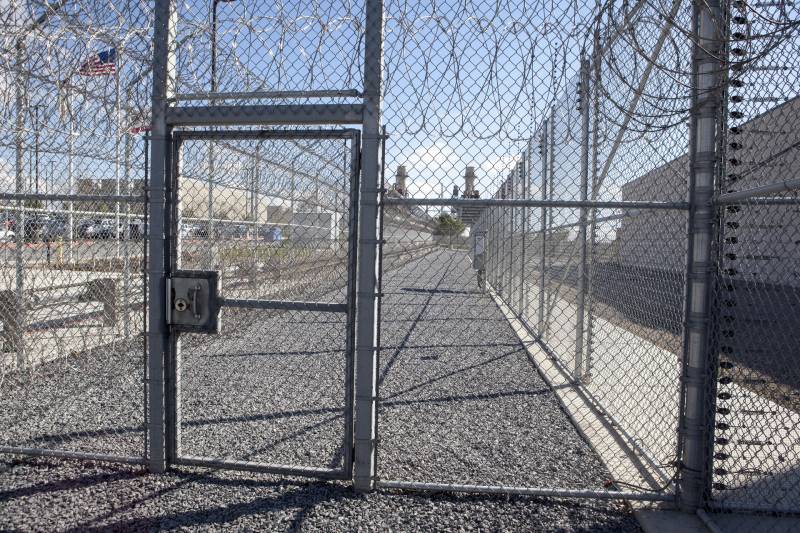
"caption": "Layers of security fencing at Otay Mesa immigration Detention Facility just east of San Diego, in a photo from 2020.",
"description": null,
"title": "RS45759__MG_0162-qut-800x533",
"credit": "Erin Siegal McIntyre/KQED",
"status": "inherit",
"altTag": "A chain-link fence with barbed wire at the top of a detention facility. An American flag waves in the distance.",
"isLoading": false,
"fetchFailed": false
},
"news_11943888": {
"type": "attachments",
"id": "news_11943888",
"meta": {
"index": "attachments_1716263798",
"site": "news",
"id": "11943888",
"found": true
},
"parent": 11943887,
"imgSizes": {
"twentyfourteen-full-width": {
"file": "https://ww2.kqed.org/app/uploads/sites/10/2023/03/picture-of-two-men-in-the-background-and-table-with-food-in-the-foreground-1038x450.png",
"width": 1038,
"mimeType": "image/png",
"height": 450
},
"thumbnail": {
"file": "https://ww2.kqed.org/app/uploads/sites/10/2023/03/picture-of-two-men-in-the-background-and-table-with-food-in-the-foreground-160x67.png",
"width": 160,
"mimeType": "image/png",
"height": 67
},
"post-thumbnail": {
"file": "https://ww2.kqed.org/app/uploads/sites/10/2023/03/picture-of-two-men-in-the-background-and-table-with-food-in-the-foreground-672x372.png",
"width": 672,
"mimeType": "image/png",
"height": 372
},
"kqedFullSize": {
"file": "https://ww2.kqed.org/app/uploads/sites/10/2023/03/picture-of-two-men-in-the-background-and-table-with-food-in-the-foreground.png",
"width": 1068,
"height": 450
},
"large": {
"file": "https://ww2.kqed.org/app/uploads/sites/10/2023/03/picture-of-two-men-in-the-background-and-table-with-food-in-the-foreground-1020x430.png",
"width": 1020,
"mimeType": "image/png",
"height": 430
},
"medium": {
"file": "https://ww2.kqed.org/app/uploads/sites/10/2023/03/picture-of-two-men-in-the-background-and-table-with-food-in-the-foreground-800x337.png",
"width": 800,
"mimeType": "image/png",
"height": 337
}
},
"publishDate": 1679029877,
"modified": 1679029925,
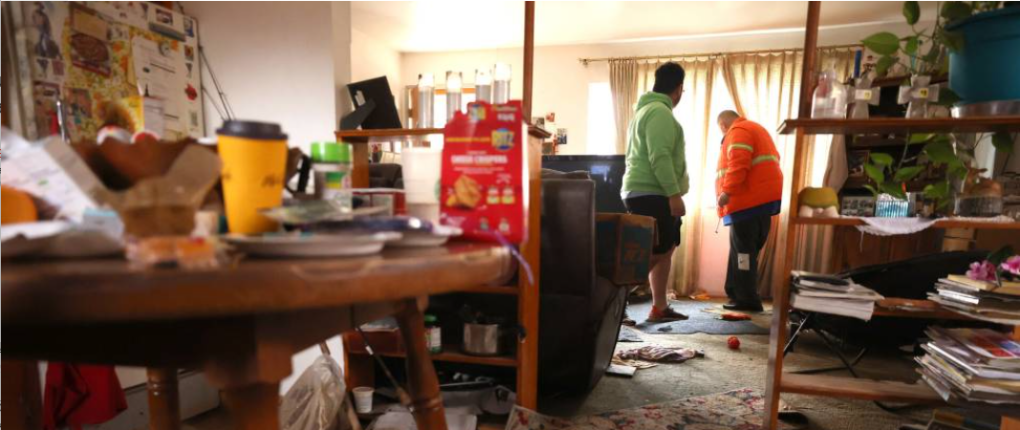
"caption": "Donnie Young (derecha) y Alex Muñoz (izquierda) inspeccionan su casa inundada el 11 de enero de 2023, en Planada. La ciudad del Valle Central fue devastada por inundaciones generalizadas después de que un río atmosférico severo se movió a través de la zona a principios de esa semana.",
"description": null,
"title": "picture of two men in the background, and table with food in the foreground",
"credit": "Justin Sullivan/Getty Images",
"status": "inherit",
"altTag": null,
"isLoading": false,
"fetchFailed": false
},
"news_11973986": {
"type": "attachments",
"id": "news_11973986",
"meta": {
"index": "attachments_1716263798",
"site": "news",
"id": "11973986",
"found": true
},
"parent": 11973981,
"imgSizes": {
"twentyfourteen-full-width": {
"file": "https://cdn.kqed.org/wp-content/uploads/sites/10/2024/01/ponders-npr-campo-4979_small_custom-58a5943ada57a1936d150d1a051d21137bebef1c-s1600-c85-copy-1038x576.jpg",
"width": 1038,
"mimeType": "image/jpeg",
"height": 576
},
"thumbnail": {
"file": "https://cdn.kqed.org/wp-content/uploads/sites/10/2024/01/ponders-npr-campo-4979_small_custom-58a5943ada57a1936d150d1a051d21137bebef1c-s1600-c85-copy-160x107.jpg",
"width": 160,
"mimeType": "image/jpeg",
"height": 107
},
"post-thumbnail": {
"file": "https://cdn.kqed.org/wp-content/uploads/sites/10/2024/01/ponders-npr-campo-4979_small_custom-58a5943ada57a1936d150d1a051d21137bebef1c-s1600-c85-copy-672x372.jpg",
"width": 672,
"mimeType": "image/jpeg",
"height": 372
},
"kqedFullSize": {
"file": "https://cdn.kqed.org/wp-content/uploads/sites/10/2024/01/ponders-npr-campo-4979_small_custom-58a5943ada57a1936d150d1a051d21137bebef1c-s1600-c85-copy.jpg",
"width": 1600,
"height": 1065
},
"large": {
"file": "https://cdn.kqed.org/wp-content/uploads/sites/10/2024/01/ponders-npr-campo-4979_small_custom-58a5943ada57a1936d150d1a051d21137bebef1c-s1600-c85-copy-1020x679.jpg",
"width": 1020,
"mimeType": "image/jpeg",
"height": 679
},
"1536x1536": {
"file": "https://cdn.kqed.org/wp-content/uploads/sites/10/2024/01/ponders-npr-campo-4979_small_custom-58a5943ada57a1936d150d1a051d21137bebef1c-s1600-c85-copy-1536x1022.jpg",
"width": 1536,
"mimeType": "image/jpeg",
"height": 1022
},
"medium": {
"file": "https://cdn.kqed.org/wp-content/uploads/sites/10/2024/01/ponders-npr-campo-4979_small_custom-58a5943ada57a1936d150d1a051d21137bebef1c-s1600-c85-copy-800x533.jpg",
"width": 800,
"mimeType": "image/jpeg",
"height": 533
}
},
"publishDate": 1706374287,
"modified": 1706374638,
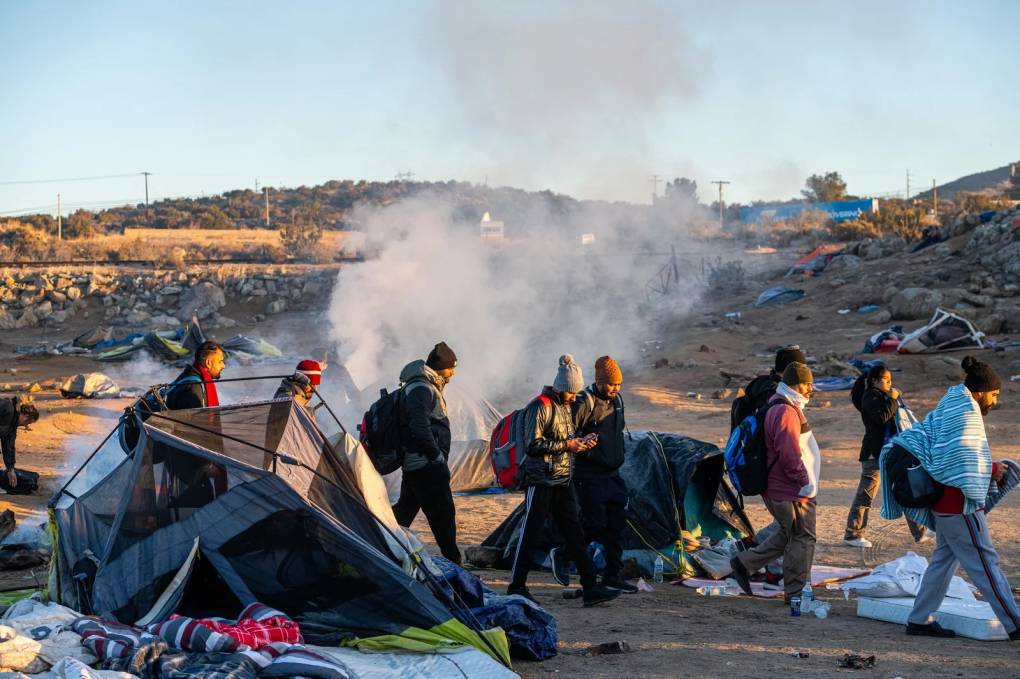
"caption": "US Customs and Border Patrol has corralled would-be asylum seekers into what locals are calling Open Air Detention Camps (OADs) in and around Jacumba, San Diego County, on Friday, Jan. 12, 2024. After a series of critical news reports late last year, under pressure from the US administration, Mexican National Police have begun to interdict coyotes as they bring migrants to the border near Jacumba, which has in turn forced migrants to enter the US in more dangerous areas like the deserts near El Centro and the jagged mountains east of San Diego.",
"description": null,
"title": "ponders-npr-campo-4979_small_custom-58a5943ada57a1936d150d1a051d21137bebef1c-s1600-c85 copy",
"credit": "Ash Ponders for NPR",
"status": "inherit",
"altTag": "A group of immigrants walking past tents and a smoky fire.",
"isLoading": false,
"fetchFailed": false
},
"news_11973839": {
"type": "attachments",
"id": "news_11973839",
"meta": {
"index": "attachments_1716263798",
"site": "news",
"id": "11973839",
"found": true
},
"parent": 0,
"imgSizes": {
"twentyfourteen-full-width": {
"file": "https://cdn.kqed.org/wp-content/uploads/sites/10/2024/01/240125-UC-REGENTS-UNDOCUMENTED-WORK-MD-10-KQED-1-1038x576.jpg",
"width": 1038,
"mimeType": "image/jpeg",
"height": 576
},
"thumbnail": {
"file": "https://cdn.kqed.org/wp-content/uploads/sites/10/2024/01/240125-UC-REGENTS-UNDOCUMENTED-WORK-MD-10-KQED-1-160x107.jpg",
"width": 160,
"mimeType": "image/jpeg",
"height": 107
},
"post-thumbnail": {
"file": "https://cdn.kqed.org/wp-content/uploads/sites/10/2024/01/240125-UC-REGENTS-UNDOCUMENTED-WORK-MD-10-KQED-1-672x372.jpg",
"width": 672,
"mimeType": "image/jpeg",
"height": 372
},
"kqedFullSize": {
"file": "https://cdn.kqed.org/wp-content/uploads/sites/10/2024/01/240125-UC-REGENTS-UNDOCUMENTED-WORK-MD-10-KQED-1.jpg",
"width": 2000,
"height": 1333
},
"large": {
"file": "https://cdn.kqed.org/wp-content/uploads/sites/10/2024/01/240125-UC-REGENTS-UNDOCUMENTED-WORK-MD-10-KQED-1-1020x680.jpg",
"width": 1020,
"mimeType": "image/jpeg",
"height": 680
},
"1536x1536": {
"file": "https://cdn.kqed.org/wp-content/uploads/sites/10/2024/01/240125-UC-REGENTS-UNDOCUMENTED-WORK-MD-10-KQED-1-1536x1024.jpg",
"width": 1536,
"mimeType": "image/jpeg",
"height": 1024
},
"full-width": {
"file": "https://cdn.kqed.org/wp-content/uploads/sites/10/2024/01/240125-UC-REGENTS-UNDOCUMENTED-WORK-MD-10-KQED-1-1920x1280.jpg",
"width": 1920,
"mimeType": "image/jpeg",
"height": 1280
},
"medium": {
"file": "https://cdn.kqed.org/wp-content/uploads/sites/10/2024/01/240125-UC-REGENTS-UNDOCUMENTED-WORK-MD-10-KQED-1-800x533.jpg",
"width": 800,
"mimeType": "image/jpeg",
"height": 533
}
},
"publishDate": 1706277114,
"modified": 1706278142,
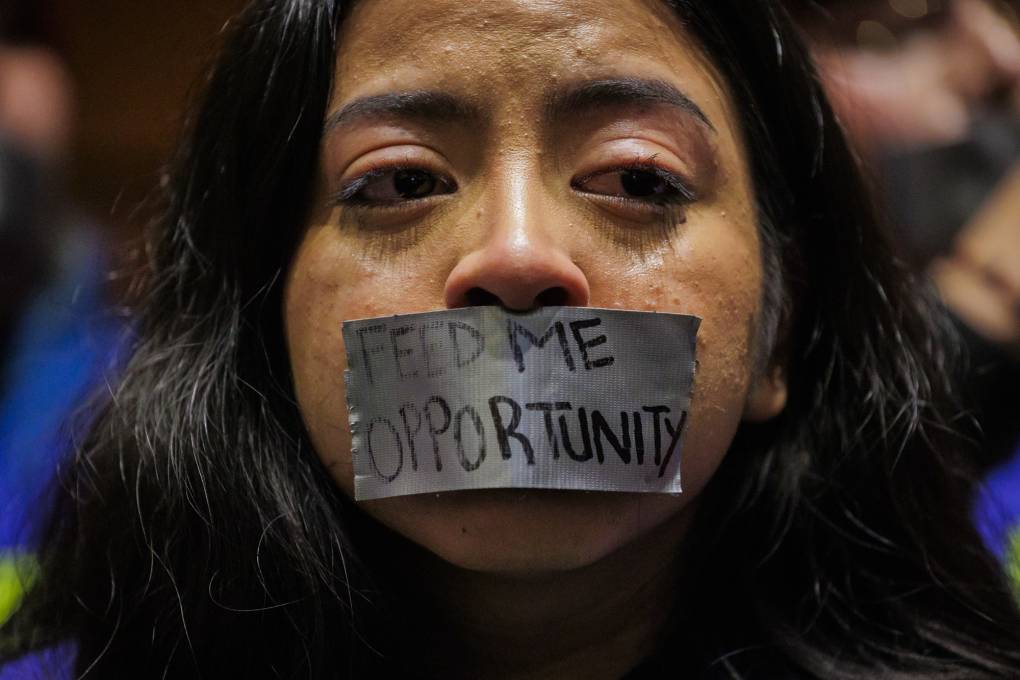
"caption": "Betzaida, an undocumented student with the Opportunity for All campaign, cries in reaction to the University of California Regents' vote to suspend consideration of a proposal to allow the university to hire undocumented students at the UCSF Mission Bay Conference Center on Jan. 25, 2024. Prior to the vote, Betzaida and other UC students participated in a 3-day hunger strike to urge the Board of Regents to move forward with the proposal. ",
"description": null,
"title": "240125-UC REGENTS UNDOCUMENTED WORK-MD-10-KQED-1",
"credit": "Martin do Nascimento/KQED",
"status": "inherit",
"altTag": "A young woman with gray tape covering her mouth, crying.",
"isLoading": false,
"fetchFailed": false
},
"news_11973462": {
"type": "attachments",
"id": "news_11973462",
"meta": {
"index": "attachments_1716263798",
"site": "news",
"id": "11973462",
"found": true
},
"parent": 0,
"imgSizes": {
"twentyfourteen-full-width": {
"file": "https://cdn.kqed.org/wp-content/uploads/sites/10/2024/01/240123-HMBShootingAnniversary-18-BL-1038x576.jpg",
"width": 1038,
"mimeType": "image/jpeg",
"height": 576
},
"thumbnail": {
"file": "https://cdn.kqed.org/wp-content/uploads/sites/10/2024/01/240123-HMBShootingAnniversary-18-BL-160x107.jpg",
"width": 160,
"mimeType": "image/jpeg",
"height": 107
},
"post-thumbnail": {
"file": "https://cdn.kqed.org/wp-content/uploads/sites/10/2024/01/240123-HMBShootingAnniversary-18-BL-672x372.jpg",
"width": 672,
"mimeType": "image/jpeg",
"height": 372
},
"kqedFullSize": {
"file": "https://cdn.kqed.org/wp-content/uploads/sites/10/2024/01/240123-HMBShootingAnniversary-18-BL.jpg",
"width": 1920,
"height": 1280
},
"large": {
"file": "https://cdn.kqed.org/wp-content/uploads/sites/10/2024/01/240123-HMBShootingAnniversary-18-BL-1020x680.jpg",
"width": 1020,
"mimeType": "image/jpeg",
"height": 680
},
"1536x1536": {
"file": "https://cdn.kqed.org/wp-content/uploads/sites/10/2024/01/240123-HMBShootingAnniversary-18-BL-1536x1024.jpg",
"width": 1536,
"mimeType": "image/jpeg",
"height": 1024
},
"medium": {
"file": "https://cdn.kqed.org/wp-content/uploads/sites/10/2024/01/240123-HMBShootingAnniversary-18-BL-800x533.jpg",
"width": 800,
"mimeType": "image/jpeg",
"height": 533
}
},
"publishDate": 1706051937,
"modified": 1715292834,
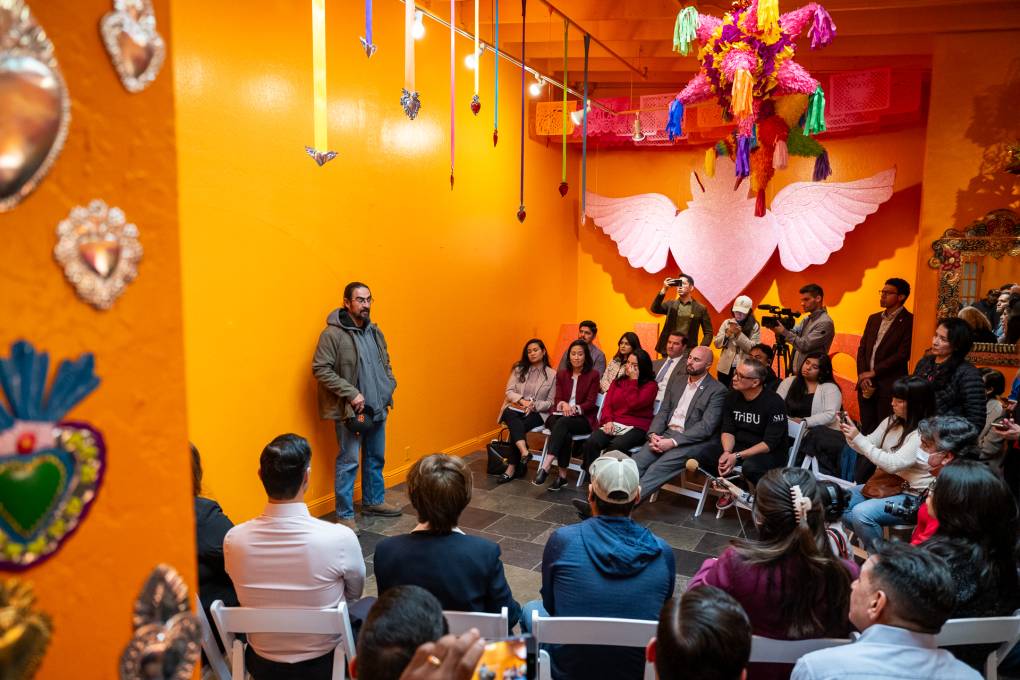
"caption": "Half Moon Bay Mayor Joaquin Jimenez speaks during a roundtable discussion at the ALAS Sueño Center in Half Moon Bay on Jan. 23, 2024, marking one year since the mass shooting at two farms claimed the lives of seven people on Jan. 23, 2023.",
"description": null,
"title": "240123-HMBShootingAnniversary-18-BL",
"credit": "Beth LaBerge/KQED",
"status": "inherit",
"altTag": "A person with a goatee stands in front of a large group of people sitting in fold-out chairs in a room painted bright orange.",
"isLoading": false,
"fetchFailed": false
},
"news_11970820": {
"type": "attachments",
"id": "news_11970820",
"meta": {
"index": "attachments_1716263798",
"site": "news",
"id": "11970820",
"found": true
},
"parent": 11970816,
"imgSizes": {
"twentyfourteen-full-width": {
"file": "https://cdn.kqed.org/wp-content/uploads/sites/10/2023/12/121923-Jose-Ruben-Hunger-Strike-FG-CM-09-copy-1038x576.jpg",
"width": 1038,
"mimeType": "image/jpeg",
"height": 576
},
"thumbnail": {
"file": "https://cdn.kqed.org/wp-content/uploads/sites/10/2023/12/121923-Jose-Ruben-Hunger-Strike-FG-CM-09-copy-160x107.jpg",
"width": 160,
"mimeType": "image/jpeg",
"height": 107
},
"post-thumbnail": {
"file": "https://cdn.kqed.org/wp-content/uploads/sites/10/2023/12/121923-Jose-Ruben-Hunger-Strike-FG-CM-09-copy-672x372.jpg",
"width": 672,
"mimeType": "image/jpeg",
"height": 372
},
"kqedFullSize": {
"file": "https://cdn.kqed.org/wp-content/uploads/sites/10/2023/12/121923-Jose-Ruben-Hunger-Strike-FG-CM-09-copy.jpg",
"width": 2000,
"height": 1334
},
"large": {
"file": "https://cdn.kqed.org/wp-content/uploads/sites/10/2023/12/121923-Jose-Ruben-Hunger-Strike-FG-CM-09-copy-1020x680.jpg",
"width": 1020,
"mimeType": "image/jpeg",
"height": 680
},
"1536x1536": {
"file": "https://cdn.kqed.org/wp-content/uploads/sites/10/2023/12/121923-Jose-Ruben-Hunger-Strike-FG-CM-09-copy-1536x1025.jpg",
"width": 1536,
"mimeType": "image/jpeg",
"height": 1025
},
"full-width": {
"file": "https://cdn.kqed.org/wp-content/uploads/sites/10/2023/12/121923-Jose-Ruben-Hunger-Strike-FG-CM-09-copy-1920x1281.jpg",
"width": 1920,
"mimeType": "image/jpeg",
"height": 1281
},
"medium": {
"file": "https://cdn.kqed.org/wp-content/uploads/sites/10/2023/12/121923-Jose-Ruben-Hunger-Strike-FG-CM-09-copy-800x534.jpg",
"width": 800,
"mimeType": "image/jpeg",
"height": 534
}
},
"publishDate": 1703370502,
"modified": 1703370570,
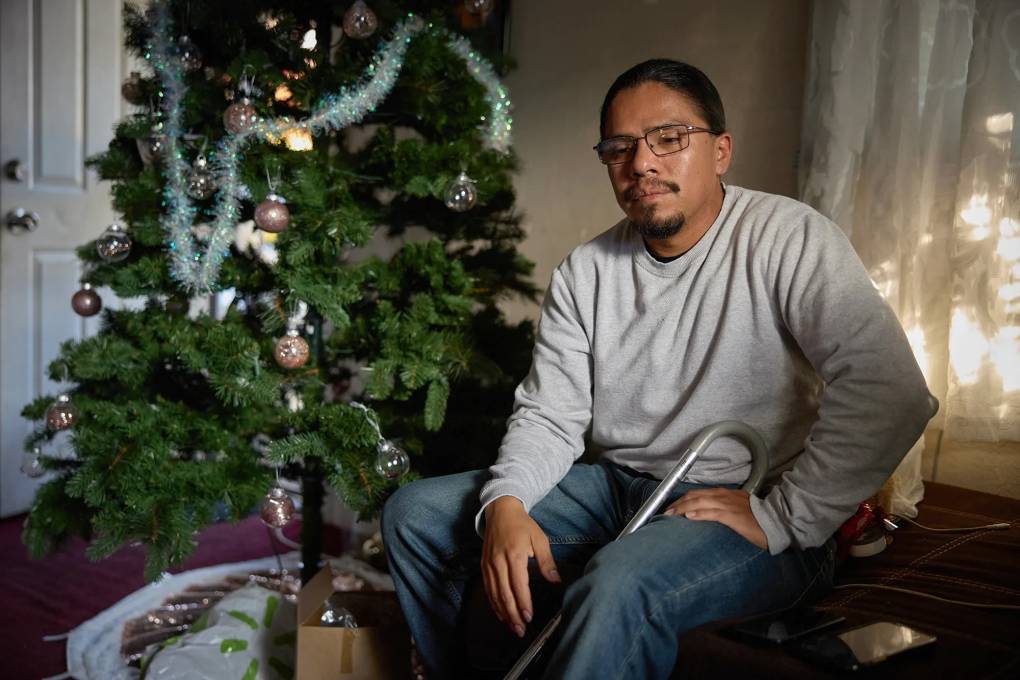
"caption": "Jose Ruben Hernandez Gomez at his home in Lodi on Dec. 13, 2023. He was one of the hunger strikers at the Mesa Verde ICE detention facility and has filed a federal complaint alleging medical neglect and abuse.",
"description": null,
"title": "121923-Jose-Ruben-Hunger-Strike-FG-CM-09 copy",
"credit": "Fred Greaves for CalMatters",
"status": "inherit",
"altTag": "A Latino man with glasses sits next to a Christmas tree in a living room.",
"isLoading": false,
"fetchFailed": false
},
"news_11970226": {
"type": "attachments",
"id": "news_11970226",
"meta": {
"index": "attachments_1716263798",
"site": "news",
"id": "11970226",
"found": true
},
"parent": 11970221,
"imgSizes": {
"twentyfourteen-full-width": {
"file": "https://cdn.kqed.org/wp-content/uploads/sites/10/2023/12/GettyImages-1706158400-1024x576.jpg",
"width": 1024,
"mimeType": "image/jpeg",
"height": 576
},
"thumbnail": {
"file": "https://cdn.kqed.org/wp-content/uploads/sites/10/2023/12/GettyImages-1706158400-160x107.jpg",
"width": 160,
"mimeType": "image/jpeg",
"height": 107
},
"post-thumbnail": {
"file": "https://cdn.kqed.org/wp-content/uploads/sites/10/2023/12/GettyImages-1706158400-672x372.jpg",
"width": 672,
"mimeType": "image/jpeg",
"height": 372
},
"kqedFullSize": {
"file": "https://cdn.kqed.org/wp-content/uploads/sites/10/2023/12/GettyImages-1706158400.jpg",
"width": 1024,
"height": 683
},
"large": {
"file": "https://cdn.kqed.org/wp-content/uploads/sites/10/2023/12/GettyImages-1706158400-1020x680.jpg",
"width": 1020,
"mimeType": "image/jpeg",
"height": 680
},
"medium": {
"file": "https://cdn.kqed.org/wp-content/uploads/sites/10/2023/12/GettyImages-1706158400-800x534.jpg",
"width": 800,
"mimeType": "image/jpeg",
"height": 534
}
},
"publishDate": 1702750070,
"modified": 1702750194,
"caption": "Sen. Alex Padilla (D-Calif.) conducts a news conference after a senate luncheon in the US Capitol on Oct. 4, 2023.",
"description": null,
"title": "Senate Luncheon Oct 4",
"credit": "Tom Williams/CQ-Roll Call, Inc via Getty Images",
"status": "inherit",
"altTag": "Headshot of a Latino man with blue suit and tie looking away from the camera.",
"isLoading": false,
"fetchFailed": false
},
"news_11969433": {
"type": "attachments",
"id": "news_11969433",
"meta": {
"index": "attachments_1716263798",
"site": "news",
"id": "11969433",
"found": true
},
"parent": 11969411,
"imgSizes": {
"twentyfourteen-full-width": {
"file": "https://cdn.kqed.org/wp-content/uploads/sites/10/2023/12/img105-1-1020x576.jpg",
"width": 1020,
"mimeType": "image/jpeg",
"height": 576
},
"thumbnail": {
"file": "https://cdn.kqed.org/wp-content/uploads/sites/10/2023/12/img105-1-160x111.jpg",
"width": 160,
"mimeType": "image/jpeg",
"height": 111
},
"post-thumbnail": {
"file": "https://cdn.kqed.org/wp-content/uploads/sites/10/2023/12/img105-1-672x372.jpg",
"width": 672,
"mimeType": "image/jpeg",
"height": 372
},
"kqedFullSize": {
"file": "https://cdn.kqed.org/wp-content/uploads/sites/10/2023/12/img105-1.jpg",
"width": 1020,
"height": 708
},
"medium": {
"file": "https://cdn.kqed.org/wp-content/uploads/sites/10/2023/12/img105-1-800x555.jpg",
"width": 800,
"mimeType": "image/jpeg",
"height": 555
}
},
"publishDate": 1702073532,
"modified": 1702073702,
"caption": " Laura Gularte (middle), at 15 years old, with her parents Quinto and Elvira Neri in front of their home in Santa Cruz, California. The family was forced to abandon the coastal home temporarily during World War 2 because Quinto was an Italian citizen. ",
"description": " Laura Gularte (middle), at 15 years old, with her parents Quinto and Elvira Neri in front of their home in Santa Cruz, California. The family was forced to abandon the coastal home temporarily during World War 2 because Quinto was an Italian citizen. ",
"title": "img105 (1)",
"credit": "Courtesy of Mark Gularte",
"status": "inherit",
"altTag": "A black and white photograph from the 1940s of man, woman and child in front of a home.",
"isLoading": false,
"fetchFailed": false
},
"news_11960227": {
"type": "attachments",
"id": "news_11960227",
"meta": {
"index": "attachments_1716263798",
"site": "news",
"id": "11960227",
"found": true
},
"parent": 0,
"imgSizes": {
"twentyfourteen-full-width": {
"file": "https://ww2.kqed.org/app/uploads/sites/10/2023/09/RS68665_230901-CentralValleyClimateSolutions-40-BL-KQED-1038x576.jpg",
"width": 1038,
"mimeType": "image/jpeg",
"height": 576
},
"thumbnail": {
"file": "https://ww2.kqed.org/app/uploads/sites/10/2023/09/RS68665_230901-CentralValleyClimateSolutions-40-BL-KQED-160x107.jpg",
"width": 160,
"mimeType": "image/jpeg",
"height": 107
},
"post-thumbnail": {
"file": "https://ww2.kqed.org/app/uploads/sites/10/2023/09/RS68665_230901-CentralValleyClimateSolutions-40-BL-KQED-672x372.jpg",
"width": 672,
"mimeType": "image/jpeg",
"height": 372
},
"kqedFullSize": {
"file": "https://ww2.kqed.org/app/uploads/sites/10/2023/09/RS68665_230901-CentralValleyClimateSolutions-40-BL-KQED.jpg",
"width": 2000,
"height": 1333
},
"large": {
"file": "https://ww2.kqed.org/app/uploads/sites/10/2023/09/RS68665_230901-CentralValleyClimateSolutions-40-BL-KQED-1020x680.jpg",
"width": 1020,
"mimeType": "image/jpeg",
"height": 680
},
"1536x1536": {
"file": "https://ww2.kqed.org/app/uploads/sites/10/2023/09/RS68665_230901-CentralValleyClimateSolutions-40-BL-KQED-1536x1024.jpg",
"width": 1536,
"mimeType": "image/jpeg",
"height": 1024
},
"full-width": {
"file": "https://ww2.kqed.org/app/uploads/sites/10/2023/09/RS68665_230901-CentralValleyClimateSolutions-40-BL-KQED-1920x1280.jpg",
"width": 1920,
"mimeType": "image/jpeg",
"height": 1280
},
"medium": {
"file": "https://ww2.kqed.org/app/uploads/sites/10/2023/09/RS68665_230901-CentralValleyClimateSolutions-40-BL-KQED-800x533.jpg",
"width": 800,
"mimeType": "image/jpeg",
"height": 533
}
},
"publishDate": 1694030988,
"modified": 1699570919,
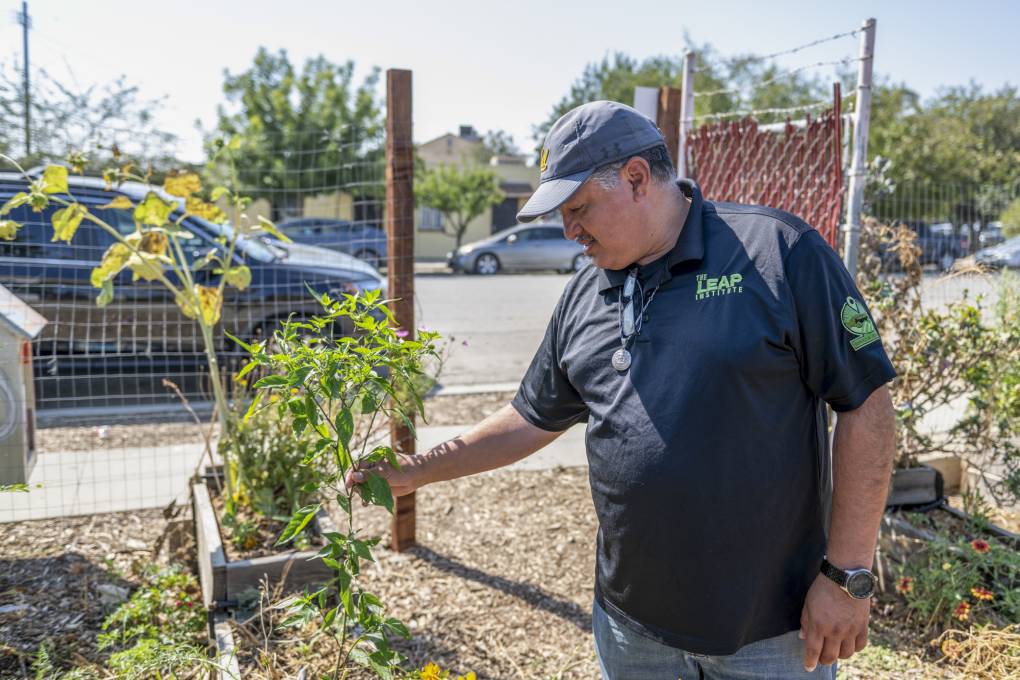
"caption": "Huron Mayor Rey León walks through a community garden and compost hub run by the Latino Equity Advocacy & Policy Institute offices, known as LEAP, in Huron, Calif., on Sept. 1, 2023.",
"description": null,
"title": "RS68665_230901-CentralValleyClimateSolutions-40-BL-KQED",
"credit": "Beth LaBerge/KQED",
"status": "inherit",
"altTag": "A person with a mustache wearing a baseball cap looks at a plant in a garden.",
"isLoading": false,
"fetchFailed": false
},
"news_11964113": {
"type": "attachments",
"id": "news_11964113",
"meta": {
"index": "attachments_1716263798",
"site": "news",
"id": "11964113",
"found": true
},
"parent": 11964105,
"imgSizes": {
"twentyfourteen-full-width": {
"file": "https://ww2.kqed.org/app/uploads/sites/10/2023/10/100123_Aura-Silva-Vergara_AM_CM_01-1038x576.jpg",
"width": 1038,
"mimeType": "image/jpeg",
"height": 576
},
"thumbnail": {
"file": "https://ww2.kqed.org/app/uploads/sites/10/2023/10/100123_Aura-Silva-Vergara_AM_CM_01-160x107.jpg",
"width": 160,
"mimeType": "image/jpeg",
"height": 107
},
"post-thumbnail": {
"file": "https://ww2.kqed.org/app/uploads/sites/10/2023/10/100123_Aura-Silva-Vergara_AM_CM_01-672x372.jpg",
"width": 672,
"mimeType": "image/jpeg",
"height": 372
},
"kqedFullSize": {
"file": "https://ww2.kqed.org/app/uploads/sites/10/2023/10/100123_Aura-Silva-Vergara_AM_CM_01.jpg",
"width": 2000,
"height": 1333
},
"large": {
"file": "https://ww2.kqed.org/app/uploads/sites/10/2023/10/100123_Aura-Silva-Vergara_AM_CM_01-1020x680.jpg",
"width": 1020,
"mimeType": "image/jpeg",
"height": 680
},
"1536x1536": {
"file": "https://ww2.kqed.org/app/uploads/sites/10/2023/10/100123_Aura-Silva-Vergara_AM_CM_01-1536x1024.jpg",
"width": 1536,
"mimeType": "image/jpeg",
"height": 1024
},
"full-width": {
"file": "https://ww2.kqed.org/app/uploads/sites/10/2023/10/100123_Aura-Silva-Vergara_AM_CM_01-1920x1280.jpg",
"width": 1920,
"mimeType": "image/jpeg",
"height": 1280
},
"medium": {
"file": "https://ww2.kqed.org/app/uploads/sites/10/2023/10/100123_Aura-Silva-Vergara_AM_CM_01-800x533.jpg",
"width": 800,
"mimeType": "image/jpeg",
"height": 533
}
},
"publishDate": 1697052473,
"modified": 1697062586,
"caption": "Aura Silva Vergara stands for a portrait at the home where she stays in Memphis, Tenn. Silva Vergara is an asylum seeker from Colombia who entered the country via the southern border and was sent to California first before arriving in Tennessee.",
"description": null,
"title": "100123_Aura-Silva-Vergara_AM_CM_01",
"credit": "Andrea Morales/CalMatters",
"status": "inherit",
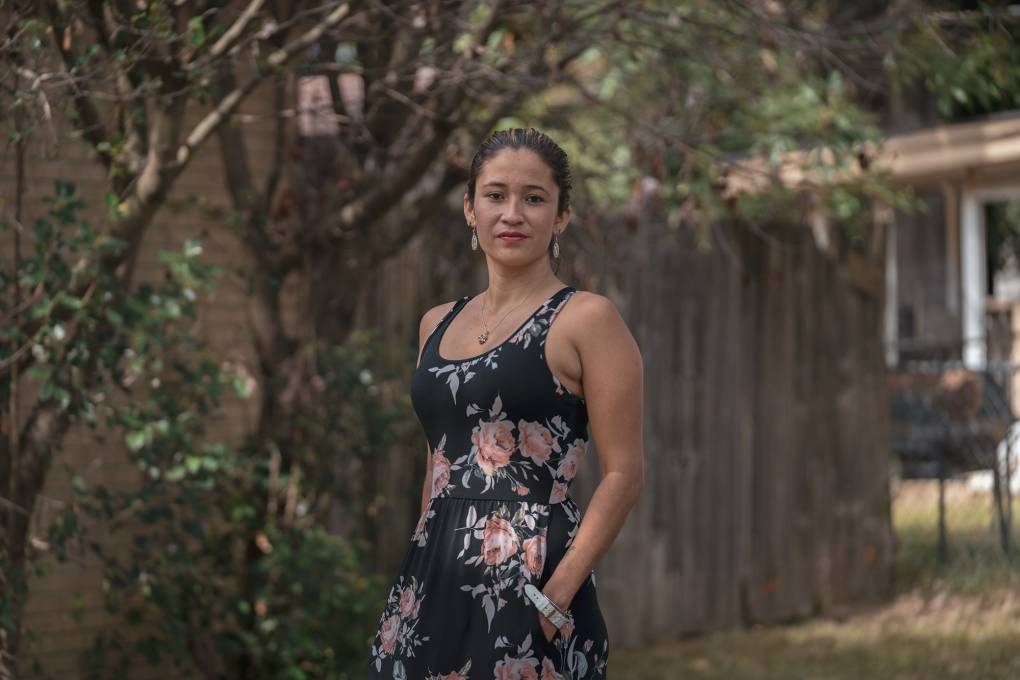
"altTag": "A woman with a black floral-printed dress stands outside.",
"isLoading": false,
"fetchFailed": false
}
},
"audioPlayerReducer": {
"postId": "stream_live",
"isPaused": true,
"isPlaying": false,
"pfsActive": false,
"pledgeModalIsOpen": true,
"playerDrawerIsOpen": false,
"liveAudioPlayStartedAt": 0,
"liveAudioPlayContext": ""
},
"authorsReducer": {
"byline_news_11976293": {
"type": "authors",
"id": "byline_news_11976293",
"meta": {
"override": true
},
"slug": "byline_news_11976293",
"name": "\u003ca href=\"https://edsource.org/author/mseshadri\">Mallika Seshadri\u003c/a>",
"isLoading": false
},
"byline_news_11973981": {
"type": "authors",
"id": "byline_news_11973981",
"meta": {
"override": true
},
"slug": "byline_news_11973981",
"name": "\u003ca href=\"https://www.npr.org/people/297147616/jasmine-garsd\">Jasmine Garsd\u003c/a>",
"isLoading": false
},
"byline_news_11970816": {
"type": "authors",
"id": "byline_news_11970816",
"meta": {
"override": true
},
"slug": "byline_news_11970816",
"name": "\u003ca href=\"https://calmatters.org/author/kervy-robles/\">Justo Robles\u003c/a>",
"isLoading": false
},
"byline_news_11970221": {
"type": "authors",
"id": "byline_news_11970221",
"meta": {
"override": true
},
"slug": "byline_news_11970221",
"name": "Stephen Groves, Lisa Mascaro, Rebecca Santana\u003cbr>The Associated Press",
"isLoading": false
},
"byline_news_11964105": {
"type": "authors",
"id": "byline_news_11964105",
"meta": {
"override": true
},
"slug": "byline_news_11964105",
"name": "\u003ca href=\"https://calmatters.org/author/kervy-robles/\">Justo Robles\u003c/a> and \u003ca href=\"https://calmatters.org/author/alejandra-reyesvelarde/\">Alejandra Reyes-Velarde\u003c/a>",
"isLoading": false
},
"tychehendricks": {
"type": "authors",
"id": "259",
"meta": {
"index": "authors_1716337520",
"id": "259",
"found": true
},
"name": "Tyche Hendricks",
"firstName": "Tyche",
"lastName": "Hendricks",
"slug": "tychehendricks",
"email": "thendricks@kqed.org",
"display_author_email": true,
"staff_mastheads": [
"news"
],
"title": "KQED Senior Editor, Immigration",
"bio": "\u003cspan style=\"font-weight: 400;\">Tyche Hendricks is KQED’s senior editor for immigration, leading coverage of the policy and politics that affect California’s immigrant communities. Her work for KQED’s radio and online audiences is also carried on NPR and other national outlets. She has been recognized with awards from the Radio and Television News Directors Association, the Society for Professional Journalists; the Education Writers Association; the Best of the West and the National Federation of Community Broadcasters. Before joining KQED in 2010, Tyche spent more than a dozen years as a newspaper reporter, notably at the \u003c/span>\u003ci>\u003cspan style=\"font-weight: 400;\">San Francisco Chronicle\u003c/span>\u003c/i>\u003cspan style=\"font-weight: 400;\">. At different times she has covered criminal justice, government and politics and urban planning. Tyche has taught in the MFA Creative Writing program at the University of San Francisco and at UC Berkeley’s Graduate School of Journalism, where she was co-director of a national immigration symposium for professional journalists. She is the author of \u003c/span>\u003ci>\u003cspan style=\"font-weight: 400;\">The Wind Doesn't Need a Passport: Stories from the U.S.-Mexico Borderlands\u003c/span>\u003c/i>\u003cspan style=\"font-weight: 400;\"> (University of California Press). \u003c/span>",
"avatar": "https://secure.gravatar.com/avatar/b8ee458e2731c2d43df86882ce17267e?s=600&d=blank&r=g",
"twitter": "tychehendricks",
"facebook": null,
"instagram": null,
"linkedin": null,
"sites": [
{
"site": "news",
"roles": [
"editor"
]
},
{
"site": "stateofhealth",
"roles": [
"editor"
]
}
],
"headData": {
"title": "Tyche Hendricks | KQED",
"description": "KQED Senior Editor, Immigration",
"ogImgSrc": "https://secure.gravatar.com/avatar/b8ee458e2731c2d43df86882ce17267e?s=600&d=blank&r=g",
"twImgSrc": "https://secure.gravatar.com/avatar/b8ee458e2731c2d43df86882ce17267e?s=600&d=blank&r=g"
},
"isLoading": false,
"link": "/author/tychehendricks"
},
"fjhabvala": {
"type": "authors",
"id": "8659",
"meta": {
"index": "authors_1716337520",
"id": "8659",
"found": true
},
"name": "Farida Jhabvala Romero",
"firstName": "Farida",
"lastName": "Jhabvala Romero",
"slug": "fjhabvala",
"email": "fjhabvala@kqed.org",
"display_author_email": true,
"staff_mastheads": [
"news"
],
"title": "KQED Contributor",
"bio": "Farida Jhabvala Romero is a Labor Correspondent for KQED. She previously covered immigration. Farida was \u003ca href=\"https://www.ccnma.org/2022-most-influential-latina-journalists\">named\u003c/a> one of the 10 Most Influential Latina Journalists in California in 2022 by the California Chicano News Media Association. Her work has won awards from the Society of Professional Journalists (Northern California), as well as a national and regional Edward M. Murrow Award for the collaborative reporting projects “Dangerous Air” and “Graying California.” Before joining KQED, Farida worked as a producer at Radio Bilingüe, a national public radio network. Farida earned her master’s degree in journalism from Stanford University.",
"avatar": "https://secure.gravatar.com/avatar/f9f022d4e2609741874222a1e9d41f48fea74011aa7c615eef91d9a50c944ebe?s=600&d=blank&r=g",
"twitter": "FaridaJhabvala",
"bluesky": null,
"facebook": null,
"instagram": null,
"linkedin": "https://www.linkedin.com/in/faridajhabvala/",
"sites": [
{
"site": "news",
"roles": [
"editor"
]
},
{
"site": "stateofhealth",
"roles": [
"author"
]
},
{
"site": "liveblog",
"roles": [
"author"
]
}
],
"headData": {
"title": "Farida Jhabvala Romero | KQED",
"description": "KQED Contributor",
"ogImgSrc": "https://secure.gravatar.com/avatar/f9f022d4e2609741874222a1e9d41f48fea74011aa7c615eef91d9a50c944ebe?s=600&d=blank&r=g",
"twImgSrc": "https://secure.gravatar.com/avatar/f9f022d4e2609741874222a1e9d41f48fea74011aa7c615eef91d9a50c944ebe?s=600&d=blank&r=g"
},
"isLoading": false,
"link": "/author/fjhabvala"
},
"ccabreralomeli": {
"type": "authors",
"id": "11708",
"meta": {
"index": "authors_1716337520",
"id": "11708",
"found": true
},
"name": "Carlos Cabrera-Lomelí",
"firstName": "Carlos",
"lastName": "Cabrera-Lomelí",
"slug": "ccabreralomeli",
"email": "ccabreralomeli@KQED.org",
"display_author_email": true,
"staff_mastheads": [
"news"
],
"title": "Community Reporter",
"bio": "Carlos Cabrera-Lomelí is a community reporter with KQED's digital engagement team. He also reports and co-produces for KQED's bilingual news hub KQED en Español. He grew up in San Francisco's Mission District and has previously worked with Univision, 48 Hills and REFORMA in Mexico City.",
"avatar": "https://secure.gravatar.com/avatar/c309be9665e484f887b818c89e273ecc673004f426f36b24d00a4d813a2e0518?s=600&d=blank&r=g",
"twitter": "@LomeliCabrera",
"bluesky": null,
"facebook": null,
"instagram": null,
"linkedin": null,
"sites": [
{
"site": "arts",
"roles": [
"editor"
]
},
{
"site": "news",
"roles": [
"editor"
]
},
{
"site": "about",
"roles": [
"editor"
]
},
{
"site": "science",
"roles": [
"editor"
]
},
{
"site": "perspectives",
"roles": [
"editor"
]
},
{
"site": "elections",
"roles": [
"editor"
]
},
{
"site": "liveblog",
"roles": [
"contributor"
]
}
],
"headData": {
"title": "Carlos Cabrera-Lomelí | KQED",
"description": "Community Reporter",
"ogImgSrc": "https://secure.gravatar.com/avatar/c309be9665e484f887b818c89e273ecc673004f426f36b24d00a4d813a2e0518?s=600&d=blank&r=g",
"twImgSrc": "https://secure.gravatar.com/avatar/c309be9665e484f887b818c89e273ecc673004f426f36b24d00a4d813a2e0518?s=600&d=blank&r=g"
},
"isLoading": false,
"link": "/author/ccabreralomeli"
},
"pbartolone": {
"type": "authors",
"id": "11879",
"meta": {
"index": "authors_1716337520",
"id": "11879",
"found": true
},
"name": "Pauline Bartolone",
"firstName": "Pauline",
"lastName": "Bartolone",
"slug": "pbartolone",
"email": "pbartolone@kqed.org",
"display_author_email": false,
"staff_mastheads": [],
"title": "KQED Contributor",
"bio": "Pauline Bartolone has been a journalist for two decades, specializing in longform audio storytelling. Before editing and producing for podcasts like Bay Curious, she was a health care journalist for public radio and print outlets such as CalMatters and Kaiser Health News. Her reporting has won several regional Edward R. Murrow awards, national recognition from the Society of Professional Journalists and a first-place prize from the Association of Health Care Journalists.\r\n\r\nPauline’s work has aired frequently on National Public Radio, and bylines have appeared in The Los Angeles Times, CNN.com, Washingtonpost.com, USA Today and Scientific American.\r\n\r\nPauline has lived in Northern California for 20 years. Her other passions are crafts (now done in collaboration with her daughter) and the Brazilian martial art of capoeira.",
"avatar": "https://secure.gravatar.com/avatar/95001c30374b0d3878007af9cf1e120a?s=600&d=blank&r=g",
"twitter": "pbartolone",
"facebook": null,
"instagram": null,
"linkedin": null,
"sites": [
{
"site": "news",
"roles": [
"editor"
]
},
{
"site": "podcasts",
"roles": [
"subscriber"
]
}
],
"headData": {
"title": "Pauline Bartolone | KQED",
"description": "KQED Contributor",
"ogImgSrc": "https://secure.gravatar.com/avatar/95001c30374b0d3878007af9cf1e120a?s=600&d=blank&r=g",
"twImgSrc": "https://secure.gravatar.com/avatar/95001c30374b0d3878007af9cf1e120a?s=600&d=blank&r=g"
},
"isLoading": false,
"link": "/author/pbartolone"
},
"mbolanos": {
"type": "authors",
"id": "11895",
"meta": {
"index": "authors_1716337520",
"id": "11895",
"found": true
},
"name": "Madi Bolaños",
"firstName": "Madi",
"lastName": "Bolaños",
"slug": "mbolanos",
"email": "mbolanos@kqed.org",
"display_author_email": false,
"staff_mastheads": [],
"title": "KQED Contributor",
"bio": null,
"avatar": "https://secure.gravatar.com/avatar/e6df5601c1f2d951e46a3fb42764330f?s=600&d=blank&r=g",
"twitter": null,
"bluesky": null,
"facebook": null,
"instagram": null,
"linkedin": null,
"sites": [
{
"site": "news",
"roles": [
"author"
]
}
],
"headData": {
"title": "Madi Bolaños | KQED",
"description": "KQED Contributor",
"ogImgSrc": "https://secure.gravatar.com/avatar/e6df5601c1f2d951e46a3fb42764330f?s=600&d=blank&r=g",
"twImgSrc": "https://secure.gravatar.com/avatar/e6df5601c1f2d951e46a3fb42764330f?s=600&d=blank&r=g"
},
"isLoading": false,
"link": "/author/mbolanos"
},
"naltenberg": {
"type": "authors",
"id": "11896",
"meta": {
"index": "authors_1716337520",
"id": "11896",
"found": true
},
"name": "Nik Altenberg",
"firstName": "Nik",
"lastName": "Altenberg",
"slug": "naltenberg",
"email": "naltenberg@kqed.org",
"display_author_email": false,
"staff_mastheads": [],
"title": "KQED Contributor",
"bio": "Nik Altenberg is an on-call reporter for KQED and a copy editor and fact checker for Santa Cruz Local. Nik’s reporting interests include policing, public health, environment, immigration, housing and the places where these issues intersect.",
"avatar": "https://secure.gravatar.com/avatar/e391b3a18ce4a53a7ca3f3065c74418b?s=600&d=blank&r=g",
"twitter": null,
"facebook": null,
"instagram": "https://www.instagram.com/nikaltenberg/",
"linkedin": null,
"sites": [
{
"site": "news",
"roles": []
}
],
"headData": {
"title": "Nik Altenberg | KQED",
"description": "KQED Contributor",
"ogImgSrc": "https://secure.gravatar.com/avatar/e391b3a18ce4a53a7ca3f3065c74418b?s=600&d=blank&r=g",
"twImgSrc": "https://secure.gravatar.com/avatar/e391b3a18ce4a53a7ca3f3065c74418b?s=600&d=blank&r=g"
},
"isLoading": false,
"link": "/author/naltenberg"
}
},
"pagesReducer": {
"news_category_immigration": {
"type": "terms",
"id": "news_1169",
"meta": {
"index": "terms_1716263798",
"site": "news",
"id": "1169",
"score": 10.910194
},
"featImg": null,
"name": "Immigration",
"description": null,
"taxonomy": "category",
"headData": {
"twImgId": null,
"twTitle": null,
"ogTitle": null,
"ogImgId": null,
"twDescription": null,
"description": null,
"title": "Immigration Archives | KQED News",
"ogDescription": null
},
"ttid": 1180,
"slug": "immigration",
"isLoading": false,
"title": "Immigration",
"pageMeta": {
"site": "news",
"WpPageTemplate": "page-topic-editorial",
"currentPage": 44
},
"blocks": [
{
"blockName": "kqed/post-list",
"attrs": {
"layout": "cardArticle2",
"query": "posts/news?category=immigration",
"seeMore": false,
"paginated": true,
"page": 44
}
},
{
"blockName": "kqed/ad"
}
]
}
},
"pfsSessionReducer": {},
"postsReducer": {
"stream_live": {
"type": "live",
"id": "stream_live",
"audioUrl": "https://streams.kqed.org/kqedradio",
"title": "Live Stream",
"excerpt": "Live Stream information currently unavailable.",
"link": "/radio",
"featImg": "",
"label": {
"name": "KQED Live",
"link": "/"
}
},
"stream_kqedNewscast": {
"type": "posts",
"id": "stream_kqedNewscast",
"audioUrl": "https://www.kqed.org/.stream/anon/radio/RDnews/newscast.mp3?_=1",
"title": "KQED Newscast",
"featImg": "",
"label": {
"name": "88.5 FM",
"link": "/"
}
},
"news_11976293": {
"type": "posts",
"id": "news_11976293",
"meta": {
"index": "posts_1716263798",
"site": "news",
"id": "11976293",
"score": null,
"sort": [
1708207230000
]
},
"parent": 0,
"labelTerm": {},
"blocks": [],
"publishDate": 1708207230,
"format": "standard",
"title": "Research Finds Immigration Enforcement Hurts Students and Hinders Schoolwork — but Schools Offer Support",
"headTitle": "Research Finds Immigration Enforcement Hurts Students and Hinders Schoolwork — but Schools Offer Support | KQED",
"content": "\u003cp>Immigrant students’ schoolwork and experience in the classroom often suffer in the presence of immigration enforcement — with 60% of teachers and school staff reporting poorer academic performance, and nearly half noting increased rates of bullying against these students, UCLA-based researchers found.\u003c/p>\n\u003cp>“Instead of focusing on their education, these students struggle with this uncertainty and, as a result, are often absent from school or inattentive. Their teachers also struggle to motivate them and sometimes to protect them,” reads a recent \u003ca class=\"external\" href=\"https://transformschools.ucla.edu/research/the-impact-of-a-broken-immigration-system-on-us-students-and-schools/\" target=\"_blank\" rel=\"noopener\">policy brief\u003c/a> by \u003ca class=\"external\" href=\"https://www.google.com/url?q=https://transformschools.ucla.edu&sa=D&source=docs&ust=1708046037332511&usg=AOvVaw2dVTCzF8pcegM5zmQ92H96\" target=\"_blank\" rel=\"noopener\">UCLA’s Center for the Transformation of Schools\u003c/a>, \u003ca class=\"external\" href=\"https://latino.ucla.edu/\" target=\"_blank\" rel=\"noopener\">Latino Policy and Politics Institute\u003c/a>, and \u003ca class=\"external\" href=\"https://www.civilrightsproject.ucla.edu/#:~:text=The%20mission%20of%20the%20Civil,resolved%20to%20achieve%20racial%20and\" target=\"_blank\" rel=\"noopener\">Civil Rights Project/Proyecto Derechos Civiles\u003c/a>.\u003c/p>\n\u003cp>“The broken immigration system hurts schools and creates victims across the spectrum of race and ethnicity in the United States, but it is especially acute for these students.”\u003c/p>\n\u003cp>\u003c!-- iframe plugin v.4.3 wordpress.org/plugins/iframe/ -->\u003cbr>\n\u003ciframe loading=\"lazy\" src=\"https://flo.uri.sh/visualisation/16782222/embed\" width=\"800\" height=\"600\" scrolling=\"yes\" class=\"iframe-class\" frameborder=\"0\">\u003c/iframe>\u003c/p>\n\u003cp>According to UCLA’s policy brief, children of “unauthorized immigrants” between the ages of 6 and 16 are 14% more likely to repeat a grade, while those aged 14 to 17 are 18% more likely to drop out of school altogether.\u003c/p>\n\u003cp>One of the most common reasons for students to miss class or drop out is the pressure to work full time to support family members financially, said Yesenia Arroyo, the principal of LAUSD’s RFK School for the Visual Arts and Humanities, where roughly 80% of students are immigrants.\u003c/p>\n\u003cp>She added that she works closely with her school’s counseling staff to connect regularly with students about their academic progress. They also try to find \u003ca class=\"external\" href=\"https://www.linkedlearning.org/\" target=\"_blank\" rel=\"noopener\">Linked Learning\u003c/a> opportunities, where students develop real-world experience, and paid internships — which can help students earn while remaining in school or pursuing their interests.\u003c/p>\n\u003cp>[pullquote align=\"right\" size=\"medium\" citation=\"UCLA and Civil Rights Project policy brief\"]‘The broken immigration system hurts schools and creates victims across the spectrum of race and ethnicity in the United States, but it is especially acute for these students.’[/pullquote]“A part of it is really understanding the community that we serve,” Arroyo said, “understanding the students that we serve, understanding what are the challenges and ensuring that we are matching resources, that we’re listening first — that we’re really listening.”\u003c/p>\n\u003cp>Schools and community organizations throughout Los Angeles have taken various approaches to support students who are undocumented or have family members who are — including running a one-of-a-kind high school in Korea Town with an onsite immigration clinic and engaging the services of community organizers to help connect families with resources.\u003c/p>\n\u003cp>“What’s happening in one school, unfortunately, is not something that’s always happening in other schools. And I’m sure that there’s other great leaders that are doing great things. It would be nice to learn from what others are doing,” Arroyo said.\u003c/p>\n\u003cp>“There’s so many different tasks, so much work that we need to do. I wish we had more time to collaborate with other leaders to ensure that we are sharing resources and ideas, so that we are not working in isolation.”\u003c/p>\n\u003ch2 class=\"wp-block-heading\">‘Wraparound’ support\u003c/h2>\n\u003cp>While it is impossible for teachers, administrators and the district as a whole to always know which students are undocumented and in need of support, schools and community organizations have taken various approaches to provide basic assistance.\u003c/p>\n\u003cp>A spokesperson for the Los Angeles Unified School District said that while the district follows the law and does not “collect information or inquire about immigration status,” it supports all students, irrespective of their immigration status.\u003c/p>\n\u003cp>“Schools assist families with affidavits, for example, to ensure students are enrolled, and families are connected to appropriate services and support, even if enrollment documents aren’t available,” the spokesperson said.\u003c/p>\n\u003cp>[pullquote align=\"right\" size=\"medium\" citation=\"Rosie Arroyo, senior program officer of immigration, California Community Foundation\"]‘It’s about survival. And right now, there’s a lot of multilayered challenges communities are facing, from being able to make it on a day-by-day basis and having access to resources around just food.’[/pullquote]Meanwhile, 34 of LAUSD’s schools are also community schools, which provide “wraparound” services — from meals to medical assistance — that advocates say are critical for students who are undocumented.\u003c/p>\n\u003cp>Rosie Arroyo (not related to Yesenia), a senior program officer of immigration at the \u003ca class=\"external\" href=\"https://www.calfund.org/\" target=\"_blank\" rel=\"noopener\">California Community Foundation\u003c/a>, a nonprofit organization based in Los Angeles that aims to address systemic challenges facing various communities throughout the region, said housing and mental health resources are in especially high demand for these students and their families.\u003c/p>\n\u003cp>“It’s about survival,” Arroyo said. “And right now, there’s a lot of multilayered challenges communities are facing, from being able to make it on a day-by-day basis and having access to resources around just food.”\u003c/p>\n\u003cp>As a community school, the School for the Visual Arts and Humanities holds workshops for families every Wednesday, covering a range of topics, from housing to special education and how to access community resources.\u003c/p>\n\u003cp>At least a fifth of the school’s parents attend, which principal Arroyo said is particularly difficult to achieve with parents who often work multiple jobs, and because parental involvement usually decreases as students get older.\u003c/p>\n\u003cp>Mental health support has also been a big concern at the school — especially as a lot of the students are grappling with serious trauma and lack confidence. Roughly 65% of the behavioral incidents reported to the district by the schools are related to students’ struggles with mental health issues, the principal said, adding that the COVID-19 pandemic only exacerbated those challenges.\u003c/p>\n\u003cp>[ad fullwidth]\u003c/p>\n\u003cp>The school now has a QR system posted throughout campus that students can scan to schedule a visit with the school counselor. About a fifth of the students request to see a counselor on a weekly basis, Arroyo added.\u003c/p>\n\u003cp>“A lot of them have been through a lot of trauma on their way into the country. They’ve been abused; they’ve seen death,” she said. “It would be great if we had a system in place to address all these issues that our students come with and provide them with resources.”\u003c/p>\n\u003ch2 class=\"wp-block-heading\">Legal backing\u003c/h2>\n\u003cp>Beyond receiving assistance with basic needs, access to legal services and some understanding of individual rights is critical for students, advocates say.\u003c/p>\n\u003cp>In addition to the support it provides its students as a community school, the School for the Visual Arts and Humanities partnered with \u003ca class=\"external\" href=\"https://law.ucla.edu/academics/experiential-program/law-clinic-courses/immigrant-family-legal-clinic/immigrant-family-legal-clinic-resources\" target=\"_blank\" rel=\"noopener\">UCLA\u003c/a> in 2019 to launch a permanent one-of-a-kind legal clinic. The clinic space is specifically designed to support students whose families need legal guidance or backing.\u003c/p>\n\u003cp>The RFK Immigrant Family Legal Clinic “is a blessing for our families and for our students, because they have resources that they, perhaps, would not go out on their own to get,” Arroyo said, adding that more than 80% of the students at her school were not born in the U.S., and about 20% immigrated within the past two years.\u003c/p>\n\u003cp>Most of the recent arrivals are from southern Mexico, Central America and South America, though there are students from other parts of the world, including Korea, Russia and Bangladesh.\u003c/p>\n\u003cp>[pullquote align=\"right\" size=\"medium\" citation=\"Nina Rabin, director, RFK Immigrant Family Legal Clinic\"]‘The kids are just kind of incredible — what they take on and how much they’re just survivors and resilient. They have so much potential and … there’s so much that’s so, so difficult and unfair about their situation in this country.’[/pullquote]The legal clinic’s team — comprised of a director, manager, two staff attorneys and up to a dozen law students — provides students and families with one-time consultations and, in some cases, legal representation. They are also present in classrooms, during “coffee with the principal” events and during weekly workshops for families — allowing the clinic to become “a trusting face” which Arroyo said is “key to ensuring that our families are actually taking advantage of those resources.”\u003c/p>\n\u003cp>“The clinic has allowed us to relieve stress and anxiety, but there’s just so many kids who don’t have that,” said Nina Rabin, the clinic’s director who also teaches at UCLA.\u003c/p>\n\u003cp>“I just love the school. It’s such a special place.”\u003c/p>\n\u003cp>As more students arrive from around the world and the clinic earns more trust from the communities it serves, the demand grows. The clinic recently expanded to a second location on the same campus.\u003c/p>\n\u003cp>Currently, the team has more than 120 cases\u003cstrong> \u003c/strong>on its docket, many of them already prepared and sitting in a long, backlogged process that can take years, Rabin said.\u003c/p>\n\u003cp>In any given week, the clinic has roughly a dozen “really active cases” — and they prioritize families that are seeking asylum and students who are eligible for certain visas that only people under the age of 21 can apply for.\u003c/p>\n\u003cp>While “there’s definitely a need beyond what we can currently fill,” Rabin said, the clinic also tries to give more immediate attention to high-need families, unaccompanied minors and those with imminent hearings.\u003c/p>\n\u003cp>“The kids are just kind of incredible — what they take on and how much they’re just survivors and resilient,” Rabin said.\u003c/p>\n\u003cp>“They have so much potential and … there’s so much that’s so, so difficult and unfair about their situation in this country. And so, being able to intervene with this possibility of getting full status at this really prime time in their life, I think is really rewarding when it works, and it has been working. We’ve been getting a lot of kids on that pathway.”\u003c/p>\n\u003cp>[aside label=\"Related Stories\" postID=\"news_11973789,news_11969685,news_11970802,news_11957693\"]Through her Facebook group \u003ca class=\"external\" href=\"https://www.facebook.com/groups/1176163479411915\" target=\"_blank\" rel=\"noopener\">Our Voice/Nuestra Voz\u003c/a>, Evelyn Aleman organizes live-streams\u003cstrong> \u003c/strong>and virtual workshops every Friday. Most of the group’s LAUSD parents, she said, are either in fully undocumented or mixed-status families and are looking to find ways to support and advocate for their children in school.\u003c/p>\n\u003cp>Usually, she said, 20 to 30 parents attend the Zoom sessions, while up to 400 might opt to stream them later.\u003c/p>\n\u003cp>“We continuously ask our parents ‘OK, what information would you like us to bring to Our Voice?’” Aleman said. “Consistently, they’ll say, in addition to education, but primarily, they’ll say, immigrant rights.”\u003c/p>\n\u003cp>This year, Aleman is partnering with the \u003ca class=\"external\" href=\"https://www.chirla.org/\" target=\"_blank\" rel=\"noopener\">Coalition for Humane Immigrant Rights of Los Angeles\u003c/a> to host a 10-workshop series — each week discussing a different topic.\u003c/p>\n\u003cp>The topics related to immigration status will include: “know your rights,” “public charge,” “DACA,” “resources for undocumented students,” “citizenship” and “notario fraud prevention + referrals for non-profit immigration legal services.”\u003c/p>\n\u003cp>Building trust with undocumented and mixed-status families is critical, she said, because many remain wary of fraudulent attorneys and notaries because of their prior experiences or the experiences of people they know.\u003c/p>\n\u003cp>“They take their money, and they run,” Aleman said. “The families lose hundreds, if not thousands, of dollars investing with the hope … that they’ll help them.”\u003c/p>\n\u003ch2 class=\"wp-block-heading\">Moving forward\u003c/h2>\n\u003cp>To support students who are undocumented or from mixed-status families, the UCLA brief emphasizes the importance of investing in community schools, participating in partnerships with community-based organizations and providing “Know Your Rights” guidance from the California Department of Education.\u003c/p>\n\u003cp>The brief also urges school districts to hire more counselors and school support staff, improve diversity in the ranks of teachers and offer more professional development opportunities.\u003c/p>\n\u003cp>[pullquote align=\"right\" size=\"medium\" citation=\"Lucrecia Santibañez, faculty co-director, Center for the Transformation of Schools\"]‘It is everybody’s problem because kids in schools, even when they themselves are not undocumented, they’re feeling the fear, they’re feeling the uncertainty.’[/pullquote]Lucrecia Santibañez, the faculty co-director of the Center for the Transformation of Schools, co-author of the brief, said expanding support for teachers is key because some may not know how to handle a situation where an undocumented student comes forward.\u003c/p>\n\u003cp>“Teachers themselves have to be really careful about having these conversations. They obviously want to support the kids, they want to support their families,” Santibañez said. These situations add to teachers’ stress and create more work for them. Being better prepared to handle them would be a big help, she said.\u003c/p>\n\u003cp>Santibañez also emphasized the negative psychological impacts of anti-immigrant rhetoric — not only for students who might be undocumented or come from mixed-status families, but for all students.\u003c/p>\n\u003cp>“If I’m here legally, I may get comfortable in saying, ‘Well, that’s somebody else’s problem, right? I’m not going to get deported. My kids aren’t going to come home and not see me because I got sent back,’” Santibañez said.\u003c/p>\n\u003cp>“It is actually our problem. It is everybody’s problem because kids in schools, even when they themselves are not undocumented, they’re feeling the fear, they’re feeling the uncertainty.”\u003c/p>\n\u003cp>\u003ca href=\"https://edsource.org/2024/immigration-enforcement-hinders-performance-in-school-heres-how-communities-are-helping/705983\">\u003cem>This story originally appeared in EdSource.\u003c/em>\u003c/a>\u003c/p>\n\u003cp>[ad floatright]\u003c/p>\n",
"stats": {
"hasVideo": false,
"hasChartOrMap": true,
"hasAudio": false,
"hasPolis": false,
"wordCount": 2313,
"hasGoogleForm": false,
"hasGallery": false,
"hasHearkenModule": false,
"iframeSrcs": [
"https://flo.uri.sh/visualisation/16782222/embed"
],
"paragraphCount": 52
},
"modified": 1708203546,
"excerpt": "According to UCLA's policy brief, children of 'unauthorized immigrants' between the ages of 6 and 16 are 14% more likely to repeat a grade, while those aged 14 to 17 are 18% more likely to drop out of school altogether.",
"headData": {
"twImgId": "",
"twTitle": "",
"ogTitle": "",
"ogImgId": "",
"twDescription": "",
"description": "According to UCLA's policy brief, children of 'unauthorized immigrants' between the ages of 6 and 16 are 14% more likely to repeat a grade, while those aged 14 to 17 are 18% more likely to drop out of school altogether.",
"title": "Research Finds Immigration Enforcement Hurts Students and Hinders Schoolwork — but Schools Offer Support | KQED",
"ogDescription": "",
"schema": {
"@context": "https://schema.org",
"@type": "NewsArticle",
"headline": "Research Finds Immigration Enforcement Hurts Students and Hinders Schoolwork — but Schools Offer Support",
"datePublished": "2024-02-17T14:00:30-08:00",
"dateModified": "2024-02-17T12:59:06-08:00",
"image": "https://cdn.kqed.org/wp-content/uploads/2020/02/KQED-OG-Image@1x.png",
"isAccessibleForFree": "True",
"publisher": {
"@type": "NewsMediaOrganization",
"@id": "https://www.kqed.org/#organization",
"name": "KQED",
"logo": "https://cdn.kqed.org/wp-content/uploads/2020/02/KQED-OG-Image@1x.png",
"url": "https://www.kqed.org",
"sameAs": [
"https://www.facebook.com/KQED",
"https://twitter.com/KQED",
"https://www.instagram.com/kqed/",
"https://www.tiktok.com/@kqedofficial",
"https://www.linkedin.com/company/kqed",
"https://www.youtube.com/channel/UCeC0IOo7i1P_61zVUWbJ4nw"
]
}
}
},
"guestAuthors": [],
"slug": "research-finds-immigration-enforcement-hurts-students-and-hinders-schoolwork-but-schools-offer-support",
"status": "publish",
"sourceUrl": "https://edsource.org/",
"nprByline": "\u003ca href=\"https://edsource.org/author/mseshadri\">Mallika Seshadri\u003c/a>",
"excludeFromSiteSearch": "Include",
"sticky": false,
"source": "edsource",
"showOnAuthorArchivePages": "No",
"articleAge": "0",
"path": "/news/11976293/research-finds-immigration-enforcement-hurts-students-and-hinders-schoolwork-but-schools-offer-support",
"audioTrackLength": null,
"parsedContent": [
{
"type": "contentString",
"content": "\u003cdiv class=\"post-body\">\u003cp>\u003cp>Immigrant students’ schoolwork and experience in the classroom often suffer in the presence of immigration enforcement — with 60% of teachers and school staff reporting poorer academic performance, and nearly half noting increased rates of bullying against these students, UCLA-based researchers found.\u003c/p>\n\u003cp>“Instead of focusing on their education, these students struggle with this uncertainty and, as a result, are often absent from school or inattentive. Their teachers also struggle to motivate them and sometimes to protect them,” reads a recent \u003ca class=\"external\" href=\"https://transformschools.ucla.edu/research/the-impact-of-a-broken-immigration-system-on-us-students-and-schools/\" target=\"_blank\" rel=\"noopener\">policy brief\u003c/a> by \u003ca class=\"external\" href=\"https://www.google.com/url?q=https://transformschools.ucla.edu&sa=D&source=docs&ust=1708046037332511&usg=AOvVaw2dVTCzF8pcegM5zmQ92H96\" target=\"_blank\" rel=\"noopener\">UCLA’s Center for the Transformation of Schools\u003c/a>, \u003ca class=\"external\" href=\"https://latino.ucla.edu/\" target=\"_blank\" rel=\"noopener\">Latino Policy and Politics Institute\u003c/a>, and \u003ca class=\"external\" href=\"https://www.civilrightsproject.ucla.edu/#:~:text=The%20mission%20of%20the%20Civil,resolved%20to%20achieve%20racial%20and\" target=\"_blank\" rel=\"noopener\">Civil Rights Project/Proyecto Derechos Civiles\u003c/a>.\u003c/p>\n\u003cp>“The broken immigration system hurts schools and creates victims across the spectrum of race and ethnicity in the United States, but it is especially acute for these students.”\u003c/p>\n\u003cp>\u003c!-- iframe plugin v.4.3 wordpress.org/plugins/iframe/ -->\u003cbr>\n\u003ciframe loading=\"lazy\" src=\"https://flo.uri.sh/visualisation/16782222/embed\" width=\"800\" height=\"600\" scrolling=\"yes\" class=\"iframe-class\" frameborder=\"0\">\u003c/iframe>\u003c/p>\n\u003cp>According to UCLA’s policy brief, children of “unauthorized immigrants” between the ages of 6 and 16 are 14% more likely to repeat a grade, while those aged 14 to 17 are 18% more likely to drop out of school altogether.\u003c/p>\n\u003cp>One of the most common reasons for students to miss class or drop out is the pressure to work full time to support family members financially, said Yesenia Arroyo, the principal of LAUSD’s RFK School for the Visual Arts and Humanities, where roughly 80% of students are immigrants.\u003c/p>\n\u003cp>She added that she works closely with her school’s counseling staff to connect regularly with students about their academic progress. They also try to find \u003ca class=\"external\" href=\"https://www.linkedlearning.org/\" target=\"_blank\" rel=\"noopener\">Linked Learning\u003c/a> opportunities, where students develop real-world experience, and paid internships — which can help students earn while remaining in school or pursuing their interests.\u003c/p>\n\u003cp>\u003c/p>\u003c/div>",
"attributes": {
"named": {},
"numeric": []
}
},
{
"type": "component",
"content": "‘The broken immigration system hurts schools and creates victims across the spectrum of race and ethnicity in the United States, but it is especially acute for these students.’",
"name": "pullquote",
"attributes": {
"named": {
"align": "right",
"size": "medium",
"citation": "UCLA and Civil Rights Project policy brief",
"label": ""
},
"numeric": []
}
},
{
"type": "contentString",
"content": "\u003cdiv class=\"post-body\">\u003cp>“A part of it is really understanding the community that we serve,” Arroyo said, “understanding the students that we serve, understanding what are the challenges and ensuring that we are matching resources, that we’re listening first — that we’re really listening.”\u003c/p>\n\u003cp>Schools and community organizations throughout Los Angeles have taken various approaches to support students who are undocumented or have family members who are — including running a one-of-a-kind high school in Korea Town with an onsite immigration clinic and engaging the services of community organizers to help connect families with resources.\u003c/p>\n\u003cp>“What’s happening in one school, unfortunately, is not something that’s always happening in other schools. And I’m sure that there’s other great leaders that are doing great things. It would be nice to learn from what others are doing,” Arroyo said.\u003c/p>\n\u003cp>“There’s so many different tasks, so much work that we need to do. I wish we had more time to collaborate with other leaders to ensure that we are sharing resources and ideas, so that we are not working in isolation.”\u003c/p>\n\u003ch2 class=\"wp-block-heading\">‘Wraparound’ support\u003c/h2>\n\u003cp>While it is impossible for teachers, administrators and the district as a whole to always know which students are undocumented and in need of support, schools and community organizations have taken various approaches to provide basic assistance.\u003c/p>\n\u003cp>A spokesperson for the Los Angeles Unified School District said that while the district follows the law and does not “collect information or inquire about immigration status,” it supports all students, irrespective of their immigration status.\u003c/p>\n\u003cp>“Schools assist families with affidavits, for example, to ensure students are enrolled, and families are connected to appropriate services and support, even if enrollment documents aren’t available,” the spokesperson said.\u003c/p>\n\u003cp>\u003c/p>\u003c/div>",
"attributes": {
"named": {},
"numeric": []
}
},
{
"type": "component",
"content": "‘It’s about survival. And right now, there’s a lot of multilayered challenges communities are facing, from being able to make it on a day-by-day basis and having access to resources around just food.’",
"name": "pullquote",
"attributes": {
"named": {
"align": "right",
"size": "medium",
"citation": "Rosie Arroyo, senior program officer of immigration, California Community Foundation",
"label": ""
},
"numeric": []
}
},
{
"type": "contentString",
"content": "\u003cdiv class=\"post-body\">\u003cp>Meanwhile, 34 of LAUSD’s schools are also community schools, which provide “wraparound” services — from meals to medical assistance — that advocates say are critical for students who are undocumented.\u003c/p>\n\u003cp>Rosie Arroyo (not related to Yesenia), a senior program officer of immigration at the \u003ca class=\"external\" href=\"https://www.calfund.org/\" target=\"_blank\" rel=\"noopener\">California Community Foundation\u003c/a>, a nonprofit organization based in Los Angeles that aims to address systemic challenges facing various communities throughout the region, said housing and mental health resources are in especially high demand for these students and their families.\u003c/p>\n\u003cp>“It’s about survival,” Arroyo said. “And right now, there’s a lot of multilayered challenges communities are facing, from being able to make it on a day-by-day basis and having access to resources around just food.”\u003c/p>\n\u003cp>As a community school, the School for the Visual Arts and Humanities holds workshops for families every Wednesday, covering a range of topics, from housing to special education and how to access community resources.\u003c/p>\n\u003cp>At least a fifth of the school’s parents attend, which principal Arroyo said is particularly difficult to achieve with parents who often work multiple jobs, and because parental involvement usually decreases as students get older.\u003c/p>\n\u003cp>Mental health support has also been a big concern at the school — especially as a lot of the students are grappling with serious trauma and lack confidence. Roughly 65% of the behavioral incidents reported to the district by the schools are related to students’ struggles with mental health issues, the principal said, adding that the COVID-19 pandemic only exacerbated those challenges.\u003c/p>\n\u003cp>\u003c/p>\u003c/div>",
"attributes": {
"named": {},
"numeric": []
}
},
{
"type": "component",
"content": "",
"name": "ad",
"attributes": {
"named": {
"label": "fullwidth"
},
"numeric": [
"fullwidth"
]
}
},
{
"type": "contentString",
"content": "\u003cdiv class=\"post-body\">\u003cp>\u003c/p>\n\u003cp>The school now has a QR system posted throughout campus that students can scan to schedule a visit with the school counselor. About a fifth of the students request to see a counselor on a weekly basis, Arroyo added.\u003c/p>\n\u003cp>“A lot of them have been through a lot of trauma on their way into the country. They’ve been abused; they’ve seen death,” she said. “It would be great if we had a system in place to address all these issues that our students come with and provide them with resources.”\u003c/p>\n\u003ch2 class=\"wp-block-heading\">Legal backing\u003c/h2>\n\u003cp>Beyond receiving assistance with basic needs, access to legal services and some understanding of individual rights is critical for students, advocates say.\u003c/p>\n\u003cp>In addition to the support it provides its students as a community school, the School for the Visual Arts and Humanities partnered with \u003ca class=\"external\" href=\"https://law.ucla.edu/academics/experiential-program/law-clinic-courses/immigrant-family-legal-clinic/immigrant-family-legal-clinic-resources\" target=\"_blank\" rel=\"noopener\">UCLA\u003c/a> in 2019 to launch a permanent one-of-a-kind legal clinic. The clinic space is specifically designed to support students whose families need legal guidance or backing.\u003c/p>\n\u003cp>The RFK Immigrant Family Legal Clinic “is a blessing for our families and for our students, because they have resources that they, perhaps, would not go out on their own to get,” Arroyo said, adding that more than 80% of the students at her school were not born in the U.S., and about 20% immigrated within the past two years.\u003c/p>\n\u003cp>Most of the recent arrivals are from southern Mexico, Central America and South America, though there are students from other parts of the world, including Korea, Russia and Bangladesh.\u003c/p>\n\u003cp>\u003c/p>\u003c/div>",
"attributes": {
"named": {},
"numeric": []
}
},
{
"type": "component",
"content": "‘The kids are just kind of incredible — what they take on and how much they’re just survivors and resilient. They have so much potential and … there’s so much that’s so, so difficult and unfair about their situation in this country.’",
"name": "pullquote",
"attributes": {
"named": {
"align": "right",
"size": "medium",
"citation": "Nina Rabin, director, RFK Immigrant Family Legal Clinic",
"label": ""
},
"numeric": []
}
},
{
"type": "contentString",
"content": "\u003cdiv class=\"post-body\">\u003cp>The legal clinic’s team — comprised of a director, manager, two staff attorneys and up to a dozen law students — provides students and families with one-time consultations and, in some cases, legal representation. They are also present in classrooms, during “coffee with the principal” events and during weekly workshops for families — allowing the clinic to become “a trusting face” which Arroyo said is “key to ensuring that our families are actually taking advantage of those resources.”\u003c/p>\n\u003cp>“The clinic has allowed us to relieve stress and anxiety, but there’s just so many kids who don’t have that,” said Nina Rabin, the clinic’s director who also teaches at UCLA.\u003c/p>\n\u003cp>“I just love the school. It’s such a special place.”\u003c/p>\n\u003cp>As more students arrive from around the world and the clinic earns more trust from the communities it serves, the demand grows. The clinic recently expanded to a second location on the same campus.\u003c/p>\n\u003cp>Currently, the team has more than 120 cases\u003cstrong> \u003c/strong>on its docket, many of them already prepared and sitting in a long, backlogged process that can take years, Rabin said.\u003c/p>\n\u003cp>In any given week, the clinic has roughly a dozen “really active cases” — and they prioritize families that are seeking asylum and students who are eligible for certain visas that only people under the age of 21 can apply for.\u003c/p>\n\u003cp>While “there’s definitely a need beyond what we can currently fill,” Rabin said, the clinic also tries to give more immediate attention to high-need families, unaccompanied minors and those with imminent hearings.\u003c/p>\n\u003cp>“The kids are just kind of incredible — what they take on and how much they’re just survivors and resilient,” Rabin said.\u003c/p>\n\u003cp>“They have so much potential and … there’s so much that’s so, so difficult and unfair about their situation in this country. And so, being able to intervene with this possibility of getting full status at this really prime time in their life, I think is really rewarding when it works, and it has been working. We’ve been getting a lot of kids on that pathway.”\u003c/p>\n\u003cp>\u003c/p>\u003c/div>",
"attributes": {
"named": {},
"numeric": []
}
},
{
"type": "component",
"content": "",
"name": "aside",
"attributes": {
"named": {
"label": "Related Stories ",
"postid": "news_11973789,news_11969685,news_11970802,news_11957693"
},
"numeric": []
}
},
{
"type": "contentString",
"content": "\u003cdiv class=\"post-body\">\u003cp>Through her Facebook group \u003ca class=\"external\" href=\"https://www.facebook.com/groups/1176163479411915\" target=\"_blank\" rel=\"noopener\">Our Voice/Nuestra Voz\u003c/a>, Evelyn Aleman organizes live-streams\u003cstrong> \u003c/strong>and virtual workshops every Friday. Most of the group’s LAUSD parents, she said, are either in fully undocumented or mixed-status families and are looking to find ways to support and advocate for their children in school.\u003c/p>\n\u003cp>Usually, she said, 20 to 30 parents attend the Zoom sessions, while up to 400 might opt to stream them later.\u003c/p>\n\u003cp>“We continuously ask our parents ‘OK, what information would you like us to bring to Our Voice?’” Aleman said. “Consistently, they’ll say, in addition to education, but primarily, they’ll say, immigrant rights.”\u003c/p>\n\u003cp>This year, Aleman is partnering with the \u003ca class=\"external\" href=\"https://www.chirla.org/\" target=\"_blank\" rel=\"noopener\">Coalition for Humane Immigrant Rights of Los Angeles\u003c/a> to host a 10-workshop series — each week discussing a different topic.\u003c/p>\n\u003cp>The topics related to immigration status will include: “know your rights,” “public charge,” “DACA,” “resources for undocumented students,” “citizenship” and “notario fraud prevention + referrals for non-profit immigration legal services.”\u003c/p>\n\u003cp>Building trust with undocumented and mixed-status families is critical, she said, because many remain wary of fraudulent attorneys and notaries because of their prior experiences or the experiences of people they know.\u003c/p>\n\u003cp>“They take their money, and they run,” Aleman said. “The families lose hundreds, if not thousands, of dollars investing with the hope … that they’ll help them.”\u003c/p>\n\u003ch2 class=\"wp-block-heading\">Moving forward\u003c/h2>\n\u003cp>To support students who are undocumented or from mixed-status families, the UCLA brief emphasizes the importance of investing in community schools, participating in partnerships with community-based organizations and providing “Know Your Rights” guidance from the California Department of Education.\u003c/p>\n\u003cp>The brief also urges school districts to hire more counselors and school support staff, improve diversity in the ranks of teachers and offer more professional development opportunities.\u003c/p>\n\u003cp>\u003c/p>\u003c/div>",
"attributes": {
"named": {},
"numeric": []
}
},
{
"type": "component",
"content": "‘It is everybody’s problem because kids in schools, even when they themselves are not undocumented, they’re feeling the fear, they’re feeling the uncertainty.’",
"name": "pullquote",
"attributes": {
"named": {
"align": "right",
"size": "medium",
"citation": "Lucrecia Santibañez, faculty co-director, Center for the Transformation of Schools",
"label": ""
},
"numeric": []
}
},
{
"type": "contentString",
"content": "\u003cdiv class=\"post-body\">\u003cp>Lucrecia Santibañez, the faculty co-director of the Center for the Transformation of Schools, co-author of the brief, said expanding support for teachers is key because some may not know how to handle a situation where an undocumented student comes forward.\u003c/p>\n\u003cp>“Teachers themselves have to be really careful about having these conversations. They obviously want to support the kids, they want to support their families,” Santibañez said. These situations add to teachers’ stress and create more work for them. Being better prepared to handle them would be a big help, she said.\u003c/p>\n\u003cp>Santibañez also emphasized the negative psychological impacts of anti-immigrant rhetoric — not only for students who might be undocumented or come from mixed-status families, but for all students.\u003c/p>\n\u003cp>“If I’m here legally, I may get comfortable in saying, ‘Well, that’s somebody else’s problem, right? I’m not going to get deported. My kids aren’t going to come home and not see me because I got sent back,’” Santibañez said.\u003c/p>\n\u003cp>“It is actually our problem. It is everybody’s problem because kids in schools, even when they themselves are not undocumented, they’re feeling the fear, they’re feeling the uncertainty.”\u003c/p>\n\u003cp>\u003ca href=\"https://edsource.org/2024/immigration-enforcement-hinders-performance-in-school-heres-how-communities-are-helping/705983\">\u003cem>This story originally appeared in EdSource.\u003c/em>\u003c/a>\u003c/p>\n\u003cp>\u003c/p>\u003c/div>",
"attributes": {
"named": {},
"numeric": []
}
},
{
"type": "component",
"content": "",
"name": "ad",
"attributes": {
"named": {
"label": "floatright"
},
"numeric": [
"floatright"
]
}
},
{
"type": "contentString",
"content": "\u003cdiv class=\"post-body\">\u003cp>\u003c/p>\n\u003c/div>\u003c/p>",
"attributes": {
"named": {},
"numeric": []
}
}
],
"link": "/news/11976293/research-finds-immigration-enforcement-hurts-students-and-hinders-schoolwork-but-schools-offer-support",
"authors": [
"byline_news_11976293"
],
"categories": [
"news_18540",
"news_1169",
"news_8"
],
"tags": [
"news_18538",
"news_20013",
"news_27626",
"news_27924",
"news_20202",
"news_2998"
],
"featImg": "news_11976294",
"label": "source_news_11976293"
},
"news_11975904": {
"type": "posts",
"id": "news_11975904",
"meta": {
"index": "posts_1716263798",
"site": "news",
"id": "11975904",
"score": null,
"sort": [
1707948031000
]
},
"parent": 0,
"labelTerm": {
"site": "news"
},
"blocks": [],
"publishDate": 1707948031,
"format": "standard",
"title": "New Bay Area Immigration Court Opens, Aims to Tackle Deportation Backlog",
"headTitle": "New Bay Area Immigration Court Opens, Aims to Tackle Deportation Backlog | KQED",
"content": "\u003cp>The nation’s newest immigration court opened for business this week in the East Bay city of Concord after federal authorities decided the San Francisco Bay Area needed more resources to cope with a growing backlog.\u003c/p>\n\u003cp>The move adds 21 new courtrooms to help ease the burden at \u003ca href=\"https://trac.syr.edu/phptools/immigration/backlog/\">one of the nation’s busiest immigration courts\u003c/a> across the bay in San Francisco. When it’s fully up and running, the new Concord facility will nearly double the capacity in the Bay Area to hear deportation cases, including asylum claims.\u003c/p>\n\u003cp>[pullquote size=\"medium\" align=\"right\" citation=\"Ali Saidi, deputy public defender, Contra Costa County\"]‘The difference between having an immigration attorney versus not having an immigration attorney has profound impacts on your ability to present your claim fully.’[/pullquote]Until now, the 27 judges in San Francisco’s court, with help from a smaller court in Sacramento, have handled all immigration cases from Bakersfield, California, to the Oregon border. With 160,000 pending cases, each case takes more than three and a half years to complete, on average.\u003c/p>\n\u003cp>The \u003ca href=\"https://www.justice.gov/eoir/concord-immigration-court\">new Concord court\u003c/a> is also part of a nationwide effort by the Biden Administration to cope with an unprecedented backlog of more than 3.3 million cases across the country, including a record number of asylum seekers who’ve recently arrived at the U.S.-Mexico border. While observers say new courtrooms and judges should help move cases faster, some worry they could also trigger new problems.\u003c/p>\n\u003ch2>Nationwide Court Expansion Needs More Funding\u003c/h2>\n\u003cp>Since President Joe Biden was elected, the Executive Office of Immigration Review, which is part of the U.S. Department of Justice, has added \u003ca href=\"https://www.justice.gov/d9/pages/attachments/2020/02/12/25a_number_of_courtrooms.pdf\">six new immigration courts\u003c/a> and \u003ca href=\"https://www.justice.gov/d9/pages/attachments/2020/01/31/25_immigration_judge_hiring_1.pdf\">more than 300 judges\u003c/a> across the country, building on an \u003ca href=\"https://www.kqed.org/news/11883227/backlogged-immigration-courts-could-get-help-from-biden-plan-but-some-want-a-total-overhaul\">expansion that began as immigration enforcement ballooned under the Trump Administration\u003c/a>.\u003c/p>\n\u003cp>[ad fullwidth]\u003c/p>\n\u003cp>The Concord court will start with 11 judges and will continue hiring to reach a full bench of 21, according to officials with the EOIR, as the immigration court system is called.\u003c/p>\n\u003cp>Mimi Tsankov, president of the National Association of Immigration Judges, said the expansion is welcome and the new Concord court should help deal with “the overabundance of cases that has been inundating San Francisco.”\u003c/p>\n\u003cp>But she cautioned that just hiring judges would not solve the case backlog by itself. Judges have struggled without well-functioning computer systems, a sufficient number of language interpreters and full teams of law clerks and administrative aides, she said.\u003c/p>\n\u003cfigure id=\"attachment_11975915\" class=\"wp-caption aligncenter\" style=\"max-width: 2560px\">\u003ca href=\"https://cdn.kqed.org/wp-content/uploads/sites/10/2024/02/240212-ImmigrationCourt-06-BL-scaled.jpg\">\u003cimg loading=\"lazy\" decoding=\"async\" class=\"size-full wp-image-11975915\" src=\"https://cdn.kqed.org/wp-content/uploads/sites/10/2024/02/240212-ImmigrationCourt-06-BL-scaled.jpg\" alt=\"A woman holds up a white sign in Spanish.\" width=\"2560\" height=\"1707\" srcset=\"https://cdn.kqed.org/wp-content/uploads/sites/10/2024/02/240212-ImmigrationCourt-06-BL-scaled.jpg 2560w, https://cdn.kqed.org/wp-content/uploads/sites/10/2024/02/240212-ImmigrationCourt-06-BL-800x533.jpg 800w, https://cdn.kqed.org/wp-content/uploads/sites/10/2024/02/240212-ImmigrationCourt-06-BL-1020x680.jpg 1020w, https://cdn.kqed.org/wp-content/uploads/sites/10/2024/02/240212-ImmigrationCourt-06-BL-160x107.jpg 160w, https://cdn.kqed.org/wp-content/uploads/sites/10/2024/02/240212-ImmigrationCourt-06-BL-1536x1024.jpg 1536w, https://cdn.kqed.org/wp-content/uploads/sites/10/2024/02/240212-ImmigrationCourt-06-BL-2048x1365.jpg 2048w, https://cdn.kqed.org/wp-content/uploads/sites/10/2024/02/240212-ImmigrationCourt-06-BL-1920x1280.jpg 1920w\" sizes=\"(max-width: 2560px) 100vw, 2560px\">\u003c/a>\u003cfigcaption class=\"wp-caption-text\">Rosa Menjivar, from the Latina Center, holds a sign outside the new Concord Immigration Court in Concord during a press conference on Feb. 12, 2024. \u003ccite>(Beth LaBerge/KQED)\u003c/cite>\u003c/figcaption>\u003c/figure>\n\u003cp>“We need court staff to be there, to support the judges and those very fast-moving, time-intensive dockets,” Tsankov said, speaking in her role with the NAIJ, the judge’s union. “Our staff is working nonstop until late hours of the night.”\u003c/p>\n\u003cp>The Concord facility is “currently staffed to meet all support needs,” according to EOIR spokesperson Kathryn Mattingly.\u003c/p>\n\u003cp>Tsankov noted that the nation’s 734 immigration judges are working faster than ever. Even though caseloads have grown, judges are closing nearly a third more cases on average than at the end of the Obama years, \u003ca href=\"https://trac.syr.edu/reports/734/\">according to a data analysis\u003c/a> by the Transactional Records Access Clearinghouse at Syracuse University. But the judges’ speed is outmatched by the raw numbers of new migrants applying for asylum.\u003c/p>\n\u003cp>“We’re still not able to outrun the volume of work that comes our way,” Tsankov said.\u003c/p>\n\u003cp>The Justice Department has asked for \u003ca href=\"https://www.justice.gov/d9/2023-03/eoir_fy_24_budsum_ii_omb_cleared_03.08.23.pdf\">a major increase in funding to hire 150 more judges\u003c/a> and court staff this year, but Congress has been unable to pass the federal budget. Biden officials also requested court funding in a bipartisan immigration deal tied to Ukraine aid, but Republicans killed that plan last week.\u003c/p>\n\u003ch2>Immigrants Not Receiving Hearing Notices\u003c/h2>\n\u003cp>In Contra Costa County, where the new court is located, immigration lawyers are scrambling to prepare for a swelling demand for legal services. Calls are already surging on a hotline run by \u003ca href=\"https://standtogethercontracosta.org/\">Stand Together Contra Costa\u003c/a>, a partnership between the county and community groups.\u003c/p>\n\u003cp>Deputy Public Defender Ali Saidi directs the partnership with a small team of lawyers who provide deportation defense. Meeting with coworkers around a conference table last week, Saidi heard repeatedly that immigrant clients, as well as hotline callers, said they had not been notified by EOIR that their cases were being transferred to the Concord court — and that they had new hearing dates.\u003c/p>\n\u003cfigure id=\"attachment_11975918\" class=\"wp-caption aligncenter\" style=\"max-width: 2560px\">\u003ca href=\"https://cdn.kqed.org/wp-content/uploads/sites/10/2024/02/240212-ImmigrationCourt-13-BL-scaled.jpg\">\u003cimg loading=\"lazy\" decoding=\"async\" class=\"size-full wp-image-11975918\" src=\"https://cdn.kqed.org/wp-content/uploads/sites/10/2024/02/240212-ImmigrationCourt-13-BL-scaled.jpg\" alt=\"A man wearing glasses and a business suit holds a microphone outside with people holding signs in the background.\" width=\"2560\" height=\"1707\" srcset=\"https://cdn.kqed.org/wp-content/uploads/sites/10/2024/02/240212-ImmigrationCourt-13-BL-scaled.jpg 2560w, https://cdn.kqed.org/wp-content/uploads/sites/10/2024/02/240212-ImmigrationCourt-13-BL-800x533.jpg 800w, https://cdn.kqed.org/wp-content/uploads/sites/10/2024/02/240212-ImmigrationCourt-13-BL-1020x680.jpg 1020w, https://cdn.kqed.org/wp-content/uploads/sites/10/2024/02/240212-ImmigrationCourt-13-BL-160x107.jpg 160w, https://cdn.kqed.org/wp-content/uploads/sites/10/2024/02/240212-ImmigrationCourt-13-BL-1536x1024.jpg 1536w, https://cdn.kqed.org/wp-content/uploads/sites/10/2024/02/240212-ImmigrationCourt-13-BL-2048x1365.jpg 2048w, https://cdn.kqed.org/wp-content/uploads/sites/10/2024/02/240212-ImmigrationCourt-13-BL-1920x1280.jpg 1920w\" sizes=\"(max-width: 2560px) 100vw, 2560px\">\u003c/a>\u003cfigcaption class=\"wp-caption-text\">Contra Costa County Removal Defense Attorney Heliodoro Moreno speaks during a press conference outside the new Concord Immigration Court on Feb. 12, 2024. \u003ccite>(Beth LaBerge/KQED)\u003c/cite>\u003c/figcaption>\u003c/figure>\n\u003cp>Public defender Heliodoro Moreno said he could see in the court’s electronic portal for lawyers that hearing dates for some of his clients have been moved much sooner and delayed for others. He was troubled that his clients had not received a letter notifying them of the change.\u003c/p>\n\u003cp>[aside postID=\"news_11910789,news_11903829,news_11900546,news_11975246\" label=\"Related Stories\"]“There’s a case that’s only going to have a one-month lead time. And still, there’s no notice to prepare for a hearing, which is quite frustrating for clients like mine that all have attorneys,” he said. “But what worries me is for all those that don’t have an attorney, which are the majority of people. How are those notices happening? It’s worrisome.”\u003c/p>\n\u003cp>In immigration court, if defendants don’t show up, they are typically ordered deported \u003ci>in absentia\u003c/i>.\u003c/p>\n\u003cp>Court officials said late last week that they were in the process of notifying everyone whose case has been reassigned to the Concord Immigration Court.\u003c/p>\n\u003cp>“New hearing notices for all cases that have been transferred have been or will be sent to the respondent at the address on file or to the attorney of record,” EOIR’s Mattingly said in an email.\u003c/p>\n\u003ch2>A Scramble to Find Immigration Lawyers\u003c/h2>\n\u003cp>Unlike in criminal court, the government does not provide lawyers for people who can’t afford their own. And presently, \u003ca href=\"https://trac.syr.edu/reports/736/#f4\">less than a third of immigrants facing deportation have lawyers\u003c/a>, down from two-thirds just a few years ago — largely because of the increase in new asylum cases from the border.\u003c/p>\n\u003cp>Saidi’s team includes two public defenders and two immigration attorneys at a local nonprofit, plus funding to hire two more. But Saidi said more than 13,000 Contra Costa residents have pending deportation cases, including a growing number of newly arrived families seeking asylum.\u003c/p>\n\u003cp>“There’s over a thousand in the last 90 days that have been newly placed into deportation proceedings,” he said. “So, obviously, six lawyers is not enough to handle all of that.”\u003c/p>\n\u003cp>In addition to local residents, immigrants in deportation proceedings will be coming from all over Northern and Central California as their cases are transferred to the Concord court. And without lawyers, they face steep odds.\u003c/p>\n\u003cp>“The difference between having an immigration attorney versus not having an immigration attorney has profound impacts on your ability to present your claim fully,” he said.\u003c/p>\n\u003cp>Under U.S. and international law, asylum is available to people who face persecution in their home country based on their race, religion, nationality, political opinion or membership in a particular social group. Those who pass an initial border screening are placed in deportation proceedings to make their case to an immigration judge.\u003c/p>\n\u003cp>The majority of asylum seekers lose their cases, but having a lawyer is key: 49% of people with attorneys won, while just 18% of unrepresented asylum seekers did so, \u003ca href=\"https://trac.syr.edu/reports/703/\">according to the latest available data\u003c/a>.\u003c/p>\n\u003cfigure id=\"attachment_11975030\" class=\"wp-caption aligncenter\" style=\"max-width: 2000px\">\u003ca href=\"https://cdn.kqed.org/wp-content/uploads/sites/10/2024/02/240206-IMMIGRATIONCOURT-26-BL-KQED.jpg\">\u003cimg loading=\"lazy\" decoding=\"async\" class=\"size-full wp-image-11975030\" src=\"https://cdn.kqed.org/wp-content/uploads/sites/10/2024/02/240206-IMMIGRATIONCOURT-26-BL-KQED.jpg\" alt=\"A view looking up at a building.\" width=\"2000\" height=\"1333\" srcset=\"https://cdn.kqed.org/wp-content/uploads/sites/10/2024/02/240206-IMMIGRATIONCOURT-26-BL-KQED.jpg 2000w, https://cdn.kqed.org/wp-content/uploads/sites/10/2024/02/240206-IMMIGRATIONCOURT-26-BL-KQED-800x533.jpg 800w, https://cdn.kqed.org/wp-content/uploads/sites/10/2024/02/240206-IMMIGRATIONCOURT-26-BL-KQED-1020x680.jpg 1020w, https://cdn.kqed.org/wp-content/uploads/sites/10/2024/02/240206-IMMIGRATIONCOURT-26-BL-KQED-160x107.jpg 160w, https://cdn.kqed.org/wp-content/uploads/sites/10/2024/02/240206-IMMIGRATIONCOURT-26-BL-KQED-1536x1024.jpg 1536w, https://cdn.kqed.org/wp-content/uploads/sites/10/2024/02/240206-IMMIGRATIONCOURT-26-BL-KQED-1920x1280.jpg 1920w\" sizes=\"(max-width: 2000px) 100vw, 2000px\">\u003c/a>\u003cfigcaption class=\"wp-caption-text\">The site of a new immigration court at 1855 Concord Gateway in Concord on Feb. 6, 2024. \u003ccite>(Beth LaBerge/KQED)\u003c/cite>\u003c/figcaption>\u003c/figure>\n\u003cp>Saidi and his team are hoping to follow the lead of San Francisco, where a robust collaboration of 16 nonprofits aims to provide a lawyer for any San Francisco resident going to immigration court.\u003c/p>\n\u003cp>Milli Atkinson helps lead that network as director of the Immigrant Legal Defense Program at the San Francisco Bar Association. She worries that immigrants will find few legal resources in Concord to assist them with their claims.\u003c/p>\n\u003cp>“There are very few nonprofits serving the immigrant community in Concord and Contra Costa County,” she said. “In the next year or two, a lot of people will be struggling to find help.”\u003c/p>\n\u003cp>Atkinson said she’s reaching out to East Bay legal aid groups to offer what she can. And Saidi is teaming up with the organizations in his area. They held a press conference on Monday to get the word out to the immigrant community about what to expect at the new court.\u003c/p>\n\u003cp>“There’s a lot of confusion and fear, especially in the current climate,” Saidi said. “So we want folks to know that this isn’t a detention center,… understand if their cases are going to be transferred to this new deportation court, and hopefully connect as many people as we can with actual attorneys.”\u003c/p>\n\u003cp>Stand Together Contra Costa is planning a free legal clinic on March 17. The nonprofit groups seek a nearby storefront or office where immigrants can find information and services. Saidi also asks immigration lawyers to volunteer for an “attorney of the day” program, modeled on San Francisco’s, where attorneys take shifts at court to provide short consultations for unrepresented immigrants.\u003c/p>\n\u003ch2>A Functioning Immigration Court Helps Border Control\u003c/h2>\n\u003cp>Research shows that when immigrants facing deportation have attorneys, \u003ca href=\"https://www.migrationpolicy.org/sites/default/files/publications/mpi-courts-report-2023_final.pdf\">not only is the outcome more fair but proceedings are more efficient\u003c/a>, as lawyers can guide clients unfamiliar with U.S. immigration law and court procedure.\u003c/p>\n\u003cp>Saidi worries that with confusion over the last-minute change in venue, a lack of lawyers in his area and a swifter pace in court, it will be tough for immigrants to find representation fast enough, and their chances of winning protection in the U.S. could suffer.\u003c/p>\n\u003cp>“Folks that are unrepresented being kind of pipelined into a rushed deportation process without access to attorneys?” he said. “That, to me, is a serious due process problem.”\u003c/p>\n\u003cp>But timely hearings can also be important to due process for individuals — and necessary for the whole U.S. immigration system to work, said Doris Meissner, a senior fellow at the Migration Policy Institute in Washington, D.C.\u003c/p>\n\u003cp>She is pressing for reforms that would lead to asylum claims being decided in a matter of months rather than years. And she said expanding the number of immigration judges and courtrooms is part of that.\u003c/p>\n\u003cp>“A functioning, functional immigration judge system is essential today in order for there to be effective border control… that also allows for fairness and timeliness for the people that are seeking protection,” she said.\u003c/p>\n\u003cp>[ad floatright]\u003c/p>\n\u003cp>Meissner said the opening of the new Concord court is a positive step, but Congress needs to invest a lot more money in the immigration courts for the government to be able to manage the border.\u003c/p>\n\n",
"stats": {
"hasVideo": false,
"hasChartOrMap": false,
"hasAudio": false,
"hasPolis": false,
"wordCount": 1884,
"hasGoogleForm": false,
"hasGallery": false,
"hasHearkenModule": false,
"iframeSrcs": [],
"paragraphCount": 42
},
"modified": 1708037749,
"excerpt": "The federal immigration court opening in Contra Costa County will nearly double the capacity of San Francisco’s overburdened court. But advocates fear it could rush asylum seekers and other immigrants through deportation proceedings without lawyers.",
"headData": {
"twImgId": "",
"twTitle": "",
"ogTitle": "",
"ogImgId": "",
"twDescription": "",
"description": "The federal immigration court opening in Contra Costa County will nearly double the capacity of San Francisco’s overburdened court. But advocates fear it could rush asylum seekers and other immigrants through deportation proceedings without lawyers.",
"title": "New Bay Area Immigration Court Opens, Aims to Tackle Deportation Backlog | KQED",
"ogDescription": "",
"schema": {
"@context": "https://schema.org",
"@type": "NewsArticle",
"headline": "New Bay Area Immigration Court Opens, Aims to Tackle Deportation Backlog",
"datePublished": "2024-02-14T14:00:31-08:00",
"dateModified": "2024-02-15T14:55:49-08:00",
"image": "https://cdn.kqed.org/wp-content/uploads/2020/02/KQED-OG-Image@1x.png",
"isAccessibleForFree": "True",
"publisher": {
"@type": "NewsMediaOrganization",
"@id": "https://www.kqed.org/#organization",
"name": "KQED",
"logo": "https://cdn.kqed.org/wp-content/uploads/2020/02/KQED-OG-Image@1x.png",
"url": "https://www.kqed.org",
"sameAs": [
"https://www.facebook.com/KQED",
"https://twitter.com/KQED",
"https://www.instagram.com/kqed/",
"https://www.tiktok.com/@kqedofficial",
"https://www.linkedin.com/company/kqed",
"https://www.youtube.com/channel/UCeC0IOo7i1P_61zVUWbJ4nw"
]
}
}
},
"guestAuthors": [],
"slug": "new-bay-area-immigration-court-opens-aims-to-tackle-deportation-backlog",
"status": "publish",
"audioUrl": "https://traffic.omny.fm/d/clips/0af137ef-751e-4b19-a055-aaef00d2d578/ffca7e9f-6831-4[…]f-aaef00f5a073/eac0db6f-0a82-4a0c-9ce7-b1140102994d/audio.mp3",
"excludeFromSiteSearch": "Include",
"sticky": false,
"articleAge": "0",
"path": "/news/11975904/new-bay-area-immigration-court-opens-aims-to-tackle-deportation-backlog",
"audioTrackLength": null,
"parsedContent": [
{
"type": "contentString",
"content": "\u003cdiv class=\"post-body\">\u003cp>\u003cp>The nation’s newest immigration court opened for business this week in the East Bay city of Concord after federal authorities decided the San Francisco Bay Area needed more resources to cope with a growing backlog.\u003c/p>\n\u003cp>The move adds 21 new courtrooms to help ease the burden at \u003ca href=\"https://trac.syr.edu/phptools/immigration/backlog/\">one of the nation’s busiest immigration courts\u003c/a> across the bay in San Francisco. When it’s fully up and running, the new Concord facility will nearly double the capacity in the Bay Area to hear deportation cases, including asylum claims.\u003c/p>\n\u003cp>\u003c/p>\u003c/div>",
"attributes": {
"named": {},
"numeric": []
}
},
{
"type": "component",
"content": "‘The difference between having an immigration attorney versus not having an immigration attorney has profound impacts on your ability to present your claim fully.’",
"name": "pullquote",
"attributes": {
"named": {
"size": "medium",
"align": "right",
"citation": "Ali Saidi, deputy public defender, Contra Costa County",
"label": ""
},
"numeric": []
}
},
{
"type": "contentString",
"content": "\u003cdiv class=\"post-body\">\u003cp>Until now, the 27 judges in San Francisco’s court, with help from a smaller court in Sacramento, have handled all immigration cases from Bakersfield, California, to the Oregon border. With 160,000 pending cases, each case takes more than three and a half years to complete, on average.\u003c/p>\n\u003cp>The \u003ca href=\"https://www.justice.gov/eoir/concord-immigration-court\">new Concord court\u003c/a> is also part of a nationwide effort by the Biden Administration to cope with an unprecedented backlog of more than 3.3 million cases across the country, including a record number of asylum seekers who’ve recently arrived at the U.S.-Mexico border. While observers say new courtrooms and judges should help move cases faster, some worry they could also trigger new problems.\u003c/p>\n\u003ch2>Nationwide Court Expansion Needs More Funding\u003c/h2>\n\u003cp>Since President Joe Biden was elected, the Executive Office of Immigration Review, which is part of the U.S. Department of Justice, has added \u003ca href=\"https://www.justice.gov/d9/pages/attachments/2020/02/12/25a_number_of_courtrooms.pdf\">six new immigration courts\u003c/a> and \u003ca href=\"https://www.justice.gov/d9/pages/attachments/2020/01/31/25_immigration_judge_hiring_1.pdf\">more than 300 judges\u003c/a> across the country, building on an \u003ca href=\"https://www.kqed.org/news/11883227/backlogged-immigration-courts-could-get-help-from-biden-plan-but-some-want-a-total-overhaul\">expansion that began as immigration enforcement ballooned under the Trump Administration\u003c/a>.\u003c/p>\n\u003cp>\u003c/p>\u003c/div>",
"attributes": {
"named": {},
"numeric": []
}
},
{
"type": "component",
"content": "",
"name": "ad",
"attributes": {
"named": {
"label": "fullwidth"
},
"numeric": [
"fullwidth"
]
}
},
{
"type": "contentString",
"content": "\u003cdiv class=\"post-body\">\u003cp>\u003c/p>\n\u003cp>The Concord court will start with 11 judges and will continue hiring to reach a full bench of 21, according to officials with the EOIR, as the immigration court system is called.\u003c/p>\n\u003cp>Mimi Tsankov, president of the National Association of Immigration Judges, said the expansion is welcome and the new Concord court should help deal with “the overabundance of cases that has been inundating San Francisco.”\u003c/p>\n\u003cp>But she cautioned that just hiring judges would not solve the case backlog by itself. Judges have struggled without well-functioning computer systems, a sufficient number of language interpreters and full teams of law clerks and administrative aides, she said.\u003c/p>\n\u003cfigure id=\"attachment_11975915\" class=\"wp-caption aligncenter\" style=\"max-width: 2560px\">\u003ca href=\"https://cdn.kqed.org/wp-content/uploads/sites/10/2024/02/240212-ImmigrationCourt-06-BL-scaled.jpg\">\u003cimg loading=\"lazy\" decoding=\"async\" class=\"size-full wp-image-11975915\" src=\"https://cdn.kqed.org/wp-content/uploads/sites/10/2024/02/240212-ImmigrationCourt-06-BL-scaled.jpg\" alt=\"A woman holds up a white sign in Spanish.\" width=\"2560\" height=\"1707\" srcset=\"https://cdn.kqed.org/wp-content/uploads/sites/10/2024/02/240212-ImmigrationCourt-06-BL-scaled.jpg 2560w, https://cdn.kqed.org/wp-content/uploads/sites/10/2024/02/240212-ImmigrationCourt-06-BL-800x533.jpg 800w, https://cdn.kqed.org/wp-content/uploads/sites/10/2024/02/240212-ImmigrationCourt-06-BL-1020x680.jpg 1020w, https://cdn.kqed.org/wp-content/uploads/sites/10/2024/02/240212-ImmigrationCourt-06-BL-160x107.jpg 160w, https://cdn.kqed.org/wp-content/uploads/sites/10/2024/02/240212-ImmigrationCourt-06-BL-1536x1024.jpg 1536w, https://cdn.kqed.org/wp-content/uploads/sites/10/2024/02/240212-ImmigrationCourt-06-BL-2048x1365.jpg 2048w, https://cdn.kqed.org/wp-content/uploads/sites/10/2024/02/240212-ImmigrationCourt-06-BL-1920x1280.jpg 1920w\" sizes=\"(max-width: 2560px) 100vw, 2560px\">\u003c/a>\u003cfigcaption class=\"wp-caption-text\">Rosa Menjivar, from the Latina Center, holds a sign outside the new Concord Immigration Court in Concord during a press conference on Feb. 12, 2024. \u003ccite>(Beth LaBerge/KQED)\u003c/cite>\u003c/figcaption>\u003c/figure>\n\u003cp>“We need court staff to be there, to support the judges and those very fast-moving, time-intensive dockets,” Tsankov said, speaking in her role with the NAIJ, the judge’s union. “Our staff is working nonstop until late hours of the night.”\u003c/p>\n\u003cp>The Concord facility is “currently staffed to meet all support needs,” according to EOIR spokesperson Kathryn Mattingly.\u003c/p>\n\u003cp>Tsankov noted that the nation’s 734 immigration judges are working faster than ever. Even though caseloads have grown, judges are closing nearly a third more cases on average than at the end of the Obama years, \u003ca href=\"https://trac.syr.edu/reports/734/\">according to a data analysis\u003c/a> by the Transactional Records Access Clearinghouse at Syracuse University. But the judges’ speed is outmatched by the raw numbers of new migrants applying for asylum.\u003c/p>\n\u003cp>“We’re still not able to outrun the volume of work that comes our way,” Tsankov said.\u003c/p>\n\u003cp>The Justice Department has asked for \u003ca href=\"https://www.justice.gov/d9/2023-03/eoir_fy_24_budsum_ii_omb_cleared_03.08.23.pdf\">a major increase in funding to hire 150 more judges\u003c/a> and court staff this year, but Congress has been unable to pass the federal budget. Biden officials also requested court funding in a bipartisan immigration deal tied to Ukraine aid, but Republicans killed that plan last week.\u003c/p>\n\u003ch2>Immigrants Not Receiving Hearing Notices\u003c/h2>\n\u003cp>In Contra Costa County, where the new court is located, immigration lawyers are scrambling to prepare for a swelling demand for legal services. Calls are already surging on a hotline run by \u003ca href=\"https://standtogethercontracosta.org/\">Stand Together Contra Costa\u003c/a>, a partnership between the county and community groups.\u003c/p>\n\u003cp>Deputy Public Defender Ali Saidi directs the partnership with a small team of lawyers who provide deportation defense. Meeting with coworkers around a conference table last week, Saidi heard repeatedly that immigrant clients, as well as hotline callers, said they had not been notified by EOIR that their cases were being transferred to the Concord court — and that they had new hearing dates.\u003c/p>\n\u003cfigure id=\"attachment_11975918\" class=\"wp-caption aligncenter\" style=\"max-width: 2560px\">\u003ca href=\"https://cdn.kqed.org/wp-content/uploads/sites/10/2024/02/240212-ImmigrationCourt-13-BL-scaled.jpg\">\u003cimg loading=\"lazy\" decoding=\"async\" class=\"size-full wp-image-11975918\" src=\"https://cdn.kqed.org/wp-content/uploads/sites/10/2024/02/240212-ImmigrationCourt-13-BL-scaled.jpg\" alt=\"A man wearing glasses and a business suit holds a microphone outside with people holding signs in the background.\" width=\"2560\" height=\"1707\" srcset=\"https://cdn.kqed.org/wp-content/uploads/sites/10/2024/02/240212-ImmigrationCourt-13-BL-scaled.jpg 2560w, https://cdn.kqed.org/wp-content/uploads/sites/10/2024/02/240212-ImmigrationCourt-13-BL-800x533.jpg 800w, https://cdn.kqed.org/wp-content/uploads/sites/10/2024/02/240212-ImmigrationCourt-13-BL-1020x680.jpg 1020w, https://cdn.kqed.org/wp-content/uploads/sites/10/2024/02/240212-ImmigrationCourt-13-BL-160x107.jpg 160w, https://cdn.kqed.org/wp-content/uploads/sites/10/2024/02/240212-ImmigrationCourt-13-BL-1536x1024.jpg 1536w, https://cdn.kqed.org/wp-content/uploads/sites/10/2024/02/240212-ImmigrationCourt-13-BL-2048x1365.jpg 2048w, https://cdn.kqed.org/wp-content/uploads/sites/10/2024/02/240212-ImmigrationCourt-13-BL-1920x1280.jpg 1920w\" sizes=\"(max-width: 2560px) 100vw, 2560px\">\u003c/a>\u003cfigcaption class=\"wp-caption-text\">Contra Costa County Removal Defense Attorney Heliodoro Moreno speaks during a press conference outside the new Concord Immigration Court on Feb. 12, 2024. \u003ccite>(Beth LaBerge/KQED)\u003c/cite>\u003c/figcaption>\u003c/figure>\n\u003cp>Public defender Heliodoro Moreno said he could see in the court’s electronic portal for lawyers that hearing dates for some of his clients have been moved much sooner and delayed for others. He was troubled that his clients had not received a letter notifying them of the change.\u003c/p>\n\u003cp>\u003c/p>\u003c/div>",
"attributes": {
"named": {},
"numeric": []
}
},
{
"type": "component",
"content": "",
"name": "aside",
"attributes": {
"named": {
"postid": "news_11910789,news_11903829,news_11900546,news_11975246",
"label": "Related Stories "
},
"numeric": []
}
},
{
"type": "contentString",
"content": "\u003cdiv class=\"post-body\">\u003cp>“There’s a case that’s only going to have a one-month lead time. And still, there’s no notice to prepare for a hearing, which is quite frustrating for clients like mine that all have attorneys,” he said. “But what worries me is for all those that don’t have an attorney, which are the majority of people. How are those notices happening? It’s worrisome.”\u003c/p>\n\u003cp>In immigration court, if defendants don’t show up, they are typically ordered deported \u003ci>in absentia\u003c/i>.\u003c/p>\n\u003cp>Court officials said late last week that they were in the process of notifying everyone whose case has been reassigned to the Concord Immigration Court.\u003c/p>\n\u003cp>“New hearing notices for all cases that have been transferred have been or will be sent to the respondent at the address on file or to the attorney of record,” EOIR’s Mattingly said in an email.\u003c/p>\n\u003ch2>A Scramble to Find Immigration Lawyers\u003c/h2>\n\u003cp>Unlike in criminal court, the government does not provide lawyers for people who can’t afford their own. And presently, \u003ca href=\"https://trac.syr.edu/reports/736/#f4\">less than a third of immigrants facing deportation have lawyers\u003c/a>, down from two-thirds just a few years ago — largely because of the increase in new asylum cases from the border.\u003c/p>\n\u003cp>Saidi’s team includes two public defenders and two immigration attorneys at a local nonprofit, plus funding to hire two more. But Saidi said more than 13,000 Contra Costa residents have pending deportation cases, including a growing number of newly arrived families seeking asylum.\u003c/p>\n\u003cp>“There’s over a thousand in the last 90 days that have been newly placed into deportation proceedings,” he said. “So, obviously, six lawyers is not enough to handle all of that.”\u003c/p>\n\u003cp>In addition to local residents, immigrants in deportation proceedings will be coming from all over Northern and Central California as their cases are transferred to the Concord court. And without lawyers, they face steep odds.\u003c/p>\n\u003cp>“The difference between having an immigration attorney versus not having an immigration attorney has profound impacts on your ability to present your claim fully,” he said.\u003c/p>\n\u003cp>Under U.S. and international law, asylum is available to people who face persecution in their home country based on their race, religion, nationality, political opinion or membership in a particular social group. Those who pass an initial border screening are placed in deportation proceedings to make their case to an immigration judge.\u003c/p>\n\u003cp>The majority of asylum seekers lose their cases, but having a lawyer is key: 49% of people with attorneys won, while just 18% of unrepresented asylum seekers did so, \u003ca href=\"https://trac.syr.edu/reports/703/\">according to the latest available data\u003c/a>.\u003c/p>\n\u003cfigure id=\"attachment_11975030\" class=\"wp-caption aligncenter\" style=\"max-width: 2000px\">\u003ca href=\"https://cdn.kqed.org/wp-content/uploads/sites/10/2024/02/240206-IMMIGRATIONCOURT-26-BL-KQED.jpg\">\u003cimg loading=\"lazy\" decoding=\"async\" class=\"size-full wp-image-11975030\" src=\"https://cdn.kqed.org/wp-content/uploads/sites/10/2024/02/240206-IMMIGRATIONCOURT-26-BL-KQED.jpg\" alt=\"A view looking up at a building.\" width=\"2000\" height=\"1333\" srcset=\"https://cdn.kqed.org/wp-content/uploads/sites/10/2024/02/240206-IMMIGRATIONCOURT-26-BL-KQED.jpg 2000w, https://cdn.kqed.org/wp-content/uploads/sites/10/2024/02/240206-IMMIGRATIONCOURT-26-BL-KQED-800x533.jpg 800w, https://cdn.kqed.org/wp-content/uploads/sites/10/2024/02/240206-IMMIGRATIONCOURT-26-BL-KQED-1020x680.jpg 1020w, https://cdn.kqed.org/wp-content/uploads/sites/10/2024/02/240206-IMMIGRATIONCOURT-26-BL-KQED-160x107.jpg 160w, https://cdn.kqed.org/wp-content/uploads/sites/10/2024/02/240206-IMMIGRATIONCOURT-26-BL-KQED-1536x1024.jpg 1536w, https://cdn.kqed.org/wp-content/uploads/sites/10/2024/02/240206-IMMIGRATIONCOURT-26-BL-KQED-1920x1280.jpg 1920w\" sizes=\"(max-width: 2000px) 100vw, 2000px\">\u003c/a>\u003cfigcaption class=\"wp-caption-text\">The site of a new immigration court at 1855 Concord Gateway in Concord on Feb. 6, 2024. \u003ccite>(Beth LaBerge/KQED)\u003c/cite>\u003c/figcaption>\u003c/figure>\n\u003cp>Saidi and his team are hoping to follow the lead of San Francisco, where a robust collaboration of 16 nonprofits aims to provide a lawyer for any San Francisco resident going to immigration court.\u003c/p>\n\u003cp>Milli Atkinson helps lead that network as director of the Immigrant Legal Defense Program at the San Francisco Bar Association. She worries that immigrants will find few legal resources in Concord to assist them with their claims.\u003c/p>\n\u003cp>“There are very few nonprofits serving the immigrant community in Concord and Contra Costa County,” she said. “In the next year or two, a lot of people will be struggling to find help.”\u003c/p>\n\u003cp>Atkinson said she’s reaching out to East Bay legal aid groups to offer what she can. And Saidi is teaming up with the organizations in his area. They held a press conference on Monday to get the word out to the immigrant community about what to expect at the new court.\u003c/p>\n\u003cp>“There’s a lot of confusion and fear, especially in the current climate,” Saidi said. “So we want folks to know that this isn’t a detention center,… understand if their cases are going to be transferred to this new deportation court, and hopefully connect as many people as we can with actual attorneys.”\u003c/p>\n\u003cp>Stand Together Contra Costa is planning a free legal clinic on March 17. The nonprofit groups seek a nearby storefront or office where immigrants can find information and services. Saidi also asks immigration lawyers to volunteer for an “attorney of the day” program, modeled on San Francisco’s, where attorneys take shifts at court to provide short consultations for unrepresented immigrants.\u003c/p>\n\u003ch2>A Functioning Immigration Court Helps Border Control\u003c/h2>\n\u003cp>Research shows that when immigrants facing deportation have attorneys, \u003ca href=\"https://www.migrationpolicy.org/sites/default/files/publications/mpi-courts-report-2023_final.pdf\">not only is the outcome more fair but proceedings are more efficient\u003c/a>, as lawyers can guide clients unfamiliar with U.S. immigration law and court procedure.\u003c/p>\n\u003cp>Saidi worries that with confusion over the last-minute change in venue, a lack of lawyers in his area and a swifter pace in court, it will be tough for immigrants to find representation fast enough, and their chances of winning protection in the U.S. could suffer.\u003c/p>\n\u003cp>“Folks that are unrepresented being kind of pipelined into a rushed deportation process without access to attorneys?” he said. “That, to me, is a serious due process problem.”\u003c/p>\n\u003cp>But timely hearings can also be important to due process for individuals — and necessary for the whole U.S. immigration system to work, said Doris Meissner, a senior fellow at the Migration Policy Institute in Washington, D.C.\u003c/p>\n\u003cp>She is pressing for reforms that would lead to asylum claims being decided in a matter of months rather than years. And she said expanding the number of immigration judges and courtrooms is part of that.\u003c/p>\n\u003cp>“A functioning, functional immigration judge system is essential today in order for there to be effective border control… that also allows for fairness and timeliness for the people that are seeking protection,” she said.\u003c/p>\n\u003cp>\u003c/p>\u003c/div>",
"attributes": {
"named": {},
"numeric": []
}
},
{
"type": "component",
"content": "",
"name": "ad",
"attributes": {
"named": {
"label": "floatright"
},
"numeric": [
"floatright"
]
}
},
{
"type": "contentString",
"content": "\u003cdiv class=\"post-body\">\u003cp>\u003c/p>\n\u003cp>Meissner said the opening of the new Concord court is a positive step, but Congress needs to invest a lot more money in the immigration courts for the government to be able to manage the border.\u003c/p>\n\n\u003c/div>\u003c/p>",
"attributes": {
"named": {},
"numeric": []
}
}
],
"link": "/news/11975904/new-bay-area-immigration-court-opens-aims-to-tackle-deportation-backlog",
"authors": [
"259"
],
"categories": [
"news_1169",
"news_8"
],
"tags": [
"news_26233",
"news_18123",
"news_27626",
"news_20611",
"news_20202",
"news_6883"
],
"featImg": "news_11975031",
"label": "news"
},
"news_11975246": {
"type": "posts",
"id": "news_11975246",
"meta": {
"index": "posts_1716263798",
"site": "news",
"id": "11975246",
"score": null,
"sort": [
1707751815000
]
},
"parent": 0,
"labelTerm": {
"site": "news"
},
"blocks": [],
"publishDate": 1707751815,
"format": "standard",
"title": "California Advocacy Group Sues ICE, Judge Orders Release of All Immigration Policies",
"headTitle": "California Advocacy Group Sues ICE, Judge Orders Release of All Immigration Policies | KQED",
"content": "\u003cp>Federal immigration authorities will soon be required to release a trove of documents that have until now been shielded from public view. In a lawsuit brought by a San Diego-based immigrant rights group, a federal judge in Washington, D.C., has given U.S. Immigration and Customs Enforcement until the end of February to begin releasing its policy documents.\u003c/p>\n\u003cp>At a time when \u003ca href=\"https://www.kqed.org/news/11974484/immigration-border-security-loom-large-in-2024\">immigration enforcement is emerging as a key issue\u003c/a> in this year’s presidential election, the ruling has the potential to bring greater transparency to the sprawling agency responsible for immigration detention and deportation.\u003c/p>\n\u003cp>[pullquote align=\"right\" size=\"medium\" citation=\"Andrew Fels, attorney, Al Otro Lado\"]‘For us, it’s just this idea of trying to stop ICE from, intentionally or not, functioning as a secret police force. We don’t know what they’re doing. We don’t know how they’re doing it. And that’s not what the law allows.’[/pullquote]Al Otro Lado filed the complaint in May after ICE failed to respond to requests for public records. Last month, U.S. District Judge Jia Cobb \u003ca href=\"https://cdn.kqed.org/wp-content/uploads/sites/10/2024/02/ICEPDFNikAltenberg.pdf\">ordered ICE to release (PDF)\u003c/a> all of the agency’s 339 active policies, as many as 5,627 pages, according to court documents. She gave the agency until Oct. 31 to produce all documents and required that ICE regularly update its website with current policies.\u003c/p>\n\u003cp>Andrew Fels, an attorney for Al Otro Lado, called the ruling “fantastic.”\u003c/p>\n\u003cp>“For us, it’s just this idea of trying to stop ICE from, intentionally or not, functioning as a secret police force,” Fels said. “We don’t know what they’re doing. We don’t know how they’re doing it. And that’s not what the law allows.”\u003c/p>\n\u003cp>Public agencies are required to make their policies available online, according to the \u003ca href=\"https://www.justice.gov/oip/freedom-information-act-5-usc-552\">Freedom of Information Act (FOIA)\u003c/a>. ICE is “wildly out of compliance” with this requirement, Fels said.\u003c/p>\n\u003cp>An ICE spokesperson said in an email that the agency does not comment on pending litigation.\u003c/p>\n\u003cp>[ad fullwidth]\u003c/p>\n\u003cp>Fels said ICE has been more cooperative with the process than he would have expected. “They have not fought this as much as they could,” he said. “There are aspects of ICE’s job that are made easier by having all of these policies public. And certainly, it makes life easier for their FOIA officers.”\u003c/p>\n\u003ch2>\u003cstrong>Accountability for mistreatment in ICE detention\u003c/strong>\u003c/h2>\n\u003cp>For advocates representing people who have reported mistreatment in ICE detention centers, the release of these policies could be a game-changer.\u003c/p>\n\u003cp>“People are really at a loss of why they’ve been treated so cruelly and inhumanely. People are really living in the dark,” said Niketa Kumar, a spokesperson for the San Francisco-based Asian Law Caucus, a civil rights group that has represented immigrants in detention. “Sunlight is the best disinfectant.”\u003c/p>\n\u003cp>[aside label=\"Related Stories\" postID=\"news_11962387,news_11946255,news_11942414\"]Jose Ruben Hernandez Gomez was one of several \u003ca href=\"https://www.kqed.org/news/11943030/ice-aburptly-transfers-4-detainee-hunger-strikers-from-california-to-texas-sparking-fears-of-force-feeding\">detainees at the Mesa Verde ICE Processing Center\u003c/a> in Bakersfield who went on a hunger strike in May to protest conditions in the facility. ICE agents then allegedly dragged him and three others and transferred them to a facility in Texas, where he said \u003ca href=\"https://www.kqed.org/news/11970816/californian-who-joined-hunger-strike-in-ice-detention-seeks-1-million-in-complaint\">he was threatened with \u003c/a>force-feeding and experienced medical neglect. Attorneys with the Asian Law Caucus helped him file a complaint against ICE, a precursor to a potential lawsuit.\u003c/p>\n\u003cp>Kumar said she hopes that the documents that ICE must make public under the judge’s order will “affirm and underscore what Jose Ruben and others have been saying.”\u003c/p>\n\u003cp>“I think we can expect that this will bring to light practices that have been in the shadows,” Kumar said. “A lot of people who have gone on hunger strike, they’ve put their lives on the line to bring attention to the conditions” in detention centers.\u003c/p>\n\u003cp>ICE policies often only come to light after litigation, Kumar said.\u003c/p>\n\u003cp>In a statement submitted to the court on Jan. 12, Fernando Pineiro, director of ICE’s FOIA office, said that as of January, the office was “handling 168 active FOIA litigations” and, on average, “producing approximately 18,000 pages of responsive records each month.”\u003c/p>\n\u003cp>[pullquote align=\"right\" size=\"medium\" citation=\"Niketa Kumar, spokesperson, Asian Law Caucus\"]‘I think we can expect that this will bring to light practices that have been in the shadows. A lot of people who have gone on hunger strike, they’ve put their lives on the line to bring attention to the conditions.’[/pullquote]Making ICE policies publicly available could also make it harder for private contractors to skirt responsibility. In California, GEO Group is contracted to run several ICE detention centers. Kumar said the lack of transparency around policies can lead to a lack of accountability.\u003c/p>\n\u003cp>“When GEO engages in misconduct — such as sexually abusive patdowns — the corporation claims that they are doing so pursuant to ICE policy and instructions,” Kumar wrote in an email. But without knowing these policies, it is hard to hold anyone accountable for the alleged mistreatment.\u003c/p>\n\u003cp>For example, when people try to raise grievances with ICE, “ICE often replies that they do not have control over GEO staff,” Kumar wrote.\u003c/p>\n\u003cp>GEO Group did not respond to a request for comment.\u003c/p>\n\u003ch2>\u003cstrong>Shedding light on family separation\u003c/strong>\u003c/h2>\n\u003cp>Among the 339 active ICE policies, advocates expect to see documentation governing ICE’s role in the widely condemned practice of separating migrant families at the border. On \u003ca href=\"https://www.ice.gov/foia/library\">ICE’s FOIA “reading room,”\u003c/a> the webpage where the agency is required to make many of its public records available, the only document related to the policy of family separation is \u003ca href=\"https://www.ice.gov/doclib/foia/dro_policy_memos/parentchildseparationsmay232008.pdf\">a half-page memo from 2008 (PDF)\u003c/a>.\u003c/p>\n\u003cp>Family separations intensified under former President Donald Trump’s administration. Yet, details of the policies implemented under his administration are still largely unknown, according to Fels.\u003c/p>\n\u003cp>The November presidential election is one reason that the Oct. 31 deadline for ICE to make all the documents public is important, Fels said.\u003c/p>\n\u003cp>“Making sure that we know, before there are any radical shifts in policy, what the current policy actually is — that seems of paramount importance,” he said.\u003c/p>\n\u003cp>\u003c/p>\n",
"stats": {
"hasVideo": false,
"hasChartOrMap": false,
"hasAudio": false,
"hasPolis": false,
"wordCount": 1078,
"hasGoogleForm": false,
"hasGallery": false,
"hasHearkenModule": false,
"iframeSrcs": [],
"paragraphCount": 25
},
"modified": 1707518424,
"excerpt": "The immigration agency has until Oct. 31 to release a trove of internal documents under a transparency lawsuit brought by a San Diego-based immigrant advocacy group. ",
"headData": {
"twImgId": "",
"twTitle": "",
"ogTitle": "",
"ogImgId": "",
"twDescription": "",
"description": "The immigration agency has until Oct. 31 to release a trove of internal documents under a transparency lawsuit brought by a San Diego-based immigrant advocacy group. ",
"title": "California Advocacy Group Sues ICE, Judge Orders Release of All Immigration Policies | KQED",
"ogDescription": "",
"schema": {
"@context": "https://schema.org",
"@type": "NewsArticle",
"headline": "California Advocacy Group Sues ICE, Judge Orders Release of All Immigration Policies",
"datePublished": "2024-02-12T07:30:15-08:00",
"dateModified": "2024-02-09T14:40:24-08:00",
"image": "https://cdn.kqed.org/wp-content/uploads/2020/02/KQED-OG-Image@1x.png",
"isAccessibleForFree": "True",
"publisher": {
"@type": "NewsMediaOrganization",
"@id": "https://www.kqed.org/#organization",
"name": "KQED",
"logo": "https://cdn.kqed.org/wp-content/uploads/2020/02/KQED-OG-Image@1x.png",
"url": "https://www.kqed.org",
"sameAs": [
"https://www.facebook.com/KQED",
"https://twitter.com/KQED",
"https://www.instagram.com/kqed/",
"https://www.tiktok.com/@kqedofficial",
"https://www.linkedin.com/company/kqed",
"https://www.youtube.com/channel/UCeC0IOo7i1P_61zVUWbJ4nw"
]
}
}
},
"guestAuthors": [],
"slug": "california-advocacy-group-sues-ice-judge-orders-release-of-all-immigration-policies",
"status": "publish",
"excludeFromSiteSearch": "Include",
"sticky": false,
"articleAge": "0",
"path": "/news/11975246/california-advocacy-group-sues-ice-judge-orders-release-of-all-immigration-policies",
"audioTrackLength": null,
"parsedContent": [
{
"type": "contentString",
"content": "\u003cdiv class=\"post-body\">\u003cp>\u003cp>Federal immigration authorities will soon be required to release a trove of documents that have until now been shielded from public view. In a lawsuit brought by a San Diego-based immigrant rights group, a federal judge in Washington, D.C., has given U.S. Immigration and Customs Enforcement until the end of February to begin releasing its policy documents.\u003c/p>\n\u003cp>At a time when \u003ca href=\"https://www.kqed.org/news/11974484/immigration-border-security-loom-large-in-2024\">immigration enforcement is emerging as a key issue\u003c/a> in this year’s presidential election, the ruling has the potential to bring greater transparency to the sprawling agency responsible for immigration detention and deportation.\u003c/p>\n\u003cp>\u003c/p>\u003c/div>",
"attributes": {
"named": {},
"numeric": []
}
},
{
"type": "component",
"content": "‘For us, it’s just this idea of trying to stop ICE from, intentionally or not, functioning as a secret police force. We don’t know what they’re doing. We don’t know how they’re doing it. And that’s not what the law allows.’",
"name": "pullquote",
"attributes": {
"named": {
"align": "right",
"size": "medium",
"citation": "Andrew Fels, attorney, Al Otro Lado",
"label": ""
},
"numeric": []
}
},
{
"type": "contentString",
"content": "\u003cdiv class=\"post-body\">\u003cp>Al Otro Lado filed the complaint in May after ICE failed to respond to requests for public records. Last month, U.S. District Judge Jia Cobb \u003ca href=\"https://cdn.kqed.org/wp-content/uploads/sites/10/2024/02/ICEPDFNikAltenberg.pdf\">ordered ICE to release (PDF)\u003c/a> all of the agency’s 339 active policies, as many as 5,627 pages, according to court documents. She gave the agency until Oct. 31 to produce all documents and required that ICE regularly update its website with current policies.\u003c/p>\n\u003cp>Andrew Fels, an attorney for Al Otro Lado, called the ruling “fantastic.”\u003c/p>\n\u003cp>“For us, it’s just this idea of trying to stop ICE from, intentionally or not, functioning as a secret police force,” Fels said. “We don’t know what they’re doing. We don’t know how they’re doing it. And that’s not what the law allows.”\u003c/p>\n\u003cp>Public agencies are required to make their policies available online, according to the \u003ca href=\"https://www.justice.gov/oip/freedom-information-act-5-usc-552\">Freedom of Information Act (FOIA)\u003c/a>. ICE is “wildly out of compliance” with this requirement, Fels said.\u003c/p>\n\u003cp>An ICE spokesperson said in an email that the agency does not comment on pending litigation.\u003c/p>\n\u003cp>\u003c/p>\u003c/div>",
"attributes": {
"named": {},
"numeric": []
}
},
{
"type": "component",
"content": "",
"name": "ad",
"attributes": {
"named": {
"label": "fullwidth"
},
"numeric": [
"fullwidth"
]
}
},
{
"type": "contentString",
"content": "\u003cdiv class=\"post-body\">\u003cp>\u003c/p>\n\u003cp>Fels said ICE has been more cooperative with the process than he would have expected. “They have not fought this as much as they could,” he said. “There are aspects of ICE’s job that are made easier by having all of these policies public. And certainly, it makes life easier for their FOIA officers.”\u003c/p>\n\u003ch2>\u003cstrong>Accountability for mistreatment in ICE detention\u003c/strong>\u003c/h2>\n\u003cp>For advocates representing people who have reported mistreatment in ICE detention centers, the release of these policies could be a game-changer.\u003c/p>\n\u003cp>“People are really at a loss of why they’ve been treated so cruelly and inhumanely. People are really living in the dark,” said Niketa Kumar, a spokesperson for the San Francisco-based Asian Law Caucus, a civil rights group that has represented immigrants in detention. “Sunlight is the best disinfectant.”\u003c/p>\n\u003cp>\u003c/p>\u003c/div>",
"attributes": {
"named": {},
"numeric": []
}
},
{
"type": "component",
"content": "",
"name": "aside",
"attributes": {
"named": {
"label": "Related Stories ",
"postid": "news_11962387,news_11946255,news_11942414"
},
"numeric": []
}
},
{
"type": "contentString",
"content": "\u003cdiv class=\"post-body\">\u003cp>Jose Ruben Hernandez Gomez was one of several \u003ca href=\"https://www.kqed.org/news/11943030/ice-aburptly-transfers-4-detainee-hunger-strikers-from-california-to-texas-sparking-fears-of-force-feeding\">detainees at the Mesa Verde ICE Processing Center\u003c/a> in Bakersfield who went on a hunger strike in May to protest conditions in the facility. ICE agents then allegedly dragged him and three others and transferred them to a facility in Texas, where he said \u003ca href=\"https://www.kqed.org/news/11970816/californian-who-joined-hunger-strike-in-ice-detention-seeks-1-million-in-complaint\">he was threatened with \u003c/a>force-feeding and experienced medical neglect. Attorneys with the Asian Law Caucus helped him file a complaint against ICE, a precursor to a potential lawsuit.\u003c/p>\n\u003cp>Kumar said she hopes that the documents that ICE must make public under the judge’s order will “affirm and underscore what Jose Ruben and others have been saying.”\u003c/p>\n\u003cp>“I think we can expect that this will bring to light practices that have been in the shadows,” Kumar said. “A lot of people who have gone on hunger strike, they’ve put their lives on the line to bring attention to the conditions” in detention centers.\u003c/p>\n\u003cp>ICE policies often only come to light after litigation, Kumar said.\u003c/p>\n\u003cp>In a statement submitted to the court on Jan. 12, Fernando Pineiro, director of ICE’s FOIA office, said that as of January, the office was “handling 168 active FOIA litigations” and, on average, “producing approximately 18,000 pages of responsive records each month.”\u003c/p>\n\u003cp>\u003c/p>\u003c/div>",
"attributes": {
"named": {},
"numeric": []
}
},
{
"type": "component",
"content": "‘I think we can expect that this will bring to light practices that have been in the shadows. A lot of people who have gone on hunger strike, they’ve put their lives on the line to bring attention to the conditions.’",
"name": "pullquote",
"attributes": {
"named": {
"align": "right",
"size": "medium",
"citation": "Niketa Kumar, spokesperson, Asian Law Caucus",
"label": ""
},
"numeric": []
}
},
{
"type": "contentString",
"content": "\u003cdiv class=\"post-body\">\u003cp>Making ICE policies publicly available could also make it harder for private contractors to skirt responsibility. In California, GEO Group is contracted to run several ICE detention centers. Kumar said the lack of transparency around policies can lead to a lack of accountability.\u003c/p>\n\u003cp>“When GEO engages in misconduct — such as sexually abusive patdowns — the corporation claims that they are doing so pursuant to ICE policy and instructions,” Kumar wrote in an email. But without knowing these policies, it is hard to hold anyone accountable for the alleged mistreatment.\u003c/p>\n\u003cp>For example, when people try to raise grievances with ICE, “ICE often replies that they do not have control over GEO staff,” Kumar wrote.\u003c/p>\n\u003cp>GEO Group did not respond to a request for comment.\u003c/p>\n\u003ch2>\u003cstrong>Shedding light on family separation\u003c/strong>\u003c/h2>\n\u003cp>Among the 339 active ICE policies, advocates expect to see documentation governing ICE’s role in the widely condemned practice of separating migrant families at the border. On \u003ca href=\"https://www.ice.gov/foia/library\">ICE’s FOIA “reading room,”\u003c/a> the webpage where the agency is required to make many of its public records available, the only document related to the policy of family separation is \u003ca href=\"https://www.ice.gov/doclib/foia/dro_policy_memos/parentchildseparationsmay232008.pdf\">a half-page memo from 2008 (PDF)\u003c/a>.\u003c/p>\n\u003cp>Family separations intensified under former President Donald Trump’s administration. Yet, details of the policies implemented under his administration are still largely unknown, according to Fels.\u003c/p>\n\u003cp>The November presidential election is one reason that the Oct. 31 deadline for ICE to make all the documents public is important, Fels said.\u003c/p>\n\u003cp>“Making sure that we know, before there are any radical shifts in policy, what the current policy actually is — that seems of paramount importance,” he said.\u003c/p>\n\u003cp>\u003c/p>\n\u003c/div>\u003c/p>",
"attributes": {
"named": {},
"numeric": []
}
}
],
"link": "/news/11975246/california-advocacy-group-sues-ice-judge-orders-release-of-all-immigration-policies",
"authors": [
"11896"
],
"categories": [
"news_1169",
"news_6188",
"news_8"
],
"tags": [
"news_27626",
"news_21027",
"news_20202",
"news_20529"
],
"featImg": "news_11975267",
"label": "news"
},
"news_11943887": {
"type": "posts",
"id": "news_11943887",
"meta": {
"index": "posts_1716263798",
"site": "news",
"id": "11943887",
"score": null,
"sort": [
1707181217000
]
},
"guestAuthors": [],
"slug": "que-hacer-si-su-hogar-sufrio-danos-por-las-tormentas-de-california",
"title": "Qué hacer si tu hogar fue dañado por las tormentas en California",
"publishDate": 1707181217,
"format": "image",
"headTitle": "Qué hacer si tu hogar fue dañado por las tormentas en California | KQED",
"labelTerm": {},
"content": "\u003cp>\u003cem>\u003ca href=\"https://www.kqed.org/news/11938251/renters-was-your-home-damaged-by-rain-or-floods-heres-what-to-do\">\u003cspan style=\"font-weight: 400;\">Leer en inglés\u003c/span>\u003c/a>\u003c/em>\u003c/p>\n\u003cp>Apenas comenzó febrero y California ha sido azotada por \u003ca href=\"https://www.kqed.org/news/11974714/california-storm-brings-flooding-mudslides-and-power-outages\">lluvias torrenciales y fuertes vientos gracias a un río atmosférico\u003c/a> que trae miles de millones de galones de agua evaporada desde el Océano Pacífico hasta la Costa Oeste. Este sistema meteorológico ha dejado cientos de miles de californianos sin luz y muchos ahora tienen que hacer frente, una vez más, a las inundaciones en sus casas o a las pertenencias destruidas por las filtraciones de agua de lluvia.\u003c/p>\n\u003cp>La buena noticia: Si usted es inquilino y su vivienda ha sufrido daños, el arrendador tiene obligaciones estatales con usted, independientemente de si tiene un contrato de alquiler o no.\u003c/p>\n\u003cp>La mala noticia: Puede resultar que algunos arrendatarios tarden en reparar los daños en su casa y otros pueden hasta negar esta responsabilidad.\u003c/p>\n\u003cp>Por eso, KQED habló con Leah Simon-Weisberg, directora legal del grupo de inquilinos \u003ca href=\"https://www.acceaction.org/renterhelp\">Alliance of Californians for Community Empowerment (ACCE)\u003c/a>, para entender mejor qué derechos un inquilino tiene durante y después una tormenta y también cómo puede comunicarse con su arrendador.\u003c/p>\n\u003cp>\u003cstrong>Ir directo a:\u003c/strong>\u003c/p>\n\u003cul>\n\u003cli>\u003ca href=\"#arrendador\">\u003cstrong>¿Qué hago si mi arrendador no responde?\u003c/strong>\u003c/a>\u003c/li>\n\u003cli>\u003ca href=\"#puedo\">\u003cstrong>Los daños son muy graves y no creo que podamos seguir viviendo aquí (al menos por ahora). ¿Qué puedo hacer?\u003c/strong>\u003c/a>\u003c/li>\n\u003cli>\u003ca href=\"#hablar\">\u003cstrong>¿Cómo debo hablar con mi arrendatario sobre los daños por inundación?\u003c/strong>\u003c/a>\u003c/li>\n\u003cli>\u003ca href=\"#pertenencias\">\u003cstrong>¿Qué pasa con mis pertenencias? ¿Qué cubre el seguro de alquiler?\u003c/strong>\u003c/a>\u003c/li>\n\u003cli>\u003ca href=\"#FEMA\">\u003cstrong>¿Puedo solicitar la ayuda de la FEMA?\u003c/strong>\u003c/a>\u003c/li>\n\u003c/ul>\n\u003ch2>Daños causados por las tormentas: ¿Cuándo y cómo denunciarlos?\u003c/h2>\n\u003cp>Casi todo el estado se ha visto empapado por la lluvia en 2024, y muchos hogares siguen inundados o sin electricidad. Pero independientemente de dónde viva en California, los inquilinos están protegidos por \u003ca href=\"https://nchh.org/resource-library/HH_Codes_CA_9-9-07.pdf\">un código de salud y seguridad en la ley estatal de vivienda que establece cómo debe mantenerse una casa\u003c/a>.\u003c/p>\n\u003cp>Esta normativa exige a los propietarios que se aseguren de que sus viviendas cuentan con elementos como inodoros y lavabos que funcionen, pero también prohíbe que las paredes, techos y pisos de las casas estén deteriorados o dañados, junto con goteras, moho y falta de calefacción. “Todas estas cosas afectan a la salud de las personas y no se consideran legales en California”, dijo Simon-Weisberg.[pullquote align=\"right\" size=\"medium\" citation=\"Leah Simon-Weisberg, directora jurídica, Alliance of Californians for Community Empowerment\"]‘El propietario siempre será responsable del mantenimiento de la vivienda para que sea sana y segura para el inquilino.’[/pullquote]Si cree que las condiciones en su casa se han vuelto inseguras tras las tormentas y su vida podría estar en peligro, abandone la casa inmediatamente y llame al 911, dijo Simon-Weisberg.\u003c/p>\n\u003cp>Después, llame a su arrendatario y explíque la situación. Es importante recalcar que sólo se debe llamar al 911 en circunstancias extremas, por ejemplo, si su techo se ha caído. Pero si es algo menor, dijo Simon-Weisberg, “algo que puede contener con una olla o toallas, llame a su arrendatario”, no al 911.\u003cbr>\n[ad fullwidth]\u003c/p>\n\u003ch2>\u003ca id=\"hablar\">\u003c/a>¿Cómo debo hablar con mi arrendatario sobre los daños por inundación?\u003c/h2>\n\u003cp>“Realmente quiero animar a la gente a que tenga el valor de llamar a sus caseros”, dijo Simon-Weisberg, añadiendo que es comprensible que algunos inquilinos puedan sentirse nerviosos ante estas conversaciones, especialmente si no tienen un contrato de arrendamiento, o tienen miedo de algún tipo de castigo por hablar.\u003c/p>\n\u003cp>“En primer lugar, \u003ca href=\"https://leginfo.legislature.ca.gov/faces/codes_displaySection.xhtml?sectionNum=1942.5.&lawCode=CIV\">es ilegal tomar represalias contra un inquilino\u003c/a> por hablar del mantenimiento”, dijo. “Un propietario siempre será responsable de mantener una unidad para que sea saludable y segura para el inquilino”.\u003c/p>\n\u003cp>Estas protecciones para inquilinos se aplican incluso si actualmente no tiene un contrato de arrendamiento por escrito. \u003ca href=\"https://www.dre.ca.gov/files/pdf/refbook/ref09.pdf\">California reconoce los acuerdos verbales\u003c/a> y los propietarios no pueden utilizar los daños causados por la tormenta como pretexto para desalojar a los inquilinos. “Una vez que el propietario ha aceptado un dólar por el alquiler, entonces usted tiene una tenencia y [los inquilinos] no pueden ser desalojados sin utilizar el proceso legal”, dijo Simon-Weisberg.[aside label='Más en español' tag='kqed-en-espanol']Una vez que esté listo para ponerse en contacto con el arrendatario, tenga en cuenta que una llamada telefónica funciona, pero lo mejor es acompañar dicha llamada con una comunicación por escrito, como un correo electrónico o un mensaje de texto, para que usted tenga constancia de lo que hablaron. En esa correspondencia escrita, asegúrese de incluir fotos de los daños, la hora en que se produjeron y detalles sobre sus pertenencias personales que también hayan podido resultar dañados. \u003ca href=\"https://www.acceaction.org/flooding\">ACCE ha creado un ejemplo de correo electrónico\u003c/a> que muestra una forma de documentar cuándo contactó a su arrendatario.\u003c/p>\n\u003cp>Como nos han demostrado estas tormentas, el agua puede causar daños rápidamente, así que deje claro al propietario que las reparaciones son urgentes.\u003c/p>\n\u003cp>“Cuanto antes llegue alguien para hacer reparaciones”, dice Simon-Weisberg, “más seguro estará y menos daños sufrirán tanto el lugar donde vive como sus pertenencias”.\u003c/p>\n\u003cfigure id=\"attachment_11974779\" class=\"wp-caption aligncenter\" style=\"max-width: 1020px\">\u003cimg loading=\"lazy\" decoding=\"async\" class=\"wp-image-11974779 size-full\" src=\"https://cdn.kqed.org/wp-content/uploads/sites/10/2024/02/231218-RainFile-14-BL_qut-1020x680-1.jpg\" alt=\"Un hombre lleva puesto varios abrigos y usa un paraguas mientras cruza la calle en una ciudad con muchos carros.\" width=\"1020\" height=\"680\" srcset=\"https://cdn.kqed.org/wp-content/uploads/sites/10/2024/02/231218-RainFile-14-BL_qut-1020x680-1.jpg 1020w, https://cdn.kqed.org/wp-content/uploads/sites/10/2024/02/231218-RainFile-14-BL_qut-1020x680-1-800x533.jpg 800w, https://cdn.kqed.org/wp-content/uploads/sites/10/2024/02/231218-RainFile-14-BL_qut-1020x680-1-160x107.jpg 160w\" sizes=\"auto, (max-width: 1020px) 100vw, 1020px\">\u003cfigcaption class=\"wp-caption-text\">Una persona camina bajo la lluvia en la calle Mission en San Francisco el 18 de diciembre de 2023. \u003ccite>(Beth LaBerge/KQED)\u003c/cite>\u003c/figcaption>\u003c/figure>\n\u003ch2>\u003ca id=\"arrendador\">\u003c/a>Tengo problemas para que el arrendador haga las reparaciones\u003c/h2>\n\u003cp>¿Qué hacer si el propietario se niega a reparar los daños causados por una tormenta?\u003c/p>\n\u003cp>En algunos casos, según Simon-Weisberg, los propietarios se oponen y argumentan que no es responsabilidad suya hacer reparaciones, alegando una exención por catástrofe natural. Ella rechaza este argumento y afirma que “lo que estamos viviendo ahora no es un desastre natural”. La exención por catástrofe natural sólo puede utilizarse cuando un fenómeno natural, como un terremoto o un tsunami, afecta a todas las viviendas de una ciudad o región.\u003c/p>\n\u003cp>“Si las casas de la gente se inundan, es porque no reciben el mantenimiento adecuado”, dijo.[pullquote align=\"right\" size=\"medium\" citation=\"Leah Simon-Weisberg, directora jurídica, ACCE\"]‘Si las casas de la gente se inundan, es porque no reciben el mantenimiento adecuado.’[/pullquote]El propietario debe informarle sobre las reparaciones que se harán y darle un plazo. Si le siguen rechazando o no le contestan, ahí es cuando debe llamar al gobierno, dijo Simon-Weisberg.\u003c/p>\n\u003ch2>También puede reportar los daños a la ciudad\u003c/h2>\n\u003cp>Muchas ciudades de California cuentan con organismo que hace cumplir las normas de la ley estatal de vivienda. Puede informarle de su situación y de que su arrendatario no la ha resuelto.\u003c/p>\n\u003cp>Un equipo de aplicación del código debe visitar su casa y ponerse en contacto con el propietario si encuentra una infracción del código de seguridad. Simon-Weisberg añade que esto presionará al propietario para que haga las reparaciones lo antes posible.\u003c/p>\n\u003cp>A continuación encontrará la información de los organismos encargados de hacer cumplir las normas de varias ciudades del Área de la Bahía. Actualizaremos constantemente esta lista para añadir la información de contacto de más ciudades de la región. Si la situación en su casa ha empeorado y su vida corre peligro inmediato, llame al 911.\u003c/p>\n\u003cul>\n\u003cli>San Francisco: Llame al 311 o \u003ca href=\"https://dbiweb02.sfgov.org/dbi_complaints/default.aspx?page=AddressQuery\">presente una queja en línea sobre un alquiler en San Francisco\u003c/a> (enlace sólo en inglés).\u003c/li>\n\u003cli>San José: Llame al (408) 535-7770 o \u003ca href=\"https://www.sanjoseca.gov/your-government/departments-offices/planning-building-code-enforcement/code-enforcement/request-service-check-status/code-service-request-form\">presente una queja en línea sobre un alquiler en San José\u003c/a>.\u003c/li>\n\u003cli>Oakland: Llame al (510) 238-3444 o \u003ca href=\"https://aca-prod.accela.com/OAKLAND/Cap/CapApplyDisclaimer.aspx?module=Enforcement&TabName=Enforcement\">presente una queja en línea sobre un alquiler en Oakland\u003c/a> (enlace sólo en inglés).\u003c/li>\n\u003cli>Santa Rosa: Envíe un correo electrónico a code@srcity.org o \u003ca href=\"https://www.srcity.org/DocumentCenter/View/21358/Code-Enforcement-Complaint-Form-PDF?bidId=\">presente una queja en línea sobre un alquiler en Santa Rosa\u003c/a> (enlace sólo en inglés).\u003c/li>\n\u003cli>Richmond: Llame al 311 o al (804) 646-6398.\u003c/li>\n\u003cli>Vallejo: Llame a la División de Construcción de la ciudad al (707) 648-4374.\u003c/li>\n\u003cli>Redwood City: (650) 780-7577\u003c/li>\n\u003c/ul>\n\u003ch2>\u003cstrong>Otra opción: Emprender acciones legales\u003c/strong>\u003c/h2>\n\u003cp>Si las autoridades ya han acudido a su casa pero el propietario sigue sin ponerse en contacto con usted, Simon-Weisberg dice que el siguiente paso es emprender acciones legales. Si vive en el Área de la Bahía, hay varios grupos de defensa de los derechos de los inquilinos que pueden ayudarle en estas situaciones:\u003c/p>\n\u003cul>\n\u003cli>ACCE organiza \u003ca href=\"https://www.acceaction.org/dyh\">clínicas bilingües español/inglés para inquilinos\u003c/a> en todo el estado todos los jueves a las 6:30 p.m.\u003c/li>\n\u003cli>En Oakland, \u003ca href=\"https://cjjc.org/es/\">Causa Justa/Just Cause\u003c/a> ofrece un sitio web que \u003ca href=\"https://oaklandtenantrights.org/es/derechos-de-los-inquilinos/reparaciones-2/\">le guía paso a paso sobre cómo hablar con su arrendatario\u003c/a>, cómo presentar una queja con la aplicación del código de la ciudad y cómo emprender acciones legales si es necesario.\u003c/li>\n\u003cli>\u003ca href=\"https://legalaidsc.org/\">Legal Aid del Condado de Sonoma\u003c/a> tiene una línea directa de vivienda para los inquilinos que buscan asistencia legal. Llame directamente al (707) 843-4432.\u003c/li>\n\u003c/ul>\n\u003ch2>\u003ca id=\"puedo\">\u003c/a>Ya no puedo vivir en mi casa a causa de los daños. ¿Qué podemos hacer?\u003c/h2>\n\u003cp>Si su arrendatario ha programado reparaciones que requieren que usted viva en otro sitio durante ese periodo, está obligado a pagarle el alojamiento, ya sea un hotel u otra propiedad.\u003c/p>\n\u003cp>“Dicho esto”, añade Simon-Weisberg, “probablemente tendrá que estar pagando el alquiler mientras ellos pagan esas otras cosas. No puede retener el alquiler y que le paguen el hotel a la vez”.\u003c/p>\n\u003cp>Sin embargo, las ciudades y los condados pueden diferir en cuanto al tiempo que un propietario tiene que pagar por este alojamiento temporal. ACCE se ha asociado con el grupo TechEquity Collaborative para crear \u003ca href=\"https://tenantprotections.org/es/eligibility\">TenantProtections.org\u003c/a>, un sitio web en el que puede ingresar su código postal y saber de qué protecciones adicionales dispone a nivel local y de condado.\u003c/p>\n\u003cp>Simon-Weisberg señala que en muchas ciudades de California existe una escapatoria legal que permite a los propietarios desalojar a los inquilinos si tienen que hacer reparaciones importantes y el inquilino no puede vivir en la propiedad mientras se realizan dichas reparaciones. En estos casos, \u003ca href=\"https://www.kqed.org/news/11790591/new-sf-eviction-law-extends-protections-to-nearly-all-privately-owned-rental-units\">muchas ciudades del Área de la Bahía con protecciones contra los desalojos “sin culpa”, como San Francisco\u003c/a> y \u003ca href=\"http://www.oaklandtenantsunion.org/just-cause-for-eviction.html\">Oakland\u003c/a>, exigen a los propietarios ofrecer a los inquilinos indemnizaciones por reubicación.\u003c/p>\n\u003cp>Si teme que esto pueda ocurrirle a usted, póngase en contacto con un grupo de inquilinos para obtener asesoramiento jurídico.\u003c/p>\n\u003ch2>\u003ca id=\"pertenencias\">\u003c/a>¿Y si el agua también ha dañado mis pertenencias?\u003c/h2>\n\u003cp>¿Su arrendatario es responsable de los daños causados a sus pertenencias si usted es inquilino? La respuesta no siempre es sencilla.\u003c/p>\n\u003cp>Janet Ruiz, directora de comunicación estratégica del \u003ca href=\"https://www.iii.org/\">Insurance Information Institute\u003c/a>, un grupo que representa a la industria de seguros, dijo a KQED que “su arrendatario no es responsable de sus pertenencias” y que, en su lugar, “el seguro de inquilinos o el seguro de inundación para inquilinos … cubriría sus pertenencias”.\u003c/p>\n\u003cp>Pero Simon-Weisberg afirma que los propietarios pueden ser considerados responsables de los daños causados a las pertenencias de los inquilinos, y que el arrendatario podrá oponerse a ello dependiendo de la situación.\u003c/p>\n\u003cp>¿Qué debe hacer? En primer lugar, si los daños causados por el agua han destruido sus pertenencias, como una computadora o muebles, asegúrese de documentarlo y de incluir la información cuando se comunique con el propietario.\u003c/p>\n\u003ch2>Si tiene seguro de alquiler\u003c/h2>\n\u003cp>Consulte a su agente para saber qué cubre su póliza y qué gastos puede tener que cubrir usted (o su arrendatario).\u003c/p>\n\u003ch2>Si no tiene seguro de alquiler\u003c/h2>\n\u003cp>Si cree que sus pertenencias sufrieron daños porque su vivienda no recibió las reparaciones necesarias antes de las tormentas, si tiene o no seguro de alquiler, usted puede plantearlo cuando hable con un grupo de defensa de los derechos de los inquilinos o una clínica de asistencia jurídica.\u003c/p>\n\u003cp>(Si se ha dañado la calefacción, la electricidad o la plomería y su alquiler incluye alguno de estos servicios, mencione esto también a su arrendador. Es posible que pueda negociar un descuento temporal en el pago de los servicios).\u003c/p>\n\u003cp>Si usted no tiene seguro de alquiler y está pensando en contratarlo después de las tormentas, es importante mencionar que la mayoría de las pólizas vienen con un período de espera de 30 días para que comiencen los beneficios, por lo que una póliza no cubrirá los daños causados por tormentas pasadas. Además, \u003ca href=\"https://www.fema.gov/es/press-release/20210317/yes-renters-can-buy-flood-insurance\">algunos inquilinos pueden tener que pagar primas más altas\u003c/a> debido al lugar donde viven, la antigüedad de su vivienda e incluso el número de plantas de su edificio.\u003c/p>\n\u003ch2>¿Qué pasa si se daña la comida durante un apagón?\u003c/h2>\n\u003cp>Las familias que reciben prestaciones de CalFresh pueden \u003ca href=\"https://www.cdss.ca.gov/Portals/9/Additional-Resources/Letters-and-Notices/ACLs/2019/19-95_ES.pdf\">recibir fondos de reemplazo en su tarjeta EBT \u003c/a>si han perdido alimentos a causa de una inundación o un apagón.\u003c/p>\n\u003cp>Para ello, póngase en contacto con el administrador de casos o trabajador social que está administrando sus beneficios de CalFresh dentro de los 10 días de haberse dañado su comida para hacerles saber.\u003c/p>\n\u003cp>KQED ha confirmado con el Departamento de Servicios Sociales de California que esto incluye la pérdida o destrucción de alimentos debido a las tormentas invernales.\u003c/p>\n\u003chr>\n\u003cp>\u003cem>Este artículo incluye información de Kevin Stark, Brian Watt y Spencer Whitney de KQED. Además\u003c/em>\u003cem> ha sido actualizado con información de las tormentas que se vieron en California en febrero 2024. La versión original se publicó el 10 de marzo de 2023. \u003ca href=\"https://www.kqed.org/author/mpena/\">María Peña\u003c/a> tradujo al español y fue editada por \u003ca href=\"https://www.kqed.org/author/ccabreralomeli\">Carlos Cabrera-Lomelí\u003c/a>.\u003c/em>\u003cbr>\n[ad fullwidth]\u003c/p>\n\u003cp>[ad floatright]\u003c/p>\n",
"blocks": [],
"excerpt": "Inquilinos: ¿Ha sufrido daños su vivienda por la lluvia o las inundaciones en California? Usted cuenta con derechos y protecciones, sin importar su estatus migatorio.",
"status": "publish",
"parent": 0,
"modified": 1746524606,
"stats": {
"hasAudio": false,
"hasVideo": false,
"hasChartOrMap": false,
"iframeSrcs": [],
"hasGoogleForm": false,
"hasGallery": false,
"hasHearkenModule": false,
"hasPolis": false,
"paragraphCount": 39,
"wordCount": 2563
},
"headData": {
"title": "Qué hacer frente a daños por tormentas en California | KQED",
"description": "Conoce los pasos a seguir si tu vivienda arrendada sufrió daños por la lluvia o inundaciones en California. Averigua tus derechos y protecciones legales.",
"ogTitle": "",
"ogDescription": "",
"ogImgId": "",
"twTitle": "",
"twDescription": "",
"twImgId": "",
"socialTitle": "Qué hacer frente a daños por tormentas en California | KQED",
"socialDescription": "Conoce los pasos a seguir si tu vivienda arrendada sufrió daños por la lluvia o inundaciones en California. Averigua tus derechos y protecciones legales.",
"schema": {
"@context": "https://schema.org",
"@type": "NewsArticle",
"headline": "Qué hacer si tu hogar fue dañado por las tormentas en California",
"datePublished": "2024-02-05T17:00:17-08:00",
"dateModified": "2025-05-06T02:43:26-07:00",
"image": "https://cdn.kqed.org/wp-content/uploads/2020/02/KQED-OG-Image@1x.png",
"isAccessibleForFree": "True",
"publisher": {
"@type": "NewsMediaOrganization",
"@id": "https://www.kqed.org/#organization",
"name": "KQED",
"logo": "https://cdn.kqed.org/wp-content/uploads/2020/02/KQED-OG-Image@1x.png",
"url": "https://www.kqed.org",
"sameAs": [
"https://www.facebook.com/KQED",
"https://twitter.com/KQED",
"https://www.instagram.com/kqed/",
"https://www.tiktok.com/@kqedofficial",
"https://www.linkedin.com/company/kqed",
"https://www.youtube.com/channel/UCeC0IOo7i1P_61zVUWbJ4nw"
]
}
}
},
"source": "KQED en Español",
"sourceUrl": "https://www.kqed.org/kqedenespanol",
"sticky": false,
"templateType": "standard",
"featuredImageType": "standard",
"excludeFromSiteSearch": "Include",
"articleAge": "0",
"path": "/news/11943887/que-hacer-si-su-hogar-sufrio-danos-por-las-tormentas-de-california",
"audioTrackLength": null,
"parsedContent": [
{
"type": "contentString",
"content": "\u003cdiv class=\"post-body\">\u003cp>\u003cp>\u003cem>\u003ca href=\"https://www.kqed.org/news/11938251/renters-was-your-home-damaged-by-rain-or-floods-heres-what-to-do\">\u003cspan style=\"font-weight: 400;\">Leer en inglés\u003c/span>\u003c/a>\u003c/em>\u003c/p>\n\u003cp>Apenas comenzó febrero y California ha sido azotada por \u003ca href=\"https://www.kqed.org/news/11974714/california-storm-brings-flooding-mudslides-and-power-outages\">lluvias torrenciales y fuertes vientos gracias a un río atmosférico\u003c/a> que trae miles de millones de galones de agua evaporada desde el Océano Pacífico hasta la Costa Oeste. Este sistema meteorológico ha dejado cientos de miles de californianos sin luz y muchos ahora tienen que hacer frente, una vez más, a las inundaciones en sus casas o a las pertenencias destruidas por las filtraciones de agua de lluvia.\u003c/p>\n\u003cp>La buena noticia: Si usted es inquilino y su vivienda ha sufrido daños, el arrendador tiene obligaciones estatales con usted, independientemente de si tiene un contrato de alquiler o no.\u003c/p>\n\u003cp>La mala noticia: Puede resultar que algunos arrendatarios tarden en reparar los daños en su casa y otros pueden hasta negar esta responsabilidad.\u003c/p>\n\u003cp>Por eso, KQED habló con Leah Simon-Weisberg, directora legal del grupo de inquilinos \u003ca href=\"https://www.acceaction.org/renterhelp\">Alliance of Californians for Community Empowerment (ACCE)\u003c/a>, para entender mejor qué derechos un inquilino tiene durante y después una tormenta y también cómo puede comunicarse con su arrendador.\u003c/p>\n\u003cp>\u003cstrong>Ir directo a:\u003c/strong>\u003c/p>\n\u003cul>\n\u003cli>\u003ca href=\"#arrendador\">\u003cstrong>¿Qué hago si mi arrendador no responde?\u003c/strong>\u003c/a>\u003c/li>\n\u003cli>\u003ca href=\"#puedo\">\u003cstrong>Los daños son muy graves y no creo que podamos seguir viviendo aquí (al menos por ahora). ¿Qué puedo hacer?\u003c/strong>\u003c/a>\u003c/li>\n\u003cli>\u003ca href=\"#hablar\">\u003cstrong>¿Cómo debo hablar con mi arrendatario sobre los daños por inundación?\u003c/strong>\u003c/a>\u003c/li>\n\u003cli>\u003ca href=\"#pertenencias\">\u003cstrong>¿Qué pasa con mis pertenencias? ¿Qué cubre el seguro de alquiler?\u003c/strong>\u003c/a>\u003c/li>\n\u003cli>\u003ca href=\"#FEMA\">\u003cstrong>¿Puedo solicitar la ayuda de la FEMA?\u003c/strong>\u003c/a>\u003c/li>\n\u003c/ul>\n\u003ch2>Daños causados por las tormentas: ¿Cuándo y cómo denunciarlos?\u003c/h2>\n\u003cp>Casi todo el estado se ha visto empapado por la lluvia en 2024, y muchos hogares siguen inundados o sin electricidad. Pero independientemente de dónde viva en California, los inquilinos están protegidos por \u003ca href=\"https://nchh.org/resource-library/HH_Codes_CA_9-9-07.pdf\">un código de salud y seguridad en la ley estatal de vivienda que establece cómo debe mantenerse una casa\u003c/a>.\u003c/p>\n\u003cp>Esta normativa exige a los propietarios que se aseguren de que sus viviendas cuentan con elementos como inodoros y lavabos que funcionen, pero también prohíbe que las paredes, techos y pisos de las casas estén deteriorados o dañados, junto con goteras, moho y falta de calefacción. “Todas estas cosas afectan a la salud de las personas y no se consideran legales en California”, dijo Simon-Weisberg.\u003c/p>\u003c/div>",
"attributes": {
"named": {},
"numeric": []
}
},
{
"type": "component",
"content": "‘El propietario siempre será responsable del mantenimiento de la vivienda para que sea sana y segura para el inquilino.’",
"name": "pullquote",
"attributes": {
"named": {
"align": "right",
"size": "medium",
"citation": "Leah Simon-Weisberg, directora jurídica, Alliance of Californians for Community Empowerment",
"label": ""
},
"numeric": []
}
},
{
"type": "contentString",
"content": "\u003cdiv class=\"post-body\">\u003cp>Si cree que las condiciones en su casa se han vuelto inseguras tras las tormentas y su vida podría estar en peligro, abandone la casa inmediatamente y llame al 911, dijo Simon-Weisberg.\u003c/p>\n\u003cp>Después, llame a su arrendatario y explíque la situación. Es importante recalcar que sólo se debe llamar al 911 en circunstancias extremas, por ejemplo, si su techo se ha caído. Pero si es algo menor, dijo Simon-Weisberg, “algo que puede contener con una olla o toallas, llame a su arrendatario”, no al 911.\u003cbr>\n\u003c/p>\u003c/div>",
"attributes": {
"named": {},
"numeric": []
}
},
{
"type": "component",
"content": "",
"name": "ad",
"attributes": {
"named": {
"label": "fullwidth"
},
"numeric": [
"fullwidth"
]
}
},
{
"type": "contentString",
"content": "\u003cdiv class=\"post-body\">\u003cp>\u003c/p>\n\u003ch2>\u003ca id=\"hablar\">\u003c/a>¿Cómo debo hablar con mi arrendatario sobre los daños por inundación?\u003c/h2>\n\u003cp>“Realmente quiero animar a la gente a que tenga el valor de llamar a sus caseros”, dijo Simon-Weisberg, añadiendo que es comprensible que algunos inquilinos puedan sentirse nerviosos ante estas conversaciones, especialmente si no tienen un contrato de arrendamiento, o tienen miedo de algún tipo de castigo por hablar.\u003c/p>\n\u003cp>“En primer lugar, \u003ca href=\"https://leginfo.legislature.ca.gov/faces/codes_displaySection.xhtml?sectionNum=1942.5.&lawCode=CIV\">es ilegal tomar represalias contra un inquilino\u003c/a> por hablar del mantenimiento”, dijo. “Un propietario siempre será responsable de mantener una unidad para que sea saludable y segura para el inquilino”.\u003c/p>\n\u003cp>Estas protecciones para inquilinos se aplican incluso si actualmente no tiene un contrato de arrendamiento por escrito. \u003ca href=\"https://www.dre.ca.gov/files/pdf/refbook/ref09.pdf\">California reconoce los acuerdos verbales\u003c/a> y los propietarios no pueden utilizar los daños causados por la tormenta como pretexto para desalojar a los inquilinos. “Una vez que el propietario ha aceptado un dólar por el alquiler, entonces usted tiene una tenencia y [los inquilinos] no pueden ser desalojados sin utilizar el proceso legal”, dijo Simon-Weisberg.\u003c/p>\u003c/div>",
"attributes": {
"named": {},
"numeric": []
}
},
{
"type": "component",
"content": "",
"name": "aside",
"attributes": {
"named": {
"label": "Más en español ",
"tag": "kqed-en-espanol"
},
"numeric": []
}
},
{
"type": "contentString",
"content": "\u003cdiv class=\"post-body\">\u003cp>Una vez que esté listo para ponerse en contacto con el arrendatario, tenga en cuenta que una llamada telefónica funciona, pero lo mejor es acompañar dicha llamada con una comunicación por escrito, como un correo electrónico o un mensaje de texto, para que usted tenga constancia de lo que hablaron. En esa correspondencia escrita, asegúrese de incluir fotos de los daños, la hora en que se produjeron y detalles sobre sus pertenencias personales que también hayan podido resultar dañados. \u003ca href=\"https://www.acceaction.org/flooding\">ACCE ha creado un ejemplo de correo electrónico\u003c/a> que muestra una forma de documentar cuándo contactó a su arrendatario.\u003c/p>\n\u003cp>Como nos han demostrado estas tormentas, el agua puede causar daños rápidamente, así que deje claro al propietario que las reparaciones son urgentes.\u003c/p>\n\u003cp>“Cuanto antes llegue alguien para hacer reparaciones”, dice Simon-Weisberg, “más seguro estará y menos daños sufrirán tanto el lugar donde vive como sus pertenencias”.\u003c/p>\n\u003cfigure id=\"attachment_11974779\" class=\"wp-caption aligncenter\" style=\"max-width: 1020px\">\u003cimg loading=\"lazy\" decoding=\"async\" class=\"wp-image-11974779 size-full\" src=\"https://cdn.kqed.org/wp-content/uploads/sites/10/2024/02/231218-RainFile-14-BL_qut-1020x680-1.jpg\" alt=\"Un hombre lleva puesto varios abrigos y usa un paraguas mientras cruza la calle en una ciudad con muchos carros.\" width=\"1020\" height=\"680\" srcset=\"https://cdn.kqed.org/wp-content/uploads/sites/10/2024/02/231218-RainFile-14-BL_qut-1020x680-1.jpg 1020w, https://cdn.kqed.org/wp-content/uploads/sites/10/2024/02/231218-RainFile-14-BL_qut-1020x680-1-800x533.jpg 800w, https://cdn.kqed.org/wp-content/uploads/sites/10/2024/02/231218-RainFile-14-BL_qut-1020x680-1-160x107.jpg 160w\" sizes=\"auto, (max-width: 1020px) 100vw, 1020px\">\u003cfigcaption class=\"wp-caption-text\">Una persona camina bajo la lluvia en la calle Mission en San Francisco el 18 de diciembre de 2023. \u003ccite>(Beth LaBerge/KQED)\u003c/cite>\u003c/figcaption>\u003c/figure>\n\u003ch2>\u003ca id=\"arrendador\">\u003c/a>Tengo problemas para que el arrendador haga las reparaciones\u003c/h2>\n\u003cp>¿Qué hacer si el propietario se niega a reparar los daños causados por una tormenta?\u003c/p>\n\u003cp>En algunos casos, según Simon-Weisberg, los propietarios se oponen y argumentan que no es responsabilidad suya hacer reparaciones, alegando una exención por catástrofe natural. Ella rechaza este argumento y afirma que “lo que estamos viviendo ahora no es un desastre natural”. La exención por catástrofe natural sólo puede utilizarse cuando un fenómeno natural, como un terremoto o un tsunami, afecta a todas las viviendas de una ciudad o región.\u003c/p>\n\u003cp>“Si las casas de la gente se inundan, es porque no reciben el mantenimiento adecuado”, dijo.\u003c/p>\u003c/div>",
"attributes": {
"named": {},
"numeric": []
}
},
{
"type": "component",
"content": "‘Si las casas de la gente se inundan, es porque no reciben el mantenimiento adecuado.’",
"name": "pullquote",
"attributes": {
"named": {
"align": "right",
"size": "medium",
"citation": "Leah Simon-Weisberg, directora jurídica, ACCE",
"label": ""
},
"numeric": []
}
},
{
"type": "contentString",
"content": "\u003cdiv class=\"post-body\">\u003cp>El propietario debe informarle sobre las reparaciones que se harán y darle un plazo. Si le siguen rechazando o no le contestan, ahí es cuando debe llamar al gobierno, dijo Simon-Weisberg.\u003c/p>\n\u003ch2>También puede reportar los daños a la ciudad\u003c/h2>\n\u003cp>Muchas ciudades de California cuentan con organismo que hace cumplir las normas de la ley estatal de vivienda. Puede informarle de su situación y de que su arrendatario no la ha resuelto.\u003c/p>\n\u003cp>Un equipo de aplicación del código debe visitar su casa y ponerse en contacto con el propietario si encuentra una infracción del código de seguridad. Simon-Weisberg añade que esto presionará al propietario para que haga las reparaciones lo antes posible.\u003c/p>\n\u003cp>A continuación encontrará la información de los organismos encargados de hacer cumplir las normas de varias ciudades del Área de la Bahía. Actualizaremos constantemente esta lista para añadir la información de contacto de más ciudades de la región. Si la situación en su casa ha empeorado y su vida corre peligro inmediato, llame al 911.\u003c/p>\n\u003cul>\n\u003cli>San Francisco: Llame al 311 o \u003ca href=\"https://dbiweb02.sfgov.org/dbi_complaints/default.aspx?page=AddressQuery\">presente una queja en línea sobre un alquiler en San Francisco\u003c/a> (enlace sólo en inglés).\u003c/li>\n\u003cli>San José: Llame al (408) 535-7770 o \u003ca href=\"https://www.sanjoseca.gov/your-government/departments-offices/planning-building-code-enforcement/code-enforcement/request-service-check-status/code-service-request-form\">presente una queja en línea sobre un alquiler en San José\u003c/a>.\u003c/li>\n\u003cli>Oakland: Llame al (510) 238-3444 o \u003ca href=\"https://aca-prod.accela.com/OAKLAND/Cap/CapApplyDisclaimer.aspx?module=Enforcement&TabName=Enforcement\">presente una queja en línea sobre un alquiler en Oakland\u003c/a> (enlace sólo en inglés).\u003c/li>\n\u003cli>Santa Rosa: Envíe un correo electrónico a code@srcity.org o \u003ca href=\"https://www.srcity.org/DocumentCenter/View/21358/Code-Enforcement-Complaint-Form-PDF?bidId=\">presente una queja en línea sobre un alquiler en Santa Rosa\u003c/a> (enlace sólo en inglés).\u003c/li>\n\u003cli>Richmond: Llame al 311 o al (804) 646-6398.\u003c/li>\n\u003cli>Vallejo: Llame a la División de Construcción de la ciudad al (707) 648-4374.\u003c/li>\n\u003cli>Redwood City: (650) 780-7577\u003c/li>\n\u003c/ul>\n\u003ch2>\u003cstrong>Otra opción: Emprender acciones legales\u003c/strong>\u003c/h2>\n\u003cp>Si las autoridades ya han acudido a su casa pero el propietario sigue sin ponerse en contacto con usted, Simon-Weisberg dice que el siguiente paso es emprender acciones legales. Si vive en el Área de la Bahía, hay varios grupos de defensa de los derechos de los inquilinos que pueden ayudarle en estas situaciones:\u003c/p>\n\u003cul>\n\u003cli>ACCE organiza \u003ca href=\"https://www.acceaction.org/dyh\">clínicas bilingües español/inglés para inquilinos\u003c/a> en todo el estado todos los jueves a las 6:30 p.m.\u003c/li>\n\u003cli>En Oakland, \u003ca href=\"https://cjjc.org/es/\">Causa Justa/Just Cause\u003c/a> ofrece un sitio web que \u003ca href=\"https://oaklandtenantrights.org/es/derechos-de-los-inquilinos/reparaciones-2/\">le guía paso a paso sobre cómo hablar con su arrendatario\u003c/a>, cómo presentar una queja con la aplicación del código de la ciudad y cómo emprender acciones legales si es necesario.\u003c/li>\n\u003cli>\u003ca href=\"https://legalaidsc.org/\">Legal Aid del Condado de Sonoma\u003c/a> tiene una línea directa de vivienda para los inquilinos que buscan asistencia legal. Llame directamente al (707) 843-4432.\u003c/li>\n\u003c/ul>\n\u003ch2>\u003ca id=\"puedo\">\u003c/a>Ya no puedo vivir en mi casa a causa de los daños. ¿Qué podemos hacer?\u003c/h2>\n\u003cp>Si su arrendatario ha programado reparaciones que requieren que usted viva en otro sitio durante ese periodo, está obligado a pagarle el alojamiento, ya sea un hotel u otra propiedad.\u003c/p>\n\u003cp>“Dicho esto”, añade Simon-Weisberg, “probablemente tendrá que estar pagando el alquiler mientras ellos pagan esas otras cosas. No puede retener el alquiler y que le paguen el hotel a la vez”.\u003c/p>\n\u003cp>Sin embargo, las ciudades y los condados pueden diferir en cuanto al tiempo que un propietario tiene que pagar por este alojamiento temporal. ACCE se ha asociado con el grupo TechEquity Collaborative para crear \u003ca href=\"https://tenantprotections.org/es/eligibility\">TenantProtections.org\u003c/a>, un sitio web en el que puede ingresar su código postal y saber de qué protecciones adicionales dispone a nivel local y de condado.\u003c/p>\n\u003cp>Simon-Weisberg señala que en muchas ciudades de California existe una escapatoria legal que permite a los propietarios desalojar a los inquilinos si tienen que hacer reparaciones importantes y el inquilino no puede vivir en la propiedad mientras se realizan dichas reparaciones. En estos casos, \u003ca href=\"https://www.kqed.org/news/11790591/new-sf-eviction-law-extends-protections-to-nearly-all-privately-owned-rental-units\">muchas ciudades del Área de la Bahía con protecciones contra los desalojos “sin culpa”, como San Francisco\u003c/a> y \u003ca href=\"http://www.oaklandtenantsunion.org/just-cause-for-eviction.html\">Oakland\u003c/a>, exigen a los propietarios ofrecer a los inquilinos indemnizaciones por reubicación.\u003c/p>\n\u003cp>Si teme que esto pueda ocurrirle a usted, póngase en contacto con un grupo de inquilinos para obtener asesoramiento jurídico.\u003c/p>\n\u003ch2>\u003ca id=\"pertenencias\">\u003c/a>¿Y si el agua también ha dañado mis pertenencias?\u003c/h2>\n\u003cp>¿Su arrendatario es responsable de los daños causados a sus pertenencias si usted es inquilino? La respuesta no siempre es sencilla.\u003c/p>\n\u003cp>Janet Ruiz, directora de comunicación estratégica del \u003ca href=\"https://www.iii.org/\">Insurance Information Institute\u003c/a>, un grupo que representa a la industria de seguros, dijo a KQED que “su arrendatario no es responsable de sus pertenencias” y que, en su lugar, “el seguro de inquilinos o el seguro de inundación para inquilinos … cubriría sus pertenencias”.\u003c/p>\n\u003cp>Pero Simon-Weisberg afirma que los propietarios pueden ser considerados responsables de los daños causados a las pertenencias de los inquilinos, y que el arrendatario podrá oponerse a ello dependiendo de la situación.\u003c/p>\n\u003cp>¿Qué debe hacer? En primer lugar, si los daños causados por el agua han destruido sus pertenencias, como una computadora o muebles, asegúrese de documentarlo y de incluir la información cuando se comunique con el propietario.\u003c/p>\n\u003ch2>Si tiene seguro de alquiler\u003c/h2>\n\u003cp>Consulte a su agente para saber qué cubre su póliza y qué gastos puede tener que cubrir usted (o su arrendatario).\u003c/p>\n\u003ch2>Si no tiene seguro de alquiler\u003c/h2>\n\u003cp>Si cree que sus pertenencias sufrieron daños porque su vivienda no recibió las reparaciones necesarias antes de las tormentas, si tiene o no seguro de alquiler, usted puede plantearlo cuando hable con un grupo de defensa de los derechos de los inquilinos o una clínica de asistencia jurídica.\u003c/p>\n\u003cp>(Si se ha dañado la calefacción, la electricidad o la plomería y su alquiler incluye alguno de estos servicios, mencione esto también a su arrendador. Es posible que pueda negociar un descuento temporal en el pago de los servicios).\u003c/p>\n\u003cp>Si usted no tiene seguro de alquiler y está pensando en contratarlo después de las tormentas, es importante mencionar que la mayoría de las pólizas vienen con un período de espera de 30 días para que comiencen los beneficios, por lo que una póliza no cubrirá los daños causados por tormentas pasadas. Además, \u003ca href=\"https://www.fema.gov/es/press-release/20210317/yes-renters-can-buy-flood-insurance\">algunos inquilinos pueden tener que pagar primas más altas\u003c/a> debido al lugar donde viven, la antigüedad de su vivienda e incluso el número de plantas de su edificio.\u003c/p>\n\u003ch2>¿Qué pasa si se daña la comida durante un apagón?\u003c/h2>\n\u003cp>Las familias que reciben prestaciones de CalFresh pueden \u003ca href=\"https://www.cdss.ca.gov/Portals/9/Additional-Resources/Letters-and-Notices/ACLs/2019/19-95_ES.pdf\">recibir fondos de reemplazo en su tarjeta EBT \u003c/a>si han perdido alimentos a causa de una inundación o un apagón.\u003c/p>\n\u003cp>Para ello, póngase en contacto con el administrador de casos o trabajador social que está administrando sus beneficios de CalFresh dentro de los 10 días de haberse dañado su comida para hacerles saber.\u003c/p>\n\u003cp>KQED ha confirmado con el Departamento de Servicios Sociales de California que esto incluye la pérdida o destrucción de alimentos debido a las tormentas invernales.\u003c/p>\n\u003chr>\n\u003cp>\u003cem>Este artículo incluye información de Kevin Stark, Brian Watt y Spencer Whitney de KQED. Además\u003c/em>\u003cem> ha sido actualizado con información de las tormentas que se vieron en California en febrero 2024. La versión original se publicó el 10 de marzo de 2023. \u003ca href=\"https://www.kqed.org/author/mpena/\">María Peña\u003c/a> tradujo al español y fue editada por \u003ca href=\"https://www.kqed.org/author/ccabreralomeli\">Carlos Cabrera-Lomelí\u003c/a>.\u003c/em>\u003cbr>\n\u003c/p>\u003c/div>",
"attributes": {
"named": {},
"numeric": []
}
},
{
"type": "component",
"content": "",
"name": "ad",
"attributes": {
"named": {
"label": "fullwidth"
},
"numeric": [
"fullwidth"
]
}
},
{
"type": "contentString",
"content": "\u003cdiv class=\"post-body\">\u003cp>\u003c/p>\n\u003cp>\u003c/p>\u003c/div>",
"attributes": {
"named": {},
"numeric": []
}
},
{
"type": "component",
"content": "",
"name": "ad",
"attributes": {
"named": {
"label": "floatright"
},
"numeric": [
"floatright"
]
}
},
{
"type": "contentString",
"content": "\u003cdiv class=\"post-body\">\u003cp>\u003c/p>\n\u003c/div>\u003c/p>",
"attributes": {
"named": {},
"numeric": []
}
}
],
"link": "/news/11943887/que-hacer-si-su-hogar-sufrio-danos-por-las-tormentas-de-california",
"authors": [
"11708"
],
"categories": [
"news_6266",
"news_1169",
"news_28523",
"news_8"
],
"tags": [
"news_32707",
"news_28586",
"news_29423",
"news_29517",
"news_30152",
"news_27775",
"news_28444",
"news_17996"
],
"featImg": "news_11943888",
"label": "source_news_11943887"
},
"news_11973981": {
"type": "posts",
"id": "news_11973981",
"meta": {
"index": "posts_1716263798",
"site": "news",
"id": "11973981",
"score": null,
"sort": [
1706454050000
]
},
"parent": 0,
"labelTerm": {
"site": "news",
"term": 253
},
"blocks": [],
"publishDate": 1706454050,
"format": "standard",
"title": "A California Border Community Sees a Dip in Immigration. Where Have All the People Gone?",
"headTitle": "A California Border Community Sees a Dip in Immigration. Where Have All the People Gone? | KQED",
"content": "\u003cp>A little over a month ago, the small California community of Jacumba, on the U.S.-Mexico border, was a scene of chaos.\u003c/p>\n\u003cp>Hundreds — sometimes as many as a thousand — migrants, including children, were stuck in open-air camps for hours and even days on end to await processing by U.S. Customs and Border Protection. They had little access to water, food, shelter or even bathrooms. Local townspeople told NPR they felt overwhelmed.\u003c/p>\n\u003cp>“We’re seeing seizures, diabetic emergencies, broken bones, burns, lots of burns,” said local resident and volunteer Karen Parker.\u003c/p>\n\u003cp>[pullquote align=\"right\" size=\"medium\" citation=\"Sam Schultz, volunteer and local resident\"]‘Up until a week ago we were having people dropped off in the camps all during the day and night. At this point the numbers are just 10% of what they were before.’[/pullquote]Just a few weeks later, the situation in Jacumba has changed dramatically. The camp is still there, and those inside are no less desperate. But the numbers are down sharply, and local residents say that is just part of the story.\u003c/p>\n\u003cp>When NPR returned to Jacumba earlier this month following \u003ca href=\"https://www.npr.org/2023/11/21/1213597119/border-patrol-migrants-unofficial-camps-jacumba-california-desert\">an investigation last year into unofficial migrant detention camps\u003c/a>, it was much colder. In one of the camps, a few feet away from the U.S.-Mexico border wall, amidst piles of trash, several dozen families, including small children, huddled around crackling makeshift bonfires. Kurdish, Mexican, Bangladeshi, Colombian and Dominican families spoke about how they had crossed the border a few hours earlier and were waiting to be taken by border agents for processing.\u003c/p>\n\u003cp>As she tried to warm up by the fire, a woman named Eli sobbed while remembering her son, who she said was killed recently by a drug cartel in Zacatecas, Mexico, where she’s from. She fled with six family members. They asked that we withhold their last name, for fear of retaliation.\u003c/p>\n\u003cp>“All we want is to stay together, and stay alive,” Eli said.\u003c/p>\n\u003cfigure id=\"attachment_11973987\" class=\"wp-caption alignnone\" style=\"max-width: 1600px\">\u003cimg loading=\"lazy\" decoding=\"async\" class=\"size-full wp-image-11973987\" src=\"https://cdn.kqed.org/wp-content/uploads/sites/10/2024/01/ponders-npr-campo-4778_small_custom-f40f92a2ab0abb4939270c9d7f6a30dc3addeda6-s1600-c85-copy.jpg\" alt=\"\" width=\"1600\" height=\"1065\" srcset=\"https://cdn.kqed.org/wp-content/uploads/sites/10/2024/01/ponders-npr-campo-4778_small_custom-f40f92a2ab0abb4939270c9d7f6a30dc3addeda6-s1600-c85-copy.jpg 1600w, https://cdn.kqed.org/wp-content/uploads/sites/10/2024/01/ponders-npr-campo-4778_small_custom-f40f92a2ab0abb4939270c9d7f6a30dc3addeda6-s1600-c85-copy-800x533.jpg 800w, https://cdn.kqed.org/wp-content/uploads/sites/10/2024/01/ponders-npr-campo-4778_small_custom-f40f92a2ab0abb4939270c9d7f6a30dc3addeda6-s1600-c85-copy-1020x679.jpg 1020w, https://cdn.kqed.org/wp-content/uploads/sites/10/2024/01/ponders-npr-campo-4778_small_custom-f40f92a2ab0abb4939270c9d7f6a30dc3addeda6-s1600-c85-copy-160x107.jpg 160w, https://cdn.kqed.org/wp-content/uploads/sites/10/2024/01/ponders-npr-campo-4778_small_custom-f40f92a2ab0abb4939270c9d7f6a30dc3addeda6-s1600-c85-copy-1536x1022.jpg 1536w\" sizes=\"(max-width: 1600px) 100vw, 1600px\">\u003cfigcaption class=\"wp-caption-text\">Open Air Detention Camps had as many as 1000 people at a time waiting for processing back in December 2023, but recently there’s been a significant decrease. \u003ccite>(Ash Ponders for NPR)\u003c/cite>\u003c/figcaption>\u003c/figure>\n\u003cp>At sunrise, Border Patrol arrived. An agent instructed everyone to put out their bonfires. And a bus took everyone for processing. Once they left, the camp was deserted, just piles of trash, empty makeshift tents and some smoldering fires.\u003c/p>\n\u003cp>[pullquote align=\"right\" size=\"medium\" citation=\"Eli, would-be asylum seeker\"]‘All we want is to stay together, and stay alive.’[/pullquote]CBP declined to address specific questions about the Jacumba camp, but following NPR’s investigation in November the agency provided a statement saying that its “officers and agents prioritize the health and safety of all those they encounter.”\u003c/p>\n\u003cp>Locals say the decrease in border crossings and people being held at the camps, started around early January, and came practically overnight.\u003c/p>\n\u003cp>“Up until a week ago we were having people dropped off in the camps all during the day and night,” said volunteer and local resident Sam Schultz. “At this point the numbers are just 10% of what they were before.”\u003c/p>\n\u003cdiv id=\"res1227143164\" class=\"bucketwrap image x-large\">\n\u003cdiv data-crop-type=\"\">\n\u003cfigure id=\"attachment_11973991\" class=\"wp-caption alignnone\" style=\"max-width: 1600px\">\u003cimg loading=\"lazy\" decoding=\"async\" class=\"size-full wp-image-11973991\" src=\"https://cdn.kqed.org/wp-content/uploads/sites/10/2024/01/ponders-npr-campo-4910_small_custom-a9277699b53a00f6f37d3c41cc01509c8b04d404-s1600-c85-copy.jpg\" alt=\"\" width=\"1600\" height=\"1065\" srcset=\"https://cdn.kqed.org/wp-content/uploads/sites/10/2024/01/ponders-npr-campo-4910_small_custom-a9277699b53a00f6f37d3c41cc01509c8b04d404-s1600-c85-copy.jpg 1600w, https://cdn.kqed.org/wp-content/uploads/sites/10/2024/01/ponders-npr-campo-4910_small_custom-a9277699b53a00f6f37d3c41cc01509c8b04d404-s1600-c85-copy-800x533.jpg 800w, https://cdn.kqed.org/wp-content/uploads/sites/10/2024/01/ponders-npr-campo-4910_small_custom-a9277699b53a00f6f37d3c41cc01509c8b04d404-s1600-c85-copy-1020x679.jpg 1020w, https://cdn.kqed.org/wp-content/uploads/sites/10/2024/01/ponders-npr-campo-4910_small_custom-a9277699b53a00f6f37d3c41cc01509c8b04d404-s1600-c85-copy-160x107.jpg 160w, https://cdn.kqed.org/wp-content/uploads/sites/10/2024/01/ponders-npr-campo-4910_small_custom-a9277699b53a00f6f37d3c41cc01509c8b04d404-s1600-c85-copy-1536x1022.jpg 1536w\" sizes=\"(max-width: 1600px) 100vw, 1600px\">\u003cfigcaption class=\"wp-caption-text\">Would-be asylum seekers await processing by Border Patrol agents. \u003ccite>(Ash Ponders for NPR)\u003c/cite>\u003c/figcaption>\u003c/figure>\n\u003c/div>\n\u003c/div>\n\u003cdiv data-crop-type=\"\">What Schultz described has happened along the border. A spike in unauthorized crossings in December, followed, government sources say, by a dip in January.\u003c/div>\n\u003cdiv data-crop-type=\"\">\u003c/div>\n\u003cdiv data-crop-type=\"\">\n\u003cp>U.S. officials have told NPR that the dip is related to a series of meetings in late December between the Mexican government and White House officials regarding immigration enforcement. Nothing official was announced following the meetings — in fact Mexican President Andrés Manuel López Obrador publicly criticized U.S. immigration policy after the meetings, saying that only addressing the root causes of migration (poverty, violence, repression) can work.\u003c/p>\n\u003cp>[pullquote align=\"right\" size=\"medium\" citation=\"Sam Schultz, volunteer and local resident\"]‘I’ve seen them actually arresting people on the side, and taking them away. Yeah. They’re there.’[/pullquote]But, official sources have told NPR that the Mexican National Guard is ramping up its enforcement. Suddenly, you can see them from Jacumba on the other side of the border fence.\u003c/p>\n\u003cp>“I’ve seen them now very often,” said Schultz. “I’ve seen them actually arresting people on the side, and taking them away. Yeah. They’re there.”\u003c/p>\n\u003cp>It would hardly be the first time that Mexico has increased immigration enforcement following pressure from the U.S. It was a strategy during both the Trump and Obama administrations.\u003c/p>\n\u003cp>But advocates say historically, it’s a strategy that simply pushes desperate people to cross through more dangerous routes.\u003c/p>\n\u003cfigure id=\"attachment_11973995\" class=\"wp-caption alignnone\" style=\"max-width: 1600px\">\u003cimg loading=\"lazy\" decoding=\"async\" class=\"size-full wp-image-11973995\" src=\"https://cdn.kqed.org/wp-content/uploads/sites/10/2024/01/ponders-npr-campo-5098_small_custom-98a2e944e7b20460647ac132d9e617b3960c4a09-s1600-c85-copy.jpg\" alt=\"\" width=\"1600\" height=\"1065\" srcset=\"https://cdn.kqed.org/wp-content/uploads/sites/10/2024/01/ponders-npr-campo-5098_small_custom-98a2e944e7b20460647ac132d9e617b3960c4a09-s1600-c85-copy.jpg 1600w, https://cdn.kqed.org/wp-content/uploads/sites/10/2024/01/ponders-npr-campo-5098_small_custom-98a2e944e7b20460647ac132d9e617b3960c4a09-s1600-c85-copy-800x533.jpg 800w, https://cdn.kqed.org/wp-content/uploads/sites/10/2024/01/ponders-npr-campo-5098_small_custom-98a2e944e7b20460647ac132d9e617b3960c4a09-s1600-c85-copy-1020x679.jpg 1020w, https://cdn.kqed.org/wp-content/uploads/sites/10/2024/01/ponders-npr-campo-5098_small_custom-98a2e944e7b20460647ac132d9e617b3960c4a09-s1600-c85-copy-160x107.jpg 160w, https://cdn.kqed.org/wp-content/uploads/sites/10/2024/01/ponders-npr-campo-5098_small_custom-98a2e944e7b20460647ac132d9e617b3960c4a09-s1600-c85-copy-1536x1022.jpg 1536w\" sizes=\"(max-width: 1600px) 100vw, 1600px\">\u003cfigcaption class=\"wp-caption-text\">US Customs and Border Patrol take face scans of each migrant in the field. This info is input into facial recognition systems that are used with the extensive camera arrays along the border. \u003ccite>(Ash Ponders for NPR)\u003c/cite>\u003c/figcaption>\u003c/figure>\n\u003cp>The day after visiting the camps in Jacumba, NPR headed west to Otay, a 3,500-foot mountain that separates Mexico from San Diego. We were tagging along with a group called the\u003ca href=\"https://linktr.ee/borderlandsreliefcollective\"> Borderlands Relief Collective\u003c/a>, a humanitarian group that leaves water and first aid for migrants.\u003c/p>\n\u003cp>The landscape in Otay is distinctly different from Jacumba.\u003c/p>\n\u003cp>[pullquote align=\"right\" size=\"medium\" citation=\"Joseph Hauser, volunteer\"]‘It is an arduous, dangerous trek. Where we’re gonna go is a path typically taken by people who are not looking to be found.’[/pullquote]“It is an arduous, dangerous trek,” explained volunteer Joseph Hauser. “Where we’re gonna go is a path typically taken by people who are not looking to be found.”\u003c/p>\n\u003cp>Hauser has been doing this work for about a year, but said “I’ve only really started running into people when we come out here in the last month, month and a half.”\u003c/p>\n\u003cp>It was still dark out when we started driving up the mountain, but we barely made it a few miles before being intercepted by two women and a toddler. They were from Nigeria and Guinea and had been hiking for around five hours. The mother was sobbing — her feet were starting to give out. The 3-year-old was quiet. It was freezing, and the aid workers worried the three of them might be in danger of hypothermia.\u003c/p>\n\u003cfigure id=\"attachment_11973997\" class=\"wp-caption alignnone\" style=\"max-width: 1600px\">\u003cimg loading=\"lazy\" decoding=\"async\" class=\"size-full wp-image-11973997\" src=\"https://cdn.kqed.org/wp-content/uploads/sites/10/2024/01/ponders-npr-campo-0612_small_custom-be8f6a449aca78434adf842360d3a86d170199bc-s1600-c85-copy.jpg\" alt=\"\" width=\"1600\" height=\"1065\" srcset=\"https://cdn.kqed.org/wp-content/uploads/sites/10/2024/01/ponders-npr-campo-0612_small_custom-be8f6a449aca78434adf842360d3a86d170199bc-s1600-c85-copy.jpg 1600w, https://cdn.kqed.org/wp-content/uploads/sites/10/2024/01/ponders-npr-campo-0612_small_custom-be8f6a449aca78434adf842360d3a86d170199bc-s1600-c85-copy-800x533.jpg 800w, https://cdn.kqed.org/wp-content/uploads/sites/10/2024/01/ponders-npr-campo-0612_small_custom-be8f6a449aca78434adf842360d3a86d170199bc-s1600-c85-copy-1020x679.jpg 1020w, https://cdn.kqed.org/wp-content/uploads/sites/10/2024/01/ponders-npr-campo-0612_small_custom-be8f6a449aca78434adf842360d3a86d170199bc-s1600-c85-copy-160x107.jpg 160w, https://cdn.kqed.org/wp-content/uploads/sites/10/2024/01/ponders-npr-campo-0612_small_custom-be8f6a449aca78434adf842360d3a86d170199bc-s1600-c85-copy-1536x1022.jpg 1536w\" sizes=\"(max-width: 1600px) 100vw, 1600px\">\u003cfigcaption class=\"wp-caption-text\">Members of humanitarian group Borderlands Relief Collective cache non-perishable food and hydration in areas commonly used by migrants walking through rugged terrain in the Otay Mountains south of Dulzura, San Diego County, Jan. 13, 2024. \u003ccite>(Ash Ponders for NPR)\u003c/cite>\u003c/figcaption>\u003c/figure>\n\u003cp>As aid workers wrapped her in an emergency thermal blanket and gave her fluids, another family came down the mountain. They were from Ecuador and had a 6-year-old. They too had crossed overnight.\u003c/p>\n\u003cp>Edwin didn’t want to provide his last name because his family was crossing without papers. “Look,” he said, “I’m scared. I’m scared that if I get caught, who will take care of them?”\u003c/p>\n\u003cfigure id=\"attachment_11973998\" class=\"wp-caption alignnone\" style=\"max-width: 1600px\">\u003cimg loading=\"lazy\" decoding=\"async\" class=\"size-full wp-image-11973998\" src=\"https://cdn.kqed.org/wp-content/uploads/sites/10/2024/01/ponders-npr-campo-9919_small_custom-6d67c9d2d66a53740a9145de55278eeac8eb6029-s1600-c85-copy.jpg\" alt=\"\" width=\"1600\" height=\"1065\" srcset=\"https://cdn.kqed.org/wp-content/uploads/sites/10/2024/01/ponders-npr-campo-9919_small_custom-6d67c9d2d66a53740a9145de55278eeac8eb6029-s1600-c85-copy.jpg 1600w, https://cdn.kqed.org/wp-content/uploads/sites/10/2024/01/ponders-npr-campo-9919_small_custom-6d67c9d2d66a53740a9145de55278eeac8eb6029-s1600-c85-copy-800x533.jpg 800w, https://cdn.kqed.org/wp-content/uploads/sites/10/2024/01/ponders-npr-campo-9919_small_custom-6d67c9d2d66a53740a9145de55278eeac8eb6029-s1600-c85-copy-1020x679.jpg 1020w, https://cdn.kqed.org/wp-content/uploads/sites/10/2024/01/ponders-npr-campo-9919_small_custom-6d67c9d2d66a53740a9145de55278eeac8eb6029-s1600-c85-copy-160x107.jpg 160w, https://cdn.kqed.org/wp-content/uploads/sites/10/2024/01/ponders-npr-campo-9919_small_custom-6d67c9d2d66a53740a9145de55278eeac8eb6029-s1600-c85-copy-1536x1022.jpg 1536w\" sizes=\"(max-width: 1600px) 100vw, 1600px\">\u003cfigcaption class=\"wp-caption-text\">Members of humanitarian group Borderlands Relief Collective attend to the wounds, hypothermia and hunger of migrants after the migrants have walked for roughly 7 hours through rugged terrain in the Otay Mountains on Jan. 13, 2024. \u003ccite>(Ash Ponders for NPR)\u003c/cite>\u003c/figcaption>\u003c/figure>\n\u003cp>He said throughout his journey up north through Mexico there were forces from the Mexican National Guard. He said they just wanted bribes.\u003c/p>\n\u003cp>[pullquote align=\"right\" size=\"medium\" citation=\"Edwin, would-be asylum-seeker\"]‘We kept hearing about how hard the border is getting. You could get deported. Too many people. So, we did this instead, and turned ourselves over to the will of God.’[/pullquote]Edwin said he was warned about the rough terrain that he and his family would have to endure, but that he felt an urgency to attempt the journey anyway.\u003c/p>\n\u003cp>“We kept hearing about how hard the border is getting. You could get deported. Too many people. So, we did this instead, and turned ourselves over to the will of God,” he said.\u003c/p>\n\u003cp>After volunteers tended to the migrants, we continued up the Otay mountain. The terrain got steeper and more slippery. About an hour later, in a crevice on the side of the mountain, there was an altar. It was filled with candles, rosaries, a bible, money offerings in foreign coinage and images of Saint Toribio Romo, patron saint of migrants.\u003c/p>\n\u003cp>One of the images contained this text: \u003cem>“Protect my family, now that I have had to leave them behind … allow me to come back home soon.”\u003c/em>\u003c/p>\n\u003cfigure id=\"attachment_11973999\" class=\"wp-caption alignnone\" style=\"max-width: 1600px\">\u003cimg loading=\"lazy\" decoding=\"async\" class=\"size-full wp-image-11973999\" src=\"https://cdn.kqed.org/wp-content/uploads/sites/10/2024/01/ponders-npr-campo-0170_small_custom-34f696fad579f4ef2a75f9083426daba135c83eb-s1600-c85-copy.jpg\" alt=\"\" width=\"1600\" height=\"1065\" srcset=\"https://cdn.kqed.org/wp-content/uploads/sites/10/2024/01/ponders-npr-campo-0170_small_custom-34f696fad579f4ef2a75f9083426daba135c83eb-s1600-c85-copy.jpg 1600w, https://cdn.kqed.org/wp-content/uploads/sites/10/2024/01/ponders-npr-campo-0170_small_custom-34f696fad579f4ef2a75f9083426daba135c83eb-s1600-c85-copy-800x533.jpg 800w, https://cdn.kqed.org/wp-content/uploads/sites/10/2024/01/ponders-npr-campo-0170_small_custom-34f696fad579f4ef2a75f9083426daba135c83eb-s1600-c85-copy-1020x679.jpg 1020w, https://cdn.kqed.org/wp-content/uploads/sites/10/2024/01/ponders-npr-campo-0170_small_custom-34f696fad579f4ef2a75f9083426daba135c83eb-s1600-c85-copy-160x107.jpg 160w, https://cdn.kqed.org/wp-content/uploads/sites/10/2024/01/ponders-npr-campo-0170_small_custom-34f696fad579f4ef2a75f9083426daba135c83eb-s1600-c85-copy-1536x1022.jpg 1536w\" sizes=\"(max-width: 1600px) 100vw, 1600px\">\u003cfigcaption class=\"wp-caption-text\">Migrants, having walked for roughly 7 hours through rugged terrain in the Otay Mountains, celebrate their first taste of America south of Dulzura, San Diego County, on Jan. 13, 2024. \u003ccite>(Ash Ponders for NPR)\u003c/cite>\u003c/figcaption>\u003c/figure>\n\u003cp>[ad fullwidth]\u003c/p>\n\u003c/div>\n\u003cp>[ad floatright]\u003c/p>\n",
"stats": {
"hasVideo": false,
"hasChartOrMap": false,
"hasAudio": false,
"hasPolis": false,
"wordCount": 1502,
"hasGoogleForm": false,
"hasGallery": false,
"hasHearkenModule": false,
"iframeSrcs": [],
"paragraphCount": 30
},
"modified": 1706376801,
"excerpt": "Locals say the decrease in border crossings and people being held at US Customs and Border Patrol camps started early January, and came practically overnight.",
"headData": {
"twImgId": "",
"twTitle": "",
"ogTitle": "",
"ogImgId": "",
"twDescription": "",
"description": "Locals say the decrease in border crossings and people being held at US Customs and Border Patrol camps started early January, and came practically overnight.",
"title": "A California Border Community Sees a Dip in Immigration. Where Have All the People Gone? | KQED",
"ogDescription": "",
"schema": {
"@context": "https://schema.org",
"@type": "NewsArticle",
"headline": "A California Border Community Sees a Dip in Immigration. Where Have All the People Gone?",
"datePublished": "2024-01-28T07:00:50-08:00",
"dateModified": "2024-01-27T09:33:21-08:00",
"image": "https://cdn.kqed.org/wp-content/uploads/2020/02/KQED-OG-Image@1x.png",
"isAccessibleForFree": "True",
"publisher": {
"@type": "NewsMediaOrganization",
"@id": "https://www.kqed.org/#organization",
"name": "KQED",
"logo": "https://cdn.kqed.org/wp-content/uploads/2020/02/KQED-OG-Image@1x.png",
"url": "https://www.kqed.org",
"sameAs": [
"https://www.facebook.com/KQED",
"https://twitter.com/KQED",
"https://www.instagram.com/kqed/",
"https://www.tiktok.com/@kqedofficial",
"https://www.linkedin.com/company/kqed",
"https://www.youtube.com/channel/UCeC0IOo7i1P_61zVUWbJ4nw"
]
}
}
},
"guestAuthors": [],
"slug": "a-california-border-community-sees-a-dip-in-immigration-where-have-all-the-people-gone",
"status": "publish",
"nprByline": "\u003ca href=\"https://www.npr.org/people/297147616/jasmine-garsd\">Jasmine Garsd\u003c/a>",
"excludeFromSiteSearch": "Include",
"sticky": false,
"showOnAuthorArchivePages": "No",
"articleAge": "0",
"path": "/news/11973981/a-california-border-community-sees-a-dip-in-immigration-where-have-all-the-people-gone",
"audioTrackLength": null,
"parsedContent": [
{
"type": "contentString",
"content": "\u003cdiv class=\"post-body\">\u003cp>\u003cp>A little over a month ago, the small California community of Jacumba, on the U.S.-Mexico border, was a scene of chaos.\u003c/p>\n\u003cp>Hundreds — sometimes as many as a thousand — migrants, including children, were stuck in open-air camps for hours and even days on end to await processing by U.S. Customs and Border Protection. They had little access to water, food, shelter or even bathrooms. Local townspeople told NPR they felt overwhelmed.\u003c/p>\n\u003cp>“We’re seeing seizures, diabetic emergencies, broken bones, burns, lots of burns,” said local resident and volunteer Karen Parker.\u003c/p>\n\u003cp>\u003c/p>\u003c/div>",
"attributes": {
"named": {},
"numeric": []
}
},
{
"type": "component",
"content": "‘Up until a week ago we were having people dropped off in the camps all during the day and night. At this point the numbers are just 10% of what they were before.’",
"name": "pullquote",
"attributes": {
"named": {
"align": "right",
"size": "medium",
"citation": "Sam Schultz, volunteer and local resident",
"label": ""
},
"numeric": []
}
},
{
"type": "contentString",
"content": "\u003cdiv class=\"post-body\">\u003cp>Just a few weeks later, the situation in Jacumba has changed dramatically. The camp is still there, and those inside are no less desperate. But the numbers are down sharply, and local residents say that is just part of the story.\u003c/p>\n\u003cp>When NPR returned to Jacumba earlier this month following \u003ca href=\"https://www.npr.org/2023/11/21/1213597119/border-patrol-migrants-unofficial-camps-jacumba-california-desert\">an investigation last year into unofficial migrant detention camps\u003c/a>, it was much colder. In one of the camps, a few feet away from the U.S.-Mexico border wall, amidst piles of trash, several dozen families, including small children, huddled around crackling makeshift bonfires. Kurdish, Mexican, Bangladeshi, Colombian and Dominican families spoke about how they had crossed the border a few hours earlier and were waiting to be taken by border agents for processing.\u003c/p>\n\u003cp>As she tried to warm up by the fire, a woman named Eli sobbed while remembering her son, who she said was killed recently by a drug cartel in Zacatecas, Mexico, where she’s from. She fled with six family members. They asked that we withhold their last name, for fear of retaliation.\u003c/p>\n\u003cp>“All we want is to stay together, and stay alive,” Eli said.\u003c/p>\n\u003cfigure id=\"attachment_11973987\" class=\"wp-caption alignnone\" style=\"max-width: 1600px\">\u003cimg loading=\"lazy\" decoding=\"async\" class=\"size-full wp-image-11973987\" src=\"https://cdn.kqed.org/wp-content/uploads/sites/10/2024/01/ponders-npr-campo-4778_small_custom-f40f92a2ab0abb4939270c9d7f6a30dc3addeda6-s1600-c85-copy.jpg\" alt=\"\" width=\"1600\" height=\"1065\" srcset=\"https://cdn.kqed.org/wp-content/uploads/sites/10/2024/01/ponders-npr-campo-4778_small_custom-f40f92a2ab0abb4939270c9d7f6a30dc3addeda6-s1600-c85-copy.jpg 1600w, https://cdn.kqed.org/wp-content/uploads/sites/10/2024/01/ponders-npr-campo-4778_small_custom-f40f92a2ab0abb4939270c9d7f6a30dc3addeda6-s1600-c85-copy-800x533.jpg 800w, https://cdn.kqed.org/wp-content/uploads/sites/10/2024/01/ponders-npr-campo-4778_small_custom-f40f92a2ab0abb4939270c9d7f6a30dc3addeda6-s1600-c85-copy-1020x679.jpg 1020w, https://cdn.kqed.org/wp-content/uploads/sites/10/2024/01/ponders-npr-campo-4778_small_custom-f40f92a2ab0abb4939270c9d7f6a30dc3addeda6-s1600-c85-copy-160x107.jpg 160w, https://cdn.kqed.org/wp-content/uploads/sites/10/2024/01/ponders-npr-campo-4778_small_custom-f40f92a2ab0abb4939270c9d7f6a30dc3addeda6-s1600-c85-copy-1536x1022.jpg 1536w\" sizes=\"(max-width: 1600px) 100vw, 1600px\">\u003cfigcaption class=\"wp-caption-text\">Open Air Detention Camps had as many as 1000 people at a time waiting for processing back in December 2023, but recently there’s been a significant decrease. \u003ccite>(Ash Ponders for NPR)\u003c/cite>\u003c/figcaption>\u003c/figure>\n\u003cp>At sunrise, Border Patrol arrived. An agent instructed everyone to put out their bonfires. And a bus took everyone for processing. Once they left, the camp was deserted, just piles of trash, empty makeshift tents and some smoldering fires.\u003c/p>\n\u003cp>\u003c/p>\u003c/div>",
"attributes": {
"named": {},
"numeric": []
}
},
{
"type": "component",
"content": "‘All we want is to stay together, and stay alive.’",
"name": "pullquote",
"attributes": {
"named": {
"align": "right",
"size": "medium",
"citation": "Eli, would-be asylum seeker",
"label": ""
},
"numeric": []
}
},
{
"type": "contentString",
"content": "\u003cdiv class=\"post-body\">\u003cp>CBP declined to address specific questions about the Jacumba camp, but following NPR’s investigation in November the agency provided a statement saying that its “officers and agents prioritize the health and safety of all those they encounter.”\u003c/p>\n\u003cp>Locals say the decrease in border crossings and people being held at the camps, started around early January, and came practically overnight.\u003c/p>\n\u003cp>“Up until a week ago we were having people dropped off in the camps all during the day and night,” said volunteer and local resident Sam Schultz. “At this point the numbers are just 10% of what they were before.”\u003c/p>\n\u003cdiv id=\"res1227143164\" class=\"bucketwrap image x-large\">\n\u003cdiv data-crop-type=\"\">\n\u003cfigure id=\"attachment_11973991\" class=\"wp-caption alignnone\" style=\"max-width: 1600px\">\u003cimg loading=\"lazy\" decoding=\"async\" class=\"size-full wp-image-11973991\" src=\"https://cdn.kqed.org/wp-content/uploads/sites/10/2024/01/ponders-npr-campo-4910_small_custom-a9277699b53a00f6f37d3c41cc01509c8b04d404-s1600-c85-copy.jpg\" alt=\"\" width=\"1600\" height=\"1065\" srcset=\"https://cdn.kqed.org/wp-content/uploads/sites/10/2024/01/ponders-npr-campo-4910_small_custom-a9277699b53a00f6f37d3c41cc01509c8b04d404-s1600-c85-copy.jpg 1600w, https://cdn.kqed.org/wp-content/uploads/sites/10/2024/01/ponders-npr-campo-4910_small_custom-a9277699b53a00f6f37d3c41cc01509c8b04d404-s1600-c85-copy-800x533.jpg 800w, https://cdn.kqed.org/wp-content/uploads/sites/10/2024/01/ponders-npr-campo-4910_small_custom-a9277699b53a00f6f37d3c41cc01509c8b04d404-s1600-c85-copy-1020x679.jpg 1020w, https://cdn.kqed.org/wp-content/uploads/sites/10/2024/01/ponders-npr-campo-4910_small_custom-a9277699b53a00f6f37d3c41cc01509c8b04d404-s1600-c85-copy-160x107.jpg 160w, https://cdn.kqed.org/wp-content/uploads/sites/10/2024/01/ponders-npr-campo-4910_small_custom-a9277699b53a00f6f37d3c41cc01509c8b04d404-s1600-c85-copy-1536x1022.jpg 1536w\" sizes=\"(max-width: 1600px) 100vw, 1600px\">\u003cfigcaption class=\"wp-caption-text\">Would-be asylum seekers await processing by Border Patrol agents. \u003ccite>(Ash Ponders for NPR)\u003c/cite>\u003c/figcaption>\u003c/figure>\n\u003c/div>\n\u003c/div>\n\u003cdiv data-crop-type=\"\">What Schultz described has happened along the border. A spike in unauthorized crossings in December, followed, government sources say, by a dip in January.\u003c/div>\n\u003cdiv data-crop-type=\"\">\u003c/div>\n\u003cdiv data-crop-type=\"\">\n\u003cp>U.S. officials have told NPR that the dip is related to a series of meetings in late December between the Mexican government and White House officials regarding immigration enforcement. Nothing official was announced following the meetings — in fact Mexican President Andrés Manuel López Obrador publicly criticized U.S. immigration policy after the meetings, saying that only addressing the root causes of migration (poverty, violence, repression) can work.\u003c/p>\n\u003cp>\u003c/p>\u003c/div>",
"attributes": {
"named": {},
"numeric": []
}
},
{
"type": "component",
"content": "‘I’ve seen them actually arresting people on the side, and taking them away. Yeah. They’re there.’",
"name": "pullquote",
"attributes": {
"named": {
"align": "right",
"size": "medium",
"citation": "Sam Schultz, volunteer and local resident",
"label": ""
},
"numeric": []
}
},
{
"type": "contentString",
"content": "\u003cdiv class=\"post-body\">\u003cp>But, official sources have told NPR that the Mexican National Guard is ramping up its enforcement. Suddenly, you can see them from Jacumba on the other side of the border fence.\u003c/p>\n\u003cp>“I’ve seen them now very often,” said Schultz. “I’ve seen them actually arresting people on the side, and taking them away. Yeah. They’re there.”\u003c/p>\n\u003cp>It would hardly be the first time that Mexico has increased immigration enforcement following pressure from the U.S. It was a strategy during both the Trump and Obama administrations.\u003c/p>\n\u003cp>But advocates say historically, it’s a strategy that simply pushes desperate people to cross through more dangerous routes.\u003c/p>\n\u003cfigure id=\"attachment_11973995\" class=\"wp-caption alignnone\" style=\"max-width: 1600px\">\u003cimg loading=\"lazy\" decoding=\"async\" class=\"size-full wp-image-11973995\" src=\"https://cdn.kqed.org/wp-content/uploads/sites/10/2024/01/ponders-npr-campo-5098_small_custom-98a2e944e7b20460647ac132d9e617b3960c4a09-s1600-c85-copy.jpg\" alt=\"\" width=\"1600\" height=\"1065\" srcset=\"https://cdn.kqed.org/wp-content/uploads/sites/10/2024/01/ponders-npr-campo-5098_small_custom-98a2e944e7b20460647ac132d9e617b3960c4a09-s1600-c85-copy.jpg 1600w, https://cdn.kqed.org/wp-content/uploads/sites/10/2024/01/ponders-npr-campo-5098_small_custom-98a2e944e7b20460647ac132d9e617b3960c4a09-s1600-c85-copy-800x533.jpg 800w, https://cdn.kqed.org/wp-content/uploads/sites/10/2024/01/ponders-npr-campo-5098_small_custom-98a2e944e7b20460647ac132d9e617b3960c4a09-s1600-c85-copy-1020x679.jpg 1020w, https://cdn.kqed.org/wp-content/uploads/sites/10/2024/01/ponders-npr-campo-5098_small_custom-98a2e944e7b20460647ac132d9e617b3960c4a09-s1600-c85-copy-160x107.jpg 160w, https://cdn.kqed.org/wp-content/uploads/sites/10/2024/01/ponders-npr-campo-5098_small_custom-98a2e944e7b20460647ac132d9e617b3960c4a09-s1600-c85-copy-1536x1022.jpg 1536w\" sizes=\"(max-width: 1600px) 100vw, 1600px\">\u003cfigcaption class=\"wp-caption-text\">US Customs and Border Patrol take face scans of each migrant in the field. This info is input into facial recognition systems that are used with the extensive camera arrays along the border. \u003ccite>(Ash Ponders for NPR)\u003c/cite>\u003c/figcaption>\u003c/figure>\n\u003cp>The day after visiting the camps in Jacumba, NPR headed west to Otay, a 3,500-foot mountain that separates Mexico from San Diego. We were tagging along with a group called the\u003ca href=\"https://linktr.ee/borderlandsreliefcollective\"> Borderlands Relief Collective\u003c/a>, a humanitarian group that leaves water and first aid for migrants.\u003c/p>\n\u003cp>The landscape in Otay is distinctly different from Jacumba.\u003c/p>\n\u003cp>\u003c/p>\u003c/div>",
"attributes": {
"named": {},
"numeric": []
}
},
{
"type": "component",
"content": "‘It is an arduous, dangerous trek. Where we’re gonna go is a path typically taken by people who are not looking to be found.’",
"name": "pullquote",
"attributes": {
"named": {
"align": "right",
"size": "medium",
"citation": "Joseph Hauser, volunteer",
"label": ""
},
"numeric": []
}
},
{
"type": "contentString",
"content": "\u003cdiv class=\"post-body\">\u003cp>“It is an arduous, dangerous trek,” explained volunteer Joseph Hauser. “Where we’re gonna go is a path typically taken by people who are not looking to be found.”\u003c/p>\n\u003cp>Hauser has been doing this work for about a year, but said “I’ve only really started running into people when we come out here in the last month, month and a half.”\u003c/p>\n\u003cp>It was still dark out when we started driving up the mountain, but we barely made it a few miles before being intercepted by two women and a toddler. They were from Nigeria and Guinea and had been hiking for around five hours. The mother was sobbing — her feet were starting to give out. The 3-year-old was quiet. It was freezing, and the aid workers worried the three of them might be in danger of hypothermia.\u003c/p>\n\u003cfigure id=\"attachment_11973997\" class=\"wp-caption alignnone\" style=\"max-width: 1600px\">\u003cimg loading=\"lazy\" decoding=\"async\" class=\"size-full wp-image-11973997\" src=\"https://cdn.kqed.org/wp-content/uploads/sites/10/2024/01/ponders-npr-campo-0612_small_custom-be8f6a449aca78434adf842360d3a86d170199bc-s1600-c85-copy.jpg\" alt=\"\" width=\"1600\" height=\"1065\" srcset=\"https://cdn.kqed.org/wp-content/uploads/sites/10/2024/01/ponders-npr-campo-0612_small_custom-be8f6a449aca78434adf842360d3a86d170199bc-s1600-c85-copy.jpg 1600w, https://cdn.kqed.org/wp-content/uploads/sites/10/2024/01/ponders-npr-campo-0612_small_custom-be8f6a449aca78434adf842360d3a86d170199bc-s1600-c85-copy-800x533.jpg 800w, https://cdn.kqed.org/wp-content/uploads/sites/10/2024/01/ponders-npr-campo-0612_small_custom-be8f6a449aca78434adf842360d3a86d170199bc-s1600-c85-copy-1020x679.jpg 1020w, https://cdn.kqed.org/wp-content/uploads/sites/10/2024/01/ponders-npr-campo-0612_small_custom-be8f6a449aca78434adf842360d3a86d170199bc-s1600-c85-copy-160x107.jpg 160w, https://cdn.kqed.org/wp-content/uploads/sites/10/2024/01/ponders-npr-campo-0612_small_custom-be8f6a449aca78434adf842360d3a86d170199bc-s1600-c85-copy-1536x1022.jpg 1536w\" sizes=\"(max-width: 1600px) 100vw, 1600px\">\u003cfigcaption class=\"wp-caption-text\">Members of humanitarian group Borderlands Relief Collective cache non-perishable food and hydration in areas commonly used by migrants walking through rugged terrain in the Otay Mountains south of Dulzura, San Diego County, Jan. 13, 2024. \u003ccite>(Ash Ponders for NPR)\u003c/cite>\u003c/figcaption>\u003c/figure>\n\u003cp>As aid workers wrapped her in an emergency thermal blanket and gave her fluids, another family came down the mountain. They were from Ecuador and had a 6-year-old. They too had crossed overnight.\u003c/p>\n\u003cp>Edwin didn’t want to provide his last name because his family was crossing without papers. “Look,” he said, “I’m scared. I’m scared that if I get caught, who will take care of them?”\u003c/p>\n\u003cfigure id=\"attachment_11973998\" class=\"wp-caption alignnone\" style=\"max-width: 1600px\">\u003cimg loading=\"lazy\" decoding=\"async\" class=\"size-full wp-image-11973998\" src=\"https://cdn.kqed.org/wp-content/uploads/sites/10/2024/01/ponders-npr-campo-9919_small_custom-6d67c9d2d66a53740a9145de55278eeac8eb6029-s1600-c85-copy.jpg\" alt=\"\" width=\"1600\" height=\"1065\" srcset=\"https://cdn.kqed.org/wp-content/uploads/sites/10/2024/01/ponders-npr-campo-9919_small_custom-6d67c9d2d66a53740a9145de55278eeac8eb6029-s1600-c85-copy.jpg 1600w, https://cdn.kqed.org/wp-content/uploads/sites/10/2024/01/ponders-npr-campo-9919_small_custom-6d67c9d2d66a53740a9145de55278eeac8eb6029-s1600-c85-copy-800x533.jpg 800w, https://cdn.kqed.org/wp-content/uploads/sites/10/2024/01/ponders-npr-campo-9919_small_custom-6d67c9d2d66a53740a9145de55278eeac8eb6029-s1600-c85-copy-1020x679.jpg 1020w, https://cdn.kqed.org/wp-content/uploads/sites/10/2024/01/ponders-npr-campo-9919_small_custom-6d67c9d2d66a53740a9145de55278eeac8eb6029-s1600-c85-copy-160x107.jpg 160w, https://cdn.kqed.org/wp-content/uploads/sites/10/2024/01/ponders-npr-campo-9919_small_custom-6d67c9d2d66a53740a9145de55278eeac8eb6029-s1600-c85-copy-1536x1022.jpg 1536w\" sizes=\"(max-width: 1600px) 100vw, 1600px\">\u003cfigcaption class=\"wp-caption-text\">Members of humanitarian group Borderlands Relief Collective attend to the wounds, hypothermia and hunger of migrants after the migrants have walked for roughly 7 hours through rugged terrain in the Otay Mountains on Jan. 13, 2024. \u003ccite>(Ash Ponders for NPR)\u003c/cite>\u003c/figcaption>\u003c/figure>\n\u003cp>He said throughout his journey up north through Mexico there were forces from the Mexican National Guard. He said they just wanted bribes.\u003c/p>\n\u003cp>\u003c/p>\u003c/div>",
"attributes": {
"named": {},
"numeric": []
}
},
{
"type": "component",
"content": "‘We kept hearing about how hard the border is getting. You could get deported. Too many people. So, we did this instead, and turned ourselves over to the will of God.’",
"name": "pullquote",
"attributes": {
"named": {
"align": "right",
"size": "medium",
"citation": "Edwin, would-be asylum-seeker",
"label": ""
},
"numeric": []
}
},
{
"type": "contentString",
"content": "\u003cdiv class=\"post-body\">\u003cp>Edwin said he was warned about the rough terrain that he and his family would have to endure, but that he felt an urgency to attempt the journey anyway.\u003c/p>\n\u003cp>“We kept hearing about how hard the border is getting. You could get deported. Too many people. So, we did this instead, and turned ourselves over to the will of God,” he said.\u003c/p>\n\u003cp>After volunteers tended to the migrants, we continued up the Otay mountain. The terrain got steeper and more slippery. About an hour later, in a crevice on the side of the mountain, there was an altar. It was filled with candles, rosaries, a bible, money offerings in foreign coinage and images of Saint Toribio Romo, patron saint of migrants.\u003c/p>\n\u003cp>One of the images contained this text: \u003cem>“Protect my family, now that I have had to leave them behind … allow me to come back home soon.”\u003c/em>\u003c/p>\n\u003cfigure id=\"attachment_11973999\" class=\"wp-caption alignnone\" style=\"max-width: 1600px\">\u003cimg loading=\"lazy\" decoding=\"async\" class=\"size-full wp-image-11973999\" src=\"https://cdn.kqed.org/wp-content/uploads/sites/10/2024/01/ponders-npr-campo-0170_small_custom-34f696fad579f4ef2a75f9083426daba135c83eb-s1600-c85-copy.jpg\" alt=\"\" width=\"1600\" height=\"1065\" srcset=\"https://cdn.kqed.org/wp-content/uploads/sites/10/2024/01/ponders-npr-campo-0170_small_custom-34f696fad579f4ef2a75f9083426daba135c83eb-s1600-c85-copy.jpg 1600w, https://cdn.kqed.org/wp-content/uploads/sites/10/2024/01/ponders-npr-campo-0170_small_custom-34f696fad579f4ef2a75f9083426daba135c83eb-s1600-c85-copy-800x533.jpg 800w, https://cdn.kqed.org/wp-content/uploads/sites/10/2024/01/ponders-npr-campo-0170_small_custom-34f696fad579f4ef2a75f9083426daba135c83eb-s1600-c85-copy-1020x679.jpg 1020w, https://cdn.kqed.org/wp-content/uploads/sites/10/2024/01/ponders-npr-campo-0170_small_custom-34f696fad579f4ef2a75f9083426daba135c83eb-s1600-c85-copy-160x107.jpg 160w, https://cdn.kqed.org/wp-content/uploads/sites/10/2024/01/ponders-npr-campo-0170_small_custom-34f696fad579f4ef2a75f9083426daba135c83eb-s1600-c85-copy-1536x1022.jpg 1536w\" sizes=\"(max-width: 1600px) 100vw, 1600px\">\u003cfigcaption class=\"wp-caption-text\">Migrants, having walked for roughly 7 hours through rugged terrain in the Otay Mountains, celebrate their first taste of America south of Dulzura, San Diego County, on Jan. 13, 2024. \u003ccite>(Ash Ponders for NPR)\u003c/cite>\u003c/figcaption>\u003c/figure>\n\u003cp>\u003c/p>\u003c/div>",
"attributes": {
"named": {},
"numeric": []
}
},
{
"type": "component",
"content": "",
"name": "ad",
"attributes": {
"named": {
"label": "fullwidth"
},
"numeric": [
"fullwidth"
]
}
},
{
"type": "contentString",
"content": "\u003cdiv class=\"post-body\">\u003cp>\u003c/p>\n\u003c/div>\n\u003cp>\u003c/p>\u003c/div>",
"attributes": {
"named": {},
"numeric": []
}
},
{
"type": "component",
"content": "",
"name": "ad",
"attributes": {
"named": {
"label": "floatright"
},
"numeric": [
"floatright"
]
}
},
{
"type": "contentString",
"content": "\u003cdiv class=\"post-body\">\u003cp>\u003c/p>\n\u003c/div>\u003c/p>",
"attributes": {
"named": {},
"numeric": []
}
}
],
"link": "/news/11973981/a-california-border-community-sees-a-dip-in-immigration-where-have-all-the-people-gone",
"authors": [
"byline_news_11973981"
],
"categories": [
"news_31795",
"news_1169",
"news_8"
],
"tags": [
"news_26233",
"news_24736",
"news_27626",
"news_20202"
],
"affiliates": [
"news_253"
],
"featImg": "news_11973986",
"label": "news_253"
},
"news_11973789": {
"type": "posts",
"id": "news_11973789",
"meta": {
"index": "posts_1716263798",
"site": "news",
"id": "11973789",
"score": null,
"sort": [
1706235530000
]
},
"guestAuthors": [],
"slug": "uc-regents-abandon-plan-to-open-campus-jobs-to-undocumented-students",
"title": "UC Regents Abandon Plan to Open Campus Jobs to Undocumented Students",
"publishDate": 1706235530,
"format": "standard",
"headTitle": "UC Regents Abandon Plan to Open Campus Jobs to Undocumented Students | KQED",
"labelTerm": {
"site": "news"
},
"content": "\u003cp>The University of California regents voted Thursday to suspend consideration of a proposal that would have authorized the university to hire undocumented immigrant students who do not qualify for federal work authorization.\u003c/p>\n\u003cp>Instead, the regents offered an alternative plan that would expand educational opportunities modeled after the \u003ca href=\"https://www.californiavolunteers.ca.gov/californiansforall-college-corps/\">California College CORPS\u003c/a> program. The program exchanges tuition remission for volunteer work.\u003c/p>\n\u003cp>“We have concluded that the proposed legal pathway is not viable at this time and, in fact, carries significant risk for the institution and for those we serve,” UC President Michael Drake announced at the regents meeting.\u003c/p>\n\u003cfigure id=\"attachment_11973813\" class=\"wp-caption alignnone\" style=\"max-width: 2000px\">\u003cimg loading=\"lazy\" decoding=\"async\" class=\"wp-image-11973813 size-full\" src=\"https://cdn.kqed.org/wp-content/uploads/sites/10/2024/01/240125-UC-REGENTS-UNDOCUMENTED-WORK-MD-11-KQED.jpg\" alt=\"A bald person with glasses speaks into a microphone at a long table.\" width=\"2000\" height=\"1333\" srcset=\"https://cdn.kqed.org/wp-content/uploads/sites/10/2024/01/240125-UC-REGENTS-UNDOCUMENTED-WORK-MD-11-KQED.jpg 2000w, https://cdn.kqed.org/wp-content/uploads/sites/10/2024/01/240125-UC-REGENTS-UNDOCUMENTED-WORK-MD-11-KQED-800x533.jpg 800w, https://cdn.kqed.org/wp-content/uploads/sites/10/2024/01/240125-UC-REGENTS-UNDOCUMENTED-WORK-MD-11-KQED-1020x680.jpg 1020w, https://cdn.kqed.org/wp-content/uploads/sites/10/2024/01/240125-UC-REGENTS-UNDOCUMENTED-WORK-MD-11-KQED-160x107.jpg 160w, https://cdn.kqed.org/wp-content/uploads/sites/10/2024/01/240125-UC-REGENTS-UNDOCUMENTED-WORK-MD-11-KQED-1536x1024.jpg 1536w, https://cdn.kqed.org/wp-content/uploads/sites/10/2024/01/240125-UC-REGENTS-UNDOCUMENTED-WORK-MD-11-KQED-1920x1280.jpg 1920w\" sizes=\"(max-width: 2000px) 100vw, 2000px\">\u003cfigcaption class=\"wp-caption-text\">UC President Michael Drake (center) announces the Board of Regents’ decision to suspend consideration of a proposal to allow the university to hire undocumented students at a UC Board of Regents meeting at the UCSF Mission Bay Conference Center on Jan. 25, 2024. \u003ccite>(Martin do Nascimento/KQED)\u003c/cite>\u003c/figcaption>\u003c/figure>\n\u003cp>If it were approved and found in violation of federal law, Drake said the university could be subject to civil fines, criminal penalties or debarment from federal contracting. The board voted to table consideration of the proposal until next year.\u003c/p>\n\u003cp>[pullquote align=\"right\" size=\"medium\" citation=\"Karely Amaya Rios, UCLA graduate student and Opportunity for All lead organizer\"]‘Why do we have the system of separate-but-equal when we have undocumented students struggling and we have in our hands ways to help them?’[/pullquote]Organizers of the campaign for undocumented student employment expressed outrage and sadness at the announcement.\u003c/p>\n\u003cp>“Why do we have the system of separate-but-equal when we have undocumented students struggling, and we have in our hands, ways to help them?” said Karely Amaya Rios, a graduate student of public policy at UCLA and lead organizer for the Opportunity for All campaign, which lobbied the regents to consider the hiring proposal.\u003c/p>\n\u003cp>The proposal relied on a legal\u003ca href=\"https://law.ucla.edu/sites/default/files/PDFs/Center_for_Immigration_Law_and_Policy/Opportunity_for_All_Campaign_Law_Scholar_Sign-On_Letter.pdf\"> theory (PDF) \u003c/a>developed by the UCLA Center for Immigration Law and Policy and backed by 29 prominent legal scholars at other universities across the nation. It suggests that the 1986\u003ca href=\"https://crsreports.congress.gov/product/pdf/LSB/LSB10550\"> Immigration Reform and Control Act,\u003c/a> a federal law that bars employers from hiring undocumented people without legal work authorization, does not apply to employment by state governments. That’s because the U.S. Supreme Court has ruled that “if a federal law does not mention the states explicitly, that federal law does not bind state government entities,” according to UCLA scholars.\u003c/p>\n\u003cfigure id=\"attachment_11973796\" class=\"wp-caption alignnone\" style=\"max-width: 2000px\">\u003cimg loading=\"lazy\" decoding=\"async\" class=\"size-full wp-image-11973796\" src=\"https://ww2.kqed.org/app/uploads/sites/10/2024/01/240125-UC-REGENTS-UNDOCUMENTED-WORK-MD-04-KQED.jpg\" alt=\"\" width=\"2000\" height=\"1333\" srcset=\"https://cdn.kqed.org/wp-content/uploads/sites/10/2024/01/240125-UC-REGENTS-UNDOCUMENTED-WORK-MD-04-KQED.jpg 2000w, https://cdn.kqed.org/wp-content/uploads/sites/10/2024/01/240125-UC-REGENTS-UNDOCUMENTED-WORK-MD-04-KQED-800x533.jpg 800w, https://cdn.kqed.org/wp-content/uploads/sites/10/2024/01/240125-UC-REGENTS-UNDOCUMENTED-WORK-MD-04-KQED-1020x680.jpg 1020w, https://cdn.kqed.org/wp-content/uploads/sites/10/2024/01/240125-UC-REGENTS-UNDOCUMENTED-WORK-MD-04-KQED-160x107.jpg 160w, https://cdn.kqed.org/wp-content/uploads/sites/10/2024/01/240125-UC-REGENTS-UNDOCUMENTED-WORK-MD-04-KQED-1536x1024.jpg 1536w, https://cdn.kqed.org/wp-content/uploads/sites/10/2024/01/240125-UC-REGENTS-UNDOCUMENTED-WORK-MD-04-KQED-1920x1280.jpg 1920w\" sizes=\"(max-width: 2000px) 100vw, 2000px\">\u003cfigcaption class=\"wp-caption-text\">UCLA student Karely Amaya Rios (left) confronts UC Regent Member Ana Matosantos (right) on her vote at the UCSF Mission Bay Conference Center on Jan. 25, 2024. \u003ccite>(Martin do Nascimento/KQED)\u003c/cite>\u003c/figcaption>\u003c/figure>\n\u003cp>Under this legal theory, the University of California could hire undocumented immigrant students for campus jobs, such as graduate researchers and teaching assistants.\u003c/p>\n\u003cp>“The only real [legal] risk the university has is the federal government can sue in court to try to stop the program from running,” said Ahilan Arulanantham, a UCLA Law professor who helped advance the legal theory. “Nobody is going to jail or getting fined.”\u003c/p>\n\u003cp>[ad fullwidth]\u003c/p>\n\u003cp>He argued that the regents have a moral obligation to expand work and education opportunities to all of the students.\u003c/p>\n\u003cp>There are 44,000 undocumented college students in California, including nearly 4,000 enrolled in the UC system.\u003c/p>\n\u003cp>Each year, an additional 14,000 undocumented students graduate high school in the state, but none can apply for the Deferred Action for Childhood Arrivals program, an Obama-era work authorization program for unauthorized immigrants who came to the United States with their parents as children.\u003c/p>\n\u003cfigure id=\"attachment_11973795\" class=\"wp-caption alignnone\" style=\"max-width: 2000px\">\u003cimg loading=\"lazy\" decoding=\"async\" class=\"wp-image-11973795 size-full\" src=\"https://cdn.kqed.org/wp-content/uploads/sites/10/2024/01/240125-UC-REGENTS-UNDOCUMENTED-WORK-MD-06-KQED.jpg\" alt=\"Several young people crying and hugging in an indoor setting.\" width=\"2000\" height=\"1333\" srcset=\"https://cdn.kqed.org/wp-content/uploads/sites/10/2024/01/240125-UC-REGENTS-UNDOCUMENTED-WORK-MD-06-KQED.jpg 2000w, https://cdn.kqed.org/wp-content/uploads/sites/10/2024/01/240125-UC-REGENTS-UNDOCUMENTED-WORK-MD-06-KQED-800x533.jpg 800w, https://cdn.kqed.org/wp-content/uploads/sites/10/2024/01/240125-UC-REGENTS-UNDOCUMENTED-WORK-MD-06-KQED-1020x680.jpg 1020w, https://cdn.kqed.org/wp-content/uploads/sites/10/2024/01/240125-UC-REGENTS-UNDOCUMENTED-WORK-MD-06-KQED-160x107.jpg 160w, https://cdn.kqed.org/wp-content/uploads/sites/10/2024/01/240125-UC-REGENTS-UNDOCUMENTED-WORK-MD-06-KQED-1536x1024.jpg 1536w, https://cdn.kqed.org/wp-content/uploads/sites/10/2024/01/240125-UC-REGENTS-UNDOCUMENTED-WORK-MD-06-KQED-1920x1280.jpg 1920w\" sizes=\"(max-width: 2000px) 100vw, 2000px\">\u003cfigcaption class=\"wp-caption-text\">Students with the Opportunity for All campaign react to the University of California Regents’ vote to suspend consideration of a proposal to allow the university to hire undocumented students on Jan. 25, 2024. \u003ccite>(Martin do Nascimento/KQED)\u003c/cite>\u003c/figcaption>\u003c/figure>\n\u003cp>Though there are currently \u003ca href=\"https://www.migrationpolicy.org/programs/data-hub/deferred-action-childhood-arrivals-daca-profiles\">545,000 people covered by DACA\u003c/a>, in 2021, a federal judge in Texas ruled the program was unlawful and ordered the Biden Administration to stop accepting new applicants. The administration has appealed.\u003c/p>\n\u003cp>The state of California and the UC system have taken\u003ca href=\"https://www.universityofcalifornia.edu/student-success/undocumented-students#:~:text=Students%20on%20every%20campus%20are,applicable%20state%20and%20federal%20programs.\"> numerous steps\u003c/a> over the years to support undocumented students, offering them in-state tuition, access to financial aid and free legal support. In 2017, the University of California sued the Trump Administration to prevent it from terminating DACA, a case that went all the way to the U.S. Supreme Court.\u003c/p>\n\u003cp>\u003cspan style=\"font-weight: 400\">The student-led Opportunity for All campaign launched in the fall of 2022. It gained widespread support from both students and faculty. \u003c/span>\u003c/p>\n\u003cp>\u003cspan style=\"font-weight: 400\">In a \u003c/span>\u003ca href=\"https://law.ucla.edu/sites/default/files/PDFs/Center_for_Immigration_Law_and_Policy/Opportunity_for_All_Faculty_Support_Letter.pdf\">\u003cspan style=\"font-weight: 400\">letter to the regents\u003c/span>\u003c/a>\u003cspan style=\"font-weight: 400\">, faculty members urged the campus leaders to make good on their 2023 promise to implement a plan that would expand educational opportunities to all UC students regardless of immigration status. Nearly 500 faculty members vowed “to hire undocumented students into educational employment positions for which they are qualified for once given authority to do so by the UC.”\u003c/span>\u003c/p>\n\u003cp>\u003cspan style=\"font-weight: 400\">Last May, the UC Regents\u003c/span>\u003ca href=\"https://regents.universityofcalifornia.edu/regmeet/may23/b2.pdf\">\u003cspan style=\"font-weight: 400\"> created\u003c/span>\u003c/a>\u003cspan style=\"font-weight: 400\"> a working group\u003c/span>\u003cspan style=\"font-weight: 400\"> to consider the proposal and provide a path for implementation to University President Michael Drake. But after months of meetings, including with the leaders and legal scholars of the Opportunity for All campaign, the regents missed their self-imposed November deadline, with Drake citing legal concerns. \u003c/span>\u003c/p>\n\u003cfigure id=\"attachment_11973799\" class=\"wp-caption alignnone\" style=\"max-width: 2000px\">\u003cimg loading=\"lazy\" decoding=\"async\" class=\"size-full wp-image-11973799\" src=\"https://ww2.kqed.org/app/uploads/sites/10/2024/01/240125-UC-REGENTS-UNDOCUMENTED-WORK-MD-05-KQED.jpg\" alt=\"\" width=\"2000\" height=\"1333\" srcset=\"https://cdn.kqed.org/wp-content/uploads/sites/10/2024/01/240125-UC-REGENTS-UNDOCUMENTED-WORK-MD-05-KQED.jpg 2000w, https://cdn.kqed.org/wp-content/uploads/sites/10/2024/01/240125-UC-REGENTS-UNDOCUMENTED-WORK-MD-05-KQED-800x533.jpg 800w, https://cdn.kqed.org/wp-content/uploads/sites/10/2024/01/240125-UC-REGENTS-UNDOCUMENTED-WORK-MD-05-KQED-1020x680.jpg 1020w, https://cdn.kqed.org/wp-content/uploads/sites/10/2024/01/240125-UC-REGENTS-UNDOCUMENTED-WORK-MD-05-KQED-160x107.jpg 160w, https://cdn.kqed.org/wp-content/uploads/sites/10/2024/01/240125-UC-REGENTS-UNDOCUMENTED-WORK-MD-05-KQED-1536x1024.jpg 1536w, https://cdn.kqed.org/wp-content/uploads/sites/10/2024/01/240125-UC-REGENTS-UNDOCUMENTED-WORK-MD-05-KQED-1920x1280.jpg 1920w\" sizes=\"(max-width: 2000px) 100vw, 2000px\">\u003cfigcaption class=\"wp-caption-text\">UC Regent Designate Josiah Beharry (right) consoles a student with the Opportunity for All campaign at a UC Board of Regents meeting at the UCSF Mission Bay Conference Center on Jan. 25, 2024. \u003ccite>(Martin do Nascimento/KQED)\u003c/cite>\u003c/figcaption>\u003c/figure>\n\u003cp>\u003cspan style=\"font-weight: 400\">“The legal considerations are numerous, and after several discussions with the stakeholders involved, we’ve concluded that it is in everyone’s best interest to continue to study the matter further,” Drake said during the November 17th regent meeting. \u003c/span>\u003c/p>\n\u003cp>\u003cspan style=\"font-weight: 400\">Those legal concerns included pressure from the Biden Administration to reject the proposal, according to reports from \u003c/span>\u003ca href=\"https://www.politico.com/news/2024/01/24/biden-undocumented-immigrants-university-of-california-00137449\">\u003cspan style=\"font-weight: 400\">POLITICO.\u003c/span>\u003c/a>\u003cspan style=\"font-weight: 400\"> \u003c/span>\u003c/p>\n\u003cp>\u003cspan style=\"font-weight: 400\">Additional pushback came from \u003c/span>\u003ca href=\"https://cis.org/Oped/Sorry-UC-Federal-Law-Says-You-Cant-Hire-Undocumented-Students\">\u003cspan style=\"font-weight: 400\">Conservative legal scholars\u003c/span>\u003c/a>\u003cspan style=\"font-weight: 400\"> and one \u003c/span>\u003ca href=\"https://www.scribd.com/document/646217319/Issa-letter-on-University-of-California-vote#\">\u003cspan style=\"font-weight: 400\">Republican lawmaker\u003c/span>\u003cspan style=\"font-weight: 400\">, who\u003c/span>\u003c/a>\u003cspan style=\"font-weight: 400\"> argued the university could risk losing federal funding. \u003c/span>\u003c/p>\n\u003cp>\u003cspan style=\"font-weight: 400\">[aside label=\"Related Stories\" postID=\"news_11969685,news_11971102,news_11970802\"]In a statement, UC officials said the university “engages with local, state, and federal partners on numerous issues concerning public education and for maintaining compliance with existing federal law.” \u003c/span>\u003c/p>\n\u003cp>\u003cspan style=\"font-weight: 400\">Student advocates say they believe the university is afraid of being sued by Donald Trump if he were to be reelected president. \u003c/span>\u003c/p>\n\u003cp>\u003cspan style=\"font-weight: 400\">“The UC is hiding behind an election year and is hiding behind the threat of right wing extremism,” said Jeffry\u003c/span> \u003cspan style=\"font-weight: 400\">Umaña Muñoz an undergraduate student at UCLA and lead organizer of the Opportunity for All campaign. “When they have the power and the authority to stand up against it and sends a strong message, not just here in California, but across the country, that right wing extremism, that xenophobia can be defeated.”\u003c/span>\u003c/p>\n\u003cp>\u003cspan style=\"font-weight: 400\">Umaña Muñoz said he already participates in the California College CORPS. He says it’s not an equitable alternative to employment.\u003c/span>\u003c/p>\n\u003cp>\u003cspan style=\"font-weight: 400\">“It forces students to have to negotiate with financial aid on how much resources they’re eligible for,” said Umaña Muñoz.\u003c/span>\u003c/p>\n\u003cp>\u003cspan style=\"font-weight: 400\">He says the Opportunity for All campaign will continue pushing for employment for all undocumented university students. \u003c/span>\u003cspan style=\"font-weight: 400\"> \u003c/span>\u003c/p>\n\u003cp>[ad floatright]\u003c/p>\n",
"blocks": [],
"excerpt": "Student advocates say they’ll continue pushing for a path for undocumented students without work authorizations to work at the university. ",
"status": "publish",
"parent": 0,
"modified": 1721135243,
"stats": {
"hasAudio": false,
"hasVideo": false,
"hasChartOrMap": false,
"iframeSrcs": [],
"hasGoogleForm": false,
"hasGallery": false,
"hasHearkenModule": false,
"hasPolis": false,
"paragraphCount": 28,
"wordCount": 1214
},
"headData": {
"title": "UC Regents Abandon Plan to Open Campus Jobs to Undocumented Students | KQED",
"description": "Student advocates say they’ll continue pushing for a path for undocumented students without work authorizations to work at the university. ",
"ogTitle": "",
"ogDescription": "",
"ogImgId": "",
"twTitle": "",
"twDescription": "",
"twImgId": "",
"schema": {
"@context": "https://schema.org",
"@type": "NewsArticle",
"headline": "UC Regents Abandon Plan to Open Campus Jobs to Undocumented Students",
"datePublished": "2024-01-25T18:18:50-08:00",
"dateModified": "2024-07-16T06:07:23-07:00",
"image": "https://cdn.kqed.org/wp-content/uploads/2020/02/KQED-OG-Image@1x.png",
"isAccessibleForFree": "True",
"publisher": {
"@type": "NewsMediaOrganization",
"@id": "https://www.kqed.org/#organization",
"name": "KQED",
"logo": "https://cdn.kqed.org/wp-content/uploads/2020/02/KQED-OG-Image@1x.png",
"url": "https://www.kqed.org",
"sameAs": [
"https://www.facebook.com/KQED",
"https://twitter.com/KQED",
"https://www.instagram.com/kqed/",
"https://www.tiktok.com/@kqedofficial",
"https://www.linkedin.com/company/kqed",
"https://www.youtube.com/channel/UCeC0IOo7i1P_61zVUWbJ4nw"
]
}
}
},
"audioUrl": "https://traffic.omny.fm/d/clips/0af137ef-751e-4b19-a055-aaef00d2d578/ffca7e9f-6831-41c5-bcaf-aaef00f5a073/a0d562bc-9d54-431b-be63-b107011814b6/audio.mp3",
"sticky": false,
"nprStoryId": "kqed-11973789",
"excludeFromSiteSearch": "Include",
"showOnAuthorArchivePages": "No",
"articleAge": "0",
"path": "/news/11973789/uc-regents-abandon-plan-to-open-campus-jobs-to-undocumented-students",
"audioTrackLength": null,
"parsedContent": [
{
"type": "contentString",
"content": "\u003cdiv class=\"post-body\">\u003cp>\u003cp>The University of California regents voted Thursday to suspend consideration of a proposal that would have authorized the university to hire undocumented immigrant students who do not qualify for federal work authorization.\u003c/p>\n\u003cp>Instead, the regents offered an alternative plan that would expand educational opportunities modeled after the \u003ca href=\"https://www.californiavolunteers.ca.gov/californiansforall-college-corps/\">California College CORPS\u003c/a> program. The program exchanges tuition remission for volunteer work.\u003c/p>\n\u003cp>“We have concluded that the proposed legal pathway is not viable at this time and, in fact, carries significant risk for the institution and for those we serve,” UC President Michael Drake announced at the regents meeting.\u003c/p>\n\u003cfigure id=\"attachment_11973813\" class=\"wp-caption alignnone\" style=\"max-width: 2000px\">\u003cimg loading=\"lazy\" decoding=\"async\" class=\"wp-image-11973813 size-full\" src=\"https://cdn.kqed.org/wp-content/uploads/sites/10/2024/01/240125-UC-REGENTS-UNDOCUMENTED-WORK-MD-11-KQED.jpg\" alt=\"A bald person with glasses speaks into a microphone at a long table.\" width=\"2000\" height=\"1333\" srcset=\"https://cdn.kqed.org/wp-content/uploads/sites/10/2024/01/240125-UC-REGENTS-UNDOCUMENTED-WORK-MD-11-KQED.jpg 2000w, https://cdn.kqed.org/wp-content/uploads/sites/10/2024/01/240125-UC-REGENTS-UNDOCUMENTED-WORK-MD-11-KQED-800x533.jpg 800w, https://cdn.kqed.org/wp-content/uploads/sites/10/2024/01/240125-UC-REGENTS-UNDOCUMENTED-WORK-MD-11-KQED-1020x680.jpg 1020w, https://cdn.kqed.org/wp-content/uploads/sites/10/2024/01/240125-UC-REGENTS-UNDOCUMENTED-WORK-MD-11-KQED-160x107.jpg 160w, https://cdn.kqed.org/wp-content/uploads/sites/10/2024/01/240125-UC-REGENTS-UNDOCUMENTED-WORK-MD-11-KQED-1536x1024.jpg 1536w, https://cdn.kqed.org/wp-content/uploads/sites/10/2024/01/240125-UC-REGENTS-UNDOCUMENTED-WORK-MD-11-KQED-1920x1280.jpg 1920w\" sizes=\"(max-width: 2000px) 100vw, 2000px\">\u003cfigcaption class=\"wp-caption-text\">UC President Michael Drake (center) announces the Board of Regents’ decision to suspend consideration of a proposal to allow the university to hire undocumented students at a UC Board of Regents meeting at the UCSF Mission Bay Conference Center on Jan. 25, 2024. \u003ccite>(Martin do Nascimento/KQED)\u003c/cite>\u003c/figcaption>\u003c/figure>\n\u003cp>If it were approved and found in violation of federal law, Drake said the university could be subject to civil fines, criminal penalties or debarment from federal contracting. The board voted to table consideration of the proposal until next year.\u003c/p>\n\u003cp>\u003c/p>\u003c/div>",
"attributes": {
"named": {},
"numeric": []
}
},
{
"type": "component",
"content": "‘Why do we have the system of separate-but-equal when we have undocumented students struggling and we have in our hands ways to help them?’",
"name": "pullquote",
"attributes": {
"named": {
"align": "right",
"size": "medium",
"citation": "Karely Amaya Rios, UCLA graduate student and Opportunity for All lead organizer",
"label": ""
},
"numeric": []
}
},
{
"type": "contentString",
"content": "\u003cdiv class=\"post-body\">\u003cp>Organizers of the campaign for undocumented student employment expressed outrage and sadness at the announcement.\u003c/p>\n\u003cp>“Why do we have the system of separate-but-equal when we have undocumented students struggling, and we have in our hands, ways to help them?” said Karely Amaya Rios, a graduate student of public policy at UCLA and lead organizer for the Opportunity for All campaign, which lobbied the regents to consider the hiring proposal.\u003c/p>\n\u003cp>The proposal relied on a legal\u003ca href=\"https://law.ucla.edu/sites/default/files/PDFs/Center_for_Immigration_Law_and_Policy/Opportunity_for_All_Campaign_Law_Scholar_Sign-On_Letter.pdf\"> theory (PDF) \u003c/a>developed by the UCLA Center for Immigration Law and Policy and backed by 29 prominent legal scholars at other universities across the nation. It suggests that the 1986\u003ca href=\"https://crsreports.congress.gov/product/pdf/LSB/LSB10550\"> Immigration Reform and Control Act,\u003c/a> a federal law that bars employers from hiring undocumented people without legal work authorization, does not apply to employment by state governments. That’s because the U.S. Supreme Court has ruled that “if a federal law does not mention the states explicitly, that federal law does not bind state government entities,” according to UCLA scholars.\u003c/p>\n\u003cfigure id=\"attachment_11973796\" class=\"wp-caption alignnone\" style=\"max-width: 2000px\">\u003cimg loading=\"lazy\" decoding=\"async\" class=\"size-full wp-image-11973796\" src=\"https://ww2.kqed.org/app/uploads/sites/10/2024/01/240125-UC-REGENTS-UNDOCUMENTED-WORK-MD-04-KQED.jpg\" alt=\"\" width=\"2000\" height=\"1333\" srcset=\"https://cdn.kqed.org/wp-content/uploads/sites/10/2024/01/240125-UC-REGENTS-UNDOCUMENTED-WORK-MD-04-KQED.jpg 2000w, https://cdn.kqed.org/wp-content/uploads/sites/10/2024/01/240125-UC-REGENTS-UNDOCUMENTED-WORK-MD-04-KQED-800x533.jpg 800w, https://cdn.kqed.org/wp-content/uploads/sites/10/2024/01/240125-UC-REGENTS-UNDOCUMENTED-WORK-MD-04-KQED-1020x680.jpg 1020w, https://cdn.kqed.org/wp-content/uploads/sites/10/2024/01/240125-UC-REGENTS-UNDOCUMENTED-WORK-MD-04-KQED-160x107.jpg 160w, https://cdn.kqed.org/wp-content/uploads/sites/10/2024/01/240125-UC-REGENTS-UNDOCUMENTED-WORK-MD-04-KQED-1536x1024.jpg 1536w, https://cdn.kqed.org/wp-content/uploads/sites/10/2024/01/240125-UC-REGENTS-UNDOCUMENTED-WORK-MD-04-KQED-1920x1280.jpg 1920w\" sizes=\"(max-width: 2000px) 100vw, 2000px\">\u003cfigcaption class=\"wp-caption-text\">UCLA student Karely Amaya Rios (left) confronts UC Regent Member Ana Matosantos (right) on her vote at the UCSF Mission Bay Conference Center on Jan. 25, 2024. \u003ccite>(Martin do Nascimento/KQED)\u003c/cite>\u003c/figcaption>\u003c/figure>\n\u003cp>Under this legal theory, the University of California could hire undocumented immigrant students for campus jobs, such as graduate researchers and teaching assistants.\u003c/p>\n\u003cp>“The only real [legal] risk the university has is the federal government can sue in court to try to stop the program from running,” said Ahilan Arulanantham, a UCLA Law professor who helped advance the legal theory. “Nobody is going to jail or getting fined.”\u003c/p>\n\u003cp>\u003c/p>\u003c/div>",
"attributes": {
"named": {},
"numeric": []
}
},
{
"type": "component",
"content": "",
"name": "ad",
"attributes": {
"named": {
"label": "fullwidth"
},
"numeric": [
"fullwidth"
]
}
},
{
"type": "contentString",
"content": "\u003cdiv class=\"post-body\">\u003cp>\u003c/p>\n\u003cp>He argued that the regents have a moral obligation to expand work and education opportunities to all of the students.\u003c/p>\n\u003cp>There are 44,000 undocumented college students in California, including nearly 4,000 enrolled in the UC system.\u003c/p>\n\u003cp>Each year, an additional 14,000 undocumented students graduate high school in the state, but none can apply for the Deferred Action for Childhood Arrivals program, an Obama-era work authorization program for unauthorized immigrants who came to the United States with their parents as children.\u003c/p>\n\u003cfigure id=\"attachment_11973795\" class=\"wp-caption alignnone\" style=\"max-width: 2000px\">\u003cimg loading=\"lazy\" decoding=\"async\" class=\"wp-image-11973795 size-full\" src=\"https://cdn.kqed.org/wp-content/uploads/sites/10/2024/01/240125-UC-REGENTS-UNDOCUMENTED-WORK-MD-06-KQED.jpg\" alt=\"Several young people crying and hugging in an indoor setting.\" width=\"2000\" height=\"1333\" srcset=\"https://cdn.kqed.org/wp-content/uploads/sites/10/2024/01/240125-UC-REGENTS-UNDOCUMENTED-WORK-MD-06-KQED.jpg 2000w, https://cdn.kqed.org/wp-content/uploads/sites/10/2024/01/240125-UC-REGENTS-UNDOCUMENTED-WORK-MD-06-KQED-800x533.jpg 800w, https://cdn.kqed.org/wp-content/uploads/sites/10/2024/01/240125-UC-REGENTS-UNDOCUMENTED-WORK-MD-06-KQED-1020x680.jpg 1020w, https://cdn.kqed.org/wp-content/uploads/sites/10/2024/01/240125-UC-REGENTS-UNDOCUMENTED-WORK-MD-06-KQED-160x107.jpg 160w, https://cdn.kqed.org/wp-content/uploads/sites/10/2024/01/240125-UC-REGENTS-UNDOCUMENTED-WORK-MD-06-KQED-1536x1024.jpg 1536w, https://cdn.kqed.org/wp-content/uploads/sites/10/2024/01/240125-UC-REGENTS-UNDOCUMENTED-WORK-MD-06-KQED-1920x1280.jpg 1920w\" sizes=\"(max-width: 2000px) 100vw, 2000px\">\u003cfigcaption class=\"wp-caption-text\">Students with the Opportunity for All campaign react to the University of California Regents’ vote to suspend consideration of a proposal to allow the university to hire undocumented students on Jan. 25, 2024. \u003ccite>(Martin do Nascimento/KQED)\u003c/cite>\u003c/figcaption>\u003c/figure>\n\u003cp>Though there are currently \u003ca href=\"https://www.migrationpolicy.org/programs/data-hub/deferred-action-childhood-arrivals-daca-profiles\">545,000 people covered by DACA\u003c/a>, in 2021, a federal judge in Texas ruled the program was unlawful and ordered the Biden Administration to stop accepting new applicants. The administration has appealed.\u003c/p>\n\u003cp>The state of California and the UC system have taken\u003ca href=\"https://www.universityofcalifornia.edu/student-success/undocumented-students#:~:text=Students%20on%20every%20campus%20are,applicable%20state%20and%20federal%20programs.\"> numerous steps\u003c/a> over the years to support undocumented students, offering them in-state tuition, access to financial aid and free legal support. In 2017, the University of California sued the Trump Administration to prevent it from terminating DACA, a case that went all the way to the U.S. Supreme Court.\u003c/p>\n\u003cp>\u003cspan style=\"font-weight: 400\">The student-led Opportunity for All campaign launched in the fall of 2022. It gained widespread support from both students and faculty. \u003c/span>\u003c/p>\n\u003cp>\u003cspan style=\"font-weight: 400\">In a \u003c/span>\u003ca href=\"https://law.ucla.edu/sites/default/files/PDFs/Center_for_Immigration_Law_and_Policy/Opportunity_for_All_Faculty_Support_Letter.pdf\">\u003cspan style=\"font-weight: 400\">letter to the regents\u003c/span>\u003c/a>\u003cspan style=\"font-weight: 400\">, faculty members urged the campus leaders to make good on their 2023 promise to implement a plan that would expand educational opportunities to all UC students regardless of immigration status. Nearly 500 faculty members vowed “to hire undocumented students into educational employment positions for which they are qualified for once given authority to do so by the UC.”\u003c/span>\u003c/p>\n\u003cp>\u003cspan style=\"font-weight: 400\">Last May, the UC Regents\u003c/span>\u003ca href=\"https://regents.universityofcalifornia.edu/regmeet/may23/b2.pdf\">\u003cspan style=\"font-weight: 400\"> created\u003c/span>\u003c/a>\u003cspan style=\"font-weight: 400\"> a working group\u003c/span>\u003cspan style=\"font-weight: 400\"> to consider the proposal and provide a path for implementation to University President Michael Drake. But after months of meetings, including with the leaders and legal scholars of the Opportunity for All campaign, the regents missed their self-imposed November deadline, with Drake citing legal concerns. \u003c/span>\u003c/p>\n\u003cfigure id=\"attachment_11973799\" class=\"wp-caption alignnone\" style=\"max-width: 2000px\">\u003cimg loading=\"lazy\" decoding=\"async\" class=\"size-full wp-image-11973799\" src=\"https://ww2.kqed.org/app/uploads/sites/10/2024/01/240125-UC-REGENTS-UNDOCUMENTED-WORK-MD-05-KQED.jpg\" alt=\"\" width=\"2000\" height=\"1333\" srcset=\"https://cdn.kqed.org/wp-content/uploads/sites/10/2024/01/240125-UC-REGENTS-UNDOCUMENTED-WORK-MD-05-KQED.jpg 2000w, https://cdn.kqed.org/wp-content/uploads/sites/10/2024/01/240125-UC-REGENTS-UNDOCUMENTED-WORK-MD-05-KQED-800x533.jpg 800w, https://cdn.kqed.org/wp-content/uploads/sites/10/2024/01/240125-UC-REGENTS-UNDOCUMENTED-WORK-MD-05-KQED-1020x680.jpg 1020w, https://cdn.kqed.org/wp-content/uploads/sites/10/2024/01/240125-UC-REGENTS-UNDOCUMENTED-WORK-MD-05-KQED-160x107.jpg 160w, https://cdn.kqed.org/wp-content/uploads/sites/10/2024/01/240125-UC-REGENTS-UNDOCUMENTED-WORK-MD-05-KQED-1536x1024.jpg 1536w, https://cdn.kqed.org/wp-content/uploads/sites/10/2024/01/240125-UC-REGENTS-UNDOCUMENTED-WORK-MD-05-KQED-1920x1280.jpg 1920w\" sizes=\"(max-width: 2000px) 100vw, 2000px\">\u003cfigcaption class=\"wp-caption-text\">UC Regent Designate Josiah Beharry (right) consoles a student with the Opportunity for All campaign at a UC Board of Regents meeting at the UCSF Mission Bay Conference Center on Jan. 25, 2024. \u003ccite>(Martin do Nascimento/KQED)\u003c/cite>\u003c/figcaption>\u003c/figure>\n\u003cp>\u003cspan style=\"font-weight: 400\">“The legal considerations are numerous, and after several discussions with the stakeholders involved, we’ve concluded that it is in everyone’s best interest to continue to study the matter further,” Drake said during the November 17th regent meeting. \u003c/span>\u003c/p>\n\u003cp>\u003cspan style=\"font-weight: 400\">Those legal concerns included pressure from the Biden Administration to reject the proposal, according to reports from \u003c/span>\u003ca href=\"https://www.politico.com/news/2024/01/24/biden-undocumented-immigrants-university-of-california-00137449\">\u003cspan style=\"font-weight: 400\">POLITICO.\u003c/span>\u003c/a>\u003cspan style=\"font-weight: 400\"> \u003c/span>\u003c/p>\n\u003cp>\u003cspan style=\"font-weight: 400\">Additional pushback came from \u003c/span>\u003ca href=\"https://cis.org/Oped/Sorry-UC-Federal-Law-Says-You-Cant-Hire-Undocumented-Students\">\u003cspan style=\"font-weight: 400\">Conservative legal scholars\u003c/span>\u003c/a>\u003cspan style=\"font-weight: 400\"> and one \u003c/span>\u003ca href=\"https://www.scribd.com/document/646217319/Issa-letter-on-University-of-California-vote#\">\u003cspan style=\"font-weight: 400\">Republican lawmaker\u003c/span>\u003cspan style=\"font-weight: 400\">, who\u003c/span>\u003c/a>\u003cspan style=\"font-weight: 400\"> argued the university could risk losing federal funding. \u003c/span>\u003c/p>\n\u003cp>\u003cspan style=\"font-weight: 400\">\u003c/p>\u003c/div>",
"attributes": {
"named": {},
"numeric": []
}
},
{
"type": "component",
"content": "",
"name": "aside",
"attributes": {
"named": {
"label": "Related Stories ",
"postid": "news_11969685,news_11971102,news_11970802"
},
"numeric": []
}
},
{
"type": "contentString",
"content": "\u003cdiv class=\"post-body\">\u003cp>In a statement, UC officials said the university “engages with local, state, and federal partners on numerous issues concerning public education and for maintaining compliance with existing federal law.” \u003c/span>\u003c/p>\n\u003cp>\u003cspan style=\"font-weight: 400\">Student advocates say they believe the university is afraid of being sued by Donald Trump if he were to be reelected president. \u003c/span>\u003c/p>\n\u003cp>\u003cspan style=\"font-weight: 400\">“The UC is hiding behind an election year and is hiding behind the threat of right wing extremism,” said Jeffry\u003c/span> \u003cspan style=\"font-weight: 400\">Umaña Muñoz an undergraduate student at UCLA and lead organizer of the Opportunity for All campaign. “When they have the power and the authority to stand up against it and sends a strong message, not just here in California, but across the country, that right wing extremism, that xenophobia can be defeated.”\u003c/span>\u003c/p>\n\u003cp>\u003cspan style=\"font-weight: 400\">Umaña Muñoz said he already participates in the California College CORPS. He says it’s not an equitable alternative to employment.\u003c/span>\u003c/p>\n\u003cp>\u003cspan style=\"font-weight: 400\">“It forces students to have to negotiate with financial aid on how much resources they’re eligible for,” said Umaña Muñoz.\u003c/span>\u003c/p>\n\u003cp>\u003cspan style=\"font-weight: 400\">He says the Opportunity for All campaign will continue pushing for employment for all undocumented university students. \u003c/span>\u003cspan style=\"font-weight: 400\"> \u003c/span>\u003c/p>\n\u003cp>\u003c/p>\u003c/div>",
"attributes": {
"named": {},
"numeric": []
}
},
{
"type": "component",
"content": "",
"name": "ad",
"attributes": {
"named": {
"label": "floatright"
},
"numeric": [
"floatright"
]
}
},
{
"type": "contentString",
"content": "\u003cdiv class=\"post-body\">\u003cp>\u003c/p>\n\u003c/div>\u003c/p>",
"attributes": {
"named": {},
"numeric": []
}
}
],
"link": "/news/11973789/uc-regents-abandon-plan-to-open-campus-jobs-to-undocumented-students",
"authors": [
"11895"
],
"categories": [
"news_18540",
"news_1169",
"news_8"
],
"tags": [
"news_20013",
"news_27626",
"news_20202",
"news_2672",
"news_244",
"news_33765",
"news_206"
],
"featImg": "news_11973839",
"label": "news"
},
"news_11973396": {
"type": "posts",
"id": "news_11973396",
"meta": {
"index": "posts_1716263798",
"site": "news",
"id": "11973396",
"score": null,
"sort": [
1706049631000
]
},
"parent": 0,
"labelTerm": {
"site": "news"
},
"blocks": [],
"publishDate": 1706049631,
"format": "audio",
"title": "Half Moon Bay Commemorates 1-Year Anniversary of Mass Shooting That Killed 7",
"headTitle": "Half Moon Bay Commemorates 1-Year Anniversary of Mass Shooting That Killed 7 | KQED",
"content": "\u003cp>\u003cem>Updated 2:15 p.m. Wednesday\u003c/em>\u003c/p>\n\u003cp>Residents of Half Moon Bay gathered Tuesday to commemorate the first anniversary of a tragic pair of shootings that left seven farmworkers dead, shocking the small oceanfront town and beyond. Most of the victims — all of them Chinese and Latino immigrants — were 64 and older.\u003c/p>\n\u003cp>The murders at the mushroom farms, deemed an extreme case of \u003ca href=\"https://www.kqed.org/news/11939361/im-afraid-half-moon-bay-shootings-may-have-been-extreme-case-of-workplace-violence\">workplace violence\u003c/a>, also exposed what local and state officials described as deplorable housing conditions for the workers who lived on-site, as well as wages that were nearly half of the minimum mandated by California law.\u003c/p>\n\u003cp>The accused gunman, Chunli Zhao, was charged last year with seven counts of murder and one count of attempted murder. Zhao appeared briefly in court on Tuesday morning after San Mateo County prosecutors revealed that a criminal grand jury had indicted him on seven counts of first-degree murder, among other charges. Zhao’s defense attorney requested a continuance, and the judge scheduled an arraignment for the end of February.\u003c/p>\n\u003cp>[ad fullwidth]\u003c/p>\n\u003cp>The former forklift operator allegedly gunned down the first five victims, one of whom survived, at California Terra Garden, where he worked and lived. Zhao, 66 at the time of the attack, then shot and killed three more people at nearby Concord Farms, where he previously worked.\u003c/p>\n\u003cp>Speaking to reporters after the Half Moon Bay shootings, a visibly rattled Gov. Gavin Newsom said some of the workers at the farms had been living in shipping containers and made as little as $9 an hour, way below the state’s $15.50 hourly minimum at the time (it is now \u003ca href=\"https://www.dir.ca.gov/DIRNews/2023/2023-66.html#:~:text=As%20of%20January%201%2C%202024,employees%20regardless%20of%20employer%20size.\">$16 per hour\u003c/a>).\u003c/p>\n\u003cp>One year later, several state and county investigations of the employers are ongoing, including a “joint investigation” with state regulators at both farms for wage theft claims, San Mateo County District Attorney Steve Wagstaffe told KQED.\u003c/p>\n\u003cp>The California Labor Commissioner’s Office cited California Terra Garden for violations of paid sick leave and supplemental paid sick leave laws. The employer settled for $150,000, according to a spokesperson for the agency.\u003c/p>\n\u003cp>A successor business at the same site, Li & Son Mushroom Farms, was also cited, including for failure to maintain workers’ compensation insurance and violations under the San Mateo County \u003ca href=\"https://www.smcgov.org/ceo/unincorporated-minimum-wage#:~:text=Businesses%20of%20all%20sizes%20must,1%2C%202024.\">minimum wage\u003c/a>, which is higher than the state’s. But that company appealed the citations and has not paid them yet, the spokesperson said.\u003c/p>\n\u003cp>[pullquote align=\"right\" size=\"medium\" citation=\"Antonio De Loera-Brust, director of communications, United Farm Workers\"]‘If we can’t get accountability for a case that was this public, that had this much attention from the highest elected officials in the state of California, what does that say about what’s happening in the rest of California?’[/pullquote]And last summer, the California Division of Occupational Safety and Health, also known as Cal/OSHA, issued \u003ca href=\"https://www.dir.ca.gov/DIRNews/2023/2023-46.html\">proposed penalties\u003c/a> of nearly $114,000 against California Terra Garden for 22 workplace safety violations. The agency also cited \u003ca href=\"https://www.osha.gov/ords/imis/establishment.inspection_detail?id=1647115.015\">Concord Farms\u003c/a> for more than $51,000 for 19 violations.\u003c/p>\n\u003cp>Both cases remain open, with California Terra Garden contesting the penalties in August. A spokesperson with the Department of Industrial Relations, which oversees Cal/OSHA and the Labor Commissioner’s Office, confirmed that the employers have not yet paid any of the safety citation amounts.\u003c/p>\n\u003cp>Others in attendance at the gathering included elected officials such as Rep. Anna Eshoo, representatives from the White House, the U.S. Department of Labor and several state agencies.\u003c/p>\n\u003cp>“I have never seen a community pull together the way this community has,” said Eshoo, adding that she has been in elected office for 41 years. “But out of that pain, this community understood the shame that was under it and committed from day one … to get rid of the shame and [work on] the need for decent housing for human beings, for the workers in this community.”\u003c/p>\n\u003cfigure id=\"attachment_11973476\" class=\"wp-caption alignnone\" style=\"max-width: 1920px\">\u003cimg loading=\"lazy\" decoding=\"async\" class=\"wp-image-11973476 size-full\" src=\"https://cdn.kqed.org/wp-content/uploads/sites/10/2024/01/240123-HMBShootingAnniversary-07-BL.jpg\" alt=\"\" width=\"1920\" height=\"1280\" srcset=\"https://cdn.kqed.org/wp-content/uploads/sites/10/2024/01/240123-HMBShootingAnniversary-07-BL.jpg 1920w, https://cdn.kqed.org/wp-content/uploads/sites/10/2024/01/240123-HMBShootingAnniversary-07-BL-800x533.jpg 800w, https://cdn.kqed.org/wp-content/uploads/sites/10/2024/01/240123-HMBShootingAnniversary-07-BL-1020x680.jpg 1020w, https://cdn.kqed.org/wp-content/uploads/sites/10/2024/01/240123-HMBShootingAnniversary-07-BL-160x107.jpg 160w, https://cdn.kqed.org/wp-content/uploads/sites/10/2024/01/240123-HMBShootingAnniversary-07-BL-1536x1024.jpg 1536w\" sizes=\"(max-width: 1920px) 100vw, 1920px\">\u003cfigcaption class=\"wp-caption-text\">Rep. Anna Eshoo speaks during a roundtable discussion at the ALAS Sueño Center in Half Moon Bay on Jan. 23, 2024.\u003c/figcaption>\u003c/figure>\n\u003cp>Antonio De Loera-Brust, who directs communications for the United Farm Workers, expressed frustration at the pace of state cases against the Half Moon Bay employers.\u003c/p>\n\u003cp>“If we can’t get accountability for a case that was this public, that had this much attention from the highest elected officials in the state of California, what does that say about what’s happening in the rest of California?” De Loera asked.\u003c/p>\n\u003cp>The San Mateo County Board of Supervisors has also taken steps to address some of the longstanding squalid living and working conditions agricultural workers often face. Last December, the body \u003ca href=\"https://www.smcgov.org/media/147016/download?inline=\">greenlighted (PDF)\u003c/a> a new countywide Office of Labor Standards Enforcement, which will help workers file complaints with state regulators and educate employers and workers about their obligations and rights.\u003c/p>\n\u003cfigure id=\"attachment_11973534\" class=\"wp-caption aligncenter\" style=\"max-width: 1920px\">\u003ca href=\"https://cdn.kqed.org/wp-content/uploads/sites/10/2024/01/240123-HMBShootingMemorial-46-BL-qut.jpg\">\u003cimg loading=\"lazy\" decoding=\"async\" class=\"size-full wp-image-11973534\" src=\"https://cdn.kqed.org/wp-content/uploads/sites/10/2024/01/240123-HMBShootingMemorial-46-BL-qut.jpg\" alt=\"Several people face a man at a podium holding a microphone.\" width=\"1920\" height=\"1280\" srcset=\"https://cdn.kqed.org/wp-content/uploads/sites/10/2024/01/240123-HMBShootingMemorial-46-BL-qut.jpg 1920w, https://cdn.kqed.org/wp-content/uploads/sites/10/2024/01/240123-HMBShootingMemorial-46-BL-qut-800x533.jpg 800w, https://cdn.kqed.org/wp-content/uploads/sites/10/2024/01/240123-HMBShootingMemorial-46-BL-qut-1020x680.jpg 1020w, https://cdn.kqed.org/wp-content/uploads/sites/10/2024/01/240123-HMBShootingMemorial-46-BL-qut-160x107.jpg 160w, https://cdn.kqed.org/wp-content/uploads/sites/10/2024/01/240123-HMBShootingMemorial-46-BL-qut-1536x1024.jpg 1536w\" sizes=\"(max-width: 1920px) 100vw, 1920px\">\u003c/a>\u003cfigcaption class=\"wp-caption-text\">A memorial for seven farmworkers who lost their lives during a mass shooting one year prior is held at ALAS Casita and Garden in Half Moon Bay on Jan. 23, 2024. The event was called Corazón del Campesino, or Heart of the Farmworker, and artist Fernando Escartiz unveiled a sculpture in tribute to the victims. \u003ccite>(Beth LaBerge/KQED)\u003c/cite>\u003c/figcaption>\u003c/figure>\n\u003cp>This month, county supervisors \u003ca href=\"https://sanmateocounty.legistar.com/View.ashx?M=F&ID=12549124&GUID=A54BEF37-9641-4986-9D24-5647D922870F\">approved\u003c/a> the $9 million purchase of a 50-acre lot in Half Moon Bay for the potential future development of farmworker housing. The county has also secured another $7.25 million to develop, in collaboration with the city of Half Moon Bay, 47 units of affordable manufactured homes, including more than a dozen for displaced relatives of the shooting victims.\u003c/p>\n\u003cp>[aside label=\"Related Stories\" postID=\"news_11973071,news_11941716,news_11939470\"]“After the first memorial of the shooting, I looked at the families who attended and I told them there was nothing I could do to bring their loved ones back … that the only thing that we could do every day was to move forward and to try to improve conditions,” said Supervisor Ray Mueller, who championed the initiatives.\u003c/p>\n\u003cp>“That would be a way that we could honor the lives of those we lost and try to heal that trauma going forward. That’s what we are committed to every day,” added Mueller, whose district includes Half Moon Bay.\u003c/p>\n\u003cp>In response to the shooting, the county also created a \u003ca href=\"https://www.smcgov.org/ceo/news/county-launches-task-force-improve-living-conditions-farm-laborers\">task force\u003c/a> to inspect about 110 total agricultural properties in the county and improve employer-provided housing.\u003c/p>\n\u003cp>Rocio Avila, who has lived in the Half Moon Bay area for 14 years and personally knew some of the victims, said the tragedy brought the community closer together and made local agricultural workers like her feel “more seen” as people.\u003c/p>\n\u003cp>“We know that this will always be a loss, and the pain doesn’t go away,” said Avila, 40, in Spanish.\u003c/p>\n\u003cp>Avila, the mother of three children, said she was initially dismayed to learn that new housing projects will likely take several more years to be completed. She and her family need more living space. Currently, her oldest daughter sleeps on a mattress on the floor while Avila, her husband and two younger kids share a queen-size bed in the same room, she said.\u003c/p>\n\u003cp>But Avila said the shooting and its aftermath steeled her resolve to ensure the county and city build the affordable housing units they’ve talked about. Avila, who is part of a “just housing” committee at the nonprofit Ayudando Latinos a Soñar, or ALAS, has been speaking up at supervisor meetings and participating in regular marches and vigils to involve others in that goal.\u003c/p>\n\u003cfigure id=\"attachment_11973535\" class=\"wp-caption aligncenter\" style=\"max-width: 1920px\">\u003ca href=\"https://cdn.kqed.org/wp-content/uploads/sites/10/2024/01/240123-HMBShootingMemorial-57-BL-qut.jpg\">\u003cimg loading=\"lazy\" decoding=\"async\" class=\"size-full wp-image-11973535\" src=\"https://cdn.kqed.org/wp-content/uploads/sites/10/2024/01/240123-HMBShootingMemorial-57-BL-qut.jpg\" alt=\"Several people hold candles outside.\" width=\"1920\" height=\"1280\" srcset=\"https://cdn.kqed.org/wp-content/uploads/sites/10/2024/01/240123-HMBShootingMemorial-57-BL-qut.jpg 1920w, https://cdn.kqed.org/wp-content/uploads/sites/10/2024/01/240123-HMBShootingMemorial-57-BL-qut-800x533.jpg 800w, https://cdn.kqed.org/wp-content/uploads/sites/10/2024/01/240123-HMBShootingMemorial-57-BL-qut-1020x680.jpg 1020w, https://cdn.kqed.org/wp-content/uploads/sites/10/2024/01/240123-HMBShootingMemorial-57-BL-qut-160x107.jpg 160w, https://cdn.kqed.org/wp-content/uploads/sites/10/2024/01/240123-HMBShootingMemorial-57-BL-qut-1536x1024.jpg 1536w\" sizes=\"(max-width: 1920px) 100vw, 1920px\">\u003c/a>\u003cfigcaption class=\"wp-caption-text\">A memorial for seven farmworkers who lost their lives during a mass shooting one year prior is held at ALAS Casita and Garden in Half Moon Bay on Jan. 23, 2024. The event was called Corazón del Campesino, or Heart of the Farmworker, and artist Fernando Escartiz unveiled a sculpture in tribute to the victims. \u003ccite>(Beth LaBerge/KQED)\u003c/cite>\u003c/figcaption>\u003c/figure>\n\u003cp>“This drives me to continue fighting. To continue fighting and speaking about the lives of people going through housing issues and eviction,” she said.\u003c/p>\n\u003cp>At the Tuesday afternoon ceremony, community members and local and federal officials held a moment of silence for the lives lost. Many said they are committed to helping the community long term.\u003c/p>\n\u003cfigure id=\"attachment_11973459\" class=\"wp-caption alignnone\" style=\"max-width: 1920px\">\u003cimg loading=\"lazy\" decoding=\"async\" class=\"wp-image-11973459 size-full\" src=\"https://cdn.kqed.org/wp-content/uploads/sites/10/2024/01/240123-HMBShootingAnniversary-30-BL.jpg\" alt=\"A person with long hair speaks in front of others.\" width=\"1920\" height=\"1280\" srcset=\"https://cdn.kqed.org/wp-content/uploads/sites/10/2024/01/240123-HMBShootingAnniversary-30-BL.jpg 1920w, https://cdn.kqed.org/wp-content/uploads/sites/10/2024/01/240123-HMBShootingAnniversary-30-BL-800x533.jpg 800w, https://cdn.kqed.org/wp-content/uploads/sites/10/2024/01/240123-HMBShootingAnniversary-30-BL-1020x680.jpg 1020w, https://cdn.kqed.org/wp-content/uploads/sites/10/2024/01/240123-HMBShootingAnniversary-30-BL-160x107.jpg 160w, https://cdn.kqed.org/wp-content/uploads/sites/10/2024/01/240123-HMBShootingAnniversary-30-BL-1536x1024.jpg 1536w\" sizes=\"(max-width: 1920px) 100vw, 1920px\">\u003cfigcaption class=\"wp-caption-text\">Marisela Martinez-Maya, the niece of Marciano Martínez, who was killed in last year’s Half Moon Bay mass shootings, speaks during a roundtable discussion at the ALAS Sueño Center in Half Moon Bay on Jan. 23, 2024. \u003ccite>(Beth LaBerge/KQED)\u003c/cite>\u003c/figcaption>\u003c/figure>\n\u003cp>Marisela Martinez-Maya remembered her uncle Marciano Martinez, who was 50. He had wanted to show her his hometown in Mexico. Instead, she traveled there to bury him.\u003c/p>\n\u003cp>“As my uncles were carrying my uncle’s casket … I just had the sudden realization that this was not OK,” she said, her voice breaking as her father, Cervando Martinez, cried next to her. “This should not have happened. This is not the way that my uncle and I were supposed to go back home.”\u003c/p>\n\u003cp>[ad floatright]\u003c/p>\n",
"stats": {
"hasVideo": false,
"hasChartOrMap": false,
"hasAudio": false,
"hasPolis": false,
"wordCount": 1536,
"hasGoogleForm": false,
"hasGallery": false,
"hasHearkenModule": false,
"iframeSrcs": [],
"paragraphCount": 30
},
"modified": 1706219655,
"excerpt": "Residents gathered to remember the victims of last year’s shooting at two mushroom farms, a tragedy that shed light on the deplorable living and working conditions of many farmworkers.",
"headData": {
"twImgId": "",
"twTitle": "",
"ogTitle": "",
"ogImgId": "",
"twDescription": "",
"description": "Residents gathered to remember the victims of last year’s shooting at two mushroom farms, a tragedy that shed light on the deplorable living and working conditions of many farmworkers.",
"title": "Half Moon Bay Commemorates 1-Year Anniversary of Mass Shooting That Killed 7 | KQED",
"ogDescription": "",
"schema": {
"@context": "https://schema.org",
"@type": "NewsArticle",
"headline": "Half Moon Bay Commemorates 1-Year Anniversary of Mass Shooting That Killed 7",
"datePublished": "2024-01-23T14:40:31-08:00",
"dateModified": "2024-01-25T13:54:15-08:00",
"image": "https://cdn.kqed.org/wp-content/uploads/2020/02/KQED-OG-Image@1x.png",
"isAccessibleForFree": "True",
"publisher": {
"@type": "NewsMediaOrganization",
"@id": "https://www.kqed.org/#organization",
"name": "KQED",
"logo": "https://cdn.kqed.org/wp-content/uploads/2020/02/KQED-OG-Image@1x.png",
"url": "https://www.kqed.org",
"sameAs": [
"https://www.facebook.com/KQED",
"https://twitter.com/KQED",
"https://www.instagram.com/kqed/",
"https://www.tiktok.com/@kqedofficial",
"https://www.linkedin.com/company/kqed",
"https://www.youtube.com/channel/UCeC0IOo7i1P_61zVUWbJ4nw"
]
}
}
},
"guestAuthors": [],
"slug": "half-moon-bay-commemorates-1-year-anniversary-of-mass-shooting-that-killed-7",
"status": "publish",
"audioUrl": "https://traffic.omny.fm/d/clips/0af137ef-751e-4b19-a055-aaef00d2d578/ffca7e9f-6831-4[…]f-aaef00f5a073/ff9ba26e-2e46-4fbd-b3df-b10201688ac2/audio.mp3",
"excludeFromSiteSearch": "Include",
"sticky": false,
"articleAge": "0",
"path": "/news/11973396/half-moon-bay-commemorates-1-year-anniversary-of-mass-shooting-that-killed-7",
"audioTrackLength": null,
"parsedContent": [
{
"type": "contentString",
"content": "\u003cdiv class=\"post-body\">\u003cp>\u003cp>\u003cem>Updated 2:15 p.m. Wednesday\u003c/em>\u003c/p>\n\u003cp>Residents of Half Moon Bay gathered Tuesday to commemorate the first anniversary of a tragic pair of shootings that left seven farmworkers dead, shocking the small oceanfront town and beyond. Most of the victims — all of them Chinese and Latino immigrants — were 64 and older.\u003c/p>\n\u003cp>The murders at the mushroom farms, deemed an extreme case of \u003ca href=\"https://www.kqed.org/news/11939361/im-afraid-half-moon-bay-shootings-may-have-been-extreme-case-of-workplace-violence\">workplace violence\u003c/a>, also exposed what local and state officials described as deplorable housing conditions for the workers who lived on-site, as well as wages that were nearly half of the minimum mandated by California law.\u003c/p>\n\u003cp>The accused gunman, Chunli Zhao, was charged last year with seven counts of murder and one count of attempted murder. Zhao appeared briefly in court on Tuesday morning after San Mateo County prosecutors revealed that a criminal grand jury had indicted him on seven counts of first-degree murder, among other charges. Zhao’s defense attorney requested a continuance, and the judge scheduled an arraignment for the end of February.\u003c/p>\n\u003cp>\u003c/p>\u003c/div>",
"attributes": {
"named": {},
"numeric": []
}
},
{
"type": "component",
"content": "",
"name": "ad",
"attributes": {
"named": {
"label": "fullwidth"
},
"numeric": [
"fullwidth"
]
}
},
{
"type": "contentString",
"content": "\u003cdiv class=\"post-body\">\u003cp>\u003c/p>\n\u003cp>The former forklift operator allegedly gunned down the first five victims, one of whom survived, at California Terra Garden, where he worked and lived. Zhao, 66 at the time of the attack, then shot and killed three more people at nearby Concord Farms, where he previously worked.\u003c/p>\n\u003cp>Speaking to reporters after the Half Moon Bay shootings, a visibly rattled Gov. Gavin Newsom said some of the workers at the farms had been living in shipping containers and made as little as $9 an hour, way below the state’s $15.50 hourly minimum at the time (it is now \u003ca href=\"https://www.dir.ca.gov/DIRNews/2023/2023-66.html#:~:text=As%20of%20January%201%2C%202024,employees%20regardless%20of%20employer%20size.\">$16 per hour\u003c/a>).\u003c/p>\n\u003cp>One year later, several state and county investigations of the employers are ongoing, including a “joint investigation” with state regulators at both farms for wage theft claims, San Mateo County District Attorney Steve Wagstaffe told KQED.\u003c/p>\n\u003cp>The California Labor Commissioner’s Office cited California Terra Garden for violations of paid sick leave and supplemental paid sick leave laws. The employer settled for $150,000, according to a spokesperson for the agency.\u003c/p>\n\u003cp>A successor business at the same site, Li & Son Mushroom Farms, was also cited, including for failure to maintain workers’ compensation insurance and violations under the San Mateo County \u003ca href=\"https://www.smcgov.org/ceo/unincorporated-minimum-wage#:~:text=Businesses%20of%20all%20sizes%20must,1%2C%202024.\">minimum wage\u003c/a>, which is higher than the state’s. But that company appealed the citations and has not paid them yet, the spokesperson said.\u003c/p>\n\u003cp>\u003c/p>\u003c/div>",
"attributes": {
"named": {},
"numeric": []
}
},
{
"type": "component",
"content": "‘If we can’t get accountability for a case that was this public, that had this much attention from the highest elected officials in the state of California, what does that say about what’s happening in the rest of California?’",
"name": "pullquote",
"attributes": {
"named": {
"align": "right",
"size": "medium",
"citation": "Antonio De Loera-Brust, director of communications, United Farm Workers",
"label": ""
},
"numeric": []
}
},
{
"type": "contentString",
"content": "\u003cdiv class=\"post-body\">\u003cp>And last summer, the California Division of Occupational Safety and Health, also known as Cal/OSHA, issued \u003ca href=\"https://www.dir.ca.gov/DIRNews/2023/2023-46.html\">proposed penalties\u003c/a> of nearly $114,000 against California Terra Garden for 22 workplace safety violations. The agency also cited \u003ca href=\"https://www.osha.gov/ords/imis/establishment.inspection_detail?id=1647115.015\">Concord Farms\u003c/a> for more than $51,000 for 19 violations.\u003c/p>\n\u003cp>Both cases remain open, with California Terra Garden contesting the penalties in August. A spokesperson with the Department of Industrial Relations, which oversees Cal/OSHA and the Labor Commissioner’s Office, confirmed that the employers have not yet paid any of the safety citation amounts.\u003c/p>\n\u003cp>Others in attendance at the gathering included elected officials such as Rep. Anna Eshoo, representatives from the White House, the U.S. Department of Labor and several state agencies.\u003c/p>\n\u003cp>“I have never seen a community pull together the way this community has,” said Eshoo, adding that she has been in elected office for 41 years. “But out of that pain, this community understood the shame that was under it and committed from day one … to get rid of the shame and [work on] the need for decent housing for human beings, for the workers in this community.”\u003c/p>\n\u003cfigure id=\"attachment_11973476\" class=\"wp-caption alignnone\" style=\"max-width: 1920px\">\u003cimg loading=\"lazy\" decoding=\"async\" class=\"wp-image-11973476 size-full\" src=\"https://cdn.kqed.org/wp-content/uploads/sites/10/2024/01/240123-HMBShootingAnniversary-07-BL.jpg\" alt=\"\" width=\"1920\" height=\"1280\" srcset=\"https://cdn.kqed.org/wp-content/uploads/sites/10/2024/01/240123-HMBShootingAnniversary-07-BL.jpg 1920w, https://cdn.kqed.org/wp-content/uploads/sites/10/2024/01/240123-HMBShootingAnniversary-07-BL-800x533.jpg 800w, https://cdn.kqed.org/wp-content/uploads/sites/10/2024/01/240123-HMBShootingAnniversary-07-BL-1020x680.jpg 1020w, https://cdn.kqed.org/wp-content/uploads/sites/10/2024/01/240123-HMBShootingAnniversary-07-BL-160x107.jpg 160w, https://cdn.kqed.org/wp-content/uploads/sites/10/2024/01/240123-HMBShootingAnniversary-07-BL-1536x1024.jpg 1536w\" sizes=\"(max-width: 1920px) 100vw, 1920px\">\u003cfigcaption class=\"wp-caption-text\">Rep. Anna Eshoo speaks during a roundtable discussion at the ALAS Sueño Center in Half Moon Bay on Jan. 23, 2024.\u003c/figcaption>\u003c/figure>\n\u003cp>Antonio De Loera-Brust, who directs communications for the United Farm Workers, expressed frustration at the pace of state cases against the Half Moon Bay employers.\u003c/p>\n\u003cp>“If we can’t get accountability for a case that was this public, that had this much attention from the highest elected officials in the state of California, what does that say about what’s happening in the rest of California?” De Loera asked.\u003c/p>\n\u003cp>The San Mateo County Board of Supervisors has also taken steps to address some of the longstanding squalid living and working conditions agricultural workers often face. Last December, the body \u003ca href=\"https://www.smcgov.org/media/147016/download?inline=\">greenlighted (PDF)\u003c/a> a new countywide Office of Labor Standards Enforcement, which will help workers file complaints with state regulators and educate employers and workers about their obligations and rights.\u003c/p>\n\u003cfigure id=\"attachment_11973534\" class=\"wp-caption aligncenter\" style=\"max-width: 1920px\">\u003ca href=\"https://cdn.kqed.org/wp-content/uploads/sites/10/2024/01/240123-HMBShootingMemorial-46-BL-qut.jpg\">\u003cimg loading=\"lazy\" decoding=\"async\" class=\"size-full wp-image-11973534\" src=\"https://cdn.kqed.org/wp-content/uploads/sites/10/2024/01/240123-HMBShootingMemorial-46-BL-qut.jpg\" alt=\"Several people face a man at a podium holding a microphone.\" width=\"1920\" height=\"1280\" srcset=\"https://cdn.kqed.org/wp-content/uploads/sites/10/2024/01/240123-HMBShootingMemorial-46-BL-qut.jpg 1920w, https://cdn.kqed.org/wp-content/uploads/sites/10/2024/01/240123-HMBShootingMemorial-46-BL-qut-800x533.jpg 800w, https://cdn.kqed.org/wp-content/uploads/sites/10/2024/01/240123-HMBShootingMemorial-46-BL-qut-1020x680.jpg 1020w, https://cdn.kqed.org/wp-content/uploads/sites/10/2024/01/240123-HMBShootingMemorial-46-BL-qut-160x107.jpg 160w, https://cdn.kqed.org/wp-content/uploads/sites/10/2024/01/240123-HMBShootingMemorial-46-BL-qut-1536x1024.jpg 1536w\" sizes=\"(max-width: 1920px) 100vw, 1920px\">\u003c/a>\u003cfigcaption class=\"wp-caption-text\">A memorial for seven farmworkers who lost their lives during a mass shooting one year prior is held at ALAS Casita and Garden in Half Moon Bay on Jan. 23, 2024. The event was called Corazón del Campesino, or Heart of the Farmworker, and artist Fernando Escartiz unveiled a sculpture in tribute to the victims. \u003ccite>(Beth LaBerge/KQED)\u003c/cite>\u003c/figcaption>\u003c/figure>\n\u003cp>This month, county supervisors \u003ca href=\"https://sanmateocounty.legistar.com/View.ashx?M=F&ID=12549124&GUID=A54BEF37-9641-4986-9D24-5647D922870F\">approved\u003c/a> the $9 million purchase of a 50-acre lot in Half Moon Bay for the potential future development of farmworker housing. The county has also secured another $7.25 million to develop, in collaboration with the city of Half Moon Bay, 47 units of affordable manufactured homes, including more than a dozen for displaced relatives of the shooting victims.\u003c/p>\n\u003cp>\u003c/p>\u003c/div>",
"attributes": {
"named": {},
"numeric": []
}
},
{
"type": "component",
"content": "",
"name": "aside",
"attributes": {
"named": {
"label": "Related Stories ",
"postid": "news_11973071,news_11941716,news_11939470"
},
"numeric": []
}
},
{
"type": "contentString",
"content": "\u003cdiv class=\"post-body\">\u003cp>“After the first memorial of the shooting, I looked at the families who attended and I told them there was nothing I could do to bring their loved ones back … that the only thing that we could do every day was to move forward and to try to improve conditions,” said Supervisor Ray Mueller, who championed the initiatives.\u003c/p>\n\u003cp>“That would be a way that we could honor the lives of those we lost and try to heal that trauma going forward. That’s what we are committed to every day,” added Mueller, whose district includes Half Moon Bay.\u003c/p>\n\u003cp>In response to the shooting, the county also created a \u003ca href=\"https://www.smcgov.org/ceo/news/county-launches-task-force-improve-living-conditions-farm-laborers\">task force\u003c/a> to inspect about 110 total agricultural properties in the county and improve employer-provided housing.\u003c/p>\n\u003cp>Rocio Avila, who has lived in the Half Moon Bay area for 14 years and personally knew some of the victims, said the tragedy brought the community closer together and made local agricultural workers like her feel “more seen” as people.\u003c/p>\n\u003cp>“We know that this will always be a loss, and the pain doesn’t go away,” said Avila, 40, in Spanish.\u003c/p>\n\u003cp>Avila, the mother of three children, said she was initially dismayed to learn that new housing projects will likely take several more years to be completed. She and her family need more living space. Currently, her oldest daughter sleeps on a mattress on the floor while Avila, her husband and two younger kids share a queen-size bed in the same room, she said.\u003c/p>\n\u003cp>But Avila said the shooting and its aftermath steeled her resolve to ensure the county and city build the affordable housing units they’ve talked about. Avila, who is part of a “just housing” committee at the nonprofit Ayudando Latinos a Soñar, or ALAS, has been speaking up at supervisor meetings and participating in regular marches and vigils to involve others in that goal.\u003c/p>\n\u003cfigure id=\"attachment_11973535\" class=\"wp-caption aligncenter\" style=\"max-width: 1920px\">\u003ca href=\"https://cdn.kqed.org/wp-content/uploads/sites/10/2024/01/240123-HMBShootingMemorial-57-BL-qut.jpg\">\u003cimg loading=\"lazy\" decoding=\"async\" class=\"size-full wp-image-11973535\" src=\"https://cdn.kqed.org/wp-content/uploads/sites/10/2024/01/240123-HMBShootingMemorial-57-BL-qut.jpg\" alt=\"Several people hold candles outside.\" width=\"1920\" height=\"1280\" srcset=\"https://cdn.kqed.org/wp-content/uploads/sites/10/2024/01/240123-HMBShootingMemorial-57-BL-qut.jpg 1920w, https://cdn.kqed.org/wp-content/uploads/sites/10/2024/01/240123-HMBShootingMemorial-57-BL-qut-800x533.jpg 800w, https://cdn.kqed.org/wp-content/uploads/sites/10/2024/01/240123-HMBShootingMemorial-57-BL-qut-1020x680.jpg 1020w, https://cdn.kqed.org/wp-content/uploads/sites/10/2024/01/240123-HMBShootingMemorial-57-BL-qut-160x107.jpg 160w, https://cdn.kqed.org/wp-content/uploads/sites/10/2024/01/240123-HMBShootingMemorial-57-BL-qut-1536x1024.jpg 1536w\" sizes=\"(max-width: 1920px) 100vw, 1920px\">\u003c/a>\u003cfigcaption class=\"wp-caption-text\">A memorial for seven farmworkers who lost their lives during a mass shooting one year prior is held at ALAS Casita and Garden in Half Moon Bay on Jan. 23, 2024. The event was called Corazón del Campesino, or Heart of the Farmworker, and artist Fernando Escartiz unveiled a sculpture in tribute to the victims. \u003ccite>(Beth LaBerge/KQED)\u003c/cite>\u003c/figcaption>\u003c/figure>\n\u003cp>“This drives me to continue fighting. To continue fighting and speaking about the lives of people going through housing issues and eviction,” she said.\u003c/p>\n\u003cp>At the Tuesday afternoon ceremony, community members and local and federal officials held a moment of silence for the lives lost. Many said they are committed to helping the community long term.\u003c/p>\n\u003cfigure id=\"attachment_11973459\" class=\"wp-caption alignnone\" style=\"max-width: 1920px\">\u003cimg loading=\"lazy\" decoding=\"async\" class=\"wp-image-11973459 size-full\" src=\"https://cdn.kqed.org/wp-content/uploads/sites/10/2024/01/240123-HMBShootingAnniversary-30-BL.jpg\" alt=\"A person with long hair speaks in front of others.\" width=\"1920\" height=\"1280\" srcset=\"https://cdn.kqed.org/wp-content/uploads/sites/10/2024/01/240123-HMBShootingAnniversary-30-BL.jpg 1920w, https://cdn.kqed.org/wp-content/uploads/sites/10/2024/01/240123-HMBShootingAnniversary-30-BL-800x533.jpg 800w, https://cdn.kqed.org/wp-content/uploads/sites/10/2024/01/240123-HMBShootingAnniversary-30-BL-1020x680.jpg 1020w, https://cdn.kqed.org/wp-content/uploads/sites/10/2024/01/240123-HMBShootingAnniversary-30-BL-160x107.jpg 160w, https://cdn.kqed.org/wp-content/uploads/sites/10/2024/01/240123-HMBShootingAnniversary-30-BL-1536x1024.jpg 1536w\" sizes=\"(max-width: 1920px) 100vw, 1920px\">\u003cfigcaption class=\"wp-caption-text\">Marisela Martinez-Maya, the niece of Marciano Martínez, who was killed in last year’s Half Moon Bay mass shootings, speaks during a roundtable discussion at the ALAS Sueño Center in Half Moon Bay on Jan. 23, 2024. \u003ccite>(Beth LaBerge/KQED)\u003c/cite>\u003c/figcaption>\u003c/figure>\n\u003cp>Marisela Martinez-Maya remembered her uncle Marciano Martinez, who was 50. He had wanted to show her his hometown in Mexico. Instead, she traveled there to bury him.\u003c/p>\n\u003cp>“As my uncles were carrying my uncle’s casket … I just had the sudden realization that this was not OK,” she said, her voice breaking as her father, Cervando Martinez, cried next to her. “This should not have happened. This is not the way that my uncle and I were supposed to go back home.”\u003c/p>\n\u003cp>\u003c/p>\u003c/div>",
"attributes": {
"named": {},
"numeric": []
}
},
{
"type": "component",
"content": "",
"name": "ad",
"attributes": {
"named": {
"label": "floatright"
},
"numeric": [
"floatright"
]
}
},
{
"type": "contentString",
"content": "\u003cdiv class=\"post-body\">\u003cp>\u003c/p>\n\u003c/div>\u003c/p>",
"attributes": {
"named": {},
"numeric": []
}
}
],
"link": "/news/11973396/half-moon-bay-commemorates-1-year-anniversary-of-mass-shooting-that-killed-7",
"authors": [
"8659"
],
"categories": [
"news_1169",
"news_8"
],
"tags": [
"news_18269",
"news_27626",
"news_1164"
],
"featImg": "news_11973462",
"label": "news"
},
"news_11970816": {
"type": "posts",
"id": "news_11970816",
"meta": {
"index": "posts_1716263798",
"site": "news",
"id": "11970816",
"score": null,
"sort": [
1703431815000
]
},
"parent": 0,
"labelTerm": {
"site": "news",
"term": 18481
},
"blocks": [],
"publishDate": 1703431815,
"format": "standard",
"title": "Californian Who Joined Hunger Strike in ICE Detention Seeks $1 million in Complaint",
"headTitle": "Californian Who Joined Hunger Strike in ICE Detention Seeks $1 million in Complaint | KQED",
"content": "\u003cp>After 16 months in immigration detention facilities in California and Texas, Jose Ruben Hernandez Gomez returned to his family home in Lodi in April, walking with a cane and saying he suffers from neurological problems and persistent nightmares.\u003c/p>\n\u003cp>The 33-year-old Mexican-born man — who from toddler age has been a permanent legal resident of California — has reported enduring abuse, unsanitary conditions and threats of force-feeding before his release from immigration detention in April.\u003c/p>\n\u003cp>“I have nightmares of being dragged … that they are going to force-feed me. Then it wakes me up and I’m sweating,” he said during an interview at the home he grew up in. “It’s not an easy thing to process.”\u003c/p>\n\u003cp>[aside postID=news_11943030 hero='https://ww2.kqed.org/app/uploads/sites/10/2023/03/GettyImages-1210114326-1020x680.jpg']This week attorneys helped him file an \u003ca href=\"https://help.cbp.gov/s/article/Article-178?language=en_US\">administrative tort complaint\u003c/a>, a precursor to a potential lawsuit, against Immigration and Customs Enforcement, the federal agency overseeing immigrant detention.\u003c/p>\n\u003cp>\u003ca href=\"https://www.advancingjustice-alc.org/media/Programs/Immigrant-Rights/Form95andSupplement_ICEAdminComplaint_IR_12202023_Redacted.pdf\">His complaint (PDF)\u003c/a> seeks at least $1 million in personal injury damages.\u003c/p>\n\u003cp>It states that in March, while he and other detainees were staging a hunger strike to protest conditions at the Mesa Verde ICE Processing Center in Bakersfield, agents from the U.S. Immigration and Customs Enforcement (ICE) “violently dragged” him and several others and transported them to an immigration detention facility in Texas where he was shackled and a doctor threatened to seek a court order to insert a tube down his nose to his stomach to force-feed him.\u003c/p>\n\u003cp>Afraid, Hernandez Gomez agreed to end his hunger strike, which had gone 21 days, the complaint said. He suffered serious medical consequences anyway, his complaint says, after immigration agents made him immediately eat solid food and initially delayed medical treatment when he fell ill.\u003c/p>\n\u003ch2>Challenging ICE\u003c/h2>\n\u003cp>His complaint follows a class-action lawsuit he and eight other detainees filed in 2022 \u003ca href=\"https://www.classaction.org/media/gomez-et-al-v-the-geo-group-inc.pdf\">alleging forced labor (PDF)\u003c/a> by GEO Group, a corporation operating immigration detention facilities for the federal government. Also several Congress members from California have demanded an investigation or closure of the facilities.\u003c/p>\n\u003cp>“While I keenly understand challenges with ongoing litigation and the separation of powers, there is no excuse for the extremely limited replies and, at times, unresponsiveness from ICE,” said Zoe Lofgren, chair of the California Democratic Congressional Delegation.\u003c/p>\n\u003cp>“Members of Congress need more information about these serious matters occurring in our state. Relatedly, I reiterate my call for the closure of privately-owned ICE facilities today, including these two detention centers, because they too often have abusive conditions and are a rip-off to taxpayers.”\u003c/p>\n\u003cfigure id=\"attachment_11970821\" class=\"wp-caption alignnone\" style=\"max-width: 1568px\">\u003cimg loading=\"lazy\" decoding=\"async\" class=\"size-full wp-image-11970821\" src=\"https://cdn.kqed.org/wp-content/uploads/sites/10/2023/12/121823-Mesa-Verde-LV_CM_06-copy.jpg\" alt=\"A sign that says GEO outside a building with a lawn.\" width=\"1568\" height=\"1045\" srcset=\"https://cdn.kqed.org/wp-content/uploads/sites/10/2023/12/121823-Mesa-Verde-LV_CM_06-copy.jpg 1568w, https://cdn.kqed.org/wp-content/uploads/sites/10/2023/12/121823-Mesa-Verde-LV_CM_06-copy-800x533.jpg 800w, https://cdn.kqed.org/wp-content/uploads/sites/10/2023/12/121823-Mesa-Verde-LV_CM_06-copy-1020x680.jpg 1020w, https://cdn.kqed.org/wp-content/uploads/sites/10/2023/12/121823-Mesa-Verde-LV_CM_06-copy-160x107.jpg 160w, https://cdn.kqed.org/wp-content/uploads/sites/10/2023/12/121823-Mesa-Verde-LV_CM_06-copy-1536x1024.jpg 1536w\" sizes=\"(max-width: 1568px) 100vw, 1568px\">\u003cfigcaption class=\"wp-caption-text\">Mesa Verde Detention Center in Bakersfield on Dec. 15, 2023. \u003ccite>(Larry Valenzuela, CalMatters/CatchLight Local)\u003c/cite>\u003c/figcaption>\u003c/figure>\n\u003cp>According to American Civil Liberties Union Northern California’s \u003ca href=\"https://www.aclunc.org/CA_database#:~:text=On%20June%2023%2C%202023%2C%20ACLU,our%20state's%20immigration%20detention%20facilities.\">database\u003c/a>, the federal contract to operate Mesa Verde in Bakersfield and Golden State Annex in McFarland is worth more than $1.5 billion over 15 years, or $105.4 million per year. The payment is for 560 beds regardless of the actual population count.\u003c/p>\n\u003cp>Gov. Gavin Newsom in 2019 \u003ca href=\"https://www.gov.ca.gov/2019/10/11/governor-newsom-signs-ab-32-to-halt-private-for-profit-prisons-and-immigration-detention-facilities-in-california/\">signed a bill\u003c/a> banning private prisons and immigration detention facilities from operating in the state, but the U.S. Ninth Circuit Court of Appeals determined the new \u003ca href=\"https://cdn.ca9.uscourts.gov/datastore/opinions/2022/09/26/20-56172.pdf\">law was unconstitutional (PDF)\u003c/a>, saying “California cannot exert this level of control over the federal government’s detention operations.”\u003c/p>\n\u003cp>ICE officials did not answer questions from CalMatters, and GEO Group officials referred questions about the allegations to ICE officials. A spokesperson for the U.S. Department of Homeland Security, which oversees ICE, provided a statement about the agency’s grievance process but did not answer other questions by deadline.\u003c/p>\n\u003cp>[ad fullwidth]\u003c/p>\n\u003cp>“The agency takes allegations of misconduct very seriously,” said Leticia Zamarripa, a public affairs officer for Homeland Security. “Personnel are held to the highest standards of professional and ethical behavior, and when a complaint is received, it is investigated thoroughly to determine veracity and ensure comprehensive standards are strictly maintained and enforced.”\u003c/p>\n\u003ch2>Prison to immigration detention\u003c/h2>\n\u003cp>Recently, with the help of a metal cane, Hernandez Gomez walked around his living room, pointing to family photographs. But after a couple of minutes, he sat down and apologized for having to take a break.\u003c/p>\n\u003cp>“I am still surrounded by these feelings,” he said, “a combination of a whole lot: not being able to perform the way I used to perform, everything I used to enjoy and now I don’t.”\u003c/p>\n\u003cp>His family emigrated from Guanajuato, in central Mexico. As a teen Hernandez Gomez attended Lodi High in San Joaquin County, where he planned to become an electrician. But some arrests followed, he said, and he was convicted of assault and imprisoned at age 27.\u003c/p>\n\u003cfigure id=\"attachment_11970822\" class=\"wp-caption alignnone\" style=\"max-width: 1568px\">\u003cimg loading=\"lazy\" decoding=\"async\" class=\"size-full wp-image-11970822\" src=\"https://cdn.kqed.org/wp-content/uploads/sites/10/2023/12/121923-Jose-Ruben-Hunger-Strike-FG-CM-13-copy.jpg\" alt=\"A photo of a Latino child in a picture frame.\" width=\"1568\" height=\"1046\" srcset=\"https://cdn.kqed.org/wp-content/uploads/sites/10/2023/12/121923-Jose-Ruben-Hunger-Strike-FG-CM-13-copy.jpg 1568w, https://cdn.kqed.org/wp-content/uploads/sites/10/2023/12/121923-Jose-Ruben-Hunger-Strike-FG-CM-13-copy-800x534.jpg 800w, https://cdn.kqed.org/wp-content/uploads/sites/10/2023/12/121923-Jose-Ruben-Hunger-Strike-FG-CM-13-copy-1020x680.jpg 1020w, https://cdn.kqed.org/wp-content/uploads/sites/10/2023/12/121923-Jose-Ruben-Hunger-Strike-FG-CM-13-copy-160x107.jpg 160w, https://cdn.kqed.org/wp-content/uploads/sites/10/2023/12/121923-Jose-Ruben-Hunger-Strike-FG-CM-13-copy-1536x1025.jpg 1536w\" sizes=\"(max-width: 1568px) 100vw, 1568px\">\u003cfigcaption class=\"wp-caption-text\">A photo of Jose Ruben Hernandez Gomez as a child hangs in the living room of his home in Lodi on Dec. 13, 2023. Hernandez Gomez was one of the hunger strikers at the Mesa Verde detention facility earlier this year. \u003ccite>(Fred Greaves for CalMatters)\u003c/cite>\u003c/figcaption>\u003c/figure>\n\u003cp>Hernandez Gomez said he made better choices while incarcerated. He volunteered in a fire fighting camp program and participated in a self-help group and vocational classes, which helped shave two years off his six-year sentence. He was released in November 2021.\u003c/p>\n\u003cp>But he couldn’t go home. He was transferred to federal custody to await legal proceedings that could eventually deport him. He was placed in removal proceedings because of his criminal history and is fighting to stay in the United States.\u003c/p>\n\u003cp>He was detained at Golden State Annex in McFarland for two months, then Mesa Verde for more than a year. He said the place was infested with mold, water beetles and cockroaches, and the inmates drank rust-colored water from the faucets.\u003c/p>\n\u003cp>The ACLU NorCal database tallied the complaints detainees filed with ICE and shared with the ACLU. From January through October there were nearly 400 complaints and more than half were about living conditions and mistreatment. The ACLU’s foundation has sued ICE for information on complaints in California facilities.\u003c/p>\n\u003ch2>A show of force\u003c/h2>\n\u003cp>Last February dozens of the detainees started hunger strikes to protest conditions, Hernandez Gomez among them. He said GEO Group and ICE officers retaliated against the hunger strikers.\u003c/p>\n\u003cp>“We were placed in solitary confinement,” he said. “We were threatened with being transferred to a different state.”\u003c/p>\n\u003cp>The complaint says, “On March 7, 2023, at about 6:00 a.m., multiple GEO officers dressed in riot gear entered Mr. Hernandez Gomez’s dorm. They disconnected the dorm’s phones so detained individuals could not call their attorneys or family members. They forcibly removed one of Mr. Hernandez Gomez’s dormmates from the dorm. A short time later, ICE officers dressed in military gear, holding batons, pepper spray, and what looked like automatic rifles, entered the dorm. They ordered Mr. Hernandez Gomez and other detained individuals to get on the floor. The officers did not state the reason for their orders. Instead, without notice or explanation, officers zeroed in on Mr. Hernandez Gomez and surrounded him. He asked to speak with his immigration attorney, but his plea went unanswered.”\u003c/p>\n\u003cfigure id=\"attachment_11970823\" class=\"wp-caption alignnone\" style=\"max-width: 1568px\">\u003cimg loading=\"lazy\" decoding=\"async\" class=\"size-full wp-image-11970823\" src=\"https://cdn.kqed.org/wp-content/uploads/sites/10/2023/12/121823-Mesa-Verde-LV_CM_04-copy.jpg\" alt=\"A gate and fencing outside a detention facility.\" width=\"1568\" height=\"1045\" srcset=\"https://cdn.kqed.org/wp-content/uploads/sites/10/2023/12/121823-Mesa-Verde-LV_CM_04-copy.jpg 1568w, https://cdn.kqed.org/wp-content/uploads/sites/10/2023/12/121823-Mesa-Verde-LV_CM_04-copy-800x533.jpg 800w, https://cdn.kqed.org/wp-content/uploads/sites/10/2023/12/121823-Mesa-Verde-LV_CM_04-copy-1020x680.jpg 1020w, https://cdn.kqed.org/wp-content/uploads/sites/10/2023/12/121823-Mesa-Verde-LV_CM_04-copy-160x107.jpg 160w, https://cdn.kqed.org/wp-content/uploads/sites/10/2023/12/121823-Mesa-Verde-LV_CM_04-copy-1536x1024.jpg 1536w\" sizes=\"(max-width: 1568px) 100vw, 1568px\">\u003cfigcaption class=\"wp-caption-text\">A gate opens at the Mesa Verde Detention Center in Bakersfield on Dec. 15, 2023. \u003ccite>(Larry Valenzuela, CalMatters/CatchLight Local)\u003c/cite>\u003c/figcaption>\u003c/figure>\n\u003cp>The complaint said officers “threw Mr. Hernandez Gomez on the ground, causing him to strike his shoulder and chest against the ground.” One officer said, “Either you are going to walk, or we are going to drag you,” according to the complaint.\u003c/p>\n\u003cp>Officers cuffed and shackled him and eventually put him in a van with several other detainees, ultimately driving “many hours” to a private airstrip. Despite Hernandez Gomez requesting to go to a hospital because he felt dizzy, according to his complaint, he was placed on a chartered plane that later landed in Texas.\u003c/p>\n\u003cp>ICE has four pages of written standards for \u003ca href=\"https://www.ice.gov/doclib/detention-standards/2011/4-2.pdf\">handling detainees on hunger strike (PDF)\u003c/a>, stating “if medically necessary, the detainee may be transferred to a community hospital or a detention facility appropriately equipped for treatment;” there’s no mention of transferring detainees to an ICE facility out of state.\u003c/p>\n\u003cp>Before boarding the plane, Hernandez Gomez said in the complaint that he endured a sexually abusive pat-down search that included his inner thigh, buttocks and genitals.\u003c/p>\n\u003cp>“Nobody should be touching anybody in any place at any given time, no matter how long, no matter if it’s a millisecond,” he told CalMatters.\u003c/p>\n\u003ch2>‘Second hell’\u003c/h2>\n\u003cp>The detainees were driven to ICE’s El Paso Service Processing Center, where the complaint says a Dr. Iglesias informed them that she could seek a court order to force-feed them.\u003c/p>\n\u003cp>\u003ca href=\"https://www.ncbi.nlm.nih.gov/books/NBK385298/#:~:text=Force%2Dfeeding%20(or%20forcible%2D,eventually%20arriving%20in%20the%20stomach.\">Force-feeding\u003c/a> involves inserting a tube into a patient’s nose, down their throat and esophagus, and into their stomach, then pouring liquid food through the tube. Sometimes it causes patients to gag, choke or vomit.\u003c/p>\n\u003cp>[aside label=\"Related Stories\" postID=\"news_11942414,news_11941677,news_11962387\"]Force-feeding is legal but controversial. The American Medical Association has said force-feeding prisoners is unethical, while the World Medical Association \u003ca href=\"https://www.wma.net/policy-tags/forced-feeding/\">recently called it torture.\u003c/a> \u003ca href=\"https://www.wma.net/policy-tags/forced-feeding/\">Some judges have said it could be done to keep patients alive.\u003c/a>\u003c/p>\n\u003cp>In 2019 Dr. Michelle Iglesias, an ICE contract physician with a family practice in El Paso, \u003ca href=\"https://www.texasmonthly.com/news-politics/ice-doctor-force-feeding-detainees-on-hunger-strike/\">testified in federal court\u003c/a> that ICE requires force-feeding if hunger strikers endanger themselves. The judge granted a court order in that case. Iglesias oversaw multiple forced feedings, according to Texas Monthly.\u003c/p>\n\u003cp>CalMatters left phone messages at Iglesias’ family practice office and emailed her practice but got no response. In 2022, Homeland Security shared a \u003ca href=\"https://youtube.com/shorts/StEpSn5CX6M?feature=share\">video on social media\u003c/a> featuring Iglesias describing her medical experience and motivations for working at Homeland Security.\u003c/p>\n\u003cp>Afraid of being force-fed and after being placed in solitary confinement, Hernandez Gomez informed health care staff he would break his 21-day hunger strike. But instead of honoring his request to start with vitamins and electrolytes, they gave him two cold cheeseburgers and fries, the complaint said.\u003c/p>\n\u003cp>Hernandez Gomez added, “When I consumed that, after 21 days, I just started feeling dizzy. That was the beginning of my second hell.”\u003c/p>\n\u003ch2>Refeeding syndrome\u003c/h2>\n\u003cp>Dizziness, disorientation are common symptoms of refeeding syndrome — “potentially fatal shifts in fluids and electrolytes that may occur in malnourished patients receiving artificial refeeding,” \u003ca href=\"https://www.ncbi.nlm.nih.gov/pmc/articles/PMC2440847/\">according to medical research\u003c/a>.\u003c/p>\n\u003cp>Hernandez Gomez said he felt disoriented and his vision deteriorated so much he had to wear glasses, but he didn’t receive treatment for his symptoms.\u003c/p>\n\u003cp>[pullquote align=\"right\" size=\"medium\" citation=\"Jose Ruben Hernandez Gomez\"]‘I am not free, because I’m always having these flashbacks. At times, I cry myself to sleep. And even though it hurts, I don’t want others to go through that any longer.’[/pullquote]On March 14, Hernandez Gomez was flown back to Mesa Verde. That day, he recalled, he continued experiencing headaches and dizziness, so the medical staff at Mesa Verde gave him a cane and a wheelchair. He was later treated at a hospital emergency room in Bakersfield where, for the first time, he was evaluated for refeeding syndrome, the complaint said.\u003c/p>\n\u003cp>The symptoms worsened, the complaint said. Hernandez Gomez was sent to another hospital and hospitalized for five days, with his waist, arms and legs shackled to a bed.\u003c/p>\n\u003cp>“I shed tears, because how are they getting away with all this? I am a human being, I shouldn’t be treated that way” Hernandez Gomez said.\u003c/p>\n\u003cp>Weeks later a federal court ordered ICE to a bond hearing, where attorneys representing Hernandez Gomez submitted evidence of neglect and medical mistreatment. An immigration judge found Hernandez Gomez was not a danger to society and ordered his release with a $5,000 bond.\u003c/p>\n\u003cp>But on April 14, Hernandez Gomez didn’t walk out of Mesa Verde. He was wheeled out in a wheelchair. It was the first time he saw his father cry, he said.\u003c/p>\n\u003cp>“I am not free,” he said recently, “because I’m always having these flashbacks. At times, I cry myself to sleep. And even though it hurts, I don’t want others to go through that any longer.”\u003c/p>\n\u003cp>[ad floatright]\u003c/p>\n",
"stats": {
"hasVideo": false,
"hasChartOrMap": false,
"hasAudio": false,
"hasPolis": false,
"wordCount": 2101,
"hasGoogleForm": false,
"hasGallery": false,
"hasHearkenModule": false,
"iframeSrcs": [],
"paragraphCount": 46
},
"modified": 1703372132,
"excerpt": "Detainee says ICE officers flew him to Texas, where he was threatened with force-feeding and was made to end his fast with solid foods, causing illness.",
"headData": {
"twImgId": "",
"twTitle": "",
"ogTitle": "",
"ogImgId": "",
"twDescription": "",
"description": "Detainee says ICE officers flew him to Texas, where he was threatened with force-feeding and was made to end his fast with solid foods, causing illness.",
"title": "Californian Who Joined Hunger Strike in ICE Detention Seeks $1 million in Complaint | KQED",
"ogDescription": "",
"schema": {
"@context": "https://schema.org",
"@type": "NewsArticle",
"headline": "Californian Who Joined Hunger Strike in ICE Detention Seeks $1 million in Complaint",
"datePublished": "2023-12-24T07:30:15-08:00",
"dateModified": "2023-12-23T14:55:32-08:00",
"image": "https://cdn.kqed.org/wp-content/uploads/2020/02/KQED-OG-Image@1x.png",
"isAccessibleForFree": "True",
"publisher": {
"@type": "NewsMediaOrganization",
"@id": "https://www.kqed.org/#organization",
"name": "KQED",
"logo": "https://cdn.kqed.org/wp-content/uploads/2020/02/KQED-OG-Image@1x.png",
"url": "https://www.kqed.org",
"sameAs": [
"https://www.facebook.com/KQED",
"https://twitter.com/KQED",
"https://www.instagram.com/kqed/",
"https://www.tiktok.com/@kqedofficial",
"https://www.linkedin.com/company/kqed",
"https://www.youtube.com/channel/UCeC0IOo7i1P_61zVUWbJ4nw"
]
}
}
},
"guestAuthors": [],
"slug": "californian-who-joined-hunger-strike-in-ice-detention-seeks-1-million-in-complaint",
"status": "publish",
"nprByline": "\u003ca href=\"https://calmatters.org/author/kervy-robles/\">Justo Robles\u003c/a>",
"excludeFromSiteSearch": "Include",
"sticky": false,
"showOnAuthorArchivePages": "No",
"articleAge": "0",
"path": "/news/11970816/californian-who-joined-hunger-strike-in-ice-detention-seeks-1-million-in-complaint",
"audioTrackLength": null,
"parsedContent": [
{
"type": "contentString",
"content": "\u003cdiv class=\"post-body\">\u003cp>\u003cp>After 16 months in immigration detention facilities in California and Texas, Jose Ruben Hernandez Gomez returned to his family home in Lodi in April, walking with a cane and saying he suffers from neurological problems and persistent nightmares.\u003c/p>\n\u003cp>The 33-year-old Mexican-born man — who from toddler age has been a permanent legal resident of California — has reported enduring abuse, unsanitary conditions and threats of force-feeding before his release from immigration detention in April.\u003c/p>\n\u003cp>“I have nightmares of being dragged … that they are going to force-feed me. Then it wakes me up and I’m sweating,” he said during an interview at the home he grew up in. “It’s not an easy thing to process.”\u003c/p>\n\u003cp>\u003c/p>\u003c/div>",
"attributes": {
"named": {},
"numeric": []
}
},
{
"type": "component",
"content": "",
"name": "aside",
"attributes": {
"named": {
"postid": "news_11943030",
"hero": "https://ww2.kqed.org/app/uploads/sites/10/2023/03/GettyImages-1210114326-1020x680.jpg",
"label": ""
},
"numeric": []
}
},
{
"type": "contentString",
"content": "\u003cdiv class=\"post-body\">\u003cp>This week attorneys helped him file an \u003ca href=\"https://help.cbp.gov/s/article/Article-178?language=en_US\">administrative tort complaint\u003c/a>, a precursor to a potential lawsuit, against Immigration and Customs Enforcement, the federal agency overseeing immigrant detention.\u003c/p>\n\u003cp>\u003ca href=\"https://www.advancingjustice-alc.org/media/Programs/Immigrant-Rights/Form95andSupplement_ICEAdminComplaint_IR_12202023_Redacted.pdf\">His complaint (PDF)\u003c/a> seeks at least $1 million in personal injury damages.\u003c/p>\n\u003cp>It states that in March, while he and other detainees were staging a hunger strike to protest conditions at the Mesa Verde ICE Processing Center in Bakersfield, agents from the U.S. Immigration and Customs Enforcement (ICE) “violently dragged” him and several others and transported them to an immigration detention facility in Texas where he was shackled and a doctor threatened to seek a court order to insert a tube down his nose to his stomach to force-feed him.\u003c/p>\n\u003cp>Afraid, Hernandez Gomez agreed to end his hunger strike, which had gone 21 days, the complaint said. He suffered serious medical consequences anyway, his complaint says, after immigration agents made him immediately eat solid food and initially delayed medical treatment when he fell ill.\u003c/p>\n\u003ch2>Challenging ICE\u003c/h2>\n\u003cp>His complaint follows a class-action lawsuit he and eight other detainees filed in 2022 \u003ca href=\"https://www.classaction.org/media/gomez-et-al-v-the-geo-group-inc.pdf\">alleging forced labor (PDF)\u003c/a> by GEO Group, a corporation operating immigration detention facilities for the federal government. Also several Congress members from California have demanded an investigation or closure of the facilities.\u003c/p>\n\u003cp>“While I keenly understand challenges with ongoing litigation and the separation of powers, there is no excuse for the extremely limited replies and, at times, unresponsiveness from ICE,” said Zoe Lofgren, chair of the California Democratic Congressional Delegation.\u003c/p>\n\u003cp>“Members of Congress need more information about these serious matters occurring in our state. Relatedly, I reiterate my call for the closure of privately-owned ICE facilities today, including these two detention centers, because they too often have abusive conditions and are a rip-off to taxpayers.”\u003c/p>\n\u003cfigure id=\"attachment_11970821\" class=\"wp-caption alignnone\" style=\"max-width: 1568px\">\u003cimg loading=\"lazy\" decoding=\"async\" class=\"size-full wp-image-11970821\" src=\"https://cdn.kqed.org/wp-content/uploads/sites/10/2023/12/121823-Mesa-Verde-LV_CM_06-copy.jpg\" alt=\"A sign that says GEO outside a building with a lawn.\" width=\"1568\" height=\"1045\" srcset=\"https://cdn.kqed.org/wp-content/uploads/sites/10/2023/12/121823-Mesa-Verde-LV_CM_06-copy.jpg 1568w, https://cdn.kqed.org/wp-content/uploads/sites/10/2023/12/121823-Mesa-Verde-LV_CM_06-copy-800x533.jpg 800w, https://cdn.kqed.org/wp-content/uploads/sites/10/2023/12/121823-Mesa-Verde-LV_CM_06-copy-1020x680.jpg 1020w, https://cdn.kqed.org/wp-content/uploads/sites/10/2023/12/121823-Mesa-Verde-LV_CM_06-copy-160x107.jpg 160w, https://cdn.kqed.org/wp-content/uploads/sites/10/2023/12/121823-Mesa-Verde-LV_CM_06-copy-1536x1024.jpg 1536w\" sizes=\"(max-width: 1568px) 100vw, 1568px\">\u003cfigcaption class=\"wp-caption-text\">Mesa Verde Detention Center in Bakersfield on Dec. 15, 2023. \u003ccite>(Larry Valenzuela, CalMatters/CatchLight Local)\u003c/cite>\u003c/figcaption>\u003c/figure>\n\u003cp>According to American Civil Liberties Union Northern California’s \u003ca href=\"https://www.aclunc.org/CA_database#:~:text=On%20June%2023%2C%202023%2C%20ACLU,our%20state's%20immigration%20detention%20facilities.\">database\u003c/a>, the federal contract to operate Mesa Verde in Bakersfield and Golden State Annex in McFarland is worth more than $1.5 billion over 15 years, or $105.4 million per year. The payment is for 560 beds regardless of the actual population count.\u003c/p>\n\u003cp>Gov. Gavin Newsom in 2019 \u003ca href=\"https://www.gov.ca.gov/2019/10/11/governor-newsom-signs-ab-32-to-halt-private-for-profit-prisons-and-immigration-detention-facilities-in-california/\">signed a bill\u003c/a> banning private prisons and immigration detention facilities from operating in the state, but the U.S. Ninth Circuit Court of Appeals determined the new \u003ca href=\"https://cdn.ca9.uscourts.gov/datastore/opinions/2022/09/26/20-56172.pdf\">law was unconstitutional (PDF)\u003c/a>, saying “California cannot exert this level of control over the federal government’s detention operations.”\u003c/p>\n\u003cp>ICE officials did not answer questions from CalMatters, and GEO Group officials referred questions about the allegations to ICE officials. A spokesperson for the U.S. Department of Homeland Security, which oversees ICE, provided a statement about the agency’s grievance process but did not answer other questions by deadline.\u003c/p>\n\u003cp>\u003c/p>\u003c/div>",
"attributes": {
"named": {},
"numeric": []
}
},
{
"type": "component",
"content": "",
"name": "ad",
"attributes": {
"named": {
"label": "fullwidth"
},
"numeric": [
"fullwidth"
]
}
},
{
"type": "contentString",
"content": "\u003cdiv class=\"post-body\">\u003cp>\u003c/p>\n\u003cp>“The agency takes allegations of misconduct very seriously,” said Leticia Zamarripa, a public affairs officer for Homeland Security. “Personnel are held to the highest standards of professional and ethical behavior, and when a complaint is received, it is investigated thoroughly to determine veracity and ensure comprehensive standards are strictly maintained and enforced.”\u003c/p>\n\u003ch2>Prison to immigration detention\u003c/h2>\n\u003cp>Recently, with the help of a metal cane, Hernandez Gomez walked around his living room, pointing to family photographs. But after a couple of minutes, he sat down and apologized for having to take a break.\u003c/p>\n\u003cp>“I am still surrounded by these feelings,” he said, “a combination of a whole lot: not being able to perform the way I used to perform, everything I used to enjoy and now I don’t.”\u003c/p>\n\u003cp>His family emigrated from Guanajuato, in central Mexico. As a teen Hernandez Gomez attended Lodi High in San Joaquin County, where he planned to become an electrician. But some arrests followed, he said, and he was convicted of assault and imprisoned at age 27.\u003c/p>\n\u003cfigure id=\"attachment_11970822\" class=\"wp-caption alignnone\" style=\"max-width: 1568px\">\u003cimg loading=\"lazy\" decoding=\"async\" class=\"size-full wp-image-11970822\" src=\"https://cdn.kqed.org/wp-content/uploads/sites/10/2023/12/121923-Jose-Ruben-Hunger-Strike-FG-CM-13-copy.jpg\" alt=\"A photo of a Latino child in a picture frame.\" width=\"1568\" height=\"1046\" srcset=\"https://cdn.kqed.org/wp-content/uploads/sites/10/2023/12/121923-Jose-Ruben-Hunger-Strike-FG-CM-13-copy.jpg 1568w, https://cdn.kqed.org/wp-content/uploads/sites/10/2023/12/121923-Jose-Ruben-Hunger-Strike-FG-CM-13-copy-800x534.jpg 800w, https://cdn.kqed.org/wp-content/uploads/sites/10/2023/12/121923-Jose-Ruben-Hunger-Strike-FG-CM-13-copy-1020x680.jpg 1020w, https://cdn.kqed.org/wp-content/uploads/sites/10/2023/12/121923-Jose-Ruben-Hunger-Strike-FG-CM-13-copy-160x107.jpg 160w, https://cdn.kqed.org/wp-content/uploads/sites/10/2023/12/121923-Jose-Ruben-Hunger-Strike-FG-CM-13-copy-1536x1025.jpg 1536w\" sizes=\"(max-width: 1568px) 100vw, 1568px\">\u003cfigcaption class=\"wp-caption-text\">A photo of Jose Ruben Hernandez Gomez as a child hangs in the living room of his home in Lodi on Dec. 13, 2023. Hernandez Gomez was one of the hunger strikers at the Mesa Verde detention facility earlier this year. \u003ccite>(Fred Greaves for CalMatters)\u003c/cite>\u003c/figcaption>\u003c/figure>\n\u003cp>Hernandez Gomez said he made better choices while incarcerated. He volunteered in a fire fighting camp program and participated in a self-help group and vocational classes, which helped shave two years off his six-year sentence. He was released in November 2021.\u003c/p>\n\u003cp>But he couldn’t go home. He was transferred to federal custody to await legal proceedings that could eventually deport him. He was placed in removal proceedings because of his criminal history and is fighting to stay in the United States.\u003c/p>\n\u003cp>He was detained at Golden State Annex in McFarland for two months, then Mesa Verde for more than a year. He said the place was infested with mold, water beetles and cockroaches, and the inmates drank rust-colored water from the faucets.\u003c/p>\n\u003cp>The ACLU NorCal database tallied the complaints detainees filed with ICE and shared with the ACLU. From January through October there were nearly 400 complaints and more than half were about living conditions and mistreatment. The ACLU’s foundation has sued ICE for information on complaints in California facilities.\u003c/p>\n\u003ch2>A show of force\u003c/h2>\n\u003cp>Last February dozens of the detainees started hunger strikes to protest conditions, Hernandez Gomez among them. He said GEO Group and ICE officers retaliated against the hunger strikers.\u003c/p>\n\u003cp>“We were placed in solitary confinement,” he said. “We were threatened with being transferred to a different state.”\u003c/p>\n\u003cp>The complaint says, “On March 7, 2023, at about 6:00 a.m., multiple GEO officers dressed in riot gear entered Mr. Hernandez Gomez’s dorm. They disconnected the dorm’s phones so detained individuals could not call their attorneys or family members. They forcibly removed one of Mr. Hernandez Gomez’s dormmates from the dorm. A short time later, ICE officers dressed in military gear, holding batons, pepper spray, and what looked like automatic rifles, entered the dorm. They ordered Mr. Hernandez Gomez and other detained individuals to get on the floor. The officers did not state the reason for their orders. Instead, without notice or explanation, officers zeroed in on Mr. Hernandez Gomez and surrounded him. He asked to speak with his immigration attorney, but his plea went unanswered.”\u003c/p>\n\u003cfigure id=\"attachment_11970823\" class=\"wp-caption alignnone\" style=\"max-width: 1568px\">\u003cimg loading=\"lazy\" decoding=\"async\" class=\"size-full wp-image-11970823\" src=\"https://cdn.kqed.org/wp-content/uploads/sites/10/2023/12/121823-Mesa-Verde-LV_CM_04-copy.jpg\" alt=\"A gate and fencing outside a detention facility.\" width=\"1568\" height=\"1045\" srcset=\"https://cdn.kqed.org/wp-content/uploads/sites/10/2023/12/121823-Mesa-Verde-LV_CM_04-copy.jpg 1568w, https://cdn.kqed.org/wp-content/uploads/sites/10/2023/12/121823-Mesa-Verde-LV_CM_04-copy-800x533.jpg 800w, https://cdn.kqed.org/wp-content/uploads/sites/10/2023/12/121823-Mesa-Verde-LV_CM_04-copy-1020x680.jpg 1020w, https://cdn.kqed.org/wp-content/uploads/sites/10/2023/12/121823-Mesa-Verde-LV_CM_04-copy-160x107.jpg 160w, https://cdn.kqed.org/wp-content/uploads/sites/10/2023/12/121823-Mesa-Verde-LV_CM_04-copy-1536x1024.jpg 1536w\" sizes=\"(max-width: 1568px) 100vw, 1568px\">\u003cfigcaption class=\"wp-caption-text\">A gate opens at the Mesa Verde Detention Center in Bakersfield on Dec. 15, 2023. \u003ccite>(Larry Valenzuela, CalMatters/CatchLight Local)\u003c/cite>\u003c/figcaption>\u003c/figure>\n\u003cp>The complaint said officers “threw Mr. Hernandez Gomez on the ground, causing him to strike his shoulder and chest against the ground.” One officer said, “Either you are going to walk, or we are going to drag you,” according to the complaint.\u003c/p>\n\u003cp>Officers cuffed and shackled him and eventually put him in a van with several other detainees, ultimately driving “many hours” to a private airstrip. Despite Hernandez Gomez requesting to go to a hospital because he felt dizzy, according to his complaint, he was placed on a chartered plane that later landed in Texas.\u003c/p>\n\u003cp>ICE has four pages of written standards for \u003ca href=\"https://www.ice.gov/doclib/detention-standards/2011/4-2.pdf\">handling detainees on hunger strike (PDF)\u003c/a>, stating “if medically necessary, the detainee may be transferred to a community hospital or a detention facility appropriately equipped for treatment;” there’s no mention of transferring detainees to an ICE facility out of state.\u003c/p>\n\u003cp>Before boarding the plane, Hernandez Gomez said in the complaint that he endured a sexually abusive pat-down search that included his inner thigh, buttocks and genitals.\u003c/p>\n\u003cp>“Nobody should be touching anybody in any place at any given time, no matter how long, no matter if it’s a millisecond,” he told CalMatters.\u003c/p>\n\u003ch2>‘Second hell’\u003c/h2>\n\u003cp>The detainees were driven to ICE’s El Paso Service Processing Center, where the complaint says a Dr. Iglesias informed them that she could seek a court order to force-feed them.\u003c/p>\n\u003cp>\u003ca href=\"https://www.ncbi.nlm.nih.gov/books/NBK385298/#:~:text=Force%2Dfeeding%20(or%20forcible%2D,eventually%20arriving%20in%20the%20stomach.\">Force-feeding\u003c/a> involves inserting a tube into a patient’s nose, down their throat and esophagus, and into their stomach, then pouring liquid food through the tube. Sometimes it causes patients to gag, choke or vomit.\u003c/p>\n\u003cp>\u003c/p>\u003c/div>",
"attributes": {
"named": {},
"numeric": []
}
},
{
"type": "component",
"content": "",
"name": "aside",
"attributes": {
"named": {
"label": "Related Stories ",
"postid": "news_11942414,news_11941677,news_11962387"
},
"numeric": []
}
},
{
"type": "contentString",
"content": "\u003cdiv class=\"post-body\">\u003cp>Force-feeding is legal but controversial. The American Medical Association has said force-feeding prisoners is unethical, while the World Medical Association \u003ca href=\"https://www.wma.net/policy-tags/forced-feeding/\">recently called it torture.\u003c/a> \u003ca href=\"https://www.wma.net/policy-tags/forced-feeding/\">Some judges have said it could be done to keep patients alive.\u003c/a>\u003c/p>\n\u003cp>In 2019 Dr. Michelle Iglesias, an ICE contract physician with a family practice in El Paso, \u003ca href=\"https://www.texasmonthly.com/news-politics/ice-doctor-force-feeding-detainees-on-hunger-strike/\">testified in federal court\u003c/a> that ICE requires force-feeding if hunger strikers endanger themselves. The judge granted a court order in that case. Iglesias oversaw multiple forced feedings, according to Texas Monthly.\u003c/p>\n\u003cp>CalMatters left phone messages at Iglesias’ family practice office and emailed her practice but got no response. In 2022, Homeland Security shared a \u003ca href=\"https://youtube.com/shorts/StEpSn5CX6M?feature=share\">video on social media\u003c/a> featuring Iglesias describing her medical experience and motivations for working at Homeland Security.\u003c/p>\n\u003cp>Afraid of being force-fed and after being placed in solitary confinement, Hernandez Gomez informed health care staff he would break his 21-day hunger strike. But instead of honoring his request to start with vitamins and electrolytes, they gave him two cold cheeseburgers and fries, the complaint said.\u003c/p>\n\u003cp>Hernandez Gomez added, “When I consumed that, after 21 days, I just started feeling dizzy. That was the beginning of my second hell.”\u003c/p>\n\u003ch2>Refeeding syndrome\u003c/h2>\n\u003cp>Dizziness, disorientation are common symptoms of refeeding syndrome — “potentially fatal shifts in fluids and electrolytes that may occur in malnourished patients receiving artificial refeeding,” \u003ca href=\"https://www.ncbi.nlm.nih.gov/pmc/articles/PMC2440847/\">according to medical research\u003c/a>.\u003c/p>\n\u003cp>Hernandez Gomez said he felt disoriented and his vision deteriorated so much he had to wear glasses, but he didn’t receive treatment for his symptoms.\u003c/p>\n\u003cp>\u003c/p>\u003c/div>",
"attributes": {
"named": {},
"numeric": []
}
},
{
"type": "component",
"content": "‘I am not free, because I’m always having these flashbacks. At times, I cry myself to sleep. And even though it hurts, I don’t want others to go through that any longer.’",
"name": "pullquote",
"attributes": {
"named": {
"align": "right",
"size": "medium",
"citation": "Jose Ruben Hernandez Gomez",
"label": ""
},
"numeric": []
}
},
{
"type": "contentString",
"content": "\u003cdiv class=\"post-body\">\u003cp>On March 14, Hernandez Gomez was flown back to Mesa Verde. That day, he recalled, he continued experiencing headaches and dizziness, so the medical staff at Mesa Verde gave him a cane and a wheelchair. He was later treated at a hospital emergency room in Bakersfield where, for the first time, he was evaluated for refeeding syndrome, the complaint said.\u003c/p>\n\u003cp>The symptoms worsened, the complaint said. Hernandez Gomez was sent to another hospital and hospitalized for five days, with his waist, arms and legs shackled to a bed.\u003c/p>\n\u003cp>“I shed tears, because how are they getting away with all this? I am a human being, I shouldn’t be treated that way” Hernandez Gomez said.\u003c/p>\n\u003cp>Weeks later a federal court ordered ICE to a bond hearing, where attorneys representing Hernandez Gomez submitted evidence of neglect and medical mistreatment. An immigration judge found Hernandez Gomez was not a danger to society and ordered his release with a $5,000 bond.\u003c/p>\n\u003cp>But on April 14, Hernandez Gomez didn’t walk out of Mesa Verde. He was wheeled out in a wheelchair. It was the first time he saw his father cry, he said.\u003c/p>\n\u003cp>“I am not free,” he said recently, “because I’m always having these flashbacks. At times, I cry myself to sleep. And even though it hurts, I don’t want others to go through that any longer.”\u003c/p>\n\u003cp>\u003c/p>\u003c/div>",
"attributes": {
"named": {},
"numeric": []
}
},
{
"type": "component",
"content": "",
"name": "ad",
"attributes": {
"named": {
"label": "floatright"
},
"numeric": [
"floatright"
]
}
},
{
"type": "contentString",
"content": "\u003cdiv class=\"post-body\">\u003cp>\u003c/p>\n\u003c/div>\u003c/p>",
"attributes": {
"named": {},
"numeric": []
}
}
],
"link": "/news/11970816/californian-who-joined-hunger-strike-in-ice-detention-seeks-1-million-in-complaint",
"authors": [
"byline_news_11970816"
],
"categories": [
"news_1169",
"news_8"
],
"tags": [
"news_27626",
"news_1925",
"news_21027",
"news_20202"
],
"affiliates": [
"news_18481"
],
"featImg": "news_11970820",
"label": "news_18481"
},
"news_11970221": {
"type": "posts",
"id": "news_11970221",
"meta": {
"index": "posts_1716263798",
"site": "news",
"id": "11970221",
"score": null,
"sort": [
1702760436000
]
},
"guestAuthors": [],
"slug": "sen-alex-padilla-latino-democrats-oppose-biden-over-concessions-in-border-security-talks",
"title": "Sen. Alex Padilla, Latino Democrats Oppose Biden Over Concessions in Border Security Talks",
"publishDate": 1702760436,
"format": "standard",
"headTitle": "Sen. Alex Padilla, Latino Democrats Oppose Biden Over Concessions in Border Security Talks | KQED",
"labelTerm": {
"site": "news"
},
"content": "\u003cp>Prominent Latinos in Congress looked on quietly, at first, privately raising concerns with the Biden administration over the direction of border security talks.\u003c/p>\n\u003cp>Democratic Sen. Alex Padilla of California was on the phone constantly with administration officials questioning why the \u003ca href=\"https://apnews.com/article/congress-ukraine-border-security-961a10ceb958e88c3c8d76cb04d225ce\">Senate negotiations\u003c/a> did not include any meaningful consideration of providing pathways to citizenship for longtime immigrants lacking the proper legal documents.\u003c/p>\n\u003cp>New Mexico Democrat Sen. Ben Ray Luján made similar arguments as he tried to get meetings with top-level White House officials.\u003c/p>\n\u003cp>But when the talks didn’t seem to make enough difference, the influential lawmakers started leading the open opposition.\u003c/p>\n\u003cp>“A return to Trump-era policies is not the fix,” Padilla said. “In fact, it will make the problem worse.”\u003c/p>\n\u003cp>[ad fullwidth]\u003c/p>\n\u003cp>Padilla even pulled President \u003ca href=\"https://apnews.com/hub/joe-biden\">Joe Biden\u003c/a> aside at a fundraiser last weekend in California to warn him “to be careful” of being dragged into “harmful policy.”\u003c/p>\n\u003cp>The Latino senators have found themselves on \u003ca href=\"https://apnews.com/article/joe-biden-immigration-asylum-border-congress-7507034034ba49a8f170777600cad46e\">shifting ground\u003c/a> in the debate over immigration as the Democratic president, who is reaching for a border deal as part of his $110 billion package for Ukraine, Israel and other national security needs, has tried to reduce the historic numbers of people arriving at the U.S. border with Mexico.\u003c/p>\n\u003cp>The negotiations, which are expected to continue this weekend at the Capitol, come as the Biden administration has increasingly endured criticism over its handling of border and immigration issues — not just from Republicans, but from members of the president’s own party as well. Democratic cities and states have been vocal about the financial toll that they say migrants have been taking on their resources.\u003c/p>\n\u003cp>[pullquote align=\"right\" size=\"medium\" citation=\"US Sen. Alex Padilla (D-Calif.)\"]‘A return to Trump-era policies is not the fix. In fact, it will make the problem worse.’[/pullquote]But left off the table in the talks are pro-immigration changes, such as granting permanent legal status to thousands of immigrants who were brought to the U.S. \u003ca href=\"https://apnews.com/article/biden-health-access-to-care-business-ca0fad2cc4af777044c1e61b5ec5372e\">illegally as children,\u003c/a> often referred to as “Dreamers,” based on the DREAM Act that would have provided similar protections for young immigrants but was never approved.\u003c/p>\n\u003cp>A few days after his conversation with the president, Padilla, Luján and Sen. Bob Menendez (D-N.J.), aired their concerns prominently at a Congressional Hispanic Caucus news conference in front of the Capitol.\u003c/p>\n\u003cp>They slammed Senate Republicans for demanding the border policy changes in exchange for Ukraine aid, and they criticized Biden for making concessions that they say ultimately undermine the United States’ standing as a country that welcomes immigrants.\u003c/p>\n\u003cp>Padilla said Senate Majority Leader Chuck Schumer (D-N.Y.) has promised him and several other senators to allow them to see \u003ca href=\"https://apnews.com/article/biden-ukraine-israel-funding-us-mexico-border-e1da808689aeef52308d19010a5e3cfa\">proposals before there is a final agreement.\u003c/a> But Latino lawmakers have largely been left outside the core negotiating group, even as they consistently proposed progressive fixes to the U.S. immigration system.\u003c/p>\n\u003cp>Biden is facing pressure from all sides. He has been criticized about the record numbers of migrants at the border and he is also trying to address the political weakness before a potential campaign rematch next year with Donald Trump, the former Republican president, who has promised to enact far-right immigration measures.\u003c/p>\n\u003cp>[aside label=\"Related Stories\" postID=\"news_11958372,news_11937017,news_11957568,news_11949678,news_11910789\"]And the issue is now tied to a top Biden foreign policy goal: providing robust support for Ukraine’s defense against Russia.\u003c/p>\n\u003cp>The White House and Senate leaders are pushing for a framework of the border deal by Sunday, according to one person granted anonymity to discuss the situation. But others cautioned it may take longer.\u003c/p>\n\u003cp>Recently during the negotiations, the White House has pushed to include provisions that would legalize young immigrants who came to the U.S. illegally as children, according to two people with knowledge of the closed-door talks.\u003c/p>\n\u003cp>Republicans have demanded several asylum restrictions that Democrats have so far resisted, but the protections for “Dreamers” would be one way for Democrats to secure one of their long-standing immigration priorities.\u003c/p>\n\u003cp>“There’s still disagreements and we continue to work at them,” Sen. Chris Murphy (D-Conn.) told reporters after a round of talks Friday.\u003c/p>\n\u003cp>The bipartisan group negotiating the package has acknowledged that it expects to lose votes from both the left and right wings of either party.\u003c/p>\n\u003cp>“Regardless of people’s political persuasions, this is a crisis,” said Sen. Kyrsten Sinema, an Arizona independent who is part of the core negotiating group. “There is nothing that is humane about having thousands of individuals sitting in the desert without access to restrooms or food or water, no shade, just waiting for days to interact with a Border Patrol agent. That’s what’s happening in southern Arizona.”\u003c/p>\n\u003cp>But immigration advocates have been rallying opposition to the \u003ca href=\"https://apnews.com/article/immigration-border-congress-humanitarian-parole-asylum-trump-5b5808183c1642bae520b7d9456cc36d\">proposed changes\u003c/a> — often comparing them to Trump-era measures.\u003c/p>\n\u003cp>Using words like “draconian” and “betrayal,” advocates argued during a Friday call with reporters that the proposals would undermine U.S. commitments to accepting people fleeing persecution and do little to stop people from making the long, dangerous journey to the border.\u003c/p>\n\u003cp>One of the policies under consideration would allow border officials to easily send migrants back to Mexico without letting them seek asylum in America, but advocates argue it could just place them into the hands of dangerous cartels that prey on migrants in northern Mexico.\u003c/p>\n\u003cp>Advocates also say that when the Trump and Biden administrations previously used the expulsion authority on public health grounds during the pandemic, migrants sent back to Mexico didn’t return home. Instead they tried over and over again to enter the U.S. because there were no repercussions.\u003c/p>\n\u003cp>[pullquote align=\"right\" size=\"medium\" citation=\"US Sen. Alex Padilla (D-Calif.)\"]‘To think that concessions are going to be made without benefiting a single Dreamer, a single farm worker, a single undocumented essential worker is unconscionable.’[/pullquote]Greg Chen, senior director of government relations for the American Immigration Lawyers Association, said it would just make the border region “more chaotic, more dangerous.”\u003c/p>\n\u003cp>The policies under consideration would also be difficult to implement. Detaining migrants or families would lead to hundreds of thousands of people in custody — at a huge cost — and could force the Department of Homeland Security to divert staff from other duties to the border.\u003c/p>\n\u003cp>“These are all things that are extremely, extremely worrying,” said Jason Houser, the former chief of staff at U.S. Immigration and Customs Enforcement.\u003c/p>\n\u003cp>If the legislation comes to a vote, Padilla and other prominent House Democrats, such as Reps. Nanette Barragán of California, the chair of the Hispanic Caucus, and Pramila Jayapal of Washington state, chair of the Progressive Caucus, will likely lead opposition from the left.\u003c/p>\n\u003cp>Immigration advocates were also heartened to see support from prominent House members like Rep. Veronica Escobar of Texas, who is a co-chair of Biden’s reelection campaign, and Rep. Jerry Nadler of New York, the top Democrat on the House Judiciary Committee, at the Hispanic Caucus news conference in front of the Capitol this past week.\u003c/p>\n\u003cp>Padilla warned that Biden’s concessions on border restrictions could have lasting impact on his support from Latino voters.\u003c/p>\n\u003cp>“To think that concessions are going to be made without benefiting a single Dreamer, a single farm worker, a single undocumented essential worker is unconscionable,” he said.\u003c/p>\n\u003cp>\u003cem>Associated Press writer Seung Min Kim contributed to this report.\u003c/em>\u003c/p>\n\u003cp>[ad floatright]\u003c/p>\n",
"blocks": [],
"excerpt": "'A return to Trump-era policies is not the fix,' said Sen. Padilla, one of the Democratic Latino lawmakers opposed to Biden's border security deal that they say left out 'pro-immigration changes.'",
"status": "publish",
"parent": 0,
"modified": 1729712410,
"stats": {
"hasAudio": false,
"hasVideo": false,
"hasChartOrMap": false,
"iframeSrcs": [],
"hasGoogleForm": false,
"hasGallery": false,
"hasHearkenModule": false,
"hasPolis": false,
"paragraphCount": 34,
"wordCount": 1295
},
"headData": {
"title": "Sen. Alex Padilla, Latino Democrats Oppose Biden Over Concessions in Border Security Talks | KQED",
"description": "'A return to Trump-era policies is not the fix,' said Sen. Padilla, one of the Democratic Latino lawmakers opposed to Biden's border security deal that they say left out 'pro-immigration changes.'",
"ogTitle": "",
"ogDescription": "",
"ogImgId": "",
"twTitle": "",
"twDescription": "",
"twImgId": "",
"schema": {
"@context": "https://schema.org",
"@type": "NewsArticle",
"headline": "Sen. Alex Padilla, Latino Democrats Oppose Biden Over Concessions in Border Security Talks",
"datePublished": "2023-12-16T13:00:36-08:00",
"dateModified": "2024-10-23T12:40:10-07:00",
"image": "https://cdn.kqed.org/wp-content/uploads/2020/02/KQED-OG-Image@1x.png",
"isAccessibleForFree": "True",
"publisher": {
"@type": "NewsMediaOrganization",
"@id": "https://www.kqed.org/#organization",
"name": "KQED",
"logo": "https://cdn.kqed.org/wp-content/uploads/2020/02/KQED-OG-Image@1x.png",
"url": "https://www.kqed.org",
"sameAs": [
"https://www.facebook.com/KQED",
"https://twitter.com/KQED",
"https://www.instagram.com/kqed/",
"https://www.tiktok.com/@kqedofficial",
"https://www.linkedin.com/company/kqed",
"https://www.youtube.com/channel/UCeC0IOo7i1P_61zVUWbJ4nw"
]
}
}
},
"sticky": false,
"nprByline": "Stephen Groves, Lisa Mascaro, Rebecca Santana\u003cbr>The Associated Press",
"excludeFromSiteSearch": "Include",
"showOnAuthorArchivePages": "No",
"articleAge": "0",
"path": "/news/11970221/sen-alex-padilla-latino-democrats-oppose-biden-over-concessions-in-border-security-talks",
"audioTrackLength": null,
"parsedContent": [
{
"type": "contentString",
"content": "\u003cdiv class=\"post-body\">\u003cp>\u003cp>Prominent Latinos in Congress looked on quietly, at first, privately raising concerns with the Biden administration over the direction of border security talks.\u003c/p>\n\u003cp>Democratic Sen. Alex Padilla of California was on the phone constantly with administration officials questioning why the \u003ca href=\"https://apnews.com/article/congress-ukraine-border-security-961a10ceb958e88c3c8d76cb04d225ce\">Senate negotiations\u003c/a> did not include any meaningful consideration of providing pathways to citizenship for longtime immigrants lacking the proper legal documents.\u003c/p>\n\u003cp>New Mexico Democrat Sen. Ben Ray Luján made similar arguments as he tried to get meetings with top-level White House officials.\u003c/p>\n\u003cp>But when the talks didn’t seem to make enough difference, the influential lawmakers started leading the open opposition.\u003c/p>\n\u003cp>“A return to Trump-era policies is not the fix,” Padilla said. “In fact, it will make the problem worse.”\u003c/p>\n\u003cp>\u003c/p>\u003c/div>",
"attributes": {
"named": {},
"numeric": []
}
},
{
"type": "component",
"content": "",
"name": "ad",
"attributes": {
"named": {
"label": "fullwidth"
},
"numeric": [
"fullwidth"
]
}
},
{
"type": "contentString",
"content": "\u003cdiv class=\"post-body\">\u003cp>\u003c/p>\n\u003cp>Padilla even pulled President \u003ca href=\"https://apnews.com/hub/joe-biden\">Joe Biden\u003c/a> aside at a fundraiser last weekend in California to warn him “to be careful” of being dragged into “harmful policy.”\u003c/p>\n\u003cp>The Latino senators have found themselves on \u003ca href=\"https://apnews.com/article/joe-biden-immigration-asylum-border-congress-7507034034ba49a8f170777600cad46e\">shifting ground\u003c/a> in the debate over immigration as the Democratic president, who is reaching for a border deal as part of his $110 billion package for Ukraine, Israel and other national security needs, has tried to reduce the historic numbers of people arriving at the U.S. border with Mexico.\u003c/p>\n\u003cp>The negotiations, which are expected to continue this weekend at the Capitol, come as the Biden administration has increasingly endured criticism over its handling of border and immigration issues — not just from Republicans, but from members of the president’s own party as well. Democratic cities and states have been vocal about the financial toll that they say migrants have been taking on their resources.\u003c/p>\n\u003cp>\u003c/p>\u003c/div>",
"attributes": {
"named": {},
"numeric": []
}
},
{
"type": "component",
"content": "‘A return to Trump-era policies is not the fix. In fact, it will make the problem worse.’",
"name": "pullquote",
"attributes": {
"named": {
"align": "right",
"size": "medium",
"citation": "US Sen. Alex Padilla (D-Calif.)",
"label": ""
},
"numeric": []
}
},
{
"type": "contentString",
"content": "\u003cdiv class=\"post-body\">\u003cp>But left off the table in the talks are pro-immigration changes, such as granting permanent legal status to thousands of immigrants who were brought to the U.S. \u003ca href=\"https://apnews.com/article/biden-health-access-to-care-business-ca0fad2cc4af777044c1e61b5ec5372e\">illegally as children,\u003c/a> often referred to as “Dreamers,” based on the DREAM Act that would have provided similar protections for young immigrants but was never approved.\u003c/p>\n\u003cp>A few days after his conversation with the president, Padilla, Luján and Sen. Bob Menendez (D-N.J.), aired their concerns prominently at a Congressional Hispanic Caucus news conference in front of the Capitol.\u003c/p>\n\u003cp>They slammed Senate Republicans for demanding the border policy changes in exchange for Ukraine aid, and they criticized Biden for making concessions that they say ultimately undermine the United States’ standing as a country that welcomes immigrants.\u003c/p>\n\u003cp>Padilla said Senate Majority Leader Chuck Schumer (D-N.Y.) has promised him and several other senators to allow them to see \u003ca href=\"https://apnews.com/article/biden-ukraine-israel-funding-us-mexico-border-e1da808689aeef52308d19010a5e3cfa\">proposals before there is a final agreement.\u003c/a> But Latino lawmakers have largely been left outside the core negotiating group, even as they consistently proposed progressive fixes to the U.S. immigration system.\u003c/p>\n\u003cp>Biden is facing pressure from all sides. He has been criticized about the record numbers of migrants at the border and he is also trying to address the political weakness before a potential campaign rematch next year with Donald Trump, the former Republican president, who has promised to enact far-right immigration measures.\u003c/p>\n\u003cp>\u003c/p>\u003c/div>",
"attributes": {
"named": {},
"numeric": []
}
},
{
"type": "component",
"content": "",
"name": "aside",
"attributes": {
"named": {
"label": "Related Stories ",
"postid": "news_11958372,news_11937017,news_11957568,news_11949678,news_11910789"
},
"numeric": []
}
},
{
"type": "contentString",
"content": "\u003cdiv class=\"post-body\">\u003cp>And the issue is now tied to a top Biden foreign policy goal: providing robust support for Ukraine’s defense against Russia.\u003c/p>\n\u003cp>The White House and Senate leaders are pushing for a framework of the border deal by Sunday, according to one person granted anonymity to discuss the situation. But others cautioned it may take longer.\u003c/p>\n\u003cp>Recently during the negotiations, the White House has pushed to include provisions that would legalize young immigrants who came to the U.S. illegally as children, according to two people with knowledge of the closed-door talks.\u003c/p>\n\u003cp>Republicans have demanded several asylum restrictions that Democrats have so far resisted, but the protections for “Dreamers” would be one way for Democrats to secure one of their long-standing immigration priorities.\u003c/p>\n\u003cp>“There’s still disagreements and we continue to work at them,” Sen. Chris Murphy (D-Conn.) told reporters after a round of talks Friday.\u003c/p>\n\u003cp>The bipartisan group negotiating the package has acknowledged that it expects to lose votes from both the left and right wings of either party.\u003c/p>\n\u003cp>“Regardless of people’s political persuasions, this is a crisis,” said Sen. Kyrsten Sinema, an Arizona independent who is part of the core negotiating group. “There is nothing that is humane about having thousands of individuals sitting in the desert without access to restrooms or food or water, no shade, just waiting for days to interact with a Border Patrol agent. That’s what’s happening in southern Arizona.”\u003c/p>\n\u003cp>But immigration advocates have been rallying opposition to the \u003ca href=\"https://apnews.com/article/immigration-border-congress-humanitarian-parole-asylum-trump-5b5808183c1642bae520b7d9456cc36d\">proposed changes\u003c/a> — often comparing them to Trump-era measures.\u003c/p>\n\u003cp>Using words like “draconian” and “betrayal,” advocates argued during a Friday call with reporters that the proposals would undermine U.S. commitments to accepting people fleeing persecution and do little to stop people from making the long, dangerous journey to the border.\u003c/p>\n\u003cp>One of the policies under consideration would allow border officials to easily send migrants back to Mexico without letting them seek asylum in America, but advocates argue it could just place them into the hands of dangerous cartels that prey on migrants in northern Mexico.\u003c/p>\n\u003cp>Advocates also say that when the Trump and Biden administrations previously used the expulsion authority on public health grounds during the pandemic, migrants sent back to Mexico didn’t return home. Instead they tried over and over again to enter the U.S. because there were no repercussions.\u003c/p>\n\u003cp>\u003c/p>\u003c/div>",
"attributes": {
"named": {},
"numeric": []
}
},
{
"type": "component",
"content": "‘To think that concessions are going to be made without benefiting a single Dreamer, a single farm worker, a single undocumented essential worker is unconscionable.’",
"name": "pullquote",
"attributes": {
"named": {
"align": "right",
"size": "medium",
"citation": "US Sen. Alex Padilla (D-Calif.)",
"label": ""
},
"numeric": []
}
},
{
"type": "contentString",
"content": "\u003cdiv class=\"post-body\">\u003cp>Greg Chen, senior director of government relations for the American Immigration Lawyers Association, said it would just make the border region “more chaotic, more dangerous.”\u003c/p>\n\u003cp>The policies under consideration would also be difficult to implement. Detaining migrants or families would lead to hundreds of thousands of people in custody — at a huge cost — and could force the Department of Homeland Security to divert staff from other duties to the border.\u003c/p>\n\u003cp>“These are all things that are extremely, extremely worrying,” said Jason Houser, the former chief of staff at U.S. Immigration and Customs Enforcement.\u003c/p>\n\u003cp>If the legislation comes to a vote, Padilla and other prominent House Democrats, such as Reps. Nanette Barragán of California, the chair of the Hispanic Caucus, and Pramila Jayapal of Washington state, chair of the Progressive Caucus, will likely lead opposition from the left.\u003c/p>\n\u003cp>Immigration advocates were also heartened to see support from prominent House members like Rep. Veronica Escobar of Texas, who is a co-chair of Biden’s reelection campaign, and Rep. Jerry Nadler of New York, the top Democrat on the House Judiciary Committee, at the Hispanic Caucus news conference in front of the Capitol this past week.\u003c/p>\n\u003cp>Padilla warned that Biden’s concessions on border restrictions could have lasting impact on his support from Latino voters.\u003c/p>\n\u003cp>“To think that concessions are going to be made without benefiting a single Dreamer, a single farm worker, a single undocumented essential worker is unconscionable,” he said.\u003c/p>\n\u003cp>\u003cem>Associated Press writer Seung Min Kim contributed to this report.\u003c/em>\u003c/p>\n\u003cp>\u003c/p>\u003c/div>",
"attributes": {
"named": {},
"numeric": []
}
},
{
"type": "component",
"content": "",
"name": "ad",
"attributes": {
"named": {
"label": "floatright"
},
"numeric": [
"floatright"
]
}
},
{
"type": "contentString",
"content": "\u003cdiv class=\"post-body\">\u003cp>\u003c/p>\n\u003c/div>\u003c/p>",
"attributes": {
"named": {},
"numeric": []
}
}
],
"link": "/news/11970221/sen-alex-padilla-latino-democrats-oppose-biden-over-concessions-in-border-security-talks",
"authors": [
"byline_news_11970221"
],
"categories": [
"news_1169",
"news_8",
"news_13"
],
"tags": [
"news_19112",
"news_27626",
"news_20202",
"news_717"
],
"featImg": "news_11970226",
"label": "news"
},
"news_11969411": {
"type": "posts",
"id": "news_11969411",
"meta": {
"index": "posts_1716263798",
"site": "news",
"id": "11969411",
"score": null,
"sort": [
1702551636000
]
},
"guestAuthors": [],
"slug": "how-bay-area-italians-were-treated-as-enemy-aliens-during-wwii",
"title": "How Bay Area Italians Were Treated as 'Enemy Aliens' During WWII",
"publishDate": 1702551636,
"format": "standard",
"headTitle": "How Bay Area Italians Were Treated as ‘Enemy Aliens’ During WWII | KQED",
"labelTerm": {
"term": 33523,
"site": "news"
},
"content": "\u003cp>\u003ca href=\"#episode-transcript\">\u003ci>\u003cspan style=\"font-weight: 400;\">View the full episode transcript\u003c/span>\u003c/i>\u003c/a>\u003c/p>\n\u003cp>\u003cspan style=\"font-weight: 400;\">[dropcap] D[/dropcap]uring a casual Christmas celebration with her 90-year-old grandmother last year, Becca Gularte, a self-proclaimed history buff and third-generation Californian, was rocked by a family story she had never heard before. \u003c/span>\u003c/p>\n\u003cp>\u003cspan style=\"font-weight: 400;\">In 1942, her grandma Laura Gularte, then an elementary school kid in Santa Cruz, was forced to leave her coastal home because her dad was an Italian citizen. \u003c/span>\u003c/p>\n\u003cp>\u003cspan style=\"font-weight: 400;\">Becca was taken aback. She peppered Laura with questions.\u003c/span>\u003c/p>\n\u003cp>“\u003cspan style=\"font-weight: 400;\">‘Why did you have to move across town? What do you mean it was because you were Italians?’” Becca remembers. “We had all heard so much about Japanese internment growing up. We were all just so surprised that this had happened to this whole other population.” \u003c/span>\u003c/p>\n\u003cp>[ad fullwidth]\u003c/p>\n\u003cp>\u003cspan style=\"font-weight: 400;\">Becca’s husband, James King, asked Bay Curious to investigate. \u003c/span>\u003c/p>\n\u003cp>\u003cspan style=\"font-weight: 400;\">And as we found out, Becca’s great-grandfather was one of roughly 10,000 Italian citizens living in California who were forced to leave their homes during World War II. It was just one of many government measures meant to protect the West Coast from an enemy invasion that never came. \u003c/span>\u003c/p>\n\u003ch2>\u003cb>Wartime security\u003c/b>\u003c/h2>\n\u003cp>\u003cspan style=\"font-weight: 400;\">Within months of the attack on Pearl Harbor in December 1941, as more than 100,000 Japanese Americans were being sent to incarceration camps, other ethnic groups also became the target of new wartime security measures. \u003c/span>\u003c/p>\n\u003cp>[baycuriouspodcastinfo]\u003c/p>\n\u003cp>\u003cspan style=\"font-weight: 400;\">Italian citizens living near California’s coastline and military sites — some 10,000 of them — were forced to leave their homes and find somewhere else to live.\u003c/span>\u003c/p>\n\u003cp>\u003cspan style=\"font-weight: 400;\">Laura Gularte’s father, Quinto Neri, was one of them. Neri left Tuscany in Northern Italy in 1911, eventually settling in Santa Cruz, California. He bought land on the coast and became a Brussels sprout farmer.\u003c/span>\u003c/p>\n\u003cp>\u003cspan style=\"font-weight: 400;\"> Laura was just 7 years old when her family had to move from their coastal home in Santa Cruz to just across town, which was outside of an area prohibited by the U.S. military. \u003c/span>\u003c/p>\n\u003cp>\u003cspan style=\"font-weight: 400;\">“It had a big impact on my father because he was farming rented land that was in the restricted area. So he had to give up his farming,” Laura Gularte remembers. \u003c/span>\u003c/p>\n\u003cfigure id=\"attachment_11969477\" class=\"wp-caption aligncenter\" style=\"max-width: 1920px\">\u003cimg loading=\"lazy\" decoding=\"async\" class=\"size-full wp-image-11969477\" src=\"https://cdn.kqed.org/wp-content/uploads/sites/10/2023/12/Gulartes_cropped.jpg\" alt=\"An elderly woman poses with six adult grandchildren at her 90th birthday party. \" width=\"1920\" height=\"1231\" srcset=\"https://cdn.kqed.org/wp-content/uploads/sites/10/2023/12/Gulartes_cropped.jpg 1920w, https://cdn.kqed.org/wp-content/uploads/sites/10/2023/12/Gulartes_cropped-800x513.jpg 800w, https://cdn.kqed.org/wp-content/uploads/sites/10/2023/12/Gulartes_cropped-1020x654.jpg 1020w, https://cdn.kqed.org/wp-content/uploads/sites/10/2023/12/Gulartes_cropped-160x103.jpg 160w, https://cdn.kqed.org/wp-content/uploads/sites/10/2023/12/Gulartes_cropped-1536x985.jpg 1536w\" sizes=\"(max-width: 1920px) 100vw, 1920px\">\u003cfigcaption class=\"wp-caption-text\">Laura Gularte, middle, at her 90th birthday party with all of her grandchildren. Bay Curious question-asker Becca Gularte is on the far left. \u003ccite>(Courtesy photo)\u003c/cite>\u003c/figcaption>\u003c/figure>\n\u003cp>\u003cspan style=\"font-weight: 400;\">After Italy and Germany declared war on the United States, President Franklin Roosevelt gave military commanders and other officials sweeping rights to protect the homeland. These new powers led to the mass incarceration of Japanese Americans as well as a slew of new rules on Italian and German citizens living in the U.S.\u003c/span>\u003c/p>\n\u003cp>\u003cspan style=\"font-weight: 400;\">“\u003c/span>\u003cspan style=\"font-weight: 400;\">This war is a new kind of war,” Roosevelt says in a February 1942 speech. \u003c/span>\u003cspan style=\"font-weight: 400;\">“\u003c/span>\u003cspan style=\"font-weight: 400;\">We shall give up conveniences and modify the routine of our lives if our country asks us to do so. We will do it cheerfully.”\u003c/span>\u003c/p>\n\u003cp>\u003cspan style=\"font-weight: 400;\">Italian citizens had to register as enemy aliens, and many were subject to an 8 p.m. curfew. They couldn’t travel more than 5 miles away from home. People’s houses were searched for “contraband,” including cameras and radios. So-called enemy aliens could be arrested if they violated the new rules.\u003c/span>\u003c/p>\n\u003cp>\u003cspan style=\"font-weight: 400;\">But the new security measures were applied differently across the United States, and General John DeWitt, who oversaw security for the West Coast, was much more draconian than his counterparts elsewhere. On the East Coast, for example, Italian citizens had travel restrictions, but they weren’t subject to curfew or the mass relocation ordered by General DeWitt, historians say.\u003c/span>\u003cspan style=\"font-weight: 400;\"> \u003c/span>\u003c/p>\n\u003cp>\u003cspan style=\"font-weight: 400;\">“\u003c/span>\u003cspan style=\"font-weight: 400;\">[DeWitt] was terrified that under his watch, the West Coast was going to be invaded,” says Lawrence DiStasi, author and editor of \u003c/span>\u003ca href=\"https://www.heydaybooks.com/catalog/una-storia-segreta-the-secret-history-of-italian-american-evacuation-and-internment-during-world-war-ii/\">\u003cspan style=\"font-weight: 400;\">\u003cem>Una Storia Segreta: The Secret History of Italian American Evacuation and Internment during World War II\u003c/em>\u003c/span>\u003c/a>\u003cspan style=\"font-weight: 400;\">.\u003c/span>\u003c/p>\n\u003cp>\u003cspan style=\"font-weight: 400;\">DiStasi says “paranoia” led General DeWitt to evict Italians from large swaths of the Pacific coast to avoid an enemy invasion. \u003c/span>\u003c/p>\n\u003cp>\u003cspan style=\"font-weight: 400;\">“It was partly hysteria, partly overkill, I think.”\u003c/span>\u003c/p>\n\u003ch2>\u003cb>Bay Area Italians in limbo\u003c/b>\u003c/h2>\n\u003cp>\u003cspan style=\"font-weight: 400;\">Millions of Italians came to the U.S. for a better life before World War II, many landing in urban centers like New York City. But others ventured to California, becoming fishermen, farmworkers and helping to grow the wine industry. \u003c/span>\u003c/p>\n\u003cp>\u003cspan style=\"font-weight: 400;\">Italians all around the San Francisco Bay Area were living in the newly declared prohibited zones, including thousands in the cities of Alameda, Richmond and Pittsburg. At least 1,500 Italians were relocated out of Pittsburg because of their proximity to a military site, says Vince Ferrante, president of the Pittsburg Italian American Club and historian for the Pittsburg Historical Society. \u003c/span>\u003c/p>\n\u003cp>\u003cspan style=\"font-weight: 400;\">“Some families lost their businesses, lost their livelihoods,” he says. \u003c/span>\u003c/p>\n\u003cp>\u003cspan style=\"font-weight: 400;\">To those who had to move, like Al Bruzzone, 92, in Richmond, the dividing line between what was restricted or not seemed pretty arbitrary. \u003c/span>\u003c/p>\n\u003cfigure id=\"attachment_11969474\" class=\"wp-caption aligncenter\" style=\"max-width: 1920px\">\u003cimg loading=\"lazy\" decoding=\"async\" class=\"size-full wp-image-11969474\" src=\"https://cdn.kqed.org/wp-content/uploads/sites/10/2023/12/Bruzzone.jpg\" alt=\"An elderly man sitting outside. \" width=\"1920\" height=\"1440\" srcset=\"https://cdn.kqed.org/wp-content/uploads/sites/10/2023/12/Bruzzone.jpg 1920w, https://cdn.kqed.org/wp-content/uploads/sites/10/2023/12/Bruzzone-800x600.jpg 800w, https://cdn.kqed.org/wp-content/uploads/sites/10/2023/12/Bruzzone-1020x765.jpg 1020w, https://cdn.kqed.org/wp-content/uploads/sites/10/2023/12/Bruzzone-160x120.jpg 160w, https://cdn.kqed.org/wp-content/uploads/sites/10/2023/12/Bruzzone-1536x1152.jpg 1536w\" sizes=\"(max-width: 1920px) 100vw, 1920px\">\u003cfigcaption class=\"wp-caption-text\">Al Bruzzone, 92, grew up in the East Bay city of Richmond and still lives there. When his parents were forced to relocate during World War II, he temporarily stayed in an Oakland apartment with his parents. \u003ccite>(Pauline Bartolone/KQED)\u003c/cite>\u003c/figcaption>\u003c/figure>\n\u003cp>\u003cspan style=\"font-weight: 400;\">“If you lived west of San Pablo Avenue, you had the move. If you lived east of San Pablo Avenue, you didn’t have to worry about it,” he says.\u003c/span>\u003cspan style=\"font-weight: 400;\">\u003cbr>\n\u003c/span>\u003cspan style=\"font-weight: 400;\">\u003cbr>\n\u003c/span>\u003cspan style=\"font-weight: 400;\">Bruzzone grew up on his family’s 40-acre lettuce farm in Richmond. He still remembers being 11 years old when the relocation orders came. It split his family up — he and his two younger siblings moved with his parents to a rented apartment in Oakland. But his siblings who were old enough to live by themselves, and American-born, stayed in Richmond and worked the farm.\u003c/span>\u003c/p>\n\u003cp>\u003cspan style=\"font-weight: 400;\">“On weekends, my brother Jim and I, we would go back. My brothers would pick us up, and we’d go back to where I was growing up,” remembers Bruzzone. \u003c/span>\u003c/p>\n\u003cp>\u003cspan style=\"font-weight: 400;\">Other Italians who didn’t have the money to rent homes when they were relocated moved in with friends or lived in substandard migrant housing. Bruzzone thought the whole ordeal was a big government mistake. \u003c/span>\u003c/p>\n\u003cp>\u003cspan style=\"font-weight: 400;\">“Most of the people came to this country because they were poor in Europe and they had a chance to accomplish something here,” he says. “They would never, never, never go fight against the country because they were doing so well here.” \u003c/span>\u003c/p>\n\u003ch2>\u003cb>Italian fisherman\u003c/b>\u003c/h2>\n\u003cp>\u003cspan style=\"font-weight: 400;\">At the onset of the war, 80% of California’s fishermen were Italian. In 1942, their boats were seized by the U.S. Coast Guard, as the late historian Rose Scherini recounts in her chapter of “Una Storia Segreta.” Italian citizens were not allowed to fish on coastal waters. \u003c/span>\u003c/p>\n\u003cp>\u003cspan style=\"font-weight: 400;\">That affected Italians working on San Francisco’s Fisherman’s Wharf, like Ken Borelli’s uncle Girolamo Cantatore. He lived in San Francisco and was a crab fisherman embarking off the now-famous tourist area. \u003c/span>\u003c/p>\n\u003cp>\u003cspan style=\"font-weight: 400;\">When Cantatore lost his vessel and his ability to fish during the war, he made a wooden replica of the boat, and his nephew, Borelli, still had it. \u003c/span>\u003c/p>\n\u003cfigure id=\"attachment_11969451\" class=\"wp-caption aligncenter\" style=\"max-width: 1920px\">\u003cimg loading=\"lazy\" decoding=\"async\" class=\"size-full wp-image-11969451\" src=\"https://cdn.kqed.org/wp-content/uploads/sites/10/2023/12/Borelli.jpg\" alt=\"A man looks at a model boat on a kitchen table.\" width=\"1920\" height=\"1440\" srcset=\"https://cdn.kqed.org/wp-content/uploads/sites/10/2023/12/Borelli.jpg 1920w, https://cdn.kqed.org/wp-content/uploads/sites/10/2023/12/Borelli-800x600.jpg 800w, https://cdn.kqed.org/wp-content/uploads/sites/10/2023/12/Borelli-1020x765.jpg 1020w, https://cdn.kqed.org/wp-content/uploads/sites/10/2023/12/Borelli-160x120.jpg 160w, https://cdn.kqed.org/wp-content/uploads/sites/10/2023/12/Borelli-1536x1152.jpg 1536w\" sizes=\"(max-width: 1920px) 100vw, 1920px\">\u003cfigcaption class=\"wp-caption-text\">Ken Borelli and the model boat his uncle Girolamo Cantatore made after the crab fishing boat he used was seized by US forces. \u003ccite>(Pauline Bartolone/KQED)\u003c/cite>\u003c/figcaption>\u003c/figure>\n\u003cp>\u003cspan style=\"font-weight: 400;\">“He was a very meticulous person,” Borelli says as he looks at the model boat, which is about two feet wide and is detailed with several deck levels and miniature lifeboats. \u003c/span>\u003c/p>\n\u003cp>\u003cspan style=\"font-weight: 400;\">Borelli says he doesn’t know whether his uncle was ever compensated or saw his boat again (although according to Scherini, fishermen were given monthly compensation for their seized boats).\u003c/span>\u003c/p>\n\u003cp>\u003cspan style=\"font-weight: 400;\">But the boat replica shows his uncle had idle hands and “a yearning to go back to sea,” Borelli says.\u003c/span>\u003c/p>\n\u003ch2>\u003cb>Italians in prison camps\u003c/b>\u003c/h2>\n\u003cp>\u003cspan style=\"font-weight: 400;\">Italian Americans didn’t just endure forced relocation, hundreds more were sent to prison camps too. As many as 300–400 Italians were incarcerated, DiStasi says. They were moved around from camp to camp around the country until they ultimately wound up in Fort Missoula, Montana. \u003c/span>\u003c/p>\n\u003cp>\u003cspan style=\"font-weight: 400;\">“A lot of people mistakenly assume that Japanese Americans were the only ones affected by national security fears,” says UC Santa Cruz historian Alice Yang, adding that Italians and Germans also had their civil liberties infringed upon. \u003c/span>\u003c/p>\n\u003cp>\u003cspan style=\"font-weight: 400;\">People were imprisoned for being journalists at Italian radio stations and newspapers, teaching the Italian language or simply being veterans of World War I. These activities were seen as promoting Italian pride, Yang says, and in the wartime era, that was considered subversive.\u003c/span>\u003c/p>\n\u003cp>\u003cspan style=\"font-weight: 400;\">“A lot of the assumptions about whether someone might be a security threat were based on prejudicial views of ethnicity,” Yang says. “Having ethnic pride, if your pride was associated with an axis power, could land you on one of these lists.” \u003c/span>\u003c/p>\n\u003cp>\u003cspan style=\"font-weight: 400;\">To be clear, DiStasi says a good portion of Italian immigrants in the U.S. at the time \u003c/span>\u003ci>\u003cspan style=\"font-weight: 400;\">were\u003c/span>\u003c/i>\u003cspan style=\"font-weight: 400;\"> supporters of Benito Mussolini, the Nazi-allied fascist leader of Italy. They may not have been in favor of what he did, DiStasi says, but they liked that he was creating a new image for Italy. \u003c/span>\u003c/p>\n\u003cp>\u003cspan style=\"font-weight: 400;\">“They felt that he had finally put Italy on the map and gained some respect for Italy and throughout the world,” DiStasi says. “But that didn’t mean that they were going to engage in any kind of anti-American activities.”\u003c/span>\u003c/p>\n\u003cp>\u003cspan style=\"font-weight: 400;\">Being “high profile” didn’t exempt Italian citizens from wartime security measures. New York-based opera singer \u003c/span>\u003ca href=\"https://www.italianhistorical.org/internment.html\">\u003cspan style=\"font-weight: 400;\">Ezio Pinza\u003c/span>\u003c/a>\u003cspan style=\"font-weight: 400;\"> was incarcerated without charge for three months, according to Yang. And baseball Hall of Famer Joe DiMaggio’s mother, who lived in San Francisco, \u003c/span>\u003ca href=\"https://www.nationalww2museum.org/war/articles/proclamation-2527-internment-italian-americans\">\u003cspan style=\"font-weight: 400;\">was arrested\u003c/span>\u003c/a>\u003cspan style=\"font-weight: 400;\">.\u003c/span>\u003cspan style=\"font-weight: 400;\"> \u003c/span>\u003c/p>\n\u003ch2>\u003cb>‘You have met the test’\u003c/b>\u003c/h2>\n\u003cp>\u003cspan style=\"font-weight: 400;\">Then, in October 1942, quite sharply, the American government changed its tune about Italians. \u003c/span>\u003ca href=\"https://www.justice.gov/sites/default/files/ag/legacy/2011/09/16/10-12-1942.pdf\">\u003cspan style=\"font-weight: 400;\">Attorney General Francis Biddle gave a speech at Carnegie Hall in New York City\u003c/span>\u003c/a>\u003cspan style=\"font-weight: 400;\">,\u003c/span>\u003cspan style=\"font-weight: 400;\"> applauding the high number of Italian Americans currently serving in the U.S. military.\u003c/span>\u003c/p>\n\u003cp>\u003cspan style=\"font-weight: 400;\">“Into the war against the Axis, they have sent their own sons,” Biddle proclaimed. “These Americans of Italian ancestry will help Italy again to become a free nation.”\u003c/span>\u003c/p>\n\u003cp>\u003cspan style=\"font-weight: 400;\">By the end of the month Biddle says, the restrictions on Italian citizens would end. \u003c/span>\u003c/p>\n\u003cp>\u003cspan style=\"font-weight: 400;\">“I say tonight: You have met the test. Your loyalty to the democracy which has given you this chance, you have proved and proved well. Make the most of it. See to it that all Italians remain loyal.” \u003c/span>\u003c/p>\n\u003cp>\u003cspan style=\"font-weight: 400;\">The Italians who were imprisoned stayed in camps until 1943, but the relocated Italian Americans in California, like Al Bruzzone and Laura Gularte, got to go home. In total, they’d endured five months of a relocation order and about eight months of curfews and travel restrictions. \u003c/span>\u003c/p>\n\u003cp>\u003cspan style=\"font-weight: 400;\">“Somebody finally realized they made a mistake,” Bruzzone says, pointing out the irony of Italian citizens in California being forced to move away from their homes while their children were being drafted to fight in the war. \u003c/span>\u003c/p>\n\u003cp>\u003cspan style=\"font-weight: 400;\">Laura Gularte, who now lives in Salinas, says it was hard for her dad to restart his Brussels sprouts farm after restrictions were lifted, so he went to work for others in the agricultural industry. \u003c/span>\u003c/p>\n\u003cp>\u003cspan style=\"font-weight: 400;\">She says her parents didn’t discuss their hardships with her, but she knows it was difficult for her father. At the same time, she says, “We were much luckier than the Japanese, who were encamped and lost everything.”\u003c/span>\u003c/p>\n\u003cp>\u003cspan style=\"font-weight: 400;\">Ferrante, of Pittsburg, says many elders in the Italian American community didn’t pass these stories down, and that’s why second and third-generation families don’t know much about this history. \u003c/span>\u003c/p>\n\u003cp>\u003cspan style=\"font-weight: 400;\">“There’s a stigma attached to it,” explained Ferrante, whose great-grandmother was relocated during World War II. The sentiment among them was, “‘We’re tax-paying citizens, we’re productive in our community, we work here, so what happened, what did we do wrong?’” \u003c/span>\u003c/p>\n\u003cp>\u003cspan style=\"font-weight: 400;\">But Historian Alice Yang says there are important reasons to remember this history. For the government: Not to use ethnicity to determine who is dangerous and not to let wartime fears subvert civil rights. \u003c/span>\u003c/p>\n\u003cp>Now that she knows more about what her great-grandfather went through, our question-asker, Becca Gularte, says, “It makes you realize … it’s a hard thing to be an immigrant.”\u003c/p>\n\u003cp>\u003cem>This story has been updated to reflect the fact that war time restrictions on Italians were issued through more than one government proclamation, not just Executive Order 9066.\u003c/em>\u003c/p>\n\u003cp>[baycuriousquestion]\u003c/p>\n\u003ch2 id=\"episode-transcript\">Episode Transcript\u003c/h2>\n\u003cp>\u003cb>Olivia Allen-Price:\u003c/b>\u003cspan style=\"font-weight: 400;\"> Around the holidays, family stories sometimes surface at the dinner table. Remember Grandma Joyce? She rode a motorcycle. Or Great Gran-Daddy Willie? He scrimped and saved long after the Depression was over.\u003c/span>\u003c/p>\n\u003cp>\u003cspan style=\"font-weight: 400;\">Then there are tales like Becca Gularte recently heard from her grandma … about how her family was forced from their California home during World War 2. She hadn’t heard that one before. \u003c/span>\u003c/p>\n\u003cp>\u003cb>Becca Gularte:\u003c/b>\u003cspan style=\"font-weight: 400;\"> It was, it was sort of with that, wait, why did you have to move across town kind of thing? And then she said, Oh, it was because we were Italians. And then we kept prompting her with questions to say, What do you mean It was because you were Italians?\u003c/span>\u003c/p>\n\u003cp>\u003cb>Olivia Allen-Price:\u003c/b>\u003cspan style=\"font-weight: 400;\"> In the early 1940s, as more than 100,000 Japanese Americans were being sent to incarceration camps, other ethnic groups were also being targeted. Italian citizens living in California — some 10,000 of them — were forced to relocate.\u003c/span>\u003c/p>\n\u003cp>\u003cb>Becca Gularte: \u003c/b>\u003cspan style=\"font-weight: 400;\">We had all heard so much about Japanese internment growing up and and just really that being sort of the story, especially in California. And I think we were all just so surprised that this had happened to this whole other population of people. \u003c/span>\u003c/p>\n\u003cp>\u003cb>Olivia Allen-Price:\u003c/b>\u003cspan style=\"font-weight: 400;\"> Becca and her husband wanted to know more, so they wrote to Bay Curious to find out how this bit of family history fits into California textbooks. \u003c/span>\u003c/p>\n\u003cp>\u003cb>Becca Gularte:\u003c/b>\u003cspan style=\"font-weight: 400;\"> What types of restrictions like this were placed on Italian Americans during World War Two and why don’t more people know about it? \u003c/span>\u003c/p>\n\u003cp>\u003cb>Olivia Allen-Price:\u003c/b>\u003cspan style=\"font-weight: 400;\"> Today on Bay Curious, we’re doing a deep dive into what Italians experienced in California during World War II and how it was different here from the rest of the country. I’m Olivia Allen-Price. \u003c/span>\u003c/p>\n\u003cp>\u003cspan style=\"font-weight: 400;\">Producer Pauline Bartolone picks up the story from here. \u003c/span>\u003c/p>\n\u003cp>\u003cb>Pauline Bartolone:\u003c/b>\u003cspan style=\"font-weight: 400;\"> To start investigating this question about how Italians were treated in California during World War two, we went straight to the source. Grandma… Our question-asker Becca Gularte’s grandma that is. \u003c/span>\u003c/p>\n\u003cp>\u003cb>Laura Gularte:\u003c/b>\u003cspan style=\"font-weight: 400;\"> My name is Laura Neri Gularte. I’m 90 years old. I was born and grew up in Santa Cruz, California.\u003c/span>\u003c/p>\n\u003cp>\u003cb>Pauline Bartolone: \u003c/b>\u003cspan style=\"font-weight: 400;\">Laura Gularte now lives in Salinas. It was her father, Quinto Neri, who came to California in 1911 from Tuscany in Northern Italy. He was one of millions of Italians who came to the U.S. for a better life. Many stayed in urban centers like New York City, but others ventured farther to California, becoming fishermen, working in agriculture and the wine industry. \u003c/span>\u003c/p>\n\u003cp>\u003cb>Laura Gularte:\u003c/b>\u003cspan style=\"font-weight: 400;\"> He came at age 17 because they were starving. It was a large family. And he knew some people in San Francisco who sponsored him. And so he went to work in Half Moon Bay.\u003c/span>\u003c/p>\n\u003cp>\u003cb>Pauline Bartolone: \u003c/b>\u003cspan style=\"font-weight: 400;\">Laura’s dad farmed Brussels sprouts and built a life for himself. He bought some land and a house. But then … the second World War hit and Italy declared war on the United States. Suddenly, Laura’s dad went from starting to achieve a middle-class life to being labeled ‘enemy alien.’\u003c/span>\u003c/p>\n\u003cp>\u003cb>Archival audio of President Franklin Roosevelt: \u003c/b>\u003cspan style=\"font-weight: 400;\">This war is a new kind of war. It is different from all other wars of the past…\u003c/span>\u003c/p>\n\u003cp>\u003cb>Pauline Bartolone: \u003c/b>\u003cspan style=\"font-weight: 400;\">The President of the United States at the time, Franklin Roosevelt gave military commanders sweeping rights to protect the homeland after the 1941 attack on Pearl Harbor. That’s what led to the mass incarceration of Japanese Americans. But since Italy and Germany had also declared war on the US, new restrictions applied to their citizens living here. \u003c/span>\u003c/p>\n\u003cp>\u003cb>Archival audio of President Franklin Roosevelt: \u003c/b>\u003cspan style=\"font-weight: 400;\">We shall give up conveniences and modify the routine of our lives if our country asks us to do so. We will do it cheerfully.\u003c/span>\u003c/p>\n\u003cp>\u003cb>Pauline Bartolone: \u003c/b>\u003cspan style=\"font-weight: 400;\">Italian citizens had to register as enemy aliens, and many were subject to an 8 p.m. curfew. They couldn’t travel more than 5 miles away from home. People’s houses were searched for so-called contraband, things like cameras and radios. People who violated the new rules could be arrested.\u003c/span>\u003c/p>\n\u003cp>\u003cb>Archival audio of President Franklin Roosevelt: …\u003c/b>\u003cspan style=\"font-weight: 400;\">remembering that the common enemy seeks to destroy every home and every freedom in every part of our land.\u003c/span>\u003c/p>\n\u003cp>\u003cb>Pauline Bartolone: \u003c/b>\u003cspan style=\"font-weight: 400;\">Italians on the West Coast were hit hardest by the new restrictions… The military forced Italian citizens, mostly living on the Pacific coastline, to find new homes. Defense commanders wanted to \u003c/span>\u003cspan style=\"font-weight: 400;\">protect the Western U.S. from an enemy invasion so they\u003c/span>\u003cspan style=\"font-weight: 400;\"> created ‘prohibited zones’ where enemy aliens could not live or work… It included a sliver of land along the Pacific Ocean and some inland areas around military bases.\u003c/span>\u003cspan style=\"font-weight: 400;\"> Laura’s father had to relocate. \u003c/span>\u003c/p>\n\u003cp>\u003cb>Laura Gularte\u003c/b>\u003cspan style=\"font-weight: 400;\">: It had a big impact on my father because he was farming rented land that was in the restricted area. So he had to give up his farming. The fact that…he felt that he would not do anything against the United States and still had to be evacuated was hard. \u003c/span>\u003c/p>\n\u003cp>\u003cb>Pauline Bartolone: \u003c/b>\u003cspan style=\"font-weight: 400;\">Laura’s family found a new place to rent, ironically, on the other side of town that was not within the prohibited zone. Her mom was born in Argentina, so she was able to travel freely, but her dad was stuck at home. Laura was only seven years old at the time, so she didn’t understand much about the stresses her parents were feeling.\u003c/span>\u003c/p>\n\u003cp>\u003cb>Laura Gularte:\u003c/b>\u003cspan style=\"font-weight: 400;\"> Parents did not discuss a lot of things with their children. I know they were upset because they had to leave their home. But they didn’t talk about it.\u003c/span>\u003c/p>\n\u003cp>\u003cb>Lawrence DiStasi:\u003c/b>\u003cspan style=\"font-weight: 400;\"> They thought that Mussolini’s Navy might attack the West Coast. Of course, Mussolini didn’t have much of a Navy.\u003c/span>\u003c/p>\n\u003cp>\u003cb>Pauline Bartolone: \u003c/b>\u003cspan style=\"font-weight: 400;\">Author Lawrence DiStasi helped write a book on Italian Americans during World War 2. He says the West Coast General, John DeWitt, used his military powers in a much more draconian way than generals in other parts of the nation. It was DeWitt who commanded the incarceration of tens of thousands of Japanese Americans and the relocation of Italians on the West Coast. On the east coast Italians did have travel restrictions, but they weren’t subject to curfew or mass relocation, says DiStasi. \u003c/span>\u003c/p>\n\u003cp>\u003cb>Lawrence DiStasi:\u003c/b>\u003cspan style=\"font-weight: 400;\"> The paranoia exhibited by the West Coast General, General John DeWitt…he was terrified that under his watch, the West Coast was going to be invaded. It never was, of course. It was partly hysteria, partly overkill.\u003c/span>\u003c/p>\n\u003cp>\u003cb>Pauline Bartolone: \u003c/b>\u003cspan style=\"font-weight: 400;\">Because of DeWitt’s relocation orders, Italians all around the Bay Area were in limbo — including thousands in the city of Alameda and Pittsburg. To those who had to move, the dividing line between what was restricted or not seemed pretty arbitrary. \u003c/span>\u003c/p>\n\u003cp>\u003cb>Al Bruzzone: \u003c/b>\u003cspan style=\"font-weight: 400;\">If you lived west of San Pablo Avenue, you had the move. If you lived east of San Pablo Avenue, you didn’t have to worry about it.\u003c/span>\u003c/p>\n\u003cp>\u003cb>Pauline Bartolone: \u003c/b>\u003cspan style=\"font-weight: 400;\">Al Bruzzone grew up in Richmond on a 40-acre lettuce farm. He’s 92 now but still remembers being 11 years old when the relocation orders came. It split his family up — he and his two younger siblings moved with his parents to Oakland. But his siblings, who were old enough to live by themselves and American-born, stayed in Richmond and worked the farm.\u003c/span>\u003c/p>\n\u003cp>\u003cb>Al Bruzzone: \u003c/b>\u003cspan style=\"font-weight: 400;\">On weekends, my brother Jim and I, we would go back. My brothers would pick us up, and we’d go back to where I was growing up. \u003c/span>\u003c/p>\n\u003cp>\u003cb>Pauline Bartolone: \u003c/b>\u003cspan style=\"font-weight: 400;\">Other Italians didn’t have the money to rent homes nearby after being forced to relocate. Many moved in with friends or lived in substandard migrant housing. Bruzzone thought the whole ordeal was a big government mistake. \u003c/span>\u003c/p>\n\u003cp>\u003cb>Al Bruzzone: \u003c/b>\u003cspan style=\"font-weight: 400;\">Most of the people came to this country because they were poor in Europe and they had a chance to accomplish something here. /// And they would never, never, never go fight against the country because they were doing so well here. \u003c/span>\u003c/p>\n\u003cp>\u003cb>Pauline Bartolone: \u003c/b>\u003cspan style=\"font-weight: 400;\">Italians who worked on the coast also suffered.. Eighty percent of California’s fishermen were Italian… and in 1942, their boats were seized by the coast guard. They were not allowed to fish on coastal waters. \u003c/span>\u003c/p>\n\u003cp>\u003ci>\u003cspan style=\"font-weight: 400;\">Sound of papers rustling\u003c/span>\u003c/i>\u003c/p>\n\u003cp>\u003cb>Pauline Bartolone: \u003c/b>\u003cspan style=\"font-weight: 400;\">That is a story that Ken Borelli knows personally. It happened to his uncle, Girolamo Cantatore. \u003c/span>\u003c/p>\n\u003cp>\u003cb>Ken Borelli:\u003c/b> \u003cspan style=\"font-weight: 400;\">We called him Uncle Jim, but his name was Girolamo. And he lived in San Francisco and was a crab fisherman. And they would fish out of Fisherman’s Wharf and go all up and down northern California. \u003c/span>\u003c/p>\n\u003cp>\u003cb>Pauline Bartolone: \u003c/b>\u003cspan style=\"font-weight: 400;\">After losing access to his vessel and the water during the war, Borelli’s uncle made a wooden replica of the boat. And Borelli still has it. \u003c/span>\u003c/p>\n\u003cp>\u003cb>Ken Borelli:\u003c/b>\u003cspan style=\"font-weight: 400;\"> It’s called the Teresa. You can see this back here… he wrote that….\u003c/span>\u003c/p>\n\u003cp>\u003cb>Pauline Bartolone: \u003c/b>\u003cspan style=\"font-weight: 400;\">He shows me the 2-foot-long model boat, it’s super detailed, there are even lifeboats. \u003c/span>\u003c/p>\n\u003cp>\u003cb>Ken Borelli:\u003c/b>\u003cspan style=\"font-weight: 400;\"> He was a very meticulous person.\u003c/span>\u003c/p>\n\u003cp>\u003cb>Pauline Bartolone: \u003c/b>\u003cspan style=\"font-weight: 400;\">Borelli wishes he could have asked his uncle how he felt back then. His family never told him the details about whether his uncle was compensated or saw the boat again. But Borelli says the boat replica shows his uncle had idle hands and a mind that needed to be occupied. \u003c/span>\u003c/p>\n\u003cp>\u003cb>Ken Borelli: \u003c/b>\u003cspan style=\"font-weight: 400;\">it was a yearning, as a yearning to go back to sea. \u003c/span>\u003c/p>\n\u003cp>\u003cb>Pauline Bartolone: \u003c/b>\u003cspan style=\"font-weight: 400;\">Italian Americans didn’t just endure forced relocation and lose property, hundreds more were sent to prison camps too. There, some slept in makeshift shelters like tents and were held with Japanese and German detainees, \u003c/span>\u003c/p>\n\u003cp>\u003cb>Alice Yang: \u003c/b>\u003cspan style=\"font-weight: 400;\">A lot of people mistakenly assume that Japanese Americans were the only ones affected by national security fears.\u003c/span>\u003c/p>\n\u003cp>\u003cb>Pauline Bartolone: \u003c/b>\u003cspan style=\"font-weight: 400;\">UC Santa Cruz historian Alice Yang says Italians and Germans living in the US also had their civil liberties infringed upon. People were imprisoned for being Italian journalists, teaching the Italian language or simply being veterans of World War 1.\u003c/span>\u003c/p>\n\u003cp>\u003cb>Alice Yang\u003c/b>\u003cspan style=\"font-weight: 400;\">: A lot of the assumptions about, you know, whether someone might be a security threat were based on prejudicial views of ethnicity…People who were part of organizations that were seen as promoting Italian pride. So in the pre-war period, that wasn’t considered dangerous or subversive, but in the wartime era. Right. Having ethnic pride, if your pride was associated with an axis power could land you on one of these lists. \u003c/span>\u003c/p>\n\u003cp>\u003cb>Pauline Bartolone: \u003c/b>\u003cspan style=\"font-weight: 400;\">To be clear, DiStasi says a good portion of Italian immigrants in the US at the time were supporters of Benito Mussolini, the Nazi-allied fascist leader of Italy. They may not have been in favor of what he did, but they liked that he was creating a new image for Italy. \u003c/span>\u003c/p>\n\u003cp>\u003cb>Lawrence DiStasi:\u003c/b>\u003cspan style=\"font-weight: 400;\"> They felt that he had finally put Italy on the map and gained some respect for Italy and throughout the world….But that didn’t mean that they were going to engage in any kind of anti-American activities.\u003c/span>\u003c/p>\n\u003cp>\u003ci>\u003cspan style=\"font-weight: 400;\">music of Ezio Pinza\u003c/span>\u003c/i>\u003c/p>\n\u003cp>\u003cb>Pauline Bartolone: \u003c/b>\u003cspan style=\"font-weight: 400;\">High-profile Italian immigrants were prey to the wartime security measures. New York-based opera singer Ezio Pinza was incarcerated without charge for 3 months. Baseball Hall of Famer Joe DiMaggio’s mother, who lived in San Francisco, was arrested. \u003c/span>\u003c/p>\n\u003cp>\u003cspan style=\"font-weight: 400;\">Imprisoned Italians were moved from camp to camp around the country, many winding up in Fort Missoula Montana. \u003c/span>\u003c/p>\n\u003cp>\u003cb>Pauline Bartolone: \u003c/b>\u003cspan style=\"font-weight: 400;\">Then, quite sharply, the American government changed its tune about Italians. In October 1942, Attorney General Francis Biddle gave a speech touting the contributions of Italians in the United States Army. \u003c/span>\u003c/p>\n\u003cp>\u003cb>Voice actor for Attorney General Francis Biddle:\u003c/b>\u003cspan style=\"font-weight: 400;\"> Into the war against the Axis they have sent their own sons. These Americans of Italian ancestry will help Italy again to become a free nation. In each division of the United States Army; nearly five hundred soldiers, on the average, are the sons of Italian immigrants to America.”\u003c/span>\u003c/p>\n\u003cp>\u003cb>Pauline Bartolone: \u003c/b>\u003cspan style=\"font-weight: 400;\">By the end of the month, the restrictions on Italian citizens would end. \u003c/span>\u003c/p>\n\u003cp>\u003cb>Voice actor for Attorney General Francis Biddle:\u003c/b>\u003cspan style=\"font-weight: 400;\"> To those who are affected by this change, ‘I say tonight:’You have met the test. Your loyalty to the democracy which has given you this chance, you have proved and proved well. Make the most of it. See to it that \u003c/span>\u003cspan style=\"font-weight: 400;\">all\u003c/span>\u003cspan style=\"font-weight: 400;\"> Italians remain loyal. \u003c/span>\u003c/p>\n\u003cp>\u003cb>Pauline Bartolone:\u003c/b>\u003cspan style=\"font-weight: 400;\"> Italians who were already in U.S. prisons stayed in camps for another year, but the relocated families in California, like Al Bruzzone and Laura Gularte — they got to go home. In total, they’d endured five months of a relocation order and about 8 months of curfews and travel restrictions. \u003c/span>\u003c/p>\n\u003cp>\u003cb>Al Bruzzone:\u003c/b>\u003cspan style=\"font-weight: 400;\"> Somebody finally realized they made a mistake and they sent everybody home because … the parents had to move away and they were drafting all their children. \u003c/span>\u003c/p>\n\u003cp>\u003cb>Pauline Bartolone:\u003c/b>\u003cspan style=\"font-weight: 400;\"> Laura Gularte says her dad lost his Brussels sprout farm near Santa Cruz. And it was hard to start all over again. \u003c/span>\u003c/p>\n\u003cp>\u003cb>Laura Gularte:\u003c/b>\u003cspan style=\"font-weight: 400;\"> After they were able to go home, he never did go back to the farm. and he went to work for others in the agricultural industry…As I look back. I think that we were much luckier than the Japanese. Who were encamped and lost everything. \u003c/span>\u003c/p>\n\u003cp>\u003cb>Pauline Bartolone: \u003c/b>\u003cspan style=\"font-weight: 400;\">Many Italian immigrants in California were like Laura Gularte’s parents… They didn’t feel a need to talk about hardships imposed on them to their kids or grandkids. But Historian Alice Yang says there are important things to learn from this history. For one, not to judge whether someone’s dangerous based on their ethnicity.\u003c/span>\u003c/p>\n\u003cp>\u003cb>Alice Yang: \u003c/b>\u003cspan style=\"font-weight: 400;\">And that especially when people are afraid. It is very easy for them to have irrational fears of entire groups based on race, religion, ethnicity.\u003c/span>\u003c/p>\n\u003cp>[ad floatright]\u003c/p>\n\u003cp>\u003cb>Pauline Bartolone:\u003c/b>\u003cspan style=\"font-weight: 400;\"> Americans let wartime fears subvert civil rights during World War II, Yang says. And that’s a lesson to learn from — and never repeat. \u003c/span>\u003c/p>\n\n",
"blocks": [],
"excerpt": "During World War II, roughly 10,000 Italian citizens living in California were forced to leave their homes. It was one of many war time security measures meant to protect the West Coast from an enemy invasion that never came. ",
"status": "publish",
"parent": 0,
"modified": 1721153518,
"stats": {
"hasAudio": false,
"hasVideo": false,
"hasChartOrMap": false,
"iframeSrcs": [],
"hasGoogleForm": false,
"hasGallery": false,
"hasHearkenModule": true,
"hasPolis": false,
"paragraphCount": 118,
"wordCount": 4647
},
"headData": {
"title": "How Bay Area Italians Were Treated as 'Enemy Aliens' During WWII | KQED",
"description": "During World War II, roughly 10,000 Italian citizens living in California were forced to leave their homes. It was one of many war time security measures meant to protect the West Coast from an enemy invasion that never came. ",
"ogTitle": "",
"ogDescription": "",
"ogImgId": "",
"twTitle": "",
"twDescription": "",
"twImgId": "",
"schema": {
"@context": "https://schema.org",
"@type": "NewsArticle",
"headline": "How Bay Area Italians Were Treated as 'Enemy Aliens' During WWII",
"datePublished": "2023-12-14T03:00:36-08:00",
"dateModified": "2024-07-16T11:11:58-07:00",
"image": "https://cdn.kqed.org/wp-content/uploads/2020/02/KQED-OG-Image@1x.png",
"isAccessibleForFree": "True",
"publisher": {
"@type": "NewsMediaOrganization",
"@id": "https://www.kqed.org/#organization",
"name": "KQED",
"logo": "https://cdn.kqed.org/wp-content/uploads/2020/02/KQED-OG-Image@1x.png",
"url": "https://www.kqed.org",
"sameAs": [
"https://www.facebook.com/KQED",
"https://twitter.com/KQED",
"https://www.instagram.com/kqed/",
"https://www.tiktok.com/@kqedofficial",
"https://www.linkedin.com/company/kqed",
"https://www.youtube.com/channel/UCeC0IOo7i1P_61zVUWbJ4nw"
]
}
}
},
"audioUrl": "https://www.podtrac.com/pts/redirect.mp3/pdst.fm/e/chrt.fm/track/G6C7C3/traffic.megaphone.fm/KQINC8253188898.mp3?updated=1702517616",
"sticky": false,
"subhead": "During World War II, roughly 10,000 Italian citizens living in California were forced to leave their homes. It was one of many war time security measures meant to protect the West Coast from an enemy invasion that never came. ",
"excludeFromSiteSearch": "Include",
"articleAge": "0",
"path": "/news/11969411/how-bay-area-italians-were-treated-as-enemy-aliens-during-wwii",
"audioTrackLength": null,
"parsedContent": [
{
"type": "contentString",
"content": "\u003cdiv class=\"post-body\">\u003cp>\u003cp>\u003ca href=\"#episode-transcript\">\u003ci>\u003cspan style=\"font-weight: 400;\">View the full episode transcript\u003c/span>\u003c/i>\u003c/a>\u003c/p>\n\u003cp>\u003cspan style=\"font-weight: 400;\">\u003c/p>\u003cp>\u003cspan class=\"utils-parseShortcode-shortcodes-__dropcapShortcode__dropcap\"> D\u003c/span>\u003c/p>\u003cp>uring a casual Christmas celebration with her 90-year-old grandmother last year, Becca Gularte, a self-proclaimed history buff and third-generation Californian, was rocked by a family story she had never heard before. \u003c/span>\u003c/p>\n\u003cp>\u003cspan style=\"font-weight: 400;\">In 1942, her grandma Laura Gularte, then an elementary school kid in Santa Cruz, was forced to leave her coastal home because her dad was an Italian citizen. \u003c/span>\u003c/p>\n\u003cp>\u003cspan style=\"font-weight: 400;\">Becca was taken aback. She peppered Laura with questions.\u003c/span>\u003c/p>\n\u003cp>“\u003cspan style=\"font-weight: 400;\">‘Why did you have to move across town? What do you mean it was because you were Italians?’” Becca remembers. “We had all heard so much about Japanese internment growing up. We were all just so surprised that this had happened to this whole other population.” \u003c/span>\u003c/p>\n\u003cp>\u003c/p>\u003c/div>",
"attributes": {
"named": {},
"numeric": []
}
},
{
"type": "component",
"content": "",
"name": "ad",
"attributes": {
"named": {
"label": "fullwidth"
},
"numeric": [
"fullwidth"
]
}
},
{
"type": "contentString",
"content": "\u003cdiv class=\"post-body\">\u003cp>\u003c/p>\n\u003cp>\u003cspan style=\"font-weight: 400;\">Becca’s husband, James King, asked Bay Curious to investigate. \u003c/span>\u003c/p>\n\u003cp>\u003cspan style=\"font-weight: 400;\">And as we found out, Becca’s great-grandfather was one of roughly 10,000 Italian citizens living in California who were forced to leave their homes during World War II. It was just one of many government measures meant to protect the West Coast from an enemy invasion that never came. \u003c/span>\u003c/p>\n\u003ch2>\u003cb>Wartime security\u003c/b>\u003c/h2>\n\u003cp>\u003cspan style=\"font-weight: 400;\">Within months of the attack on Pearl Harbor in December 1941, as more than 100,000 Japanese Americans were being sent to incarceration camps, other ethnic groups also became the target of new wartime security measures. \u003c/span>\u003c/p>\n\u003cp>\u003c/p>\u003cp>\u003caside class=\"alignleft utils-parseShortcode-shortcodes-__bayCuriousPodcastShortcode__bayCurious\">\u003cimg src=https://cdn.kqed.org/wp-content/uploads/2023/02/bayCuriousLogo.png alt=\"Bay Curious Podcast\" loading=\"lazy\" />\n \u003ca href=\"/news/series/baycurious\">Bay Curious\u003c/a> is a podcast that answers your questions about the Bay Area.\n Subscribe on \u003ca href=\"https://itunes.apple.com/us/podcast/bay-curious/id1172473406\" target=\"_blank\" rel=\"noopener noreferrer\">Apple Podcasts\u003c/a>,\n \u003ca href=\"http://www.npr.org/podcasts/500557090/bay-curious\" target=\"_blank\" rel=\"noopener noreferrer\">NPR One\u003c/a> or your favorite podcast platform.\u003c/aside>\u003c/p>\u003cp>\u003c/p>\n\u003cp>\u003cspan style=\"font-weight: 400;\">Italian citizens living near California’s coastline and military sites — some 10,000 of them — were forced to leave their homes and find somewhere else to live.\u003c/span>\u003c/p>\n\u003cp>\u003cspan style=\"font-weight: 400;\">Laura Gularte’s father, Quinto Neri, was one of them. Neri left Tuscany in Northern Italy in 1911, eventually settling in Santa Cruz, California. He bought land on the coast and became a Brussels sprout farmer.\u003c/span>\u003c/p>\n\u003cp>\u003cspan style=\"font-weight: 400;\"> Laura was just 7 years old when her family had to move from their coastal home in Santa Cruz to just across town, which was outside of an area prohibited by the U.S. military. \u003c/span>\u003c/p>\n\u003cp>\u003cspan style=\"font-weight: 400;\">“It had a big impact on my father because he was farming rented land that was in the restricted area. So he had to give up his farming,” Laura Gularte remembers. \u003c/span>\u003c/p>\n\u003cfigure id=\"attachment_11969477\" class=\"wp-caption aligncenter\" style=\"max-width: 1920px\">\u003cimg loading=\"lazy\" decoding=\"async\" class=\"size-full wp-image-11969477\" src=\"https://cdn.kqed.org/wp-content/uploads/sites/10/2023/12/Gulartes_cropped.jpg\" alt=\"An elderly woman poses with six adult grandchildren at her 90th birthday party. \" width=\"1920\" height=\"1231\" srcset=\"https://cdn.kqed.org/wp-content/uploads/sites/10/2023/12/Gulartes_cropped.jpg 1920w, https://cdn.kqed.org/wp-content/uploads/sites/10/2023/12/Gulartes_cropped-800x513.jpg 800w, https://cdn.kqed.org/wp-content/uploads/sites/10/2023/12/Gulartes_cropped-1020x654.jpg 1020w, https://cdn.kqed.org/wp-content/uploads/sites/10/2023/12/Gulartes_cropped-160x103.jpg 160w, https://cdn.kqed.org/wp-content/uploads/sites/10/2023/12/Gulartes_cropped-1536x985.jpg 1536w\" sizes=\"(max-width: 1920px) 100vw, 1920px\">\u003cfigcaption class=\"wp-caption-text\">Laura Gularte, middle, at her 90th birthday party with all of her grandchildren. Bay Curious question-asker Becca Gularte is on the far left. \u003ccite>(Courtesy photo)\u003c/cite>\u003c/figcaption>\u003c/figure>\n\u003cp>\u003cspan style=\"font-weight: 400;\">After Italy and Germany declared war on the United States, President Franklin Roosevelt gave military commanders and other officials sweeping rights to protect the homeland. These new powers led to the mass incarceration of Japanese Americans as well as a slew of new rules on Italian and German citizens living in the U.S.\u003c/span>\u003c/p>\n\u003cp>\u003cspan style=\"font-weight: 400;\">“\u003c/span>\u003cspan style=\"font-weight: 400;\">This war is a new kind of war,” Roosevelt says in a February 1942 speech. \u003c/span>\u003cspan style=\"font-weight: 400;\">“\u003c/span>\u003cspan style=\"font-weight: 400;\">We shall give up conveniences and modify the routine of our lives if our country asks us to do so. We will do it cheerfully.”\u003c/span>\u003c/p>\n\u003cp>\u003cspan style=\"font-weight: 400;\">Italian citizens had to register as enemy aliens, and many were subject to an 8 p.m. curfew. They couldn’t travel more than 5 miles away from home. People’s houses were searched for “contraband,” including cameras and radios. So-called enemy aliens could be arrested if they violated the new rules.\u003c/span>\u003c/p>\n\u003cp>\u003cspan style=\"font-weight: 400;\">But the new security measures were applied differently across the United States, and General John DeWitt, who oversaw security for the West Coast, was much more draconian than his counterparts elsewhere. On the East Coast, for example, Italian citizens had travel restrictions, but they weren’t subject to curfew or the mass relocation ordered by General DeWitt, historians say.\u003c/span>\u003cspan style=\"font-weight: 400;\"> \u003c/span>\u003c/p>\n\u003cp>\u003cspan style=\"font-weight: 400;\">“\u003c/span>\u003cspan style=\"font-weight: 400;\">[DeWitt] was terrified that under his watch, the West Coast was going to be invaded,” says Lawrence DiStasi, author and editor of \u003c/span>\u003ca href=\"https://www.heydaybooks.com/catalog/una-storia-segreta-the-secret-history-of-italian-american-evacuation-and-internment-during-world-war-ii/\">\u003cspan style=\"font-weight: 400;\">\u003cem>Una Storia Segreta: The Secret History of Italian American Evacuation and Internment during World War II\u003c/em>\u003c/span>\u003c/a>\u003cspan style=\"font-weight: 400;\">.\u003c/span>\u003c/p>\n\u003cp>\u003cspan style=\"font-weight: 400;\">DiStasi says “paranoia” led General DeWitt to evict Italians from large swaths of the Pacific coast to avoid an enemy invasion. \u003c/span>\u003c/p>\n\u003cp>\u003cspan style=\"font-weight: 400;\">“It was partly hysteria, partly overkill, I think.”\u003c/span>\u003c/p>\n\u003ch2>\u003cb>Bay Area Italians in limbo\u003c/b>\u003c/h2>\n\u003cp>\u003cspan style=\"font-weight: 400;\">Millions of Italians came to the U.S. for a better life before World War II, many landing in urban centers like New York City. But others ventured to California, becoming fishermen, farmworkers and helping to grow the wine industry. \u003c/span>\u003c/p>\n\u003cp>\u003cspan style=\"font-weight: 400;\">Italians all around the San Francisco Bay Area were living in the newly declared prohibited zones, including thousands in the cities of Alameda, Richmond and Pittsburg. At least 1,500 Italians were relocated out of Pittsburg because of their proximity to a military site, says Vince Ferrante, president of the Pittsburg Italian American Club and historian for the Pittsburg Historical Society. \u003c/span>\u003c/p>\n\u003cp>\u003cspan style=\"font-weight: 400;\">“Some families lost their businesses, lost their livelihoods,” he says. \u003c/span>\u003c/p>\n\u003cp>\u003cspan style=\"font-weight: 400;\">To those who had to move, like Al Bruzzone, 92, in Richmond, the dividing line between what was restricted or not seemed pretty arbitrary. \u003c/span>\u003c/p>\n\u003cfigure id=\"attachment_11969474\" class=\"wp-caption aligncenter\" style=\"max-width: 1920px\">\u003cimg loading=\"lazy\" decoding=\"async\" class=\"size-full wp-image-11969474\" src=\"https://cdn.kqed.org/wp-content/uploads/sites/10/2023/12/Bruzzone.jpg\" alt=\"An elderly man sitting outside. \" width=\"1920\" height=\"1440\" srcset=\"https://cdn.kqed.org/wp-content/uploads/sites/10/2023/12/Bruzzone.jpg 1920w, https://cdn.kqed.org/wp-content/uploads/sites/10/2023/12/Bruzzone-800x600.jpg 800w, https://cdn.kqed.org/wp-content/uploads/sites/10/2023/12/Bruzzone-1020x765.jpg 1020w, https://cdn.kqed.org/wp-content/uploads/sites/10/2023/12/Bruzzone-160x120.jpg 160w, https://cdn.kqed.org/wp-content/uploads/sites/10/2023/12/Bruzzone-1536x1152.jpg 1536w\" sizes=\"(max-width: 1920px) 100vw, 1920px\">\u003cfigcaption class=\"wp-caption-text\">Al Bruzzone, 92, grew up in the East Bay city of Richmond and still lives there. When his parents were forced to relocate during World War II, he temporarily stayed in an Oakland apartment with his parents. \u003ccite>(Pauline Bartolone/KQED)\u003c/cite>\u003c/figcaption>\u003c/figure>\n\u003cp>\u003cspan style=\"font-weight: 400;\">“If you lived west of San Pablo Avenue, you had the move. If you lived east of San Pablo Avenue, you didn’t have to worry about it,” he says.\u003c/span>\u003cspan style=\"font-weight: 400;\">\u003cbr>\n\u003c/span>\u003cspan style=\"font-weight: 400;\">\u003cbr>\n\u003c/span>\u003cspan style=\"font-weight: 400;\">Bruzzone grew up on his family’s 40-acre lettuce farm in Richmond. He still remembers being 11 years old when the relocation orders came. It split his family up — he and his two younger siblings moved with his parents to a rented apartment in Oakland. But his siblings who were old enough to live by themselves, and American-born, stayed in Richmond and worked the farm.\u003c/span>\u003c/p>\n\u003cp>\u003cspan style=\"font-weight: 400;\">“On weekends, my brother Jim and I, we would go back. My brothers would pick us up, and we’d go back to where I was growing up,” remembers Bruzzone. \u003c/span>\u003c/p>\n\u003cp>\u003cspan style=\"font-weight: 400;\">Other Italians who didn’t have the money to rent homes when they were relocated moved in with friends or lived in substandard migrant housing. Bruzzone thought the whole ordeal was a big government mistake. \u003c/span>\u003c/p>\n\u003cp>\u003cspan style=\"font-weight: 400;\">“Most of the people came to this country because they were poor in Europe and they had a chance to accomplish something here,” he says. “They would never, never, never go fight against the country because they were doing so well here.” \u003c/span>\u003c/p>\n\u003ch2>\u003cb>Italian fisherman\u003c/b>\u003c/h2>\n\u003cp>\u003cspan style=\"font-weight: 400;\">At the onset of the war, 80% of California’s fishermen were Italian. In 1942, their boats were seized by the U.S. Coast Guard, as the late historian Rose Scherini recounts in her chapter of “Una Storia Segreta.” Italian citizens were not allowed to fish on coastal waters. \u003c/span>\u003c/p>\n\u003cp>\u003cspan style=\"font-weight: 400;\">That affected Italians working on San Francisco’s Fisherman’s Wharf, like Ken Borelli’s uncle Girolamo Cantatore. He lived in San Francisco and was a crab fisherman embarking off the now-famous tourist area. \u003c/span>\u003c/p>\n\u003cp>\u003cspan style=\"font-weight: 400;\">When Cantatore lost his vessel and his ability to fish during the war, he made a wooden replica of the boat, and his nephew, Borelli, still had it. \u003c/span>\u003c/p>\n\u003cfigure id=\"attachment_11969451\" class=\"wp-caption aligncenter\" style=\"max-width: 1920px\">\u003cimg loading=\"lazy\" decoding=\"async\" class=\"size-full wp-image-11969451\" src=\"https://cdn.kqed.org/wp-content/uploads/sites/10/2023/12/Borelli.jpg\" alt=\"A man looks at a model boat on a kitchen table.\" width=\"1920\" height=\"1440\" srcset=\"https://cdn.kqed.org/wp-content/uploads/sites/10/2023/12/Borelli.jpg 1920w, https://cdn.kqed.org/wp-content/uploads/sites/10/2023/12/Borelli-800x600.jpg 800w, https://cdn.kqed.org/wp-content/uploads/sites/10/2023/12/Borelli-1020x765.jpg 1020w, https://cdn.kqed.org/wp-content/uploads/sites/10/2023/12/Borelli-160x120.jpg 160w, https://cdn.kqed.org/wp-content/uploads/sites/10/2023/12/Borelli-1536x1152.jpg 1536w\" sizes=\"(max-width: 1920px) 100vw, 1920px\">\u003cfigcaption class=\"wp-caption-text\">Ken Borelli and the model boat his uncle Girolamo Cantatore made after the crab fishing boat he used was seized by US forces. \u003ccite>(Pauline Bartolone/KQED)\u003c/cite>\u003c/figcaption>\u003c/figure>\n\u003cp>\u003cspan style=\"font-weight: 400;\">“He was a very meticulous person,” Borelli says as he looks at the model boat, which is about two feet wide and is detailed with several deck levels and miniature lifeboats. \u003c/span>\u003c/p>\n\u003cp>\u003cspan style=\"font-weight: 400;\">Borelli says he doesn’t know whether his uncle was ever compensated or saw his boat again (although according to Scherini, fishermen were given monthly compensation for their seized boats).\u003c/span>\u003c/p>\n\u003cp>\u003cspan style=\"font-weight: 400;\">But the boat replica shows his uncle had idle hands and “a yearning to go back to sea,” Borelli says.\u003c/span>\u003c/p>\n\u003ch2>\u003cb>Italians in prison camps\u003c/b>\u003c/h2>\n\u003cp>\u003cspan style=\"font-weight: 400;\">Italian Americans didn’t just endure forced relocation, hundreds more were sent to prison camps too. As many as 300–400 Italians were incarcerated, DiStasi says. They were moved around from camp to camp around the country until they ultimately wound up in Fort Missoula, Montana. \u003c/span>\u003c/p>\n\u003cp>\u003cspan style=\"font-weight: 400;\">“A lot of people mistakenly assume that Japanese Americans were the only ones affected by national security fears,” says UC Santa Cruz historian Alice Yang, adding that Italians and Germans also had their civil liberties infringed upon. \u003c/span>\u003c/p>\n\u003cp>\u003cspan style=\"font-weight: 400;\">People were imprisoned for being journalists at Italian radio stations and newspapers, teaching the Italian language or simply being veterans of World War I. These activities were seen as promoting Italian pride, Yang says, and in the wartime era, that was considered subversive.\u003c/span>\u003c/p>\n\u003cp>\u003cspan style=\"font-weight: 400;\">“A lot of the assumptions about whether someone might be a security threat were based on prejudicial views of ethnicity,” Yang says. “Having ethnic pride, if your pride was associated with an axis power, could land you on one of these lists.” \u003c/span>\u003c/p>\n\u003cp>\u003cspan style=\"font-weight: 400;\">To be clear, DiStasi says a good portion of Italian immigrants in the U.S. at the time \u003c/span>\u003ci>\u003cspan style=\"font-weight: 400;\">were\u003c/span>\u003c/i>\u003cspan style=\"font-weight: 400;\"> supporters of Benito Mussolini, the Nazi-allied fascist leader of Italy. They may not have been in favor of what he did, DiStasi says, but they liked that he was creating a new image for Italy. \u003c/span>\u003c/p>\n\u003cp>\u003cspan style=\"font-weight: 400;\">“They felt that he had finally put Italy on the map and gained some respect for Italy and throughout the world,” DiStasi says. “But that didn’t mean that they were going to engage in any kind of anti-American activities.”\u003c/span>\u003c/p>\n\u003cp>\u003cspan style=\"font-weight: 400;\">Being “high profile” didn’t exempt Italian citizens from wartime security measures. New York-based opera singer \u003c/span>\u003ca href=\"https://www.italianhistorical.org/internment.html\">\u003cspan style=\"font-weight: 400;\">Ezio Pinza\u003c/span>\u003c/a>\u003cspan style=\"font-weight: 400;\"> was incarcerated without charge for three months, according to Yang. And baseball Hall of Famer Joe DiMaggio’s mother, who lived in San Francisco, \u003c/span>\u003ca href=\"https://www.nationalww2museum.org/war/articles/proclamation-2527-internment-italian-americans\">\u003cspan style=\"font-weight: 400;\">was arrested\u003c/span>\u003c/a>\u003cspan style=\"font-weight: 400;\">.\u003c/span>\u003cspan style=\"font-weight: 400;\"> \u003c/span>\u003c/p>\n\u003ch2>\u003cb>‘You have met the test’\u003c/b>\u003c/h2>\n\u003cp>\u003cspan style=\"font-weight: 400;\">Then, in October 1942, quite sharply, the American government changed its tune about Italians. \u003c/span>\u003ca href=\"https://www.justice.gov/sites/default/files/ag/legacy/2011/09/16/10-12-1942.pdf\">\u003cspan style=\"font-weight: 400;\">Attorney General Francis Biddle gave a speech at Carnegie Hall in New York City\u003c/span>\u003c/a>\u003cspan style=\"font-weight: 400;\">,\u003c/span>\u003cspan style=\"font-weight: 400;\"> applauding the high number of Italian Americans currently serving in the U.S. military.\u003c/span>\u003c/p>\n\u003cp>\u003cspan style=\"font-weight: 400;\">“Into the war against the Axis, they have sent their own sons,” Biddle proclaimed. “These Americans of Italian ancestry will help Italy again to become a free nation.”\u003c/span>\u003c/p>\n\u003cp>\u003cspan style=\"font-weight: 400;\">By the end of the month Biddle says, the restrictions on Italian citizens would end. \u003c/span>\u003c/p>\n\u003cp>\u003cspan style=\"font-weight: 400;\">“I say tonight: You have met the test. Your loyalty to the democracy which has given you this chance, you have proved and proved well. Make the most of it. See to it that all Italians remain loyal.” \u003c/span>\u003c/p>\n\u003cp>\u003cspan style=\"font-weight: 400;\">The Italians who were imprisoned stayed in camps until 1943, but the relocated Italian Americans in California, like Al Bruzzone and Laura Gularte, got to go home. In total, they’d endured five months of a relocation order and about eight months of curfews and travel restrictions. \u003c/span>\u003c/p>\n\u003cp>\u003cspan style=\"font-weight: 400;\">“Somebody finally realized they made a mistake,” Bruzzone says, pointing out the irony of Italian citizens in California being forced to move away from their homes while their children were being drafted to fight in the war. \u003c/span>\u003c/p>\n\u003cp>\u003cspan style=\"font-weight: 400;\">Laura Gularte, who now lives in Salinas, says it was hard for her dad to restart his Brussels sprouts farm after restrictions were lifted, so he went to work for others in the agricultural industry. \u003c/span>\u003c/p>\n\u003cp>\u003cspan style=\"font-weight: 400;\">She says her parents didn’t discuss their hardships with her, but she knows it was difficult for her father. At the same time, she says, “We were much luckier than the Japanese, who were encamped and lost everything.”\u003c/span>\u003c/p>\n\u003cp>\u003cspan style=\"font-weight: 400;\">Ferrante, of Pittsburg, says many elders in the Italian American community didn’t pass these stories down, and that’s why second and third-generation families don’t know much about this history. \u003c/span>\u003c/p>\n\u003cp>\u003cspan style=\"font-weight: 400;\">“There’s a stigma attached to it,” explained Ferrante, whose great-grandmother was relocated during World War II. The sentiment among them was, “‘We’re tax-paying citizens, we’re productive in our community, we work here, so what happened, what did we do wrong?’” \u003c/span>\u003c/p>\n\u003cp>\u003cspan style=\"font-weight: 400;\">But Historian Alice Yang says there are important reasons to remember this history. For the government: Not to use ethnicity to determine who is dangerous and not to let wartime fears subvert civil rights. \u003c/span>\u003c/p>\n\u003cp>Now that she knows more about what her great-grandfather went through, our question-asker, Becca Gularte, says, “It makes you realize … it’s a hard thing to be an immigrant.”\u003c/p>\n\u003cp>\u003cem>This story has been updated to reflect the fact that war time restrictions on Italians were issued through more than one government proclamation, not just Executive Order 9066.\u003c/em>\u003c/p>\n\u003cp>\u003c/p>\u003c/div>",
"attributes": {
"named": {},
"numeric": []
}
},
{
"type": "component",
"content": "",
"name": "baycuriousquestion",
"attributes": {
"named": {
"label": ""
},
"numeric": []
}
},
{
"type": "contentString",
"content": "\u003cdiv class=\"post-body\">\u003c/div>",
"attributes": {
"named": {},
"numeric": []
}
},
{
"type": "contentString",
"content": "\u003cdiv class=\"post-content post-body\">\u003ch2 id=\"episode-transcript\">Episode Transcript\u003c/h2>\n\u003cp>\u003cb>Olivia Allen-Price:\u003c/b>\u003cspan style=\"font-weight: 400;\"> Around the holidays, family stories sometimes surface at the dinner table. Remember Grandma Joyce? She rode a motorcycle. Or Great Gran-Daddy Willie? He scrimped and saved long after the Depression was over.\u003c/span>\u003c/p>\n\u003cp>\u003cspan style=\"font-weight: 400;\">Then there are tales like Becca Gularte recently heard from her grandma … about how her family was forced from their California home during World War 2. She hadn’t heard that one before. \u003c/span>\u003c/p>\n\u003cp>\u003cb>Becca Gularte:\u003c/b>\u003cspan style=\"font-weight: 400;\"> It was, it was sort of with that, wait, why did you have to move across town kind of thing? And then she said, Oh, it was because we were Italians. And then we kept prompting her with questions to say, What do you mean It was because you were Italians?\u003c/span>\u003c/p>\n\u003cp>\u003cb>Olivia Allen-Price:\u003c/b>\u003cspan style=\"font-weight: 400;\"> In the early 1940s, as more than 100,000 Japanese Americans were being sent to incarceration camps, other ethnic groups were also being targeted. Italian citizens living in California — some 10,000 of them — were forced to relocate.\u003c/span>\u003c/p>\n\u003cp>\u003cb>Becca Gularte: \u003c/b>\u003cspan style=\"font-weight: 400;\">We had all heard so much about Japanese internment growing up and and just really that being sort of the story, especially in California. And I think we were all just so surprised that this had happened to this whole other population of people. \u003c/span>\u003c/p>\n\u003cp>\u003cb>Olivia Allen-Price:\u003c/b>\u003cspan style=\"font-weight: 400;\"> Becca and her husband wanted to know more, so they wrote to Bay Curious to find out how this bit of family history fits into California textbooks. \u003c/span>\u003c/p>\n\u003cp>\u003cb>Becca Gularte:\u003c/b>\u003cspan style=\"font-weight: 400;\"> What types of restrictions like this were placed on Italian Americans during World War Two and why don’t more people know about it? \u003c/span>\u003c/p>\n\u003cp>\u003cb>Olivia Allen-Price:\u003c/b>\u003cspan style=\"font-weight: 400;\"> Today on Bay Curious, we’re doing a deep dive into what Italians experienced in California during World War II and how it was different here from the rest of the country. I’m Olivia Allen-Price. \u003c/span>\u003c/p>\n\u003cp>\u003cspan style=\"font-weight: 400;\">Producer Pauline Bartolone picks up the story from here. \u003c/span>\u003c/p>\n\u003cp>\u003cb>Pauline Bartolone:\u003c/b>\u003cspan style=\"font-weight: 400;\"> To start investigating this question about how Italians were treated in California during World War two, we went straight to the source. Grandma… Our question-asker Becca Gularte’s grandma that is. \u003c/span>\u003c/p>\n\u003cp>\u003cb>Laura Gularte:\u003c/b>\u003cspan style=\"font-weight: 400;\"> My name is Laura Neri Gularte. I’m 90 years old. I was born and grew up in Santa Cruz, California.\u003c/span>\u003c/p>\n\u003cp>\u003cb>Pauline Bartolone: \u003c/b>\u003cspan style=\"font-weight: 400;\">Laura Gularte now lives in Salinas. It was her father, Quinto Neri, who came to California in 1911 from Tuscany in Northern Italy. He was one of millions of Italians who came to the U.S. for a better life. Many stayed in urban centers like New York City, but others ventured farther to California, becoming fishermen, working in agriculture and the wine industry. \u003c/span>\u003c/p>\n\u003cp>\u003cb>Laura Gularte:\u003c/b>\u003cspan style=\"font-weight: 400;\"> He came at age 17 because they were starving. It was a large family. And he knew some people in San Francisco who sponsored him. And so he went to work in Half Moon Bay.\u003c/span>\u003c/p>\n\u003cp>\u003cb>Pauline Bartolone: \u003c/b>\u003cspan style=\"font-weight: 400;\">Laura’s dad farmed Brussels sprouts and built a life for himself. He bought some land and a house. But then … the second World War hit and Italy declared war on the United States. Suddenly, Laura’s dad went from starting to achieve a middle-class life to being labeled ‘enemy alien.’\u003c/span>\u003c/p>\n\u003cp>\u003cb>Archival audio of President Franklin Roosevelt: \u003c/b>\u003cspan style=\"font-weight: 400;\">This war is a new kind of war. It is different from all other wars of the past…\u003c/span>\u003c/p>\n\u003cp>\u003cb>Pauline Bartolone: \u003c/b>\u003cspan style=\"font-weight: 400;\">The President of the United States at the time, Franklin Roosevelt gave military commanders sweeping rights to protect the homeland after the 1941 attack on Pearl Harbor. That’s what led to the mass incarceration of Japanese Americans. But since Italy and Germany had also declared war on the US, new restrictions applied to their citizens living here. \u003c/span>\u003c/p>\n\u003cp>\u003cb>Archival audio of President Franklin Roosevelt: \u003c/b>\u003cspan style=\"font-weight: 400;\">We shall give up conveniences and modify the routine of our lives if our country asks us to do so. We will do it cheerfully.\u003c/span>\u003c/p>\n\u003cp>\u003cb>Pauline Bartolone: \u003c/b>\u003cspan style=\"font-weight: 400;\">Italian citizens had to register as enemy aliens, and many were subject to an 8 p.m. curfew. They couldn’t travel more than 5 miles away from home. People’s houses were searched for so-called contraband, things like cameras and radios. People who violated the new rules could be arrested.\u003c/span>\u003c/p>\n\u003cp>\u003cb>Archival audio of President Franklin Roosevelt: …\u003c/b>\u003cspan style=\"font-weight: 400;\">remembering that the common enemy seeks to destroy every home and every freedom in every part of our land.\u003c/span>\u003c/p>\n\u003cp>\u003cb>Pauline Bartolone: \u003c/b>\u003cspan style=\"font-weight: 400;\">Italians on the West Coast were hit hardest by the new restrictions… The military forced Italian citizens, mostly living on the Pacific coastline, to find new homes. Defense commanders wanted to \u003c/span>\u003cspan style=\"font-weight: 400;\">protect the Western U.S. from an enemy invasion so they\u003c/span>\u003cspan style=\"font-weight: 400;\"> created ‘prohibited zones’ where enemy aliens could not live or work… It included a sliver of land along the Pacific Ocean and some inland areas around military bases.\u003c/span>\u003cspan style=\"font-weight: 400;\"> Laura’s father had to relocate. \u003c/span>\u003c/p>\n\u003cp>\u003cb>Laura Gularte\u003c/b>\u003cspan style=\"font-weight: 400;\">: It had a big impact on my father because he was farming rented land that was in the restricted area. So he had to give up his farming. The fact that…he felt that he would not do anything against the United States and still had to be evacuated was hard. \u003c/span>\u003c/p>\n\u003cp>\u003cb>Pauline Bartolone: \u003c/b>\u003cspan style=\"font-weight: 400;\">Laura’s family found a new place to rent, ironically, on the other side of town that was not within the prohibited zone. Her mom was born in Argentina, so she was able to travel freely, but her dad was stuck at home. Laura was only seven years old at the time, so she didn’t understand much about the stresses her parents were feeling.\u003c/span>\u003c/p>\n\u003cp>\u003cb>Laura Gularte:\u003c/b>\u003cspan style=\"font-weight: 400;\"> Parents did not discuss a lot of things with their children. I know they were upset because they had to leave their home. But they didn’t talk about it.\u003c/span>\u003c/p>\n\u003cp>\u003cb>Lawrence DiStasi:\u003c/b>\u003cspan style=\"font-weight: 400;\"> They thought that Mussolini’s Navy might attack the West Coast. Of course, Mussolini didn’t have much of a Navy.\u003c/span>\u003c/p>\n\u003cp>\u003cb>Pauline Bartolone: \u003c/b>\u003cspan style=\"font-weight: 400;\">Author Lawrence DiStasi helped write a book on Italian Americans during World War 2. He says the West Coast General, John DeWitt, used his military powers in a much more draconian way than generals in other parts of the nation. It was DeWitt who commanded the incarceration of tens of thousands of Japanese Americans and the relocation of Italians on the West Coast. On the east coast Italians did have travel restrictions, but they weren’t subject to curfew or mass relocation, says DiStasi. \u003c/span>\u003c/p>\n\u003cp>\u003cb>Lawrence DiStasi:\u003c/b>\u003cspan style=\"font-weight: 400;\"> The paranoia exhibited by the West Coast General, General John DeWitt…he was terrified that under his watch, the West Coast was going to be invaded. It never was, of course. It was partly hysteria, partly overkill.\u003c/span>\u003c/p>\n\u003cp>\u003cb>Pauline Bartolone: \u003c/b>\u003cspan style=\"font-weight: 400;\">Because of DeWitt’s relocation orders, Italians all around the Bay Area were in limbo — including thousands in the city of Alameda and Pittsburg. To those who had to move, the dividing line between what was restricted or not seemed pretty arbitrary. \u003c/span>\u003c/p>\n\u003cp>\u003cb>Al Bruzzone: \u003c/b>\u003cspan style=\"font-weight: 400;\">If you lived west of San Pablo Avenue, you had the move. If you lived east of San Pablo Avenue, you didn’t have to worry about it.\u003c/span>\u003c/p>\n\u003cp>\u003cb>Pauline Bartolone: \u003c/b>\u003cspan style=\"font-weight: 400;\">Al Bruzzone grew up in Richmond on a 40-acre lettuce farm. He’s 92 now but still remembers being 11 years old when the relocation orders came. It split his family up — he and his two younger siblings moved with his parents to Oakland. But his siblings, who were old enough to live by themselves and American-born, stayed in Richmond and worked the farm.\u003c/span>\u003c/p>\n\u003cp>\u003cb>Al Bruzzone: \u003c/b>\u003cspan style=\"font-weight: 400;\">On weekends, my brother Jim and I, we would go back. My brothers would pick us up, and we’d go back to where I was growing up. \u003c/span>\u003c/p>\n\u003cp>\u003cb>Pauline Bartolone: \u003c/b>\u003cspan style=\"font-weight: 400;\">Other Italians didn’t have the money to rent homes nearby after being forced to relocate. Many moved in with friends or lived in substandard migrant housing. Bruzzone thought the whole ordeal was a big government mistake. \u003c/span>\u003c/p>\n\u003cp>\u003cb>Al Bruzzone: \u003c/b>\u003cspan style=\"font-weight: 400;\">Most of the people came to this country because they were poor in Europe and they had a chance to accomplish something here. /// And they would never, never, never go fight against the country because they were doing so well here. \u003c/span>\u003c/p>\n\u003cp>\u003cb>Pauline Bartolone: \u003c/b>\u003cspan style=\"font-weight: 400;\">Italians who worked on the coast also suffered.. Eighty percent of California’s fishermen were Italian… and in 1942, their boats were seized by the coast guard. They were not allowed to fish on coastal waters. \u003c/span>\u003c/p>\n\u003cp>\u003ci>\u003cspan style=\"font-weight: 400;\">Sound of papers rustling\u003c/span>\u003c/i>\u003c/p>\n\u003cp>\u003cb>Pauline Bartolone: \u003c/b>\u003cspan style=\"font-weight: 400;\">That is a story that Ken Borelli knows personally. It happened to his uncle, Girolamo Cantatore. \u003c/span>\u003c/p>\n\u003cp>\u003cb>Ken Borelli:\u003c/b> \u003cspan style=\"font-weight: 400;\">We called him Uncle Jim, but his name was Girolamo. And he lived in San Francisco and was a crab fisherman. And they would fish out of Fisherman’s Wharf and go all up and down northern California. \u003c/span>\u003c/p>\n\u003cp>\u003cb>Pauline Bartolone: \u003c/b>\u003cspan style=\"font-weight: 400;\">After losing access to his vessel and the water during the war, Borelli’s uncle made a wooden replica of the boat. And Borelli still has it. \u003c/span>\u003c/p>\n\u003cp>\u003cb>Ken Borelli:\u003c/b>\u003cspan style=\"font-weight: 400;\"> It’s called the Teresa. You can see this back here… he wrote that….\u003c/span>\u003c/p>\n\u003cp>\u003cb>Pauline Bartolone: \u003c/b>\u003cspan style=\"font-weight: 400;\">He shows me the 2-foot-long model boat, it’s super detailed, there are even lifeboats. \u003c/span>\u003c/p>\n\u003cp>\u003cb>Ken Borelli:\u003c/b>\u003cspan style=\"font-weight: 400;\"> He was a very meticulous person.\u003c/span>\u003c/p>\n\u003cp>\u003cb>Pauline Bartolone: \u003c/b>\u003cspan style=\"font-weight: 400;\">Borelli wishes he could have asked his uncle how he felt back then. His family never told him the details about whether his uncle was compensated or saw the boat again. But Borelli says the boat replica shows his uncle had idle hands and a mind that needed to be occupied. \u003c/span>\u003c/p>\n\u003cp>\u003cb>Ken Borelli: \u003c/b>\u003cspan style=\"font-weight: 400;\">it was a yearning, as a yearning to go back to sea. \u003c/span>\u003c/p>\n\u003cp>\u003cb>Pauline Bartolone: \u003c/b>\u003cspan style=\"font-weight: 400;\">Italian Americans didn’t just endure forced relocation and lose property, hundreds more were sent to prison camps too. There, some slept in makeshift shelters like tents and were held with Japanese and German detainees, \u003c/span>\u003c/p>\n\u003cp>\u003cb>Alice Yang: \u003c/b>\u003cspan style=\"font-weight: 400;\">A lot of people mistakenly assume that Japanese Americans were the only ones affected by national security fears.\u003c/span>\u003c/p>\n\u003cp>\u003cb>Pauline Bartolone: \u003c/b>\u003cspan style=\"font-weight: 400;\">UC Santa Cruz historian Alice Yang says Italians and Germans living in the US also had their civil liberties infringed upon. People were imprisoned for being Italian journalists, teaching the Italian language or simply being veterans of World War 1.\u003c/span>\u003c/p>\n\u003cp>\u003cb>Alice Yang\u003c/b>\u003cspan style=\"font-weight: 400;\">: A lot of the assumptions about, you know, whether someone might be a security threat were based on prejudicial views of ethnicity…People who were part of organizations that were seen as promoting Italian pride. So in the pre-war period, that wasn’t considered dangerous or subversive, but in the wartime era. Right. Having ethnic pride, if your pride was associated with an axis power could land you on one of these lists. \u003c/span>\u003c/p>\n\u003cp>\u003cb>Pauline Bartolone: \u003c/b>\u003cspan style=\"font-weight: 400;\">To be clear, DiStasi says a good portion of Italian immigrants in the US at the time were supporters of Benito Mussolini, the Nazi-allied fascist leader of Italy. They may not have been in favor of what he did, but they liked that he was creating a new image for Italy. \u003c/span>\u003c/p>\n\u003cp>\u003cb>Lawrence DiStasi:\u003c/b>\u003cspan style=\"font-weight: 400;\"> They felt that he had finally put Italy on the map and gained some respect for Italy and throughout the world….But that didn’t mean that they were going to engage in any kind of anti-American activities.\u003c/span>\u003c/p>\n\u003cp>\u003ci>\u003cspan style=\"font-weight: 400;\">music of Ezio Pinza\u003c/span>\u003c/i>\u003c/p>\n\u003cp>\u003cb>Pauline Bartolone: \u003c/b>\u003cspan style=\"font-weight: 400;\">High-profile Italian immigrants were prey to the wartime security measures. New York-based opera singer Ezio Pinza was incarcerated without charge for 3 months. Baseball Hall of Famer Joe DiMaggio’s mother, who lived in San Francisco, was arrested. \u003c/span>\u003c/p>\n\u003cp>\u003cspan style=\"font-weight: 400;\">Imprisoned Italians were moved from camp to camp around the country, many winding up in Fort Missoula Montana. \u003c/span>\u003c/p>\n\u003cp>\u003cb>Pauline Bartolone: \u003c/b>\u003cspan style=\"font-weight: 400;\">Then, quite sharply, the American government changed its tune about Italians. In October 1942, Attorney General Francis Biddle gave a speech touting the contributions of Italians in the United States Army. \u003c/span>\u003c/p>\n\u003cp>\u003cb>Voice actor for Attorney General Francis Biddle:\u003c/b>\u003cspan style=\"font-weight: 400;\"> Into the war against the Axis they have sent their own sons. These Americans of Italian ancestry will help Italy again to become a free nation. In each division of the United States Army; nearly five hundred soldiers, on the average, are the sons of Italian immigrants to America.”\u003c/span>\u003c/p>\n\u003cp>\u003cb>Pauline Bartolone: \u003c/b>\u003cspan style=\"font-weight: 400;\">By the end of the month, the restrictions on Italian citizens would end. \u003c/span>\u003c/p>\n\u003cp>\u003cb>Voice actor for Attorney General Francis Biddle:\u003c/b>\u003cspan style=\"font-weight: 400;\"> To those who are affected by this change, ‘I say tonight:’You have met the test. Your loyalty to the democracy which has given you this chance, you have proved and proved well. Make the most of it. See to it that \u003c/span>\u003cspan style=\"font-weight: 400;\">all\u003c/span>\u003cspan style=\"font-weight: 400;\"> Italians remain loyal. \u003c/span>\u003c/p>\n\u003cp>\u003cb>Pauline Bartolone:\u003c/b>\u003cspan style=\"font-weight: 400;\"> Italians who were already in U.S. prisons stayed in camps for another year, but the relocated families in California, like Al Bruzzone and Laura Gularte — they got to go home. In total, they’d endured five months of a relocation order and about 8 months of curfews and travel restrictions. \u003c/span>\u003c/p>\n\u003cp>\u003cb>Al Bruzzone:\u003c/b>\u003cspan style=\"font-weight: 400;\"> Somebody finally realized they made a mistake and they sent everybody home because … the parents had to move away and they were drafting all their children. \u003c/span>\u003c/p>\n\u003cp>\u003cb>Pauline Bartolone:\u003c/b>\u003cspan style=\"font-weight: 400;\"> Laura Gularte says her dad lost his Brussels sprout farm near Santa Cruz. And it was hard to start all over again. \u003c/span>\u003c/p>\n\u003cp>\u003cb>Laura Gularte:\u003c/b>\u003cspan style=\"font-weight: 400;\"> After they were able to go home, he never did go back to the farm. and he went to work for others in the agricultural industry…As I look back. I think that we were much luckier than the Japanese. Who were encamped and lost everything. \u003c/span>\u003c/p>\n\u003cp>\u003cb>Pauline Bartolone: \u003c/b>\u003cspan style=\"font-weight: 400;\">Many Italian immigrants in California were like Laura Gularte’s parents… They didn’t feel a need to talk about hardships imposed on them to their kids or grandkids. But Historian Alice Yang says there are important things to learn from this history. For one, not to judge whether someone’s dangerous based on their ethnicity.\u003c/span>\u003c/p>\n\u003cp>\u003cb>Alice Yang: \u003c/b>\u003cspan style=\"font-weight: 400;\">And that especially when people are afraid. It is very easy for them to have irrational fears of entire groups based on race, religion, ethnicity.\u003c/span>\u003c/p>\n\u003cp>\u003c/p>\n\u003cp>\u003cb>Pauline Bartolone:\u003c/b>\u003cspan style=\"font-weight: 400;\"> Americans let wartime fears subvert civil rights during World War II, Yang says. And that’s a lesson to learn from — and never repeat. \u003c/span>\u003c/p>\n\n\u003c/div>"
}
],
"link": "/news/11969411/how-bay-area-italians-were-treated-as-enemy-aliens-during-wwii",
"authors": [
"11879"
],
"programs": [
"news_33523"
],
"series": [
"news_17986"
],
"categories": [
"news_1169",
"news_8"
],
"tags": [
"news_3631",
"news_20397",
"news_22973",
"news_236"
],
"featImg": "news_11969433",
"label": "news_33523"
},
"news_11966862": {
"type": "posts",
"id": "news_11966862",
"meta": {
"index": "posts_1716263798",
"site": "news",
"id": "11966862",
"score": null,
"sort": [
1699876819000
]
},
"guestAuthors": [],
"slug": "how-central-valley-farmworker-communities-are-tackling-climate-change",
"title": "How Central Valley Farmworker Communities Are Tackling Climate Change",
"publishDate": 1699876819,
"format": "standard",
"headTitle": "How Central Valley Farmworker Communities Are Tackling Climate Change | KQED",
"labelTerm": {
"term": 72,
"site": "news"
},
"content": "\u003cp>A rural community on the banks of the San Joaquin River was spared from flooding during last winter’s powerful storms after hundreds of acres of former farmland were \u003ca href=\"https://www.kqed.org/news/11965257/california-looks-to-restore-floodplains-to-protect-communities-from-impacts-of-climate-change\">restored to their natural state as floodplains\u003c/a>, giving the rising water a place to go.\u003c/p>\n\u003cp>An immigrant family in the Central Valley city of Tulare got relief from 100-degree heat and sky-high energy bills with insulation and energy retrofits installed under a state program to weatherize the homes of low-income farmworkers.\u003c/p>\n\u003cp>A small town mayor in a region with some of the most polluted air in the nation launched a free rideshare program with a fleet of electric vehicles — the first step in his goal of creating hundreds of green jobs.\u003c/p>\n\u003cp>These are a few of the climate resilience strategies emerging in hard-hit agricultural communities in California’s Central Valley, supported by state and federal funds that could enable local initiatives to scale up. But the very places that need help the most may have the hardest time accessing the funding available, \u003ca href=\"https://protect-us.mimecast.com/s/aYv2COYZQzi2BvYEskPu2V?domain=next10.org\">research shows\u003c/a>.\u003c/p>\n\u003cp>[ad fullwidth]\u003c/p>\n\u003cp>Residents of San Joaquin Valley face a barrage of challenges as the planet warms and weather patterns shift, often with catastrophic results. Land development has been engineered over decades to maximize agricultural productivity, with little attention to environmental resilience. And low-income immigrant workers, who are the backbone of this economy, are on the front lines, living in communities that lack resources and critical infrastructure to cope.\u003c/p>\n\u003cp>Summer temperatures throughout the valley routinely spike into triple digits, making outdoor work dangerous and shoddily built homes stifling. Wildfires repeatedly blanket the region with smoke, exacerbating the air pollution that leads to the state’s worst rates of asthma.\u003c/p>\n\u003cfigure id=\"attachment_11966814\" class=\"wp-caption aligncenter\" style=\"max-width: 2000px\">\u003cimg loading=\"lazy\" decoding=\"async\" class=\"size-full wp-image-11966814\" src=\"https://ww2.kqed.org/app/uploads/sites/10/2023/11/231108-CLIMATE-FLOODPLAIN-TH-02-KQED.jpg\" alt=\"A dry field with an irrigation channel alongside it.\" width=\"2000\" height=\"1333\" srcset=\"https://cdn.kqed.org/wp-content/uploads/sites/10/2023/11/231108-CLIMATE-FLOODPLAIN-TH-02-KQED.jpg 2000w, https://cdn.kqed.org/wp-content/uploads/sites/10/2023/11/231108-CLIMATE-FLOODPLAIN-TH-02-KQED-800x533.jpg 800w, https://cdn.kqed.org/wp-content/uploads/sites/10/2023/11/231108-CLIMATE-FLOODPLAIN-TH-02-KQED-1020x680.jpg 1020w, https://cdn.kqed.org/wp-content/uploads/sites/10/2023/11/231108-CLIMATE-FLOODPLAIN-TH-02-KQED-160x107.jpg 160w, https://cdn.kqed.org/wp-content/uploads/sites/10/2023/11/231108-CLIMATE-FLOODPLAIN-TH-02-KQED-1536x1024.jpg 1536w, https://cdn.kqed.org/wp-content/uploads/sites/10/2023/11/231108-CLIMATE-FLOODPLAIN-TH-02-KQED-1920x1280.jpg 1920w\" sizes=\"(max-width: 2000px) 100vw, 2000px\">\u003cfigcaption class=\"wp-caption-text\">An irrigation channel carries water to new plantings in the recently restored floodplain on the banks of the San Joaquin River near Grayson, Calif., on Aug. 31. The restoration work was conducted by the nonprofit River Partners to allow the fast-moving river to spread out over a wider expanse, diminishing its destructive force and preventing catastrophic flooding. \u003ccite>(Tyche Hendricks/KQED)\u003c/cite>\u003c/figcaption>\u003c/figure>\n\u003cp>Violent floods wash away homes and livelihoods in communities with neglected levees and insufficient storm drains. And recurring drought contributes to the fact that most of the \u003ca href=\"https://www.auditor.ca.gov/reports/2021-118/index.html\">nearly 1 million Californians who lack access to safe drinking water\u003c/a> live in the Central Valley. [pullquote size=\"medium\" align=\"right\" citation=\"Pablo Ortiz-Partida, senior water and climate scientist, Union of Concerned Scientists\"]‘The biggest problem is the combination of things: farmworker communities not having a rest from one climate impact to another.’[/pullquote]“The biggest problem is the combination of things: farmworker communities not having a rest from one climate impact to another,” said Pablo Ortiz-Partida, senior water and climate scientist with the Union of Concerned Scientists. “All these things start interconnecting.”\u003c/p>\n\u003cp>Ortiz-Partida said policymakers must listen to those who live with these impacts daily.\u003c/p>\n\u003cp>“There needs to be some top-down solutions, but also some bottom-up solutions,” he said. “How can we start that process of equitable transition to cleaner energies? … How can we start bringing a new, more sustainable vision of agriculture in the San Joaquin Valley?”\u003c/p>\n\u003ch2>Left behind in the clean energy transition\u003c/h2>\n\u003cp>California has established itself as a national leader in climate policy. The \u003ca href=\"https://www.nrdc.org/bio/merrian-borgeson/ca-climate-energy-policy-update-summer-2023\">Natural Resources Defense Council estimates\u003c/a> the state has committed to spend more than $52 billion over the next several years to \u003ca href=\"https://ww2.arb.ca.gov/our-work/programs/ab-32-climate-change-scoping-plan/2022-scoping-plan-documents\">transition off fossil fuels\u003c/a> and tackle the effects of climate change. That’s in addition to the hundreds of millions of dollars from President Joe Biden’s Infrastructure Act and \u003ca href=\"https://www.whitehouse.gov/wp-content/uploads/2022/08/California.pdf\">Inflation Reduction Act\u003c/a> that will soon flow to the state to fight climate change.\u003c/p>\n\u003cp>Yet low-income immigrant communities in rural areas that are among the most impacted have not always seen the benefit — and could be at risk of losing out again. [aside postID=news_11943590 hero='https://ww2.kqed.org/app/uploads/sites/10/2023/03/CalMatters_01-1020x680.jpg'] A \u003ca href=\"https://www.next10.org/publications/local-climate\">new report\u003c/a> from UC Berkeley’s Center for Law, Energy, & the Environment, and two nonprofits — the Institute for Local Government and Next 10 — found that many California municipalities, especially smaller ones, need to staff up and develop detailed climate action plans if they want a shot at competitive grants for the unprecedented funding.\u003c/p>\n\u003cp>“As the state faces worsening impacts from climate change, local governments are the front-line defense for our communities,” said F. Noel Perry, founder of Next 10. “We need to identify the barriers cities and counties face so we can take full advantage of the historic federal and state funding available to better protect ourselves now and in the future.”\u003c/p>\n\u003cp>State Sen. Anna Caballero represents some of the San Joaquin Valley’s poorest places and said climate policies don’t work if they only benefit wealthier residents of coastal cities like Los Angeles and San Francisco.\u003c/p>\n\u003cp>She’s seen plenty of well-intentioned climate programs miss the mark for her Central Valley constituents. One example is rebates for purchasing electric cars and solar panels, which require paying the full price upfront and getting the discount later.\u003c/p>\n\u003cp>“The urgency of getting this right and including rural communities in our discussion about climate change is that we’re going to end up with two separate worlds,” she said. “If you can afford it, you have an electric vehicle and a solar rooftop. And if you can’t, there’s nothing for you. There’s no job. There’s no way to pay your bills. And your community has no way of sustaining itself.” [pullquote size=\"medium\" align=\"right\" citation=\"State Sen. Anna Caballero\"]‘If you can afford it, you have an electric vehicle and a solar rooftop. And if you can’t, there’s nothing for you.’[/pullquote]The region’s economy is dominated by agriculture and fossil fuel extraction industries, whose leaders trend Republican and have often resisted Democratic moves to slash carbon emissions and protect water and ecosystems.\u003c/p>\n\u003cp>Meanwhile, 55% of the San Joaquin Valley’s 4.3 million residents live in disadvantaged communities, according to \u003ca href=\"https://www.energy.ca.gov/sites/default/files/2022-01/CA4_CCA_SJ_Region_Eng_ada.pdf\">California’s Fourth Climate Change Assessment\u003c/a> for the region. \u003ca href=\"https://www.dol.gov/sites/dolgov/files/ETA/naws/pdfs/NAWS%20Research%20Report%2015.pdf\">Among California farmworkers, 9 in 10 are immigrants\u003c/a>, and 8 in 10 are not citizens. Though their labor is essential, and many have lived here for decades, they can’t vote, so their voices and experiences aren’t always represented.\u003c/p>\n\u003cp>Yet Caballero, a Democrat, and many other lawmakers and advocates have been pushing for equitable solutions, and some are beginning to bear fruit.\u003c/p>\n\u003ch2>‘The river is their backyard’\u003c/h2>\n\u003cp>The unincorporated community of Grayson, on the west bank of the San Joaquin River, is just five-by-six blocks. The only business, The One-Stop, is a gas station, convenience store, lunch counter and laundromat rolled into one. Residents rely on wells for drinking water that are often contaminated with agricultural chemicals from surrounding fields. Flooding has long been a risk.\u003c/p>\n\u003cp>Lilia Lomelí-Gil, who runs the Grayson United Community Center, pointed out some older homes on Charles Street, where the water rose ominously as rain pounded the region last winter.\u003c/p>\n\u003cfigure id=\"attachment_11966813\" class=\"wp-caption aligncenter\" style=\"max-width: 2000px\">\u003cimg loading=\"lazy\" decoding=\"async\" class=\"size-full wp-image-11966813\" src=\"https://ww2.kqed.org/app/uploads/sites/10/2023/11/231108-CLIMATE-FLOODPLAIN-TH-01-KQED.jpg\" alt=\"A person with long hair stands in front of a dry field.\" width=\"2000\" height=\"1333\" srcset=\"https://cdn.kqed.org/wp-content/uploads/sites/10/2023/11/231108-CLIMATE-FLOODPLAIN-TH-01-KQED.jpg 2000w, https://cdn.kqed.org/wp-content/uploads/sites/10/2023/11/231108-CLIMATE-FLOODPLAIN-TH-01-KQED-800x533.jpg 800w, https://cdn.kqed.org/wp-content/uploads/sites/10/2023/11/231108-CLIMATE-FLOODPLAIN-TH-01-KQED-1020x680.jpg 1020w, https://cdn.kqed.org/wp-content/uploads/sites/10/2023/11/231108-CLIMATE-FLOODPLAIN-TH-01-KQED-160x107.jpg 160w, https://cdn.kqed.org/wp-content/uploads/sites/10/2023/11/231108-CLIMATE-FLOODPLAIN-TH-01-KQED-1536x1024.jpg 1536w, https://cdn.kqed.org/wp-content/uploads/sites/10/2023/11/231108-CLIMATE-FLOODPLAIN-TH-01-KQED-1920x1280.jpg 1920w\" sizes=\"(max-width: 2000px) 100vw, 2000px\">\u003cfigcaption class=\"wp-caption-text\">Lilia Lomelí-Gil walks along the recently restored floodplain on the banks of the San Joaquin River near her home in Grayson, Calif., on Aug. 31. Lomelí-Gil, who runs the Grayson United Community Center, said the natural floodplain protected Grayson from flooding last winter and creates a place where community residents can get closer to nature. \u003ccite>(Tyche Hendricks/KQED)\u003c/cite>\u003c/figcaption>\u003c/figure>\n\u003cp>“The river is their backyard,” she said. “The lady that lives right there in that little house was at risk of getting flooded. It did go up to their yard.”\u003c/p>\n\u003cp>Lomelí-Gil, 71, knows that risk firsthand. Back in 1997, she was living in nearby Modesto when \u003ca href=\"https://www.youtube.com/watch?v=mXEza6kPyFk\">a massive flood hit on New Year’s Day\u003c/a>.\u003c/p>\n\u003cp>“I lost my home,” she said. “Because the waters came in 4-feet high. And since we were downriver from the sewage plant, of course, it was all contaminated waters.”\u003c/p>\n\u003cp>She salvaged what she could and moved back to Grayson, where she’d grown up the daughter of farmworkers from Mexico. [pullquote size=\"medium\" align=\"right\" citation=\"Lilia Lomelí-Gil, co-founder, Grayson United Community Center\"]‘Going back to nature … It works with mental health and your physical health and your spiritual health. I think that triangle is the key to facing life’s challenges.’[/pullquote]During last winter’s storms, levees failed and catastrophic floods devastated other farmworker communities, like Pajaro and Planada.\u003c/p>\n\u003cp>In Grayson, the San Joaquin River surged, but the outcome was very different: the town did not flood. One reason? A \u003ca href=\"https://www.npr.org/2023/05/28/1178441292/flood-protection-california\">recent floodplain restoration project\u003c/a> allowed the fast-moving river to spread over a wider expanse, diminishing its destructive force.\u003c/p>\n\u003cp>The work was done by \u003ca href=\"https://riverpartners.org\">River Partners\u003c/a>, a nonprofit organization that restores riverside habitats around California. The group purchased unused farmland abutting the river, then removed the earthen berms holding the water in its channel. Dozens of people from the local community, including Lomelí-Gil, got involved in planting native tree saplings and grasses to restore wildlife habitat in the new floodplain.\u003c/p>\n\u003cp>On a recent weekday, Lomelí-Gil tramped down an abandoned road at the end of Minnie Street to show off the plantings. Once the work is complete, she said, she’s looking forward to taking kids and seniors from the community center out to walk along trails by the river.\u003c/p>\n\u003cp>“Going back to nature … It works with mental health and your physical health and your spiritual health,” she said, stopping to listen to the sound of the birds and the babbling water. “I think that triangle is the key to facing life’s challenges.”\u003c/p>\n\u003cp>Removing levees to allow floods to flow across fallow farmland is a low-tech solution with significant payoffs, River Partners executive director Julie Rentner said. It not only reduces flood risk and expands wildlife habitat and space for recreation, but it refills underground aquifers that have been depleted by decades of over-pumping — and that should lead to cleaner drinking water for Lomelí-Gil and her neighbors.\u003c/p>\n\u003cp>Similar projects will soon break ground. In the wake of last winter’s storms, state lawmakers budgeted nearly half a billion dollars to shore up levees and rebuild damaged communities. Tucked in there was $40 million for River Partners to restore natural floodplains on 2,500 more acres elsewhere along the San Joaquin River.\u003c/p>\n\u003cp>That money is only a downpayment on what’s ultimately needed, Rentner said, but it’s an important step that could be a game-changer.\u003c/p>\n\u003cp>“It’s thinking more holistically about how we manage our water and our soil and our communities,” she said. ”So that we can find solutions to climate resilience that benefit us all.”\u003c/p>\n\u003ch2>‘Weatherization on steroids’\u003c/h2>\n\u003cp>Extreme heat is another consequence of climate change hitting the San Joaquin Valley hard. Scientists calculate that annual average maximum \u003ca href=\"https://www.energy.ca.gov/sites/default/files/2022-01/CA4_CCA_SJ_Region_Eng_ada.pdf\">temperatures increased by 1F from 1950 to 2020\u003c/a>. In 2021, Fresno experienced \u003ca href=\"https://www.weather.gov/media/hnx/SEPTEMBER%202021%20WEATHER%20SUMMARY.pdf\">a record 69 straight days with temperatures over 100F\u003c/a>.\u003c/p>\n\u003cp>Outside the little city of Tulare, nearly three hours south of Grayson, Arturo Yañez, 55, unloads crates of kiwis and pomegranates. He said in the three decades he’s lived in the valley, he’s felt it get a little hotter each year.\u003c/p>\n\u003cfigure id=\"attachment_11966816\" class=\"wp-caption aligncenter\" style=\"max-width: 2000px\">\u003cimg loading=\"lazy\" decoding=\"async\" class=\"size-full wp-image-11966816\" src=\"https://ww2.kqed.org/app/uploads/sites/10/2023/11/231108-CLIMATE-FLOODPLAIN-TH-04-KQED.jpg\" alt=\"A person in a baseball cap looks at photos on a shelf inside a home.\" width=\"2000\" height=\"1333\" srcset=\"https://cdn.kqed.org/wp-content/uploads/sites/10/2023/11/231108-CLIMATE-FLOODPLAIN-TH-04-KQED.jpg 2000w, https://cdn.kqed.org/wp-content/uploads/sites/10/2023/11/231108-CLIMATE-FLOODPLAIN-TH-04-KQED-800x533.jpg 800w, https://cdn.kqed.org/wp-content/uploads/sites/10/2023/11/231108-CLIMATE-FLOODPLAIN-TH-04-KQED-1020x680.jpg 1020w, https://cdn.kqed.org/wp-content/uploads/sites/10/2023/11/231108-CLIMATE-FLOODPLAIN-TH-04-KQED-160x107.jpg 160w, https://cdn.kqed.org/wp-content/uploads/sites/10/2023/11/231108-CLIMATE-FLOODPLAIN-TH-04-KQED-1536x1024.jpg 1536w, https://cdn.kqed.org/wp-content/uploads/sites/10/2023/11/231108-CLIMATE-FLOODPLAIN-TH-04-KQED-1920x1280.jpg 1920w\" sizes=\"(max-width: 2000px) 100vw, 2000px\">\u003cfigcaption class=\"wp-caption-text\">Arturo Yañez looks at family photos at his home in Tulare on Aug. 31. He received home weatherization and solar panels through a state program for green energy retrofits for farmworkers’ households. \u003ccite>(Tyche Hendricks/KQED)\u003c/cite>\u003c/figcaption>\u003c/figure>\n\u003cp>“This year, too, it was extremely hot,” he said in Spanish. “To work in these temperatures is tough.”\u003c/p>\n\u003cp>To help mitigate the heat, California uses funds from the state’s \u003ca href=\"https://ww2.arb.ca.gov/our-work/programs/california-climate-investments\">cap-and-trade program\u003c/a> to weatherize homes of low-income families, with some of that money \u003ca href=\"https://www.csd.ca.gov/Pages/Farmworker-Housing-Component.aspx\">carved out for the small percentage of farmworkers who are homeowners\u003c/a>.\u003c/p>\n\u003cp>Yañez is one of them. On a late summer afternoon, he showed where a crew had laid insulation in his attic and installed ceiling fans. An efficient, electric air-conditioning system was on the way.\u003c/p>\n\u003cp>With the thermometer outdoors still reading 103 F at 5 p.m., those measures would make the house more comfortable, he said, and keep his energy costs more manageable.\u003c/p>\n\u003cp>“Sometimes, it’s tough to cover all the bills,” he said, adding that when it’s too hot to safely work outside, farmworkers are sent home early, costing them hours on their paychecks. [pullquote size=\"medium\" align=\"right\" citation=\"Arturo Yañez, San Joaquin Valley resident\"]‘We’ll be saving energy. And we can help reduce global warming too.’[/pullquote]Yañez had also applied for solar panels through the weatherization program, and that afternoon he learned that he’d qualified. His face lit up in relief.\u003c/p>\n\u003cp>“That’s wonderful!” he said. “We’ll be saving energy. And we can help reduce global warming too.”\u003c/p>\n\u003cp>Caballero said efforts like these are exactly what the valley needs but they must expand rapidly, to include hundreds of thousands of farmworker families who rent, often in shoddy homes with poor insulation and no air conditioning.\u003c/p>\n\u003cp>“It’s kind of ‘weatherization on steroids,’” she said. “The benefits could be very, very powerful.”\u003c/p>\n\u003cp>Last year, Gov. Gavin Newsom’s office published an \u003ca href=\"https://resources.ca.gov/-/media/CNRA-Website/Files/Initiatives/Climate-Resilience/2022-Final-Extreme-Heat-Action-Plan.pdf\">extreme heat action plan\u003c/a>, and the legislature budgeted $1.1 billion for “decarbonization” retrofits in the homes of low- and moderate-income Californians, such as electric appliances and heat pumps for heating and cooling.\u003c/p>\n\u003cp>This year, Caballero wrote a bill, signed by Gov. Newsom, to monitor where those funds are spent.\u003c/p>\n\u003cp>“We wanted to make sure that, with limited funds, we started with the communities that had the worst extreme heat,” she said.\u003c/p>\n\u003ch2>Building a greener economy\u003c/h2>\n\u003cp>In the town of Huron, becoming more climate resilient is also about creating new jobs.\u003c/p>\n\u003cp>Surrounded by tomato fields and almond orchards, the Fresno County town of about 6,000 is not the kind of place you’d expect to see Teslas and Chevy Volts. The poverty rate is 40%, and just 3 in 10 adults have finished high school.\u003c/p>\n\u003cfigure id=\"attachment_11960228\" class=\"wp-caption aligncenter\" style=\"max-width: 2000px\">\u003cimg loading=\"lazy\" decoding=\"async\" class=\"size-full wp-image-11960228\" src=\"https://ww2.kqed.org/app/uploads/sites/10/2023/09/RS68672_230901-CentralValleyClimateSolutions-50-BL-KQED-1.jpg\" alt=\"A person with a moustache and wearing a baseball cap stands in front of a white car.\" width=\"2000\" height=\"1333\" srcset=\"https://cdn.kqed.org/wp-content/uploads/sites/10/2023/09/RS68672_230901-CentralValleyClimateSolutions-50-BL-KQED-1.jpg 2000w, https://cdn.kqed.org/wp-content/uploads/sites/10/2023/09/RS68672_230901-CentralValleyClimateSolutions-50-BL-KQED-1-800x533.jpg 800w, https://cdn.kqed.org/wp-content/uploads/sites/10/2023/09/RS68672_230901-CentralValleyClimateSolutions-50-BL-KQED-1-1020x680.jpg 1020w, https://cdn.kqed.org/wp-content/uploads/sites/10/2023/09/RS68672_230901-CentralValleyClimateSolutions-50-BL-KQED-1-160x107.jpg 160w, https://cdn.kqed.org/wp-content/uploads/sites/10/2023/09/RS68672_230901-CentralValleyClimateSolutions-50-BL-KQED-1-1536x1024.jpg 1536w, https://cdn.kqed.org/wp-content/uploads/sites/10/2023/09/RS68672_230901-CentralValleyClimateSolutions-50-BL-KQED-1-1920x1280.jpg 1920w\" sizes=\"(max-width: 2000px) 100vw, 2000px\">\u003cfigcaption class=\"wp-caption-text\">Huron Mayor Rey León stands near an electric vehicle outside the Latino Equity Advocacy & Policy Institute offices, known as LEAP, in Huron, Calif., on Sept. 1, 2023. \u003ccite>(Beth LaBerge/KQED)\u003c/cite>\u003c/figcaption>\u003c/figure>\n\u003cp>Yet, from a former diesel garage on an alley behind the struggling main street, a busy rideshare service dispatches drivers in shiny electric cars to ferry Huron residents to the doctor and other appointments.\u003c/p>\n\u003cp>The free program is called \u003ca href=\"https://greenraiteros.org\">Green Raiteros\u003c/a>, a play on the Spanish slang for someone who gives rides. The five-year-old project is the brainchild of Rey León, founding director of the nonprofit \u003ca href=\"https://theleapinstitute.org\">Latino Equity Advocacy & Policy Institute\u003c/a>, or LEAP. Green Raiteros is funded with state grants. And drivers are employees, not gig workers, with pay starting at $18 per hour, according to LEAP staff.\u003c/p>\n\u003cp>León, who’s also Huron’s mayor, said the program is part of his vision of meeting basic needs like transportation while leaning into the green economy. The hope is to both reduce emissions and create jobs, preparing the workforce as climate change-induced drought disrupts the agricultural economy of the Central Valley. [pullquote size=\"medium\" align=\"right\" citation=\"Huron Mayor Rey León\"]‘Huron is in an area that’s been not just drought-stricken, but poverty-stricken for a very long time.’[/pullquote]“Huron is in an area that’s been not just drought-stricken, but poverty-stricken for a very long time,” said León, sitting in his office upstairs from the dispatchers. “We hope we can make the investments necessary to employ, empower and really animate folks from the community to advance their economy — with innovative technologies so that we can simultaneously fight the climate crisis.”\u003c/p>\n\u003cp>León sees the physical health of his community as intertwined with its economic health — and both as inextricably linked with the health of the environment where they live: \u003ca href=\"https://www.pbs.org/newshour/nation/california-has-some-of-the-worst-air-quality-in-the-country-the-problem-is-rooted-in-the-san-joaquin-valley\">one of the most contaminated air basins in the nation\u003c/a>. Huron residents breathe air that carries dust from the fields, pesticides and smog from nearby Interstate 5.\u003c/p>\n\u003cp>Among other efforts, León has installed 30 EV charging stations around town, planted 300 street trees and enacted measures to promote water conservation.\u003c/p>\n\u003cp>Meanwhile, León is aware that \u003ca href=\"https://www.kvpr.org/environment/2022-11-03/amid-californias-three-year-drought-a-san-joaquin-valley-farmworker-considers-seeking-work-outside-the-region\">tens of thousands of agricultural jobs could dry up\u003c/a> in coming years, as climate-change-fueled drought persists and environmental laws to restore depleted aquifers take effect. The LEAP headquarters on the alley is an incubator for projects he hopes will eventually lead to hundreds of well-paying jobs in manufacturing and environmental stewardship.\u003c/p>\n\u003cfigure id=\"attachment_11960224\" class=\"wp-caption aligncenter\" style=\"max-width: 2000px\">\u003cimg loading=\"lazy\" decoding=\"async\" class=\"size-full wp-image-11960224\" src=\"https://ww2.kqed.org/app/uploads/sites/10/2023/09/RS68646_230901-CentralValleyClimateSolutions-13-BL-KQED-1.jpg\" alt=\"A person wearing a baseball cap looks out the window from the backseat of a car.\" width=\"2000\" height=\"1333\" srcset=\"https://cdn.kqed.org/wp-content/uploads/sites/10/2023/09/RS68646_230901-CentralValleyClimateSolutions-13-BL-KQED-1.jpg 2000w, https://cdn.kqed.org/wp-content/uploads/sites/10/2023/09/RS68646_230901-CentralValleyClimateSolutions-13-BL-KQED-1-800x533.jpg 800w, https://cdn.kqed.org/wp-content/uploads/sites/10/2023/09/RS68646_230901-CentralValleyClimateSolutions-13-BL-KQED-1-1020x680.jpg 1020w, https://cdn.kqed.org/wp-content/uploads/sites/10/2023/09/RS68646_230901-CentralValleyClimateSolutions-13-BL-KQED-1-160x107.jpg 160w, https://cdn.kqed.org/wp-content/uploads/sites/10/2023/09/RS68646_230901-CentralValleyClimateSolutions-13-BL-KQED-1-1536x1024.jpg 1536w, https://cdn.kqed.org/wp-content/uploads/sites/10/2023/09/RS68646_230901-CentralValleyClimateSolutions-13-BL-KQED-1-1920x1280.jpg 1920w\" sizes=\"(max-width: 2000px) 100vw, 2000px\">\u003cfigcaption class=\"wp-caption-text\">Enrique Contreras gets a ride in an all-electric vehicle from the Green Raiteros rideshare program in Huron, Calif., to a doctor’s appointment on Sept. 1, 2023. The program is run by Latino Equity Advocacy & Policy Institute offices, known as Leap. \u003ccite>(Beth LaBerge/KQED)\u003c/cite>\u003c/figcaption>\u003c/figure>\n\u003cp>In one bay of the garage, several men were building prototypes of portable trailers with solar panels on top, that the \u003ca href=\"https://www.grants.ca.gov/grants/gfo-20-310-mobile-renewable-backup-generation-morbugs/\">California Energy Commission hopes can serve as emergency shelters\u003c/a> and power stations, to deploy during wildfires or other disasters.\u003c/p>\n\u003cp>And in a greenhouse behind the garage, two workers are running an experiment, funded by the USDA, to test a liquid organic fertilizer on tomatoes — with hopes of scaling up production and using local agricultural waste.\u003c/p>\n\u003cp>As Huron’s mayor, León is also \u003ca href=\"https://www.grants.ca.gov/grants/gfo-20-310-mobile-renewable-backup-generation-morbugs/\">scoping the possibility of developing a park\u003c/a> and nature conservancy on 3,000 acres of overgrown federal land just outside of town. He envisions replenishing the underground aquifer there using the town’s treated wastewater, and employing residents to build trails and plant native trees grown in LEAP greenhouses.\u003cbr>\n[pullquote size=\"medium\" align=\"right\" citation=\"Solange Gould, co-director, Human Impact Partners\"]‘There’s a lot of funding, but the state needs to provide more technical assistance to Central Valley groups to be able to access that money.’[/pullquote]León’s dreams are big, but they’ll take more money, political muscle and capacity building to realize. He knows they won’t happen overnight and, for now, he’s experimenting at a small scale. The Green Raiteros fleet in Huron has 11 cars, but state grants are funding an expansion, with five additional vehicles in Fresno and three more in the Salinas Valley town of Pajaro. In a poor community like his, León said, such government funding has been essential.\u003c/p>\n\u003cp>“If not for the resources provided by state agencies, it really wouldn’t be possible,” he said. “We’re farmworkers and, traditionally, farmworkers have never been afforded the privilege of being able to build up wealth. … We hope that with the projects we’re doing, they could see them as pilots for what could be done in similar communities throughout the state.”\u003c/p>\n\u003cp>Small farming towns like Huron have had some success winning competitive grants. But even with all the new money flowing from state and federal governments, it often goes to big cities and large nonprofits with sophisticated fundraising operations, leaving small, rural places at a disadvantage — even if their need is intense, some advocates say.\u003c/p>\n\u003cp>“There are dire inequities on every measure of human wellbeing in the Central Valley because of past and current policies and disinvestment,” said Solange Gould, co-director of Human Impact Partners, a nonprofit that advocates for health equity. “There’s a lot of funding, but the state needs to provide more technical assistance to Central Valley groups to be able to access that money.”\u003c/p>\n\u003cp>[ad floatright]\u003c/p>\n",
"blocks": [],
"excerpt": "The Central Valley’s agriculture-driven communities strive for climate resilience with state and federal aid, but funding hurdles persist for its most vulnerable residents.",
"status": "publish",
"parent": 0,
"modified": 1727905235,
"stats": {
"hasAudio": false,
"hasVideo": false,
"hasChartOrMap": false,
"iframeSrcs": [],
"hasGoogleForm": false,
"hasGallery": false,
"hasHearkenModule": false,
"hasPolis": false,
"paragraphCount": 60,
"wordCount": 3418
},
"headData": {
"title": "How Central Valley Farmworker Communities Are Tackling Climate Change | KQED",
"description": "The Central Valley’s agriculture-driven communities strive for climate resilience with state and federal aid, but funding hurdles persist for its most vulnerable residents.",
"ogTitle": "",
"ogDescription": "",
"ogImgId": "",
"twTitle": "",
"twDescription": "",
"twImgId": "",
"schema": {
"@context": "https://schema.org",
"@type": "NewsArticle",
"headline": "How Central Valley Farmworker Communities Are Tackling Climate Change",
"datePublished": "2023-11-13T04:00:19-08:00",
"dateModified": "2024-10-02T14:40:35-07:00",
"image": "https://cdn.kqed.org/wp-content/uploads/2020/02/KQED-OG-Image@1x.png",
"isAccessibleForFree": "True",
"publisher": {
"@type": "NewsMediaOrganization",
"@id": "https://www.kqed.org/#organization",
"name": "KQED",
"logo": "https://cdn.kqed.org/wp-content/uploads/2020/02/KQED-OG-Image@1x.png",
"url": "https://www.kqed.org",
"sameAs": [
"https://www.facebook.com/KQED",
"https://twitter.com/KQED",
"https://www.instagram.com/kqed/",
"https://www.tiktok.com/@kqedofficial",
"https://www.linkedin.com/company/kqed",
"https://www.youtube.com/channel/UCeC0IOo7i1P_61zVUWbJ4nw"
]
}
}
},
"audioUrl": "https://traffic.omny.fm/d/clips/0af137ef-751e-4b19-a055-aaef00d2d578/ffca7e9f-6831-41c5-bcaf-aaef00f5a073/52c0dce5-45de-4888-8ce0-b0b9010e9b06/audio.mp3",
"sticky": false,
"excludeFromSiteSearch": "Include",
"articleAge": "0",
"path": "/news/11966862/how-central-valley-farmworker-communities-are-tackling-climate-change",
"audioTrackLength": null,
"parsedContent": [
{
"type": "contentString",
"content": "\u003cdiv class=\"post-body\">\u003cp>\u003cp>A rural community on the banks of the San Joaquin River was spared from flooding during last winter’s powerful storms after hundreds of acres of former farmland were \u003ca href=\"https://www.kqed.org/news/11965257/california-looks-to-restore-floodplains-to-protect-communities-from-impacts-of-climate-change\">restored to their natural state as floodplains\u003c/a>, giving the rising water a place to go.\u003c/p>\n\u003cp>An immigrant family in the Central Valley city of Tulare got relief from 100-degree heat and sky-high energy bills with insulation and energy retrofits installed under a state program to weatherize the homes of low-income farmworkers.\u003c/p>\n\u003cp>A small town mayor in a region with some of the most polluted air in the nation launched a free rideshare program with a fleet of electric vehicles — the first step in his goal of creating hundreds of green jobs.\u003c/p>\n\u003cp>These are a few of the climate resilience strategies emerging in hard-hit agricultural communities in California’s Central Valley, supported by state and federal funds that could enable local initiatives to scale up. But the very places that need help the most may have the hardest time accessing the funding available, \u003ca href=\"https://protect-us.mimecast.com/s/aYv2COYZQzi2BvYEskPu2V?domain=next10.org\">research shows\u003c/a>.\u003c/p>\n\u003cp>\u003c/p>\u003c/div>",
"attributes": {
"named": {},
"numeric": []
}
},
{
"type": "component",
"content": "",
"name": "ad",
"attributes": {
"named": {
"label": "fullwidth"
},
"numeric": [
"fullwidth"
]
}
},
{
"type": "contentString",
"content": "\u003cdiv class=\"post-body\">\u003cp>\u003c/p>\n\u003cp>Residents of San Joaquin Valley face a barrage of challenges as the planet warms and weather patterns shift, often with catastrophic results. Land development has been engineered over decades to maximize agricultural productivity, with little attention to environmental resilience. And low-income immigrant workers, who are the backbone of this economy, are on the front lines, living in communities that lack resources and critical infrastructure to cope.\u003c/p>\n\u003cp>Summer temperatures throughout the valley routinely spike into triple digits, making outdoor work dangerous and shoddily built homes stifling. Wildfires repeatedly blanket the region with smoke, exacerbating the air pollution that leads to the state’s worst rates of asthma.\u003c/p>\n\u003cfigure id=\"attachment_11966814\" class=\"wp-caption aligncenter\" style=\"max-width: 2000px\">\u003cimg loading=\"lazy\" decoding=\"async\" class=\"size-full wp-image-11966814\" src=\"https://ww2.kqed.org/app/uploads/sites/10/2023/11/231108-CLIMATE-FLOODPLAIN-TH-02-KQED.jpg\" alt=\"A dry field with an irrigation channel alongside it.\" width=\"2000\" height=\"1333\" srcset=\"https://cdn.kqed.org/wp-content/uploads/sites/10/2023/11/231108-CLIMATE-FLOODPLAIN-TH-02-KQED.jpg 2000w, https://cdn.kqed.org/wp-content/uploads/sites/10/2023/11/231108-CLIMATE-FLOODPLAIN-TH-02-KQED-800x533.jpg 800w, https://cdn.kqed.org/wp-content/uploads/sites/10/2023/11/231108-CLIMATE-FLOODPLAIN-TH-02-KQED-1020x680.jpg 1020w, https://cdn.kqed.org/wp-content/uploads/sites/10/2023/11/231108-CLIMATE-FLOODPLAIN-TH-02-KQED-160x107.jpg 160w, https://cdn.kqed.org/wp-content/uploads/sites/10/2023/11/231108-CLIMATE-FLOODPLAIN-TH-02-KQED-1536x1024.jpg 1536w, https://cdn.kqed.org/wp-content/uploads/sites/10/2023/11/231108-CLIMATE-FLOODPLAIN-TH-02-KQED-1920x1280.jpg 1920w\" sizes=\"(max-width: 2000px) 100vw, 2000px\">\u003cfigcaption class=\"wp-caption-text\">An irrigation channel carries water to new plantings in the recently restored floodplain on the banks of the San Joaquin River near Grayson, Calif., on Aug. 31. The restoration work was conducted by the nonprofit River Partners to allow the fast-moving river to spread out over a wider expanse, diminishing its destructive force and preventing catastrophic flooding. \u003ccite>(Tyche Hendricks/KQED)\u003c/cite>\u003c/figcaption>\u003c/figure>\n\u003cp>Violent floods wash away homes and livelihoods in communities with neglected levees and insufficient storm drains. And recurring drought contributes to the fact that most of the \u003ca href=\"https://www.auditor.ca.gov/reports/2021-118/index.html\">nearly 1 million Californians who lack access to safe drinking water\u003c/a> live in the Central Valley. \u003c/p>\u003c/div>",
"attributes": {
"named": {},
"numeric": []
}
},
{
"type": "component",
"content": "‘The biggest problem is the combination of things: farmworker communities not having a rest from one climate impact to another.’",
"name": "pullquote",
"attributes": {
"named": {
"size": "medium",
"align": "right",
"citation": "Pablo Ortiz-Partida, senior water and climate scientist, Union of Concerned Scientists",
"label": ""
},
"numeric": []
}
},
{
"type": "contentString",
"content": "\u003cdiv class=\"post-body\">\u003cp>“The biggest problem is the combination of things: farmworker communities not having a rest from one climate impact to another,” said Pablo Ortiz-Partida, senior water and climate scientist with the Union of Concerned Scientists. “All these things start interconnecting.”\u003c/p>\n\u003cp>Ortiz-Partida said policymakers must listen to those who live with these impacts daily.\u003c/p>\n\u003cp>“There needs to be some top-down solutions, but also some bottom-up solutions,” he said. “How can we start that process of equitable transition to cleaner energies? … How can we start bringing a new, more sustainable vision of agriculture in the San Joaquin Valley?”\u003c/p>\n\u003ch2>Left behind in the clean energy transition\u003c/h2>\n\u003cp>California has established itself as a national leader in climate policy. The \u003ca href=\"https://www.nrdc.org/bio/merrian-borgeson/ca-climate-energy-policy-update-summer-2023\">Natural Resources Defense Council estimates\u003c/a> the state has committed to spend more than $52 billion over the next several years to \u003ca href=\"https://ww2.arb.ca.gov/our-work/programs/ab-32-climate-change-scoping-plan/2022-scoping-plan-documents\">transition off fossil fuels\u003c/a> and tackle the effects of climate change. That’s in addition to the hundreds of millions of dollars from President Joe Biden’s Infrastructure Act and \u003ca href=\"https://www.whitehouse.gov/wp-content/uploads/2022/08/California.pdf\">Inflation Reduction Act\u003c/a> that will soon flow to the state to fight climate change.\u003c/p>\n\u003cp>Yet low-income immigrant communities in rural areas that are among the most impacted have not always seen the benefit — and could be at risk of losing out again. \u003c/p>\u003c/div>",
"attributes": {
"named": {},
"numeric": []
}
},
{
"type": "component",
"content": "",
"name": "aside",
"attributes": {
"named": {
"postid": "news_11943590",
"hero": "https://ww2.kqed.org/app/uploads/sites/10/2023/03/CalMatters_01-1020x680.jpg",
"label": ""
},
"numeric": []
}
},
{
"type": "contentString",
"content": "\u003cdiv class=\"post-body\">\u003cp> A \u003ca href=\"https://www.next10.org/publications/local-climate\">new report\u003c/a> from UC Berkeley’s Center for Law, Energy, & the Environment, and two nonprofits — the Institute for Local Government and Next 10 — found that many California municipalities, especially smaller ones, need to staff up and develop detailed climate action plans if they want a shot at competitive grants for the unprecedented funding.\u003c/p>\n\u003cp>“As the state faces worsening impacts from climate change, local governments are the front-line defense for our communities,” said F. Noel Perry, founder of Next 10. “We need to identify the barriers cities and counties face so we can take full advantage of the historic federal and state funding available to better protect ourselves now and in the future.”\u003c/p>\n\u003cp>State Sen. Anna Caballero represents some of the San Joaquin Valley’s poorest places and said climate policies don’t work if they only benefit wealthier residents of coastal cities like Los Angeles and San Francisco.\u003c/p>\n\u003cp>She’s seen plenty of well-intentioned climate programs miss the mark for her Central Valley constituents. One example is rebates for purchasing electric cars and solar panels, which require paying the full price upfront and getting the discount later.\u003c/p>\n\u003cp>“The urgency of getting this right and including rural communities in our discussion about climate change is that we’re going to end up with two separate worlds,” she said. “If you can afford it, you have an electric vehicle and a solar rooftop. And if you can’t, there’s nothing for you. There’s no job. There’s no way to pay your bills. And your community has no way of sustaining itself.” \u003c/p>\u003c/div>",
"attributes": {
"named": {},
"numeric": []
}
},
{
"type": "component",
"content": "‘If you can afford it, you have an electric vehicle and a solar rooftop. And if you can’t, there’s nothing for you.’",
"name": "pullquote",
"attributes": {
"named": {
"size": "medium",
"align": "right",
"citation": "State Sen. Anna Caballero",
"label": ""
},
"numeric": []
}
},
{
"type": "contentString",
"content": "\u003cdiv class=\"post-body\">\u003cp>The region’s economy is dominated by agriculture and fossil fuel extraction industries, whose leaders trend Republican and have often resisted Democratic moves to slash carbon emissions and protect water and ecosystems.\u003c/p>\n\u003cp>Meanwhile, 55% of the San Joaquin Valley’s 4.3 million residents live in disadvantaged communities, according to \u003ca href=\"https://www.energy.ca.gov/sites/default/files/2022-01/CA4_CCA_SJ_Region_Eng_ada.pdf\">California’s Fourth Climate Change Assessment\u003c/a> for the region. \u003ca href=\"https://www.dol.gov/sites/dolgov/files/ETA/naws/pdfs/NAWS%20Research%20Report%2015.pdf\">Among California farmworkers, 9 in 10 are immigrants\u003c/a>, and 8 in 10 are not citizens. Though their labor is essential, and many have lived here for decades, they can’t vote, so their voices and experiences aren’t always represented.\u003c/p>\n\u003cp>Yet Caballero, a Democrat, and many other lawmakers and advocates have been pushing for equitable solutions, and some are beginning to bear fruit.\u003c/p>\n\u003ch2>‘The river is their backyard’\u003c/h2>\n\u003cp>The unincorporated community of Grayson, on the west bank of the San Joaquin River, is just five-by-six blocks. The only business, The One-Stop, is a gas station, convenience store, lunch counter and laundromat rolled into one. Residents rely on wells for drinking water that are often contaminated with agricultural chemicals from surrounding fields. Flooding has long been a risk.\u003c/p>\n\u003cp>Lilia Lomelí-Gil, who runs the Grayson United Community Center, pointed out some older homes on Charles Street, where the water rose ominously as rain pounded the region last winter.\u003c/p>\n\u003cfigure id=\"attachment_11966813\" class=\"wp-caption aligncenter\" style=\"max-width: 2000px\">\u003cimg loading=\"lazy\" decoding=\"async\" class=\"size-full wp-image-11966813\" src=\"https://ww2.kqed.org/app/uploads/sites/10/2023/11/231108-CLIMATE-FLOODPLAIN-TH-01-KQED.jpg\" alt=\"A person with long hair stands in front of a dry field.\" width=\"2000\" height=\"1333\" srcset=\"https://cdn.kqed.org/wp-content/uploads/sites/10/2023/11/231108-CLIMATE-FLOODPLAIN-TH-01-KQED.jpg 2000w, https://cdn.kqed.org/wp-content/uploads/sites/10/2023/11/231108-CLIMATE-FLOODPLAIN-TH-01-KQED-800x533.jpg 800w, https://cdn.kqed.org/wp-content/uploads/sites/10/2023/11/231108-CLIMATE-FLOODPLAIN-TH-01-KQED-1020x680.jpg 1020w, https://cdn.kqed.org/wp-content/uploads/sites/10/2023/11/231108-CLIMATE-FLOODPLAIN-TH-01-KQED-160x107.jpg 160w, https://cdn.kqed.org/wp-content/uploads/sites/10/2023/11/231108-CLIMATE-FLOODPLAIN-TH-01-KQED-1536x1024.jpg 1536w, https://cdn.kqed.org/wp-content/uploads/sites/10/2023/11/231108-CLIMATE-FLOODPLAIN-TH-01-KQED-1920x1280.jpg 1920w\" sizes=\"(max-width: 2000px) 100vw, 2000px\">\u003cfigcaption class=\"wp-caption-text\">Lilia Lomelí-Gil walks along the recently restored floodplain on the banks of the San Joaquin River near her home in Grayson, Calif., on Aug. 31. Lomelí-Gil, who runs the Grayson United Community Center, said the natural floodplain protected Grayson from flooding last winter and creates a place where community residents can get closer to nature. \u003ccite>(Tyche Hendricks/KQED)\u003c/cite>\u003c/figcaption>\u003c/figure>\n\u003cp>“The river is their backyard,” she said. “The lady that lives right there in that little house was at risk of getting flooded. It did go up to their yard.”\u003c/p>\n\u003cp>Lomelí-Gil, 71, knows that risk firsthand. Back in 1997, she was living in nearby Modesto when \u003ca href=\"https://www.youtube.com/watch?v=mXEza6kPyFk\">a massive flood hit on New Year’s Day\u003c/a>.\u003c/p>\n\u003cp>“I lost my home,” she said. “Because the waters came in 4-feet high. And since we were downriver from the sewage plant, of course, it was all contaminated waters.”\u003c/p>\n\u003cp>She salvaged what she could and moved back to Grayson, where she’d grown up the daughter of farmworkers from Mexico. \u003c/p>\u003c/div>",
"attributes": {
"named": {},
"numeric": []
}
},
{
"type": "component",
"content": "‘Going back to nature … It works with mental health and your physical health and your spiritual health. I think that triangle is the key to facing life’s challenges.’",
"name": "pullquote",
"attributes": {
"named": {
"size": "medium",
"align": "right",
"citation": "Lilia Lomelí-Gil, co-founder, Grayson United Community Center",
"label": ""
},
"numeric": []
}
},
{
"type": "contentString",
"content": "\u003cdiv class=\"post-body\">\u003cp>During last winter’s storms, levees failed and catastrophic floods devastated other farmworker communities, like Pajaro and Planada.\u003c/p>\n\u003cp>In Grayson, the San Joaquin River surged, but the outcome was very different: the town did not flood. One reason? A \u003ca href=\"https://www.npr.org/2023/05/28/1178441292/flood-protection-california\">recent floodplain restoration project\u003c/a> allowed the fast-moving river to spread over a wider expanse, diminishing its destructive force.\u003c/p>\n\u003cp>The work was done by \u003ca href=\"https://riverpartners.org\">River Partners\u003c/a>, a nonprofit organization that restores riverside habitats around California. The group purchased unused farmland abutting the river, then removed the earthen berms holding the water in its channel. Dozens of people from the local community, including Lomelí-Gil, got involved in planting native tree saplings and grasses to restore wildlife habitat in the new floodplain.\u003c/p>\n\u003cp>On a recent weekday, Lomelí-Gil tramped down an abandoned road at the end of Minnie Street to show off the plantings. Once the work is complete, she said, she’s looking forward to taking kids and seniors from the community center out to walk along trails by the river.\u003c/p>\n\u003cp>“Going back to nature … It works with mental health and your physical health and your spiritual health,” she said, stopping to listen to the sound of the birds and the babbling water. “I think that triangle is the key to facing life’s challenges.”\u003c/p>\n\u003cp>Removing levees to allow floods to flow across fallow farmland is a low-tech solution with significant payoffs, River Partners executive director Julie Rentner said. It not only reduces flood risk and expands wildlife habitat and space for recreation, but it refills underground aquifers that have been depleted by decades of over-pumping — and that should lead to cleaner drinking water for Lomelí-Gil and her neighbors.\u003c/p>\n\u003cp>Similar projects will soon break ground. In the wake of last winter’s storms, state lawmakers budgeted nearly half a billion dollars to shore up levees and rebuild damaged communities. Tucked in there was $40 million for River Partners to restore natural floodplains on 2,500 more acres elsewhere along the San Joaquin River.\u003c/p>\n\u003cp>That money is only a downpayment on what’s ultimately needed, Rentner said, but it’s an important step that could be a game-changer.\u003c/p>\n\u003cp>“It’s thinking more holistically about how we manage our water and our soil and our communities,” she said. ”So that we can find solutions to climate resilience that benefit us all.”\u003c/p>\n\u003ch2>‘Weatherization on steroids’\u003c/h2>\n\u003cp>Extreme heat is another consequence of climate change hitting the San Joaquin Valley hard. Scientists calculate that annual average maximum \u003ca href=\"https://www.energy.ca.gov/sites/default/files/2022-01/CA4_CCA_SJ_Region_Eng_ada.pdf\">temperatures increased by 1F from 1950 to 2020\u003c/a>. In 2021, Fresno experienced \u003ca href=\"https://www.weather.gov/media/hnx/SEPTEMBER%202021%20WEATHER%20SUMMARY.pdf\">a record 69 straight days with temperatures over 100F\u003c/a>.\u003c/p>\n\u003cp>Outside the little city of Tulare, nearly three hours south of Grayson, Arturo Yañez, 55, unloads crates of kiwis and pomegranates. He said in the three decades he’s lived in the valley, he’s felt it get a little hotter each year.\u003c/p>\n\u003cfigure id=\"attachment_11966816\" class=\"wp-caption aligncenter\" style=\"max-width: 2000px\">\u003cimg loading=\"lazy\" decoding=\"async\" class=\"size-full wp-image-11966816\" src=\"https://ww2.kqed.org/app/uploads/sites/10/2023/11/231108-CLIMATE-FLOODPLAIN-TH-04-KQED.jpg\" alt=\"A person in a baseball cap looks at photos on a shelf inside a home.\" width=\"2000\" height=\"1333\" srcset=\"https://cdn.kqed.org/wp-content/uploads/sites/10/2023/11/231108-CLIMATE-FLOODPLAIN-TH-04-KQED.jpg 2000w, https://cdn.kqed.org/wp-content/uploads/sites/10/2023/11/231108-CLIMATE-FLOODPLAIN-TH-04-KQED-800x533.jpg 800w, https://cdn.kqed.org/wp-content/uploads/sites/10/2023/11/231108-CLIMATE-FLOODPLAIN-TH-04-KQED-1020x680.jpg 1020w, https://cdn.kqed.org/wp-content/uploads/sites/10/2023/11/231108-CLIMATE-FLOODPLAIN-TH-04-KQED-160x107.jpg 160w, https://cdn.kqed.org/wp-content/uploads/sites/10/2023/11/231108-CLIMATE-FLOODPLAIN-TH-04-KQED-1536x1024.jpg 1536w, https://cdn.kqed.org/wp-content/uploads/sites/10/2023/11/231108-CLIMATE-FLOODPLAIN-TH-04-KQED-1920x1280.jpg 1920w\" sizes=\"(max-width: 2000px) 100vw, 2000px\">\u003cfigcaption class=\"wp-caption-text\">Arturo Yañez looks at family photos at his home in Tulare on Aug. 31. He received home weatherization and solar panels through a state program for green energy retrofits for farmworkers’ households. \u003ccite>(Tyche Hendricks/KQED)\u003c/cite>\u003c/figcaption>\u003c/figure>\n\u003cp>“This year, too, it was extremely hot,” he said in Spanish. “To work in these temperatures is tough.”\u003c/p>\n\u003cp>To help mitigate the heat, California uses funds from the state’s \u003ca href=\"https://ww2.arb.ca.gov/our-work/programs/california-climate-investments\">cap-and-trade program\u003c/a> to weatherize homes of low-income families, with some of that money \u003ca href=\"https://www.csd.ca.gov/Pages/Farmworker-Housing-Component.aspx\">carved out for the small percentage of farmworkers who are homeowners\u003c/a>.\u003c/p>\n\u003cp>Yañez is one of them. On a late summer afternoon, he showed where a crew had laid insulation in his attic and installed ceiling fans. An efficient, electric air-conditioning system was on the way.\u003c/p>\n\u003cp>With the thermometer outdoors still reading 103 F at 5 p.m., those measures would make the house more comfortable, he said, and keep his energy costs more manageable.\u003c/p>\n\u003cp>“Sometimes, it’s tough to cover all the bills,” he said, adding that when it’s too hot to safely work outside, farmworkers are sent home early, costing them hours on their paychecks. \u003c/p>\u003c/div>",
"attributes": {
"named": {},
"numeric": []
}
},
{
"type": "component",
"content": "‘We’ll be saving energy. And we can help reduce global warming too.’",
"name": "pullquote",
"attributes": {
"named": {
"size": "medium",
"align": "right",
"citation": "Arturo Yañez, San Joaquin Valley resident",
"label": ""
},
"numeric": []
}
},
{
"type": "contentString",
"content": "\u003cdiv class=\"post-body\">\u003cp>Yañez had also applied for solar panels through the weatherization program, and that afternoon he learned that he’d qualified. His face lit up in relief.\u003c/p>\n\u003cp>“That’s wonderful!” he said. “We’ll be saving energy. And we can help reduce global warming too.”\u003c/p>\n\u003cp>Caballero said efforts like these are exactly what the valley needs but they must expand rapidly, to include hundreds of thousands of farmworker families who rent, often in shoddy homes with poor insulation and no air conditioning.\u003c/p>\n\u003cp>“It’s kind of ‘weatherization on steroids,’” she said. “The benefits could be very, very powerful.”\u003c/p>\n\u003cp>Last year, Gov. Gavin Newsom’s office published an \u003ca href=\"https://resources.ca.gov/-/media/CNRA-Website/Files/Initiatives/Climate-Resilience/2022-Final-Extreme-Heat-Action-Plan.pdf\">extreme heat action plan\u003c/a>, and the legislature budgeted $1.1 billion for “decarbonization” retrofits in the homes of low- and moderate-income Californians, such as electric appliances and heat pumps for heating and cooling.\u003c/p>\n\u003cp>This year, Caballero wrote a bill, signed by Gov. Newsom, to monitor where those funds are spent.\u003c/p>\n\u003cp>“We wanted to make sure that, with limited funds, we started with the communities that had the worst extreme heat,” she said.\u003c/p>\n\u003ch2>Building a greener economy\u003c/h2>\n\u003cp>In the town of Huron, becoming more climate resilient is also about creating new jobs.\u003c/p>\n\u003cp>Surrounded by tomato fields and almond orchards, the Fresno County town of about 6,000 is not the kind of place you’d expect to see Teslas and Chevy Volts. The poverty rate is 40%, and just 3 in 10 adults have finished high school.\u003c/p>\n\u003cfigure id=\"attachment_11960228\" class=\"wp-caption aligncenter\" style=\"max-width: 2000px\">\u003cimg loading=\"lazy\" decoding=\"async\" class=\"size-full wp-image-11960228\" src=\"https://ww2.kqed.org/app/uploads/sites/10/2023/09/RS68672_230901-CentralValleyClimateSolutions-50-BL-KQED-1.jpg\" alt=\"A person with a moustache and wearing a baseball cap stands in front of a white car.\" width=\"2000\" height=\"1333\" srcset=\"https://cdn.kqed.org/wp-content/uploads/sites/10/2023/09/RS68672_230901-CentralValleyClimateSolutions-50-BL-KQED-1.jpg 2000w, https://cdn.kqed.org/wp-content/uploads/sites/10/2023/09/RS68672_230901-CentralValleyClimateSolutions-50-BL-KQED-1-800x533.jpg 800w, https://cdn.kqed.org/wp-content/uploads/sites/10/2023/09/RS68672_230901-CentralValleyClimateSolutions-50-BL-KQED-1-1020x680.jpg 1020w, https://cdn.kqed.org/wp-content/uploads/sites/10/2023/09/RS68672_230901-CentralValleyClimateSolutions-50-BL-KQED-1-160x107.jpg 160w, https://cdn.kqed.org/wp-content/uploads/sites/10/2023/09/RS68672_230901-CentralValleyClimateSolutions-50-BL-KQED-1-1536x1024.jpg 1536w, https://cdn.kqed.org/wp-content/uploads/sites/10/2023/09/RS68672_230901-CentralValleyClimateSolutions-50-BL-KQED-1-1920x1280.jpg 1920w\" sizes=\"(max-width: 2000px) 100vw, 2000px\">\u003cfigcaption class=\"wp-caption-text\">Huron Mayor Rey León stands near an electric vehicle outside the Latino Equity Advocacy & Policy Institute offices, known as LEAP, in Huron, Calif., on Sept. 1, 2023. \u003ccite>(Beth LaBerge/KQED)\u003c/cite>\u003c/figcaption>\u003c/figure>\n\u003cp>Yet, from a former diesel garage on an alley behind the struggling main street, a busy rideshare service dispatches drivers in shiny electric cars to ferry Huron residents to the doctor and other appointments.\u003c/p>\n\u003cp>The free program is called \u003ca href=\"https://greenraiteros.org\">Green Raiteros\u003c/a>, a play on the Spanish slang for someone who gives rides. The five-year-old project is the brainchild of Rey León, founding director of the nonprofit \u003ca href=\"https://theleapinstitute.org\">Latino Equity Advocacy & Policy Institute\u003c/a>, or LEAP. Green Raiteros is funded with state grants. And drivers are employees, not gig workers, with pay starting at $18 per hour, according to LEAP staff.\u003c/p>\n\u003cp>León, who’s also Huron’s mayor, said the program is part of his vision of meeting basic needs like transportation while leaning into the green economy. The hope is to both reduce emissions and create jobs, preparing the workforce as climate change-induced drought disrupts the agricultural economy of the Central Valley. \u003c/p>\u003c/div>",
"attributes": {
"named": {},
"numeric": []
}
},
{
"type": "component",
"content": "‘Huron is in an area that’s been not just drought-stricken, but poverty-stricken for a very long time.’",
"name": "pullquote",
"attributes": {
"named": {
"size": "medium",
"align": "right",
"citation": "Huron Mayor Rey León",
"label": ""
},
"numeric": []
}
},
{
"type": "contentString",
"content": "\u003cdiv class=\"post-body\">\u003cp>“Huron is in an area that’s been not just drought-stricken, but poverty-stricken for a very long time,” said León, sitting in his office upstairs from the dispatchers. “We hope we can make the investments necessary to employ, empower and really animate folks from the community to advance their economy — with innovative technologies so that we can simultaneously fight the climate crisis.”\u003c/p>\n\u003cp>León sees the physical health of his community as intertwined with its economic health — and both as inextricably linked with the health of the environment where they live: \u003ca href=\"https://www.pbs.org/newshour/nation/california-has-some-of-the-worst-air-quality-in-the-country-the-problem-is-rooted-in-the-san-joaquin-valley\">one of the most contaminated air basins in the nation\u003c/a>. Huron residents breathe air that carries dust from the fields, pesticides and smog from nearby Interstate 5.\u003c/p>\n\u003cp>Among other efforts, León has installed 30 EV charging stations around town, planted 300 street trees and enacted measures to promote water conservation.\u003c/p>\n\u003cp>Meanwhile, León is aware that \u003ca href=\"https://www.kvpr.org/environment/2022-11-03/amid-californias-three-year-drought-a-san-joaquin-valley-farmworker-considers-seeking-work-outside-the-region\">tens of thousands of agricultural jobs could dry up\u003c/a> in coming years, as climate-change-fueled drought persists and environmental laws to restore depleted aquifers take effect. The LEAP headquarters on the alley is an incubator for projects he hopes will eventually lead to hundreds of well-paying jobs in manufacturing and environmental stewardship.\u003c/p>\n\u003cfigure id=\"attachment_11960224\" class=\"wp-caption aligncenter\" style=\"max-width: 2000px\">\u003cimg loading=\"lazy\" decoding=\"async\" class=\"size-full wp-image-11960224\" src=\"https://ww2.kqed.org/app/uploads/sites/10/2023/09/RS68646_230901-CentralValleyClimateSolutions-13-BL-KQED-1.jpg\" alt=\"A person wearing a baseball cap looks out the window from the backseat of a car.\" width=\"2000\" height=\"1333\" srcset=\"https://cdn.kqed.org/wp-content/uploads/sites/10/2023/09/RS68646_230901-CentralValleyClimateSolutions-13-BL-KQED-1.jpg 2000w, https://cdn.kqed.org/wp-content/uploads/sites/10/2023/09/RS68646_230901-CentralValleyClimateSolutions-13-BL-KQED-1-800x533.jpg 800w, https://cdn.kqed.org/wp-content/uploads/sites/10/2023/09/RS68646_230901-CentralValleyClimateSolutions-13-BL-KQED-1-1020x680.jpg 1020w, https://cdn.kqed.org/wp-content/uploads/sites/10/2023/09/RS68646_230901-CentralValleyClimateSolutions-13-BL-KQED-1-160x107.jpg 160w, https://cdn.kqed.org/wp-content/uploads/sites/10/2023/09/RS68646_230901-CentralValleyClimateSolutions-13-BL-KQED-1-1536x1024.jpg 1536w, https://cdn.kqed.org/wp-content/uploads/sites/10/2023/09/RS68646_230901-CentralValleyClimateSolutions-13-BL-KQED-1-1920x1280.jpg 1920w\" sizes=\"(max-width: 2000px) 100vw, 2000px\">\u003cfigcaption class=\"wp-caption-text\">Enrique Contreras gets a ride in an all-electric vehicle from the Green Raiteros rideshare program in Huron, Calif., to a doctor’s appointment on Sept. 1, 2023. The program is run by Latino Equity Advocacy & Policy Institute offices, known as Leap. \u003ccite>(Beth LaBerge/KQED)\u003c/cite>\u003c/figcaption>\u003c/figure>\n\u003cp>In one bay of the garage, several men were building prototypes of portable trailers with solar panels on top, that the \u003ca href=\"https://www.grants.ca.gov/grants/gfo-20-310-mobile-renewable-backup-generation-morbugs/\">California Energy Commission hopes can serve as emergency shelters\u003c/a> and power stations, to deploy during wildfires or other disasters.\u003c/p>\n\u003cp>And in a greenhouse behind the garage, two workers are running an experiment, funded by the USDA, to test a liquid organic fertilizer on tomatoes — with hopes of scaling up production and using local agricultural waste.\u003c/p>\n\u003cp>As Huron’s mayor, León is also \u003ca href=\"https://www.grants.ca.gov/grants/gfo-20-310-mobile-renewable-backup-generation-morbugs/\">scoping the possibility of developing a park\u003c/a> and nature conservancy on 3,000 acres of overgrown federal land just outside of town. He envisions replenishing the underground aquifer there using the town’s treated wastewater, and employing residents to build trails and plant native trees grown in LEAP greenhouses.\u003cbr>\n\u003c/p>\u003c/div>",
"attributes": {
"named": {},
"numeric": []
}
},
{
"type": "component",
"content": "‘There’s a lot of funding, but the state needs to provide more technical assistance to Central Valley groups to be able to access that money.’",
"name": "pullquote",
"attributes": {
"named": {
"size": "medium",
"align": "right",
"citation": "Solange Gould, co-director, Human Impact Partners",
"label": ""
},
"numeric": []
}
},
{
"type": "contentString",
"content": "\u003cdiv class=\"post-body\">\u003cp>León’s dreams are big, but they’ll take more money, political muscle and capacity building to realize. He knows they won’t happen overnight and, for now, he’s experimenting at a small scale. The Green Raiteros fleet in Huron has 11 cars, but state grants are funding an expansion, with five additional vehicles in Fresno and three more in the Salinas Valley town of Pajaro. In a poor community like his, León said, such government funding has been essential.\u003c/p>\n\u003cp>“If not for the resources provided by state agencies, it really wouldn’t be possible,” he said. “We’re farmworkers and, traditionally, farmworkers have never been afforded the privilege of being able to build up wealth. … We hope that with the projects we’re doing, they could see them as pilots for what could be done in similar communities throughout the state.”\u003c/p>\n\u003cp>Small farming towns like Huron have had some success winning competitive grants. But even with all the new money flowing from state and federal governments, it often goes to big cities and large nonprofits with sophisticated fundraising operations, leaving small, rural places at a disadvantage — even if their need is intense, some advocates say.\u003c/p>\n\u003cp>“There are dire inequities on every measure of human wellbeing in the Central Valley because of past and current policies and disinvestment,” said Solange Gould, co-director of Human Impact Partners, a nonprofit that advocates for health equity. “There’s a lot of funding, but the state needs to provide more technical assistance to Central Valley groups to be able to access that money.”\u003c/p>\n\u003cp>\u003c/p>\u003c/div>",
"attributes": {
"named": {},
"numeric": []
}
},
{
"type": "component",
"content": "",
"name": "ad",
"attributes": {
"named": {
"label": "floatright"
},
"numeric": [
"floatright"
]
}
},
{
"type": "contentString",
"content": "\u003cdiv class=\"post-body\">\u003cp>\u003c/p>\n\u003c/div>\u003c/p>",
"attributes": {
"named": {},
"numeric": []
}
}
],
"link": "/news/11966862/how-central-valley-farmworker-communities-are-tackling-climate-change",
"authors": [
"259"
],
"programs": [
"news_72"
],
"categories": [
"news_34165",
"news_6266",
"news_1169",
"news_8",
"news_33520"
],
"tags": [
"news_4092",
"news_18538",
"news_311",
"news_21349",
"news_19204",
"news_255",
"news_20023",
"news_18269",
"news_27626",
"news_3431",
"news_37",
"news_32157",
"news_2929",
"news_31551",
"news_5525",
"news_1775",
"news_32889",
"news_20202",
"news_32519",
"news_4695",
"news_18699"
],
"featImg": "news_11960227",
"label": "news_72"
},
"news_11964105": {
"type": "posts",
"id": "news_11964105",
"meta": {
"index": "posts_1716263798",
"site": "news",
"id": "11964105",
"score": null,
"sort": [
1697063676000
]
},
"parent": 0,
"labelTerm": {
"site": "news",
"term": 18481
},
"blocks": [],
"publishDate": 1697063676,
"format": "standard",
"title": "A Tale of Two California Cities: Contrasting Responses to Unexpected Migrant Arrivals",
"headTitle": "A Tale of Two California Cities: Contrasting Responses to Unexpected Migrant Arrivals | KQED",
"content": "\u003cp>Aura Silva was among 36 migrants who in early June were driven from Texas’ border to New Mexico and then flown to Sacramento. She had no family there to take her in and no knowledge of how to find shelter. She had just learned about the capital city several days before, after crossing the U.S. border.\u003c/p>\n\u003cp>The Diocese of Sacramento and partner organizations stepped in to help, offering clothes and food to the 31-year-old Colombian mother and her fellow travelers. The next few days, the migrants slept at a synagogue before being placed in a hotel.\u003c/p>\n\u003cp>[pullquote size=\"medium\" align=\"right\" citation=\"Angelica Salas, director, The Coalition for Humane Immigrant Rights\"]‘We have to be responsive to these major emergencies, sometimes not created from a natural flow of migration but by the politics in the nation.’[/pullquote]While grateful for that support, Silva soon began to feel frustrated because she couldn’t find a job. Without guidance on the convoluted U.S. asylum process, Silva didn’t know how to apply for a work permit, which can take six months or more to get.\u003c/p>\n\u003cp>After three months of waiting, Silva decided to leave Sacramento.\u003c/p>\n\u003cp>“A friend of mine told me I could find a job at a Mexican restaurant in Memphis. I thought about it for days until I left,” Silva said during a phone interview from the apartment she shares with three other migrants in Tennessee’s second largest city.\u003c/p>\n\u003cfigure id=\"attachment_11964108\" class=\"wp-caption aligncenter\" style=\"max-width: 800px\">\u003ca href=\"https://ww2.kqed.org/app/uploads/sites/10/2023/10/091923_Migrants-Los-Angeles_LJ_CM_01.jpg\">\u003cimg decoding=\"async\" loading=\"lazy\" class=\"size-medium wp-image-11964108\" src=\"https://ww2.kqed.org/app/uploads/sites/10/2023/10/091923_Migrants-Los-Angeles_LJ_CM_01-800x533.jpg\" alt=\"People exit the bus wearing face masks and blue clothing holding bags.\" width=\"800\" height=\"533\" srcset=\"https://ww2.kqed.org/app/uploads/sites/10/2023/10/091923_Migrants-Los-Angeles_LJ_CM_01-800x533.jpg 800w, https://ww2.kqed.org/app/uploads/sites/10/2023/10/091923_Migrants-Los-Angeles_LJ_CM_01-1020x680.jpg 1020w, https://ww2.kqed.org/app/uploads/sites/10/2023/10/091923_Migrants-Los-Angeles_LJ_CM_01-160x107.jpg 160w, https://ww2.kqed.org/app/uploads/sites/10/2023/10/091923_Migrants-Los-Angeles_LJ_CM_01-1536x1024.jpg 1536w, https://ww2.kqed.org/app/uploads/sites/10/2023/10/091923_Migrants-Los-Angeles_LJ_CM_01-1920x1280.jpg 1920w, https://ww2.kqed.org/app/uploads/sites/10/2023/10/091923_Migrants-Los-Angeles_LJ_CM_01.jpg 2000w\" sizes=\"(max-width: 800px) 100vw, 800px\">\u003c/a>\u003cfigcaption class=\"wp-caption-text\">Migrants arrive to St. Anthony’s Croatian Catholic Church in Los Angeles on 2 buses traveling from Texas on Sept. 19, 2023. \u003ccite>(Lauren Justice/CalMatters)\u003c/cite>\u003c/figcaption>\u003c/figure>\n\u003cp>Silva and her fellow new arrivals in Sacramento found an under-resourced local support system, community leaders said. Some, like Silva, already are considering moving on to other destinations.\u003c/p>\n\u003cp>By contrast, other migrants are finding better support in Los Angeles. Since June, more than 900 migrants have arrived there, most on buses from Texas. Advocates say they are being quickly integrated into the L.A. community.\u003c/p>\n\u003cfigure id=\"attachment_11964109\" class=\"wp-caption aligncenter\" style=\"max-width: 800px\">\u003ca href=\"https://ww2.kqed.org/app/uploads/sites/10/2023/10/091923_Migrants-Los-Angeles_LJ_CM_02.jpg\">\u003cimg decoding=\"async\" loading=\"lazy\" class=\"size-medium wp-image-11964109\" src=\"https://ww2.kqed.org/app/uploads/sites/10/2023/10/091923_Migrants-Los-Angeles_LJ_CM_02-800x533.jpg\" alt=\"People exit the bus wearing face masks and blue clothing.\" width=\"800\" height=\"533\" srcset=\"https://ww2.kqed.org/app/uploads/sites/10/2023/10/091923_Migrants-Los-Angeles_LJ_CM_02-800x533.jpg 800w, https://ww2.kqed.org/app/uploads/sites/10/2023/10/091923_Migrants-Los-Angeles_LJ_CM_02-1020x680.jpg 1020w, https://ww2.kqed.org/app/uploads/sites/10/2023/10/091923_Migrants-Los-Angeles_LJ_CM_02-160x107.jpg 160w, https://ww2.kqed.org/app/uploads/sites/10/2023/10/091923_Migrants-Los-Angeles_LJ_CM_02-1536x1024.jpg 1536w, https://ww2.kqed.org/app/uploads/sites/10/2023/10/091923_Migrants-Los-Angeles_LJ_CM_02-1920x1280.jpg 1920w, https://ww2.kqed.org/app/uploads/sites/10/2023/10/091923_Migrants-Los-Angeles_LJ_CM_02.jpg 2000w\" sizes=\"(max-width: 800px) 100vw, 800px\">\u003c/a>\u003cfigcaption class=\"wp-caption-text\">Migrants arrive to St. Anthony’s Croatian Catholic Church in Los Angeles. \u003ccite>(Lauren Justice/CalMatters)\u003c/cite>\u003c/figcaption>\u003c/figure>\n\u003ch2>Texas ‘theatrics’ or California hospitality\u003c/h2>\n\u003cp>Los Angeles has received millions of dollars from the state to help newly arrived migrants. Sacramento has received no such help from the state. State officials said that’s because of the significantly larger number of migrant arrivals in L.A. than in Sacramento.\u003c/p>\n\u003cp>Some lawmakers applaud California’s response.\u003c/p>\n\u003cp>“While the governors of Florida and Texas have decided to play politics with human lives, our state has decided to take a compassionate approach towards individuals who are in need of care,” said Assembly member Wendy Carrillo, a Democrat from Los Angeles. “For me, it’s about coming together as a state to recognize the humanity of people, and treating them with dignity, rather than engaging in political theatrics.”\u003c/p>\n\u003cp>Beyond \u003ca href=\"https://calmatters.org/justice/2023/06/gavin-newsom-migrant-flights/\">the political controversy\u003c/a> over the unexpected migrant arrivals, Silva’s experience raises a question: Does the capital city have sufficient resources to help migrants, especially compared to Los Angeles?\u003c/p>\n\u003cfigure id=\"attachment_11964110\" class=\"wp-caption aligncenter\" style=\"max-width: 800px\">\u003ca href=\"https://ww2.kqed.org/app/uploads/sites/10/2023/10/091923_Migrants-Los-Angeles_LJ_CM_03.jpg\">\u003cimg decoding=\"async\" loading=\"lazy\" class=\"size-medium wp-image-11964110\" src=\"https://ww2.kqed.org/app/uploads/sites/10/2023/10/091923_Migrants-Los-Angeles_LJ_CM_03-800x533.jpg\" alt=\"A family with a young girl on the left, a woman holding a baby in the center and a man on the right.\" width=\"800\" height=\"533\" srcset=\"https://ww2.kqed.org/app/uploads/sites/10/2023/10/091923_Migrants-Los-Angeles_LJ_CM_03-800x533.jpg 800w, https://ww2.kqed.org/app/uploads/sites/10/2023/10/091923_Migrants-Los-Angeles_LJ_CM_03-1020x680.jpg 1020w, https://ww2.kqed.org/app/uploads/sites/10/2023/10/091923_Migrants-Los-Angeles_LJ_CM_03-160x107.jpg 160w, https://ww2.kqed.org/app/uploads/sites/10/2023/10/091923_Migrants-Los-Angeles_LJ_CM_03-1536x1024.jpg 1536w, https://ww2.kqed.org/app/uploads/sites/10/2023/10/091923_Migrants-Los-Angeles_LJ_CM_03-1920x1280.jpg 1920w, https://ww2.kqed.org/app/uploads/sites/10/2023/10/091923_Migrants-Los-Angeles_LJ_CM_03.jpg 2000w\" sizes=\"(max-width: 800px) 100vw, 800px\">\u003c/a>\u003cfigcaption class=\"wp-caption-text\">(left to right) Daughter Sheryl Paz, 11, Dena Arenas, 31, mother, 5-month-old daughter Hanna Paiz, and Hember Paiz, 30, father, stand for a portrait at the Immigrant Defenders Law Center in Los Angeles Sept. 19, 2023. The family immigrated to the US from Guatemala in June 2023. \u003ccite>(Lauren Justice/CalMatters)\u003c/cite>\u003c/figcaption>\u003c/figure>\n\u003cp>A few days after Silva landed in Sacramento, Hember Paiz and Dena Arenas arrived in L.A.’s Union Station. They were part of Texas Gov. Greg Abbott’s plans to bus thousands of migrants to Democratic-led cities.\u003c/p>\n\u003cp>The Guatemalan couple received a paper listing local resources and phone numbers. They knew who to call for legal advice, for instance. A relative picked them up.\u003c/p>\n\u003cp>Three months later Paiz and Arenas were sitting in a downtown Los Angeles law office, ready to apply for a government work permit.\u003c/p>\n\u003cp>“The city is beautiful, honestly,” Paiz said in September. “We don’t yet have jobs to be able to become more independent.”\u003c/p>\n\u003cp>With help from the local nonprofit Immigrant Defenders Law Center, Paiz and Arenas applied for work permits, received health care coverage for their family through Medi-Cal and enrolled in the state’s Supplemental Nutrition Program for Women, Infants and Children.\u003c/p>\n\u003ch2>No funds available\u003c/h2>\n\u003cp>Meanwhile in Sacramento, some community leaders were criticizing how California’s capital city responded to the arrival of the 36 migrants in June.\u003c/p>\n\u003cp>“What we saw in the experience of these particular migrants is that integration into this community has been slower,” said Jessie Tientcheu, CEO of Opening Doors, a resettlement organization in Sacramento.\u003c/p>\n\u003cfigure id=\"attachment_11964114\" class=\"wp-caption aligncenter\" style=\"max-width: 800px\">\u003ca href=\"https://ww2.kqed.org/app/uploads/sites/10/2023/10/100123_Aura-Silva-Vergara_AM_CM_02.jpg\">\u003cimg decoding=\"async\" loading=\"lazy\" class=\"size-medium wp-image-11964114\" src=\"https://ww2.kqed.org/app/uploads/sites/10/2023/10/100123_Aura-Silva-Vergara_AM_CM_02-800x533.jpg\" alt=\"A woman wearing a black floral-printed dress stairs out a window.\" width=\"800\" height=\"533\" srcset=\"https://ww2.kqed.org/app/uploads/sites/10/2023/10/100123_Aura-Silva-Vergara_AM_CM_02-800x533.jpg 800w, https://ww2.kqed.org/app/uploads/sites/10/2023/10/100123_Aura-Silva-Vergara_AM_CM_02-1020x680.jpg 1020w, https://ww2.kqed.org/app/uploads/sites/10/2023/10/100123_Aura-Silva-Vergara_AM_CM_02-160x107.jpg 160w, https://ww2.kqed.org/app/uploads/sites/10/2023/10/100123_Aura-Silva-Vergara_AM_CM_02-1536x1024.jpg 1536w, https://ww2.kqed.org/app/uploads/sites/10/2023/10/100123_Aura-Silva-Vergara_AM_CM_02-1920x1280.jpg 1920w, https://ww2.kqed.org/app/uploads/sites/10/2023/10/100123_Aura-Silva-Vergara_AM_CM_02.jpg 2000w\" sizes=\"(max-width: 800px) 100vw, 800px\">\u003c/a>\u003cfigcaption class=\"wp-caption-text\">Aura Silva Vergara stands for a portrait at the home where she stays in Memphis, Tenn. \u003ccite>(Andrea Morales/CalMatters)\u003c/cite>\u003c/figcaption>\u003c/figure>\n\u003cp>“I think we need a more coordinated approach. And that is going to include both the city and the county governments, as well as the state, frankly.”\u003c/p>\n\u003cp>For 32 years the mission of Sacramento Area Congregations Together (ACT) has been to organize and work with the faith community to further social justice causes. On June 2 the organization’s executive director, Gabby Trejo, received a phone call, informing her that a group of 16 migrants had been abruptly dropped off at the offices of the Sacramento diocese and needed immediate assistance.\u003c/p>\n\u003cp>[aside postID=\"news_11958372,news_11957568\" label=\"Related Stories\"]Though Sacramento ACT had never provided direct services in a situation like this, Trejo said, the organization decided to respond to what seemed to be a temporary emergency.\u003c/p>\n\u003cp>But it wasn’t temporary. Three days later, a second flight with 15 Latin American asylum seekers, including Silva, arrived in Sacramento similarly unprepared.\u003c/p>\n\u003cp>“At the beginning this incident was considered a crisis, but it quickly escalated,” Trejo said.\u003c/p>\n\u003cp>“We got a sense of how much the hotels cost per day, but we realized we would need help, so we pulled someone out of retirement to help us with folks going to ER, dental appointments, and a lot of coordination. We normally don’t do that.”\u003c/p>\n\u003cp>Anticipating the logistical and economic challenges of helping a growing number of asylum seekers in Sacramento, Trejo sent a funding request to Sacramento County on July 12, more than a month after the migrants’ unexpected arrivals.\u003c/p>\n\u003cp>Trejo asked for nearly $194,000, to cover 17 hotel rooms for four months and to pay the salaries of a case manager and staff. Trejo said at first Sacramento County officials said they would explore available resources to assist the migrants, though spending the funds would require approval by the county Board of Supervisors.\u003c/p>\n\u003cp>Sacramento County ultimately did not release the money, saying in a written statement that officials had not identified funds they could allocate for the immigrants.\u003c/p>\n\u003ch2>Fears of sleeping on streets\u003c/h2>\n\u003cp>As Sacramento ACT waited for an official answer from Sacramento County, Silva feared having to sleep on the streets again.\u003c/p>\n\u003cp>She’d experienced homelessness during her journey to the United States, she said. She had walked across mountains in the notorious Darién Gap rainforest in Panama and traversed several Central American countries to reach Mexico. She settled in Ciudad Juárez, near the U.S. border, for about a month.\u003c/p>\n\u003cp>In May Silva surrendered to U.S. border officials in El Paso, Texas. Once Silva was released and placed into a shelter two men approached her, promising her housing and a job in California. Feeling hopeful, she accepted the ticket on a chartered flight, which was later revealed to have been paid for by Florida’s migrant relocation program.\u003c/p>\n\u003cp>[ad fullwidth]\u003c/p>\n\u003cp>Silva thought Sacramento might be where she could start over and, little by little, fulfill the promise she had made to the 15-year-old daughter she left back in Colombia: to make enough money to help her daughter continue and improve on her education.\u003c/p>\n\u003cp>Some time before Sacramento County rejected Trejo’s funding request, the Governor’s Office of Business and Economic Development (GO-Biz) \u003ca href=\"https://business.ca.gov/go-biz-announces-first-ever-grants-to-help-immigrants-succeed-in-their-communities/\">announced\u003c/a> the state’s first Local Immigrant Integration and Inclusion Grants, more than $6 million going to 12 local governments across California.\u003c/p>\n\u003cp>Sacramento County was awarded $910,210 to “establish an interagency task force to promote cross-jurisdictional coordination to create a rapid response plan and system of care for newly arriving migrants,” according to the state agency. But the county would not be able to disburse the funds until January.\u003c/p>\n\u003cp>Like Silva, some asylum seekers have left Sacramento. Ones who stayed were told Sacramento ACT could no longer help them financially.\u003c/p>\n\u003ch2>State aid for Los Angeles\u003c/h2>\n\u003cp>California officials began planning last spring for a potential increase in migrant arrivals linked to the impending end of Title 42, a federal emergency health rule that had allowed border officials to turn away migrants at the U.S.-Mexico border, to prevent the spread of COVID-19.\u003c/p>\n\u003cp>From April 2021 to September 30, 2023, the state helped more than 472,000 migrants who were processed and released at the border, said Scott Murray, a social services department spokesperson. That includes more than 98,000 who came to the state since Title 42 ended on May 12.\u003c/p>\n\u003cfigure id=\"attachment_11964111\" class=\"wp-caption aligncenter\" style=\"max-width: 800px\">\u003ca href=\"https://ww2.kqed.org/app/uploads/sites/10/2023/10/091923_Migrants-Los-Angeles_LJ_CM_04.jpg\">\u003cimg decoding=\"async\" loading=\"lazy\" class=\"size-medium wp-image-11964111\" src=\"https://ww2.kqed.org/app/uploads/sites/10/2023/10/091923_Migrants-Los-Angeles_LJ_CM_04-800x533.jpg\" alt=\"A white, blue and green colored bus on the street.\" width=\"800\" height=\"533\" srcset=\"https://ww2.kqed.org/app/uploads/sites/10/2023/10/091923_Migrants-Los-Angeles_LJ_CM_04-800x533.jpg 800w, https://ww2.kqed.org/app/uploads/sites/10/2023/10/091923_Migrants-Los-Angeles_LJ_CM_04-1020x680.jpg 1020w, https://ww2.kqed.org/app/uploads/sites/10/2023/10/091923_Migrants-Los-Angeles_LJ_CM_04-160x107.jpg 160w, https://ww2.kqed.org/app/uploads/sites/10/2023/10/091923_Migrants-Los-Angeles_LJ_CM_04-1536x1024.jpg 1536w, https://ww2.kqed.org/app/uploads/sites/10/2023/10/091923_Migrants-Los-Angeles_LJ_CM_04-1920x1280.jpg 1920w, https://ww2.kqed.org/app/uploads/sites/10/2023/10/091923_Migrants-Los-Angeles_LJ_CM_04.jpg 2000w\" sizes=\"(max-width: 800px) 100vw, 800px\">\u003c/a>\u003cfigcaption class=\"wp-caption-text\">Migrants arrive to St. Anthony’s Croatian Catholic Church in Los Angeles on 2 buses traveling from Texas on Sept. 19, 2023. \u003ccite>(Lauren Justice/CalMatters)\u003c/cite>\u003c/figcaption>\u003c/figure>\n\u003cp>The state’s preparation included a $1.3 million contract with the Coalition for Humane Immigrant Rights in Los Angeles, the lead organization of the L.A. Welcomes Collective of nonprofits. Officials allowed that contract to stay in place, to provide humanitarian aid for migrants arriving to the L.A. area from Texas, Murray said. It expires in December.\u003c/p>\n\u003cp>As part of the state’s 2023 budget, the L.A. County government also received $2 million from the state’s social services department, to work with nonprofits providing aid to newly arriving migrants.\u003c/p>\n\u003cp>Lyndsay Toczylowski, executive director at the Immigrant Defenders Law Center, said her firm is providing legal guidance and support to migrants seeking asylum. The L.A. Welcomes Collective organizations also work with each other and with state and local officials to provide services to arriving migrants. That includes medical attention and a warm meal at arrival, and legal services and transportation to new destinations if migrants choose to leave L.A., said Jorge-Mario Cabrera, a spokesperson for the Coalition for Humane Immigrant Rights, more commonly known as CHIRLA.\u003c/p>\n\u003cp>This is nothing new for the organization, said Executive Director Angelica Salas. “We feel like this is the nature of the work we do, which is that we have to be responsive to these major emergencies, sometimes not created from a natural flow of migration but by the politics in the nation.”\u003c/p>\n\u003ch2>A family’s flight\u003c/h2>\n\u003cp>Since June, Texas has sent dozens of buses of migrants to Los Angeles. The City Council in August \u003ca href=\"https://clkrep.lacity.org/onlinedocs/2023/23-0655_misc_6-16-23.pdf\">voted to (PDF)\u003c/a> investigate whether human trafficking, kidnapping, or any other crime was committed when the first bus arrived from Texas on June 14.\u003c/p>\n\u003cfigure id=\"attachment_11964112\" class=\"wp-caption aligncenter\" style=\"max-width: 800px\">\u003ca href=\"https://ww2.kqed.org/app/uploads/sites/10/2023/10/091923_Migrants-Los-Angeles_LJ_CM_05.jpg\">\u003cimg decoding=\"async\" loading=\"lazy\" class=\"size-medium wp-image-11964112\" src=\"https://ww2.kqed.org/app/uploads/sites/10/2023/10/091923_Migrants-Los-Angeles_LJ_CM_05-800x533.jpg\" alt=\"A young girl wearing a white floral-printed shirt holds a baby to her face.\" width=\"800\" height=\"533\" srcset=\"https://ww2.kqed.org/app/uploads/sites/10/2023/10/091923_Migrants-Los-Angeles_LJ_CM_05-800x533.jpg 800w, https://ww2.kqed.org/app/uploads/sites/10/2023/10/091923_Migrants-Los-Angeles_LJ_CM_05-1020x680.jpg 1020w, https://ww2.kqed.org/app/uploads/sites/10/2023/10/091923_Migrants-Los-Angeles_LJ_CM_05-160x107.jpg 160w, https://ww2.kqed.org/app/uploads/sites/10/2023/10/091923_Migrants-Los-Angeles_LJ_CM_05-1536x1024.jpg 1536w, https://ww2.kqed.org/app/uploads/sites/10/2023/10/091923_Migrants-Los-Angeles_LJ_CM_05-1920x1280.jpg 1920w, https://ww2.kqed.org/app/uploads/sites/10/2023/10/091923_Migrants-Los-Angeles_LJ_CM_05.jpg 2000w\" sizes=\"(max-width: 800px) 100vw, 800px\">\u003c/a>\u003cfigcaption class=\"wp-caption-text\">Sheryl Paiz, 11, holds her baby sister Hanna at the Immigrant Defenders Law Center in Los Angeles on Sept. 19, 2023. \u003ccite>(Lauren Justice/CalMatters)\u003c/cite>\u003c/figcaption>\u003c/figure>\n\u003cp>Paiz, Arenas and their two daughters were on one of those buses. The Guatemalan family had escaped gang violence in their hometown, they said, then endured a long journey hoping for a more stable life.\u003c/p>\n\u003cp>“The gang activity was growing and we were getting threats; we were being extorted and abused,” Paiz said. “It was a difficult situation. More than anything, that’s why I needed to look for some security and protection for my family.”\u003c/p>\n\u003cp>Paiz, 30, had been a propane gas salesman, and his daily routine involved driving a truck through various neighborhoods. Gang violence was growing in Guatemala, Paiz said, and gang members harassed him on his work routes. They stole money and, when he stopped carrying cash, they stole tanks of gas, which his employer deducted from his earnings, he said.\u003c/p>\n\u003cp>In early 2023, two gang members approached him at work with a proposition, Paiz said: Would he join the gang as an informant? They asked that he give them information about his clients and in exchange, gang members would leave him alone and supplement his earnings.\u003c/p>\n\u003cp>Paiz said no and the gang assaulted him. He arrived home that day with his nose and mouth bloodied and his chest covered in bruises. Soon after the family left Guatemala and made the journey to the U.S.-Mexico border by car, bus and foot.\u003c/p>\n\u003ch2>Claiming asylum\u003c/h2>\n\u003cp>By the time Paiz, Arenas and their oldest daughter made it to the U.S.-Mexico border, Arenas, 31, was near the end of her pregnancy. Hanna was born in April in Tamaulipas, Mexico where they waited two months before crossing the border to Laredo, Texas.\u003c/p>\n\u003cp>There they claimed asylum, saying they had fled violence in Guatemala. The family was transported to a Laredo church where they waited two weeks for the bus that would take them to Los Angeles.\u003c/p>\n\u003cp>Hanna, barely a month old, cried the whole way. She had wanted warm milk but there was no way to heat up her formula on the bus, Arenas said.\u003c/p>\n\u003cp>The only consolation, Arenas said, was the view out the window of a beautiful new country she had never seen before, as the bus made its way through the Arizona desert.\u003c/p>\n\u003cp>Three months later the family sat in a Los Angeles legal office. Arenas bounced Hanna on her lap as the infant babbled. Occasionally croons would begin to turn into cries, and Arenas would stand and rock Hanna to quiet her. Arenas handed Hanna to 11-year-old Sheryl, who rubbed noses with her baby sister.\u003c/p>\n\u003cp>Paiz said the family is living in central Los Angeles with his uncle, and he’s looking for jobs while he waits for his permit.\u003c/p>\n\u003cp>“We want stability, emotionally and economically,” Paiz said. “My family wants to have a home free of everything we went through in Guatemala. To forget about all of that and build a new home.”\u003c/p>\n\u003ch2>A promise to keep\u003c/h2>\n\u003cp>In total, California has spent more than $1.3 billion since 2019, to assist the federal government in providing humanitarian services and help for newly arriving migrants, said Murray, of the California Department of Social Services. The Coalition for Humane Immigrant Rights’ contract is part of that investment.\u003c/p>\n\u003cp>California does not have a contract with Sacramento ACT, or any other organization in Sacramento, for providing services to migrants sent there, Murray said.\u003c/p>\n\u003cp>Because Sacramento ACT couldn’t provide long-term assistance to asylum seekers, at least two other organizations stepped in. NorCal Resist has daily supplied food and basic necessities and Opening Doors, which has worked with Afghan and Ukrainian refugees, will pay for housing the asylum seekers for six months.\u003c/p>\n\u003cp>Tientcheu, of Opening Doors, said welcoming migrants is a good investment for the city and county of Sacramento — and for the state.\u003c/p>\n\u003cp>“Immigrants and refugees are incredibly entrepreneurial,” she said. “Over time, they pay more in taxes than they use in public benefits.”\u003c/p>\n\u003cfigure id=\"attachment_11964115\" class=\"wp-caption aligncenter\" style=\"max-width: 800px\">\u003ca href=\"https://ww2.kqed.org/app/uploads/sites/10/2023/10/100223_Aura-Silva_AM_CM_03.jpg\">\u003cimg decoding=\"async\" loading=\"lazy\" class=\"size-medium wp-image-11964115\" src=\"https://ww2.kqed.org/app/uploads/sites/10/2023/10/100223_Aura-Silva_AM_CM_03-800x533.jpg\" alt=\"A woman standing for a portrait with a view from her side. \" width=\"800\" height=\"533\" srcset=\"https://ww2.kqed.org/app/uploads/sites/10/2023/10/100223_Aura-Silva_AM_CM_03-800x533.jpg 800w, https://ww2.kqed.org/app/uploads/sites/10/2023/10/100223_Aura-Silva_AM_CM_03-1020x680.jpg 1020w, https://ww2.kqed.org/app/uploads/sites/10/2023/10/100223_Aura-Silva_AM_CM_03-160x107.jpg 160w, https://ww2.kqed.org/app/uploads/sites/10/2023/10/100223_Aura-Silva_AM_CM_03-1536x1024.jpg 1536w, https://ww2.kqed.org/app/uploads/sites/10/2023/10/100223_Aura-Silva_AM_CM_03-1920x1280.jpg 1920w, https://ww2.kqed.org/app/uploads/sites/10/2023/10/100223_Aura-Silva_AM_CM_03.jpg 2000w\" sizes=\"(max-width: 800px) 100vw, 800px\">\u003c/a>\u003cfigcaption class=\"wp-caption-text\">Aura Silva Vergara stands for a portrait at the home where she stays in Memphis, Tenn. \u003ccite>(Andrea Morales/CalMatters)\u003c/cite>\u003c/figcaption>\u003c/figure>\n\u003cp>Days before Silva left Sacramento, she was able to start working on her declaration for asylum application, detailing her experiences in Colombia and her reasons for fleeing and fearing going back. But Silva wasn’t able to file her asylum application while in Sacramento, she said, because she wasn’t given proper information about the asylum process.\u003c/p>\n\u003cp>In her paperwork, Silva recounted that her former partner, a police officer in Colombia, psychically abused her. Before she could report it to authorities, he threatened to kill her, she said.\u003c/p>\n\u003cp>Now, seven months after she fled Colombia, Silva works as a waitress in Memphis. Her tips are best on weekends, she said, though her earnings aren’t enough to pay for her own apartment.\u003c/p>\n\u003cp>Still, Silva is able to send money to Colombia, to build a better future for her daughter.\u003c/p>\n\u003cp>“I didn’t want to leave Sacramento. I loved it,” Silva said. “But I came to this country to work and give my daughter a better education. That was a promise I will keep.”\u003c/p>\n\u003cp>[ad floatright]\u003c/p>\n",
"stats": {
"hasVideo": false,
"hasChartOrMap": false,
"hasAudio": false,
"hasPolis": false,
"wordCount": 2765,
"hasGoogleForm": false,
"hasGallery": false,
"hasHearkenModule": false,
"iframeSrcs": [],
"paragraphCount": 65
},
"modified": 1697066449,
"excerpt": "While many of the 900-plus migrants who arrived in Los Angeles from Republican states quickly integrated into the community, the few dozen who went to Sacramento found an under-resourced support system.",
"headData": {
"twImgId": "",
"twTitle": "",
"ogTitle": "",
"ogImgId": "",
"twDescription": "",
"description": "While many of the 900-plus migrants who arrived in Los Angeles from Republican states quickly integrated into the community, the few dozen who went to Sacramento found an under-resourced support system.",
"title": "A Tale of Two California Cities: Contrasting Responses to Unexpected Migrant Arrivals | KQED",
"ogDescription": "",
"schema": {
"@context": "https://schema.org",
"@type": "NewsArticle",
"headline": "A Tale of Two California Cities: Contrasting Responses to Unexpected Migrant Arrivals",
"datePublished": "2023-10-11T15:34:36-07:00",
"dateModified": "2023-10-11T16:20:49-07:00",
"image": "https://cdn.kqed.org/wp-content/uploads/2020/02/KQED-OG-Image@1x.png",
"isAccessibleForFree": "True",
"publisher": {
"@type": "NewsMediaOrganization",
"@id": "https://www.kqed.org/#organization",
"name": "KQED",
"logo": "https://cdn.kqed.org/wp-content/uploads/2020/02/KQED-OG-Image@1x.png",
"url": "https://www.kqed.org",
"sameAs": [
"https://www.facebook.com/KQED",
"https://twitter.com/KQED",
"https://www.instagram.com/kqed/",
"https://www.tiktok.com/@kqedofficial",
"https://www.linkedin.com/company/kqed",
"https://www.youtube.com/channel/UCeC0IOo7i1P_61zVUWbJ4nw"
]
}
}
},
"guestAuthors": [],
"slug": "a-tale-of-two-california-cities-contrasting-responses-to-unexpected-migrant-arrivals",
"status": "publish",
"nprByline": "\u003ca href=\"https://calmatters.org/author/kervy-robles/\">Justo Robles\u003c/a> and \u003ca href=\"https://calmatters.org/author/alejandra-reyesvelarde/\">Alejandra Reyes-Velarde\u003c/a>",
"excludeFromSiteSearch": "Include",
"showOnAuthorArchivePages": "No",
"articleAge": "0",
"path": "/news/11964105/a-tale-of-two-california-cities-contrasting-responses-to-unexpected-migrant-arrivals",
"audioTrackLength": null,
"parsedContent": [
{
"type": "contentString",
"content": "\u003cdiv class=\"post-body\">\u003cp>\u003cp>Aura Silva was among 36 migrants who in early June were driven from Texas’ border to New Mexico and then flown to Sacramento. She had no family there to take her in and no knowledge of how to find shelter. She had just learned about the capital city several days before, after crossing the U.S. border.\u003c/p>\n\u003cp>The Diocese of Sacramento and partner organizations stepped in to help, offering clothes and food to the 31-year-old Colombian mother and her fellow travelers. The next few days, the migrants slept at a synagogue before being placed in a hotel.\u003c/p>\n\u003cp>\u003c/p>\u003c/div>",
"attributes": {
"named": {},
"numeric": []
}
},
{
"type": "component",
"content": "‘We have to be responsive to these major emergencies, sometimes not created from a natural flow of migration but by the politics in the nation.’",
"name": "pullquote",
"attributes": {
"named": {
"size": "medium",
"align": "right",
"citation": "Angelica Salas, director, The Coalition for Humane Immigrant Rights",
"label": ""
},
"numeric": []
}
},
{
"type": "contentString",
"content": "\u003cdiv class=\"post-body\">\u003cp>While grateful for that support, Silva soon began to feel frustrated because she couldn’t find a job. Without guidance on the convoluted U.S. asylum process, Silva didn’t know how to apply for a work permit, which can take six months or more to get.\u003c/p>\n\u003cp>After three months of waiting, Silva decided to leave Sacramento.\u003c/p>\n\u003cp>“A friend of mine told me I could find a job at a Mexican restaurant in Memphis. I thought about it for days until I left,” Silva said during a phone interview from the apartment she shares with three other migrants in Tennessee’s second largest city.\u003c/p>\n\u003cfigure id=\"attachment_11964108\" class=\"wp-caption aligncenter\" style=\"max-width: 800px\">\u003ca href=\"https://ww2.kqed.org/app/uploads/sites/10/2023/10/091923_Migrants-Los-Angeles_LJ_CM_01.jpg\">\u003cimg decoding=\"async\" loading=\"lazy\" class=\"size-medium wp-image-11964108\" src=\"https://ww2.kqed.org/app/uploads/sites/10/2023/10/091923_Migrants-Los-Angeles_LJ_CM_01-800x533.jpg\" alt=\"People exit the bus wearing face masks and blue clothing holding bags.\" width=\"800\" height=\"533\" srcset=\"https://ww2.kqed.org/app/uploads/sites/10/2023/10/091923_Migrants-Los-Angeles_LJ_CM_01-800x533.jpg 800w, https://ww2.kqed.org/app/uploads/sites/10/2023/10/091923_Migrants-Los-Angeles_LJ_CM_01-1020x680.jpg 1020w, https://ww2.kqed.org/app/uploads/sites/10/2023/10/091923_Migrants-Los-Angeles_LJ_CM_01-160x107.jpg 160w, https://ww2.kqed.org/app/uploads/sites/10/2023/10/091923_Migrants-Los-Angeles_LJ_CM_01-1536x1024.jpg 1536w, https://ww2.kqed.org/app/uploads/sites/10/2023/10/091923_Migrants-Los-Angeles_LJ_CM_01-1920x1280.jpg 1920w, https://ww2.kqed.org/app/uploads/sites/10/2023/10/091923_Migrants-Los-Angeles_LJ_CM_01.jpg 2000w\" sizes=\"(max-width: 800px) 100vw, 800px\">\u003c/a>\u003cfigcaption class=\"wp-caption-text\">Migrants arrive to St. Anthony’s Croatian Catholic Church in Los Angeles on 2 buses traveling from Texas on Sept. 19, 2023. \u003ccite>(Lauren Justice/CalMatters)\u003c/cite>\u003c/figcaption>\u003c/figure>\n\u003cp>Silva and her fellow new arrivals in Sacramento found an under-resourced local support system, community leaders said. Some, like Silva, already are considering moving on to other destinations.\u003c/p>\n\u003cp>By contrast, other migrants are finding better support in Los Angeles. Since June, more than 900 migrants have arrived there, most on buses from Texas. Advocates say they are being quickly integrated into the L.A. community.\u003c/p>\n\u003cfigure id=\"attachment_11964109\" class=\"wp-caption aligncenter\" style=\"max-width: 800px\">\u003ca href=\"https://ww2.kqed.org/app/uploads/sites/10/2023/10/091923_Migrants-Los-Angeles_LJ_CM_02.jpg\">\u003cimg decoding=\"async\" loading=\"lazy\" class=\"size-medium wp-image-11964109\" src=\"https://ww2.kqed.org/app/uploads/sites/10/2023/10/091923_Migrants-Los-Angeles_LJ_CM_02-800x533.jpg\" alt=\"People exit the bus wearing face masks and blue clothing.\" width=\"800\" height=\"533\" srcset=\"https://ww2.kqed.org/app/uploads/sites/10/2023/10/091923_Migrants-Los-Angeles_LJ_CM_02-800x533.jpg 800w, https://ww2.kqed.org/app/uploads/sites/10/2023/10/091923_Migrants-Los-Angeles_LJ_CM_02-1020x680.jpg 1020w, https://ww2.kqed.org/app/uploads/sites/10/2023/10/091923_Migrants-Los-Angeles_LJ_CM_02-160x107.jpg 160w, https://ww2.kqed.org/app/uploads/sites/10/2023/10/091923_Migrants-Los-Angeles_LJ_CM_02-1536x1024.jpg 1536w, https://ww2.kqed.org/app/uploads/sites/10/2023/10/091923_Migrants-Los-Angeles_LJ_CM_02-1920x1280.jpg 1920w, https://ww2.kqed.org/app/uploads/sites/10/2023/10/091923_Migrants-Los-Angeles_LJ_CM_02.jpg 2000w\" sizes=\"(max-width: 800px) 100vw, 800px\">\u003c/a>\u003cfigcaption class=\"wp-caption-text\">Migrants arrive to St. Anthony’s Croatian Catholic Church in Los Angeles. \u003ccite>(Lauren Justice/CalMatters)\u003c/cite>\u003c/figcaption>\u003c/figure>\n\u003ch2>Texas ‘theatrics’ or California hospitality\u003c/h2>\n\u003cp>Los Angeles has received millions of dollars from the state to help newly arrived migrants. Sacramento has received no such help from the state. State officials said that’s because of the significantly larger number of migrant arrivals in L.A. than in Sacramento.\u003c/p>\n\u003cp>Some lawmakers applaud California’s response.\u003c/p>\n\u003cp>“While the governors of Florida and Texas have decided to play politics with human lives, our state has decided to take a compassionate approach towards individuals who are in need of care,” said Assembly member Wendy Carrillo, a Democrat from Los Angeles. “For me, it’s about coming together as a state to recognize the humanity of people, and treating them with dignity, rather than engaging in political theatrics.”\u003c/p>\n\u003cp>Beyond \u003ca href=\"https://calmatters.org/justice/2023/06/gavin-newsom-migrant-flights/\">the political controversy\u003c/a> over the unexpected migrant arrivals, Silva’s experience raises a question: Does the capital city have sufficient resources to help migrants, especially compared to Los Angeles?\u003c/p>\n\u003cfigure id=\"attachment_11964110\" class=\"wp-caption aligncenter\" style=\"max-width: 800px\">\u003ca href=\"https://ww2.kqed.org/app/uploads/sites/10/2023/10/091923_Migrants-Los-Angeles_LJ_CM_03.jpg\">\u003cimg decoding=\"async\" loading=\"lazy\" class=\"size-medium wp-image-11964110\" src=\"https://ww2.kqed.org/app/uploads/sites/10/2023/10/091923_Migrants-Los-Angeles_LJ_CM_03-800x533.jpg\" alt=\"A family with a young girl on the left, a woman holding a baby in the center and a man on the right.\" width=\"800\" height=\"533\" srcset=\"https://ww2.kqed.org/app/uploads/sites/10/2023/10/091923_Migrants-Los-Angeles_LJ_CM_03-800x533.jpg 800w, https://ww2.kqed.org/app/uploads/sites/10/2023/10/091923_Migrants-Los-Angeles_LJ_CM_03-1020x680.jpg 1020w, https://ww2.kqed.org/app/uploads/sites/10/2023/10/091923_Migrants-Los-Angeles_LJ_CM_03-160x107.jpg 160w, https://ww2.kqed.org/app/uploads/sites/10/2023/10/091923_Migrants-Los-Angeles_LJ_CM_03-1536x1024.jpg 1536w, https://ww2.kqed.org/app/uploads/sites/10/2023/10/091923_Migrants-Los-Angeles_LJ_CM_03-1920x1280.jpg 1920w, https://ww2.kqed.org/app/uploads/sites/10/2023/10/091923_Migrants-Los-Angeles_LJ_CM_03.jpg 2000w\" sizes=\"(max-width: 800px) 100vw, 800px\">\u003c/a>\u003cfigcaption class=\"wp-caption-text\">(left to right) Daughter Sheryl Paz, 11, Dena Arenas, 31, mother, 5-month-old daughter Hanna Paiz, and Hember Paiz, 30, father, stand for a portrait at the Immigrant Defenders Law Center in Los Angeles Sept. 19, 2023. The family immigrated to the US from Guatemala in June 2023. \u003ccite>(Lauren Justice/CalMatters)\u003c/cite>\u003c/figcaption>\u003c/figure>\n\u003cp>A few days after Silva landed in Sacramento, Hember Paiz and Dena Arenas arrived in L.A.’s Union Station. They were part of Texas Gov. Greg Abbott’s plans to bus thousands of migrants to Democratic-led cities.\u003c/p>\n\u003cp>The Guatemalan couple received a paper listing local resources and phone numbers. They knew who to call for legal advice, for instance. A relative picked them up.\u003c/p>\n\u003cp>Three months later Paiz and Arenas were sitting in a downtown Los Angeles law office, ready to apply for a government work permit.\u003c/p>\n\u003cp>“The city is beautiful, honestly,” Paiz said in September. “We don’t yet have jobs to be able to become more independent.”\u003c/p>\n\u003cp>With help from the local nonprofit Immigrant Defenders Law Center, Paiz and Arenas applied for work permits, received health care coverage for their family through Medi-Cal and enrolled in the state’s Supplemental Nutrition Program for Women, Infants and Children.\u003c/p>\n\u003ch2>No funds available\u003c/h2>\n\u003cp>Meanwhile in Sacramento, some community leaders were criticizing how California’s capital city responded to the arrival of the 36 migrants in June.\u003c/p>\n\u003cp>“What we saw in the experience of these particular migrants is that integration into this community has been slower,” said Jessie Tientcheu, CEO of Opening Doors, a resettlement organization in Sacramento.\u003c/p>\n\u003cfigure id=\"attachment_11964114\" class=\"wp-caption aligncenter\" style=\"max-width: 800px\">\u003ca href=\"https://ww2.kqed.org/app/uploads/sites/10/2023/10/100123_Aura-Silva-Vergara_AM_CM_02.jpg\">\u003cimg decoding=\"async\" loading=\"lazy\" class=\"size-medium wp-image-11964114\" src=\"https://ww2.kqed.org/app/uploads/sites/10/2023/10/100123_Aura-Silva-Vergara_AM_CM_02-800x533.jpg\" alt=\"A woman wearing a black floral-printed dress stairs out a window.\" width=\"800\" height=\"533\" srcset=\"https://ww2.kqed.org/app/uploads/sites/10/2023/10/100123_Aura-Silva-Vergara_AM_CM_02-800x533.jpg 800w, https://ww2.kqed.org/app/uploads/sites/10/2023/10/100123_Aura-Silva-Vergara_AM_CM_02-1020x680.jpg 1020w, https://ww2.kqed.org/app/uploads/sites/10/2023/10/100123_Aura-Silva-Vergara_AM_CM_02-160x107.jpg 160w, https://ww2.kqed.org/app/uploads/sites/10/2023/10/100123_Aura-Silva-Vergara_AM_CM_02-1536x1024.jpg 1536w, https://ww2.kqed.org/app/uploads/sites/10/2023/10/100123_Aura-Silva-Vergara_AM_CM_02-1920x1280.jpg 1920w, https://ww2.kqed.org/app/uploads/sites/10/2023/10/100123_Aura-Silva-Vergara_AM_CM_02.jpg 2000w\" sizes=\"(max-width: 800px) 100vw, 800px\">\u003c/a>\u003cfigcaption class=\"wp-caption-text\">Aura Silva Vergara stands for a portrait at the home where she stays in Memphis, Tenn. \u003ccite>(Andrea Morales/CalMatters)\u003c/cite>\u003c/figcaption>\u003c/figure>\n\u003cp>“I think we need a more coordinated approach. And that is going to include both the city and the county governments, as well as the state, frankly.”\u003c/p>\n\u003cp>For 32 years the mission of Sacramento Area Congregations Together (ACT) has been to organize and work with the faith community to further social justice causes. On June 2 the organization’s executive director, Gabby Trejo, received a phone call, informing her that a group of 16 migrants had been abruptly dropped off at the offices of the Sacramento diocese and needed immediate assistance.\u003c/p>\n\u003cp>\u003c/p>\u003c/div>",
"attributes": {
"named": {},
"numeric": []
}
},
{
"type": "component",
"content": "",
"name": "aside",
"attributes": {
"named": {
"postid": "news_11958372,news_11957568",
"label": "Related Stories "
},
"numeric": []
}
},
{
"type": "contentString",
"content": "\u003cdiv class=\"post-body\">\u003cp>Though Sacramento ACT had never provided direct services in a situation like this, Trejo said, the organization decided to respond to what seemed to be a temporary emergency.\u003c/p>\n\u003cp>But it wasn’t temporary. Three days later, a second flight with 15 Latin American asylum seekers, including Silva, arrived in Sacramento similarly unprepared.\u003c/p>\n\u003cp>“At the beginning this incident was considered a crisis, but it quickly escalated,” Trejo said.\u003c/p>\n\u003cp>“We got a sense of how much the hotels cost per day, but we realized we would need help, so we pulled someone out of retirement to help us with folks going to ER, dental appointments, and a lot of coordination. We normally don’t do that.”\u003c/p>\n\u003cp>Anticipating the logistical and economic challenges of helping a growing number of asylum seekers in Sacramento, Trejo sent a funding request to Sacramento County on July 12, more than a month after the migrants’ unexpected arrivals.\u003c/p>\n\u003cp>Trejo asked for nearly $194,000, to cover 17 hotel rooms for four months and to pay the salaries of a case manager and staff. Trejo said at first Sacramento County officials said they would explore available resources to assist the migrants, though spending the funds would require approval by the county Board of Supervisors.\u003c/p>\n\u003cp>Sacramento County ultimately did not release the money, saying in a written statement that officials had not identified funds they could allocate for the immigrants.\u003c/p>\n\u003ch2>Fears of sleeping on streets\u003c/h2>\n\u003cp>As Sacramento ACT waited for an official answer from Sacramento County, Silva feared having to sleep on the streets again.\u003c/p>\n\u003cp>She’d experienced homelessness during her journey to the United States, she said. She had walked across mountains in the notorious Darién Gap rainforest in Panama and traversed several Central American countries to reach Mexico. She settled in Ciudad Juárez, near the U.S. border, for about a month.\u003c/p>\n\u003cp>In May Silva surrendered to U.S. border officials in El Paso, Texas. Once Silva was released and placed into a shelter two men approached her, promising her housing and a job in California. Feeling hopeful, she accepted the ticket on a chartered flight, which was later revealed to have been paid for by Florida’s migrant relocation program.\u003c/p>\n\u003cp>\u003c/p>\u003c/div>",
"attributes": {
"named": {},
"numeric": []
}
},
{
"type": "component",
"content": "",
"name": "ad",
"attributes": {
"named": {
"label": "fullwidth"
},
"numeric": [
"fullwidth"
]
}
},
{
"type": "contentString",
"content": "\u003cdiv class=\"post-body\">\u003cp>\u003c/p>\n\u003cp>Silva thought Sacramento might be where she could start over and, little by little, fulfill the promise she had made to the 15-year-old daughter she left back in Colombia: to make enough money to help her daughter continue and improve on her education.\u003c/p>\n\u003cp>Some time before Sacramento County rejected Trejo’s funding request, the Governor’s Office of Business and Economic Development (GO-Biz) \u003ca href=\"https://business.ca.gov/go-biz-announces-first-ever-grants-to-help-immigrants-succeed-in-their-communities/\">announced\u003c/a> the state’s first Local Immigrant Integration and Inclusion Grants, more than $6 million going to 12 local governments across California.\u003c/p>\n\u003cp>Sacramento County was awarded $910,210 to “establish an interagency task force to promote cross-jurisdictional coordination to create a rapid response plan and system of care for newly arriving migrants,” according to the state agency. But the county would not be able to disburse the funds until January.\u003c/p>\n\u003cp>Like Silva, some asylum seekers have left Sacramento. Ones who stayed were told Sacramento ACT could no longer help them financially.\u003c/p>\n\u003ch2>State aid for Los Angeles\u003c/h2>\n\u003cp>California officials began planning last spring for a potential increase in migrant arrivals linked to the impending end of Title 42, a federal emergency health rule that had allowed border officials to turn away migrants at the U.S.-Mexico border, to prevent the spread of COVID-19.\u003c/p>\n\u003cp>From April 2021 to September 30, 2023, the state helped more than 472,000 migrants who were processed and released at the border, said Scott Murray, a social services department spokesperson. That includes more than 98,000 who came to the state since Title 42 ended on May 12.\u003c/p>\n\u003cfigure id=\"attachment_11964111\" class=\"wp-caption aligncenter\" style=\"max-width: 800px\">\u003ca href=\"https://ww2.kqed.org/app/uploads/sites/10/2023/10/091923_Migrants-Los-Angeles_LJ_CM_04.jpg\">\u003cimg decoding=\"async\" loading=\"lazy\" class=\"size-medium wp-image-11964111\" src=\"https://ww2.kqed.org/app/uploads/sites/10/2023/10/091923_Migrants-Los-Angeles_LJ_CM_04-800x533.jpg\" alt=\"A white, blue and green colored bus on the street.\" width=\"800\" height=\"533\" srcset=\"https://ww2.kqed.org/app/uploads/sites/10/2023/10/091923_Migrants-Los-Angeles_LJ_CM_04-800x533.jpg 800w, https://ww2.kqed.org/app/uploads/sites/10/2023/10/091923_Migrants-Los-Angeles_LJ_CM_04-1020x680.jpg 1020w, https://ww2.kqed.org/app/uploads/sites/10/2023/10/091923_Migrants-Los-Angeles_LJ_CM_04-160x107.jpg 160w, https://ww2.kqed.org/app/uploads/sites/10/2023/10/091923_Migrants-Los-Angeles_LJ_CM_04-1536x1024.jpg 1536w, https://ww2.kqed.org/app/uploads/sites/10/2023/10/091923_Migrants-Los-Angeles_LJ_CM_04-1920x1280.jpg 1920w, https://ww2.kqed.org/app/uploads/sites/10/2023/10/091923_Migrants-Los-Angeles_LJ_CM_04.jpg 2000w\" sizes=\"(max-width: 800px) 100vw, 800px\">\u003c/a>\u003cfigcaption class=\"wp-caption-text\">Migrants arrive to St. Anthony’s Croatian Catholic Church in Los Angeles on 2 buses traveling from Texas on Sept. 19, 2023. \u003ccite>(Lauren Justice/CalMatters)\u003c/cite>\u003c/figcaption>\u003c/figure>\n\u003cp>The state’s preparation included a $1.3 million contract with the Coalition for Humane Immigrant Rights in Los Angeles, the lead organization of the L.A. Welcomes Collective of nonprofits. Officials allowed that contract to stay in place, to provide humanitarian aid for migrants arriving to the L.A. area from Texas, Murray said. It expires in December.\u003c/p>\n\u003cp>As part of the state’s 2023 budget, the L.A. County government also received $2 million from the state’s social services department, to work with nonprofits providing aid to newly arriving migrants.\u003c/p>\n\u003cp>Lyndsay Toczylowski, executive director at the Immigrant Defenders Law Center, said her firm is providing legal guidance and support to migrants seeking asylum. The L.A. Welcomes Collective organizations also work with each other and with state and local officials to provide services to arriving migrants. That includes medical attention and a warm meal at arrival, and legal services and transportation to new destinations if migrants choose to leave L.A., said Jorge-Mario Cabrera, a spokesperson for the Coalition for Humane Immigrant Rights, more commonly known as CHIRLA.\u003c/p>\n\u003cp>This is nothing new for the organization, said Executive Director Angelica Salas. “We feel like this is the nature of the work we do, which is that we have to be responsive to these major emergencies, sometimes not created from a natural flow of migration but by the politics in the nation.”\u003c/p>\n\u003ch2>A family’s flight\u003c/h2>\n\u003cp>Since June, Texas has sent dozens of buses of migrants to Los Angeles. The City Council in August \u003ca href=\"https://clkrep.lacity.org/onlinedocs/2023/23-0655_misc_6-16-23.pdf\">voted to (PDF)\u003c/a> investigate whether human trafficking, kidnapping, or any other crime was committed when the first bus arrived from Texas on June 14.\u003c/p>\n\u003cfigure id=\"attachment_11964112\" class=\"wp-caption aligncenter\" style=\"max-width: 800px\">\u003ca href=\"https://ww2.kqed.org/app/uploads/sites/10/2023/10/091923_Migrants-Los-Angeles_LJ_CM_05.jpg\">\u003cimg decoding=\"async\" loading=\"lazy\" class=\"size-medium wp-image-11964112\" src=\"https://ww2.kqed.org/app/uploads/sites/10/2023/10/091923_Migrants-Los-Angeles_LJ_CM_05-800x533.jpg\" alt=\"A young girl wearing a white floral-printed shirt holds a baby to her face.\" width=\"800\" height=\"533\" srcset=\"https://ww2.kqed.org/app/uploads/sites/10/2023/10/091923_Migrants-Los-Angeles_LJ_CM_05-800x533.jpg 800w, https://ww2.kqed.org/app/uploads/sites/10/2023/10/091923_Migrants-Los-Angeles_LJ_CM_05-1020x680.jpg 1020w, https://ww2.kqed.org/app/uploads/sites/10/2023/10/091923_Migrants-Los-Angeles_LJ_CM_05-160x107.jpg 160w, https://ww2.kqed.org/app/uploads/sites/10/2023/10/091923_Migrants-Los-Angeles_LJ_CM_05-1536x1024.jpg 1536w, https://ww2.kqed.org/app/uploads/sites/10/2023/10/091923_Migrants-Los-Angeles_LJ_CM_05-1920x1280.jpg 1920w, https://ww2.kqed.org/app/uploads/sites/10/2023/10/091923_Migrants-Los-Angeles_LJ_CM_05.jpg 2000w\" sizes=\"(max-width: 800px) 100vw, 800px\">\u003c/a>\u003cfigcaption class=\"wp-caption-text\">Sheryl Paiz, 11, holds her baby sister Hanna at the Immigrant Defenders Law Center in Los Angeles on Sept. 19, 2023. \u003ccite>(Lauren Justice/CalMatters)\u003c/cite>\u003c/figcaption>\u003c/figure>\n\u003cp>Paiz, Arenas and their two daughters were on one of those buses. The Guatemalan family had escaped gang violence in their hometown, they said, then endured a long journey hoping for a more stable life.\u003c/p>\n\u003cp>“The gang activity was growing and we were getting threats; we were being extorted and abused,” Paiz said. “It was a difficult situation. More than anything, that’s why I needed to look for some security and protection for my family.”\u003c/p>\n\u003cp>Paiz, 30, had been a propane gas salesman, and his daily routine involved driving a truck through various neighborhoods. Gang violence was growing in Guatemala, Paiz said, and gang members harassed him on his work routes. They stole money and, when he stopped carrying cash, they stole tanks of gas, which his employer deducted from his earnings, he said.\u003c/p>\n\u003cp>In early 2023, two gang members approached him at work with a proposition, Paiz said: Would he join the gang as an informant? They asked that he give them information about his clients and in exchange, gang members would leave him alone and supplement his earnings.\u003c/p>\n\u003cp>Paiz said no and the gang assaulted him. He arrived home that day with his nose and mouth bloodied and his chest covered in bruises. Soon after the family left Guatemala and made the journey to the U.S.-Mexico border by car, bus and foot.\u003c/p>\n\u003ch2>Claiming asylum\u003c/h2>\n\u003cp>By the time Paiz, Arenas and their oldest daughter made it to the U.S.-Mexico border, Arenas, 31, was near the end of her pregnancy. Hanna was born in April in Tamaulipas, Mexico where they waited two months before crossing the border to Laredo, Texas.\u003c/p>\n\u003cp>There they claimed asylum, saying they had fled violence in Guatemala. The family was transported to a Laredo church where they waited two weeks for the bus that would take them to Los Angeles.\u003c/p>\n\u003cp>Hanna, barely a month old, cried the whole way. She had wanted warm milk but there was no way to heat up her formula on the bus, Arenas said.\u003c/p>\n\u003cp>The only consolation, Arenas said, was the view out the window of a beautiful new country she had never seen before, as the bus made its way through the Arizona desert.\u003c/p>\n\u003cp>Three months later the family sat in a Los Angeles legal office. Arenas bounced Hanna on her lap as the infant babbled. Occasionally croons would begin to turn into cries, and Arenas would stand and rock Hanna to quiet her. Arenas handed Hanna to 11-year-old Sheryl, who rubbed noses with her baby sister.\u003c/p>\n\u003cp>Paiz said the family is living in central Los Angeles with his uncle, and he’s looking for jobs while he waits for his permit.\u003c/p>\n\u003cp>“We want stability, emotionally and economically,” Paiz said. “My family wants to have a home free of everything we went through in Guatemala. To forget about all of that and build a new home.”\u003c/p>\n\u003ch2>A promise to keep\u003c/h2>\n\u003cp>In total, California has spent more than $1.3 billion since 2019, to assist the federal government in providing humanitarian services and help for newly arriving migrants, said Murray, of the California Department of Social Services. The Coalition for Humane Immigrant Rights’ contract is part of that investment.\u003c/p>\n\u003cp>California does not have a contract with Sacramento ACT, or any other organization in Sacramento, for providing services to migrants sent there, Murray said.\u003c/p>\n\u003cp>Because Sacramento ACT couldn’t provide long-term assistance to asylum seekers, at least two other organizations stepped in. NorCal Resist has daily supplied food and basic necessities and Opening Doors, which has worked with Afghan and Ukrainian refugees, will pay for housing the asylum seekers for six months.\u003c/p>\n\u003cp>Tientcheu, of Opening Doors, said welcoming migrants is a good investment for the city and county of Sacramento — and for the state.\u003c/p>\n\u003cp>“Immigrants and refugees are incredibly entrepreneurial,” she said. “Over time, they pay more in taxes than they use in public benefits.”\u003c/p>\n\u003cfigure id=\"attachment_11964115\" class=\"wp-caption aligncenter\" style=\"max-width: 800px\">\u003ca href=\"https://ww2.kqed.org/app/uploads/sites/10/2023/10/100223_Aura-Silva_AM_CM_03.jpg\">\u003cimg decoding=\"async\" loading=\"lazy\" class=\"size-medium wp-image-11964115\" src=\"https://ww2.kqed.org/app/uploads/sites/10/2023/10/100223_Aura-Silva_AM_CM_03-800x533.jpg\" alt=\"A woman standing for a portrait with a view from her side. \" width=\"800\" height=\"533\" srcset=\"https://ww2.kqed.org/app/uploads/sites/10/2023/10/100223_Aura-Silva_AM_CM_03-800x533.jpg 800w, https://ww2.kqed.org/app/uploads/sites/10/2023/10/100223_Aura-Silva_AM_CM_03-1020x680.jpg 1020w, https://ww2.kqed.org/app/uploads/sites/10/2023/10/100223_Aura-Silva_AM_CM_03-160x107.jpg 160w, https://ww2.kqed.org/app/uploads/sites/10/2023/10/100223_Aura-Silva_AM_CM_03-1536x1024.jpg 1536w, https://ww2.kqed.org/app/uploads/sites/10/2023/10/100223_Aura-Silva_AM_CM_03-1920x1280.jpg 1920w, https://ww2.kqed.org/app/uploads/sites/10/2023/10/100223_Aura-Silva_AM_CM_03.jpg 2000w\" sizes=\"(max-width: 800px) 100vw, 800px\">\u003c/a>\u003cfigcaption class=\"wp-caption-text\">Aura Silva Vergara stands for a portrait at the home where she stays in Memphis, Tenn. \u003ccite>(Andrea Morales/CalMatters)\u003c/cite>\u003c/figcaption>\u003c/figure>\n\u003cp>Days before Silva left Sacramento, she was able to start working on her declaration for asylum application, detailing her experiences in Colombia and her reasons for fleeing and fearing going back. But Silva wasn’t able to file her asylum application while in Sacramento, she said, because she wasn’t given proper information about the asylum process.\u003c/p>\n\u003cp>In her paperwork, Silva recounted that her former partner, a police officer in Colombia, psychically abused her. Before she could report it to authorities, he threatened to kill her, she said.\u003c/p>\n\u003cp>Now, seven months after she fled Colombia, Silva works as a waitress in Memphis. Her tips are best on weekends, she said, though her earnings aren’t enough to pay for her own apartment.\u003c/p>\n\u003cp>Still, Silva is able to send money to Colombia, to build a better future for her daughter.\u003c/p>\n\u003cp>“I didn’t want to leave Sacramento. I loved it,” Silva said. “But I came to this country to work and give my daughter a better education. That was a promise I will keep.”\u003c/p>\n\u003cp>\u003c/p>\u003c/div>",
"attributes": {
"named": {},
"numeric": []
}
},
{
"type": "component",
"content": "",
"name": "ad",
"attributes": {
"named": {
"label": "floatright"
},
"numeric": [
"floatright"
]
}
},
{
"type": "contentString",
"content": "\u003cdiv class=\"post-body\">\u003cp>\u003c/p>\n\u003c/div>\u003c/p>",
"attributes": {
"named": {},
"numeric": []
}
}
],
"link": "/news/11964105/a-tale-of-two-california-cities-contrasting-responses-to-unexpected-migrant-arrivals",
"authors": [
"byline_news_11964105"
],
"categories": [
"news_1169",
"news_8"
],
"tags": [
"news_25969",
"news_17708",
"news_4",
"news_95"
],
"affiliates": [
"news_18481"
],
"featImg": "news_11964113",
"label": "news_18481"
}
},
"podcastsReducer": {
"isFetching": false,
"fetchFailed": false,
"hasFetched": false,
"podcasts": {}
},
"radioProgramsReducer": {
"isFetching": false,
"fetchFailed": false,
"hasFetched": false,
"radioPrograms": {}
},
"radioSearchSegmentsReducer": {},
"programsReducer": {
"all-things-considered": {
"id": "all-things-considered",
"title": "All Things Considered",
"info": "Every weekday, \u003cem>All Things Considered\u003c/em> hosts Robert Siegel, Audie Cornish, Ari Shapiro, and Kelly McEvers present the program's trademark mix of news, interviews, commentaries, reviews, and offbeat features. Michel Martin hosts on the weekends.",
"airtime": "MON-FRI 1pm-2pm, 4:30pm-6:30pm\u003cbr />SAT-SUN 5pm-6pm",
"imageSrc": "https://cdn.kqed.org/wp-content/uploads/2024/04/All-Things-Considered-Podcast-Tile-360x360-1.jpg",
"officialWebsiteLink": "https://www.npr.org/programs/all-things-considered/",
"meta": {
"site": "news",
"source": "npr"
},
"link": "/radio/program/all-things-considered"
},
"american-suburb-podcast": {
"id": "american-suburb-podcast",
"title": "American Suburb: The Podcast",
"tagline": "The flip side of gentrification, told through one town",
"info": "Gentrification is changing cities across America, forcing people from neighborhoods they have long called home. Call them the displaced. Now those priced out of the Bay Area are looking for a better life in an unlikely place. American Suburb follows this migration to one California town along the Delta, 45 miles from San Francisco. But is this once sleepy suburb ready for them?",
"imageSrc": "https://cdn.kqed.org/wp-content/uploads/2024/04/American-Suburb-Podcast-Tile-703x703-1.jpg",
"officialWebsiteLink": "/news/series/american-suburb-podcast",
"meta": {
"site": "news",
"source": "kqed",
"order": 19
},
"link": "/news/series/american-suburb-podcast/",
"subscribe": {
"npr": "https://rpb3r.app.goo.gl/RBrW",
"apple": "https://itunes.apple.com/WebObjects/MZStore.woa/wa/viewPodcast?mt=2&id=1287748328",
"tuneIn": "https://tunein.com/radio/American-Suburb-p1086805/",
"rss": "https://ww2.kqed.org/news/series/american-suburb-podcast/feed/podcast",
"google": "https://podcasts.google.com/feed/aHR0cHM6Ly9mZWVkcy5tZWdhcGhvbmUuZm0vS1FJTkMzMDExODgxNjA5"
}
},
"baycurious": {
"id": "baycurious",
"title": "Bay Curious",
"tagline": "Exploring the Bay Area, one question at a time",
"info": "KQED’s new podcast, Bay Curious, gets to the bottom of the mysteries — both profound and peculiar — that give the Bay Area its unique identity. And we’ll do it with your help! You ask the questions. You decide what Bay Curious investigates. And you join us on the journey to find the answers.",
"imageSrc": "https://cdn.kqed.org/wp-content/uploads/2024/04/Bay-Curious-Podcast-Tile-703x703-1.jpg",
"imageAlt": "KQED Bay Curious",
"officialWebsiteLink": "/news/series/baycurious",
"meta": {
"site": "news",
"source": "kqed",
"order": 3
},
"link": "/podcasts/baycurious",
"subscribe": {
"apple": "https://podcasts.apple.com/us/podcast/bay-curious/id1172473406",
"npr": "https://www.npr.org/podcasts/500557090/bay-curious",
"rss": "https://ww2.kqed.org/news/category/bay-curious-podcast/feed/podcast",
"amazon": "https://music.amazon.com/podcasts/9a90d476-aa04-455d-9a4c-0871ed6216d4/bay-curious",
"stitcher": "https://www.stitcher.com/podcast/kqed/bay-curious",
"spotify": "https://open.spotify.com/show/6O76IdmhixfijmhTZLIJ8k"
}
},
"bbc-world-service": {
"id": "bbc-world-service",
"title": "BBC World Service",
"info": "The day's top stories from BBC News compiled twice daily in the week, once at weekends.",
"airtime": "MON-FRI 9pm-10pm, TUE-FRI 1am-2am",
"imageSrc": "https://cdn.kqed.org/wp-content/uploads/2024/04/BBC-World-Service-Podcast-Tile-360x360-1.jpg",
"officialWebsiteLink": "https://www.bbc.co.uk/sounds/play/live:bbc_world_service",
"meta": {
"site": "news",
"source": "BBC World Service"
},
"link": "/radio/program/bbc-world-service",
"subscribe": {
"apple": "https://itunes.apple.com/us/podcast/global-news-podcast/id135067274?mt=2",
"tuneIn": "https://tunein.com/radio/BBC-World-Service-p455581/",
"rss": "https://podcasts.files.bbci.co.uk/p02nq0gn.rss"
}
},
"californiareport": {
"id": "californiareport",
"title": "The California Report",
"tagline": "California, day by day",
"info": "KQED’s statewide radio news program providing daily coverage of issues, trends and public policy decisions.",
"imageSrc": "https://cdn.kqed.org/wp-content/uploads/2024/04/The-California-Report-Podcast-Tile-703x703-1.jpg",
"imageAlt": "KQED The California Report",
"officialWebsiteLink": "/californiareport",
"meta": {
"site": "news",
"source": "kqed",
"order": 8
},
"link": "/californiareport",
"subscribe": {
"apple": "https://podcasts.apple.com/us/podcast/kqeds-the-california-report/id79681292",
"amazon": "https://music.amazon.com/podcasts/26099305-72af-4542-9dde-ac1807fe36d5/kqed-s-the-california-report",
"npr": "https://www.npr.org/podcasts/432285393/the-california-report",
"stitcher": "https://www.stitcher.com/podcast/kqedfm-kqeds-the-california-report-podcast-8838",
"rss": "https://ww2.kqed.org/news/tag/tcram/feed/podcast"
}
},
"californiareportmagazine": {
"id": "californiareportmagazine",
"title": "The California Report Magazine",
"tagline": "Your state, your stories",
"info": "Every week, The California Report Magazine takes you on a road trip for the ears: to visit the places and meet the people who make California unique. The in-depth storytelling podcast from the California Report.",
"airtime": "FRI 4:30pm-5pm, 6:30pm-7pm, 11pm-11:30pm",
"imageSrc": "https://cdn.kqed.org/wp-content/uploads/2024/04/The-California-Report-Magazine-Podcast-Tile-703x703-1.jpg",
"imageAlt": "KQED The California Report Magazine",
"officialWebsiteLink": "/californiareportmagazine",
"meta": {
"site": "news",
"source": "kqed",
"order": 10
},
"link": "/californiareportmagazine",
"subscribe": {
"apple": "https://podcasts.apple.com/us/podcast/the-california-report-magazine/id1314750545",
"google": "https://podcasts.google.com/feed/aHR0cHM6Ly9mZWVkcy5tZWdhcGhvbmUuZm0vS1FJTkM3NjkwNjk1OTAz",
"npr": "https://www.npr.org/podcasts/564733126/the-california-report-magazine",
"stitcher": "https://www.stitcher.com/podcast/kqed/the-california-report-magazine",
"rss": "https://ww2.kqed.org/news/tag/tcrmag/feed/podcast"
}
},
"city-arts": {
"id": "city-arts",
"title": "City Arts & Lectures",
"info": "A one-hour radio program to hear celebrated writers, artists and thinkers address contemporary ideas and values, often discussing the creative process. Please note: tapes or transcripts are not available",
"imageSrc": "https://ww2.kqed.org/radio/wp-content/uploads/sites/50/2018/05/cityartsandlecture-300x300.jpg",
"officialWebsiteLink": "https://www.cityarts.net/",
"airtime": "SUN 1pm-2pm, TUE 10pm, WED 1am",
"meta": {
"site": "news",
"source": "City Arts & Lectures"
},
"link": "https://www.cityarts.net",
"subscribe": {
"tuneIn": "https://tunein.com/radio/City-Arts-and-Lectures-p692/",
"rss": "https://www.cityarts.net/feed/"
}
},
"closealltabs": {
"id": "closealltabs",
"title": "Close All Tabs",
"tagline": "Your irreverent guide to the trends redefining our world",
"info": "Close All Tabs breaks down how digital culture shapes our world through thoughtful insights and irreverent humor.",
"imageSrc": "https://cdn.kqed.org/wp-content/uploads/2025/02/CAT_2_Tile-scaled.jpg",
"imageAlt": "KQED Close All Tabs",
"officialWebsiteLink": "/podcasts/closealltabs",
"meta": {
"site": "news",
"source": "kqed",
"order": 1
},
"link": "/podcasts/closealltabs",
"subscribe": {
"apple": "https://podcasts.apple.com/us/podcast/close-all-tabs/id214663465",
"rss": "https://feeds.megaphone.fm/KQINC6993880386",
"amazon": "https://music.amazon.com/podcasts/92d9d4ac-67a3-4eed-b10a-fb45d45b1ef2/close-all-tabs",
"spotify": "https://open.spotify.com/show/6LAJFHnGK1pYXYzv6SIol6?si=deb0cae19813417c"
}
},
"code-switch-life-kit": {
"id": "code-switch-life-kit",
"title": "Code Switch / Life Kit",
"info": "\u003cem>Code Switch\u003c/em>, which listeners will hear in the first part of the hour, has fearless and much-needed conversations about race. Hosted by journalists of color, the show tackles the subject of race head-on, exploring how it impacts every part of society — from politics and pop culture to history, sports and more.\u003cbr />\u003cbr />\u003cem>Life Kit\u003c/em>, which will be in the second part of the hour, guides you through spaces and feelings no one prepares you for — from finances to mental health, from workplace microaggressions to imposter syndrome, from relationships to parenting. The show features experts with real world experience and shares their knowledge. Because everyone needs a little help being human.\u003cbr />\u003cbr />\u003ca href=\"https://www.npr.org/podcasts/510312/codeswitch\">\u003cem>Code Switch\u003c/em> offical site and podcast\u003c/a>\u003cbr />\u003ca href=\"https://www.npr.org/lifekit\">\u003cem>Life Kit\u003c/em> offical site and podcast\u003c/a>\u003cbr />",
"airtime": "SUN 9pm-10pm",
"imageSrc": "https://cdn.kqed.org/wp-content/uploads/2024/04/Code-Switch-Life-Kit-Podcast-Tile-360x360-1.jpg",
"meta": {
"site": "radio",
"source": "npr"
},
"link": "/radio/program/code-switch-life-kit",
"subscribe": {
"apple": "https://podcasts.apple.com/podcast/1112190608?mt=2&at=11l79Y&ct=nprdirectory",
"google": "https://podcasts.google.com/feed/aHR0cHM6Ly93d3cubnByLm9yZy9yc3MvcG9kY2FzdC5waHA_aWQ9NTEwMzEy",
"spotify": "https://open.spotify.com/show/3bExJ9JQpkwNhoHvaIIuyV",
"rss": "https://feeds.npr.org/510312/podcast.xml"
}
},
"commonwealth-club": {
"id": "commonwealth-club",
"title": "Commonwealth Club of California Podcast",
"info": "The Commonwealth Club of California is the nation's oldest and largest public affairs forum. As a non-partisan forum, The Club brings to the public airwaves diverse viewpoints on important topics. The Club's weekly radio broadcast - the oldest in the U.S., dating back to 1924 - is carried across the nation on public radio stations and is now podcasting. Our website archive features audio of our recent programs, as well as selected speeches from our long and distinguished history. This podcast feed is usually updated twice a week and is always un-edited.",
"airtime": "THU 10pm, FRI 1am",
"imageSrc": "https://cdn.kqed.org/wp-content/uploads/2024/04/Commonwealth-Club-Podcast-Tile-360x360-1.jpg",
"officialWebsiteLink": "https://www.commonwealthclub.org/podcasts",
"meta": {
"site": "news",
"source": "Commonwealth Club of California"
},
"link": "/radio/program/commonwealth-club",
"subscribe": {
"apple": "https://itunes.apple.com/us/podcast/commonwealth-club-of-california-podcast/id976334034?mt=2",
"google": "https://podcasts.google.com/feed/aHR0cDovL3d3dy5jb21tb253ZWFsdGhjbHViLm9yZy9hdWRpby9wb2RjYXN0L3dlZWtseS54bWw",
"tuneIn": "https://tunein.com/radio/Commonwealth-Club-of-California-p1060/"
}
},
"forum": {
"id": "forum",
"title": "Forum",
"tagline": "The conversation starts here",
"info": "KQED’s live call-in program discussing local, state, national and international issues, as well as in-depth interviews.",
"airtime": "MON-FRI 9am-11am, 10pm-11pm",
"imageSrc": "https://cdn.kqed.org/wp-content/uploads/2024/04/Forum-Podcast-Tile-703x703-1.jpg",
"imageAlt": "KQED Forum with Mina Kim and Alexis Madrigal",
"officialWebsiteLink": "/forum",
"meta": {
"site": "news",
"source": "kqed",
"order": 9
},
"link": "/forum",
"subscribe": {
"apple": "https://podcasts.apple.com/us/podcast/kqeds-forum/id73329719",
"google": "https://podcasts.google.com/feed/aHR0cHM6Ly9mZWVkcy5tZWdhcGhvbmUuZm0vS1FJTkM5NTU3MzgxNjMz",
"npr": "https://www.npr.org/podcasts/432307980/forum",
"stitcher": "https://www.stitcher.com/podcast/kqedfm-kqeds-forum-podcast",
"rss": "https://feeds.megaphone.fm/KQINC9557381633"
}
},
"freakonomics-radio": {
"id": "freakonomics-radio",
"title": "Freakonomics Radio",
"info": "Freakonomics Radio is a one-hour award-winning podcast and public-radio project hosted by Stephen Dubner, with co-author Steve Levitt as a regular guest. It is produced in partnership with WNYC.",
"imageSrc": "https://ww2.kqed.org/news/wp-content/uploads/sites/10/2018/05/freakonomicsRadio.png",
"officialWebsiteLink": "http://freakonomics.com/",
"airtime": "SUN 1am-2am, SAT 3pm-4pm",
"meta": {
"site": "radio",
"source": "WNYC"
},
"link": "/radio/program/freakonomics-radio",
"subscribe": {
"npr": "https://rpb3r.app.goo.gl/4s8b",
"apple": "https://itunes.apple.com/us/podcast/freakonomics-radio/id354668519",
"tuneIn": "https://tunein.com/podcasts/WNYC-Podcasts/Freakonomics-Radio-p272293/",
"rss": "https://feeds.feedburner.com/freakonomicsradio"
}
},
"fresh-air": {
"id": "fresh-air",
"title": "Fresh Air",
"info": "Hosted by Terry Gross, \u003cem>Fresh Air from WHYY\u003c/em> is the Peabody Award-winning weekday magazine of contemporary arts and issues. One of public radio's most popular programs, Fresh Air features intimate conversations with today's biggest luminaries.",
"airtime": "MON-FRI 7pm-8pm",
"imageSrc": "https://cdn.kqed.org/wp-content/uploads/2024/04/Fresh-Air-Podcast-Tile-360x360-1.jpg",
"officialWebsiteLink": "https://www.npr.org/programs/fresh-air/",
"meta": {
"site": "radio",
"source": "npr"
},
"link": "/radio/program/fresh-air",
"subscribe": {
"npr": "https://rpb3r.app.goo.gl/4s8b",
"apple": "https://itunes.apple.com/WebObjects/MZStore.woa/wa/viewPodcast?s=143441&mt=2&id=214089682&at=11l79Y&ct=nprdirectory",
"tuneIn": "https://tunein.com/radio/Fresh-Air-p17/",
"rss": "https://feeds.npr.org/381444908/podcast.xml"
}
},
"here-and-now": {
"id": "here-and-now",
"title": "Here & Now",
"info": "A live production of NPR and WBUR Boston, in collaboration with stations across the country, Here & Now reflects the fluid world of news as it's happening in the middle of the day, with timely, in-depth news, interviews and conversation. Hosted by Robin Young, Jeremy Hobson and Tonya Mosley.",
"airtime": "MON-THU 11am-12pm",
"imageSrc": "https://cdn.kqed.org/wp-content/uploads/2024/04/Here-And-Now-Podcast-Tile-360x360-1.jpg",
"officialWebsiteLink": "http://www.wbur.org/hereandnow",
"meta": {
"site": "news",
"source": "npr"
},
"link": "/radio/program/here-and-now",
"subsdcribe": {
"apple": "https://itunes.apple.com/WebObjects/MZStore.woa/wa/viewPodcast?mt=2&id=426698661",
"tuneIn": "https://tunein.com/radio/Here--Now-p211/",
"rss": "https://feeds.npr.org/510051/podcast.xml"
}
},
"hidden-brain": {
"id": "hidden-brain",
"title": "Hidden Brain",
"info": "Shankar Vedantam uses science and storytelling to reveal the unconscious patterns that drive human behavior, shape our choices and direct our relationships.",
"imageSrc": "https://ww2.kqed.org/radio/wp-content/uploads/sites/50/2018/05/hiddenbrain.jpg",
"officialWebsiteLink": "https://www.npr.org/series/423302056/hidden-brain",
"airtime": "SUN 7pm-8pm",
"meta": {
"site": "news",
"source": "NPR"
},
"link": "/radio/program/hidden-brain",
"subscribe": {
"apple": "https://itunes.apple.com/us/podcast/hidden-brain/id1028908750?mt=2",
"tuneIn": "https://tunein.com/podcasts/Science-Podcasts/Hidden-Brain-p787503/",
"rss": "https://feeds.npr.org/510308/podcast.xml"
}
},
"how-i-built-this": {
"id": "how-i-built-this",
"title": "How I Built This with Guy Raz",
"info": "Guy Raz dives into the stories behind some of the world's best known companies. How I Built This weaves a narrative journey about innovators, entrepreneurs and idealists—and the movements they built.",
"imageSrc": "https://ww2.kqed.org/news/wp-content/uploads/sites/10/2018/05/howIBuiltThis.png",
"officialWebsiteLink": "https://www.npr.org/podcasts/510313/how-i-built-this",
"airtime": "SUN 7:30pm-8pm",
"meta": {
"site": "news",
"source": "npr"
},
"link": "/radio/program/how-i-built-this",
"subscribe": {
"npr": "https://rpb3r.app.goo.gl/3zxy",
"apple": "https://itunes.apple.com/us/podcast/how-i-built-this-with-guy-raz/id1150510297?mt=2",
"tuneIn": "https://tunein.com/podcasts/Arts--Culture-Podcasts/How-I-Built-This-p910896/",
"rss": "https://feeds.npr.org/510313/podcast.xml"
}
},
"hyphenacion": {
"id": "hyphenacion",
"title": "Hyphenación",
"tagline": "Where conversation and cultura meet",
"info": "What kind of no sabo word is Hyphenación? For us, it’s about living within a hyphenation. Like being a third-gen Mexican-American from the Texas border now living that Bay Area Chicano life. Like Xorje! Each week we bring together a couple of hyphenated Latinos to talk all about personal life choices: family, careers, relationships, belonging … everything is on the table. ",
"imageSrc": "https://cdn.kqed.org/wp-content/uploads/2025/03/Hyphenacion_FinalAssets_PodcastTile.png",
"imageAlt": "KQED Hyphenación",
"officialWebsiteLink": "/podcasts/hyphenacion",
"meta": {
"site": "news",
"source": "kqed",
"order": 15
},
"link": "/podcasts/hyphenacion",
"subscribe": {
"apple": "https://podcasts.apple.com/us/podcast/hyphenaci%C3%B3n/id1191591838",
"spotify": "https://open.spotify.com/show/2p3Fifq96nw9BPcmFdIq0o?si=39209f7b25774f38",
"youtube": "https://www.youtube.com/c/kqedarts",
"amazon": "https://music.amazon.com/podcasts/6c3dd23c-93fb-4aab-97ba-1725fa6315f1/hyphenaci%C3%B3n",
"rss": "https://feeds.megaphone.fm/KQINC2275451163"
}
},
"jerrybrown": {
"id": "jerrybrown",
"title": "The Political Mind of Jerry Brown",
"tagline": "Lessons from a lifetime in politics",
"info": "The Political Mind of Jerry Brown brings listeners the wisdom of the former Governor, Mayor, and presidential candidate. Scott Shafer interviewed Brown for more than 40 hours, covering the former governor's life and half-century in the political game – and Brown has some lessons he'd like to share. ",
"imageSrc": "https://cdn.kqed.org/wp-content/uploads/2024/04/The-Political-Mind-of-Jerry-Brown-Podcast-Tile-703x703-1.jpg",
"imageAlt": "KQED The Political Mind of Jerry Brown",
"officialWebsiteLink": "/podcasts/jerrybrown",
"meta": {
"site": "news",
"source": "kqed",
"order": 18
},
"link": "/podcasts/jerrybrown",
"subscribe": {
"npr": "https://www.npr.org/podcasts/790253322/the-political-mind-of-jerry-brown",
"apple": "https://itunes.apple.com/us/podcast/id1492194549",
"rss": "https://ww2.kqed.org/news/series/jerrybrown/feed/podcast/",
"tuneIn": "http://tun.in/pjGcK",
"stitcher": "https://www.stitcher.com/podcast/kqed/the-political-mind-of-jerry-brown",
"spotify": "https://open.spotify.com/show/54C1dmuyFyKMFttY6X2j6r?si=K8SgRCoISNK6ZbjpXrX5-w",
"amazon": "https://music.amazon.com/podcasts/44420f75-3b0e-4301-ab3b-16da6b09e543/the-political-mind-of-jerry-brown"
}
},
"latino-usa": {
"id": "latino-usa",
"title": "Latino USA",
"airtime": "MON 1am-2am, SUN 6pm-7pm",
"info": "Latino USA, the radio journal of news and culture, is the only national, English-language radio program produced from a Latino perspective.",
"imageSrc": "https://ww2.kqed.org/radio/wp-content/uploads/sites/50/2018/04/latinoUsa.jpg",
"officialWebsiteLink": "http://latinousa.org/",
"meta": {
"site": "news",
"source": "npr"
},
"link": "/radio/program/latino-usa",
"subscribe": {
"npr": "https://rpb3r.app.goo.gl/xtTd",
"apple": "https://itunes.apple.com/WebObjects/MZStore.woa/wa/viewPodcast?s=143441&mt=2&id=79681317&at=11l79Y&ct=nprdirectory",
"tuneIn": "https://tunein.com/radio/Latino-USA-p621/",
"rss": "https://feeds.npr.org/510016/podcast.xml"
}
},
"marketplace": {
"id": "marketplace",
"title": "Marketplace",
"info": "Our flagship program, helmed by Kai Ryssdal, examines what the day in money delivered, through stories, conversations, newsworthy numbers and more. Updated Monday through Friday at about 3:30 p.m. PT.",
"airtime": "MON-FRI 4pm-4:30pm, MON-WED 6:30pm-7pm",
"imageSrc": "https://cdn.kqed.org/wp-content/uploads/2024/04/Marketplace-Podcast-Tile-360x360-1.jpg",
"officialWebsiteLink": "https://www.marketplace.org/",
"meta": {
"site": "news",
"source": "American Public Media"
},
"link": "/radio/program/marketplace",
"subscribe": {
"apple": "https://itunes.apple.com/WebObjects/MZStore.woa/wa/viewPodcast?s=143441&mt=2&id=201853034&at=11l79Y&ct=nprdirectory",
"tuneIn": "https://tunein.com/radio/APM-Marketplace-p88/",
"rss": "https://feeds.publicradio.org/public_feeds/marketplace-pm/rss/rss"
}
},
"masters-of-scale": {
"id": "masters-of-scale",
"title": "Masters of Scale",
"info": "Masters of Scale is an original podcast in which LinkedIn co-founder and Greylock Partner Reid Hoffman sets out to describe and prove theories that explain how great entrepreneurs take their companies from zero to a gazillion in ingenious fashion.",
"airtime": "Every other Wednesday June 12 through October 16 at 8pm (repeats Thursdays at 2am)",
"imageSrc": "https://cdn.kqed.org/wp-content/uploads/2024/04/Masters-of-Scale-Podcast-Tile-360x360-1.jpg",
"officialWebsiteLink": "https://mastersofscale.com/",
"meta": {
"site": "radio",
"source": "WaitWhat"
},
"link": "/radio/program/masters-of-scale",
"subscribe": {
"apple": "http://mastersofscale.app.link/",
"rss": "https://rss.art19.com/masters-of-scale"
}
},
"mindshift": {
"id": "mindshift",
"title": "MindShift",
"tagline": "A podcast about the future of learning and how we raise our kids",
"info": "The MindShift podcast explores the innovations in education that are shaping how kids learn. Hosts Ki Sung and Katrina Schwartz introduce listeners to educators, researchers, parents and students who are developing effective ways to improve how kids learn. We cover topics like how fed-up administrators are developing surprising tactics to deal with classroom disruptions; how listening to podcasts are helping kids develop reading skills; the consequences of overparenting; and why interdisciplinary learning can engage students on all ends of the traditional achievement spectrum. This podcast is part of the MindShift education site, a division of KQED News. KQED is an NPR/PBS member station based in San Francisco. You can also visit the MindShift website for episodes and supplemental blog posts or tweet us \u003ca href=\"https://twitter.com/MindShiftKQED\">@MindShiftKQED\u003c/a> or visit us at \u003ca href=\"/mindshift\">MindShift.KQED.org\u003c/a>",
"imageSrc": "https://cdn.kqed.org/wp-content/uploads/2024/04/Mindshift-Podcast-Tile-703x703-1.jpg",
"imageAlt": "KQED MindShift: How We Will Learn",
"officialWebsiteLink": "/mindshift/",
"meta": {
"site": "news",
"source": "kqed",
"order": 12
},
"link": "/podcasts/mindshift",
"subscribe": {
"apple": "https://podcasts.apple.com/us/podcast/mindshift-podcast/id1078765985",
"google": "https://podcasts.google.com/feed/aHR0cHM6Ly9mZWVkcy5tZWdhcGhvbmUuZm0vS1FJTkM1NzY0NjAwNDI5",
"npr": "https://www.npr.org/podcasts/464615685/mind-shift-podcast",
"stitcher": "https://www.stitcher.com/podcast/kqed/stories-teachers-share",
"spotify": "https://open.spotify.com/show/0MxSpNYZKNprFLCl7eEtyx"
}
},
"morning-edition": {
"id": "morning-edition",
"title": "Morning Edition",
"info": "\u003cem>Morning Edition\u003c/em> takes listeners around the country and the world with multi-faceted stories and commentaries every weekday. Hosts Steve Inskeep, David Greene and Rachel Martin bring you the latest breaking news and features to prepare you for the day.",
"airtime": "MON-FRI 3am-9am",
"imageSrc": "https://cdn.kqed.org/wp-content/uploads/2024/04/Morning-Edition-Podcast-Tile-360x360-1.jpg",
"officialWebsiteLink": "https://www.npr.org/programs/morning-edition/",
"meta": {
"site": "news",
"source": "npr"
},
"link": "/radio/program/morning-edition"
},
"onourwatch": {
"id": "onourwatch",
"title": "On Our Watch",
"tagline": "Deeply-reported investigative journalism",
"info": "For decades, the process for how police police themselves has been inconsistent – if not opaque. In some states, like California, these proceedings were completely hidden. After a new police transparency law unsealed scores of internal affairs files, our reporters set out to examine these cases and the shadow world of police discipline. On Our Watch brings listeners into the rooms where officers are questioned and witnesses are interrogated to find out who this system is really protecting. Is it the officers, or the public they've sworn to serve?",
"imageSrc": "https://cdn.kqed.org/wp-content/uploads/2024/04/On-Our-Watch-Podcast-Tile-703x703-1.jpg",
"imageAlt": "On Our Watch from NPR and KQED",
"officialWebsiteLink": "/podcasts/onourwatch",
"meta": {
"site": "news",
"source": "kqed",
"order": 11
},
"link": "/podcasts/onourwatch",
"subscribe": {
"apple": "https://podcasts.apple.com/podcast/id1567098962",
"google": "https://podcasts.google.com/feed/aHR0cHM6Ly9mZWVkcy5ucHIub3JnLzUxMDM2MC9wb2RjYXN0LnhtbD9zYz1nb29nbGVwb2RjYXN0cw",
"npr": "https://rpb3r.app.goo.gl/onourwatch",
"spotify": "https://open.spotify.com/show/0OLWoyizopu6tY1XiuX70x",
"tuneIn": "https://tunein.com/radio/On-Our-Watch-p1436229/",
"stitcher": "https://www.stitcher.com/show/on-our-watch",
"rss": "https://feeds.npr.org/510360/podcast.xml"
}
},
"on-the-media": {
"id": "on-the-media",
"title": "On The Media",
"info": "Our weekly podcast explores how the media 'sausage' is made, casts an incisive eye on fluctuations in the marketplace of ideas, and examines threats to the freedom of information and expression in America and abroad. For one hour a week, the show tries to lift the veil from the process of \"making media,\" especially news media, because it's through that lens that we see the world and the world sees us",
"airtime": "SUN 2pm-3pm, MON 12am-1am",
"imageSrc": "https://ww2.kqed.org/radio/wp-content/uploads/sites/50/2018/04/onTheMedia.png",
"officialWebsiteLink": "https://www.wnycstudios.org/shows/otm",
"meta": {
"site": "news",
"source": "wnyc"
},
"link": "/radio/program/on-the-media",
"subscribe": {
"apple": "https://itunes.apple.com/us/podcast/on-the-media/id73330715?mt=2",
"tuneIn": "https://tunein.com/radio/On-the-Media-p69/",
"rss": "http://feeds.wnyc.org/onthemedia"
}
},
"pbs-newshour": {
"id": "pbs-newshour",
"title": "PBS NewsHour",
"info": "Analysis, background reports and updates from the PBS NewsHour putting today's news in context.",
"airtime": "MON-FRI 3pm-4pm",
"imageSrc": "https://cdn.kqed.org/wp-content/uploads/2024/04/PBS-News-Hour-Podcast-Tile-360x360-1.jpg",
"officialWebsiteLink": "https://www.pbs.org/newshour/",
"meta": {
"site": "news",
"source": "pbs"
},
"link": "/radio/program/pbs-newshour",
"subscribe": {
"apple": "https://itunes.apple.com/us/podcast/pbs-newshour-full-show/id394432287?mt=2",
"tuneIn": "https://tunein.com/radio/PBS-NewsHour---Full-Show-p425698/",
"rss": "https://www.pbs.org/newshour/feeds/rss/podcasts/show"
}
},
"perspectives": {
"id": "perspectives",
"title": "Perspectives",
"tagline": "KQED's series of daily listener commentaries since 1991",
"info": "KQED's series of daily listener commentaries since 1991.",
"imageSrc": "https://cdn.kqed.org/wp-content/uploads/2025/01/Perspectives_Tile_Final.jpg",
"imageAlt": "KQED Perspectives",
"officialWebsiteLink": "/perspectives/",
"meta": {
"site": "radio",
"source": "kqed",
"order": 14
},
"link": "/perspectives",
"subscribe": {
"apple": "https://podcasts.apple.com/us/podcast/id73801135",
"npr": "https://www.npr.org/podcasts/432309616/perspectives",
"rss": "https://ww2.kqed.org/perspectives/category/perspectives/feed/",
"google": "https://podcasts.google.com/feed/aHR0cHM6Ly93dzIua3FlZC5vcmcvcGVyc3BlY3RpdmVzL2NhdGVnb3J5L3BlcnNwZWN0aXZlcy9mZWVkLw"
}
},
"planet-money": {
"id": "planet-money",
"title": "Planet Money",
"info": "The economy explained. Imagine you could call up a friend and say, Meet me at the bar and tell me what's going on with the economy. Now imagine that's actually a fun evening.",
"airtime": "SUN 3pm-4pm",
"imageSrc": "https://ww2.kqed.org/radio/wp-content/uploads/sites/50/2018/04/planetmoney.jpg",
"officialWebsiteLink": "https://www.npr.org/sections/money/",
"meta": {
"site": "news",
"source": "npr"
},
"link": "/radio/program/planet-money",
"subscribe": {
"npr": "https://rpb3r.app.goo.gl/M4f5",
"apple": "https://itunes.apple.com/us/podcast/planet-money/id290783428?mt=2",
"tuneIn": "https://tunein.com/podcasts/Business--Economics-Podcasts/Planet-Money-p164680/",
"rss": "https://feeds.npr.org/510289/podcast.xml"
}
},
"politicalbreakdown": {
"id": "politicalbreakdown",
"title": "Political Breakdown",
"tagline": "Politics from a personal perspective",
"info": "Political Breakdown is a new series that explores the political intersection of California and the nation. Each week hosts Scott Shafer and Marisa Lagos are joined with a new special guest to unpack politics -- with personality — and offer an insider’s glimpse at how politics happens.",
"airtime": "THU 6:30pm-7pm",
"imageSrc": "https://cdn.kqed.org/wp-content/uploads/2024/04/Political-Breakdown-2024-Podcast-Tile-703x703-1.jpg",
"imageAlt": "KQED Political Breakdown",
"officialWebsiteLink": "/podcasts/politicalbreakdown",
"meta": {
"site": "radio",
"source": "kqed",
"order": 5
},
"link": "/podcasts/politicalbreakdown",
"subscribe": {
"apple": "https://podcasts.apple.com/us/podcast/political-breakdown/id1327641087",
"amazon": "https://music.amazon.com/podcasts/e0c2d153-ad36-4c8d-901d-f1da6a724824/political-breakdown",
"npr": "https://www.npr.org/podcasts/572155894/political-breakdown",
"stitcher": "https://www.stitcher.com/podcast/kqed/political-breakdown",
"spotify": "https://open.spotify.com/show/07RVyIjIdk2WDuVehvBMoN",
"rss": "https://ww2.kqed.org/news/tag/political-breakdown/feed/podcast"
}
},
"possible": {
"id": "possible",
"title": "Possible",
"info": "Possible is hosted by entrepreneur Reid Hoffman and writer Aria Finger. Together in Possible, Hoffman and Finger lead enlightening discussions about building a brighter collective future. The show features interviews with visionary guests like Trevor Noah, Sam Altman and Janette Sadik-Khan. Possible paints an optimistic portrait of the world we can create through science, policy, business, art and our shared humanity. It asks: What if everything goes right for once? How can we get there? Each episode also includes a short fiction story generated by advanced AI GPT-4, serving as a thought-provoking springboard to speculate how humanity could leverage technology for good.",
"airtime": "SUN 2pm",
"imageSrc": "https://cdn.kqed.org/wp-content/uploads/2024/04/Possible-Podcast-Tile-360x360-1.jpg",
"officialWebsiteLink": "https://www.possible.fm/",
"meta": {
"site": "news",
"source": "Possible"
},
"link": "/radio/program/possible",
"subscribe": {
"apple": "https://podcasts.apple.com/us/podcast/possible/id1677184070",
"spotify": "https://open.spotify.com/show/730YpdUSNlMyPQwNnyjp4k"
}
},
"pri-the-world": {
"id": "pri-the-world",
"title": "PRI's The World: Latest Edition",
"info": "Each weekday, host Marco Werman and his team of producers bring you the world's most interesting stories in an hour of radio that reminds us just how small our planet really is.",
"airtime": "MON-FRI 2pm-3pm",
"imageSrc": "https://cdn.kqed.org/wp-content/uploads/2024/04/The-World-Podcast-Tile-360x360-1.jpg",
"officialWebsiteLink": "https://www.pri.org/programs/the-world",
"meta": {
"site": "news",
"source": "PRI"
},
"link": "/radio/program/pri-the-world",
"subscribe": {
"apple": "https://itunes.apple.com/us/podcast/pris-the-world-latest-edition/id278196007?mt=2",
"tuneIn": "https://tunein.com/podcasts/News--Politics-Podcasts/PRIs-The-World-p24/",
"rss": "http://feeds.feedburner.com/pri/theworld"
}
},
"radiolab": {
"id": "radiolab",
"title": "Radiolab",
"info": "A two-time Peabody Award-winner, Radiolab is an investigation told through sounds and stories, and centered around one big idea. In the Radiolab world, information sounds like music and science and culture collide. Hosted by Jad Abumrad and Robert Krulwich, the show is designed for listeners who demand skepticism, but appreciate wonder. WNYC Studios is the producer of other leading podcasts including Freakonomics Radio, Death, Sex & Money, On the Media and many more.",
"airtime": "SUN 12am-1am, SAT 2pm-3pm",
"imageSrc": "https://ww2.kqed.org/radio/wp-content/uploads/sites/50/2018/04/radiolab1400.png",
"officialWebsiteLink": "https://www.wnycstudios.org/shows/radiolab/",
"meta": {
"site": "science",
"source": "WNYC"
},
"link": "/radio/program/radiolab",
"subscribe": {
"apple": "https://itunes.apple.com/us/podcast/radiolab/id152249110?mt=2",
"tuneIn": "https://tunein.com/radio/RadioLab-p68032/",
"rss": "https://feeds.wnyc.org/radiolab"
}
},
"reveal": {
"id": "reveal",
"title": "Reveal",
"info": "Created by The Center for Investigative Reporting and PRX, Reveal is public radios first one-hour weekly radio show and podcast dedicated to investigative reporting. Credible, fact based and without a partisan agenda, Reveal combines the power and artistry of driveway moment storytelling with data-rich reporting on critically important issues. The result is stories that inform and inspire, arming our listeners with information to right injustices, hold the powerful accountable and improve lives.Reveal is hosted by Al Letson and showcases the award-winning work of CIR and newsrooms large and small across the nation. In a radio and podcast market crowded with choices, Reveal focuses on important and often surprising stories that illuminate the world for our listeners.",
"airtime": "SAT 4pm-5pm",
"imageSrc": "https://ww2.kqed.org/radio/wp-content/uploads/sites/50/2018/04/reveal300px.png",
"officialWebsiteLink": "https://www.revealnews.org/episodes/",
"meta": {
"site": "news",
"source": "npr"
},
"link": "/radio/program/reveal",
"subscribe": {
"apple": "https://itunes.apple.com/us/podcast/reveal/id886009669",
"tuneIn": "https://tunein.com/radio/Reveal-p679597/",
"rss": "http://feeds.revealradio.org/revealpodcast"
}
},
"rightnowish": {
"id": "rightnowish",
"title": "Rightnowish",
"tagline": "Art is where you find it",
"info": "Rightnowish digs into life in the Bay Area right now… ish. Journalist Pendarvis Harshaw takes us to galleries painted on the sides of liquor stores in West Oakland. We'll dance in warehouses in the Bayview, make smoothies with kids in South Berkeley, and listen to classical music in a 1984 Cutlass Supreme in Richmond. Every week, Pen talks to movers and shakers about how the Bay Area shapes what they create, and how they shape the place we call home.",
"imageSrc": "https://cdn.kqed.org/wp-content/uploads/2024/04/Rightnowish-Podcast-Tile-500x500-1.jpg",
"imageAlt": "KQED Rightnowish with Pendarvis Harshaw",
"officialWebsiteLink": "/podcasts/rightnowish",
"meta": {
"site": "arts",
"source": "kqed",
"order": 16
},
"link": "/podcasts/rightnowish",
"subscribe": {
"npr": "https://www.npr.org/podcasts/721590300/rightnowish",
"rss": "https://ww2.kqed.org/arts/programs/rightnowish/feed/podcast",
"apple": "https://podcasts.apple.com/us/podcast/rightnowish/id1482187648",
"stitcher": "https://www.stitcher.com/podcast/kqed/rightnowish",
"google": "https://podcasts.google.com/feed/aHR0cHM6Ly9mZWVkcy5tZWdhcGhvbmUuZm0vS1FJTkMxMjU5MTY3NDc4",
"spotify": "https://open.spotify.com/show/7kEJuafTzTVan7B78ttz1I"
}
},
"science-friday": {
"id": "science-friday",
"title": "Science Friday",
"info": "Science Friday is a weekly science talk show, broadcast live over public radio stations nationwide. Each week, the show focuses on science topics that are in the news and tries to bring an educated, balanced discussion to bear on the scientific issues at hand. Panels of expert guests join host Ira Flatow, a veteran science journalist, to discuss science and to take questions from listeners during the call-in portion of the program.",
"airtime": "FRI 11am-1pm",
"imageSrc": "https://cdn.kqed.org/wp-content/uploads/2024/04/Science-Friday-Podcast-Tile-360x360-1.jpg",
"officialWebsiteLink": "https://www.wnycstudios.org/shows/science-friday",
"meta": {
"site": "news",
"source": "npr"
},
"link": "/radio/program/science-friday",
"subscribe": {
"apple": "https://itunes.apple.com/WebObjects/MZStore.woa/wa/viewPodcast?s=143441&mt=2&id=73329284&at=11l79Y&ct=nprdirectory",
"tuneIn": "https://tunein.com/radio/Science-Friday-p394/",
"rss": "http://feeds.wnyc.org/science-friday"
}
},
"snap-judgment": {
"id": "snap-judgment",
"title": "Snap Judgment",
"tagline": "Real stories with killer beats",
"info": "The Snap Judgment radio show and podcast mixes real stories with killer beats to produce cinematic, dramatic radio. Snap's musical brand of storytelling dares listeners to see the world through the eyes of another. This is storytelling... with a BEAT!! Snap first aired on public radio stations nationwide in July 2010. Today, Snap Judgment airs on over 450 public radio stations and is brought to the airwaves by KQED & PRX.",
"airtime": "SAT 1pm-2pm, 9pm-10pm",
"imageSrc": "https://cdn.kqed.org/wp-content/uploads/2024/05/Snap-Judgment-Podcast-Tile-703x703-1.jpg",
"imageAlt": "KQED Snap Judgment",
"officialWebsiteLink": "https://snapjudgment.org",
"meta": {
"site": "arts",
"source": "kqed",
"order": 4
},
"link": "https://snapjudgment.org",
"subscribe": {
"apple": "https://podcasts.apple.com/us/podcast/snap-judgment/id283657561",
"npr": "https://www.npr.org/podcasts/449018144/snap-judgment",
"stitcher": "https://www.pandora.com/podcast/snap-judgment/PC:241?source=stitcher-sunset",
"spotify": "https://open.spotify.com/show/3Cct7ZWmxHNAtLgBTqjC5v",
"rss": "https://snap.feed.snapjudgment.org/"
}
},
"soldout": {
"id": "soldout",
"title": "SOLD OUT: Rethinking Housing in America",
"tagline": "A new future for housing",
"info": "Sold Out: Rethinking Housing in America",
"imageSrc": "https://cdn.kqed.org/wp-content/uploads/2024/04/Sold-Out-Podcast-Tile-703x703-1.jpg",
"imageAlt": "KQED Sold Out: Rethinking Housing in America",
"officialWebsiteLink": "/podcasts/soldout",
"meta": {
"site": "news",
"source": "kqed",
"order": 13
},
"link": "/podcasts/soldout",
"subscribe": {
"npr": "https://www.npr.org/podcasts/911586047/s-o-l-d-o-u-t-a-new-future-for-housing",
"apple": "https://podcasts.apple.com/us/podcast/introducing-sold-out-rethinking-housing-in-america/id1531354937",
"rss": "https://feeds.megaphone.fm/soldout",
"spotify": "https://open.spotify.com/show/38dTBSk2ISFoPiyYNoKn1X",
"stitcher": "https://www.stitcher.com/podcast/kqed/sold-out-rethinking-housing-in-america",
"tunein": "https://tunein.com/radio/SOLD-OUT-Rethinking-Housing-in-America-p1365871/"
}
},
"spooked": {
"id": "spooked",
"title": "Spooked",
"tagline": "True-life supernatural stories",
"info": "",
"imageSrc": "https://cdn.kqed.org/wp-content/uploads/2024/10/Spooked-Podcast-Tile-703x703-1.jpg",
"imageAlt": "KQED Spooked",
"officialWebsiteLink": "https://spookedpodcast.org/",
"meta": {
"site": "news",
"source": "kqed",
"order": 7
},
"link": "https://spookedpodcast.org/",
"subscribe": {
"apple": "https://podcasts.apple.com/us/podcast/spooked/id1279361017",
"npr": "https://www.npr.org/podcasts/549547848/snap-judgment-presents-spooked",
"spotify": "https://open.spotify.com/show/76571Rfl3m7PLJQZKQIGCT",
"rss": "https://feeds.simplecast.com/TBotaapn"
}
},
"tech-nation": {
"id": "tech-nation",
"title": "Tech Nation Radio Podcast",
"info": "Tech Nation is a weekly public radio program, hosted by Dr. Moira Gunn. Founded in 1993, it has grown from a simple interview show to a multi-faceted production, featuring conversations with noted technology and science leaders, and a weekly science and technology-related commentary.",
"airtime": "FRI 10pm",
"imageSrc": "https://cdn.kqed.org/wp-content/uploads/2024/04/Tech-Nation-Radio-Podcast-Tile-360x360-1.jpg",
"officialWebsiteLink": "http://technation.podomatic.com/",
"meta": {
"site": "science",
"source": "Tech Nation Media"
},
"link": "/radio/program/tech-nation",
"subscribe": {
"rss": "https://technation.podomatic.com/rss2.xml"
}
},
"ted-radio-hour": {
"id": "ted-radio-hour",
"title": "TED Radio Hour",
"info": "The TED Radio Hour is a journey through fascinating ideas, astonishing inventions, fresh approaches to old problems, and new ways to think and create.",
"airtime": "SUN 3pm-4pm, SAT 10pm-11pm",
"imageSrc": "https://ww2.kqed.org/radio/wp-content/uploads/sites/50/2018/04/tedRadioHour.jpg",
"officialWebsiteLink": "https://www.npr.org/programs/ted-radio-hour/?showDate=2018-06-22",
"meta": {
"site": "news",
"source": "npr"
},
"link": "/radio/program/ted-radio-hour",
"subscribe": {
"npr": "https://rpb3r.app.goo.gl/8vsS",
"apple": "https://itunes.apple.com/WebObjects/MZStore.woa/wa/viewPodcast?s=143441&mt=2&id=523121474&at=11l79Y&ct=nprdirectory",
"tuneIn": "https://tunein.com/radio/TED-Radio-Hour-p418021/",
"rss": "https://feeds.npr.org/510298/podcast.xml"
}
},
"thebay": {
"id": "thebay",
"title": "The Bay",
"tagline": "Local news to keep you rooted",
"info": "Host Devin Katayama walks you through the biggest story of the day with reporters and newsmakers.",
"imageSrc": "https://cdn.kqed.org/wp-content/uploads/2024/04/The-Bay-Podcast-Tile-703x703-1.jpg",
"imageAlt": "KQED The Bay",
"officialWebsiteLink": "/podcasts/thebay",
"meta": {
"site": "radio",
"source": "kqed",
"order": 2
},
"link": "/podcasts/thebay",
"subscribe": {
"apple": "https://podcasts.apple.com/us/podcast/the-bay/id1350043452",
"amazon": "https://music.amazon.com/podcasts/d800ea4c-7a2c-42f2-b861-edaf78a5db0b/the-bay",
"npr": "https://www.npr.org/podcasts/586725995/the-bay",
"stitcher": "https://www.stitcher.com/podcast/kqed/the-bay",
"spotify": "https://open.spotify.com/show/4BIKBKIujizLHlIlBNaAqQ",
"rss": "https://feeds.megaphone.fm/KQINC8259786327"
}
},
"thelatest": {
"id": "thelatest",
"title": "The Latest",
"tagline": "Trusted local news in real time",
"info": "",
"imageSrc": "https://cdn.kqed.org/wp-content/uploads/2025/05/The-Latest-2025-Podcast-Tile-703x703-1.jpg",
"imageAlt": "KQED The Latest",
"officialWebsiteLink": "/thelatest",
"meta": {
"site": "news",
"source": "kqed",
"order": 6
},
"link": "/thelatest",
"subscribe": {
"apple": "https://podcasts.apple.com/us/podcast/the-latest-from-kqed/id1197721799",
"npr": "https://www.npr.org/podcasts/1257949365/the-latest-from-k-q-e-d",
"spotify": "https://open.spotify.com/show/5KIIXMgM9GTi5AepwOYvIZ?si=bd3053fec7244dba",
"rss": "https://feeds.megaphone.fm/KQINC9137121918"
}
},
"theleap": {
"id": "theleap",
"title": "The Leap",
"tagline": "What if you closed your eyes, and jumped?",
"info": "Stories about people making dramatic, risky changes, told by award-winning public radio reporter Judy Campbell.",
"imageSrc": "https://cdn.kqed.org/wp-content/uploads/2024/04/The-Leap-Podcast-Tile-703x703-1.jpg",
"imageAlt": "KQED The Leap",
"officialWebsiteLink": "/podcasts/theleap",
"meta": {
"site": "news",
"source": "kqed",
"order": 17
},
"link": "/podcasts/theleap",
"subscribe": {
"apple": "https://podcasts.apple.com/us/podcast/the-leap/id1046668171",
"npr": "https://www.npr.org/podcasts/447248267/the-leap",
"stitcher": "https://www.stitcher.com/podcast/kqed/the-leap",
"spotify": "https://open.spotify.com/show/3sSlVHHzU0ytLwuGs1SD1U",
"rss": "https://ww2.kqed.org/news/programs/the-leap/feed/podcast"
}
},
"the-moth-radio-hour": {
"id": "the-moth-radio-hour",
"title": "The Moth Radio Hour",
"info": "Since its launch in 1997, The Moth has presented thousands of true stories, told live and without notes, to standing-room-only crowds worldwide. Moth storytellers stand alone, under a spotlight, with only a microphone and a roomful of strangers. The storyteller and the audience embark on a high-wire act of shared experience which is both terrifying and exhilarating. Since 2008, The Moth podcast has featured many of our favorite stories told live on Moth stages around the country. For information on all of our programs and live events, visit themoth.org.",
"airtime": "SAT 8pm-9pm and SUN 11am-12pm",
"imageSrc": "https://ww2.kqed.org/radio/wp-content/uploads/sites/50/2018/04/theMoth.jpg",
"officialWebsiteLink": "https://themoth.org/",
"meta": {
"site": "arts",
"source": "prx"
},
"link": "/radio/program/the-moth-radio-hour",
"subscribe": {
"apple": "https://itunes.apple.com/us/podcast/the-moth-podcast/id275699983?mt=2",
"tuneIn": "https://tunein.com/radio/The-Moth-p273888/",
"rss": "http://feeds.themoth.org/themothpodcast"
}
},
"the-new-yorker-radio-hour": {
"id": "the-new-yorker-radio-hour",
"title": "The New Yorker Radio Hour",
"info": "The New Yorker Radio Hour is a weekly program presented by the magazine's editor, David Remnick, and produced by WNYC Studios and The New Yorker. Each episode features a diverse mix of interviews, profiles, storytelling, and an occasional burst of humor inspired by the magazine, and shaped by its writers, artists, and editors. This isn't a radio version of a magazine, but something all its own, reflecting the rich possibilities of audio storytelling and conversation. Theme music for the show was composed and performed by Merrill Garbus of tUnE-YArDs.",
"airtime": "SAT 10am-11am",
"imageSrc": "https://cdn.kqed.org/wp-content/uploads/2024/04/The-New-Yorker-Podcast-Tile-360x360-1.jpg",
"officialWebsiteLink": "https://www.wnycstudios.org/shows/tnyradiohour",
"meta": {
"site": "arts",
"source": "WNYC"
},
"link": "/radio/program/the-new-yorker-radio-hour",
"subscribe": {
"apple": "https://itunes.apple.com/us/podcast/id1050430296",
"tuneIn": "https://tunein.com/podcasts/WNYC-Podcasts/New-Yorker-Radio-Hour-p803804/",
"rss": "https://feeds.feedburner.com/newyorkerradiohour"
}
},
"the-sam-sanders-show": {
"id": "the-sam-sanders-show",
"title": "The Sam Sanders Show",
"info": "One of public radio's most dynamic voices, Sam Sanders helped launch The NPR Politics Podcast and hosted NPR's hit show It's Been A Minute. Now, the award-winning host returns with something brand new, The Sam Sanders Show. Every week, Sam Sanders and friends dig into the culture that shapes our lives: what's driving the biggest trends, how artists really think, and even the memes you can't stop scrolling past. Sam is beloved for his way of unpacking the world and bringing you up close to fresh currents and engaging conversations. The Sam Sanders Show is smart, funny and always a good time.",
"airtime": "FRI 12-1pm AND SAT 11am-12pm",
"imageSrc": "https://cdn.kqed.org/wp-content/uploads/2025/11/The-Sam-Sanders-Show-Podcast-Tile-400x400-1.jpg",
"officialWebsiteLink": "https://www.kcrw.com/shows/the-sam-sanders-show/latest",
"meta": {
"site": "arts",
"source": "KCRW"
},
"link": "https://www.kcrw.com/shows/the-sam-sanders-show/latest",
"subscribe": {
"rss": "https://feed.cdnstream1.com/zjb/feed/download/ac/28/59/ac28594c-e1d0-4231-8728-61865cdc80e8.xml"
}
},
"the-splendid-table": {
"id": "the-splendid-table",
"title": "The Splendid Table",
"info": "\u003cem>The Splendid Table\u003c/em> hosts our nation's conversations about cooking, sustainability and food culture.",
"imageSrc": "https://cdn.kqed.org/wp-content/uploads/2024/04/The-Splendid-Table-Podcast-Tile-360x360-1.jpg",
"officialWebsiteLink": "https://www.splendidtable.org/",
"airtime": "SUN 10-11 pm",
"meta": {
"site": "radio",
"source": "npr"
},
"link": "/radio/program/the-splendid-table"
},
"this-american-life": {
"id": "this-american-life",
"title": "This American Life",
"info": "This American Life is a weekly public radio show, heard by 2.2 million people on more than 500 stations. Another 2.5 million people download the weekly podcast. It is hosted by Ira Glass, produced in collaboration with Chicago Public Media, delivered to stations by PRX The Public Radio Exchange, and has won all of the major broadcasting awards.",
"airtime": "SAT 12pm-1pm, 7pm-8pm",
"imageSrc": "https://ww2.kqed.org/radio/wp-content/uploads/sites/50/2018/04/thisAmericanLife.png",
"officialWebsiteLink": "https://www.thisamericanlife.org/",
"meta": {
"site": "news",
"source": "wbez"
},
"link": "/radio/program/this-american-life",
"subscribe": {
"apple": "https://itunes.apple.com/WebObjects/MZStore.woa/wa/viewPodcast?s=143441&mt=2&id=201671138&at=11l79Y&ct=nprdirectory",
"rss": "https://www.thisamericanlife.org/podcast/rss.xml"
}
},
"tinydeskradio": {
"id": "tinydeskradio",
"title": "Tiny Desk Radio",
"info": "We're bringing the best of Tiny Desk to the airwaves, only on public radio.",
"airtime": "SUN 8pm and SAT 9pm",
"imageSrc": "https://cdn.kqed.org/wp-content/uploads/2025/04/300x300-For-Member-Station-Logo-Tiny-Desk-Radio-@2x.png",
"officialWebsiteLink": "https://www.npr.org/series/g-s1-52030/tiny-desk-radio",
"meta": {
"site": "news",
"source": "npr"
},
"link": "/radio/program/tinydeskradio",
"subscribe": {
"rss": "https://feeds.npr.org/g-s1-52030/rss.xml"
}
},
"wait-wait-dont-tell-me": {
"id": "wait-wait-dont-tell-me",
"title": "Wait Wait... Don't Tell Me!",
"info": "Peter Sagal and Bill Kurtis host the weekly NPR News quiz show alongside some of the best and brightest news and entertainment personalities.",
"airtime": "SUN 10am-11am, SAT 11am-12pm, SAT 6pm-7pm",
"imageSrc": "https://cdn.kqed.org/wp-content/uploads/2024/04/Wait-Wait-Podcast-Tile-300x300-1.jpg",
"officialWebsiteLink": "https://www.npr.org/programs/wait-wait-dont-tell-me/",
"meta": {
"site": "news",
"source": "npr"
},
"link": "/radio/program/wait-wait-dont-tell-me",
"subscribe": {
"npr": "https://rpb3r.app.goo.gl/Xogv",
"apple": "https://itunes.apple.com/WebObjects/MZStore.woa/wa/viewPodcast?s=143441&mt=2&id=121493804&at=11l79Y&ct=nprdirectory",
"tuneIn": "https://tunein.com/radio/Wait-Wait-Dont-Tell-Me-p46/",
"rss": "https://feeds.npr.org/344098539/podcast.xml"
}
},
"weekend-edition-saturday": {
"id": "weekend-edition-saturday",
"title": "Weekend Edition Saturday",
"info": "Weekend Edition Saturday wraps up the week's news and offers a mix of analysis and features on a wide range of topics, including arts, sports, entertainment, and human interest stories. The two-hour program is hosted by NPR's Peabody Award-winning Scott Simon.",
"airtime": "SAT 5am-10am",
"imageSrc": "https://cdn.kqed.org/wp-content/uploads/2024/04/Weekend-Edition-Podcast-Tile-360x360-1.jpg",
"officialWebsiteLink": "https://www.npr.org/programs/weekend-edition-saturday/",
"meta": {
"site": "news",
"source": "npr"
},
"link": "/radio/program/weekend-edition-saturday"
},
"weekend-edition-sunday": {
"id": "weekend-edition-sunday",
"title": "Weekend Edition Sunday",
"info": "Weekend Edition Sunday features interviews with newsmakers, artists, scientists, politicians, musicians, writers, theologians and historians. The program has covered news events from Nelson Mandela's 1990 release from a South African prison to the capture of Saddam Hussein.",
"airtime": "SUN 5am-10am",
"imageSrc": "https://cdn.kqed.org/wp-content/uploads/2024/04/Weekend-Edition-Podcast-Tile-360x360-1.jpg",
"officialWebsiteLink": "https://www.npr.org/programs/weekend-edition-sunday/",
"meta": {
"site": "news",
"source": "npr"
},
"link": "/radio/program/weekend-edition-sunday"
}
},
"racesReducer": {},
"racesGenElectionReducer": {},
"racesGenElection2026Reducer": {},
"racesGenElection2026PresidentialReducer": {},
"radioSchedulesReducer": {},
"listsReducer": {
"posts/news?category=immigration": {
"isFetching": false,
"latestQuery": {
"from": 516,
"size": 12
},
"vitalsOnly": false,
"totalRequested": 12,
"isLoading": false,
"isLoadingMore": true,
"total": {
"value": 2388,
"relation": "eq"
},
"items": [
"news_11976293",
"news_11975904",
"news_11975246",
"news_11943887",
"news_11973981",
"news_11973789",
"news_11973396",
"news_11970816",
"news_11970221",
"news_11969411",
"news_11966862",
"news_11964105"
],
"complete": true
}
},
"recallGuideReducer": {
"intros": {},
"policy": {},
"candidates": {}
},
"savedArticleReducer": {
"articles": [],
"status": {}
},
"newslettersReducer": {
"isFetching": false,
"fetchFailed": false,
"hasFetched": false,
"newsletters": {},
"isSubscribing": false,
"isUnsubscribing": false,
"subscribedNewsletters": {}
},
"termsReducer": {
"about": {
"name": "About",
"type": "terms",
"id": "about",
"slug": "about",
"link": "/about",
"taxonomy": "site"
},
"arts": {
"name": "Arts & Culture",
"grouping": [
"arts",
"pop",
"trulyca"
],
"description": "KQED Arts provides daily in-depth coverage of the Bay Area's music, art, film, performing arts, literature and arts news, as well as cultural commentary and criticism.",
"type": "terms",
"id": "arts",
"slug": "arts",
"link": "/arts",
"taxonomy": "site"
},
"artschool": {
"name": "Art School",
"parent": "arts",
"type": "terms",
"id": "artschool",
"slug": "artschool",
"link": "/artschool",
"taxonomy": "site"
},
"bayareabites": {
"name": "KQED food",
"grouping": [
"food",
"bayareabites",
"checkplease"
],
"parent": "food",
"type": "terms",
"id": "bayareabites",
"slug": "bayareabites",
"link": "/food",
"taxonomy": "site"
},
"bayareahiphop": {
"name": "Bay Area Hiphop",
"type": "terms",
"id": "bayareahiphop",
"slug": "bayareahiphop",
"link": "/bayareahiphop",
"taxonomy": "site"
},
"campaign21": {
"name": "Campaign 21",
"type": "terms",
"id": "campaign21",
"slug": "campaign21",
"link": "/campaign21",
"taxonomy": "site"
},
"careers": {
"name": "Careers",
"type": "terms",
"id": "careers",
"slug": "careers",
"link": "/careers",
"taxonomy": "site"
},
"checkplease": {
"name": "KQED food",
"grouping": [
"food",
"bayareabites",
"checkplease"
],
"parent": "food",
"type": "terms",
"id": "checkplease",
"slug": "checkplease",
"link": "/food",
"taxonomy": "site"
},
"education": {
"name": "Education",
"grouping": [
"education"
],
"type": "terms",
"id": "education",
"slug": "education",
"link": "/education",
"taxonomy": "site"
},
"elections": {
"name": "Elections",
"type": "terms",
"id": "elections",
"slug": "elections",
"link": "/elections",
"taxonomy": "site"
},
"events": {
"name": "Events",
"type": "terms",
"id": "events",
"slug": "events",
"link": "/events",
"taxonomy": "site"
},
"event": {
"name": "Event",
"alias": "events",
"type": "terms",
"id": "event",
"slug": "event",
"link": "/event",
"taxonomy": "site"
},
"filmschoolshorts": {
"name": "Film School Shorts",
"type": "terms",
"id": "filmschoolshorts",
"slug": "filmschoolshorts",
"link": "/filmschoolshorts",
"taxonomy": "site"
},
"food": {
"name": "KQED food",
"grouping": [
"food",
"bayareabites",
"checkplease"
],
"type": "terms",
"id": "food",
"slug": "food",
"link": "/food",
"taxonomy": "site"
},
"forum": {
"name": "Forum",
"relatedContentQuery": "posts/forum?",
"parent": "news",
"type": "terms",
"id": "forum",
"slug": "forum",
"link": "/forum",
"taxonomy": "site"
},
"futureofyou": {
"name": "Future of You",
"grouping": [
"science",
"futureofyou"
],
"parent": "science",
"type": "terms",
"id": "futureofyou",
"slug": "futureofyou",
"link": "/futureofyou",
"taxonomy": "site"
},
"jpepinheart": {
"name": "KQED food",
"relatedContentQuery": "posts/food,bayareabites,checkplease",
"parent": "food",
"type": "terms",
"id": "jpepinheart",
"slug": "jpepinheart",
"link": "/food",
"taxonomy": "site"
},
"liveblog": {
"name": "Live Blog",
"type": "terms",
"id": "liveblog",
"slug": "liveblog",
"link": "/liveblog",
"taxonomy": "site"
},
"livetv": {
"name": "Live TV",
"parent": "tv",
"type": "terms",
"id": "livetv",
"slug": "livetv",
"link": "/livetv",
"taxonomy": "site"
},
"lowdown": {
"name": "The Lowdown",
"relatedContentQuery": "posts/lowdown?",
"parent": "news",
"type": "terms",
"id": "lowdown",
"slug": "lowdown",
"link": "/lowdown",
"taxonomy": "site"
},
"mindshift": {
"name": "Mindshift",
"parent": "news",
"description": "MindShift explores the future of education by highlighting the innovative – and sometimes counterintuitive – ways educators and parents are helping all children succeed.",
"type": "terms",
"id": "mindshift",
"slug": "mindshift",
"link": "/mindshift",
"taxonomy": "site"
},
"news": {
"name": "News",
"grouping": [
"news",
"forum"
],
"type": "terms",
"id": "news",
"slug": "news",
"link": "/news",
"taxonomy": "site"
},
"newsletters": {
"name": "newsletters",
"type": "terms",
"id": "newsletters",
"slug": "newsletters",
"link": "/newsletters",
"taxonomy": "site"
},
"perspectives": {
"name": "Perspectives",
"parent": "radio",
"type": "terms",
"id": "perspectives",
"slug": "perspectives",
"link": "/perspectives",
"taxonomy": "site"
},
"podcasts": {
"name": "Podcasts",
"type": "terms",
"id": "podcasts",
"slug": "podcasts",
"link": "/podcasts",
"taxonomy": "site"
},
"pop": {
"name": "Pop",
"parent": "arts",
"type": "terms",
"id": "pop",
"slug": "pop",
"link": "/pop",
"taxonomy": "site"
},
"pressroom": {
"name": "Pressroom",
"type": "terms",
"id": "pressroom",
"slug": "pressroom",
"link": "/pressroom",
"taxonomy": "site"
},
"quest": {
"name": "Quest",
"parent": "science",
"type": "terms",
"id": "quest",
"slug": "quest",
"link": "/quest",
"taxonomy": "site"
},
"radio": {
"name": "Radio",
"grouping": [
"forum",
"perspectives"
],
"description": "Listen to KQED Public Radio – home of Forum and The California Report – on 88.5 FM in San Francisco, 89.3 FM in Sacramento, 88.3 FM in Santa Rosa and 88.1 FM in Martinez.",
"type": "terms",
"id": "radio",
"slug": "radio",
"link": "/radio",
"taxonomy": "site"
},
"root": {
"name": "KQED",
"image": "https://ww2.kqed.org/app/uploads/2020/02/KQED-OG-Image@1x.png",
"imageWidth": 1200,
"imageHeight": 630,
"headData": {
"title": "KQED | News, Radio, Podcasts, TV | Public Media for Northern California",
"description": "KQED provides public radio, television, and independent reporting on issues that matter to the Bay Area. We’re the NPR and PBS member station for Northern California."
},
"type": "terms",
"id": "root",
"slug": "root",
"link": "/root",
"taxonomy": "site"
},
"science": {
"name": "Science",
"grouping": [
"science",
"futureofyou"
],
"description": "KQED Science brings you award-winning science and environment coverage from the Bay Area and beyond.",
"type": "terms",
"id": "science",
"slug": "science",
"link": "/science",
"taxonomy": "site"
},
"stateofhealth": {
"name": "State of Health",
"parent": "science",
"type": "terms",
"id": "stateofhealth",
"slug": "stateofhealth",
"link": "/stateofhealth",
"taxonomy": "site"
},
"support": {
"name": "Support",
"type": "terms",
"id": "support",
"slug": "support",
"link": "/support",
"taxonomy": "site"
},
"thedolist": {
"name": "The Do List",
"parent": "arts",
"type": "terms",
"id": "thedolist",
"slug": "thedolist",
"link": "/thedolist",
"taxonomy": "site"
},
"trulyca": {
"name": "Truly CA",
"grouping": [
"arts",
"pop",
"trulyca"
],
"parent": "arts",
"type": "terms",
"id": "trulyca",
"slug": "trulyca",
"link": "/trulyca",
"taxonomy": "site"
},
"tv": {
"name": "TV",
"type": "terms",
"id": "tv",
"slug": "tv",
"link": "/tv",
"taxonomy": "site"
},
"voterguide": {
"name": "Voter Guide",
"parent": "elections",
"alias": "elections",
"type": "terms",
"id": "voterguide",
"slug": "voterguide",
"link": "/voterguide",
"taxonomy": "site"
},
"guiaelectoral": {
"name": "Guia Electoral",
"parent": "elections",
"alias": "elections",
"type": "terms",
"id": "guiaelectoral",
"slug": "guiaelectoral",
"link": "/guiaelectoral",
"taxonomy": "site"
},
"news_category_immigration": {
"isLoading": true
},
"news_1169": {
"type": "terms",
"id": "news_1169",
"meta": {
"index": "terms_1716263798",
"site": "news",
"id": "1169",
"found": true
},
"relationships": {},
"featImg": null,
"name": "Immigration",
"description": null,
"taxonomy": "category",
"headData": {
"twImgId": null,
"twTitle": null,
"ogTitle": null,
"ogImgId": null,
"twDescription": null,
"description": null,
"title": "Immigration Archives | KQED News",
"ogDescription": null
},
"ttid": 1180,
"slug": "immigration",
"isLoading": false,
"link": "/news/category/immigration"
},
"source_news_11976293": {
"type": "terms",
"id": "source_news_11976293",
"meta": {
"override": true
},
"name": "edsource",
"link": "https://edsource.org/",
"isLoading": false
},
"source_news_11943887": {
"type": "terms",
"id": "source_news_11943887",
"meta": {
"override": true
},
"name": "KQED en Español",
"link": "https://www.kqed.org/kqedenespanol",
"isLoading": false
},
"news_18540": {
"type": "terms",
"id": "news_18540",
"meta": {
"index": "terms_1716263798",
"site": "news",
"id": "18540",
"found": true
},
"relationships": {},
"featImg": null,
"name": "Education",
"description": null,
"taxonomy": "category",
"headData": {
"twImgId": null,
"twTitle": null,
"ogTitle": null,
"ogImgId": null,
"twDescription": null,
"description": null,
"title": "Education Archives | KQED News",
"ogDescription": null
},
"ttid": 2595,
"slug": "education",
"isLoading": false,
"link": "/news/category/education"
},
"news_8": {
"type": "terms",
"id": "news_8",
"meta": {
"index": "terms_1716263798",
"site": "news",
"id": "8",
"found": true
},
"relationships": {},
"featImg": null,
"name": "News",
"description": null,
"taxonomy": "category",
"headData": {
"twImgId": null,
"twTitle": null,
"ogTitle": null,
"ogImgId": null,
"twDescription": null,
"description": null,
"title": "News Archives | KQED News",
"ogDescription": null
},
"ttid": 8,
"slug": "news",
"isLoading": false,
"link": "/news/category/news"
},
"news_18538": {
"type": "terms",
"id": "news_18538",
"meta": {
"index": "terms_1716263798",
"site": "news",
"id": "18538",
"found": true
},
"relationships": {},
"featImg": null,
"name": "California",
"description": null,
"taxonomy": "tag",
"headData": {
"twImgId": null,
"twTitle": null,
"ogTitle": null,
"ogImgId": null,
"twDescription": null,
"description": null,
"title": "California Archives | KQED News",
"ogDescription": null
},
"ttid": 31,
"slug": "california",
"isLoading": false,
"link": "/news/tag/california"
},
"news_20013": {
"type": "terms",
"id": "news_20013",
"meta": {
"index": "terms_1716263798",
"site": "news",
"id": "20013",
"found": true
},
"relationships": {},
"featImg": null,
"name": "education",
"description": null,
"taxonomy": "tag",
"headData": {
"twImgId": null,
"twTitle": null,
"ogTitle": null,
"ogImgId": null,
"twDescription": null,
"description": null,
"title": "education Archives | KQED News",
"ogDescription": null
},
"ttid": 20030,
"slug": "education",
"isLoading": false,
"link": "/news/tag/education"
},
"news_27626": {
"type": "terms",
"id": "news_27626",
"meta": {
"index": "terms_1716263798",
"site": "news",
"id": "27626",
"found": true
},
"relationships": {},
"featImg": null,
"name": "featured-news",
"description": null,
"taxonomy": "tag",
"headData": {
"twImgId": null,
"twTitle": null,
"ogTitle": null,
"ogImgId": null,
"twDescription": null,
"description": null,
"title": "featured-news Archives | KQED News",
"ogDescription": null
},
"ttid": 27643,
"slug": "featured-news",
"isLoading": false,
"link": "/news/tag/featured-news"
},
"news_27924": {
"type": "terms",
"id": "news_27924",
"meta": {
"index": "terms_1716263798",
"site": "news",
"id": "27924",
"found": true
},
"relationships": {},
"featImg": null,
"name": "immigrant students",
"description": null,
"taxonomy": "tag",
"headData": {
"twImgId": null,
"twTitle": null,
"ogTitle": null,
"ogImgId": null,
"twDescription": null,
"description": null,
"title": "immigrant students Archives | KQED News",
"ogDescription": null
},
"ttid": 27941,
"slug": "immigrant-students",
"isLoading": false,
"link": "/news/tag/immigrant-students"
},
"news_20202": {
"type": "terms",
"id": "news_20202",
"meta": {
"index": "terms_1716263798",
"site": "news",
"id": "20202",
"found": true
},
"relationships": {},
"featImg": null,
"name": "immigration",
"description": null,
"taxonomy": "tag",
"headData": {
"twImgId": null,
"twTitle": null,
"ogTitle": null,
"ogImgId": null,
"twDescription": null,
"description": null,
"title": "immigration Archives | KQED News",
"ogDescription": null
},
"ttid": 20219,
"slug": "immigration",
"isLoading": false,
"link": "/news/tag/immigration"
},
"news_2998": {
"type": "terms",
"id": "news_2998",
"meta": {
"index": "terms_1716263798",
"site": "news",
"id": "2998",
"found": true
},
"relationships": {},
"featImg": null,
"name": "schools",
"description": null,
"taxonomy": "tag",
"headData": {
"twImgId": null,
"twTitle": null,
"ogTitle": null,
"ogImgId": null,
"twDescription": null,
"description": null,
"title": "schools Archives | KQED News",
"ogDescription": null
},
"ttid": 3016,
"slug": "schools",
"isLoading": false,
"link": "/news/tag/schools"
},
"news_26233": {
"type": "terms",
"id": "news_26233",
"meta": {
"index": "terms_1716263798",
"site": "news",
"id": "26233",
"found": true
},
"relationships": {},
"featImg": null,
"name": "asylum seeker",
"description": null,
"taxonomy": "tag",
"headData": {
"twImgId": null,
"twTitle": null,
"ogTitle": null,
"ogImgId": null,
"twDescription": null,
"description": null,
"title": "asylum seeker Archives | KQED News",
"ogDescription": null
},
"ttid": 26250,
"slug": "asylum-seeker",
"isLoading": false,
"link": "/news/tag/asylum-seeker"
},
"news_18123": {
"type": "terms",
"id": "news_18123",
"meta": {
"index": "terms_1716263798",
"site": "news",
"id": "18123",
"found": true
},
"relationships": {},
"featImg": null,
"name": "deportation",
"description": null,
"taxonomy": "tag",
"headData": {
"twImgId": null,
"twTitle": null,
"ogTitle": null,
"ogImgId": null,
"twDescription": null,
"description": null,
"title": "deportation Archives | KQED News",
"ogDescription": null
},
"ttid": 18157,
"slug": "deportation",
"isLoading": false,
"link": "/news/tag/deportation"
},
"news_20611": {
"type": "terms",
"id": "news_20611",
"meta": {
"index": "terms_1716263798",
"site": "news",
"id": "20611",
"found": true
},
"relationships": {},
"featImg": null,
"name": "immigrant",
"description": null,
"taxonomy": "tag",
"headData": {
"twImgId": null,
"twTitle": null,
"ogTitle": null,
"ogImgId": null,
"twDescription": null,
"description": null,
"title": "immigrant Archives | KQED News",
"ogDescription": null
},
"ttid": 20628,
"slug": "immigrant",
"isLoading": false,
"link": "/news/tag/immigrant"
},
"news_6883": {
"type": "terms",
"id": "news_6883",
"meta": {
"index": "terms_1716263798",
"site": "news",
"id": "6883",
"found": true
},
"relationships": {},
"featImg": null,
"name": "immigration courts",
"description": null,
"taxonomy": "tag",
"headData": {
"twImgId": null,
"twTitle": null,
"ogTitle": null,
"ogImgId": null,
"twDescription": null,
"description": null,
"title": "immigration courts Archives | KQED News",
"ogDescription": null
},
"ttid": 6907,
"slug": "immigration-courts",
"isLoading": false,
"link": "/news/tag/immigration-courts"
},
"news_6188": {
"type": "terms",
"id": "news_6188",
"meta": {
"index": "terms_1716263798",
"site": "news",
"id": "6188",
"found": true
},
"relationships": {},
"featImg": null,
"name": "Law and Justice",
"description": null,
"taxonomy": "category",
"headData": {
"twImgId": null,
"twTitle": null,
"ogTitle": null,
"ogImgId": null,
"twDescription": null,
"description": null,
"title": "Law and Justice Archives | KQED News",
"ogDescription": null
},
"ttid": 6212,
"slug": "law-and-justice",
"isLoading": false,
"link": "/news/category/law-and-justice"
},
"news_21027": {
"type": "terms",
"id": "news_21027",
"meta": {
"index": "terms_1716263798",
"site": "news",
"id": "21027",
"found": true
},
"relationships": {},
"featImg": null,
"name": "ICE",
"description": null,
"taxonomy": "tag",
"headData": {
"twImgId": null,
"twTitle": null,
"ogTitle": null,
"ogImgId": null,
"twDescription": null,
"description": null,
"title": "ICE Archives | KQED News",
"ogDescription": null
},
"ttid": 21044,
"slug": "ice",
"isLoading": false,
"link": "/news/tag/ice"
},
"news_20529": {
"type": "terms",
"id": "news_20529",
"meta": {
"index": "terms_1716263798",
"site": "news",
"id": "20529",
"found": true
},
"relationships": {},
"featImg": null,
"name": "U.S. Immigration and Customs Enforcement",
"description": null,
"taxonomy": "tag",
"headData": {
"twImgId": null,
"twTitle": null,
"ogTitle": null,
"ogImgId": null,
"twDescription": null,
"description": null,
"title": "U.S. Immigration and Customs Enforcement Archives | KQED News",
"ogDescription": null
},
"ttid": 20546,
"slug": "u-s-immigration-and-customs-enforcement",
"isLoading": false,
"link": "/news/tag/u-s-immigration-and-customs-enforcement"
},
"news_6266": {
"type": "terms",
"id": "news_6266",
"meta": {
"index": "terms_1716263798",
"site": "news",
"id": "6266",
"found": true
},
"relationships": {},
"featImg": null,
"name": "Housing",
"description": null,
"taxonomy": "category",
"headData": {
"twImgId": null,
"twTitle": null,
"ogTitle": null,
"ogImgId": null,
"twDescription": null,
"description": null,
"title": "Housing Archives | KQED News",
"ogDescription": null
},
"ttid": 6290,
"slug": "housing",
"isLoading": false,
"link": "/news/category/housing"
},
"news_28523": {
"type": "terms",
"id": "news_28523",
"meta": {
"index": "terms_1716263798",
"site": "news",
"id": "28523",
"found": true
},
"relationships": {},
"featImg": null,
"name": "KQED en Español",
"description": null,
"taxonomy": "category",
"headData": {
"twImgId": null,
"twTitle": null,
"ogTitle": null,
"ogImgId": null,
"twDescription": null,
"description": null,
"title": "KQED en Español Archives | KQED News",
"ogDescription": null
},
"ttid": 28540,
"slug": "kqed-en-espanol",
"isLoading": false,
"link": "/news/category/kqed-en-espanol"
},
"news_32707": {
"type": "terms",
"id": "news_32707",
"meta": {
"index": "terms_1716263798",
"site": "news",
"id": "32707",
"found": true
},
"relationships": {},
"featImg": null,
"name": "audience-news",
"description": null,
"taxonomy": "tag",
"headData": {
"twImgId": null,
"twTitle": null,
"ogTitle": null,
"ogImgId": null,
"twDescription": null,
"description": null,
"title": "audience-news Archives | KQED News",
"ogDescription": null
},
"ttid": 32724,
"slug": "audience-news",
"isLoading": false,
"link": "/news/tag/audience-news"
},
"news_28586": {
"type": "terms",
"id": "news_28586",
"meta": {
"index": "terms_1716263798",
"site": "news",
"id": "28586",
"found": true
},
"relationships": {},
"featImg": null,
"name": "en español",
"description": null,
"taxonomy": "tag",
"headData": {
"twImgId": null,
"twTitle": null,
"ogTitle": null,
"ogImgId": null,
"twDescription": null,
"description": null,
"title": "en español Archives | KQED News",
"ogDescription": null
},
"ttid": 28603,
"slug": "en-espanol",
"isLoading": false,
"link": "/news/tag/en-espanol"
},
"news_29423": {
"type": "terms",
"id": "news_29423",
"meta": {
"index": "terms_1716263798",
"site": "news",
"id": "29423",
"found": true
},
"relationships": {},
"featImg": null,
"name": "guia",
"description": null,
"taxonomy": "tag",
"headData": {
"twImgId": null,
"twTitle": null,
"ogTitle": null,
"ogImgId": null,
"twDescription": null,
"description": null,
"title": "guia Archives | KQED News",
"ogDescription": null
},
"ttid": 29440,
"slug": "guia",
"isLoading": false,
"link": "/news/tag/guia"
},
"news_29517": {
"type": "terms",
"id": "news_29517",
"meta": {
"index": "terms_1716263798",
"site": "news",
"id": "29517",
"found": true
},
"relationships": {},
"featImg": null,
"name": "guías",
"description": null,
"taxonomy": "tag",
"headData": {
"twImgId": null,
"twTitle": null,
"ogTitle": null,
"ogImgId": null,
"twDescription": null,
"description": null,
"title": "guías Archives | KQED News",
"ogDescription": null
},
"ttid": 29534,
"slug": "guias",
"isLoading": false,
"link": "/news/tag/guias"
},
"news_30152": {
"type": "terms",
"id": "news_30152",
"meta": {
"index": "terms_1716263798",
"site": "news",
"id": "30152",
"found": true
},
"relationships": {},
"featImg": null,
"name": "guías de KQED",
"description": null,
"taxonomy": "tag",
"headData": {
"twImgId": null,
"twTitle": null,
"ogTitle": null,
"ogImgId": null,
"twDescription": null,
"description": null,
"title": "guías de KQED Archives | KQED News",
"ogDescription": null
},
"ttid": 30169,
"slug": "guias-de-kqed",
"isLoading": false,
"link": "/news/tag/guias-de-kqed"
},
"news_27775": {
"type": "terms",
"id": "news_27775",
"meta": {
"index": "terms_1716263798",
"site": "news",
"id": "27775",
"found": true
},
"relationships": {},
"featImg": null,
"name": "kqed en español",
"description": null,
"taxonomy": "tag",
"headData": {
"twImgId": null,
"twTitle": null,
"ogTitle": null,
"ogImgId": null,
"twDescription": null,
"description": null,
"title": "kqed en español Archives | KQED News",
"ogDescription": null
},
"ttid": 27792,
"slug": "kqed-en-espanol",
"isLoading": false,
"link": "/news/tag/kqed-en-espanol"
},
"news_28444": {
"type": "terms",
"id": "news_28444",
"meta": {
"index": "terms_1716263798",
"site": "news",
"id": "28444",
"found": true
},
"relationships": {},
"featImg": null,
"name": "kqedenespanol",
"description": null,
"taxonomy": "tag",
"headData": {
"twImgId": null,
"twTitle": null,
"ogTitle": null,
"ogImgId": null,
"twDescription": null,
"description": null,
"title": "kqedenespanol Archives | KQED News",
"ogDescription": null
},
"ttid": 28461,
"slug": "kqedenespanol",
"isLoading": false,
"link": "/news/tag/kqedenespanol"
},
"news_17996": {
"type": "terms",
"id": "news_17996",
"meta": {
"index": "terms_1716263798",
"site": "news",
"id": "17996",
"found": true
},
"relationships": {},
"featImg": null,
"name": "News",
"description": null,
"taxonomy": "tag",
"headData": {
"twImgId": null,
"twTitle": null,
"ogTitle": null,
"ogImgId": null,
"twDescription": null,
"description": null,
"title": "News Archives | KQED News",
"ogDescription": null
},
"ttid": 18030,
"slug": "news",
"isLoading": false,
"link": "/news/tag/news"
},
"news_31795": {
"type": "terms",
"id": "news_31795",
"meta": {
"index": "terms_1716263798",
"site": "news",
"id": "31795",
"found": true
},
"relationships": {},
"featImg": null,
"name": "California",
"description": null,
"taxonomy": "category",
"headData": {
"twImgId": null,
"twTitle": null,
"ogTitle": null,
"ogImgId": null,
"twDescription": null,
"description": null,
"title": "California Archives | KQED News",
"ogDescription": null
},
"ttid": 31812,
"slug": "california",
"isLoading": false,
"link": "/news/category/california"
},
"news_24736": {
"type": "terms",
"id": "news_24736",
"meta": {
"index": "terms_1716263798",
"site": "news",
"id": "24736",
"found": true
},
"relationships": {},
"featImg": null,
"name": "CBP",
"description": null,
"taxonomy": "tag",
"headData": {
"twImgId": null,
"twTitle": null,
"ogTitle": null,
"ogImgId": null,
"twDescription": null,
"description": null,
"title": "CBP Archives | KQED News",
"ogDescription": null
},
"ttid": 24753,
"slug": "cbp",
"isLoading": false,
"link": "/news/tag/cbp"
},
"news_253": {
"type": "terms",
"id": "news_253",
"meta": {
"index": "terms_1716263798",
"site": "news",
"id": "253",
"found": true
},
"relationships": {},
"featImg": null,
"name": "NPR",
"description": null,
"taxonomy": "affiliate",
"headData": {
"twImgId": null,
"twTitle": null,
"ogTitle": null,
"ogImgId": null,
"twDescription": null,
"description": "KQED is the NPR station for the Bay Area, providing award-winning news, programming, and community engagement.",
"title": "NPR Archives - Get the Latest News and Reports from California | KQED",
"ogDescription": null
},
"ttid": 7083,
"slug": "npr",
"isLoading": false,
"link": "/news/affiliate/npr"
},
"news_2672": {
"type": "terms",
"id": "news_2672",
"meta": {
"index": "terms_1716263798",
"site": "news",
"id": "2672",
"found": true
},
"relationships": {},
"featImg": null,
"name": "Photography",
"description": "Witness the Bay Area through captivating images and compelling narratives. Explore the latest visually-driven storytelling by KQED and immerse yourself in the heart of our community.",
"taxonomy": "tag",
"headData": {
"twImgId": null,
"twTitle": null,
"ogTitle": null,
"ogImgId": null,
"twDescription": null,
"description": "Witness the Bay Area through captivating images and compelling narratives. Explore the latest visually-driven storytelling by KQED and immerse yourself in the heart of our community.",
"title": "Photography Archives | KQED News",
"ogDescription": null
},
"ttid": 2689,
"slug": "photography",
"isLoading": false,
"link": "/news/tag/photography"
},
"news_244": {
"type": "terms",
"id": "news_244",
"meta": {
"index": "terms_1716263798",
"site": "news",
"id": "244",
"found": true
},
"relationships": {},
"featImg": null,
"name": "undocumented immigrants",
"description": null,
"taxonomy": "tag",
"headData": {
"twImgId": null,
"twTitle": null,
"ogTitle": null,
"ogImgId": null,
"twDescription": null,
"description": null,
"title": "undocumented immigrants Archives | KQED News",
"ogDescription": null
},
"ttid": 252,
"slug": "undocumented-immigrants",
"isLoading": false,
"link": "/news/tag/undocumented-immigrants"
},
"news_33765": {
"type": "terms",
"id": "news_33765",
"meta": {
"index": "terms_1716263798",
"site": "news",
"id": "33765",
"found": true
},
"relationships": {},
"featImg": null,
"name": "universities",
"description": null,
"taxonomy": "tag",
"headData": {
"twImgId": null,
"twTitle": null,
"ogTitle": null,
"ogImgId": null,
"twDescription": null,
"description": null,
"title": "universities Archives | KQED News",
"ogDescription": null
},
"ttid": 33782,
"slug": "universities",
"isLoading": false,
"link": "/news/tag/universities"
},
"news_206": {
"type": "terms",
"id": "news_206",
"meta": {
"index": "terms_1716263798",
"site": "news",
"id": "206",
"found": true
},
"relationships": {},
"featImg": null,
"name": "University of California",
"description": null,
"taxonomy": "tag",
"headData": {
"twImgId": null,
"twTitle": null,
"ogTitle": null,
"ogImgId": null,
"twDescription": null,
"description": null,
"title": "University of California Archives | KQED News",
"ogDescription": null
},
"ttid": 214,
"slug": "university-of-california",
"isLoading": false,
"link": "/news/tag/university-of-california"
},
"news_18269": {
"type": "terms",
"id": "news_18269",
"meta": {
"index": "terms_1716263798",
"site": "news",
"id": "18269",
"found": true
},
"relationships": {},
"featImg": null,
"name": "farmworkers",
"description": null,
"taxonomy": "tag",
"headData": {
"twImgId": null,
"twTitle": null,
"ogTitle": null,
"ogImgId": null,
"twDescription": null,
"description": null,
"title": "farmworkers Archives | KQED News",
"ogDescription": null
},
"ttid": 18303,
"slug": "farmworkers",
"isLoading": false,
"link": "/news/tag/farmworkers"
},
"news_1164": {
"type": "terms",
"id": "news_1164",
"meta": {
"index": "terms_1716263798",
"site": "news",
"id": "1164",
"found": true
},
"relationships": {},
"featImg": null,
"name": "Half Moon Bay",
"description": null,
"taxonomy": "tag",
"headData": {
"twImgId": null,
"twTitle": null,
"ogTitle": null,
"ogImgId": null,
"twDescription": null,
"description": null,
"title": "Half Moon Bay Archives | KQED News",
"ogDescription": null
},
"ttid": 1175,
"slug": "half-moon-bay",
"isLoading": false,
"link": "/news/tag/half-moon-bay"
},
"news_1925": {
"type": "terms",
"id": "news_1925",
"meta": {
"index": "terms_1716263798",
"site": "news",
"id": "1925",
"found": true
},
"relationships": {},
"featImg": null,
"name": "hunger strike",
"description": null,
"taxonomy": "tag",
"headData": {
"twImgId": null,
"twTitle": null,
"ogTitle": null,
"ogImgId": null,
"twDescription": null,
"description": null,
"title": "hunger strike Archives | KQED News",
"ogDescription": null
},
"ttid": 1940,
"slug": "hunger-strike",
"isLoading": false,
"link": "/news/tag/hunger-strike"
},
"news_18481": {
"type": "terms",
"id": "news_18481",
"meta": {
"index": "terms_1716263798",
"site": "news",
"id": "18481",
"found": true
},
"relationships": {},
"featImg": null,
"name": "CALmatters",
"description": null,
"taxonomy": "affiliate",
"headData": {
"twImgId": null,
"twTitle": null,
"ogTitle": null,
"ogImgId": null,
"twDescription": null,
"description": null,
"title": "CALmatters Archives | KQED Arts",
"ogDescription": null
},
"ttid": 18515,
"slug": "calmatters",
"isLoading": false,
"link": "/news/affiliate/calmatters"
},
"news_13": {
"type": "terms",
"id": "news_13",
"meta": {
"index": "terms_1716263798",
"site": "news",
"id": "13",
"found": true
},
"relationships": {},
"name": "Politics",
"slug": "politics",
"taxonomy": "category",
"description": null,
"featImg": null,
"headData": {
"title": "Politics | KQED News",
"description": null,
"ogTitle": null,
"ogDescription": null,
"ogImgId": null,
"twTitle": null,
"twDescription": null,
"twImgId": null
},
"ttid": 13,
"isLoading": false,
"link": "/news/category/politics"
},
"news_19112": {
"type": "terms",
"id": "news_19112",
"meta": {
"index": "terms_1716263798",
"site": "news",
"id": "19112",
"found": true
},
"relationships": {},
"featImg": null,
"name": "Alex Padilla",
"description": null,
"taxonomy": "tag",
"headData": {
"twImgId": null,
"twTitle": null,
"ogTitle": null,
"ogImgId": null,
"twDescription": null,
"description": null,
"title": "Alex Padilla Archives | KQED News",
"ogDescription": null
},
"ttid": 19129,
"slug": "alex-padilla",
"isLoading": false,
"link": "/news/tag/alex-padilla"
},
"news_717": {
"type": "terms",
"id": "news_717",
"meta": {
"index": "terms_1716263798",
"site": "news",
"id": "717",
"found": true
},
"relationships": {},
"featImg": null,
"name": "Joe Biden",
"description": null,
"taxonomy": "tag",
"headData": {
"twImgId": null,
"twTitle": null,
"ogTitle": null,
"ogImgId": null,
"twDescription": null,
"description": null,
"title": "Joe Biden Archives | KQED News",
"ogDescription": null
},
"ttid": 726,
"slug": "joe-biden",
"isLoading": false,
"link": "/news/tag/joe-biden"
},
"news_33523": {
"type": "terms",
"id": "news_33523",
"meta": {
"index": "terms_1716263798",
"site": "news",
"id": "33523",
"found": true
},
"relationships": {},
"featImg": null,
"name": "Bay Curious",
"description": null,
"taxonomy": "program",
"headData": {
"twImgId": null,
"twTitle": null,
"ogTitle": null,
"ogImgId": null,
"twDescription": null,
"description": null,
"title": "Bay Curious Archives | KQED News",
"ogDescription": null
},
"ttid": 33540,
"slug": "bay-curious",
"isLoading": false,
"link": "/news/program/bay-curious"
},
"news_17986": {
"type": "terms",
"id": "news_17986",
"meta": {
"index": "terms_1716263798",
"site": "news",
"id": "17986",
"found": true
},
"relationships": {},
"featImg": "https://ww2.kqed.org/app/uploads/sites/10/2016/11/BayCuriousLogoFinal01-e1493662037229.png",
"name": "Bay Curious",
"description": "\u003ch2>A podcast exploring the Bay Area one question at a time\u003c/h2>\r\n\r\n\u003caside>\r\n\u003cdiv style=\"width: 100%; padding-right: 20px;\">\r\n\r\nKQED’s \u003cstrong>Bay Curious\u003c/strong> gets to the bottom of the mysteries — both profound and peculiar — that give the Bay Area its unique identity. And we’ll do it with your help! You ask the questions. You decide what Bay Curious investigates. And you join us on the journey to find the answers.\r\n\u003cbr />\r\n\u003cspan class=\"alignleft\">\u003ca href=\"https://itunes.apple.com/us/podcast/id1172473406\">\u003cimg width=\"75px\" src=\"https://ww2.kqed.org/news/wp-content/uploads/sites/10/2016/11/DownloadOniTunes_100x100.png\">\u003c/a> \u003ca href=\"https://goo.gl/app/playmusic?ibi=com.google.PlayMusic&isi=691797987&ius=googleplaymusic&link=https://play.google.com/music/m/Ipi2mc5aqfen4nr2daayiziiyuy?t%3DBay_Curious\">\u003cimg width=\"75px\" src=\"https://ww2.kqed.org/news/wp-content/uploads/sites/10/2016/11/Google_Play_100x100.png\">\u003c/a>\u003c/span>\u003c/div>\r\n\u003c/aside> \r\n\u003ch2>What's your question?\u003c/h2>\r\n\u003cdiv id=\"huxq6\" class=\"curiosity-module\" data-pym-src=\"//modules.wearehearken.com/kqed/curiosity_modules/133\">\u003c/div>\r\n\u003cscript src=\"//assets.wearehearken.com/production/thirdparty/p.m.js\">\u003c/script>\r\n\u003ch2>Bay Curious monthly newsletter\u003c/h2>\r\nWe're launching it soon! \u003ca href=\"https://docs.google.com/forms/d/e/1FAIpQLSdEtzbyNbSQkRHCCAkKhoGiAl3Bd0zWxhk0ZseJ1KH_o_ZDjQ/viewform\" target=\"_blank\">Sign up\u003c/a> so you don't miss it when it drops.\r\n",
"taxonomy": "series",
"headData": {
"twImgId": null,
"twTitle": null,
"ogTitle": null,
"ogImgId": null,
"twDescription": null,
"description": "A podcast exploring the Bay Area one question at a time KQED’s Bay Curious gets to the bottom of the mysteries — both profound and peculiar — that give the Bay Area its unique identity. And we’ll do it with your help! You ask the questions. You decide what Bay Curious investigates. And you join us on the journey to find the answers. What's your question? Bay Curious monthly newsletter We're launching it soon! Sign up so you don't miss it when it drops.",
"title": "Bay Curious Archives | KQED News",
"ogDescription": null
},
"ttid": 18020,
"slug": "baycurious",
"isLoading": false,
"link": "/news/series/baycurious"
},
"news_3631": {
"type": "terms",
"id": "news_3631",
"meta": {
"index": "terms_1716263798",
"site": "news",
"id": "3631",
"found": true
},
"relationships": {},
"featImg": null,
"name": "Bay Area History",
"description": null,
"taxonomy": "tag",
"headData": {
"twImgId": null,
"twTitle": null,
"ogTitle": null,
"ogImgId": null,
"twDescription": null,
"description": null,
"title": "Bay Area History Archives | KQED News",
"ogDescription": null
},
"ttid": 3649,
"slug": "bay-area-history",
"isLoading": false,
"link": "/news/tag/bay-area-history"
},
"news_20397": {
"type": "terms",
"id": "news_20397",
"meta": {
"index": "terms_1716263798",
"site": "news",
"id": "20397",
"found": true
},
"relationships": {},
"featImg": null,
"name": "California history",
"description": null,
"taxonomy": "tag",
"headData": {
"twImgId": null,
"twTitle": null,
"ogTitle": null,
"ogImgId": null,
"twDescription": null,
"description": null,
"title": "California history Archives | KQED News",
"ogDescription": null
},
"ttid": 20414,
"slug": "california-history",
"isLoading": false,
"link": "/news/tag/california-history"
},
"news_22973": {
"type": "terms",
"id": "news_22973",
"meta": {
"index": "terms_1716263798",
"site": "news",
"id": "22973",
"found": true
},
"relationships": {},
"featImg": null,
"name": "culture",
"description": null,
"taxonomy": "tag",
"headData": {
"twImgId": null,
"twTitle": null,
"ogTitle": null,
"ogImgId": null,
"twDescription": null,
"description": null,
"title": "culture Archives | KQED News",
"ogDescription": null
},
"ttid": 22990,
"slug": "culture",
"isLoading": false,
"link": "/news/tag/culture"
},
"news_236": {
"type": "terms",
"id": "news_236",
"meta": {
"index": "terms_1716263798",
"site": "news",
"id": "236",
"found": true
},
"relationships": {},
"featImg": null,
"name": "World War II",
"description": null,
"taxonomy": "tag",
"headData": {
"twImgId": null,
"twTitle": null,
"ogTitle": null,
"ogImgId": null,
"twDescription": null,
"description": null,
"title": "World War II Archives | KQED News",
"ogDescription": null
},
"ttid": 244,
"slug": "world-war-ii",
"isLoading": false,
"link": "/news/tag/world-war-ii"
},
"news_72": {
"type": "terms",
"id": "news_72",
"meta": {
"index": "terms_1716263798",
"site": "news",
"id": "72",
"found": true
},
"relationships": {},
"featImg": "https://ww2.kqed.org/app/uploads/sites/10/2014/10/TCR-2-Logo-Web-Banners-03.png",
"name": "The California Report",
"description": null,
"taxonomy": "program",
"headData": {
"twImgId": null,
"twTitle": null,
"ogTitle": null,
"ogImgId": null,
"twDescription": null,
"description": null,
"title": "The California Report Archives | KQED News",
"ogDescription": null
},
"ttid": 6969,
"slug": "the-california-report",
"isLoading": false,
"link": "/news/program/the-california-report"
},
"news_34165": {
"type": "terms",
"id": "news_34165",
"meta": {
"index": "terms_1716263798",
"site": "news",
"id": "34165",
"found": true
},
"relationships": {},
"name": "Climate",
"slug": "climate",
"taxonomy": "category",
"description": null,
"featImg": null,
"headData": {
"title": "Climate Archives | KQED News",
"description": null,
"ogTitle": null,
"ogDescription": null,
"ogImgId": null,
"twTitle": null,
"twDescription": null,
"twImgId": null
},
"ttid": 34182,
"isLoading": false,
"link": "/news/category/climate"
},
"news_33520": {
"type": "terms",
"id": "news_33520",
"meta": {
"index": "terms_1716263798",
"site": "news",
"id": "33520",
"found": true
},
"relationships": {},
"featImg": null,
"name": "Podcast",
"description": null,
"taxonomy": "category",
"headData": {
"twImgId": null,
"twTitle": null,
"ogTitle": null,
"ogImgId": null,
"twDescription": null,
"description": null,
"title": "Podcast Archives | KQED News",
"ogDescription": null
},
"ttid": 33537,
"slug": "podcast",
"isLoading": false,
"link": "/news/category/podcast"
},
"news_4092": {
"type": "terms",
"id": "news_4092",
"meta": {
"index": "terms_1716263798",
"site": "news",
"id": "4092",
"found": true
},
"relationships": {},
"featImg": null,
"name": "agriculture",
"description": null,
"taxonomy": "tag",
"headData": {
"twImgId": null,
"twTitle": null,
"ogTitle": null,
"ogImgId": null,
"twDescription": null,
"description": null,
"title": "agriculture Archives | KQED News",
"ogDescription": null
},
"ttid": 4111,
"slug": "agriculture-2",
"isLoading": false,
"link": "/news/tag/agriculture-2"
},
"news_311": {
"type": "terms",
"id": "news_311",
"meta": {
"index": "terms_1716263798",
"site": "news",
"id": "311",
"found": true
},
"relationships": {},
"featImg": null,
"name": "Central Valley",
"description": null,
"taxonomy": "tag",
"headData": {
"twImgId": null,
"twTitle": null,
"ogTitle": null,
"ogImgId": null,
"twDescription": null,
"description": null,
"title": "Central Valley Archives | KQED News",
"ogDescription": null
},
"ttid": 319,
"slug": "central-valley",
"isLoading": false,
"link": "/news/tag/central-valley"
},
"news_21349": {
"type": "terms",
"id": "news_21349",
"meta": {
"index": "terms_1716263798",
"site": "news",
"id": "21349",
"found": true
},
"relationships": {},
"featImg": null,
"name": "clean energy",
"description": null,
"taxonomy": "tag",
"headData": {
"twImgId": null,
"twTitle": null,
"ogTitle": null,
"ogImgId": null,
"twDescription": null,
"description": null,
"title": "clean energy Archives | KQED News",
"ogDescription": null
},
"ttid": 21366,
"slug": "clean-energy",
"isLoading": false,
"link": "/news/tag/clean-energy"
},
"news_19204": {
"type": "terms",
"id": "news_19204",
"meta": {
"index": "terms_1716263798",
"site": "news",
"id": "19204",
"found": true
},
"relationships": {},
"featImg": null,
"name": "climate",
"description": null,
"taxonomy": "tag",
"headData": {
"twImgId": null,
"twTitle": null,
"ogTitle": null,
"ogImgId": null,
"twDescription": null,
"description": null,
"title": "climate Archives | KQED News",
"ogDescription": null
},
"ttid": 19221,
"slug": "climate",
"isLoading": false,
"link": "/news/tag/climate"
},
"news_255": {
"type": "terms",
"id": "news_255",
"meta": {
"index": "terms_1716263798",
"site": "news",
"id": "255",
"found": true
},
"relationships": {},
"featImg": null,
"name": "climate change",
"description": null,
"taxonomy": "tag",
"headData": {
"twImgId": null,
"twTitle": null,
"ogTitle": null,
"ogImgId": null,
"twDescription": null,
"description": null,
"title": "climate change Archives | KQED News",
"ogDescription": null
},
"ttid": 263,
"slug": "climate-change",
"isLoading": false,
"link": "/news/tag/climate-change"
},
"news_20023": {
"type": "terms",
"id": "news_20023",
"meta": {
"index": "terms_1716263798",
"site": "news",
"id": "20023",
"found": true
},
"relationships": {},
"featImg": null,
"name": "environment",
"description": null,
"taxonomy": "tag",
"headData": {
"twImgId": null,
"twTitle": null,
"ogTitle": null,
"ogImgId": null,
"twDescription": null,
"description": null,
"title": "environment Archives | KQED News",
"ogDescription": null
},
"ttid": 20040,
"slug": "environment",
"isLoading": false,
"link": "/news/tag/environment"
},
"news_3431": {
"type": "terms",
"id": "news_3431",
"meta": {
"index": "terms_1716263798",
"site": "news",
"id": "3431",
"found": true
},
"relationships": {},
"name": "Flooding",
"slug": "flooding",
"taxonomy": "tag",
"description": null,
"featImg": null,
"headData": {
"title": "Flooding | KQED News",
"description": null,
"ogTitle": null,
"ogDescription": null,
"ogImgId": null,
"twTitle": null,
"twDescription": null,
"twImgId": null
},
"ttid": 3449,
"isLoading": false,
"link": "/news/tag/flooding"
},
"news_37": {
"type": "terms",
"id": "news_37",
"meta": {
"index": "terms_1716263798",
"site": "news",
"id": "37",
"found": true
},
"relationships": {},
"featImg": null,
"name": "Fresno",
"description": null,
"taxonomy": "tag",
"headData": {
"twImgId": null,
"twTitle": null,
"ogTitle": null,
"ogImgId": null,
"twDescription": null,
"description": null,
"title": "Fresno Archives | KQED News",
"ogDescription": null
},
"ttid": 37,
"slug": "fresno",
"isLoading": false,
"link": "/news/tag/fresno"
},
"news_32157": {
"type": "terms",
"id": "news_32157",
"meta": {
"index": "terms_1716263798",
"site": "news",
"id": "32157",
"found": true
},
"relationships": {},
"featImg": null,
"name": "green energy",
"description": null,
"taxonomy": "tag",
"headData": {
"twImgId": null,
"twTitle": null,
"ogTitle": null,
"ogImgId": null,
"twDescription": null,
"description": null,
"title": "green energy Archives | KQED News",
"ogDescription": null
},
"ttid": 32174,
"slug": "green-energy",
"isLoading": false,
"link": "/news/tag/green-energy"
},
"news_2929": {
"type": "terms",
"id": "news_2929",
"meta": {
"index": "terms_1716263798",
"site": "news",
"id": "2929",
"found": true
},
"relationships": {},
"featImg": null,
"name": "heat",
"description": null,
"taxonomy": "tag",
"headData": {
"twImgId": null,
"twTitle": null,
"ogTitle": null,
"ogImgId": null,
"twDescription": null,
"description": null,
"title": "heat Archives | KQED News",
"ogDescription": null
},
"ttid": 2947,
"slug": "heat",
"isLoading": false,
"link": "/news/tag/heat"
},
"news_31551": {
"type": "terms",
"id": "news_31551",
"meta": {
"index": "terms_1716263798",
"site": "news",
"id": "31551",
"found": true
},
"relationships": {},
"featImg": null,
"name": "heat illness",
"description": null,
"taxonomy": "tag",
"headData": {
"twImgId": null,
"twTitle": null,
"ogTitle": null,
"ogImgId": null,
"twDescription": null,
"description": null,
"title": "heat illness Archives | KQED News",
"ogDescription": null
},
"ttid": 31568,
"slug": "heat-illness",
"isLoading": false,
"link": "/news/tag/heat-illness"
},
"news_5525": {
"type": "terms",
"id": "news_5525",
"meta": {
"index": "terms_1716263798",
"site": "news",
"id": "5525",
"found": true
},
"relationships": {},
"name": "high temperatures",
"slug": "high-temperatures",
"taxonomy": "tag",
"description": null,
"featImg": null,
"headData": {
"title": "high temperatures | KQED News",
"description": null,
"ogTitle": null,
"ogDescription": null,
"ogImgId": null,
"twTitle": null,
"twDescription": null,
"twImgId": null,
"metaRobotsNoIndex": "noindex"
},
"ttid": 5548,
"isLoading": false,
"link": "/news/tag/high-temperatures"
},
"news_1775": {
"type": "terms",
"id": "news_1775",
"meta": {
"index": "terms_1716263798",
"site": "news",
"id": "1775",
"found": true
},
"relationships": {},
"featImg": null,
"name": "housing",
"description": null,
"taxonomy": "tag",
"headData": {
"twImgId": null,
"twTitle": null,
"ogTitle": null,
"ogImgId": null,
"twDescription": null,
"description": null,
"title": "housing Archives | KQED News",
"ogDescription": null
},
"ttid": 1790,
"slug": "housing",
"isLoading": false,
"link": "/news/tag/housing"
},
"news_32889": {
"type": "terms",
"id": "news_32889",
"meta": {
"index": "terms_1716263798",
"site": "news",
"id": "32889",
"found": true
},
"relationships": {},
"featImg": null,
"name": "immigrant farmworkers",
"description": null,
"taxonomy": "tag",
"headData": {
"twImgId": null,
"twTitle": null,
"ogTitle": null,
"ogImgId": null,
"twDescription": null,
"description": null,
"title": "immigrant farmworkers Archives | KQED News",
"ogDescription": null
},
"ttid": 32906,
"slug": "immigrant-farmworkers",
"isLoading": false,
"link": "/news/tag/immigrant-farmworkers"
},
"news_32519": {
"type": "terms",
"id": "news_32519",
"meta": {
"index": "terms_1716263798",
"site": "news",
"id": "32519",
"found": true
},
"relationships": {},
"featImg": null,
"name": "pajaro",
"description": null,
"taxonomy": "tag",
"headData": {
"twImgId": null,
"twTitle": null,
"ogTitle": null,
"ogImgId": null,
"twDescription": null,
"description": null,
"title": "pajaro Archives | KQED News",
"ogDescription": null
},
"ttid": 32536,
"slug": "pajaro",
"isLoading": false,
"link": "/news/tag/pajaro"
},
"news_4695": {
"type": "terms",
"id": "news_4695",
"meta": {
"index": "terms_1716263798",
"site": "news",
"id": "4695",
"found": true
},
"relationships": {},
"featImg": null,
"name": "solar energy",
"description": null,
"taxonomy": "tag",
"headData": {
"twImgId": null,
"twTitle": null,
"ogTitle": null,
"ogImgId": null,
"twDescription": null,
"description": null,
"title": "solar energy Archives | KQED News",
"ogDescription": null
},
"ttid": 4714,
"slug": "solar-energy",
"isLoading": false,
"link": "/news/tag/solar-energy"
},
"news_18699": {
"type": "terms",
"id": "news_18699",
"meta": {
"index": "terms_1716263798",
"site": "news",
"id": "18699",
"found": true
},
"relationships": {},
"featImg": null,
"name": "Tulare",
"description": null,
"taxonomy": "tag",
"headData": {
"twImgId": null,
"twTitle": null,
"ogTitle": null,
"ogImgId": null,
"twDescription": null,
"description": null,
"title": "Tulare Archives | KQED News",
"ogDescription": null
},
"ttid": 18716,
"slug": "tulare",
"isLoading": false,
"link": "/news/tag/tulare"
},
"news_25969": {
"type": "terms",
"id": "news_25969",
"meta": {
"index": "terms_1716263798",
"site": "news",
"id": "25969",
"found": true
},
"relationships": {},
"featImg": null,
"name": "border crisis",
"description": null,
"taxonomy": "tag",
"headData": {
"twImgId": null,
"twTitle": null,
"ogTitle": null,
"ogImgId": null,
"twDescription": null,
"description": null,
"title": "border crisis Archives | KQED News",
"ogDescription": null
},
"ttid": 25986,
"slug": "border-crisis",
"isLoading": false,
"link": "/news/tag/border-crisis"
},
"news_17708": {
"type": "terms",
"id": "news_17708",
"meta": {
"index": "terms_1716263798",
"site": "news",
"id": "17708",
"found": true
},
"relationships": {},
"featImg": null,
"name": "immigrants",
"description": null,
"taxonomy": "tag",
"headData": {
"twImgId": null,
"twTitle": null,
"ogTitle": null,
"ogImgId": null,
"twDescription": null,
"description": null,
"title": "immigrants Archives | KQED News",
"ogDescription": null
},
"ttid": 17742,
"slug": "immigrants",
"isLoading": false,
"link": "/news/tag/immigrants"
},
"news_4": {
"type": "terms",
"id": "news_4",
"meta": {
"index": "terms_1716263798",
"site": "news",
"id": "4",
"found": true
},
"relationships": {},
"featImg": null,
"name": "los angeles",
"description": null,
"taxonomy": "tag",
"headData": {
"twImgId": null,
"twTitle": null,
"ogTitle": null,
"ogImgId": null,
"twDescription": null,
"description": null,
"title": "los angeles Archives | KQED News",
"ogDescription": null
},
"ttid": 4,
"slug": "los-angeles",
"isLoading": false,
"link": "/news/tag/los-angeles"
},
"news_95": {
"type": "terms",
"id": "news_95",
"meta": {
"index": "terms_1716263798",
"site": "news",
"id": "95",
"found": true
},
"relationships": {},
"featImg": null,
"name": "Sacramento",
"description": null,
"taxonomy": "tag",
"headData": {
"twImgId": null,
"twTitle": null,
"ogTitle": null,
"ogImgId": null,
"twDescription": null,
"description": null,
"title": "Sacramento Archives | KQED News",
"ogDescription": null
},
"ttid": 411,
"slug": "sacramento",
"isLoading": false,
"link": "/news/tag/sacramento"
}
},
"userPermissionsReducer": {
"wpLoggedIn": false
},
"eventsReducer": {},
"fssReducer": {},
"tvDailyScheduleReducer": {},
"tvWeeklyScheduleReducer": {},
"tvPrimetimeScheduleReducer": {},
"tvMonthlyScheduleReducer": {},
"userAccountReducer": {
"user": {
"email": null,
"emailStatus": "EMAIL_UNVALIDATED",
"loggedStatus": "LOGGED_OUT",
"loggingChecked": false,
"articles": [],
"firstName": null,
"lastName": null,
"phoneNumber": null,
"fetchingMembership": false,
"membershipError": false,
"memberships": [
{
"id": null,
"startDate": null,
"firstName": null,
"lastName": null,
"familyNumber": null,
"memberNumber": null,
"memberSince": null,
"expirationDate": null,
"pfsEligible": false,
"isSustaining": false,
"membershipLevel": "Prospect",
"membershipStatus": "Non Member",
"lastGiftDate": null,
"renewalDate": null,
"lastDonationAmount": null
}
]
},
"authModal": {
"isOpen": false,
"view": "LANDING_VIEW"
},
"error": null
},
"youthMediaReducer": {},
"checkPleaseReducer": {
"filterData": {
"region": {
"key": "Restaurant Region",
"filters": [
"Any Region"
]
},
"cuisine": {
"key": "Restaurant Cuisine",
"filters": [
"Any Cuisine"
]
}
},
"restaurantDataById": {},
"restaurantIdsSorted": [],
"error": null
},
"userAgentReducer": {
"userAgent": "Mozilla/5.0 AppleWebKit/537.36 (KHTML, like Gecko; compatible; ClaudeBot/1.0; +claudebot@anthropic.com)",
"isBot": true
},
"requestOutcomesReducer": {
"notFound": []
}
}