window.__IS_SSR__=true
window.__INITIAL_STATE__={
"attachmentsReducer": {
"audio_0": {
"type": "attachments",
"id": "audio_0",
"imgSizes": {
"kqedFullSize": {
"file": "https://ww2.kqed.org/news/wp-content/themes/KQED-unified/img/audio_bgs/background0.jpg"
}
}
},
"audio_1": {
"type": "attachments",
"id": "audio_1",
"imgSizes": {
"kqedFullSize": {
"file": "https://ww2.kqed.org/news/wp-content/themes/KQED-unified/img/audio_bgs/background1.jpg"
}
}
},
"audio_2": {
"type": "attachments",
"id": "audio_2",
"imgSizes": {
"kqedFullSize": {
"file": "https://ww2.kqed.org/news/wp-content/themes/KQED-unified/img/audio_bgs/background2.jpg"
}
}
},
"audio_3": {
"type": "attachments",
"id": "audio_3",
"imgSizes": {
"kqedFullSize": {
"file": "https://ww2.kqed.org/news/wp-content/themes/KQED-unified/img/audio_bgs/background3.jpg"
}
}
},
"audio_4": {
"type": "attachments",
"id": "audio_4",
"imgSizes": {
"kqedFullSize": {
"file": "https://ww2.kqed.org/news/wp-content/themes/KQED-unified/img/audio_bgs/background4.jpg"
}
}
},
"placeholder": {
"type": "attachments",
"id": "placeholder",
"imgSizes": {
"thumbnail": {
"file": "https://cdn.kqed.org/wp-content/uploads/2024/12/KQED-Default-Image-816638274-2000x1333-1-160x107.jpg",
"width": 160,
"height": 107,
"mimeType": "image/jpeg"
},
"medium": {
"file": "https://cdn.kqed.org/wp-content/uploads/2024/12/KQED-Default-Image-816638274-2000x1333-1-800x533.jpg",
"width": 800,
"height": 533,
"mimeType": "image/jpeg"
},
"medium_large": {
"file": "https://cdn.kqed.org/wp-content/uploads/2024/12/KQED-Default-Image-816638274-2000x1333-1-768x512.jpg",
"width": 768,
"height": 512,
"mimeType": "image/jpeg"
},
"large": {
"file": "https://cdn.kqed.org/wp-content/uploads/2024/12/KQED-Default-Image-816638274-2000x1333-1-1020x680.jpg",
"width": 1020,
"height": 680,
"mimeType": "image/jpeg"
},
"1536x1536": {
"file": "https://cdn.kqed.org/wp-content/uploads/2024/12/KQED-Default-Image-816638274-2000x1333-1-1536x1024.jpg",
"width": 1536,
"height": 1024,
"mimeType": "image/jpeg"
},
"fd-lrg": {
"file": "https://cdn.kqed.org/wp-content/uploads/2024/12/KQED-Default-Image-816638274-2000x1333-1-1536x1024.jpg",
"width": 1536,
"height": 1024,
"mimeType": "image/jpeg"
},
"fd-med": {
"file": "https://cdn.kqed.org/wp-content/uploads/2024/12/KQED-Default-Image-816638274-2000x1333-1-1020x680.jpg",
"width": 1020,
"height": 680,
"mimeType": "image/jpeg"
},
"fd-sm": {
"file": "https://cdn.kqed.org/wp-content/uploads/2024/12/KQED-Default-Image-816638274-2000x1333-1-800x533.jpg",
"width": 800,
"height": 533,
"mimeType": "image/jpeg"
},
"post-thumbnail": {
"file": "https://cdn.kqed.org/wp-content/uploads/2024/12/KQED-Default-Image-816638274-2000x1333-1-672x372.jpg",
"width": 672,
"height": 372,
"mimeType": "image/jpeg"
},
"twentyfourteen-full-width": {
"file": "https://cdn.kqed.org/wp-content/uploads/2024/12/KQED-Default-Image-816638274-2000x1333-1-1038x576.jpg",
"width": 1038,
"height": 576,
"mimeType": "image/jpeg"
},
"xxsmall": {
"file": "https://cdn.kqed.org/wp-content/uploads/2024/12/KQED-Default-Image-816638274-2000x1333-1-160x107.jpg",
"width": 160,
"height": 107,
"mimeType": "image/jpeg"
},
"xsmall": {
"file": "https://cdn.kqed.org/wp-content/uploads/2024/12/KQED-Default-Image-816638274-2000x1333-1-672x372.jpg",
"width": 672,
"height": 372,
"mimeType": "image/jpeg"
},
"small": {
"file": "https://cdn.kqed.org/wp-content/uploads/2024/12/KQED-Default-Image-816638274-2000x1333-1-672x372.jpg",
"width": 672,
"height": 372,
"mimeType": "image/jpeg"
},
"xlarge": {
"file": "https://cdn.kqed.org/wp-content/uploads/2024/12/KQED-Default-Image-816638274-2000x1333-1-1020x680.jpg",
"width": 1020,
"height": 680,
"mimeType": "image/jpeg"
},
"full-width": {
"file": "https://cdn.kqed.org/wp-content/uploads/2024/12/KQED-Default-Image-816638274-2000x1333-1-1920x1280.jpg",
"width": 1920,
"height": 1280,
"mimeType": "image/jpeg"
},
"guest-author-32": {
"file": "https://cdn.kqed.org/wp-content/uploads/2025/01/KQED-Default-Image-816638274-1333x1333-1-160x160.jpg",
"width": 32,
"height": 32,
"mimeType": "image/jpeg"
},
"guest-author-50": {
"file": "https://cdn.kqed.org/wp-content/uploads/2025/01/KQED-Default-Image-816638274-1333x1333-1-160x160.jpg",
"width": 50,
"height": 50,
"mimeType": "image/jpeg"
},
"guest-author-64": {
"file": "https://cdn.kqed.org/wp-content/uploads/2025/01/KQED-Default-Image-816638274-1333x1333-1-160x160.jpg",
"width": 64,
"height": 64,
"mimeType": "image/jpeg"
},
"guest-author-96": {
"file": "https://cdn.kqed.org/wp-content/uploads/2025/01/KQED-Default-Image-816638274-1333x1333-1-160x160.jpg",
"width": 96,
"height": 96,
"mimeType": "image/jpeg"
},
"guest-author-128": {
"file": "https://cdn.kqed.org/wp-content/uploads/2025/01/KQED-Default-Image-816638274-1333x1333-1-160x160.jpg",
"width": 128,
"height": 128,
"mimeType": "image/jpeg"
},
"detail": {
"file": "https://cdn.kqed.org/wp-content/uploads/2025/01/KQED-Default-Image-816638274-1333x1333-1-160x160.jpg",
"width": 160,
"height": 160,
"mimeType": "image/jpeg"
},
"kqedFullSize": {
"file": "https://cdn.kqed.org/wp-content/uploads/2024/12/KQED-Default-Image-816638274-2000x1333-1.jpg",
"width": 2000,
"height": 1333
}
}
},
"news_10695040": {
"type": "attachments",
"id": "news_10695040",
"meta": {
"index": "attachments_1716263798",
"site": "news",
"id": "10695040",
"found": true
},
"parent": 10693821,
"imgSizes": {
"twentyfourteen-full-width": {
"file": "https://ww2.kqed.org/app/uploads/sites/10/2015/09/Aatresh-1038x576.jpg",
"width": 1038,
"mimeType": "image/jpeg",
"height": 576
},
"thumbnail": {
"file": "https://ww2.kqed.org/app/uploads/sites/10/2015/09/Aatresh-400x284.jpg",
"width": 400,
"mimeType": "image/jpeg",
"height": 284
},
"fd-sm": {
"file": "https://ww2.kqed.org/app/uploads/sites/10/2015/09/Aatresh-960x682.jpg",
"width": 960,
"mimeType": "image/jpeg",
"height": 682
},
"post-thumbnail": {
"file": "https://ww2.kqed.org/app/uploads/sites/10/2015/09/Aatresh-672x372.jpg",
"width": 672,
"mimeType": "image/jpeg",
"height": 372
},
"kqedFullSize": {
"file": "https://ww2.kqed.org/app/uploads/sites/10/2015/09/Aatresh.jpg",
"width": 2730,
"height": 1939
},
"large": {
"file": "https://ww2.kqed.org/app/uploads/sites/10/2015/09/Aatresh-1440x1023.jpg",
"width": 1440,
"mimeType": "image/jpeg",
"height": 1023
},
"guest-author-96": {
"file": "https://ww2.kqed.org/app/uploads/sites/10/2015/09/Aatresh-96x96.jpg",
"width": 96,
"mimeType": "image/jpeg",
"height": 96
},
"medium": {
"file": "https://ww2.kqed.org/app/uploads/sites/10/2015/09/Aatresh-800x568.jpg",
"width": 800,
"mimeType": "image/jpeg",
"height": 568
},
"guest-author-64": {
"file": "https://ww2.kqed.org/app/uploads/sites/10/2015/09/Aatresh-64x64.jpg",
"width": 64,
"mimeType": "image/jpeg",
"height": 64
},
"guest-author-32": {
"file": "https://ww2.kqed.org/app/uploads/sites/10/2015/09/Aatresh-32x32.jpg",
"width": 32,
"mimeType": "image/jpeg",
"height": 32
},
"jmtc-small-thumb": {
"file": "https://ww2.kqed.org/app/uploads/sites/10/2015/09/Aatresh-280x150.jpg",
"width": 280,
"mimeType": "image/jpeg",
"height": 150
},
"fd-lrg": {
"file": "https://ww2.kqed.org/app/uploads/sites/10/2015/09/Aatresh-1920x1364.jpg",
"width": 1920,
"mimeType": "image/jpeg",
"height": 1364
},
"fd-med": {
"file": "https://ww2.kqed.org/app/uploads/sites/10/2015/09/Aatresh-1180x838.jpg",
"width": 1180,
"mimeType": "image/jpeg",
"height": 838
},
"detail": {
"file": "https://ww2.kqed.org/app/uploads/sites/10/2015/09/Aatresh-75x75.jpg",
"width": 75,
"mimeType": "image/jpeg",
"height": 75
},
"guest-author-128": {
"file": "https://ww2.kqed.org/app/uploads/sites/10/2015/09/Aatresh-128x128.jpg",
"width": 128,
"mimeType": "image/jpeg",
"height": 128
}
},
"publishDate": 1443055793,
"modified": 1443055824,
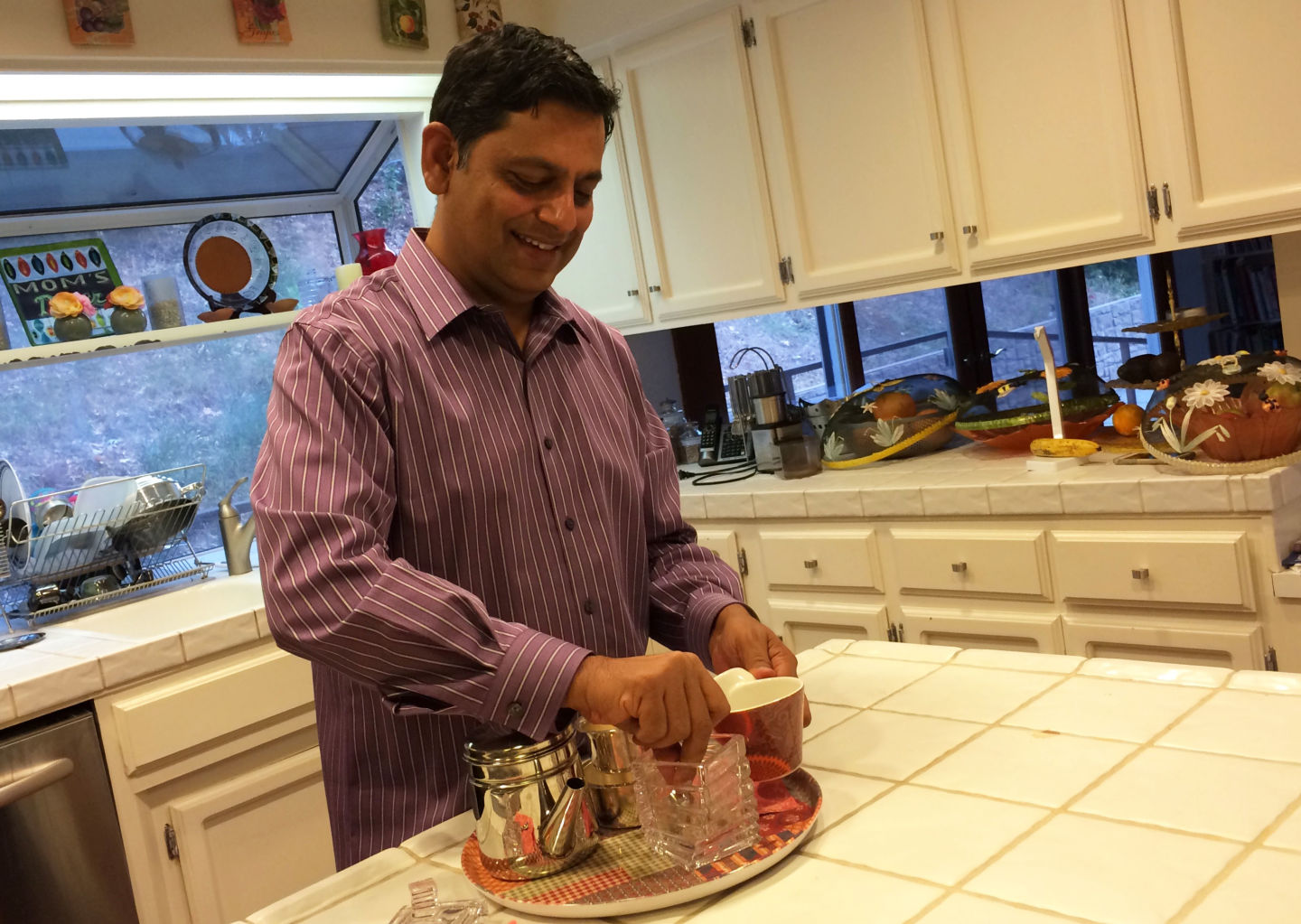
"caption": "Silicon Valley startup founder Deepak Aatresh starts every day with a touch of his homeland -- south Indian filter coffee.",
"description": "Silicon Valley startup founder Deepak Aatresh starts every day with a touch of his homeland -- south Indian filter coffee.",
"title": "Aatresh",
"credit": "Beth Willon/KQED",
"status": "inherit",
"isLoading": false,
"fetchFailed": false
},
"news_10693560": {
"type": "attachments",
"id": "news_10693560",
"meta": {
"index": "attachments_1716263798",
"site": "news",
"id": "10693560",
"found": true
},
"parent": 10693342,
"imgSizes": {
"twentyfourteen-full-width": {
"file": "https://ww2.kqed.org/app/uploads/sites/10/2015/09/ICE-facility-1038x576.jpg",
"width": 1038,
"mimeType": "image/jpeg",
"height": 576
},
"thumbnail": {
"file": "https://ww2.kqed.org/app/uploads/sites/10/2015/09/ICE-facility-400x267.jpg",
"width": 400,
"mimeType": "image/jpeg",
"height": 267
},
"fd-sm": {
"file": "https://ww2.kqed.org/app/uploads/sites/10/2015/09/ICE-facility-960x640.jpg",
"width": 960,
"mimeType": "image/jpeg",
"height": 640
},
"post-thumbnail": {
"file": "https://ww2.kqed.org/app/uploads/sites/10/2015/09/ICE-facility-672x372.jpg",
"width": 672,
"mimeType": "image/jpeg",
"height": 372
},
"kqedFullSize": {
"file": "https://ww2.kqed.org/app/uploads/sites/10/2015/09/ICE-facility.jpg",
"width": 3504,
"height": 2336
},
"large": {
"file": "https://ww2.kqed.org/app/uploads/sites/10/2015/09/ICE-facility-1440x960.jpg",
"width": 1440,
"mimeType": "image/jpeg",
"height": 960
},
"guest-author-96": {
"file": "https://ww2.kqed.org/app/uploads/sites/10/2015/09/ICE-facility-96x96.jpg",
"width": 96,
"mimeType": "image/jpeg",
"height": 96
},
"medium": {
"file": "https://ww2.kqed.org/app/uploads/sites/10/2015/09/ICE-facility-800x533.jpg",
"width": 800,
"mimeType": "image/jpeg",
"height": 533
},
"guest-author-64": {
"file": "https://ww2.kqed.org/app/uploads/sites/10/2015/09/ICE-facility-64x64.jpg",
"width": 64,
"mimeType": "image/jpeg",
"height": 64
},
"guest-author-32": {
"file": "https://ww2.kqed.org/app/uploads/sites/10/2015/09/ICE-facility-32x32.jpg",
"width": 32,
"mimeType": "image/jpeg",
"height": 32
},
"jmtc-small-thumb": {
"file": "https://ww2.kqed.org/app/uploads/sites/10/2015/09/ICE-facility-280x150.jpg",
"width": 280,
"mimeType": "image/jpeg",
"height": 150
},
"fd-lrg": {
"file": "https://ww2.kqed.org/app/uploads/sites/10/2015/09/ICE-facility-1920x1280.jpg",
"width": 1920,
"mimeType": "image/jpeg",
"height": 1280
},
"fd-med": {
"file": "https://ww2.kqed.org/app/uploads/sites/10/2015/09/ICE-facility-1180x787.jpg",
"width": 1180,
"mimeType": "image/jpeg",
"height": 787
},
"detail": {
"file": "https://ww2.kqed.org/app/uploads/sites/10/2015/09/ICE-facility-75x75.jpg",
"width": 75,
"mimeType": "image/jpeg",
"height": 75
},
"guest-author-128": {
"file": "https://ww2.kqed.org/app/uploads/sites/10/2015/09/ICE-facility-128x128.jpg",
"width": 128,
"mimeType": "image/jpeg",
"height": 128
}
},
"publishDate": 1442946065,
"modified": 1442959920,
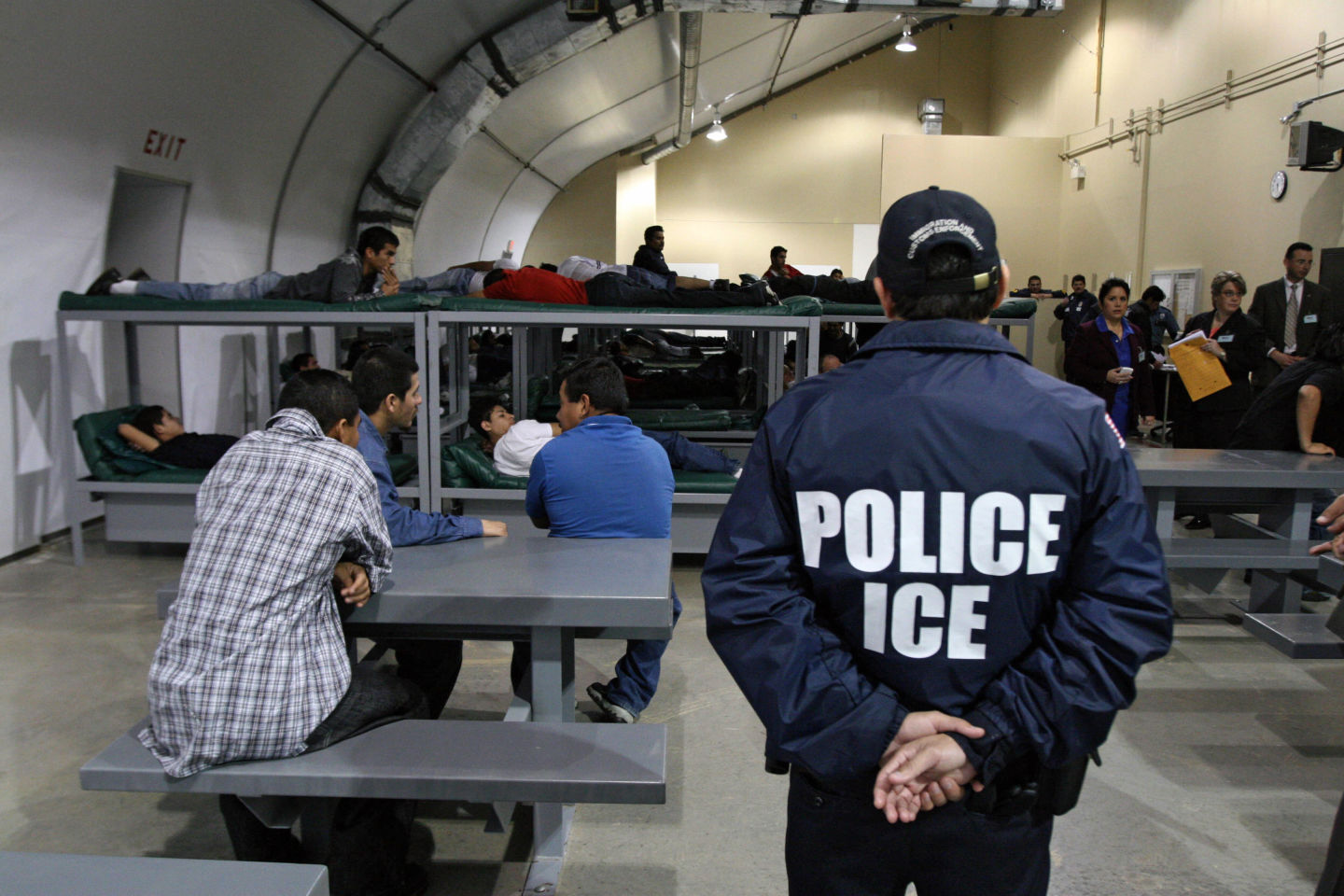
"caption": "In this 2008 file photo, an Immigration and Customs Enforcement (ICE) officer guards a group of immigrants awaiting deportation at a Texas detention facility.",
"description": null,
"title": "ICE facility",
"credit": "Jose Cabezas/AFP/Getty Images",
"status": "inherit",
"isLoading": false,
"fetchFailed": false
},
"news_10685570": {
"type": "attachments",
"id": "news_10685570",
"meta": {
"index": "attachments_1716263798",
"site": "news",
"id": "10685570",
"found": true
},
"parent": 10685508,
"imgSizes": {
"twentyfourteen-full-width": {
"file": "https://ww2.kqed.org/app/uploads/sites/10/2015/09/GettyImages-450565082-1038x576.jpg",
"width": 1038,
"mimeType": "image/jpeg",
"height": 576
},
"thumbnail": {
"file": "https://ww2.kqed.org/app/uploads/sites/10/2015/09/GettyImages-450565082-400x267.jpg",
"width": 400,
"mimeType": "image/jpeg",
"height": 267
},
"fd-sm": {
"file": "https://ww2.kqed.org/app/uploads/sites/10/2015/09/GettyImages-450565082-960x640.jpg",
"width": 960,
"mimeType": "image/jpeg",
"height": 640
},
"post-thumbnail": {
"file": "https://ww2.kqed.org/app/uploads/sites/10/2015/09/GettyImages-450565082-672x372.jpg",
"width": 672,
"mimeType": "image/jpeg",
"height": 372
},
"kqedFullSize": {
"file": "https://ww2.kqed.org/app/uploads/sites/10/2015/09/GettyImages-450565082-e1442449741340.jpg",
"width": 1920,
"height": 1280
},
"large": {
"file": "https://ww2.kqed.org/app/uploads/sites/10/2015/09/GettyImages-450565082-1440x960.jpg",
"width": 1440,
"mimeType": "image/jpeg",
"height": 960
},
"guest-author-96": {
"file": "https://ww2.kqed.org/app/uploads/sites/10/2015/09/GettyImages-450565082-96x96.jpg",
"width": 96,
"mimeType": "image/jpeg",
"height": 96
},
"medium": {
"file": "https://ww2.kqed.org/app/uploads/sites/10/2015/09/GettyImages-450565082-800x533.jpg",
"width": 800,
"mimeType": "image/jpeg",
"height": 533
},
"guest-author-64": {
"file": "https://ww2.kqed.org/app/uploads/sites/10/2015/09/GettyImages-450565082-64x64.jpg",
"width": 64,
"mimeType": "image/jpeg",
"height": 64
},
"guest-author-32": {
"file": "https://ww2.kqed.org/app/uploads/sites/10/2015/09/GettyImages-450565082-32x32.jpg",
"width": 32,
"mimeType": "image/jpeg",
"height": 32
},
"jmtc-small-thumb": {
"file": "https://ww2.kqed.org/app/uploads/sites/10/2015/09/GettyImages-450565082-280x150.jpg",
"width": 280,
"mimeType": "image/jpeg",
"height": 150
},
"fd-lrg": {
"file": "https://ww2.kqed.org/app/uploads/sites/10/2015/09/GettyImages-450565082-1920x1280.jpg",
"width": 1920,
"mimeType": "image/jpeg",
"height": 1280
},
"fd-med": {
"file": "https://ww2.kqed.org/app/uploads/sites/10/2015/09/GettyImages-450565082-1180x787.jpg",
"width": 1180,
"mimeType": "image/jpeg",
"height": 787
},
"detail": {
"file": "https://ww2.kqed.org/app/uploads/sites/10/2015/09/GettyImages-450565082-75x75.jpg",
"width": 75,
"mimeType": "image/jpeg",
"height": 75
},
"guest-author-128": {
"file": "https://ww2.kqed.org/app/uploads/sites/10/2015/09/GettyImages-450565082-128x128.jpg",
"width": 128,
"mimeType": "image/jpeg",
"height": 128
}
},
"publishDate": 1442449695,
"modified": 1442527354,
"caption": "Homeland Security Secretary Jeh Johnson, seen here in Chicago in 2014, spoke at UC Berkeley on Sept. 15.",
"description": "Homeland Security Secretary Jeh Johnson, seen here in Chicago, spoke at UC Berkeley on Sept. 15.",
"title": "Jeh Johnson Visits ICE And Customs Facilities In Chicago",
"credit": "Scott Olson/Getty Images",
"status": "inherit",
"isLoading": false,
"fetchFailed": false
},
"news_10676152": {
"type": "attachments",
"id": "news_10676152",
"meta": {
"index": "attachments_1716263798",
"site": "news",
"id": "10676152",
"found": true
},
"parent": 10676151,
"imgSizes": {
"twentyfourteen-full-width": {
"file": "https://ww2.kqed.org/app/uploads/sites/10/2015/09/HP-jp-km-1038x576.jpg",
"width": 1038,
"mimeType": "image/jpeg",
"height": 576
},
"thumbnail": {
"file": "https://ww2.kqed.org/app/uploads/sites/10/2015/09/HP-jp-km-400x275.jpg",
"width": 400,
"mimeType": "image/jpeg",
"height": 275
},
"fd-sm": {
"file": "https://ww2.kqed.org/app/uploads/sites/10/2015/09/HP-jp-km-960x660.jpg",
"width": 960,
"mimeType": "image/jpeg",
"height": 660
},
"post-thumbnail": {
"file": "https://ww2.kqed.org/app/uploads/sites/10/2015/09/HP-jp-km-672x372.jpg",
"width": 672,
"mimeType": "image/jpeg",
"height": 372
},
"kqedFullSize": {
"file": "https://ww2.kqed.org/app/uploads/sites/10/2015/09/HP-jp-km.jpg",
"width": 1920,
"height": 1320
},
"large": {
"file": "https://ww2.kqed.org/app/uploads/sites/10/2015/09/HP-jp-km-1440x990.jpg",
"width": 1440,
"mimeType": "image/jpeg",
"height": 990
},
"guest-author-96": {
"file": "https://ww2.kqed.org/app/uploads/sites/10/2015/09/HP-jp-km-96x96.jpg",
"width": 96,
"mimeType": "image/jpeg",
"height": 96
},
"medium": {
"file": "https://ww2.kqed.org/app/uploads/sites/10/2015/09/HP-jp-km-800x550.jpg",
"width": 800,
"mimeType": "image/jpeg",
"height": 550
},
"guest-author-64": {
"file": "https://ww2.kqed.org/app/uploads/sites/10/2015/09/HP-jp-km-64x64.jpg",
"width": 64,
"mimeType": "image/jpeg",
"height": 64
},
"guest-author-32": {
"file": "https://ww2.kqed.org/app/uploads/sites/10/2015/09/HP-jp-km-32x32.jpg",
"width": 32,
"mimeType": "image/jpeg",
"height": 32
},
"jmtc-small-thumb": {
"file": "https://ww2.kqed.org/app/uploads/sites/10/2015/09/HP-jp-km-280x150.jpg",
"width": 280,
"mimeType": "image/jpeg",
"height": 150
},
"fd-lrg": {
"file": "https://ww2.kqed.org/app/uploads/sites/10/2015/09/HP-jp-km-1920x1320.jpg",
"width": 1920,
"mimeType": "image/jpeg",
"height": 1320
},
"fd-med": {
"file": "https://ww2.kqed.org/app/uploads/sites/10/2015/09/HP-jp-km-1180x811.jpg",
"width": 1180,
"mimeType": "image/jpeg",
"height": 811
},
"detail": {
"file": "https://ww2.kqed.org/app/uploads/sites/10/2015/09/HP-jp-km-75x75.jpg",
"width": 75,
"mimeType": "image/jpeg",
"height": 75
},
"guest-author-128": {
"file": "https://ww2.kqed.org/app/uploads/sites/10/2015/09/HP-jp-km-128x128.jpg",
"width": 128,
"mimeType": "image/jpeg",
"height": 128
}
},
"publishDate": 1441904364,
"modified": 1441933049,
"caption": "Huntington Park Mayor Karina Macias (L) and Councilman Jhonny Pineda at a council meeting on Sept. 8. Officials continue to draw praise and protest after appointing two undocumented immigrants to city commissions. ",
"description": null,
"title": "HP jp & km",
"credit": "Steven Cuevas/KQED",
"status": "inherit",
"isLoading": false,
"fetchFailed": false
},
"news_10673273": {
"type": "attachments",
"id": "news_10673273",
"meta": {
"index": "attachments_1716263798",
"site": "news",
"id": "10673273",
"found": true
},
"parent": 10673249,
"imgSizes": {
"twentyfourteen-full-width": {
"file": "https://ww2.kqed.org/app/uploads/sites/10/2015/09/Mexican-Repatriation-ea60674d62ecedce042c706e365cef8361c4e07d-s800-c85-797x576.jpg",
"width": 797,
"mimeType": "image/jpeg",
"height": 576
},
"jmtc-small-thumb": {
"file": "https://ww2.kqed.org/app/uploads/sites/10/2015/09/Mexican-Repatriation-ea60674d62ecedce042c706e365cef8361c4e07d-s800-c85-280x150.jpg",
"width": 280,
"mimeType": "image/jpeg",
"height": 150
},
"thumbnail": {
"file": "https://ww2.kqed.org/app/uploads/sites/10/2015/09/Mexican-Repatriation-ea60674d62ecedce042c706e365cef8361c4e07d-s800-c85-400x300.jpg",
"width": 400,
"mimeType": "image/jpeg",
"height": 300
},
"post-thumbnail": {
"file": "https://ww2.kqed.org/app/uploads/sites/10/2015/09/Mexican-Repatriation-ea60674d62ecedce042c706e365cef8361c4e07d-s800-c85-672x372.jpg",
"width": 672,
"mimeType": "image/jpeg",
"height": 372
},
"kqedFullSize": {
"file": "https://ww2.kqed.org/app/uploads/sites/10/2015/09/Mexican-Repatriation-ea60674d62ecedce042c706e365cef8361c4e07d-s800-c85.jpg",
"width": 797,
"height": 597
},
"guest-author-96": {
"file": "https://ww2.kqed.org/app/uploads/sites/10/2015/09/Mexican-Repatriation-ea60674d62ecedce042c706e365cef8361c4e07d-s800-c85-96x96.jpg",
"width": 96,
"mimeType": "image/jpeg",
"height": 96
},
"guest-author-64": {
"file": "https://ww2.kqed.org/app/uploads/sites/10/2015/09/Mexican-Repatriation-ea60674d62ecedce042c706e365cef8361c4e07d-s800-c85-64x64.jpg",
"width": 64,
"mimeType": "image/jpeg",
"height": 64
},
"detail": {
"file": "https://ww2.kqed.org/app/uploads/sites/10/2015/09/Mexican-Repatriation-ea60674d62ecedce042c706e365cef8361c4e07d-s800-c85-75x75.jpg",
"width": 75,
"mimeType": "image/jpeg",
"height": 75
},
"guest-author-32": {
"file": "https://ww2.kqed.org/app/uploads/sites/10/2015/09/Mexican-Repatriation-ea60674d62ecedce042c706e365cef8361c4e07d-s800-c85-32x32.jpg",
"width": 32,
"mimeType": "image/jpeg",
"height": 32
},
"guest-author-128": {
"file": "https://ww2.kqed.org/app/uploads/sites/10/2015/09/Mexican-Repatriation-ea60674d62ecedce042c706e365cef8361c4e07d-s800-c85-128x128.jpg",
"width": 128,
"mimeType": "image/jpeg",
"height": 128
}
},
"publishDate": 1441731602,
"modified": 1441731626,
"caption": "Mexican and Mexican-American families wait to board Mexico-bound trains in Los Angeles on March 8, 1932. County officials arranged these mass departures as part of \"repatriation campaigns,\" fueled by fears that Mexicans and Mexican-Americans were taking scarce jobs and government assistance during the Great Depression.\n",
"description": null,
"title": "Mexican Repatriation",
"credit": "Los Angeles Public Library/Herald Examiner Collection",
"status": "inherit",
"isLoading": false,
"fetchFailed": false
},
"news_10667613": {
"type": "attachments",
"id": "news_10667613",
"meta": {
"index": "attachments_1716263798",
"site": "news",
"id": "10667613",
"found": true
},
"parent": 10666155,
"imgSizes": {
"twentyfourteen-full-width": {
"file": "https://ww2.kqed.org/app/uploads/sites/10/2015/09/HoldingPortrait1-1038x576.jpg",
"width": 1038,
"mimeType": "image/jpeg",
"height": 576
},
"thumbnail": {
"file": "https://ww2.kqed.org/app/uploads/sites/10/2015/09/HoldingPortrait1-400x223.jpg",
"width": 400,
"mimeType": "image/jpeg",
"height": 223
},
"fd-sm": {
"file": "https://ww2.kqed.org/app/uploads/sites/10/2015/09/HoldingPortrait1-960x535.jpg",
"width": 960,
"mimeType": "image/jpeg",
"height": 535
},
"post-thumbnail": {
"file": "https://ww2.kqed.org/app/uploads/sites/10/2015/09/HoldingPortrait1-672x372.jpg",
"width": 672,
"mimeType": "image/jpeg",
"height": 372
},
"kqedFullSize": {
"file": "https://ww2.kqed.org/app/uploads/sites/10/2015/09/HoldingPortrait1.jpg",
"width": 1920,
"height": 1069
},
"large": {
"file": "https://ww2.kqed.org/app/uploads/sites/10/2015/09/HoldingPortrait1-1440x802.jpg",
"width": 1440,
"mimeType": "image/jpeg",
"height": 802
},
"guest-author-96": {
"file": "https://ww2.kqed.org/app/uploads/sites/10/2015/09/HoldingPortrait1-96x96.jpg",
"width": 96,
"mimeType": "image/jpeg",
"height": 96
},
"medium": {
"file": "https://ww2.kqed.org/app/uploads/sites/10/2015/09/HoldingPortrait1-800x445.jpg",
"width": 800,
"mimeType": "image/jpeg",
"height": 445
},
"guest-author-64": {
"file": "https://ww2.kqed.org/app/uploads/sites/10/2015/09/HoldingPortrait1-64x64.jpg",
"width": 64,
"mimeType": "image/jpeg",
"height": 64
},
"guest-author-32": {
"file": "https://ww2.kqed.org/app/uploads/sites/10/2015/09/HoldingPortrait1-32x32.jpg",
"width": 32,
"mimeType": "image/jpeg",
"height": 32
},
"jmtc-small-thumb": {
"file": "https://ww2.kqed.org/app/uploads/sites/10/2015/09/HoldingPortrait1-280x150.jpg",
"width": 280,
"mimeType": "image/jpeg",
"height": 150
},
"fd-lrg": {
"file": "https://ww2.kqed.org/app/uploads/sites/10/2015/09/HoldingPortrait1-1920x1069.jpg",
"width": 1920,
"mimeType": "image/jpeg",
"height": 1069
},
"fd-med": {
"file": "https://ww2.kqed.org/app/uploads/sites/10/2015/09/HoldingPortrait1-1180x657.jpg",
"width": 1180,
"mimeType": "image/jpeg",
"height": 657
},
"detail": {
"file": "https://ww2.kqed.org/app/uploads/sites/10/2015/09/HoldingPortrait1-75x75.jpg",
"width": 75,
"mimeType": "image/jpeg",
"height": 75
},
"guest-author-128": {
"file": "https://ww2.kqed.org/app/uploads/sites/10/2015/09/HoldingPortrait1-128x128.jpg",
"width": 128,
"mimeType": "image/jpeg",
"height": 128
}
},
"publishDate": 1441322844,
"modified": 1441322862,
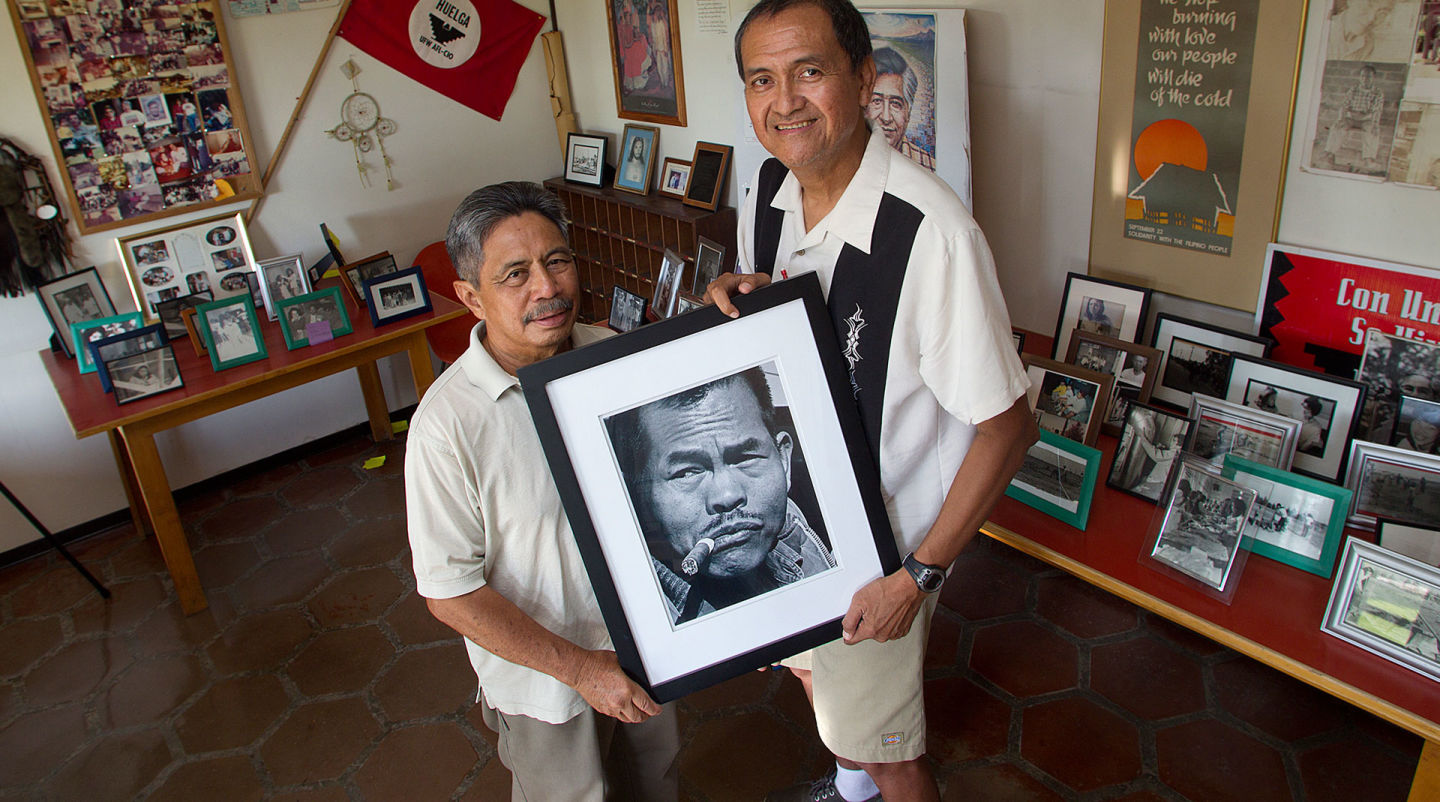
"caption": "At the Paulo Agbayani Village west of Delano, Roger Gadiano (L) and Alex Edillor hold a photo of grape strike leader Larry Itliong, whom they respectfully refer to as \"The Man.\"",
"description": "At the Paulo Agbayani Village west of Delano, Roger Gadiano (L) and Alex Edillor hold a photo of grape strike leader Larry Itliong, whom they respectfully refer to as \"The Man.\"",
"title": "HoldingPortrait",
"credit": "Henry A. Barrios/FERN",
"status": "inherit",
"isLoading": false,
"fetchFailed": false
},
"news_10666083": {
"type": "attachments",
"id": "news_10666083",
"meta": {
"index": "attachments_1716263798",
"site": "news",
"id": "10666083",
"found": true
},
"parent": 10647076,
"imgSizes": {
"twentyfourteen-full-width": {
"file": "https://ww2.kqed.org/app/uploads/sites/10/2015/09/JorgeMagda-1038x576.jpg",
"width": 1038,
"mimeType": "image/jpeg",
"height": 576
},
"thumbnail": {
"file": "https://ww2.kqed.org/app/uploads/sites/10/2015/09/JorgeMagda-400x390.jpg",
"width": 400,
"mimeType": "image/jpeg",
"height": 390
},
"fd-sm": {
"file": "https://ww2.kqed.org/app/uploads/sites/10/2015/09/JorgeMagda-960x937.jpg",
"width": 960,
"mimeType": "image/jpeg",
"height": 937
},
"post-thumbnail": {
"file": "https://ww2.kqed.org/app/uploads/sites/10/2015/09/JorgeMagda-672x372.jpg",
"width": 672,
"mimeType": "image/jpeg",
"height": 372
},
"kqedFullSize": {
"file": "https://ww2.kqed.org/app/uploads/sites/10/2015/09/JorgeMagda.jpg",
"width": 1920,
"height": 1873
},
"large": {
"file": "https://ww2.kqed.org/app/uploads/sites/10/2015/09/JorgeMagda-1440x1405.jpg",
"width": 1440,
"mimeType": "image/jpeg",
"height": 1405
},
"guest-author-96": {
"file": "https://ww2.kqed.org/app/uploads/sites/10/2015/09/JorgeMagda-96x96.jpg",
"width": 96,
"mimeType": "image/jpeg",
"height": 96
},
"medium": {
"file": "https://ww2.kqed.org/app/uploads/sites/10/2015/09/JorgeMagda-800x780.jpg",
"width": 800,
"mimeType": "image/jpeg",
"height": 780
},
"guest-author-64": {
"file": "https://ww2.kqed.org/app/uploads/sites/10/2015/09/JorgeMagda-64x64.jpg",
"width": 64,
"mimeType": "image/jpeg",
"height": 64
},
"guest-author-32": {
"file": "https://ww2.kqed.org/app/uploads/sites/10/2015/09/JorgeMagda-32x32.jpg",
"width": 32,
"mimeType": "image/jpeg",
"height": 32
},
"jmtc-small-thumb": {
"file": "https://ww2.kqed.org/app/uploads/sites/10/2015/09/JorgeMagda-280x150.jpg",
"width": 280,
"mimeType": "image/jpeg",
"height": 150
},
"fd-lrg": {
"file": "https://ww2.kqed.org/app/uploads/sites/10/2015/09/JorgeMagda-1920x1873.jpg",
"width": 1920,
"mimeType": "image/jpeg",
"height": 1873
},
"fd-med": {
"file": "https://ww2.kqed.org/app/uploads/sites/10/2015/09/JorgeMagda-1180x1151.jpg",
"width": 1180,
"mimeType": "image/jpeg",
"height": 1151
},
"detail": {
"file": "https://ww2.kqed.org/app/uploads/sites/10/2015/09/JorgeMagda-75x75.jpg",
"width": 75,
"mimeType": "image/jpeg",
"height": 75
},
"guest-author-128": {
"file": "https://ww2.kqed.org/app/uploads/sites/10/2015/09/JorgeMagda-128x128.jpg",
"width": 128,
"mimeType": "image/jpeg",
"height": 128
}
},
"publishDate": 1441228044,
"modified": 1441228131,
"caption": "Jorge Arreola and Maria Magdalena Ortega Delgado are three years into an involuntary 10-year separation.",
"description": "Jorge Arreola and Maria Magdalena Ortega Delgado are three years into an involuntary 10-year separation.",
"title": "JorgeMagda",
"credit": "Photo: Isaac Daniel Ortega Delgado",
"status": "inherit",
"isLoading": false,
"fetchFailed": false
},
"news_10590607": {
"type": "attachments",
"id": "news_10590607",
"meta": {
"index": "attachments_1716263798",
"site": "news",
"id": "10590607",
"found": true
},
"parent": 10590304,
"imgSizes": {
"twentyfourteen-full-width": {
"file": "https://ww2.kqed.org/app/uploads/sites/10/2016/07/IMG_3368.JPG-1038x576.jpeg",
"width": 1038,
"mimeType": "image/jpeg",
"height": 576
},
"thumbnail": {
"file": "https://ww2.kqed.org/app/uploads/sites/10/2016/07/IMG_3368.JPG-400x300.jpeg",
"width": 400,
"mimeType": "image/jpeg",
"height": 300
},
"fd-sm": {
"file": "https://ww2.kqed.org/app/uploads/sites/10/2016/07/IMG_3368.JPG-960x720.jpeg",
"width": 960,
"mimeType": "image/jpeg",
"height": 720
},
"post-thumbnail": {
"file": "https://ww2.kqed.org/app/uploads/sites/10/2016/07/IMG_3368.JPG-672x372.jpeg",
"width": 672,
"mimeType": "image/jpeg",
"height": 372
},
"kqedFullSize": {
"file": "https://ww2.kqed.org/app/uploads/sites/10/2016/07/IMG_3368.JPG-e1436211867292.jpeg",
"width": 1920,
"height": 1440
},
"large": {
"file": "https://ww2.kqed.org/app/uploads/sites/10/2016/07/IMG_3368.JPG-1440x1080.jpeg",
"width": 1440,
"mimeType": "image/jpeg",
"height": 1080
},
"guest-author-96": {
"file": "https://ww2.kqed.org/app/uploads/sites/10/2016/07/IMG_3368.JPG-96x96.jpeg",
"width": 96,
"mimeType": "image/jpeg",
"height": 96
},
"medium": {
"file": "https://ww2.kqed.org/app/uploads/sites/10/2016/07/IMG_3368.JPG-800x600.jpeg",
"width": 800,
"mimeType": "image/jpeg",
"height": 600
},
"guest-author-64": {
"file": "https://ww2.kqed.org/app/uploads/sites/10/2016/07/IMG_3368.JPG-64x64.jpeg",
"width": 64,
"mimeType": "image/jpeg",
"height": 64
},
"guest-author-32": {
"file": "https://ww2.kqed.org/app/uploads/sites/10/2016/07/IMG_3368.JPG-32x32.jpeg",
"width": 32,
"mimeType": "image/jpeg",
"height": 32
},
"jmtc-small-thumb": {
"file": "https://ww2.kqed.org/app/uploads/sites/10/2016/07/IMG_3368.JPG-280x150.jpeg",
"width": 280,
"mimeType": "image/jpeg",
"height": 150
},
"fd-med": {
"file": "https://ww2.kqed.org/app/uploads/sites/10/2016/07/IMG_3368.JPG-1180x885.jpeg",
"width": 1180,
"mimeType": "image/jpeg",
"height": 885
},
"detail": {
"file": "https://ww2.kqed.org/app/uploads/sites/10/2016/07/IMG_3368.JPG-75x75.jpeg",
"width": 75,
"mimeType": "image/jpeg",
"height": 75
},
"guest-author-128": {
"file": "https://ww2.kqed.org/app/uploads/sites/10/2016/07/IMG_3368.JPG-128x128.jpeg",
"width": 128,
"mimeType": "image/jpeg",
"height": 128
}
},
"publishDate": 1436211821,
"modified": 1436568958,
"caption": "A memorial for Kate Steinle on San Francisco's Pier 14, where she was fatally shot on July 1.",
"description": "A memorial for Kate Steinle on San Francisco's Pier 14, where she was fatally shot on July 1.",
"title": "IMG_3368.JPG",
"credit": "Susan Cohen/KQED",
"status": "inherit",
"isLoading": false,
"fetchFailed": false
},
"news_10653618": {
"type": "attachments",
"id": "news_10653618",
"meta": {
"index": "attachments_1716263798",
"site": "news",
"id": "10653618",
"found": true
},
"parent": 10653617,
"imgSizes": {
"twentyfourteen-full-width": {
"file": "https://ww2.kqed.org/app/uploads/sites/10/2015/08/GettyImages-458329272-1038x576.jpg",
"width": 1038,
"mimeType": "image/jpeg",
"height": 576
},
"thumbnail": {
"file": "https://ww2.kqed.org/app/uploads/sites/10/2015/08/GettyImages-458329272-400x274.jpg",
"width": 400,
"mimeType": "image/jpeg",
"height": 274
},
"fd-sm": {
"file": "https://ww2.kqed.org/app/uploads/sites/10/2015/08/GettyImages-458329272-960x657.jpg",
"width": 960,
"mimeType": "image/jpeg",
"height": 657
},
"post-thumbnail": {
"file": "https://ww2.kqed.org/app/uploads/sites/10/2015/08/GettyImages-458329272-672x372.jpg",
"width": 672,
"mimeType": "image/jpeg",
"height": 372
},
"kqedFullSize": {
"file": "https://ww2.kqed.org/app/uploads/sites/10/2015/08/GettyImages-458329272-e1440297614861.jpg",
"width": 1920,
"height": 1313
},
"large": {
"file": "https://ww2.kqed.org/app/uploads/sites/10/2015/08/GettyImages-458329272-1440x985.jpg",
"width": 1440,
"mimeType": "image/jpeg",
"height": 985
},
"guest-author-96": {
"file": "https://ww2.kqed.org/app/uploads/sites/10/2015/08/GettyImages-458329272-96x96.jpg",
"width": 96,
"mimeType": "image/jpeg",
"height": 96
},
"medium": {
"file": "https://ww2.kqed.org/app/uploads/sites/10/2015/08/GettyImages-458329272-800x547.jpg",
"width": 800,
"mimeType": "image/jpeg",
"height": 547
},
"guest-author-64": {
"file": "https://ww2.kqed.org/app/uploads/sites/10/2015/08/GettyImages-458329272-64x64.jpg",
"width": 64,
"mimeType": "image/jpeg",
"height": 64
},
"guest-author-32": {
"file": "https://ww2.kqed.org/app/uploads/sites/10/2015/08/GettyImages-458329272-32x32.jpg",
"width": 32,
"mimeType": "image/jpeg",
"height": 32
},
"jmtc-small-thumb": {
"file": "https://ww2.kqed.org/app/uploads/sites/10/2015/08/GettyImages-458329272-280x150.jpg",
"width": 280,
"mimeType": "image/jpeg",
"height": 150
},
"fd-lrg": {
"file": "https://ww2.kqed.org/app/uploads/sites/10/2015/08/GettyImages-458329272-1920x1313.jpg",
"width": 1920,
"mimeType": "image/jpeg",
"height": 1313
},
"fd-med": {
"file": "https://ww2.kqed.org/app/uploads/sites/10/2015/08/GettyImages-458329272-1180x807.jpg",
"width": 1180,
"mimeType": "image/jpeg",
"height": 807
},
"detail": {
"file": "https://ww2.kqed.org/app/uploads/sites/10/2015/08/GettyImages-458329272-75x75.jpg",
"width": 75,
"mimeType": "image/jpeg",
"height": 75
},
"guest-author-128": {
"file": "https://ww2.kqed.org/app/uploads/sites/10/2015/08/GettyImages-458329272-128x128.jpg",
"width": 128,
"mimeType": "image/jpeg",
"height": 128
}
},
"publishDate": 1440297475,
"modified": 1440297604,
"caption": "A U.S. Border Patrol facility for children and families in McAllen, Texas, pictured in September 2014. ",
"description": null,
"title": "Border Patrol-Unaccompanied Minors",
"credit": "John Moore/Getty Images",
"status": "inherit",
"isLoading": false,
"fetchFailed": false
},
"news_10648202": {
"type": "attachments",
"id": "news_10648202",
"meta": {
"index": "attachments_1716263798",
"site": "news",
"id": "10648202",
"found": true
},
"parent": 10648200,
"imgSizes": {
"twentyfourteen-full-width": {
"file": "https://ww2.kqed.org/app/uploads/sites/10/2015/08/RS16377_GettyImages-476795015-qut-1038x576.jpg",
"width": 1038,
"mimeType": "image/jpeg",
"height": 576
},
"thumbnail": {
"file": "https://ww2.kqed.org/app/uploads/sites/10/2015/08/RS16377_GettyImages-476795015-qut-400x533.jpg",
"width": 400,
"mimeType": "image/jpeg",
"height": 533
},
"fd-sm": {
"file": "https://ww2.kqed.org/app/uploads/sites/10/2015/08/RS16377_GettyImages-476795015-qut-960x1280.jpg",
"width": 960,
"mimeType": "image/jpeg",
"height": 1280
},
"post-thumbnail": {
"file": "https://ww2.kqed.org/app/uploads/sites/10/2015/08/RS16377_GettyImages-476795015-qut-672x372.jpg",
"width": 672,
"mimeType": "image/jpeg",
"height": 372
},
"kqedFullSize": {
"file": "https://ww2.kqed.org/app/uploads/sites/10/2015/08/RS16377_GettyImages-476795015-qut.jpg",
"width": 1920,
"height": 2560
},
"large": {
"file": "https://ww2.kqed.org/app/uploads/sites/10/2015/08/RS16377_GettyImages-476795015-qut-1440x1920.jpg",
"width": 1440,
"mimeType": "image/jpeg",
"height": 1920
},
"guest-author-96": {
"file": "https://ww2.kqed.org/app/uploads/sites/10/2015/08/RS16377_GettyImages-476795015-qut-96x96.jpg",
"width": 96,
"mimeType": "image/jpeg",
"height": 96
},
"medium": {
"file": "https://ww2.kqed.org/app/uploads/sites/10/2015/08/RS16377_GettyImages-476795015-qut-800x1067.jpg",
"width": 800,
"mimeType": "image/jpeg",
"height": 1067
},
"guest-author-64": {
"file": "https://ww2.kqed.org/app/uploads/sites/10/2015/08/RS16377_GettyImages-476795015-qut-64x64.jpg",
"width": 64,
"mimeType": "image/jpeg",
"height": 64
},
"guest-author-32": {
"file": "https://ww2.kqed.org/app/uploads/sites/10/2015/08/RS16377_GettyImages-476795015-qut-32x32.jpg",
"width": 32,
"mimeType": "image/jpeg",
"height": 32
},
"jmtc-small-thumb": {
"file": "https://ww2.kqed.org/app/uploads/sites/10/2015/08/RS16377_GettyImages-476795015-qut-280x150.jpg",
"width": 280,
"mimeType": "image/jpeg",
"height": 150
},
"fd-lrg": {
"file": "https://ww2.kqed.org/app/uploads/sites/10/2015/08/RS16377_GettyImages-476795015-qut-1920x2560.jpg",
"width": 1920,
"mimeType": "image/jpeg",
"height": 2560
},
"fd-med": {
"file": "https://ww2.kqed.org/app/uploads/sites/10/2015/08/RS16377_GettyImages-476795015-qut-1180x1573.jpg",
"width": 1180,
"mimeType": "image/jpeg",
"height": 1573
},
"detail": {
"file": "https://ww2.kqed.org/app/uploads/sites/10/2015/08/RS16377_GettyImages-476795015-qut-75x75.jpg",
"width": 75,
"mimeType": "image/jpeg",
"height": 75
},
"guest-author-128": {
"file": "https://ww2.kqed.org/app/uploads/sites/10/2015/08/RS16377_GettyImages-476795015-qut-128x128.jpg",
"width": 128,
"mimeType": "image/jpeg",
"height": 128
}
},
"publishDate": 1439905703,
"modified": 1439905824,
"caption": "The U.S. Department of Homeland Security Immigration and Customs Enforcement previously said Daniel Maher's past felony conviction made him a priority for deportation. Maher was released from detention Friday, Aug. 14.",
"description": "The U.S. Department of Homeland Security Immigration and Customs Enforcement previously said Daniel Maher's past felony conviction made him a priority for deportation. Maher was released from detention Friday, Aug. 14.",
"title": "RS16377_GettyImages-476795015-qut",
"credit": "Robert MacPherson/AFP/Getty Images",
"status": "inherit",
"isLoading": false,
"fetchFailed": false
},
"news_10621099": {
"type": "attachments",
"id": "news_10621099",
"meta": {
"index": "attachments_1716263798",
"site": "news",
"id": "10621099",
"found": true
},
"parent": 10619857,
"imgSizes": {
"twentyfourteen-full-width": {
"file": "https://ww2.kqed.org/app/uploads/sites/10/2015/07/16529474675_b27521689c_k-1038x576.jpg",
"width": 1038,
"mimeType": "image/jpeg",
"height": 576
},
"thumbnail": {
"file": "https://ww2.kqed.org/app/uploads/sites/10/2015/07/16529474675_b27521689c_k-400x267.jpg",
"width": 400,
"mimeType": "image/jpeg",
"height": 267
},
"fd-sm": {
"file": "https://ww2.kqed.org/app/uploads/sites/10/2015/07/16529474675_b27521689c_k-960x640.jpg",
"width": 960,
"mimeType": "image/jpeg",
"height": 640
},
"post-thumbnail": {
"file": "https://ww2.kqed.org/app/uploads/sites/10/2015/07/16529474675_b27521689c_k-672x372.jpg",
"width": 672,
"mimeType": "image/jpeg",
"height": 372
},
"kqedFullSize": {
"file": "https://ww2.kqed.org/app/uploads/sites/10/2015/07/16529474675_b27521689c_k.jpg",
"width": 2048,
"height": 1365
},
"large": {
"file": "https://ww2.kqed.org/app/uploads/sites/10/2015/07/16529474675_b27521689c_k-1440x960.jpg",
"width": 1440,
"mimeType": "image/jpeg",
"height": 960
},
"guest-author-96": {
"file": "https://ww2.kqed.org/app/uploads/sites/10/2015/07/16529474675_b27521689c_k-96x96.jpg",
"width": 96,
"mimeType": "image/jpeg",
"height": 96
},
"medium": {
"file": "https://ww2.kqed.org/app/uploads/sites/10/2015/07/16529474675_b27521689c_k-800x533.jpg",
"width": 800,
"mimeType": "image/jpeg",
"height": 533
},
"guest-author-64": {
"file": "https://ww2.kqed.org/app/uploads/sites/10/2015/07/16529474675_b27521689c_k-64x64.jpg",
"width": 64,
"mimeType": "image/jpeg",
"height": 64
},
"guest-author-32": {
"file": "https://ww2.kqed.org/app/uploads/sites/10/2015/07/16529474675_b27521689c_k-32x32.jpg",
"width": 32,
"mimeType": "image/jpeg",
"height": 32
},
"jmtc-small-thumb": {
"file": "https://ww2.kqed.org/app/uploads/sites/10/2015/07/16529474675_b27521689c_k-280x150.jpg",
"width": 280,
"mimeType": "image/jpeg",
"height": 150
},
"fd-lrg": {
"file": "https://ww2.kqed.org/app/uploads/sites/10/2015/07/16529474675_b27521689c_k-1920x1280.jpg",
"width": 1920,
"mimeType": "image/jpeg",
"height": 1280
},
"fd-med": {
"file": "https://ww2.kqed.org/app/uploads/sites/10/2015/07/16529474675_b27521689c_k-1180x786.jpg",
"width": 1180,
"mimeType": "image/jpeg",
"height": 786
},
"detail": {
"file": "https://ww2.kqed.org/app/uploads/sites/10/2015/07/16529474675_b27521689c_k-75x75.jpg",
"width": 75,
"mimeType": "image/jpeg",
"height": 75
},
"guest-author-128": {
"file": "https://ww2.kqed.org/app/uploads/sites/10/2015/07/16529474675_b27521689c_k-128x128.jpg",
"width": 128,
"mimeType": "image/jpeg",
"height": 128
}
},
"publishDate": 1438193188,
"modified": 1438193257,
"caption": "Some residents in Chinatown take precautions in case they are suddenly evicted. ",
"description": "Some residents in Chinatown take precautions in case they are suddenly evicted. ",
"title": "16529474675_b27521689c_k",
"credit": "Louis Raphael/\u003ca href=\"https://www.flickr.com/photos/louisraphael/16529474675/in/photolist-rbDSWF-k4fy7R-oAh1Kz-NW98E-oAgXNH-oSvdhH-bywi7N-hDUsh-pPsdNM-jN9nfK-dAoZ1D-dBTt84-9euFo1-dXuqxY-7VFTXU-rc6G9U-2tDVnZ-gbagxQ-7DFnuC-jFtHn-JviDt-cdR4f1-wxc8E-bKPoKM-j5BU6R-rhCNut-sQnNBH-pMrnCN-NWGKV-NWa2G-NW9aU-NWFYg-NWFZR-2vzQD-6DaVbw-iq4jtx-fyLr36-3H8fj4-8bargT-7VCMHz-6ovLeB-7BHka2-7BHjji-8UPiQc-8UPj4R-aZLPH-jaCVMW-5bRJ5L-5bRHq7-3SwTwr\" target=\"_blank\">Flickr\u003c/a>",
"status": "inherit",
"isLoading": false,
"fetchFailed": false
},
"news_10618340": {
"type": "attachments",
"id": "news_10618340",
"meta": {
"index": "attachments_1716263798",
"site": "news",
"id": "10618340",
"found": true
},
"parent": 10618334,
"imgSizes": {
"twentyfourteen-full-width": {
"file": "https://ww2.kqed.org/app/uploads/sites/10/2015/07/RS16147_GettyImages-103173723-qut-1038x576.jpg",
"width": 1038,
"mimeType": "image/jpeg",
"height": 576
},
"thumbnail": {
"file": "https://ww2.kqed.org/app/uploads/sites/10/2015/07/RS16147_GettyImages-103173723-qut-400x267.jpg",
"width": 400,
"mimeType": "image/jpeg",
"height": 267
},
"fd-sm": {
"file": "https://ww2.kqed.org/app/uploads/sites/10/2015/07/RS16147_GettyImages-103173723-qut-960x640.jpg",
"width": 960,
"mimeType": "image/jpeg",
"height": 640
},
"post-thumbnail": {
"file": "https://ww2.kqed.org/app/uploads/sites/10/2015/07/RS16147_GettyImages-103173723-qut-672x372.jpg",
"width": 672,
"mimeType": "image/jpeg",
"height": 372
},
"kqedFullSize": {
"file": "https://ww2.kqed.org/app/uploads/sites/10/2015/07/RS16147_GettyImages-103173723-qut.jpg",
"width": 1920,
"height": 1280
},
"large": {
"file": "https://ww2.kqed.org/app/uploads/sites/10/2015/07/RS16147_GettyImages-103173723-qut-1440x960.jpg",
"width": 1440,
"mimeType": "image/jpeg",
"height": 960
},
"guest-author-96": {
"file": "https://ww2.kqed.org/app/uploads/sites/10/2015/07/RS16147_GettyImages-103173723-qut-96x96.jpg",
"width": 96,
"mimeType": "image/jpeg",
"height": 96
},
"medium": {
"file": "https://ww2.kqed.org/app/uploads/sites/10/2015/07/RS16147_GettyImages-103173723-qut-800x533.jpg",
"width": 800,
"mimeType": "image/jpeg",
"height": 533
},
"guest-author-64": {
"file": "https://ww2.kqed.org/app/uploads/sites/10/2015/07/RS16147_GettyImages-103173723-qut-64x64.jpg",
"width": 64,
"mimeType": "image/jpeg",
"height": 64
},
"guest-author-32": {
"file": "https://ww2.kqed.org/app/uploads/sites/10/2015/07/RS16147_GettyImages-103173723-qut-32x32.jpg",
"width": 32,
"mimeType": "image/jpeg",
"height": 32
},
"jmtc-small-thumb": {
"file": "https://ww2.kqed.org/app/uploads/sites/10/2015/07/RS16147_GettyImages-103173723-qut-280x150.jpg",
"width": 280,
"mimeType": "image/jpeg",
"height": 150
},
"fd-lrg": {
"file": "https://ww2.kqed.org/app/uploads/sites/10/2015/07/RS16147_GettyImages-103173723-qut-1400x933.jpg",
"width": 1400,
"mimeType": "image/jpeg",
"height": 933
},
"fd-med": {
"file": "https://ww2.kqed.org/app/uploads/sites/10/2015/07/RS16147_GettyImages-103173723-qut-1180x787.jpg",
"width": 1180,
"mimeType": "image/jpeg",
"height": 787
},
"detail": {
"file": "https://ww2.kqed.org/app/uploads/sites/10/2015/07/RS16147_GettyImages-103173723-qut-75x75.jpg",
"width": 75,
"mimeType": "image/jpeg",
"height": 75
},
"guest-author-128": {
"file": "https://ww2.kqed.org/app/uploads/sites/10/2015/07/RS16147_GettyImages-103173723-qut-128x128.jpg",
"width": 128,
"mimeType": "image/jpeg",
"height": 128
}
},
"publishDate": 1438023422,
"modified": 1519750490,
"caption": "Detainees sit in their housing cell in the women's wing of the detention facility for immigrants facing deportation on July 30, 2010, in Eloy, Arizona.",
"description": "Immigrants sit in their housing cell in the women's wing of the detention facility for immigrants facing deportation on July 30, 2010, in Eloy, Arizona.",
"title": "RS16147_GettyImages-103173723-qut",
"credit": "John Moore/Getty Images",
"status": "inherit",
"isLoading": false,
"fetchFailed": false
}
},
"audioPlayerReducer": {
"postId": "stream_live",
"isPaused": true,
"isPlaying": false,
"pfsActive": false,
"pledgeModalIsOpen": true,
"playerDrawerIsOpen": false,
"liveAudioPlayStartedAt": 0,
"liveAudioPlayContext": ""
},
"authorsReducer": {
"byline_news_10673249": {
"type": "authors",
"id": "byline_news_10673249",
"meta": {
"override": true
},
"slug": "byline_news_10673249",
"name": "\u003cstrong>\u003ca href=\"http://www.npr.org/people/427718118/adrian-florido\" target=\"_blank\">Adrian Florido\u003c/a>\u003cbr />NPR\u003c/strong>",
"isLoading": false
},
"byline_news_10664890": {
"type": "authors",
"id": "byline_news_10664890",
"meta": {
"override": true
},
"slug": "byline_news_10664890",
"name": "\u003cstrong>Paul Elias\u003cbr />Associated Press\u003c/strong>",
"isLoading": false
},
"byline_news_10653617": {
"type": "authors",
"id": "byline_news_10653617",
"meta": {
"override": true
},
"slug": "byline_news_10653617",
"name": "\u003cstrong>Seth Robbins\u003cbr /> Associated Press\u003c/strong>",
"isLoading": false
},
"byline_news_10618334": {
"type": "authors",
"id": "byline_news_10618334",
"meta": {
"override": true
},
"slug": "byline_news_10618334",
"name": "\u003cstrong>Associated Press\u003c/strong>",
"isLoading": false
},
"smartin": {
"type": "authors",
"id": "89",
"meta": {
"index": "authors_1716337520",
"id": "89",
"found": true
},
"name": "Stephanie Martin Taylor",
"firstName": "Stephanie Martin",
"lastName": "Taylor",
"slug": "smartin",
"email": "smartin@kqed.org",
"display_author_email": false,
"staff_mastheads": [],
"title": null,
"bio": "Stephanie Martin is a radio news reporter and anchor, and an occasional host of the \u003cem>KQED Newsroom \u003c/em>television program. While she currently focuses on housing and development issues, she has also reported on topics ranging from state and local politics to religion to arts and culture.\r\n\r\nPrior to joining KQED in 2005, Stephanie was an anchor and reporter for WFDD, the NPR affiliate in Winston-Salem, NC. She also spent several years as a television anchor, reporter and producer at various stations around the country.\r\n\r\nStephanie has received numerous awards for her reporting, including two National Headliner Awards, the Religion Newswriters Association's Best Radio Reporting Award and honors from the Associated Press and the Radio and Television Digital News Association. A series she produced from Iraq in 2005 earned a Best of Radio Award from the Society of Professional Journalists.\r\n\r\nStephanie received a graduate degree in Journalism from Columbia University. As an undergraduate at Colgate University, she worked and studied in Paris and Dijon, France, and spent a summer interning in the White House Press Office.\r\n\r\nStephanie grew up in Dallas, TX, and now lives with her husband in San Francisco.",
"avatar": "https://secure.gravatar.com/avatar/9fd3f8e9af01e14afde39822c19646e0?s=600&d=blank&r=g",
"twitter": "SMartinTaylor",
"facebook": null,
"instagram": null,
"linkedin": null,
"sites": [
{
"site": "arts",
"roles": [
"Contributor",
"subscriber"
]
},
{
"site": "news",
"roles": [
"subscriber"
]
},
{
"site": "stateofhealth",
"roles": [
"subscriber"
]
}
],
"headData": {
"title": "Stephanie Martin Taylor | KQED",
"description": null,
"ogImgSrc": "https://secure.gravatar.com/avatar/9fd3f8e9af01e14afde39822c19646e0?s=600&d=blank&r=g",
"twImgSrc": "https://secure.gravatar.com/avatar/9fd3f8e9af01e14afde39822c19646e0?s=600&d=blank&r=g"
},
"isLoading": false,
"link": "/author/smartin"
},
"pollystryker": {
"type": "authors",
"id": "250",
"meta": {
"index": "authors_1716337520",
"id": "250",
"found": true
},
"name": "Polly Stryker",
"firstName": "Polly",
"lastName": "Stryker",
"slug": "pollystryker",
"email": "pstryker@kqed.org",
"display_author_email": false,
"staff_mastheads": [
"science"
],
"title": "Editor",
"bio": "Polly Stryker is a former editor for KQED's Science desk. She and reporter/host Rachael Myrow produced the KQED podcast, \u003ca href=\"http://www.npr.org/podcasts/448072249/love-in-the-digital-age\">Love in the Digital Age\u003c/a>.\r\n\r\nPolly has worked for a variety of news and public affairs programs, including most recently as editor of \u003cem>The California Report\u003c/em>. She also edited \u003ca href=\"https://ww2.kqed.org/news/programs/the-california-report\" target=\"_blank\" rel=\"noopener noreferrer\">\u003cem>The California Report'\u003c/em>s\u003c/a> \u003ca href=\"http://www.californiareport.org/healthdialogues/\" target=\"_blank\" rel=\"noopener noreferrer\">“Health Dialogues.”\u003c/a> Before that, she was a producer on \u003cem>\u003ca href=\"http://www.scpr.org/programs/airtalk/\" target=\"_blank\" rel=\"noopener noreferrer\">AirTalk\u003c/a>\u003c/em> with Larry Mantle on \u003ca href=\"http://www.scpr.org/\" target=\"_blank\" rel=\"noopener noreferrer\">KPCC\u003c/a> radio, and \u003cem>\u003ca href=\"http://www.kpbs.org/news/midday-edition/\">These Days\u003c/a>\u003c/em> on KPBS. Polly’s work has won awards from the Radio and Television News Directors Association of Northern California, the Society of Professional Journalists (Southern California and Northern California chapters), the Radio and Television News Association. She's also won a Taste Award.\r\n\r\nShe considers herself to be a citizen of the world, having grown up in Cairo before coming to the United States. Polly speaks Arabic and can say, \"I’d like a martini, please\" in Swahili.",
"avatar": "https://secure.gravatar.com/avatar/5012854a99868cb15a517a876d88f736?s=600&d=blank&r=g",
"twitter": null,
"facebook": null,
"instagram": null,
"linkedin": null,
"sites": [
{
"site": "",
"roles": [
"editor"
]
},
{
"site": "arts",
"roles": [
"administrator"
]
},
{
"site": "news",
"roles": [
"subscriber"
]
},
{
"site": "stateofhealth",
"roles": [
"author"
]
},
{
"site": "science",
"roles": [
"editor"
]
},
{
"site": "forum",
"roles": [
"editor"
]
}
],
"headData": {
"title": "Polly Stryker | KQED",
"description": "Editor",
"ogImgSrc": "https://secure.gravatar.com/avatar/5012854a99868cb15a517a876d88f736?s=600&d=blank&r=g",
"twImgSrc": "https://secure.gravatar.com/avatar/5012854a99868cb15a517a876d88f736?s=600&d=blank&r=g"
},
"isLoading": false,
"link": "/author/pollystryker"
},
"scuevas": {
"type": "authors",
"id": "2600",
"meta": {
"index": "authors_1716337520",
"id": "2600",
"found": true
},
"name": "Steven Cuevas",
"firstName": "Steven",
"lastName": "Cuevas",
"slug": "scuevas",
"email": "scuevas@kqed.org",
"display_author_email": false,
"staff_mastheads": [],
"title": "KQED Contributor",
"bio": "Steven is a former Los Angeles bureau chief for The California Report.\r\n\r\nHe reports on an array of issues across the Southland, from immigration and regional politics to religion, the performing arts and pop culture.\r\n\r\nPrior to joining KQED in 2012, Steven covered Inland southern California for KPCC in Pasadena. He also helped establish the first newsroom at \u003ca href=\"http://kut.org/\">KUT\u003c/a> in Austin, Texas where he was a general assignment reporter.\r\n\r\nSteven has received numerous awards for his reporting including an RTNDA Edward R. Murrow Award for investigative reporting in addition to awards from the LA Press Club, the Associated Press and the Society for Professional Journalists.\r\n\r\nSteven grew up in and around San Francisco and now lives in Pasadena just a short jog from the foot of the San Gabriel Mountains.",
"avatar": "https://secure.gravatar.com/avatar/2d253580794f8e026100fae05cfabbbd4889b4fe15146146cacb82a01974c538?s=600&d=blank&r=g",
"twitter": null,
"bluesky": null,
"facebook": null,
"instagram": null,
"linkedin": null,
"sites": [
{
"site": "news",
"roles": [
"subscriber"
]
}
],
"headData": {
"title": "Steven Cuevas | KQED",
"description": "KQED Contributor",
"ogImgSrc": "https://secure.gravatar.com/avatar/2d253580794f8e026100fae05cfabbbd4889b4fe15146146cacb82a01974c538?s=600&d=blank&r=g",
"twImgSrc": "https://secure.gravatar.com/avatar/2d253580794f8e026100fae05cfabbbd4889b4fe15146146cacb82a01974c538?s=600&d=blank&r=g"
},
"isLoading": false,
"link": "/author/scuevas"
},
"aemslie": {
"type": "authors",
"id": "3206",
"meta": {
"index": "authors_1716337520",
"id": "3206",
"found": true
},
"name": "Alex Emslie",
"firstName": "Alex",
"lastName": "Emslie",
"slug": "aemslie",
"email": "aemslie@kqed.org",
"display_author_email": true,
"staff_mastheads": [
"news"
],
"title": "KQED Senior Editor",
"bio": "Alex Emslie is senior editor of talent and development at KQED, where he manages dozens of early career journalists and oversees news department internships.\r\n\r\nHe is a former carpenter and proud graduate of City College of San Francisco and San Francisco State University, where he studied journalism and criminal justice before joining KQED in 2013.\r\n\r\nAlex produced investigative journalism focused on \u003ca href=\"https://www.kqed.org/news/11667594/the-trials-of-marvin-mutch-video\">criminal justice\u003c/a> and policing for most of a decade. He has broken major stories about \u003ca href=\"https://www.kqed.org/news/135682/amid-a-series-of-vallejo-police-shootings-one-officers-name-stands-out\">police use of deadly force\u003c/a>, \u003ca href=\"https://www.kqed.org/news/10454955/racist-texts-prompt-sfpd-internal-investigation\">officer misconduct\u003c/a> and \u003ca href=\"https://www.kqed.org/news/11712239/terrorist-or-troll-judge-to-weigh-whether-oakland-man-really-intended-to-attack-bay-area\">other\u003c/a> \u003ca href=\"https://www.kqed.org/news/11221414/hayward-paid-159000-to-husband-of-retired-police-chief-documents-show\">high\u003c/a>-\u003ca href=\"https://www.kqed.org/news/10622762/the-forgotten-tracking-two-homicides-in-san-francisco-public-housing\">profile\u003c/a> \u003ca href=\"https://www.kqed.org/news/11624516/federal-agency-promoted-ranger-just-months-after-his-gun-was-stolen-and-used-in-steinle-killing\">cases\u003c/a>. He co-founded the \u003ca href=\"https://projects.scpr.org/california-reporting-project/\">California Reporting Project\u003c/a> in 2019 to obtain and report on previously confidential police internal investigations. The effort produced well over 100 original stories and changed the course of multiple criminal cases.\r\n\r\nHis work has been recognized with numerous journalism awards, including a national Edward R. Murrow award for several years of \u003ca href=\"https://www.kqed.org/news/11688481/sfpd-officers-in-mario-woods-case-recount-shooting-in-newly-filed-depositions\">reporting\u003c/a> on the San Francisco Police shooting of Mario Woods. His \u003ca href=\"https://www.kqed.org/news/147854/half-of-those-killed-by-san-francisco-police-are-mentally-ill\">reporting\u003c/a> on police killings of people in psychiatric crisis was cited in amicus briefs before the U.S. Supreme Court.\r\n\r\nAlex now enjoys mentoring the next generation of journalists at KQED.",
"avatar": "https://secure.gravatar.com/avatar/e691e65209f20e9da202bd730ead5663?s=600&d=blank&r=g",
"twitter": "SFNewsReporter",
"facebook": null,
"instagram": null,
"linkedin": null,
"sites": [
{
"site": "arts",
"roles": [
"editor"
]
},
{
"site": "news",
"roles": [
"editor"
]
},
{
"site": "mindshift",
"roles": [
"editor"
]
},
{
"site": "stateofhealth",
"roles": [
"editor"
]
},
{
"site": "science",
"roles": [
"administrator"
]
}
],
"headData": {
"title": "Alex Emslie | KQED",
"description": "KQED Senior Editor",
"ogImgSrc": "https://secure.gravatar.com/avatar/e691e65209f20e9da202bd730ead5663?s=600&d=blank&r=g",
"twImgSrc": "https://secure.gravatar.com/avatar/e691e65209f20e9da202bd730ead5663?s=600&d=blank&r=g"
},
"isLoading": false,
"link": "/author/aemslie"
},
"bwillon": {
"type": "authors",
"id": "3207",
"meta": {
"index": "authors_1716337520",
"id": "3207",
"found": true
},
"name": "Beth Willon",
"firstName": "Beth",
"lastName": "Willon",
"slug": "bwillon",
"email": "bwillon@kqed.org",
"display_author_email": false,
"staff_mastheads": [],
"title": "KQED Contributor",
"bio": "Beth Willon is a former senior reporter for KQED's Silicon Valley News Desk in San Jose. (@KQEDNews )\r\n\r\n@BethWillon",
"avatar": "https://secure.gravatar.com/avatar/3533b741c785d6a97e8b283e7f65606d?s=600&d=blank&r=g",
"twitter": null,
"facebook": null,
"instagram": null,
"linkedin": null,
"sites": [
{
"site": "news",
"roles": [
"subscriber"
]
}
],
"headData": {
"title": "Beth Willon | KQED",
"description": "KQED Contributor",
"ogImgSrc": "https://secure.gravatar.com/avatar/3533b741c785d6a97e8b283e7f65606d?s=600&d=blank&r=g",
"twImgSrc": "https://secure.gravatar.com/avatar/3533b741c785d6a97e8b283e7f65606d?s=600&d=blank&r=g"
},
"isLoading": false,
"link": "/author/bwillon"
},
"lmorehouse": {
"type": "authors",
"id": "3229",
"meta": {
"index": "authors_1716337520",
"id": "3229",
"found": true
},
"name": "Lisa Morehouse",
"firstName": "Lisa",
"lastName": "Morehouse",
"slug": "lmorehouse",
"email": "morehouse.lisa@gmail.com",
"display_author_email": false,
"staff_mastheads": [],
"title": "KQED Contributor",
"bio": "Lisa Morehouse is an award-winning public radio and print journalist, who has filed for National Public Radio, American Public Media, KQED Public Radio, Edutopia, and McSweeney’s. Her reporting has taken her from Samoan traveling circuses to Mississippi Delta classrooms to the homes of Lao refugees in rural Iowa. In addition to reporting, she teaches radio production to at-risk youth in the Bay Area. Her series \u003ca href=\"http://afterthegoldrushradio.com/\">After the Gold Rush\u003c/a> featured the changing industries, populations and identities of rural towns throughout California. She’s now producing \u003ca href=\"http://www.californiafoodways.com/\">California Foodways\u003c/a>, a series exploring the intersections of food, culture, economics, history and labor. Follow along on the \u003ca href=\"https://www.facebook.com/californiafoodways?ref=hl\">Facebook page\u003c/a> or on Twitter @cafoodways.",
"avatar": "https://secure.gravatar.com/avatar/dae74b002a6e256f39abb19d6f5acaea?s=600&d=blank&r=g",
"twitter": null,
"facebook": null,
"instagram": null,
"linkedin": null,
"sites": [
{
"site": "",
"roles": [
"editor"
]
},
{
"site": "news",
"roles": [
"author"
]
}
],
"headData": {
"title": "Lisa Morehouse | KQED",
"description": "KQED Contributor",
"ogImgSrc": "https://secure.gravatar.com/avatar/dae74b002a6e256f39abb19d6f5acaea?s=600&d=blank&r=g",
"twImgSrc": "https://secure.gravatar.com/avatar/dae74b002a6e256f39abb19d6f5acaea?s=600&d=blank&r=g"
},
"isLoading": false,
"link": "/author/lmorehouse"
},
"rbowe": {
"type": "authors",
"id": "3231",
"meta": {
"index": "authors_1716337520",
"id": "3231",
"found": true
},
"name": "Rebecca Bowe",
"firstName": "Rebecca",
"lastName": "Bowe",
"slug": "rbowe",
"email": "rbowe@kqed.org",
"display_author_email": false,
"staff_mastheads": [],
"title": null,
"bio": "Rebecca Bowe is a journalist based in San Francisco. She's covered Bay Area news since 2009, and previously served as News Editor of the San Francisco Bay Guardian. Follow her on Twitter @ByRebeccaBowe.",
"avatar": "https://secure.gravatar.com/avatar/50e1da0639521639108e89c123a76c9c?s=600&d=blank&r=g",
"twitter": null,
"facebook": null,
"instagram": null,
"linkedin": null,
"sites": [
{
"site": "news",
"roles": [
"subscriber"
]
},
{
"site": "science",
"roles": [
"editor"
]
}
],
"headData": {
"title": "Rebecca Bowe | KQED",
"description": null,
"ogImgSrc": "https://secure.gravatar.com/avatar/50e1da0639521639108e89c123a76c9c?s=600&d=blank&r=g",
"twImgSrc": "https://secure.gravatar.com/avatar/50e1da0639521639108e89c123a76c9c?s=600&d=blank&r=g"
},
"isLoading": false,
"link": "/author/rbowe"
}
},
"pagesReducer": {
"news_category_immigration": {
"type": "terms",
"id": "news_1169",
"meta": {
"index": "terms_1716263798",
"site": "news",
"id": "1169",
"score": 10.909687
},
"featImg": null,
"name": "Immigration",
"description": null,
"taxonomy": "category",
"headData": {
"twImgId": null,
"twTitle": null,
"ogTitle": null,
"ogImgId": null,
"twDescription": null,
"description": null,
"title": "Immigration Archives | KQED News",
"ogDescription": null
},
"ttid": 1180,
"slug": "immigration",
"isLoading": false,
"title": "Immigration",
"pageMeta": {
"site": "news",
"WpPageTemplate": "page-topic-editorial",
"currentPage": 182
},
"blocks": [
{
"blockName": "kqed/post-list",
"attrs": {
"layout": "cardArticle2",
"query": "posts/news?category=immigration",
"seeMore": false,
"paginated": true,
"page": 182
}
},
{
"blockName": "kqed/ad"
}
]
}
},
"pfsSessionReducer": {},
"postsReducer": {
"stream_live": {
"type": "live",
"id": "stream_live",
"audioUrl": "https://streams.kqed.org/kqedradio",
"title": "Live Stream",
"excerpt": "Live Stream information currently unavailable.",
"link": "/radio",
"featImg": "",
"label": {
"name": "KQED Live",
"link": "/"
}
},
"stream_kqedNewscast": {
"type": "posts",
"id": "stream_kqedNewscast",
"audioUrl": "https://www.kqed.org/.stream/anon/radio/RDnews/newscast.mp3?_=1",
"title": "KQED Newscast",
"featImg": "",
"label": {
"name": "88.5 FM",
"link": "/"
}
},
"news_10693821": {
"type": "posts",
"id": "news_10693821",
"meta": {
"index": "posts_1716263798",
"site": "news",
"id": "10693821",
"score": null,
"sort": [
1443099610000
]
},
"guestAuthors": [],
"slug": "indian-prime-minister-will-visit-silicon-valley-hoping-expats-can-reconnect-with-homeland",
"title": "Modi Coming to Silicon Valley, Asking Entrepreneurs to Reconnect to India",
"publishDate": 1443099610,
"format": "standard",
"headTitle": "Modi Coming to Silicon Valley, Asking Entrepreneurs to Reconnect to India | KQED",
"labelTerm": {
"term": 72,
"site": "news"
},
"content": "\u003cp>When Deepak Aatresh was a teenager in\u003ca href=\"https://www.techinasia.com/uber-carpool-opens-pandoras-box/\"> Bangalore, India\u003c/a>, he watched his father — a research engineer — help build an electric car. That was long before Elon Musk and Tesla came along.\u003c/p>\n\u003cp>It was 1983. Aatresh remembers accompanying his dad on test drives, with news reporters trailing along asking how it worked. The battery-operated car dazzled Aatresh, but it also opened his eyes to how limited India was at the time. His father’s electric car never got past the testing stage because, Aatresh said, no one would fund the ambitious project.\u003c/p>\n\u003cp>[soundcloud url=”https://api.soundcloud.com/tracks/225369408″ params=”color=ff5500&auto_play=false&hide_related=false&show_comments=true&show_user=true&show_reposts=false” width=”100%” height=”166″ iframe=”true” /]\u003c/p>\n\u003cp>“There is something crucial about this: There was no confidence in the system in India that someone there could build something that’s useful,” said Aatresh, who is the \u003ca href=\"http://www.aditazz.com/home\">founder of Aditazz,\u003c/a> an architectural software startup in Brisbane. “My father constantly lamented that India makes these things, and eventually they just import them.”\u003c/p>\n\u003cp>Seeing such disappointment weigh on his father struck a nerve with Aatresh because he wanted to follow in his footsteps as an electrical engineer. So, four years later, Aatresh left India for the United States to launch his career on his own terms.\u003c/p>\n\u003cp>[ad fullwidth]\u003c/p>\n\u003cp>He got a master’s degree in electrical and computer engineering from Arizona State University. In 1989, Intel recruited him to Santa Clara and into the world of cutting-edge technology.\u003c/p>\n\u003cp>“I was afflicted with Silicon Valley fever within about 24 hours,” said Aatresh. “Everyone rallied around technology with such enthusiasm and an attitude of wanting to win.”\u003c/p>\n\u003cp>This was during a time when waves of graduates from India’s top engineering schools were flocking to Silicon Valley, feeling that the social and political climate in their country stifled innovation.\u003c/p>\n\u003cfigure id=\"attachment_10695037\" class=\"wp-caption alignright\" style=\"max-width: 800px\">\u003cimg loading=\"lazy\" decoding=\"async\" class=\"size-medium wp-image-10695037\" src=\"http://ww2.kqed.org/news/wp-content/uploads/sites/10/2015/09/Modi-800x548.jpg\" alt=\"Indian Prime Minister Narendra Modi visits Silicon Valley this weekend.\" width=\"800\" height=\"548\" srcset=\"https://cdn.kqed.org/wp-content/uploads/sites/10/2015/09/Modi-800x548.jpg 800w, https://cdn.kqed.org/wp-content/uploads/sites/10/2015/09/Modi-400x274.jpg 400w, https://cdn.kqed.org/wp-content/uploads/sites/10/2015/09/Modi-1440x987.jpg 1440w, https://cdn.kqed.org/wp-content/uploads/sites/10/2015/09/Modi-1920x1316.jpg 1920w, https://cdn.kqed.org/wp-content/uploads/sites/10/2015/09/Modi-1180x809.jpg 1180w, https://cdn.kqed.org/wp-content/uploads/sites/10/2015/09/Modi-960x658.jpg 960w\" sizes=\"(max-width: 800px) 100vw, 800px\">\u003cfigcaption class=\"wp-caption-text\">Indian Prime Minister Narendra Modi visits Silicon Valley this weekend. \u003ccite>(Alex Wong/Getty Images)\u003c/cite>\u003c/figcaption>\u003c/figure>\n\u003cp>Fast forward to 2015: Aatresh is watching a technology sea change in India under Prime Minister Narendra Modi, who has launched initiatives called “Digital India” to increase electronics manufacturing, expand Internet access and use apps to improve government services.\u003c/p>\n\u003cp>The Silicon Valley-India connection — and venture capital investments — are critical if Modi’s initiative is to succeed, especially since several of the CEOs of major tech companies are from India and 16 percent of Silicon Valley startups are run by Indian-Americans, said Venkatesan Ashok, \u003ca href=\"http://www.cgisf.org/\">consul general of India in San Francisco.\u003c/a>\u003c/p>\n\u003cp>“Silicon Valley has a culture of innovation and entrepreneurship,” said Ashok. “And I hope it is a culture that we in India can also imbibe.”\u003c/p>\n\u003cp>And that’s why \u003ca href=\"http://www.latimes.com/world/asia/la-fg-california-india-tech-modi-20150913-story.html\">Modi will come to Silicon Valley this weekend \u003c/a>— the first time in 33 years a prime minister of India has visited California. Silicon Valley’s Indian immigrants have played a key role in the U.S. tech economy for decades. Now Modi believes they’re key to building up manufacturing in places like Bangalore, an Indian tech hub.\u003c/p>\n\u003cp>“It is high time that the Indian prime minister did visit and meet this exceedingly successful community, which increasingly is wanting to reconnect back with the motherland,” said Ashok.\u003c/p>\n\u003cp>Aatresh is an example of what Ashok is talking about. His 5-year-old company, Aditazz, has been doing projects in various parts of the world, including China and Singapore. Just two months ago, Aatresh opened an office in India and he’s working on winning his first contract there — to design a state-of-the-art, energy-efficient hospital in the southern part of the country.\u003c/p>\n\u003cfigure id=\"attachment_10695034\" class=\"wp-caption alignright\" style=\"max-width: 800px\">\u003cimg loading=\"lazy\" decoding=\"async\" class=\"size-medium wp-image-10695034\" src=\"http://ww2.kqed.org/news/wp-content/uploads/sites/10/2015/09/Aditazz-800x548.jpg\" alt=\"Aditazz startup founder Deepak Aatresh (standing) opened an office in India two months ago.\" width=\"800\" height=\"548\" srcset=\"https://cdn.kqed.org/wp-content/uploads/sites/10/2015/09/Aditazz-800x548.jpg 800w, https://cdn.kqed.org/wp-content/uploads/sites/10/2015/09/Aditazz-400x274.jpg 400w, https://cdn.kqed.org/wp-content/uploads/sites/10/2015/09/Aditazz-1440x986.jpg 1440w, https://cdn.kqed.org/wp-content/uploads/sites/10/2015/09/Aditazz-1920x1315.jpg 1920w, https://cdn.kqed.org/wp-content/uploads/sites/10/2015/09/Aditazz-1180x808.jpg 1180w, https://cdn.kqed.org/wp-content/uploads/sites/10/2015/09/Aditazz-960x658.jpg 960w\" sizes=\"(max-width: 800px) 100vw, 800px\">\u003cfigcaption class=\"wp-caption-text\">Aditazz startup founder Deepak Aatresh (standing) opened an office in India two months ago. \u003ccite>(Beth Willon/KQED)\u003c/cite>\u003c/figcaption>\u003c/figure>\n\u003cp>He believes Indian expatriates are uniquely positioned to do business in their native country.\u003c/p>\n\u003cp>“We know how to navigate through the opportunities because we know the people, we know the lay of the land, we know the language, if we need to speak it,” said Aatresh. “In the end, it’s home.”\u003c/p>\n\u003cp>But because he grew up there, Aatresh knows doing business in India won’t be easy — with its difficult infrastructure, transportation, tax codes and court system.\u003c/p>\n\u003cp>“We feel it’s a bureaucratic mess,” said Aatresh. “If we ever get into any trouble, we’re going to have a lot of challenges.”\u003c/p>\n\u003cp>Vivek Wadhwa, a fellow at Stanford Law School who has studied Indian-American entrepreneurs who have returned to their native country, agrees.\u003c/p>\n\u003cp>“India is a very difficult place to work because of corruption, bureaucracy, pollution, noise, you name it,” said Wadhwa. “But somehow Indian entrepreneurs have been able to rise above it.”\u003c/p>\n\u003cp>Ashok, the consul general, said innovative thinking is still not encouraged in many parts of India, as it is in Silicon Valley.\u003c/p>\n\u003cp>“Successful entrepreneurs have learned from failure,” said Ashok. “In many ways that’s the opposite of what we see in India, because there we have a rather traditional mindset where we’re told, ‘Don’t think outside the box, don’t get out of the system, don’t do something disruptive.’ Here disruptive technology is the keyword.”\u003c/p>\n\u003cp>While startup failures may be accepted in Silicon Valley, that’s still not an option for entrepreneurs in India, Ashok said.\u003c/p>\n\u003cp>[contextly_sidebar id=”ZZApQAIhfL24dapeiEYuZiKK77d5Rhm4″]\u003c/p>\n\u003cp>“You fail in India, you’re seen as a failure and people say, ‘This guy is useless,’ ” said Ashok. “In Silicon Valley, on the other hand, they encourage you to pick yourself up and do better, learn from your mistakes, and rise on to your success.”\u003c/p>\n\u003cp>Modi is hoping to tap into that mindset this weekend — and court potential investors — when he’s due to visit Facebook in Menlo Park, Mountain View-based Google and Tesla in Fremont. He will also have dinners and lunches with Indian-American startup founders and \u003ca href=\"http://www.businessinsider.com/elon-musk-always-depended-government-money-up-front-about-it-2015-6\" target=\"_blank\" rel=\"noopener\">community leaders\u003c/a>.\u003c/p>\n\u003cp>\u003ca href=\"https://www.washingtonpost.com/world/asia_pacific/indias-modi-wants-to-woo-silicon-valley-but-censorship-and-privacy-fears-grow-at-home/2015/09/23/2ab28f86-6174-11e5-8475-781cc9851652_story.html\">Modi’s trip to Silicon Valley will not be without controversy. \u003c/a>A variety of groups want to use the prime minister’s visit to highlight concerns about his politics.\u003c/p>\n\u003cp>More than 100 professors signed an open letter protesting India’s recent crackdown on groups like Greenpeace. Others want Modi held accountable for his alleged complicity in anti-Muslim riots more than a decade ago. Protests are expected online and in person as he makes the rounds of the major tech campuses and speaks before 19,000 people at the SAP Center in San Jose on Sunday.\u003c/p>\n\u003cp>Aatresh will be at the SAP Center event and he may even get to meet Modi. He’s glad to hear the prime minister will tour Tesla, see all the battery-operated cars and meet CEO Elon Musk.\u003c/p>\n\u003cp>But it’s bittersweet. Could Aatresh’s father have given Musk a run for his money, had he been given the chance to develop his battery-operated car in India decades ago?\u003c/p>\n\u003cp>“If he’d gotten the kind of tax breaks that Elon Musk got and the kind of support\u003ca href=\"http://www.businessinsider.com/elon-musk-always-depended-government-money-up-front-about-it-2015-6\"> from [the Department of Energy],\u003c/a> it would have been a great product by now,” said Aatresh. “I’m certain of it.”\u003c/p>\n\u003cp>[ad floatright]\u003c/p>\n\u003cp>\u003ci>California has the seventh-largest economy in the world, and immigrants have a long history in building that prosperity. Today one out of every three working people in California is an immigrant — a share that has grown in recent decades. Our state is shaped by these workers and entrepreneurs — 6 million people who’ve found a job in the Golden State. In our series “\u003ca href=\"http://ww2.kqed.org/news/series/california-immigrants-at-work\">Immigrant Shift\u003c/a>,” KQED and The California Report explore the impact they have, the challenges they face and the policies that affect them.\u003c/i>\u003c/p>\n\n",
"blocks": [],
"excerpt": "'Successful entrepreneurs have learned from failure. In many ways that's the opposite of what we see in India.'",
"status": "publish",
"parent": 0,
"modified": 1729029690,
"stats": {
"hasAudio": false,
"hasVideo": false,
"hasChartOrMap": false,
"iframeSrcs": [],
"hasGoogleForm": false,
"hasGallery": false,
"hasHearkenModule": false,
"hasPolis": false,
"paragraphCount": 34,
"wordCount": 1370
},
"headData": {
"title": "Modi Coming to Silicon Valley, Asking Entrepreneurs to Reconnect to India | KQED",
"description": "'Successful entrepreneurs have learned from failure. In many ways that's the opposite of what we see in India.'",
"ogTitle": "",
"ogDescription": "",
"ogImgId": "",
"twTitle": "",
"twDescription": "",
"twImgId": "",
"schema": {
"@context": "https://schema.org",
"@type": "NewsArticle",
"headline": "Modi Coming to Silicon Valley, Asking Entrepreneurs to Reconnect to India",
"datePublished": "2015-09-24T06:00:10-07:00",
"dateModified": "2024-10-15T15:01:30-07:00",
"image": "https://cdn.kqed.org/wp-content/uploads/2020/02/KQED-OG-Image@1x.png",
"isAccessibleForFree": "True",
"publisher": {
"@type": "NewsMediaOrganization",
"@id": "https://www.kqed.org/#organization",
"name": "KQED",
"logo": "https://cdn.kqed.org/wp-content/uploads/2020/02/KQED-OG-Image@1x.png",
"url": "https://www.kqed.org",
"sameAs": [
"https://www.facebook.com/KQED",
"https://twitter.com/KQED",
"https://www.instagram.com/kqed/",
"https://www.tiktok.com/@kqedofficial",
"https://www.linkedin.com/company/kqed",
"https://www.youtube.com/channel/UCeC0IOo7i1P_61zVUWbJ4nw"
]
}
}
},
"sticky": false,
"path": "/news/10693821/indian-prime-minister-will-visit-silicon-valley-hoping-expats-can-reconnect-with-homeland",
"audioTrackLength": null,
"parsedContent": [
{
"type": "contentString",
"content": "\u003cdiv class=\"post-body\">\u003cp>\u003cp>When Deepak Aatresh was a teenager in\u003ca href=\"https://www.techinasia.com/uber-carpool-opens-pandoras-box/\"> Bangalore, India\u003c/a>, he watched his father — a research engineer — help build an electric car. That was long before Elon Musk and Tesla came along.\u003c/p>\n\u003cp>It was 1983. Aatresh remembers accompanying his dad on test drives, with news reporters trailing along asking how it worked. The battery-operated car dazzled Aatresh, but it also opened his eyes to how limited India was at the time. His father’s electric car never got past the testing stage because, Aatresh said, no one would fund the ambitious project.\u003c/p>\n\u003cp>\u003c/p>\u003cp>\u003cdiv class='utils-parseShortcode-shortcodes-__shortcodes__shortcodeWrapper'>\n \u003ciframe width='”100%”' height='”166″'\n scrolling='no' frameborder='no'\n src='https://w.soundcloud.com/player/?url=”https://api.soundcloud.com/tracks/225369408″&visual=true&”color=ff5500&auto_play=false&hide_related=false&show_comments=true&show_user=true&show_reposts=false”'\n title='”https://api.soundcloud.com/tracks/225369408″'>\n \u003c/iframe>\n \u003c/div>\u003c/p>\u003cp>\u003c/p>\n\u003cp>“There is something crucial about this: There was no confidence in the system in India that someone there could build something that’s useful,” said Aatresh, who is the \u003ca href=\"http://www.aditazz.com/home\">founder of Aditazz,\u003c/a> an architectural software startup in Brisbane. “My father constantly lamented that India makes these things, and eventually they just import them.”\u003c/p>\n\u003cp>Seeing such disappointment weigh on his father struck a nerve with Aatresh because he wanted to follow in his footsteps as an electrical engineer. So, four years later, Aatresh left India for the United States to launch his career on his own terms.\u003c/p>\n\u003cp>\u003c/p>\u003c/div>",
"attributes": {
"named": {},
"numeric": []
}
},
{
"type": "component",
"content": "",
"name": "ad",
"attributes": {
"named": {
"label": "fullwidth"
},
"numeric": [
"fullwidth"
]
}
},
{
"type": "contentString",
"content": "\u003cdiv class=\"post-body\">\u003cp>\u003c/p>\n\u003cp>He got a master’s degree in electrical and computer engineering from Arizona State University. In 1989, Intel recruited him to Santa Clara and into the world of cutting-edge technology.\u003c/p>\n\u003cp>“I was afflicted with Silicon Valley fever within about 24 hours,” said Aatresh. “Everyone rallied around technology with such enthusiasm and an attitude of wanting to win.”\u003c/p>\n\u003cp>This was during a time when waves of graduates from India’s top engineering schools were flocking to Silicon Valley, feeling that the social and political climate in their country stifled innovation.\u003c/p>\n\u003cfigure id=\"attachment_10695037\" class=\"wp-caption alignright\" style=\"max-width: 800px\">\u003cimg loading=\"lazy\" decoding=\"async\" class=\"size-medium wp-image-10695037\" src=\"http://ww2.kqed.org/news/wp-content/uploads/sites/10/2015/09/Modi-800x548.jpg\" alt=\"Indian Prime Minister Narendra Modi visits Silicon Valley this weekend.\" width=\"800\" height=\"548\" srcset=\"https://cdn.kqed.org/wp-content/uploads/sites/10/2015/09/Modi-800x548.jpg 800w, https://cdn.kqed.org/wp-content/uploads/sites/10/2015/09/Modi-400x274.jpg 400w, https://cdn.kqed.org/wp-content/uploads/sites/10/2015/09/Modi-1440x987.jpg 1440w, https://cdn.kqed.org/wp-content/uploads/sites/10/2015/09/Modi-1920x1316.jpg 1920w, https://cdn.kqed.org/wp-content/uploads/sites/10/2015/09/Modi-1180x809.jpg 1180w, https://cdn.kqed.org/wp-content/uploads/sites/10/2015/09/Modi-960x658.jpg 960w\" sizes=\"(max-width: 800px) 100vw, 800px\">\u003cfigcaption class=\"wp-caption-text\">Indian Prime Minister Narendra Modi visits Silicon Valley this weekend. \u003ccite>(Alex Wong/Getty Images)\u003c/cite>\u003c/figcaption>\u003c/figure>\n\u003cp>Fast forward to 2015: Aatresh is watching a technology sea change in India under Prime Minister Narendra Modi, who has launched initiatives called “Digital India” to increase electronics manufacturing, expand Internet access and use apps to improve government services.\u003c/p>\n\u003cp>The Silicon Valley-India connection — and venture capital investments — are critical if Modi’s initiative is to succeed, especially since several of the CEOs of major tech companies are from India and 16 percent of Silicon Valley startups are run by Indian-Americans, said Venkatesan Ashok, \u003ca href=\"http://www.cgisf.org/\">consul general of India in San Francisco.\u003c/a>\u003c/p>\n\u003cp>“Silicon Valley has a culture of innovation and entrepreneurship,” said Ashok. “And I hope it is a culture that we in India can also imbibe.”\u003c/p>\n\u003cp>And that’s why \u003ca href=\"http://www.latimes.com/world/asia/la-fg-california-india-tech-modi-20150913-story.html\">Modi will come to Silicon Valley this weekend \u003c/a>— the first time in 33 years a prime minister of India has visited California. Silicon Valley’s Indian immigrants have played a key role in the U.S. tech economy for decades. Now Modi believes they’re key to building up manufacturing in places like Bangalore, an Indian tech hub.\u003c/p>\n\u003cp>“It is high time that the Indian prime minister did visit and meet this exceedingly successful community, which increasingly is wanting to reconnect back with the motherland,” said Ashok.\u003c/p>\n\u003cp>Aatresh is an example of what Ashok is talking about. His 5-year-old company, Aditazz, has been doing projects in various parts of the world, including China and Singapore. Just two months ago, Aatresh opened an office in India and he’s working on winning his first contract there — to design a state-of-the-art, energy-efficient hospital in the southern part of the country.\u003c/p>\n\u003cfigure id=\"attachment_10695034\" class=\"wp-caption alignright\" style=\"max-width: 800px\">\u003cimg loading=\"lazy\" decoding=\"async\" class=\"size-medium wp-image-10695034\" src=\"http://ww2.kqed.org/news/wp-content/uploads/sites/10/2015/09/Aditazz-800x548.jpg\" alt=\"Aditazz startup founder Deepak Aatresh (standing) opened an office in India two months ago.\" width=\"800\" height=\"548\" srcset=\"https://cdn.kqed.org/wp-content/uploads/sites/10/2015/09/Aditazz-800x548.jpg 800w, https://cdn.kqed.org/wp-content/uploads/sites/10/2015/09/Aditazz-400x274.jpg 400w, https://cdn.kqed.org/wp-content/uploads/sites/10/2015/09/Aditazz-1440x986.jpg 1440w, https://cdn.kqed.org/wp-content/uploads/sites/10/2015/09/Aditazz-1920x1315.jpg 1920w, https://cdn.kqed.org/wp-content/uploads/sites/10/2015/09/Aditazz-1180x808.jpg 1180w, https://cdn.kqed.org/wp-content/uploads/sites/10/2015/09/Aditazz-960x658.jpg 960w\" sizes=\"(max-width: 800px) 100vw, 800px\">\u003cfigcaption class=\"wp-caption-text\">Aditazz startup founder Deepak Aatresh (standing) opened an office in India two months ago. \u003ccite>(Beth Willon/KQED)\u003c/cite>\u003c/figcaption>\u003c/figure>\n\u003cp>He believes Indian expatriates are uniquely positioned to do business in their native country.\u003c/p>\n\u003cp>“We know how to navigate through the opportunities because we know the people, we know the lay of the land, we know the language, if we need to speak it,” said Aatresh. “In the end, it’s home.”\u003c/p>\n\u003cp>But because he grew up there, Aatresh knows doing business in India won’t be easy — with its difficult infrastructure, transportation, tax codes and court system.\u003c/p>\n\u003cp>“We feel it’s a bureaucratic mess,” said Aatresh. “If we ever get into any trouble, we’re going to have a lot of challenges.”\u003c/p>\n\u003cp>Vivek Wadhwa, a fellow at Stanford Law School who has studied Indian-American entrepreneurs who have returned to their native country, agrees.\u003c/p>\n\u003cp>“India is a very difficult place to work because of corruption, bureaucracy, pollution, noise, you name it,” said Wadhwa. “But somehow Indian entrepreneurs have been able to rise above it.”\u003c/p>\n\u003cp>Ashok, the consul general, said innovative thinking is still not encouraged in many parts of India, as it is in Silicon Valley.\u003c/p>\n\u003cp>“Successful entrepreneurs have learned from failure,” said Ashok. “In many ways that’s the opposite of what we see in India, because there we have a rather traditional mindset where we’re told, ‘Don’t think outside the box, don’t get out of the system, don’t do something disruptive.’ Here disruptive technology is the keyword.”\u003c/p>\n\u003cp>While startup failures may be accepted in Silicon Valley, that’s still not an option for entrepreneurs in India, Ashok said.\u003c/p>\n\u003cp>\u003c/p>\u003cp>\u003c/p>\u003cp>\u003c/p>\n\u003cp>“You fail in India, you’re seen as a failure and people say, ‘This guy is useless,’ ” said Ashok. “In Silicon Valley, on the other hand, they encourage you to pick yourself up and do better, learn from your mistakes, and rise on to your success.”\u003c/p>\n\u003cp>Modi is hoping to tap into that mindset this weekend — and court potential investors — when he’s due to visit Facebook in Menlo Park, Mountain View-based Google and Tesla in Fremont. He will also have dinners and lunches with Indian-American startup founders and \u003ca href=\"http://www.businessinsider.com/elon-musk-always-depended-government-money-up-front-about-it-2015-6\" target=\"_blank\" rel=\"noopener\">community leaders\u003c/a>.\u003c/p>\n\u003cp>\u003ca href=\"https://www.washingtonpost.com/world/asia_pacific/indias-modi-wants-to-woo-silicon-valley-but-censorship-and-privacy-fears-grow-at-home/2015/09/23/2ab28f86-6174-11e5-8475-781cc9851652_story.html\">Modi’s trip to Silicon Valley will not be without controversy. \u003c/a>A variety of groups want to use the prime minister’s visit to highlight concerns about his politics.\u003c/p>\n\u003cp>More than 100 professors signed an open letter protesting India’s recent crackdown on groups like Greenpeace. Others want Modi held accountable for his alleged complicity in anti-Muslim riots more than a decade ago. Protests are expected online and in person as he makes the rounds of the major tech campuses and speaks before 19,000 people at the SAP Center in San Jose on Sunday.\u003c/p>\n\u003cp>Aatresh will be at the SAP Center event and he may even get to meet Modi. He’s glad to hear the prime minister will tour Tesla, see all the battery-operated cars and meet CEO Elon Musk.\u003c/p>\n\u003cp>But it’s bittersweet. Could Aatresh’s father have given Musk a run for his money, had he been given the chance to develop his battery-operated car in India decades ago?\u003c/p>\n\u003cp>“If he’d gotten the kind of tax breaks that Elon Musk got and the kind of support\u003ca href=\"http://www.businessinsider.com/elon-musk-always-depended-government-money-up-front-about-it-2015-6\"> from [the Department of Energy],\u003c/a> it would have been a great product by now,” said Aatresh. “I’m certain of it.”\u003c/p>\n\u003cp>\u003c/p>\u003c/div>",
"attributes": {
"named": {},
"numeric": []
}
},
{
"type": "component",
"content": "",
"name": "ad",
"attributes": {
"named": {
"label": "floatright"
},
"numeric": [
"floatright"
]
}
},
{
"type": "contentString",
"content": "\u003cdiv class=\"post-body\">\u003cp>\u003c/p>\n\u003cp>\u003ci>California has the seventh-largest economy in the world, and immigrants have a long history in building that prosperity. Today one out of every three working people in California is an immigrant — a share that has grown in recent decades. Our state is shaped by these workers and entrepreneurs — 6 million people who’ve found a job in the Golden State. In our series “\u003ca href=\"http://ww2.kqed.org/news/series/california-immigrants-at-work\">Immigrant Shift\u003c/a>,” KQED and The California Report explore the impact they have, the challenges they face and the policies that affect them.\u003c/i>\u003c/p>\n\n\u003c/div>\u003c/p>",
"attributes": {
"named": {},
"numeric": []
}
}
],
"link": "/news/10693821/indian-prime-minister-will-visit-silicon-valley-hoping-expats-can-reconnect-with-homeland",
"authors": [
"3207"
],
"programs": [
"news_6944",
"news_72"
],
"series": [
"news_18211"
],
"categories": [
"news_1169",
"news_8",
"news_33520",
"news_248"
],
"tags": [
"news_18436",
"news_4849",
"news_17286",
"news_1631",
"news_17041"
],
"featImg": "news_10695040",
"label": "news_72"
},
"news_10693342": {
"type": "posts",
"id": "news_10693342",
"meta": {
"index": "posts_1716263798",
"site": "news",
"id": "10693342",
"score": null,
"sort": [
1442954699000
]
},
"parent": 0,
"labelTerm": {
"site": "news",
"term": 6944
},
"blocks": [],
"publishDate": 1442954699,
"format": "standard",
"disqusTitle": "Campos to Float Legislation to Address Pier 14 Shooting, Resist Cooperation with ICE",
"title": "Campos to Float Legislation to Address Pier 14 Shooting, Resist Cooperation with ICE",
"headTitle": "News Fix | KQED News",
"content": "\u003cp>San Francisco Supervisor David Campos plans to introduce a package of legislation today that he says is meant to address policy flaws exposed in the aftermath of the Pier 14 shooting. The Mission District supervisor will also introduce a resolution calling on the sheriff to not cooperate with the Immigration and Customs Enforcement's Priority Enforcement Program (PEP).\u003c/p>\n\u003cp>The fatal shooting of Kate Steinle on San Francisco’s Pier 14 on July 1 touched off a national controversy over the city’s long-established policies of limiting local law enforcement cooperation with federal immigration authorities.\u003c/p>\n\u003cp>Juan Francisco Lopez-Sanchez, who was deported from the U.S. five times prior to being transferred to San Francisco, \u003ca href=\"http://ww2.kqed.org/news/2015/09/04/accused-pier-14-shooter-to-face-murder-charges-at-trial\">faces murder charges\u003c/a> in the shooting. Steinle’s family is pursuing \u003ca href=\"http://ww2.kqed.org/news/2015/09/01/family-of-kate-steinle-files-legal-claims-against-s-f-sheriff-feds\">legal claims\u003c/a> against local and federal agencies for negligence that contributed to her death.\u003c/p>\n\u003cp>\"I think ... we need a well-thought-out policy that actually tries to address what happened, but also ensures that we remain safe and also that whatever we do is consistent with the values that San Francisco had,\" Campos said in an interview.\u003c/p>\n\u003cp>\u003cstrong>Sheriff Urged to Not Cooperate with ICE\u003c/strong>\u003c/p>\n\u003cp>[ad fullwidth]\u003c/p>\n\u003cp>The first piece of Campos' three-part proposal is a resolution asking the sheriff to not cooperate with PEP.\u003c/p>\n\u003cp>\"PEP ... is essentially the so-called S-Comm, Secure Communities program, with a different branding,\" said Campos, who is working in tandem with a coalition of immigrant rights activists.\u003c/p>\n\u003cp>\"It's the federal government having basically put lipstick on a pig that is still a pig. PEP, like Secure Communities, is a dragnet program that essentially tries to entangle local law enforcement into immigration enforcement,\" he added.\u003c/p>\n\u003cp>PEP was rolled out last year to replace the controversial, now-defunct Secure Communities program, which the San Francisco Board of Supervisors voted not to adhere to. Under PEP, federal immigration authorities call upon local agencies to notify ICE prior to releasing certain individuals from custody.\u003c/p>\n\u003cp>Campos isn’t alone in calling for the city not to adhere to PEP -- the San Francisco Democratic County Central Committee endorsed a resolution last week urging the city not to participate in the new federal program.\u003c/p>\n\u003cp>\"We believe that if the Democratic Party can take that position in San Francisco, then the city and county of San Francisco should follow,\" Campos said.\u003c/p>\n\u003cp>\u003cstrong>Stolen Guns\u003c/strong>\u003c/p>\n\u003cp>Another piece of the three-part proposal would require off-duty public safety officers to secure their department-issued firearms in a trunk or lock box, as a theft-prevention measure. The gun allegedly used in the Pier 14 shooting had been taken from a federal agent's parked car.\u003c/p>\n\u003cp>According to a lawsuit filed by Steinle’s family, a Bureau of Land Management agent left his a fully loaded Sig Sauer handgun in his vehicle “unattended in a backpack that was in plain sight” prior to the theft, in contradiction of “mandatory regulations and procedures” requiring the weapon to be secured.\u003c/p>\n\u003cp>Campos’ legislative aide, Hillary Ronen, explained in an interview that the city attorney’s office had confirmed that for San Francisco law enforcement agencies, “this policy does not already exist.”\u003c/p>\n\u003cp>As the Center for Investigative Reporting \u003ca href=\"https://www.revealnews.org/article/san-francisco-killing-highlights-issue-of-stolen-government-owned-guns/\">has noted\u003c/a>, a 2010 audit by the Office of the Inspector General of the Department of Homeland Security highlighted a pervasive problem stemming from stolen government-owned firearms. A total of 289 guns were lost or stolen from the Department of Homeland Security over the course of two years, and auditors found the trend represented “serious risks to the public and law enforcement officers.”\u003c/p>\n\u003cp>\u003cstrong>New Policy on Inmate Transfers\u003c/strong>\u003c/p>\n\u003cp>A separate resolution proposed by Campos, created in tandem with the San Francisco District Attorney's Office, would establish new criteria for the transfer of inmates to city custody from outside jurisdictions.\u003c/p>\n\u003cp>Lopez-Sanchez, the Mexican national accused of killing Steinle, was transferred from a federal prison to city custody after a bench warrant surfaced on a 20-year marijuana charge.\u003c/p>\n\u003cp>“He went to court on March 27, and the court dismissed the charges,\" Freya Horne, chief legal counsel for the Sheriff's Department, told KQED in an email earlier this year. From there he was released from custody and essentially left to wander the streets, penniless.\u003c/p>\n\u003cp>Under the proposed resolution, the district attorney would be required to communicate with local law enforcement agencies prior to an inmate transfer from an outside jurisdiction. Before agreeing to it, departments would have to determine that such a transfer “serves the interest of public safety and the efficient use of local resources.”\u003c/p>\n\u003cp>Calls to the district attorney's office were not returned by press time.\u003c/p>\n\u003cp>“If the sheriff had called the DA,\" Campos said, \"the DA would have said to the sheriff, we’re not interested.”\u003c/p>\n\u003cp>\u003cstrong>Sanctuary City Questioned\u003c/strong>\u003c/p>\n\u003cp>During a \u003ca href=\"http://www.sfchronicle.com/bayarea/article/SF-Democrats-set-to-vote-on-endorsing-sanctuary-6509196.php\">visit to San Francisco on Wednesday\u003c/a>, U.S. Secretary of Homeland Security Jeh Johnson criticized the city’s policies of not cooperating with ICE. During an appearance at the Commonwealth Club, he labeled the practice “counterproductive” and “not acceptable.”\u003c/p>\n\u003cp>A number of politicians have criticized San Francisco’s sanctuary city policies following the Pier 14 shooting. Republican presidential candidate Donald Trump tweeted that Steinle was “viciously killed because we can’t secure our border,” a statement that was retweeted almost 1,500 times.\u003c/p>\n\u003cp>Sen. Dianne Feinstein, meanwhile, pointed a finger at San Francisco Sheriff Ross Mirkarimi in the wake of the shooting, blaming him for releasing an undocumented immigrant with a record of felony convictions. Mirkarimi has defended his actions as being in accordance with the city’s Due Process For All Ordinance.\u003c/p>\n\u003cp>Mayor Ed Lee also condemned Mirkarimi’s actions, \u003ca href=\"http://www.kqed.org/a/forum/R201507080900\">saying on KQED's \u003cem>Forum\u003c/em>\u003c/a>, “I do happen to agree with Sen. Feinstein that you look at who had that last responsibility. It was our sheriff. … And when the feds released this person to us, there could have been a notification that we’re about to release a repeat serious felony offender, who is not legally here.”\u003c/p>\n\u003cp>Requests for comment from Lee were not returned by press time.\u003c/p>\n\u003cp>In an internal memo circulated March 13, Mirkarimi stated that the department’s policy was to limit “contact and communication with ICE representatives absent a court issued warrant, a signed court order, or other legal requirement authorizing ICE access.”\u003c/p>\n\u003cp>In July, Supervisor Mark Farrell proposed a resolution calling on the sheriff to rescind that memo, which he believes goes beyond the parameters of the Sanctuary City and Due Process for All ordinances.\u003c/p>\n\u003cp>\"We have no issue with the idea that the memo would be rescinded,\" Campos said. Farrell's proposal may come up for a vote later this month.\u003c/p>\n\u003cp>Farrell is also working with the city attorney on a policy that would “disallow city dollars from being expended by the sheriff's department to transfer an inmate from outside city borders\" when it's believed that the DA will not prosecute an outstanding warrant, according to Farrell’s legislative aide, Jess Montejano. As things stand, Montejano added, Farrell “remains opposed to the whole sell of PEP at this time.”\u003c/p>\n\u003cp>\u003cstrong>Crime Victims\u003c/strong>\u003c/p>\n\u003cp>Campos argued that the city's existing immigration policies contribute to public safety. If undocumented residents \"are victims of a crime or are witnesses to a crime, you want them to come forward and report that crime to the police department, to law enforcement,\" he said. \"They're not going to do that, though, if they fear that law enforcement will deport them or report them to immigration.\"\u003c/p>\n\u003cp>Advocates point to the case of Norma Ortiz, a San Francisco resident who dialed 911 in 2010 after suffering from a long pattern of domestic violence and was sent to deportation proceedings after being taken into police custody.\u003c/p>\n\u003cp>“The worst thing that I ever could have imagined was that they would take me, too,” she said. That’s just what happened, since the father of her son told police that she had started their altercation.\u003c/p>\n\u003cp>Ortiz was sent to an ICE facility in San Francisco, where chains were placed on her hands and feet. Then she was made to wear an ankle bracelet with a tracking device while deportation proceedings continued. In February of 2012, a federal immigration judge terminated the deportation proceeding.\u003c/p>\n\u003cp>[ad floatright]\u003c/p>\n\u003cp>“We want to be able to tell domestic violence victims, you can safely cooperate with police,” said Frances Kreimer, an immigration attorney with Dolores Street Community Services, but that won’t happen unless “people understand that local law enforcement is separate from federal immigration enforcement.”\u003c/p>\n\n",
"disqusIdentifier": "10693342 http://ww2.kqed.org/news/?p=10693342",
"disqusUrl": "https://ww2.kqed.org/news/2015/09/22/campos-to-float-legislation-to-address-pier-14-shooting-uphold-sanctuary-city/",
"stats": {
"hasVideo": false,
"hasChartOrMap": false,
"hasAudio": false,
"hasPolis": false,
"wordCount": 1467,
"hasGoogleForm": false,
"hasGallery": false,
"hasHearkenModule": false,
"iframeSrcs": [],
"paragraphCount": 41
},
"modified": 1442959928,
"excerpt": "Measures on police guns, transfer of prisoners and continued resistance to federal immigration enforcement.",
"headData": {
"twImgId": "",
"twTitle": "",
"ogTitle": "",
"ogImgId": "",
"twDescription": "",
"description": "Measures on police guns, transfer of prisoners and continued resistance to federal immigration enforcement.",
"title": "Campos to Float Legislation to Address Pier 14 Shooting, Resist Cooperation with ICE | KQED",
"ogDescription": "",
"schema": {
"@context": "https://schema.org",
"@type": "NewsArticle",
"headline": "Campos to Float Legislation to Address Pier 14 Shooting, Resist Cooperation with ICE",
"datePublished": "2015-09-22T13:44:59-07:00",
"dateModified": "2015-09-22T15:12:08-07:00",
"image": "https://cdn.kqed.org/wp-content/uploads/2020/02/KQED-OG-Image@1x.png",
"isAccessibleForFree": "True",
"publisher": {
"@type": "NewsMediaOrganization",
"@id": "https://www.kqed.org/#organization",
"name": "KQED",
"logo": "https://cdn.kqed.org/wp-content/uploads/2020/02/KQED-OG-Image@1x.png",
"url": "https://www.kqed.org",
"sameAs": [
"https://www.facebook.com/KQED",
"https://twitter.com/KQED",
"https://www.instagram.com/kqed/",
"https://www.tiktok.com/@kqedofficial",
"https://www.linkedin.com/company/kqed",
"https://www.youtube.com/channel/UCeC0IOo7i1P_61zVUWbJ4nw"
]
}
}
},
"guestAuthors": [],
"slug": "campos-to-float-legislation-to-address-pier-14-shooting-uphold-sanctuary-city",
"status": "publish",
"path": "/news/10693342/campos-to-float-legislation-to-address-pier-14-shooting-uphold-sanctuary-city",
"audioTrackLength": null,
"parsedContent": [
{
"type": "contentString",
"content": "\u003cdiv class=\"post-body\">\u003cp>\u003cp>San Francisco Supervisor David Campos plans to introduce a package of legislation today that he says is meant to address policy flaws exposed in the aftermath of the Pier 14 shooting. The Mission District supervisor will also introduce a resolution calling on the sheriff to not cooperate with the Immigration and Customs Enforcement's Priority Enforcement Program (PEP).\u003c/p>\n\u003cp>The fatal shooting of Kate Steinle on San Francisco’s Pier 14 on July 1 touched off a national controversy over the city’s long-established policies of limiting local law enforcement cooperation with federal immigration authorities.\u003c/p>\n\u003cp>Juan Francisco Lopez-Sanchez, who was deported from the U.S. five times prior to being transferred to San Francisco, \u003ca href=\"http://ww2.kqed.org/news/2015/09/04/accused-pier-14-shooter-to-face-murder-charges-at-trial\">faces murder charges\u003c/a> in the shooting. Steinle’s family is pursuing \u003ca href=\"http://ww2.kqed.org/news/2015/09/01/family-of-kate-steinle-files-legal-claims-against-s-f-sheriff-feds\">legal claims\u003c/a> against local and federal agencies for negligence that contributed to her death.\u003c/p>\n\u003cp>\"I think ... we need a well-thought-out policy that actually tries to address what happened, but also ensures that we remain safe and also that whatever we do is consistent with the values that San Francisco had,\" Campos said in an interview.\u003c/p>\n\u003cp>\u003cstrong>Sheriff Urged to Not Cooperate with ICE\u003c/strong>\u003c/p>\n\u003cp>\u003c/p>\u003c/div>",
"attributes": {
"named": {},
"numeric": []
}
},
{
"type": "component",
"content": "",
"name": "ad",
"attributes": {
"named": {
"label": "fullwidth"
},
"numeric": [
"fullwidth"
]
}
},
{
"type": "contentString",
"content": "\u003cdiv class=\"post-body\">\u003cp>\u003c/p>\n\u003cp>The first piece of Campos' three-part proposal is a resolution asking the sheriff to not cooperate with PEP.\u003c/p>\n\u003cp>\"PEP ... is essentially the so-called S-Comm, Secure Communities program, with a different branding,\" said Campos, who is working in tandem with a coalition of immigrant rights activists.\u003c/p>\n\u003cp>\"It's the federal government having basically put lipstick on a pig that is still a pig. PEP, like Secure Communities, is a dragnet program that essentially tries to entangle local law enforcement into immigration enforcement,\" he added.\u003c/p>\n\u003cp>PEP was rolled out last year to replace the controversial, now-defunct Secure Communities program, which the San Francisco Board of Supervisors voted not to adhere to. Under PEP, federal immigration authorities call upon local agencies to notify ICE prior to releasing certain individuals from custody.\u003c/p>\n\u003cp>Campos isn’t alone in calling for the city not to adhere to PEP -- the San Francisco Democratic County Central Committee endorsed a resolution last week urging the city not to participate in the new federal program.\u003c/p>\n\u003cp>\"We believe that if the Democratic Party can take that position in San Francisco, then the city and county of San Francisco should follow,\" Campos said.\u003c/p>\n\u003cp>\u003cstrong>Stolen Guns\u003c/strong>\u003c/p>\n\u003cp>Another piece of the three-part proposal would require off-duty public safety officers to secure their department-issued firearms in a trunk or lock box, as a theft-prevention measure. The gun allegedly used in the Pier 14 shooting had been taken from a federal agent's parked car.\u003c/p>\n\u003cp>According to a lawsuit filed by Steinle’s family, a Bureau of Land Management agent left his a fully loaded Sig Sauer handgun in his vehicle “unattended in a backpack that was in plain sight” prior to the theft, in contradiction of “mandatory regulations and procedures” requiring the weapon to be secured.\u003c/p>\n\u003cp>Campos’ legislative aide, Hillary Ronen, explained in an interview that the city attorney’s office had confirmed that for San Francisco law enforcement agencies, “this policy does not already exist.”\u003c/p>\n\u003cp>As the Center for Investigative Reporting \u003ca href=\"https://www.revealnews.org/article/san-francisco-killing-highlights-issue-of-stolen-government-owned-guns/\">has noted\u003c/a>, a 2010 audit by the Office of the Inspector General of the Department of Homeland Security highlighted a pervasive problem stemming from stolen government-owned firearms. A total of 289 guns were lost or stolen from the Department of Homeland Security over the course of two years, and auditors found the trend represented “serious risks to the public and law enforcement officers.”\u003c/p>\n\u003cp>\u003cstrong>New Policy on Inmate Transfers\u003c/strong>\u003c/p>\n\u003cp>A separate resolution proposed by Campos, created in tandem with the San Francisco District Attorney's Office, would establish new criteria for the transfer of inmates to city custody from outside jurisdictions.\u003c/p>\n\u003cp>Lopez-Sanchez, the Mexican national accused of killing Steinle, was transferred from a federal prison to city custody after a bench warrant surfaced on a 20-year marijuana charge.\u003c/p>\n\u003cp>“He went to court on March 27, and the court dismissed the charges,\" Freya Horne, chief legal counsel for the Sheriff's Department, told KQED in an email earlier this year. From there he was released from custody and essentially left to wander the streets, penniless.\u003c/p>\n\u003cp>Under the proposed resolution, the district attorney would be required to communicate with local law enforcement agencies prior to an inmate transfer from an outside jurisdiction. Before agreeing to it, departments would have to determine that such a transfer “serves the interest of public safety and the efficient use of local resources.”\u003c/p>\n\u003cp>Calls to the district attorney's office were not returned by press time.\u003c/p>\n\u003cp>“If the sheriff had called the DA,\" Campos said, \"the DA would have said to the sheriff, we’re not interested.”\u003c/p>\n\u003cp>\u003cstrong>Sanctuary City Questioned\u003c/strong>\u003c/p>\n\u003cp>During a \u003ca href=\"http://www.sfchronicle.com/bayarea/article/SF-Democrats-set-to-vote-on-endorsing-sanctuary-6509196.php\">visit to San Francisco on Wednesday\u003c/a>, U.S. Secretary of Homeland Security Jeh Johnson criticized the city’s policies of not cooperating with ICE. During an appearance at the Commonwealth Club, he labeled the practice “counterproductive” and “not acceptable.”\u003c/p>\n\u003cp>A number of politicians have criticized San Francisco’s sanctuary city policies following the Pier 14 shooting. Republican presidential candidate Donald Trump tweeted that Steinle was “viciously killed because we can’t secure our border,” a statement that was retweeted almost 1,500 times.\u003c/p>\n\u003cp>Sen. Dianne Feinstein, meanwhile, pointed a finger at San Francisco Sheriff Ross Mirkarimi in the wake of the shooting, blaming him for releasing an undocumented immigrant with a record of felony convictions. Mirkarimi has defended his actions as being in accordance with the city’s Due Process For All Ordinance.\u003c/p>\n\u003cp>Mayor Ed Lee also condemned Mirkarimi’s actions, \u003ca href=\"http://www.kqed.org/a/forum/R201507080900\">saying on KQED's \u003cem>Forum\u003c/em>\u003c/a>, “I do happen to agree with Sen. Feinstein that you look at who had that last responsibility. It was our sheriff. … And when the feds released this person to us, there could have been a notification that we’re about to release a repeat serious felony offender, who is not legally here.”\u003c/p>\n\u003cp>Requests for comment from Lee were not returned by press time.\u003c/p>\n\u003cp>In an internal memo circulated March 13, Mirkarimi stated that the department’s policy was to limit “contact and communication with ICE representatives absent a court issued warrant, a signed court order, or other legal requirement authorizing ICE access.”\u003c/p>\n\u003cp>In July, Supervisor Mark Farrell proposed a resolution calling on the sheriff to rescind that memo, which he believes goes beyond the parameters of the Sanctuary City and Due Process for All ordinances.\u003c/p>\n\u003cp>\"We have no issue with the idea that the memo would be rescinded,\" Campos said. Farrell's proposal may come up for a vote later this month.\u003c/p>\n\u003cp>Farrell is also working with the city attorney on a policy that would “disallow city dollars from being expended by the sheriff's department to transfer an inmate from outside city borders\" when it's believed that the DA will not prosecute an outstanding warrant, according to Farrell’s legislative aide, Jess Montejano. As things stand, Montejano added, Farrell “remains opposed to the whole sell of PEP at this time.”\u003c/p>\n\u003cp>\u003cstrong>Crime Victims\u003c/strong>\u003c/p>\n\u003cp>Campos argued that the city's existing immigration policies contribute to public safety. If undocumented residents \"are victims of a crime or are witnesses to a crime, you want them to come forward and report that crime to the police department, to law enforcement,\" he said. \"They're not going to do that, though, if they fear that law enforcement will deport them or report them to immigration.\"\u003c/p>\n\u003cp>Advocates point to the case of Norma Ortiz, a San Francisco resident who dialed 911 in 2010 after suffering from a long pattern of domestic violence and was sent to deportation proceedings after being taken into police custody.\u003c/p>\n\u003cp>“The worst thing that I ever could have imagined was that they would take me, too,” she said. That’s just what happened, since the father of her son told police that she had started their altercation.\u003c/p>\n\u003cp>Ortiz was sent to an ICE facility in San Francisco, where chains were placed on her hands and feet. Then she was made to wear an ankle bracelet with a tracking device while deportation proceedings continued. In February of 2012, a federal immigration judge terminated the deportation proceeding.\u003c/p>\n\u003cp>\u003c/p>\u003c/div>",
"attributes": {
"named": {},
"numeric": []
}
},
{
"type": "component",
"content": "",
"name": "ad",
"attributes": {
"named": {
"label": "floatright"
},
"numeric": [
"floatright"
]
}
},
{
"type": "contentString",
"content": "\u003cdiv class=\"post-body\">\u003cp>\u003c/p>\n\u003cp>“We want to be able to tell domestic violence victims, you can safely cooperate with police,” said Frances Kreimer, an immigration attorney with Dolores Street Community Services, but that won’t happen unless “people understand that local law enforcement is separate from federal immigration enforcement.”\u003c/p>\n\n\u003c/div>\u003c/p>",
"attributes": {
"named": {},
"numeric": []
}
}
],
"link": "/news/10693342/campos-to-float-legislation-to-address-pier-14-shooting-uphold-sanctuary-city",
"authors": [
"3231"
],
"programs": [
"news_6944"
],
"categories": [
"news_1169",
"news_6188",
"news_13"
],
"tags": [
"news_4367",
"news_18325",
"news_20529"
],
"featImg": "news_10693560",
"label": "news_6944"
},
"news_10685508": {
"type": "posts",
"id": "news_10685508",
"meta": {
"index": "posts_1716263798",
"site": "news",
"id": "10685508",
"score": null,
"sort": [
1442510143000
]
},
"parent": 0,
"labelTerm": {
"site": "news",
"term": 6944
},
"blocks": [],
"publishDate": 1442510143,
"format": "standard",
"disqusTitle": "U.S. Secretary of Homeland Security Shouted Down at UC Berkeley",
"title": "U.S. Secretary of Homeland Security Shouted Down at UC Berkeley",
"headTitle": "News Fix | KQED News",
"content": "\u003cp>U.S. Secretary of Homeland Security Jeh Johnson's talk at UC Berkeley Tuesday night included a heated verbal exchange that lasted several minutes, after an immigrant rights activist interrupted him at high volume.\u003c/p>\n\u003cp>In \u003ca href=\"https://www.facebook.com/ciyja/videos/967753513283631/\">a video posted to social media\u003c/a>, Sandy Valenciano, an organizer with the California Immigrant Youth Justice Alliance, can be seen standing across the room as she loudly pressures Johnson on U.S. Immigration and Customs Enforcement’s deportation policies.\u003c/p>\n\u003cp>Titled “Threats to Homeland,” \u003ca href=\"https://www.youtube.com/watch?v=uX0fZ2HBTH8\" target=\"_blank\">Johnson’s talk\u003c/a> was organized by the Berkeley Forum, a student-led organization created in 2012. The event drew around 300 attendees.\u003c/p>\n\u003cp>“A few weeks ago, ICE did a raid in Southern California of 240 people -- that was under your jurisdiction,” Valenciano can be heard telling Johnson in the video, referring to \u003ca href=\"http://www.latimes.com/local/lanow/la-me-ln-240-immigrants-arrested-ice-20150831-story.html\">a four-day sweep in late August that was covered by the Los Angeles Times\u003c/a>. “Why do you continue to violate the Fourth Amendment rights of immigrants?”\u003c/p>\n\u003cp>“Are you done?” Johnson asks in response.\u003c/p>\n\u003cp>[ad fullwidth]\u003c/p>\n\u003cp>“I am not done,” Valenciano shoots back.\u003c/p>\n\u003cp>She was joined by several others affiliated with her group, a statewide coalition of immigrant youth organizations.\u003c/p>\n\u003cp>She later said in an interview that the coalition had repeatedly contacted the Department of Homeland Security to seek clarity on the \u003ca href=\"https://www.ice.gov/pep\" target=\"_blank\">Priority Enforcement Program\u003c/a> -- a new system for local and state law enforcement to partner with federal immigration officials. The program, sometimes referred to as PEP-Comm, was announced last November to replace the controversial Secure Communities Program.\u003c/p>\n\u003cp>In response to her comments, Johnson said the Secure Communities Program \"created a lot of legal and political controversy, because that program was rounding up people based on mere warrants, and not convictions. It was also creating litigation. ... So, we’ve ended the Secure Communities Program ...”\u003c/p>\n\u003cp>But Valenciano interrupted him again, saying, “No, you have recreated it through the PEP-Comm program.”\u003c/p>\n\u003cp>“I disagree,” Johnson replied.\u003c/p>\n\u003cp>Valenciano continued venting loudly about deportation policies until she was escorted out by campus guards. “Don’t do that,” Johnson told them initially. “Let her stay.”\u003c/p>\n\u003cp>The disruption continued, though, and she was ultimately removed from the venue while protesters outside the forum banged on doors, chanting, “Shut down ICE! Shut Down ICE!” Valenciano later said the purpose was to let the DHS chief know that “the community is going to push back.”\u003c/p>\n\u003cp>Secure Communities began in 2008 as a collaboration between ICE and local law enforcement agencies, to facilitate deportation of individuals arrested for crimes. In November, President Barack Obama issued a directive \u003ca href=\"http://www.pbs.org/wgbh/pages/frontline/immigration-2/obamas-immigration-plan-includes-end-to-secure-communities/\">to end the controversial program\u003c/a>. Activists have stressed that deportations can separate families and cause upheaval in individuals' lives.\u003c/p>\n\u003cp>Under ICE's PEP program, fingerprints of individuals booked for criminal violations are automatically sent to the FBI for criminal history and warrant checks; that biometric data is simultaneously sent to ICE. If ICE deems the individual to be a “priority for removal” based on these records, they can ask the local law enforcement agency to notify them before releasing the individual from custody.\u003c/p>\n\u003cp>But immigrant rights organizations say PEP contains similar pitfalls to Secure Communities. In a \u003ca href=\"http://www.caimmigrant.org/groups-celebrate-s-comm-end/\" target=\"_blank\">statement \u003c/a>issued just after the new program was announced, the California Immigrant Policy Center said that under the new system, “some immigrants will be transferred into ICE custody after contact with local police, and therefore many immigrant communities will still fear reporting crime to local police.”\u003c/p>\n\u003cp>The issue of police cooperation with immigration authorities has been a topic of debate in recent months, following the July 1 \u003ca href=\"http://ww2.kqed.org/news/2015/07/07/mirkarimi-immigration-authorities-trade-blame-in-pier-14-shooting\" target=\"_blank\">shooting death of Kate Steinle\u003c/a> on San Francisco’s Pier 14. In that case, controversy centered on how the San Francisco Sheriff’s Department handles ICE requests.\u003c/p>\n\u003cp>Sergey Mann, a junior economics major at UC Berkeley who serves as public relations manager for the \u003ca href=\"http://forum.berkeley.edu/\" target=\"_blank\">Berkeley Forum\u003c/a>, said his organization seeks to encourage student dialogue with influential figures.\u003c/p>\n\u003cp>“There was a large group of people gathered outside, protesting. The secretary tried to engage with them,” Mann said in a phone interview. “They basically said, 'We won’t talk to you until you agree to end all deportations.' ”\u003c/p>\n\u003cp>In the past, the Berkeley Forum has hosted big names, including Sen. Rand Paul, (R-Kentucky) and venture capitalist Peter Thiel, whose appearance was cut short last December when protesters stormed the stage.\u003c/p>\n\u003cp>For events such as Johnson’s talk, which drew a large crowd, he said the typical format is to ask members of the audience to submit their questions on cards at the start of the program.\u003c/p>\n\u003cp>\u003c/p>\n\u003cp>There’s no intentional filtering of topics, Mann said, but “we just want to make sure that they are good questions.”\u003c/p>\n\n",
"disqusIdentifier": "10685508 http://ww2.kqed.org/news/?p=10685508",
"disqusUrl": "https://ww2.kqed.org/news/2015/09/17/u-s-secretary-of-homeland-security-jeh-johnson-shouted-down-in-berkeley/",
"stats": {
"hasVideo": false,
"hasChartOrMap": false,
"hasAudio": false,
"hasPolis": false,
"wordCount": 813,
"hasGoogleForm": false,
"hasGallery": false,
"hasHearkenModule": false,
"iframeSrcs": [],
"paragraphCount": 24
},
"modified": 1442527359,
"excerpt": "Jeh Johnson's talk was interrupted by activist with immigrant youth group who opposes U.S. deportation policies.",
"headData": {
"twImgId": "",
"twTitle": "",
"ogTitle": "",
"ogImgId": "",
"twDescription": "",
"description": "Jeh Johnson's talk was interrupted by activist with immigrant youth group who opposes U.S. deportation policies.",
"title": "U.S. Secretary of Homeland Security Shouted Down at UC Berkeley | KQED",
"ogDescription": "",
"schema": {
"@context": "https://schema.org",
"@type": "NewsArticle",
"headline": "U.S. Secretary of Homeland Security Shouted Down at UC Berkeley",
"datePublished": "2015-09-17T10:15:43-07:00",
"dateModified": "2015-09-17T15:02:39-07:00",
"image": "https://cdn.kqed.org/wp-content/uploads/2020/02/KQED-OG-Image@1x.png",
"isAccessibleForFree": "True",
"publisher": {
"@type": "NewsMediaOrganization",
"@id": "https://www.kqed.org/#organization",
"name": "KQED",
"logo": "https://cdn.kqed.org/wp-content/uploads/2020/02/KQED-OG-Image@1x.png",
"url": "https://www.kqed.org",
"sameAs": [
"https://www.facebook.com/KQED",
"https://twitter.com/KQED",
"https://www.instagram.com/kqed/",
"https://www.tiktok.com/@kqedofficial",
"https://www.linkedin.com/company/kqed",
"https://www.youtube.com/channel/UCeC0IOo7i1P_61zVUWbJ4nw"
]
}
}
},
"guestAuthors": [],
"slug": "u-s-secretary-of-homeland-security-jeh-johnson-shouted-down-in-berkeley",
"status": "publish",
"path": "/news/10685508/u-s-secretary-of-homeland-security-jeh-johnson-shouted-down-in-berkeley",
"audioTrackLength": null,
"parsedContent": [
{
"type": "contentString",
"content": "\u003cdiv class=\"post-body\">\u003cp>\u003cp>U.S. Secretary of Homeland Security Jeh Johnson's talk at UC Berkeley Tuesday night included a heated verbal exchange that lasted several minutes, after an immigrant rights activist interrupted him at high volume.\u003c/p>\n\u003cp>In \u003ca href=\"https://www.facebook.com/ciyja/videos/967753513283631/\">a video posted to social media\u003c/a>, Sandy Valenciano, an organizer with the California Immigrant Youth Justice Alliance, can be seen standing across the room as she loudly pressures Johnson on U.S. Immigration and Customs Enforcement’s deportation policies.\u003c/p>\n\u003cp>Titled “Threats to Homeland,” \u003ca href=\"https://www.youtube.com/watch?v=uX0fZ2HBTH8\" target=\"_blank\">Johnson’s talk\u003c/a> was organized by the Berkeley Forum, a student-led organization created in 2012. The event drew around 300 attendees.\u003c/p>\n\u003cp>“A few weeks ago, ICE did a raid in Southern California of 240 people -- that was under your jurisdiction,” Valenciano can be heard telling Johnson in the video, referring to \u003ca href=\"http://www.latimes.com/local/lanow/la-me-ln-240-immigrants-arrested-ice-20150831-story.html\">a four-day sweep in late August that was covered by the Los Angeles Times\u003c/a>. “Why do you continue to violate the Fourth Amendment rights of immigrants?”\u003c/p>\n\u003cp>“Are you done?” Johnson asks in response.\u003c/p>\n\u003cp>\u003c/p>\u003c/div>",
"attributes": {
"named": {},
"numeric": []
}
},
{
"type": "component",
"content": "",
"name": "ad",
"attributes": {
"named": {
"label": "fullwidth"
},
"numeric": [
"fullwidth"
]
}
},
{
"type": "contentString",
"content": "\u003cdiv class=\"post-body\">\u003cp>\u003c/p>\n\u003cp>“I am not done,” Valenciano shoots back.\u003c/p>\n\u003cp>She was joined by several others affiliated with her group, a statewide coalition of immigrant youth organizations.\u003c/p>\n\u003cp>She later said in an interview that the coalition had repeatedly contacted the Department of Homeland Security to seek clarity on the \u003ca href=\"https://www.ice.gov/pep\" target=\"_blank\">Priority Enforcement Program\u003c/a> -- a new system for local and state law enforcement to partner with federal immigration officials. The program, sometimes referred to as PEP-Comm, was announced last November to replace the controversial Secure Communities Program.\u003c/p>\n\u003cp>In response to her comments, Johnson said the Secure Communities Program \"created a lot of legal and political controversy, because that program was rounding up people based on mere warrants, and not convictions. It was also creating litigation. ... So, we’ve ended the Secure Communities Program ...”\u003c/p>\n\u003cp>But Valenciano interrupted him again, saying, “No, you have recreated it through the PEP-Comm program.”\u003c/p>\n\u003cp>“I disagree,” Johnson replied.\u003c/p>\n\u003cp>Valenciano continued venting loudly about deportation policies until she was escorted out by campus guards. “Don’t do that,” Johnson told them initially. “Let her stay.”\u003c/p>\n\u003cp>The disruption continued, though, and she was ultimately removed from the venue while protesters outside the forum banged on doors, chanting, “Shut down ICE! Shut Down ICE!” Valenciano later said the purpose was to let the DHS chief know that “the community is going to push back.”\u003c/p>\n\u003cp>Secure Communities began in 2008 as a collaboration between ICE and local law enforcement agencies, to facilitate deportation of individuals arrested for crimes. In November, President Barack Obama issued a directive \u003ca href=\"http://www.pbs.org/wgbh/pages/frontline/immigration-2/obamas-immigration-plan-includes-end-to-secure-communities/\">to end the controversial program\u003c/a>. Activists have stressed that deportations can separate families and cause upheaval in individuals' lives.\u003c/p>\n\u003cp>Under ICE's PEP program, fingerprints of individuals booked for criminal violations are automatically sent to the FBI for criminal history and warrant checks; that biometric data is simultaneously sent to ICE. If ICE deems the individual to be a “priority for removal” based on these records, they can ask the local law enforcement agency to notify them before releasing the individual from custody.\u003c/p>\n\u003cp>But immigrant rights organizations say PEP contains similar pitfalls to Secure Communities. In a \u003ca href=\"http://www.caimmigrant.org/groups-celebrate-s-comm-end/\" target=\"_blank\">statement \u003c/a>issued just after the new program was announced, the California Immigrant Policy Center said that under the new system, “some immigrants will be transferred into ICE custody after contact with local police, and therefore many immigrant communities will still fear reporting crime to local police.”\u003c/p>\n\u003cp>The issue of police cooperation with immigration authorities has been a topic of debate in recent months, following the July 1 \u003ca href=\"http://ww2.kqed.org/news/2015/07/07/mirkarimi-immigration-authorities-trade-blame-in-pier-14-shooting\" target=\"_blank\">shooting death of Kate Steinle\u003c/a> on San Francisco’s Pier 14. In that case, controversy centered on how the San Francisco Sheriff’s Department handles ICE requests.\u003c/p>\n\u003cp>Sergey Mann, a junior economics major at UC Berkeley who serves as public relations manager for the \u003ca href=\"http://forum.berkeley.edu/\" target=\"_blank\">Berkeley Forum\u003c/a>, said his organization seeks to encourage student dialogue with influential figures.\u003c/p>\n\u003cp>“There was a large group of people gathered outside, protesting. The secretary tried to engage with them,” Mann said in a phone interview. “They basically said, 'We won’t talk to you until you agree to end all deportations.' ”\u003c/p>\n\u003cp>In the past, the Berkeley Forum has hosted big names, including Sen. Rand Paul, (R-Kentucky) and venture capitalist Peter Thiel, whose appearance was cut short last December when protesters stormed the stage.\u003c/p>\n\u003cp>For events such as Johnson’s talk, which drew a large crowd, he said the typical format is to ask members of the audience to submit their questions on cards at the start of the program.\u003c/p>\n\u003cp>\u003c/p>\n\u003cp>There’s no intentional filtering of topics, Mann said, but “we just want to make sure that they are good questions.”\u003c/p>\n\n\u003c/div>\u003c/p>",
"attributes": {
"named": {},
"numeric": []
}
}
],
"link": "/news/10685508/u-s-secretary-of-homeland-security-jeh-johnson-shouted-down-in-berkeley",
"authors": [
"3231"
],
"programs": [
"news_6944"
],
"categories": [
"news_1169",
"news_8"
],
"tags": [
"news_20529"
],
"featImg": "news_10685570",
"label": "news_6944"
},
"news_10676151": {
"type": "posts",
"id": "news_10676151",
"meta": {
"index": "posts_1716263798",
"site": "news",
"id": "10676151",
"score": null,
"sort": [
1441986152000
]
},
"parent": 0,
"labelTerm": {
"site": "news",
"term": 72
},
"blocks": [],
"publishDate": 1441986152,
"format": "standard",
"disqusTitle": "Huntington Park Still Roiling Over Appointment of Undocumented Immigrants",
"title": "Huntington Park Still Roiling Over Appointment of Undocumented Immigrants",
"headTitle": "The California Report | KQED News",
"content": "\u003cp>\u003ca href=\"http://www.hpca.gov/\">Huntington Park’s \u003c/a>main drag, Pacific Boulevard, was once a magnet for people from across South L.A.\u003c/p>\n\u003cp>Locals like Laura Herrera like to talk about how it once rivaled Rodeo Drive in Beverly Hills when it comes to glitzy storefronts and upscale shoppers.\u003c/p>\n\u003cp>These days it caters to a largely working-class Latino clientele. Mexican bakeries and q\u003cem>uinceañera\u003c/em> shops sit alongside storefronts with window shingles offering legal services for immigrants.\u003c/p>\n\u003cp>At a popular local coffeehouse, morning commuters share space with retirees, students and wandering street musicians singing old Mexican ballads for spare change.\u003c/p>\n\u003cp>The cafe's name is Tierra Mia, or \"my land\" -- a fitting name.\u003c/p>\n\u003cp>[ad fullwidth]\u003c/p>\n\u003cp>Once a white enclave just a handful of streetcar stops from downtown Los Angeles, Huntington Park is now around 97 percent Latino. About half of the city’s 59,000 residents were born outside the U.S.\u003c/p>\n\u003cp>[soundcloud url=\"https://api.soundcloud.com/tracks/223382935\" params=\"color=ff5500&auto_play=false&hide_related=false&show_comments=true&show_user=true&show_reposts=false\" width=\"100%\" height=\"166\" iframe=\"true\" /]\u003c/p>\n\u003cp>“I’m a daughter of an immigrant and I know how important it is to have a voice in government,” says Herrera.\u003c/p>\n\u003cp>She used to be one of those voices.\u003c/p>\n\u003cp>Herrera had just begun a second term as a city planning commissioner two months ago when the newly elected City Council decided to disband all active\u003ca href=\"http://www.hpca.gov/index.aspx?nid=60\"> city commissions\u003c/a>.\u003c/p>\n\u003cp>The council also took the controversial action of opening commission seats to people who live outside the city.\u003c/p>\n\u003cp>Herrera and other commissioners were informed they could reapply, but she says the writing was on the wall.\u003c/p>\n\u003cp>“We were removed,” says Herrera, who now intends to run for City Council in 2017. “(They said) there was a lack of good appointees, and that was very offensive to me.”\u003c/p>\n\u003cfigure id=\"attachment_10676607\" class=\"wp-caption alignright\" style=\"max-width: 800px\">\u003ca href=\"http://ww2.kqed.org/news/wp-content/uploads/sites/10/2015/09/HP-signs.jpg\">\u003cimg class=\"size-medium wp-image-10676607\" src=\"http://ww2.kqed.org/news/wp-content/uploads/sites/10/2015/09/HP-signs-800x533.jpg\" alt=\"Protest signs hoisted during a recent Huntington Park city council meeting illustrate the divide over the appointment of two undocumented immigrants to city commissions. Organized opposition is supported in large part by activists from outside L.A. County.\" width=\"800\" height=\"533\" srcset=\"https://ww2.kqed.org/app/uploads/sites/10/2015/09/HP-signs-800x533.jpg 800w, https://ww2.kqed.org/app/uploads/sites/10/2015/09/HP-signs-400x267.jpg 400w, https://ww2.kqed.org/app/uploads/sites/10/2015/09/HP-signs-1440x960.jpg 1440w, https://ww2.kqed.org/app/uploads/sites/10/2015/09/HP-signs.jpg 1920w, https://ww2.kqed.org/app/uploads/sites/10/2015/09/HP-signs-1180x787.jpg 1180w, https://ww2.kqed.org/app/uploads/sites/10/2015/09/HP-signs-960x640.jpg 960w\" sizes=\"(max-width: 800px) 100vw, 800px\">\u003c/a>\u003cfigcaption class=\"wp-caption-text\">Protest signs hoisted during a recent Huntington Park City Council meeting illustrate the divide over the appointment of two undocumented immigrants to city commissions. Organized opposition is supported in large part by activists from outside L.A. County. \u003ccite>(Steven Cuevas / KQED)\u003c/cite>\u003c/figcaption>\u003c/figure>\n\u003cp>Among the new commissioners handpicked by a trio of young new council members were people who helped get them elected, including a campaign consultant who lives in another city and, most controversial of all, two young undocumented immigrants; 21-year-old Julian Zatarain and 28-year-old Francisco Medina.\u003c/p>\n\u003cp>I catch up with Medina by phone.\u003c/p>\n\u003cp>He says it’s hard to meet up in person because his schedule is so unpredictable. He's got to take work whenever it comes up.\u003c/p>\n\u003cp>“Whatever I can get, I can be working construction, tutoring for kids, cleaning,” he says.\u003c/p>\n\u003cp>Medina’s newest job is a seat on the Huntington Park Health and Education commission.\u003c/p>\n\u003cp>“I’m not going to be focusing just on undocumented students,” says Medina, who crossed into the U.S. without papers around 10 years ago. “We’re going to representing all the residents of Huntington Park.”\u003c/p>\n\u003cp>Medina is no stranger to civic participation. He interned for former state Assemblyman Gil Cedillo and also helped out on Cedillo’s campaign for L.A. City Council.\u003c/p>\n\u003cp>When asked if he knew that Medina was in the country illegally when he hired him, Cedillo says he does not verify the status of unpaid staffers. But he says he supports Medina’s appointment in Huntington Park, and he hopes it sets an example for other cities.\u003c/p>\n\u003cp>“Here’s a young man who has a lot to contribute,” says Cedillo. “He’s bilingual, and he’s reflective of his community, and so there’s no reason why we would not want him to continue his public service.”\u003c/p>\n\u003cp>The fresh-faced councilman who made the Huntington Park appointments, Jhonny Pineda, did not respond to numerous interview requests.\u003c/p>\n\u003cp>But in a \u003ca href=\"http://www.jhonnypineda.com/pr2.html\">press release, \u003c/a>he said the appointments were a way to get undocumented residents more involved in city politics.\u003c/p>\n\u003cp>“The more participation, the more engagement, the more eyes and ears you have paying attention to city politics,” says Loyola Marymount University political science professor Fernando Guerra. “That will create much more transparency, much more responsiveness to the residents, including undocumented immigrants.”\u003c/p>\n\u003cp>In the patchwork of predominantly Latino communities in and around South L.A., voter turnout is dismally low, public meetings sparsely attended.\u003c/p>\n\u003cp>New immigrants may arrive without papers, from places where speaking out can be risky. They keep their heads down. It’s a good recipe for municipal corruption\u003c/p>\n\u003cp>The bordering city of Bell drew big headlines a few years ago when top officials were caught up in a salary corruption scheme.\u003c/p>\n\u003cp>And just next door in Huntington Park, public officials have also come under scrutiny for alleged, though much less serious, misconduct in recent years.\u003c/p>\n\u003cp>Former councilwoman Linda Caraballo worries this new council is cut from the same cloth.\u003c/p>\n\u003cp>“They’ve only been on the job less than six months and you have all this ruckus, you have all these people protesting,” says Caraballo, sitting beneath shade trees outside Huntington Park’s stately Mission-style City Hall.\u003c/p>\n\u003cfigure id=\"attachment_10676669\" class=\"wp-caption alignright\" style=\"max-width: 800px\">\u003ca href=\"http://ww2.kqed.org/news/wp-content/uploads/sites/10/2015/09/IMG_5972.jpg\">\u003cimg class=\"size-medium wp-image-10676669\" src=\"http://ww2.kqed.org/news/wp-content/uploads/sites/10/2015/09/IMG_5972-800x600.jpg\" alt=\"Anti-illegal immigration activists from outside Huntington Park have become regular fixtures at public meetings since the appointment of two undocumented immigrants to city commissions. \" width=\"800\" height=\"600\" srcset=\"https://ww2.kqed.org/app/uploads/sites/10/2015/09/IMG_5972-800x600.jpg 800w, https://ww2.kqed.org/app/uploads/sites/10/2015/09/IMG_5972-400x300.jpg 400w, https://ww2.kqed.org/app/uploads/sites/10/2015/09/IMG_5972-1180x885.jpg 1180w, https://ww2.kqed.org/app/uploads/sites/10/2015/09/IMG_5972-960x720.jpg 960w, https://ww2.kqed.org/app/uploads/sites/10/2015/09/IMG_5972.jpg 1280w\" sizes=\"(max-width: 800px) 100vw, 800px\">\u003c/a>\u003cfigcaption class=\"wp-caption-text\">Anti-illegal immigration activists from outside Huntington Park have become regular fixtures at public meetings since the appointment of two undocumented immigrants to city commissions. \u003ccite>(Youtube )\u003c/cite>\u003c/figcaption>\u003c/figure>\n\u003cp>Caraballo is talking about the carloads of anti-illegal immigration activists from out of town who have been crowding council chambers to protest the appointment of Medina and Zatarain.\u003c/p>\n\u003cp>Even though the decision to appoint Medina and Zatarain is final, recent public council sessions have devolved into heated, hours-long forums on the pros and cons of illegal immigration.\u003c/p>\n\u003cp>“(Opponents are) saying these appointments are unjust. I agree with that,” says Caraballo. “You have many documented people that are very well qualified that could have easily done those jobs. But they immediately went to their friends.\"\u003c/p>\n\u003cp>Medina says he’s heard the allegations of political favoritism and worse.\u003c/p>\n\u003cp>“Probably there’s a lot of corruption with Francisco Medina. I wonder how much money he’s going to get out of it,” he says, referring to the kinds of rumors apparently coursing through the city.\u003c/p>\n\u003cp>To help dampen the controversy, Medina and Zatarain agreed to do their jobs without pay, even though they’re eligible for a small stipend.\u003c/p>\n\u003cp>“That way there’s not an excuse to say, 'Oh, they’re taking resources from the city,' ” says Medina. “We’re just giving back to our own people.”\u003c/p>\n\u003cp>[ad floatright]\u003c/p>\n\u003cp>After several weeks of delay, Huntington Park’s newest city commissioners are set to be sworn in sometime next month.\u003c/p>\n\n",
"disqusIdentifier": "10676151 http://ww2.kqed.org/news/?p=10676151",
"disqusUrl": "https://ww2.kqed.org/news/2015/09/11/huntington-park-still-roiling-over-appointment-of-undocumented-immigrants/",
"stats": {
"hasVideo": false,
"hasChartOrMap": false,
"hasAudio": false,
"hasPolis": false,
"wordCount": 1149,
"hasGoogleForm": false,
"hasGallery": false,
"hasHearkenModule": false,
"iframeSrcs": [],
"paragraphCount": 41
},
"modified": 1441991528,
"excerpt": "City's newest commissioners will be sworn in sometime next month after weeks of delay.",
"headData": {
"twImgId": "",
"twTitle": "",
"ogTitle": "",
"ogImgId": "",
"twDescription": "",
"description": "City's newest commissioners will be sworn in sometime next month after weeks of delay.",
"title": "Huntington Park Still Roiling Over Appointment of Undocumented Immigrants | KQED",
"ogDescription": "",
"schema": {
"@context": "https://schema.org",
"@type": "NewsArticle",
"headline": "Huntington Park Still Roiling Over Appointment of Undocumented Immigrants",
"datePublished": "2015-09-11T08:42:32-07:00",
"dateModified": "2015-09-11T10:12:08-07:00",
"image": "https://cdn.kqed.org/wp-content/uploads/2020/02/KQED-OG-Image@1x.png",
"isAccessibleForFree": "True",
"publisher": {
"@type": "NewsMediaOrganization",
"@id": "https://www.kqed.org/#organization",
"name": "KQED",
"logo": "https://cdn.kqed.org/wp-content/uploads/2020/02/KQED-OG-Image@1x.png",
"url": "https://www.kqed.org",
"sameAs": [
"https://www.facebook.com/KQED",
"https://twitter.com/KQED",
"https://www.instagram.com/kqed/",
"https://www.tiktok.com/@kqedofficial",
"https://www.linkedin.com/company/kqed",
"https://www.youtube.com/channel/UCeC0IOo7i1P_61zVUWbJ4nw"
]
}
}
},
"guestAuthors": [],
"slug": "huntington-park-still-roiling-over-appointment-of-undocumented-immigrants",
"status": "publish",
"path": "/news/10676151/huntington-park-still-roiling-over-appointment-of-undocumented-immigrants",
"audioTrackLength": null,
"parsedContent": [
{
"type": "contentString",
"content": "\u003cdiv class=\"post-body\">\u003cp>\u003cp>\u003ca href=\"http://www.hpca.gov/\">Huntington Park’s \u003c/a>main drag, Pacific Boulevard, was once a magnet for people from across South L.A.\u003c/p>\n\u003cp>Locals like Laura Herrera like to talk about how it once rivaled Rodeo Drive in Beverly Hills when it comes to glitzy storefronts and upscale shoppers.\u003c/p>\n\u003cp>These days it caters to a largely working-class Latino clientele. Mexican bakeries and q\u003cem>uinceañera\u003c/em> shops sit alongside storefronts with window shingles offering legal services for immigrants.\u003c/p>\n\u003cp>At a popular local coffeehouse, morning commuters share space with retirees, students and wandering street musicians singing old Mexican ballads for spare change.\u003c/p>\n\u003cp>The cafe's name is Tierra Mia, or \"my land\" -- a fitting name.\u003c/p>\n\u003cp>\u003c/p>\u003c/div>",
"attributes": {
"named": {},
"numeric": []
}
},
{
"type": "component",
"content": "",
"name": "ad",
"attributes": {
"named": {
"label": "fullwidth"
},
"numeric": [
"fullwidth"
]
}
},
{
"type": "contentString",
"content": "\u003cdiv class=\"post-body\">\u003cp>\u003c/p>\n\u003cp>Once a white enclave just a handful of streetcar stops from downtown Los Angeles, Huntington Park is now around 97 percent Latino. About half of the city’s 59,000 residents were born outside the U.S.\u003c/p>\n\u003cp>\u003c/p>\u003cp>\u003cdiv class='utils-parseShortcode-shortcodes-__shortcodes__shortcodeWrapper'>\n \u003ciframe width='100%' height='166'\n scrolling='no' frameborder='no'\n src='https://w.soundcloud.com/player/?url=https://api.soundcloud.com/tracks/223382935&visual=true&color=ff5500&auto_play=false&hide_related=false&show_comments=true&show_user=true&show_reposts=false'\n title='https://api.soundcloud.com/tracks/223382935'>\n \u003c/iframe>\n \u003c/div>\u003c/p>\u003cp>\u003c/p>\n\u003cp>“I’m a daughter of an immigrant and I know how important it is to have a voice in government,” says Herrera.\u003c/p>\n\u003cp>She used to be one of those voices.\u003c/p>\n\u003cp>Herrera had just begun a second term as a city planning commissioner two months ago when the newly elected City Council decided to disband all active\u003ca href=\"http://www.hpca.gov/index.aspx?nid=60\"> city commissions\u003c/a>.\u003c/p>\n\u003cp>The council also took the controversial action of opening commission seats to people who live outside the city.\u003c/p>\n\u003cp>Herrera and other commissioners were informed they could reapply, but she says the writing was on the wall.\u003c/p>\n\u003cp>“We were removed,” says Herrera, who now intends to run for City Council in 2017. “(They said) there was a lack of good appointees, and that was very offensive to me.”\u003c/p>\n\u003cfigure id=\"attachment_10676607\" class=\"wp-caption alignright\" style=\"max-width: 800px\">\u003ca href=\"http://ww2.kqed.org/news/wp-content/uploads/sites/10/2015/09/HP-signs.jpg\">\u003cimg class=\"size-medium wp-image-10676607\" src=\"http://ww2.kqed.org/news/wp-content/uploads/sites/10/2015/09/HP-signs-800x533.jpg\" alt=\"Protest signs hoisted during a recent Huntington Park city council meeting illustrate the divide over the appointment of two undocumented immigrants to city commissions. Organized opposition is supported in large part by activists from outside L.A. County.\" width=\"800\" height=\"533\" srcset=\"https://ww2.kqed.org/app/uploads/sites/10/2015/09/HP-signs-800x533.jpg 800w, https://ww2.kqed.org/app/uploads/sites/10/2015/09/HP-signs-400x267.jpg 400w, https://ww2.kqed.org/app/uploads/sites/10/2015/09/HP-signs-1440x960.jpg 1440w, https://ww2.kqed.org/app/uploads/sites/10/2015/09/HP-signs.jpg 1920w, https://ww2.kqed.org/app/uploads/sites/10/2015/09/HP-signs-1180x787.jpg 1180w, https://ww2.kqed.org/app/uploads/sites/10/2015/09/HP-signs-960x640.jpg 960w\" sizes=\"(max-width: 800px) 100vw, 800px\">\u003c/a>\u003cfigcaption class=\"wp-caption-text\">Protest signs hoisted during a recent Huntington Park City Council meeting illustrate the divide over the appointment of two undocumented immigrants to city commissions. Organized opposition is supported in large part by activists from outside L.A. County. \u003ccite>(Steven Cuevas / KQED)\u003c/cite>\u003c/figcaption>\u003c/figure>\n\u003cp>Among the new commissioners handpicked by a trio of young new council members were people who helped get them elected, including a campaign consultant who lives in another city and, most controversial of all, two young undocumented immigrants; 21-year-old Julian Zatarain and 28-year-old Francisco Medina.\u003c/p>\n\u003cp>I catch up with Medina by phone.\u003c/p>\n\u003cp>He says it’s hard to meet up in person because his schedule is so unpredictable. He's got to take work whenever it comes up.\u003c/p>\n\u003cp>“Whatever I can get, I can be working construction, tutoring for kids, cleaning,” he says.\u003c/p>\n\u003cp>Medina’s newest job is a seat on the Huntington Park Health and Education commission.\u003c/p>\n\u003cp>“I’m not going to be focusing just on undocumented students,” says Medina, who crossed into the U.S. without papers around 10 years ago. “We’re going to representing all the residents of Huntington Park.”\u003c/p>\n\u003cp>Medina is no stranger to civic participation. He interned for former state Assemblyman Gil Cedillo and also helped out on Cedillo’s campaign for L.A. City Council.\u003c/p>\n\u003cp>When asked if he knew that Medina was in the country illegally when he hired him, Cedillo says he does not verify the status of unpaid staffers. But he says he supports Medina’s appointment in Huntington Park, and he hopes it sets an example for other cities.\u003c/p>\n\u003cp>“Here’s a young man who has a lot to contribute,” says Cedillo. “He’s bilingual, and he’s reflective of his community, and so there’s no reason why we would not want him to continue his public service.”\u003c/p>\n\u003cp>The fresh-faced councilman who made the Huntington Park appointments, Jhonny Pineda, did not respond to numerous interview requests.\u003c/p>\n\u003cp>But in a \u003ca href=\"http://www.jhonnypineda.com/pr2.html\">press release, \u003c/a>he said the appointments were a way to get undocumented residents more involved in city politics.\u003c/p>\n\u003cp>“The more participation, the more engagement, the more eyes and ears you have paying attention to city politics,” says Loyola Marymount University political science professor Fernando Guerra. “That will create much more transparency, much more responsiveness to the residents, including undocumented immigrants.”\u003c/p>\n\u003cp>In the patchwork of predominantly Latino communities in and around South L.A., voter turnout is dismally low, public meetings sparsely attended.\u003c/p>\n\u003cp>New immigrants may arrive without papers, from places where speaking out can be risky. They keep their heads down. It’s a good recipe for municipal corruption\u003c/p>\n\u003cp>The bordering city of Bell drew big headlines a few years ago when top officials were caught up in a salary corruption scheme.\u003c/p>\n\u003cp>And just next door in Huntington Park, public officials have also come under scrutiny for alleged, though much less serious, misconduct in recent years.\u003c/p>\n\u003cp>Former councilwoman Linda Caraballo worries this new council is cut from the same cloth.\u003c/p>\n\u003cp>“They’ve only been on the job less than six months and you have all this ruckus, you have all these people protesting,” says Caraballo, sitting beneath shade trees outside Huntington Park’s stately Mission-style City Hall.\u003c/p>\n\u003cfigure id=\"attachment_10676669\" class=\"wp-caption alignright\" style=\"max-width: 800px\">\u003ca href=\"http://ww2.kqed.org/news/wp-content/uploads/sites/10/2015/09/IMG_5972.jpg\">\u003cimg class=\"size-medium wp-image-10676669\" src=\"http://ww2.kqed.org/news/wp-content/uploads/sites/10/2015/09/IMG_5972-800x600.jpg\" alt=\"Anti-illegal immigration activists from outside Huntington Park have become regular fixtures at public meetings since the appointment of two undocumented immigrants to city commissions. \" width=\"800\" height=\"600\" srcset=\"https://ww2.kqed.org/app/uploads/sites/10/2015/09/IMG_5972-800x600.jpg 800w, https://ww2.kqed.org/app/uploads/sites/10/2015/09/IMG_5972-400x300.jpg 400w, https://ww2.kqed.org/app/uploads/sites/10/2015/09/IMG_5972-1180x885.jpg 1180w, https://ww2.kqed.org/app/uploads/sites/10/2015/09/IMG_5972-960x720.jpg 960w, https://ww2.kqed.org/app/uploads/sites/10/2015/09/IMG_5972.jpg 1280w\" sizes=\"(max-width: 800px) 100vw, 800px\">\u003c/a>\u003cfigcaption class=\"wp-caption-text\">Anti-illegal immigration activists from outside Huntington Park have become regular fixtures at public meetings since the appointment of two undocumented immigrants to city commissions. \u003ccite>(Youtube )\u003c/cite>\u003c/figcaption>\u003c/figure>\n\u003cp>Caraballo is talking about the carloads of anti-illegal immigration activists from out of town who have been crowding council chambers to protest the appointment of Medina and Zatarain.\u003c/p>\n\u003cp>Even though the decision to appoint Medina and Zatarain is final, recent public council sessions have devolved into heated, hours-long forums on the pros and cons of illegal immigration.\u003c/p>\n\u003cp>“(Opponents are) saying these appointments are unjust. I agree with that,” says Caraballo. “You have many documented people that are very well qualified that could have easily done those jobs. But they immediately went to their friends.\"\u003c/p>\n\u003cp>Medina says he’s heard the allegations of political favoritism and worse.\u003c/p>\n\u003cp>“Probably there’s a lot of corruption with Francisco Medina. I wonder how much money he’s going to get out of it,” he says, referring to the kinds of rumors apparently coursing through the city.\u003c/p>\n\u003cp>To help dampen the controversy, Medina and Zatarain agreed to do their jobs without pay, even though they’re eligible for a small stipend.\u003c/p>\n\u003cp>“That way there’s not an excuse to say, 'Oh, they’re taking resources from the city,' ” says Medina. “We’re just giving back to our own people.”\u003c/p>\n\u003cp>\u003c/p>\u003c/div>",
"attributes": {
"named": {},
"numeric": []
}
},
{
"type": "component",
"content": "",
"name": "ad",
"attributes": {
"named": {
"label": "floatright"
},
"numeric": [
"floatright"
]
}
},
{
"type": "contentString",
"content": "\u003cdiv class=\"post-body\">\u003cp>\u003c/p>\n\u003cp>After several weeks of delay, Huntington Park’s newest city commissioners are set to be sworn in sometime next month.\u003c/p>\n\n\u003c/div>\u003c/p>",
"attributes": {
"named": {},
"numeric": []
}
}
],
"link": "/news/10676151/huntington-park-still-roiling-over-appointment-of-undocumented-immigrants",
"authors": [
"2600"
],
"programs": [
"news_72"
],
"categories": [
"news_1169",
"news_8",
"news_13"
],
"tags": [
"news_4",
"news_17286",
"news_17041",
"news_244"
],
"featImg": "news_10676152",
"label": "news_72"
},
"news_10673249": {
"type": "posts",
"id": "news_10673249",
"meta": {
"index": "posts_1716263798",
"site": "news",
"id": "10673249",
"score": null,
"sort": [
1441732050000
]
},
"parent": 0,
"labelTerm": {
"site": "news",
"term": 72
},
"blocks": [],
"publishDate": 1441732050,
"format": "standard",
"disqusTitle": "Mass Deportation May Sound Unlikely, But It's Happened Before",
"title": "Mass Deportation May Sound Unlikely, But It's Happened Before",
"headTitle": "The California Report | KQED News",
"content": "\u003cp>Presidential candidate Donald Trump's proposal to deport all 11 million immigrants living in the country illegally, along with their U.S.-born children, sounds far-fetched. But something similar happened before.\u003c/p>\n\u003cp>During the 1930s and into the 1940s, up to 2 million Mexicans and Mexican-Americans were deported or expelled from cities and towns across the U.S. and shipped to Mexico. According to some estimates, more than half of these people were U.S. citizens, born in the United States.\u003c/p>\n\u003cp>It's a largely forgotten chapter in history that Francisco Balderrama, a California State University historian, documented in \"\u003ca href=\"https://books.google.com/books?id=1A6iBy_0qacC&source=gbs_book_other_versions\">Decade of Betrayal: Mexican Repatriation in the 1930s.\u003c/a>\" He co-wrote that book with the late historian Raymond Rodriguez.\u003c/p>\n\u003cp>\"There was a perception in the United States that Mexicans are Mexicans,\" Balderrama said. \"Whether they were American citizens, or whether they were Mexican nationals, in the American mind — that is, in the mind of government officials, in the mind of industry leaders — they're all Mexicans. So ship them home.\"\u003c/p>\n\u003cp>It was the Great Depression, when up to a quarter of Americans were unemployed and many believed that Mexicans were taking scarce jobs. In response, federal, state and local officials launched so-called \"repatriation\" campaigns. They held raids in workplaces and in public places, rounded up Mexicans and Mexican-Americans alike, and deported them. The most famous of these was in downtown Los Angeles' Placita Olvera in 1931.\u003c/p>\n\u003cp>[ad fullwidth]\u003c/p>\n\u003cp>Balderrama says these raids were intended to spread fear throughout Mexican barrios and pressure Mexicans and Mexican-Americans to leave on their own. In many cases, they succeeded.\u003c/p>\n\u003cp>Where they didn't, government officials often used coercion to get rid of Mexican-Americans who were U.S. citizens. In Los Angeles, it was standard practice for county social workers to tell those receiving public assistance that they would lose it, and that they would be better off in Mexico. Those social workers would then get tickets for families to travel to Mexico. According to Balderrama's research, one-third of L.A.'s Mexican population was expelled between 1929 and 1944 as a result of these practices.\u003c/p>\n\u003cp>That's what happened to Emilia Castañeda and her family.\u003c/p>\n\u003cp>Castañeda was born in Los Angeles in 1926 to immigrant parents. Her mother died while she was growing up, and her father struggled to get work during the Depression. When Castañeda was 9, Los Angeles County paid to put the family on a southbound train to Mexico. They lived with relatives, but often had to sleep outdoors for lack of space.\u003c/p>\n\u003cp>\"The oldest of the boys, he used to call me a \u003cem>repatriada\u003c/em>,\" Castañeda remembered in a 1971 interview, using the Spanish word for a repatriate. \"And I don't think I felt that I was a \u003cem>repatriada\u003c/em>, because I was an American citizen.\"\u003c/p>\n\u003cp>Castañeda didn't return to the U.S. until she was 17, by which point she had lost much of her English. Her father never returned.\u003c/p>\n\u003cp>Balderrama says these family separations remain a lasting legacy of the mass deportations of that era. Despite claims by officials at the time that deporting U.S.-born children — along with their immigrant parents — would keep families together, many families were destroyed.\u003c/p>\n\u003cp>Esteban Torres was a toddler when his father, a Mexican immigrant, was caught up in a workplace roundup at an Arizona copper mine in the mid-1930s.\u003c/p>\n\u003cp>\"My mother, like other wives, waited for the husbands to come home from the mine. But he didn't come home,\" Torres recalled in a recent interview. He now lives east of Los Angeles. \"I was 3 years old. My brother was 2 years old. And we never saw my father again.\"\u003c/p>\n\u003cp>Torres' mother suspected that his father had been targeted because of his efforts to organize miners. That led Esteban Torres to a lifelong involvement with organized labor. He was eventually elected to the U.S. House of Representatives, and served there from 1983 to 1999.\u003c/p>\n\u003cp>Today, Torres serves on the board of \u003ca href=\"http://lapca.org/\">La Plaza de Cultura y Artes\u003c/a> in Los Angeles, a Mexican-American cultural center. In front of it stands a memorial that the state of California dedicated in 2012, apologizing to the hundreds of thousands of U.S. citizens who were illegally deported or expelled during the Depression.\u003c/p>\n\u003cp>\u003c/p>\n\u003cp>\"It was a sorrowful step that this country took,\" Torres said. \"It was a mistake. And for Trump to suggest that we should do it again is ludicrous, stupid and incomprehensible.\"\u003c/p>\n\u003cdiv class=\"fullattribution\">Copyright 2015 NPR. To see more, visit http://www.npr.org/.\u003cimg src=\"http://www.google-analytics.com/__utm.gif?utmac=UA-5828686-4&utmdt=Mass+Deportation+May+Sound+Unlikely%2C+But+It%27s+Happened+Before&utme=8(APIKey)9(MDAxOTAwOTE4MDEyMTkxMDAzNjczZDljZA004)\" alt=\"\">\u003c/div>\n\n",
"disqusIdentifier": "10673249 http://ww2.kqed.org/news/?p=10673249",
"disqusUrl": "https://ww2.kqed.org/news/2015/09/08/mass-deportation-may-sound-unlikely-but-its-happened-before/",
"stats": {
"hasVideo": false,
"hasChartOrMap": false,
"hasAudio": false,
"hasPolis": false,
"wordCount": 774,
"hasGoogleForm": false,
"hasGallery": false,
"hasHearkenModule": false,
"iframeSrcs": [],
"paragraphCount": 19
},
"modified": 1441747537,
"excerpt": "During the Depression, up to 2 million Mexicans and Mexican-Americans were expelled. More than half may have been U.S.-born citizens.",
"headData": {
"twImgId": "",
"twTitle": "",
"ogTitle": "",
"ogImgId": "",
"twDescription": "",
"description": "During the Depression, up to 2 million Mexicans and Mexican-Americans were expelled. More than half may have been U.S.-born citizens.",
"title": "Mass Deportation May Sound Unlikely, But It's Happened Before | KQED",
"ogDescription": "",
"schema": {
"@context": "https://schema.org",
"@type": "NewsArticle",
"headline": "Mass Deportation May Sound Unlikely, But It's Happened Before",
"datePublished": "2015-09-08T10:07:30-07:00",
"dateModified": "2015-09-08T14:25:37-07:00",
"image": "https://cdn.kqed.org/wp-content/uploads/2020/02/KQED-OG-Image@1x.png",
"isAccessibleForFree": "True",
"publisher": {
"@type": "NewsMediaOrganization",
"@id": "https://www.kqed.org/#organization",
"name": "KQED",
"logo": "https://cdn.kqed.org/wp-content/uploads/2020/02/KQED-OG-Image@1x.png",
"url": "https://www.kqed.org",
"sameAs": [
"https://www.facebook.com/KQED",
"https://twitter.com/KQED",
"https://www.instagram.com/kqed/",
"https://www.tiktok.com/@kqedofficial",
"https://www.linkedin.com/company/kqed",
"https://www.youtube.com/channel/UCeC0IOo7i1P_61zVUWbJ4nw"
]
}
}
},
"guestAuthors": [],
"slug": "mass-deportation-may-sound-unlikely-but-its-happened-before",
"status": "publish",
"sourceUrl": "NPR's Code Switch",
"nprApiLink": "http://api.npr.org/query?id=437579834&apiKey=MDAxOTAwOTE4MDEyMTkxMDAzNjczZDljZA004",
"nprByline": "\u003cstrong>\u003ca href=\"http://www.npr.org/people/427718118/adrian-florido\" target=\"_blank\">Adrian Florido\u003c/a>\u003cbr />NPR\u003c/strong>",
"nprStoryDate": "Tue, 08 Sep 2015 04:35:00 -0400",
"nprLastModifiedDate": "Tue, 08 Sep 2015 09:04:32 -0400",
"nprHtmlLink": "http://www.npr.org/sections/codeswitch/2015/09/08/437579834/mass-deportation-may-sound-unlikely-but-its-happened-before?ft=nprml&f=437579834",
"nprAudio": "http://pd.npr.org/anon.npr-mp3/npr/me/2015/09/20150908_me_mass_deportation_may_sound_unlikely_but_its_happened_before.mp3?orgId=1&topicId=1015&d=222&p=3&story=437579834&t=progseg&e=438464616&seg=17&ft=nprml&f=437579834",
"nprAudioM3u": "http://api.npr.org/m3u/1438473661-486c3a.m3u?orgId=1&topicId=1015&d=222&p=3&story=437579834&t=progseg&e=438464616&seg=17&ft=nprml&f=437579834",
"nprStoryId": "437579834",
"nprRetrievedStory": "1",
"nprPubDate": "Tue, 08 Sep 2015 09:04:00 -0400",
"path": "/news/10673249/mass-deportation-may-sound-unlikely-but-its-happened-before",
"audioUrl": "http://pd.npr.org/anon.npr-mp3/npr/me/2015/09/20150908_me_mass_deportation_may_sound_unlikely_but_its_happened_before.mp3?orgId=1&topicId=1015&d=222&p=3&story=437579834&t=progseg&e=438464616&seg=17&ft=nprml&f=437579834",
"audioTrackLength": null,
"parsedContent": [
{
"type": "contentString",
"content": "\u003cdiv class=\"post-body\">\u003cp>\u003cp>Presidential candidate Donald Trump's proposal to deport all 11 million immigrants living in the country illegally, along with their U.S.-born children, sounds far-fetched. But something similar happened before.\u003c/p>\n\u003cp>During the 1930s and into the 1940s, up to 2 million Mexicans and Mexican-Americans were deported or expelled from cities and towns across the U.S. and shipped to Mexico. According to some estimates, more than half of these people were U.S. citizens, born in the United States.\u003c/p>\n\u003cp>It's a largely forgotten chapter in history that Francisco Balderrama, a California State University historian, documented in \"\u003ca href=\"https://books.google.com/books?id=1A6iBy_0qacC&source=gbs_book_other_versions\">Decade of Betrayal: Mexican Repatriation in the 1930s.\u003c/a>\" He co-wrote that book with the late historian Raymond Rodriguez.\u003c/p>\n\u003cp>\"There was a perception in the United States that Mexicans are Mexicans,\" Balderrama said. \"Whether they were American citizens, or whether they were Mexican nationals, in the American mind — that is, in the mind of government officials, in the mind of industry leaders — they're all Mexicans. So ship them home.\"\u003c/p>\n\u003cp>It was the Great Depression, when up to a quarter of Americans were unemployed and many believed that Mexicans were taking scarce jobs. In response, federal, state and local officials launched so-called \"repatriation\" campaigns. They held raids in workplaces and in public places, rounded up Mexicans and Mexican-Americans alike, and deported them. The most famous of these was in downtown Los Angeles' Placita Olvera in 1931.\u003c/p>\n\u003cp>\u003c/p>\u003c/div>",
"attributes": {
"named": {},
"numeric": []
}
},
{
"type": "component",
"content": "",
"name": "ad",
"attributes": {
"named": {
"label": "fullwidth"
},
"numeric": [
"fullwidth"
]
}
},
{
"type": "contentString",
"content": "\u003cdiv class=\"post-body\">\u003cp>\u003c/p>\n\u003cp>Balderrama says these raids were intended to spread fear throughout Mexican barrios and pressure Mexicans and Mexican-Americans to leave on their own. In many cases, they succeeded.\u003c/p>\n\u003cp>Where they didn't, government officials often used coercion to get rid of Mexican-Americans who were U.S. citizens. In Los Angeles, it was standard practice for county social workers to tell those receiving public assistance that they would lose it, and that they would be better off in Mexico. Those social workers would then get tickets for families to travel to Mexico. According to Balderrama's research, one-third of L.A.'s Mexican population was expelled between 1929 and 1944 as a result of these practices.\u003c/p>\n\u003cp>That's what happened to Emilia Castañeda and her family.\u003c/p>\n\u003cp>Castañeda was born in Los Angeles in 1926 to immigrant parents. Her mother died while she was growing up, and her father struggled to get work during the Depression. When Castañeda was 9, Los Angeles County paid to put the family on a southbound train to Mexico. They lived with relatives, but often had to sleep outdoors for lack of space.\u003c/p>\n\u003cp>\"The oldest of the boys, he used to call me a \u003cem>repatriada\u003c/em>,\" Castañeda remembered in a 1971 interview, using the Spanish word for a repatriate. \"And I don't think I felt that I was a \u003cem>repatriada\u003c/em>, because I was an American citizen.\"\u003c/p>\n\u003cp>Castañeda didn't return to the U.S. until she was 17, by which point she had lost much of her English. Her father never returned.\u003c/p>\n\u003cp>Balderrama says these family separations remain a lasting legacy of the mass deportations of that era. Despite claims by officials at the time that deporting U.S.-born children — along with their immigrant parents — would keep families together, many families were destroyed.\u003c/p>\n\u003cp>Esteban Torres was a toddler when his father, a Mexican immigrant, was caught up in a workplace roundup at an Arizona copper mine in the mid-1930s.\u003c/p>\n\u003cp>\"My mother, like other wives, waited for the husbands to come home from the mine. But he didn't come home,\" Torres recalled in a recent interview. He now lives east of Los Angeles. \"I was 3 years old. My brother was 2 years old. And we never saw my father again.\"\u003c/p>\n\u003cp>Torres' mother suspected that his father had been targeted because of his efforts to organize miners. That led Esteban Torres to a lifelong involvement with organized labor. He was eventually elected to the U.S. House of Representatives, and served there from 1983 to 1999.\u003c/p>\n\u003cp>Today, Torres serves on the board of \u003ca href=\"http://lapca.org/\">La Plaza de Cultura y Artes\u003c/a> in Los Angeles, a Mexican-American cultural center. In front of it stands a memorial that the state of California dedicated in 2012, apologizing to the hundreds of thousands of U.S. citizens who were illegally deported or expelled during the Depression.\u003c/p>\n\u003cp>\u003c/p>\n\u003cp>\"It was a sorrowful step that this country took,\" Torres said. \"It was a mistake. And for Trump to suggest that we should do it again is ludicrous, stupid and incomprehensible.\"\u003c/p>\n\u003cdiv class=\"fullattribution\">Copyright 2015 NPR. To see more, visit http://www.npr.org/.\u003cimg src=\"http://www.google-analytics.com/__utm.gif?utmac=UA-5828686-4&utmdt=Mass+Deportation+May+Sound+Unlikely%2C+But+It%27s+Happened+Before&utme=8(APIKey)9(MDAxOTAwOTE4MDEyMTkxMDAzNjczZDljZA004)\" alt=\"\">\u003c/div>\n\n\u003c/div>\u003c/p>",
"attributes": {
"named": {},
"numeric": []
}
}
],
"link": "/news/10673249/mass-deportation-may-sound-unlikely-but-its-happened-before",
"authors": [
"byline_news_10673249"
],
"programs": [
"news_6944",
"news_72"
],
"categories": [
"news_1169",
"news_8"
],
"tags": [
"news_4",
"news_17286"
],
"featImg": "news_10673273",
"label": "news_72"
},
"news_10666155": {
"type": "posts",
"id": "news_10666155",
"meta": {
"index": "posts_1716263798",
"site": "news",
"id": "10666155",
"score": null,
"sort": [
1441630809000
]
},
"parent": 0,
"labelTerm": {
"site": "news",
"term": 72
},
"blocks": [],
"publishDate": 1441630809,
"format": "image",
"disqusTitle": "The Forgotten Filipino-Americans Who Led the ’65 Delano Grape Strike",
"title": "The Forgotten Filipino-Americans Who Led the ’65 Delano Grape Strike",
"headTitle": "California Foodways | The California Report | KQED News",
"content": "\u003cp>Today, grapes in the grocery store don’t seem that controversial. But 50 years ago, a historic strike in California’s Central Valley vineyards set in motion the most significant campaign in modern labor history: the farmworker movement.\u003c/p>\n\u003cp>While the \u003ca href=\"http://www.ufw.org/\">United Farm Workers\u003c/a> and Cesar Chavez are widely known for running the Delano Grape Strike and prompting an international boycott of table grapes, the origins of that movement are rarely discussed. Some people in the town of Delano and across the state are determined to change that.\u003c/p>\n\u003cp>[soundcloud url=\"https://api.soundcloud.com/tracks/222406205\" params=\"color=ff5500&auto_play=false&hide_related=false&show_comments=true&show_user=true&show_reposts=false\" width=\"100%\" height=\"166\" iframe=\"true\" /]\u003c/p>\n\u003cp>It would be easy to drive through Delano and have no idea that history was made here. It’s a dry, hot Central Valley town, and places of historical importance -- such as a retirement home, a church, and acres and acres of farmland -- look ordinary on the outside.\u003c/p>\n\u003cfigure id=\"attachment_10667541\" class=\"wp-caption alignright\" style=\"max-width: 800px\">\u003cimg class=\"size-medium wp-image-10667541\" src=\"http://ww2.kqed.org/news/wp-content/uploads/sites/10/2015/09/StrikingWorkersPicket-800x532.jpg\" alt=\"Filipino farmworkers were the first to walk out of vineyards in 1965, prompting the Delano Grape Strike and, ultimately, the formation of the United Farm Workers along with Mexican farmworkers led by Cesar Chavez.\" width=\"800\" height=\"532\" srcset=\"https://ww2.kqed.org/app/uploads/sites/10/2015/09/StrikingWorkersPicket-800x532.jpg 800w, https://ww2.kqed.org/app/uploads/sites/10/2015/09/StrikingWorkersPicket-400x266.jpg 400w, https://ww2.kqed.org/app/uploads/sites/10/2015/09/StrikingWorkersPicket-1440x958.jpg 1440w, https://ww2.kqed.org/app/uploads/sites/10/2015/09/StrikingWorkersPicket.jpg 1920w, https://ww2.kqed.org/app/uploads/sites/10/2015/09/StrikingWorkersPicket-1180x785.jpg 1180w, https://ww2.kqed.org/app/uploads/sites/10/2015/09/StrikingWorkersPicket-960x639.jpg 960w\" sizes=\"(max-width: 800px) 100vw, 800px\">\u003cfigcaption class=\"wp-caption-text\">Filipino farmworkers were the first to walk out of vineyards in 1965, prompting the Delano Grape Strike and, ultimately, the formation of the United Farm Workers along with Mexican farmworkers led by Cesar Chavez. \u003ccite>(Farmworker Movement Documentation Project/UC San Diego Library)\u003c/cite>\u003c/figcaption>\u003c/figure>\n\u003cp>For many people, though, these places are sacred ground: the vineyards, picketed for years by farmworkers and their supporters; the high school auditorium where Sen. Bobby Kennedy spoke; a white stucco building on the edge of town where Cesar Chavez carried out a hunger strike and became a national symbol of farmworker rights; and a utilitarian community center known as Filipino Hall.\u003c/p>\n\u003cp>[ad fullwidth]\u003c/p>\n\u003cp>To resident Roger Gadiano, Filipino Hall is a shrine. “This is our Mecca,” he says. “I guess it’s our Selma. This is it!” Because in this building, on the night of Sept. 7, 1965, farmworkers voted to go on strike the next day. They were almost all Filipino.\u003c/p>\n\u003cp>“People don’t know who in the heck walked in here … but I do.” Gadiano says. “It tickles me. We’re a part of a big history. We took a step that was bold and that no one else would take.”\u003c/p>\n\u003cp>Most of those voting -- and striking -- were elders called Manongs, the mostly migrant, bachelor Filipino farmworkers whose names and stories few people know, even in Delano.\u003c/p>\n\u003cfigure id=\"attachment_10667678\" class=\"wp-caption aligncenter\" style=\"max-width: 800px\">\u003cimg class=\"size-medium wp-image-10667678\" src=\"http://ww2.kqed.org/news/wp-content/uploads/sites/10/2015/09/CommunityCenter-800x542.jpg\" alt=\"Alex Edillor was an elementary school student when the 1965 grape strike started. The Filipino Hall became the center of activity as Mexicans joined forces with Filipino grape pickers.\" width=\"800\" height=\"542\" srcset=\"https://ww2.kqed.org/app/uploads/sites/10/2015/09/CommunityCenter-800x542.jpg 800w, https://ww2.kqed.org/app/uploads/sites/10/2015/09/CommunityCenter-400x271.jpg 400w, https://ww2.kqed.org/app/uploads/sites/10/2015/09/CommunityCenter-1440x975.jpg 1440w, https://ww2.kqed.org/app/uploads/sites/10/2015/09/CommunityCenter.jpg 1920w, https://ww2.kqed.org/app/uploads/sites/10/2015/09/CommunityCenter-1180x799.jpg 1180w, https://ww2.kqed.org/app/uploads/sites/10/2015/09/CommunityCenter-960x650.jpg 960w\" sizes=\"(max-width: 800px) 100vw, 800px\">\u003cfigcaption class=\"wp-caption-text\">Alex Edillor was an elementary school student when the 1965 grape strike started. The Filipino Hall became the center of activity as Mexicans joined forces with Filipino grape pickers. \u003ccite>(Henry A. Barrios/FERN)\u003c/cite>\u003c/figcaption>\u003c/figure>\n\u003cp>During Philippine Weekend, a cultural celebration and kind of family reunion, a group of young women say they never learned about the farmworker movement in school. Anhelica Perez says her Latina grandmother and other relatives actually participated in the strike and ensuing boycott, “So it was active family history, but it was not taught -- or talked about -- at all.”\u003c/p>\n\u003cp>Even though she’s in her late 20s, Melanie Retuda says she learned about the Filipino origins of the strike only last year. “I’d known of Cesar Chavez and Hispanics being involved,” she says. “Being Filipino, it’s like, ‘Wow.’ Filipinos actually made an impact in the process. It makes me proud that they were involved.”\u003c/p>\n\u003cp>Perez is outraged that this history is not known because the actions those Filipinos took improved her family’s lives. “I mean, I’m extremely proud that Cesar Chavez was the right face at the right time, but a lot of the dirty work was already done.”\u003c/p>\n\u003cfigure id=\"attachment_10667728\" class=\"wp-caption alignright\" style=\"max-width: 800px\">\u003cimg class=\"size-medium wp-image-10667728\" src=\"http://ww2.kqed.org/news/wp-content/uploads/sites/10/2015/09/Larry800-800x1010.jpg\" alt=\"Larry Itliong, key organizer of the Filipino farmworkers who started the Delano Grape Strike. Legislation was recently passed to recognize Larry Itliong Day in California.\" width=\"800\" height=\"1010\" srcset=\"https://ww2.kqed.org/app/uploads/sites/10/2015/09/Larry800.jpg 800w, https://ww2.kqed.org/app/uploads/sites/10/2015/09/Larry800-400x505.jpg 400w\" sizes=\"(max-width: 800px) 100vw, 800px\">\u003cfigcaption class=\"wp-caption-text\">Larry Itliong, key organizer of the Filipino farmworkers who started the Delano Grape Strike. Legislation was recently passed to recognize Larry Itliong Day in California. \u003ccite>(Farmworker Movement Documentation Project/UC San Diego Library)\u003c/cite>\u003c/figcaption>\u003c/figure>\n\u003cp>In many ways, Filipino farmworkers and labor organizers had prepared for the Delano Grape Strike for decades. Dawn Mabalon, professor of history at San Francisco State University, says they’d been fighting for better working conditions since the 1920s, and had a key win in 1939 in the Sacramento-San Joaquin Delta.\u003c/p>\n\u003cp>“Five to seven thousand Filipinos in asparagus fields all walk out at the height of the season, on Good Friday,” threatening the availability of asparagus on Easter dinner tables, Mabalon says. “Growers capitulated in a day. So Filipinos know that if they all walk out, in absolute unity, with absolute militancy, they’re probably going to win.”\u003c/p>\n\u003cp>By the ’60s, though, conditions for farmworkers across the state were still dismal. Mabalon describes conducting oral histories in which she heard stories of field crews sharing just one tin cup of water. “You still had no bathrooms in the fields, poor wages, no workers' comp, no unemployment, no Social Security,” she says.\u003c/p>\n\u003cp>So, in the summer of 1965, when growers cut the pay of Filipinos picking grapes in the Coachella Valley, they were prepared to act. These workers, members of the Agricultural Workers Organizing Committee, were “led by this really charismatic, seasoned, militant labor leader, Larry Itliong,” Mabalon says, “and they make a stand against the farmers in Coachella and they win: $1.40 an hour.”\u003c/p>\n\u003cp>[contextly_sidebar id=\"Xotg4AWAehe1ZfO0noGLK1OdPcrHAvPQ\"]\u003c/p>\n\u003cp>When they migrated north to Delano, organizers like Itliong, Philip Vera Cruz and Pete Velasco urged local families to join them in asking for improved conditions (the same raise to $1.40 an hour). Growers balked.\u003c/p>\n\u003cp>Retired journalist Alex Edillor was only 11 years old, but he remembers his farmworker parents coming back from heated meetings, and talking about a potential strike over the kitchen table. “There were people with mortgages, with families to feed, considering a strike action,” he says.\u003c/p>\n\u003cfigure id=\"attachment_10667730\" class=\"wp-caption alignleft\" style=\"max-width: 800px\">\u003cimg class=\"size-medium wp-image-10667730\" src=\"http://ww2.kqed.org/news/wp-content/uploads/sites/10/2015/09/ManongPlaque-800x581.jpg\" alt=\"At the Agbayani Village, a retirement home built for the Manongs, Roger Gadiano stands next to a plaque honoring the Manong Filipino workers who started the 1965 grape strike.\" width=\"800\" height=\"581\" srcset=\"https://ww2.kqed.org/app/uploads/sites/10/2015/09/ManongPlaque-800x581.jpg 800w, https://ww2.kqed.org/app/uploads/sites/10/2015/09/ManongPlaque-400x290.jpg 400w, https://ww2.kqed.org/app/uploads/sites/10/2015/09/ManongPlaque-1440x1046.jpg 1440w, https://ww2.kqed.org/app/uploads/sites/10/2015/09/ManongPlaque.jpg 1920w, https://ww2.kqed.org/app/uploads/sites/10/2015/09/ManongPlaque-1180x857.jpg 1180w, https://ww2.kqed.org/app/uploads/sites/10/2015/09/ManongPlaque-960x697.jpg 960w\" sizes=\"(max-width: 800px) 100vw, 800px\">\u003cfigcaption class=\"wp-caption-text\">At the Agbayani Village, a retirement home built for the Manongs, Roger Gadiano stands next to a plaque honoring the Manong Filipino workers who started the 1965 grape strike. \u003ccite>(Henry A. Barrios/FERN)\u003c/cite>\u003c/figcaption>\u003c/figure>\n\u003cp>On the evening of Sept. 7, workers gathered at Filipino Hall and voted to strike. The next morning they went out to the vineyards, as they always did, but made a dramatic stand. Edillor remembers: \u003ci>“\u003c/i>It was the first day of school, I was all prepared to come home, watch a little TV,” but when he came home, his parents were there. Like the Manongs, and other locals, they’d worked a full day, then left the harvested crop on the ground and walked off the vineyard.\u003c/p>\n\u003cp>Gadiano, who had family members join the strike, adds, “Just imagine over 1,500 old Filipino men at different labor camps, different vineyards, all walking out at same time. How awesome is that!”\u003c/p>\n\u003cp>It was Gadiano’s first day of his senior year of high school. He remembers walking into his Spanish II class, and being approached by a grower’s son. “‘Hey Rog, your Uncle Max just went on strike.’ I went, ‘He did? They just want a raise.’ ”\u003c/p>\n\u003cp>Workers got kicked out of labor camps. Gadiano says, “The farmers were going to use the Mexicans to break the strike.”\u003c/p>\n\u003cp>Cesar Chavez and others, like Dolores Huerta and Gil Padilla, had been organizing Mexican workers around Delano for a few years through the National Farm Workers Association, but a strike wasn’t in their immediate plans. So Larry Itliong appealed to Chavez, and two weeks later, the much more sizable group of Mexican workers joined the strike. Soon, the two unions came together to form what would become United Farm Workers, with Larry Itliong assistant director under Chavez. It was a historic interracial union.\u003c/p>\n\u003cfigure id=\"attachment_10667734\" class=\"wp-caption alignright\" style=\"max-width: 800px\">\u003cimg class=\"size-medium wp-image-10667734\" src=\"http://ww2.kqed.org/news/wp-content/uploads/sites/10/2015/09/PicketCigar-800x522.jpg\" alt=\"A picketing Filipino farmworker in 1965.\" width=\"800\" height=\"522\" srcset=\"https://ww2.kqed.org/app/uploads/sites/10/2015/09/PicketCigar.jpg 800w, https://ww2.kqed.org/app/uploads/sites/10/2015/09/PicketCigar-400x261.jpg 400w\" sizes=\"(max-width: 800px) 100vw, 800px\">\u003cfigcaption class=\"wp-caption-text\">A picketing Filipino farmworker in 1965. \u003ccite>(Farmworker Movement Documentation Project/UC San Diego Library)\u003c/cite>\u003c/figcaption>\u003c/figure>\n\u003cp>“These two groups that had been kept apart for so long, coming together, that is the power in the Delano Grape Strike,” says historian Mabalon.\u003c/p>\n\u003cp>Mexicans and Filipinos gathered at Filipino Hall, eating fishhead soup and preparing strikers’ meals, organizing, even sleeping there. Gadiano passed by every day on his way to high school and saw the steps filled with picket signs.\u003c/p>\n\u003cp>“They’d eat breakfast and pick up their signs and go to a field location and picket,” he remembers. It took five years of striking, plus an international boycott of table grapes, before growers signed contracts with the United Farm Workers.\u003c/p>\n\u003cp>Those years weren’t easy on strikers, families or Delano.\u003c/p>\n\u003cp>Gadiano shows me around the grocery store his dad once owned. As the only supplier of Filipino goods in the region, it was popular with townspeople and labor camps, where the family delivered fish, meat and other goods.\u003c/p>\n\u003cp>“A common order was a 100-pound sack of Calrose rice, sticky rice,” Gadiano remembers.\u003c/p>\n\u003cfigure id=\"attachment_10667737\" class=\"wp-caption alignleft\" style=\"max-width: 800px\">\u003cimg class=\"size-medium wp-image-10667737\" src=\"http://ww2.kqed.org/news/wp-content/uploads/sites/10/2015/09/ExaminingGrapes-800x675.jpg\" alt=\"Under a shade from the hot August sun, Josefina Zarate packs grapes in a vineyard southeast of Delano. Grapes are still a top commodity in Kern County.\" width=\"800\" height=\"675\" srcset=\"https://ww2.kqed.org/app/uploads/sites/10/2015/09/ExaminingGrapes-800x675.jpg 800w, https://ww2.kqed.org/app/uploads/sites/10/2015/09/ExaminingGrapes-400x338.jpg 400w, https://ww2.kqed.org/app/uploads/sites/10/2015/09/ExaminingGrapes-1440x1216.jpg 1440w, https://ww2.kqed.org/app/uploads/sites/10/2015/09/ExaminingGrapes.jpg 1920w, https://ww2.kqed.org/app/uploads/sites/10/2015/09/ExaminingGrapes-1180x996.jpg 1180w, https://ww2.kqed.org/app/uploads/sites/10/2015/09/ExaminingGrapes-960x811.jpg 960w\" sizes=\"(max-width: 800px) 100vw, 800px\">\u003cfigcaption class=\"wp-caption-text\">Under a shade from the hot August sun, Josefina Zarate packs grapes in a vineyard southeast of Delano. Grapes are still a top commodity in Kern County. \u003ccite>(Henry A. Barrios/FERN)\u003c/cite>\u003c/figcaption>\u003c/figure>\n\u003cp>His dad also helped out families of striking workers.\u003c/p>\n\u003cp>“We were giving them credit to pay us back when work started. We carried hundreds of families. We were stuck in the middle because we had the store.”\u003c/p>\n\u003cp>Many families were like Alex Edillor’s: his parents walked off the fields initially, but after a few weeks they felt they had to return to work. He remembers the tension, even in places like church.\u003c/p>\n\u003cp>“It was kind of split down the middle of the church: This is where the strikers went, this is where the people who went back to work went,” he says. “There was a strange division among us.”\u003c/p>\n\u003cp>Now, though, people who sat on either side of the aisle join in wanting to share this history. “We came back together because, looking back on it, we were very proud of that moment,\" Edillor says.\u003c/p>\n\u003cp>Mabalon says, growing up not knowing this history, she and her peers feel the hurt of a generation. “It’s our story, and it demands our love and attention and respect, and we need to tell this story.”\u003c/p>\n\u003cfigure id=\"attachment_10667732\" class=\"wp-caption aligncenter\" style=\"max-width: 800px\">\u003cimg class=\"size-medium wp-image-10667732\" src=\"http://ww2.kqed.org/news/wp-content/uploads/sites/10/2015/09/GirlsMural-800x585.jpg\" alt=\"Angelica Perez, Melanie Retuda and Larissa Portillo (L-R) in front of a recently-completed mural in downtown Delano featuring Philip Vera Cruz, Cesar Chavez and Larry Itliong.\" width=\"800\" height=\"585\" srcset=\"https://ww2.kqed.org/app/uploads/sites/10/2015/09/GirlsMural-800x585.jpg 800w, https://ww2.kqed.org/app/uploads/sites/10/2015/09/GirlsMural-400x292.jpg 400w, https://ww2.kqed.org/app/uploads/sites/10/2015/09/GirlsMural-1440x1052.jpg 1440w, https://ww2.kqed.org/app/uploads/sites/10/2015/09/GirlsMural.jpg 1920w, https://ww2.kqed.org/app/uploads/sites/10/2015/09/GirlsMural-1180x862.jpg 1180w, https://ww2.kqed.org/app/uploads/sites/10/2015/09/GirlsMural-960x702.jpg 960w\" sizes=\"(max-width: 800px) 100vw, 800px\">\u003cfigcaption class=\"wp-caption-text\">Anhelica Perez, Melanie Retuda and Larissa Portillo (L-R) in front of a recently completed mural in downtown Delano featuring Philip Vera Cruz, Cesar Chavez and Larry Itliong. \u003ccite>(Lisa Morehouse/KQED)\u003c/cite>\u003c/figcaption>\u003c/figure>\n\u003cp>That’s happening more and more. Mabalon is writing a biography of Larry Itliong; Edillor and Gadiano have organized a \u003ca href=\"https://roundtown.com/event/10151147/Bold-Step-Celebration-the-50th-Anniversary-the-Delano-Grape-Strike-Delano-CA\" target=\"_blank\" rel=\"noopener noreferrer\">celebration\u003c/a> in Delano over Labor Day weekend; and a \u003ca href=\"http://www.delanomanongs.com/\">documentary\u003c/a> on the Manongs came out last year.\u003c/p>\n\u003cp>Recently, California Gov. Jerry Brown signed two pieces of legislation, one recognizing \u003ca href=\"http://www.capradio.org/articles/2015/07/06/california-to-recognize-filipino-american-larry-itliong-on-oct-25\">Larry Itliong Day\u003c/a>, the other \u003ca href=\"http://leginfo.legislature.ca.gov/faces/billNavClient.xhtml?bill_id=201320140AB123\">requiring public schools\u003c/a> to teach this history. Rob Bonta, the state’s only Filipino-American Assembly member, introduced those bills. Although his parents were farm labor organizers and he grew up in UFW headquarters, he says, “When I cracked the history books in high school and college, I didn’t see those stories being told.”\u003c/p>\n\u003cp>In Delano, Gadiano ends a tour of the town at one last, ordinary place: Larry Itliong’s simple gravesite. The headstone says only, “Beloved husband and father.”\u003c/p>\n\u003cp>“He gave our people some dignity,\" Gadiano says. \"He gave his guts.\"\u003c/p>\n\u003cp>\u003cem>This piece was reported for \u003ca href=\"http://www.californiafoodways.com/\">California Foodways,\u003c/a> in collaboration with the\u003ca href=\"http://thefern.org/\"> Food & Environment Reporting Network\u003c/a>, a nonprofit, investigative news organization.\u003c/em>\u003c/p>\n\u003cp>[ad floatright]\u003c/p>\n\u003cp>\u003cem>Music by Susie Ibarra and Los Lobos.\u003c/em>\u003c/p>\n\n",
"disqusIdentifier": "10666155 http://ww2.kqed.org/news/?p=10666155",
"disqusUrl": "https://ww2.kqed.org/news/2015/09/07/50-years-later-the-forgotten-origins-of-the-historic-delano-grape-strike/",
"stats": {
"hasVideo": false,
"hasChartOrMap": false,
"hasAudio": false,
"hasPolis": false,
"wordCount": 1929,
"hasGoogleForm": false,
"hasGallery": false,
"hasHearkenModule": false,
"iframeSrcs": [],
"paragraphCount": 43
},
"modified": 1628279601,
"excerpt": "Fifty years ago, Filipino grape pickers walked off vineyards and helped launch the farmworker movement.",
"headData": {
"twImgId": "",
"twTitle": "",
"ogTitle": "",
"ogImgId": "",
"twDescription": "",
"description": "Fifty years ago, Filipino grape pickers walked off vineyards and helped launch the farmworker movement.",
"title": "The Forgotten Filipino-Americans Who Led the ’65 Delano Grape Strike | KQED",
"ogDescription": "",
"schema": {
"@context": "https://schema.org",
"@type": "NewsArticle",
"headline": "The Forgotten Filipino-Americans Who Led the ’65 Delano Grape Strike",
"datePublished": "2015-09-07T06:00:09-07:00",
"dateModified": "2021-08-06T12:53:21-07:00",
"image": "https://cdn.kqed.org/wp-content/uploads/2020/02/KQED-OG-Image@1x.png",
"isAccessibleForFree": "True",
"publisher": {
"@type": "NewsMediaOrganization",
"@id": "https://www.kqed.org/#organization",
"name": "KQED",
"logo": "https://cdn.kqed.org/wp-content/uploads/2020/02/KQED-OG-Image@1x.png",
"url": "https://www.kqed.org",
"sameAs": [
"https://www.facebook.com/KQED",
"https://twitter.com/KQED",
"https://www.instagram.com/kqed/",
"https://www.tiktok.com/@kqedofficial",
"https://www.linkedin.com/company/kqed",
"https://www.youtube.com/channel/UCeC0IOo7i1P_61zVUWbJ4nw"
]
}
}
},
"guestAuthors": [],
"slug": "50-years-later-the-forgotten-origins-of-the-historic-delano-grape-strike",
"status": "publish",
"customPermalink": "2015/09/04/50-years-later-the-forgotten-origins-of-the-historic-delano-grape-strike/",
"audioUrl": "https://traffic.omny.fm/d/clips/0af137ef-751e-4b19-a055-aaef00d2d578/ffca7e9f-6831-41c5-bcaf-aaef00f5a073/90dc6076-a741-45fb-97f4-ad7c0138ed87/audio.mp3",
"path": "/news/10666155/50-years-later-the-forgotten-origins-of-the-historic-delano-grape-strike",
"audioTrackLength": null,
"parsedContent": [
{
"type": "contentString",
"content": "\u003cdiv class=\"post-body\">\u003cp>\u003cp>Today, grapes in the grocery store don’t seem that controversial. But 50 years ago, a historic strike in California’s Central Valley vineyards set in motion the most significant campaign in modern labor history: the farmworker movement.\u003c/p>\n\u003cp>While the \u003ca href=\"http://www.ufw.org/\">United Farm Workers\u003c/a> and Cesar Chavez are widely known for running the Delano Grape Strike and prompting an international boycott of table grapes, the origins of that movement are rarely discussed. Some people in the town of Delano and across the state are determined to change that.\u003c/p>\n\u003cp>\u003c/p>\u003cp>\u003cdiv class='utils-parseShortcode-shortcodes-__shortcodes__shortcodeWrapper'>\n \u003ciframe width='100%' height='166'\n scrolling='no' frameborder='no'\n src='https://w.soundcloud.com/player/?url=https://api.soundcloud.com/tracks/222406205&visual=true&color=ff5500&auto_play=false&hide_related=false&show_comments=true&show_user=true&show_reposts=false'\n title='https://api.soundcloud.com/tracks/222406205'>\n \u003c/iframe>\n \u003c/div>\u003c/p>\u003cp>\u003c/p>\n\u003cp>It would be easy to drive through Delano and have no idea that history was made here. It’s a dry, hot Central Valley town, and places of historical importance -- such as a retirement home, a church, and acres and acres of farmland -- look ordinary on the outside.\u003c/p>\n\u003cfigure id=\"attachment_10667541\" class=\"wp-caption alignright\" style=\"max-width: 800px\">\u003cimg class=\"size-medium wp-image-10667541\" src=\"http://ww2.kqed.org/news/wp-content/uploads/sites/10/2015/09/StrikingWorkersPicket-800x532.jpg\" alt=\"Filipino farmworkers were the first to walk out of vineyards in 1965, prompting the Delano Grape Strike and, ultimately, the formation of the United Farm Workers along with Mexican farmworkers led by Cesar Chavez.\" width=\"800\" height=\"532\" srcset=\"https://ww2.kqed.org/app/uploads/sites/10/2015/09/StrikingWorkersPicket-800x532.jpg 800w, https://ww2.kqed.org/app/uploads/sites/10/2015/09/StrikingWorkersPicket-400x266.jpg 400w, https://ww2.kqed.org/app/uploads/sites/10/2015/09/StrikingWorkersPicket-1440x958.jpg 1440w, https://ww2.kqed.org/app/uploads/sites/10/2015/09/StrikingWorkersPicket.jpg 1920w, https://ww2.kqed.org/app/uploads/sites/10/2015/09/StrikingWorkersPicket-1180x785.jpg 1180w, https://ww2.kqed.org/app/uploads/sites/10/2015/09/StrikingWorkersPicket-960x639.jpg 960w\" sizes=\"(max-width: 800px) 100vw, 800px\">\u003cfigcaption class=\"wp-caption-text\">Filipino farmworkers were the first to walk out of vineyards in 1965, prompting the Delano Grape Strike and, ultimately, the formation of the United Farm Workers along with Mexican farmworkers led by Cesar Chavez. \u003ccite>(Farmworker Movement Documentation Project/UC San Diego Library)\u003c/cite>\u003c/figcaption>\u003c/figure>\n\u003cp>For many people, though, these places are sacred ground: the vineyards, picketed for years by farmworkers and their supporters; the high school auditorium where Sen. Bobby Kennedy spoke; a white stucco building on the edge of town where Cesar Chavez carried out a hunger strike and became a national symbol of farmworker rights; and a utilitarian community center known as Filipino Hall.\u003c/p>\n\u003cp>\u003c/p>\u003c/div>",
"attributes": {
"named": {},
"numeric": []
}
},
{
"type": "component",
"content": "",
"name": "ad",
"attributes": {
"named": {
"label": "fullwidth"
},
"numeric": [
"fullwidth"
]
}
},
{
"type": "contentString",
"content": "\u003cdiv class=\"post-body\">\u003cp>\u003c/p>\n\u003cp>To resident Roger Gadiano, Filipino Hall is a shrine. “This is our Mecca,” he says. “I guess it’s our Selma. This is it!” Because in this building, on the night of Sept. 7, 1965, farmworkers voted to go on strike the next day. They were almost all Filipino.\u003c/p>\n\u003cp>“People don’t know who in the heck walked in here … but I do.” Gadiano says. “It tickles me. We’re a part of a big history. We took a step that was bold and that no one else would take.”\u003c/p>\n\u003cp>Most of those voting -- and striking -- were elders called Manongs, the mostly migrant, bachelor Filipino farmworkers whose names and stories few people know, even in Delano.\u003c/p>\n\u003cfigure id=\"attachment_10667678\" class=\"wp-caption aligncenter\" style=\"max-width: 800px\">\u003cimg class=\"size-medium wp-image-10667678\" src=\"http://ww2.kqed.org/news/wp-content/uploads/sites/10/2015/09/CommunityCenter-800x542.jpg\" alt=\"Alex Edillor was an elementary school student when the 1965 grape strike started. The Filipino Hall became the center of activity as Mexicans joined forces with Filipino grape pickers.\" width=\"800\" height=\"542\" srcset=\"https://ww2.kqed.org/app/uploads/sites/10/2015/09/CommunityCenter-800x542.jpg 800w, https://ww2.kqed.org/app/uploads/sites/10/2015/09/CommunityCenter-400x271.jpg 400w, https://ww2.kqed.org/app/uploads/sites/10/2015/09/CommunityCenter-1440x975.jpg 1440w, https://ww2.kqed.org/app/uploads/sites/10/2015/09/CommunityCenter.jpg 1920w, https://ww2.kqed.org/app/uploads/sites/10/2015/09/CommunityCenter-1180x799.jpg 1180w, https://ww2.kqed.org/app/uploads/sites/10/2015/09/CommunityCenter-960x650.jpg 960w\" sizes=\"(max-width: 800px) 100vw, 800px\">\u003cfigcaption class=\"wp-caption-text\">Alex Edillor was an elementary school student when the 1965 grape strike started. The Filipino Hall became the center of activity as Mexicans joined forces with Filipino grape pickers. \u003ccite>(Henry A. Barrios/FERN)\u003c/cite>\u003c/figcaption>\u003c/figure>\n\u003cp>During Philippine Weekend, a cultural celebration and kind of family reunion, a group of young women say they never learned about the farmworker movement in school. Anhelica Perez says her Latina grandmother and other relatives actually participated in the strike and ensuing boycott, “So it was active family history, but it was not taught -- or talked about -- at all.”\u003c/p>\n\u003cp>Even though she’s in her late 20s, Melanie Retuda says she learned about the Filipino origins of the strike only last year. “I’d known of Cesar Chavez and Hispanics being involved,” she says. “Being Filipino, it’s like, ‘Wow.’ Filipinos actually made an impact in the process. It makes me proud that they were involved.”\u003c/p>\n\u003cp>Perez is outraged that this history is not known because the actions those Filipinos took improved her family’s lives. “I mean, I’m extremely proud that Cesar Chavez was the right face at the right time, but a lot of the dirty work was already done.”\u003c/p>\n\u003cfigure id=\"attachment_10667728\" class=\"wp-caption alignright\" style=\"max-width: 800px\">\u003cimg class=\"size-medium wp-image-10667728\" src=\"http://ww2.kqed.org/news/wp-content/uploads/sites/10/2015/09/Larry800-800x1010.jpg\" alt=\"Larry Itliong, key organizer of the Filipino farmworkers who started the Delano Grape Strike. Legislation was recently passed to recognize Larry Itliong Day in California.\" width=\"800\" height=\"1010\" srcset=\"https://ww2.kqed.org/app/uploads/sites/10/2015/09/Larry800.jpg 800w, https://ww2.kqed.org/app/uploads/sites/10/2015/09/Larry800-400x505.jpg 400w\" sizes=\"(max-width: 800px) 100vw, 800px\">\u003cfigcaption class=\"wp-caption-text\">Larry Itliong, key organizer of the Filipino farmworkers who started the Delano Grape Strike. Legislation was recently passed to recognize Larry Itliong Day in California. \u003ccite>(Farmworker Movement Documentation Project/UC San Diego Library)\u003c/cite>\u003c/figcaption>\u003c/figure>\n\u003cp>In many ways, Filipino farmworkers and labor organizers had prepared for the Delano Grape Strike for decades. Dawn Mabalon, professor of history at San Francisco State University, says they’d been fighting for better working conditions since the 1920s, and had a key win in 1939 in the Sacramento-San Joaquin Delta.\u003c/p>\n\u003cp>“Five to seven thousand Filipinos in asparagus fields all walk out at the height of the season, on Good Friday,” threatening the availability of asparagus on Easter dinner tables, Mabalon says. “Growers capitulated in a day. So Filipinos know that if they all walk out, in absolute unity, with absolute militancy, they’re probably going to win.”\u003c/p>\n\u003cp>By the ’60s, though, conditions for farmworkers across the state were still dismal. Mabalon describes conducting oral histories in which she heard stories of field crews sharing just one tin cup of water. “You still had no bathrooms in the fields, poor wages, no workers' comp, no unemployment, no Social Security,” she says.\u003c/p>\n\u003cp>So, in the summer of 1965, when growers cut the pay of Filipinos picking grapes in the Coachella Valley, they were prepared to act. These workers, members of the Agricultural Workers Organizing Committee, were “led by this really charismatic, seasoned, militant labor leader, Larry Itliong,” Mabalon says, “and they make a stand against the farmers in Coachella and they win: $1.40 an hour.”\u003c/p>\n\u003cp>\u003c/p>\u003cp>\u003c/p>\u003cp>\u003c/p>\n\u003cp>When they migrated north to Delano, organizers like Itliong, Philip Vera Cruz and Pete Velasco urged local families to join them in asking for improved conditions (the same raise to $1.40 an hour). Growers balked.\u003c/p>\n\u003cp>Retired journalist Alex Edillor was only 11 years old, but he remembers his farmworker parents coming back from heated meetings, and talking about a potential strike over the kitchen table. “There were people with mortgages, with families to feed, considering a strike action,” he says.\u003c/p>\n\u003cfigure id=\"attachment_10667730\" class=\"wp-caption alignleft\" style=\"max-width: 800px\">\u003cimg class=\"size-medium wp-image-10667730\" src=\"http://ww2.kqed.org/news/wp-content/uploads/sites/10/2015/09/ManongPlaque-800x581.jpg\" alt=\"At the Agbayani Village, a retirement home built for the Manongs, Roger Gadiano stands next to a plaque honoring the Manong Filipino workers who started the 1965 grape strike.\" width=\"800\" height=\"581\" srcset=\"https://ww2.kqed.org/app/uploads/sites/10/2015/09/ManongPlaque-800x581.jpg 800w, https://ww2.kqed.org/app/uploads/sites/10/2015/09/ManongPlaque-400x290.jpg 400w, https://ww2.kqed.org/app/uploads/sites/10/2015/09/ManongPlaque-1440x1046.jpg 1440w, https://ww2.kqed.org/app/uploads/sites/10/2015/09/ManongPlaque.jpg 1920w, https://ww2.kqed.org/app/uploads/sites/10/2015/09/ManongPlaque-1180x857.jpg 1180w, https://ww2.kqed.org/app/uploads/sites/10/2015/09/ManongPlaque-960x697.jpg 960w\" sizes=\"(max-width: 800px) 100vw, 800px\">\u003cfigcaption class=\"wp-caption-text\">At the Agbayani Village, a retirement home built for the Manongs, Roger Gadiano stands next to a plaque honoring the Manong Filipino workers who started the 1965 grape strike. \u003ccite>(Henry A. Barrios/FERN)\u003c/cite>\u003c/figcaption>\u003c/figure>\n\u003cp>On the evening of Sept. 7, workers gathered at Filipino Hall and voted to strike. The next morning they went out to the vineyards, as they always did, but made a dramatic stand. Edillor remembers: \u003ci>“\u003c/i>It was the first day of school, I was all prepared to come home, watch a little TV,” but when he came home, his parents were there. Like the Manongs, and other locals, they’d worked a full day, then left the harvested crop on the ground and walked off the vineyard.\u003c/p>\n\u003cp>Gadiano, who had family members join the strike, adds, “Just imagine over 1,500 old Filipino men at different labor camps, different vineyards, all walking out at same time. How awesome is that!”\u003c/p>\n\u003cp>It was Gadiano’s first day of his senior year of high school. He remembers walking into his Spanish II class, and being approached by a grower’s son. “‘Hey Rog, your Uncle Max just went on strike.’ I went, ‘He did? They just want a raise.’ ”\u003c/p>\n\u003cp>Workers got kicked out of labor camps. Gadiano says, “The farmers were going to use the Mexicans to break the strike.”\u003c/p>\n\u003cp>Cesar Chavez and others, like Dolores Huerta and Gil Padilla, had been organizing Mexican workers around Delano for a few years through the National Farm Workers Association, but a strike wasn’t in their immediate plans. So Larry Itliong appealed to Chavez, and two weeks later, the much more sizable group of Mexican workers joined the strike. Soon, the two unions came together to form what would become United Farm Workers, with Larry Itliong assistant director under Chavez. It was a historic interracial union.\u003c/p>\n\u003cfigure id=\"attachment_10667734\" class=\"wp-caption alignright\" style=\"max-width: 800px\">\u003cimg class=\"size-medium wp-image-10667734\" src=\"http://ww2.kqed.org/news/wp-content/uploads/sites/10/2015/09/PicketCigar-800x522.jpg\" alt=\"A picketing Filipino farmworker in 1965.\" width=\"800\" height=\"522\" srcset=\"https://ww2.kqed.org/app/uploads/sites/10/2015/09/PicketCigar.jpg 800w, https://ww2.kqed.org/app/uploads/sites/10/2015/09/PicketCigar-400x261.jpg 400w\" sizes=\"(max-width: 800px) 100vw, 800px\">\u003cfigcaption class=\"wp-caption-text\">A picketing Filipino farmworker in 1965. \u003ccite>(Farmworker Movement Documentation Project/UC San Diego Library)\u003c/cite>\u003c/figcaption>\u003c/figure>\n\u003cp>“These two groups that had been kept apart for so long, coming together, that is the power in the Delano Grape Strike,” says historian Mabalon.\u003c/p>\n\u003cp>Mexicans and Filipinos gathered at Filipino Hall, eating fishhead soup and preparing strikers’ meals, organizing, even sleeping there. Gadiano passed by every day on his way to high school and saw the steps filled with picket signs.\u003c/p>\n\u003cp>“They’d eat breakfast and pick up their signs and go to a field location and picket,” he remembers. It took five years of striking, plus an international boycott of table grapes, before growers signed contracts with the United Farm Workers.\u003c/p>\n\u003cp>Those years weren’t easy on strikers, families or Delano.\u003c/p>\n\u003cp>Gadiano shows me around the grocery store his dad once owned. As the only supplier of Filipino goods in the region, it was popular with townspeople and labor camps, where the family delivered fish, meat and other goods.\u003c/p>\n\u003cp>“A common order was a 100-pound sack of Calrose rice, sticky rice,” Gadiano remembers.\u003c/p>\n\u003cfigure id=\"attachment_10667737\" class=\"wp-caption alignleft\" style=\"max-width: 800px\">\u003cimg class=\"size-medium wp-image-10667737\" src=\"http://ww2.kqed.org/news/wp-content/uploads/sites/10/2015/09/ExaminingGrapes-800x675.jpg\" alt=\"Under a shade from the hot August sun, Josefina Zarate packs grapes in a vineyard southeast of Delano. Grapes are still a top commodity in Kern County.\" width=\"800\" height=\"675\" srcset=\"https://ww2.kqed.org/app/uploads/sites/10/2015/09/ExaminingGrapes-800x675.jpg 800w, https://ww2.kqed.org/app/uploads/sites/10/2015/09/ExaminingGrapes-400x338.jpg 400w, https://ww2.kqed.org/app/uploads/sites/10/2015/09/ExaminingGrapes-1440x1216.jpg 1440w, https://ww2.kqed.org/app/uploads/sites/10/2015/09/ExaminingGrapes.jpg 1920w, https://ww2.kqed.org/app/uploads/sites/10/2015/09/ExaminingGrapes-1180x996.jpg 1180w, https://ww2.kqed.org/app/uploads/sites/10/2015/09/ExaminingGrapes-960x811.jpg 960w\" sizes=\"(max-width: 800px) 100vw, 800px\">\u003cfigcaption class=\"wp-caption-text\">Under a shade from the hot August sun, Josefina Zarate packs grapes in a vineyard southeast of Delano. Grapes are still a top commodity in Kern County. \u003ccite>(Henry A. Barrios/FERN)\u003c/cite>\u003c/figcaption>\u003c/figure>\n\u003cp>His dad also helped out families of striking workers.\u003c/p>\n\u003cp>“We were giving them credit to pay us back when work started. We carried hundreds of families. We were stuck in the middle because we had the store.”\u003c/p>\n\u003cp>Many families were like Alex Edillor’s: his parents walked off the fields initially, but after a few weeks they felt they had to return to work. He remembers the tension, even in places like church.\u003c/p>\n\u003cp>“It was kind of split down the middle of the church: This is where the strikers went, this is where the people who went back to work went,” he says. “There was a strange division among us.”\u003c/p>\n\u003cp>Now, though, people who sat on either side of the aisle join in wanting to share this history. “We came back together because, looking back on it, we were very proud of that moment,\" Edillor says.\u003c/p>\n\u003cp>Mabalon says, growing up not knowing this history, she and her peers feel the hurt of a generation. “It’s our story, and it demands our love and attention and respect, and we need to tell this story.”\u003c/p>\n\u003cfigure id=\"attachment_10667732\" class=\"wp-caption aligncenter\" style=\"max-width: 800px\">\u003cimg class=\"size-medium wp-image-10667732\" src=\"http://ww2.kqed.org/news/wp-content/uploads/sites/10/2015/09/GirlsMural-800x585.jpg\" alt=\"Angelica Perez, Melanie Retuda and Larissa Portillo (L-R) in front of a recently-completed mural in downtown Delano featuring Philip Vera Cruz, Cesar Chavez and Larry Itliong.\" width=\"800\" height=\"585\" srcset=\"https://ww2.kqed.org/app/uploads/sites/10/2015/09/GirlsMural-800x585.jpg 800w, https://ww2.kqed.org/app/uploads/sites/10/2015/09/GirlsMural-400x292.jpg 400w, https://ww2.kqed.org/app/uploads/sites/10/2015/09/GirlsMural-1440x1052.jpg 1440w, https://ww2.kqed.org/app/uploads/sites/10/2015/09/GirlsMural.jpg 1920w, https://ww2.kqed.org/app/uploads/sites/10/2015/09/GirlsMural-1180x862.jpg 1180w, https://ww2.kqed.org/app/uploads/sites/10/2015/09/GirlsMural-960x702.jpg 960w\" sizes=\"(max-width: 800px) 100vw, 800px\">\u003cfigcaption class=\"wp-caption-text\">Anhelica Perez, Melanie Retuda and Larissa Portillo (L-R) in front of a recently completed mural in downtown Delano featuring Philip Vera Cruz, Cesar Chavez and Larry Itliong. \u003ccite>(Lisa Morehouse/KQED)\u003c/cite>\u003c/figcaption>\u003c/figure>\n\u003cp>That’s happening more and more. Mabalon is writing a biography of Larry Itliong; Edillor and Gadiano have organized a \u003ca href=\"https://roundtown.com/event/10151147/Bold-Step-Celebration-the-50th-Anniversary-the-Delano-Grape-Strike-Delano-CA\" target=\"_blank\" rel=\"noopener noreferrer\">celebration\u003c/a> in Delano over Labor Day weekend; and a \u003ca href=\"http://www.delanomanongs.com/\">documentary\u003c/a> on the Manongs came out last year.\u003c/p>\n\u003cp>Recently, California Gov. Jerry Brown signed two pieces of legislation, one recognizing \u003ca href=\"http://www.capradio.org/articles/2015/07/06/california-to-recognize-filipino-american-larry-itliong-on-oct-25\">Larry Itliong Day\u003c/a>, the other \u003ca href=\"http://leginfo.legislature.ca.gov/faces/billNavClient.xhtml?bill_id=201320140AB123\">requiring public schools\u003c/a> to teach this history. Rob Bonta, the state’s only Filipino-American Assembly member, introduced those bills. Although his parents were farm labor organizers and he grew up in UFW headquarters, he says, “When I cracked the history books in high school and college, I didn’t see those stories being told.”\u003c/p>\n\u003cp>In Delano, Gadiano ends a tour of the town at one last, ordinary place: Larry Itliong’s simple gravesite. The headstone says only, “Beloved husband and father.”\u003c/p>\n\u003cp>“He gave our people some dignity,\" Gadiano says. \"He gave his guts.\"\u003c/p>\n\u003cp>\u003cem>This piece was reported for \u003ca href=\"http://www.californiafoodways.com/\">California Foodways,\u003c/a> in collaboration with the\u003ca href=\"http://thefern.org/\"> Food & Environment Reporting Network\u003c/a>, a nonprofit, investigative news organization.\u003c/em>\u003c/p>\n\u003cp>\u003c/p>\u003c/div>",
"attributes": {
"named": {},
"numeric": []
}
},
{
"type": "component",
"content": "",
"name": "ad",
"attributes": {
"named": {
"label": "floatright"
},
"numeric": [
"floatright"
]
}
},
{
"type": "contentString",
"content": "\u003cdiv class=\"post-body\">\u003cp>\u003c/p>\n\u003cp>\u003cem>Music by Susie Ibarra and Los Lobos.\u003c/em>\u003c/p>\n\n\u003c/div>\u003c/p>",
"attributes": {
"named": {},
"numeric": []
}
}
],
"link": "/news/10666155/50-years-later-the-forgotten-origins-of-the-historic-delano-grape-strike",
"authors": [
"3229"
],
"programs": [
"news_6944",
"news_72"
],
"series": [
"news_17045"
],
"categories": [
"news_1758",
"news_457",
"news_1169",
"news_6188",
"news_8",
"news_13"
],
"tags": [
"news_18269",
"news_5056",
"news_160",
"news_19904",
"news_17996",
"news_17286",
"news_17041",
"news_794"
],
"featImg": "news_10667613",
"label": "news_72"
},
"news_10647076": {
"type": "posts",
"id": "news_10647076",
"meta": {
"index": "posts_1716263798",
"site": "news",
"id": "10647076",
"score": null,
"sort": [
1441244317000
]
},
"parent": 0,
"labelTerm": {
"site": "news",
"term": 72
},
"blocks": [],
"publishDate": 1441244317,
"format": "audio",
"disqusTitle": "Love in the Digital Age: Jorge & Magda",
"title": "Love in the Digital Age: Jorge & Magda",
"headTitle": "The California Report | KQED News",
"content": "\u003cp>Imagine you can’t be near the person you love. It could be a long-distance relationship or a military deployment. Jorge Arreola and his wife, Maria Magdalena Ortega Delgado, are three years into a 10-year separation. Magda -- everyone calls her Magda -- overstayed a tourist visa, and U.S. immigration law requires her to stay out of the country for a decade before she can apply to return.\u003c/p>\n\u003cdiv class=\"callout alignright\">\n\u003cimg class=\"alignleft\" src=\"http://u.s.kqed.net/2015/09/14/LITDApodcastlogo.jpg\">\n\u003ch3>\u003ca href=\"https://itunes.apple.com/us/podcast/love-in-the-digital-age/id1037051180?mt=2\">Subscribe in iTunes\u003c/a>\u003c/h3>\n\u003cp>Don't miss an episode of 'Love in the Digital Age'\u003c/p>\n\u003c/div>\n\u003cp>Jorge is a U.S. citizen, who lives in San Jose and works as an equipment engineer at \u003ca href=\"http://amphenol-sensors.com/\" target=\"_blank\" rel=\"noopener noreferrer\">Amphenol Sensors\u003c/a> in Fremont. He tries to present a brave face, but he grieves.\u003c/p>\n\u003caside class=\"pullquote alignright\">'Half of myself is over there with her, and half of herself is over here with me.'\u003ccite> Jorge Arreola \u003c/cite>\u003c/aside>\n\u003cp>Sitting in his home office, surrounded by books and photos of Magda, he says, \"I try to keep myself busy. That way, we don’t think about this situation, but it’s hard. You can get to a depression, by just thinking over and over and over, about the same thing.”\u003c/p>\n\u003cp>Jorge and Magda live much of their marriage in a third place they have created online, using their phone, Facebook Messenger and FaceTime. When I visited him, we connected with Magda on FaceTime so we could all talk together.\u003c/p>\n\u003cp>Magda, who is 44, went back to a village called \u003ca href=\"https://www.google.com/maps/place/Margaritas,+Jal.,+Mexico/@20.4543837,-102.4739238,9z/data=!4m2!3m1!1s0x842ec879bc58e2d1:0x647cb0a4b9a7cef4\">Margaritas\u003c/a>, population 3,000, about 80 miles east of Guadalajara . She grew up there, and she still has relatives there.\u003c/p>\n\u003cp>[ad fullwidth]\u003c/p>\n\u003cp>Jorge, 47, does come to visit, every two or three months. Magda often meets him in Tijuana, where Jorge was born, or he flies to Guadalajara, a 3½- to four-hour journey from San Jose.\u003c/p>\n\u003cp>\u003cstrong>How Magda Got in Trouble With Immigration Authorities\u003c/strong>\u003c/p>\n\u003cp>Magda's father immigrated to the United States legally from Mexico in 1992. Over the years, she visited periodically. When Magda was around 20, she visited and overstayed her tourist visa. Then she left the U.S. for Mexico and returned “without inspection,” which means what you think it means: She crossed the border illegally.\u003c/p>\n\u003cp>[contextly_sidebar id=\"EDO6NohJ1kzPsKQ6PSmwGxVSpn71Ednz\"]\u003cbr>\nDespite all that, Magda expected to gain papers under her family’s application for green cards, which they eventually acquired. What Magda didn’t realize was that her cross-border travel put her in a precarious situation following \u003ca href=\"http://www.nolo.com/legal-encyclopedia/free-books/fiance-marriage-visa-book/chapter2-4.html\">a 1996 change in immigration law\u003c/a>, designed to penalize people who spent time in the U.S. illegally.\u003c/p>\n\u003cp>She unwittingly further complicated her status with the U.S. government when she married Jorge in 1994\u003cstrong>,\u003c/strong> after meeting him at a church in San Jose. She was no longer her father's child in the eyes of immigration authorities, and no longer qualified to be included in her father's immigration package.\u003c/p>\n\u003cfigure id=\"attachment_10648551\" class=\"wp-caption aligncenter\" style=\"max-width: 800px\">\u003ca href=\"http://ww2.kqed.org/news/wp-content/uploads/sites/10/2015/08/RS16386_Jorge_Magda_wedding-qut.jpg\">\u003cimg class=\"wp-image-10648551 size-medium\" src=\"http://ww2.kqed.org/news/wp-content/uploads/sites/10/2015/08/RS16386_Jorge_Magda_wedding-qut-800x538.jpg\" alt=\"Jorge and Magda's wedding, 21 years ago.\" width=\"800\" height=\"538\" srcset=\"https://ww2.kqed.org/app/uploads/sites/10/2015/08/RS16386_Jorge_Magda_wedding-qut-800x538.jpg 800w, https://ww2.kqed.org/app/uploads/sites/10/2015/08/RS16386_Jorge_Magda_wedding-qut-400x269.jpg 400w, https://ww2.kqed.org/app/uploads/sites/10/2015/08/RS16386_Jorge_Magda_wedding-qut.jpg 960w\" sizes=\"(max-width: 800px) 100vw, 800px\">\u003c/a>\u003cfigcaption class=\"wp-caption-text\">Jorge and Magda's wedding, 21 years ago.\u003c/figcaption>\u003c/figure>\n\u003cp>Given that Jorge has been a U.S. citizen since 2008, Jorge and Magda figured they could adjust her immigration status. But after years of attempting to do just that, Magda lost her appeal. Here’s an excerpt from the 2011 Board of Immigration Appeals decision against her:\u003c/p>\n\u003cp>\u003cem>“The respondent is ineligible for a grant of adjustment of status. … The Immigration Judge additionally concluded that the respondent did not satisfy the 10-year continuous physical presence requirement for cancellation of removal.”\u003c/em>\u003c/p>\n\u003cp>This spelled big trouble for the couple. Magda would have to leave the U.S. for 10 years before she could reapply for entry legally as Jorge’s wife. Magda left voluntarily in April 2012, rather than be arrested and deported by the authorities.\u003c/p>\n\u003cp>Ironically, when she was in the U.S., Magda worked as the associate producer on an independent film called \u003ca href=\"http://ww2.kqed.org/arts/2015/05/02/an-undocumented-student-finds-unlikely-support-in-sin-visa/\">\"Sin Visa.\"\u003c/a> It showcases life in California as an undocumented person.\u003c/p>\n\u003cp>\u003cstrong>Margaritas, Jalisco\u003c/strong>\u003c/p>\n\u003cfigure id=\"attachment_10651125\" class=\"wp-caption alignright\" style=\"max-width: 800px\">\u003ca href=\"http://ww2.kqed.org/news/wp-content/uploads/sites/10/2015/08/RS16437_Margaritas-street-view-with-church-qut.jpg\">\u003cimg class=\"size-medium wp-image-10651125\" src=\"http://ww2.kqed.org/news/wp-content/uploads/sites/10/2015/08/RS16437_Margaritas-street-view-with-church-qut-800x533.jpg\" alt=\"Street view of Margaritas, Jalisco, with Our Lady of the Assumption Church at the end.\" width=\"800\" height=\"533\" srcset=\"https://ww2.kqed.org/app/uploads/sites/10/2015/08/RS16437_Margaritas-street-view-with-church-qut-800x533.jpg 800w, https://ww2.kqed.org/app/uploads/sites/10/2015/08/RS16437_Margaritas-street-view-with-church-qut-400x267.jpg 400w, https://ww2.kqed.org/app/uploads/sites/10/2015/08/RS16437_Margaritas-street-view-with-church-qut-1440x960.jpg 1440w, https://ww2.kqed.org/app/uploads/sites/10/2015/08/RS16437_Margaritas-street-view-with-church-qut.jpg 1920w, https://ww2.kqed.org/app/uploads/sites/10/2015/08/RS16437_Margaritas-street-view-with-church-qut-1180x787.jpg 1180w, https://ww2.kqed.org/app/uploads/sites/10/2015/08/RS16437_Margaritas-street-view-with-church-qut-960x640.jpg 960w\" sizes=\"(max-width: 800px) 100vw, 800px\">\u003c/a>\u003cfigcaption class=\"wp-caption-text\">Street view of Margaritas, Jalisco, with Our Lady of the Assumption Church at the end. \u003ccite>(Fernando Aguila Navarro)\u003c/cite>\u003c/figcaption>\u003c/figure>\n\u003cp>“It’s like a small village,\" Magda explains . \"Very simple people, but with a very warm and big heart. You are welcome to come anytime you want to!”\u003c/p>\n\u003cp>Jorge thought about moving to Mexico to be with Magda, but he makes good money in his career here. If he left, he figured he’d be fixing computers at a corner store in Mexico, earning peanuts. Jorge needs the money: The couple has incurred legal debt over the years, trying to adjust Magda's immigration status.\u003c/p>\n\u003cp>There's another reason. Jorge and Magda don't have children, but their two young goddaughters live in the Bay Area. He and Magda are very close to the girls, who sometimes travel with him to see her in Mexico. He says it would be very hard on the girls if both he and Magda left. Her forced departure is already hard on both of their families. Their former home in Milpitas was the social center where relatives gathered for major holidays.\u003c/p>\n\u003cp>\u003cstrong>Staying connected\u003c/strong>\u003c/p>\n\u003cp>“Our house, it was like a grandma’s house. Because all my family, all my sisters and brothers, we get together for the feasts, for everything, for the holy days,\" Magda says. \"Now that I’m here, it’s kind of hard. So, last year, I was in charge to do the blessing during the Thanksgiving and Christmas. Well, since I was not with them, I used the iPad and I was able to see each other and the food and I sent my bless[ing] for the food.\"\u003c/p>\n\u003cp>She adds: \"I love pumpkin pie.\"\u003c/p>\n\u003cp>In many ways, the iPad allows Magda to reconnect her family with their roots in Margaritas. Magda gives walking tours around the village, especially during festivals like the \u003ca href=\"http://www.mexconnect.com/articles/1103-posadas-pastorelas-and-nacimientos\">Christmas Posadas\u003c/a>. But even the day-to-day seems more present than it might otherwise.\u003c/p>\n\u003cp>“Like, right now, some of the trees are blooming, and they have a little fruits. And I just told [Jorge], ‘Look, look at what I’m eating.’ Or, the people is passing by, I say, ‘Look. Say ‘hi’ to my husband.’ They say, ‘This is your husband? -- 'Hi, how you doing?' ”\u003c/p>\n\u003cp>Magda and Jorge attend Mass together sometimes at the local church in Margaritas, \"Nuestra Senora de la Asuncion,\" or \"Our Lady of the Assumption.\" Magda got permission from the priest to have Jorge join her, via her iPad, when the church Wi-Fi is working.\u003c/p>\n\u003caside class=\"pullquote alignleft\">'During the day, I can smile, I can talk to people, I can dance and everything. But when the darkness come and I have to go to my room, this is the hardest part, because there is nobody … nobody there.'\u003ccite> Maria Magdalena Ortega Delgado\u003c/cite>\u003c/aside>\n\u003cp>Jorge is in a \u003ca href=\"https://en.wikipedia.org/wiki/Rondalla\">rondallas\u003c/a> group, a Spanish guitar group. He plays for Magda and records songs for her birthday. I asked him to play something for her, and he chose a piece from a song called \u003ca href=\"https://www.youtube.com/watch?v=sct0-7rs2zY\">“Yolanda,” \u003c/a>famously sung by Cuban singer-songwriter \u003ca href=\"http://www.milanespablo.com/\">Pablo Milanes\u003c/a>. Musicians performed this song at Jorge and Magda's wedding 21 years ago.\u003c/p>\n\u003cp>As Jorge strummed the guitar and sang, \u003cem>“Te amo, te amo, eternamente te amo,”\u003c/em> Magda joined him, singing in unison through cyberspace.\u003c/p>\n\u003cp>“Our souls are together,\" she tells him. \"I know when you are sick; I can feel that. I know when you are sad; I can feel that, too. And I know that you do the same thing. And I just want to tell you that. It is not easy.\"\u003c/p>\n\u003cp>Then they sign off, like they do every day.\u003c/p>\n\u003cp>Jorge: “I love you, Mama.”\u003cbr>\nMagda: “I love you too, Papa. Bye, have a nice day.”\u003cbr>\nJorge: “You, too.”\u003c/p>\n\u003cp>And then they disconnect.\u003c/p>\n\u003cp>[ad floatright]\u003c/p>\n\u003cp>\u003cem>This podcast features music by Explosions in the Sky: \"Hello!\" with David Wingo, and \"Be Comfortable, Creature\"\u003c/em>\u003c/p>\n\n",
"disqusIdentifier": "10647076 http://ww2.kqed.org/news/?p=10647076",
"disqusUrl": "https://ww2.kqed.org/news/2015/09/02/love-in-the-digital-age-jorge-magda/",
"stats": {
"hasVideo": false,
"hasChartOrMap": false,
"hasAudio": false,
"hasPolis": false,
"wordCount": 1365,
"hasGoogleForm": false,
"hasGallery": false,
"hasHearkenModule": false,
"iframeSrcs": [],
"paragraphCount": 34
},
"modified": 1616446726,
"excerpt": "Married in 1994, they're now three years into a 10-year separation because of immigration law.",
"headData": {
"twImgId": "",
"twTitle": "",
"ogTitle": "",
"ogImgId": "",
"twDescription": "",
"description": "Married in 1994, they're now three years into a 10-year separation because of immigration law.",
"title": "Love in the Digital Age: Jorge & Magda | KQED",
"ogDescription": "",
"schema": {
"@context": "https://schema.org",
"@type": "NewsArticle",
"headline": "Love in the Digital Age: Jorge & Magda",
"datePublished": "2015-09-02T18:38:37-07:00",
"dateModified": "2021-03-22T13:58:46-07:00",
"image": "https://cdn.kqed.org/wp-content/uploads/2020/02/KQED-OG-Image@1x.png",
"isAccessibleForFree": "True",
"publisher": {
"@type": "NewsMediaOrganization",
"@id": "https://www.kqed.org/#organization",
"name": "KQED",
"logo": "https://cdn.kqed.org/wp-content/uploads/2020/02/KQED-OG-Image@1x.png",
"url": "https://www.kqed.org",
"sameAs": [
"https://www.facebook.com/KQED",
"https://twitter.com/KQED",
"https://www.instagram.com/kqed/",
"https://www.tiktok.com/@kqedofficial",
"https://www.linkedin.com/company/kqed",
"https://www.youtube.com/channel/UCeC0IOo7i1P_61zVUWbJ4nw"
]
}
}
},
"guestAuthors": [],
"slug": "love-in-the-digital-age-jorge-magda",
"status": "publish",
"templateType": "standard",
"audioUrl": "https://www.kqed.org/.stream/mp3splice/radio/tcr/2015/09/LDAJorgeMagda.mp3",
"featuredImageType": "standard",
"path": "/news/10647076/love-in-the-digital-age-jorge-magda",
"audioDuration": 490000,
"audioTrackLength": null,
"parsedContent": [
{
"type": "contentString",
"content": "\u003cdiv class=\"post-body\">\u003cp>\u003cp>Imagine you can’t be near the person you love. It could be a long-distance relationship or a military deployment. Jorge Arreola and his wife, Maria Magdalena Ortega Delgado, are three years into a 10-year separation. Magda -- everyone calls her Magda -- overstayed a tourist visa, and U.S. immigration law requires her to stay out of the country for a decade before she can apply to return.\u003c/p>\n\u003cdiv class=\"callout alignright\">\n\u003cimg class=\"alignleft\" src=\"http://u.s.kqed.net/2015/09/14/LITDApodcastlogo.jpg\">\n\u003ch3>\u003ca href=\"https://itunes.apple.com/us/podcast/love-in-the-digital-age/id1037051180?mt=2\">Subscribe in iTunes\u003c/a>\u003c/h3>\n\u003cp>Don't miss an episode of 'Love in the Digital Age'\u003c/p>\n\u003c/div>\n\u003cp>Jorge is a U.S. citizen, who lives in San Jose and works as an equipment engineer at \u003ca href=\"http://amphenol-sensors.com/\" target=\"_blank\" rel=\"noopener noreferrer\">Amphenol Sensors\u003c/a> in Fremont. He tries to present a brave face, but he grieves.\u003c/p>\n\u003caside class=\"pullquote alignright\">'Half of myself is over there with her, and half of herself is over here with me.'\u003ccite> Jorge Arreola \u003c/cite>\u003c/aside>\n\u003cp>Sitting in his home office, surrounded by books and photos of Magda, he says, \"I try to keep myself busy. That way, we don’t think about this situation, but it’s hard. You can get to a depression, by just thinking over and over and over, about the same thing.”\u003c/p>\n\u003cp>Jorge and Magda live much of their marriage in a third place they have created online, using their phone, Facebook Messenger and FaceTime. When I visited him, we connected with Magda on FaceTime so we could all talk together.\u003c/p>\n\u003cp>Magda, who is 44, went back to a village called \u003ca href=\"https://www.google.com/maps/place/Margaritas,+Jal.,+Mexico/@20.4543837,-102.4739238,9z/data=!4m2!3m1!1s0x842ec879bc58e2d1:0x647cb0a4b9a7cef4\">Margaritas\u003c/a>, population 3,000, about 80 miles east of Guadalajara . She grew up there, and she still has relatives there.\u003c/p>\n\u003cp>\u003c/p>\u003c/div>",
"attributes": {
"named": {},
"numeric": []
}
},
{
"type": "component",
"content": "",
"name": "ad",
"attributes": {
"named": {
"label": "fullwidth"
},
"numeric": [
"fullwidth"
]
}
},
{
"type": "contentString",
"content": "\u003cdiv class=\"post-body\">\u003cp>\u003c/p>\n\u003cp>Jorge, 47, does come to visit, every two or three months. Magda often meets him in Tijuana, where Jorge was born, or he flies to Guadalajara, a 3½- to four-hour journey from San Jose.\u003c/p>\n\u003cp>\u003cstrong>How Magda Got in Trouble With Immigration Authorities\u003c/strong>\u003c/p>\n\u003cp>Magda's father immigrated to the United States legally from Mexico in 1992. Over the years, she visited periodically. When Magda was around 20, she visited and overstayed her tourist visa. Then she left the U.S. for Mexico and returned “without inspection,” which means what you think it means: She crossed the border illegally.\u003c/p>\n\u003cp>\u003c/p>\u003cp>\u003c/p>\u003cp>\u003cbr>\nDespite all that, Magda expected to gain papers under her family’s application for green cards, which they eventually acquired. What Magda didn’t realize was that her cross-border travel put her in a precarious situation following \u003ca href=\"http://www.nolo.com/legal-encyclopedia/free-books/fiance-marriage-visa-book/chapter2-4.html\">a 1996 change in immigration law\u003c/a>, designed to penalize people who spent time in the U.S. illegally.\u003c/p>\n\u003cp>She unwittingly further complicated her status with the U.S. government when she married Jorge in 1994\u003cstrong>,\u003c/strong> after meeting him at a church in San Jose. She was no longer her father's child in the eyes of immigration authorities, and no longer qualified to be included in her father's immigration package.\u003c/p>\n\u003cfigure id=\"attachment_10648551\" class=\"wp-caption aligncenter\" style=\"max-width: 800px\">\u003ca href=\"http://ww2.kqed.org/news/wp-content/uploads/sites/10/2015/08/RS16386_Jorge_Magda_wedding-qut.jpg\">\u003cimg class=\"wp-image-10648551 size-medium\" src=\"http://ww2.kqed.org/news/wp-content/uploads/sites/10/2015/08/RS16386_Jorge_Magda_wedding-qut-800x538.jpg\" alt=\"Jorge and Magda's wedding, 21 years ago.\" width=\"800\" height=\"538\" srcset=\"https://ww2.kqed.org/app/uploads/sites/10/2015/08/RS16386_Jorge_Magda_wedding-qut-800x538.jpg 800w, https://ww2.kqed.org/app/uploads/sites/10/2015/08/RS16386_Jorge_Magda_wedding-qut-400x269.jpg 400w, https://ww2.kqed.org/app/uploads/sites/10/2015/08/RS16386_Jorge_Magda_wedding-qut.jpg 960w\" sizes=\"(max-width: 800px) 100vw, 800px\">\u003c/a>\u003cfigcaption class=\"wp-caption-text\">Jorge and Magda's wedding, 21 years ago.\u003c/figcaption>\u003c/figure>\n\u003cp>Given that Jorge has been a U.S. citizen since 2008, Jorge and Magda figured they could adjust her immigration status. But after years of attempting to do just that, Magda lost her appeal. Here’s an excerpt from the 2011 Board of Immigration Appeals decision against her:\u003c/p>\n\u003cp>\u003cem>“The respondent is ineligible for a grant of adjustment of status. … The Immigration Judge additionally concluded that the respondent did not satisfy the 10-year continuous physical presence requirement for cancellation of removal.”\u003c/em>\u003c/p>\n\u003cp>This spelled big trouble for the couple. Magda would have to leave the U.S. for 10 years before she could reapply for entry legally as Jorge’s wife. Magda left voluntarily in April 2012, rather than be arrested and deported by the authorities.\u003c/p>\n\u003cp>Ironically, when she was in the U.S., Magda worked as the associate producer on an independent film called \u003ca href=\"http://ww2.kqed.org/arts/2015/05/02/an-undocumented-student-finds-unlikely-support-in-sin-visa/\">\"Sin Visa.\"\u003c/a> It showcases life in California as an undocumented person.\u003c/p>\n\u003cp>\u003cstrong>Margaritas, Jalisco\u003c/strong>\u003c/p>\n\u003cfigure id=\"attachment_10651125\" class=\"wp-caption alignright\" style=\"max-width: 800px\">\u003ca href=\"http://ww2.kqed.org/news/wp-content/uploads/sites/10/2015/08/RS16437_Margaritas-street-view-with-church-qut.jpg\">\u003cimg class=\"size-medium wp-image-10651125\" src=\"http://ww2.kqed.org/news/wp-content/uploads/sites/10/2015/08/RS16437_Margaritas-street-view-with-church-qut-800x533.jpg\" alt=\"Street view of Margaritas, Jalisco, with Our Lady of the Assumption Church at the end.\" width=\"800\" height=\"533\" srcset=\"https://ww2.kqed.org/app/uploads/sites/10/2015/08/RS16437_Margaritas-street-view-with-church-qut-800x533.jpg 800w, https://ww2.kqed.org/app/uploads/sites/10/2015/08/RS16437_Margaritas-street-view-with-church-qut-400x267.jpg 400w, https://ww2.kqed.org/app/uploads/sites/10/2015/08/RS16437_Margaritas-street-view-with-church-qut-1440x960.jpg 1440w, https://ww2.kqed.org/app/uploads/sites/10/2015/08/RS16437_Margaritas-street-view-with-church-qut.jpg 1920w, https://ww2.kqed.org/app/uploads/sites/10/2015/08/RS16437_Margaritas-street-view-with-church-qut-1180x787.jpg 1180w, https://ww2.kqed.org/app/uploads/sites/10/2015/08/RS16437_Margaritas-street-view-with-church-qut-960x640.jpg 960w\" sizes=\"(max-width: 800px) 100vw, 800px\">\u003c/a>\u003cfigcaption class=\"wp-caption-text\">Street view of Margaritas, Jalisco, with Our Lady of the Assumption Church at the end. \u003ccite>(Fernando Aguila Navarro)\u003c/cite>\u003c/figcaption>\u003c/figure>\n\u003cp>“It’s like a small village,\" Magda explains . \"Very simple people, but with a very warm and big heart. You are welcome to come anytime you want to!”\u003c/p>\n\u003cp>Jorge thought about moving to Mexico to be with Magda, but he makes good money in his career here. If he left, he figured he’d be fixing computers at a corner store in Mexico, earning peanuts. Jorge needs the money: The couple has incurred legal debt over the years, trying to adjust Magda's immigration status.\u003c/p>\n\u003cp>There's another reason. Jorge and Magda don't have children, but their two young goddaughters live in the Bay Area. He and Magda are very close to the girls, who sometimes travel with him to see her in Mexico. He says it would be very hard on the girls if both he and Magda left. Her forced departure is already hard on both of their families. Their former home in Milpitas was the social center where relatives gathered for major holidays.\u003c/p>\n\u003cp>\u003cstrong>Staying connected\u003c/strong>\u003c/p>\n\u003cp>“Our house, it was like a grandma’s house. Because all my family, all my sisters and brothers, we get together for the feasts, for everything, for the holy days,\" Magda says. \"Now that I’m here, it’s kind of hard. So, last year, I was in charge to do the blessing during the Thanksgiving and Christmas. Well, since I was not with them, I used the iPad and I was able to see each other and the food and I sent my bless[ing] for the food.\"\u003c/p>\n\u003cp>She adds: \"I love pumpkin pie.\"\u003c/p>\n\u003cp>In many ways, the iPad allows Magda to reconnect her family with their roots in Margaritas. Magda gives walking tours around the village, especially during festivals like the \u003ca href=\"http://www.mexconnect.com/articles/1103-posadas-pastorelas-and-nacimientos\">Christmas Posadas\u003c/a>. But even the day-to-day seems more present than it might otherwise.\u003c/p>\n\u003cp>“Like, right now, some of the trees are blooming, and they have a little fruits. And I just told [Jorge], ‘Look, look at what I’m eating.’ Or, the people is passing by, I say, ‘Look. Say ‘hi’ to my husband.’ They say, ‘This is your husband? -- 'Hi, how you doing?' ”\u003c/p>\n\u003cp>Magda and Jorge attend Mass together sometimes at the local church in Margaritas, \"Nuestra Senora de la Asuncion,\" or \"Our Lady of the Assumption.\" Magda got permission from the priest to have Jorge join her, via her iPad, when the church Wi-Fi is working.\u003c/p>\n\u003caside class=\"pullquote alignleft\">'During the day, I can smile, I can talk to people, I can dance and everything. But when the darkness come and I have to go to my room, this is the hardest part, because there is nobody … nobody there.'\u003ccite> Maria Magdalena Ortega Delgado\u003c/cite>\u003c/aside>\n\u003cp>Jorge is in a \u003ca href=\"https://en.wikipedia.org/wiki/Rondalla\">rondallas\u003c/a> group, a Spanish guitar group. He plays for Magda and records songs for her birthday. I asked him to play something for her, and he chose a piece from a song called \u003ca href=\"https://www.youtube.com/watch?v=sct0-7rs2zY\">“Yolanda,” \u003c/a>famously sung by Cuban singer-songwriter \u003ca href=\"http://www.milanespablo.com/\">Pablo Milanes\u003c/a>. Musicians performed this song at Jorge and Magda's wedding 21 years ago.\u003c/p>\n\u003cp>As Jorge strummed the guitar and sang, \u003cem>“Te amo, te amo, eternamente te amo,”\u003c/em> Magda joined him, singing in unison through cyberspace.\u003c/p>\n\u003cp>“Our souls are together,\" she tells him. \"I know when you are sick; I can feel that. I know when you are sad; I can feel that, too. And I know that you do the same thing. And I just want to tell you that. It is not easy.\"\u003c/p>\n\u003cp>Then they sign off, like they do every day.\u003c/p>\n\u003cp>Jorge: “I love you, Mama.”\u003cbr>\nMagda: “I love you too, Papa. Bye, have a nice day.”\u003cbr>\nJorge: “You, too.”\u003c/p>\n\u003cp>And then they disconnect.\u003c/p>\n\u003cp>\u003c/p>\u003c/div>",
"attributes": {
"named": {},
"numeric": []
}
},
{
"type": "component",
"content": "",
"name": "ad",
"attributes": {
"named": {
"label": "floatright"
},
"numeric": [
"floatright"
]
}
},
{
"type": "contentString",
"content": "\u003cdiv class=\"post-body\">\u003cp>\u003c/p>\n\u003cp>\u003cem>This podcast features music by Explosions in the Sky: \"Hello!\" with David Wingo, and \"Be Comfortable, Creature\"\u003c/em>\u003c/p>\n\n\u003c/div>\u003c/p>",
"attributes": {
"named": {},
"numeric": []
}
}
],
"link": "/news/10647076/love-in-the-digital-age-jorge-magda",
"authors": [
"250"
],
"programs": [
"news_72"
],
"categories": [
"news_1169",
"news_8"
],
"tags": [
"news_18143",
"news_29274",
"news_2403",
"news_17286"
],
"featImg": "news_10666083",
"label": "news_72"
},
"news_10664890": {
"type": "posts",
"id": "news_10664890",
"meta": {
"index": "posts_1716263798",
"site": "news",
"id": "10664890",
"score": null,
"sort": [
1441147115000
]
},
"parent": 0,
"labelTerm": {
"site": "news",
"term": 6944
},
"blocks": [],
"publishDate": 1441147115,
"format": "standard",
"disqusTitle": "Family of Kate Steinle Files Legal Claims Against S.F. Sheriff, Feds",
"title": "Family of Kate Steinle Files Legal Claims Against S.F. Sheriff, Feds",
"headTitle": "News Fix | KQED News",
"content": "\u003cp>The parents of Kate Steinle, the San Francisco woman shot and killed by a man who was in the country illegally, said Tuesday that federal and local authorities contributed to the death of their daughter through negligence and bureaucratic bungling.\u003c/p>\n\u003cp>The family alleges in legal claims made public Tuesday that a Bureau of Land Management ranger left his loaded service weapon in a backpack in plain view in his car before the weapon was stolen in June.\u003c/p>\n\u003cp>The semi-automatic pistol was later used in the July 1 killing of Steinle, 32, who was shot as she walked on the city's waterfront with family members.\u003c/p>\n\u003cp>BLM spokeswoman Martha Maciel said the agency is cooperating with investigation of the shooting but she declined further comment.\u003c/p>\n\u003cp>The family and their attorneys filed three separate legal claims seeking unspecified damages from the BLM, San Francisco Sheriff's Department and the U.S. Department of Homeland Security. The family said it would file lawsuits if the claims are denied.\u003c/p>\n\u003cp>[ad fullwidth]\u003c/p>\n\u003cp>[soundcloud url=\"https://api.soundcloud.com/tracks/221946693\" params=\"color=ff5500&auto_play=false&hide_related=false&show_comments=true&show_user=true&show_reposts=false\" width=\"100%\" height=\"166\" iframe=\"true\" /]\u003c/p>\n\u003cp>Holding the city responsible for the actions of Lopez-Sanchez could be difficult, legal experts said. Similar lawsuits alleging that so-called sanctuary city policies contributed to killings by illegal immigrants have failed, including a high-profile case in San Francisco.\u003c/p>\n\u003cp>Courts previously threw out a wrongful death lawsuit filed against the city for failing to turn over a gang member in the country illegally to federal officials before he gunned down a father and his two sons. A state appeals court said the sanctuary policy was not intended to prevent violent crime.\u003c/p>\n\u003cp>Attorneys also said cities and counties are legally protected from most lawsuits involving police failures to prevent crime.\u003c/p>\n\u003cp>\"It's difficult,\" said Matt Davis, an attorney who represented the Bologna family. \"Cities aren't required to provide police protection.\"\u003c/p>\n\u003cp>The parents said they were filing the legal claims to prevent a similar tragedy.\u003c/p>\n\u003cp>\"We're here not only for Kate, we're here for every citizen of this country who comes to San Francisco,\" Jim Steinle, the father of the victim, said at a news conference on the steps of City Hall. \"If you think this can't happen to you, think again.\"\u003c/p>\n\u003cp>Juan Francisco Lopez-Sanchez, 45, has pleaded not guilty to a murder charge in the case. He told police he fired the fatal shot accidentally while examining the ranger's gun after finding it under a bench on Pier 14.\u003c/p>\n\u003cp>The shooting triggered a national debate over immigration after it was revealed that the Sheriff's Department had released Lopez-Sanchez despite a federal request to detain him for possible deportation. Lopez-Sanchez was previously deported five times to his native Mexico.\u003c/p>\n\u003cp>Sheriff Ross Mirkarimi said his department was following city law when it released Lopez-Sanchez in April after prosecutors dropped old marijuana possession charges against him.\u003c/p>\n\u003cp>San Francisco and other cities and counties across the state have enacted policies of ignoring so-called detainer requests from Immigration and Customs Enforcement to hold jail inmates thought to be in the country illegally for deportation proceedings.\u003c/p>\n\u003cp>The Steinle family claimed the sheriff violated federal laws when he issued a memo in March barring jail staff from communicating with federal immigration officials about detainer requests.\u003c/p>\n\u003cp>Mirkarimi has said his department requires federal officials to obtain a warrant or some other judicial notice in order for his jail to hold an inmate facing possible deportation.\u003c/p>\n\u003cp>Sheriff's spokeswoman Kenya Briggs said Mirkarimi can't comment on potential litigation but continues to extend his sympathy to the Steinle family for their loss.\u003c/p>\n\u003cp>The family also accused ICE, an agency within Homeland Security, of failing to obtain a warrant or judicial notice required by San Francisco to detain and deport Lopez-Sanchez.\u003c/p>\n\u003cp>\u003c/p>\n\u003cp>\"The director of U.S. Immigration and Customs Enforcement met recently with members of the Steinle family to express the agency's profound sympathy for their loss,\" spokeswoman Virgina Kice said.\u003c/p>\n\n",
"disqusIdentifier": "10664890 http://ww2.kqed.org/news/?p=10664890",
"disqusUrl": "https://ww2.kqed.org/news/2015/09/01/family-of-kate-steinle-files-legal-claims-against-s-f-sheriff-feds/",
"stats": {
"hasVideo": false,
"hasChartOrMap": false,
"hasAudio": false,
"hasPolis": false,
"wordCount": 685,
"hasGoogleForm": false,
"hasGallery": false,
"hasHearkenModule": false,
"iframeSrcs": [],
"paragraphCount": 23
},
"modified": 1441154627,
"excerpt": "Parents of woman killed on Pier 14 accuse officials of breaking immigration law by not detaining accused shooter. ",
"headData": {
"twImgId": "",
"twTitle": "",
"ogTitle": "",
"ogImgId": "",
"twDescription": "",
"description": "Parents of woman killed on Pier 14 accuse officials of breaking immigration law by not detaining accused shooter. ",
"title": "Family of Kate Steinle Files Legal Claims Against S.F. Sheriff, Feds | KQED",
"ogDescription": "",
"schema": {
"@context": "https://schema.org",
"@type": "NewsArticle",
"headline": "Family of Kate Steinle Files Legal Claims Against S.F. Sheriff, Feds",
"datePublished": "2015-09-01T15:38:35-07:00",
"dateModified": "2015-09-01T17:43:47-07:00",
"image": "https://cdn.kqed.org/wp-content/uploads/2020/02/KQED-OG-Image@1x.png",
"isAccessibleForFree": "True",
"publisher": {
"@type": "NewsMediaOrganization",
"@id": "https://www.kqed.org/#organization",
"name": "KQED",
"logo": "https://cdn.kqed.org/wp-content/uploads/2020/02/KQED-OG-Image@1x.png",
"url": "https://www.kqed.org",
"sameAs": [
"https://www.facebook.com/KQED",
"https://twitter.com/KQED",
"https://www.instagram.com/kqed/",
"https://www.tiktok.com/@kqedofficial",
"https://www.linkedin.com/company/kqed",
"https://www.youtube.com/channel/UCeC0IOo7i1P_61zVUWbJ4nw"
]
}
}
},
"guestAuthors": [],
"slug": "family-of-kate-steinle-files-legal-claims-against-s-f-sheriff-feds",
"status": "publish",
"nprByline": "\u003cstrong>Paul Elias\u003cbr />Associated Press\u003c/strong>",
"path": "/news/10664890/family-of-kate-steinle-files-legal-claims-against-s-f-sheriff-feds",
"audioTrackLength": null,
"parsedContent": [
{
"type": "contentString",
"content": "\u003cdiv class=\"post-body\">\u003cp>\u003cp>The parents of Kate Steinle, the San Francisco woman shot and killed by a man who was in the country illegally, said Tuesday that federal and local authorities contributed to the death of their daughter through negligence and bureaucratic bungling.\u003c/p>\n\u003cp>The family alleges in legal claims made public Tuesday that a Bureau of Land Management ranger left his loaded service weapon in a backpack in plain view in his car before the weapon was stolen in June.\u003c/p>\n\u003cp>The semi-automatic pistol was later used in the July 1 killing of Steinle, 32, who was shot as she walked on the city's waterfront with family members.\u003c/p>\n\u003cp>BLM spokeswoman Martha Maciel said the agency is cooperating with investigation of the shooting but she declined further comment.\u003c/p>\n\u003cp>The family and their attorneys filed three separate legal claims seeking unspecified damages from the BLM, San Francisco Sheriff's Department and the U.S. Department of Homeland Security. The family said it would file lawsuits if the claims are denied.\u003c/p>\n\u003cp>\u003c/p>\u003c/div>",
"attributes": {
"named": {},
"numeric": []
}
},
{
"type": "component",
"content": "",
"name": "ad",
"attributes": {
"named": {
"label": "fullwidth"
},
"numeric": [
"fullwidth"
]
}
},
{
"type": "contentString",
"content": "\u003cdiv class=\"post-body\">\u003cp>\u003c/p>\n\u003cp>\u003c/p>\u003cp>\u003cdiv class='utils-parseShortcode-shortcodes-__shortcodes__shortcodeWrapper'>\n \u003ciframe width='100%' height='166'\n scrolling='no' frameborder='no'\n src='https://w.soundcloud.com/player/?url=https://api.soundcloud.com/tracks/221946693&visual=true&color=ff5500&auto_play=false&hide_related=false&show_comments=true&show_user=true&show_reposts=false'\n title='https://api.soundcloud.com/tracks/221946693'>\n \u003c/iframe>\n \u003c/div>\u003c/p>\u003cp>\u003c/p>\n\u003cp>Holding the city responsible for the actions of Lopez-Sanchez could be difficult, legal experts said. Similar lawsuits alleging that so-called sanctuary city policies contributed to killings by illegal immigrants have failed, including a high-profile case in San Francisco.\u003c/p>\n\u003cp>Courts previously threw out a wrongful death lawsuit filed against the city for failing to turn over a gang member in the country illegally to federal officials before he gunned down a father and his two sons. A state appeals court said the sanctuary policy was not intended to prevent violent crime.\u003c/p>\n\u003cp>Attorneys also said cities and counties are legally protected from most lawsuits involving police failures to prevent crime.\u003c/p>\n\u003cp>\"It's difficult,\" said Matt Davis, an attorney who represented the Bologna family. \"Cities aren't required to provide police protection.\"\u003c/p>\n\u003cp>The parents said they were filing the legal claims to prevent a similar tragedy.\u003c/p>\n\u003cp>\"We're here not only for Kate, we're here for every citizen of this country who comes to San Francisco,\" Jim Steinle, the father of the victim, said at a news conference on the steps of City Hall. \"If you think this can't happen to you, think again.\"\u003c/p>\n\u003cp>Juan Francisco Lopez-Sanchez, 45, has pleaded not guilty to a murder charge in the case. He told police he fired the fatal shot accidentally while examining the ranger's gun after finding it under a bench on Pier 14.\u003c/p>\n\u003cp>The shooting triggered a national debate over immigration after it was revealed that the Sheriff's Department had released Lopez-Sanchez despite a federal request to detain him for possible deportation. Lopez-Sanchez was previously deported five times to his native Mexico.\u003c/p>\n\u003cp>Sheriff Ross Mirkarimi said his department was following city law when it released Lopez-Sanchez in April after prosecutors dropped old marijuana possession charges against him.\u003c/p>\n\u003cp>San Francisco and other cities and counties across the state have enacted policies of ignoring so-called detainer requests from Immigration and Customs Enforcement to hold jail inmates thought to be in the country illegally for deportation proceedings.\u003c/p>\n\u003cp>The Steinle family claimed the sheriff violated federal laws when he issued a memo in March barring jail staff from communicating with federal immigration officials about detainer requests.\u003c/p>\n\u003cp>Mirkarimi has said his department requires federal officials to obtain a warrant or some other judicial notice in order for his jail to hold an inmate facing possible deportation.\u003c/p>\n\u003cp>Sheriff's spokeswoman Kenya Briggs said Mirkarimi can't comment on potential litigation but continues to extend his sympathy to the Steinle family for their loss.\u003c/p>\n\u003cp>The family also accused ICE, an agency within Homeland Security, of failing to obtain a warrant or judicial notice required by San Francisco to detain and deport Lopez-Sanchez.\u003c/p>\n\u003cp>\u003c/p>\n\u003cp>\"The director of U.S. Immigration and Customs Enforcement met recently with members of the Steinle family to express the agency's profound sympathy for their loss,\" spokeswoman Virgina Kice said.\u003c/p>\n\n\u003c/div>\u003c/p>",
"attributes": {
"named": {},
"numeric": []
}
}
],
"link": "/news/10664890/family-of-kate-steinle-files-legal-claims-against-s-f-sheriff-feds",
"authors": [
"byline_news_10664890"
],
"programs": [
"news_6944"
],
"categories": [
"news_1169",
"news_8"
],
"tags": [
"news_18325",
"news_724"
],
"featImg": "news_10590607",
"label": "news_6944"
},
"news_10653617": {
"type": "posts",
"id": "news_10653617",
"meta": {
"index": "posts_1716263798",
"site": "news",
"id": "10653617",
"score": null,
"sort": [
1440297985000
]
},
"parent": 0,
"labelTerm": {
"site": "news",
"term": 72
},
"blocks": [],
"publishDate": 1440297985,
"format": "standard",
"disqusTitle": "Judge Orders Release of Immigrant Kids from ICE Detention Centers",
"title": "Judge Orders Release of Immigrant Kids from ICE Detention Centers",
"headTitle": "The California Report | KQED News",
"content": "\u003cp>A federal judge in Los Angeles has ordered the government to release immigrant children from family detention centers \"without unnecessary delay,\" and with their mothers when possible, according to court papers.\u003c/p>\n\u003cp>In a filing late Friday, U.S. District Judge Dolly Gee refused the government's request to reconsider \u003ca href=\"http://www.latimes.com/local/lanow/la-me-ln-judge-orders-release-of-immigrant-children-mothers-from-detention-centers-20150725-story.html\" target=\"_blank\">her ruling in late July\u003c/a> that children held in family detention centers after crossing the U.S.-Mexico border illegally must be released rapidly.\u003c/p>\n\u003cp>Calling the government's latest arguments \"repackaged and reheated,\" she found the U.S. Department of Homeland Security in breach of a long-standing legal agreement stipulating that immigrant children cannot be held in unlicensed secured facilities, and gave agency officials until Oct. 23 to comply.\u003c/p>\n\u003cp>Lawyers for Homeland Security had asked the judge to reconsider her ruling, arguing that the agency was already doing its best to move families through detention quickly and that the facilities had been converted into short-term processing centers.\u003c/p>\n\u003cp>Attorneys for the government are reviewing the order, said Nicole Navas, a spokeswoman for the Department of Justice, on Friday night.\u003c/p>\n\u003cp>[ad fullwidth]\u003c/p>\n\u003cp>This is the second time Gee has ruled that detaining children violates parts of a 1997 settlement from an earlier case. The settlement requires minors to be placed with a relative or in appropriate non-secure custody within five days. If there is a large influx of minors, times may be longer, but children still must be released as expeditiously as possible under the terms of the law.\u003c/p>\n\u003cp>In her order, Gee countered that immigration officials \"routinely failed to proceed as expeditiously as possible to place accompanied minors, and in some instances, may still be unnecessarily dragging their feet now.\"\u003c/p>\n\u003cp>Peter Schey, executive director of the Center for Human Rights and Constitutional Law, said that the court's order \"will protect refugee children and their mothers from lengthy and entirely senseless detention.\"\u003c/p>\n\u003cp>The government poured millions of dollars into two large detention centers in Texas after tens of thousands of immigrant families, mostly mothers with children from Central America, crossed the Rio Grande into the U.S. last summer. Many have petitioned for asylum after fleeing gang and domestic violence back home.\u003c/p>\n\u003cp>The centers in Karnes City and Dilley, both south of San Antonio, recently held more than 1,300 women and children combined. A third, smaller facility located in Berks County, Pennsylvania, held about 70 people. All three are overseen by U.S. Immigration and Customs Enforcement, but the two centers in Texas are run by private prison operators.\u003c/p>\n\u003cp>Between September 2013 and October 2014, some 68,000 family members — mostly mothers with children in tow — were caught at the border, according to U.S. Customs and Border Protection. Between last October and July of this year, fewer than 30,000 have been apprehended, a drop authorities say is a result of better enforcement in both the U.S. and Mexico.\u003c/p>\n\u003cp>\u003c/p>\n\u003cp>In her order Friday, Gee challenged Homeland Security's claim that drastically limiting or ending its family detention policy could spark another surge in illegal border crossings, calling this \"speculative at best\" and \"fear-mongering.\"\u003c/p>\n\n",
"disqusIdentifier": "10653617 http://ww2.kqed.org/news/?p=10653617",
"disqusUrl": "https://ww2.kqed.org/news/2015/08/22/judge-orders-release-of-immigrant-kids-from-ice-detention-centers/",
"stats": {
"hasVideo": false,
"hasChartOrMap": false,
"hasAudio": false,
"hasPolis": false,
"wordCount": 520,
"hasGoogleForm": false,
"hasGallery": false,
"hasHearkenModule": false,
"iframeSrcs": [],
"paragraphCount": 14
},
"modified": 1440454031,
"excerpt": "Rejects government argument that closing facilities to hold children will trigger a new wave of illegal border crossings.",
"headData": {
"twImgId": "",
"twTitle": "",
"ogTitle": "",
"ogImgId": "",
"twDescription": "",
"description": "Rejects government argument that closing facilities to hold children will trigger a new wave of illegal border crossings.",
"title": "Judge Orders Release of Immigrant Kids from ICE Detention Centers | KQED",
"ogDescription": "",
"schema": {
"@context": "https://schema.org",
"@type": "NewsArticle",
"headline": "Judge Orders Release of Immigrant Kids from ICE Detention Centers",
"datePublished": "2015-08-22T19:46:25-07:00",
"dateModified": "2015-08-24T15:07:11-07:00",
"image": "https://cdn.kqed.org/wp-content/uploads/2020/02/KQED-OG-Image@1x.png",
"isAccessibleForFree": "True",
"publisher": {
"@type": "NewsMediaOrganization",
"@id": "https://www.kqed.org/#organization",
"name": "KQED",
"logo": "https://cdn.kqed.org/wp-content/uploads/2020/02/KQED-OG-Image@1x.png",
"url": "https://www.kqed.org",
"sameAs": [
"https://www.facebook.com/KQED",
"https://twitter.com/KQED",
"https://www.instagram.com/kqed/",
"https://www.tiktok.com/@kqedofficial",
"https://www.linkedin.com/company/kqed",
"https://www.youtube.com/channel/UCeC0IOo7i1P_61zVUWbJ4nw"
]
}
}
},
"guestAuthors": [],
"slug": "judge-orders-release-of-immigrant-kids-from-ice-detention-centers",
"status": "publish",
"nprByline": "\u003cstrong>Seth Robbins\u003cbr /> Associated Press\u003c/strong>",
"path": "/news/10653617/judge-orders-release-of-immigrant-kids-from-ice-detention-centers",
"audioTrackLength": null,
"parsedContent": [
{
"type": "contentString",
"content": "\u003cdiv class=\"post-body\">\u003cp>\u003cp>A federal judge in Los Angeles has ordered the government to release immigrant children from family detention centers \"without unnecessary delay,\" and with their mothers when possible, according to court papers.\u003c/p>\n\u003cp>In a filing late Friday, U.S. District Judge Dolly Gee refused the government's request to reconsider \u003ca href=\"http://www.latimes.com/local/lanow/la-me-ln-judge-orders-release-of-immigrant-children-mothers-from-detention-centers-20150725-story.html\" target=\"_blank\">her ruling in late July\u003c/a> that children held in family detention centers after crossing the U.S.-Mexico border illegally must be released rapidly.\u003c/p>\n\u003cp>Calling the government's latest arguments \"repackaged and reheated,\" she found the U.S. Department of Homeland Security in breach of a long-standing legal agreement stipulating that immigrant children cannot be held in unlicensed secured facilities, and gave agency officials until Oct. 23 to comply.\u003c/p>\n\u003cp>Lawyers for Homeland Security had asked the judge to reconsider her ruling, arguing that the agency was already doing its best to move families through detention quickly and that the facilities had been converted into short-term processing centers.\u003c/p>\n\u003cp>Attorneys for the government are reviewing the order, said Nicole Navas, a spokeswoman for the Department of Justice, on Friday night.\u003c/p>\n\u003cp>\u003c/p>\u003c/div>",
"attributes": {
"named": {},
"numeric": []
}
},
{
"type": "component",
"content": "",
"name": "ad",
"attributes": {
"named": {
"label": "fullwidth"
},
"numeric": [
"fullwidth"
]
}
},
{
"type": "contentString",
"content": "\u003cdiv class=\"post-body\">\u003cp>\u003c/p>\n\u003cp>This is the second time Gee has ruled that detaining children violates parts of a 1997 settlement from an earlier case. The settlement requires minors to be placed with a relative or in appropriate non-secure custody within five days. If there is a large influx of minors, times may be longer, but children still must be released as expeditiously as possible under the terms of the law.\u003c/p>\n\u003cp>In her order, Gee countered that immigration officials \"routinely failed to proceed as expeditiously as possible to place accompanied minors, and in some instances, may still be unnecessarily dragging their feet now.\"\u003c/p>\n\u003cp>Peter Schey, executive director of the Center for Human Rights and Constitutional Law, said that the court's order \"will protect refugee children and their mothers from lengthy and entirely senseless detention.\"\u003c/p>\n\u003cp>The government poured millions of dollars into two large detention centers in Texas after tens of thousands of immigrant families, mostly mothers with children from Central America, crossed the Rio Grande into the U.S. last summer. Many have petitioned for asylum after fleeing gang and domestic violence back home.\u003c/p>\n\u003cp>The centers in Karnes City and Dilley, both south of San Antonio, recently held more than 1,300 women and children combined. A third, smaller facility located in Berks County, Pennsylvania, held about 70 people. All three are overseen by U.S. Immigration and Customs Enforcement, but the two centers in Texas are run by private prison operators.\u003c/p>\n\u003cp>Between September 2013 and October 2014, some 68,000 family members — mostly mothers with children in tow — were caught at the border, according to U.S. Customs and Border Protection. Between last October and July of this year, fewer than 30,000 have been apprehended, a drop authorities say is a result of better enforcement in both the U.S. and Mexico.\u003c/p>\n\u003cp>\u003c/p>\n\u003cp>In her order Friday, Gee challenged Homeland Security's claim that drastically limiting or ending its family detention policy could spark another surge in illegal border crossings, calling this \"speculative at best\" and \"fear-mongering.\"\u003c/p>\n\n\u003c/div>\u003c/p>",
"attributes": {
"named": {},
"numeric": []
}
}
],
"link": "/news/10653617/judge-orders-release-of-immigrant-kids-from-ice-detention-centers",
"authors": [
"byline_news_10653617"
],
"programs": [
"news_6944",
"news_72"
],
"categories": [
"news_1169",
"news_6188"
],
"tags": [
"news_20529"
],
"featImg": "news_10653618",
"label": "news_72"
},
"news_10648200": {
"type": "posts",
"id": "news_10648200",
"meta": {
"index": "posts_1716263798",
"site": "news",
"id": "10648200",
"score": null,
"sort": [
1439921932000
]
},
"parent": 0,
"labelTerm": {
"site": "news",
"term": 6944
},
"blocks": [],
"publishDate": 1439921932,
"format": "standard",
"disqusTitle": "ICE Frees Berkeley Man Facing Deportation to China",
"title": "ICE Frees Berkeley Man Facing Deportation to China",
"headTitle": "News Fix | KQED News",
"content": "\u003cp>In what appears to be an abrupt reversal, U.S. Immigration and Customs Enforcement officials have released a Berkeley recycling program director from detention.\u003c/p>\n\u003cp>Daniel Maher, a convicted felon who has lived under threat of deportation to China for nearly 15 years, was released from ICE custody Friday morning after spending over two months in various immigrant detention facilities around California, according to his attorney, Anoop Prasad with the Asian Law Caucus.\u003c/p>\n\u003cp>ICE detained Maher in early June as part of a broader crackdown on Chinese nationals subject to deportation, and undocumented immigrants with prior serious criminal convictions. Maher, who immigrated legally to the United States from his native Macau when he was just 3 years old, fit both descriptions and was suddenly faced with the possibility that he'd be sent to a country he's never known. He speaks neither Mandarin nor Cantonese.\u003c/p>\n\u003cp>But while Maher's case is not unique -- Prasad says he's aware of more than 50 Chinese nationals swept up in early summer raids as ICE prepared for a renewed deportation agreement between the U.S. and China -- his \u003ca href=\"http://ecologycenter.org/blog/ecology-centers-recycling-director-daniel-maher-faces-unjust-deportation/\" target=\"_blank\">reputation\u003c/a> in Berkeley made him a good candidate to highlight the international issue, an immigrant advocate who coordinated protests over Maher's detention said.\u003c/p>\n\u003cp>https://twitter.com/KatrinaManubay/status/618669757986770944\u003c/p>\n\u003cp>[ad fullwidth]\u003c/p>\n\u003cp>\"The attorneys at the Asian Law Caucus had interviewed quite a few detainees, Chinese detainees, who were in a similar situation as Daniel,\" said Annette Wong with the San Francisco-based group Chinese for Affirmative Action. \"We talked about it, and we identified Daniel as somebody that we wanted to begin a campaign for, because he had so much community support.\"\u003c/p>\n\u003cp>Maher's recent incarceration wasn't the first stretch he'd spent in an immigration detention cell. He was detained for about a year in 2000 after serving a 5-year state prison sentence for armed robbery, kidnapping and a firearms offense. Those convictions made him a priority for removal when he got out of prison, but Chinese officials wouldn't agree to take Maher or many other Chinese nationals.\u003c/p>\n\u003cp>\"For months, deportation officers with the former Immigration and Naturalization Service sought to obtain a travel document from the Chinese government to carry out the removal order,\" ICE spokeswoman Virgina Kice wrote in response to KQED's questions about Maher's case. \"However, Chinese authorities declined to provide the necessary documentation and a federal judge ultimately ordered the former INS to release Mr. Maher on a writ of \u003ca href=\"https://www.law.cornell.edu/wex/habeas_corpus\" target=\"_blank\">habeas corpus\u003c/a>. He was freed by the INS in August 2001 under an order of supervision, requiring him to report in regularly to a deportation officer.\"\u003c/p>\n\u003cp>As a convicted aggravated felon, Maher remains an \u003ca href=\"http://www.dhs.gov/sites/default/files/publications/14_1120_memo_prosecutorial_discretion.pdf\" target=\"_blank\">enforcement priority\u003c/a>, Kice wrote.\u003c/p>\n\u003cp>\"Historically, the U.S. and China have not had a repatriation agreement,\" Prasad said. \"The result’s been for decades now, the U.S. has had difficulty deporting Chinese citizens back to China. Recently that has started to change as the U.S. and China have entered into negotiations.\"\u003c/p>\n\u003cp>According to ICE, those negotiations came to a memorandum of understanding between the agency and the Chinese government, signed in March.\u003c/p>\n\u003cp>\"The MOU outlines the process by which Chinese experts travel to the U.S. to interview Chinese nationals (who are under final orders of removal) to verify their identity and citizenship,\" Kice wrote. \"In late June 2015, the first team of experts traveled from Beijing to the United States to implement the MOU and are currently interviewing Chinese nationals who are ICE priorities for removal.\"\u003c/p>\n\u003cp>Wong said the latest MOU -- similar to an agreement signed in 2006 -- coincides with deportation priorities announced by the Obama administration in November, specifically the \u003ca href=\"https://www.ice.gov/pep\" target=\"_blank\">Priority Enforcement Program\u003c/a>, the successor to ICE's old Secure Communities initiative.\u003c/p>\n\u003cp>\"President Obama is putting as a priority for deportation people that have past criminal convictions,\" Wong said. \"The priorities laid out in [PEP] kind of flow into this agreement that’s happened between the United States and China.\"\u003c/p>\n\u003cp>But she added, \"When we look at people with past criminal history, people are more than the worst 15 minutes of their life, and people shouldn’t be labeled criminals for the rest of their lives because they made one mistake. Clearly, there are people out there who have rehabilitated themselves. They’ve integrated themselves into a community. They’re contributing members of society.\"\u003c/p>\n\u003cp>https://twitter.com/EcologyCenter/status/622105754053427200\u003c/p>\n\u003cp>Prasad said the expectation of a working deportation process and the administration's focus on deporting \"felons not families\" led to stepped-up immigration enforcement against Chinese nationals in early June.\u003c/p>\n\u003cp>But if Maher's case provides any indication, the process is not working smoothly.\u003c/p>\n\u003cp>After another 70 days of incarceration waiting to be deported, ICE was forced to release Maher again \"after it became apparent the agency would not be able to obtain a travel document from the Chinese government in the foreseeable future to carry out his repatriation,\" Kice wrote. \"Mr. Maher was released under an order of supervision, which will require him to report to ICE periodically to ensure he is complying with the conditions of his release.\"\u003c/p>\n\u003cp>The agency did not respond to questions about other Chinese nationals detained under circumstances similar to those of Maher -- including how many had been detained since March, whether any had been released because ICE was unable to attain travel documents from China, and whether any had been deported or repatriated to China.\u003c/p>\n\u003cp>\"What we do know is that there hasn’t been a repatriation agreement signed,\" Prasad said. \"Of the group that we’ve been watching of people picked up in these raids, ICE has not been able to deport anyone, and we’re closing in on three months now of these people sitting in detention. ICE has not been able to secure a travel document for anyone yet.\"\u003c/p>\n\u003cp>Prasad said he believes Maher was released because of the community pressure the agency faced.\u003c/p>\n\u003cp>\"We had just concluded a rally outside of ICE’s offices on Wednesday,\" he said. \"There was a petition which had received over 3,000 signatures. They were getting phone calls on a daily basis about Daniel’s case, and we’d also just filed a lawsuit.\"\u003c/p>\n\u003cp>Not everyone ICE detained gets that kind of attention, though.\u003c/p>\n\u003cp>\"There are so many people -- not just folks from China but from all over the world -- that are in immigration detention in really deplorable conditions as well,\" Wong said. \"It’s really unfortunate that we’re not able to do campaigns for every single person in detention.\"\u003c/p>\n\u003cp>[ad floatright]\u003c/p>\n\u003cp>Maher is expected to address news media on Thursday, Wong and Prasad said.\u003c/p>\n\n",
"disqusIdentifier": "10648200 http://ww2.kqed.org/news/?p=10648200",
"disqusUrl": "https://ww2.kqed.org/news/2015/08/18/ice-frees-berkeley-man-facing-deportation-to-china/",
"stats": {
"hasVideo": false,
"hasChartOrMap": false,
"hasAudio": false,
"hasPolis": false,
"wordCount": 1121,
"hasGoogleForm": false,
"hasGallery": false,
"hasHearkenModule": false,
"iframeSrcs": [],
"paragraphCount": 26
},
"modified": 1439933670,
"excerpt": "Case highlights China's long-standing refusal to accept deportees from the United States.",
"headData": {
"twImgId": "",
"twTitle": "",
"ogTitle": "",
"ogImgId": "",
"twDescription": "",
"description": "Case highlights China's long-standing refusal to accept deportees from the United States.",
"title": "ICE Frees Berkeley Man Facing Deportation to China | KQED",
"ogDescription": "",
"schema": {
"@context": "https://schema.org",
"@type": "NewsArticle",
"headline": "ICE Frees Berkeley Man Facing Deportation to China",
"datePublished": "2015-08-18T11:18:52-07:00",
"dateModified": "2015-08-18T14:34:30-07:00",
"image": "https://cdn.kqed.org/wp-content/uploads/2020/02/KQED-OG-Image@1x.png",
"isAccessibleForFree": "True",
"publisher": {
"@type": "NewsMediaOrganization",
"@id": "https://www.kqed.org/#organization",
"name": "KQED",
"logo": "https://cdn.kqed.org/wp-content/uploads/2020/02/KQED-OG-Image@1x.png",
"url": "https://www.kqed.org",
"sameAs": [
"https://www.facebook.com/KQED",
"https://twitter.com/KQED",
"https://www.instagram.com/kqed/",
"https://www.tiktok.com/@kqedofficial",
"https://www.linkedin.com/company/kqed",
"https://www.youtube.com/channel/UCeC0IOo7i1P_61zVUWbJ4nw"
]
}
}
},
"guestAuthors": [],
"slug": "ice-frees-berkeley-man-facing-deportation-to-china",
"status": "publish",
"path": "/news/10648200/ice-frees-berkeley-man-facing-deportation-to-china",
"audioTrackLength": null,
"parsedContent": [
{
"type": "contentString",
"content": "\u003cdiv class=\"post-body\">\u003cp>\u003cp>In what appears to be an abrupt reversal, U.S. Immigration and Customs Enforcement officials have released a Berkeley recycling program director from detention.\u003c/p>\n\u003cp>Daniel Maher, a convicted felon who has lived under threat of deportation to China for nearly 15 years, was released from ICE custody Friday morning after spending over two months in various immigrant detention facilities around California, according to his attorney, Anoop Prasad with the Asian Law Caucus.\u003c/p>\n\u003cp>ICE detained Maher in early June as part of a broader crackdown on Chinese nationals subject to deportation, and undocumented immigrants with prior serious criminal convictions. Maher, who immigrated legally to the United States from his native Macau when he was just 3 years old, fit both descriptions and was suddenly faced with the possibility that he'd be sent to a country he's never known. He speaks neither Mandarin nor Cantonese.\u003c/p>\n\u003cp>But while Maher's case is not unique -- Prasad says he's aware of more than 50 Chinese nationals swept up in early summer raids as ICE prepared for a renewed deportation agreement between the U.S. and China -- his \u003ca href=\"http://ecologycenter.org/blog/ecology-centers-recycling-director-daniel-maher-faces-unjust-deportation/\" target=\"_blank\">reputation\u003c/a> in Berkeley made him a good candidate to highlight the international issue, an immigrant advocate who coordinated protests over Maher's detention said.\u003c/p>\u003c/p>\u003c/div>",
"attributes": {
"named": {},
"numeric": []
}
},
{
"type": "component",
"content": "",
"name": "singleTwitterStatus",
"attributes": {
"named": {
"id": "618669757986770944"
},
"numeric": []
}
},
{
"type": "contentString",
"content": "\u003cdiv class=\"post-body\">\u003cp>\n\u003cp>\u003c/p>\u003c/div>",
"attributes": {
"named": {},
"numeric": []
}
},
{
"type": "component",
"content": "",
"name": "ad",
"attributes": {
"named": {
"label": "fullwidth"
},
"numeric": [
"fullwidth"
]
}
},
{
"type": "contentString",
"content": "\u003cdiv class=\"post-body\">\u003cp>\u003c/p>\n\u003cp>\"The attorneys at the Asian Law Caucus had interviewed quite a few detainees, Chinese detainees, who were in a similar situation as Daniel,\" said Annette Wong with the San Francisco-based group Chinese for Affirmative Action. \"We talked about it, and we identified Daniel as somebody that we wanted to begin a campaign for, because he had so much community support.\"\u003c/p>\n\u003cp>Maher's recent incarceration wasn't the first stretch he'd spent in an immigration detention cell. He was detained for about a year in 2000 after serving a 5-year state prison sentence for armed robbery, kidnapping and a firearms offense. Those convictions made him a priority for removal when he got out of prison, but Chinese officials wouldn't agree to take Maher or many other Chinese nationals.\u003c/p>\n\u003cp>\"For months, deportation officers with the former Immigration and Naturalization Service sought to obtain a travel document from the Chinese government to carry out the removal order,\" ICE spokeswoman Virgina Kice wrote in response to KQED's questions about Maher's case. \"However, Chinese authorities declined to provide the necessary documentation and a federal judge ultimately ordered the former INS to release Mr. Maher on a writ of \u003ca href=\"https://www.law.cornell.edu/wex/habeas_corpus\" target=\"_blank\">habeas corpus\u003c/a>. He was freed by the INS in August 2001 under an order of supervision, requiring him to report in regularly to a deportation officer.\"\u003c/p>\n\u003cp>As a convicted aggravated felon, Maher remains an \u003ca href=\"http://www.dhs.gov/sites/default/files/publications/14_1120_memo_prosecutorial_discretion.pdf\" target=\"_blank\">enforcement priority\u003c/a>, Kice wrote.\u003c/p>\n\u003cp>\"Historically, the U.S. and China have not had a repatriation agreement,\" Prasad said. \"The result’s been for decades now, the U.S. has had difficulty deporting Chinese citizens back to China. Recently that has started to change as the U.S. and China have entered into negotiations.\"\u003c/p>\n\u003cp>According to ICE, those negotiations came to a memorandum of understanding between the agency and the Chinese government, signed in March.\u003c/p>\n\u003cp>\"The MOU outlines the process by which Chinese experts travel to the U.S. to interview Chinese nationals (who are under final orders of removal) to verify their identity and citizenship,\" Kice wrote. \"In late June 2015, the first team of experts traveled from Beijing to the United States to implement the MOU and are currently interviewing Chinese nationals who are ICE priorities for removal.\"\u003c/p>\n\u003cp>Wong said the latest MOU -- similar to an agreement signed in 2006 -- coincides with deportation priorities announced by the Obama administration in November, specifically the \u003ca href=\"https://www.ice.gov/pep\" target=\"_blank\">Priority Enforcement Program\u003c/a>, the successor to ICE's old Secure Communities initiative.\u003c/p>\n\u003cp>\"President Obama is putting as a priority for deportation people that have past criminal convictions,\" Wong said. \"The priorities laid out in [PEP] kind of flow into this agreement that’s happened between the United States and China.\"\u003c/p>\n\u003cp>But she added, \"When we look at people with past criminal history, people are more than the worst 15 minutes of their life, and people shouldn’t be labeled criminals for the rest of their lives because they made one mistake. Clearly, there are people out there who have rehabilitated themselves. They’ve integrated themselves into a community. They’re contributing members of society.\"\u003c/p>\u003c/p>\u003c/div>",
"attributes": {
"named": {},
"numeric": []
}
},
{
"type": "component",
"content": "",
"name": "singleTwitterStatus",
"attributes": {
"named": {
"id": "622105754053427200"
},
"numeric": []
}
},
{
"type": "contentString",
"content": "\u003cdiv class=\"post-body\">\u003cp>\n\u003cp>Prasad said the expectation of a working deportation process and the administration's focus on deporting \"felons not families\" led to stepped-up immigration enforcement against Chinese nationals in early June.\u003c/p>\n\u003cp>But if Maher's case provides any indication, the process is not working smoothly.\u003c/p>\n\u003cp>After another 70 days of incarceration waiting to be deported, ICE was forced to release Maher again \"after it became apparent the agency would not be able to obtain a travel document from the Chinese government in the foreseeable future to carry out his repatriation,\" Kice wrote. \"Mr. Maher was released under an order of supervision, which will require him to report to ICE periodically to ensure he is complying with the conditions of his release.\"\u003c/p>\n\u003cp>The agency did not respond to questions about other Chinese nationals detained under circumstances similar to those of Maher -- including how many had been detained since March, whether any had been released because ICE was unable to attain travel documents from China, and whether any had been deported or repatriated to China.\u003c/p>\n\u003cp>\"What we do know is that there hasn’t been a repatriation agreement signed,\" Prasad said. \"Of the group that we’ve been watching of people picked up in these raids, ICE has not been able to deport anyone, and we’re closing in on three months now of these people sitting in detention. ICE has not been able to secure a travel document for anyone yet.\"\u003c/p>\n\u003cp>Prasad said he believes Maher was released because of the community pressure the agency faced.\u003c/p>\n\u003cp>\"We had just concluded a rally outside of ICE’s offices on Wednesday,\" he said. \"There was a petition which had received over 3,000 signatures. They were getting phone calls on a daily basis about Daniel’s case, and we’d also just filed a lawsuit.\"\u003c/p>\n\u003cp>Not everyone ICE detained gets that kind of attention, though.\u003c/p>\n\u003cp>\"There are so many people -- not just folks from China but from all over the world -- that are in immigration detention in really deplorable conditions as well,\" Wong said. \"It’s really unfortunate that we’re not able to do campaigns for every single person in detention.\"\u003c/p>\n\u003cp>\u003c/p>\u003c/div>",
"attributes": {
"named": {},
"numeric": []
}
},
{
"type": "component",
"content": "",
"name": "ad",
"attributes": {
"named": {
"label": "floatright"
},
"numeric": [
"floatright"
]
}
},
{
"type": "contentString",
"content": "\u003cdiv class=\"post-body\">\u003cp>\u003c/p>\n\u003cp>Maher is expected to address news media on Thursday, Wong and Prasad said.\u003c/p>\n\n\u003c/div>\u003c/p>",
"attributes": {
"named": {},
"numeric": []
}
}
],
"link": "/news/10648200/ice-frees-berkeley-man-facing-deportation-to-china",
"authors": [
"3206"
],
"programs": [
"news_6944"
],
"categories": [
"news_1169",
"news_6188"
],
"tags": [
"news_18378",
"news_20529"
],
"featImg": "news_10648202",
"label": "news_6944"
},
"news_10619857": {
"type": "posts",
"id": "news_10619857",
"meta": {
"index": "posts_1716263798",
"site": "news",
"id": "10619857",
"score": null,
"sort": [
1438129593000
]
},
"parent": 0,
"labelTerm": {
"site": "news",
"term": 6944
},
"blocks": [],
"publishDate": 1438129593,
"format": "image",
"disqusTitle": "San Francisco's Chinatown Residents Fear Evictions and Gentrification",
"title": "San Francisco's Chinatown Residents Fear Evictions and Gentrification",
"headTitle": "News Fix | KQED News",
"content": "\u003cp>Imagine leaving your home for a few hours to run some errands. When you get back, you find a hole -- about the size of a doughnut -- cut through your front door. Underneath it, someone has installed a new doorknob. And when you try your key, it doesn't fit.\u003c/p>\n\u003cp>That's what happened to Owen Wang last month at the \u003ca href=\"http://www.hotelastoria-sf.com/\">Hotel Astoria\u003c/a>. It's a musty old building with a creaky elevator, located next to \u003ca href=\"https://www.google.com/search?q=chinatown+dragon+gate+san+francisco&biw=1495&bih=978&source=lnms&tbm=isch&sa=X&ved=0CAcQ_AUoAmoVChMIlK7is_L-xgIVTjKICh0lUwAM&dpr=1\">Chinatown's famous \"Dragon Gate\" entrance\u003c/a>.\u003c/p>\n\u003cp>Wang, a retiree and an immigrant who speaks limited English, says he pays $300 a month to live here. His attorney, Alex Lemieux, explains that the hotel's new management changed the locks on Wang and at least one other full-time resident and threatened others with notices on their doors, written in English only.\u003c/p>\n\u003cp>[soundcloud url=\"https://api.soundcloud.com/tracks/216746269\" params=\"color=ff5500&auto_play=false&hide_related=false&show_comments=true&show_user=true&show_reposts=false\" width=\"100%\" height=\"166\" iframe=\"true\" /]\u003c/p>\n\u003cp>\"It just says, come to the front desk and bring us your lease or we're going to change the locks, more or less,\" Lemieux says. \"It' s not a valid notice.\"\u003c/p>\n\u003cfigure id=\"attachment_10621088\" class=\"wp-caption alignleft\" style=\"max-width: 800px\">\u003ca href=\"http://ww2.kqed.org/news/wp-content/uploads/sites/10/2015/07/Wang.jpg\">\u003cimg src=\"http://ww2.kqed.org/news/wp-content/uploads/sites/10/2015/07/Wang-800x743.jpg\" alt=\"Hotel Astoria resident Owen Wang shows his damaged door. A note above says management has changed the lock.\" width=\"800\" height=\"743\" class=\"size-medium wp-image-10621088\" srcset=\"https://ww2.kqed.org/app/uploads/sites/10/2015/07/Wang-800x743.jpg 800w, https://ww2.kqed.org/app/uploads/sites/10/2015/07/Wang-400x371.jpg 400w, https://ww2.kqed.org/app/uploads/sites/10/2015/07/Wang-1440x1337.jpg 1440w, https://ww2.kqed.org/app/uploads/sites/10/2015/07/Wang.jpg 1920w, https://ww2.kqed.org/app/uploads/sites/10/2015/07/Wang-1180x1096.jpg 1180w, https://ww2.kqed.org/app/uploads/sites/10/2015/07/Wang-960x892.jpg 960w\" sizes=\"(max-width: 800px) 100vw, 800px\">\u003c/a>\u003cfigcaption class=\"wp-caption-text\">Hotel Astoria resident Owen Wang shows his damaged door. A note above says management has changed the lock. \u003ccite>(Stephanie Martin Taylor/KQED)\u003c/cite>\u003c/figcaption>\u003c/figure>\n\u003cp>Lemieux specializes in tenants rights, so he knows all about heavy-handed eviction tactics, but he's never seen anything quite like this.\u003c/p>\n\u003cp>[ad fullwidth]\u003c/p>\n\u003cp>\"I've never seen a situation where they just don't even file the papers, they just change people's locks. That's almost unheard of,\" he says.\u003c/p>\n\u003cp>When San Francisco Supervisor Julie Christensen, whose district includes Chinatown, heard about the incident, she rushed to the hotel to investigate.\u003c/p>\n\u003cp>\"It turns out to be very complicated,\" Christensen explains. \"Layers of subleases and owners and property managers. But we got involved because the residents who live there got caught up in the struggle.\"\u003c/p>\n\u003cp>The residents are now back in their homes, while things get sorted out. But this story is just one small example of how jumpy people are these days about Chinatown's future. Here's why:\u003c/p>\n\u003cp>At the end of last year, the \u003ca href=\"http://empressofchinasf.com/\">Empress of China\u003c/a> shut down. It was the neighborhood's last big banquet hall. Now it's up for sale.\u003c/p>\n\u003cfigure id=\"attachment_10620073\" class=\"wp-caption alignright\" style=\"max-width: 800px\">\u003ca href=\"http://ww2.kqed.org/news/wp-content/uploads/sites/10/2015/07/RS16154_2015-06-19-15.00.46-qut.jpg\">\u003cimg class=\"size-medium wp-image-10620073\" src=\"http://ww2.kqed.org/news/wp-content/uploads/sites/10/2015/07/RS16154_2015-06-19-15.00.46-qut-800x1067.jpg\" alt=\"Hotel Astoria resident Paris Wang worries he will be locked out. He never leaves his room without a backpack.\" width=\"800\" height=\"1067\" srcset=\"https://ww2.kqed.org/app/uploads/sites/10/2015/07/RS16154_2015-06-19-15.00.46-qut-800x1067.jpg 800w, https://ww2.kqed.org/app/uploads/sites/10/2015/07/RS16154_2015-06-19-15.00.46-qut-400x533.jpg 400w, https://ww2.kqed.org/app/uploads/sites/10/2015/07/RS16154_2015-06-19-15.00.46-qut-1440x1920.jpg 1440w, https://ww2.kqed.org/app/uploads/sites/10/2015/07/RS16154_2015-06-19-15.00.46-qut.jpg 1920w, https://ww2.kqed.org/app/uploads/sites/10/2015/07/RS16154_2015-06-19-15.00.46-qut-1180x1573.jpg 1180w, https://ww2.kqed.org/app/uploads/sites/10/2015/07/RS16154_2015-06-19-15.00.46-qut-960x1280.jpg 960w\" sizes=\"(max-width: 800px) 100vw, 800px\">\u003c/a>\u003cfigcaption class=\"wp-caption-text\">Hotel Astoria resident Paris Wang worries he will be locked out. He never leaves his room without a backpack. \u003ccite>(Stephanie Martin Taylor/KQED)\u003c/cite>\u003c/figcaption>\u003c/figure>\n\u003cp>Then there's Craigslist and Airbnb. Rooms once occupied by low-income families have begun coming up for market-rate rent on these websites.\u003c/p>\n\u003cp>And, this spring there was \u003ca href=\"http://www.sfgate.com/bayarea/article/Chinatown-hotel-next-up-in-S-F-gentrification-6161916.php\">a dramatic housing battle at 2 Emery Lane, a single-room-occupancy hotel.\u003c/a> Mayor Ed Lee had to step in to stop almost two dozen families from being evicted.\u003c/p>\n\u003cp>Owners cited reasons like tenants hanging laundry outside their windows or hanging Chinese New Year decorations for evictions, explains Cindy Wu, a leader at the \u003ca href=\"http://www.chinatowncdc.org/\">Chinatown Community Development Center\u003c/a>, a powerful nonprofit organization that stepped in to help the tenants, along with Mayor Ed Lee and Christensen.\u003c/p>\n\u003cp>\"It's way more than a misunderstanding,\" Wu adds. Chinatown is still a haven for poor Chinese immigrants, and she says that requires leaders to stay vigilant.\u003c/p>\n\u003cp>\"If you have owners that only care about the bottom line, that only care about squeezing as much rent out of buildings as they can, then we're really going to have a problem,\" she adds.\u003c/p>\n\u003cp>At the Hotel Astoria, where Owen Wang found his locks changed, James DeVoy, who represents the hotel's longtime owners, insists that's not what's happening here.\u003c/p>\n\u003cfigure id=\"attachment_10620076\" class=\"wp-caption alignleft\" style=\"max-width: 800px\">\u003ca href=\"http://ww2.kqed.org/news/wp-content/uploads/sites/10/2015/07/RS16153_2015-06-19-15.56.32-qut.jpg\">\u003cimg class=\"size-medium wp-image-10620076\" src=\"http://ww2.kqed.org/news/wp-content/uploads/sites/10/2015/07/RS16153_2015-06-19-15.56.32-qut-800x1067.jpg\" alt=\"The Hotel Astoria, next to Chinatown's famous Dragon Gate entrance.\" width=\"800\" height=\"1067\" srcset=\"https://ww2.kqed.org/app/uploads/sites/10/2015/07/RS16153_2015-06-19-15.56.32-qut-800x1067.jpg 800w, https://ww2.kqed.org/app/uploads/sites/10/2015/07/RS16153_2015-06-19-15.56.32-qut-400x533.jpg 400w, https://ww2.kqed.org/app/uploads/sites/10/2015/07/RS16153_2015-06-19-15.56.32-qut-1440x1920.jpg 1440w, https://ww2.kqed.org/app/uploads/sites/10/2015/07/RS16153_2015-06-19-15.56.32-qut.jpg 1920w, https://ww2.kqed.org/app/uploads/sites/10/2015/07/RS16153_2015-06-19-15.56.32-qut-1180x1573.jpg 1180w, https://ww2.kqed.org/app/uploads/sites/10/2015/07/RS16153_2015-06-19-15.56.32-qut-960x1280.jpg 960w\" sizes=\"(max-width: 800px) 100vw, 800px\">\u003c/a>\u003cfigcaption class=\"wp-caption-text\">The Hotel Astoria, next to Chinatown's famous Dragon Gate entrance. \u003ccite>(Stephanie Martin Taylor/KQED)\u003c/cite>\u003c/figcaption>\u003c/figure>\n\u003cp>\"There is no bullying, no questionable means. Anything that is done -- and it's going to be on a case-by-case basis -- would be done in full accordance with the law,\" he says.\u003c/p>\n\u003cp>DeVoy admits the lockouts were a mistake. He says the new managers lacked copies of the leases and other paperwork needed to determine who has the right to live in the hotel.\u003c/p>\n\u003cp>In the meantime, San Francisco's Department of Building Inspection has slapped the Hotel Astoria with a citation. An inspector found the building appears to be operating primarily as a tourist hotel. Its permit says it should be mostly residents, like Owen Wang and his downstairs neighbor, Paris Wang. He hasn't been locked out, but is afraid he will be.\u003c/p>\n\u003cp>\"Every day, I take this one to go out,\" Wang says, pointing to the backpack he carries whenever he leaves his room.\u003c/p>\n\u003cp>He opens it to show what's inside.\u003c/p>\n\u003cp>\"This one, this one,\" he says, laughing nervously as he picks out his wallet, identity papers and other items he can't name in English.\u003c/p>\n\u003cp>\"Charger,\" he says, finally finding the right word. \"Cellphone.\"\u003c/p>\n\u003cp>\u003c/p>\n\u003cp>Basically, anything he might need if he finds himself locked out for good.\u003c/p>\n\n",
"disqusIdentifier": "10619857 http://ww2.kqed.org/news/?p=10619857",
"disqusUrl": "https://ww2.kqed.org/news/2015/07/28/san-franciscos-chinatown-fears-evictions-and-gentrification/",
"stats": {
"hasVideo": false,
"hasChartOrMap": false,
"hasAudio": false,
"hasPolis": false,
"wordCount": 836,
"hasGoogleForm": false,
"hasGallery": false,
"hasHearkenModule": false,
"iframeSrcs": [],
"paragraphCount": 27
},
"modified": 1438193665,
"excerpt": "Though surrounded by pricey neighborhoods, it remains home to thousands of low-income residents.",
"headData": {
"twImgId": "",
"twTitle": "",
"ogTitle": "",
"ogImgId": "",
"twDescription": "",
"description": "Though surrounded by pricey neighborhoods, it remains home to thousands of low-income residents.",
"title": "San Francisco's Chinatown Residents Fear Evictions and Gentrification | KQED",
"ogDescription": "",
"schema": {
"@context": "https://schema.org",
"@type": "NewsArticle",
"headline": "San Francisco's Chinatown Residents Fear Evictions and Gentrification",
"datePublished": "2015-07-28T17:26:33-07:00",
"dateModified": "2015-07-29T11:14:25-07:00",
"image": "https://cdn.kqed.org/wp-content/uploads/2020/02/KQED-OG-Image@1x.png",
"isAccessibleForFree": "True",
"publisher": {
"@type": "NewsMediaOrganization",
"@id": "https://www.kqed.org/#organization",
"name": "KQED",
"logo": "https://cdn.kqed.org/wp-content/uploads/2020/02/KQED-OG-Image@1x.png",
"url": "https://www.kqed.org",
"sameAs": [
"https://www.facebook.com/KQED",
"https://twitter.com/KQED",
"https://www.instagram.com/kqed/",
"https://www.tiktok.com/@kqedofficial",
"https://www.linkedin.com/company/kqed",
"https://www.youtube.com/channel/UCeC0IOo7i1P_61zVUWbJ4nw"
]
}
}
},
"guestAuthors": [],
"slug": "san-franciscos-chinatown-fears-evictions-and-gentrification",
"status": "publish",
"path": "/news/10619857/san-franciscos-chinatown-fears-evictions-and-gentrification",
"audioTrackLength": null,
"parsedContent": [
{
"type": "contentString",
"content": "\u003cdiv class=\"post-body\">\u003cp>\u003cp>Imagine leaving your home for a few hours to run some errands. When you get back, you find a hole -- about the size of a doughnut -- cut through your front door. Underneath it, someone has installed a new doorknob. And when you try your key, it doesn't fit.\u003c/p>\n\u003cp>That's what happened to Owen Wang last month at the \u003ca href=\"http://www.hotelastoria-sf.com/\">Hotel Astoria\u003c/a>. It's a musty old building with a creaky elevator, located next to \u003ca href=\"https://www.google.com/search?q=chinatown+dragon+gate+san+francisco&biw=1495&bih=978&source=lnms&tbm=isch&sa=X&ved=0CAcQ_AUoAmoVChMIlK7is_L-xgIVTjKICh0lUwAM&dpr=1\">Chinatown's famous \"Dragon Gate\" entrance\u003c/a>.\u003c/p>\n\u003cp>Wang, a retiree and an immigrant who speaks limited English, says he pays $300 a month to live here. His attorney, Alex Lemieux, explains that the hotel's new management changed the locks on Wang and at least one other full-time resident and threatened others with notices on their doors, written in English only.\u003c/p>\n\u003cp>\u003c/p>\u003cp>\u003cdiv class='utils-parseShortcode-shortcodes-__shortcodes__shortcodeWrapper'>\n \u003ciframe width='100%' height='166'\n scrolling='no' frameborder='no'\n src='https://w.soundcloud.com/player/?url=https://api.soundcloud.com/tracks/216746269&visual=true&color=ff5500&auto_play=false&hide_related=false&show_comments=true&show_user=true&show_reposts=false'\n title='https://api.soundcloud.com/tracks/216746269'>\n \u003c/iframe>\n \u003c/div>\u003c/p>\u003cp>\u003c/p>\n\u003cp>\"It just says, come to the front desk and bring us your lease or we're going to change the locks, more or less,\" Lemieux says. \"It' s not a valid notice.\"\u003c/p>\n\u003cfigure id=\"attachment_10621088\" class=\"wp-caption alignleft\" style=\"max-width: 800px\">\u003ca href=\"http://ww2.kqed.org/news/wp-content/uploads/sites/10/2015/07/Wang.jpg\">\u003cimg src=\"http://ww2.kqed.org/news/wp-content/uploads/sites/10/2015/07/Wang-800x743.jpg\" alt=\"Hotel Astoria resident Owen Wang shows his damaged door. A note above says management has changed the lock.\" width=\"800\" height=\"743\" class=\"size-medium wp-image-10621088\" srcset=\"https://ww2.kqed.org/app/uploads/sites/10/2015/07/Wang-800x743.jpg 800w, https://ww2.kqed.org/app/uploads/sites/10/2015/07/Wang-400x371.jpg 400w, https://ww2.kqed.org/app/uploads/sites/10/2015/07/Wang-1440x1337.jpg 1440w, https://ww2.kqed.org/app/uploads/sites/10/2015/07/Wang.jpg 1920w, https://ww2.kqed.org/app/uploads/sites/10/2015/07/Wang-1180x1096.jpg 1180w, https://ww2.kqed.org/app/uploads/sites/10/2015/07/Wang-960x892.jpg 960w\" sizes=\"(max-width: 800px) 100vw, 800px\">\u003c/a>\u003cfigcaption class=\"wp-caption-text\">Hotel Astoria resident Owen Wang shows his damaged door. A note above says management has changed the lock. \u003ccite>(Stephanie Martin Taylor/KQED)\u003c/cite>\u003c/figcaption>\u003c/figure>\n\u003cp>Lemieux specializes in tenants rights, so he knows all about heavy-handed eviction tactics, but he's never seen anything quite like this.\u003c/p>\n\u003cp>\u003c/p>\u003c/div>",
"attributes": {
"named": {},
"numeric": []
}
},
{
"type": "component",
"content": "",
"name": "ad",
"attributes": {
"named": {
"label": "fullwidth"
},
"numeric": [
"fullwidth"
]
}
},
{
"type": "contentString",
"content": "\u003cdiv class=\"post-body\">\u003cp>\u003c/p>\n\u003cp>\"I've never seen a situation where they just don't even file the papers, they just change people's locks. That's almost unheard of,\" he says.\u003c/p>\n\u003cp>When San Francisco Supervisor Julie Christensen, whose district includes Chinatown, heard about the incident, she rushed to the hotel to investigate.\u003c/p>\n\u003cp>\"It turns out to be very complicated,\" Christensen explains. \"Layers of subleases and owners and property managers. But we got involved because the residents who live there got caught up in the struggle.\"\u003c/p>\n\u003cp>The residents are now back in their homes, while things get sorted out. But this story is just one small example of how jumpy people are these days about Chinatown's future. Here's why:\u003c/p>\n\u003cp>At the end of last year, the \u003ca href=\"http://empressofchinasf.com/\">Empress of China\u003c/a> shut down. It was the neighborhood's last big banquet hall. Now it's up for sale.\u003c/p>\n\u003cfigure id=\"attachment_10620073\" class=\"wp-caption alignright\" style=\"max-width: 800px\">\u003ca href=\"http://ww2.kqed.org/news/wp-content/uploads/sites/10/2015/07/RS16154_2015-06-19-15.00.46-qut.jpg\">\u003cimg class=\"size-medium wp-image-10620073\" src=\"http://ww2.kqed.org/news/wp-content/uploads/sites/10/2015/07/RS16154_2015-06-19-15.00.46-qut-800x1067.jpg\" alt=\"Hotel Astoria resident Paris Wang worries he will be locked out. He never leaves his room without a backpack.\" width=\"800\" height=\"1067\" srcset=\"https://ww2.kqed.org/app/uploads/sites/10/2015/07/RS16154_2015-06-19-15.00.46-qut-800x1067.jpg 800w, https://ww2.kqed.org/app/uploads/sites/10/2015/07/RS16154_2015-06-19-15.00.46-qut-400x533.jpg 400w, https://ww2.kqed.org/app/uploads/sites/10/2015/07/RS16154_2015-06-19-15.00.46-qut-1440x1920.jpg 1440w, https://ww2.kqed.org/app/uploads/sites/10/2015/07/RS16154_2015-06-19-15.00.46-qut.jpg 1920w, https://ww2.kqed.org/app/uploads/sites/10/2015/07/RS16154_2015-06-19-15.00.46-qut-1180x1573.jpg 1180w, https://ww2.kqed.org/app/uploads/sites/10/2015/07/RS16154_2015-06-19-15.00.46-qut-960x1280.jpg 960w\" sizes=\"(max-width: 800px) 100vw, 800px\">\u003c/a>\u003cfigcaption class=\"wp-caption-text\">Hotel Astoria resident Paris Wang worries he will be locked out. He never leaves his room without a backpack. \u003ccite>(Stephanie Martin Taylor/KQED)\u003c/cite>\u003c/figcaption>\u003c/figure>\n\u003cp>Then there's Craigslist and Airbnb. Rooms once occupied by low-income families have begun coming up for market-rate rent on these websites.\u003c/p>\n\u003cp>And, this spring there was \u003ca href=\"http://www.sfgate.com/bayarea/article/Chinatown-hotel-next-up-in-S-F-gentrification-6161916.php\">a dramatic housing battle at 2 Emery Lane, a single-room-occupancy hotel.\u003c/a> Mayor Ed Lee had to step in to stop almost two dozen families from being evicted.\u003c/p>\n\u003cp>Owners cited reasons like tenants hanging laundry outside their windows or hanging Chinese New Year decorations for evictions, explains Cindy Wu, a leader at the \u003ca href=\"http://www.chinatowncdc.org/\">Chinatown Community Development Center\u003c/a>, a powerful nonprofit organization that stepped in to help the tenants, along with Mayor Ed Lee and Christensen.\u003c/p>\n\u003cp>\"It's way more than a misunderstanding,\" Wu adds. Chinatown is still a haven for poor Chinese immigrants, and she says that requires leaders to stay vigilant.\u003c/p>\n\u003cp>\"If you have owners that only care about the bottom line, that only care about squeezing as much rent out of buildings as they can, then we're really going to have a problem,\" she adds.\u003c/p>\n\u003cp>At the Hotel Astoria, where Owen Wang found his locks changed, James DeVoy, who represents the hotel's longtime owners, insists that's not what's happening here.\u003c/p>\n\u003cfigure id=\"attachment_10620076\" class=\"wp-caption alignleft\" style=\"max-width: 800px\">\u003ca href=\"http://ww2.kqed.org/news/wp-content/uploads/sites/10/2015/07/RS16153_2015-06-19-15.56.32-qut.jpg\">\u003cimg class=\"size-medium wp-image-10620076\" src=\"http://ww2.kqed.org/news/wp-content/uploads/sites/10/2015/07/RS16153_2015-06-19-15.56.32-qut-800x1067.jpg\" alt=\"The Hotel Astoria, next to Chinatown's famous Dragon Gate entrance.\" width=\"800\" height=\"1067\" srcset=\"https://ww2.kqed.org/app/uploads/sites/10/2015/07/RS16153_2015-06-19-15.56.32-qut-800x1067.jpg 800w, https://ww2.kqed.org/app/uploads/sites/10/2015/07/RS16153_2015-06-19-15.56.32-qut-400x533.jpg 400w, https://ww2.kqed.org/app/uploads/sites/10/2015/07/RS16153_2015-06-19-15.56.32-qut-1440x1920.jpg 1440w, https://ww2.kqed.org/app/uploads/sites/10/2015/07/RS16153_2015-06-19-15.56.32-qut.jpg 1920w, https://ww2.kqed.org/app/uploads/sites/10/2015/07/RS16153_2015-06-19-15.56.32-qut-1180x1573.jpg 1180w, https://ww2.kqed.org/app/uploads/sites/10/2015/07/RS16153_2015-06-19-15.56.32-qut-960x1280.jpg 960w\" sizes=\"(max-width: 800px) 100vw, 800px\">\u003c/a>\u003cfigcaption class=\"wp-caption-text\">The Hotel Astoria, next to Chinatown's famous Dragon Gate entrance. \u003ccite>(Stephanie Martin Taylor/KQED)\u003c/cite>\u003c/figcaption>\u003c/figure>\n\u003cp>\"There is no bullying, no questionable means. Anything that is done -- and it's going to be on a case-by-case basis -- would be done in full accordance with the law,\" he says.\u003c/p>\n\u003cp>DeVoy admits the lockouts were a mistake. He says the new managers lacked copies of the leases and other paperwork needed to determine who has the right to live in the hotel.\u003c/p>\n\u003cp>In the meantime, San Francisco's Department of Building Inspection has slapped the Hotel Astoria with a citation. An inspector found the building appears to be operating primarily as a tourist hotel. Its permit says it should be mostly residents, like Owen Wang and his downstairs neighbor, Paris Wang. He hasn't been locked out, but is afraid he will be.\u003c/p>\n\u003cp>\"Every day, I take this one to go out,\" Wang says, pointing to the backpack he carries whenever he leaves his room.\u003c/p>\n\u003cp>He opens it to show what's inside.\u003c/p>\n\u003cp>\"This one, this one,\" he says, laughing nervously as he picks out his wallet, identity papers and other items he can't name in English.\u003c/p>\n\u003cp>\"Charger,\" he says, finally finding the right word. \"Cellphone.\"\u003c/p>\n\u003cp>\u003c/p>\n\u003cp>Basically, anything he might need if he finds himself locked out for good.\u003c/p>\n\n\u003c/div>\u003c/p>",
"attributes": {
"named": {},
"numeric": []
}
}
],
"link": "/news/10619857/san-franciscos-chinatown-fears-evictions-and-gentrification",
"authors": [
"89"
],
"programs": [
"news_6944"
],
"categories": [
"news_1758",
"news_6266",
"news_1169"
],
"featImg": "news_10621099",
"label": "news_6944"
},
"news_10618334": {
"type": "posts",
"id": "news_10618334",
"meta": {
"index": "posts_1716263798",
"site": "news",
"id": "10618334",
"score": null,
"sort": [
1438023468000
]
},
"parent": 0,
"labelTerm": {
"site": "news",
"term": 72
},
"blocks": [],
"publishDate": 1438023468,
"format": "standard",
"disqusTitle": "Judge Says Detained Immigrant Women, Children Should Be Released",
"title": "Judge Says Detained Immigrant Women, Children Should Be Released",
"headTitle": "The California Report | KQED News",
"content": "\u003cp>A federal judge has ruled that the U.S. Department of Justice's current system of detaining children with their mothers after they have crossed the U.S.-Mexico border violates an 18-year-old court settlement.\u003c/p>\n\u003cp>The decision Friday by U.S. District Judge Dolly Gee in California is a victory for the immigrant rights lawyers who brought the case, but its immediate implications for detainees were not yet clear. The ruling upholds a tentative decision Gee made in April, and comes a week after the two sides told her that they failed to reach a new settlement agreement as she had requested.\u003c/p>\n\u003cp>The 1997 settlement at issue bars immigrant children from being held in unlicensed, secure facilities. Gee found that settlement covered all children in the custody of federal immigration officials, even those being held with a parent.\u003c/p>\n\u003cp>[contextly_sidebar id=\"oWaaoHFmwCWrm7a3Ar1F5v0lImWuFBgD\"]\u003c/p>\n\u003cp>Peter Schey, executive director of the Center for Human Rights and one of the attorneys who brought the lawsuit, said federal officials \"know they're in violation of the law.\"\u003c/p>\n\u003cp>[ad fullwidth]\u003c/p>\n\u003cp>\"They are holding children in unsafe facilities. It's that simple,\" Schey told The Associated Press. \"It's intolerable, it's in humane, and it needs to end -- and end sooner rather than later.\"\u003c/p>\n\u003cp>Justice Department spokeswoman Nicole Navas said Saturday that her agency was reviewing the order.\u003c/p>\n\u003cp>The new lawsuit was brought on by new major detention centers for women and children in Texas that are overseen by the U.S. government but are managed by private prison operators. Together, the centers have recently held more than 2,000 women and children between them after a surge of tens of thousands of immigrants from Central America, most of them mothers with children, many of whom said they were fleeing gang and domestic violence back home.\u003c/p>\n\u003cp>The Justice Department had argued it was necessary to modify the settlement and use detention to try to deter more immigrants from coming to the border after last year's surge. The department said it was an important way to keep families together while their immigration cases were being reviewed, but the judge rejected that argument in Friday's decision.\u003c/p>\n\u003cp>Gee gave the Department of Justice one week to show cause why she should not enter an injunction that would require the government to comply with the ruling within 90 days.\u003c/p>\n\u003cp>\u003c/p>\n\u003cp>But since the tentative ruling in April, Immigration and Customs Enforcement has vowed to make the facilities more child-friendly and provide better oversight.\u003c/p>\n\n",
"disqusIdentifier": "10618334 http://ww2.kqed.org/news/?p=10618334",
"disqusUrl": "https://ww2.kqed.org/news/2015/07/27/judge-says-detained-immigrant-women-children-should-be-released/",
"stats": {
"hasVideo": false,
"hasChartOrMap": false,
"hasAudio": false,
"hasPolis": false,
"wordCount": 416,
"hasGoogleForm": false,
"hasGallery": false,
"hasHearkenModule": false,
"iframeSrcs": [],
"paragraphCount": 13
},
"modified": 1438031473,
"excerpt": "A federal judge has ruled that family immigration detention centers violate a court settlement.",
"headData": {
"twImgId": "",
"twTitle": "",
"ogTitle": "",
"ogImgId": "",
"twDescription": "",
"description": "A federal judge has ruled that family immigration detention centers violate a court settlement.",
"title": "Judge Says Detained Immigrant Women, Children Should Be Released | KQED",
"ogDescription": "",
"schema": {
"@context": "https://schema.org",
"@type": "NewsArticle",
"headline": "Judge Says Detained Immigrant Women, Children Should Be Released",
"datePublished": "2015-07-27T11:57:48-07:00",
"dateModified": "2015-07-27T14:11:13-07:00",
"image": "https://cdn.kqed.org/wp-content/uploads/2020/02/KQED-OG-Image@1x.png",
"isAccessibleForFree": "True",
"publisher": {
"@type": "NewsMediaOrganization",
"@id": "https://www.kqed.org/#organization",
"name": "KQED",
"logo": "https://cdn.kqed.org/wp-content/uploads/2020/02/KQED-OG-Image@1x.png",
"url": "https://www.kqed.org",
"sameAs": [
"https://www.facebook.com/KQED",
"https://twitter.com/KQED",
"https://www.instagram.com/kqed/",
"https://www.tiktok.com/@kqedofficial",
"https://www.linkedin.com/company/kqed",
"https://www.youtube.com/channel/UCeC0IOo7i1P_61zVUWbJ4nw"
]
}
}
},
"guestAuthors": [],
"slug": "judge-says-detained-immigrant-women-children-should-be-released",
"status": "publish",
"customPermalink": "%3Fp%3D10618334",
"nprByline": "\u003cstrong>Associated Press\u003c/strong>",
"path": "/news/10618334/judge-says-detained-immigrant-women-children-should-be-released",
"audioTrackLength": null,
"parsedContent": [
{
"type": "contentString",
"content": "\u003cdiv class=\"post-body\">\u003cp>\u003cp>A federal judge has ruled that the U.S. Department of Justice's current system of detaining children with their mothers after they have crossed the U.S.-Mexico border violates an 18-year-old court settlement.\u003c/p>\n\u003cp>The decision Friday by U.S. District Judge Dolly Gee in California is a victory for the immigrant rights lawyers who brought the case, but its immediate implications for detainees were not yet clear. The ruling upholds a tentative decision Gee made in April, and comes a week after the two sides told her that they failed to reach a new settlement agreement as she had requested.\u003c/p>\n\u003cp>The 1997 settlement at issue bars immigrant children from being held in unlicensed, secure facilities. Gee found that settlement covered all children in the custody of federal immigration officials, even those being held with a parent.\u003c/p>\n\u003cp>\u003c/p>\u003cp>\u003c/p>\u003cp>\u003c/p>\n\u003cp>Peter Schey, executive director of the Center for Human Rights and one of the attorneys who brought the lawsuit, said federal officials \"know they're in violation of the law.\"\u003c/p>\n\u003cp>\u003c/p>\u003c/div>",
"attributes": {
"named": {},
"numeric": []
}
},
{
"type": "component",
"content": "",
"name": "ad",
"attributes": {
"named": {
"label": "fullwidth"
},
"numeric": [
"fullwidth"
]
}
},
{
"type": "contentString",
"content": "\u003cdiv class=\"post-body\">\u003cp>\u003c/p>\n\u003cp>\"They are holding children in unsafe facilities. It's that simple,\" Schey told The Associated Press. \"It's intolerable, it's in humane, and it needs to end -- and end sooner rather than later.\"\u003c/p>\n\u003cp>Justice Department spokeswoman Nicole Navas said Saturday that her agency was reviewing the order.\u003c/p>\n\u003cp>The new lawsuit was brought on by new major detention centers for women and children in Texas that are overseen by the U.S. government but are managed by private prison operators. Together, the centers have recently held more than 2,000 women and children between them after a surge of tens of thousands of immigrants from Central America, most of them mothers with children, many of whom said they were fleeing gang and domestic violence back home.\u003c/p>\n\u003cp>The Justice Department had argued it was necessary to modify the settlement and use detention to try to deter more immigrants from coming to the border after last year's surge. The department said it was an important way to keep families together while their immigration cases were being reviewed, but the judge rejected that argument in Friday's decision.\u003c/p>\n\u003cp>Gee gave the Department of Justice one week to show cause why she should not enter an injunction that would require the government to comply with the ruling within 90 days.\u003c/p>\n\u003cp>\u003c/p>\n\u003cp>But since the tentative ruling in April, Immigration and Customs Enforcement has vowed to make the facilities more child-friendly and provide better oversight.\u003c/p>\n\n\u003c/div>\u003c/p>",
"attributes": {
"named": {},
"numeric": []
}
}
],
"link": "/news/10618334/judge-says-detained-immigrant-women-children-should-be-released",
"authors": [
"byline_news_10618334"
],
"programs": [
"news_72"
],
"categories": [
"news_1169",
"news_13"
],
"tags": [
"news_6884",
"news_17041"
],
"featImg": "news_10618340",
"label": "news_72"
}
},
"podcastsReducer": {
"isFetching": false,
"fetchFailed": false,
"hasFetched": false,
"podcasts": {}
},
"radioProgramsReducer": {
"isFetching": false,
"fetchFailed": false,
"hasFetched": false,
"radioPrograms": {}
},
"radioSearchSegmentsReducer": {},
"programsReducer": {
"all-things-considered": {
"id": "all-things-considered",
"title": "All Things Considered",
"info": "Every weekday, \u003cem>All Things Considered\u003c/em> hosts Robert Siegel, Audie Cornish, Ari Shapiro, and Kelly McEvers present the program's trademark mix of news, interviews, commentaries, reviews, and offbeat features. Michel Martin hosts on the weekends.",
"airtime": "MON-FRI 1pm-2pm, 4:30pm-6:30pm\u003cbr />SAT-SUN 5pm-6pm",
"imageSrc": "https://cdn.kqed.org/wp-content/uploads/2024/04/All-Things-Considered-Podcast-Tile-360x360-1.jpg",
"officialWebsiteLink": "https://www.npr.org/programs/all-things-considered/",
"meta": {
"site": "news",
"source": "npr"
},
"link": "/radio/program/all-things-considered"
},
"american-suburb-podcast": {
"id": "american-suburb-podcast",
"title": "American Suburb: The Podcast",
"tagline": "The flip side of gentrification, told through one town",
"info": "Gentrification is changing cities across America, forcing people from neighborhoods they have long called home. Call them the displaced. Now those priced out of the Bay Area are looking for a better life in an unlikely place. American Suburb follows this migration to one California town along the Delta, 45 miles from San Francisco. But is this once sleepy suburb ready for them?",
"imageSrc": "https://cdn.kqed.org/wp-content/uploads/2024/04/American-Suburb-Podcast-Tile-703x703-1.jpg",
"officialWebsiteLink": "/news/series/american-suburb-podcast",
"meta": {
"site": "news",
"source": "kqed",
"order": 19
},
"link": "/news/series/american-suburb-podcast/",
"subscribe": {
"npr": "https://rpb3r.app.goo.gl/RBrW",
"apple": "https://itunes.apple.com/WebObjects/MZStore.woa/wa/viewPodcast?mt=2&id=1287748328",
"tuneIn": "https://tunein.com/radio/American-Suburb-p1086805/",
"rss": "https://ww2.kqed.org/news/series/american-suburb-podcast/feed/podcast",
"google": "https://podcasts.google.com/feed/aHR0cHM6Ly9mZWVkcy5tZWdhcGhvbmUuZm0vS1FJTkMzMDExODgxNjA5"
}
},
"baycurious": {
"id": "baycurious",
"title": "Bay Curious",
"tagline": "Exploring the Bay Area, one question at a time",
"info": "KQED’s new podcast, Bay Curious, gets to the bottom of the mysteries — both profound and peculiar — that give the Bay Area its unique identity. And we’ll do it with your help! You ask the questions. You decide what Bay Curious investigates. And you join us on the journey to find the answers.",
"imageSrc": "https://cdn.kqed.org/wp-content/uploads/2024/04/Bay-Curious-Podcast-Tile-703x703-1.jpg",
"imageAlt": "KQED Bay Curious",
"officialWebsiteLink": "/news/series/baycurious",
"meta": {
"site": "news",
"source": "kqed",
"order": 3
},
"link": "/podcasts/baycurious",
"subscribe": {
"apple": "https://podcasts.apple.com/us/podcast/bay-curious/id1172473406",
"npr": "https://www.npr.org/podcasts/500557090/bay-curious",
"rss": "https://ww2.kqed.org/news/category/bay-curious-podcast/feed/podcast",
"amazon": "https://music.amazon.com/podcasts/9a90d476-aa04-455d-9a4c-0871ed6216d4/bay-curious",
"stitcher": "https://www.stitcher.com/podcast/kqed/bay-curious",
"spotify": "https://open.spotify.com/show/6O76IdmhixfijmhTZLIJ8k"
}
},
"bbc-world-service": {
"id": "bbc-world-service",
"title": "BBC World Service",
"info": "The day's top stories from BBC News compiled twice daily in the week, once at weekends.",
"airtime": "MON-FRI 9pm-10pm, TUE-FRI 1am-2am",
"imageSrc": "https://cdn.kqed.org/wp-content/uploads/2024/04/BBC-World-Service-Podcast-Tile-360x360-1.jpg",
"officialWebsiteLink": "https://www.bbc.co.uk/sounds/play/live:bbc_world_service",
"meta": {
"site": "news",
"source": "BBC World Service"
},
"link": "/radio/program/bbc-world-service",
"subscribe": {
"apple": "https://itunes.apple.com/us/podcast/global-news-podcast/id135067274?mt=2",
"tuneIn": "https://tunein.com/radio/BBC-World-Service-p455581/",
"rss": "https://podcasts.files.bbci.co.uk/p02nq0gn.rss"
}
},
"californiareport": {
"id": "californiareport",
"title": "The California Report",
"tagline": "California, day by day",
"info": "KQED’s statewide radio news program providing daily coverage of issues, trends and public policy decisions.",
"imageSrc": "https://cdn.kqed.org/wp-content/uploads/2024/04/The-California-Report-Podcast-Tile-703x703-1.jpg",
"imageAlt": "KQED The California Report",
"officialWebsiteLink": "/californiareport",
"meta": {
"site": "news",
"source": "kqed",
"order": 8
},
"link": "/californiareport",
"subscribe": {
"apple": "https://podcasts.apple.com/us/podcast/kqeds-the-california-report/id79681292",
"amazon": "https://music.amazon.com/podcasts/26099305-72af-4542-9dde-ac1807fe36d5/kqed-s-the-california-report",
"npr": "https://www.npr.org/podcasts/432285393/the-california-report",
"stitcher": "https://www.stitcher.com/podcast/kqedfm-kqeds-the-california-report-podcast-8838",
"rss": "https://ww2.kqed.org/news/tag/tcram/feed/podcast"
}
},
"californiareportmagazine": {
"id": "californiareportmagazine",
"title": "The California Report Magazine",
"tagline": "Your state, your stories",
"info": "Every week, The California Report Magazine takes you on a road trip for the ears: to visit the places and meet the people who make California unique. The in-depth storytelling podcast from the California Report.",
"airtime": "FRI 4:30pm-5pm, 6:30pm-7pm, 11pm-11:30pm",
"imageSrc": "https://cdn.kqed.org/wp-content/uploads/2024/04/The-California-Report-Magazine-Podcast-Tile-703x703-1.jpg",
"imageAlt": "KQED The California Report Magazine",
"officialWebsiteLink": "/californiareportmagazine",
"meta": {
"site": "news",
"source": "kqed",
"order": 10
},
"link": "/californiareportmagazine",
"subscribe": {
"apple": "https://podcasts.apple.com/us/podcast/the-california-report-magazine/id1314750545",
"google": "https://podcasts.google.com/feed/aHR0cHM6Ly9mZWVkcy5tZWdhcGhvbmUuZm0vS1FJTkM3NjkwNjk1OTAz",
"npr": "https://www.npr.org/podcasts/564733126/the-california-report-magazine",
"stitcher": "https://www.stitcher.com/podcast/kqed/the-california-report-magazine",
"rss": "https://ww2.kqed.org/news/tag/tcrmag/feed/podcast"
}
},
"city-arts": {
"id": "city-arts",
"title": "City Arts & Lectures",
"info": "A one-hour radio program to hear celebrated writers, artists and thinkers address contemporary ideas and values, often discussing the creative process. Please note: tapes or transcripts are not available",
"imageSrc": "https://ww2.kqed.org/radio/wp-content/uploads/sites/50/2018/05/cityartsandlecture-300x300.jpg",
"officialWebsiteLink": "https://www.cityarts.net/",
"airtime": "SUN 1pm-2pm, TUE 10pm, WED 1am",
"meta": {
"site": "news",
"source": "City Arts & Lectures"
},
"link": "https://www.cityarts.net",
"subscribe": {
"tuneIn": "https://tunein.com/radio/City-Arts-and-Lectures-p692/",
"rss": "https://www.cityarts.net/feed/"
}
},
"closealltabs": {
"id": "closealltabs",
"title": "Close All Tabs",
"tagline": "Your irreverent guide to the trends redefining our world",
"info": "Close All Tabs breaks down how digital culture shapes our world through thoughtful insights and irreverent humor.",
"imageSrc": "https://cdn.kqed.org/wp-content/uploads/2025/02/CAT_2_Tile-scaled.jpg",
"imageAlt": "KQED Close All Tabs",
"officialWebsiteLink": "/podcasts/closealltabs",
"meta": {
"site": "news",
"source": "kqed",
"order": 1
},
"link": "/podcasts/closealltabs",
"subscribe": {
"apple": "https://podcasts.apple.com/us/podcast/close-all-tabs/id214663465",
"rss": "https://feeds.megaphone.fm/KQINC6993880386",
"amazon": "https://music.amazon.com/podcasts/92d9d4ac-67a3-4eed-b10a-fb45d45b1ef2/close-all-tabs",
"spotify": "https://open.spotify.com/show/6LAJFHnGK1pYXYzv6SIol6?si=deb0cae19813417c"
}
},
"code-switch-life-kit": {
"id": "code-switch-life-kit",
"title": "Code Switch / Life Kit",
"info": "\u003cem>Code Switch\u003c/em>, which listeners will hear in the first part of the hour, has fearless and much-needed conversations about race. Hosted by journalists of color, the show tackles the subject of race head-on, exploring how it impacts every part of society — from politics and pop culture to history, sports and more.\u003cbr />\u003cbr />\u003cem>Life Kit\u003c/em>, which will be in the second part of the hour, guides you through spaces and feelings no one prepares you for — from finances to mental health, from workplace microaggressions to imposter syndrome, from relationships to parenting. The show features experts with real world experience and shares their knowledge. Because everyone needs a little help being human.\u003cbr />\u003cbr />\u003ca href=\"https://www.npr.org/podcasts/510312/codeswitch\">\u003cem>Code Switch\u003c/em> offical site and podcast\u003c/a>\u003cbr />\u003ca href=\"https://www.npr.org/lifekit\">\u003cem>Life Kit\u003c/em> offical site and podcast\u003c/a>\u003cbr />",
"airtime": "SUN 9pm-10pm",
"imageSrc": "https://cdn.kqed.org/wp-content/uploads/2024/04/Code-Switch-Life-Kit-Podcast-Tile-360x360-1.jpg",
"meta": {
"site": "radio",
"source": "npr"
},
"link": "/radio/program/code-switch-life-kit",
"subscribe": {
"apple": "https://podcasts.apple.com/podcast/1112190608?mt=2&at=11l79Y&ct=nprdirectory",
"google": "https://podcasts.google.com/feed/aHR0cHM6Ly93d3cubnByLm9yZy9yc3MvcG9kY2FzdC5waHA_aWQ9NTEwMzEy",
"spotify": "https://open.spotify.com/show/3bExJ9JQpkwNhoHvaIIuyV",
"rss": "https://feeds.npr.org/510312/podcast.xml"
}
},
"commonwealth-club": {
"id": "commonwealth-club",
"title": "Commonwealth Club of California Podcast",
"info": "The Commonwealth Club of California is the nation's oldest and largest public affairs forum. As a non-partisan forum, The Club brings to the public airwaves diverse viewpoints on important topics. The Club's weekly radio broadcast - the oldest in the U.S., dating back to 1924 - is carried across the nation on public radio stations and is now podcasting. Our website archive features audio of our recent programs, as well as selected speeches from our long and distinguished history. This podcast feed is usually updated twice a week and is always un-edited.",
"airtime": "THU 10pm, FRI 1am",
"imageSrc": "https://cdn.kqed.org/wp-content/uploads/2024/04/Commonwealth-Club-Podcast-Tile-360x360-1.jpg",
"officialWebsiteLink": "https://www.commonwealthclub.org/podcasts",
"meta": {
"site": "news",
"source": "Commonwealth Club of California"
},
"link": "/radio/program/commonwealth-club",
"subscribe": {
"apple": "https://itunes.apple.com/us/podcast/commonwealth-club-of-california-podcast/id976334034?mt=2",
"google": "https://podcasts.google.com/feed/aHR0cDovL3d3dy5jb21tb253ZWFsdGhjbHViLm9yZy9hdWRpby9wb2RjYXN0L3dlZWtseS54bWw",
"tuneIn": "https://tunein.com/radio/Commonwealth-Club-of-California-p1060/"
}
},
"forum": {
"id": "forum",
"title": "Forum",
"tagline": "The conversation starts here",
"info": "KQED’s live call-in program discussing local, state, national and international issues, as well as in-depth interviews.",
"airtime": "MON-FRI 9am-11am, 10pm-11pm",
"imageSrc": "https://cdn.kqed.org/wp-content/uploads/2024/04/Forum-Podcast-Tile-703x703-1.jpg",
"imageAlt": "KQED Forum with Mina Kim and Alexis Madrigal",
"officialWebsiteLink": "/forum",
"meta": {
"site": "news",
"source": "kqed",
"order": 9
},
"link": "/forum",
"subscribe": {
"apple": "https://podcasts.apple.com/us/podcast/kqeds-forum/id73329719",
"google": "https://podcasts.google.com/feed/aHR0cHM6Ly9mZWVkcy5tZWdhcGhvbmUuZm0vS1FJTkM5NTU3MzgxNjMz",
"npr": "https://www.npr.org/podcasts/432307980/forum",
"stitcher": "https://www.stitcher.com/podcast/kqedfm-kqeds-forum-podcast",
"rss": "https://feeds.megaphone.fm/KQINC9557381633"
}
},
"freakonomics-radio": {
"id": "freakonomics-radio",
"title": "Freakonomics Radio",
"info": "Freakonomics Radio is a one-hour award-winning podcast and public-radio project hosted by Stephen Dubner, with co-author Steve Levitt as a regular guest. It is produced in partnership with WNYC.",
"imageSrc": "https://ww2.kqed.org/news/wp-content/uploads/sites/10/2018/05/freakonomicsRadio.png",
"officialWebsiteLink": "http://freakonomics.com/",
"airtime": "SUN 1am-2am, SAT 3pm-4pm",
"meta": {
"site": "radio",
"source": "WNYC"
},
"link": "/radio/program/freakonomics-radio",
"subscribe": {
"npr": "https://rpb3r.app.goo.gl/4s8b",
"apple": "https://itunes.apple.com/us/podcast/freakonomics-radio/id354668519",
"tuneIn": "https://tunein.com/podcasts/WNYC-Podcasts/Freakonomics-Radio-p272293/",
"rss": "https://feeds.feedburner.com/freakonomicsradio"
}
},
"fresh-air": {
"id": "fresh-air",
"title": "Fresh Air",
"info": "Hosted by Terry Gross, \u003cem>Fresh Air from WHYY\u003c/em> is the Peabody Award-winning weekday magazine of contemporary arts and issues. One of public radio's most popular programs, Fresh Air features intimate conversations with today's biggest luminaries.",
"airtime": "MON-FRI 7pm-8pm",
"imageSrc": "https://cdn.kqed.org/wp-content/uploads/2024/04/Fresh-Air-Podcast-Tile-360x360-1.jpg",
"officialWebsiteLink": "https://www.npr.org/programs/fresh-air/",
"meta": {
"site": "radio",
"source": "npr"
},
"link": "/radio/program/fresh-air",
"subscribe": {
"npr": "https://rpb3r.app.goo.gl/4s8b",
"apple": "https://itunes.apple.com/WebObjects/MZStore.woa/wa/viewPodcast?s=143441&mt=2&id=214089682&at=11l79Y&ct=nprdirectory",
"tuneIn": "https://tunein.com/radio/Fresh-Air-p17/",
"rss": "https://feeds.npr.org/381444908/podcast.xml"
}
},
"here-and-now": {
"id": "here-and-now",
"title": "Here & Now",
"info": "A live production of NPR and WBUR Boston, in collaboration with stations across the country, Here & Now reflects the fluid world of news as it's happening in the middle of the day, with timely, in-depth news, interviews and conversation. Hosted by Robin Young, Jeremy Hobson and Tonya Mosley.",
"airtime": "MON-THU 11am-12pm",
"imageSrc": "https://cdn.kqed.org/wp-content/uploads/2024/04/Here-And-Now-Podcast-Tile-360x360-1.jpg",
"officialWebsiteLink": "http://www.wbur.org/hereandnow",
"meta": {
"site": "news",
"source": "npr"
},
"link": "/radio/program/here-and-now",
"subsdcribe": {
"apple": "https://itunes.apple.com/WebObjects/MZStore.woa/wa/viewPodcast?mt=2&id=426698661",
"tuneIn": "https://tunein.com/radio/Here--Now-p211/",
"rss": "https://feeds.npr.org/510051/podcast.xml"
}
},
"hidden-brain": {
"id": "hidden-brain",
"title": "Hidden Brain",
"info": "Shankar Vedantam uses science and storytelling to reveal the unconscious patterns that drive human behavior, shape our choices and direct our relationships.",
"imageSrc": "https://ww2.kqed.org/radio/wp-content/uploads/sites/50/2018/05/hiddenbrain.jpg",
"officialWebsiteLink": "https://www.npr.org/series/423302056/hidden-brain",
"airtime": "SUN 7pm-8pm",
"meta": {
"site": "news",
"source": "NPR"
},
"link": "/radio/program/hidden-brain",
"subscribe": {
"apple": "https://itunes.apple.com/us/podcast/hidden-brain/id1028908750?mt=2",
"tuneIn": "https://tunein.com/podcasts/Science-Podcasts/Hidden-Brain-p787503/",
"rss": "https://feeds.npr.org/510308/podcast.xml"
}
},
"how-i-built-this": {
"id": "how-i-built-this",
"title": "How I Built This with Guy Raz",
"info": "Guy Raz dives into the stories behind some of the world's best known companies. How I Built This weaves a narrative journey about innovators, entrepreneurs and idealists—and the movements they built.",
"imageSrc": "https://ww2.kqed.org/news/wp-content/uploads/sites/10/2018/05/howIBuiltThis.png",
"officialWebsiteLink": "https://www.npr.org/podcasts/510313/how-i-built-this",
"airtime": "SUN 7:30pm-8pm",
"meta": {
"site": "news",
"source": "npr"
},
"link": "/radio/program/how-i-built-this",
"subscribe": {
"npr": "https://rpb3r.app.goo.gl/3zxy",
"apple": "https://itunes.apple.com/us/podcast/how-i-built-this-with-guy-raz/id1150510297?mt=2",
"tuneIn": "https://tunein.com/podcasts/Arts--Culture-Podcasts/How-I-Built-This-p910896/",
"rss": "https://feeds.npr.org/510313/podcast.xml"
}
},
"hyphenacion": {
"id": "hyphenacion",
"title": "Hyphenación",
"tagline": "Where conversation and cultura meet",
"info": "What kind of no sabo word is Hyphenación? For us, it’s about living within a hyphenation. Like being a third-gen Mexican-American from the Texas border now living that Bay Area Chicano life. Like Xorje! Each week we bring together a couple of hyphenated Latinos to talk all about personal life choices: family, careers, relationships, belonging … everything is on the table. ",
"imageSrc": "https://cdn.kqed.org/wp-content/uploads/2025/03/Hyphenacion_FinalAssets_PodcastTile.png",
"imageAlt": "KQED Hyphenación",
"officialWebsiteLink": "/podcasts/hyphenacion",
"meta": {
"site": "news",
"source": "kqed",
"order": 15
},
"link": "/podcasts/hyphenacion",
"subscribe": {
"apple": "https://podcasts.apple.com/us/podcast/hyphenaci%C3%B3n/id1191591838",
"spotify": "https://open.spotify.com/show/2p3Fifq96nw9BPcmFdIq0o?si=39209f7b25774f38",
"youtube": "https://www.youtube.com/c/kqedarts",
"amazon": "https://music.amazon.com/podcasts/6c3dd23c-93fb-4aab-97ba-1725fa6315f1/hyphenaci%C3%B3n",
"rss": "https://feeds.megaphone.fm/KQINC2275451163"
}
},
"jerrybrown": {
"id": "jerrybrown",
"title": "The Political Mind of Jerry Brown",
"tagline": "Lessons from a lifetime in politics",
"info": "The Political Mind of Jerry Brown brings listeners the wisdom of the former Governor, Mayor, and presidential candidate. Scott Shafer interviewed Brown for more than 40 hours, covering the former governor's life and half-century in the political game – and Brown has some lessons he'd like to share. ",
"imageSrc": "https://cdn.kqed.org/wp-content/uploads/2024/04/The-Political-Mind-of-Jerry-Brown-Podcast-Tile-703x703-1.jpg",
"imageAlt": "KQED The Political Mind of Jerry Brown",
"officialWebsiteLink": "/podcasts/jerrybrown",
"meta": {
"site": "news",
"source": "kqed",
"order": 18
},
"link": "/podcasts/jerrybrown",
"subscribe": {
"npr": "https://www.npr.org/podcasts/790253322/the-political-mind-of-jerry-brown",
"apple": "https://itunes.apple.com/us/podcast/id1492194549",
"rss": "https://ww2.kqed.org/news/series/jerrybrown/feed/podcast/",
"tuneIn": "http://tun.in/pjGcK",
"stitcher": "https://www.stitcher.com/podcast/kqed/the-political-mind-of-jerry-brown",
"spotify": "https://open.spotify.com/show/54C1dmuyFyKMFttY6X2j6r?si=K8SgRCoISNK6ZbjpXrX5-w",
"amazon": "https://music.amazon.com/podcasts/44420f75-3b0e-4301-ab3b-16da6b09e543/the-political-mind-of-jerry-brown"
}
},
"latino-usa": {
"id": "latino-usa",
"title": "Latino USA",
"airtime": "MON 1am-2am, SUN 6pm-7pm",
"info": "Latino USA, the radio journal of news and culture, is the only national, English-language radio program produced from a Latino perspective.",
"imageSrc": "https://ww2.kqed.org/radio/wp-content/uploads/sites/50/2018/04/latinoUsa.jpg",
"officialWebsiteLink": "http://latinousa.org/",
"meta": {
"site": "news",
"source": "npr"
},
"link": "/radio/program/latino-usa",
"subscribe": {
"npr": "https://rpb3r.app.goo.gl/xtTd",
"apple": "https://itunes.apple.com/WebObjects/MZStore.woa/wa/viewPodcast?s=143441&mt=2&id=79681317&at=11l79Y&ct=nprdirectory",
"tuneIn": "https://tunein.com/radio/Latino-USA-p621/",
"rss": "https://feeds.npr.org/510016/podcast.xml"
}
},
"marketplace": {
"id": "marketplace",
"title": "Marketplace",
"info": "Our flagship program, helmed by Kai Ryssdal, examines what the day in money delivered, through stories, conversations, newsworthy numbers and more. Updated Monday through Friday at about 3:30 p.m. PT.",
"airtime": "MON-FRI 4pm-4:30pm, MON-WED 6:30pm-7pm",
"imageSrc": "https://cdn.kqed.org/wp-content/uploads/2024/04/Marketplace-Podcast-Tile-360x360-1.jpg",
"officialWebsiteLink": "https://www.marketplace.org/",
"meta": {
"site": "news",
"source": "American Public Media"
},
"link": "/radio/program/marketplace",
"subscribe": {
"apple": "https://itunes.apple.com/WebObjects/MZStore.woa/wa/viewPodcast?s=143441&mt=2&id=201853034&at=11l79Y&ct=nprdirectory",
"tuneIn": "https://tunein.com/radio/APM-Marketplace-p88/",
"rss": "https://feeds.publicradio.org/public_feeds/marketplace-pm/rss/rss"
}
},
"masters-of-scale": {
"id": "masters-of-scale",
"title": "Masters of Scale",
"info": "Masters of Scale is an original podcast in which LinkedIn co-founder and Greylock Partner Reid Hoffman sets out to describe and prove theories that explain how great entrepreneurs take their companies from zero to a gazillion in ingenious fashion.",
"airtime": "Every other Wednesday June 12 through October 16 at 8pm (repeats Thursdays at 2am)",
"imageSrc": "https://cdn.kqed.org/wp-content/uploads/2024/04/Masters-of-Scale-Podcast-Tile-360x360-1.jpg",
"officialWebsiteLink": "https://mastersofscale.com/",
"meta": {
"site": "radio",
"source": "WaitWhat"
},
"link": "/radio/program/masters-of-scale",
"subscribe": {
"apple": "http://mastersofscale.app.link/",
"rss": "https://rss.art19.com/masters-of-scale"
}
},
"mindshift": {
"id": "mindshift",
"title": "MindShift",
"tagline": "A podcast about the future of learning and how we raise our kids",
"info": "The MindShift podcast explores the innovations in education that are shaping how kids learn. Hosts Ki Sung and Katrina Schwartz introduce listeners to educators, researchers, parents and students who are developing effective ways to improve how kids learn. We cover topics like how fed-up administrators are developing surprising tactics to deal with classroom disruptions; how listening to podcasts are helping kids develop reading skills; the consequences of overparenting; and why interdisciplinary learning can engage students on all ends of the traditional achievement spectrum. This podcast is part of the MindShift education site, a division of KQED News. KQED is an NPR/PBS member station based in San Francisco. You can also visit the MindShift website for episodes and supplemental blog posts or tweet us \u003ca href=\"https://twitter.com/MindShiftKQED\">@MindShiftKQED\u003c/a> or visit us at \u003ca href=\"/mindshift\">MindShift.KQED.org\u003c/a>",
"imageSrc": "https://cdn.kqed.org/wp-content/uploads/2024/04/Mindshift-Podcast-Tile-703x703-1.jpg",
"imageAlt": "KQED MindShift: How We Will Learn",
"officialWebsiteLink": "/mindshift/",
"meta": {
"site": "news",
"source": "kqed",
"order": 12
},
"link": "/podcasts/mindshift",
"subscribe": {
"apple": "https://podcasts.apple.com/us/podcast/mindshift-podcast/id1078765985",
"google": "https://podcasts.google.com/feed/aHR0cHM6Ly9mZWVkcy5tZWdhcGhvbmUuZm0vS1FJTkM1NzY0NjAwNDI5",
"npr": "https://www.npr.org/podcasts/464615685/mind-shift-podcast",
"stitcher": "https://www.stitcher.com/podcast/kqed/stories-teachers-share",
"spotify": "https://open.spotify.com/show/0MxSpNYZKNprFLCl7eEtyx"
}
},
"morning-edition": {
"id": "morning-edition",
"title": "Morning Edition",
"info": "\u003cem>Morning Edition\u003c/em> takes listeners around the country and the world with multi-faceted stories and commentaries every weekday. Hosts Steve Inskeep, David Greene and Rachel Martin bring you the latest breaking news and features to prepare you for the day.",
"airtime": "MON-FRI 3am-9am",
"imageSrc": "https://cdn.kqed.org/wp-content/uploads/2024/04/Morning-Edition-Podcast-Tile-360x360-1.jpg",
"officialWebsiteLink": "https://www.npr.org/programs/morning-edition/",
"meta": {
"site": "news",
"source": "npr"
},
"link": "/radio/program/morning-edition"
},
"onourwatch": {
"id": "onourwatch",
"title": "On Our Watch",
"tagline": "Deeply-reported investigative journalism",
"info": "For decades, the process for how police police themselves has been inconsistent – if not opaque. In some states, like California, these proceedings were completely hidden. After a new police transparency law unsealed scores of internal affairs files, our reporters set out to examine these cases and the shadow world of police discipline. On Our Watch brings listeners into the rooms where officers are questioned and witnesses are interrogated to find out who this system is really protecting. Is it the officers, or the public they've sworn to serve?",
"imageSrc": "https://cdn.kqed.org/wp-content/uploads/2024/04/On-Our-Watch-Podcast-Tile-703x703-1.jpg",
"imageAlt": "On Our Watch from NPR and KQED",
"officialWebsiteLink": "/podcasts/onourwatch",
"meta": {
"site": "news",
"source": "kqed",
"order": 11
},
"link": "/podcasts/onourwatch",
"subscribe": {
"apple": "https://podcasts.apple.com/podcast/id1567098962",
"google": "https://podcasts.google.com/feed/aHR0cHM6Ly9mZWVkcy5ucHIub3JnLzUxMDM2MC9wb2RjYXN0LnhtbD9zYz1nb29nbGVwb2RjYXN0cw",
"npr": "https://rpb3r.app.goo.gl/onourwatch",
"spotify": "https://open.spotify.com/show/0OLWoyizopu6tY1XiuX70x",
"tuneIn": "https://tunein.com/radio/On-Our-Watch-p1436229/",
"stitcher": "https://www.stitcher.com/show/on-our-watch",
"rss": "https://feeds.npr.org/510360/podcast.xml"
}
},
"on-the-media": {
"id": "on-the-media",
"title": "On The Media",
"info": "Our weekly podcast explores how the media 'sausage' is made, casts an incisive eye on fluctuations in the marketplace of ideas, and examines threats to the freedom of information and expression in America and abroad. For one hour a week, the show tries to lift the veil from the process of \"making media,\" especially news media, because it's through that lens that we see the world and the world sees us",
"airtime": "SUN 2pm-3pm, MON 12am-1am",
"imageSrc": "https://ww2.kqed.org/radio/wp-content/uploads/sites/50/2018/04/onTheMedia.png",
"officialWebsiteLink": "https://www.wnycstudios.org/shows/otm",
"meta": {
"site": "news",
"source": "wnyc"
},
"link": "/radio/program/on-the-media",
"subscribe": {
"apple": "https://itunes.apple.com/us/podcast/on-the-media/id73330715?mt=2",
"tuneIn": "https://tunein.com/radio/On-the-Media-p69/",
"rss": "http://feeds.wnyc.org/onthemedia"
}
},
"pbs-newshour": {
"id": "pbs-newshour",
"title": "PBS NewsHour",
"info": "Analysis, background reports and updates from the PBS NewsHour putting today's news in context.",
"airtime": "MON-FRI 3pm-4pm",
"imageSrc": "https://cdn.kqed.org/wp-content/uploads/2024/04/PBS-News-Hour-Podcast-Tile-360x360-1.jpg",
"officialWebsiteLink": "https://www.pbs.org/newshour/",
"meta": {
"site": "news",
"source": "pbs"
},
"link": "/radio/program/pbs-newshour",
"subscribe": {
"apple": "https://itunes.apple.com/us/podcast/pbs-newshour-full-show/id394432287?mt=2",
"tuneIn": "https://tunein.com/radio/PBS-NewsHour---Full-Show-p425698/",
"rss": "https://www.pbs.org/newshour/feeds/rss/podcasts/show"
}
},
"perspectives": {
"id": "perspectives",
"title": "Perspectives",
"tagline": "KQED's series of daily listener commentaries since 1991",
"info": "KQED's series of daily listener commentaries since 1991.",
"imageSrc": "https://cdn.kqed.org/wp-content/uploads/2025/01/Perspectives_Tile_Final.jpg",
"imageAlt": "KQED Perspectives",
"officialWebsiteLink": "/perspectives/",
"meta": {
"site": "radio",
"source": "kqed",
"order": 14
},
"link": "/perspectives",
"subscribe": {
"apple": "https://podcasts.apple.com/us/podcast/id73801135",
"npr": "https://www.npr.org/podcasts/432309616/perspectives",
"rss": "https://ww2.kqed.org/perspectives/category/perspectives/feed/",
"google": "https://podcasts.google.com/feed/aHR0cHM6Ly93dzIua3FlZC5vcmcvcGVyc3BlY3RpdmVzL2NhdGVnb3J5L3BlcnNwZWN0aXZlcy9mZWVkLw"
}
},
"planet-money": {
"id": "planet-money",
"title": "Planet Money",
"info": "The economy explained. Imagine you could call up a friend and say, Meet me at the bar and tell me what's going on with the economy. Now imagine that's actually a fun evening.",
"airtime": "SUN 3pm-4pm",
"imageSrc": "https://ww2.kqed.org/radio/wp-content/uploads/sites/50/2018/04/planetmoney.jpg",
"officialWebsiteLink": "https://www.npr.org/sections/money/",
"meta": {
"site": "news",
"source": "npr"
},
"link": "/radio/program/planet-money",
"subscribe": {
"npr": "https://rpb3r.app.goo.gl/M4f5",
"apple": "https://itunes.apple.com/us/podcast/planet-money/id290783428?mt=2",
"tuneIn": "https://tunein.com/podcasts/Business--Economics-Podcasts/Planet-Money-p164680/",
"rss": "https://feeds.npr.org/510289/podcast.xml"
}
},
"politicalbreakdown": {
"id": "politicalbreakdown",
"title": "Political Breakdown",
"tagline": "Politics from a personal perspective",
"info": "Political Breakdown is a new series that explores the political intersection of California and the nation. Each week hosts Scott Shafer and Marisa Lagos are joined with a new special guest to unpack politics -- with personality — and offer an insider’s glimpse at how politics happens.",
"airtime": "THU 6:30pm-7pm",
"imageSrc": "https://cdn.kqed.org/wp-content/uploads/2024/04/Political-Breakdown-2024-Podcast-Tile-703x703-1.jpg",
"imageAlt": "KQED Political Breakdown",
"officialWebsiteLink": "/podcasts/politicalbreakdown",
"meta": {
"site": "radio",
"source": "kqed",
"order": 5
},
"link": "/podcasts/politicalbreakdown",
"subscribe": {
"apple": "https://podcasts.apple.com/us/podcast/political-breakdown/id1327641087",
"amazon": "https://music.amazon.com/podcasts/e0c2d153-ad36-4c8d-901d-f1da6a724824/political-breakdown",
"npr": "https://www.npr.org/podcasts/572155894/political-breakdown",
"stitcher": "https://www.stitcher.com/podcast/kqed/political-breakdown",
"spotify": "https://open.spotify.com/show/07RVyIjIdk2WDuVehvBMoN",
"rss": "https://ww2.kqed.org/news/tag/political-breakdown/feed/podcast"
}
},
"possible": {
"id": "possible",
"title": "Possible",
"info": "Possible is hosted by entrepreneur Reid Hoffman and writer Aria Finger. Together in Possible, Hoffman and Finger lead enlightening discussions about building a brighter collective future. The show features interviews with visionary guests like Trevor Noah, Sam Altman and Janette Sadik-Khan. Possible paints an optimistic portrait of the world we can create through science, policy, business, art and our shared humanity. It asks: What if everything goes right for once? How can we get there? Each episode also includes a short fiction story generated by advanced AI GPT-4, serving as a thought-provoking springboard to speculate how humanity could leverage technology for good.",
"airtime": "SUN 2pm",
"imageSrc": "https://cdn.kqed.org/wp-content/uploads/2024/04/Possible-Podcast-Tile-360x360-1.jpg",
"officialWebsiteLink": "https://www.possible.fm/",
"meta": {
"site": "news",
"source": "Possible"
},
"link": "/radio/program/possible",
"subscribe": {
"apple": "https://podcasts.apple.com/us/podcast/possible/id1677184070",
"spotify": "https://open.spotify.com/show/730YpdUSNlMyPQwNnyjp4k"
}
},
"pri-the-world": {
"id": "pri-the-world",
"title": "PRI's The World: Latest Edition",
"info": "Each weekday, host Marco Werman and his team of producers bring you the world's most interesting stories in an hour of radio that reminds us just how small our planet really is.",
"airtime": "MON-FRI 2pm-3pm",
"imageSrc": "https://cdn.kqed.org/wp-content/uploads/2024/04/The-World-Podcast-Tile-360x360-1.jpg",
"officialWebsiteLink": "https://www.pri.org/programs/the-world",
"meta": {
"site": "news",
"source": "PRI"
},
"link": "/radio/program/pri-the-world",
"subscribe": {
"apple": "https://itunes.apple.com/us/podcast/pris-the-world-latest-edition/id278196007?mt=2",
"tuneIn": "https://tunein.com/podcasts/News--Politics-Podcasts/PRIs-The-World-p24/",
"rss": "http://feeds.feedburner.com/pri/theworld"
}
},
"radiolab": {
"id": "radiolab",
"title": "Radiolab",
"info": "A two-time Peabody Award-winner, Radiolab is an investigation told through sounds and stories, and centered around one big idea. In the Radiolab world, information sounds like music and science and culture collide. Hosted by Jad Abumrad and Robert Krulwich, the show is designed for listeners who demand skepticism, but appreciate wonder. WNYC Studios is the producer of other leading podcasts including Freakonomics Radio, Death, Sex & Money, On the Media and many more.",
"airtime": "SUN 12am-1am, SAT 2pm-3pm",
"imageSrc": "https://ww2.kqed.org/radio/wp-content/uploads/sites/50/2018/04/radiolab1400.png",
"officialWebsiteLink": "https://www.wnycstudios.org/shows/radiolab/",
"meta": {
"site": "science",
"source": "WNYC"
},
"link": "/radio/program/radiolab",
"subscribe": {
"apple": "https://itunes.apple.com/us/podcast/radiolab/id152249110?mt=2",
"tuneIn": "https://tunein.com/radio/RadioLab-p68032/",
"rss": "https://feeds.wnyc.org/radiolab"
}
},
"reveal": {
"id": "reveal",
"title": "Reveal",
"info": "Created by The Center for Investigative Reporting and PRX, Reveal is public radios first one-hour weekly radio show and podcast dedicated to investigative reporting. Credible, fact based and without a partisan agenda, Reveal combines the power and artistry of driveway moment storytelling with data-rich reporting on critically important issues. The result is stories that inform and inspire, arming our listeners with information to right injustices, hold the powerful accountable and improve lives.Reveal is hosted by Al Letson and showcases the award-winning work of CIR and newsrooms large and small across the nation. In a radio and podcast market crowded with choices, Reveal focuses on important and often surprising stories that illuminate the world for our listeners.",
"airtime": "SAT 4pm-5pm",
"imageSrc": "https://ww2.kqed.org/radio/wp-content/uploads/sites/50/2018/04/reveal300px.png",
"officialWebsiteLink": "https://www.revealnews.org/episodes/",
"meta": {
"site": "news",
"source": "npr"
},
"link": "/radio/program/reveal",
"subscribe": {
"apple": "https://itunes.apple.com/us/podcast/reveal/id886009669",
"tuneIn": "https://tunein.com/radio/Reveal-p679597/",
"rss": "http://feeds.revealradio.org/revealpodcast"
}
},
"rightnowish": {
"id": "rightnowish",
"title": "Rightnowish",
"tagline": "Art is where you find it",
"info": "Rightnowish digs into life in the Bay Area right now… ish. Journalist Pendarvis Harshaw takes us to galleries painted on the sides of liquor stores in West Oakland. We'll dance in warehouses in the Bayview, make smoothies with kids in South Berkeley, and listen to classical music in a 1984 Cutlass Supreme in Richmond. Every week, Pen talks to movers and shakers about how the Bay Area shapes what they create, and how they shape the place we call home.",
"imageSrc": "https://cdn.kqed.org/wp-content/uploads/2024/04/Rightnowish-Podcast-Tile-500x500-1.jpg",
"imageAlt": "KQED Rightnowish with Pendarvis Harshaw",
"officialWebsiteLink": "/podcasts/rightnowish",
"meta": {
"site": "arts",
"source": "kqed",
"order": 16
},
"link": "/podcasts/rightnowish",
"subscribe": {
"npr": "https://www.npr.org/podcasts/721590300/rightnowish",
"rss": "https://ww2.kqed.org/arts/programs/rightnowish/feed/podcast",
"apple": "https://podcasts.apple.com/us/podcast/rightnowish/id1482187648",
"stitcher": "https://www.stitcher.com/podcast/kqed/rightnowish",
"google": "https://podcasts.google.com/feed/aHR0cHM6Ly9mZWVkcy5tZWdhcGhvbmUuZm0vS1FJTkMxMjU5MTY3NDc4",
"spotify": "https://open.spotify.com/show/7kEJuafTzTVan7B78ttz1I"
}
},
"science-friday": {
"id": "science-friday",
"title": "Science Friday",
"info": "Science Friday is a weekly science talk show, broadcast live over public radio stations nationwide. Each week, the show focuses on science topics that are in the news and tries to bring an educated, balanced discussion to bear on the scientific issues at hand. Panels of expert guests join host Ira Flatow, a veteran science journalist, to discuss science and to take questions from listeners during the call-in portion of the program.",
"airtime": "FRI 11am-1pm",
"imageSrc": "https://cdn.kqed.org/wp-content/uploads/2024/04/Science-Friday-Podcast-Tile-360x360-1.jpg",
"officialWebsiteLink": "https://www.wnycstudios.org/shows/science-friday",
"meta": {
"site": "news",
"source": "npr"
},
"link": "/radio/program/science-friday",
"subscribe": {
"apple": "https://itunes.apple.com/WebObjects/MZStore.woa/wa/viewPodcast?s=143441&mt=2&id=73329284&at=11l79Y&ct=nprdirectory",
"tuneIn": "https://tunein.com/radio/Science-Friday-p394/",
"rss": "http://feeds.wnyc.org/science-friday"
}
},
"snap-judgment": {
"id": "snap-judgment",
"title": "Snap Judgment",
"tagline": "Real stories with killer beats",
"info": "The Snap Judgment radio show and podcast mixes real stories with killer beats to produce cinematic, dramatic radio. Snap's musical brand of storytelling dares listeners to see the world through the eyes of another. This is storytelling... with a BEAT!! Snap first aired on public radio stations nationwide in July 2010. Today, Snap Judgment airs on over 450 public radio stations and is brought to the airwaves by KQED & PRX.",
"airtime": "SAT 1pm-2pm, 9pm-10pm",
"imageSrc": "https://cdn.kqed.org/wp-content/uploads/2024/05/Snap-Judgment-Podcast-Tile-703x703-1.jpg",
"imageAlt": "KQED Snap Judgment",
"officialWebsiteLink": "https://snapjudgment.org",
"meta": {
"site": "arts",
"source": "kqed",
"order": 4
},
"link": "https://snapjudgment.org",
"subscribe": {
"apple": "https://podcasts.apple.com/us/podcast/snap-judgment/id283657561",
"npr": "https://www.npr.org/podcasts/449018144/snap-judgment",
"stitcher": "https://www.pandora.com/podcast/snap-judgment/PC:241?source=stitcher-sunset",
"spotify": "https://open.spotify.com/show/3Cct7ZWmxHNAtLgBTqjC5v",
"rss": "https://snap.feed.snapjudgment.org/"
}
},
"soldout": {
"id": "soldout",
"title": "SOLD OUT: Rethinking Housing in America",
"tagline": "A new future for housing",
"info": "Sold Out: Rethinking Housing in America",
"imageSrc": "https://cdn.kqed.org/wp-content/uploads/2024/04/Sold-Out-Podcast-Tile-703x703-1.jpg",
"imageAlt": "KQED Sold Out: Rethinking Housing in America",
"officialWebsiteLink": "/podcasts/soldout",
"meta": {
"site": "news",
"source": "kqed",
"order": 13
},
"link": "/podcasts/soldout",
"subscribe": {
"npr": "https://www.npr.org/podcasts/911586047/s-o-l-d-o-u-t-a-new-future-for-housing",
"apple": "https://podcasts.apple.com/us/podcast/introducing-sold-out-rethinking-housing-in-america/id1531354937",
"rss": "https://feeds.megaphone.fm/soldout",
"spotify": "https://open.spotify.com/show/38dTBSk2ISFoPiyYNoKn1X",
"stitcher": "https://www.stitcher.com/podcast/kqed/sold-out-rethinking-housing-in-america",
"tunein": "https://tunein.com/radio/SOLD-OUT-Rethinking-Housing-in-America-p1365871/"
}
},
"spooked": {
"id": "spooked",
"title": "Spooked",
"tagline": "True-life supernatural stories",
"info": "",
"imageSrc": "https://cdn.kqed.org/wp-content/uploads/2024/10/Spooked-Podcast-Tile-703x703-1.jpg",
"imageAlt": "KQED Spooked",
"officialWebsiteLink": "https://spookedpodcast.org/",
"meta": {
"site": "news",
"source": "kqed",
"order": 7
},
"link": "https://spookedpodcast.org/",
"subscribe": {
"apple": "https://podcasts.apple.com/us/podcast/spooked/id1279361017",
"npr": "https://www.npr.org/podcasts/549547848/snap-judgment-presents-spooked",
"spotify": "https://open.spotify.com/show/76571Rfl3m7PLJQZKQIGCT",
"rss": "https://feeds.simplecast.com/TBotaapn"
}
},
"tech-nation": {
"id": "tech-nation",
"title": "Tech Nation Radio Podcast",
"info": "Tech Nation is a weekly public radio program, hosted by Dr. Moira Gunn. Founded in 1993, it has grown from a simple interview show to a multi-faceted production, featuring conversations with noted technology and science leaders, and a weekly science and technology-related commentary.",
"airtime": "FRI 10pm",
"imageSrc": "https://cdn.kqed.org/wp-content/uploads/2024/04/Tech-Nation-Radio-Podcast-Tile-360x360-1.jpg",
"officialWebsiteLink": "http://technation.podomatic.com/",
"meta": {
"site": "science",
"source": "Tech Nation Media"
},
"link": "/radio/program/tech-nation",
"subscribe": {
"rss": "https://technation.podomatic.com/rss2.xml"
}
},
"ted-radio-hour": {
"id": "ted-radio-hour",
"title": "TED Radio Hour",
"info": "The TED Radio Hour is a journey through fascinating ideas, astonishing inventions, fresh approaches to old problems, and new ways to think and create.",
"airtime": "SUN 3pm-4pm, SAT 10pm-11pm",
"imageSrc": "https://ww2.kqed.org/radio/wp-content/uploads/sites/50/2018/04/tedRadioHour.jpg",
"officialWebsiteLink": "https://www.npr.org/programs/ted-radio-hour/?showDate=2018-06-22",
"meta": {
"site": "news",
"source": "npr"
},
"link": "/radio/program/ted-radio-hour",
"subscribe": {
"npr": "https://rpb3r.app.goo.gl/8vsS",
"apple": "https://itunes.apple.com/WebObjects/MZStore.woa/wa/viewPodcast?s=143441&mt=2&id=523121474&at=11l79Y&ct=nprdirectory",
"tuneIn": "https://tunein.com/radio/TED-Radio-Hour-p418021/",
"rss": "https://feeds.npr.org/510298/podcast.xml"
}
},
"thebay": {
"id": "thebay",
"title": "The Bay",
"tagline": "Local news to keep you rooted",
"info": "Host Devin Katayama walks you through the biggest story of the day with reporters and newsmakers.",
"imageSrc": "https://cdn.kqed.org/wp-content/uploads/2024/04/The-Bay-Podcast-Tile-703x703-1.jpg",
"imageAlt": "KQED The Bay",
"officialWebsiteLink": "/podcasts/thebay",
"meta": {
"site": "radio",
"source": "kqed",
"order": 2
},
"link": "/podcasts/thebay",
"subscribe": {
"apple": "https://podcasts.apple.com/us/podcast/the-bay/id1350043452",
"amazon": "https://music.amazon.com/podcasts/d800ea4c-7a2c-42f2-b861-edaf78a5db0b/the-bay",
"npr": "https://www.npr.org/podcasts/586725995/the-bay",
"stitcher": "https://www.stitcher.com/podcast/kqed/the-bay",
"spotify": "https://open.spotify.com/show/4BIKBKIujizLHlIlBNaAqQ",
"rss": "https://feeds.megaphone.fm/KQINC8259786327"
}
},
"thelatest": {
"id": "thelatest",
"title": "The Latest",
"tagline": "Trusted local news in real time",
"info": "",
"imageSrc": "https://cdn.kqed.org/wp-content/uploads/2025/05/The-Latest-2025-Podcast-Tile-703x703-1.jpg",
"imageAlt": "KQED The Latest",
"officialWebsiteLink": "/thelatest",
"meta": {
"site": "news",
"source": "kqed",
"order": 6
},
"link": "/thelatest",
"subscribe": {
"apple": "https://podcasts.apple.com/us/podcast/the-latest-from-kqed/id1197721799",
"npr": "https://www.npr.org/podcasts/1257949365/the-latest-from-k-q-e-d",
"spotify": "https://open.spotify.com/show/5KIIXMgM9GTi5AepwOYvIZ?si=bd3053fec7244dba",
"rss": "https://feeds.megaphone.fm/KQINC9137121918"
}
},
"theleap": {
"id": "theleap",
"title": "The Leap",
"tagline": "What if you closed your eyes, and jumped?",
"info": "Stories about people making dramatic, risky changes, told by award-winning public radio reporter Judy Campbell.",
"imageSrc": "https://cdn.kqed.org/wp-content/uploads/2024/04/The-Leap-Podcast-Tile-703x703-1.jpg",
"imageAlt": "KQED The Leap",
"officialWebsiteLink": "/podcasts/theleap",
"meta": {
"site": "news",
"source": "kqed",
"order": 17
},
"link": "/podcasts/theleap",
"subscribe": {
"apple": "https://podcasts.apple.com/us/podcast/the-leap/id1046668171",
"npr": "https://www.npr.org/podcasts/447248267/the-leap",
"stitcher": "https://www.stitcher.com/podcast/kqed/the-leap",
"spotify": "https://open.spotify.com/show/3sSlVHHzU0ytLwuGs1SD1U",
"rss": "https://ww2.kqed.org/news/programs/the-leap/feed/podcast"
}
},
"the-moth-radio-hour": {
"id": "the-moth-radio-hour",
"title": "The Moth Radio Hour",
"info": "Since its launch in 1997, The Moth has presented thousands of true stories, told live and without notes, to standing-room-only crowds worldwide. Moth storytellers stand alone, under a spotlight, with only a microphone and a roomful of strangers. The storyteller and the audience embark on a high-wire act of shared experience which is both terrifying and exhilarating. Since 2008, The Moth podcast has featured many of our favorite stories told live on Moth stages around the country. For information on all of our programs and live events, visit themoth.org.",
"airtime": "SAT 8pm-9pm and SUN 11am-12pm",
"imageSrc": "https://ww2.kqed.org/radio/wp-content/uploads/sites/50/2018/04/theMoth.jpg",
"officialWebsiteLink": "https://themoth.org/",
"meta": {
"site": "arts",
"source": "prx"
},
"link": "/radio/program/the-moth-radio-hour",
"subscribe": {
"apple": "https://itunes.apple.com/us/podcast/the-moth-podcast/id275699983?mt=2",
"tuneIn": "https://tunein.com/radio/The-Moth-p273888/",
"rss": "http://feeds.themoth.org/themothpodcast"
}
},
"the-new-yorker-radio-hour": {
"id": "the-new-yorker-radio-hour",
"title": "The New Yorker Radio Hour",
"info": "The New Yorker Radio Hour is a weekly program presented by the magazine's editor, David Remnick, and produced by WNYC Studios and The New Yorker. Each episode features a diverse mix of interviews, profiles, storytelling, and an occasional burst of humor inspired by the magazine, and shaped by its writers, artists, and editors. This isn't a radio version of a magazine, but something all its own, reflecting the rich possibilities of audio storytelling and conversation. Theme music for the show was composed and performed by Merrill Garbus of tUnE-YArDs.",
"airtime": "SAT 10am-11am",
"imageSrc": "https://cdn.kqed.org/wp-content/uploads/2024/04/The-New-Yorker-Podcast-Tile-360x360-1.jpg",
"officialWebsiteLink": "https://www.wnycstudios.org/shows/tnyradiohour",
"meta": {
"site": "arts",
"source": "WNYC"
},
"link": "/radio/program/the-new-yorker-radio-hour",
"subscribe": {
"apple": "https://itunes.apple.com/us/podcast/id1050430296",
"tuneIn": "https://tunein.com/podcasts/WNYC-Podcasts/New-Yorker-Radio-Hour-p803804/",
"rss": "https://feeds.feedburner.com/newyorkerradiohour"
}
},
"the-sam-sanders-show": {
"id": "the-sam-sanders-show",
"title": "The Sam Sanders Show",
"info": "One of public radio's most dynamic voices, Sam Sanders helped launch The NPR Politics Podcast and hosted NPR's hit show It's Been A Minute. Now, the award-winning host returns with something brand new, The Sam Sanders Show. Every week, Sam Sanders and friends dig into the culture that shapes our lives: what's driving the biggest trends, how artists really think, and even the memes you can't stop scrolling past. Sam is beloved for his way of unpacking the world and bringing you up close to fresh currents and engaging conversations. The Sam Sanders Show is smart, funny and always a good time.",
"airtime": "FRI 12-1pm AND SAT 11am-12pm",
"imageSrc": "https://cdn.kqed.org/wp-content/uploads/2025/11/The-Sam-Sanders-Show-Podcast-Tile-400x400-1.jpg",
"officialWebsiteLink": "https://www.kcrw.com/shows/the-sam-sanders-show/latest",
"meta": {
"site": "arts",
"source": "KCRW"
},
"link": "https://www.kcrw.com/shows/the-sam-sanders-show/latest",
"subscribe": {
"rss": "https://feed.cdnstream1.com/zjb/feed/download/ac/28/59/ac28594c-e1d0-4231-8728-61865cdc80e8.xml"
}
},
"the-splendid-table": {
"id": "the-splendid-table",
"title": "The Splendid Table",
"info": "\u003cem>The Splendid Table\u003c/em> hosts our nation's conversations about cooking, sustainability and food culture.",
"imageSrc": "https://cdn.kqed.org/wp-content/uploads/2024/04/The-Splendid-Table-Podcast-Tile-360x360-1.jpg",
"officialWebsiteLink": "https://www.splendidtable.org/",
"airtime": "SUN 10-11 pm",
"meta": {
"site": "radio",
"source": "npr"
},
"link": "/radio/program/the-splendid-table"
},
"this-american-life": {
"id": "this-american-life",
"title": "This American Life",
"info": "This American Life is a weekly public radio show, heard by 2.2 million people on more than 500 stations. Another 2.5 million people download the weekly podcast. It is hosted by Ira Glass, produced in collaboration with Chicago Public Media, delivered to stations by PRX The Public Radio Exchange, and has won all of the major broadcasting awards.",
"airtime": "SAT 12pm-1pm, 7pm-8pm",
"imageSrc": "https://ww2.kqed.org/radio/wp-content/uploads/sites/50/2018/04/thisAmericanLife.png",
"officialWebsiteLink": "https://www.thisamericanlife.org/",
"meta": {
"site": "news",
"source": "wbez"
},
"link": "/radio/program/this-american-life",
"subscribe": {
"apple": "https://itunes.apple.com/WebObjects/MZStore.woa/wa/viewPodcast?s=143441&mt=2&id=201671138&at=11l79Y&ct=nprdirectory",
"rss": "https://www.thisamericanlife.org/podcast/rss.xml"
}
},
"tinydeskradio": {
"id": "tinydeskradio",
"title": "Tiny Desk Radio",
"info": "We're bringing the best of Tiny Desk to the airwaves, only on public radio.",
"airtime": "SUN 8pm and SAT 9pm",
"imageSrc": "https://cdn.kqed.org/wp-content/uploads/2025/04/300x300-For-Member-Station-Logo-Tiny-Desk-Radio-@2x.png",
"officialWebsiteLink": "https://www.npr.org/series/g-s1-52030/tiny-desk-radio",
"meta": {
"site": "news",
"source": "npr"
},
"link": "/radio/program/tinydeskradio",
"subscribe": {
"rss": "https://feeds.npr.org/g-s1-52030/rss.xml"
}
},
"wait-wait-dont-tell-me": {
"id": "wait-wait-dont-tell-me",
"title": "Wait Wait... Don't Tell Me!",
"info": "Peter Sagal and Bill Kurtis host the weekly NPR News quiz show alongside some of the best and brightest news and entertainment personalities.",
"airtime": "SUN 10am-11am, SAT 11am-12pm, SAT 6pm-7pm",
"imageSrc": "https://cdn.kqed.org/wp-content/uploads/2024/04/Wait-Wait-Podcast-Tile-300x300-1.jpg",
"officialWebsiteLink": "https://www.npr.org/programs/wait-wait-dont-tell-me/",
"meta": {
"site": "news",
"source": "npr"
},
"link": "/radio/program/wait-wait-dont-tell-me",
"subscribe": {
"npr": "https://rpb3r.app.goo.gl/Xogv",
"apple": "https://itunes.apple.com/WebObjects/MZStore.woa/wa/viewPodcast?s=143441&mt=2&id=121493804&at=11l79Y&ct=nprdirectory",
"tuneIn": "https://tunein.com/radio/Wait-Wait-Dont-Tell-Me-p46/",
"rss": "https://feeds.npr.org/344098539/podcast.xml"
}
},
"weekend-edition-saturday": {
"id": "weekend-edition-saturday",
"title": "Weekend Edition Saturday",
"info": "Weekend Edition Saturday wraps up the week's news and offers a mix of analysis and features on a wide range of topics, including arts, sports, entertainment, and human interest stories. The two-hour program is hosted by NPR's Peabody Award-winning Scott Simon.",
"airtime": "SAT 5am-10am",
"imageSrc": "https://cdn.kqed.org/wp-content/uploads/2024/04/Weekend-Edition-Podcast-Tile-360x360-1.jpg",
"officialWebsiteLink": "https://www.npr.org/programs/weekend-edition-saturday/",
"meta": {
"site": "news",
"source": "npr"
},
"link": "/radio/program/weekend-edition-saturday"
},
"weekend-edition-sunday": {
"id": "weekend-edition-sunday",
"title": "Weekend Edition Sunday",
"info": "Weekend Edition Sunday features interviews with newsmakers, artists, scientists, politicians, musicians, writers, theologians and historians. The program has covered news events from Nelson Mandela's 1990 release from a South African prison to the capture of Saddam Hussein.",
"airtime": "SUN 5am-10am",
"imageSrc": "https://cdn.kqed.org/wp-content/uploads/2024/04/Weekend-Edition-Podcast-Tile-360x360-1.jpg",
"officialWebsiteLink": "https://www.npr.org/programs/weekend-edition-sunday/",
"meta": {
"site": "news",
"source": "npr"
},
"link": "/radio/program/weekend-edition-sunday"
}
},
"racesReducer": {},
"racesGenElectionReducer": {},
"racesGenElection2026Reducer": {},
"racesGenElection2026PresidentialReducer": {},
"radioSchedulesReducer": {},
"listsReducer": {
"posts/news?category=immigration": {
"isFetching": false,
"latestQuery": {
"from": 2172,
"size": 12
},
"vitalsOnly": false,
"totalRequested": 12,
"isLoading": false,
"isLoadingMore": true,
"total": {
"value": 2387,
"relation": "eq"
},
"items": [
"news_10693821",
"news_10693342",
"news_10685508",
"news_10676151",
"news_10673249",
"news_10666155",
"news_10647076",
"news_10664890",
"news_10653617",
"news_10648200",
"news_10619857",
"news_10618334"
],
"complete": true
}
},
"recallGuideReducer": {
"intros": {},
"policy": {},
"candidates": {}
},
"savedArticleReducer": {
"articles": [],
"status": {}
},
"newslettersReducer": {
"isFetching": false,
"fetchFailed": false,
"hasFetched": false,
"newsletters": {},
"isSubscribing": false,
"isUnsubscribing": false,
"subscribedNewsletters": {}
},
"termsReducer": {
"about": {
"name": "About",
"type": "terms",
"id": "about",
"slug": "about",
"link": "/about",
"taxonomy": "site"
},
"arts": {
"name": "Arts & Culture",
"grouping": [
"arts",
"pop",
"trulyca"
],
"description": "KQED Arts provides daily in-depth coverage of the Bay Area's music, art, film, performing arts, literature and arts news, as well as cultural commentary and criticism.",
"type": "terms",
"id": "arts",
"slug": "arts",
"link": "/arts",
"taxonomy": "site"
},
"artschool": {
"name": "Art School",
"parent": "arts",
"type": "terms",
"id": "artschool",
"slug": "artschool",
"link": "/artschool",
"taxonomy": "site"
},
"bayareabites": {
"name": "KQED food",
"grouping": [
"food",
"bayareabites",
"checkplease"
],
"parent": "food",
"type": "terms",
"id": "bayareabites",
"slug": "bayareabites",
"link": "/food",
"taxonomy": "site"
},
"bayareahiphop": {
"name": "Bay Area Hiphop",
"type": "terms",
"id": "bayareahiphop",
"slug": "bayareahiphop",
"link": "/bayareahiphop",
"taxonomy": "site"
},
"campaign21": {
"name": "Campaign 21",
"type": "terms",
"id": "campaign21",
"slug": "campaign21",
"link": "/campaign21",
"taxonomy": "site"
},
"careers": {
"name": "Careers",
"type": "terms",
"id": "careers",
"slug": "careers",
"link": "/careers",
"taxonomy": "site"
},
"checkplease": {
"name": "KQED food",
"grouping": [
"food",
"bayareabites",
"checkplease"
],
"parent": "food",
"type": "terms",
"id": "checkplease",
"slug": "checkplease",
"link": "/food",
"taxonomy": "site"
},
"education": {
"name": "Education",
"grouping": [
"education"
],
"type": "terms",
"id": "education",
"slug": "education",
"link": "/education",
"taxonomy": "site"
},
"elections": {
"name": "Elections",
"type": "terms",
"id": "elections",
"slug": "elections",
"link": "/elections",
"taxonomy": "site"
},
"events": {
"name": "Events",
"type": "terms",
"id": "events",
"slug": "events",
"link": "/events",
"taxonomy": "site"
},
"event": {
"name": "Event",
"alias": "events",
"type": "terms",
"id": "event",
"slug": "event",
"link": "/event",
"taxonomy": "site"
},
"filmschoolshorts": {
"name": "Film School Shorts",
"type": "terms",
"id": "filmschoolshorts",
"slug": "filmschoolshorts",
"link": "/filmschoolshorts",
"taxonomy": "site"
},
"food": {
"name": "KQED food",
"grouping": [
"food",
"bayareabites",
"checkplease"
],
"type": "terms",
"id": "food",
"slug": "food",
"link": "/food",
"taxonomy": "site"
},
"forum": {
"name": "Forum",
"relatedContentQuery": "posts/forum?",
"parent": "news",
"type": "terms",
"id": "forum",
"slug": "forum",
"link": "/forum",
"taxonomy": "site"
},
"futureofyou": {
"name": "Future of You",
"grouping": [
"science",
"futureofyou"
],
"parent": "science",
"type": "terms",
"id": "futureofyou",
"slug": "futureofyou",
"link": "/futureofyou",
"taxonomy": "site"
},
"jpepinheart": {
"name": "KQED food",
"relatedContentQuery": "posts/food,bayareabites,checkplease",
"parent": "food",
"type": "terms",
"id": "jpepinheart",
"slug": "jpepinheart",
"link": "/food",
"taxonomy": "site"
},
"liveblog": {
"name": "Live Blog",
"type": "terms",
"id": "liveblog",
"slug": "liveblog",
"link": "/liveblog",
"taxonomy": "site"
},
"livetv": {
"name": "Live TV",
"parent": "tv",
"type": "terms",
"id": "livetv",
"slug": "livetv",
"link": "/livetv",
"taxonomy": "site"
},
"lowdown": {
"name": "The Lowdown",
"relatedContentQuery": "posts/lowdown?",
"parent": "news",
"type": "terms",
"id": "lowdown",
"slug": "lowdown",
"link": "/lowdown",
"taxonomy": "site"
},
"mindshift": {
"name": "Mindshift",
"parent": "news",
"description": "MindShift explores the future of education by highlighting the innovative – and sometimes counterintuitive – ways educators and parents are helping all children succeed.",
"type": "terms",
"id": "mindshift",
"slug": "mindshift",
"link": "/mindshift",
"taxonomy": "site"
},
"news": {
"name": "News",
"grouping": [
"news",
"forum"
],
"type": "terms",
"id": "news",
"slug": "news",
"link": "/news",
"taxonomy": "site"
},
"newsletters": {
"name": "newsletters",
"type": "terms",
"id": "newsletters",
"slug": "newsletters",
"link": "/newsletters",
"taxonomy": "site"
},
"perspectives": {
"name": "Perspectives",
"parent": "radio",
"type": "terms",
"id": "perspectives",
"slug": "perspectives",
"link": "/perspectives",
"taxonomy": "site"
},
"podcasts": {
"name": "Podcasts",
"type": "terms",
"id": "podcasts",
"slug": "podcasts",
"link": "/podcasts",
"taxonomy": "site"
},
"pop": {
"name": "Pop",
"parent": "arts",
"type": "terms",
"id": "pop",
"slug": "pop",
"link": "/pop",
"taxonomy": "site"
},
"pressroom": {
"name": "Pressroom",
"type": "terms",
"id": "pressroom",
"slug": "pressroom",
"link": "/pressroom",
"taxonomy": "site"
},
"quest": {
"name": "Quest",
"parent": "science",
"type": "terms",
"id": "quest",
"slug": "quest",
"link": "/quest",
"taxonomy": "site"
},
"radio": {
"name": "Radio",
"grouping": [
"forum",
"perspectives"
],
"description": "Listen to KQED Public Radio – home of Forum and The California Report – on 88.5 FM in San Francisco, 89.3 FM in Sacramento, 88.3 FM in Santa Rosa and 88.1 FM in Martinez.",
"type": "terms",
"id": "radio",
"slug": "radio",
"link": "/radio",
"taxonomy": "site"
},
"root": {
"name": "KQED",
"image": "https://ww2.kqed.org/app/uploads/2020/02/KQED-OG-Image@1x.png",
"imageWidth": 1200,
"imageHeight": 630,
"headData": {
"title": "KQED | News, Radio, Podcasts, TV | Public Media for Northern California",
"description": "KQED provides public radio, television, and independent reporting on issues that matter to the Bay Area. We’re the NPR and PBS member station for Northern California."
},
"type": "terms",
"id": "root",
"slug": "root",
"link": "/root",
"taxonomy": "site"
},
"science": {
"name": "Science",
"grouping": [
"science",
"futureofyou"
],
"description": "KQED Science brings you award-winning science and environment coverage from the Bay Area and beyond.",
"type": "terms",
"id": "science",
"slug": "science",
"link": "/science",
"taxonomy": "site"
},
"stateofhealth": {
"name": "State of Health",
"parent": "science",
"type": "terms",
"id": "stateofhealth",
"slug": "stateofhealth",
"link": "/stateofhealth",
"taxonomy": "site"
},
"support": {
"name": "Support",
"type": "terms",
"id": "support",
"slug": "support",
"link": "/support",
"taxonomy": "site"
},
"thedolist": {
"name": "The Do List",
"parent": "arts",
"type": "terms",
"id": "thedolist",
"slug": "thedolist",
"link": "/thedolist",
"taxonomy": "site"
},
"trulyca": {
"name": "Truly CA",
"grouping": [
"arts",
"pop",
"trulyca"
],
"parent": "arts",
"type": "terms",
"id": "trulyca",
"slug": "trulyca",
"link": "/trulyca",
"taxonomy": "site"
},
"tv": {
"name": "TV",
"type": "terms",
"id": "tv",
"slug": "tv",
"link": "/tv",
"taxonomy": "site"
},
"voterguide": {
"name": "Voter Guide",
"parent": "elections",
"alias": "elections",
"type": "terms",
"id": "voterguide",
"slug": "voterguide",
"link": "/voterguide",
"taxonomy": "site"
},
"guiaelectoral": {
"name": "Guia Electoral",
"parent": "elections",
"alias": "elections",
"type": "terms",
"id": "guiaelectoral",
"slug": "guiaelectoral",
"link": "/guiaelectoral",
"taxonomy": "site"
},
"news_category_immigration": {
"isLoading": true
},
"news_1169": {
"type": "terms",
"id": "news_1169",
"meta": {
"index": "terms_1716263798",
"site": "news",
"id": "1169",
"found": true
},
"relationships": {},
"featImg": null,
"name": "Immigration",
"description": null,
"taxonomy": "category",
"headData": {
"twImgId": null,
"twTitle": null,
"ogTitle": null,
"ogImgId": null,
"twDescription": null,
"description": null,
"title": "Immigration Archives | KQED News",
"ogDescription": null
},
"ttid": 1180,
"slug": "immigration",
"isLoading": false,
"link": "/news/category/immigration"
},
"news_6944": {
"type": "terms",
"id": "news_6944",
"meta": {
"index": "terms_1716263798",
"site": "news",
"id": "6944",
"found": true
},
"relationships": {},
"featImg": "https://ww2.kqed.org/app/uploads/sites/10/2014/10/News-Fix-Logo-Web-Banners-04.png",
"name": "News Fix",
"description": null,
"taxonomy": "program",
"headData": {
"twImgId": null,
"twTitle": null,
"ogTitle": null,
"ogImgId": null,
"twDescription": null,
"description": "The News Fix is a daily news podcast from KQED that breaks down the latest headlines and provides in-depth analysis of the stories that matter to the Bay Area.",
"title": "News Fix - Daily Dose of Bay Area News | KQED",
"ogDescription": null
},
"ttid": 6968,
"slug": "news-fix",
"isLoading": false,
"link": "/news/program/news-fix"
},
"news_72": {
"type": "terms",
"id": "news_72",
"meta": {
"index": "terms_1716263798",
"site": "news",
"id": "72",
"found": true
},
"relationships": {},
"featImg": "https://ww2.kqed.org/app/uploads/sites/10/2014/10/TCR-2-Logo-Web-Banners-03.png",
"name": "The California Report",
"description": null,
"taxonomy": "program",
"headData": {
"twImgId": null,
"twTitle": null,
"ogTitle": null,
"ogImgId": null,
"twDescription": null,
"description": null,
"title": "The California Report Archives | KQED News",
"ogDescription": null
},
"ttid": 6969,
"slug": "the-california-report",
"isLoading": false,
"link": "/news/program/the-california-report"
},
"news_18211": {
"type": "terms",
"id": "news_18211",
"meta": {
"index": "terms_1716263798",
"site": "news",
"id": "18211",
"found": true
},
"relationships": {},
"featImg": "https://ww2.kqed.org/app/uploads/sites/10/2015/07/ImmShiftFeat1.jpg",
"name": "Immigrant Shift: The Changing California Workforce",
"description": "\u003ch1>\u003cstrong>Immigrant Shift\u003c/strong>\u003c/h1>\r\n\u003ch2>The Changing California Workforce\u003c/h2>\r\n\r\nCalifornia has the seventh-largest economy in the world, and immigrants have a long history in building that prosperity. Today, one out of every three working people in California is an immigrant – and their share has grown in recent decades. Our economy is shaped by these workers and entrepreneurs – 6 million people who’ve found a job in the Golden State.\r\n\r\nIn our series “Immigrant Shift,” KQED and The California Report will explore the work they do, the challenges they face and the policies that affect them. How California's immigrant workers actually fare will mean a lot for the state's future.",
"taxonomy": "series",
"headData": {
"twImgId": null,
"twTitle": null,
"ogTitle": null,
"ogImgId": null,
"twDescription": null,
"description": "Immigrant Shift The Changing California Workforce California has the seventh-largest economy in the world, and immigrants have a long history in building that prosperity. Today, one out of every three working people in California is an immigrant – and their share has grown in recent decades. Our economy is shaped by these workers and entrepreneurs – 6 million people who’ve found a job in the Golden State. In our series “Immigrant Shift,” KQED and The California Report will explore the work they do, the challenges they face and the policies that affect them. How California's immigrant workers actually fare will mean a lot for the state's future.",
"title": "Immigrant Shift: The Changing California Workforce Archives | KQED News",
"ogDescription": null
},
"ttid": 18245,
"slug": "california-immigrants-at-work",
"isLoading": false,
"link": "/news/series/california-immigrants-at-work"
},
"news_8": {
"type": "terms",
"id": "news_8",
"meta": {
"index": "terms_1716263798",
"site": "news",
"id": "8",
"found": true
},
"relationships": {},
"featImg": null,
"name": "News",
"description": null,
"taxonomy": "category",
"headData": {
"twImgId": null,
"twTitle": null,
"ogTitle": null,
"ogImgId": null,
"twDescription": null,
"description": null,
"title": "News Archives | KQED News",
"ogDescription": null
},
"ttid": 8,
"slug": "news",
"isLoading": false,
"link": "/news/category/news"
},
"news_33520": {
"type": "terms",
"id": "news_33520",
"meta": {
"index": "terms_1716263798",
"site": "news",
"id": "33520",
"found": true
},
"relationships": {},
"featImg": null,
"name": "Podcast",
"description": null,
"taxonomy": "category",
"headData": {
"twImgId": null,
"twTitle": null,
"ogTitle": null,
"ogImgId": null,
"twDescription": null,
"description": null,
"title": "Podcast Archives | KQED News",
"ogDescription": null
},
"ttid": 33537,
"slug": "podcast",
"isLoading": false,
"link": "/news/category/podcast"
},
"news_248": {
"type": "terms",
"id": "news_248",
"meta": {
"index": "terms_1716263798",
"site": "news",
"id": "248",
"found": true
},
"relationships": {},
"featImg": null,
"name": "Technology",
"description": null,
"taxonomy": "category",
"headData": {
"twImgId": null,
"twTitle": null,
"ogTitle": null,
"ogImgId": null,
"twDescription": null,
"description": null,
"title": "Technology Archives | KQED News",
"ogDescription": null
},
"ttid": 256,
"slug": "technology",
"isLoading": false,
"link": "/news/category/technology"
},
"news_18436": {
"type": "terms",
"id": "news_18436",
"meta": {
"index": "terms_1716263798",
"site": "news",
"id": "18436",
"found": true
},
"relationships": {},
"featImg": null,
"name": "India",
"description": null,
"taxonomy": "tag",
"headData": {
"twImgId": null,
"twTitle": null,
"ogTitle": null,
"ogImgId": null,
"twDescription": null,
"description": null,
"title": "India Archives | KQED News",
"ogDescription": null
},
"ttid": 18470,
"slug": "india",
"isLoading": false,
"link": "/news/tag/india"
},
"news_4849": {
"type": "terms",
"id": "news_4849",
"meta": {
"index": "terms_1716263798",
"site": "news",
"id": "4849",
"found": true
},
"relationships": {},
"featImg": null,
"name": "startups",
"description": null,
"taxonomy": "tag",
"headData": {
"twImgId": null,
"twTitle": null,
"ogTitle": null,
"ogImgId": null,
"twDescription": null,
"description": null,
"title": "startups Archives | KQED News",
"ogDescription": null
},
"ttid": 4868,
"slug": "startups",
"isLoading": false,
"link": "/news/tag/startups"
},
"news_17286": {
"type": "terms",
"id": "news_17286",
"meta": {
"index": "terms_1716263798",
"site": "news",
"id": "17286",
"found": true
},
"relationships": {},
"featImg": null,
"name": "tcr",
"description": null,
"taxonomy": "tag",
"headData": {
"twImgId": null,
"twTitle": null,
"ogTitle": null,
"ogImgId": null,
"twDescription": null,
"description": null,
"title": "tcr Archives | KQED News",
"ogDescription": null
},
"ttid": 17318,
"slug": "tcr",
"isLoading": false,
"link": "/news/tag/tcr"
},
"news_1631": {
"type": "terms",
"id": "news_1631",
"meta": {
"index": "terms_1716263798",
"site": "news",
"id": "1631",
"found": true
},
"relationships": {},
"name": "Technology",
"slug": "technology",
"taxonomy": "tag",
"description": null,
"featImg": null,
"headData": {
"title": "Technology | KQED News",
"description": null,
"ogTitle": null,
"ogDescription": null,
"ogImgId": null,
"twTitle": null,
"twDescription": null,
"twImgId": null
},
"ttid": 1643,
"isLoading": false,
"link": "/news/tag/technology"
},
"news_17041": {
"type": "terms",
"id": "news_17041",
"meta": {
"index": "terms_1716263798",
"site": "news",
"id": "17041",
"found": true
},
"relationships": {},
"featImg": null,
"name": "the-california-report-featured",
"description": null,
"taxonomy": "tag",
"headData": {
"twImgId": null,
"twTitle": null,
"ogTitle": null,
"ogImgId": null,
"twDescription": null,
"description": null,
"title": "the-california-report-featured Archives | KQED News",
"ogDescription": null
},
"ttid": 17067,
"slug": "the-california-report-featured",
"isLoading": false,
"link": "/news/tag/the-california-report-featured"
},
"news_6188": {
"type": "terms",
"id": "news_6188",
"meta": {
"index": "terms_1716263798",
"site": "news",
"id": "6188",
"found": true
},
"relationships": {},
"featImg": null,
"name": "Law and Justice",
"description": null,
"taxonomy": "category",
"headData": {
"twImgId": null,
"twTitle": null,
"ogTitle": null,
"ogImgId": null,
"twDescription": null,
"description": null,
"title": "Law and Justice Archives | KQED News",
"ogDescription": null
},
"ttid": 6212,
"slug": "law-and-justice",
"isLoading": false,
"link": "/news/category/law-and-justice"
},
"news_13": {
"type": "terms",
"id": "news_13",
"meta": {
"index": "terms_1716263798",
"site": "news",
"id": "13",
"found": true
},
"relationships": {},
"name": "Politics",
"slug": "politics",
"taxonomy": "category",
"description": null,
"featImg": null,
"headData": {
"title": "Politics | KQED News",
"description": null,
"ogTitle": null,
"ogDescription": null,
"ogImgId": null,
"twTitle": null,
"twDescription": null,
"twImgId": null
},
"ttid": 13,
"isLoading": false,
"link": "/news/category/politics"
},
"news_4367": {
"type": "terms",
"id": "news_4367",
"meta": {
"index": "terms_1716263798",
"site": "news",
"id": "4367",
"found": true
},
"relationships": {},
"featImg": null,
"name": "David Campos",
"description": null,
"taxonomy": "tag",
"headData": {
"twImgId": null,
"twTitle": null,
"ogTitle": null,
"ogImgId": null,
"twDescription": null,
"description": null,
"title": "David Campos Archives | KQED News",
"ogDescription": null
},
"ttid": 4386,
"slug": "david-campos",
"isLoading": false,
"link": "/news/tag/david-campos"
},
"news_18325": {
"type": "terms",
"id": "news_18325",
"meta": {
"index": "terms_1716263798",
"site": "news",
"id": "18325",
"found": true
},
"relationships": {},
"featImg": null,
"name": "Kate Steinle",
"description": null,
"taxonomy": "tag",
"headData": {
"twImgId": null,
"twTitle": null,
"ogTitle": null,
"ogImgId": null,
"twDescription": null,
"description": null,
"title": "Kate Steinle Archives | KQED News",
"ogDescription": null
},
"ttid": 18359,
"slug": "kate-steinle",
"isLoading": false,
"link": "/news/tag/kate-steinle"
},
"news_20529": {
"type": "terms",
"id": "news_20529",
"meta": {
"index": "terms_1716263798",
"site": "news",
"id": "20529",
"found": true
},
"relationships": {},
"featImg": null,
"name": "U.S. Immigration and Customs Enforcement",
"description": null,
"taxonomy": "tag",
"headData": {
"twImgId": null,
"twTitle": null,
"ogTitle": null,
"ogImgId": null,
"twDescription": null,
"description": null,
"title": "U.S. Immigration and Customs Enforcement Archives | KQED News",
"ogDescription": null
},
"ttid": 20546,
"slug": "u-s-immigration-and-customs-enforcement",
"isLoading": false,
"link": "/news/tag/u-s-immigration-and-customs-enforcement"
},
"news_4": {
"type": "terms",
"id": "news_4",
"meta": {
"index": "terms_1716263798",
"site": "news",
"id": "4",
"found": true
},
"relationships": {},
"featImg": null,
"name": "los angeles",
"description": null,
"taxonomy": "tag",
"headData": {
"twImgId": null,
"twTitle": null,
"ogTitle": null,
"ogImgId": null,
"twDescription": null,
"description": null,
"title": "los angeles Archives | KQED News",
"ogDescription": null
},
"ttid": 4,
"slug": "los-angeles",
"isLoading": false,
"link": "/news/tag/los-angeles"
},
"news_244": {
"type": "terms",
"id": "news_244",
"meta": {
"index": "terms_1716263798",
"site": "news",
"id": "244",
"found": true
},
"relationships": {},
"featImg": null,
"name": "undocumented immigrants",
"description": null,
"taxonomy": "tag",
"headData": {
"twImgId": null,
"twTitle": null,
"ogTitle": null,
"ogImgId": null,
"twDescription": null,
"description": null,
"title": "undocumented immigrants Archives | KQED News",
"ogDescription": null
},
"ttid": 252,
"slug": "undocumented-immigrants",
"isLoading": false,
"link": "/news/tag/undocumented-immigrants"
},
"news_17045": {
"type": "terms",
"id": "news_17045",
"meta": {
"index": "terms_1716263798",
"site": "news",
"id": "17045",
"found": true
},
"relationships": {},
"featImg": null,
"name": "California Foodways",
"description": "\u003ca href=\"http://www.californiafoodways.com/\" target=\"_blank\">California Foodways\u003c/a> is a series by independent producer Lisa Morehouse. She's traveling county by county reporting on people and places at the intersection of food, culture, history and economy.\r\n\r\nFollow the series on \u003ca href=\"https://www.facebook.com/californiafoodways\">Facebook\u003c/a> and Twitter \u003ca href=\"https://twitter.com/cafoodways\">@cafoodways.\r\n\u003c/a>\r\n\u003cem>Funded in part by \u003ca href=\"http://www.calhum.org/\">Cal Humanities\u003c/a>.\u003c/em>",
"taxonomy": "series",
"headData": {
"twImgId": null,
"twTitle": null,
"ogTitle": null,
"ogImgId": null,
"twDescription": null,
"description": "California Foodways is a series by independent producer Lisa Morehouse. She's traveling county by county reporting on people and places at the intersection of food, culture, history and economy. Follow the series on Facebook and Twitter @cafoodways. Funded in part by Cal Humanities.",
"title": "California Foodways Archives | KQED News",
"ogDescription": null
},
"ttid": 17073,
"slug": "california-foodways",
"isLoading": false,
"link": "/news/series/california-foodways"
},
"news_1758": {
"type": "terms",
"id": "news_1758",
"meta": {
"index": "terms_1716263798",
"site": "news",
"id": "1758",
"found": true
},
"relationships": {},
"featImg": null,
"name": "Economy",
"description": null,
"taxonomy": "category",
"headData": {
"twImgId": null,
"twTitle": null,
"ogTitle": null,
"ogImgId": null,
"twDescription": null,
"description": "Full coverage of the economy",
"title": "Economy Archives | KQED News",
"ogDescription": null
},
"ttid": 2648,
"slug": "economy",
"isLoading": false,
"link": "/news/category/economy"
},
"news_457": {
"type": "terms",
"id": "news_457",
"meta": {
"index": "terms_1716263798",
"site": "news",
"id": "457",
"found": true
},
"relationships": {},
"featImg": null,
"name": "Health",
"description": null,
"taxonomy": "category",
"headData": {
"twImgId": null,
"twTitle": null,
"ogTitle": null,
"ogImgId": null,
"twDescription": null,
"description": null,
"title": "Health Archives | KQED News",
"ogDescription": null
},
"ttid": 16998,
"slug": "health",
"isLoading": false,
"link": "/news/category/health"
},
"news_18269": {
"type": "terms",
"id": "news_18269",
"meta": {
"index": "terms_1716263798",
"site": "news",
"id": "18269",
"found": true
},
"relationships": {},
"featImg": null,
"name": "farmworkers",
"description": null,
"taxonomy": "tag",
"headData": {
"twImgId": null,
"twTitle": null,
"ogTitle": null,
"ogImgId": null,
"twDescription": null,
"description": null,
"title": "farmworkers Archives | KQED News",
"ogDescription": null
},
"ttid": 18303,
"slug": "farmworkers",
"isLoading": false,
"link": "/news/tag/farmworkers"
},
"news_5056": {
"type": "terms",
"id": "news_5056",
"meta": {
"index": "terms_1716263798",
"site": "news",
"id": "5056",
"found": true
},
"relationships": {},
"featImg": null,
"name": "Filipino Americans",
"description": null,
"taxonomy": "tag",
"headData": {
"twImgId": null,
"twTitle": null,
"ogTitle": null,
"ogImgId": null,
"twDescription": null,
"description": null,
"title": "Filipino Americans Archives | KQED News",
"ogDescription": null
},
"ttid": 5077,
"slug": "filipino-americans",
"isLoading": false,
"link": "/news/tag/filipino-americans"
},
"news_160": {
"type": "terms",
"id": "news_160",
"meta": {
"index": "terms_1716263798",
"site": "news",
"id": "160",
"found": true
},
"relationships": {},
"featImg": null,
"name": "history",
"description": null,
"taxonomy": "tag",
"headData": {
"twImgId": null,
"twTitle": null,
"ogTitle": null,
"ogImgId": null,
"twDescription": null,
"description": null,
"title": "history Archives | KQED News",
"ogDescription": null
},
"ttid": 167,
"slug": "history",
"isLoading": false,
"link": "/news/tag/history"
},
"news_19904": {
"type": "terms",
"id": "news_19904",
"meta": {
"index": "terms_1716263798",
"site": "news",
"id": "19904",
"found": true
},
"relationships": {},
"name": "Labor",
"slug": "labor",
"taxonomy": "tag",
"description": null,
"featImg": null,
"headData": {
"title": "Labor | KQED News",
"description": null,
"ogTitle": null,
"ogDescription": null,
"ogImgId": null,
"twTitle": null,
"twDescription": null,
"twImgId": null
},
"ttid": 19921,
"isLoading": false,
"link": "/news/tag/labor"
},
"news_17996": {
"type": "terms",
"id": "news_17996",
"meta": {
"index": "terms_1716263798",
"site": "news",
"id": "17996",
"found": true
},
"relationships": {},
"featImg": null,
"name": "News",
"description": null,
"taxonomy": "tag",
"headData": {
"twImgId": null,
"twTitle": null,
"ogTitle": null,
"ogImgId": null,
"twDescription": null,
"description": null,
"title": "News Archives | KQED News",
"ogDescription": null
},
"ttid": 18030,
"slug": "news",
"isLoading": false,
"link": "/news/tag/news"
},
"news_794": {
"type": "terms",
"id": "news_794",
"meta": {
"index": "terms_1716263798",
"site": "news",
"id": "794",
"found": true
},
"relationships": {},
"name": "Unions",
"slug": "unions",
"taxonomy": "tag",
"description": null,
"featImg": null,
"headData": {
"title": "Unions | KQED News",
"description": null,
"ogTitle": null,
"ogDescription": null,
"ogImgId": null,
"twTitle": null,
"twDescription": null,
"twImgId": null
},
"ttid": 804,
"isLoading": false,
"link": "/news/tag/unions"
},
"news_18143": {
"type": "terms",
"id": "news_18143",
"meta": {
"index": "terms_1716263798",
"site": "news",
"id": "18143",
"found": true
},
"relationships": {},
"featImg": null,
"name": "family",
"description": null,
"taxonomy": "tag",
"headData": {
"twImgId": null,
"twTitle": null,
"ogTitle": null,
"ogImgId": null,
"twDescription": null,
"description": null,
"title": "family Archives | KQED News",
"ogDescription": null
},
"ttid": 18177,
"slug": "family",
"isLoading": false,
"link": "/news/tag/family"
},
"news_29274": {
"type": "terms",
"id": "news_29274",
"meta": {
"index": "terms_1716263798",
"site": "news",
"id": "29274",
"found": true
},
"relationships": {},
"featImg": null,
"name": "LITDA",
"description": null,
"taxonomy": "tag",
"headData": {
"twImgId": null,
"twTitle": null,
"ogTitle": null,
"ogImgId": null,
"twDescription": null,
"description": null,
"title": "LITDA Archives | KQED News",
"ogDescription": null
},
"ttid": 29291,
"slug": "litda",
"isLoading": false,
"link": "/news/tag/litda"
},
"news_2403": {
"type": "terms",
"id": "news_2403",
"meta": {
"index": "terms_1716263798",
"site": "news",
"id": "2403",
"found": true
},
"relationships": {},
"featImg": null,
"name": "Mexico",
"description": null,
"taxonomy": "tag",
"headData": {
"twImgId": null,
"twTitle": null,
"ogTitle": null,
"ogImgId": null,
"twDescription": null,
"description": null,
"title": "Mexico Archives | KQED News",
"ogDescription": null
},
"ttid": 2418,
"slug": "mexico",
"isLoading": false,
"link": "/news/tag/mexico"
},
"news_724": {
"type": "terms",
"id": "news_724",
"meta": {
"index": "terms_1716263798",
"site": "news",
"id": "724",
"found": true
},
"relationships": {},
"featImg": null,
"name": "Ross Mirkarimi",
"description": null,
"taxonomy": "tag",
"headData": {
"twImgId": null,
"twTitle": null,
"ogTitle": null,
"ogImgId": null,
"twDescription": null,
"description": null,
"title": "Ross Mirkarimi Archives | KQED News",
"ogDescription": null
},
"ttid": 733,
"slug": "ross-mirkarimi",
"isLoading": false,
"link": "/news/tag/ross-mirkarimi"
},
"news_18378": {
"type": "terms",
"id": "news_18378",
"meta": {
"index": "terms_1716263798",
"site": "news",
"id": "18378",
"found": true
},
"relationships": {},
"featImg": null,
"name": "China",
"description": null,
"taxonomy": "tag",
"headData": {
"twImgId": null,
"twTitle": null,
"ogTitle": null,
"ogImgId": null,
"twDescription": null,
"description": null,
"title": "China Archives | KQED News",
"ogDescription": null
},
"ttid": 18412,
"slug": "china",
"isLoading": false,
"link": "/news/tag/china"
},
"news_6266": {
"type": "terms",
"id": "news_6266",
"meta": {
"index": "terms_1716263798",
"site": "news",
"id": "6266",
"found": true
},
"relationships": {},
"featImg": null,
"name": "Housing",
"description": null,
"taxonomy": "category",
"headData": {
"twImgId": null,
"twTitle": null,
"ogTitle": null,
"ogImgId": null,
"twDescription": null,
"description": null,
"title": "Housing Archives | KQED News",
"ogDescription": null
},
"ttid": 6290,
"slug": "housing",
"isLoading": false,
"link": "/news/category/housing"
},
"news_6884": {
"type": "terms",
"id": "news_6884",
"meta": {
"index": "terms_1716263798",
"site": "news",
"id": "6884",
"found": true
},
"relationships": {},
"featImg": null,
"name": "ICE detention",
"description": null,
"taxonomy": "tag",
"headData": {
"twImgId": null,
"twTitle": null,
"ogTitle": null,
"ogImgId": null,
"twDescription": null,
"description": null,
"title": "ICE detention Archives | KQED News",
"ogDescription": null
},
"ttid": 6908,
"slug": "ice-detention",
"isLoading": false,
"link": "/news/tag/ice-detention"
}
},
"userPermissionsReducer": {
"wpLoggedIn": false
},
"eventsReducer": {},
"fssReducer": {},
"tvDailyScheduleReducer": {},
"tvWeeklyScheduleReducer": {},
"tvPrimetimeScheduleReducer": {},
"tvMonthlyScheduleReducer": {},
"userAccountReducer": {
"user": {
"email": null,
"emailStatus": "EMAIL_UNVALIDATED",
"loggedStatus": "LOGGED_OUT",
"loggingChecked": false,
"articles": [],
"firstName": null,
"lastName": null,
"phoneNumber": null,
"fetchingMembership": false,
"membershipError": false,
"memberships": [
{
"id": null,
"startDate": null,
"firstName": null,
"lastName": null,
"familyNumber": null,
"memberNumber": null,
"memberSince": null,
"expirationDate": null,
"pfsEligible": false,
"isSustaining": false,
"membershipLevel": "Prospect",
"membershipStatus": "Non Member",
"lastGiftDate": null,
"renewalDate": null,
"lastDonationAmount": null
}
]
},
"authModal": {
"isOpen": false,
"view": "LANDING_VIEW"
},
"error": null
},
"youthMediaReducer": {},
"checkPleaseReducer": {
"filterData": {
"region": {
"key": "Restaurant Region",
"filters": [
"Any Region"
]
},
"cuisine": {
"key": "Restaurant Cuisine",
"filters": [
"Any Cuisine"
]
}
},
"restaurantDataById": {},
"restaurantIdsSorted": [],
"error": null
},
"userAgentReducer": {
"userAgent": "Mozilla/5.0 AppleWebKit/537.36 (KHTML, like Gecko; compatible; ClaudeBot/1.0; +claudebot@anthropic.com)",
"isBot": true
},
"requestOutcomesReducer": {
"notFound": []
}
}